EP3454014A1 - System and method for natural-language vehicle control - Google Patents
System and method for natural-language vehicle control Download PDFInfo
- Publication number
- EP3454014A1 EP3454014A1 EP18193578.4A EP18193578A EP3454014A1 EP 3454014 A1 EP3454014 A1 EP 3454014A1 EP 18193578 A EP18193578 A EP 18193578A EP 3454014 A1 EP3454014 A1 EP 3454014A1
- Authority
- EP
- European Patent Office
- Prior art keywords
- vehicle
- natural
- command
- language
- guidance instruction
- Prior art date
- Legal status (The legal status is an assumption and is not a legal conclusion. Google has not performed a legal analysis and makes no representation as to the accuracy of the status listed.)
- Ceased
Links
Images



Classifications
-
- B—PERFORMING OPERATIONS; TRANSPORTING
- B60—VEHICLES IN GENERAL
- B60W—CONJOINT CONTROL OF VEHICLE SUB-UNITS OF DIFFERENT TYPE OR DIFFERENT FUNCTION; CONTROL SYSTEMS SPECIALLY ADAPTED FOR HYBRID VEHICLES; ROAD VEHICLE DRIVE CONTROL SYSTEMS FOR PURPOSES NOT RELATED TO THE CONTROL OF A PARTICULAR SUB-UNIT
- B60W50/00—Details of control systems for road vehicle drive control not related to the control of a particular sub-unit, e.g. process diagnostic or vehicle driver interfaces
- B60W50/08—Interaction between the driver and the control system
- B60W50/10—Interpretation of driver requests or demands
-
- B—PERFORMING OPERATIONS; TRANSPORTING
- B62—LAND VEHICLES FOR TRAVELLING OTHERWISE THAN ON RAILS
- B62D—MOTOR VEHICLES; TRAILERS
- B62D15/00—Steering not otherwise provided for
- B62D15/02—Steering position indicators ; Steering position determination; Steering aids
- B62D15/025—Active steering aids, e.g. helping the driver by actively influencing the steering system after environment evaluation
-
- G—PHYSICS
- G01—MEASURING; TESTING
- G01C—MEASURING DISTANCES, LEVELS OR BEARINGS; SURVEYING; NAVIGATION; GYROSCOPIC INSTRUMENTS; PHOTOGRAMMETRY OR VIDEOGRAMMETRY
- G01C21/00—Navigation; Navigational instruments not provided for in groups G01C1/00 - G01C19/00
- G01C21/26—Navigation; Navigational instruments not provided for in groups G01C1/00 - G01C19/00 specially adapted for navigation in a road network
- G01C21/34—Route searching; Route guidance
- G01C21/36—Input/output arrangements for on-board computers
- G01C21/3602—Input other than that of destination using image analysis, e.g. detection of road signs, lanes, buildings, real preceding vehicles using a camera
-
- G—PHYSICS
- G01—MEASURING; TESTING
- G01C—MEASURING DISTANCES, LEVELS OR BEARINGS; SURVEYING; NAVIGATION; GYROSCOPIC INSTRUMENTS; PHOTOGRAMMETRY OR VIDEOGRAMMETRY
- G01C21/00—Navigation; Navigational instruments not provided for in groups G01C1/00 - G01C19/00
- G01C21/26—Navigation; Navigational instruments not provided for in groups G01C1/00 - G01C19/00 specially adapted for navigation in a road network
- G01C21/34—Route searching; Route guidance
- G01C21/36—Input/output arrangements for on-board computers
- G01C21/3605—Destination input or retrieval
- G01C21/3608—Destination input or retrieval using speech input, e.g. using speech recognition
-
- G—PHYSICS
- G05—CONTROLLING; REGULATING
- G05D—SYSTEMS FOR CONTROLLING OR REGULATING NON-ELECTRIC VARIABLES
- G05D1/00—Control of position, course, altitude or attitude of land, water, air or space vehicles, e.g. using automatic pilots
- G05D1/0011—Control of position, course, altitude or attitude of land, water, air or space vehicles, e.g. using automatic pilots associated with a remote control arrangement
- G05D1/0016—Control of position, course, altitude or attitude of land, water, air or space vehicles, e.g. using automatic pilots associated with a remote control arrangement characterised by the operator's input device
-
- G—PHYSICS
- G05—CONTROLLING; REGULATING
- G05D—SYSTEMS FOR CONTROLLING OR REGULATING NON-ELECTRIC VARIABLES
- G05D1/00—Control of position, course, altitude or attitude of land, water, air or space vehicles, e.g. using automatic pilots
- G05D1/02—Control of position or course in two dimensions
- G05D1/021—Control of position or course in two dimensions specially adapted to land vehicles
- G05D1/0231—Control of position or course in two dimensions specially adapted to land vehicles using optical position detecting means
-
- G—PHYSICS
- G05—CONTROLLING; REGULATING
- G05D—SYSTEMS FOR CONTROLLING OR REGULATING NON-ELECTRIC VARIABLES
- G05D1/00—Control of position, course, altitude or attitude of land, water, air or space vehicles, e.g. using automatic pilots
- G05D1/02—Control of position or course in two dimensions
- G05D1/021—Control of position or course in two dimensions specially adapted to land vehicles
- G05D1/0231—Control of position or course in two dimensions specially adapted to land vehicles using optical position detecting means
- G05D1/0238—Control of position or course in two dimensions specially adapted to land vehicles using optical position detecting means using obstacle or wall sensors
-
- G—PHYSICS
- G06—COMPUTING OR CALCULATING; COUNTING
- G06F—ELECTRIC DIGITAL DATA PROCESSING
- G06F40/00—Handling natural language data
- G06F40/40—Processing or translation of natural language
-
- G—PHYSICS
- G06—COMPUTING OR CALCULATING; COUNTING
- G06V—IMAGE OR VIDEO RECOGNITION OR UNDERSTANDING
- G06V20/00—Scenes; Scene-specific elements
- G06V20/50—Context or environment of the image
- G06V20/56—Context or environment of the image exterior to a vehicle by using sensors mounted on the vehicle
- G06V20/58—Recognition of moving objects or obstacles, e.g. vehicles or pedestrians; Recognition of traffic objects, e.g. traffic signs, traffic lights or roads
-
- G—PHYSICS
- G10—MUSICAL INSTRUMENTS; ACOUSTICS
- G10L—SPEECH ANALYSIS TECHNIQUES OR SPEECH SYNTHESIS; SPEECH RECOGNITION; SPEECH OR VOICE PROCESSING TECHNIQUES; SPEECH OR AUDIO CODING OR DECODING
- G10L15/00—Speech recognition
- G10L15/22—Procedures used during a speech recognition process, e.g. man-machine dialogue
-
- G—PHYSICS
- G10—MUSICAL INSTRUMENTS; ACOUSTICS
- G10L—SPEECH ANALYSIS TECHNIQUES OR SPEECH SYNTHESIS; SPEECH RECOGNITION; SPEECH OR VOICE PROCESSING TECHNIQUES; SPEECH OR AUDIO CODING OR DECODING
- G10L15/00—Speech recognition
- G10L15/26—Speech to text systems
-
- B—PERFORMING OPERATIONS; TRANSPORTING
- B60—VEHICLES IN GENERAL
- B60W—CONJOINT CONTROL OF VEHICLE SUB-UNITS OF DIFFERENT TYPE OR DIFFERENT FUNCTION; CONTROL SYSTEMS SPECIALLY ADAPTED FOR HYBRID VEHICLES; ROAD VEHICLE DRIVE CONTROL SYSTEMS FOR PURPOSES NOT RELATED TO THE CONTROL OF A PARTICULAR SUB-UNIT
- B60W2420/00—Indexing codes relating to the type of sensors based on the principle of their operation
- B60W2420/40—Photo, light or radio wave sensitive means, e.g. infrared sensors
- B60W2420/403—Image sensing, e.g. optical camera
-
- B—PERFORMING OPERATIONS; TRANSPORTING
- B60—VEHICLES IN GENERAL
- B60W—CONJOINT CONTROL OF VEHICLE SUB-UNITS OF DIFFERENT TYPE OR DIFFERENT FUNCTION; CONTROL SYSTEMS SPECIALLY ADAPTED FOR HYBRID VEHICLES; ROAD VEHICLE DRIVE CONTROL SYSTEMS FOR PURPOSES NOT RELATED TO THE CONTROL OF A PARTICULAR SUB-UNIT
- B60W2540/00—Input parameters relating to occupants
- B60W2540/21—Voice
-
- B—PERFORMING OPERATIONS; TRANSPORTING
- B60—VEHICLES IN GENERAL
- B60W—CONJOINT CONTROL OF VEHICLE SUB-UNITS OF DIFFERENT TYPE OR DIFFERENT FUNCTION; CONTROL SYSTEMS SPECIALLY ADAPTED FOR HYBRID VEHICLES; ROAD VEHICLE DRIVE CONTROL SYSTEMS FOR PURPOSES NOT RELATED TO THE CONTROL OF A PARTICULAR SUB-UNIT
- B60W2900/00—Indexing codes relating to the purpose of, or problem solved of road vehicle drive control systems not otherwise provided for in groups B60W30/00
-
- G—PHYSICS
- G10—MUSICAL INSTRUMENTS; ACOUSTICS
- G10L—SPEECH ANALYSIS TECHNIQUES OR SPEECH SYNTHESIS; SPEECH RECOGNITION; SPEECH OR VOICE PROCESSING TECHNIQUES; SPEECH OR AUDIO CODING OR DECODING
- G10L15/00—Speech recognition
- G10L15/22—Procedures used during a speech recognition process, e.g. man-machine dialogue
- G10L2015/223—Execution procedure of a spoken command
Definitions
- One characteristic of existing systems and processes requires passengers or operators to provide an address or select a point of interest from a map application to provide a destination.
- One drawback of conventional configurations is that address information is required for the system to determine route and driving operations. As such, conventional systems cannot handle natural-language instructions.
- convention systems are limited in that route information is tied to map information available to a vehicle. There exists a need to improve vehicle control systems to allow for guidance instructions to be provided which are not tied to a fixed address. There also exists a need to improve autonomous and self driving systems of vehicles.
- performing object detection includes identifying objects in the image data and identifying at least one object match to the at least one target.
- controlling operation includes directing the vehicle along a route in accordance with the natural-language guidance instruction and control command.
- Another embodiment is directed to vehicle system including a camera and a control device coupled to the camera.
- the control device is configured to receive a natural-language guidance instruction to direct operation of a vehicle and identify at least one target based on the guidance instruction.
- the control device is configured to perform object detection on received image data for the at least one target, wherein the image data is received from at least one camera mounted to the vehicle and determine a control command in response to the object detection.
- the control device is configured to control operation of the vehicle based on the control command.
- natural-language guidance instructions are fulfilled using one or more cameras mounted to a vehicle providing image data.
- the image data may include a continuous feed of image data captured from the vehicle.
- the image data may be used to interpret commands in the natural-language guidance instructions.
- FIG. 2 depicts a process for vehicle control according to one or more embodiments.
- process 200 may be performed by a control device of a vehicle (e.g., vehicle 100 ) to control vehicle operation based on one or more guidance instructions.
- Process 200 may include outputting a confirmation message in response to the natural-language guidance instruction received at block 205.
- the confirmation message can include at least one of an audible and visual representation of the natural-language guidance instruction.
- At block 210 at least one target may be identified based on the guidance instruction.
- identifying at least one target includes determining from the natural-language guidance instruction at least one characteristic of an object and detecting an object match to the characteristic based on a plurality of predefined object classes.
- the target may be an element to search for in image data based on one or more attributes of the guidance instruction command.
- the parked car With reference to the example of turning right after a parked car, the parked car may be a target.
- the front and rear portions of the parked car may also be targets to be identified from detected image data. Targets can include structures such as a house, building, landmark, road, and traffic light intersection.
- Process 200 may also include determining a confidence level based on the object detection. As will be discussed in FIG. 7 , a confidence level may be determined based on objects detected in image data to determine whether vehicle control should be performed. Confidence levels exceeding a predefined threshold may be grounds for performing a vehicle maneuver.
- a control command is determined in response to the object detection.
- the control command is at least one of a continue command, change route command, turn command, and stop command.
- Process 200 determines the control command for operation of a vehicle at block 220 in response to image data detection at block 215 .
- a vehicle may have a defined route heading in a particular direction on a road, wherein the vehicle is searching for a target.
- the command at block 220 may be to continue traveling. In other embodiments, the command may be to turn or stop the vehicle.
- control device controls operation of the vehicle based on the control command.
- Controlling operation includes directing the vehicle along a route in accordance with the natural-language guidance instruction and control command.
- Vehicle control may be performed by an autonomous driving module or control system of the vehicle.
- FIG. 3 depicts a graphical representation of device components according to one or more embodiments.
- device 300 relates to a control device of a vehicle configured to control vehicle operation.
- Device 300 may be configured to control a vehicle based on one or more natural-language guidance instructions.
- Device 300 includes processor 305 , camera 310 , data storage unit 315 , input/output module 320 and display 325.
- device 300 may interoperate with one or more components of a vehicle system 330 to receive operation characteristics of the vehicle and provide control signals.
- FIG. 5 depicts a process for receiving and handling voice commands according to one or more embodiments.
- Natural-language guidance instructions may be provided in one or more forms.
- the processes described herein may be configured to account for different forms of directions.
- Process 500 may be initiated by receiving a guidance instruction at block 505 .
- Guidance instructions may be voice commands from operators or passengers of a vehicle.
- the guidance instruction received at block 505 may include one or more operations for a vehicle to undertake.
- one or more commands may be identified based on the guidance instructions received at block 505 .
- Natural-language guidance instructions may provide one or more operations for a vehicle to undertake, such as driving a distance, turning, merging, stopping, or driving in general.
- the guidance instructions may provide a point of reference for each operation.
- each command may include an operation and a point of reference.
- a command may include the operation to turn left, with a point of reference being at the second traffic light. Points of reference may be associates with objects along a route including, roads, entrances, exits, structures, etc.
- commands may include operations associated with one or more detectable objects that do not include providing an address.
- a guidance instruction to pass a number of houses or urn after an upcoming restaurant is passed.
- One or more commands may be identified at block 510 by parsing the guidance instructions based on the term used. Action terms and modifiers may be paired to generate a plurality of commands.
- identification of commands at block 510 may be based on one or more learning algorithms. Sound waves detected at block 515 may be processed in block 510 by converting the sound waves to sampled representations, and recognizing sounds based on a scoring the highest likelihood. Recognized sounds can influence the next calculation to improve the accuracy associated with identifying spoken commands. Once the sound received is transcribed, one or more terms from the sound may be determined and characterized. Similarly to sound interpretation, the commands inferred may be based on previously recognized terms that influence the interpretation of each command or descriptive elements for the command. Identification of commands at block 510 may be based on training data which allows for unreasonable determinations to be excluded and to allow for improved recognition of terms and commands.
- guidance instructions may be compared to map data once received, and/or after confirmation of the commands.
- Each command may be compared to map data, and in particular existing roadways.
- the guidance instructions may supplement map data by providing destinations that are not marked or stored as destinations in the map data. Commands from the guidance instructions can be compared to map data to allow for route checking prior to following commands.
- one or more targets may be associated with each guidance instruction.
- a target may relate to an object that may be detected in image data to notify the vehicle to update course or route of the vehicle.
- the specific location may be a target to be identified in image data.
- image data may be processed to identify and classify objects.
- FIG. 6 depicts object 605 (e.g., hospital), roads 610 and 620 , house 615 , chapel 625 and restaurant 630 .
- object detection and recognition image data received from a camera may be processed.
- Detected objects of environment 600 may be classified by a control device of the vehicle.
- one or more targets may be specified as representing either an event to update the vehicles route or indicate a destination.
- FIG. 6 depicts elements 606 , 611 , 621 , 616 , 626 and 635 for object 605 , roads 610 and 620 , house 615 , chapel 625 and restaurant 635 , respectively.
- Roads 611 and 621 are represented as different objects to represent classification by a control device.
- FIG. 7 depicts a graphical representation of natural-language control process according to one or more other embodiments.
- vehicle operation may be directed by a natural-language guidance instruction including a plurality of commands.
- natural -language guidance may be based on understanding guidance instructions and generating a destination, even if the address of the destination is unknown to a requester or the destination is not associated with an existing address of a navigation unit of a vehicle.
- Process 700 may be initiated by receiving natural language guidance instruction at block 705 including:
Landscapes
- Engineering & Computer Science (AREA)
- Physics & Mathematics (AREA)
- Remote Sensing (AREA)
- Radar, Positioning & Navigation (AREA)
- Automation & Control Theory (AREA)
- General Physics & Mathematics (AREA)
- Aviation & Aerospace Engineering (AREA)
- Human Computer Interaction (AREA)
- Health & Medical Sciences (AREA)
- Audiology, Speech & Language Pathology (AREA)
- Acoustics & Sound (AREA)
- Theoretical Computer Science (AREA)
- Artificial Intelligence (AREA)
- Transportation (AREA)
- Mechanical Engineering (AREA)
- Electromagnetism (AREA)
- Computational Linguistics (AREA)
- Multimedia (AREA)
- General Health & Medical Sciences (AREA)
- Computing Systems (AREA)
- Computer Vision & Pattern Recognition (AREA)
- Combustion & Propulsion (AREA)
- Chemical & Material Sciences (AREA)
- Mathematical Physics (AREA)
- General Engineering & Computer Science (AREA)
- Navigation (AREA)
- Traffic Control Systems (AREA)
- Game Theory and Decision Science (AREA)
- Medical Informatics (AREA)
- Evolutionary Computation (AREA)
- Business, Economics & Management (AREA)
Abstract
Description
- The present disclosure relates to systems, methods and devices for vehicle control, and more particularly to controlling vehicle operation based on natural-language guidance instructions and detected image data.
- Recent advances in technology allow for autonomous and semi-autonomous vehicles to operate on roadways. These systems often utilize positioning data and one or more navigation applications to determine vehicle routes. In addition these systems use mapping data to process operations of a vehicle. One characteristic of existing systems and processes requires passengers or operators to provide an address or select a point of interest from a map application to provide a destination. One drawback of conventional configurations is that address information is required for the system to determine route and driving operations. As such, conventional systems cannot handle natural-language instructions. In addition, convention systems are limited in that route information is tied to map information available to a vehicle. There exists a need to improve vehicle control systems to allow for guidance instructions to be provided which are not tied to a fixed address. There also exists a need to improve autonomous and self driving systems of vehicles.
- Disclosed and claimed herein are methods, devices and systems for vehicle control. One embodiment is directed to a method including receiving, by a control device, a natural-language guidance instruction to direct operation of a vehicle. The method also includes identifying, by the control device, at least one target based on the guidance instruction and performing, by the control device, object detection on received image data for the at least one target, wherein the image data is received from at least one camera mounted to the vehicle. The method also includes determining, by the control device, a control command in response to the object detection, and controlling, by the control device, operation of the vehicle based on the control command.
- In one embodiment, the natural-language guidance instruction is a command for at least one of vehicle route, turn location, and destination.
- In one embodiment, the natural-language guidance instruction identifies a point of reference along the directed path of the vehicle, and the natural-language guidance instruction includes an action to be taken at the point of reference.
- In one embodiment, identifying at least one target includes determining from the natural-language guidance instruction at least one characteristic of an object and detecting an object match to the characteristic based on a plurality of predefined object classes.
- In one embodiment, performing object detection includes identifying objects in the image data and identifying at least one object match to the at least one target.
- In one embodiment, the control command is at least one of a continue command, change route command, turn command, and stop command.
- In one embodiment, controlling operation includes directing the vehicle along a route in accordance with the natural-language guidance instruction and control command.
- In one embodiment, the method also includes outputting a confirmation message in response to the natural-language guidance instruction, the confirmation message including at least one of an audible and visual representation of the natural-language guidance instruction.
- In one embodiment, the method also includes plotting route information based on received image data and map data available for the vehicles position.
- In one embodiment, the method also includes determining a confidence level based on the object detection, and wherein the control command is determined in response to a confidence level exceeding a predefined threshold.
- Another embodiment is directed to vehicle system including a camera and a control device coupled to the camera. The control device is configured to receive a natural-language guidance instruction to direct operation of a vehicle and identify at least one target based on the guidance instruction. The control device is configured to perform object detection on received image data for the at least one target, wherein the image data is received from at least one camera mounted to the vehicle and determine a control command in response to the object detection. The control device is configured to control operation of the vehicle based on the control command.
- Other aspects, features, and techniques will be apparent to one skilled in the relevant art in view of the following detailed description of the embodiments.
- The features, objects, and advantages of the present disclosure will become more apparent from the detailed description set forth below when taken in conjunction with the drawings in which like reference characters identify correspondingly throughout and wherein:
-
FIG. 1 depicts a graphical representation of vehicle control according to one or more embodiments; -
FIG. 2 depicts a process for vehicle control according to one or more embodiments; -
FIG. 3 depicts a graphical representation of device components according to one or more embodiments; -
FIG. 4 depicts a process for route determination according to one or more embodiments; -
FIG. 5 depicts a process for receiving and handling voice commands according to one or more embodiments; -
FIG. 6 depicts a graphical representation of object identification according to one or more embodiments; and -
FIG. 7 depicts a graphical representation of natural-language based guidance control process according to one or more other embodiments. - One aspect of the disclosure is directed to controlling vehicle operation with natural-language. In one embodiment, a process is provided to receive a natural-language guidance instruction for a vehicle and determine a control operation for the vehicle based on the guidance instruction. The process may include performing object detection on received image data to fulfill the guidance instructions.
- As used herein, natural-language guidance instructions relate to one or more spoken instructions by an operator or passenger of a vehicle. The instructions may provide at least one of an action, such as turn, go forward, stop, merge, etc. The instructions may also provide a reference associated with the action. Unlike map based route determination, natural-language can provide commands that do not rely on specific map items. For example, a natural-language guidance instruction may, "stop after passing the parked cars on the right." In this example, the natural-language guidance instruction is with respect to objects that may be temporarily located in a particular area and will not be stored in an existing map application. Alternatively, natural-language guidance instructions can include one or more commands with respect to mapped items or mapped routes, such as. "Take the second left and then the next right. The house will be the third on the left." In this example, a house is a destination and the route is provided by multiple actions without having to supply an address for the house or the street names of the route.
- According to one embodiment, natural-language guidance instructions are fulfilled using one or more cameras mounted to a vehicle providing image data. The image data may include a continuous feed of image data captured from the vehicle. The image data may be used to interpret commands in the natural-language guidance instructions.
- Using natural-language guidance instructions and image data allows for control of a vehicle, such as an autonomous or semi-autonomous vehicle, to be routed to one or more destinations when the address is not known by the requestor. In addition, processes and device configurations discussed herein address the problems of controlling an autonomous vehicle with natural language and guiding a machines, such as vehicles, with natural-language
- Another embodiment is directed to updating a vehicle route using natural-language guidance instructions. By way of example, a vehicle, such as an autonomous or semi-autonomous vehicle, may have a destination and route planned. During the route, a passenger or operator may wish to modify the route. By using natural-language guidance instructions, a route modification may be provided that addresses passenger needs without having to provide specific map data. Possible scenarios for providing route changes may include heavy traffic, road obstruction, road closure, and possible scenarios not accounted for in map data. Alternatively, a passenger may wish to stop at a business that is viewed from the vehicle. Other situations may be to take a preferred or scenic route, avoiding toll, etc.
- As used herein, the terms "a" or "an" shall mean one or more than one. The term "plurality" shall mean two or more than two. The term "another" is defined as a second or more. The terms "including" and/or "having" are open ended (e.g., comprising). The term "or" as used herein is to be interpreted as inclusive or meaning any one or any combination. Therefore, "A, B or C" means "any of the following: A; B; C; A and B; A and C; B and C; A, B and C". An exception to this definition will occur only when a combination of elements, functions, steps or acts are in some way inherently mutually exclusive.
- Reference throughout this document to "one embodiment," "certain embodiments," "an embodiment," or similar term means that a particular feature, structure, or characteristic described in connection with the embodiment is included in at least one embodiment. Thus, the appearances of such phrases in various places throughout this specification are not necessarily all referring to the same embodiment. Furthermore, the particular features, structures, or characteristics may be combined in any suitable manner on one or more embodiments without limitation.
- Referring now to the figures,
FIG. 1 depicts a graphical representation of vehicle control according to one or more embodiments. According to one embodiment,vehicle 100 is configured with one or more device configurations to perform one or more processes described herein. According to another embodiment, processes and configurations are provided to allow for a vehicle, such asvehicle 100, to understand one or more natural-language guidance instructions. According to yet another embodiment,vehicle 100 includes a camera, such ascamera 105. One or more elements ofvehicle 100 are configured to perform object detection on image data captured bycamera 105 to allow for guidance and control ofvehicle 100. Guidance and control of a vehicle may be based on natural-language guidance and detected image data. In certain embodiments,vehicle 100 may be configured to optionally use map data (e.g., points of interest, roadway, address, routing, etc.) for vehicle control. - According to one embodiment, instructions may be provided to
vehicle 100 to control the operation of the vehicle and in particular provide vehicle route information.Vehicle 100 is depicted relative toenvironment 110 inFIG. 1 .Environment 110 includes a number of structures, such ashomes 120, and objects, such asroads Environment 100 is depicted as including house 140 (e.g., House 4), building 145 (e.g., Building 1),store 150,service 160 andtraffic lights - As discussed herein, natural-language guidance can include one or more relative commands to indicate a desired route of
vehicle 100 without requiring a known address or the name of a location. Natural-language guidance instructions provided by an operator and/or passenger ofvehicle 100 may be used to identify one or more targets to determine a vehicle route or driving operation.FIG. 1 depicts control ofvehicle 100 based on one or more natural-language guidance instructions. According to an exemplary embodiment, a natural-language guidance instruction may be:
"Turn left at first light, turn after the second house, and the destination is next to the store." -
FIG. 1 depicts one or more elements inenvironment 100 to fulfill the natural-language guidance instruction. For example, based on a natural-language guidance instruction,vehicle 100 may travel indirection 115 forward towardstraffic light 170, turn left onroad 125, turn right as shown by 180, and crossroad 130 to arrive atdesignation 185. By way of further example, "turn right at the first light" may be interpreted byvehicle 100 to turn left attraffic light 170. Turn after the second house may be interpreted based on passing two homes to performright turn 180.Destination 185 may be arrived based on detection ofstore 150. As will be discussed in more detail, operations ofvehicle 100 may be performed based on image data detected bycamera 105, and/or one or more other imaging devices ofvehicle 100. - Each guidance instruction can include a series of commands which may be used to identify one or more operations for the vehicle to perform and the vehicle route. In contrast to a conventional destination based instruction, natural-language guidance instructions do not provide the name or address of the destination. Also, the natural-language guidance instruction does not require the user to search a user interface for a location or identify a destination from a predetermined list of locations in map data. As will be discussed in more detail below,
vehicle 100 can receive the natural-language guidance instruction and determine one or more commands based on the guidance instruction. According to another embodiment,vehicle 100 may be configured to receive natural-language guidance instructions in one or more forms. By way of example, another natural-language format which would result in the same route may be:
"Take the first left, then turn right after one block and stop at the other side of the street." - According to one embodiment,
vehicle 100 may receive natural-language guidance instructions when a route is assigned or without assignment of a route or destination. In addition, image data may be detected prior to receiving natural-language guidance instructions. - Natural-language guidance instructions are not limited to the environment depicted in
FIG. 1 and may be applied to other roadways. According to one embodiment, natural-language guidance instructions relate to a desired route provided by a passenger or operator of a vehicle that may supplement or be in place of traditional route information. Natural-language guidance instructions may be provided to autonomous or semi-autonomous vehicles (e.g., self driving vehicles, etc.) by one or more voice commands. By using natural-language guidance instructions, problems associated with determining route when a destination address is not known can be overcome. In certain embodiments, natural-language guidance instructions can be used to overcome temporary obstructions to a route, such as roadwork, and provide alternative paths during periods of high traffic. In certain embodiments, natural-language guidance instructions may be typed or provided as text to a user interface. According to one or more other embodiments, identification of targets based on natural-language guidance instructions may include conversion of audio input to components that may be compared to a database of terms to interpret instructions. Neural networks and processes may be employed to identify commands. In addition, commands and interpretations of guidance instructions may be stored for comparison and use in interpreting later detected commands. - According to one embodiment, natural-language guidance instructions may be used to control a vehicle based on image data from at least one camera, such as
camera 105.Camera 105 may be a front facing camera.Vehicle 100 may include one or more cameras providing a surround view ofvehicle 100 in the driving environment, such asenvironment 110. Cameras ofvehicle 100 may be configured to provide continuous real time object detection. In certain embodiments,camera 105 ofvehicle 100 is a front facing camera configured to continuously provide a real time stream of data (e.g., video data, etc.) which may be used byvehicle 100 to perform object detection on and use detected objects to understand natural language commands. -
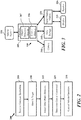
FIG. 2 depicts a process for vehicle control according to one or more embodiments. According to one embodiment,process 200 may be performed by a control device of a vehicle (e.g., vehicle 100) to control vehicle operation based on one or more guidance instructions. -
Process 200 may be initiated atblock 205 with receiving a natural-language guidance instruction to direct operation of a vehicle. In one embodiment, the natural-language guidance instruction is a command for at least one of vehicle route, turn location, and destination. Nonlimiting examples include: - Turn left at the light, right after two blocks and stop at the corner;
- Keep going down this street until you see a hamburger restaurant, then take a left;
- Take the next right and stop at the coffee shop; and
- Pass the parked vehicles on the right and then stop in front of the building.
- Guidance instructions can include one or more commands and one or more reference points for performing the commands. By way of example, the instruction: "turn right after the parked car" includes the command to turn right, with a reference point being the parked car. Reference points may be targets when processing detected image data. The guidance instruction received at
block 205 does not include address information according to one or more embodiments. In addition, the guidance instruction may be relative to one or more elements that may not be provided by a map application. - Guidance instructions can include the use of one or more terms to provide a similar result, such as go forward, keep going, continue, etc. Similarly, destinations may be identified based on several terms which do not reference the name, title or address of map information. In one embodiment, reference guidance instructions may be stored to interpret guidance instructions at
block 205. One or more operations ofprocess 200 for interpreting guidance instructions may be trained based on stored references, such as stored reference guidance instructions. The trained operations may be used to interpret new guidance commands as they are received, wherein feedback from the processes may be used to determine how accurate the trained operations performed at interpreting the guidance instructions. The feedback may be an error rate or probability of being correct, and may be used to correct errors in the trained process. - In one embodiment, the natural-language guidance instruction identifies a point of reference along the directed path of the vehicle, and the natural-language guidance instruction includes an action to be taken at the point of reference. Referring to the example of turning right after a parked car, the parked car may be point of reference that can be detected as an object in image data. The parked car may also be a target that is searched for in the image data. Objects such as parked cars, street corners, openings and general structures may be identified based on one or more learning algorithms. Similarly, one or more processes may be used to detect objects within image data.
- Guidance instructions may be received at
block 205 prior to establishing a route of travel or destination. In other embodiments, guidance instructions may be received during a route when a destination has been identified, such that the guidance instructions modify the current route. - According to one embodiment, guidance instructions received at
block 205 may be segmented into commands. Each command may be identified by identifying an action and reference for the action. When multiple commands are provided in the instructions, the commands may be segmented based on the order and presentation format of the guidance instruction. By way of example, "turn left at the first light and go two blocks," may be segmented as a first command to turn left with the reference being a first traffic light and the second command to "go" being associated with the reference two blocks. In this case, the command and reference are inferred from the order of command, reference, command and reference. Each command is paired with the proceeding reference. - According to one embodiment, guidance instructions received at
block 205 may be processed to interpret commands, points of reference, and desired actions to be taken. Processing may be performed on instructions received atblock 205 by formatting received sound signals to create fingerprints or components of the sound wave which can identify the one or more of sounds, tones, and letters. These components may be used to form words or terms which may be compared to one or more terms stored in a database. One or more deep learning algorithms may be employed for conversion of detected audio, such as speech, to commands in the form of text. -
Process 200 may include outputting a confirmation message in response to the natural-language guidance instruction received atblock 205. The confirmation message can include at least one of an audible and visual representation of the natural-language guidance instruction. - At
block 210, at least one target may be identified based on the guidance instruction. By way of example, identifying at least one target includes determining from the natural-language guidance instruction at least one characteristic of an object and detecting an object match to the characteristic based on a plurality of predefined object classes. By way of further example, the target may be an element to search for in image data based on one or more attributes of the guidance instruction command. With reference to the example of turning right after a parked car, the parked car may be a target. In certain embodiments, the front and rear portions of the parked car may also be targets to be identified from detected image data. Targets can include structures such as a house, building, landmark, road, and traffic light intersection. - Identification of targets at
block 210 may be based on one or more deep learning algorithms. In one embodiment, identification of targets atblock 210 includes identifying parameters for performing object detection. The parameters can identify at least one of an image data set and image data set characteristics. In one embodiment, targets relate to physical objects to be detected in image data. For example, guidance instructions to turn after a building can result in a target being identified for at least one of the building and an endpoint of the building structure. In certain embodiments, targets can relate to areas of image data not associated with a particular object or structure, such as the space between structures or other repeating elements. - At
block 215, object detection is performed on received image data for the at least one target. During operation of a vehicle, a continuous feed of image data may be processed, and objects in the image feed may be detected and classified. Classification may be based on one or more types of objects and objects models. Object detection may include several references for multiple types of vehicles and other objects that may be references in natural-language guidance instructions. A target may be identified by detecting the objects, classifying the objects and then determining whether or not a detected object is the target. With reference to the example of turning right after a parked car, object detection can include detecting a parked car, and the start and end points of the parked car. For example, image data and relative position of the vehicle capturing the image data may be used to route a vehicle around the parked car. Performing object detection may thus include identifying objects in the image data and identifying which objects match the at least one target. - According to one embodiment, object detection at
block 215 may be based on one or more of a learning algorithm and neural network. Objects in image data may be determined based on a comparison of one or more frames and processing of the image data. By way of example, in one embodiment image data may be converted to an array of values for the frame. Arrays of two or more frames may be compared to identify and locate objects within the image. In addition to the image arrays, one or more banks of image arrays and image characteristics may be stored and compared to objects. Objects in image data may be scored to determine influence. - One or more processes for object detection at
block 215 may be trained based on stored references, such as stored reference, rules and previously detected objects. The trained processes may be used to interpret new objects in image data as they are received, wherein feedback from the processes result may be used to determine how accurate the trained process performed at object detection. The feedback may be an error rate or probability of being correct, and may be used to correct errors in the object detection process. - According to one embodiment, object detection at
block 215 may include extracting useful patterns of data from detected image data to distinguish between object classes, such as buildings, homes, roads, intersections, traffic lights, etc. Extraction of patterns may be useful to limit the number of classes considered when identifying objects. In another embodiment, object detection atblock 215 may include forming a hierarchy of nonlinear features that increase with complexity, such as layers for dark space, road, and intersection, or layers for an area, building, home, and doorway. Each level of features may allow for simpler interpretation of features in detected image data. Features and layers may be classified to combine one or more features and determine a probability that a detected object meets a target generated based on guidance information. - According to one embodiment, object detection at
block 215 may be based on learned patterns for filtering input. Based on one or more targets identified inblock 210, filters for performing object recognition atblock 215 may be adjusted automatically to extract the most useful information from a detected image. By way of example, object shape may be used as a filter. Object color may be used to distinguish between two similar shaped objects. According to another embodiment, multiple feature maps may be determined and stored for objects. Subfeature maps may be stored for each feature map including multiple feature mappings atblock 215. Classification may be based on features from one or more feature maps determined byprocess 200. -
Process 200 may also include determining a confidence level based on the object detection. As will be discussed inFIG. 7 , a confidence level may be determined based on objects detected in image data to determine whether vehicle control should be performed. Confidence levels exceeding a predefined threshold may be grounds for performing a vehicle maneuver. - At
block 220, a control command is determined in response to the object detection. According to one embodiment, the control command is at least one of a continue command, change route command, turn command, and stop command.Process 200 determines the control command for operation of a vehicle atblock 220 in response to image data detection atblock 215. A vehicle may have a defined route heading in a particular direction on a road, wherein the vehicle is searching for a target. The command atblock 220 may be to continue traveling. In other embodiments, the command may be to turn or stop the vehicle. - At
block 225, the control device controls operation of the vehicle based on the control command. Controlling operation includes directing the vehicle along a route in accordance with the natural-language guidance instruction and control command. Vehicle control may be performed by an autonomous driving module or control system of the vehicle. -
Process 200 may also include receiving image data and plotting route information based on received image data and map data available for the vehicles position. Image data detected by a vehicle camera may be used in association with positioning and navigation data. By way of example, positioning (e.g., global positioning data (GPS) and map data may be used to keep a vehicle traveling on defined roads. Detected image data and guidance instructions may be used to determine how where the vehicle travels. In certain embodiments, the natural-language guidance provides an alternative description of a route. The route information provided by the natural-language guidance instructions may result in arriving at a known destination, however, the use of natural guidance allows for regular forms of speech to inform a vehicle. -
FIG. 3 depicts a graphical representation of device components according to one or more embodiments. According to one embodiment,device 300 relates to a control device of a vehicle configured to control vehicle operation.Device 300 may be configured to control a vehicle based on one or more natural-language guidance instructions.Device 300 includesprocessor 305,camera 310,data storage unit 315, input/output module 320 anddisplay 325. According to one embodiment,device 300 may interoperate with one or more components of avehicle system 330 to receive operation characteristics of the vehicle and provide control signals. -
Processor 305 is configured to control operation ofdevice 300. According to one embodiment,processor 305 may be configured to provide acontrol module 306 to generate vehicle commands.Processor 305 may be configured to provide anobject detection module 307 to process image data received fromcamera 310 and perform object detection for one or more objects. In other embodiments,control module 306 and objectdetection module 307 may be physical hardware units ofdevice 300. -
Processor 305 may also function as a control unit to control output and updating of commands tovehicle system 330.Processor 305 may operate based on executable code ofcontrol module 306, objectdetection module 307 anddata storage unit 315 to perform and control functions ofdevice 300. By way of example,processor 305 may executeprocess 200 ofFIG. 2 to provide vehicle control.Processor 305 may execute and direct one or more processes and functional blocks described herein to for vehicle control and natural-language guidance instructions. - In certain embodiments,
processor 305 may use one or more processes for identifying natural-language commands based on parameters stored bydata storage unit 315. By way of example, keywords, terms and phrases may be stored for comparison to received guidance instructions in order to identify commands and reference point associated with the commands. Thus, voice commands detected by input/output module 320 may be converted to text or machine readable representations to interpret commands. -
Camera 310 may be mounted to a vehicle to provide a continuous feed of image data to objetdetection module 307.Data storage unit 315 may be configured to store executable code to operateprocessor 305 anddevice 300. Input/output (I/O)module 320 may be configured to receive inputs from a controller or input surface (e.g., touch screen, input buttons, etc.) and to output image data to display 325. Input/output (I/O)module 320 may operatedisplay 325 andspeaker 326 to output confirmation of one or more natural-language guidance instructions. - In certain embodiments,
device 300 andprocessor 305 may be configured to communicate with components of a vehicle, such asvehicle system 330. By way of example,vehicle system 330 may relate to a user interface system of a vehicle including one or more sensors, functions and data capabilities. In that fashion,vehicle system 330 may provide one or more of location data, and vehicle operating data toprocessor 305, including but not limited to GPS data, heading, acceleration, map information, points of interest, etc. -
FIG. 4 depicts a process for route determination according to one or more embodiments. According to one embodiment natural-language guidance can be performed when a vehicle is assigned a route or to initially provide a desired route for the vehicle to take. In either situation, one or more sources of guidance, image data, and in some cases map data may be received to control operation of vehicle.Process 400 may be performed by a vehicle control unit. According to one embodiment, vehicle control may be based on one or more natural-language guidance instructions received atblock 405 and image data detected atblock 410 to determine vehicle operation atblock 420. Guidance instructions may be received atblock 405 while a vehicle is assigned a route and thus, under control under control. Image data detected atblock 415 may be a continuous feed of image data which may be used to control vehicle operation. In certain embodiments, map data may be received and/or used atblock 415 for vehicle operation atblock 420. - Determining vehicle operation at
block 420 can be based on one or more of guidance instructions fromblock 405, image data atblock 410 and optional map data atblock 415. For example, when a vehicle route has not been established, the guidance information fromblock 405 may initiate determination of a route atblock 425. Alternatively, guidance instructions may update a determined route or result in a detour atblock 425. According to one embodiment, changes in guidance instructions or objects detected in image data can result in updating a route atblock 425.Process 400 allows for continuous route updating. - According to one embodiment, route determination at
block 425 may be an adaptively learned route/route segment determined based on a recent travel experience. In some examples, the route/route segments may be scored and stored for later comparison. -
FIG. 5 depicts a process for receiving and handling voice commands according to one or more embodiments. Natural-language guidance instructions may be provided in one or more forms. The processes described herein may be configured to account for different forms of directions. -
Process 500 may be initiated by receiving a guidance instruction atblock 505. Guidance instructions may be voice commands from operators or passengers of a vehicle. The guidance instruction received atblock 505 may include one or more operations for a vehicle to undertake. - At
block 510, one or more commands may be identified based on the guidance instructions received atblock 505. Natural-language guidance instructions may provide one or more operations for a vehicle to undertake, such as driving a distance, turning, merging, stopping, or driving in general. In addition, the guidance instructions may provide a point of reference for each operation. As such, each command may include an operation and a point of reference. By way of example, a command may include the operation to turn left, with a point of reference being at the second traffic light. Points of reference may be associates with objects along a route including, roads, entrances, exits, structures, etc. Alternatively, commands may include operations associated with one or more detectable objects that do not include providing an address. For example, a guidance instruction to pass a number of houses or urn after an upcoming restaurant is passed. One or more commands may be identified atblock 510 by parsing the guidance instructions based on the term used. Action terms and modifiers may be paired to generate a plurality of commands. - Identification of commands at
block 510 may be based on one or more rules for characterizing natural-language guidance instructions. By way of example, one or more predefined phrases may be stored and utilized for comparison or matching of guidance instructions. In other embodiments, in addition to processing the terms included in guidance instructions, timing and rhythm of a user's voice may be analyzed to select particular instructions. - According to one embodiment, identification of commands at
block 510 may be based on one or more learning algorithms. Sound waves detected atblock 515 may be processed inblock 510 by converting the sound waves to sampled representations, and recognizing sounds based on a scoring the highest likelihood. Recognized sounds can influence the next calculation to improve the accuracy associated with identifying spoken commands. Once the sound received is transcribed, one or more terms from the sound may be determined and characterized. Similarly to sound interpretation, the commands inferred may be based on previously recognized terms that influence the interpretation of each command or descriptive elements for the command. Identification of commands atblock 510 may be based on training data which allows for unreasonable determinations to be excluded and to allow for improved recognition of terms and commands. - At
block 515, one or more commands identified atblock 510 may be confirmed. In one embodiment, one or more of a visual representation and audio output may be provided for identified commands. A visual representation can include a graphical transcription or display of terms detected in the guidance instruction that have been identified as commands. An audio confirmation may be an audible transcription output as sound of terms detected in the guidance instruction that have been identified as commands. A vehicle control device may be configured to receive an input by way of a user interface or speech to confirm that the representation of the identified commands is correct. Once the commands are correct the vehicle can determine one of more of control and route operations atblock 520. - According to one embodiment, guidance instructions may be compared to map data once received, and/or after confirmation of the commands. Each command may be compared to map data, and in particular existing roadways. The guidance instructions may supplement map data by providing destinations that are not marked or stored as destinations in the map data. Commands from the guidance instructions can be compared to map data to allow for route checking prior to following commands.
- According to another embodiment, one or more targets may be associated with each guidance instruction. By way of example, a target may relate to an object that may be detected in image data to notify the vehicle to update course or route of the vehicle. When a command relates to turning after a specific location that is not associated with a map point of interest, the specific location may be a target to be identified in image data.
-
FIG. 6 depicts a graphical representation of object identification according to one or more embodiments. According to one embodiment, image data captured by a camera mounted to a vehicle may be employed to assist in routing of a vehicle and in particular for control in response to natural-language guidance instructions. Once a guidance instruction is received, objects in image data are detected and classified to determine whether the conditions or parameters of the guidance instruction are met.FIG. 6 depicts an exemplary embodiment for a vehicle route associated withenvironment 600.Environment 600 includes several fixed objects such as buildings and roads. In some cases, objects ofenvironment 600 may be associated with points of interest of a navigation map system. However, one or more objects may not be associated with the map information other than by address. According to one embodiment, a vehicle mounted camera is configured to detected objects inenvironment 600. - According to another embodiment, image data may be processed to identify and classify objects.
FIG. 6 depicts object 605 (e.g., hospital),roads house 615,chapel 625 andrestaurant 630. Using object detection and recognition, image data received from a camera may be processed. Detected objects ofenvironment 600 may be classified by a control device of the vehicle. In addition to detection of each object, one or more targets may be specified as representing either an event to update the vehicles route or indicate a destination.FIG. 6 depictselements object 605,roads house 615,chapel 625 andrestaurant 635, respectively.Roads -
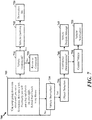
FIG. 7 depicts a graphical representation of natural-language control process according to one or more other embodiments. According to one embodiment, vehicle operation may be directed by a natural-language guidance instruction including a plurality of commands. According to another embodiment, natural -language guidance may be based on understanding guidance instructions and generating a destination, even if the address of the destination is unknown to a requester or the destination is not associated with an existing address of a navigation unit of a vehicle. -
Process 700 may be initiated by receiving natural language guidance instruction atblock 705 including: - "Car keep going down this street until you see a Restaurant, then take left. Eventually
- you will see a big red church on your right. Behind that Church is my house."
- At
block 730, the control device determines is a vehicle destination is set. When a destination is not set ("No" path out of block 730),process 700 returns to receiving one or more guidance instructions. When the destination is set at block 730 ("Yes" path out of block 730), object detection may be performed atblock 735 to identify objects and one or more targets. According to one embodiment, a confidence determination may be provided atblock 740 to assess the level of confidence in the detected item. At block 746, the control device may out a message related to level of confidence. When the confidence information exceeds a threshold, the vehicle may be controlled atblock 750. In addition, a vehicle notification may be presented atblock 755. - While this disclosure has been particularly shown and described with references to exemplary embodiments thereof, it will be understood by those skilled in the art that various changes in form and details may be made therein without departing from the scope of the claimed embodiments.
Claims (15)
- A method for vehicle control, the method comprising:receiving, by a control device, a natural-language guidance instruction to direct operation of a vehicle;identifying, by the control device, at least one target based on the guidance instruction;performing, by the control device, object detection on received image data for the at least one target, wherein the image data is received from at least one camera mounted to the vehicle;determining, by the control device, a control command in response to the object detection; andcontrolling, by the control device, operation of the vehicle based on the control command.
- The method of claim 1, wherein at least one of:the natural-language guidance instruction is a command for at least one of vehicle route, turn location, and destination; andthe natural-language guidance instruction identifies a point of reference along the directed path of the vehicle, and the natural-language guidance instruction includes an action to be taken at the point of reference.
- The method of claim 1, wherein identifying at least one target includes determining from the natural-language guidance instruction at least one characteristic of an object and detecting an object match to the characteristic based on a plurality of predefined object classes.
- The method of claim 1, wherein performing object detection includes identifying objects in the image data and identifying at least one object match to the at least one target.
- The method of claim 1, wherein the control command is at least one of a continue command, change route command, turn command, and stop command.
- The method of claim 1, wherein controlling operation includes directing the vehicle along a route in accordance with the natural-language guidance instruction and control command.
- The method of claim 1, further comprising at least one of:outputting a confirmation message in response to the natural-language guidance instruction, the confirmation message including at least one of an audible and visual representation of the natural-language guidance instruction;plotting route information based on received image data and map data available for the vehicles position; anddetermining a confidence level based on the object detection, and wherein the control command is determined in response to a confidence level exceeding a predefined threshold.
- A vehicle system comprising:a camera; anda control device coupled to the camera, wherein the control device is configured to:receive a natural-language guidance instruction to direct operation of a vehicle,identify at least one target based on the guidance instruction,perform object detection on received image data for the at least one target,wherein the image data is received from at least one camera mounted to the vehicle, determine a control command in response to the object detection, and control operation of the vehicle based on the control command.
- The system of claim 11, wherein the natural-language guidance instruction is a command for at least one of vehicle route, turn location, and destination.
- The method of claim 1, wherein the natural-language guidance instruction identifies a point of reference along the directed path of the vehicle, and the natural-language guidance instruction includes an action to be taken at the point of reference.
- The system of claim 11, wherein identifying at least one target includes determining from the natural-language guidance instruction at least one characteristic of an object and detecting an object match to the characteristic based on a plurality of predefined object classes.
- The system of claim 11, wherein performing object detection includes identifying objects in the image data and identifying at least one object match to the at least one target.
- The system of claim 11, wherein the control command is at least one of a continue command, change route command, turn command, and stop command.
- The system of claim 11, wherein controlling operation includes directing the vehicle along a route in accordance with the natural-language guidance instruction and control command.
- The system of claim 11, further comprising at least one of:outputting a confirmation message in response to the natural-language guidance instruction, the confirmation message including at least one of an audible and visual representation of the natural-language guidance instruction;plotting route information based on received image data and map data available for the vehicles position;determining a confidence level based on the object detection, and wherein the control command is determined in response to a confidence level exceeding a predefined threshold.
Applications Claiming Priority (1)
| Application Number | Priority Date | Filing Date | Title |
|---|---|---|---|
| US15/702,641 US10647332B2 (en) | 2017-09-12 | 2017-09-12 | System and method for natural-language vehicle control |
Publications (1)
| Publication Number | Publication Date |
|---|---|
| EP3454014A1 true EP3454014A1 (en) | 2019-03-13 |
Family
ID=63762175
Family Applications (1)
| Application Number | Title | Priority Date | Filing Date |
|---|---|---|---|
| EP18193578.4A Ceased EP3454014A1 (en) | 2017-09-12 | 2018-09-11 | System and method for natural-language vehicle control |
Country Status (2)
| Country | Link |
|---|---|
| US (1) | US10647332B2 (en) |
| EP (1) | EP3454014A1 (en) |
Cited By (1)
| Publication number | Priority date | Publication date | Assignee | Title |
|---|---|---|---|---|
| WO2025175706A1 (en) * | 2024-02-23 | 2025-08-28 | 华为云计算技术有限公司 | Information processing method for agent, and related device |
Families Citing this family (8)
| Publication number | Priority date | Publication date | Assignee | Title |
|---|---|---|---|---|
| JP6791200B2 (en) * | 2018-05-11 | 2020-11-25 | トヨタ自動車株式会社 | Search support system, search support device, and search support method |
| US11399682B2 (en) * | 2018-07-27 | 2022-08-02 | Panasonic Intellectual Property Corporation Of America | Information processing method, information processing apparatus and computer-readable recording medium storing information processing program |
| US11357376B2 (en) * | 2018-07-27 | 2022-06-14 | Panasonic Intellectual Property Corporation Of America | Information processing method, information processing apparatus and computer-readable recording medium storing information processing program |
| TW202010325A (en) * | 2018-08-10 | 2020-03-01 | 華創車電技術中心股份有限公司 | System and method for data processing of on-board-unit |
| US10891949B2 (en) * | 2018-09-10 | 2021-01-12 | Ford Global Technologies, Llc | Vehicle language processing |
| CN111174765B (en) * | 2020-02-24 | 2021-08-13 | 北京航天飞行控制中心 | Target detection control method and device for planetary vehicle based on vision guidance |
| US12275427B1 (en) * | 2020-04-21 | 2025-04-15 | Google Llc | Evaluating driving data using autonomous vehicle control system |
| US12513135B2 (en) * | 2022-11-21 | 2025-12-30 | Gm Cruise Holdings Llc | One-way segregation of AV subsystems and user devices |
Citations (3)
| Publication number | Priority date | Publication date | Assignee | Title |
|---|---|---|---|---|
| US20120287284A1 (en) * | 2011-05-10 | 2012-11-15 | Kopin Corporation | Headset computer that uses motion and voice commands to control information display and remote devices |
| US20140365228A1 (en) * | 2013-03-15 | 2014-12-11 | Honda Motor Co., Ltd. | Interpretation of ambiguous vehicle instructions |
| US20170221480A1 (en) * | 2016-01-29 | 2017-08-03 | GM Global Technology Operations LLC | Speech recognition systems and methods for automated driving |
Family Cites Families (44)
| Publication number | Priority date | Publication date | Assignee | Title |
|---|---|---|---|---|
| JP2006015436A (en) * | 2004-06-30 | 2006-01-19 | Honda Motor Co Ltd | Surveillance robot |
| AU2009211435A1 (en) * | 2008-02-04 | 2009-08-13 | Tele Atlas B.V. | Method for map matching with sensor detected objects |
| US9746335B2 (en) * | 2008-12-30 | 2017-08-29 | Tomtom Global Content B.V. | Method and system for transmitting and/or receiving at least one location reference, enhanced by at least one focusing factor |
| US9311917B2 (en) * | 2009-01-21 | 2016-04-12 | International Business Machines Corporation | Machine, system and method for user-guided teaching of deictic references and referent objects of deictic references to a conversational command and control system |
| US8407057B2 (en) * | 2009-01-21 | 2013-03-26 | Nuance Communications, Inc. | Machine, system and method for user-guided teaching and modifying of voice commands and actions executed by a conversational learning system |
| EP2435149B1 (en) * | 2009-05-28 | 2015-07-08 | Anki, Inc. | Distributed system of autonomously controlled toy vehicles |
| US20110130956A1 (en) * | 2009-11-30 | 2011-06-02 | Nokia Corporation | Method and apparatus for presenting contextually appropriate navigation instructions |
| US8430192B2 (en) * | 2010-01-04 | 2013-04-30 | Carla R. Gillett | Robotic omniwheel vehicle |
| US8374791B2 (en) * | 2010-01-27 | 2013-02-12 | Navteq B.V. | Method of operating a navigation system to provide route guidance |
| CN103109161B (en) * | 2010-06-22 | 2016-05-18 | 通腾科技股份有限公司 | Navigation device and method |
| US8509982B2 (en) * | 2010-10-05 | 2013-08-13 | Google Inc. | Zone driving |
| US8924150B2 (en) * | 2010-12-29 | 2014-12-30 | GM Global Technology Operations LLC | Vehicle operation and control system for autonomous vehicles on full windshield display |
| WO2012137332A1 (en) * | 2011-04-07 | 2012-10-11 | パイオニア株式会社 | System for detecting surrounding conditions of moving body |
| US9493130B2 (en) * | 2011-04-22 | 2016-11-15 | Angel A. Penilla | Methods and systems for communicating content to connected vehicle users based detected tone/mood in voice input |
| WO2013101045A1 (en) * | 2011-12-29 | 2013-07-04 | Intel Corporation | Navigation systems and associated methods |
| US8457827B1 (en) * | 2012-03-15 | 2013-06-04 | Google Inc. | Modifying behavior of autonomous vehicle based on predicted behavior of other vehicles |
| DE102012013503B4 (en) * | 2012-07-06 | 2014-10-09 | Audi Ag | Method and control system for operating a motor vehicle |
| US9656690B2 (en) * | 2012-10-30 | 2017-05-23 | Robert Bosch Gmbh | System and method for using gestures in autonomous parking |
| US20140142948A1 (en) * | 2012-11-21 | 2014-05-22 | Somya Rathi | Systems and methods for in-vehicle context formation |
| EP2839769B1 (en) * | 2013-08-23 | 2016-12-21 | LG Electronics Inc. | Robot cleaner and method for controlling the same |
| DE102014200782A1 (en) * | 2014-01-17 | 2015-07-23 | Bayerische Motoren Werke Aktiengesellschaft | Operating a vehicle according to the desire of a vehicle occupant |
| US9631933B1 (en) * | 2014-05-23 | 2017-04-25 | Google Inc. | Specifying unavailable locations for autonomous vehicles |
| US9436182B2 (en) * | 2014-05-23 | 2016-09-06 | Google Inc. | Autonomous vehicles |
| EP2949536B1 (en) * | 2014-05-30 | 2016-10-05 | Honda Research Institute Europe GmbH | Method for controlling a driver assistance system |
| JP5957744B1 (en) * | 2015-07-31 | 2016-07-27 | パナソニックIpマネジメント株式会社 | Driving support device, driving support system, driving support method, driving support program, and autonomous driving vehicle |
| US10593335B2 (en) * | 2015-08-24 | 2020-03-17 | Ford Global Technologies, Llc | Dynamic acoustic model for vehicle |
| US9632502B1 (en) * | 2015-11-04 | 2017-04-25 | Zoox, Inc. | Machine-learning systems and techniques to optimize teleoperation and/or planner decisions |
| US9754490B2 (en) * | 2015-11-04 | 2017-09-05 | Zoox, Inc. | Software application to request and control an autonomous vehicle service |
| US10268756B2 (en) * | 2015-12-18 | 2019-04-23 | Here Global B.V. | Method and apparatus for providing natural language input in a cartographic system |
| US10166995B2 (en) * | 2016-01-08 | 2019-01-01 | Ford Global Technologies, Llc | System and method for feature activation via gesture recognition and voice command |
| US10077052B2 (en) * | 2016-03-31 | 2018-09-18 | Faraday&Future Inc. | State-based operation for autonomous vehicles |
| US20170286785A1 (en) * | 2016-04-05 | 2017-10-05 | Ford Global Technologies, Llc | Interactive display based on interpreting driver actions |
| US10789840B2 (en) * | 2016-05-09 | 2020-09-29 | Coban Technologies, Inc. | Systems, apparatuses and methods for detecting driving behavior and triggering actions based on detected driving behavior |
| US10037030B2 (en) * | 2016-05-24 | 2018-07-31 | International Business Machines Corporation | Directing movement of self-driving vehicles in a delineated vehicular area |
| CN107444264A (en) * | 2016-05-31 | 2017-12-08 | 法拉第未来公司 | Use the object of camera calibration du vehicule |
| CN107449434B (en) * | 2016-05-31 | 2020-10-16 | 法拉第未来公司 | Safe vehicle navigation using location estimation error bound |
| US9953535B1 (en) * | 2016-06-27 | 2018-04-24 | Amazon Technologies, Inc. | Annotated virtual track to inform autonomous vehicle control |
| EP3264391A1 (en) * | 2016-06-30 | 2018-01-03 | Honda Research Institute Europe GmbH | Method and system for assisting a driver in driving a vehicle and vehicle on which such system is mounted |
| US10416682B2 (en) * | 2016-07-29 | 2019-09-17 | Faraday & Future Inc. | Semi-automated driving using pre-recorded route |
| US20180197352A1 (en) * | 2016-07-29 | 2018-07-12 | Faraday&Future Inc. | Vehicle configured to autonomously provide assistance to another vehicle |
| US20180194344A1 (en) * | 2016-07-29 | 2018-07-12 | Faraday&Future Inc. | System and method for autonomous vehicle navigation |
| US20180239352A1 (en) * | 2016-08-31 | 2018-08-23 | Faraday&Future Inc. | System and method for operating vehicles at different degrees of automation |
| US11373459B2 (en) * | 2016-11-15 | 2022-06-28 | Runway Growth Credit Fund Inc. | Program and vehicle interaction |
| US10372132B2 (en) * | 2016-12-12 | 2019-08-06 | Apple Inc. | Guidance of autonomous vehicles in destination vicinities using intent signals |
-
2017
- 2017-09-12 US US15/702,641 patent/US10647332B2/en active Active
-
2018
- 2018-09-11 EP EP18193578.4A patent/EP3454014A1/en not_active Ceased
Patent Citations (3)
| Publication number | Priority date | Publication date | Assignee | Title |
|---|---|---|---|---|
| US20120287284A1 (en) * | 2011-05-10 | 2012-11-15 | Kopin Corporation | Headset computer that uses motion and voice commands to control information display and remote devices |
| US20140365228A1 (en) * | 2013-03-15 | 2014-12-11 | Honda Motor Co., Ltd. | Interpretation of ambiguous vehicle instructions |
| US20170221480A1 (en) * | 2016-01-29 | 2017-08-03 | GM Global Technology Operations LLC | Speech recognition systems and methods for automated driving |
Non-Patent Citations (1)
| Title |
|---|
| SHIM INWOOK ET AL: "An Autonomous Driving System for Unknown Environments Using a Unified Map", IEEE TRANSACTIONS ON INTELLIGENT TRANSPORTATION SYSTEMS, IEEE, PISCATAWAY, NJ, USA, vol. 16, no. 4, 1 August 2015 (2015-08-01), pages 1999 - 2013, XP011664658, ISSN: 1524-9050, [retrieved on 20150731], DOI: 10.1109/TITS.2015.2389237 * |
Cited By (1)
| Publication number | Priority date | Publication date | Assignee | Title |
|---|---|---|---|---|
| WO2025175706A1 (en) * | 2024-02-23 | 2025-08-28 | 华为云计算技术有限公司 | Information processing method for agent, and related device |
Also Published As
| Publication number | Publication date |
|---|---|
| US10647332B2 (en) | 2020-05-12 |
| US20190077414A1 (en) | 2019-03-14 |
Similar Documents
| Publication | Publication Date | Title |
|---|---|---|
| US10647332B2 (en) | System and method for natural-language vehicle control | |
| JP7345683B2 (en) | A system for performing scene recognition dialogue | |
| US10902272B2 (en) | Phrase recognition model for autonomous vehicles | |
| EP3877965B1 (en) | Detecting unfamiliar traffic signs | |
| US9747898B2 (en) | Interpretation of ambiguous vehicle instructions | |
| CN109491375A (en) | The path planning based on Driving Scene for automatic driving vehicle | |
| CN108974009A (en) | Method, medium and system for automatic Pilot control | |
| JP2023504028A (en) | Updating map data | |
| JP6992893B2 (en) | Travel information processing device and processing method | |
| KR20230051412A (en) | Techniques for finding and accessing vehicles | |
| CN113799789A (en) | A machine learning model that fuses audio and visual detection of emergency vehicles | |
| JP2010145262A (en) | Navigation apparatus | |
| US11681780B2 (en) | Annotation and mapping for vehicle operation in low-confidence object detection conditions | |
| JP2016090515A (en) | Information display device, control method, program, and storage medium | |
| JP2020106997A (en) | In-vehicle device and communication system | |
| US20180245941A1 (en) | User-Friendly Navigation System | |
| CN118082870A (en) | ChatGPT-based intelligent driving assistance method, chatGPT-based intelligent driving assistance system, storage medium and vehicle | |
| JP2025037719A (en) | Car navigation system and voice guidance control method | |
| WO2025120851A1 (en) | Processing system, learning method, processing method, and program | |
| CN119085678A (en) | Dynamic navigation method, electronic device and storage medium for roadblocks | |
| CN120526220A (en) | Obstacle recognition method and system for blind smart glasses | |
| CN121640578A (en) | A method and system for traffic police command, identification, and response of unmanned logistics vehicles | |
| WO2020261703A1 (en) | Information processing device, information processing method, and program | |
| JP2020183895A (en) | Navigation device | |
| JP2007243890A (en) | Apparatus, method and program for monitoring following vehicle, and recording medium |
Legal Events
| Date | Code | Title | Description |
|---|---|---|---|
| PUAI | Public reference made under article 153(3) epc to a published international application that has entered the european phase |
Free format text: ORIGINAL CODE: 0009012 |
|
| STAA | Information on the status of an ep patent application or granted ep patent |
Free format text: STATUS: THE APPLICATION HAS BEEN PUBLISHED |
|
| AK | Designated contracting states |
Kind code of ref document: A1 Designated state(s): AL AT BE BG CH CY CZ DE DK EE ES FI FR GB GR HR HU IE IS IT LI LT LU LV MC MK MT NL NO PL PT RO RS SE SI SK SM TR |
|
| AX | Request for extension of the european patent |
Extension state: BA ME |
|
| RIN1 | Information on inventor provided before grant (corrected) |
Inventor name: MOORE, STEPHEN DOUGLAS Inventor name: GARCIA, JUAN |
|
| STAA | Information on the status of an ep patent application or granted ep patent |
Free format text: STATUS: REQUEST FOR EXAMINATION WAS MADE |
|
| 17P | Request for examination filed |
Effective date: 20190913 |
|
| RBV | Designated contracting states (corrected) |
Designated state(s): AL AT BE BG CH CY CZ DE DK EE ES FI FR GB GR HR HU IE IS IT LI LT LU LV MC MK MT NL NO PL PT RO RS SE SI SK SM TR |
|
| STAA | Information on the status of an ep patent application or granted ep patent |
Free format text: STATUS: EXAMINATION IS IN PROGRESS |
|
| 17Q | First examination report despatched |
Effective date: 20200707 |
|
| STAA | Information on the status of an ep patent application or granted ep patent |
Free format text: STATUS: THE APPLICATION HAS BEEN REFUSED |
|
| 18R | Application refused |
Effective date: 20240424 |