EP3453759A1 - Platelet production promoter and method of producing platelets using same - Google Patents
Platelet production promoter and method of producing platelets using same Download PDFInfo
- Publication number
- EP3453759A1 EP3453759A1 EP17744459.3A EP17744459A EP3453759A1 EP 3453759 A1 EP3453759 A1 EP 3453759A1 EP 17744459 A EP17744459 A EP 17744459A EP 3453759 A1 EP3453759 A1 EP 3453759A1
- Authority
- EP
- European Patent Office
- Prior art keywords
- cells
- megakaryocyte
- inhibitor
- wnt
- platelet production
- Prior art date
- Legal status (The legal status is an assumption and is not a legal conclusion. Google has not performed a legal analysis and makes no representation as to the accuracy of the status listed.)
- Granted
Links
Images


Classifications
-
- C—CHEMISTRY; METALLURGY
- C12—BIOCHEMISTRY; BEER; SPIRITS; WINE; VINEGAR; MICROBIOLOGY; ENZYMOLOGY; MUTATION OR GENETIC ENGINEERING
- C12N—MICROORGANISMS OR ENZYMES; COMPOSITIONS THEREOF; PROPAGATING, PRESERVING, OR MAINTAINING MICROORGANISMS; MUTATION OR GENETIC ENGINEERING; CULTURE MEDIA
- C12N5/00—Undifferentiated human, animal or plant cells, e.g. cell lines; Tissues; Cultivation or maintenance thereof; Culture media therefor
- C12N5/06—Animal cells or tissues; Human cells or tissues
- C12N5/0602—Vertebrate cells
- C12N5/0634—Cells from the blood or the immune system
- C12N5/0644—Platelets; Megakaryocytes
-
- A—HUMAN NECESSITIES
- A61—MEDICAL OR VETERINARY SCIENCE; HYGIENE
- A61K—PREPARATIONS FOR MEDICAL, DENTAL OR TOILETRY PURPOSES
- A61K31/00—Medicinal preparations containing organic active ingredients
- A61K31/33—Heterocyclic compounds
- A61K31/38—Heterocyclic compounds having sulfur as a ring hetero atom
- A61K31/381—Heterocyclic compounds having sulfur as a ring hetero atom having five-membered rings
-
- A—HUMAN NECESSITIES
- A61—MEDICAL OR VETERINARY SCIENCE; HYGIENE
- A61K—PREPARATIONS FOR MEDICAL, DENTAL OR TOILETRY PURPOSES
- A61K31/00—Medicinal preparations containing organic active ingredients
- A61K31/33—Heterocyclic compounds
- A61K31/395—Heterocyclic compounds having nitrogen as a ring hetero atom, e.g. guanethidine or rifamycins
- A61K31/435—Heterocyclic compounds having nitrogen as a ring hetero atom, e.g. guanethidine or rifamycins having six-membered rings with one nitrogen as the only ring hetero atom
- A61K31/44—Non condensed pyridines; Hydrogenated derivatives thereof
- A61K31/4427—Non condensed pyridines; Hydrogenated derivatives thereof containing further heterocyclic ring systems
- A61K31/444—Non condensed pyridines; Hydrogenated derivatives thereof containing further heterocyclic ring systems containing a six-membered ring with nitrogen as a ring heteroatom, e.g. amrinone
-
- A—HUMAN NECESSITIES
- A61—MEDICAL OR VETERINARY SCIENCE; HYGIENE
- A61P—SPECIFIC THERAPEUTIC ACTIVITY OF CHEMICAL COMPOUNDS OR MEDICINAL PREPARATIONS
- A61P7/00—Drugs for disorders of the blood or the extracellular fluid
- A61P7/04—Antihaemorrhagics; Procoagulants; Haemostatic agents; Antifibrinolytic agents
-
- C—CHEMISTRY; METALLURGY
- C12—BIOCHEMISTRY; BEER; SPIRITS; WINE; VINEGAR; MICROBIOLOGY; ENZYMOLOGY; MUTATION OR GENETIC ENGINEERING
- C12N—MICROORGANISMS OR ENZYMES; COMPOSITIONS THEREOF; PROPAGATING, PRESERVING, OR MAINTAINING MICROORGANISMS; MUTATION OR GENETIC ENGINEERING; CULTURE MEDIA
- C12N15/00—Mutation or genetic engineering; DNA or RNA concerning genetic engineering, vectors, e.g. plasmids, or their isolation, preparation or purification; Use of hosts therefor
- C12N15/09—Recombinant DNA-technology
-
- A—HUMAN NECESSITIES
- A61—MEDICAL OR VETERINARY SCIENCE; HYGIENE
- A61K—PREPARATIONS FOR MEDICAL, DENTAL OR TOILETRY PURPOSES
- A61K35/00—Medicinal preparations containing materials or reaction products thereof with undetermined constitution
- A61K35/12—Materials from mammals; Compositions comprising non-specified tissues or cells; Compositions comprising non-embryonic stem cells; Genetically modified cells
- A61K35/14—Blood; Artificial blood
- A61K35/19—Platelets; Megacaryocytes
-
- C—CHEMISTRY; METALLURGY
- C12—BIOCHEMISTRY; BEER; SPIRITS; WINE; VINEGAR; MICROBIOLOGY; ENZYMOLOGY; MUTATION OR GENETIC ENGINEERING
- C12N—MICROORGANISMS OR ENZYMES; COMPOSITIONS THEREOF; PROPAGATING, PRESERVING, OR MAINTAINING MICROORGANISMS; MUTATION OR GENETIC ENGINEERING; CULTURE MEDIA
- C12N2501/00—Active agents used in cell culture processes, e.g. differentation
- C12N2501/20—Cytokines; Chemokines
- C12N2501/26—Flt-3 ligand (CD135L, flk-2 ligand)
-
- C—CHEMISTRY; METALLURGY
- C12—BIOCHEMISTRY; BEER; SPIRITS; WINE; VINEGAR; MICROBIOLOGY; ENZYMOLOGY; MUTATION OR GENETIC ENGINEERING
- C12N—MICROORGANISMS OR ENZYMES; COMPOSITIONS THEREOF; PROPAGATING, PRESERVING, OR MAINTAINING MICROORGANISMS; MUTATION OR GENETIC ENGINEERING; CULTURE MEDIA
- C12N2501/00—Active agents used in cell culture processes, e.g. differentation
- C12N2501/40—Regulators of development
- C12N2501/415—Wnt; Frizzeled
-
- C—CHEMISTRY; METALLURGY
- C12—BIOCHEMISTRY; BEER; SPIRITS; WINE; VINEGAR; MICROBIOLOGY; ENZYMOLOGY; MUTATION OR GENETIC ENGINEERING
- C12N—MICROORGANISMS OR ENZYMES; COMPOSITIONS THEREOF; PROPAGATING, PRESERVING, OR MAINTAINING MICROORGANISMS; MUTATION OR GENETIC ENGINEERING; CULTURE MEDIA
- C12N2501/00—Active agents used in cell culture processes, e.g. differentation
- C12N2501/70—Enzymes
- C12N2501/72—Transferases [EC 2.]
- C12N2501/727—Kinases (EC 2.7.)
-
- C—CHEMISTRY; METALLURGY
- C12—BIOCHEMISTRY; BEER; SPIRITS; WINE; VINEGAR; MICROBIOLOGY; ENZYMOLOGY; MUTATION OR GENETIC ENGINEERING
- C12N—MICROORGANISMS OR ENZYMES; COMPOSITIONS THEREOF; PROPAGATING, PRESERVING, OR MAINTAINING MICROORGANISMS; MUTATION OR GENETIC ENGINEERING; CULTURE MEDIA
- C12N2501/00—Active agents used in cell culture processes, e.g. differentation
- C12N2501/999—Small molecules not provided for elsewhere
-
- C—CHEMISTRY; METALLURGY
- C12—BIOCHEMISTRY; BEER; SPIRITS; WINE; VINEGAR; MICROBIOLOGY; ENZYMOLOGY; MUTATION OR GENETIC ENGINEERING
- C12N—MICROORGANISMS OR ENZYMES; COMPOSITIONS THEREOF; PROPAGATING, PRESERVING, OR MAINTAINING MICROORGANISMS; MUTATION OR GENETIC ENGINEERING; CULTURE MEDIA
- C12N2506/00—Differentiation of animal cells from one lineage to another; Differentiation of pluripotent cells
- C12N2506/11—Differentiation of animal cells from one lineage to another; Differentiation of pluripotent cells from blood or immune system cells
-
- C—CHEMISTRY; METALLURGY
- C12—BIOCHEMISTRY; BEER; SPIRITS; WINE; VINEGAR; MICROBIOLOGY; ENZYMOLOGY; MUTATION OR GENETIC ENGINEERING
- C12N—MICROORGANISMS OR ENZYMES; COMPOSITIONS THEREOF; PROPAGATING, PRESERVING, OR MAINTAINING MICROORGANISMS; MUTATION OR GENETIC ENGINEERING; CULTURE MEDIA
- C12N2506/00—Differentiation of animal cells from one lineage to another; Differentiation of pluripotent cells
- C12N2506/45—Differentiation of animal cells from one lineage to another; Differentiation of pluripotent cells from artificially induced pluripotent stem cells
Definitions
- the present invention broadly relates to a platelet production promoter and a platelet production method.
- Blood cells are required for the treatment of blood-related diseases and for surgical operations.
- platelets which are cells required for blood coagulation (hemostasis), proplatelets, and megakaryocyte cells, which are cells that produce platelets, are cells where the need is particularly high.
- Leukemia treatments, bone marrow transplantation, and anticancer therapies create great demand for platelets in particular, and the requirement for a stable platelet supply is thus acute.
- Patent Document 1 WO 2014/138485
- Non-Patent Document 1 Takayama N. et al., Blood, 111, pp. 5298-5306, 2008 .
- the problem for the present invention is to provide a novel platelet production promoter and a platelet production method that uses this platelet production promoter.
- a Wnt signal transduction inhibitor and an FMS-like tyrosine kinase (FLT) inhibitor have a platelet production promoting-effect that is the same as or greater than that of AhR antagonists.
- the present invention was achieved based on this discovery.
- the present invention provides the following inventions.
- a platelet production-promoting effect that is the same as or greater than that of AhR antagonists is obtained using the platelet production promoter according to the present invention.
- the platelet production promoter according to the present invention can achieve a platelet production-promoting effect that matches the use of feeder cells in the absence of a platelet production promoter. That is, the platelet production promoter-effect provided by the present invention is considered to have the effect of replacing the role of feeder cells.
- the use of the platelet production promoter according to the present invention enables megakaryocyte cells to be cultured in a vertical large-scale cultivation apparatus and thus supports the efficient mass production of platelets for clinical applications.
- the platelet production promoter according to the present invention contains, as its effective component, one or more substances selected from the group consisting of Wnt inhibitors and FLT inhibitors.
- Wnts are secreted glycoproteins with molecular weights of approximately 40,000.
- Wnt inhibitor denotes any substance that inhibits signal transduction that is activated by the action of Wnt protein on the cell (referred to in the following simply as "Wnt signal transduction"), for example, any substance that inhibits the expression or function (activity) of Wnt protein.
- Wnt inhibitors can be exemplified by ⁇ -catenin, PORCN, casein kinase 1, tankyrase, and glycogen synthase kinase 3, but this is not intended as limiting.
- the following compounds can be used as Wnt inhibitors.
- glycogen synthase kinase 3 glycogen synthase kinase 3:
- Nonlimiting examples of Wnt inhibitors are compounds that inhibit any Wnt signal transduction pathway, for example, C59 (4-(2-methyl-4-pyridinyl)-N-[4-(3-pyridinyl)phenyl]benzeneacetamide) and its analogs, e.g., IWP 12, IWP 2, IWP L6, and so forth, and their salts and derivatives; also, anti-Wnt antibodies and their antibody fragments, antisense oligonucleotides, ribozymes, and molecules that induce RNA interference ("RNAi" below).
- the FLT inhibitor is TCS-359 in a preferred embodiment.
- FLT1 to FLT4 are known as members of FLT, which is an FMS-like tyrosine kinase.
- FLT inhibitor refers to any substance that inhibits the expression or function (activity) of an FMS-like tyrosine kinase (FLT) and preferably FLT3 in particular.
- Nonlimiting examples of FLT inhibitors are TCS-359 (2-[(3,4-dimethoxybenzoyl)amino]-4,5,6,7-tetrahydrobenzo[b]thiophene-3-carboxami de) and its analogs and their salts and derivatives; also anti-FLT antibodies and their antibody fragments, antisense oligonucleotides, ribozymes, and molecules that induce RNA interference (RNAi).
- the FLT inhibitor is preferably an FLT3 inhibitor and is particularly preferably TCS-359.
- the platelet production promoter may contain, as its effective component, one or more inhibitors as described above.
- concentration of the inhibitor in the platelet production promoter is not particularly limited and can be established as appropriate by the individual skilled in the art.
- 1.0 nM to 1.0 mM, or 10 nM to 0.1 mM, or 100 nM to 0.01 mM can be used
- TCS-359 is used as the FLT3 inhibitor
- 1.0 nM to 1.0 mM, 10 nM to 0.1 mM, or 100 nM to 0.01 mM can be used; however, the amount may be outside these ranges insofar as the desired effects are achieved.
- protein expression is used in the sense of including both transcription and translation, while “inhibition of expression” denotes the complete or partial inhibition of expression at the level of transcription or at the level of translation.
- the step for inhibiting the expression or function of Wnt or FLT can be carried out using a known method or a method based thereon.
- a dominant negative method may be used as the method for inhibiting the function of Wnt or FLT.
- a Wnt protein and/or FLT protein with an activity reduced or extinguished by the introduction of mutation is expressed in large amounts in the cell to provide an overwhelmingly high ratio within the cell of the corresponding inactive protein relative to the normal Wnt protein and/or FLT protein, thus yielding a cell that exhibits a behavior in which the function of the Wnt protein and/or FLT protein is not obtained.
- An anti-Wnt antibody or an anti-FLT antibody may be used as a method for inhibiting the functionality of Wnt protein and/or FLT protein.
- the anti-Wnt antibody or anti-FLT antibody used may be an antibody produced by a known method or may be a commercial antibody, and may be any antibody that provides the effects of the present invention through inhibition of the functionality of Wnt protein and/or FLT protein.
- miRNA that inhibits the expression of an Wnt gene or FLT gene is an example of a method for inhibiting the expression of Wnt protein and/or FLT protein.
- the miRNA may be miRNA that acts directly on the Wnt gene or FLT gene or that acts thereon indirectly.
- miRNA is short-chain (20 to 25 bases) noncoding RNA present intracellularly, that is involved in the regulation of gene expression via degradation of mRNA or inhibition of translation from mRNA to protein.
- This miRNA is transcribed as a single-stranded pri-miRNA that can assume a hairpin loop structure containing the miRNA and its complementary chain; a portion of this is cleaved in the nucleus by the enzyme known as Drosha to provide a pre-miRNA; and this is transported out of the nucleus and is then further cleaved by Dicer to provide the functional miRNA.
- the let-7 and miR181a used in the present invention may be the single-stranded pri-miRNA or may be in the form of the double-stranded pre-miRNA.
- An antisense method, ribozyme method, or RNAi method may be used as the method for inhibiting the expression of the Wnt gene or FLT gene.
- gene expression is inhibited using a single-stranded nucleic acid that has a length generally of 10 bases to 100 bases and preferably 15 bases to 30 bases and that has a base sequence complementary to the target gene (basically to the mRNA that is the transcript).
- the antisense nucleic acid is introduced into the cell, and gene expression is then inhibited by hybridization with the target gene.
- the antisense nucleic acid may not be completely complementary to the target gene.
- Antisense nucleic acid can be designed as appropriate by the individual skilled in the art using, for example, known software.
- the antisense nucleic acid may be DNA, RNA, or a DNA-RNA chimera and may be modified.
- a ribozyme is a nucleic acid molecule that can catalytically hydrolyze a target RNA, and is constructed of an antisense region having a sequence complementary to the target RNA and a catalytic core region responsible for the cleavage reaction. Ribozymes can be designed as appropriate by the individual skilled in the art using known methods. While ribozymes are typically RNA molecules, a DNA-RNA chimeric molecule may also be used.
- the RNAi method is a sequence-specific gene expression inhibition mechanism that is induced by a double-stranded nucleic acid.
- the target specificity is very high, and the safety is also high because this method utilizes a gene expression inhibition mechanism that is natively present in the organism.
- siRNA is an example of a double-stranded nucleic acid having an RNAi effect.
- siRNA When used in mammalian cells, siRNA is a double-stranded RNA generally of about 19 to 30 bases and preferably about 21 bases to 25 bases.
- Double-stranded nucleic acid having an RNAi effect generally has, on the one side, a base sequence that is complementary to a portion of the target nucleic acid, and, on the other side, a sequence complementary to this.
- An siRNA that inhibits the expression of Wnt or FLT can be designed as appropriate by the individual skilled in the art using, for example, known software.
- the target sequence used in the examples given below is an example of the one side of the double-stranded nucleic acid sequence.
- siRNA that inhibits the expression of Wnt or FLT may act directly on the Wnt gene or FLT gene (i.e., contains a sequence complementary to a portion of the Wnt gene or FLT gene) or may act indirectly (i.e., inhibits the expression of the Wnt gene or FLT gene as a result of inhibition of the expression of a gene other than the Wnt gene or FLT gene).
- Expression within a cell can be brought about by the introduction into the cell of a vector (for example, a lentivirus vector) that contains nucleic acid encoding the particular siRNA, antisense nucleic acid, or ribozyme, but, in addition to this, introduction into the cell in the form of RNA may also be performed.
- introduction into a cell may be carried out using a known procedure, e.g., lipofection, microinjection, and so forth.
- RNA that incorporates 5-methylcytidine or pseudouridine (TriLink Biotechnologies) ( Warren L., (2010) Cell Stem Cell, 7:618-630 ) or a DNA-RNA chimera that incorporates DNA.
- TriLink Biotechnologies Warren L., (2010) Cell Stem Cell, 7:618-630
- DNA-RNA chimera that incorporates DNA.
- the position of the modified base may independently be for all or a portion, and when it is for a portion, it may be a random position in any proportion.
- the vector containing the siRNA-encoding nucleic acid a vector containing DNA that encodes each of the two strands, or a vector containing DNA encoding single-stranded nucleic acid that can form double-stranded nucleic acid connected through a loop.
- the single-stranded RNA provided by transcription within the cell may be designed such that its complementary region hybridizes within the cell with the assumption of a hairpin structure. Such RNA is referred to as short hairpin RNA (shRNA).
- shRNA short hairpin RNA
- the loop region of the shRNA is digested by an enzyme (Dicer) to yield the siRNA, thereby expressing the RNAi effect.
- siRNA siRNA
- shRNA miRNA
- miRNA miRNA
- miRNA a vector containing nucleic acid encoding the siRNA, shRNA, or miRNA
- siRNA or shRNA for a Wnt gene or an FLT gene is introduced using, for example, a vector
- the expression of this RNA may be controlled using a drug-responsive promoter.
- a vector that enables drug-responsive control of the RNA can be acquired from, for example, Takara Bio Inc.
- the introduction of the RNA denotes effecting contact with the corresponding drug and thereby inducing expression of the RNA within the cell.
- the platelet production promoter according to the present invention can increase the amount of platelet production from megakaryocyte cells. While not intended as a limitation, an inhibitor that brings about a significant increase in the number of platelets relative to the negative control, for example, an increase of at least 10%, at least 20%, at least 50%, or at least 100 or 200%, is preferred as the effective component of the platelet production promoter according to the present invention.
- the platelet production promoter according to the present invention may be used by itself or may be used in combination with another, already known platelet production promoter substance. There are no particular limitations on the timing of the addition of the platelet production promoter insofar as the desired effects are achieved. For example, addition of the platelet production promoter to the megakaryocyte cells prior to multinucleation or after multinucleation, and particularly to the megakaryocyte cells during platelet production, may be contemplated.
- the platelet production promoter according to the present invention may additionally contain an Aryl hydrocarbon receptor (AhR) antagonist as an effective component.
- Aryl hydrocarbon receptor AhR
- an "aryl hydrocarbon receptor (AhR)" is a transcription factor belonging to the Per/ARNT/SIM (PAS) family. AhR is inactive when not bound to a ligand, but translocates to the nucleus when bound with an aromatic hydrocarbon compound ligand. In the nucleus, it forms a heterodimer with a molecule known as AhR nuclear translocator (ARNT), which activates transcription by binding to a xenobiotic response element (XRE) on the DNA.
- ALTT AhR nuclear translocator
- AhR antagonists that may be used by the present invention are as follows:
- the concentration of the AhR antagonist in the platelet production promoter can be further enhanced in the range of at least 200 nM to less than 1000 mM when SR1 is used; at least 0.2 ⁇ M to less than 4 ⁇ M when CH223191 is used; at least 20 nM to less than 300 nM when GNF351 is used; at least 2.5 ⁇ M to less than 40 ⁇ M when TMF is used; and at least 2.5 ⁇ M to less than 40 ⁇ M when DMF is used.
- the amount may be outside these ranges as long as the desired effects are achieved.
- the platelet production promoter according to the present invention may also contain a ROCK inhibitor.
- a Wnt inhibitor and/or FLT inhibitor with a ROCK inhibitor results in an increase in the number of platelets produced and also in a synergetic increase in the functionality of the obtained platelets.
- the Wnt inhibitor and/or FLT inhibitor and the ROCK inhibitor may be present in the platelet production promoter according to the present invention, or either or both may be used separately from the platelet production promoter.
- ROCK inhibitor denotes an antagonist for Rho-binding kinase (Rho-associated coiled-coil forming kinase; ROCK).
- ROCK inhibitors can be exemplified by Y27632, Y39983, fasudil hydrochloride, ripasudil, SLX-2119, RKI-1447, azaindole1, SR-3677, Staurosporine, H1152 dihydrochloride, AR-12286, and INS-117548, but there is no limitation to the preceding.
- the ROCK inhibitor is added to the culture medium after termination of the overexpression.
- the platelet production method according to the present invention contains a step for bringing megakaryocyte cells and/or progenitor cells thereof into contact with the platelet production promoter. Contact between the platelet production promoter and cells can be carried out in a culture medium.
- megakaryocyte cells are characteristically the largest cells present in the bone marrow in an organism and characteristically release platelets. They are also characterized by being positive for the CD41a, CD42a, and CD42b cell surface markers, and may also additionally express a marker selected from the group consisting of CD9, CD61, CD62p, CD42c, CD42d, CD49f, CD51, CD110, CD123, CD131, and CD203c.
- the megakaryocyte cells can be obtained by various known methods.
- a nonlimiting example of a megakaryocyte cell production method is the method described in WO 2011/034073 .
- immortalized megakaryocyte cells that can propagate indefinitely can be obtained by the overexpression of an oncogene and a polycomb gene in a "cell less differentiated than a megakaryocyte cell".
- immortalized megakaryocyte cells can also be obtained according to the method described in WO 2012/157586 by inducing the overexpression of an apoptosis suppression gene in a "cell less differentiated than a megakaryocyte cell", i.e., a megakaryocyte progenitor cell (also referred to in this Description simply as a "progenitor cell"). By terminaing the overexpression of gene, these immortalized megakaryocyte cells undergo the development of multinucleation and release platelets.
- a combination of the methods described in the aforementioned documents may be used to obtain the megakaryocyte cells.
- overexpression of an oncogene, overexpression of a polycomb gene, and overexpression of an apoptosis suppression gene may be carried out simultaneously or sequentially.
- multinucleated megakaryocyte cells may be obtained by bringing about the overexpression of an oncogene and polycomb gene; inhibiting this overexpression; then bringing about the overexpression of an apoptosis suppression gene; and inhibiting this overexpression.
- multinucleated megakaryocyte cells may also be obtained by bringing about overexpression of the oncogene, overexpression of the polycomb gene, and overexpression of the apoptosis suppression gene all at the same time and then terminating these overexpressions at the same time.
- Multinucleated megakaryocyte cells may also be obtained by first inducing overexpression of the oncogene and polycomb gene and then inducing overexpression of the apoptosis suppression gene and terminating these overexpressions at the same time.
- a "cell less differentiated than a megakaryocyte cell” and a “megakaryocyte progenitor cell” denote a cell that has the capacity to differentiate into a megakaryocyte and that resides in various stages of differentiation from a hematopoietic stem cell lineage to a megakaryocyte cell.
- Nonlimiting examples of cells less differentiated than megakaryocytes are hematopoietic stem cells, hematopoietic progenitor cells, CD34-positive cells, and megakaryocyte-erythroid progenitor cells (MEP).
- These cells may be obtained by isolation from the bone marrow, umbilical cord blood, or peripheral blood, or may be obtained by inducing differentiation from pluripotent stem cells, e.g., ES cells, iPS cells, and so forth, which are even less differentiated cells.
- pluripotent stem cells e.g., ES cells, iPS cells, and so forth
- oncogene refers to a gene that induces the malignant transformation of a cell within an organism, and examples are MYC family genes (for example, c-MYC, N-MYC, L-MYC), SRC family genes, RAS family genes, RAF family genes, and protein kinase family genes such as c-Kit, PDGFR, and Abl.
- MYC family genes for example, c-MYC, N-MYC, L-MYC
- SRC family genes for example, c-MYC, N-MYC, L-MYC
- RAS family genes for example, RAF family genes, and protein kinase family genes such as c-Kit, PDGFR, and Abl.
- a "polycomb gene” is known as a gene that functions to circumvent cell senescence by negatively regulating the CDKN2a (INK4a/ARF) gene ( Ogura et al., Saisei Igaku [Regenerative Medicine], Vol. 6, No. 4, pp. 26-32 ; Jesus Gill et al., Nature Reviews Molecular Cell Biology, Vol. 7, pp. 667-677, 2006 ; Proc. Natl. Acad. Sci. USA, Vol. 100, pp. 211-216, 2003 ).
- Nonlimiting examples of polycomb genes are BMI1, Mel18, Ring1a/b, Phc1/2/3, Cbx2/4/6/7/8, Ezh2, Eed, Suz12, HADC, and Dnmt1/3a/3b.
- apoptosis suppression gene refers to a gene that has the function of suppressing the apoptosis of a cell, and can be exemplified by the BCL2 gene, BCL-xL gene, Survivin gene, and MCL1 gene.
- Overexpression of genes and termination of the overexpression can be performed by the methods described in WO 2011/034073 , WO 2012/157586 , WO 2014/123242 , and Nakamura S. et al., Cell Stem Cell, 14, 535-548, 2014 , and by other known methods and by methods based on the preceding.
- the inhibition of the expression or function of Wnt protein and/or FLT protein Wnt protein and/or FLT protein may be carried out in the pre-multinucleated megakaryocyte cells, while from the standpoint of carrying out further multinucleation in the multinucleated megakaryocyte cells, the inhibition of the expression or function of Wnt protein and/or FLT protein Wnt protein and/or FLT protein may be carried out in the multinucleated megakaryocyte cells.
- Wnt protein and/or FLT protein Wnt protein and/or FLT protein is preferably also carried out in the step for producing platelets from the megakaryocyte cells because this promotes multinucleation and enlargement of the megakaryocyte cells and provides a substantial increase in the number of platelets produced per 1 cell.
- the initiation of the inhibition of the expression or function of Wnt protein and/or FLT protein Wnt protein and/or FLT protein may be prior to or after the termination of the overexpression of these genes without particular limitation.
- the expression or function of Wnt protein and/or FLT protein is preferably inhibited at least after the termination of the overexpression.
- the inhibition of the expression or function of Wnt protein and/or FLT protein prior to termination of the overexpression of these genes can cause the appearance of a declining trend for the number of CD41a-positive cells, i.e., the number of pre-multinucleated megakaryocyte cells. Because of this, from the standpoint of maintaining the number of pre-multinucleated megakaryocyte cells, the initiation of the inhibition of the expression or function of Wnt protein and/or FLT protein is more preferably after the termination of the overexpression of the indicated genes.
- the platelet production method according to the present invention contains a step for bringing megakaryocyte cells into contact with an aryl hydrocarbon receptor (AhR) antagonist.
- the contact between the AhR antagonist and cells can be performed in a culture medium.
- the period of time for overexpression is also not particularly limited and can be established as appropriate by the individual skilled in the art.
- the cells may be subcultured after overexpression, and the period of time after the final passage to the day of termination of overexpression is also not particularly limited, but can be exemplified by 1 day, 2 days, or 3 or more days.
- contact with the AhR antagonist is carried out with at least multinucleated megakaryocyte cells.
- the AhR antagonist is preferably added to the culture medium after termination of the overexpression.
- the period of time during which the megakaryocyte cells are cultured in the presence of the AhR antagonist there are also no particular limitations on the period of time during which the megakaryocyte cells are cultured in the presence of the AhR antagonist.
- the AhR antagonist is added to the culture medium after the aforementioned termination of overexpression, functional platelets are gradually released beginning about the third day after the addition of the AhR antagonist to the culture medium, and the number increases with the number of days of cultivation.
- SR1 is added as the AhR antagonist, highly functional platelets in particular tend to be obtained when cultivation is carried out for 5 days, but the number of days of cultivation may be shorter or longer than this as long as functional platelets are obtained.
- contact with the megakaryocyte cells may be effected using the AhR antagonist in combination with a ROCK inhibitor.
- Platelets with a synergetically increased functionality can be obtained by effecting contact with megakaryocyte cells using the combination of an AhR antagonist with a ROCK inhibitor.
- the AhR antagonist and ROCK inhibitor may be added at the same time or either may be added first.
- the ROCK inhibitor is preferably added to the culture medium after the termination of the overexpression.
- the platelet production method according to the present invention includes a step for culturing megakaryocyte cells in which the expression or function of Wnt protein and/or FLT protein has been inhibited.
- This culture step may be carried out in the presence of an AhR antagonist.
- This culture step may also be carried out in the presence of a ROCK inhibitor.
- this culture step may be carried out in the absence of feeder cells.
- the temperature may be approximately 35°C to approximately 42°C, approximately 36°C to approximately 40°C, or approximately 37°C to approximately 39°C, while 5% CO 2 and/or 20% O 2 may be used.
- Static culture or shake culture may be used. There are also no particular limitations on the shaking rate in the case of shake culture, and, for example, 10 rpm to 200 rpm, 30 rpm to 150 rpm, and so forth can be used.
- the megakaryocyte cells undergo maturation and platelets are produced from their cytoplasm.
- This maturation of the megakaryocyte cells refers to multinucleation of the megakaryocyte cells and the release of platelets.
- the functionality of these platelets can be evaluated through measurements carried out in accordance with known methods.
- the amount of activated platelets can be measured using the PAC-1 antibody, which is an antibody that binds specifically to the integrin ⁇ IIB ⁇ 3 (glycoprotein IIb/IIIa, CD41a/CD61 complex) activation marker that is present on the membrane of activated platelets.
- the amount of activated platelets may also be measured using antibody to detect CD62b (P-selectin), which is likewise an activation marker for platelets.
- the amount of platelets can be measured, for example, using flow cytometry and carrying out gating with antibody to the activation-independent platelet markers CD61 or CD41, followed by detection of binding by PAC-1 antibody or anti-CD62P antibody to the platelets. These processes may be carried out in the presence of adenosine diphosphate (ADP).
- ADP adenosine diphosphate
- Platelet functionality may also be evaluated by examining whether binding with fibrinogen in the presence of ADP occurs. The activation of integrin as required in the initial stage of thrombus formation is produced by the binding of fibrinogen by platelets. In addition, platelet functionality may also be evaluated by a method in which the thrombus formation capacity is visualized and observed in vivo, as shown in Fig. 6 in WO 2011/034073 .
- expressions such as “highly functional platelets”, “the platelet functionality is high”, “functional platelets”, and the like refer to a state that can be determined by the individual skilled in the art when, in comparison to platelets obtained by a conventional method, the functionality of the platelets measured by at least one of the aforementioned methods is significantly higher or, if not significantly higher, exhibits a high trend, or the functionality is the same as platelets isolated from the organism.
- expressions such as “highly functional platelets”, “the platelet functionality is high”, and the like in this Description denote a platelet functionality, as measured by at least one of the aforementioned methods, that is at least 50%, at least 60%, at least 70%, at least 80%, or at least 90% that of natural platelets.
- a medium used for the culture of animal cells can be prepared to function as a basal medium.
- the basal medium can be exemplified by IMDM medium, medium 199 medium, Eagle's minimum essential medium (EMEM) medium, ⁇ -MEM medium, Dulbecco's modified Eagle's medium (DMEM) medium, Ham's F12 medium, RPMI 1640 medium, Fischer's medium, Neurobasal Medium (Life Technologies Corporation), and mixed media from the preceding.
- the culture medium may contain serum or plasma or may be serum-free.
- the medium may also contain one or more substances such as, for example, albumin, insulin, transferrin, selenium, fatty acid, trace elements, 2-mercaptoethanol, thiolglycerol, monothioglycerol (MTG), lipids, amino acids (for example, L-glutamine), ascorbic acid, heparin, nonessential amino acids, vitamins, growth factors, low molecular weight compounds, antibiotics, antioxidants, pyruvic acid, buffers, inorganic salts, and cytokines.
- the cytokines are proteins that promote blood cell differentiation and can be exemplified by vascular endothelial growth factor (VEGF), thrombopoietin (TPO), various TPO-like agents, stem cell factor (SCF), insulin-transferrin-selenite (ITS) supplement, and ADAM inhibitor.
- VEGF vascular endothelial growth factor
- TPO thrombopoietin
- SCF stem cell factor
- ITS insulin-transferrin-selenite
- ADAM inhibitor ADAM inhibitor.
- a preferred medium for the present invention is IMDM medium containing serum, insulin, transferrin, serine, thiolglycerol, ascorbic acid, and TPO. It may also contain SCF and may also contain heparin. The co-use of TPO and SCF is preferred.
- the concentration of each can be approximately 10 ng/mL to approximately 200 ng/mL or approximately 50 ng/mL to approximately 100 ng/mL; the SCF can be approximately 10 ng/mL to approximately 200 ng/mL or approximately 50 ng/mL; and the heparin can be approximately 10 U/mL to approximately 100 U/mL or approximately 25 U/mL.
- a phorbol ester (for example, phorbol 12-myristate 13-acetate, PMA) may also be added.
- Human serum is preferred when serum is used.
- human plasma and so forth may be used instead of serum.
- platelets equivalent to those obtained using serum can be obtained even with the use of these components.
- a drug-responsive gene expression induction system e.g., the Tet-on (registered trademark) or Tet-off (registered trademark) system
- Tet-on registered trademark
- Tet-off registered trademark
- the corresponding drug for example, tetracycline or doxycycline
- overexpression may be inhibited by its removal from the culture medium.
- the step for culturing the megakaryocyte cells may be carried out in the present invention without feeder cells.
- the method according to the present invention can provide functional platelets even by culture in the absence of feeder cells.
- feeder cells refer to cells that are co-cultured with the target cells in order to adjust to the environment required for the culture of the cells (target cells) that are to be propagated or differentiated. Insofar as they are cells that can be distinguished from the target cells, the feeder cells may contain cells originating from the same species or may contain cells of heterologous origin. The feeder cells may be cells that have been treated with antibiotics or gamma radiation to be nonpropagating, or may be cells not thusly treated.
- the present invention also encompasses platelets that have been produced by the method according to the present invention.
- platelets produced by the method according to the present invention have a more developed open canalicular system than platelets produced in vitro by conventional methods and are recognized as morphologically close to natural platelets in that mitochondria can also be observed.
- the method according to the present invention for producing a platelet formulation contains a step for producing platelets by culturing megakaryocyte cells using the method according to the present invention and recovering a platelet-rich fraction from the culture product; and a step for removing non-platelet blood cell components from the platelet fraction.
- the step for removing blood cell components can be carried out by removing the non-platelet blood cell components including megakaryocyte cells, using, for example, a leukocyte removal filter (for example, from Terumo Corporation or Asahi Kasei Medical Co., Ltd.).
- a leukocyte removal filter for example, from Terumo Corporation or Asahi Kasei Medical Co., Ltd.
- a more specific method for producing a platelet formulation is described in, for example, WO 2011/034073 .
- the method according to the present invention for producing a blood formulation contains a step for producing a platelet formulation using the method according to the present invention; and a step for mixing this platelet formulation with other components. Erythrocytes are an example of this other component.
- the present invention also encompasses a composition that contains multinucleated megakaryocyte cells, an AhR antagonist, and culture medium.
- This composition may be cryopreserved, or highly functional platelets may be obtained by culturing this composition as such.
- the composition may contain, for example, a commercial cell cryopreservation reagent, glycerol, or DMSO, which protect the cells during freezing. Highly functional platelets can be obtained by thawing the frozen composition and culturing it.
- MKCL SeV2 An immortalized megakaryocyte line (MKCL SeV2) was produced in accordance with the method described by Nakamura et al., Cell Stem Cell, 2014 by the introduction of Bcl-xL, c-Myc, and Bmi1 into iPS cells (SeV2: cells produced, in accordance with the method of WO 2010/134526 , by the introduction of c-MYC, OCT3/4, SOX2, and KLF4 into neonate human fibroblasts using a sendai virus vector).
- iPS cells (MK iPS #12) were produced from the immortalized megakaryocyte line (MKCL SeV2) according to the method described by Okita K et al., Stem Cells, 31(3):458-466, 2013 .
- the obtained iPS cells (MK iPS #12) were cultured in accordance with the method described by Nakagawa M et al., Sci Rep. 8;4:3594, 2014 using StemFit (registered trademark) AK03 (Ajinomoto) and laminin 511 (iMatrix 511 (Nippi)).
- the iPS cells (MK iPS #12) were dissociated using TrypLE (registered trademark) Select, and 0.8 ⁇ 10 6 were mixed with 1.7 ⁇ g template vector ( Fig. 1A ), 1.7 ⁇ g guide vector ( Fig. 1B ), and 1.7 ⁇ g cas9 vector (pHL-EF1a-SphcCas9-iC-A, received from Dr. Hotta, Center for iPS Cell Research and Application, Kyoto University), and the vectors were introduced into the cells by electroporation using a Human Stem Cell Nucleofector (registered trademark) Kit 2 (Lonza) and Nucleofector.
- suspension was carried out in StemFit (registered trademark) AK03 followed by seeding to a laminin 511-coated 10-cm dish and culture under conditions of 37°C and 5% CO 2 . After 3 days, puromycin was added to the culture medium at 1 ng/mL and subculturing was performed.
- StemFit registered trademark
- the obtained MK iPS#12-23 was then mixed with 5 ⁇ g cre expression vector (pCXW-Cre-Puro, received from Dr. Hotta, Center for iPS Cell Research and Application, Kyoto University), and the vector was introduced into the cells by electroporation using a Human Stem Cell Nucleofector (registered trademark) Kit 2 (Lonza) and Nucleofector. After electroporation, suspension was carried out in StemFit (registered trademark) AK03 followed by seeding to a laminin 511-coated 10-cm dish and culture under conditions of 37°C and 5% CO 2 .
- HPC hematopoietic progenitor cells
- the culture was started (day 0) in Eagle's basal medium (EBM) supplemented with 20 ng/mL VEGF, in an environment of 5% O 2 , 5% CO 2 , and 37°C.
- EBM Eagle's basal medium
- VEGF vascular endothelial growth factor
- the cells were physically released on day 14 using a cell scraper and the tip of a pipet, and cells of uniform size were recovered by passage through a 40-micrometer cell strainer.
- the cells were recovered and 1 ⁇ 10 5 cells/well were seeded to a 6-well dish on MMC-treated C3H10T1/2.
- the culture medium used was EBM supplemented with SCF at 50 ng/mL, TPO at 50 ng/mL, and doxycycline at 0.5 ⁇ g/mL.
- the cells were similarly recovered on day 17 and 1 ⁇ 10 6 cells/dish were seeded to a 10-cm dish on MMC-treated C3H10T1/2.
- the cells were recovered on day 23 and 1 ⁇ 10 6 cells/dish were seeded to a 10-cm dish to produce a reporter immortalized megakaryocyte cell line (MKCL#12-23 cre2).
- the immortalized megakaryocyte line obtained by the method described above was cultured for 7 days on a differentiation medium supplemented with 0.75 ⁇ M StemRegenin1 (SR1) (Selleckchem), 10 ⁇ M Y-27632 (Wako), 50 ng/mL TPO (R & D), and 50 ng/mL SCF (R & D), and, after the cells had been suspended, the cells were recovered from the culture supernatant and were stained with anti-CD41 antibody and anti-CD42b antibody and FACS analysis was performed. FACS analysis was also similarly performed on the cells during the induction process. As a result, it was confirmed that, at the 7th day of culture, megakaryocytes positive for both CD41 and CD42b had been induced and platelets were produced from these megakaryocytes ( Fig. 2 ).
- SR1 StemRegenin1
- the platelet production-promoting effect of a Wnt inhibitor and FLT3 inhibitor was then investigated.
- the aforementioned reporter immortalized megakaryocyte cell line (MKCL#12-23 cre2) was cultured in a 96-well dish on a differentiation medium supplemented with the particular inhibitor at a prescribed concentration, 10 ⁇ M Y-27632, 50 ng/mL TPO, and 50 ng/mL SCF, or on a differentiation medium supplemented with 0.75 ⁇ M SR1, 10 ⁇ M Y-27632, 50 ng/mL TPO, and 50 ng/mL SCF (positive control), or on a differentiation medium supplemented with 0.1% DMSO, 10 ⁇ M Y-27632, 50 ng/mL TPO, and 50 ng/mL SCF (negative control).
- MKCL SeV2 on which the aforementioned reporter immortalized megakaryocyte cell line (MKCL#12-23 cre2) was based, was cultured in a 6-well dish on a differentiation medium supplemented with the Wnt or FLT3 inhibitor, 10 ⁇ M Y-27632, 50 ng/mL TPO, and 50 ng/mL SCF, or on a differentiation medium supplemented with 0.75 ⁇ M SR1, 10 ⁇ M Y-27632, 50 ng/mL TPO, and 50 ng/mL SCF (positive control), or on a differentiation medium supplemented with 0.1% DMSO, 10 ⁇ M Y-27632, 50 ng/mL TPO, and 50 ng/mL SCF (negative control).
- the culture medium On the 7th day of cultivation, the culture medium was suspended and the supernatant was recovered; staining with anti-CD41 antibody and anti-CD42b antibody was performed; and FACS analysis was carried out.
- the relative number of platelets was calculated with correction of the platelet count for use of the particular inhibitor with the platelet count for the positive control (made 100%) and the platelet count for the negative control (made 0%) ( Fig. 4 ).
- iPS cells TkDA3-4 were cultured and a colony was detached using a cell scraper and was cultured on a differentiation medium supplemented with 20 ⁇ g/mL VEGF. After 14 days, the cells were recovered using a cell scraper and 25 U/mL heparin, 10 ⁇ M Y-27632, 100 ng/mL TPO, and 50 ng/mL SCF were added. 0.1% DMSO, 0.75 ⁇ M SR1, 1 ⁇ M C59 (Calbiochem), or 3.3 ⁇ M FLT3 inhibitor (Santa Cruz Biotechnology) was also added to this culture medium and culture was carried out for 10 days. This was also carried out under the condition of the use of feeder cells as described above.
- the obtained cells were suspended and the supernatant was recovered; staining with anti-CD41 antibody and anti-CD42b antibody was performed; and FACS analysis was carried out ( Fig. 4 ).
- the compounds can substitute for a state, in which a feeder is not present, and that, under the condition of nonuse of a feeder, a Wnt inhibitor and FLT3 inhibitor have the same as or greater platelet production capacity than that of SR1.
Landscapes
- Health & Medical Sciences (AREA)
- Life Sciences & Earth Sciences (AREA)
- Engineering & Computer Science (AREA)
- Chemical & Material Sciences (AREA)
- General Health & Medical Sciences (AREA)
- Biomedical Technology (AREA)
- Organic Chemistry (AREA)
- Bioinformatics & Cheminformatics (AREA)
- Genetics & Genomics (AREA)
- Wood Science & Technology (AREA)
- Biotechnology (AREA)
- Zoology (AREA)
- Hematology (AREA)
- Public Health (AREA)
- Veterinary Medicine (AREA)
- Animal Behavior & Ethology (AREA)
- Pharmacology & Pharmacy (AREA)
- Medicinal Chemistry (AREA)
- General Engineering & Computer Science (AREA)
- Epidemiology (AREA)
- Microbiology (AREA)
- Biochemistry (AREA)
- Immunology (AREA)
- Cell Biology (AREA)
- Diabetes (AREA)
- Chemical Kinetics & Catalysis (AREA)
- General Chemical & Material Sciences (AREA)
- Nuclear Medicine, Radiotherapy & Molecular Imaging (AREA)
- Physics & Mathematics (AREA)
- Biophysics (AREA)
- Molecular Biology (AREA)
- Plant Pathology (AREA)
- Micro-Organisms Or Cultivation Processes Thereof (AREA)
- Medicines Containing Material From Animals Or Micro-Organisms (AREA)
Abstract
Description
- The present invention broadly relates to a platelet production promoter and a platelet production method.
- Blood cells are required for the treatment of blood-related diseases and for surgical operations. Among blood cells, platelets, which are cells required for blood coagulation (hemostasis), proplatelets, and megakaryocyte cells, which are cells that produce platelets, are cells where the need is particularly high. Leukemia treatments, bone marrow transplantation, and anticancer therapies create great demand for platelets in particular, and the requirement for a stable platelet supply is thus acute.
- To date, methods in which various types of stem cells are differentiated to obtain megakaryocyte cells and these are cultured to release platelets, have been developed as in vitro platelet production methods. Due to the creation of iPS cells, greater attention has been directed in recent years to the usefulness of pluripotent stem cells as an important source of cell therapies in regenerative medicine. To date, for example, Takayama et al. have succeeded in inducing the differentiation of human ES cells into megakaryocyte cells and platelets (Non-Patent Document 1). However, it has also been seen that the platelets obtained in vitro to date have not had their native functionalities to a satisfactory degree, i.e., they have not had a satisfactory blood coagulation performance.
- The acquisition of adequately functional platelets without using feeder cells has not been easy in conventional in vitro platelet production methods. However, cells originating from non-human species are also frequently used for the feeder cells, and a method that does not use feeder cells is desired for the production of platelets that are supplied to humans.
- In one example of methods proposed to date for the in vitro production of platelets from hematopoietic progenitor cells, a method has been proposed in which megakaryocyte cells are cultured in the presence of TPO and an aryl hydrocarbon receptor (AhR) antagonist (Patent Document 1).
- Patent Document 1:
WO 2014/138485 - Non-Patent Document 1: Takayama N. et al., Blood, 111, pp. 5298-5306, 2008.
- The problem for the present invention is to provide a novel platelet production promoter and a platelet production method that uses this platelet production promoter.
- As a result of extensive investigations in order to solve this problem, the present inventors discovered that a Wnt signal transduction inhibitor and an FMS-like tyrosine kinase (FLT) inhibitor have a platelet production promoting-effect that is the same as or greater than that of AhR antagonists. The present invention was achieved based on this discovery.
- That is, the present invention provides the following inventions.
- (1) A platelet production promoter containing one or more substances selected from the group consisting of Wnt inhibitors and FLT inhibitors.
- (2) The platelet production promoter according to (1), wherein the Wnt inhibitor is C59.
- (3) The platelet production promoter according to (1), wherein the FLT inhibitor is an FLT3 inhibitor.
- (4) The platelet production promoter according to any one of (1) to (3), further containing a ROCK inhibitor.
- (5) A method of producing platelets, the method including a step for bringing megakaryocyte cells and/or progenitor cells thereof into contact with one or more substances selected from the group consisting of Wnt inhibitors and FLT inhibitors.
- (6) The method according to (5), wherein the Wnt inhibitor is C59.
- (7) The method according to (5), wherein the FLT inhibitor is an FLT3 inhibitor.
- (8) The method according to any one of (5) to (7), further including a step for bringing the megakaryocyte cells or progenitor cells thereof into contact with a ROCK inhibitor.
- (9) The method according to any one of (5) to (8), wherein the megakaryocyte cells are immortalized megakaryocyte cells.
- (10) The method according to (9), wherein the pluripotent stem cells are iPS cells.
- (11) The method according to (10), wherein the iPS cells are of human origin.
- A platelet production-promoting effect that is the same as or greater than that of AhR antagonists is obtained using the platelet production promoter according to the present invention. In addition, even without the use of feeder cells, the platelet production promoter according to the present invention can achieve a platelet production-promoting effect that matches the use of feeder cells in the absence of a platelet production promoter. That is, the platelet production promoter-effect provided by the present invention is considered to have the effect of replacing the role of feeder cells. As a consequence, the use of the platelet production promoter according to the present invention enables megakaryocyte cells to be cultured in a vertical large-scale cultivation apparatus and thus supports the efficient mass production of platelets for clinical applications.
-
-
Fig. 1A is a structural diagram of pBlueScriptll SK+ (TUBB1-VENUS), which is a template vector. -
Fig. 1B is a structural diagram of pHL-H1-ccdB-mEF1a-RiH, which is a guide vector. The target sequence and neighboring sequences inserted in the guide vector are given as SEQ ID NO:1. -
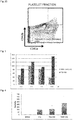
Fig. 2A gives the results of flow cytometric measurement of the distribution of cells expressing CD42b and CD41a for a reporter immortalized megakaryocyte line (MKCL #12-23 cre2). -
Fig. 2B gives the results of flow cytometric measurement of the distribution of cells expressing CD42b and CD41a for a fraction in which platelet production had been induced by culture on a differentiation medium that did not contain doxycycline. -
Fig. 3 gives the results for a comparison of the amount of platelet production by an immortalized megakaryocyte cell line cultured on media containing C59 or TCS-359 at a prescribed concentration. -
Fig. 4 gives the results of a comparison of the amount of platelet production for an immortalized megakaryocyte cell line cultured on media containing SR1, C59, or TCS-359. -
Fig. 5 gives the results of a comparison of the amount of platelet production, under conditions of nonuse of feeder cells, for an immortalized megakaryocyte cell line cultured on media containing SR1, C59, or TCS-359 in prescribed concentrations. - The platelet production promoter according to the present invention contains, as its effective component, one or more substances selected from the group consisting of Wnt inhibitors and FLT inhibitors. Wnts are secreted glycoproteins with molecular weights of approximately 40,000. As used in this Description, "Wnt inhibitor" denotes any substance that inhibits signal transduction that is activated by the action of Wnt protein on the cell (referred to in the following simply as "Wnt signal transduction"), for example, any substance that inhibits the expression or function (activity) of Wnt protein. The targets for Wnt inhibitors can be exemplified by β-catenin, PORCN, casein kinase 1, tankyrase, and glycogen synthase kinase 3, but this is not intended as limiting. The following compounds can be used as Wnt inhibitors.
-
- Calphostin C
- Cardionogen 1
- CCT 031374 hydrobromide
- FH 535
- ICG 001
- iCRT 14
- IWP 4
- endo-IWR 1
- exo-IWR 1
- JW 67
- JW 74 New product
- PNU 74654
- TAK 715
- WAY 316606 hydrochloride
- XAV 939
-
-
IWP 12 - IWP 2
- IWP L6
- Wnt-C59
-
- CKI 7 dihydrochloride
- (R)-CR8
- D 4476
- (R)-DRF053 dihydrochloride
- LH 846
- PF 4800567 hydrochloride
- PF 670462
-
TA 01 -
TA 02 - TAK 715
-
- JW 55
- MN 64
- TC-E 5001
- WIKI4
- XAV 939
-
- 3F8
- A 1070722
-
AR-A 014418 - BIO
- BIO-acetoxime
- CHIR 99021
- 10Z-Hymenialdisine
- Indirubin-3'-oxime
- Kenpaullone
- L803
- L803-mts
- MeBIO
- NSC 693868
- SB 216763
- SB 415286
- TC-G 24
- TCS 2002
- TCS 21311
- TWS 119
- Nonlimiting examples of Wnt inhibitors are compounds that inhibit any Wnt signal transduction pathway, for example, C59 (4-(2-methyl-4-pyridinyl)-N-[4-(3-pyridinyl)phenyl]benzeneacetamide) and its analogs, e.g.,
IWP 12, IWP 2, IWP L6, and so forth, and their salts and derivatives; also, anti-Wnt antibodies and their antibody fragments, antisense oligonucleotides, ribozymes, and molecules that induce RNA interference ("RNAi" below). The FLT inhibitor is TCS-359 in a preferred embodiment. - FLT1 to FLT4 are known as members of FLT, which is an FMS-like tyrosine kinase. As used in this Description, "FLT inhibitor" refers to any substance that inhibits the expression or function (activity) of an FMS-like tyrosine kinase (FLT) and preferably FLT3 in particular. Nonlimiting examples of FLT inhibitors are TCS-359 (2-[(3,4-dimethoxybenzoyl)amino]-4,5,6,7-tetrahydrobenzo[b]thiophene-3-carboxami de) and its analogs and their salts and derivatives; also anti-FLT antibodies and their antibody fragments, antisense oligonucleotides, ribozymes, and molecules that induce RNA interference (RNAi). The FLT inhibitor is preferably an FLT3 inhibitor and is particularly preferably TCS-359.
- Insofar as the desired effects are achieved, the platelet production promoter may contain, as its effective component, one or more inhibitors as described above. The concentration of the inhibitor in the platelet production promoter is not particularly limited and can be established as appropriate by the individual skilled in the art. For example, when C59 is used as the Wnt inhibitor, 1.0 nM to 1.0 mM, or 10 nM to 0.1 mM, or 100 nM to 0.01 mM can be used, and, when TCS-359 is used as the FLT3 inhibitor, 1.0 nM to 1.0 mM, 10 nM to 0.1 mM, or 100 nM to 0.01 mM can be used; however, the amount may be outside these ranges insofar as the desired effects are achieved.
- In this Description, the term "protein expression" is used in the sense of including both transcription and translation, while "inhibition of expression" denotes the complete or partial inhibition of expression at the level of transcription or at the level of translation.
- The step for inhibiting the expression or function of Wnt or FLT can be carried out using a known method or a method based thereon.
- A dominant negative method may be used as the method for inhibiting the function of Wnt or FLT. In the dominant negative method, a Wnt protein and/or FLT protein with an activity reduced or extinguished by the introduction of mutation is expressed in large amounts in the cell to provide an overwhelmingly high ratio within the cell of the corresponding inactive protein relative to the normal Wnt protein and/or FLT protein, thus yielding a cell that exhibits a behavior in which the function of the Wnt protein and/or FLT protein is not obtained.
- An anti-Wnt antibody or an anti-FLT antibody may be used as a method for inhibiting the functionality of Wnt protein and/or FLT protein. The anti-Wnt antibody or anti-FLT antibody used may be an antibody produced by a known method or may be a commercial antibody, and may be any antibody that provides the effects of the present invention through inhibition of the functionality of Wnt protein and/or FLT protein.
- The use of miRNA that inhibits the expression of an Wnt gene or FLT gene is an example of a method for inhibiting the expression of Wnt protein and/or FLT protein. The miRNA may be miRNA that acts directly on the Wnt gene or FLT gene or that acts thereon indirectly.
- "miRNA" is short-chain (20 to 25 bases) noncoding RNA present intracellularly, that is involved in the regulation of gene expression via degradation of mRNA or inhibition of translation from mRNA to protein. This miRNA is transcribed as a single-stranded pri-miRNA that can assume a hairpin loop structure containing the miRNA and its complementary chain; a portion of this is cleaved in the nucleus by the enzyme known as Drosha to provide a pre-miRNA; and this is transported out of the nucleus and is then further cleaved by Dicer to provide the functional miRNA. Accordingly, the let-7 and miR181a used in the present invention may be the single-stranded pri-miRNA or may be in the form of the double-stranded pre-miRNA.
- An antisense method, ribozyme method, or RNAi method may be used as the method for inhibiting the expression of the Wnt gene or FLT gene.
- In the antisense method, gene expression is inhibited using a single-stranded nucleic acid that has a length generally of 10 bases to 100 bases and preferably 15 bases to 30 bases and that has a base sequence complementary to the target gene (basically to the mRNA that is the transcript). The antisense nucleic acid is introduced into the cell, and gene expression is then inhibited by hybridization with the target gene. As long as the expression-inhibiting effect on the target gene is obtained, the antisense nucleic acid may not be completely complementary to the target gene. Antisense nucleic acid can be designed as appropriate by the individual skilled in the art using, for example, known software. The antisense nucleic acid may be DNA, RNA, or a DNA-RNA chimera and may be modified.
- A ribozyme is a nucleic acid molecule that can catalytically hydrolyze a target RNA, and is constructed of an antisense region having a sequence complementary to the target RNA and a catalytic core region responsible for the cleavage reaction. Ribozymes can be designed as appropriate by the individual skilled in the art using known methods. While ribozymes are typically RNA molecules, a DNA-RNA chimeric molecule may also be used.
- The RNAi method is a sequence-specific gene expression inhibition mechanism that is induced by a double-stranded nucleic acid. The target specificity is very high, and the safety is also high because this method utilizes a gene expression inhibition mechanism that is natively present in the organism.
- siRNA is an example of a double-stranded nucleic acid having an RNAi effect. When used in mammalian cells, siRNA is a double-stranded RNA generally of about 19 to 30 bases and preferably about 21 bases to 25 bases. Double-stranded nucleic acid having an RNAi effect generally has, on the one side, a base sequence that is complementary to a portion of the target nucleic acid, and, on the other side, a sequence complementary to this. An siRNA that inhibits the expression of Wnt or FLT can be designed as appropriate by the individual skilled in the art using, for example, known software. The target sequence used in the examples given below is an example of the one side of the double-stranded nucleic acid sequence. siRNA that inhibits the expression of Wnt or FLT may act directly on the Wnt gene or FLT gene (i.e., contains a sequence complementary to a portion of the Wnt gene or FLT gene) or may act indirectly (i.e., inhibits the expression of the Wnt gene or FLT gene as a result of inhibition of the expression of a gene other than the Wnt gene or FLT gene).
- Expression within a cell can be brought about by the introduction into the cell of a vector (for example, a lentivirus vector) that contains nucleic acid encoding the particular siRNA, antisense nucleic acid, or ribozyme, but, in addition to this, introduction into the cell in the form of RNA may also be performed. In the case of introduction in RNA form, introduction into a cell may be carried out using a known procedure, e.g., lipofection, microinjection, and so forth. In order to inhibit degradation of the RNA, use may be made of RNA that incorporates 5-methylcytidine or pseudouridine (TriLink Biotechnologies) (Warren L., (2010) Cell Stem Cell, 7:618-630) or a DNA-RNA chimera that incorporates DNA. For both uridine and cytidine, the position of the modified base may independently be for all or a portion, and when it is for a portion, it may be a random position in any proportion. The following may be used for the vector containing the siRNA-encoding nucleic acid: a vector containing DNA that encodes each of the two strands, or a vector containing DNA encoding single-stranded nucleic acid that can form double-stranded nucleic acid connected through a loop. In the case of siRNA, the single-stranded RNA provided by transcription within the cell may be designed such that its complementary region hybridizes within the cell with the assumption of a hairpin structure. Such RNA is referred to as short hairpin RNA (shRNA). Upon transfer to the cytoplasm, the loop region of the shRNA is digested by an enzyme (Dicer) to yield the siRNA, thereby expressing the RNAi effect.
- When, in this Description, the inhibition of protein expression is said to be "brought about by siRNA" or "brought about by miRNA", this means that expression is ultimately inhibited by siRNA or miRNA; the siRNA, shRNA, or miRNA may be delivered into the cell in the form of RNA or a vector containing nucleic acid encoding the siRNA, shRNA, or miRNA may be delivered into the cell.
- When siRNA or shRNA for a Wnt gene or an FLT gene is introduced using, for example, a vector, the expression of this RNA may be controlled using a drug-responsive promoter. Such a vector that enables drug-responsive control of the RNA can be acquired from, for example, Takara Bio Inc. Here, the introduction of the RNA denotes effecting contact with the corresponding drug and thereby inducing expression of the RNA within the cell.
- The platelet production promoter according to the present invention can increase the amount of platelet production from megakaryocyte cells. While not intended as a limitation, an inhibitor that brings about a significant increase in the number of platelets relative to the negative control, for example, an increase of at least 10%, at least 20%, at least 50%, or at least 100 or 200%, is preferred as the effective component of the platelet production promoter according to the present invention. The platelet production promoter according to the present invention may be used by itself or may be used in combination with another, already known platelet production promoter substance. There are no particular limitations on the timing of the addition of the platelet production promoter insofar as the desired effects are achieved. For example, addition of the platelet production promoter to the megakaryocyte cells prior to multinucleation or after multinucleation, and particularly to the megakaryocyte cells during platelet production, may be contemplated.
- In another embodiment, the platelet production promoter according to the present invention may additionally contain an Aryl hydrocarbon receptor (AhR) antagonist as an effective component. As used in this Description, an "aryl hydrocarbon receptor (AhR)" is a transcription factor belonging to the Per/ARNT/SIM (PAS) family. AhR is inactive when not bound to a ligand, but translocates to the nucleus when bound with an aromatic hydrocarbon compound ligand. In the nucleus, it forms a heterodimer with a molecule known as AhR nuclear translocator (ARNT), which activates transcription by binding to a xenobiotic response element (XRE) on the DNA.
- Nonlimiting examples of AhR antagonists that may be used by the present invention are as follows:
- 4-(2-(2-(benzo[b]thiophen-3-yl)-9-isopropyl-9H-purin-6-ylamino)ethyl)phenol (SR1);
- α-naphthoflavone;
- 1,4-dihydroxyanthraquinone;
- 1,5-dihydroxyanthraquinone;
- 1,8-dihydroxyanthraquinone;
- galangin;
- resveratrol;
- 2-methyl-2H-pyrazole-3-carboxylic acid (2-methyl-4-o-tolylazophenyl)amide (CH-223191);
- N-[2-(3H-indol-3-yl)ethyl]-9-isopropyl-2-(5-methyl-3-pyridyl)purin-6-amine (GNF351);
- 2-(29-amino-39-methoxyphenyl)oxanaphthalen-4-one (PD98059);
- (Z)-3-[(2,4-dimethylpyrrol-5-yl)methylidenyl]-2-indolinone (TSU-16);
- 2-(29-amino-39-methoxyphenyl)oxanaphthalen-4-one (PD98059);
- 6,2 ',4'-trimethoxyflavone (TMF); and
- 3',4'-dimethoxyflavone (DMF).
- The compounds given as AhR antagonists in
WO 2012/015914 may also be used. - There are no particular limitations on the concentration of the AhR antagonist in the platelet production promoter, and this can be established as appropriate by the individual skilled in the art. For example, the functionality of the obtained platelets can be further enhanced in the range of at least 200 nM to less than 1000 mM when SR1 is used; at least 0.2 µM to less than 4 µM when CH223191 is used; at least 20 nM to less than 300 nM when GNF351 is used; at least 2.5 µM to less than 40 µM when TMF is used; and at least 2.5 µM to less than 40 µM when DMF is used. However, the amount may be outside these ranges as long as the desired effects are achieved.
- In another embodiment, the platelet production promoter according to the present invention may also contain a ROCK inhibitor. The combination of a Wnt inhibitor and/or FLT inhibitor with a ROCK inhibitor results in an increase in the number of platelets produced and also in a synergetic increase in the functionality of the obtained platelets. The Wnt inhibitor and/or FLT inhibitor and the ROCK inhibitor may be present in the platelet production promoter according to the present invention, or either or both may be used separately from the platelet production promoter. In this Description, "ROCK inhibitor" denotes an antagonist for Rho-binding kinase (Rho-associated coiled-coil forming kinase; ROCK). ROCK inhibitors can be exemplified by Y27632, Y39983, fasudil hydrochloride, ripasudil, SLX-2119, RKI-1447, azaindole1, SR-3677, Staurosporine, H1152 dihydrochloride, AR-12286, and INS-117548, but there is no limitation to the preceding.
- When immortalized megakaryocyte cells are produced by the overexpression of an oncogene, polycomb gene, and apoptosis suppression gene in cells less differentiated than megakaryocytes followed by the termination of the overexpression and the development of multinucleation of the immortalized megakaryocyte cells, preferably the ROCK inhibitor is added to the culture medium after termination of the overexpression.
- The platelet production method according to the present invention contains a step for bringing megakaryocyte cells and/or progenitor cells thereof into contact with the platelet production promoter. Contact between the platelet production promoter and cells can be carried out in a culture medium. In this Description, "megakaryocyte cells" are characteristically the largest cells present in the bone marrow in an organism and characteristically release platelets. They are also characterized by being positive for the CD41a, CD42a, and CD42b cell surface markers, and may also additionally express a marker selected from the group consisting of CD9, CD61, CD62p, CD42c, CD42d, CD49f, CD51, CD110, CD123, CD131, and CD203c. A "megakaryocyte cell", when multinucleated (polyploidization), has 16X to 32X genomes relative to that in an ordinary cell, and in this Description the term "megakaryocyte cells" by itself includes, insofar as the characteristic features indicated above are present, both multinucleated megakaryocyte cells and pre-multinucleated megakaryocyte cells. "Pre-multinucleated megakaryocyte cells" is also synonymous with "immature megakaryocyte cells" and "growth-phase megakaryocyte cells".
- The megakaryocyte cells can be obtained by various known methods. A nonlimiting example of a megakaryocyte cell production method is the method described in
WO 2011/034073 . Using this method, immortalized megakaryocyte cells that can propagate indefinitely can be obtained by the overexpression of an oncogene and a polycomb gene in a "cell less differentiated than a megakaryocyte cell". In addition, immortalized megakaryocyte cells can also be obtained according to the method described inWO 2012/157586 by inducing the overexpression of an apoptosis suppression gene in a "cell less differentiated than a megakaryocyte cell", i.e., a megakaryocyte progenitor cell (also referred to in this Description simply as a "progenitor cell"). By terminaing the overexpression of gene, these immortalized megakaryocyte cells undergo the development of multinucleation and release platelets. - A combination of the methods described in the aforementioned documents may be used to obtain the megakaryocyte cells. In this case, overexpression of an oncogene, overexpression of a polycomb gene, and overexpression of an apoptosis suppression gene may be carried out simultaneously or sequentially. For example, multinucleated megakaryocyte cells may be obtained by bringing about the overexpression of an oncogene and polycomb gene; inhibiting this overexpression; then bringing about the overexpression of an apoptosis suppression gene; and inhibiting this overexpression. In addition, multinucleated megakaryocyte cells may also be obtained by bringing about overexpression of the oncogene, overexpression of the polycomb gene, and overexpression of the apoptosis suppression gene all at the same time and then terminating these overexpressions at the same time. Multinucleated megakaryocyte cells may also be obtained by first inducing overexpression of the oncogene and polycomb gene and then inducing overexpression of the apoptosis suppression gene and terminating these overexpressions at the same time.
- In this Description, a "cell less differentiated than a megakaryocyte cell" and a "megakaryocyte progenitor cell" denote a cell that has the capacity to differentiate into a megakaryocyte and that resides in various stages of differentiation from a hematopoietic stem cell lineage to a megakaryocyte cell. Nonlimiting examples of cells less differentiated than megakaryocytes are hematopoietic stem cells, hematopoietic progenitor cells, CD34-positive cells, and megakaryocyte-erythroid progenitor cells (MEP). These cells may be obtained by isolation from the bone marrow, umbilical cord blood, or peripheral blood, or may be obtained by inducing differentiation from pluripotent stem cells, e.g., ES cells, iPS cells, and so forth, which are even less differentiated cells.
- In this Description, "oncogene" refers to a gene that induces the malignant transformation of a cell within an organism, and examples are MYC family genes (for example, c-MYC, N-MYC, L-MYC), SRC family genes, RAS family genes, RAF family genes, and protein kinase family genes such as c-Kit, PDGFR, and Abl.
- In this Description, a "polycomb gene" is known as a gene that functions to circumvent cell senescence by negatively regulating the CDKN2a (INK4a/ARF) gene (Ogura et al., Saisei Igaku [Regenerative Medicine], Vol. 6, No. 4, pp. 26-32; Jesus Gill et al., Nature Reviews Molecular Cell Biology, Vol. 7, pp. 667-677, 2006; Proc. Natl. Acad. Sci. USA, Vol. 100, pp. 211-216, 2003). Nonlimiting examples of polycomb genes are BMI1, Mel18, Ring1a/b, Phc1/2/3, Cbx2/4/6/7/8, Ezh2, Eed, Suz12, HADC, and Dnmt1/3a/3b.
- In this Description, "apoptosis suppression gene" refers to a gene that has the function of suppressing the apoptosis of a cell, and can be exemplified by the BCL2 gene, BCL-xL gene, Survivin gene, and MCL1 gene.
- Overexpression of genes and termination of the overexpression can be performed by the methods described in
WO 2011/034073 ,WO 2012/157586 ,WO 2014/123242 , and Nakamura S. et al., Cell Stem Cell, 14, 535-548, 2014, and by other known methods and by methods based on the preceding. - As may be understood from the examples, from the standpoint of being effective in the maturation process, i.e., the multinucleation and enlargement of the megakaryocyte cells, the inhibition of the expression or function of Wnt protein and/or FLT protein Wnt protein and/or FLT protein may be carried out in the pre-multinucleated megakaryocyte cells, while from the standpoint of carrying out further multinucleation in the multinucleated megakaryocyte cells, the inhibition of the expression or function of Wnt protein and/or FLT protein Wnt protein and/or FLT protein may be carried out in the multinucleated megakaryocyte cells. The inhibition of the expression or function of Wnt protein and/or FLT protein Wnt protein and/or FLT protein is preferably also carried out in the step for producing platelets from the megakaryocyte cells because this promotes multinucleation and enlargement of the megakaryocyte cells and provides a substantial increase in the number of platelets produced per 1 cell.
- When immortalized megakaryocyte cells are produced by the overexpression of an oncogene, polycomb gene, and apoptosis suppression gene in cells less differentiated than megakaryocyte cells followed by the termination of the overexpression and the development of multinucleation of the immortalized megakaryocyte cells, the initiation of the inhibition of the expression or function of Wnt protein and/or FLT protein Wnt protein and/or FLT protein may be prior to or after the termination of the overexpression of these genes without particular limitation. The expression or function of Wnt protein and/or FLT protein is preferably inhibited at least after the termination of the overexpression. The inhibition of the expression or function of Wnt protein and/or FLT protein prior to termination of the overexpression of these genes can cause the appearance of a declining trend for the number of CD41a-positive cells, i.e., the number of pre-multinucleated megakaryocyte cells. Because of this, from the standpoint of maintaining the number of pre-multinucleated megakaryocyte cells, the initiation of the inhibition of the expression or function of Wnt protein and/or FLT protein is more preferably after the termination of the overexpression of the indicated genes.
- In another embodiment, the platelet production method according to the present invention contains a step for bringing megakaryocyte cells into contact with an aryl hydrocarbon receptor (AhR) antagonist. The contact between the AhR antagonist and cells can be performed in a culture medium.
- In the case of use of "cells provided by the overexpression in cells less differentiated than megakaryocyte cells of at least 1 gene selected from the group consisting of oncogenes, polycomb genes, and apoptosis suppression genes followed by the termination of this overexpression", the period of time for overexpression is also not particularly limited and can be established as appropriate by the individual skilled in the art. The cells may be subcultured after overexpression, and the period of time after the final passage to the day of termination of overexpression is also not particularly limited, but can be exemplified by 1 day, 2 days, or 3 or more days.
- Contact with the AhR antagonist is carried out with at least multinucleated megakaryocyte cells. When immortalized megakaryocyte cells are produced by the overexpression of an oncogene, polycomb gene, and apoptosis suppression gene in cells less differentiated than megakaryocyte cells followed by the termination of the overexpression and the development of multinucleation of the immortalized megakaryocyte cells, the AhR antagonist is preferably added to the culture medium after termination of the overexpression.
- There are also no particular limitations on the period of time during which the megakaryocyte cells are cultured in the presence of the AhR antagonist. When the AhR antagonist is added to the culture medium after the aforementioned termination of overexpression, functional platelets are gradually released beginning about the third day after the addition of the AhR antagonist to the culture medium, and the number increases with the number of days of cultivation. When SR1 is added as the AhR antagonist, highly functional platelets in particular tend to be obtained when cultivation is carried out for 5 days, but the number of days of cultivation may be shorter or longer than this as long as functional platelets are obtained.
- There are also no particular limitations on the period of time after termination of the overexpression of the aforementioned genes in the megakaryocyte cells until the addition of the AhR antagonist to the culture medium, but, for example, culture in the presence of the AhR antagonist may be started within 1 day, 2 days, or 3 days. One or more supplemental additions of the AhR antagonist may be made to the culture medium during the cultivation period.
- In the platelet production method according to the present invention, contact with the megakaryocyte cells may be effected using the AhR antagonist in combination with a ROCK inhibitor. Platelets with a synergetically increased functionality can be obtained by effecting contact with megakaryocyte cells using the combination of an AhR antagonist with a ROCK inhibitor. The AhR antagonist and ROCK inhibitor may be added at the same time or either may be added first.
- When immortalized megakaryocyte cells are produced by the overexpression of an oncogene, polycomb gene, and apoptosis suppression gene in cells less differentiated than megakaryocyte cells followed by the termination of the overexpression and the development of multinucleation of the immortalized megakaryocyte cells, the ROCK inhibitor is preferably added to the culture medium after the termination of the overexpression.
- In yet another embodiment, the platelet production method according to the present invention includes a step for culturing megakaryocyte cells in which the expression or function of Wnt protein and/or FLT protein has been inhibited. This culture step may be carried out in the presence of an AhR antagonist. This culture step may also be carried out in the presence of a ROCK inhibitor. Moreover, this culture step may be carried out in the absence of feeder cells.
- Common conditions may be used for the megakaryocyte cell culture conditions in all of the embodiments of the present invention. For example, the temperature may be approximately 35°C to approximately 42°C, approximately 36°C to approximately 40°C, or approximately 37°C to approximately 39°C, while 5% CO2 and/or 20% O2 may be used. Static culture or shake culture may be used. There are also no particular limitations on the shaking rate in the case of shake culture, and, for example, 10 rpm to 200 rpm, 30 rpm to 150 rpm, and so forth can be used.
- By culturing megakaryocyte cells as described in the preceding in the platelet production method according to the present invention, the megakaryocyte cells undergo maturation and platelets are produced from their cytoplasm. This maturation of the megakaryocyte cells refers to multinucleation of the megakaryocyte cells and the release of platelets.
- The functionality of these platelets can be evaluated through measurements carried out in accordance with known methods. For example, the amount of activated platelets can be measured using the PAC-1 antibody, which is an antibody that binds specifically to the integrin αIIBβ3 (glycoprotein IIb/IIIa, CD41a/CD61 complex) activation marker that is present on the membrane of activated platelets. The amount of activated platelets may also be measured using antibody to detect CD62b (P-selectin), which is likewise an activation marker for platelets. The amount of platelets can be measured, for example, using flow cytometry and carrying out gating with antibody to the activation-independent platelet markers CD61 or CD41, followed by detection of binding by PAC-1 antibody or anti-CD62P antibody to the platelets. These processes may be carried out in the presence of adenosine diphosphate (ADP).
- Platelet functionality may also be evaluated by examining whether binding with fibrinogen in the presence of ADP occurs. The activation of integrin as required in the initial stage of thrombus formation is produced by the binding of fibrinogen by platelets. In addition, platelet functionality may also be evaluated by a method in which the thrombus formation capacity is visualized and observed in vivo, as shown in Fig. 6 in
WO 2011/034073 . - In this Description, expressions such as "highly functional platelets", "the platelet functionality is high", "functional platelets", and the like refer to a state that can be determined by the individual skilled in the art when, in comparison to platelets obtained by a conventional method, the functionality of the platelets measured by at least one of the aforementioned methods is significantly higher or, if not significantly higher, exhibits a high trend, or the functionality is the same as platelets isolated from the organism. Or, expressions such as "highly functional platelets", "the platelet functionality is high", and the like in this Description denote a platelet functionality, as measured by at least one of the aforementioned methods, that is at least 50%, at least 60%, at least 70%, at least 80%, or at least 90% that of natural platelets.
- There are no particular limitations on the culture medium for the cultivation of the megakaryocyte cells, and known media suitable for the production of platelets from megakaryocyte cells, or media based thereon, may be used as appropriate. For example, a medium used for the culture of animal cells can be prepared to function as a basal medium. The basal medium can be exemplified by IMDM medium, medium 199 medium, Eagle's minimum essential medium (EMEM) medium, α-MEM medium, Dulbecco's modified Eagle's medium (DMEM) medium, Ham's F12 medium, RPMI 1640 medium, Fischer's medium, Neurobasal Medium (Life Technologies Corporation), and mixed media from the preceding.
- The culture medium may contain serum or plasma or may be serum-free. As necessary, the medium may also contain one or more substances such as, for example, albumin, insulin, transferrin, selenium, fatty acid, trace elements, 2-mercaptoethanol, thiolglycerol, monothioglycerol (MTG), lipids, amino acids (for example, L-glutamine), ascorbic acid, heparin, nonessential amino acids, vitamins, growth factors, low molecular weight compounds, antibiotics, antioxidants, pyruvic acid, buffers, inorganic salts, and cytokines. The cytokines are proteins that promote blood cell differentiation and can be exemplified by vascular endothelial growth factor (VEGF), thrombopoietin (TPO), various TPO-like agents, stem cell factor (SCF), insulin-transferrin-selenite (ITS) supplement, and ADAM inhibitor. A preferred medium for the present invention is IMDM medium containing serum, insulin, transferrin, serine, thiolglycerol, ascorbic acid, and TPO. It may also contain SCF and may also contain heparin. The co-use of TPO and SCF is preferred. There are no particular limitations on the concentration of each, but the TPO can be approximately 10 ng/mL to approximately 200 ng/mL or approximately 50 ng/mL to approximately 100 ng/mL; the SCF can be approximately 10 ng/mL to approximately 200 ng/mL or approximately 50 ng/mL; and the heparin can be approximately 10 U/mL to approximately 100 U/mL or approximately 25 U/mL. A phorbol ester (for example, phorbol 12-myristate 13-acetate, PMA) may also be added.
- Human serum is preferred when serum is used. In addition, human plasma and so forth may be used instead of serum. Using the method according to the present invention, platelets equivalent to those obtained using serum can be obtained even with the use of these components.
- When a drug-responsive gene expression induction system, e.g., the Tet-on (registered trademark) or Tet-off (registered trademark) system, is used for overexpression of genes or the termination thereof, in the overexpression process the corresponding drug, for example, tetracycline or doxycycline, may be incorporated in the culture medium, and overexpression may be inhibited by its removal from the culture medium.
- The step for culturing the megakaryocyte cells may be carried out in the present invention without feeder cells. As demonstrated in the following examples, the method according to the present invention can provide functional platelets even by culture in the absence of feeder cells.
- In this Description, "feeder cells" refer to cells that are co-cultured with the target cells in order to adjust to the environment required for the culture of the cells (target cells) that are to be propagated or differentiated. Insofar as they are cells that can be distinguished from the target cells, the feeder cells may contain cells originating from the same species or may contain cells of heterologous origin. The feeder cells may be cells that have been treated with antibiotics or gamma radiation to be nonpropagating, or may be cells not thusly treated.
- The present invention also encompasses platelets that have been produced by the method according to the present invention. As shown in the examples below, platelets produced by the method according to the present invention have a more developed open canalicular system than platelets produced in vitro by conventional methods and are recognized as morphologically close to natural platelets in that mitochondria can also be observed.
- The method according to the present invention for producing a platelet formulation contains a step for producing platelets by culturing megakaryocyte cells using the method according to the present invention and recovering a platelet-rich fraction from the culture product; and a step for removing non-platelet blood cell components from the platelet fraction. The step for removing blood cell components can be carried out by removing the non-platelet blood cell components including megakaryocyte cells, using, for example, a leukocyte removal filter (for example, from Terumo Corporation or Asahi Kasei Medical Co., Ltd.). A more specific method for producing a platelet formulation is described in, for example,
WO 2011/034073 . - The method according to the present invention for producing a blood formulation contains a step for producing a platelet formulation using the method according to the present invention; and a step for mixing this platelet formulation with other components. Erythrocytes are an example of this other component.
- In addition, other components that contribute to cell stabilization may be added to the platelet formulation and the blood formulation.
- The present invention also encompasses a composition that contains multinucleated megakaryocyte cells, an AhR antagonist, and culture medium. This composition may be cryopreserved, or highly functional platelets may be obtained by culturing this composition as such. In the particular case of cryopreservation, the composition may contain, for example, a commercial cell cryopreservation reagent, glycerol, or DMSO, which protect the cells during freezing. Highly functional platelets can be obtained by thawing the frozen composition and culturing it.
- The disclosures in all the patent documents and non-patent documents cited in this Description are incorporated in their entirety in this Description by reference.
- An immortalized megakaryocyte line (MKCL SeV2) was produced in accordance with the method described by Nakamura et al., Cell Stem Cell, 2014 by the introduction of Bcl-xL, c-Myc, and Bmi1 into iPS cells (SeV2: cells produced, in accordance with the method of
WO 2010/134526 , by the introduction of c-MYC, OCT3/4, SOX2, and KLF4 into neonate human fibroblasts using a sendai virus vector). iPS cells (MK iPS #12) were produced from the immortalized megakaryocyte line (MKCL SeV2) according to the method described by Okita K et al., Stem Cells, 31(3):458-466, 2013. The obtained iPS cells (MK iPS #12) were cultured in accordance with the method described by Nakagawa M et al., Sci Rep. 8;4:3594, 2014 using StemFit (registered trademark) AK03 (Ajinomoto) and laminin 511 (iMatrix 511 (Nippi)). - The iPS cells (MK iPS #12) were dissociated using TrypLE (registered trademark) Select, and 0.8 × 10⁶ were mixed with 1.7 µg template vector (
Fig. 1A ), 1.7 µg guide vector (Fig. 1B ), and 1.7 µg cas9 vector (pHL-EF1a-SphcCas9-iC-A, received from Dr. Hotta, Center for iPS Cell Research and Application, Kyoto University), and the vectors were introduced into the cells by electroporation using a Human Stem Cell Nucleofector (registered trademark) Kit 2 (Lonza) and Nucleofector. After electroporation, suspension was carried out in StemFit (registered trademark) AK03 followed by seeding to a laminin 511-coated 10-cm dish and culture under conditions of 37°C and 5% CO2. After 3 days, puromycin was added to the culture medium at 1 ng/mL and subculturing was performed. After 7 days, the colonies that had formed were picked up and DNA was extracted from each of the obtained colonies using a QIAamp DNA Mini Kit (QIAGEN), and homologous recombination was confirmed by genotyping PCR using primers (TUBB1 insert check Fw and Rv, 5-1 insert check Fw and 5-1.2 insert check Rv, and 3-1.2 insert check Fw and 3-2 insert check Rv; the sequences are given in Table 1). The homozygous homologous recombinant iPS cell line was expansion cultured and established as MK iPS#12-23.[Table 1] Primer Name Sequence TUBB1 insert check Fw GATGCTTTACTGGTGCCCTT (SEQ ID NO: 2) TUBB1 insert check Rv AAGAGATGGCAGTGCTGCAT (SEQ ID NO: 3) 5-1 insert check Fw TGCTTTACTGGTGCCCTTCT (SEQ ID NO: 4) 5-1.2 insert check Rv AAGTCGTGCTGCTTCATGTG (SEQ ID NO: 5) 3-1.2 insert check Fw GCAACCTCCCCTTCTACGAG (SEQ ID NO: 6) 3-2 insert check Rv TCGGAGCATTTTCCCATTAC (SEQ ID NO: 7) - The obtained MK iPS#12-23 was then mixed with 5 µg cre expression vector (pCXW-Cre-Puro, received from Dr. Hotta, Center for iPS Cell Research and Application, Kyoto University), and the vector was introduced into the cells by electroporation using a Human Stem Cell Nucleofector (registered trademark) Kit 2 (Lonza) and Nucleofector. After electroporation, suspension was carried out in StemFit (registered trademark) AK03 followed by seeding to a laminin 511-coated 10-cm dish and culture under conditions of 37°C and 5% CO2. After 9 days, multiple colonies were picked up and were divided in two: one half was cultured under the addition of puromycin at 1 ng/mL to the culture medium and the other half was stored. For stored cells deriving from the same colony for which cell death had been confirmed for the line, the removal of the puromycin resistance cassette was checked by genotyping PCR using primers (TUBB1 insert check Fw and Rv), and the resulting iPS cell line was expansion cultured to establish MK iPS#12-23 cre2.
- The induction of hematopoietic progenitor cells (HPC) was performed from the iPS cells (MK iPS#12-23 cre2) via iPS-sac. In more detail, the iPS cells were released from the culture dish using a cell scraper, and about one-twentieth of the cells were seeded as colony clusters onto mitomycin C (MMC)-treated C3H10T1/2 (available from Riken). The MMC-treated C3H10T1/2 was prepared by seeding 8 × 10⁵ cells/dish to a 10-cm dish on the day prior to seeding with the iPS cells. After seeding, the culture was started (day 0) in Eagle's basal medium (EBM) supplemented with 20 ng/mL VEGF, in an environment of 5% O2, 5% CO2, and 37°C. Medium exchange with the same culture medium was performed at a frequency of twice per week.
- The cells were physically released on day 14 using a cell scraper and the tip of a pipet, and cells of uniform size were recovered by passage through a 40-micrometer cell strainer.
- On day 14, the cells were recovered and 1 × 10⁵ cells/well were seeded to a 6-well dish on MMC-treated C3H10T1/2. The culture medium used was EBM supplemented with SCF at 50 ng/mL, TPO at 50 ng/mL, and doxycycline at 0.5 µg/mL. The cells were similarly recovered on day 17 and 1 × 10⁶ cells/dish were seeded to a 10-cm dish on MMC-treated C3H10T1/2. The cells were recovered on day 23 and 1 × 10⁶ cells/dish were seeded to a 10-cm dish to produce a reporter immortalized megakaryocyte cell line (MKCL#12-23 cre2).
- The immortalized megakaryocyte line obtained by the method described above was cultured for 7 days on a differentiation medium supplemented with 0.75 µM StemRegenin1 (SR1) (Selleckchem), 10 µM Y-27632 (Wako), 50 ng/mL TPO (R & D), and 50 ng/mL SCF (R & D), and, after the cells had been suspended, the cells were recovered from the culture supernatant and were stained with anti-CD41 antibody and anti-CD42b antibody and FACS analysis was performed. FACS analysis was also similarly performed on the cells during the induction process. As a result, it was confirmed that, at the 7th day of culture, megakaryocytes positive for both CD41 and CD42b had been induced and platelets were produced from these megakaryocytes (
Fig. 2 ). - The platelet production-promoting effect of a Wnt inhibitor and FLT3 inhibitor was then investigated. The aforementioned reporter immortalized megakaryocyte cell line (MKCL#12-23 cre2) was cultured in a 96-well dish on a differentiation medium supplemented with the particular inhibitor at a prescribed concentration, 10 µM Y-27632, 50 ng/mL TPO, and 50 ng/mL SCF, or on a differentiation medium supplemented with 0.75 µM SR1, 10 µM Y-27632, 50 ng/mL TPO, and 50 ng/mL SCF (positive control), or on a differentiation medium supplemented with 0.1% DMSO, 10 µM Y-27632, 50 ng/mL TPO, and 50 ng/mL SCF (negative control). When the VENUS fluorescence intensity was measured on the cells on the 7th day of culture, the fluorescence intensity was increased for media to which the Wnt inhibitor or FLT3 inhibitor had been added. The results of calculation of the relative fluorescence intensity are given in
Fig. 3 , where the platelet count for use of the particular inhibitor was corrected with the platelet count for the positive control (made 100%) and the platelet count for the negative control (made 0%). - The platelet production-promoting effect of the Wnt inhibitor and FLT3 inhibitor was then investigated. MKCL SeV2, on which the aforementioned reporter immortalized megakaryocyte cell line (MKCL#12-23 cre2) was based, was cultured in a 6-well dish on a differentiation medium supplemented with the Wnt or FLT3 inhibitor, 10 µM Y-27632, 50 ng/mL TPO, and 50 ng/mL SCF, or on a differentiation medium supplemented with 0.75 µM SR1, 10 µM Y-27632, 50 ng/mL TPO, and 50 ng/mL SCF (positive control), or on a differentiation medium supplemented with 0.1% DMSO, 10 µM Y-27632, 50 ng/mL TPO, and 50 ng/mL SCF (negative control). On the 7th day of cultivation, the culture medium was suspended and the supernatant was recovered; staining with anti-CD41 antibody and anti-CD42b antibody was performed; and FACS analysis was carried out. The relative number of platelets was calculated with correction of the platelet count for use of the particular inhibitor with the platelet count for the positive control (made 100%) and the platelet count for the negative control (made 0%) (
Fig. 4 ). - The preceding results suggest that a Wnt inhibitor and an FLT3 inhibitor are strong platelet inducers.
- iPS cells (TkDA3-4) were cultured and a colony was detached using a cell scraper and was cultured on a differentiation medium supplemented with 20 µg/mL VEGF. After 14 days, the cells were recovered using a cell scraper and 25 U/mL heparin, 10 µM Y-27632, 100 ng/mL TPO, and 50 ng/mL SCF were added. 0.1% DMSO, 0.75 µM SR1, 1 µM C59 (Calbiochem), or 3.3 µM FLT3 inhibitor (Santa Cruz Biotechnology) was also added to this culture medium and culture was carried out for 10 days. This was also carried out under the condition of the use of feeder cells as described above. The obtained cells were suspended and the supernatant was recovered; staining with anti-CD41 antibody and anti-CD42b antibody was performed; and FACS analysis was carried out (
Fig. 4 ). As a result, it was confirmed that the compounds can substitute for a state, in which a feeder is not present, and that, under the condition of nonuse of a feeder, a Wnt inhibitor and FLT3 inhibitor have the same as or greater platelet production capacity than that of SR1.
Claims (12)
- A platelet production promoter comprising one or more substances selected from the group consisting of Wnt inhibitors and FMS-like tyrosine kinase (FLT) inhibitors.
- The platelet production promoter according to claim 1, wherein the Wnt inhibitor is C59.
- The platelet production promoter according to claim 1, wherein the FLT inhibitor is an FLT3 inhibitor.
- The platelet production promoter according to any one of claims 1 to 3, further comprising a ROCK inhibitor.
- A method of producing platelets, the method comprising a step for bringing megakaryocyte cells and/or progenitor cells thereof into contact with one or more substances selected from the group consisting of Wnt inhibitors and FLT inhibitors.
- The method according to claim 5, wherein the Wnt inhibitor is C59.
- The method according to claim 5, wherein the FLT inhibitor is an FLT3 inhibitor.
- The method according to any one of claims 5 to 7, further comprising a step for bringing the megakaryocyte cells and/or progenitor cells thereof into contact with a ROCK inhibitor.
- The method according to any one of claims 5 to 8, wherein the megakaryocyte cells are immortalized megakaryocyte cells.
- The cells according to claim 9, wherein the megakaryocyte cells derive from pluripotent stem cells.
- The method according to claim 10, wherein the pluripotent stem cells are iPS cells.
- The method according to claim 11, wherein the iPS cells are of human origin.


Applications Claiming Priority (2)
| Application Number | Priority Date | Filing Date | Title |
|---|---|---|---|
| JP2016016677 | 2016-01-29 | ||
| PCT/JP2017/003191 WO2017131230A1 (en) | 2016-01-29 | 2017-01-30 | Platelet production promoter and method of producing platelets using same |
Publications (3)
| Publication Number | Publication Date |
|---|---|
| EP3453759A1 true EP3453759A1 (en) | 2019-03-13 |
| EP3453759A4 EP3453759A4 (en) | 2019-09-25 |
| EP3453759B1 EP3453759B1 (en) | 2023-08-30 |
Family
ID=59398361
Family Applications (1)
| Application Number | Title | Priority Date | Filing Date |
|---|---|---|---|
| EP17744459.3A Active EP3453759B1 (en) | 2016-01-29 | 2017-01-30 | Platelet production promoter and method of producing platelets using same |
Country Status (4)
| Country | Link |
|---|---|
| US (1) | US10941382B2 (en) |
| EP (1) | EP3453759B1 (en) |
| JP (1) | JP6879511B2 (en) |
| WO (1) | WO2017131230A1 (en) |
Families Citing this family (4)
| Publication number | Priority date | Publication date | Assignee | Title |
|---|---|---|---|---|
| CA3087344A1 (en) | 2018-01-05 | 2019-07-11 | Platelet Biogenesis, Inc. | Compositions and methods for producing megakaryocytes |
| WO2019227198A1 (en) * | 2018-05-31 | 2019-12-05 | University Health Network (Uhn) | Methods and compositions comprising tankyrase inhibitors for generating insulin producing cells |
| JP2021529770A (en) | 2018-06-29 | 2021-11-04 | プレートレット バイオジェネシス, インコーポレイテッド | Compositions for drug delivery and how to use them |
| JP7058431B2 (en) | 2019-12-12 | 2022-04-22 | 国立大学法人千葉大学 | Freeze-dried preparation containing megakaryocytes and platelets |
Family Cites Families (11)
| Publication number | Priority date | Publication date | Assignee | Title |
|---|---|---|---|---|
| JP2005187435A (en) * | 2003-12-26 | 2005-07-14 | Otsuka Chemical Co Ltd | Thrombocyte production promoting composition |
| JP5633075B2 (en) | 2009-05-18 | 2014-12-03 | 独立行政法人産業技術総合研究所 | Vector material for preparing pluripotent stem cells and method for preparing pluripotent stem cells using the same |
| BR122013008030B8 (en) | 2009-09-15 | 2021-07-27 | Univ Tokyo | method for producing erythroid cells and method for producing a blood product |
| UY32920A (en) * | 2009-10-02 | 2011-04-29 | Boehringer Ingelheim Int | BISPECIFIC UNION MOLECULES FOR ANTI-ANGIOGENESIS THERAPY |
| US10314810B2 (en) | 2010-07-27 | 2019-06-11 | Trustees Of Boston University | Aryl hydrocarbon receptor (AhR) modifiers as novel cancer therapeutics |
| EP2708597B1 (en) * | 2011-05-13 | 2017-11-15 | The University of Tokyo | Polynucleated megakaryocytic cell and method for manufacturing platelets |
| EP2955223B1 (en) | 2013-02-08 | 2019-12-18 | Kyoto University | Production methods for megakaryocytes and platelets |
| WO2014138485A1 (en) | 2013-03-08 | 2014-09-12 | Irm Llc | Ex vivo production of platelets from hematopoietic stem cells and the product thereof |
| WO2014168255A1 (en) * | 2013-04-12 | 2014-10-16 | 国立大学法人京都大学 | Megakaryocyte maturation accelerator |
| JP2017122049A (en) * | 2014-05-14 | 2017-07-13 | 国立大学法人 東京大学 | MEGAKARYOCYTIC DIFFERENTIATION INDUCTION AND PLATELET PRODUCTION ENHANCER CONTAINING INTERLEUKIN 1α (IL-1α) |
| CA3000547C (en) * | 2015-09-29 | 2021-03-23 | Kangpu Biopharmaceuticals, Ltd. | Pharmaceutical composition comprising benzoheterocyclic compound and androgen receptor pathway modulator for prevention or treatment of prostate cancer |
-
2017
- 2017-01-30 EP EP17744459.3A patent/EP3453759B1/en active Active
- 2017-01-30 WO PCT/JP2017/003191 patent/WO2017131230A1/en not_active Ceased
- 2017-01-30 JP JP2017563891A patent/JP6879511B2/en active Active
- 2017-01-30 US US16/071,598 patent/US10941382B2/en active Active
Also Published As
| Publication number | Publication date |
|---|---|
| WO2017131230A1 (en) | 2017-08-03 |
| US10941382B2 (en) | 2021-03-09 |
| JP6879511B2 (en) | 2021-06-02 |
| EP3453759B1 (en) | 2023-08-30 |
| US20190032015A1 (en) | 2019-01-31 |
| JPWO2017131230A1 (en) | 2018-11-22 |
| EP3453759A4 (en) | 2019-09-25 |
Similar Documents
| Publication | Publication Date | Title |
|---|---|---|
| CN107709546B (en) | Method for producing highly functional platelets | |
| US11976301B2 (en) | Method for producing culture containing megakaryocytes, and method for producing platelets using same | |
| EP3453759B1 (en) | Platelet production promoter and method of producing platelets using same | |
| BR112013029334B1 (en) | METHOD OF PRODUCTION OF POLYPLOIDIZED MEGAKYOCYTES AND METHOD OF PRODUCTION OF PLATELETS | |
| JP7297203B2 (en) | Platelet manufacturing method | |
| JP7659784B2 (en) | Method for producing megakaryocyte precursor cells or megakaryocyte cells | |
| JP6885598B2 (en) | Method for promoting differentiation of pluripotent stem cells by reducing undifferentiation | |
| EP4342982A1 (en) | Method for producing multinucleated megakaryocyte with enhanced platelet production capability, method for producing platelets, method for producing platelet preparation, and method for producing blood preparation | |
| JP7002720B2 (en) | Platelet production promoter containing AhR antagonist and method for producing platelets using it | |
| US11977071B2 (en) | Method for screening for platelet production promoters | |
| JP7160353B2 (en) | Method for producing platelets, method for producing platelet product, and method for producing blood product | |
| WO2026005077A1 (en) | Method for producing deimmortalized cells from reversibly immortalized cells |
Legal Events
| Date | Code | Title | Description |
|---|---|---|---|
| STAA | Information on the status of an ep patent application or granted ep patent |
Free format text: STATUS: THE INTERNATIONAL PUBLICATION HAS BEEN MADE |
|
| PUAI | Public reference made under article 153(3) epc to a published international application that has entered the european phase |
Free format text: ORIGINAL CODE: 0009012 |
|
| STAA | Information on the status of an ep patent application or granted ep patent |
Free format text: STATUS: REQUEST FOR EXAMINATION WAS MADE |
|
| PUAB | Information related to the publication of an a document modified or deleted |
Free format text: ORIGINAL CODE: 0009199EPPU |
|
| PUAI | Public reference made under article 153(3) epc to a published international application that has entered the european phase |
Free format text: ORIGINAL CODE: 0009012 |
|
| 17P | Request for examination filed |
Effective date: 20180828 |
|
| AK | Designated contracting states |
Kind code of ref document: A1 Designated state(s): AL AT BE BG CH CY CZ DE DK EE ES FI FR GB GR HR HU IE IS IT LI LT LU LV MC MK MT NL NO PL PT RO RS SE SI SK SM TR |
|
| AX | Request for extension of the european patent |
Extension state: BA ME |
|
| DAV | Request for validation of the european patent (deleted) | ||
| DAX | Request for extension of the european patent (deleted) | ||
| A4 | Supplementary search report drawn up and despatched |
Effective date: 20190828 |
|
| RIC1 | Information provided on ipc code assigned before grant |
Ipc: A61K 31/381 20060101ALI20190822BHEP Ipc: A61P 7/04 20060101ALI20190822BHEP Ipc: C12N 15/09 20060101AFI20190822BHEP Ipc: C12N 5/10 20060101ALI20190822BHEP Ipc: A61K 35/19 20150101ALI20190822BHEP Ipc: A61K 31/444 20060101ALI20190822BHEP |
|
| STAA | Information on the status of an ep patent application or granted ep patent |
Free format text: STATUS: EXAMINATION IS IN PROGRESS |
|
| 17Q | First examination report despatched |
Effective date: 20201223 |
|
| GRAP | Despatch of communication of intention to grant a patent |
Free format text: ORIGINAL CODE: EPIDOSNIGR1 |
|
| STAA | Information on the status of an ep patent application or granted ep patent |
Free format text: STATUS: GRANT OF PATENT IS INTENDED |
|
| INTG | Intention to grant announced |
Effective date: 20230323 |
|
| GRAS | Grant fee paid |
Free format text: ORIGINAL CODE: EPIDOSNIGR3 |
|
| GRAA | (expected) grant |
Free format text: ORIGINAL CODE: 0009210 |
|
| STAA | Information on the status of an ep patent application or granted ep patent |
Free format text: STATUS: THE PATENT HAS BEEN GRANTED |
|
| AK | Designated contracting states |
Kind code of ref document: B1 Designated state(s): AL AT BE BG CH CY CZ DE DK EE ES FI FR GB GR HR HU IE IS IT LI LT LU LV MC MK MT NL NO PL PT RO RS SE SI SK SM TR |
|
| P01 | Opt-out of the competence of the unified patent court (upc) registered |
Effective date: 20230725 |
|
| REG | Reference to a national code |
Ref country code: GB Ref legal event code: FG4D |
|
| REG | Reference to a national code |
Ref country code: CH Ref legal event code: EP |
|
| REG | Reference to a national code |
Ref country code: DE Ref legal event code: R096 Ref document number: 602017073417 Country of ref document: DE |
|
| REG | Reference to a national code |
Ref country code: IE Ref legal event code: FG4D |
|
| REG | Reference to a national code |
Ref country code: LT Ref legal event code: MG9D |
|
| REG | Reference to a national code |
Ref country code: NL Ref legal event code: MP Effective date: 20230830 |
|
| REG | Reference to a national code |
Ref country code: AT Ref legal event code: MK05 Ref document number: 1605495 Country of ref document: AT Kind code of ref document: T Effective date: 20230830 |
|
| PG25 | Lapsed in a contracting state [announced via postgrant information from national office to epo] |
Ref country code: GR Free format text: LAPSE BECAUSE OF FAILURE TO SUBMIT A TRANSLATION OF THE DESCRIPTION OR TO PAY THE FEE WITHIN THE PRESCRIBED TIME-LIMIT Effective date: 20231201 |
|
| PG25 | Lapsed in a contracting state [announced via postgrant information from national office to epo] |
Ref country code: IS Free format text: LAPSE BECAUSE OF FAILURE TO SUBMIT A TRANSLATION OF THE DESCRIPTION OR TO PAY THE FEE WITHIN THE PRESCRIBED TIME-LIMIT Effective date: 20231230 |
|
| PG25 | Lapsed in a contracting state [announced via postgrant information from national office to epo] |
Ref country code: SE Free format text: LAPSE BECAUSE OF FAILURE TO SUBMIT A TRANSLATION OF THE DESCRIPTION OR TO PAY THE FEE WITHIN THE PRESCRIBED TIME-LIMIT Effective date: 20230830 Ref country code: RS Free format text: LAPSE BECAUSE OF FAILURE TO SUBMIT A TRANSLATION OF THE DESCRIPTION OR TO PAY THE FEE WITHIN THE PRESCRIBED TIME-LIMIT Effective date: 20230830 Ref country code: NO Free format text: LAPSE BECAUSE OF FAILURE TO SUBMIT A TRANSLATION OF THE DESCRIPTION OR TO PAY THE FEE WITHIN THE PRESCRIBED TIME-LIMIT Effective date: 20231130 Ref country code: LV Free format text: LAPSE BECAUSE OF FAILURE TO SUBMIT A TRANSLATION OF THE DESCRIPTION OR TO PAY THE FEE WITHIN THE PRESCRIBED TIME-LIMIT Effective date: 20230830 Ref country code: LT Free format text: LAPSE BECAUSE OF FAILURE TO SUBMIT A TRANSLATION OF THE DESCRIPTION OR TO PAY THE FEE WITHIN THE PRESCRIBED TIME-LIMIT Effective date: 20230830 Ref country code: IS Free format text: LAPSE BECAUSE OF FAILURE TO SUBMIT A TRANSLATION OF THE DESCRIPTION OR TO PAY THE FEE WITHIN THE PRESCRIBED TIME-LIMIT Effective date: 20231230 Ref country code: HR Free format text: LAPSE BECAUSE OF FAILURE TO SUBMIT A TRANSLATION OF THE DESCRIPTION OR TO PAY THE FEE WITHIN THE PRESCRIBED TIME-LIMIT Effective date: 20230830 Ref country code: GR Free format text: LAPSE BECAUSE OF FAILURE TO SUBMIT A TRANSLATION OF THE DESCRIPTION OR TO PAY THE FEE WITHIN THE PRESCRIBED TIME-LIMIT Effective date: 20231201 Ref country code: FI Free format text: LAPSE BECAUSE OF FAILURE TO SUBMIT A TRANSLATION OF THE DESCRIPTION OR TO PAY THE FEE WITHIN THE PRESCRIBED TIME-LIMIT Effective date: 20230830 Ref country code: AT Free format text: LAPSE BECAUSE OF FAILURE TO SUBMIT A TRANSLATION OF THE DESCRIPTION OR TO PAY THE FEE WITHIN THE PRESCRIBED TIME-LIMIT Effective date: 20230830 |
|
| PG25 | Lapsed in a contracting state [announced via postgrant information from national office to epo] |
Ref country code: PL Free format text: LAPSE BECAUSE OF FAILURE TO SUBMIT A TRANSLATION OF THE DESCRIPTION OR TO PAY THE FEE WITHIN THE PRESCRIBED TIME-LIMIT Effective date: 20230830 Ref country code: NL Free format text: LAPSE BECAUSE OF FAILURE TO SUBMIT A TRANSLATION OF THE DESCRIPTION OR TO PAY THE FEE WITHIN THE PRESCRIBED TIME-LIMIT Effective date: 20230830 |
|
| PG25 | Lapsed in a contracting state [announced via postgrant information from national office to epo] |
Ref country code: ES Free format text: LAPSE BECAUSE OF FAILURE TO SUBMIT A TRANSLATION OF THE DESCRIPTION OR TO PAY THE FEE WITHIN THE PRESCRIBED TIME-LIMIT Effective date: 20230830 |
|
| PG25 | Lapsed in a contracting state [announced via postgrant information from national office to epo] |
Ref country code: SM Free format text: LAPSE BECAUSE OF FAILURE TO SUBMIT A TRANSLATION OF THE DESCRIPTION OR TO PAY THE FEE WITHIN THE PRESCRIBED TIME-LIMIT Effective date: 20230830 Ref country code: RO Free format text: LAPSE BECAUSE OF FAILURE TO SUBMIT A TRANSLATION OF THE DESCRIPTION OR TO PAY THE FEE WITHIN THE PRESCRIBED TIME-LIMIT Effective date: 20230830 Ref country code: ES Free format text: LAPSE BECAUSE OF FAILURE TO SUBMIT A TRANSLATION OF THE DESCRIPTION OR TO PAY THE FEE WITHIN THE PRESCRIBED TIME-LIMIT Effective date: 20230830 Ref country code: EE Free format text: LAPSE BECAUSE OF FAILURE TO SUBMIT A TRANSLATION OF THE DESCRIPTION OR TO PAY THE FEE WITHIN THE PRESCRIBED TIME-LIMIT Effective date: 20230830 Ref country code: DK Free format text: LAPSE BECAUSE OF FAILURE TO SUBMIT A TRANSLATION OF THE DESCRIPTION OR TO PAY THE FEE WITHIN THE PRESCRIBED TIME-LIMIT Effective date: 20230830 Ref country code: CZ Free format text: LAPSE BECAUSE OF FAILURE TO SUBMIT A TRANSLATION OF THE DESCRIPTION OR TO PAY THE FEE WITHIN THE PRESCRIBED TIME-LIMIT Effective date: 20230830 Ref country code: SK Free format text: LAPSE BECAUSE OF FAILURE TO SUBMIT A TRANSLATION OF THE DESCRIPTION OR TO PAY THE FEE WITHIN THE PRESCRIBED TIME-LIMIT Effective date: 20230830 Ref country code: PT Free format text: LAPSE BECAUSE OF FAILURE TO SUBMIT A TRANSLATION OF THE DESCRIPTION OR TO PAY THE FEE WITHIN THE PRESCRIBED TIME-LIMIT Effective date: 20240102 |
|
| PG25 | Lapsed in a contracting state [announced via postgrant information from national office to epo] |
Ref country code: IT Free format text: LAPSE BECAUSE OF FAILURE TO SUBMIT A TRANSLATION OF THE DESCRIPTION OR TO PAY THE FEE WITHIN THE PRESCRIBED TIME-LIMIT Effective date: 20230830 |
|
| REG | Reference to a national code |
Ref country code: DE Ref legal event code: R097 Ref document number: 602017073417 Country of ref document: DE |
|
| PLBE | No opposition filed within time limit |
Free format text: ORIGINAL CODE: 0009261 |
|
| STAA | Information on the status of an ep patent application or granted ep patent |
Free format text: STATUS: NO OPPOSITION FILED WITHIN TIME LIMIT |
|
| PG25 | Lapsed in a contracting state [announced via postgrant information from national office to epo] |
Ref country code: SI Free format text: LAPSE BECAUSE OF FAILURE TO SUBMIT A TRANSLATION OF THE DESCRIPTION OR TO PAY THE FEE WITHIN THE PRESCRIBED TIME-LIMIT Effective date: 20230830 |
|
| 26N | No opposition filed |
Effective date: 20240603 |
|
| PG25 | Lapsed in a contracting state [announced via postgrant information from national office to epo] |
Ref country code: MC Free format text: LAPSE BECAUSE OF FAILURE TO SUBMIT A TRANSLATION OF THE DESCRIPTION OR TO PAY THE FEE WITHIN THE PRESCRIBED TIME-LIMIT Effective date: 20230830 |
|
| PG25 | Lapsed in a contracting state [announced via postgrant information from national office to epo] |
Ref country code: MC Free format text: LAPSE BECAUSE OF FAILURE TO SUBMIT A TRANSLATION OF THE DESCRIPTION OR TO PAY THE FEE WITHIN THE PRESCRIBED TIME-LIMIT Effective date: 20230830 |
|
| REG | Reference to a national code |
Ref country code: CH Ref legal event code: PL |
|
| PG25 | Lapsed in a contracting state [announced via postgrant information from national office to epo] |
Ref country code: LU Free format text: LAPSE BECAUSE OF NON-PAYMENT OF DUE FEES Effective date: 20240130 |
|
| PG25 | Lapsed in a contracting state [announced via postgrant information from national office to epo] |
Ref country code: LU Free format text: LAPSE BECAUSE OF NON-PAYMENT OF DUE FEES Effective date: 20240130 |
|
| PG25 | Lapsed in a contracting state [announced via postgrant information from national office to epo] |
Ref country code: BE Free format text: LAPSE BECAUSE OF NON-PAYMENT OF DUE FEES Effective date: 20240131 |
|
| PG25 | Lapsed in a contracting state [announced via postgrant information from national office to epo] |
Ref country code: CH Free format text: LAPSE BECAUSE OF NON-PAYMENT OF DUE FEES Effective date: 20240131 |
|
| PG25 | Lapsed in a contracting state [announced via postgrant information from national office to epo] |
Ref country code: CH Free format text: LAPSE BECAUSE OF NON-PAYMENT OF DUE FEES Effective date: 20240131 Ref country code: BE Free format text: LAPSE BECAUSE OF NON-PAYMENT OF DUE FEES Effective date: 20240131 |
|
| REG | Reference to a national code |
Ref country code: BE Ref legal event code: MM Effective date: 20240131 |
|
| PG25 | Lapsed in a contracting state [announced via postgrant information from national office to epo] |
Ref country code: BG Free format text: LAPSE BECAUSE OF FAILURE TO SUBMIT A TRANSLATION OF THE DESCRIPTION OR TO PAY THE FEE WITHIN THE PRESCRIBED TIME-LIMIT Effective date: 20230830 |
|
| PG25 | Lapsed in a contracting state [announced via postgrant information from national office to epo] |
Ref country code: BG Free format text: LAPSE BECAUSE OF FAILURE TO SUBMIT A TRANSLATION OF THE DESCRIPTION OR TO PAY THE FEE WITHIN THE PRESCRIBED TIME-LIMIT Effective date: 20230830 |
|
| PG25 | Lapsed in a contracting state [announced via postgrant information from national office to epo] |
Ref country code: IE Free format text: LAPSE BECAUSE OF NON-PAYMENT OF DUE FEES Effective date: 20240130 |
|
| PG25 | Lapsed in a contracting state [announced via postgrant information from national office to epo] |
Ref country code: IE Free format text: LAPSE BECAUSE OF NON-PAYMENT OF DUE FEES Effective date: 20240130 |
|
| PG25 | Lapsed in a contracting state [announced via postgrant information from national office to epo] |
Ref country code: CY Free format text: LAPSE BECAUSE OF FAILURE TO SUBMIT A TRANSLATION OF THE DESCRIPTION OR TO PAY THE FEE WITHIN THE PRESCRIBED TIME-LIMIT; INVALID AB INITIO Effective date: 20170130 |
|
| PG25 | Lapsed in a contracting state [announced via postgrant information from national office to epo] |
Ref country code: HU Free format text: LAPSE BECAUSE OF FAILURE TO SUBMIT A TRANSLATION OF THE DESCRIPTION OR TO PAY THE FEE WITHIN THE PRESCRIBED TIME-LIMIT; INVALID AB INITIO Effective date: 20170130 |
|
| PG25 | Lapsed in a contracting state [announced via postgrant information from national office to epo] |
Ref country code: TR Free format text: LAPSE BECAUSE OF FAILURE TO SUBMIT A TRANSLATION OF THE DESCRIPTION OR TO PAY THE FEE WITHIN THE PRESCRIBED TIME-LIMIT Effective date: 20230830 |
|
| PGFP | Annual fee paid to national office [announced via postgrant information from national office to epo] |
Ref country code: GB Payment date: 20260123 Year of fee payment: 10 |
|
| PGFP | Annual fee paid to national office [announced via postgrant information from national office to epo] |
Ref country code: DE Payment date: 20260121 Year of fee payment: 10 |
|
| PGFP | Annual fee paid to national office [announced via postgrant information from national office to epo] |
Ref country code: FR Payment date: 20260123 Year of fee payment: 10 |