EP3453321A1 - Non-invasive method and system for estimating blood pressure from photoplethysmogram using statistical post-processing - Google Patents
Non-invasive method and system for estimating blood pressure from photoplethysmogram using statistical post-processing Download PDFInfo
- Publication number
- EP3453321A1 EP3453321A1 EP18155980.8A EP18155980A EP3453321A1 EP 3453321 A1 EP3453321 A1 EP 3453321A1 EP 18155980 A EP18155980 A EP 18155980A EP 3453321 A1 EP3453321 A1 EP 3453321A1
- Authority
- EP
- European Patent Office
- Prior art keywords
- ppg
- distributions
- blood pressure
- photoplethysmogram
- features
- Prior art date
- Legal status (The legal status is an assumption and is not a legal conclusion. Google has not performed a legal analysis and makes no representation as to the accuracy of the status listed.)
- Granted
Links
Images





Classifications
-
- A—HUMAN NECESSITIES
- A61—MEDICAL OR VETERINARY SCIENCE; HYGIENE
- A61B—DIAGNOSIS; SURGERY; IDENTIFICATION
- A61B5/00—Measuring for diagnostic purposes; Identification of persons
- A61B5/02—Detecting, measuring or recording for evaluating the cardiovascular system, e.g. pulse, heart rate, blood pressure or blood flow
- A61B5/021—Measuring pressure in heart or blood vessels
-
- A—HUMAN NECESSITIES
- A61—MEDICAL OR VETERINARY SCIENCE; HYGIENE
- A61B—DIAGNOSIS; SURGERY; IDENTIFICATION
- A61B5/00—Measuring for diagnostic purposes; Identification of persons
- A61B5/72—Signal processing specially adapted for physiological signals or for diagnostic purposes
- A61B5/7235—Details of waveform analysis
- A61B5/7264—Classification of physiological signals or data, e.g. using neural networks, statistical classifiers, expert systems or fuzzy systems
- A61B5/7267—Classification of physiological signals or data, e.g. using neural networks, statistical classifiers, expert systems or fuzzy systems involving training the classification device
-
- A—HUMAN NECESSITIES
- A61—MEDICAL OR VETERINARY SCIENCE; HYGIENE
- A61B—DIAGNOSIS; SURGERY; IDENTIFICATION
- A61B5/00—Measuring for diagnostic purposes; Identification of persons
- A61B5/0059—Measuring for diagnostic purposes; Identification of persons using light, e.g. diagnosis by transillumination, diascopy, fluorescence
- A61B5/0077—Devices for viewing the surface of the body, e.g. camera, magnifying lens
-
- A—HUMAN NECESSITIES
- A61—MEDICAL OR VETERINARY SCIENCE; HYGIENE
- A61B—DIAGNOSIS; SURGERY; IDENTIFICATION
- A61B5/00—Measuring for diagnostic purposes; Identification of persons
- A61B5/02—Detecting, measuring or recording for evaluating the cardiovascular system, e.g. pulse, heart rate, blood pressure or blood flow
- A61B5/021—Measuring pressure in heart or blood vessels
- A61B5/02108—Measuring pressure in heart or blood vessels from analysis of pulse wave characteristics
- A61B5/02116—Measuring pressure in heart or blood vessels from analysis of pulse wave characteristics of pulse wave amplitude
-
- A—HUMAN NECESSITIES
- A61—MEDICAL OR VETERINARY SCIENCE; HYGIENE
- A61B—DIAGNOSIS; SURGERY; IDENTIFICATION
- A61B5/00—Measuring for diagnostic purposes; Identification of persons
- A61B5/02—Detecting, measuring or recording for evaluating the cardiovascular system, e.g. pulse, heart rate, blood pressure or blood flow
- A61B5/024—Measuring pulse rate or heart rate
- A61B5/02416—Measuring pulse rate or heart rate using photoplethysmograph signals, e.g. generated by infrared radiation
-
- A—HUMAN NECESSITIES
- A61—MEDICAL OR VETERINARY SCIENCE; HYGIENE
- A61B—DIAGNOSIS; SURGERY; IDENTIFICATION
- A61B5/00—Measuring for diagnostic purposes; Identification of persons
- A61B5/145—Measuring characteristics of blood in vivo, e.g. gas concentration or pH-value ; Measuring characteristics of body fluids or tissues, e.g. interstitial fluid or cerebral tissue
- A61B5/1455—Measuring characteristics of blood in vivo, e.g. gas concentration or pH-value ; Measuring characteristics of body fluids or tissues, e.g. interstitial fluid or cerebral tissue using optical sensors, e.g. spectral photometrical oximeters
- A61B5/14551—Measuring characteristics of blood in vivo, e.g. gas concentration or pH-value ; Measuring characteristics of body fluids or tissues, e.g. interstitial fluid or cerebral tissue using optical sensors, e.g. spectral photometrical oximeters for measuring blood gases
- A61B5/14552—Details of sensors specially adapted therefor
-
- A—HUMAN NECESSITIES
- A61—MEDICAL OR VETERINARY SCIENCE; HYGIENE
- A61B—DIAGNOSIS; SURGERY; IDENTIFICATION
- A61B5/00—Measuring for diagnostic purposes; Identification of persons
- A61B5/68—Arrangements of detecting, measuring or recording means, e.g. sensors, in relation to patient
- A61B5/6887—Arrangements of detecting, measuring or recording means, e.g. sensors, in relation to patient mounted on external non-worn devices, e.g. non-medical devices
- A61B5/6898—Portable consumer electronic devices, e.g. music players, telephones, tablet computers
-
- A—HUMAN NECESSITIES
- A61—MEDICAL OR VETERINARY SCIENCE; HYGIENE
- A61B—DIAGNOSIS; SURGERY; IDENTIFICATION
- A61B5/00—Measuring for diagnostic purposes; Identification of persons
- A61B5/72—Signal processing specially adapted for physiological signals or for diagnostic purposes
- A61B5/7203—Signal processing specially adapted for physiological signals or for diagnostic purposes for noise prevention, reduction or removal
-
- A—HUMAN NECESSITIES
- A61—MEDICAL OR VETERINARY SCIENCE; HYGIENE
- A61B—DIAGNOSIS; SURGERY; IDENTIFICATION
- A61B5/00—Measuring for diagnostic purposes; Identification of persons
- A61B5/72—Signal processing specially adapted for physiological signals or for diagnostic purposes
- A61B5/7221—Determining signal validity, reliability or quality
-
- A—HUMAN NECESSITIES
- A61—MEDICAL OR VETERINARY SCIENCE; HYGIENE
- A61B—DIAGNOSIS; SURGERY; IDENTIFICATION
- A61B5/00—Measuring for diagnostic purposes; Identification of persons
- A61B5/72—Signal processing specially adapted for physiological signals or for diagnostic purposes
- A61B5/7235—Details of waveform analysis
- A61B5/7246—Details of waveform analysis using correlation, e.g. template matching or determination of similarity
-
- A—HUMAN NECESSITIES
- A61—MEDICAL OR VETERINARY SCIENCE; HYGIENE
- A61B—DIAGNOSIS; SURGERY; IDENTIFICATION
- A61B5/00—Measuring for diagnostic purposes; Identification of persons
- A61B5/74—Details of notification to user or communication with user or patient; User input means
- A61B5/7475—User input or interface means, e.g. keyboard, pointing device, joystick
-
- G—PHYSICS
- G16—INFORMATION AND COMMUNICATION TECHNOLOGY [ICT] SPECIALLY ADAPTED FOR SPECIFIC APPLICATION FIELDS
- G16H—HEALTHCARE INFORMATICS, i.e. INFORMATION AND COMMUNICATION TECHNOLOGY [ICT] SPECIALLY ADAPTED FOR THE HANDLING OR PROCESSING OF MEDICAL OR HEALTHCARE DATA
- G16H50/00—ICT specially adapted for medical diagnosis, medical simulation or medical data mining; ICT specially adapted for detecting, monitoring or modelling epidemics or pandemics
- G16H50/20—ICT specially adapted for medical diagnosis, medical simulation or medical data mining; ICT specially adapted for detecting, monitoring or modelling epidemics or pandemics for computer-aided diagnosis, e.g. based on medical expert systems
-
- G—PHYSICS
- G16—INFORMATION AND COMMUNICATION TECHNOLOGY [ICT] SPECIALLY ADAPTED FOR SPECIFIC APPLICATION FIELDS
- G16H—HEALTHCARE INFORMATICS, i.e. INFORMATION AND COMMUNICATION TECHNOLOGY [ICT] SPECIALLY ADAPTED FOR THE HANDLING OR PROCESSING OF MEDICAL OR HEALTHCARE DATA
- G16H50/00—ICT specially adapted for medical diagnosis, medical simulation or medical data mining; ICT specially adapted for detecting, monitoring or modelling epidemics or pandemics
- G16H50/30—ICT specially adapted for medical diagnosis, medical simulation or medical data mining; ICT specially adapted for detecting, monitoring or modelling epidemics or pandemics for calculating health indices; for individual health risk assessment
-
- A—HUMAN NECESSITIES
- A61—MEDICAL OR VETERINARY SCIENCE; HYGIENE
- A61B—DIAGNOSIS; SURGERY; IDENTIFICATION
- A61B2505/00—Evaluating, monitoring or diagnosing in the context of a particular type of medical care
- A61B2505/07—Home care
-
- G—PHYSICS
- G06—COMPUTING OR CALCULATING; COUNTING
- G06F—ELECTRIC DIGITAL DATA PROCESSING
- G06F2218/00—Aspects of pattern recognition specially adapted for signal processing
- G06F2218/02—Preprocessing
- G06F2218/04—Denoising
-
- G—PHYSICS
- G06—COMPUTING OR CALCULATING; COUNTING
- G06F—ELECTRIC DIGITAL DATA PROCESSING
- G06F2218/00—Aspects of pattern recognition specially adapted for signal processing
- G06F2218/08—Feature extraction
-
- G—PHYSICS
- G06—COMPUTING OR CALCULATING; COUNTING
- G06F—ELECTRIC DIGITAL DATA PROCESSING
- G06F2218/00—Aspects of pattern recognition specially adapted for signal processing
- G06F2218/12—Classification; Matching
-
- G—PHYSICS
- G16—INFORMATION AND COMMUNICATION TECHNOLOGY [ICT] SPECIALLY ADAPTED FOR SPECIFIC APPLICATION FIELDS
- G16H—HEALTHCARE INFORMATICS, i.e. INFORMATION AND COMMUNICATION TECHNOLOGY [ICT] SPECIALLY ADAPTED FOR THE HANDLING OR PROCESSING OF MEDICAL OR HEALTHCARE DATA
- G16H50/00—ICT specially adapted for medical diagnosis, medical simulation or medical data mining; ICT specially adapted for detecting, monitoring or modelling epidemics or pandemics
- G16H50/70—ICT specially adapted for medical diagnosis, medical simulation or medical data mining; ICT specially adapted for detecting, monitoring or modelling epidemics or pandemics for mining of medical data, e.g. analysing previous cases of other patients
Definitions
- the embodiments herein generally relates to the field of blood pressure estimation, and, more particularly, to a method and system for estimating the blood pressure using the photoplethysmogram (PPG) by applying statistical post processing techniques.
- PPG photoplethysmogram
- Blood pressure is considered to be an important biomarker for cardiac risk estimation.
- Irregular heartbeats, fluctuation of blood pressure (BP) or cholesterol levels are typically considered as biomarkers as well as risk indicators for stroke and cardiovascular diseases.
- biomarkers are typically considered as biomarkers as well as risk indicators for stroke and cardiovascular diseases.
- wearable devices or smartphones to capture physiological information to estimate the markers through signal processing and data driven predictive analytics.
- 24x7 wearable monitors in the form of smart eyewear or wristbands can provide important health information without disrupting normal activities.
- smartphone based e-health monitors are not only unobtrusive and easy to use, they also come at no additional cost, thereby making them popular candidates for affordable healthcare.
- the smartphone based e-health monitor uses smartphone camera to capture the variation in blood flow through Photoplethysmogram (PPG) that can be used to measure heart rate (HR) or BP.
- PPG Photoplethysmogram
- HR heart rate
- BP heart rate
- smartphone PPG based BP estimation avoids the professional expertise in tracking the Korotkoff sounds required for cuff-based BP measuring devices and the attachment of any wearable sensor.
- HR estimation from smartphone PPG has achieved success through efficient noise cleaning and signal processing, Systolic BP (SBP) and Diastolic BP (DBP) estimation have proved to be relatively difficult due to complex physiological processes involved.
- SBP Systolic BP
- DBP Diastolic BP
- an embodiment herein provides a system for estimating blood pressure (BP) using photoplethysmogram (PPG).
- the system comprises a photoplethysmogram (PPG) sensor, a memory and a processor.
- the PPG sensor configured to capture photoplethysmogram (PPG) signal.
- the processor further comprises a preprocessing module, a feature selection module, a training model generation module, a regression module and a post-processing module.
- the preprocessing module preprocesses the captured PPG signal.
- the feature selection module extracts a plurality of features from the preprocessed PPG signal.
- the training model generation module creates a training model for estimating the blood pressure (BP) using the plurality of features and a ground truth value of the BP.
- the regression module generates a BP distribution using the training model, wherein the BP distribution is part of a set of BP distributions generated from different subjects.
- the post-processing module rejects unacceptable BP distributions out of the set of BP distributions based on a predefined criteria.
- the post processing module further provides a statistical average for the accepted BP distributions to estimate the blood pressure.
- a method for estimating blood pressure (BP) using photoplethysmogram uses photoplethysmogram (PPG).
- PPG photoplethysmogram
- the PPG signal is then preprocessed using a preprocessing module.
- a plurality of features are extracted from the preprocessed PPG signal.
- a training model is created for estimating the BP using the plurality of features of the PPG signal and a ground truth value of the BP.
- a BP distribution is generated using the training model, wherein the BP distribution is part of a set of BP distributions generated from different subjects.
- unacceptable BP distributions out of the set of BP distributions are rejected based on a predefined criteria.
- a statistical average is provided for the accepted BP distributions to estimate the blood pressure.
- a non-transitory computer-readable medium having embodied thereon a computer program for executing a method for estimating blood pressure (BP) using photoplethysmogram (PPG).
- the method includes steps of: (a) capturing photoplethysmogram (PPG) signal using a PPG sensor (102); (b) preprocessing the PPG signal using a preprocessing module (108); (c) extracting a plurality of features from the preprocessed PPG signal; (d) creating a training model for estimating the BP using the plurality of features of the PPG signal and a ground truth value of the BP; (e) generating a BP distribution using the training model, wherein the BP distribution is part of a set of BP distributions generated from different subjects; (f) rejecting unacceptable BP distributions out of the set of BP distributions based on a predefined criteria; and (g) providing a statistical average for the accepted BP distributions to estimate the blood pressure.
- any block diagram herein represent conceptual views of illustrative systems embodying the principles of the present subject matter.
- any flow charts, flow diagrams, state transition diagrams, pseudo code, and the like represent various processes which may be substantially represented in computer readable medium and so executed by a computing device or processor, whether or not such computing device or processor is explicitly shown.
- photoplethysmogram or "PPG” sensor in the context of the present disclosure refers to a sensor used to capture the photoplethysmogram signal of the subjects.
- pulse oximeter has been used as the PPG sensor.
- smartphone camera has been used to capture the PPG signal.
- a system 100 for estimating blood pressure (BP) using the photoplethysmogram (PPG) is shown in Fig. 1 .
- the system 100 uses a smartphone photoplethysmogram (PPG) to predict blood pressure (BP) non-invasively.
- a post-processing methodology have been used to reject inconsistent data and predict BP values only for the remaining data.
- a statistical average across all BP values in a single session is provided as the blood pressure estimate.
- the system 100 consists of a photoplethysmogram (PPG) sensor 102, a memory 104 and a processor 106 as shown in the block diagram Fig. 1 .
- the processor 106 is in communication with the memory 104.
- the processor 106 is configured to execute algorithms stored in the memory 104.
- the processor 106 further includes a plurality of modules for performing various functions.
- the processor 106 may include a preprocessing module 108, a feature selection module 110, a training model generation module 112, a regression module 114 and a post processing module 116.
- the PPG sensor 102 is a pulse oximeter or a smartphone camera.
- the pulse oximeter was used for capturing the PPG signal. While for testing, the PPG was measured using the camera of the smartphone.
- the smartphone PPG has very low signal-to-noise ratio, hence it poses few additional challenges to extract information of complex physiological signals.
- the system 100 includes the preprocessing module 108 to clean the PPG signal.
- the preprocessing module 108 is configured to remove noise from the PPG signal by performing band pass filtering and baseline correction.
- the band pass filtering is performed in the range of 0.75 - 8 Hz prior to a plurality of features extraction. Changes in PPG amplitude due to variable finger pressure and discontinuities due to motion artifacts are taken care of by implementing cycle selection on the basis of similar pulse height and periodicity.
- the preprocessed PPG signal is then provided to the feature selection module 110.
- a plurality of features of the PPG signal are chosen from a time domain signal in such a way that the chosen features are independent of the PPG sensor 102.
- the plurality of features are selected after analyzing their linear correlation with respect to ground truth BP in the training dataset.
- Systolic upstroke time (T s ), diastolic time (T d ), systolic area (A s ) and diastolic area (A d ) are typical characteristics of the PPG waveform.
- the ultimate goal is to find features that have relation with BP in both oximeter and smartphone data.
- Ratios of PPG features like T s /T d and A s /A d were chosen as they were stable even in smartphone PPG.
- a similar linear correlation evaluation was also carried between PPG features and ground truth BP, thereby selecting T s , T s /T d , A s /A d , 1/T s 2 , Age and Body Mass Index (BMI).
- the training model generation module 112 generates a training model for estimating the BP.
- the training model is generated using the plurality of features of the PPG signal and the ground truth value of the BP.
- the regression module 114 is configured to generate a BP distribution per session using the training model.
- the BP distribution is part of a set of BP distributions generated from different subjects.
- a gradient descent learning based linear regression is used to create a training model from the selected features and the corresponding ground truth.
- a direct linear regression model is created on the PPG features for BP estimation, avoiding the latent parameters, to make a simpler system, easier to run as a mobile application.
- the post processing is performed on the set of BP distributions by the post processing module 116.
- the post processing results in the rejection of unacceptable BP distributions out of the set of BP distributions based on a predefined criteria.
- the predefined criteria includes clustering the estimated BP distributions and rejecting those BP distributions where there are i) multiple equally dominant clusters ii) two clusters that are too far apart or ii) unacceptable cluster formation.
- the post processing module 116 further configured to provide the statistical average for the accepted BP distributions to estimate the blood pressure.
- a flowchart 200 illustrating the steps involved in the post processing of the plurality of BP distributions is shown in Fig. 2 .
- the first step is clustering the cycle-wise BP distributions into clusters of similar BP based on probability density.
- the 'mclust' package of R is used. It provides parameter estimation via the Expectation Maximization algorithm for normal mixture models and chooses clusters on the basis of the best Bayesian Information Criterion (BIC).
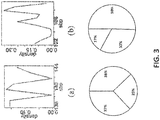
- This module is traversed when the number of clusters in systolic blood pressure, SBP (C sbp ) or diastolic blood pressure, DBP (C dbp ) are greater than or equal to 3. It may happen that too many small clusters exist uniformly all over the distribution as shown in Fig. 3 . This indicates that estimated BP is varying highly over the session and hence is unacceptable. As demonstrated in Algorithm 1 below, if the range of cluster populousness of multiple clusters is below a threshold, the session is considered to have multiple equally dominant clusters and hence it is to be rejected.
- populousness of the i th cluster is given by n i /N, where n i and N are the number of elements in i th cluster and the total number of elements respectively.
- the distribution width is checked.
- the inputs to this block are the distributions having one or two clusters. If there is a single cluster, it is accepted. In resting condition, BP cannot usually vary too much. Hence, as shown in Algorithm 2 below, the sessions were rejected where the difference of the two cluster means (in case of 2 clusters) is equal to or more than 15mmHg as shown in Fig. 4 .
- HRM Half Range Mode
- HRMs M sbp and M dbp are computed for the distributions of SBP and DBP respectively as the required statistical averages.
- cluster formation validity is checked. Upon investigation of the output of the clustering module, it was found that for some data, the cluster log likelihood value was too negative, indicating a possibility of invalid cluster formation. Hence this data was rejected.
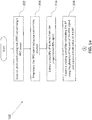
- a flowchart 300 illustrating the steps involved for estimating blood pressure (BP) using photoplethysmogram (PPG) according to an embodiment of the disclosure is shown in Fig. 5a-5b .
- the PPG signal is captured using the PPG sensor 102.
- the PPG sensor 102 may be a pulse oximeter or the smartphone camera.
- the captured signal is then preprocessed using the preprocessing module 108.
- the preprocessing include noise removal, band pass filtering and baseline correction from the captured PPG signal.
- the plurality of features are extracted from the preprocessed PPG signal.
- the plurality of features are selected after analyzing their linear correlation with respect to ground truth BP in the training dataset.
- the plurality of features are chosen such that they have relation with BP in both oximeter and smartphone data.
- the training model is created for the estimation of the BP.
- the training model is created using the generated plurality of features and the ground truth value of the BP.
- the BP distribution is generated using the training model.
- the BP distribution is part of a set of BP distributions generated from different subjects. Therefore at step 312, unacceptable BP distributions out of the set of BP distributions are rejected based on the predefined criteria.
- the predefined criteria includes clustering the estimated BP distributions and rejecting those BP distributions where there are i) multiple equally dominant clusters ii) two clusters that are too far apart or ii) unacceptable cluster formation.
- the statistical average is provided for the accepted BP distributions to estimate the blood pressure.
- the estimation of the BP using the PPG signal can also be validated with the help of experimental findings as below:
- a dataset from the pulse oximeter and the smartphone PPG was created from non-critical patient population of a primary rural healthcare unit, an urban hospital and healthy individuals working in the lab (with the subjects' consents and ethics clearance from the Institutional Review Board).
- the dataset (pulse oximeter + smartphone) includes a wide range of demographic parameters such as age (45 ⁇ 17 years), weight (66 ⁇ 14 Kg) and height (162 ⁇ 9 cm) along with SBP (129 ⁇ 20 mmHg) and DBP (83 ⁇ 11 mmHg). Multiple data was not collected from any subject.
- the pulse oximeter PPG was collected from 68 subjects for building the training model while for testing, smartphone PPG was collected from a separate set of 50 subjects.
- the pulse oximeter data was collected from the right hand index finger using a USB enabled fingertip pulse oximeter (Contec CMS 50D+) at 60 Hz for around a minute.
- Smartphone PPG was extracted from videos recorded using Nexus 5 (from the same finger with flash on) at 24 Hz for about a minute through an in-house android application. From each video frame (QCIF: 176x144 pixels), a 32x32 region from the middle was cropped and the averaged red pixel intensity was used as the PPG value.
- a cuff based BP measuring device exerts pressure and brings about temporary changes to blood circulation. In order to avoid this, PPG data was collected first. Ground truth BP was measured using a digital BP monitoring device from Omron immediately after the PPG data collection. All measurements were done while the user was in rest position to ensure stability in BP throughout the session.
- MWD Mean Absolute Percentage Difference
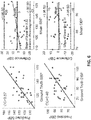
- BA Bland Altman plots for analyzing the trend and the percentage of test data points with ⁇ 15, ⁇ 10 and ⁇ 5 mmHg errors are used as performance metrics. 14 test cases were rejected by the two cluster check modules and 5 by the Cluster Formation Validity Check Module. Final results are shown in Fig. 6 , through scatter plots of predicted BP with ground truth BP and BA plots. It shows that there is a good linear correlation (CC) between the predicted BPs and the ground truths. Also, the linear fit on the BA plot have small slopes for both SBP and DBP indicating that there is no particular bias in predicting high or low BP.
- CC linear correlation
- the proposed method was compared with standard statistical averages like mean, median, trimmed mean, histogram based mode estimator that estimated BP from smartphone PPG.
- the histogram based mode estimator computes the median of the most frequently occurring bin, and in case of multiple bins with identical maximum frequency, an average of their medians is used.
- Both MAPD and the slope of the linear fit on the BA plot are low for the proposed method compared to the others that indicates good trend following along with small error.
- MAPD and the slope of the BA plots are quite below 10% and 0.5 respectively, for the proposed method for both SBP and DBP unlike the others.
- Fig. 7 illustrates error boxplots for all methods, it clearly shows that the proposed method has the minimum median absolute error and a very small standard deviation compared to all the other methods. Also, no significant outliers are observed unlike the other methods.
- the embodiments of present disclosure herein addresses unresolved problem of noisy PPG signal and high variation in the PPG signal for predicting the blood pressure.
- the embodiment thus provides a method and system for estimating blood pressure using photoplethysmogram (PPG) by applying statistical post processing techniques.
- PPG photoplethysmogram
- the hardware device can be any kind of device which can be programmed including e.g. any kind of computer like a server or a personal computer, or the like, or any combination thereof.
- the device may also include means which could be e.g. hardware means like e.g. an application-specific integrated circuit (ASIC), a field-programmable gate array (FPGA), or a combination of hardware and software means, e.g.
- ASIC application-specific integrated circuit
- FPGA field-programmable gate array
- the means can include both hardware means and software means.
- the method embodiments described herein could be implemented in hardware and software.
- the device may also include software means.
- the embodiments may be implemented on different hardware devices, e.g. using a plurality of CPUs.
- the embodiments herein can comprise hardware and software elements.
- the embodiments that are implemented in software include but are not limited to, firmware, resident software, microcode, etc.
- the functions performed by various modules described herein may be implemented in other modules or combinations of other modules.
- a computer-usable or computer readable medium can be any apparatus that can comprise, store, communicate, propagate, or transport the program for use by or in connection with the instruction execution system, apparatus, or device.
- the medium can be an electronic, magnetic, optical, electromagnetic, infrared, or semiconductor system (or apparatus or device) or a propagation medium.
- Examples of a computer-readable medium include a semiconductor or solid state memory, magnetic tape, a removable computer diskette, a random access memory (RAM), a read-only memory (ROM), a rigid magnetic disk and an optical disk.
- Current examples of optical disks include compact disk-read only memory (CD-ROM), compact disk-read/write (CD-R/W) and DVD.
- a data processing system suitable for storing and/or executing program code will include at least one processor coupled directly or indirectly to memory elements through a system bus.
- the memory elements can include local memory employed during actual execution of the program code, bulk storage, and cache memories which provide temporary storage of at least some program code in order to reduce the number of times code must be retrieved from bulk storage during execution.
- I/O devices can be coupled to the system either directly or through intervening I/O controllers.
- Network adapters may also be coupled to the system to enable the data processing system to become coupled to other data processing systems or remote printers or storage devices through intervening private or public networks. Modems, cable modem and Ethernet cards are just a few of the currently available types of network adapters.
- a representative hardware environment for practicing the embodiments may include a hardware configuration of an information handling/computer system in accordance with the embodiments herein.
- the system herein comprises at least one processor or central processing unit (CPU).
- the CPUs are interconnected via system bus to various devices such as a random access memory (RAM), read-only memory (ROM), and an input/output (I/O) adapter.
- RAM random access memory
- ROM read-only memory
- I/O input/output
- the I/O adapter can connect to peripheral devices, such as disk units and tape drives, or other program storage devices that are readable by the system.
- the system can read the inventive instructions on the program storage devices and follow these instructions to execute the methodology of the embodiments herein.
- the system further includes a user interface adapter that connects a keyboard, mouse, speaker, microphone, and/or other user interface devices such as a touch screen device (not shown) to the bus to gather user input.
- a communication adapter connects the bus to a data processing network
- a display adapter connects the bus to a display device which may be embodied as an output device such as a monitor, printer, or transmitter, for example.
Landscapes
- Health & Medical Sciences (AREA)
- Life Sciences & Earth Sciences (AREA)
- Engineering & Computer Science (AREA)
- Physics & Mathematics (AREA)
- Public Health (AREA)
- Medical Informatics (AREA)
- Biomedical Technology (AREA)
- General Health & Medical Sciences (AREA)
- Pathology (AREA)
- Animal Behavior & Ethology (AREA)
- Surgery (AREA)
- Heart & Thoracic Surgery (AREA)
- Molecular Biology (AREA)
- Veterinary Medicine (AREA)
- Biophysics (AREA)
- Physiology (AREA)
- Artificial Intelligence (AREA)
- Cardiology (AREA)
- Signal Processing (AREA)
- Psychiatry (AREA)
- Computer Vision & Pattern Recognition (AREA)
- Vascular Medicine (AREA)
- Fuzzy Systems (AREA)
- Data Mining & Analysis (AREA)
- Databases & Information Systems (AREA)
- Epidemiology (AREA)
- Primary Health Care (AREA)
- Evolutionary Computation (AREA)
- Mathematical Physics (AREA)
- Multimedia (AREA)
- Spectroscopy & Molecular Physics (AREA)
- Optics & Photonics (AREA)
- Measuring Pulse, Heart Rate, Blood Pressure Or Blood Flow (AREA)
- Measurement Of The Respiration, Hearing Ability, Form, And Blood Characteristics Of Living Organisms (AREA)
Abstract
Description
- The present application claims priority to Indian Patent Application No.
201721031600, filed on September 6th, 2017 - The embodiments herein generally relates to the field of blood pressure estimation, and, more particularly, to a method and system for estimating the blood pressure using the photoplethysmogram (PPG) by applying statistical post processing techniques.
- Blood pressure (BP) is considered to be an important biomarker for cardiac risk estimation. Irregular heartbeats, fluctuation of blood pressure (BP) or cholesterol levels are typically considered as biomarkers as well as risk indicators for stroke and cardiovascular diseases. Over the last few years, ubiquitous and continuous monitoring of the digital biomarkers have gained immense importance all over the world. They use wearable devices or smartphones to capture physiological information to estimate the markers through signal processing and data driven predictive analytics. 24x7 wearable monitors in the form of smart eyewear or wristbands can provide important health information without disrupting normal activities. On the other hand, smartphone based e-health monitors are not only unobtrusive and easy to use, they also come at no additional cost, thereby making them popular candidates for affordable healthcare.
- The smartphone based e-health monitor uses smartphone camera to capture the variation in blood flow through Photoplethysmogram (PPG) that can be used to measure heart rate (HR) or BP. Besides being cost effective, smartphone PPG based BP estimation avoids the professional expertise in tracking the Korotkoff sounds required for cuff-based BP measuring devices and the attachment of any wearable sensor. However, though HR estimation from smartphone PPG has achieved success through efficient noise cleaning and signal processing, Systolic BP (SBP) and Diastolic BP (DBP) estimation have proved to be relatively difficult due to complex physiological processes involved.
- In few prior art techniques, data driven models were proposed to predict BP from both smartphone and oximeter PPG signals. However, certain issues like 1) the experimental dataset to be of a wide range of BP (only subjects with normal BP were considered) and 2) unique subjects between the training and testing samples (this can create over-fitting by introducing person specific bias) were not addressed. In another technique, Windkessel Model based prediction of BP from PPG features via latent parameters were proposed and analyzed for different types of datasets. However, issues of the effects of noise on the performance for data collected in field and failure of predicting high BP were reported. The ultimate goal being smartphone deployment, issues like sensor agnostic PPG feature selection become significant. Additionally, smartphone PPG is challenging to work on because of its noisy nature. Even for a stable subject with no cardiac conditions, there can be a wide variation in features estimated per cardiac cycle leading to variation in BP estimated in a single session. Hence it is important to choose an appropriate statistical average to represent the BP estimated per session. It is well known that a simple arithmetic mean cannot be used as a suitable representative for any data distribution that has outliers. Median and mode are better representatives, and mode is favored more as it is less affected by outliers.
- The following presents a simplified summary of some embodiments of the disclosure in order to provide a basic understanding of the embodiments. This summary is not an extensive overview of the embodiments. It is not intended to identify key/critical elements of the embodiments or to delineate the scope of the embodiments. Its sole purpose is to present some embodiments in a simplified form as a prelude to the more detailed description that is presented below.
- In view of the foregoing, an embodiment herein provides a system for estimating blood pressure (BP) using photoplethysmogram (PPG). The system comprises a photoplethysmogram (PPG) sensor, a memory and a processor. The PPG sensor configured to capture photoplethysmogram (PPG) signal. The processor further comprises a preprocessing module, a feature selection module, a training model generation module, a regression module and a post-processing module. The preprocessing module preprocesses the captured PPG signal. The feature selection module extracts a plurality of features from the preprocessed PPG signal. The training model generation module creates a training model for estimating the blood pressure (BP) using the plurality of features and a ground truth value of the BP. The regression module generates a BP distribution using the training model, wherein the BP distribution is part of a set of BP distributions generated from different subjects. The post-processing module rejects unacceptable BP distributions out of the set of BP distributions based on a predefined criteria. The post processing module further provides a statistical average for the accepted BP distributions to estimate the blood pressure.
- In another aspect, a method for estimating blood pressure (BP) using photoplethysmogram (PPG). Initially, photoplethysmogram (PPG) signal is captured using the PPG sensor. The PPG signal is then preprocessed using a preprocessing module. In the next step, a plurality of features are extracted from the preprocessed PPG signal. In the next step a training model is created for estimating the BP using the plurality of features of the PPG signal and a ground truth value of the BP. Further a BP distribution is generated using the training model, wherein the BP distribution is part of a set of BP distributions generated from different subjects. In the next step, unacceptable BP distributions out of the set of BP distributions are rejected based on a predefined criteria. And finally, a statistical average is provided for the accepted BP distributions to estimate the blood pressure.
- In yet another aspect, a non-transitory computer-readable medium having embodied thereon a computer program for executing a method for estimating blood pressure (BP) using photoplethysmogram (PPG). The method includes steps of: (a) capturing photoplethysmogram (PPG) signal using a PPG sensor (102); (b) preprocessing the PPG signal using a preprocessing module (108); (c) extracting a plurality of features from the preprocessed PPG signal; (d) creating a training model for estimating the BP using the plurality of features of the PPG signal and a ground truth value of the BP; (e) generating a BP distribution using the training model, wherein the BP distribution is part of a set of BP distributions generated from different subjects; (f) rejecting unacceptable BP distributions out of the set of BP distributions based on a predefined criteria; and (g) providing a statistical average for the accepted BP distributions to estimate the blood pressure.
- It should be appreciated by those skilled in the art that any block diagram herein represent conceptual views of illustrative systems embodying the principles of the present subject matter. Similarly, it will be appreciated that any flow charts, flow diagrams, state transition diagrams, pseudo code, and the like represent various processes which may be substantially represented in computer readable medium and so executed by a computing device or processor, whether or not such computing device or processor is explicitly shown.
- The embodiments herein will be better understood from the following detailed description with reference to the drawings, in which:
-
Fig. 1 illustrates a block diagram for estimating blood pressure (BP) using photoplethysmogram (PPG) according to an embodiment of the present disclosure; -
Fig. 2 shows a flowchart depicting the steps involved in the post processing of the plurality of BP distributions according to an embodiment of the present disclosure; -
Fig. 3 shows the multiple dominant cluster check for the plurality of BP distributions according to an embodiment of the present disclosure; -
Fig. 4 shows the distribution width check for the plurality of BP distributions according to an embodiment of the present disclosure; -
Fig. 5a-5b is a flowchart illustrating the steps involved for estimating blood pressure (BP) using photoplethysmogram (PPG) according to an embodiment of the present disclosure; -
Fig. 6 shows the scatter plot of predicted and ground truth BP values with Bland Altman plot according to an embodiment of the present disclosure; and -
Fig. 7 shows the graphical presentation error box plots for all method according to an embodiment of the present disclosure. - The embodiments herein and the various features and advantageous details thereof are explained more fully with reference to the non-limiting embodiments that are illustrated in the accompanying drawings and detailed in the following description. The examples used herein are intended merely to facilitate an understanding of ways in which the embodiments herein may be practiced and to further enable those of skill in the art to practice the embodiments herein. Accordingly, the examples should not be construed as limiting the scope of the embodiments herein.
- The expression "photoplethysmogram" or "PPG" sensor in the context of the present disclosure refers to a sensor used to capture the photoplethysmogram signal of the subjects. For the purpose of generating the training model, pulse oximeter has been used as the PPG sensor. For testing purpose, the smartphone camera has been used to capture the PPG signal.
- Referring now to the drawings, and more particularly to
Fig. 1 through Fig. 7 , where similar reference characters denote corresponding features consistently throughout the figures, there are shown preferred embodiments and these embodiments are described in the context of the following exemplary system and/or method. - According to an embodiment of the disclosure, a
system 100 for estimating blood pressure (BP) using the photoplethysmogram (PPG) is shown inFig. 1 . Thesystem 100 uses a smartphone photoplethysmogram (PPG) to predict blood pressure (BP) non-invasively. A post-processing methodology have been used to reject inconsistent data and predict BP values only for the remaining data. A statistical average across all BP values in a single session is provided as the blood pressure estimate. - According to an embodiment of the disclosure, the
system 100 consists of a photoplethysmogram (PPG)sensor 102, amemory 104 and aprocessor 106 as shown in the block diagramFig. 1 . Theprocessor 106 is in communication with thememory 104. Theprocessor 106 is configured to execute algorithms stored in thememory 104. According to an embodiment of the disclosure, theprocessor 106 further includes a plurality of modules for performing various functions. Theprocessor 106 may include apreprocessing module 108, afeature selection module 110, a trainingmodel generation module 112, aregression module 114 and apost processing module 116. - According to an embodiment of the disclosure, the
PPG sensor 102 is a pulse oximeter or a smartphone camera. For generating the training model, the pulse oximeter was used for capturing the PPG signal. While for testing, the PPG was measured using the camera of the smartphone. As the smartphone PPG has very low signal-to-noise ratio, hence it poses few additional challenges to extract information of complex physiological signals. - According to an embodiment of the disclosure, the
system 100 includes thepreprocessing module 108 to clean the PPG signal. Thepreprocessing module 108 is configured to remove noise from the PPG signal by performing band pass filtering and baseline correction. The band pass filtering is performed in the range of 0.75 - 8 Hz prior to a plurality of features extraction. Changes in PPG amplitude due to variable finger pressure and discontinuities due to motion artifacts are taken care of by implementing cycle selection on the basis of similar pulse height and periodicity. - According to an embodiment of the disclosure, the preprocessed PPG signal is then provided to the
feature selection module 110. A plurality of features of the PPG signal are chosen from a time domain signal in such a way that the chosen features are independent of thePPG sensor 102. The plurality of features are selected after analyzing their linear correlation with respect to ground truth BP in the training dataset. Systolic upstroke time (Ts), diastolic time (Td), systolic area (As) and diastolic area (Ad) are typical characteristics of the PPG waveform. In the present embodiment, the ultimate goal is to find features that have relation with BP in both oximeter and smartphone data. Ratios of PPG features like Ts/Td and As/Ad were chosen as they were stable even in smartphone PPG. A similar linear correlation evaluation was also carried between PPG features and ground truth BP, thereby selecting Ts, Ts/Td, As/Ad, 1/Ts 2, Age and Body Mass Index (BMI). - According to an embodiment of the disclosure, the training
model generation module 112 generates a training model for estimating the BP. The training model is generated using the plurality of features of the PPG signal and the ground truth value of the BP. Further, theregression module 114 is configured to generate a BP distribution per session using the training model. The BP distribution is part of a set of BP distributions generated from different subjects. A gradient descent learning based linear regression is used to create a training model from the selected features and the corresponding ground truth. A direct linear regression model is created on the PPG features for BP estimation, avoiding the latent parameters, to make a simpler system, easier to run as a mobile application. - According to an embodiment of the disclosure, the post processing is performed on the set of BP distributions by the
post processing module 116. The post processing results in the rejection of unacceptable BP distributions out of the set of BP distributions based on a predefined criteria. The predefined criteria includes clustering the estimated BP distributions and rejecting those BP distributions where there are i) multiple equally dominant clusters ii) two clusters that are too far apart or ii) unacceptable cluster formation. Thepost processing module 116 further configured to provide the statistical average for the accepted BP distributions to estimate the blood pressure. - A flowchart 200 illustrating the steps involved in the post processing of the plurality of BP distributions is shown in
Fig. 2 . The first step is clustering the cycle-wise BP distributions into clusters of similar BP based on probability density. For this purpose, the 'mclust' package of R is used. It provides parameter estimation via the Expectation Maximization algorithm for normal mixture models and chooses clusters on the basis of the best Bayesian Information Criterion (BIC). - Further, multiple dominant clusters are checked, This module is traversed when the number of clusters in systolic blood pressure, SBP (Csbp) or diastolic blood pressure, DBP (Cdbp) are greater than or equal to 3. It may happen that too many small clusters exist uniformly all over the distribution as shown in
Fig. 3 . This indicates that estimated BP is varying highly over the session and hence is unacceptable. As demonstrated inAlgorithm 1 below, if the range of cluster populousness of multiple clusters is below a threshold, the session is considered to have multiple equally dominant clusters and hence it is to be rejected. Here populousness of the ith cluster is given by ni/N, where ni and N are the number of elements in ith cluster and the total number of elements respectively.

- In the next step, the distribution width is checked. The inputs to this block are the distributions having one or two clusters. If there is a single cluster, it is accepted. In resting condition, BP cannot usually vary too much. Hence, as shown in
Algorithm 2 below, the sessions were rejected where the difference of the two cluster means (in case of 2 clusters) is equal to or more than 15mmHg as shown inFig. 4 . In case the distribution is found suitable to work on, as decided by both the above cluster check modules, Half Range Mode (HRM), that iteratively uses densest half ranges for mode computation is used as the statistical average. HRMs Msbp and Mdbp are computed for the distributions of SBP and DBP respectively as the required statistical averages.

- Finally the cluster formation validity is checked. Upon investigation of the output of the clustering module, it was found that for some data, the cluster log likelihood value was too negative, indicating a possibility of invalid cluster formation. Hence this data was rejected.
- In operation, a
flowchart 300 illustrating the steps involved for estimating blood pressure (BP) using photoplethysmogram (PPG) according to an embodiment of the disclosure is shown inFig. 5a-5b . Initially atstep 302, the PPG signal is captured using thePPG sensor 102. ThePPG sensor 102 may be a pulse oximeter or the smartphone camera. Atstep 304, the captured signal is then preprocessed using thepreprocessing module 108. The preprocessing include noise removal, band pass filtering and baseline correction from the captured PPG signal. In thenext step 306, the plurality of features are extracted from the preprocessed PPG signal. The plurality of features are selected after analyzing their linear correlation with respect to ground truth BP in the training dataset. The plurality of features are chosen such that they have relation with BP in both oximeter and smartphone data. - At the
next step 308, the training model is created for the estimation of the BP. The training model is created using the generated plurality of features and the ground truth value of the BP. Atstep 310, the BP distribution is generated using the training model. The BP distribution is part of a set of BP distributions generated from different subjects. Therefore atstep 312, unacceptable BP distributions out of the set of BP distributions are rejected based on the predefined criteria. The predefined criteria includes clustering the estimated BP distributions and rejecting those BP distributions where there are i) multiple equally dominant clusters ii) two clusters that are too far apart or ii) unacceptable cluster formation. And finally atstep 314, the statistical average is provided for the accepted BP distributions to estimate the blood pressure. - According to an embodiment of the disclosure, the estimation of the BP using the PPG signal can also be validated with the help of experimental findings as below: A dataset from the pulse oximeter and the smartphone PPG was created from non-critical patient population of a primary rural healthcare unit, an urban hospital and healthy individuals working in the lab (with the subjects' consents and ethics clearance from the Institutional Review Board). The dataset (pulse oximeter + smartphone) includes a wide range of demographic parameters such as age (45±17 years), weight (66±14 Kg) and height (162±9 cm) along with SBP (129±20 mmHg) and DBP (83±11 mmHg). Multiple data was not collected from any subject.
- The pulse oximeter PPG was collected from 68 subjects for building the training model while for testing, smartphone PPG was collected from a separate set of 50 subjects. The pulse oximeter data was collected from the right hand index finger using a USB enabled fingertip pulse oximeter (Contec CMS 50D+) at 60 Hz for around a minute. Smartphone PPG was extracted from videos recorded using Nexus 5 (from the same finger with flash on) at 24 Hz for about a minute through an in-house android application. From each video frame (QCIF: 176x144 pixels), a 32x32 region from the middle was cropped and the averaged red pixel intensity was used as the PPG value. A cuff based BP measuring device exerts pressure and brings about temporary changes to blood circulation. In order to avoid this, PPG data was collected first. Ground truth BP was measured using a digital BP monitoring device from Omron immediately after the PPG data collection. All measurements were done while the user was in rest position to ensure stability in BP throughout the session.
- Mean Absolute Percentage Difference (MAPD), Bland Altman (BA) plots for analyzing the trend and the percentage of test data points with ≤ 15, ≤ 10 and ≤ 5 mmHg errors are used as performance metrics. 14 test cases were rejected by the two cluster check modules and 5 by the Cluster Formation Validity Check Module. Final results are shown in
Fig. 6 , through scatter plots of predicted BP with ground truth BP and BA plots. It shows that there is a good linear correlation (CC) between the predicted BPs and the ground truths. Also, the linear fit on the BA plot have small slopes for both SBP and DBP indicating that there is no particular bias in predicting high or low BP. - Further, the proposed method was compared with standard statistical averages like mean, median, trimmed mean, histogram based mode estimator that estimated BP from smartphone PPG. The histogram based mode estimator computes the median of the most frequently occurring bin, and in case of multiple bins with identical maximum frequency, an average of their medians is used. Both MAPD and the slope of the linear fit on the BA plot are low for the proposed method compared to the others that indicates good trend following along with small error. Particularly, MAPD and the slope of the BA plots are quite below 10% and 0.5 respectively, for the proposed method for both SBP and DBP unlike the others. Also the percentage of test data below 15%, 10% and 5% errors are overall high (97% and 77% data have <=15mmHg error for SBP and DBP respectively) for the proposed method for both SBP and DBP.
-
Fig. 7 illustrates error boxplots for all methods, it clearly shows that the proposed method has the minimum median absolute error and a very small standard deviation compared to all the other methods. Also, no significant outliers are observed unlike the other methods. - The written description describes the subject matter herein to enable any person skilled in the art to make and use the embodiments. The scope of the subject matter embodiments is defined by the claims and may include other modifications that occur to those skilled in the art. Such other modifications are intended to be within the scope of the claims if they have similar elements that do not differ from the literal language of the claims or if they include equivalent elements with insubstantial differences from the literal language of the claims.
- The embodiments of present disclosure herein addresses unresolved problem of noisy PPG signal and high variation in the PPG signal for predicting the blood pressure. The embodiment, thus provides a method and system for estimating blood pressure using photoplethysmogram (PPG) by applying statistical post processing techniques.
- It is, however to be understood that the scope of the protection is extended to such a program and in addition to a computer-readable means having a message therein; such computer-readable storage means contain program-code means for implementation of one or more steps of the method, when the program runs on a server or mobile device or any suitable programmable device. The hardware device can be any kind of device which can be programmed including e.g. any kind of computer like a server or a personal computer, or the like, or any combination thereof. The device may also include means which could be e.g. hardware means like e.g. an application-specific integrated circuit (ASIC), a field-programmable gate array (FPGA), or a combination of hardware and software means, e.g. an ASIC and an FPGA, or at least one microprocessor and at least one memory with software modules located therein. Thus, the means can include both hardware means and software means. The method embodiments described herein could be implemented in hardware and software. The device may also include software means. Alternatively, the embodiments may be implemented on different hardware devices, e.g. using a plurality of CPUs.
- The embodiments herein can comprise hardware and software elements. The embodiments that are implemented in software include but are not limited to, firmware, resident software, microcode, etc. The functions performed by various modules described herein may be implemented in other modules or combinations of other modules. For the purposes of this description, a computer-usable or computer readable medium can be any apparatus that can comprise, store, communicate, propagate, or transport the program for use by or in connection with the instruction execution system, apparatus, or device.
- The medium can be an electronic, magnetic, optical, electromagnetic, infrared, or semiconductor system (or apparatus or device) or a propagation medium. Examples of a computer-readable medium include a semiconductor or solid state memory, magnetic tape, a removable computer diskette, a random access memory (RAM), a read-only memory (ROM), a rigid magnetic disk and an optical disk. Current examples of optical disks include compact disk-read only memory (CD-ROM), compact disk-read/write (CD-R/W) and DVD.
- A data processing system suitable for storing and/or executing program code will include at least one processor coupled directly or indirectly to memory elements through a system bus. The memory elements can include local memory employed during actual execution of the program code, bulk storage, and cache memories which provide temporary storage of at least some program code in order to reduce the number of times code must be retrieved from bulk storage during execution.
- Input/output (I/O) devices (including but not limited to keyboards, displays, pointing devices, etc.) can be coupled to the system either directly or through intervening I/O controllers. Network adapters may also be coupled to the system to enable the data processing system to become coupled to other data processing systems or remote printers or storage devices through intervening private or public networks. Modems, cable modem and Ethernet cards are just a few of the currently available types of network adapters.
- A representative hardware environment for practicing the embodiments may include a hardware configuration of an information handling/computer system in accordance with the embodiments herein. The system herein comprises at least one processor or central processing unit (CPU). The CPUs are interconnected via system bus to various devices such as a random access memory (RAM), read-only memory (ROM), and an input/output (I/O) adapter. The I/O adapter can connect to peripheral devices, such as disk units and tape drives, or other program storage devices that are readable by the system. The system can read the inventive instructions on the program storage devices and follow these instructions to execute the methodology of the embodiments herein.
- The system further includes a user interface adapter that connects a keyboard, mouse, speaker, microphone, and/or other user interface devices such as a touch screen device (not shown) to the bus to gather user input. Additionally, a communication adapter connects the bus to a data processing network, and a display adapter connects the bus to a display device which may be embodied as an output device such as a monitor, printer, or transmitter, for example.
- The preceding description has been presented with reference to various embodiments. Persons having ordinary skill in the art and technology to which this application pertains will appreciate that alterations and changes in the described structures and methods of operation can be practiced without meaningfully departing from the principle, spirit and scope.
Claims (9)
- A method for estimating blood pressure (BP) using photoplethysmogram (PPG), the method comprising a processor (106) implemented steps of:capturing photoplethysmogram (PPG) signal using a PPG sensor (102);preprocessing the PPG signal using a preprocessing module (108);extracting a plurality of features from the preprocessed PPG signal;creating a training model for estimating the BP using the plurality of features of the PPG signal and a ground truth value of the BP;generating a BP distribution using the training model, wherein the BP distribution is part of a set of BP distributions generated from different subjects;rejecting unacceptable BP distributions out of the set of BP distributions based on a predefined criteria; andproviding a statistical average for the accepted BP distributions to estimate the blood pressure.
- The method according to claim 1, wherein the predefined criteria includes clustering the estimated BP distributions and rejecting those BP distributions where there are i) multiple equally dominant clusters ii) two clusters that are too far apart or ii) unacceptable cluster formation.
- The method according to claim 1, wherein the training model is created using linear regression.
- The method according to claim 1 wherein a half range-mode is used for calculating the statistical average.
- The method according to claim 1, wherein the step of preprocessing include noise removal, band pass filtering and baseline correction.
- The method according to claim 1, wherein the PPG sensor is a pulse oximeter or a smartphone camera.
- The method according to claim 1, wherein the plurality of features of the PPG signal are chosen from a time domain signal in such a way that the chosen features are the PPG sensor independent.
- A system for estimating blood pressure (BP) using photoplethysmogram (PPG), the system comprising:a photoplethysmogram (PPG) sensor (102) configured to capture photoplethysmogram (PPG) signal;a memory (104); anda processor (106) in communication with the memory (104), the processor (106) further comprising:a preprocessing module (108) configured to preprocess the captured PPG signal;a feature selection module (110) configured to extract a plurality of features from the preprocessed PPG signal;a training model generation module (112) configured to create a training model for estimating the blood pressure (BP) using the plurality of features and a ground truth value of the BP;a regression module (114) configured to generate a BP distribution using the training model, wherein the BP distribution is part of a set of BP distributions generated from different subjects; anda post-processing module (116) configured to reject unacceptable BP distributions out of the set of BP distributions based on a predefined criteria, the post processing module further configured to provide a statistical average for the accepted BP distributions to estimate the blood pressure.
- The system according to claim8, wherein the PPG sensor (102) is a pulse oximeter or a smartphone camera.
One or more non-transitory computer readable information medium having embodied thereon a computer program for executing a method for estimating blood pressure (BP) using photoplethysmogram (PPG), wherein the method comprises:capturing photoplethysmogram (PPG) signal using a PPG sensor (102);
preprocessing the PPG signal using a preprocessing module (108);
extracting a plurality of features from the preprocessed PPG signal;
creating a training model for estimating the BP using the plurality of features of the PPG signal and a ground truth value of the BP;
generating a BP distribution using the training model, wherein the BP distribution is part of a set of BP distributions generated from different subjects;
rejecting unacceptable BP distributions out of the set of BP distributions based on a predefined criteria; and
providing a statistical average for the accepted BP distributions to estimate the blood pressure.
Applications Claiming Priority (1)
| Application Number | Priority Date | Filing Date | Title |
|---|---|---|---|
| IN201721031600 | 2017-09-06 |
Publications (3)
| Publication Number | Publication Date |
|---|---|
| EP3453321A1 true EP3453321A1 (en) | 2019-03-13 |
| EP3453321B1 EP3453321B1 (en) | 2024-05-22 |
| EP3453321C0 EP3453321C0 (en) | 2024-05-22 |
Family
ID=61192717
Family Applications (1)
| Application Number | Title | Priority Date | Filing Date |
|---|---|---|---|
| EP18155980.8A Active EP3453321B1 (en) | 2017-09-06 | 2018-02-09 | Non-invasive method and system for estimating blood pressure from photoplethysmogram using statistical post-processing |
Country Status (4)
| Country | Link |
|---|---|
| US (1) | US11298084B2 (en) |
| EP (1) | EP3453321B1 (en) |
| CN (1) | CN109452935B (en) |
| SG (1) | SG10201801885QA (en) |
Cited By (1)
| Publication number | Priority date | Publication date | Assignee | Title |
|---|---|---|---|---|
| CN111973165A (en) * | 2020-08-14 | 2020-11-24 | 北京航空航天大学 | Linear and nonlinear mixed non-invasive continuous blood pressure measuring system based on PPG |
Families Citing this family (14)
| Publication number | Priority date | Publication date | Assignee | Title |
|---|---|---|---|---|
| IT201700081018A1 (en) | 2017-07-18 | 2019-01-18 | St Microelectronics Srl | TREATMENT OF ELECTROPHYSIOLOGICAL SIGNALS |
| US11229404B2 (en) * | 2017-11-28 | 2022-01-25 | Stmicroelectronics S.R.L. | Processing of electrophysiological signals |
| EP3787486A4 (en) * | 2018-06-01 | 2021-05-05 | Vita-Course Technologies Co. Ltd. | PULSE TRANSIT TIME DETERMINATION PROCESSES AND SYSTEMS |
| CN110251115B (en) * | 2019-06-20 | 2022-02-18 | 张远 | PPG signal extraction method, system, equipment and medium based on body surface video |
| CN110292370B (en) * | 2019-07-03 | 2020-12-15 | 浙江大学 | A non-invasive blood pressure detection method in the chest based on pulse wave transit time |
| US12347566B2 (en) * | 2020-04-27 | 2025-07-01 | Viavi Solutions Inc. | Blood pressure estimation with photoplethysmography measurement |
| CN111870237B (en) * | 2020-09-04 | 2022-08-16 | 平安科技(深圳)有限公司 | Blood pressure detection device, blood pressure detection apparatus, and blood pressure detection medium |
| CN112336325B (en) * | 2020-10-12 | 2024-02-23 | 乐普(北京)医疗器械股份有限公司 | A blood pressure prediction method and device integrating calibrated photoplethysmograph signal data |
| CN112914528B (en) * | 2021-03-01 | 2023-06-27 | 出门问问信息科技有限公司 | Model generation method, device and computer readable medium for cuff-free blood pressure measurement |
| CN115120023B (en) * | 2021-03-24 | 2024-12-13 | 卡西欧计算机株式会社 | Information processing device, recording medium, nail art system, and nail art design selection method |
| CN113288090B (en) * | 2021-05-06 | 2022-04-22 | 广东工业大学 | Blood pressure prediction method, system, device and storage medium |
| CN113197561B (en) * | 2021-06-08 | 2022-05-17 | 山东大学 | Low-rank regression-based robust noninvasive sleeveless blood pressure measurement method and system |
| KR102359362B1 (en) * | 2021-09-16 | 2022-02-08 | 주식회사 스카이랩스 | Deep learning-based blood pressure estimation system using PPG signal sensing ring |
| KR102806310B1 (en) | 2022-04-19 | 2025-05-12 | 삼성전자주식회사 | Apparatus and method for estimating blood pressure |
Citations (1)
| Publication number | Priority date | Publication date | Assignee | Title |
|---|---|---|---|---|
| US20170181649A1 (en) * | 2015-12-28 | 2017-06-29 | Amiigo, Inc. | Systems and Methods for Determining Blood Pressure |
Family Cites Families (20)
| Publication number | Priority date | Publication date | Assignee | Title |
|---|---|---|---|---|
| IL130818A (en) * | 1999-07-06 | 2005-07-25 | Intercure Ltd | Interventive-diagnostic device |
| US7756720B2 (en) * | 2006-01-25 | 2010-07-13 | Fameball, Inc. | Method and system for the objective quantification of fame |
| CN103038772B (en) * | 2010-03-15 | 2017-10-24 | 新加坡保健服务集团有限公司 | Systems and devices for predicting patient survivability |
| US9480432B2 (en) * | 2010-10-08 | 2016-11-01 | Koninklijke Philips N.V. | Processing of periodic physiological signals |
| US8761853B2 (en) * | 2011-01-20 | 2014-06-24 | Nitto Denko Corporation | Devices and methods for non-invasive optical physiological measurements |
| US8780786B2 (en) | 2011-09-15 | 2014-07-15 | Qualcomm Incorporated | Method and apparatus for denoising of physiological signals |
| US9259186B2 (en) * | 2012-09-11 | 2016-02-16 | Covidien Lp | Methods and systems for determining noise information from a physiological signal |
| US20140128754A1 (en) | 2012-11-08 | 2014-05-08 | Aliphcom | Multimodal physiological sensing for wearable devices or mobile devices |
| GB2517903A (en) | 2013-07-30 | 2015-03-11 | Gm Global Tech Operations Inc | Fluid filter for an internal combustion engine |
| CN104665768B (en) * | 2013-10-03 | 2019-07-23 | 塔塔咨询服务有限公司 | The monitoring of physiological parameter |
| US20170164884A1 (en) * | 2013-12-30 | 2017-06-15 | Apple Inc. | Measuring respiration rate with multi-band plethysmography |
| CN104224197B (en) * | 2014-09-24 | 2017-02-15 | 天津大学 | Calculation method for arterial oxygen saturation by using characteristic quantity of dual-wavelength photoelectric volume pulse wave |
| EP3033991B1 (en) * | 2014-12-15 | 2018-02-28 | Stichting IMEC Nederland | System and method for blood pressure estimation |
| US10653362B2 (en) | 2015-01-29 | 2020-05-19 | Wavefront Research Inc. | Motion and noise artifact detection and reconstruction algorithms for photoplethysmogram and equivalent signals |
| EP3087915B1 (en) * | 2015-04-27 | 2022-02-09 | Tata Consultancy Services Limited | Method and system for noise cleaning of photoplethysmogram signals for estimating blood pressure |
| US10219705B2 (en) * | 2015-05-08 | 2019-03-05 | Covidien Lp | System and method for identifying autoregulation zones |
| CN107920758B (en) * | 2015-06-18 | 2023-07-18 | 瑞士Csem电子显微技术研发中心 | Method, device and computer program for determining blood pressure values |
| CN106473750B (en) * | 2016-10-08 | 2019-03-26 | 西安电子科技大学 | Identification method based on optimal periodic waveform of photoplethysmography |
| CN106691406A (en) * | 2017-01-05 | 2017-05-24 | 大连理工大学 | Detection method of vascular elasticity and blood pressure based on single probe photoplethysmography pulse wave |
| CN107038248A (en) * | 2017-04-27 | 2017-08-11 | 杭州杨帆科技有限公司 | A kind of massive spatial data Density Clustering method based on elasticity distribution data set |
-
2018
- 2018-02-09 EP EP18155980.8A patent/EP3453321B1/en active Active
- 2018-02-20 US US15/900,774 patent/US11298084B2/en active Active
- 2018-03-06 CN CN201810181724.9A patent/CN109452935B/en active Active
- 2018-03-07 SG SG10201801885QA patent/SG10201801885QA/en unknown
Patent Citations (1)
| Publication number | Priority date | Publication date | Assignee | Title |
|---|---|---|---|---|
| US20170181649A1 (en) * | 2015-12-28 | 2017-06-29 | Amiigo, Inc. | Systems and Methods for Determining Blood Pressure |
Non-Patent Citations (2)
| Title |
|---|
| HEDGES S BLAIR ET AL: "Comparison of mode estimation methods and application in molecular clock analysis", BMC BIOINFORMATICS, BIOMED CENTRAL, LONDON, GB, vol. 4, no. 1, 31 July 2003 (2003-07-31), pages 31, XP021000438, ISSN: 1471-2105, DOI: 10.1186/1471-2105-4-31 * |
| PAN JUNJUN ET AL: "Improved Blood Pressure Estimation Using Photoplethysmography Based on Ensemble Method", 2017 14TH INTERNATIONAL SYMPOSIUM ON PERVASIVE SYSTEMS, ALGORITHMS AND NETWORKS & 2017 11TH INTERNATIONAL CONFERENCE ON FRONTIER OF COMPUTER SCIENCE AND TECHNOLOGY & 2017 THIRD INTERNATIONAL SYMPOSIUM OF CREATIVE COMPUTING (ISPAN-FCST-ISCC), IEEE, 21 June 2017 (2017-06-21), pages 105 - 111, XP033273554, DOI: 10.1109/ISPAN-FCST-ISCC.2017.42 * |
Cited By (2)
| Publication number | Priority date | Publication date | Assignee | Title |
|---|---|---|---|---|
| CN111973165A (en) * | 2020-08-14 | 2020-11-24 | 北京航空航天大学 | Linear and nonlinear mixed non-invasive continuous blood pressure measuring system based on PPG |
| CN111973165B (en) * | 2020-08-14 | 2021-12-24 | 北京航空航天大学 | Linear and nonlinear hybrid non-invasive continuous blood pressure measurement system based on PPG |
Also Published As
| Publication number | Publication date |
|---|---|
| EP3453321B1 (en) | 2024-05-22 |
| US11298084B2 (en) | 2022-04-12 |
| CN109452935B (en) | 2022-03-25 |
| US20190069850A1 (en) | 2019-03-07 |
| SG10201801885QA (en) | 2019-04-29 |
| CN109452935A (en) | 2019-03-12 |
| EP3453321C0 (en) | 2024-05-22 |
Similar Documents
| Publication | Publication Date | Title |
|---|---|---|
| EP3453321B1 (en) | Non-invasive method and system for estimating blood pressure from photoplethysmogram using statistical post-processing | |
| US12350019B2 (en) | Methods and systems for determining abnormal cardiac activity | |
| EP2829223B1 (en) | Monitoring physiological parameters | |
| EP3479763B1 (en) | System and method for photoplethysmogram (ppg) signal quality assessment | |
| Bashar et al. | Developing a novel noise artifact detection algorithm for smartphone PPG signals: Preliminary results | |
| JP6811773B2 (en) | How to Quantify PhotoPretismogram (PPG) Signal Quality | |
| US11062792B2 (en) | Discovering genomes to use in machine learning techniques | |
| JP2020536629A (en) | ECG-based ejection fraction screening | |
| CN107638166A (en) | The equipment extracted the method and apparatus of the feature of bio signal and detect biological information | |
| US20230233152A1 (en) | Methods, apparatus and systems for adaptable presentation of sensor data | |
| JP6115263B2 (en) | Pulse wave detection device, pulse wave detection method, and pulse wave detection program | |
| US20190138688A1 (en) | System and method to classify cardiopulmonary fatigue | |
| US9320440B2 (en) | Discriminating between atrial fibrillation and sinus rhythm in physiological signals obtained from video | |
| CN119442124B (en) | A method, apparatus, device, and storage medium for identifying abnormal electrocardiogram (ECG) data based on deep learning. | |
| WO2023214957A1 (en) | Machine learning models for estimating physiological biomarkers | |
| Tabei et al. | A novel diversity method for smartphone camera-based heart rhythm signals in the presence of motion and noise artifacts | |
| CN115666376B (en) | System and method for hypertension monitoring | |
| US20240020882A1 (en) | Camera-Based Contactless Monitoring of Physiological Parameters | |
| EP4704686A2 (en) | Contactless continuous blood pressure estimation | |
| CN113057611B (en) | Methods, devices, equipment and storage media for outputting information | |
| Alam et al. | Sensor agnostic photoplethysmogram signal quality assessment using morphological analysis | |
| Datta et al. | Novel statistical post processing to improve blood pressure estimation from smartphone photoplethysmogram | |
| Talukdar et al. | Evaluation of Remote Monitoring Technology across different skin tone participants | |
| Arunkumar et al. | AI-Powered Wrist Ultrasound for Peripheral Arterial Disease | |
| US20250143614A1 (en) | Systems and methods for multi-modal stress tracking |
Legal Events
| Date | Code | Title | Description |
|---|---|---|---|
| PUAI | Public reference made under article 153(3) epc to a published international application that has entered the european phase |
Free format text: ORIGINAL CODE: 0009012 |
|
| STAA | Information on the status of an ep patent application or granted ep patent |
Free format text: STATUS: THE APPLICATION HAS BEEN PUBLISHED |
|
| AK | Designated contracting states |
Kind code of ref document: A1 Designated state(s): AL AT BE BG CH CY CZ DE DK EE ES FI FR GB GR HR HU IE IS IT LI LT LU LV MC MK MT NL NO PL PT RO RS SE SI SK SM TR |
|
| AX | Request for extension of the european patent |
Extension state: BA ME |
|
| STAA | Information on the status of an ep patent application or granted ep patent |
Free format text: STATUS: REQUEST FOR EXAMINATION WAS MADE |
|
| 17P | Request for examination filed |
Effective date: 20190910 |
|
| RBV | Designated contracting states (corrected) |
Designated state(s): AL AT BE BG CH CY CZ DE DK EE ES FI FR GB GR HR HU IE IS IT LI LT LU LV MC MK MT NL NO PL PT RO RS SE SI SK SM TR |
|
| STAA | Information on the status of an ep patent application or granted ep patent |
Free format text: STATUS: EXAMINATION IS IN PROGRESS |
|
| 17Q | First examination report despatched |
Effective date: 20220809 |
|
| GRAP | Despatch of communication of intention to grant a patent |
Free format text: ORIGINAL CODE: EPIDOSNIGR1 |
|
| STAA | Information on the status of an ep patent application or granted ep patent |
Free format text: STATUS: GRANT OF PATENT IS INTENDED |
|
| INTG | Intention to grant announced |
Effective date: 20231211 |
|
| RIN1 | Information on inventor provided before grant (corrected) |
Inventor name: MANDANA, KAYAPANDA Inventor name: PAL, ARPAN Inventor name: BANERJEE, TANUSHREE Inventor name: BANERJEE, ROHAN Inventor name: CHOWDHURY, ARIJIT Inventor name: CHOUDHURY, ANIRBAN DUTTA Inventor name: DATTA, SHREYASI |
|
| GRAS | Grant fee paid |
Free format text: ORIGINAL CODE: EPIDOSNIGR3 |
|
| GRAA | (expected) grant |
Free format text: ORIGINAL CODE: 0009210 |
|
| STAA | Information on the status of an ep patent application or granted ep patent |
Free format text: STATUS: THE PATENT HAS BEEN GRANTED |
|
| AK | Designated contracting states |
Kind code of ref document: B1 Designated state(s): AL AT BE BG CH CY CZ DE DK EE ES FI FR GB GR HR HU IE IS IT LI LT LU LV MC MK MT NL NO PL PT RO RS SE SI SK SM TR |
|
| REG | Reference to a national code |
Ref country code: GB Ref legal event code: FG4D |
|
| REG | Reference to a national code |
Ref country code: CH Ref legal event code: EP |
|
| REG | Reference to a national code |
Ref country code: DE Ref legal event code: R096 Ref document number: 602018069712 Country of ref document: DE |
|
| REG | Reference to a national code |
Ref country code: IE Ref legal event code: FG4D |
|
| U01 | Request for unitary effect filed |
Effective date: 20240522 |
|
| U07 | Unitary effect registered |
Designated state(s): AT BE BG DE DK EE FI FR IT LT LU LV MT NL PT SE SI Effective date: 20240704 |
|
| PG25 | Lapsed in a contracting state [announced via postgrant information from national office to epo] |
Ref country code: IS Free format text: LAPSE BECAUSE OF FAILURE TO SUBMIT A TRANSLATION OF THE DESCRIPTION OR TO PAY THE FEE WITHIN THE PRESCRIBED TIME-LIMIT Effective date: 20240922 |
|
| PG25 | Lapsed in a contracting state [announced via postgrant information from national office to epo] |
Ref country code: HR Free format text: LAPSE BECAUSE OF FAILURE TO SUBMIT A TRANSLATION OF THE DESCRIPTION OR TO PAY THE FEE WITHIN THE PRESCRIBED TIME-LIMIT Effective date: 20240522 |
|
| PG25 | Lapsed in a contracting state [announced via postgrant information from national office to epo] |
Ref country code: GR Free format text: LAPSE BECAUSE OF FAILURE TO SUBMIT A TRANSLATION OF THE DESCRIPTION OR TO PAY THE FEE WITHIN THE PRESCRIBED TIME-LIMIT Effective date: 20240823 |
|
| PG25 | Lapsed in a contracting state [announced via postgrant information from national office to epo] |
Ref country code: ES Free format text: LAPSE BECAUSE OF FAILURE TO SUBMIT A TRANSLATION OF THE DESCRIPTION OR TO PAY THE FEE WITHIN THE PRESCRIBED TIME-LIMIT Effective date: 20240522 |
|
| PG25 | Lapsed in a contracting state [announced via postgrant information from national office to epo] |
Ref country code: PL Free format text: LAPSE BECAUSE OF FAILURE TO SUBMIT A TRANSLATION OF THE DESCRIPTION OR TO PAY THE FEE WITHIN THE PRESCRIBED TIME-LIMIT Effective date: 20240522 |
|
| PG25 | Lapsed in a contracting state [announced via postgrant information from national office to epo] |
Ref country code: PL Free format text: LAPSE BECAUSE OF FAILURE TO SUBMIT A TRANSLATION OF THE DESCRIPTION OR TO PAY THE FEE WITHIN THE PRESCRIBED TIME-LIMIT Effective date: 20240522 Ref country code: NO Free format text: LAPSE BECAUSE OF FAILURE TO SUBMIT A TRANSLATION OF THE DESCRIPTION OR TO PAY THE FEE WITHIN THE PRESCRIBED TIME-LIMIT Effective date: 20240822 Ref country code: IS Free format text: LAPSE BECAUSE OF FAILURE TO SUBMIT A TRANSLATION OF THE DESCRIPTION OR TO PAY THE FEE WITHIN THE PRESCRIBED TIME-LIMIT Effective date: 20240922 Ref country code: HR Free format text: LAPSE BECAUSE OF FAILURE TO SUBMIT A TRANSLATION OF THE DESCRIPTION OR TO PAY THE FEE WITHIN THE PRESCRIBED TIME-LIMIT Effective date: 20240522 Ref country code: GR Free format text: LAPSE BECAUSE OF FAILURE TO SUBMIT A TRANSLATION OF THE DESCRIPTION OR TO PAY THE FEE WITHIN THE PRESCRIBED TIME-LIMIT Effective date: 20240823 Ref country code: ES Free format text: LAPSE BECAUSE OF FAILURE TO SUBMIT A TRANSLATION OF THE DESCRIPTION OR TO PAY THE FEE WITHIN THE PRESCRIBED TIME-LIMIT Effective date: 20240522 Ref country code: RS Free format text: LAPSE BECAUSE OF FAILURE TO SUBMIT A TRANSLATION OF THE DESCRIPTION OR TO PAY THE FEE WITHIN THE PRESCRIBED TIME-LIMIT Effective date: 20240822 |
|
| PG25 | Lapsed in a contracting state [announced via postgrant information from national office to epo] |
Ref country code: CZ Free format text: LAPSE BECAUSE OF FAILURE TO SUBMIT A TRANSLATION OF THE DESCRIPTION OR TO PAY THE FEE WITHIN THE PRESCRIBED TIME-LIMIT Effective date: 20240522 |
|
| PG25 | Lapsed in a contracting state [announced via postgrant information from national office to epo] |
Ref country code: SK Free format text: LAPSE BECAUSE OF FAILURE TO SUBMIT A TRANSLATION OF THE DESCRIPTION OR TO PAY THE FEE WITHIN THE PRESCRIBED TIME-LIMIT Effective date: 20240522 Ref country code: RO Free format text: LAPSE BECAUSE OF FAILURE TO SUBMIT A TRANSLATION OF THE DESCRIPTION OR TO PAY THE FEE WITHIN THE PRESCRIBED TIME-LIMIT Effective date: 20240522 |
|
| PG25 | Lapsed in a contracting state [announced via postgrant information from national office to epo] |
Ref country code: SM Free format text: LAPSE BECAUSE OF FAILURE TO SUBMIT A TRANSLATION OF THE DESCRIPTION OR TO PAY THE FEE WITHIN THE PRESCRIBED TIME-LIMIT Effective date: 20240522 |
|
| PG25 | Lapsed in a contracting state [announced via postgrant information from national office to epo] |
Ref country code: SM Free format text: LAPSE BECAUSE OF FAILURE TO SUBMIT A TRANSLATION OF THE DESCRIPTION OR TO PAY THE FEE WITHIN THE PRESCRIBED TIME-LIMIT Effective date: 20240522 Ref country code: SK Free format text: LAPSE BECAUSE OF FAILURE TO SUBMIT A TRANSLATION OF THE DESCRIPTION OR TO PAY THE FEE WITHIN THE PRESCRIBED TIME-LIMIT Effective date: 20240522 Ref country code: RO Free format text: LAPSE BECAUSE OF FAILURE TO SUBMIT A TRANSLATION OF THE DESCRIPTION OR TO PAY THE FEE WITHIN THE PRESCRIBED TIME-LIMIT Effective date: 20240522 Ref country code: CZ Free format text: LAPSE BECAUSE OF FAILURE TO SUBMIT A TRANSLATION OF THE DESCRIPTION OR TO PAY THE FEE WITHIN THE PRESCRIBED TIME-LIMIT Effective date: 20240522 |
|
| REG | Reference to a national code |
Ref country code: DE Ref legal event code: R097 Ref document number: 602018069712 Country of ref document: DE |
|
| PLBE | No opposition filed within time limit |
Free format text: ORIGINAL CODE: 0009261 |
|
| STAA | Information on the status of an ep patent application or granted ep patent |
Free format text: STATUS: NO OPPOSITION FILED WITHIN TIME LIMIT |
|
| U20 | Renewal fee for the european patent with unitary effect paid |
Year of fee payment: 8 Effective date: 20250224 |
|
| 26N | No opposition filed |
Effective date: 20250225 |
|
| PG25 | Lapsed in a contracting state [announced via postgrant information from national office to epo] |
Ref country code: MC Free format text: LAPSE BECAUSE OF FAILURE TO SUBMIT A TRANSLATION OF THE DESCRIPTION OR TO PAY THE FEE WITHIN THE PRESCRIBED TIME-LIMIT Effective date: 20240522 |
|
| PG25 | Lapsed in a contracting state [announced via postgrant information from national office to epo] |
Ref country code: IE Free format text: LAPSE BECAUSE OF NON-PAYMENT OF DUE FEES Effective date: 20250209 |
|
| REG | Reference to a national code |
Ref country code: CH Ref legal event code: U11 Free format text: ST27 STATUS EVENT CODE: U-0-0-U10-U11 (AS PROVIDED BY THE NATIONAL OFFICE) Effective date: 20260301 |
|
| U20 | Renewal fee for the european patent with unitary effect paid |
Year of fee payment: 9 Effective date: 20260224 |
|
| PGFP | Annual fee paid to national office [announced via postgrant information from national office to epo] |
Ref country code: GB Payment date: 20260223 Year of fee payment: 9 |
|
| PGFP | Annual fee paid to national office [announced via postgrant information from national office to epo] |
Ref country code: CH Payment date: 20260301 Year of fee payment: 9 |