EP3452490B1 - Group 3 metal compounds and use thereof in the treatment of solid tumors - Google Patents
Group 3 metal compounds and use thereof in the treatment of solid tumors Download PDFInfo
- Publication number
- EP3452490B1 EP3452490B1 EP17732565.1A EP17732565A EP3452490B1 EP 3452490 B1 EP3452490 B1 EP 3452490B1 EP 17732565 A EP17732565 A EP 17732565A EP 3452490 B1 EP3452490 B1 EP 3452490B1
- Authority
- EP
- European Patent Office
- Prior art keywords
- och
- compounds
- reaction
- activity
- treatment
- Prior art date
- Legal status (The legal status is an assumption and is not a legal conclusion. Google has not performed a legal analysis and makes no representation as to the accuracy of the status listed.)
- Active
Links
Images

Classifications
-
- A—HUMAN NECESSITIES
- A61—MEDICAL OR VETERINARY SCIENCE; HYGIENE
- A61K—PREPARATIONS FOR MEDICAL, DENTAL OR TOILETRY PURPOSES
- A61K33/00—Medicinal preparations containing inorganic active ingredients
- A61K33/24—Heavy metals; Compounds thereof
-
- A—HUMAN NECESSITIES
- A61—MEDICAL OR VETERINARY SCIENCE; HYGIENE
- A61K—PREPARATIONS FOR MEDICAL, DENTAL OR TOILETRY PURPOSES
- A61K31/00—Medicinal preparations containing organic active ingredients
- A61K31/28—Compounds containing heavy metals
-
- A—HUMAN NECESSITIES
- A61—MEDICAL OR VETERINARY SCIENCE; HYGIENE
- A61P—SPECIFIC THERAPEUTIC ACTIVITY OF CHEMICAL COMPOUNDS OR MEDICINAL PREPARATIONS
- A61P35/00—Antineoplastic agents
-
- C—CHEMISTRY; METALLURGY
- C07—ORGANIC CHEMISTRY
- C07F—ACYCLIC, CARBOCYCLIC OR HETEROCYCLIC COMPOUNDS CONTAINING ELEMENTS OTHER THAN CARBON, HYDROGEN, HALOGEN, OXYGEN, NITROGEN, SULFUR, SELENIUM OR TELLURIUM
- C07F17/00—Metallocenes
Definitions
- the present invention relates to the compounds of Formula 1
- Bis-benzyl-substituted titanocenes are know in the prior art, such as from: SWEENEY N. J. ET AL. in "Novel benzyl substituted titanocene anti-cancer drugs", JOURNAL OF ORGANOMETALLIC CHEMISTRY, ELSEVIER-SEQUOIA S.A. LAUSANNE, CH, vol. 690, no. 21-22, 2005, pages 4537-4544 or A. RAY BULLS ET AL. in "Relative bond dissociation energies for early transition metal alkyl, aryl, alkynyl and hydride compounds.
- the organo-metallic complexes (example: cis-platin, carbo-platin, etc..), which are nowadays available on the market, are substantially alkylating agents.
- the cisplatin enters the cells by diffusion wherein it is then converted into its active form.
- the species which are currently considered active are not determined with great certainty. It is believed that the active species is the monohydrate one, however the most common species is the dihydrate form.
- the main function of the cisplatin is to link to DNA.
- the cisplatin is capable of interacting with several types of vital proteins for the DNA replication and the cell division, the main target remains DNA.
- a main one is nephrotoxicity.
- Cisplatin in fact, can cause renal damages (tubular degeneration, necrosis and mineralization of the tubular epithelial cells). Another effect is ototoxicity which above all appears in children.
- Ototoxicity leads to the loss of equilibrium due to auditory difficulties.
- the initial symptoms include tinkling (ringing in the ears). These effects should stop at the end of the treatment, but sometimes it happens that some patients loose their hearing irreversibly in the range of high frequencies (> 4KHz).
- the other toxic symptoms are common to those caused by other antitumor drugs: nausea, vomiting, decrease in the red blood cells, tingling sensation in hands and feet: drug neurotoxicity, especially shown with high doses.
- Doxorubicin is one of the most effective antitumor agents for the treatment of leukaemia and a wide range of solid tumors (1,9) .
- This compound belongs to the family of anthracyclines, thereamong there are other three molecules, one thereof already on the market for some time: Daunorubicin and other two drugs, already in clinical phase thanks to their antitumor effects: Epirubicin and Idarubicin. All of them have in common the 4-ringed 7,8,9,10- tetrahydrotetracene-5,12-quinone polycycle, but they differ for the residues R1, R2 and R3 (9) , as shown in the following formula.
- the present invention aims at the therapy of two among the neoplastic pathologies very widespread within the population: breast cancer (in particular TN) and prostate cancer, cancers for which the current oncotherapy is not effective, it is very toxic, often it cannot be applied.
- the present invention relates to the compounds of Formula 1
- Preferred compounds have the following structures wherein M and R have the above-illustrated meanings.
- the synthesis of the new scandium- and yttrium-based metallorganic complexes was performed by reaction between lithium salt of the suitable binder and the metal halide.
- the binder was obtained by reaction between the cyclopentadiene (obtained by retro Diels-Alder of dicyclopentadiene) and the suitable aromatic aldehyde to give 6-aryl-fulvene which was reduced and salified by the lithium superhydride.
- Scheme 1 Scheme 1 the performed synthesis process is shown.
- the reaction apparatus comprises a 250-ml three-necked flask whereon a dropping funnel and a bulb condenser are assembled.
- a Claisen head is positioned on the condenser, which head is connected to a condenser wherein running water circulates, to this latter condenser a caudate pipe is connected, wherein the distilled cyclopentadiene is collected.
- the reaction flask is placed into an isomantle and positioned on a stirring plate.
- the flask is half filled-in with decalin, whereas dicyclopentadiene is placed into the dropping funnel.
- decalin starts boiling, reaching the temperature of 180°C, one makes dicyclopentadiene to drop into the flask.
- dicyclopentadiene is subjected to retro Diels-Alder and it is transformed into the monomer, the vapours thereof flow in the Claisen head and are condensed in a cooled-down collection pipe.
- the reaction is performed in inert atmosphere. 30 ml of anhydrous methanol, 4.1 ml of Cyclopentadiene and 2.4 ml of 4-methoxybenzaldeide are put into a a caudate flask. The reaction starts by adding 2.5 ml of the pyrrolidine base. The solution colour changes immediately from transparent to red-orange. After about 20 minutes a red precipitate is formed. The reaction is followed by means of chromatography on TLC by using an eluent mixture constituted by ethyl acetate/dichloromethane (7:3). When TLC shows one single spot the reaction is interrupted by adding 1.8 ml of acetic acid.
- the reaction work-up is performed by extraction by adding 10 ml of ethyl ether and 10 ml of distilled water. After having transferred the mixture in a separating funnel and after having separated the two phases, the aqueous phase is washed 3 times with 30 ml of ethyl ether. The organic phases are re-united and washed with a concentrated solution of NaCl. The organic phase is treated with anhydrous Na 2 SO 4 . At last, it is filtered and dried.
- the reaction performed in anhydrous diethyl ether at room temperature, as reducing agent uses LiB(Et) 3 H, also known as super-hydride. It provides the nucleophilic addition of one hydride to the double bond 5-6 of fulvene, by using LiB(Et) 3 H as donor of equivalent reducing agents, a slight excess is used compared to the stoichiometric of super-hydride: fulvene/super-hydride of 1:1,2. (see scheme 1 )
- LiB(Et) 3 H The selection of LiB(Et) 3 H as reducing agent derives from its high selectivity.
- the double bond 5-6 of fulvene has a high polarity due to the inductive effect of the methoxylic group linked to benzene; this increase in polarity allows the reducing agent to attack selectively the double bond 5-6 and not the dienic component of fulvene.
- the super-hydride is available on the market in THF molar solution 1, then, before use, it has to be dried.
- the formation of mono and bi-substituted complexes takes place after reaction with binder with ScCl 3 or YCl 3 .
- a THF solution of the binder is made to drop in an equimolar solution of THF of the metal at a temperature of - 78°C, whereas for the formation of the bi-substituted complex, it is suitable to make the solution of THF of the metal to drop on that of the binder.
- the reaction is performed at a temperature of - 78°C, by means of an ethanol bath, cooled with solid CO 2 .
- the solvent is dried and the obtained solid product is solubilized in 40 ml of anhydrous dichloromethane, it is filtered on celite to remove the lithium chloride.
- the solvent is dried and the caudate pipe is brought in dry box for the subsequent sample recovery and weighing procedures.
- the product was characterized by means of protonic NMR assay, mass spectrometry and elementary analysis.
- the solvent is dried and the obtained solid product is solubilized in 40 ml of anhydrous dichloromethane, it is filtered on celite to remove the lithium chloride.
- the solvent is dried and the caudate pipe is brought in dry box for the subsequent sample recovery and weighing procedures.
- the solvent is dried and the obtained solid product is solubilized in 40 ml of anhydrous dichloromethane, it is filtered on celite to remove the lithium chloride.
- the solvent is dried and the caudate pipe is brought in dry box for the subsequent sample weighing procedures.
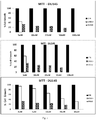
- CAM2 (compound acronym) was assayed to check the inhibition activity thereof on human tumor cells of (not hormone-depending - Fig. 2a ) prostate cancer and on cell lines of Triple Negative breast cancer (lack in the expression of the receptors of estrogens, of progesterone and of HER2 - Fig. 3a).
- the subject compound shows cell growth inhibition activity depending upon concentration. At concentrations of 20 ⁇ M the growth inhibition is stronger (95%), whereas at concentrations of 5 ⁇ M it is weaker (58%) The compound shows an activity of DL50 at low concentrations ( ⁇ 5 ⁇ M).
- the compound was dissolved in a solution of DMSO concentrated at 100%, therefrom the dilutions programmed according to the scheme shown in figure A and B are obtained and in 96-multiwell plates 2X10 4 cells are deposited (plated).
- the compounds under study in contact with the cells at the pre-established concentrations are used, in order to determine the lethal dose 50, that is the dose thereat there is 50% of cell growth inhibition.
- the growth inhibition effect is determined by means of a colorimetric assay.
- the MTT assay is a measurement of sensitivity of cell proliferation based upon the decrease in the salt of tetrazolium, 3, [4,5-dimethylthiazol-2-]-2,5-diphenyl-bromide-tetrazolium (MTT).
- MTT Changes in the cell proliferative activity caused by our compounds can be quantified with MTT.
- MTT is reduced to an insoluble colouring agent, by the mitochondrial enzymes associated to the metabolic activity. MTT reduction is mainly due to the glycolytic activity inside the cell associated to the presence of NADH and NADPH.
- CAM3 (compound acronym) was assayed to check the inhibition activity thereof on human tumor cells of (not hormone-depending - Fig. 2b ) prostate cancer and on cell lines of Triple Negative breast cancer (lack in expression of the receptors of estrogens, of progesterone and of HER2 - Fig. 3b).
- the subject compound shows cell growth inhibition activity depending upon concentration. At higher concentrations (10 ⁇ M) the growth inhibition is very strong (95%), whereas at lower concentrations it is weaker (40%)
- the compound shows an activity of DL50 at low concentrations (5/10uM). At last, we can state that the compound under study shows a strong activity of inhibiting the tumor cell growth, related to antiblastic activity.
- the compound was dissolved in a solution of DMSO concentrated at 100%, therefrom the dilutions programmed according to the scheme shown in figure A and B are obtained, and in 96-multiwell plates 2X10 4 cells are deposited (plated).
- the compounds under study in contact with the cells at pre-established concentrations are used, in order to determine the lethal dose 50, that is the dose thereat there is 50% of cell growth inhibition.
- the growth inhibition effect is determined by means of a colorimetric assay.
- the MTT assay is a measurement of cell proliferation sensitivity based upon the reduction in the salt of tetrazolium, 3, [4,5-dimethylthiazol-2-] - 2,5-diphenyl bromide -tetrazolium (MTT). Changes in the cell proliferative activity caused by our compounds can be quantified with MTT. MTT is reduced to an insoluble colouring agent, by the mitochondrial enzymes associated to the metabolic activity. MTT reduction is mainly due to the glycolytic activity inside the cell associated to the presence of NADH and NADPH .
- CAM4 (compound acronym) was assayed to check the inhibition activity thereof on human tumor cell lines of (not hormone-depending - Fig. 2c ) prostate cancer and on cell lines of Triple Negative breast cancer (lack in the expression of the receptors of estrogens, of progesterone and of HER2 - Fig. 3c).
- the subject compound shows cell growth inhibition activity depending upon concentration. At higher concentrations (40 ⁇ M) the growth inhibition is stronger (88%), whereas at lower concentrations (5 ⁇ M) the inhibition is very low (14%).
- the compound shows an activity of DL50 at low concentrations (20uM).
- the compound was dissolved in a solution of DMSO concentrated at 100%, therefrom the dilutions programmed according to the scheme shown in A e B are obtained, in 96-multiwell plates 2X10 4 cells are deposited (plated).
- the compounds under study in contact with the cells at the pre-established concentrations are used, in order to determine the lethal dose 50, that is the dose thereat there is 50% of cell growth inhibition.
- the growth inhibition effect is determined by means of a colorimetric assay.
- MTT assay is a measurement of the cell proliferation sensitivity based upon the reduction in the salt of tetrazolium, 3, [4,5-dimethylthiazol-2-]-2,5-diphenyl bromide-tetrazolium (MTT). Changes in the cell proliferative activity caused by our compounds can be quantified with MTT. MTT is reduced to an insoluble colouring agent, by the mitochondrial enzymes associated to the metabolic activity. MTT reduction is mainly due to the glycolytic activity inside the cell associated to the presence of NADH and NADPH.
Landscapes
- Health & Medical Sciences (AREA)
- Chemical & Material Sciences (AREA)
- Organic Chemistry (AREA)
- Medicinal Chemistry (AREA)
- Pharmacology & Pharmacy (AREA)
- Life Sciences & Earth Sciences (AREA)
- Animal Behavior & Ethology (AREA)
- General Health & Medical Sciences (AREA)
- Public Health (AREA)
- Veterinary Medicine (AREA)
- Epidemiology (AREA)
- Chemical Kinetics & Catalysis (AREA)
- General Chemical & Material Sciences (AREA)
- Nuclear Medicine, Radiotherapy & Molecular Imaging (AREA)
- Inorganic Chemistry (AREA)
- Pharmaceuticals Containing Other Organic And Inorganic Compounds (AREA)
Description
- The present invention relates to the compounds of Formula 1

- wherein M is Sc or Y,
- Hal is CI, Br, F or I
- R is alkyl with 1 - 4 atoms of C
- X is CI, Br, F or I or a group such as that shown hereinafter

- and the use thereof in the treatment of solid tumors.
- In particular, the synthesis, the chemical characterization of new organometallic compounds of
group 3 and the use thereof as antitumor agents are described, with particular reference to the topic application for the treatment of still not curable solid tumors, such as the triple negative breast cancer (TN) and the prostate cancer. The results deriving from these studies have led to the development of a new therapeutic approach for the pharmacological treatment of the TN breast cancer. In this way mastectomy can be avoided and the toxic aspects shown by the drugs currently used for these kinds of tumors can be reduced considerably. - Bis-benzyl-substituted titanocenes are know in the prior art, such as from: SWEENEY N. J. ET AL. in "Novel benzyl substituted titanocene anti-cancer drugs", JOURNAL OF ORGANOMETALLIC CHEMISTRY, ELSEVIER-SEQUOIA S.A. LAUSANNE, CH, vol. 690, no. 21-22, 2005, pages 4537-4544 or A. RAY BULLS ET AL. in "Relative bond dissociation energies for early transition metal alkyl, aryl, alkynyl and hydride compounds. Equilibration of metallated cyclopentadienyl derivatives of peralkylated hafnocene and scandocene with hydrocarbons and dihydrogen", POLYHEDRON., vol. 7, no. 16-17, 1988, pages 1409-1428 or from QIAN, YAN-LONG ET AL. in "Synthesis, characterization and application of benzyl-substituted cyclopentadienyl lanthanide complexes as catalyst precursors for the syndiotactic polymerization of methyl methacrylate", Chinese J. Chem. 2004, 22(6), 568-572.
- The organo-metallic complexes (example: cis-platin, carbo-platin, etc..), which are nowadays available on the market, are substantially alkylating agents. The cisplatin enters the cells by diffusion wherein it is then converted into its active form. The species which are currently considered active are not determined with great certainty. It is believed that the active species is the monohydrate one, however the most common species is the dihydrate form. The main function of the cisplatin is to link to DNA. In fact, although the cisplatin is capable of interacting with several types of vital proteins for the DNA replication and the cell division, the main target remains DNA. However, such compound has considerable toxicity and several side effects. A main one is nephrotoxicity. Cisplatin, in fact, can cause renal damages (tubular degeneration, necrosis and mineralization of the tubular epithelial cells). Another effect is ototoxicity which above all appears in children.
- Ototoxicity leads to the loss of equilibrium due to auditory difficulties. The initial symptoms include tinkling (ringing in the ears). These effects should stop at the end of the treatment, but sometimes it happens that some patients loose their hearing irreversibly in the range of high frequencies (> 4KHz). The other toxic symptoms are common to those caused by other antitumor drugs: nausea, vomiting, decrease in the red blood cells, tingling sensation in hands and feet: drug neurotoxicity, especially shown with high doses.
- The decrease in platelets, face swellings, dyspnea (shortness of breath), muscle cramps, blurred vision and appetite loss are instead less common. Nausea and vomiting usually appear one hour after the drug administration and they can last for several hours.
- Another drug particularly important in the oncology clinical therapy is represented by Doxorubicin which is one of the most effective antitumor agents for the treatment of leukaemia and a wide range of solid tumors (1,9) . This compound belongs to the family of anthracyclines, thereamong there are other three molecules, one thereof already on the market for some time: Daunorubicin and other two drugs, already in clinical phase thanks to their antitumor effects: Epirubicin and Idarubicin. All of them have in common the 4-ringed 7,8,9,10- tetrahydrotetracene-5,12-quinone polycycle, but they differ for the residues R1, R2 and R3 (9) , as shown in the following formula.

- The whole family of anthracyclines shows cardiac toxicity, which can be fatal to the patient.
- A crucial aspect in the oncology research is represented by the decrease in toxicity and selectivity focussed on cancerous cells only. The present invention aims at the therapy of two among the neoplastic pathologies very widespread within the population: breast cancer (in particular TN) and prostate cancer, cancers for which the current oncotherapy is not effective, it is very toxic, often it cannot be applied.
- Now it has surprisingly been found that with the pharmaceutical/pharmaco-technological approach which was performed, that is by implementing new molecules, which can be obtained with few synthetic steps, which are capable of inhibiting the tumor growth, it was possible to overcome the disadvantages of the state of art. Currently, with new rapid synthetic methods, new molecules were implemented, which were studied in vitro. The cytotoxic action of such new molecules on the two solid tumors taken into consideration was determined. The in-vitro studies allowed us to determine even DL50.
- The present invention relates to the compounds of Formula 1
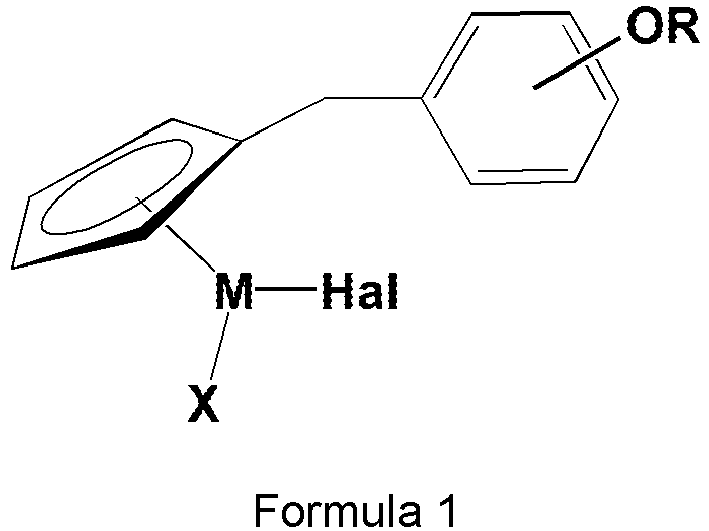
- wherein M is Sc or Y,
- Hal is Cl, Br, F or I
- R is alkyl with 1 - 4 atoms of C
- X is Cl, Br, F or I or a group of the following
Formula 2
- wherein R is alkyl with 1 - 4 atoms of C
- a process for the production thereof and the use thereof as medicaments in particular in the treatment of solid tumors. In particular new organo-metallic derivatives of scandium and yttrium with cyclopentadienylic binders having substituted aromatic groups with methoxyl, the synthesis thereof and the pharmacological application thereof are described.
- Two figures are enclosed to the present description, showing
-
figure 1 the evaluation of the inhibitory activity of CAM2 (a), CAM3 (b) and CAM4 (c) on the cell growth of DU145 cells in presence of different concentrations, determined by MTT assay. The cell viability was expressed as percentage of proliferated cells with respect to the cells treated with the different compounds and the same cells used as control and -
figure 2 the evaluation of the inhibitory activity of CAM2 (a), CAM3 (b) and CAM4 (c) on the cell growth of MDA.MB231 cells in presence of different concentrations, determined by MTT assay. The cell viability was expressed as percentage of proliferated cells with respect to the cells treated with the different compounds and the same cells used as control. - Preferred compounds have the following structures

- Particularly preferred compounds have the following structures

- The synthesis of the new scandium- and yttrium-based metallorganic complexes was performed by reaction between lithium salt of the suitable binder and the metal halide. The binder was obtained by reaction between the cyclopentadiene (obtained by retro Diels-Alder of dicyclopentadiene) and the suitable aromatic aldehyde to give 6-aryl-fulvene which was reduced and salified by the lithium superhydride. In the following scheme (Scheme 1) the performed synthesis process is shown.

- The evaluation of the biological activity of the synthetized molecules allowed to show that they have a considerable effectiveness in the inhibition of the two solid tumors taken into consideration by us. The effectiveness of such molecules depends upon the chemical structure of the same. These compounds, then, in reality, can represent a new class of organo-metallic molecules provided with antiproliferative activity. The experiments performed on cell cultures of triple negative breast cancers (MDA.MB213) and prostate cancers (DU145) allowed to establish that the cell growth inhibition, obtained with some of the new synthetized molecules, can be related to antiblastic activity, to depending concentrations with a Lethal Dose 50 (DL50) with low concentrations (5 µM).
- Hereinafter the structures of the synthetized metallorganic compounds are shown and
Figures 1 and2 show the results of the biological tests.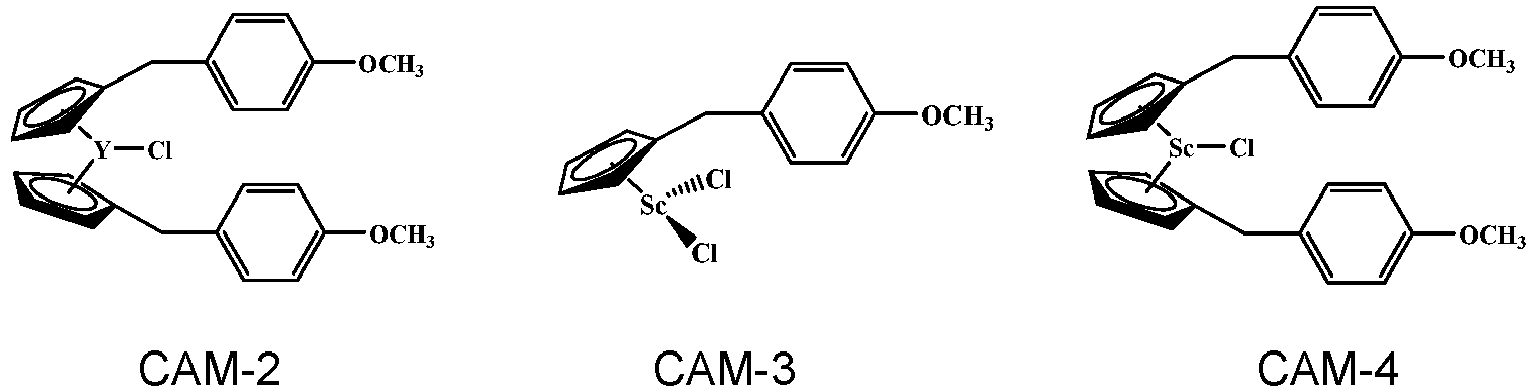
- By way of illustration and not with limitative purposes examples of synthesis of the new complexes and of the cytotoxic activity thereof are described hereinafter.
- Retro Diels-Alder reaction of Dicyclopentadiene to form Cyclopentadiene. (Scheme The reaction apparatus comprises a 250-ml three-necked flask whereon a dropping funnel and a bulb condenser are assembled. A Claisen head is positioned on the condenser, which head is connected to a condenser wherein running water circulates, to this latter condenser a caudate pipe is connected, wherein the distilled cyclopentadiene is collected.
- The reaction flask is placed into an isomantle and positioned on a stirring plate.
- The flask is half filled-in with decalin, whereas dicyclopentadiene is placed into the dropping funnel. One works in inert atmosphere. As soon as decalin starts boiling, reaching the temperature of 180°C, one makes dicyclopentadiene to drop into the flask. At the temperature of 180°C dicyclopentadiene is subjected to retro Diels-Alder and it is transformed into the monomer, the vapours thereof flow in the Claisen head and are condensed in a cooled-down collection pipe.
- Reaction of cyclopentadiene with 4-methoxy-benzaldehyde to form 6-p-methoxy-phenyl-fulvene. (see scheme 1)
- The reaction is performed in inert atmosphere. 30 ml of anhydrous methanol, 4.1 ml of Cyclopentadiene and 2.4 ml of 4-methoxybenzaldeide are put into a a caudate flask. The reaction starts by adding 2.5 ml of the pyrrolidine base. The solution colour changes immediately from transparent to red-orange. After about 20 minutes a red precipitate is formed. The reaction is followed by means of chromatography on TLC by using an eluent mixture constituted by ethyl acetate/dichloromethane (7:3). When TLC shows one single spot the reaction is interrupted by adding 1.8 ml of acetic acid. The reaction work-up is performed by extraction by adding 10 ml of ethyl ether and 10 ml of distilled water. After having transferred the mixture in a separating funnel and after having separated the two phases, the aqueous phase is washed 3 times with 30 ml of ethyl ether. The organic phases are re-united and washed with a concentrated solution of NaCl. The organic phase is treated with anhydrous Na2SO4. At last, it is filtered and dried.
- Reduction of fulvene to form the corresponding lithium salts.
- The reaction, performed in anhydrous diethyl ether at room temperature, as reducing agent uses LiB(Et)3H, also known as super-hydride. It provides the nucleophilic addition of one hydride to the double bond 5-6 of fulvene, by using LiB(Et)3H as donor of equivalent reducing agents, a slight excess is used compared to the stoichiometric of super-hydride: fulvene/super-hydride of 1:1,2. (see scheme 1)
- The selection of LiB(Et)3H as reducing agent derives from its high selectivity. In fact, the double bond 5-6 of fulvene has a high polarity due to the inductive effect of the methoxylic group linked to benzene; this increase in polarity allows the reducing agent to attack selectively the double bond 5-6 and not the dienic component of fulvene. The super-hydride is available on the market in THF molar solution 1, then, before use, it has to be dried.
- Reduction of 4-methoxyphenylfulvene.
- In inert atmosphere 6.5 ml of superhydride solution are collected and transferred into a 250-ml caudate flask, the solvent (THF) is dried and the obtained solid white is dissolved in 70 ml of anhydrous ethyl ether. 1.0 g of 4-methoxyphenyl-fulvene are dissolved in 30 ml of anhydrous ethyl ether and they are added to the solution of the reducing agent. It is left under the nitrogen flow, at room temperature, for one night and a suspension is formed. The reaction mixture is transferred in a caudate pipe wherein the lithium salt is left to precipitate. The solvent is removed by piping and the precipitate is washed with 50 ml of anhydrous ethyl ether. The salt is dried and weighed.
- The formation of mono and bi-substituted complexes takes place after reaction with binder with ScCl3 or YCl3. For the synthesis of the monosubstituted complexes a THF solution of the binder is made to drop in an equimolar solution of THF of the metal at a temperature of - 78°C, whereas for the formation of the bi-substituted complex, it is suitable to make the solution of THF of the metal to drop on that of the binder. The reaction conditions remain unchanged except for the stoichiometric ratios. In this case, in fact, the metal moles are halved (binder: metal =1: 1/2). The reaction is performed at a temperature of - 78°C, by means of an ethanol bath, cooled with solid CO2.
- In dry-box, in two distinct flasks, 200 mg of salt of 4-methoxybenzyl-cyclopentedienyl of lithium and 101 mg of YCl3 are weighed. The binder is solubilized with 8 ml of anhydrous THF and the solution is transferred into the dropping funnel. The metal halid is solubilized in 16 ml of anhydrous THF and transferred into the reaction flask. The flask is dipped into the bath thermostated at -78°C, then the binder is slowly added into the solution containing the metal halide. It is left under stirring for one night by making the temperature to rise slowly until room temperature. The solvent is dried and the obtained solid product is solubilized in 40 ml of anhydrous dichloromethane, it is filtered on celite to remove the lithium chloride. The solvent is dried and the caudate pipe is brought in dry box for the subsequent sample recovery and weighing procedures. The product was characterized by means of protonic NMR assay, mass spectrometry and elementary analysis.
1H NMR (d ppm, CDCl3, 300 MHz): 2.81 [d, 4H, C5H4-CH2-C6H4-OCH3], 2.93 [d, 4H, C5H4-CH2-C6H4-OCH3] , 3.60 [s, 4H, C5H4-CH2-C6H4-OCH3], 3.71 [s, 6H, C5H4-CH2-C6H4-OCH3], 5.99 [s, 2H, C5H4-CH2-C6H4-OCH3], 6.09 [s, 2H, C5H4-CH2-C6H4-OCH3], 6.21 [s, 2H, C5H4-CH2-C6H4-OCH3], 6.38 [s, 2H, C5H4-CH2-C6H4-OCH3], 6.84 [m, 4H, C5H4-CH2-C6H4-OCH3], 7.10 [m, 4H, C6H4-CH2-C6H4-OCH3]. Mass data: 377.1 [M-Na+.-C6H4OCH3 e -CI], 355 [M+.-C6H4OCH3 e - CI], 307 [M+.-C5H4CH2C6H4OCH3], - Elementary analysis: Calculated for C26H26O2ClY (%) C 63.1, H 5.3 Cl 7.2; found C 62.9, H 5.1, CI 7.3
- In dry-box, in two distinct flasks, 200 mg of the salt of 4-methoxybenzyl-cyclopentedienyl of lithium and 157 mg of ScCl3 are weighed. The binder is solubilized with 8 ml of anhydrous THF and the solution is transferred into the dropping funnel. The metal halide is solubilized in 32 ml of anhydrous THF and transferred into the reaction flask. The flask is dipped into the bath thermostated at -78°C, then the binder is slowly added into the solution containing the metal halide. It is left under stirring for one night by making the temperature to rise slowly until room temperature. The solvent is dried and the obtained solid product is solubilized in 40 ml of anhydrous dichloromethane, it is filtered on celite to remove the lithium chloride. The solvent is dried and the caudate pipe is brought in dry box for the subsequent sample recovery and weighing procedures.
- The product was characterized by means of protonic NMR analysis, mass spectrometry and elementary analysis.
1H NMR (d ppm, CDCl3, 300 MHz): 2.80 [d, 2H, C5H4-CH2-C6H4-OCH3], 2.92 [d, 2H, C5H4-CH2-C6H4-OCH3], 3.60 [s, 3H, C5H4-CH2-C6H4-OCH3], 5.98 [s, 1H, C5H4-CH2-C6H4-OCH3], 6.09 [s, 1H, C5H4-CH2-C6H4-OCH3], 6.23 [d, 1H, C5H4-CH2-C6H4-OCH3], 6.37 [m, 1H, C5H4-CH2-C6H4-OCH3], 6.84 [m, 2H, C5H4-CH2-C6H4-OCH3], 7.05 [m, 2H, C5H4-CH2-C6H4-OCH3].
Mass data: (the complex appears in dimeric form) 403 [M2-Na+.-(C6H4OCH3) e - CI], 373.2 [M2-Na+.-(C6H4OCH3)2], 321 [M+.-(C6H4OCH3)2 e -2Cl]
Elementary analysis: Calculated for C13H13OCl2Sc (%) C 51.8, H 4.3 Cl 23.6; found C 51.6, H 4.1, Cl 23.8 - In dry-box, in two distinct flasks, 150 mg of the salt of 4-methoxybenzyl-cyclopentedienyl of lithium and 59 mg of ScCl3 are weighed. The binder is solubilized with 4 ml of anhydrous THF and the solution is transferred into the dropping funnel. The metal halide is solubilized in 8 ml of anhydrous THF and transferred into the reaction flask. The flask is dipped into the bath thermostated at -78°C, then the binder is added slowly into the solution containing metal halide. It is left under stirring for one night by making the temperature to rise slowly until room temperature. The solvent is dried and the obtained solid product is solubilized in 40 ml of anhydrous dichloromethane, it is filtered on celite to remove the lithium chloride. The solvent is dried and the caudate pipe is brought in dry box for the subsequent sample weighing procedures.
- The product was characterized by means of protonic NMR analysis, mass spectrometry and elementary analysis.
1H NMR (d ppm, CDCl3, 300 MHz): 3.00 [s, 4H, C5H4-CH2-C6H4-OCH3], 3.12 [s, 4H, C5H4-CH2-C6H4-OCH3], 3.79 [s, 4H, C5H4-CH2-C6H4-OCH3], 3.83 [s, 4H, C5H4-CH2-C6H4-OCH3] 3.94 [s, 6H, C5H4-CH2-C6H4-OCH3], 6.14 [s, 2H, C5H4-CH2-C6H4-OCH3], 6.28 [s, 2H, C5H4-CH2-C6H4-OCH3], 6.39 [s, 2H, C5H4-CH2-C6H4-OCH3], 6.55 [s, 2H, C5H4-CH2-C6H4-OCH3], 6.55 [m, 4H, C5H4-CH2-C6H4-OCH3], 6.98 [m, 4H, C5H4-CH2-C6H4-OCH3].
Mass data: 382.2 [M-K+.-C6H4OCH3], 377.2 [M+.- 2Cl], 343 [M+.-C5H4CH2C6H4OCH3],
Elementary analysis: Calculated for C26H26O2ClSc (%) C 69.2, H 5.8 Cl 7.9; found C 69.4, H 5.6, Cl 8.0 - CAM2 (compound acronym) was assayed to check the inhibition activity thereof on human tumor cells of (not hormone-depending -
Fig. 2a ) prostate cancer and on cell lines of Triple Negative breast cancer (lack in the expression of the receptors of estrogens, of progesterone and of HER2 - Fig. 3a). - The subject compound shows cell growth inhibition activity depending upon concentration. At concentrations of 20 µM the growth inhibition is stronger (95%), whereas at concentrations of 5 µM it is weaker (58%) The compound shows an activity of DL50 at low concentrations (<5µM).
- At last, we can state that the compound under study shows an activity of inhibiting the tumor cell growth, related to antiblastic activity.
-
- MDA.MB213 - Human cell line of breast cancer acquired by ATCC (American Tissue Cell Colture - ATCC® HTB-26™), triple negative for ER receptor
- DU145 - Human cell line of prostate cancer acquired by ATCC (American Tissue Cell Colture - ATCC® HTB-81™)
- MTT Cell Proliferation Assay Kit - Purchased by TREVIGEN - Catalog # 4890-025-K
- The compound was dissolved in a solution of DMSO concentrated at 100%, therefrom the dilutions programmed according to the scheme shown in figure A and B are obtained and in 96-multiwell plates 2X10⁴ cells are deposited (plated).
- After 24 hours the compounds under study in contact with the cells at the pre-established concentrations are used, in order to determine the lethal dose 50, that is the dose thereat there is 50% of cell growth inhibition.
- After 48 hours of exposition to our compound, the growth inhibition effect is determined by means of a colorimetric assay.
- The MTT assay is a measurement of sensitivity of cell proliferation based upon the decrease in the salt of tetrazolium, 3, [4,5-dimethylthiazol-2-]-2,5-diphenyl-bromide-tetrazolium (MTT).
- Changes in the cell proliferative activity caused by our compounds can be quantified with MTT. MTT is reduced to an insoluble colouring agent, by the mitochondrial enzymes associated to the metabolic activity. MTT reduction is mainly due to the glycolytic activity inside the cell associated to the presence of NADH and NADPH.
- CAM3 (compound acronym) was assayed to check the inhibition activity thereof on human tumor cells of (not hormone-depending -
Fig. 2b ) prostate cancer and on cell lines of Triple Negative breast cancer (lack in expression of the receptors of estrogens, of progesterone and of HER2 - Fig. 3b). - The subject compound shows cell growth inhibition activity depending upon concentration. At higher concentrations (10 µM) the growth inhibition is very strong (95%), whereas at lower concentrations it is weaker (40%)
- The compound shows an activity of DL50 at low concentrations (5/10uM). At last, we can state that the compound under study shows a strong activity of inhibiting the tumor cell growth, related to antiblastic activity.
-
- MDA.MB213 - Human cell line of breast cancer acquired by ATCC (American Tissue Cell Colture - ATCC® HTB-26™), triple negative for ER receptor
- DU145 - Human cell line of prostate cancer acquired by ATCC (American Tissue Cell Colture - ATCC® HTB-81™)
- MTT Cell Proliferation Assay Kit - Purchased by TREVIGEN - Catalog # 4890-025-K
- The compound was dissolved in a solution of DMSO concentrated at 100%, therefrom the dilutions programmed according to the scheme shown in figure A and B are obtained, and in 96-multiwell plates 2X10⁴ cells are deposited (plated).
- After 24 hours the compounds under study in contact with the cells at pre-established concentrations are used, in order to determine the lethal dose 50, that is the dose thereat there is 50% of cell growth inhibition.
- After 48 hours of exposition to our compound, the growth inhibition effect is determined by means of a colorimetric assay.
- The MTT assay is a measurement of cell proliferation sensitivity based upon the reduction in the salt of tetrazolium, 3, [4,5-dimethylthiazol-2-] - 2,5-diphenyl bromide -tetrazolium (MTT). Changes in the cell proliferative activity caused by our compounds can be quantified with MTT. MTT is reduced to an insoluble colouring agent, by the mitochondrial enzymes associated to the metabolic activity. MTT reduction is mainly due to the glycolytic activity inside the cell associated to the presence of NADH and NADPH .
- CAM4 (compound acronym) was assayed to check the inhibition activity thereof on human tumor cell lines of (not hormone-depending -
Fig. 2c ) prostate cancer and on cell lines of Triple Negative breast cancer (lack in the expression of the receptors of estrogens, of progesterone and of HER2 - Fig. 3c). - The subject compound shows cell growth inhibition activity depending upon concentration. At higher concentrations (40 µM) the growth inhibition is stronger (88%), whereas at lower concentrations (5 µM) the inhibition is very low (14%).
- The compound shows an activity of DL50 at low concentrations (20uM).
- From the graphs we exclude that the compound activity can add to that of the solvent. At last we can state that the compound under study shows a strong tumor cell growth inhibition, related to antiblastic activity.
-
- MDA.MB213 - Human cell line of breast cancer acquired by ATCC (American Tissue Cell Colture - ATCC® HTB-26™), triple negative for ER receptor
- DU145 - Human cell line of prostate cancer acquired by ATCC (American Tissue Cell Colture - ATCC® HTB-81™)
- MTT Cell Proliferation Assay Kit - Purchased by TREVIGEN - Catalog # 4890-025-K
- The compound was dissolved in a solution of DMSO concentrated at 100%, therefrom the dilutions programmed according to the scheme shown in A e B are obtained, in 96-multiwell plates 2X10⁴ cells are deposited (plated).
- After 24 hours the compounds under study in contact with the cells at the pre-established concentrations are used, in order to determine the lethal dose 50, that is the dose thereat there is 50% of cell growth inhibition.
- After 48 hours of exposition to our compound, the growth inhibition effect is determined by means of a colorimetric assay.
- MTT assay is a measurement of the cell proliferation sensitivity based upon the reduction in the salt of tetrazolium, 3, [4,5-dimethylthiazol-2-]-2,5-diphenyl bromide-tetrazolium (MTT). Changes in the cell proliferative activity caused by our compounds can be quantified with MTT. MTT is reduced to an insoluble colouring agent, by the mitochondrial enzymes associated to the metabolic activity. MTT reduction is mainly due to the glycolytic activity inside the cell associated to the presence of NADH and NADPH.
Claims (7)
- Compounds of Formula I
 wherein M is Sc or Y,Hal is Cl, Br, F or IR is alkyl with 1 - 4 atoms of CX is Cl, Br, F or I or a group of Formula 2
- The compounds of Formula 1 according to claim 1 represented by the following structures


- The compounds according to at least one of the preceding claims represented by the following structures

- The compounds according to at least one of the preceding claims for use as medicaments.
- The compounds according to claim 4 for use in the treatment of tumors, in particular solid tumors.
- The compounds according to claim 4 for use in the treatment of triple negative breast cancer TN and prostate cancer.
- A process for the production of compounds as claimed in claims 1 to 3 according to the scheme 1 below characterized by the following sequence of operations
 i) Retro Diels-Alder reaction of Dicyclopentadiene to form the Cyclopentadiene at a temperature of about 180 °C in decalin boiling.ii) reaction of cyclopentadiene with methoxy-benzaldehyde to form the 6-methoxy-phenyl-fulvene in the presence of pyrrolidine as a base.iii) Reduction of fulvene to form the corresponding lithium salt, using LiB(Et)3H, also known as super-hydride.iv) Formation of complex mono and bi-substituted by reaction of the binder with the required stoichiometric amount of ScCl3 or YCl3 at a temperature of -78°C.
Applications Claiming Priority (2)
| Application Number | Priority Date | Filing Date | Title |
|---|---|---|---|
| ITUA2016A003176A ITUA20163176A1 (en) | 2016-05-05 | 2016-05-05 | METAL COMPOUNDS OF GROUP 3 AND THEIR USE IN THE TREATMENT OF SOLID TUMORS |
| PCT/IB2017/052624 WO2017191607A1 (en) | 2016-05-05 | 2017-05-05 | Group 3 metal compounds and use thereof in the treatment of solid tumors |
Publications (2)
| Publication Number | Publication Date |
|---|---|
| EP3452490A1 EP3452490A1 (en) | 2019-03-13 |
| EP3452490B1 true EP3452490B1 (en) | 2020-05-13 |
Family
ID=56990703
Family Applications (1)
| Application Number | Title | Priority Date | Filing Date |
|---|---|---|---|
| EP17732565.1A Active EP3452490B1 (en) | 2016-05-05 | 2017-05-05 | Group 3 metal compounds and use thereof in the treatment of solid tumors |
Country Status (4)
| Country | Link |
|---|---|
| US (1) | US10675300B2 (en) |
| EP (1) | EP3452490B1 (en) |
| IT (1) | ITUA20163176A1 (en) |
| WO (1) | WO2017191607A1 (en) |
-
2016
- 2016-05-05 IT ITUA2016A003176A patent/ITUA20163176A1/en unknown
-
2017
- 2017-05-05 WO PCT/IB2017/052624 patent/WO2017191607A1/en not_active Ceased
- 2017-05-05 EP EP17732565.1A patent/EP3452490B1/en active Active
- 2017-05-05 US US16/099,065 patent/US10675300B2/en active Active
Non-Patent Citations (1)
| Title |
|---|
| None * |
Also Published As
| Publication number | Publication date |
|---|---|
| US10675300B2 (en) | 2020-06-09 |
| EP3452490A1 (en) | 2019-03-13 |
| US20190240254A1 (en) | 2019-08-08 |
| ITUA20163176A1 (en) | 2017-11-05 |
| WO2017191607A1 (en) | 2017-11-09 |
Similar Documents
| Publication | Publication Date | Title |
|---|---|---|
| Chen et al. | Novel NHC-coordinated ruthenium (II) arene complexes achieve synergistic efficacy as safe and effective anticancer therapeutics | |
| Gong et al. | Downregulation of STAT3/NF‐κB potentiates gemcitabine activity in pancreatic cancer cells | |
| Şahin-Bölükbaşı et al. | Novel Silver-NHC complexes: Synthesis and anticancer properties | |
| Yang et al. | Ruthenium methylimidazole complexes induced apoptosis in lung cancer A549 cells through intrinsic mitochondrial pathway | |
| Markowicz-Piasecka et al. | Sulfonamide metformin derivatives induce mitochondrial-associated apoptosis and cell cycle arrest in breast cancer cells | |
| Zhang et al. | Design, synthesis and in vitro evaluation of fangchinoline derivatives as potential anticancer agents | |
| WO2018209961A1 (en) | Alkoxyl terminal group oligo-peg modified aminopyrimidine derivative and antitumor application | |
| Dai et al. | Sophoridine derivatives induce apoptosis and autophagy to suppress the growth of triple‐negative breast cancer through inhibition of mTOR signaling | |
| CN117247319A (en) | A class of 5,6-dihydroxynaphthoate compounds and their preparation methods and uses | |
| AU2016212552A1 (en) | Compound containing indoleacetic acid core structure and use thereof | |
| US10675300B2 (en) | Group 3 metal compounds and use thereof in the treatment of solid tumors | |
| CN108553455A (en) | Application of the three aldehyde radical phloroglucin thiosemicarbazones heterozygote compounds in antitumor drug | |
| Li et al. | Diversity-oriented synthesis of diterpenoid alkaloids yields a potent anti-inflammatory agent | |
| El-Kardocy et al. | Aryl azide-sulfonamide hybrids induce cellular apoptosis: synthesis and preliminary screening of their cytotoxicity in human HCT116 and A549 cancer cell lines | |
| CN107383015B (en) | Alkylthio-terminal-group oligo-PEG-modified amino pyrazolo [3,4-d ] pyrimidine derivative and application thereof in resisting non-small cell lung cancer | |
| CN112716954B (en) | New medicinal application of nitidine chloride | |
| CN110590778B (en) | 3, 10 di-p-methoxyphenyl 6, 12 diaza tetracubane compound, synthetic method and pharmaceutical composition | |
| Pagliaricci et al. | Ruthenium (ii)-bisdemethoxycurcumin conjugate complexes as potent antitumour agents through simultaneous inhibition of 20S proteasome and HMG-CoA reductase | |
| US20220251091A1 (en) | Amorphous umbralisib monotosylate | |
| Hemalatha et al. | Crystal structure, Hirshfeld surfaces and energy framework studies of a biologically active compound (3E)-3-(2, 3, 4-trimethoxyphenyl) methylidene)-2, 3-dihydro-4H-1-benzopyran-4-one | |
| Muchtaridi et al. | Antagonistic mechanism of chalcone derivatives against human estrogen alpha of breast cancer using molecular dynamic simulation | |
| JPH01117881A (en) | Antitumor and viral alkaroid | |
| RU2816105C1 (en) | Fluorine-containing benzylated isatins | |
| Bostancıoğlu et al. | Investigation of the pharmacological profiles of dinuclear metal complexes as novel, potent and selective cytotoxic agents against ras-transformed cells | |
| CN103145659A (en) | Composition of sodium (or potassium) 17-hydro-9-dehydroandrographolide-3-sulphate, sodium (or potassium) 17-hydro-9-dehydroandrographolide-19-sulphate and sodium (or potassium) 17-hydro-9-dehydroandrographolide-3,19-disulfate, and use of the composition in drug preparation |
Legal Events
| Date | Code | Title | Description |
|---|---|---|---|
| STAA | Information on the status of an ep patent application or granted ep patent |
Free format text: STATUS: UNKNOWN |
|
| STAA | Information on the status of an ep patent application or granted ep patent |
Free format text: STATUS: THE INTERNATIONAL PUBLICATION HAS BEEN MADE |
|
| PUAI | Public reference made under article 153(3) epc to a published international application that has entered the european phase |
Free format text: ORIGINAL CODE: 0009012 |
|
| STAA | Information on the status of an ep patent application or granted ep patent |
Free format text: STATUS: REQUEST FOR EXAMINATION WAS MADE |
|
| 17P | Request for examination filed |
Effective date: 20181109 |
|
| AK | Designated contracting states |
Kind code of ref document: A1 Designated state(s): AL AT BE BG CH CY CZ DE DK EE ES FI FR GB GR HR HU IE IS IT LI LT LU LV MC MK MT NL NO PL PT RO RS SE SI SK SM TR |
|
| AX | Request for extension of the european patent |
Extension state: BA ME |
|
| DAV | Request for validation of the european patent (deleted) | ||
| DAX | Request for extension of the european patent (deleted) | ||
| REG | Reference to a national code |
Ref country code: DE Ref legal event code: R079 Ref document number: 602017016574 Country of ref document: DE Free format text: PREVIOUS MAIN CLASS: C07F0017000000 Ipc: A61P0035000000 |
|
| RIC1 | Information provided on ipc code assigned before grant |
Ipc: C07F 17/00 20060101ALI20191018BHEP Ipc: A61K 33/24 20190101ALI20191018BHEP Ipc: A61P 35/00 20060101AFI20191018BHEP Ipc: A61K 31/28 20060101ALI20191018BHEP |
|
| GRAP | Despatch of communication of intention to grant a patent |
Free format text: ORIGINAL CODE: EPIDOSNIGR1 |
|
| STAA | Information on the status of an ep patent application or granted ep patent |
Free format text: STATUS: GRANT OF PATENT IS INTENDED |
|
| RAP1 | Party data changed (applicant data changed or rights of an application transferred) |
Owner name: UNIVERSITA DEGLI STUDI DI SALERNO |
|
| INTG | Intention to grant announced |
Effective date: 20191128 |
|
| GRAS | Grant fee paid |
Free format text: ORIGINAL CODE: EPIDOSNIGR3 |
|
| GRAA | (expected) grant |
Free format text: ORIGINAL CODE: 0009210 |
|
| STAA | Information on the status of an ep patent application or granted ep patent |
Free format text: STATUS: THE PATENT HAS BEEN GRANTED |
|
| AK | Designated contracting states |
Kind code of ref document: B1 Designated state(s): AL AT BE BG CH CY CZ DE DK EE ES FI FR GB GR HR HU IE IS IT LI LT LU LV MC MK MT NL NO PL PT RO RS SE SI SK SM TR |
|
| REG | Reference to a national code |
Ref country code: GB Ref legal event code: FG4D |
|
| REG | Reference to a national code |
Ref country code: CH Ref legal event code: EP |
|
| REG | Reference to a national code |
Ref country code: DE Ref legal event code: R096 Ref document number: 602017016574 Country of ref document: DE |
|
| REG | Reference to a national code |
Ref country code: AT Ref legal event code: REF Ref document number: 1269467 Country of ref document: AT Kind code of ref document: T Effective date: 20200615 |
|
| REG | Reference to a national code |
Ref country code: LT Ref legal event code: MG4D |
|
| REG | Reference to a national code |
Ref country code: NL Ref legal event code: MP Effective date: 20200513 |
|
| PG25 | Lapsed in a contracting state [announced via postgrant information from national office to epo] |
Ref country code: PT Free format text: LAPSE BECAUSE OF FAILURE TO SUBMIT A TRANSLATION OF THE DESCRIPTION OR TO PAY THE FEE WITHIN THE PRESCRIBED TIME-LIMIT Effective date: 20200914 Ref country code: IS Free format text: LAPSE BECAUSE OF FAILURE TO SUBMIT A TRANSLATION OF THE DESCRIPTION OR TO PAY THE FEE WITHIN THE PRESCRIBED TIME-LIMIT Effective date: 20200913 Ref country code: FI Free format text: LAPSE BECAUSE OF FAILURE TO SUBMIT A TRANSLATION OF THE DESCRIPTION OR TO PAY THE FEE WITHIN THE PRESCRIBED TIME-LIMIT Effective date: 20200513 Ref country code: NO Free format text: LAPSE BECAUSE OF FAILURE TO SUBMIT A TRANSLATION OF THE DESCRIPTION OR TO PAY THE FEE WITHIN THE PRESCRIBED TIME-LIMIT Effective date: 20200813 Ref country code: GR Free format text: LAPSE BECAUSE OF FAILURE TO SUBMIT A TRANSLATION OF THE DESCRIPTION OR TO PAY THE FEE WITHIN THE PRESCRIBED TIME-LIMIT Effective date: 20200814 Ref country code: SE Free format text: LAPSE BECAUSE OF FAILURE TO SUBMIT A TRANSLATION OF THE DESCRIPTION OR TO PAY THE FEE WITHIN THE PRESCRIBED TIME-LIMIT Effective date: 20200513 Ref country code: LT Free format text: LAPSE BECAUSE OF FAILURE TO SUBMIT A TRANSLATION OF THE DESCRIPTION OR TO PAY THE FEE WITHIN THE PRESCRIBED TIME-LIMIT Effective date: 20200513 |
|
| PG25 | Lapsed in a contracting state [announced via postgrant information from national office to epo] |
Ref country code: BG Free format text: LAPSE BECAUSE OF FAILURE TO SUBMIT A TRANSLATION OF THE DESCRIPTION OR TO PAY THE FEE WITHIN THE PRESCRIBED TIME-LIMIT Effective date: 20200813 Ref country code: HR Free format text: LAPSE BECAUSE OF FAILURE TO SUBMIT A TRANSLATION OF THE DESCRIPTION OR TO PAY THE FEE WITHIN THE PRESCRIBED TIME-LIMIT Effective date: 20200513 Ref country code: LV Free format text: LAPSE BECAUSE OF FAILURE TO SUBMIT A TRANSLATION OF THE DESCRIPTION OR TO PAY THE FEE WITHIN THE PRESCRIBED TIME-LIMIT Effective date: 20200513 Ref country code: RS Free format text: LAPSE BECAUSE OF FAILURE TO SUBMIT A TRANSLATION OF THE DESCRIPTION OR TO PAY THE FEE WITHIN THE PRESCRIBED TIME-LIMIT Effective date: 20200513 |
|
| REG | Reference to a national code |
Ref country code: AT Ref legal event code: MK05 Ref document number: 1269467 Country of ref document: AT Kind code of ref document: T Effective date: 20200513 |
|
| PG25 | Lapsed in a contracting state [announced via postgrant information from national office to epo] |
Ref country code: NL Free format text: LAPSE BECAUSE OF FAILURE TO SUBMIT A TRANSLATION OF THE DESCRIPTION OR TO PAY THE FEE WITHIN THE PRESCRIBED TIME-LIMIT Effective date: 20200513 Ref country code: AL Free format text: LAPSE BECAUSE OF FAILURE TO SUBMIT A TRANSLATION OF THE DESCRIPTION OR TO PAY THE FEE WITHIN THE PRESCRIBED TIME-LIMIT Effective date: 20200513 |
|
| PG25 | Lapsed in a contracting state [announced via postgrant information from national office to epo] |
Ref country code: AT Free format text: LAPSE BECAUSE OF FAILURE TO SUBMIT A TRANSLATION OF THE DESCRIPTION OR TO PAY THE FEE WITHIN THE PRESCRIBED TIME-LIMIT Effective date: 20200513 Ref country code: ES Free format text: LAPSE BECAUSE OF FAILURE TO SUBMIT A TRANSLATION OF THE DESCRIPTION OR TO PAY THE FEE WITHIN THE PRESCRIBED TIME-LIMIT Effective date: 20200513 Ref country code: DK Free format text: LAPSE BECAUSE OF FAILURE TO SUBMIT A TRANSLATION OF THE DESCRIPTION OR TO PAY THE FEE WITHIN THE PRESCRIBED TIME-LIMIT Effective date: 20200513 Ref country code: RO Free format text: LAPSE BECAUSE OF FAILURE TO SUBMIT A TRANSLATION OF THE DESCRIPTION OR TO PAY THE FEE WITHIN THE PRESCRIBED TIME-LIMIT Effective date: 20200513 Ref country code: SM Free format text: LAPSE BECAUSE OF FAILURE TO SUBMIT A TRANSLATION OF THE DESCRIPTION OR TO PAY THE FEE WITHIN THE PRESCRIBED TIME-LIMIT Effective date: 20200513 Ref country code: EE Free format text: LAPSE BECAUSE OF FAILURE TO SUBMIT A TRANSLATION OF THE DESCRIPTION OR TO PAY THE FEE WITHIN THE PRESCRIBED TIME-LIMIT Effective date: 20200513 Ref country code: CZ Free format text: LAPSE BECAUSE OF FAILURE TO SUBMIT A TRANSLATION OF THE DESCRIPTION OR TO PAY THE FEE WITHIN THE PRESCRIBED TIME-LIMIT Effective date: 20200513 |
|
| REG | Reference to a national code |
Ref country code: DE Ref legal event code: R097 Ref document number: 602017016574 Country of ref document: DE |
|
| PG25 | Lapsed in a contracting state [announced via postgrant information from national office to epo] |
Ref country code: PL Free format text: LAPSE BECAUSE OF FAILURE TO SUBMIT A TRANSLATION OF THE DESCRIPTION OR TO PAY THE FEE WITHIN THE PRESCRIBED TIME-LIMIT Effective date: 20200513 Ref country code: SK Free format text: LAPSE BECAUSE OF FAILURE TO SUBMIT A TRANSLATION OF THE DESCRIPTION OR TO PAY THE FEE WITHIN THE PRESCRIBED TIME-LIMIT Effective date: 20200513 |
|
| PLBE | No opposition filed within time limit |
Free format text: ORIGINAL CODE: 0009261 |
|
| STAA | Information on the status of an ep patent application or granted ep patent |
Free format text: STATUS: NO OPPOSITION FILED WITHIN TIME LIMIT |
|
| 26N | No opposition filed |
Effective date: 20210216 |
|
| PG25 | Lapsed in a contracting state [announced via postgrant information from national office to epo] |
Ref country code: SI Free format text: LAPSE BECAUSE OF FAILURE TO SUBMIT A TRANSLATION OF THE DESCRIPTION OR TO PAY THE FEE WITHIN THE PRESCRIBED TIME-LIMIT Effective date: 20200513 |
|
| REG | Reference to a national code |
Ref country code: CH Ref legal event code: PL |
|
| PG25 | Lapsed in a contracting state [announced via postgrant information from national office to epo] |
Ref country code: CH Free format text: LAPSE BECAUSE OF NON-PAYMENT OF DUE FEES Effective date: 20210531 Ref country code: MC Free format text: LAPSE BECAUSE OF FAILURE TO SUBMIT A TRANSLATION OF THE DESCRIPTION OR TO PAY THE FEE WITHIN THE PRESCRIBED TIME-LIMIT Effective date: 20200513 Ref country code: LI Free format text: LAPSE BECAUSE OF NON-PAYMENT OF DUE FEES Effective date: 20210531 Ref country code: LU Free format text: LAPSE BECAUSE OF NON-PAYMENT OF DUE FEES Effective date: 20210505 |
|
| REG | Reference to a national code |
Ref country code: BE Ref legal event code: MM Effective date: 20210531 |
|
| PG25 | Lapsed in a contracting state [announced via postgrant information from national office to epo] |
Ref country code: BE Free format text: LAPSE BECAUSE OF NON-PAYMENT OF DUE FEES Effective date: 20210531 |
|
| PG25 | Lapsed in a contracting state [announced via postgrant information from national office to epo] |
Ref country code: CY Free format text: LAPSE BECAUSE OF FAILURE TO SUBMIT A TRANSLATION OF THE DESCRIPTION OR TO PAY THE FEE WITHIN THE PRESCRIBED TIME-LIMIT Effective date: 20200513 |
|
| PG25 | Lapsed in a contracting state [announced via postgrant information from national office to epo] |
Ref country code: HU Free format text: LAPSE BECAUSE OF FAILURE TO SUBMIT A TRANSLATION OF THE DESCRIPTION OR TO PAY THE FEE WITHIN THE PRESCRIBED TIME-LIMIT; INVALID AB INITIO Effective date: 20170505 |
|
| PG25 | Lapsed in a contracting state [announced via postgrant information from national office to epo] |
Ref country code: MK Free format text: LAPSE BECAUSE OF FAILURE TO SUBMIT A TRANSLATION OF THE DESCRIPTION OR TO PAY THE FEE WITHIN THE PRESCRIBED TIME-LIMIT Effective date: 20200513 |
|
| PG25 | Lapsed in a contracting state [announced via postgrant information from national office to epo] |
Ref country code: TR Free format text: LAPSE BECAUSE OF FAILURE TO SUBMIT A TRANSLATION OF THE DESCRIPTION OR TO PAY THE FEE WITHIN THE PRESCRIBED TIME-LIMIT Effective date: 20200513 |
|
| PG25 | Lapsed in a contracting state [announced via postgrant information from national office to epo] |
Ref country code: MT Free format text: LAPSE BECAUSE OF FAILURE TO SUBMIT A TRANSLATION OF THE DESCRIPTION OR TO PAY THE FEE WITHIN THE PRESCRIBED TIME-LIMIT Effective date: 20200513 |
|
| PGFP | Annual fee paid to national office [announced via postgrant information from national office to epo] |
Ref country code: DE Payment date: 20250521 Year of fee payment: 9 |
|
| PGFP | Annual fee paid to national office [announced via postgrant information from national office to epo] |
Ref country code: GB Payment date: 20250527 Year of fee payment: 9 |
|
| PGFP | Annual fee paid to national office [announced via postgrant information from national office to epo] |
Ref country code: IT Payment date: 20250424 Year of fee payment: 9 |
|
| PGFP | Annual fee paid to national office [announced via postgrant information from national office to epo] |
Ref country code: FR Payment date: 20250528 Year of fee payment: 9 |
|
| PGFP | Annual fee paid to national office [announced via postgrant information from national office to epo] |
Ref country code: IE Payment date: 20250521 Year of fee payment: 9 |