EP3452038B1 - Process for the preparation of intermediates useful in the preparation of hepatitis c virus (hcv) inhibitors - Google Patents
Process for the preparation of intermediates useful in the preparation of hepatitis c virus (hcv) inhibitors Download PDFInfo
- Publication number
- EP3452038B1 EP3452038B1 EP17792575.7A EP17792575A EP3452038B1 EP 3452038 B1 EP3452038 B1 EP 3452038B1 EP 17792575 A EP17792575 A EP 17792575A EP 3452038 B1 EP3452038 B1 EP 3452038B1
- Authority
- EP
- European Patent Office
- Prior art keywords
- compound
- formula
- mixtures
- ether
- solvent
- Prior art date
- Legal status (The legal status is an assumption and is not a legal conclusion. Google has not performed a legal analysis and makes no representation as to the accuracy of the status listed.)
- Active
Links
Classifications
-
- C—CHEMISTRY; METALLURGY
- C07—ORGANIC CHEMISTRY
- C07D—HETEROCYCLIC COMPOUNDS
- C07D491/00—Heterocyclic compounds containing in the condensed ring system both one or more rings having oxygen atoms as the only ring hetero atoms and one or more rings having nitrogen atoms as the only ring hetero atoms, not provided for by groups C07D451/00 - C07D459/00, C07D463/00, C07D477/00 or C07D489/00
- C07D491/02—Heterocyclic compounds containing in the condensed ring system both one or more rings having oxygen atoms as the only ring hetero atoms and one or more rings having nitrogen atoms as the only ring hetero atoms, not provided for by groups C07D451/00 - C07D459/00, C07D463/00, C07D477/00 or C07D489/00 in which the condensed system contains two hetero rings
- C07D491/04—Ortho-condensed systems
- C07D491/044—Ortho-condensed systems with only one oxygen atom as ring hetero atom in the oxygen-containing ring
- C07D491/048—Ortho-condensed systems with only one oxygen atom as ring hetero atom in the oxygen-containing ring the oxygen-containing ring being five-membered
-
- C—CHEMISTRY; METALLURGY
- C07—ORGANIC CHEMISTRY
- C07C—ACYCLIC OR CARBOCYCLIC COMPOUNDS
- C07C255/00—Carboxylic acid nitriles
- C07C255/49—Carboxylic acid nitriles having cyano groups bound to carbon atoms of six-membered aromatic rings of a carbon skeleton
- C07C255/54—Carboxylic acid nitriles having cyano groups bound to carbon atoms of six-membered aromatic rings of a carbon skeleton containing cyano groups and etherified hydroxy groups bound to the carbon skeleton
-
- C—CHEMISTRY; METALLURGY
- C07—ORGANIC CHEMISTRY
- C07D—HETEROCYCLIC COMPOUNDS
- C07D311/00—Heterocyclic compounds containing six-membered rings having one oxygen atom as the only hetero atom, condensed with other rings
- C07D311/02—Heterocyclic compounds containing six-membered rings having one oxygen atom as the only hetero atom, condensed with other rings ortho- or peri-condensed with carbocyclic rings or ring systems
- C07D311/78—Ring systems having three or more relevant rings
Definitions
- the present invention generally relates to a process for the preparation of 9-halo-3-(2-haloacetyl)-10,11-dihydro-5H-dibenzo[c,g]chromen-8(9H)-one of Formula I, which is an intermediate used in the preparation of Hepatitis C Virus (HCV) inhibitors, particularly used in the preparation of Velpatasvir of Formula A.
- HCV Hepatitis C Virus
- Velpatasvir is chemically known as methyl ⁇ (2S)-1-[(2S,5S)-2-(9- ⁇ 2-[(2S,4S)-1- ⁇ (2R)-2-[(methoxycarbonyl)amino-]-2-phenylacetyl ⁇ -4-(methoxymethyl)pyrrolidin-2-yl]-1H-imidazol-5-yl ⁇ -1,11-dihydroisochromeno[4',3':6,7]naphtho[1,2-d] imidazol -2-yl)-5-methylpyrroli-din-1-yl]-3-methyl-1-oxobutan-2-yl ⁇ carbamate; represented by the following structure:
- Velpatasvir is an investigational pan-genotypic NS5A inhibitor and is presently under clinical trials in combination with nucleotide analog polymerase inhibitor sofosbuvir (SOF), approved as Sovaldi ® , for the treatment of chronic genotype 1-6 hepatitis C virus HCV infection.
- SOF nucleotide analog polymerase inhibitor sofosbuvir
- the present invention simplifies the process for the preparation of compound of Formula I with greater yield and high purity by using novel intermediates of Formula IV, IVa, and V.
- the present invention provides a process for the preparation of a compound of Formula I, wherein 'X' represents a halogen: comprising:
- the present invention provides a process for the preparation of a compound of Formula Ia: comprising:
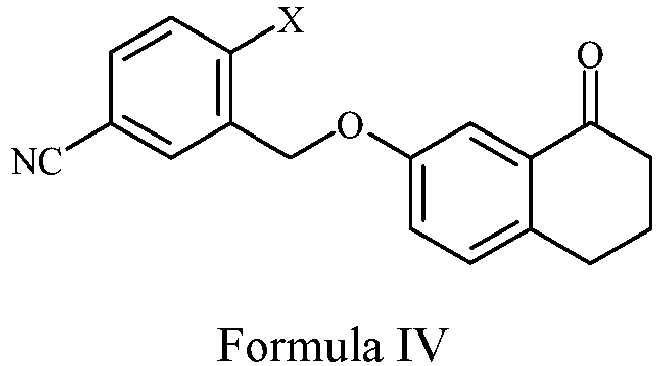
- the present invention provides a compound of Formula IV, wherein 'X' represents a halogen,
- the present invention provides a compound of Formula IVa,
- the present invention provides a compound of Formula V,
- a process for the preparation of Velpatasvir of Formula A comprising preparing the 9-halo-3-(2-haloacetyl)-10,11-dihydro-5H-dibenzo[c,g]chromen-8(9H)-one of Formula I as per the process described above, and converting the 9-halo-3-(2-haloacetyl)-10,11-dihydro-5H-dibenzo[c,g]chromen-8(9H)-one of Formula I into the Velpatasvir of Formula A.
- a pharmaceutical composition useful in inhibiting HCV comprising Velpatasvir of Formula A, prepared by the processes of the present invention and at least one pharmaceutically acceptable excipient.
- the present invention provides a process for the preparation of a compound of Formula I using novel intermediates. Further, described herein is converting the compound of Formula I into Velpatasvir of Formula A.
- the present invention provides a process for the preparation of the compound of Formula I, wherein 'X' represents a halogen: comprising:
- the starting material of compound of Formula II and Formula III are known in the art, and can be prepared by any known method.
- the compound of Formula II may be synthesized as disclosed in US Patent No. 6,387,926 , or may be by the process described in the present application.
- the compound of Formula III may be synthesized as disclosed in the Journal of Medicinal Chemistry, 1998, vol. 41, # 7, pages 1068 - 1083 .
- 'X' represents a halogen, which is selected from one of fluoro (Fl), chloro (Cl), bromo (Br), and iodo (I).
- the compound of Formula II and Formula IV can be represented as follows:
- the starting compound of Formula IIa of the present invention may be prepared from 4-bromo-3-methylbenzonitrile by bromination as described in the following process.
- the present invention provides a process for the preparation of a compound of Formula IIa, comprising: brominating 4-bromo-3-methylbenzonitrile in the presence of 1,3-dibromo-5,5-dimethylhydantoin (DBDMH) and optionally in the presence of a catalyst in a suitable solvent to obtain the compound of Formula IIa.
- DBDMH 1,3-dibromo-5,5-dimethylhydantoin
- Exemplary catalysts used herein for the step of bromination include, but are not limited to, 2,2'-azobis(2-methylpropionitrile) (AIBN), 1,1'-azobis (cyclohexane carbonitrile) (ACCN), 4,4'-azobis(4-cyanovaleric acid), 4,4'-azobis(4-cyanovaleric acid), 1,1'-azobis(cyclohexanecarbonitrile), 2,2'-azobis(2-methylpropionamidine) dihydrochloride, ammonium persulfate, tert-butyl hydroperoxide, manganese dioxide, aluminium chloride, and the like, and mixtures thereof.
- AIBN 2,2'-azobis(2-methylpropionitrile)
- APN 1,1'-azobis (cyclohexane carbonitrile)
- 4,4'-azobis(4-cyanovaleric acid) 4,4'-azobis(4-cyanovaleric acid)
- Suitable solvents for bromination include, but are not limited to, amides, nitriles, ethers, halogenated hydrocarbons, and mixtures thereof.
- the suitable amides include, but are not limited to, dimethyl formamide, dimethyl acetamide, N-methyl pyrrolidinone, and the like, and mixtures thereof.
- the suitable nitriles include, but are not limited to, acetonitrile, propionitrile, benzonitrile, and the like, and mixtures thereof.
- the suitable ethers include, but are not limited to, tetrahydrofuran, dimethyl ether, diisopropyl ether, methyl tertiary butyl ether, 1,4-dioxane, and the like, and mixtures thereof.
- the suitable halogenated hydrocarbons include, but are not limited to, methylene chloride, ethylene chloride, chloroform, and the like, and mixtures thereof.
- the bromination reaction is advantageously carried out at a temperature of about 0°C to reflux temperature, preferably at or below 85°C.
- the resultant compound of Formula IIa can be further processed directly without isolating from the reaction solution.
- the compound of Formula IIa may be isolated as a solid and used for a subsequent reaction.
- the isolation step includes washing the organic layer with an aqueous base solution followed by the organic layer being concentrated under vacuum to obtain the residue by any method known in the art, at the end of the reaction. For example, distillation, evaporation, rotational drying (such as with the Buchi Rotavapor), flash drying, spin flash drying, and the like, preferably distillation under vacuum.
- the resultant residue may be crystallized or slurried using a suitable organic solvent, for example a mixture of an ether solvent and a cyclic hydrocarbon solvent; preferably from a mixture of tertiary butyl methyl ether and heptane.
- the step a) of the aforementioned process involves reaction of the compound of Formula II, preferably the compound of Formula IIa, with the compound of Formula III, to obtain a compound of Formula IV, preferably a compound of Formula IVa, in the presence of a suitable base and in a suitable solvent.
- Exemplary suitable bases used herein for the step of reaction of the compound of Formula IIa with the compound of Formula III include, but are not limited to, sodium hydroxide, potassium hydroxide, sodium methoxide, sodium ethoxide, sodium tert-butoxide, potassium tert-butoxide, sodium carbonate, potassium carbonate, cesium carbonate, sodium bicarbonate, potassium bicarbonate, triethylamine, diisopropyl ethylamine, N-methyl morpholine, pyridine, and the like, and mixtures thereof.
- Suitable solvents for reaction of the compound of Formula IIa with the compound of Formula III include, but are not limited to, amides, nitriles, ethers, aromatic hydrocarbons, and mixtures thereof.
- the suitable amides include, but are not limited to, dimethyl formamide, dimethyl acetamide, N-methyl pyrrolidinone, and the like, and mixtures thereof.
- the suitable nitriles include, but are not limited to, acetonitrile, propionitrile, and the like, and mixtures thereof.
- the suitable ethers include, but are not limited to, tetrahydrofuran, 2-methyl tetrahydrofuran, methyl tertiary butyl ether, 1,4-dioxane, and the like, and mixtures thereof.
- the suitable aromatic hydrocarbons include, but are not limited to, toluene, xylene, and the like, and mixtures thereof.
- reaction of the compound of Formula IIa with the compound of Formula III is preferably carried out at a temperature of about 25°C to reflux temperature.
- the step b) of the aforementioned process involves cyclization of the compound of Formula IV, preferably of the compound of Formula IVa, to obtain the compound of Formula V in the presence of a suitable palladium catalyst, a suitable base, and in a suitable solvent at a temperature preferably of about 25°C to reflux temperature.
- the suitable palladium catalyst used herein is selected from the group consisting of tetrakis (triphenylphosphine) palladium(0), tetrakis(tri(otolyl) phosphine) palladium(0), Pd 2 (dba) 3 , [1,1'Bis(diphenylphosphino)ferrocene]dichloropalladium(II) (Pd(dppf) 2 Cl 2 ), Palladium(II)acetate, and the like, and mixtures thereof.
- Suitable bases used herein for cyclization of the compound of Formula IVa include but are not limited to, alkali metal hydroxides such as lithium hydroxide, sodium hydroxide, potassium hydroxide, and the like, and mixtures thereof; alkali metal alkoxides such as sodium methoxide, sodium ethoxide, sodium tert-butoxide, potassium tert-butoxide, and the like, and mixtures thereof; alkali metal carbonates such as sodium carbonate, potassium carbonate, cesium carbonate, and the like, and mixtures thereof; alkali metal bicarbonates such as sodium bicarbonate, potassium bicarbonate, and the like, and mixtures thereof; and organic bases such as triethylamine, diisopropyl ethylamine, N-methyl morpholine, pyridine, and the like, and mixtures thereof.
- alkali metal hydroxides such as lithium hydroxide, sodium hydroxide, potassium hydroxide, and the like, and mixtures thereof
- Suitable solvents for cyclization of the compound of Formula IVa include but are not limited to, ethers, amides, aromatic hydrocarbons, water, and mixtures thereof.
- the suitable ethers include, but are not limited to, tetrahydrofuran, dimethyl ether, diethyl ether, diisopropyl ether, methyl tertiary butyl ether, 1,4-dioxane, 1,2-dimethoxy ethane, and the like, and mixtures thereof.
- the suitable amides include, but are not limited to, dimethyl formamide, dimethyl acetamide, dimethyl sulfoxide, N-methyl pyrrolidinone, and the like, and mixtures thereof.
- the suitable aromatic hydrocarbons include, but are not limited to, toluene, xylene; and the like, and mixtures thereof.
- the step c) of the aforementioned process involves converting the compound of Formula V into the compound of Formula VI in the presence of methyl magnesium halide, particularly methyl magnesium bromide in a suitable solvent.
- Suitable solvents used for step c), include, but are not limit to, ethers such as tetrahydrofuran, dimethyl ether, diethyl ether, diisopropyl ether, methyl tertiary butyl ether, 1,4-dioxane, 1,2-dimethoxy ethane, and the like, and mixtures thereof.
- ethers such as tetrahydrofuran, dimethyl ether, diethyl ether, diisopropyl ether, methyl tertiary butyl ether, 1,4-dioxane, 1,2-dimethoxy ethane, and the like, and mixtures thereof.
- the step c) is preferably carried out at a temperature of about 0°C to reflux temperature.
- the step c) optionally involves protecting the keto group in the compound of Formula V and then reacting with methyl magnesium halide, and then followed by in-situ deprotection of the protecting group to obtain the compound of Formula VI.
- the protection of the keto group in the compound of Formula V is preferably carried out at a temperature of about 0°C to reflux temperature.
- the suitable keto protecting group used herein is selected from dimethyl acetals, diethyl acetals, 1,3-dioxanes, 1,3-dioxolanes, 1,3-dithianes, 1,3-dithiolanes, trimethyl silyl, triethyl silyl, and the like.
- the protection of the keto group in the compound of Formula V may be carried out in the presence of a suitable base, which includes, but is not limited to, lithium bis(trimethylsilyl)amide, lithium diisopropylamide, lithium tetramethylpiperidide, sodium bis(trimethylsilyl)amide, potassium bis(trimethylsilyl)amide, sodium hydride, potassium hydride, and the like, and mixtures thereof.
- a suitable base includes, but is not limited to, lithium bis(trimethylsilyl)amide, lithium diisopropylamide, lithium tetramethylpiperidide, sodium bis(trimethylsilyl)amide, potassium bis(trimethylsilyl)amide, sodium hydride, potassium hydride, and the like, and mixtures thereof.
- the deprotection of the keto group may be carried out in the presence of a suitable deprotecting agent.
- the suitable deprotecting agent includes, but is not limited to, acids such as hydrochloric acid, sulfuric acid, p-toluenesulfonic acid, pyridinium p-toluenesulfonate, and the like, and mixtures thereof.
- step d) of the aforementioned process involves converting the compound of Formula VI into the compound of Formula I by any process known in the art, for example the processes shown in the aforementioned '718 patent and '437 PCT application.
- the present invention provides a compound of Formula IV, wherein 'X' represents a halogen,
- the present invention provides a compound of Formula IVa,
- the present invention provides a compound of Formula V,
- a process for the preparation of Velpatasvir comprising: preparing the 9-halo-3-(2-haloacetyl)-10,11-dihydro-5H-dibenzo[c,g]chromen-8(9H)-one of Formula I as described above, and converting the 9-halo-3-(2-haloacetyl)-10,11-dihydro-5H-dibenzo[c,g]chromen-8(9H)-one into Velpatasvir by any process known in the art, for example the processes shown in the aforementioned '718 patent and '437 PCT application.
- a pharmaceutical composition comprising Velpatasvir of Formula A prepared by the processes of the present invention and at least one pharmaceutically acceptable excipient.
Landscapes
- Chemical & Material Sciences (AREA)
- Organic Chemistry (AREA)
- Pharmaceuticals Containing Other Organic And Inorganic Compounds (AREA)
- Plural Heterocyclic Compounds (AREA)
- Organic Low-Molecular-Weight Compounds And Preparation Thereof (AREA)
Description
- This application is related to and claims the benefit of the filing date of
U.S. Provisional Patent Application No. 62/332,193, filed May 5, 2016 - The present invention generally relates to a process for the preparation of 9-halo-3-(2-haloacetyl)-10,11-dihydro-5H-dibenzo[c,g]chromen-8(9H)-one of Formula I, which is an intermediate used in the preparation of Hepatitis C Virus (HCV) inhibitors, particularly used in the preparation of Velpatasvir of Formula A.
- The compound, 9-halo-3-(2-haloacetyl)-10,11-dihydro-5H-dibenzo[c,g]chromen-8(9H)-one of Formula I is used as an intermediate in the preparation of Velpatasvir of Formula A. The structural identification of 9-halo-3-(2-haloacetyl)-10,11-dihydro-5H-dibenzo[c,g]chromen-8(9H)-one of Formula I, wherein 'X' represents a halogen; is represented as follows:

- Velpatasvir is chemically known as methyl {(2S)-1-[(2S,5S)-2-(9-{2-[(2S,4S)-1-{(2R)-2-[(methoxycarbonyl)amino-]-2-phenylacetyl}-4-(methoxymethyl)pyrrolidin-2-yl]-1H-imidazol-5-yl}-1,11-dihydroisochromeno[4',3':6,7]naphtho[1,2-d] imidazol -2-yl)-5-methylpyrroli-din-1-yl]-3-methyl-1-oxobutan-2-yl}carbamate; represented by the following structure:

- Velpatasvir is an investigational pan-genotypic NS5A inhibitor and is presently under clinical trials in combination with nucleotide analog polymerase inhibitor sofosbuvir (SOF), approved as Sovaldi®, for the treatment of chronic genotype 1-6 hepatitis C virus HCV infection.
-
U.S. Patent No(s). 8,940,718 ("the '718 patent"), 8,575,135 ("the '135 patent") and 8,921,341 ("the '341 patent") discloses new HCV therapeutic agents such as Velpatasvir of Formula A and its intermediate of Formula I, and processes for their preparation. The process disclosed for preparation of compound of Formula I in the '718 patent is schematically represented as follows:
-
PCT publication No. 2015/191437 ("the '437 publication") discloses a process for preparation of compound of Formula I. The processes disclosed in the '437 publication is schematically represented as follows:


- The above described processes have certain disadvantages as they involve usage of expensive starting materials and multiple palladium catalyzed reactions, which are not viable on cost effective commercial scale operations.
- Hence, there is a need in the art to provide a process for the preparation of intermediates useful in the preparation of HCV Inhibitors, which does not rely on usage of expensive starting materials and other difficulties, and is readily amenable to commercial scale operations.
- Among other aspects of the present invention, the present invention simplifies the process for the preparation of compound of Formula I with greater yield and high purity by using novel intermediates of Formula IV, IVa, and V.
- In accordance with one embodiment, the present invention provides a process for the preparation of a compound of Formula I, wherein 'X' represents a halogen:

- a) reacting a compound of Formula II with a compound of Formula III to obtain a compound of Formula IV, wherein 'X' represents a halogen,


- b) cyclizing the compound of Formula IV to obtain a compound of Formula V,

- c) converting the compound of Formula V into a compound of Formula VI, and

- d) converting the compound of Formula VI into the compound of Formula I.
- In accordance with another embodiment, described herein, there is provided a process for the preparation of a compound of Formula I, wherein 'X' represents a halogen, comprising:
- a) reacting a compound of Formula II with a compound of Formula III to obtain a compound of Formula IV, wherein 'X' represents a halogen,
- b) cyclizing the compound of Formula IV to obtain a compound of Formula V, and
- c) converting the compound of Formula V into the compound of Formula I.
- In accordance with another embodiment, described herein, there is provided a process for the preparation of a compound of Formula I, wherein 'X' represents a halogen, comprising:
- a) reacting a compound of Formula II with a compound of Formula III to obtain a compound of Formula IV, wherein 'X' represents a halogen, and
- b) converting the compound of Formula IV into the compound of Formula I.
- In accordance with another embodiment, the present invention provides a process for the preparation of a compound of Formula Ia:

- a) reacting a compound of Formula IIa with a compound of Formula III to obtain a compound of Formula IVa,


- b) cyclizing the compound of Formula IVa to obtain a compound of Formula V,

- c) converting the compound of Formula V into a compound of Formula VI, and

- d) converting the compound of Formula VI into the compound of Formula I.
- In accordance with another embodiment, the present invention provides a compound of Formula IV, wherein 'X' represents a halogen,

- In accordance with another embodiment, the present invention provides a compound of Formula IVa,

- In accordance with another embodiment, the present invention provides a compound of Formula V,

- In accordance with another embodiment described herein, there is provided a process for the preparation of Velpatasvir of Formula A, comprising preparing the 9-halo-3-(2-haloacetyl)-10,11-dihydro-5H-dibenzo[c,g]chromen-8(9H)-one of Formula I as per the process described above, and converting the 9-halo-3-(2-haloacetyl)-10,11-dihydro-5H-dibenzo[c,g]chromen-8(9H)-one of Formula I into the Velpatasvir of Formula A.
- In accordance with another embodiment described herein, there is provided a pharmaceutical composition useful in inhibiting HCV, comprising Velpatasvir of Formula A, prepared by the processes of the present invention and at least one pharmaceutically acceptable excipient.
- The present invention provides a process for the preparation of a compound of Formula I using novel intermediates. Further, described herein is converting the compound of Formula I into Velpatasvir of Formula A.
- In accordance with one embodiment, the present invention provides a process for the preparation of the compound of Formula I, wherein 'X' represents a halogen:

- a) reacting a compound of Formula II with a compound of Formula III to obtain a compound of Formula IV, wherein 'X' represents a halogen,


- b) cyclizing the compound of Formula IV to obtain a compound of Formula V,

- c) converting the compound of Formula V into a compound of Formula VI, and

- d) converting the compound of Formula VI into the compound of Formula I.
- The starting material of compound of Formula II and Formula III are known in the art, and can be prepared by any known method. For example, the compound of Formula II may be synthesized as disclosed in
US Patent No. 6,387,926 , or may be by the process described in the present application. The compound of Formula III may be synthesized as disclosed in the Journal of Medicinal Chemistry, 1998, vol. 41, # 7, pages 1068 - 1083. - Unless otherwise specified, the term 'X' represents a halogen, which is selected from one of fluoro (Fl), chloro (Cl), bromo (Br), and iodo (I).
- In a preferred embodiment, the compound of Formula II and Formula IV can be represented as follows:


- The starting compound of Formula IIa of the present invention may be prepared from 4-bromo-3-methylbenzonitrile by bromination as described in the following process.
- In another embodiment, the present invention provides a process for the preparation of a compound of Formula IIa, comprising: brominating 4-bromo-3-methylbenzonitrile in the presence of 1,3-dibromo-5,5-dimethylhydantoin (DBDMH) and optionally in the presence of a catalyst in a suitable solvent to obtain the compound of Formula IIa.
- Exemplary catalysts used herein for the step of bromination include, but are not limited to, 2,2'-azobis(2-methylpropionitrile) (AIBN), 1,1'-azobis (cyclohexane carbonitrile) (ACCN), 4,4'-azobis(4-cyanovaleric acid), 4,4'-azobis(4-cyanovaleric acid), 1,1'-azobis(cyclohexanecarbonitrile), 2,2'-azobis(2-methylpropionamidine) dihydrochloride, ammonium persulfate, tert-butyl hydroperoxide, manganese dioxide, aluminium chloride, and the like, and mixtures thereof.
- Suitable solvents for bromination include, but are not limited to, amides, nitriles, ethers, halogenated hydrocarbons, and mixtures thereof. The suitable amides include, but are not limited to, dimethyl formamide, dimethyl acetamide, N-methyl pyrrolidinone, and the like, and mixtures thereof. The suitable nitriles include, but are not limited to, acetonitrile, propionitrile, benzonitrile, and the like, and mixtures thereof. The suitable ethers include, but are not limited to, tetrahydrofuran, dimethyl ether, diisopropyl ether, methyl tertiary butyl ether, 1,4-dioxane, and the like, and mixtures thereof. The suitable halogenated hydrocarbons include, but are not limited to, methylene chloride, ethylene chloride, chloroform, and the like, and mixtures thereof.
- The bromination reaction is advantageously carried out at a temperature of about 0°C to reflux temperature, preferably at or below 85°C.
- The resultant compound of Formula IIa can be further processed directly without isolating from the reaction solution.
- Alternatively, the compound of Formula IIa may be isolated as a solid and used for a subsequent reaction. The isolation step includes washing the organic layer with an aqueous base solution followed by the organic layer being concentrated under vacuum to obtain the residue by any method known in the art, at the end of the reaction. For example, distillation, evaporation, rotational drying (such as with the Buchi Rotavapor), flash drying, spin flash drying, and the like, preferably distillation under vacuum. The resultant residue may be crystallized or slurried using a suitable organic solvent, for example a mixture of an ether solvent and a cyclic hydrocarbon solvent; preferably from a mixture of tertiary butyl methyl ether and heptane.
- The step a) of the aforementioned process involves reaction of the compound of Formula II, preferably the compound of Formula IIa, with the compound of Formula III, to obtain a compound of Formula IV, preferably a compound of Formula IVa, in the presence of a suitable base and in a suitable solvent.
- Exemplary suitable bases used herein for the step of reaction of the compound of Formula IIa with the compound of Formula III, include, but are not limited to, sodium hydroxide, potassium hydroxide, sodium methoxide, sodium ethoxide, sodium tert-butoxide, potassium tert-butoxide, sodium carbonate, potassium carbonate, cesium carbonate, sodium bicarbonate, potassium bicarbonate, triethylamine, diisopropyl ethylamine, N-methyl morpholine, pyridine, and the like, and mixtures thereof.
- Suitable solvents for reaction of the compound of Formula IIa with the compound of Formula III include, but are not limited to, amides, nitriles, ethers, aromatic hydrocarbons, and mixtures thereof. The suitable amides include, but are not limited to, dimethyl formamide, dimethyl acetamide, N-methyl pyrrolidinone, and the like, and mixtures thereof. The suitable nitriles include, but are not limited to, acetonitrile, propionitrile, and the like, and mixtures thereof. The suitable ethers include, but are not limited to, tetrahydrofuran, 2-methyl tetrahydrofuran, methyl tertiary butyl ether, 1,4-dioxane, and the like, and mixtures thereof. The suitable aromatic hydrocarbons include, but are not limited to, toluene, xylene, and the like, and mixtures thereof.
- The reaction of the compound of Formula IIa with the compound of Formula III is preferably carried out at a temperature of about 25°C to reflux temperature.
- The step b) of the aforementioned process involves cyclization of the compound of Formula IV, preferably of the compound of Formula IVa, to obtain the compound of Formula V in the presence of a suitable palladium catalyst, a suitable base, and in a suitable solvent at a temperature preferably of about 25°C to reflux temperature.
- The suitable palladium catalyst used herein is selected from the group consisting of tetrakis (triphenylphosphine) palladium(0), tetrakis(tri(otolyl) phosphine) palladium(0), Pd2(dba)3, [1,1'Bis(diphenylphosphino)ferrocene]dichloropalladium(II) (Pd(dppf)2Cl2), Palladium(II)acetate, and the like, and mixtures thereof.
- Suitable bases used herein for cyclization of the compound of Formula IVa, include but are not limited to, alkali metal hydroxides such as lithium hydroxide, sodium hydroxide, potassium hydroxide, and the like, and mixtures thereof; alkali metal alkoxides such as sodium methoxide, sodium ethoxide, sodium tert-butoxide, potassium tert-butoxide, and the like, and mixtures thereof; alkali metal carbonates such as sodium carbonate, potassium carbonate, cesium carbonate, and the like, and mixtures thereof; alkali metal bicarbonates such as sodium bicarbonate, potassium bicarbonate, and the like, and mixtures thereof; and organic bases such as triethylamine, diisopropyl ethylamine, N-methyl morpholine, pyridine, and the like, and mixtures thereof.
- Suitable solvents for cyclization of the compound of Formula IVa, include but are not limited to, ethers, amides, aromatic hydrocarbons, water, and mixtures thereof. The suitable ethers include, but are not limited to, tetrahydrofuran, dimethyl ether, diethyl ether, diisopropyl ether, methyl tertiary butyl ether, 1,4-dioxane, 1,2-dimethoxy ethane, and the like, and mixtures thereof. The suitable amides include, but are not limited to, dimethyl formamide, dimethyl acetamide, dimethyl sulfoxide, N-methyl pyrrolidinone, and the like, and mixtures thereof. The suitable aromatic hydrocarbons include, but are not limited to, toluene, xylene; and the like, and mixtures thereof.
- The step c) of the aforementioned process involves converting the compound of Formula V into the compound of Formula VI in the presence of methyl magnesium halide, particularly methyl magnesium bromide in a suitable solvent.
- Suitable solvents used for step c), include, but are not limit to, ethers such as tetrahydrofuran, dimethyl ether, diethyl ether, diisopropyl ether, methyl tertiary butyl ether, 1,4-dioxane, 1,2-dimethoxy ethane, and the like, and mixtures thereof.
- The step c) is preferably carried out at a temperature of about 0°C to reflux temperature.
- The step c) optionally involves protecting the keto group in the compound of Formula V and then reacting with methyl magnesium halide, and then followed by in-situ deprotection of the protecting group to obtain the compound of Formula VI.
- The protection of the keto group in the compound of Formula V is preferably carried out at a temperature of about 0°C to reflux temperature.
- The suitable keto protecting group used herein is selected from dimethyl acetals, diethyl acetals, 1,3-dioxanes, 1,3-dioxolanes, 1,3-dithianes, 1,3-dithiolanes, trimethyl silyl, triethyl silyl, and the like.
- The protection of the keto group in the compound of Formula V may be carried out in the presence of a suitable base, which includes, but is not limited to, lithium bis(trimethylsilyl)amide, lithium diisopropylamide, lithium tetramethylpiperidide, sodium bis(trimethylsilyl)amide, potassium bis(trimethylsilyl)amide, sodium hydride, potassium hydride, and the like, and mixtures thereof.
- The deprotection of the keto group may be carried out in the presence of a suitable deprotecting agent. The suitable deprotecting agent includes, but is not limited to, acids such as hydrochloric acid, sulfuric acid, p-toluenesulfonic acid, pyridinium p-toluenesulfonate, and the like, and mixtures thereof.
- The step d) of the aforementioned process involves converting the compound of Formula VI into the compound of Formula I by any process known in the art, for example the processes shown in the aforementioned '718 patent and '437 PCT application.
- In another embodiment, the present invention provides a compound of Formula IV, wherein 'X' represents a halogen,

- In another embodiment, the present invention provides a compound of Formula IVa,

- In another embodiment, the present invention provides a compound of Formula V,

- In another embodiment, described herein, there is provided a process for the preparation of Velpatasvir, comprising: preparing the 9-halo-3-(2-haloacetyl)-10,11-dihydro-5H-dibenzo[c,g]chromen-8(9H)-one of Formula I as described above, and converting the 9-halo-3-(2-haloacetyl)-10,11-dihydro-5H-dibenzo[c,g]chromen-8(9H)-one into Velpatasvir by any process known in the art, for example the processes shown in the aforementioned '718 patent and '437 PCT application.
- In another embodiment, described herein, there is provided a pharmaceutical composition, comprising Velpatasvir of Formula A prepared by the processes of the present invention and at least one pharmaceutically acceptable excipient.
- The following examples describe in detail processes that may be used in the preparation of the compounds described above.
- 4-bromo-3-methylbenzonitrile (80 g), 1,3-dibromo-5,5-dimethylhydantoin (70 g), azobisisobutyronitrile (6.7 g), and ethylene chloride (650 mL) were combined in a 1-L reaction flask. Then the reaction mixture was heated to 80-85°C and stirred for 19 hr at the same temperature. The reaction mixture was allowed to cool to 20-25°C and washed with saturated aqueous sodium bicarbonate solution (650 mL) followed by water (650 mL). The organic layer was separated and concentrated to a dark brown oil, which solidified upon standing. The resulting solid was stirred in a mixture of methyl tert-butyl ether (40 mL) and heptane (80 mL) for 3 hr. The resulting slurry was filtered and the filter cake was washed with heptane (80 mL). The filter cake was dried in a vacuum oven at 35°C to obtain the title compound. Yield: 51.3 g; HPLC purity: 95.1%; 1H NMR (300 MHz, CDCl3) δ 7.73 (d, 1H, J=2.0 Hz), 7.70 (d, 1H, J=8.3 Hz), 7.42 (dd, 1H, J=8.3, 2.0 Hz), 4.56 (s, 2H).
- 4-bromo-3-methylbenzonitrile (9.8 g), 1,3-dibromo-5,5-dimethylhydantoin (7 g), and 1,2-dichloroethane (80 mL) were combined in a 1-L reaction flask and stirred under nitrogen at 10-15°C. To the reaction mass 2,2'-azobis (2-methypropionitrile) (0.82 g) was added and the reaction mixture was heated to 80-85°C. After completion of the reaction, the reaction mixture was filtered to remove 5,5-dimethylhydantoin (4.2 g). The mother liquor was used in the next step without further purification (Yield: 12 g wt/wt assay).
- 7-hydroxy-1-tetralone (26 g) and potassium carbonate (44 g) in N,N-dimethylacetamide (130 mL) were combined in a 1-L reaction flask. To the reaction mass a dimethylacetamide solution of 4-bromo-3-(bromomethyl)benzonitrile (44 g in 130 mL) was added at 25-30°C. The resultant reaction mixture was stirred at ambient temperature for 68 hr. To the reaction mixture water (520 mL) was added at 8-12°C over 25 min and stirred for 30 min at 10°C. The precipitated solid was filtered, and to the solid, water (300 mL) was added and stirred for 45 min. The solid was filtered and washed with water (50 mL) and dried at 35°C under vacuum for about 24 hr to obtain the title compound. Yield: 58.7 g; HPLC purity: 98.2%; 1H NMR (300 MHz, CDCl3) δ 7.85 (m, 1H), 7.71 (d, 1H, J=8.2 Hz), 7.58 (d, 1H, J=2.7 Hz), 7.46 (dd, 1H, J=8.2, 2.0 Hz), 7.23 (d, 1H, J=10.4 Hz), 7.16 (dd, 1H, J=8.4, 2.7 Hz), 5.13 (s, 2H), 2.93 (dd, 1H, J=6.0, 6.0 Hz), 2.65 (dd, 1H, J=6.5,6.5 Hz), 2.13 (pent., 2 H, J=6.3 Hz).
- 7-hydroxy-1-tetralone (29.5 g) and potassium carbonate (50 g) in N,N-dimethylacetamide (150 mL) were combined in a 1-L reaction flask. To the reaction mass a dimethylacetamide solution of 4-bromo-3-(bromomethyl)benzonitrile (50 g in 160 mL) was added) at 20-25°C over 43 min. The reaction mixture was stirred at 20°C for 21 hr. After completion of the reaction, to the reaction mass water (620 mL) was added at 12°C and the mixture was stirred at 12-15°C for 30 min. The precipitated solid was collected by filtration and washed with water (3 × 30 mL) and dried under vacuum at 30°C. Then the solid was stirred in heptane (780 mL) at 25°C for 5 hr, and filtered, washed with heptane (3 × 50 mL), and air dried for 3 days. The heptane slurry was repeated (1×620 mL and 1×540 mL) and dried to obtain the title compound Yield: 51.8 g; HPLC purity: 93%.
- The above solid was dissolved in isopropyl acetate (600 mL) at 80-85°C and the reaction mass temperature was allowed to cool to 25-30°. The precipitated solid was filtered and washed with isopropyl acetate (35 mL) and dried under vacuum at 40°C for 3 hr to obtain the title compound. Yield: 40.9 g; HPLC purity: 97.9%.
- 7-(2-bromo-5-cyanobenzyloxy)-3,4-dihydronaphthalen-1(2H)-one (1.32 kg), potassium carbonate (1.02 kg), pivalic acid (113.5 g), PPh3 (29.1 g) and N,N-dimethylacetamide (6.6 lit) were combined in a 20-L reaction flask. Pd(OAc)2 (24.9 g) was added to the reaction mass and then the reaction mixture was heated to 115-120°C and stirred for 1.5 hr at the same temperature. After completion of the reaction, the reaction mass was allowed to cool to 10°C and a mixture of methylene chloride (39.6 lit) and water (13.2 lit) was added. The organic and aqueous layers were separated, and the aqueous layer was extracted with methylene chloride (6.6 lit). The combined organic layer was washed with 20% sodium chloride solution (6.6 lit) and then filtered. The obtained filtrate was distilled off under vacuum to obtain the title compound.
- 3-cyano-10,11-dihydro-5H-dibenzo[c,g]chromen-8(9H)-one (50 g), copper(I) bromide (2.61g) and tetrahydrofuran (500 mL) were combined in a 1-L reaction flask and allowed to cool to 0°C and stirred for 30 min at same temperature. To the reaction mass 1.0 M lithium bis(trimethylsilyl)amide in tetrahydrofuran (200 mL) was added at 0°C and the reaction mass heated to 20°C and stirred for 20 min at same temperature. To the reaction mass chlorotrimethylsilane (25.4 mL) was added at 15°C and stirred for 10 min at 20°C followed by 3.4 M methylmagnesium bromide in 2-methyltetrahydrofuran (160 mL) which was added over 1 hour at 15°C and stirred for 16 hours at 20°C. Then the reaction mass was added slowly to the pre-cooled 2 M aqueous hydrochloric acid (500 mL) at below 20°C and stirred for 5 hours at same temperature. Then the precipitated solid was filtered and washed with water (100 mL) and methanol (100 mL) and dried to obtain the title compound.
- The filtrate was taken into a reaction flask and allowed to cool -20°C and stirred for 18 hours at same temperature and the precipitated solid was filtered and washed with methanol (20 mL) and dried the wet compound to obtain the title compound. Yield: 41.8 g; HPLC purity: 98.5%.
- 3-acetyl-10,11-dihydro-5H-dibenzo[c,g]chromen-8(9)-one (5 g) was dissolved in a 9:1 mixture of methylene chloride and methanol (35 mL) at 20°C. To the reaction mass a methylene chloride solution of pyridinium tribromide was added drop wise at 20°C and the reaction mass was stirred for 30 min at 25°C. After completion of the reaction, the precipitated solid was filtered and washed with methanol (2×25 mL) to obtain the title compound. Yield: 6.1g; HPLC purity: 98%.
Claims (12)
- A process for the preparation of a compound of Formula I comprising:a) reacting a compound of Formula II with a compound of Formula III to obtain a compound of Formula IV, where the compound of Formula II is,


 b) cyclizing the compound of Formula IV to obtain a compound of Formula V, wherein the compound of Formula V is,
 c) converting the compound of Formula V into a compound of Formula VI, where the compound of Formula VI is,
 d) converting the compound of Formula VI into the compound of Formula I, wherein the compound of Formula I is
- The process according to claim 1, wherein:(i) the reacting step a) is performed in the presence of a base and a solvent; and(ii) the converting step c) is performed in the presence of methyl magnesium bromide and a solvent; and(iii) the converting step c) is performed in the presence of a solvent selected from one of tetrahydrofuran, dimethyl ether, diethyl ether, diisopropyl ether, methyl tertiary butyl ether, 1,4-dioxane, and 1,2-dimethoxy ethane, and mixtures thereof.
- The process according to claim 1, wherein the converting step c) further comprises:protecting the keto group in the compound of Formula V with a protecting group;reacting the protected compound with methyl magnesium halide; anddeprotecting in-situ the protecting group to obtain the compound of Formula VI, preferably:(i) wherein the process of protecting the keto group in the compound of Formula V is preferably carried out at a temperature of about 0°C to reflux temperature; and(ii) wherein the keto protecting group is selected from one of a dimethyl acetal, a diethyl acetal, a 1,3-dioxane, a 1,3-dioxolane, a 1,3-dithiane, a 1,3-dithiolane, trimethyl silyl, and triethyl silyl; and(iii) wherein the process of protecting the keto group in the compound of Formula V is carried out in the presence of a base selected from one of lithium bis(trimethylsilyl)amide, lithium diisopropylamide, lithium tetramethylpiperidide, sodium bis(trimethylsilyl)amide, potassium bis(trimethylsilyl)amide, sodium hydride, and potassium hydride, and mixtures thereof; and(iv) wherein the process of deprotecting the keto group in the compound of Formula V is carried using a deprotecting agent selected from one of hydrochloric acid, sulfuric acid, p-toluenesulfonic acid, and pyridinium p-toluenesulfonate, and mixtures thereof.
- The process according to claim 1, wherein the halogen 'X' is one of fluoro, chloro, bromo, and iodo.
- The process according to claim 1, for the preparation of a compound of Formula Ia comprising:a) reacting a compound of Formula IIa with a compound of Formula III to obtain a compound of Formula IVa, where the compound of Formula IIa is,


 b) cyclizing the compound of Formula IVa to obtain a compound of Formula V, wherein the compound of Formula V is,
 c) converting the compound of Formula V into a compound of Formula VI, where the compound of Formula VI is,
 d) converting the compound of Formula VI into the compound of Formula la, wherein the compound of Formula Ia is
- The process according to claim 5, wherein the compound of Formula IIa is prepared by brominating 4-bromo-3-methylbenzonitrile in the presence of 1,3-dibromo-5,5-dimethylhydantoin (DBDMH), a solvent, and optionally in the presence of a catalyst, preferably:(i) wherein when the catalyst is used, the catalysts is selected from one of 2,2'-azobis(2-methylpropionitrile), 1,1'-azobis (cyclohexane carbonitrile), 4,4'-azobis(4-cyanovaleric acid), 4,4'-azobis(4-cyanovaleric acid), 1,1'-azobis(cyclohexanecarbonitrile), 2,2'-azobis(2-methylpropionamidine) dihydrochloride, ammonium persulfate, tert-butyl hydroperoxide, manganese dioxide, and aluminium chloride, and mixtures thereof; and(ii) wherein the solvent is selected from one of an amide, a nitrile, an ether, and a halogenated hydrocarbon, and mixtures thereof, preferably wherein the amide is selected from one of dimethyl formamide, dimethyl acetamide, and N-methyl pyrrolidinone, and mixtures thereof; and wherein the nitrile is selected from one of acetonitrile, propionitrile, and benzonitrile, and mixtures thereof; and wherein the ether is selected from one of tetrahydrofuran, dimethyl ether, diisopropyl ether, methyl tertiary butyl ether, and 1,4-dioxane, and mixtures thereof; and wherein the halogenated hydrocarbon is selected from one of methylene chloride, ethylene chloride, and chloroform, mixtures thereof; and(iii) wherein the compound of Formula IIa is used without isolating it from the bromination solution, or wherein the compound of Formula IIa is isolated from the bromination solution by washing the bromination solution with an aqueous base solution, concentrating the resulting solution under vacuum to obtain the solid compound, and optionally crystallizing the solid compound from an organic solvent selected from one of an ether solvent and a cyclic hydrocarbon solvent.
- The process according to claim 5, wherein the reaction step a) is performed in an aqueous base selected from one of sodium hydroxide, potassium hydroxide, sodium methoxide, sodium ethoxide, sodium tert-butoxide, potassium tert-butoxide, sodium carbonate, potassium carbonate, cesium carbonate, sodium bicarbonate, potassium bicarbonate, triethylamine, diisopropyl ethylamine, N-methyl morpholine, and pyridine, and mixtures thereof; and
wherein the reaction step a) is performed in a solvent selected from one of an amide, a nitrile, an ether, and an aromatic hydrocarbons, and mixtures thereof, preferably wherein the amide is selected from one of dimethyl formamide, dimethyl acetamide, and N-methyl pyrrolidinone, and mixtures thereof; and wherein the nitrile is selected from one of acetonitrile, and propionitrile, and mixtures thereof; and wherein the ether is selected from one of tetrahydrofuran, 2-methyl tetrahydrofuran, methyl tertiary butyl ether, and 1,4-dioxane, mixtures thereof; and wherein the aromatic hydrocarbon is selected from one of toluene, and xylene, and mixtures thereof. - The process according to claim 5, wherein the cyclization step b) is carried out in the presence of a palladium catalyst, a base, and a solvent, preferably(i) wherein the palladium catalyst is selected from the group consisting of tetrakis (triphenylphosphine) palladium(0), tetrakis(tri(otolyl) phosphine) palladium(0), Pd2(dba)3, [1,1'-bis(diphenylphosphino)ferrocene]dichloropalladium(II) (Pd(dppf)2Cl2), and palladium(II)acetate, and mixtures thereof; and(ii) wherein the base is selected from one of an alkali metal hydroxide, an alkali metal alkoxide, an alkali metal carbonate, an alkali metal bicarbonate, and an organic base, and mixtures thereof; and(iii) wherein the solvent is selected from one of an ether, an amide, an aromatic hydrocarbon, and water, and mixtures thereof.
- A process for the preparation of a compound of Formula Ia comprising:a) reacting a compound of Formula IIa with a compound of Formula III to obtain a compound of Formula IVa, wherein the compound of Formula IIa is


 b) cyclizing the compound of Formula IVa to obtain a compound of Formula V, wherein the compound of Formula V is
 c) converting the compound of Formula V into a compound of Formula VI, wherein the compound of Formula VI is
 d) converting the compound of Formula VI into the compound of Formula la, wherein the compound of Formula Ia is
- A compound of Formula IV, wherein 'X' represents a halogen, and wherein the compound of Formula IV is

- The compound according to claim 10, wherein the halogen 'X' is bromo.
- A compound of Formula V, wherein the compound of Formula V is

Applications Claiming Priority (2)
| Application Number | Priority Date | Filing Date | Title |
|---|---|---|---|
| US201662332193P | 2016-05-05 | 2016-05-05 | |
| PCT/IB2017/052527 WO2017191546A1 (en) | 2016-05-05 | 2017-05-01 | Process for the preparation of intermediates useful in the preparation of hepatitis c virus (hcv) inhibitors |
Publications (3)
| Publication Number | Publication Date |
|---|---|
| EP3452038A1 EP3452038A1 (en) | 2019-03-13 |
| EP3452038A4 EP3452038A4 (en) | 2020-01-15 |
| EP3452038B1 true EP3452038B1 (en) | 2022-07-06 |
Family
ID=60202823
Family Applications (1)
| Application Number | Title | Priority Date | Filing Date |
|---|---|---|---|
| EP17792575.7A Active EP3452038B1 (en) | 2016-05-05 | 2017-05-01 | Process for the preparation of intermediates useful in the preparation of hepatitis c virus (hcv) inhibitors |
Country Status (4)
| Country | Link |
|---|---|
| US (1) | US9957279B2 (en) |
| EP (1) | EP3452038B1 (en) |
| ES (1) | ES2926579T3 (en) |
| WO (1) | WO2017191546A1 (en) |
Families Citing this family (1)
| Publication number | Priority date | Publication date | Assignee | Title |
|---|---|---|---|---|
| CN109020944B (en) * | 2018-08-14 | 2020-07-31 | 江苏苏利精细化工股份有限公司 | Recrystallization method of hepatitis C virus drug vipatavir key intermediate |
Family Cites Families (8)
| Publication number | Priority date | Publication date | Assignee | Title |
|---|---|---|---|---|
| US5104890A (en) * | 1989-03-28 | 1992-04-14 | Fujisawa Pharmaceutical Company, Ltd. | Benzopyran derivatives and processes for preparation thereof |
| TW527355B (en) | 1997-07-02 | 2003-04-11 | Bristol Myers Squibb Co | Inhibitors of farnesyl protein transferase |
| US20070062892A1 (en) * | 2005-09-16 | 2007-03-22 | Jennifer Donnellan | Rotating stand (carousel) bottle and tube holder |
| SI2170888T1 (en) | 2007-06-29 | 2015-10-30 | Gilead Sciences, Inc. | Purine derivatives and their use as modulators of toll-like receptor 7 |
| US9255074B2 (en) * | 2010-07-16 | 2016-02-09 | Abbvie Inc. | Process for preparing antiviral compounds |
| PT2907816T (en) | 2011-11-16 | 2018-10-18 | Gilead Pharmasset Llc | Condensed imidazolylimidazoles as antiviral compounds |
| US20130309196A1 (en) * | 2012-05-16 | 2013-11-21 | Gilead Sciences, Inc. | Antiviral compounds |
| TW202014413A (en) | 2014-06-11 | 2020-04-16 | 美商基利法瑪席特有限責任公司 | Processes for preparing antiviral compounds |
-
2017
- 2017-05-01 ES ES17792575T patent/ES2926579T3/en active Active
- 2017-05-01 WO PCT/IB2017/052527 patent/WO2017191546A1/en not_active Ceased
- 2017-05-01 US US15/583,722 patent/US9957279B2/en active Active
- 2017-05-01 EP EP17792575.7A patent/EP3452038B1/en active Active
Also Published As
| Publication number | Publication date |
|---|---|
| WO2017191546A1 (en) | 2017-11-09 |
| US20170320885A1 (en) | 2017-11-09 |
| EP3452038A1 (en) | 2019-03-13 |
| US9957279B2 (en) | 2018-05-01 |
| EP3452038A4 (en) | 2020-01-15 |
| ES2926579T3 (en) | 2022-10-27 |
Similar Documents
| Publication | Publication Date | Title |
|---|---|---|
| KR101458369B1 (en) | Process for preparing trityl olmesartan medoxomil and olmesartan medoxomil | |
| EP0550313A1 (en) | 2-(Tetranol-5-yl)-(1,1'-biphenyl)derivatives, their preparation and use as intermediates | |
| CN118541351A (en) | Method for preparing pyrrole compound and intermediate thereof | |
| WO2009112954A2 (en) | Processes for the preparation of bosentan and related compounds using novel intermediates | |
| EP2945946B1 (en) | Process for the preparation and purification of apixaban | |
| JP2024167399A (en) | Method for preparing (5S)-4-[5-(3,5-dichlorophenyl)-5-(trifluoromethyl)-4H-isoxazol-3-yl]-2-methyl-benzoic acid | |
| KR101502322B1 (en) | Manufacturing method of pure anastrozole | |
| EP2666771A1 (en) | Synthesis of Aminocyclopentanetriol Derivatives | |
| KR20020033617A (en) | Salts of 2,2-dimethyl-1,3-dioxane intermediates and process for the preparation thereof | |
| US9957279B2 (en) | Process for the preparation of intermediates useful in the preparation of Hepatitis C virus (HCV) inhibitors | |
| US9845299B2 (en) | Process for the preparation of a fluorolacton derivative | |
| WO2008103016A1 (en) | Atorvastatin intermediates and method for producing the same | |
| KR20090037445A (en) | Montelukast Purification Method | |
| US7271268B1 (en) | Process for preparation of [1-(mercaptomethyl)cyclopropyl]acetic acid and related derivatives | |
| WO2011141414A1 (en) | Process for the preparation of 5-substituted 3-aryl-3-(trifluoromethyl)-3,4-dihydro-2h-pyrroles | |
| JP6763401B2 (en) | Method for producing benzoxazole compound | |
| WO2024201231A1 (en) | A process for the preparation of isoxazoline-substituted amide compounds and its intermediates thereof | |
| KR20170137741A (en) | Processes for the preparation of 2-thiophenecarbonyl chloride | |
| CN113336703B (en) | Synthesis of 1,3,4, 5-tetrasubstituted 1H-pyrazole derivatives | |
| KR20080023730A (en) | Novel Pyrocatechin Derivatives | |
| WO2017009866A1 (en) | Novel recovery and recycling process of racemic 4-(4-dimethylamino)-1-(4'-fluorophenyl)-1-(hydroxybutyl)-3-(hydroxymethyl)-benzonitrile | |
| WO2016095684A1 (en) | Himbacine analogue and method for preparing intermediate thereof | |
| CN100556886C (en) | Process for producing 2-benzoyloxyacetaldehyde derivatives | |
| WO2017060924A1 (en) | A novel pipecolic acid co-crystal of canagliflozin and process for the preparation thereof | |
| JP4172931B2 (en) | Process for producing 1-alkyl-5-hydroxypyrazole |
Legal Events
| Date | Code | Title | Description |
|---|---|---|---|
| STAA | Information on the status of an ep patent application or granted ep patent |
Free format text: STATUS: THE INTERNATIONAL PUBLICATION HAS BEEN MADE |
|
| PUAI | Public reference made under article 153(3) epc to a published international application that has entered the european phase |
Free format text: ORIGINAL CODE: 0009012 |
|
| STAA | Information on the status of an ep patent application or granted ep patent |
Free format text: STATUS: REQUEST FOR EXAMINATION WAS MADE |
|
| 17P | Request for examination filed |
Effective date: 20181204 |
|
| AK | Designated contracting states |
Kind code of ref document: A1 Designated state(s): AL AT BE BG CH CY CZ DE DK EE ES FI FR GB GR HR HU IE IS IT LI LT LU LV MC MK MT NL NO PL PT RO RS SE SI SK SM TR |
|
| AX | Request for extension of the european patent |
Extension state: BA ME |
|
| RIN1 | Information on inventor provided before grant (corrected) |
Inventor name: LEIGH, CLIFTON Inventor name: SUBRAMANIAN, SANKAR Inventor name: YALAMAREDDY, KRISHNA R. Inventor name: DEPAOLIS, OMAR Inventor name: MCCARRON, STEPHEN Inventor name: MARBLE, LYNDON |
|
| DAV | Request for validation of the european patent (deleted) | ||
| DAX | Request for extension of the european patent (deleted) | ||
| A4 | Supplementary search report drawn up and despatched |
Effective date: 20191218 |
|
| RIC1 | Information provided on ipc code assigned before grant |
Ipc: C07D 311/78 20060101ALI20191212BHEP Ipc: A61K 31/4188 20060101AFI20191212BHEP Ipc: C07C 255/54 20060101ALI20191212BHEP Ipc: C07D 491/052 20060101ALI20191212BHEP Ipc: C07D 491/048 20060101ALI20191212BHEP |
|
| STAA | Information on the status of an ep patent application or granted ep patent |
Free format text: STATUS: EXAMINATION IS IN PROGRESS |
|
| 17Q | First examination report despatched |
Effective date: 20210331 |
|
| GRAP | Despatch of communication of intention to grant a patent |
Free format text: ORIGINAL CODE: EPIDOSNIGR1 |
|
| STAA | Information on the status of an ep patent application or granted ep patent |
Free format text: STATUS: GRANT OF PATENT IS INTENDED |
|
| INTG | Intention to grant announced |
Effective date: 20220225 |
|
| GRAS | Grant fee paid |
Free format text: ORIGINAL CODE: EPIDOSNIGR3 |
|
| GRAA | (expected) grant |
Free format text: ORIGINAL CODE: 0009210 |
|
| STAA | Information on the status of an ep patent application or granted ep patent |
Free format text: STATUS: THE PATENT HAS BEEN GRANTED |
|
| AK | Designated contracting states |
Kind code of ref document: B1 Designated state(s): AL AT BE BG CH CY CZ DE DK EE ES FI FR GB GR HR HU IE IS IT LI LT LU LV MC MK MT NL NO PL PT RO RS SE SI SK SM TR |
|
| REG | Reference to a national code |
Ref country code: AT Ref legal event code: REF Ref document number: 1502371 Country of ref document: AT Kind code of ref document: T Effective date: 20220715 Ref country code: CH Ref legal event code: EP |
|
| REG | Reference to a national code |
Ref country code: DE Ref legal event code: R096 Ref document number: 602017059283 Country of ref document: DE |
|
| REG | Reference to a national code |
Ref country code: IE Ref legal event code: FG4D |
|
| REG | Reference to a national code |
Ref country code: LT Ref legal event code: MG9D |
|
| REG | Reference to a national code |
Ref country code: ES Ref legal event code: FG2A Ref document number: 2926579 Country of ref document: ES Kind code of ref document: T3 Effective date: 20221027 |
|
| REG | Reference to a national code |
Ref country code: NL Ref legal event code: MP Effective date: 20220706 |
|
| PG25 | Lapsed in a contracting state [announced via postgrant information from national office to epo] |
Ref country code: SE Free format text: LAPSE BECAUSE OF FAILURE TO SUBMIT A TRANSLATION OF THE DESCRIPTION OR TO PAY THE FEE WITHIN THE PRESCRIBED TIME-LIMIT Effective date: 20220706 Ref country code: RS Free format text: LAPSE BECAUSE OF FAILURE TO SUBMIT A TRANSLATION OF THE DESCRIPTION OR TO PAY THE FEE WITHIN THE PRESCRIBED TIME-LIMIT Effective date: 20220706 Ref country code: PT Free format text: LAPSE BECAUSE OF FAILURE TO SUBMIT A TRANSLATION OF THE DESCRIPTION OR TO PAY THE FEE WITHIN THE PRESCRIBED TIME-LIMIT Effective date: 20221107 Ref country code: NO Free format text: LAPSE BECAUSE OF FAILURE TO SUBMIT A TRANSLATION OF THE DESCRIPTION OR TO PAY THE FEE WITHIN THE PRESCRIBED TIME-LIMIT Effective date: 20221006 Ref country code: NL Free format text: LAPSE BECAUSE OF FAILURE TO SUBMIT A TRANSLATION OF THE DESCRIPTION OR TO PAY THE FEE WITHIN THE PRESCRIBED TIME-LIMIT Effective date: 20220706 Ref country code: LV Free format text: LAPSE BECAUSE OF FAILURE TO SUBMIT A TRANSLATION OF THE DESCRIPTION OR TO PAY THE FEE WITHIN THE PRESCRIBED TIME-LIMIT Effective date: 20220706 Ref country code: LT Free format text: LAPSE BECAUSE OF FAILURE TO SUBMIT A TRANSLATION OF THE DESCRIPTION OR TO PAY THE FEE WITHIN THE PRESCRIBED TIME-LIMIT Effective date: 20220706 Ref country code: FI Free format text: LAPSE BECAUSE OF FAILURE TO SUBMIT A TRANSLATION OF THE DESCRIPTION OR TO PAY THE FEE WITHIN THE PRESCRIBED TIME-LIMIT Effective date: 20220706 |
|
| REG | Reference to a national code |
Ref country code: AT Ref legal event code: MK05 Ref document number: 1502371 Country of ref document: AT Kind code of ref document: T Effective date: 20220706 |
|
| PG25 | Lapsed in a contracting state [announced via postgrant information from national office to epo] |
Ref country code: PL Free format text: LAPSE BECAUSE OF FAILURE TO SUBMIT A TRANSLATION OF THE DESCRIPTION OR TO PAY THE FEE WITHIN THE PRESCRIBED TIME-LIMIT Effective date: 20220706 Ref country code: IS Free format text: LAPSE BECAUSE OF FAILURE TO SUBMIT A TRANSLATION OF THE DESCRIPTION OR TO PAY THE FEE WITHIN THE PRESCRIBED TIME-LIMIT Effective date: 20221106 Ref country code: HR Free format text: LAPSE BECAUSE OF FAILURE TO SUBMIT A TRANSLATION OF THE DESCRIPTION OR TO PAY THE FEE WITHIN THE PRESCRIBED TIME-LIMIT Effective date: 20220706 Ref country code: GR Free format text: LAPSE BECAUSE OF FAILURE TO SUBMIT A TRANSLATION OF THE DESCRIPTION OR TO PAY THE FEE WITHIN THE PRESCRIBED TIME-LIMIT Effective date: 20221007 |
|
| REG | Reference to a national code |
Ref country code: DE Ref legal event code: R097 Ref document number: 602017059283 Country of ref document: DE |
|
| PG25 | Lapsed in a contracting state [announced via postgrant information from national office to epo] |
Ref country code: SM Free format text: LAPSE BECAUSE OF FAILURE TO SUBMIT A TRANSLATION OF THE DESCRIPTION OR TO PAY THE FEE WITHIN THE PRESCRIBED TIME-LIMIT Effective date: 20220706 Ref country code: RO Free format text: LAPSE BECAUSE OF FAILURE TO SUBMIT A TRANSLATION OF THE DESCRIPTION OR TO PAY THE FEE WITHIN THE PRESCRIBED TIME-LIMIT Effective date: 20220706 Ref country code: DK Free format text: LAPSE BECAUSE OF FAILURE TO SUBMIT A TRANSLATION OF THE DESCRIPTION OR TO PAY THE FEE WITHIN THE PRESCRIBED TIME-LIMIT Effective date: 20220706 Ref country code: CZ Free format text: LAPSE BECAUSE OF FAILURE TO SUBMIT A TRANSLATION OF THE DESCRIPTION OR TO PAY THE FEE WITHIN THE PRESCRIBED TIME-LIMIT Effective date: 20220706 Ref country code: AT Free format text: LAPSE BECAUSE OF FAILURE TO SUBMIT A TRANSLATION OF THE DESCRIPTION OR TO PAY THE FEE WITHIN THE PRESCRIBED TIME-LIMIT Effective date: 20220706 |
|
| PLBE | No opposition filed within time limit |
Free format text: ORIGINAL CODE: 0009261 |
|
| STAA | Information on the status of an ep patent application or granted ep patent |
Free format text: STATUS: NO OPPOSITION FILED WITHIN TIME LIMIT |
|
| PG25 | Lapsed in a contracting state [announced via postgrant information from national office to epo] |
Ref country code: SK Free format text: LAPSE BECAUSE OF FAILURE TO SUBMIT A TRANSLATION OF THE DESCRIPTION OR TO PAY THE FEE WITHIN THE PRESCRIBED TIME-LIMIT Effective date: 20220706 Ref country code: EE Free format text: LAPSE BECAUSE OF FAILURE TO SUBMIT A TRANSLATION OF THE DESCRIPTION OR TO PAY THE FEE WITHIN THE PRESCRIBED TIME-LIMIT Effective date: 20220706 |
|
| 26N | No opposition filed |
Effective date: 20230411 |
|
| PG25 | Lapsed in a contracting state [announced via postgrant information from national office to epo] |
Ref country code: AL Free format text: LAPSE BECAUSE OF FAILURE TO SUBMIT A TRANSLATION OF THE DESCRIPTION OR TO PAY THE FEE WITHIN THE PRESCRIBED TIME-LIMIT Effective date: 20220706 |
|
| P01 | Opt-out of the competence of the unified patent court (upc) registered |
Effective date: 20230526 |
|
| PG25 | Lapsed in a contracting state [announced via postgrant information from national office to epo] |
Ref country code: SI Free format text: LAPSE BECAUSE OF FAILURE TO SUBMIT A TRANSLATION OF THE DESCRIPTION OR TO PAY THE FEE WITHIN THE PRESCRIBED TIME-LIMIT Effective date: 20220706 |
|
| REG | Reference to a national code |
Ref country code: DE Ref legal event code: R119 Ref document number: 602017059283 Country of ref document: DE |
|
| REG | Reference to a national code |
Ref country code: CH Ref legal event code: PL |
|
| PG25 | Lapsed in a contracting state [announced via postgrant information from national office to epo] |
Ref country code: MC Free format text: LAPSE BECAUSE OF FAILURE TO SUBMIT A TRANSLATION OF THE DESCRIPTION OR TO PAY THE FEE WITHIN THE PRESCRIBED TIME-LIMIT Effective date: 20220706 |
|
| GBPC | Gb: european patent ceased through non-payment of renewal fee |
Effective date: 20230501 |
|
| REG | Reference to a national code |
Ref country code: BE Ref legal event code: MM Effective date: 20230531 |
|
| PG25 | Lapsed in a contracting state [announced via postgrant information from national office to epo] |
Ref country code: MC Free format text: LAPSE BECAUSE OF FAILURE TO SUBMIT A TRANSLATION OF THE DESCRIPTION OR TO PAY THE FEE WITHIN THE PRESCRIBED TIME-LIMIT Effective date: 20220706 Ref country code: LU Free format text: LAPSE BECAUSE OF NON-PAYMENT OF DUE FEES Effective date: 20230501 Ref country code: LI Free format text: LAPSE BECAUSE OF NON-PAYMENT OF DUE FEES Effective date: 20230531 Ref country code: CH Free format text: LAPSE BECAUSE OF NON-PAYMENT OF DUE FEES Effective date: 20230531 |
|
| REG | Reference to a national code |
Ref country code: IE Ref legal event code: MM4A |
|
| PG25 | Lapsed in a contracting state [announced via postgrant information from national office to epo] |
Ref country code: IE Free format text: LAPSE BECAUSE OF NON-PAYMENT OF DUE FEES Effective date: 20230501 |
|
| PG25 | Lapsed in a contracting state [announced via postgrant information from national office to epo] |
Ref country code: IE Free format text: LAPSE BECAUSE OF NON-PAYMENT OF DUE FEES Effective date: 20230501 Ref country code: DE Free format text: LAPSE BECAUSE OF NON-PAYMENT OF DUE FEES Effective date: 20231201 Ref country code: IT Free format text: LAPSE BECAUSE OF NON-PAYMENT OF DUE FEES Effective date: 20230501 Ref country code: GB Free format text: LAPSE BECAUSE OF NON-PAYMENT OF DUE FEES Effective date: 20230501 |
|
| PG25 | Lapsed in a contracting state [announced via postgrant information from national office to epo] |
Ref country code: FR Free format text: LAPSE BECAUSE OF NON-PAYMENT OF DUE FEES Effective date: 20230531 Ref country code: BE Free format text: LAPSE BECAUSE OF NON-PAYMENT OF DUE FEES Effective date: 20230531 |
|
| REG | Reference to a national code |
Ref country code: ES Ref legal event code: FD2A Effective date: 20240626 |
|
| PG25 | Lapsed in a contracting state [announced via postgrant information from national office to epo] |
Ref country code: ES Free format text: LAPSE BECAUSE OF NON-PAYMENT OF DUE FEES Effective date: 20230502 |
|
| PG25 | Lapsed in a contracting state [announced via postgrant information from national office to epo] |
Ref country code: ES Free format text: LAPSE BECAUSE OF NON-PAYMENT OF DUE FEES Effective date: 20230502 |
|
| PG25 | Lapsed in a contracting state [announced via postgrant information from national office to epo] |
Ref country code: BG Free format text: LAPSE BECAUSE OF FAILURE TO SUBMIT A TRANSLATION OF THE DESCRIPTION OR TO PAY THE FEE WITHIN THE PRESCRIBED TIME-LIMIT Effective date: 20220706 |
|
| PG25 | Lapsed in a contracting state [announced via postgrant information from national office to epo] |
Ref country code: BG Free format text: LAPSE BECAUSE OF FAILURE TO SUBMIT A TRANSLATION OF THE DESCRIPTION OR TO PAY THE FEE WITHIN THE PRESCRIBED TIME-LIMIT Effective date: 20220706 |
|
| PG25 | Lapsed in a contracting state [announced via postgrant information from national office to epo] |
Ref country code: CY Free format text: LAPSE BECAUSE OF FAILURE TO SUBMIT A TRANSLATION OF THE DESCRIPTION OR TO PAY THE FEE WITHIN THE PRESCRIBED TIME-LIMIT; INVALID AB INITIO Effective date: 20170501 |
|
| PG25 | Lapsed in a contracting state [announced via postgrant information from national office to epo] |
Ref country code: HU Free format text: LAPSE BECAUSE OF FAILURE TO SUBMIT A TRANSLATION OF THE DESCRIPTION OR TO PAY THE FEE WITHIN THE PRESCRIBED TIME-LIMIT; INVALID AB INITIO Effective date: 20170501 |
|
| PG25 | Lapsed in a contracting state [announced via postgrant information from national office to epo] |
Ref country code: TR Free format text: LAPSE BECAUSE OF FAILURE TO SUBMIT A TRANSLATION OF THE DESCRIPTION OR TO PAY THE FEE WITHIN THE PRESCRIBED TIME-LIMIT Effective date: 20220706 |