EP3452021B1 - Elp fusion proteins for controlled and sustained release - Google Patents
Elp fusion proteins for controlled and sustained release Download PDFInfo
- Publication number
- EP3452021B1 EP3452021B1 EP17793073.2A EP17793073A EP3452021B1 EP 3452021 B1 EP3452021 B1 EP 3452021B1 EP 17793073 A EP17793073 A EP 17793073A EP 3452021 B1 EP3452021 B1 EP 3452021B1
- Authority
- EP
- European Patent Office
- Prior art keywords
- instances
- elp
- amino acid
- terminus
- seq
- Prior art date
- Legal status (The legal status is an assumption and is not a legal conclusion. Google has not performed a legal analysis and makes no representation as to the accuracy of the status listed.)
- Active
Links
Images





Classifications
-
- A—HUMAN NECESSITIES
- A61—MEDICAL OR VETERINARY SCIENCE; HYGIENE
- A61K—PREPARATIONS FOR MEDICAL, DENTAL OR TOILETRY PURPOSES
- A61K9/00—Medicinal preparations characterised by special physical form
- A61K9/0012—Galenical forms characterised by the site of application
- A61K9/0019—Injectable compositions; Intramuscular, intravenous, arterial, subcutaneous administration; Compositions to be administered through the skin in an invasive manner
- A61K9/0024—Solid, semi-solid or solidifying implants, which are implanted or injected in body tissue
-
- C—CHEMISTRY; METALLURGY
- C07—ORGANIC CHEMISTRY
- C07K—PEPTIDES
- C07K14/00—Peptides having more than 20 amino acids; Gastrins; Somatostatins; Melanotropins; Derivatives thereof
- C07K14/435—Peptides having more than 20 amino acids; Gastrins; Somatostatins; Melanotropins; Derivatives thereof from animals; from humans
- C07K14/78—Connective tissue peptides, e.g. collagen, elastin, laminin, fibronectin, vitronectin or cold insoluble globulin [CIG]
-
- A—HUMAN NECESSITIES
- A61—MEDICAL OR VETERINARY SCIENCE; HYGIENE
- A61K—PREPARATIONS FOR MEDICAL, DENTAL OR TOILETRY PURPOSES
- A61K47/00—Medicinal preparations characterised by the non-active ingredients used, e.g. carriers or inert additives; Targeting or modifying agents chemically bound to the active ingredient
- A61K47/02—Inorganic compounds
-
- A—HUMAN NECESSITIES
- A61—MEDICAL OR VETERINARY SCIENCE; HYGIENE
- A61K—PREPARATIONS FOR MEDICAL, DENTAL OR TOILETRY PURPOSES
- A61K47/00—Medicinal preparations characterised by the non-active ingredients used, e.g. carriers or inert additives; Targeting or modifying agents chemically bound to the active ingredient
- A61K47/06—Organic compounds, e.g. natural or synthetic hydrocarbons, polyolefins, mineral oil, petrolatum or ozokerite
- A61K47/22—Heterocyclic compounds, e.g. ascorbic acid, tocopherol or pyrrolidones
-
- A—HUMAN NECESSITIES
- A61—MEDICAL OR VETERINARY SCIENCE; HYGIENE
- A61K—PREPARATIONS FOR MEDICAL, DENTAL OR TOILETRY PURPOSES
- A61K47/00—Medicinal preparations characterised by the non-active ingredients used, e.g. carriers or inert additives; Targeting or modifying agents chemically bound to the active ingredient
- A61K47/06—Organic compounds, e.g. natural or synthetic hydrocarbons, polyolefins, mineral oil, petrolatum or ozokerite
- A61K47/26—Carbohydrates, e.g. sugar alcohols, amino sugars, nucleic acids, mono-, di- or oligo-saccharides; Derivatives thereof, e.g. polysorbates, sorbitan fatty acid esters or glycyrrhizin
-
- A—HUMAN NECESSITIES
- A61—MEDICAL OR VETERINARY SCIENCE; HYGIENE
- A61K—PREPARATIONS FOR MEDICAL, DENTAL OR TOILETRY PURPOSES
- A61K47/00—Medicinal preparations characterised by the non-active ingredients used, e.g. carriers or inert additives; Targeting or modifying agents chemically bound to the active ingredient
- A61K47/30—Macromolecular organic or inorganic compounds, e.g. inorganic polyphosphates
- A61K47/42—Proteins; Polypeptides; Degradation products thereof; Derivatives thereof, e.g. albumin, gelatin or zein
-
- A—HUMAN NECESSITIES
- A61—MEDICAL OR VETERINARY SCIENCE; HYGIENE
- A61K—PREPARATIONS FOR MEDICAL, DENTAL OR TOILETRY PURPOSES
- A61K9/00—Medicinal preparations characterised by special physical form
- A61K9/0012—Galenical forms characterised by the site of application
- A61K9/0019—Injectable compositions; Intramuscular, intravenous, arterial, subcutaneous administration; Compositions to be administered through the skin in an invasive manner
-
- A—HUMAN NECESSITIES
- A61—MEDICAL OR VETERINARY SCIENCE; HYGIENE
- A61P—SPECIFIC THERAPEUTIC ACTIVITY OF CHEMICAL COMPOUNDS OR MEDICINAL PREPARATIONS
- A61P1/00—Drugs for disorders of the alimentary tract or the digestive system
- A61P1/04—Drugs for disorders of the alimentary tract or the digestive system for ulcers, gastritis or reflux esophagitis, e.g. antacids, inhibitors of acid secretion, mucosal protectants
-
- A—HUMAN NECESSITIES
- A61—MEDICAL OR VETERINARY SCIENCE; HYGIENE
- A61P—SPECIFIC THERAPEUTIC ACTIVITY OF CHEMICAL COMPOUNDS OR MEDICINAL PREPARATIONS
- A61P1/00—Drugs for disorders of the alimentary tract or the digestive system
- A61P1/12—Antidiarrhoeals
-
- A—HUMAN NECESSITIES
- A61—MEDICAL OR VETERINARY SCIENCE; HYGIENE
- A61P—SPECIFIC THERAPEUTIC ACTIVITY OF CHEMICAL COMPOUNDS OR MEDICINAL PREPARATIONS
- A61P1/00—Drugs for disorders of the alimentary tract or the digestive system
- A61P1/16—Drugs for disorders of the alimentary tract or the digestive system for liver or gallbladder disorders, e.g. hepatoprotective agents, cholagogues, litholytics
-
- A—HUMAN NECESSITIES
- A61—MEDICAL OR VETERINARY SCIENCE; HYGIENE
- A61P—SPECIFIC THERAPEUTIC ACTIVITY OF CHEMICAL COMPOUNDS OR MEDICINAL PREPARATIONS
- A61P1/00—Drugs for disorders of the alimentary tract or the digestive system
- A61P1/18—Drugs for disorders of the alimentary tract or the digestive system for pancreatic disorders, e.g. pancreatic enzymes
-
- A—HUMAN NECESSITIES
- A61—MEDICAL OR VETERINARY SCIENCE; HYGIENE
- A61P—SPECIFIC THERAPEUTIC ACTIVITY OF CHEMICAL COMPOUNDS OR MEDICINAL PREPARATIONS
- A61P11/00—Drugs for disorders of the respiratory system
-
- A—HUMAN NECESSITIES
- A61—MEDICAL OR VETERINARY SCIENCE; HYGIENE
- A61P—SPECIFIC THERAPEUTIC ACTIVITY OF CHEMICAL COMPOUNDS OR MEDICINAL PREPARATIONS
- A61P11/00—Drugs for disorders of the respiratory system
- A61P11/06—Antiasthmatics
-
- A—HUMAN NECESSITIES
- A61—MEDICAL OR VETERINARY SCIENCE; HYGIENE
- A61P—SPECIFIC THERAPEUTIC ACTIVITY OF CHEMICAL COMPOUNDS OR MEDICINAL PREPARATIONS
- A61P13/00—Drugs for disorders of the urinary system
- A61P13/02—Drugs for disorders of the urinary system of urine or of the urinary tract, e.g. urine acidifiers
-
- A—HUMAN NECESSITIES
- A61—MEDICAL OR VETERINARY SCIENCE; HYGIENE
- A61P—SPECIFIC THERAPEUTIC ACTIVITY OF CHEMICAL COMPOUNDS OR MEDICINAL PREPARATIONS
- A61P13/00—Drugs for disorders of the urinary system
- A61P13/08—Drugs for disorders of the urinary system of the prostate
-
- A—HUMAN NECESSITIES
- A61—MEDICAL OR VETERINARY SCIENCE; HYGIENE
- A61P—SPECIFIC THERAPEUTIC ACTIVITY OF CHEMICAL COMPOUNDS OR MEDICINAL PREPARATIONS
- A61P13/00—Drugs for disorders of the urinary system
- A61P13/12—Drugs for disorders of the urinary system of the kidneys
-
- A—HUMAN NECESSITIES
- A61—MEDICAL OR VETERINARY SCIENCE; HYGIENE
- A61P—SPECIFIC THERAPEUTIC ACTIVITY OF CHEMICAL COMPOUNDS OR MEDICINAL PREPARATIONS
- A61P15/00—Drugs for genital or sexual disorders; Contraceptives
-
- A—HUMAN NECESSITIES
- A61—MEDICAL OR VETERINARY SCIENCE; HYGIENE
- A61P—SPECIFIC THERAPEUTIC ACTIVITY OF CHEMICAL COMPOUNDS OR MEDICINAL PREPARATIONS
- A61P15/00—Drugs for genital or sexual disorders; Contraceptives
- A61P15/10—Drugs for genital or sexual disorders; Contraceptives for impotence
-
- A—HUMAN NECESSITIES
- A61—MEDICAL OR VETERINARY SCIENCE; HYGIENE
- A61P—SPECIFIC THERAPEUTIC ACTIVITY OF CHEMICAL COMPOUNDS OR MEDICINAL PREPARATIONS
- A61P17/00—Drugs for dermatological disorders
- A61P17/02—Drugs for dermatological disorders for treating wounds, ulcers, burns, scars, keloids, or the like
-
- A—HUMAN NECESSITIES
- A61—MEDICAL OR VETERINARY SCIENCE; HYGIENE
- A61P—SPECIFIC THERAPEUTIC ACTIVITY OF CHEMICAL COMPOUNDS OR MEDICINAL PREPARATIONS
- A61P19/00—Drugs for skeletal disorders
- A61P19/02—Drugs for skeletal disorders for joint disorders, e.g. arthritis, arthrosis
-
- A—HUMAN NECESSITIES
- A61—MEDICAL OR VETERINARY SCIENCE; HYGIENE
- A61P—SPECIFIC THERAPEUTIC ACTIVITY OF CHEMICAL COMPOUNDS OR MEDICINAL PREPARATIONS
- A61P19/00—Drugs for skeletal disorders
- A61P19/08—Drugs for skeletal disorders for bone diseases, e.g. rachitism, Paget's disease
-
- A—HUMAN NECESSITIES
- A61—MEDICAL OR VETERINARY SCIENCE; HYGIENE
- A61P—SPECIFIC THERAPEUTIC ACTIVITY OF CHEMICAL COMPOUNDS OR MEDICINAL PREPARATIONS
- A61P25/00—Drugs for disorders of the nervous system
-
- A—HUMAN NECESSITIES
- A61—MEDICAL OR VETERINARY SCIENCE; HYGIENE
- A61P—SPECIFIC THERAPEUTIC ACTIVITY OF CHEMICAL COMPOUNDS OR MEDICINAL PREPARATIONS
- A61P25/00—Drugs for disorders of the nervous system
- A61P25/28—Drugs for disorders of the nervous system for treating neurodegenerative disorders of the central nervous system, e.g. nootropic agents, cognition enhancers, drugs for treating Alzheimer's disease or other forms of dementia
-
- A—HUMAN NECESSITIES
- A61—MEDICAL OR VETERINARY SCIENCE; HYGIENE
- A61P—SPECIFIC THERAPEUTIC ACTIVITY OF CHEMICAL COMPOUNDS OR MEDICINAL PREPARATIONS
- A61P27/00—Drugs for disorders of the senses
- A61P27/02—Ophthalmic agents
- A61P27/04—Artificial tears; Irrigation solutions
-
- A—HUMAN NECESSITIES
- A61—MEDICAL OR VETERINARY SCIENCE; HYGIENE
- A61P—SPECIFIC THERAPEUTIC ACTIVITY OF CHEMICAL COMPOUNDS OR MEDICINAL PREPARATIONS
- A61P29/00—Non-central analgesic, antipyretic or antiinflammatory agents, e.g. antirheumatic agents; Non-steroidal antiinflammatory drugs [NSAID]
-
- A—HUMAN NECESSITIES
- A61—MEDICAL OR VETERINARY SCIENCE; HYGIENE
- A61P—SPECIFIC THERAPEUTIC ACTIVITY OF CHEMICAL COMPOUNDS OR MEDICINAL PREPARATIONS
- A61P3/00—Drugs for disorders of the metabolism
-
- A—HUMAN NECESSITIES
- A61—MEDICAL OR VETERINARY SCIENCE; HYGIENE
- A61P—SPECIFIC THERAPEUTIC ACTIVITY OF CHEMICAL COMPOUNDS OR MEDICINAL PREPARATIONS
- A61P3/00—Drugs for disorders of the metabolism
- A61P3/04—Anorexiants; Antiobesity agents
-
- A—HUMAN NECESSITIES
- A61—MEDICAL OR VETERINARY SCIENCE; HYGIENE
- A61P—SPECIFIC THERAPEUTIC ACTIVITY OF CHEMICAL COMPOUNDS OR MEDICINAL PREPARATIONS
- A61P3/00—Drugs for disorders of the metabolism
- A61P3/06—Antihyperlipidemics
-
- A—HUMAN NECESSITIES
- A61—MEDICAL OR VETERINARY SCIENCE; HYGIENE
- A61P—SPECIFIC THERAPEUTIC ACTIVITY OF CHEMICAL COMPOUNDS OR MEDICINAL PREPARATIONS
- A61P3/00—Drugs for disorders of the metabolism
- A61P3/08—Drugs for disorders of the metabolism for glucose homeostasis
-
- A—HUMAN NECESSITIES
- A61—MEDICAL OR VETERINARY SCIENCE; HYGIENE
- A61P—SPECIFIC THERAPEUTIC ACTIVITY OF CHEMICAL COMPOUNDS OR MEDICINAL PREPARATIONS
- A61P3/00—Drugs for disorders of the metabolism
- A61P3/08—Drugs for disorders of the metabolism for glucose homeostasis
- A61P3/10—Drugs for disorders of the metabolism for glucose homeostasis for hyperglycaemia, e.g. antidiabetics
-
- A—HUMAN NECESSITIES
- A61—MEDICAL OR VETERINARY SCIENCE; HYGIENE
- A61P—SPECIFIC THERAPEUTIC ACTIVITY OF CHEMICAL COMPOUNDS OR MEDICINAL PREPARATIONS
- A61P31/00—Antiinfectives, i.e. antibiotics, antiseptics, chemotherapeutics
-
- A—HUMAN NECESSITIES
- A61—MEDICAL OR VETERINARY SCIENCE; HYGIENE
- A61P—SPECIFIC THERAPEUTIC ACTIVITY OF CHEMICAL COMPOUNDS OR MEDICINAL PREPARATIONS
- A61P35/00—Antineoplastic agents
-
- A—HUMAN NECESSITIES
- A61—MEDICAL OR VETERINARY SCIENCE; HYGIENE
- A61P—SPECIFIC THERAPEUTIC ACTIVITY OF CHEMICAL COMPOUNDS OR MEDICINAL PREPARATIONS
- A61P37/00—Drugs for immunological or allergic disorders
- A61P37/02—Immunomodulators
-
- A—HUMAN NECESSITIES
- A61—MEDICAL OR VETERINARY SCIENCE; HYGIENE
- A61P—SPECIFIC THERAPEUTIC ACTIVITY OF CHEMICAL COMPOUNDS OR MEDICINAL PREPARATIONS
- A61P37/00—Drugs for immunological or allergic disorders
- A61P37/02—Immunomodulators
- A61P37/06—Immunosuppressants, e.g. drugs for graft rejection
-
- A—HUMAN NECESSITIES
- A61—MEDICAL OR VETERINARY SCIENCE; HYGIENE
- A61P—SPECIFIC THERAPEUTIC ACTIVITY OF CHEMICAL COMPOUNDS OR MEDICINAL PREPARATIONS
- A61P43/00—Drugs for specific purposes, not provided for in groups A61P1/00-A61P41/00
-
- A—HUMAN NECESSITIES
- A61—MEDICAL OR VETERINARY SCIENCE; HYGIENE
- A61P—SPECIFIC THERAPEUTIC ACTIVITY OF CHEMICAL COMPOUNDS OR MEDICINAL PREPARATIONS
- A61P5/00—Drugs for disorders of the endocrine system
- A61P5/10—Drugs for disorders of the endocrine system of the posterior pituitary hormones, e.g. oxytocin, ADH
-
- A—HUMAN NECESSITIES
- A61—MEDICAL OR VETERINARY SCIENCE; HYGIENE
- A61P—SPECIFIC THERAPEUTIC ACTIVITY OF CHEMICAL COMPOUNDS OR MEDICINAL PREPARATIONS
- A61P5/00—Drugs for disorders of the endocrine system
- A61P5/48—Drugs for disorders of the endocrine system of the pancreatic hormones
-
- A—HUMAN NECESSITIES
- A61—MEDICAL OR VETERINARY SCIENCE; HYGIENE
- A61P—SPECIFIC THERAPEUTIC ACTIVITY OF CHEMICAL COMPOUNDS OR MEDICINAL PREPARATIONS
- A61P7/00—Drugs for disorders of the blood or the extracellular fluid
-
- A—HUMAN NECESSITIES
- A61—MEDICAL OR VETERINARY SCIENCE; HYGIENE
- A61P—SPECIFIC THERAPEUTIC ACTIVITY OF CHEMICAL COMPOUNDS OR MEDICINAL PREPARATIONS
- A61P7/00—Drugs for disorders of the blood or the extracellular fluid
- A61P7/06—Antianaemics
-
- A—HUMAN NECESSITIES
- A61—MEDICAL OR VETERINARY SCIENCE; HYGIENE
- A61P—SPECIFIC THERAPEUTIC ACTIVITY OF CHEMICAL COMPOUNDS OR MEDICINAL PREPARATIONS
- A61P9/00—Drugs for disorders of the cardiovascular system
-
- A—HUMAN NECESSITIES
- A61—MEDICAL OR VETERINARY SCIENCE; HYGIENE
- A61P—SPECIFIC THERAPEUTIC ACTIVITY OF CHEMICAL COMPOUNDS OR MEDICINAL PREPARATIONS
- A61P9/00—Drugs for disorders of the cardiovascular system
- A61P9/04—Inotropic agents, i.e. stimulants of cardiac contraction; Drugs for heart failure
-
- A—HUMAN NECESSITIES
- A61—MEDICAL OR VETERINARY SCIENCE; HYGIENE
- A61P—SPECIFIC THERAPEUTIC ACTIVITY OF CHEMICAL COMPOUNDS OR MEDICINAL PREPARATIONS
- A61P9/00—Drugs for disorders of the cardiovascular system
- A61P9/08—Vasodilators for multiple indications
-
- A—HUMAN NECESSITIES
- A61—MEDICAL OR VETERINARY SCIENCE; HYGIENE
- A61P—SPECIFIC THERAPEUTIC ACTIVITY OF CHEMICAL COMPOUNDS OR MEDICINAL PREPARATIONS
- A61P9/00—Drugs for disorders of the cardiovascular system
- A61P9/10—Drugs for disorders of the cardiovascular system for treating ischaemic or atherosclerotic diseases, e.g. antianginal drugs, coronary vasodilators, drugs for myocardial infarction, retinopathy, cerebrovascula insufficiency, renal arteriosclerosis
-
- A—HUMAN NECESSITIES
- A61—MEDICAL OR VETERINARY SCIENCE; HYGIENE
- A61P—SPECIFIC THERAPEUTIC ACTIVITY OF CHEMICAL COMPOUNDS OR MEDICINAL PREPARATIONS
- A61P9/00—Drugs for disorders of the cardiovascular system
- A61P9/12—Antihypertensives
-
- C—CHEMISTRY; METALLURGY
- C07—ORGANIC CHEMISTRY
- C07K—PEPTIDES
- C07K14/00—Peptides having more than 20 amino acids; Gastrins; Somatostatins; Melanotropins; Derivatives thereof
-
- C—CHEMISTRY; METALLURGY
- C07—ORGANIC CHEMISTRY
- C07K—PEPTIDES
- C07K14/00—Peptides having more than 20 amino acids; Gastrins; Somatostatins; Melanotropins; Derivatives thereof
- C07K14/435—Peptides having more than 20 amino acids; Gastrins; Somatostatins; Melanotropins; Derivatives thereof from animals; from humans
- C07K14/475—Growth factors; Growth regulators
- C07K14/50—Fibroblast growth factor [FGF]
-
- C—CHEMISTRY; METALLURGY
- C07—ORGANIC CHEMISTRY
- C07K—PEPTIDES
- C07K14/00—Peptides having more than 20 amino acids; Gastrins; Somatostatins; Melanotropins; Derivatives thereof
- C07K14/435—Peptides having more than 20 amino acids; Gastrins; Somatostatins; Melanotropins; Derivatives thereof from animals; from humans
- C07K14/575—Hormones
-
- C—CHEMISTRY; METALLURGY
- C07—ORGANIC CHEMISTRY
- C07K—PEPTIDES
- C07K14/00—Peptides having more than 20 amino acids; Gastrins; Somatostatins; Melanotropins; Derivatives thereof
- C07K14/435—Peptides having more than 20 amino acids; Gastrins; Somatostatins; Melanotropins; Derivatives thereof from animals; from humans
- C07K14/575—Hormones
- C07K14/605—Glucagons
-
- A—HUMAN NECESSITIES
- A61—MEDICAL OR VETERINARY SCIENCE; HYGIENE
- A61K—PREPARATIONS FOR MEDICAL, DENTAL OR TOILETRY PURPOSES
- A61K38/00—Medicinal preparations containing peptides
-
- C—CHEMISTRY; METALLURGY
- C07—ORGANIC CHEMISTRY
- C07K—PEPTIDES
- C07K2319/00—Fusion polypeptide
- C07K2319/31—Fusion polypeptide fusions, other than Fc, for prolonged plasma life, e.g. albumin
Definitions
- the present disclosure relates to pharmaceutical formulations for sustained release, and their use in methods for delivering a treatment regimen.
- peptide and small molecule drugs are often limited by the half-life of such drugs in the circulation, as well as difficulties in obtaining substantially constant plasma levels.
- the incretin GLP-1 must be administered at relatively high doses to counter its short half-life in the circulation, and these high doses are associated with nausea, among other things ( Murphy and Bloom, Nonpeptidic glucagon-like peptide 1 receptor agonists: A magic bullet for diabetes? PNAS 104 (3):689-690 (2007 )).
- vasoactive intestinal peptide exhibits a half-life, in some estimates, of less than one minute, making this agent impractical for pharmaceutical use ( Domschke et al., Vasoactive intestinal peptide in man: pharmacokinetics, metabolic and circulatory effects, Gut 19:1049-1053 (1978 ); Henning and Sawmiller, Vasoactive intestinal peptide: cardiovascular effects, Cardiovascular Research 49:27-37 (2001 )).
- a short plasma half-life for peptide drugs is often due to fast renal clearance as well as to enzymatic degradation during systemic circulation.
- the present disclosure which comprises the invention, provides pharmaceutical formulations for sustained release, and their use for delivering a treatment regimen.
- the disclosure thereby provides improved pharmacokinetics for peptide and small molecule drugs.
- the disclosure provides a sustained release pharmaceutical formulation.
- the formulation includes a therapeutic agent for systemic administration, where the therapeutic agent includes an active agent and an amino acid sequence capable of forming a reversible matrix at the body temperature of a subject.
- the reversible matrix is formed from hydrogen bonds (e.g., intra- and/or intermolecular hydrogen bonds) as well as from hydrophobic contributions.
- the formulation further includes one or more pharmaceutically acceptable excipients and/or diluents.
- the matrix provides for a slow absorption to the circulation from an injection site.
- the sustained release, or slow absorption from the injection site is due to a slow reversal of the matrix as the concentration dissipates at the injection site.
- the formulation confers long half-life and improved stability.
- a unique combination of slow absorption and long half-life is achieved leading to a desirable PK profile with a low peak to trough (Cmax to Cmin) and delayed or late Tmax.
- the amino acid sequence capable of forming a reversible matrix at the body temperature of a subject is an Elastin-Like-Peptide (ELP) sequence.
- ELP sequence includes or consists of structural peptide units or sequences that are related to, or mimics of, repeat sequence present in the elastin protein.
- the ELP sequence comprises or consists of at least 60 ELP structural units of SEQ ID NO.3.
- the ELP amino acid sequence may exhibit a visible and reversible inverse phase transition in the selected formulation.
- the amino acid sequence may be structurally disordered and highly soluble in the formulation below a transition temperature (Tt), but exhibit a sharp (2-3°C range) disorder-to-order phase transition when the temperature of the formulation is raised above the Tt.
- Tt transition temperature
- the present disclosure provides therapeutic agents having transition temperatures between about 26°C and about 37°C.
- length of the ELP polymer, amino acid composition of the ELP, ionic strength, pH, pressure, selected solvents, presence of organic solutes, and protein concentration may also affect the transition properties, and these may be tailored for the desired absorption profile.
- the protein concentration and salt concentration affect the transition properties (e.g. transition temperature).
- the active agent for systemic administration is a protein or peptide, which may have a short circulatory half-life, such as from about 30 seconds to about 1 hour, to about 2 hours, or to about 5 hours, or from 30 seconds to about 10 hours.
- the therapeutic agent may be a recombinant fusion protein between the protein active agent and the amino acid sequence capable of forming the matrix.
- the peptide active agent is a GLP-2 receptor agonist comprising the amino acid sequence of SEQ ID NO: 70.
- the disclosure provides the formulation of the invention for use as a medicament.
- the formulation may be administered from about 1 to about 8 times per month.
- the formulation may be administered about weekly, and may be administered subcutaneously or intramuscularly (for example).
- the site of administration is not a pathological site, that is, the therapeutic agent is not administered directly to the intended site of action.
- the invention is defined by the appended claim set.
- the present disclosure comprising the invention provides pharmaceutical formulations for sustained release, and methods for delivering a treatment regimen with the sustained release formulations.
- the pharmaceutical compositions disclosed herein have enhanced efficacy, bioavailability, circulatory half-life, persistence, degradation resistance, etc.
- the disclosure thereby provides improved pharmacokinetics for active agents, such as peptides and small molecule drugs, including a relatively flat PK profile with a low ratio of peak to trough, and/or a long Tmax.
- the PK profile can be maintained with a relatively infrequent administration schedule, such as from one to eight injections per month in some instances.
- the disclosure provides sustained release pharmaceutical formulations.
- the formulation includes therapeutic agents for systemic administration, where the therapeutic agent includes an active agent and an amino acid sequence capable of forming a matrix or coacervate at the body temperature of a subject.
- the reversible matrix is formed from hydrogen bonds (e.g., intra- and/or intermolecular hydrogen bonds) as well as from hydrophobic contributions.
- the formulation further includes one or more pharmaceutically acceptable excipients and/or diluents.
- the matrix provides for a slow absorption to the circulation from an injection site. Without being bound by theory, this slow absorption is due to the slow reversal of the matrix or coacervate at the periphery of the injection site depot.
- the slow absorption profile provides for a flat PK profile, as well as convenient and comfortable administration regimen.
- the plasma concentration of the active agent over the course of days e.g., from 2 to about 60 days, or from about 4 to about 30 days
- this flat PK profile is seen over a plurality of (substantially evenly spaced) administrations, such as at least about 2, at least about 5, or at least about 10 administrations of the formulation.
- the slow absorption is manifest by a Tmax (time to maximum plasma concentration) of greater than about 5 hours, greater than about 10 hours, greater than about 20 hours, greater than about 30 hours, or greater than about 50 hours.
- the sustained release, or slow absorption from the injection site is controlled by the amino acid sequence capable of forming a hydrogen-bonded matrix or coacervate at the body temperature of the subject.
- the amino acid sequence contains structural units that form hydrogen-bonds through protein backbone groups and/or side chain groups, and which may contribute hydrophobic interactions to matrix formation.
- the amino acid side chains do not contain hydrogen bond donor groups, with hydrogen bonds being formed substantially through the protein backbone.
- Exemplary amino acids include proline, alanine, valine, glycine, and isoleucine, and similar amino acids.
- the structural units are substantially repeating structural units, so as to create a substantially repeating structural motif, and substantially repeating hydrogen-bonding capability.
- the amino acid sequence contains at least about 10%, at least about 20%, at least about 40%, or at least about 50% proline, which may be positioned in a substantially repeating pattern.
- a substantially repeating pattern means that at least about 50% or at least about 75% of the proline residues of the amino acid sequence are part of a definable structural unit.
- the amino acid sequence contains amino acids with hydrogen-bond donor side chains, such as serine, threonine, and/or tyrosine.
- the repeating sequence may contain from one to about four proline residues, with remaining residues independently selected from non-polar residues, such as glycine, alanine, leucine, isoleucine, and valine. Non-polar or hydrophobic residues may contribute hydrophobic interactions to the formation of the matrix.
- the amino acid sequence capable of forming the matrix at body temperature may include a random coil or non-globular extended structure.
- the amino acid sequence capable of forming the matrix at body temperature may comprise an amino acid sequence disclosed in U.S. Patent Publication No. 2008/0286808 , WIPO Patent Publication No. 2008/155134 , and U.S. Patent Publication No. 2011/0123487 .
- the amino acid sequence includes an unstructured recombinant polymer of at least 40 amino acids.
- the unstructured polymer may include more than about 100, about 150, about 200 or more contiguous amino acids.
- the amino acid sequence forms a random coil domain.
- a polypeptide or amino acid polymer having or forming "random coil conformation" substantially lacks a defined secondary and tertiary structure.
- the unstructured polymer is defined as a polymer having at least 40 amino acids where the total number of glycine (G), aspartate (D), alanine (A), serine (S), threonine (T), glutamate (E) and proline (P) residues constitutes more than about 80% of the total amino acids in the polymer.
- at least 50% of the amino acids are devoid of secondary structure as determined by the Chou-Fasman algorithm.
- amino acid sequences may form a "gel-like" state upon injection at a temperature higher than the storage temperature.
- Exemplary sequences have repeating peptide units, and/or may be relatively unstructured at the lower temperature, and achieve a hydrogen-bonded, structured, state at the higher temperature.
- Elastin-Like Peptides Elastin-Like Peptides
- the amino acid sequence capable of forming a matrix at body temperature is a peptide having repeating units of from four to ten amino acids.
- the repeating unit may form one, two, or three hydrogen bonds in the formation of the matrix.
- the amino acid sequence capable of forming a matrix at body temperature is an amino acid sequence of silk, elastin, collagen, keratin, or mimic thereof, or an amino acid sequence disclosed in U.S. Patent 6,355,776 .
- the amino acid sequence is an Elastin-Like-Peptide (ELP) sequence.
- ELP sequence includes or consists of structural peptide units or sequences that are related to, or mimics of, the elastin protein.
- the ELP sequence is constructed from structural units of from three to about twenty amino acids, or in some instances, from about four to about ten amino acids, such as about four, about five or about six amino acids. The length of the individual structural units may vary or may be uniform.
- SEQ ID NOS: 1-13 herein, which may be employed as repeating structural units, including tandem-repeating units, or may be employed in some combination.
- the ELP comprises structural units of SEQ ID NO:3.
- the ELP of the invention may comprise or consist essentially of structural units selected from SEQ ID NO: 3, as defined below.
- the amino acid sequence includes or consists essentially of from about 1 to about 500 structural units, or about 9 to about 200 structural units, or about 10 to 200 structural units, or about 50 to about 200 structural units, or from about 80 to about 200 structural units, or from about 80 to about 150 structural units.
- the amino acid sequence includes or consists essentially of 60 structural units, wherein the structural units are ELP units defined by SEQ ID NO: 3.
- the disclosure also provides instances wherein the ELP includes a combination of units defined by SEQ ID NOS: 1-13.
- the amino acid sequence of the ELP structural unit includes or consists essentially of about 80 structural units, of about 90 structural units, of about 100 structural units, of about 120 structural units, of about 140 structural units, about 144 structural units, of about 160 structural units, of about 180 structural units, of about 200 structural units, or of about 500 structural units.
- the structural units collectively have a length of about 300 amino acid residues, of about 400 amino acid residues, of about 500 amino acid residues, of about 600 amino acid residues, of about 700 amino acid residues, of about 720 amino acid residues, of about 800 amino acid residues, or of about 1000 amino acid residues.
- the amino acid sequence may exhibit a visible and reversible inverse phase transition with the selected formulation. That is, the amino acid sequence may be structurally disordered and highly soluble in the formulation below a transition temperature (Tt), but exhibit a sharp (2-3°C range) disorder-to-order phase transition, or coacervation, when the temperature of the formulation is raised above the Tt.
- Tt transition temperature
- length of the amino acid polymer, amino acid composition, ionic strength, pH, pressure, selected solvents, presence of organic solutes, and protein concentration may also affect the transition properties, and these may be tailored in the formulation for the desired absorption profile. Absorption profile can be easily tested by determining plasma concentration or activity of the active agent over time.
- the ELP component may be formed of the structural unit: the pentapeptide Val-Pro-Gly-X-Gly (SEQ ID NO: 3), or VPGXG, where X is any natural or non-natural amino acid residue except proline, and where X optionally varies among polymeric or oligomeric repeats.
- the disclosure also provides further ELP structural units including:
- such structural units defined by SEQ ID NOS: 1-13 may form structural repeating units, or may be used in combination to form an ELP.
- the ELP component is formed entirely (or almost entirely) of one or a combination of ( e.g., 2, 3, 4, 5, 6, 7, 8, 9, or 10) structural units selected from SEQ ID NOS: 1-13.
- at least about 75%, or at least about 80%, or at least about 90% of the ELP component is formed from one or a combination of structural units selected from SEQ ID NOS: 1-13, and which may be present as repeating units.
- the ELP contains repeat units, including tandem repeating units, of Val-Pro-Gly-X-Gly (SEQ ID NO: 3), where X is as defined above, and where the percentage of Val-Pro-Gly-X-Gly (SEQ ID NO: 3) units taken with respect to the entire ELP component (which may comprise structural units other than VPGXG (SEQ ID NO: 3)) is greater than about 50%, or greater than about 75%, or greater than about 85%, or greater than about 95% of the ELP.
- the ELP may contain motifs of 5 to 15 structural units ( e.g. about 9 or about 10 structural units) of SEQ ID NO: 3, with the guest residue X varying among at least 2 or at least 3 of the units in the motif.
- the guest residues may be independently selected, such as from non-polar or hydrophobic residues, such as the amino acids V, I, L, A, G, and W (and may be selected so as to retain a desired inverse phase transition property).
- the guest residues are selected from V, G, and A.
- the ELP contains repeating units, including tandem repeating units of any of SEQ ID NOs: 1-13 either alone or in combination. In some instances, the ELP contains repeats of two or more of any of SEQ ID NOs: 1-13 in combination. In certain instances, the ELP contains repeats of SEQ ID NO: 3 and SEQ ID NO: 13. In some instances, the ELP contains repeats of SEQ ID NO: 3 and SEQ ID NO: 13, wherein the guest residues are independently selected, such as from non-polar or hydrophobic residues, such as the amino acids V, I, L, A, G, and W (and may be selected so as to retain a desired inverse phase transition property). In certain instances, the guest residues are selected from V, G, and A.
- the ELP includes 9-mers including nine copies of one or more ELP structural units disclosed herein. In some instances, the ELP includes 9-mers including nine copies of a pentapeptide disclosed herein. In some instances, the ELP includes 9-mers including SEQ ID NOs: 3 and 13 in any combination. In some instances, the ELP includes a sequence alternating between SEQ ID NOs: 3 and 13. ELPs of varying numbers of 9-mers can be combined to produce ELPs with, for instance, 18, 27, 36, 45, 54, 63, 72, 81, 90, 99, 108, 117, 126, 135, 144, 153, 162, 171, or 180 copies of the 9-mer.
- the ELP includes 9-mers including SEQ ID NO: 3, wherein the guest residue is selected from V, G, and A. In certain instances, the ELP includes 9-mers including SEQ ID NO: 3, wherein V, G, and A are in the ratio of 7:2:0 (alpha). In certain instances, the ELP includes 9-mers including SEQ ID NO:3, wherein V, G, and A are in the ratio of 7:0:2 (beta v1). In certain instances, the ELP includes 9-mers including SEQ ID NO:3, wherein V, G, and A are in the ratio of 6:0:3 (beta v2).
- the ELP includes 9-mers including SEQ ID NO:3, wherein V, G, and A are in the ratio of 5:2:2 (gamma). In certain instances, the ELP includes 9-mers including SEQ ID NO: 13, wherein the guest residue is selected from V, G, and A. In certain instances, the ELP includes 9-mers including SEQ ID NO:13, wherein V, G, and A are in the ratio of 5:0:4 (delta). Exemplary 9-mers are disclosed in Table 1. Table 2 demonstrates the transition temperatures of several exemplary 9-mers.
- ELP polymers have hydrophobicities between the 10-mer ELP 1 series (least hydrophobic) and the 10-mer ELP 4 series (most hydrophobic).
- the ELP includes combinations of the 9-mers listed in Table 1. In some instances, the ELP includes combinations of the alpha, beta v1, beta v2, and/or delta 9-mers.
- the gamma ELP is constructed by alternating between an alpha 9-mer and a beta v1 9-mer for 16 copies until a 144mer is constructed.
- the ELP includes combinations of alpha and beta v1 9-mers. In certain instances, the ELP includes combinations of alpha and beta v2 9-mers. In certain instances, the ELP includes combinations of alpha and delta 9-mers. In certain instances, the ELP includes combinations of beta v1 and beta v2 9-mers.
- the ELP includes combinations of beta v1 and delta 9-mers. In certain instances, the ELP includes combinations of beta v2 and delta 9-mers. In certain instances, the ELP includes combinations of alpha, beta v1, and beta v2 9-mers. In certain instances, the ELP includes combinations of alpha, beta v1, and delta 9-mers. In certain instances, the ELP includes combinations of alpha, beta v2, and delta 9-mers.
- the ELPbeta v2 may include the following guest residues in structural units iterated in the following sequence: A-V-A-V-V-A-V-A-V-A-V.
- the iterated sequence may be repeated sequentially in the ELP about 10 times, about 12 times, about 15 times, about 16 times, about 20 times, about 25 times, about 30 times, or about 35 times or more.
- the ELP contains about 10 to about 20 iterated sequences. In other aspects, the ELP contains about 15 to 20 iterated sequences. In some aspects, the ELP contains about 16 iterated sequences.
- the ELP includes 10-mers including ten copies of one or more ELP structural units disclosed herein. In some instances, the ELP includes 10-mers including ten copies of a pentapeptide disclosed herein. In some instances, the ELP includes 10-mers including SEQ ID NOs: 3 and 13 in any combination. In some instances, the ELP includes a sequence alternating between SEQ ID NOs: 3 and 13. ELPs of varying numbers of 10-mers can be combined to produce ELPs with, for instance, 20, 30, 40, 60, 90, 100, 120, 150, 160, or 200 copies of the 10-mer. Exemplary 10-mers are disclosed in Table 3.
- ELP polymers have hydrophobicities between the ELP 1 series (least hydrophobic) and the ELP 4 series (most hydrophobic).
- ELP series Pentamer motif Guest residue ratio 1 series VPG X G 5 Val: 3 Gly : 2 Ala VPG X G 5 Val: 4 Gly : 1 Ala VPGXG 5 Val: 5 Gly : 0 Ala VPG X G 5 Val: 2 Gly : 3 Ala VPGXG 5 Val: 1 Gly : 4 Ala VPG X G 5 Val: 0 Gly : 5 Ala VPG X G 6 Val: 4 Gly : 0 Ala VPG X G 6 Val: 3 Gly : 1 Ala VPG X G 6 Val: 2 Gly : 2 Ala VPG X G 6 Val: 1 Gly : 3 Ala VPG X G 6 Val: 0 Gly : 4 Ala VPG X G 7 Val: 3 Gly : 0 Ala
- the ELP may form a ⁇ -turn structure.
- Exemplary peptide sequences suitable for creating a ⁇ -turn structure are described in International Patent Application PCT/US96/05186 .
- the fourth residue (X) in the sequence VPGXG (SEQ ID NO: 3) can be varied without eliminating the formation of a ⁇ -turn.
- ELP k [X i Y j -n]
- bracketed capital letters are single letter amino acid codes
- n describes the total length of the ELP in number of the structural repeats.
- ELP1 [V 5 A 2 G 3 -10] designates an ELP component containing 10 repeating units of the pentapeptide VPGXG (SEQ ID NO: 3), where X is valine, alanine, and glycine at a relative ratio of about 5:2:3;
- ELP1 [K 1 V 2 F 1 -4] designates an ELP component containing 4 repeating units of the pentapeptide VPGXG (SEQ ID NO: 3), where X is lysine, valine, and phenylalanine at a relative ratio of about 1:2:1;
- ELP1 [K 1 V 7 F 1 -9] designates a polypeptide containing 9 repeating units of the pentapeptide VPGXG (SEQ ID NO: 3), where X is lysine, valine, and phenylalanine at a relative ratio of about 1:7:1;
- ELP1 [V-5] designates a polypeptide containing 5 repeating units of the pen
- the Tt is a function of the hydrophobicity of the guest residue.
- ELPs can be synthesized that exhibit an inverse phase transition over a broad range of temperatures.
- the Tt at a given ELP length may be decreased by incorporating a larger fraction of hydrophobic guest residues in the ELP sequence.
- suitable hydrophobic guest residues include valine, leucine, isoleucine, phenylalanine, tryptophan and methionine. Tyrosine, which is moderately hydrophobic, may also be used.
- the Tt may be increased by incorporating residues, such as those selected from: glutamic acid, cysteine, lysine, aspartate, alanine, asparagine, serine, threonine, glycine, arginine, and glutamine.
- residues such as those selected from: glutamic acid, cysteine, lysine, aspartate, alanine, asparagine, serine, threonine, glycine, arginine, and glutamine.
- the hydrophobicity scale disclosed in PCT/US96/05186 provides one means for predicting the approximate Tt of a specific ELP sequence.
- the ELP in some instances is selected or designed to provide a Tt ranging from about 10 to about 37°C, such as from about 20 to about 37°C, or from about 25°C to about 37°C.
- the transition temperature at physiological conditions e.g., 0.9% saline
- the ELP includes [VPGXG] m , where m is any number from 1 to 200. In certain instances, the ELP includes [VPGXG] m , where m is any number from 1 to 200, and each X is selected from V, G, and A. In certain instances, the ELP includes [VPGXG] m , where m is any number from 1 to 200, each X is selected from V, G, and A, and wherein the ratio of V:G:A may be about 5:3:2. In certain instances, the ELP includes [VPGXG] 60 , where each X is selected from V, G, and A, and wherein the ratio of V:G:A may be about 5:3:2.
- the ELP includes [VPGXG] 90 , where each X is selected from V, G, and A, and wherein the ratio of V:G:A may be about 5:3:2.
- the amino acid sequence capable of forming the hydrogen-bonded matrix at body temperature includes [VPGXG] 120 , where each X is selected from V, G, and A, and wherein the ratio of V:G:A may be about 5:3:2.
- 120 structural units of this ELP can provide a transition temperature at about 37°C with about 5 to 15 mg/ml (e.g., about 10 mg/ml) of protein.
- the phase transition temperature is about 35.5 degrees centigrade (just below body temperature), which allows for peripheral body temperature to be just less than 37°C.
- the ELP may include [VPGXG] 144 , where each X is selected from V, G, and A, and wherein the ratio of V:G:A may be about 5:3:2.
- the ELP includes [VPGXG] 180 , where each X is selected from V, G, and A, and wherein the ratio of V:G:A may be about 5:3:2.
- the ELP includes [VPGXG] m , where m is any number from 1 to 200, where each X is selected from V, G, and A, and wherein the ratio of V:G:A is about 7:2:0.
- the ELP includes [VPGXG] 60 , where each X is selected from V, G, and A, and wherein the ratio of V:G:A is about 7:2:0.
- the ELP includes [VPGXG] 90 , where each X is selected from V, G, and A, and wherein the ratio of V:G:A is about 7:2:0.
- the ELP includes [VPGXG] 108 , where each X is selected from V, G, and A, and wherein the ratio of V:G:A is about 7:2:0.
- the ELP includes [VPGXG] 120 , where each X is selected from V, G, and A, and wherein the ratio of V:G:A is about 7:2:0.
- the ELP includes [VPGXG] 144 , where each X is selected from V, G, and A, and wherein the ratio of V:G:A is about 7:2:0.
- the ELP includes [VPGXG] 80 , where each X is selected from V, G, and A, and wherein the ratio of V:G:A is about 7:2:0.
- the ELP includes [VPGXG] m , where m is any number from 1 to 200, where each X is selected from V, G, and A, and wherein the ratio of V:G:A is about 7:0:2.
- the ELP includes [VPGXG] 60 , where each X is selected from V, G, and A, and wherein the ratio of V:G:A is about 7:0:2.
- the ELP includes [VPGXG] 90 , where each X is selected from V, G, and A, and wherein the ratio of V:G:A is about 7:0:2.
- the ELP includes [VPGXG] 108 , where each X is selected from V, G, and A, and wherein the ratio of V:G:A is about 7:0:2.
- the ELP includes [VPGXG] 120 , where each X is selected from V, G, and A, and wherein the ratio of V:G:A is about 7:0:2.
- the ELP includes [VPGXG] 144 , where each X is selected from V, G, and A, and wherein the ratio of V:G:A is about 7:0:2.
- the ELP includes [VPGXG] 180 , where each X is selected from V, G, and A, and wherein the ratio of V:G:A is about 7:0:2.
- the ELP includes [VPGXG] m , where m is any number from 1 to 200, where each X is selected from V, G, and A, and wherein the ratio of V:G:A is about 6:0:3.
- the ELP includes [VPGXG] 60 , where each X is selected from V, G, and A, and wherein the ratio of V:G:A is about 6:0:3.
- the ELP includes [VPGXG] 90 , where each X is selected from V, G, and A, and wherein the ratio of V:G:A is about 6:0:3.
- the ELP includes [VPGXG] 108 , where each X is selected from V, G, and A, and wherein the ratio of V:G:A is about 6:0:3.
- the ELP includes [VPGXG] 120 , where each X is selected from V, G, and A, and wherein the ratio of V:G:A is about 6:0:3.
- the ELP includes [VPGXG] 144 , where each X is selected from V, G, and A, and wherein the ratio of V:G:A is about 6:0:3.
- the ELP includes [VPGXG] 180 , where each X is selected from V, G, and A, and wherein the ratio of V:G:A is about 6:0:3.
- the ELP includes [VPGXG] m , where m is any number from 1 to 200, where each X is selected from V, G, and A, and wherein the ratio of V:G:A is about 5:2:2.
- the ELP includes [VPGXG] 60 , where each X is selected from V, G, and A, and wherein the ratio of V:G:A is about 5:2:2.
- the ELP includes [VPGXG] 90 , where each X is selected from V, G, and A, and wherein the ratio of V:G:A is about 5:2:2.
- the ELP includes [VPGXG] 108 , where each X is selected from V, G, and A, and wherein the ratio of V:G:A is about 5:2:2.
- the ELP includes [VPGXG] 120 , where each X is selected from V, G, and A, and wherein the ratio of V:G:A is about 5:2:2.
- the ELP includes [VPGXG] 144 , where each X is selected from V, G, and A, and wherein the ratio of V:G:A is about 5:2:2.
- the ELP includes [VPGXG] 180 , where each X is selected from V, G, and A, and wherein the ratio of V:G:A is about 5:2:2.
- the ELP includes [VPGXG] m , where m is any number from 1 to 200, where each X is selected from V, G, and A, and wherein the ratio of V:G:A is about 10:0:0.
- the ELP includes [VPGXG] 60 , where each X is selected from V, G, and A, and wherein the ratio of V:G:A is about 10:0:0.
- the ELP includes [VPGXG] 90 , where each X is selected from V, G, and A, and wherein the ratio of V:G:A is about 10:0:0.
- the ELP includes [VPGXG] 108 , where each X is selected from V, G, and A, and wherein the ratio of V:G:A is about 10:0:0.
- the ELP includes [VPGXG] 120 , where each X is selected from V, G, and A, and wherein the ratio of V:G:A is about 10:0:0.
- the ELP includes [VPGXG] 144 , where each X is selected from V, G, and A, and wherein the ratio of V:G:A is about 10:0:0.
- the ELP includes [VPGXG] 180 , where each X is selected from V, G, and A, and wherein the ratio of V:G:A is about 10:0:0.
- the ELP includes [VPGXG] m , where m is any number from 1 to 100, where each X is selected from V and L, and wherein the ratio of V:L is about 3:7 or about 4:6 or about 1:1 or about 6:4 or about 3:7. In certain instances, the ELP includes [VPGXG] 60 , where each X is selected from V and L, and wherein the ratio of V:L is about 3:7 or about 4:6 or about 1:1 or about 6:4 or about 3:7.
- the ELP includes [VPGXG] 50 , where each X is selected from V and L, and wherein the ratio of V:L is about 3:7 or about 4:6 or about 1:1 or about 6:4 or about 3:7. In certain instances, the ELP includes [VPGXG] 40 , where each X is selected from V and L, and wherein the ratio of V:L is about 3:7 or about 4:6 or about 1:1 or about 6:4 or about 3:7.
- the ELP includes [VPGXG] 30 , where each X is selected from V and L, and wherein the ratio of V:L is about 3:7 or about 4:6 or about 1:1 or about 6:4 or about 3:7
- the ELP includes [VPGXG] 20 , where each X is selected from V and L, and wherein the ratio of V:L is about 3:7 or about 4:6 or about 1:1 or about 6:4 or about 3:7.
- the disclosure also provides certain instances wherein the ELP includes [XPGVG] m , where m is any number from 1 to 200. In certain instances, the ELP includes [XPGVG] m , where m is any number from 1 to 200, and each X is selected from V, G, and A. In certain instances, the ELP includes [XPGVG] m , where m is any number from 1 to 200, each X is selected from V, G, and A and wherein the ratio of V:G:A is about 5:0:4. In certain instances, the ELP includes [XPGVG] 60 , where each X is selected from V, G, and A, and wherein the ratio of V:G:A is about 5:0:4.
- the ELP includes [XPGVG] 90 , where each X is selected from V, G, and A, and wherein the ratio of V:G:A is about 5:0:4.
- the ELP includes [XPGVG] 120 , where each X is selected from V, G, and A, and wherein the ratio of V:G:A is about 5:0:4.
- the ELP includes [XPGVG] 144 , where each X is selected from V, G, and A, and wherein the ratio of V:G:A is about 5:0:4.
- the ELP includes [XPGVG] 180 , where each X is selected from V, G, and A, and wherein the ratio of V:G:A is about 5:0:4.
- the ELP includes [VPGVG] m where m is any number from 1 to 200.
- the ELP includes [VPGVG] 60 , [VPGVG] 90 , or [VPGVG] 120 .
- 120 structural units of this ELP can provide a transition temperature at about 37°C with about 0.005 to about 0.05 mg/ml (e.g., about 0.01 mg/ml) of protein.
- the ELP includes [VPGXG] 144 or [XPGVG] 144 .
- Table 2 144 structural units of either of these ELPs can provide a transition temperature at 28°C to 35°C inclusive.
- the intended subject is human, and the body temperature is about 37°C, and thus the therapeutic agent is designed to provide a sustained release at or near this temperature (e.g. between about 28°C to about 37°C).
- a slow release into the circulation with reversal of hydrogen bonding and/or hydrophobic interactions is driven by a drop in concentration as the product diffuses at the injection site, even though body temperature remains constant.
- the subject is a non-human mammal, and the therapeutic agent is designed to exhibit a sustained release at the body temperature of the mammal, which may be from about 30 to about 40°C in some instances, such as for certain domesticated pets ( e.g., dog or cat) or livestock ( e.g., cow, horse, sheep, or pig).
- the Tt is higher than the storage conditions of the formulation (which may be from 2 to about 25°C, or from 15 to 22°C), such that the therapeutic agent remains in solution for injection.
- the ELP can provide a transition temperature at a range of 27°C to 36°C inclusive. In some instances, the ELP can provide a transition temperature at a range of 28 °C to 35°C inclusive. In some instances, the ELP can provide a transition temperature at a range of 29 °C to 34°C inclusive. In some instances, the ELP can provide a transition temperature at a range of 27°C to 33°C inclusive. In some instances, the ELP can provide a transition temperature at a range of 30°C to 33°C inclusive. In some instances, the ELP can provide a transition temperature at a range of 31°C to 31°C inclusive.
- the ELP can provide a transition temperature of 27°C, 28°C, 29°C, 30°C, 31°C, 32°C, 33°C, 34°C, 35°C, or 36°C. In some instances, the ELP can provide a transition temperature at a range of 28 °C to 35 °C inclusive at a protein concentration of 10 mg/mL in 110 mM NaCl.
- ELP protein polymers and recombinant fusion proteins can be prepared as described in U.S. Patent Publication No. 2010/0022455 .
- the ELP protein polymers are constructed through recursive ligation to rapidly clone DNA encoding highly repetitive polypeptides of any sequence and specified length over a large range of molecular weights.
- two halves of a parent plasmid, each containing a copy of an oligomer are ligated together, thereby dimerizing the oligomer and reconstituting a functional plasmid. This process is carried out recursively to assemble an oligomeric gene with the desired number of repeats.
- one ELP structural subunit e.g. a pentapeptide or a 9-mer of pentapeptides
- the vector is digested, and another ELP structural unit (e.g. a pentapeptide or a 9-mer of pentapeptides) is inserted.
- Each subsequent round of digestion and ligation doubles the number of ELP structural units contained in the resulting vector until the ELP polymer is the desired length.
- ELPs of varying length can easily be constructed.
- Alternative means of construction i.e. other than recursive ligation
- the vector contains one or more additional amino acids or ELP structural unit repeats.
- pPE0248 adds an additional pentamer repeat to the N terminus of the 144mer with valine in the guest position and an additional pentamer to the C terminus with a tryptophan in the guest residue position.
- the tryptophan may be used as a means to increase the extinction coefficient of the molecule, allowing for better measurement of absorbance, for instance at 280nm, which can be useful for determination of protein concentration, or for monitoring protein content during purification.
- the pentamers added to either end can also be designed so as the encoding DNA contains restriction enzyme recognition sites for cloning of fusion partners on to either end of the ELP coding sequence.
- the therapeutic agent includes an active agent and one or more ELPs. In some instances, the therapeutic agent includes an active agent with one or more ELPs at either the N- or C-terminus. In some instances, the therapeutic agent includes an active agent with one or more ELPs at both the N- or C-termini. In some instances, the ELPs are approximately the same size. In some instances, the ELPs differ in size. In some instances, an ELP at one terminus is larger than an ELP at the other terminus. In some instances, an ELP at the N-terminus is larger than an ELP at the C-terminus. In some instances, an ELP at the C-terminus is larger than an ELP at the N-terminus.
- the active agent comprised in the sustained release formulation is a Glucagon-like peptide (GLP)-2 receptor agonist comprising the amino acid sequence of SEQ ID NO: 70.
- GLP Glucagon-like peptide
- the active agent may be a protein or peptide, which by itself may have a short circulatory half-life, such as from about 30 seconds to about 1 hour.
- the therapeutic agent may be a recombinant fusion protein between the protein active agent and the amino acid sequence capable of forming the hydrogen-bonded matrix at the body temperature of the subject (e.g. an ELP). Any appropriate protein active agent may be used in the therapeutic agents of the present disclosure.
- the disclosure exemplifies various alternative protein active agents, such as Activin receptor 2A extracellular domain, Adrenocorticotrophic hormone (ACTH), alpha-2 macroglobulin, alpha-MSH/Afamelanotide, Amylin (pramlintide), Angiotensin (1-7), Annexin A1, Apelin, Arginase, Asparaginase, Bradykinin B2 receptor antagonist, Compstatin, Coversin, CTLA-4, C-type natriuretic peptide, cenderitide (CD-NP), Elafin, Exendin-4, Fibroblast growth factor (FGF)-18/sprifermin, FGF-19, FGF-21, Galanin, Granulocyte colony stimulating factor (G-CSF), Ghrelin, GLP-1/GIP dual agonist, GLP-1/glucagon dual agonist, GLP-1/GLP-2 dual agonist, Glucagon, Glucagon-like peptide (GLP)-1 receptor antagonist, Granul
- the present disclosure provides therapeutic agents including a protein active agent and an amino acid sequence providing sustained release.
- the amino acid sequence providing sustained release is an Elastin-like peptide (ELP).
- the half-life of protein active agents can be extended by a variety of means, including increasing the size and thus the hydrodynamic volume of the protein active agent, adding modified or unnatural amino acids, conjugation of moieties (e.g. pegylation), the addition of synthetic sequences (e.g . XTEN ® sequences, PASylation ® ), carboxy-terminal extension from hCG (CTP), addition of albumin-binding sequences ( e.g. AlbudAb ® ), conjugation of albumin-binding compounds, e.g.
- fatty acids post-translational modifications such as N-glycosylation and fusion to other peptides, or fusion with a mammalian heterologous protein, such as albumin, transferrin, or antibody Fc sequences.
- a mammalian heterologous protein such as albumin, transferrin, or antibody Fc sequences.
- Such sequences are described in US Patent No. 7,238,667 (particularly with respect to albumin conjugates), US Patent No. 7,176,278 (particularly with respect to transferrin conjugates), and US Patent No. 5,766,883 .
- the disclosure provides mimetics, analogs, derivatives, variants, or mutants of one or more active protein agents disclosed herein.
- the mimetic, analog, derivative, variant, or mutant contains one or more amino acid substitutions compared to the amino acid sequence of the native therapeutic peptide agent. In some instances, one to 20 amino acids are substituted.
- the mimetic, analog, derivative, variant, or mutant contains about 1, about 2, about 3, about 4, about 5, about 6, about 7, about 8, about 9, or about 10 amino acid substitutions compared to the amino acid sequence of the native therapeutic peptide agent.
- the mimetic, analog, derivative, variant, or mutant contains one or more amino acid deletions compared to the amino acid sequence of the native therapeutic peptide agent.
- one to 20 amino acids are deleted compared to the amino acid sequence of the native protein agent.
- the mimetic, analog, derivative, variant, or mutant has about 1, about 2, about 3, about 4, about 5, about 6, about 7, about 8, about 9, or about 10 amino acid deletions compared to the amino acid sequence of the native protein agent.
- one to ten amino acids are deleted at either terminus compared to the amino acid sequence of the native protein agent.
- one to ten amino acids are deleted from both termini compared to the amino acid sequence of the native protein agent.
- the amino acid sequence of the mimetic, analog, derivative, variant, or mutant is at least about 70% identical to the amino acid sequence of the native protein agent.
- the disclosure provides for co-formulation of any two or more active agents disclosed herein.
- the co-formulation includes two or more peptide active agents and small molecule active agents.
- the co-formulation includes two or more small molecule active agents.
- the co-formulation includes two or more peptide active agents.
- one or more of the active agents in the co-formulation is not conjugated to an ELP.
- all of the active agents in the co-formulation are conjugated to an ELP.
- the therapeutic agent includes an ELP fused or conjugated to a GLP-2 receptor agonist comprising the amino acid sequence of SEQ ID NO:70.
- the disclosure also describes derivatives, analogs, mimetics, fragments, or functional variants of a GLP-2 receptor agonist.
- the GLP-2 receptor agonist is GLP-2.
- GLP-2 is a 33-amino-acid peptide released from the posttranslational processing of proglucagon in the enteroendocrine L cells of the intestine and in specific regions of the brainstem. It is co-secreted together with GLP-1, oxyntomodulin and glicentin, in response to nutrient ingestion. GLP-2 shows remarkable homology in terms of amino acid sequence to glucagon and GLP-1. Different mammalian forms of GLP-2 are also highly conserved. For example, the human GLP-2 (hGLP-2) and degu (a south American rodent) GLP-2 differ from rat GLP-2 (rGLP-2) by one and three amino acids respectively.
- GLP-2 binds to a single G protein-coupled receptor belonging to the class II glucagon secretin family.
- the GLP-2 receptor is localized in the small intestine, colon and stomach, which are sites that are known to be responsive to GLP-2 ( Yusta et al., 2000, Gastroenterology, 119: 744-55 ).
- the active agent includes an amino acid sequence providing sustained release fused or conjugated to a GLP-2 receptor agonist, derivatives, analogs, mimetics, fragments, or functional variants thereof.
- the active agent includes an amino acid sequence providing sustained release fused or conjugated to a GLP-2 receptor agonist and hGH.
- the GLP-2 receptor agonist and the hGH are attached at different termini of the amino acid sequence providing sustained release.
- the GLP-2 receptor agonist is attached to the amino terminus of the amino acid sequence providing sustained release and the hGH is attached at the carboxy terminus..
- the hGH is attached to the amino terminus of the amino acid sequence providing sustained release and the GLP-2 receptor agonist is attached at the carboxy terminus.
- the amino acid sequence providing sustained release is ELP.
- the GLP-2 receptor agonist is a mammalian GLP-2 receptor agonist, such as a human GLP-2 receptor agonist.
- Human GLP-2 peptide is encoded by SEQ ID NO: 68.
- the GLP-2 receptor agonist used in the invention is a GLP-2 peptide analog wherein the Alanine (A) in position 2 of the N-terminus of GLP-2 peptide has been replaced by Glycine (G) (SEQ ID NO: 70).
- the disclose also provides the GLP-2 receptor agonist wherein it includes a sequence HXDGSFSDEMNTILDNLAARDFINWLIQTKITD (SEQ ID NO: 74), wherein X is Alanine (A), Glycine (G), Leucine (L), Isoleucine (I), or Valine (V). In some instances, X is Alanine (A) or Glycine (G).
- the GLP-2 receptor agonist is a functional variant of a mammalian GLP-2 peptide, including functional fragments truncated at the C-terminus of human GLP-2 peptide by from about 1 to about 25 amino acids, including, for example, by up to about 3 amino acids, up to about 5 amino acids, up to about 10 amino acids, up to about 15 amino acids, up to about 20 amino acids, or up to about 25 amino acids.
- functional variants may contain from about 1 to about 25 amino acid insertions, deletions, and/or substitutions with respect to a native or consensus sequence (e.g., SEQ ID NOs: 68 or 74).
- functional variants may have up to about 3 amino acid, up to about 5 amino acid, up to about 10 amino acid, up to about 15 amino acid, up to about 20 amino acid, or up to about 25 amino acid insertions, deletions, and/or substitutions with respect to a or consensus sequence (e.g., SEQ ID NOs: 68 or 74). Protein activity may be confirmed or assayed using any available assay. Also described here are other instances wherein the GLP-2 receptor agonist has at least about 75% identity, about 80% identity, about 90% identity, about 95% identity, about 96% identity, about 97% identity, about 98% identity, or about 99% identity with a native or consensus sequence (e.g., SEQ ID NOs: 68 or 74).
- the therapeutic agent includes an ELP fused to the N-terminus or the C-terminus of a GLP-2 receptor agonist, fragments, or functional variants thereof. Described herein as instances wherein the therapeutic agent includes an ELP fused to the C-terminus of a GLP-2 peptide (SEQ ID NOs: 69, 71, and 73).
- the GLP-2 receptor agonist is in a fusion protein with more than one ELP sequence. In some instances, the GLP-2 receptor agonist has one or more ELPs at both the N- and C-termini. In some instances, the ELP at the C-terminus and/or the N-terminus of the GLP-2 receptor agonist includes about 90 to about 180 repeating structural units. In other instances, the ELP at the C-terminus and/or the N-terminus of the GLP-2 receptor agonist includes fewer than about 90 repeating structural units. In other aspects, the ELP at the C-terminus and/or the N-terminus of the GLP-2 receptor agonist includes greater than about 180 repeating structural units.
- the two or more ELPs at the N- and C- termini are approximately the same size. In some instances, the two or more ELPs at the N- and C- termini differ in size. In some instances, the ELP at the N-terminus of the GLP-2 receptor agonist is larger than the ELP at the C-terminus of the GLP-2 receptor agonist. In other instances, the ELP at the C-terminus of the GLP-2 receptor agonist is larger than the ELP at the N-terminus of the GLP-2 receptor agonist. Described herein are instances wherein the ELP is attached to the C-terminus and/or the N-terminus of the GLP-2 receptor agonist via a linker (SEQ ID NOs: 71 and 73).
- the linker comprises a tripeptide GGS sequence (SEQ ID NO: 87). In some instances, the linker comprises a single copy of the tripeptide GGS or alternatively the linker comprises multiple repeats of the tripeptide GGS. In some instances, the linker comprises two repeats of the GGS sequence (SEQ ID NO: 102). In some instances, the linker comprises three repeats of the GGS sequence (SEQ ID NO: 103). In some instances, the linker comprises a pentapeptide GGGGS sequence (SEQ ID NO: 93). In some aspects, the linker comprises a single copy of the pentapeptide GGGGS (SEQ ID NO: 93). In another aspect, the linker comprises multiple repeats of the pentapeptide GGGGS.
- the linker comprises two repeats of the GGGGS sequence (SEQ ID NO: 104). In some instances, the linker comprises three repeats of the GGGGS sequence (SEQ ID NO: 105). In some instances, the linker comprises a pentapeptide PAPAP sequence (SEQ ID NO: 94). In some aspects, the linker comprises a single copy of the pentapeptide PAPAP. In another aspect, the linker comprises multiple repeats of the pentapeptide PAPAP. In some instances, the linker comprises two repeats of the PAPAP sequence (SEQ ID NO: 106). In some instances, the linker comprises three repeats of the PAPAP sequence (SEQ ID NO: 107).
- the linker comprises a pentapeptide EAAAK sequence (SEQ ID NO: 95). In some aspects, the linker comprises a single copy of the pentapeptide EAAAK. In another aspect, the linker comprises multiple repeats of the pentapeptide EAAAK In some instances, the linker comprises two repeats of the EAAAK sequence (SEQ ID NO: 108). In some instances, the linker comprises three repeats of the EAAAK sequence (SEQ ID NO: 109).
- the present disclosure provides a therapeutic agent including an ELP and a GLP-2 receptor agonist (as described above) for use in methods for treating or preventing intestinal diseases including, but not limited to, intestinal diseases such as Inflammatory Bowel Disease (IBD), such as Ulcerative Colitis (UC) and Crohn's Disease (CD), or Short Bowel Syndrome (SBS); chemotherapy-induced mucositis; chemotherapy-induced diarrhea; or ischemia-reperfusion injury.
- IBD Inflammatory Bowel Disease
- UC Ulcerative Colitis
- CD Crohn's Disease
- SBS Short Bowel Syndrome
- the methods include administering the therapeutic agent including an ELP and a GLP-2 receptor agonist (as described above) to a patient in need of such treatment.
- the patient may be a human or non-human animal patient (e.g., dog, cat, cow, or horse).
- treatment with a GLP-2 receptor agonist may also be combined with one or more pharmacologically active substances, e.g. selected from agents for the treatment and/or prevention of various complications and disorders, resulting from or associated with various diseases including without limitation intestinal diseases including, but not limited to, intestinal diseases such as IBD (such as UC or CD) or SBS; chemotherapy-induced mucositis; chemotherapy-induced diarrhea; or ischemia-reperfusion injury.
- intestinal diseases including, but not limited to, intestinal diseases such as IBD (such as UC or CD) or SBS; chemotherapy-induced mucositis; chemotherapy-induced diarrhea; or ischemia-reperfusion injury.
- the disclosure also provides a description of the following active agents.
- Active agent of the disclosure Apelin
- apelin An example of a protein active agent is apelin, analogs, mimetics, derivatives, fragments, or functional variants thereof.
- Human apelin is an endogenous ligand for the Apelin Receptor (APJ Class A G-protein coupled receptor).
- Apelin is expressed in several cell types including human cardiomyocytes, endothelial cells, and vascular smooth muscle cells.
- the apelin gene has been identified in various species, including human, dog, bovine, rat, mouse, rhesus monkey, and zebra fish and codes for an apelin preproprotein of 77 amino acids. Spanning 1726 base pairs of genomic DNA with 3 exons, the apelin locus is highly conserved between species.
- apelin preproprotein processing a signal peptide corresponding to residues 1-22 of the apelin preproprotein is cleaved off, resulting in a 55 amino acid apelin proprotein, which is processed into several active molecular forms including apelin-12, apelin-13, apelin-16, apelin-17 and apelin-36.
- active molecular forms are collectively referred to as apelin and are named according to their length and/or modification state.
- the full length mature peptide, Apelin-36 is a 36 amino acid long peptide derived from the 55 amino acid long apelin proprotein ( Tatemoto et al., 1998, Biochem. Biophys.
- Apelin-17 and apelin-13 are derived from the carboxy (C)-terminal end of apelin.
- Apelin-17 corresponds to residues 61-77 of the apelin proprotein.
- Apelin-13 corresponds to residues 65-77 of the apelin proprotein.
- the apelin proteins may include amino acid derivatives or modifications. For example, the most active isoform is the pyroglutamated form of apelin-13 (pyr-apelin 13).
- Apelin is an endogenous vasodilator and inotrope which may lower blood pressure by antagonizing the renin-angiotensin system, possibly via formation of receptor heterotrimers.
- the active agent includes an amino acid sequence providing sustained release fused or conjugated to apelin, mimetics, analogs, derivatives, fragments, or functional variants thereof.
- the amino acid sequence providing sustained release is ELP.
- the apelin is a mammalian apelin.
- the apelin is human apelin (e.g., SEQ ID NO: 39), which is the full length mature human apelin peptide, apelin-36 (SEQ ID NO: 39).
- the apelin is a truncation of apelin-36 including, but not limited to, apelin-16, apelin-17 (SEQ ID NO: 41), apelin-13 (SEQ ID NO: 43), and apelin-12 (SEQ ID NO: 44).
- the apelin includes one or more modified amino acids.
- the apelin includes one or more amino acid derivatives.
- the apelin is pyr-apelin 13 (SEQ ID NO: 42).
- the apelin is a functional analog of mammalian apelin, including functional fragments truncated at the N-terminus and/or the C-terminus of apelin by from about 1 to about 30 amino acids, including, for example, by up to about 3 amino acids, up to about 5 amino acids, up to about 10 amino acids, up to about 15 amino acids, up to about 20 amino acids, up to about 25 amino acids, or up to about 30 amino acids.
- functional variants contain from about 1 to about 30 amino acid insertions, deletions, and/or substitutions with respect to a native or truncated sequence (e.g., SEQ ID NOs: 39, 41, 42, 43, or 44).
- functional variants may have up to about 3 amino acid, up to about 5 amino acid, up to about 10 amino acid, up to about 15 amino acid, up to about 20 amino acid, up to about 25 amino acid, or up to about 30 amino acid insertions, deletions, and/or substitutions with respect to a native or truncated sequence (e.g., SEQ ID NOs: 39, 41, 42, 43, or 44). Protein activity may be confirmed or assayed using any available assay.
- a native or truncated sequence e.g., SEQ ID NOs: 39, 41, 42, 43, or 44.
- the apelin may contain additional chemical modifications known in the art.
- the functional analog of apelin is Elabella/Toddler or an analog or derivative thereof ( Yang et al., 2015, Trends in Pharmacol. Sci. 36:560-567 )
- the therapeutic agent includes an ELP fused to the N-terminus or the C-terminus of apelin, mimetics, analogs, derivatives, fragments, or functional variants thereof.
- the therapeutic agent includes an ELP fused to the N-terminus of human apelin-36 (SEQ ID NO: 40).
- the apelin is in a fusion protein with more than one ELP sequence.
- the apelin has one or more ELPs at both the N- and C-termini.
- the ELP at the C-terminus and/or the N-terminus of the apelin includes about 90 to about 180 repeating structural units.
- the ELP at the C-terminus and/or the N-terminus of the apelin includes fewer than about 90 repeating structural units. In other aspects, the ELP at the C-terminus and/or the N-terminus of the apelin includes greater than about 180 repeating structural units. In some instances, the two or more ELPs at the N- and C- termini are approximately the same size. In other instances, the two or more ELPs at the N- and C- termini differ in size. In some instances, the ELP at the N-terminus of the apelin is larger than the ELP at the C-terminus of the apelin. In other instances, the ELP at the C-terminus of the apelin is larger than the ELP at the N-terminus of the apelin.
- the present disclosure provides methods for treating or preventing diseases including, but not limited to, heart failure, pulmonary arterial hypertension (PAH), ischemic heart disease, diabetes, cancer, obesity, cardiovascular defects, or pathological conditions involving angiogenesis (e.g., cancer) by administering an ELP and an apelin.
- diseases including, but not limited to, heart failure, pulmonary arterial hypertension (PAH), ischemic heart disease, diabetes, cancer, obesity, cardiovascular defects, or pathological conditions involving angiogenesis (e.g., cancer) by administering an ELP and an apelin.
- the therapeutic agents disclosed herein may be administered to provide effects including, but not limited to, vasodilatory effects (e.g., mediated by endothelial Nitric Oxide Synthase (eNOS)), positive ionotropic effects (e.g., due to increased intracellular calcium and increased myofilament calcium sensitivity), protection against ischemia-reperfusion injury (e.g.
- the methods include administering a therapeutic agent including an ELP and an apelin (as described above) to a patient in need of such treatment.
- a therapeutic agent including an ELP and an apelin (as described above) to a patient in need of such treatment.
- the patient may be a human or non-human animal patient (e.g., dog, cat, cow, or horse).
- the patient is human.
- treatment with an apelin therapeutic agent according to the present disclosure may also be combined with one or more pharmacologically active substances, e.g. selected from agents for the treatment and/or prevention of complications and disorders resulting from or associated with various diseases, including without limitation heart failure, PAH, ischemic heart disease, diabetes, cancer, obesity, cardiovascular defects, or pathological conditions involving angiogenesis ( e.g., cancer).
- pharmacologically active substances e.g. selected from agents for the treatment and/or prevention of complications and disorders resulting from or associated with various diseases, including without limitation heart failure, PAH, ischemic heart disease, diabetes, cancer, obesity, cardiovascular defects, or pathological conditions involving angiogenesis ( e.g., cancer).
- treatment with an apelin therapeutic agent according to the present disclosure may be combined with one or more pharmacologically active substances, e.g.
- agents providing effects including, but not limited to, vasodilatory effects (e.g., mediated by endothelial Nitric Oxide Synthase (eNOS)), positive ionotropic effects (e.g. due to increased intracellular calcium and increased myofilament calcium sensitivity), protection against ischemia-reperfusion injury (e.g., via Nitric Oxide (NO)-dependent and NO-independent pathways), and APJ receptor-mediated cardiac hypertrophy (e.g., ⁇ -arrestin mediated, rather than G protein mediated).
- vasodilatory effects e.g., mediated by endothelial Nitric Oxide Synthase (eNOS)
- positive ionotropic effects e.g. due to increased intracellular calcium and increased myofilament calcium sensitivity
- protection against ischemia-reperfusion injury e.g., via Nitric Oxide (NO)-dependent and NO-independent pathways
- APJ receptor-mediated cardiac hypertrophy e
- Active agent of the disclosure Arginase
- Arginase EC 3.5.3.1; L-arginine amidinohydrolase
- isozymes fragments, or functional variants thereof.
- Arginase is a 35 kDa key enzyme of the urea cycle that catalyzes the conversion of L-arginine to ornithine and urea, which is the final cytosolic reaction of urea formation in the mammalian liver.
- Arginase serves three important functions: production of urea, production of ornithine, and regulation of substrate arginine levels for nitric oxide synthase ( Jenkinson et al., 1996, Comp. Biochem. Physiol.
- Urea production provides a mechanism to excrete nitrogen in the form of a highly soluble, non-toxic compound, thus avoiding the potentially dangerous consequences of high ammonia levels.
- L-ornithine is a precursor for the biosynthesis of polyamines, spermine, and spermidine, which have important roles in cell proliferation and differentiation.
- arginase modulates production of nitric oxide by regulating the levels of arginine present within tissues.
- arginase is expressed in liver, kidney and testis of urea-producing animals (e.g. mammals, elasmobranchs, amphibians, and turtles).
- urea-producing animals e.g. mammals, elasmobranchs, amphibians, and turtles.
- the family of arginase proteins includes the isozymes arginase I, which is mainly expressed in the liver cells, and arginase II, which is mainly expressed in the kidney and erythrocytes.
- a deficiency in human liver arginase may result in argininemia, an inherited autosomal recessive disorder accompanied by hyperammonemia, a condition where excess arginine leads to seizures, impaired cognitive abilities, and neuronal impairment.
- Clinically significant hyperargininemia results from mutations in the arginase I gene ( Cederbaum S. D. et al., 1979, Pediat. Res. 13:827-833 ; Cederbaum S. et al., 1977, J. Pediatr. 90:569-573 ; Michel V. V. et al., 1978, Clin. Genet. 13:61-67 ).
- arginine cannot be degraded into urea and participate in the ornithine metabolism cycle, resulting in blood arginine levels about 7 to about 10 times higher than normal, increased arginine levels in the cerebrospinal fluid, increased urine production, and increased urea excretion of creatinine.
- Arginase I deficient patients may present with spasticity, growth retardation, progressive mental impairment and episodic hyperammonemia ( Cederbaum S.D. et al., 1979, Pediat Res 13:827-833 ; Cederbaum S.D., et al., 1977, J. Pediatr 90:569-573 ; Thomas K.R. and Capecchi M.R., 1987, Cell 51:503-512 ).
- the arginase therapeutic agent includes an amino acid sequence providing sustained release fused or conjugated to an arginase, mimetics, analogs, derivatives, fragments, or functional variants thereof.
- the amino acid agent providing sustained release is an ELP.
- the arginase is a mammalian arginase. In some instances, the arginase is arginase I. In other instances, the arginase is arginase II. In some instances, the arginase is human arginase (SEQ ID NO: 45).
- the arginase is a functional analog of mammalian arginase, including functional fragments truncated at the N-terminus and/or the C-terminus of arginase by from about 1 to about 50 amino acids, including, for example, by up to about 3 amino acids, up to about 5 amino acids, up to about 10 amino acids, up to about 15 amino acids, up to about 20 amino acids, up to about 25 amino acids, up to about 30 amino acids, up to about 35 amino acids, up to about 40 amino acids, up to about 45 amino acids, or up to about 50 amino acids.
- functional variants contain from about 1 to about 50 amino acid insertions, deletions, and/or substitutions with respect to a native sequence (e.g., SEQ ID NO: 45).
- functional variants may have up to about 3 amino acid, about 5 amino acid, up to about 10 amino acid, up to about 15 amino acid, up to about 20 amino acid, up to about 25 amino acid, up to about 30 amino acid, up to about 35 amino acid, up to about 40 amino acid, up to about 45 amino acid, or up to about 50 amino acid insertions, deletions, and/or substitutions with respect to a native sequence (e.g., SEQ ID NO: 45). Protein activity may be confirmed or assayed using any available assay.
- the arginase may contain additional chemical modifications known in the art.
- the arginase may utilize manganese as a cofactor, instead of cobalt.
- the therapeutic agent includes an ELP fused to the N-terminus or the C-terminus of an arginase, mimetics, analogs, derivatives, fragments, or functional variants thereof.
- the therapeutic agent includes an ELP fused to the C-terminus of human arginase (SEQ ID NO: 46).
- the arginase is in a fusion protein with more than one ELP sequence.
- the arginase has one or more ELPs at both the N- and C-termini.
- the ELP at the C-terminus and/or the N-terminus of the arginase includes about 90 to about 180 repeating structural units.
- the ELP at the C-terminus and/or the N-terminus of the arginase includes fewer than about 90 repeating structural units. In other aspects, the ELP at the C-terminus and/or the N-terminus of the arginase includes greater than about 180 repeating structural units. In some instances, the two or more ELPs at the N- and C- termini are approximately the same size. In other instances, the two or more ELPs at the N- and C- termini differ in size. In some instances, the ELP at the N-terminus of the arginase is larger than the ELP at the C-terminus of the arginase. In other instances, the ELP at the C-terminus of the arginase is larger than the ELP at the N-terminus of the arginase.
- the present disclosure provides methods for treating or preventing diseases associated with, or caused by, a defect in an arginase gene or arginase gene expression, such as, for example, urea cycle diseases; hypertension; hypotension; hyperammonemia; episodic hyperammonemia; defects in biosynthesis of proline, glutamate, nitric oxide and ornithine; hyperargininemia and its related spasticity; growth retardation; progressive mental impairment; prostate disease, prostate cancer, prostatitis or benign prostatic hyperplasia or hypertrophy, prostate damage; kidney disease, and kidney damage; cancers including, without limitation, non-Hodgkin's lymphoma, hepatocarcinomas, melanomas or renal cell carcinomas; autoimmune disease; fibrotic diseases; erectile dysfunction; pulmonary hypertension; atherosclerosis; renal disease; asthma; T-cell dysfunction; ischemia reperfusion injury; neurodegenerative diseases; wound healing; arginine-dependent hyperplasia; tumors; hepatocar
- the methods include administering a therapeutic agent including an ELP and an arginase (as described above) to a patient in need of such treatment.
- a therapeutic agent including an ELP and an arginase (as described above)
- the patient may be a human or non-human animal patient (e.g., dog, cat, cow, or horse).
- the patient is human.
- treatment with an arginase therapeutic agent may also be combined with one or more pharmacologically active substances, e.g. selected from agents for the treatment and/or prevention of complications and disorders resulting from or associated with various diseases, including without limitation hypertension; hypotension; hyperammonemia; episodic hyperammonemia; defects in biosynthesis of proline, glutamate, nitric oxide and ornithine; hyperargininemia and its related spasticity; growth retardation; progressive mental impairment; prostate disease, prostate cancer; prostatitis or benign prostatic hyperplasia or hypertrophy; prostate damage; kidney disease; kidney damage; cancers including, without limitation, non-Hodgkin's lymphoma, hepatocarcinomas, melanomas or renal cell carcinomas; autoimmune disease; fibrotic diseases; erectile dysfunction; pulmonary hypertension; atherosclerosis; renal disease; asthma; T-cell dysfunction; ischemia reperfusion injury; neurodegenerative diseases; wound healing; arginine-dependent hypertension; hypotension; hyperammon
- C-type Natriuretic Peptide (CNP) C-type Natriuretic Peptide
- CNP C-type natriuretic peptide
- ANP atrial natriuretic peptide
- BNP brain natriuretic peptide
- CNP C-type natriuretic peptide
- ANP and BNP are produced primarily within the muscle cells of the heart, and have important roles in cardiovascular homeostasis ( Science, 252: 120-123 (1991 )).
- CNP is expressed more widely, including in the central nervous system, reproductive tract, bone and endothelium of blood vessels ( Hypertension, 49: 419-426 (2007 )), and acts, for example, as a regulator of bone growth, a vasodilator and inotrope, and have cardiovascular effects.
- CNP is initially produced from the natriuretic peptide precursor C (NPPC) gene as a single chain 126-amino acid pre-pro polypeptide ( Sudoh, T. et al., Biochem. Biophys. Res. Commun., 1990, 168: 863-870 ). Removal of the signal peptide yields pro-CNP, and further cleavage by the endoprotease furin generates an active 53-amino acid peptide (CNP-53), which is secreted and cleaved again to produce the mature 22-amino acid peptide (CNP-22) ( Wu, J. Biol. Chem., 2003, 278: 25847-852 ).
- CNP-53 and CNP-22 differ in their distribution, with CNP-53 predominating in tissues, while CNP-22 is mainly found in plasma and cerebrospinal fluid ( J. Alfonzo, Recept. Signal. Transduct. Res., 2006, 26: 269-297 ).
- the predominant bioactive form of CNP is CNP-22.
- Natriuretic peptides act mainly through two receptors: natriuretic peptide receptor-A (NPR-A) and natriuretic peptide receptor B (NPR-B). These receptors have cytoplasmic guanylyl cyclase domains, which are activated upon ANP, BNP, or CNP binding and lead to accumulation of intracellular cGMP. Both CNP-53 and CNP-22 bind similarly to NPR-B and they can both induce cGMP production in a dose-dependent and similar fashion ( Yeung, V.T., Peptides, 1996, 17: 101-106 ).
- a third receptor, NPR-C binds each of the natriuretic peptides with high affinity and functions primarily to capture the peptides from the extracellular compartment and deposit the peptides into lysosomes, where they are degraded ( Maak, T. et al., Science, 1987, 238: 675-678 ).
- CNP binds to and activates NPR-B resulting in increased intracellular cyclic guanosine monophosphate (cGMP) levels.
- cGMP cyclic guanosine monophosphate
- Downstream signaling mediated by cGMP generation influences a diverse array of biological processes including endochondral ossification (the process that governs longitudinal long-bone growth).
- the therapeutic agent includes an amino acid sequence providing sustained release fused or conjugated to CNP, fragments, or functional variants thereof.
- the amino acid sequence providing sustained release is ELP.
- the CNP is a mammalian CNP. In some instances, the CNP is human CNP-53 (SEQ ID NO: 51). In other instances, the CNP is CNP-22 (SEQ ID NO: 47). In other instances, the CNP is CNP-37 (SEQ ID NO: 49). In yet other instances, the CNP is CNP-39 (SEQ ID NO: 52).
- the CNP is a fragment or functional variant of mammalian CNP, including functional fragments truncated at the N-terminus and/or the C-terminus of CNP by from about 1 to about 30 amino acids, including, for example, by up to about 3 amino acids, up to about 5 amino acids, up to about 10 amino acids, up to about 15 amino acids, up to about 20 amino acids, up to about 25 amino acids, or up to about 30 amino acids.
- functional variants contain from about 1 to about 30 amino acid insertions, deletions, and/or substitutions with respect to a native or truncated sequence (e.g., SEQ ID NOs: 47, 49, 51, or 52).
- functional variants may have up to about 3 amino acid, up to about 5 amino acid, up to about 10 amino acid, up to about 15 amino acid, up to about 20 amino acid, up to about 25 amino acid, or up to about 30 amino insertions, deletions, and/or substitutions with respect to a native or truncated sequence (e.g., SEQ ID NOs: 47, 49, 51, or 52). Protein activity may be confirmed or assayed using any available assay.
- a native or truncated sequence e.g., SEQ ID NOs: 47, 49, 51, or 52.
- the therapeutic agent includes an ELP fused to the N-terminus or the C-terminus of CNP, fragments, or functional variants thereof.
- the therapeutic agent includes an ELP fused to the N-terminus of CNP-22 (SEQ ID NO: 48).
- the therapeutic agent includes an ELP fused to the N-terminus of CNP-37 (SEQ ID NO: 50).
- the therapeutic agent includes an ELP fused to the C-terminus of CNP (e.g. SEQ ID NO: 57 or 98).
- the therapeutic agent includes an ELP fused to a pro-CNP (SEQ ID NO: 56).
- the CNP is in a fusion protein with more than one ELP sequence.
- the CNP has one or more ELPs at both the N- and C-termini.
- the ELP at the C-terminus and/or the N-terminus of the CNP includes about 90 to about 180 repeating structural units.
- the ELP at the C-terminus and/or the N-terminus of the CNP includes fewer than about 90 repeating structural units.
- the ELP at the C-terminus and/or the N-terminus of the CNP includes fewer than about 40 repeating structural units.
- the ELP at the C-terminus and/or the N-terminus of the CNP includes greater than about 180 repeating structural units.
- the two or more ELPs at the N- and C- termini are approximately the same size. In other instances, the two or more ELPs at the N- and C- termini differ in size. In some instances, the ELP at the N-terminus of the CNP is larger than the ELP at the C-terminus of the CNP. In other instances, the ELP at the C-terminus of the CNP is larger than the ELP at the N-terminus of the CNP.
- the ELP is attached to the C-terminus and/or the N-terminus of the CNP via a linker (SEQ ID NOs: 83 and 55).
- the linker comprises a tripeptide GGS sequence (SEQ ID NO: 87).
- the linker comprises a single copy of the tripeptide GGS (SEQ ID NO: 87).
- the linker comprises multiple repeats of the tripeptide GGS.
- the linker comprises two repeats of the GGS sequence (SEQ ID NO: 102).
- the linker comprises three repeats of the GGS sequence (SEQ ID NO: 103).
- the linker comprises a pentapeptide GGGGS sequence (SEQ ID NO: 93). In some aspects, the linker comprises a single copy of the pentapeptide GGGGS (SEQ ID NO: 93). In another aspect, the linker comprises multiple repeats of the pentapeptide GGGGS. In some instances, the linker comprises two repeats of the GGGGS sequence (SEQ ID NO: 104). In some instances, the linker comprises three repeats of the GGGGS sequence (SEQ ID NO: 105). In some instances, the linker comprises a pentapeptide PAPAP sequence (SEQ ID NO: 94). In some aspects, the linker comprises a single copy of the pentapeptide PAPAP.
- the linker comprises multiple repeats of the pentapeptide PAPAP. In some instances, the linker comprises two repeats of the PAPAP sequence (SEQ ID NO: 106). In some instances, the linker comprises three repeats of the PAPAP sequence (SEQ ID NO: 107). In some instances, the linker comprises a pentapeptide EAAAK sequence (SEQ ID NO: 95). In some aspects, the linker comprises a single copy of the pentapeptide EAAAK. In another aspect, the linker comprises multiple repeats of the pentapeptide EAAAK. In some instances, the linker comprises two repeats of the EAAAK sequence (SEQ ID NO: 108). In some instances, the linker comprises three repeats of the EAAAK sequence (SEQ ID NO: 109).
- the ELP is attached to the C-terminus and/or the N-terminus of the CNP via a peptide sequence comprising a protease recognition site.
- the protease recognition site is cleaved in vivo, thereby releasing the CNP.
- the protease recognition site is cleaved at the injection site, thereby releasing the CNP.
- the protease recognition site is cleaved in the circulation, thereby releasing the CNP.
- the protease recognition site is cleaved in the joint in proximity to the growth plate, thereby releasing the CNP where it is required and minimizing side effects.
- Protease recognition sites include those for Factor Xa (e.g. IEGR ⁇ , IDGR ⁇ , GR ⁇ ), thrombin (e.g. LVPR ⁇ GS, LVPR ⁇ GF), cathepsin (e.g. cathepsin K, RKPR ⁇ G, RKLR ⁇ G), matrix metalloprotease (MMP) (e.g. PLGL ⁇ WAG "consensus" recognition sequence for MMP1, MMP2, MMP3, MMP7, MMP8, and MMP9 ( Eckhard et al. (2016) Matrix Biology 49, 37-60 ).
- MMP matrix metalloprotease
- Analysis of the preferred cleavage site for human cathepsin K by Chou et al. (2006. J. Biol. Chem. 281, 12824-12832 ) suggests alternative cleavage sites that can be used, e.g. P3 could be K, G, H or M, P2 could be P, I or L, P1 could be Q, R or K
- the present disclosure provides methods for treating or preventing diseases including, but not limited to, diseases associated with regulation of bone growth (e.g., skeletal dysplasias including dwarfism and Achondroplasia); juvenile idiopathic arthritis; osteoarthritis; cardiovascular diseases; diseases affecting cardiovascular homeostasis, diuresis, natriuresis, or vasodilation; diseases of the central nervous system, diseases of the reproductive tract; or diseases affecting the endothelium of blood vessels.
- the methods include administering a therapeutic agent including an ELP and a CNP (as described above) to a patient in need of such treatment.
- the patient may be a human or non-human animal patient (e.g., dog, cat, cow, or horse).
- the patient is human.
- treatment with a CNP therapeutic agent may also be combined with one or more pharmacologically active substances, e.g. selected from agents for the treatment and/or prevention of complications and disorders resulting from or associated with various diseases including, without limitation, diseases affecting regulation of bone growth (e.g ., skeletal dysplasias including dwarfism and Achondroplasia); juvenile idiopathic arthritis; osteoarthritis; cardiovascular diseases; diseases affecting cardiovascular homeostasis, diuresis, natriuresis, or vasodilation; diseases of the central nervous system, diseases of the reproductive tract; or diseases affecting the endothelium of blood vessels.
- diseases affecting regulation of bone growth e.g ., skeletal dysplasias including dwarfism and Achondroplasia
- juvenile idiopathic arthritis e.g skeletal dysplasias including dwarfism and Achondroplasia
- osteoarthritis e.g., skeletal dysplasias including dwarfism and Achondroplasia
- GLP Glucagon-Like Peptide
- the therapeutic agent includes an ELP component fused or conjugated to a GLP-1 receptor antagonist, such as exendin-4 lacking amino acids 1-8, derivatives, analogs, mimetics, fragments, or functional variants thereof.
- Human GLP-1 is a 37 amino acid residue peptide originating from preproglucagon which is synthesized in the L-cells in the distal ileum, in the pancreas, and in the brain. Processing of preproglucagon to give GLP-1 (7-36) amide, GLP-1 (7-37) and GLP-2 occurs mainly in the L-cells.
- GLP-1 After processing in the intestinal L-cells, GLP-1 is released into the circulation, most notably in response to a meal.
- the plasma concentration of GLP-1 rises from a fasting level of approximately 15 pmol/L to a peak postprandial level of 40 pmol/L.
- the protein active agents of the present invention are GLP-1 receptor antagonists.
- the GLP-1 receptor antagonists are N-terminal and/or C-terminal fragments of GLP-1.
- the GLP-1 receptor antagonists include the amino acid sequence: DVSSYLEGQAAKEFIAWLVKGR (SEQ ID NOs: 54, 64, and 65), or fragments thereof.
- the GLP-1 receptor antagonist is GLP-1 (9-31) (SEQ ID NO: 54).
- the GLP-1 receptor antagonist is GLP-1 (9-29) (SEQ ID NO: 64).
- the GLP-1 receptor antagonist is GLP-1-exendin-4 (SEQ ID NO: 65).
- the GLP-1 receptor antagonists are N-terminal and/or C-terminal fragments of exendin-4.
- the GLP-1 receptor antagonists comprise the following amino acid sequence: DLSKQMEEEAVRLFIEWLKNGGP (SEQ ID NOs: 27, 28, 60, 61, 62, and 63), or a fragment thereof.
- the exendin-4 fragments include, but are not limited to, exendin-4 (9-39) (SEQ ID NO: 27), exendin-4 (9-31) (SEQ ID NO: 28), exendin-4 (9-30) (SEQ ID NO: 60), M-exendin-4 (9-39) (SEQ ID NO: 62), M-exendin-4 (9-31) (SEQ ID NO: 61), or M-exendin-4 (9-30) (SEQ ID NO: 63).
- the GLP-1 receptor antagonists include the amino acid sequence: DVSSYLEGQAAKEFIAWLVKGR (SEQ ID NOs: 66 and 67), or a fragment thereof.
- the GLP-1 receptor antagonist is Jant-4 (9-30) (SEQ ID NO: 66).
- the GLP-1 receptor antagonist is Jant-4 (9-39) (SEQ ID NO: 67).
- the GLP-1 receptor antagonist is a mammalian GLP-1 receptor antagonist. In some instances, the GLP-1 receptor antagonist is a human GLP-1 receptor antagonist (e.g ., SEQ ID NOs: 27, 28, 54, 56, 60, 61, 62, 63, 64, 65, 66, or 67).
- the GLP-1 receptor antagonist is a functional analog of mammalian GLP-1 receptor antagonist, including functional fragments truncated at the N-terminus and/or C-terminus of a GLP-1 receptor antagonist by from about 1 to about 30 amino acids, including, for example, by up to about 3 amino acids, up to about 5 amino acids, up to about 10 amino acids, up to about 15 amino acids, up to about 20 amino acids, up to about 25 amino acids, or up to about 30 amino acids.
- functional variants contain from about 1 to about 30 amino acid insertions, deletions, and/or substitutions with respect to a native or truncated sequence (e.g., SEQ ID NOs: 27, 28, 54, 56, 60, 61, 62, 63, 64, 65, 66, or 67).
- a native or truncated sequence e.g., SEQ ID NOs: 27, 28, 54, 56, 60, 61, 62, 63, 64, 65, 66, or 67.
- functional variants may have up to about 3 amino acid, up to about 5 amino acid, up to about 10 amino acid, up to about 15 amino acid, up to about 20 amino acid, up to about 25 amino acid, or up to about 30 amino acid insertions, deletions, and/or substitutions with respect to a native or truncated sequence (e.g., SEQ ID NOs: 27, 28, 54, 56, 60, 61, 62, 63, 64, 65, 66, or 67). Protein activity may be confirmed or assayed using any available assay.
- a native or truncated sequence e.g., SEQ ID NOs: 27, 28, 54, 56, 60, 61, 62, 63, 64, 65, 66, or 67.
- the therapeutic agent includes an ELP fused to C-terminus of GLP-1 receptor antagonist, analogs, mimetics, derivatives, fragments, or functional variants thereof.
- the therapeutic agent includes an ELP fused to the N-terminus of a human GLP-1 receptor antagonist (e.g., SEQ ID NOs: 58 and 59).
- the GLP-1 receptor antagonist is in a fusion protein with more than one ELP sequence.
- the GLP-1 receptor antagonist has one or more ELPs at both the N- and C-termini.
- the ELP at the C-terminus and/or the N-terminus of the GLP-1 receptor antagonist includes about 90 to about 180 repeating structural units.
- the ELP at the C-terminus and/or the N-terminus of the GLP-1 receptor antagonist includes fewer than about 90 repeating structural units. In other aspects, the ELP at the C-terminus and/or the N-terminus of the GLP-1 receptor antagonist includes greater than about 180 repeating structural units. In some instances, the two or more ELPs at the N- and C- termini are approximately the same size. In other instances, the two or more ELPs at the N- and C- termini differ in size. In some instances, the ELP at the N-terminus of the GLP-1 receptor antagonist is larger than the ELP at the C-terminus of the GLP-1 receptor antagonist. In other instances, the ELP at the C-terminus of the GLP-1 receptor antagonist is larger than the ELP at the N-terminus of the GLP-1 receptor antagonist.
- the GLP-1 receptor antagonist therapeutic agent is used to treat diseases including, but not limited to, diabetes (type 1 or 2); metabolic disease; obesity; diseases resulting from excessive insulin secretion including, but not limited to, hypoglycemia associated with hyperinsulinemia; postgastric surgery acquired hyperinsulinemic hypoglycemia; or hyperinsulinism, such as congenital hyperinsulinism or acquired hyperinsulinism following gastric surgery, for instance gastric surgery to treat obesity.
- the methods include administering a therapeutic agent comprising an ELP and a GLP-1 receptor antagonist (as described above) to a patient in need of such treatment.
- the patient may be a human or non-human animal patient (e.g., dog, cat, cow, or horse).
- the patient is human.
- the treatment with a GLP-1 receptor antagonist therapeutic agent according to the present disclosure may also be combined with one or more pharmacologically active substances, e.g. selected from agents for the treatment and/or prevention of various complications and disorders, resulting from or associated with diseases including, without limitation, diabetes (type 1 or 2); metabolic disease; obesity; diseases resulting from excessive insulin secretion including, but not limited to, hypoglycemia associated with hyperinsulinemia; postgastric surgery acquired hyperinsulinemic hypoglycemia; or hyperinsulinism, such as congenital hyperinsulinism or acquired hyperinsulinism following gastric surgery, for instance gastric surgery to treat obesity.
- pharmacologically active substances e.g. selected from agents for the treatment and/or prevention of various complications and disorders, resulting from or associated with diseases including, without limitation, diabetes (type 1 or 2); metabolic disease; obesity; diseases resulting from excessive insulin secretion including, but not limited to, hypoglycemia associated with hyperinsulinemia; postgastric surgery acquired hyperinsulinemic hypoglycemia; or
- Hepcidin aka LEAP-1 (liver-expressed antimicrobial peptide)
- derivatives, analogs, mimetics, fragments, or functional variants thereof is a 8 kDa peptide hormone produced by hepatocytes in response to inflammation or to rising levels of iron in the blood.
- a hepcidin cDNA encoding an 83 amino acid pre-propeptide in mice and an 84 amino acid pre-propeptide in rat and human was identified in a search for liver specific genes that were regulated by iron ( Pigeon et al., 2001, J. Biol. Chem. 276:7811 (2001 )).
- the 24 residue N-terminal signal peptide is first cleaved to produce pro-hepcidin, which is then further processed to produce mature hepcidin which is found in both blood and urine.
- pro-hepcidin In human urine, the predominant form of hepcidin contains 25 amino acids, although shorter 22 and 20 amino acid peptides are also present.
- Human hepcidin is a 25-amino acid peptide (Hep25).
- Hep25 25-amino acid peptide
- the structure of the bioactive 25-amino acid form of hepcidin is a simple hairpin with 8 cysteines that form 4 disulfide bonds ( Jordan et al., 2009, J. Biol. Chem. 284:24155-67 ).
- Hepcidin binds to its receptor, the iron export channel ferroportin, and causes its internalization and degradation, thereby reducing ferroportin mediated release of iron into the blood. Internalization further reduces iron transport across gut mucosa and uptake by liver and macrophages. Hepcidin expression is increased in acute and chronic inflammation which decreases iron availability for erythropoiesis.
- the hepcidin therapeutic agent includes an amino acid sequence providing sustained release fused or conjugated to hepcidin, fragments, or functional variants thereof. In some instances, the amino acid sequence providing sustained release is ELP.
- the hepcidin is a mammalian hepcidin.
- the mammalian hepcidin is a human hepcidin (SEQ ID NO: 75).
- the mammalian hepcidin includes the N-terminal fragment of Hepcidin, DTHFPICIF (SEQ ID NO: 88) which is critical to activity.
- the present invention provides peptide fragments that mimic the hepcidin activity of Hep25, the bioactive human 25-amino acid form. Such peptides are referred to as "mini-hepcidins.”
- the hepcidin is a functional variant of human hepcidin, including functional fragments truncated at the C-terminus of hepcidin by from about 1 to about 20 amino acids, including, for example, by up to about 3 amino acids, up to about 5 amino acids, up to about 10 amino acids, up to about 15 amino acids, or up to about 20 amino acids.
- functional variants contain from about 1 to about 20 amino acid insertions, deletions, and/or substitutions at the C-terminus with respect to the native sequence (e.g., SEQ ID NO: 75).
- functional variants may have up to about 3 amino acid, up to about 5 amino acid, up to about 10 amino acid, up to about 15 amino acid, or up to about 20 amino acid insertions, deletions, and/or substitutions with respect to a native sequence (e.g., SEQ ID NO: 75).
- a native sequence e.g., SEQ ID NO: 75.
- Protein activity may be confirmed or assayed using any available assay.
- a compound having "hepcidin activity” indicates the compound has the ability to lower plasma iron concentrations in subjects ( e.g. mice or humans), when administered thereto ( e.g. parenterally injected or orally administered), in a dose-dependent and time-dependent manner. ( See, e.g., as demonstrated in Rivera et al., 2005, Blood, 106: 2196-2199 ).
- the peptides of the present invention have in vitro activity as assayed by the ability to cause the internalization and degradation of ferroportin in a ferroportin-expressing cell line as taught in Nemeth et al., 2006, Blood, 107: 328-333 .
- In vitro activity may be measured for example by the dose-dependent loss of fluorescence of cells engineered to display ferroportin fused to green fluorescent protein as taught in Nemeth et al., 2006, Blood, 107: 328-33 .
- the therapeutic agent includes an ELP fused to the N-terminus or the C-terminus of hepcidin, fragments, or functional variants thereof. In some instances, the therapeutic agent includes an ELP fused to the N-terminus of human hepcidin (SEQ ID NO: 76). In other instances, the therapeutic agent includes an ELP fused to the C-terminus of human hepcidin (SEQ ID NO: 77).
- the hepcidin is in a fusion protein with more than one ELP sequence. In some instances, the hepcidin has one or more ELPs at both the N- and C-termini. In some instances, the ELP at the C-terminus and/or the N-terminus of the hepcidin includes about 90 to about 180 repeating structural units. In other instances, the ELP at the C-terminus and/or the N-terminus of the hepcidin includes fewer than about 90 repeating structural units. In other aspects, the ELP at the C-terminus and/or the N-terminus of the hepcidin includes greater than about 180 repeating structural units.
- the two or more ELPs at the N- and C-termini are approximately the same size. In other instances, the two or more ELPs at the N- and C- termini differ in size. In some instances, the ELP at the N-terminus of the hepcidin is larger than the ELP at the C-terminus of the hepcidin peptide. In some instances, the ELP at the C-terminus of the hepcidin is larger than the ELP at the N-terminus of the hepcidin.
- the present disclosure provides methods for treating or preventing intestinal diseases including, but not limited to, iron overload diseases such as hereditary hemochromatosis (HH) or iron-loading anemias; type 2 hemochromatosis; cardiac diseases such as myocardial siderosis or heart failure; diseases causing endocrine damage; liver diseases such as hepatic cirrhosis or hepatocellular carcinoma; diabetes; beta-thalassemia; acute severe infections; or polycythemia vera.
- the methods include administering a therapeutic agent including an ELP and a hepcidin (as described above) to a patient in need of such treatment.
- the patient may be a human or non-human animal patient (e.g., dog, cat, cow, or horse).
- the patient is human.
- treatment with a hepcidin therapeutic agent may also be combined with one or more pharmacologically active substances, e.g. selected from agents for the treatment and/or prevention of various complications and disorders, resulting from or associated with various diseases, including without limitation iron overload diseases such as hereditary hemochromatosis (HH) or iron-loading anemias; type 2 hemochromatosis; cardiac diseases such as myocardial siderosis or heart failure; diseases causing endocrine damage; liver diseases such as hepatic cirrhosis or hepatocellular carcinoma; diabetes; beta-thalassemia; acute severe infections; or polycythemia vera.
- iron overload diseases such as hereditary hemochromatosis (HH) or iron-loading anemias
- type 2 hemochromatosis such as myocardial siderosis or heart failure
- diseases causing endocrine damage such as hepatic cirrhosis or hepatocellular carcinoma
- diabetes beta-thalassemia
- acute severe infections or polycyth
- IGF-1 Insulin-like Growth Factor-1
- IGF-1 an example of a protein active agent is IGF-1, derivatives, analogs, mimetics, fragments, or functional variants thereof.
- IGF-I is a single chain peptide present in plasma and other body fluids as well as many cells/tissues which comprises 70 amino acids, including 3 disulphide bonds, and stimulates proliferation of a wide range of cell types, and mediates some of the effects of growth hormone.
- IGF-1 has both systemic and local effects and is mostly associated with different specific binding proteins, four of which are termed IGFBP1, IGFBP2, IGFBP3 and IGFBP4. These binding proteins modulate the biological functions and availability of IGF-1 in both a positive and negative manner.
- IGF-1 acts mainly by interactions with the IGF-type 1 receptor exposed on the outer surface of plasma membranes in many different cell types. IGF-1R is expressed on many different cellular types and therefore several organism's tissues depend on the action of IGF-1: liver, kidneys, lungs, muscles, bone tissue and cartilage, as well as nerve tissue.
- the IGF-1 therapeutic agent of the present disclosure includes an amino acid sequence providing sustained release fused or conjugated to IGF-1, fragments, or functional variants thereof.
- the amino acid sequence providing sustained release is ELP.
- the IGF-1 is a mammalian IGF-1.
- the mammalian IGF-1 is a human IGF-1 (SEQ ID NO: 78).
- the IGF-1 is a fragment or functional variant of human IGF-1, including functional fragments truncated at the N-terminus and/or C-terminus of IGF-1 by from about 1 to about 50 amino acids, including, for example, by up to about 3 amino acids, up to about 5 amino acids, up to about 10 amino acids, up to about 15 amino acids, up to about 20 amino acids, up to about 25 amino acids, up to about 30 amino acids, up to about 35 amino acids, up to about 40 amino acids, up to about 45 amino acids, or up to about 50 amino acids.
- fragments or functional variants contain from about 1 to about 50 amino acid insertions, deletions, and/or substitutions with respect to a native sequence (e.g., SEQ ID NO: 78).
- fragments or functional variants may have up to about 3 amino acid, up to about 5 amino acid, up to about 10 amino acid, up to about 15 amino acid, up to about 20 amino acid, up to about 25 amino acid, up to about 30 amino acid, up to about 35 amino acid, up to about 40 amino acid, up to about 45 amino acid, or up to about 50 amino acid insertions, deletions, and/or substitutions with respect to a native sequence (e.g., SEQ ID NO: 78). Protein activity may be confirmed or assayed using any available assay.
- the therapeutic agent includes an ELP fused to the N-terminus or the C-terminus of IGF-1, derivatives, analogs, mimetics, fragments, or functional variants thereof. In certain instances, the therapeutic agent includes an ELP fused to the C-terminus of IGF-1 (SEQ ID NOs: 79 and 80).
- the IGF-1 derivative, analog, mimetic, fragment, or functional variant thereof is in a fusion protein with more than one ELP sequence.
- the IGF-1 has one or more ELPs at both the N- and C-termini.
- the ELP at the C-terminus and/or the N-terminus of the IGF-1 includes about 90 to about 180 repeating structural units.
- the ELP at the C-terminus and/or the N-terminus of the IGF-1 includes fewer than about 90 repeating structural units.
- the ELP at the C-terminus and/or the N-terminus of the IGF-1 includes greater than about 180 repeating structural units.
- the two or more ELPs at the N- and C- termini are approximately the same size. In other instances, the two or more ELPs at the N- and C- termini differ in size. In some instances, the ELP at the N-terminus of the IGF-1 is larger than the ELP at the C-terminus of the IGF-1. In other instances, the ELP at the C-terminus of the IGF-1 is larger than the ELP at the N-terminus of the IGF-1.
- the present disclosure provides methods for treating or preventing disease including, but not limited to, primary IGF-1 deficiency; neuropathy; neurological diseases; cancer; kidney disease; liver disease; diseases of the lungs; diabetes; growth defects; treatment of children with GH gene deletion who have developed neutralizing antibodies to recombinant GH; Laron's syndrome, or Laron-type dwarfism; heart disease; or stroke.
- the methods include administering a therapeutic agent comprising an ELP and an IGF-1 (as described above) to a patient in need of such treatment.
- the patient may be a human or non-human animal patient (e.g., dog, cat, cow, or horse).
- the patient is human.
- treatment with an IGF-1 compound according to the present disclosure may also be combined chemotherapy and irradiation, as well as with one or more pharmacologically active substances, e.g. selected from agents for the treatment and/or prevention of complications and disorders resulting from or associated with various diseases, including, without limitation, primary IGF-1 deficiency; neuropathy; neuronal diseases; cancer; kidney disease; liver disease; diseases of the lungs; diabetes; growth defects; treatment of children with GH gene deletion who have developed neutralizing antibodies to recombinant GH; Laron's syndrome, or Laron-type dwarfism; heart disease; or stroke.
- pharmacologically active substances e.g. selected from agents for the treatment and/or prevention of complications and disorders resulting from or associated with various diseases, including, without limitation, primary IGF-1 deficiency; neuropathy; neuronal diseases; cancer; kidney disease; liver disease; diseases of the lungs; diabetes; growth defects; treatment of children with GH gene deletion who have developed neutralizing antibodies to recombinant GH
- Urodilatin is a 32 amino acid peptide hormone which is a natriuretic peptide receptor A (NPR-A) agonist.
- NPR-A natriuretic peptide receptor A
- Urodilatin is the renal isoform of atrial natriuretic peptide (ANP). It is formed by a differential processing of the ANP prohormone in the kidney, as opposed to all other tissues, where instead of 126 amino acid prohormone being cleaved between amino acid 98 and 99 to form ANP and kaliuretic peptide, the prohormone is cleaved between amino acid 95 and 96.
- urodilatin is a 32-amino acid-containing peptide with the same structure as the 28-amino acid-containing ANP, except for the addition of four amino acids (TAPR) at the N-terminal extension.
- Urodilatin is produced in physiological quantities in the kidney, differentially processed and secreted into the urine and forms the basis for a paracrine system regulating water and sodium reabsorption at the level of the collecting duct ( Forssmann, W.-G. et al., 1998, Histochemistry and Cell Biology 110(4): 335-357 ). Urodilatin causes diuresis through increasing renal blood flow. It is secreted in response to increased mean arterial pressure and increased blood volume from the cells of the distal tubule and collecting duct. It is important in oliguric patients (such as those with acute renal failure and chronic renal failure) as it lowers serum creatinine and increases urine output.
- Urodilatin is more potent than ANP and has a half-life twice as long as ANP, which may be due to the N-terminus of urodilatin being resistant to deactivation by neutral endopeptidase.
- the urodilatin therapeutic agent of the present disclosure includes an amino acid sequence providing sustained release fused or conjugated to urodilatin, fragments, or functional variants thereof.
- the amino acid sequence providing sustained release is ELP.
- the urodilatin is a mammalian urodilatin.
- the mammalian urodilatin is human urodilatin (SEQ ID NO: 84).
- the urodilatin is a derivative, analog, mimetic, fragment, or functional variant of mammalian urodilatin, including functional fragments truncated at the C-terminus of urodilatin by from about 1 to about 25 amino acids, including, for example, by including, for example, by up to about 3 amino acids, up to about 5 amino acids, up to about 10 amino acids, up to about 15 amino acids, up to about 20 amino acids, or up to about 25 amino acids.
- the urodilatin, derivatives, analogs, mimetics, fragments, or functional variants contain from about 1 to about 25 amino acid insertions, deletions, and/or substitutions with respect to a native sequence (e.g., SEQ ID NO: 84).
- the urodilatin, derivatives, analogs, mimetics, fragments, or functional variants may have up to about 3 amino acid, up to about 5 amino acid, up to about 10 amino acid, up to about 15 amino acid, up to about 20 amino acid, or up to about 25 amino acid insertions, deletions, and/or substitutions with respect to a native sequence (e.g., SEQ ID NO: 84). Protein activity may be confirmed or assayed using any available assay.
- the therapeutic agent includes an ELP fused to the N-terminus or the C-terminus of a urodilatin, derivatives, analogs, mimetics, fragments, or functional variants thereof. In some instances, the therapeutic agent includes an ELP fused to the C-terminus of human urodilatin (SEQ ID NO: 85). In other instances, the therapeutic agent includes an ELP fused to the N-terminus of human urodilatin (SEQ ID NO: 86).
- the urodilatin, derivative, analog, mimetic, fragment, or functional variant is in a fusion protein with more than one ELP sequence.
- the urodilatin, derivative, analog, mimetic, fragment, or functional variant has one or more ELPs at both the N- and C-termini.
- the ELP at the C-terminus and/or the N-terminus of the urodilatin, derivative, analog, mimetic, fragment, or functional variant includes about 90 to about 180 repeating structural units.
- the ELP at the C-terminus and/or the N-terminus of the urodilatin, derivative, analog, mimetic, fragment, or functional variant includes fewer than about 90 repeating structural units.
- the ELP at the C-terminus and/or the N-terminus of the urodilatin, derivative, analog, mimetic, fragment, or functional variant includes greater than about 180 repeating structural units.
- the two or more ELPs at the N- and C- termini are approximately the same size.
- the two or more ELPs at the N- and C- termini differ in size.
- the ELP at the N-terminus of the urodilatin is larger than the ELP at the C-terminus of the urodilatin, derivative, analog, mimetic, fragment, or functional variant.
- the ELP at the C-terminus of the urodilatin is larger than the ELP at the N-terminus of the urodilatin, derivative, analog, mimetic, fragment, or functional variant.
- the present disclosure provides methods for treating or preventing diseases including, but not limited to, heart diseases such as acute heart failure (AHF); or kidney disease such as acute renal failure or chronic renal failure.
- the methods include administering a therapeutic agent including an ELP and a urodilatin (as described above) to a patient in need of such treatment.
- the patient may be a human or non-human animal patient (e.g., dog, cat, cow, or horse).
- the patient is human.
- treatment with a urodilatin according to the present disclosure may also be combined with one or more pharmacologically active substances, including, but not limited to, diuretics and agents for the treatment and/or prevention of complications and disorders resulting from or associated with various diseases including without limitation heart diseases such as AHF; or kidney disease such as acute renal failure or chronic renal failure.
- pharmacologically active substances including, but not limited to, diuretics and agents for the treatment and/or prevention of complications and disorders resulting from or associated with various diseases including without limitation heart diseases such as AHF; or kidney disease such as acute renal failure or chronic renal failure.
- Thymosin ⁇ 4 An example of a protein active agent is Thymosin ⁇ 4, derivatives, analogs, mimetics, fragments, or functional variants thereof.
- Thymosins refer to a family of biochemically and functionally distinct proteins that were originally identified from the thymus, and are now known to be present in many other tissues, and which have a variety of different physiological functions. More than 20 isoforms of ⁇ -tbymosin have been identified in different species, and among humans three ⁇ -thymosins have been identified including thymosin ⁇ 4, thymosin ⁇ 10, and thymosin ⁇ 15, all of which share significant amino acid sequence homology. Despite this homology, each of these thymosin beta proteins is a distinct gene product with different functions.
- Thymosin ⁇ 4 the most abundant of the ⁇ -thymosins, is a highly conserved, watersoluble acidic polypeptide. Thymosin ⁇ 4 was initially identified as a protein that is up-regulated during endothelial cell migration and differentiation in vitro. The mammalian gene encoding thymosin ⁇ -4 localizes to the X-chromosome. Human thymosin ⁇ -4, X-linked, has 44 amino acids, and escapes X-inactivation by being processed into a 43 amino acid peptide, with a molecular weight of 4.9 kDa, by removal of the first methionyl residue ( Girardi, M., et al., 2003, Immunology 109: 1-7 ).
- Thymosin ⁇ -4 is localized to both the cytoplasm and the nucleus of cells. Thymosin ⁇ -4 is present in many tissues, and has multiple biological functions. It potently regulates actin polymerization, stimulates tissue remodeling, cell differentiation, and cell and tissue healing after injury, and is also involved in the expression of a number of inflammatory chemokines and cytokines.
- the Thymosin ⁇ 4 therapeutic agent of the present disclosure includes an amino acid sequence providing sustained release fused or conjugated to Thymosin ⁇ 4, fragments, or functional variants thereof.
- the amino acid sequence providing sustained release is ELP.
- the Thymosin ⁇ 4, derivative, analog, mimetic, fragment, or functional variant is a mammalian Thymosin ⁇ 4.
- the mammalian Thymosin ⁇ 4 is human Thymosin ⁇ 4 (SEQ ID NO: 89).
- the Thymosin ⁇ 4 is a derivative, analog, mimetic, fragment, or functional variant of mammalian Thymosin ⁇ 4, including functional fragments truncated at the N-terminus and/or C-terminus of Thymosin ⁇ 4 by from about 1 to about 35 amino acids, including, for example, by up to about 3 amino acids, up to about 5 amino acids, up to about 10 amino acids, up to about 15 amino acids, up to about 20 amino acids, up to about 25 amino acids, up to about 30 amino acids, or up to about 35 amino acids.
- Thymosin ⁇ 4, derivatives, analogs, mimetics, fragments, or functional variants contain from about 1 to about 35 amino acid insertions, deletions, and/or substitutions with respect to a native sequence (e.g. , SEQ ID NO: 89).
- Thymosin ⁇ 4, derivatives, analogs, mimetics, fragments, or functional variants may have up to about 3 amino acid, up to about 5 amino acid, up to about 10 amino acid, up to about 15 amino acid, up to about 20 amino acid, up to about 25 amino acid, up to about 30 amino acid, or up to about 35 amino acid insertions, deletions, and/or substitutions with respect to a native sequence (e.g., SEQ ID NO: 89).
- the therapeutic agent includes an ELP fused to the N-terminus or the C-terminus of Thymosin ⁇ 4, derivatives, analogs, mimetics, fragments, or functional variants thereof. In some instances, the therapeutic agent includes an ELP fused to the C-terminus of Thymosin ⁇ 4 (SEQ ID NO: 90).
- the Thymosin ⁇ 4, derivative, analog, mimetic, fragment, or functional variant is in a fusion protein with more than one ELP sequence.
- the Thymosin ⁇ 4, derivative, analog, mimetic, fragment, or functional variant has one or more ELPs at both the N- and C-termini.
- the ELP at the C-terminus and/or the N-terminus of the Thymosin ⁇ 4, derivative, analog, mimetic, fragment, or functional variant includes about 90 to about 180 repeating structural units.
- the ELP at the C-terminus and/or the N-terminus of the Thymosin ⁇ 4, derivative, analog, mimetic, fragment, or functional variant includes fewer than about 90 repeating structural units.
- the ELP at the C-terminus and/or the N-terminus of the Thymosin ⁇ 4, derivative, analog, mimetic, fragment, or functional variant includes greater than about 180 repeating structural units.
- the two or more ELPs at the N- and C- termini are approximately the same size. In other instances, the two or more ELPs at the N- and C- termini differ in size.
- the ELP at the N-terminus of the Thymosin ⁇ 4, derivative, analog, mimetic, fragment, or functional variant is larger than the ELP at the C-terminus of Thymosin ⁇ 4.
- the ELP at the C-terminus of the Thymosin ⁇ 4, derivative, analog, mimetic, fragment, or functional variant is larger than the ELP at the N-terminus.
- the present disclosure provides methods for treating or preventing disease including, but not limited to, heart failure; pulmonary hypertension; ischemic heart disease; dry eye; or liver fibrosis.
- the methods include administering a therapeutic agent including an ELP and a Thymosin ⁇ 4 (as described above) to a patient in need of such treatment.
- the patient may be a human or non-human animal patient (e.g., dog, cat, cow, or horse).
- the patient is human.
- treatment with a Thymosin ⁇ 4 may also be combined with one or more pharmacologically active substances, e.g. selected from agents for the treatment and/or prevention of complications and disorders resulting from or associated with various diseases including, without limitation, heart failure; pulmonary hypertension; ischemic heart disease; dry eye; or liver fibrosis.
- one or more pharmacologically active substances e.g. selected from agents for the treatment and/or prevention of complications and disorders resulting from or associated with various diseases including, without limitation, heart failure; pulmonary hypertension; ischemic heart disease; dry eye; or liver fibrosis.
- TRAIL TNF-related apoptosis-inducing ligand
- derivatives analogs, mimetics, fragments, or functional variants thereof.
- TRAIL tumor necrosis factor
- Apo2L tumor necrosis factor
- TRAIL binds to endogenous TRAIL.
- Endogenous TRAIL exists as a homotrimer which is a critical requirement for its biological function.
- Activated T lymphocytes and NK cells express high levels of TRAIL.
- TRAIL protein acts, for example, by binding to and activating pro-apoptotic TRAIL surface receptors 1 and 2 (TRAIL-R1/R2 or DR4 and DR5). Both TRAIL and sTRAIL are capable of triggering apoptosis via interaction with TRAIL receptors present on target cells.
- the TRAIL therapeutic agent of the present disclosure includes an amino acid sequence providing sustained release fused or conjugated to TRAIL, fragments, or functional variants thereof.
- the amino acid sequence providing sustained release is ELP.
- the TRAIL is a mammalian TRAIL.
- the mammalian TRAIL is human TRAIL (SEQ ID NO: 91).
- the TRAIL may be a derivative, analog, mimetic, fragment, or functional variant thereof of mammalian TRAIL, including functional fragments truncated at the N-terminus and/or C-terminus of TRAIL by from about 1 to about 160 amino acids, including, for example, by up to about 3 amino acids, up to about 5 amino acids, up to about 10 amino acids, up to about 15 amino acids, up to about 20 amino acids, up to about 25 amino acids, up to about 30 amino acids, up to about 35 amino acids, up to about 40 amino acids, up to about 45 amino acids, up to about 50 amino acids, up to about 55 amino acids, up to about 60 amino acids, up to about 65 amino acids, up to about 70 amino acids, up to about 75 amino acids, up to about 80 amino acids, up to about 85 amino acids, up to about 90 amino acids,
- TRAIL derivatives, analogs, mimetics, fragments, or functional variants may contain from about 1 to about 160 amino acid insertions, deletions, and/or substitutions with respect to a native sequence (e.g., SEQ ID NO: 91).
- TRAIL may have up to about 3 amino acid, up to about 5 amino acid, up to about 10 amino acid, up to about 15 amino acid, up to about 20 amino acid, up to about 25 amino acid, up to about 30 amino acid, up to about 35 amino acid, up to about 40 amino acid, up to about 45 amino acid, up to about 50 amino acid, up to about 55 amino acid, up to about 60 amino acid, up to about 65 amino acid, up to about 70 amino acid, up to about 75 amino acid, up to about 80 amino acid, up to about 85 amino acid, up to about 90 amino acid, up to about 95 amino acid, up to about 100 amino acid, up to about 105 amino acid, up to about 110 amino acid, up to about 115 amino acid, up to about 120 amino acid, up to about 125 amino acid, up to about 130 amino acid, up to about 135 amino acid, up to about 140 amino acid, up to 1 about 45 amino acid, up to about 150 amino acid, up to about 155 amino acid
- the therapeutic agent includes an ELP fused to the N-terminus or the C-terminus of the TRAIL, derivative, analog, mimetic, fragment, or functional variant thereof. In some instances, the therapeutic agent includes an ELP fused to the N-terminus of TRAIL (SEQ ID NO: 92).
- the TRAIL, derivative, analog, mimetic, fragment, or functional variant is in a fusion protein with more than one ELP sequence.
- the TRAIL, derivative, analog, mimetic, fragment, or functional variant has one or more ELPs at both the N- and C-termini.
- the ELP at the C-terminus and/or the N-terminus of the TRAIL, derivative, analog, mimetic, fragment, or functional variant includes about 90 to about 180 repeating structural units.
- the ELP at the C-terminus and/or the N-terminus of the TRAIL, derivative, analog, mimetic, fragment, or functional variant includes fewer than about 90 repeating structural units.
- the ELP at the C-terminus and/or the N-terminus of the TRAIL, derivative, analog, mimetic, fragment, or functional variant includes greater than about 180 repeating structural units.
- the two or more ELPs at the N- and C- termini are approximately the same size. In other instances, the two or more ELPs at the N- and C- termini differ in size.
- the ELP at the N-terminus of the TRAIL, derivative, analog, mimetic, fragment, or functional variant is larger than the ELP at the C-terminus. In other instances, the ELP at the C-terminus of the TRAIL is larger than the ELP at the N-terminus.
- the present disclosure provides methods for treating or preventing diseases including, but not limited to, tumorigenesis and various types of cancer; non-alcoholic fatty liver disease (NAFLD); nonalcoholic steatohepatitis (NASH); cirrhosis; post-transplant liver fibrosis or cirrhosis in post-orthotopic liver transplant (POLT) recipients as a result of recurrent hepatitis C virus (HCV) infection; pancreatic fibrosis.
- the methods include administering a therapeutic agent including an ELP and a TRAIL (as described above) to a patient in need of such treatment.
- the patient may be a human or non-human animal patient (e.g., dog, cat, cow, or horse).
- the patient is human.
- treatment with a TRAIL according to the present disclosure may also be combined with chemotherapy or radiation therapy.
- the treatment with a TRAIL according to the present disclosure may also be combined with one or more pharmacologically active substances, e.g. selected from agents for the treatment and/or prevention of complications and disorders associated with various diseases, including without limitation tumorigenesis and various types of cancer; non-alcoholic fatty liver disease (NAFLD); nonalcoholic steatohepatitis (NASH); cirrhosis; post-transplant liver fibrosis or cirrhosis in post-orthotopic liver transplant (POLT) recipients as a result of recurrent hepatitis C virus (HCV) infection; pancreatic fibrosis.
- NAFLD non-alcoholic fatty liver disease
- NASH nonalcoholic steatohepatitis
- POLT post-transplant liver fibrosis or cirrhosis in post-orthotopic liver transplant (POLT) recipients as a result of recurrent hepatitis C virus (
- FGF21 Fibroblast growth factor 21
- Fibroblast growth factor 21 is a member of the FGF family which produces beneficial effects on lipid levels, body weight and glucose metabolism in animals. Overexpression of FGF21 in transgenic mice has been shown to result in reduced glucose and triglyceride levels, and resistance to diet-induced obesity. ( Kharitonenkov et al. (2005), J. Clin. Invest. 115; 1627-1635 ). The administration of exogenous FGF21 to rodents and primates results in normalization of blood glucose levels, reduced triglyceride and cholesterol levels, improved glucose tolerance and improved insulin sensitivity ( Kharitonenkov et al. (2007), Endocrinol. 48:774-781 ). FGF21 administration in experimental animal models has been shown to reduce body weight and body fat by increasing energy expenditure, physical activity, and metabolic rate. ( Long and Kharitonenkov (2011) Biochim. Biophys. Acta 1812:791-795 ).
- FGF21 signaling is mediated through its interaction with a receptor complex that includes ⁇ (Klotho (KLB) and one of three different FGF receptors (FGFR1c, FGFR2c or FGFR3c) ( Ogawa et al. (2007), Proc. Natl. Acad. Sci. USA 104:7432-7437 ; Suzuki et al. (2008), Mol. Endocrinol. 22:1006-1014 ). It is believed that the main functional receptor for FGF21 signaling in vivo is the KLB/FGFRlc complex (this complex is referred to herein as "FGF21R").
- FGF21 signaling has been proposed for the treatment of various diseases and disorders in humans including type 2 diabetes, obesity, dyslipidemia, non-alcoholic fatty liver disease (nonalcoholic steatohepatitis, NASH), and other metabolic conditions ( Gimeno and Moller (2014) Trends Endocrinol. Metab. 25, 303-311 ).
- An FGF analog, LY2405319 Kharitonenkov et al. (2013) PLOS One, 8, e58575
- was evaluated in a clinical trial in patients with type 2 diabetes and obesity Gaich et al. (2013) Cell Metabolism 18, 333-340 .
- Hecht et al. 2012, PLOS One, 7(11): e49345 ) developed a long-acting FGF21 analog fused to the Fc domain of human IgG1.
- the FGF21 therapeutic agent of the present disclosure includes an amino acid sequence providing sustained release fused or conjugated to FGF21, fragments, or functional variants thereof.
- the amino acid sequence providing sustained release is ELP.
- the FGF21 is a mammalian FGF21.
- the mammalian FGF21 is human FGF21 (SEQ ID NO: 110).
- the FGF21 may be a derivative, analog, mimetic, fragment, or functional variant thereof of mammalian FGF21, including functional fragments truncated at the N-terminus and/or C-terminus of FGF21 by from about 1 to about 160 amino acids, including, for example, by up to about 3 amino acids, up to about 5 amino acids, up to about 10 amino acids, up to about 15 amino acids, up to about 20 amino acids, up to about 25 amino acids, up to about 30 amino acids, up to about 35 amino acids, up to about 40 amino acids, up to about 45 amino acids, up to about 50 amino acids, up to about 55 amino acids, up to about 60 amino acids, up to about 65 amino acids, up to about 70 amino acids, up to about 75 amino acids, up to about 80 amino acids, up to about 85 amino acids, up to about 90 amino acids, up
- FGF21, derivatives, analogs, mimetics, fragments, or functional variants may contain from about 1 to about 160 amino acid insertions, deletions, and/or substitutions with respect to a native sequence (e.g ., SEQ ID NO: 110).
- FGF21, derivatives, analogs, mimetics, fragments, or functional variants may have up to about 3 amino acid, up to about 5 amino acid, up to about 10 amino acid, up to about 15 amino acid, up to about 20 amino acid, up to about 25 amino acid, up to about 30 amino acid, up to about 35 amino acid, up to about 40 amino acid, up to about 45 amino acid, up to about 50 amino acid, up to about 55 amino acid, up to about 60 amino acid, up to about 65 amino acid, up to about 70 amino acid, up to about 75 amino acid, up to about 80 amino acid, up to about 85 amino acid, up to about 90 amino acid, up to about 95 amino acid, up to about 100 amino acid, up to about 105 amino acid, up to about 110 amino acid, up to about 115 amino acid, up to about 120 amino acid, up to about 125 amino acid, up to about 130 amino acid, up to about 135 amino acid, up to about 140 amino acid, up to 1 about 45 amino acid, up to about 150 amino acid, up to about 155 amino acid
- Protein activity may be confirmed or assayed using any available assay.
- the TRAIL, derivative, analog, mimetic, fragment, or functional variant may contain additional chemical modifications known in the art.
- the therapeutic agent includes an ELP fused to the N-terminus or the C-terminus of the FGF21, derivative, analog, mimetic, fragment, or functional variant thereof. In some instances, the therapeutic agent includes an ELP fused to the N-terminus of FGF21 (SEQ ID NO: 110).
- the FGF21, derivative, analog, mimetic, fragment, or functional variant is in a fusion protein with more than one ELP sequence.
- the FGF21, derivative, analog, mimetic, fragment, or functional variant has one or more ELPs at both the N-and C-termini.
- the ELP at the C-terminus and/or the N-terminus of the FGF21, derivative, analog, mimetic, fragment, or functional variant includes about 90 to about 180 repeating structural units.
- the ELP at the C-terminus and/or the N-terminus of the FGF21, derivative, analog, mimetic, fragment, or functional variant includes fewer than about 90 repeating structural units.
- the ELP at the C-terminus and/or the N-terminus of the FGF21, derivative, analog, mimetic, fragment, or functional variant includes greater than about 180 repeating structural units. In some instances, the two or more ELPs at the N- and C- termini are approximately the same size. In other instances, the two or more ELPs at the N- and C- termini differ in size. In some instances, the ELP at the N-terminus of the FGF21, derivative, analog, mimetic, fragment, or functional variant is larger than the ELP at the C-terminus. In other instances, the ELP at the C-terminus of the FGF21 is larger than the ELP at the N-terminus.
- the therapeutic agent includes an ELP fused to the N-terminus of the FGF21, derivative, analog, mimetic, fragment, or functional variant thereof and a GLP-1 agonist is fused to the N-terminus of the ELP (SEQ ID NOs: 133 and 134).
- ELP fused to the N-terminus of the FGF21, derivative, analog, mimetic, fragment, or functional variant thereof
- GLP-1 agonist is fused to the N-terminus of the ELP (SEQ ID NOs: 133 and 134).
- the present disclosure provides methods for treating or preventing diseases including, but not limited to, tumorigenesis and various types of cancer; non-alcoholic fatty liver disease (NAFLD); nonalcoholic steatohepatitis (NASH); cirrhosis; post-transplant liver fibrosis or cirrhosis in post-orthotopic liver transplant (POLT) recipients as a result of recurrent hepatitis C virus (HCV) infection; pancreatic fibrosis.
- the methods include administering a therapeutic agent including an ELP and an FGF21 (as described above) to a patient in need of such treatment.
- the patient may be a human or non-human animal patient (e.g., dog, cat, cow, or horse).
- the patient is human.
- treatment with a FGF21 may also be combined with one or more pharmacologically active substances, e.g. selected from agents for the treatment and/or prevention of complications and disorders associated with various diseases, including without limitation tumorigenesis and various types of cancer; non-alcoholic fatty liver disease (NAFLD); nonalcoholic steatohepatitis (NASH); cirrhosis; post-transplant liver fibrosis or cirrhosis in post-orthotopic liver transplant (POLT) recipients as a result of recurrent hepatitis C virus (HCV) infection; pancreatic fibrosis.
- pharmacologically active substances e.g. selected from agents for the treatment and/or prevention of complications and disorders associated with various diseases, including without limitation tumorigenesis and various types of cancer; non-alcoholic fatty liver disease (NAFLD); nonalcoholic steatohepatitis (NASH); cirrhosis; post-transplant liver fibrosis or cirrhosis in post-orthotopic liver transplant (POLT)
- sustained release formulations including a therapeutic agent disclosed herein and one or more pharmaceutically acceptable excipients and/or diluents.
- excipients include salts, and other excipients that may act to stabilize hydrogen bonding.
- Any appropriate excipient known in the art may be used.
- Exemplary excipients include, but are not limited to, amino acids such as histidine, glycine, or arginine; glycerol; sugars, such as sucrose; surface active agents such as polysorbate 20 and polysorbate 80; citric acid; sodium citrate; antioxidants; salts including alkaline earth metal salts such as sodium, potassium, and calcium; counter ions such as chloride and phosphate; sugar alcohols (e.g.
- mannitol e.g. mannitol
- preservatives e.g. sugar alcohols
- sugar alcohols e.g. mannitol, sorbitol
- buffering agents e.g. mannitol, sorbitol
- Exemplary salts include sodium chloride, potassium chloride, magnesium chloride, calcium chloride, sodium phosphate dibasic, sodium phosphate monobasic, sodium phosphate, and potassium phosphate.
- the therapeutic agent is formulated at a pH, ionic strength, and generally with excipients sufficient to enable the formation of the matrix at body temperature (e.g ., 37°C, or at from 34 to 36°C).
- the therapeutic agent is generally prepared such that it does not form the matrix at storage conditions.
- the formulation can be stored frozen, refrigerated or at room temperature. Storage conditions are generally less than the transition temperature of the formulation, such as less than about 32°C, or less than about 30°C, or less than about 27°C, or less than about 25°C, or less than about 20°C, or less than about 15°C.
- the formulation may be isotonic with blood or have an ionic strength that mimics physiological conditions.
- the formulation may have an ionic strength of at least that of 25 mM Sodium Chloride, or at least that of 30 mM Sodium chloride, or at least that of 40 mM Sodium Chloride, or at least that of 50 mM Sodium Chloride, or at least that of 75 mM Sodium Chloride, or at least that of 100 mM Sodium Chloride, or at least that of 150 mM Sodium Chloride.
- the formulation may have an ionic strength equivalent to that of 0.9% saline (154 mM sodium chloride).
- the formulation is stable at storage conditions.
- Storage conditions may be any conditions used to stably store a formulation.
- the formulation is refrigerated.
- the formulation is frozen.
- the storage conditions include temperatures of less than about 30°C.
- the storage conditions include temperatures of about 2°C to about 8°C.
- the storage conditions include temperatures below 0°C.
- the storage conditions include temperatures of about -15°C to about -80°C.
- Stability can be measured using any appropriate means in the art.
- a stable formulation is one that shows less than a 5% increase in degradation products or impurities.
- the formulation is stable for at least about 1 month, at least about 2 months, at least about 3 months, at least about 4 months, at least about 5 months, at least about 6 months, or at least about one year or more at the storage conditions.
- the formulation is stable for at least about 1 month, at least about 2 months, at least about 3 months, at least about 4 months, at least about 5 months, at least about 6 months, at least about one year, or at least about two years or more at 2-8 °C.
- the formulation is stable for at least about 1 month, at least about 2 months, at least about 3 months, at least about 4 months, at least about 5 months, at least about 6 months, at least about one year, or at least about two years or more at 25 °C. In some instances, the formulation is stable for at least about 1 month, at least about 2 months, at least about 3 months, at least about 4 months, at least about 5 months, at least about 6 months, at least about one year, or at least about two years or more at -15°C to about -80°C.
- the formulation includes two or more of calcium chloride, magnesium chloride, potassium chloride, potassium phosphate monobasic, sodium chloride, sodium phosphate dibasic, sodium phosphate monobasic, histidine, arginine, glycine, glycerol, antimicrobial preservative (e.g. metacresol), tonicity-adjusting agent (e.g. mannitol), glacial acetic acid, sodium acetate trihydrate; sucrose, sodium phosphate monobasic monohydrate, sodium phosphate dibasic heptahydrate, zinc, m-cresol, phenol, sorbitol, polysorbate 80, and polysorbate 20.
- antimicrobial preservative e.g. metacresol
- tonicity-adjusting agent e.g. mannitol
- glacial acetic acid sodium acetate trihydrate
- sucrose sodium phosphate monobasic monohydrate, sodium phosphate dibasic heptahydrate
- zinc, m-cresol phenol,
- the formulation includes histidine or another amino acid at a range of about 10 mM to about 100 mM histidine. In some instances, the formulation includes histidine or another amino acid at a range of about 10 mM to about 30 mM histidine. In some instances, the formulation includes histidine or another amino acid at a range of about 15 mM to about 25 mM histidine. In some instances, the formulation includes NaCl at a range of about 10 mM to about 165 mM NaCl. In some instances, the formulation includes between about 50 mM and about 165 mM NaCl. In some instances, the formulation includes between about 54 mM and about 162 mM NaCl.
- the formulation includes between about 110 mM and about 162 mM NaCl. In some instances, the formulation includes sodium phosphate at a range of about 1 mM to about 20 mM. In some instances, the formulation includes sodium phosphate at a range of about 5 mM to about 15 mM. In some instances, the formulation includes sodium phosphate monobasic at a range of about 2mM to about 10mM. In some instances, the formulation includes sodium phosphate monobasic at a range of about 4 mM to about 8 mM. In some instances, the formulation includes sodium phosphate dibasic at a range of about 1mM to about 10 mM.
- the formulation includes sodium phosphate dibasic at a range of about 2 mM to about 7 mM. In some instances, the formulation includes sodium phosphate dibasic at a range of about 2 mM to about 5 mM. In some instances, the formulation includes polysorbate 20 at a range of about 0.01% to about 0.2%. In some instances, the formulation includes polysorbate 80 at a range of about 0.01% to about 0.2%. In some instances, the formulation includes sodium phosphate, sodium chloride, sodium phosphate monobasic, sodium phosphate dibasic, and polysorbate 20. In some instances, the formulation includes about 10mM sodium phosphate (about 7mM sodium phosphate monobasic and about 3mM sodium phosphate dibasic), about 110mM sodium chloride, and about 0.1% polysorbate 20.
- the formulation is formulated at physiological pH. In some instances, the formulation is formulated at a pH in the range of about 5.5 to about 7.5. In some instances, the formulation is formulated at a pH in the range of about 6.0 to about 7.0. In some instances, the formulation is formulated at a pH in the range of about 6.5 to about 7.0. In some instances, formulations with a lower pH demonstrate improved formulation stability compared to formulations at a higher pH. In some instances, formulations with a pH of about 6.5 demonstrate improved stability compared to formulations with a pH of about 7.0. In some instances, formulations with a pH of about 6.0 demonstrate improved stability compared to formulations with a pH of about 6.5.
- formulations with a lower pH maintain a higher percentage of monomers compared to formulations at a higher pH.
- formulations with a pH of about 6.5 maintain a higher percentage of monomers compared to formulations with a pH of about 7.0.
- formulations with a pH of about 6.0 maintain a higher percentage of monomers compared to formulations with a pH of about 6.5.
- the protein concentration of the therapeutic agent in the formulation is tailored to drive the formation of the matrix at the temperature of administration. For example, higher protein concentrations help drive the formation of the matrix, and the protein concentration needed for this purpose varies depending on the ELP series used.
- the protein in instances using an ELP1-120, or amino acid sequences with comparable transition temperatures, the protein is present in the range of about 1 mg/mL to about 200 mg/mL, or is present in the range of about 30 mg/mL to about 150 mg/mL.
- the protein is present in the range of about 0.005 mg/mL to about 10 mg/mL, or is present in the range of about 0.01 mg/mL to about 5 mg/mL.
- the therapeutic agent may be present in the range of about 0.5 mg/mL to about 200 mg/mL, or is present in the range of about 30 mg/mL to about 150 mg/mL. In some instances, the therapeutic agent is present in the range of about 50 mg/mL to about 125 mg/mL, or the range of about 75 mg/mL to about 110 mg/mL. In some instances, the therapeutic agent is present at a concentration of about 100 mg/mL.
- the disclosure provides a method for delivering a sustained release regimen of an active agent disclosed herein.
- the method includes administering the pharmaceutical composition described herein to a subject in need, wherein the pharmaceutical composition is administered from about 1 to about 8 times per month. In some instances, the pharmaceutical composition is administered about 1 time, about 2 times, about 3 times, and/or about 4 times per month. In some instances, the pharmaceutical composition is administered weekly. In some instances, the pharmaceutical composition is administered daily. In some instances, the pharmaceutical composition is administered from one to three times weekly. In some instances, the pharmaceutical composition is administered once every two weeks. In some instances, the pharmaceutical composition is administered from one to two times a month. In particular instances, the pharmaceutical composition is administered about 1 time per month.
- the pharmaceutical composition is administered about once every 2 months, about once every 3 months, about once every 4 months, about once every 5 months, and/or about once every 6 months.
- the pharmaceutical composition can be packaged in the form of pre-filled pens or syringes for administration once per week, twice per week, or from one to eight times per month, or alternatively filled in conventional vials and the like.
- the formulation is administered about monthly, and may be administered subcutaneously or intramuscularly. In some instances, the formulation is administered about weekly, and may be administered subcutaneously or intramuscularly. In some instances, the site of administration is not a pathological site, for example, is not the intended site of action.
- the pharmaceutical compositions disclosed herein are administered chronically. In some instances, the pharmaceutical compositions disclosed herein are administered for about 6 months, for about 7 months, for about 8 months, for about 9 months, for about 10 months, for about 11 months, for about 1 year, for about 2 years, for about 3 years, for about 4 years, for about 5 years, for about 10 years or more.
- the pharmaceutical compositions may be administered at any required dose and/or frequency disclosed herein.
- the pharmaceutical compositions disclosed herein are administered until disease or disorder symptoms improve. In some instances, the pharmaceutical compositions disclosed herein are administered until disease or disorder symptoms are ameliorated, delayed, and/or cured.
- the pharmaceutical compositions disclosed herein are administered before the patient begins to exhibit one or more disease or disorder symptoms. In some instances, the pharmaceutical compositions disclosed herein are administered at the onset of disease or disorder symptoms.
- the therapeutic agent is formulated generally for "systemic delivery,” meaning that the agent is not delivered locally to a pathological site or a site of action. Instead, the agent is absorbed into the bloodstream from the injection site, where the agent acts systemically or is transported to a site of action via the circulation.
- the therapeutic agent may be administered by any known route, such as for example, orally, intravenously, intramuscularly, nasally, subcutaneously, intra-vaginally, and intra-rectally.
- the formulation is generally for subcutaneous administration.
- the pharmacokinetic (PK) parameters are prolonged when the agent is administered subcutaneously.
- the half-life of the fusion protein is prolonged.
- the PK parameters when the agent is administered subcutaneously are prolonged compared with the agent administered by other means (e.g. intravenously).
- the depot of the agent is prolonged when the agent is administered subcutaneously compared with the agent administered by other means (e.g. intravenously).
- the compositions provide for prolonged pharmacokinetic exposure due to sustained release of the active agent.
- the maximal exposure level may be achieved at about 10 hours, about 24 hours, about 48 hours or about 72 hours after administration; typically the maximum exposure level is achieved between about 10 hours and about 48 hours after administration.
- the compositions may achieve a sustained rate of release whereby a substantial percentage of the maximal level is obtained for a period of time.
- the sustained rate may about 50%, about 60%, about 70%, about 80%, about 90% or about 100% of the maximal exposure level.
- Exemplary periods of time for maintaining the sustained rate are about 3 days, about 4 days, about 5 days, about 6 days, about 1 week, about 2 weeks, about 4 weeks, about 6 weeks, or about 8 weeks, after the maximal exposure level is achieved. Subsequently, the sustained rate may lower to a reduced exposure rate. Such reduced exposure rates may be about 5%, about 10%, about 20%, about 30%, about 40%, about 50% or about 60% of the maximal exposure level. For example, in one embodiment (PE0256) a maximal exposure level of 1000 ng/mL is obtained within about 1-2 days. After this period, a sustained rate of about 70-100% of the maximal exposure level is maintained until about days 10-12 whereupon a reduced exposure rate from about 60% decreasing down to about 10% is obtained for the remainder of the study.
- the plasma concentration of the active agent does not change by more than a factor of about 20, or a factor of about 10, or a factor of about 5, or a factor of about 3 over the course of a plurality of administrations, such as at least 2, at least about 5, or at least about 10 administrations of the formulation. In some instances, the plasma concentration of the active agent does not change by more than a factor of about 20, or a factor of about 10, or a factor of about 5, or a factor of about 3 between each administration. In some instances, there is some accumulation until steady state is reached ( e.g . after about 3 to about 4 administrations).
- the administrations are substantially evenly spaced, such as, for example, about daily, or about once per week, or from one to about five times per month, or about once every two months, or about once every three months. In other instances, the dose may be steadily increased over several administrations, so steady state is reached after 5 or more administrations.
- a suitable dose of the therapeutic agent for achievement of therapeutic benefit may, for example, be in a range of about 1 microgram ( ⁇ g) to about 100 milligrams (mg) per kilogram body weight of the recipient per dose, preferably in a range of about 10 ⁇ g to about 50 mg per kilogram body weight per dose and most preferably in a range of about 10 ⁇ g to about 50 mg per kilogram body weight per dose.
- the pharmaceutical composition is administered at a low dose.
- the pharmaceutical composition is administered at a dose between 1 mg per kilogram per body weight per dose to about 9 mg per kilogram per body weight per dose. In some instances, the pharmaceutical composition is administered at about 1 mg per kilogram body weight per dose, about 3 mg per kilogram body weight per dose, and/or about 9 mg per kilogram body weight per dose.
- the desired dose may be presented as one dose or two or more sub-doses administered at appropriate intervals throughout the day. These sub-doses can be administered in unit dosage forms, for example, containing from about 10 ⁇ g to about 1000 mg, preferably from about 50 ⁇ g to about 500 mg, and most preferably from about 50 ⁇ g to about 250 mg of active ingredient per unit dosage form. Alternatively, if the condition of the recipient so requires, the doses may be administered as a continuous infusion.
- the subject is a human, but in other instances may be a non-human mammal, such as a domesticated pet (e.g., dog or cat), or livestock or farm animal (e.g., horse, cow, sheep, or pig).
- a domesticated pet e.g., dog or cat
- livestock or farm animal e.g., horse, cow, sheep, or pig
- the word "include,” and its variants, is intended to be non-limiting, such that recitation of items in a list is not to the exclusion of other like items that may also be useful in the materials, compositions, devices, and methods of this technology.
- the terms “can” and “may” and their variants are intended to be non-limiting, such that recitation that an embodiment can or may comprise certain elements or features does not exclude other embodiments of the present technology that do not contain those elements or features.
- half-life (which generally refers to in vivo half-life or circulatory half-life) is the period of time that is required for a 50% diminution of bioactivity of the active agent to occur. In some instances, this term includes both prolonged exposure and a long half-life (e.g. both a slow uptake from the injection site and retardation of clearance compared to the unconjugated peptide).
- DNA encoding a 37 amino acid version of the CNP sequence was synthesized, digested with restriction enzymes Bgl I/ Eco RI , and then sub-cloned into plasmid pPE0003 to provide plasmid pPE0493, placing the CNP sequence on the C-terminus of the ELP1-120 sequence.
- DNA encoding a 37 amino acid version of the CNP sequence was synthesized, digested with restriction enzymes Xba I and BsrGI and then sub-cloned into plasmid pPE0003 cut with Xba I and Acc65 I to provide plasmid pPE0531, placing the CNP sequence on the N-terminus of the ELP1-120 sequence.
- DNA encoding a 37 amino acid version of the CNP sequence was synthesized to include a glycine and serine repeat linker (Gly-Gly-Ser-Gly-Gly-Ser). This was digested with restriction enzymes Xba I and BsrGI and then sub-cloned into plasmid pPE0003 cut with Xba I and Acc65I to provide plasmid pPE0552, placing the CNP sequence on the N-terminus of the ELP1-120 sequence with linker positioned between the two.
- DNA encoding a 22 amino acid version of the CNP sequence was synthesized, digested with restriction enzymes Bgl I and Eco RI , and then sub-cloned into plasmid pPE0003 to provide plasmid pPE0514, placing the CNP sequence on the C-terminus of the ELP1-120 sequence.
- DNA encoding a 22 amino acid version of the CNP sequence was synthesized, digested with restriction enzymes Xba I and BsrGI and then sub-cloned into plasmid pPE0003 cut with Xba I and Acc65 I to provide plasmid pPE0550, placing the CNP sequence on the N-terminus of the ELP1-120 sequence.
- DNA encoding a 22 amino acid version of the CNP sequence was synthesized which includes a glycine and serine repeat linker (Gly-Gly-Ser-Gly-Gly-Ser). This was digested with restriction enzymes Xba I and BsrGI and then sub-cloned into plasmid pPE0003 cut with Xba I and Acc651 to provide plasmid pPE0565, placing the CNP sequence on the N-terminus of the ELP1-120 sequence with linker positioned between the two.
- NPRB B-type natriuretic receptor
- cGMP Fluorescent Assay Kit CatchPoint, Molecular Devices, Sunnyvale, CA.
- HRP horse radish peroxidase
- Cell lysis buffer was then added to each well to lyse the cells and release the cGMP. These samples were then transferred to the cGMP assay plate. Both anti-cGMP antibody and HRP-cGMP were added to the assay plate and incubated at room temperature for 2 hr. The plate was then washed with cGMP wash buffer. Following the wash, stoplight red substrate was added to each well and the plate was incubated for 1 hr at room temperature. The plate was then read on a fluorescence plate reader with 530 nm excitation, 590 nm emission, and 570 nm cutoff.
- the constructs in which the CNP was positioned at the N-terminus of the fusion protein were more potent than those in which the CNP was positioned at the C-terminus.
- the most potent construct was PE0552, which was approximately 30-fold less potent than the CNP peptide. See Figure 1A-B .
- the PE0552 construct was injected subcutaneously three times per week in normal mice (strain FVB/nj) for up to five weeks.
- the mice were 3-5 weeks of age at the start of the experiment.
- the effect on linear growth of the mice was determined by measuring tail length, nose to anal length and nose to tail length after each week of dosing in comparison to a control group injected with normal saline.
- Figure 2A-C shows that both dose levels of PE0552 resulted in a faster rate of linear growth.
- Protease Cleavage site Construct SEQ ID NOs: Factor Xa Ile-Glu-Gly-Arg/ PE9206 121 & 122 Thrombin Leu-Val-Pro-Arg / Gly-Ser PE9216 123 & 124 Cathepsin K site 1 Arg-Lys-Pro-Arg / Gly PE9306 125 & 126 Cathepsin K site 2 Arg-Lys-Leu-Arg / Gly PE9316 127 & 128 Matrix metalloprotease consensus Pro-Leu-Gly / Leu-Trp-Ala-Gly PE9326 129 & 130
- Each gene sequence was digested with restriction enzymes Xba I/ Bsr GI , and then sub-cloned into plasmid pPE0003 digested with Xba I/ Acc65 i to provide plasmids pPE9206, pPE9216, pPE9306, pPE9316, and pPE9326. These fusions place the CNP sequence on the N-terminus of the ELP1-120 sequence with the different protease-sensitive site between the two to enable cleavage to release the CNP sequence in vivo.
- NPRB B-type natriuretic receptor
- mice were injected daily in normal mice (strain FVB/nj) for three weeks.
- the mice were 3 weeks of age at the start of the experiment.
- the effect on linear growth of the mice was determined by measuring tail length, nose to anal length and nose to tail length after each week of dosing in comparison to a control group injected with normal saline.
- Figure 3A-C shows that only PE9306 resulted in a faster rate of linear growth. There was no significant effect on body weight.
- Additional exemplary constructs were made comprising CNP53 at the N-terminus linked to ELP1-120 via a cathepsin K cleavage site linker (PE9446; SEQ ID NOs: 111 and 112), CNP22 at the N-terminus linked to ELP1-120 via a cathepsin K cleavage site linker (PE9456; SEQ ID NOs: 113 and 114), CNP37 at the C-terminus linked to ELP1-120 via a cathepsin K cleavage site linker (PE9486; SEQ ID NOs: 115 and 116), CNP53 at the C-terminus linked to ELP1-120 via a cathepsin K cleavage site linker (PE9496; SEQ ID NOs: 117 and 118), and CNP22 at the C-terminus linked to ELP1-120 via a cathepsin K cleavage site linker (PE9506; SEQ ID NOs: 119 and 120).
- DNA encoding the GLP-2 sequence was synthesized to incorporate the A2G mutation for increased DPP-IV resistance. This was digested with restriction enzymes Xba I and BsrGI and then sub-cloned into plasmid pPE0003 cut with Xba I and Acc65I to provide plasmid pPE0503. The fusion places the GLP-2 sequence on the N-terminus of the ELP1-120 sequence..
- Purified PE0503 protein was analysed in a cell-based cAMP potency assay and shown to have an EC 50 of 1.75 nM, compared to 0.24 nM for GLP-2 peptide.
- FIG. 4 shows that treatment with PE0503 resulted in a highly significant increase in small intestine weight compared to placebo, even when dosed every fourth day (Q4D). Histological analysis of sections of the small intestine indicated a clear increase in villus height compared to vehicle (saline), as expected for a GLP-2 receptor agonist. Since the half-life is significantly longer in humans, the data verify that PE0503 is suitable for dosing once per week or less in humans.
- the FGF21 gene sequence was synthesized, digested with restriction enzymes Bgl I/ Eco RI , and then sub-cloned into plasmid pPE0003 to provide plasmid pPE9183 (SEQ ID NOs: 131 and 132), placing the FGF21 sequence on the C-terminus of the ELP1-120 sequence.
- the FGF21 gene sequence was synthesized, digested with restriction enzymes Bgl I/ Eco RI , and then sub-cloned into plasmid pPB1023 to provide plasmid pPE9193 (SEQ ID NOs: 133 and 134), placing the FGF21 sequence on the C-terminus of the ELP1-120 sequence. This creates a dual agonist with GLP-1 on one end of the ELP polymer and FGF21 on the other.
Landscapes
- Health & Medical Sciences (AREA)
- Chemical & Material Sciences (AREA)
- Life Sciences & Earth Sciences (AREA)
- General Health & Medical Sciences (AREA)
- Medicinal Chemistry (AREA)
- Public Health (AREA)
- Animal Behavior & Ethology (AREA)
- Veterinary Medicine (AREA)
- Pharmacology & Pharmacy (AREA)
- Organic Chemistry (AREA)
- Engineering & Computer Science (AREA)
- General Chemical & Material Sciences (AREA)
- Chemical Kinetics & Catalysis (AREA)
- Bioinformatics & Cheminformatics (AREA)
- Nuclear Medicine, Radiotherapy & Molecular Imaging (AREA)
- Epidemiology (AREA)
- Diabetes (AREA)
- Proteomics, Peptides & Aminoacids (AREA)
- Endocrinology (AREA)
- Molecular Biology (AREA)
- Biochemistry (AREA)
- Gastroenterology & Hepatology (AREA)
- Immunology (AREA)
- Hematology (AREA)
- Genetics & Genomics (AREA)
- Biophysics (AREA)
- Dermatology (AREA)
- Neurosurgery (AREA)
- Biomedical Technology (AREA)
- Cardiology (AREA)
- Obesity (AREA)
- Heart & Thoracic Surgery (AREA)
- Inorganic Chemistry (AREA)
- Zoology (AREA)
- Toxicology (AREA)
- Urology & Nephrology (AREA)
- Oil, Petroleum & Natural Gas (AREA)
- Neurology (AREA)
- Physical Education & Sports Medicine (AREA)
- Pulmonology (AREA)
Description
- The present disclosure relates to pharmaceutical formulations for sustained release, and their use in methods for delivering a treatment regimen.
- The effectiveness of peptide and small molecule drugs is often limited by the half-life of such drugs in the circulation, as well as difficulties in obtaining substantially constant plasma levels. For example, the incretin GLP-1 must be administered at relatively high doses to counter its short half-life in the circulation, and these high doses are associated with nausea, among other things (Murphy and Bloom, Nonpeptidic glucagon-)). Further, the peptide agent vasoactive intestinal peptide (VIP) exhibits a half-life, in some estimates, of less than one minute, making this agent impractical for pharmaceutical use (Domschke et al., Vasoactive intestinal peptide in man: pharmacokinetics, metabolic and circulatory effects, Gut 19:1049-1053 (1978); Henning and Sawmiller, Vasoactive intestinal peptide: cardiovascular effects, Cardiovascular Research 49:27-37 (2001)). A short plasma half-life for peptide drugs is often due to fast renal clearance as well as to enzymatic degradation during systemic circulation.
- The invention is defined by the appended claim set.
- The present disclosure, which comprises the invention, provides pharmaceutical formulations for sustained release, and their use for delivering a treatment regimen. The disclosure thereby provides improved pharmacokinetics for peptide and small molecule drugs.
- In some aspects, the disclosure provides a sustained release pharmaceutical formulation. The formulation includes a therapeutic agent for systemic administration, where the therapeutic agent includes an active agent and an amino acid sequence capable of forming a reversible matrix at the body temperature of a subject. The reversible matrix is formed from hydrogen bonds (e.g., intra- and/or intermolecular hydrogen bonds) as well as from hydrophobic contributions. The formulation further includes one or more pharmaceutically acceptable excipients and/or diluents. The matrix provides for a slow absorption to the circulation from an injection site. The sustained release, or slow absorption from the injection site, is due to a slow reversal of the matrix as the concentration dissipates at the injection site. Once product moves into the circulation, the formulation confers long half-life and improved stability. Thus, a unique combination of slow absorption and long half-life is achieved leading to a desirable PK profile with a low peak to trough (Cmax to Cmin) and delayed or late Tmax.
- The amino acid sequence capable of forming a reversible matrix at the body temperature of a subject is an Elastin-Like-Peptide (ELP) sequence. The ELP sequence includes or consists of structural peptide units or sequences that are related to, or mimics of, repeat sequence present in the elastin protein. In accordance with the invention, the ELP sequence comprises or consists of at least 60 ELP structural units of SEQ ID NO.3. The ELP amino acid sequence may exhibit a visible and reversible inverse phase transition in the selected formulation. That is, the amino acid sequence may be structurally disordered and highly soluble in the formulation below a transition temperature (Tt), but exhibit a sharp (2-3°C range) disorder-to-order phase transition when the temperature of the formulation is raised above the Tt. In some instances, the present disclosure provides therapeutic agents having transition temperatures between about 26°C and about 37°C. In addition to temperature, length of the ELP polymer, amino acid composition of the ELP, ionic strength, pH, pressure, selected solvents, presence of organic solutes, and protein concentration may also affect the transition properties, and these may be tailored for the desired absorption profile. The protein concentration and salt concentration affect the transition properties (e.g. transition temperature).
- The active agent for systemic administration is a protein or peptide, which may have a short circulatory half-life, such as from about 30 seconds to about 1 hour, to about 2 hours, or to about 5 hours, or from 30 seconds to about 10 hours. The therapeutic agent may be a recombinant fusion protein between the protein active agent and the amino acid sequence capable of forming the matrix. In accordance with the invention, the peptide active agent is a GLP-2 receptor agonist comprising the amino acid sequence of SEQ ID NO: 70. By providing a slow absorption from the injection site, renal clearance and degradation can be controlled, thereby achieving the desired PK profile.
- In other aspects, the disclosure provides the formulation of the invention for use as a medicament. The formulation may be administered from about 1 to about 8 times per month. The formulation may be administered about weekly, and may be administered subcutaneously or intramuscularly (for example). Optionally, the site of administration is not a pathological site, that is, the therapeutic agent is not administered directly to the intended site of action.
-
-
Figure 1 A-B shows the potency of CNP constructs. -
Figure 2A-C shows the effect on growth of subcutaneous injection of five week old male FVB/nJ mice (n = 12/group) with PE0552 or saline (control) three times per week. Effect on growth was determined by measuring nose to tail length (A), nose to anus (B) and length of tail (C). The graphs show mean measurements and standard error for each group. -
Figure 3A-C shows the effect on growth of subcutaneous injection of three week old male FVB/nJ mice (n = 11/group) with PE9206, PE9216, PE9306, PE9326 or saline (control) daily for 3 weeks. Effect on growth was determined by measuring nose to tail length (A), nose to anus length (B), and tail length (C). The graphs show the mean change in growth versus baseline over the 3 week period. -
Figure 4 shows the effect on small intestine weight of subcutaneous injection of PE0503 or GLP-2 (A2G) over an eleven-day dosing period in male Sprague Dawley rats (200 - 220 g, n = 12/group). Dosing was as follows: Vehicle group dosed with saline daily; PE0503 Q1D dosed with PE0503 at 1.3 mg/kg once per day; PE0503 Q2D dosed with PE0503 at 5.1 mg/kg every other day; PE0503 Q4D dosed with PE0503 at 20.5 mg/kg once every four days; GLP-2(A2G) TID dosed twice per day with 0.1 mg/kg GLP2(A2G). - The invention is defined by the appended claim set. The present disclosure comprising the invention provides pharmaceutical formulations for sustained release, and methods for delivering a treatment regimen with the sustained release formulations. The pharmaceutical compositions disclosed herein have enhanced efficacy, bioavailability, circulatory half-life, persistence, degradation resistance, etc. The disclosure thereby provides improved pharmacokinetics for active agents, such as peptides and small molecule drugs, including a relatively flat PK profile with a low ratio of peak to trough, and/or a long Tmax. The PK profile can be maintained with a relatively infrequent administration schedule, such as from one to eight injections per month in some instances.
- In some aspects, the disclosure provides sustained release pharmaceutical formulations. The formulation includes therapeutic agents for systemic administration, where the therapeutic agent includes an active agent and an amino acid sequence capable of forming a matrix or coacervate at the body temperature of a subject. The reversible matrix is formed from hydrogen bonds (e.g., intra- and/or intermolecular hydrogen bonds) as well as from hydrophobic contributions. The formulation further includes one or more pharmaceutically acceptable excipients and/or diluents. The matrix provides for a slow absorption to the circulation from an injection site. Without being bound by theory, this slow absorption is due to the slow reversal of the matrix or coacervate at the periphery of the injection site depot. The slow absorption profile provides for a flat PK profile, as well as convenient and comfortable administration regimen. For example, the plasma concentration of the active agent over the course of days (e.g., from 2 to about 60 days, or from about 4 to about 30 days) does not change by more than a factor of 20, or by more than a factor of about 10, or by more than a factor of about 5, or by more than a factor of about 3. Generally, this flat PK profile is seen over a plurality of (substantially evenly spaced) administrations, such as at least about 2, at least about 5, or at least about 10 administrations of the formulation. In some instances, the slow absorption is manifest by a Tmax (time to maximum plasma concentration) of greater than about 5 hours, greater than about 10 hours, greater than about 20 hours, greater than about 30 hours, or greater than about 50 hours.
- The sustained release, or slow absorption from the injection site, is controlled by the amino acid sequence capable of forming a hydrogen-bonded matrix or coacervate at the body temperature of the subject.
- The amino acid sequence contains structural units that form hydrogen-bonds through protein backbone groups and/or side chain groups, and which may contribute hydrophobic interactions to matrix formation. In some instances, the amino acid side chains do not contain hydrogen bond donor groups, with hydrogen bonds being formed substantially through the protein backbone. Exemplary amino acids include proline, alanine, valine, glycine, and isoleucine, and similar amino acids. In some instances, the structural units are substantially repeating structural units, so as to create a substantially repeating structural motif, and substantially repeating hydrogen-bonding capability. In these and other instances, the amino acid sequence contains at least about 10%, at least about 20%, at least about 40%, or at least about 50% proline, which may be positioned in a substantially repeating pattern. In this context, a substantially repeating pattern means that at least about 50% or at least about 75% of the proline residues of the amino acid sequence are part of a definable structural unit. In still other instances, the amino acid sequence contains amino acids with hydrogen-bond donor side chains, such as serine, threonine, and/or tyrosine. In some instances, the repeating sequence may contain from one to about four proline residues, with remaining residues independently selected from non-polar residues, such as glycine, alanine, leucine, isoleucine, and valine. Non-polar or hydrophobic residues may contribute hydrophobic interactions to the formation of the matrix.
- In other instances, the amino acid sequence capable of forming the matrix at body temperature may include a random coil or non-globular extended structure. For example, the amino acid sequence capable of forming the matrix at body temperature may comprise an amino acid sequence disclosed in
U.S. Patent Publication No. 2008/0286808 ,WIPO Patent Publication No. 2008/155134 , andU.S. Patent Publication No. 2011/0123487 . - In some instances the amino acid sequence includes an unstructured recombinant polymer of at least 40 amino acids. The unstructured polymer may include more than about 100, about 150, about 200 or more contiguous amino acids. In some instances, the amino acid sequence forms a random coil domain. In particular, a polypeptide or amino acid polymer having or forming "random coil conformation" substantially lacks a defined secondary and tertiary structure. In some instances, the unstructured polymer is defined as a polymer having at least 40 amino acids where the total number of glycine (G), aspartate (D), alanine (A), serine (S), threonine (T), glutamate (E) and proline (P) residues constitutes more than about 80% of the total amino acids in the polymer. In some instances, at least 50% of the amino acids are devoid of secondary structure as determined by the Chou-Fasman algorithm.
- The amino acid sequences may form a "gel-like" state upon injection at a temperature higher than the storage temperature. Exemplary sequences have repeating peptide units, and/or may be relatively unstructured at the lower temperature, and achieve a hydrogen-bonded, structured, state at the higher temperature.
- In some instances, the amino acid sequence capable of forming a matrix at body temperature is a peptide having repeating units of from four to ten amino acids. The repeating unit may form one, two, or three hydrogen bonds in the formation of the matrix. In certain instances, the amino acid sequence capable of forming a matrix at body temperature is an amino acid sequence of silk, elastin, collagen, keratin, or mimic thereof, or an amino acid sequence disclosed in
U.S. Patent 6,355,776 . - In certain instances, the amino acid sequence is an Elastin-Like-Peptide (ELP) sequence. The ELP sequence includes or consists of structural peptide units or sequences that are related to, or mimics of, the elastin protein. The ELP sequence is constructed from structural units of from three to about twenty amino acids, or in some instances, from about four to about ten amino acids, such as about four, about five or about six amino acids. The length of the individual structural units may vary or may be uniform. This disclosure provides exemplary structural units defined by SEQ ID NOS: 1-13 (below), which may be employed as repeating structural units, including tandem-repeating units, or may be employed in some combination. In accordance with the invention, the ELP comprises structural units of SEQ ID NO:3. Thus, the ELP of the invention may comprise or consist essentially of structural units selected from SEQ ID NO: 3, as defined below.
- In some instances, including instances in which the structural units are ELP units, the amino acid sequence includes or consists essentially of from about 1 to about 500 structural units, or about 9 to about 200 structural units, or about 10 to 200 structural units, or about 50 to about 200 structural units, or from about 80 to about 200 structural units, or from about 80 to about 150 structural units. In accordance with the invention, the amino acid sequence includes or consists essentially of 60 structural units, wherein the structural units are ELP units defined by SEQ ID NO: 3. The disclosure also provides instances wherein the ELP includes a combination of units defined by SEQ ID NOS: 1-13. In exemplary instances, the amino acid sequence of the ELP structural unit includes or consists essentially of about 80 structural units, of about 90 structural units, of about 100 structural units, of about 120 structural units, of about 140 structural units, about 144 structural units, of about 160 structural units, of about 180 structural units, of about 200 structural units, or of about 500 structural units. In exemplary instances, the structural units collectively have a length of about 300 amino acid residues, of about 400 amino acid residues, of about 500 amino acid residues, of about 600 amino acid residues, of about 700 amino acid residues, of about 720 amino acid residues, of about 800 amino acid residues, or of about 1000 amino acid residues.
- The amino acid sequence may exhibit a visible and reversible inverse phase transition with the selected formulation. That is, the amino acid sequence may be structurally disordered and highly soluble in the formulation below a transition temperature (Tt), but exhibit a sharp (2-3°C range) disorder-to-order phase transition, or coacervation, when the temperature of the formulation is raised above the Tt. In addition to temperature, length of the amino acid polymer, amino acid composition, ionic strength, pH, pressure, selected solvents, presence of organic solutes, and protein concentration may also affect the transition properties, and these may be tailored in the formulation for the desired absorption profile. Absorption profile can be easily tested by determining plasma concentration or activity of the active agent over time.
- In accordance with the invention the ELP component may be formed of the structural unit:
the pentapeptide Val-Pro-Gly-X-Gly (SEQ ID NO: 3), or VPGXG, where X is any natural or non-natural amino acid residue except proline, and where X optionally varies among polymeric or oligomeric repeats. - The disclosure also provides further ELP structural units including:
- (a) the tetrapeptide Val-Pro-Gly-Gly, or VPGG (SEQ ID NO: 1);
- (b) the tetrapeptide Ile-Pro-Gly-Gly, or IPGG (SEQ ID NO: 2);
- (c) the pentapeptide Ala-Val-Gly-Val-Pro, or AVGVP (SEQ ID NO: 4);
- (d) the pentapeptide Ile-Pro-Gly-X-Gly, or IPGXG (SEQ ID NO: 5), where X is any natural or non-natural amino acid residue, and where X optionally varies among polymeric or oligomeric repeats;
- (e) the pentapeptide Ile-Pro-Gly-Val-Gly, or IPGVG (SEQ ID NO: 6);
- (f) the pentapeptide Leu-Pro-Gly-X-Gly, or LPGXG (SEQ ID NO: 7), where X is
any natural or non-natural amino acid residue, and where X optionally varies among polymeric or oligomeric repeats; - (g) the pentapeptide Leu-Pro-Gly-Val-Gly, or LPGVG (SEQ ID NO: 8);
- (h) the hexapeptide Val-Ala-Pro-Gly-Val-Gly, or VAPGVG (SEQ ID NO: 9);
- (i) the octapeptide Gly-Val-Gly-Val-Pro-Gly-Val-Gly, or GVGVPGVG (SEQ ID NO: 10);
- (j) the nonapeptide Val-Pro-Gly-Phe-Gly-Val-Gly-Ala-Gly, or VPGFGVGAG (SEQ ID NO: 11);
- (k) the nonapeptides Val-Pro-Gly-Val-Gly-Val-Pro-Gly-Gly, or VPGVGVPGG (SEQ ID NO: 12); and
- (l) the pentapeptide Xaa-Pro-Gly-Val-Gly, or XPGVG (SEQ ID NO:13) where X is any natural or non-natural amino acid residue, and where X optionally varies among polymeric or oligomeric repeats.
- In instances of the disclosure, such structural units defined by SEQ ID NOS: 1-13 may form structural repeating units, or may be used in combination to form an ELP. In some instances, the ELP component is formed entirely (or almost entirely) of one or a combination of (e.g., 2, 3, 4, 5, 6, 7, 8, 9, or 10) structural units selected from SEQ ID NOS: 1-13. In other instances, at least about 75%, or at least about 80%, or at least about 90% of the ELP component is formed from one or a combination of structural units selected from SEQ ID NOS: 1-13, and which may be present as repeating units.
- In certain instances, the ELP contains repeat units, including tandem repeating units, of Val-Pro-Gly-X-Gly (SEQ ID NO: 3), where X is as defined above, and where the percentage of Val-Pro-Gly-X-Gly (SEQ ID NO: 3) units taken with respect to the entire ELP component (which may comprise structural units other than VPGXG (SEQ ID NO: 3)) is greater than about 50%, or greater than about 75%, or greater than about 85%, or greater than about 95% of the ELP. The ELP may contain motifs of 5 to 15 structural units (e.g. about 9 or about 10 structural units) of SEQ ID NO: 3, with the guest residue X varying among at least 2 or at least 3 of the units in the motif. The guest residues may be independently selected, such as from non-polar or hydrophobic residues, such as the amino acids V, I, L, A, G, and W (and may be selected so as to retain a desired inverse phase transition property). In certain instances, the guest residues are selected from V, G, and A.
- In certain instances, the ELP contains repeating units, including tandem repeating units of any of SEQ ID NOs: 1-13 either alone or in combination. In some instances, the ELP contains repeats of two or more of any of SEQ ID NOs: 1-13 in combination. In certain instances, the ELP contains repeats of SEQ ID NO: 3 and SEQ ID NO: 13. In some instances, the ELP contains repeats of SEQ ID NO: 3 and SEQ ID NO: 13, wherein the guest residues are independently selected, such as from non-polar or hydrophobic residues, such as the amino acids V, I, L, A, G, and W (and may be selected so as to retain a desired inverse phase transition property). In certain instances, the guest residues are selected from V, G, and A.
- In some instances, the ELP includes 9-mers including nine copies of one or more ELP structural units disclosed herein. In some instances, the ELP includes 9-mers including nine copies of a pentapeptide disclosed herein. In some instances, the ELP includes 9-mers including SEQ ID NOs: 3 and 13 in any combination. In some instances, the ELP includes a sequence alternating between SEQ ID NOs: 3 and 13. ELPs of varying numbers of 9-mers can be combined to produce ELPs with, for instance, 18, 27, 36, 45, 54, 63, 72, 81, 90, 99, 108, 117, 126, 135, 144, 153, 162, 171, or 180 copies of the 9-mer.
- In certain instances, the ELP includes 9-mers including SEQ ID NO: 3, wherein the guest residue is selected from V, G, and A. In certain instances, the ELP includes 9-mers including SEQ ID NO: 3, wherein V, G, and A are in the ratio of 7:2:0 (alpha). In certain instances, the ELP includes 9-mers including SEQ ID NO:3, wherein V, G, and A are in the ratio of 7:0:2 (beta v1). In certain instances, the ELP includes 9-mers including SEQ ID NO:3, wherein V, G, and A are in the ratio of 6:0:3 (beta v2). In certain instances, the ELP includes 9-mers including SEQ ID NO:3, wherein V, G, and A are in the ratio of 5:2:2 (gamma). In certain instances, the ELP includes 9-mers including SEQ ID NO: 13, wherein the guest residue is selected from V, G, and A. In certain instances, the ELP includes 9-mers including SEQ ID NO:13, wherein V, G, and A are in the ratio of 5:0:4 (delta). Exemplary 9-mers are disclosed in Table 1. Table 2 demonstrates the transition temperatures of several exemplary 9-mers.
- Table 1 Guest residue ratios in exemplary 9-mers. The ELP polymers have hydrophobicities between the 10-
mer ELP 1 series (least hydrophobic) and the 10-mer ELP 4 series (most hydrophobic).ELP series Pentamer motif Guest residue ratio 1 series VPG X G 5 Val: 3 Gly : 2 Ala alpha VPG X G 7 Val: 2 Gly : 0 Ala beta v1 VPG X G 7 Val: 0 Gly : 2 Ala beta v2 VPG X G 6 Val: 0 Gly : 3 Ala gamma VPG X G 5 Val: 2 Gly : 2 Ala delta X PGVG 5 Val: 0 Gly : 4 Ala VPG X G 6 Val: 3 Gly : 0 Ala VPG X G 6 Val: 2 Gly : 1 Ala VPG X G 6 Val: 1 Gly : 2 Ala VPG X G 6 Val: 0 Gly : 3 Ala VPG X G 7 Val: 1 Gly : 1 Ala VPG X G 8 Val: 0 Gly : 1 Ala VPG X G 8 Val: 1 Gly : 0 Ala 4 series VPG X G 10 Val: 0 Gly : 0 Ala - Table 2 Comparison of measured transition temperatures of exemplary 9-mers to ELP1 series. The inflection of turbidity measured using a Cary spectrophotometer is the result of the ELP biopolymer phase transitioning.
ELP series (10mg/ml) Transition temp 1 series (pPB1023) 37°C alpha (pPE0253) 29°C beta v1 (pPE0254) 28°C beta v2 (pPE0311) 31°C gamma (pPE0255) 29°C delta (pPE0256) 35° C 4 series (pPE0002) 26°C - In some instances, the ELP includes combinations of the 9-mers listed in Table 1. In some instances, the ELP includes combinations of the alpha, beta v1, beta v2, and/or delta 9-mers. For example, the gamma ELP is constructed by alternating between an alpha 9-mer and a beta v1 9-mer for 16 copies until a 144mer is constructed. In certain instances, the ELP includes combinations of alpha and beta v1 9-mers. In certain instances, the ELP includes combinations of alpha and beta v2 9-mers. In certain instances, the ELP includes combinations of alpha and delta 9-mers. In certain instances, the ELP includes combinations of beta v1 and beta v2 9-mers. In certain instances, the ELP includes combinations of beta v1 and delta 9-mers. In certain instances, the ELP includes combinations of beta v2 and delta 9-mers. In certain instances, the ELP includes combinations of alpha, beta v1, and beta v2 9-mers. In certain instances, the ELP includes combinations of alpha, beta v1, and delta 9-mers. In certain instances, the ELP includes combinations of alpha, beta v2, and delta 9-mers. For example, in particular arrangements, the ELPbeta v2 may include the following guest residues in structural units iterated in the following sequence: A-V-A-V-V-A-V-A-V. The iterated sequence may be repeated sequentially in the ELP about 10 times, about 12 times, about 15 times, about 16 times, about 20 times, about 25 times, about 30 times, or about 35 times or more. In some aspects, the ELP contains about 10 to about 20 iterated sequences. In other aspects, the ELP contains about 15 to 20 iterated sequences. In some aspects, the ELP contains about 16 iterated sequences.
- In some instances, the ELP includes 10-mers including ten copies of one or more ELP structural units disclosed herein. In some instances, the ELP includes 10-mers including ten copies of a pentapeptide disclosed herein. In some instances, the ELP includes 10-mers including SEQ ID NOs: 3 and 13 in any combination. In some instances, the ELP includes a sequence alternating between SEQ ID NOs: 3 and 13. ELPs of varying numbers of 10-mers can be combined to produce ELPs with, for instance, 20, 30, 40, 60, 90, 100, 120, 150, 160, or 200 copies of the 10-mer. Exemplary 10-mers are disclosed in Table 3.
- Table 3 Guest residue ratios in exemplary 10-mers. The ELP polymers have hydrophobicities between the
ELP 1 series (least hydrophobic) and theELP 4 series (most hydrophobic).ELP series Pentamer motif Guest residue ratio 1 series VPG X G 5 Val: 3 Gly : 2 Ala VPG X G 5 Val: 4 Gly : 1 Ala VPGXG 5 Val: 5 Gly : 0 Ala VPG X G 5 Val: 2 Gly : 3 Ala VPGXG 5 Val: 1 Gly : 4 Ala VPG X G 5 Val: 0 Gly : 5 Ala VPG X G 6 Val: 4 Gly : 0 Ala VPG X G 6 Val: 3 Gly : 1 Ala VPG X G 6 Val: 2 Gly : 2 Ala VPG X G 6 Val: 1 Gly : 3 Ala VPG X G 6 Val: 0 Gly : 4 Ala VPG X G 7 Val: 3 Gly : 0 Ala VPG X G 7 Val: 2 Gly : 1 Ala VPG X G 7 Val: 1 Gly : 2 Ala VPG X G 7 Val: 0 Gly : 3 Ala VPG X G 8 Val: 2 Gly : 0 Ala VPG X G 8 Val: 0 Gly : 2 Ala VPG X G 8 Val: 1 Gly : 1 Ala VPG X G 9 Val: 1 Gly : 1 Ala VPG X G 9 Val: 0 Gly : 1 Ala 4 series VPG X G 10 Val: 0 Gly : 0 Ala - In some instances, the ELP may form a β-turn structure. Exemplary peptide sequences suitable for creating a β-turn structure are described in International Patent Application
PCT/US96/05186 - The structure of exemplary ELPs may be described using the notation ELPk [XiYj-n], where k designates a particular ELP repeat unit, the bracketed capital letters are single letter amino acid codes, and their corresponding subscripts designate the relative ratio of each guest residue X in the structural units (where applicable), and n describes the total length of the ELP in number of the structural repeats. For example, ELP1 [V5A2G3-10] designates an ELP component containing 10 repeating units of the pentapeptide VPGXG (SEQ ID NO: 3), where X is valine, alanine, and glycine at a relative ratio of about 5:2:3; ELP1 [K1V2F1-4] designates an ELP component containing 4 repeating units of the pentapeptide VPGXG (SEQ ID NO: 3), where X is lysine, valine, and phenylalanine at a relative ratio of about 1:2:1; ELP1 [K1V7F1-9] designates a polypeptide containing 9 repeating units of the pentapeptide VPGXG (SEQ ID NO: 3), where X is lysine, valine, and phenylalanine at a relative ratio of about 1:7:1; ELP1 [V-5] designates a polypeptide containing 5 repeating units of the pentapeptide VPGXG (SEQ ID NO:3), where X is valine; ELP1 [V-20] designates a polypeptide containing 20 repeating units of the pentapeptide VPGXG (SEQ ID NO: 3), where X is valine; ELP2 [5] designates a polypeptide containing 5 repeating units of the pentapeptide AVGVP (SEQ ID NO: 4); ELP3 [V-5] designates a polypeptide containing 5 repeating units of the pentapeptide IPGXG (SEQ ID NO: 5), where X is valine; ELP4 [V-5] designates a polypeptide containing 5 repeating units of the pentapeptide LPGXG (SEQ ID NO: 7), where X is valine.
- With respect to ELP, the Tt is a function of the hydrophobicity of the guest residue. Thus, by varying the identity of the guest residue(s) and their mole fraction(s), ELPs can be synthesized that exhibit an inverse phase transition over a broad range of temperatures. Thus, the Tt at a given ELP length may be decreased by incorporating a larger fraction of hydrophobic guest residues in the ELP sequence. Examples of suitable hydrophobic guest residues include valine, leucine, isoleucine, phenylalanine, tryptophan and methionine. Tyrosine, which is moderately hydrophobic, may also be used. Conversely, the Tt may be increased by incorporating residues, such as those selected from: glutamic acid, cysteine, lysine, aspartate, alanine, asparagine, serine, threonine, glycine, arginine, and glutamine.
- For polypeptides having a molecular weight >100,000, the hydrophobicity scale disclosed in
PCT/US96/05186 - The ELP in some instances is selected or designed to provide a Tt ranging from about 10 to about 37°C, such as from about 20 to about 37°C, or from about 25°C to about 37°C. In some instances, the transition temperature at physiological conditions (e.g., 0.9% saline) is from about 34°C to 36°C, to take into account a slightly lower peripheral body temperature.
- In certain instances, the ELP includes [VPGXG]m, where m is any number from 1 to 200. In certain instances, the ELP includes [VPGXG]m, where m is any number from 1 to 200, and each X is selected from V, G, and A. In certain instances, the ELP includes [VPGXG]m, where m is any number from 1 to 200, each X is selected from V, G, and A, and wherein the ratio of V:G:A may be about 5:3:2. In certain instances, the ELP includes [VPGXG]60, where each X is selected from V, G, and A, and wherein the ratio of V:G:A may be about 5:3:2. In certain instances, the ELP includes [VPGXG]90, where each X is selected from V, G, and A, and wherein the ratio of V:G:A may be about 5:3:2. For example, the amino acid sequence capable of forming the hydrogen-bonded matrix at body temperature includes [VPGXG]120, where each X is selected from V, G, and A, and wherein the ratio of V:G:A may be about 5:3:2. As shown herein, 120 structural units of this ELP can provide a transition temperature at about 37°C with about 5 to 15 mg/ml (e.g., about 10 mg/ml) of protein. At concentrations of about 50 to about 100 mg/mL the phase transition temperature is about 35.5 degrees centigrade (just below body temperature), which allows for peripheral body temperature to be just less than 37°C. In some instances, the ELP may include [VPGXG]144, where each X is selected from V, G, and A, and wherein the ratio of V:G:A may be about 5:3:2. In some instances, the ELP includes [VPGXG]180, where each X is selected from V, G, and A, and wherein the ratio of V:G:A may be about 5:3:2.
- In certain instances, the ELP includes [VPGXG]m, where m is any number from 1 to 200, where each X is selected from V, G, and A, and wherein the ratio of V:G:A is about 7:2:0. In certain instances, the ELP includes [VPGXG]60, where each X is selected from V, G, and A, and wherein the ratio of V:G:A is about 7:2:0. In certain instances, the ELP includes [VPGXG]90, where each X is selected from V, G, and A, and wherein the ratio of V:G:A is about 7:2:0. In certain instances, the ELP includes [VPGXG]108, where each X is selected from V, G, and A, and wherein the ratio of V:G:A is about 7:2:0. In certain instances, the ELP includes [VPGXG]120, where each X is selected from V, G, and A, and wherein the ratio of V:G:A is about 7:2:0. In certain instances, the ELP includes [VPGXG]144, where each X is selected from V, G, and A, and wherein the ratio of V:G:A is about 7:2:0. In certain instances, the ELP includes [VPGXG]80, where each X is selected from V, G, and A, and wherein the ratio of V:G:A is about 7:2:0.
- In certain instances, the ELP includes [VPGXG]m, where m is any number from 1 to 200, where each X is selected from V, G, and A, and wherein the ratio of V:G:A is about 7:0:2. In certain instances, the ELP includes [VPGXG]60, where each X is selected from V, G, and A, and wherein the ratio of V:G:A is about 7:0:2. In certain instances, the ELP includes [VPGXG]90, where each X is selected from V, G, and A, and wherein the ratio of V:G:A is about 7:0:2. In certain instances, the ELP includes [VPGXG]108, where each X is selected from V, G, and A, and wherein the ratio of V:G:A is about 7:0:2. In certain instances, the ELP includes [VPGXG]120, where each X is selected from V, G, and A, and wherein the ratio of V:G:A is about 7:0:2. In certain instances, the ELP includes [VPGXG]144, where each X is selected from V, G, and A, and wherein the ratio of V:G:A is about 7:0:2. In certain instances, the ELP includes [VPGXG]180, where each X is selected from V, G, and A, and wherein the ratio of V:G:A is about 7:0:2.
- In certain instances, the ELP includes [VPGXG]m, where m is any number from 1 to 200, where each X is selected from V, G, and A, and wherein the ratio of V:G:A is about 6:0:3. In certain instances, the ELP includes [VPGXG]60, where each X is selected from V, G, and A, and wherein the ratio of V:G:A is about 6:0:3. In certain instances, the ELP includes [VPGXG]90, where each X is selected from V, G, and A, and wherein the ratio of V:G:A is about 6:0:3. In certain instances, the ELP includes [VPGXG]108, where each X is selected from V, G, and A, and wherein the ratio of V:G:A is about 6:0:3. In certain instances, the ELP includes [VPGXG]120, where each X is selected from V, G, and A, and wherein the ratio of V:G:A is about 6:0:3. In certain instances, the ELP includes [VPGXG]144, where each X is selected from V, G, and A, and wherein the ratio of V:G:A is about 6:0:3. In certain instances, the ELP includes [VPGXG]180, where each X is selected from V, G, and A, and wherein the ratio of V:G:A is about 6:0:3.
- In certain instances, the ELP includes [VPGXG]m, where m is any number from 1 to 200, where each X is selected from V, G, and A, and wherein the ratio of V:G:A is about 5:2:2. In certain instances, the ELP includes [VPGXG]60, where each X is selected from V, G, and A, and wherein the ratio of V:G:A is about 5:2:2. In certain instances, the ELP includes [VPGXG]90, where each X is selected from V, G, and A, and wherein the ratio of V:G:A is about 5:2:2. In certain instances, the ELP includes [VPGXG]108, where each X is selected from V, G, and A, and wherein the ratio of V:G:A is about 5:2:2. In certain instances, the ELP includes [VPGXG]120, where each X is selected from V, G, and A, and wherein the ratio of V:G:A is about 5:2:2. In certain instances, the ELP includes [VPGXG]144, where each X is selected from V, G, and A, and wherein the ratio of V:G:A is about 5:2:2. In certain instances, the ELP includes [VPGXG]180, where each X is selected from V, G, and A, and wherein the ratio of V:G:A is about 5:2:2.
- In certain instances, the ELP includes [VPGXG]m, where m is any number from 1 to 200, where each X is selected from V, G, and A, and wherein the ratio of V:G:A is about 10:0:0. In certain instances, the ELP includes [VPGXG]60, where each X is selected from V, G, and A, and wherein the ratio of V:G:A is about 10:0:0. In certain instances, the ELP includes [VPGXG]90, where each X is selected from V, G, and A, and wherein the ratio of V:G:A is about 10:0:0. In certain instances, the ELP includes [VPGXG]108, where each X is selected from V, G, and A, and wherein the ratio of V:G:A is about 10:0:0. In certain instances, the ELP includes [VPGXG]120, where each X is selected from V, G, and A, and wherein the ratio of V:G:A is about 10:0:0. In certain instances, the ELP includes [VPGXG]144, where each X is selected from V, G, and A, and wherein the ratio of V:G:A is about 10:0:0. In certain instances, the ELP includes [VPGXG]180, where each X is selected from V, G, and A, and wherein the ratio of V:G:A is about 10:0:0.
- In certain instances, the ELP includes [VPGXG]m, where m is any number from 1 to 100, where each X is selected from V and L, and wherein the ratio of V:L is about 3:7 or about 4:6 or about 1:1 or about 6:4 or about 3:7. In certain instances, the ELP includes [VPGXG]60, where each X is selected from V and L, and wherein the ratio of V:L is about 3:7 or about 4:6 or about 1:1 or about 6:4 or about 3:7. In certain instances, the ELP includes [VPGXG]50, where each X is selected from V and L, and wherein the ratio of V:L is about 3:7 or about 4:6 or about 1:1 or about 6:4 or about 3:7. In certain instances, the ELP includes [VPGXG]40, where each X is selected from V and L, and wherein the ratio of V:L is about 3:7 or about 4:6 or about 1:1 or about 6:4 or about 3:7. In certain instances, the ELP includes [VPGXG]30, where each X is selected from V and L, and wherein the ratio of V:L is about 3:7 or about 4:6 or about 1:1 or about 6:4 or about 3:7 In certain instances, the ELP includes [VPGXG]20, where each X is selected from V and L, and wherein the ratio of V:L is about 3:7 or about 4:6 or about 1:1 or about 6:4 or about 3:7.
- The disclosure also provides certain instances wherein the ELP includes [XPGVG]m, where m is any number from 1 to 200. In certain instances, the ELP includes [XPGVG]m, where m is any number from 1 to 200, and each X is selected from V, G, and A. In certain instances, the ELP includes [XPGVG]m, where m is any number from 1 to 200, each X is selected from V, G, and A and wherein the ratio of V:G:A is about 5:0:4. In certain instances, the ELP includes [XPGVG]60, where each X is selected from V, G, and A, and wherein the ratio of V:G:A is about 5:0:4. In certain instances, the ELP includes [XPGVG]90, where each X is selected from V, G, and A, and wherein the ratio of V:G:A is about 5:0:4. In certain instances, the ELP includes [XPGVG]120, where each X is selected from V, G, and A, and wherein the ratio of V:G:A is about 5:0:4. In certain instances, the ELP includes [XPGVG]144, where each X is selected from V, G, and A, and wherein the ratio of V:G:A is about 5:0:4. In certain instances, the ELP includes [XPGVG]180, where each X is selected from V, G, and A, and wherein the ratio of V:G:A is about 5:0:4.
- In certain instances, the ELP includes [VPGVG]m where m is any number from 1 to 200. In some instances, the ELP includes [VPGVG]60, [VPGVG]90, or [VPGVG]120. As shown herein, 120 structural units of this ELP can provide a transition temperature at about 37°C with about 0.005 to about 0.05 mg/ml (e.g., about 0.01 mg/ml) of protein. Alternatively, the ELP includes [VPGXG]144 or [XPGVG]144. As shown herein (Table 2), 144 structural units of either of these ELPs can provide a transition temperature at 28°C to 35°C inclusive.
- In various instances, the intended subject is human, and the body temperature is about 37°C, and thus the therapeutic agent is designed to provide a sustained release at or near this temperature (e.g. between about 28°C to about 37°C). A slow release into the circulation with reversal of hydrogen bonding and/or hydrophobic interactions is driven by a drop in concentration as the product diffuses at the injection site, even though body temperature remains constant. In other instances, the subject is a non-human mammal, and the therapeutic agent is designed to exhibit a sustained release at the body temperature of the mammal, which may be from about 30 to about 40°C in some instances, such as for certain domesticated pets (e.g., dog or cat) or livestock (e.g., cow, horse, sheep, or pig). Generally, the Tt is higher than the storage conditions of the formulation (which may be from 2 to about 25°C, or from 15 to 22°C), such that the therapeutic agent remains in solution for injection.
- In some instances, the ELP can provide a transition temperature at a range of 27°C to 36°C inclusive. In some instances, the ELP can provide a transition temperature at a range of 28 °C to 35°C inclusive. In some instances, the ELP can provide a transition temperature at a range of 29 °C to 34°C inclusive. In some instances, the ELP can provide a transition temperature at a range of 27°C to 33°C inclusive. In some instances, the ELP can provide a transition temperature at a range of 30°C to 33°C inclusive. In some instances, the ELP can provide a transition temperature at a range of 31°C to 31°C inclusive. In some instances, the ELP can provide a transition temperature of 27°C, 28°C, 29°C, 30°C, 31°C, 32°C, 33°C, 34°C, 35°C, or 36°C. In some instances, the ELP can provide a transition temperature at a range of 28 °C to 35 °C inclusive at a protein concentration of 10 mg/mL in 110 mM NaCl.
- Elastin-like-peptide (ELP) protein polymers and recombinant fusion proteins can be prepared as described in
U.S. Patent Publication No. 2010/0022455 . In some instances, the ELP protein polymers are constructed through recursive ligation to rapidly clone DNA encoding highly repetitive polypeptides of any sequence and specified length over a large range of molecular weights. In a single cycle, two halves of a parent plasmid, each containing a copy of an oligomer, are ligated together, thereby dimerizing the oligomer and reconstituting a functional plasmid. This process is carried out recursively to assemble an oligomeric gene with the desired number of repeats. For example, one ELP structural subunit (e.g. a pentapeptide or a 9-mer of pentapeptides) is inserted into a vector. The vector is digested, and another ELP structural unit (e.g. a pentapeptide or a 9-mer of pentapeptides) is inserted. Each subsequent round of digestion and ligation doubles the number of ELP structural units contained in the resulting vector until the ELP polymer is the desired length. By varying the number of pentapeptides in the initial structural unit, ELPs of varying length can easily be constructed. Alternative means of construction (i.e. other than recursive ligation) can be used to produce alternative lengths of ELP. - In some instances, the vector contains one or more additional amino acids or ELP structural unit repeats. For example, pPE0248 adds an additional pentamer repeat to the N terminus of the 144mer with valine in the guest position and an additional pentamer to the C terminus with a tryptophan in the guest residue position. The tryptophan may be used as a means to increase the extinction coefficient of the molecule, allowing for better measurement of absorbance, for instance at 280nm, which can be useful for determination of protein concentration, or for monitoring protein content during purification. The pentamers added to either end can also be designed so as the encoding DNA contains restriction enzyme recognition sites for cloning of fusion partners on to either end of the ELP coding sequence.
- In some instances, the therapeutic agent includes an active agent and one or more ELPs. In some instances, the therapeutic agent includes an active agent with one or more ELPs at either the N- or C-terminus. In some instances, the therapeutic agent includes an active agent with one or more ELPs at both the N- or C-termini. In some instances, the ELPs are approximately the same size. In some instances, the ELPs differ in size. In some instances, an ELP at one terminus is larger than an ELP at the other terminus. In some instances, an ELP at the N-terminus is larger than an ELP at the C-terminus. In some instances, an ELP at the C-terminus is larger than an ELP at the N-terminus.
- In accordance with the invention, the active agent comprised in the sustained release formulation is a Glucagon-like peptide (GLP)-2 receptor agonist comprising the amino acid sequence of SEQ ID NO: 70.
- The disclosure provides that the active agent may be a protein or peptide, which by itself may have a short circulatory half-life, such as from about 30 seconds to about 1 hour. The therapeutic agent may be a recombinant fusion protein between the protein active agent and the amino acid sequence capable of forming the hydrogen-bonded matrix at the body temperature of the subject (e.g. an ELP). Any appropriate protein active agent may be used in the therapeutic agents of the present disclosure. The disclosure exemplifies various alternative protein active agents, such as Activin receptor 2A extracellular domain, Adrenocorticotrophic hormone (ACTH), alpha-2 macroglobulin, alpha-MSH/Afamelanotide, Amylin (pramlintide), Angiotensin (1-7), Annexin A1, Apelin, Arginase, Asparaginase, Bradykinin B2 receptor antagonist, Compstatin, Coversin, CTLA-4, C-type natriuretic peptide, cenderitide (CD-NP), Elafin, Exendin-4, Fibroblast growth factor (FGF)-18/sprifermin, FGF-19, FGF-21, Galanin, Granulocyte colony stimulating factor (G-CSF), Ghrelin, GLP-1/GIP dual agonist, GLP-1/glucagon dual agonist, GLP-1/GLP-2 dual agonist, Glucagon, Glucagon-like peptide (GLP)-1 receptor antagonist, Granulocyte macrophage colony stimulating factor (GM-CSF), Hepcidin, Human growth hormone (hGH), hGH antagonist, Icatibant, Insulin-like growth factor (IGF)-1, Interleukin 1 receptor antagonist (IL-IRa), Infestin-4, Kisspeptin, L4F peptide, Lacritin, Parathyroid hormone (PTH), Parathyroid hormone-related protein (PTHrP), PYY, Relamorelin, Relaxin, Somatostatin, Thioredoxin, Thymosin β4, TNF-related apoptosis-inducing ligand (TRAIL), Urate oxidase, Urodilatin, Uroguanylin, Parathyroid hormone fragments (e.g. residues 1-34), full length parathyroid hormone, Adrenocorticotrophic hormone, Coversin, Kisspeptin, kisspeptin fragments (e.g. amino acid residues 1-10 or amino acid residues 1-54), Annexin A1-derived peptides (e.g. amino acid residues 2-26), analogs, derivatives, mimetics, fragments, combinations, or functional variants thereof. The present disclosure provides therapeutic agents including a protein active agent and an amino acid sequence providing sustained release. In some instances, the amino acid sequence providing sustained release is an Elastin-like peptide (ELP).
- The half-life of protein active agents can be extended by a variety of means, including increasing the size and thus the hydrodynamic volume of the protein active agent, adding modified or unnatural amino acids, conjugation of moieties (e.g. pegylation), the addition of synthetic sequences (e.g. XTEN® sequences, PASylation®), carboxy-terminal extension from hCG (CTP), addition of albumin-binding sequences (e.g. AlbudAb®), conjugation of albumin-binding compounds, e.g. fatty acids, post-translational modifications such as N-glycosylation and fusion to other peptides, or fusion with a mammalian heterologous protein, such as albumin, transferrin, or antibody Fc sequences. Such sequences are described in
US Patent No. 7,238,667 (particularly with respect to albumin conjugates),US Patent No. 7,176,278 (particularly with respect to transferrin conjugates), andUS Patent No. 5,766,883 . - In some instances, the disclosure provides mimetics, analogs, derivatives, variants, or mutants of one or more active protein agents disclosed herein. In some instances, the mimetic, analog, derivative, variant, or mutant contains one or more amino acid substitutions compared to the amino acid sequence of the native therapeutic peptide agent. In some instances, one to 20 amino acids are substituted. In some instances, the mimetic, analog, derivative, variant, or mutant contains about 1, about 2, about 3, about 4, about 5, about 6, about 7, about 8, about 9, or about 10 amino acid substitutions compared to the amino acid sequence of the native therapeutic peptide agent. In some instances, the mimetic, analog, derivative, variant, or mutant contains one or more amino acid deletions compared to the amino acid sequence of the native therapeutic peptide agent. In some instances, one to 20 amino acids are deleted compared to the amino acid sequence of the native protein agent. In some instances, the mimetic, analog, derivative, variant, or mutant has about 1, about 2, about 3, about 4, about 5, about 6, about 7, about 8, about 9, or about 10 amino acid deletions compared to the amino acid sequence of the native protein agent. In some instances, one to ten amino acids are deleted at either terminus compared to the amino acid sequence of the native protein agent. In some instances, one to ten amino acids are deleted from both termini compared to the amino acid sequence of the native protein agent. In some instances, the amino acid sequence of the mimetic, analog, derivative, variant, or mutant is at least about 70% identical to the amino acid sequence of the native protein agent. In some instances, the amino acid sequence of the mimetic, analog, derivative, variant, or mutant is about 70%, about 80%, about 85%, about 90%, about 95%, about 96%, about 97%, about 98%, or about 99% identical to the amino acid sequence of the native protein agent. Percentage identity can be calculated using the alignment program EMBOSS Needle, available at http://www.ebi.ac.uk/Tools/psa/emboss_needle/. The following default parameters may be used for Pairwise alignment: Protein Weight Matrix = BLOSUM62; Gap Open = 10; Gap Extension = 0.1.
- In some instances, the disclosure provides for co-formulation of any two or more active agents disclosed herein. In some instances, the co-formulation includes two or more peptide active agents and small molecule active agents. In some instances, the co-formulation includes two or more small molecule active agents. In some instances, the co-formulation includes two or more peptide active agents. In some instances, one or more of the active agents in the co-formulation is not conjugated to an ELP. In some instances, all of the active agents in the co-formulation are conjugated to an ELP.
- In accordance with the invention, the therapeutic agent includes an ELP fused or conjugated to a GLP-2 receptor agonist comprising the amino acid sequence of SEQ ID NO:70. The disclosure also describes derivatives, analogs, mimetics, fragments, or functional variants of a GLP-2 receptor agonist. In some instances, the GLP-2 receptor agonist is GLP-2.
- GLP-2 is a 33-amino-acid peptide released from the posttranslational processing of proglucagon in the enteroendocrine L cells of the intestine and in specific regions of the brainstem. It is co-secreted together with GLP-1, oxyntomodulin and glicentin, in response to nutrient ingestion. GLP-2 shows remarkable homology in terms of amino acid sequence to glucagon and GLP-1. Different mammalian forms of GLP-2 are also highly conserved. For example, the human GLP-2 (hGLP-2) and degu (a south American rodent) GLP-2 differ from rat GLP-2 (rGLP-2) by one and three amino acids respectively. GLP-2 binds to a single G protein-coupled receptor belonging to the class II glucagon secretin family. The GLP-2 receptor is localized in the small intestine, colon and stomach, which are sites that are known to be responsive to GLP-2 (Yusta et al., 2000, Gastroenterology, 119: 744-55).
- In certain instances of the disclosure, the active agent includes an amino acid sequence providing sustained release fused or conjugated to a GLP-2 receptor agonist, derivatives, analogs, mimetics, fragments, or functional variants thereof. In certain instances of the disclosure, the active agent includes an amino acid sequence providing sustained release fused or conjugated to a GLP-2 receptor agonist and hGH. In some instances, the GLP-2 receptor agonist and the hGH are attached at different termini of the amino acid sequence providing sustained release. In some instances, the GLP-2 receptor agonist is attached to the amino terminus of the amino acid sequence providing sustained release and the hGH is attached at the carboxy terminus.. In some instances, the hGH is attached to the amino terminus of the amino acid sequence providing sustained release and the GLP-2 receptor agonist is attached at the carboxy terminus. In some instances, the amino acid sequence providing sustained release is ELP.
- In certain instances, the GLP-2 receptor agonist is a mammalian GLP-2 receptor agonist, such as a human GLP-2 receptor agonist. Human GLP-2 peptide is encoded by SEQ ID NO: 68. The GLP-2 receptor agonist used in the invention is a GLP-2 peptide analog wherein the Alanine (A) in
position 2 of the N-terminus of GLP-2 peptide has been replaced by Glycine (G) (SEQ ID NO: 70). The disclose also provides the GLP-2 receptor agonist wherein it includes a sequence HXDGSFSDEMNTILDNLAARDFINWLIQTKITD (SEQ ID NO: 74), wherein X is Alanine (A), Glycine (G), Leucine (L), Isoleucine (I), or Valine (V). In some instances, X is Alanine (A) or Glycine (G). - The disclosure also describes instances wherein the GLP-2 receptor agonist is a functional variant of a mammalian GLP-2 peptide, including functional fragments truncated at the C-terminus of human GLP-2 peptide by from about 1 to about 25 amino acids, including, for example, by up to about 3 amino acids, up to about 5 amino acids, up to about 10 amino acids, up to about 15 amino acids, up to about 20 amino acids, or up to about 25 amino acids. In other instances, functional variants may contain from about 1 to about 25 amino acid insertions, deletions, and/or substitutions with respect to a native or consensus sequence (e.g., SEQ ID NOs: 68 or 74). For example, functional variants may have up to about 3 amino acid, up to about 5 amino acid, up to about 10 amino acid, up to about 15 amino acid, up to about 20 amino acid, or up to about 25 amino acid insertions, deletions, and/or substitutions with respect to a or consensus sequence (e.g., SEQ ID NOs: 68 or 74). Protein activity may be confirmed or assayed using any available assay. Also described here are other instances wherein the GLP-2 receptor agonist has at least about 75% identity, about 80% identity, about 90% identity, about 95% identity, about 96% identity, about 97% identity, about 98% identity, or about 99% identity with a native or consensus sequence (e.g., SEQ ID NOs: 68 or 74). Percentage identity can be calculated using the alignment program EMBOSS needle, available at http://www.ebi.ac.uk/Tools/psa/emboss_needle/. The following default parameters may be used for Pairwise alignment: Protein Weight Matrix = BLOSUM62; Gap Open = 10; Gap Extension = 0.1. In some instances, the GLP-2 receptor agonist may contain additional chemical modifications known in the art.
- In certain instances, the therapeutic agent includes an ELP fused to the N-terminus or the C-terminus of a GLP-2 receptor agonist, fragments, or functional variants thereof. Described herein as instances wherein the therapeutic agent includes an ELP fused to the C-terminus of a GLP-2 peptide (SEQ ID NOs: 69, 71, and 73).
- In some instances, the GLP-2 receptor agonist is in a fusion protein with more than one ELP sequence. In some instances, the GLP-2 receptor agonist has one or more ELPs at both the N- and C-termini. In some instances, the ELP at the C-terminus and/or the N-terminus of the GLP-2 receptor agonist includes about 90 to about 180 repeating structural units. In other instances, the ELP at the C-terminus and/or the N-terminus of the GLP-2 receptor agonist includes fewer than about 90 repeating structural units. In other aspects, the ELP at the C-terminus and/or the N-terminus of the GLP-2 receptor agonist includes greater than about 180 repeating structural units. In some instances, the two or more ELPs at the N- and C- termini are approximately the same size. In some instances, the two or more ELPs at the N- and C- termini differ in size. In some instances, the ELP at the N-terminus of the GLP-2 receptor agonist is larger than the ELP at the C-terminus of the GLP-2 receptor agonist. In other instances, the ELP at the C-terminus of the GLP-2 receptor agonist is larger than the ELP at the N-terminus of the GLP-2 receptor agonist. Described herein are instances wherein the ELP is attached to the C-terminus and/or the N-terminus of the GLP-2 receptor agonist via a linker (SEQ ID NOs: 71 and 73). In some instances, the linker comprises a tripeptide GGS sequence (SEQ ID NO: 87). In some instances, the linker comprises a single copy of the tripeptide GGS or alternatively the linker comprises multiple repeats of the tripeptide GGS. In some instances, the linker comprises two repeats of the GGS sequence (SEQ ID NO: 102). In some instances, the linker comprises three repeats of the GGS sequence (SEQ ID NO: 103). In some instances, the linker comprises a pentapeptide GGGGS sequence (SEQ ID NO: 93). In some aspects, the linker comprises a single copy of the pentapeptide GGGGS (SEQ ID NO: 93). In another aspect, the linker comprises multiple repeats of the pentapeptide GGGGS. In some instances, the linker comprises two repeats of the GGGGS sequence (SEQ ID NO: 104). In some instances, the linker comprises three repeats of the GGGGS sequence (SEQ ID NO: 105). In some instances, the linker comprises a pentapeptide PAPAP sequence (SEQ ID NO: 94). In some aspects, the linker comprises a single copy of the pentapeptide PAPAP. In another aspect, the linker comprises multiple repeats of the pentapeptide PAPAP. In some instances, the linker comprises two repeats of the PAPAP sequence (SEQ ID NO: 106). In some instances, the linker comprises three repeats of the PAPAP sequence (SEQ ID NO: 107). In some instances, the linker comprises a pentapeptide EAAAK sequence (SEQ ID NO: 95). In some aspects, the linker comprises a single copy of the pentapeptide EAAAK. In another aspect, the linker comprises multiple repeats of the pentapeptide EAAAK In some instances, the linker comprises two repeats of the EAAAK sequence (SEQ ID NO: 108). In some instances, the linker comprises three repeats of the EAAAK sequence (SEQ ID NO: 109).
- In other aspects, the present disclosure provides a therapeutic agent including an ELP and a GLP-2 receptor agonist (as described above) for use in methods for treating or preventing intestinal diseases including, but not limited to, intestinal diseases such as Inflammatory Bowel Disease (IBD), such as Ulcerative Colitis (UC) and Crohn's Disease (CD), or Short Bowel Syndrome (SBS); chemotherapy-induced mucositis; chemotherapy-induced diarrhea; or ischemia-reperfusion injury. The methods include administering the therapeutic agent including an ELP and a GLP-2 receptor agonist (as described above) to a patient in need of such treatment. Generally, the patient may be a human or non-human animal patient (e.g., dog, cat, cow, or horse). Preferably, the patient is human. In some instances, treatment with a GLP-2 receptor agonist according to the present disclosure may also be combined with one or more pharmacologically active substances, e.g. selected from agents for the treatment and/or prevention of various complications and disorders, resulting from or associated with various diseases including without limitation intestinal diseases including, but not limited to, intestinal diseases such as IBD (such as UC or CD) or SBS; chemotherapy-induced mucositis; chemotherapy-induced diarrhea; or ischemia-reperfusion injury.
- In addition to the active agent comprised within the sustained release formulation of the invention (GLP-2 receptor agonist comprising the amino acid sequence of SEQ ID NO:7), the disclosure also provides a description of the following active agents.
- An example of a protein active agent is apelin, analogs, mimetics, derivatives, fragments, or functional variants thereof. Human apelin is an endogenous ligand for the Apelin Receptor (APJ Class A G-protein coupled receptor). Apelin is expressed in several cell types including human cardiomyocytes, endothelial cells, and vascular smooth muscle cells. The apelin gene has been identified in various species, including human, dog, bovine, rat, mouse, rhesus monkey, and zebra fish and codes for an apelin preproprotein of 77 amino acids. Spanning 1726 base pairs of genomic DNA with 3 exons, the apelin locus is highly conserved between species. In apelin preproprotein processing, a signal peptide corresponding to residues 1-22 of the apelin preproprotein is cleaved off, resulting in a 55 amino acid apelin proprotein, which is processed into several active molecular forms including apelin-12, apelin-13, apelin-16, apelin-17 and apelin-36. (Kawamata et al., 2001, Biochim Biophys Acta 1538:162-71). Such active molecular forms are collectively referred to as apelin and are named according to their length and/or modification state. The full length mature peptide, Apelin-36, is a 36 amino acid long peptide derived from the 55 amino acid long apelin proprotein (Tatemoto et al., 1998, Biochem. Biophys. Res. Comm. 251:471-476, 1998) and corresponds to residues 42-77 of the preproprotein. Apelin-17 and apelin-13 are derived from the carboxy (C)-terminal end of apelin. Apelin-17 corresponds to residues 61-77 of the apelin proprotein. Apelin-13 corresponds to residues 65-77 of the apelin proprotein. The apelin proteins may include amino acid derivatives or modifications. For example, the most active isoform is the pyroglutamated form of apelin-13 (pyr-apelin 13).
- Apelin is an endogenous vasodilator and inotrope which may lower blood pressure by antagonizing the renin-angiotensin system, possibly via formation of receptor heterotrimers.
- Described herein are instances wherein the active agent includes an amino acid sequence providing sustained release fused or conjugated to apelin, mimetics, analogs, derivatives, fragments, or functional variants thereof. In some instances, the amino acid sequence providing sustained release is ELP. In certain instances, the apelin is a mammalian apelin. In some instances, the apelin is human apelin (e.g., SEQ ID NO: 39), which is the full length mature human apelin peptide, apelin-36 (SEQ ID NO: 39). In other instances, the apelin is a truncation of apelin-36 including, but not limited to, apelin-16, apelin-17 (SEQ ID NO: 41), apelin-13 (SEQ ID NO: 43), and apelin-12 (SEQ ID NO: 44). In some instances, the apelin includes one or more modified amino acids. In some instances, the apelin includes one or more amino acid derivatives. In some instances, the apelin is pyr-apelin 13 (SEQ ID NO: 42).
- In some instances, the apelin is a functional analog of mammalian apelin, including functional fragments truncated at the N-terminus and/or the C-terminus of apelin by from about 1 to about 30 amino acids, including, for example, by up to about 3 amino acids, up to about 5 amino acids, up to about 10 amino acids, up to about 15 amino acids, up to about 20 amino acids, up to about 25 amino acids, or up to about 30 amino acids. In other instances, functional variants contain from about 1 to about 30 amino acid insertions, deletions, and/or substitutions with respect to a native or truncated sequence (e.g., SEQ ID NOs: 39, 41, 42, 43, or 44). For example, functional variants may have up to about 3 amino acid, up to about 5 amino acid, up to about 10 amino acid, up to about 15 amino acid, up to about 20 amino acid, up to about 25 amino acid, or up to about 30 amino acid insertions, deletions, and/or substitutions with respect to a native or truncated sequence (e.g., SEQ ID NOs: 39, 41, 42, 43, or 44). Protein activity may be confirmed or assayed using any available assay. In other instances, the apelin has at least about 75% identity, about 80% identity, about 90% identity, about 95% identity, about 96% identity, about 97% identity, about 98% identity, or about 99% identity with a native or truncated sequence (e.g., SEQ ID NOs: 39, 41, 42, 43, or 44). Percentage identity can be calculated using the alignment program EMBOSS needle, available at http://www.ebi.ac.uk/Tools/psa/emboss_needle/. The following default parameters may be used for Pairwise alignment: Protein Weight Matrix = BLOSUM62; Gap Open = 10; Gap Extension = 0.1. In some instances, the apelin may contain additional chemical modifications known in the art. In some instances, the functional analog of apelin is Elabella/Toddler or an analog or derivative thereof (Yang et al., 2015, Trends in Pharmacol. Sci. 36:560-567)
- Described herein are instances wherein the therapeutic agent includes an ELP fused to the N-terminus or the C-terminus of apelin, mimetics, analogs, derivatives, fragments, or functional variants thereof. In some instances, the therapeutic agent includes an ELP fused to the N-terminus of human apelin-36 (SEQ ID NO: 40). In some instances, the apelin is in a fusion protein with more than one ELP sequence. In some instances, the apelin has one or more ELPs at both the N- and C-termini. In some instances, the ELP at the C-terminus and/or the N-terminus of the apelin includes about 90 to about 180 repeating structural units. In other instances, the ELP at the C-terminus and/or the N-terminus of the apelin includes fewer than about 90 repeating structural units. In other aspects, the ELP at the C-terminus and/or the N-terminus of the apelin includes greater than about 180 repeating structural units. In some instances, the two or more ELPs at the N- and C- termini are approximately the same size. In other instances, the two or more ELPs at the N- and C- termini differ in size. In some instances, the ELP at the N-terminus of the apelin is larger than the ELP at the C-terminus of the apelin. In other instances, the ELP at the C-terminus of the apelin is larger than the ELP at the N-terminus of the apelin.
- In other aspects, the present disclosure provides methods for treating or preventing diseases including, but not limited to, heart failure, pulmonary arterial hypertension (PAH), ischemic heart disease, diabetes, cancer, obesity, cardiovascular defects, or pathological conditions involving angiogenesis (e.g., cancer) by administering an ELP and an apelin. In some instances, the therapeutic agents disclosed herein may be administered to provide effects including, but not limited to, vasodilatory effects (e.g., mediated by endothelial Nitric Oxide Synthase (eNOS)), positive ionotropic effects (e.g., due to increased intracellular calcium and increased myofilament calcium sensitivity), protection against ischemia-reperfusion injury (e.g. via Nitric Oxide (NO)-dependent and NO-independent pathways), and APJ receptor-mediated cardiac hypertrophy (e.g., β-arrestin mediated, rather than G protein mediated). The methods include administering a therapeutic agent including an ELP and an apelin (as described above) to a patient in need of such treatment. Generally, the patient may be a human or non-human animal patient (e.g., dog, cat, cow, or horse). Preferably, the patient is human.
- In some instances, treatment with an apelin therapeutic agent according to the present disclosure may also be combined with one or more pharmacologically active substances, e.g. selected from agents for the treatment and/or prevention of complications and disorders resulting from or associated with various diseases, including without limitation heart failure, PAH, ischemic heart disease, diabetes, cancer, obesity, cardiovascular defects, or pathological conditions involving angiogenesis (e.g., cancer). In additional instances, treatment with an apelin therapeutic agent according to the present disclosure may be combined with one or more pharmacologically active substances, e.g. selected from agents providing effects including, but not limited to, vasodilatory effects (e.g., mediated by endothelial Nitric Oxide Synthase (eNOS)), positive ionotropic effects (e.g. due to increased intracellular calcium and increased myofilament calcium sensitivity), protection against ischemia-reperfusion injury (e.g., via Nitric Oxide (NO)-dependent and NO-independent pathways), and APJ receptor-mediated cardiac hypertrophy (e.g., β-arrestin mediated, rather than G protein mediated).
- An example of a protein active agent is Arginase (EC 3.5.3.1; L-arginine amidinohydrolase), isozymes, fragments, or functional variants thereof. Arginase is a 35 kDa key enzyme of the urea cycle that catalyzes the conversion of L-arginine to ornithine and urea, which is the final cytosolic reaction of urea formation in the mammalian liver. Arginase serves three important functions: production of urea, production of ornithine, and regulation of substrate arginine levels for nitric oxide synthase (Jenkinson et al., 1996, Comp. Biochem. Physiol. 114B: 107-132; Kanyo et al., 1996, Nature 383:554-557; Christianson, 1997, Prog. Biophys. Molec. Biol. 67:217-252). Urea production provides a mechanism to excrete nitrogen in the form of a highly soluble, non-toxic compound, thus avoiding the potentially dangerous consequences of high ammonia levels. L-ornithine is a precursor for the biosynthesis of polyamines, spermine, and spermidine, which have important roles in cell proliferation and differentiation. Finally, arginase modulates production of nitric oxide by regulating the levels of arginine present within tissues.
- In general, arginase is expressed in liver, kidney and testis of urea-producing animals (e.g. mammals, elasmobranchs, amphibians, and turtles). In most mammals, including humans, the family of arginase proteins includes the isozymes arginase I, which is mainly expressed in the liver cells, and arginase II, which is mainly expressed in the kidney and erythrocytes.
- A deficiency in human liver arginase may result in argininemia, an inherited autosomal recessive disorder accompanied by hyperammonemia, a condition where excess arginine leads to seizures, impaired cognitive abilities, and neuronal impairment. Clinically significant hyperargininemia results from mutations in the arginase I gene (Cederbaum S. D. et al., 1979, Pediat. Res. 13:827-833; Cederbaum S. et al., 1977, J. Pediatr. 90:569-573; Michel V. V. et al., 1978, Clin. Genet. 13:61-67). Due to an arginase deficiency, arginine cannot be degraded into urea and participate in the ornithine metabolism cycle, resulting in blood arginine levels about 7 to about 10 times higher than normal, increased arginine levels in the cerebrospinal fluid, increased urine production, and increased urea excretion of creatinine. Arginase I deficient patients may present with spasticity, growth retardation, progressive mental impairment and episodic hyperammonemia (Cederbaum S.D. et al., 1979, Pediat Res 13:827-833; Cederbaum S.D., et al., 1977, J. Pediatr 90:569-573; Thomas K.R. and Capecchi M.R., 1987, Cell 51:503-512).
- Described herein are instances wherein the arginase therapeutic agent includes an amino acid sequence providing sustained release fused or conjugated to an arginase, mimetics, analogs, derivatives, fragments, or functional variants thereof. In some instances, the amino acid agent providing sustained release is an ELP.
- In certain instances, the arginase is a mammalian arginase. In some instances, the arginase is arginase I. In other instances, the arginase is arginase II. In some instances, the arginase is human arginase (SEQ ID NO: 45).
- In some instances, the arginase is a functional analog of mammalian arginase, including functional fragments truncated at the N-terminus and/or the C-terminus of arginase by from about 1 to about 50 amino acids, including, for example, by up to about 3 amino acids, up to about 5 amino acids, up to about 10 amino acids, up to about 15 amino acids, up to about 20 amino acids, up to about 25 amino acids, up to about 30 amino acids, up to about 35 amino acids, up to about 40 amino acids, up to about 45 amino acids, or up to about 50 amino acids. In other instances, functional variants contain from about 1 to about 50 amino acid insertions, deletions, and/or substitutions with respect to a native sequence (e.g., SEQ ID NO: 45). For example, functional variants may have up to about 3 amino acid, about 5 amino acid, up to about 10 amino acid, up to about 15 amino acid, up to about 20 amino acid, up to about 25 amino acid, up to about 30 amino acid, up to about 35 amino acid, up to about 40 amino acid, up to about 45 amino acid, or up to about 50 amino acid insertions, deletions, and/or substitutions with respect to a native sequence (e.g., SEQ ID NO: 45). Protein activity may be confirmed or assayed using any available assay. In other instances, the arginase has at least about 75% identity, about 80% identity, about 90% identity, about 95% identity, about 96% identity, about 97% identity, about 98% identity, or about 99% identity with a native sequence (e.g., SEQ ID NO: 45). Percentage identity can be calculated using the alignment program EMBOSS needle, available at http://www.ebi.ac.uk/Tools/psa/emboss_needle/. The following default parameters may be used for Pairwise alignment: Protein Weight Matrix = BLOSUM62; Gap Open = 10; Gap Extension = 0.1. In some instances, the arginase may contain additional chemical modifications known in the art. In some instances, the arginase may utilize manganese as a cofactor, instead of cobalt.
- In certain instances, the therapeutic agent includes an ELP fused to the N-terminus or the C-terminus of an arginase, mimetics, analogs, derivatives, fragments, or functional variants thereof. In some instances, the therapeutic agent includes an ELP fused to the C-terminus of human arginase (SEQ ID NO: 46). In some instances, the arginase is in a fusion protein with more than one ELP sequence. In some instances, the arginase has one or more ELPs at both the N- and C-termini. In some instances, the ELP at the C-terminus and/or the N-terminus of the arginase includes about 90 to about 180 repeating structural units. In other instances, the ELP at the C-terminus and/or the N-terminus of the arginase includes fewer than about 90 repeating structural units. In other aspects, the ELP at the C-terminus and/or the N-terminus of the arginase includes greater than about 180 repeating structural units. In some instances, the two or more ELPs at the N- and C- termini are approximately the same size. In other instances, the two or more ELPs at the N- and C- termini differ in size. In some instances, the ELP at the N-terminus of the arginase is larger than the ELP at the C-terminus of the arginase. In other instances, the ELP at the C-terminus of the arginase is larger than the ELP at the N-terminus of the arginase.
- In other aspects, the present disclosure provides methods for treating or preventing diseases associated with, or caused by, a defect in an arginase gene or arginase gene expression, such as, for example, urea cycle diseases; hypertension; hypotension; hyperammonemia; episodic hyperammonemia; defects in biosynthesis of proline, glutamate, nitric oxide and ornithine; hyperargininemia and its related spasticity; growth retardation; progressive mental impairment; prostate disease, prostate cancer, prostatitis or benign prostatic hyperplasia or hypertrophy, prostate damage; kidney disease, and kidney damage; cancers including, without limitation, non-Hodgkin's lymphoma, hepatocarcinomas, melanomas or renal cell carcinomas; autoimmune disease; fibrotic diseases; erectile dysfunction; pulmonary hypertension; atherosclerosis; renal disease; asthma; T-cell dysfunction; ischemia reperfusion injury; neurodegenerative diseases; wound healing; arginine-dependent hyperplasia; tumors; hepatocarcinomas; melanomas; renal cell carcinomas; HCC; or melanoma. The methods include administering a therapeutic agent including an ELP and an arginase (as described above) to a patient in need of such treatment. Generally, the patient may be a human or non-human animal patient (e.g., dog, cat, cow, or horse). Preferably, the patient is human.
- In some instances, treatment with an arginase therapeutic agent according to the present disclosure may also be combined with one or more pharmacologically active substances, e.g. selected from agents for the treatment and/or prevention of complications and disorders resulting from or associated with various diseases, including without limitation hypertension; hypotension; hyperammonemia; episodic hyperammonemia; defects in biosynthesis of proline, glutamate, nitric oxide and ornithine; hyperargininemia and its related spasticity; growth retardation; progressive mental impairment; prostate disease, prostate cancer; prostatitis or benign prostatic hyperplasia or hypertrophy; prostate damage; kidney disease; kidney damage; cancers including, without limitation, non-Hodgkin's lymphoma, hepatocarcinomas, melanomas or renal cell carcinomas; autoimmune disease; fibrotic diseases; erectile dysfunction; pulmonary hypertension; atherosclerosis; renal disease; asthma; T-cell dysfunction; ischemia reperfusion injury; neurodegenerative diseases; wound healing; arginine-dependent hyperplasia; tumors; hepatocarcinomas; melanomas; renal cell carcinomas; HCC; or melanoma.
- An example of a protein active agent is C-type natriuretic peptide (CNP), mimetics, analogs, derivatives, fragments, or functional variants thereof. Natriuretic peptides play a role in cardiovascular homeostasis, diuresis, natriuresis, and vasodilation. The natriuretic peptide family consists of three structurally related peptides: atrial natriuretic peptide (ANP), brain natriuretic peptide (BNP), and C-type natriuretic peptide (CNP). These small, single chain peptides (ANP, BNP, and CNP) have a 17-amino acid loop structure (Levin et al., N. Engl. J. Med., 339: 863-870 (1998)) and play important roles in multiple biological processes. ANP and BNP are produced primarily within the muscle cells of the heart, and have important roles in cardiovascular homeostasis (Science, 252: 120-123 (1991)). CNP is expressed more widely, including in the central nervous system, reproductive tract, bone and endothelium of blood vessels (Hypertension, 49: 419-426 (2007)), and acts, for example, as a regulator of bone growth, a vasodilator and inotrope, and have cardiovascular effects.
- In humans, CNP is initially produced from the natriuretic peptide precursor C (NPPC) gene as a single chain 126-amino acid pre-pro polypeptide (Sudoh, T. et al., Biochem. Biophys. Res. Commun., 1990, 168: 863-870). Removal of the signal peptide yields pro-CNP, and further cleavage by the endoprotease furin generates an active 53-amino acid peptide (CNP-53), which is secreted and cleaved again to produce the mature 22-amino acid peptide (CNP-22) (Wu, J. Biol. Chem., 2003, 278: 25847-852). CNP-53 and CNP-22 differ in their distribution, with CNP-53 predominating in tissues, while CNP-22 is mainly found in plasma and cerebrospinal fluid (J. Alfonzo, Recept. Signal. Transduct. Res., 2006, 26: 269-297). The predominant bioactive form of CNP is CNP-22.
- Natriuretic peptides act mainly through two receptors: natriuretic peptide receptor-A (NPR-A) and natriuretic peptide receptor B (NPR-B). These receptors have cytoplasmic guanylyl cyclase domains, which are activated upon ANP, BNP, or CNP binding and lead to accumulation of intracellular cGMP. Both CNP-53 and CNP-22 bind similarly to NPR-B and they can both induce cGMP production in a dose-dependent and similar fashion (Yeung, V.T., Peptides, 1996, 17: 101-106). A third receptor, NPR-C, binds each of the natriuretic peptides with high affinity and functions primarily to capture the peptides from the extracellular compartment and deposit the peptides into lysosomes, where they are degraded (Maak, T. et al., Science, 1987, 238: 675-678).
- CNP binds to and activates NPR-B resulting in increased intracellular cyclic guanosine monophosphate (cGMP) levels. Downstream signaling mediated by cGMP generation influences a diverse array of biological processes including endochondral ossification (the process that governs longitudinal long-bone growth).
- The disclosure provides instances wherein the therapeutic agent includes an amino acid sequence providing sustained release fused or conjugated to CNP, fragments, or functional variants thereof. In some instances, the amino acid sequence providing sustained release is ELP.
- In certain instances, the CNP is a mammalian CNP. In some instances, the CNP is human CNP-53 (SEQ ID NO: 51). In other instances, the CNP is CNP-22 (SEQ ID NO: 47). In other instances, the CNP is CNP-37 (SEQ ID NO: 49). In yet other instances, the CNP is CNP-39 (SEQ ID NO: 52).
- In some instances, the CNP is a fragment or functional variant of mammalian CNP, including functional fragments truncated at the N-terminus and/or the C-terminus of CNP by from about 1 to about 30 amino acids, including, for example, by up to about 3 amino acids, up to about 5 amino acids, up to about 10 amino acids, up to about 15 amino acids, up to about 20 amino acids, up to about 25 amino acids, or up to about 30 amino acids. In other instances, functional variants contain from about 1 to about 30 amino acid insertions, deletions, and/or substitutions with respect to a native or truncated sequence (e.g., SEQ ID NOs: 47, 49, 51, or 52). For example, functional variants may have up to about 3 amino acid, up to about 5 amino acid, up to about 10 amino acid, up to about 15 amino acid, up to about 20 amino acid, up to about 25 amino acid, or up to about 30 amino insertions, deletions, and/or substitutions with respect to a native or truncated sequence (e.g., SEQ ID NOs: 47, 49, 51, or 52). Protein activity may be confirmed or assayed using any available assay. In other instances, the CNP has at least about 75% identity, about 80% identity, about 90% identity, about 95% identity, about 96% identity, about 97% identity, about 98% identity, or about 99% identity with a native or truncated sequence (e.g., SEQ ID NOs: 47, 49, 51, or 52). Percentage identity can be calculated using the alignment program EMBOSS needle, available at http://www.ebi.ac.uk/Tools/psa/emboss_needle/. The following default parameters may be used for Pairwise alignment: Protein Weight Matrix = BLOSUM62; Gap Open = 10; Gap Extension = 0.1. In some instances, the CNP may contain additional chemical modifications known in the art.
- In some aspects, the therapeutic agent includes an ELP fused to the N-terminus or the C-terminus of CNP, fragments, or functional variants thereof. In some instances, the therapeutic agent includes an ELP fused to the N-terminus of CNP-22 (SEQ ID NO: 48). In another aspect, the therapeutic agent includes an ELP fused to the N-terminus of CNP-37 (SEQ ID NO: 50). In some instances, the therapeutic agent includes an ELP fused to the C-terminus of CNP (e.g. SEQ ID NO: 57 or 98). In some instances, the therapeutic agent includes an ELP fused to a pro-CNP (SEQ ID NO: 56). In some instances, the CNP is in a fusion protein with more than one ELP sequence. In some instances, the CNP has one or more ELPs at both the N- and C-termini. In some instances, the ELP at the C-terminus and/or the N-terminus of the CNP includes about 90 to about 180 repeating structural units. In other instances, the ELP at the C-terminus and/or the N-terminus of the CNP includes fewer than about 90 repeating structural units. In other instances, the ELP at the C-terminus and/or the N-terminus of the CNP includes fewer than about 40 repeating structural units. In other aspects, the ELP at the C-terminus and/or the N-terminus of the CNP includes greater than about 180 repeating structural units. In some instances, the two or more ELPs at the N- and C- termini are approximately the same size. In other instances, the two or more ELPs at the N- and C- termini differ in size. In some instances, the ELP at the N-terminus of the CNP is larger than the ELP at the C-terminus of the CNP. In other instances, the ELP at the C-terminus of the CNP is larger than the ELP at the N-terminus of the CNP.
- In some instances, the ELP is attached to the C-terminus and/or the N-terminus of the CNP via a linker (SEQ ID NOs: 83 and 55). In some instances, the linker comprises a tripeptide GGS sequence (SEQ ID NO: 87). In some aspects, the linker comprises a single copy of the tripeptide GGS (SEQ ID NO: 87). In another aspect, the linker comprises multiple repeats of the tripeptide GGS. In some instances, the linker comprises two repeats of the GGS sequence (SEQ ID NO: 102). In some instances, the linker comprises three repeats of the GGS sequence (SEQ ID NO: 103). In some instances, the linker comprises a pentapeptide GGGGS sequence (SEQ ID NO: 93). In some aspects, the linker comprises a single copy of the pentapeptide GGGGS (SEQ ID NO: 93). In another aspect, the linker comprises multiple repeats of the pentapeptide GGGGS. In some instances, the linker comprises two repeats of the GGGGS sequence (SEQ ID NO: 104). In some instances, the linker comprises three repeats of the GGGGS sequence (SEQ ID NO: 105). In some instances, the linker comprises a pentapeptide PAPAP sequence (SEQ ID NO: 94). In some aspects, the linker comprises a single copy of the pentapeptide PAPAP. In another aspect, the linker comprises multiple repeats of the pentapeptide PAPAP. In some instances, the linker comprises two repeats of the PAPAP sequence (SEQ ID NO: 106). In some instances, the linker comprises three repeats of the PAPAP sequence (SEQ ID NO: 107). In some instances, the linker comprises a pentapeptide EAAAK sequence (SEQ ID NO: 95). In some aspects, the linker comprises a single copy of the pentapeptide EAAAK. In another aspect, the linker comprises multiple repeats of the pentapeptide EAAAK. In some instances, the linker comprises two repeats of the EAAAK sequence (SEQ ID NO: 108). In some instances, the linker comprises three repeats of the EAAAK sequence (SEQ ID NO: 109).
- In some instances, the ELP is attached to the C-terminus and/or the N-terminus of the CNP via a peptide sequence comprising a protease recognition site. In some instances, the protease recognition site is cleaved in vivo, thereby releasing the CNP. In some instances, the protease recognition site is cleaved at the injection site, thereby releasing the CNP. In some instances, the protease recognition site is cleaved in the circulation, thereby releasing the CNP. In some instances, the protease recognition site is cleaved in the joint in proximity to the growth plate, thereby releasing the CNP where it is required and minimizing side effects. Protease recognition sites include those for Factor Xa (e.g. IEGR↓, IDGR↓, GR↓), thrombin (e.g. LVPR↓GS, LVPR↓GF), cathepsin (e.g. cathepsin K, RKPR↓G, RKLR↓G), matrix metalloprotease (MMP) (e.g. PLGL↓WAG "consensus" recognition sequence for MMP1, MMP2, MMP3, MMP7, MMP8, and MMP9 (Eckhard et al. (2016) Matrix Biology 49, 37-60). Analysis of the preferred cleavage site for human cathepsin K by Chou et al. (2006. J. Biol. Chem. 281, 12824-12832) suggests alternative cleavage sites that can be used, e.g. P3 could be K, G, H or M, P2 could be P, I or L, P1 could be Q, R or K.
- In other aspects, the present disclosure provides methods for treating or preventing diseases including, but not limited to, diseases associated with regulation of bone growth (e.g., skeletal dysplasias including dwarfism and Achondroplasia); juvenile idiopathic arthritis; osteoarthritis; cardiovascular diseases; diseases affecting cardiovascular homeostasis, diuresis, natriuresis, or vasodilation; diseases of the central nervous system, diseases of the reproductive tract; or diseases affecting the endothelium of blood vessels. The methods include administering a therapeutic agent including an ELP and a CNP (as described above) to a patient in need of such treatment. Generally, the patient may be a human or non-human animal patient (e.g., dog, cat, cow, or horse). Preferably, the patient is human.
- In some instances, treatment with a CNP therapeutic agent according to the present disclosure may also be combined with one or more pharmacologically active substances, e.g. selected from agents for the treatment and/or prevention of complications and disorders resulting from or associated with various diseases including, without limitation, diseases affecting regulation of bone growth (e.g., skeletal dysplasias including dwarfism and Achondroplasia); juvenile idiopathic arthritis; osteoarthritis; cardiovascular diseases; diseases affecting cardiovascular homeostasis, diuresis, natriuresis, or vasodilation; diseases of the central nervous system, diseases of the reproductive tract; or diseases affecting the endothelium of blood vessels.
- Also described herein are instances wherein the therapeutic agent includes an ELP component fused or conjugated to a GLP-1 receptor antagonist, such as exendin-4 lacking amino acids 1-8, derivatives, analogs, mimetics, fragments, or functional variants thereof.
- Human GLP-1 is a 37 amino acid residue peptide originating from preproglucagon which is synthesized in the L-cells in the distal ileum, in the pancreas, and in the brain. Processing of preproglucagon to give GLP-1 (7-36) amide, GLP-1 (7-37) and GLP-2 occurs mainly in the L-cells.
- After processing in the intestinal L-cells, GLP-1 is released into the circulation, most notably in response to a meal. The plasma concentration of GLP-1 rises from a fasting level of approximately 15 pmol/L to a peak postprandial level of 40 pmol/L.
- In some aspects, the protein active agents of the present invention are GLP-1 receptor antagonists. In some instances, the GLP-1 receptor antagonists are N-terminal and/or C-terminal fragments of GLP-1. In certain instances, the GLP-1 receptor antagonists include the amino acid sequence: DVSSYLEGQAAKEFIAWLVKGR (SEQ ID NOs: 54, 64, and 65), or fragments thereof. In some aspects, the GLP-1 receptor antagonist is GLP-1 (9-31) (SEQ ID NO: 54). In other aspects, the GLP-1 receptor antagonist is GLP-1 (9-29) (SEQ ID NO: 64). In yet other aspects, the GLP-1 receptor antagonist is GLP-1-exendin-4 (SEQ ID NO: 65).
- In other instances, the GLP-1 receptor antagonists are N-terminal and/or C-terminal fragments of exendin-4. In certain instances, the GLP-1 receptor antagonists comprise the following amino acid sequence: DLSKQMEEEAVRLFIEWLKNGGP (SEQ ID NOs: 27, 28, 60, 61, 62, and 63), or a fragment thereof. In certain instances, the exendin-4 fragments include, but are not limited to, exendin-4 (9-39) (SEQ ID NO: 27), exendin-4 (9-31) (SEQ ID NO: 28), exendin-4 (9-30) (SEQ ID NO: 60), M-exendin-4 (9-39) (SEQ ID NO: 62), M-exendin-4 (9-31) (SEQ ID NO: 61), or M-exendin-4 (9-30) (SEQ ID NO: 63).
- In other instances, the GLP-1 receptor antagonists include the amino acid sequence: DVSSYLEGQAAKEFIAWLVKGR (SEQ ID NOs: 66 and 67), or a fragment thereof. In some aspects, the GLP-1 receptor antagonist is Jant-4 (9-30) (SEQ ID NO: 66). In another aspect, the GLP-1 receptor antagonist is Jant-4 (9-39) (SEQ ID NO: 67).
- In certain instances, the GLP-1 receptor antagonist is a mammalian GLP-1 receptor antagonist. In some instances, the GLP-1 receptor antagonist is a human GLP-1 receptor antagonist (e.g., SEQ ID NOs: 27, 28, 54, 56, 60, 61, 62, 63, 64, 65, 66, or 67). In some instances, the GLP-1 receptor antagonist is a functional analog of mammalian GLP-1 receptor antagonist, including functional fragments truncated at the N-terminus and/or C-terminus of a GLP-1 receptor antagonist by from about 1 to about 30 amino acids, including, for example, by up to about 3 amino acids, up to about 5 amino acids, up to about 10 amino acids, up to about 15 amino acids, up to about 20 amino acids, up to about 25 amino acids, or up to about 30 amino acids. In other instances, functional variants contain from about 1 to about 30 amino acid insertions, deletions, and/or substitutions with respect to a native or truncated sequence (e.g., SEQ ID NOs: 27, 28, 54, 56, 60, 61, 62, 63, 64, 65, 66, or 67). For example, functional variants may have up to about 3 amino acid, up to about 5 amino acid, up to about 10 amino acid, up to about 15 amino acid, up to about 20 amino acid, up to about 25 amino acid, or up to about 30 amino acid insertions, deletions, and/or substitutions with respect to a native or truncated sequence (e.g., SEQ ID NOs: 27, 28, 54, 56, 60, 61, 62, 63, 64, 65, 66, or 67). Protein activity may be confirmed or assayed using any available assay. In other instances, the GLP-1 receptor antagonist has an amino acid sequence with at least about 75% identity, about 80% identity, about 90% identity, about 95% identity, about 96% identity, about 97% identity, about 98% identity, or about 99% identity with a native or truncated sequence (e.g., SEQ ID NOs: 27, 28, 54, 56, 60, 61, 62, 63, 64, 65, 66, or 67). Percentage identity can be calculated using the alignment program EMBOSS needle, available at http://www.ebi.ac.uk/Tools/psa/emboss_needle/. The following default parameters may be used for Pairwise alignment: Protein Weight Matrix = BLOSUM62; Gap Open = 10; Gap Extension = 0.1. In some instances, the GLP-1 receptor antagonist may contain additional chemical modifications known in the art.
- In certain instances, the therapeutic agent includes an ELP fused to C-terminus of GLP-1 receptor antagonist, analogs, mimetics, derivatives, fragments, or functional variants thereof. In some instances, the therapeutic agent includes an ELP fused to the N-terminus of a human GLP-1 receptor antagonist (e.g., SEQ ID NOs: 58 and 59). In some instances, the GLP-1 receptor antagonist is in a fusion protein with more than one ELP sequence. In some instances, the GLP-1 receptor antagonist has one or more ELPs at both the N- and C-termini. In some instances, the ELP at the C-terminus and/or the N-terminus of the GLP-1 receptor antagonist includes about 90 to about 180 repeating structural units. In other instances, the ELP at the C-terminus and/or the N-terminus of the GLP-1 receptor antagonist includes fewer than about 90 repeating structural units. In other aspects, the ELP at the C-terminus and/or the N-terminus of the GLP-1 receptor antagonist includes greater than about 180 repeating structural units. In some instances, the two or more ELPs at the N- and C- termini are approximately the same size. In other instances, the two or more ELPs at the N- and C- termini differ in size. In some instances, the ELP at the N-terminus of the GLP-1 receptor antagonist is larger than the ELP at the C-terminus of the GLP-1 receptor antagonist. In other instances, the ELP at the C-terminus of the GLP-1 receptor antagonist is larger than the ELP at the N-terminus of the GLP-1 receptor antagonist.
- In other instances the GLP-1 receptor antagonist therapeutic agent is used to treat diseases including, but not limited to, diabetes (
type 1 or 2); metabolic disease; obesity; diseases resulting from excessive insulin secretion including, but not limited to, hypoglycemia associated with hyperinsulinemia; postgastric surgery acquired hyperinsulinemic hypoglycemia; or hyperinsulinism, such as congenital hyperinsulinism or acquired hyperinsulinism following gastric surgery, for instance gastric surgery to treat obesity. The methods include administering a therapeutic agent comprising an ELP and a GLP-1 receptor antagonist (as described above) to a patient in need of such treatment. Generally, the patient may be a human or non-human animal patient (e.g., dog, cat, cow, or horse). Preferably, the patient is human. - In some instances, the treatment with a GLP-1 receptor antagonist therapeutic agent according to the present disclosure may also be combined with one or more pharmacologically active substances, e.g. selected from agents for the treatment and/or prevention of various complications and disorders, resulting from or associated with diseases including, without limitation, diabetes (
type 1 or 2); metabolic disease; obesity; diseases resulting from excessive insulin secretion including, but not limited to, hypoglycemia associated with hyperinsulinemia; postgastric surgery acquired hyperinsulinemic hypoglycemia; or hyperinsulinism, such as congenital hyperinsulinism or acquired hyperinsulinism following gastric surgery, for instance gastric surgery to treat obesity. - An example of an active agent is Hepcidin (aka LEAP-1 (liver-expressed antimicrobial peptide)), derivatives, analogs, mimetics, fragments, or functional variants thereof. Hepcidin is a 8 kDa peptide hormone produced by hepatocytes in response to inflammation or to rising levels of iron in the blood.
- A hepcidin cDNA encoding an 83 amino acid pre-propeptide in mice and an 84 amino acid pre-propeptide in rat and human was identified in a search for liver specific genes that were regulated by iron (Pigeon et al., 2001, J. Biol. Chem. 276:7811 (2001)). The 24 residue N-terminal signal peptide is first cleaved to produce pro-hepcidin, which is then further processed to produce mature hepcidin which is found in both blood and urine. In human urine, the predominant form of hepcidin contains 25 amino acids, although shorter 22 and 20 amino acid peptides are also present.
- Human hepcidin is a 25-amino acid peptide (Hep25). (See Krause et al., 2000, FEBS Lett 480:147-150, and Park et al., 2001, J. Biol. Chem. 276:7806-7810). The structure of the bioactive 25-amino acid form of hepcidin is a simple hairpin with 8 cysteines that form 4 disulfide bonds (Jordan et al., 2009, J. Biol. Chem. 284:24155-67).
- Hepcidin binds to its receptor, the iron export channel ferroportin, and causes its internalization and degradation, thereby reducing ferroportin mediated release of iron into the blood. Internalization further reduces iron transport across gut mucosa and uptake by liver and macrophages. Hepcidin expression is increased in acute and chronic inflammation which decreases iron availability for erythropoiesis. In certain instances, the hepcidin therapeutic agent includes an amino acid sequence providing sustained release fused or conjugated to hepcidin, fragments, or functional variants thereof. In some instances, the amino acid sequence providing sustained release is ELP.
- In certain instances, the hepcidin is a mammalian hepcidin. In some instances, the mammalian hepcidin is a human hepcidin (SEQ ID NO: 75). In some instances, the mammalian hepcidin includes the N-terminal fragment of Hepcidin, DTHFPICIF (SEQ ID NO: 88) which is critical to activity. In certain instances, the present invention provides peptide fragments that mimic the hepcidin activity of Hep25, the bioactive human 25-amino acid form. Such peptides are referred to as "mini-hepcidins."
- In some instances, the hepcidin is a functional variant of human hepcidin, including functional fragments truncated at the C-terminus of hepcidin by from about 1 to about 20 amino acids, including, for example, by up to about 3 amino acids, up to about 5 amino acids, up to about 10 amino acids, up to about 15 amino acids, or up to about 20 amino acids. In other instances, functional variants contain from about 1 to about 20 amino acid insertions, deletions, and/or substitutions at the C-terminus with respect to the native sequence (e.g., SEQ ID NO: 75). For example, functional variants may have up to about 3 amino acid, up to about 5 amino acid, up to about 10 amino acid, up to about 15 amino acid, or up to about 20 amino acid insertions, deletions, and/or substitutions with respect to a native sequence (e.g., SEQ ID NO: 75).
- Protein activity may be confirmed or assayed using any available assay. As used herein, in some instances, a compound having "hepcidin activity" indicates the compound has the ability to lower plasma iron concentrations in subjects (e.g. mice or humans), when administered thereto (e.g. parenterally injected or orally administered), in a dose-dependent and time-dependent manner. (See, e.g., as demonstrated in Rivera et al., 2005, Blood, 106: 2196-2199). In some instances, the peptides of the present invention have in vitro activity as assayed by the ability to cause the internalization and degradation of ferroportin in a ferroportin-expressing cell line as taught in Nemeth et al., 2006, Blood, 107: 328-333. In vitro activity may be measured for example by the dose-dependent loss of fluorescence of cells engineered to display ferroportin fused to green fluorescent protein as taught in Nemeth et al., 2006, Blood, 107: 328-33.
- In some instances, the hepcidin has at least about 75% identity, about 80% identity, about 90% identity, about 95% identity, about 96% identity, about 97% identity, about 98% identity, or about 99% identity with a native sequence (e.g., SEQ ID NO: 75). Percentage identity can be calculated using the alignment program EMBOSS needle, available at http://www.ebi.ac.uk/Tools/psa/emboss_needle/. The following default parameters may be used for Pairwise alignment: Protein Weight Matrix = BLOSUM62; Gap Open = 10; Gap Extension = 0.1. In some instances, the hepcidin may contain additional chemical modifications known in the art.
- In certain instances, the therapeutic agent includes an ELP fused to the N-terminus or the C-terminus of hepcidin, fragments, or functional variants thereof. In some instances, the therapeutic agent includes an ELP fused to the N-terminus of human hepcidin (SEQ ID NO: 76). In other instances, the therapeutic agent includes an ELP fused to the C-terminus of human hepcidin (SEQ ID NO: 77).
- In some instances, the hepcidin is in a fusion protein with more than one ELP sequence. In some instances, the hepcidin has one or more ELPs at both the N- and C-termini. In some instances, the ELP at the C-terminus and/or the N-terminus of the hepcidin includes about 90 to about 180 repeating structural units. In other instances, the ELP at the C-terminus and/or the N-terminus of the hepcidin includes fewer than about 90 repeating structural units. In other aspects, the ELP at the C-terminus and/or the N-terminus of the hepcidin includes greater than about 180 repeating structural units. In some instances, the two or more ELPs at the N- and C-termini are approximately the same size. In other instances, the two or more ELPs at the N- and C- termini differ in size. In some instances, the ELP at the N-terminus of the hepcidin is larger than the ELP at the C-terminus of the hepcidin peptide. In some instances, the ELP at the C-terminus of the hepcidin is larger than the ELP at the N-terminus of the hepcidin.
- In other aspects, the present disclosure provides methods for treating or preventing intestinal diseases including, but not limited to, iron overload diseases such as hereditary hemochromatosis (HH) or iron-loading anemias;
type 2 hemochromatosis; cardiac diseases such as myocardial siderosis or heart failure; diseases causing endocrine damage; liver diseases such as hepatic cirrhosis or hepatocellular carcinoma; diabetes; beta-thalassemia; acute severe infections; or polycythemia vera. The methods include administering a therapeutic agent including an ELP and a hepcidin (as described above) to a patient in need of such treatment. Generally, the patient may be a human or non-human animal patient (e.g., dog, cat, cow, or horse). Preferably, the patient is human. - In some instances, treatment with a hepcidin therapeutic agent according to the present disclosure may also be combined with one or more pharmacologically active substances, e.g. selected from agents for the treatment and/or prevention of various complications and disorders, resulting from or associated with various diseases, including without limitation iron overload diseases such as hereditary hemochromatosis (HH) or iron-loading anemias;
type 2 hemochromatosis; cardiac diseases such as myocardial siderosis or heart failure; diseases causing endocrine damage; liver diseases such as hepatic cirrhosis or hepatocellular carcinoma; diabetes; beta-thalassemia; acute severe infections; or polycythemia vera. - An example of a protein active agent is IGF-1, derivatives, analogs, mimetics, fragments, or functional variants thereof. IGF-I is a single chain peptide present in plasma and other body fluids as well as many cells/tissues which comprises 70 amino acids, including 3 disulphide bonds, and stimulates proliferation of a wide range of cell types, and mediates some of the effects of growth hormone.
- IGF-1 has both systemic and local effects and is mostly associated with different specific binding proteins, four of which are termed IGFBP1, IGFBP2, IGFBP3 and IGFBP4. These binding proteins modulate the biological functions and availability of IGF-1 in both a positive and negative manner.
- IGF-1 acts mainly by interactions with the IGF-
type 1 receptor exposed on the outer surface of plasma membranes in many different cell types. IGF-1R is expressed on many different cellular types and therefore several organism's tissues depend on the action of IGF-1: liver, kidneys, lungs, muscles, bone tissue and cartilage, as well as nerve tissue. - In certain instances, the IGF-1 therapeutic agent of the present disclosure includes an amino acid sequence providing sustained release fused or conjugated to IGF-1, fragments, or functional variants thereof. In some instances, the amino acid sequence providing sustained release is ELP.
- In certain instances, the IGF-1 is a mammalian IGF-1. In some instances, the mammalian IGF-1 is a human IGF-1 (SEQ ID NO: 78). In some instances, the IGF-1 is a fragment or functional variant of human IGF-1, including functional fragments truncated at the N-terminus and/or C-terminus of IGF-1 by from about 1 to about 50 amino acids, including, for example, by up to about 3 amino acids, up to about 5 amino acids, up to about 10 amino acids, up to about 15 amino acids, up to about 20 amino acids, up to about 25 amino acids, up to about 30 amino acids, up to about 35 amino acids, up to about 40 amino acids, up to about 45 amino acids, or up to about 50 amino acids. In other instances, fragments or functional variants contain from about 1 to about 50 amino acid insertions, deletions, and/or substitutions with respect to a native sequence (e.g., SEQ ID NO: 78). For example, fragments or functional variants may have up to about 3 amino acid, up to about 5 amino acid, up to about 10 amino acid, up to about 15 amino acid, up to about 20 amino acid, up to about 25 amino acid, up to about 30 amino acid, up to about 35 amino acid, up to about 40 amino acid, up to about 45 amino acid, or up to about 50 amino acid insertions, deletions, and/or substitutions with respect to a native sequence (e.g., SEQ ID NO: 78). Protein activity may be confirmed or assayed using any available assay. In other instances, the IGF-1 derivative, analog, mimetic, fragment, or functional variant thereof has at least about 75% identity, about 80% identity, about 90% identity, about 95% identity, about 96% identity, about 97% identity, about 98% identity, or about 99% identity with a native sequence (e.g., SEQ ID NO: 78). Percentage identity can be calculated using the alignment program EMBOSS needle, available at http://www.ebi.ac.uk/Tools/psa/emboss_needle/. The following default parameters may be used for Pairwise alignment: Protein Weight Matrix = BLOSUM62; Gap Open = 10; Gap Extension = 0.1. In some instances, the IGF-1 derivative, analog, mimetic, fragment, or functional variant thereof may contain additional chemical modifications known in the art.
- In certain instances, the therapeutic agent includes an ELP fused to the N-terminus or the C-terminus of IGF-1, derivatives, analogs, mimetics, fragments, or functional variants thereof. In certain instances, the therapeutic agent includes an ELP fused to the C-terminus of IGF-1 (SEQ ID NOs: 79 and 80).
- In some instances, the IGF-1 derivative, analog, mimetic, fragment, or functional variant thereof is in a fusion protein with more than one ELP sequence. In some instances, the IGF-1 has one or more ELPs at both the N- and C-termini. In some instances, the ELP at the C-terminus and/or the N-terminus of the IGF-1 includes about 90 to about 180 repeating structural units. In other instances, the ELP at the C-terminus and/or the N-terminus of the IGF-1 includes fewer than about 90 repeating structural units. In other aspects, the ELP at the C-terminus and/or the N-terminus of the IGF-1 includes greater than about 180 repeating structural units. In some instances, the two or more ELPs at the N- and C- termini are approximately the same size. In other instances, the two or more ELPs at the N- and C- termini differ in size. In some instances, the ELP at the N-terminus of the IGF-1 is larger than the ELP at the C-terminus of the IGF-1. In other instances, the ELP at the C-terminus of the IGF-1 is larger than the ELP at the N-terminus of the IGF-1.
- In other aspects, the present disclosure provides methods for treating or preventing disease including, but not limited to, primary IGF-1 deficiency; neuropathy; neurological diseases; cancer; kidney disease; liver disease; diseases of the lungs; diabetes; growth defects; treatment of children with GH gene deletion who have developed neutralizing antibodies to recombinant GH; Laron's syndrome, or Laron-type dwarfism; heart disease; or stroke. The methods include administering a therapeutic agent comprising an ELP and an IGF-1 (as described above) to a patient in need of such treatment. Generally, the patient may be a human or non-human animal patient (e.g., dog, cat, cow, or horse). Preferably, the patient is human.
- In some instances, treatment with an IGF-1 compound according to the present disclosure may also be combined chemotherapy and irradiation, as well as with one or more pharmacologically active substances, e.g. selected from agents for the treatment and/or prevention of complications and disorders resulting from or associated with various diseases, including, without limitation, primary IGF-1 deficiency; neuropathy; neuronal diseases; cancer; kidney disease; liver disease; diseases of the lungs; diabetes; growth defects; treatment of children with GH gene deletion who have developed neutralizing antibodies to recombinant GH; Laron's syndrome, or Laron-type dwarfism; heart disease; or stroke.
- An example of a protein active agent is urodilatin, derivatives, analogs, mimetics, fragments, or functional variants thereof. Urodilatin is a 32 amino acid peptide hormone which is a natriuretic peptide receptor A (NPR-A) agonist. Urodilatin is the renal isoform of atrial natriuretic peptide (ANP). It is formed by a differential processing of the ANP prohormone in the kidney, as opposed to all other tissues, where instead of 126 amino acid prohormone being cleaved between amino acid 98 and 99 to form ANP and kaliuretic peptide, the prohormone is cleaved between amino acid 95 and 96. The cleavage of the ANP prohormone in the kidney results in 4 amino acids from the C-terminal end of kaliuretic peptide (i.e., threonine-alanine-proline-arginine) being attached to the N-terminus of ANP. Therefore, urodilatin is a 32-amino acid-containing peptide with the same structure as the 28-amino acid-containing ANP, except for the addition of four amino acids (TAPR) at the N-terminal extension.
- Urodilatin is produced in physiological quantities in the kidney, differentially processed and secreted into the urine and forms the basis for a paracrine system regulating water and sodium reabsorption at the level of the collecting duct (Forssmann, W.-G. et al., 1998, Histochemistry and Cell Biology 110(4): 335-357). Urodilatin causes diuresis through increasing renal blood flow. It is secreted in response to increased mean arterial pressure and increased blood volume from the cells of the distal tubule and collecting duct. It is important in oliguric patients (such as those with acute renal failure and chronic renal failure) as it lowers serum creatinine and increases urine output.
- Urodilatin is more potent than ANP and has a half-life twice as long as ANP, which may be due to the N-terminus of urodilatin being resistant to deactivation by neutral endopeptidase. In certain instances, the urodilatin therapeutic agent of the present disclosure includes an amino acid sequence providing sustained release fused or conjugated to urodilatin, fragments, or functional variants thereof. In some instances, the amino acid sequence providing sustained release is ELP.
- In certain instances, the urodilatin is a mammalian urodilatin. In some instances, the mammalian urodilatin is human urodilatin (SEQ ID NO: 84). In some instances, the urodilatin is a derivative, analog, mimetic, fragment, or functional variant of mammalian urodilatin, including functional fragments truncated at the C-terminus of urodilatin by from about 1 to about 25 amino acids, including, for example, by including, for example, by up to about 3 amino acids, up to about 5 amino acids, up to about 10 amino acids, up to about 15 amino acids, up to about 20 amino acids, or up to about 25 amino acids. In other instances, the urodilatin, derivatives, analogs, mimetics, fragments, or functional variants contain from about 1 to about 25 amino acid insertions, deletions, and/or substitutions with respect to a native sequence (e.g., SEQ ID NO: 84). For example, the urodilatin, derivatives, analogs, mimetics, fragments, or functional variants may have up to about 3 amino acid, up to about 5 amino acid, up to about 10 amino acid, up to about 15 amino acid, up to about 20 amino acid, or up to about 25 amino acid insertions, deletions, and/or substitutions with respect to a native sequence (e.g., SEQ ID NO: 84). Protein activity may be confirmed or assayed using any available assay. In other instances, the urodilatin, derivatives, analogs, mimetics, fragments, or functional variants have at least about 75% identity, about 80% identity, about 90% identity, about 95% identity, about 96% identity, about 97% identity, about 98% identity, or about 99% identity with a native sequence (e.g., SEQ ID NO: 84). Percentage identity can be calculated using the alignment program EMBOSS needle, available at http://www.ebi.ac.uk/Tools/psa/emboss_needle/. The following default parameters may be used for Pairwise alignment: Protein Weight Matrix = BLOSUM62; Gap Open = 10; Gap Extension = 0.1. In some instances, urodilatin, derivatives, analogs, mimetics, fragments, or functional variants may contain additional chemical modifications known in the art.
- In certain instances, the therapeutic agent includes an ELP fused to the N-terminus or the C-terminus of a urodilatin, derivatives, analogs, mimetics, fragments, or functional variants thereof. In some instances, the therapeutic agent includes an ELP fused to the C-terminus of human urodilatin (SEQ ID NO: 85). In other instances, the therapeutic agent includes an ELP fused to the N-terminus of human urodilatin (SEQ ID NO: 86).
- In some instances, the urodilatin, derivative, analog, mimetic, fragment, or functional variant is in a fusion protein with more than one ELP sequence. In some instances, the urodilatin, derivative, analog, mimetic, fragment, or functional variant has one or more ELPs at both the N- and C-termini. In some instances, the ELP at the C-terminus and/or the N-terminus of the urodilatin, derivative, analog, mimetic, fragment, or functional variant includes about 90 to about 180 repeating structural units. In other instances, the ELP at the C-terminus and/or the N-terminus of the urodilatin, derivative, analog, mimetic, fragment, or functional variant includes fewer than about 90 repeating structural units. In other aspects, the ELP at the C-terminus and/or the N-terminus of the urodilatin, derivative, analog, mimetic, fragment, or functional variant includes greater than about 180 repeating structural units. In some instances, the two or more ELPs at the N- and C- termini are approximately the same size. In other instances, the two or more ELPs at the N- and C- termini differ in size. In some instances, the ELP at the N-terminus of the urodilatin is larger than the ELP at the C-terminus of the urodilatin, derivative, analog, mimetic, fragment, or functional variant. In other instances, the ELP at the C-terminus of the urodilatin is larger than the ELP at the N-terminus of the urodilatin, derivative, analog, mimetic, fragment, or functional variant.
- In other aspects, the present disclosure provides methods for treating or preventing diseases including, but not limited to, heart diseases such as acute heart failure (AHF); or kidney disease such as acute renal failure or chronic renal failure. The methods include administering a therapeutic agent including an ELP and a urodilatin (as described above) to a patient in need of such treatment. Generally, the patient may be a human or non-human animal patient (e.g., dog, cat, cow, or horse). Preferably, the patient is human.
- In some instances, treatment with a urodilatin according to the present disclosure may also be combined with one or more pharmacologically active substances, including, but not limited to, diuretics and agents for the treatment and/or prevention of complications and disorders resulting from or associated with various diseases including without limitation heart diseases such as AHF; or kidney disease such as acute renal failure or chronic renal failure.
- An example of a protein active agent is Thymosin β4, derivatives, analogs, mimetics, fragments, or functional variants thereof. Thymosins refer to a family of biochemically and functionally distinct proteins that were originally identified from the thymus, and are now known to be present in many other tissues, and which have a variety of different physiological functions. More than 20 isoforms of β-tbymosin have been identified in different species, and among humans three β-thymosins have been identified including thymosin β4, thymosin β10, and thymosin β15, all of which share significant amino acid sequence homology. Despite this homology, each of these thymosin beta proteins is a distinct gene product with different functions.
- Thymosin β4, the most abundant of the β-thymosins, is a highly conserved, watersoluble acidic polypeptide. Thymosin β4 was initially identified as a protein that is up-regulated during endothelial cell migration and differentiation in vitro. The mammalian gene encoding thymosin β-4 localizes to the X-chromosome. Human thymosin β-4, X-linked, has 44 amino acids, and escapes X-inactivation by being processed into a 43 amino acid peptide, with a molecular weight of 4.9 kDa, by removal of the first methionyl residue (Girardi, M., et al., 2003, Immunology 109: 1-7). Thymosin β-4 is localized to both the cytoplasm and the nucleus of cells. Thymosin β-4 is present in many tissues, and has multiple biological functions. It potently regulates actin polymerization, stimulates tissue remodeling, cell differentiation, and cell and tissue healing after injury, and is also involved in the expression of a number of inflammatory chemokines and cytokines.
- In certain instances, the Thymosin β4 therapeutic agent of the present disclosure includes an amino acid sequence providing sustained release fused or conjugated to Thymosin β4, fragments, or functional variants thereof. In some instances, the amino acid sequence providing sustained release is ELP.
- In certain instances, the Thymosin β4, derivative, analog, mimetic, fragment, or functional variant is a mammalian Thymosin β4. In some instances, the mammalian Thymosin β4 is human Thymosin β4 (SEQ ID NO: 89). In some instances, the Thymosin β4 is a derivative, analog, mimetic, fragment, or functional variant of mammalian Thymosin β4, including functional fragments truncated at the N-terminus and/or C-terminus of Thymosin β4 by from about 1 to about 35 amino acids, including, for example, by up to about 3 amino acids, up to about 5 amino acids, up to about 10 amino acids, up to about 15 amino acids, up to about 20 amino acids, up to about 25 amino acids, up to about 30 amino acids, or up to about 35 amino acids. In other instances, Thymosin β4, derivatives, analogs, mimetics, fragments, or functional variants contain from about 1 to about 35 amino acid insertions, deletions, and/or substitutions with respect to a native sequence (e.g., SEQ ID NO: 89). For example, Thymosin β4, derivatives, analogs, mimetics, fragments, or functional variants may have up to about 3 amino acid, up to about 5 amino acid, up to about 10 amino acid, up to about 15 amino acid, up to about 20 amino acid, up to about 25 amino acid, up to about 30 amino acid, or up to about 35 amino acid insertions, deletions, and/or substitutions with respect to a native sequence (e.g., SEQ ID NO: 89). Protein activity may be confirmed or assayed using any available assay. In other instances, the Thymosin β4, derivatives, analogs, mimetics, fragments, or functional variants have at least about 75% identity, about 80% identity, about 90% identity, about 95% identity, about 96% identity, about 97% identity, about 98% identity, or about 99% identity with a native sequence (e.g., SEQ ID NO: 89). Percentage identity can be calculated using the alignment program EMBOSS needle, available at http://www.ebi.ac.uk/Tools/psa/emboss_needle/. The following default parameters may be used for Pairwise alignment: Protein Weight Matrix = BLOSUM62; Gap Open = 10; Gap Extension = 0.1. In some instances, the Thymosin β4, derivatives, analogs, mimetics, fragments, or functional variants may contain additional chemical modifications known in the art.
- In certain instances, the therapeutic agent includes an ELP fused to the N-terminus or the C-terminus of Thymosin β4, derivatives, analogs, mimetics, fragments, or functional variants thereof. In some instances, the therapeutic agent includes an ELP fused to the C-terminus of Thymosin β4 (SEQ ID NO: 90).
- In some instances, the Thymosin β4, derivative, analog, mimetic, fragment, or functional variant is in a fusion protein with more than one ELP sequence. In some instances, the Thymosin β4, derivative, analog, mimetic, fragment, or functional variant has one or more ELPs at both the N- and C-termini. In some instances, the ELP at the C-terminus and/or the N-terminus of the Thymosin β4, derivative, analog, mimetic, fragment, or functional variant includes about 90 to about 180 repeating structural units. In other instances, the ELP at the C-terminus and/or the N-terminus of the Thymosin β4, derivative, analog, mimetic, fragment, or functional variant includes fewer than about 90 repeating structural units. In other aspects, the ELP at the C-terminus and/or the N-terminus of the Thymosin β4, derivative, analog, mimetic, fragment, or functional variant includes greater than about 180 repeating structural units. In some instances, the two or more ELPs at the N- and C- termini are approximately the same size. In other instances, the two or more ELPs at the N- and C- termini differ in size. In some instances, the ELP at the N-terminus of the Thymosin β4, derivative, analog, mimetic, fragment, or functional variant is larger than the ELP at the C-terminus of Thymosin β4. In other instances, the ELP at the C-terminus of the Thymosin β4, derivative, analog, mimetic, fragment, or functional variant is larger than the ELP at the N-terminus.
- In other aspects, the present disclosure provides methods for treating or preventing disease including, but not limited to, heart failure; pulmonary hypertension; ischemic heart disease; dry eye; or liver fibrosis. The methods include administering a therapeutic agent including an ELP and a Thymosin β4 (as described above) to a patient in need of such treatment. Generally, the patient may be a human or non-human animal patient (e.g., dog, cat, cow, or horse). Preferably, the patient is human.
- In some instances, treatment with a Thymosin β4 according to the present disclosure may also be combined with one or more pharmacologically active substances, e.g. selected from agents for the treatment and/or prevention of complications and disorders resulting from or associated with various diseases including, without limitation, heart failure; pulmonary hypertension; ischemic heart disease; dry eye; or liver fibrosis.
- An example of a protein active agent is TRAIL (TNF-related apoptosis-inducing ligand), derivatives, analogs, mimetics, fragments, or functional variants thereof.
- The extrinsic cell death pathway is triggered by ligand-receptor interactions that lead to intracellular signaling events, which ultimately result in the death of the target cell (apoptosis). One such ligand is a member of the tumor necrosis factor (TNF) superfamily, TRAIL or Apo2L (Wiley, S. R., et al., 1995, Immunity 3:673-682; Pitti, R. M., et al., 1996, J. Biol. Chem. 271: 12687-12690). TRAIL is a type II membrane protein of 281 amino acids. Its extracellular region comprises amino acid residues 114-281 and, upon cleavage by proteases, forms soluble sTRAIL molecule of 20 kDa size, which is also biologically active. Endogenous TRAIL exists as a homotrimer which is a critical requirement for its biological function. Activated T lymphocytes and NK cells express high levels of TRAIL.
- TRAIL protein acts, for example, by binding to and activating pro-apoptotic
TRAIL surface receptors 1 and 2 (TRAIL-R1/R2 or DR4 and DR5). Both TRAIL and sTRAIL are capable of triggering apoptosis via interaction with TRAIL receptors present on target cells. - In certain instances, the TRAIL therapeutic agent of the present disclosure includes an amino acid sequence providing sustained release fused or conjugated to TRAIL, fragments, or functional variants thereof. In some instances, the amino acid sequence providing sustained release is ELP.
- In certain instances, the TRAIL is a mammalian TRAIL. In some instances, the mammalian TRAIL is human TRAIL (SEQ ID NO: 91). In some instances, the TRAIL may be a derivative, analog, mimetic, fragment, or functional variant thereof of mammalian TRAIL, including functional fragments truncated at the N-terminus and/or C-terminus of TRAIL by from about 1 to about 160 amino acids, including, for example, by up to about 3 amino acids, up to about 5 amino acids, up to about 10 amino acids, up to about 15 amino acids, up to about 20 amino acids, up to about 25 amino acids, up to about 30 amino acids, up to about 35 amino acids, up to about 40 amino acids, up to about 45 amino acids, up to about 50 amino acids, up to about 55 amino acids, up to about 60 amino acids, up to about 65 amino acids, up to about 70 amino acids, up to about 75 amino acids, up to about 80 amino acids, up to about 85 amino acids, up to about 90 amino acids, up to about 95 amino acids, up to about 100 amino acids, up to about 105 amino acids, up to about 110 amino acids, up to about 115 amino acids, up to about 120 amino acids, up to about 125 amino acids, up to about 130 amino acids, up to about 135 amino acids, up to about 140 amino acids, up to about 145 amino acids, up to about 150 amino acids, up to about 155 amino acids, or up to about 160 amino acids. TRAIL, derivatives, analogs, mimetics, fragments, or functional variants may contain from about 1 to about 160 amino acid insertions, deletions, and/or substitutions with respect to a native sequence (e.g., SEQ ID NO: 91). For example, TRAIL, derivatives, analogs, mimetics, fragments, or functional variants may have up to about 3 amino acid, up to about 5 amino acid, up to about 10 amino acid, up to about 15 amino acid, up to about 20 amino acid, up to about 25 amino acid, up to about 30 amino acid, up to about 35 amino acid, up to about 40 amino acid, up to about 45 amino acid, up to about 50 amino acid, up to about 55 amino acid, up to about 60 amino acid, up to about 65 amino acid, up to about 70 amino acid, up to about 75 amino acid, up to about 80 amino acid, up to about 85 amino acid, up to about 90 amino acid, up to about 95 amino acid, up to about 100 amino acid, up to about 105 amino acid, up to about 110 amino acid, up to about 115 amino acid, up to about 120 amino acid, up to about 125 amino acid, up to about 130 amino acid, up to about 135 amino acid, up to about 140 amino acid, up to 1 about 45 amino acid, up to about 150 amino acid, up to about 155 amino acid, or up to about 160 amino acid insertions, deletions, and/or substitutions with respect to a native sequence (e.g., SEQ ID NO: 91). Protein activity may be confirmed or assayed using any available assay. In other instances, the TRAIL, derivative, analog, mimetic, fragment, or functional variant has at least about 75% identity, about 80% identity, about 90% identity, about 95% identity, about 96% identity, about 97% identity, about 98% identity, or about 99% identity with a native sequence (e.g., SEQ ID NO: 91). Percentage identity can be calculated using the alignment program EMBOSS needle, available at http://www.ebi.ac.uk/Tools/psa/emboss_needle/. The following default parameters may be used for Pairwise alignment: Protein Weight Matrix = BLOSUM62; Gap Open = 10; Gap Extension = 0.1. In some instances, the TRAIL, derivative, analog, mimetic, fragment, or functional variant may contain additional chemical modifications known in the art.
- In certain instances, the therapeutic agent includes an ELP fused to the N-terminus or the C-terminus of the TRAIL, derivative, analog, mimetic, fragment, or functional variant thereof. In some instances, the therapeutic agent includes an ELP fused to the N-terminus of TRAIL (SEQ ID NO: 92).
- In some instances, the TRAIL, derivative, analog, mimetic, fragment, or functional variant is in a fusion protein with more than one ELP sequence. In some instances, the TRAIL, derivative, analog, mimetic, fragment, or functional variant has one or more ELPs at both the N- and C-termini. In some instances, the ELP at the C-terminus and/or the N-terminus of the TRAIL, derivative, analog, mimetic, fragment, or functional variant includes about 90 to about 180 repeating structural units. In other instances, the ELP at the C-terminus and/or the N-terminus of the TRAIL, derivative, analog, mimetic, fragment, or functional variant includes fewer than about 90 repeating structural units. In other aspects, the ELP at the C-terminus and/or the N-terminus of the TRAIL, derivative, analog, mimetic, fragment, or functional variant includes greater than about 180 repeating structural units. In some instances, the two or more ELPs at the N- and C- termini are approximately the same size. In other instances, the two or more ELPs at the N- and C- termini differ in size. In some instances, the ELP at the N-terminus of the TRAIL, derivative, analog, mimetic, fragment, or functional variant is larger than the ELP at the C-terminus. In other instances, the ELP at the C-terminus of the TRAIL is larger than the ELP at the N-terminus.
- In other aspects, the present disclosure provides methods for treating or preventing diseases including, but not limited to, tumorigenesis and various types of cancer; non-alcoholic fatty liver disease (NAFLD); nonalcoholic steatohepatitis (NASH); cirrhosis; post-transplant liver fibrosis or cirrhosis in post-orthotopic liver transplant (POLT) recipients as a result of recurrent hepatitis C virus (HCV) infection; pancreatic fibrosis. The methods include administering a therapeutic agent including an ELP and a TRAIL (as described above) to a patient in need of such treatment. Generally, the patient may be a human or non-human animal patient (e.g., dog, cat, cow, or horse). Preferably, the patient is human.
- In some instances, treatment with a TRAIL according to the present disclosure may also be combined with chemotherapy or radiation therapy. In other instances, the treatment with a TRAIL according to the present disclosure may also be combined with one or more pharmacologically active substances, e.g. selected from agents for the treatment and/or prevention of complications and disorders associated with various diseases, including without limitation tumorigenesis and various types of cancer; non-alcoholic fatty liver disease (NAFLD); nonalcoholic steatohepatitis (NASH); cirrhosis; post-transplant liver fibrosis or cirrhosis in post-orthotopic liver transplant (POLT) recipients as a result of recurrent hepatitis C virus (HCV) infection; pancreatic fibrosis.
- Fibroblast growth factor 21 (FGF21) is a member of the FGF family which produces beneficial effects on lipid levels, body weight and glucose metabolism in animals. Overexpression of FGF21 in transgenic mice has been shown to result in reduced glucose and triglyceride levels, and resistance to diet-induced obesity. (Kharitonenkov et al. (2005), J. Clin. Invest. 115; 1627-1635). The administration of exogenous FGF21 to rodents and primates results in normalization of blood glucose levels, reduced triglyceride and cholesterol levels, improved glucose tolerance and improved insulin sensitivity (Kharitonenkov et al. (2007), Endocrinol. 48:774-781). FGF21 administration in experimental animal models has been shown to reduce body weight and body fat by increasing energy expenditure, physical activity, and metabolic rate. (Long and Kharitonenkov (2011) Biochim. Biophys. Acta 1812:791-795).
- FGF21 signaling is mediated through its interaction with a receptor complex that includes β(Klotho (KLB) and one of three different FGF receptors (FGFR1c, FGFR2c or FGFR3c) (Ogawa et al. (2007), Proc. Natl. Acad. Sci. USA 104:7432-7437; Suzuki et al. (2008), Mol. Endocrinol. 22:1006-1014). It is believed that the main functional receptor for FGF21 signaling in vivo is the KLB/FGFRlc complex (this complex is referred to herein as "FGF21R").
- Pharmacological activation of FGF21 signaling has been proposed for the treatment of various diseases and disorders in
humans including type 2 diabetes, obesity, dyslipidemia, non-alcoholic fatty liver disease (nonalcoholic steatohepatitis, NASH), and other metabolic conditions (Gimeno and Moller (2014) Trends Endocrinol. Metab. 25, 303-311). An FGF analog, LY2405319 (Kharitonenkov et al. (2013) PLOS One, 8, e58575) was evaluated in a clinical trial in patients withtype 2 diabetes and obesity (Gaich et al. (2013) ). Hecht et al. (2012, PLOS One, 7(11): e49345) developed a long-acting FGF21 analog fused to the Fc domain of human IgG1. - In certain instances, the FGF21 therapeutic agent of the present disclosure includes an amino acid sequence providing sustained release fused or conjugated to FGF21, fragments, or functional variants thereof. In some instances, the amino acid sequence providing sustained release is ELP.
- In certain instances, the FGF21 is a mammalian FGF21. In some instances, the mammalian FGF21 is human FGF21 (SEQ ID NO: 110). In some instances, the FGF21 may be a derivative, analog, mimetic, fragment, or functional variant thereof of mammalian FGF21, including functional fragments truncated at the N-terminus and/or C-terminus of FGF21 by from about 1 to about 160 amino acids, including, for example, by up to about 3 amino acids, up to about 5 amino acids, up to about 10 amino acids, up to about 15 amino acids, up to about 20 amino acids, up to about 25 amino acids, up to about 30 amino acids, up to about 35 amino acids, up to about 40 amino acids, up to about 45 amino acids, up to about 50 amino acids, up to about 55 amino acids, up to about 60 amino acids, up to about 65 amino acids, up to about 70 amino acids, up to about 75 amino acids, up to about 80 amino acids, up to about 85 amino acids, up to about 90 amino acids, up to about 95 amino acids, up to about 100 amino acids, up to about 105 amino acids, up to about 110 amino acids, up to about 115 amino acids, up to about 120 amino acids, up to about 125 amino acids, up to about 130 amino acids, up to about 135 amino acids, up to about 140 amino acids, up to about 145 amino acids, up to about 150 amino acids, up to about 155 amino acids, or up to about 160 amino acids. FGF21, derivatives, analogs, mimetics, fragments, or functional variants may contain from about 1 to about 160 amino acid insertions, deletions, and/or substitutions with respect to a native sequence (e.g., SEQ ID NO: 110). For example, FGF21, derivatives, analogs, mimetics, fragments, or functional variants may have up to about 3 amino acid, up to about 5 amino acid, up to about 10 amino acid, up to about 15 amino acid, up to about 20 amino acid, up to about 25 amino acid, up to about 30 amino acid, up to about 35 amino acid, up to about 40 amino acid, up to about 45 amino acid, up to about 50 amino acid, up to about 55 amino acid, up to about 60 amino acid, up to about 65 amino acid, up to about 70 amino acid, up to about 75 amino acid, up to about 80 amino acid, up to about 85 amino acid, up to about 90 amino acid, up to about 95 amino acid, up to about 100 amino acid, up to about 105 amino acid, up to about 110 amino acid, up to about 115 amino acid, up to about 120 amino acid, up to about 125 amino acid, up to about 130 amino acid, up to about 135 amino acid, up to about 140 amino acid, up to 1 about 45 amino acid, up to about 150 amino acid, up to about 155 amino acid, or up to about 160 amino acid insertions, deletions, and/or substitutions with respect to a native sequence (e.g., SEQ ID NO: 110). Protein activity may be confirmed or assayed using any available assay. In other instances, the FGF21, derivative, analog, mimetic, fragment, or functional variant has at least about 75% identity, about 80% identity, about 90% identity, about 95% identity, about 96% identity, about 97% identity, about 98% identity, or about 99% identity with a native sequence (e.g., SEQ ID NO: 110). Percentage identity can be calculated using the alignment program EMBOSS needle, available at http://www.ebi.ac.uk/Tools/psa/emboss_needle/. The following default parameters may be used for Pairwise alignment: Protein Weight Matrix = BLOSUM62; Gap Open = 10; Gap Extension = 0.1. In some instances, the TRAIL, derivative, analog, mimetic, fragment, or functional variant may contain additional chemical modifications known in the art.
- In certain instances, the therapeutic agent includes an ELP fused to the N-terminus or the C-terminus of the FGF21, derivative, analog, mimetic, fragment, or functional variant thereof. In some instances, the therapeutic agent includes an ELP fused to the N-terminus of FGF21 (SEQ ID NO: 110).
- In some instances, the FGF21, derivative, analog, mimetic, fragment, or functional variant is in a fusion protein with more than one ELP sequence. In some instances, the FGF21, derivative, analog, mimetic, fragment, or functional variant has one or more ELPs at both the N-and C-termini. In some instances, the ELP at the C-terminus and/or the N-terminus of the FGF21, derivative, analog, mimetic, fragment, or functional variant includes about 90 to about 180 repeating structural units. In other instances, the ELP at the C-terminus and/or the N-terminus of the FGF21, derivative, analog, mimetic, fragment, or functional variant includes fewer than about 90 repeating structural units. In other aspects, the ELP at the C-terminus and/or the N-terminus of the FGF21, derivative, analog, mimetic, fragment, or functional variant includes greater than about 180 repeating structural units. In some instances, the two or more ELPs at the N- and C- termini are approximately the same size. In other instances, the two or more ELPs at the N- and C- termini differ in size. In some instances, the ELP at the N-terminus of the FGF21, derivative, analog, mimetic, fragment, or functional variant is larger than the ELP at the C-terminus. In other instances, the ELP at the C-terminus of the FGF21 is larger than the ELP at the N-terminus.
- In some instances, the therapeutic agent includes an ELP fused to the N-terminus of the FGF21, derivative, analog, mimetic, fragment, or functional variant thereof and a GLP-1 agonist is fused to the N-terminus of the ELP (SEQ ID NOs: 133 and 134). Such a therapeutic agent combines the benefits of both FGF21 and GLP-1 activity for the treatment of diabetes, obesity and related disorders.
- In other aspects, the present disclosure provides methods for treating or preventing diseases including, but not limited to, tumorigenesis and various types of cancer; non-alcoholic fatty liver disease (NAFLD); nonalcoholic steatohepatitis (NASH); cirrhosis; post-transplant liver fibrosis or cirrhosis in post-orthotopic liver transplant (POLT) recipients as a result of recurrent hepatitis C virus (HCV) infection; pancreatic fibrosis. The methods include administering a therapeutic agent including an ELP and an FGF21 (as described above) to a patient in need of such treatment. Generally, the patient may be a human or non-human animal patient (e.g., dog, cat, cow, or horse). Preferably, the patient is human.
- In some instances, treatment with a FGF21 according to the present disclosure may also be combined with one or more pharmacologically active substances, e.g. selected from agents for the treatment and/or prevention of complications and disorders associated with various diseases, including without limitation tumorigenesis and various types of cancer; non-alcoholic fatty liver disease (NAFLD); nonalcoholic steatohepatitis (NASH); cirrhosis; post-transplant liver fibrosis or cirrhosis in post-orthotopic liver transplant (POLT) recipients as a result of recurrent hepatitis C virus (HCV) infection; pancreatic fibrosis.
- The present disclosure provides sustained release formulations including a therapeutic agent disclosed herein and one or more pharmaceutically acceptable excipients and/or diluents. For example, such excipients include salts, and other excipients that may act to stabilize hydrogen bonding. Any appropriate excipient known in the art may be used. Exemplary excipients include, but are not limited to, amino acids such as histidine, glycine, or arginine; glycerol; sugars, such as sucrose; surface active agents such as
polysorbate 20 and polysorbate 80; citric acid; sodium citrate; antioxidants; salts including alkaline earth metal salts such as sodium, potassium, and calcium; counter ions such as chloride and phosphate; sugar alcohols (e.g. mannitol); preservatives; sugar alcohols (e.g. mannitol, sorbitol); and buffering agents. Exemplary salts include sodium chloride, potassium chloride, magnesium chloride, calcium chloride, sodium phosphate dibasic, sodium phosphate monobasic, sodium phosphate, and potassium phosphate. - The therapeutic agent is formulated at a pH, ionic strength, and generally with excipients sufficient to enable the formation of the matrix at body temperature (e.g., 37°C, or at from 34 to 36°C). The therapeutic agent is generally prepared such that it does not form the matrix at storage conditions. The formulation can be stored frozen, refrigerated or at room temperature. Storage conditions are generally less than the transition temperature of the formulation, such as less than about 32°C, or less than about 30°C, or less than about 27°C, or less than about 25°C, or less than about 20°C, or less than about 15°C. For example, the formulation may be isotonic with blood or have an ionic strength that mimics physiological conditions. For example, the formulation may have an ionic strength of at least that of 25 mM Sodium Chloride, or at least that of 30 mM Sodium chloride, or at least that of 40 mM Sodium Chloride, or at least that of 50 mM Sodium Chloride, or at least that of 75 mM Sodium Chloride, or at least that of 100 mM Sodium Chloride, or at least that of 150 mM Sodium Chloride. The formulation may have an ionic strength equivalent to that of 0.9% saline (154 mM sodium chloride).
- In some instances, the formulation is stable at storage conditions. Storage conditions may be any conditions used to stably store a formulation. In some instances, the formulation is refrigerated. In some instances, the formulation is frozen. In some instances, the storage conditions include temperatures of less than about 30°C. In some instances, the storage conditions include temperatures of about 2°C to about 8°C. In some instances, the storage conditions include temperatures below 0°C. In some instances, the storage conditions include temperatures of about -15°C to about -80°C.
- Stability can be measured using any appropriate means in the art. Generally, a stable formulation is one that shows less than a 5% increase in degradation products or impurities. In some instances, the formulation is stable for at least about 1 month, at least about 2 months, at least about 3 months, at least about 4 months, at least about 5 months, at least about 6 months, or at least about one year or more at the storage conditions. In some instances, the formulation is stable for at least about 1 month, at least about 2 months, at least about 3 months, at least about 4 months, at least about 5 months, at least about 6 months, at least about one year, or at least about two years or more at 2-8 °C. In some instances, the formulation is stable for at least about 1 month, at least about 2 months, at least about 3 months, at least about 4 months, at least about 5 months, at least about 6 months, at least about one year, or at least about two years or more at 25 °C. In some instances, the formulation is stable for at least about 1 month, at least about 2 months, at least about 3 months, at least about 4 months, at least about 5 months, at least about 6 months, at least about one year, or at least about two years or more at -15°C to about -80°C.
- In some instances, the formulation includes two or more of calcium chloride, magnesium chloride, potassium chloride, potassium phosphate monobasic, sodium chloride, sodium phosphate dibasic, sodium phosphate monobasic, histidine, arginine, glycine, glycerol, antimicrobial preservative (e.g. metacresol), tonicity-adjusting agent (e.g. mannitol), glacial acetic acid, sodium acetate trihydrate; sucrose, sodium phosphate monobasic monohydrate, sodium phosphate dibasic heptahydrate, zinc, m-cresol, phenol, sorbitol, polysorbate 80, and
polysorbate 20. - In some instances, the formulation includes histidine or another amino acid at a range of about 10 mM to about 100 mM histidine. In some instances, the formulation includes histidine or another amino acid at a range of about 10 mM to about 30 mM histidine. In some instances, the formulation includes histidine or another amino acid at a range of about 15 mM to about 25 mM histidine. In some instances, the formulation includes NaCl at a range of about 10 mM to about 165 mM NaCl. In some instances, the formulation includes between about 50 mM and about 165 mM NaCl. In some instances, the formulation includes between about 54 mM and about 162 mM NaCl. In some instances, the formulation includes between about 110 mM and about 162 mM NaCl. In some instances, the formulation includes sodium phosphate at a range of about 1 mM to about 20 mM. In some instances, the formulation includes sodium phosphate at a range of about 5 mM to about 15 mM. In some instances, the formulation includes sodium phosphate monobasic at a range of about 2mM to about 10mM. In some instances, the formulation includes sodium phosphate monobasic at a range of about 4 mM to about 8 mM. In some instances, the formulation includes sodium phosphate dibasic at a range of about 1mM to about 10 mM. In some instances, the formulation includes sodium phosphate dibasic at a range of about 2 mM to about 7 mM. In some instances, the formulation includes sodium phosphate dibasic at a range of about 2 mM to about 5 mM. In some instances, the formulation includes
polysorbate 20 at a range of about 0.01% to about 0.2%. In some instances, the formulation includes polysorbate 80 at a range of about 0.01% to about 0.2%. In some instances, the formulation includes sodium phosphate, sodium chloride, sodium phosphate monobasic, sodium phosphate dibasic, andpolysorbate 20. In some instances, the formulation includes about 10mM sodium phosphate (about 7mM sodium phosphate monobasic and about 3mM sodium phosphate dibasic), about 110mM sodium chloride, and about 0.1% polysorbate 20. - In some instances, the formulation is formulated at physiological pH. In some instances, the formulation is formulated at a pH in the range of about 5.5 to about 7.5. In some instances, the formulation is formulated at a pH in the range of about 6.0 to about 7.0. In some instances, the formulation is formulated at a pH in the range of about 6.5 to about 7.0. In some instances, formulations with a lower pH demonstrate improved formulation stability compared to formulations at a higher pH. In some instances, formulations with a pH of about 6.5 demonstrate improved stability compared to formulations with a pH of about 7.0. In some instances, formulations with a pH of about 6.0 demonstrate improved stability compared to formulations with a pH of about 6.5. In some instances, formulations with a lower pH maintain a higher percentage of monomers compared to formulations at a higher pH. In some instances, formulations with a pH of about 6.5 maintain a higher percentage of monomers compared to formulations with a pH of about 7.0. In some instances, formulations with a pH of about 6.0 maintain a higher percentage of monomers compared to formulations with a pH of about 6.5.
- The protein concentration of the therapeutic agent in the formulation is tailored to drive the formation of the matrix at the temperature of administration. For example, higher protein concentrations help drive the formation of the matrix, and the protein concentration needed for this purpose varies depending on the ELP series used. For example, in instances using an ELP1-120, or amino acid sequences with comparable transition temperatures, the protein is present in the range of about 1 mg/mL to about 200 mg/mL, or is present in the range of about 30 mg/mL to about 150 mg/mL. In instances using an ELP4-120, or amino acid sequences with comparable transition temperatures, the protein is present in the range of about 0.005 mg/mL to about 10 mg/mL, or is present in the range of about 0.01 mg/mL to about 5 mg/mL.
- In some instances, the therapeutic agent may be present in the range of about 0.5 mg/mL to about 200 mg/mL, or is present in the range of about 30 mg/mL to about 150 mg/mL. In some instances, the therapeutic agent is present in the range of about 50 mg/mL to about 125 mg/mL, or the range of about 75 mg/mL to about 110 mg/mL. In some instances, the therapeutic agent is present at a concentration of about 100 mg/mL.
- In some aspects, the disclosure provides a method for delivering a sustained release regimen of an active agent disclosed herein. The method includes administering the pharmaceutical composition described herein to a subject in need, wherein the pharmaceutical composition is administered from about 1 to about 8 times per month. In some instances, the pharmaceutical composition is administered about 1 time, about 2 times, about 3 times, and/or about 4 times per month. In some instances, the pharmaceutical composition is administered weekly. In some instances, the pharmaceutical composition is administered daily. In some instances, the pharmaceutical composition is administered from one to three times weekly. In some instances, the pharmaceutical composition is administered once every two weeks. In some instances, the pharmaceutical composition is administered from one to two times a month. In particular instances, the pharmaceutical composition is administered about 1 time per month. In some instances, the pharmaceutical composition is administered about once every 2 months, about once every 3 months, about once every 4 months, about once every 5 months, and/or about once every 6 months. The pharmaceutical composition can be packaged in the form of pre-filled pens or syringes for administration once per week, twice per week, or from one to eight times per month, or alternatively filled in conventional vials and the like.
- In some instances, the formulation is administered about monthly, and may be administered subcutaneously or intramuscularly. In some instances, the formulation is administered about weekly, and may be administered subcutaneously or intramuscularly. In some instances, the site of administration is not a pathological site, for example, is not the intended site of action.
- In some instances, the pharmaceutical compositions disclosed herein are administered chronically. In some instances, the pharmaceutical compositions disclosed herein are administered for about 6 months, for about 7 months, for about 8 months, for about 9 months, for about 10 months, for about 11 months, for about 1 year, for about 2 years, for about 3 years, for about 4 years, for about 5 years, for about 10 years or more. The pharmaceutical compositions may be administered at any required dose and/or frequency disclosed herein.
- In some instances, the pharmaceutical compositions disclosed herein are administered until disease or disorder symptoms improve. In some instances, the pharmaceutical compositions disclosed herein are administered until disease or disorder symptoms are ameliorated, delayed, and/or cured.
- In some instances, the pharmaceutical compositions disclosed herein are administered before the patient begins to exhibit one or more disease or disorder symptoms. In some instances, the pharmaceutical compositions disclosed herein are administered at the onset of disease or disorder symptoms.
- The therapeutic agent is formulated generally for "systemic delivery," meaning that the agent is not delivered locally to a pathological site or a site of action. Instead, the agent is absorbed into the bloodstream from the injection site, where the agent acts systemically or is transported to a site of action via the circulation. The therapeutic agent may be administered by any known route, such as for example, orally, intravenously, intramuscularly, nasally, subcutaneously, intra-vaginally, and intra-rectally. In some instances, the formulation is generally for subcutaneous administration. In some instances, the pharmacokinetic (PK) parameters are prolonged when the agent is administered subcutaneously. In some instances, the half-life of the fusion protein is prolonged. In some instances, the PK parameters when the agent is administered subcutaneously are prolonged compared with the agent administered by other means (e.g. intravenously). In some instances, the depot of the agent is prolonged when the agent is administered subcutaneously compared with the agent administered by other means (e.g. intravenously). By providing a slow absorption from the injection site, renal clearance and degradation can be controlled, thereby achieving the desired PK profile.
- Advantageously, the compositions provide for prolonged pharmacokinetic exposure due to sustained release of the active agent. In particular aspects, the maximal exposure level may be achieved at about 10 hours, about 24 hours, about 48 hours or about 72 hours after administration; typically the maximum exposure level is achieved between about 10 hours and about 48 hours after administration. After the maximal exposure level is achieved the compositions may achieve a sustained rate of release whereby a substantial percentage of the maximal level is obtained for a period of time. For example, the sustained rate may about 50%, about 60%, about 70%, about 80%, about 90% or about 100% of the maximal exposure level. Exemplary periods of time for maintaining the sustained rate are about 3 days, about 4 days, about 5 days, about 6 days, about 1 week, about 2 weeks, about 4 weeks, about 6 weeks, or about 8 weeks, after the maximal exposure level is achieved. Subsequently, the sustained rate may lower to a reduced exposure rate. Such reduced exposure rates may be about 5%, about 10%, about 20%, about 30%, about 40%, about 50% or about 60% of the maximal exposure level. For example, in one embodiment (PE0256) a maximal exposure level of 1000 ng/mL is obtained within about 1-2 days. After this period, a sustained rate of about 70-100% of the maximal exposure level is maintained until about days 10-12 whereupon a reduced exposure rate from about 60% decreasing down to about 10% is obtained for the remainder of the study.
- In various instances, the plasma concentration of the active agent does not change by more than a factor of about 20, or a factor of about 10, or a factor of about 5, or a factor of about 3 over the course of a plurality of administrations, such as at least 2, at least about 5, or at least about 10 administrations of the formulation. In some instances, the plasma concentration of the active agent does not change by more than a factor of about 20, or a factor of about 10, or a factor of about 5, or a factor of about 3 between each administration. In some instances, there is some accumulation until steady state is reached (e.g. after about 3 to about 4 administrations). The administrations are substantially evenly spaced, such as, for example, about daily, or about once per week, or from one to about five times per month, or about once every two months, or about once every three months. In other instances, the dose may be steadily increased over several administrations, so steady state is reached after 5 or more administrations.
- The pharmaceutical compositions disclosed herein may be administered in smaller doses and/or less frequently than unfused or unconjugated counterparts. While one of skill in the art can determine the desirable dose in each case, a suitable dose of the therapeutic agent for achievement of therapeutic benefit, may, for example, be in a range of about 1 microgram (µg) to about 100 milligrams (mg) per kilogram body weight of the recipient per dose, preferably in a range of about 10 µg to about 50 mg per kilogram body weight per dose and most preferably in a range of about 10 µg to about 50 mg per kilogram body weight per dose. In some instances, the pharmaceutical composition is administered at a low dose. In some instances, the pharmaceutical composition is administered at a dose between 1 mg per kilogram per body weight per dose to about 9 mg per kilogram per body weight per dose. In some instances, the pharmaceutical composition is administered at about 1 mg per kilogram body weight per dose, about 3 mg per kilogram body weight per dose, and/or about 9 mg per kilogram body weight per dose. The desired dose may be presented as one dose or two or more sub-doses administered at appropriate intervals throughout the day. These sub-doses can be administered in unit dosage forms, for example, containing from about 10 µg to about 1000 mg, preferably from about 50 µg to about 500 mg, and most preferably from about 50 µg to about 250 mg of active ingredient per unit dosage form. Alternatively, if the condition of the recipient so requires, the doses may be administered as a continuous infusion.
- In certain instances, the subject is a human, but in other instances may be a non-human mammal, such as a domesticated pet (e.g., dog or cat), or livestock or farm animal (e.g., horse, cow, sheep, or pig).
- It should be understood that singular forms such as "a," "an," and "the" are used throughout this application for convenience, however, except where context or an explicit statement indicates otherwise, the singular forms are intended to include the plural. All numerical ranges should be understood to include each and every numerical point within the numerical range, and should be interpreted as reciting each and every numerical point individually. The endpoints of all ranges directed to the same component or property are inclusive, and intended to be independently combinable.
- The term "about" when used in connection with a referenced numeric indication means the referenced numeric indication plus or minus up to 10% of that referenced numeric indication. For example, the language "about 50" covers the range of 45 to 55.
- As used herein, the word "include," and its variants, is intended to be non-limiting, such that recitation of items in a list is not to the exclusion of other like items that may also be useful in the materials, compositions, devices, and methods of this technology. Similarly, the terms "can" and "may" and their variants are intended to be non-limiting, such that recitation that an embodiment can or may comprise certain elements or features does not exclude other embodiments of the present technology that do not contain those elements or features. Although the open-ended term "comprising," as a synonym of terms such as including, containing, or having, is used herein to describe and claim the disclosure, the present technology, or embodiments thereof, may alternatively be described using more limiting terms such as "consisting of' or "consisting essentially of' the recited ingredients.
- As used herein, "half-life" (which generally refers to in vivo half-life or circulatory half-life) is the period of time that is required for a 50% diminution of bioactivity of the active agent to occur. In some instances, this term includes both prolonged exposure and a long half-life (e.g. both a slow uptake from the injection site and retardation of clearance compared to the unconjugated peptide).
- Unless defined otherwise, all technical and scientific terms herein have the same meaning as commonly understood by one of ordinary skill in the art to which this disclosure belongs.
- This disclosure is further illustrated by the following non-limiting examples.
- DNA encoding a 37 amino acid version of the CNP sequence was synthesized, digested with restriction enzymes BglI/EcoRI, and then sub-cloned into plasmid pPE0003 to provide plasmid pPE0493, placing the CNP sequence on the C-terminus of the ELP1-120 sequence.
- DNA encoding a 37 amino acid version of the CNP sequence was synthesized, digested with restriction enzymes XbaI and BsrGI and then sub-cloned into plasmid pPE0003 cut with XbaI and Acc65I to provide plasmid pPE0531, placing the CNP sequence on the N-terminus of the ELP1-120 sequence.
- DNA encoding a 37 amino acid version of the CNP sequence was synthesized to include a glycine and serine repeat linker (Gly-Gly-Ser-Gly-Gly-Ser). This was digested with restriction enzymes XbaI and BsrGI and then sub-cloned into plasmid pPE0003 cut with XbaI and Acc65I to provide plasmid pPE0552, placing the CNP sequence on the N-terminus of the ELP1-120 sequence with linker positioned between the two.
- DNA encoding a 22 amino acid version of the CNP sequence was synthesized, digested with restriction enzymes BglI and EcoRI, and then sub-cloned into plasmid pPE0003 to provide plasmid pPE0514, placing the CNP sequence on the C-terminus of the ELP1-120 sequence.
- DNA encoding a 22 amino acid version of the CNP sequence was synthesized, digested with restriction enzymes XbaI and BsrGI and then sub-cloned into plasmid pPE0003 cut with XbaI and Acc65I to provide plasmid pPE0550, placing the CNP sequence on the N-terminus of the ELP1-120 sequence.
- DNA encoding a 22 amino acid version of the CNP sequence was synthesized which includes a glycine and serine repeat linker (Gly-Gly-Ser-Gly-Gly-Ser). This was digested with restriction enzymes XbaI and BsrGI and then sub-cloned into plasmid pPE0003 cut with XbaI and Acc651 to provide plasmid pPE0565, placing the CNP sequence on the N-terminus of the ELP1-120 sequence with linker positioned between the two.
- Potency of purified CNP constructs described in Example 1 was demonstrated utilizing B-type natriuretic receptor (NPRB) expressing primary uterine fibroblast cells and a cGMP Fluorescent Assay Kit (CatchPoint, Molecular Devices, Sunnyvale, CA). When the receptor becomes activated, it causes generation of cGMP within the cells. These cells are lysed and the amount of cGMP is detected via a competitive immunoassay for cGMP. The cGMP in each sample competes with a horse radish peroxidase (HRP)-labeled cGMP conjugate for binding sites on the anti-cGMP antibodies. In the absence of cGMP, most of the conjugate is bound to the antibody. Increasing concentration of cGMP competitively decreases the amount of bound conjugate, decreasing measured HRP activity.
- The day prior to the assay, primary uterine fibroblast cells were plated on a 96-well tissue culture plate and incubated overnight at 37°C, 5% CO2. The following day, serial dilutions of CNP constructs were prepared in Dulbecco's phosphate-buffered saline (DPBS). The cells were rinsed with Krebs Ringer Bicarbonate Buffer (KRB) and then incubated at room temperature with 2mM 3-isobutyl-1-methylxanthine (IBMX) in KRB for 10 min to prevent the degradation of cGMP. The serial dilutions of samples were then added to the plate in duplicate and the plate was incubated at 37°C, 5% CO2 for 40 min. Cell lysis buffer was then added to each well to lyse the cells and release the cGMP. These samples were then transferred to the cGMP assay plate. Both anti-cGMP antibody and HRP-cGMP were added to the assay plate and incubated at room temperature for 2 hr. The plate was then washed with cGMP wash buffer. Following the wash, stoplight red substrate was added to each well and the plate was incubated for 1 hr at room temperature. The plate was then read on a fluorescence plate reader with 530 nm excitation, 590 nm emission, and 570 nm cutoff.
- The constructs in which the CNP was positioned at the N-terminus of the fusion protein were more potent than those in which the CNP was positioned at the C-terminus. The most potent construct was PE0552, which was approximately 30-fold less potent than the CNP peptide. See
Figure 1A-B . - The PE0552 construct was injected subcutaneously three times per week in normal mice (strain FVB/nj) for up to five weeks. The mice were 3-5 weeks of age at the start of the experiment. The effect on linear growth of the mice was determined by measuring tail length, nose to anal length and nose to tail length after each week of dosing in comparison to a control group injected with normal saline.
Figure 2A-C shows that both dose levels of PE0552 resulted in a faster rate of linear growth. - Five different genes were synthesized each containing a 37 amino acid version of the CNP sequence and one of five different protease cleavage sites (Table 4).
Protease Cleavage site Construct SEQ ID NOs: Factor Xa Ile-Glu-Gly-Arg/ PE9206 121 & 122 Thrombin Leu-Val-Pro-Arg / Gly-Ser PE9216 123 & 124 Cathepsin K site 1Arg-Lys-Pro-Arg / Gly PE9306 125 & 126 Cathepsin K site 2Arg-Lys-Leu-Arg / Gly PE9316 127 & 128 Matrix metalloprotease consensus Pro-Leu-Gly / Leu-Trp-Ala-Gly PE9326 129 & 130 - Each gene sequence was digested with restriction enzymes XbaI/BsrGI, and then sub-cloned into plasmid pPE0003 digested with XbaI/Acc65i to provide plasmids pPE9206, pPE9216, pPE9306, pPE9316, and pPE9326. These fusions place the CNP sequence on the N-terminus of the ELP1-120 sequence with the different protease-sensitive site between the two to enable cleavage to release the CNP sequence in vivo.
- Potency of purified CNP constructs described in Example 3 was demonstrated utilizing B-type natriuretic receptor (NPRB) expressing primary uterine fibroblast cell as described in Example 2. Pretreatment of the protease-sensitive CNP ELP constructs increased potency compared to untreated construct due to liberation of the CNP moiety.
- The above constructs were injected daily in normal mice (strain FVB/nj) for three weeks. The mice were 3 weeks of age at the start of the experiment. The effect on linear growth of the mice was determined by measuring tail length, nose to anal length and nose to tail length after each week of dosing in comparison to a control group injected with normal saline.
Figure 3A-C shows that only PE9306 resulted in a faster rate of linear growth. There was no significant effect on body weight. - Additional exemplary constructs were made comprising CNP53 at the N-terminus linked to ELP1-120 via a cathepsin K cleavage site linker (PE9446; SEQ ID NOs: 111 and 112), CNP22 at the N-terminus linked to ELP1-120 via a cathepsin K cleavage site linker (PE9456; SEQ ID NOs: 113 and 114), CNP37 at the C-terminus linked to ELP1-120 via a cathepsin K cleavage site linker (PE9486; SEQ ID NOs: 115 and 116), CNP53 at the C-terminus linked to ELP1-120 via a cathepsin K cleavage site linker (PE9496; SEQ ID NOs: 117 and 118), and CNP22 at the C-terminus linked to ELP1-120 via a cathepsin K cleavage site linker (PE9506; SEQ ID NOs: 119 and 120).
- DNA encoding the GLP-2 sequence was synthesized to incorporate the A2G mutation for increased DPP-IV resistance. This was digested with restriction enzymes XbaI and BsrGI and then sub-cloned into plasmid pPE0003 cut with XbaI and Acc65I to provide plasmid pPE0503. The fusion places the GLP-2 sequence on the N-terminus of the ELP1-120 sequence..
- Purified PE0503 protein was analysed in a cell-based cAMP potency assay and shown to have an EC50 of 1.75 nM, compared to 0.24 nM for GLP-2 peptide.
- Male Sprague Dawley rats (200 - 220 g, n = 12/group) were injected subcutaneously with PE0503 or GLP-2 (A2G) peptide over an eleven-day dosing period as shown in Table 5.
Table 5 Compound Dosing frequency Dosing days Dose (mg/kg/dose) Dose (nmol/kg/dose) Saline Daily 1, 2, 3, 4, 5, 6, 7, 8, 9, 10, 11 NA NA PE0503 Daily 1, 2, 3, 4, 5, 6, 7, 8, 9, 10, 11 1.3 25 PE0503 Every other day 1, 3, 5, 7, 9, 11 5.1 100 PE0503 Every fourth day 1,5,9 20.5 400 GLP-1 (A2G) Twice a day 1, 2, 3, 4, 5, 6, 7, 8, 9, 10, 11 0.1 25 - The animals were sacrificed on
day 12 and a mid-line incision was made, the small intestines were removed, stretched to their maximum length and measured. The fecal material was then flushed from the lumen and the small intestine weight was recorded.Figure 4 shows that treatment with PE0503 resulted in a highly significant increase in small intestine weight compared to placebo, even when dosed every fourth day (Q4D). Histological analysis of sections of the small intestine indicated a clear increase in villus height compared to vehicle (saline), as expected for a GLP-2 receptor agonist. Since the half-life is significantly longer in humans, the data verify that PE0503 is suitable for dosing once per week or less in humans. - The FGF21 gene sequence was synthesized, digested with restriction enzymes BglI/EcoRI, and then sub-cloned into plasmid pPE0003 to provide plasmid pPE9183 (SEQ ID NOs: 131 and 132), placing the FGF21 sequence on the C-terminus of the ELP1-120 sequence.
- The FGF21 gene sequence was synthesized, digested with restriction enzymes BglI/EcoRI, and then sub-cloned into plasmid pPB1023 to provide plasmid pPE9193 (SEQ ID NOs: 133 and 134), placing the FGF21 sequence on the C-terminus of the ELP1-120 sequence. This creates a dual agonist with GLP-1 on one end of the ELP polymer and FGF21 on the other.
- This application makes reference to the following publications and applications in their entireties:
US 2001/0034050 A1 ;US 2009/0220455 ;US 8,334,257 ;US 2013/0310538 ;US 2013/0172274 ;US 2011/0236384 ;US 6,582,926 ;US 7,429,458 ;US 7,364,859 ;US 8,178,495 ;US 2013/0079277 ;US 2013/0085099 ;US 2013/0143802 ;US 2014/0024600 ;US 2011/0178017 ;US 7,709,227 ;US 2011/0123487 ;US 8,729,018 ;US 2014/0171370 ;US 2013/0150291 ;WO/2014/113434 ;US 2014/0213516 ,PCT/US2015/061955 ; andUS Provisional Application Nos. 62/113,943 62/145,770 62/150,679 -
- Amarante-Mendes and Griffith. Therapeutic applications of TRAIL receptor agonists in cancer and beyond. Pharm. & Thera. 155: 117-131 (2015).
- Anker et al. Ularitide for the treatment of acute decompensated heart failure: from preclinical to clinical studies. European Heart J. 36: 715-723 (2015).
- Barnes et al. Sustained Cardiovasuclar Actions of APJ Agonism During Renin-Angiotensin System Activation and in Patients with Heart Failure. Circ Heart Fail. 6:482-491 (2013).
- Brame et al. Design, Characterization, and First-In-Human Study of the Vascular Actions of a Novel Biased Apelin Receptor Agonist. Hypertension 65:834-840 (2015).
- Bukulmez et al. Protective Effects of C-Type natruiretic Peptide on Linear Growth and Articular Cartilage Integrity in a Mouse Model of Inlfammtory Arthritis. Arthritis & Rheum. 66(1):78-89 (2014).
- Calabria et al. GLP-1 Receptor Antagonist Exendin-(9-39) Elevates Fasting Blood Glucose Levels in Congenital Hyperinsulinism Owing to Inactivating Mutations in the ATP-Sensitive K+ Channel. Diabetes 61:2585-2591 (2012).
- Chou et al. Substrate Profiling of Cysteine Proteases Using a Combinatorial Peptide Library Identifies Functionally Unique Specificities. J. Biol. Chem. 281, 12824-12832 (2006)
- Chua et al. Small cyclic agonists of iron regulatory hormone hepcidin. Bioorg. & Med. Chem. Ltr. 25:4961-4969 (2015).
- Dalzell et al. The Emerging Potential of the Apelin-APJ System in Heart Failure. J. Card. Fail. 21:489-498 (2015).
- De Leon et al. Exendin-(-39) Corrects Fasting Hypoglycemia in SUR-1-/- Mice by Lowering cAMP in Pancreatic β-cells and Inhibiting Insulin Secretion. J.Biol. Chem. 283:25786-25793 (2008).
- Folino et al. Effects of apelin on the cardiovascular system. Heart Fail Rev. 20:505-518 (2015).
- Gaich et al. The Effects of LY2405319, an FGF21 Analog, in Obese Human Subjects with ).
- Gimeno and Moller FGF21-based pharmacotherapy - potential utility for metabolic disorders. Trends Endocrinol. Metab. 25, 303-311 (2014).
- Hecht et al. Rationale-Based Engineering of a Potent Long-Acting FGF21 Analog for the Treatment of ).
- Jia et al. Cardiovascular effects of a PEGylated apelin. Peptides 38:181-188 (2012).
- Kharitonenkov et al. FGF-21 as a novel metabolic regulator. J. Clin. Invest. 115; 1627-1635 (2005).
- Kharitonenkov et al. The metabolic state of diabetic monkeys is regulated by fibroblast growth factor-21. Endocrinol. 48:774-781 (2007).
- Kharitonenkov et al. Rational Design of a Fibroblast Growth Factor 21-Based Clinical Candidate, LY2405319. PLOS One, 8, e58575 (2013).
- Lemke et al. Getting TRAIL back on track for cancer therapy. Cell Death & Diff. 21:1350-1364 (2014).
- Long and Kharitonenkov Hormone-like fibroblast growth factors and metabolic regulation. Biochim. Biophys. Acta 1812:791-795 (2011).
- Lord and De Leon. Monogenic hyperinsulinemic hypoglycemia: current insights into the pathogenesis and management. Int. J. Ped. Endocrin. 2013:3 (2013).
- Lorget et al. Evaluation of the Therapeutic potential of a CNP analog in a Fgfr3 mouse model recapitulating achondroplasia. Am. J. Hum. Genet. 91:1108-1114 (2012).
- Mitrovic et al. Effects of the renal natriuretic peptide urodilatin (ularitide) in patients with decompensated chronic heart failure: A double-blind, placebo-controlled, ascending-dose trial. Am. Heart J. 150:1239.e1-1239.e8 (2005).
- Ogawa et al. BetaKlotho is required for metabolic activity of fibroblast growth factor 21. Proc. Natl. Acad. Sci. USA 104:7432-7437 (2007).
- Oh et al. Systemic PEGylated TRAIL treatment ameliorates liver cirrhosis in rats by eliminating activated hepatic stellate cells. Hepatology. Dec 28. doi: 10.1002/hep.28432 (2015).
- Peake et al. C-type natriuretic peptide signalling drives homeostatic effects in human chondrocytes. Biochem. & Biophys. Res. Comm. 465:784-789 (2015).
- Preza et al. Minihepcidins are rationally designed small peptides that mimic hepcidin activity in mice and may be useful for the treatment of iron overload. J. Clin. Invest. 121:4880-4888 (2011).
- Rochette et al. The iron-regulatory hormone hepcidin: A possible therapeutic target? Pharm. & Ther. 146:35-52 (2015).
- Ruchala and Nemeth. The pathophysiology and pharmacology of hepcidin. Trends in Pharm. Sci. 35:155-161. (2014).
- Salehi et al. Blockade of glucagon-).
- Suzuki et al. betaKlotho is required for fibroblast growth factor (FGF) 21 signaling through FGF receptor (FGFR) 1c and FGFR3c. Mol. Endocrinol. 22:1006-1014 (2008).
- Wendt et al. Neutral Endopeptidase-Resistant C-Type Natriuretic Peptide Variant Represents a New Therapeutic Approach for Treatment of Fibroblast Growth Factor Receptor 3-Related Dwarfism. J. Pharm. & Exp. Therap. 353:132-149 (2015).
- Yang et al. Apelin, Elabela/Toddler, and biased agonists as novel therapeutic agents in the cardiovascular system. Trends Pharm. Sci. 36:560-567 (2015).
- Yasoda et al. Systemic Administration of C-Type natriuretic Peptide as a Novel Therapeutic Strategy for Skeletal Dysplasias. Endocrinology. 150(7):3138-3144 (2009).
- Yorifuji, Tohru. Congenital hyperinsulinism: current status and future perspectives. Ann Pediatr Endocrinol Metab.19:57-68 (2014).
-
- <110> PhaseBio Pharmaceuticals, Inc. Jowett, James Ballance, David James
- <120> ELP FUSION PROTEINS FOR CONTROLLED AND SUSTAINED RELEASE
- <130> PHAS-033/02
WO 309646-2248 - <140>
PCT/US2017/030403
<141> 2017-05-01 - <150>
US 62/442,057
<151> 2017-01-04 - <150>
US 62/332,803
<151> 2016-05-06 - <160> 134
- <170> PatentIn version 3.5
- <210> 1
<211> 4
<212> PRT
<213> Artificial Sequence - <220>
<223> ELP component sequence - <400> 1

- <210> 2
<211> 4
<212> PRT
<213> Artificial Sequence - <220>
<223> ELP component sequence - <400> 2

- <210> 3
<211> 5
<212> PRT
<213> Artificial Sequence - <220>
<223> ELP component sequence - <220>
<221> misc_feature
<222> (4)..(4)
<223> Xaa can be any naturally occurring or non-natural amino acid - <400> 3

- <210> 4
<211> 5
<212> PRT
<213> Artificial Sequence - <220>
<223> ELP component sequence - <400> 4

- <210> 5
<211> 5
<212> PRT
<213> Artificial Sequence - <220>
<223> ELP component sequence - <220>
<221> misc_feature
<222> (4)..(4)
<223> Xaa can be any naturally occurring or non-natural amino acid - <400> 5

- <210> 6
<211> 5
<212> PRT
<213> Artificial Sequence - <220>
<223> ELP component sequence - <400> 6

- <210> 7
<211> 5
<212> PRT
<213> Artificial Sequence - <220>
<223> ELP component sequence - <220>
<221> misc_feature
<222> (4)..(4)
<223> Xaa can be any naturally occurring or non-natural amino acid - <400> 7

- <210> 8
<211> 5
<212> PRT
<213> Artificial Sequence - <220>
<223> ELP component sequence - <400> 8

- <210> 9
<211> 6
<212> PRT
<213> Artificial Sequence - <220>
<223> ELP component sequence - <400> 9

- <210> 10
<211> 8
<212> PRT
<213> Artificial Sequence - <220>
<223> ELP component sequence - <400> 10

- <210> 11
<211> 9
<212> PRT
<213> Artificial Sequence - <220>
<223> ELP component sequence - <400> 11

- <210> 12
<211> 9
<212> PRT
<213> Artificial Sequence - <220>
<223> ELP component sequence - <400> 12

- <210> 13
<211> 5
<212> PRT
<213> Artificial Sequence - <220>
<223> ELP component sequence - <220>
<221> misc_feature
<222> (1)..(1)
<223> Xaa can be any naturally occurring or non-natural amino acid - <400> 13

- <210> 14
<211> 600
<212> PRT
<213> Artificial Sequence - <220>
<223> ELP1-120 - <400> 14


- <210> 15
<211> 155
<212> PRT
<213> Artificial Sequence - <220>
<223> ELP1-30 - <400> 15

- <210> 16
<211> 730
<212> PRT
<213> Artificial Sequence - <220>
<223> ELPbetaV2-144 - <400> 16


- <210> 17
<211> 39
<212> PRT
<213> Artificial Sequence - <220>
<223> Human recombinant Exendin-4 - <400> 17

- <210> 18
<211> 31
<212> PRT
<213> Unknown - <220>
<223> Exendin-4 (1-31) - <400> 18

- <210> 19
<211> 30
<212> PRT
<213> Unknown - <220>
<223> Exendin-4 (1-30) - <400> 19

- <210> 20
<211> 32
<212> PRT
<213> Unknown - <220>
<223> Exendin-4 (1-32) - <400> 20

- <210> 21
<211> 33
<212> PRT
<213> Unknown - <220>
<223> Exendin-4 (1-33) - <400> 21

- <210> 22
<211> 34
<212> PRT
<213> Unknown - <220>
<223> Exendin-4 (1-34) - <400> 22

- <210> 23
<211> 35
<212> PRT
<213> Unknown - <220>
<223> Exendin-4 (1-35) - <400> 23

- <210> 24
<211> 36
<212> PRT
<213> Unknown - <220>
<223> Exendin-4 (1-36) - <400> 24
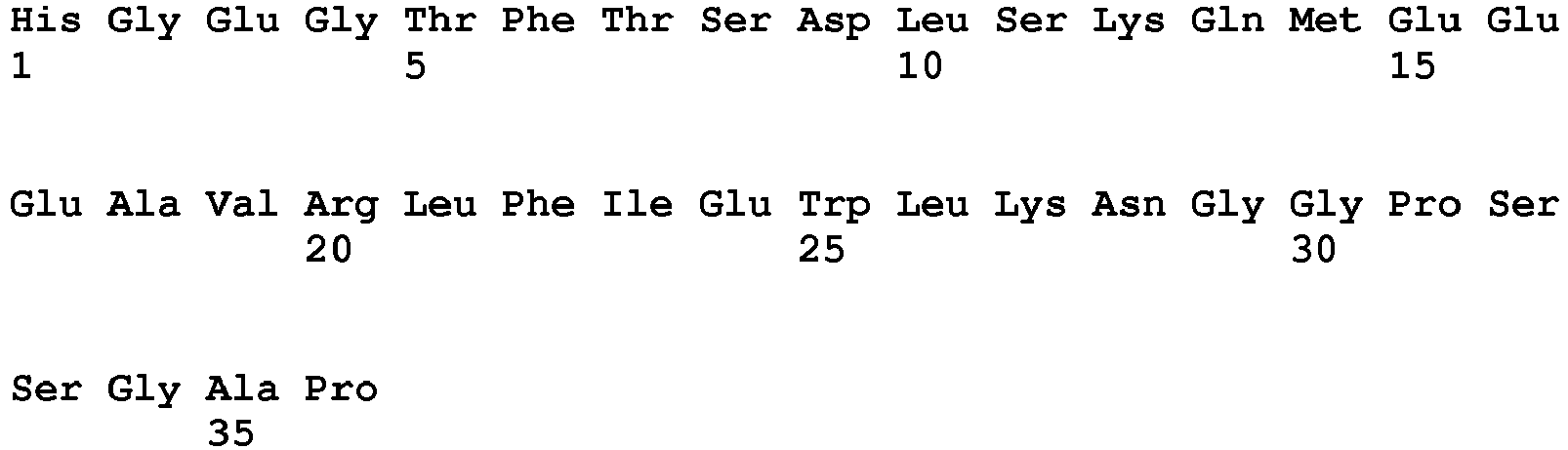
- <210> 25
<211> 37
<212> PRT
<213> Unknown - <220>
<223> Exendin-4 (1-37) - <400> 25


- <210> 26
<211> 38
<212> PRT
<213> Unknown - <220>
<223> Exendin-4 (1-38) - <400> 26

- <210> 27
<211> 31
<212> PRT
<213> Artificial Sequence - <220>
<223> Human recombinant Exendin-4 (9-39) - <400> 27

- <210> 28
<211> 23
<212> PRT
<213> Artificial Sequence - <220>
<223> Human recombinant Exendin-4 (9-31) - <400> 28

- <210> 29
<211> 46
<212> PRT
<213> Unknown - <220>
<223> Exendin-4-ELP sequence with N-terminal Tev cleavage site - <400> 29

- <210> 30
<211> 58
<212> PRT
<213> Unknown - <220>
<223> Exendin-4-ELP sequence with DsbA leader sequence - <400> 30

- <210> 31
<211> 31
<212> PRT
<213> Unknown - <220>
<223> GLP-1 (A8G 7-37) - <400> 31

- <210> 32
<211> 30
<212> PRT
<213> Unknown - <220>
<223> GLP-1(7-36) - <400> 32

- <210> 33
<211> 30
<212> PRT
<213> Unknown - <220>
<223> GLP-1(7-36) with G atposition 2 - <400> 33

- <210> 34
<211> 38
<212> PRT
<213> Unknown - <220>
<223> GLP-1(A8G 1-37) - <400> 34

- <210> 35
<211> 44
<212> PRT
<213> Unknown - <220>
<223> GLP-1 receptor agonist - <400> 35

- <210> 36
<211> 31
<212> PRT
<213> Unknown - <220>
<223> GLP-1 receptor agonist - <400> 36

- <210> 37
<211> 48
<212> PRT
<213> Unknown - <220>
<223> GLP-1 A8G - <400> 37

- <210> 38
<211> 22
<212> PRT
<213> Unknown - <220>
<223> Exendin-4 (9-30) - <400> 38

- <210> 39
<211> 36
<212> PRT
<213> Artificial Sequence - <220>
<223> Human recombinant apelin-36 - <400> 39

- <210> 40
<211> 642
<212> PRT
<213> Artificial Sequence - <220>
<223> pPE0518-ELP1-120 apelin-36 - <400> 40

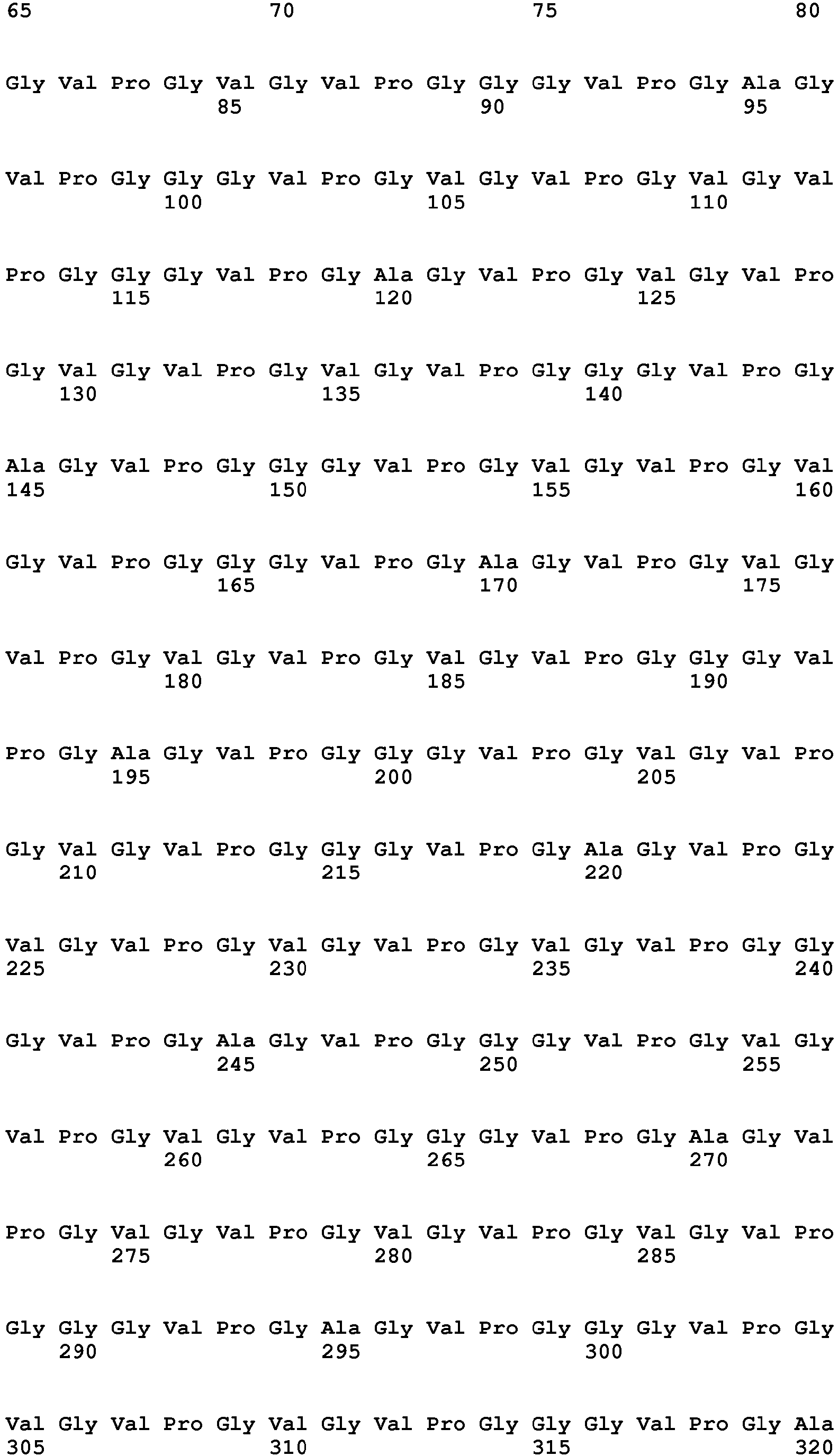


- <210> 41
<211> 17
<212> PRT
<213> Artificial Sequence - <220>
<223> Human recombinant Apelin-17 - <400> 41

- <210> 42
<211> 12
<212> PRT
<213> Artificial Sequence - <220>
<223> Human recombinant Pyr-apelin-13 - <220>
<221> MISC_FEATURE
<222> (1)..()
<223> May be modified with a Pyroglutamate moiety - <400> 42

- <210> 43
<211> 13
<212> PRT
<213> Artificial Sequence - <220>
<223> Human recombinant Apelin-13 - <400> 43

- <210> 44
<211> 12
<212> PRT
<213> Artificial Sequence - <220>
<223> Human recombinant Apelin-12 - <400> 44

- <210> 45
<211> 322
<212> PRT
<213> Artificial Sequence - <220>
<223> Human recombinant arginase - <400> 45


- <210> 46
<211> 927
<212> PRT
<213> Artificial Sequence - <220>
<223> pPE0140-arginase ELP1-120 - <400> 46


- <210> 47
<211> 22
<212> PRT
<213> Artificial Sequence - <220>
<223> Human recombinant CNP22 - <400> 47

- <210> 48
<211> 628
<212> PRT
<213> Artificial Sequence - <220>
<223> ELP1-120 CNP22 fusion - <400> 48


- <210> 49
<211> 37
<212> PRT
<213> Artificial Sequence - <220>
<223> Human recombinant CNP37 - <400> 49


- <210> 50
<211> 643
<212> PRT
<213> Artificial Sequence - <220>
<223> pPE0493-ELP1-120 CNP37 - <400> 50


- <210> 51
<211> 53
<212> PRT
<213> Artificial Sequence - <220>
<223> Human recombinant CNP-53 - <400> 51


- <210> 52
<211> 39
<212> PRT
<213> Artificial Sequence - <220>
<223> Human recombinant CNP-39 - <400> 52

- <210> 53
<211> 31
<212> PRT
<213> Artificial Sequence - <220>
<223> Human recombinant GLP-1 - <400> 53

- <210> 54
<211> 22
<212> PRT
<213> Artificial Sequence - <220>
<223> Human recombinant GLP-1 (9-31) - <400> 54

- <210> 55
<211> 633
<212> PRT
<213> Artificial Sequence - <220>
<223> CNP22 GGS2X ELP1-120 fusion - <400> 55


- <210> 56
<211> 732
<212> PRT
<213> Artificial Sequence - <220>
<223> ELP1-120 pro-CNP - <400> 56


- <210> 57
<211> 643
<212> PRT
<213> Artificial Sequence - <220>
<223> CNP37 ELP1-120 fusion - <400> 57


- <210> 58
<211> 628
<212> PRT
<213> Artificial Sequence - <220>
<223> pPE0497-Exendin-4 (9-31)-ELP1-120 - <400> 58

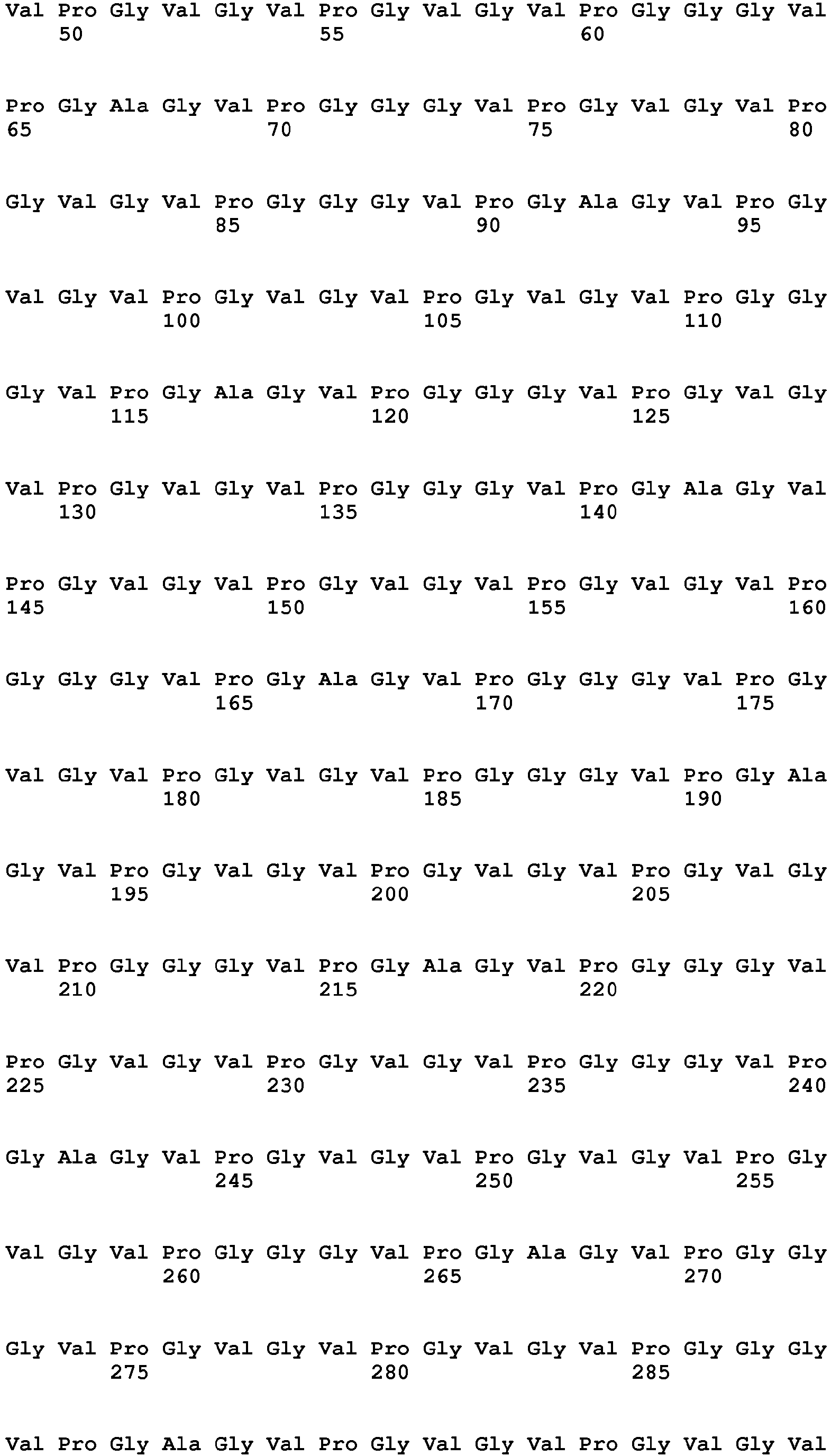


- <210> 59
<211> 636
<212> PRT
<213> Artificial Sequence - <220>
<223> pPE0496-Exendin-4 (9-39) ELP1-120 - <400> 59


- <210> 60
<211> 22
<212> PRT
<213> Artificial Sequence - <220>
<223> Human recombinant Exendin-4 (9-30) - <400> 60

- <210> 61
<211> 24
<212> PRT
<213> Artificial Sequence - <220>
<223> Human recombinant M-Exendin-4 (9-31) - <400> 61

- <210> 62
<211> 32
<212> PRT
<213> Artificial Sequence - <220>
<223> Human recombinant M-Exendin-4 (9-39) - <400> 62

- <210> 63
<211> 23
<212> PRT
<213> Artificial Sequence - <220>
<223> Human recombinant M-Exendin-4 (9-30) - <400> 63

- <210> 64
<211> 21
<212> PRT
<213> Artificial Sequence - <220>
<223> Human recombinant GLP-1 (9-29) - <400> 64

- <210> 65
<211> 31
<212> PRT
<213> Artificial Sequence - <220>
<223> Human recombinant GLP-1-exendin-4 - <400> 65

- <210> 66
<211> 22
<212> PRT
<213> Artificial Sequence - <220>
<223> Human recombinant Jant-4 (9-30) - <400> 66


- <210> 67
<211> 31
<212> PRT
<213> Artificial Sequence - <220>
<223> Human recombinant Jant-4 (9-39) - <400> 67

- <210> 68
<211> 33
<212> PRT
<213> Artificial Sequence - <220>
<223> Human recombinant GLP-2 - <400> 68

- <210> 69
<211> 638
<212> PRT
<213> Artificial Sequence - <220>
<223> pPE0527-GLP-2-ELP1-120 - <400> 69


- <210> 70
<211> 33
<212> PRT
<213> Artificial Sequence - <220>
<223> Human recombinant GLP-2(A2G) - <400> 70
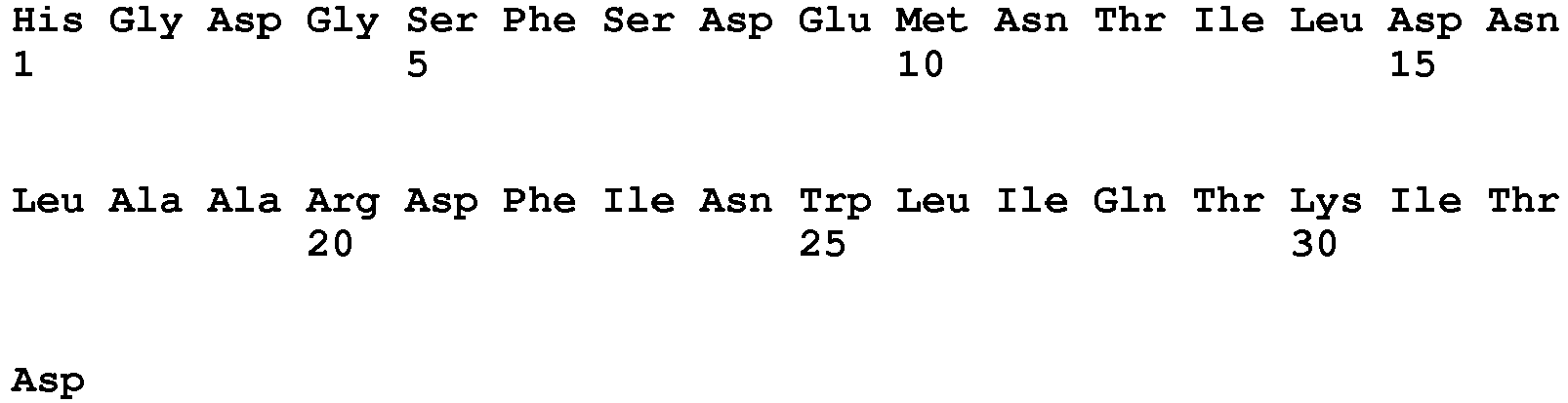
- <210> 71
<211> 638
<212> PRT
<213> Artificial Sequence - <220>
<223> pPE0503-GLP-2(A2G)-ELP1-120 - <400> 71


- <210> 72
<211> 39
<212> PRT
<213> Artificial Sequence - <220>
<223> Human recombinant GLP-2(A2G)-(GGS)2x linker - <400> 72
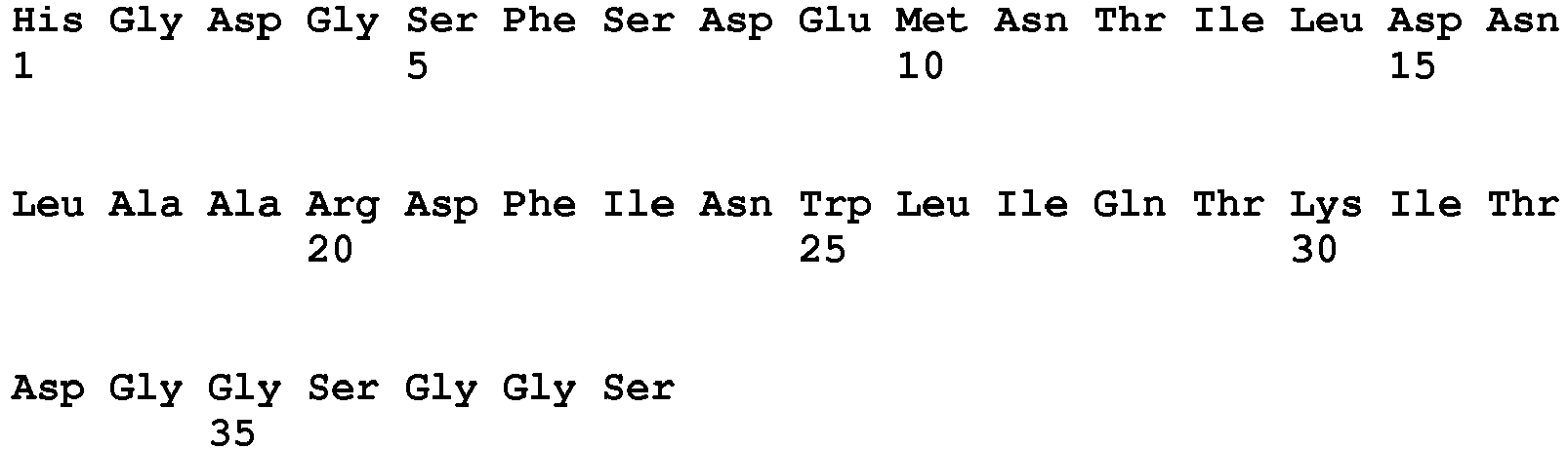
- <210> 73
<211> 644
<212> PRT
<213> Artificial Sequence - <220>
<223> pPE0526 GLP-2(A2G)-(GGS)2x linker ELP1-120 - <400> 73


- <210> 74
<211> 33
<212> PRT
<213> Artificial Sequence - <220>
<223> Human recombinant GLP-2-consensus - <220>
<221> MISC_FEATURE
<222> (2)..(2)
<223> Xaa may be Ala, Gly, Leu, Ile or Val - <400> 74

- <210> 75
<211> 25
<212> PRT
<213> Artificial Sequence - <220>
<223> Human recombinant hepcidin - <400> 75

- <210> 76
<211> 631
<212> PRT
<213> Artificial Sequence - <220>
<223> pPE0479 ELP1-120 hepcidin - <400> 76


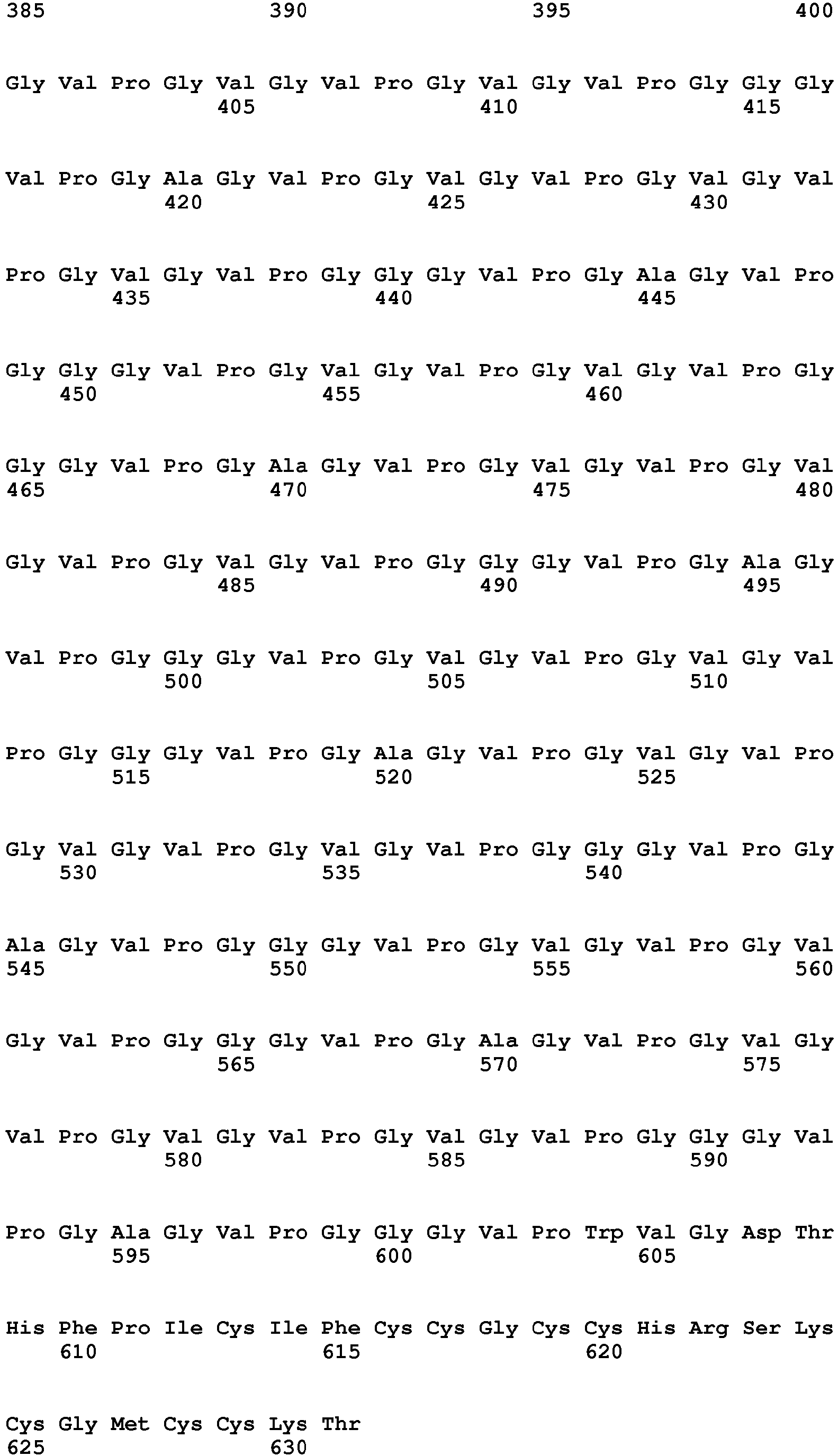
- <210> 77
<211> 630
<212> PRT
<213> Artificial Sequence - <220>
<223> pPE0487 hepcidin ELP1-120 - <400> 77
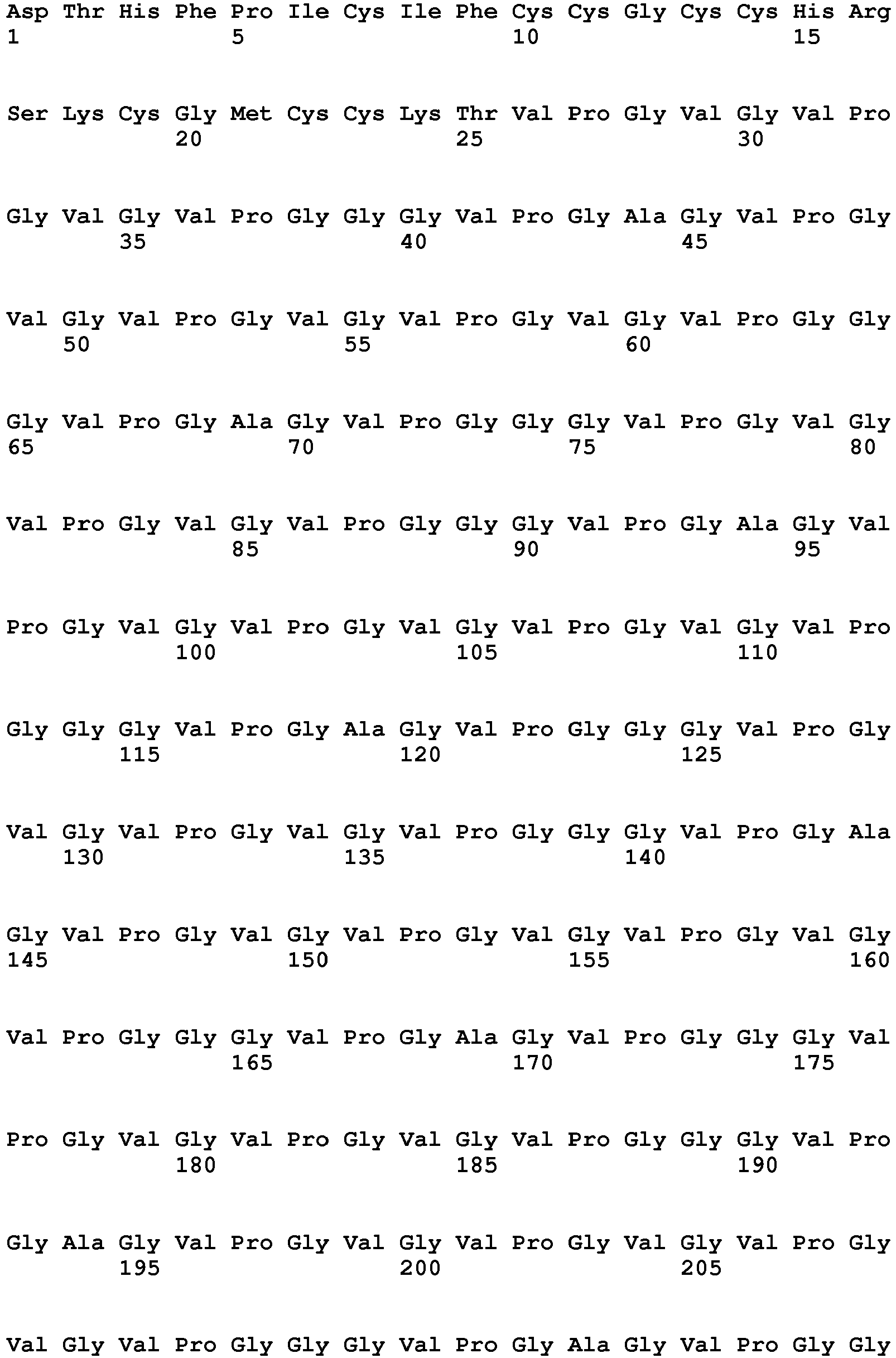


- <210> 78
<211> 70
<212> PRT
<213> Artificial Sequence - <220>
<223> Human recombinant IGF-1 - <400> 78

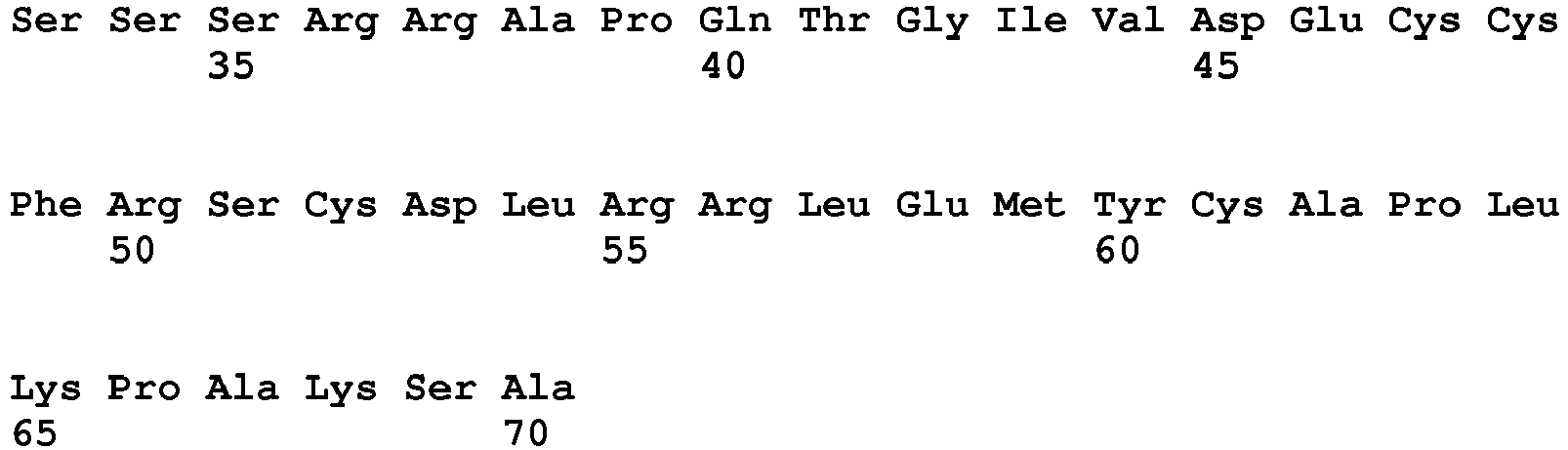
- <210> 79
<211> 675
<212> PRT
<213> Artificial Sequence - <220>
<223> pPE0410 IGF-1 ELP1-120 - <400> 79


- <210> 80
<211> 800
<212> PRT
<213> Artificial Sequence - <220>
<223> pPE0413 IGF-1 ELPbetav2 144mer - <400> 80


- <210> 81
<211> 1935
<212> DNA
<213> Artificial Sequence - <220>
<223> ELP1-120 CNP37 fusion - <400> 81


- <210> 82
<211> 1935
<212> DNA
<213> Artificial Sequence - <220>
<223> CNP37 ELP1-120 fusion - <400> 82


- <210> 83
<211> 648
<212> PRT
<213> Artificial Sequence - <220>
<223> CNP37 GGS2x ELP1-120 fusion - <400> 83


- <210> 84
<211> 32
<212> PRT
<213> Artificial Sequence - <220>
<223> Human recombinant urodilatin - <400> 84

- <210> 85
<211> 637
<212> PRT
<213> Artificial Sequence - <220>
<223> pPE0483 urodilatin ELP1-120 - <400> 85


- <210> 86
<211> 638
<212> PRT
<213> Artificial Sequence - <220>
<223> pPE0484 ELP1-120 urodilatin - <400> 86

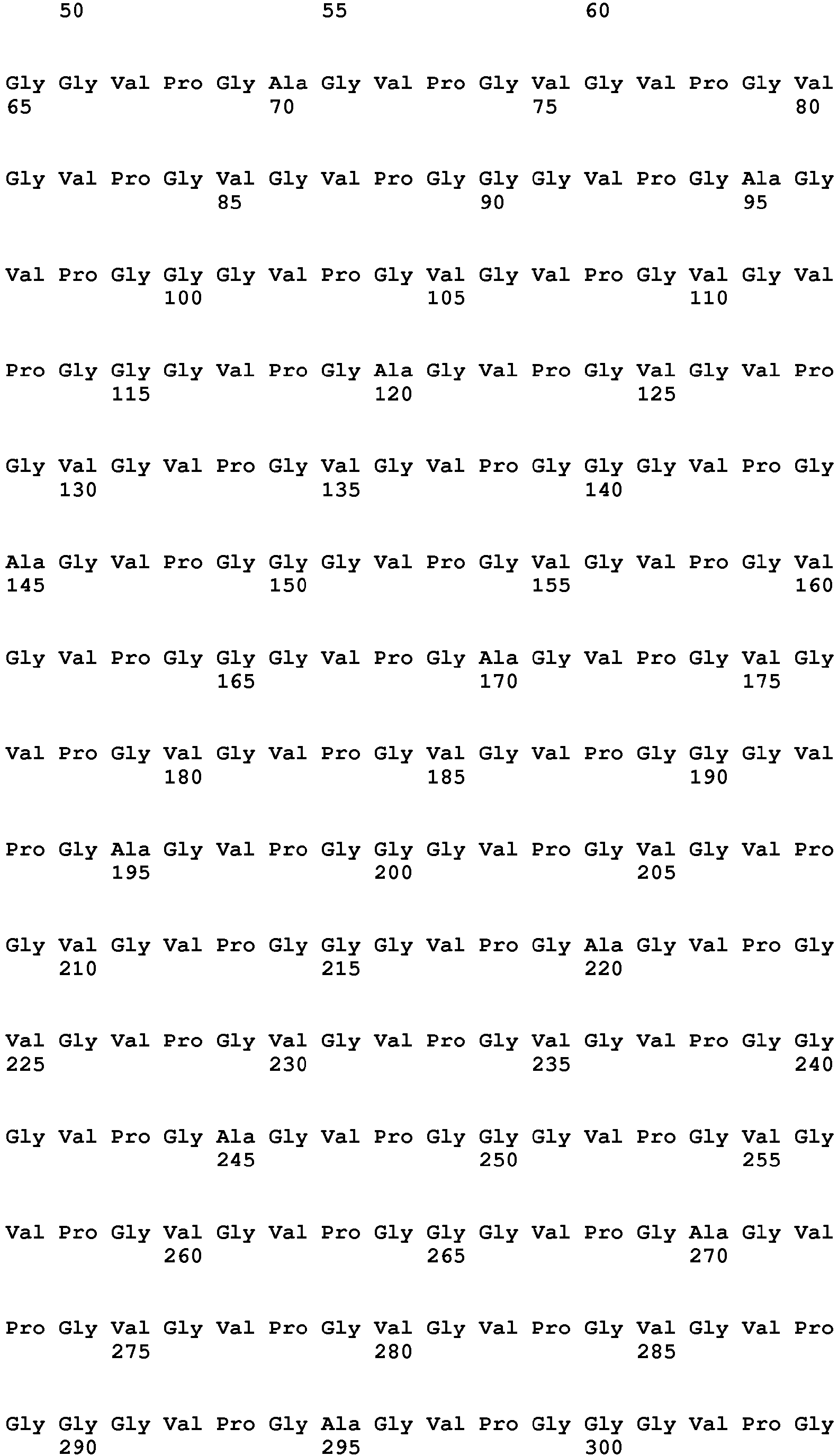


- <210> 87
<211> 3
<212> PRT
<213> Artificial Sequence - <220>
<223> GGS tripeptide - <400> 87

- <210> 88
<211> 9
<212> PRT
<213> Artificial Sequence - <220>
<223> Hepcidin (1-9) - <400> 88

- <210> 89
<211> 43
<212> PRT
<213> Artificial Sequence - <220>
<223>Thymosin beta 4 - <400> 89


- <210> 90
<211> 648
<212> PRT
<213> Artificial Sequence - <220>
<223>pPE0320 thymosin beta 4 ELP1-120 - <400> 90

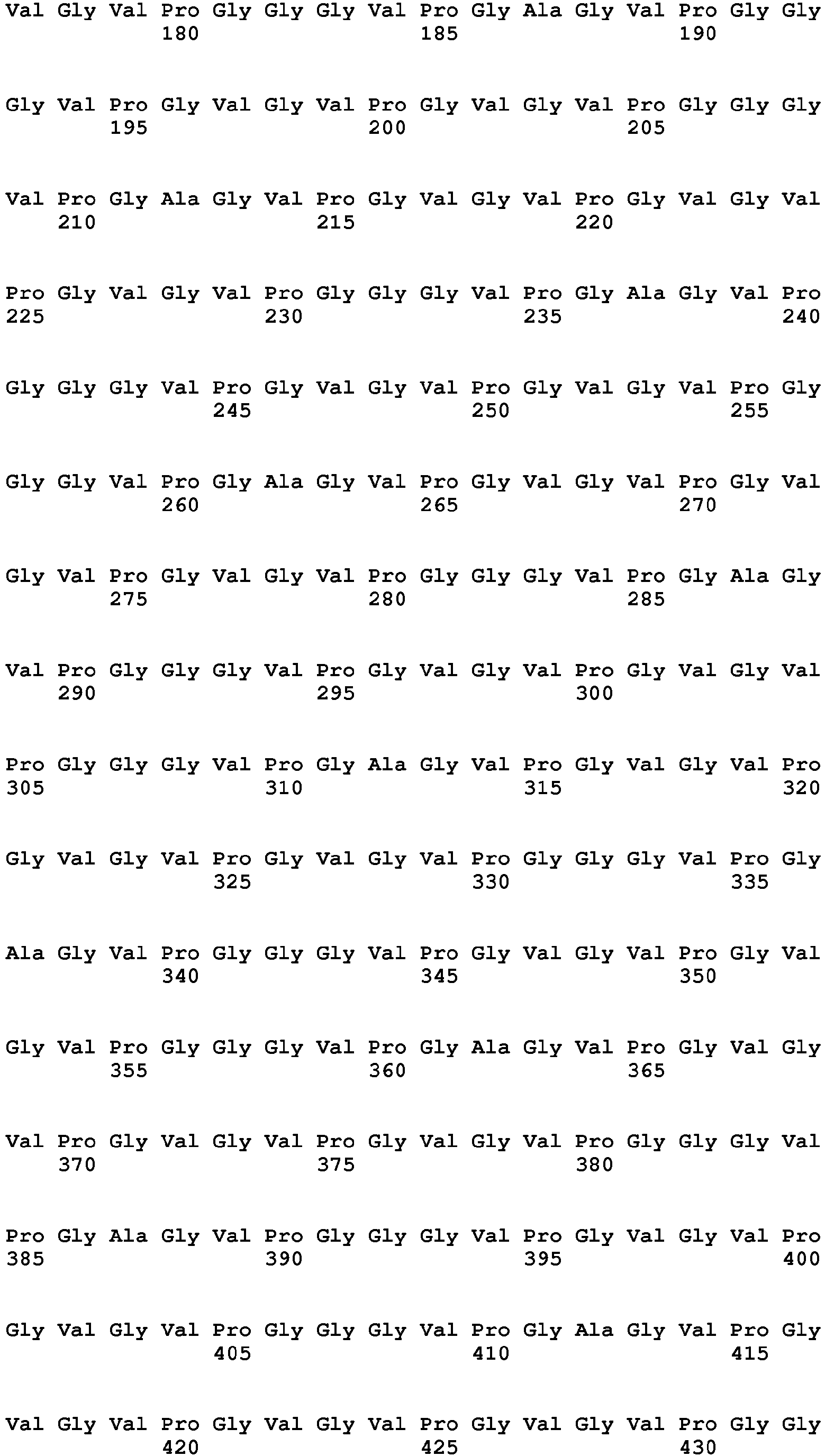

- <210> 91
<211> 168
<212> PRT
<213> Artificial Sequence - <220>
<223> TRAIL - <400> 91

- <210> 92
<211> 777
<212> PRT
<213> Artificial Sequence - <220>
<223> pPE0141 ELP1-120 TRAIL - <400> 92


- <210> 93
<211> 5
<212> PRT
<213> Artificial Sequence - <220>
<223> GGGGS linker - <400> 93

- <210> 94
<211> 5
<212> PRT
<213> Artificial Sequence - <220>
<223> PAPAP linker - <400> 94

- <210> 95
<211> 5
<212> PRT
<213> Artificial Sequence - <220>
<223> EAAAK linker - <400> 95

- <210> 96
<211> 1950
<212> DNA
<213> Artificial Sequence - <220>
<223> CNP37 GGS2x ELP1-120 fusion - <400> 96


- <210> 97
<211> 1890
<212> DNA
<213> Artificial Sequence - <220>
<223> ELP1-120 CNP22 fusion - <400> 97


- <210> 98
<211> 628
<212> PRT
<213> Artificial Sequence - <220>
<223> CNP22 ELP1-120 fusion - <400> 98


- <210> 99
<211> 1890
<212> DNA
<213> Artificial Sequence - <220>
<223> CNP ELP1-120 fusion - <400> 99


- <210> 100
<211> 1905
<212> DNA
<213> Artificial Sequence - <220>
<223> CNP22 GGS2X ELP1-120 fusion - <400> 100
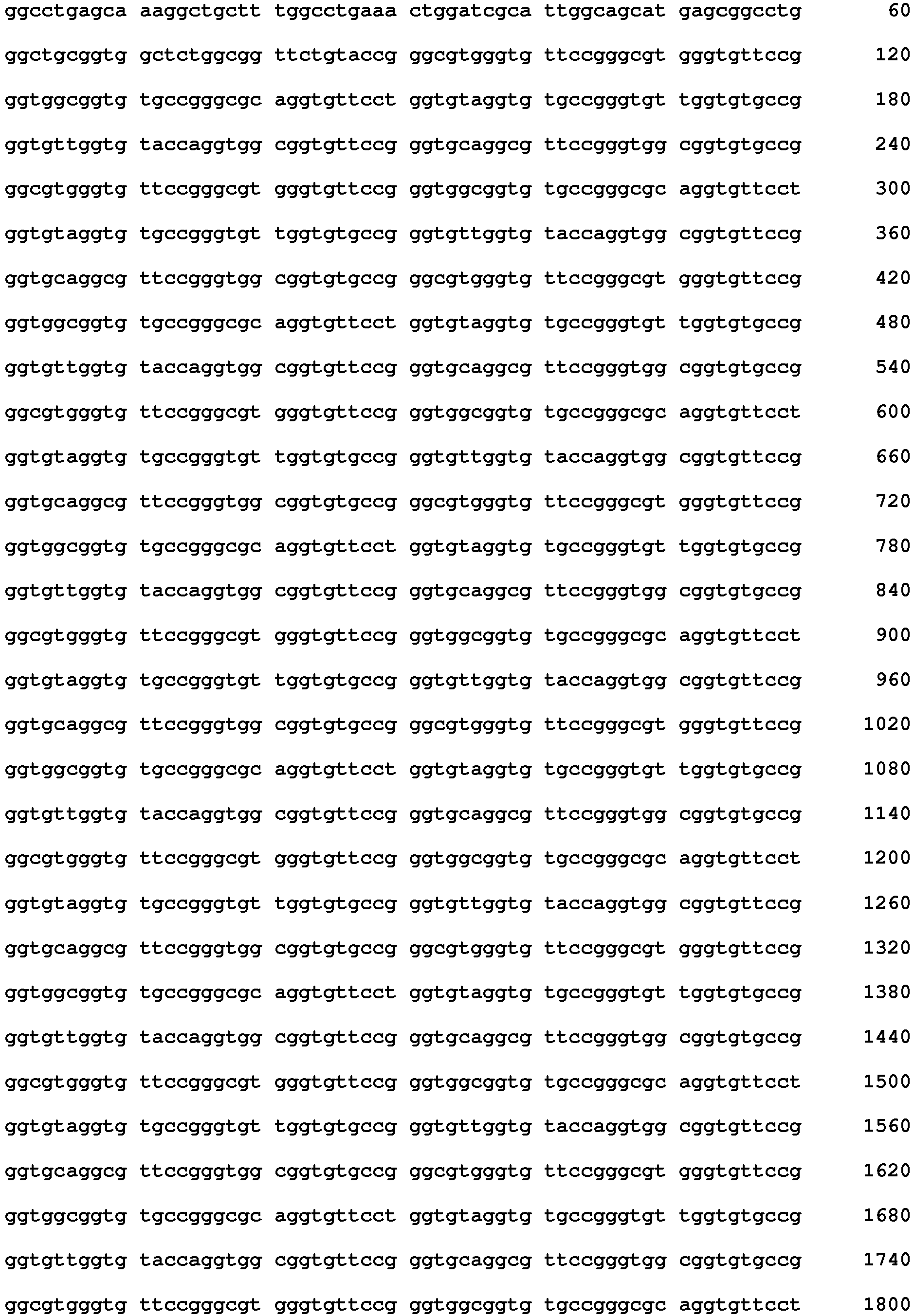

- <210> 101
<211> 1920
<212> DNA
<213> Artificial Sequence - <220>
<223> GLP-2 ELP1-120 fusion - <400> 101


- <210> 102
<211> 6
<212> PRT
<213> Artificial Sequence - <220>
<223> GGS 2X - <400> 102

- <210> 103
<211> 9
<212> PRT
<213> Artificial Sequence - <220>
<223> GGS 3X - <400> 103

- <210> 104
<211> 10
<212> PRT
<213> Artificial Sequence - <220>
<223> GGGGS 2X - <400> 104

- <210> 105
<211> 15
<212> PRT
<213> Artificial Sequence - <220>
<223> GGGGS 3X - <400> 105

- <210> 106
<211> 10
<212> PRT
<213> Artificial Sequence - <220>
<223> PAPAP 2X - <400> 106

- <210> 107
<211> 15
<212> PRT
<213> Artificial Sequence - <220>
<223> PAPAP 3X - <400> 107

- <210> 108
<211> 10
<212> PRT
<213> Artificial Sequence - <220>
<223> EAAAK 2X - <400> 108

- <210> 109
<211> 15
<212> PRT
<213> Artificial Sequence - <220>
<223> EAAAK 3X - <400> 109

- <210> 110
<211> 209
<212> PRT
<213> Artificial Sequence - <220>
<223> FGF21 - <400> 110

- <210> 111
<211> 663
<212> PRT
<213> Artificial Sequence - <220>
<223> CNP53 CatK ELP1-120 fusion PE9446 - <400> 111


- <210> 112
<211> 1989
<212> DNA
<213> Artificial Sequence - <220>
<223> CNP53 CatK ELP1-120 fusion PE9446 - <400> 112

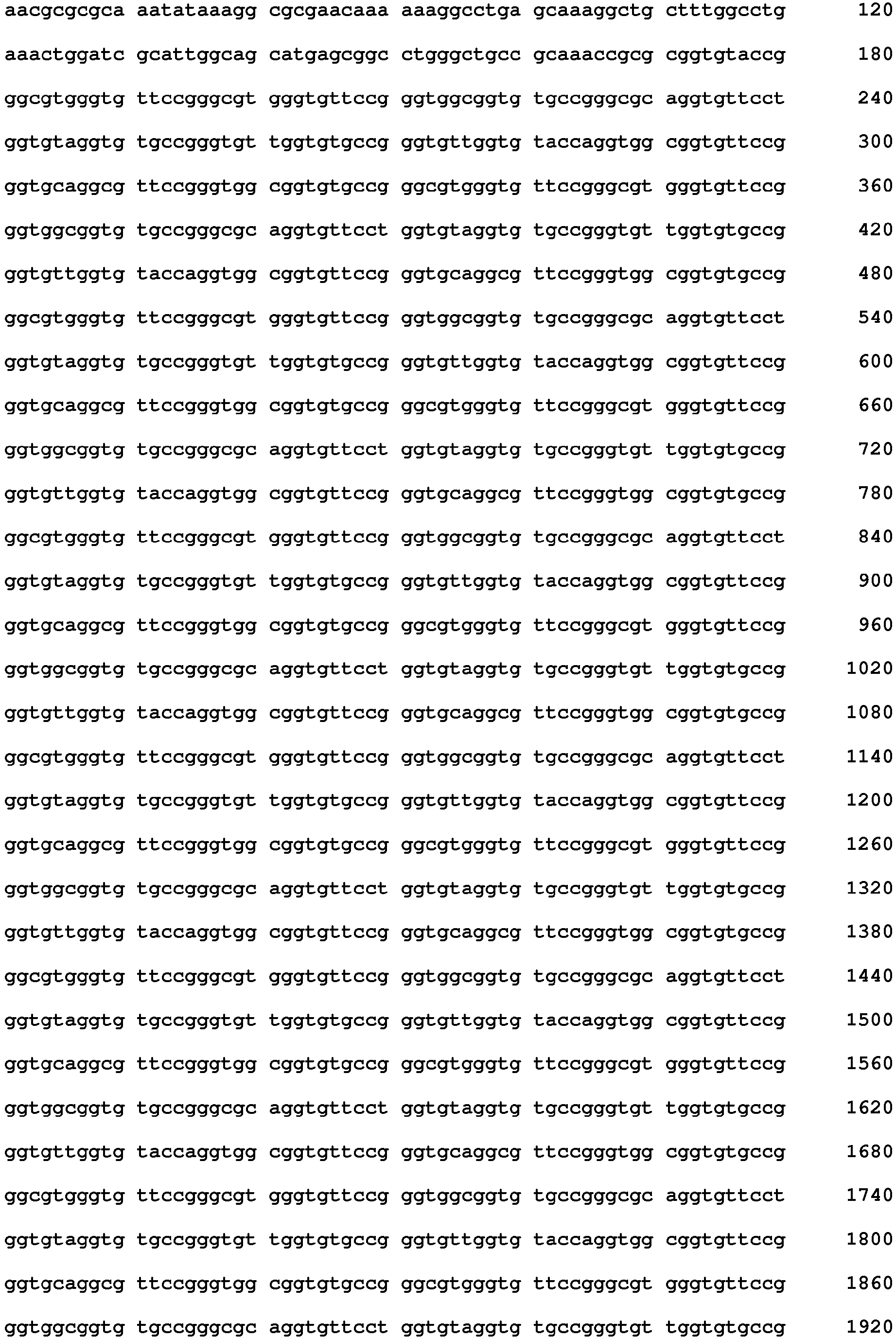

- <210> 113
<211> 632
<212> PRT
<213> Artificial Sequence - <220>
<223> CNP22 CatK ELP1-120 fusion PE9456 - <400> 113


- <210> 114
<211> 1896
<212> DNA
<213> Artificial Sequence - <220>
<223> CNP22 CatK ELP1-120 fusion PE9456 - <400> 114


- <210> 115
<211> 648
<212> PRT
<213> Artificial Sequence - <220>
<223> ELP1-120 CatK CNP37 fusion PE9486 - <400> 115


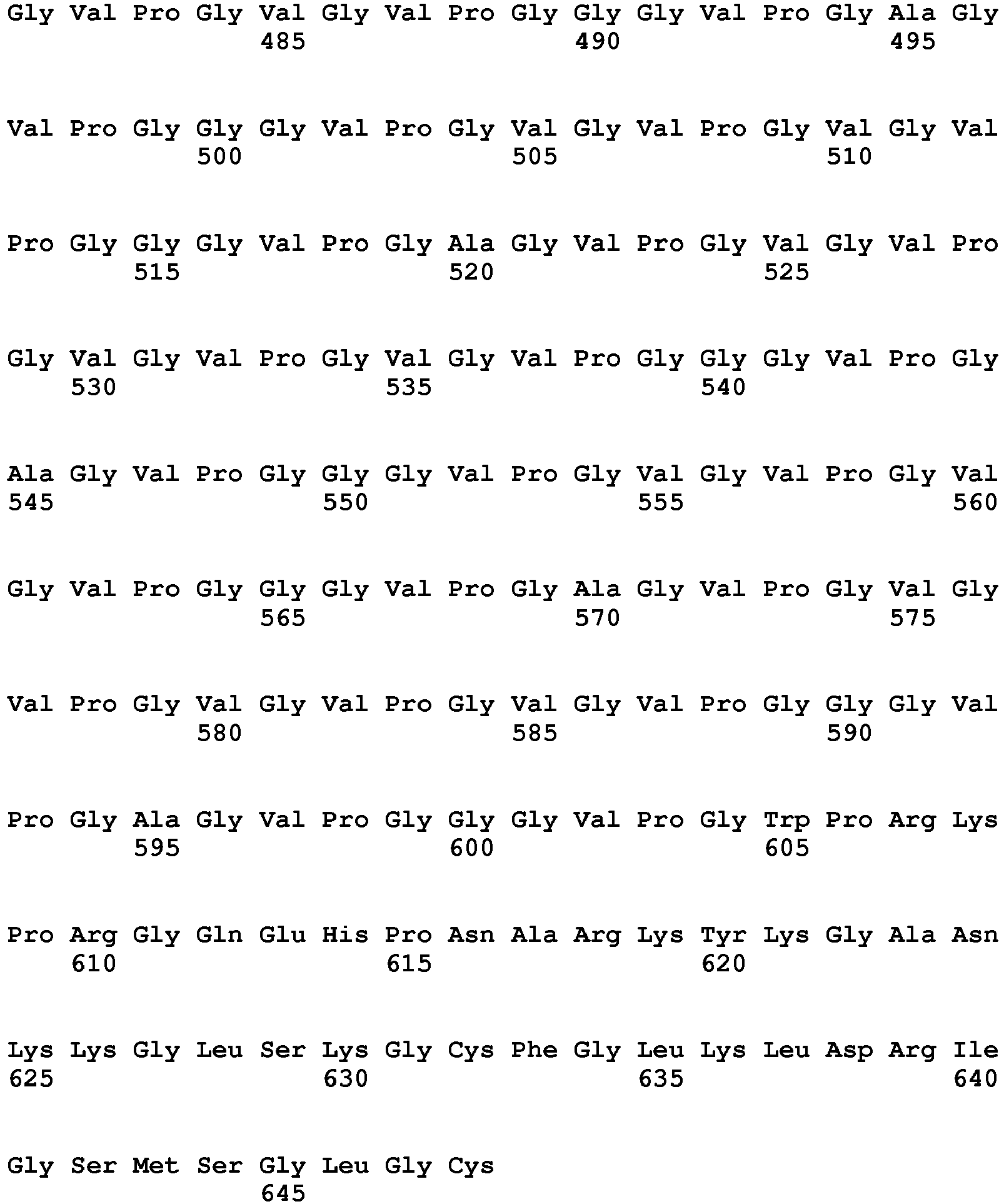
- <210> 116
<211> 1945
<212> DNA
<213> Artificial Sequence - <220>
<223> ELP1-120 CatK CNP37 fusion PE9486 - <400> 116


- <210> 117
<211> 664
<212> PRT
<213> Artificial Sequence - <220>
<223> ELP1-120 CatK CNP53 fusion PE9496 - <400> 117


- <210> 118
<211> 1993
<212> DNA
<213> Artificial Sequence - <220>
<223> ELP1-120 CatK CNP53 fusion PE9496 - <400> 118


- <210> 119
<211> 633
<212> PRT
<213> Artificial Sequence - <220>
<223> ELP1-120 CatK CNP22 fusion PE9506 - <400> 119


- <210> 120
<211> 1900
<212> DNA
<213> Artificial Sequence - <220>
<223> ELP1-120 CatK CNP22 fusion PE9506 - <400> 120


- <210> 121
<211> 647
<212> PRT
<213> Artificial Sequence - <220>
<223> CNP37 Fxa ELP1-120 fusion PE9206 - <400> 121
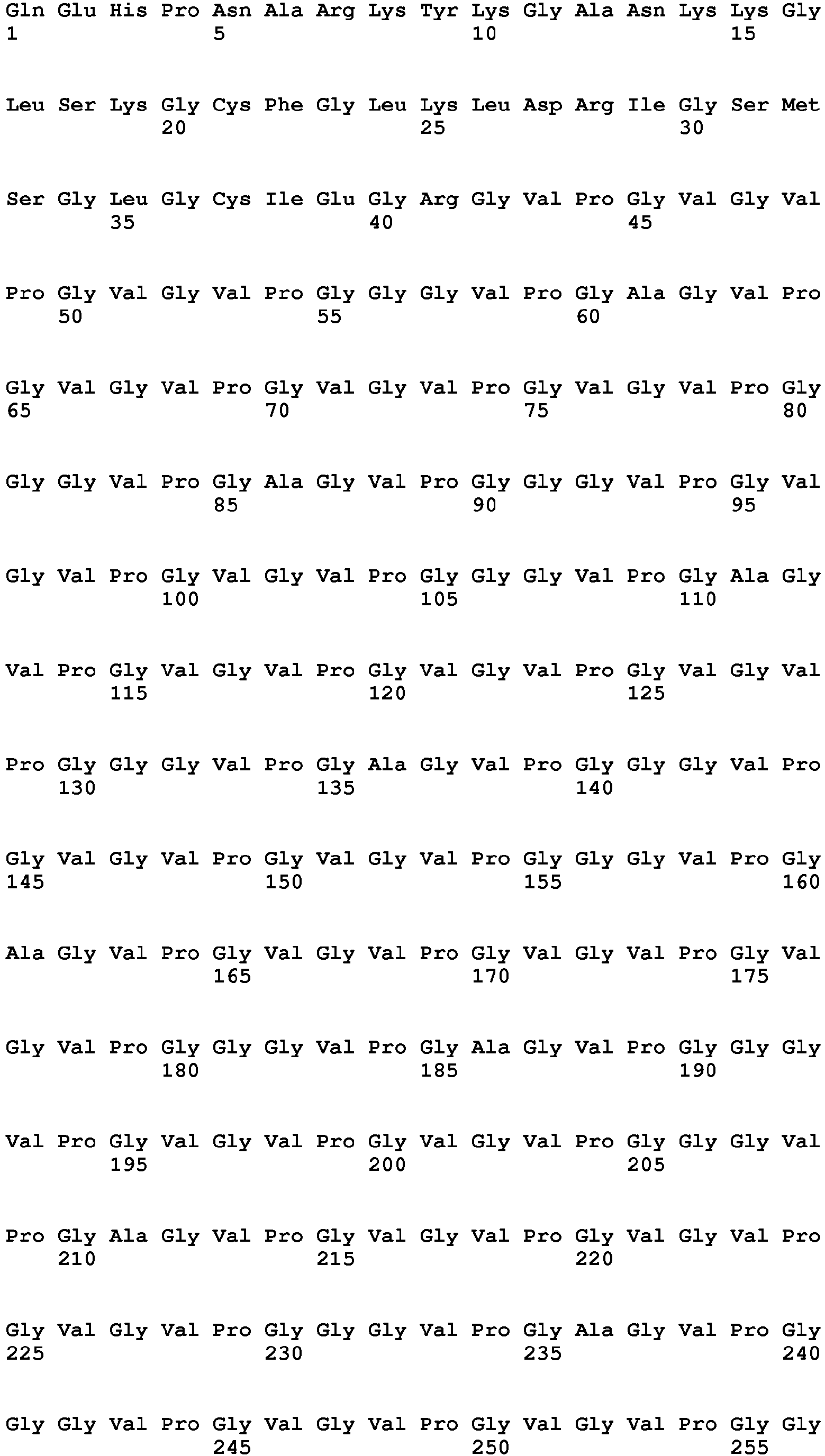

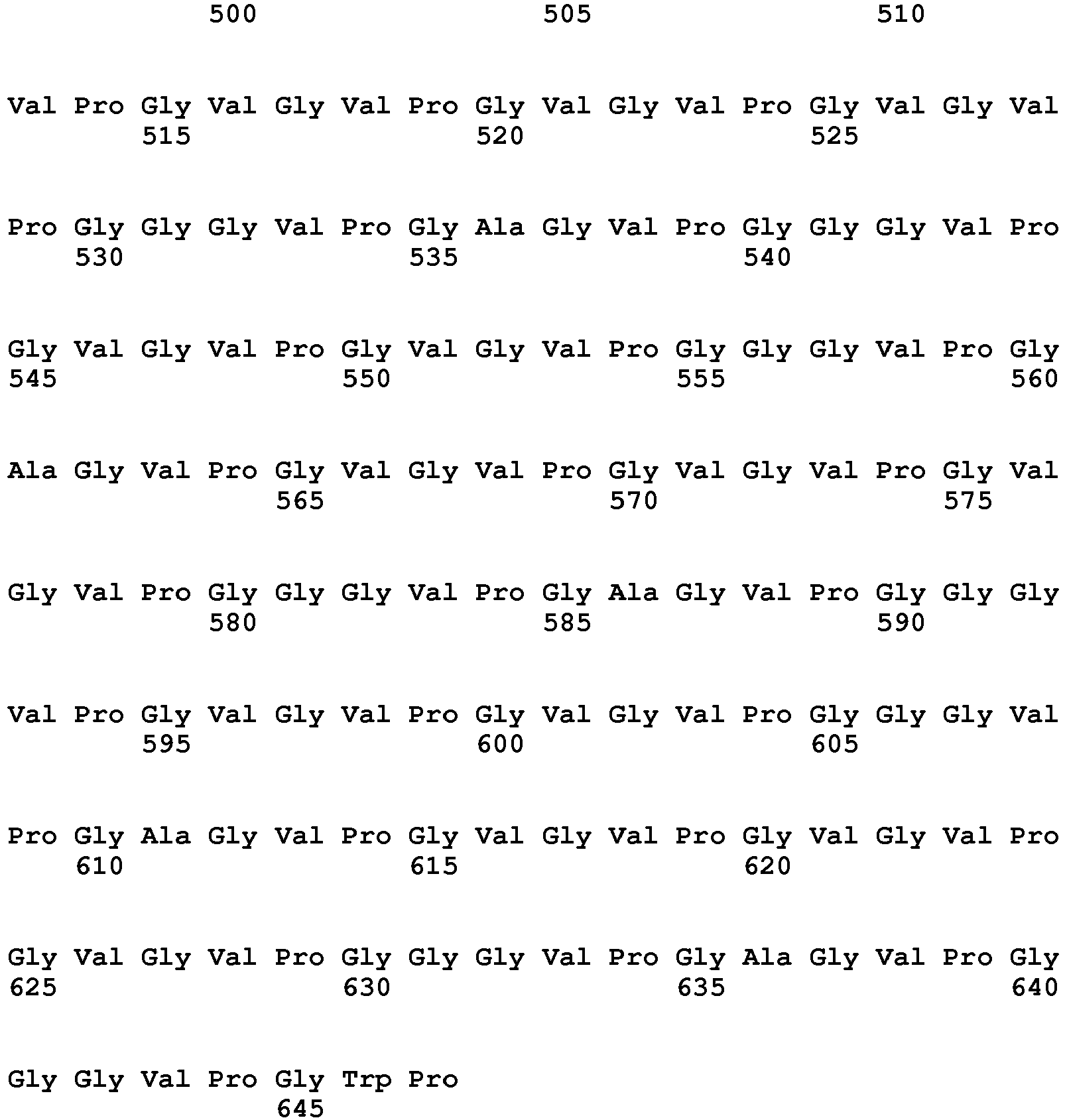
- <210> 122
<211> 1941
<212> DNA
<213> Artificial Sequence - <220>
<223> CNP37 Fxa ELP1-120 fusion PE9206 - <400> 122

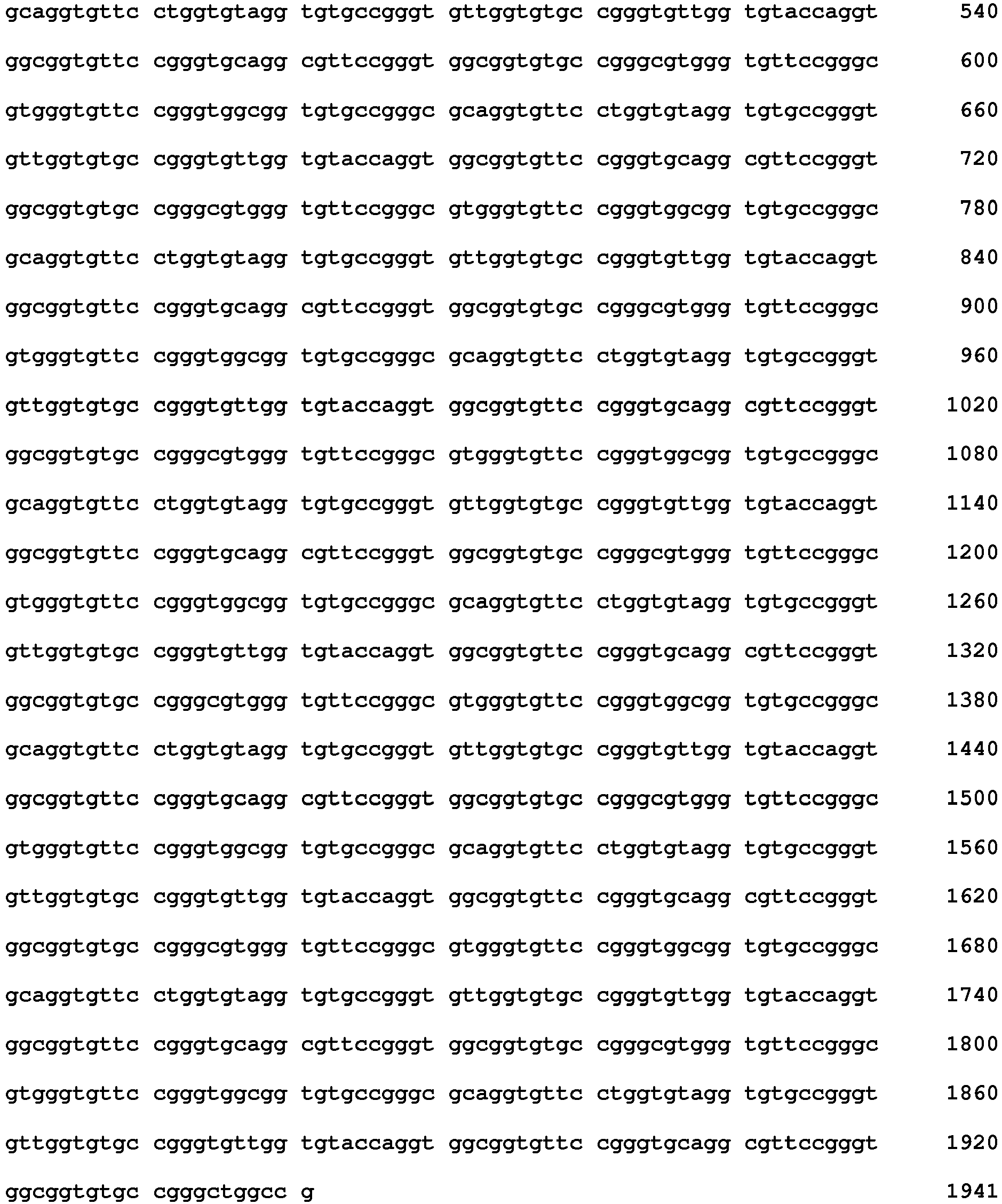
- <210> 123
<211> 649
<212> PRT
<213> Artificial Sequence - <220>
<223> CNP37 thrombin ELP1-120 fusion PE9216 - <400> 123


- <210> 124
<211> 1947
<212> DNA
<213> Artificial Sequence - <220>
<223> CNP37 thrombin ELP1-120 fusion PE9216 - <400> 124


- <210> 125
<211> 647
<212> PRT
<213> Artificial Sequence - <220>
<223> CNP37 CatK ELP1-120 fusion PE9306 - <400> 125


- <210> 126
<211> 1941
<212> DNA
<213> Artificial Sequence - <220>
<223> CNP37 CatK ELP1-120 fusion PE9306 - <400> 126


- <210> 127
<211> 647
<212> PRT
<213> Artificial Sequence - <220>
<223> CNP37 CatK ELP1-120 fusion PE9316 - <400> 127



- <210> 128
<211> 1941
<212> DNA
<213> Artificial Sequence - <220>
<223> CNP37 CatK ELP1-120 fusion PE9316 - <400> 128


- <210> 129
<211> 649
<212> PRT
<213> Artificial Sequence - <220>
<223> CNP37 MMP ELP1-120 fusion PE09326 - <400> 129


- <210> 130
<211> 1947
<212> DNA
<213> Artificial Sequence - <220>
<223> CNP37 MMP ELP1-120 fusion PE09326 - <400> 130

- <210> 131
<211> 787
<212> PRT
<213> Artificial Sequence - <220>
<223> ELP1-120 FGF21 fusion PE9183 - <400> 131


- <210> 132
<211> 2361
<212> DNA
<213> Artificial Sequence - <220>
<223> ELP1-120 FGF21 fusion PE9183 - <400> 132


- <210> 133
<211> 817
<212> PRT
<213> Artificial Sequence - <220>
<223> GLP1 ELP1-120 FGF21 dual fusion PE9193 - <400> 133


- <210> 134
<211> 2451
<212> DNA
<213> Artificial Sequence - <220>
<223> GLP1 ELP1-120 FGF21 dual fusion PE9193 - <400> 134


Claims (18)
- A sustained release pharmaceutical formulation comprising:a therapeutic agent for systemic administration, the therapeutic agent comprising a protein active agent and at least 60 elastin-like peptide (ELP) structural units of SEQ ID NO: 3, andwherein the protein active agent is a Glucagon-like peptide (GLP)-2 receptor agonist comprising the amino acid sequence of SEQ ID NO: 70 .
- The pharmaceutical formulation of claim 1, wherein each X is selected from V, G, and A.
- The pharmaceutical formulation of claim 1 or claim 2, wherein the formulation provides slow absorption from an injection site upon administration.
- The pharmaceutical formulation of claim 1 or claim 2, wherein the formulation provides a flat PK profile upon administration, as compared to the PK profile for the active agent in the absence of the amino acid sequence forming a reversible matrix,
optionally wherein the PK profile has a low peak to trough (Cmax to Cmin) and delayed or late Tmax. - The pharmaceutical formulation of any one of claims 1 to 4, wherein a reversible matrix formed at body temperature reverses as protein concentration decreases.
- The pharmaceutical formulation of claim 2, wherein the ratio of V:G:A is 5:3:2.
- The pharmaceutical formulation of any one of claims 1 to 6, wherein the subject is human or a non-human mammal.
- The pharmaceutical formulation of any one of the preceding claims, wherein the therapeutic agent is a recombinant fusion protein between the protein active agent and ELP.
- The pharmaceutical formulation of any one of the preceding claims, wherein the protein active agent has a circulatory half-life in the range of from about 30 seconds to about 10 hours, or about 30 seconds to about 1 hour.
- The pharmaceutical formulation of any one of claims 1 to 7 and 9, wherein the therapeutic agent is a chemical conjugate between the protein active agent and ELP.
- The pharmaceutical formulation of any one of claims 1 to 10, wherein the therapeutic agent is present in the range of 0.5 mg/mL to 200 mg/mL, optionally 30 mg/mL to 150 mg/mL, 50 mg/mL to 125 mg/mL, or 75 mg/mL to 110 mg/mL, optionally wherein the therapeutic agent is present in the amount of 100 mg/mL.
- The pharmaceutical composition of any one of claims 1 to 11, wherein the therapeutic agent does not form a phase-transitioned matrix at storage conditions.
- The pharmaceutical composition of claim 12, wherein the storage conditions are less than 40°C, or less than 37°C, less than 30°C, less than 27°C, less than 25°C, less than 0°C, less than -15°C, or less than -60°C,
optionally wherein the formulation is stable for more than 1 month at the storage conditions, optionally wherein the formulation is stable for more than about 1 month at a temperature selected from the group consisting of:a. 25°C;b. 2°C;c. 8°C;d. -15°C; ande. -80°C. - The pharmaceutical formulation of any of claims 1-13, wherein the formulation comprises two or more of calcium chloride, magnesium chloride, potassium chloride, potassium phosphate monobasic, sodium chloride, polysorbate 20, polysorbate 80, sodium phosphate, sodium phosphate monobasic, histidine, and sodium phosphate dibasic,optionally wherein the formulation comprises sodium phosphate, sodium chloride and polysorbate 20,optionally wherein the formulation comprises 10 mM sodium phosphate, 110 mM sodium chloride, and 0.1% polysorbate 20, orwherein the formulation comprises sodium chloride and histidine.
- The pharmaceutical formulation of any one of claims 1 to 14, wherein the formulation is packaged in the form of pre-dosed pens or syringes for administration about once per week, about twice per week, or from one to eight times per month.
- The formulation of any one of claims 1 to 15 for use as a medicament,optionally wherein the therapeutic agent is administered to a subject about 1 to about 8 times per month, optionally wherein the formulation is administered about weekly,optionally wherein the formulation is administered subcutaneously or intramuscularly,optionally wherein the site of administration is not a pathological site.
- The pharmaceutical formulation of claim 1, wherein the therapeutic agent is a polypeptide comprising the amino acid sequence of SEQ ID NO: 71.
- The pharmaceutical formulation of any one of claims 8-9 and 11-15 or the formulation for use according to claim 16, wherein the ELP is fused to the C terminus or the N terminus of the protein active agent.
Priority Applications (1)
| Application Number | Priority Date | Filing Date | Title |
|---|---|---|---|
| EP21211498.7A EP4043010A1 (en) | 2016-05-06 | 2017-05-01 | Elp fusion proteins for controlled and sustained release |
Applications Claiming Priority (3)
| Application Number | Priority Date | Filing Date | Title |
|---|---|---|---|
| US201662332803P | 2016-05-06 | 2016-05-06 | |
| US201762442057P | 2017-01-04 | 2017-01-04 | |
| PCT/US2017/030403 WO2017192449A1 (en) | 2016-05-06 | 2017-05-01 | Elp fusion proteins for controlled and sustained release |
Related Child Applications (1)
| Application Number | Title | Priority Date | Filing Date |
|---|---|---|---|
| EP21211498.7A Division EP4043010A1 (en) | 2016-05-06 | 2017-05-01 | Elp fusion proteins for controlled and sustained release |
Publications (3)
| Publication Number | Publication Date |
|---|---|
| EP3452021A1 EP3452021A1 (en) | 2019-03-13 |
| EP3452021A4 EP3452021A4 (en) | 2020-01-15 |
| EP3452021B1 true EP3452021B1 (en) | 2021-12-29 |
Family
ID=60203242
Family Applications (2)
| Application Number | Title | Priority Date | Filing Date |
|---|---|---|---|
| EP21211498.7A Pending EP4043010A1 (en) | 2016-05-06 | 2017-05-01 | Elp fusion proteins for controlled and sustained release |
| EP17793073.2A Active EP3452021B1 (en) | 2016-05-06 | 2017-05-01 | Elp fusion proteins for controlled and sustained release |
Family Applications Before (1)
| Application Number | Title | Priority Date | Filing Date |
|---|---|---|---|
| EP21211498.7A Pending EP4043010A1 (en) | 2016-05-06 | 2017-05-01 | Elp fusion proteins for controlled and sustained release |
Country Status (11)
| Country | Link |
|---|---|
| US (2) | US20190218274A1 (en) |
| EP (2) | EP4043010A1 (en) |
| JP (1) | JP7050003B2 (en) |
| KR (2) | KR102646323B1 (en) |
| CN (3) | CN118078955A (en) |
| AU (2) | AU2017261216B2 (en) |
| BR (1) | BR112018072783A2 (en) |
| CA (1) | CA3021644A1 (en) |
| ES (1) | ES2909074T3 (en) |
| MX (1) | MX2018013546A (en) |
| WO (1) | WO2017192449A1 (en) |
Families Citing this family (30)
| Publication number | Priority date | Publication date | Assignee | Title |
|---|---|---|---|---|
| US11458205B2 (en) | 2015-08-04 | 2022-10-04 | Duke University | Genetically encoded intrinsically disordered stealth polymers for delivery and methods of using same |
| US11752213B2 (en) | 2015-12-21 | 2023-09-12 | Duke University | Surfaces having reduced non-specific binding and antigenicity |
| WO2017210476A1 (en) | 2016-06-01 | 2017-12-07 | Duke University | Nonfouling biosensors |
| EP3512868A4 (en) | 2016-09-14 | 2020-04-15 | Duke University | TRIBLOCK POLYPEPTIDE-BASED NANOPARTICLES FOR DELIVERING HYDROPHILIC MEDICINAL PRODUCTS |
| KR20190064600A (en) | 2016-09-23 | 2019-06-10 | 듀크 유니버시티 | Unstructured non-repetitive polypeptides with LCST behavior |
| US11648200B2 (en) | 2017-01-12 | 2023-05-16 | Duke University | Genetically encoded lipid-polypeptide hybrid biomaterials that exhibit temperature triggered hierarchical self-assembly |
| WO2018213320A1 (en) | 2017-05-15 | 2018-11-22 | Duke University | Recombinant production of hybrid lipid-biopolymer materials that self-assemble and encapsulate agents |
| EP3658168A4 (en) | 2017-06-30 | 2021-07-14 | Duke University | ORDER AND DISORDER AS A DESIGN PRINCIPLE FOR STIMULUS SENSITIVE BIOPOLYMER NETWORKS |
| TWI878212B (en) * | 2017-12-05 | 2025-04-01 | 瑞典商伊梅爾迪卡製藥公司 | Method and composition for treating arginase 1 deficiency |
| WO2019147954A1 (en) | 2018-01-26 | 2019-08-01 | Duke University | Albumin binding peptide-drug (aibiped) conjugates and methods of making and using same |
| WO2019213150A1 (en) | 2018-04-30 | 2019-11-07 | Duke University | Stimuli-responsive peg-like polymer-based drug delivery platform |
| CN112513099A (en) * | 2018-05-31 | 2021-03-16 | 香港理工大学 | Compositions and uses of arginine depleting agents for cancer, obesity, metabolic disorders and related complications and complications |
| EP3829622A4 (en) * | 2018-08-02 | 2022-05-11 | Duke University | DUAL AGONIST FUSION PROTEINS |
| WO2020051541A1 (en) | 2018-09-07 | 2020-03-12 | Duke University | Nanoparticulate drug delivery systems |
| WO2020081994A1 (en) | 2018-10-19 | 2020-04-23 | Aerase, Inc. | Arginine depletion therapy for treatment of gamt deficiency |
| SG11202111312UA (en) | 2019-06-14 | 2021-12-30 | Zealand Pharma As | Pharmaceutical parenteral composition of dual glp1/2 agonist |
| US11512314B2 (en) | 2019-07-12 | 2022-11-29 | Duke University | Amphiphilic polynucleotides |
| WO2021030196A1 (en) * | 2019-08-09 | 2021-02-18 | Phasebio Pharmaceuticals, Inc. | Elp fusion proteins comprising parathyroid hormone for controlled and sustained release |
| BR112022003633A2 (en) | 2019-08-30 | 2022-06-07 | Aeglea Biotherapeutics Inc | Methods for producing recombinant human arginase 1 and uses thereof |
| WO2021202546A1 (en) | 2020-03-31 | 2021-10-07 | Cyclerion Therapeutics, Inc. | Early drug interventions to reduce covid-19 related respiratory distress, need for ventilator assistance and death |
| CN115697375A (en) * | 2020-04-03 | 2023-02-03 | 韩美药品株式会社 | Pharmaceutical composition comprising GLP-2 derivatives or long-acting conjugates thereof for the prevention or treatment of mucositis induced by radiotherapy, chemotherapy or a combination thereof |
| CN113735977A (en) * | 2020-05-28 | 2021-12-03 | 江苏康缘瑞翱生物医药科技有限公司 | rhFGF21 fusion protein, polynucleotide for coding same, composition containing same and application thereof |
| WO2022195629A1 (en) * | 2021-03-18 | 2022-09-22 | National Institute Of Pharmaceutical Education And Research (Niper) | Engineered arginase constructs, method of generation and uses thereof |
| CN113583142A (en) * | 2021-08-20 | 2021-11-02 | 赣江中药创新中心 | Double-target fusion protein, coding gene, vector or host cell and application and expression and purification method thereof |
| WO2023041758A1 (en) * | 2021-09-20 | 2023-03-23 | Kyon Biotech Ag | Arginase-insulin fusion protein |
| CN115850503B (en) * | 2022-07-15 | 2023-09-08 | 赣江中药创新中心 | Double-target fusion protein and preparation method and application thereof |
| CN116617409A (en) * | 2023-04-06 | 2023-08-22 | 北京大学 | A kind of ASP-ELP that reduces immunogen and enhances anti-tumor effect and its preparation method and application |
| CN118027180A (en) * | 2024-01-12 | 2024-05-14 | 天津大学 | Recombinant elastin and its preparation method and application |
| CN119405830B (en) * | 2024-09-19 | 2025-09-05 | 北京大学 | A nanoantibody conjugate and its preparation method and application |
| CN119390817A (en) * | 2024-10-14 | 2025-02-07 | 华南理工大学 | A programmable multi-modified long-acting sustained-release elastin-like ELP carrier and its application |
Family Cites Families (48)
| Publication number | Priority date | Publication date | Assignee | Title |
|---|---|---|---|---|
| US6018030A (en) | 1986-11-04 | 2000-01-25 | Protein Polymer Technologies, Inc. | Peptides comprising repetitive units of amino acids and DNA sequences encoding the same |
| US5766883A (en) | 1989-04-29 | 1998-06-16 | Delta Biotechnology Limited | Polypeptides |
| US5428014A (en) * | 1993-08-13 | 1995-06-27 | Zymogenetics, Inc. | Transglutaminase cross-linkable polypeptides and methods relating thereto |
| ES2181054T3 (en) * | 1996-12-06 | 2003-02-16 | Amgen Inc | USE OF PROTEIN PRODUCT (S) KGF AND PROTEIN PRODUCT (S) GLP-2 FOR THE PREPARATION OF A MEDICINAL PRODUCT. |
| EP1100529B2 (en) * | 1998-07-30 | 2010-08-25 | The Government of the United States of America, as repres. by the Secretary of Health and Human Services, Nat. Inst. of Health | Thymosin beta 4 promotes wound repair |
| US6429197B1 (en) * | 1998-10-08 | 2002-08-06 | Bionebraska, Inc. | Metabolic intervention with GLP-1 or its biologically active analogues to improve the function of the ischemic and reperfused brain |
| AU2495200A (en) * | 1999-03-08 | 2000-09-28 | Genentech Inc. | Compositions and methods for the treatment of tumor |
| WO2000056774A1 (en) | 1999-03-19 | 2000-09-28 | Duke University | Methods of using bioelastomers |
| GB9930882D0 (en) * | 1999-12-30 | 2000-02-23 | Nps Allelix Corp | GLP-2 formulations |
| US6852834B2 (en) | 2000-03-20 | 2005-02-08 | Ashutosh Chilkoti | Fusion peptides isolatable by phase transition |
| US20050255554A1 (en) | 2000-03-20 | 2005-11-17 | Ashutosh Chilkoti | Fusion peptides isolatable by phase transition |
| US7186683B2 (en) * | 2000-09-18 | 2007-03-06 | Sanos Bioscience A/S | Use of GLP for the treatment, prevention, diagnosis, and prognosis of bone-related and nutrition-related disorders |
| US7176278B2 (en) | 2001-08-30 | 2007-02-13 | Biorexis Technology, Inc. | Modified transferrin fusion proteins |
| CA2841097A1 (en) | 2001-12-21 | 2003-07-24 | Human Genome Sciences, Inc. | Albumin and g-csf fusion proteins |
| DE602004027798D1 (en) * | 2003-03-12 | 2010-08-05 | Univ Arizona State | METHOD FOR REGULATING ANGIOGENESIS WITH APELIN COMPOSITIONS |
| EP1520861A1 (en) * | 2003-09-11 | 2005-04-06 | Aventis Pharma Deutschland GmbH | Test system for the identification of APJ receptor ligands |
| US7723063B2 (en) * | 2004-04-28 | 2010-05-25 | Intrinsic Lifesciences | Methods for measuring levels of bioactive human hepcidin |
| AU2006203882B2 (en) * | 2005-01-07 | 2011-05-12 | Regeneron Pharmaceuticals, Inc. | IGF-1 fusion polypeptides and therapeutic uses thereof |
| EP3725299A1 (en) | 2005-06-24 | 2020-10-21 | Duke University | A direct drug delivery system based on thermally responsive biopolymers |
| US7846445B2 (en) | 2005-09-27 | 2010-12-07 | Amunix Operating, Inc. | Methods for production of unstructured recombinant polymers and uses thereof |
| US20130172274A1 (en) | 2005-12-20 | 2013-07-04 | Duke University | Methods and compositions for delivering active agents with enhanced pharmacological properties |
| US8841255B2 (en) | 2005-12-20 | 2014-09-23 | Duke University | Therapeutic agents comprising fusions of vasoactive intestinal peptide and elastic peptides |
| EP1971355B1 (en) | 2005-12-20 | 2020-03-11 | Duke University | Methods and compositions for delivering active agents with enhanced pharmacological properties |
| US7709227B2 (en) | 2006-01-04 | 2010-05-04 | Phasebio Pharmaceuticals, Inc. | Multimeric ELP fusion constructs |
| CN101578373A (en) | 2006-09-06 | 2009-11-11 | 费斯生物制药公司 | Fusion peptide therapeutic compositions |
| US7508326B2 (en) | 2006-12-21 | 2009-03-24 | Sigmatel, Inc. | Automatically disabling input/output signal processing based on the required multimedia format |
| US8563521B2 (en) | 2007-06-21 | 2013-10-22 | Technische Universitat Munchen | Biological active proteins having increased in vivo and/or in vitro stability |
| US20110207673A1 (en) | 2007-11-20 | 2011-08-25 | Ashutosh Chilkoti | Methods and compositions for modulating drug-polymer architecture, pharmacokinetics and biodistribution |
| AR069409A1 (en) * | 2007-11-21 | 2010-01-20 | Biomarin Pharm Inc | VARIANTS OF NATURAL PEPTIDES OF TYPE C |
| US20110065633A1 (en) * | 2008-01-30 | 2011-03-17 | Indiana University Research And Technology Corporation | Ester-based peptide prodrugs |
| PT2277890E (en) * | 2008-05-23 | 2016-03-31 | Daiichi Sankyo Co Ltd | Peptide capable of extending half-life of peptide of interest in plasma |
| US20110245173A1 (en) * | 2008-06-03 | 2011-10-06 | Bachovchin William W | Long-Acting GLP-1 Derivatives, and Methods of Treating Cardiac Dysfunction |
| CN105727261A (en) | 2008-06-27 | 2016-07-06 | 杜克大学 | Therapeutic agents comprising elastic peptides |
| US20100316623A1 (en) * | 2009-04-23 | 2010-12-16 | Andrew Turner | Phenylalanine hydroxylase fusion protein and methods for treating phenylketonuria |
| IN2012DN02120A (en) | 2009-08-14 | 2015-08-21 | Phasebio Pharmaceuticals Inc | |
| EP3242136B1 (en) * | 2010-04-06 | 2021-05-19 | Fertility Lab Sciences, LLC | Secretome profile-facilitated in vitro fertilization |
| US8628961B2 (en) * | 2010-05-18 | 2014-01-14 | Tufts University | Small molecule antagonists of phosphatidylinositol-3,4,5-triphosphate (PIP3) and uses thereof |
| AU2011274474B2 (en) * | 2010-07-09 | 2015-06-18 | Dana-Farber Cancer Institute, Inc. | Stabilized insulinotropic peptides and methods of use |
| JP6055779B2 (en) * | 2010-12-27 | 2016-12-27 | アレクシオン ファーマシューティカルズ, インコーポレイテッド | Composition comprising natriuretic peptide and method of use thereof |
| WO2012154368A1 (en) * | 2011-04-13 | 2012-11-15 | The Trustees Of Columbia University In The City Of New York | Precipatable peptipes |
| US20130084277A1 (en) | 2011-08-24 | 2013-04-04 | Phasebio Pharmaceuticals, Inc. | Formulations of active agents for sustained release |
| KR20140084201A (en) * | 2011-10-19 | 2014-07-04 | 알렉시온 파마 홀딩 | Compositions comprising alkaline phosphatase and/or natriuretic peptide and methods of use thereof |
| MX2014006391A (en) * | 2011-11-28 | 2014-09-22 | Phasebio Pharmaceuticals Inc | Therapeutic agents comprising insulin amino acid sequences. |
| EP2817025A2 (en) * | 2012-02-08 | 2014-12-31 | Seneb Biosciences, Inc. | Treatment of hypoglycemia |
| CN102703459A (en) * | 2012-06-20 | 2012-10-03 | 中国农业大学 | Exendin9-39 gene and method for preparing polypeptide of Exendin9-39 gene |
| US9605186B2 (en) | 2012-09-19 | 2017-03-28 | Exxonmobil Chemical Patents Inc. | Adhesive compositions of ethylene-based and propylene-based polymers |
| US20150290328A1 (en) * | 2012-11-20 | 2015-10-15 | Phasebio Pharmaceuticals, Inc. | Formulations of active agents for sustained release |
| EP2945643A4 (en) | 2013-01-15 | 2017-04-26 | Phasebio Pharmaceuticals, Inc. | Therapeutic agents, compositions, and methods for glycemic control |
-
2017
- 2017-05-01 KR KR1020227033044A patent/KR102646323B1/en active Active
- 2017-05-01 CN CN202410108811.7A patent/CN118078955A/en active Pending
- 2017-05-01 CN CN201780037549.XA patent/CN109310641A/en active Pending
- 2017-05-01 CA CA3021644A patent/CA3021644A1/en active Pending
- 2017-05-01 BR BR112018072783-0A patent/BR112018072783A2/en not_active IP Right Cessation
- 2017-05-01 ES ES17793073T patent/ES2909074T3/en active Active
- 2017-05-01 US US16/099,261 patent/US20190218274A1/en not_active Abandoned
- 2017-05-01 MX MX2018013546A patent/MX2018013546A/en unknown
- 2017-05-01 WO PCT/US2017/030403 patent/WO2017192449A1/en not_active Ceased
- 2017-05-01 KR KR1020187033694A patent/KR102449167B1/en active Active
- 2017-05-01 JP JP2018557415A patent/JP7050003B2/en active Active
- 2017-05-01 CN CN202410110892.4A patent/CN118078956A/en active Pending
- 2017-05-01 EP EP21211498.7A patent/EP4043010A1/en active Pending
- 2017-05-01 EP EP17793073.2A patent/EP3452021B1/en active Active
- 2017-05-01 AU AU2017261216A patent/AU2017261216B2/en active Active
-
2023
- 2023-10-23 AU AU2023254863A patent/AU2023254863A1/en active Pending
-
2024
- 2024-01-24 US US18/421,886 patent/US20240294608A1/en active Pending
Non-Patent Citations (1)
| Title |
|---|
| None * |
Also Published As
| Publication number | Publication date |
|---|---|
| KR102646323B1 (en) | 2024-03-13 |
| ES2909074T3 (en) | 2022-05-05 |
| WO2017192449A1 (en) | 2017-11-09 |
| EP3452021A1 (en) | 2019-03-13 |
| MX2018013546A (en) | 2019-04-22 |
| KR20220136469A (en) | 2022-10-07 |
| CN109310641A (en) | 2019-02-05 |
| AU2017261216B2 (en) | 2023-08-03 |
| AU2023254863A1 (en) | 2023-11-30 |
| KR102449167B1 (en) | 2022-09-28 |
| EP4043010A1 (en) | 2022-08-17 |
| BR112018072783A2 (en) | 2019-03-12 |
| CN118078956A (en) | 2024-05-28 |
| US20240294608A1 (en) | 2024-09-05 |
| CN118078955A (en) | 2024-05-28 |
| KR20190005171A (en) | 2019-01-15 |
| CA3021644A1 (en) | 2017-11-09 |
| JP2019514949A (en) | 2019-06-06 |
| AU2017261216A1 (en) | 2018-11-15 |
| US20190218274A1 (en) | 2019-07-18 |
| EP3452021A4 (en) | 2020-01-15 |
| JP7050003B2 (en) | 2022-04-07 |
Similar Documents
| Publication | Publication Date | Title |
|---|---|---|
| US20240294608A1 (en) | Elp fusion proteins for controlled and sustained release | |
| JP7461997B2 (en) | ELP Fusion Proteins for Controlled and Sustained Release | |
| CN102131516B (en) | Therapeutics comprising elastin-like peptides | |
| EP4295858A1 (en) | Formulations of active agents for sustained release | |
| US20150361154A1 (en) | Therapeutic agents, compositions, and methods for glycemic control | |
| JP2014534265A (en) | Therapeutic drugs containing insulin amino acid sequence | |
| WO2021133644A1 (en) | Stapled triazole co-agonists of the glucagon and glp-1 receptors | |
| HK40004623B (en) | Elp fusion proteins for controlled and sustained release | |
| HK40004623A (en) | Elp fusion proteins for controlled and sustained release |
Legal Events
| Date | Code | Title | Description |
|---|---|---|---|
| STAA | Information on the status of an ep patent application or granted ep patent |
Free format text: STATUS: THE INTERNATIONAL PUBLICATION HAS BEEN MADE |
|
| PUAI | Public reference made under article 153(3) epc to a published international application that has entered the european phase |
Free format text: ORIGINAL CODE: 0009012 |
|
| STAA | Information on the status of an ep patent application or granted ep patent |
Free format text: STATUS: REQUEST FOR EXAMINATION WAS MADE |
|
| 17P | Request for examination filed |
Effective date: 20181101 |
|
| AK | Designated contracting states |
Kind code of ref document: A1 Designated state(s): AL AT BE BG CH CY CZ DE DK EE ES FI FR GB GR HR HU IE IS IT LI LT LU LV MC MK MT NL NO PL PT RO RS SE SI SK SM TR |
|
| AX | Request for extension of the european patent |
Extension state: BA ME |
|
| DAV | Request for validation of the european patent (deleted) | ||
| DAX | Request for extension of the european patent (deleted) | ||
| RIC1 | Information provided on ipc code assigned before grant |
Ipc: A61K 47/42 20170101ALI20190916BHEP Ipc: A61K 9/22 20060101AFI20190916BHEP Ipc: A61K 38/00 20060101ALI20190916BHEP |
|
| A4 | Supplementary search report drawn up and despatched |
Effective date: 20191217 |
|
| RIC1 | Information provided on ipc code assigned before grant |
Ipc: A61K 38/00 20060101ALI20191211BHEP Ipc: A61K 9/22 20060101AFI20191211BHEP Ipc: A61K 47/42 20170101ALI20191211BHEP |
|
| REG | Reference to a national code |
Ref country code: HK Ref legal event code: DE Ref document number: 40004623 Country of ref document: HK |
|
| STAA | Information on the status of an ep patent application or granted ep patent |
Free format text: STATUS: EXAMINATION IS IN PROGRESS |
|
| 17Q | First examination report despatched |
Effective date: 20200916 |
|
| GRAP | Despatch of communication of intention to grant a patent |
Free format text: ORIGINAL CODE: EPIDOSNIGR1 |
|
| STAA | Information on the status of an ep patent application or granted ep patent |
Free format text: STATUS: GRANT OF PATENT IS INTENDED |
|
| INTG | Intention to grant announced |
Effective date: 20210730 |
|
| GRAS | Grant fee paid |
Free format text: ORIGINAL CODE: EPIDOSNIGR3 |
|
| GRAA | (expected) grant |
Free format text: ORIGINAL CODE: 0009210 |
|
| STAA | Information on the status of an ep patent application or granted ep patent |
Free format text: STATUS: THE PATENT HAS BEEN GRANTED |
|
| AK | Designated contracting states |
Kind code of ref document: B1 Designated state(s): AL AT BE BG CH CY CZ DE DK EE ES FI FR GB GR HR HU IE IS IT LI LT LU LV MC MK MT NL NO PL PT RO RS SE SI SK SM TR |
|
| REG | Reference to a national code |
Ref country code: GB Ref legal event code: FG4D |
|
| REG | Reference to a national code |
Ref country code: CH Ref legal event code: EP |
|
| REG | Reference to a national code |
Ref country code: AT Ref legal event code: REF Ref document number: 1458167 Country of ref document: AT Kind code of ref document: T Effective date: 20220115 |
|
| REG | Reference to a national code |
Ref country code: IE Ref legal event code: FG4D |
|
| REG | Reference to a national code |
Ref country code: DE Ref legal event code: R096 Ref document number: 602017051632 Country of ref document: DE |
|
| REG | Reference to a national code |
Ref country code: NO Ref legal event code: T2 Effective date: 20211229 |
|
| REG | Reference to a national code |
Ref country code: SE Ref legal event code: TRGR |
|
| REG | Reference to a national code |
Ref country code: LT Ref legal event code: MG9D |
|
| PG25 | Lapsed in a contracting state [announced via postgrant information from national office to epo] |
Ref country code: RS Free format text: LAPSE BECAUSE OF FAILURE TO SUBMIT A TRANSLATION OF THE DESCRIPTION OR TO PAY THE FEE WITHIN THE PRESCRIBED TIME-LIMIT Effective date: 20211229 Ref country code: LT Free format text: LAPSE BECAUSE OF FAILURE TO SUBMIT A TRANSLATION OF THE DESCRIPTION OR TO PAY THE FEE WITHIN THE PRESCRIBED TIME-LIMIT Effective date: 20211229 Ref country code: FI Free format text: LAPSE BECAUSE OF FAILURE TO SUBMIT A TRANSLATION OF THE DESCRIPTION OR TO PAY THE FEE WITHIN THE PRESCRIBED TIME-LIMIT Effective date: 20211229 Ref country code: BG Free format text: LAPSE BECAUSE OF FAILURE TO SUBMIT A TRANSLATION OF THE DESCRIPTION OR TO PAY THE FEE WITHIN THE PRESCRIBED TIME-LIMIT Effective date: 20220329 |
|
| REG | Reference to a national code |
Ref country code: NL Ref legal event code: MP Effective date: 20211229 |
|
| REG | Reference to a national code |
Ref country code: ES Ref legal event code: FG2A Ref document number: 2909074 Country of ref document: ES Kind code of ref document: T3 Effective date: 20220505 |
|
| REG | Reference to a national code |
Ref country code: AT Ref legal event code: MK05 Ref document number: 1458167 Country of ref document: AT Kind code of ref document: T Effective date: 20211229 |
|
| PG25 | Lapsed in a contracting state [announced via postgrant information from national office to epo] |
Ref country code: LV Free format text: LAPSE BECAUSE OF FAILURE TO SUBMIT A TRANSLATION OF THE DESCRIPTION OR TO PAY THE FEE WITHIN THE PRESCRIBED TIME-LIMIT Effective date: 20211229 Ref country code: HR Free format text: LAPSE BECAUSE OF FAILURE TO SUBMIT A TRANSLATION OF THE DESCRIPTION OR TO PAY THE FEE WITHIN THE PRESCRIBED TIME-LIMIT Effective date: 20211229 Ref country code: GR Free format text: LAPSE BECAUSE OF FAILURE TO SUBMIT A TRANSLATION OF THE DESCRIPTION OR TO PAY THE FEE WITHIN THE PRESCRIBED TIME-LIMIT Effective date: 20220330 |
|
| PG25 | Lapsed in a contracting state [announced via postgrant information from national office to epo] |
Ref country code: NL Free format text: LAPSE BECAUSE OF FAILURE TO SUBMIT A TRANSLATION OF THE DESCRIPTION OR TO PAY THE FEE WITHIN THE PRESCRIBED TIME-LIMIT Effective date: 20211229 |
|
| PG25 | Lapsed in a contracting state [announced via postgrant information from national office to epo] |
Ref country code: SM Free format text: LAPSE BECAUSE OF FAILURE TO SUBMIT A TRANSLATION OF THE DESCRIPTION OR TO PAY THE FEE WITHIN THE PRESCRIBED TIME-LIMIT Effective date: 20211229 Ref country code: SK Free format text: LAPSE BECAUSE OF FAILURE TO SUBMIT A TRANSLATION OF THE DESCRIPTION OR TO PAY THE FEE WITHIN THE PRESCRIBED TIME-LIMIT Effective date: 20211229 Ref country code: RO Free format text: LAPSE BECAUSE OF FAILURE TO SUBMIT A TRANSLATION OF THE DESCRIPTION OR TO PAY THE FEE WITHIN THE PRESCRIBED TIME-LIMIT Effective date: 20211229 Ref country code: PT Free format text: LAPSE BECAUSE OF FAILURE TO SUBMIT A TRANSLATION OF THE DESCRIPTION OR TO PAY THE FEE WITHIN THE PRESCRIBED TIME-LIMIT Effective date: 20220429 Ref country code: EE Free format text: LAPSE BECAUSE OF FAILURE TO SUBMIT A TRANSLATION OF THE DESCRIPTION OR TO PAY THE FEE WITHIN THE PRESCRIBED TIME-LIMIT Effective date: 20211229 Ref country code: CZ Free format text: LAPSE BECAUSE OF FAILURE TO SUBMIT A TRANSLATION OF THE DESCRIPTION OR TO PAY THE FEE WITHIN THE PRESCRIBED TIME-LIMIT Effective date: 20211229 |
|
| PG25 | Lapsed in a contracting state [announced via postgrant information from national office to epo] |
Ref country code: PL Free format text: LAPSE BECAUSE OF FAILURE TO SUBMIT A TRANSLATION OF THE DESCRIPTION OR TO PAY THE FEE WITHIN THE PRESCRIBED TIME-LIMIT Effective date: 20211229 Ref country code: AT Free format text: LAPSE BECAUSE OF FAILURE TO SUBMIT A TRANSLATION OF THE DESCRIPTION OR TO PAY THE FEE WITHIN THE PRESCRIBED TIME-LIMIT Effective date: 20211229 |
|
| PG25 | Lapsed in a contracting state [announced via postgrant information from national office to epo] |
Ref country code: IS Free format text: LAPSE BECAUSE OF FAILURE TO SUBMIT A TRANSLATION OF THE DESCRIPTION OR TO PAY THE FEE WITHIN THE PRESCRIBED TIME-LIMIT Effective date: 20220429 |
|
| REG | Reference to a national code |
Ref country code: DE Ref legal event code: R097 Ref document number: 602017051632 Country of ref document: DE |
|
| PG25 | Lapsed in a contracting state [announced via postgrant information from national office to epo] |
Ref country code: DK Free format text: LAPSE BECAUSE OF FAILURE TO SUBMIT A TRANSLATION OF THE DESCRIPTION OR TO PAY THE FEE WITHIN THE PRESCRIBED TIME-LIMIT Effective date: 20211229 Ref country code: AL Free format text: LAPSE BECAUSE OF FAILURE TO SUBMIT A TRANSLATION OF THE DESCRIPTION OR TO PAY THE FEE WITHIN THE PRESCRIBED TIME-LIMIT Effective date: 20211229 |
|
| PLBE | No opposition filed within time limit |
Free format text: ORIGINAL CODE: 0009261 |
|
| STAA | Information on the status of an ep patent application or granted ep patent |
Free format text: STATUS: NO OPPOSITION FILED WITHIN TIME LIMIT |
|
| 26N | No opposition filed |
Effective date: 20220930 |
|
| PG25 | Lapsed in a contracting state [announced via postgrant information from national office to epo] |
Ref country code: MC Free format text: LAPSE BECAUSE OF FAILURE TO SUBMIT A TRANSLATION OF THE DESCRIPTION OR TO PAY THE FEE WITHIN THE PRESCRIBED TIME-LIMIT Effective date: 20211229 Ref country code: LU Free format text: LAPSE BECAUSE OF NON-PAYMENT OF DUE FEES Effective date: 20220501 |
|
| PG25 | Lapsed in a contracting state [announced via postgrant information from national office to epo] |
Ref country code: SI Free format text: LAPSE BECAUSE OF FAILURE TO SUBMIT A TRANSLATION OF THE DESCRIPTION OR TO PAY THE FEE WITHIN THE PRESCRIBED TIME-LIMIT Effective date: 20211229 |
|
| PG25 | Lapsed in a contracting state [announced via postgrant information from national office to epo] |
Ref country code: IE Free format text: LAPSE BECAUSE OF NON-PAYMENT OF DUE FEES Effective date: 20220501 |
|
| REG | Reference to a national code |
Ref country code: GB Ref legal event code: 732E Free format text: REGISTERED BETWEEN 20230727 AND 20230802 |
|
| REG | Reference to a national code |
Ref country code: BE Ref legal event code: PD Owner name: IMMUNOFORGE CO., LTD.; KR Free format text: DETAILS ASSIGNMENT: CHANGE OF OWNER(S), ASSIGNMENT; FORMER OWNER NAME: PHASEBIO PHARMACEUTICALS, INC. Effective date: 20230913 |
|
| REG | Reference to a national code |
Ref country code: NO Ref legal event code: CHAD Owner name: IMMUNOFORGE CO., SEOUL, SOUTH-KOREA |
|
| REG | Reference to a national code |
Ref country code: DE Ref legal event code: R081 Ref document number: 602017051632 Country of ref document: DE Owner name: IMMUNOFORGE CO., LTD., KR Free format text: FORMER OWNER: PHASEBIO PHARMACEUTICALS, INC., MALVERN, PA, US |
|
| REG | Reference to a national code |
Ref country code: CH Ref legal event code: PK Free format text: BERICHTIGUNGEN |
|
| REG | Reference to a national code |
Ref country code: CH Ref legal event code: PK Free format text: BERICHTIGUNGEN |
|
| PG25 | Lapsed in a contracting state [announced via postgrant information from national office to epo] |
Ref country code: HU Free format text: LAPSE BECAUSE OF FAILURE TO SUBMIT A TRANSLATION OF THE DESCRIPTION OR TO PAY THE FEE WITHIN THE PRESCRIBED TIME-LIMIT; INVALID AB INITIO Effective date: 20170501 |
|
| PG25 | Lapsed in a contracting state [announced via postgrant information from national office to epo] |
Ref country code: MK Free format text: LAPSE BECAUSE OF FAILURE TO SUBMIT A TRANSLATION OF THE DESCRIPTION OR TO PAY THE FEE WITHIN THE PRESCRIBED TIME-LIMIT Effective date: 20211229 Ref country code: CY Free format text: LAPSE BECAUSE OF FAILURE TO SUBMIT A TRANSLATION OF THE DESCRIPTION OR TO PAY THE FEE WITHIN THE PRESCRIBED TIME-LIMIT Effective date: 20211229 |
|
| REG | Reference to a national code |
Ref country code: ES Ref legal event code: PC2A Owner name: IMMUNOFORGE CO., LTD. Effective date: 20240624 |
|
| PG25 | Lapsed in a contracting state [announced via postgrant information from national office to epo] |
Ref country code: MT Free format text: LAPSE BECAUSE OF FAILURE TO SUBMIT A TRANSLATION OF THE DESCRIPTION OR TO PAY THE FEE WITHIN THE PRESCRIBED TIME-LIMIT Effective date: 20211229 |
|
| PGFP | Annual fee paid to national office [announced via postgrant information from national office to epo] |
Ref country code: NO Payment date: 20250509 Year of fee payment: 9 |
|
| PGFP | Annual fee paid to national office [announced via postgrant information from national office to epo] |
Ref country code: SE Payment date: 20250429 Year of fee payment: 9 |
|
| PG25 | Lapsed in a contracting state [announced via postgrant information from national office to epo] |
Ref country code: TR Free format text: LAPSE BECAUSE OF FAILURE TO SUBMIT A TRANSLATION OF THE DESCRIPTION OR TO PAY THE FEE WITHIN THE PRESCRIBED TIME-LIMIT Effective date: 20211229 |
|
| REG | Reference to a national code |
Ref country code: CH Ref legal event code: U11 Free format text: ST27 STATUS EVENT CODE: U-0-0-U10-U11 (AS PROVIDED BY THE NATIONAL OFFICE) Effective date: 20260601 |
|
| PGFP | Annual fee paid to national office [announced via postgrant information from national office to epo] |
Ref country code: ES Payment date: 20260610 Year of fee payment: 10 |
|
| PGFP | Annual fee paid to national office [announced via postgrant information from national office to epo] |
Ref country code: GB Payment date: 20260511 Year of fee payment: 10 |
|
| PGFP | Annual fee paid to national office [announced via postgrant information from national office to epo] |
Ref country code: IT Payment date: 20260522 Year of fee payment: 10 |
|
| PGFP | Annual fee paid to national office [announced via postgrant information from national office to epo] |
Ref country code: DE Payment date: 20260506 Year of fee payment: 10 |
|
| PGFP | Annual fee paid to national office [announced via postgrant information from national office to epo] |
Ref country code: BE Payment date: 20260514 Year of fee payment: 10 Ref country code: CH Payment date: 20260601 Year of fee payment: 10 |
|
| PGFP | Annual fee paid to national office [announced via postgrant information from national office to epo] |
Ref country code: FR Payment date: 20260511 Year of fee payment: 10 |