EP3451697A1 - Method and device for howling detection - Google Patents
Method and device for howling detection Download PDFInfo
- Publication number
- EP3451697A1 EP3451697A1 EP17830309.5A EP17830309A EP3451697A1 EP 3451697 A1 EP3451697 A1 EP 3451697A1 EP 17830309 A EP17830309 A EP 17830309A EP 3451697 A1 EP3451697 A1 EP 3451697A1
- Authority
- EP
- European Patent Office
- Prior art keywords
- frequency
- howling
- analysis window
- value
- indicator value
- Prior art date
- Legal status (The legal status is an assumption and is not a legal conclusion. Google has not performed a legal analysis and makes no representation as to the accuracy of the status listed.)
- Granted
Links
Images


Classifications
-
- G—PHYSICS
- G10—MUSICAL INSTRUMENTS; ACOUSTICS
- G10L—SPEECH ANALYSIS TECHNIQUES OR SPEECH SYNTHESIS; SPEECH RECOGNITION; SPEECH OR VOICE PROCESSING TECHNIQUES; SPEECH OR AUDIO CODING OR DECODING
- G10L21/00—Speech or voice signal processing techniques to produce another audible or non-audible signal, e.g. visual or tactile, in order to modify its quality or its intelligibility
- G10L21/02—Speech enhancement, e.g. noise reduction or echo cancellation
- G10L21/0208—Noise filtering
- G10L21/0216—Noise filtering characterised by the method used for estimating noise
- G10L21/0232—Processing in the frequency domain
-
- H—ELECTRICITY
- H04—ELECTRIC COMMUNICATION TECHNIQUE
- H04R—LOUDSPEAKERS, MICROPHONES, GRAMOPHONE PICK-UPS OR LIKE ACOUSTIC ELECTROMECHANICAL TRANSDUCERS; ELECTRIC HEARING AIDS; PUBLIC ADDRESS SYSTEMS
- H04R3/00—Circuits for transducers
- H04R3/02—Circuits for transducers for preventing acoustic reaction, i.e. acoustic oscillatory feedback
-
- G—PHYSICS
- G10—MUSICAL INSTRUMENTS; ACOUSTICS
- G10L—SPEECH ANALYSIS TECHNIQUES OR SPEECH SYNTHESIS; SPEECH RECOGNITION; SPEECH OR VOICE PROCESSING TECHNIQUES; SPEECH OR AUDIO CODING OR DECODING
- G10L25/00—Speech or voice analysis techniques not restricted to a single one of groups G10L15/00 - G10L21/00
- G10L25/03—Speech or voice analysis techniques not restricted to a single one of groups G10L15/00 - G10L21/00 characterised by the type of extracted parameters
- G10L25/21—Speech or voice analysis techniques not restricted to a single one of groups G10L15/00 - G10L21/00 characterised by the type of extracted parameters the extracted parameters being power information
-
- G—PHYSICS
- G10—MUSICAL INSTRUMENTS; ACOUSTICS
- G10L—SPEECH ANALYSIS TECHNIQUES OR SPEECH SYNTHESIS; SPEECH RECOGNITION; SPEECH OR VOICE PROCESSING TECHNIQUES; SPEECH OR AUDIO CODING OR DECODING
- G10L25/00—Speech or voice analysis techniques not restricted to a single one of groups G10L15/00 - G10L21/00
- G10L25/45—Speech or voice analysis techniques not restricted to a single one of groups G10L15/00 - G10L21/00 characterised by the type of analysis window
-
- H—ELECTRICITY
- H04—ELECTRIC COMMUNICATION TECHNIQUE
- H04R—LOUDSPEAKERS, MICROPHONES, GRAMOPHONE PICK-UPS OR LIKE ACOUSTIC ELECTROMECHANICAL TRANSDUCERS; ELECTRIC HEARING AIDS; PUBLIC ADDRESS SYSTEMS
- H04R3/00—Circuits for transducers
- H04R3/04—Circuits for transducers for correcting frequency response
-
- H—ELECTRICITY
- H03—ELECTRONIC CIRCUITRY
- H03G—CONTROL OF AMPLIFICATION
- H03G5/00—Tone control or bandwidth control in amplifiers
- H03G5/16—Automatic control
- H03G5/165—Equalizers; Volume or gain control in limited frequency bands
Definitions
- Methods and apparatuses consistent with exemplary embodiments relate to audio processing, and in particular, to a howling detection method and apparatus.
- Howling refers to a sharp and raspy sound that appears during the use of a sound pickup device or a pickup (for example, a microphone). Howling occurs because a sound output by a player (for example, a sounder and a horn) is constantly captured by the pickup to return to the pickup and is output after being enlarged by a power amplifier of the player in a repeated process, so as to generate a sound positive feedback phenomenon.
- An existing howling suppression solution determines whether howling occurs by detecting energy of an output signal, and suppresses the howling based on a result of determination.
- One or more exemplary embodiments provide a howling detection method and apparatus. Sensitivity of human ears to sounds with different frequencies is considered in a howling detection solution to generate a more accurate detection result.
- the technical solution in the embodiments of this application considers a psychological acoustics perceptual factor and performs weighting to a detected energy of each frequency of an audio, so as to well fit a human-ear perceptual characteristic and make a howling detection result more accurate.
- Sensitivity of human ears to sounds with different frequencies is considered in a detection solution in the exemplary embodiments.
- Weighting processing is performed on a signal energy indicator value of each frequency of an audio signal.
- a howling detection is performed according to the weighted signal energy indicator value (or a perceptual energy indicator value), so that a howling detection result well fits into (or corresponds to) a hearing characteristic of human ears and becomes more accurate.
- FIG. 1 is a flowchart of a howling detection method 10 according to an exemplary embodiment.
- the method 10 may include the following steps:
- the method performs calculation with respect to a detected energy of each frequency of an audio according to a psychological acoustics perceptual factor, so as to well fit into a human-ear perceptual characteristic and make a howling detection result more accurate.
- Solutions of the exemplary embodiments can be applied to a scenario using a pickup device and a playing device, for example, a voice video call, a broadcast, a meeting, an on-site activity using a loudspeaker, and the like.
- audio processing devices can merely process a signal with a limited length.
- window separation processing is performed on an audio signal in the step S11 to generate a section of audio signal, that is, a plurality of analysis windows.
- the audio signal in an analysis window is processed each time.
- the window separation processing uses an analysis window with, for example, a 10 ms or 20 ms duration.
- a window function may use a Hanning window, a Hamming window, and the like.
- the signal energy indicator value refers to a value indicating an energy of the audio signal.
- the signal energy indicator value may be a signal energy, a signal power, and the like.
- the signal energy or the power can be obtained by a signal detection.
- the signal energy indicator value may further be a value obtained by performing a preset algorithm processing on the signal energy or the signal power. A specific algorithm can be set appropriately, a manner of which is not limited herein.
- Howling is detected subjectively, and reactions of human ears to sounds with a same energy but different frequencies are different. For example, some frequencies are located at a sensitive frequency band of the human ears. A detection value of a sound energy on a frequency in the sensitive frequency band may not be high, but the human ears can feel the howling.
- the exemplary embodiments use the preset perceptual coefficient of each frequency to perform weighting on the signal energy indicator value of each frequency to obtain the perceptual energy indicator value.
- the perceptual energy indicator value may refer to a strength of a sound felt by the human ears.
- Each frequency corresponds to a frequency value or a section of a frequency band.
- each frequency may correspond to frequencies 0, 1,2, ......, M.
- M is an integer larger than 1.
- Frequency 1 may correspond to a frequency with a 100-200 Hz frequency value.
- a number of frequencies (e.g., a value of M) selected from the exemplary embodiments may be different and may correspond to different frequency values or frequency bands.
- the number of frequencies and the frequency value of each frequency (which refers to, when the frequency corresponds to the frequency band, a central frequency value of a corresponding frequency band) may be determined according to embodiments. For example, a relatively higher number of frequencies can be selected at a sensitive frequency band of the human ears. The more concentrated the selected frequencies are, the more accurate the detection result is, which certainly means more calculation and more complex processing.
- the perceptual coefficient of each frequency indicates sensitivity of human ears to a sound of each frequency, which may be set according to experiences, or may be determined according to experiments, or may be determined in other ways.
- a perceptual coefficient corresponding to the first frequency when the first frequency is higher than the second frequency, a perceptual coefficient corresponding to the first frequency is higher than a perceptual coefficient corresponding to the second frequency.
- a value of the perceptual coefficient may be set in any appropriate manner.
- a relationship between the set perceptual coefficient and each frequency fits a regulation of an equal loudness curve.
- the equal loudness curve is a curve used to describe a relationship between a sound pressure level and a sound wave frequency in an equal loudness condition.
- the loudness indicates a degree of how loud a sound is.
- the loudness of a sound changes with the strength of the sound but is further affected by the frequency, that is, sounds with same strength but different frequencies create different hearing perceptions for human ears.
- International organization for acoustics standards detects the acoustics equal loudness curve and determines a sound pressure level of a pure sound in different frequencies that needs to be reached so that a hearer can obtain a consistent hearing loudness.
- the perceptual coefficient may be set with reference to the equal loudness curve.
- the perceptual coefficient may be calculated and obtained based on equal loudness curve data of a psychological acoustics of a BS3383 standard BS 3383 Specification for normal equal-loudness level contours for pure tones under free-field listening conditions.
- afy freq af k ⁇ 1 + freq ⁇ ff k ⁇ 1 ⁇ af k ⁇ af k ⁇ 1 / ff k ⁇ ff k ⁇ 1 ;
- bfy freq bf k ⁇ 1 + freq ⁇ ff k ⁇ 1 ⁇ bf k ⁇ bf k ⁇ 1 / ff k ⁇ ff k ⁇ 1 ;
- freq denotes a frequency value that is used to calculate the frequency of the perceptual coefficient (for example, a central frequency value of a frequency band corresponding to the frequency).
- k is a frequency number (e.g., a frequency value in a current equal loudness curve data excel). Each frequency number corresponds to a frequency value in the equal loudness curve data excel.
- the frequency value freq is smaller than or equal to the frequency value corresponding to the frequency number k in the equal loudness curve data excel and is greater than or equal to a frequency value corresponding to a frequency number k-1.
- ff, af, bf, and cf are data public in the equal loudness curve data excel of BS3383. loud (freq) indicates the loudness of the frequency freq.
- cof (freq) indicates a perceptual coefficient corresponding to the frequency freq.
- FIG. 2 is an example of a perceptual coefficient diagram obtained by the above calculations.
- a howling indicator value of the analysis window is determined according to the perceptual energy indicator value of each frequency in the analysis window of the at least one analysis window.
- the howling indicator value of the analysis window is compared with a preset howling threshold. It is determined that the howling occurs based on a comparison result between the howling indicator value of a preset number of the analysis windows in the at least one analysis window and the howling threshold satisfying a preset condition.
- the howling indicator value is used to indicate a probability that the howling occurs.
- the howling indicator value can be calculated and obtained by using a specified algorithm according to the perceptual energy indicator value of each frequency. In some examples, the higher the howling indicator value is, the higher the probability that the howling occurs is. In some other examples, the lower the howling indicator value is, the higher the probability that the howling occurs is.
- the howling indicator value may be spectral entropy of an audio signal.
- p ( m ) represents a signal energy indicator value of the frequency m in the analysis window.
- cof ( fc ( m )) represents a perceptual coefficient corresponding to the frequency m.
- M is a sum of preset frequencies. That is, when there are M frequencies in total, a number m of each frequency may be 0, 1,2, ......, M-1 in sequence.
- the frequency can have other numbering methods, for example, the number m of each frequency may be 1, 2, 3, «, M.
- the foregoing formula may be correspondingly adjusted according to a numbering condition of the frequency.
- accuracy of a detection result is increased by using comparison results of a plurality of analysis windows, that is, it is determined that the howling occurs based on the spectral entropy value of the signal in a preset number of the analysis windows in the at least one analysis window being lower than the howling threshold.
- the howling indicator value may be a peak-to-average ratio of an audio signal.
- Peak Max ( p '( m )) represents a peak value of the perceptual energy indicator value of each frequency in the analysis window.
- p '( m ) p ( m ) ⁇ cof ( fc ( m )) represents a perceptual energy indicator value of the signal in the analysis window at a frequency m.
- p ( m ) represents a signal energy indicator value of the frequency m in the analysis window.
- cof ( fc ( m )) represents a perceptual coefficient corresponding to the frequency m.
- fc ( m ) represents a central frequency of the frequency m.
- M is a sum of preset frequencies.
- the plurality of analysis windows may be a plurality of consecutive analysis windows, or a plurality of inconsecutive analysis windows.
- the howling occurs when a preset number of comparison results of consecutive analysis windows satisfy the preset condition.
- a first counting value and a second counting value may be set, where a value of the first counting value and a value of the second counting value are respectively preset initial values.
- a preset first step length value is added to the first counting value in response to a comparison result between the howling indicator value of the analysis window and the howling threshold satisfying the preset condition.
- a preset second step length value is added to the second counting value in response to the comparison result between the howling indicator value of the analysis window and the howling threshold not satisfying the preset condition. It is determined that the howling occurs when the first counting value is equal to a preset first value.
- the first counting value is returned to the initial value when the second counting value reaches a preset second value.
- the first step length value, the second step length value, the first value, and the second value can be preset appropriately according to embodiments.
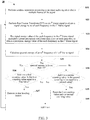
- FIG. 3 is a flowchart of a howling detection method 30 according to an exemplary embodiment.
- a first counting value and a second counting value may be set. Further, a variable i may be set. For example, initial values of the first counting value and the second counting value may be set as 0. An initial value of the variable i may be set as 1.
- the method 30 may include the following steps: Step S31: Perform window separation processing on an input audio signal to obtain multiple frames of the signal.
- a frame of the signal refers to a signal in an analysis window.
- Step S32 Perform Fast Fourier Transform (FFT) to an i th frame signal to obtain a signal energy value p ( i,m ) of each frequency in the i th frame signal, where m is a number of the frequency and M is a sum of frequencies.
- FFT Fast Fourier Transform
- Step S33 The signal energy value p ( i,m ) of each frequency in the i th frame signal multiples a preset perceptual coefficient aiming at each frequency to obtain a perceptual energy value p' ( i,m ) of each frequency.
- p ′ i m p i m * cof fc m
- cof ( fc ( m )) is a perceptual coefficient corresponding to a frequency m and fc ( m ) is a central frequency value if the frequency m.
- Step S34 Calculate spectral entropy H ( i ) of the i th frame signal.
- Pd ( i,m ) is a probability density function of an m th frequency of the i th frame signal, which can be calculated according to formula 10.
- the spectral entropy H ( i ) is used as a howling indicator value.
- a value obtained by using other calculation methods is used as the howling indicator value, for example, calculating an energy peak-to-average ratio of the frequency as the howling indicator value.
- a calculation method of the howling indicator value may be designed depending on embodiments. Any feasible algorithm can be used, which is not limited herein.
- Step S35 Determine whether the spectral entropy H ( i ) is lower than a preset spectral entropy threshold T0. If yes, perform step S36. If not, perform step S38.
- Step S36 Add 1 to a first counting value and determine whether the first counting value is equal to a preset first value. If yes, perform step S37. If not, perform step S40.
- Step S37 Determine that howling occurs.
- Step S38 Add 1 to a second counting value and determine whether the second counting value is equal to a preset second value. If yes, perform step S39. If not, perform step S40.
- Step S39 Reset the first counting value and the second counting value.
- Step S40 Add 1 to the variable i and perform step S32.
- the spectral entropy threshold T0, the preset first value, and the preset second value can be determined according to actual conditions or experiences.
- the preset first value can be 3 and the preset second value can be 5.
- FIG. 4 is a schematic diagram of a howling detection apparatus according to an exemplary embodiment.
- the apparatus 40 may include a processor 41, a communications interface 44, a storage device 46, and a bus 49.
- the storage device 46 includes an operating system 47, a communications module 48, and a howling detection module 43.
- processors 41 There may be one or more processors 41, which may exist in a same physical device, or may be distributed in multiple physical devices.
- the howling detection apparatus 40 can pass the input audio signal by using the communications interface 44 and provides a howling detection result to other devices by using the communications interface 44.
- the howling detection module 43 may include a window separation module 431, a calculation module 432, and a determining module 433.
- the window separation module 431 is configured to perform window separation processing to an audio signal to obtain a plurality of analysis windows.
- the calculation module 432 is configured to perform the following processing to at least one of the plurality of analysis windows: obtaining a signal energy indicator value of each preset frequency in the analysis window; and using a preset perceptual coefficient corresponding to each frequency to respectively calculate the signal energy indicator value of each frequency to obtain a perceptual energy indicator value of each frequency, the perceptual coefficient corresponding to each frequency indicating sensitivity of human ears to a sound of each frequency.
- the determining module 433 is configured to determine whether howling occurs according to the perceptual energy indicator value of each frequency in the at least one analysis window.
- the determining module 433 may perform:
- the determining module 433 may perform: determining that the howling occurs when a preset number of comparison results of consecutive analysis windows satisfy the preset condition.
- the determining module 433 can use methods of the exemplary embodiments to calculate the howling indicator value, which is not repetitively described herein.
- the determining module 433 may perform:
- calculation module 432 and the determining module 433 may refer to corresponding methods and steps above, which is not repetitively described herein.
- Hardware modules in the exemplary embodiments may be implemented in a hardware manner or a manner of a hardware platform and software.
- the foregoing software includes machine readable instructions stored in a non-volatile storage medium. Therefore, an exemplary embodiment can be embodied as a software product.
- hardware may be implemented by specific hardware or hardware executing the machine readable instructions.
- the hardware may be a specifically designed permanent circuit or logical device (for example, a dedicated processor, such as a field programmable gate array (FPGA) or an application specific integrated circuit (ASIC)) for completing a specific operation.
- the hardware may also include a programmable logical device or circuit (for example, including a general processor or another programmable processor) configured temporarily by software and configured to execute a specific operation.
- the machine readable instructions corresponding to modules in the figure can make an operating system operated on a computer to complete part or all operations described herein.
- the operations may be: inserting into a memory disposed in an expansion board in the computer or writing into a memory disposed in an expansion unit connected to a computer non-volatile computer readable storage medium.
- a central processing unit (CPU) installed on the expansion board or the expansion unit can execute part or all actual operations according to the instructions.
- the non-volatile computer readable storage medium includes a floppy disk, a hard disk, a magneto-optical disk, an optical disc (such as a compact disc read-only memory (CD-ROM), a compact disc recordable (CD-R), a compact disc rewritable (CD-RW), a digital video disc read-only memory (DVD-ROM), a digital video disc random access memory (DVD-RAM), a digital video disc rewritable (DVD-RW), and a digital video disc + rewritable (DVD+RW)), a magnetic tape, a non-volatile storage card, and a read-only memory (ROM).
- the program code may be downloaded form a server computer through a communications network.
Landscapes
- Engineering & Computer Science (AREA)
- Physics & Mathematics (AREA)
- Acoustics & Sound (AREA)
- Signal Processing (AREA)
- Health & Medical Sciences (AREA)
- Human Computer Interaction (AREA)
- Audiology, Speech & Language Pathology (AREA)
- Computational Linguistics (AREA)
- Multimedia (AREA)
- General Health & Medical Sciences (AREA)
- Otolaryngology (AREA)
- Quality & Reliability (AREA)
- Circuit For Audible Band Transducer (AREA)
- Measurement Of The Respiration, Hearing Ability, Form, And Blood Characteristics Of Living Organisms (AREA)
Abstract
Description
- This application claims priority from Chinese Patent Application No.
201610576227.X - Methods and apparatuses consistent with exemplary embodiments relate to audio processing, and in particular, to a howling detection method and apparatus.
- Howling refers to a sharp and raspy sound that appears during the use of a sound pickup device or a pickup (for example, a microphone). Howling occurs because a sound output by a player (for example, a sounder and a horn) is constantly captured by the pickup to return to the pickup and is output after being enlarged by a power amplifier of the player in a repeated process, so as to generate a sound positive feedback phenomenon. An existing howling suppression solution determines whether howling occurs by detecting energy of an output signal, and suppresses the howling based on a result of determination.
- One or more exemplary embodiments provide a howling detection method and apparatus. Sensitivity of human ears to sounds with different frequencies is considered in a howling detection solution to generate a more accurate detection result.
- A howling detection method in the embodiments of this application may include:
- performing window separation processing on an audio signal to obtain a plurality of analysis windows and performing the following processing to at least one analysis window:
- obtaining a signal energy indicator value of each preset frequency in at least one analysis window;
- using a perceptual coefficient corresponding to each frequency and the signal energy indicator value of each frequency to obtain a perceptual energy indicator value of each frequency, the perceptual coefficient corresponding to each frequency indicating a sensitivity of a human ear to a sound of each frequency; and
- determining whether howling occurs according to the perceptual energy indicator value of each frequency in the at least one analysis window.
- A howling detection apparatus in the embodiments of this application may include:
- a window separation module, configured to perform window separation processing on an audio signal to obtain a plurality of analysis windows;
- a calculation module, configured to perform the following processing to at least one analysis window: obtaining a signal energy indicator value of each preset frequency in at least one analysis window; and using a perceptual coefficient corresponding to each frequency and the signal energy indicator value of each frequency to obtain a perceptual energy indicator value of each frequency, the perceptual coefficient corresponding to each frequency indicating a sensitivity of a human ear to a sound of each frequency; and
- a determining module, configured to determine whether howling occurs according to the perceptual energy indicator value of each frequency in the at least one analysis window.
- The technical solution in the embodiments of this application considers a psychological acoustics perceptual factor and performs weighting to a detected energy of each frequency of an audio, so as to well fit a human-ear perceptual characteristic and make a howling detection result more accurate.
-
-
FIG. 1 is a flowchart of a howling detection method according to an exemplary embodiment; -
FIG. 2 is an example of a perceptual coefficient diagram obtained in an exemplary embodiment; -
FIG. 3 is a flowchart of a howling detection method according to an exemplary embodiment; and -
FIG. 4 is a schematic diagram of a howling detection apparatus according to an exemplary embodiment. - For brief and intuitive description, the following describes the solutions of the disclosure by describing several exemplary embodiments. However, not all implementations are shown herein. Details in the exemplary embodiments are presented only to help the reader understand the solutions of the disclosure, and implementations of the technical solutions of the disclosure may not be limited by these details. To avoid making the solutions of the disclosure obscure, some implementations are not described in detail, but only a framework is given. In the following description, "including" means "including, but not limited to", and "according to ..." means "at least according to .., but the basis is not limited to ...". "Including" in the specification and claims means at least including to some degree, which should be explained as including the following mentioned features as well as other features.
- Sensitivity of human ears to sounds with different frequencies is considered in a detection solution in the exemplary embodiments. Weighting processing is performed on a signal energy indicator value of each frequency of an audio signal. A howling detection is performed according to the weighted signal energy indicator value (or a perceptual energy indicator value), so that a howling detection result well fits into (or corresponds to) a hearing characteristic of human ears and becomes more accurate.
-
FIG. 1 is a flowchart of ahowling detection method 10 according to an exemplary embodiment. Themethod 10 may include the following steps: - Step S11: Perform window separation processing on an audio signal to obtain a plurality of analysis windows.
- Step S12: Perform the following processing with respect to at least one analysis window: obtaining a signal energy indicator value of each preset frequency in the analysis window; and using a preset perceptual coefficient corresponding to each frequency to respectively calculate the signal energy indicator value of each frequency to obtain a perceptual energy indicator value of each frequency.
- Step S13: Determine whether howling occurs according to the perceptual energy indicator value of each frequency in the at least one analysis window.
- In this way, the method performs calculation with respect to a detected energy of each frequency of an audio according to a psychological acoustics perceptual factor, so as to well fit into a human-ear perceptual characteristic and make a howling detection result more accurate.
- Solutions of the exemplary embodiments can be applied to a scenario using a pickup device and a playing device, for example, a voice video call, a broadcast, a meeting, an on-site activity using a loudspeaker, and the like.
- In some examples, audio processing devices can merely process a signal with a limited length. Thus, window separation processing is performed on an audio signal in the step S11 to generate a section of audio signal, that is, a plurality of analysis windows. The audio signal in an analysis window is processed each time. The window separation processing uses an analysis window with, for example, a 10 ms or 20 ms duration. A window function may use a Hanning window, a Hamming window, and the like.
- The signal energy indicator value refers to a value indicating an energy of the audio signal. In some examples, the signal energy indicator value may be a signal energy, a signal power, and the like. The signal energy or the power can be obtained by a signal detection. In some examples, the signal energy indicator value may further be a value obtained by performing a preset algorithm processing on the signal energy or the signal power. A specific algorithm can be set appropriately, a manner of which is not limited herein.
- Howling is detected subjectively, and reactions of human ears to sounds with a same energy but different frequencies are different. For example, some frequencies are located at a sensitive frequency band of the human ears. A detection value of a sound energy on a frequency in the sensitive frequency band may not be high, but the human ears can feel the howling. The exemplary embodiments use the preset perceptual coefficient of each frequency to perform weighting on the signal energy indicator value of each frequency to obtain the perceptual energy indicator value. The perceptual energy indicator value may refer to a strength of a sound felt by the human ears.
- Each frequency corresponds to a frequency value or a section of a frequency band. For example, each frequency may correspond to
frequencies Frequency 1 may correspond to a frequency with a 100-200 Hz frequency value. However, this is only an example and the disclosure is not limited thereto. A number of frequencies (e.g., a value of M) selected from the exemplary embodiments may be different and may correspond to different frequency values or frequency bands. The number of frequencies and the frequency value of each frequency (which refers to, when the frequency corresponds to the frequency band, a central frequency value of a corresponding frequency band) may be determined according to embodiments. For example, a relatively higher number of frequencies can be selected at a sensitive frequency band of the human ears. The more concentrated the selected frequencies are, the more accurate the detection result is, which certainly means more calculation and more complex processing. - The perceptual coefficient of each frequency indicates sensitivity of human ears to a sound of each frequency, which may be set according to experiences, or may be determined according to experiments, or may be determined in other ways.
- In some examples, it may be set that for any pair of a first frequency and a second frequency in a sensitive frequency range of the human ears, for example, a range of 1000 Hz to 4000 Hz, when the first frequency is higher than the second frequency, a perceptual coefficient corresponding to the first frequency is higher than a perceptual coefficient corresponding to the second frequency. A value of the perceptual coefficient may be set in any appropriate manner.
- In some examples, a relationship between the set perceptual coefficient and each frequency fits a regulation of an equal loudness curve. The equal loudness curve is a curve used to describe a relationship between a sound pressure level and a sound wave frequency in an equal loudness condition. The loudness indicates a degree of how loud a sound is. The loudness of a sound changes with the strength of the sound but is further affected by the frequency, that is, sounds with same strength but different frequencies create different hearing perceptions for human ears. International organization for acoustics standards detects the acoustics equal loudness curve and determines a sound pressure level of a pure sound in different frequencies that needs to be reached so that a hearer can obtain a consistent hearing loudness. The perceptual coefficient may be set with reference to the equal loudness curve. For example, the perceptual coefficient may be calculated and obtained based on equal loudness curve data of a psychological acoustics of a BS3383 standard BS 3383 Specification for normal equal-loudness level contours for pure tones under free-field listening conditions.
- The following describes a calculation method that uses a linear interpolation method to perform interpolation to current equal loudness curve data to obtain a loudness value of the preset frequency.



- In the above, freq denotes a frequency value that is used to calculate the frequency of the perceptual coefficient (for example, a central frequency value of a frequency band corresponding to the frequency). k is a frequency number (e.g., a frequency value in a current equal loudness curve data excel). Each frequency number corresponds to a frequency value in the equal loudness curve data excel. The frequency value freq is smaller than or equal to the frequency value corresponding to the frequency number k in the equal loudness curve data excel and is greater than or equal to a frequency value corresponding to a frequency number k-1. ff, af, bf, and cf are data public in the equal loudness curve data excel of BS3383. loud (freq) indicates the loudness of the frequency freq. cof (freq) indicates a perceptual coefficient corresponding to the frequency freq.
FIG. 2 is an example of a perceptual coefficient diagram obtained by the above calculations. - In some examples, in step S13, a howling indicator value of the analysis window is determined according to the perceptual energy indicator value of each frequency in the analysis window of the at least one analysis window. The howling indicator value of the analysis window is compared with a preset howling threshold. It is determined that the howling occurs based on a comparison result between the howling indicator value of a preset number of the analysis windows in the at least one analysis window and the howling threshold satisfying a preset condition.
- The howling indicator value is used to indicate a probability that the howling occurs. The howling indicator value can be calculated and obtained by using a specified algorithm according to the perceptual energy indicator value of each frequency. In some examples, the higher the howling indicator value is, the higher the probability that the howling occurs is. In some other examples, the lower the howling indicator value is, the higher the probability that the howling occurs is.
- For example, the howling indicator value may be spectral entropy of an audio signal. Specifically, the spectral entropy of the signal in the analysis window may be determined according to the perceptual energy indicator value of each frequency in the analysis window with reference to the following formula:


- In other examples, the frequency can have other numbering methods, for example, the number m of each frequency may be 1, 2, 3, ......, M. The foregoing formula may be correspondingly adjusted according to a numbering condition of the frequency.
- In an example, the lower a spectral entropy value is, the higher the probability that the howling occurs is. Therefore, in this example, that the comparison result between the howling indicator value and the howling threshold satisfies the preset condition means that the spectral entropy value is lower than the howling threshold. In some examples, it is determined that the howling occurs based on the spectral entropy value of the signal in the analysis window being lower than the howling threshold. In other examples, accuracy of a detection result is increased by using comparison results of a plurality of analysis windows, that is, it is determined that the howling occurs based on the spectral entropy value of the signal in a preset number of the analysis windows in the at least one analysis window being lower than the howling threshold.
- For another example, the howling indicator value may be a peak-to-average ratio of an audio signal. Specifically, the peak-to-average ratio of the audio signal in the analysis window may be determined according to the perceptual energy indicator value of each frequency in the analysis window:

- Peak = Max(p'(m)) represents a peak value of the perceptual energy indicator value of each frequency in the analysis window. p'(m) = p(m)×cof(fc(m)) represents a perceptual energy indicator value of the signal in the analysis window at a frequency m. p(m) represents a signal energy indicator value of the frequency m in the analysis window. cof(fc(m)) represents a perceptual coefficient corresponding to the frequency m. fc(m) represents a central frequency of the frequency m.

- In this example, the higher a value of the peak-to-average ratio is, the higher the probability that the howling occurs is. Therefore, in this example, that the comparison result between the howling indicator value and the howling threshold satisfies the preset condition means that the value of the peak-to-average ratio is higher than the howling threshold. In some examples, it is determined that the howling occurs of the peak-to-average ratio of the audio signal in the analysis window is higher than the howling threshold. In other examples, accuracy of a detection result is increased by using comparison results of a plurality of analysis windows, that is, it is determined that the howling occurs based on the peak-to-average ratio of the signal in a preset number of the analysis windows in the at least one analysis window being higher than the howling threshold.
- When the comparison results of the plurality of analysis windows are used to determine whether the howling occurs, the plurality of analysis windows may be a plurality of consecutive analysis windows, or a plurality of inconsecutive analysis windows.
- For example, it is determined that the howling occurs when a preset number of comparison results of consecutive analysis windows satisfy the preset condition.
- For another example, a first counting value and a second counting value may be set, where a value of the first counting value and a value of the second counting value are respectively preset initial values. A preset first step length value is added to the first counting value in response to a comparison result between the howling indicator value of the analysis window and the howling threshold satisfying the preset condition. A preset second step length value is added to the second counting value in response to the comparison result between the howling indicator value of the analysis window and the howling threshold not satisfying the preset condition. It is determined that the howling occurs when the first counting value is equal to a preset first value. The first counting value is returned to the initial value when the second counting value reaches a preset second value. The first step length value, the second step length value, the first value, and the second value can be preset appropriately according to embodiments.
-
FIG. 3 is a flowchart of a howlingdetection method 30 according to an exemplary embodiment. - Before performing the
method 30, a first counting value and a second counting value may be set. Further, a variable i may be set. For example, initial values of the first counting value and the second counting value may be set as 0. An initial value of the variable i may be set as 1. Themethod 30 may include the following steps:
Step S31: Perform window separation processing on an input audio signal to obtain multiple frames of the signal. - Here, a frame of the signal refers to a signal in an analysis window.
- Step S32: Perform Fast Fourier Transform (FFT) to an ith frame signal to obtain a signal energy value p(i,m) of each frequency in the ith frame signal, where m is a number of the frequency and M is a sum of frequencies.
- Step S33: The signal energy value p(i,m) of each frequency in the ith frame signal multiples a preset perceptual coefficient aiming at each frequency to obtain a perceptual energy value p'(i,m) of each frequency.

- cof(fc(m)) is a perceptual coefficient corresponding to a frequency m and fc(m) is a central frequency value if the frequency m.
- Step S34: Calculate spectral entropy H(i) of the ith frame signal.

- Pd(i,m) is a probability density function of an mth frequency of the ith frame signal, which can be calculated according to
formula 10.

- In this example, the spectral entropy H(i) is used as a howling indicator value. In other examples, a value obtained by using other calculation methods is used as the howling indicator value, for example, calculating an energy peak-to-average ratio of the frequency as the howling indicator value. A calculation method of the howling indicator value may be designed depending on embodiments. Any feasible algorithm can be used, which is not limited herein.
- Step S35: Determine whether the spectral entropy H(i) is lower than a preset spectral entropy threshold T0. If yes, perform step S36. If not, perform step S38.
- Step S36:
Add 1 to a first counting value and determine whether the first counting value is equal to a preset first value. If yes, perform step S37. If not, perform step S40. - Step S37: Determine that howling occurs.
- Step S38:
Add 1 to a second counting value and determine whether the second counting value is equal to a preset second value. If yes, perform step S39. If not, perform step S40. - Step S39: Reset the first counting value and the second counting value.
- Step S40:
Add 1 to the variable i and perform step S32. - In the exemplary embodiments, the spectral entropy threshold T0, the preset first value, and the preset second value can be determined according to actual conditions or experiences. For example, the preset first value can be 3 and the preset second value can be 5.
- The exemplary embodiments further provide a howling detection apparatus.
FIG. 4 is a schematic diagram of a howling detection apparatus according to an exemplary embodiment. Theapparatus 40 may include aprocessor 41, acommunications interface 44, astorage device 46, and abus 49. Thestorage device 46 includes anoperating system 47, acommunications module 48, and a howlingdetection module 43. - There may be one or
more processors 41, which may exist in a same physical device, or may be distributed in multiple physical devices. - The howling
detection apparatus 40 can pass the input audio signal by using thecommunications interface 44 and provides a howling detection result to other devices by using thecommunications interface 44. - The howling
detection module 43 may include awindow separation module 431, acalculation module 432, and a determiningmodule 433. - The
window separation module 431 is configured to perform window separation processing to an audio signal to obtain a plurality of analysis windows. - The
calculation module 432 is configured to perform the following processing to at least one of the plurality of analysis windows: obtaining a signal energy indicator value of each preset frequency in the analysis window; and using a preset perceptual coefficient corresponding to each frequency to respectively calculate the signal energy indicator value of each frequency to obtain a perceptual energy indicator value of each frequency, the perceptual coefficient corresponding to each frequency indicating sensitivity of human ears to a sound of each frequency. - The determining
module 433 is configured to determine whether howling occurs according to the perceptual energy indicator value of each frequency in the at least one analysis window. - In some examples, the determining
module 433 may perform: - determining a howling indicator value of the analysis window according to the perceptual energy indicator value of each frequency in the analysis window in the at least one analysis window, where the howling indicator value is used to indicate probability that the howling occurs;
- comparing the howling indicator value of the analysis window with a preset howling threshold; and
- determining that the howling occurs based on a comparison result of a preset number of the analysis windows in the at least one analysis window satisfying a preset condition.
- In some examples, the determining
module 433 may perform:
determining that the howling occurs when a preset number of comparison results of consecutive analysis windows satisfy the preset condition. - The determining
module 433 can use methods of the exemplary embodiments to calculate the howling indicator value, which is not repetitively described herein. - In some examples, the determining
module 433 may perform: - setting a first counting value and a second counting value, wherein values of the first counting value and the second counting value are respectively preset initial values;
- adding a preset first step length value to the first counting value in response to a comparison result between the howling indicator value of the analysis window and the howling threshold satisfying the preset condition; and
- adding a preset second step length value to the second counting value in response to the comparison result between the howling indicator value of the analysis window and the howling threshold not satisfying the preset condition, where
- the determining that the howling occurs includes:
- determining that the howling occurs when the first counting value is equal to a preset first value; and
- returning the first counting value to the initial value when the second counting value reaches a preset second value.
- Specific functions of the
calculation module 432 and the determiningmodule 433 may refer to corresponding methods and steps above, which is not repetitively described herein. - It should be noted that, all steps and modules in the foregoing procedures and structural diagrams are not necessary, some steps or modules may be omitted according to embodiments. An execution sequence of the steps is not fixed, and may be adjusted according to embodiments. Division of the modules is merely functional division for ease of description. In actual implementation, one module may be implemented separately by multiple modules, and functions of multiple modules may also be implemented by one same module. The modules may be located in a same device, and may also be located in different devices. In addition, "first" and "second" as described above are just for convenience of distinguishing two objects that have a same meaning, it does not mean that there is a substantial difference.
- Hardware modules in the exemplary embodiments may be implemented in a hardware manner or a manner of a hardware platform and software. The foregoing software includes machine readable instructions stored in a non-volatile storage medium. Therefore, an exemplary embodiment can be embodied as a software product.
- In each example, hardware may be implemented by specific hardware or hardware executing the machine readable instructions. For example, the hardware may be a specifically designed permanent circuit or logical device (for example, a dedicated processor, such as a field programmable gate array (FPGA) or an application specific integrated circuit (ASIC)) for completing a specific operation. The hardware may also include a programmable logical device or circuit (for example, including a general processor or another programmable processor) configured temporarily by software and configured to execute a specific operation.
- The machine readable instructions corresponding to modules in the figure can make an operating system operated on a computer to complete part or all operations described herein. The operations may be: inserting into a memory disposed in an expansion board in the computer or writing into a memory disposed in an expansion unit connected to a computer non-volatile computer readable storage medium. A central processing unit (CPU) installed on the expansion board or the expansion unit can execute part or all actual operations according to the instructions.
- The non-volatile computer readable storage medium includes a floppy disk, a hard disk, a magneto-optical disk, an optical disc (such as a compact disc read-only memory (CD-ROM), a compact disc recordable (CD-R), a compact disc rewritable (CD-RW), a digital video disc read-only memory (DVD-ROM), a digital video disc random access memory (DVD-RAM), a digital video disc rewritable (DVD-RW), and a digital video disc + rewritable (DVD+RW)), a magnetic tape, a non-volatile storage card, and a read-only memory (ROM). Optionally, the program code may be downloaded form a server computer through a communications network.
- In conclusion, the scope of the claims should not be limited to the implementation in the foregoing described examples, but instead the specification should be considered as a whole and a broadest interpretation should be given.
Claims (20)
- A howling detection method, comprising:performing window separation processing on an audio signal to obtain a plurality of analysis windows and performing the following processing to at least one analysis window:obtaining a signal energy indicator value of each preset frequency in at least one analysis window;using a perceptual coefficient corresponding to each frequency and the signal energy indicator value of each frequency to obtain a perceptual energy indicator value of each frequency, the perceptual coefficient corresponding to each frequency indicating a sensitivity of a human ear to a sound of each frequency; anddetermining whether howling occurs according to the perceptual energy indicator value of each frequency in the at least one analysis window.
- The method according to claim 1, wherein
in a pair of a first frequency and a second frequency in a sensitive frequency range of the human ear, a perceptual coefficient corresponding to the first frequency is higher than a perceptual coefficient corresponding to the second frequency, the first frequency being higher than the second frequency. - The method according to claim 1, wherein a relationship between the perceptual coefficient and each frequency corresponds to an equal loudness curve.
- The method according to claim 1, wherein the determining whether howling occurs comprises:determining a howling indicator value of the at least one analysis window according to the perceptual energy indicator value of each frequency in the at least one analysis window, wherein the howling indicator value indicates a probability that the howling occurs;comparing the howling indicator value of the at least one analysis window with a howling threshold; anddetermining that the howling occurs when comparison results of a preset number of analysis windows in the at least one analysis window satisfy a preset condition.
- The method according to claim 4, wherein the determining that the howling occurs comprises:determining that the howling occurs when comparison results of a preset number of consecutive analysis windows satisfy the preset condition.
- The method according to claim 4, further comprising:respectively setting a first counting value and a second counting value to preset initial values;adding a preset first step length value to the first counting value in response to a comparison result between the howling indicator value of an analysis window of the at least one analysis window and the howling threshold satisfying the preset condition; andadding a preset second step length value to the second counting value in response to the comparison result between the howling indicator value of the analysis window of the at least one analysis window and the howling threshold not satisfying the preset condition, whereinthe determining that the howling occurs comprises:determining that the howling occurs when the first counting value is equal to a preset first value; andreturning the first counting value to an initial value when the second counting value reaches a preset second value.
- The method according to claim 4, wherein determining the howling indicator value of the at least one analysis window according to the perceptual energy indicator value of the each frequency in the at least one analysis window comprises:determining spectral entropy of a signal in the at least one analysis window according to the perceptual energy indicator value of each frequency in the at least one analysis window by using the following formula:

 the determining that the howling occurs when comparison results of a preset number of the analysis windows in the at least one analysis window satisfy a preset condition comprises:determining that the howling occurs in response to the spectral entropy of the signal in the preset number of analysis windows in the at least one analysis window being lower than the howling threshold.
 - The method according to claim 4, wherein the determining the howling indicator value according to the perceptual energy indicator value of the each frequency in the at least one analysis window comprises:determining a peak-to-average ratio of a signal in the at least one analysis window according to the perceptual energy indicator value of each frequency in the at least one analysis window:


 the determining that the howling occurs when comparison results of a preset number of the analysis windows in the at least one analysis window satisfy a preset condition comprises:determining that the howling occurs in response to the peak-to-average ratio of the signal in the preset number of analysis windows in the at least one analysis window being higher than the howling threshold.
 - A howling detection apparatus, comprising at least one processor and at least one memory, the at least one memory storing a series of computer readable instructions being capable of causing the at least one processor to perform:performing window separation processing on an audio signal to obtain a plurality of analysis windows and performing the following processing to at least one analysis window:obtaining a signal energy indicator value of each preset frequency in at least one analysis window;using a perceptual coefficient corresponding to each frequency and the signal energy indicator value of each frequency to obtain a perceptual energy indicator value of each frequency, the perceptual coefficient corresponding to each frequency indicating a sensitivity of a human ear to a sound of each frequency; anddetermining whether howling occurs according to the perceptual energy indicator value of each frequency in the at least one analysis window.
- The apparatus according to claim 9, wherein the computer readable instructions are capable of causing the at least one processor to perform:determining a howling indicator value of the at least one analysis window according to the perceptual energy indicator value of each frequency in the at least one analysis window, wherein the howling indicator value indicates a probability that the howling occurs;comparing the howling indicator value of the at least one analysis window with a howling threshold; anddetermining that the howling occurs when comparison results of a preset number of analysis windows in the at least one analysis window satisfy a preset condition.
- The apparatus according to claim 10, wherein the computer readable instructions are capable of causing the at least one processor to perform:determining that the howling occurs when comparison results of a preset number of consecutive analysis windows satisfy the preset condition.
- The apparatus according to claim 10, wherein the computer readable instructions are capable of causing the at least one processor to perform:respectively setting a first counting value and a second counting value to preset initial values;adding a preset first step length value to the first counting value in response to a comparison result between the howling indicator value of an analysis window of the at least one analysis window and the howling threshold satisfying the preset condition; andadding a preset second step length value to the second counting value in response to the comparison result between the howling indicator value of the analysis window of the at least one analysis window and the howling threshold not satisfying the preset condition, whereinthe determining that the howling occurs comprises:determining that the howling occurs when the first counting value is equal to a preset first value; andreturning the first counting value to an initial value when the second counting value reaches a preset second value.
- A computer readable storage medium, storing a series of computer readable instructions, the computer readable instructions being capable of causing one or more processors to perform:performing window separation processing on an audio signal to obtain a plurality of analysis windows and performing the following processing to at least one analysis window:obtaining a signal energy indicator value of each preset frequency in at least one analysis window;using a perceptual coefficient corresponding to each frequency and the signal energy indicator value of each frequency to obtain a perceptual energy indicator value of each frequency, the perceptual coefficient corresponding to each frequency indicating a sensitivity of a human ear to a sound of each frequency; anddetermining whether howling occurs according to the perceptual energy indicator value of each frequency in the at least one analysis window.
- The computer readable storage medium according to claim 13, wherein:in a pair of a first frequency and a second frequency in a sensitive frequency range of the human ear, a perceptual coefficient corresponding to the first frequency is higher than a perceptual coefficient corresponding to the second frequency, the first frequency being higher than the second frequency.
- The computer readable storage medium according to claim 13, wherein a relationship between the perceptual coefficient and each frequency corresponds to an equal loudness curve.
- The computer readable storage medium according to claim 13, wherein the determining whether howling occurs according to the perceptual energy indicator value of the each frequency in the at least one analysis window comprises:determining a howling indicator value of the at least one analysis window according to the perceptual energy indicator value of each frequency in the at least one analysis window, wherein the howling indicator value indicates a probability that the howling occurs;comparing the howling indicator value of the at least one analysis window with a howling threshold; anddetermining that the howling occurs when comparison results of a preset number of analysis windows in the at least one analysis window satisfy a preset condition.
- The computer readable storage medium according to claim 16, wherein the determining that the howling occurs comprises:determining that the howling occurs when comparison results of a preset number of consecutive analysis windows satisfy the preset condition.
- The computer readable storage medium according to claim 16, wherein the computer readable instructions are capable of causing the one or more processors to perform:respectively setting a first counting value and a second counting value to preset initial values;adding a preset first step length value to the first counting value in response to a comparison result between the howling indicator value of an analysis window of the at least one analysis window and the howling threshold satisfying the preset condition; andadding a preset second step length value to the second counting value in response to the comparison result between the howling indicator value of the analysis window of the at least one analysis window and the howling threshold not satisfying the preset condition, whereinthe determining that the howling occurs comprises:determining that the howling occurs when the first counting value is equal to a preset first value; andreturning the first counting value to an initial value when the second counting value reaches a preset second value.
- The non-transitory computer readable storage medium according to claim 16, wherein the determining the howling indicator value of the at least one analysis window comprises:determining a spectral entropy of a signal in the at least one analysis window according to the perceptual energy indicator value of each frequency in the at least one analysis window by using the following formula:

 the determining that the howling occurs when comparison results of a preset number of the analysis windows in the at least one analysis window satisfy a preset condition comprises:determining that the howling occurs in response to the spectral entropy of the signal in the preset number of analysis windows in the at least one analysis window being lower than the howling threshold.
 - The non-transitory computer readable storage medium according to claim 16, wherein the determining the howling indicator value of the at least one analysis window comprises:determining a peak-to-average ratio of a signal in the at least one analysis window according to the perceptual energy indicator value of each frequency in the at least one analysis window:


 the determining that the howling occurs when comparison results of a preset number of the analysis windows in the at least one analysis window satisfy a preset condition comprises:determining that the howling occurs in response to the peak-to-average ratio of the signal in the preset number of analysis windows in the at least one analysis window being higher than the howling threshold.
Applications Claiming Priority (2)
| Application Number | Priority Date | Filing Date | Title |
|---|---|---|---|
| CN201610576227.XA CN107645696B (en) | 2016-07-20 | 2016-07-20 | One kind is uttered long and high-pitched sounds detection method and device |
| PCT/CN2017/087878 WO2018014673A1 (en) | 2016-07-20 | 2017-06-12 | Method and device for howling detection |
Publications (3)
| Publication Number | Publication Date |
|---|---|
| EP3451697A1 true EP3451697A1 (en) | 2019-03-06 |
| EP3451697A4 EP3451697A4 (en) | 2019-05-01 |
| EP3451697B1 EP3451697B1 (en) | 2021-03-03 |
Family
ID=60991883
Family Applications (1)
| Application Number | Title | Priority Date | Filing Date |
|---|---|---|---|
| EP17830309.5A Active EP3451697B1 (en) | 2016-07-20 | 2017-06-12 | Method and device for howling detection |
Country Status (4)
| Country | Link |
|---|---|
| US (1) | US10339953B2 (en) |
| EP (1) | EP3451697B1 (en) |
| CN (1) | CN107645696B (en) |
| WO (1) | WO2018014673A1 (en) |
Cited By (1)
| Publication number | Priority date | Publication date | Assignee | Title |
|---|---|---|---|---|
| US20260012729A1 (en) * | 2022-10-21 | 2026-01-08 | Continental Automotive Technologies GmbH | Method for detecting acoustic feedback |
Families Citing this family (11)
| Publication number | Priority date | Publication date | Assignee | Title |
|---|---|---|---|---|
| CN108494954B (en) * | 2018-03-12 | 2019-10-25 | Oppo广东移动通信有限公司 | Voice call data detection method and device, storage medium and mobile terminal |
| JP6632043B1 (en) * | 2019-03-13 | 2020-01-15 | Necプラットフォームズ株式会社 | Telephone device and method of controlling telephone device |
| CN110677796B (en) * | 2019-03-14 | 2021-12-17 | 深圳攀高医疗电子有限公司 | Audio signal processing method and hearing aid |
| CN110213694B (en) * | 2019-04-16 | 2020-12-04 | 浙江大华技术股份有限公司 | Audio device and howling processing method thereof, and computer storage medium |
| CN112750444B (en) * | 2020-06-30 | 2023-12-12 | 腾讯科技(深圳)有限公司 | Sound mixing method and device and electronic equipment |
| CN113271386B (en) * | 2021-05-14 | 2023-03-31 | 杭州网易智企科技有限公司 | Howling detection method and device, storage medium and electronic equipment |
| CN113724725B (en) * | 2021-11-04 | 2022-01-18 | 北京百瑞互联技术有限公司 | Bluetooth audio squeal detection suppression method, device, medium and Bluetooth device |
| CN114688591B (en) * | 2022-03-22 | 2024-07-05 | 杭州老板电器股份有限公司 | Central range hood system and control method and control device thereof |
| CN116805484A (en) * | 2023-06-13 | 2023-09-26 | 北京有竹居网络技术有限公司 | Voice detection method, device, medium and electronic equipment |
| CN119763598B (en) * | 2024-11-29 | 2025-11-18 | 科大讯飞股份有限公司 | Howling detection method, device, equipment and medium |
| CN121479215B (en) * | 2026-01-08 | 2026-03-20 | 潍柴动力股份有限公司 | Engine backlash noise identification method, device, computer equipment and storage medium |
Family Cites Families (9)
| Publication number | Priority date | Publication date | Assignee | Title |
|---|---|---|---|---|
| US7089176B2 (en) * | 2003-03-27 | 2006-08-08 | Motorola, Inc. | Method and system for increasing audio perceptual tone alerts |
| US7756276B2 (en) * | 2003-08-20 | 2010-07-13 | Phonak Ag | Audio amplification apparatus |
| CN103544961B (en) * | 2012-07-10 | 2017-12-19 | 中兴通讯股份有限公司 | Audio signal processing method and device |
| US10038952B2 (en) * | 2014-02-04 | 2018-07-31 | Steelcase Inc. | Sound management systems for improving workplace efficiency |
| WO2014094242A1 (en) * | 2012-12-18 | 2014-06-26 | Motorola Solutions, Inc. | Method and apparatus for mitigating feedback in a digital radio receiver |
| WO2014205297A1 (en) * | 2013-06-19 | 2014-12-24 | Creative Technology Ltd | Acoustic feedback canceller |
| KR20150043858A (en) * | 2013-10-15 | 2015-04-23 | 한국전자통신연구원 | Apparatus and methdo for howling suppression |
| US20160165361A1 (en) * | 2014-12-05 | 2016-06-09 | Knowles Electronics, Llc | Apparatus and method for digital signal processing with microphones |
| CN105516876A (en) * | 2015-12-09 | 2016-04-20 | 天津大学 | Spectrum entropy based howling detection method |
-
2016
- 2016-07-20 CN CN201610576227.XA patent/CN107645696B/en active Active
-
2017
- 2017-06-12 EP EP17830309.5A patent/EP3451697B1/en active Active
- 2017-06-12 WO PCT/CN2017/087878 patent/WO2018014673A1/en not_active Ceased
-
2018
- 2018-07-24 US US16/043,837 patent/US10339953B2/en active Active
Cited By (1)
| Publication number | Priority date | Publication date | Assignee | Title |
|---|---|---|---|---|
| US20260012729A1 (en) * | 2022-10-21 | 2026-01-08 | Continental Automotive Technologies GmbH | Method for detecting acoustic feedback |
Also Published As
| Publication number | Publication date |
|---|---|
| EP3451697B1 (en) | 2021-03-03 |
| US10339953B2 (en) | 2019-07-02 |
| CN107645696A (en) | 2018-01-30 |
| WO2018014673A1 (en) | 2018-01-25 |
| US20180330744A1 (en) | 2018-11-15 |
| EP3451697A4 (en) | 2019-05-01 |
| CN107645696B (en) | 2019-04-19 |
Similar Documents
| Publication | Publication Date | Title |
|---|---|---|
| EP3451697B1 (en) | Method and device for howling detection | |
| US9998081B2 (en) | Method and apparatus for processing an audio signal based on an estimated loudness | |
| US9762198B2 (en) | Frequency band compression with dynamic thresholds | |
| EP2545552B1 (en) | Method and system for scaling ducking of speech-relevant channels in multi-channel audio | |
| EP3780656A1 (en) | Systems and methods for providing personalized audio replay on a plurality of consumer devices | |
| US20150071446A1 (en) | Audio Processing Method and Audio Processing Apparatus | |
| CN104978166A (en) | Volume adjusting method and device | |
| EP2949133B1 (en) | Automatic loudspeaker polarity detection | |
| CN102214464B (en) | Transient state detecting method of audio signals and duration adjusting method based on same | |
| EP4297431A1 (en) | Howling suppression method and apparatus, hearing aid, and storage medium | |
| JP2004297273A (en) | Speech signal noise elimination device, speech signal noise elimination method and program | |
| US20170098455A1 (en) | Noise Detection Method and Apparatus | |
| CN108882115B (en) | Loudness adjustment method, device and terminal | |
| CN104364845A (en) | Processing apparatus, processing method, program, computer readable information recording medium and processing system | |
| JP7350973B2 (en) | Adaptation of sibilance detection based on detection of specific voices in audio signals | |
| Rämö et al. | Validating a real-time perceptual model predicting distraction caused by audio-on-audio interference | |
| CN106066782B (en) | A kind of data processing method and electronic equipment | |
| CN114420165A (en) | Audio circuit testing method, device, equipment and storage medium | |
| CN105632523A (en) | Method and device for regulating sound volume output value of audio data, and terminal | |
| CN112951265A (en) | Audio processing method and device, electronic equipment and storage medium | |
| CN113259826B (en) | Method and device for realizing hearing aid in electronic terminal | |
| CN108932953B (en) | A kind of audio equalization function determination method, audio equalization method and device | |
| WO2020073564A1 (en) | Method and apparatus for detecting loudness of audio signal | |
| CN117528337A (en) | Audio processing method, device, electronic equipment and medium | |
| EP3662468B1 (en) | Distortion reducing multi-band compressor with dynamic thresholds based on scene switch analyzer guided distortion audibility model |
Legal Events
| Date | Code | Title | Description |
|---|---|---|---|
| STAA | Information on the status of an ep patent application or granted ep patent |
Free format text: STATUS: THE INTERNATIONAL PUBLICATION HAS BEEN MADE |
|
| PUAI | Public reference made under article 153(3) epc to a published international application that has entered the european phase |
Free format text: ORIGINAL CODE: 0009012 |
|
| STAA | Information on the status of an ep patent application or granted ep patent |
Free format text: STATUS: REQUEST FOR EXAMINATION WAS MADE |
|
| 17P | Request for examination filed |
Effective date: 20181128 |
|
| AK | Designated contracting states |
Kind code of ref document: A1 Designated state(s): AL AT BE BG CH CY CZ DE DK EE ES FI FR GB GR HR HU IE IS IT LI LT LU LV MC MK MT NL NO PL PT RO RS SE SI SK SM TR |
|
| AX | Request for extension of the european patent |
Extension state: BA ME |
|
| A4 | Supplementary search report drawn up and despatched |
Effective date: 20190329 |
|
| RIC1 | Information provided on ipc code assigned before grant |
Ipc: H04R 3/04 20060101AFI20190325BHEP Ipc: H03G 5/16 20060101ALN20190325BHEP Ipc: H04R 3/02 20060101ALI20190325BHEP |
|
| DAV | Request for validation of the european patent (deleted) | ||
| DAX | Request for extension of the european patent (deleted) | ||
| GRAP | Despatch of communication of intention to grant a patent |
Free format text: ORIGINAL CODE: EPIDOSNIGR1 |
|
| STAA | Information on the status of an ep patent application or granted ep patent |
Free format text: STATUS: GRANT OF PATENT IS INTENDED |
|
| RIC1 | Information provided on ipc code assigned before grant |
Ipc: H04R 3/04 20060101AFI20201030BHEP Ipc: H03G 5/16 20060101ALN20201030BHEP Ipc: H04R 3/02 20060101ALI20201030BHEP |
|
| INTG | Intention to grant announced |
Effective date: 20201124 |
|
| GRAS | Grant fee paid |
Free format text: ORIGINAL CODE: EPIDOSNIGR3 |
|
| GRAA | (expected) grant |
Free format text: ORIGINAL CODE: 0009210 |
|
| STAA | Information on the status of an ep patent application or granted ep patent |
Free format text: STATUS: THE PATENT HAS BEEN GRANTED |
|
| AK | Designated contracting states |
Kind code of ref document: B1 Designated state(s): AL AT BE BG CH CY CZ DE DK EE ES FI FR GB GR HR HU IE IS IT LI LT LU LV MC MK MT NL NO PL PT RO RS SE SI SK SM TR |
|
| REG | Reference to a national code |
Ref country code: GB Ref legal event code: FG4D |
|
| REG | Reference to a national code |
Ref country code: AT Ref legal event code: REF Ref document number: 1368565 Country of ref document: AT Kind code of ref document: T Effective date: 20210315 Ref country code: CH Ref legal event code: EP |
|
| REG | Reference to a national code |
Ref country code: DE Ref legal event code: R096 Ref document number: 602017034017 Country of ref document: DE |
|
| REG | Reference to a national code |
Ref country code: IE Ref legal event code: FG4D |
|
| REG | Reference to a national code |
Ref country code: LT Ref legal event code: MG9D |
|
| PG25 | Lapsed in a contracting state [announced via postgrant information from national office to epo] |
Ref country code: BG Free format text: LAPSE BECAUSE OF FAILURE TO SUBMIT A TRANSLATION OF THE DESCRIPTION OR TO PAY THE FEE WITHIN THE PRESCRIBED TIME-LIMIT Effective date: 20210603 Ref country code: LT Free format text: LAPSE BECAUSE OF FAILURE TO SUBMIT A TRANSLATION OF THE DESCRIPTION OR TO PAY THE FEE WITHIN THE PRESCRIBED TIME-LIMIT Effective date: 20210303 Ref country code: NO Free format text: LAPSE BECAUSE OF FAILURE TO SUBMIT A TRANSLATION OF THE DESCRIPTION OR TO PAY THE FEE WITHIN THE PRESCRIBED TIME-LIMIT Effective date: 20210603 Ref country code: GR Free format text: LAPSE BECAUSE OF FAILURE TO SUBMIT A TRANSLATION OF THE DESCRIPTION OR TO PAY THE FEE WITHIN THE PRESCRIBED TIME-LIMIT Effective date: 20210604 Ref country code: FI Free format text: LAPSE BECAUSE OF FAILURE TO SUBMIT A TRANSLATION OF THE DESCRIPTION OR TO PAY THE FEE WITHIN THE PRESCRIBED TIME-LIMIT Effective date: 20210303 Ref country code: HR Free format text: LAPSE BECAUSE OF FAILURE TO SUBMIT A TRANSLATION OF THE DESCRIPTION OR TO PAY THE FEE WITHIN THE PRESCRIBED TIME-LIMIT Effective date: 20210303 |
|
| REG | Reference to a national code |
Ref country code: NL Ref legal event code: MP Effective date: 20210303 |
|
| REG | Reference to a national code |
Ref country code: AT Ref legal event code: MK05 Ref document number: 1368565 Country of ref document: AT Kind code of ref document: T Effective date: 20210303 |
|
| PG25 | Lapsed in a contracting state [announced via postgrant information from national office to epo] |
Ref country code: RS Free format text: LAPSE BECAUSE OF FAILURE TO SUBMIT A TRANSLATION OF THE DESCRIPTION OR TO PAY THE FEE WITHIN THE PRESCRIBED TIME-LIMIT Effective date: 20210303 Ref country code: LV Free format text: LAPSE BECAUSE OF FAILURE TO SUBMIT A TRANSLATION OF THE DESCRIPTION OR TO PAY THE FEE WITHIN THE PRESCRIBED TIME-LIMIT Effective date: 20210303 Ref country code: PL Free format text: LAPSE BECAUSE OF FAILURE TO SUBMIT A TRANSLATION OF THE DESCRIPTION OR TO PAY THE FEE WITHIN THE PRESCRIBED TIME-LIMIT Effective date: 20210303 Ref country code: SE Free format text: LAPSE BECAUSE OF FAILURE TO SUBMIT A TRANSLATION OF THE DESCRIPTION OR TO PAY THE FEE WITHIN THE PRESCRIBED TIME-LIMIT Effective date: 20210303 |
|
| PG25 | Lapsed in a contracting state [announced via postgrant information from national office to epo] |
Ref country code: NL Free format text: LAPSE BECAUSE OF FAILURE TO SUBMIT A TRANSLATION OF THE DESCRIPTION OR TO PAY THE FEE WITHIN THE PRESCRIBED TIME-LIMIT Effective date: 20210303 |
|
| PG25 | Lapsed in a contracting state [announced via postgrant information from national office to epo] |
Ref country code: CZ Free format text: LAPSE BECAUSE OF FAILURE TO SUBMIT A TRANSLATION OF THE DESCRIPTION OR TO PAY THE FEE WITHIN THE PRESCRIBED TIME-LIMIT Effective date: 20210303 Ref country code: EE Free format text: LAPSE BECAUSE OF FAILURE TO SUBMIT A TRANSLATION OF THE DESCRIPTION OR TO PAY THE FEE WITHIN THE PRESCRIBED TIME-LIMIT Effective date: 20210303 Ref country code: AT Free format text: LAPSE BECAUSE OF FAILURE TO SUBMIT A TRANSLATION OF THE DESCRIPTION OR TO PAY THE FEE WITHIN THE PRESCRIBED TIME-LIMIT Effective date: 20210303 Ref country code: SM Free format text: LAPSE BECAUSE OF FAILURE TO SUBMIT A TRANSLATION OF THE DESCRIPTION OR TO PAY THE FEE WITHIN THE PRESCRIBED TIME-LIMIT Effective date: 20210303 |
|
| PG25 | Lapsed in a contracting state [announced via postgrant information from national office to epo] |
Ref country code: IS Free format text: LAPSE BECAUSE OF FAILURE TO SUBMIT A TRANSLATION OF THE DESCRIPTION OR TO PAY THE FEE WITHIN THE PRESCRIBED TIME-LIMIT Effective date: 20210703 Ref country code: PT Free format text: LAPSE BECAUSE OF FAILURE TO SUBMIT A TRANSLATION OF THE DESCRIPTION OR TO PAY THE FEE WITHIN THE PRESCRIBED TIME-LIMIT Effective date: 20210705 Ref country code: SK Free format text: LAPSE BECAUSE OF FAILURE TO SUBMIT A TRANSLATION OF THE DESCRIPTION OR TO PAY THE FEE WITHIN THE PRESCRIBED TIME-LIMIT Effective date: 20210303 Ref country code: RO Free format text: LAPSE BECAUSE OF FAILURE TO SUBMIT A TRANSLATION OF THE DESCRIPTION OR TO PAY THE FEE WITHIN THE PRESCRIBED TIME-LIMIT Effective date: 20210303 |
|
| REG | Reference to a national code |
Ref country code: DE Ref legal event code: R097 Ref document number: 602017034017 Country of ref document: DE |
|
| PLBE | No opposition filed within time limit |
Free format text: ORIGINAL CODE: 0009261 |
|
| STAA | Information on the status of an ep patent application or granted ep patent |
Free format text: STATUS: NO OPPOSITION FILED WITHIN TIME LIMIT |
|
| PG25 | Lapsed in a contracting state [announced via postgrant information from national office to epo] |
Ref country code: MC Free format text: LAPSE BECAUSE OF FAILURE TO SUBMIT A TRANSLATION OF THE DESCRIPTION OR TO PAY THE FEE WITHIN THE PRESCRIBED TIME-LIMIT Effective date: 20210303 Ref country code: DK Free format text: LAPSE BECAUSE OF FAILURE TO SUBMIT A TRANSLATION OF THE DESCRIPTION OR TO PAY THE FEE WITHIN THE PRESCRIBED TIME-LIMIT Effective date: 20210303 Ref country code: AL Free format text: LAPSE BECAUSE OF FAILURE TO SUBMIT A TRANSLATION OF THE DESCRIPTION OR TO PAY THE FEE WITHIN THE PRESCRIBED TIME-LIMIT Effective date: 20210303 Ref country code: ES Free format text: LAPSE BECAUSE OF FAILURE TO SUBMIT A TRANSLATION OF THE DESCRIPTION OR TO PAY THE FEE WITHIN THE PRESCRIBED TIME-LIMIT Effective date: 20210303 |
|
| REG | Reference to a national code |
Ref country code: CH Ref legal event code: PL |
|
| 26N | No opposition filed |
Effective date: 20211206 |
|
| PG25 | Lapsed in a contracting state [announced via postgrant information from national office to epo] |
Ref country code: SI Free format text: LAPSE BECAUSE OF FAILURE TO SUBMIT A TRANSLATION OF THE DESCRIPTION OR TO PAY THE FEE WITHIN THE PRESCRIBED TIME-LIMIT Effective date: 20210303 |
|
| REG | Reference to a national code |
Ref country code: BE Ref legal event code: MM Effective date: 20210630 |
|
| PG25 | Lapsed in a contracting state [announced via postgrant information from national office to epo] |
Ref country code: LU Free format text: LAPSE BECAUSE OF NON-PAYMENT OF DUE FEES Effective date: 20210612 |
|
| PG25 | Lapsed in a contracting state [announced via postgrant information from national office to epo] |
Ref country code: LI Free format text: LAPSE BECAUSE OF NON-PAYMENT OF DUE FEES Effective date: 20210630 Ref country code: IT Free format text: LAPSE BECAUSE OF FAILURE TO SUBMIT A TRANSLATION OF THE DESCRIPTION OR TO PAY THE FEE WITHIN THE PRESCRIBED TIME-LIMIT Effective date: 20210303 Ref country code: IE Free format text: LAPSE BECAUSE OF NON-PAYMENT OF DUE FEES Effective date: 20210612 Ref country code: CH Free format text: LAPSE BECAUSE OF NON-PAYMENT OF DUE FEES Effective date: 20210630 |
|
| PG25 | Lapsed in a contracting state [announced via postgrant information from national office to epo] |
Ref country code: IS Free format text: LAPSE BECAUSE OF FAILURE TO SUBMIT A TRANSLATION OF THE DESCRIPTION OR TO PAY THE FEE WITHIN THE PRESCRIBED TIME-LIMIT Effective date: 20210703 |
|
| PG25 | Lapsed in a contracting state [announced via postgrant information from national office to epo] |
Ref country code: BE Free format text: LAPSE BECAUSE OF NON-PAYMENT OF DUE FEES Effective date: 20210630 |
|
| PG25 | Lapsed in a contracting state [announced via postgrant information from national office to epo] |
Ref country code: CY Free format text: LAPSE BECAUSE OF FAILURE TO SUBMIT A TRANSLATION OF THE DESCRIPTION OR TO PAY THE FEE WITHIN THE PRESCRIBED TIME-LIMIT Effective date: 20210303 |
|
| PG25 | Lapsed in a contracting state [announced via postgrant information from national office to epo] |
Ref country code: HU Free format text: LAPSE BECAUSE OF FAILURE TO SUBMIT A TRANSLATION OF THE DESCRIPTION OR TO PAY THE FEE WITHIN THE PRESCRIBED TIME-LIMIT; INVALID AB INITIO Effective date: 20170612 |
|
| PG25 | Lapsed in a contracting state [announced via postgrant information from national office to epo] |
Ref country code: MK Free format text: LAPSE BECAUSE OF FAILURE TO SUBMIT A TRANSLATION OF THE DESCRIPTION OR TO PAY THE FEE WITHIN THE PRESCRIBED TIME-LIMIT Effective date: 20210303 |
|
| PG25 | Lapsed in a contracting state [announced via postgrant information from national office to epo] |
Ref country code: TR Free format text: LAPSE BECAUSE OF FAILURE TO SUBMIT A TRANSLATION OF THE DESCRIPTION OR TO PAY THE FEE WITHIN THE PRESCRIBED TIME-LIMIT Effective date: 20210303 |
|
| PG25 | Lapsed in a contracting state [announced via postgrant information from national office to epo] |
Ref country code: MT Free format text: LAPSE BECAUSE OF FAILURE TO SUBMIT A TRANSLATION OF THE DESCRIPTION OR TO PAY THE FEE WITHIN THE PRESCRIBED TIME-LIMIT Effective date: 20210303 |
|
| PGFP | Annual fee paid to national office [announced via postgrant information from national office to epo] |
Ref country code: DE Payment date: 20250618 Year of fee payment: 9 |
|
| PGFP | Annual fee paid to national office [announced via postgrant information from national office to epo] |
Ref country code: GB Payment date: 20250620 Year of fee payment: 9 |
|
| PGFP | Annual fee paid to national office [announced via postgrant information from national office to epo] |
Ref country code: FR Payment date: 20250613 Year of fee payment: 9 |