EP3451262A1 - A system for verifying a user of a payment device - Google Patents
A system for verifying a user of a payment device Download PDFInfo
- Publication number
- EP3451262A1 EP3451262A1 EP17188339.0A EP17188339A EP3451262A1 EP 3451262 A1 EP3451262 A1 EP 3451262A1 EP 17188339 A EP17188339 A EP 17188339A EP 3451262 A1 EP3451262 A1 EP 3451262A1
- Authority
- EP
- European Patent Office
- Prior art keywords
- payment
- user
- issuer
- request
- verification
- Prior art date
- Legal status (The legal status is an assumption and is not a legal conclusion. Google has not performed a legal analysis and makes no representation as to the accuracy of the status listed.)
- Withdrawn
Links
Images


Classifications
-
- G—PHYSICS
- G06—COMPUTING OR CALCULATING; COUNTING
- G06Q—INFORMATION AND COMMUNICATION TECHNOLOGY [ICT] SPECIALLY ADAPTED FOR ADMINISTRATIVE, COMMERCIAL, FINANCIAL, MANAGERIAL OR SUPERVISORY PURPOSES; SYSTEMS OR METHODS SPECIALLY ADAPTED FOR ADMINISTRATIVE, COMMERCIAL, FINANCIAL, MANAGERIAL OR SUPERVISORY PURPOSES, NOT OTHERWISE PROVIDED FOR
- G06Q20/00—Payment architectures, schemes or protocols
- G06Q20/30—Payment architectures, schemes or protocols characterised by the use of specific devices or networks
- G06Q20/32—Payment architectures, schemes or protocols characterised by the use of specific devices or networks using wireless devices
- G06Q20/327—Short range or proximity payments by means of M-devices
- G06Q20/3278—RFID or NFC payments by means of M-devices
-
- G—PHYSICS
- G06—COMPUTING OR CALCULATING; COUNTING
- G06Q—INFORMATION AND COMMUNICATION TECHNOLOGY [ICT] SPECIALLY ADAPTED FOR ADMINISTRATIVE, COMMERCIAL, FINANCIAL, MANAGERIAL OR SUPERVISORY PURPOSES; SYSTEMS OR METHODS SPECIALLY ADAPTED FOR ADMINISTRATIVE, COMMERCIAL, FINANCIAL, MANAGERIAL OR SUPERVISORY PURPOSES, NOT OTHERWISE PROVIDED FOR
- G06Q20/00—Payment architectures, schemes or protocols
-
- G—PHYSICS
- G06—COMPUTING OR CALCULATING; COUNTING
- G06Q—INFORMATION AND COMMUNICATION TECHNOLOGY [ICT] SPECIALLY ADAPTED FOR ADMINISTRATIVE, COMMERCIAL, FINANCIAL, MANAGERIAL OR SUPERVISORY PURPOSES; SYSTEMS OR METHODS SPECIALLY ADAPTED FOR ADMINISTRATIVE, COMMERCIAL, FINANCIAL, MANAGERIAL OR SUPERVISORY PURPOSES, NOT OTHERWISE PROVIDED FOR
- G06Q20/00—Payment architectures, schemes or protocols
- G06Q20/38—Payment protocols; Details thereof
- G06Q20/40—Authorisation, e.g. identification of payer or payee, verification of customer or shop credentials; Review and approval of payers, e.g. check credit lines or negative lists
- G06Q20/401—Transaction verification
Definitions
- the present invention relates to a system and method for improving the security of payment devices, in particular contactless payment devices that use near field communication (NFC).
- NFC near field communication
- GBP 30 GBP 30
- contactless payment cards and devices include internal counters that maintain the cumulative number and/or the monetary amount of unverified transactions that have occurred with the device.
- the payment device checks whether adding the new transaction would make the cumulative number and/or the monetary amount of unverified transactions to exceed pre-defined thresholds as set by the issuer.
- the user may be prompted to insert their card into the point of sale terminal and to verify their identity (e.g. by entering a valid PIN).
- the issuer can send a command to the payment device, still present in the point of sale terminal, resetting its internal counters. Subsequently, the user can use the device again for a certain number and/or amount of unverified transactions.
- a method of verifying a user associated with a payment device comprising the steps of: receiving a first payment request from the payment device; communicating with an issuer to request authorisation of the first payment request; receiving an indication of a refusal of the first payment request from the issuer; storing information related to the payment device that is associated with the refused transaction; receiving a second payment request from the payment device; requesting verification from a user if it is determined that the second payment request is initiated by the payment device for which information has been stored; receiving verification information from the user; verifying the identity of the user based on the received verification information; and communicating with the issuer to request authorisation of the second payment request, based on successful verification of the user.
- the issuer can decline a first payment request.
- One reason for declining the first payment request may be a determination that the user of the payment device requires verification. If payment is attempted again by the user in the second payment request then this can be detected at the point of sale device, based on the stored information relating to the refused transaction. Verification of the user can occur by obtaining something the genuine user knows (e.g. a PIN), or an inherent trait of the genuine user (e.g. a fingerprint or iris scan). This information is sent to the issuer together with the second payment request, allowing the issuer to verify the user prior to authorising and processing the payment.
- something the genuine user knows e.g. a PIN
- an inherent trait of the genuine user e.g. a fingerprint or iris scan
- issuers can maintain a record of the amount and/or number of unverified transactions at their authorisation host system, and mitigate the risk of illicit transactions made by lost or stolen devices by requiring user verification based on these records. This may also remove the need to have counters present in the payment device itself in order to manage this risk.
- the first and second payment requests are contactless payment requests.
- One of the aims of contactless payment devices is to enable users to complete payment transactions quickly, without entering a PIN code or providing other kinds of identification for verification. However, this also makes contactless devices vulnerable when lost or stolen.
- the method may be particularly useful when applied to payment devices that can only be used for contactless payments, and which lack an ability to verify the user directly.
- Contactless payment devices like these are envisaged for use in a number of wearable devices including watches and wristbands.
- the issuer preferably provides refusal of the first payment request when it is determined that verification of the user is required.
- the issuer may determine that verification of the user is required for a variety of reasons. For example, it may be determined that verification of the user is required based on a comparison of data stored at the issuer relating to the payment device and a threshold.
- the stored data at the issuer relating to the payment device may include the number of unverified transactions or the value of unverified transactions. Thus, if the payment device has been used in more than a predetermined number of transactions then verification of the user may be required. If the payment device was lost or stolen then the new bearer may be able to use the device for payments only until the threshold in the issuer's authorisation host sytem is reached. In one example the issuer threshold may be ten unverified transactions.
- the threshold in the issuer's authorisation host system may relate to the cumulated value of transactions, rather than their number.
- the issuer may permit unverified transactions up to a predetermined value, such as €100.
- the issuer could also determine that verification of the user is required based on other behaviours. For example, a sudden increase in the rate of payments may prompt the issuer to request verification. In another example, a change in the geographic location or pattern of payment requests may prompt the issuer to request verification.
- the issuer can maintain a count of the number of unverified transactions or the value of unverified transactions for comparison against a threshold. This may be contrasted with other approaches where a count is maintained in the payment device.
- this can improve security for devices that lack the ability to maintain an internal counter, or that lack an ability to communicate with the issuer so that an internal counter can be reset once a threshold is exceeded. These include devices that can only be used for contactless payments, since their method of use prevents a issuer from resetting an internal counter.
- the stored data at the issuer are reset based on successful verification of the user.
- the counter at the issuer regarding the number of unverified transactions and/or the cumulated value of unverified transactions can be set to zero when a successful verification occurs and is communicated to the issuer by the point of sale device.
- the method is perfomed in a point of sale device and the information related to the payment device that is associated with the refused transaction is stored in a storage unit in the point of sale device.
- a modified point of sale device can be used to prompt verification of the user.
- a user would present their payment device to the point of sale device, and the transaction may be refused by the issuer if certain criteria are met.
- the user would then present their payment device to the point of sale device again in order to re-attempt payment (in the second payment request).
- the point of sale device would determine that the payment device relates to a refused transaction based on the information in the storage unit, and this can be used to prompt verification of the user.
- the method may involve displaying information related to the refusal of the first payment request on a point of sale device. In this way, the user and the merchant can be made aware of the refusal of the first payment request.
- the method may also include displaying a reason for the refusal.
- the point of sale device may display an indication that the first payment request has been refused because the user has not been recently verified. This may prompt the user to present the payment device to the payment device reader again, which prompts verification of the user via the user verification unit.
- the stored information at the first payment device could exist only for a predetermined time period or for a predetermined number of refused transactions.
- the point of sale device could assume that they have moved on elsewhere, and would, once more, pass the first payment request to the issuer for acceptance/refusal. This alternative arrangement may be preferred because it would reduce unnecessary verifications of the user.
- a point of sale device comprising: a payment device reader; a processor; a user verification unit; a communication module configured to communicate with a issuer; and a storage unit; wherein the payment device reader is configured to receive a first payment request from a payment device; wherein the communication module is configured to communicate with the issuer to request authorisation of the first payment request; wherein the communication module is configured to receive an indication of a refusal of the first payment request from the issuer; wherein the processor is configured to store information related to the payment device that is associated with the refused transaction in the storage unit; wherein the payment device reader is configured to receive a second payment request from the payment device; wherein the processor is configured to request verification from a user by determining that the second payment request is from the payment device for which information is stored in the storage unit; wherein user verification unit is configured to receive verification information from the user and to verify the user; and wherein the communication module is configured to communicate with the issuer to request authorisation of the second payment request, based on successful verification of
- the point of sale device may be provided as an integrated unit, or the various components could be distributed in a number of separate devices.
- the storage unit could be provided within the integrated unit or it could be provided elsewhere and accessed over a network.
- the payment device reader is a contactless payment device reader.
- the contactless payment device reader and the payment device may use near field communication (NFC) technology such as radio frequency identification (RFID).
- NFC near field communication
- RFID radio frequency identification
- a payment system comprising: the point of sale device as previously defined, and a issuer, configured to communicate with the point of sale device.
- the payment system may also include the payment device.
- the payment device is configured only for contactless payments and lacks a facility for user verification.
- the payment device may be a watch or other wearable device that lacks conventional user identification means such as a user interface or fingerprint reader.
- the user verification unit may be a user interface with which the user can enter a PIN.
- the user verification unit may be a fingerprint reader or some other biometric reader.
- a computer readable medium comprising computer executable instructions which, when executed on the computer, cause the processor to perform steps, comprising: receiving a first payment request from the payment device; communicating with a issuer to request authorisation of the first payment request; receiving indication from the issuer of refusal of the first payment request; storing information related to the payment device that is associated with the refused transaction; receiving a second payment request from the payment device; requesting verification from a user if it is determined that the second payment request is from the payment device for which information is stored; receiving verification information from the user; and communicating with the issuer to request authorisation of the second payment request, based on successful verification of the user.
- the computer readable medium may be provided at a download server, and the computer executable instructions may be downloaded to a point of sale device. In this way, a software upgrade may be provided to a point of sale device to enable operation of the steps described above.
- Figure 1 is a schematic view of a payment system, including a contactless payment device 2, a point of sale device 4 and a issuer 6.
- the point of sale device comprises a processor 8 and a communication unit 10.
- the point of sale device 4 is configured to communicate with the issuer 6 over a network 22.
- the point of sale device 4 also includes a display screen 16.
- the point of sale device 4 includes a contactless reader 14 which is designed to interact with the contactless payment device 2 using near field communication (NFC), as is known in the art.
- the point of sale device 4 also includes a storage unit 12 and a user verification unit 14.
- the user verification unit 14 may be embodied as a keypad with which a user can enter a PIN. Alternatively the user verification unit 14 may be embodied as a fingerprint reader or some other biometric reader.
- the payment system also includes a download server 20.
- the download server 20 is configured to communicate with the point of sale device 4 and/or the issuer 6 over the network 22.
- the download server 20 can provide software upgrades to the point of sale device 4.
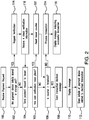
- FIG. 2 is a flow diagram showing operation of the payment system in an embodiment of the invention.
- the point of sale device 4 receives a (first) payment request from a user. This is achieved when the user presents their payment device 2 to the contactless reader 14.
- the processor 8 in the point of sale device 4 checks whether any details relating to the payment device are stored in the storage unit 12 that relate to a refused payment. If no details are found then, at step 104, the communication unit 10 sends the payment request to the issuer 6 over the network 22.
- step 105 the issuer 6 determines whether user verification has occurred at the point of sale device 4. For a typical contactless payment request there will have been no user verification.
- the issuer 6 determines whether the payment request received from the communication unit 10 can be allowed. In step 106 the issuer 6 determines whether a counter that it maintains for the number of unverified transactions relating to that payment device exceeds a threshold value. If the count of unverified transactions is greater than the threshold value then, at step 108, the issuer 6 will send a message to the point of sale device 4 to indicate that the first payment request is refused.
- the point of sale device 4 receives the indication of a refused payment request from the issuer 6 then, at step 110, displays a message on the display screen 16 indicating that the transaction has been refused.
- the displayed message can indicate that the number of unverified transactions has been exceeded and that user verification is required.
- the point of sale device 4 stores details of the payment device 2 that is associated with the refused transaction in the storage unit 12. In one example the primary account number (PAN) of the payment device 2 may be stored.
- PAN primary account number
- the process illustrated in Figure 2 can begin again when another payment request (a second payment request) is received at step 100. This is achieved when the user presents their payment device 2 to the contactless reader 14. In some embodiments the user may actually be prompted to present their payment device 2 to the contactless reader 14 again by the message displayed on the display screen 16. Alternatively, the user may simply attempt a second payment in response to the refusal of the first transaction.
- a second payment request a second payment request
- the processor 8 in the point of sale device 4 checks whether any details relating to the payment device are stored in the storage unit 12 that relate to a refused payment. On this occasion the processor 8 will find the details of the payment device 2 relating to the previous payment request in the storage unit 12.
- the processor 8 requests verification from the user. The verification request may be displayed to the user on the display screen 16.
- the user verification unit 14 receives verification information from a user.
- the verification information may be a fingerprint or a PIN, which is entered via a numeric keypad.
- the verification of the user's identity can be achieved by comparing the received verification information with verification information stored in the payment device 2, or more likely in case of a contactless transaction, retrieved from a server at issuer 6 over the network 22 prior to authorising the (second) payment request.
- the point of sale device 4 communicates with the issuer 6 to request authorisation of the (second) payment request, including verification information of the user.
- the issuer 6 determines whether the submitted user verification information matches user verification information retrieved from its internal storage. If a match is confirmed, the point of sale device 4 sends the issuer 6 a message indicating that the user has successfully completed a verification check. Thus, at step 107 the issuer 6 resets the counter that it maintains for the number of unverified transactions relating to that payment device.
- the issuer 6 determines whether the counter that it maintains for the number or the cumulative amount of unverified transactions relating to that payment device exceeds a threshold value. Since the counter has been reset to zero at step 107, the counter will be less than the threshold value. Therefore, at step 114 the issuer 6 processes the transaction, provided that the funds are available and other anti-fraud checks are satisfied. At step 116 the point of sale device 4 can display a message on the display screen 16 indicating that the transaction has been successful.
- FIG 3 is another flow diagram indicating steps that can be performed in an embodiment of the invention, and indicating those steps that are performed at the point of sale device 4 (POS terminal), and those steps that are performed at the issuer 6 (issuer host).
- the transaction starts at step 200 when the user device 2 is presented to the contactless reader 14.
- the processor 8 determines whether user verification (CVM) is required.
- CVM user verification
- user verification would be required for traditional contactless payment devices which maintain an internal counter regarding the number of unverified transactons, and where it is determined that the counter exceeds a threshold value. User verification is not normally required for contactless payment devices that lack an internal counter.
- An authorisation request is than transmitted from the communication unit 10 to the issuer 6 at step 208.
- the authorisation request transmitted at step 208 includes an indication that user verification (CVM) has occurred.
- CVM user verification
- the issuer 6 also maintains a count of the number of unverified transactions for each payment device.
- the counter maintained by the issuer 6 is reset to zero.
- the issuer 6 determines whether to allow the payment authorisation request based on the availability of funds and other anti-fraud checks. If the request is approved at step 214 then a message is delivered to the point of sale device at step 216. The transaction is then ended at step 218.
- the point of sale device 4 checks whether information relating to the payment device is stored in the storage unit 12. If the primary account number (PAN) is not stored in the storage unit then at step 222 the communication unit 10 transmits an authorisation request to the issuer 6.
- the authorisation request transmitted at step 222 includes an indication that no user verification has occurred (no CVM).
- the issuer 6 determines whether the counter that it maintains for the number or the cumulative amount of unverified transactions relating to that payment device exceeds a threshold value. If the threshold is not exceeded at step 226 then the counter is updated at step 228 to reflect the fact that a further unverified transaction has occurred. The issuer 6 then proceeds with a decision on whether to approve the transaction at step 212.
- step 226 If at step 226 it is determined that the threshold is exceeded then a message is delivered to the point of sale device 4 at step 230 indicating that the transaction is declined. In these circumstances the point of sale device 4 stores details of the PAN relating to the declined transaction in the storage unit 12 at step 232. The transaction then ends at step 218.
- step 204 If a transaction occurs where no user verification is required at step 204, but, at step 220, a PAN matching that of the payment device 2 is stored in the storage unit 12 then user verification is requested at step 206. Thus, if a first payment request has been declined and the PAN is stored in the storage unit 12 at step 232, then user verification will be requested on receipt of a second payment request involving the same payment device 2.
Landscapes
- Business, Economics & Management (AREA)
- Engineering & Computer Science (AREA)
- Accounting & Taxation (AREA)
- Physics & Mathematics (AREA)
- Strategic Management (AREA)
- General Business, Economics & Management (AREA)
- General Physics & Mathematics (AREA)
- Theoretical Computer Science (AREA)
- Finance (AREA)
- Computer Security & Cryptography (AREA)
- Computer Networks & Wireless Communication (AREA)
- Financial Or Insurance-Related Operations Such As Payment And Settlement (AREA)
- Cash Registers Or Receiving Machines (AREA)
Abstract
Description
- The present invention relates to a system and method for improving the security of payment devices, in particular contactless payment devices that use near field communication (NFC).
- Today many payments are made electronically. To authorise a payment transaction, the user needs to present a genuine and valid device (typically a debit or credit card), and some kind of user verification (such as a personal identification number or PIN). This allows the issuer of the credit or debit card to verify the identity of the user so that the transaction can be processed.
- More recently credit and debit cards have been provided with contactless technology that allow payments to be authorised when a card is presented to a contactless card reader. Typically these contactless payments without any verification of the user are allowed up to a maximum value, such as GBP 30. This provides a convenient mechanism for the user to pay for items quickly.
- One challenge for providers of contactless payment cards is that they are vulnerable to abuse if lost or stolen. This is mitigated by the presence in the point of sale terminal, of a maximum payment amount for transactions without requiring user verification. However, a lost or stolen card can still be used for an unrestricted number of transactions without any user verification, as long as the amount of each transaction is below this maximum. To counteract this problem, some contactless payment cards and devices include internal counters that maintain the cumulative number and/or the monetary amount of unverified transactions that have occurred with the device. When a new unverified transaction is initiated, the payment device checks whether adding the new transaction would make the cumulative number and/or the monetary amount of unverified transactions to exceed pre-defined thresholds as set by the issuer. If this is the case, the user may be prompted to insert their card into the point of sale terminal and to verify their identity (e.g. by entering a valid PIN). Upon successful verification of the user's identity, the issuer can send a command to the payment device, still present in the point of sale terminal, resetting its internal counters. Subsequently, the user can use the device again for a certain number and/or amount of unverified transactions.
- Recent developments in payments have attempted to diversify the number and type of devices that can be used for payments. In particular, it would be desirable to enable contactless payments to be made using wearable devices such as watches and wristbands. These payment devices are only capable of initiating contactless payments, and they may lack any user interface that might be used for user verification. Therefore, the approach to mitigate the risk of illicit use of lost and stolen devices as described above might not be possible, as it involves a contact transaction to allow the issuer to send a command to reset the internal counters for unverified transactions. An object of the present invention is to overcome and mitigate some of these issues.
- According to an aspect of the invention there is provided a method of verifying a user associated with a payment device, comprising the steps of: receiving a first payment request from the payment device; communicating with an issuer to request authorisation of the first payment request; receiving an indication of a refusal of the first payment request from the issuer; storing information related to the payment device that is associated with the refused transaction; receiving a second payment request from the payment device; requesting verification from a user if it is determined that the second payment request is initiated by the payment device for which information has been stored; receiving verification information from the user; verifying the identity of the user based on the received verification information; and communicating with the issuer to request authorisation of the second payment request, based on successful verification of the user.
- In this way, the issuer can decline a first payment request. One reason for declining the first payment request may be a determination that the user of the payment device requires verification. If payment is attempted again by the user in the second payment request then this can be detected at the point of sale device, based on the stored information relating to the refused transaction. Verification of the user can occur by obtaining something the genuine user knows (e.g. a PIN), or an inherent trait of the genuine user (e.g. a fingerprint or iris scan). This information is sent to the issuer together with the second payment request, allowing the issuer to verify the user prior to authorising and processing the payment. In this way, issuers can maintain a record of the amount and/or number of unverified transactions at their authorisation host system, and mitigate the risk of illicit transactions made by lost or stolen devices by requiring user verification based on these records. This may also remove the need to have counters present in the payment device itself in order to manage this risk.
- Preferably the first and second payment requests are contactless payment requests. One of the aims of contactless payment devices is to enable users to complete payment transactions quickly, without entering a PIN code or providing other kinds of identification for verification. However, this also makes contactless devices vulnerable when lost or stolen. The method may be particularly useful when applied to payment devices that can only be used for contactless payments, and which lack an ability to verify the user directly. Contactless payment devices like these are envisaged for use in a number of wearable devices including watches and wristbands.
- The issuer preferably provides refusal of the first payment request when it is determined that verification of the user is required. The issuer may determine that verification of the user is required for a variety of reasons. For example, it may be determined that verification of the user is required based on a comparison of data stored at the issuer relating to the payment device and a threshold. The stored data at the issuer relating to the payment device may include the number of unverified transactions or the value of unverified transactions. Thus, if the payment device has been used in more than a predetermined number of transactions then verification of the user may be required. If the payment device was lost or stolen then the new bearer may be able to use the device for payments only until the threshold in the issuer's authorisation host sytem is reached. In one example the issuer threshold may be ten unverified transactions.
- As an alternative the threshold in the issuer's authorisation host system may relate to the cumulated value of transactions, rather than their number. For example, the issuer may permit unverified transactions up to a predetermined value, such as €100.
- The issuer could also determine that verification of the user is required based on other behaviours. For example, a sudden increase in the rate of payments may prompt the issuer to request verification. In another example, a change in the geographic location or pattern of payment requests may prompt the issuer to request verification.
- The issuer can maintain a count of the number of unverified transactions or the value of unverified transactions for comparison against a threshold. This may be contrasted with other approaches where a count is maintained in the payment device. Advantageously this can improve security for devices that lack the ability to maintain an internal counter, or that lack an ability to communicate with the issuer so that an internal counter can be reset once a threshold is exceeded. These include devices that can only be used for contactless payments, since their method of use prevents a issuer from resetting an internal counter.
- Preferably the stored data at the issuer are reset based on successful verification of the user. The counter at the issuer regarding the number of unverified transactions and/or the cumulated value of unverified transactions can be set to zero when a successful verification occurs and is communicated to the issuer by the point of sale device.
- Preferably the method is perfomed in a point of sale device and the information related to the payment device that is associated with the refused transaction is stored in a storage unit in the point of sale device. In this way, a modified point of sale device can be used to prompt verification of the user. In a typical scenario, a user would present their payment device to the point of sale device, and the transaction may be refused by the issuer if certain criteria are met. The user would then present their payment device to the point of sale device again in order to re-attempt payment (in the second payment request). The point of sale device would determine that the payment device relates to a refused transaction based on the information in the storage unit, and this can be used to prompt verification of the user.
- The method may involve displaying information related to the refusal of the first payment request on a point of sale device. In this way, the user and the merchant can be made aware of the refusal of the first payment request. The method may also include displaying a reason for the refusal. In one example, the point of sale device may display an indication that the first payment request has been refused because the user has not been recently verified. This may prompt the user to present the payment device to the payment device reader again, which prompts verification of the user via the user verification unit.
- It is possible that, following refusal of the first payment request, a user would not attempt a second payment request. In these circumstances the user may attempt payment at a later time using a different point of sale device. In these circumstances the payment request would also be refused. However the user may go on to complete verification using the different point of sale device. In these circumstances the first point of sale device would continue to store information relating to the payment device and the refused transaction. There are a number of ways in which this could be handled. First, the information regarding the refused transaction could continue to be stored at the first point of sale device. Thus, if the user attempted to use the first payment device again then verification would be requested, even though the counter at the issuer does not require the user to be verified. Alternatively, the stored information at the first payment device could exist only for a predetermined time period or for a predetermined number of refused transactions. Thus, if the user did not immediately make a second payment request, the point of sale device could assume that they have moved on elsewhere, and would, once more, pass the first payment request to the issuer for acceptance/refusal. This alternative arrangement may be preferred because it would reduce unnecessary verifications of the user.
- According to another aspect of the invention there is provided a point of sale device comprising: a payment device reader; a processor; a user verification unit; a communication module configured to communicate with a issuer; and a storage unit; wherein the payment device reader is configured to receive a first payment request from a payment device; wherein the communication module is configured to communicate with the issuer to request authorisation of the first payment request; wherein the communication module is configured to receive an indication of a refusal of the first payment request from the issuer; wherein the processor is configured to store information related to the payment device that is associated with the refused transaction in the storage unit; wherein the payment device reader is configured to receive a second payment request from the payment device; wherein the processor is configured to request verification from a user by determining that the second payment request is from the payment device for which information is stored in the storage unit; wherein user verification unit is configured to receive verification information from the user and to verify the user; and wherein the communication module is configured to communicate with the issuer to request authorisation of the second payment request, based on successful verification of the user.
- The point of sale device may be provided as an integrated unit, or the various components could be distributed in a number of separate devices. In particular, the storage unit could be provided within the integrated unit or it could be provided elsewhere and accessed over a network.
- Preferably the payment device reader is a contactless payment device reader. The contactless payment device reader and the payment device may use near field communication (NFC) technology such as radio frequency identification (RFID).
- According to yet another aspect of the invention there is provided a payment system comprising: the point of sale device as previously defined, and a issuer, configured to communicate with the point of sale device.
- The payment system may also include the payment device. Preferably the payment device is configured only for contactless payments and lacks a facility for user verification. For example, the payment device may be a watch or other wearable device that lacks conventional user identification means such as a user interface or fingerprint reader.
- The user verification unit may be a user interface with which the user can enter a PIN. Alternatively the user verification unit may be a fingerprint reader or some other biometric reader.
- According to yet another aspect of the invention there is provided a computer readable medium comprising computer executable instructions which, when executed on the computer, cause the processor to perform steps, comprising: receiving a first payment request from the payment device; communicating with a issuer to request authorisation of the first payment request; receiving indication from the issuer of refusal of the first payment request; storing information related to the payment device that is associated with the refused transaction; receiving a second payment request from the payment device; requesting verification from a user if it is determined that the second payment request is from the payment device for which information is stored; receiving verification information from the user; and communicating with the issuer to request authorisation of the second payment request, based on successful verification of the user.
- The computer readable medium may be provided at a download server, and the computer executable instructions may be downloaded to a point of sale device. In this way, a software upgrade may be provided to a point of sale device to enable operation of the steps described above.
- Embodiments of the invention are now described, by way of example, with reference to the drawings, in which:
-
Figure 1 is a schematic view of a payment system in an embodiment of the present invention; -
Figure 2 is a flow chart illustrating operations that can occur in a payment system in an embodiment of the present invention; and -
Figure 3 is another flow chart illustrating operations that can occur in a payment system in another embodiment of the present invention. -
Figure 1 is a schematic view of a payment system, including acontactless payment device 2, a point of sale device 4 and a issuer 6. The point of sale device comprises aprocessor 8 and acommunication unit 10. The point of sale device 4 is configured to communicate with the issuer 6 over a network 22. The point of sale device 4 also includes adisplay screen 16. - The point of sale device 4 includes a
contactless reader 14 which is designed to interact with thecontactless payment device 2 using near field communication (NFC), as is known in the art. The point of sale device 4 also includes astorage unit 12 and auser verification unit 14. Theuser verification unit 14 may be embodied as a keypad with which a user can enter a PIN. Alternatively theuser verification unit 14 may be embodied as a fingerprint reader or some other biometric reader. - The payment system also includes a
download server 20. Thedownload server 20 is configured to communicate with the point of sale device 4 and/or the issuer 6 over the network 22. Thedownload server 20 can provide software upgrades to the point of sale device 4. -
Figure 2 is a flow diagram showing operation of the payment system in an embodiment of the invention. Atstep 100 the point of sale device 4 receives a (first) payment request from a user. This is achieved when the user presents theirpayment device 2 to thecontactless reader 14. Atstep 102 theprocessor 8 in the point of sale device 4 checks whether any details relating to the payment device are stored in thestorage unit 12 that relate to a refused payment. If no details are found then, atstep 104, thecommunication unit 10 sends the payment request to the issuer 6 over the network 22. - At
step 105 the issuer 6 determines whether user verification has occurred at the point of sale device 4. For a typical contactless payment request there will have been no user verification. - At
step 106 the issuer 6 determines whether the payment request received from thecommunication unit 10 can be allowed. Instep 106 the issuer 6 determines whether a counter that it maintains for the number of unverified transactions relating to that payment device exceeds a threshold value. If the count of unverified transactions is greater than the threshold value then, atstep 108, the issuer 6 will send a message to the point of sale device 4 to indicate that the first payment request is refused. - The point of sale device 4 receives the indication of a refused payment request from the issuer 6 then, at
step 110, displays a message on thedisplay screen 16 indicating that the transaction has been refused. The displayed message can indicate that the number of unverified transactions has been exceeded and that user verification is required. Atstep 112 the point of sale device 4 stores details of thepayment device 2 that is associated with the refused transaction in thestorage unit 12. In one example the primary account number (PAN) of thepayment device 2 may be stored. - The process illustrated in
Figure 2 can begin again when another payment request (a second payment request) is received atstep 100. This is achieved when the user presents theirpayment device 2 to thecontactless reader 14. In some embodiments the user may actually be prompted to present theirpayment device 2 to thecontactless reader 14 again by the message displayed on thedisplay screen 16. Alternatively, the user may simply attempt a second payment in response to the refusal of the first transaction. - At
step 102 theprocessor 8 in the point of sale device 4 checks whether any details relating to the payment device are stored in thestorage unit 12 that relate to a refused payment. On this occasion theprocessor 8 will find the details of thepayment device 2 relating to the previous payment request in thestorage unit 12. Atstep 114 theprocessor 8 requests verification from the user. The verification request may be displayed to the user on thedisplay screen 16. - At
step 116 theuser verification unit 14 receives verification information from a user. In example embodiments the verification information may be a fingerprint or a PIN, which is entered via a numeric keypad. The verification of the user's identity can be achieved by comparing the received verification information with verification information stored in thepayment device 2, or more likely in case of a contactless transaction, retrieved from a server at issuer 6 over the network 22 prior to authorising the (second) payment request. - At
step 104 the point of sale device 4 communicates with the issuer 6 to request authorisation of the (second) payment request, including verification information of the user. Atstep 105 the issuer 6 determines whether the submitted user verification information matches user verification information retrieved from its internal storage. If a match is confirmed, the point of sale device 4 sends the issuer 6 a message indicating that the user has successfully completed a verification check. Thus, atstep 107 the issuer 6 resets the counter that it maintains for the number of unverified transactions relating to that payment device. - At
step 106 the issuer 6 determines whether the counter that it maintains for the number or the cumulative amount of unverified transactions relating to that payment device exceeds a threshold value. Since the counter has been reset to zero atstep 107, the counter will be less than the threshold value. Therefore, atstep 114 the issuer 6 processes the transaction, provided that the funds are available and other anti-fraud checks are satisfied. Atstep 116 the point of sale device 4 can display a message on thedisplay screen 16 indicating that the transaction has been successful. -
Figure 3 is another flow diagram indicating steps that can be performed in an embodiment of the invention, and indicating those steps that are performed at the point of sale device 4 (POS terminal), and those steps that are performed at the issuer 6 (issuer host). In this example, the transaction starts atstep 200 when theuser device 2 is presented to thecontactless reader 14. Atstep 204 theprocessor 8 determines whether user verification (CVM) is required. In this example, user verification would be required for traditional contactless payment devices which maintain an internal counter regarding the number of unverified transactons, and where it is determined that the counter exceeds a threshold value. User verification is not normally required for contactless payment devices that lack an internal counter. - If user verification is required then it is requested and the user provides verification information using the
user verification unit 14 atstep 206. An authorisation request is than transmitted from thecommunication unit 10 to the issuer 6 atstep 208. The authorisation request transmitted atstep 208 includes an indication that user verification (CVM) has occurred. The issuer 6 also maintains a count of the number of unverified transactions for each payment device. Atstep 210 the counter maintained by the issuer 6 is reset to zero. Atstep 212 the issuer 6 determines whether to allow the payment authorisation request based on the availability of funds and other anti-fraud checks. If the request is approved atstep 214 then a message is delivered to the point of sale device atstep 216. The transaction is then ended atstep 218. - If no user verification is required at
step 204 then atstep 220 the point of sale device 4 checks whether information relating to the payment device is stored in thestorage unit 12. If the primary account number (PAN) is not stored in the storage unit then atstep 222 thecommunication unit 10 transmits an authorisation request to the issuer 6. The authorisation request transmitted atstep 222 includes an indication that no user verification has occurred (no CVM). Atstep 224 the issuer 6 determines whether the counter that it maintains for the number or the cumulative amount of unverified transactions relating to that payment device exceeds a threshold value. If the threshold is not exceeded atstep 226 then the counter is updated atstep 228 to reflect the fact that a further unverified transaction has occurred. The issuer 6 then proceeds with a decision on whether to approve the transaction atstep 212. If atstep 226 it is determined that the threshold is exceeded then a message is delivered to the point of sale device 4 atstep 230 indicating that the transaction is declined. In these circumstances the point of sale device 4 stores details of the PAN relating to the declined transaction in thestorage unit 12 atstep 232. The transaction then ends atstep 218. - If a transaction occurs where no user verification is required at
step 204, but, atstep 220, a PAN matching that of thepayment device 2 is stored in thestorage unit 12 then user verification is requested atstep 206. Thus, if a first payment request has been declined and the PAN is stored in thestorage unit 12 atstep 232, then user verification will be requested on receipt of a second payment request involving thesame payment device 2.
Claims (12)
- A method of verifying a user associated with a payment device, comprising the steps of:receiving a first payment request from the payment device;communicating with an issuer to request authorisation of the first payment request;receiving an indication of a refusal of the first payment request from the issuer;storing information related to the payment device that is associated with the refused transaction;receiving a second payment request from the payment device;requesting verification from a user if it is determined that the second payment request is from the payment device for which information is stored;receiving verification information from the user;verifying the identity of the user based on the received verification information; andcommunicating with the issuer to request authorisation of the second payment request, based on successful verification of the user.
- The method of claim 1, wherein the first and second payment requests are contactless payment requests.
- The method of claim 1 or claim 2, wherein the issuer provides refusal of the first payment request when it is determined that verification of the user is required.
- The method of claim 3, wherein the issuer determines that verification of the user is required based on a comparison of data stored at the issuer relating to the payment device and a threshold.
- The method of claim 4, wherein the stored data at the issuer relating to the payment device includes the number of unverified transactions or the value of unverified transactions.
- The method of claim 5, wherein the stored data at the issuer are reset based on successful verification of the user.
- The method of any of the preceding claims, wherein the method is perfomed in a point of sale device and the information related to the payment device that is associated with the refused transaction is stored in a storage unit in the point of sale device.
- The method of any of the preceding claims, comprising the step of displaying information related to the refusal of the first payment request on a point of sale device.
- A point of sale device comprising:a payment device reader;a processor;a user verification unit;a communication module configured to communicate with a issuer; anda storage unit;wherein the payment device reader is configured to receive a first payment request from a payment device;wherein the communication module is configured to communicate with the issuer to request authorisation of the first payment request;wherein the communication module is configured to receive an indication of a refusal of the first payment request from the issuer;wherein the processor is configured to store information related to the payment device that is associated with the refused transaction in the storage unit;wherein the payment device reader is configured to receive a second payment request from the payment device;wherein the processor is configured to request verification from a user by determining that the second payment request is from the payment device for which information is stored in the storage unit;wherein user verification unit is configured to receive verification information from the user; andwherein the communication module is configured to communicate with the issuer to request authorisation of the second payment request, including user verification data.
- The point of sale device of claim 9, wherein the payment device reader is a contactless payment device reader.
- A payment system comprising:the point of sale device of claim 10; anda issuer, configured to communicate with the point of sale device.
- A computer readable medium comprising computer executable instructions which, when executed on the computer, cause the processor to perform steps, comprising:receiving a first payment request from the payment device;communicating with a issuer to request authorisation of the first payment request;receiving indication of refusal of the first payment request from the issuer;storing information related to the payment device that is associated with the refused transaction;receiving a second payment request from the payment device;requesting verification from a user if it is determined that the second payment request is from the payment device for which information is stored;receiving verification information from the user; andcommunicating with the issuer to request authorisation of the second payment request, including user verification data.
Priority Applications (3)
| Application Number | Priority Date | Filing Date | Title |
|---|---|---|---|
| EP17188339.0A EP3451262A1 (en) | 2017-08-29 | 2017-08-29 | A system for verifying a user of a payment device |
| CN201810874035.6A CN109426957B (en) | 2017-08-29 | 2018-08-03 | System for authenticating a user of a payment device |
| US16/110,109 US11341479B2 (en) | 2017-08-29 | 2018-08-23 | System for verifying a user of a payment device |
Applications Claiming Priority (1)
| Application Number | Priority Date | Filing Date | Title |
|---|---|---|---|
| EP17188339.0A EP3451262A1 (en) | 2017-08-29 | 2017-08-29 | A system for verifying a user of a payment device |
Publications (1)
| Publication Number | Publication Date |
|---|---|
| EP3451262A1 true EP3451262A1 (en) | 2019-03-06 |
Family
ID=59738269
Family Applications (1)
| Application Number | Title | Priority Date | Filing Date |
|---|---|---|---|
| EP17188339.0A Withdrawn EP3451262A1 (en) | 2017-08-29 | 2017-08-29 | A system for verifying a user of a payment device |
Country Status (3)
| Country | Link |
|---|---|
| US (1) | US11341479B2 (en) |
| EP (1) | EP3451262A1 (en) |
| CN (1) | CN109426957B (en) |
Families Citing this family (2)
| Publication number | Priority date | Publication date | Assignee | Title |
|---|---|---|---|---|
| EP3451262A1 (en) * | 2017-08-29 | 2019-03-06 | Mastercard International Incorporated | A system for verifying a user of a payment device |
| US11038688B1 (en) * | 2019-12-30 | 2021-06-15 | Capital One Services, Llc | Techniques to control applets for contactless cards |
Citations (2)
| Publication number | Priority date | Publication date | Assignee | Title |
|---|---|---|---|---|
| US20110155800A1 (en) * | 2009-12-31 | 2011-06-30 | First Data Corporation | Systems and methods for processing a transaction associated with a contactless transaction card |
| GB2533333A (en) * | 2014-12-16 | 2016-06-22 | Visa Europe Ltd | Transaction authorisation |
Family Cites Families (26)
| Publication number | Priority date | Publication date | Assignee | Title |
|---|---|---|---|---|
| US20030204475A1 (en) * | 2002-04-29 | 2003-10-30 | Nicholas Cuda | Method for the prevention of the unauthorized payments of funds |
| US8700729B2 (en) * | 2005-01-21 | 2014-04-15 | Robin Dua | Method and apparatus for managing credentials through a wireless network |
| AU2008294354A1 (en) * | 2007-06-20 | 2009-03-12 | Mchek India Payment Systems Pvt. Ltd. | A method and system for secure authentication |
| EP2469476A3 (en) * | 2008-10-31 | 2014-08-20 | Accenture Global Services Limited | System for controlling user access to a service |
| US8127982B1 (en) * | 2009-01-09 | 2012-03-06 | Apple Inc. | Parental controls |
| US20110016052A1 (en) * | 2009-07-16 | 2011-01-20 | Scragg Ernest M | Event Tracking and Velocity Fraud Rules for Financial Transactions |
| CN101980310B (en) * | 2010-11-08 | 2014-03-26 | 中国电信股份有限公司 | Online consumption account-based non-contact payment method and system |
| WO2012103128A2 (en) * | 2011-01-24 | 2012-08-02 | Visa International Service Association | Statement portal with receipt tagging and associated enhanced benefit messaging |
| US8401904B1 (en) * | 2011-11-13 | 2013-03-19 | Google Inc. | Real-time payment authorization |
| CN102521748B (en) * | 2011-11-23 | 2018-04-10 | 华为技术有限公司 | Protect the method and device of account safety |
| BR102012030476A2 (en) * | 2011-12-09 | 2015-10-06 | Visa Int Service Ass | method, computer readable storage media, and system |
| EP2823438A4 (en) * | 2012-03-05 | 2015-05-06 | Visa Int Service Ass | Authentication using biometric technology through a consumer device |
| CN103794000B (en) | 2012-10-31 | 2017-04-19 | 中国银联股份有限公司 | Method for processing in case of non-contact IC card data reading failure and device for implementing method |
| HK1217804A1 (en) | 2013-07-04 | 2017-01-20 | 维萨国际服务协会 | Authorizing transactions using mobile device based rules |
| CN104574057B (en) * | 2013-10-25 | 2020-06-16 | 腾讯科技(深圳)有限公司 | Online payment method and related equipment and system |
| US9846867B2 (en) * | 2013-11-20 | 2017-12-19 | Mastercard International Incorporated | System and method for point-of-sale electronic receipt generation and management |
| US10959093B2 (en) * | 2014-05-08 | 2021-03-23 | Visa International Service Association | Method and system for provisioning access data to mobile device |
| CN105335851B (en) * | 2014-08-01 | 2021-12-21 | 小米科技有限责任公司 | Pre-payment confirmation protection method and device based on payment history |
| US20160253653A1 (en) * | 2015-02-27 | 2016-09-01 | Visa International Service Association | Payment checkout within an application |
| NL2015477B1 (en) * | 2015-09-21 | 2017-04-19 | Mdt Ie Holding B V | Method, electronic transaction order system, cash register system, transaction server and a computer program product for executing an electronic transaction order. |
| US11244317B2 (en) * | 2015-11-03 | 2022-02-08 | Mastercard International Incorporated | Systems and methods for feeding a previous case action for a decision of confirming financial transactions |
| CN105488670A (en) * | 2015-11-23 | 2016-04-13 | 上海银生宝电子支付服务有限公司 | Payment request processing method, apparatus and system |
| CN105654286A (en) * | 2015-12-29 | 2016-06-08 | 宇龙计算机通信科技(深圳)有限公司 | Payment method, payment device and wearable device |
| US12118532B2 (en) * | 2016-03-14 | 2024-10-15 | Vray Inc. | Online mobile payment system and method using a server between the personal comuter and the mobile payment device |
| CN109416790A (en) * | 2016-06-29 | 2019-03-01 | 维萨国际服务协会 | Method and system for processing of passing by |
| EP3451262A1 (en) * | 2017-08-29 | 2019-03-06 | Mastercard International Incorporated | A system for verifying a user of a payment device |
-
2017
- 2017-08-29 EP EP17188339.0A patent/EP3451262A1/en not_active Withdrawn
-
2018
- 2018-08-03 CN CN201810874035.6A patent/CN109426957B/en active Active
- 2018-08-23 US US16/110,109 patent/US11341479B2/en active Active
Patent Citations (2)
| Publication number | Priority date | Publication date | Assignee | Title |
|---|---|---|---|---|
| US20110155800A1 (en) * | 2009-12-31 | 2011-06-30 | First Data Corporation | Systems and methods for processing a transaction associated with a contactless transaction card |
| GB2533333A (en) * | 2014-12-16 | 2016-06-22 | Visa Europe Ltd | Transaction authorisation |
Also Published As
| Publication number | Publication date |
|---|---|
| US20190066091A1 (en) | 2019-02-28 |
| CN109426957A (en) | 2019-03-05 |
| CN109426957B (en) | 2022-08-30 |
| US11341479B2 (en) | 2022-05-24 |
Similar Documents
| Publication | Publication Date | Title |
|---|---|---|
| US12159282B2 (en) | Smart chip card with fraud alert and biometric reset | |
| US11232427B2 (en) | Method of performing transactions with contactless payment devices using pre-tap and two-tap operations | |
| US9824355B2 (en) | Method of performing transactions with contactless payment devices using pre-tap and two-tap operations | |
| AU2021254551A1 (en) | Transaction authorisation | |
| WO2015103922A1 (en) | Method, device and system for managing money transfer | |
| US20130346223A1 (en) | Processing point-of-sale transactions using a mobile card and mobile phone | |
| US20150310419A1 (en) | Cardless point-of-sale payment method | |
| JP2014021974A (en) | Method for online payment, and system and electronic device for executing the same | |
| US12288199B2 (en) | Casino cash system, apparatus and method utilizing integrated circuit cards | |
| US10902392B2 (en) | Financial terminal that automatically reconfigures into different financial processing terminal types | |
| AU2017219057A1 (en) | Method of performing transactions with contactless payment devices using pre-tap and two-tap operations | |
| US11341479B2 (en) | System for verifying a user of a payment device | |
| US20190378115A1 (en) | Electronic payment apparatus | |
| KR20180010228A (en) | Computerized method and system of credit loan application and issuance | |
| EP3319033A1 (en) | Method for authorising card present transactions on a transaction terminal | |
| US20150339657A1 (en) | Anti-fraud computer implemented method for financial card transaction | |
| HK1184584B (en) | Method of performing transactions with contactless payment devices using pre-tap and two-tap operations | |
| HK1184584A (en) | Method of performing transactions with contactless payment devices using pre-tap and two-tap operations | |
| GB2549245A (en) | Out of band pre-authentication of a transaction |
Legal Events
| Date | Code | Title | Description |
|---|---|---|---|
| PUAI | Public reference made under article 153(3) epc to a published international application that has entered the european phase |
Free format text: ORIGINAL CODE: 0009012 |
|
| STAA | Information on the status of an ep patent application or granted ep patent |
Free format text: STATUS: THE APPLICATION HAS BEEN PUBLISHED |
|
| AK | Designated contracting states |
Kind code of ref document: A1 Designated state(s): AL AT BE BG CH CY CZ DE DK EE ES FI FR GB GR HR HU IE IS IT LI LT LU LV MC MK MT NL NO PL PT RO RS SE SI SK SM TR |
|
| AX | Request for extension of the european patent |
Extension state: BA ME |
|
| STAA | Information on the status of an ep patent application or granted ep patent |
Free format text: STATUS: REQUEST FOR EXAMINATION WAS MADE |
|
| 17P | Request for examination filed |
Effective date: 20190902 |
|
| RBV | Designated contracting states (corrected) |
Designated state(s): AL AT BE BG CH CY CZ DE DK EE ES FI FR GB GR HR HU IE IS IT LI LT LU LV MC MK MT NL NO PL PT RO RS SE SI SK SM TR |
|
| STAA | Information on the status of an ep patent application or granted ep patent |
Free format text: STATUS: EXAMINATION IS IN PROGRESS |
|
| 17Q | First examination report despatched |
Effective date: 20210217 |
|
| STAA | Information on the status of an ep patent application or granted ep patent |
Free format text: STATUS: THE APPLICATION IS DEEMED TO BE WITHDRAWN |
|
| 18D | Application deemed to be withdrawn |
Effective date: 20240409 |