EP3450433A1 - Substituted purine derivative - Google Patents
Substituted purine derivative Download PDFInfo
- Publication number
- EP3450433A1 EP3450433A1 EP17789569.5A EP17789569A EP3450433A1 EP 3450433 A1 EP3450433 A1 EP 3450433A1 EP 17789569 A EP17789569 A EP 17789569A EP 3450433 A1 EP3450433 A1 EP 3450433A1
- Authority
- EP
- European Patent Office
- Prior art keywords
- substituted
- methyl
- same
- group
- alkyl
- Prior art date
- Legal status (The legal status is an assumption and is not a legal conclusion. Google has not performed a legal analysis and makes no representation as to the accuracy of the status listed.)
- Granted
Links
- 0 CC*(C(C)=*C1=C(*2)OC)(C1=*C2(C)I)S(C)* Chemical compound CC*(C(C)=*C1=C(*2)OC)(C1=*C2(C)I)S(C)* 0.000 description 10
- HDVHFHONOKCUHQ-UHFFFAOYSA-N C1NCc(cccc2)c2OC1 Chemical compound C1NCc(cccc2)c2OC1 HDVHFHONOKCUHQ-UHFFFAOYSA-N 0.000 description 1
- GWVMLCQWXVFZCN-UHFFFAOYSA-N C1NCc2c1cccc2 Chemical compound C1NCc2c1cccc2 GWVMLCQWXVFZCN-UHFFFAOYSA-N 0.000 description 1
- VWSSNZRMYQUZAL-UHFFFAOYSA-N C1N[IH]CC=C1 Chemical compound C1N[IH]CC=C1 VWSSNZRMYQUZAL-UHFFFAOYSA-N 0.000 description 1
- UWYZHKAOTLEWKK-UHFFFAOYSA-N C1c2ccccc2CNC1 Chemical compound C1c2ccccc2CNC1 UWYZHKAOTLEWKK-UHFFFAOYSA-N 0.000 description 1
- LFYKOVIOSHSTSN-UHFFFAOYSA-N CC(C)(C)OC(N(Cc(cc1F)ccc1Br)c1nc(OC)nc(C)c1[N+]([O-])=O)=O Chemical compound CC(C)(C)OC(N(Cc(cc1F)ccc1Br)c1nc(OC)nc(C)c1[N+]([O-])=O)=O LFYKOVIOSHSTSN-UHFFFAOYSA-N 0.000 description 1
- YGZSWODXKJPXEE-UHFFFAOYSA-N CC(C)(C)OC(N(Cc(ccc(C1C(CC2)CCN2C1)c1)c1F)c1nc(OC)nc(C)c1[N+]([O-])=O)=O Chemical compound CC(C)(C)OC(N(Cc(ccc(C1C(CC2)CCN2C1)c1)c1F)c1nc(OC)nc(C)c1[N+]([O-])=O)=O YGZSWODXKJPXEE-UHFFFAOYSA-N 0.000 description 1
- FOQAUDPHVZLUSI-WCSIJFPASA-N CC(C)(C)OC(N1[C@@H](C2)CN(Cc3ccc(C[n]4c(-c5cncc(F)c5)nc(c(C)n5)c4nc5OC)c(F)c3)C2C1)=O Chemical compound CC(C)(C)OC(N1[C@@H](C2)CN(Cc3ccc(C[n]4c(-c5cncc(F)c5)nc(c(C)n5)c4nc5OC)c(F)c3)C2C1)=O FOQAUDPHVZLUSI-WCSIJFPASA-N 0.000 description 1
- NLRDJTQNGYEZIO-UHFFFAOYSA-N CC1C(c([n]2Cc(ccc(C(CC3)=CCN3C(OC(C)(C)C)=O)c3)c3F)nc(c(C)n3)c2nc3OC)=CN=CC1F Chemical compound CC1C(c([n]2Cc(ccc(C(CC3)=CCN3C(OC(C)(C)C)=O)c3)c3F)nc(c(C)n3)c2nc3OC)=CN=CC1F NLRDJTQNGYEZIO-UHFFFAOYSA-N 0.000 description 1
- FPBPTEBBUGCEPM-UHFFFAOYSA-N CCCCOc(nc1N)nc2c1nc(-c1cc(C)cnc1)[n]2Cc1ccccc1 Chemical compound CCCCOc(nc1N)nc2c1nc(-c1cc(C)cnc1)[n]2Cc1ccccc1 FPBPTEBBUGCEPM-UHFFFAOYSA-N 0.000 description 1
- JHLWZTUOTBWQET-UHFFFAOYSA-N CCCCOc1nc(N)c2nc(-c3cc(OC)cnc3)[n](Cc3ccccc3)c2n1 Chemical compound CCCCOc1nc(N)c2nc(-c3cc(OC)cnc3)[n](Cc3ccccc3)c2n1 JHLWZTUOTBWQET-UHFFFAOYSA-N 0.000 description 1
- VUZTXYIZYCRMHC-UHFFFAOYSA-N CCCOc(nc1NCc(cc2)cnc2F)nc(C)c1[N+]([O-])=O Chemical compound CCCOc(nc1NCc(cc2)cnc2F)nc(C)c1[N+]([O-])=O VUZTXYIZYCRMHC-UHFFFAOYSA-N 0.000 description 1
- BTLGRSXHMHTZFU-UHFFFAOYSA-N CCN1C(C2)CN(Cc3cc(F)c(C[n](c4n5)c(-c6cc(C#N)cnc6)nc4c(C)nc5OC)cc3)C2C1 Chemical compound CCN1C(C2)CN(Cc3cc(F)c(C[n](c4n5)c(-c6cc(C#N)cnc6)nc4c(C)nc5OC)cc3)C2C1 BTLGRSXHMHTZFU-UHFFFAOYSA-N 0.000 description 1
- BPIGNXFZCPMIOW-BHWOMJMDSA-N CCN1[C@@H](C2)CN(Cc3cc(F)c(CNc4nc(OC)nc(C)c4N)cc3)C2C1 Chemical compound CCN1[C@@H](C2)CN(Cc3cc(F)c(CNc4nc(OC)nc(C)c4N)cc3)C2C1 BPIGNXFZCPMIOW-BHWOMJMDSA-N 0.000 description 1
- CCKSSPXTUVXWEG-GOTSBHOMSA-N CCN1[C@@H](C2)CN(Cc3ncc(C[n](c4n5)c(-c6cc(F)cnc6)nc4c(C)nc5OCC)cc3)[C@@H]2C1 Chemical compound CCN1[C@@H](C2)CN(Cc3ncc(C[n](c4n5)c(-c6cc(F)cnc6)nc4c(C)nc5OCC)cc3)[C@@H]2C1 CCKSSPXTUVXWEG-GOTSBHOMSA-N 0.000 description 1
- SQJQKKSTOCWSNC-UHFFFAOYSA-N CCOC(c1ccc(C2C(CC3)CCN3C2)cc1)=O Chemical compound CCOC(c1ccc(C2C(CC3)CCN3C2)cc1)=O SQJQKKSTOCWSNC-UHFFFAOYSA-N 0.000 description 1
- USXLQNVKCKLDQY-UHFFFAOYSA-N CCOc(nc1C)nc2c1nc(-c1cc(F)cnc1)[n]2Cc(c(OC)c1)cnc1C1=CN2CCC1CC2 Chemical compound CCOc(nc1C)nc2c1nc(-c1cc(F)cnc1)[n]2Cc(c(OC)c1)cnc1C1=CN2CCC1CC2 USXLQNVKCKLDQY-UHFFFAOYSA-N 0.000 description 1
- FJOAHELQOVDBSD-UHFFFAOYSA-N CCOc(nc1C)nc2c1nc(-c1cc(F)cnc1)[n]2Cc(cnc(C1C(CC2)CCN2C1)c1)c1OC Chemical compound CCOc(nc1C)nc2c1nc(-c1cc(F)cnc1)[n]2Cc(cnc(C1C(CC2)CCN2C1)c1)c1OC FJOAHELQOVDBSD-UHFFFAOYSA-N 0.000 description 1
- UZTFKRINRKBUMI-UHFFFAOYSA-N CCOc(nc1C)nc2c1nc(-c1cc(F)cnc1)[n]2Cc1c[n](CC2CN(C)CCC2)nc1 Chemical compound CCOc(nc1C)nc2c1nc(-c1cc(F)cnc1)[n]2Cc1c[n](CC2CN(C)CCC2)nc1 UZTFKRINRKBUMI-UHFFFAOYSA-N 0.000 description 1
- IWANBQHYPUJWGN-UHFFFAOYSA-N CCOc(nc1C)nc2c1nc(-c1cc(F)cnc1)[n]2Cc1c[n](CC2OCCN(C)C2)nc1 Chemical compound CCOc(nc1C)nc2c1nc(-c1cc(F)cnc1)[n]2Cc1c[n](CC2OCCN(C)C2)nc1 IWANBQHYPUJWGN-UHFFFAOYSA-N 0.000 description 1
- ICNRJXYNHLDEEK-LJAQVGFWSA-N CCOc(nc1C)nc2c1nc(-c1cncc(F)c1)[n]2Cc1ccc([C@]2(C)C(CC3)CCN3C2)c(C#N)c1 Chemical compound CCOc(nc1C)nc2c1nc(-c1cncc(F)c1)[n]2Cc1ccc([C@]2(C)C(CC3)CCN3C2)c(C#N)c1 ICNRJXYNHLDEEK-LJAQVGFWSA-N 0.000 description 1
- DNDQNLHUNBPBFB-UHFFFAOYSA-N CCOc(nc1N(Cc2c[n](C3CCN(C)CC3)nc2)C(OC(C)(C)C)=O)nc(C)c1N Chemical compound CCOc(nc1N(Cc2c[n](C3CCN(C)CC3)nc2)C(OC(C)(C)C)=O)nc(C)c1N DNDQNLHUNBPBFB-UHFFFAOYSA-N 0.000 description 1
- RWSDGDXWEUFESD-UHFFFAOYSA-N CCOc(nc1N)nc2c1nc(-c1cc(F)cnc1)[n]2Cc(cc1)ccc1-c1cncc(F)c1 Chemical compound CCOc(nc1N)nc2c1nc(-c1cc(F)cnc1)[n]2Cc(cc1)ccc1-c1cncc(F)c1 RWSDGDXWEUFESD-UHFFFAOYSA-N 0.000 description 1
- XFJDTTFLBHUSQK-NRFANRHFSA-N CCOc(nc1N)nc2c1nc(-c1cc(F)cnc1)[n]2Cc(cc1)ccc1O[C@@H]1C(CC2)CCN2C1 Chemical compound CCOc(nc1N)nc2c1nc(-c1cc(F)cnc1)[n]2Cc(cc1)ccc1O[C@@H]1C(CC2)CCN2C1 XFJDTTFLBHUSQK-NRFANRHFSA-N 0.000 description 1
- IWOKUJRANXDZMU-UHFFFAOYSA-N CCOc(nc1N)nc2c1nc(-c1cc(F)cnc1)[n]2Cc1cc(CN(C)C)n[o]1 Chemical compound CCOc(nc1N)nc2c1nc(-c1cc(F)cnc1)[n]2Cc1cc(CN(C)C)n[o]1 IWOKUJRANXDZMU-UHFFFAOYSA-N 0.000 description 1
- GGUBGLCSQQFNHS-UHFFFAOYSA-N CCOc(nc1N)nc2c1nc(-c1cc(F)cnc1)[n]2Cc1ccc(CN2C(CC3)CN3CC2)cc1 Chemical compound CCOc(nc1N)nc2c1nc(-c1cc(F)cnc1)[n]2Cc1ccc(CN2C(CC3)CN3CC2)cc1 GGUBGLCSQQFNHS-UHFFFAOYSA-N 0.000 description 1
- RSTJFTAMYSPRJF-OYRHEFFESA-N CCOc(nc1N)nc2c1nc(-c1cc(F)cnc1)[n]2Cc1ccc(CN2[C@@H]3CNC[C@H]2CC3)cc1 Chemical compound CCOc(nc1N)nc2c1nc(-c1cc(F)cnc1)[n]2Cc1ccc(CN2[C@@H]3CNC[C@H]2CC3)cc1 RSTJFTAMYSPRJF-OYRHEFFESA-N 0.000 description 1
- BDZMTBVFSCFWMH-UHFFFAOYSA-O CCOc(nc1N)nc2c1nc(C1=CN(C)CC(F)=C1)[n]2Cc(cc1)ccc1OCCN1CC[NH2+]CC1 Chemical compound CCOc(nc1N)nc2c1nc(C1=CN(C)CC(F)=C1)[n]2Cc(cc1)ccc1OCCN1CC[NH2+]CC1 BDZMTBVFSCFWMH-UHFFFAOYSA-O 0.000 description 1
- NKAYFZJVBXSNFX-UHFFFAOYSA-N CCOc(nc1NCc(cc2)ncc2Br)nc(C)c1N Chemical compound CCOc(nc1NCc(cc2)ncc2Br)nc(C)c1N NKAYFZJVBXSNFX-UHFFFAOYSA-N 0.000 description 1
- ALLFTOAGKTZXEH-UHFFFAOYSA-N CCOc(nc1NCc(ccc(Br)c2)c2F)nc(C)c1[N+]([O-])=O Chemical compound CCOc(nc1NCc(ccc(Br)c2)c2F)nc(C)c1[N+]([O-])=O ALLFTOAGKTZXEH-UHFFFAOYSA-N 0.000 description 1
- MBBFFDAJRYVNRJ-UHFFFAOYSA-N CCOc(nc1NCc(ccc(C2C(CC3)CCN3C2)n2)c2OC)nc(C)c1N Chemical compound CCOc(nc1NCc(ccc(C2C(CC3)CCN3C2)n2)c2OC)nc(C)c1N MBBFFDAJRYVNRJ-UHFFFAOYSA-N 0.000 description 1
- OGKYXHVZDQTBOD-UHFFFAOYSA-N CCOc(nc1NCc2ccc(C3C(CC4)CCN4C3)cc2)nc(C)c1[N+]([O-])=O Chemical compound CCOc(nc1NCc2ccc(C3C(CC4)CCN4C3)cc2)nc(C)c1[N+]([O-])=O OGKYXHVZDQTBOD-UHFFFAOYSA-N 0.000 description 1
- GJYHRTYTFQWQMP-UHFFFAOYSA-N CCOc(nc1[n]2Cc(cc3)ccc3C(OC)=O)nc(N)c1nc2Br Chemical compound CCOc(nc1[n]2Cc(cc3)ccc3C(OC)=O)nc(N)c1nc2Br GJYHRTYTFQWQMP-UHFFFAOYSA-N 0.000 description 1
- VCJQYNZAMRZFHU-UHFFFAOYSA-N CCOc1cc(C2=CN3CCC2CC3)ccc1C[n]1c(-c2cc(F)cnc2)nc(c(C)n2)c1nc2OCC Chemical compound CCOc1cc(C2=CN3CCC2CC3)ccc1C[n]1c(-c2cc(F)cnc2)nc(c(C)n2)c1nc2OCC VCJQYNZAMRZFHU-UHFFFAOYSA-N 0.000 description 1
- WYAGWMYHPNAVAD-UHFFFAOYSA-N CCOc1nc(C)c2nc(-c3cc(F)cnc3)[n](Cc3ccc(C4CNCC4)cc3)c2n1 Chemical compound CCOc1nc(C)c2nc(-c3cc(F)cnc3)[n](Cc3ccc(C4CNCC4)cc3)c2n1 WYAGWMYHPNAVAD-UHFFFAOYSA-N 0.000 description 1
- NWHXOSYNHSYTSH-UHFFFAOYSA-N CCOc1nc(C)c2nc(-c3cc(F)cnc3)[n](Cc3cnc(C4C(CC5)CCN5C4)cc3)c2n1 Chemical compound CCOc1nc(C)c2nc(-c3cc(F)cnc3)[n](Cc3cnc(C4C(CC5)CCN5C4)cc3)c2n1 NWHXOSYNHSYTSH-UHFFFAOYSA-N 0.000 description 1
- NWHXOSYNHSYTSH-OAQYLSRUSA-N CCOc1nc(C)c2nc(-c3cc(F)cnc3)[n](Cc3cnc([C@H]4C(CC5)CCN5C4)cc3)c2n1 Chemical compound CCOc1nc(C)c2nc(-c3cc(F)cnc3)[n](Cc3cnc([C@H]4C(CC5)CCN5C4)cc3)c2n1 NWHXOSYNHSYTSH-OAQYLSRUSA-N 0.000 description 1
- KPAXSDKRTXMUOO-UHFFFAOYSA-N CCOc1nc(C)c2nc(-c3cncc(F)c3)[n](Cc3c[n](CC4=NCCOC4)nc3)c2n1 Chemical compound CCOc1nc(C)c2nc(-c3cncc(F)c3)[n](Cc3c[n](CC4=NCCOC4)nc3)c2n1 KPAXSDKRTXMUOO-UHFFFAOYSA-N 0.000 description 1
- WOQQUGAPJOTLON-UHFFFAOYSA-N CCOc1nc(C)c2nc(-c3cncc(F)c3)[n](Cc3c[n](CC4=[O]CCNC4)nc3)c2n1 Chemical compound CCOc1nc(C)c2nc(-c3cncc(F)c3)[n](Cc3c[n](CC4=[O]CCNC4)nc3)c2n1 WOQQUGAPJOTLON-UHFFFAOYSA-N 0.000 description 1
- NXWPGKWUOARFBC-UHFFFAOYSA-N CCOc1nc(C)c2nc(-c3cncc(F)c3)[n](Cc3ccc(C4C(CC5)CCN5C4)c(C#N)c3)c2n1 Chemical compound CCOc1nc(C)c2nc(-c3cncc(F)c3)[n](Cc3ccc(C4C(CC5)CCN5C4)c(C#N)c3)c2n1 NXWPGKWUOARFBC-UHFFFAOYSA-N 0.000 description 1
- GGLUFNAUYFRAIM-UHFFFAOYSA-N CCOc1nc(N)c2nc(-c3cc(F)cnc3)[n](Cc(cc3)ccc3C(NCCN3CCCC3)=O)c2n1 Chemical compound CCOc1nc(N)c2nc(-c3cc(F)cnc3)[n](Cc(cc3)ccc3C(NCCN3CCCC3)=O)c2n1 GGLUFNAUYFRAIM-UHFFFAOYSA-N 0.000 description 1
- FZMHEINMTOSGAQ-UHFFFAOYSA-N CCOc1nc(N)c2nc(-c3cc(F)cnc3)[n](Cc(cc3)cnc3OCCN3CCCC3)c2n1 Chemical compound CCOc1nc(N)c2nc(-c3cc(F)cnc3)[n](Cc(cc3)cnc3OCCN3CCCC3)c2n1 FZMHEINMTOSGAQ-UHFFFAOYSA-N 0.000 description 1
- UEOKYNMVJYMYOB-GOTSBHOMSA-N CCOc1nc(N)c2nc(-c3cc(F)cnc3)[n](Cc3ccc(CN4[C@@H](C5)CN(C6CC6)[C@@H]5C4)cc3)c2n1 Chemical compound CCOc1nc(N)c2nc(-c3cc(F)cnc3)[n](Cc3ccc(CN4[C@@H](C5)CN(C6CC6)[C@@H]5C4)cc3)c2n1 UEOKYNMVJYMYOB-GOTSBHOMSA-N 0.000 description 1
- KOVGCKKXYTXWMM-UHFFFAOYSA-N CCOc1nc(N)c2nc(-c3cc(F)cnc3)[n](Cc3ccc(CNC4)c4c3)c2n1 Chemical compound CCOc1nc(N)c2nc(-c3cc(F)cnc3)[n](Cc3ccc(CNC4)c4c3)c2n1 KOVGCKKXYTXWMM-UHFFFAOYSA-N 0.000 description 1
- ITPFEQPFUJHQNZ-UHFFFAOYSA-N CCOc1nc(N)c2nc(-c3cncc(F)c3)[n](Cc3ccc(CN(C4)C(OC(C)(C)C)=O)c4c3)c2n1 Chemical compound CCOc1nc(N)c2nc(-c3cncc(F)c3)[n](Cc3ccc(CN(C4)C(OC(C)(C)C)=O)c4c3)c2n1 ITPFEQPFUJHQNZ-UHFFFAOYSA-N 0.000 description 1
- BBNDVYUMYQOPGX-UHFFFAOYSA-N CCOc1nc(N)c2nc[n](Cc(cc3)ccc3C(OC)=O)c2n1 Chemical compound CCOc1nc(N)c2nc[n](Cc(cc3)ccc3C(OC)=O)c2n1 BBNDVYUMYQOPGX-UHFFFAOYSA-N 0.000 description 1
- VOIHNWASWPFCKL-UHFFFAOYSA-N CCOc1nc(N)c2nc[n](Cc3ccccc3F)c2n1 Chemical compound CCOc1nc(N)c2nc[n](Cc3ccccc3F)c2n1 VOIHNWASWPFCKL-UHFFFAOYSA-N 0.000 description 1
- DXCLZFDCJBDFEH-UHFFFAOYSA-N CN(C)Cc1ccc(C[n]2c3nc(OCC4CC4)nc(N)c3nc2)cc1 Chemical compound CN(C)Cc1ccc(C[n]2c3nc(OCC4CC4)nc(N)c3nc2)cc1 DXCLZFDCJBDFEH-UHFFFAOYSA-N 0.000 description 1
- OUXPYHADFZNDLV-UHFFFAOYSA-N COC(c1ccc(C[n]2c(-c3cc(F)cnc3)nc(c(Cl)n3)c2nc3OC)cc1)=O Chemical compound COC(c1ccc(C[n]2c(-c3cc(F)cnc3)nc(c(Cl)n3)c2nc3OC)cc1)=O OUXPYHADFZNDLV-UHFFFAOYSA-N 0.000 description 1
- RSLFFFMQIGBDHH-UHFFFAOYSA-N COCCOc(nc1[n]2Cc(cc3)ccc3C(OC)=O)nc(N)c1nc2Br Chemical compound COCCOc(nc1[n]2Cc(cc3)ccc3C(OC)=O)nc(N)c1nc2Br RSLFFFMQIGBDHH-UHFFFAOYSA-N 0.000 description 1
- PGKSQHKBLRMQCH-UHFFFAOYSA-N Cc(nc(nc1NCc(cc2F)ccc2Br)OC)c1N Chemical compound Cc(nc(nc1NCc(cc2F)ccc2Br)OC)c1N PGKSQHKBLRMQCH-UHFFFAOYSA-N 0.000 description 1
- JPFQSOHQVBMKIM-UHFFFAOYSA-N Cc1c2nc(-c3cc(F)cnc3)[n](Cc(cc3F)ccc3Br)c2nc(O)n1 Chemical compound Cc1c2nc(-c3cc(F)cnc3)[n](Cc(cc3F)ccc3Br)c2nc(O)n1 JPFQSOHQVBMKIM-UHFFFAOYSA-N 0.000 description 1
- IRGKKVRUSRROCF-UHFFFAOYSA-N Cc1c2nc(-c3cccnc3)[n](Cc3cc(F)c(C4C(CC5)CCN5C4)cc3)c2nc(OC)n1 Chemical compound Cc1c2nc(-c3cccnc3)[n](Cc3cc(F)c(C4C(CC5)CCN5C4)cc3)c2nc(OC)n1 IRGKKVRUSRROCF-UHFFFAOYSA-N 0.000 description 1
- FEKDAMOJNHBRBQ-UHFFFAOYSA-N Cc1cccc2c1CNCCC2 Chemical compound Cc1cccc2c1CNCCC2 FEKDAMOJNHBRBQ-UHFFFAOYSA-N 0.000 description 1
- YAXWLGILUSATIQ-UHFFFAOYSA-N Cc1nc(OC)nc2c1nc(-c1cc(F)cnc1)[n]2Cc(ccc(C1CCN(C)CC1)c1)c1F Chemical compound Cc1nc(OC)nc2c1nc(-c1cc(F)cnc1)[n]2Cc(ccc(C1CCN(C)CC1)c1)c1F YAXWLGILUSATIQ-UHFFFAOYSA-N 0.000 description 1
- HBFXPZNWKPRFJX-PMACEKPBSA-N Cc1nc(OC)nc2c1nc(-c1cc(F)cnc1)[n]2Cc(ccc(CN1[C@@H](C2)CN[C@@H]2C1)c1)c1F Chemical compound Cc1nc(OC)nc2c1nc(-c1cc(F)cnc1)[n]2Cc(ccc(CN1[C@@H](C2)CN[C@@H]2C1)c1)c1F HBFXPZNWKPRFJX-PMACEKPBSA-N 0.000 description 1
- ITNQKCGSMBGPQZ-UHFFFAOYSA-N Cc1nc(OC)nc2c1nc(-c1cc(F)cnc1)[n]2Cc(ccc(COS(C)(=O)=O)c1)c1F Chemical compound Cc1nc(OC)nc2c1nc(-c1cc(F)cnc1)[n]2Cc(ccc(COS(C)(=O)=O)c1)c1F ITNQKCGSMBGPQZ-UHFFFAOYSA-N 0.000 description 1
- MRDYKTAAMFMPOY-UHFFFAOYSA-N Cc1nc(OC)nc2c1nc(-c1ccccc1)[n]2Cc(ccc(O)c1)c1F Chemical compound Cc1nc(OC)nc2c1nc(-c1ccccc1)[n]2Cc(ccc(O)c1)c1F MRDYKTAAMFMPOY-UHFFFAOYSA-N 0.000 description 1
- FGKQHXRVPDLTDF-UHFFFAOYSA-N O=C1NCCOc2ccccc12 Chemical compound O=C1NCCOc2ccccc12 FGKQHXRVPDLTDF-UHFFFAOYSA-N 0.000 description 1
- GYIYVTGAOWHWRI-UHFFFAOYSA-N O=C1NCCc2ccccc2C1 Chemical compound O=C1NCCc2ccccc2C1 GYIYVTGAOWHWRI-UHFFFAOYSA-N 0.000 description 1
- PXZQEOJJUGGUIB-UHFFFAOYSA-N O=C1NCc2c1cccc2 Chemical compound O=C1NCc2c1cccc2 PXZQEOJJUGGUIB-UHFFFAOYSA-N 0.000 description 1
- SRQMOHGEWMZUOI-UHFFFAOYSA-N O=C1NCc2ccccc2CC1 Chemical compound O=C1NCc2ccccc2CC1 SRQMOHGEWMZUOI-UHFFFAOYSA-N 0.000 description 1
- DTQVDTLACAAQTR-UHFFFAOYSA-N OC(C(F)(F)F)=O Chemical compound OC(C(F)(F)F)=O DTQVDTLACAAQTR-UHFFFAOYSA-N 0.000 description 1
Classifications
-
- C—CHEMISTRY; METALLURGY
- C07—ORGANIC CHEMISTRY
- C07D—HETEROCYCLIC COMPOUNDS
- C07D473/00—Heterocyclic compounds containing purine ring systems
- C07D473/02—Heterocyclic compounds containing purine ring systems with oxygen, sulphur, or nitrogen atoms directly attached in positions 2 and 6
- C07D473/18—Heterocyclic compounds containing purine ring systems with oxygen, sulphur, or nitrogen atoms directly attached in positions 2 and 6 one oxygen and one nitrogen atom, e.g. guanine
-
- A—HUMAN NECESSITIES
- A61—MEDICAL OR VETERINARY SCIENCE; HYGIENE
- A61K—PREPARATIONS FOR MEDICAL, DENTAL OR TOILETRY PURPOSES
- A61K31/00—Medicinal preparations containing organic active ingredients
- A61K31/33—Heterocyclic compounds
- A61K31/395—Heterocyclic compounds having nitrogen as a ring hetero atom, e.g. guanethidine or rifamycins
- A61K31/495—Heterocyclic compounds having nitrogen as a ring hetero atom, e.g. guanethidine or rifamycins having six-membered rings with two or more nitrogen atoms as the only ring heteroatoms, e.g. piperazine or tetrazines
- A61K31/505—Pyrimidines; Hydrogenated pyrimidines, e.g. trimethoprim
- A61K31/519—Pyrimidines; Hydrogenated pyrimidines, e.g. trimethoprim ortho- or peri-condensed with heterocyclic rings
- A61K31/52—Purines, e.g. adenine
-
- A—HUMAN NECESSITIES
- A61—MEDICAL OR VETERINARY SCIENCE; HYGIENE
- A61K—PREPARATIONS FOR MEDICAL, DENTAL OR TOILETRY PURPOSES
- A61K31/00—Medicinal preparations containing organic active ingredients
- A61K31/33—Heterocyclic compounds
- A61K31/395—Heterocyclic compounds having nitrogen as a ring hetero atom, e.g. guanethidine or rifamycins
- A61K31/535—Heterocyclic compounds having nitrogen as a ring hetero atom, e.g. guanethidine or rifamycins having six-membered rings with at least one nitrogen and one oxygen as the ring hetero atoms, e.g. 1,2-oxazines
- A61K31/5375—1,4-Oxazines, e.g. morpholine
- A61K31/5377—1,4-Oxazines, e.g. morpholine not condensed and containing further heterocyclic rings, e.g. timolol
-
- A—HUMAN NECESSITIES
- A61—MEDICAL OR VETERINARY SCIENCE; HYGIENE
- A61K—PREPARATIONS FOR MEDICAL, DENTAL OR TOILETRY PURPOSES
- A61K45/00—Medicinal preparations containing active ingredients not provided for in groups A61K31/00 - A61K41/00
- A61K45/06—Mixtures of active ingredients without chemical characterisation, e.g. antiphlogistics and cardiaca
-
- A—HUMAN NECESSITIES
- A61—MEDICAL OR VETERINARY SCIENCE; HYGIENE
- A61P—SPECIFIC THERAPEUTIC ACTIVITY OF CHEMICAL COMPOUNDS OR MEDICINAL PREPARATIONS
- A61P37/00—Drugs for immunological or allergic disorders
- A61P37/02—Immunomodulators
- A61P37/06—Immunosuppressants, e.g. drugs for graft rejection
-
- C—CHEMISTRY; METALLURGY
- C07—ORGANIC CHEMISTRY
- C07D—HETEROCYCLIC COMPOUNDS
- C07D473/00—Heterocyclic compounds containing purine ring systems
- C07D473/02—Heterocyclic compounds containing purine ring systems with oxygen, sulphur, or nitrogen atoms directly attached in positions 2 and 6
- C07D473/16—Heterocyclic compounds containing purine ring systems with oxygen, sulphur, or nitrogen atoms directly attached in positions 2 and 6 two nitrogen atoms
-
- C—CHEMISTRY; METALLURGY
- C07—ORGANIC CHEMISTRY
- C07D—HETEROCYCLIC COMPOUNDS
- C07D473/00—Heterocyclic compounds containing purine ring systems
- C07D473/26—Heterocyclic compounds containing purine ring systems with an oxygen, sulphur, or nitrogen atom directly attached in position 2 or 6, but not in both
- C07D473/28—Oxygen atom
-
- C—CHEMISTRY; METALLURGY
- C07—ORGANIC CHEMISTRY
- C07D—HETEROCYCLIC COMPOUNDS
- C07D473/00—Heterocyclic compounds containing purine ring systems
- C07D473/26—Heterocyclic compounds containing purine ring systems with an oxygen, sulphur, or nitrogen atom directly attached in position 2 or 6, but not in both
- C07D473/32—Nitrogen atom
- C07D473/34—Nitrogen atom attached in position 6, e.g. adenine
-
- C—CHEMISTRY; METALLURGY
- C07—ORGANIC CHEMISTRY
- C07D—HETEROCYCLIC COMPOUNDS
- C07D473/00—Heterocyclic compounds containing purine ring systems
- C07D473/40—Heterocyclic compounds containing purine ring systems with halogen atoms or perhalogeno-alkyl radicals directly attached in position 2 or 6
-
- C—CHEMISTRY; METALLURGY
- C07—ORGANIC CHEMISTRY
- C07D—HETEROCYCLIC COMPOUNDS
- C07D519/00—Heterocyclic compounds containing more than one system of two or more relevant hetero rings condensed among themselves or condensed with a common carbocyclic ring system not provided for in groups C07D453/00 or C07D455/00
Definitions
- the present invention relates to a substituted purine derivative useful as a medicament and a pharmaceutically acceptable salt thereof, as well as a medicament for preventing and treating autoimmune disease comprising the derivative or a salt thereof as an active ingredient.
- Autoimmune disease is a collective term of a disease that makes innate immune system (having an inherent role in detecting a foreign substance from outside such as pathogenic microorganism and in excluding it) function abnormally, i.e., the abnormally-functioned immune system recognizes ingredients composing self-cells or self-tissues as a foreign substance to allow autoantibody or self-reactive lymphocyte to constantly arise excessively, and thereby inflammation arises systemically or organ-specifically with the production of cytokine to lead to histological damage.
- TLR Toll-like receptor
- Non-Patent Literatures 1 and 2 It is expected that a compound acting on TLR could selectively control the immunoreactions initiated from pathogenic microorganism, autoantibody, or self-reactive lymphocyte, that is, such compound acting on TLR is expected as a new medicament for treating autoimmune disease which can completely cure the disease.
- recent reports based on studies using model animals suggests that medicaments for treating autoimmune disease which have inhibitory effect to TLR9 could induce the reduction of the drug efficacy or the safety problem (Non-Patent Literatures 3 and 4).
- Non-Patent Literature 5 As a medicament for treating autoimmune disease which has inhibitory effect to TLR, for example, chloroquine, hydroxychloroquine, and the like are known (Non-Patent Literature 5).
- the purpose of the present invention may be to provide a medicament for preventing and/or treating autoimmune disease, specifically a disease involving autoimmunity (connective tissue disease such as systemic lupus erythematosus, inflammation, allergy, asthma, transplant rejection, graft-versus-host disease, infection, cancer), immunodeficiency, pain, or central nervous system disease (neurodegenerative disease such as Alzheimer's disease and Parkinson's disease).
- autoimmune disease specifically a disease involving autoimmunity (connective tissue disease such as systemic lupus erythematosus, inflammation, allergy, asthma, transplant rejection, graft-versus-host disease, infection, cancer), immunodeficiency, pain, or central nervous system disease (neurodegenerative disease such as Alzheimer's disease and Parkinson's disease).
- the present invention provides a medicament useful for preventing and/or treating autoimmune disease, by finding a suitable compound inhibiting TLR, especially TLR7.
- the present inventors have extensively studied to reach the above purpose, and then have found that a compound of formula (1) shown below or a pharmaceutically acceptable salt thereof (hereinafter, it may be referred to as "the present compound”) has a potent inhibitory effect against TLR7, and thereby the present compound may be a very useful medicament for preventing and/or treating autoimmune disease. Based upon the new findings, the present invention has been completed.
- the present invention can show as follows.
- the compound of the present invention has a potent inhibitory activity against TLR7. Additionally, in a preferred embodiment, the compound of the present invention has a high bioavailability when it is orally administered. Accordingly, the compound of the present invention is useful as an orally-available medicament for preventing and/or treating autoimmune disease.
- C 1-6 alkyl means an alkyl group having 1 to 6 carbon atoms.
- halogen atom includes, for example, fluorine atom, chlorine atom, bromine atom, and iodine atom.
- C 1-6 alkyl used herein means straight or branched chain saturated hydrocarbon group having 1 to 6 carbon atoms. Preferably, it is “C 1-4 alkyl group”.
- the "C 1-6 alkyl group” includes, for example, methyl, ethyl, propyl, isopropyl, butyl, isobutyl, sec-butyl, tert-butyl, pentyl, isopentyl, neopentyl, 1-ethylpropyl, hexyl, isohexyl, 1,1-dimethylbutyl, 2,2-dimethylbutyl, 3,3-dimethylbutyl, and 2-ethylbutyl.
- C 3-7 cycloalkyl used herein means 3- to 7-membered mono-cyclic saturated or partially-unsaturated hydrocarbon group. Preferably, it is “C 3-6 cycloalkyl”.
- the "C 3-7 cycloalkyl” includes, for example, cyclopropyl, cyclobutyl, cyclopentyl, cyclohexyl, cyclopentenyl, and cyclohexenyl.
- C 1-8 alkylene used herein means straight or branched chain bivalent saturated hydrocarbon group having 1 to 8 carbon atoms, or bivalent saturated hydrocarbon group having a cyclic structure which has 3 to 8 carbon atoms.
- C 1-8 alkylene includes, for example, methylene, ethylene, trimethylene, tetramethylene, 1-methylmethylene, 1-ethylmethylene, 1-propylmethylene, 1-methylethylene, 2-methylethylene, and 1-ethylethylene, preferably methylene, and ethylene.
- the "C 3-8 alkylene” having a cyclic structure includes, for example, the following groups.
- the "C 1-6 alkyl” moiety in the "C 1-6 alkoxy” is as defined in the aforementioned "C 1-6 alkyl". Preferably, it is “C 1-4 alkoxy”.
- the "C 1-6 alkoxy” includes, for example, methoxy, ethoxy, propoxy, isopropoxy, butoxy, isobutoxy, sec-butoxy, and tert-butoxy.
- C 3-7 cycloalkoxy has the same meaning of “C 3-7 cycloalkyloxy", and the “C 3-7 cycloalkyl” moiety therein is as defined in the aforementioned "C 3-7 cycloalkyl”.
- the "C 3-7 cycloalkoxy” includes, for example, cyclopropyloxy, cyclobutyloxy, cyclopentyloxy, and cyclohexyloxy.
- C 1-6 alkyl moiety in the "C 1-6 alkylthio” is as defined in the aforementioned "C 1-6 alkyl". Preferably, it is “C 1-4 alkylthio".
- the "C 1-6 alkylthio” includes, for example, methylthio, ethylthio, propylthio, isopropylthio, butylthio, isobutylthio, sec-butylthio, and tert-butylthio.
- the "C 1-6 alkyl” moiety in the "C 1-6 alkylcarbonyl” is as defined in the aforementioned "C 1-6 alkyl". Preferably, it is “C 1-4 alkylcarbonyl”.
- the "C 1-6 alkylcarbonyl” includes, for example, methylcarbonyl (acetyl), ethylcarbonyl, propylcarbonyl, isopropylcarbonyl, butylcarbonyl, pentylcarbonyl, and hexylcarbonyl.
- the "C 1-6 alkyl” moiety in the "C 1-6 alkylsulfonyl” is as defined in the aforementioned "C 1-6 alkyl". Preferably, it is “C 1-4 alkylsulfonyl".
- the "C 1-6 alkylsulfonyl” includes, for example, methylsulfonyl (mesyl), ethylsulfonyl, propylsulfonyl, isopropylsulfonyl, butylsulfonyl, pentylsulfonyl, and hexylsulfonyl.
- C 6-10 aryl used herein means aromatic hydrocarbon group having 6 - 10 carbon atoms. Preferably, it is “C 6 aryl” (phenyl).
- the "C 6-10 aryl” includes, for example, phenyl, 1-naphthyl, and 2-naphthyl.
- the "C 6-10 aryl” also includes a phenyl-fused ring group with a 5- to 7-membered ring having one or more the same or different heteroatoms selected from the group consisting of nitrogen atom, sulfur atom, and oxygen atom (for example, 1 - 4 heteroatoms), or a 5- to 7-membered saturated hydrocarbon ring (for example, cyclopentane, or cyclohexane) .
- the polycyclic "C 6-10 aryl group” which is a fused ring with an aromatic ring and a non-aromatic ring, however, only the aromatic ring has its "binding site".
- the above fused ring group includes, for example, the following groups.
- the "binding bar" crossing each ring means that the "binding bar” attaches at a substitutable site of the ring.
- C 6-10 aromatic carbocyclyl defined in Ring Q 2 means an aromatic carbocyclyl having 6 - 10 carbon atoms. Preferably, it is benzene ring group (phenylene).
- the "C 6-10 aromatic carbocyclyl” also includes a benzene-fused ring group with a 5- to 7-membered ring having one or more the same or different heteroatoms selected from the group consisting of nitrogen atom, sulfur atom, and oxygen atom (for example, 1 - 4 heteroatoms), or a 5- to 7-membered saturated hydrocarbon ring (for example, cyclopentane, cyclohexane, or cycloheptane).
- W 1 binds to only the aromatic ring.
- X 1 and R 3 can bind to a substitutable site of the aromatic ring or non-aromatic ring.
- the above fused ring group includes, for example, the following groups.
- the "5- to 10-membered heteroaryl” includes, for example, 5- to 10-membered mono- or bi-cyclic aromatic hetero-ring group which has one or more the same or different heteroatoms selected from the group consisting of nitrogen atom, sulfur atom, and oxygen atom (for example, 1 - 4 heteroatoms).
- the bi-cyclic heteroaryl group also includes a mono-cyclic heteroaryl-fused ring with an aromatic ring (such as benzene and pyridine), or a non-aromatic ring (such as cyclohexane and piperidine).
- the "heteroaryl ring” includes, for example, the following groups.
- the "binding bar” crossing each ring means that the “binding bar” attaches at a substitutable site of the ring.
- the following heteroaryl means 2-pyridyl, 3-pyridyl, or 4-pyridyl.
- heteroaryl is a bi-cyclic group
- the following group may be 1-benzimidazolyl or 2-benzimidazolyl, as well as 4-, 5-, 6-, or 7-benzimidazolyl.
- polycyclic heteroaryl group which is a fused ring of an aromatic ring and a non-aromatic ring (such as cyclohexane and piperidine), however, only the aromatic ring has its "binding site".
- polycyclic heteroaryl group means that there is the binding site at 2-, 3-, or 4-position.
- the "5- to 10-membered aromatic heterocyclyl" defined in Ring Q 2 includes, for example, 5- to 10-membered mono- or bi-cyclic aromatic hetero-ring group which has one or more the same or different heteroatoms selected from the group consisting of nitrogen atom, sulfur atom, and oxygen atom (for example, 1 - 4 heteroatoms).
- the bi-cyclic aromatic hetero-ring also includes a mono-cyclic aromatic hetero-ring-fused ring with an aromatic ring (such as benzene and pyridine), or a non-aromatic ring (such as cyclohexane and piperidine).
- the "5- to 10-membered aromatic heterocyclyl” is an aromatic heterocyclyl wherein a mono-cyclic aromatic heterocycle is fused with an aromatic ring or a non-aromatic ring
- W 1 binds to only the aromatic ring (cycle).
- X 1 and R 3 can bind to any substitutable site of the aromatic ring (cycle) or the non-aromatic ring.
- the "4- to 10-membered saturated heterocyclyl” includes, for example, 4- to 10-membered mono- or polycyclic saturated heterocyclyl having 1 - 3 the same or different heteroatoms selected from the group consisting of nitrogen atom, oxygen atom, and sulfur atom. All the nitrogen atom, oxygen atom, and sulfur atom are atoms composing the ring(s).
- the heterocyclyl may be a saturated ring or a partially-unsaturated ring. Preferably, it is a saturated heterocyclyl, more preferably 5- or 6-membered saturated heterocyclyl.
- pyranyl dihydropyranyl, tetrahydropyranyl, tetrahydrofuryl, azetidinyl, pyrrolidinyl, imidazolidinyl, piperidinyl, piperazinyl, azepanyl, morpholinyl, thiomorpholinyl, dioxothiomorpholinyl, hexamethyleneiminyl, oxazolidinyl, thiazolidinyl, oxo-oxazolidinyl, dioxo-oxazolidinyl, dioxothiazolidinyl, 5-oxo-1,2,4-oxadiazol-3-yl, 5-oxo-1,2,4-thiadiazol-3-yl, and 5-thioxo-1,2,4-oxadiazol-3-yl.
- the binding site thereof may be any carbon atom or nitrogen atom which composes the ring(s).
- the "4- to 10-membered saturated nitrogen-containing heterocyclyl” includes, for example, 4- to 10-membered mono- or poly-cyclic saturated heterocyclyl having 1 - 3 nitrogen atoms and optionally-having 1 - 2 the same or different atoms selected from oxygen atom and sulfur atom. All the nitrogen atom, oxygen atom, and sulfur atom are atoms composing the ring(s).
- the heterocyclyl may be a saturated ring or a partially-unsaturated ring.
- the binding site thereof may be any carbon atom or nitrogen atom which composes the ring(s).
- the "4- to 10-membered saturated nitrogen-containing heterocyclyl” also includes saturated bicyclyl, saturated fused cyclyl, and saturated spiro cyclyl which are in a scope of "4- to 10-membered saturated nitrogen-containing heterocyclyl” as a basic structure. It includes, for example, the following groups.
- the substituent in the "optionally-substituted C 1-6 alkyl", the “optionally-substituted C 1-6 alkoxy", the “optionally-substituted C 1-6 alkylthio", the "optionally-substituted C 1-6 alkylcarbonyl", the “optionally-substituted C 1-6 alkoxycarbonyl", the “optionally-substituted C 1-6 alkylsulfonyl", and the “optionally-substituted C 1-4 alkylene” includes, for example, hydroxy, halogen atom, and C 1-6 alkoxy, preferably fluorine atom.
- substituent in the "optionally-substituted C 6-10 aryl", the “optionally-substituted 5- to 10-membered heteroaryl", the “optionally-substituted C 3-7 cycloalkyl", the “optionally-substituted C 3-7 cycloalkoxy", the "optionally-substituted saturated heterocyclyl", and the “optionally-substituted saturated heterocyclyloxy” includes, for example
- the substituent in the "optionally-substituted amino” and the “optionally-substituted aminocarbonyl” includes, for example, C 1-6 alkyl.
- the substituent in the "optionally-substituted C 1-6 alkyl", the “optionally-substituted C 1-6 alkylthio", the “optionally-substituted C 1-6 alkylcarbonyl", the “optionally-substituted C 1-6 alkoxycarbonyl", the “optionally-substituted C 1-6 alkylsulfonyl", and the “optionally-substituted C 1-4 alkylene” includes, for example, hydroxy, halogen atom, and C 1-6 alkoxy, preferably fluorine atom.
- the substituent in the "optionally-substituted C 1-6 alkoxy", the “optionally-substituted C 6-10 aryl", the “optionally-substituted 5- to 10-membered heteroaryl", the “optionally-substituted C 3-7 cycloalkyl", the “optionally-substituted C 3-7 cycloalkoxy", the "optionally-substituted saturated heterocyclyl", and the “optionally-substituted saturated heterocyclyloxy” includes, for example
- R 1 , R 2 , R 3 , R 4 , W 1 , W 2 , X 1 , Ring Q 1 , and Ring Q 2 in the present compound of formula (1) are shown below, but the technical scope of the present invention should not be limited the following compounds.
- the preferred embodiment of the corresponding R 11 , R 12 , R 13 , R 14 , W 12 , X 11 , Ring Q 11 , and Ring Q 12 is also based on the followings.
- R 1 includes
- R 1 includes C 1-6 alkoxy (which may be substituted with 1 - 3 the same or different substituents selected from the group consisting of halogen atom, hydroxy, and C 1-6 alkoxy), and halogen atom; more preferably, C 1-6 alkoxy which may be substituted with 1 - 3 the same or different substituents selected from the group consisting of halogen atom, hydroxy, and C 1-6 alkoxy; more preferably, C 1-6 alkoxy which may be substituted with C 1-6 alkoxy.
- R 1 includes
- R 2 includes, C 1-6 alkyl (which may be substituted with 1 - 3 the same or different halogen atoms), C 3-7 cycloalkyl, and amino (which may be substituted with 1 - 2 the same or different C 1-6 alkyl). More preferably, it is C 1-6 alkyl or amino; even more preferably, C 1-4 alkyl.
- R 3 includes
- R 3 includes hydrogen atom, halogen atom, cyano, C 1-6 alkyl (which may be substituted with 1 - 3 the same or different halogen atoms), and C 1-6 alkoxy (which may be substituted with 1 - 3 the same or different halogen atoms); more preferably, hydrogen atom, and halogen atom; more preferably, hydrogen atom and fluorine atom.
- R 3 includes hydrogen atom, halogen atom, cyano, C 1-6 alkyl (which may be substituted with 1 - 3 the same or different halogen atoms), C 1-6 alkoxy (which may be substituted with 1 - 3 the same or different halogen atoms), and hydroxy.
- R 4 includes
- R 4 includes
- R 4 includes the following formulae (2), (3), (4), (5), and (6): wherein R 15 is C 1-6 alkyl (which may be substituted with 1 - 3 the same or different substituents selected from the group consisting of halogen atom, hydroxy, and C 1-6 alkoxy), C 3-7 cycloalkyl, C 1-6 alkylcarbonyl, or 4- to 7-membered saturated heterocyclyl; more preferably a group of formula (2) .
- R 4 includes
- R 4 includes the following formulae (2), (3), (4), (5), (6), (7), (8), (9), (10), (11), (12), (13), (14), (15), and (16): wherein R 15 is halogen, hydroxy, C 1-6 alkyl (which may be substituted with 1 - 3 the same or different substituents selected from the group consisting of halogen atom, hydroxy, and C 1-6 alkoxy), C 3-7 cycloalkyl, C 1-6 alkylcarbonyl (which may be substituted with one amino which may be substituted with 1 - 2 the same or different C 1-6 alkyl), or 4- to 7-membered saturated heterocyclyl.
- R 15 is halogen, hydroxy, C 1-6 alkyl (which may be substituted with 1 - 3 the same or different substituents selected from the group consisting of halogen atom, hydroxy, and C 1-6 alkoxy), C 3-7 cycloalkyl, C 1-6 alkylcarbonyl (which may be substitute
- R 4 includes the following formulae (2), (3), (4), (5), (6), (7), (8), (9), and (10): wherein R 15 is halogen, hydroxy, C 1-6 alkyl (which may be substituted with 1 - 3 the same or different substituents selected from the group consisting of halogen atom, hydroxy, and C 1-6 alkoxy), C 3-7 cycloalkyl, C 1-6 alkylcarbonyl (which may be substituted with one amino which may be substituted with 1 - 2 the same or different C 1-6 alkyl), or 4- to 7-membered saturated heterocyclyl.
- R 15 is halogen, hydroxy, C 1-6 alkyl (which may be substituted with 1 - 3 the same or different substituents selected from the group consisting of halogen atom, hydroxy, and C 1-6 alkoxy), C 3-7 cycloalkyl, C 1-6 alkylcarbonyl (which may be substituted with one amino which may be substituted with 1 - 2 the
- W 1 includes single bond and C 1-4 alkylene which may be substituted with 1 - 4 the same or different substituents selected from the group consisting of halogen atom, hydroxy, and C 1-6 alkoxy. More preferably, it is C 1-4 alkylene; even more preferably methylene.
- W 2 includes single bond and C 1-4 alkylene which may be substituted with 1 - 4 the same or different substituents selected from the group consisting of halogen atom, hydroxy, and C 1-6 alkoxy. More preferably, it is single bond or methylene; even more preferably single bond.
- W 2 includes single bond and C 1-3 alkylene.
- X 1 includes single bond, -(CH 2 ) m -O-,-(CH 2 ) m -S-, -(CH 2 ) m -S(O) 2 -, -(CH 2 ) m -NR a S(O) 2 -, -(CH 2 ) m -S(O) 2 NR a -, -(CH 2 ) m -C(O)-, -(CH 2 ) m -NR a -, -(CH 2 ) m -NR a C(O)-, and -(CH 2 ) m -C(O)NR a -, wherein R a is hydrogen atom or C 1-6 alkyl; m is 0, 1, or 2. More preferably, it is single bond or -O-; even more preferably single bond.
- X 1 includes single bond,-(CH 2 ) m -O-, -(CH 2 ) m -C(O)-, -(CH 2 ) m -NR a -, and -(CH 2 ) m -C(O)NR a -, wherein R a is hydrogen atom or C 1-6 alkyl; m is 0, 1, or 2.
- Ring Q 1 includes
- Ring Q 1 includes pyridyl which may be substituted with 1 - 4 the same or different substituents selected from the group consisting of halogen atom, cyano, C 1-6 alkyl (which may be substituted with 1 - 3 the same or different halogen atoms), and C 1-6 alkoxy (which may be substituted with 1 - 3 the same or different halogen atoms); more preferably pyridyl substituted with 1 - 4 the same or different halogen atoms; even more preferably 5-fluoropyridin-3-yl.
- Ring Q 1 includes
- Ring Q 1 includes
- Ring Q 1 includes
- Ring Q 1 includes 5-fluoropyridin-3-yl, 5-cyanopyridin-3-yl, pyridin-3-yl, and pyrimidinyl.
- Ring Q 2 includes benzene ring group, and 5- or 6-membered aromatic heterocyclyl. More preferably, it is phenylene, pyridinediyl, or pyrazolediyl; even more preferably pyridinediyl or pyrazolediyl.
- Ring Q 2 includes pyridinediyl, pyrazolediyl, isoxazoldiyl, and benzenediyl.
- Ring Q 2 includes pyridinediyl, pyrazolediyl, and benzenediyl.
- One embodiment of the compound (1) includes the following: the compound or a pharmaceutically acceptable salt thereof, wherein R 1 is C 1-6 alkoxy which may be substituted with 1 - 3 the same or different substituents selected from the group consisting of halogen atom, hydroxy, and C 1-6 alkoxy; R 2 is C 1-6 alkyl or amino; Ring Q 1 is
- the compound of the present invention may be in a form of hydrate and/or solvate, thus the compound of the present invention encompasses such hydrate thereof and solvate thereof such as ethanolate.
- the compound of the present invention also includes various embodiments of its crystal form.
- the pharmaceutically acceptable salt of the compound of formula (1) includes, for example, a salt with an inorganic acid such as hydrochloride, hydrobromide, sulfate, phosphate, and nitrate; and a salt with an organic acid such as acetate, propionate, oxalate, succinate, lactate, malate, tartrate, citrate, maleate, fumarate, methanesulfonate, p-toluenesulfonate, benzenesulfonate, and ascorbate.
- an inorganic acid such as hydrochloride, hydrobromide, sulfate, phosphate, and nitrate
- an organic acid such as acetate, propionate, oxalate, succinate, lactate, malate, tartrate, citrate, maleate, fumarate, methanesulfonate, p-toluenesulfonate, benzenesulfonate, and ascorbate.
- the compound of formula (1) can exist as a tautomer thereof.
- the compound of the present invention also includes a tautomer of compound (1).
- the compound of formula (1) can have at least one chiral carbon.
- the compound of the present invention also includes a racemate of compound (1) as well as an optically active compound (1).
- the compounds of the present invention can be prepared by means of the preparation processes mentioned below, and known processes with known compounds.
- the function group may be protected as appropriate and then deprotected after completing the reaction or the reaction sequences, unless there is any specific description of protecting groups.
- the protecting group used herein includes, for example, general protecting groups described in T. W. Greene and P. G. M. Wuts, "Protective Groups in Organic Synthesis", 3rd Ed., John Wiley and Sons, inc., New York (1999 ); in more detail, it includes, for example, tert-butoxycarbonyl, benzyloxycarbonyl, dimethylformamide, p-toluenesulfonyl, o-nitrobenzenesulfonyl, and tetrahydropyranyl, for amino group; trialkylsilyl, acetyl, benzyl, tetrahydropyranyl, and methoxymethyl, for hydroxy group; dialkylacetal and cycloalkylacetal, for aldehyde group; and tert-butyl ester, orthoester, and acid amide, for carbonyl group.
- the protection and deprotection can be carried out by conventional means in organic synthesis chemistry (for example, the methods described in T. W. Greene and P. G. M. Wuts, "Protective Groups in Organic Synthesis", 3rd Ed., John Wiley and Sons, inc., New York (1999 ) ), or similar means to them.
- R 1 , Ring Q 1 , and W 1 are as defined in the above Term 1;
- R 2a is optionally-substituted amino;
- Ring Q 3 is optionally-substituted C 6-10 aryl, or optionally-substituted 5- to 10-membered heteroaryl;
- A is boronic acid, boronate, BF 3 K, or BF 3 Na;
- Hal a and Hal b are independently chlorine atom, bromine atom, or iodine atom;
- L is leaving group such as iodine atom, bromine atom, chlorine atom, and substituted sulfonyl (for example, methanesulfonyl, p-toluenesulfonyl, etc.).
- Step 1-1 Preparation step of compound (1-3)
- Compound (1-3) can be prepared by reacting compound (1-1) with compound (1-2) by a known synthetic method (for example, EP1550662, (2005 ); Journal of Medicinal Chemistry, 2964, (2010 ) ) or a similar method.
- Compound (1-1) can be got as a marketed product or can be prepared by a known synthetic method (for example, EP1550662, (2005 ); EP1728792, (2006 )) or a similar method.
- Compound (1-2) can be got as a marketed product or can be prepared by a known synthetic method (for example, EP1550662, (2005 ); EP1728792, 2006 ) or a similar method.
- Step 1-2 Preparation step of compound (1-4)
- Compound (1-4) can be prepared by halogenating compound (1-3) by a known synthetic method (for example, EP1550662, (2005 ); Journal of Medicinal Chemistry, 2964, (2010 ) ) or a similar method.
- Step 1-3 Preparation step of compound (1-6)
- Compound (1-6) can be prepared by reacting compound (1-4) with compound (1-5), in the presence of a base and a palladium catalyst optionally along with a phosphine ligand, in an inert solvent.
- Compound (1-5) can be got as a marketed product or can be prepared by a known synthetic method (for example, Journal of Organic Chemistry 7508 (1995 ); Angewandte Chemie International Edition 928 (2008 )) or a similar method.
- the inert solvent includes, for example, ether solvents such as tetrahydrofuran, tetrahydropyran, 1,4-dioxane, and 1,2-dimethoxyethane; aromatic hydrocarbons such as toluene and xylene; aprotic polar solvents such as acetonitrile, propionitrile, N,N-dimethylformamide, N,N-dimethylacetamide, N-methyl-2-pyrrolidinone, and dimethylsulfoxide; protic polar solvents such as water; and mixture solvents thereof.
- ether solvents such as tetrahydrofuran, tetrahydropyran, 1,4-dioxane, and 1,2-dimethoxyethane
- aromatic hydrocarbons such as toluene and xylene
- aprotic polar solvents such as acetonitrile, propionitrile, N,N-dimethylformamide, N,N-di
- the palladium catalyst includes, for example, zero-valent catalysts such as tetrakis(triphenylphosphine)palladium, bis(t-butylphosphine)palladium, and tris(dibenzylideneacetone)dipalladium; and bi-valent catalysts such as bis(triphenylphosphine)palladium dichloride, palladium acetate, and bis(diphenylphosphino)ferrocene-palladium dichloride.
- it is tetrakis(triphenylphosphine)palladium or palladium acetate.
- the phosphine ligand includes, for example, monodentate ligands such as o-tolylphosphine, 2-dicyclohexylphosphino-2',6'-dimethoxy-1,1'-biphenyl, and 2-dicyclohexylphosphino-2',4',6'-triisopropyl-1,1'-biphenyl; and bidentate ligands such as 1,1'-bis(diphenylphosphino)ferrocene, 1,2-bis(diphenylphosphino)ethane, 1,3-bis(diphenylphosphino)propane, 1,4-bis(diphenylphosphino)butane, 2,2'-bis(diphenylphosphino)-1,1'-binaphthyl, 9,9-dimethyl-4,5-bis(diphenylphosphino)xanthine, and bis(2-diphenylphosphinoph
- the base used herein includes, for example, inorganic bases such as potassium carbonate, sodium carbonate, cesium carbonate, potassium bicarbonate, sodium bicarbonate, potassium dihydrogenphosphate, dipotassium hydrogenphosphate, potassium phosphate, sodium dihydrogenphosphate, disodium hydrogen phosphate, sodium phosphate, potassium hydroxide, and sodium hydroxide.
- inorganic bases such as potassium carbonate, sodium carbonate, cesium carbonate, potassium bicarbonate, sodium bicarbonate, potassium dihydrogenphosphate, dipotassium hydrogenphosphate, potassium phosphate, sodium dihydrogenphosphate, disodium hydrogen phosphate, sodium phosphate, potassium hydroxide, and sodium hydroxide.
- it is sodium carbonate, potassium carbonate, or potassium phosphate.
- the reaction temperature is not limited to specific ones, but it is selected from the temperatures between room temperature and boiling point of the used solvent, preferably 60°C - 140°C, or 80°C - 140°C under microwave irradiation.
- the reaction time is generally 30 minutes - 24 hours.
- Step 1-4 Preparation step of compound (1-6)
- Compound (1-6) can be also prepared by reacting compound (1-3) with compound (1-7) in the presence of a base, copper reagent, and palladium catalyst, in an inert solvent.
- Compound (1-7) can be got as a marketed product or can be prepared by a known synthetic method (for example, Synlett 461 (2004 ); Journal of Organic Chemistry 5867 (2007 ) ) or a similar method.
- the inert solvent includes, for example, ether solvents such as tetrahydrofuran, tetrahydropyran, 1,4-dioxane, and 1,2-dimethoxyethane; aromatic hydrocarbons such as toluene and xylene; aprotic polar solvents such as acetonitrile, propionitrile, N,N-dimethylformamide, N,N-dimethylacetamide, N-methyl-2-pyrrolidinone, and dimethylsulfoxide; and mixture solvents thereof.
- ether solvents such as tetrahydrofuran, tetrahydropyran, 1,4-dioxane, and 1,2-dimethoxyethane
- aromatic hydrocarbons such as toluene and xylene
- aprotic polar solvents such as acetonitrile, propionitrile, N,N-dimethylformamide, N,N-dimethylacetamide, N-methyl-2-
- the copper reagent includes, for example, copper chloride, copper bromide, copper iodide, and copper acetate. Preferably, it is copper iodide or copper acetate.
- the palladium catalyst includes, for example, palladium acetate, palladium hydroxide on carbon, and tris(dibenzylideneacetone)dipalladium. Preferably, it is palladium acetate or tris(dibenzylideneacetone)dipalladium.
- the base used herein includes, for example, inorganic bases such as potassium carbonate, sodium carbonate, and cesium carbonate; and organic bases such as diisopropylamine, diisobutylamine, and piperidine. Preferably, it is cesium carbonate.
- the reaction temperature is not limited to specific ones, but it is selected from the temperatures between room temperature and boiling point of the used solvent, or 50°C - 180°C under microwave irradiation.
- the reaction time is generally 30 minutes - 24 hours.
- Ring Q 1 and W 1 are as defined in the above Term 1;
- R 1b is optionally-substituted C 1-6 alkoxy, optionally-substituted C 3-7 cycloalkoxy, optionally-substituted 4- to 7-membered saturated heterocyclyloxy, optionally-substituted C 1-6 alkylthio, or optionally-substituted amino;
- R 1c is optionally-substituted C 1-6 alkoxy, optionally-substituted C 3-7 cycloalkoxy, optionally-substituted 4- to 7-membered saturated heterocyclyloxy, optionally-substituted C 1-6 alkylthio, optionally-substituted amino, or hydroxy;
- R 2b is optionally-substituted C 1-6 alkyl, or optionally-substituted C 3-7 cycloalkyl;
- Ring Q 3 is optionally-substituted C 1-6
- Step 2-1 Preparation step of compound (2-2)
- Compound (2-2) can be prepared by reacting compound (2-1) with ammonia in the presence of a base in an inert solvent.
- Compound (2-1) can be got as a marketed product or can be prepared by a known synthetic method (for example, WO2014127816 ; Bioorganic and Medicinal Chemistry Letters, 4879, (2006 ) ) or a similar method.
- the inert solvent includes, for example, ether solvents such as tetrahydrofuran, tetrahydropyran, 1,4-dioxane, and 1,2-dimethoxyethane; halogenated hydrocarbons such as chloroform, dichloromethane, and 1,2-dichloroethane; aprotic polar solvents such as acetonitrile, propionitrile, N,N-dimethylformamide, N,N-dimethylacetamide, N-methyl-2-pyrrolidinone, and dimethylsulfoxide; protic polar solvents such as water, methanol, ethanol, and isopropanol; and mixture solvents thereof.
- ether solvents such as tetrahydrofuran, tetrahydropyran, 1,4-dioxane, and 1,2-dimethoxyethane
- halogenated hydrocarbons such as chloroform, dichloromethane, and 1,2-dichloroethan
- the base used herein includes, for example, triethylamine, and diisopropylethylamine.
- the reaction temperature is not limited to specific ones, but it is generally selected from the temperatures between -78°C and boiling point of the used solvent. Preferably it is -78°C to 0°C.
- the reaction time is generally 30 minutes - 6 hours.
- Step 2-2 Preparation step of compound (2-4)
- Compound (2-4) can be prepared by reacting compound (2-2) with compound (2-3) in the presence of a base in an inert solvent.
- Compound (2-3) can be got as a marketed product or can be prepared by a known synthetic method (for example, WO200874752 , WO200616178 ) or a similar method.
- the inert solvent includes, for example, ether solvents such as tetrahydrofuran, tetrahydropyran, 1,4-dioxane, and 1,2-dimethoxyethane; protic polar solvents such as methanol, ethanol, 1-propanol, isopropanol, and 1-butanol; and mixture solvents thereof.
- ether solvents such as tetrahydrofuran, tetrahydropyran, 1,4-dioxane, and 1,2-dimethoxyethane
- protic polar solvents such as methanol, ethanol, 1-propanol, isopropanol, and 1-butanol
- mixture solvents thereof Preferably, it is tetrahydrofuran or a protic polar solvent.
- the base used herein includes, for example, metal alkoxides such as sodium methoxide, sodium ethoxide, sodium, and sodium 1-propoxide; and metal hydrides such as sodium hydride.
- the reaction temperature is not limited to specific ones, but it is generally selected from the temperatures between -20°C and boiling point of the used solvent. Preferably it is -20°C to 20°C.
- the reaction time is generally 30 minutes - 12 hours.
- Step 2-3 Preparation step of compound (2-5)
- Compound (2-5) can be prepared by reacting compound (2-4) with di-tert-butyl dicarbonate in the presence of a base in an inert solvent.
- the inert solvent includes, for example, ether solvents such as tetrahydrofuran, tetrahydropyran, 1,4-dioxane, and 1,2-dimethoxyethane; aromatic hydrocarbons such as toluene and xylene; halogenated hydrocarbons such as chloroform, dichloromethane, and 1,2-dichloroethane; aprotic polar solvents such as acetonitrile, propionitrile, N,N-dimethylformamide, N,N-dimethylacetamide, N-methyl-2-pyrrolidinone, and dimethylsulfoxide; protic polar solvents such as water, methanol, ethanol, and isopropanol; and mixture solvents thereof.
- ether solvents such as tetrahydrofuran, tetrahydropyran, 1,4-dioxane, and 1,2-dimethoxyethane
- aromatic hydrocarbons such as toluene
- the base used herein includes, for example, triethylamine, diisopropylethylamine, pyridine, and N,N-dimethylaminopyridine.
- it is triethylamine or diisopropylethylamine in combination with N,N-dimethylaminopyridine.
- the di-Boc compound which is produced as a side product in the reaction can be converted into compound (2-5) by adding a metal alkoxide to the reaction media in which compound (2-4) is exhausted.
- the metal alkoxide used herein includes sodium methoxide, sodium ethoxide, sodium, and sodium 1-propoxide.
- the reaction temperature is not limited to specific ones, but it is generally selected from the temperatures between -20°C and boiling point of the used solvent. Preferably it is 0°C to 20°C.
- the reaction time is generally 1 hour - 24 hours.
- Step 2-4 Preparation step of compound (2-8)
- Compound (2-8) can be prepared by reacting compound (2-5) with compound (2-6) in the presence of Mitsunobu reagent and a phosphine reagent, in an inert solvent. And, compound (2-8) can be also prepared from compound (2-5) and compound (2-7), according to the method described in Step 1-1.
- Compound (2-6) can be got as a marketed product or can be prepared by a known synthetic method (for example, WO200644454 , WO201428669 ) or a similar method.
- Compound (2-7) can be got as a marketed product or can be prepared by a known synthetic method (for example, US2013/1503254 ; EP1679308, (2006 )) or a similar method.
- the inert solvent includes, for example, ether solvents such as tetrahydrofuran, tetrahydropyran, 1,4-dioxane, and 1,2-dimethoxyethane; aromatic hydrocarbons such as toluene and xylene; halogenated hydrocarbons such as chloroform, dichloromethane, and 1,2-dichloroethane; aprotic polar solvents such as acetonitrile, propionitrile, N,N-dimethylformamide, N,N-dimethylacetamide, N-methyl-2-pyrrolidinone, and dimethylsulfoxide; and mixture solvents thereof.
- ether solvents such as tetrahydrofuran, tetrahydropyran, 1,4-dioxane, and 1,2-dimethoxyethane
- aromatic hydrocarbons such as toluene and xylene
- halogenated hydrocarbons such as chloroform, dichloromethane
- the Mitsunobu reagent includes, for example, diethyl azodicarboxylate, diisopropyl azodicarboxylate, dicyclohexyl azodicarboxylate, dibenzyl azodicarboxylate, tert-butyl azodicarboxylate, bis(2-methoxyethyl) azodicarboxylate, 1,1'-(azodicarbonyl)dipiperidine, and 1,1'-azobis(N,N-dimethylformamide) .
- the phosphine reagent includes, for example, triphenylphosphine, trimethylphosphine, tributylphosphine, and trioctylphosphine. Preferably, it is triphenylphosphine or tributylphosphine.
- the reaction temperature is not limited to specific ones, but it is generally selected from the temperatures between 0°C and boiling point of the used solvent. Preferably it is 0°C to 60°C.
- the reaction time is generally 5 minutes - 72 hours.
- Step 2-5 Preparation step of compound (2-9)
- Compound (2-9) can be prepared by reacting compound (2-8) with an acid in an inert solvent.
- the inert solvent includes, for example, ether solvents such as tetrahydrofuran, tetrahydropyran, 1,4-dioxane, and 1,2-dimethoxyethane; aromatic hydrocarbons such as toluene and xylene; ester solvents such as methyl acetate and ethyl acetate; halogenated hydrocarbons such as chloroform, dichloromethane, and 1,2-dichloroethane; aprotic polar solvents such as acetonitrile, propionitrile, N,N-dimethylformamide, N,N-dimethylacetamide, N-methyl-2-pyrrolidinone, and dimethylsulfoxide; and mixture solvents thereof.
- ether solvents such as tetrahydrofuran, tetrahydropyran, 1,4-dioxane, and 1,2-dimethoxyethane
- aromatic hydrocarbons such as toluene and xy
- the acid used herein includes, for example, inorganic acids such as hydrochloric acid and sulfuric acid; and organic acids such as trifluoroacetic acid.
- the reaction temperature is not limited to specific ones, but it is generally selected from the temperatures between -20°C and boiling point of the used solvent. Preferably it is 0°C to 60°C.
- the reaction time is generally 30 minutes - 24 hours.
- Step 2-6 Preparation step of compound (2-10)
- Compound (2-10) can be prepared by reducing the nitro group in compound (2-9).
- the applicable reduction includes, a reduction under acidic condition with a metal such as zinc, iron, and tin, or a metal salt such as tin(III) chloride; a reduction with a sulfide compound such as sodium dithionite; and a hydrogenation under hydrogen atmosphere with a metallic catalyst such as palladium/carbon, Raney nickel/carbon, platinum oxide/carbon, and rhodium/carbon.
- the amount of the metal or metal salt used herein is generally 1 mole - 100 moles, preferably 2 moles - 20 moles, per one mole of compound (2-9).
- the amount of the acid used herein is generally 1 mole - 100 moles, preferably 1 mole - 20 moles, per one mole of compound (2-9).
- the reduction reaction is carried out in an inert solvent.
- the inert solvent includes, for example, ether solvents such as tetrahydrofuran, tetrahydropyran, 1,4-dioxane, and 1,2-dimethoxyethane; ester solvents such as methyl acetate and ethyl acetate; protic polar solvents such as water, methanol, ethanol, and isopropanol; and mixture solvents thereof.
- the reaction temperature is not limited to specific ones, but it is generally selected from the temperatures between 0°C and 100°C.
- the reaction time is generally 30 minutes - 12 hours.
- the reaction can be carried out in the presence of an acid as appropriate.
- the acid used herein includes, for example, organic acids such as formic acid, acetic acid, and trifluoroacetic acid; and inorganic acids such as ammonium chloride.
- the amount of the acid used herein is 0.1 mole or more per one mole of compound (2-9).
- the amount of the metallic catalyst used herein is generally 0.1 - 1000 wt %, preferably 1 - 100 wt % per weight of compound (2-9).
- the reaction is carried out in an inert solvent.
- the inert solvent includes, for example, ether solvents such as tetrahydrofuran, tetrahydropyran, 1,4-dioxane, and 1,2-dimethoxyethane; ester solvents such as methyl acetate and ethyl acetate; protic polar solvents such as water, methanol, ethanol, and isopropanol; and mixture solvents thereof.
- the hydrogen pressure is generally about 1 - about 100 atm, preferably about 1 - about 5 atm.
- the reaction temperature is not limited to specific ones, but it is generally selected from the temperatures between 0°C and 120°C, preferably 20°C to 80°C.
- the reaction time is generally 30 minutes - 72 hours, preferably 1 hour - 24hours.
- the reaction may be carried out in the presence of an acid catalyst as appropriate.
- the acid catalyst used herein includes, for example, organic acids such as formic acid, acetic acid, and trifluoroacetic acid; and inorganic acids such as sulfuric acid, hydrochloric acid, and hydrobromic acid.
- the amount of the acid used herein is 0.1 mole or more per one mole of compound (2-9).
- Step 2-7 Preparation step of compound (2-12)
- Compound (2-12) can be prepared by reacting compound (2-10) with compound (2-11) in the presence of an oxidizing agent in an inert solvent.
- Compound (2-11) can be got as a marketed product or can be prepared by a known synthetic method (for example, US200619965 ; Journal of Medicinal Chemistry, 3680, (2003 )) or a similar method.
- the inert solvent includes, for example, ether solvents such as tetrahydrofuran, tetrahydropyran, 1,4-dioxane, and 1,2-dimethoxyethane; aprotic polar solvents such as acetonitrile, propionitrile, N,N-dimethylformamide, N,N-dimethylacetamide, N-methyl-2-pyrrolidinone, and dimethylsulfoxide; protic polar solvents such as water, methanol, ethanol, and isopropanol; and mixture solvents thereof.
- ether solvents such as tetrahydrofuran, tetrahydropyran, 1,4-dioxane, and 1,2-dimethoxyethane
- aprotic polar solvents such as acetonitrile, propionitrile, N,N-dimethylformamide, N,N-dimethylacetamide, N-methyl-2-pyrrolidinone, and dimethyls
- the oxidizing agent includes, for example, ferric(III) chloride and oxone.
- the reaction temperature is not limited to specific ones, but it is generally selected from the temperatures between 0°C and boiling point of the used solvent. Preferably it is 0°C to 100°C.
- the reaction time is generally 30 minutes - 24 hours.
- the compound of formula (2-9) can be also prepared, for example, by the following process.
- W 1 is as defined in the above Term 1;
- R 1b is optionally-substituted C 1-6 alkoxy, optionally-substituted C 3-7 cycloalkoxy, optionally-substituted 4- to 7-membered saturated heterocyclyloxy, optionally-substituted C 1-6 alkylthio, or optionally-substituted amino;
- R 2b is optionally-substituted C 1-6 alkyl, or optionally-substituted C 3-7 cycloalkyl;
- Ring Q 3 is optionally-substituted C 6-10 aryl or optionally-substituted 5- to 10-membered heteroaryl;
- Hal a and Hal b are independently chlorine atom, bromine atom, or iodine atom.
- Step 3-1 Preparation step of compound (3-2)
- Compound (3-2) can be prepared by reacting compound (2-1) with compound (3-1) in the presence of a base in an inert solvent.
- Compound (2-1) can be got as a marketed product or can be prepared by a known synthetic method (for example, WO201514993 ; Bioorganic and Medicinal Chemistry, 3720, (2014 )) or a similar method.
- the inert solvent includes, for example, ether solvents such as tetrahydrofuran, tetrahydropyran, 1,4-dioxane, and 1,2-dimethoxyethane; halogenated hydrocarbons such as chloroform, dichloromethane, and 1,2-dichloroethane; aprotic polar solvents such as acetonitrile, N,N-dimethylformamide, N,N-dimethylacetamide, N-methyl-2-pyrrolidinone, and dimethylsulfoxide; and mixture solvents thereof.
- ether solvents such as tetrahydrofuran, tetrahydropyran, 1,4-dioxane, and 1,2-dimethoxyethane
- halogenated hydrocarbons such as chloroform, dichloromethane, and 1,2-dichloroethane
- aprotic polar solvents such as acetonitrile, N,N-dimethylformamide,
- the base used herein includes, for example, organic bases such as triethylamine, diisopropylethylamine, and pyridine; and inorganic bases such as potassium carbonate, sodium carbonate, and cesium carbonate. Preferably, it is triethylamine, diisopropylamine, or potassium carbonate.
- the reaction temperature is not limited to specific ones, but it is generally selected from the temperatures between -20°C and boiling point of the used solvent. Preferably it is 0°C to 60°C.
- the reaction time is generally 30 minutes - 72 hours.
- Step 3-2 Preparation step of compound (2-9)
- Compound (2-9) can be also prepared from compound (3-2) and compound (2-3), according to the method described in Step 2-2.
- R 1 , Ring Q 1 , and W 1 are as defined in the above Term 1;
- R 2b is optionally-substituted C 1-6 alkyl, or optionally-substituted C 3-7 cycloalkyl;
- Ring Q 3 is optionally-substituted C 6-10 aryl, or optionally-substituted 5- to 10-membered heteroaryl;
- Hal a is chlorine atom, bromine atom or iodine atom.
- Step 4-1 Preparation step of compound (4-2)
- Compound (4-2) can be prepared by reacting compound (4-1) with a nitrite ester/sodium nitrite and a halide, in the presence of an additive agent as appropriate, in an inert solvent.
- Compound (4-1) used herein can be prepared according to the method described in Preparation Process 1.
- the inert solvent includes, for example, halogenated hydrocarbons such as chloroform, dichloromethane, and 1,2-dichloroethane; aprotic polar solvents such as acetonitrile, dimethylformamide, N-methyl-2-pyrrolidinone, and dimethylsulfoxide; protic polar solvents such as water; and mixture solvents thereof.
- halogenated hydrocarbons such as chloroform, dichloromethane, and 1,2-dichloroethane
- aprotic polar solvents such as acetonitrile, dimethylformamide, N-methyl-2-pyrrolidinone, and dimethylsulfoxide
- protic polar solvents such as water
- mixture solvents thereof Preferably, it is dichloromethane or 1,2-dichloroethane.
- the additive agent includes, for example, halogenated trialkylsilanes such as chlorotrimethylsilane, bromotrimethylsilane, and iodotrimethylsilane.
- the nitrite ester includes, for example, ethyl nitrite, isopropyl nitrite, isoamyl nitrite, tert-butyl nitrite, and isobutyl nitrite.
- the halide includes, for example, metallic halides such as copper chloride, copper bromide, and potassium iodide; and organic halides such as tetraethylammonium chloride, tetraethylammonium bromide, tetraethylammonium iodide, benzyltriethylammonium chloride, benzyltriethylammonium bromide, benzyltriethylammonium iodide, tetrabutylammonium chloride, tetrabutylammonium bromide, and tetrabutylammonium iodide.
- it is benzyltriethylammonium halide.
- the reaction temperature is not limited to specific ones, but it is generally selected from the temperatures between 0°C and boiling point of the used solvent. Preferably it is 20°C to 80°C.
- the reaction time is generally 30 minutes - 24 hours.
- Step 4-2 Preparation step of compound (4-5)
- Compound (4-5) can be prepared by reacting compound (4-2) with compound (4-3) or compound (4-4), in the presence of a palladium catalyst optionally along with a phosphine ligand, in an inert solvent.
- Compound (4-3) and compound (4-4) can be got as a marketed product or can be prepared by a known synthetic method (for example, WO200624493 , WO200883070 ) or a similar method.
- the inert solvent includes, for example, ether solvents such as tetrahydrofuran, tetrahydropyran, 1,4-dioxane, and 1,2-dimethoxyethane; aromatic hydrocarbon such as toluene and xylene; aprotic polar solvents such as N,N-dimethylformamide, N,N-dimethylacetamide, and N-methyl-2-pyrrolidinone; and mixture solvents thereof.
- ether solvents such as tetrahydrofuran, tetrahydropyran, 1,4-dioxane, and 1,2-dimethoxyethane
- aromatic hydrocarbon such as toluene and xylene
- aprotic polar solvents such as N,N-dimethylformamide, N,N-dimethylacetamide, and N-methyl-2-pyrrolidinone
- mixture solvents thereof Preferably, it is tetrahydrofuran.
- the palladium catalyst includes, for example, zero-valent catalysts such as tetrakis(triphenylphosphine)palladium, bis(t-butylphosphine)palladium, and tris(dibenzylideneacetone)dipalladium; and bi-valent catalysts such as bis(triphenylphosphine)palladium dichloride, palladium acetate, and bis(diphenylphosphino)ferrocene-palladium dichloride.
- it is tetrakis(triphenylphosphine)palladium or bis(t-butylphosphine)palladium.
- the phosphine ligand includes, for example, monodentate ligands such as o-tolylphosphine, 2-dicyclohexylphosphino-2',6'-dimethoxy-1,1'-biphenyl, and 2-dicyclohexylphosphino-2',4',6'-triisopropyl-1,1'-biphenyl; and bidentate ligands such as 1,1'-bis(diphenylphosphino)ferrocene, 1,2-bis(diphenylphosphino)ethane, 1,3-bis(diphenylphosphino)propane, 1,4-bis(diphenylphosphino)butane, 2,2'-bis(diphenylphosphino)-1,1'-binaphthyl, 9,9-dimethyl-4,5-bis(diphenylphosphino)xanthine, and bis(2-diphenylphosphinoph
- the reaction temperature is not limited to specific ones, but it is generally selected from the temperatures between -20°C and boiling point of the used solvent, preferably 0°C to 60°C.
- the reaction time is generally 5 minutes - 24 hours, preferably 5 minutes - 6 hours.
- R 1 , R 2 , R 3 , Ring Q 2 , W 1 , W 2 , and n are as defined in the above Term 1;
- R x is hydrogen atom, halogen atom, optionally-substituted C 6-10 aryl, or optionally-substituted 5- to 10-membered heteroaryl;
- R 4b is optionally-substituted amino, or optionally-substituted 4- to 10-membered saturated heterocyclyl;
- R f is substituted sulfonyl (for example, methanesulfonyl, p-toluenesulfonyl, etc.);
- L is leaving group such as iodine atom, bromine atom, chlorine atom, and substituted sulfonyl (for example, methanesulfonyl, p-toluenes
- Step 5-1 Preparation step of compound (5-2)
- Compound (5-2) can be prepared by reacting compound (5-1) with a base in an inert solvent.
- Compound (5-1) used herein can be prepared according to the method described in Preparation Process 1.
- the compounds in the present process wherein R x is hydrogen atom or halogen atom may be used as intermediates in Preparation Process 1.
- the inert solvent includes, for example, ether solvents such as tetrahydrofuran, tetrahydropyran, 1,4-dioxane, and 1,2-dimethoxyethane; aromatic hydrocarbon such as toluene and xylene; halogenated hydrocarbons such as chloroform, dichloromethane, and 1,2-dichloroethane; aprotic polar solvents such as acetonitrile, propionitrile, N,N-dimethylformamide, N,N-dimethylacetamide, and N-methyl-2-pyrrolidinone; protic polar solvents such as methanol, ethanol, and water; and mixture solvents thereof.
- ether solvents such as tetrahydrofuran, tetrahydropyran, 1,4-dioxane, and 1,2-dimethoxyethane
- aromatic hydrocarbon such as toluene and xylene
- halogenated hydrocarbons such as
- the base used herein includes, for example, inorganic bases such as lithium hydroxide, sodium hydroxide, and potassium hydroxide; and organic bases such as sodium methoxide, sodium ethoxide, sodium tert-butoxide, potassium tert-butoxide, lithium trimethylsilyloxide, sodium trimethylsilyloxide, and potassium trimethylsilyloxide.
- inorganic bases such as lithium hydroxide, sodium hydroxide, and potassium hydroxide
- organic bases such as sodium methoxide, sodium ethoxide, sodium tert-butoxide, potassium tert-butoxide, lithium trimethylsilyloxide, sodium trimethylsilyloxide, and potassium trimethylsilyloxide.
- organic bases such as sodium methoxide, sodium ethoxide, sodium tert-butoxide, potassium tert-butoxide, lithium trimethylsilyloxide, sodium trimethylsilyloxide, and potassium trimethylsilyloxide.
- it is potassium
- the reaction temperature is not limited to specific ones, but it is generally selected from the temperatures between -20°C and boiling point of the used solvent. Preferably it is 0°C to 60°C.
- the reaction time is generally 30 minutes - 48 hours.
- Step 5-2 Preparation step of compound (5-4)
- Compound (5-4) can be prepared from compound (5-2) and compound (5-3), according to the method described in Step 1-1.
- Compound (5-3) can be got as a marketed product or can be prepared by a known synthetic method (for example, WO201364919 , WO200952065 ) or a similar method.
- R 2 is amino group
- the amino group may be protected before the reaction, by reacting the amino group with dimethylformamide in the presence of a reaction accelerator, to convert its N,N-dimethylimido-formamide.
- the protective group can be removed under a basic condition to obtain compound (5-4).
- R 1 , R 2 , R 3 , Ring Q 2 , W 1 , and n are as defined in the above Term 1;
- R x is hydrogen atom, halogen atom, optionally-substituted C 6-10 aryl, or optionally-substituted 5- to 10-membered heteroaryl;
- R c , R d , and R f are independently hydrogen atom or optionally-substituted C 1-6 alkyl, or R c and R d may be combined together with the nitrogen atom to which they are attached to form optionally-substituted 4- to 10-membered saturated heterocycle;
- L is leaving group such as iodine atom, bromine atom, chlorine atom, and substituted sulfonyl (for example, methanesulfonyl, p-tol
- Step 6-1 Preparation step of compound (6-2)
- Compound (6-2) can be prepared by reacting compound (6-1) with a hydride reducing agent in an inert solvent.
- Compound (6-1) used herein can be prepared according to the method described in Preparation Process 1.
- the compounds in the present process wherein R x is hydrogen atom or halogen atom may be used as intermediates in Preparation Process 1.
- the inert solvent includes, for example, ether solvents such as tetrahydrofuran, tetrahydropyran, 1,4-dioxane, and 1,2-dimethoxyethane; aromatic hydrocarbon such as toluene and xylene; halogenated hydrocarbons such as chloroform, dichloromethane, and 1,2-dichloroethane; and mixture solvents thereof.
- ether solvents such as tetrahydrofuran, tetrahydropyran, 1,4-dioxane, and 1,2-dimethoxyethane
- aromatic hydrocarbon such as toluene and xylene
- halogenated hydrocarbons such as chloroform, dichloromethane, and 1,2-dichloroethane
- mixture solvents thereof for example, ether solvents such as tetrahydrofuran, tetrahydropyran, 1,4-dioxane, and 1,2-dimethoxyethane
- the hydride reducing agent includes, for example, sodium borohydride, lithium borohydride, lithium aluminum hydride, sodium cyanoborohydride, lithium triethylborohydride, diisobutylaluminum hydride, sodium bis(2-methoxyethoxy)aluminum hydride, lithium borodeuteride, and lithium aluminum deuteride.
- it is diisobutylaluminum hydride or lithium aluminum hydride.
- the reaction temperature is not limited to specific ones, but it is generally selected from the temperatures between -78°C and boiling point of the used solvent. Preferably it is -20°C to 20°C.
- the reaction time is generally 5 minutes - 24 hours.
- Step 6-2 Preparation step of compound (6-3)
- Compound (6-3) wherein L is a substituted sulfonyl group can be prepared by reacting compound (6-2) with a sulfonyl chloride in the presence of a base in an inert solvent.
- Compound (6-3) wherein L is halogen can be prepared by reacting compound (6-2) with a halogenating agent in an inert solvent.
- the inert solvent includes, for example, ether solvents such as tetrahydrofuran, tetrahydropyran, 1,4-dioxane, and 1,2-dimethoxyethane; aromatic hydrocarbon such as toluene and xylene; halogenated hydrocarbons such as chloroform, dichloromethane, and 1,2-dichloroethane; aprotic polar solvents such as acetonitrile, N,N-dimethylformamide, N,N-dimethylacetamide, and N-methyl-2-pyrrolidinone; and mixture solvents thereof.
- ether solvents such as tetrahydrofuran, tetrahydropyran, 1,4-dioxane, and 1,2-dimethoxyethane
- aromatic hydrocarbon such as toluene and xylene
- halogenated hydrocarbons such as chloroform, dichloromethane, and 1,2-dichloroethane
- the base used herein includes, for example, organic bases such as triethylamine, diisopropylethylamine, pyridine, 2,4,6-trimethylpyridine, and 4-dimethylaminopyridine.
- organic bases such as triethylamine, diisopropylethylamine, pyridine, 2,4,6-trimethylpyridine, and 4-dimethylaminopyridine.
- it is triethylamine or diisopropylamine.
- the substituted sulfonyl chloride includes, for example, methanesulfonyl chloride, monochloromethanesulfonyl chloride, benzenesulfonyl chloride, p-toluenesulfonyl chloride, o-nitrobenzenesulfonyl chloride, and p-nitrobenzenesulfonyl chloride.
- methanesulfonyl chloride monochloromethanesulfonyl chloride
- benzenesulfonyl chloride p-toluenesulfonyl chloride
- o-nitrobenzenesulfonyl chloride o-nitrobenzenesulfonyl chloride
- p-nitrobenzenesulfonyl chloride p-nitrobenzenesulfonyl chloride.
- it is methanesulfonyl chloride.
- the halogenating agent includes, for example, thionyl chloride, oxalyl dichloride, and phosphorus tribromide.
- thionyl chloride oxalyl dichloride
- phosphorus tribromide phosphorus tribromide.
- it is thionyl chloride, or phosphorus tribromide.
- the reaction temperature is not limited to specific ones, but it is generally selected from the temperatures between -20°C and boiling point of the used solvent. Preferably it is 0°C to 60°C.
- the reaction time is generally 5 minutes - 24 hours.
- Step 6-3 Preparation step of compound (6-5)
- Compound (6-5) can be prepared by reacting compound (6-3) with compound (6-4) in the presence of a base optionally along with a halide, in an inert solvent.
- Compound (6-4) can be got as a marketed product or can be prepared by a known synthetic method (for example, WO20073965 , US2010216812 ) or a similar method.
- the inert solvent includes, for example, ether solvents such as tetrahydrofuran, tetrahydropyran, 1,4-dioxane, and 1,2-dimethoxyethane; halogenated hydrocarbons such as chloroform, dichloromethane, and 1,2-dichloroethane; aprotic polar solvents such as acetonitrile, N,N-dimethylformamide, N,N-dimethylacetamide, N-methyl-2-pyrrolidinone, and dimethylsulfoxide; and mixture solvents thereof.
- ether solvents such as tetrahydrofuran, tetrahydropyran, 1,4-dioxane, and 1,2-dimethoxyethane
- halogenated hydrocarbons such as chloroform, dichloromethane, and 1,2-dichloroethane
- aprotic polar solvents such as acetonitrile, N,N-dimethylformamide,
- the base used herein includes, for example, organic bases such as triethylamine, diisopropylethylamine, pyridine, 2,4,6-trimethylpyridine, and 4-dimethylaminopyridine; and inorganic bases such as potassium carbonate, sodium carbonate, and cesium carbonate.
- organic bases such as triethylamine, diisopropylethylamine, pyridine, 2,4,6-trimethylpyridine, and 4-dimethylaminopyridine
- inorganic bases such as potassium carbonate, sodium carbonate, and cesium carbonate.
- the halide includes, for example, organic halides such as tetrabutylammonium iodide, and tetrabutylammonium bromide; and inorganic halides such as potassium iodide, potassium bromide, sodium iodide, and sodium bromide.
- organic halides such as tetrabutylammonium iodide, and tetrabutylammonium bromide
- inorganic halides such as potassium iodide, potassium bromide, sodium iodide, and sodium bromide.
- the reaction temperature is not limited to specific ones, but it is generally selected from the temperatures between -20°C and boiling point of the used solvent or compound (6-4). Preferably it is 0°C to 120°C.
- the reaction time is generally 30 minutes - 72 hours.
- Step 6-4 Preparation step of compound (6-6)
- Compound (6-6) can be prepared by reacting compound (6-2) with an oxidizing agent, in the presence of a base as appropriate, in an inert solvent.
- the inert solvent includes, for example, ether solvents such as tetrahydrofuran, tetrahydropyran, 1,4-dioxane, and 1,2-dimethoxyethane; halogenated hydrocarbons such as chloroform, dichloromethane, and 1,2-dichloroethane; aprotic polar solvents such as acetonitrile, propionitrile, N,N-dimethylformamide, N,N-dimethylacetamide, N-methyl-2-pyrrolidinone, and dimethylsulfoxide; and mixture solvents thereof.
- ether solvents such as tetrahydrofuran, tetrahydropyran, 1,4-dioxane, and 1,2-dimethoxyethane
- halogenated hydrocarbons such as chloroform, dichloromethane, and 1,2-dichloroethane
- aprotic polar solvents such as acetonitrile, propionitrile,
- the oxidizing agent includes, for example, manganese dioxide, pyridine-sulfur trioxide complex, and Dess-Martin reagent.
- the base used herein includes, for example, organic bases such as triethylamine, diisopropylethylamine, pyridine, 2,4,6-trimethylpyridine, and 4-dimethylaminopyridine; and inorganic bases such as sodium bicarbonate, potassium bicarbonate, sodium carbonate, potassium carbonate, and cesium carbonate.
- organic bases such as triethylamine, diisopropylethylamine, pyridine, 2,4,6-trimethylpyridine, and 4-dimethylaminopyridine
- inorganic bases such as sodium bicarbonate, potassium bicarbonate, sodium carbonate, potassium carbonate, and cesium carbonate.
- the reaction temperature is not limited to specific ones, but it is generally selected from the temperatures between 0°C and boiling point of the used solvent. Preferably it is 0°C to 20°C.
- the reaction time is generally 30 minutes - 72 hours.
- Step 6-5 Preparation step of compound (6-5)
- Compound (6-5) can be prepared by reacting compound (6-6) with compound (6-4) in the presence of a borohydride compound optionally along with an acid, in an inert solvent.
- the inert solvent includes, for example, ether solvents such as tetrahydrofuran, tetrahydropyran, 1,4-dioxane, and 1,2-dimethoxyethane; halogenated hydrocarbons such as chloroform, dichloromethane, and 1,2-dichloroethane; protic polar solvents such as methanol, ethanol, 1-propanol, 2-propanol, and water; and mixture solvents thereof.
- ether solvents such as tetrahydrofuran, tetrahydropyran, 1,4-dioxane, and 1,2-dimethoxyethane
- halogenated hydrocarbons such as chloroform, dichloromethane, and 1,2-dichloroethane
- protic polar solvents such as methanol, ethanol, 1-propanol, 2-propanol, and water
- it is tetrahydrofuran, dichloromethane, chloroform, or
- the acid used herein includes, for example, carboxylic acids such as formic acid, propionic acid, acetic acid, and trifluoroacetic acid; and mineral acids such as hydrochloric acid.
- the borohydride compound includes, for example, sodium cyanoborohydride, sodium triacetoxyborohydride, and sodium borohydride. Preferably, it is sodium cyanoborohydride and sodium triacetoxyborohydride.
- the reaction temperature is not limited to specific ones, but it is generally selected from the temperatures between 0°C and boiling point of the used solvent. Preferably it is 0°C to 20°C.
- the reaction time is generally 30 minutes - 72 hours.
- Step 6-6 Preparation step of compound (6-7)
- Compound (6-7) can be prepared by reacting compound (6-1) and compound (6-4) with a condensing agent, in the presence of a base and an additive agent as appropriate, in an inert solvent.
- the inert solvent includes, for example, ether solvents such as tetrahydrofuran, tetrahydropyran, 1,4-dioxane, and 1,2-dimethoxyethane; aromatic hydrocarbon such as toluene and xylene; aprotic polar solvents such as acetonitrile, propionitrile, N,N-dimethylformamide, N,N-dimethylacetamide, N-methyl-2-pyrrolidinone, and dimethylsulfoxide; and mixture solvents thereof.
- ether solvents such as tetrahydrofuran, tetrahydropyran, 1,4-dioxane, and 1,2-dimethoxyethane
- aromatic hydrocarbon such as toluene and xylene
- aprotic polar solvents such as acetonitrile, propionitrile, N,N-dimethylformamide, N,N-dimethylacetamide, N-methyl-2-pyrrol
- the condensing agent includes, for example, dicyclohexylcarbodiimide, diisopropylcarbodiimide, 1-ethyl-3-(3-dimethylaminopropyl)-carbodiimide, benzotriazol-1-yloxy-tris(dimethylamino)phosphonium hexafluorophosphate, diphenylphosphonyl azide, N,N'-carbonyldiimidazole, O-(benzotriazol-1-yl)-N,N,N',N'-tetramethyluronium hexafluorophosphate, and O-(7-azabenzotriazol-1-yl)-N,N,N',N'-tetramethyluronium hexafluorophosphate.
- the additive agent includes, for example, N-hydroxysuccinimide, 1-hydroxybenzotriazole, and 3-hydroxy-4-oxo-3,4-dihydro-1,2,3-benzotriazine, which can be used in the reaction.
- the base used herein includes, for example, organic bases such as triethylamine, diisopropylethylamine, and pyridine; inorganic bases such as potassium carbonate, sodium carbonate, cesium carbonate, potassium bicarbonate, sodium bicarbonate, potassium dihydrogenphosphate, dipotassium hydrogenphosphate, potassium phosphate, sodium dihydrogenphosphate, disodium hydrogen phosphate, sodium phosphate, potassium hydroxide, sodium hydroxide, and sodium hydride; and metal alkoxides such as sodium methoxide and potassium tert-butoxide.
- organic bases such as triethylamine, diisopropylethylamine, and pyridine
- inorganic bases such as potassium carbonate, sodium carbonate, cesium carbonate, potassium bicarbonate, sodium bicarbonate, potassium dihydrogenphosphate, dipotassium hydrogenphosphate, potassium phosphate, sodium dihydrogenphosphate, disodium hydrogen phosphate, sodium phosphate, potassium hydroxide, sodium hydroxide
- the reaction temperature is not limited to specific ones, but it is generally selected from the temperatures between -20°C and boiling point of the used solvent. Preferably it is 0°C to 20°C.
- the reaction time is generally 10 minutes - 48 hours.
- R 1 , R 2 , R 3 , Ring Q 2 , W 1 , and n are as defined in the above Term 1;
- R x is hydrogen atom, optionally-substituted C 6-10 aryl, or optionally-substituted 5- to 10-membered heteroaryl;
- Hal a is chlorine atom, bromine atom, or iodine atom;
- A is boronic acid, boronate, BF 3 K, or BF 3 Na;
- Q 4 is optionally-substituted 4- to 10-membered partially-unsaturated carbon-ring group, or optionally-substituted 4-to 10-membered partially-unsaturated hetero-ring group;
- Q 5 is C 4-10 cycloalkyl, or optionally-substituted 4- to 10-membered saturated heterocyclyl.
- Step 7-1 Preparation step of compound (7-3)
- Compound (7-3) can be prepared from compound (7-1) and compound (7-2), according to the method described in Step 1-3.
- Compound (7-2) used herein can be got as a marketed product or can be prepared according to the method to prepare compound (1-5).
- compound (7-1) used herein can be prepared according to the method described in Preparation Process 1.
- the compounds in the present process wherein R x is hydrogen atom or halogen atom may be used as intermediates in Preparation Process 1.
- Step 7-2 Preparation step of compound (7-4)
- Compound (7-4) can be prepared by hydrogenating compound (7-3) under hydrogen atmosphere in the presence of a metallic catalyst in an inert solvent.
- the inert solvent includes, for example, ether solvents such as tetrahydrofuran, tetrahydropyran, 1,4-dioxane, and 1,2-dimethoxyethane; protic polar solvents such as water, methanol, ethanol, and isopropanol; and mixture solvents thereof.
- ether solvents such as tetrahydrofuran, tetrahydropyran, 1,4-dioxane, and 1,2-dimethoxyethane
- protic polar solvents such as water, methanol, ethanol, and isopropanol
- mixture solvents thereof such as water, methanol, ethanol, and isopropanol.
- the metallic catalyst includes, for example, palladium/carbon, palladium hydroxide/carbon, Raney nickel, platinum oxide/carbon, and rhodium/carbon. Preferably, it is palladium/carbon or palladium hydroxide/carbon.
- the amount of the metallic catalyst used herein is generally 0.1 - 1000 wt %, preferably 1 - 100 wt % per weight of compound (7-3).
- the reaction may be carried out in the presence of an acid as appropriate.
- the acid used herein includes, for example, organic acids such as formic acid, acetic acid, and trifluoroacetic acid.
- the amount of the acid used herein is 0.1 mole or more per one mole of compound (7-3).
- the hydrogen pressure is generally about 1 - about 100 atm, preferably about 1 - about 5 atm.
- the reaction temperature is not limited to specific ones, but it is generally 0°C - 120°C, preferably 20°C - 80°C.
- the reaction time is generally 30 minutes - 72 hours, preferably 1 hour - 24 hours.
- the compound of formula (8-4) which is in the scope of the compound of formula (1) can be prepared, for example, by the following process.
- R 1 , R 3 , Ring Q 1 , W 1 , W 2 , and n are as defined in the above Term 1;
- R 2b is optionally-substituted C 1-6 alkyl, or optionally-substituted C 3-7 cycloalkyl;
- R 4b is optionally-substituted amino, or optionally-substituted 4- to 10-membered saturated heterocyclyl;
- L is leaving group such as iodine atom, bromine atom, chlorine atom, and substituted sulfonyl (for example, methanesulfonyl, p-toluenesulfonyl, etc.).
- Compound (8-4) can be prepared by reacting compound (8-1) with compound (8-2) in the presence of Mitsunobu reagent and phosphine reagent, or Tsunoda reagent, in an inert solvent.
- Compound (8-2) can be got as a marketed product or can be prepared by a known synthetic method (for example, US2003220341 , US2003229092 ) or a similar method.
- Compound (8-1) used herein can be prepared according to the method described in Preparation Process 2.
- the inert solvent includes, for example, ether solvents such as tetrahydrofuran, tetrahydropyran, 1,4-dioxane, and 1,2-dimethoxyethane; aromatic hydrocarbon such as toluene and xylene; halogenated hydrocarbons such as chloroform, dichloromethane, and 1,2-dichloroethane; aprotic polar solvents such as acetonitrile, propionitrile, N,N-dimethylformamide, N,N-dimethylacetamide, N-methyl-2-pyrrolidinone, and dimethylsulfoxide; and mixture solvents thereof.
- ether solvents such as tetrahydrofuran, tetrahydropyran, 1,4-dioxane, and 1,2-dimethoxyethane
- aromatic hydrocarbon such as toluene and xylene
- halogenated hydrocarbons such as chloroform, dichloromethane, and
- the Mitsunobu reagent includes, for example, diethyl azodicarboxylate, diisopropyl azodicarboxylate, dicyclohexyl azodicarboxylate, dibenzyl azodicarboxylate, tert-butyl azodicarboxylate, bis(2-methoxyethyl) azodicarboxylate, 1,1'-(azodicarbonyl)dipiperidine, and 1,1'-azobis(N,N-dimethylformamide).
- the phosphine reagent includes, for example, triphenylphosphine, trimethylphosphine, tributylphosphine, and trioctylphosphine. Preferably, it is triphenylphosphine or tributylphosphine.
- the Tsunoda reagent includes, for example, (cyanomethylene)tributylphosphorane and (cyanomethylene)trimethylphosphorane. Preferably, it is (cyanomethylene)tributylphosphorane.
- the reaction temperature is not limited to specific ones, but it is generally selected from the temperatures between 0°C and boiling point of the used solvent. Preferably it is 20°C to 100°C.
- the reaction time is generally 10 minutes - 72 hours.
- Compound (8-4) can be also prepared from compound (8-1) and compound (8-3), according to the method described in Step 5-2.
- Compound (8-3) can be got as a marketed product or can be prepared by a known synthetic method (for example, WO200620415 , WO2007102883 ) or a similar method.
- the compound of formula (9-4) can be prepared, for example, by the following process.
- Ring Q 1 and W 1 are as defined in the above Term 1;
- R 1b is optionally-substituted C 1-6 alkoxy, optionally-substituted C 3-7 cycloalkoxy, optionally-substituted 4- to 7-membered saturated heterocyclyloxy, optionally-substituted C 1-6 alkylthio, or optionally-substituted amino;
- R 2b is optionally-substituted C 1-6 alkyl, or optionally-substituted C 3-7 cycloalkyl;
- Ring Q 3 is optionally-substituted C 6-10 aryl, or optionally-substituted 5- to 10-membered heteroaryl.
- Step 9-1 Preparation step of compound (9-3)
- Compound (9-3) can be prepared from compound (9-1) and compound (9-2), according to the method described in Step 6-6.
- compound (9-2) can be got as a marketed product or can be prepared by a known synthetic method (for example, WO200870150 , WO200870150 ) or a similar method.
- Compound (9-1) used herein can be prepared according to the method described in Preparation Process 2.
- Step 9-2 Preparation step of compound (9-4)
- Compound (9-4) can be prepared by reacting compound (9-3) with a silylation agent, in the presence of an additive agent as appropriate, in an inert solvent.
- the inert solvent includes, for example, ether solvents such as tetrahydrofuran, tetrahydropyran, 1,4-dioxane, and 1,2-dimethoxyethane; aromatic hydrocarbon such as toluene and xylene; aprotic polar solvents such as acetonitrile, propionitrile, N,N-dimethylformamide, N,N-dimethylacetamide, N-methyl-2-pyrrolidinone, and dimethylsulfoxide; halogenated hydrocarbons such as chloroform, dichloromethane, and 1,2-dichloroethane; and mixture solvents thereof.
- ether solvents such as tetrahydrofuran, tetrahydropyran, 1,4-dioxane, and 1,2-dimethoxyethane
- aromatic hydrocarbon such as toluene and xylene
- aprotic polar solvents such as acetonitrile, propionit
- the additive agent includes, for example, 1-(3-dimethylaminopropyl)3-ethylurea, N-hydroxysuccinimide, 1-hydroxybenzotriazole, 3-hydroxy-4-oxo-3,4-dihydro-1,2,3-benzotriazine, bis(trimethylsilyl)amine, N,N-dimethyl-4-pyridine, and pyridine, which can be used in the reaction.
- the silylation agent includes, for example, N,O-bis(trimethylsilyl)acetamide, N,O-bis(trimethylsilyl)trifluoroacetamide, and trimethylchlorosilane.
- it is N,O-bis(trimethylsilyl)acetamide or N,O-bis(trimethylsilyl)trifluoroacetamide.
- the reaction temperature is not limited to specific ones, but it is generally selected from the temperatures between about -20°C and boiling point of the used solvent. Preferably it is 20°C to 120°C.
- the reaction time is generally 10 minutes - 48 hours.
- the compound of formula (10-4) can be prepared, for example, by the following process.
- R 3 , Ring Q 2 , W 1 , W 2 , and n are as defined in the above Term 1;
- R 1b is optionally-substituted C 1-6 alkoxy, optionally-substituted C 3-7 cycloalkoxy, optionally-substituted 4- to 7-membered saturated heterocyclyloxy, optionally-substituted C 1-6 alkylthio, or optionally-substituted amino;
- R 2b is optionally-substituted C 1-6 alkyl, or optionally-substituted C 3-7 cycloalkyl;
- R 4b is optionally-substituted amino, or optionally-substituted 4-to 10-membered saturated heterocyclyl;
- R f is substituted sulfonyl (for example, methanesulfonyl, p-toluene
- Step 10-1 Preparation step of compound (10-2)
- Compound (10-2) can be prepared by reacting compound (10-1) with a base in an inert solvent.
- compound (10-1) used herein can be prepared according to the method described in Preparation Process 2.
- the inert solvent includes, for example, ether solvents such as tetrahydrofuran, tetrahydropyran, 1,4-dioxane, and 1,2-dimethoxyethane; protic polar solvents such as methanol, ethanol, and water; and mixture solvents thereof.
- ether solvents such as tetrahydrofuran, tetrahydropyran, 1,4-dioxane, and 1,2-dimethoxyethane
- protic polar solvents such as methanol, ethanol, and water
- mixture solvents thereof Preferably, it is tetrahydrofuran, methanol, or ethanol.
- the base used herein includes, for example, inorganic bases such as lithium hydroxide, sodium hydroxide, and potassium hydroxide; and organic bases such as sodium methoxide, sodium ethoxide, sodium tert-butoxide, potassium tert-butoxide, lithium trimethylsilyloxide, sodium trimethylsilyloxide, and potassium trimethylsilyloxide.
- inorganic bases such as lithium hydroxide, sodium hydroxide, and potassium hydroxide
- organic bases such as sodium methoxide, sodium ethoxide, sodium tert-butoxide, potassium tert-butoxide, lithium trimethylsilyloxide, sodium trimethylsilyloxide, and potassium trimethylsilyloxide.
- it is lithium hydroxide, sodium hydroxide, or potassium hydroxide.
- the reaction temperature is not limited to specific ones, but it is generally selected from the temperatures between -20°C and boiling point of the used solvent. Preferably it is -20°C to 60°C.
- the reaction time is generally 30 minutes - 48 hours.
- Step 10-2 Preparation step of compound (10-4)
- Compound (10-4) can be prepared from compound (10-2) and compound (10-3), according to the method described in Preparation Process 8.
- Compound (10-3) can be got as a marketed product or can be prepared by a known synthetic method (for example, US2003220341 , US2003229092 ) or a similar method.
- the compound of formula (11-4) can be prepared, for example, by the following process.
- R 3 , Ring Q 2 , W 1 , and n are as defined in the above Term 1;
- R 1b is optionally-substituted C 1-6 alkoxy, optionally-substituted C 3-7 cycloalkoxy, optionally-substituted 4- to 7-membered saturated heterocyclyloxy, optionally-substituted C 1-6 alkylthio, or optionally-substituted amino;
- R 2b is optionally-substituted C 1-6 alkyl, or optionally-substituted C 3-7 cycloalkyl;
- Hal a is chlorine atom, bromine atom, or iodine atom;
- A is boronic acid, boronate, BF 3 K, or BF 3 Na;
- Q 4 is optionally-substituted 4- to 10-membered partially-unsaturated carbon-ring group
- Step 11-1 Preparation step of compound (11-3)
- Compound (11-3) can be prepared from compound (11-1), according to the method described in Step 7-1.
- Compound (11-2) used herein can be got as a marketed product or can be prepared by a known method which is according to the method to prepare compound (1-5).
- Compound (11-1) used herein can be prepared according to the method described in Preparation Process 2 or Preparation Process 3.
- Step 11-2 Preparation step of compound (11-4)
- Compound (11-4) can be prepared from compound (11-3), according to the method described in Step 7-2.
- the compound of formula (12-5) can be prepared, for example, by the following process.
- R 3 , Ring Q 2 , W 1 , and n are as defined in the above Term 1;
- R 1b is optionally-substituted C 1-6 alkoxy, optionally-substituted C 3-7 cycloalkoxy, optionally-substituted 4- to 7-membered saturated heterocyclyloxy, optionally-substituted C 1-6 alkylthio, or optionally-substituted amino;
- R 2b is optionally-substituted C 1-6 alkyl, or optionally-substituted C 3-7 cycloalkyl;
- R c and R d are independently hydrogen atom or optionally-substituted C 1-6 alkyl, or R c and R d may be combined together with the nitrogen atom to which they are attached to form optionally-substituted 4- to 10-membered saturated heterocycle.
- Step 12-1 Preparation step of compound (12-3)
- Compound (12-3) can be prepared from compound (12-1), according to the method described in Step 6-5.
- Compound (12-2) can be got as a marketed product or can be prepared by a known synthetic method (for example, WO20073965 , US2010216812 ) or a similar method.
- Compound (12-1) used herein can be prepared according to the method described in Preparation Process 2.
- Step 12-2 Preparation step of compound (12-4)
- Compound (12-4) can be prepared from compound (12-3), according to the method described in Step 2-5.
- Step 12-3 Preparation step of compound (12-5)
- Compound (12-5) can be prepared from compound (12-4), according to the method described in Step 2-6.
- the compound of formula (13-2) can be prepared, for example, by the following process.
- Ring Q 1 and W 1 are as defined in the above Term 1;
- R 1d is optionally-substituted C 1-6 alkoxy;
- R 2b is optionally-substituted C 1-6 alkyl, or optionally-substituted C 3-7 cycloalkyl;
- Ring Q 3 is optionally-substituted C 6-10 aryl, or optionally-substituted 5- to 10-membered heteroaryl.
- Step 13-1 Preparation step of compound (13-2)
- Compound (13-2) can be prepared by reacting compound (13-1) with an acid in an inert solvent.
- the inert solvent includes, for example, ether solvents such as tetrahydrofuran, tetrahydropyran, 1,4-dioxane, and 1,2-dimethoxyethane; protic polar solvents such as methanol, ethanol, and water; ester solvents such as methyl acetate and ethyl acetate; halogenated hydrocarbons such as chloroform, dichloromethane, and 1,2-dichloroethane; and mixture solvents thereof.
- ether solvents such as tetrahydrofuran, tetrahydropyran, 1,4-dioxane, and 1,2-dimethoxyethane
- protic polar solvents such as methanol, ethanol, and water
- ester solvents such as methyl acetate and ethyl acetate
- halogenated hydrocarbons such as chloroform, dichloromethane, and 1,2-dichloroethane
- mixture solvents thereof
- the acid used herein includes, for example, inorganic acids such as hydrochloric acid and sulfuric acid.
- the reaction temperature is not limited to specific ones, but it is generally selected from the temperatures between 20°C and boiling point of the used solvent. Preferably it is 20°C to 60°C.
- the reaction time is generally 30 minutes - 24 hours.
- the present compound having a desired functional group at a desired position can be prepared by suitably combining the above preparation processes.
- the isolation and purification of each intermediate or product in the above preparation processes can be carried out by conventional manners in organic synthesis, for example, by suitably combining filtration, extraction, washing, drying, concentration, crystallization, various chromatography, etc. Or, some intermediates may be sometimes used in the next step without purification.
- starting compounds or intermediates in the above preparation processes can exist in a salt form such as hydrochloride, but can be used as free form thereof.
- a salt form such as hydrochloride
- starting compounds or intermediates that are in salt form need to be used or obtained as free form thereof, they can be transformed to free forms thereof by dissolving or suspending them in an appropriate solvent and neutralizing the solution or suspension with a base such as aqueous sodium bicarbonate.
- compound (1) or a pharmaceutically acceptable salt thereof can exist as isomers such as tautomer (for example, keto-enol form), regioisomer, geometrical isomer, and optical isomer.
- tautomer for example, keto-enol form
- regioisomer for example, regioisomer
- geometrical isomer for example, regioisomer
- optical isomer for example, optical isomer.
- the present invention encompasses every possible isomer including the above, and a mixture thereof which has various mixture proportions.
- optical isomers thereof can be resolved by a known manner such as chromatography with an optically-active column and fractional crystallization at a suitable step in the above-mentioned preparation processes.
- an optically-active starting material can be also used for this purpose.
- compound (1) when the product is a salt of compound (1), the product should be directly purified; or when the product is in free form of compound (1), the product should be dissolved or suspended in an appropriate solvent and then an acid or a base should be added thereto to form a salt thereof. And, some of compound (1) or a pharmaceutically acceptable salt thereof can exist as a hydrate thereof or a solvate thereof with various solvents, which are also included in the present invention.
- Autoimmune disease is a generic term of diseases progressing to histological damage which can be developed as follows; innate immune system which intrinsically has a role to recognize foreign substances from outside such as pathogenic microorganisms and then exclude them gets abnormal, recognizes autologous cells or tissues as foreign substances to produce excess autoantibody and lymphocyte, and causes inflammation systemically or organ-specifically with producing cytokine. It includes, for example, systemic lupus erythematosus, lupus nephritis, central nervous system lupus, cutaneous lupus erythematosus (e.g.
- idiopathic thrombocytopenic purpura e.g. autoimmune hemolytic anemia, episodic thrombocytopenia
- psoriasis e.g. plaque psoriasis, psoriasis arthropathica, pustular psoriasis, guttate psoriasis
- pemphigus e.g.
- pemphigus vulgaris bullous pemphigoid
- rheumatoid arthritis antiphospholipid antibody syndrome
- Aicardi-Goutieres syndrome IgG4-related disease
- polymyositis dermatomyositis
- Behcet's disease type 1 diabetes
- rapidly progressive glomerulonephritis multiple sclerosis, Crohn's disease, ulcerative colitis
- Hashimoto's disease scleroderma
- systemic sclerema polyarteritis nodosa
- allergic granulomatous angiitis primary myxedema
- thyrotoxicosis pernicious anemia
- Goodpasture's syndrome myasthenia gravis
- insulin-resistant diabetes juvenile diabetes
- Addison's disease atrophic gastritis, male sterility, early-onset climacteric, lens-induced uveitis, primary biliary cirrhosis, chronic active hepatitis,
- the pharmaceutical formulation of the present invention can be prepared by mixing an active ingredient with one or more pharmaceutically acceptable carriers and processing it by a conventional manner in drug formulation field.
- the pharmaceutically acceptable carrier used herein includes, for example, lactose, mannitol, glucose, starch, magnesium stearate, glycerate ester, distilled water for injection, saline, propylene glycol, polyethylene glycol, and ethanol.
- the pharmaceutical formulation of the present invention may comprise various other excipient, lubrication agent, lubricant, binder, disintegrant, tonicity agent, emulsifier, and the like.
- a route to bring into the most effective therapy is preferable, which includes oral administration, and parenteral administration such as intravenous, transdermal, inhalational, and ophthalmic, preferably oral administration.
- the dosage form of the present invention includes, for example, tablet and injection, preferably tablet.
- the dose of the present pharmaceutical composition and the frequency of administration depend on dosage form, disease and symptom of patients, age and body weight of patients, etc.
- the present pharmaceutical composition may be administered to an adult a few times per day, preferably 1 - 3 times per day, wherein the daily dose of the active ingredient is a range of about 0.0001 - about 5000 mg, preferably about 0.001 - about 1000 mg, more preferably about 0.1 - about 500 mg, particularly preferably about 1 - about 300 mg.
- the present compound may be used in combination with other drugs to strengthen the efficacy and/or reduce side effects.
- the present compound may be used in combination with another drug such as a steroid drug, an immunosuppressive drug, B cell-specific agent, and TLR inhibitor.
- B cell-specific agent means an antibody drug whose target is B cells.
- TLR inhibitor includes, for example, hydroxychloroquine and chloroquine.
- a drug which can be used in combination with the present compound is called a combination drug for short.
- the combination drug used herein includes, for example, a steroid drug, an immunosuppressive drug, a B cell-specific agent, a TLR inhibitor, and other agents for treating autoimmune disease.
- the administration interval between the present compound and a combination drug should not be limited. These may be administered to a subject simultaneously or with time lag. And, the present compound and a combination drug may be a "drug-combination" thereof.
- the dose of a combination drug can be suitably determined based on the dose that the combination drug has been clinically used.
- the ratio of the present compound and a combination drug may be determined based on its subject, administration route, disease, symptom, combination, etc. For example, in case that the subject is a human, 0.01 - 100 parts by weight of a combination drug may be used per one part by weight of the present compound (1).
- other drugs such as an antiemetic drug, a sleep-inducing drug, and an anticonvulsant drug (i.e., concurrent drug) may be used in combination.
- each compound can depend on patient's disease, age, body weight, gender, symptom, and the administration route, etc.
- the present compound is administered to an adult (body weight: 50 kg) by 0.1 - 1000 mg/day, preferably 0.1 - 300 mg/day, once a day or in 2 - 3 doses. Or, it may be administered once in a few days to a few weeks.
- the analytical conditions are as follows.
- Method Solvent Gradient condition Method A A: 0.05 % formic acid/ water 0.0-1.3 min Linear gradient from B 2 % to 96 % B: acetonitrile Method B A: 0.05 % formic acid/ water 0.0-1.3 min Linear gradient from B 1 % to 95 % B: acetonitrile Method C A: 0.05 % formic acid/ water 0.0-1.3 min Linear gradient from B 10 % to 95 % B: acetonitrile Method D A: 0.06 % formic acid/ water 0.0-1.3 min Linear gradient from B 2 % to 96 % B: 0.06 % formic acid/ acetonitrile
- Examples 2 - 46 were prepared by using the corresponding material compounds. As appropriate, some reactions were carried out under reflux or under microwave irradiation.
- Examples 48 - 56 were prepared by using the corresponding material compounds.
- Examples 58 - 63 were prepared by using the corresponding material compounds.
- Example 65 was prepared by using the corresponding material compound.
- Example 67 was prepared by using the corresponding material compound.
- Examples 70 - 76 were prepared by using the corresponding material compounds.
- Examples 78 - 79 were prepared by using the corresponding material compounds.
- Examples 81 - 122 were prepared by using the corresponding material compounds.
- Example 225 To the compound of Example 225 (138 mg) was added trifluoroacetic acid (1.5 mL), and the mixture was stirred at room temperature for 3 hours. The reaction mixture was diluted with toluene, and then concentrated in vacuo. To the reaction mixture in ice bath was added aqueous saturated sodium bicarbonate, and the mixture was extracted with chloroform-methanol (20:1). The organic layer was dried over sodium sulfate, filtrated, and then concentrated in vacuo. The residue was purified by amino silica gel column chromatography (chloroform/methanol) to give the title compound (105 mg).
- Examples 124 - 125 were prepared by using the corresponding material compounds.
- Examples 128 - 139 were prepared by using the corresponding material compounds.
- Example Chemical Structure Instrumental analysis data 128 LC-MS [M+H] + /Rt (min) : 503.5/0.536 (Method A) ; 1 H-NMR (DMSO-d 6 ) ⁇ : 8.68-8.67 (1H, m), 8.
- the obtained residue was purified by amino silica gel column chromatography (chloroform/ethyl acetate/methanol), and then the residue was purified by silica gel column chromatography (chloroform/methanol) to give the title compound (4.0 mg).
- Example 142 was prepared by using the corresponding material compound.
- Examples 144 - 147 were prepared by using the corresponding material compounds.
- Example 149 was prepared by using the corresponding material compound.
- Examples 151 - 155 were prepared by using the corresponding material compounds.
- Example 157 was prepared by using the corresponding material compound.
- Examples 159 - 162 were prepared by using the corresponding material compounds. As appropriate, microwave irradiation was used.
- Example 164 was prepared by using the corresponding material compound.
- Examples 166 - 172 were prepared by using the corresponding material compounds.
- Example 173 75.4 mg-first peak: 33.0 min, Example 174: 70.2 mg-second peak: 43.1 min.
- Example 175 The compound of Example 46 (13.0 mg) was optically separated in the following conditions to obtain the title compounds (Example 175: 6.1 mg-first peak: 61.4 min, Example 176: 6.1 mg-second peak: 78.8 min).
- Example 177 The compound of Example 165 (30.0 mg) was optically separated in the following conditions to obtain the title compounds (Example 177: 8.6 mg-first peak: 24.1 min, Example 178: 6.6 mg-second peak: 34.5 min).
- Examples 179 - 199 were prepared by using the corresponding material compounds. As appropriate, microwave irradiation was used.
- Examples 200 - 207 were prepared by using the corresponding material compounds.
- Example 209 was prepared by using the corresponding material compound.
- Example Chemical Structure Instrumental analysis data 209 LC-MS [M+H] + /Rt (min): 382.3/0.690 (Method C)
- Examples 210 - 215 were prepared by using the corresponding material compounds.
- Examples 217 - 223 were prepared by using the corresponding material compounds.
- Example Chemical Structure Instrumental analysis data 217 LC-MS: [M+H] + /Rt (min): 392.4/0.666 (Method A) 218 LC-MS [M+H] + /Rt (min): 423.3/0.714 (Method A) 219 LC-MS [M+H] + /Rt (min): 378.6/0.774 (Method A) 220 LC-MS [M+H] + /Rt (min) : 383.3/0.672 (Method C) 221 1 H-NMR (DMSO-D 6 ) ⁇ : 9.97 (1H, s), 8.28 (1H, s), 7.89-7.82 (4H, m), 7.43 (2H, d, J 7.9 Hz), 5.45 (2H, s).
- Examples 224 - 226 were prepared by using the corresponding material compounds.
- Examples 228 - 231 were prepared by using the corresponding material compounds.
- Examples 233 - 234 were prepared by using the corresponding material compounds.
- Example 236 was prepared by using the corresponding material compound. As appropriate, microwave irradiation was used.
- Example Chemical Structure Instrumental analysis data 236 LC-MS [M+H] + /Rt (min) : 561.5/0.668 (Method B)
- Examples 237 - 241 were prepared by using the corresponding material compounds. As appropriate, some reactions were carried out under reflux or under microwave irradiation.
- Examples 243 - 257 were prepared by using the corresponding material compounds.
- Example 258 was prepared by using the corresponding material compound.
- Examples 259 - 266 were prepared by using the corresponding material compounds.
- Examples 267 - 271 were prepared by using the corresponding material compounds.
- Examples 272 - 298 were prepared by using the corresponding material compounds.
- Example 300 was prepared by using the corresponding material compound.
- Examples 302 - 348 were prepared by using the corresponding material compounds.
- Examples 353 - 364 were prepared by using the corresponding material compounds.
- Examples 366 - 367 were prepared by using the corresponding material compounds.
- Example 337 The compound of Example 337 (134 mg), potassium carbonate (124 mg), [,1'-bis(diphenylphosphino)ferrocene]palladium(II) dichloride dichloromethane adduct (25 mg), 1,2-dimethoxyethane (3 mL), and water (2 mL) were added thereto, and the mixture was stirred at 75°C for 3 hours and 40 minutes. The reaction mixture was cooled to room temperature. Aqueous saturated sodium bicarbonate was added thereto, and the mixture was extracted with ethyl acetate. The organic layer was dried over sodium sulfate, filtrated, and then concentrated in vacuo.
- Example 369 was prepared by using the corresponding material compound.
- Examples 371 - 387 were prepared by using the corresponding material compounds.
- Example Chemical Structure Instrumental analysis data 371 1 H-NMR (CDCl 3 ) ⁇ : 8.96 (1H, s), 8.60 (1H, d, J 3.
- Example 389 was prepared by using the corresponding material compound.
- Example 171 The compound of Example 171 (25.9 mg) was optically separated in the following conditions to obtain the title compounds (Example 390: 12.0 mg-first peak: 18.2 min, Example 391: 8.9 mg-second peak: 31.4 min).
- Example 392 12.2 mg-first peak: 19.4 min, Example 393: 11.3 mg-second peak: 36.7 min.
- Example 394 14.6 mg-first peak: 10.8 min, Example 395: 15.0 mg-second peak: 26.9 min.
- Example 396 14.6 mg-first peak: 11.4 min, Example 397: 15.0 mg-second peak: 16.1 min.
- Example 398 16.0 mg-first peak: 28.1 min, Example 399: 16.3 mg-second peak: 38.0 min.
- Example 400 21.2 mg-first peak: 11.9 min, Example 401: 18.2 mg-second peak: 26.9 min.
- Example 402 21.0 mg-first peak: 7.47 min, Example 403: 23.0 mg-second peak: 13.6 min.
- Example 404 The obtained residue was purified by amino silica gel column chromatography (chloroform/methanol) and amino silica gel column chromatography (hexane/ethyl acetate) to give the compound of Example 404 (57.0 mg) and the compound of Example 405 (10.0 mg).
- Example 405 - 406 were prepared by using the corresponding material compounds.
- Example Chemical Structure Instrumental analysis data 406 LC-MS [M+H] + /Rt (min) : 446.2/0.740 (Method C) 407 LC-MS [M+H] + /Rt (min) : 366.2/0.575 (Method C)
- Example 423 was prepared by using the corresponding material compound.
- Example Chemical Structure Instrumental analysis data 423 LC-MS: [M+H] + /Rt (min): 396.4/0.800 (Method A)
- Examples 424 - 437 were prepared by using the corresponding material compounds.
- Example 438 was prepared by using the corresponding material compound.
- Example Chemical Structure Instrumental analysis data 438 LC-MS: [M+H] + /Rt (min) : 476.4/0.810 (Method A)
- Examples 439 - 441 were prepared by using the corresponding material compounds.
- Example 442 was prepared by using the corresponding material compound.
- Example Chemical Structure Instrumental analysis data 442 LC-MS: [M+H] + /Rt (min): 475.5/0.639 (Method A)
- Example 443 was prepared by using the corresponding material compound.
- Example 444 88.0 mg-first peak: 7.19 min, Example 445: 88.0 mg-second peak: 16.6 min.
- Example Instrumental analysis data 444 LC-MS [M+2H] 2+ /2 /Rt (min): 230.7 /0.425 (Method C); 1 H-NMR (CDCl 3 ) ⁇ : 9.29 (1H, s), 8.98 (2H, s), 6.98-6.89 (3H, m), 5.
- Reference examples 3 - 22 were prepared by using the corresponding material compounds.
- Reference example 24 was prepared by using the corresponding material compound.
- Reference examples 27 - 29 were prepared by using the corresponding material compounds.
- Reference examples 31 - 35 were prepared by using the corresponding material compounds.
- Reference examples 37 - 58 were prepared by using the corresponding material compounds.
Landscapes
- Chemical & Material Sciences (AREA)
- Organic Chemistry (AREA)
- Health & Medical Sciences (AREA)
- Life Sciences & Earth Sciences (AREA)
- Pharmacology & Pharmacy (AREA)
- Animal Behavior & Ethology (AREA)
- General Health & Medical Sciences (AREA)
- Public Health (AREA)
- Veterinary Medicine (AREA)
- Medicinal Chemistry (AREA)
- Immunology (AREA)
- Epidemiology (AREA)
- Bioinformatics & Cheminformatics (AREA)
- Engineering & Computer Science (AREA)
- Transplantation (AREA)
- Chemical Kinetics & Catalysis (AREA)
- General Chemical & Material Sciences (AREA)
- Nuclear Medicine, Radiotherapy & Molecular Imaging (AREA)
- Pharmaceuticals Containing Other Organic And Inorganic Compounds (AREA)
- Nitrogen Condensed Heterocyclic Rings (AREA)
- Nitrogen And Oxygen Or Sulfur-Condensed Heterocyclic Ring Systems (AREA)
Abstract
Description
- The present invention relates to a substituted purine derivative useful as a medicament and a pharmaceutically acceptable salt thereof, as well as a medicament for preventing and treating autoimmune disease comprising the derivative or a salt thereof as an active ingredient.
- Autoimmune disease is a collective term of a disease that makes innate immune system (having an inherent role in detecting a foreign substance from outside such as pathogenic microorganism and in excluding it) function abnormally, i.e., the abnormally-functioned immune system recognizes ingredients composing self-cells or self-tissues as a foreign substance to allow autoantibody or self-reactive lymphocyte to constantly arise excessively, and thereby inflammation arises systemically or organ-specifically with the production of cytokine to lead to histological damage.
- Despite such a bad disease, however, until now there has not been therapeutic approach to exhibit some sufficient effect for treating autoimmune disease without severe side effect, except a few diseases such as rheumatoid arthritis. Accordingly, it has been strongly desired to develop a new drug for treating autoimmune disease with high therapeutic effect and high safety.
- Recently, it has been found that Toll-like receptor (TLR), especially TLR7 is deeply involved in the pathology of autoimmune disease (Non-Patent Literatures 1 and 2). Thus, it is expected that a compound acting on TLR could selectively control the immunoreactions initiated from pathogenic microorganism, autoantibody, or self-reactive lymphocyte, that is, such compound acting on TLR is expected as a new medicament for treating autoimmune disease which can completely cure the disease. On the other hand, recent reports based on studies using model animals suggests that medicaments for treating autoimmune disease which have inhibitory effect to TLR9 could induce the reduction of the drug efficacy or the safety problem (Non-Patent Literatures 3 and 4).
- As a medicament for treating autoimmune disease which has inhibitory effect to TLR, for example, chloroquine, hydroxychloroquine, and the like are known (Non-Patent Literature 5).
-
- [Non-Patent Literature 1] Immunity, 2011, 35, 3-5
- [Non-Patent Literature 2] Arthritis & Rheumatism 2008, 58, 1107-1115
- [Non-Patent Literature 3] Immunity 2006, 25, 417
- [Non-Patent Literature 4] ARTHRITIS & RHEUMATOLOGY 2014, 66, 694
- [Non-Patent Literature 5] European Journal of Immunology, 2004, 34, 2541-2550
- The purpose of the present invention may be to provide a medicament for preventing and/or treating autoimmune disease, specifically a disease involving autoimmunity (connective tissue disease such as systemic lupus erythematosus, inflammation, allergy, asthma, transplant rejection, graft-versus-host disease, infection, cancer), immunodeficiency, pain, or central nervous system disease (neurodegenerative disease such as Alzheimer's disease and Parkinson's disease). In addition, the present invention provides a medicament useful for preventing and/or treating autoimmune disease, by finding a suitable compound inhibiting TLR, especially TLR7.
- The present inventors have extensively studied to reach the above purpose, and then have found that a compound of formula (1) shown below or a pharmaceutically acceptable salt thereof (hereinafter, it may be referred to as "the present compound") has a potent inhibitory effect against TLR7, and thereby the present compound may be a very useful medicament for preventing and/or treating autoimmune disease. Based upon the new findings, the present invention has been completed.
- The present invention can show as follows.
- (Term 1)
A compound of formula (1):
wherein- R1 is optionally-substituted C1-6 alkoxy, optionally-substituted C3-7 cycloalkoxy, optionally-substituted 4- to 10-membered saturated heterocyclyloxy, optionally-substituted C1-6 alkyl, optionally-substituted C3-7 cycloalkyl, optionally-substituted C1-6 alkylthio, optionally-substituted 4- to 10-membered saturated heterocyclyl, optionally-substituted amino, halogen atom, or hydroxy;
- R2 is optionally-substituted C1-6 alkyl, optionally-substituted C3-7 cycloalkyl, or optionally-substituted amino;
- Ring Q1 is optionally-substituted C6-10 aryl, or optionally-substituted 5- to 10-membered heteroaryl;
- W1 is single bond, or optionally-substituted C1-4 alkylene;
- Ring Q2 is C6-10 aromatic carbocyclyl, or 5- to 10-membered aromatic heterocyclyl;
- n is 1, 2, 3, or 4;
- R3 is, independently if there are plural R3, hydrogen atom, halogen atom, cyano, hydroxy, optionally-substituted C1-6 alkyl, optionally-substituted C1-6 alkoxy, optionally-substituted C3-7 cycloalkyl, optionally-substituted C3-7 cycloalkoxy, or optionally-substituted amino;
- Q2-X1- is Q2-(single bond)-, Q2-(CH2)m-O-, Q2-(CH2)m-S-, Q2-(CH2)m-S(O)2-, Q2-(CH2)m-NRaS(O)2-, Q2-(CH2)m-S(O)2NRa-, Q2-(CH2)m-C(O)-, Q2-(CH2)m-NRa-, Q2-(CH2)m-NRaC(O)-, or Q2-(CH2)m-C(O)NRa-, wherein Ra is hydrogen atom or C1-6 alkyl; m is 0, 1, or 2;
- W2 is single bond, or optionally-substituted C1-8 alkylene; and
- R4 is hydrogen atom, -ORb (wherein Rb is hydrogen atom, optionally-substituted C1-6 alkyl, optionally-substituted C1-6 alkylcarbonyl, optionally-substituted aminocarbonyl, or optionally-substituted C1-6 alkylsulfonyl), -NRcRd (wherein Rc is hydrogen atom or optionally-substituted C1-6 alkyl; and Rd is hydrogen atom, optionally-substituted C1-6 alkyl, optionally-substituted C1-6 alkylcarbonyl, optionally-substituted C1-6 alkoxycarbonyl, or optionally-substituted C1-6 alkylsulfonyl), optionally-substituted 4- to 10-membered saturated heterocyclyl, or optionally-substituted 5- to 10-membered heteroaryl.
- (Term 2)
A compound of formula (1):
wherein- R1 is optionally-substituted C1-6 alkoxy, optionally-substituted C3-7 cycloalkoxy, optionally-substituted 4- to 7-membered saturated heterocyclyloxy, optionally-substituted C1-6 alkyl, optionally-substituted C3-7 cycloalkyl, optionally-substituted C1-6 alkylthio, optionally-substituted 4- to 7-membered saturated heterocyclyl, optionally-substituted amino, or halogen atom;
- R2 is optionally-substituted C1-6 alkyl, optionally-substituted C3-7 cycloalkyl, or optionally-substituted amino;
- Ring Q1 is optionally-substituted C6-10 aryl, or optionally-substituted 5- to 10-membered heteroaryl;
- W1 is single bond, or optionally-substituted C1-4 alkylene;
- Ring Q2 is C6-10 aromatic carbocyclyl, or 5- to 10-membered aromatic heterocyclyl;
- n is 1, 2, 3, or 4;
- R3 is, independently if there are plural R3, hydrogen atom, halogen atom, cyano, hydroxy, optionally-substituted C1-6 alkyl, optionally-substituted C1-6 alkoxy, optionally-substituted C3-7 cycloalkyl, optionally-substituted C3-7 cycloalkoxy, or optionally-substituted amino;
- Q2-X1- is Q2-(single bond)-, Q2-(CH2)m-O-, Q2-(CH2)m-S-, Q2-(CH2)m-S(O)2-, Q2-(CH2)m-NRaS(O)2-, Q2-(CH2)m-S(O)2NRa-, Q2-(CH2)m-C(O)-, Q2-(CH2)m-NRa-, Q2-(CH2)m-NRaC(O)-, or Q2-(CH2)m-C(O)NRa-, wherein Ra is hydrogen atom or C1-6 alkyl; m is 0, 1, or 2;
- W2 is single bond, or optionally-substituted C1-8 alkylene; and
- R4 is hydrogen atom, -ORb (wherein Rb is hydrogen atom, optionally-substituted C1-6 alkyl, optionally-substituted C1-6 alkylcarbonyl, optionally-substituted aminocarbonyl, or optionally-substituted C1-6 alkylsulfonyl), -NRcRd (wherein Rc is hydrogen atom or optionally-substituted C1-6 alkyl; and Rd is hydrogen atom, optionally-substituted C1-6 alkyl, optionally-substituted C1-6 alkylcarbonyl, optionally-substituted C1-6 alkoxycarbonyl, or optionally-substituted C1-6 alkylsulfonyl), optionally-substituted 4- to 10-membered saturated heterocyclyl, or optionally-substituted 5- to 10-membered heteroaryl.
- (Term 3)
The compound of Term 1 or a pharmaceutically acceptable salt thereof, wherein
R1 is- (1) C1-6 alkoxy which may be substituted with 1 - 3 the same or different substituents selected from the group consisting of
- (a) halogen atom,
- (b) hydroxy,
- (c) C1-6 alkoxy which may be substituted with 1 - 3 the same or different halogen atoms,
- (d) C3-7 cycloalkyl which may be substituted with 1 - 4 the same or different substituents selected from the group consisting of halogen atom, C1-6 alkyl, and C1-6 alkoxy,
- (e) C3-7 cycloalkoxy which may be substituted with 1 - 4 the same or different substituents selected from the group consisting of halogen atom, C1-6 alkyl, and C1-6 alkoxy,
- (f) phenyl which may be substituted with 1 - 4 the same or different substituents selected from the group consisting of halogen atom, C1-6 alkyl, and C1-6 alkoxy,
- (g) 5- or 6-membered heteroaryl which may be substituted with 1 - 4 the same or different substituents selected from the group consisting of halogen atom, C1-6 alkyl, and C1-6 alkoxy, and
- (h) 4- to 7-membered saturated heterocyclyl which may be substituted with 1 - 4 the same or different substituents selected from the group consisting of halogen atom, C1-6 alkyl, and C1-6 alkoxy,
- (2) C3-7 cycloalkoxy which may be substituted with 1 - 4 the same or different substituents selected from the group consisting of halogen atom, C1-6 alkyl, and C1-6 alkoxy,
- (3) 4- to 10-membered saturated heterocyclyloxy which may be substituted with 1 - 4 the same or different substituents selected from the group consisting of halogen atom, C1-6 alkyl, and C1-6 alkoxy,
- (4) C1-6 alkyl which may be substituted with 1 - 3 the same or different substituents selected from the group consisting of halogen atom, hydroxy, and C1-6 alkoxy,
- (5) C3-7 cycloalkyl which may be substituted with 1 - 4 the same or different substituents selected from the group consisting of halogen atom, C1-6 alkyl, and C1-6 alkoxy,
- (6) C1-6 alkylthio which may be substituted with 1 - 3 the same or different halogen atoms,
- (7) 4- to 10-membered saturated heterocyclyl which may be substituted with 1 - 4 the same or different substituents selected from the group consisting of halogen atom, C1-6 alkyl, and C1-6 alkoxy,
- (8) amino which may be substituted with 1 - 2 the same or different C1-6 alkyl which may be substituted with 1 - 3 the same or different halogen atoms,
- (9) halogen atom, or
- (10) hydroxy;
Ring Q1 is- (1) C6-10 aryl which may be substituted with 1 - 5 the same or different substituents selected from the group consisting of
- (a) halogen atom,
- (b) cyano,
- (c) C1-6 alkyl which may be substituted with 1 - 3 the same or different substituents selected from the group consisting of halogen atom, hydroxy, C3-7 cycloalkyl, C1-6 alkoxy, and 4- to 7-membered saturated heterocyclyl,
- (d) C1-6 alkylsulfonyl which may be substituted with 1 - 3 the same or different halogen atoms,
- (e) C1-6 alkoxy which may be substituted with 1 - 3 the same or different substituents selected from the group consisting of halogen atom, hydroxy, C3-7 cycloalkyl, C1-6 alkoxy, and 4- to 7-membered saturated heterocyclyl,
- (f) C3-7 cycloalkyl which may be substituted with 1 - 4 the same or different substituents selected from the group consisting of halogen atom, C1-6 alkyl, and C1-6 alkoxy,
- (g) C3-7 cycloalkoxy which may be substituted with 1 - 4 the same or different substituents selected from the group consisting of halogen atom, C1-6 alkyl, and C1-6 alkoxy,
- (h) amino which may be substituted with 1 - 2 the same or different C1-6 alkyl which may be substituted with 1 - 3 the same or different halogen atoms,
- (i) phenyl which may be substituted with 1 - 4 the same or different substituents selected from the group consisting of halogen atom, C1-6 alkyl, and C1-6 alkoxy, and
- (j) 5- or 6-membered heteroaryl which may be substituted with 1 - 4 the same or different substituents selected from the group consisting of halogen atom, C1-6 alkyl, and C1-6 alkoxy, or
- (2) 5- to 10-membered heteroaryl which may be substituted with 1 - 4 the same or different substituents selected from the group consisting of (a) - (j) in the above (1) C6-10 aryl;
Ring Q2 is C6-10 aromatic carbocyclyl, or 5- to 10-membered aromatic heterocyclyl;
n is 1, 2, 3, or 4;
R3 is, independently if there are plural R3,- (1) hydrogen atom,
- (2) halogen atom,
- (3) cyano,
- (4) hydroxy,
- (5) C1-6 alkyl which may be substituted with 1 - 3 the same or different substituents selected from the group consisting of halogen atom, hydroxy, and C1-6 alkoxy,
- (6) C1-6 alkoxy which may be substituted with 1 - 3 the same or different substituents selected from the group consisting of halogen atom, hydroxy, and C1-6 alkoxy,
- (7) C3-7 cycloalkyl which may be substituted with 1 - 4 the same or different substituents selected from the group consisting of halogen atom, C1-6 alkyl, and C1-6 alkoxy,
- (8) C3-7 cycloalkoxy which may be substituted with 1 - 4 the same or different substituents selected from the group consisting of halogen atom, C1-6 alkyl, and C1-6 alkoxy, or
- (9) amino which may be substituted with 1 - 2 the same or different C1-6 alkyl which may be substituted with 1 - 3 the same or different halogen atoms;
W2 is single bond, or C1-8 alkylene which may be substituted with 1 - 4 the same or different substituents selected from the group consisting of halogen atom, hydroxy, and C1-6 alkoxy; and
R4 is- (1) hydrogen atom,
- (2) -ORb wherein Rb is hydrogen atom, C1-6 alkyl, C1-6 alkylcarbonyl, mono- or di-C1-6 alkyl-aminocarbonyl, or C1-6 alkylsulfonyl,
- (3) -NRcRd wherein Rc is hydrogen atom or C1-6 alkyl which may be substituted with 1 - 3 the same or different halogen atoms; and Rd is hydrogen atom, C1-6 alkyl (which may be substituted with 1 - 3 the same or different substituents selected from the group consisting of halogen atom, hydroxy, amino (which may be substituted with 1 - 2 the same or different C1-6 alkyl), and C1-6 alkoxy), C1-6 alkylcarbonyl (which may be substituted with 1 - 3 the same or different substituents selected from the group consisting of halogen atom, hydroxy, amino (which may be substituted with 1 - 2 the same or different C1-6 alkyl), and C1-6 alkoxy), C1-6 alkoxycarbonyl, or C1-6 alkylsulfonyl,
- (4) 4- to 10-membered saturated heterocyclyl which may be substituted with 1 - 4 the same or different substituents selected from the group consisting of
- (a) halogen atom,
- (b) hydroxy,
- (c) cyano,
- (d) C1-6 alkyl which may be substituted with 1 - 3 the same or different substituents selected from the group consisting of halogen atom, hydroxy, and C1-6 alkoxy,
- (e) C1-6 alkoxy which may be substituted with 1 - 3 the same or different substituents selected from the group consisting of halogen atom, hydroxy, and C1-6 alkoxy,
- (f) C3-7 cycloalkyl,
- (g) C1-6 alkylcarbonyl which may be substituted with 1 - 3 the same or different substituents selected from the group consisting of halogen atom, hydroxy, amino (which may be substituted with 1 - 2 the same or different C1-6 alkyl), and C1-6 alkoxy,
- (h) C1-6 alkoxycarbonyl,
- (i) 4- to 7-membered saturated heterocyclyl which may be substituted with 1 - 4 the same or different substituents selected from the group consisting of halogen atom, C1-6 alkyl, and C1-6 alkoxy,
- (j) phenyl which may be substituted with 1 - 4 the same or different substituents selected from the group consisting of halogen atom, C1-6 alkyl, and C1-6 alkoxy,
- (k) 5- or 6-membered heteroaryl which may be substituted with 1 - 4 the same or different substituents selected from the group consisting of halogen atom, C1-6 alkyl, and C1-6 alkoxy, and
- (l) oxo, or
- (5) 5- to 10-membered heteroaryl which may be substituted with 1 - 4 the same or different substituents selected from the group consisting of halogen atom, C1-6 alkyl, and C1-6 alkoxy.
- (1) C1-6 alkoxy which may be substituted with 1 - 3 the same or different substituents selected from the group consisting of
- (Term 4)
The compound of Term 2 or a pharmaceutically acceptable salt thereof, wherein
R1 is- (1) C1-6 alkoxy which may be substituted with 1 - 3 the same or different substituents selected from the group consisting of
- (a) halogen atom,
- (b) hydroxy,
- (c) C1-6 alkoxy which may be substituted with 1 - 3 the same or different halogen atoms,
- (d) C3-7 cycloalkyl which may be substituted with 1 - 4 the same or different substituents selected from the group consisting of halogen atom, C1-6 alkyl, and C1-6 alkoxy,
- (e) C3-7 cycloalkoxy which may be substituted with 1 - 4 the same or different substituents selected from the group consisting of halogen atom, C1-6 alkyl, and C1-6 alkoxy,
- (f) phenyl which may be substituted with 1 - 4 the same or different substituents selected from the group consisting of halogen atom, C1-6 alkyl, and C1-6 alkoxy,
- (g) 5- or 6-membered heteroaryl which may be substituted with 1 - 4 the same or different substituents selected from the group consisting of halogen atom, C1-6 alkyl, and C1-6 alkoxy, and
- (h) 4- to 7-membered saturated heterocyclyl which may be substituted with 1 - 4 the same or different substituents selected from the group consisting of halogen atom, C1-6 alkyl, and C1-6 alkoxy,
- (2) C3-7 cycloalkoxy which may be substituted with 1 - 4 the same or different substituents selected from the group consisting of halogen atom, C1-6 alkyl, and C1-6 alkoxy,
- (3) 4- to 7-membered saturated heterocyclyloxy which may be substituted with 1 - 4 the same or different substituents selected from the group consisting of halogen atom, C1-6 alkyl, and C1-6 alkoxy,
- (4) C1-6 alkyl which may be substituted with 1 - 3 the same or different substituents selected from the group consisting of halogen atom, hydroxy, and C1-6 alkoxy,
- (5) C3-7 cycloalkyl which may be substituted with 1 - 4 the same or different substituents selected from the group consisting of halogen atom, C1-6 alkyl, and C1-6 alkoxy,
- (6) C1-6 alkylthio which may be substituted with 1 - 3 the same or different halogen atoms,
- (7) 4- to 7-membered saturated heterocyclyl which may be substituted with 1 - 4 the same or different substituents selected from the group consisting of halogen atom, C1-6 alkyl, and C1-6 alkoxy,
- (8) amino which may be substituted with 1 - 2 the same or different C1-6 alkyl which may be substituted with 1 - 3 the same or different halogen atoms, or
- (9) halogen atom;
Ring Q1 is- (1) C6-10 aryl which may be substituted with 1 - 5 the same or different substituents selected from the group consisting of
- (a) halogen atom,
- (b) cyano,
- (c) C1-6 alkyl which may be substituted with 1 - 3 the same or different substituents selected from the group consisting of halogen atom, hydroxy, C3-7 cycloalkyl, C1-6 alkoxy, and 4- to 7-membered saturated heterocyclyl,
- (d) C1-6 alkylsulfonyl which may be substituted with 1 - 3 the same or different halogen atoms,
- (e) C1-6 alkoxy which may be substituted with 1 - 3 the same or different substituents selected from the group consisting of halogen atom, hydroxy, C3-7 cycloalkyl, C1-6 alkoxy, and 4- to 7-membered saturated heterocyclyl,
- (f) C3-7 cycloalkyl which may be substituted with 1 - 4 the same or different substituents selected from the group consisting of halogen atom, C1-6 alkyl, and C1-6 alkoxy,
- (g) C3-7 cycloalkoxy which may be substituted with 1 - 4 the same or different substituents selected from the group consisting of halogen atom, C1-6 alkyl, and C1-6 alkoxy,
- (h) amino which may be substituted with 1 - 2 the same or different C1-6 alkyl which may be substituted with 1 - 3 the same or different halogen atoms,
- (i) phenyl which may be substituted with 1 - 4 the same or different substituents selected from the group consisting of halogen atom, C1-6 alkyl, and C1-6 alkoxy, and
- (j) 5- or 6-membered heteroaryl which may be substituted with 1 - 4 the same or different substituents selected from the group consisting of halogen atom, C1-6 alkyl, and C1-6 alkoxy, or
- (2) 5- to 10-membered heteroaryl which may be substituted with 1 - 4 the same or different substituents selected from the group consisting of (a) - (j) in the above (1) C6-10 aryl;
Ring Q2 is C6-10 aromatic carbocyclyl, or 5- to 10-membered aromatic heterocyclyl;
n is 1, 2, 3, or 4;
R3 is, independently if there are plural R3,- (1) hydrogen atom,
- (2) halogen atom,
- (3) cyano,
- (4) hydroxy,
- (5) C1-6 alkyl which may be substituted with 1 - 3 the same or different substituents selected from the group consisting of halogen atom, hydroxy, and C1-6 alkoxy,
- (6) C1-6 alkoxy which may be substituted with 1 - 3 the same or different substituents selected from the group consisting of halogen atom, hydroxy, and C1-6 alkoxy,
- (7) C3-7 cycloalkyl which may be substituted with 1 - 4 the same or different substituents selected from the group consisting of halogen atom, C1-6 alkyl, and C1-6 alkoxy,
- (8) C3-7 cycloalkoxy which may be substituted with 1 - 4 the same or different substituents selected from the group consisting of halogen atom, C1-6 alkyl, and C1-6 alkoxy, or
- (9) amino which may be substituted with 1 - 2 the same or different C1-6 alkyl which may be substituted with 1 - 3 the same or different halogen atoms;
W2 is single bond, or C1-8 alkylene which may be substituted with 1 - 4 the same or different substituents selected from the group consisting of halogen atom, hydroxy, and C1-6 alkoxy; and
R4 is- (1) hydrogen atom,
- (2) -ORb wherein Rb is hydrogen atom, C1-6 alkyl, C1-6 alkylcarbonyl, mono- or di-C1-6 alkyl-aminocarbonyl, or C1-6 alkylsulfonyl,
- (3) -NRcRd wherein Rc is hydrogen atom or C1-6 alkyl which may be substituted with 1 - 3 the same or different halogen atoms; and Rd is hydrogen atom, C1-6 alkyl (which may be substituted with 1 - 3 the same or different substituents selected from the group consisting of halogen atom, hydroxy, amino (which may be substituted with 1 - 2 the same or different C1-6 alkyl), and C1-6 alkoxy), C1-6 alkylcarbonyl (which may be substituted with 1 - 3 the same or different substituents selected from the group consisting of halogen atom, hydroxy, amino (which may be substituted with 1 - 2 the same or different C1-6 alkyl), and C1-6 alkoxy), C1-6 alkoxycarbonyl, or C1-6 alkylsulfonyl,
- (4) 4- to 10-membered saturated heterocyclyl which may be substituted with 1 - 4 the same or different substituents selected from the group consisting of
- (a) halogen atom,
- (b) hydroxy,
- (c) cyano,
- (d) C1-6 alkyl which may be substituted with 1 - 3 the same or different substituents selected from the group consisting of halogen atom, hydroxy, and C1-6 alkoxy,
- (e) C1-6 alkoxy which may be substituted with 1 - 3 the same or different substituents selected from the group consisting of halogen atom, hydroxy, and C1-6 alkoxy,
- (f) C3-7 cycloalkyl,
- (g) C1-6 alkylcarbonyl which may be substituted with 1 - 3 the same or different substituents selected from the group consisting of halogen atom, hydroxy, amino (which may be substituted with 1 - 2 the same or different C1-6 alkyl), and C1-6 alkoxy,
- (h) C1-6 alkoxycarbonyl,
- (i) 4- to 7-membered saturated heterocyclyl which may be substituted with 1 - 4 the same or different substituents selected from the group consisting of halogen atom, C1-6 alkyl, and C1-6 alkoxy,
- (j) phenyl which may be substituted with 1 - 4 the same or different substituents selected from the group consisting of halogen atom, C1-6 alkyl, and C1-6 alkoxy, and
- (k) 5- or 6-membered heteroaryl which may be substituted with 1 - 4 the same or different substituents selected from the group consisting of halogen atom, C1-6 alkyl, and C1-6 alkoxy, or
- (5) 5- to 10-membered heteroaryl which may be substituted with 1 - 4 the same or different substituents selected from the group consisting of halogen atom, C1-6 alkyl, and C1-6 alkoxy.
- (1) C1-6 alkoxy which may be substituted with 1 - 3 the same or different substituents selected from the group consisting of
- (Term 5)
The compound of Term 1 or 3 or a pharmaceutically acceptable salt thereof, wherein
R1 is C1-6 alkoxy (which may be substituted with 1 - 3 the same or different substituents selected from the group consisting of halogen atom, hydroxy, C1-6 alkoxy, C3-7 cycloalkyl and 4- to 7-membered saturated heterocyclyl), 4-to 10-membered saturated heterocyclyloxy (which may be substituted with 1 - 4 the same or different substituents selected from the group consisting of halogen atom, and C1-6 alkyl), C1-6 alkyl (which may be substituted with 1 - 3 the same or different substituents selected from the group consisting of halogen atom, hydroxy, and C1-6 alkoxy), 4- to 10-membered saturated heterocyclyl (which may be substituted with 1 - 4 the same or different substituents selected from the group consisting of halogen atom, C1-6 alkyl, and C1-6 alkoxy), amino (which may be substituted with 1 - 2 the same or different C1-6 alkyl), halogen atom, or hydroxy. - (Term 5')
The compound of Term 2 or 4 or a pharmaceutically acceptable salt thereof, wherein
R1 is C1-6 alkoxy (which may be substituted with 1 - 3 the same or different substituents selected from the group consisting of halogen atom, hydroxy, C1-6 alkoxy, C3-7 cycloalkyl and 4- to 7-membered saturated heterocyclyl), 4-to 7-membered saturated heterocyclyloxy (which may be substituted with 1 - 4 the same or different substituents selected from the group consisting of halogen atom, and C1-6 alkyl), C1-6 alkyl (which may be substituted with 1 - 3 the same or different substituents selected from the group consisting of halogen atom, hydroxy, and C1-6 alkoxy), 4- to 7-membered saturated heterocyclyl (which may be substituted with 1 - 4 the same or different substituents selected from the group consisting of halogen atom, C1-6 alkyl, and C1-6 alkoxy), amino (which may be substituted with 1 - 2 the same or different C1-6 alkyl), or halogen atom. - (Term 6)
The compound of any one of Terms 1 - 5 or a pharmaceutically acceptable salt thereof, wherein
R1 is C1-6 alkoxy (which may be substituted with 1 - 3 the same or different substituents selected from the group consisting of halogen atom, hydroxy, and C1-6 alkoxy), or halogen atom. - (Term 7)
The compound of any one of Terms 1 - 6 or a pharmaceutically acceptable salt thereof, wherein R2 is C1-6 alkyl or amino. - (Term 8)
The compound of any one of Terms 1 - 7 or a pharmaceutically acceptable salt thereof, wherein
Ring Q1 is- (1) C6-10 aryl which may be substituted with 1 - 5 the same or different substituents selected from the group consisting of
- (a) halogen atom,
- (b) cyano,
- (c) C1-6 alkyl which may be substituted with 1 - 3 the same or different substituents selected from the group consisting of halogen atom, hydroxy, C1-6 alkoxy, and 4- to 7-membered saturated heterocyclyl,
- (d) C1-6 alkylsulfonyl,
- (e) C1-6 alkoxy which may be substituted with 1 - 3 the same or different substituents selected from the group consisting of halogen atom, hydroxy, C1-6 alkoxy, and 4- to 7-membered saturated heterocyclyl, and
- (f) amino which may be substituted with 1 - 2 the same or different C1-6 alkyl, or
- (2) 5- to 10-membered heteroaryl which may be substituted with 1 - 4 the same or different substituents selected from the group consisting of (a) - (f) in the above (1) C6-10 aryl.
- (1) C6-10 aryl which may be substituted with 1 - 5 the same or different substituents selected from the group consisting of
- (Term 9)
The compound of any one of Terms 1 - 8 or a pharmaceutically acceptable salt thereof, wherein
Ring Q1 is- (1) phenyl which may be substituted with 1 - 5 the same or different substituents selected from the group consisting of
- (a) halogen atom,
- (b) cyano,
- (c) C1-6 alkyl which may be substituted with 1 - 3 the same or different substituents selected from the group consisting of halogen atom, hydroxy, and C1-6 alkoxy, and
- (d) C1-6 alkoxy which may be substituted with 1 - 3 the same or different substituents selected from the group consisting of halogen atom, hydroxy, and C1-6 alkoxy,
- (2) pyridyl which may be substituted with 1 - 4 the same or different substituents selected from the group consisting of (a) - (d) in the above (1),
- (3) pyrimidinyl which may be substituted with 1 - 3 the same or different substituents selected from the group consisting of (a) - (d) in the above (1),
- (4) pyridazinyl which may be substituted with 1 - 3 the same or different substituents selected from the group consisting of (a) - (d) in the above (1),
- (5) pyrazolyl which may be substituted with 1 - 3 the same or different substituents selected from the group consisting of (a) - (d) in the above (1),
- (6) furyl which may be substituted with 1 - 3 the same or different substituents selected from the group consisting of (a) - (d) in the above (1), or
- (7) isoxazolyl which may be substituted with 1 - 2 the same or different substituents selected from the group consisting of (a) - (d) in the above (1).
- (1) phenyl which may be substituted with 1 - 5 the same or different substituents selected from the group consisting of
- (Term 10)
The compound of any one of Terms 1 - 9 or a pharmaceutically acceptable salt thereof, wherein
Ring Q1 is- (1) pyridyl which may be substituted with 1 - 5 the same or different substituents selected from the group consisting of
- (a) halogen atom,
- (b) cyano,
- (c) C1-6 alkyl which may be substituted with 1 - 3 the same or different halogen atoms, and
- (d) C1-6 alkoxy which may be substituted with 1 - 3 the same or different halogen atoms, or
- (2) pyrimidinyl which may be substituted with 1 - 3 the same or different substituents selected from the group consisting of (a) - (d) in the above (1).
- (1) pyridyl which may be substituted with 1 - 5 the same or different substituents selected from the group consisting of
- (Term 11)
The compound of any one of Terms 1 - 10 or a pharmaceutically acceptable salt thereof, wherein
Ring Q1 is pyridyl which may be substituted with 1 - 4 the same or different substituents selected from the group consisting of halogen atom, cyano, C1-6 alkyl (which may be substituted with 1 - 3 the same or different halogen atoms), and C1-6 alkoxy (which may be substituted with 1 - 3 the same or different halogen atoms). - (Term 12)
The compound of any one of Terms 1 - 11 or a pharmaceutically acceptable salt thereof, wherein W1 is methylene. - (Term 13)
The compound of any one of Terms 1 - 12 or a pharmaceutically acceptable salt thereof, wherein Ring Q2 is benzene ring group, or 5- or 6-membered aromatic heterocyclyl. - (Term 14)
The compound of any one of Terms 1 - 13 or a pharmaceutically acceptable salt thereof, wherein Ring Q2 is pyridine ring group, pyrazole ring group, isoxazole ring group, or benzene ring group. - (Term 15)
The compound of any one of Terms 1 - 14 or a pharmaceutically acceptable salt thereof, wherein Ring Q2 is pyridine ring group, or pyrazole ring group. - (Term 16)
The compound of any one of Terms 1 - 15 or a pharmaceutically acceptable salt thereof, wherein R3 is hydrogen atom, halogen atom, cyano, hydroxy, C1-6 alkyl (which may be substituted with 1 - 3 the same or different halogen atoms), or C1-6 alkoxy (which may be substituted with 1 - 3 the same or different halogen atoms). - (Term 17)
The compound of any one of Terms 1 - 16 or a pharmaceutically acceptable salt thereof, wherein
R3 is hydrogen atom, halogen atom, cyano, C1-6 alkyl (which may be substituted with 1 - 3 the same or different halogen atoms), or C1-6 alkoxy (which may be substituted with 1 - 3 the same or different halogen atoms). - (Term 18)
The compound of any one of Terms 1 - 17 or a pharmaceutically acceptable salt thereof, wherein
Q2-X1- is Q2-(single bond)-, Q2-(CH2)m-O-, Q2-(CH2)m-C(O)-, Q2-(CH2)m-NRa-, or Q2-(CH2)m-C(O)NRa-, wherein Ra is hydrogen atom or C1-6 alkyl; m is 0, 1, or 2. - (Term 19)
The compound of any one of Terms 1 - 18 or a pharmaceutically acceptable salt thereof, wherein X1 is single bond or -O-. - (Term 20)
The compound of any one of Terms 1 - 19 or a pharmaceutically acceptable salt thereof, wherein W2 is single bond or C1-3 alkylene. - (Term 21)
The compound of any one of Terms 1 - 20 or a pharmaceutically acceptable salt thereof, wherein W2 is single bond or methylene. - (Term 22)
The compound of any one of Terms 1 - 3, and 5 - 21 or a pharmaceutically acceptable salt thereof, wherein
R4 is- (1) hydrogen atom,
- (2) -ORb wherein Rb is hydrogen atom, C1-6 alkyl, or C1-6 alkylsulfonyl,
- (3) -NRcRd wherein Rc and Rd are independently hydrogen atom or C1-6 alkyl which may be substituted with 1 - 3 the same or different halogen atoms,
- (4) 4- to 10-membered saturated heterocyclyl which may be substituted with 1 - 4 the same or different substituents selected from the group consisting of
- (a) halogen atom,
- (b) hydroxy,
- (c) cyano,
- (d) C1-6 alkyl which may be substituted with 1 - 3 the same or different substituents selected from the group consisting of halogen atom, hydroxy, and C1-6 alkoxy,
- (e) C1-6 alkoxy which may be substituted with 1 - 3 the same or different substituents selected from the group consisting of halogen atom, hydroxy, and C1-6 alkoxy,
- (f) C3-7 cycloalkyl,
- (g) C1-6 alkylcarbonyl which may be substituted with 1 - 3 the same or different substituents selected from the group consisting of halogen atom, hydroxy, amino (which may be substituted with 1 - 2 the same or different C1-6 alkyl), and C1-6 alkoxy,
- (h) C1-6 alkoxycarbonyl,
- (i) 4- to 7-membered saturated heterocyclyl which may be substituted with 1 - 4 the same or different substituents selected from the group consisting of halogen atom, C1-6 alkyl, and C1-6 alkoxy, and
- (j) oxo, or
- (5) 5- to 10-membered heteroaryl which may be substituted with 1 - 4 the same or different substituents selected from the group consisting of halogen atom, C1-6 alkyl, and C1-6 alkoxy.
- (Term 23)
The compound of any one of Terms 1 - 22 or a pharmaceutically acceptable salt thereof, wherein
R4 is- (1) -NRcRd wherein Rc and Rd are independently hydrogen atom or C1-6 alkyl which may be substituted with 1 - 3 the same or different halogen atoms, or
- (2) 4- to 10-membered saturated nitrogen-containing heterocyclyl which may be substituted with 1 - 4 the same or different substituents selected from the group consisting of
- (a) halogen atom,
- (b) hydroxy,
- (c) cyano,
- (d) C1-6 alkyl which may be substituted with 1 - 3 the same or different substituents selected from the group consisting of halogen atom, hydroxy, and C1-6 alkoxy,
- (e) C1-6 alkoxy which may be substituted with 1 - 3 the same or different substituents selected from the group consisting of halogen atom, hydroxy, and C1-6 alkoxy,
- (f) C3-7 cycloalkyl,
- (g) C1-6 alkylcarbonyl which may be substituted with 1 - 3 the same or different substituents selected from the group consisting of halogen atom, hydroxy, amino (which may be substituted with 1 - 2 the same or different C1-6 alkyl), and C1-6 alkoxy, and
- (h) 4- to 7-membered saturated heterocyclyl.
- (Term 24)
The compound of Term 1 or a pharmaceutically acceptable salt thereof, wherein formula (1) is represented as formula (1a):
- R11 is C1-6 alkoxy (which may be substituted with 1 - 3 the same or different substituents selected from the group consisting of halogen atom, hydroxy, C1-6 alkoxy, C3-7 cycloalkyl and 4- to 7-membered saturated heterocyclyl), 4-to 10-membered saturated heterocyclyloxy (which may be substituted with 1 - 4 the same or different substituents selected from the group consisting of halogen atom, and C1-6 alkyl), C1-6 alkyl (which may be substituted with 1 - 3 the same or different substituents selected from the group consisting of halogen atom, hydroxy, and C1-6 alkoxy), 4- to 10-membered saturated heterocyclyl (which may be substituted with 1 - 4 the same or different substituents selected from the group consisting of halogen atom, C1-6 alkyl, and C1-6 alkoxy), amino (which may be substituted with 1 - 2 the same or different C1-6 alkyl), halogen atom, or hydroxy;
- R12 is C1-6 alkyl or amino;
- Ring Q11 is
- (1) C6-10 aryl which may be substituted with 1 - 5 the same or different substituents selected from the group consisting of
- (a) halogen atom,
- (b) cyano,
- (c) C1-6 alkyl which may be substituted with 1 - 3 the same or different substituents selected from the group consisting of halogen atom, hydroxy, C1-6 alkoxy, and 4- to 7-membered saturated heterocyclyl,
- (d) C1-6 alkylsulfonyl,
- (e) C1-6 alkoxy which may be substituted with 1 - 3 the same or different substituents selected from the group consisting of halogen atom, hydroxy, and 4- to 7-membered saturated heterocyclyl, and
- (f) amino which may be substituted with 1 - 2 the same or different C1-6 alkyl, or
- (2) 5- to 10-membered heteroaryl which may be substituted with 1 - 4 the same or different substituents selected from the group consisting of (a) - (f) in the above (1) C6-10 aryl;
- (1) C6-10 aryl which may be substituted with 1 - 5 the same or different substituents selected from the group consisting of
- Ring Q12 is benzene ring group, or 5- or 6-membered aromatic heterocyclyl;
- R13 is hydrogen atom, halogen atom, hydroxy, C1-6 alkyl (which may be substituted with 1 - 3 the same or different halogen atoms), or C1-6 alkoxy (which may be substituted with 1 - 3 the same or different halogen atoms);
- Q12-X11- is Q12-(single bond)-, Q12-(CH2)m-O-, Q12-(CH2)m-C(O)-, Q12-(CH2)m-NRa-, or Q12-(CH2)m-C(O)NRa-, wherein Ra is hydrogen atom or C1-6 alkyl; m is 0, 1, or 2;
- W12 is single bond or C1-3 alkylene; and
- R14 is
- (1) hydrogen atom,
- (2) -ORb wherein Rb is hydrogen atom, C1-6 alkyl, or C1-6 alkylsulfonyl,
- (3) -NRcRd wherein Rc and Rd are independently hydrogen atom, or C1-6 alkyl which may be substituted with 1 - 3 the same or different halogen atoms,
- (4) 4- to 10-membered saturated heterocyclyl which may be substituted with 1 - 4 the same or different substituents selected from the group consisting of
- (a) halogen atom,
- (b) hydroxy,
- (d) C1-6 alkyl which may be substituted with 1 - 3 the same or different substituents selected from the group consisting of halogen atom, hydroxy, and C1-6 alkoxy,
- (e) C1-6 alkoxy which may be substituted with 1 - 3 the same or different substituents selected from the group consisting of halogen atom, hydroxy, and C1-6 alkoxy,
- (f) C3-7 cycloalkyl,
- (g) C1-6 alkylcarbonyl which may be substituted with 1 - 3 the same or different substituents selected from the group consisting of halogen atom, hydroxy, amino (which may be substituted with 1 - 2 the same or different C1-6 alkyl), and C1-6 alkoxy,
- (h) C1-6 alkoxycarbonyl,
- (i) 4- to 7-membered saturated heterocyclyl which may be substituted with 1 - 4 the same or different substituents selected from the group consisting of halogen atom, C1-6 alkyl, and C1-6 alkoxy, and
- (j) oxo, or
- (5) 5- to 10-membered heteroaryl which may be substituted with 1 - 4 the same or different substituents selected from the group consisting of halogen atom, C1-6 alkyl, and C1-6 alkoxy.
- (Term 25)
The compound of Term 1 or a pharmaceutically acceptable salt thereof, wherein formula (1) is represented as formula (1a):
- R11 is C1-6 alkoxy which may be substituted with 1 - 3 the same or different substituents selected from the group consisting of halogen atom, hydroxy, and C1-6 alkoxy;
- R12 is C1-6 alkyl or amino;
- Ring Q11 is pyridyl which may be substituted with 1 - 4 the same or different substituents selected from the group consisting of halogen atom, cyano, C1-6 alkyl (which may be substituted with 1 - 3 the same or different halogen atoms), and C1-6 alkoxy (which may be substituted with 1 - 3 the same or different halogen atoms);
- Ring Q12 is benzene ring group, or 5- or 6-membered aromatic heterocyclyl;
- R13 is hydrogen atom, halogen atom, C1-6 alkyl (which may be substituted with 1 - 3 the same or different halogen atoms), or C1-6 alkoxy (which may be substituted with 1 - 3 the same or different halogen atoms);
- X11 is single bond or -O-;
- W12 is single bond or methylene;
- R14 is
- (1) amino which may be substituted with 1 - 2 the same or different C1-6 alkyl which may be substituted with 1 - 3 the same or different halogen atoms, or
- (2) 4- to 10-membered saturated nitrogen-containing heterocyclyl which may be substituted with 1 - 4 the same or different substituents selected from the group consisting of
- (a) halogen atom,
- (b) hydroxy,
- (c) cyano,
- (d) C1-6 alkyl which may be substituted with 1 - 3 the same or different substituents selected from the group consisting of halogen atom, hydroxy, and C1-6 alkoxy,
- (e) C1-6 alkoxy which may be substituted with 1 - 3 the same or different substituents selected from the group consisting of halogen atom, hydroxy, and C1-6 alkoxy,
- (f) C3-7 cycloalkyl,
- (g) C1-6 alkylcarbonyl which may be substituted with 1 - 3 the same or different substituents selected from the group consisting of halogen atom, hydroxy, amino (which may be substituted with 1 - 2 the same or different C1-6 alkyl), and C1-6 alkoxy, and
- (h) 4- to 7-membered saturated heterocyclyl.
- (Term 26)
The compound of Term 24 or 25 or a pharmaceutically acceptable salt thereof, wherein R12 is C1-4 alkyl. - (Term 27)
The compound of any one of Terms 24 - 26 or a pharmaceutically acceptable salt thereof, wherein R13 is hydrogen atom or halogen atom. - (Term 28)
The compound of any one of Terms 24, 26, and 27 or a pharmaceutically acceptable salt thereof, wherein
Ring Q11 is- (1) pyridyl which may be substituted with 1 - 4 the same or different substituents selected from the group consisting of
- (a) halogen atom,
- (b) cyano,
- (c) C1-6 alkyl which may be substituted with 1 - 3 the same or different halogen atoms, and
- (d) C1-6 alkoxy which may be substituted with 1 - 3 the same or different halogen atoms, or
- (2) pyrimidinyl which may be substituted with 1 - 3 the same or different substituents selected from the group consisting of (a) - (d) in the above (1).
- (1) pyridyl which may be substituted with 1 - 4 the same or different substituents selected from the group consisting of
- (Term 29)
The compound of any one of Terms 24 - 28 or a pharmaceutically acceptable salt thereof, wherein Ring Q11 is pyridyl substituted with 1 - 4 the same or different halogen atoms. - (Term 30)
The compound of any one of Terms 24, and 26 - 29 or a pharmaceutically acceptable salt thereof, wherein Ring Q11 is 5-fluoropyridin-3-yl, 5-cyanopyridin-3-yl, pyridin-3-yl, or pyrimidinyl. - (Term 31)
The compound of any one of Terms 24 - 30 or a pharmaceutically acceptable salt thereof, wherein Ring Q11 is 5-fluoropyridin-3-yl. - (Term 32)
The compound of any one of Terms 24 - 31 or a pharmaceutically acceptable salt thereof, wherein Ring Q12 is pyridine ring group, pyrazole ring group, isoxazole ring group, or benzene ring group. - (Term 33)
The compound of any one of Terms 24 - 32 or a pharmaceutically acceptable salt thereof, wherein Ring Q12 is pyridine ring group, or pyrazole ring group. - (Term 34)
The compound of any one of Terms 24 - 33 or a pharmaceutically acceptable salt thereof, wherein
R14 is the following formula (2), (3), (4), (5), (6), (7), (8), (9), (10), (11), (12), (13), (14), (15), or (16):


R15 is halogen, hydroxy, C1-6 alkyl (which may be substituted with 1 - 3 the same or different substituents selected from the group consisting of halogen atom, hydroxy, and C1-6 alkoxy), C3-7 cycloalkyl, C1-6 alkylcarbonyl (which may be substituted with one amino which may be substituted with 1 - 2 the same or different C1-6 alkyl), or 4- to 7-membered saturated heterocyclyl. - (Term 35)
The compound of any one of Terms 24 - 34 or a pharmaceutically acceptable salt thereof, wherein
R14 is the following formula (2), (3), (4), (5), (6), (7), (8), (9), or (10):

R15 is halogen, hydroxy, C1-6 alkyl (which may be substituted with 1 - 3 the same or different substituents selected from the group consisting of halogen atom, hydroxy, and C1-6 alkoxy), C3-7 cycloalkyl, C1-6 alkylcarbonyl (which may be substituted with one amino which may be substituted with 1 - 2 the same or different C1-6 alkyl), or 4- to 7-membered saturated heterocyclyl. - (Term 36)
The compound of any one of Terms 24 - 35 or a pharmaceutically acceptable salt thereof, wherein
R14 is the following formula (2), (3), (4), (5), or (6) :
R15 is C1-6 alkyl (which may be substituted with 1 - 3 the same or different substituents selected from the group consisting of halogen atom, hydroxy, and C1-6 alkoxy), C3-7 cycloalkyl, C1-6 alkylcarbonyl, or 4- to 7-membered saturated heterocyclyl. - (Term 37)
The compound of any one of Terms 34 - 36 or a pharmaceutically acceptable salt thereof, wherein R14 is formula (2). - (Term 38)
The compound of Term 1 which is selected from the following compounds, or a pharmaceutically acceptable salt thereof:- Example 69: 9-({6-[(3S)-1-azabicyclo[2.2.2]oct-3-yloxy]pyridin-3-yl}methyl)-8-(5-fluoropyridin-3-yl)-2-methoxy-6-methyl-9H-purine,
- Example 71: 9-({6-[(3S)-1-azabicyclo[2.2.2]oct-3-yloxy]pyridin-3-yl}methyl)-2-ethoxy-8-(5-fluoropyridin-3-yl)-6-methyl-9H-purine,
- Example 107: 8-(5-fluoropyridin-3-yl)-2-methoxy-6-methyl-9-(4-{[(lS,4S)-5-methyl-2,5-diazabicyclo[2.2.1]hept-2-yl]methyl}benzyl)-9H-purine,
- Example 109: 2-ethoxy-8-(5-fluoropyridin-3-yl)-6-methyl-9-(4-{[(1S,4S)-5-methyl-2,5-diazabicyclo[2.2.1]hept-2-yl]methyl}benzyl)-9H-purine,
- Example 110: 2-ethoxy-8-(5-fluoropyridin-3-yl)-6-methyl-9-(4-{[(1R,4R)-5-methy1-2,5-diazabicyclo[2.2.1]hept-2-yl]methyl}benzyl)-9H-purine,
- Example 131: 2-ethoxy-9-(4-{[(1S,4S)-5-ethyl-2,5-diazabicyclo[2.2.1]hept-2-yl]methyl}benzyl)-8-(5-fluoropyridin-3-yl)-6-methyl-9H-purine,
- Example 132: 9-(4-{[(1S,4S)-5-ethyl-2,5-diazabicyclo[2.2.1]hept-2-yl]methyl}benzyl)-8-(5-fluoropyridin-3-yl)-2-methoxy-6-methyl-9H-purine,
- Example 133: 8-(5-fluoropyridin-3-yl)-2-methoxy-6-methyl-9-(4-{[(1S,4S)-5-propyl-2,5-diazabicyclo[2.2.1]hept-2-yl]methyl}benzyl)-9H-purine,
- Example 174: 9-{4-[(5R)-1,4-diazabicyclo[3.2.1]oct-4-ylmethyl]benzyl}-2-ethoxy-8-(5-fluoropyridin-3-yl)-6-methyl-9H-purine,
- Example 178: 9-{4-[(3S)-1-azabicyclo[2.2.2]oct-3-yl]benzyl}-8-(5-fluoropyridin-3-yl)-2-methoxy-6-methyl-9H-purine,
- Example 262: 2-ethoxy-8-(5-fluoropyridin-3-yl)-6-methyl-9-{4-[(4-methylpiperazine-1-yl)methyl]benzyl}-9H-purine,
- Example 372: 9-[4-(1-azabicyclo[2.2.2]oct-3-yl)-2-methoxybenzyl]-2-ethoxy-8-(5-fluoropyridin-3-yl)-6-methyl-9H-purine,
- Examples 394, 395: 2-(1-azabicyclo[2.2.2]oct-3-yl)-5-{[2-ethoxy-8-(5-fluoropyridin-3-yl)-6-methyl-9H-purin-9-yl]methyl}benzonitrile,
- Examples 398, 399: 9-{[1-(1-azabicyclo[2.2.2]oct-3-ylmethyl)-1H-pyrazol-4-yl]methyl}-2-ethoxy-8-(5-fluoropyridin-3-yl)-6-methyl-9H-purine,
- Examples 400, 401: 2-(1-azabicyclo[2.2.2]oct-3-yl)-5-{[8-(5-fluoropyridin-3-yl)-2-methoxy-6-methyl-9H-purin-9-yl]methyl}benzonitrile,
- Example 283: 9-{2-fluoro-4-[(1-methylpiperidin-4-yl)methyl]benzyl}-8-(5-fluoropyridin-3-yl)-2-methoxy-6-methyl-9H-purine,
- Example 286: 9-{2-fluoro-4-[(1-methylazetidin-3-yl)methoxy]benzyl}-8-(5-fluoropyridin-3-yl)-2-methoxy-6-methyl-9H-purine,
- Example 289: 5-{9-[4-(1-ethylpiperidin-4-yl)-2-fluorobenzyl]-2-methoxy-6-methyl-9H-purin-8-yl}pyridine-3-carbonitrile,
- Example 290: 9-[2-fluoro-4-(1-methylpyrrolidin-3-yl)benzyl]-8-(5-fluoropyridin-3-yl)-2-methoxy-6-methyl-9H-purine,
- Example 291: 9-[4-(1-ethylpyrrolidin-3-yl)-2-fluorobenzyl]-8-(5-fluoropyridin-3-yl)-2-methoxy-6-methyl-9H-purine,
- Example 292: 9-[2-fluoro-4-(1-methylpiperidin-4-yl)benzyl]-2-methoxy-6-methyl-8-(pyridin-3-yl)-9H-purine,
- Example 293: 9-[4-(1-ethylpiperidin-4-yl)-2-fluorobenzyl]-2-methoxy-6-methyl-8-(pyridin-3-yl)-9H-purine,
- Example 297: 9-(2-fluoro-4-{[(3-endo)-8-methyl-8-azabicyclo[3.2.1]oct-3-yl]oxy}benzyl)-2-methoxy-6-methyl-8-(pyridin-3-yl)-9H-purine,
- Example 323: 9-{4-[(3S)-1-azabicyclo[2.2.2]oct-3-yloxy]-2-fluorobenzyl}-2-methoxy-6-methyl-8-(pyrimidin-5-yl)-9H-purine,
- Example 344: 3-{9-[4-(1-azabicyclo[2.2.2]oct-3-yl)-2-fluorobenzyl]-2-methoxy-6-methyl-9H-purin-8-yl}benzonitrile,
- Example 377: 9-[4-(1-azabicyclo[2.2.2]oct-3-yl)-3-fluorobenzyl]-8-(5-fluoropyridin-3-yl)-2-methoxy-6-methyl-9H-purine,
- Example 386: 9-[3-(1-azabicyclo[2.2.2]oct-3-yl)benzyl]-8-(5-fluoropyridin-3-yl)-2-methoxy-6-methyl-9H-purine,
- Examples 396, 397: 9-{[6-(1-azabicyclo[2.2.2]oct-3-yl)-2-methylpyridin-3-yl]methyl}-2-ethoxy-8-(5-fluoropyridin-3-yl)-6-methyl-9H-purine,
- Example 410: 9-{4-[(3S)-1-azabicyclo[2.2.2]oct-3-yloxy]-2-fluorobenzyl}-2-methoxy-6-methyl-8-(pyridin-3-yl)-9H-purine,
- Example 411: 9-{2-fluoro-4-[(1-methylpiperidin-4-yl)oxy]benzyl}-8-(5-fluoropyridin-3-yl)-2-methoxy-6-methyl-9H-purine,
- Example 414: 9-(2-fluoro-4-{[(3S)-1-methylpyrrolidin-3-yl]oxy}benzyl)-8-(5-fluoropyridin-3-yl)-2-methoxy-6-methyl-9H-purine,
- Example 415: 9-(2-fluoro-4-{[(3R)-1-methylpyrrolidin-3-yl]oxy}benzyl)-8-(5-fluoropyridin-3-yl)-2-methoxy-6-methyl-9H-purine,
- Example 416: 9-{2-fluoro-4-[(1-methylazetidin-3-yl)oxy]benzyl}-8-(5-fluoropyridin-3-yl)-2-methoxy-6-methyl-9H-purine,
- Example 259: 1-(3-fluoro-4-{[8-(5-fluoropyridin-3-yl)-2-methoxy-6-methyl-9H-purin-9-yl]methyl}phenyl)-N,N-dimethylmethanamine,
- Example 260: 9-[4-(azetidin-1-ylmethyl)-2-fluorobenzyl]-8-(5-fluoropyridin-3-yl)-2-methoxy-6-methyl-9H-purine,
- Example 280: 9-(2-fluoro-4-{[(1S,4S)-5-methyl-2,5-diazabicyclo[2.2.1]hept-2-yl]methyl}benzyl)-8-(5-fluoropyridin-3-yl)-2-methoxy-6-methyl-9H-purine,
- Example 282: 9-[2-fluoro-4-(1-methylpiperidin-4-yl)benzyl]-8-(5-fluoropyridin-3-yl)-2-methoxy-6-methyl-9H-purine,
- Example 284: 9-[4-(1-ethylpiperidin-4-yl)-2-fluorobenzyl]-8-(5-fluoropyridin-3-yl)-2-methoxy-6-methyl-9H-purine,
- Example 285: 9-(2-fluoro-4-{[(3-endo)-8-methyl-8-azabicyclo[3.2.1]oct-3-yl]oxy}benzyl)-8-(5-fluoropyridin-3-yl)-2-methoxy-6-methyl-9H-purine,
- Example 294: 9-(2-fluoro-4-{[(3-endo)-8-methyl-8-azabicyclo[3.2.1]oct-3-yl]oxy}benzyl)-2-methoxy-6-methyl-8-(pyrimidin-5-yl)-9H-purine,
- Example 295: 5-[9-(2-fluoro-4-{[(3-endo)-8-methyl-8-azabicyclo[3.2.1]oct-3-yl]oxy}benzyl)-2-methoxy-6-methyl-9H-purin-8-yl]pyridine-3-carbonitrile,
- Example 296: 5-[9-(4-{[(3-endo)-8-ethyl-8-azabicyclo[3.2.1]oct-3-yl]oxy}-2-fluorobenzyl)-2-methoxy-6-methyl-9H-purin-8-yl]pyridine-3-carbonitrile,
- Example 303: 9-[4-(1-azabicyclo[2.2.2]oct-3-yl)-2-fluorobenzyl]-2-methoxy-6-methyl-8-(pyridin-3-yl)-9H-purine,
- Example 304: 9-[4-(1-azabicyclo[2.2.2]oct-3-yl)-2-fluorobenzyl]-2-methoxy-6-methyl-8-(4-methylpyridin-3-yl)-9H-purine,
- Example 305: 9-[4-(1-azabicyclo[2.2.2]oct-3-yl)-2-fluorobenzyl]-2-methoxy-6-methyl-8-(5-methylpyridin-3-yl)-9H-purine,
- Example 308: 5-[9-(2-fluoro-4-{[(1S,4S)-5-methyl-2,5-diazabicyclo[2.2.1]hept-2-yl]methyl}benzyl)-2-methoxy-6-methyl-9H-purin-8-yl]pyridine-3-carbonitrile,
- Example 309: 5-[9-(4-{[(1S,4S)-5-ethyl-2,5-diazabicyclo[2.2.1]hept-2-yl]methyl}-2-fluorobenzyl)-2-methoxy-6-methyl-9H-purin-8-yl]pyridine-3-carbonitrile,
- Example 310: 9-(2-fluoro-4-{[(1S,4S)-5-methyl-2,5-diazabicyclo[2.2.1]hept-2-yl]methyl}benzyl)-2-methoxy-6-methyl-8-(pyridin-3-yl)-9H-purine,
- Example 311: 5-[2-ethoxy-9-(2-fluoro-4-{[(1S,4S)-5-methyl-2,5-diazabicyclo[2.2.1]hept-2-yl]methyl}benzyl)-6-methyl-9H-purin-8-yl]pyridine-3-carbonitrile,
- Example 312: 2-ethoxy-9-(2-fluoro-4-{[(1S,4S)-5-methyl-2,5-diazabicyclo[2.2.1]hept-2-yl]methyl}benzyl)-6-methyl-8-(pyrimidin-5-yl)-9H-purine,
- Example 313: 2-ethoxy-9-(2-fluoro-4-{[(1S,4S)-5-methyl-2,5-diazabicyclo[2.2.1]hept-2-yl]methyl}benzyl)-8-(5-fluoropyridin-3-yl)-6-methyl-9H-purine,
- Example 322: 5-(9-{4-[(3S)-1-azabicyclo[2.2.2]oct-3-yloxy]-2-fluorobenzyl}-2-methoxy-6-methyl-9H-purin-8-yl)pyridine-3-carbonitrile,
- Examples 390, 391: 9-{[6-(1-azabicyclo[2.2.2]oct-3-yl)pyridin-3-yl]methyl}-2-ethoxy-8-(5-fluoropyridin-3-yl)-6-methyl-9H-purine,
- Examples 392, 393: 9-[4-(1-azabicyclo[2.2.2]oct-3-yl)-2-fluorobenzyl]-8-(5-fluoropyridin-3-yl)-2-methoxy-6-methyl-9H-purine,
- Examples 402, 403: 5-{9-[4-(1-azabicyclo[2.2.2]oct-3-yl)-2-fluorobenzyl]-2-methoxy-6-methyl-9H-purin-8-yl}pyridine-3-carbonitrile,
- Example 412: 9-{4-[(3S)-1-azabicyclo[2.2.2]oct-3-yloxy]-2-fluorobenzyl}-8-(5-fluoropyridin-3-yl)-2-methoxy-6-methyl-9H-purine,
- Example 413: 9-{4-[(3R)-1-azabicyclo[2.2.2]oct-3-yloxy]-2-fluorobenzyl}-8-(5-fluoropyridin-3-yl)-2-methoxy-6-methyl-9H-purine,
- Example 418: 9-(2-fluoro-4-{[(3-exo)-8-methyl-8-azabicyclo[3.2.1]oct-3-yl]oxy}benzyl)-8-(5-fluoropyridin-3-yl)-2-methoxy-6-methyl-9H-purine, and
- Example 443: 9-[5-(1-azabicyclo[2.2.2]oct-3-yl)-2-fluorobenzyl]-8-(5-fluoropyridin-3-yl)-2-methoxy-6-methyl-9H-purine.
- (Term 39)
The compound of Term 1 which is selected from the following compounds, or a pharmaceutically acceptable salt thereof:- Example 259: 1-(3-fluoro-4-{[8-(5-fluoropyridin-3-yl)-2-methoxy-6-methyl-9H-purin-9-yl]methyl}phenyl)-N,N-dimethylmethanamine,
- Example 260: 9-[4-(azetidin-1-ylmethyl)-2-fluorobenzyl]-8-(5-fluoropyridin-3-yl)-2-methoxy-6-methyl-9H-purine,
- Example 280: 9-(2-fluoro-4-{[(1S,4S)-5-methyl-2,5-diazabicyclo[2.2.1]hept-2-yl]methyl}benzyl)-8-(5-fluoropyridin-3-yl)-2-methoxy-6-methyl-9H-purine,
- Example 282: 9-[2-fluoro-4-(1-methylpiperidin-4-yl)benzyl]-8-(5-fluoropyridin-3-yl)-2-methoxy-6-methyl-9H-purine,
- Example 284: 9-[4-(1-ethylpiperidin-4-yl)-2-fluorobenzyl]-8-(5-fluoropyridin-3-yl)-2-methoxy-6-methyl-9H-purine,
- Example 285: 9-(2-fluoro-4-{[(3-endo)-8-methyl-8-azabicyclo[3.2.1]oct-3-yl]oxy}benzyl)-8-(5-fluoropyridin-3-yl)-2-methoxy-6-methyl-9H-purine,
- Example 294: 9-(2-fluoro-4-{[(3-endo)-8-methyl-8-azabicyclo[3.2.1]oct-3-yl]oxy}benzyl)-2-methoxy-6-methyl-8-(pyrimidin-5-yl)-9H-purine,
- Example 295: 5-[9-(2-fluoro-4-{[(3-endo)-8-methyl-8-azabicyclo[3.2.1]oct-3-yl]oxy}benzyl)-2-methoxy-6-methyl-9H-purin-8-yl]pyridine-3-carbonitrile,
- Example 296: 5-[9-(4-{[(3-endo)-8-ethyl-8-azabicyclo[3.2.1]oct-3-yl]oxy}-2-fluorobenzyl)-2-methoxy-6-methyl-9H-purin-8-yl]pyridine-3-carbonitrile,
- Example 303: 9-[4-(1-azabicyclo[2.2.2]oct-3-yl)-2-fluorobenzyl]-2-methoxy-6-methyl-8-(pyridin-3-yl)-9H-purine,
- Example 304: 9-[4-(1-azabicyclo[2.2.2]oct-3-yl)-2-fluorobenzyl]-2-methoxy-6-methyl-8-(4-methylpyridin-3-yl)-9H-purine,
- Example 305: 9-[4-(1-azabicyclo[2.2.2]oct-3-yl)-2-fluorobenzyl]-2-methoxy-6-methyl-8-(5-methylpyridin-3-yl)-9H-purine,
- Example 308: 5-[9-(2-fluoro-4-{[(1S,4S)-5-methyl-2,5-diazabicyclo[2.2.1]hept-2-yl]methyl}benzyl)-2-methoxy-6-methyl-9H-purin-8-yl]pyridine-3-carbonitrile,
- Example 309: 5-[9-(4-{[(1S,4S)-5-ethyl-2,5-diazabicyclo[2.2.1]hept-2-yl]methyl}-2-fluorobenzyl)-2-methoxy-6-methyl-9H-purin-8-yl]pyridine-3-carbonitrile,
- Example 310: 9-(2-fluoro-4-{[(1S,4S)-5-methyl-2,5-diazabicyclo[2.2.1]hept-2-yl]methyl}benzyl)-2-methoxy-6-methyl-8-(pyridin-3-yl)-9H-purine,
- Example 311: 5-[2-ethoxy-9-(2-fluoro-4-{[(1S,4S)-5-methyl-2,5-diazabicyclo[2.2.1]hept-2-yl]methyl}benzyl)-6-methyl-9H-purin-8-yl]pyridine-3-carbonitrile,
- Example 312: 2-ethoxy-9-(2-fluoro-4-{[(1S,4S)-5-methyl-2,5-diazabicyclo[2.2.1]hept-2-yl]methyl}benzyl)-6-methyl-8-(pyrimidin-5-yl)-9H-purine,
- Example 313: 2-ethoxy-9-(2-fluoro-4-{[(1S,4S)-5-methyl-2,5-diazabicyclo[2.2.1]hept-2-yl]methyl}benzyl)-8-(5-fluoropyridin-3-yl)-6-methyl-9H-purine,
- Example 322: 5-(9-{4-[(3S)-1-azabicyclo[2.2.2]oct-3-yloxy]-2-fluorobenzyl}-2-methoxy-6-methyl-9H-purin-8-yl)pyridine-3-carbonitrile,
- Examples 390, 391: 9-{[6-(1-azabicyclo[2.2.2]oct-3-yl)pyridin-3-yl]methyl}-2-ethoxy-8-(5-fluoropyridin-3-yl)-6-methyl-9H-purine,
- Examples 392, 393: 9-[4-(1-azabicyclo[2.2.2]oct-3-yl)-2-fluorobenzyl]-8-(5-fluoropyridin-3-yl)-2-methoxy-6-methyl-9H-purine,
- Examples 402, 403: 5-{9-[4-(1-azabicyclo[2.2.2]oct-3-yl)-2-fluorobenzyl]-2-methoxy-6-methyl-9H-purin-8-yl}pyridine-3-carbonitrile,
- Example 412: 9-{4-[(3S)-1-azabicyclo[2.2.2]oct-3-yloxy]-2-fluorobenzyl}-8-(5-fluoropyridin-3-yl)-2-methoxy-6-methyl-9H-purine,
- Example 413: 9-{4-[(3R)-1-azabicyclo[2.2.2]oct-3-yloxy]-2-fluorobenzyl}-8-(5-fluoropyridin-3-yl)-2-methoxy-6-methyl-9H-purine,
- Example 418: 9-(2-fluoro-4-{[(3-exo)-8-methyl-8-azabicyclo[3.2.1]oct-3-yl]oxy}benzyl)-8-(5-fluoropyridin-3-yl)-2-methoxy-6-methyl-9H-purine, and
- Example 443: 9-[5-(1-azabicyclo[2.2.2]oct-3-yl)-2-fluorobenzyl]-8-(5-fluoropyridin-3-yl)-2-methoxy-6-methyl-9H-purine.
- (Term 40)
A medicament comprising the compound of any one of Terms 1 - 39 or a pharmaceutically acceptable salt thereof as an active ingredient. - (Term 41)
A medicament for treating autoimmune disease, comprising the compound of any one of Terms 1 - 39 or a pharmaceutically acceptable salt thereof as an active ingredient. - (Term 42)
An TLR7 inhibitor comprising the compound of any one of Terms 1 - 39 or a pharmaceutically acceptable salt thereof as an active ingredient. - (Term 43)
A medicament for treating systemic lupus erythematosus, lupus nephritis, Sjogren's syndrome, idiopathic thrombocytopenic purpura, psoriasis, rheumatoid arthritis, polymyositis, dermatomyositis, Behcet's disease, multiple sclerosis, or pemphigus, comprising the compound of any one of Terms 1 - 39 or a pharmaceutically acceptable salt thereof as an active ingredient. - (Term 44)
A medicament comprising the compound of any one of Terms 1 - 39 or a pharmaceutically acceptable salt thereof in combination with at least one agent selected from steroid drugs, immunosuppressive drugs, B cell-specific agent, TLR inhibitors, and other agents for treating autoimmune disease. - (Term 45)
Use of the compound of any one of Terms 1 - 39 or a pharmaceutically acceptable salt thereof, in the preparation of a medicament for treating systemic lupus erythematosus, lupus nephritis, Sjogren's syndrome, idiopathic thrombocytopenic purpura, psoriasis, rheumatoid arthritis, polymyositis, dermatomyositis, Behcet's disease, multiple sclerosis, or pemphigus. - (Term 46)
A method for treating systemic lupus erythematosus, lupus nephritis, Sjogren's syndrome, idiopathic thrombocytopenic purpura, psoriasis, rheumatoid arthritis, polymyositis, dermatomyositis, Behcet's disease, multiple sclerosis, or pemphigus, comprising administering a therapeutically effective amount of the compound of any one of Terms 1 - 39 or a pharmaceutically acceptable salt thereof to a mammal. - The compound of the present invention has a potent inhibitory activity against TLR7. Additionally, in a preferred embodiment, the compound of the present invention has a high bioavailability when it is orally administered. Accordingly, the compound of the present invention is useful as an orally-available medicament for preventing and/or treating autoimmune disease.
- Hereinafter, the present invention is described in detail. In the description, the number of carbon atoms in the definition of "substituents" can indicates, for example, "C1-6". The specific definition "C1-6 alkyl" means an alkyl group having 1 to 6 carbon atoms.
- The "halogen atom" includes, for example, fluorine atom, chlorine atom, bromine atom, and iodine atom.
- The "C1-6 alkyl" used herein means straight or branched chain saturated hydrocarbon group having 1 to 6 carbon atoms. Preferably, it is "C1-4 alkyl group". The "C1-6 alkyl group" includes, for example, methyl, ethyl, propyl, isopropyl, butyl, isobutyl, sec-butyl, tert-butyl, pentyl, isopentyl, neopentyl, 1-ethylpropyl, hexyl, isohexyl, 1,1-dimethylbutyl, 2,2-dimethylbutyl, 3,3-dimethylbutyl, and 2-ethylbutyl.
- The "C3-7 cycloalkyl" used herein means 3- to 7-membered mono-cyclic saturated or partially-unsaturated hydrocarbon group. Preferably, it is "C3-6 cycloalkyl". The "C3-7 cycloalkyl" includes, for example, cyclopropyl, cyclobutyl, cyclopentyl, cyclohexyl, cyclopentenyl, and cyclohexenyl.
- The "C1-8 alkylene" used herein means straight or branched chain bivalent saturated hydrocarbon group having 1 to 8 carbon atoms, or bivalent saturated hydrocarbon group having a cyclic structure which has 3 to 8 carbon atoms.
- The straight or branched chain "C1-8 alkylene" includes, for example, methylene, ethylene, trimethylene, tetramethylene, 1-methylmethylene, 1-ethylmethylene, 1-propylmethylene, 1-methylethylene, 2-methylethylene, and 1-ethylethylene, preferably methylene, and ethylene.
- The "C3-8 alkylene" having a cyclic structure includes, for example, the following groups.





- The "C1-6 alkyl" moiety in the "C1-6 alkoxy" is as defined in the aforementioned "C1-6 alkyl". Preferably, it is "C1-4 alkoxy". The "C1-6 alkoxy" includes, for example, methoxy, ethoxy, propoxy, isopropoxy, butoxy, isobutoxy, sec-butoxy, and tert-butoxy.
- The "C3-7 cycloalkoxy" has the same meaning of "C3-7 cycloalkyloxy", and the "C3-7 cycloalkyl" moiety therein is as defined in the aforementioned "C3-7 cycloalkyl". The "C3-7 cycloalkoxy" includes, for example, cyclopropyloxy, cyclobutyloxy, cyclopentyloxy, and cyclohexyloxy.
- The "C1-6 alkyl" moiety in the "C1-6 alkylthio" is as defined in the aforementioned "C1-6 alkyl". Preferably, it is "C1-4 alkylthio". The "C1-6 alkylthio" includes, for example, methylthio, ethylthio, propylthio, isopropylthio, butylthio, isobutylthio, sec-butylthio, and tert-butylthio.
- The "C1-6 alkyl" moiety in the "C1-6 alkylcarbonyl" is as defined in the aforementioned "C1-6 alkyl". Preferably, it is "C1-4 alkylcarbonyl". The "C1-6 alkylcarbonyl" includes, for example, methylcarbonyl (acetyl), ethylcarbonyl, propylcarbonyl, isopropylcarbonyl, butylcarbonyl, pentylcarbonyl, and hexylcarbonyl.
- The "C1-6 alkyl" moiety in the "C1-6 alkylsulfonyl" is as defined in the aforementioned "C1-6 alkyl". Preferably, it is "C1-4 alkylsulfonyl". The "C1-6 alkylsulfonyl" includes, for example, methylsulfonyl (mesyl), ethylsulfonyl, propylsulfonyl, isopropylsulfonyl, butylsulfonyl, pentylsulfonyl, and hexylsulfonyl.
- The "C6-10 aryl" used herein means aromatic hydrocarbon group having 6 - 10 carbon atoms. Preferably, it is "C6 aryl" (phenyl). The "C6-10 aryl" includes, for example, phenyl, 1-naphthyl, and 2-naphthyl.
- The "C6-10 aryl" also includes a phenyl-fused ring group with a 5- to 7-membered ring having one or more the same or different heteroatoms selected from the group consisting of nitrogen atom, sulfur atom, and oxygen atom (for example, 1 - 4 heteroatoms), or a 5- to 7-membered saturated hydrocarbon ring (for example, cyclopentane, or cyclohexane) . In case of the polycyclic "C6-10 aryl group" which is a fused ring with an aromatic ring and a non-aromatic ring, however, only the aromatic ring has its "binding site".
- The above fused ring group includes, for example, the following groups. In the following groups, the "binding bar" crossing each ring means that the "binding bar" attaches at a substitutable site of the ring.


- The "C6-10 aromatic carbocyclyl" defined in Ring Q2 means an aromatic carbocyclyl having 6 - 10 carbon atoms. Preferably, it is benzene ring group (phenylene).
- The "C6-10 aromatic carbocyclyl" also includes a benzene-fused ring group with a 5- to 7-membered ring having one or more the same or different heteroatoms selected from the group consisting of nitrogen atom, sulfur atom, and oxygen atom (for example, 1 - 4 heteroatoms), or a 5- to 7-membered saturated hydrocarbon ring (for example, cyclopentane, cyclohexane, or cycloheptane).
- In this case, W1 binds to only the aromatic ring. X1 and R3 can bind to a substitutable site of the aromatic ring or non-aromatic ring. The above fused ring group includes, for example, the following groups.


- The "5- to 10-membered heteroaryl" includes, for example, 5- to 10-membered mono- or bi-cyclic aromatic hetero-ring group which has one or more the same or different heteroatoms selected from the group consisting of nitrogen atom, sulfur atom, and oxygen atom (for example, 1 - 4 heteroatoms). The bi-cyclic heteroaryl group also includes a mono-cyclic heteroaryl-fused ring with an aromatic ring (such as benzene and pyridine), or a non-aromatic ring (such as cyclohexane and piperidine). The "heteroaryl ring" includes, for example, the following groups.




- In the above groups, the "binding bar" crossing each ring means that the "binding bar" attaches at a substitutable site of the ring. For example, the following heteroaryl means 2-pyridyl, 3-pyridyl, or 4-pyridyl.

- In case that the "heteroaryl" is a bi-cyclic group, for example, the following group may be 1-benzimidazolyl or 2-benzimidazolyl, as well as 4-, 5-, 6-, or 7-benzimidazolyl.

- In case of the polycyclic heteroaryl group which is a fused ring of an aromatic ring and a non-aromatic ring (such as cyclohexane and piperidine), however, only the aromatic ring has its "binding site". For example, the following "polycyclic heteroaryl group" means that there is the binding site at 2-, 3-, or 4-position.
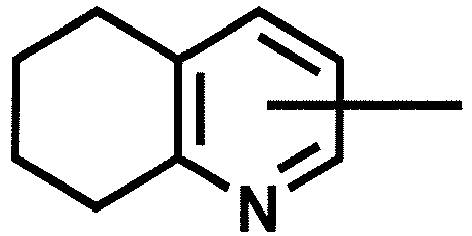
- The "5- to 10-membered aromatic heterocyclyl" defined in Ring Q2 includes, for example, 5- to 10-membered mono- or bi-cyclic aromatic hetero-ring group which has one or more the same or different heteroatoms selected from the group consisting of nitrogen atom, sulfur atom, and oxygen atom (for example, 1 - 4 heteroatoms). The bi-cyclic aromatic hetero-ring also includes a mono-cyclic aromatic hetero-ring-fused ring with an aromatic ring (such as benzene and pyridine), or a non-aromatic ring (such as cyclohexane and piperidine).
- When the "5- to 10-membered aromatic heterocyclyl" is an aromatic heterocyclyl wherein a mono-cyclic aromatic heterocycle is fused with an aromatic ring or a non-aromatic ring, W1 binds to only the aromatic ring (cycle). X1 and R3 can bind to any substitutable site of the aromatic ring (cycle) or the non-aromatic ring.
- The "4- to 10-membered saturated heterocyclyl" includes, for example, 4- to 10-membered mono- or polycyclic saturated heterocyclyl having 1 - 3 the same or different heteroatoms selected from the group consisting of nitrogen atom, oxygen atom, and sulfur atom. All the nitrogen atom, oxygen atom, and sulfur atom are atoms composing the ring(s). The heterocyclyl may be a saturated ring or a partially-unsaturated ring. Preferably, it is a saturated heterocyclyl, more preferably 5- or 6-membered saturated heterocyclyl. It includes, for example, pyranyl, dihydropyranyl, tetrahydropyranyl, tetrahydrofuryl, azetidinyl, pyrrolidinyl, imidazolidinyl, piperidinyl, piperazinyl, azepanyl, morpholinyl, thiomorpholinyl, dioxothiomorpholinyl, hexamethyleneiminyl, oxazolidinyl, thiazolidinyl, oxo-oxazolidinyl, dioxo-oxazolidinyl, dioxothiazolidinyl, 5-oxo-1,2,4-oxadiazol-3-yl, 5-oxo-1,2,4-thiadiazol-3-yl, and 5-thioxo-1,2,4-oxadiazol-3-yl. The binding site thereof may be any carbon atom or nitrogen atom which composes the ring(s).
- The "4- to 10-membered saturated nitrogen-containing heterocyclyl" includes, for example, 4- to 10-membered mono- or poly-cyclic saturated heterocyclyl having 1 - 3 nitrogen atoms and optionally-having 1 - 2 the same or different atoms selected from oxygen atom and sulfur atom. All the nitrogen atom, oxygen atom, and sulfur atom are atoms composing the ring(s). The heterocyclyl may be a saturated ring or a partially-unsaturated ring. It includes, for example, azetidinyl, pyrrolidinyl, piperidinyl, piperazinyl, azepanyl, morpholinyl, thiomorpholinyl, dioxothiomorpholinyl, hexamethyleneiminyl, oxazolidinyl, thiazolidinyl, imidazolidinyl, oxo-oxazolidinyl, dioxo-oxazolidinyl, dioxothiazolidinyl, 5-oxo-1,2,4-oxadiazol-3-yl, 5-oxo-1,2,4-thiadiazol-3-yl, 5-thioxo-1,2,4-oxadiazol-3-yl, 1,2,3,6-tetrahydropyridin-4-yl, and 2,5-dihydro-1H-pyrrol-3-yl. The binding site thereof may be any carbon atom or nitrogen atom which composes the ring(s).
- The "4- to 10-membered saturated nitrogen-containing heterocyclyl" also includes saturated bicyclyl, saturated fused cyclyl, and saturated spiro cyclyl which are in a scope of "4- to 10-membered saturated nitrogen-containing heterocyclyl" as a basic structure. It includes, for example, the following groups.







- The substituent in the "optionally-substituted C1-6 alkyl", the "optionally-substituted C1-6 alkoxy", the "optionally-substituted C1-6 alkylthio", the "optionally-substituted C1-6 alkylcarbonyl", the "optionally-substituted C1-6 alkoxycarbonyl", the "optionally-substituted C1-6 alkylsulfonyl", and the "optionally-substituted C1-4 alkylene" includes, for example, hydroxy, halogen atom, and C1-6 alkoxy, preferably fluorine atom.
- The substituent in the "optionally-substituted C6-10 aryl", the "optionally-substituted 5- to 10-membered heteroaryl", the "optionally-substituted C3-7 cycloalkyl", the "optionally-substituted C3-7 cycloalkoxy", the "optionally-substituted saturated heterocyclyl", and the "optionally-substituted saturated heterocyclyloxy" includes, for example
- (a) halogen atom,
- (b) cyano,
- (c) C1-6 alkyl which may be substituted with 1 - 3 the same or different substituents selected from the group consisting of halogen atom, hydroxy, C3-7 cycloalkyl, C1-6 alkoxy, and 4- to 7-membered saturated heterocyclyl,
- (d) C1-6 alkylsulfonyl which may be substituted with 1 - 3 the same or different halogen atoms,
- (e) C1-6 alkoxy which may be substituted with 1 - 3 the same or different substituents selected from the group consisting of halogen atom, hydroxy, C3-7 cycloalkyl, C1-6 alkoxy, and 4- to 7-membered saturated heterocyclyl,
- (f) C3-7 cycloalkyl which may be substituted with 1 - 4 the same or different substituents selected from the group consisting of halogen atom, C1-6 alkyl, and C1-6 alkoxy,
- (g) C3-7 cycloalkoxy which may be substituted with 1 - 4 the same or different substituents selected from the group consisting of halogen atom, C1-6 alkyl, and C1-6 alkoxy,
- (h) amino which may be substituted with 1 - 2 the same or different C1-6 alkyl which may be substituted with 1 - 3 the same or different halogen atoms,
- (i) phenyl which may be substituted with 1 - 4 the same or different substituents selected from the group consisting of halogen atom, C1-6 alkyl, and C1-6 alkoxy,
- (j) 5- or 6-membered heteroaryl which may be substituted with 1 - 4 the same or different substituents selected from the group consisting of halogen atom, C1-6 alkyl, and C1-6 alkoxy,
- (k) 4- to 7-membered saturated heterocyclyl which may be substituted with 1 - 4 the same or different substituents selected from the group consisting of halogen atom, C1-6 alkyl, and C1-6 alkoxy,
- (l) C1-6 alkylcarbonyl which may be substituted with 1 - 3 the same or different substituents selected from the group consisting of halogen atom, hydroxy, amino (which may be substituted with 1 - 2 the same or different C1-6 alkyl), and C1-6 alkoxy,
- (m) phenoxy which may be substituted with 1 - 4 the same or different substituents selected from the group consisting of halogen atom, C1-6 alkyl, and C1-6 alkoxy,
- (n) hydroxy, and
- (o) aminocarbonyl wherein the amino may be substituted with 1 - 2 the same or different C1-6 alkyl.
- In another embodiment, the substituent in the "optionally-substituted amino" and the "optionally-substituted aminocarbonyl" includes, for example, C1-6 alkyl.
- In another embodiment, the substituent in the "optionally-substituted C1-6 alkyl", the "optionally-substituted C1-6 alkylthio", the "optionally-substituted C1-6 alkylcarbonyl", the "optionally-substituted C1-6 alkoxycarbonyl", the "optionally-substituted C1-6 alkylsulfonyl", and the "optionally-substituted C1-4 alkylene" includes, for example, hydroxy, halogen atom, and C1-6 alkoxy, preferably fluorine atom.
- In another embodiment, the substituent in the "optionally-substituted C1-6 alkoxy", the "optionally-substituted C6-10 aryl", the "optionally-substituted 5- to 10-membered heteroaryl", the "optionally-substituted C3-7 cycloalkyl", the "optionally-substituted C3-7 cycloalkoxy", the "optionally-substituted saturated heterocyclyl", and the "optionally-substituted saturated heterocyclyloxy" includes, for example
- (a) halogen atom,
- (b) cyano,
- (c) C1-6 alkyl which may be substituted with 1 - 3 the same or different substituents selected from the group consisting of halogen atom, hydroxy, C3-7 cycloalkyl, C1-6 alkoxy, and 4- to 7-membered saturated heterocyclyl,
- (d) C1-6 alkylsulfonyl which may be substituted with 1 - 3 the same or different halogen atoms,
- (e) C1-6 alkoxy which may be substituted with 1 - 3 the same or different substituents selected from the group consisting of halogen atom, hydroxy, C3-7 cycloalkyl, C1-6 alkoxy, and 4- to 7-membered saturated heterocyclyl,
- (f) C3-7 cycloalkyl which may be substituted with 1 - 4 the same or different substituents selected from the group consisting of halogen atom, C1-6 alkyl, and C1-6 alkoxy,
- (g) C3-7 cycloalkoxy which may be substituted with 1 - 4 the same or different substituents selected from the group consisting of halogen atom, C1-6 alkyl, and C1-6 alkoxy,
- (h) amino which may be substituted with 1 - 2 the same or different C1-6 alkyl which may be substituted with 1 - 3 the same or different halogen atoms,
- (i) phenyl which may be substituted with 1 - 4 the same or different substituents selected from the group consisting of halogen atom, C1-6 alkyl, and C1-6 alkoxy,
- (j) 5- or 6-membered heteroaryl which may be substituted with 1 - 4 the same or different substituents selected from the group consisting of halogen atom, C1-6 alkyl, and C1-6 alkoxy,
- (k) 4- to 7-membered saturated heterocyclyl which may be substituted with 1 - 4 the same or different substituents selected from the group consisting of halogen atom, C1-6 alkyl, and C1-6 alkoxy,
- (l) C1-6 alkylcarbonyl which may be substituted with 1 - 3 the same or different substituents selected from the group consisting of halogen atom, hydroxy, amino (which may be substituted with 1 - 2 the same or different C1-6 alkyl), and C1-6 alkoxy,
- (m) phenoxy which may be substituted with 1 - 4 the same or different substituents selected from the group consisting of halogen atom, C1-6 alkyl, and C1-6 alkoxy,
- (n) hydroxy,
- (o) aminocarbonyl wherein the amino may be substituted with 1 - 2 the same or different C1-6 alkyl, and
- (p) C1-6 alkoxycarbonyl.
- Preferred R1, R2, R3, R4, W1, W2, X1, Ring Q1, and Ring Q2 in the present compound of formula (1) are shown below, but the technical scope of the present invention should not be limited the following compounds. The preferred embodiment of the corresponding R11, R12, R13, R14, W12, X11, Ring Q11, and Ring Q12 is also based on the followings.
- Preferably, R1 includes
- (1) C1-6 alkoxy which may be substituted with 1 - 4 the same or different substituents selected from the group consisting of
- (a) halogen atom,
- (b) hydroxy,
- (c) C1-6 alkoxy which may be substituted with 1 - 3 the same or different halogen atoms,
- (d) C3-7 cycloalkyl which may be substituted with 1 - 4 the same or different substituents selected from the group consisting of halogen atom, C1-6 alkyl, and C1-6 alkoxy,
- (e) C3-7 cycloalkoxy which may be substituted with 1 - 4 the same or different substituents selected from the group consisting of halogen atom, C1-6 alkyl, and C1-6 alkoxy,
- (f) phenyl which may be substituted with 1 - 4 the same or different substituents selected from the group consisting of halogen atom, C1-6 alkyl, and C1-6 alkoxy,
- (g) 5- or 6-membered heteroaryl which may be substituted with 1 - 4 the same or different substituents selected from the group consisting of halogen atom, C1-6 alkyl, and C1-6 alkoxy, and
- (h) 4- to 7-membered saturated heterocyclyl which may be substituted with 1 - 4 the same or different substituents selected from the group consisting of halogen atom, C1-6 alkyl, and C1-6 alkoxy,
- (2) C3-7 cycloalkoxy which may be substituted with 1 - 4 the same or different substituents selected from the group consisting of halogen atom, C1-6 alkyl, and C1-6 alkoxy,
- (3) 4- to 7-membered saturated heterocyclyloxy which may be substituted with 1 - 4 the same or different substituents selected from the group consisting of halogen atom, C1-6 alkyl, and C1-6 alkoxy,
- (4) C1-6 alkyl which may be substituted with 1 - 3 the same or different substituents selected from the group consisting of halogen atom, hydroxy, and C1-6 alkoxy,
- (5) C3-7 cycloalkyl which may be substituted with 1 - 4 the same or different substituents selected from the group consisting of halogen atom, C1-6 alkyl, and C1-6 alkoxy,
- (6) C1-6 alkylthio which may be substituted with 1 - 3 the same or different halogen atoms,
- (7) 4- to 7-membered saturated heterocyclyl which may be substituted with 1 - 4 the same or different substituents selected from the group consisting of halogen atom, C1-6 alkyl, and C1-6 alkoxy,
- (8) amino which may be substituted with 1 - 2 the same or different C1-6 alkyl which may be substituted with 1 - 3 the same or different halogen atoms,
- (9) halogen atom, and
- (10) hydroxy.
- More preferably, R1 includes C1-6 alkoxy (which may be substituted with 1 - 3 the same or different substituents selected from the group consisting of halogen atom, hydroxy, and C1-6 alkoxy), and halogen atom; more preferably, C1-6 alkoxy which may be substituted with 1 - 3 the same or different substituents selected from the group consisting of halogen atom, hydroxy, and C1-6 alkoxy; more preferably, C1-6 alkoxy which may be substituted with C1-6 alkoxy.
- In another embodiment, R1 includes
- (1) C1-6 alkoxy which may be substituted with 1 - 3 the same or different substituents selected from the group consisting of halogen atom, hydroxy, C1-6 alkoxy, C3-7 cycloalkyl and 4- to 10-membered saturated heterocyclyl,
- (2) 4- to 10-membered saturated heterocyclyloxy which may be substituted with 1 - 4 the same or different substituents selected from the group consisting of halogen atom, and C1-6 alkyl,
- (3) C1-6 alkyl which may be substituted with 1 - 3 the same or different substituents selected from the group consisting of halogen atom, hydroxy, and C1-6 alkoxy,
- (4) 4- to 10-membered saturated heterocyclyl which may be substituted with 1 - 4 the same or different substituents selected from the group consisting of halogen atom, C1-6 alkyl, and C1-6 alkoxy,
- (5) amino which may be substituted with 1 - 2 the same or different C1-6 alkyl,
- (6) halogen atom, and
- (7) hydroxy.
- Preferably, R2 includes, C1-6 alkyl (which may be substituted with 1 - 3 the same or different halogen atoms), C3-7 cycloalkyl, and amino (which may be substituted with 1 - 2 the same or different C1-6 alkyl). More preferably, it is C1-6 alkyl or amino; even more preferably, C1-4 alkyl.
- Preferably, R3 includes
- (1) hydrogen atom,
- (2) halogen atom,
- (3) cyano,
- (4) hydroxy,
- (5) C1-6 alkyl which may be substituted with 1 - 3 the same or different substituents selected from the group consisting of halogen atom, hydroxy, and C1-6 alkoxy,
- (6) C1-6 alkoxy which may be substituted with 1 - 3 the same or different substituents selected from the group consisting of halogen atom, hydroxy, and C1-6 alkoxy,
- (7) C3-7 cycloalkyl which may be substituted with 1 - 4 the same or different substituents selected from the group consisting of halogen atom, C1-6 alkyl, and C1-6 alkoxy,
- (8) C3-7 cycloalkoxy which may be substituted with 1 - 4 the same or different substituents selected from the group consisting of halogen atom, C1-6 alkyl, and C1-6 alkoxy, and
- (9) amino which may be substituted with 1 - 2 the same or different C1-6 alkyl which may be substituted with 1 - 3 the same or different halogen atoms.
- More preferably, R3 includes hydrogen atom, halogen atom, cyano, C1-6 alkyl (which may be substituted with 1 - 3 the same or different halogen atoms), and C1-6 alkoxy (which may be substituted with 1 - 3 the same or different halogen atoms); more preferably, hydrogen atom, and halogen atom; more preferably, hydrogen atom and fluorine atom.
- In another embodiment, R3 includes hydrogen atom, halogen atom, cyano, C1-6 alkyl (which may be substituted with 1 - 3 the same or different halogen atoms), C1-6 alkoxy (which may be substituted with 1 - 3 the same or different halogen atoms), and hydroxy.
- Preferably, R4 includes
- (1) hydrogen atom,
- (2) -ORb wherein Rb is hydrogen atom, C1-6 alkyl, C1-6 alkylcarbonyl, mono- or di-C1-6 alkyl-aminocarbonyl, or C1-6 alkylsulfonyl,
- (3) -NRcRd wherein Rc is hydrogen atom or C1-6 alkyl which may be substituted with 1 - 3 the same or different halogen atoms; and Rd is hydrogen atom, C1-6 alkyl (which may be substituted with 1 - 3 the same or different substituents selected from the group consisting of halogen atom, hydroxy, amino (which may be substituted with 1 - 2 the same or different C1-6 alkyl), and C1-6 alkoxy), C1-6 alkylcarbonyl (which may be substituted with 1 - 3 the same or different substituents selected from the group consisting of halogen atom, hydroxy, amino (which may be substituted with 1 - 2 the same or different C1-6 alkyl), and C1-6 alkoxy), C1-6 alkoxycarbonyl, or C1-6 alkylsulfonyl,
- (4) 4- to 10-membered saturated heterocyclyl which may be substituted with 1 - 4 the same or different substituents selected from the group consisting of
- (a) halogen atom,
- (b) hydroxy,
- (c) cyano,
- (d) C1-6 alkyl which may be substituted with 1 - 3 the same or different substituents selected from the group consisting of halogen atom, hydroxy, and C1-6 alkoxy,
- (e) C1-6 alkoxy which may be substituted with 1 - 3 the same or different substituents selected from the group consisting of halogen atom, hydroxy, and C1-6 alkoxy,
- (f) C3-7 cycloalkyl,
- (g) C1-6 alkylcarbonyl which may be substituted with 1 - 3 the same or different substituents selected from the group consisting of halogen atom, hydroxy, amino (which may be substituted with 1 - 2 the same or different C1-6 alkyl), and C1-6 alkoxy,
- (h) C1-6 alkoxycarbonyl,
- (i) 4- to 7-membered saturated heterocyclyl which may be substituted with 1 - 4 the same or different substituents selected from the group consisting of halogen atom, C1-6 alkyl, and C1-6 alkoxy,
- (j) phenyl which may be substituted with 1 - 4 the same or different substituents selected from the group consisting of halogen atom, C1-6 alkyl, and C1-6 alkoxy,
- (k) 5- or 6-membered heteroaryl which may be substituted with 1 - 4 the same or different substituents selected from the group consisting of halogen atom, C1-6 alkyl, and C1-6 alkoxy, and
- (l) oxo, and
- (5) 5- to 10-membered heteroaryl which may be substituted with 1 - 4 the same or different substituents selected from the group consisting of halogen atom, C1-6 alkyl, and C1-6 alkoxy.
- More preferably, R4 includes
- (1) -NRcRd wherein Rc and Rd are independently hydrogen atom or C1-6 alkyl which may be substituted with 1 - 3 the same or different halogen atoms, and
- (2) 4- to 10-membered saturated nitrogen-containing heterocyclyl which may be substituted with 1 - 4 the same or different substituents selected from the group consisting of
- (a) halogen atom,
- (b) hydroxy,
- (c) cyano,
- (d) C1-6 alkyl which may be substituted with 1 - 3 the same or different substituents selected from the group consisting of halogen atom, hydroxy, and C1-6 alkoxy,
- (e) C1-6 alkoxy which may be substituted with 1 - 3 the same or different substituents selected from the group consisting of halogen atom, hydroxy, and C1-6 alkoxy,
- (f) C3-7 cycloalkyl,
- (g) C1-6 alkylcarbonyl which may be substituted with 1 - 3 the same or different substituents selected from the group consisting of halogen atom, hydroxy, amino (which may be substituted with 1 - 2 the same or different C1-6 alkyl), and C1-6 alkoxy, and
- (h) 4- to 7-membered saturated heterocyclyl.
- More preferably, R4 includes the following formulae (2), (3), (4), (5), and (6):

- In another embodiment, R4 includes
- (1) hydrogen atom,
- (2) -ORb wherein Rb is hydrogen atom, C1-6 alkyl, or C1-6 alkylsulfonyl,
- (3) -NRcRd wherein Rc and Rd are independently hydrogen atom, or C1-6 alkyl which may be substituted with 1 - 3 the same or different halogen atoms,
- (4) 4- to 10-membered saturated heterocyclyl which may be substituted with 1 - 4 the same or different substituents selected from the group consisting of
- (a) halogen atom,
- (b) hydroxy,
- (d) C1-6 alkyl which may be substituted with 1 - 3 the same or different substituents selected from the group consisting of halogen atom, hydroxy, and C1-6 alkoxy,
- (e) C1-6 alkoxy which may be substituted with 1 - 3 the same or different substituents selected from the group consisting of halogen atom, hydroxy, and C1-6 alkoxy,
- (f) C3-7 cycloalkyl,
- (g) C1-6 alkylcarbonyl which may be substituted with 1 - 3 the same or different substituents selected from the group consisting of halogen atom, hydroxy, amino (which may be substituted with 1 - 2 the same or different C1-6 alkyl), and C1-6 alkoxy,
- (h) C1-6 alkoxycarbonyl,
- (i) 4- to 7-membered saturated heterocyclyl which may be substituted with 1 - 4 the same or different substituents selected from the group consisting of halogen atom, C1-6 alkyl, and C1-6 alkoxy, and
- (j) oxo, and
- (5) 5- to 10-membered heteroaryl which may be substituted with 1 - 4 the same or different substituents selected from the group consisting of halogen atom, C1-6 alkyl, and C1-6 alkoxy.
- In another embodiment, R4 includes the following formulae (2), (3), (4), (5), (6), (7), (8), (9), (10), (11), (12), (13), (14), (15), and (16):


- In another embodiment, R4 includes the following formulae (2), (3), (4), (5), (6), (7), (8), (9), and (10):


- Preferably, W1 includes single bond and C1-4 alkylene which may be substituted with 1 - 4 the same or different substituents selected from the group consisting of halogen atom, hydroxy, and C1-6 alkoxy. More preferably, it is C1-4 alkylene; even more preferably methylene.
- Preferably, W2 includes single bond and C1-4 alkylene which may be substituted with 1 - 4 the same or different substituents selected from the group consisting of halogen atom, hydroxy, and C1-6 alkoxy. More preferably, it is single bond or methylene; even more preferably single bond.
- In another embodiment, W2 includes single bond and C1-3 alkylene.
- Preferably, X1 includes single bond, -(CH2)m-O-,-(CH2)m-S-, -(CH2)m-S(O)2-, -(CH2)m-NRaS(O)2-, -(CH2)m-S(O)2NRa-, -(CH2)m-C(O)-, -(CH2)m-NRa-, -(CH2)m-NRaC(O)-, and -(CH2)m-C(O)NRa-, wherein Ra is hydrogen atom or C1-6 alkyl; m is 0, 1, or 2. More preferably, it is single bond or -O-; even more preferably single bond.
- In another embodiment, X1 includes single bond,-(CH2)m-O-, -(CH2)m-C(O)-, -(CH2)m-NRa-, and -(CH2)m-C(O)NRa-, wherein Ra is hydrogen atom or C1-6 alkyl; m is 0, 1, or 2.
- More preferably, Ring Q1 includes
- (1) C6-10 aryl which may be substituted with 1 - 5 the same or different substituents selected from the group consisting of
- (a) halogen atom,
- (b) cyano,
- (c) C1-6 alkyl which may be substituted with 1 - 3 the same or different substituents selected from the group consisting of halogen atom, hydroxy, C3-7 cycloalkyl, C1-6 alkoxy, and 4- to 7-membered saturated heterocyclyl,
- (d) C1-6 alkylsulfonyl which may be substituted with 1 - 3 the same or different halogen atoms,
- (e) C1-6 alkoxy which may be substituted with 1 - 3 the same or different substituents selected from the group consisting of halogen atom, hydroxy, C3-7 cycloalkyl, C1-6 alkoxy, and 4- to 7-membered saturated heterocyclyl,
- (f) C3-7 cycloalkyl which may be substituted with 1 - 4 the same or different substituents selected from the group consisting of halogen atom, C1-6 alkyl, and C1-6 alkoxy,
- (g) C3-7 cycloalkoxy which may be substituted with 1 - 4 the same or different substituents selected from the group consisting of halogen atom, C1-6 alkyl, and C1-6 alkoxy,
- (h) amino which may be substituted with 1 - 2 the same or different C1-6 alkyl which may be substituted with 1 - 3 the same or different halogen atoms,
- (i) phenyl which may be substituted with 1 - 4 the same or different substituents selected from the group consisting of halogen atom, C1-6 alkyl, and C1-6 alkoxy, and
- (j) 5- or 6-membered heteroaryl which may be substituted with 1 - 4 the same or different substituents selected from the group consisting of halogen atom, C1-6 alkyl, and C1-6 alkoxy, or
- (2) 5- to 10-membered heteroaryl which may be substituted with 1 - 4 the same or different substituents selected from the group consisting of (a) - (j) in the above (1) C6-10 aryl.
- More preferably, Ring Q1 includes pyridyl which may be substituted with 1 - 4 the same or different substituents selected from the group consisting of halogen atom, cyano, C1-6 alkyl (which may be substituted with 1 - 3 the same or different halogen atoms), and C1-6 alkoxy (which may be substituted with 1 - 3 the same or different halogen atoms); more preferably pyridyl substituted with 1 - 4 the same or different halogen atoms; even more preferably 5-fluoropyridin-3-yl.
- In another embodiment, Ring Q1 includes
- (1) C6-10 aryl which may be substituted with 1 - 5 the same or different substituents selected from the group consisting of
- (a) halogen atom,
- (b) cyano,
- (c) C1-6 alkyl which may be substituted with 1 - 3 the same or different substituents selected from the group consisting of halogen atom, hydroxy, C1-6 alkoxy, and 4- to 7-membered saturated heterocyclyl,
- (d) C1-6 alkylsulfonyl,
- (e) C1-6 alkoxy which may be substituted with 1 - 3 the same or different substituents selected from the group consisting of halogen atom, hydroxy, and 4- to 7-membered saturated heterocyclyl, and
- (f) amino which may be substituted with 1 - 2 the same or different C1-6 alkyl, or
- (2) 5- to 10-membered heteroaryl which may be substituted with 1 - 4 the same or different substituents selected from the group consisting of (a) - (f) in the above (1) C6-10 aryl.
- In another embodiment, Ring Q1 includes
- (1) pyridyl which may be substituted with 1 - 5 the same or different substituents selected from the group consisting of
- (a) halogen atom,
- (b) cyano,
- (c) C1-6 alkyl which may be substituted with 1 - 3 the same or different halogen atoms, and
- (d) C1-6 alkoxy which may be substituted with 1 - 3 the same or different halogen atoms, or
- (2) pyrimidinyl which may be substituted with 1 - 3 the same or different substituents selected from the group consisting of (a) - (d) in the above (1).
- In another embodiment, Ring Q1 includes
- (1) pyridyl which may be substituted with 1 - 4 the same or different substituents selected from the group consisting of
- (a) halogen atom, and
- (b) cyano, or
- (2) pyrimidinyl which may be substituted with 1 - 3 the same or different substituents selected from the group consisting of (a) - (b) in the above (1).
- In another embodiment, Ring Q1 includes 5-fluoropyridin-3-yl, 5-cyanopyridin-3-yl, pyridin-3-yl, and pyrimidinyl.
- Preferably, Ring Q2 includes benzene ring group, and 5- or 6-membered aromatic heterocyclyl. More preferably, it is phenylene, pyridinediyl, or pyrazolediyl; even more preferably pyridinediyl or pyrazolediyl.
- In another embodiment, Ring Q2 includes pyridinediyl, pyrazolediyl, isoxazoldiyl, and benzenediyl.
- In another embodiment, Ring Q2 includes pyridinediyl, pyrazolediyl, and benzenediyl.
- One embodiment of the compound (1) includes the following: the compound or a pharmaceutically acceptable salt thereof, wherein
R1 is C1-6 alkoxy which may be substituted with 1 - 3 the same or different substituents selected from the group consisting of halogen atom, hydroxy, and C1-6 alkoxy;
R2 is C1-6 alkyl or amino;
Ring Q1 is - (1) pyridyl which may be substituted with 1 - 5 the same or different substituents selected from the group consisting of
- (a) halogen atom,
- (b) cyano,
- (c) C1-6 alkyl which may be substituted with 1 - 3 the same or different halogen atoms, and
- (d) C1-6 alkoxy which may be substituted with 1 - 3 the same or different halogen atoms, or
- (2) pyrimidinyl which may be substituted with 1 - 3 the same or different substituents selected from the group consisting of (a) - (d) in the above (1);
- The compound of the present invention may be in a form of hydrate and/or solvate, thus the compound of the present invention encompasses such hydrate thereof and solvate thereof such as ethanolate. In addition, the compound of the present invention also includes various embodiments of its crystal form.
- The pharmaceutically acceptable salt of the compound of formula (1) includes, for example, a salt with an inorganic acid such as hydrochloride, hydrobromide, sulfate, phosphate, and nitrate; and a salt with an organic acid such as acetate, propionate, oxalate, succinate, lactate, malate, tartrate, citrate, maleate, fumarate, methanesulfonate, p-toluenesulfonate, benzenesulfonate, and ascorbate.
- The compound of formula (1) can exist as a tautomer thereof. Thus, the compound of the present invention also includes a tautomer of compound (1).
- The compound of formula (1) can have at least one chiral carbon. Thus, the compound of the present invention also includes a racemate of compound (1) as well as an optically active compound (1).
- In addition, the compound of formula (1) in which any one or more 1H atoms are replaced by 2H(D) atoms (deuterium form) is within the scope of the present invention of formula (1).
- Hereinafter, the processes to prepare the present compound of formula (1) are explained along with examples, but the present invention should not be limited to the examples.
- The compounds of the present invention can be prepared by means of the preparation processes mentioned below, and known processes with known compounds.
- Each compound in the following schemes sometimes exists as its salt, and as an example of such salt, the salt of Compound (1) can be exemplified. The reactions mentioned below are just examples, thus the compounds of the present invention may be prepared by other means based on the knowledge of a skilled person in organic synthesis.
- If there is a function group that needs to be protected in each preparation process, the function group may be protected as appropriate and then deprotected after completing the reaction or the reaction sequences, unless there is any specific description of protecting groups.
- The protecting group used herein includes, for example, general protecting groups described in T. W. Greene and P. G. M. Wuts, "Protective Groups in Organic Synthesis", 3rd Ed., John Wiley and Sons, inc., New York (1999 ); in more detail, it includes, for example, tert-butoxycarbonyl, benzyloxycarbonyl, dimethylformamide, p-toluenesulfonyl, o-nitrobenzenesulfonyl, and tetrahydropyranyl, for amino group; trialkylsilyl, acetyl, benzyl, tetrahydropyranyl, and methoxymethyl, for hydroxy group; dialkylacetal and cycloalkylacetal, for aldehyde group; and tert-butyl ester, orthoester, and acid amide, for carbonyl group.
- The protection and deprotection can be carried out by conventional means in organic synthesis chemistry (for example, the methods described in T. W. Greene and P. G. M. Wuts, "Protective Groups in Organic Synthesis", 3rd Ed., John Wiley and Sons, inc., New York (1999 )), or similar means to them.
- The compound of formula (1-6) can be prepared, for example, by the following process.

- Compound (1-3) can be prepared by reacting compound (1-1) with compound (1-2) by a known synthetic method (for example,
EP1550662, (2005 ); Journal of Medicinal Chemistry, 2964, (2010 )) or a similar method. Compound (1-1) can be got as a marketed product or can be prepared by a known synthetic method (for example,EP1550662, (2005 );EP1728792, (2006 )) or a similar method. Compound (1-2) can be got as a marketed product or can be prepared by a known synthetic method (for example,EP1550662, (2005 );EP1728792, 2006 - Compound (1-4) can be prepared by halogenating compound (1-3) by a known synthetic method (for example,
EP1550662, (2005 ); Journal of Medicinal Chemistry, 2964, (2010 )) or a similar method. - Compound (1-6) can be prepared by reacting compound (1-4) with compound (1-5), in the presence of a base and a palladium catalyst optionally along with a phosphine ligand, in an inert solvent. Compound (1-5) can be got as a marketed product or can be prepared by a known synthetic method (for example, Journal of Organic Chemistry 7508 (1995 ); Angewandte Chemie International Edition 928 (2008 )) or a similar method.
- The inert solvent includes, for example, ether solvents such as tetrahydrofuran, tetrahydropyran, 1,4-dioxane, and 1,2-dimethoxyethane; aromatic hydrocarbons such as toluene and xylene; aprotic polar solvents such as acetonitrile, propionitrile, N,N-dimethylformamide, N,N-dimethylacetamide, N-methyl-2-pyrrolidinone, and dimethylsulfoxide; protic polar solvents such as water; and mixture solvents thereof.
- The palladium catalyst includes, for example, zero-valent catalysts such as tetrakis(triphenylphosphine)palladium, bis(t-butylphosphine)palladium, and tris(dibenzylideneacetone)dipalladium; and bi-valent catalysts such as bis(triphenylphosphine)palladium dichloride, palladium acetate, and bis(diphenylphosphino)ferrocene-palladium dichloride. Preferably, it is tetrakis(triphenylphosphine)palladium or palladium acetate.
- The phosphine ligand includes, for example, monodentate ligands such as o-tolylphosphine, 2-dicyclohexylphosphino-2',6'-dimethoxy-1,1'-biphenyl, and 2-dicyclohexylphosphino-2',4',6'-triisopropyl-1,1'-biphenyl; and bidentate ligands such as 1,1'-bis(diphenylphosphino)ferrocene, 1,2-bis(diphenylphosphino)ethane, 1,3-bis(diphenylphosphino)propane, 1,4-bis(diphenylphosphino)butane, 2,2'-bis(diphenylphosphino)-1,1'-binaphthyl, 9,9-dimethyl-4,5-bis(diphenylphosphino)xanthine, and bis(2-diphenylphosphinophenyl) ether.
- The base used herein includes, for example, inorganic bases such as potassium carbonate, sodium carbonate, cesium carbonate, potassium bicarbonate, sodium bicarbonate, potassium dihydrogenphosphate, dipotassium hydrogenphosphate, potassium phosphate, sodium dihydrogenphosphate, disodium hydrogen phosphate, sodium phosphate, potassium hydroxide, and sodium hydroxide. Preferably, it is sodium carbonate, potassium carbonate, or potassium phosphate.
- The reaction temperature is not limited to specific ones, but it is selected from the temperatures between room temperature and boiling point of the used solvent, preferably 60°C - 140°C, or 80°C - 140°C under microwave irradiation. The reaction time is generally 30 minutes - 24 hours.
- Compound (1-6) can be also prepared by reacting compound (1-3) with compound (1-7) in the presence of a base, copper reagent, and palladium catalyst, in an inert solvent. Compound (1-7) can be got as a marketed product or can be prepared by a known synthetic method (for example, Synlett 461 (2004 ); Journal of Organic Chemistry 5867 (2007 )) or a similar method.
- The inert solvent includes, for example, ether solvents such as tetrahydrofuran, tetrahydropyran, 1,4-dioxane, and 1,2-dimethoxyethane; aromatic hydrocarbons such as toluene and xylene; aprotic polar solvents such as acetonitrile, propionitrile, N,N-dimethylformamide, N,N-dimethylacetamide, N-methyl-2-pyrrolidinone, and dimethylsulfoxide; and mixture solvents thereof. Preferably, it is N,N-dimethylacetamide or N-methyl-2-pyrrolidinone.
- The copper reagent includes, for example, copper chloride, copper bromide, copper iodide, and copper acetate. Preferably, it is copper iodide or copper acetate.
- The palladium catalyst includes, for example, palladium acetate, palladium hydroxide on carbon, and tris(dibenzylideneacetone)dipalladium. Preferably, it is palladium acetate or tris(dibenzylideneacetone)dipalladium.
- The base used herein includes, for example, inorganic bases such as potassium carbonate, sodium carbonate, and cesium carbonate; and organic bases such as diisopropylamine, diisobutylamine, and piperidine. Preferably, it is cesium carbonate.
- The reaction temperature is not limited to specific ones, but it is selected from the temperatures between room temperature and boiling point of the used solvent, or 50°C - 180°C under microwave irradiation. The reaction time is generally 30 minutes - 24 hours.
- The compound of formula (2-12) can be prepared, for example, by the following process.

- Compound (2-2) can be prepared by reacting compound (2-1) with ammonia in the presence of a base in an inert solvent. Compound (2-1) can be got as a marketed product or can be prepared by a known synthetic method (for example,
WO2014127816 ; Bioorganic and Medicinal Chemistry Letters, 4879, (2006 )) or a similar method. - The inert solvent includes, for example, ether solvents such as tetrahydrofuran, tetrahydropyran, 1,4-dioxane, and 1,2-dimethoxyethane; halogenated hydrocarbons such as chloroform, dichloromethane, and 1,2-dichloroethane; aprotic polar solvents such as acetonitrile, propionitrile, N,N-dimethylformamide, N,N-dimethylacetamide, N-methyl-2-pyrrolidinone, and dimethylsulfoxide; protic polar solvents such as water, methanol, ethanol, and isopropanol; and mixture solvents thereof. Preferably, it is tetrahydrofuran or methanol.
- The base used herein includes, for example, triethylamine, and diisopropylethylamine.
- The reaction temperature is not limited to specific ones, but it is generally selected from the temperatures between -78°C and boiling point of the used solvent. Preferably it is -78°C to 0°C. The reaction time is generally 30 minutes - 6 hours.
- Compound (2-4) can be prepared by reacting compound (2-2) with compound (2-3) in the presence of a base in an inert solvent. Compound (2-3) can be got as a marketed product or can be prepared by a known synthetic method (for example,
WO200874752 WO200616178 - The inert solvent includes, for example, ether solvents such as tetrahydrofuran, tetrahydropyran, 1,4-dioxane, and 1,2-dimethoxyethane; protic polar solvents such as methanol, ethanol, 1-propanol, isopropanol, and 1-butanol; and mixture solvents thereof. Preferably, it is tetrahydrofuran or a protic polar solvent.
- The base used herein includes, for example, metal alkoxides such as sodium methoxide, sodium ethoxide, sodium, and sodium 1-propoxide; and metal hydrides such as sodium hydride.
- The reaction temperature is not limited to specific ones, but it is generally selected from the temperatures between -20°C and boiling point of the used solvent. Preferably it is -20°C to 20°C. The reaction time is generally 30 minutes - 12 hours.
- Compound (2-5) can be prepared by reacting compound (2-4) with di-tert-butyl dicarbonate in the presence of a base in an inert solvent.
- The inert solvent includes, for example, ether solvents such as tetrahydrofuran, tetrahydropyran, 1,4-dioxane, and 1,2-dimethoxyethane; aromatic hydrocarbons such as toluene and xylene; halogenated hydrocarbons such as chloroform, dichloromethane, and 1,2-dichloroethane; aprotic polar solvents such as acetonitrile, propionitrile, N,N-dimethylformamide, N,N-dimethylacetamide, N-methyl-2-pyrrolidinone, and dimethylsulfoxide; protic polar solvents such as water, methanol, ethanol, and isopropanol; and mixture solvents thereof. Preferably, it is tetrahydrofuran, chloroform, or dichloromethane.
- The base used herein includes, for example, triethylamine, diisopropylethylamine, pyridine, and N,N-dimethylaminopyridine. Preferably, it is triethylamine or diisopropylethylamine in combination with N,N-dimethylaminopyridine.
- The di-Boc compound which is produced as a side product in the reaction can be converted into compound (2-5) by adding a metal alkoxide to the reaction media in which compound (2-4) is exhausted. The metal alkoxide used herein includes sodium methoxide, sodium ethoxide, sodium, and sodium 1-propoxide.
- The reaction temperature is not limited to specific ones, but it is generally selected from the temperatures between -20°C and boiling point of the used solvent. Preferably it is 0°C to 20°C. The reaction time is generally 1 hour - 24 hours.
- Compound (2-8) can be prepared by reacting compound (2-5) with compound (2-6) in the presence of Mitsunobu reagent and a phosphine reagent, in an inert solvent. And, compound (2-8) can be also prepared from compound (2-5) and compound (2-7), according to the method described in Step 1-1. Compound (2-6) can be got as a marketed product or can be prepared by a known synthetic method (for example,
WO200644454 WO201428669 US2013/1503254 ;EP1679308, (2006 )) or a similar method. - The inert solvent includes, for example, ether solvents such as tetrahydrofuran, tetrahydropyran, 1,4-dioxane, and 1,2-dimethoxyethane; aromatic hydrocarbons such as toluene and xylene; halogenated hydrocarbons such as chloroform, dichloromethane, and 1,2-dichloroethane; aprotic polar solvents such as acetonitrile, propionitrile, N,N-dimethylformamide, N,N-dimethylacetamide, N-methyl-2-pyrrolidinone, and dimethylsulfoxide; and mixture solvents thereof. Preferably, it is tetrahydrofuran, toluene, dichloromethane, or a mixture solvent thereof.
- The Mitsunobu reagent includes, for example, diethyl azodicarboxylate, diisopropyl azodicarboxylate, dicyclohexyl azodicarboxylate, dibenzyl azodicarboxylate, tert-butyl azodicarboxylate, bis(2-methoxyethyl) azodicarboxylate, 1,1'-(azodicarbonyl)dipiperidine, and 1,1'-azobis(N,N-dimethylformamide) .
- The phosphine reagent includes, for example, triphenylphosphine, trimethylphosphine, tributylphosphine, and trioctylphosphine. Preferably, it is triphenylphosphine or tributylphosphine.
- The reaction temperature is not limited to specific ones, but it is generally selected from the temperatures between 0°C and boiling point of the used solvent. Preferably it is 0°C to 60°C. The reaction time is generally 5 minutes - 72 hours.
- Compound (2-9) can be prepared by reacting compound (2-8) with an acid in an inert solvent.
- The inert solvent includes, for example, ether solvents such as tetrahydrofuran, tetrahydropyran, 1,4-dioxane, and 1,2-dimethoxyethane; aromatic hydrocarbons such as toluene and xylene; ester solvents such as methyl acetate and ethyl acetate; halogenated hydrocarbons such as chloroform, dichloromethane, and 1,2-dichloroethane; aprotic polar solvents such as acetonitrile, propionitrile, N,N-dimethylformamide, N,N-dimethylacetamide, N-methyl-2-pyrrolidinone, and dimethylsulfoxide; and mixture solvents thereof. Preferably, it is tetrahydrofuran, ethyl acetate, chloroform, or dichloromethane.
- The acid used herein includes, for example, inorganic acids such as hydrochloric acid and sulfuric acid; and organic acids such as trifluoroacetic acid.
- The reaction temperature is not limited to specific ones, but it is generally selected from the temperatures between -20°C and boiling point of the used solvent. Preferably it is 0°C to 60°C. The reaction time is generally 30 minutes - 24 hours.
- Compound (2-10) can be prepared by reducing the nitro group in compound (2-9). For example, the applicable reduction includes, a reduction under acidic condition with a metal such as zinc, iron, and tin, or a metal salt such as tin(III) chloride; a reduction with a sulfide compound such as sodium dithionite; and a hydrogenation under hydrogen atmosphere with a metallic catalyst such as palladium/carbon, Raney nickel/carbon, platinum oxide/carbon, and rhodium/carbon.
- In the reduction with a metal or a metal salt, the amount of the metal or metal salt used herein is generally 1 mole - 100 moles, preferably 2 moles - 20 moles, per one mole of compound (2-9). The amount of the acid used herein is generally 1 mole - 100 moles, preferably 1 mole - 20 moles, per one mole of compound (2-9). The reduction reaction is carried out in an inert solvent. The inert solvent includes, for example, ether solvents such as tetrahydrofuran, tetrahydropyran, 1,4-dioxane, and 1,2-dimethoxyethane; ester solvents such as methyl acetate and ethyl acetate; protic polar solvents such as water, methanol, ethanol, and isopropanol; and mixture solvents thereof. The reaction temperature is not limited to specific ones, but it is generally selected from the temperatures between 0°C and 100°C. The reaction time is generally 30 minutes - 12 hours.
- The reaction can be carried out in the presence of an acid as appropriate. The acid used herein includes, for example, organic acids such as formic acid, acetic acid, and trifluoroacetic acid; and inorganic acids such as ammonium chloride. The amount of the acid used herein is 0.1 mole or more per one mole of compound (2-9).
- In the hydrogenation, the amount of the metallic catalyst used herein is generally 0.1 - 1000 wt %, preferably 1 - 100 wt % per weight of compound (2-9). The reaction is carried out in an inert solvent. The inert solvent includes, for example, ether solvents such as tetrahydrofuran, tetrahydropyran, 1,4-dioxane, and 1,2-dimethoxyethane; ester solvents such as methyl acetate and ethyl acetate; protic polar solvents such as water, methanol, ethanol, and isopropanol; and mixture solvents thereof. The hydrogen pressure is generally about 1 - about 100 atm, preferably about 1 - about 5 atm. The reaction temperature is not limited to specific ones, but it is generally selected from the temperatures between 0°C and 120°C, preferably 20°C to 80°C. The reaction time is generally 30 minutes - 72 hours, preferably 1 hour - 24hours.
- The reaction may be carried out in the presence of an acid catalyst as appropriate. The acid catalyst used herein includes, for example, organic acids such as formic acid, acetic acid, and trifluoroacetic acid; and inorganic acids such as sulfuric acid, hydrochloric acid, and hydrobromic acid. The amount of the acid used herein is 0.1 mole or more per one mole of compound (2-9).
- Compound (2-12) can be prepared by reacting compound (2-10) with compound (2-11) in the presence of an oxidizing agent in an inert solvent. Compound (2-11) can be got as a marketed product or can be prepared by a known synthetic method (for example,
US200619965 ; Journal of Medicinal Chemistry, 3680, (2003 )) or a similar method. - The inert solvent includes, for example, ether solvents such as tetrahydrofuran, tetrahydropyran, 1,4-dioxane, and 1,2-dimethoxyethane; aprotic polar solvents such as acetonitrile, propionitrile, N,N-dimethylformamide, N,N-dimethylacetamide, N-methyl-2-pyrrolidinone, and dimethylsulfoxide; protic polar solvents such as water, methanol, ethanol, and isopropanol; and mixture solvents thereof. Preferably, it is N,N-dimethylformamide, dimethylsulfoxide, water, ethanol, or isopropanol.
- The oxidizing agent includes, for example, ferric(III) chloride and oxone.
- The reaction temperature is not limited to specific ones, but it is generally selected from the temperatures between 0°C and boiling point of the used solvent. Preferably it is 0°C to 100°C. The reaction time is generally 30 minutes - 24 hours.
- The compound of formula (2-9) can be also prepared, for example, by the following process.

- Compound (3-2) can be prepared by reacting compound (2-1) with compound (3-1) in the presence of a base in an inert solvent. Compound (2-1) can be got as a marketed product or can be prepared by a known synthetic method (for example,
WO201514993 - The inert solvent includes, for example, ether solvents such as tetrahydrofuran, tetrahydropyran, 1,4-dioxane, and 1,2-dimethoxyethane; halogenated hydrocarbons such as chloroform, dichloromethane, and 1,2-dichloroethane; aprotic polar solvents such as acetonitrile, N,N-dimethylformamide, N,N-dimethylacetamide, N-methyl-2-pyrrolidinone, and dimethylsulfoxide; and mixture solvents thereof. Preferably, it is tetrahydrofuran, dichloromethane, or N,N-dimethylformamide.
- The base used herein includes, for example, organic bases such as triethylamine, diisopropylethylamine, and pyridine; and inorganic bases such as potassium carbonate, sodium carbonate, and cesium carbonate. Preferably, it is triethylamine, diisopropylamine, or potassium carbonate.
- The reaction temperature is not limited to specific ones, but it is generally selected from the temperatures between -20°C and boiling point of the used solvent. Preferably it is 0°C to 60°C. The reaction time is generally 30 minutes - 72 hours.
- Compound (2-9) can be also prepared from compound (3-2) and compound (2-3), according to the method described in Step 2-2.
- The compound of formula (4-5) which is in the scope of the compound of formula (1) can be also prepared, for example, by the following process.
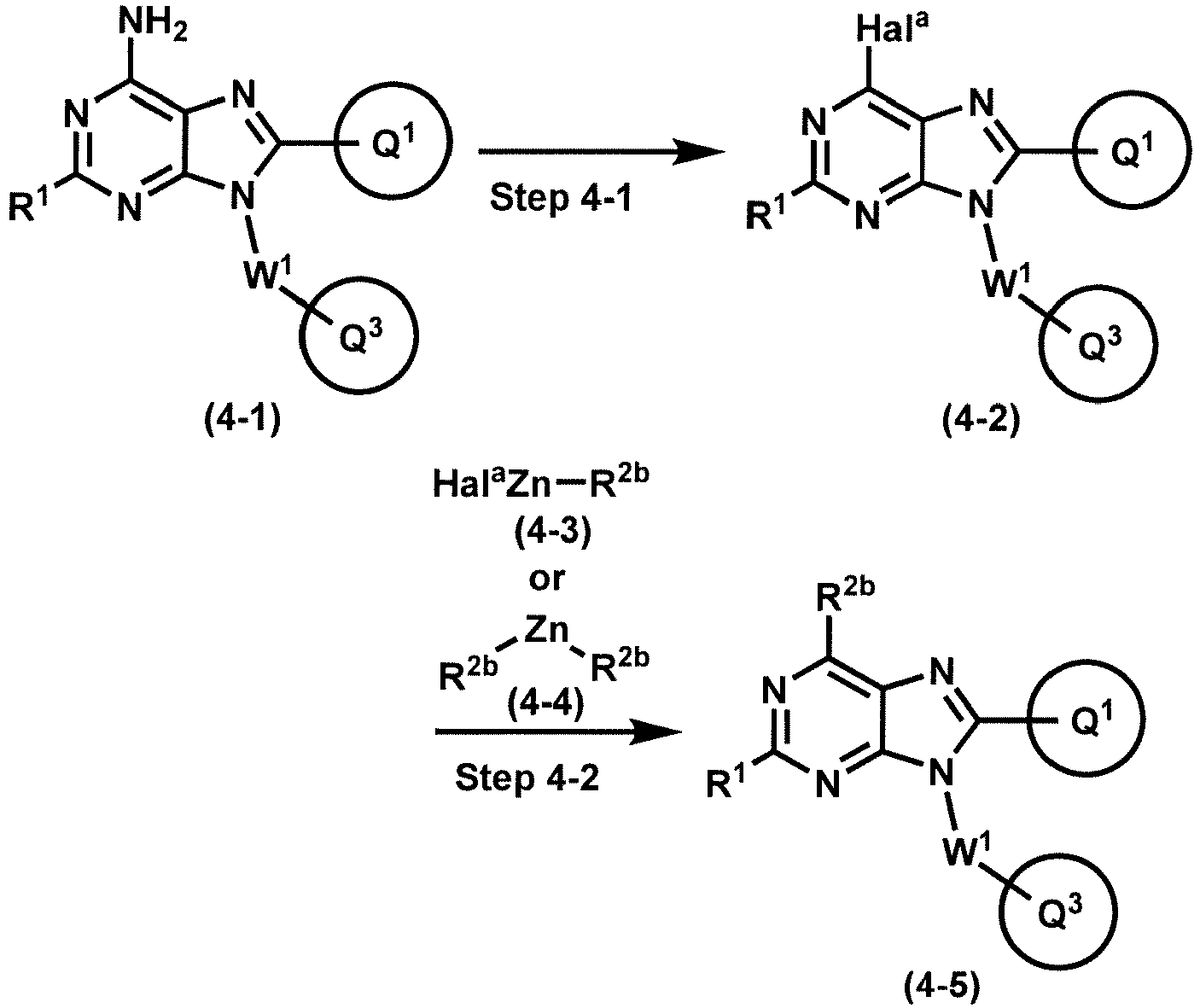
- Compound (4-2) can be prepared by reacting compound (4-1) with a nitrite ester/sodium nitrite and a halide, in the presence of an additive agent as appropriate, in an inert solvent. Compound (4-1) used herein can be prepared according to the method described in Preparation Process 1.
- The inert solvent includes, for example, halogenated hydrocarbons such as chloroform, dichloromethane, and 1,2-dichloroethane; aprotic polar solvents such as acetonitrile, dimethylformamide, N-methyl-2-pyrrolidinone, and dimethylsulfoxide; protic polar solvents such as water; and mixture solvents thereof. Preferably, it is dichloromethane or 1,2-dichloroethane.
- The additive agent includes, for example, halogenated trialkylsilanes such as chlorotrimethylsilane, bromotrimethylsilane, and iodotrimethylsilane.
- The nitrite ester includes, for example, ethyl nitrite, isopropyl nitrite, isoamyl nitrite, tert-butyl nitrite, and isobutyl nitrite.
- The halide includes, for example, metallic halides such as copper chloride, copper bromide, and potassium iodide; and organic halides such as tetraethylammonium chloride, tetraethylammonium bromide, tetraethylammonium iodide, benzyltriethylammonium chloride, benzyltriethylammonium bromide, benzyltriethylammonium iodide, tetrabutylammonium chloride, tetrabutylammonium bromide, and tetrabutylammonium iodide. Preferably, it is benzyltriethylammonium halide.
- The reaction temperature is not limited to specific ones, but it is generally selected from the temperatures between 0°C and boiling point of the used solvent. Preferably it is 20°C to 80°C. The reaction time is generally 30 minutes - 24 hours.
- Compound (4-5) can be prepared by reacting compound (4-2) with compound (4-3) or compound (4-4), in the presence of a palladium catalyst optionally along with a phosphine ligand, in an inert solvent. Compound (4-3) and compound (4-4) can be got as a marketed product or can be prepared by a known synthetic method (for example,
WO200624493 WO200883070 - The inert solvent includes, for example, ether solvents such as tetrahydrofuran, tetrahydropyran, 1,4-dioxane, and 1,2-dimethoxyethane; aromatic hydrocarbon such as toluene and xylene; aprotic polar solvents such as N,N-dimethylformamide, N,N-dimethylacetamide, and N-methyl-2-pyrrolidinone; and mixture solvents thereof. Preferably, it is tetrahydrofuran.
- The palladium catalyst includes, for example, zero-valent catalysts such as tetrakis(triphenylphosphine)palladium, bis(t-butylphosphine)palladium, and tris(dibenzylideneacetone)dipalladium; and bi-valent catalysts such as bis(triphenylphosphine)palladium dichloride, palladium acetate, and bis(diphenylphosphino)ferrocene-palladium dichloride. Preferably, it is tetrakis(triphenylphosphine)palladium or bis(t-butylphosphine)palladium.
- The phosphine ligand includes, for example, monodentate ligands such as o-tolylphosphine, 2-dicyclohexylphosphino-2',6'-dimethoxy-1,1'-biphenyl, and 2-dicyclohexylphosphino-2',4',6'-triisopropyl-1,1'-biphenyl; and bidentate ligands such as 1,1'-bis(diphenylphosphino)ferrocene, 1,2-bis(diphenylphosphino)ethane, 1,3-bis(diphenylphosphino)propane, 1,4-bis(diphenylphosphino)butane, 2,2'-bis(diphenylphosphino)-1,1'-binaphthyl, 9,9-dimethyl-4,5-bis(diphenylphosphino)xanthine, and bis(2-diphenylphosphinophenyl) ether.
- The reaction temperature is not limited to specific ones, but it is generally selected from the temperatures between -20°C and boiling point of the used solvent, preferably 0°C to 60°C. The reaction time is generally 5 minutes - 24 hours, preferably 5 minutes - 6 hours.
- The compound of formula (5-4) which is in the scope of the compound of formula (1) can be also prepared, for example, by the following process.

- Compound (5-2) can be prepared by reacting compound (5-1) with a base in an inert solvent. Compound (5-1) used herein can be prepared according to the method described in Preparation Process 1. The compounds in the present process wherein Rx is hydrogen atom or halogen atom may be used as intermediates in Preparation Process 1.
- The inert solvent includes, for example, ether solvents such as tetrahydrofuran, tetrahydropyran, 1,4-dioxane, and 1,2-dimethoxyethane; aromatic hydrocarbon such as toluene and xylene; halogenated hydrocarbons such as chloroform, dichloromethane, and 1,2-dichloroethane; aprotic polar solvents such as acetonitrile, propionitrile, N,N-dimethylformamide, N,N-dimethylacetamide, and N-methyl-2-pyrrolidinone; protic polar solvents such as methanol, ethanol, and water; and mixture solvents thereof. Preferably, it is tetrahydrofuran, acetonitrile, or N,N-dimethylformamide.
- The base used herein includes, for example, inorganic bases such as lithium hydroxide, sodium hydroxide, and potassium hydroxide; and organic bases such as sodium methoxide, sodium ethoxide, sodium tert-butoxide, potassium tert-butoxide, lithium trimethylsilyloxide, sodium trimethylsilyloxide, and potassium trimethylsilyloxide. Preferably, it is potassium trimethylsilyloxide.
- The reaction temperature is not limited to specific ones, but it is generally selected from the temperatures between -20°C and boiling point of the used solvent. Preferably it is 0°C to 60°C. The reaction time is generally 30 minutes - 48 hours.
- Compound (5-4) can be prepared from compound (5-2) and compound (5-3), according to the method described in Step 1-1. Compound (5-3) can be got as a marketed product or can be prepared by a known synthetic method (for example,
WO201364919 WO200952065 - The compounds of formulae (6-2), (6-5), (6-6), and (6-7) which are in the scope of the compound of formula (1) can be prepared, for example, by the following process.

- Compound (6-2) can be prepared by reacting compound (6-1) with a hydride reducing agent in an inert solvent. Compound (6-1) used herein can be prepared according to the method described in Preparation Process 1. The compounds in the present process wherein Rx is hydrogen atom or halogen atom may be used as intermediates in Preparation Process 1.
- The inert solvent includes, for example, ether solvents such as tetrahydrofuran, tetrahydropyran, 1,4-dioxane, and 1,2-dimethoxyethane; aromatic hydrocarbon such as toluene and xylene; halogenated hydrocarbons such as chloroform, dichloromethane, and 1,2-dichloroethane; and mixture solvents thereof.
- The hydride reducing agent includes, for example, sodium borohydride, lithium borohydride, lithium aluminum hydride, sodium cyanoborohydride, lithium triethylborohydride, diisobutylaluminum hydride, sodium bis(2-methoxyethoxy)aluminum hydride, lithium borodeuteride, and lithium aluminum deuteride. Preferably, it is diisobutylaluminum hydride or lithium aluminum hydride.
- The reaction temperature is not limited to specific ones, but it is generally selected from the temperatures between -78°C and boiling point of the used solvent. Preferably it is -20°C to 20°C. The reaction time is generally 5 minutes - 24 hours.
- Compound (6-3) wherein L is a substituted sulfonyl group can be prepared by reacting compound (6-2) with a sulfonyl chloride in the presence of a base in an inert solvent. Compound (6-3) wherein L is halogen can be prepared by reacting compound (6-2) with a halogenating agent in an inert solvent.
- The inert solvent includes, for example, ether solvents such as tetrahydrofuran, tetrahydropyran, 1,4-dioxane, and 1,2-dimethoxyethane; aromatic hydrocarbon such as toluene and xylene; halogenated hydrocarbons such as chloroform, dichloromethane, and 1,2-dichloroethane; aprotic polar solvents such as acetonitrile, N,N-dimethylformamide, N,N-dimethylacetamide, and N-methyl-2-pyrrolidinone; and mixture solvents thereof. Preferably, it is tetrahydrofuran, chloroform, or dichloromethane.
- The base used herein includes, for example, organic bases such as triethylamine, diisopropylethylamine, pyridine, 2,4,6-trimethylpyridine, and 4-dimethylaminopyridine. Preferably, it is triethylamine or diisopropylamine.
- The substituted sulfonyl chloride includes, for example, methanesulfonyl chloride, monochloromethanesulfonyl chloride, benzenesulfonyl chloride, p-toluenesulfonyl chloride, o-nitrobenzenesulfonyl chloride, and p-nitrobenzenesulfonyl chloride. Preferably, it is methanesulfonyl chloride.
- The halogenating agent includes, for example, thionyl chloride, oxalyl dichloride, and phosphorus tribromide. Preferably, it is thionyl chloride, or phosphorus tribromide.
- The reaction temperature is not limited to specific ones, but it is generally selected from the temperatures between -20°C and boiling point of the used solvent. Preferably it is 0°C to 60°C. The reaction time is generally 5 minutes - 24 hours.
- Compound (6-5) can be prepared by reacting compound (6-3) with compound (6-4) in the presence of a base optionally along with a halide, in an inert solvent. Compound (6-4) can be got as a marketed product or can be prepared by a known synthetic method (for example,
WO20073965 US2010216812 ) or a similar method. - The inert solvent includes, for example, ether solvents such as tetrahydrofuran, tetrahydropyran, 1,4-dioxane, and 1,2-dimethoxyethane; halogenated hydrocarbons such as chloroform, dichloromethane, and 1,2-dichloroethane; aprotic polar solvents such as acetonitrile, N,N-dimethylformamide, N,N-dimethylacetamide, N-methyl-2-pyrrolidinone, and dimethylsulfoxide; and mixture solvents thereof. Preferably, it is tetrahydrofuran, dichloromethane, or N,N-dimethylformamide.
- The base used herein includes, for example, organic bases such as triethylamine, diisopropylethylamine, pyridine, 2,4,6-trimethylpyridine, and 4-dimethylaminopyridine; and inorganic bases such as potassium carbonate, sodium carbonate, and cesium carbonate.
- The halide includes, for example, organic halides such as tetrabutylammonium iodide, and tetrabutylammonium bromide; and inorganic halides such as potassium iodide, potassium bromide, sodium iodide, and sodium bromide.
- The reaction temperature is not limited to specific ones, but it is generally selected from the temperatures between -20°C and boiling point of the used solvent or compound (6-4). Preferably it is 0°C to 120°C. The reaction time is generally 30 minutes - 72 hours.
- Compound (6-6) can be prepared by reacting compound (6-2) with an oxidizing agent, in the presence of a base as appropriate, in an inert solvent.
- The inert solvent includes, for example, ether solvents such as tetrahydrofuran, tetrahydropyran, 1,4-dioxane, and 1,2-dimethoxyethane; halogenated hydrocarbons such as chloroform, dichloromethane, and 1,2-dichloroethane; aprotic polar solvents such as acetonitrile, propionitrile, N,N-dimethylformamide, N,N-dimethylacetamide, N-methyl-2-pyrrolidinone, and dimethylsulfoxide; and mixture solvents thereof.
- The oxidizing agent includes, for example, manganese dioxide, pyridine-sulfur trioxide complex, and Dess-Martin reagent.
- The base used herein includes, for example, organic bases such as triethylamine, diisopropylethylamine, pyridine, 2,4,6-trimethylpyridine, and 4-dimethylaminopyridine; and inorganic bases such as sodium bicarbonate, potassium bicarbonate, sodium carbonate, potassium carbonate, and cesium carbonate.
- The reaction temperature is not limited to specific ones, but it is generally selected from the temperatures between 0°C and boiling point of the used solvent. Preferably it is 0°C to 20°C. The reaction time is generally 30 minutes - 72 hours.
- Compound (6-5) can be prepared by reacting compound (6-6) with compound (6-4) in the presence of a borohydride compound optionally along with an acid, in an inert solvent.
- The inert solvent includes, for example, ether solvents such as tetrahydrofuran, tetrahydropyran, 1,4-dioxane, and 1,2-dimethoxyethane; halogenated hydrocarbons such as chloroform, dichloromethane, and 1,2-dichloroethane; protic polar solvents such as methanol, ethanol, 1-propanol, 2-propanol, and water; and mixture solvents thereof. Preferably, it is tetrahydrofuran, dichloromethane, chloroform, or methanol.
- The acid used herein includes, for example, carboxylic acids such as formic acid, propionic acid, acetic acid, and trifluoroacetic acid; and mineral acids such as hydrochloric acid.
- The borohydride compound includes, for example, sodium cyanoborohydride, sodium triacetoxyborohydride, and sodium borohydride. Preferably, it is sodium cyanoborohydride and sodium triacetoxyborohydride.
- The reaction temperature is not limited to specific ones, but it is generally selected from the temperatures between 0°C and boiling point of the used solvent. Preferably it is 0°C to 20°C. The reaction time is generally 30 minutes - 72 hours.
- Compound (6-7) can be prepared by reacting compound (6-1) and compound (6-4) with a condensing agent, in the presence of a base and an additive agent as appropriate, in an inert solvent.
- The inert solvent includes, for example, ether solvents such as tetrahydrofuran, tetrahydropyran, 1,4-dioxane, and 1,2-dimethoxyethane; aromatic hydrocarbon such as toluene and xylene; aprotic polar solvents such as acetonitrile, propionitrile, N,N-dimethylformamide, N,N-dimethylacetamide, N-methyl-2-pyrrolidinone, and dimethylsulfoxide; and mixture solvents thereof. Preferably, it is N,N-dimethylacetamide or N-methyl-2-pyrrolidinone.
- The condensing agent includes, for example, dicyclohexylcarbodiimide, diisopropylcarbodiimide, 1-ethyl-3-(3-dimethylaminopropyl)-carbodiimide, benzotriazol-1-yloxy-tris(dimethylamino)phosphonium hexafluorophosphate, diphenylphosphonyl azide, N,N'-carbonyldiimidazole, O-(benzotriazol-1-yl)-N,N,N',N'-tetramethyluronium hexafluorophosphate, and O-(7-azabenzotriazol-1-yl)-N,N,N',N'-tetramethyluronium hexafluorophosphate.
- The additive agent includes, for example, N-hydroxysuccinimide, 1-hydroxybenzotriazole, and 3-hydroxy-4-oxo-3,4-dihydro-1,2,3-benzotriazine, which can be used in the reaction.
- The base used herein includes, for example, organic bases such as triethylamine, diisopropylethylamine, and pyridine; inorganic bases such as potassium carbonate, sodium carbonate, cesium carbonate, potassium bicarbonate, sodium bicarbonate, potassium dihydrogenphosphate, dipotassium hydrogenphosphate, potassium phosphate, sodium dihydrogenphosphate, disodium hydrogen phosphate, sodium phosphate, potassium hydroxide, sodium hydroxide, and sodium hydride; and metal alkoxides such as sodium methoxide and potassium tert-butoxide.
- The reaction temperature is not limited to specific ones, but it is generally selected from the temperatures between -20°C and boiling point of the used solvent. Preferably it is 0°C to 20°C. The reaction time is generally 10 minutes - 48 hours.
- The compounds of formulae (7-3) and (7-4) which are in the scope of the compound of formula (1) can be prepared, for example, by the following process.

- Compound (7-3) can be prepared from compound (7-1) and compound (7-2), according to the method described in Step 1-3. Compound (7-2) used herein can be got as a marketed product or can be prepared according to the method to prepare compound (1-5). compound (7-1) used herein can be prepared according to the method described in Preparation Process 1. The compounds in the present process wherein Rx is hydrogen atom or halogen atom may be used as intermediates in Preparation Process 1.
- Compound (7-4) can be prepared by hydrogenating compound (7-3) under hydrogen atmosphere in the presence of a metallic catalyst in an inert solvent.
- The inert solvent includes, for example, ether solvents such as tetrahydrofuran, tetrahydropyran, 1,4-dioxane, and 1,2-dimethoxyethane; protic polar solvents such as water, methanol, ethanol, and isopropanol; and mixture solvents thereof.
- The metallic catalyst includes, for example, palladium/carbon, palladium hydroxide/carbon, Raney nickel, platinum oxide/carbon, and rhodium/carbon. Preferably, it is palladium/carbon or palladium hydroxide/carbon. The amount of the metallic catalyst used herein is generally 0.1 - 1000 wt %, preferably 1 - 100 wt % per weight of compound (7-3).
- The reaction may be carried out in the presence of an acid as appropriate. The acid used herein includes, for example, organic acids such as formic acid, acetic acid, and trifluoroacetic acid. The amount of the acid used herein is 0.1 mole or more per one mole of compound (7-3).
- The hydrogen pressure is generally about 1 - about 100 atm, preferably about 1 - about 5 atm. The reaction temperature is not limited to specific ones, but it is generally 0°C - 120°C, preferably 20°C - 80°C. The reaction time is generally 30 minutes - 72 hours, preferably 1 hour - 24 hours.
- The compound of formula (8-4) which is in the scope of the compound of formula (1) can be prepared, for example, by the following process.

- Compound (8-4) can be prepared by reacting compound (8-1) with compound (8-2) in the presence of Mitsunobu reagent and phosphine reagent, or Tsunoda reagent, in an inert solvent. Compound (8-2) can be got as a marketed product or can be prepared by a known synthetic method (for example,
US2003220341 ,US2003229092 ) or a similar method. Compound (8-1) used herein can be prepared according to the method described in Preparation Process 2. - The inert solvent includes, for example, ether solvents such as tetrahydrofuran, tetrahydropyran, 1,4-dioxane, and 1,2-dimethoxyethane; aromatic hydrocarbon such as toluene and xylene; halogenated hydrocarbons such as chloroform, dichloromethane, and 1,2-dichloroethane; aprotic polar solvents such as acetonitrile, propionitrile, N,N-dimethylformamide, N,N-dimethylacetamide, N-methyl-2-pyrrolidinone, and dimethylsulfoxide; and mixture solvents thereof. Preferably, it is tetrahydrofuran, toluene, or a mixture solvent thereof.
- The Mitsunobu reagent includes, for example, diethyl azodicarboxylate, diisopropyl azodicarboxylate, dicyclohexyl azodicarboxylate, dibenzyl azodicarboxylate, tert-butyl azodicarboxylate, bis(2-methoxyethyl) azodicarboxylate, 1,1'-(azodicarbonyl)dipiperidine, and 1,1'-azobis(N,N-dimethylformamide).
- The phosphine reagent includes, for example, triphenylphosphine, trimethylphosphine, tributylphosphine, and trioctylphosphine. Preferably, it is triphenylphosphine or tributylphosphine.
- The Tsunoda reagent includes, for example, (cyanomethylene)tributylphosphorane and (cyanomethylene)trimethylphosphorane. Preferably, it is (cyanomethylene)tributylphosphorane.
- The reaction temperature is not limited to specific ones, but it is generally selected from the temperatures between 0°C and boiling point of the used solvent. Preferably it is 20°C to 100°C. The reaction time is generally 10 minutes - 72 hours.
- Compound (8-4) can be also prepared from compound (8-1) and compound (8-3), according to the method described in Step 5-2. Compound (8-3) can be got as a marketed product or can be prepared by a known synthetic method (for example,
WO200620415 WO2007102883 ) or a similar method. - The compound of formula (9-4) can be prepared, for example, by the following process.
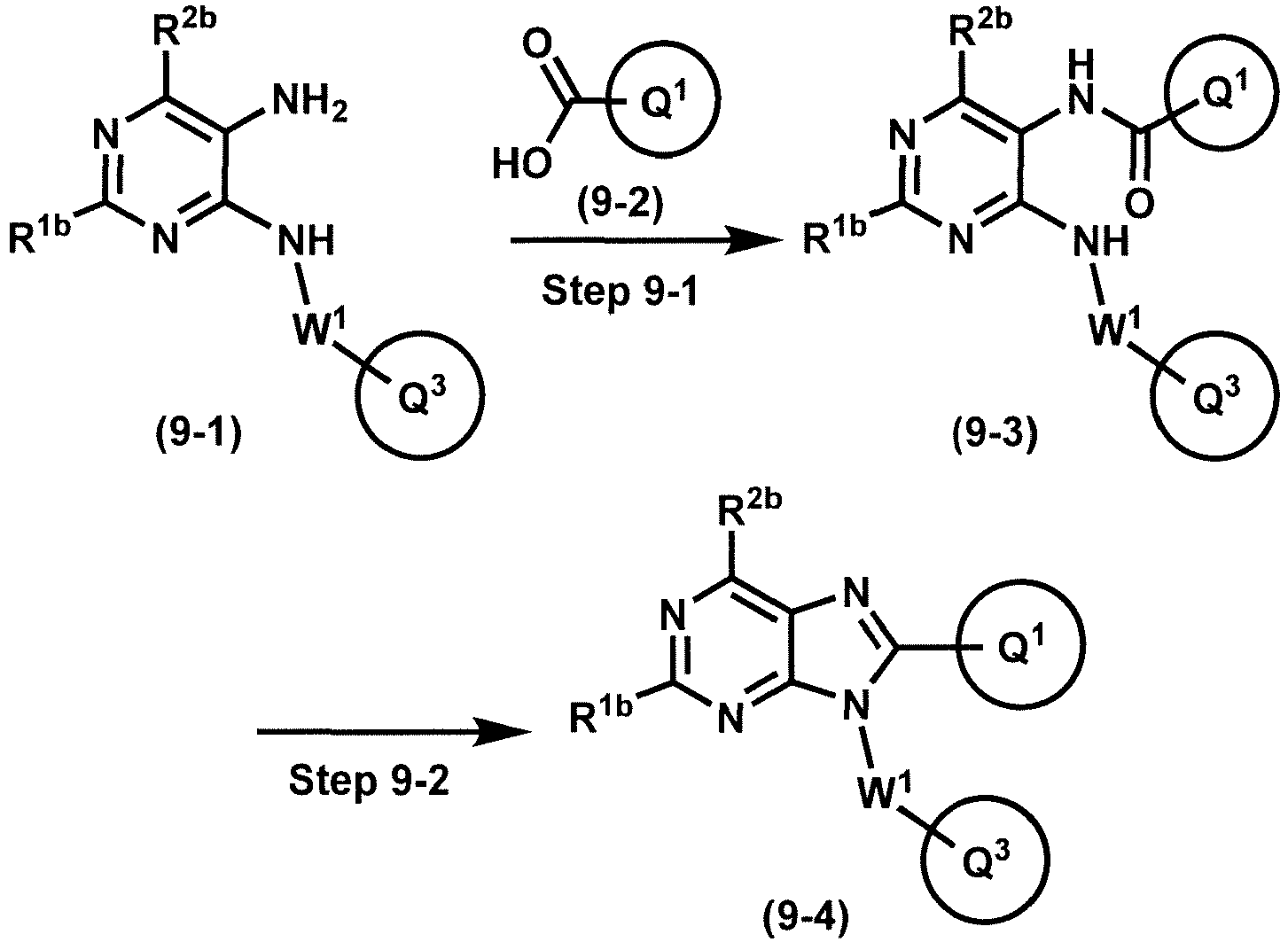
- Compound (9-3) can be prepared from compound (9-1) and compound (9-2), according to the method described in Step 6-6. compound (9-2) can be got as a marketed product or can be prepared by a known synthetic method (for example,
WO200870150 WO200870150 - Compound (9-4) can be prepared by reacting compound (9-3) with a silylation agent, in the presence of an additive agent as appropriate, in an inert solvent.
- The inert solvent includes, for example, ether solvents such as tetrahydrofuran, tetrahydropyran, 1,4-dioxane, and 1,2-dimethoxyethane; aromatic hydrocarbon such as toluene and xylene; aprotic polar solvents such as acetonitrile, propionitrile, N,N-dimethylformamide, N,N-dimethylacetamide, N-methyl-2-pyrrolidinone, and dimethylsulfoxide; halogenated hydrocarbons such as chloroform, dichloromethane, and 1,2-dichloroethane; and mixture solvents thereof.
- The additive agent includes, for example, 1-(3-dimethylaminopropyl)3-ethylurea, N-hydroxysuccinimide, 1-hydroxybenzotriazole, 3-hydroxy-4-oxo-3,4-dihydro-1,2,3-benzotriazine, bis(trimethylsilyl)amine, N,N-dimethyl-4-pyridine, and pyridine, which can be used in the reaction.
- The silylation agent includes, for example, N,O-bis(trimethylsilyl)acetamide, N,O-bis(trimethylsilyl)trifluoroacetamide, and trimethylchlorosilane. Preferably, it is N,O-bis(trimethylsilyl)acetamide or N,O-bis(trimethylsilyl)trifluoroacetamide.
- The reaction temperature is not limited to specific ones, but it is generally selected from the temperatures between about -20°C and boiling point of the used solvent. Preferably it is 20°C to 120°C. The reaction time is generally 10 minutes - 48 hours.
- The compound of formula (10-4) can be prepared, for example, by the following process.
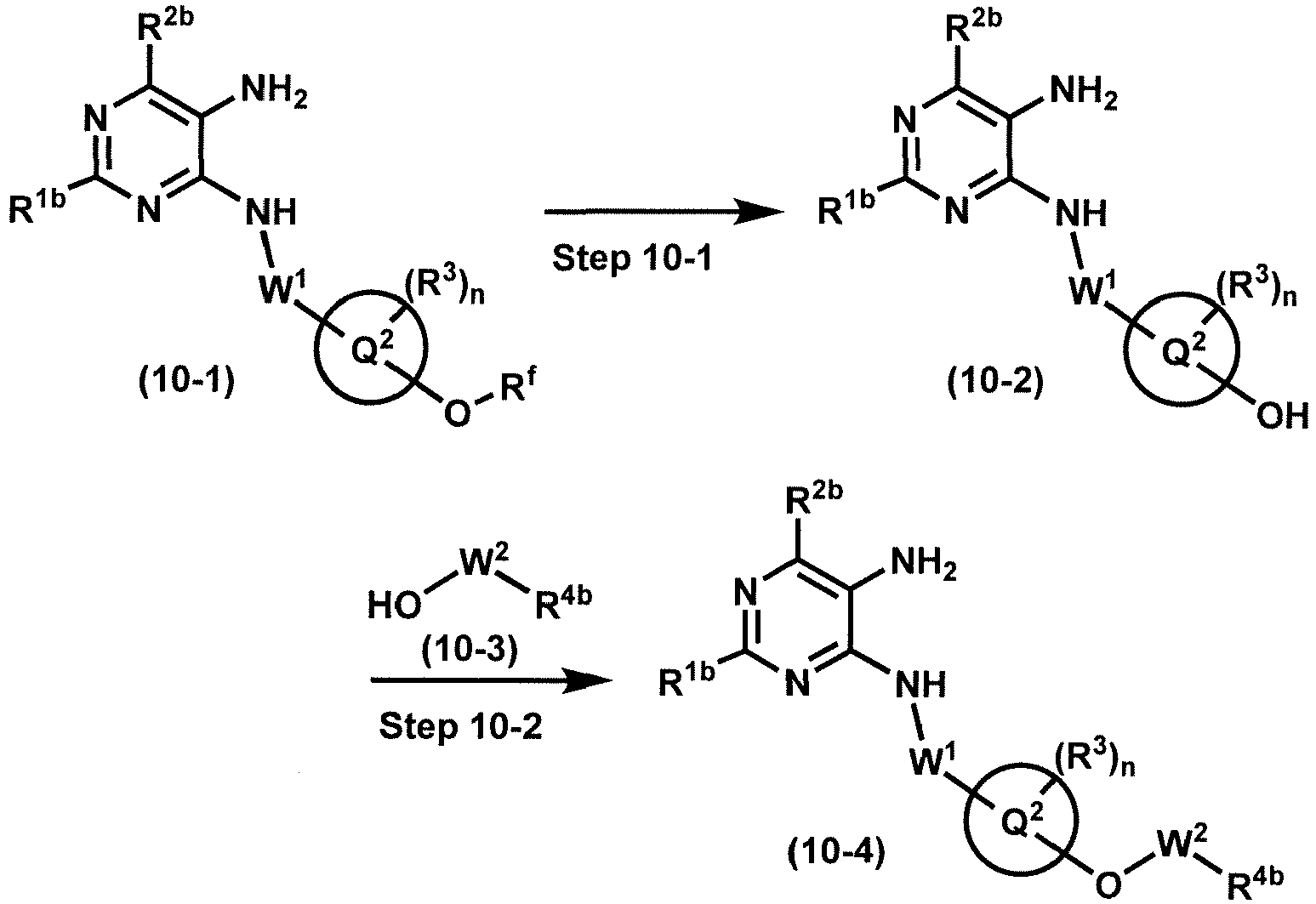
- Compound (10-2) can be prepared by reacting compound (10-1) with a base in an inert solvent. compound (10-1) used herein can be prepared according to the method described in Preparation Process 2.
- The inert solvent includes, for example, ether solvents such as tetrahydrofuran, tetrahydropyran, 1,4-dioxane, and 1,2-dimethoxyethane; protic polar solvents such as methanol, ethanol, and water; and mixture solvents thereof. Preferably, it is tetrahydrofuran, methanol, or ethanol.
- The base used herein includes, for example, inorganic bases such as lithium hydroxide, sodium hydroxide, and potassium hydroxide; and organic bases such as sodium methoxide, sodium ethoxide, sodium tert-butoxide, potassium tert-butoxide, lithium trimethylsilyloxide, sodium trimethylsilyloxide, and potassium trimethylsilyloxide. Preferably, it is lithium hydroxide, sodium hydroxide, or potassium hydroxide.
- The reaction temperature is not limited to specific ones, but it is generally selected from the temperatures between -20°C and boiling point of the used solvent. Preferably it is -20°C to 60°C. The reaction time is generally 30 minutes - 48 hours.
- Compound (10-4) can be prepared from compound (10-2) and compound (10-3), according to the method described in Preparation Process 8. Compound (10-3) can be got as a marketed product or can be prepared by a known synthetic method (for example,
US2003220341 ,US2003229092 ) or a similar method. - The compound of formula (11-4) can be prepared, for example, by the following process.
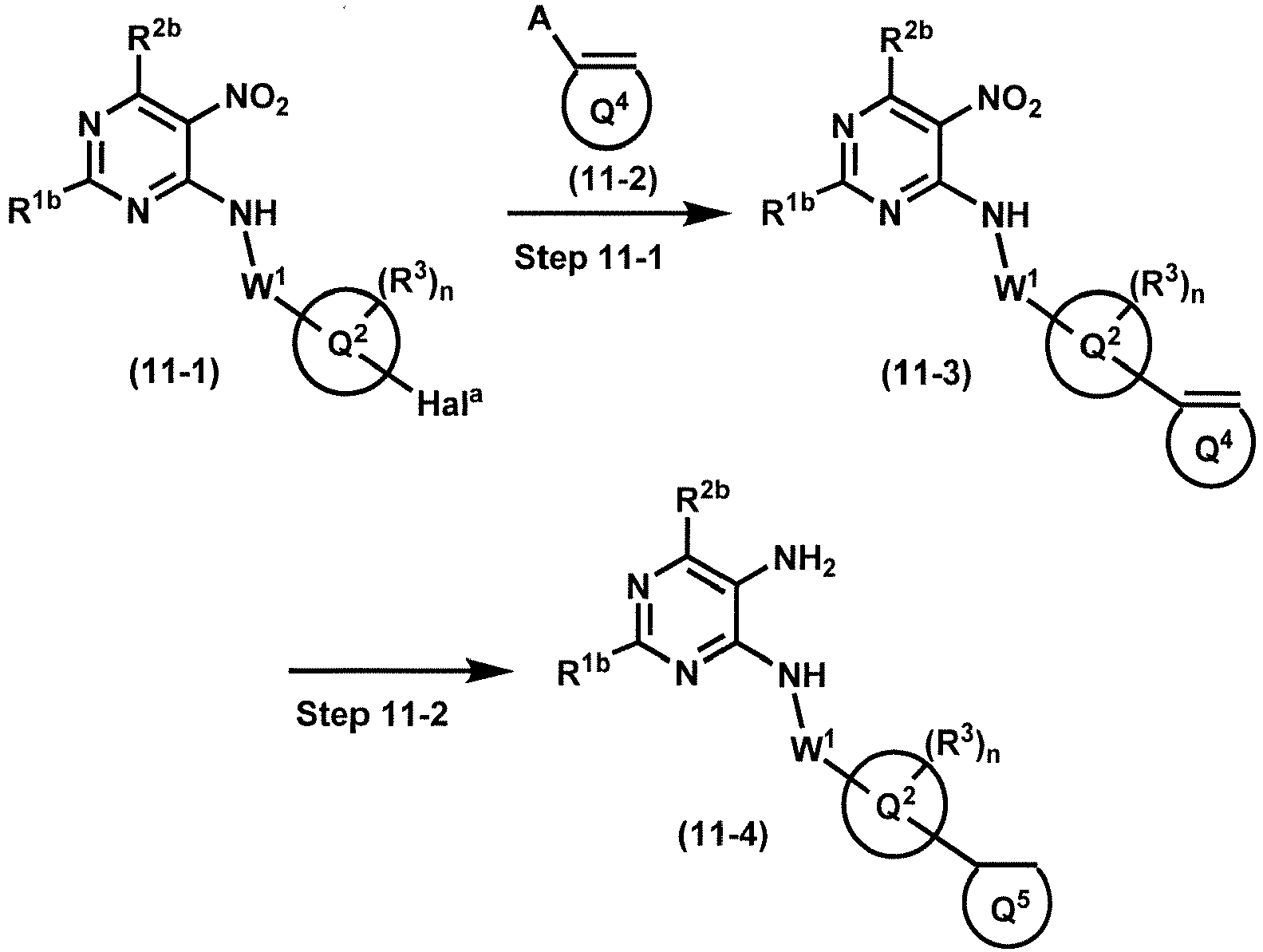
- Compound (11-3) can be prepared from compound (11-1), according to the method described in Step 7-1. Compound (11-2) used herein can be got as a marketed product or can be prepared by a known method which is according to the method to prepare compound (1-5). Compound (11-1) used herein can be prepared according to the method described in Preparation Process 2 or Preparation Process 3.
- Compound (11-4) can be prepared from compound (11-3), according to the method described in Step 7-2.
- The compound of formula (12-5) can be prepared, for example, by the following process.

- Compound (12-3) can be prepared from compound (12-1), according to the method described in Step 6-5. Compound (12-2) can be got as a marketed product or can be prepared by a known synthetic method (for example,
WO20073965 US2010216812 ) or a similar method. Compound (12-1) used herein can be prepared according to the method described in Preparation Process 2. - Compound (12-4) can be prepared from compound (12-3), according to the method described in Step 2-5.
- Compound (12-5) can be prepared from compound (12-4), according to the method described in Step 2-6.
- The compound of formula (13-2) can be prepared, for example, by the following process.

- Compound (13-2) can be prepared by reacting compound (13-1) with an acid in an inert solvent.
- The inert solvent includes, for example, ether solvents such as tetrahydrofuran, tetrahydropyran, 1,4-dioxane, and 1,2-dimethoxyethane; protic polar solvents such as methanol, ethanol, and water; ester solvents such as methyl acetate and ethyl acetate; halogenated hydrocarbons such as chloroform, dichloromethane, and 1,2-dichloroethane; and mixture solvents thereof.
- The acid used herein includes, for example, inorganic acids such as hydrochloric acid and sulfuric acid.
- The reaction temperature is not limited to specific ones, but it is generally selected from the temperatures between 20°C and boiling point of the used solvent. Preferably it is 20°C to 60°C. The reaction time is generally 30 minutes - 24 hours.
- The present compound having a desired functional group at a desired position can be prepared by suitably combining the above preparation processes. The isolation and purification of each intermediate or product in the above preparation processes can be carried out by conventional manners in organic synthesis, for example, by suitably combining filtration, extraction, washing, drying, concentration, crystallization, various chromatography, etc. Or, some intermediates may be sometimes used in the next step without purification.
- Some starting compounds or intermediates in the above preparation processes can exist in a salt form such as hydrochloride, but can be used as free form thereof. When starting compounds or intermediates that are in salt form need to be used or obtained as free form thereof, they can be transformed to free forms thereof by dissolving or suspending them in an appropriate solvent and neutralizing the solution or suspension with a base such as aqueous sodium bicarbonate.
- Some of compound (1) or a pharmaceutically acceptable salt thereof can exist as isomers such as tautomer (for example, keto-enol form), regioisomer, geometrical isomer, and optical isomer. The present invention encompasses every possible isomer including the above, and a mixture thereof which has various mixture proportions.
- And, optical isomers thereof can be resolved by a known manner such as chromatography with an optically-active column and fractional crystallization at a suitable step in the above-mentioned preparation processes. And, an optically-active starting material can be also used for this purpose.
- In order to obtain compound (1) as a salt thereof, when the product is a salt of compound (1), the product should be directly purified; or when the product is in free form of compound (1), the product should be dissolved or suspended in an appropriate solvent and then an acid or a base should be added thereto to form a salt thereof. And, some of compound (1) or a pharmaceutically acceptable salt thereof can exist as a hydrate thereof or a solvate thereof with various solvents, which are also included in the present invention.
- Autoimmune disease is a generic term of diseases progressing to histological damage which can be developed as follows; innate immune system which intrinsically has a role to recognize foreign substances from outside such as pathogenic microorganisms and then exclude them gets abnormal, recognizes autologous cells or tissues as foreign substances to produce excess autoantibody and lymphocyte, and causes inflammation systemically or organ-specifically with producing cytokine. It includes, for example, systemic lupus erythematosus, lupus nephritis, central nervous system lupus, cutaneous lupus erythematosus (e.g. discoid lupus erythematosus, lupus erythematosus profundus), Sjogren's syndrome, idiopathic thrombocytopenic purpura, autoimmune blood disease (e.g. autoimmune hemolytic anemia, episodic thrombocytopenia), psoriasis (e.g. plaque psoriasis, psoriasis arthropathica, pustular psoriasis, guttate psoriasis), pemphigus (e.g. pemphigus vulgaris, bullous pemphigoid), rheumatoid arthritis, antiphospholipid antibody syndrome, Aicardi-Goutieres syndrome, IgG4-related disease, polymyositis, dermatomyositis, Behcet's disease, type 1 diabetes, rapidly progressive glomerulonephritis, multiple sclerosis, Crohn's disease, ulcerative colitis, Hashimoto's disease, scleroderma, systemic sclerema, polyarteritis nodosa, allergic granulomatous angiitis, primary myxedema, thyrotoxicosis, pernicious anemia, Goodpasture's syndrome, myasthenia gravis, insulin-resistant diabetes, juvenile diabetes, Addison's disease, atrophic gastritis, male sterility, early-onset climacteric, lens-induced uveitis, primary biliary cirrhosis, chronic active hepatitis, paroxysmal hemoglobinuria, primary biliary cirrhosis, Guillain-Barre syndrome, Graves' disease, interstitial pulmonary fibrosis, and mixed connective tissue disease.
- The pharmaceutical formulation of the present invention can be prepared by mixing an active ingredient with one or more pharmaceutically acceptable carriers and processing it by a conventional manner in drug formulation field. The pharmaceutically acceptable carrier used herein includes, for example, lactose, mannitol, glucose, starch, magnesium stearate, glycerate ester, distilled water for injection, saline, propylene glycol, polyethylene glycol, and ethanol. And, the pharmaceutical formulation of the present invention may comprise various other excipient, lubrication agent, lubricant, binder, disintegrant, tonicity agent, emulsifier, and the like.
- As for the administration route of the present invention, a route to bring into the most effective therapy is preferable, which includes oral administration, and parenteral administration such as intravenous, transdermal, inhalational, and ophthalmic, preferably oral administration. The dosage form of the present invention includes, for example, tablet and injection, preferably tablet. The dose of the present pharmaceutical composition and the frequency of administration depend on dosage form, disease and symptom of patients, age and body weight of patients, etc. Thus, they cannot be clearly determined, but the present pharmaceutical composition may be administered to an adult a few times per day, preferably 1 - 3 times per day, wherein the daily dose of the active ingredient is a range of about 0.0001 - about 5000 mg, preferably about 0.001 - about 1000 mg, more preferably about 0.1 - about 500 mg, particularly preferably about 1 - about 300 mg.
- The present compound may be used in combination with other drugs to strengthen the efficacy and/or reduce side effects. For example, the present compound may be used in combination with another drug such as a steroid drug, an immunosuppressive drug, B cell-specific agent, and TLR inhibitor. The "B cell-specific agent" means an antibody drug whose target is B cells. The "TLR inhibitor" includes, for example, hydroxychloroquine and chloroquine.
- Hereinafter, a drug which can be used in combination with the present compound is called a combination drug for short.
- The combination drug used herein includes, for example, a steroid drug, an immunosuppressive drug, a B cell-specific agent, a TLR inhibitor, and other agents for treating autoimmune disease.
- The administration interval between the present compound and a combination drug should not be limited. These may be administered to a subject simultaneously or with time lag. And, the present compound and a combination drug may be a "drug-combination" thereof. The dose of a combination drug can be suitably determined based on the dose that the combination drug has been clinically used. The ratio of the present compound and a combination drug may be determined based on its subject, administration route, disease, symptom, combination, etc. For example, in case that the subject is a human, 0.01 - 100 parts by weight of a combination drug may be used per one part by weight of the present compound (1). In addition, in order to suppress its side effect, other drugs such as an antiemetic drug, a sleep-inducing drug, and an anticonvulsant drug (i.e., concurrent drug) may be used in combination.
- The dose of each compound can depend on patient's disease, age, body weight, gender, symptom, and the administration route, etc. In general, the present compound is administered to an adult (body weight: 50 kg) by 0.1 - 1000 mg/day, preferably 0.1 - 300 mg/day, once a day or in 2 - 3 doses. Or, it may be administered once in a few days to a few weeks.
- The present invention is explained in more detail in the following by referring to Examples, Reference examples, and Tests; however, the technical scope of the present invention is not limited thereto. The compound names used in Examples and Reference examples are not always based on IUPAC nomenclature system.
- In the present specification, the abbreviations shown below may be sometimes used.
(Boc)2O: di-tert-butyl dicarbonate
Tf: trifluoromethanesulfonyl
DMAP: N,N-dimethyl-4-aminopyridine
EDCI: 1-(3-dimethylaminopropyl)-3-ethylcarbodiimide
EDCI·HCl: 1-(3-dimethylaminopropyl)-3-ethylcarbodiimide hydrochloride
HOBt: 1-hydroxybenzotriazole
HOBt·H2O: 1-hydroxybenzotriazole monohydrate
Boc: tert-butoxycarbonyl
Me: methyl
Et: ethyl
Tf: trifluoromethanesulfonyl
Rt: retention time - In the following Examples and Reference examples, the reaction device shown below was used as appropriate. Microwave reactor: Biotage AB Initiator
- The physicochemical data of each compound in Examples and Reference examples were obtained with the instrument shown below.
1H-NMR: JEOL JNM-AL400; Brucker AVANCE 400 Spectrometer - The LC/MS data of each compound in Examples and Reference examples were obtained with the instrument shown below.
Detector: ACQUITY™ SQ deteceter (Waters)
HPLC: ACQUITY™ UPLC
SYSTEM Column: Waters ACQUITY™ UPLC BEH C18 (1.7 µm, 2.1 mm x 30 mm) - The analytical conditions are as follows.
Method Solvent Gradient condition Method A A: 0.05 % formic acid/ water 0.0-1.3 min Linear gradient from B 2 % to 96 % B: acetonitrile Method B A: 0.05 % formic acid/ water 0.0-1.3 min Linear gradient from B 1 % to 95 % B: acetonitrile Method C A: 0.05 % formic acid/ water 0.0-1.3 min Linear gradient from B 10 % to 95 % B: acetonitrile Method D A: 0.06 % formic acid/ water 0.0-1.3 min Linear gradient from B 2 % to 96 % B: 0.06 % formic acid/ acetonitrile - Flow rate: 0.8 mL/min; Detection UV: 220 nm and 254 nm; Temperature: 40°C
- The compound names in Examples and Reference examples were determined with ACD/Name (ACD/Labs 12.0, Advanced ChemistryDevelopment Inc.).
-

- To a solution of 9-benzyl-8-bromo-2-butoxy-9H-purine-6-amine (70.1 mg) in a mixture of 1,4-dioxane (3 mL)/water (1 mL) were added 3-fluoropyridine-5-boronic acid pinacol ester (46.4 mg), potassium carbonate (77.6 g), and tetrakis(triphenylphosphine)palladium (0.021 g), and the mixture was stirred at 120°C under microwave irradiation for one hour. The reaction mixture was cooled to room temperature, and then water was added thereto. The mixture was extracted with ethyl acetate. The organic layer was dried over sodium sulfate, filtrated, and then concentrated in vacuo. The residue was purified by silica gel column chromatography (chloroform/methanol) to give the title compound (22.6 mg).
LC-MS [M+H]+/Rt (min): 393.0/0.988 (Method A); 1H-NMR (400 MHz, DMSO-d6) δ: 8.67 (1H, t, J = 1.8 Hz), 8.67 (1H, d, J = 7.9 Hz), 7.98-7.95 (1H, m), 7.47 (2H, brs), 7.28-7.19 (3H, m), 6.99-6.96 (2H, m), 5.47 (2H, s), 4.22 (2H, t, J = 6.4 Hz), 1.64 (2H, tt, J = 6.4, 7.9 Hz), 1.38 (2H, qt, J = 7.3, 7.9 Hz), 0.90 (3H, t, J = 7.3 Hz). - According to the method of Example 1, Examples 2 - 46 were prepared by using the corresponding material compounds. As appropriate, some reactions were carried out under reflux or under microwave irradiation.
Example Chemical Structure Instrumental analysis data 2 
LC-MS [M+H]+/Rt (min): 375.0/0.899 (Method A); 1H-NMR (400 MHz, DMSO-d6) δ: 8.81 (1H, d, J = 1.8 Hz), 8.63 (1H, dd, J = 1.2, 4.9 Hz), 8.02 (1H, dt, J = 1.8, 7.9 Hz), 7.48 (1H, dd, J = 4.9, 7.9 Hz), 7.42 (2H, brs), 7.27-7.19 (3H, m), 6.97 (2H, d, J = 6.7 Hz), 5.43 (2H, s), 4.21 (2H, t, J = 6.7 Hz), 1.64 (2H, tt, J = 6.7, 7.9 Hz), 1.38 (2H, qt, J = 7.3, 7.9 Hz), 0.90 (3H, t, J = 7.3 Hz). . 3 
LC-MS [M+H]+/Rt (min): 376.1/0.643 (Method A); 1H-NMR (400 MHz, DMSO-d6) δ: 8.83 (1H, d, J = 1.2 Hz), 8.65 (1H, dd, J = 1.2, 4.9 Hz), 8.41 (1H, dd, J = 1.8, 4.9 Hz), 8.27 (1H, d, J = 1.2 Hz), 8.04 (1H, ddd, J = 1.8, 1.8 7.9 Hz), 7.51 (1H, dd, J = 4.9, 7.9 Hz), 7.49 (2H, brs), 7.35-7.34 (1H, m), 7.26 (1H, dd, J = 4.9, 7.9), 5.46 (2H, s), 4.21 (2H, t, J = 6.7 Hz), 1.64 (2H, tt, J = 6.7, 7.9 Hz), 1.38 (2H, qt, J = 7.3, 7.9 Hz), 0.90 (3H, t, J = 7.3 Hz). 4 
LC-MS [M+H]+/Rt (min) : 375.1/0.891 (Method A); 1H-NMR (400 MHz, DMSO-d6) δ: 8.64 (2H, dd, J = 1.8, 4.3 Hz), 7.64 (2H, dd, J = 1.8, 4.3 Hz), 7.49 (2H, brs), 7.28-7.19 (3H, m), 7.00 (2H, d, J = 6.7 Hz), 5.50 (2H, s), 4.21 (2H, t, J = 6.7 Hz), 1.63 (2H, tt, J = 6.7, 7.9 Hz), 1.38 (2H, qt, J = 7.3, 7.9 Hz), 0.89 (3H, t, J = 7.3 Hz). . 5 
LC-MS [M+H]+/Rt (min): 376.1/0.891 (Method A); 1H-NMR (400 MHz, DMSO-d6) δ: 9.23 (1H, s), 9.03 (1H, s), 9.02 (1H, s), 7.50 (2H, brs), 7.28-7.19 (3H, m), 6.99 (2H, d, J = 6.7 Hz), 5.49 (2H, s), 4.23 (2H, t, J = 6.7 Hz), 1.64 (2H, tt, J = 6.7, 7.9 Hz), 1.39 (2H, qt, J = 7.3, 7.9 Hz), 0.90 (3H, t, J = 7.3 Hz). 6 
LC-MS [M+H]+/Rt (min) : 391.1/0.833 (Method A); 1H-NMR (400 MHz, DMSO-d6) δ: 8.40 (2H, s), 7.35-7.21 (5H, m), 7.07 (2H, s), 7.01 (2H, d, J = 6.7 Hz), 5.38 (2H, s), 4.19 (2H, t, J = 6.7 Hz), 1.63 (2H, tt, J = 6.7, 7.9 Hz), 1.37 (2H, qt, J = 7.3, 7.9 Hz), 0.89 (3H, t, J = 7.3 Hz). . 7 
LC-MS [M+H]+/Rt (min): 364.1/1.008 (Method A); 1H-NMR (400 MHz, DMSO-d6) δ: 8.05 (1H, s), 7.77 (1H, dd, J = 1.2, 1.8 Hz), 7.32-7.20 (5H, m), 7.05 (2H, d, J = 7.3 Hz), 6.85 (1H, d, J = 1.8 Hz), 5.46 (2H, s), 4.19 (2H, t, J = 6.7 Hz), 1.63 (2H, tt, J = 6.7, 7.9 Hz), 1.37 (2H, qt, J = 7.3, 7.9 Hz), 0.89 (3H, t, J = 7.3 Hz). 8 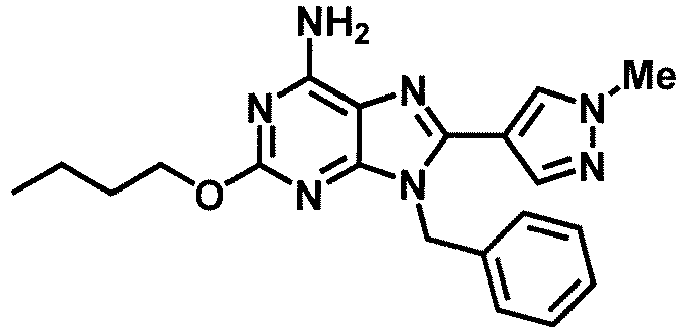
1H-NMR (400 MHz, DMSO-d6) δ: 8.11 (1H, s), 7.76 (1H, s), 7.33-7.21 (5H, m), 5.46 (2H, s), 4.19 (2H, t, J = 6.5 Hz), 3.86 (3H, s), 1.63 (2H, tt, J = 6.5, 7.9 Hz), 1.38 (2H, qt, J = 7.3, 7.9 Hz), 0.90 (3H, t, J = 7.3 Hz). 9 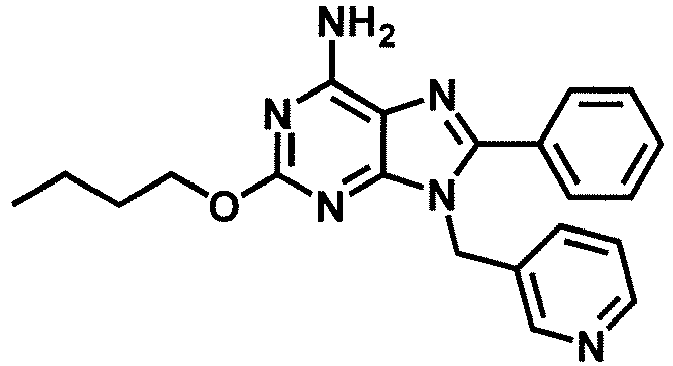
1H-NMR (400 MHz, DMSO-d6) δ: 8.43-8.41 (1H, m), 8.27-8.26 (1H m), 7.67-7.48 (5H, m), 7.45-7.34 (3H, m), 7.30-7.26 (1H, m), 5.44 (2H, s), 4.21 (2H, t, J = 6.6 Hz), 1.65 (2H, tt, J = 6.6, 7.9 Hz), 1.38 (2H, qt, J = 7.3, 7.9 Hz), 0.91 (3H, t, J = 7.3 Hz). 10 
1H-NMR (400 MHz, DMSO-d6) δ: 8.41 (1H, d, J = 1.7 Hz), 8.36 (1H, d, J = 2.8 Hz), 7.53-7.37 (3H, m), 7.32-7.20 (3H, m), 7.03-7.00 (2H, m), 5.45 (2H, s), 4.22 (2H, t, J = 6.6 Hz), 1.66 (2H, tt, J = 6.6, 7.9 Hz), 1.39 (2H, qt, J = 7.3, 7.9 Hz), 0.91 (3H, t, J = 7.3 Hz). 11 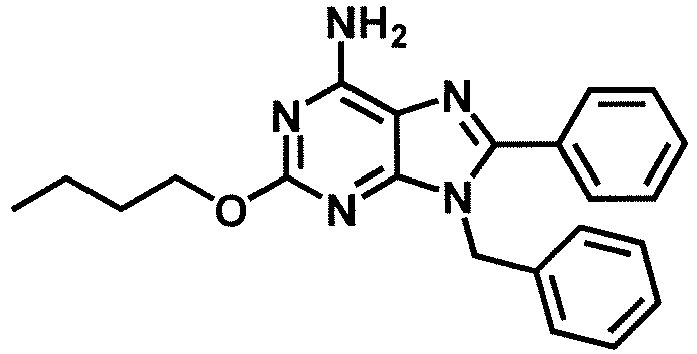
LC-MS: [M+H]+/Rt (min): 374.1/1.078 (Method A); 1H-NMR (400 MHz, DMSO-d6) δ: 7.65-7.61 (2H, m), 7.47-7.43 (3H, m), 7.33 (2H, brs), 7.28-7.19 (3H, m), 6.97 (2H, d, J = 6.7 Hz), 5.38 (2H, s), 4.20 (2H, t, J = 6.7 Hz), 1.63 (2H, tt, J = 6.7, 7.9 Hz), 1.37 (2H, qt, J = 7.3, 7.9 Hz), 0.89 (3H, t, J = 7.3 Hz). 12 
LC-MS: [M+H]+/Rt (min): 404.2/1.091 (Method A); 1H-NMR (400 MHz, DMSO-d6) δ: 7.39-7.31 (3H, m), 7.30-7.19 (4H, m), 7.11-7.09 (1H, m), 7.04-6.98 (3H, m), 5.38 (2H, s), 4.19 (2H, t, J = 6.7 Hz), 3.66 (3H, s), 1.63 (2H, tt, J = 6.7, 7.9 Hz), 1.36 (2H, qt, J = 7.3, 7.9 Hz), 0.89 (3H, t, J = 7.3 Hz). 13 
LC-MS: [M+H]+/Rt (min): 408.1/1.162 (Method A); 1H-NMR (400 MHz, DMSO-d6) δ: 7.68-7.66 (1H, m), 7.61-7.57 (1H, m), 7.59-7.50 (1H, m), 7.49 (2H, dd, J = 7.3, 7.9 Hz), 7.40 (2H, brs), 7.29-7.20 (3H, m), 6.99 (2H, d, J = 7.3 Hz), 5.41 (2H, s), 4.20 (2H, t, J = 6.7 Hz), 1.64 (2H, tt, J = 6.7, 7.9 Hz), 1.37 (2H, qt, J = 7.3, 7.9 Hz), 0.89 (3H, t, J = 7.3 Hz). . 14 
1H-NMR (400 MHz, DMSO-d6) δ: 7.65 (2H, d, J = 8.1 Hz), 7.45 (2H, d, J = 8.1 Hz), 7.41 (2H, brs), 7.35-7.26 (3H, m), 7.06-7.03 (2H, m), 5.46 (2H, s), 4.27 (2H, t, J = 6.6 Hz), 3.66-3.62 (4H, m), 3.56 (2H, m), 2.44-2.38 (4H, m), 1.70 (2H, tt, J = 6.6, 7.9 Hz), 1.44 (2H, qt, J = 7.3, 7.9 Hz), 0.97 (3H, t, J = 7.3 Hz). 15 
1H-NMR (400 MHz, DMSO-d6) δ: 7.56 (2H, d, J = 8.8 Hz). , 7.55-7.20 (5H, m), 7.03-6.98 (4H, m), 5.38 (2H, s), 4.19 (2H, t, J = 6.6 Hz), 4.04 (2H, t, J = 6.4 Hz), 3.59-3.55 (4H, m), 2.41 (2H, t, J = 7.1 Hz), 2.38-2.33 (4H, m), 1.88 (2H, tt, J = 6.4, 7.1 Hz), 1.64 (2H, tt, J = 6.6, 7.9 Hz), 1.38 (2H, qt, J = 7.3, 7.9 Hz), 0.90 (3H, t, J = 7.3 Hz). 16 
1H-NMR (400 MHz, DMSO-d6) δ: 7.58-7.51 (2H, m), 7.43-7.34 (4H, m), 7.18-7.20 (3H, m), 6.99 (2H, d, J = 6.8 Hz), 5.38 (2H, s), 4.21 (2H, t, J = 6.6 Hz), 3.56-3.49 (4H, m), 3.43 (2H, s), 2.31-2.24 (4H, m), 1.65 (2H, tt, J = 6.6, 7.9 Hz), 1.38 (2H, qt, J = 7.3, 7.9 Hz), 0.91 (3H, t, J = 7.3 Hz). 17 
LC-MS: [M+H]+/Rt (min): 409.1 /1.048 (Method A); 1H-NMR (400 MHz, DMSO-d6) δ: 8.75 (1H, d, J = 1.8 Hz), 8.69 (1H, d, J = 2.4 Hz), 8.15-8.13 (1H, m), 7.47 (2H, brs), 7.29-7.19 (3H, m), 7.01-6.98 (2H, m), 5.47 (2H, s), 4.22 (2H, t, J = 6.7 Hz), 1.64 (2H, tt, J = 6.7, 7.9 Hz), 1.38 (2H, qt, J = 7.3, 7.9 Hz), 0.90 (3H, t, J = 7.3 Hz). 18 
LC-MS: [M+H]+/Rt (min): 389.3/0.940 (Method A); 1H-NMR (400 MHz, DMSO-d6) δ: 8.60 (1H, d J = 1.8 Hz), 8.47 (1H, d, J = 1.2 Hz), 7.84-7.83 (1H, m), 7.40 (2H, brs), 7.29-7.20 (3H, m), 7.01-6.98 (2H, m), 5.42 (2H, s), 4.21 (2H, t, J = 6.7 Hz), 2.30 (3H, s), 1.64 (2H, tt, J = 6.7, 7.9 Hz), 1.38 (2H, qt, J = 7.3, 7.9 Hz), 0.90 (3H, t, J = 7.3 Hz). 19 
LC-MS [M+H]+/Rt (min): 419.6/0.939 (Method A); 1H-NMR (400 MHz, DMSO-d6) δ: 8.60 (1H, d J = 1.8 Hz), 8.47 (1H, d, J = 1.2 Hz), 7.84-7.83 (1H, m), 7.40 (2H, brs), 7.29-7.20 (3H, m), 7.01-6.98 (2H, m), 5.42 (2H, s), 4.21 (2H, t, J = 6.7 Hz), 2.30 (3H, s), 1.64 (2H, tt, J = 6.7, 7.9 Hz), 1.38 (2H, qt, J = 7.3, 7.9 Hz), 0.90 (3H, t, J = 7.3 Hz). 20 
LC-MS: [M+H]+/Rt (min) : 405.1/0.824 (Method A); 1H-NMR (400 MHz, DMSO-d6) δ: 8.67 (1H, d, J = 2.4 Hz), 8.56 (1H, d, J = 1.8 Hz), 8.02-7.99 (1H, m), 7.42 (2H, brs), 7.28-7.19 (3H, m), 7.00 (2H, d, J = 6.7 Hz), 5.44 (2H, s), 5.39 (1H, t, J = 5.5 Hz), 4.55 (2H, d, J = 5.5 Hz), 4.21 (2H, t, J = 6.7 Hz), 1.64 (2H, tt, J = 6.7, 7.9 Hz), 1.38 (2H, qt, J = 7.3, 7.9), 0.90 (3H, t, J = 7.3 Hz). 21 
LC-MS [M+H]+/Rt (min): 365.5/0.845 (Method A); 1H-NMR (400 MHz, DMSO-d6) δ: 8.71-8.69 (1H, m), 8.67 (1H, d, J = 2.8 Hz), 8.00-7.96 (1H, m), 7.50 (2H, brs), 7.29-7.20 (3H, m), 6.99 (2H, d, J = 6.8 Hz), 5.48 (2H, s), 4.27 (2H, q, J = 7.1 Hz). , 1.28 (3H, t, J = 7.1 Hz). 22 
LC-MS [M+H]+/Rt (min) : 366.4/0.587 (Method A); 1H-NMR (400 MHz, DMSO-d6) δ: 8.71-8.68 (2H, m), 8.41 (1H, dd, J = 1.2, 4.9 Hz), 8.29 (1H, d, J = 1.8 Hz), 8.04-8.00 (1H, m), 7.48 (2H, brs), 7.38-7.35 (1H, m), 7.27 (1H, dd, J = 4.9, 7.9 Hz), 5.50 (2H, s), 4.26 (2H, q, J = 7.3 Hz), 1.27 (3H, t, J = 7.3 Hz). 23 
1H-NMR (400 MHz, DMSO-d6) δ: 8.60 (1H, d, J = 1.8 Hz), 8.47 (1H, d, J = 1.2 Hz), 7.85-7.82 (1H, m), 7.44 (2H, brs), 7.31-7.19 (3H, m), 7.01-6.98 (2H, m), 5.42 (2H, s), 4.33 (2H, t, J = 4.9 Hz), 3.60 (2H, t, J = 4.9 Hz), 3.27 (3H, s), 2.30 (3H, s). 24 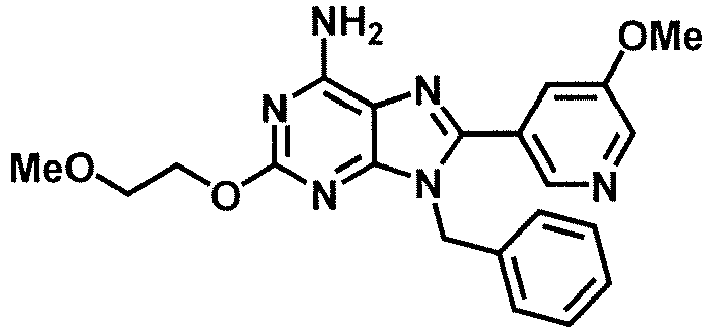
LC-MS [M+H]+/Rt (min): 407.1/0.773 (Method A); 1H-NMR (400 MHz, DMSO-d6) δ: 8.40 (1H, d, J = 1.8 Hz). , 8.35 (1H, d, J = 3.1 Hz). , 7.51 (1H, dd, J = 1.8, 2.4 Hz), 7.46 (2H, brs), 7.31-7.21 (3H, m), 7.03-6.98 (2H, m), 5.43 (2H, s), 4.33 (2H, t, J = 4.9 Hz), 3.76 (3H, s), 3.60 (2H, t, J = 4.9 Hz), 3.27 (3H, s). 25 
LC-MS: [M+H] +/Rt (min) : 395.6/0.799 (Method A); 1H-NMR (400 MHz, DMSO-d6) δ: 8.69 (1H, d, J = 1.8 Hz), 8.66 (1H, d, J = 3.1 Hz), 7.98-7.94 (1H, m), 7.50 (2H, brs), 7.28-7.19 (3H, m), 6.99-6.96 (2H, m), 5.47 (2H, s), 4.34 (2H, t, J = 4.9 Hz), 3.61 (2H, t, J = 4.9 Hz), 3.27 (3H, s). 26 
LC-MS: [M+H]+/Rt (min): 404.2 /0.813 (Method A); 1H-NMR (400 MHz, DMSO-d6) δ: 8.38 (1H, d, J = 1.2 Hz), 8.30 (1H, d, J = 2.4 Hz), 7.46-7.44 (1H, m), 7.30-7.19 (3H, m) 7.03 (2H, d, J = 7.3 Hz), 6.87 (2H, brs), 6.42-6.37 (1H, m), 5.37 (2H, s), 3.74 (3H, s), 3.22 (2H, dt, J = 6.4, 6.7 Hz), 1.47 (2H, tt, J = 6.7, 7.3 Hz), 1.28 (2H, qt, J = 7.3, 7.3 Hz), 0.85 (3H, t, J = 7.3 Hz). 27 
LC-MS: [M+H]+/Rt (min): 403.2 /0.861 (Method A); 1H-NMR (400 MHz, DMSO-d6) δ: 8.41 (1H, d, J = 1.2 Hz), 8.36 (1H, d, J = 3.1 Hz), 7.53-7.51 (1H, m), 7.31 (2H, brs), 7.29-7.20 (3H, m), 6.97 (2H, d, J = 6.7 Hz), 5.50 (2H, s), 3.75 (3H, s), 2.65 (2H, t, J = 7.3 Hz), 1.71 (2H, tt, J = 6.7, 7.3 Hz), 1.32-1.23 (4H, m), 0.83 (3H, t, J = 6.7 Hz). 28 
1H-NMR (400 MHz, DMSO-d6) δ: 8.71-8.68 (2H, m), 8.02-7.99 (1H, m), 7.39 (2H, brs), 7.28-7.19 (3H, m), 6.98-6.95 (2H, m), 2.67 (2H, t, J = 7.4 Hz), 1.77-1.69 (2H, m), 1.34-1.23 (4H, m), 0.85 (3H, t, J = 6.8 Hz). 29 
1H-NMR (400 MHz, DMSO-d6) δ: 8.75-8.74 (1H, m), 8.59-8.58 (1H, s), 7.98 (1H, s), 7.45 (2H, brs), 7.30-7.21 (3H, m), 7.02-7.00 (2H, m), 5.45 (2H, s), 4.47 (2H, s), 4.23 (2H, t, J = 6.6 Hz), 3.28 (3H, s), 1.66 (2H, tt, J = 6.6, 7.9 Hz), 1.39 (2H, qt, J = 7.3, 7.9 Hz), 0.91 (3H, t, J = 7.3 Hz). 30 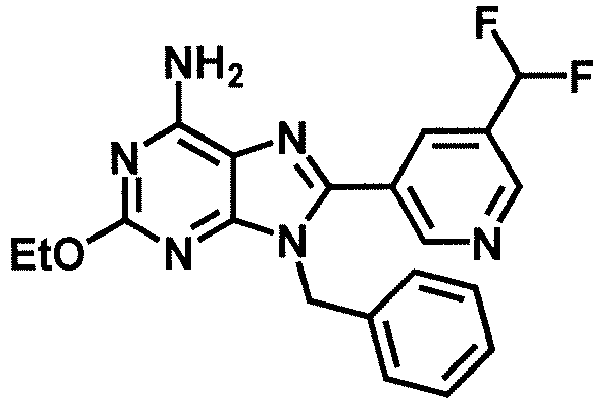
LC-MS: [M+H]+/Rt (min) : 397.1/0.877 (Method A); 1H-NMR (400 MHz, DMSO-d6) δ: 8.96 (1H, s), 8.82 (1H, s), 8.23 (1H, s), 7.48 (2H, brs), 7.28-7.19 (3H, m), 7.17 (1H, t, J = 54.9 Hz), 7.00 (2H, d, J = 7.3 Hz), 5.48 (2H, s), 4.27 (2H, q, J = 7.3 Hz), 1.27 (3H, t, J = 7.3 Hz). 31 
LC-MS [M+H]+/Rt (min): 459.1/0.497 (Method A); 1H-NMR (400 MHz, DMSO-d6) δ: 9.06 (1H, d, J = 1.8 Hz), 9.04 (1H, d, J = 2.4 Hz), 8.50 (1H, dd, J = 1.8, 2.4 Hz), 7.52 (2H, brs), 7.13 (1H, d, J = 7.9 Hz), 6.91 (1H, d, J = 7.9 Hz), 5.47 (2H, s), 4.35 (2H, t, J = 4.9 Hz), 3.61 (2H, t, J = 4.9 Hz), 3.31 (3H, s), 3.27 (2H, s), 2.07 (6H, s). 32 
LC-MS [M+H]+/Rt (min) : 484.2/0.566 (Method A); 1H-NMR (400 MHz, DMSO-d6) δ: 9.18 (1H, d, J = 2.4 Hz), 8.58 (1H, d, J = 1.8 Hz), 8.03 (1H, d, J = 8.5 Hz), 7.93 (1H, d, J = 7.9 Hz), 7.84-7.79 (1H, m), 7.68-7.64 (1H, m), 7.50 (2H, brs), 7.13 (2H, d, J = 7.9 Hz), 6.97 (2H, d, J = 7.9 Hz), 5.55 (2H, s), 4.36 (2H, t, J = 4.9 Hz), 3.62 (2H, t, J = 4.9 Hz), 3.28 (3H, s), 3.25 (2H, s), 2.01 (6H, s). 33 
LC-MS: [M+H]+/Rt (min) : 418.5/0.538 (Method A); 1H-NMR (400 MHz, DMSO-d6) δ: 8.58 (1H, d, J = 1.8 Hz), 8.46 (1H, d, J = 1.8 Hz), 7.80-7.79 (1H, m), 7.39 (2H, brs), 7.16 (1H, d, J = 7.9 Hz), 6.93 (2H, d, J = 7.9 Hz), 5.40 (2H, s), 4.26 (2H, q, J = 7.3 Hz), 3.28 (2H, s), 2.28 (3H, s), 2.05 (6H, s), 1.27 (3H, t, J = 7.3 Hz). 34 
LC-MS: [M+H]+/Rt (min): 448.2/0.537 (Method A); 1H-NMR (400 MHz, DMSO-d6) δ: 8.73 (1H, d, J = 1.8 Hz), 8.56 (1H, d, J = 2.4 Hz), 7.95-7.93 (1H, m), 7.42 (2H, brs), 7.16 (2H, d, J = 7.9 Hz), 6.94 (2H, d, J = 7.9 Hz), 5.41 (2H, s), 4.44 (2H, s), 4.26 (2H, q, J = 7.3 Hz), 3.28 (2H, s), 3.26 (3H, s), 2.06 (6H, s), 1.27 (3H, t, J = 7.3 Hz). 35 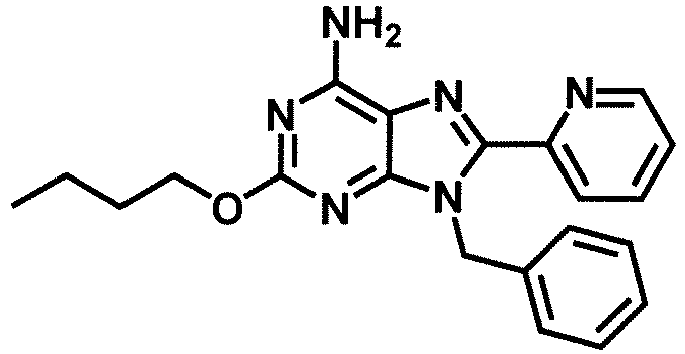
LC-MS [M+H]+/Rt (min) : 375.4/1.070 (Method C); 1H-NMR (CDCl3) δ: 8.64 (1H, d, J = 4.9 Hz), 8.17 (1H, d, J = 7.9 Hz), 7.76 (1H, td, J = 1.6, 7.9 Hz), 7.31-7.24 (3H, m), 7.21-7.16 (3H, m), 6.06 (2H, s), 5.59 (2H, br s), 4.37 (2H, t, J = 6.7 Hz), 1.83-1.76 (2H, m), 1.56-1.47 (2H, m), 0.97 (3H, t, J = 7.3 Hz). 36 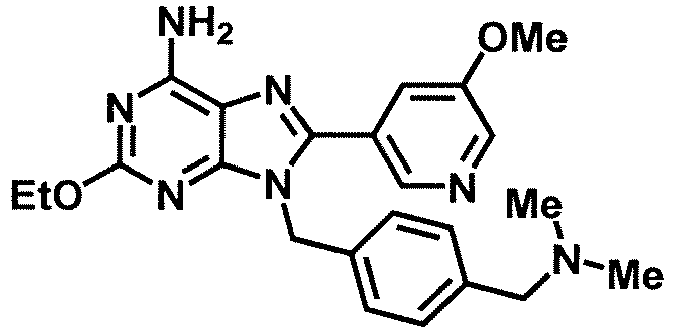
LC-MS [M+H]+/Rt (min): 434.5/0.590 (Method B); 1H-NMR (CDCl3) δ: 8.43 (1H, s), 8.38-8.37 (1H, m), 7.32-7.32 (1H, m), 7.22 (2H, d, J = 7.9 Hz), 7.05 (2H, d, J = 7.9 Hz), 5.52 (2H, s), 5.40 (2H, s), 4.40 (2H, q, J = 7.2 Hz), 3.75 (3H, s), 3.36 (2H, s), 2.19 (6H, s), 1.41 (3H, t, J = 7.2 Hz). 37 
LC-MS [M+H]+/Rt (min): 369.0/0.535 (Method C); 1H-NMR (CDCl3) δ: 8.43 (1H, s), 8.38-8.37 (1H, m), 7.32-7.32 (1H, m), 7.22 (2H, d, J = 7.9 Hz), 7.05 (2H, d, J = 7.9 Hz), 5.52 (2H, s), 5.40 (2H, s), 4.40 (2H, q, J = 7.2 Hz), 3.75 (3H, s), 3.36 (2H, s), 2.19 (6H, s), 1.41 (3H, t, J = 7.2 Hz). 38 
LC-MS [M+H]+/Rt (min): 465.3/0.545 (Method D); 1H-NMR (CDCl3) δ: 8.63 (1H, br s), 8.59 (1H, br s), 7.86 (1H, s), 7.65 (1H, dd, J = 1.5, 8.9 Hz), 7.35 (1H, d, J = 8.5 Hz), 6.65 (1H, d, J = 8.5 Hz), 5.55 (2H, br s), 5.37-5.34 (3H, m), 4.41 (2H, q, J = 7.0 Hz), 2.87-2.78 (2H, m), 2.70-2.67 (1H, m), 2.37-2.29 (5H, m), 1.95-1.90 (1H, m), 1.43 (3H, t, J = 7.0 Hz). 39 
LC-MS [M+H]+/Rt (min) : 465.3/0.514 (Method D); 1H-NMR (CDCl3) δ: 8.68 (1H, br s), 8.59 (1H, d, J = 2.4 Hz), 7.86 (1H, s), 7.66 (1H, d, J = 9.2 Hz), 7.34 (1H, d, J = 8.5 Hz), 6.66 (1H, d, J = 8.5 Hz), 5.52 (2H, s), 5.37-5.34 (3H, m), 4.41 (2H, q, J = 7.1 Hz), 2.87-2.78 (2H, m), 2.71-2.67 (1H, m), 2.37-2.32 (5H, m), 1.92 (1H, br s), 1.43 (3H, t, J = 7.3 Hz). 40 
LC-MS [M+H]+/Rt (min) : 491.4/0.661 (Method C); 1H-NMR (CDCl3) δ: 8.68 (1H, br s), 8.59 (1H, d, J = 2.4 Hz), 7.86 (1H, d, J = 1.8 Hz), 7.68-7.65 (1H, m), 7.36 (1H, dd, J = 2,4, 8.5 Hz), 6.64 (1H, d, J = 8.5 Hz), 5.55 (2H, s), 5.35 (2H, s), 4.97-4.94 (1H, m), 4.42 (2H, q, J = 7.1 Hz), 3.34-3.27 (1H, m), 2.94-2.71 (5H, m), 2.13-2.09 (1H, m), 1.97-1.88 (1H, m), 1.74-1.66 (1H, m), 1.63-1.54 (1H, m), 1.44-1.34 (4H, m). 41 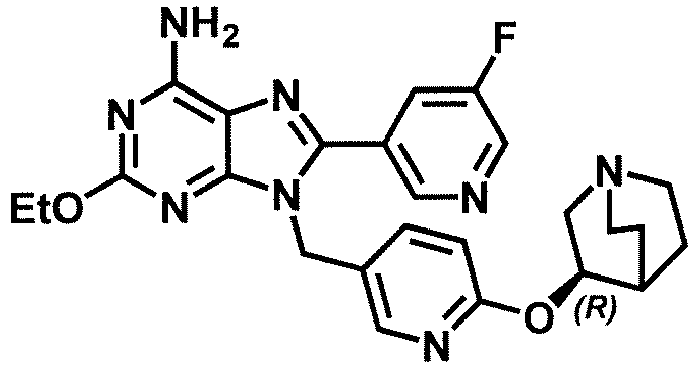
LC-MS [M+H]+/Rt (min) : 491.4/0.652 (Method C); 1H-NMR (CDCl3) δ: 8.68 (1H, br s), 8.59 (1H, d, J = 2.4 Hz), 7.86 (1H, d, J = 1.8 Hz), 7.68-7.65 (1H, m), 7.36 (1H, dd, J = 2.4, 8.5 Hz), 6.64 (1H, d, J = 8.5 Hz), 5.54 (2H, s), 5.35 (2H, s), 4.97-4.93 (1H, m), 4.42 (2H, q, J = 7.1 Hz), 3.34-3.27 (1H, m), 2.98-2.70 (5H, m), 2.12-2.09 (1H, m), 1.97-1.88 (1H, m), 1.74-1.65 (1H, m), 1.63-1.58 (1H, m), 1.44-1.34 (4H, m). 42 
LC-MS [M+H]+/Rt (min) : 467.0/0.465 (Method C); 1H-NMR (CDCl3) δ: 8.68 (1H, s), 8.59 (1H, d, J = 2.4 Hz), 7.88 (1H, s), 7.67-7.65 (1H, m), 7.37-7.34 (1H, m), 6.63 (1H, d, J = 8.5 Hz), 5.54 (2H, s), 5.35 (2H, s), 4.42 (2H, q, J = 7.1 Hz), 4.28 (2H, t, J = 6.7 Hz), 2.40 (2H, t, J = 7.3 Hz), 2.23 (6H, s), 1.94-1.87 (2H, m), 1.43 (3H, t, J = 7.6 Hz). 43 
LC-MS [M+H]+/Rt (min): 413.0/0.787 (Method C); 1H-NMR (400 MHz, CDCl3) δ: 8.64-8.61 (1H, m), 8.54 (1H, d, J = 2.4 Hz), 7.66-7.59 (1H, m), 6.96 (1H, dd, J = 9.2, 9.2 Hz), 6.77-6.70 (1H, m), 6.50 (1H, dd, J = 5.5, 3.1 Hz), 5.61 (2H, s), 5.42 (2H, s), 4.38 (2H, q, J = 7.1 Hz), 3.64 (3H, s), 1.39 (3H, t, J = 7.1 Hz). 44 
LC-MS [M+H] +/Rt (min) : 383.0/0.785 (Method C); 1H-NMR (CDCl3) δ: 8.63-8.59 (1H, m), 8.54 (1H, d, J = 3.1 Hz), 7.64-7.59 (1H, m), 7.06-6.98 (2H, m), 6.98-6.93 (1H, m), 5.63 (2H, s), 5.47 (2H, s), 4.37 (2H, q, J = 7.1 Hz), 1.38 (3H, t, J = 7.1 Hz). 45 
LC-MS [M+H]+/Rt (min) : 460.4/0.805 (method C); 1H-NMR (CDCl3) δ: 8.68-8.65 (1H, m), 8.64-8.61 (1H, m), 8.56 (1H, d, J = 2.4 Hz), 8.46 (1H, d, J = 2.4 Hz), 7.70-7.66 (1H, m), 7.57-7.50 (3H, m), 7.22 (2H, d, J = 8.5 Hz), 5.64 (2H, s), 5.50 (2H, s), 4.41 (2H, q, J = 7.3 Hz), 1.42 (3H, t, J = 7.3 Hz). 46 
LC-MS[M+H]+/Rt (min) : 474.5/0.519 (Method C); 1H-NMR (400 MHz, CDCl3) δ: 8.68-8.65 (1H, m), 8.56 (1H, d, J = 3.1 Hz), 7.67-7.60 (1H, m), 7.21 (2H, d, J = 7.9 Hz), 7.08 (2H, d, J = 7.9 Hz), 5.64 (2H, s), 5.43 (2H, s), 4.42 (2H, q, J = 7.0 Hz), 3.40-3.31 (1H, m), 3.13-3.05 (1H, m), 3.05-2.84 (5H, m), 1.95-1.91 (1H, m), 1.81-1.75 (2H, m), 1.69-1.58 (1H, m), 1.43 (3H, t, J = 7.0 Hz), 1.41-1.35 (1H, m). -

- To a solution of the compound of Example 208 (44.0 mg) in N,N-dimethylformamide (2.5 mL) were added 1-(2-chloroethyl)pyrrolidine hydrochloride (35.8 mg), potassium carbonate (80.0 mg), and potassium iodide (11.5 mg), and the mixture was stirred at room temperature for 2 days. To the reaction mixture was added water, and the mixture was extracted with chloroform/methanol. The organic layer was dried over sodium sulfate, filtrated, and then concentrated in vacuo. The residue was purified by silica gel column chromatography (chloroform/methanol) to give the title compound (5.4 mg).
LC-MS[M+H]+/Rt (min): 478.51/0.574 (Method C) ; 1H-NMR (400 MHz, CDCl3) δ: 8.69-8.67 (1H, m), 8.56 (1H, d, J = 3.1 Hz), 7.64-7.61 (1H, m), 7.01 (2H, d, J = 9.2 Hz), 6.83 (2H, d, J = 9.2 Hz), 5.63 (2H, s), 5.37 (2H, s), 4.42 (2H, q, J = 7.3 Hz), 4.07 (2H, t, J = 6.1 Hz), 2.89 (2H, t, J = 6.1 Hz), 2.64-2.61 (4H, m), 1.83-1.80 (4H, m), 1.43 (3H, t, J = 7.3 Hz) . - According to the method of Example 47, Examples 48 - 56 were prepared by using the corresponding material compounds.
Example Chemical Structure Instrumental analysis data 48 
1H-NMR (400 MHz, CDCl3) δ: 8.72-8.63 (1H, m), 8.56 (1H, d, J = 2.4 Hz), 7.71-7.53 (1H, m), 7.01 (2H, d, J = 9.2 Hz), 6.83 (2H, d, J = 9.2 Hz), 5.66 (2H, s), 5.37 (2H, s), 4.42 (2H, q, J = 7.1 Hz), 4.02 (2H, t, J = 5.8 Hz), 2.71 (2H, t, J = 5.8 Hz), 2.33 (6H, s), 1.43 (3H, t, J = 7.1 Hz). 49 
1H-NMR (400 MHz, CDCl3) δ: 8.68-8.66 (1H, m), 8.56 (1H, d, J = 2.4 Hz), 7.67-7.60 (1H, m), 7.01 (2H, d, J = 8.5 Hz), 6.81 (2H, d, J = 8.5 Hz), 5.63 (2H, s), 5.36 (2H, s), 4.42 (2H, q, J = 6.9 Hz), 4.06 (2H, t, J = 5.8 Hz), 2.80 (2H, t, J = 5.8 Hz), 2.74-2.34 (8H, m), 2.30 (3H, s), 1.43 (3H, t, J = 6.9 Hz). 50 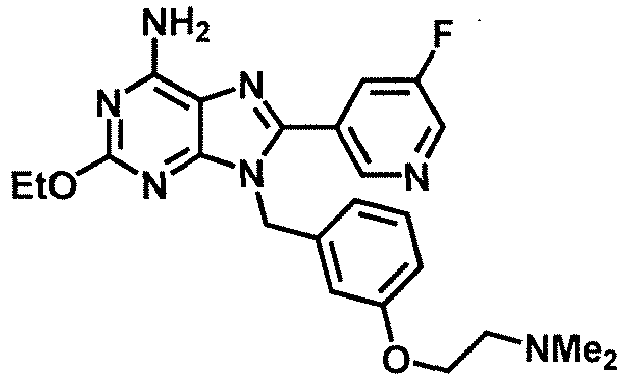
1H-NMR (400 MHz, CDCl3) δ: 8.69-8.65 (1H, m), 8.56-8.50 (1H, m), 7. 63 (1H, d, J = 9.2 Hz), 7.22 (1H, dd, J = 7.9, 8.0 Hz), 6.82 (1H, d, J = 7.9 Hz), 6.68-6.62 (2H, m), 5.64 (2H, s), 5.40 (2H, s), 4.41 (2H, q, J = 7.3 Hz), 3.98 (2H, t, J = 5.8 Hz), 2.68 (2H, t, J = 5.8 Hz), 2.31 (6H, s), 1.42 (3H, t, J = 7.3 Hz). 51 
1H-NMR (400 MHz, CDCl3) δ: 8.67 (1H, s), 8.54 (1H, d, J = 2.4 Hz), 7.65-7.60 (1H, m), 7.21 (1H, dd, J = 8.2, 8.0 Hz), 6.82 (1H, d, J = 9.2 Hz), 6.68-6.62 (2H, m), 5.77 (2H, s), 5.39 (2H, s), 4.40 (2H, q, J = 7.3 Hz), 4.03 (2H, t, J = 5.8 Hz), 2.88 (2H, t, J = 5.8 Hz), 2.68-2.58 (4H, m), 1.87-1.77 (4H, m), 1.41 (3H, t, J = 7.3 Hz). 52 
1H-NMR (400 MHz, CDCl3) δ: 8.70-8.65 (1H, m), 8.55 (1H, d, J = 3.1 Hz), 7.65-7.59 (1H, m), 7.00 (2H, d, J = 8.5 Hz), 6.80 (2H, d, J = 8.5 Hz), 5.75 (2H, s), 5.36 (2H, s), 4.42 (3H, q, J = 7.0 Hz), 3.97 (2H, t, J = 6.8 Hz), 2.44 (2H, t, J = 6.8 Hz), 2.25 (6H, s), 1.97-1.90 (2H, m), 1.43 (3H, t, J = 7.0 Hz). 53 
1H-NMR (400 MHz, CDCl3) δ: 8.69-8.65 (1H, m), 8.56-8.51 (1H, m), 7. 63 (1H, d, J = 8.4 Hz), 7.20 (1H, dd, J = 6.8, 8.4 Hz), 6.80 (1H, d, J = 7.9 Hz), 6.66-6.61 (2H, m), 5.78 (2H, s), 5.39 (2H, s), 4.41 (2H, q, J = 7.3 Hz), 3.93 (2H, t, J = 6.4 Hz), 2.46 (2H, t, J = 7.3 Hz), 2.28 (6H, s), 1.99-1.88 (2H, m), 1.42 (3H, t, J = 7.3 Hz). 54 
1H-NMR (400 MHz, CDCl3) δ: 8.69-8.65 (1H, m), 8.57 (1H, d, J = 2.4 Hz), 7.68-7.62 (1H, m), 6.99 (1H, dd, J = 8.2, 10.7 Hz), 6.80 (1H, dd, J = 2.1, 7.6 Hz), 6.64-6.58 (1H, m), 5.60 (2H, s), 5.37 (2H, s), 4.42 (2H, q, J = 7.1 Hz), 4.02 (2H, t, J = 5.8 Hz), 2.73 (2H, t, J = 5.8 Hz), 2.33 (6H, s), 1.44 (4H, t, J = 7.1 Hz). 55 
1H-NMR (400 MHz, CDCl3) δ: 8.69-8.64 (1H, m), 8.57 (1H, d, J = 2.4 Hz), 7.67-7.61 (1H, m), 6.99 (1H, dd, J = 8.5, 11.0 Hz), 6.79 (1H, dd, J = 2.4, 7.6 Hz), 6.63-6.57 (1H, m), 5.71 (2H, s), 5.37 (2H, s), 4.42 (2H, q, J = 7.1 Hz), 4.05 (2H, t, J = 6.1 Hz), 2.89 (2H, t, J = 6.1 Hz), 2.66-2.53 (4H, m), 1.85-1.76 (4H, m), 1.43 (3H, t, J = 7.1 Hz). 56 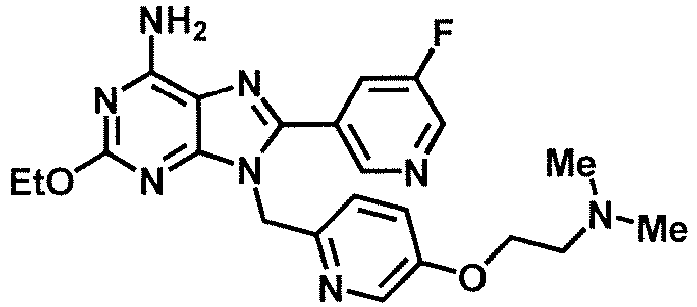
LC-MS [M+H]+/Rt (min) : 453.4/0.602 (Method C) ; 1H-NMR (CDCl3) δ: 8.90 (1H, br s), 8.54 (1H, d, J = 3.1 Hz), 8.26 (1H, d, J = 2.4 Hz), 8.10-8.06 (1H, m), 7.27-7.25 (1H, m), 7.17 (1H, dd, J = 3.1, 8.5 Hz), 5.57 (2H, s), 5.43 (2H, s), 4.38 (2H, q, J = 7.1 Hz), 4.08 (2H, t, J = 5.6 Hz), 2.72 (2H, t, J = 5.6 Hz), 2.33 (6H, s), 1.40 (3H, t, J = 7.1 Hz). -

- To a solution of N,N-dimethylethanolamine (111 mg) in 1,4-dioxane (1.5 mL) was added sodium hydride (27.3 mg), and the mixture was stirred at room temperature for 10 minutes. Then, the compound of Example 191 (50.0 mg) was added thereto. The reaction solution was heated to 80°C, and stirred with heating for 6 hours. To the reaction mixture was added 35 % hydrochloric acid (54 µl), and the mixture was extracted with chloroform/methanol solution. The organic layer was dried over sodium sulfate, filtrated, and then concentrated in vacuo. The residue was purified by silica gel column chromatography (chloroform/methanol) to give the title compound (11.8 mg).
1H-NMR (400 MHz, CDCl3) δ: 8.64-8.60 (1H, m), 8.55 (1H, d, J = 2.4 Hz), 8.10 (1H, d, J = 4.9 Hz), 7.70-7.64 (1H, m), 6.64 (1H, d, J = 4.9 Hz), 6.44-6.40 (1H, m), 5.72 (2H, s), 5.37 (2H, s), 4.38 (2H, d, J = 7.0 Hz), 4.36 (2H, t, J = 5.5 Hz), 2. 67 (2H, t, J = 5.5 Hz), 2.30 (6H, s), 1.40 (3H, t, J = 7.0 Hz). - According to the method of Example 57, Examples 58 - 63 were prepared by using the corresponding material compounds.
Example Chemical Structure Instrumental analysis data 58 
1H-NMR (400 MHz, CDCl3) δ: 8.71-8.66 (1H, m), 8.60 (1H, d, J = 3.1 Hz), 7.89 (1H, s), 7.69-7.63 (1H, m), 7.39-7.34 (1H, m), 6.71 (1H, dd, J = 3.1, 8.5 Hz), 5. 67 (2H, s), 5.36 (2H, s), 4.43 (2H, q, J = 7.1 Hz), 4.36 (2H, t, J = 5.5 Hz), 2.69 (2H, t, J = 5.5 Hz), 2.31 (6H, s), 1.43 (3H, t, J = 7.1 Hz). 59 
1H-NMR (400 MHz, CDCl3) δ: 8.69-8.67 (1H, m), 8.59 (1H, d, J = 2.4 Hz), 7.89 (1H, d, J = 2.4 Hz), 7.69-7.63 (1H, m), 7.36 (1H, dd, J = 2.4, 8.5 Hz), 6.67 (1H, d, J = 8.5 Hz), 5.75 (2H, s), 5.35 (2H, s), 4.43 (2H, t, J = 5.8 Hz), 4.40 (2H, q, J = 7.0 Hz), 2.77 (2H, t, J = 5.8 Hz), 2.71-2.31 (8H, m), 2.29 (3H, s), 1.43 (3H, t, J = 7.0 Hz). 60 
1H-NMR (400 MHz, CDCl3) δ: 8.71-8.67 (1H, m), 8.60 (1H, d, J = 2.4 Hz), 7.87 (1H, d, J = 2.4 Hz), 7.70-7.64 (1H, m), 7.37 (2H, dd, J = 2.4, 8.5 Hz), 6.63 (1H, d, J = 8.5 Hz), 5. 69 (2H, s), 5.35 (2H, s), 5.04-4.97 (1H, m), 4.42 (2H, q, J = 7.1 Hz), 2.77-2.64 (2H, m), 2.31 (3H, s), 2.33-2.24 (2H, m), 2.09-1.94 (2H, m), 1.85-1.73 (2H, m), 1.44 (3H, t, J = 7.1 Hz). 61 
1H-NMR (400 MHz, CDCl3) δ: 8.70-8.67 (1H, m), 8.60 (1H, d, J = 2.4 Hz), 7.89 (1H, d, J = 2.1 Hz), 7.69-7.63 (1H, m), 7.37 (1H, dd, J = 2.1, 8.5 Hz), 6.70 (1H, d, J = 8.5 Hz), 5.72 (2H, s), 5.36 (2H, s), 4.43 (2H, t, J = 5.8 Hz), 4.40 (2H, q, J = 7.0 Hz), 2.86 (2H, t, J = 5.8 Hz), 2.63-2.55 (4H, m), 1.82-1.76 (4H, m), 1.44 (3H, t, J = 7.0 Hz) . 62 
1H-NMR (400 MHz, CDCl3) δ: 8.98-8.92 (1H, m), 8.58-8.50 (1H, m), 8.18-8.09 (1H, m), 7.53 (1H, d, J = 13.4 Hz), 6.91 (1H, d, J = 6.1 Hz), 6.73-6.65 (1H, m), 5.74 (2H, s), 5.40 (2H, s), 4.38 (2H, q, J = 6.7 Hz), 4.24 (2H, t, J = 5.8 Hz), 2.60 (2H, t, J = 5.8 Hz), 2.27 (6H, s), 1.40 (3H, t, J = 6.7 Hz). 63 
1H-NMR (400 MHz, CDCl3) δ: 8.87-8.81 (1H, m), 8.54 (1H, d, J = 1.2 Hz), 8.39 (1H, d, J = 5.5 Hz), 8.01 (1H, dd, J = 1.2, 9.5 Hz), 6.81-6.71 (2H, m), 5.76 (2H, s), 5.45 (2H, s), 4.39 (2H, q, J = 7.1 Hz), 4.05 (2H, t, J = 5.2 Hz), 2.70 (2H, t, J = 5.2 Hz), 2.31 (6H, s), 1.40 (3H, t, J = 7.1 Hz). -
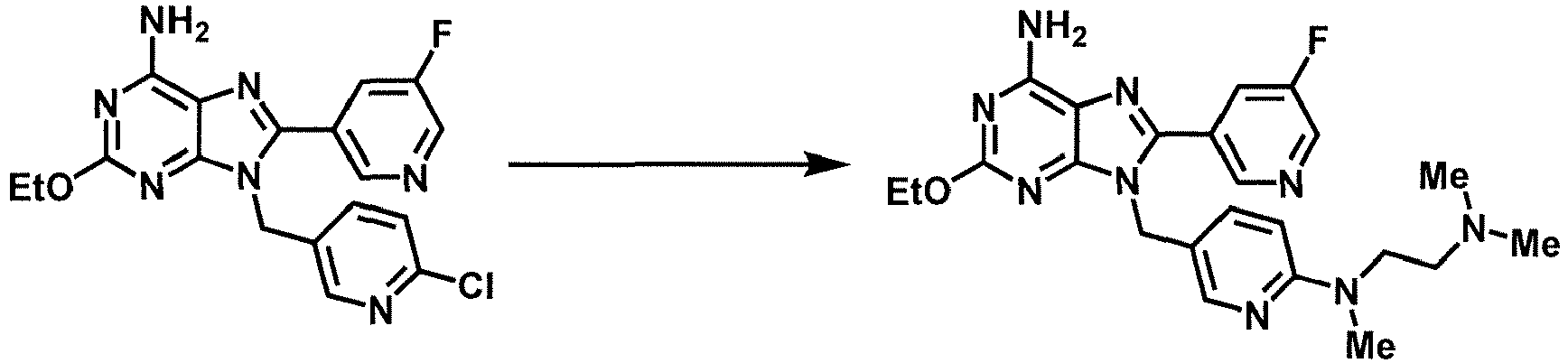
- A suspension of the compound of Example 189 (70 mg) and N,N,N'-trimethylethylenediamine (683 µL) was stirred at 120°C for 6 hours. The reaction mixture was cooled to room temperature, and then water was added thereto. The mixture was extracted with ethyl acetate, and the organic layer was concentrated in vacuo. The residue was purified by silica gel column chromatography (chloroform/methanol) to give the title compound (34 mg).
LC-MS [M+H]+/Rt (min): 466.6/0.559 (Method B); 1H-NMR (CDCl3) δ: 8.71 (1H, s), 8.58 (1H, d, J = 3.1 Hz), 7.88 (1H, d, J = 2.4 Hz), 7.69-7.66 (1H, m), 7.22 (1H, dd, J = 2.4, 8.5 Hz), 6.37 (1H, d, J = 8.5 Hz), 5.56 (2H, s), 5.28 (2H, s), 4.43 (2H, q, J = 7.1 Hz), 3.61 (2H, t, J = 7.0 Hz), 3.01 (3H, s), 2.45 (2H, t, J = 7.0 Hz), 2.27 (6H, s), 1.44 (3H, t, J = 7.1 Hz). - According to the method of Example 64, Example 65 was prepared by using the corresponding material compound.
Example Chemical Structure Instrumental analysis data 65 
LC-MS [M+H]+/Rt (min) : 464.5/0.543 (Method B); 1H-NMR (CDCl3) δ: 8.70 (1H, s), 8.59-8.58 (1H, m), 7.94 (1H, s), 7.68 (1H, d, J = 8.5 Hz), 7.27-7.26 (1H, m), 6.55-6.52 (1H, m), 5.55 (2H, s), 5.30 (2H, s), 4.46-4.39 (2H, m), 3.53 (4H, br s), 2.49 (4H, br s), 2.33 (3H, br s), 1.46-1.41 (3H, m). -

- To an ice-cooled solution of the compound of Reference example 121 (602 mg) in tetrahydrofuran (13.8 mL) were added (R)-3-quinuclidinol (703 mg), triphenylphosphine (1.45 g), and diisopropyl azodicarboxylate (1.09 mL), and the mixture was stirred at room temperature for 3 days. To the reaction mixture was added water, and the mixture was extracted with chloroform/methanol. The organic layer was washed with brine, dried over sodium sulfate, filtrated, and then concentrated in vacuo. To a solution of the obtained residue in methanol (13.8 mL) was added 28 % ammonia (13.8 mL), and the mixture was stirred at 60°C for 2.5 hours. To the reaction mixture was added water, and the mixture was extracted with chloroform/methanol. The organic layer was washed with brine, dried over sodium sulfate, filtrated, and then concentrated in vacuo. The residue was purified by silica gel column chromatography (chloroform/methanol) to give the title compound (248 mg). LC-MS [M+H]+/Rt (min): 490.5/0.659 (Method B); 1H-NMR (CDCl3) δ: 8.67 (1H, br s), 8.55 (1H, d, J = 2.7 Hz), 7.65-7.61 (1H, m), 7.00 (2H, d, J = 8.4 Hz), 6.75 (2H, d, J = 8.4 Hz), 5.57 (2H, s), 5.35 (2H, s), 4.41 (2H, q, J = 6.8 Hz), 4.32-4.30 (1H, m), 3.24 (1H, dd, J = 8.0, 13.9 Hz), 3.00-2.75 (5H, m), 2.10 (1H, br s), 1.99-1.92 (1H, m), 1.76-1.49 (2H, m), 1.46-1.33 (4H, m).
- According to the method of Example 66, Example 67 was prepared by using the corresponding material compound.
Example Chemical Structure Instrumental analysis data 67 
LC-MS [M+H]+/Rt (min) : 490.3/0.641 (Method B); 1H-NMR (CDCl3) δ: 8.66 (1H, br s), 8.55 (1H, d, J = 3.1 Hz), 7.65-7.61 (1H, m), 7.01 (2H, d, J = 8.5 Hz), 6.75 (2H, d, J = 8.5 Hz), 5.57 (2H, br s), 5.35 (2H, s), 4.44-4.35 (3H, m), 3.32-3.27 (1H, m), 3.06-2.84 (5H, m), 2.17 (1H, br s), 2.04-2.01 (1H, m), 1.81-1.59 (2H, m), 1.48-1.40 (4H, m) . -

- To a solution of the compound of Reference example 123 (11.3 mg) in methanol was added 28 % ammonia (0.8 mL) at room temperature. The reaction mixture was stirred at 60°C for 4 hours, and then extracted with chloroform/methanol. The organic layer was dried over sodium sulfate, filtrated, and then concentrated in vacuo. The residue was purified by silica gel column chromatography (chloroform/methanol) to give the title compound (7.1 mg).
LC-MS [M+H]+/Rt (min): 463.4/0.495 (Method C); 1H-NMR (400 MHz, CDCl3) δ: 8.72-8.67 (1H, m), 8. 56 (1H, d, J = 3.1 Hz), 7.68-7.62 (1H, m), 7.01 (2H, d, J = 8.5 Hz), 6.83 (2H, d, J = 8.5 Hz), 5.62 (2H, s), 5.35 (2H, s), 4.43 (2H, q, J = 7.1 Hz), 3.32-3.19 (4H, m), 2.77-2.53 (4H, m), 2.40 (3H, s), 1.44 (3H, t, J = 7.1 Hz). -

- To an ice-cooled solution of (S)-(+)-3-quinuclidinol (135 mg) in tetrahydrofuran (1.0 mL) was added potassium tert-butoxide (119 mg), and the mixture was stirred for 15 minutes. A solution of the compound of Example 204 (150 mg) in tetrahydrofuran (3 mL) was added thereto, and the mixture was stirred in ice bath for 1.5 hours. To the reaction mixture was added water, and the mixture was extracted with ethyl acetate. The organic layer was washed with brine, dried over sodium sulfate, filtrated, and then concentrated in vacuo. The obtained residue was purified by amino silica gel column chromatography (chloroform/methanol), and then purified by silica gel column chromatography (chloroform/methanol) to give the title compound (91 mg).
LC-MS [M+H]+/Rt (min): 476.4/0.557 (Method C); 1H-NMR (CDCl3) δ: 8.71 (1H, br s), 8.63 (1H, d, J = 2.4 Hz), 7.85 (1H, d, J = 2.4 Hz), 7.75-7.72 (1H, m), 7.34 (1H, dd, J = 2.4, 8.5 Hz), 6.64 (1H, d, J = 8.5 Hz), 5.40 (2H, s), 4.96-4.93 (1H, m), 4.08 (3H, s), 3.33-3.27 (1H, m), 2.97-2.70 (8H, m), 2.11-2.09 (1H, m), 1.96-1.87 (1H, m), 1.74-1.66 (1H, m), 1.62-1.58 (1H, m), 1.42-1.34 (1H, m). - According to the method of Example 69, Examples 70 - 76 were prepared by using the corresponding material compounds.
Example Chemical Structure Instrumental analysis data 70 
LC-MS [M+H]+/Rt (min): 476.4/0.529 (Method C); 1H-NMR (CDCl3) δ: 8.72-8.71 (1H, m), 8.63 (1H, d, J = 2.4 Hz), 7.85 (1H, d, J = 2.4 Hz), 7.75-7.71 (1H, m), 7.34 (1H, dd, J = 8.4, 2.7 Hz), 6.64 (1H, d, J = 8.4 Hz), 5.40 (2H, s), 4.96-4.93 (1H, m), 4.08 (3H, s), 3.33-3.27 (1H, m), 2.97-2.70 (8H, m), 2.11-2.08 (1H, m), 1.96-1.87 (1H, m), 1.70-1.65 (1H, m), 1.62-1.54 (1H, m), 1.41-1.33 (1H, m). 71 
LC-MS [M+H]+/Rt (min) : 490.4/0.684 (Method C); 1H-NMR (CDCl3) δ: 8.71-8.70 (1H, m), 8.63 (1H, d, J = 2.4 Hz), 7.84 (1H, d, J = 2.4 Hz), 7.74-7.71 (1H, m), 7.33 (1H, dd, J = 8.5, 2.4 Hz), 6.64 (1H, d, J = 8.5 Hz), 5.39 (2H, s), 4.97-4.93 (1H, m), 4.49 (2H, q, J = 7.1 Hz), 3.33-3.27 (1H, m), 2.97-2.71 (8H, m), 2.12-2.09 (1H, m), 1.96-1.88 (1H, m), 1.74-1.66 (1H, m), 1.63-1.55 (1H, m), 1.47 (3H, t, J = 7.1 Hz), 1.42-1.34 (1H, m). 72 
LC-MS [M+H]+/Rt (min): 490.4/0.690 (Method C) ; 1H-NMR (CDCl3) δ: 8.71-8.71 (1H, m), 8.63 (1H, d, J = 3.1 Hz), 7.84 (1H, d, J = 2.4 Hz), 7.75-7.71 (1H, m), 7.33 (1H, dd, J = 2.4, 8.5 Hz), 6.64 (1H, d, J = 8.5 Hz), 5.40 (2H, s), 4.97-4.93 (1H, m), 4.49 (2H, q, J = 7.1 Hz), 3.34-3.28 (1H, m), 2.98-2.71 (8H, m), 2.13-2.09 (1H, m), 1.97-1.88 (1H, m), 1.75-1.55 (2H, m), 1.47 (3H, t, J = 7.0 Hz), 1.43-1.35 (1H, m) . 73 
LC-MS [M+H]+/Rt (min): 504.4/0.0.597 (Method D); 1H-NMR (CDCl3) δ: 8.71 (1H, br s), 8.63 (1H, d, J = 3.1 Hz), 7.88 (1H, d, J = 1.8 Hz), 7.75-7.72 (1H, m), 7.34 (1H, dd, J = 3.1, 8.5 Hz), 6.63 (1H, d, J = 8.5 Hz), 5.41 (2H, s), 4.50 (2H, q, J = 6.9 Hz), 4.21 (2H, d, J = 7.9 Hz), 3.11-3.05 (1H, m), 2.88-2.79 (7H, m), 2.49-2.44 (1H, m), 2.15-2.07 (1H, m), 1.87-1.85 (1H, m), 1.75-1.53 (3H, m), 1.48 (3H, t, J = 7.0 Hz), 1.44-1.36 (1H, m). 74 
LC-MS [M+H]+/Rt (min): 450.3/0.554 (Method D) ; 1H-NMR (CDCl3) δ: 8.69 (1H, t, J = 1.5 Hz), 8.62 (1H, d, J = 2.4 Hz), 7.84 (1H, d, J = 2.4 Hz), 7.73-7.70 (1H, m), 7.34 (1H, dd, J = 2.4, 8.5 Hz), 6.65 (1H, d, J = 8.5 Hz), 5.39 (2H, s), 5.17-5.11 (1H, m), 4.49 (2H, q, J = 7.1 Hz), 3.77-3.74 (2H, m), 3.09-3.05 (2H, m), 2.81 (3H, s), 2.38 (3H, s), 1.47 (3H, t, J = 7.1 Hz). 75 
LC-MS [M+H]+/Rt (min): 504.2/0.603 (Method C) ; 1H-NMR (CDCl3) δ: 8.71 (1H, br s), 8.63 (1H, d, J = 2.4 Hz), 7.84 (1H, d, J = 2.4 Hz), 7.74-7.71 (1H, m), 7.33 (1H, dd, J = 2.4, 8.5 Hz), 6. 64 (1H, d, J = 8.5 Hz), 5.40 (2H, s), 4.97-4.93 (1H, m), 4.39 (2H, t, J = 6.7 Hz), 3.33-3.27 (1H, m), 2.97-2.71 (8H, m), 2.11-2.09 (1H, m), 1.93-1.86 (3H, m), 1.74-1.54 (2H, m), 1.41-1.34 (1H, m), 1.08 (3H, t, J = 7.6 Hz) . 76 
LC-MS [M+H]+/Rt (min) : 500.1/0.580 (Method C); 1H-NMR (CDCl3) δ: 8.67 (1H, d, J = 1.8 Hz), 8.59 (1H, d, J = 2.0 Hz), 7.84 (1H, d, J = 2.4 Hz), 7.77 (1H, br s), 7.34 (1H, dd, J = 2.4, 8.5 Hz), 6.63 (1H, d, J = 8.5 Hz), 5.36 (2H, s), 4.97-4.93 (1H, m), 4.38 (2H, t, J = 6.7 Hz), 3.34-3.29 (1H, m), 2.94-2.71 (8H, m), 2.41 (3H, s), 2.11-2.10 (1H, m), 1.96-1.84 (3H, m), 1.74-1.55 (2H, m), 1.42-1.35 (1H, m), 1.08 (3H, t, J = 7.6 Hz). -

- To an ice-cooled solution of the compound of Example 182 (385 mg) in tetrahydrofuran (50 mL) was added diisobutylaluminum hydride (1.02 mol/L hexane solution, 8.2 mL), and the mixture was stirred for 2.5 hours. To the reaction mixture were added ethyl acetate (5 mL) and aqueous saturated potassium sodium tartrate, and the mixture was stirred at room temperature overnight. The mixture was extracted with chloroform. The organic layer was dried over sodium sulfate, filtrated, and then concentrated in vacuo. The residue was purified by silica gel column chromatography (chloroform/methanol) to give the title compound (220 mg).
LC-MS ([M+H]+/Rt (min)): 395.4/0.671 (Method A); 1H-NMR (400 MHz, DMSO-d6) δ: 8.70 (1H, dd, J = 1.2, 1.8 Hz), 8.66 (1H, d, J = 3.1 Hz), 8.01-7.96 (1H, m), 7.46 (2H, brs), 7.19 (2H, d, J = 7. 9 Hz), 6. 94 (2H, d, J = 7.9 Hz), 5.45 (2H, s), 5.12 (1H, t, J = 5.5 Hz), 4.40 (2H, d, J = 5.5 Hz), 4.26 (2H, q, J = 6.7 Hz), 1.27 (3H, t, J = 6.7 Hz). - According to the method of Example 77, Examples 78 - 79 were prepared by using the corresponding material compounds.
Example Chemical Structure Instrumental analysis data 78 
LC-MS [M+H] +/Rt (min): 394.4/0.760 (Method A) 79 
LC-MS [M+H]+/Rt (min): 422.1/0.892 (Method A) -
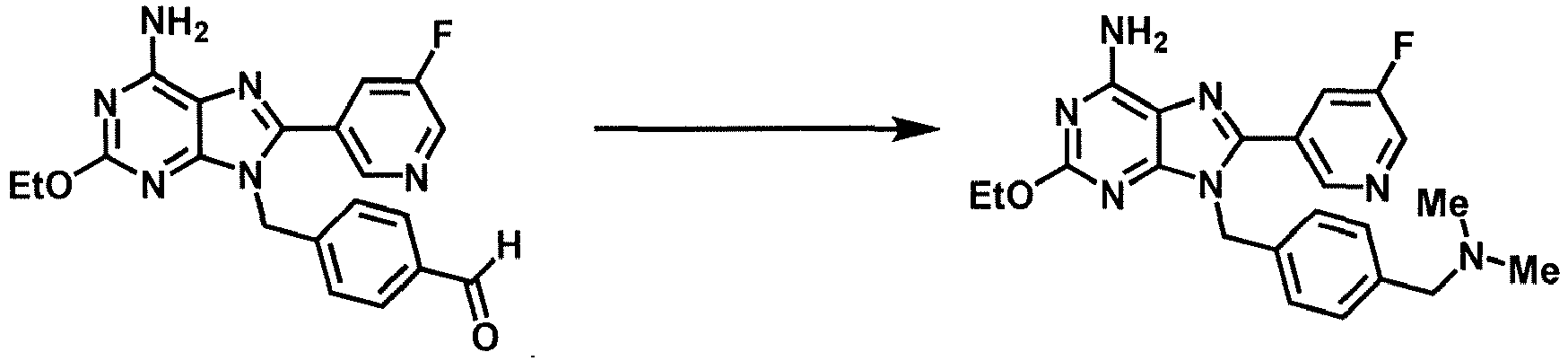
- To a solution of the compound of Example 187 (69.8 mg) in tetrahydrofuran (10 mL) were added dimethylamine (2.0 mol/L tetrahydrofuran solution, 0.5 mL) and triacetoxysodium borohydride (95.1 mg), and the mixture was stirred at room temperature for 3 days. To the reaction mixture in ice bath was added aqueous saturated sodium bicarbonate, and the mixture was extracted with chloroform. The organic layer was dried over sodium sulfate, filtrated, and then concentrated in vacuo. The residue was purified by silica gel column chromatography (chloroform/methanol) to give the title compound (64.5 mg).
LC-MS [M+H]+/Rt (min): 422.5/0.542; 1H-NMR (400 MHz, DMSO-d6) δ: 8.68-8.67 (2H, m), 8.64 (1H, d, J = 2.4 Hz), 7.95-7.92 (1H, m), 7.46 (2H, brs), 7.14 (d, J = 7.9 Hz), 6.91 (2H, d, J = 7.9 Hz), 5.45 (2H, s), 4.27 (2H, q, J = 7.3 Hz), 3.27 (2H, s), 2.05 (6H, s), 1.27 (3H, t, J = 7.3 Hz). - According to the method of Example 80, Examples 81 - 122 were prepared by using the corresponding material compounds.
Example Chemical Structure Instrumental analysis data 81 
LC-MS [M+H]+/Rt (min) : 477.4/0.539; 1H-NMR (400 MHz, DMSO-d6) δ: 8.68-8.67 (1H, m), 8.64 (1H, d, J = 3.0 Hz), 7.95-7.92 (1H, m), 7.46 (2H, brs), 7.15 (2H, d, J = 7.9 Hz), 6.91 (2H, d, J = 7.9 Hz), 5.44 (2H, s), 4.27 (2H, q, J = 7.3 Hz), 3.34 (2H, s), 2.40-2.12 (8H, m), 2.11 (3H, s), 1.27 (3H, t, J = 7.3 Hz). 82 
LC-MS [M+H]+/Rt (min) : 450.2/0.637 (Method A); 1H-NMR (400 MHz, DMSO-d6) δ: 8.67 (1H, dd, J = 1.2, 1.8 Hz), 8.64 (1H, d, J = 3.1 Hz), 7.96-7.91 (1H, m), 7.46 (2H, brs), 7.14 (2H, d, J = 7.9 Hz), 6.91 (2H, d, J = 7.9 Hz), 5.45 (2H, s), 4.22 (2H, t, J = 6.4 Hz), 3.27 (2H, s), 2.05 (6H, s), 1.64 (2H, tt, J = 6.4, 7.9 Hz), 1.38 (2H, qt, J ≈ 7.3, 7.9 Hz), 0.90 (3H, t, J = 7.3 Hz). 83 
LC-MS [M+H]+/Rt (min) : 492.2/0.647 (Method A); 1H-NMR (400 MHz, DMSO-d6) δ: 8.68-8.66 (1H, m), 8.64 (1H, d, J = 3.1 Hz), 7.96-7.91 (1H, m), 7.46 (2H, brs), 7.16 (2H, d, J = 7.9 Hz), 6.92 (2H, d, J = 7.9 Hz), 5.45 (2H, s), 4.22 (2H, t, J = 6.7 Hz), 3.53-3.49 (4H, m), 3.35 (2H, s), 2.26-2.23 (4H, m), 1.64 (2H, tt, J = 6.7, 7.9 Hz), 1.38 (2H, qt, J = 7.3, 7.9 Hz), 0.90 (3H, t, J = 7.3 Hz). 84 
LC-MS [M+H]+/Rt (min): 450.2/0.648 (Method A); 1H-NMR (400 MHz, DMSO-d6) δ: 8.67 (1H, dd, J = 1.2, 1.8 Hz), 8.63 (1H, d, J = 2.4 Hz), 7.96-7.91 (1H, m), 7.46 (2H, brs), 7.18 (1H, dd, J = 7.3, 7.9 Hz), 7.09 (1H, d, J = 7.3 Hz), 6.92-6.90 (1H, m), 6.83 (1H, d J = 7.9 Hz), 5.47 (2H, s), 4.23 (2H, t, J = 6.7 Hz), 3.23 (2H, s), 2.00 (3H, s), 1.65 (2H, tt, J = 6.7, 7.9 Hz), 1.38 (2H, qt, J = 7.3, 7.9 Hz), 0.90 (3H, t, J = 7.3 Hz). 85 
LC-MS [M+H]+/Rt (min) : 446.2/0.643 (Method A); 1H-NMR (400 MHz, DMSO-d6) δ: 8.59 (1H, d, J = 1.8 Hz), 8.45 (1H, d, J = 1.8 Hz), 7.83-7.81 (1H, m), 7.40 (2H, brs), 7.19 (1H, dd, J = 7.3, 7.9 Hz), 7.10 (1H, d, J = 7.3 Hz), 6.94-6.92 (1H, m), 6.85 (1H, d J = 7.9 Hz), 5.42 (2H, s), 4.22 (2H, t, J = 6.7 Hz), 3.24 (2H, s), 2.29 (3H, s), 2.01 (6H, s), 1.65 (2H, tt, J = 6.7, 7.9 Hz), 1.38 (2H, qt, J = 7.3, 7.9 Hz), 0.90 (3H, t, J = 7.3 Hz). 86 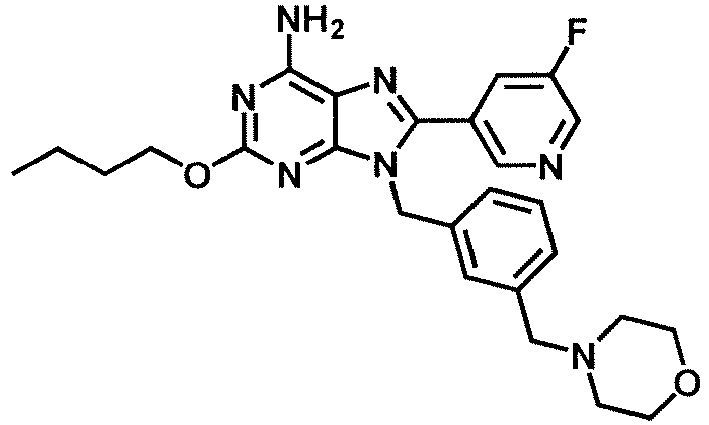
LC-MS [M+H]+/Rt (min) : 492.2/0.635 (Method A); 1H-NMR (400 MHz, DMSO-d6) δ: 8.69-8.66 (1H, m), 8.64 (1H, d, J = 2.4 Hz), 7.98-7.93 (1H, m), 7.47 (2H, brs), 7.19 (1H, dd, J = 7.3, 7.9 Hz), 7.11 (1H, d, J = 7.3 Hz), 6.93-6.90 (1H, m), 6.86 (1H, d J = 7.9 Hz) , 5.48 (2H, s), 4.23 (2H, t, J = 6.7 Hz), 3.50-3.45 (4H, m), 3.31 (2H, s), 2.25-2.15 (4H, m), 1.65 (2H, tt, J = 6.7, 7.9 Hz), 1.39 (2H, qt, J = 7.3, 7.9 Hz), 0.90 (3H, t, J = 7.3 Hz). 87 
LC-MS [M+H]+/Rt (min) : 452.2/0.516 (Method A); 1H-NMR (400 MHz, DMSO-d6) δ: 8.67 (1H, dd, J = 1.2, 1.8 Hz), 8.65 (1H, d, J = 3.1 Hz), 7.96-7.92 (1H, m), 7.50 (2H, brs), 7.15 (2H, d, J = 7.9 Hz), 6.91 (2H, d, J = 7.9 Hz), 5.45 (2H, s), 4.34 (2H, t, J = 4.9 Hz), 3,61 (2H, t, J = 4.9 Hz), 3.32 (3H, s), 3.27 (2H, s), 2.05 (6H, s). 88 
LC-MS [M+H]+/Rt (min) : 494.2/0.511 (Method A); 1H-NMR (400 MHz, DMSO-d6) δ: 8.68-8.66 (1H, m), 8.65 (1H, d, J = 2.4 Hz), 7.96-7.92 (1H, m), 7.50 (2H, brs), 7.17 (2H, d, J = 7.9 Hz), 6.92 (2H, d, J = 7.9 Hz), 5.45 (2H, s), 4.34 (2H, t, J = 4.9 Hz), 3,61 (2H, t, J = 4.9 Hz), 3.53-3.49 (4H, m), 3.35 (3H, s), 3.27 (2H, s), 2.26-2.23 (4H, m). 89 
LC-MS [M+H]+/Rt (min): 452.1/0.524 (Method A); 1H-NMR (400 MHz, DMSO-d6) δ: 8.68-8.66 (1H, m), 8.64 (1H, d, J = 2.4 Hz), 7.97-7.92 (1H, m), 7.50 (2H, brs), 7.19 (1H, dd, J = 7.3, 7.9 Hz), 7.10 (1H, d, J = 7.3 Hz), 6.91-6.90 (1H, m), 6.84 (1H, d, J = 7.9 Hz), 5.48 (2H, s), 4.35 (2H, t, J = 4.9 Hz), 3.61 (2H, t, J = 4.9 Hz), 3.27 (3H, s), 3.24 (2H, s), 2.00 (6H, s). 90 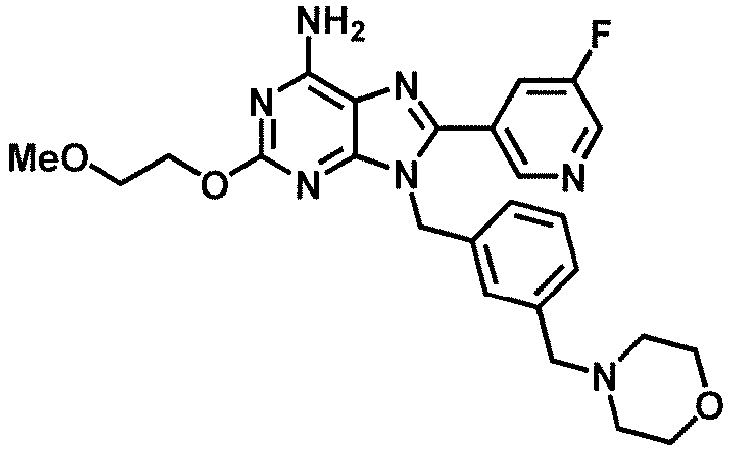
LC-MS [M+H]+/Rt (min): 494.1/0.533 (Method A); 1H-NMR (400 MHz, DMSO-d6) δ: 8.68-8.66 (1H, m), 8.65 (1H, d, J = 2.4 Hz), 7.98-7.94 (1H, m), 7.52 (2H, brs), 7.20 (1H, dd, J = 7.3, 7.9 Hz), 7.11 (1H, d, J = 7.3 Hz), 6.91-6.89 (1H, m), 6.86 (1H, d, J = 7.9 Hz), 5.48 (2H, s), 4.34 (2H, t, J = 4.9 Hz), 3.61 (2H, t, J = 4.9 Hz), 3.51-3.45 (4H, m), 3.31 (2H, s), 3.27 (3H, s), 2.22-2.16 (4H, m). 91 
LC-MS [M+H]+/Rt (min) : 492.5/0.559 (Method A); 1H-NMR (400 MHz, DMSO-d6) δ: 8.69-8.67 (1H, m), 8.65 (1H, d, J = 2.7 Hz), 7.96-7.92 (1H, m), 7.49 (2H, brs), 7.14 (2H, d, J = 8.2 Hz), 6.91 (2H, d, J = 8.2 Hz), 5.45 (2H, s), 4.34 (2H, t, J = 4.8 Hz), 3.61 (2H, t, J = 4.8 Hz), 3.30 (2H, s), 3.27 (3H, s), 2.26-2.16 (4H, m), 1.46-1.38 (4H, m), 1.37-1.30 (2H, m). 92 
LC-MS [M+H]+/Rt (min) : 528.5/0.584 (Method A); 1H-NMR (400 MHz, DMSO-d6) δ: 8.68-8.67 (1H, m), 8.65 (1H, d, J = 2.7 Hz), 7.96-7.93 (1H, m), 7.49 (2H, brs), 7.17 (2H, d, J = 8.2 Hz), 6.93 (2H, d, J = 8.2 Hz), 5.45 (2H, s), 4.34 (2H, t, J = 4.6 Hz), 3.61 (2H, t, J = 4.6 Hz), 3.44 (2H, s), 3.27 (3H, s), 2.42-2.35 (4H, m), 1.95-1.83 (4H, m). 93 
LC-MS [M+H]+/Rt (min) : 491.5/0.581 (Method A); 1H-NMR (400 MHz, DMSO-d6) δ: 8.67-8.66 (1H, m), 8.64 (1H, d, J = 3.1 Hz), 7.96-7.92 (1H, m), 7.47 (2H, brs), 7.18 (2H, d, J = 7.9 Hz), 6.94 (2H, d, J = 7.9 Hz), 5.46 (2H, s), 4.26 (2H, q, J = 7.3 Hz), 3.43 (2H, s), 3.19 (2H, t, J = 5.5 Hz), 2.86 (2H, s), 2.77 (3H, s), 2.52 (2H, t, J = 5.5 Hz), 1.27 (3H, t, J = 7.3 Hz). 94 
LC-MS [M+H]+/Rt (min) : 489.2/0.508 (Method A); 1H-NMR (400 MHz, DMSO-d6) δ: 8.68-8.67 (1H, m), 8.65 (1H, d, J = 2.4 Hz), 7.97-7.93 (1H, m), 7.47 (2H, brs), 7.19 (2H, d, J = 7.9 Hz), 6.91 (2H, d, J = 7.9 Hz), 5.44 (2H, s), 4.26 (2H, q, J = 7.3 Hz), 3.37-3.24 (4H, m), 3.17 (1H, brs), 2.84-2.75 (1H, m), 2.59-2.53 (2H, m), 2.33 (2H, s), 1.27 (3H, t, J = 7.3 Hz). 95 
LC-MS [M+H]+/Rt (min): 503.5/0.553 (Method A); 1H-NMR (400 MHz, DMSO-d6) δ: 8.69-8.68 (1H, m), 8.65 (1H, d, J = 2.4 Hz), 7.96-7.92 (1H, m), 7.46 (2H, brs), 7.21 (2H, d, J = 7.9 Hz), 6.91 (2H, d, J = 7.9 Hz), 5.44 (2H, s), 4.27 (2H, q, J = 7.3 Hz), 3.36 (2H, s), 2.93-3.88 (2H, m), 2.46-2.40 (2H, m), 2.10-2.04 (5H, m), 1.83-1.76 (2H, m), 1.67-1.61 (2H, m), 1.27 (3H, t, J = 7.3 Hz). 96 
LC-MS [M+H]+/Rt (min) : 476.5/0.530 (Method A); 1H-NMR (400 MHz, DMSO-d6) δ: 8.68-8.67 (1H, m), 8.65 (1H, d, J = 3.0 Hz), 7.97-7.93 (1H, m), 7.46 (2H, brs), 7.19 (2H, d, J = 7.9 Hz), 6.91 (2H, d, J = 7.9 Hz), 5.44 (2H, s), 4.30-4.29 (1H, m), 4.28 (2H, q, J = 7.3 Hz), 3.84 (1H, d, J = 7.3 Hz), 3.63 (1H, d, J = 13.4 Hz), 3.58 (1H, d, J = 13.4 Hz), 3.46 (1H, dd, J = 1.8, 7.3 Hz), 3.34-3.30 (1H, m), 2.62 (1H, dd, J = 1.8, 9.4 Hz), 1.72 (1H, dd, J = 1.8, 9.4), 1.55-1.51 (1H, m), 1.27 (3H, t, J = 7.3 Hz). 97 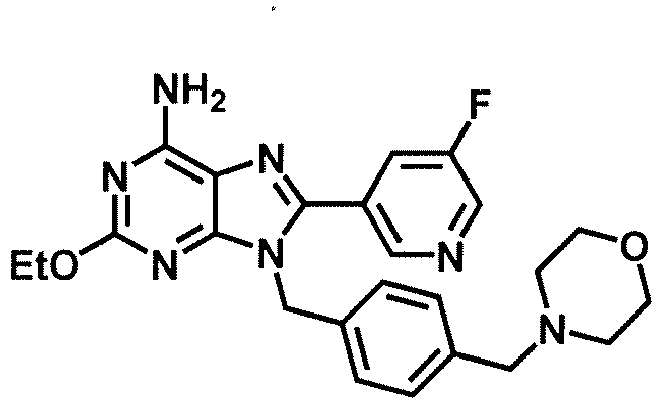
LC-MS [M+H]+/Rt (min): 464.4/0.528 (Method A); 1H-NMR (400 MHz, DMSO-d6) δ: 8.68-8.67 (1H, m), 8.64 (1H, d, J = 2.4 Hz), 7.95-7.92 (1H, m), 7.46 (2H, brs), 7.17 (2H, d, J = 7.9 Hz), 6.92 (2H, d, J = 7.9 Hz), 5.45 (2H, s), 4.27 (2H, q, J = 7.3 Hz), 3.52-3.50 (4H, m), 3.35 (2H, s), 2.28-2.22 (4H, m), 1.27 (3H, t, J = 7.3 Hz). 98 
LC-MS [M+H]+/Rt (min) : 462.3/0.583 (Method A); 1H-NMR (400 MHz, CDCl3) δ: 8.59-8.58 (1H, m), 8.46 (1H, d, J = 3.1 Hz), 7.55-7.51 (1H, m), 7.16 (2H, d, J = 7.9 Hz), 6.94 (2H, d, J = 7.9 Hz), 5.51 (2H, brs), 5.34 (2H, s), 4.33 (2H, q, J = 7.3 Hz), 3.34 (2H, s), 2.28-2.20 (4H, m), 1.51-1.44 (4H, m), 1.38-1.30 (2H, m), 1.34 (3H, t, J = 7.3 Hz). 99 
LC-MS [M+H]+/Rt (min) : 498.3/0.603 (Method A); 1H-NMR (400 MHz, CDCl3) δ: 8.63-8.62 (1H, m), 8.51 (1H, d, J = 2.4 Hz), 7.61-7.57 (1H, m), 7.21 (2H, d, J = 7.9 Hz), 7.01 (2H, d, J = 7.9 Hz), 5.56 (2H, brs), 5.39 (2H, s), 4.38 (2H, q, J = 7.3 Hz), 3.47 (2H, s), 2.50-2.44 (4H, m), 2.01-1.89 (4H, m), 1.39 (3H, t, J = 7.3 Hz). 100 
LC-MS [M+H]+/Rt (min) : 434.3/0.545 (Method A); 1H-NMR (400 MHz, CDCl3) δ: 8.58-8.57 (1H, m), 8.45 (1H, d, J = 3.1 Hz), 7.54-7.50 (1H, m), 7.12 (2H, d, J = 7.9 Hz), 6.94 (2H, d, J = 7.9 Hz), 5.52 (2H, brs), 5.33 (2H, s), 4.32 (2H, q, J = 7.3 Hz), 3.44 (2H, s), 3.11 (4H, t, J = 6.7 Hz), 2.00 (2H, quin, J = 6.7 Hz), 1.34 (3H, t, J = 7.3 Hz). 101 
LC-MS [M+H]+/Rt (min): 470.3/0.632 (Method A); 1H-NMR (400 MHz, CDCl3) δ: 8.62-8.61 (1H, m), 8.51 (1H, d, J = 2.4 Hz), 7.60-7.57 (1H, m), 7.19 (2H, d, J = 8.5 Hz), 7.02 (2H, d, J = 8.5 Hz), 5.56 (2H, brs), 5.39 (2H, s), 4.37 (2H, q, J = 7.3 Hz), 3.67 (2H, s), 3.62-3.50 (5H, m), 1.39 (3H, t, J = 7.3 Hz). 102 
LC-MS [M+H]+/Rt (min): 472.1/0.647 (Method A); 1H-NMR (400 MHz, DMSO-d6) δ: 8.66 (1H, dd, J = 1.8, 1.8 Hz), 8.64 (1H, d, J = 2.4 Hz), 7.95-7.91 (1H, m), 7.46 (2H, brs), 7.17 (2H, d, J = 7.9 Hz), 6.93 (2H, d, J = 7.9 Hz), 6.06 (1H, tt, J = 4.2, 47.6 Hz), 5.45 (2H, s), 4.27 (2H, q, J = 7.3 Hz), 3.51 (2H, s), 2.68 (2H, dt, J = 4.2, 11.0 Hz), 2.15 (3H, s), 1.27 (3H, t, J = 7.3 Hz). 103 
LC-MS [M+H]+/Rt (min) : 459.1/0.556 (Method A); 1H-NMR (400 MHz, DMSO-d6) δ: 8.67-8.65 (2H, m), 7.97-7.92 (1H, m), 7.46 (2H, brs), 7.13 (2H, d, J = 7.3 Hz), 6.92 (2H, d, J = 7.3 Hz), 5.44 (2H, s), 4.26 (2H, q, J = 7.3 Hz), 3.47 (2H, s), 3.45-3.38 (1H, m), 3.35 (2H, t, J = 6.1 Hz), 3.18 (2H, t, J = 6.1 Hz), 1.27 (3H, t, J = 7.3 Hz). 104 
LC-MS [M+H]+/Rt (min) : 448.5/0.561 (Method A); 1H-NMR (400 MHz, DMSO-d6) δ: 8.68 (1H, d, J = 1.8 Hz), 8.65 (1H, d, J = 2.4 Hz), 7.97-7.92 (1H, m), 7.46 (2H, brs), 7.16 (2H, d, J = 7.3 Hz), 6.91 (2H, d, J = 7.3 Hz), 5.45 (2H, s), 4.27 (2H, q, J = 7.3 Hz), 3.46 (2H, s), 2.38-2.35 (4H, m), 1.63-1.59 (4H, m), 1.27 (3H, t, J = 7.3 Hz). 105 
LC-MS [M+H]+/Rt (min) : 484.5/0.605 (Method A); 1H-NMR (400 MHz, DMSO-d6) δ: 8.68-8.66 (1H, m), 8.65 (1H, d, J = 2.7 Hz), 7.96-7.92 (1H, m), 7.45 (2H, brs), 7.13 (2H, d, J = 8.2 Hz), 6.91 (2H, d, J = 8.2 Hz), 6.18 (1H, dt, J = 5.2, 56.9 Hz), 5.43 (2H, s), 4.26 (2H, q, J = 7.3 Hz), 3.45 (2H, s), 3.19 (2H, t, J = 7.7 Hz), 3.00 (2H, t, J = 7.7 Hz), 2.88-2.74 (1H, m), 1.27 (3H, t, J = 7.3 Hz). 106 
LC-MS [M+H]+/Rt (min): 464.1/0.540 (Method A); 1H-NMR (400 MHz, DMSO-d6) δ: 8.68-8.67 (1H, m), 8.66 (1H, d, J = 2.4 Hz), 7.97-7.93 (1H, m), 7.47 (2H, brs), 7.12 (2H, d, J = 7.9 Hz), 6.90 (2H, d, J = 7.9 Hz), 5.43 (2H, s), 5.10 (1H, s), 4.26 (2H, q, J = 7.3 Hz), 3.46 (2H, s), 3.06 (2H, d, J = 7.3 Hz), 2.78 (2H, d, J = 7.3 Hz), 1.30 (3H, s), 1.27 (3H, t, J = 7.3 Hz). 107 
LC-MS [M+H]+/Rt (min) : 474.4/0.525 (Method A); 1H-NMR (CDCl3) δ: 8.73-8.72 (2H, m), 8.06-8.02 (1H, m), 7.17 (2H, d, J = 6.7 Hz), 6.91 (2H, d, J = 6.7 Hz), 5.54 (2H, s), 3.95 (3H, s), 3.57 (1H, d, J = 13.4 Hz), 3.50 (1H, d, J = 13.4 Hz), 3.07 (2H, d, J = 9.8 Hz), 2.71 (3H, s), 2.61 (1H, d, J = 9.8 Hz), 2.46-2.40 (2H, m), 2.21 (3H, s), 1.53 (3H, s). 108 
LC-MS [M+H]+/Rt (min): 421.4/0.587 (Method A); 1H-NMR (CDCl3) δ: 8.73-8.70 (2H, m), 8.05-8.00 (1H, m), 7.14 (2H, d, J = 7.9 Hz), 6.92 (2H, d, J = 7.9 Hz), 5.53 (2H, s), 4.38 (2H, q, J = 7.3 Hz), 3.27 (2H, s), 2.70 (3H, s), 2.04 (6H, s), 1.33 (3H, t, J = 7.3 Hz). 109 
LC-MS [M+H]+/Rt (min) : 488.5/0.573 (Method A); 1H-NMR (400 MHz, DMSO-d6) δ: 8.73-8.71 (2H, m), 8.05-8.01 (1H, m), 7.18 (1H, d, J = 7.9 Hz), 6.91 (2H, d, J = 7.9 Hz), 5.52 (2H, s), 4.38 (2H, q, J = 7.3 Hz), 3.58 (1H, d, J = 13.4 Hz), 3.51 (1H, d, J = 13.4 Hz), 3.31 (2H, s), 3.17 (1H, s), 3.13 (1H, s), 2.70 (3H, s), 2.54-2.44 (4H, m), 2.28 (3H, s), 1.59 (2H, s), 1.33 (3H, t, J = 7.3 Hz). 110 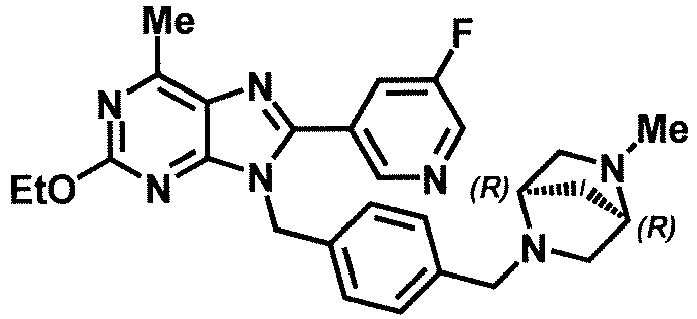
LC-MS [M+H]+/Rt (min) : 488.5/0.596 (Method A); 1H-NMR (400 MHz, DMSO-d6) δ: 8.73-8.71 (2H, m), 8.05-8.01 (1H, m), 7.18 (1H, d, J = 7.9 Hz), 6.91 (2H, d, J = 7.9 Hz), 5.52 (2H, s), 4.38 (2H, q, J = 7.3 Hz), 3.57 (1H, d, J = 13.4 Hz), 3.50 (1H, d, J = 13.4 Hz), 3.31 (2H, s), 3.10 (2H, s), 2.70 (3H, s), 2.63 (1H, d, J = 9.2 Hz), 2.51-2.42 (3H, m), 2.23 (3H, s), 1.55 (2H, s), 1.33 (3H, t, J = 7.3 Hz). 111 
1H-NMR (400 MHz, DMSO-d6) δ: 8.74-8.72 (2H, m), 8.05-8.01 (1H, m), 7.15 (1H, d, J = 8.1 Hz), 6.93 (2H, d, J = 8.1 Hz), 5.55 (2H, s), 4.35 (2H, t, J = 6.6 Hz), 2.71 (3H, s), 2.05 (6H, s), 1.73 (2H, tt, J = 6.6, 7.9 Hz), 1.42 (2H, qt, J = 7.3, 7.9), 0.93 (3H, t, J = 7.3 Hz). 112 
1H-NMR (400 MHz, DMSO-d6) δ: 8.73-8.72 (2H, m), 8.05-8.01 (1H, m), 7.24 (1H, d, J = 8.1 Hz), 6.94 (2H, d, J = 8.1 Hz), 5.55 (2H, s), 4.35 (2H, t, J = 6.6 Hz), 2.71 (3H, s), 2.28-2.22 (4H, s), 1.72 (2H, tt, J = 6.6, 7.9 Hz), 1.42 (2H, qt, J = 7.3, 7.9), 0.93 (3H, t, J = 7.3 Hz). 113 
LC-MS [M+H]+/Rt (min) : 451.2/0.537 (Method A); 1H-NMR (400 MHz, DMSO-d6) δ: 8.73-8.71 (2H, m), 8.05-8.01 (1H, m), 7.14 (2H, d, J = 7.9 Hz), 6.92 (2H, d, J = 7.9 Hz), 5.54 (2H, s), 4.46 (2H, t, J = 4.9 Hz), 3.67 (2H, t, J = 4.9 Hz), 3.31 (3H, s), 3.27 (2H, s), 2.71 (3H, s), 2.04 (6H, s). 114 
LC-MS [M+H]+/Rt (min): 493.1/0.562 (Method A) 115 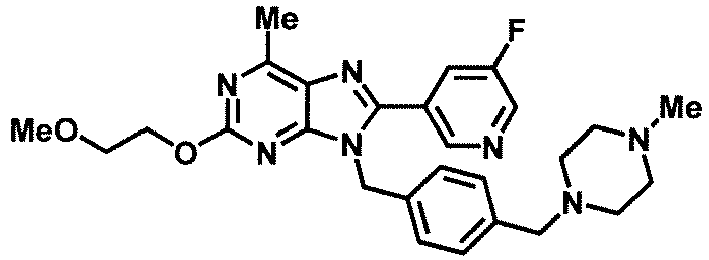
LC-MS [M+H]+/Rt (min): 506.2/0.578 (Method A) 116 
LC-MS [M+H]+/Rt (min) : 458.5/0.611 (Method A); 1H-NMR (400 MHz, DMSO-d6) δ: 8.73 (1H, d, J = 3.1 Hz), 8.71-8.70 (1H, m), 8.05-8.02 (1H, m), 7.12 (2H, d, J = 7.9 Hz), 6.92 (2H, d, J = 7.9 Hz), 5.52 (2H, s), 4.38 (2H, q, J = 7.3 Hz), 3.46 (2H, s), 3.45-3.38 (1H, m), 3.34 (2H, t, J = 6.7 Hz), 3.18 (2H, t, J = 6.7 Hz), 2.70 (3H, s), 1.33 (3H, t, J = 7.3 Hz). 117 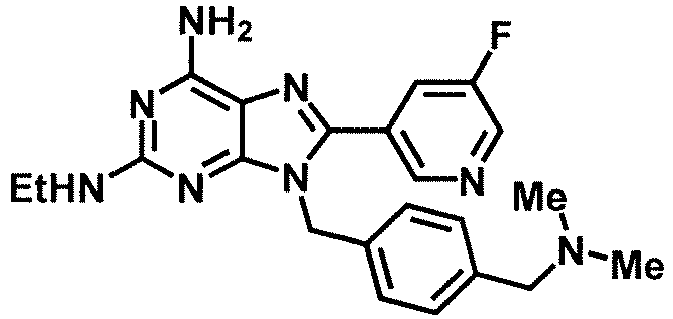
LC-MS [M+H]+/Rt (min) : 421.4/0.473 (Method A); 1H-NMR (400 MHz, DMSO-d6) δ: 8.68 (1H, s), 8.58 (1H, d, J = 2.4 Hz), 7.89-7.86 (1H, m), 7.15 (2H, d, J = 7.9 Hz), 6.93 (2H, d, J = 7.9 Hz), 6.93 (2H, brs), 6.44 (1H, t, J = 5.5 Hz), 5.40 (2H, s), 3.31-3.23 (4H, m), 2.05 (6H, s), 1.08 (3H, t, J = 7.3 Hz). 118 
LC-MS [M+H]+/Rt (min): 412.3/0.396 (Method C); 1H-NMR (CDCl3) δ: 8.66 (1H, s), 8.58-8.56 (1H, m), 7.61-7.58 (1H, m), 7.27-7.24 (2H, m), 6.98 (2H, d, J = 8.5 Hz), 6.10-5.92 (2H, m), 5.47 (2H, s), 3.40 (2H, s), 2.21 (6H, s). 119 
1H-NMR (400 MHz, CDCl3) δ: 8.70-8.67 (1H, m), 8.58 (1H, d, J = 2.4 Hz), 7.71-7.64 (1H, m), 7.25 (3H, d, J = 7.9 Hz), 7.01 (2H, d, J = 7.9 Hz), 5.47 (2H, s), 4.49 (2H, q, J = 7.1 Hz), 3.36 (2H, dd, J = 13.4, 19.5 Hz), 3.15-3.10 (1H, m), 3.06-2.94 (2H, m), 2.84 (3H, s), 2.83-2.74 (1H, m), 2.64 (1H, dd, J = 4.0, 13.4 Hz), 2.58-2.51 (1H, m), 2.48 (1H, dd, J = 4.6, 11.9 Hz), 2.32-2.23 (1H, m), 2.05-1.95 (1H, m), 1.47 (3H, t, J = 7.1 Hz). 120 
1H-NMR (400 MHz, CDCl3) δ: 8.69-8.61 (1H, m), 8.56-8.49 (1H, m), 7.60 (1H, d, J = 8.5 Hz), 7.24 (2H, d, J = 6.1 Hz), 7.02 (2H, d, J = 6.1 Hz), 5.83 (2H, s), 5.41 (2H, s), 4.39 (2H, q, J = 7.0 Hz), 3.33 (2H, dd, J = 13.4, 17.1 Hz), 3.11-3.03 (1H, m), 3.02-2.82 (3H, m), 2.79-2.67 (1H, m), 2.62-2.52 (1H, m), 2.52-2.36 (2H, m), 2.02-1.88 (1H, m), 1.41 (3H, t, J = 7.0 Hz). 121 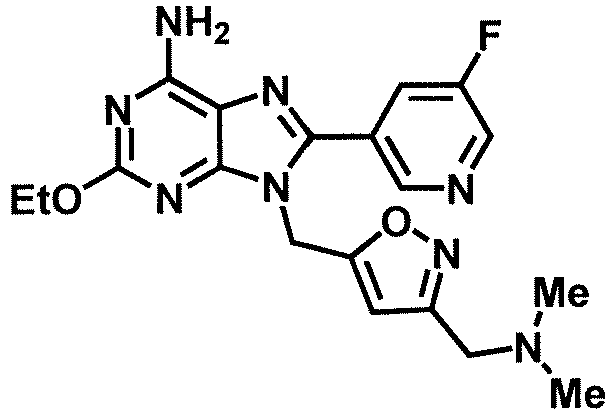
1H-NMR (400 MHz, CDCl3) δ: 8.80-8.77 (1H, m), 8.63 (1H, d, J = 2.4 Hz), 7.83-7.77 (1H, m), 6.20 (1H, s), 5.57 (2H, s), 4.41 (2H, q, J = 7.1 Hz), 2.24 (6H, s), 1.44 (3H, t, J = 7.1 Hz). 122 
1H-NMR (400 MHz, CDCl3) δ: 8.91-8.88 (1H, m), 8.56 (1H, d, J = 3.1 Hz), 8.47 (1H, d, J = 1.8 Hz), 8.13-8.08 (1H, m), 7.66 (1H, dd, J = 1.8, 7.9 Hz), 7.25-7.22 (1H, m), 5.50 (2H, s), 4.42 (2H, q, J = 7.1 Hz), 3.86-3.79 (2H, m), 3.67 (1H, d, J = 13.4 Hz), 3.44-3.37 (1H, m), 3.19-3.07 (1H, m), 3.07-2.91 (2H, m), 2.90-2.81 (1H, m), 2.80 (3H, s), 2.70 (1H, d, J = 9.2 Hz), 2.05-1.93 (2H, m), 1.42 (3H, t, J = 7.1 Hz), 1.33 (3H, t, J = 7.2 Hz). -

- To the compound of Example 225 (138 mg) was added trifluoroacetic acid (1.5 mL), and the mixture was stirred at room temperature for 3 hours. The reaction mixture was diluted with toluene, and then concentrated in vacuo. To the reaction mixture in ice bath was added aqueous saturated sodium bicarbonate, and the mixture was extracted with chloroform-methanol (20:1). The organic layer was dried over sodium sulfate, filtrated, and then concentrated in vacuo. The residue was purified by amino silica gel column chromatography (chloroform/methanol) to give the title compound (105 mg).
LC-MS [M+H]+/Rt (min): 474.5/0.531 (Method A); 1H-NMR (400 MHz, DMSO-d6) δ: 8.72-8.71 (1H, m), 8.31-8.30 (1H, m), 8.05-8.01 (1H, m), 7.18 (1H, d, J = 7.3 Hz), 6.90 (2H, d, J = 7.3 Hz), 5.52 (2H, s), 4.42-4.35 (2H, m), 3.14-3.13 (1H, m), 2.92 (1H, d, J = 9.8 Hz), 2.70 (3H, s), 2.65-2.50 (3H, m), 2.19 (1H, d, J = 9.2 Hz), 1.58 (1H, d, J = 9.2 Hz), 1.35-1.31 (4H, m). - According to the method of Example 123, Examples 124 - 125 were prepared by using the corresponding material compounds.
Example Chemical Structure Instrumental analysis data 124 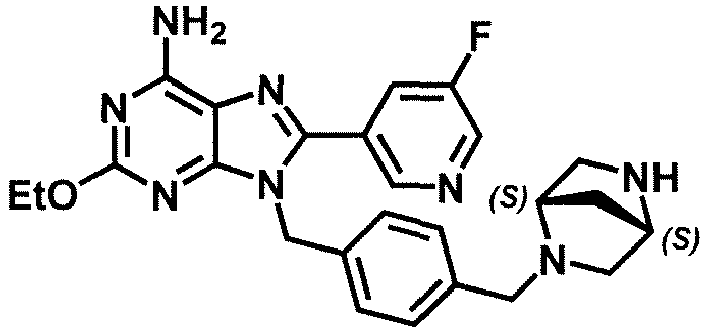
LC-MS [M+H]+/Rt (min) : 475.5/0.518 (Method A); 1H-NMR (DMSO-d6) δ: 8.68-8.67 (1H, m), 8.65 (1H, d, J = 3.1 Hz), 7.97-7.92 (1H, m), 7.46 (2H, brs), 7.18 (1H, d, J = 7.9 Hz), 6.90 (2H, d, J = 7.9 Hz), 5.43 (2H, s), 4.26 (2H, q, J = 7.3 Hz), 3.58 (1H, d, J = 13.4 Hz), 3.52 (1H, d, J = 13.4 Hz), 3.15 (1H, brs), 2.93 (1H, d, J = 9.8 Hz), 2.64-2.48 (2H, m), 2.20 (1H, d, J = 9.2 Hz), 1.59 (1H, d, J = 8.5 Hz), 1.34 (1H, d, J = 9.2 Hz), 1.27 (3H, t, J = 7.3 Hz). 125 
LC-MS [M+H]+/Rt (min) : 460.5/0.555 (Method A); 1H-NMR (400 MHz, DMSO-d6) δ: 8.73-8.72 (2H, m), 8.06-8.01 (1H, m), 7.16 (1H, d, J = 7.9 Hz), 6.90 (2H, d, J = 7.9 Hz), 5.33 (2H, s), 3.95 (3H, s), 3.58 (1H, d, J = 13.4 Hz), 3.51 (1H, d, J = 13.4 Hz), 3.14 (1H, brs), 2.92 (1H, d, J = 9.8 Hz), 2.70 (3H, s), 2.64-2.54 (2H, m), 2.19 (1H, d, J = 9.2 Hz), 1.58 (1H, d, J = 9.2 Hz), 1.33 (1H, d, J = 9.2 Hz). -
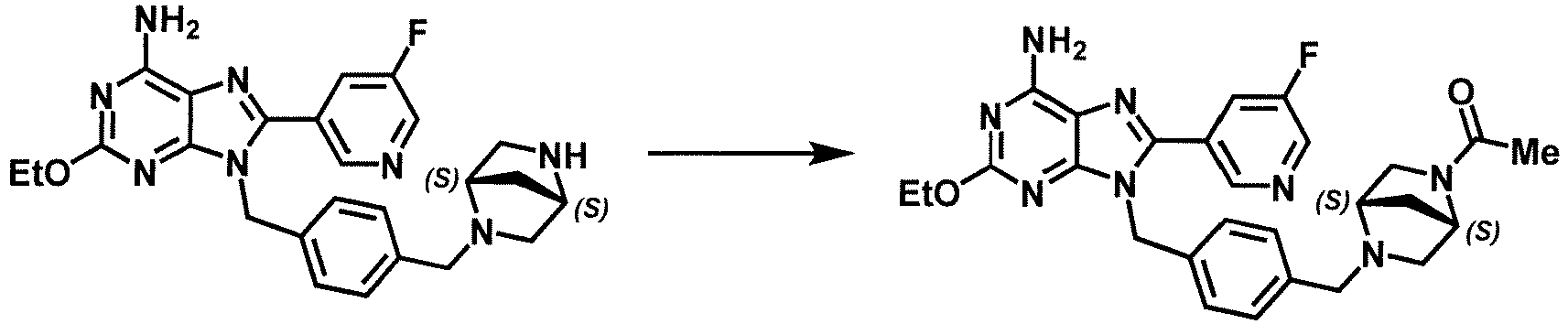
- To an ice-cooled solution of the compound of Example 124 (40.2 mg) in pyridine (5.0 mL) was added acetic anhydride (0.050 ml). The reaction mixture was stirred at room temperature for 4.5 hours, and then concentrated. The obtained residue was purified by silica gel column chromatography (chloroform/methanol) to give the title compound (38.2 mg).
LC-MS [M+H]+/Rt (min): 517.5/0.517 (Method A) -

- To an ice-cooled solution of the compound of Example 194 (145 mg) in chloroform (3 mL) was added trifluoroacetic acid (0.409 ml). The reaction mixture was warmed to room temperature, stirred for 2 days, and then concentrated. The obtained residue was dissolved in tetrahydrofuran (3 ml). To the solution were added sodium acetate (65.3 mg), 37 % formaldehyde solution (0.041 ml) and triacetoxysodium borohydride (112 mg) under ice temperature. Then, the mixture was warmed to room temperature, and stirred for one hour. To the reaction mixture in ice bath was added aqueous saturated sodium bicarbonate, and the mixture was extracted with chloroform. The organic layer was dried over sodium sulfate, filtrated, and then concentrated in vacuo. The residue was purified by silica gel column chromatography (chloroform/methanol) to give the title compound (72 mg).
LC-MS ([M+H]+/Rt (min)): 462.5/0.461 (Method C); 1H-NMR (400 MHz, CDCl3) δ: 8.71-8.62 (1H, m), 8.55 (1H, d, J = 3.1 Hz), 7.67-7.58 (1H, m), 7.15 (2H, d, J = 7.9 Hz), 7.03 (2H, d, J = 7.9 Hz), 5.80 (2H, s), 5.40 (2H, s), 4.41 (2H, q, J = 7.1 Hz), 2.98 (2H, d, J = 11.6 Hz), 2.51-2.38 (1H, m), 2.33 (3H, s), 2.13-2.00 (2H, m), 1.86-1.72 (4H, m), 1.41 (3H, t, J = 7.1 Hz). - According to the methods of Examples 80 and 127, Examples 128 - 139 were prepared by using the corresponding material compounds.
Example Chemical Structure Instrumental analysis data 128 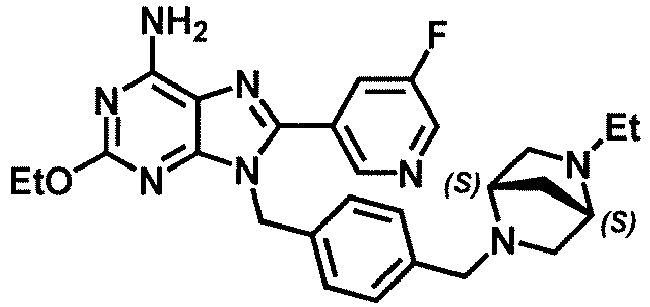
LC-MS [M+H]+/Rt (min) : 503.5/0.536 (Method A) ; 1H-NMR (DMSO-d6) δ: 8.68-8.67 (1H, m), 8. 65 (1H, d, J = 3.1 Hz), 7.96-7.93 (1H, m), 7.46 (2H, brs), 7.18 (2H, d, J = 7.9 Hz), 6.90 (2H, d, J = 7.9 Hz), 5.43 (2H, br s), 4.26 (2H, q, J = 7.3 Hz), 3.58 (1H, d, J = 14.0 Hz), 3.50 (1H, d, J = 14.0 Hz), 3.22 (1H, s), 3.11 (1H, s), 2.58 (1H, d, J = 9.8 Hz), 2.54-2.34 (3H, m), 1.53 (2H, q, J = 7.3 Hz), 1.27 (3H, t, J = 7.3 Hz), 0.93 (3H, t, J = 7.3 Hz). 129 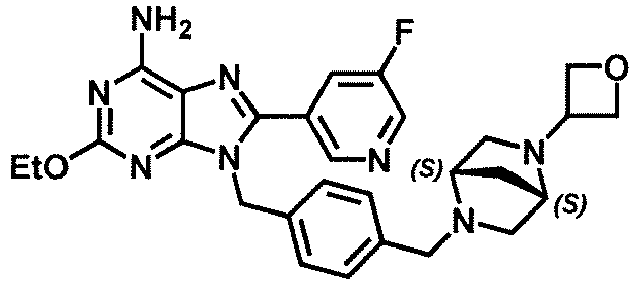
LC-MS [M+H]+/Rt (min): 531.6/0.552 (Method A); 1H-NMR (DMSO-d6) δ: 8.68-8.67 (1H, m), 8.65 (1H, d, J = 3.1 Hz), 7. 96-7.92 (1H, m), 7.46 (2H, brs), 7.19 (2H, d, J = 8.5 Hz), 6.90 (2H, d, J = 8.5 Hz), 5.43 (2H, s), 4.54 (1H, t, J = 6.7 Hz), 4.49 (1H, t, J = 6.7 Hz), 4.36 (1H, t, J = 5.5 Hz), 4.33-4.24 (3H, m), 3.83-3.77 (1H, m), 3.59 (1H, d, J = 14.0 Hz), 3.50 (1H, d, J = 14.0 Hz), 3.15 (2H, s), 2.72 (1H, d, J = 9.2 Hz), 2.47-2.35 (3H, m), 1.55 (1H, d, J = 9.7 Hz), 1.49 (1H, d, J = 9.7 Hz), 1.27 (3H, t, J = 7.3 Hz) . 130 
LC-MS [M+H]+/Rt (min): 515.6/0.584 (Method A); 1H-NMR (DMSO-d6) δ: 8.68-8.67 (1H, m), 8.65 (1H, d, J = 2.4 Hz), 7.96-7.92 (1H, m), 7.46 (2H, brs), 7.19 (2H, d, J = 8.5 Hz), 6.90 (2H, d, J = 8.5 Hz), 5.43 (2H, s), 4.27 (2H, q, J = 7.3 Hz), 3.59 (1H, d, J = 14.0 Hz), 3.52 (1H, d, J = 14.0 Hz), 3.22 (1H, m), 3.13 (1H, m), 2.62 (1H, dd, J = 2.4, 9.2 Hz), 2.75 (1H, d, J = 9.2 Hz), 2.55 (1H, d, J = 9.2 Hz), 2.50-2.43 (3H, m), 1.95-1.90 (1H, m), 1.56 (1H, d, J = 9.2 Hz), 1.51 (1H, d, J = 9.2 Hz), 1.27 (3H, t, J = 7.3 Hz), 0.36-0.28 (2H, m), 0.25-0.21 (2H, m). 131 
LC-MS [M+H]+/Rt (min) : 502.2/0.628 (Method A); 1H-NMR (DMSO-d6) δ: 8.73-8.71 (2H, m), 8.05-8.01 (1H, m), 7.18 (2H, d, J = 7.9 Hz), 6.91 (2H, d, J = 7.9 Hz), 5.52 (2H, s), 4.38 (2H, q, J = 7.3 Hz), 3.58 (1H, d, J = 14.0 Hz), 3.50 (1H, d, J = 14.0 Hz), 3.11 (1H, s), 2.70 (3H, s), 2.55-2.34 (3H m), 1.60-1.48 (2H, m), 1.33 (3H, t, J = 7.3 Hz), 0.93 (3H, t, J = 7.3 Hz). 132 
LC-MS [M+H]+/Rt (min): 488.5/0.611 (Method A); 1H-NMR (DMSO-d6) δ: 8.73-8.71 (2H, m), 8.06-8.01 (1H, m), 7.18 (2H, d, J = 7.7 Hz), 6.91 (2H, d, J = 7.7 Hz), 5.54 (2H, s), 3.95 (3H, s), 3.58 (1H, d, J = 14.2 Hz), 3.51 (1H, d, J = 14.2 Hz), 3.13 (1H, s), 2.71 (3H, s), 2.70-2.38 (5H m), 1.62-1.51 (2H, m), 0.95 (3H, t, J = 7.3 Hz). 133 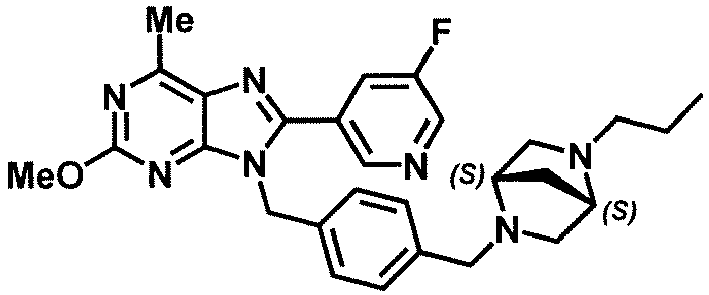
LC-MS [M+H]+/Rt (min) : 502.5/0.775 (Method A); 1H-NMR (DMSO-d6) δ: 8.73-8.72 (2H, m) , 8.05-8.02 (1H, m), 7.17 (2H, d, J = 7.3 Hz), 6.90 (2H, d, J = 7.3 Hz), 5.53 (2H, br s), 3.95 (3H, s), 3.57 (1H, d, J = 14.0 Hz), 3.50 (1H, d, J = 14.0 Hz), 3.17 (1H, s), 3.08 (1H, s), 2.71 (3H, s), 2.56-2.47 (2H, m), 2.44-2.38 (2H, m), 2.33-2.23 (1H, m), 1.55-1.47 (2H, m), 1.36-1.27 (2H, m), 0.82 (3H, t, J = 7.9 Hz). 134 
LC-MS [M+H]+/Rt (min) : 489.5/0.526 (Method B); 1H-NMR (CDCl3) δ: 8.66-8.65 (1H, m), 8.54 (1H, d, J = 3.1 Hz), 7.63-7.59 (1H, m), 7.28-7.26 (2H, m), 7.02 (2H, d, J = 8.0 Hz), 5.61 (2H, br s), 5.41 (2H, s), 3.98 (3H, s), 3.71 (1H, d, J = 13.2 Hz), 3.62 (1H, d, J = 13.2 Hz), 3.42 (1H, s), 3.24 (1H, s), 2.80-2.53 (5H, m), 1.76-1.74 (3H, m), 1.10 (3H, t, J = 7.0 Hz). 135 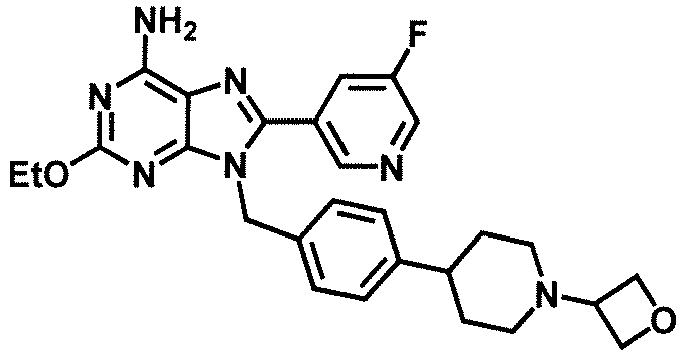
1H-NMR (400 MHz, CDCl3) δ: 8.67-8.63 (1H, m), 8.55 (1H, d, J = 1.8 Hz), 7.67-7.60 (1H, m), 7.16 (2H, d, J = 7.9 Hz), 7.03 (2H, d, J = 7.9 Hz), 5.73 (2H, s), 5.41 (2H, s), 4.72-4.62 (4H, m), 4.41 (2H, q, J = 6.9 Hz), 3.51 (1H, dd, J = 6.0, 6.2 Hz), 2.91-2.81 (2H, m), 2.56-2.43 (1H, m), 1.99-1.71 (6H, m), 1.42 (3H, t, J = 6.9 Hz). 136 
1H-NMR (400 MHz, CDCl3) δ: 8.69-8.63 (1H, m), 8.56 (1H, d, J = 2.4 Hz), 7.67-7.61 (1H, m), 7.21 (2H, d, J = 7.9 Hz), 7.03 (2H, d, J = 7. 9 Hz), 5.69 (2H, s), 5.41 (2H, s), 4.41 (2H, q, J = 7.0 Hz), 3.45-3.31 (1H, m), 3.09-3.00 (1H, m), 2.91-2.78 (1H, m), 2.77-2.63 (1H, m), 2.60-2.48 (1H, m), 2.45 (3H, s), 2.40-2.27 (1H, m), 1.93-1.79 (1H, m), 1.42 (3H, t, J = 7.0 Hz). 137 
LC-MS: [M+H]+/Rt (min): 420.4/0.388 (Method C) ; 1H-NMR (400 MHz, CDCl3): δ: 8.67-8.65 (1H, m), 8.55 (1H, d, J = 3.1 Hz), 7.65-7.58 (1H, m), 7.12 (1H, d, J = 8.5 Hz), 6.92-6.91 (2H, m), 5.93 (2H, s), 5.41 (2H, s), 4.41 (2H, q, J = 7.1 Hz), 3.91 (2H, s), 3.86 (2H, s), 2.58 (3H, s), 1.42 (3H, t, J = 7.0 Hz). 138 
LC-MS [M+H]+/Rt (min): 447.3/0.663 (Method C) ; 1H-NMR (400 MHz, CDCl3) δ: 8.73-8.65 (1H, m), 8.59 (1H, d, J = 2.4 Hz), 7.73-7.67 (1H, m), 7.20 (2H, d, J = 7.9 Hz), 7.00 (2H, d, J = 7.9 Hz), 5. 45 (2H, s), 4.49 (2H, q, J = 7.1 Hz), 3.41-3.27 (1H, m), 2. 98 (1H, dd, J = 8.5, 8.5 Hz), 2.84 (3H, s), 2.81-2.73 (1H, m), 2.69-2.60 (1H, m), 2.46 (1H, dd, J = 8.0, 8.5 Hz), 2.41 (3H, s), 2.38-2.27 (1H, m), 1.89-1.77 (1H, m), 1.47 (3H, t, J = 7.1 Hz). 139 
LC-MS [M+H]+/Rt (min) : 434.3/0.539 (Method C) ; 1H-NMR (400 MHz, CDCl3) δ: 8.72-8.68 (1H, m), 8.60 (1H, d, J = 2.4 Hz), 7.74-7.67 (1H, m), 7.20 (2H, d, J = 7.9 Hz), 7.00 (2H, d, J = 7.9 Hz), 5.46 (2H, s), 4.08 (3H, s), 3.40-3.29 (1H, m), 2.96 (1H, dd, J = 8.8, 9.2 Hz), 2.85 (3H, s), 2.80-2.72 (1H, m), 2.69-2.58 (1H, m), 2.48-2.42 (1H, m), 2.40 (3H, s), 2.37-2.26 (1H, m), 1.87-1.76 (1H, m). -

- To an ice-cooled solution of sodium hydride (13.9 mg, purity: 55 %) in tetrahydrofuran (0.5 mL) was added N,N-dimethylethanolamine (0.032 mL), and the mixture was stirred for 10 minutes. Then, a solution of the compound of Example 232 (50 mg) in tetrahydrofuran (0.56 mL) was added thereto, and the mixture was stirred at room temperature for 3 hours. To the reaction mixture was added water, and the mixture was extracted with ethyl acetate. The organic layer was washed with brine, dried over sodium sulfate, filtrated, and then concentrated in vacuo. The obtained residue was purified by amino silica gel column chromatography (chloroform/ethyl acetate/methanol), and then the residue was purified by silica gel column chromatography (chloroform/methanol) to give the title compound (4.0 mg).
LC-MS [M+H]+/Rt (min): 466.1/0.479 (Method C); 1H-NMR (CDCl3) δ: 8. 67 (1H, br s), 8.55 (1H, d, J = 2.7 Hz), 7. 65-7.61 (1H, m), 7.00 (2H, d, J = 8.4 Hz), 6.75 (2H, d, J = 8.4 Hz), 5.57 (2H, s), 5.35 (2H, s), 4.41 (2H, q, J = 6.8 Hz), 4.32-4.30 (1H, m), 3.24 (1H, dd, J = 13.9, 8.0 Hz), 3.00-2.75 (5H, m), 2.10 (1H, br s), 1.99-1.92 (1H, m), 1.76-1.49 (2H, m), 1.46-1.33 (4H, m). -

- To an ice-cooled solution of sodium hydride (13.9 mg, purity: 55 %) in tetrahydrofuran (0.5 mL) was added N,N-dimethylethanolamine (0.032 mL), and the mixture was stirred for 10 minutes. Then, a solution of the compound of Reference example 135 (50.0 mg) in tetrahydrofuran (0.56 mL) was added thereto, and the mixture was stirred at room temperature for 3 hours. To the reaction mixture was added water, and the mixture was extracted with ethyl acetate. The organic layer was washed with brine, dried over sodium sulfate, filtrated, and then concentrated in vacuo. The obtained residue was purified by amino silica gel column chromatography (chloroform/ethyl acetate/methanol), and then the residue was purified by silica gel column chromatography (chloroform/methanol) to give the title compound (4.0 mg).
LC-MS [M+H]+/Rt (min): 466.1/0.479 (Method C); 1H-NMR (DMSO-d6) δ: 8.67 (1H, br s), 8.55 (1H, d, J = 2.7 Hz), 7.65-7.61 (1H, m), 7.00 (2H, d, J = 8.4 Hz), 6.75 (2H, d, J = 8.4 Hz), 5.57 (2H, s), 5.35 (2H, s), 4.41 (2H, q, J = 6.8 Hz), 4.32-4.30 (1H, m), 3.24 (1H, dd, J = 13.9, 8.0 Hz), 3.00-2.75 (5H, m), 2.10 (1H, br s), 1.99-1.92 (1H, m), 1.76-1.49 (2H, m), 1.46-1.33 (4H, m). - According to the method of Example 141, Example 142 was prepared by using the corresponding material compound.
Example Chemical Structure Instrumental analysis data 142 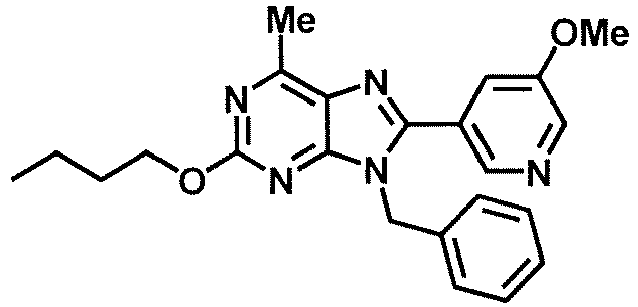
LC-MS [M+H]+/Rt (min) : 404.0/1.056 (Method A); 1H-NMR (400 MHz, DMSO-d6) δ: 8.45-8.41 (2H, m) , 7.56 (1H, dd, J = 1.8, 2.4), 7.30-7.20 (3H, m), 7.02-6.99 (2H, m), 5.52 (2H, s), 4.32 (2H, t, J = 6.4 Hz), 3.78 (3H, s), 2.70 (3H, s), 1.70 (2H, tt, J = 6.4, 7.9 Hz), 1.41 (2H, qt, J = 7.3, 7.9 Hz), 0.91 (3H, t, J = 7.3 Hz). -

- To a solution of the compound of Example 235 (66.3 mg) in dimethylformamide (5 mL) were added EDCI·HCl (63.3 mg), HOBT (21.7 mg), 1-methylpiperazine (0.027 mL), and diisopropylethylamine (0.056 mL), and the mixture was stirred at room temperature for 2 days. To the reaction mixture was added aqueous saturated sodium bicarbonate, and the mixture was extracted with chloroform. The organic layer was dried over sodium sulfate, filtrated, and then concentrated in vacuo. The residue was purified by silica gel column chromatography (chloroform/methanol) to give the title compound (60.5 mg).
LC-MS ([M+H]+/Rt (min)): 491.4/0.507; 1H-NMR (400 MHz, DMSO-d6) δ: 8.68-8.67 (1H, m), 8.65 (1H, d, J = 3.1 Hz), 7.98-7.94 (1H, m), 7.48 (2H, brs), 7.25 (2H, d, J = 7.9 Hz), 7.03 (2H, d, J = 7.9 Hz), 5.50 (2H, s), 4.26 (2H, t, J = 4.9 Hz), 3.64-3.46 (2H, m), 3.24-3.10 (2H, m), 2.35-2.14 (4H, m), 2.16 (3H, s), 1.27 (3H, t, J = 6.7 Hz). - According to the method of Example 143, Examples 144 - 147 were prepared by using the corresponding material compounds.
Example Chemical Structure Instrumental analysis data 144 
LC-MS [M+H]+/Rt (min): 490.5/0.891 (Method A); 1H-NMR (400 MHz, DMSO-d6) δ: 8.68-8.67 (1H, m), 8.65 (1H, d, J = 2.4 Hz), 7.98-7.94 (1H, m), 7.48 (2H, brs), 7.23 (2H, d, J = 7.9 Hz), 7.02 (2H, d, J = 7.9 Hz), 5.50 (2H, s), 4.43-4.31 (1H, m), 4.27 (2H, q, J = 6.7 Hz), 3.40-3.27 (2H, m), 2.98-2.84 (1H, m), 2.76-2.62 (1H, m), 1.70-1.45 (2H, m), 1.27 (3H, t, J = 6.7 Hz), 1.08-0.93 (2H, m), 0.88 (3H, d, J = 6.1 Hz). 145 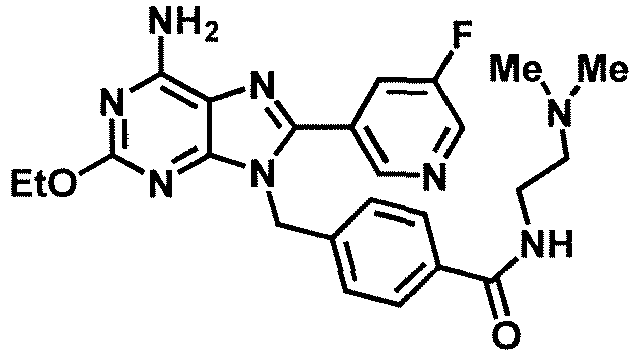
LC-MS [M+H]+/Rt (min): 479.5/0.541 (Method A); 1H-NMR (400 MHz, DMSO-d6) δ: 8.69-8.68 (1H, m), 8.66 (1H, d, J = 2.4 Hz), 8.30 (1H, t, J = 5.5 Hz), 7.99-7.95 (1H, m), 7.70 (2H, d, J = 7.9 Hz), 7.48 (2H, brs), 7.06 (2H, d, J = 7.9 Hz), 5.52 (2H, s), 4.26 (2H, q, J = 7.3 Hz), 3.31-3.27 (2H, m), 2.34 (2H, t, J = 6.7 Hz), 2.13 (6H, s), 1.26 (3H, t, J = 7.3 Hz). 146 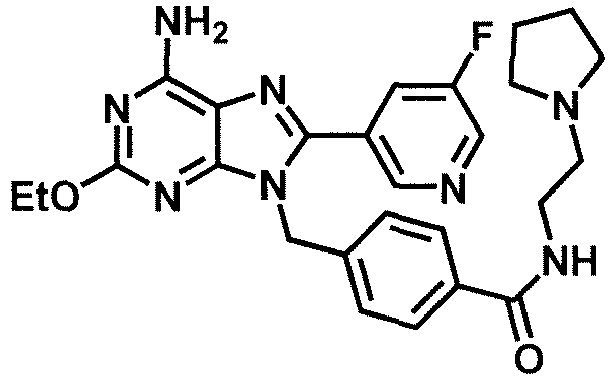
LC-MS [M+H]+/Rt (min) : 505.1/0.569 (Method A); 1H-NMR (400 MHz, DMSO-d6) δ: 8.69-8.68 (1H, m), 8.66 (1H, d, J = 2.4 Hz), 8.36 (1H, t, J = 5.5 Hz), 8.00-7.96 (1H, m), 7.70 (2H, d, J = 7.9 Hz), 7.49 (2H, brs), 7.06 (2H, d, J = 7.9 Hz), 5.52 (2H, s), 4.25 (2H, q, J = 7.3 Hz), 2.54-2.40 (8H, m), 1.68-1.61 (4H, m), 1.26 (3H, t, J = 7.3 Hz). 147 
LC-MS [M+H]+/Rt (min): 519.2/0.621 (Method A): 1H-NMR (400 MHz, DMSO-d6) δ: 8.68-8.67 (1H, m), 8.65 (1H, d, J = 2.4 Hz), 8.00-7.95 (1H, m), 7.50 (2H, brs), 7.33 (1H, dd, J = 7.3, 7.9 Hz), 7.21 (1H, d, J = 7.3 Hz), 7.06 (1H, d, J = 7.9 Hz), 6.94 (1H, s), 5.52 (2H, s), 4.22 (2H, t, J = 6.7 Hz), 3.60-3.46 (2H, m), 3.15-3.02 (2H, m), 2.34-2.20 (2H, m), 2.16 (3H, s), 2.14-2.02 (2H, m), 1.65 (2H, tt, J = 6.7, 7.9 Hz), 1.38 (2H, qt, J = 7.3, 7.9 Hz), 0.90 (3H, t, J = 7.3 Hz) . -
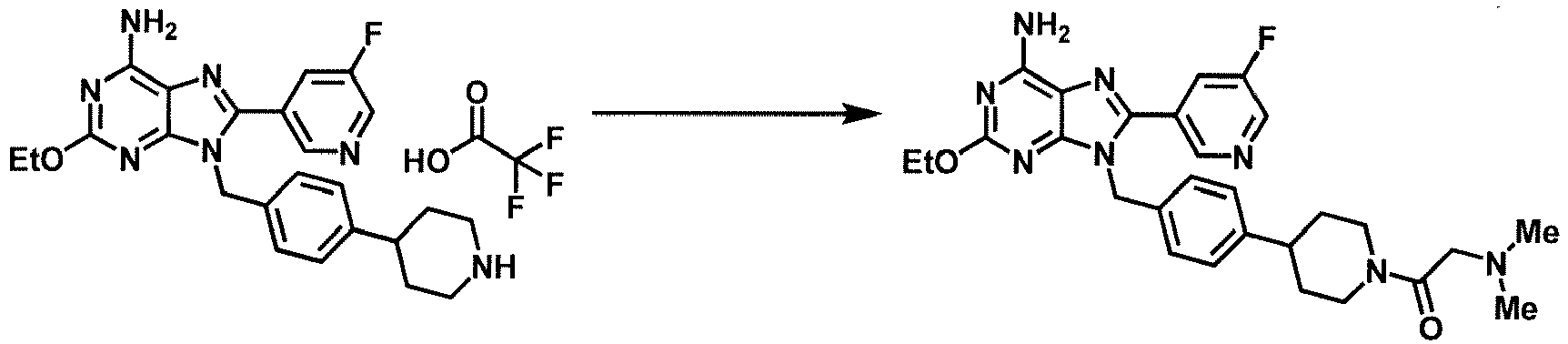
- To a solution of the compound of Example 227 (68 mg) in N,N-dimethylformamide (4 mL) were added N,N-dimethylglycine hydrochloride (27.7 mg), N,N-diisopropylethylamine (0.070 mL), and HATU (64.5 mg) at room temperature. The reaction mixture was stirred for 16 hours, and then concentrated in vacuo. The residue was purified by silica gel column chromatography (chloroform/methanol) to give the title compound (40.7 mg). LC-MS [M+H]+/Rt (min): 533.5/0.498 (Method C)
- According to the method of Example 148, Example 149 was prepared by using the corresponding material compound.
Example Chemical Structure Instrumental analysis data 149 
1H-NMR (400 MHz, CDCl3) (mixture of rotamers, 1:1) δ: 8.66-8.63 (1H, m), 8.57-8.54 (1H, m), 7.66 (1H, ddd, J = 2.0, 6.8, 8.8 Hz), 7.22 (1H, dd, J = 23.8, 7.9 Hz), 7.09-6.92 (2H, m), 5.75 (2H, s), 5.45 (2H, s), 4.88 (1H, s), 4.84 (1H, s), 4.79 (1H, s), 4.75 (1H, s), 4.41 (2H, q, J = 7.1 Hz), 3.22 (1H, s), 3.20 (1H, s), 2.40 (3H, s), 2.38 (3H, s), 1.42 (3H, t, J = 7.1 Hz). -

- To a solution of the compound of Example 118 (70 mg) in 1,4-dioxane (1.9 mL) was added sodium methoxide (46 mg), and the mixture was stirred at 100°C for 3 hours. To the reaction mixture was added water under ice temperature, and the mixture was extracted with ethyl acetate. The organic layer was washed with brine, dried over sodium sulfate, filtrated, and then concentrated in vacuo. The residue was purified by silica gel column chromatography (chloroform/methanol). The obtained solid was triturated with diethyl ether to give the title compound (20 mg). LC-MS [M+H]+/Rt (min): 408.5/0.498 (Method B); 1H-NMR (CDCl3) δ: 8.65 (1H, br s), 8.53 (1H, d, J = 2.4 Hz), 7.62-7.59 (1H, m), 7.26-7.24 (2H, m), 7.05 (2H, d, J = 8.5 Hz), 5.58 (2H, br s), 5.43 (2H, s), 3.97 (3H, s), 3.45 (2H, s), 2.25 (6H, brs).
- According to the method of Example 150, Examples 151 - 155 were prepared by using the corresponding material compounds.
Example Chemical Structure Instrumental analysis data 151 
LC-MS [M+H]+/Rt (min) : 478.5/0.544 (Method B) ; 1H-NMR (CDCl3) δ: 8.65 (1H, br s), 8.53 (1H, d, J = 3.1 Hz), 7.60-7.58 (1H, m), 7.23 (2H, d, J = 7.9 Hz), 7.02 (2H, d, J = 7.9 Hz), 5.70 (2H, s), 5.40 (2H, s), 5.22-5.16 (1H, m), 4.03-3.98 (2H, m), 3.61-3.55 (2H, m), 3.41 (2H, s), 2.22 (6H, s), 2.08-2.04 (2H, m), 1.90-1.82 (2H, m). 152 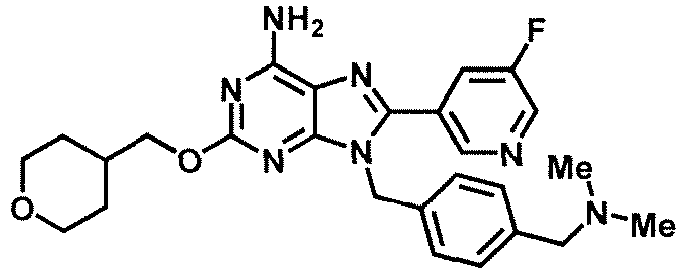
LC-MS [M+H]+/Rt (min) : 492.6/0.582 (Method B); 1H-NMR (CDCl3) δ: 8.64 (1H, s), 8.53 (1H, d, J = 2.4 Hz), 7.61-7.57 (1H, m), 7.26-7.24 (2H, m), 7.04 (2H, d, J = 7.9 Hz), 5.67 (2H, s), 5.42 (2H, s), 4.19 (2H, d, J = 6.7 Hz), 4.00 (2H, dd, J = 3.1, 11.6 Hz), 3.49-3.38 (4H, m), 2.28 (6H, s), 2.13-2.04 (2H, m), 1.79-1.76 (1H, m), 1.49-1.41 (2H, m). 153 
LC-MS [M+H]+/Rt (min) : 433.5/0.501 (Method B) ; 1H-NMR (CDCl3) δ: 8.63 (1H, br s), 8.47 (1H, d, J = 3.1 Hz), 7.59-7.55 (1H, m), 7.21 (2H, d, J = 7.9 Hz), 7.05 (2H, d, J = 7.9 Hz) , 5.55 (2H, s), 5.35 (2H, s), 4.14-4.09 (4H, m), 3.37 (2H, s), 2.35-2.20 (2H, m), 2.20 (6H, s). 154 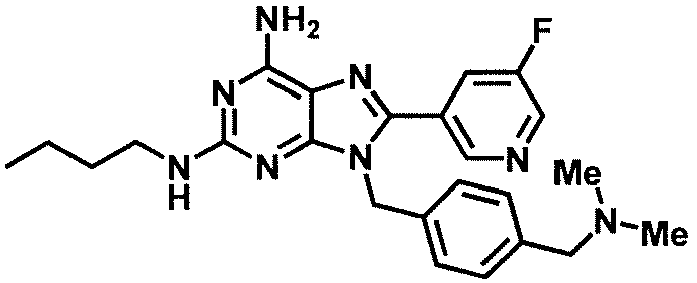
LC-MS [M+H]+/Rt (min): 449.5/0.551 (Method B) ; 1H-NMR (CDCl3) δ: 8.63 (1H, br s), 8.48 (1H, d, J = 2.7 Hz), 7.59-7.56 (1H, m), 7.22 (2H, d, J = 7.8 Hz), 7.06 (2H, d, J = 7.8 Hz), 5.45 (2H, s), 5.34 (2H, s), 4.91-4.89 (1H, m), 3.43-3.38 (4H, m), 2.21 (6H, s), 1.60-1.53 (2H, m), 1.43-1.34 (2H, m), 0. 92 (3H, t, J = 7.3 Hz). 155 
LC-MS [M+H]+/Rt (min) : 463.5/0.653 (Method B) ; 1H-NMR (CDCl3) δ: 8.64 (1H, br s), 8.47 (1H, d, J = 3.1 Hz), 7.61-7.58 (1H, m), 7.23 (2H, d, J = 8.4 Hz), 7.09 (2H, d, J = 8.4 Hz), 5.34 (2H, s), 5.29 (2H, s), 3.62 (2H, t, J = 7.3 Hz), 3.39 (2H, s), 3.13 (3H, s), 2.22 (6H, s), 1.61-1.54 (2H, m), 1.34-1.25 (2H, m), 0.90 (3H, t, J = 7.3 Hz). -

- To a solution of the compound of Example 118 (30 mg) in tetrahydrofuran (0.728 mL) were added bis(tri-tert-butylphosphine)palladium (7.4 mg) and methyltin chloride (2.0 mol/L tetrahydrofuran solution, 0.182 mL), and the mixture was stirred at 60°C for 4 hours. To the reaction mixture was added water, and the mixture was extracted with ethyl acetate. The organic layer was concentrated in vacuo. The residue was purified by amino silica gel column chromatography (chloroform/ethyl acetate). The obtained residue was purified by reverse-phase column chromatography (water/acetonitrile) to give the title compound (11.2 mg). LC-MS [M+H]+/Rt (min): 392.4/0.411 (Method B); 1H-NMR (CDCl3) δ: 8.65 (1H, br s), 8.53 (1H, d, J = 2.7 Hz), 7.61-7.58 (1H, m), 7.22 (2H, d, J = 8.2 Hz), 6.98 (2H, d, J = 8.2 Hz), 5.77 (2H, s), 5.48 (2H, s), 3.38 (2H, s), 2.62 (3H, s), 2.20 (6H, s).
- According to the method of Example 156, Example 157 was prepared by using the corresponding material compound.
Example Chemical Structure Instrumental analysis data 157 
LC-MS [M+H]+/Rt (min): 406.4/0.466 (Method B) ; 1H-NMR (CDCl3) δ: 8.66 (1H, br s), 8.54 (1H, d, J = 2.4 Hz), 7.62-7.59 (1H, m), 7.23 (2H, d, J = 8.2 Hz), 7.02 (2H, d, J = 8.2 Hz), 5.66 (2H, s), 5.49 (2H, s), 3.39 (2H, s), 2.87 (2H, q, J = 7.7 Hz), 2.22 (6H, s), 1.36 (3H, t, J = 7.7 Hz). -

- To a solution of the compound of Reference example 136 (105 mg) in N-methyl-2-pyrrolidone (1.42 mL) were added 3-bromo-5-fluoropyridine (0.058 mL), copper(I) iodide (162 mg), cesium carbonate (231 mg), and palladium(II) acetate (6.4 mg), and the mixture was stirred at 160°C under microwave irradiation for 2 hours. The reaction mixture was filtrated through Celite. The filtrate was diluted with 28 % ammonia, and extracted with ethyl acetate. The organic layer was washed with brine, dried over sodium sulfate, filtrated, and then concentrated in vacuo. The residue was purified by silica gel column chromatography (chloroform/methanol), and then purified by reverse-phase column chromatography (water/acetonitrile) to give the title compound (16.4 mg).
LC-MS [M+H]+/Rt (min): 466.5/0.578 (Method B); 1H-NMR (CDCl3) δ: 8.65-8.63 (1H, m), 8.52 (1H, d, J = 2.4 Hz), 7.61-7.57 (1H, m), 7.23 (2H, d, J = 7.9 Hz), 7.02 (2H, d, J = 7.9 Hz), 5.69 (2H, br s), 5.40-5.35 (3H, m), 3.67-3.63 (1H, m), 3.50-3.46 (1H, m), 3.39-3.38 (5H, m), 2.21 (6H, s), 1.35 (3H, d, J = 6.7 Hz). - According to the method of Example 158, Examples 159 - 162 were prepared by using the corresponding material compounds. As appropriate, microwave irradiation was used.
Example Chemical Structure Instrumental analysis data 159 
LC-MS [M+H]+/Rt (min) : 458.4/0.589 (Method B) ; 1H-NMR (CDCl3) δ: 8.65 (1H, br s), 8.55 (1H, d, J = 3.1 Hz), 7.62-7.59 (1H, m), 7.26-7.24 (2H, m), 7.01 (2H, d, J = 7.9 Hz), 6.12 (1H, tt, J = 4.3, 55.5 Hz), 5.72 (2H, br s), 5.42 (2H, s), 4.56 (2H, td, J = 4.5, 13.3 Hz), 3.42 (2H, s), 2.23 (6H, s). 160 
LC-MS [M+H]+/Rt (min): 448.4/0.613 (Method B); 1H-NMR (CDCl3) δ: 8.64 (1H, br s), 8.52 (1H, d, J = 2.4 Hz), 7.60-7.57 (1H, m), 7.23 (2H, d, J = 7.9 Hz), 7.02 (2H, d, J = 7.9 Hz), 5.68 (2H, s), 5.41 (2H, s), 4.17 (2H, d, J = 7.3 Hz), 3.39 (2H, s), 2.21 (6H, s), 1.34-1.25 (1H, m), 0.61-0.56 (2H, m), 0.37-0.33 (2H, m) . 161 
LC-MS [M+H]+/Rt (min): 475.4/0.562 (Method B); 1H-NMR (CDCl3) δ: 8.66 (1H, br s), 8.54 (1H, d, J = 2.7 Hz), 7.62-7.59 (1H, m), 7.30-7.26 (2H, m), 7.02 (2H, d, J = 8.2 Hz), 5.58 (2H, s), 5.41 (2H, s), 3.98 (3H, s), 3.70 (1H, d, J = 13.4 Hz), 3.63 (1H, d, J = 13.4 Hz), 3.24 (2H, s), 2.88 (1H, br s), 2.74-2.61 (3H, m), 2.41 (3H, s), 1.73 (2H, br s). 162 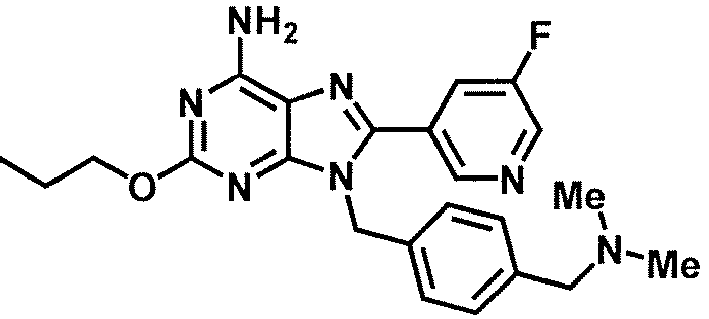
LC-MS [M+H]+/Rt (min): 436.4/0.724 (Method C); 1H-NMR (CDCl3) δ: 8.66 (1H, br s), 8.54 (1H, d, J = 2.7 Hz), 7.62-7.59 (1H, m), 7.30-7.26 (2H, m), 7.02 (2H, d, J = 8.2 Hz), 5.58 (2H, s), 5.41 (2H, s), 3.98 (3H, s), 3.70 (1H, d, J = 13.4 Hz), 3.63 (1H, d, J = 13.4 Hz), 3.24 (2H, s), 2.88 (1H, br s), 2.74-2.61 (3H, m), 2.41 (3H, s), 1.73 (2H, br s). -

- To a solution of the compound of Example 207 (50 mg) in tetrahydrofuran (0.70 mL) were added 1-azabicyclo[2,2,2]oct-3-ylmethanol (24 mg) and (cyanomethylene)tributylphosphorane (0.056 mL), and the mixture was stirred at 80°C for 3 hours. To the reaction mixture was added water, and the mixture was extracted with ethyl acetate. The organic layer was concentrated in vacuo. The obtained residue was purified by amino silica gel column chromatography (chloroform/methanol), and then purified by purified by reverse-phase silica gel column chromatography (acetonitrile/water) to give the title compound (24 mg).
LC-MS [M+H]+/Rt (min): 477.1/0.467 (Method C); 1H-NMR (CDCl3) δ: 8.78 (1H, s), 8.62 (1H, d, J = 3.1 Hz), 7.79-7.76 (1H, m), 7.32 (1H, s), 7.22 (1H, s), 5.31 (2H, s), 4.51 (2H, q, J = 7.1 Hz), 4.00 (2H, d, J = 7.9 Hz), 2.98-2.93 (1H, m), 2.87-2.71 (7H, m), 2.38-2.33 (1H, m), 2.19-2.13 (1H, m), 1.68-1.55 (2H, m), 1.49-1.40 (6H, m). - According to the method of Example 163, Example 164 was prepared by using the corresponding material compound.
Example Chemical Structure Instrumental analysis data 164 
LC-MS [M+H]+/Rt (min) : 437.1/0.455 (Method C); 1H-NMR (CDCl3) δ: 8.79 (1H, t, J = 1.5 Hz), 8.63 (1H, d, J = 3.1 Hz), 7.80-7.77 (1H, m), 7.45 (1H, s), 7.31 (1H, s), 5.30 (2H, s), 4.81-4.74 (1H, m), 4.52 (2H, q, J = 7.1 Hz), 2.89-2.73 (6H, m), 2.48-2.36 (5H, m), 2.07-1.98 (1H, m), 1.49 (3H, t, J = 7.1 Hz). -

- To a solution of the compound of Reference example 107 (299 mg) in 2-propanol (4 mL) were added 5-fluoronicotinaldehyde (159 mg) and ferric(III) chloride (549 mg) at room temperature, and the mixture was refluxed with heating. The reaction mixture was stirred for 2 hours. To the reaction mixture was added water, and the mixture was extracted with chloroform/methanol. The organic layer was dried over sodium sulfate, filtrated, and then concentrated in vacuo. The residue was purified by silica gel column chromatography (chloroform/methanol) to give the title compound (231 mg).
LC-MS [M+H]+/Rt (min): 459.1/0.488 (Method C); 1H-NMR (400 MHz, CDCl3) δ: 8.69-8.65 (1H, m), 8.57 (1H, d, J = 3.1 Hz), 7.70-7.66 (1H, m), 7.18 (2H, d, J = 7.9 Hz), 7.02 (2H, d, J = 7.9 Hz), 5.46 (2H, s), 4.06 (3H, s), 3.33-3.24 (1H, m), 3.04-2.96 (1H, m), 2.96-2.77 (8H, m), 1.88-1.82 (1H, m), 1.75-1.67 (2H, m), 1.59-1.50 (1H, m), 1.39-1.26 (1H, m). - According to the method of Example 165, Examples 166 - 172 were prepared by using the corresponding material compounds.
Example Chemical Structure Instrumental analysis data 166 
LC-MS [M+H]+/Rt (min): 451.1/0.471 (Method C); 1H-NMR (CDCl3) δ: 8.78-8.78 (1H, m), 8.63 (1H, d, J = 3.1 Hz), 7.80-7.76 (1H, m), 7.33 (1H, s), 7.30 (1H, s), 5.31 (2H, s), 4.52 (2H, q, J = 7.1 Hz), 4.07-4.00 (1H, m), 2.96-2.93 (2H, m), 2.80 (3H, s), 2.31 (3H, s), 2.17-1.85 (6H, m), 1.49 (3H, t, J = 7.1 Hz). 167 
LC-MS [M+H]+/Rt (min) : 463.0/0.504 (Method C); 1H-NMR (CDCl3) δ: 8.80 (1H, br s), 8.64 (1H, d, J = 2.4 Hz), 7.82-7.79 (1H, m), 7.38 (1H, s), 7.36 (1H, s), 5.34 (2H, s), 4.53 (2H, q, J = 7.1 Hz), 4.29-4.26 (1H, m), 3.51-3.46 (1H, m), 3.34-3.28 (1H, m), 3.06-2.81 (7H, m), 2.04-2.02 (1H, m), 1.79-1.77 (6H, m), 1.41-1.34 (1H, m). 168 
LC-MS [M+H]+/Rt (min) : 365.2/0.685 (Method C); 1H-NMR (400 MHz, CDCl3) δ: 8.69-8.66 (1H, m), 8.61 (1H, d, J = 2.7 Hz), 8.55-8.52 (1H, m), 8.41 (1H, d, J = 1.8 Hz), 7.73-7.68 (1H, m), 7.41-7.36 (1H, m), 7.22 (1H, dd, J = 4.8, 8.0 Hz), 5.50 (2H, s), 4.47 (2H, q, J = 7.2 Hz), 2.82 (3H, s), 1.45 (3H, t, J = 7.2 Hz). 169 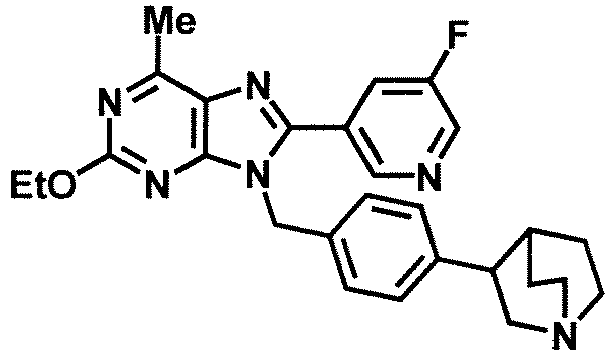
1H-NMR (CDCl3) δ: 7.99-7.96 (1H, m), 7.87 (1H, d, J = 2.4 Hz), 7.00-6.96 (1H, m), 6.48 (2H, d, J = 7.9 Hz), 6.31 (2H, d, J = 7.9 Hz), 4.75 (2H, s), 3.77 (2H, q, J = 7.1 Hz), 2.63-2.55 (1H, m), 2.35-2.27 (1H, m), 2.26-2.08 (8H, m), 1.19-1.14 (1H, m), 1.04-0.98 (2H, m), 0.94-0.82 (1H, m), 0.74 (3H, t, J = 7.1 Hz), 0.67-0.58 (1H, m). 170 
LC-MS [M+H]+/Rt (min): 447.3/0.581 (Method C); 1H-NMR (CDCl3) δ: 8.69-8.65 (1H, m), 8.56 (1H, d, J = 2.4 Hz), 7.67-7.62 (1H, m), 7.24 (2H, d, J = 7.9 Hz), 6.99 (2H, d, J = 7.9 Hz), 5.44 (2H, s), 4.47 (2H, q, J = 7.1 Hz), 3.22-3.16 (1H, m), 2.97 (1H, dd, J = 9.2, 9.2 Hz), 2.82 (3H, s), 2.24 (1H, dd, J= 9.2, 17.6 Hz), 2.17-2.06 (4H, m), 1.98-1.82 (1H, m), 1.82-1.71 (1H, m), 1.71-1.62 (1H, m), 1.44 (3H, t, J = 7.1 Hz). 171 
1H-NMR (CDCl3) δ: 8.69-8.66 (1H, m), 8.60 (1H, d, J = 3.1 Hz), 8.33 (1H, d, J = 2.4 Hz), 7.74-7.69 (1H, m), 7.32 (1H, dd, J = 7.9, 2.4 Hz), 7.10 (1H, d, J = 7.9 Hz), 5.46 (2H, s), 4.47 (2H, q, J = 7.1 Hz), 3.46-3.37 (1H, m), 3.22-3.13 (1H, m), 3.04-2.82 (4H, m), 2.81 (3H, s), 2.79-2.73 (1H, m), 2.00-1.95 (1H, m), 1.74-1.68 (2H, m), 1.59-1.47 (1H, m), 1.45 (3H, t, J = 7.1 Hz), 1.32-1.22 (1H, m). 172 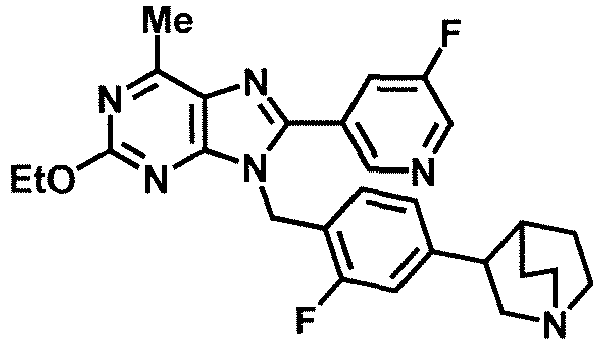
1H-NMR (CDCl3) δ: 8.67-8.63 (1H, m), 8.57 (1H, d, J = 2.4 Hz), 7.73-7.65 (1H, m), 6.98-6.85 (3H, m), 5.49 (2H, s), 4.45 (2H, q, J = 7.1 Hz), 3.32-3.23 (1H, m), 2.99-2.79 (6H, m), 2.81 (3H, s), 1.91-1.82 (1H, m), 1.73-1.66 (2H, m), 1.60-1.48 (1H, m), 1.43 (3H, t, J = 7.1 Hz), 1.39-1.27 (1H, m). -

- The compound of Example 119 (180 mg) was optically separated in the following conditions to obtain the title compounds (Example 173: 75.4 mg-first peak: 33.0 min, Example 174: 70.2 mg-second peak: 43.1 min).
Column: CHIRALPAK™ AD-H; Solvent: Solution A: hexane, Solution B: ethanol/2-propanol/diethylamine = 2/1/0.3 %; Mobile phase condition: A/B = 70/30; Flow rate: 10 mL/min; Detection UV: 220 nm; Column temperature: 40°CExample Instrumental analysis data 173 1H-NMR (400 MHz, CDCl3) δ: 8.70-8.67 (1H, m), 8.58 (1H, d, J = 2.4 Hz), 7.71-7.64 (1H, m), 7.25 (3H, d, J = 7.9 Hz), 7.01 (2H, d, J = 7.9 Hz), 5.47 (2H, s), 4.49 (2H, q, J = 7.1 Hz), 3.36 (2H, dd, J = 13.4, 19.5 Hz), 3.15-3.10 (1H, m), 3.06-2.94 (2H, m), 2.84 (3H, s), 2.83-2.74 (1H, m), 2.64 (1H, dd, J = 4.0, 13.4 Hz), 2.58-2.51 (1H, m), 2.48 (1H, dd, J = 4.6, 11.9 Hz), 2.32-2.23 (1H, m), 2.05-1.95 (1H, m), 1.47 (3H, t, J = 7.1 Hz). 174 1H-NMR (400 MHz, CDCl3) δ: 8.70-8.67 (1H, m), 8.58 (1H, d, J = 2.4 Hz), 7.71-7.64 (1H, m), 7.25 (3H, d, J = 7.9 Hz), 7.01 (2H, d, J = 7.9 Hz), 5.47 (2H, s), 4.49 (2H, q, J = 7.1 Hz), 3.36 (2H, dd, J = 13.4, 19.5 Hz), 3.15-3.10 (1H, m), 3.06-2.94 (2H, m), 2.84 (3H, s), 2.83-2.74 (1H, m), 2.64 (1H, dd, J = 4.0, 13.4 Hz), 2.58-2.51 (1H, m), 2.48 (1H, dd, J = 4.6, 11.9 Hz), 2.32-2.23 (1H, m), 2.05-1.95 (1H, m), 1.47 (3H, t, J = 7.1 Hz). -

- The compound of Example 46 (13.0 mg) was optically separated in the following conditions to obtain the title compounds (Example 175: 6.1 mg-first peak: 61.4 min, Example 176: 6.1 mg-second peak: 78.8 min).
Column: CHIRALPAK™ AS-H; Solvent: Solution A: hexane, Solution B: ethanol/2-propanol/diethylamine = 2/1/0.3 %; Mobile phase condition: A/B = 93/7; Flow rate: 10 mL/min; Detection UV: 220 nm; Column temperature: 40°CExample Instrumental analysis data 175 1H-NMR (400 MHz, CDCl3) δ: 8.68-8.65 (1H, m), 8.56 (1H, d, J = 3.1 Hz), 7.67-7.60 (1H, m), 7.21 (2H, d, J = 7.9 Hz), 7.08 (2H, d, J = 7.9 Hz), 5.64 (2H, s), 5.43 (2H, s), 4.42 (2H, q, J = 7.0 Hz), 3.40-3.31 (1H, m), 3.13-3.05 (1H, m), 3.05-2.84 (5H, m), 1.95-1.91 (1H, m), 1.81-1.75 (2H, m), 1.69-1.58 (1H, m), 1.43 (3H, t, J = 7.0 Hz), 1.41-1.35 (1H, m). 176 1H-NMR (400 MHz, CDCl3) δ: 8.68-8.65 (1H, m), 8.56 (1H, d, J = 3.1 Hz), 7.67-7.60 (1H, m), 7.21 (2H, d, J = 7.9 Hz), 7.08 (2H, d, J = 7.9 Hz), 5.64 (2H, s), 5.43 (2H, s), 4.42 (2H, q, J = 7.0 Hz), 3.40-3.31 (1H, m), 3.13-3.05 (1H, m), 3.05-2.84 (5H, m), 1.95-1.91 (1H, m), 1.81-1.75 (2H, m), 1.69-1.58 (1H, m), 1.43 (3H, t, J = 7.0 Hz), 1.41-1.35 (1H, m). -

- The compound of Example 165 (30.0 mg) was optically separated in the following conditions to obtain the title compounds (Example 177: 8.6 mg-first peak: 24.1 min, Example 178: 6.6 mg-second peak: 34.5 min).
Column: CHIRALPAK™ AS-H; Solvent: Solution A: hexane, Solution B: ethanol/2-propanol/diethylamine/methanol = 2/1/0.3/2 %; Mobile phase condition: A/B = 93/7; Flow rate: 10 mL/min; Detection UV: 220 nm; Column temperature: 40°CExample Instrumental analysis data 177 1H-NMR (400 MHz, CDCl3) δ: 8.69-8.65 (1H, m), 8.57 (1H, d, J = 3.1 Hz), 7.70-7.66 (1H, m), 7.18 (2H, d, J = 7.9 Hz), 7.02 (2H, d, J = 7.9 Hz), 5.46 (2H, s), 4.06 (3H, s), 3.33-3.24 (1H, m), 3.04-2.96 (1H, m), 2.96-2.77 (8H, m), 1.88-1.82 (1H, m), 1.75-1.67 (2H, m), 1.59-1.50 (1H, m), 1.39-1.26 (1H, m). 178 1H-NMR (400 MHz, CDCl3) δ: 8.69-8.65 (1H, m), 8.57 (1H, d, J = 3.1 Hz), 7.70-7.66 (1H, m), 7.18 (2H, d, J = 7.9 Hz), 7.02 (2H, d, J = 7. 9 Hz), 5.46 (2H, s), 4.06 (3H, s), 3.33-3.24 (1H, m), 3.04-2.96 (1H, m), 2.96-2.77 (8H, m), 1.88-1.82 (1H, m), 1.75-1.67 (2H, m), 1.59-1.50 (1H, m), 1.39-1.26 (1H, m). - According to the method of Example 1, Examples 179 - 199 were prepared by using the corresponding material compounds. As appropriate, microwave irradiation was used.
Example Chemical Structure Instrumental analysis data 179 
LC-MS: [M+H]+/Rt (min): 417.3/1.105 (Method A); 1H-NMR (400 MHz, DMSO-ds) δ: 7.48-7.44 (2H, m), 7.31-7.20 (5H, s), 7.02 (2H, d, J = 6.7 Hz), 5.36 (2H, s), 4.17 (2H, t, J = 6.7 Hz), 2.93 (6H, s), 1.61 (2H, tt, J = 6.7, 7.9 Hz), 1.36 (2H, qt, J = 7.3, 7.9 Hz), 0.88 (3H, t, J = 7.3 Hz). 181 
LC-MS: [M+H] +/Rt (min) : 428.2/0.621 (Method A); 1H-NMR (400 MHz, DMSO-d6) δ: 8.68-8.66 (2H, m), 8.52-8.50 (2H, m), 7.99-7.95 (1H, m), 7.59 (2H, brs), 7.37 (2H, d J = 6.1 Hz), 7.22-7.18 (3H, m), 6.93-6.90 (2H, m), 5.46 (2H, s) , 5.40 (2H, s). 181 
LC-MS: [M+H]+/Rt (min): 512.3/0.486 (Method A); 1H-NMR (400 MHz, DMSO-d6) δ: 9.10-9.08 (2H, m), 8.54-8.53 (1H, m), 7.58 (2H, brs), 7.17 (2H, d, J = 7.9 Hz), 6.98 (2H, d, J = 7.9 Hz), 5.50 (2H, s), 4.35 (2H, t, J = 4.8 Hz), 3.61 (2H, t, J = 4.8 Hz), 3.28 (3H, s), 3.26 (2H, s), 2.06 (6H, s). 182 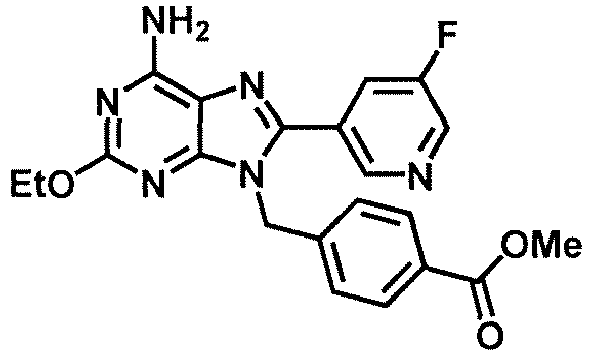
LC-MS [M+H] +/Rt (min): 423.5/0.844 (Method A) 183 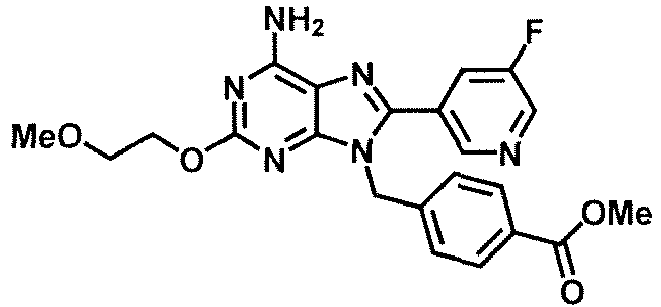
LC-MS [M+H] +/Rt (min): 453.1/0.778 (Method A) 184 
LC-MS [M+H] +/Rt (min) : 409.4/0.813 (Method A) 185 
LC-MS [M+H]+/Rt (min) : 422.4/0.721 (Method A) 186 
LC-MS [M+H]+/Rt (min) : 423.3/0.714 (Method A) 187 
LC-MS [M+H]+/Rt (min): 393.3/0.775 (Method A) 188 
1H-NMR (CDCl3) 5: 8.63-8.58 (2H, m), 7.98 (2H, d, J = 8.2 Hz), 7.62-7.59 (1H, m), 7.11 (2H, d, J = 8.2 Hz), 5.91 (2H, br s), 5.54 (2H, s), 3.90 (3H, s) . 189 
1H-NMR (CDCl3) δ: 8.65-8.60 (2H, m), 8.21 (1H, d, J = 2.7 Hz), 7.70-7.63 (1H, m), 7.43 (1H, dd, J = 2.7, 8.2 Hz), 7.27-7.25 (1H, m), 5.64 (2H, br s), 5.42 (2H, s), 4.39 (2H, q, J = 7.2 Hz), 1.42 (3H, t, J = 7.2 Hz). 190 
1H-NMR (DMSO-D6) δ: 8.81-8.80 (1H, m), 8.66 (1H, d, J = 3.1 Hz), 8.46 (1H, d, J = 3.1 Hz), 8.18-8.15 (1H, m), 7.80 (1H, dd, J = 2.4, 8.5 Hz), 7.50-7.44 (3H, m), 5.55 (2H, s), 4.23 (2H, q, J = 7.1 Hz), 3.42 (3H, s), 1.24 (3H, t, J = 7.1 Hz). 191 
LC-MS[M+H]+/Rt (min) : 400.3/0.664 (Method C); 1H-NMR (400 MHz, CDCl3) δ: 8.59-8.55 (2H, m), 8.35 (1H, d, J = 5.2 Hz), 7.69-7.64 (1H, m), 7.06 (1H, s), 6.94 (1H, dd, J = 5.2, 1.5 Hz), 5.71 (2H, s), 5.41 (2H, s), 4.37 (2H, q, J = 7.1 Hz), 1.40 (3H, t, J = 7.1 Hz). 192 
LC-MS[M+H]+/Rt (min) : 400.4/0.664 (Method C); 1H-NMR (400 MHz, CDCl3) δ: 8.81 (1H, s), 8.59-8.55 (1H, m), 8.04-7.98 (1H, m), 7.62 (1H, dd, J = 7.6, 7.9 Hz), 7.29-7.26 (1H, m), 7.15 (1H, d, J = 7.9 Hz), 5.61 (2H, s), 5.45 (2H, s), 4.36 (2H, q, J = 6.9 Hz), 1.39 (3H, t, J = 6.9 Hz). 193 
1 H-NMR (400 MHz, CDCl3) δ: 8.90-8.86 (1H, m), 8.57 (1H, d, J = 3.1 Hz), 8.46 (1H, d, J = 5.5 Hz), 8.08-8.04 (1H, m) , 7.39 (1H, d, J = 1.2 Hz), 7.25-7.23 (1H, m), 5.60 (2H, s), 5.46 (2H, s), 4.39 (2H, q, J = 7.1 Hz), 1.41 (3H, t, J = 7.1 Hz). 194 
LC-MS[M+H]+/Rt (min): 548.5/1.105 (Method C); 1H-NMR (400 MHz, CDCl3) δ: 8.65-8.63 (1H, m), 8.54 (1H, d, J = 2.7 Hz), 7.62 (1H, ddd, J = 2.0, 2.7, 9.2 Hz), 7.12 (2H, d, J = 8.2 Hz), 7.02 (2H, d, J = 8.2 Hz), 5.63 (2H, s), 5.39 (2H, s), 4.40 (2H, q, J = 7.1 Hz), 4.30-4.13 (2H, m), 2.83-2.72 (2H, m), 2.66-2.54 (1H, m), 1.82-1.72 (2H, m), 1.61-1.49 (2H, m), 1.47 (9H, s), 1.41 (3H, t, J = 7.1 Hz). 195 
LC-MS[M+H]+/Rt (min) : 534.5/0.997 (Method C); 1H-NMR (400 MHz, CDCl3) δ: 8.66-8.61 (1H, m), 8.56 (1H, d, J = 2.4 Hz), 7.68-7.59 (1H, m), 7.17 (2H, d, J = 7.9 Hz), 7.04 (2H, d, J = 7.9 Hz), 6.06 (2H, br s), 5.41 (2H, s), 4.42 (3H, q, J = 7.1 Hz), 3.85-3.69 (1H, m), 3.66-3.46 (1H, m), 3.44-3.19 (2H, m), 2.26-2.19 (1H, m), 1.98-1.87 (2H, m), 1.47 (9H, s), 1.42 (3H, t, J = 7.1 Hz). 196 
LC-MS [M+H] +/Rt (min) : 506.5/0.942 (Method C); 1H-NMR (400 MHz, CDCl3) δ: 8.63 (1H, s), 8.56-8.51 (1H, m), 7.62 (1H, d, J = 9.2 Hz), 7.17 (1H, dd, J = 23.8, 7.9 Hz), 7.02-6.88 (2H, m), 5.71 (2H, s), 5.42 (2H, s), 4.67-4.53 (4H, m), 4.39 (2H, q, J = 7.0 Hz), 1.49 (9H, s), 1.40 (3H, t, J = 7.0 Hz). 197 
LC-MS [M+H] +/Rt (min) : 428.4/0.709 (Method C); 1H-NMR (400 MHz, CDCl3) δ: 8.78-8.72 (1H, m), 8.63 (1H, d, J = 1.8 Hz), 7.84-7.75 (1H, m), 6.60 (1H, s), 5.64 (2H, s), 5.54 (2H, s), 4.49-4.31 (4H, m), 1.46-1.33 (6H, m). 198 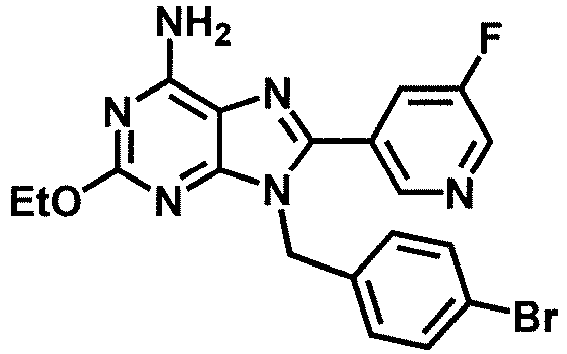
1H-NMR (400 MHz, CDCl3) δ: 8.70-8.66 (1H, m), 8.66-8.62 (1H, m), 8.58 (1H, d, J = 2.4 Hz), 8.48 (1H, d, J = 2.4 Hz), 7.70 (1H, ddd, J = 2.0, 2.4, 4.8 Hz), 7.59-7.53 (1H, m), 7.53 (2H, d, J = 7.9 Hz), 7.24 (2H, d, J = 7.9 Hz), 5.65 (2H, s), 5.51 (2H, s), 4.43 (2H, q, J = 7.3 Hz), 1.43 (3H, t, J = 7.3 Hz). 199 
1H-NMR (400 MHz, CDCl3) δ: 8.66-8.62 (1H, m), 8.58 (1H, d, J = 2.4 Hz), 7.68-7.62 (1H, m), 7.24 (2H, d, J = 9.2 Hz), 7.18 (2H, d, J = 9.2 Hz), 5.62 (2H, s), 5.45 (2H, s), 4.41 (2H, q, J = 7.1 Hz), 3.14 (3H, s), 1.43 (3H, t, J = 7.0 Hz). - According to the method of Example 165, Examples 200 - 207 were prepared by using the corresponding material compounds.
Example Chemical Structure Instrumental analysis data 200 
LC-MS [M+H]+/Rt (min) : 533.5/1.12 (Method C); 1H-NMR (400 MHz, CDCl3) δ: 8.69-8.66 (1H, m), 8.58 (1H, d, J = 2.4 Hz), 7.73-7.67 (1H, m), 7.15 (2H, d, J = 7.9 Hz), 7.01 (2H, d, J = 7.9 Hz), 5.45 (2H, s), 4.47 (2H, q, J = 7.1 Hz), 3.82-3.70 (1H, m), 3.64-3.48 (1H, m), 3.43-3.16 (3H, m), 2.82 (3H, s), 2.26-2.17 (1H, m), 1.97-1.85 (1H, m), 1.50-1.41 (12H, m). 201 
LC-MS [M+H]+/Rt (min) : 519.4/1.048 (Method D); 1H-NMR (400 MHz, CDCl3) δ: 8.69-8.66 (1H, m), 8.60-8.56 (1H, m), 7.80-7.73 (1H, m), 7.15 (2H, d, J = 7.9 Hz), 7.02 (2H, d, J = 7.9 Hz), 5.46 (2H, s), 4.06 (3H, s), 3.85-3.70 (1H, m), 3.64-3.48 (1H, m), 3.42-3.17 (3H, m), 2.84 (3H, s), 2.26-2.17 (1H, m), 1.97-1.85 (1H, m), 1.46 (9H, s). 202 
LC-MS [M+H]+/Rt (min) : 423.3/0.892 (Method C); 1H-NMR (400 MHz, CDCl3) δ: 9.12 (1H, d, J = 1.8 Hz), 8.88-8.85 (1H, m), 8.58 (1H, d, J = 2.4 Hz), 8.27 (1H, dd, J = 2.4, 8.5 Hz), 8.08-8.03 (1H, m), 7.37 (1H, d, J = 8.5 Hz), 5.59 (2H, s), 4.42 (2H, q, J = 7.1 Hz), 3.94 (3H, s), 2.82 (3H, s), 1.42 (3H, t, J = 7.1 Hz). 203 
1H-NMR (CDCl3) δ: 8.68-8.64 (2H, m), 8.02 (1H, d, J = 2.4 Hz) , 7.75-7.72 (1H, m), 7.58-7.53 (1H, m), 6.87 (1H, dd, J = 8.5, 3.1 Hz), 5.48 (2H, s), 4.48 (2H, q, J = 6.9 Hz), 2.82 (3H, s), 1.46 (3H, q, J = 6.9 Hz). 204 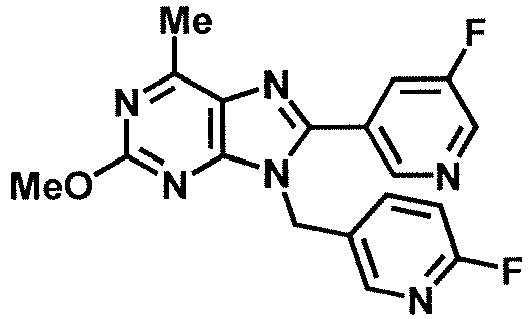
1H-NMR (CDCl3) δ: 8.69 (1H, br s), 8.65 (1H, d, J = 2.4 Hz), 8.02-8.01 (1H, m), 7.75-7.73 (1H, m), 7.59-7.55 (1H, m), 6.89-6.86 (1H, m), 5.49 (2H, s), 4.08 (3H, s), 2.83 (3H, s). 205 
1H-NMR (CDCl3) δ: 8.68 (1H, br s), 8.64 (1H, d, J = 3.1 Hz), 8.02-8.01 (1H, m), 7.75-7.71 (1H, m), 7.58-7.53 (1H, m), 6.87 (1H, dd, J = 3.1,8.5 Hz), 5.49 (2H, s), 4.37 (2H, t, J = 6.7 Hz), 2.82 (3H, s), 1.92-1.83 (2H, m), 1.07 (3H, t, J = 7.3 Hz). 206 
LC-MS [M+H]+/Rt (min) : 393.0/0.769 (Method C) 207 
LC-MS [M+H]+/Rt (min): 354.0/0.561 (Method C) -

- To an ice-cooled solution of the compound of Example 199 (53.9 mg) in acetonitrile (4 mL) was added potassium trimethylsilanolate (272 mg). The reaction mixture was warmed to room temperature, and then stirred for 24 hours. To the reaction mixture were added acetic acid (0.121 mL) and water, and the mixture was extracted with chloroform/methanol. The organic layer was dried over sodium sulfate, filtrated, and then concentrated in vacuo. The residue was purified by silica gel column chromatography (chloroform/methanol) to give the title compound (36.2 mg).
LC-MS [M+H]+/Rt (min): 381.36/0.608 (Method C); 1H-NMR (400 MHz, CDCl3) δ: 8.68-8.64 (1H, m), 8.56 (1H, d, J = 3.1 Hz), 7.71-7.66 (1H, m), 6.94 (2H, d, J = 8.5 Hz), 6.71 (2H, d, J = 8.5 Hz), 5.68 (2H, s), 5.36 (2H, s), 4.42 (2H, q, J = 7.1 Hz), 1.42 (4H, t, J = 7.1 Hz). - According to the method of Example 208, Example 209 was prepared by using the corresponding material compound.
Example Chemical Structure Instrumental analysis data 209 
LC-MS [M+H]+/Rt (min): 382.3/0.690 (Method C) - According to the method of Example 77, Examples 210 - 215 were prepared by using the corresponding material compounds.
Example Chemical Structure Instrumental analysis data 210 
LC-MS [M+H]+/Rt (min) : 425.1/0.640 (Method A) 211 
LC-MS [M+H]+/Rt (min): 394.4/0.602 (Methog A) 212 
1H-NMR (DMSO-D6) δ: 8.71-8.70 (2H, m), 8.03-7.99 (3H, m), 7.20 (2H, d, J = 7.9 Hz), 6.92 (2H, d, J = 7.9 Hz), 5.49 (2H, s), 5.13 (1H, t, J = 5.5 Hz), 4.41 (2H, d, J = 6.1 Hz). 213 
1H-NMR (DMSO-D6) δ: 8.23 (1H, s), 7.76 (2H, s), 7.28-7.22 (4H, m) , 5.29 (2H, s), 5.14 (1H, t, J = 5.7 Hz), 4.44 (2H, d, J = 5.5 Hz) . 214 
1H-NMR (400 MHz, CDCl3) δ: 8.74-8.71 (1H, m), 8.59 (1H, d, J = 2.4 Hz), 7.82-7.77 (1H, m), 6.27 (1H, s), 5.90 (2H, s), 5.46 (2H, s), 4.69 (2H, s), 4.37 (2H, q, J = 7.1 Hz), 1.39 (3H, t, J = 7.1 Hz) . 215 
LC-MS [M+H]+/Rt (min): 395.3/0.715 (Method C); 1H-NMR (400 MHz, CDCl3) δ: 8.90-8.86 (1H, m), 8.56 (1H, d, J = 1.8 Hz), 8.51-8.47 (1H, m), 8.13-8.05 (1H, m), 7.69 (1H, d, J = 7.9 Hz), 7.30-7.26 (1H, m), 5.53 (2H, s), 4.71 (2H, s), 4.42 (2H, q, J = 7.0 Hz), 2.81 (3H, s), 1.42 (3H, t, J = 7.0 Hz). -

- To a solution of the compound of Example 78 (826 mg) in tetrahydrofuran (30 mL) was added manganese dioxide (3.22 g), and the mixture was stirred at room temperature for 2 days. The reaction mixture was filtrated through Celite, and the filtrate was concentrated in vacuo. The residue was purified by silica gel column chromatography (chloroform/methanol) to give the title compound (719 mg).
LC-MS ([M+H]+/Rt (min)): 392.4/0.858 (Method A) - According to the method of Example 216, Examples 217 - 223 were prepared by using the corresponding material compounds.
Example Chemical Structure Instrumental analysis data 217 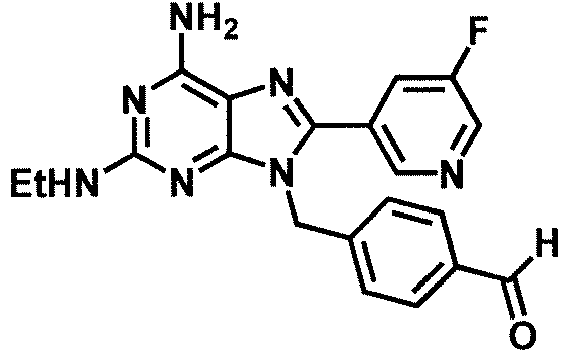
LC-MS: [M+H]+/Rt (min): 392.4/0.666 (Method A) 218 
LC-MS [M+H]+/Rt (min): 423.3/0.714 (Method A) 219 
LC-MS [M+H]+/Rt (min): 378.6/0.774 (Method A) 220 
LC-MS [M+H]+/Rt (min) : 383.3/0.672 (Method C) 221 
1H-NMR (DMSO-D6) δ: 9.97 (1H, s), 8.28 (1H, s), 7.89-7.82 (4H, m), 7.43 (2H, d, J = 7.9 Hz), 5.45 (2H, s). 222 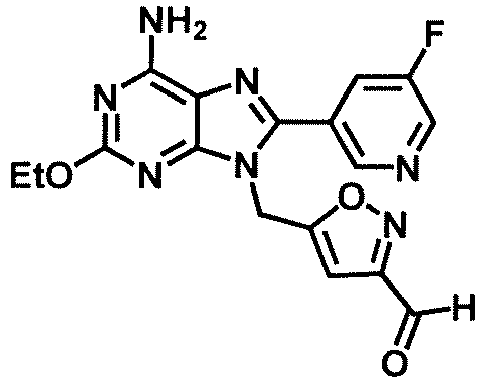
LC-MS: [M+H]+/Rt (min): 386.4/0.479 (Method C) 223 
1H-NMR (400 MHz, CDCl3) δ: 10.08 (1H, s), 8.98 (1H, d, J = 1.8 Hz), 8.87-8.85 (1H, m), 8.58 (1H, d, J = 3.1 Hz), 8.16 (1H, dd, J = 7.9, 2.4 Hz), 8.07-8.01 (1H, m), 7.47 (1H, d, J = 7.9 Hz), 5.61 (2H, s), 4.41 (3H, q, J = 7.1 Hz), 2.82 (3H, s), 1.41 (3H, t, J = 7.1 Hz). - According to the method of Example 80, Examples 224 - 226 were prepared by using the corresponding material compounds.
Example Chemical Structure Instrumental analysis data 224 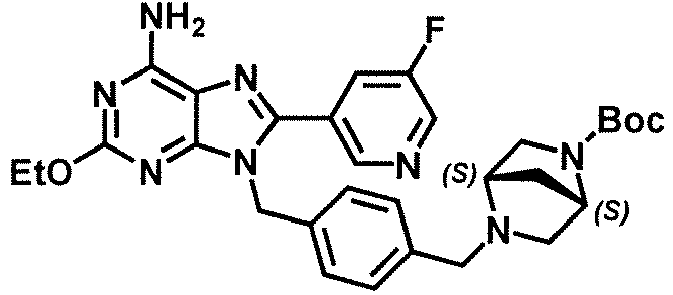
LC-MS [M+H]+/Rt (min): 575.6/0.681 (Method A) 225 
LC-MS [M+H]+/Rt (min): 574.5/0.731 (Method A) 226 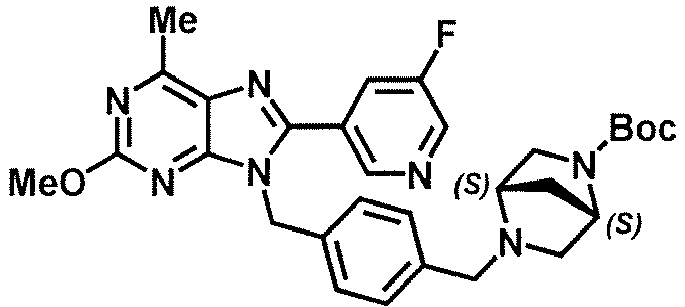
LC-MS [M+H]+/Rt (min): 560.4/0.703 (Method A) -

- To an ice-cooled solution of the compound of Example 194 (219 mg) in chloroform (3 mL) was added trifluoroacetic acid (0.308 mL). The reaction mixture was warmed to room temperature, and stirred for 18 hours. The reaction mixture was concentrated to give the title compound (240 mg) .
1H-NMR (400 MHz, CDCl3) δ: 8.69-8.58 (2H, m), 7.70 (1H, d, J = 7.9 Hz), 7.21 (2H, d, J = 7.9 Hz), 7.04 (2H, d, J = 7.9 Hz), 5.44 (2H, s), 4.58 (2H, q, J = 7.3 Hz), 3.64-3.47 (2H, m), 3.11-2.95 (2H, m), 2.84-2.71 (1H, m), 2.16-1.86 (4H, m), 1.47 (3H, q, J = 7.3 Hz). - According to the methods of Example 123 and Example 227, Examples 228 - 231 were prepared by using the corresponding material compounds.
Example Chemical Structure Instrumental analysis data 228 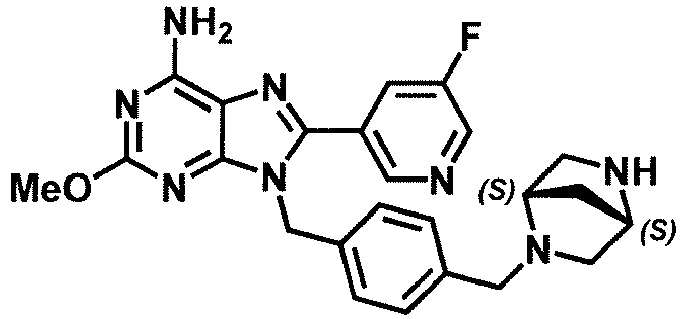
1H-NMR (CDCl3) δ: 8.65 (1H, s), 8.53 (1H, d, J = 2.4 Hz), 7.62-7.60 (1H, m), 7.27-7.26 (2H, m), 7.02 (2H, d, J = 8.8 Hz), 5.61 (2H, s), 5.41 (2H, s), 3.98 (3H, s), 3.71-3.62 (2H, m), 3.54 (1H, s), 3.31 (1H, s), 3.19-3.16 (1H, m), 2.87-2.80 (2H, m), 2.41 (1H, d, J = 9.2 Hz), 1.80 (1H, d, J = 9.2 Hz), 1.57-1.55 (2H, m). 229 
LC-MS [M+H]+/Rt (min) : 406.4/0.346 (Method C); 1H-NMR (CD3OD) δ: 8.64-8.61 (1H, m), 8.59 (1H, d, J = 2.4 Hz), 7.95-7.90 (1H, m) , 7.36 (1H, d, J = 7.9 Hz), 7.17-7.11 (2H, m), 5.59 (2H, s), 4.56 (2H, s), 4.52 (2H, s), 4.47 (2H, q, J = 7.0 Hz), 1.40 (3H, t, J = 7.0 Hz). 230 
LC-MS [M+H]+/Rt (min): 433.4/0.601 (Method C); 1H-NMR (CDCl3) δ: 8.69-8.66 (1H, m), 8.57 (1H, d, J = 1.2 Hz), 7.71-7.66 (1H, m), 7.15 (2H, d, J = 7.3 Hz), 6.99 (2H, d, J = 7.3 Hz), 5.44 (2H, s), 4.47 (2H, q, J = 7.1 Hz), 3.37-3.29 (1H, m), 3.23-3.03 (3H, m), 2.86-2.75 (4H, m), 2.26-2.16 (1H, m), 1.84-1.73 (1H, m), 1.45 (3H, t, J = 7.1 Hz), 1.24 (1H, s). 231 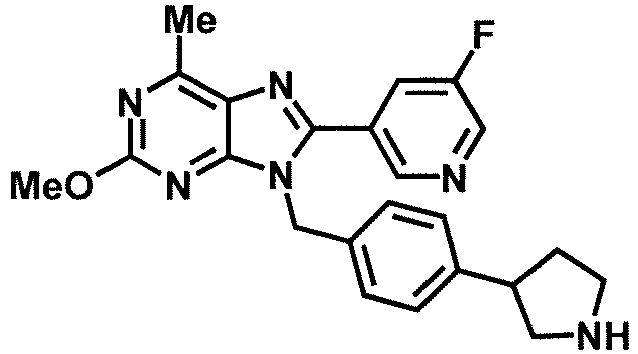
LC-MS [M+H]+/Rt (min): 419.3/0.586 (Method D); 1H-NMR (CDCl3) δ: 8.69-8.65 (1H, m), 8.58 (1H, d, J = 2.4 Hz), 7.72-7.67 (1H, m), 7.15 (2H, d, J = 7.9 Hz), 6.99 (2H, d, J = 7.9 Hz), 5.45 (2H, s), 4.06 (3H, s), 3.32 (1H, dd, J = 10.7, 7.6 Hz), 3.21-3.02 (3H, m), 2.82 (3H, s), 2.78 (1H, dd, J = 10.7, 8.2 Hz), 2.24-2.15 (1H, m), 1.82-1.72 (1H, m). -
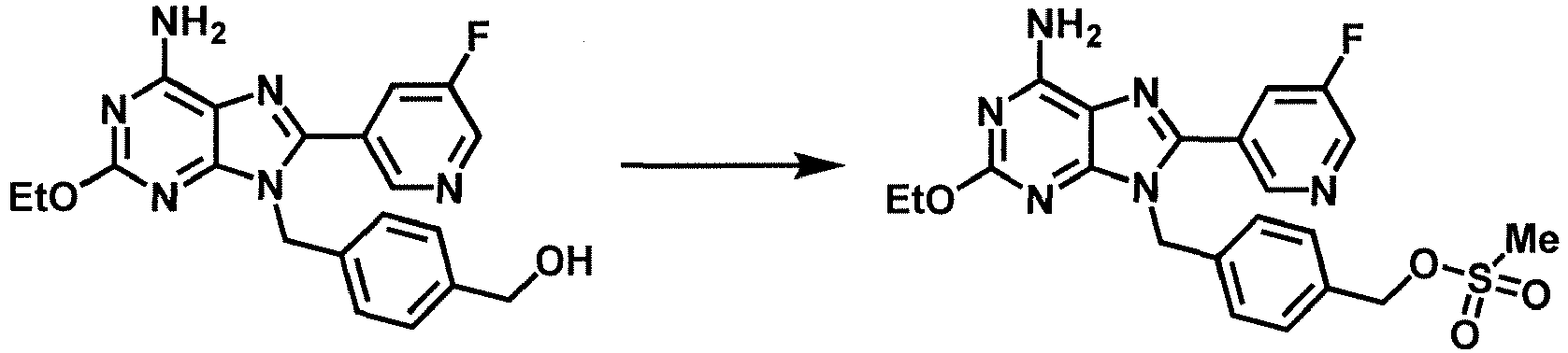
- To an ice-cooled suspension of the compound of Example 77 (400 mg) in tetrahydrofuran (3.4 mL) were added triethylamine (0.424 mL) and methanesulfonyl chloride (0.118 mL), and the mixture was stirred in ice bath for 2 hours. To the reaction mixture was added water, and the mixture was extracted with chloroform/methanol. The organic layer was dried over sodium sulfate, filtrated, and then concentrated in vacuo to give the title compound (465 mg).
1H-NMR (CDCl3) δ: 8.62-8.61 (1H, m), 8.54 (1H, d, J = 2.4 Hz), 7.64-7.61 (1H, m), 7.36 (2H, d, J = 8.5 Hz), 7.13 (2H, d, J = 8.5 Hz), 5.62 (2H, s), 5.45 (2H, s), 5.20 (2H, s), 4.39 (2H, q, J = 7.1 Hz), 2.92 (3H, s), 1.40 (3H, t, J = 7.1 Hz). - According to the method of Example 141, Examples 233 - 234 were prepared by using the corresponding material compounds.
Example Chemical Structure Instrumental analysis data 233 
LC-MS [M+H]+/Rt (min) : 422.4/0.930 (Method A) 234 
LC-MS [M+H]+/Rt (min) : 408.3/0.890 (Method A) -

- To a solution of the compound of Example 182 (302 mg) in a mixture of tetrahydrofuran (5 mL) and methanol (9 mL) was added 1 mol/L aqueous sodium hydroxide (4 mL), and the mixture was stirred at room temperature for 20 hours. The reaction mixture was concentrated in vacuo. To the residue was added 1 mol/L hydrochloric acid under ice temperature. The precipitated solid was collected on a filter, washed with water and methyl tert-butyl ether, and then dried in vacuo to give the title compound (244 mg).
LC-MS ([M+H]+/Rt (min)): 409.3/0.679 (Method A) - According to the method of Example 158, Example 236 was prepared by using the corresponding material compound. As appropriate, microwave irradiation was used.
Example Chemical Structure Instrumental analysis data 236 
LC-MS [M+H]+/Rt (min) : 561.5/0.668 (Method B) - According to the method of Example 1, Examples 237 - 241 were prepared by using the corresponding material compounds. As appropriate, some reactions were carried out under reflux or under microwave irradiation.
Example Chemical Structure Instrumental analysis data 237 
LC-MS [M+H]+/Rt (min): 389.97/0.706 (method C); 1H-NMR (CDCl3) δ: 8.61-8.58 (2H, m), 7.68-7.64 (1H, m), 7.60 (1H, d, J = 7.9 Hz), 7.49-7.40 (2H, m), 7.34 (1H, d, J = 7.9 Hz), 5.72 (2H, s), 5.47 (2H, s), 4.40 (2H, q, J = 7.1 Hz), 1.42 (3H, t, J = 7.1 Hz). 238 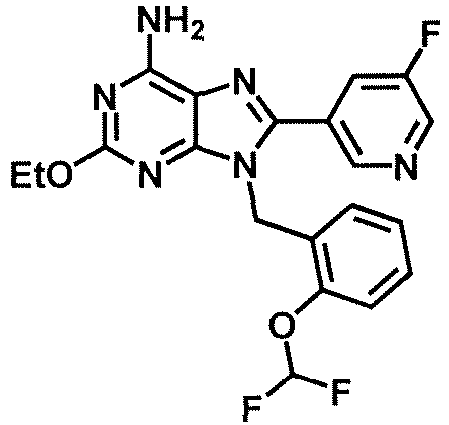
1H-NMR (CDCl3) δ: 8.72-8.47 (2H, m), 7.63 (1H, d, J = 8.5 Hz), 7.35-7.29 (1H, m), 7.17-7.08 (2H, m), 6.92 (1H, d, J = 7.3 Hz), 6.54 (1H, t, J = 73.4 Hz), 5.76 (2H, s), 5.51 (2H, s), 4.39 (2H, q, J = 7.1 Hz), 1.41 (3H, t, J = 7.1 Hz). 239 
LC-MS [M+H]+/Rt (min): 390.0/0.709 (Method C); 1H-NMR (CDCl3) δ: 8.55 (1H, d, J = 3.1 Hz), 8.53-8.50 (1H, m), 7.69 (1H, dd, J = 7.9, 1.2 Hz), 7.65-7.60 (1H, m), 7.53-7.48 (1H, m), 7.40 (1H, dd, J = 7.3, 7.3 Hz), 6.99 (1H, d, J = 7.3 Hz), 5.66 (2H, s), 5.63 (2H, s), 4.33 (2H, q, J = 7.1 Hz), 1.36 (3H, t, J = 7.1 Hz). 240 
LC-MS [M+H]+/Rt (min): 401.0/0.789 (Method C); 1H-NMR (CDCl3) δ: 8.62-8.59 (1H, m), 8.56 (1H, d, J = 3.1 Hz), 7.68-7.61 (1H, m), 7.06-6.98 (1H, m), 6.98-6.90 (1H, m), 6.75-6.67 (1H, m), 5.65 (2H, s), 5.43 (2H, s), 4.38 (2H, q, J = 7.1 Hz), 1.40 (3H, t, J = 7.3 Hz). 241 
1H-NMR (DMSO-D6) δ: 8.74-8.71 (2H, m), 8.10-8.05 (1H, m), 7.86-7.81 (1H, m), 7.69 (1H, dd, J = 6.9, 2.3 Hz), 7.39 (1H, dd, J = 10.1, 8.7 Hz), 5.49 (2H, s), 4.25 (2H, q, J = 7.0 Hz), 1.26 (3H, t, J = 7.0 Hz). -
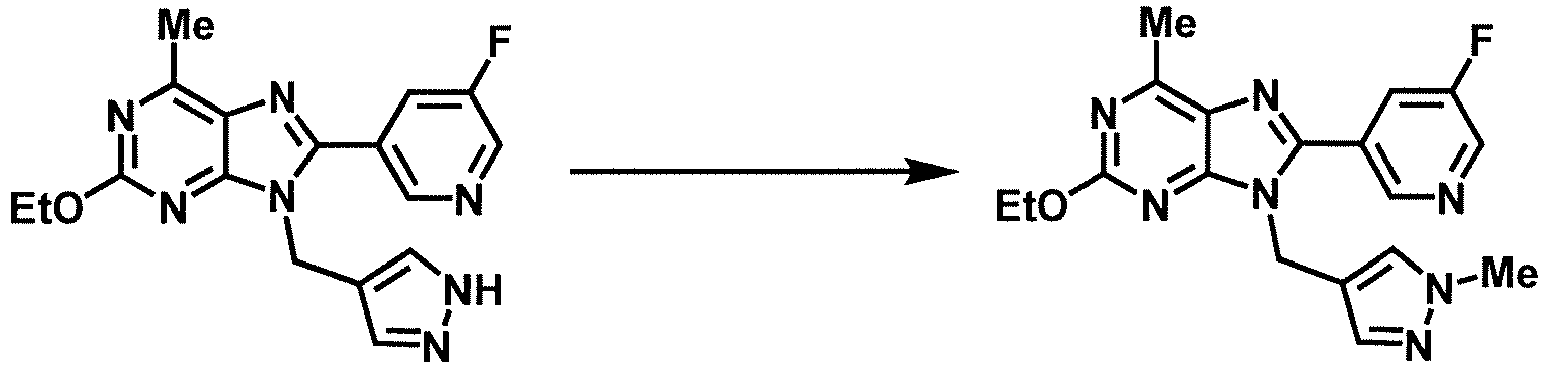
- To a solution of the compound of Example 207 (120 mg) in N,N-dimethylformamide (6 mL) were added methyl iodide (72.1 mg) and potassium carbonate (93.7 mg), and the mixture was stirred at room temperature overnight. To the reaction mixture was added water, and the mixture was extracted with chloroform/methanol. The organic layer was dried over sodium sulfate, filtrated, and then concentrated in vacuo. The residue was purified by silica gel column chromatography (chloroform/methanol) to give the title compound (51.8 mg).
LC-MS[M+H]+/Rt (min): 468.2/0.695 (Method A); 1H-NMR (400 MHz, CDCl3) δ: 8.84-8.82 (1H, m), 8.67 (1H, d, J = 2.5 Hz), 7.86-7.82 (1H, m), 7.36 (1H, brs), 7.28-7.27 (1H, m), 5.34 (2H, s), 4.55 (2H, q, J = 7.0 Hz), 3.85 (3H, s), 2.83 (3H, s), 1.52 (3H, t, J = 7.0 Hz). - According to the method of Example 242, Examples 243 - 257 were prepared by using the corresponding material compounds.
Example Chemical Structure Instrumental analysis data 243 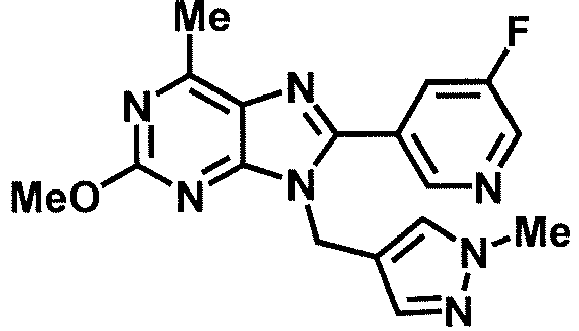
LC-MS [M+H]+/Rt (min): 354.3/0.630 (Method A); 1H-NMR (400 MHz, CDCl3) δ: 8.84-8.82 (1H, m), 8.67 (1H, d, J = 3.0 Hz), 7.86-7.82 (1H, m), 7.36 (1H, brs), 7.30 (1H, brs), 5.34 (2H, s), 4.13 (3H, s), 3.85 (3H, s), 2.84 (3H, s). 244 
LC-MS [M+H]+/Rt (min): 425.3/0.528 (Method A); 1H-NMR (400 MHz, CDCl3) δ: 8.84-8.81 (1H, m), 8.66 (1H, d, J = 2.8 Hz), 7.86-7.79 (1H, m), 7.50 (2H, s), 5.38 (2H, s), 4.54 (2H, q, J = 7.2 Hz), 4.15 (2H, t, J = 6.4 Hz), 2.83 (3H, s), 2.70 (2H, t, J = 6.4 Hz), 2.25 (6H, s), 1.52 (3H, t, J = 7.2 Hz). 245 
LC-MS [M+H]+/Rt (min): 439.3/0.549 (Method A); 1H-NMR (400 MHz, CDCl3) δ: 8.84-8.81 (1H, m), 8.66 (1H, d, J = 3.0 Hz), 7.86-7.79 (1H, m), 7.37 (1H, s), 7.32 (1H, s), 5.34 (2H, s) 4.54 (2H, q, J = 7.0 Hz), 4.11 (2H, t, J = 7.0 Hz), 2.82 (3H, s), 2.22-2.13 (8H, m), 1.99-1.94 (2H, m), 1.51 (3H, t, J = 7.0 Hz). 246 
LC-MS [M+H]+/Rt (min): 451.3/0.540 (Method A); 1H-NMR (400 MHz, CDCl3) δ: 8.84-8.81 (1H, m), 8.66 (1H, d, J = 2.8 Hz), 7.86-7.79 (1H, m), 7.41-7.35 (2H, m), 5.34 (2H, s), 4.54 (2H, q, J = 7.2 Hz), 4.21 (2H, t, J = 6.8 Hz), 2.94-2.86 (2H, m), 2.83 (3H, s), 2.56-2.47 (4H, m), 1.52 (3H, t, J = 7.2 Hz). 247 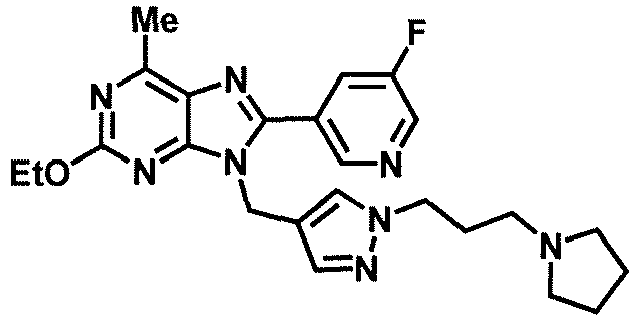
LC-MS [M+H]+/Rt (min): 465.3/0.563 (Method A); 1H-NMR (400 MHz, CDCl3) δ: 8.84-8.81 (1H, m), 8.66 (1H, d, J = 2.5 Hz), 7.86-7.81 (1H, m), 7.37 (1H, s), 7.32 (1H, s), 5.34 (2H, s) 4.54 (2H, q, J = 7.0 Hz), 4.13 (2H, t, J = 7.0 Hz), 2.83 (3H, s), 2.49-2.41 (4H, m), 2.37 (2H, t, J = 7.0 Hz), 2.05-1.96 (2H, m), 1.74-1.82 (4H, m), 1.51 (3H, t, J = 7.5 Hz). 248 
LC-MS [M+H]+/Rt (min): 467.3/0.525 (Method A); 1H-NMR (400 MHz, CDCl3) δ: 8.84-8.81 (1H, m), 8.66 (1H, d, J = 3.0 Hz), 7.86-7.81 (1H, m), 7.39 (1H, s), 7.37 (1H, s), 5.34 (2H, s), 4.54 (2H, q, J = 7.0 Hz), 4.16 (2H, t, J = 6.5 Hz), 3.68-3.60 (4H, m), 2.83 (3H, s), 2.74 (2H, t, J = 6.5 Hz), 2.47-2.40 (4H, m), 1.51 (3H, t, J = 7.0 Hz). 249 
LC-MS [M+H]+/Rt (min): 481.3/0.547 (Method A); 1H-NMR (400 MHz, CDCl3) δ: 8.84-8.81 (1H, m), 8.66 (1H, d, J = 2.5 Hz), 7.86-7.79 (1H, m), 7.37 (1H, s), 7.30 (1H, s), 5.34 (2H, s) 4.54 (2H, q, J = 7.0 Hz), 4.12 (2H, t, J = 7.0 Hz), 3.67 (4H, t, J = 5.0 Hz), 2.83 (3H, s), 2.40-2.32 (4H, m), 2.24 (2H, t, J = 7.0 Hz), 2.03-1.92 (2H, m), 1.51 (3H, t, J = 7.0 Hz). 250 
LC-MS [M+H]+/Rt (min): 411.3/0.455 (Method A); 1H-NMR (400 MHz, CDCl3) δ: 8.84-8.81 (1H, m), 8.66 (1H, d, J = 2.0 Hz), 7.86-7.79 (1H, m), 7.40 (1H, s), 7.37 (1H, s), 5.34 (2H, s), 4.18-4.08 (5H, m), 2.83 (3H, s), 2.68 (2H, t, J = 6.5 Hz), 2.23 (6H, s). 251 
LC-MS [M+H]+/Rt (min): 425.3/0.497 (Method A); 1H-NMR (400 MHz, CDCl3) δ: 8.84-8.81 (1H, m), 8.66 (1H, d, J = 2.8 Hz), 7.86-7.79 (1H, m), 7.39-7.31 (2H, m), 5.35 (2H, s), 4.22-4.02 (5H, m), 2.84 (3H, s), 2.26-2.10 (8H, m), 2.08-1.87 (2H, m). 252 
LC-MS [M+H]+/Rt (min): 494.4/0.508 (Method A) ; 1H-NMR (400 MHz, CDCl3) δ: 8.84-8.81 (1H, m), 8.66 (1H, d, J = 2.5 Hz), 7.86-7.79 (1H, m), 7.36 (1H, s), 7.29 (1H, s), 5.34 (2H, s) 4.53 (2H, q, J = 7.0 Hz), 4.10 (2H, t, J = 7.0 Hz), 2.83 (3H, s), 2.57-2.30 (6H, m), 2.28 (3H, s), 2.24 (2H, t, J = 7.0 Hz), 2.00-1.92 (2H, m), 1.82-1.76 (2H, m), 1.51 (3H, t, J = 7.0 Hz). 253 
LC-MS [M+H]+/Rt (min): 552.40/0.985 (Method A); 1H-NMR (CDCl3) δ: 8.81 (1H, s), 8.65 (1H, d, J = 3.1 Hz), 7.84-7.79 (1H, m), 7.37 (1H, s), 7.23 (1H, s), 5.34 (2H, s), 4.54 (2H, q, J = 7.1 Hz), 4.17-4.03 (2H, m), 3.89 (2H, d, J = 7.3 Hz), 2.83 (3H, s), 2.73-2.58 (2H, m), 2.03-1.96 (1H, m), 1.55-1.39 (14H, m), 1.16-1.03 (2H, m). 254 
LC-MS [M+H]+/Rt (min): 551.3/0.895 (Method C); 1H-NMR (CDCl3) δ: 8.79-8.76 (1H, m), 8.62 (1H, d, J = 3.1 Hz), 7.81-7.76 (1H, m), 7.33 (1H, s), 7.23 (1H, s), 5.35-5.26 (2H, m), 4.52 (2H, q, J = 7.2 Hz), 3.96-3.82 (2H, m), 3.78-3.64 (2H, m), 2.93-2.86 (1H, m), 2.81 (3H, s), 2.68-2.62 (1H, m), 2.03-1.96 (1H, m), 1.76-1.52 (3H, m), 1.48 (3H, t, J = 7.2 Hz), 1.38 (9H, brs), 1.16-1.04 (1H, m) 255 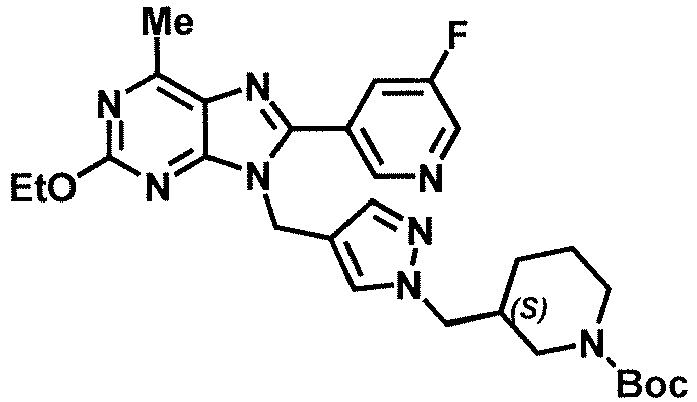
LC-MS [M+H]+/Rt (min): 551.3/0.893 (Method C); 1H-NMR (CDCl3) δ: 8.79-8.76 (1H, m), 8.62 (1H, d, J = 2.4 Hz), 7.81-7.76 (1H, m), 7.33 (1H, s), 7.25-7.23 (1H, m), 5.35-5.26 (2H, m), 4.53 (2H, q, J = 7.2 Hz), 3.96-3.82 (2H, m), 3.76-3.64 (2H, m), 2.94-2.86 (1H, m), 2.83 (3H, s), 2.69-2.61 (1H, m), 2.04-1.96 (1H, m), 1.76-1.52 (3H, m), 1.48 (3H, t, J = 7.2 Hz), 1.38 (9H, brs), 1.16-1.04 (1H, m) 256 
LC-MS [M+H]+/Rt (min): 537.4/0.845 (Method C); 1H-NMR (CDCl3) δ: 8.77 (1H, s), 8.63 (1H, d, J = 2.4 Hz) , 7.82-7.76 (1H, m), 7.33 (1H, s), 7.26-7.22 (1H, m), 5.31 (2H, s), 4.52 (2H, q, J = 7.0 Hz), 4.05-3.95 (2H, m), 3.47-3.34 (2H, m), 3.32-3.22 (1H, m), 3.04-2.95 (1H, m), 2.81 (3H, s), 2.70-2.61 (1H, m), 1.90-1.82 (1H, m), 1.72-1.52 (1H, m), 1.48 (3H, t, J = 7.0 Hz), 1.42 (9H, s) 257 
LC-MS [M+H]+/Rt (min): 537.4/0.847 (Method C); 1H-NMR (CDCl3) δ: 8.77 (1H, s), 8.63 (1H, d, J = 3.1 Hz), 7.82-7.76 (1H, m), 7.33 (1H, s), 7.26-7.22 (1H, m), 5.31 (2H, s), 4.51 (2H, q, J = 7.0 Hz), 4.05-3.95 (2H, m), 3.45-3.34 (2H, m), 3.32-3.22 (1H, m), 3.04-2.95 (1H, m), 2.81 (3H, s), 2.70-2.60 (1H, m), 1.90-1.82 (1H, m), 1.67-1.52 (1H, m), 1.48 (3H, t, J = 7.0 Hz), 1.42 (9H, s) - According to the method of Example 77, Example 258 was prepared by using the corresponding material compound.
Example Chemical Structure Instrumental analysis data 258 
LC-MS [M+H]+/Rt (min): 398.4/0.713 (Method A); 1H-NMR (400 MHz, DMSO-d6) δ: 8.77-8.74 (2H, m), 8.16-8.11 (1H, m), 7.04-6.95 (3H, m), 5.56 (2H, s), 5.26 (1H, t, J = 5.5 Hz),4.40 (2H, d, J = 5.5 Hz), 3.94 (3H, s), 2.69 (3H, s). - According to the method of Example 80, Examples 259 - 266 were prepared by using the corresponding material compounds.
Example Chemical Structure Instrumental analysis data 259 
LC-MS [M+H]+/Rt (min) : 425.4/0.569 (Method A) ; 1H-NMR (400 MHz, DMSO-d6) δ: 8.74-8.71 (2H, m), 8.12-8.07 (1H, m), 7.00-6.90 (3H, m), 5.57 (2H, s), 3.94 (3H, s), 3.28 (2H, s), 2.69 (3H, s), 2.04 (6H, s). 260 
LC-MS [M+H]+/Rt (min): 437.4/0.574 (Method A); 1H-NMR (400 MHz, DMSO-d6) δ: 8.74 (1H, d, J = 3.1 Hz), 8.73-8.71 (1H, m), 8.13-8.08 (1H, m), 6.97-6.88 (3H, m), 5.55 (2H, s), 3.93 (3H, s), 3.40 (2H, s), 3.02 (4H, t, J = 6.7 Hz), 2.69 (3H, s), 1.92 (2H, quin, J = 6.7 Hz). 261 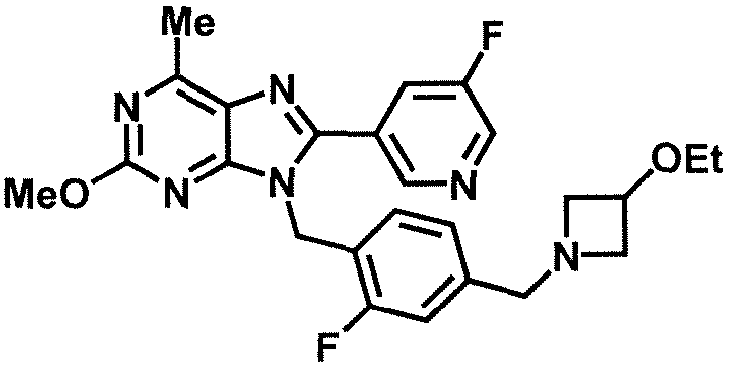
LC-MS [M+H]+/Rt (min): 481.5/0.608 (Method A); 1H-NMR (400 MHz, DMSO-d6) δ: 8.75 (1H, d, J = 3.1 Hz), 8.71-8.69 (1H, m), 8.16-8.12 (1H, m), 7.29-7.26 (1H, m), 7.18-7.15 (1H, m), 7.11-7.07 (1H, m), 5.62 (2H, s), 4.37 (2H, s), 3.95 (3H, s), 3.11-3.04 (5H, m), 2.70 (3H, s), 1.25-1.19 (9H, m). 262 
LC-MS [M+H]+/Rt (min): 476.4 /0.593 (Method A); 1H-NMR (400 MHz, CDCl3) δ: 8.66 (1H, dd, J = 1.2, 1.8 Hz), 8.55 (1H, d, J = 3.1 Hz), 7.66-7.62 (1H, m), 7.21 (2H, d, J = 7.9 Hz), 6.97 (2H, d, J = 7.9 Hz), 5.44 (2H, s), 4.45 (2H, q, J = 7.3 Hz), 3.43 (2H, s), 2.81 (3H, s), 2.50-2.30 (6H, m), 2.28 (3H, s), 1.66-1.54 (2H, m), 1.43 (3H, t, J = 7.3 Hz). 263 
LC-MS [M+H]+/Rt (min) : 447.3/0.605 (Method A); 1H-NMR (400 MHz, DMSO-d6) δ: 8.74-8.73 (2H, m), 7.97-7.92 (1H, m), 7.18 (2H, d, J = 7.9 Hz), 6.93 (2H, d, J = 7.9 Hz), 5.54 (2H, s), 4.39 (2H, q, J = 7.3 Hz), 3.50 (2H, s), 2.71 (3H, s), 2.43-2.30 (4H, m), 1.68-1.60 (4H, m), 1.34 (3H, t, J = 7.3 Hz). 264 
LC-MS [M+H]+/Rt (min): 461.3/0.625 (Method A); 1H-NMR (400 MHz, DMSO-d6) δ: 8.76-8.70 (2H, m), 8.05-8.01 (1H, m), 7.15 (2H, d, J = 7.9 Hz), 6.93 (2H, d, J = 7.9 Hz), 5.54 (2H, s), 4.39 (2H, q, J = 7.3 Hz), 3.36-3.29 (4H, m), 2.71 (3H, s), 2.28-2.14 (4H, m), 1.48-1.39 (4H, m), 1.34 (3H, t, J = 7.3 Hz). 265 
LC-MS [M+H]+/Rt (min) : 502.4/0.611 (Method A); 1H-NMR (400 MHz, DMSO-d6) δ: 8.74-8.72 (2H, m), 8.06-8.02 (1H, m), 7.22 (2H, d, J = 7.9 Hz), 6.93 (2H, d, J = 7.9 Hz), 5.54 (2H, s), 4.39 (2H, q, J = 7.3 Hz), 3.37 (2H, s), 2.95-2.89 (2H, m), 2.71 (3H, s), 2.48-2.41 (2H, m), 2.09 (3H, s), 1.84-1.76 (2H, m), 1.68-1.62 (2H, m), 1.34 (3H, t, J = 7.3 Hz). 266 
LC-MS [M+H]+/Rt (min) : 449.3/0.620 (Method A) ; 1H-NMR (400 MHz, DMSO-d6) δ: 8.74-8.72 (2H, m), 8.06-8.01 (1H, m), 7.18 (2H, d, J = 7.9 Hz), 6.62 (2H, d, J = 7.9 Hz), 5.54 (2H, s), 4.39 (2H, q, J = 7.3 Hz), 3.42 (2H, s), 2.71 (3H, s), 2.36 (4H, q, J = 7.3 Hz), 1.34 (3H, t, J = 7.3 Hz), 0.91 (3H, t, J = 7.3 Hz). - According to the method of Example 123, Examples 267 - 271 were prepared by using the corresponding material compounds.
Example Chemical Structure Instrumental analysis data 267 
LC-MS [M+2H]+2/2 /Rt (min): 250.8/0.547(Method C) 250.8/0.547(Method C); 1H-NMR (CD3OD) δ: 9.06 (2H, dd, J = 3.7, 2.4 Hz), 8.46 (1H, t, J = 1.8 Hz), 7.03 (1H, t, J = 8.9 Hz), 6.59-6.52 (2H, m), 5.56 (2H, s), 4.56-4.55 (1H, m), 4.08 (3H, s), 3.54-3.44 (2H, m), 2.77 (3H, s), 2.14-2.03 (3H, m), 1.93-1.75 (5H, m). 268 
LC-MS [M+2H]+2/2 /Rt (min) : 226.1/0.471(Method C) ; 1H-NMR (CDCl3) δ: 8.79-8.76 (1H, m), 8.62 (1H, d, J = 2.7 Hz), 7.80-7.76 (1H, m), 7.31 (1H, s), 7.21 (1H, s), 5.30 (2H, s), 4.50 (2H, q, J = 7.2 Hz), 3.96-3.84 (2H, m), 3.01-2.93 (1H, m), 2.90-2.82 (1H, m), 2.79 (3H, s), 2.60-2.52 (1H, m), 2.35-2.28 (1H, m), 2.08-1.99 (1H, m), 1.96-1.75 (1H, m), 1.69-1.58 (2H, m), 1.53-1.43 (1H, m), 1.47 (3H, t, J = 7.2 Hz), 1.12-1.01 (1H, m) 269 
LC-MS [M+2H]+2/2 /Rt (min): 226.2/0.468 (Method C); 1H-NMR (CDCl3) δ: 8.79-8.76 (1H, m), 8.62 (1H, d, J = 2.7 Hz), 7.80-7.76 (1H, m), 7.31 (1H, s), 7.21 (1H, s), 5.30 (2H, s), 4.50 (2H, q, J = 7.1 Hz), 3.96-3.84 (2H, m), 3.00-2.94 (1H, m), 2.88-2.81 (1H, m), 2.79 (3H, s), 2.59-2.52 (1H, m), 2.34-2.27 (1H, m), 2.08-1.99 (1H, m), 1.96-1.75 (1H, m), 1.68-1.58 (2H, m), 1.53-1.43 (1H, m), 1.47 (3H, t, J = 7.1 Hz), 1.12-1.01 (1H, m) 270 
LC-MS [M+2H]+2/2 /Rt (min) : 219.2/0.456 (Method C); 1H-NMR (CDCl3) δ: 8.77 (1H, s), 8.62 (1H, d, J = 3.1 Hz), 7.81-7.76 (1H, m), 7.32 (1H, s), 7.27 (1H, s), 5.30 (2H, s), 4.50 (2H, q, J = 7.2 Hz), 3.99 (2H, d, J = 7.3 Hz), 3.04-2.90 (3H, m), 2.79 (3H, s), 2.66-2.58 (2H, m), 2.07-1.80 (2H, m), 1.50-1.38 (1H, m), 1.47 (3H, t, J = 7.2 Hz) 271 
LC-MS [M+2H]+2/2 /Rt (min) : 219.1/0.454 (Method C); 1H-NMR (CDCl3) δ: 8.78-8.76 (1H, m), 8.62 (1H, d, J = 3.1 Hz), 7.81-7.76 (1H, m), 7.32 (1H, s), 7.27 (1H, s), 5.30 (2H, s), 4.50 (2H, q, J = 7.2 Hz), 3.99 (2H, d, J = 6.7 Hz), 3.04-2.89 (3H, m), 2.79 (3H, s), 2.66-2.57 (2H, m), 2.07-1.80 (2H, m), 1.50-1.37 (1H, m), 1.47 (3H, t, J = 7.2 Hz) - According to the method of Example 127, Examples 272 - 298 were prepared by using the corresponding material compounds.
Example Chemical Structure Instrumental analysis data 272 
LC-MS [M+H]+/Rt (min): 467.3/0.574 (Method A); 1H-NMR (400 MHz, DMSO-d6) δ: 8.81-8.78 (2H, m), 8.13-8.09 (1H, m), 7.43 (1H, s), 7.17 (1H, s), 5.37 (2H, s), 4.42 (2H, q, J = 7.3 Hz), 4.04-3.97 (2H, m), 3.71-3.68 (1H, m), 3.64-3.58 (1H, m), 3.40-3.33 (1H, m), 3.31-3.28 (1H, m), 2.67 (3H, s), 2.53-2.42 (1H, m), 2.09 (3H, s), 1.89-1.82 (1H, m), 1.55 (1H, dd, J = 10.4, 11.0 Hz), 1.36 (3H, t, J = 7.3 Hz). 273 
LC-MS [M+H]+/Rt (min) : 467.3/0.576 (Method A); 1H-NMR (400 MHz, DMSO-d6) δ: 8.81-8.78 (2H, m), 8.13-8.09 (1H, m), 7.43 (1H, s), 7.17 (1H, s), 5.37 (2H, s), 4.42 (2H, q, J = 7.3 Hz), 4.05-3.96 (2H, m), 3.71-3.66 (1H, m), 3.65-3.58 (1H, m), 3.40-3.33 (1H, m), 3.31-3.28 (1H, m), 2.67 (3H, s), 2.52-2.43 (1H, m), 2.09 (3H, s), 1.89-1.82 (1H, m), 1.55 (1H, dd, J = 10.4, 11.0 Hz), 1.36 (3H, t, J = 7.3 Hz). 274 
LC-MS [M+H]+/Rt (min): 467.3/0.571 (Method A) 275 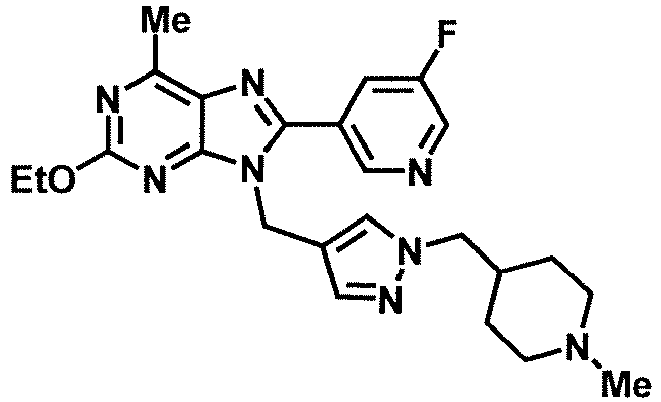
LC-MS [M+H]+/Rt (min): 466.4/0.566 (Method A); 1H-NMR (CDCl3) δ: 8.19 (1H, d, J = 1.4 Hz), 8.02 (1H, d, J = 2.7 Hz), 7.20-7.15 (1H, m), 6.72 (1H, s), 6.60 (1H, s), 4.71 (2H, s), 3.91 (2H, q, J = 7.2 Hz), 3.26 (2H, d, J = 6.9 Hz), 2.22-2.16 (5H, m), 1.62 (3H, s), 1.28-1.11 (3H, m), 0.88 (3H, t, J = 7.2 Hz), 0.85-0.81 (2H, m), 0.70-0.56 (2H, m). 276 
LC-MS [M+2H]+/2 /Rt (min) : 233.2/0.459 (Method C); 1H-NMR (CDCl3) δ: 8.78-8.76 (1H, m), 8.61 (1H, d, J = 2.7 Hz), 7.80-7.76 (1H, m), 7.31 (1H, s), 7.26-7.24 (1H, m), 5.32-5.28 (2H, m), 4.50 (2H, q, J = 7.2 Hz), 3.96-3.92 (2H, m), 2.81-2.50 (2H, m), 2.79 (3H, s), 2.35-1.94 (5H, m), 1.91-1.51 (4H, m), 1.47 (3H, t, J = 7.2 Hz), 1.01-0.83 (1H, m). 277 
LC-MS [M+2H]+2/2 /Rt (min) : 233.2/0.466 (Method C); 1H-NMR (CDCl3) δ: 8.79-8.76 (1H, m), 8.61 (1H, d, J = 2.7 Hz), 7.80-7.76 (1H, m), 7.31 (1H, s), 7.26-7.24 (1H, m), 5.35-5.26 (2H, m), 4.50 (2H, q, J = 7.1 Hz), 4.01-3.88 (2H, m), 2.86-2.51 (2H, m), 2.79 (3H, s), 2.35-1.94 (5H, m), 1.91-1.51 (4H, m), 1.47 (3H, t, J = 7.1 Hz), 1.01-0.83 (1H, m). 278 
LC-MS [M+2H]+2/2 /Rt (min) : 226.1 /0.453 (Method C); 1H-NMR (CDCl3) δ: 8.78-8.76 (1H, m), 8.62 (1H, d, J = 2.7 Hz), 7.79-7.76 (1H, m), 7.31 (1H, s), 7.28 (1H, s), 5.30 (2H, s), 4.50 (2H, q, J = 7.0 Hz), 4.09-3.96 (2H, m), 2.83-2.67 (2H, m), 2.79 (3H, s), 2.60-2.48 (2H, m), 2.47-2.33 (1H, m), 2.38 (3H, s), 2.02-1.91 (1H, m), 1.57-1.45 (1H, m), 1.47 (3H, t, J = 7.1 Hz). 279 
LC-MS [M+H]+ /Rt (min) : 451.3/0.440 (Method C); 1H-NMR (CDCl3) δ: 8.78-8.76 (1H, m), 8.62 (1H, d, J = 2.7 Hz), 7.79-7.76 (1H, m), 7.31 (1H, s), 7.27 (1H, s), 5.30 (2H, s), 4.50 (2H, q, J = 7.0 Hz), 4.09-3.96 (2H, m), 2.81-2.62 (2H, m), 2.79 (3H, s), 2.55-2.46 (2H, m), 2.43-2.34 (1H, m), 2.36 (3H, s), 2.02-1.91 (1H, m), 1.56-1.44 (1H, m), 1.47 (3H, t, J = 7.1 Hz). 280 
LC-MS [M+H]+/Rt (min) : 492.5/0.578 (Method A); 1H-NMR (DMSO-d6) δ: 8.74-8.72 (2H, m), 8.12-8.08 (1H, m), 7.03-6.89 (3H, m), 5.55 (2H, s), 3.94 (3H, s), 3.57 (1H, d, J = 14.0 Hz), 3.50 (1H, d, J = 14.0 Hz), 3.09-3.06 (2H, m), 2.69 (3H, s), 2.59 (1H, d, J = 11.0), 2.52-2.48 (1H m), 2.48-2.41 (2H, m), 2.21 (3H, s), 1.54 (2H, brs). 281 
LC-MS [M+2H]+2/2 /Rt (min) : 253.6 /0.394 (Method C); 1H-NMR (CDCl3) δ: 8.72-8.70 (1H, m), 8.58 (1H, d, J = 3.0 Hz), 8.12 (1H, s), 7.76-7.71 (1H, m), 6.50 (1H, s), 5.41 (2H, s), 4.43 (2H, q, J = 7.1 Hz), 3.65 (3H, s), 2.87-2.80 (2H, m), 2.77 (3H, s), 2.59 (2H, d, J = 7.1 Hz), 2.26 (3H, s), 1.99-1.63 (3H, m), 1.59-1.52 (2H, m), 1.45-1.32 (2H, m), 1.42 (3H, t, J = 7.1 Hz). 282 
LC-MS [M+H]+ /Rt (min): 465.4/0.477 (Method C); 1H-NMR (CDCl3) δ: 8.66-8.62 (1H, m), 8.57 (1H, d, J = 3.1 Hz), 7.72-7.66 (1H, m), 6.93-6.83 (3H, m), 5.47 (2H, s), 4.02 (3H, s), 3.21-3.06 (2H, m), 2.81 (3H, s), 2.57-2.38 (4H, m), 2.34-2.16 (2H, m), 2.05-1.77 (4H, m). 283 
LC-MS [M+2H] +2/2/Rt (min): 240.3 /0.546 (Method C); 1H-NMR (CDCl3) δ: 8.65-8.63 (1H, m), 8.56 (1H, d, J = 2.4 Hz), 7.70-7.64 (1H, m), 6.87-6.74 (3H, m), 5.47 (2H, s), 4.03 (3H, s), 3.00-2.86 (2H, m), 2.81 (3H, s), 2.47 (2H, d, J = 6.1 Hz), 2.33 (3H, s), 2.07-1.93 (2H, m), 1.62-1.53 (2H, m), 1.51-1.33 (3H, m). 284 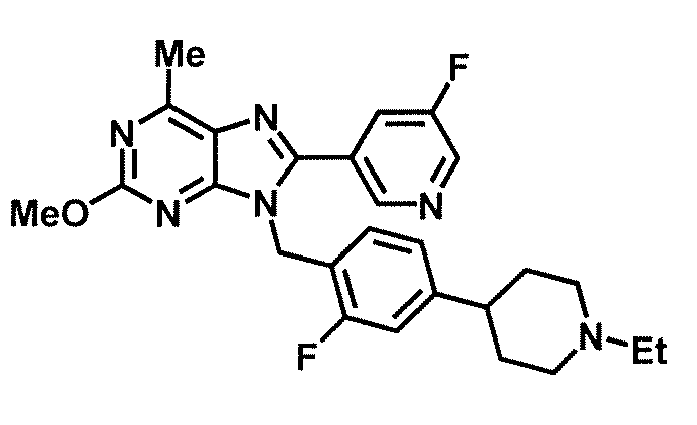
LC-MS [M+2H] +2/2/Rt (min): 240.3 /0.497 (Method C); 1H-NMR (CDCl3) δ: 8.65-8.62 (1H, m), 8.57 (1H, d, J = 2.4 Hz), 7.71-7.65 (1H, m), 6.93-6.82 (3H, m), 5.47 (2H, s), 4.02 (3H, s), 3.35-3.03 (2H, m), 2.81 (3H, s), 2.69-2.39 (3H, m), 2.26-1.49 (6H, m), 1.28-1.08 (3H, m). 285 
LC-MS [M+2H]+2/2/Rt (min): 254.3 /0.542 (Method C); 1H-NMR (CDCl3) δ: 8.66-8.64 (1H, m), 8.58 (1H, d, J = 3.1 Hz), 7.72-7.67 (1H, m), 6.94-6.88 (1H, m), 6.50-6.42 (2H, m), 5.43 (2H, s), 4.51-4.42 (1H, m), 4.04 (3H, s), 3.40-3.19 (2H, m), 2.80 (3H, s), 2.60-1.87 (11H, m). 286 
LC-MS [M+2H] +2/2/Rt (min): 234.3 /0.491 (Method C); 1H-NMR (CDCl3) δ: 8.68-8.64 (1H, m), 8.58 (1H, d, J = 3.0 Hz), 7.72-7.65 (1H, m), 6.96-6.85 (1H, m), 6.62-6.49 (2H, m), 5.43 (2H, s), 4.04 (3H, s), 4.01 (2H, d, J = 6.7 Hz), 3.40-3.33 (2H, m), 3.10-3.02 (2H, m), 2.85-2.76 (1H, m), 2.80 (3H, s), 2.30 (3H, s). 287 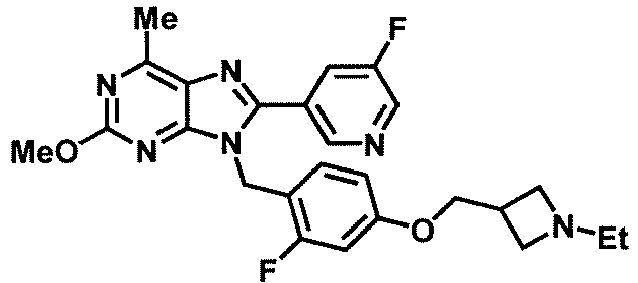
LC-MS [M+2H]+2/2/Rt (min): 241.4 /0.538 (Method C) 288 
LC-MS [M+2H] +2/2/Rt (min): 236.8 /0.481 (Method C); 1H-NMR (CDCl3) δ: 9.01 (1H, d, J = 1.8 Hz), 8.94 (1H, d, J = 1.8 Hz), 8.20-8.17 (1H, m), 6.98-6.87 (3H, m), 5.46 (2H, s), 4.04 (3H, s), 3.16-3.02 (2H, m), 2.81 (3H, s), 2.55-2.35 (4H, m), 2.29-2.09 (2H, m), 2.00-1.75 (4H, m). 289 
LC-MS [M+2H] +2/2/Rt (min): 243.8 /0.498 (Method C); 1H-NMR (CDCl3) δ: 9.01 (1H, d, J = 2.4 Hz), 8.94 (1H, d, J = 2.4 Hz), 8.20-8.16 (1H, m), 6.97-6.85 (3H, m), 5.46 (2H, s), 4.04 (3H, s), 3.31-3.06 (2H, m), 2.81 (3H, s), 2.70-2.43 (3H, m), 2.27-1.69 (5H, m), 1.36-1.07 (4H, m). 290 
LC-MS [M+2H]+2/2/Rt (min): 226.2 /0.478 (Method C); 1H-NMR (CDCl3) δ: 8.66-8.63 (1H, m), 8.57 (1H, d, J = 2.4 Hz), 7.73-7.66 (1H, m), 6.99-6.81 (3H, m), 5.47 (2H, s), 4.03 (3H, s), 3.35-3.24 (1H, m), 2.94-2.85 (1H, m), 2.81 (3H, s), 2.75-2.58 (2H, m), 2.48-2.40 (1H, m), 2.37 (3H, s), 2.34-2.24 (1H, m), 1.81-1.68 (1H, m). 291 
LC-MS [M+2H]+2/2/Rt (min): 233.3 /0.496 (Method C); 1H-NMR (CDCl3) δ: 8.67-8.63 (1H, m), 8.57 (1H, d, J = 2.4 Hz), 7.72-7.66 (1H, m), 6.99-6.82 (3H, m), 5.47 (2H, s), 4.03 (3H, s), 3.33-3.23 (1H, m), 3.00-2.93 (1H, m), 2.81 (3H, s), 2.79-2.73 (1H, m), 2.65-2.37 (4H, m), 2.32-2.21 (1H, m), 1.80-1.70 (1H, m), 1.10 (3H, t, J = 7.0 Hz). 292 
LC-MS [M+2H] +2/2/Rt (min): 224.3 /0.439 (Method C); 1H-NMR (CDCl3) δ: 8.83-8.81 (1H, m), 8.72-8.69 (1H, m), 7.95-7.91 (1H, m), 7.41-7.37 (1H, m), 6.91-6.82 (3H, m), 5.45 (2H, s), 4.02 (3H, s), 3.17-3.02 (2H, m), 2.81 (3H, s), 2.53-2.36 (4H, m), 2.29-2.14 (2H, m), 1.98-1.75 (4H, m). 293 
LC-MS [M+H]+/Rt (min): 461.5/0.441 (Method C); 1H-NMR (CDCl3) δ: 8.84-8.82 (1H, m), 8.72-8.68 (1H, m), 7.95-7.90 (1H, m), 7.41-7.35 (1H, m), 6.90-6.80 (3H, m), 5.45 (2H, s), 4.01 (3H, s), 3.16-3.02 (2H, m), 2.80 (3H, s), 2.55-2.38 (3H, m), 2.12-1.96 (2H, m), 1.87-1.69 (4H, m), 1.18-1.06 (3H, m). 294 
LC-MS [M+2H]+2/2 /Rt (min): 245.7 /0.465 (Method C); 1H-NMR (CDCl3) δ: 9.30 (1H, s), 8.98 (2H, s), 6.95-6.89 (1H, m), 6.50-6.43 (2H, m), 5.43 (2H, s), 4.51-4.45 (1H, m), 4.05 (3H, s), 3.42-3.27 (2H, m), 2.81 (3H, s), 2.59-2.39 (2H, m), 2.45 (3H, s), 2.18-2.04 (4H, m), 1.99-1.91 (2H, m). 295 
LC-MS [M+2H]2+/2/Rt (min) : 257.8/0.560 (Method C); 1H-NMR (CD3OD) δ: 9.05 (2H, dd, J = 6.1, 1.8 Hz), 8.46 (1H, t, J = 1.8 Hz), 7.02 (1H, t, J = 8.9 Hz), 6.58-6.50 (2H, m), 5.54 (2H, s), 4.50-4.44 (1H, m), 4.07 (3H, s), 3.19-3.07 (2H, m), 2.75 (3H, s), 2.28 (3H, s), 2.13-1.95 (8H, m). 296 
LC-MS [M+2H]2+/2/Rt (min): 264.82/0.578 (Method C); 1H-NMR (CD3OD) δ: 9.79-9.79 (2H, m), 9.25-9.23 (1H, m), 7.81-7.78 (1H, m), 7.49-7.38 (2H, m), 5.35 (2H, s), 4.53-4.34 (1H, m), 3.99 (3H, s), 3.48-3.44 (2H, m), 2.87 (3H, s), 2.51 (3H, q, J = 6.4 Hz), 2.06-2.01 (2H, m), 2.01-1.93 (4H, m), 1.92-1.89 (2H, m), 1.65 (3H, t, J = 10.0 Hz). 297 
LC-MS [M+2H]2+/2/Rt (min): 245.31/0.506 (Method C); 1H-NMR (CD3OD) δ: 8.82 (1H, d, J = 1.2 Hz), 8.70 (1H, dd, J = 4.9, 1.2 Hz), 8.13 (1H, dt, J = 7.9, 1.8 Hz), 7.59 (1H, dd, J = 7.9, 4.9 Hz), 6.98 (1H, t, J = 8.9 Hz), 6.57-6.49 (2H, m), 5.52 (2H, s), 4.46 (1H, t, J = 4.9 Hz), 4.05 (3H, s), 3.17-3.09 (2H, m), 2.75 (3H, s), 2.28 (3H, s), 2.14-2.05 (2H, m), 2.05-1.95 (4H, m), 1.88-1.79 (2H, m). 298 
LC-MS [M+2H]2+ /2/Rt (min): 252.2/0.523 (Method C); 1H-NMR (CD3OD) δ: 8.81 (1H, d, J = 1.8 Hz), 8.70 (1H, dd, J = 5.2, 1.5 Hz), 8.13 (1H, dt, J = 7.9, 1.8 Hz), 7.58 (1H, dd, J = 7.9, 4.9 Hz), 6.97 (1H, t, J = 8.9 Hz), 6.55-6.53 (1H, m), 6.53-6.50 (1H, m), 5.52 (2H, s), 4.52-4.45 (1H, m), 4.05 (3H, s), 3.29-3.22 (2H, m), 2.75 (3H, s), 2.48 (2H, q, J = 7.1 Hz), 2.15-2.04 (2H, m), 2.04-1.88 (4H, m), 1.87-1.76 (2H, m), 1.10 (3H, t, J = 7.3 Hz). -

- To an ice-cooled solution of the compound of Example 438 (40.1 mg) in N,N-dimethylformamide (5 mL) were added tert-butyl (1S,4S)-2,5-diazabicyclo[2.2.1]heptane-2-carboxylate (41.8 mg), potassium carbonate (43.1 mg), and potassium iodide (17.9 mg). The reaction mixture was stirred at room temperature overnight. To the reaction mixture was added aqueous saturated sodium bicarbonate, and the mixture was extracted with chloroform. The organic layer was dried over sodium sulfate, filtrated, and then concentrated in vacuo. The residue was purified by silica gel column chromatography (chloroform/methanol) to give the title compound (40.1 mg).
LC-MS [M+H]+/Rt (min): 578.5/0.704 (Method A) - According to the method of Example 163, Example 300 was prepared by using the corresponding material compound.
Example Chemical Structure Instrumental analysis data 300 
LC-MS [M+H]+/Rt (min): 480.4/0.538 (Method A); 1H-NMR (CDCl3) δ: 8.84-8.81 (1H, m), 8.66 (1H, d, J = 2.4 Hz), 7.86-7.79 (1H, m), 7.37 (2H, d, J = 5.2 Hz), 5.34 (2H, s), 4.54 (2H, q, J = 7.2 Hz), 4.16 (2H, t, J = 6.8 Hz), 2.83 (3H, s), 2.75 (2H, t, J = 6.4 Hz), 2.57-2.37 (8H, m), 2.31 (3H, s), 1.51 (3H, t, J = 7.2 Hz). -

- To a solution of the compound of Reference example 223 (187 mg) in chloroform (10 mL) were added pyrazine-2-carboxylic acid (187 mg), 1-ethyl-3-(3-dimethylaminopropyl)carbodiimide hydrochloride (290 mg), 1-hydroxybenzotriazole (204 mg), and N,N-diisopropylethylamine (0.514 mL), and the mixture was stirred at room temperature overnight. To the reaction mixture was added 50 % aqueous potassium carbonate, and the mixture was extracted with chloroform/ethanol (3/1). The organic layer was dried over sodium sulfate, filtrated, and then concentrated in vacuo. To the obtained residue (904 mg) was added N,O-bis(trimethylsilyl)acetamide (4 mL), and the mixture was stirred at 55°C for 2 hours. The reaction mixture was cooled to room temperature. 50 % aqueous potassium carbonate was added thereto, and the mixture was extracted with chloroform/ethanol (3/1). The organic layer was dried over sodium sulfate, filtrated, and then concentrated in vacuo. The obtained residue was purified by amino silica gel column chromatography (chloroform/methanol) to give the title compound (119 mg). LC-MS [M+H]+/Rt (min): 459.1/0.488 (Method C); 1H-NMR (CDCl3) δ: 9.55 (1H, d, J = 1.2 Hz), 8.58 (1H, d, J = 2.4 Hz), 8.54-8.53 (1H, m), 6.90-6.78 (3H, m), 6.06 (2H, s), 4.04 (3H, s), 3.40-3.26 (1H, m), 3.08-2.81 (6H, m), 2.83 (3H, s), 1.94-1.88 (1H, m), 1.82-1.69 (2H, m), 1.65-1.52 (1H, m), 1.46-1.33 (1H, m).
- According to the method of Example 165 or Example 301, Examples 302 - 348 were prepared by using the corresponding material compounds.
Example Chemical Structure Instrumental analysis data 302 
LC-MS [M+2H] 2+/2/Rt (min) : 245.4/0.523 (Method C); 1H-NMR (CDCl3) δ: 8.36-8.35 (2H, m), 7.39-7.37 (1H, m), 6.90-6.81 (3H, m), 5.44 (2H, s), 3.98 (3H, s), 3.77 (3H, s), 3.28-3.20 (1H, m), 2.94-2.78 (6H, m), 2.77 (3H, s), 1.86-1.73 (1H, m), 1.70-1.62 (2H, m), 1.54-1.44 (1H, m), 1.36-1.26 (1H, m). 303 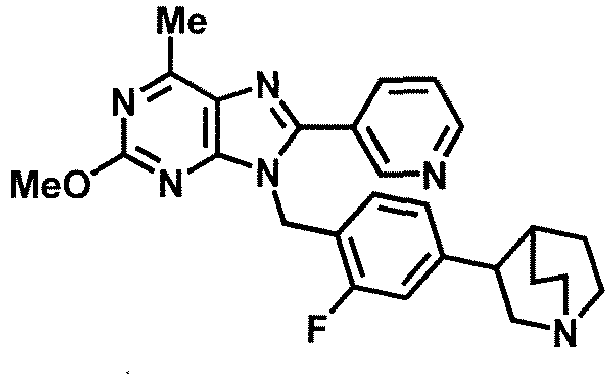
LC-MS [M+2H]2+/2/Rt (min): 230.4/0.478 (Method C); 1H-NMR (CDCl3) δ: 8.79-8.78 (1H, m), 8.66 (1H, dd, J = 1.2, 3.7 Hz), 7.92-7.90 (1H, m), 7.35 (1H, dd, J = 3.1, 4.9 Hz), 6.88-6.84 (3H, m), 5.42 (2H, s), 3.98 (3H, s), 3.29-3.22 (1H, m), 2.96-2.78 (6H, m), 2.77 (3H, s), 1.86-1.82 (1H, m), 1.75-1.46 (3H, m), 1.36-1.27 (1H, m). 304 
1H-NMR (CDCl3) δ: 8.56 (1H, d, J = 4.9 Hz), 8.42 (1H, s), 7.20 (1H, d, J = 5.5 Hz), 6.94-6.89 (1H, m), 6.86-6.83 (1H, m), 6.81-6.78 (1H, m), 5.26 (2H, s), 4.05 (3H, s), 3.32-3.24 (1H, m), 2.97-2.82 (6H, m), 2.78 (3H, s), 2.09 (3H, s), 1.88-1.82 (1H, m), 1.78-1.64 (2H, m), 1.56-1.46 (1H, m), 1.40-1.31 (1H, m). 305 
LC-MS [M+2H]2+/2/Rt (min): 237.3/0.521 (Method C); 1H-NMR (CDCl3) δ: 8.55 (1H, d, J = 1.8 Hz), 8.49 (1H, d, J = 1.8 Hz), 7.73-7.71 (1H, m), 6.89-6.85 (3H, m), 5.42 (2H, s), 3.98 (3H, s), 3.29-3.21 (1H, m), 2.96-2.77 (6H, m), 2.77 (3H, s), 2.32 (3H, s), 1.86-1.81 (1H, m), 1.78-1.63 (2H, m), , 1.57-1.45 (1H, m), 1.37-1.26 (1H, m). 306 
LC-MS [M+2H]2+/2/Rt (min) : 237.4/0.498 (Method C); 1H-NMR (CDCl3) δ: 8.65-8.64 (1H, m), 7.81 (1H, dd, J = 2.4, 5.5 Hz), 7.21-7.19 (1H, m), 6.90-6.79 (3H, m), 5.41 (2H, s), 3.96 (3H, s), 3.29-3.21 (1H, m), 2.95-2.78 (6H, m), 2.76 (3H, s), 2.56 (3H, s), 1.86-1.81 (1H, m), 1.72-1.61 (2H, m), 1.56-1.45 (1H, m), 1.36-1.26 (1H, m). 307 
LC-MS [M+H]+/Rt (min) : 481.5/0.655 (Method A); 308 
LC-MS [M+H]+/Rt (min) : 499.5/0.558 (Method A); 499.5/0.558 (Method A); 1H-NMR (DMSO-d6) δ: 9.19 (1H, d, J = 1.8 Hz), 9.15 (1H, d, J = 1.8 Hz), 8.71-8.69 (1H, m), 7.06-6.95 (3H, m), 5.60 (2H, s), 3.98 (3H, s), 3.69-3.50 (2H, m), 3.12-3.09 (2H, m), 2.73 (3H, s), 2.64-2.61 (1H, m), 2.53-2.43 (2H, m), 1.57 (2H, brs), 1.46-1.32 (1H, m). 309 
LC-MS [M+H]+/Rt (min) : 513.5/0.578 (Method A); 310 
LC-MS [M+H]+/Rt (min) : 474.5/0.533 (Method A); 311 
LC-MS [M+H]+/Rt (min) : 513.5/0.625 (Method A); 513.5/0.625 (Method A); 1H-NMR (DMSO-d6) δ: 9.15 (1H, d, J = 1.8 Hz), 9.11 (1H, d, J = 1.8 Hz), 8.66-8.64 (1H, m), 7.03-6.91 (3H, m), 5.55 (2H, s), 4.38 (2H, q, J = 7.3 Hz), 3.57 (1H, d, J = 14.0 Hz), 3.50 (1H, d, J = 14.0 Hz), 3.08-3.07 (2H, m), 2.68 (3H, s), 2.61-2.59 (1H, m), 2.54-2.40 (2H, m), 2.22 (3H, s), 1.54 (2H, brs), 1.44-1.28 (1H, m), 1.32 (3H, t, J 7.3 Hz). 312 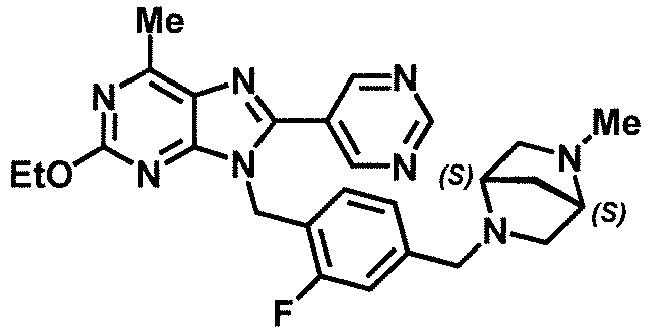
LC-MS [M+H]+/Rt (min): 489.5/0.549 (Method A); 489.5/0.549 (Method A); 1H-NMR (DMSO-d6) δ: 9.31 (1H, s), 9.12 (2H, s), 7.04-6.93 (3H, m), 5.55 (2H, s), 4.37 (2H, q, J = 7.3 Hz), 3.57 (1H, d, J = 14.0 Hz), 3.50 (1H, d, J = 14.0 Hz), 3.10-3.06 (2H, m), 2.68 (3H, s), 2.59 (1H, d, J = 11.0), 2.50-2.42 (2H, m), 2.21 (3H, s), 1.54 (2H, brs), 1.42-1.34 (1H, m), 1.32 (3H, t, J 7.3 Hz). 313 
LC-MS [M+H]+/Rt (min): 1H-NMR (DMSO-d6) δ: 8.75-8.73 (2H, m), 8.12-8.09 (1H, m), 7.05-6.97 (2H, m), 6.93-6.89 (1H, m), 5.55 (2H, s), 4.38 (2H, q, J = 7.3 Hz), 3.58 (1H, d, J = 14.0 Hz), 3.52 (1H, d, J = 14.0 Hz), 3.38-3.35 (1H, m), 3.10-3.07 (2H, m), 2.69 (3H, s), 2.60 (1H, d, J = 11.0), 2.47-2.41 (2H, m), 2.23 (3H, m), 1.55 (2H, brs), 1.44-1.30 (1H, m), 1.33 (3H, t, J 7.3 Hz). 314 
LC-MS [M+H]+/Rt (min): 477.1/0.494 (Method C); 1H-NMR (CDCl3) δ: 8.70-8.67 (1H, m), 8.61 (1H, d, J = 2.4 Hz), 7.75-7.70 (1H, m), 6.99-6.91 (3H, m), 5.53 (2H, s), 4.08 (3H, s), 3.36-3.26 (1H, m), 3.01-2.80 (9H, m), 1.93-1.85 (1H, m), 1.77-1.65 (2H, m), 1.59-1.50 (1H, m), 1.42-1.30 (1H, m). 315 
LC-MS [M+H]+/Rt (min) : 488.44/0.626 (Method A); 1H-NMR (CDCl3) δ: 8.62 (1H, s), 8.59 (1H, d, J = 3.0 Hz), 7.74-7.69 (1H, m), 6.92 (1H, d, J = 7.9 Hz), 6.84 (1H, d, J = 7.9 Hz), 5.46 (2H, s), 4.45 (2H, q, J = 7.1 Hz), 3.50-3.43 (1H, m), 3.24-3.16 (1H, m), 3.07-2.97 (2H, m), 2.96-2.88 (2H, m), 2.87 (3H, s), 2.85-2.77 (1H, m), 2.51 (3H, s), 2.02-1.97 (1H, m), 1.75-1.68 (2H, m), 1.66-1.57 (1H, m), 1.44 (3H, t, J = 7.1 Hz), 1.35-1.26 (1H, m). 316 
LC-MS [M+H]+/Rt (min) : 498.4/0.665 (Method A); 1H-NMR (CDCl3) δ: 8.68-8.60 (2H, m), 7.78-7.73 (1H, m), 7.50 (1H, d, J = 7.9 Hz), 7.40 (1H, d, J = 1.8 Hz), 7.32-7.29 (1H, m), 5.50 (2H, s), 4.50 (2H, q, J = 7.1 Hz), 3.44-3.38 (1H, m), 3.38-3.30 (1H, m), 3.10-3.00 (1H, m), 3.00-2.87 (4H, m), 2.86 (3H, s), 1.92-1.82 (2H, m), 1.79-1.73 (1H, m), 1.54-1.44 (4H, m), 1.42-1.33 (1H, m). 317 
LC-MS [M+H]+/Rt (min): 521.40/0.703 (Method A); 1H-NMR (CDCl3) δ: 8.72 (1H, s), 8.62 (1H, d, J = 3.0 Hz), 7.75-7.70 (1H, m), 6.98 (1H, d, J = 11.0 Hz), 6.55 (1H, d, J = 6.1 Hz), 5.50 (2H, s), 4.51 (2H, q, J = 7.1 Hz), 3.59 (3H, s), 3.42-3.32 (1H, m), 3.27-3.20 (1H, m), 3.03-2.91 (3H, m), 2.91-2.75 (5H, m), 1.80-1.62 (4H, m), 1.51-1.37 (4H, m). 318 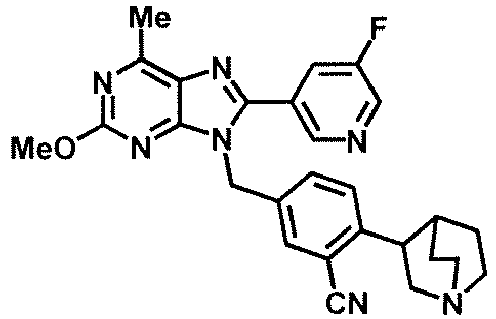
LC-MS [M+H]+/Rt (min) : 484.38/0.680 (Method A); 1H-NMR (CDCl3) δ: 8.65-8.62 (2H, m), 7.79-7.75 (1H, m), 7.50 (1H, d, J = 7.9 Hz), 7.41 (1H, d, J = 1.8 Hz), 7.33-7.29 (1H, m), 5.51 (2H, s), 4.09 (3H, s), 3.47-3.39 (1H, m), 3.39-3.32 (1H, m), 3.12-3.03 (1H, m), 3.02-2.89 (4H, m), 2.87 (3H, s), 1.94-1.90 (1H, m), 1.80-1.71 (1H, m), 1.56-1.45 (1H, m), 1.44-1.34 (1H, m), 1.34-1.25 (1H, m). 319 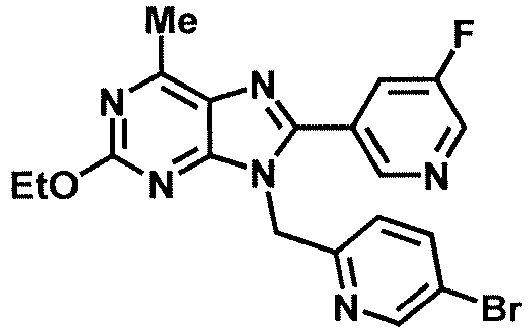
LC-MS [M+H]+/Rt (min): 445.17/1.044 (Method A); 1H-NMR (CDCl3) δ: 8.93-8.91 (1H, m), 8.63-8.59 (2H, m), 8.13-8.09 (1H, m), 7.82 (1H, dd, J = 8.2, 2.1 Hz), 7.26 (1H, d, J = 8.2 Hz), 5.50 (2H, s), 4.45 (2H, q, J = 7.1 Hz), 2.84 (3H, s), 1.45 (3H, t, J = 7.0 Hz). 320 
LC-MS [M+H]+/Rt (min): 431.2/0.968 (Method A); 1H-NMR (CDCl3) δ: 8.95-8.93 (1H, m), 8.63-8.60 (2H, m), 8.15-8.11 (1H, m), 7.82 (1H, dd, J = 8.5, 2.4 Hz), 7.29 (1H, d, J = 8.5 Hz), 5.50 (2H, s), 4.04 (3H, s), 2.84 (3H, s). 321 
LC-MS [M+H]+/Rt (min): 522.2/0.925 (Method A) 322 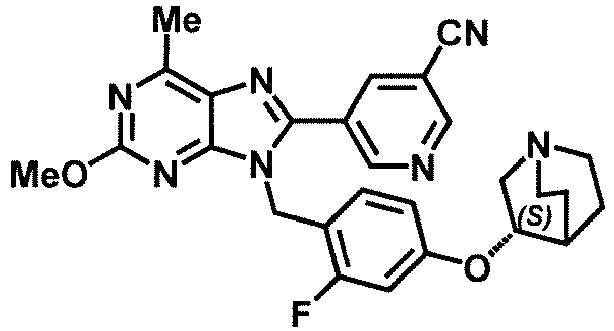
LC-MS [M+2H]2+/2/Rt (min): 250.67/0.538 (Method C); 1H-NMR (CD3OD) δ: 9.06 (2H, s), 8.46 (1H, t, J = 2.1 Hz), 7.04 (1H, t, J = 8.9 Hz), 6.66-6.56 (2H, m), 5.55 (2H, s), 4.50-4.41 (1H, m), 4.08 (3H, s), 3.29-3.22 (1H, m), 2.93-2.66 (5H, m), 2.76 (3H, s), 2.12-2.05 (1H, m), 1.98-1.87 (1H, m), 1.83-1.72 (1H, m), 1.71-1.57 (1H, m), 1.52-1.41 (1H, m). 323 
LC-MS [M+2H]2+/2/Rt (min): 238.6/0.467 (Method C); 1H-NMR (CD3OD) δ: 9.29 (1H, s), 9.08 (2H, s), 7.06 (1H, t, J = 8.9 Hz), 6.66-6.56 (2H, m), 5.56 (2H, s), 4.48-4.41 (1H, m), 4.06 (3H, s), 3.30-3.22 (1H, m), 2.92-2.77 (4H, m), 2.75 (3H, s), 2.72-2.66 (1H, m), 2.10-2.04 (1H, m), 1.97-1.85 (1H, m), 1.82-1.71 (1H, m), 1.69-1.57 (1H, m), 1.51-1.38 (1H, m). 324 
LC-MS [M+2H]2+ /2/Rt (min): 238.7/0.455 (Method C) 325 
LC-MS [M+H]+/Rt (min): 472.1/0.992 (Method C); 1H-NMR (CDCl3) δ: 8.67-8.65 (1H, m), 8.56 (1H, d, J = 2.7 Hz), 7.73-7.68 (1H, m), 6.98-6.93 (2H, m), 6.72 (1H, d, J = 8.2 Hz) , 5.39 (2H, s), 4.43 (2H, q, J = 7.0 Hz), 3.71 (3H, s), 2.81 (3H, s), 1.42 (3H, t, J = 7.0 Hz) . 326 
LC-MS [M+H]+/Rt (min) : 446.3/0.949 (Method A); 1H-NMR (CDCl3) δ: 8.65-8.63 (1H, m), 8.60 (1H, d, J = 3.0 Hz), 7.40-7.35 (1H, m), 7.17 (1H, dd, J = 2.4, 4.3), 6.93 (1H, dd, J = 9.1, 9.1 Hz), 5.46 (2H, s), 4.05 (3H, s), 2.82 (3H, s). 327 
LC-MS [M+2H] 2+/2 /Rt (min) : 252.7/0.588 (Method C); 1H-NMR (CDCl3) δ: 8.67-8.66 (1H, m), 8.57 (1H, d, J = 3.0 Hz), 7.77-7.73 (1H, m), 7.09 (1H, d, J = 7.3 Hz), 6.63 (1H, d, J = 7.3 Hz), 5.39 (2H, s), 4.43 (2H, q, J = 7.0 Hz), 3.85 (3H, s), 3.60-3.51 (1H, m), 3.21-3.04 (2H, m), 3.03-2.82 (4H, m), 2.80 (3H, s), 1.98-1.94 (1H, m), 1.79-1.65 (3H, m), 1.42 (3H, t, J = 7.0 Hz), 1.39-1.29 (1H, m). 328 
LC-MS [M+H]+/Rt (min) : 454.5/1.016 (Method A) 329 
LC-MS: [M+2H]2+/2/Rt (min): 245.6/0.507 (Method C); 1H-NMR (CD3OD) δ: 8.95 (2H, s), 7.04 (1H, t, J = 8.5 Hz), 6.65-6.58 (2H, m), 5.54 (2H, s), 4.48-4.42 (1H, m), 4.06 (3H, s), 3.30-3.21 (1H, m), 2.91-2.79 (2H, m), 2.77 (3H, s), 2.76 (3H, s), 2.74-2.65 (2H, m), 2.11-2.04 (1H, m), 1.97-1.86 (1H, m), 1.82-1.71 (1H, m), 1.68-1.58 (1H, m), 1.49-1.39 (1H, m). 330 
LC-MS [M+2H]2+/2 /Rt (min): 244.7/0.507 (Method C); 1H-NMR (CDCl3) δ: 8.60-8.58 (1H, m), 8.55 (1H, d, J = 3.0 Hz), 7.83 (1H, s), 7.71-7.66 (1H, m), 6.96 (1H, s), 5.51-5.39 (2H, m), 4.42 (2H, q, J = 7.0 Hz), 3.43-3.36 (1H, m), 3.17-3.10 (1H, m), 2.97-2.70 (5H, m), 2.81 (3H, s), 2.18 (3H, s), 1.98-1.94 (1H, m), 1.73-1.46 (3H, m), 1.41 (3H, t, J = 7.0 Hz), 1.30-1.21 (1H, m). 331 
LC-MS [M+H]+/Rt (min) : 429.2/0.731 (Method C); 1H-NMR (CDCl3) δ: 8.71-8.70 (1H, m), 8.61 (1H, d, J = 3.0 Hz), 8.02 (1H, s), 7.78-7.74 (1H, m), 6.74 (1H, s), 5.40 (2H, s), 4.43 (2H, q, J = 7.0 Hz), 3.69 (3H, s), 2.79 (3H, s), 1.43 (3H, t, J = 7.0 Hz). 332 
LC-MS [M+H]+/Rt (min): 446.1/0.901 (Method C); 1H-NMR (CDCl3) δ: 8.64-8.63 (1H, m), 8.59 (1H, d, J = 3.0 Hz), 7.74-7.69 (1H, m), 7.50-7.44 (1H, m), 6.88-6.83 (1H, m), 6.75-6.70 (1H, m), 5.42 (2H, s), 4.04 (3H, s), 2.82 (3H, s). 333 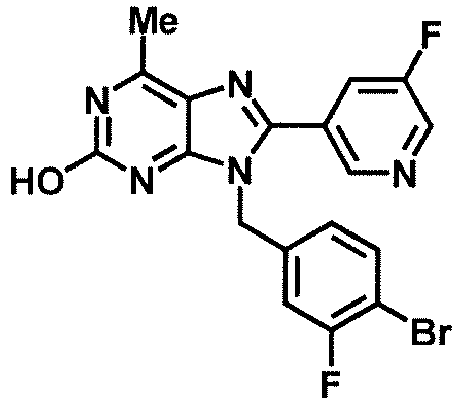
LC-MS [M+H]+/Rt (min): 432.0/0.632 (Method C); 1H-NMR (DMSO-D6) δ: 12.12 (1H, br s), 8.73 (1H, d, J = 2.4 Hz), 8.66-8.62 (1H, m), 8.02-7.96 (1H, m), 7.64-7.57 (1H, m), 7.13-7.08 (1H, m), 6.84-6.79 (1H, m), 5.32 (2H, s), 2.56 (3H, s). 334 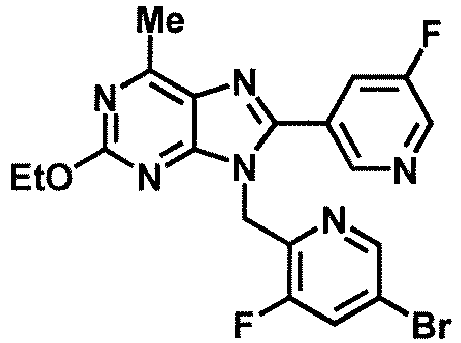
LC-MS [M+H]+/Rt (min): 461.2/0.875 (Method C); 1H-NMR (CDCl3) δ: 8.85-8.83 (1H, m), 8.58 (1H, d, J = 2.4 Hz), 8.31-8.29 (1H, m), 8.01-7.96 (1H, m), 7.63-7.58 (1H, m), 5.54-5.52 (2H, m), 4.37 (2H, q, J = 7.0 Hz), 2.79 (3H, s), 1.39 (3H, t, J = 7.0 Hz). 335 
LC-MS [M+H]+/Rt (min): 467.2/0.933 (Method C); 1H-NMR (CDCl3) δ: 8.59 (1H, d, J = 2.4 Hz), 8.53-8.51 (1H, m), 7.70-7.65 (1H, m), 7.41 (1H, d, J = 8.2 Hz), 7.13 (1H, d, J = 8.2 Hz), 5.65 (2H, s), 4.38 (2H, q, J = 7.0 Hz), 2.84 (3H, s), 1.39 (3H, t, J = 7.0 Hz). 336 
LC-MS [M+H]+/Rt (min): 424.3/0.801 (Method C); 1H-NMR (CDCl3) δ: 8.65 (1H, d, J = 2.4 Hz), 8.57-8.54 (1H, m), 7.77-7.73 (1H, m), 7.47-7.39 (2H, m), 5.65 (2H, s), 4.40 (2H, q, J = 7.0 Hz), 2.81 (3H, s), 1.42 (3H, t, J = 7.0 Hz). 337 
LC-MS [M+H]+/Rt (min) : 446.2/0.902 (Method C); 1H-NMR (CDCl3) δ: 8.65-8.62 (1H, m) , 8.59 (1H, d, J = 3.0 Hz), 7.73-7.68 (1H, m), 7.25-7.20 (1H, m), 7.18-7.15 (1H, m), 6.89-6.83 (1H, m), 5.45 (2H, s), 4.02 (3H, s), 2.81 (3H, s). 338 
LC-MS [M+H]+/Rt (min) : 417.3/0.820 (Method C); 1H-NMR (CDCl3) δ: 8.66-8.62 (2H, m), 8.00 (1H, d, J = 1.8 Hz), 7.76-7.71 (1H, m), 7.29-7.25 (1H, m), 5.47 (2H, s), 4.46 (2H, q, J = 7.0 Hz), 2.81 (3H, s), 1.45 (3H, t, J = 7.0 Hz). 339 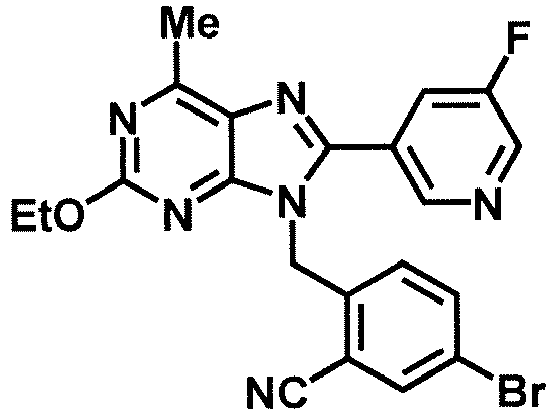
LC-MS [M+H]+/Rt (min) : 467.3/0.889 (Method C); 1H-NMR (CDCl3) δ: 8.61 (1H, d, J = 3.1 Hz), 8.53-8.52 (1H, m), 7.82 (1H, d, J = 2.0 Hz), 7.74-7.70 (1H, m), 7.61 (1H, dd, J = 8.0, 2.0 Hz), 6.85 (1H, d, J = 8.0 Hz), 5.60 (2H, s), 4.40 (2H, q, J = 7.0 Hz), 2.82 (3H, s), 1.41 (3H, t, J = 7.0 Hz). 340 
LC-MS [M+H]+/Rt (min) : 484.3/0.465 (Method C); 1H-NMR (CDCl3) δ: 9.03-9.01 (1H, m), 8.95-8.94 (1H, m), 8.21-8.19 (1H, m), 7.02-6.89 (3H, m), 5.48 (2H, s), 4.05 (3H, s), 3.38-3.29 (1H, m), 3.04-2.83 (6H, m), 2.81 (3H, s), 1.96-1.90 (1H, m), 1.81-1.72 (2H, m), 1.63-1.51 (1H, m), 1.47-1.34 (1H, m). 341 
LC-MS [M+H]+/Rt (min) : 428.2/0.879 (Method C) 342 
LC-MS [M+H]+/Rt (min) : 462.3/0.728 (Method C); 1H-NMR (CDCl3) δ: 8.65-8.63 (1H, m), 8.60 (1H, d, J = 3.0 Hz), 7.74-7.70 (1H, m), 7.09-6.97 (3H, m), 5.51 (2H, s), 4.03 (3H, s), 3.14 (3H, s), 2.82 (3H, s). 343 
LC-MS [M+2H]2+ /2/Rt (min): 229.8/0.471 (Method C); 1H-NMR (CDCl3) δ: 9.02-9.00 (1H, m), 8.95-8.93 (1H, m), 8.20-8.16 (1H, m), 6.99-6.85 (3H, m), 5.47 (2H, s), 4.05 (3H, s), 3.28-3.20 (2H, m), 2.81 (3H, s), 2.79-2.69 (2H, m), 2.64-2.53 (1H, m), 2.41-2.04 (1H, m), 1.92-1.76 (2H, m), 1.73-1.58 (2H, m). 344 
LC-MS [M+2H]2+/2/Rt (min): 242.3/0.563 (Method C); 1H-NMR (CDCl3) δ: 7.86-7.82 (2H, m), 7.77-7.73 (1H, m), 7.60-7.55 (1H, m), 6.99-6.89 (3H, m), 5.45 (2H, s), 4.04 (3H, s), 3.44-3.33 (1H, m), 3.13-2.87 (6H, m), 2.81 (3H, s), 2.00-1.93 (1H, m), 1.87-1.74 (2H, m), 1.68-1.55 (1H, m), 1.52-1.41 (1H, m). 345 
LC-MS [M+2H]2+/2/Rt (min): 217.2/0.440 (Method C); 1H-NMR (CDCl3) δ: 8.84-8.80 (1H, m), 8.74-8.69 (1H, m), 7.96-7.91 (1H, m), 7.41-7.35 (1H, m), 6.90-6.79 (3H, m), 5.45 (2H, s), 4.02 (3H, s), 3.25-3.17 (2H, m), 2.81 (3H, s), 2.77-2.67 (2H, m), 2.61-2.51 (1H, m), 2.39-2.12 (1H, m), 1.83-1.74 (2H, m), 1.68-1.54 (2H, m). 346 
LC-MS [M+H]+/Rt (min): 460.3/0.408 (Method C); 1H-NMR (CDCl3) δ: 9.29 (1H, s), 8.98 (2H, s), 6.98-6.88 (3H, m), 5.49 (2H, s), 4.04 (3H, s), 3.52-3.32 (1H, m), 3.19-2.88 (6H, m), 2.82 (3H, s), 2.01-1.95 (1H, m), 1.90-1.76 (2H, m), 1.71-1.57 (1H, m), 1.55-1.41 (1H, m). 347 
LC-MS [M+2H]2+/2/Rt (min): 230.3/0.446 (Method C); 1H-NMR (CDCl3) δ: 8.73-8.69 (2H, m), 7.56-7.51 (2H, m), 7.00-6.82 (3H, m), 5.51 (2H, s), 4.02 (3H, s), 3.37-3.28 (1H, m), 3.05-2.78 (6H, m), 2.82 (3H, s), 1.94-1.88 (1H, m), 1.80-1.69 (2H, m), 1.63-1.52 (1H, m), 1.45-1.33 (1H, m). 348 
LC-MS [M+2H] 2+/2/Rt (min) : 237.7/0.444 (Method C); 1H-NMR (CDCl3) δ: 8.87 (2H, s), 6.97-6.88 (3H, m), 5.47 (2H, s), 4.02 (3H, s), 3.38-3.30 (1H, m), 3.05-2.84 (6H, m), 2.81 (3H, s), 2.79 (3H, s), 1.97-1.89 (1H, m), 1.82-1.71 (2H, m), 1.66-1.52 (1H, m), 1.47-1.35 (1H, m). 349 
LC-MS [M+H]+/Rt (min) : 391.3/0.646 (Method C) -

- To the compound of Example 325 (236 mg) was added a solution of boron tribromide in dichloromethane (1 mol/L, 5 mL), and the mixture was stirred at room temperature for 5 days. To the reaction mixture was added methanol, and the solvent was removed under reduced pressure. The obtained residue was purified by silica gel column chromatography (hexane/ethyl acetate => chloroform/methanol) and amino silica gel chromatography (chloroform/methanol) to give the title compound (60 mg).
LC-MS [M+H]+ /Rt (min): 458.1/0.851 (Method C); 1H-NMR (DMSO-d6) δ: 10.26 (1H, br s), 8.75-8.71 (2H, m), 8.10-8.05 (1H, m), 6.88 (1H, d, J = 1.8 Hz), 6.82 (1H, dd, J = 7.9, 1.8 Hz), 6.71 (1H, d, J = 7.9 Hz), 5.36 (2H, s), 4.35 (2H, q, J = 7.0 Hz), 2.67 (3H, s), 1.31 (3H, t, J = 7.0 Hz). -

- To a solution of the compound of Example 350 (55 mg) in N,N-dimethylformamide (6 mL) were added potassium carbonate (50 mg) and iodoethane (0.015 mL), and the mixture was stirred at room temperature for 1.5 hours. To the reaction mixture was added water, and the mixture was extracted with ethyl acetate. The organic layer was washed with brine twice, dried over sodium sulfate, filtrated, and then concentrated in vacuo. The obtained residue was purified by silica gel column chromatography (hexane/ethyl acetate) to give the title compound (54 mg).
LC-MS [M+H]+ /Rt (min): 486.1/1.060 (Method C); 1H-NMR (CDCl3) δ: 8.67-8.64 (1H, m), 8.54 (1H, d, J = 3.0 Hz), 7.72-7.67 (1H, m), 6.96 (1H, d, J = 1.8 Hz), 6.91 (1H, dd, J = 8.2, 1.8 Hz), 6.62 (1H, d, J = 8.2 Hz), 5.41 (2H, s), 4.43 (2H, q, J = 7.2 Hz), 3.97 (2H, q, J = 6.8 Hz), 2.80 (3H, d, J = 10.4 Hz), 1.42 (3H, t, J = 7.2 Hz), 1.28 (3H, t, J = 6.8 Hz). -

- To a solution of the compound of Example 319 (113 mg) in 1,4-dioxane (2 mL) were added bis(pinacolato)diboron (114 mg), potassium acetate (86 mg), 1,1'-bis(diphenylphosphino)ferrocene palladium chloride (22 mg), and 1,1'-bis(diphenylphosphino)ferrocene (7.5 mg), and the mixture was stirred at 95°C for 2 hours. To the reaction mixture were added the compound of Reference example 25 (150 mg), potassium carbonate (94 mg), 1,1'-bis(diphenylphosphino)ferrocene palladium chloride (22 mg), and water (0.5 ml), and the mixture was stirred at 95°C for 2 hours. The reaction mixture was cooled to room temperature. Water was added thereto, and the mixture was extracted with ethyl acetate. The organic layer was dried over sodium sulfate, filtrated, and then concentrated in vacuo. The residue was purified by silica gel column chromatography (ethyl acetate/hexane) to give the title compound (122 mg).
LC-MS [M+H]+/Rt (min): 472.38/0.678 (Method A); 1H-NMR (CDCl3) δ: 8.94 (1H, s), 8.63-8.59 (2H, m), 8.21-8.16 (1H, m), 7.68 (1H, dd, J = 8.2, 2.1 Hz), 7.31 (1H, d, J = 8.2 Hz), 6.90 (1H, d, J = 1.8 Hz), 5.55 (2H, s), 4.46 (2H, q, J = 7.1 Hz), 3.15-3.10 (1H, m), 3.10-3.00 (2H, m), 2.84 (3H, s), 2.73-2.61 (2H, m), 1.83-1.77 (2H, m), 1.63-1.53 (2H, m), 1.46 (3H, t, J = 7.1 Hz). - According to the method of Example 352, Examples 353 - 364 were prepared by using the corresponding material compounds.
Example Chemical Structure Instrumental analysis data 353 
LC-MS [M+H]+/Rt (min) : 458.4/0.645 (Method A); 1H-NMR (CDCl3) δ: 8.96 (1H, s), 8.64-8.58 (2H, m), 8.23-8.17 (1H, m), 7.68 (1H, dd, J = 8.2, 2.1 Hz), 7.33 (1H, d, J = 8.2 Hz), 6.89 (1H, d, J = 1.8 Hz), 5.55 (2H, s), 4.05 (3H, s), 3.14-3.10 (1H, m), 3.08-3.00 (2H, m), 2.84 (3H, s), 2.71-2.61 (2H, m), 1.82-1.76 (2H, m), 1.63-1.52 (2H, m). 354 
LC-MS [M+2H]2+/2 /Rt (min) : 251.2/0.591 (Method C); 1H-NMR (CDCl3) δ: 8.70-8.67 (1H, m), 8.54 (1H, d, J = 2.4 Hz), 7.75-7.71 (1H, m), 6.86-6.79 (4H, m) , 5.46 (2H, s), 4.43 (2H, q, J = 7.2 Hz), 3.76 (3H, s), 3.17-2.98 (3H, m), 2.81 (3H, s), 2.75-2.63 (2H, m), 1.84-1.74 (2H, m) , 1.61-1.52 (2H, m), 1.42 (3H, t, J = 7.2 Hz). 355 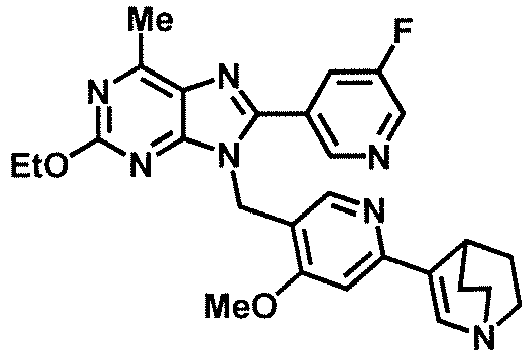
LC-MS [M+2H] 2+/2 /Rt (min) : 251.6/0.518 (Method C); 1H-NMR (CDCl3) δ: 8.72-8.69 (1H, m), 8.59 (1H, d, J = 3.0 Hz), 8.11 (1H, s), 7.79-7.74 (1H, m), 7.14-7.13 (1H, m), 6.88 (1H, s), 5.45 (2H, s), 4.43 (2H, q, J = 7.0 Hz), 3.74 (3H, s), 3.59-3.54 (1H, m), 3.12-3.03 (2H, m), 2.78 (3H, s), 2.75-2.65 (2H, m), 1.83-1.74 (2H, m), 1.59-1.49 (2H, m), 1.42 (3H, t, J = 7.0 Hz) . 356 
LC-MS [M+2H]2+/2 /Rt (min) : 258.2/0.641 (Method C); 1H-NMR (CDCl3) δ: 8.68-8.66 (1H, m), 8.52 (1H, d, J = 3.0 Hz), 7.74-7.68 (1H, m), 6.85 (1H, d, J = 1.2 Hz), 6.82-6.78 (2H, m), 6.72 (1H, d, J = 7.9 Hz), 5.48 (2H, s), 4.43 (2H, q, J = 7.0 Hz), 4.03 (2H, q, J = 7.0 Hz), 3.14-2.99 (3H, m), 2.82 (3H, s), 2.73-2.63 (2H, m), 1.83-1.73 (2H, m), 1.61-1.50 (2H, m), 1.41 (3H, t, J = 7.0 Hz), 1.30 (3H, t, J = 7.0 Hz). 357 
LC-MS [M+2H]2+/2 /Rt (min): 238.1/0.525 (Method C); 1H-NMR (CDCl3) δ: 8.67-8.64 (1H, m), 8.59 (1H, d, J = 2.4 Hz), 7.76-7.71 (1H, m), 7.21 (1H, t, J = 7.9 Hz), 6.83-6.75 (3H, m), 5.45 (2H, s), 4.04 (3H, s), 3.07-2.98 (3H, m), 2.83 (3H, s), 2.72-2.63 (2H, m), 1.79-1.70 (2H, m), 1.66-1.56 (2H, m). 358 
LC-MS [M+H]+/Rt (min) : 461.3/0.361 (Method C); 1H-NMR (DMSO-D6) δ: 12.12 (1H, br s), 8.74 (1H, d, J = 3.0 Hz), 8.68-8.67 (1H, m), 8.04-7.99 (1H, m), 7.32-7.27 (1H, m), 6.97-6.90 (1H, m), 6.85-6.81 (1H, m), 6.68-6.64 (1H, m), 5.34 (2H, s), 2.95-2.82 (3H, m), 2.56 (3H, s), 2.48-2.38 (2H, m), 1.71-1.61 (2H, m), 1.50-1.39 (2H, m). 359 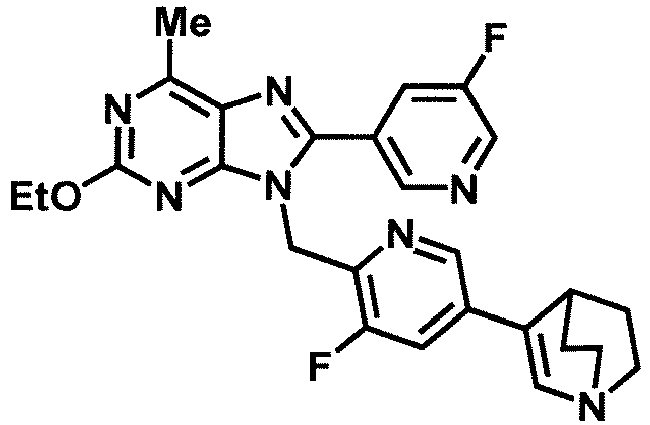
LC-MS [M+2H]2+/2 /Rt (min) : 245.6/0.532 (Method C); 1H-NMR (CDCl3) δ: 8.89-8.85 (1H, m), 8.57 (1H, d, J = 3.0 Hz), 8.30-8.27 (1H, m), 8.07-8.02 (1H, m), 7.38 (1H, dd, J = 10.4, 1.8 Hz), 6.88 (1H, d, J = 1.8 Hz), 5.57 (2H, s), 4.38 (2H, q, J = 7.0 Hz), 3.07-2.97 (3H, m), 2.79 (3H, s), 2.68-2.57 (2H, m), 1.82-1.73 (2H, m), 1.58-1.47 (2H, m), 1.39 (3H, t, J = 7.0 Hz). 360 
LC-MS [M+2H]2+/2 /Rt (min) : 270.7/0.644 (Method C); 1H-NMR (CDCl3) δ: 8.57 (1H, d, J = 2.4 Hz), 8.54-8.52 (1H, m), 7.73-7.69 (1H, m), 7.52 (1H, d, J = 8.5 Hz), 7.27 (1H, s), 7.07 (1H, d, J = 8.5 Hz), 5.67 (2H, s), 4.39 (2H, q, J = 7.2 Hz), 3.70-3.63 (1H, m), 3.12-3.01 (2H, m), 2.84 (3H, s), 2.73-2.61 (2H, m), 1.85-1.75 (2H, m), 1.61-1.50 (2H, m), 1.39 (3H, t, J = 7.2 Hz) . 361 
LC-MS [M+2H]2+/2 /Rt (min) : 249.3/0.535 (Method C); 1H-NMR (CDCl3) δ: 8.62 (1H, d, J = 2.4 Hz), 8.56-8.52 (1H, m), 7.79-7.73 (1H, m), 7.59 (1H, d, J = 8.5 Hz), 7.35 (1H, d, J = 8.5 Hz), 7.27 (1H, s), 5.67 (2H, s), 4.41 (2H, q, J = 7.2 Hz), 3.76-3.68 (1H, m), 3.19-3.06 (2H, m), 2.82 (3H, s), 2.78-2.64 (2H, m), 1.90-1.79 (2H, m), 1.63-1.51 (2H, m), 1.41 (3H, t, J = 7.2 Hz) . 362 
LC-MS [M+2H] 2+/2 /Rt (min): 245.8/0.514 (Method C) 363 
LC-MS [M+2H]2+/2 /Rt (min) : 248.8/0.529 (Method C); 1H-NMR (CDCl3) δ: 8.59 (1H, d, J = 3.1 Hz), 8.55-8.53 (1H, m), 7.76-7.72 (1H, m), 7.69 (1H, d, J = 1.8 Hz), 7.51-7.48 (1H, m), 6.93 (1H, d, J = 8.5 Hz), 6.88 (1H, d, J = 1.8 Hz), 5.65 (2H, s), 4.41 (2H, q, J = 7.0 Hz), 3.12-3.00 (3H, m), 2.83 (3H, s), 2.70-2.60 (2H, m), 1.86-1.78 (2H, m), 1.60-1.50 (2H, m), 1.41 (3H, t, J = 7.0 Hz). 364 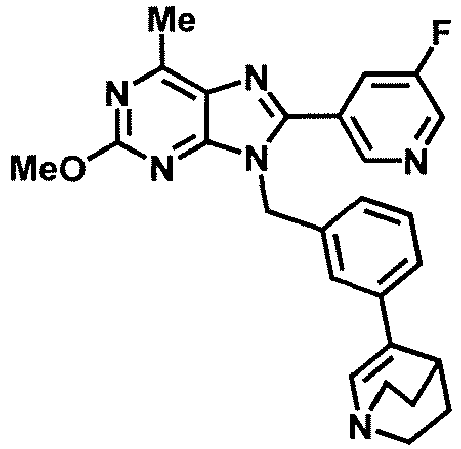
LC-MS [M+2H]2+/2 /Rt (min) : 229.3/0.513 (Method C); 1H-NMR (CDCl3) δ: 8.69-8.68 (1H, m), 8.57 (1H, d, J = 3.0 Hz), 7.70-7.65 (1H, m), 7.31-7.22 (2H, m), 7.13 (1H, s), 6.91 (1H, d, J = 7.3 Hz), 6.70 (1H, d, J = 1.2 Hz), 5.46 (2H, s), 4.05 (3H, s), 3.03-2.94 (3H, m), 2.82 (3H, s), 2.66-2.57 (2H, m), 1.80-1.69 (2H, m), 1.57-1.45 (2H, m). -

- To a solution of the compound of Example 337 (89 mg) in 1,2-dimethoxyethane (4 mL) were added 1-N-tert-butoxycarbonyl-4-(4,4,5,5-tetramethyl-[1,3,2]dioxaborolan-2-yl)-3,6-dihydro-2H-pyridine (74 mg), dichlorobis(tri-o-tolylphosphine)palladium (II) (7.9 mg), potassium carbonate (83 mg), and water (1 mL), and the mixture was stirred at 100°C for 4.5 hours. The reaction mixture was cooled to room temperature. Aqueous saturated sodium bicarbonate was added thereto, and the mixture was extracted with ethyl acetate. The organic layer was dried over sodium sulfate, filtrated, and then concentrated in vacuo. The residue was purified by silica gel column chromatography (ethyl acetate/hexane) to give the title compound (121 mg).
LC-MS [M+H]+/Rt (min): 549.4/1.061 (Method C); 1H-NMR (CDCl3) δ: 8.67-8.62 (1H, m), 8.57 (1H, d, J = 3.0 Hz), 7.73-7.67 (1H, m), 7.07-6.98 (2H, m), 6.93-6.86 (1H, m), 6.06-5.93 (1H, m), 5.49 (2H, s), 4.05-4.01 (2H, m), 4.03 (3H, s), 3.63-3.53 (2H, m), 2.81 (3H, s), 2.45-2.35 (2H, m), 1.45 (9H, s). - According to the method of Example 365, Examples 366 - 367 were prepared by using the corresponding material compounds.
Example Chemical Structure Instrumental analysis data 366 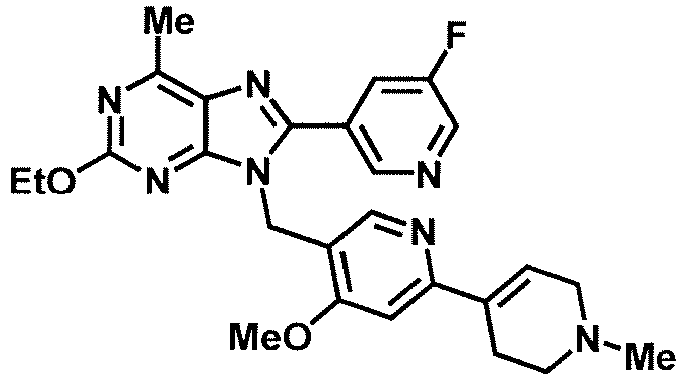
LC-MS [M+2H]2+/2 /Rt (min): 245.7/0.463 (Method C); 1H-NMR (CDCl3) δ: 8.72-8.70 (1H, m), 8.57 (1H, d, J = 3.0 Hz), 8.09 (1H, s), 7.77-7.72 (1H, m), 6.77 (1H, s), 6.54-6.51 (1H, m), 5.43 (2H, s), 4.42 (2H, q, J = 7.1 Hz), 3.69 (3H, s), 3.21-3.13 (2H, m), 2.77 (3H, s), 2.71-2.59 (4H, m), 2.40 (3H, s), 1.41 (3H, t, J = 7.1 Hz). 367 
LC-MS [M+H]+/Rt (min) : 535.4/1.005 (Method C); 1H-NMR (CDCl3) δ: 8.66-8.64 (1H, m), 8.59 (1H, d, J = 2.4 Hz), 7.74-7.68 (1H, m), 7.07-6.89 (3H, m), 6.17-6.09 (1H, m), 5.51 (2H, s), 4.44-4.22 (4H, m), 4.04 (3H, s), 2.84 (3H, s), 1.50-1.45 (9H, m). -

- To a solution of 1-tert-butoxycarbonyl-4-methylenepiperidine (178 mg) in tetrahydrofuran (3 mL) was added 9-borabicyclo[3.3.1]nonane (0.5 mol/L, tetrahydrofuran solution, 1.8 mL) at room temperature, and the mixture was stirred at 75°C for 3 hours and 20 minutes. The reaction mixture was cooled to room temperature. The compound of Example 337 (134 mg), potassium carbonate (124 mg), [,1'-bis(diphenylphosphino)ferrocene]palladium(II) dichloride dichloromethane adduct (25 mg), 1,2-dimethoxyethane (3 mL), and water (2 mL) were added thereto, and the mixture was stirred at 75°C for 3 hours and 40 minutes. The reaction mixture was cooled to room temperature. Aqueous saturated sodium bicarbonate was added thereto, and the mixture was extracted with ethyl acetate. The organic layer was dried over sodium sulfate, filtrated, and then concentrated in vacuo. The obtained residue was purified by amino silica gel chromatography (hexane/ethyl acetate) and silica gel column chromatography (chloroform/methanol) to give the title compound (146 mg). LC-MS [M+H]+/Rt (min): 565.4/1.123 (Method C); 1H-NMR (CDCl3) δ: 8.66-8.63 (1H, m), 8.57 (1H, d, J = 3.0 Hz), 7.70-7.64 (1H, m), 6.88-6.74 (3H, m), 5.48 (2H, s), 4.12-3.96 (2H, m), 4.03 (3H, s), 2.81 (3H, s), 2.68-2.53 (2H, m), 2.50-2.41 (2H, m), 1.64-1.47 (3H, m), 1.42 (9H, s), 1.15-1.01 (2H, m).
- According to the method of Example 368, Example 369 was prepared by using the corresponding material compound.
Example Chemical Structure Instrumental analysis data 369 
LC-MS [M+H]+/Rt (min): 592.4/0.670 (Method C); 1H-NMR (CDCl3) δ: 8.72-8.67 (1H, m), 8.59 (1H, d, J = 3.0 Hz), 8.12 (1H, s), 7.78-7.72 (1H, m), 6.52 (1H, s), 5.42 (2H, s), 4.43 (2H, q, J = 7.1 Hz), 4.11-3.94 (2H, m), 3.67 (3H, br s), 2.78 (3H, s), 2.69-2.51 (4H, m), 1.93-1.83 (1H, m), 1.63-1.47 (1H, m), 1.46-1.38 (12H, m), 1.31-1.21 (1H, m), 1.18-1.06 (2H, m). -
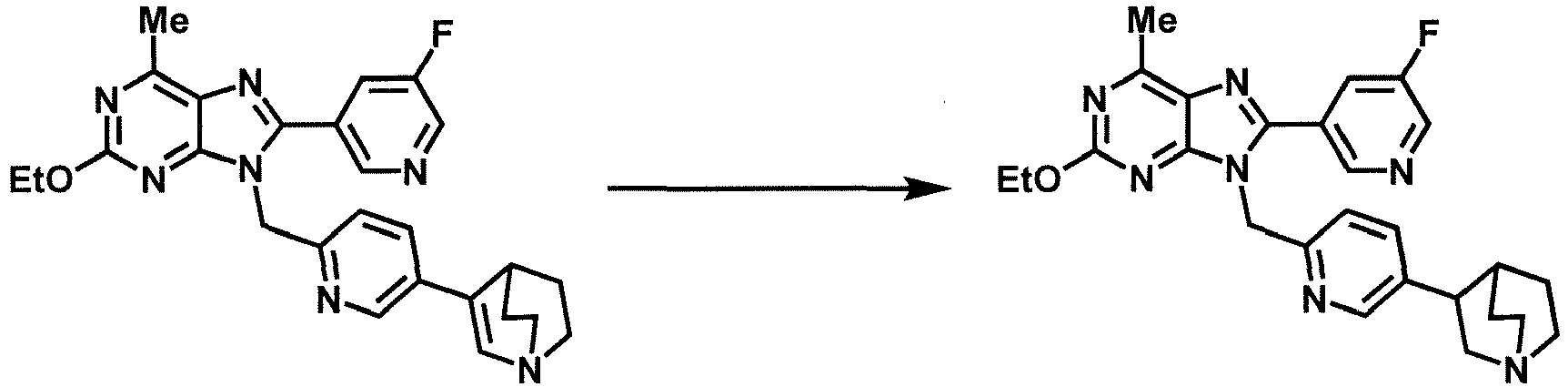
- To a solution of the compound of Example 352 (104 mg) in ethyl acetate (2 mL) was added 20 % palladium carbon (31 mg). The reaction mixture was stirred at room temperature under hydrogen atmosphere for 6 hours, filtrated, and then concentrated in vacuo. The residue was purified by silica gel column chromatography (chloroform/methanol) to give the title compound (85 mg).
LC-MS [M+H]+/Rt (min): 474.4/0.706 (Method A); 1H-NMR (CDCl3) δ: 8.95 (1H, s), 8. 60 (1H, d, J = 3. 0 Hz), 8.47 (1H, d, J = 2.4 Hz), 8.18-8.13 (1H, m), 7.58 (1H, dd, J = 8.2, 2.4 Hz), 7.29 (1H, d, J = 8.2 Hz), 5.54 (2H, s), 4.46 (2H, q, J = 7.1 Hz), 3.43-3.31 (1H, m), 3.07-2.86 (6H, m), 2.84 (3H, s), 1.92-1.85 (1H, m), 1.81-1.74 (2H, m), 1.65-1.54 (1H, m), 1.49-1.37 (4H, m). - According to the method of Example 370, Examples 371 - 387 were prepared by using the corresponding material compounds.
Example Chemical Structure Instrumental analysis data 371 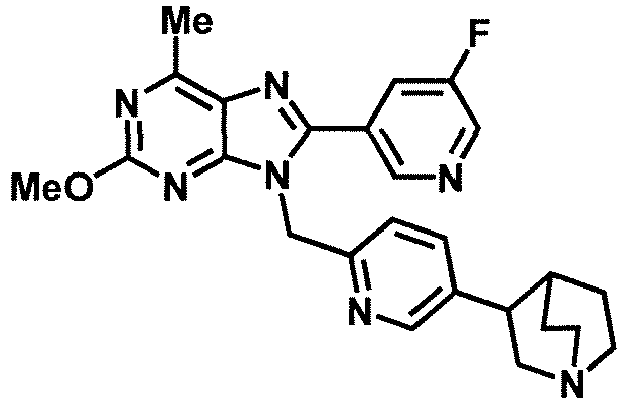
1H-NMR (CDCl3) δ: 8.96 (1H, s), 8.60 (1H, d, J = 3. 0 Hz), 8.47 (1H, d, J = 2.4 Hz), 8.19-8.15 (1H, m), 7.59 (1H, dd, J = 8.5, 3.0 Hz), 7.32 (1H, d, J = 8.5 Hz), 5.54 (2H, s), 4.05 (3H, s), 3.42-3.34 (1H, m), 3.09-2.87 (6H, m), 2.85 (3H, s), 1.98-1.91 (1H, m), 1.83-1.76 (2H, m), 1.66-1.56 (1H, m), 1.50-1.39 (1H, m). 372 
LC-MS [M+2H]2+/2/Rt (min): 252.2/0.590 (Method C); 1H-NMR (CDCl3) δ: 8.68-8.66 (1H, m), 8.53 (1H, d, J = 2.4 Hz), 7.73-7.68 (1H, m), 6.81 (1H, d, J = 7.9 Hz), 6.73-6.67 (2H, m), 5.44 (2H, s), 4.44 (2H, q, J = 7.0 Hz), 3.72 (3H, s), 3.40-3.25 (1H, m), 3.12-2.83 (6H, m), 2.80 (3H, s), 2.17-1.55 (4H, m), 1.47-1.32 (1H, m), 1.42 (3H, t, J = 7.0 Hz). 373 
LC-MS [M+H]+/Rt (min) : 394.2/0.878 (Method C); 1H-NMR (CDCl3) δ: 8.69-8.67 (1H, m), 8.53 (1H, d, J = 3. 0 Hz), 7.71-7.66 (1H, m), 7.25-7.20 (1H, m), 6.85-6.77 (3H, m), 5.47 (2H, s), 4.43 (2H, q, J = 7.2 Hz), 3.72 (3H, s), 2.81 (3H, s), 1.42 (3H, t, J = 7.2 Hz). 374 
LC-MS [M+2H]2+/2/Rt (min) : 252.6/0.510 (Method C); 1H-NMR (CDCl3) δ: 8.66-8.64 (1H, m), 8.53 (1H, d, J = 3.0 Hz), 8.05 (1H, s), 7.74-7.69 (1H, m), 6.54 (1H, s), 5.43-5.33 (2H, m), 4.39 (2H, q, J = 7.0 Hz), 3.64 (3H, s), 3.54-3.46 (1H, m), 3.16-3.07 (1H, m), 3.03-2.82 (4H, m), 2.81-2.70 (1H, m), 2.74 (3H, s), 1.98-1.93 (1H, m), 1.75-1.62 (2H, m), 1.60-1.48 (1H, m), 1.38 (3H, t, J = 7.0 Hz), 1.31-1.17 (1H, m). 375 
LC-MS [M+2H]2+/2/Rt (min): 246.6/0.436 (Method C); 1H-NMR (CDCl3) δ: 8.71-8.67 (1H, m), 8.58 (1H, d, J = 2.4 Hz), 8.11-8.07 (1H, m), 7.78-7.72 (1H, m), 6.64-6.60 (1H, m), 5.44-5.39 (2H, m), 4.43 (2H, q, J = 7.0 Hz), 3.71-3.64 (3H, m), 3.17-3.04 (1H, m), 2.78 (3H, s), 2.75-2.55 (1H, m), 2.48-1.51 (10H, m), 1.42 (3H, t, J = 7.0 Hz) . 376 
LC-MS [M+2H]2+/2/Rt (min) : 259.2/0.636 (Method C); 1H-NMR (CDCl3) δ: 8.67-8.65 (1H, m), 8.50 (1H, d, J = 2.4 Hz), 7.69-7.64 (1H, m), 6.72-6.65 (3H, m), 5.46 (2H, s), 4.43 (2H, q, J = 7.0 Hz), 3.97 (2H, q, J = 7.0 Hz), 3.34-3.24 (1H, m), 3.07-2.83 (6H, m), 2.81 (3H, s), 2.07-1.85 (1H, m), 1.77-1.68 (2H, m), 1.65-1.54 (1H, m), 1.44-1.31 (1H, m), 1.41 (3H, t, J = 7.0 Hz), 1.25 (3H, t, J = 7.0 Hz). 377 
LC-MS [M+2H]2+/2/Rt (min): 239.1/0.528 (Method C); 1H-NMR (CDCl3) δ: 8.66-8.64 (1H, m), 8.58 (1H, d, J = 2.4 Hz), 7.73-7.69 (1H, m), 7.28-7.23 (1H, m), 6.83-6.74 (2H, m), 5.44 (2H, s), 4.05 (3H, s), 3.34-3.17 (2H, m), 2.99-2.79 (5H, m), 2.82 (3H, s), 1.92-1.65 (3H, m), 1.63-1.53 (1H, m), 1.43-1.33 (1H, m). 378 
LC-MS [M+H]+/Rt (min) : 463.3/0.360 (Method C); 1H-NMR (CDCl3) δ: 8.65-8.62 (1H, m), 8.58 (1H, d, J = 3.0 Hz), 7.69-7.64 (1H, m), 7.28-7.23 (1H, m), 6.86-6.74 (2H, m), 5.36 (2H, s), 3.38-3.21 (2H, m), 3.07-2.84 (5H, m), 2.82 (3H, s), 1.95-1.88 (1H, m), 1.86-1.68 (2H, m), 1.67-1.54 (1H, m), 1.48-1.36 (1H, m). 379 
LC-MS [M+2H]2+/2/Rt (min) : 246.7/0.515 (Method C); 1H-NMR (CDCl3) δ: 8.87-8.84 (1H, m), 8.55 (1H, d, J = 2.4 Hz), 8.15-8.12 (1H, m), 8.04-7.99 (1H, m), 7.32-7.26 (1H, m), 5.57-5.55 (2H, m), 4.38 (2H, q, J = 7.0 Hz), 3.42-3.31 (1H, m), 3.05-2.85 (6H, m), 2.79 (3H, s), 1.95-1.89 (1H, m), 1.81-1.72 (2H, m), 1.60-1.41 (2H, m), 1.38 (3H, t, J = 7.0 Hz). 380 
LC-MS [M+2H]2+/2/Rt (min) : 230.2/0.475 (Method C); 1H-NMR (CDCl3) δ: 8.85-8.83 (1H, m), 8.73-8.70 (1H, m), 7.96-7.91 (1H, m), 7.42-7.37 (1H, m), 7.27-7.21 (1H, m), 6.83-6.73 (2H, m), 5.40 (2H, s), 4.04 (3H, s), 3.31-3.14 (2H, m), 2.98-2.75 (5H, m), 2.81 (3H, s), 1.87-1.83 (1H, m), 1.77-1.63 (2H, m), 1.60-1.52 (1H, m), 1.40-1.29 (1H, m). 381 
LC-MS [M+H]+/Rt (min) : 542.2/0.635 (Method C); 1H-NMR (CDCl3) δ: 8.56 (1H, d, J = 3.0 Hz), 8.54-8.51 (1H, m), 7.72-7.66 (1H, m), 7.27-7.20 (1H, m), 7.07-7.01 (1H, m), 5.72-5.61 (2H, m), 4.39 (2H, q, J = 7.0 Hz), 3.62-3.47 (1H, m), 3.31-2.77 (6H, m), 2.84 (3H, s), 2.02-1.54 (4H, m), 1.42-1.28 (1H, m), 1.38 (3H, t, J = 7.0 Hz). 382 
LC-MS [M+2H]2+/2/Rt (min): 250.3/0.521 (Method C); 1H-NMR (DMSO-D6) δ: 8.78-8.74 (2H, m), 8.18-8.13 (1H, m), 7.57 (1H, d, J = 8.2 Hz), 7.51 (1H, d, J = 8.2 Hz), 5.70 (2H, s), 4.28 (2H, q, J = 7.0 Hz), 3.27-3.16 (1H, m), 3.07-2.95 (2H, m), 2.80-2.58 (4H, m), 2.67 (3H, s), 1.90-1.86 (1H, m), 1.69-1.53 (2H, m), 1.27-1.14 (2H, m), 1.25 (3H, t, J = 7.0 Hz). 383 
LC-MS [M+2H]2+/2/Rt (min): 246.8/0.536 (Method C); 1H-NMR (CDCl3) δ: 8.67-8.64 (1H, m), 8.62 (1H, d, J = 2.4 Hz), 8.15-8.12 (1H, m), 7.76-7.71 (1H, m), 7.12-7.06 (1H, m), 5.47 (2H, s), 4.46 (2H, q, J = 7.0 Hz), 3.70-3.60 (1H, m), 3.38-3.26 (1H, m), 3.15-3.01 (2H, m), 3.01-2.87 (2H, m), 2.86-2.72 (1H, m), 2.81 (3H, s), 2.00-1.63 (3H, m), 1.59-1.48 (1H, m), 1.44 (3H, t, J = 7.0 Hz), 1.33-1.20 (1H, m). 384 
LC-MS [M+2H] 2+/2/Rt (min) : 249.9/0.530 (Method C); 1H-NMR (CDCl3) δ: 8.58 (1H, d, J = 2.4 Hz), 8.55-8.53 (1H, m), 7.75-7.69 (1H, m), 7.56 (1H, d, J = 1.8 Hz), 7.40-7.33 (1H, m), 6.91 (1H, d, J = 7.9 Hz), 5.64 (2H, s), 4.41 (2H, q, J = 7.0 Hz), 3.39-3.29 (1H, m), 3.04-2.79 (6H, m), 2.82 (3H, s), 1.94-1.74 (3H, m), 1.58-1.45 (1H, m), 1.45-1.35 (1H, m), 1.40 (3H, t, J = 7.0 Hz). 385 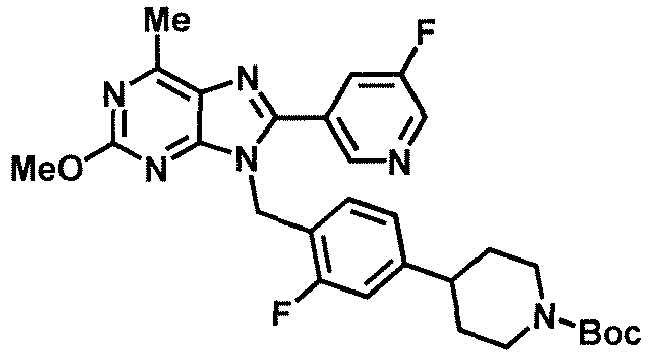
LC-MS [M+H]+/Rt (min): 551.5/1.061 (Method C); 1H-NMR (CDCl3) δ: 8.65-8.62 (1H, m), 8.57 (1H, d, J = 2.4 Hz), 7.71-7.66 (1H, m), 6.90-6.81 (3H, m), 5.47 (2H, s), 4.30-4.13 (2H, m), 4.03 (3H, s), 2.82 (3H, s), 2.80-2.67 (2H, m), 2.63-2.52 (1H, m), 1.79-1.70 (2H, m), 1.64-1.47 (2H, m), 1.45 (9H, s). 386 
LC-MS [M+H]+/Rt (min) : 459.4/0.492 (Method C); 1H-NMR (CDCl3) δ: 8.68-8.66 (1H, m), 8.56 (1H, d, J = 2.4 Hz), 7.72-7.62 (1H, m), 7.28-7.21 (1H, m), 7.16 (1H, d, J = 7.9 Hz), 7.06-6.92 (1H, m), 6.88 (1H, d, J = 7.9 Hz), 5.48 (2H, s), 4.04 (3H, s), 3.44-3.23 (1H, m), 3.18-2.85 (6H, m), 2.82 (3H, s), 1.93-1.67 (3H, m), 1.65-1.48 (1H, m), 1.46-1.30 (1H, m). 387 
LC-MS [M+H]+/Rt (min): 537.5/0.988 (Method C); 1H-NMR (CDCl3) δ: 8.66-8.62 (1H, m), 8.57 (1H, d, J = 3.1 Hz), 7.74-7.67 (1H, m), 6.94-6.85 (3H, m), 5.48 (2H, s), 4.02 (3H, s), 3.83-3.66 (1H, m), 3.63-3.44 (1H, m), 3.41-3.10 (3H, m), 2.81 (3H, s), 2.25-2.14 (1H, m), 1.93-1.81 (1H, m), 1.44 (9H, s). -
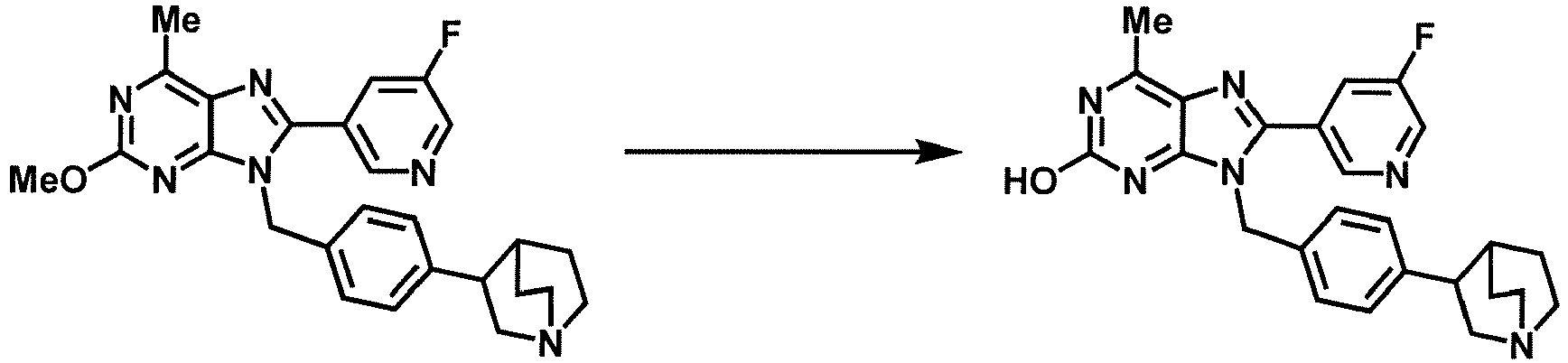
- To a solution of the compound of Example 165 (88 mg) in ethyl acetate (2 mL) and methanol (0.2 mL) was added a solution of hydrochloric acid in ethyl acetate (4 mol/L, 0.055 mL) at room temperature, and the mixture was stirred at room temperature for one hour. The reaction mixture was concentrated in vacuo, and the residue was purified by amino silica gel column chromatography (chloroform/methanol) to give the title compound (15 mg). LC-MS [M+H]+/Rt (min): 445.4/0.346 (Method C); 1H-NMR (DMSO-D6) δ: 8.69 (1H, d, J = 3.0 Hz), 8.67-8.64 (1H, m), 7.99-7.94 (1H, m), 7.18 (2H, d, J = 8.2 Hz), 6.94 (2H, d, J = 8.2 Hz), 5.32 (2H, s), 3.69-3.00 (3H, m), 2.88-2.59 (5H, m), 2.54 (3H, s), 1.73-1.68 (1H, m), 1.66-1.52 (2H, m), 1.44-1.33 (1H, m), 1.26-1.13 (1H, m).
- According to the method of Example 388, Example 389 was prepared by using the corresponding material compound.
Example Chemical Structure Instrumental analysis data 389 
LC-MS [M+H]+ /Rt (min): 463.4/0.361 (Method C) -

- The compound of Example 171 (25.9 mg) was optically separated in the following conditions to obtain the title compounds (Example 390: 12.0 mg-first peak: 18.2 min, Example 391: 8.9 mg-second peak: 31.4 min).
Column: CHIRALPAK™ AS-H; Solvent: Solution A: hexane/diethylamine = 1/0.1 %, Solution B: ethanol/2-propanol/diethylamine/methanol = 3/2/0.1/1 %; Mobile phase condition: A/B = 85/15; Flow rate: 10 mL/min; Detection UV: 220 nm; Column temperature: 40°CExample Instrumental analysis data 390 1H-NMR (400 MHz, CDCl3) δ: 8.69-8.66 (1H, m), 8.60 (1H, d, J = 3.1 Hz), 8.33 (1H, d, J = 2.4 Hz), 7.74-7.69 (1H, m), 7.32 (1H, dd, J = 7.9, 2.4 Hz), 7.10 (1H, d, J = 7.9 Hz), 5.46 (2H, s), 4.47 (2H, q, J = 7.1 Hz), 3.46-3.37 (1H, m), 3.22-3.13 (1H, m), 3.04-2.82 (4H, m), 2.81 (3H, s), 2.79-2.73 (1H, m), 2.00-1.95 (1H, m), 1.74-1.68 (2H, m), 1.59-1.47 (1H, m), 1.45 (3H, t, J = 7.1 Hz), 1.32-1.22 (1H, m). 391 1H-NMR (400 MHz, CDCl3)δ: 8.69-8.66 (1H, m), 8.60 (1H, d, J = 3.1 Hz), 8.33 (1H, d, J = 2.4 Hz), 7.74-7.69 (1H, m), 7.32 (1H, dd, J = 7.9, 2.4 Hz), 7.10 (1H, d, J = 7.9 Hz), 5.46 (2H, s), 4.47 (2H, q, J = 7.1 Hz), 3.46-3.37 (1H, m), 3.22-3.13 (1H, m), 3.04-2.82 (4H, m), 2.81 (3H, s), 2.79-2.73 (1H, m), 2.00-1.95 (1H, m), 1.74-1.68 (2H, m), 1.59-1.47 (1H, m), 1.45 (3H, t, J = 7.1 Hz), 1.32-1.22 (1H, m). -

- The compound of Example 314 (30.3 mg) was optically separated in the following conditions to obtain the title compounds (Example 392: 12.2 mg-first peak: 19.4 min, Example 393: 11.3 mg-second peak: 36.7 min).
Column: CHIRALPAK™ AD-H; Solvent: Solution A: hexane, Solution B: ethanol/2-propanol = 1/2; Mobile phase condition: A/B/diethylamine = 70/30/0.2 %; Flow rate: 10 mL/min; Detection UV: 220 nm; Column temperature: 40°CExample Instrumental analysis data 392 1H-NMR (CDCl3) δ: 8.70-8.67 (1H, m), 8.61 (1H, d, J = 2.4 Hz), 7.75-7.70 (1H, m), 6.99-6.91 (3H, m), 5.53 (2H, s), 4.08 (3H, s), 3.36-3.26 (1H, m), 3.01-2.80 (9H, m), 1.93-1.85 (1H, m), 1.77-1.65 (2H, m), 1.59-1.50 (1H, m), 1.42-1.30 (1H, m). 393 1H-NMR (CDCl3) δ: 8.70-8.67 (1H, m), 8.61 (1H, d, J = 2.4 Hz), 7.75-7.70 (1H, m), 6.99-6.91 (3H, m), 5.53 (2H, s), 4.08 (3H, s), 3.36-3.26 (1H, m), 3.01-2.80 (9H, m), 1.93-1.85 (1H, m), 1.77-1.65 (2H, m), 1.59-1.50 (1H, m), 1.42-1.30 (1H, m). -
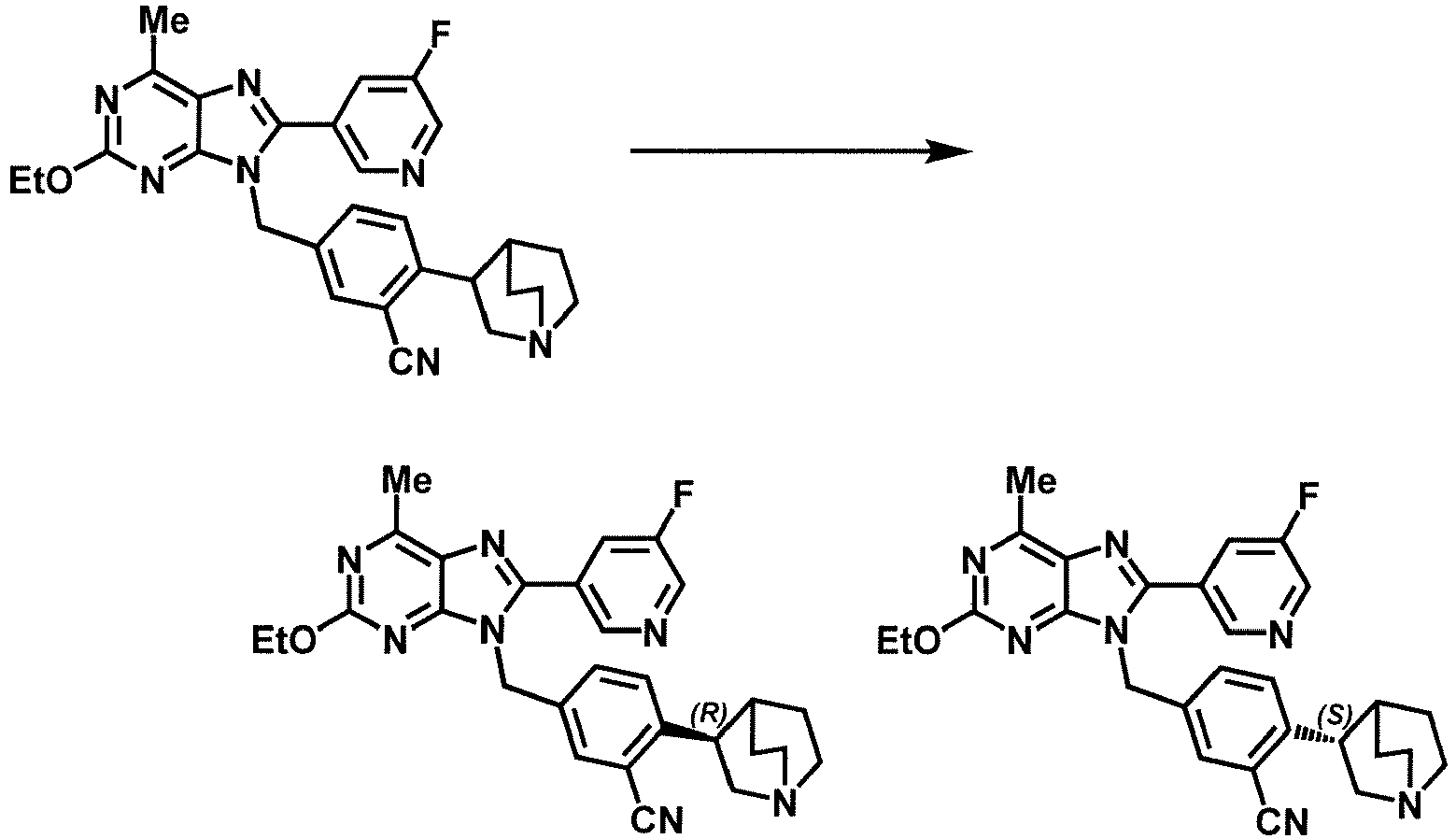
- The compound of Example 316 (29.5 mg) was optically separated in the following conditions to obtain the title compounds (Example 394: 14.6 mg-first peak: 10.8 min, Example 395: 15.0 mg-second peak: 26.9 min).
Column: CHIRALPAK™ AD-H; Solvent: Solution A: hexane, Solution B: ethanol/2-propanol/methanol = 6/3/1; Mobile phase condition: A/B/diethylamine = 70/30/0.2 %; Flow rate: 10 mL/min; Detection UV: 220 nm; Column temperature: 40°CExample Instrumental analysis data 394 1H-NMR (CDCl3) δ: 8.68-8.60 (2H, m), 7.78-7.73 (1H, m), 7.50 (1H, d, J = 7.9 Hz), 7.40 (1H, d, J = 1.8 Hz), 7.32-7.29 (1H, m), 5.50 (2H, s), 4.50 (2H, q, J = 7.1 Hz), 3.44-3.38 (1H, m), 3.38-3.30 (1H, m), 3.10-3.00 (1H, m), 3.00-2.87 (4H, m), 2.86 (3H, s), 1.92-1.82 (2H, m), 1.79-1.73 (1H, m), 1.54-1.44 (4H, m), 1.42-1.33 (1H, m). 395 1H-NMR (CDCl3) δ: 8.68-8.60 (2H, m), 7.78-7.73 (1H, m), 7.50 (1H, d, J = 7.9 Hz), 7.40 (1H, d, J = 1.8 Hz), 7.32-7.29 (1H, m), 5.50 (2H, s), 4.50 (2H, q, J = 7.1 Hz), 3.44-3.38 (1H, m), 3.38-3.30 (1H, m), 3.10-3.00 (1H, m), 3.00-2.87 (4H, m), 2.86 (3H, s), 1.92-1.82 (2H, m), 1.79-1.73 (1H, m), 1.54-1.44 (4H, m), 1.42-1.33 (1H, m). -
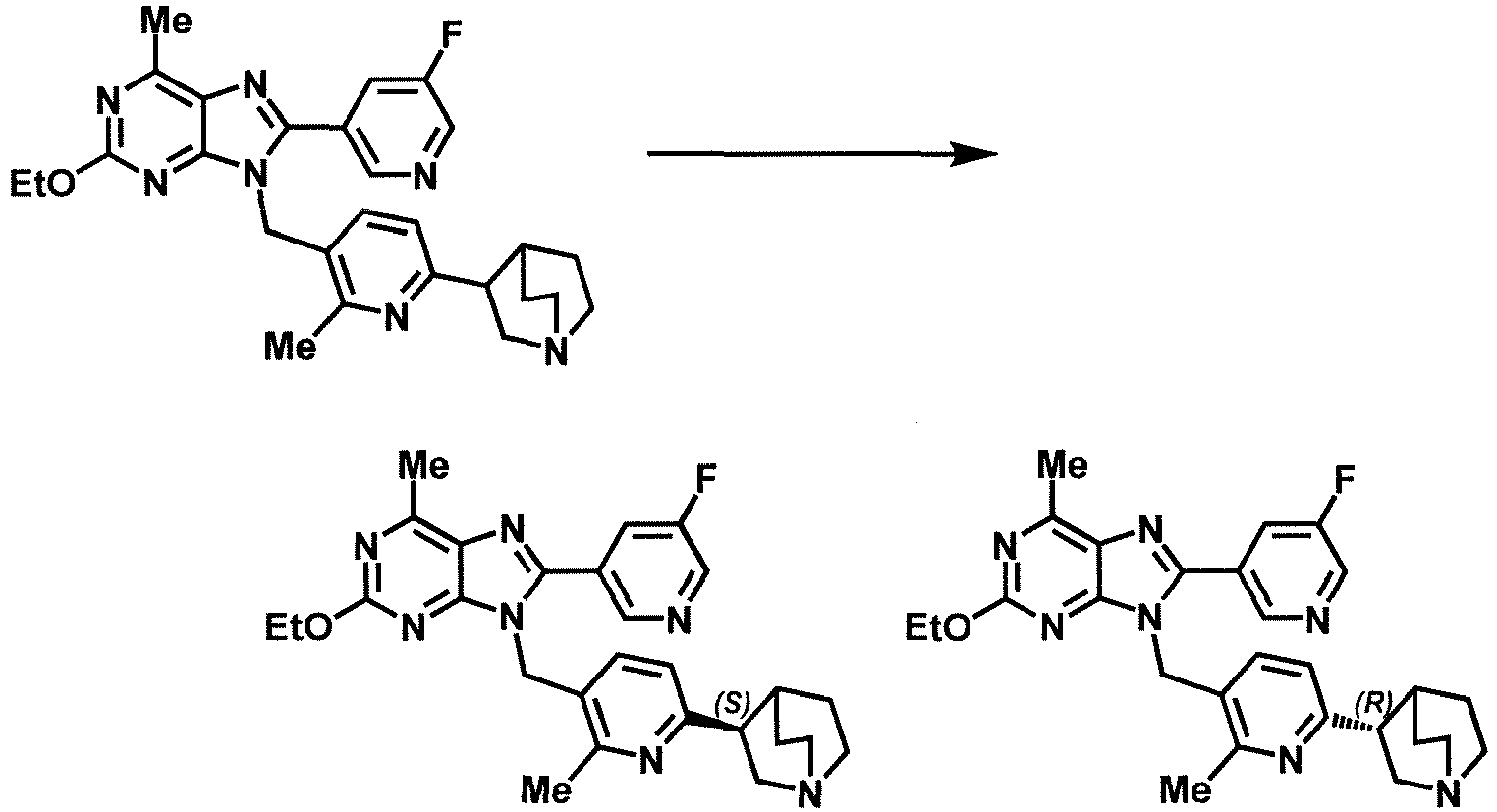
- The compound of Example 315 (30.0 mg) was optically separated in the following conditions to obtain the title compounds (Example 396: 14.6 mg-first peak: 11.4 min, Example 397: 15.0 mg-second peak: 16.1 min).
Column: CHIRALPAK™ AD-H; Solvent: Solution A: hexane, Solution B: ethanol/2-propanol/methanol = 1/1/1; Mobile phase condition: A/B/diethylamine = 80/20/0.2 %; Flow rate: 5 mL/min; Detection UV: 220 nm; Column temperature: 40°CExample Instrumental analysis data 396 1H-NMR (CDCl3) δ: 8.62 (1H, s), 8.59 (1H, d, J = 3.0 Hz), 7.74-7.69 (1H, m), 6.92 (1H, d, J = 7.9 Hz), 6.84 (1H, d, J = 7.9 Hz), 5.46 (2H, s), 4.45 (2H, q, J = 7.1 Hz), 3.50-3.43 (1H, m), 3.24-3.16 (1H, m), 3.07-2.97 (2H, m), 2.96-2.88 (2H, m), 2.87 (3H, s), 2.85-2.77 (1H, m), 2.51 (3H, s), 2.02-1.97 (1H, m), 1.75-1.68 (2H, m), 1.66-1.57 (1H, m), 1.44 (3H, t, J = 7.1 Hz), 1.35-1.26 (1H, m). 397 1H-NHR (CDCl3) δ: 8.62 (1H, s), 8.59 (1H, d, J = 3.0 Hz), 7.74-7.69 (1H, m), 6.92 (1H, d, J = 7.9 Hz), 6.84 (1H, d, J = 7.9 Hz), 5.46 (2H, s), 4.45 (2H, q, J = 7.1 Hz), 3.50-3.43 (1H, m), 3.24-3.16 (1H, m), 3.07-2.97 (2H, m), 2.96-2.88 (2H, m), 2.87 (3H, s), 2.85-2.77 (1H, m), 2.51 (3H, s), 2.02-1.97 (1H, m), 1.75-1.68 (2H, m), 1.66-1.57 (1H, m), 1.44 (3H, t, J = 7.1 Hz), 1.35-1.26 (1H, m). -

- The compound of Example 163 (33.0 mg) was optically separated in the following conditions to obtain the title compounds (Example 398: 16.0 mg-first peak: 28.1 min, Example 399: 16.3 mg-second peak: 38.0 min).
Column: CHIRALPAK™ AS-H; Solvent: Solution A: hexane/diethylamine = 1/0.2 %, Solution B: ethanol/2-propanol/diethylamine = 2/1/0.2 %; Mobile phase condition: A/B = 90/10; Flow rate: 10 mL/min; Detection UV: 220 nm; Column temperature: 40°CExample Instrumental analysis data 398 1H-NMR (CDCl3) δ: 8.78 (1H, s), 8.62 (1H, d, J = 3.1 Hz), 7.79-7.76 (1H, m), 7.32 (1H, s), 7.22 (1H, s), 5.31 (2H, s), 4.51 (2H, q, J = 7.1 Hz), 4.00 (2H, d, J = 7.9 Hz), 2.98-2.93 (1H, m), 2.87-2.71 (7H, m), 2.38-2.33 (1H, m), 2.19-2.13 (1H, m), 1.68-1.55 (2H, m), 1.49-1.40 (6H, m). 399 1H-NMR (CDCl3) δ: 8.78 (1H, s), 8.62 (1H, d, J = 3.1 Hz), 7.79-7.76 (1H, m), 7.32 (1H, s), 7.22 (1H, s), 5.31 (2H, s), 4.51 (2H, q, J = 7.1 Hz), 4.00 (2H, d, J = 7.9 Hz), 2.98-2.93 (1H, m), 2.87-2.71 (7H, m), 2.38-2.33 (1H, m), 2.19-2.13 (1H, m), 1.68-1.55 (2H, m), 1.49-1.40 (6H, m). -

- The compound of Example 318 (40.0 mg) was optically separated in the following conditions to obtain the title compounds (Example 400: 21.2 mg-first peak: 11.9 min, Example 401: 18.2 mg-second peak: 26.9 min).
Column: CHIRALPAK™ AD-H; Solvent: Solution A: hexane/diethylamine = 1/0.2 %, Solution B: ethanol/2-propanol/methanol/diethylamine = 6/3/1/0.2 %; Mobile phase condition: A/B = 70/30; Flow rate: 10 mL/min; Detection UV: 220 nm; Column temperature: 40°CExample Instrumental analysis data 400 LC-MS [M+2H] +2/2 /Rt (min): 242.9 /0.495 (Method C); 1H-NMR (CDCl3) δ: 8.61-8.58 (2H, m), 7.75-7.70 (1H, m), 7.46 (1H, d, J = 8.5 Hz), 7.36 (1H, d, J = 1.8 Hz), 7.27 (1H, dd, J = 8.5, 1.8 Hz), 5.47 (2H, s), 4.04 (3H, s), 3.43-3.27 (2H, m), 3.08-2.84 (5H, m), 2.83 (3H, s), 2.04-1.78 (2H, m), 1.78-1.66 (1H, m), 1.53-1.30 (2H, m). 401 LC-MS [M+2H] +2/2 /Rt (min): 242.8 /0.500 (Method C); 1H-NMR (CDCl3) δ: 8.62-8.56 (2H, m), 7.77-7.71 (1H, m), 7.53-7.31 (3H, m), 5.48 (2H, s), 4.05 (3H, s), 3.64-3.54 (1H, m), 3.51-3.41 (1H, m), 3.39-2.98 (5H, m), 2.84 (3H, s), 2.15-1.83 (3H, m), 1.69-1.48 (2H, m). -

- The compound of Example 344 (40.0 mg) was optically separated in the following conditions to obtain the title compounds (Example 402: 21.0 mg-first peak: 7.47 min, Example 403: 23.0 mg-second peak: 13.6 min).
Column: CHIRALPAK™ AD-H; Solvent: Solution A: hexane/diethylamine = 1/0.2 %, Solution B: 2-propanol/diethylamine = 1/0.1 %; Mobile phase condition: A/B = 60/40; Flow rate: 10 mL/min; Detection UV: 220 nm; Column temperature: 40°CExample Instrumental analysis data 402 LC-MS [M+2H]+2/2/Rt (min): 242.7 /0.492 (Method C); 1H-NMR (CDCl3) δ: 9.02 (1H, d, J = 2.4 Hz), 8.95 (1H, d, J = 1.8 Hz), 8.21-8.19 (1H, m), 7.02-6.91 (3H, m), 5.48 (2H, s), 4.05 (3H, s), 3.41-3.32 (1H, m), 3.07-2.84 (6H, m), 2.81 (3H, s), 1.97-1.92 (1H, m), 1.81-1.74 (2H, m), 1.64-1.53 (1H, m), 1.49-1.38 (1H, m). 403 LC-MS [M+2H]+2/2/Rt (min): 242.8 /0.491 (Method C); 1H-NMR (CDCl3) δ: 9.03 (1H, d, J = 1.8 Hz), 8.95 (1H, d, J = 1.8 Hz), 8.22-8.20 (1H, m), 7.00-6.90 (3H, m), 5.48 (2H, s), 4.05 (3H, s), 3.31-3.23 (1H, m), 2.98-2.79 (6H, m), 2.81 (3H, s), 1.88-1.83 (1H, m), 1.73-1.61 (2H, m), 1.57-1.46 (1H, m), 1.40-1.29 (1H, m). -
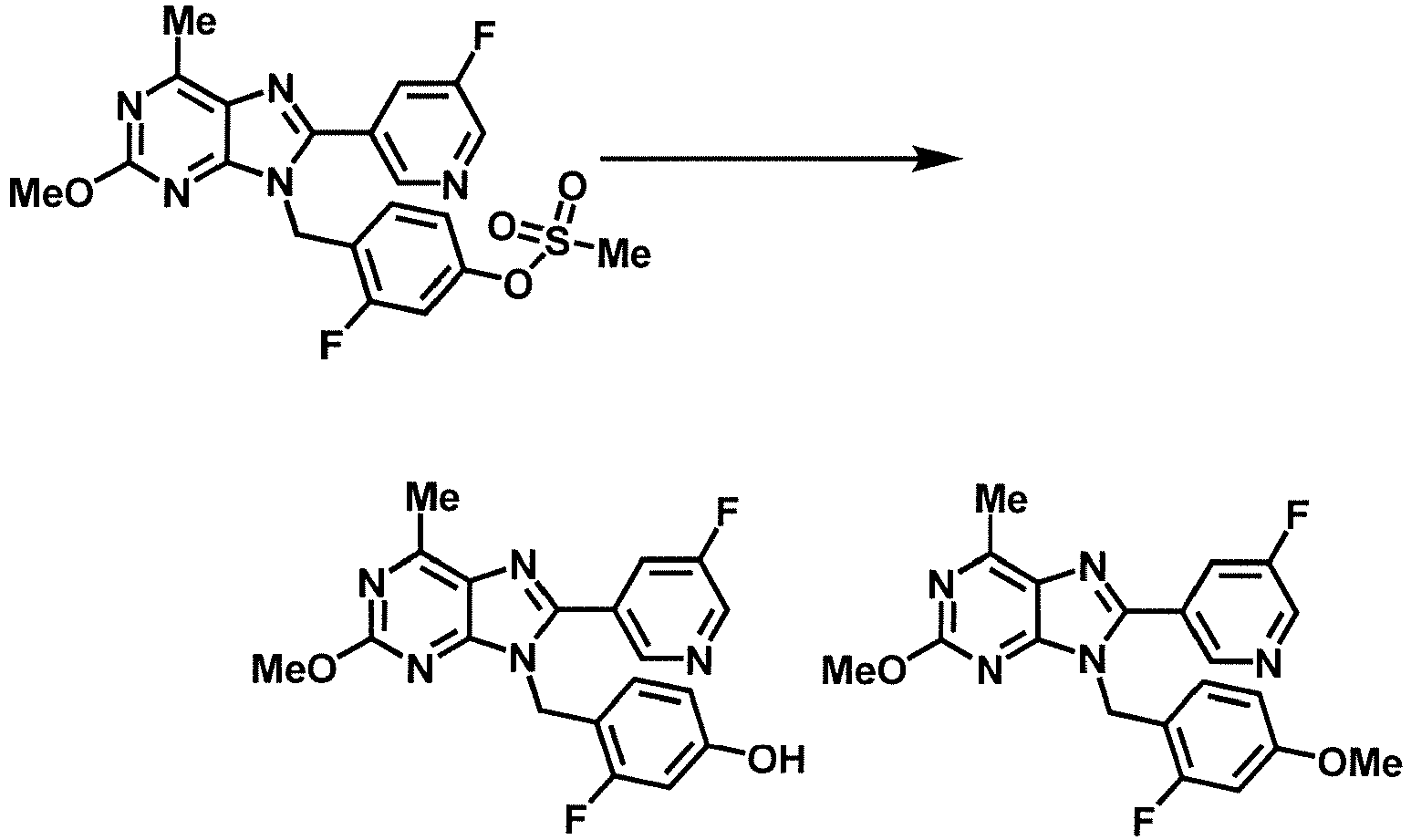
- To an ice-cooled solution of the compound of Example 342 (103 mg) in methanol (2 mL)/tetrahydrofuran (2 mL) was added 1 mol/L aqueous potassium hydroxide (0.223 mL), and the mixture was stirred in ice bath for 10 hours. To the reaction mixture was added 50 % aqueous potassium carbonate, and the mixture was extracted with chloroform/ethanol (3/1). The organic layer was dried over sodium sulfate, filtrated, and then concentrated in vacuo. The obtained residue was purified by amino silica gel column chromatography (chloroform/methanol) and amino silica gel column chromatography (hexane/ethyl acetate) to give the compound of Example 404 (57.0 mg) and the compound of Example 405 (10.0 mg).
Compound of Example 404: LC-MS [M+H]+ /Rt (min): 384.2/0.650 (Method C); 1H-NMR (DMSO-D6) δ: 9.95 (1H, br s), 8.75 (1H, d, J = 2.4 Hz), 8.74-8.71 (1H, m), 8.14-8.08 (1H, m), 6.86-6.78 (1H, m), 6.45-6.38 (2H, m), 5.44 (2H, s), 3.95 (3H, s), 2.68 (3H, s).
Compound of Example 405: LC-MS [M+H]+ /Rt (min): 398.3/0.801 (Method C); 1H-NMR (CDCl3) δ: 8.67-8.66 (1H, m), 8.58 (1H, d, J = 3.0 Hz), 7.70-7.66 (1H, m), 6.92 (1H, t, J = 8.5 Hz), 6.57-6.52 (2H, m), 5.43 (2H, s), 4.04 (3H, s), 3.73 (3H, s), 2.80 (3H, s). - According to the method of Example 405, Examples 405 - 406 were prepared by using the corresponding material compounds.
Example Chemical Structure Instrumental analysis data 406 
LC-MS [M+H]+/Rt (min) : 446.2/0.740 (Method C) 407 
LC-MS [M+H]+/Rt (min) : 366.2/0.575 (Method C) -

- To an ice-cooled solution of the compound of Example 349 (25.0 mg) in chloroform (0.4 mL) were added tert-butyl (1R,3S,5S)-3-hydroxy-8-azabicyclo[3.2.1]octane-8-carboxylate (29.0 mg), triphenylphosphine (34.0 mg), and diisopropyl azodicarboxylate (0.025 mL), and the mixture was stirred at room temperature overnight. The reaction mixture was concentrated in vacuo, and the obtained residue was purified by amino silica gel column chromatography (hexane/ethyl acetate) to give the title compound (29.0 mg). 1H-NMR (CDCl3) δ: 9.07-9.04 (1H, m), 8.99-8.95 (1H, m), 8.24-8.18 (1H, m), 7.00 (1H, t, J = 8.9 Hz), 6.60-6.45 (2H, m), 5.44 (2H, s), 4.55-4.48 (1H, m), 4.07 (3H, s), 3.75 (2H, s), 2.82 (3H, s), 1.99-1.91 (2H, m), 1.91-1.84 (2H, m), 1.48-1.46 (4H, m), 1.26 (9H, s).
- According to the methods of Example 66 and Example 408, Examples 409 - 421 were prepared by using the corresponding material compounds.
Example Chemical Structure Instrumental analysis data 409 
LC-MS [M+2H]2+/2/Rt (min): 278.3/0.581 (Method C) 410 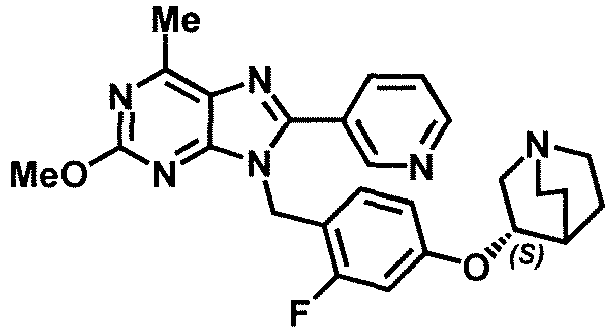
LC-MS [M+2H]2+/2/Rt (min) : 238.68/1.075 (Method C); 1H-NMR (CD3OD) δ: 8.84-8.81 (1H, m), 8.70 (1H, dd, J = 4.9, 1.2 Hz), 8.12 (1H, dt, J = 7.9, 1.8 Hz), 7.57 (1H, dt, J = 7.9, 3.1 Hz), 6.97 (1H, t, J = 8.5 Hz), 6.60-6.54 (2H, m), 5.50 (2H, s), 4.45-4.37 (1H, m), 4.03 (3H, s), 3.26-3.21 (1H, m), 2.91-2.74 (3H, m), 2.72 (3H, s), 2.71-2.63 (1H, m), 2.09-2.00 (1H, m), 1.95-1.83 (1H, m), 1.79-1.68 (1H, m), 1.66-1.54 (1H, m), 1.48-1.35 (1H, m), 1.31-1.18 (1H, m). 411 
LC-MS [M+2H]2+/2/Rt (min) : 241.3/0.520 (Method C); 1H-NMR (CDCl3) δ: 8.67-8.64 (1H, m), 8.58 (1H, d, J = 3.1 Hz), 7.72-7.66 (1H, m), 6.94-6.86 (1H, m), 6.59-6.50 (2H, m), 5.43 (2H, s), 4.35-4.23 (1H, m), 4.04 (3H, s), 2.80 (3H, s), 2.78-2.69 (2H, m), 2.59-2.30 (2H, m), 2.38 (3H, s), 2.16-2.02 (2H, m), 1.91-1.79 (2H, m). 412 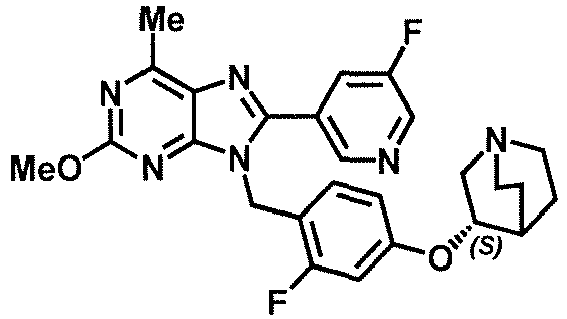
LC-MS [M+2H]2+ /2/Rt (min): 247.4/0.517 (Method C); 1H-NMR (CDCl3) δ: 8.67-8.64 (1H, m), 8.58 (1H, d, J = 2.4 Hz), 7.72-7.67 (1H, m), 6.94-6.88 (1H, m), 6.53-6.47 (2H, m), 5.43 (2H, s), 4.45-4.25 (1H, m), 4.04 (3H, s), 3.44-3.18 (1H, m), 3.05-2.77 (5H, m), 2.80 (3H, s), 2.51-1.37 (5H, m). 413 
LC-MS [M+2H]2+/2/Rt (min): 247.3/0.525 (Method C); 1H-NMR (CDCl3) δ: 8.67-8.64 (1H, m), 8.58 (1H, d, J = 2.4 Hz), 7.72-7.66 (1H, m), 6.95-6.88 (1H, m), 6.53-6.47 (2H, m), 5.43 (2H, s), 4.40-4.29 (1H, m), 4.04 (3H, s), 3.39-3.24 (1H, m), 3.08-2.82 (5H, m), 2.80 (3H, s), 2.49-1.38 (5H, m). 414 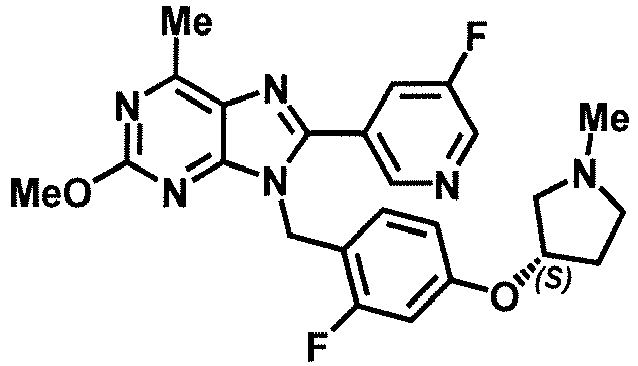
LC-MS [M+2H]2+/2/Rt (min) : 234.3/0.499 (Method C); 1H-NMR (CDCl3) δ: 8.66-8.64 (1H, m), 8.58 (1H, d, J = 3.0 Hz), 7.71-7.65 (1H, m), 6.93-6.87 (1H, m), 6.53-6.47 (2H, m), 5.43 (2H, s), 4.79-4.72 (1H, m), 4.04 (3H, s), 3.12-2.60 (4H, m), 2.80 (3H, s), 2.48 (3H, s), 2.37-2.26 (1H, m), 2.04-1.94 (1H, m). 415 
LC-MS [M+2H]2+/2/Rt (min): 234.3/0.479 (Method C); 1H-NMR (CDCl3) δ: 8.66-8.64 (1H, m), 8.58 (1H, d, J = 3.0 Hz), 7.71-7.66 (1H, m), 6.93-6.86 (1H, m), 6.52-6.46 (2H, m), 5.42 (2H, s), 4.78-4.71 (1H, m), 4.04 (3H, s), 3.05-2.75 (3H, m), 2.80 (3H, s), 2.70-2.55 (1H, m), 2.45 (3H, s), 2.36-2.25 (1H, m), 2.03-1.92 (1H, m). 416 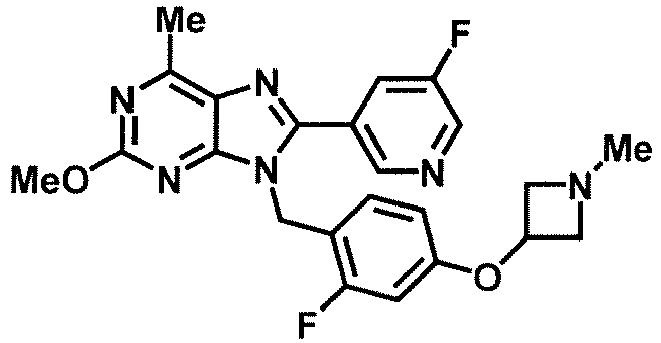
LC-MS [M+2H]2+/2/Rt (min): 227.2/0.473 (Method C); 1H-NMR (CDCl3) δ: 8.65-8.64 (1H, m), 8.58 (1H, d, J = 2.4 Hz), 7.71-7.65 (1H, m), 6.94-6.87 (1H, m), 6.45-6.37 (2H, m), 5.42 (2H, s), 4.72-4.65 (1H, m), 4.03 (3H, s), 3.93-3.86 (2H, m), 3.19-3.13 (2H, m), 2.80 (3H, s), 2.45 (3H, s). 417 
LC-MS [M+H]+/Rt (min) : 593.5/1.126 (Method C) 418 
LC-MS [M+2H]2+/2/Rt (min): 254.3/0.519 (Method C); 1H-NMR (CDCl3) δ: 8.66-8.64 (1H, m), 8.58 (1H, d, J = 3.1 Hz), 7.71-7.66 (1H, m), 6.93-6.86 (1H, m), 6.55-6.49 (2H, m), 5.42 (2H, s), 4.48-4.37 (1H, m), 4.04 (3H, s), 3.50-3.34 (2H, m), 2.80 (3H, s), 2.47 (3H, s), 2.30-1.92 (6H, m), 1.78-1.66 (2H, m). 419 
LC-MS [M+H]+/Rt (min): 553.4/0.969 (Method C); 1H-NMR (CDCl3) δ: 8.67-8.65 (1H, m), 8.58 (1H, d, J = 2.4 Hz), 7.71-7.66 (1H, m), 6.95-6.88 (1H, m), 6.58-6.51 (2H, m), 5.44 (2H, s), 4.07-3.97 (4H, m), 4.04 (3H, s), 3.75-3.70 (2H, m), 2.97-2.85 (1H, m), 2.80 (3H, s), 1.41 (9H, s). 420 
LC-MS [M+2H]2+ /2/Rt (min) : 228.3/0.463 (Method C); 1H-NMR (CDCl3) δ: 8.67-8.64 (1H, m), 8.58 (1H, d, J = 3.0 Hz), 7.71-7.66 (1H, m), 6.95-6.88 (1H, m), 6.61-6.54 (2H, m), 5.44 (2H, s), 4.24-4.11 (2H, m), 4.04 (3H, s), 3.03-2.89 (2H, m), 2.80 (3H, s), 2.53 (6H, br s). 421 
LC-MS [M+2H]2+/2/Rt (min) : 235.2/0.496 (Method C); 1H-NMR (CDCl3) δ: 8.68-8.64 (1H, m), , 8.58 (1H, d, J = 3.1 Hz), 7.71-7.65 (1H, m), 6.93-6.86 (1H, m), 6.57-6.50 (2H, m), 5.43 (2H, s), 4.04 (3H, s), 3.95 (2H, t, J = 6.1 Hz), 2.80 (3H, s), 2.71-2.61 (2H, m), 2.42 (6H, br s), 2.12-2.01 (2H, m). -

- To a solution of the compound of Example 409 (50.0 mg) in N,N-dimethylformamide (1.5 mL) were added tetrakis(triphenylphosphine)palladium (10.4 mg) and zinc cyanide (12.7 mg), and the reaction solution was heated to 85°C and stirred with heating for 2 hours. The reaction solution was filtrated, and the filtrate was purified by reversed-phase column chromatography (water/acetonitrile/trifluoroacetic acid) to give the title compound (12.2 mg).
LC-MS [M+2H]2+/2//Rt (min): 250.67/0.538; 1H-NMR (CD3OD) δ: 9.06 (2H, s), 8.46 (1H, t, J = 2.1 Hz), 7.04 (1H, t, J = 8.9 Hz), 6.64-6.58 (2H, m), 5.55 (2H, s), 4.52-4.40 (1H, m), 4.08 (3H, s), 3.38-3.22 (1H, m), 2.94-2.79 (3H, m), 2.79-2.67 (2H, m), 2.76 (3H, s), 2.12-2.04 (1H, m), 1.98-1.88 (1H, m), 1.84-1.72 (1H, m), 1.70-1.58 (1H, m), 1.52-1.40 (1H, m). - According to the method of Example 216, Example 423 was prepared by using the corresponding material compound.
Example Chemical Structure Instrumental analysis data 423 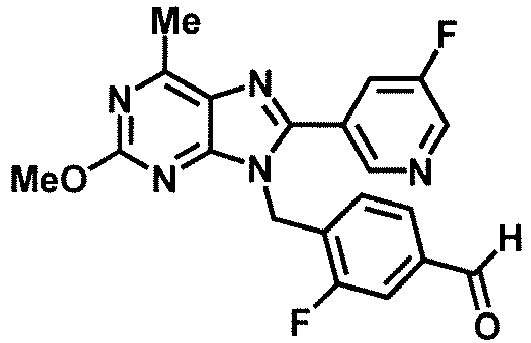
LC-MS: [M+H]+/Rt (min): 396.4/0.800 (Method A) - According to the methods of Example 123 and Example 227, Examples 424 - 437 were prepared by using the corresponding material compounds.
Example Chemical Structure Instrumental analysis data 424 
LC-MS: [M+H]+/Rt (min) : 453.3/0.569 (Method A); 425 
LC-MS: [M+H]+/Rt (min) : 453.3/0.572 (Method A); 426 
LC-MS: [M+H]+/Rt (min): 453.3/0.564 (Method A); 427 
LC-MS: [M+H]+/Rt (min) : 453.3/0.565 (Method A); 428 
LC-MS [M+H]+/Rt (min): 451.3/0.589 (Method A) 429 
LC-MS: [M+H]+/Rt (min) : 478.5/0.561 (Method A); 430 
LC-MS [M+2H]2+/2/Rt (min): 246.8/0.393 (Method C); 1H-NMR (CDCl3) δ: 8.72-8.69 (1H, m), 8.58 (1H, d, J = 2.4 Hz), 8.12 (1H, s), 7.77-7.72 (1H, m), 6.50 (1H, s), 5.41 (2H, s), 4.43 (2H, q, J = 7.0 Hz), 3.65 (3H, s), 3.07-3.01 (2H, m), 2.77 (3H, s), 2.61-2.51 (4H, m), 1.91-1.69 (2H, m), 1.59-1.52 (2H, m), 1.42 (3H, t, J = 7.0 Hz), 1.29-1.14 (2H, m). 431 
LC-MS [M+2H]2+/2/Rt (min) : 226.1/0.489 (Method C); 1H-NMR (CDCl3) δ: 8.66-8.62 (1H, m), 8.57 (1H, d, J = 2.4 Hz), 7.72-7.65 (1H, m), 6.91-6.84 (3H, m), 5.47 (2H, s), 4.03 (3H, s), 3.25-3.16 (2H, m), 2.81 (3H, s), 2.77-2.67 (2H, m), 2.62-2.50 (1H, m), 2.04-1.83 (1H, m), 1.83-1.74 (2H, m), 1.68-1.54 (2H, m). 432 
LC-MS [M+2H]2+/2/Rt (min): 233.3/0.554 (Method C); 1H-NMR (CDCl3) δ: 8.65-8.63 (1H, m), 8.56 (1H, d, J = 3.1 Hz), 7.71-7.64 (1H, m), 6.88-6.73 (3H, m), 5.47 (2H, s), 4.03 (3H, s), 3.13-3.04 (2H, m), 2.81 (3H, s), 2.59-2.50 (2H, m), 2.49-2.42 (2H, m), 2.31-2.06 (1H, m), 1.67-1.49 (3H, m), 1.27-1.12 (2H, m). 433 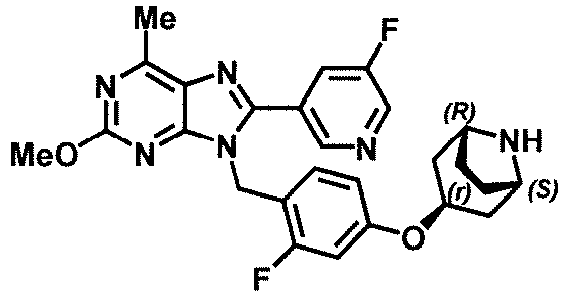
LC-MS [M+2H]2+/2/Rt (min) : 247.3/0.534 (Method C); 1H-NMR (CDCl3) δ: 8.67-8.64 (1H, m), 8.58 (1H, d, J = 3.1 Hz), 7.72-7.66 (1H, m), 6.94-6.88 (1H, m), 6.49-6.42 (2H, m), 5.42 (2H, s), 4.50-4.41 (1H, m), 4.04 (3H, s), 3.63-3.53 (2H, m), 2.80 (3H, s), 2.31-1.75 (7H, m), 1.30-1.19 (2H, m). 434 
LC-MS [M+2H]2+/2/Rt (min): 227.2/0.482 (Method C); 1H-NMR (CDCl3) δ: 8.66-8.63 (1H, m), 8.58 (1H, d, J = 2.4 Hz), 7.72-7.66 (1H, m), 6.96-6.86 (1H, m), 6.65-6.49 (2H, m), 5.44 (2H, s), 4.32-3.90 (5H, m), 4.04 (3H, s), 3.86-3.67 (2H, m), 3.25-3.09 (1H, m), 2.80 (3H, s). 435 
LC-MS [M+2H]2+/2/Rt (min): 219.2/0.466 (Method C); 1H-NMR (CDCl3) δ: 8.66-8.62 (1H, m), 8.57 (1H, d, J = 3.0 Hz), 7.74-7.67 (1H, m), 6.94-6.85 (3H, m), 5.48 (2H, s), 4.03 (3H, s), 3.43-3.35 (1H, m), 3.26-3.07 (3H, m), 2.87-2.80 (1H, m), 2.81 (3H, s), 2.47-2.15 (2H, m), 1.86-1.74 (1H, m). 436 
LC-MS [M+2H]2+/2/Rt (min) : 250.9/0.522 (Method C); 1H-NMR (CD3OD) δ: 9.06 (2H, dd, J = 3.7, 2.4 Hz), 8.46 (1H, t, J = 1.8 Hz), 7.03 (1H, t, J = 8.9 Hz), 6.59-6.52 (2H, m), 5.56 (2H, s), 4.56-4.55 (1H, m), 4.08 (3H, s), 3.54-3.44 (2H, m), 2.77 (3H, s), 2.14-2.03 (3H, m), 1.93-1.75 (5H, m). 437 
LC-MS [M+2H]2+/2/Rt (min) : 238.34/0.511 (Method C) - According to the method of Example 232, Example 438 was prepared by using the corresponding material compound.
Example Chemical Structure Instrumental analysis data 438 
LC-MS: [M+H]+/Rt (min) : 476.4/0.810 (Method A) - According to the method of Example 165 or Example 301, Examples 439 - 441 were prepared by using the corresponding material compounds.
Example Chemical Structure Instrumental analysis data 439 
LC-MS: [M+2H]2+/2/Rt (min): 259.7/0.477 (Method C); 1H-NMR (CDCl3) δ: 8.82-8.76 (1H, m), 8.23 (1H, d, J = 7.3 Hz), 8.03 (1H, dd, J = 2.4, 7.9 Hz), 6.85 (1H, t, J = 8.5 Hz), 6.46-6.39 (2H, m), 5.38 (2H, s), 4.23-4.17 (1H, m), 4.00 (3H, s), 3.20-3.12 (1H, m), 2.93-2.77 (2H, m), 2.77 (3H, s), 2.75-2.63 (2H, m), 2.05-1.99 (1H, m), 1.92-1.78 (1H, m), 1.71-1.62 (1H, m), 1.51-1.41 (1H, m), 1.36-1.25 (1H, m). 440 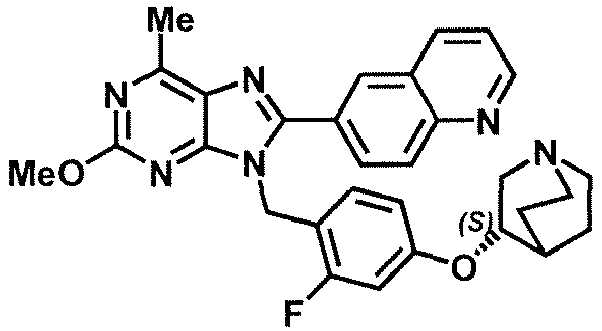
LC-MS: [M+2H]2+/2/Rt (min): 263.3/0.559 (Method C); 1H-NMR (CD3OD) δ: 8.99-8.95 (1H, m), 8.45-8.41 (1H, m), 8.27 (1H, d, J = 1.8 Hz), 8.15 (1H, d, J = 9.2 Hz), 8.04 (1H, dd, J = 2.1, 8.9 Hz), 7.65 (1H, dd, J = 4.3, 7.9 Hz), 6.98-6.91 (1H, m), 6.55-6.47 (2H, m), 5.60 (2H, s), 4.41-4.35 (1H, m), 4.07 (3H, s), 3.25-3.17 (1H, m), 2.85-2.79 (2H, m), 2.77 (3H, s), 2.67-2.62 (2H, m), 2.00-1.95 (1H, m), 1.91-1.81 (1H, m), 1.79-1.69 (1H, m), 1.64-1.53 (1H, m), 1.46-1.35 (1H, m). 441 
LC-MS [M+2H]2+ /2/Rt (min): 238.6/ 0.540; 1H-NMR (CD3OD) δ: 9.26 (1H, dd, J = 4.9, 1.8 Hz), 8.51-8.50 (1 H, m), 7.90-7.87 (1H, m), 7.03 (1H, t, J = 8.5 Hz), 6.60-6.55 (2H, m), 6.11 (2H, s), 4.46-4.39 (1H, m), 4.07 (3H, s), 3.29-3.20 (1H, m), 2. 91-2.81 (2H, m), 2.78 (3H, s), 2.77 -2.65 (2H, m), 2.10-2.03 (1H, m), 1.98-1.87 (1H, m), 1.81-1.70 (1H, m), 1.67-1.57 (1H, m), 1.49-1.37 (1 H, m). - According to the method of Example 352, Example 442 was prepared by using the corresponding material compound.
Example Chemical Structure Instrumental analysis data 442 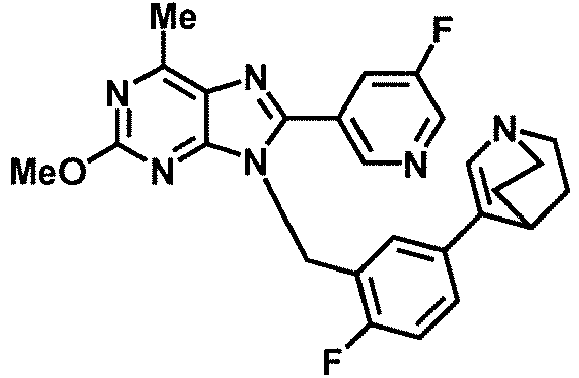
LC-MS: [M+H]+/Rt (min): 475.5/0.639 (Method A) - According to the method of Example 370, Example 443 was prepared by using the corresponding material compound.
Example Chemical Structure Instrumental analysis data 443 
LC-MS [M+2H]2+/2 /Rt (min) : 239.2/0.514 (Method C); 1H-NMR (CDCl3) δ: 8.65-8.64 (1H, m), 8.58 (1H, d, J = 2.4 Hz), 7.73-7.70 (1H, m), 7.17-7.10 (1H, m), 7.05-6.98 (1H, m), 6.95-6.90 (1H, m), 5.51 (2H, s), 4.03 (3H, s), 3.39-3.29 (1H, m), 3.12-2.88 (6H, m), 2.82 (3H, s), 1.85-1.74 (3H, m), 1.58-1.47 (1H, m), 1.45-1.34 (1H, m). -

- The compound of Example 346 (190 mg) was optically separated in the following conditions to obtain the title compounds (Example 444: 88.0 mg-first peak: 7.19 min, Example 445: 88.0 mg-second peak: 16.6 min).
Column: CHIRALPAK™ AD-H; Solvent: Solution A: hexane/diethylamine = 1/0.1 %, Solution B: 2-propanol/diethylamine = 1/0.1 %; Mobile phase condition: A/B = 60/40; Flow rate: 10 mL/min; Detection UV: 220 nm; Column temperature: 40°CExample Instrumental analysis data 444 LC-MS [M+2H]2+/2 /Rt (min): 230.7 /0.425 (Method C); 1H-NMR (CDCl3) δ: 9.29 (1H, s), 8.98 (2H, s), 6.98-6.89 (3H, m), 5. 49 (2H, s), 4.04 (3H, s), 3.47-3.29 (1H, m), 3.14-2.87 (6H, m), 2.82 (3H, s), 1.99-1.92 (1H, m), 1.87-1.72 (2H, m), 1.68 -1.55 (1H, m), 1.51-1.38 (1H, m). 445 LC-MS [M+2H]2+/2 /Rt (min): 230.7 /0.428 (Method C); 1H-NMR (CDCl3) δ: 9.29 (1H, s), 8.98 (2H, s), 6.98-6.89 (3H, m), 5. 49 (2H, s), 4.04 (3H, s), 3.45-3.30 (1H, m), 3.14-2.86 (6H, m), 2.82 (3H, s), 1.98-1.91 (1H, m), 1.86-1.72 (2H, m), 1.67 -1.53 (1H, m), 1.50-1.37 (1H, m). -

- To an ice-cooled solution of 6-(hydroxymethyl)pyridin-3-ol (946 mg) in tetrahydrofuran (25 mL) were added triethylamine (2.4 mL) and methanesulfonyl chloride (1.3 mL), and the mixture was stirred in ice bath for 2 hours. To the reaction mixture was added water, and the mixture was extracted with ethyl acetate. The organic layer was washed with aqueous saturated sodium bicarbonate, dried over sodium sulfate, filtrated, and then concentrated in vacuo. The residue was purified by silica gel column chromatography (hexane/ethyl acetate) to give the title compound (842 mg).
1H-NMR (CDCl3) δ: 8.56 (1H, d, J = 2.6 Hz), 7.73 (1H, dd, J = 2.6, 8.5 Hz), 7.57 (1H, d, J = 8.5 Hz), 5.34 (2H, s), 3.24 (3H, s), 3.12 (3H, s). -

- To an ice-cooled solution of 2-ethoxy-9H-purine-6-amine trifluoroacetate (2.00 g) in N,N-dimethylformamide (30 mL) were added potassium carbonate (3.01 g) and methyl 4-(bromomethyl)benzoate (2.00 g). The reaction mixture was stirred at room temperature for 28 hours. To the reaction mixture was added aqueous saturated sodium bicarbonate, and the mixture was extracted with chloroform. The organic layer was dried over sodium sulfate, filtrated, and then concentrated in vacuo. The residue was purified by silica gel column chromatography (chloroform/methanol) to give the title compound (1.57 g).
LC-MS [M+H]+/Rt (min): 328.3/0.745 (Method A) - According to the method of Reference example 2, Reference examples 3 - 22 were prepared by using the corresponding material compounds.
Reference example Chemical Structure Instrumental analysis data 3 
LC-MS: [M+H]+/Rt (min) : 356.1/0.858 (Method A) 4 
LC-MS: [M+H] +/Rt (min): 358.2/0.604 (Method A) 5 
LC-MS: [M+H]+/Rt (min) : 327.3/0.652 (Method A) 6 
1H-NMR (400 MHz, DMSO-d6) δ: 9.97 (1H, s), 8.09 (1H, s), 7.89 (2H, d, J =8.2 Hz), 7.48 (2H, d, J = 8.2 Hz), 7.30 (2H, brs), 5.38 (2H, s), 4.30 (2H, t, J = 4.7 Hz), 3.58 (2H, t, J = 4.7 Hz), 3.26 (3H, s). 7 
LC-MS: [M+H]+/Rt (min): 298.3/0.650 (Method A) 8 
1H-NMR (CDCl3) δ: 8.45 (1H, d, J = 2.4 Hz), 7.62-7.59 (2H, m), 7.30 (1H, d, J = 7.9 Hz), 5.61 (2H, br s), 5.27 (2H, s), 4.37 (2H, q, J = 7.1 Hz), 1.41 (3H, t, J = 7.1 Hz). 9 
1H-NMR (CDCl3) δ: 8.36 (1H, d, J = 1.8 Hz), 7.88-7.83 (1H, m), 6.92-6.89 (1H, m), 5.44 (2H, s), 5.30 (2H, s), 4.39 (2H, q, J = 7.2 Hz), 1.42 (3H, t, J = 7.2 Hz). 10 
1H-NMR (DMSO-D6) δ: 8.26 (1H, s), 7.94-7.91 (2H, m), 7.81 (2H, br s), 7.35 (2H, d, J = 8.5 Hz), 5.43 (2H, s), 3.82 (3H, s). 11 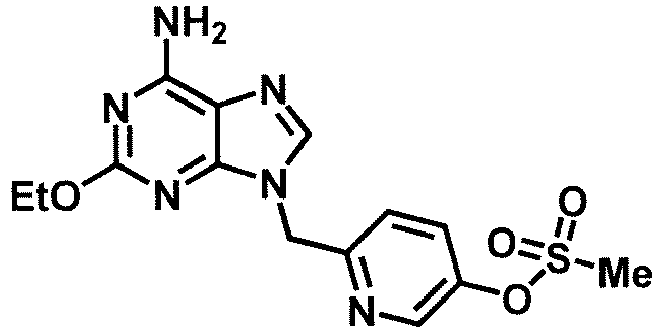
LC-MS [M+H]+/Rt (min) : 365.2/0.667 (Method C) 12 
1H-NMR (CDCl3) δ: 7.59 (1H, s), 7.51 (1H, s), 7.40 (1H, s), 5.47 (2H, s), 5.14 (2H, s), 4.41 (2H, q, J = 7.1 Hz), 3.87 (3H, s), 1.45-1.40 (3H, m). 13 
LC-MS: [M+H]+/Rt (min): 305.3/0.536 (Method C); 1H-NMR (400 MHz, CDCl3) δ: 8.34 (1H, d, J = 5.5 Hz), 7.62 (1H, s), 7.17 (1H, s), 7.05 (1H, d, J = 5.5 Hz), 5.72 (2H, s), 5.27 (2H, s), 4.34 (2H, q, J = 7.1 Hz), 1.38 (3H, t, J = 7.0 Hz). 14 
LC-MS: [M+H]+/Rt (min): 305.3/0.584 (Method C); 1H-NMR (400 MHz, CDCl3) δ: 7.79 (1H, s), 7.59 (1H, dd, J = 7.9, 7.9 Hz), 7.25 (1H, d, J = 7.9 Hz), 7.09 (1H, d, J = 7.9 Hz), 5.71 (2H, s), 5.36 (2H, s), 4.35 (2H, q, J = 7.0 Hz), 1.38 (3H, t, J = 7.0 Hz). 15 
LC-MS: [M+H]+/Rt (min) : 305.3/0.573 (Method C); 1H-NMR (400 MHz, CDCl3) δ: 8.46 (1H, d, J = 6.1 Hz), 7.78 (1H, s), 7.24-7.23 (2H, m), 5.56 (2H, s), 5.37 (2H, s), 4.37 (2H, q, J = 7.1 Hz), 1.40 (3H, t, J = 7.1 Hz). 16 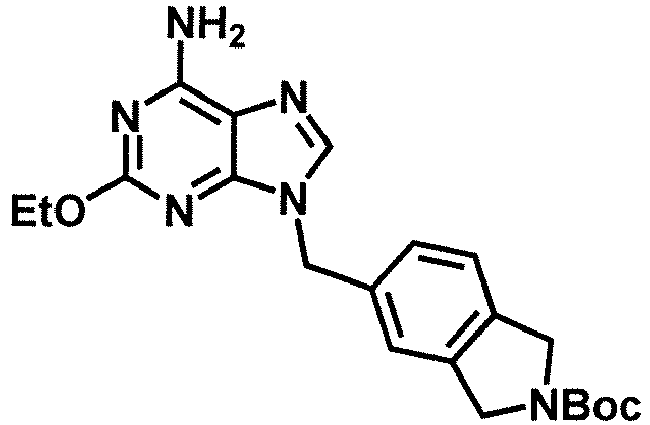
LC-MS: [M+H]+/Rt (min): 411.4/0.848 (Method C); 1H-NMR (400 MHz, CDCl3) δ: 7.58 (1H, d, J = 2.4 Hz), 7.25-7.10 (3H, m), 5.57 (2H, s), 5.26 (2H, s), 4.69-4.57 (4H, m), 4.39 (2H, q, J = 7.1 Hz), 1.50 (9H, s), 1.41 (3H, t, J = 7.1 Hz). 17 
1H-NMR (400 MHz, CDCl3) δ: 7.74 (1H, s), 6.63 (1H, s), 5.62 (2H, s), 5.45 (2H, s), 4.47-4.35 (4H, m), 1.46-1.37 (6H, m). 18 
1H-NMR (400 MHz, CDCl3) δ: 7.58 (1H, s), 7.47 (2H, d, J = 8.5 Hz), 7.17 (2H, d, J = 8.5 Hz), 5.62 (2H, s), 5.22 (2H, s), 4.38 (2H, q, J = 7.1 Hz), 1.41 (3H, t, J = 7.1 Hz). 19 
1H-NMR (400 MHz, CDCl3) δ: 7.62 (1H, s), 7.37 (2H, d, J = 8.5 Hz), 7.27 (2H, d, J = 8.5 Hz), 5.63 (2H, s), 5.29 (2H, s), 4.39 (2H, q, J = 7.1 Hz), 3.14 (3H, s), 1.41 (3H, t, J = 7.1 Hz). 20 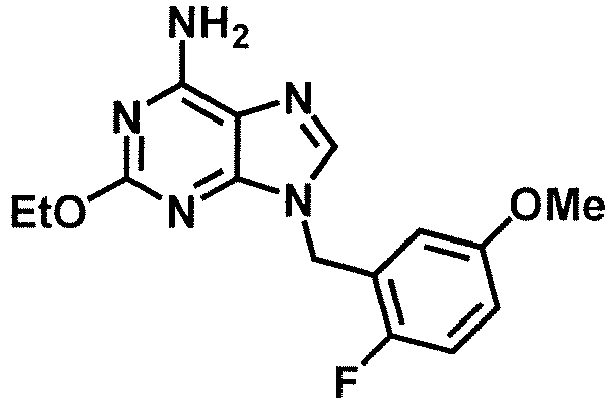
LC-MS [M+H]+/Rt (min): 318.0/0.676 (Method C); 1H-NMR (400 MHz, CDCl3) δ: 7.66 (1H, s), 7.03-6.98 (1H, m), 6.84 (1H, dd, J = 3.1, 6.1 Hz), 6.82-6.76 (1H, m), 5.67 (2H, s), 5.27 (2H, s), 4.40 (2H, q, J = 7.1 Hz), 3.71 (3H, s), 1.41 (3H, t, J = 7.0 Hz). 21 
LC-MS [M+H]+/Rt (min): 288.0/0.658 (Method C); 1H-NMR (400 MHz, CDCl3) δ: 7.67 (1H, s), 7.35-7.25 (2H, m), 7.13-7.04 (2H, m), 5.56 (2H, s), 5.32 (2H, s), 4.40 (2H, q, J = 7.1 Hz), 1.41 (3H, t, J = 7.1 Hz). 22 
LC-MS [M+H]+/Rt (min) : 295.0/0.551 (Method C); 1H-NMR (400 MHz, CDCl3) δ: 7.78 (1H, s), 7.71 (1H, d, J = 7.9 Hz), 7.58-7.52 (1H, m), 7.46-7.40 (2H, m), 5.56 (2H, s), 5.50 (2H, s), 4.38 (2H, q, J = 7.1 Hz), 1.40 (3H, t, J = 7.1 Hz). -

- To a solution of the compound of Reference example 18 (700 mg) in a mixture of dimethylformamide (10 mL)/water (1.7 mL) were added N-Boc-1,2,5,6-tetrahydropyridine-4-(pinacolato)boronate (715 mg), potassium carbonate (834 mg), and 1,1'-bis(diphenylphosphino)ferrocene palladium chloride (221 mg), and the mixture was stirred at 80°C for 2 hours. The reaction mixture was cooled to room temperature. Water was added thereto, and the mixture was extracted with ethyl acetate. The organic layer was dried over sodium sulfate, filtrated, and then concentrated in vacuo. The residue was purified by silica gel column chromatography (chloroform/methanol) to give the title compound (820 mg). LC-MS [M+H]+/Rt (min): 451.5/0.963 (Method C); 1H-NMR (400 MHz, CDCl3) δ: 7.58 (1H, s), 7.34 (2H, d, J = 7.9 Hz), 7.26 (2H, d, J = 7.9 Hz), 6.05-5.97 (1H, m), 5.54 (2H, s), 5.25 (2H, s), 4.39 (2H, q, J = 7.1 Hz), 4.09-4.03 (2H, m), 3.65-3.59 (2H, m), 2.52-2.43 (2H, m), 1.48 (9H, s), 1.41 (3H, t, J = 7.1 Hz).
- According to the method of Reference example 23, Reference example 24 was prepared by using the corresponding material compound.
Reference example Chemical Structure Instrumental analysis data 24 
LC-MS [M+H]+/Rt (min): 437.4/0.912 (Method C); 1H-NMR (400 MHz, CDCl3) δ: 7.61 (1H, s), 7.35 (2H, d, J = 7.8 Hz), 7.27 (2H, d, J = 7.8 Hz), 6.20-6.06 (1H, m), 5.72 (2H, s), 5.26 (2H, s), 4.56-4.20 (6H, m), 1.50 (9H, s), 1.41 (3H, t, J = 6.9 Hz). -
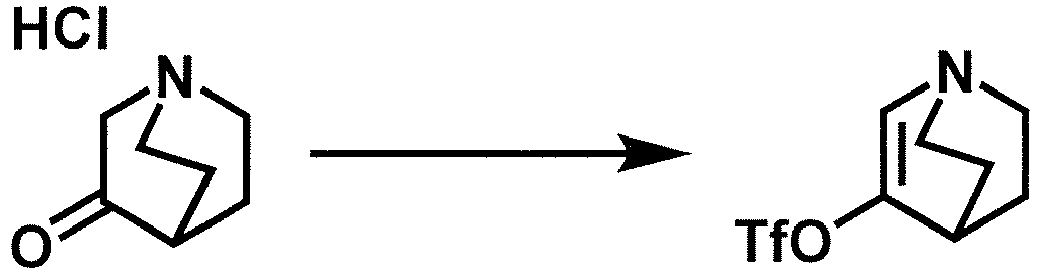
- To a solution of quinuclidin-3-one (5.34 g) in tetrahydrofuran (220 mL) was added lithium bis(trimethylsilyl)amide (1.3 mol/l, 58.4ml) at -78°C. The mixture was stirred for 30 minutes, and then N-phenyl(trifluoromethane)sulfonamide (14.15 g) was added thereto. The mixture was stirred at -78°C for one hour, and warmed to room temperature, followed by stirring for 2 hours. The reaction mixture was cooled to 0°C. Water was added thereto, and the mixture was extracted with ethyl acetate. The organic layer was dried over sodium sulfate, filtrated, and then concentrated in vacuo. The residue was purified by silica gel column chromatography (chloroform/methanol) to give the title compound (6.15 g). LC-MS [M+H]+/Rt (min): 258.1/0.374 (Method C); 1H-NMR (400 MHz, CDCl3) δ: 6.47 (1H, d, J = 2.3 Hz), 3.01-2.91 (2H, m), 2.87-2.82 (1H, m), 2.69-2.59 (2H, m), 1.90-1.73 (4H, m).
-

- To a solution of the compound of Reference example 25 (515 mg) in 1,4-dioxane (10 mL) were added bis(pinacolato)diboron (610 mg), potassium acetate (432 mg), 1,1'-bis(diphenylphosphino)ferrocene palladium chloride (131 mg), and 1,1'-bis(diphenylphosphino)ferrocene (44.4 mg), and the mixture was stirred at 90°C for 2 hours.
- To the reaction mixture were added the compound of Reference example 18 (581 mg), potassium carbonate (461 mg), 1,1'-bis(diphenylphosphino)ferrocene palladium chloride (98 mg), and water (0.3 ml), and the mixture was stirred at 80°C for 2 hours. The reaction mixture was cooled to room temperature. Water was added thereto, and the mixture was extracted with ethyl acetate. The organic layer was dried over sodium sulfate, filtrated, and then concentrated in vacuo. The residue was purified by silica gel column chromatography (chloroform/methanol) to give the title compound (403 mg).
1H-NMR (400 MHz, CDCl3) δ: 7.59 (1H, s), 7.39 (2H, d, J = 7.9 Hz), 7.29 (2H, d, J = 7.9 Hz), 6.81 (1H, d, J = 1.2 Hz), 5.59 (2H, s), 5.26 (2H, s), 4.39 (2H, q, J = 7.0 Hz), 3.16-3.11 (1H, m), 3.06-2.96 (2H, m), 2.69-2.59 (2H, m), 1.81-1.72 (2H, m), 1.61-1.49 (2H, m), 1.41 (3H, t, J = 7.0 Hz). - According to the method of Reference example 26, Reference examples 27 - 29 were prepared by using the corresponding material compounds.
Reference example Chemical Structure Instrumental analysis data 27 
LC-MS [M+H]+/Rt (min): 258.2/0.615 (Method C); 1H-NMR (400 MHz, CDCl3) δ: 8.01 (2H, d, J = 8.5 Hz), 7.46 (2H, d, J = 8.5 Hz), 6.91 (1H, d, J = 1.2 Hz), 4.38 (2H, q, J = 7.1 Hz), 3.22-3.14 (1H, m), 3.07-2.93 (2H, m), 2.73-2.57 (2H, m), 1.85-1.68 (2H, m), 1.64-1.50 (2H, m), 1.40 (3H, t, J = 7.0 Hz). 28 
LC-MS [M+H]+/Rt (min): 244.9/0.330 (Method C); 1H-NMR (400 MHz, CDCl3) δ: 9.18 (1H, d, J = 2.4 Hz), 8.23 (1H, dd, J = 2.4, 9.2 Hz), 7.54 (1H, d, J = 9.2 Hz), 7.32 (1H, d, J = 1.8 Hz), 3.95 (3H, s), 3.63-3.57 (1H, m), 3.09-2.99 (2H, m), 2.72-2.59 (2H, m), 1.85-1.74 (2H, m), 1.62-1.49 (2H, m). 29 
1H-NMR (400 MHz, CDCl3) δ: 7.94-7.88 (1H, m), 7.26-7.22 (1H, m), 7.16 (1H, dd, J = 12.2, 1.8 Hz), 6.95 (1H, d, J = 1.8 Hz), 3.93 (3H, s), 3.15-3.11 (1H, m), 3.06-2.98 (2H, m), 2.68-2.58 (2H, m), 1.83-1.74 (2H, m), 1.60-1.50 (2H, m). -

- To a solution of the compound of Reference example 26 (260 mg) in ethanol (2 mL)/tetrahydrofuran (0.1 ml) were added acetic acid (0.237 ml) and 5 % palladium carbon (294 mg). The reaction mixture was stirred at room temperature under hydrogen atmosphere for 10 hours, filtrated, and then concentrated in vacuo. The residue was purified by silica gel column chromatography (chloroform/methanol) to give the title compound (149 mg).
1H-NMR (400 MHz, CDCl3) δ: 7.59 (1H, s), 7.27 (2H, d, J = 8.5 Hz), 7.24 (2H, d, J = 8.5 Hz), 5.55 (2H, s), 5.24 (2H, s), 4.40 (2H, q, J = 7.1 Hz), 3.37-3.24 (1H, m), 3.10-3.02 (1H, m), 3.01-2.79 (5H, m), 1.93-1.88 (1H, m), 1.79-1.69 (2H, m), 1.68-1.57 (1H, m), 1.41 (3H, t, J = 7.1 Hz), 1.39-1.31 (1H, m). - According to the method of Reference example 30, Reference examples 31 - 35 were prepared by using the corresponding material compounds.
Reference example Chemical Structure Instrumental analysis data 31 
LC-MS: [M+H]+/Rt (min): 453.5/1.01 (Method C); 1H-NMR (400 MHz, CDCl3) δ: 7.58 (1H, s), 7.24 (2H, d, J = 7.9 Hz), 7.17 (2H, d, J = 7.9 Hz) , 5.59 (2H, s), 5.23 (2H, s), 4.39 (2H, q, J = 7.1 Hz), 4.30-4.12 (2H, m), 2.86-2.69 (2H, m), 2.68-2.57 (1H, m), 1.82-1.73 (2H, m), 1.65-1.53 (2H, m), 1.47 (9H, s), 1.41 (3H, t, J = 7.1 Hz). 32 
LC-MS: [M+H]+/Rt (min): 439.4/0.902 (Method C) 33 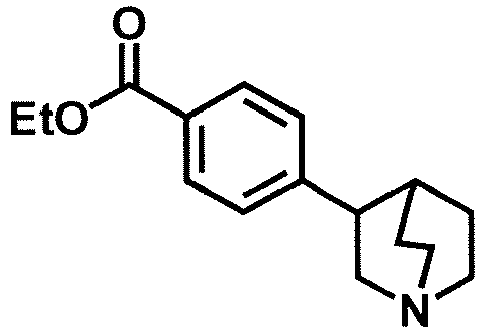
LC-MS [M+H]+/Rt (min): 260.3/0.629 (Method C); 1H-NMR (400 MHz, CDCl3) δ: 8.01 (2H, d, J = 7.9 Hz), 7.34 (2H, d, J = 7.9 Hz), 4.37 (2H, q, J = 7.1 Hz), 3.41-3.28 (1H, m), 3.16-2.78 (6H, m), 1.98-1.90 (1H, m), 1.78-1.58 (3H, m), 1.39 (3H, t, J = 7.1 Hz), 1.38-1.32 (1H, m). 34 
LC-MS [M+H]+/Rt (min): 247.0/0.315 (Method C); 1H-NMR (400 MHz, CDCl3) δ: 9.18 (1H, d, J = 2.1 Hz), 8.21 (1H, dd, J = 8.2, 2.1 Hz), 7.28 (1H, d, J = 8.2 Hz), 3.94 (3H, s), 3.61-3.51 (1H, m), 3.30-3.20 (1H, m), 3.18-3.11 (1H, m), 3.11-2.99 (1H, m), 2.99-2.88 (2H, m), 2.88-2.77 (1H, m), 2.11-2.04 (1H, m), 1.81-1.66 (2H, m), 1.66-1.54 (1H, m), 1.41-1.26 (1H, m) . 35 
LC-MS [M+H]+/Rt (min): 263.9/0.368 (Method C); 1H-NMR (400 MHz, CDCl3) δ: 7.90 (1H, dd, J = 7.9, 12.8 Hz), 7.10 (1H, d, J = 7.9 Hz), 7.05 (1H, d, J = 12.8 Hz), 3.92 (3H, s), 3.39-3.27 (1H, m), 3.08-2.79 (6H, m), 1.99-1.93 (1H, m), 1.78-1.69 (2H, m), 1.66-1.55 (1H, m), 1.44-1.33 (1H, m). -

- To an ice-cooled solution of the compound of Reference example 2 (1.57 g) in a mixture of chloroform (15 mL)/methanol (3 mL) were added sodium acetate (0.786 g), and then a solution of bromine (0.358 mL) in chloroform (5 mL) dropwise. The reaction mixture was stirred in ice bath for 3 hours. To the reaction mixture were added aqueous saturated sodium thiosulfate and aqueous saturated sodium bicarbonate, and the mixture was extracted with chloroform. The organic layer was dried over sodium sulfate, filtrated, and then concentrated in vacuo. The residue was purified by silica gel column chromatography (chloroform/methanol) to give the title compound (1.77 g).
LC-MS [M+H]+/Rt (min): 406.3/0.876 (Method A) - According to the method of Reference example 36, Reference examples 37 - 58 were prepared by using the corresponding material compounds.
Reference example Chemical Structure Instrumental analysis data 37 
LC-MS: [M+H]+/Rt (min) : 436.2/0.811 (Method A) 38 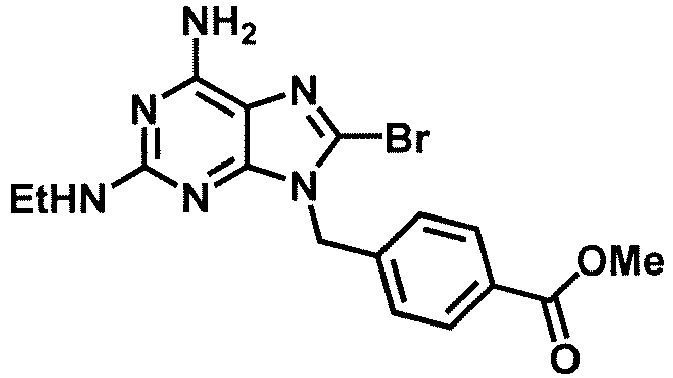
LC-MS: [M+H] +/Rt (min): 405.3/0.759 (Method A) 39 
LC-MS [M+H]+/Rt (min): 406.0/0.731 (Method A) 40 
LC-MS: [M+H]+/Rt (min): 376.3/0.792 (Method A) 41 
1H-NMR (CDCl3) δ: 8.01 (2H, d, J = 8.5 Hz), 7.34 (2H, d, J = 8.5 Hz), 5.74 (2H, br s), 5.41 (2H, s), 3.91 (3H, s). 42 
1H-NMR (CDCl3) δ: 8.52 (1H, d, J = 2.4 Hz), 7.68 (1H, dd, J = 2.4, 8.0 Hz), 7.29 (1H, d, J = 8.0 Hz), 5.53 (2H, br s), 5.29 (2H, s), 4.38 (2H, q, J = 7.1 Hz), 1.41 (3H, t, J = 7.1 Hz). 43 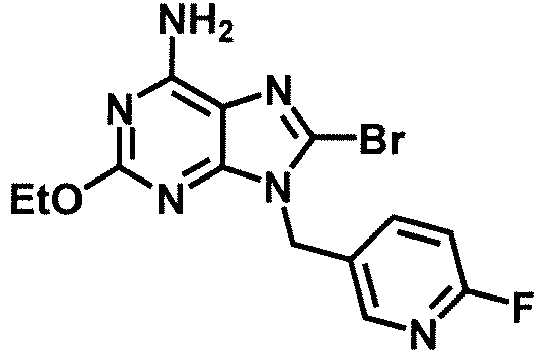
1H-NMR (CDCl3) δ: 8.36 (1H, d, J = 1.8 Hz), 7.88-7.83 (1H, m), 6.92-6.89 (1H, m), 5.44 (2H, s), 5.30 (2H, s), 4.39 (2H, q, J = 7.2 Hz), 1.42 (3H, t, J = 7.2 Hz). 44 
1H-NMR (DMSO-D6) δ: 8.50 (1H, d, J = 2.8 Hz), 7.84 (1H, dd, J = 2.8, 8.6 Hz), 7.42 (1H, d, J = 8.6 Hz), 5.39 (2H, s), 4.19 (2H, q, J = 7.1 Hz), 3.45 (3H, s), 1.21 (3H, t, J = 7.1 Hz). 45 
1H-NMR (CDCl3) δ: 7.57 (1H, s), 7.44 (1H, s), 5.41 (2H, s), 5.16 (2H, s), 4.41 (2H, q, J = 7.1 Hz), 3.84 (3H, s), 1.43 (3H, t, J = 7.3 Hz) . 46 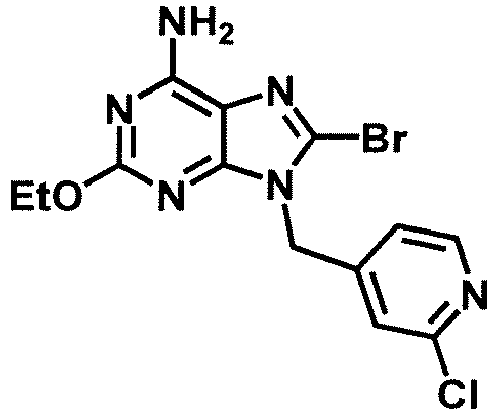
1H-NMR (400 MHz, CDCl3) δ: 8.35 (1H, d, J = 5.5 Hz), 7.21 (1H, d, J = 1.2 Hz), 7.09 (1H, dd, J = 1.2, 5.5 Hz), 5.56 (2H, s), 5.28 (2H, s), 4.36 (2H, q, J = 7.0 Hz), 1.40 (3H, t, J = 7.0 Hz). 47 
1H-NMR (400 MHz, CDCl3) δ: 7.57 (1H, dd, J = 7.3, 7.6 Hz), 7.24 (1H, d, J = 7.6 Hz), 6.80 (1H, d, J = 7.3 Hz), 5.55 (2H, s), 5.42 (2H, s), 4.32 (2H, q, J = 7.1 Hz), 1.36 (3H, t, J = 7.1 Hz). 48 
LC-MS: [M+H]+/Rt (min): 385.2/0.727 (Method C); 1H-NMR (400 MHz, CDCl3) δ: 8.45 (1H, d, J = 5.5 Hz), 7.23 (1H, dd, J = 5.5, 1.8 Hz), 7.05 (1H, d, J = 1.8 Hz), 5.58 (2H, s), 5.42 (2H, s), 4.34 (2H, q, J = 7.1 Hz), 1.37 (3H, t, J = 7.1 Hz). 49 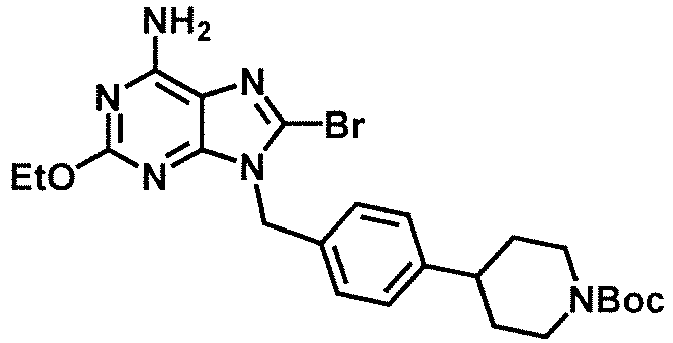
LC-MS: [M+H]+/Rt (min): 533.4/1.094 (Method C); 1H-NMR (400 MHz, CDCl3) δ: 7.30 (2H, d, J = 7.9 Hz), 7.14 (2H, d, J = 7.9 Hz), 5.49 (2H, s), 5.26 (2H, s), 4.39 (2H, q, J = 7.1 Hz), 4.28-4.13 (2H, m), 2.83-2.70 (2H, m), 2.66-2.56 (1H, m), 1.82-1.73 (2H, m), 1.60-1.50 (2H, m), 1.47 (9H, s), 1.41 (3H, t, J = 7.1 Hz). 50 
LC-MS: [M+H]+/Rt (min) : 519.4/1.054 (Method C) 51 
1H-NMR (400 MHz, CDCl3) δ: 7.34 (2H, d, J = 8.5 Hz), 7.22 (2H, d, J = 8.5 Hz), 5.48 (2H, s), 5.28 (2H, s), 4.39 (2H, q, J = 6.9 Hz) , 3.38-3.30 (1H, m), 3.13-3.04 (1H, m), 3.04-2.82 (5H, m), 2.00-1.90 (1H, m), 1.81-1.71 (2H, m), 1.70-1.60 (1H, m), 1.45-1.33 (4H, m). 52 
LC-MS: [M+H]+/Rt (min): 491.35/0.987 (Method C); 1H-NMR (400 MHz, CDCl3) δ: 7.30-7.19 (2H, m), 7.16 (1H, d, J = 11.0 Hz), 5.52 (2H, s), 5.29 (2H, s), 4.64 (2H, s), 4.60 (2H, s), 4.38 (2H, q, J = 7.1 Hz), 1.50 (9H, s), 1.41 (3H, t, J = 7.1 Hz). 53 
LC-MS: [M+H]+/Rt (min) : 413.3/0.763 (Method C); 1H-NMR (400 MHz, CDCl3) δ: 6.56 (1H, s), 5.57 (2H, s), 5.47 (2H, s), 4.49-4.32 (4H, m), 1.45-1.35 (6H, m). 54 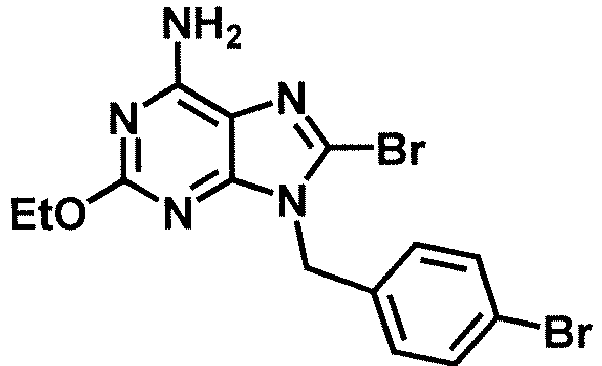
LC-MS: [M+H]+/Rt (min) : 428.2/0.956 (Method C); 1H-NMR (400 MHz, CD3OD) δ: 7.48 (2H, d, J = 8.5 Hz), 7.22 (2H, d, J = 8.5 Hz), 5.29 (2H, s), 4.36 (2H, q, J = 7.1 Hz), 1.35 (3H, t, J = 7.1 Hz). 55 
LC-MS [M+H]+/Rt (min) : 444.2/0.731 (Method C); 1H-NMR (400 MHz, CDCl3) δ: 7.43 (2H, d, J = 8.5 Hz), 7.31 (2H, d, J = 8.5 Hz), 5.37 (2H, s), 4.38 (2H, q, J = 6.7 Hz), 3.19 (3H, s), 1.37 (3H, t, J = 6.7 Hz). 56 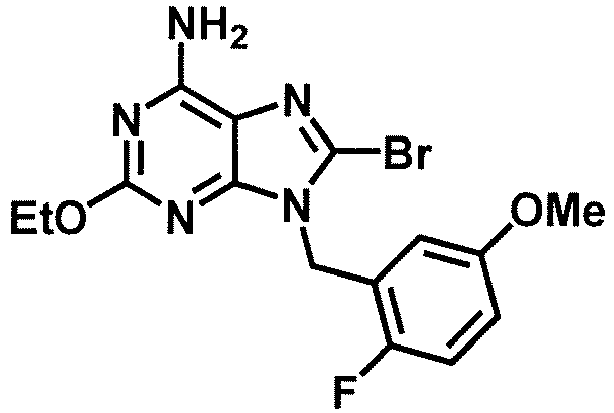
LC-MS [M+H]+/Rt (min): 397.9/0.849 (Method C); 1H-NMR (400 MHz, CDCl3) δ: 7.04-6.97 (1H, m), 6.80-6.73 (1H, m), 6.57 (1H, dd, J = 6.1, 3.1 Hz), 5.66 (2H, s), 5.33 (2H, s), 4.36 (2H, q, J = 7.1 Hz), 3.67 (3H, s), 1.38 (3H, t, J = 7.1 Hz). 57 
LC-MS [M+H]+/Rt (min) : 367.8/0.834 (Method C); 1H-NMR (400 MHz, CDCl3) δ: 7.31-7.24 (1H, m), 7.12-7.01 (3H, m), 5.76 (2H, s), 5.38 (2H, s), 4.35 (2H, q, J = 6.9 Hz), 1.38 (3H, t, J = 6.9 Hz). 58 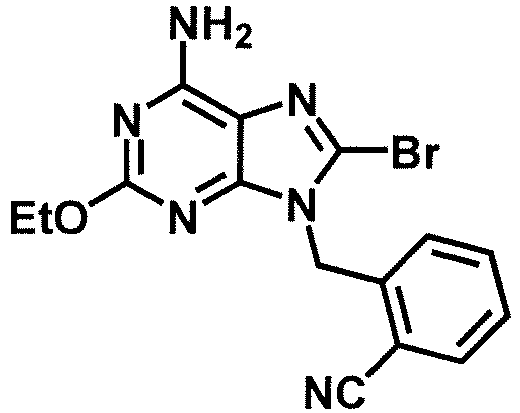
LC-MS [M+H]+/Rt (min) : 374.8/0.740 (Method C); 1H-NMR (400 MHz, CDCl3) δ: 7.72 (1H, dd, J = 7.9, 1.2 Hz), 7.53-7.48 (1H, m), 7.44-7.38 (1H, m), 7.02 (1H, d, J = 7.9 Hz), 5.58 (2H, s), 5.55 (2H, s), 4.34 (2H, q, J = 7.1 Hz), 1.37 (3H, t, J = 7.1 Hz). -

- To a solution of 2,4-dichloro-6-methyl-5-nitropyrimidine (20 g) in tetrahydrofuran (321 mL) were added dropwise N,N-diisopropylethylamine (24.5 mL) and ammonia (7.0 mol/L methanol solution, 20.6 mL) at -10°C, and the mixture was stirred at -10°C for 2.5 hours. To the reaction mixture was added water, and the mixture was extracted with ethyl acetate. The organic layer was washed with brine, dried over sodium sulfate, filtrated, and then concentrated in vacuo to give the title compound (17.5 g).
LC-MS [M+H]+/Rt (min): 188.8/0.503 (Method C) -

- To an ice-cooled solution of 2,4-dichloro-6-methyl-5-nitropyrimidine (502 mg) in tetrahydrofuran (10 mL) were added N,N-diisopropylethylamine (0.506 ml), and a solution of tert-butyl 3-(4-(aminomethyl)phenyl)pyrrolidine-1-carboxylate (714 mg) in tetrahydrofuran (15 mL). The reaction mixture was warmed to room temperature, and then stirred for 30 minutes. To the mixture in ice bath was water, and the mixture was extracted with ethyl acetate. The organic layer was dried over sodium sulfate, filtrated, and then concentrated in vacuo. The residue was purified by silica gel column chromatography (hexane/ethyl acetate) to give the title compound (1.06 g).
1H-NMR (400 MHz, CDCl3) δ: 8.40 (1H, t, J = 5.5 Hz), 7.31 (2H, d, J = 7.9 Hz), 7.24 (2H, d, J = 7.9 Hz), 4.76 (2H, d, J = 5.5 Hz), 3.87-3.72 (1H, m), 3.66-3.52 (1H, m), 3.45-3.22 (3H, m), 2.73 (3H, s), 2.32-2.21 (1H, m), 2.02-1.93 (1H, m), 1.47 (9H, s). -

- To an ice-cooled solution of the compound of Reference example 60 (479 mg) in ethanol (6 mL) was added 20 % sodium ethoxide solution (1.09 mL). The reaction mixture was warmed to room temperature, and then stirred for one hour. To the reaction mixture was added aqueous saturated ammonium chloride, and the mixture was extracted with chloroform. The organic layer was dried over sodium sulfate, filtrated, and then concentrated in vacuo. The residue was purified by silica gel column chromatography (hexane/ethyl acetate) to give the title compound (291 mg). LC-MS [M+H]+/Rt (min): 459.4/1.220 (Method D); 1H-NMR (400 MHz, CDCl3) δ: 8.80 (1H, t, J = 5.5 Hz), 7.29 (2H, d, J = 7.9 Hz), 7.23 (2H, d, J = 7.9 Hz), 4.76 (2H, d, J = 5.5 Hz), 4.40 (2H, q, J = 7.0 Hz), 3.87-3.72 (1H, m), 3.69-3.50 (1H, m), 3.45-3.20 (3H, m), 2.74 (3H, s), 2.31-2.19 (1H, m), 2.07-1.90 (1H, m), 1.47 (9H, s), 1.39 (3H, t, J = 7.0 Hz).
- According to the method of Reference example 61, Reference examples 62 - 65 were prepared by using the corresponding material compounds.
Reference example Chemical Structure Instrumental analysis data 62 
LC-MS [M+H]+/Rt (min) : 445.3/1.166 (Method D): 1H-NMR (400 MHz, CDCl3) δ: 8.79 (1H, t, J = 5.5 Hz), 7.29 (2H, d, J = 7.9 Hz), 7.23 (2H, d, J = 7.9 Hz), 4.77 (2H, d, J = 5.5 Hz), 3.98 (3H, s), 3.88-3.72 (1H, m), 3.68-3.50 (1H, m), 3.46-3.21 (3H, m), 2.74 (3H, s), 2.29-2.22 (1H, m), 2.01-1.91 (1H, m), 1.47 (9H, s). 63 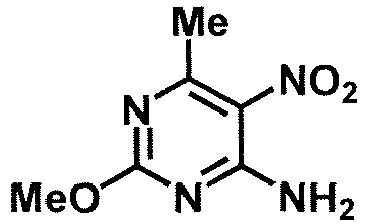
LC-MS [M+H]+/Rt (min): 184.7/0.554 (Method D) 64 
1H-NMR (CDCl3) δ: 7.89 (1H, br s), 5.89 (1H, br s), 4.43-4.37 (2H, m), 2.75 (3H, s), 1.45-1.38 (3H, m). 65 
LC-MS ([M+H]+/Rt (min)): 212.9/0.779 (Method A) -

- To an ice-cooled solution of the compound of Reference example 64 (1.8 g) in tetrahydrofuran (30 mL) were added dimethylaminopyridine (110 mg) and di-tert-butyl dicarbonate (3.71 g). The reaction mixture was warmed to room temperature and then stirred for 4 hours. To the reaction mixture was added 20 % sodium ethoxide solution (6.2 mL), and the mixture was stirred for one more hour. To the reaction mixture was added aqueous saturated ammonium chloride, and the mixture was extracted with chloroform. The organic layer was dried over sodium sulfate, filtrated, and then concentrated in vacuo. The residue was purified by silica gel column chromatography (hexane/ethyl acetate) to give the title compound (2.54 g). LC-MS [M+H]+/Rt (min): 299.2/1.035 (Method C); 1H-NMR (400 MHz, CDCl3) δ: 9.26 (1H, s), 4.51 (2H, q, J = 7.1 Hz), 2.70 (3H, s), 1.53 (9H, s), 1.43 (3H, t, J = 7.1 Hz).
- According to the method of Reference example 66, Reference examples 67 - 68 were prepared by using the corresponding material compounds.
Reference example Chemical Structure Instrumental analysis data 67 
1H-NMR (CDCl3) δ: 9.22 (1H, brs), 4.08 (3H, s), 2.71 (3H, s), 1.46 (9H, s) . 68 
LC-MS [M+H]+/Rt (min) : 313.5/1.096 (Method A) -
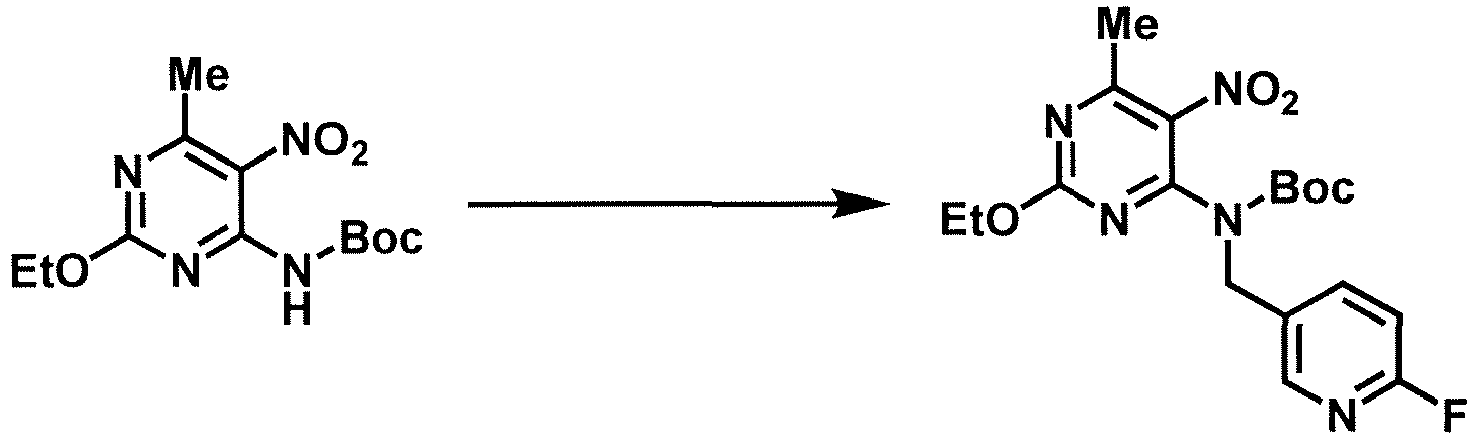
- To an ice-cooled solution of the compound of Reference example 66 (0.8 g) in N,N-dimethylformamide (13 mL) were added potassium carbonate (0.56 g), tetrabutylammonium iodide (50 mg), and 5-(chloromethyl)-2-fluoropyridine (0.59 g), and the mixture was stirred at room temperature for 28 hours. To the reaction mixture was added water, and the mixture was extracted with ethyl acetate. The organic layer was washed with brine, dried over sodium sulfate, filtrated, and then concentrated in vacuo. The obtained residue was purified by silica gel column chromatography (hexane/ethyl acetate) to give the title compound (0.96 g). 1H-NMR (CDCl3) δ: 8.23 (1H, d, J = 2.4 Hz), 7.97-7.93 (1H, m), 6.92-6.89 (1H, m), 5.15 (2H, s), 4.42 (2H, q, J = 7.1 Hz), 2.61 (3H, s), 1.44-1.38 (12H, m).
- According to the method of Reference example 69, Reference examples 70 - 73 were prepared by using the corresponding material compounds.
Reference example Chemical Structure Instrumental analysis data 70 
1H-NMR (CDCl3) δ: 8.23 (1H, d, J = 2.4 Hz), 7.98-7.93 (1H, m), 6.92-6.89 (1H, m), 5.15 (2H, s), 4.02 (3H, s), 2.62 (3H, s), 1.40 (9H, s). 71 
1H-NMR (CDCl3) δ: 8.22 (1H, s), 7.97-7.93 (1H, m), 6.92-6.90 (1H, m), 5.15 (2H, s), 4.30 (2H, t, J = 6.7 Hz), 2.61 (3H, s), 1.84-1.80 (2H, m), 1.40 (9H, s), 1.03 (3H, t, J = 7.3 Hz). 72 
LC-MS [M+H]+/Rt (min) : 390.3/0.959 (Method C); 1H-NMR (400 MHz, CDCl3) δ: 8.64-8.61 (1H, m), 8.51 (1H, dd, J = 4.6, 1.5 Hz), 7.83-7.78 (1H, m), 7.27 (3H, dd, J = 4.6, 7.6 Hz), 5.17 (2H, s), 4.39 (2H, q, J = 7.1 Hz), 2.61 (3H, s), 1.44-1.35 (12H, m). 73 
LC-MS [M+H]+/Rt (min) : 448.3/1.158 (Method C); 1H-NMR (400 MHz, CDCl3) δ: 9.12 (1H, d, J = 3.1 Hz), 8.27 (1H, dd, J = 2.1, 7.9 Hz), 7.51 (1H, d, J = 7.9 Hz), 5.33 (2H, s), 4.22 (2H, q, J = 6.9 Hz), 3.94 (3H, s), 2.64 (3H, s), 1.37 (9H, s), 1.29 (3H, t, J = 6.9 Hz). -

- To a solution of 4-(4-bromo-1H-pyrazol-1-yl)-1-methylpiperidine (389 mg) in tetrahydrofuran (5.3 mL) was added N-butyllithium (1.14 mL, 1.54 mol/L hexane solution) at -78°C, and the mixture was stirred for 15 minutes. Subsequently, a solution of N,N-dimethylformamide (0.185 mL) in tetrahydrofuran (0.5 mL) was added dropwise thereto, and the mixture was warmed to room temperature and stirred for one hour. To the reaction mixture was added water, and the mixture was extracted with chloroform. The organic layer was dried over sodium sulfate, filtrated, and then concentrated in vacuo.
- The obtained crude product (308 mg) was dissolved in methanol (12.5 mL). Sodium borohydride (121 mg) was slowly added to the solution in ice bath, and the mixture was stirred at 0°C for 30 minutes. To the reaction mixture were added aqueous saturated ammonium chloride and then aqueous saturated sodium bicarbonate, and the mixture was extracted with chloroform/methanol. The organic layer was dried over sodium sulfate, filtrated, and then concentrated in vacuo. The residue was purified by amino silica gel column chromatography (chloroform/methanol) to give the title compound (132 mg).
1H-NMR (CDCl3) δ: 7.49 (1H, s), 7.45 (1H, s), 4.59 (2H, s), 4.13-4.05 (1H, m), 2.97-2.94 (2H, m), 2.32 (3H, s), 2.15-2.09 (4H, m), 2.02-1.99 (2H, m), 1.63 (1H, br s). -

- To a solution of 6-(methoxycarbonyl)nicotinic acid (2.03 g) in tetrahydrofuran (50 ml) were added ethyl chloroformate (1.14 ml) and triethylamine (1.75 ml) at 0°C, and the mixture was stirred for one hour. Then, the reaction mixture was filtrated, and the filtrate was added to a solution of sodium borohydride (0.892 mg) in water (3 ml) at 0°C. The reaction mixture was stirred for 30 minutes. To the reaction mixture was added aqueous saturated ammonium chloride, and the mixture was extracted with ethyl acetate. The organic layer was dried over sodium sulfate, filtrated, and then concentrated in vacuo. The residue was purified by silica gel column chromatography (ethyl acetate/hexane) to give the title compound (990 mg).
1H-NMR (400 MHz, CDCl3) δ: 9.16 (1H, d, J = 1.2 Hz), 8.29 (1H, dd, J = 7.3, 1.2 Hz), 7.36 (1H, d, J = 7.3 Hz), 4.83 (2H, d, J = 4.9 Hz), 3.96 (3H, s), 3.63 (1H, t, J = 4.9 Hz). - According to the method of Reference example 75, Reference example 76 was prepared by using the corresponding material compound.
Reference example Chemical Structure Instrumental analysis data 76 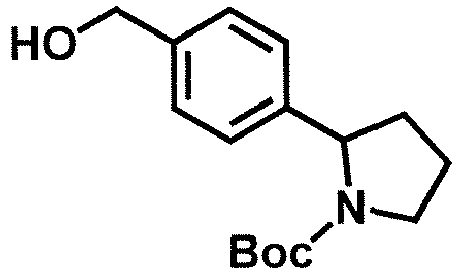
1H-NMR (400 MHz, CDCl3) δ: 7.29 (2H, d, J = 7.3 Hz), 7.15 (2H, d, J = 7.3 Hz), 4.78 (1H, br s), 4.66 (2H, s), 3.69-3.44 (2H, m), 2.36-2.22 (1H, m), 1.96-1.60 (4H, m), 1.19 (9H, s). -

- To a solution of lithium aluminum hydride (121 mg) in tetrahydrofuran (4 mL) was added a solution of the compound of Reference example 33 (332 mg) in tetrahydrofuran (4 mL) at 0°C. The mixture was stirred in ice bath for 1.5 hours, and water (0.121 ml), 15 % aqueous sodium hydroxide (0.121 ml), and then water (0.363 ml) were added thereto at 0°C. The reaction mixture was stirred for one hour, filtrated, and then concentrated in vacuo. The residue was purified by silica gel column chromatography (chloroform/methanol) to give the title compound (196 mg).
LC-MS [M+H]+/Rt (min): 218.2/0.442 (Method C); 1H-NMR (400 MHz, CDCl3) δ: 7.33 (2H, d, J = 7.9 Hz), 7.24 (2H, d, J = 7.9 Hz), 4.65 (2H, s), 3.28-3.19 (1H, m), 2.99-2.74 (6H, m), 1.93-1.88 (1H, m), 1.75-1.68 (2H, m), 1.67-1.58 (1H, m), 1.38-1.26 (1H, m). - According to the method of Reference example 77, Reference examples 78 - 79 were prepared by using the corresponding material compounds.
Reference example Chemical Structure Instrumental analysis data 78 
LC-MS [M+H]+/Rt (min) : 219.0/0.151 (Method C); 1H-NMR (400 MHz, CDCl3) δ: 8.55 (1H, d, J = 2.4 Hz), 7.66 (1H, dd, J = 7.9, 2.4 Hz), 7.18 (1H, d, J = 7.9 Hz), 4.68 (2H, s), 3.37 (1H, ddd, J = 1.8, 6.7, 13.4 Hz), 3.20-3.11 (1H, m), 3.09-3.02 (1H, m), 2.97-2.82 (3H, m), 2.80-2.71 (1H, m), 2.07-2.02 (1H, m), 1.80-1.58 (3H, m), 1.35-1.25 (1H, m). 79 
LC-MS [M+H]+/Rt (min) : 235.9/0.207 (Method C); 1H-NMR (400 MHz, CDCl3) δ: 7.37 (1H, dd, J = 7.9, 11.6 Hz), 7.04 (1H, dd, J = 1.5, 7.9 Hz), 6.96 (1H, dd, J = 1.5, 11.6 Hz), 4.72 (2H, s), 3.33-3.23 (1H, m), 3.00-2.76 (6H, m), 1.95-1.90 (1H, m), 1.76-1.68 (2H, m), 1.68-1.56 (1H, m), 1.41-1.31 (1H, m). -

- To a solution of lithium aluminum hydride (166 mg) in tetrahydrofuran (5 mL) was added a solution of tert-butyl 2-(4-(hydroxymethyl)phenyl)pyrrolidine-1-carboxylate (304 mg) in tetrahydrofuran (5 mL) at 0°C. The reaction solution was heated, and then stirred under reflux for one hour. The reaction solution was cooled to 0°C, and water (0.166), 15 % aqueous sodium hydroxide (0.166 mL), and then water (0.332 mL) were added thereto at 0°C. The reaction mixture was stirred for one hour, filtrated, and then concentrated in vacuo. The residue was purified by silica gel column chromatography (chloroform/methanol) to give the title compound (214 mg).
LC-MS [M+H]+/Rt (min): 191.9/0.182 (Method C); 1H-NMR (400 MHz, CDCl3) δ: 7.39-7.28 (4H, m), 4.67 (2H, d, J = 6.7 Hz), 3.30-3.17 (1H, m), 3.09-2.96 (1H, m), 2.27 (1H, t, J = 6.7 Hz), 2.21-2.08 (4H, m), 2.01-1.86 (1H, m), 1.86-1.66 (3H, m) . -

- To an ice-cooled solution of ethyl 1H-pyrazole-4-carboxylate (1.0 g) in tetrahydrofuran (23.8 mL) were added 3-quinuclidinol (1.36 g) and cyanomethylenetributylphosphorane (2.8 mL), and the mixture was stirred at 80°C for 4 hours. To the reaction mixture was added water, and the mixture was extracted with chloroform. The organic layer was dried over sodium sulfate, filtrated, and then concentrated in vacuo. The residue was purified by silica gel column chromatography (chloroform/methanol) to give the title compound (1.63 g). 1H-NMR (CDCl3) δ: 7.99 (1H, s), 7.93 (1H, s), 4.39-4.27 (3H, m), 3.54-3.48 (1H, m), 3.43-3.36 (1H, m), 3.11-3.03 (1H, m), 2.96-2.81 (3H, m), 2.22-2.18 (1H, m), 1.82-1.61 (3H, m), 1.47-1.33 (4H, m).
-

1H-NMR (CDCl3) δ: 7.53 (1H, s), 7.50 (1H, s), 4.59 (2H, s), 4.35-4.30 (1H, m), 3.53-3.48 (1H, m), 3.38-3.32 (1H, m), 3.10-3.02 (1H, m), 2.94-2.79 (3H, m), 2.18-2.14 (1H, m), 1.93 (1H, br s), 1.80-1.65 (3H, m), 1.44-1.36 (1H, m). -

- To an ice-cooled solution of the compound of Reference example 66 (1.14 g) in tetrahydrofuran (12.7 mL) were added (1-quinuclidin-3-yl)-1H-pyrazol-4-yl)methanol (950 mg), triphenylphosphine (1.50 g), and diisopropyl azodicarboxylate (1.12 mL), and the mixture was stirred at room temperature for 12 hours. To the reaction mixture was added water, and the mixture was extracted with ethyl acetate/methanol. The organic layer was washed with brine, dried over sodium sulfate, filtrated, and then concentrated in vacuo. The residue was purified by silica gel column chromatography (chloroform/methanol) to give the title compound (1.21 g).
1H-NMR (CDCl3) δ: 7.61 (1H, s), 7.53 (1H, s), 5.01 (2H, s), 4.46 (2H, q, J = 7.1 Hz), 4.34-4.29 (1H, m), 3.53-3.48 (1H, m), 3.38-3.32 (1H, m), 3.08-3.00 (1H, m), 2.94-2.80 (3H, m), 2.60 (3H, s), 2.13-2.11 (1H, m), 1.79-1.66 (2H, m), 1.63-1.50 (1H, m), 1.50-1.33 (13H, m). - According to the method of Reference example 83, Reference examples 84 - 90 were prepared by using the corresponding material compounds.
Reference example Chemical Structure Instrumental analysis data 84 
1H-NMR (CDCl3) δ: 8.14 (1H, s), 7.79 (1H, s), 5.00 (2H, s), 4.45 (2H, q, J = 7.1 Hz), 2.61 (3H, s), 1.63 (9H, s), 1.44 (9H, s), 1.26 (3H, t, J = 7.1 Hz) . 85 
1H-NMR (CDCl3) δ: 7.53 (1H, s), 7.50 (1H, s), 4.99 (2H, s), 4.46 (2H, q, J = 7.0 Hz), 4.10-4.03 (1H, m), 2.96-2.93 (2H, m), 2.60 (3H, s), 2.31 (3H, s), 2.15-2.12 (4H, m), 2.03-1.96 (2H, m), 1.46-1.42 (12H, m). 86 
LC-MS [M+H]+/Rt (min) : 484.2/0.752 (Method C) ;1H-NMR (400 MHz, CDCl3) δ: 7.35 (2H, d, J = 7.9 Hz), 7.20 (2H, d, J = 7.9 Hz), 5.16 (2H, s), 3.96 (3H, s), 3.32-3.23 (1H, m), 3.08-3.00 (1H, m), 2.97-2.78 (5H, m), 2.60 (3H, s), 1.89-1.84 (1H, m), 1.74-1.66 (2H, m), 1.65-1.56 (1H, m), 1.39-1.29 (10H, m). 87 
LC-MS [M+H]+/Rt (min) : 498.5/0.9331 (Method C) ; 1H-NMR (400 MHz, CDCl3) δ: 7.35 (2H, d, J = 8.2 Hz), 7.21 (2H, d, J = 8.2 Hz), 5.16 (2H, s), 4.36 (2H, q, J = 7.2 Hz), 3.34-3.24 (1H, m), 3.09-2.99 (1H, m), 2.98-2.77 (5H, m), 2.60 (3H, s), 1.91-1.85 (1H, m), 1.75-1.68 (2H, m), 1.68-1.57 (1H, m), 1.42-1.32 (13H, m). 88 
LC-MS [M+H]+/Rt (min) : 472.2/0.700 (Method C) ;1H-NMR (400 MHz, CDCl3) δ: 7.33 (2H, d, J = 7.3 Hz), 7.27 (2H, d, J = 7.3 Hz), 5.15 (2H, s), 4.35 (2H, q, J = 7.1 Hz), 3.26-3.18 (1H, m), 3.03-2.96 (1H, m), 2.61 (3H, s), 2.26 (1H, dd, J = 9.0, 18.0 Hz), 2.19-2.08 (4H, m), 2.01-1.84 (1H, m), 1.84-1.65 (2H, m), 1.41-1.30 (12H, m). 89 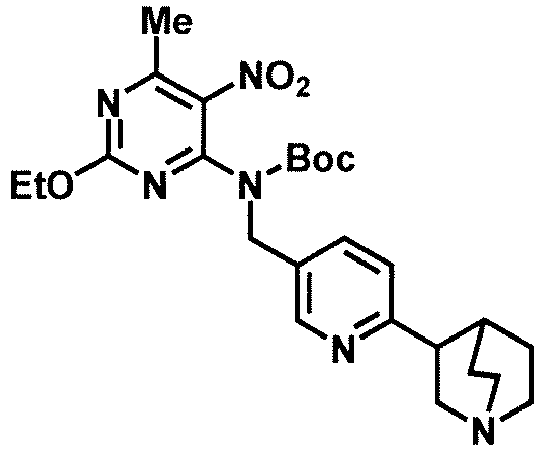
LC-MS [M+H]+/Rt (min): 499.1/0.759 (Method C) :1H-NMR (400 MHz, CDCl3) δ: 8.56 (1H, d, J = 2.4 Hz), 7.74 (1H, dd, J = 7.9, 2.4 Hz), 7.18 (1H, d, J = 7.9 Hz), 5.16 (2H, s), 4.40 (2H, q, J = 7.1 Hz), 3.51-3.42 (1H, m), 3.27-3.17 (1H, m), 3.10-2.85 (4H, m), 2.85-2.75 (1H, m), 2.61 (3H, s), 2.06-2.00 (1H, m), 1.81-1.67 (2H, m), 1.62-1.53 (1H, m), 1.47-1.35 (13H, m). 90 
1H-NMR (400 MHz, CDCl3) δ: 7.42 (1H, dd, J = 7.9, 11.6 Hz), 7.00 (1H, dd, J = 1.2, 7.9 Hz), 6.93 (1H, dd, J = 1.2, 11.6 Hz), 5.22 (2H, s), 4.36 (2H, q, J = 7.1 Hz), 3.37-3.26 (1H, m), 3.06-2.77 (6H, m), 2.62 (3H, s), 1.93-1.87 (1H, m), 1.76-1.67 (2H, m), 1.61-1.55 (1H, m), 1.42-1.31 (13H, m). -
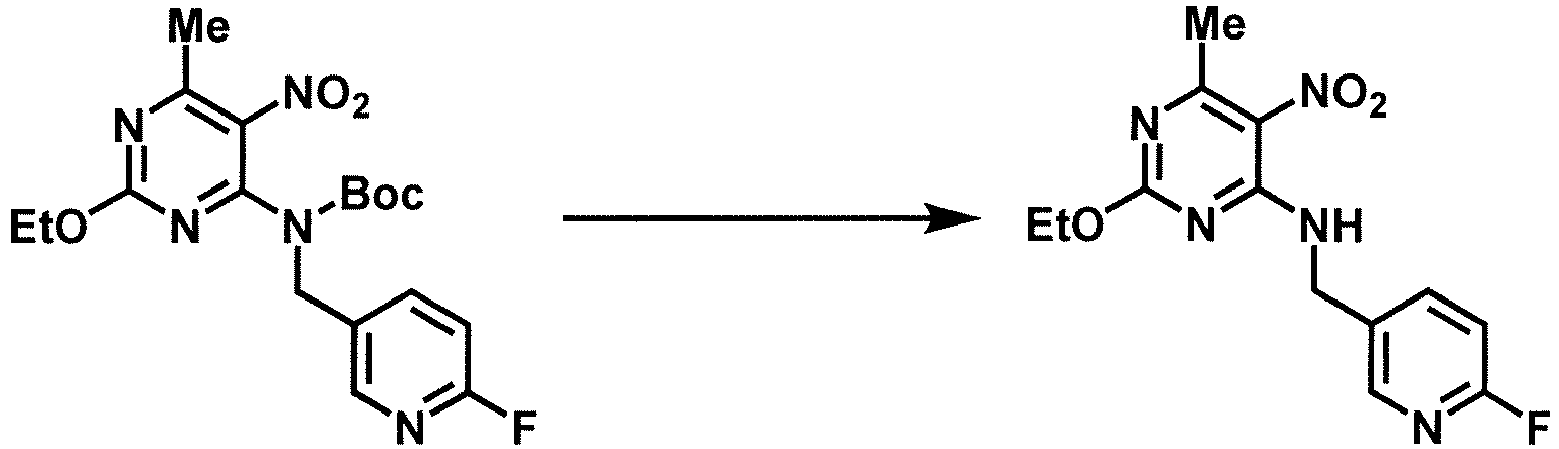
- To an ice-cooled solution of the compound of Reference example 69 (930 mg) in dichloromethane (7.6 mL) was added trifluoroacetic acid (1.8 mL), and the mixture was stirred at 40°C for 3 hours. The reaction mixture was poured to 28 % ammonia in ice bath, and the mixture was extracted with chloroform. The organic layer was dried over sodium sulfate, filtrated, and then concentrated in vacuo. The obtained residue was purified by silica gel column chromatography (hexane/ethyl acetate) to give the title compound (680 mg).
1H-NMR (CDCl3) δ: 8.85 (1H, br s), 8.23 (1H, s), 7.79-7.75 (1H, m), 6.94 (1H, dd, J = 8.5, 3.0 Hz), 4.79 (2H, d, J = 5.9 Hz), 4.38 (2H, q, J = 7.2 Hz), 2.75 (3H, d, J = 1.8 Hz), 1.39 (3H, t, J = 7.2 Hz). - According to the method of Reference example 91, Reference examples 92 - 105 were prepared by using the corresponding material compounds.
Reference example Chemical Structure Instrumental analysis data 92 
1H-NMR (CDCl3) δ: 8.84 (1H, s), 8.24 (1H, d, J = 2.4 Hz), 7.80-7.76 (1H, m), 6.95-6.92 (1H, m), 4.79 (2H, d, J = 6.1 Hz), 3.97 (3H, s), 2.75 (3H, s). 93 
1H-NMR (CDCl3) δ: 8.85 (1H, s), 8.23 (1H, s), 7.79-7.75 (1H, m), 6.95-6.92 (1H, m), 4.79 (2H, d, J = 6.1 Hz), 4.27 (2H, t, J = 6.7 Hz), 2.75 (3H, s), 1.83-1.74 (2H, m), 1.01 (3H, t, J = 7.3 Hz). 94 
LC-MS [M+H]+/Rt (min) : 279.0/0.624 (Method C) 95 
LC-MS [M+H]+/Rt (min) : 376.0/0.495 (Method C) 96 
LC-MS [M+H]+/Rt (min): 388.3/0.575 (Method D) 97 
1H-NMR (CDCl3) δ: 7.60 (2H, s), 5.43 (2H, br s), 4.56 (2H, d, J = 5.5 Hz), 4.33 (2H, q, J = 7.1 Hz), 2.47 (2H, s), 2.28 (3H, s), 1.39 (3H, t, J = 7.1 Hz) . 98 
LC-MS [M+H]+/Rt (min): 346.0/0.190 Method D) 99 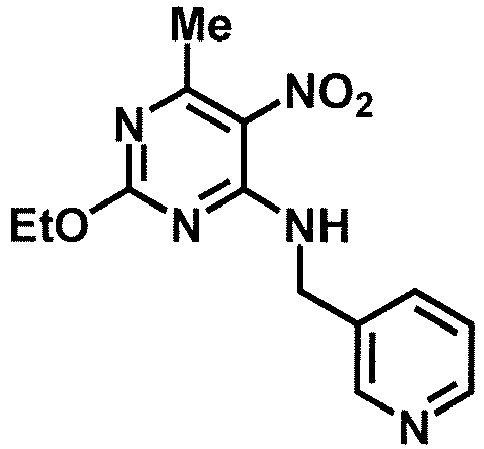
LC-MS [M+H]+/Rt (min): 290.2/0.582 (Method C) ; 1H-NMR (400 MHz, CD3OD) δ: 8.99-8.97 (1H, m), 8.84 (1H, d, J = 6.1 Hz), 8.73-8.71 (1H, m), 8.12 (1H, dd, J = 6.1, 7.9 Hz), 5.13 (2H, s), 4.52 (2H, q, J= 7.1 Hz), 2.75 (3H, s), 1.37 (3H, t, J = 7.1 Hz). 100 
LC-MS [M+H]+/Rt (min): 348.24/0.911 (Method C); 1H-NMR (400 MHz, CD3OD) δ: 9.27 (1H, s), 8.95 (1H, d, J = 7.9 Hz), 8.17 (1H, d, J = 7.9 Hz), 5.35 (2H, s), 4.43 (2H, q, J = 6.9 Hz), 4.02 (3H, s), 2.79 (3H, s), 1.32 (3H, t, J = 6.9 Hz). 101 
1H-NMR (400 MHz, CDCl3) δ: 8.78 (1H, br s), 7.30 (2H, d, J = 7.9 Hz), 7.26 (2H, d, J = 7.9 Hz), 4.76 (2H, d, J = 5.5 Hz), 3.98 (3H, s), 3.35-3.26 (1H, m), 3.09-3.01 (1H, m), 2.99-2.80 (5H, m), 2.73 (3H, s), 1.93-1.86 (1H, m), 1.76-1.69 (2H, m), 1.67-1.59 (1H, m), 1.40-1.28 (1H, m). 102 
1H-NMR (400 MHz, CDCl3) δ: 8.80 (1H,s), 7.30 (2H, d, J = 8.5 Hz), 7.26 (2H, d, J = 8.5 Hz), 4.76 (2H, d, J = 5.5 Hz), 4.40 (2H, q, J = 7.1 Hz), 3.38-3.26 (1H, m), 3.13-3.02 (1H, m), 3.02-2.80 (5H, m), 2.74 (3H, s), 1.95-1.89 (1H, m), 1.80-1.70 (2H, m), 1.70-1.60 (1H, m), 1.38 (3H, t, J = 7.1 Hz) , 1.37-1.31 (1H, m). 103 
LC-MS [M+H]+/Rt (min) : 372.04/0.535 (Method C); 1H-NMR (400 MHz, CDCl3) δ: 8.80 (1H, t, J = 5.5 Hz), 7.33 (2H, d, J = 7.9 Hz), 7.27 (2H, d, J = 7.9 Hz), 4.76 (2H, d, J = 5.5 Hz), 4.40 (2H, q, J = 7.1 Hz), 3.26-3.20 (1H, m), 3.03 (1H, dd, J = 8.2, 9.0 Hz), 2.74 (3H, s), 2.28 (1H, dd, J = 9.0, 18.0 Hz), 2.20-2.12 (4H, m), 1.99-1.88 (1H, m), 1.85-1.67 (2H, m), 1.38 (3H, t, J = 7.1 Hz). 104 
LC-MS [M+H]+/Rt (min) : 399.0/0.505 (Method C) ; 1H-NMR (400 MHz, CDCl3) δ: 8.83 (1H, t, J = 5.5 Hz), 8.58 (1H, d, J = 2.4 Hz), 7.58 (1H, dd, J = 2.4, 7.9 Hz), 7.20 (1H, d, J = 7.9 Hz), 4.78 (2H, d, J = 5.5 Hz), 4.40 (2H, q, J = 7.1 Hz), 3.53-3.45 (1H, m), 3.28-3.20 (1H, m), 3.10-2.90 (4H, m), 2.86-2.77 (1H, m), 2.74 (3H, s), 2.07-2.02 (1H, m), 1.81-1.68 (2H, m), 1.44-1.30 (5H, m). 105 
LC-MS [M+H]+/Rt (min) : 416.36/0.678 (Method C); 1H-NMR (400 MHz, CDCl3) δ: 8.81 (1H, s), 7.29 (1H, d, J = 7.9 Hz), 7.05-6.98 (2H, m), 4.81 (2H, d, J = 5.5 Hz), 4.42 (2H, q, J = 7.1 Hz), 3.37-3.29 (1H, m), 3.06-2.84 (6H, m), 2.73 (3H, s), 1.94-1.90 (1H, m), 1.77-1.70 (2H, m), 1.64-1.58 (1H, m), 1.43-1.34 (4H, m). -

- To a solution of the compound of Reference example 61 (209 mg) in tetrahydrofuran (1 ml)/water (1 mL) were added ammonium chloride (244 mg) and zinc (149 mg) at room temperature. The reaction mixture was stirred under reflux for 2 hours, cooled to room temperature, filtrated, and concentrated in vacuo. The residue was purified by silica gel column chromatography (chloroform/methanol) to give the title compound (165 mg).
LC-MS ([M+H]+/Rt (min)): 428.4/0.797 (Method C); 1H-NMR (400 MHz, CDCl3) δ: 7.30 (2H, d, J = 7.9 Hz), 7.20 (2H, d, J = 7.9 Hz), 5.58 (1H, t, J = 5.5 Hz), 4.63 (2H, d, J = 5.5 Hz), 4.29 (2H, q, J = 7.1 Hz), 3.87-3.68 (1H, m), 3.67-3.52 (1H, m), 3.44-3.21 (3H, m), 2.28 (3H, s), 2.26-2.20 (1H, m), 2.03-1.90 (1H, m), 1.47 (9H, s), 1.35 (3H, t, J = 7.1 Hz). -

- To a solution of the compound of Reference example 101 (319 mg) in methanol (8 ml) was added tin(II) chloride (789 mg) at room temperature. The reaction mixture was stirred under reflux for 3 hours, and cooled to room temperature. Aqueous ammonia was added thereto, and the mixture was stirred. The reaction solution was filtrated, and the filtrate was concentrated in vacuo. The residue was purified by silica gel column chromatography (chloroform/methanol) to give the title compound (300 mg). 1H-NMR (400 MHz, CDCl3) δ: 7.31 (2H, d, J = 7.9 Hz), 7.22 (2H, d, J = 7.9 Hz), 5.57 (1H,br s), 4.62 (2H, d, J = 6.1 Hz), 3.88 (3H, s), 3.34-3.26 (1H, m), 3.09-2.99 (1H, m), 2.99-2.79 (5H, m), 2.48 (2H, s), 2.28 (3H, s), 1.92-1.87 (1H, m), 1.77-1.69 (3H, m), 1.39-1.28 (1H, m).
- According to the methods of Reference example 106 and Reference example 107, Reference examples 108 - 120 were prepared by using the corresponding material compounds.
Reference example Chemical Structure Instrumental analysis data 108 
1H-NMR (CDCl3) δ: 8.18 (1H, s), 7.81-7.77 (1H, m), 6.89-6.86 (1H, m), 5.79 (1H, s), 4.66 (2H, d, J = 6.1 Hz), 3.86 (3H, s), 2.53 (2H, br s), 2.30 (3H, s) . 109 
1H-NMR (CDCl3) δ: 8.20 (1H, d, J = 1.8 Hz), 7.83-7.79 (1H, m), 6.89 (1H, dd, J = 8.5, 3.0 Hz), 6. 04 (1H, s), 4.67 (2H, d, J = 5.9 Hz), 4.28 (2H, q, J = 7.2 Hz), 2.30 (3H, s), 1.78 (2H, br s), 1.35 (3H, t, J = 7.2 Hz). 110 
1H-NMR (CDCl3) δ: 8.85 (1H, s), 8.23 (1H, s), 7.79-7.75 (1H, m), 6.95-6.92 (1H, m), 4.79 (2H, d, J = 6.1 Hz), 4.27 (2H, t, J = 6.7 Hz), 2.75 (3H, s), 1.83-1.74 (2H, m), 1.01 (3H, t, J = 7.3 Hz). 111 
LC-MS [M+H]+/Rt (min) : 358.3/0.361 (Method D) 112 
1H-NMR (CDCl3) δ: 7.60 (2H, s), 5.43 (2H, br s), 4.56 (2H, d, J = 5.5 Hz), 4.33 (2H, q, J = 7.1 Hz), 2.47 (2H, s), 2.28 (3H, s), 1.39 (3H, t, J = 7.1 Hz). 113 
LC-MS [M+H]+/Rt (min) : 346.0/0.190 (Method D) 114 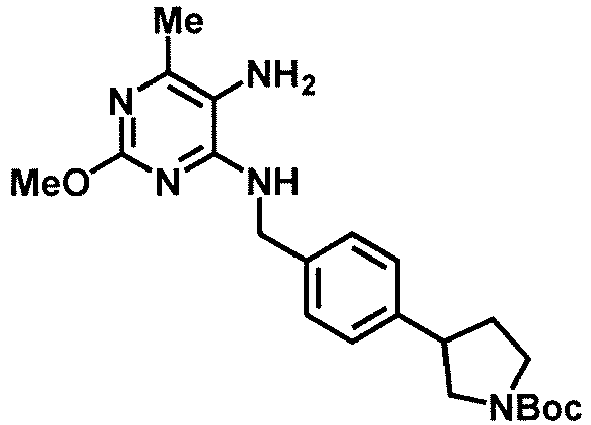
LC-MS ([M+H]+/Rt (min)): 519.42/1.048 (Method D); 1H-NMR (400 MHz, CDCl3) δ: 7.31 (2H, d, J = 7.9 Hz), 7.20 (2H, d, J = 7.9 Hz), 5.64 (1H, t, J = 5.5 Hz), 4.63 (2H, d, J = 5.5 Hz), 3.89 (3H, s), 3.87-3.69 (1H, m), 3.66-3.51 (1H, m), 3.43-3.23 (3H, m), 2.30 (3H, s), 2.26-2.20 (1H, m), 2.02-1.91 (1H, m), 1.47 (9H, s). 115 
LC-MS [M+H]+/Rt (min) : 260.2/0.409 (Method C) ;1H-NMR (400 MHz, CDCl3) δ: 8.60-8.58 (1H, m), 8.50 (1H, dd, J = 4.9, 1.2 Hz), 7.68-7.63 (1H, m), 7.24 (1H, dd, J = 7.9, 4.9 Hz), 5.77 (1H, t, J = 6.1 Hz), 4.67 (2H, d, J = 6.1 Hz), 4.27 (2H, q, J = 7.1 Hz), 2.53 (2H, s), 2.29 (3H, s), 1.34 (3H, t, J = 7.1 Hz). 116 
LC-MS [M+H]+/Rt (min) : 318.25/0.501 (Method C) ; 1H-NMR (400 MHz, CDCl3) δ: 9.17 (1H, s), 8.24 (1H, d, J = 8.5 Hz), 7.37 (1H, d, J = 7.9 Hz), 6.42 (1H, t, J = 5.5 Hz), 4.83 (2H, d, J = 5.5 Hz), 4.25 (2H, q, J = 7.1 Hz), 3.95 (3H, s), 2.30 (3H, s), 1.34 (3H, t, J = 7.1 Hz) . 117 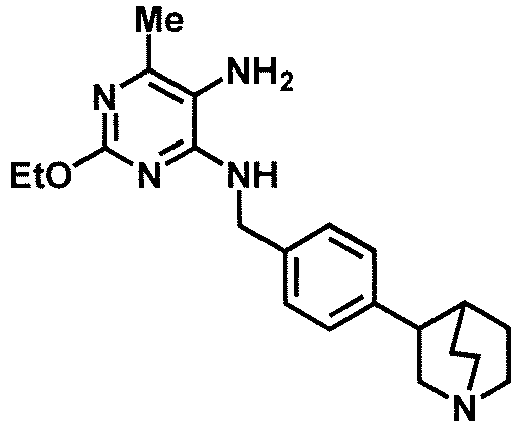
1H-NMR (400 MHz, CDCl3) δ: 7.31 (2H, d, J = 7.9 Hz), 7.24 (2H, d, J = 7.9 Hz), 5.58 (1H,t, J = 5.5 Hz), 4.63 (2H, d, J = 5.5 Hz), 4.30 (2H, q, J = 7.1 Hz), 3.36-3.26 (1H, m), 3.10-3.02 (1H, m), 3.00-2.82 (5H, m), 2.28 (3H, s), 1.92-1.88 (1H, m), 1.76-1.69 (2H, m), 1.69-1.61 (1H, m), 1.39-1.31 (4H, m) . 118 
1H-NMR (400 MHz, CDCl3) δ: 7.28 (2H, d, J = 8.5 Hz), 7.25 (2H, d, J = 8.5 Hz), 4.59 (2H, s), 4.27 (2H, q, J = 7.1 Hz), 3.26-3.19 (1H, m), 3.00 (1H, dd, J = 8.2, 9.0 Hz), 2.26 (1H, dd, J= 9.0, 17.2 Hz), 2.19-2.10 (7H, m), 2.00-1.88 (1H, m), 1.84-1.70 (2H, m), 1.35 (3H, t, J = 7.1 Hz). 119 
LC-MS [M+H]+/Rt (min): 369.1/0.138 (Method C) ;1H-NMR (400 MHz, CDCl3) δ: 8.56 (1H, d, J = 1.8 Hz), 7.61 (1H, dd, J = 1.8, 7.9 Hz), 7.16 (1H, d, J = 7.9 Hz), 5.67 (1H, t, J = 6.1 Hz), 4.65 (2H, d, J = 6.1 Hz), 4.29 (2H, q, J = 7.1 Hz), 3.51-3.44 (1H, m), 3.27-3.19 (1H, m), 3.09-2.86 (4H, m), 2.86-2.76 (1H, m), 2.48 (2H, s), 2.29 (3H, s), 2.07-2.02 (1H, m), 1.81-1.58 (3H, m), 1.39-1.26 (4H, m). 120 
LC-MS [M+H]+/Rt (min) : 386.4/0.418 (Method C);1H-NMR (400 MHz, CDCl3) δ: 7.33 (1H, dd, J = 8.2, 8.6 Hz), 7.02-6.95 (2H, m), 5.64 (1H, t, J = 5.5 Hz), 4.69 (2H, d, J = 5.5 Hz), 4.31 (2H, q, J = 7.1 Hz), 3.35-3.27 (1H, m), 3.05-2.79 (6H, m), 2.48 (2H, s), 2.28 (3H, s), 1.93-1.88 (1H, m), 1.76-1.68 (2H, m), 1.64-1.57 (1H, m), 1.41-1.30 (4H, m). -

- To a solution of the compound of Example 208 (570 mg) in N,N-dimethylformamide (5.0 mL) was added N,N-dimethylformamide dimethyl acetal (0.602 mL), and the mixture was stirred at 60°C for one hour. To the reaction mixture was added water, and the mixture was extracted with chloroform. The organic layer was washed with brine, dried over sodium sulfate, filtrated, and then concentrated in vacuo to give the title compound (602 mg).
LC-MS [M+H]+/Rt (min): 436.4/0.658 (Method B) - According to the method of Reference example 121, Reference example 122 was prepared by using the corresponding material compound.
Reference example Chemical Structure Instrumental analysis data 122 
LC-MS ([M+H]+/Rt (min)): 500.3/0.776 (Method C); 1H-NMR (400 MHz, CD3OD) δ: 8.95 (1H, s), 8.64 (1H, s), 8.59 (1H, d, J = 2.4 Hz), 7.92-7.88 (1H, m), 7.43 (2H, d, J = 8.5 Hz), 6.97 (2H, d, J = 8.5 Hz), 5.49 (2H, s), 4.43 (2H, q, J = 7.3 Hz), 3.24 (6H, s), 1.39 (3H, t, J = 7.3 Hz). -
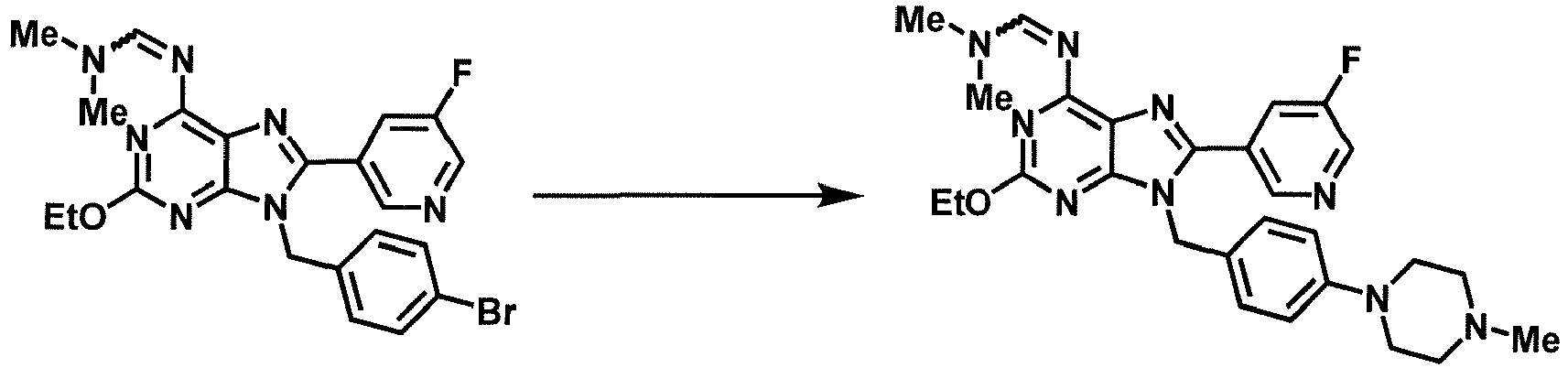
- To a solution of the compound of Reference example 122 (80.9 mg) in 1,4-dioxane (2 mL) were added 1-methylpiperazine (0.045 mL), lithium bis(trimethylsilyl)amide (1.3 mol/0.25 mL), tris(dibenzylideneacetone)dipalladium (14.9 mg), and 2-(dicyclohexylphosphino)-2'-(N,N-dimethylamino)biphenyl (6.4 mg), and the mixture was stirred at 85°C for 4 hours. The reaction mixture was cooled to room temperature. Water was added thereto, and the mixture was extracted with chloroform/methanol. The organic layer was dried over sodium sulfate, filtrated, and then concentrated in vacuo. The residue was purified by silica gel column chromatography (chloroform/methanol) to give the title compound (14.0 mg).
1H-NMR (400 MHz, CDCl3) δ: 8.97 (1H, s), 8.73 (1H, s), 8.50 (1H, d, J = 3.1 Hz), 7.77-7.72 (1H, m), 6.95 (2H, d, J = 8.5 Hz), 6.79 (2H, d, J = 8.5 Hz), 5.61 (2H, s), 5.38 (2H, s), 4.46 (2H, q, J = 6.5 Hz), 3.19-3.14 (4H, m), 2.61-2.52 (4H, m), 2.38-2.32 (9H, m), 1.44 (3H, t, J = 6.5 Hz). - According to the method of Example 69, Reference examples 124 - 128 were prepared by using the corresponding material compounds.
Reference example Chemical Structure Instrumental analysis data 124 
1H-NMR (CDCl3) δ: 8.24 (1H, d, J = 2.4 Hz), 7.63 (1H, dd, J = 2.4, 8.5 Hz), 6.69 (1H, d, J = 8.5 Hz), 5.41 (3H, br s), 5.21 (2H, s), 4.40 (2H, q, J = 7.0 Hz), 2.88-2.79 (2H, m), 2.73-2.69 (1H, m), 2.37-2.30 (5H, m), 1.99-1.90 (1H, m), 1.43 (3H, t, J = 7.0 Hz). 125 
1H-NMR (CDCl3) δ: 8.24 (1H, d, J = 2.4 Hz), 7.63 (1H, dd, J = 2.4, 8.9 Hz), 6.69 (1H, d, J = 8.9 Hz), 5.42-5.38 (3H, m), 5.21 (2H, s), 4.40 (2H, q, J = 7.1 Hz), 2.87-2.79 (2H, m), 2.73-2.69 (1H, m), 2.37-2.32 (5H, m), 1.98-1.92 (1H, m), 1.43 (3H, t, J = 7.3 Hz). 126 
1H-NMR (CDCl3) δ: 8.23 (1H, d, J = 3.1 Hz), 7.67-7.64 (1H, m), 6.68 (1H, d, J = 8.5 Hz), 5.41 (2H, s), 5.21 (2H, s), 5.01-4.97 (1H, m), 4.40 (2H, q, J = 7.1 Hz), 3.36-3.30 (1H, m), 2.98-2.73 (5H, m), 2.14-2.10 (1H, m), 1.98-1.89 (1H, m), 1.75-1.55 (2H, m), 1.45-1.34 (4H, m). 127 
1H-NMR (CDCl3) δ: 8.23 (1H, d, J = 1.8 Hz), 7.65 (1H, dd, J = 2.4, 8.5 Hz), 6.68 (1H, d, J = 8.5 Hz), 5.48 (2H, br s), 5.21 (2H, s), 5.01-4.97 (1H, m), 4.40 (2H, q, J = 7.1 Hz), 3.36-3.30 (1H, m), 2.98-2.73 (5H, m), 2.14-2.10 (1H, m), 1.98-1.89 (1H, m), 1.75-1.56 (2H, m), 1.44-1.34 (4H, m). 128 
1H-NMR (CDCl3) δ: 8.26 (1H, d, J = 2.4 Hz), 7.64 (1H, dd, J = 2.4, 8.5 Hz), 6.67 (1H, d, J = 8.5 Hz), 5.43 (2H, s), 5.21 (2H, s), 4.40 (2H, q, J = 7.0 Hz), 4.31 (2H, t, J = 6.4 Hz), 2.40 (2H, t, J = 7.3 Hz), 2.23 (6H, br s), 1.96-1.89 (2H, m), 1.43 (3H, t, J = 7.0 Hz). - According to the method of Example 80, Reference examples 129 - 132 were prepared by using the corresponding material compounds.
Reference example Chemical Structure Instrumental analysis data 129 
LC-MS [M]+/Rt (min) : 405.3/0.531 (Method A) 130 
1H-NMR (CDCl3) δ: 7.70 (1H, s), 7.32 (2H, d, J = 7.9 Hz), 7.26-7.24 (2H, m), 5.84 (2H, br s), 5.31 (2H, s), 3.43 (2H, s), 2.24 (6H, s). 131 
1H-NMR (DMSO-D6) δ: 8.23 (1H, s), 7.76 (2H, br s), 7.28 (2H, d, J = 7.9 Hz), 7.19 (2H, d, J = 7.9 Hz), 5.29 (2H, s), 3.59 (2H, q, J = 13.6 Hz), 3.15 (1H, s), 3.07 (1H, s), 2.64 (1H, d, J = 9.2 Hz), 2.55-2.44 (3H, m), 2.22 (3H, s), 1.56 (2H, s). 132 
LC-MS [M+H]+/Rt (min): 470.4/0.600 (Method B) -

- To a solution of the compound of Example 182 (1.93 g) in dichloromethane (30 mL) were added benzyltriethylammonium chloride (2.08 g), chlorotrimethylsilane (5.79 mL), and tert-butyl nitrite (3.00 mL), and the mixture was stirred under reflux for 3 hours. To the reaction mixture in ice bath was added aqueous saturated sodium bicarbonate, and the mixture was extracted with chloroform. The organic layer was dried over sodium sulfate, filtrated, and then concentrated in vacuo. The residue was purified by silica gel column chromatography (chloroform/methanol) to give the title compound (1.57 g).
LC-MS [M+H]+/Rt (min): 442.4/1.029 (Method A) - According to the method of Reference example 133, Reference examples 134 - 135 were prepared by using the corresponding material compounds.
Reference example Chemical Structure Instrumental analysis data 134 
LC-MS [M+H]+/Rt (min) : 428.3/0.972 (Method A) 135 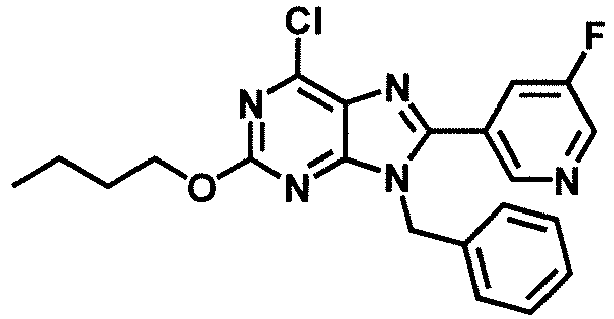
1H-NMR (400 MHz, DMSO-d6) δ: 8.77 (1H, d, J = 2.7 Hz), 8.75-8.74 (1H, m), 8.10-8.06 (1H, m), 7.29-7.23 (2H, m), 7.06-7.03 (2H, m), 5.60 (2H s), 4.38 (2H, t, J = 6.6 Hz), 1.71 (2H, tt, J = 6.6, 7.9 Hz), 1.40 (2H, qt, J = 7.3, 7.9 Hz), 0.93 (3H, t, J = 7.3 Hz). - According to the method of Example 150, Reference examples 136 - 141 were prepared by using the corresponding material compounds. As appropriate, microwave irradiation was used.
Reference example Chemical Structure Instrumental analysis data 136 
LC-MS [M+H]+/Rt (min) : 371.3/0.507 (Method B) 137 
1H-NMR (CDCl3) δ: 7.64 (1H, s), 7.33 (2H, d, J = 7.9 Hz), 7.26-7.24 (2H, m), 6.13 (1H, tt, J = 55.8, 4.3 Hz), 5.57 (2H, br s), 5.26 (2H, s), 4.55 (2H, td, J = 13.1, 4.3 Hz), 3.47 (2H, s), 2.27 (6H, s) . 138 
1H-NMR (CDCl3) δ: 7.58 (1H, s), 7.30 (2H, d, J = 7.9 Hz), 7.26-7.24 (2H, m), 5.47 (2H, br s), 5.25 (2H, s), 4.16 (2H, d, J = 6.7 Hz), 3.44 (2H, s), 2.25 (6H, s), 1.35-1.28 (1H, m), 0.61-0.57 (2H, m), 0.38-0.34 (2H, m). 139 
1H-NMR (CDCl3) δ: 7.58 (1H, s), 7.29-7.24 (4H, m), 5.47 (2H, s), 5.25 (2H, s), 4.29 (2H, t, J = 6.7 Hz), 3.40 (2H, s), 2.22 (6H, s), 1.87-1.78 (2H, m), 1.04 (3H, t, J = 7.2 Hz) . 140 
1H-NMR (CDCl3) δ: 7.59 (1H, s), 7.32 (2H, d, J = 7.9 Hz), 7.26-7.23 (2H, m), 5.51 (2H, s), 5.25 (2H, s), 3.97 (3H, s), 3.74-3.64 (2H, m), 3.25-3.20 (2H, m), 2.87 (1H, d, J = 9.8 Hz), 2.73-2.57 (3H, m), 2.39 (3H, s), 1.72 (2H, s). 141 
LC-MS [M+H]+/Rt (min) : 466.5/0.581 (Method B) - According to the method of Reference example 2, Reference examples 142 - 145 were prepared by using the corresponding material compounds.
Reference example Chemical Structure Instrumental analysis data 142 
LC-MS [M+H]+/Rt (min) : 294.96/0.590 (Method C) ; 1H-NMR (CDCl3) δ: 7.65-7.59 (3H, m), 7.56-7.51 (1H, m), 7.50-7.45 (1H, m), 5.63 (2H, s), 5.32 (2H, s), 4.39 (2H, q, J = 7.1 Hz), 1.42 (3H, t, J = 7.1 Hz). 143 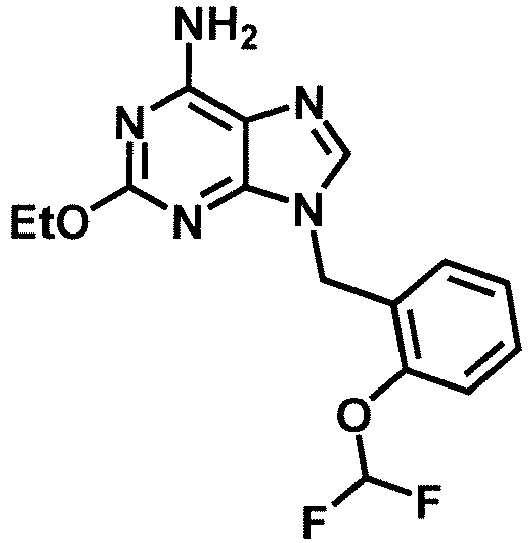
LC-MS [M+H]+/Rt (min) : 337.2/0.845 (Method A); 1H-NMR (CDCl3) δ: 7.69 (1H, s), 7.39-7.30 (2H, m), 7.21-7.11 (2H, m), 5.63 (2H, s), 6.62 (1H, t, J = 73.4 Hz), 5.35 (2H, s), 4.40 (2H, q, J = 7.1 Hz), 1.42 (3H, t, J = 7.1 Hz) . 144 
LC-MS [M+H]+/Rt (min): 305.9/0.673 (method C); 1H-NMR (CDCl3) δ: 7.68 (1H, s), 7.10-6.94 (3H, m), 5.54 (2H, s), 5.29 (2H, s), 4.40 (2H, q, J = 7.1 Hz), 1.42 (3H, t, J = 7.1 Hz). 145 
LC-MS [M+H]+/Rt (min): 313.5/0.688 (method A); 1H-NMR (CDCl3) δ: 7.69-7.66 (2H, m), 7.66-7.61 (1H, m), 7.22 (1H, dd, J = 8.8, 8.8 Hz), 5.60 (2H, s), 5.34 (2H, s), 4.39 (2H, q, J = 7.0 Hz), 1.42 (3H, t, J = 7.0 Hz). - According to the method of Reference example 26, Reference examples 146 - 147 were prepared by using the corresponding material compounds.
Reference example Chemical Structure Instrumental analysis data 146 
LC-MS [M+H]+/Rt (min): 275.1/0.389 (Method C) 147 
LC-MS [M+H]+/Rt (min): 259.1/0.394 (Method C) - According to the method of Reference example 30, Reference examples 148 - 149 were prepared by using the corresponding material compounds.
Reference example Chemical Structure Instrumental analysis data 148 
LC-MS [M+H]+/Rt (min) : 277.1/0.377 (Method C) 149 
LC-MS [M+H]+/Rt (min) : 261.1/0.409 (Method C) - According to the method of Reference example 36, Reference examples 150 - 153 were prepared by using the corresponding material compounds.
Reference example Chemical Structure Instrumental analysis data 150 
1H-NMR (CDCl3) δ: 7.66 (1H, s), 7.64-7.58 (2H, m), 7.50-7.44 (1H, m), 5.70 (2H, s), 5.33 (2H, s), 4.39 (2H, q, J = 7.1 Hz), 1.43 (3H, t, J = 7.1 Hz) . 151 
LC-MS [M+H]+/Rt (min) : 416.16/0.985 (Method A); 1H-NMR (CDCl3) δ: 7.35-7.30 (1H, m), 7.20-7.11 (2H, m), 6.92 (1H, d, J = 7.9 Hz), 6.66 (1H, t, J = 73.4 Hz), 5.58 (2H, s), 5.42 (2H, s), 4.35 (2H, q, J = 7.1 Hz), 1.39 (3H, t, J = 7.1 Hz). 152 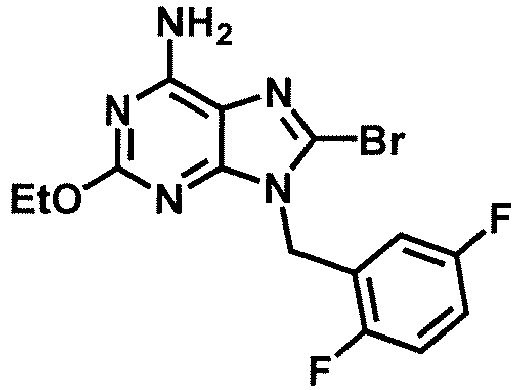
LC-MS [M+H]+/Rt (min): 385.8/0.910 (method A); 1H-NMR (CDCl3) δ: 7.09-7.02 (1H, m), 7.00-6.92 (1H, m), 6.80-6.74 (1H, m), 5.72 (2H, s), 5.34 (2H, s), 4.36 (2H, q, J = 7.1 Hz), 1.39 (3H, t, J = 7.1 Hz). 153 
LC-MS [M+H]+/Rt (min) : 393.1/0.834 (method A); 1H-NMR (CDCl3) δ: 7.65-7.60 (1H, m), 7.42 (1H, d, J = 5.9 Hz), 7.25-7.19 (1H, m), 5.58 (2H, s), 5.38 (2H, s), 4.36 (2H, q, J = 6.9 Hz), 1.40 (3H, t, J = 6.9 Hz). - According to the method of Reference example 69, Reference examples 154 - 164 were prepared by using the corresponding material compounds.
Reference example Chemical Structure Instrumental analysis data 154 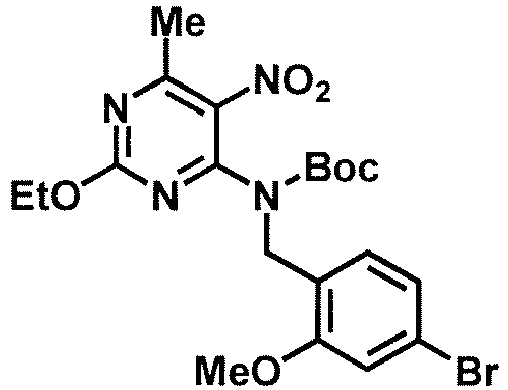
LC-MS [M+H]+/Rt (min): 497.2/1.296 (Method C); 1H-NMR (CDCl3) δ: 7.20 (1H, d, J = 8.2 Hz), 7.02 (1H, dd, J = 8.2, 1.8 Hz), 6.94 (1H, d, J = 1.8 Hz), 5.08 (2H, s), 4.32 (2H, q, J = 7.0 Hz), 3.70 (3H, s), 2.60 (3H, s), 1.36 (9H, s), 1.34 (3H, t, J = 7.3 Hz). 155 
LC-MS ([M+H]+/Rt (min)): 451.4/1.212 (Method A) 156 
LC-MS ([M+H]+/Rt (min)): 421.4/1.130 (Method A) 157 
LC-MS [M+H]+/Rt (min): 435.4/1.186 (Method A) 158 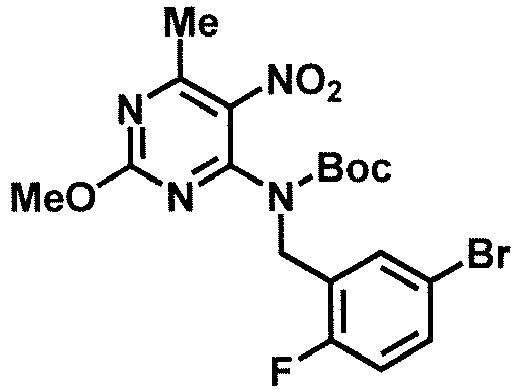
LC-MS [M+H]+/Rt (min) : 471.3/1.284 (Method A) 159 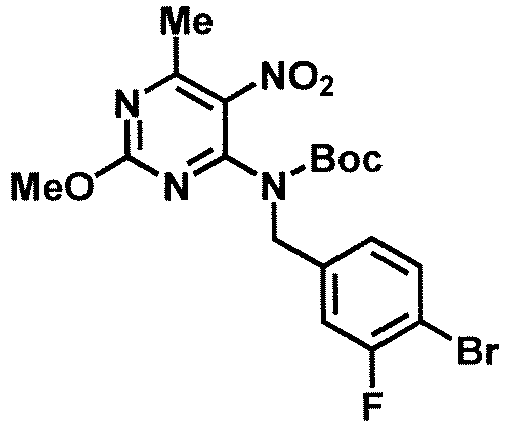
LC-MS [M+H]+/Rt (min): 471.1/1.245 (Method C) 160 
LC-MS [M+H]+/Rt (min) : 449.2/1.161 (Method C) 161 
LC-MS [M+H]+/Rt (min) : 471.3/1.259 (Method C) 162 
LC-MS [M+H]+/Rt (min): 442.3/1.182 (Method C) 163 
LC-MS [M+H]+/Rt (min): 492.3/1.246 (Method C) 164 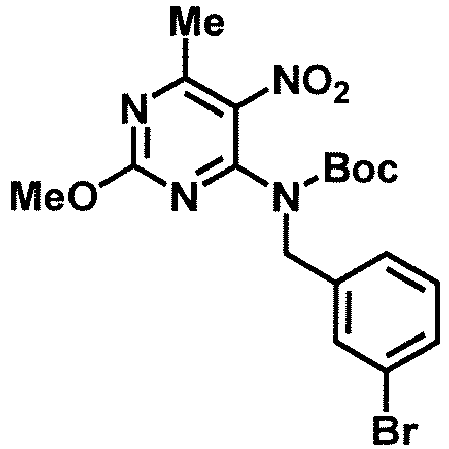
LC-MS [M+H]+/Rt (min): 453.2/1.235 (Method C) - According to the method of Reference example 77, Reference examples 165 - 166 were prepared by using the corresponding material compounds.
Reference example Chemical Structure Instrumental analysis data 165 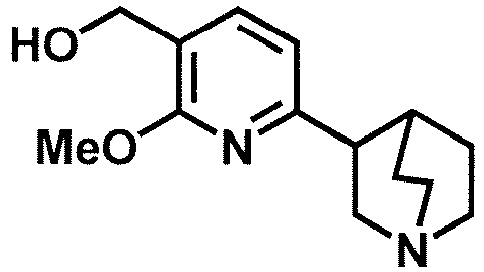
LC-MS [M+H]+/Rt (min) : 249.1/0.305 (Method C); 1H-NMR (CDCl3) δ: 7.47 (1H, d, J = 7.3 Hz), 6.73 (1H, d, J = 7.3 Hz), 4.60 (2H, s), 3.98 (3H, s), 3.61-3.52 (1H, m), 3.20-3.05 (2H, m), 3.02-2.80 (4H, m), 2.00-1.95 (1H, m), 1.86-1.65 (3H, m), 1.37-1.27 (1H, m). 166 
LC-MS [M+H] +/Rt (min) : 233.1/0.148 (Method C) -

- To an ice-cooled solution of ethyl 2-fluoro-4-vinylbenzoate (1.30 g) in dichloromethane (50 mL) was added 3-chloroperbenzoic acid (2.66 g), and the mixture was stirred at room temperature overnight. To the reaction mixture were added aqueous sodium bicarbonate and aqueous saturated sodium thiosulfate, and the mixture was extracted with chloroform. The organic layer was washed with aqueous saturated sodium bicarbonate, dried over sodium sulfate, filtrated, and then concentrated in vacuo. The residue was purified by silica gel column chromatography (hexane/ethyl acetate) to give the title compound (1.36 g).
1H-NMR (CDCl3) δ: 7.89 (1H, dd, J = 7.9 Hz), 7.11 (1H, dd, J = 1.8, 7.9 Hz), 7.02 (1H, dd, J = 1.8, 11.3 Hz), 4.37 (2H, q, J = 7.1 Hz), 3.86 (1H, dd J = 2.4, 4.0 Hz), 3.16 (1H, dd, J = 4.0, 5.5 Hz), 2.73 (1H, dd, J = 2.4, 5.5 Hz), 1.37 (3H, t, J = 7.1). -

- To a solution of the compound of Reference example 167 (1.36 g) in tetrahydrofuran (50 mL) was added 2-aminoethanol (3.9 mL), and the mixture was stirred at room temperature for one day, and then at 60°C for 12 hours. To the reaction mixture was aqueous sodium bicarbonate, and the mixture was extracted with a mixture of chloroform and ethanol. The organic layer was washed with aqueous saturated sodium bicarbonate, dried over sodium sulfate, filtrated, and then concentrated in vacuo. The residue was purified by silica gel column chromatography (chloroform/methanol) to give the title compound (1.36 g). LC-MS [M+H]+/Rt (min): 272.2 /0.486 (Method A)
-
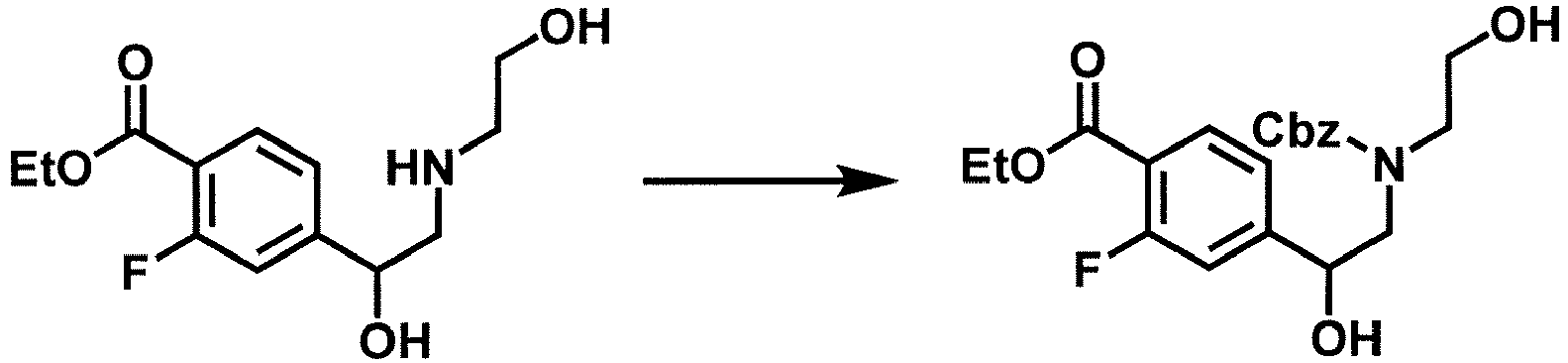
- To a solution of the compound of Reference example 168 (1.15 g) in a mixture of tetrahydrofuran (20 mL) and water (10 mL) were added sodium bicarbonate (0.535 mg) and benzyl chloroformate (0.893 mL), and the mixture was stirred at room temperature overnight. To the reaction mixture was added aqueous saturated sodium bicarbonate, and the mixture was extracted with chloroform. The organic layer was dried over sodium sulfate, filtrated, and then concentrated in vacuo. The residue was purified by silica gel column chromatography (chloroform/methanol) to give the title compound (913 mg).
LC-MS [M+H]+/Rt (min): 406.3 /0.887 (Method A) -

- To a solution of the compound of Reference example 169 (910 mg) in toluene (45 mL) were added triphenylphosphine (913 mg) and diisopropyl azodicarboxylate (0.665 mL), and the mixture was stirred at room temperature for 20 hours. The reaction mixture was concentrated in vacuo, and then the obtained residue was purified by silica gel column chromatography (hexane/ethyl acetate) to give the title compound (583 mg).
LC-MS [M+H]+/Rt (min): 388.2 /1.145 (Method A) -
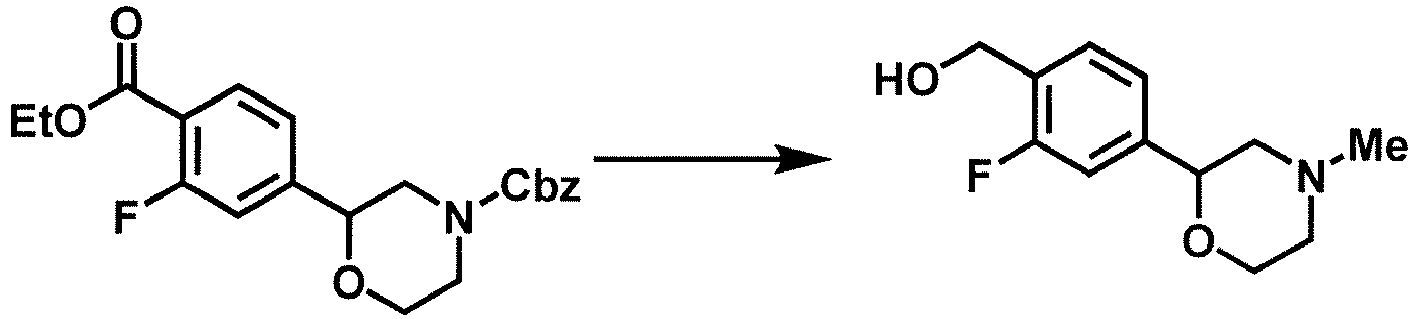
- To an ice-cooled solution of the compound of Reference example 170 (581 mg) in tetrahydrofuran (45 mL) was added diisobutylaluminum hydride (1.02 mol/L hexane solution, 3.38 mL), and the mixture was stirred for one hour. Further, diisobutylaluminum hydride (1.02 mol/L hexane solution, 9.0 mL) was added thereto, and the mixture was stirred in ice bath for 5 hours. To the reaction mixture in ice bath were slowly added water (0.47 mL), aqueous sodium hydroxide (4 mol/L, 0.47 mL), and water (1.41 mL), and the mixture was stirred at room temperature for 15 minutes. The reaction mixture was filtrated and concentrated in vacuo. The residue was purified by silica gel column chromatography (chloroform/methanol) to give the title compound (177 mg).
LC-MS [M+H]+/Rt (min): 226.1/0.346 (Method A) - According to the method of Reference example 83, Reference examples 172 - 185 were prepared by using the corresponding material compounds.
Reference example Chemical Structure Instrumental analysis data 172 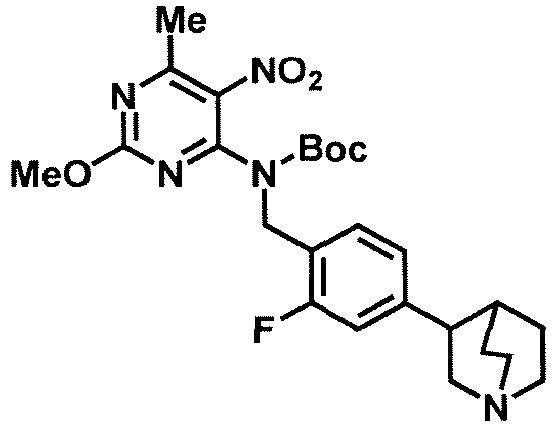
1H-NMR (CDCl3) δ: 7.44 (1H, dd, J = 11.6, 7.9 Hz), 7.02 (1H, d, J = 7.9 Hz), 6.95 (1H, d, J = 11.6 Hz), 5.25 (2H, s), 3.98 (3H, s), 3.37-3.28 (1H, m), 3.07-2.98 (1H, m), 2.98-2.81 (5H, m), 2.63 (3H, s), 1.93-1.87 (1H, m), 1.76-1.66 (2H, m), 1.65-1.57 (1H, m), 1.44-1.31 (10H, m). 173 
LC-MS [M+H]+/Rt (min): 513.4/0.908 (Method A); 1H-NMR (CDCl3) δ: 7.62 (1H, d, J = 7.9 Hz), 7.03 (1H, d, J = 7.9 Hz), 5.18 (2H, s), 4.33 (2H, q, J = 7.1 Hz), 3.51-3.44 (1H, m), 3.27-3.17 (1H, m), 3.09-2.98 (2H, m), 2.98-2.89 (2H, m), 2.89-2.75 (1H, m), 2.64 (3H, s), 2.59 (3H, s), 2.05-1.99 (1H, m), 1.71-1.59 (3H, m), 1.42-1.24 (13H, m). 174 
1H-NMR (CDCl3) δ: 7.72-7.66 (1H, m), 7.55-7.51 (1H, m), 5.17 (2H, s), 4.42 (2H, q, J = 7.1 Hz), 3.47-3.40 (1H, m), 3.40-3.30 (1H, m), 3.17-3.06 (1H, m), 3.06-2.86 (4H, m), 2.65 (3H, s), 1.94-1.83 (2H, m), 1.79-1.68 (1H, m), 1.61-1.50 (1H, m), 1.46-1.34 (13H, m) . 175 
LC-MS [M+H]+/Rt (min) : 546.5/0.941 (Method A); 1H-NMR (CDCl3) δ: 7.06 (1H, d, J = 6.7 Hz), 6.97 (1H, d, J = 11.6 Hz), 5.29 (2H, s), 4.41 (2H, q, J = 7.1 Hz), 3.77 (3H, s), 3.37-3.28 (1H, m), 3.28-3.23 (1H, m), 3.00-2.89 (3H, m), 2.88-2.77 (2H, m), 2.63 (3H, s), 1.91-1.85 (1H, m), 1.75-1.62 (3H, m), 1.45 (9H, s), 1.43-1.35 (4H, m). 176 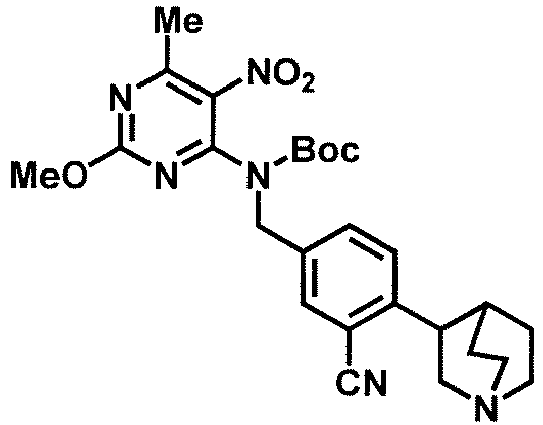
1H-NMR (CDCl3) δ: 7.73 (1H, s), 7.57-7.46 (2H, m), 5.18 (2H, s), 4.02 (3H, s), 3.48-3.41 (1H, m), 3.39-3.31 (1H, m), 3.15-3.08 (1H, m), 3.07-2.89 (4H, m), 2.66 (3H, s), 1.90-1.84 (2H, m), 1.80-1.71 (1H, m), 1.61-1.50 (1H, m), 1.46-1.35 (10H, m). 177 
LC-MS [M+H]+/Rt (min): 468.3/1.324 (Method A); 1H-NMR (CDCl3) δ: 8.59 (1H, d, J = 2.4 Hz), 7.81 (1H, dd, J = 8.5, 2.4 Hz), 7.37 (1H, d, J = 8.5 Hz), 5.26 (2H, s), 4.29 (2H, q, J = 7.1 Hz), 2.65 (3H, s) , 1.41 (9H, s), 1.34 (3H, t, J = 7.1 Hz). 178 
LC-MS [M+H]+/Rt (min): 456.2/1.288 (Method A); 1H-NMR (CDCl3) δ: 8.59 (1H, d, J = 2.4 Hz), 7.81 (1H, dd, J = 8.5, 2.4 Hz), 7.37 (1H, d, J = 8.5 Hz), 5.27 (2H, s), 3.90 (3H, s), 2.66 (3H, s), 1.41 (9H, s). 179 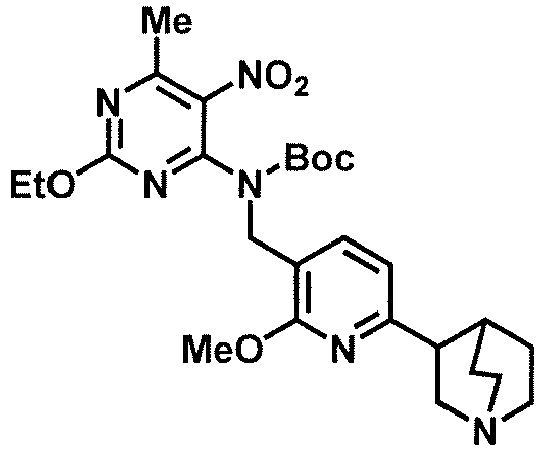
LC-MS [M+H]+/Rt (min): 529.4/0.873 (Method C) 180 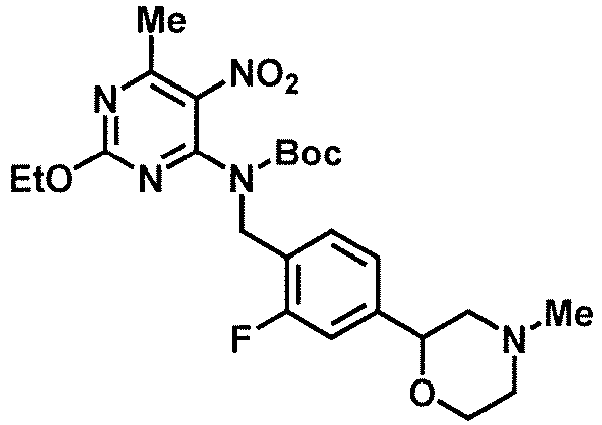
LC-MS ([M+H]+/Rt (min)): 506.3/0.866 (Method A) 181 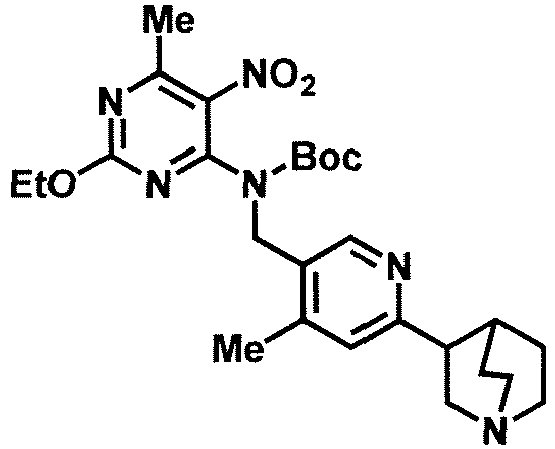
LC-MS [M+H]+/Rt (min) : 513.4/0.787 (Method C) 182 
LC-MS [M+H] +/Rt (min) : 454.2/1.082 (Method C) 183 
LC-MS [M+H]+/Rt (min): 486.2/1.207 (Method C); 1H-NMR (CDCl3) δ: 8.37-8.34 (1H, m) , 7.58-7.53 (1H, m), 5.23-5.21 (2H, m), 4.14 (2H, q, J = 7.2 Hz), 2.60 (3H, s), 1.40 (9H, s), 1.25 (3H, t, J = 7.2 Hz). 184 
LC-MS [M+H] +/Rt (min): 492.3/1.275 (Method C) 185 
LC-MS [M+H]+/Rt (min) : 487.3/1.065 (Method C) - According to the methods of Examples 352 and 365, Reference examples 186 - 187 were prepared by using the corresponding material compounds.
Reference example Chemical Structure Instrumental analysis data 186 
LC-MS [M+H]+/Rt (min) : 500.4/0.708 (Method C) 187 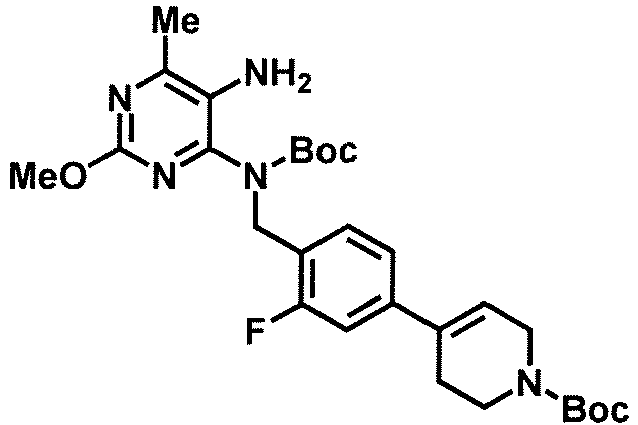
LC-MS [M+H]+/Rt (min): 444.4/0.721 (Method C) - According to the method of Example 80, Reference examples 188 - 189 were prepared by using the corresponding material compounds.
Reference example Chemical Structure Instrumental analysis data 188 
LC-MS ([M+H]+/Rt (min)): 603.5/0.880 (Method A) 189 
LC-MS ([M+H]+/Rt (min)): 617.5/0.932 (Method A) -
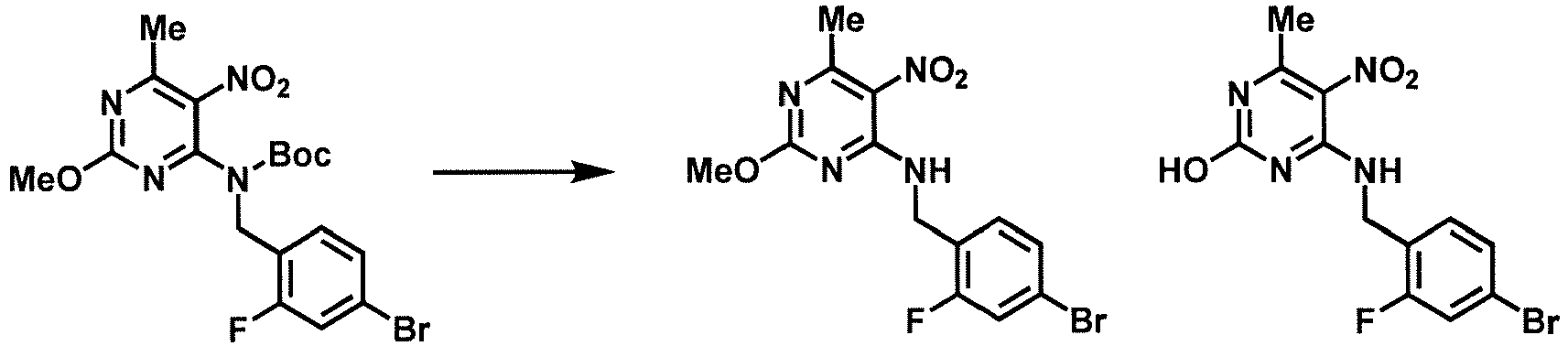
- To an ice-cooled solution of the compound of Reference example 161 (4.6 g) in ethyl acetate (10 mL) was added a solution of hydrochloric acid in ethyl acetate (4 mol/L, 49 mL), and the mixture was stirred at room temperature for 2 hours, and at 50°C for 2 hours. The reaction mixture was cooled to room temperature, and then the solvent was removed under reduced pressure to give the two title compounds (4.7 g) as a mixture.
- Reference example 190: LC-MS [M+H]+/Rt (min): 370.9/1.008
- Reference example 191: LC-MS [M+H]+/Rt (min): 357.0/0.709
- According to the method of Reference example 91, Reference examples 192 - 218 were prepared by using the corresponding material compounds.
Reference example Chemical Structure Instrumental analysis data 192 
LC-MS [M+H] +/Rt (min) : 402.0/0.514 (Method C); 1H-NMR (CDCl3) δ: 8.83-8.81 (1H, br m), 7.34-7.28 (1H, m), 7.06-6.99 (2H, m), 4.84 (2H, d, J = 5.5 Hz), 4.03 (3H, s), 3.41-3.31 (1H, m), 3.09-2.84 (6H, m), 2.75 (3H, s), 2.02-1.90 (1H, m), 1.80-1.71 (2H, m), 1.69-1.61 (1H, m), 1.45-1.33 (1H, m). 193 
LC-MS [M+H]+/Rt (min): 413.4/0.659 (Method A); 1H-NMR (CDCl3) δ: 8.74-8.68 (1H, m), 7.48 (1H, d, J = 7.9 Hz), 7.05 (1H, d, J = 7.9 Hz), 4.77 (2H, d, J = 5.5 Hz), 4.41 (2H, q, J = 7.1 Hz), 3.52-3.46 (1H, m), 3.27-3.19 (1H, m), 3.10-2.99 (2H, m), 2.99-2.89 (2H, m), 2.88-2.78 (1H, m), 2.77 (3H, s), 2.60 (3H, s), 2.07-2.01 (1H, m), 1.77-1.63 (3H, m), 1.40 (3H, t, J = 7.1 Hz), 1.37-1.22 (1H, m). 194 
LC-MS [M+H]+/Rt (min): 423.4/0.700 (Method A); 1H-NMR (CDCl3) δ: 8.88 (1H, t, J = 5.5 Hz), 7.69-7.61 (1H, m), 7.61-7.51 (2H, m), 4.81 (2H, d, J = 5.5 Hz), 4.39 (2H, q, J = 7.1 Hz), 3.50-3.43 (1H, m) , 3.43-3.31 (1H, m), 3.19-3.09 (1H, m), 3.09-2.89 (4H, m), 2.77 (3H, s), 1.98-1.87 (2H, m), 1.83-1.73 (1H, m), 1.63-1.51 (1H, m), 1.47-1.34 (4H, m) . 195 
LC-MS [M+H]+/Rt (min): 446.4/0.785 (Method A); 1H-NMR (CDCl3) δ: 8.80 (1H, t, J = 5.5 Hz), 7.05 (1H, d, J = 11.0 Hz), 6.81 (1H, d, J = 6.1 Hz), 4.81 (2H, d, J = 5.5 Hz), 4.46 (2H, q, J = 7.1 Hz), 3.79 (3H, s), 3.41-3.33 (1H, m), 3.30-3.24 (1H, m), 3.02-2.80 (5H, m), 2.75 (3H, s), 1.93-1.89 (1H, m), 1.82-1.65 (3H, m), 1.47-1.34 (4H, m). 196 
LC-MS [M+H]+/Rt (min) : 409.4/0.712 (Method A); 1H-NMR (CDCl3) δ: 8.86 (6H, t, J = 6.1 Hz), 7.65 (1H, s), 7.60-7.52 (2H, m), 4.82 (2H, d, J = 6.1 Hz), 3.97 (3H, s), 3.49-3.43 (1H, m), 3.41-3.32 (1H, m), 3.16-3.08 (1H, m), 3.08-2.88 (4H, m), 2.78 (3H, s), 1.96-1.85 (2H, m), 1.81-1.72 (1H, m), 1.61-1.52 (1H, m), 1.43-1.36 (1H, m). 197 
LC-MS [M+H]+/Rt (min) : 370.2/1.100 (Method A); 1H-NMR (CDCl3) δ: 9.35 (1H, t, J = 5.5 Hz), 8.69 (1H, d, J = 2.4 Hz), 7.83 (1H, dd, J = 7.9, 2.4 Hz), 7.21 (1H, d, J = 8.5 Hz), 4.86 (2H, d, J = 5.5 Hz), 4.40 (2H, q, J = 7.1 Hz), 2.77 (3H, s), 1.40 (4H, t, J = 7.1 Hz) . 198 
LC-MS [M+H]+/Rt (min) : 356.1/1.018 (Method A); 1H-NMR (CDCl3) δ: 9.35 (1H, t, J = 4.9 Hz), 8.69 (1H, d, J = 2.4 Hz), 7.83 (1H, dd, J = 8.5, 2.4 Hz), 7.22 (1H, d, J = 8.5 Hz), 4.87 (3H, d, J = 4.9 Hz), 3.98 (3H, s), 2.77 (3H, s). 199 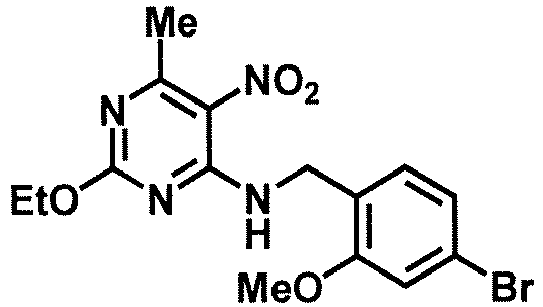
LC-MS [M+H]+/Rt (min) : 397.1/1.130 (Method C) 200 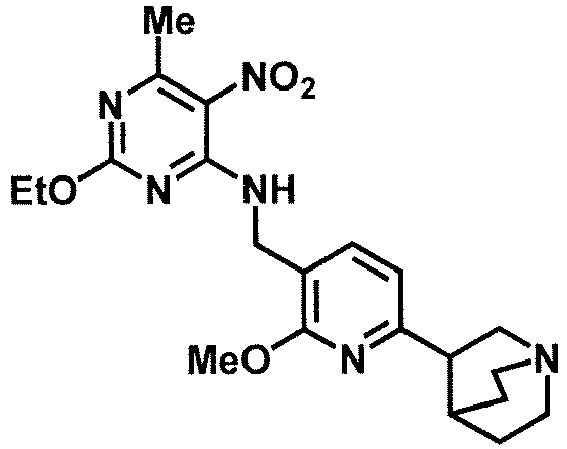
LC-MS [M+2H]2+/2 / Rt (min): 215.1/0.671 (Method C); 1H-NMR (CDCl3) δ: 9.04-8.95 (1H, m), 7.42 (1H, d, J = 7.3 Hz), 6.69 (1H, d, J = 7.3 Hz), 4.68 (2H, d, J = 5.5 Hz), 4.40 (2H, q, J = 7.0 Hz), 4.00 (3H, s), 3.55-3.47 (1H, m), 3.17-3.02 (2H, m), 2.98-2.77 (4H, m), 2.69 (3H, s), 1.97-1.93 (1H, m), 1.83-1.62 (3H, m), 1.38 (3H, t, J = 7.0 Hz), 1.34-1.21 (1H, m) . 201 
LC-MS [M+H]+/Rt (min) : 406.5/0.729 (Method A) 202 
LC-MS [M+H]+/Rt (min) : 350.9/0.984 (Method A) 203 
LC-MS [M+H]+/Rt (min) : 403.4/0.523 (Method A) 204 
LC-MS [M+H]+/Rt (min): 417.4/0.592 (Method A) 205 
LC-MS [M+H]+/Rt (min): 371.2/1.074 (Method A) 206 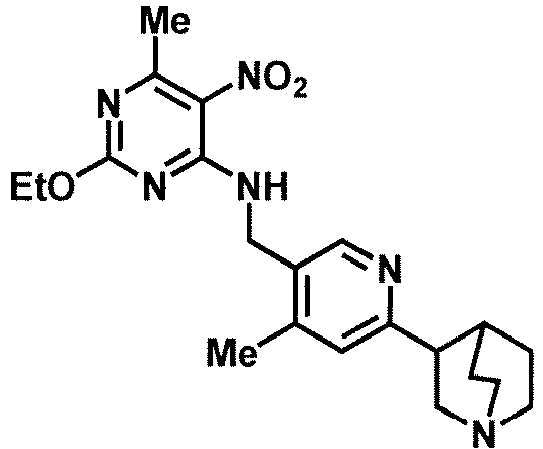
LC-MS [M+2H]2+/2 / Rt (min): 207.0/0.561 (Method C) 207 
LC-MS [M+H]+/Rt (min) : 354.1/0.856 (Method C) 208 
LC-MS [M+H]+/Rt (min) : 370.9/1.008 (Method C) 209 
LC-MS [M+H]+/Rt (min) : 357.0/0.709 (Method C) 210 
LC-MS [M+H]+/Rt (min) : 386.0/1.005 (Method C) 211 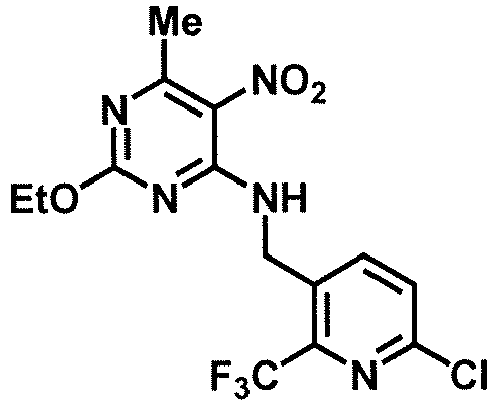
LC-MS [M+H]+/Rt (min) : 392.1/1.038 (Method C) 212 
LC-MS [M+H]+/Rt (min): 349.2/0.903 (Method C) 213 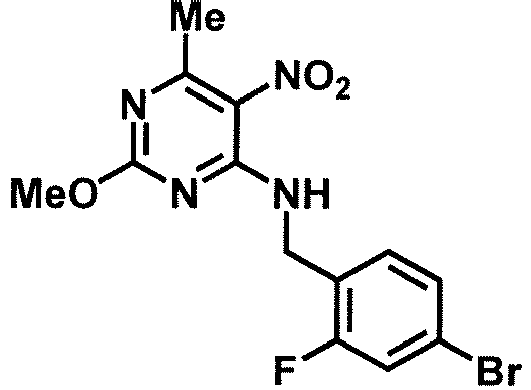
LC-MS [M+H]+/Rt (min) : 371.2/1.036 (Method C) 214 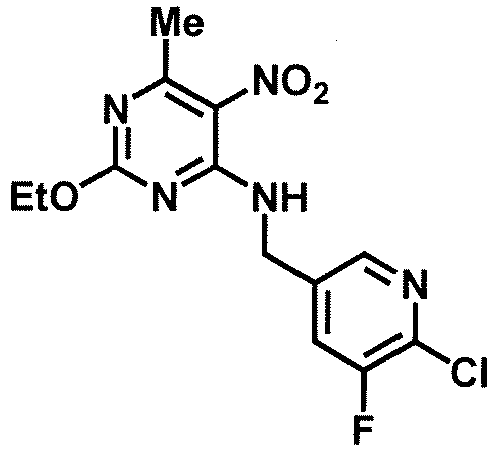
LC-MS [M+H]+/Rt (min) : 342.2/0.904 (Method C) 215 
LC-MS [M+H]+/Rt (min): 392.2/1.006 (Method C) 216 
LC-MS [M+H]+/Rt (min): 400.2/0.554 (Method C) 217 
LC-MS [M+H]+/Rt (min): 353.1/0.998 (Method C) 218 
LC-MS [M+H]+/Rt (min): 387.2/0.832 (Method C) - According to the method of Example 127, Reference examples 219 - 222 were prepared by using the corresponding material compounds.
Reference example Chemical Structure Instrumental analysis data 219 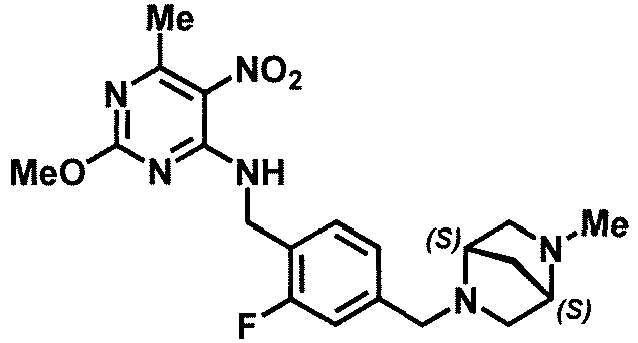
LC-MS [M+H]+/Rt (min): 417.4/0.581 (Method A) 220 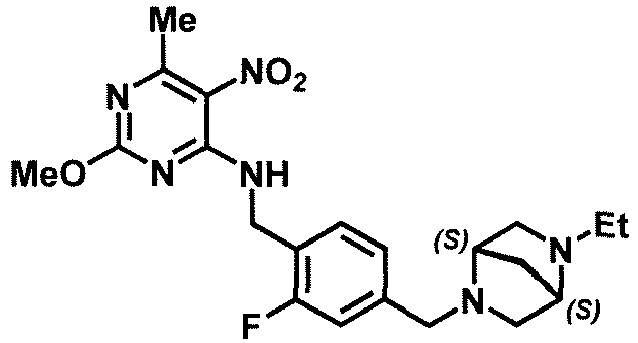
LC-MS [M+H]+/Rt (min) : 431.45/0.596 (Method A) 221 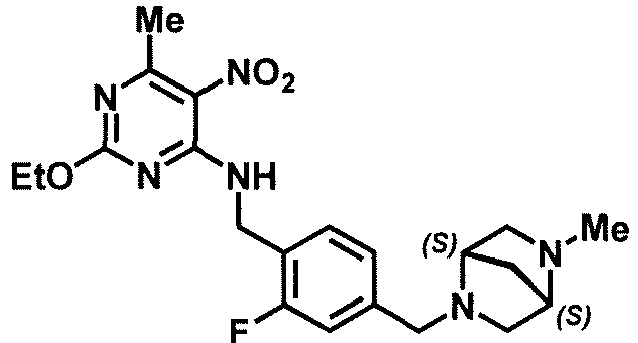
LC-MS ([M+H]+/Rt (min)): 431.4/0.651 (Method A) -
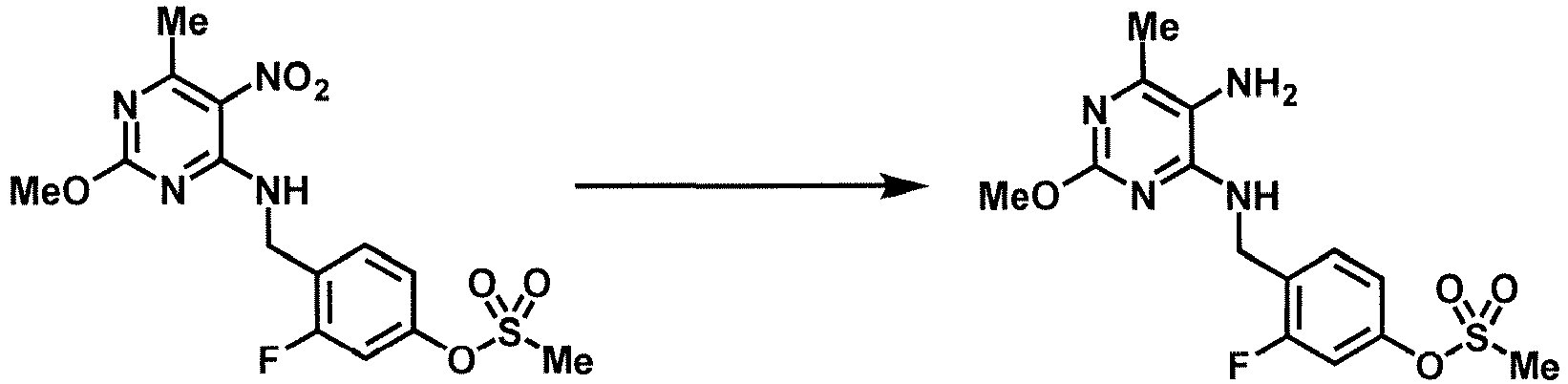
- To a solution of the compound of Reference example 218 (7.38 g) in ethanol (100 mL) was added 5 % palladium carbon (1.13 g) at room temperature. The reaction mixture was stirred at room temperature under ambient-pressure hydrogen atmosphere for 3 hours, and then filtrated through Celite. The filtrate was concentrated in vacuo, and the residue was purified by silica gel column chromatography (chloroform/methanol) to give the title compound (4.22 g). LC-MS [M+H]+/Rt (min): 357.2/0.441 (Method C)
- According to the methods of Reference example 106, Reference example 107, and Reference example 222, Reference examples 223 - 249 were prepared by using the corresponding material compounds.
Reference example Chemical Structure Instrumental analysis data 223 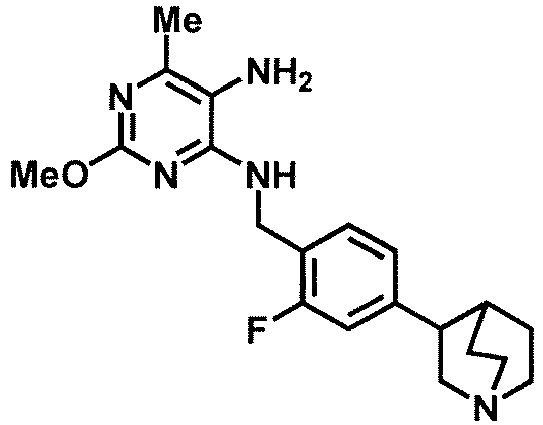
LC-MS [M+2H]2+/2/Rt (min): 186.6/0.252 (Method C); 1H-NMR (CDCl3) δ: 7.39-7.33 (1H, m), 7.04-6.96 (2H, m), 5.68 (1H, t, J = 6.1 Hz), 4.71 (2H, d, J = 6.1 Hz), 3.91 (3H, s), 3.37-3.29 (1H, m), 3.07-2.81 (6H, m), 2.50 (2H, s), 2.31 (3H, s), 1.94-1.90 (1H, m), 1.78-1.69 (2H, m), 1.69-1.64 (1H, m), 1.44-1.32 (1H, m). 224 
1H-NMR (CDCl3) δ: 7.50 (1H, d, J = 7.9 Hz), 7.03 (1H, d, J = 7.9 Hz), 5.53 (1H, t, J = 5.5 Hz), 4.64 (2H, d, J = 5.5 Hz), 4.30 (2H, q, J = 6.9 Hz), 3.51-3.42 (1H, m), 3.29-3.18 (1H, m), 3.09-2.99 (2H, m), 2.99-2.89 (2H, m), 2.89-2.77 (1H, m), 2.58 (3H, s), 2.51 (2H, s), 2.32 (3H, s), 2.07-2.00 (1H, m), 1.77-1.62 (3H, m), 1.37 (3H, t, J = 6. 9 Hz), 1.34-1.27 (1H, m). 225 
1H-NMR (CDCl3) δ: 7.64 (1H, d, J = 1.2 Hz), 7.57 (1H, dd, J = 7.9, 1.2 Hz), 7.50 (1H, d, J = 7.9 Hz), 5.79 (1H, t, J = 6.1 Hz), 4.69 (2H, d, J = 6.1 Hz), 4.28 (2H, q, J = 6.9 Hz), 3.47-3.40 (1H, m), 3.38-3.30 (1H, m), 3.15-3.07 (1H, m), 3.03-2.87 (4H, m), 2.53 (2H, s), 2.32 (3H, s), 1.94-1.83 (2H, m), 1.80-1.73 (1H, m), 1.60-1.52 (1H, m), 1.43-1.32 (4H, m). 226 
LC-MS [M+H]+/Rt (min): 416.4/0.485 (Method A); 1H-NMR (CDCl3) δ: 7.02 (1H, d, J = 11.6 Hz), 6.92 (1H, d, J = 6.1 Hz), 5.66 (1H, t, J = 5.5 Hz), 4.69 (2H, d, J = 5.5 Hz), 4.34 (2H, q, J = 7.1 Hz), 3.78 (3H, s), 3.43-3.32 (1H, m), 3.31-3.25 (1H, m), 3.04-2.92 (3H, m), 2.92-2.82 (2H, m), 2.50 (2H, s), 2.30 (3H, s), 1.97-1.90 (1H, m), 1.83-1.68 (3H, m), 1.48-1.34 (4H, m). 227 
1H-NMR (CDCl3) δ: 7.65 (1H, d, J = 1.8 Hz), 7.59 (1H, dd, J = 7.9, 1.8 Hz), 7.50 (1H, d, J = 7.9 Hz), 5.82 (1H, t, J = 5.5 Hz), 4.70 (2H, d, J = 5.5 Hz), 3.87 (3H, s), 3.51-3.44 (1H, m), 3.41-3.33 (1H, m), 3.19-3.12 (1H, m), 3.08-2.92 (4H, m), 2.54 (2H, s), 2.34 (3H, s), 1.99-1.87 (2H, m), 1.82-1.74 (1H, m), 1.65-1.55 (1H, m), 1.46-1.36 (1H, m). 228 
LC-MS [M+H]+/Rt (min): 340.1/0.649 (Method A); 1H-NMR (CDCl3) δ: 8.64 (1H, d, J = 1.8 Hz), 7.78 (1H, dd, J = 7.9, 1.8 Hz), 7.24 (1H, d, J = 7.9 Hz), 6.40 (1H, t, J = 5.5 Hz), 4.74 (2H, d, J = 5.5 Hz), 4.29 (2H, q, J = 7.1 Hz), 2.32 (3H, s), 1.36 (3H, t, J = 7.1 Hz) . 229 
LC-MS [M+H]+/Rt (min) : 326.1/0.585 (Method A); 1H-NMR (CDCl3) δ: 8.63 (1H, d, J = 2.4 Hz), 7.78 (1H, dd, J = 8.5, 2.4 Hz), 7.24 (1H, d, J = 8.5 Hz), 6.37 (1H, t, J = 5.5 Hz), 4.74 (2H, d, J = 5.5 Hz), 3.87 (3H, s), 2.32 (3H, s). 230 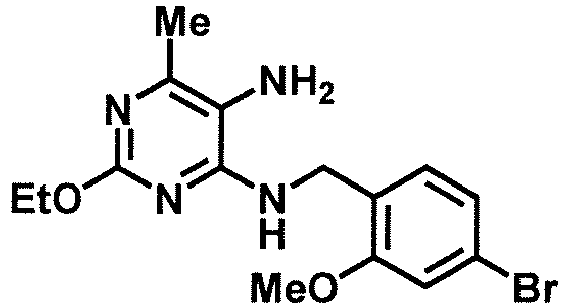
LC-MS [M+H]+/Rt (min) : 367.0/0.654 (Method C); 1H-NMR (CDCl3) δ: 7.15 (1H, d, J = 8.2 Hz), 7.02-6.98 (2H, m) , 6.14 (1H, br s), 4.59 (2H, d, J = 5.9 Hz), 4.29 (2H, q, J = 7.2 Hz), 3.84 (3H, s), 2.27 (3H, s), 1.33 (3H, t, J = 7.2 Hz) . 231 
LC-MS [M+2H]2+/2 / Rt (min): 200.1/0.392 (Method C); 1H-NMR (CDCl3) δ: 7.48 (1H, d, J = 7.3 Hz), 6.68 (1H, d, J = 7.3 Hz), 5.78 (1H, t, J = 6.0 Hz), 4.57 (2H, d, J = 6.0 Hz), 4.27 (2H, q, J = 7.0 Hz), 3.98 (3H, s), 3.68-3.55 (1H, m), 3.24-3.09 (2H, m), 3.05-2.82 (4H, m), 2.53-2.42 (2H, m), 2.25 (3H, s), 2.03-1.95 (1H, m), 1.90-1.67 (3H, m), 1.40-1.29 (1H, m), 1.34 (3H, t, J = 7.0 Hz) . 232 
LC-MS ([M+H]+/Rt (min)): 376.5/0.457 (Method A) 233 
LC-MS ([M+H]+/Rt (min)): 321.3/0.598 (Method A) 234 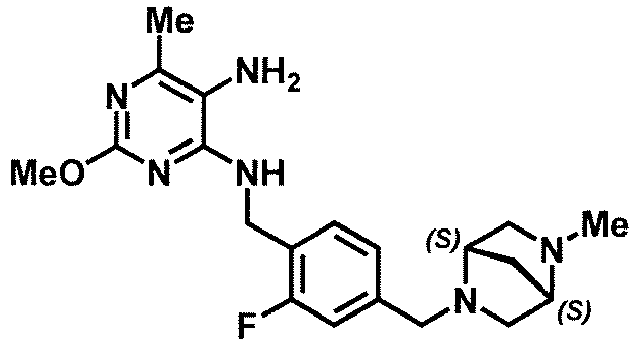
LC-MS [M+H]+/Rt (min) : 387.4/0.348 (Method A) 235 
LC-MS [M+H]+/Rt (min): 401.4/0.361 (Method A) 236 
LC-MS ([M+H]+/Rt (min)) : 401.4/0.389 (Method A) 237 
LC-MS [M+H]+/Rt (min) : 341.2/0.630 (Method A) 238 
LC-MS [M+2H] 2+/2 / Rt (min): 192.1/0.287 (Method C) 239 
LC-MS [M+H]+/Rt (min) : 324.1/0.453 (Method C) 240 
LC-MS [M+H]+/Rt (min): 341.0/0.578 (Method C) 241 
LC-MS [M+H]+/Rt (min) : 327.0/0.456 (Method C) 242 
LC-MS [M+H]+/Rt (min) : 356.0/0.512 (Method C) 243 
LC-MS [M+H]+/Rt (min) : 362.1/0.601 (Method C) 244 
LC-MS [M+H]+/Rt (min) : 319.2/0.498 (Method C) 245 
LC-MS [M+H]+/Rt (min) : 341.1/0.585 (Method C) 246 
LC-MS [M+H]+/Rt (min) : 312.2/0.489 (Method C) 247 
LC-MS [M+H]+/Rt (min) : 362.2/0.592 (Method C) 248 
LC-MS [M+H]+/Rt (min) : 323.2/0.552 (Method C) 249 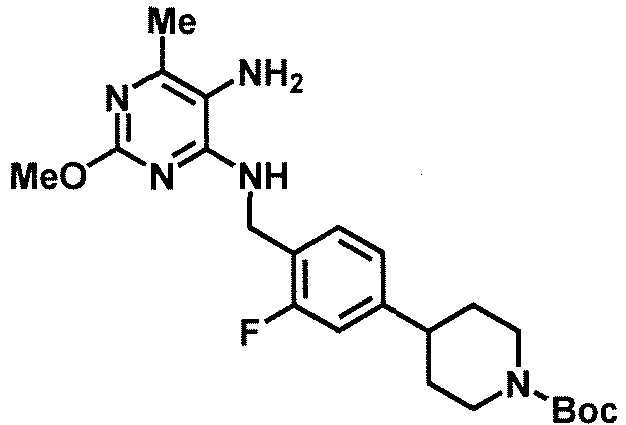
LC-MS [M+H]+/Rt (min) : 446.4/0.721 (Method C) -

- To an ice-cooled solution of the compound of Reference example 222 (1.70 g) in methanol (20 mL)/tetrahydrofuran (20 mL) was added 5 mol/L aqueous sodium hydroxide (4.77 mL), and the mixture was stirred in ice bath for 15 hours. To the reaction mixture was added 50 % aqueous potassium carbonate, and the mixture was extracted with chloroform/ethanol (3/1). The organic layer was dried over sodium sulfate, filtrated, and then concentrated in vacuo. The residue was purified by silica gel column chromatography (chloroform/methanol) to give the title compound (0.914 g).
LC-MS [M+H]+ /Rt (min): 279.2/0.390 (Method C) - According to the method of Reference example 106, Reference example 107, and Reference example 222, Reference examples 251 - 252 were prepared by using the corresponding material compounds.
Reference example Chemical Structure Instrumental analysis data 251 
LC-MS [M+2H]2+/2/Rt (min): 195.0/0.248 (Method C) 252 
LC-MS [M+H]+/Rt (min) : 488.4/0.775 (Method C) - According to the method of Reference example 2, Reference example 253 was prepared by using the corresponding material compound.
Reference example Chemical Structure Instrumental analysis data 253 
1H-NMR (DMSO-d6) δ: 9.97 (1H, s), 8.08 (1H, s), 7.86-7.84 (2H, m), 7.69-7.66 (1H, m), 7.62-7.57 (1H, m), 7.24 (2H, brs), 5.37 (2H, s), 4.19 (2H, t, J = 6.4 Hz), 1.62 (2H, tt, J = 6.4, 7.9 Hz) , 1.39 (2H, qt, J = 7.3, 7.9 Hz), 0.90 (3H, t, J = 7.3 Hz) . - According to the method of Reference example 36, Reference examples 254 - 255 were prepared by using the corresponding material compounds.
Reference example Chemical Structure Instrumental analysis data 254 
1H-NMR (DMSO-d6) δ: 10.0 (1H, s), 7.88-7.85(1H, m), 7.76 (1H, brs), 7.62-7.56 (2H, m), 7.48 (2H, brs), 5.36 (2H, s), 4.33 (2H, t, J = 4.7 Hz), 3.60 (2H, t, J = 4.7 Hz), 3.27 (3H, s). 255 
1H-NMR (DMSO-d6) δ: 9.98 (1H, s), 7.90 (2H, d, J = 7.9 Hz), 7.45 (2H, brs), 7.41 (2H, d, J = 7.9 Hz) , 5.37 (2H, s), 4.19 (2H, t, J = 6.4 Hz), 1.64 (2H, tt, J = 6.4, 7.9 Hz), 1.37 (2H, qt, J = 7.3, 7.9 Hz), 0.90 (3H, t, J = 7.3 Hz). - According to the method of Example 80, Reference examples 256 - 261 were prepared by using the corresponding material compounds.
Reference example Chemical Structure Instrumental analysis 256 
1H-NMR (DMSO-d6) δ: 7.46 (2H, brs), 7.31-7.27 (1H, m), 7.25-7.18 (2H, m), 7.11-7.09 (1H, m), 5.25 (2H, s), 4.34 (2H, t, J = 4.7 Hz), 3.61 (2H, t, J = 4.7 Hz), 3.33 (2H, s), 3.28 (3H, s), 2.10 (6H, s) . 257 
1H-NMR (DMSO-d6) δ: 7.48 (2H, brs), 7.32-7.27 (1H, m), 7.23-7.19 (2H, m), 7.13-7.10 (1H, m), 5.25 (2H, s), 4.32 (2H, t, J = 4.7 Hz), 3.61 (2H, t, J = 4.7 Hz), 3.55-3.49 (4H, m), 3.45-3.33 (5H, m), 3.27 (3H, s). 258 
1H-NMR (DMSO-d6) δ: 7.45 (2H, brs), 7.26 (2H, d, J = 7.9 Hz), 7.19 (2H, d, J = 7.9 Hz), 5.23 (2H, s), 4.33 (2H, t, J = 4.7 Hz), 3.61 (2H, t, J = 4.7 Hz), 3.33 (2H, s), 3.28 (3H, s), 2.10 (6H, s). 259 
1H-NMR (DMSO-d6) δ: 7.46 (2H, brs), 7.27 (2H, d, J = 7.9 Hz), 7.20 (2H, d, J = 7.9 Hz), 5.23 (2H, s), 4.32 (2H, t, J = 4.7 Hz), 3.61 (2H, t, J = 4.7 Hz), 3.55-3.52 (4H, m), 3.38 (2H, s), 3.27 (3H, s), 2.34-2.28 (4H, m). 260 
1H-NMR (DMSO-d6) δ: 7.41 (2H, brs), 7.31-7.27 (1H, m), 7.23-7.18 (2H, m), 7.12-7.09 (1H, m), 5.25 (2H, s), 4.22 (2H, t, J = 6.4 Hz), 3.31 (2H, s), 2.10 (6H, s), 1.66 (2H, tt, J = 6.4, 7.9 Hz), 1.39 (2H, qt, J = 7.3, 7.9 Hz), 0.91 (3H, t, J = 7.3 Hz). 261 
1H-NMR (DMSO-d6) δ: 7.42 (2H, brs), 7.32-7.27 (1H, m), 7.24-7.20 (2H, m), 7.14-7.11 (1H, m), 5.24 (2H, s), 4.21 (2H, t, J = 6.4 Hz), 3.58-3.48 (4H, m), 3.42 (2H, s), 2.32-2.26 (4H, m), 1.65 (2H, tt, J = 6.4, 7.9 Hz), 1.39 (2H, qt, J = 7.3, 7.9 Hz), 0.91 (3H, t, J = 7.3 Hz). - Next, the pharmacological activities of the typical compounds of the present invention are explained in more detail with the following Tests.
- As human TLR7 expressing cell line, HEK293 cell line was bought from IMGENEX Corporation (TLR7/NF-κB/SEAPorter™ HEK293 cell), which is human embryonic kidney cell line and stably expresses full-length human TLR7 gene and secreted alkaline phosphatase (SEAP) reporter gene under the transcriptional control of an NF-κB response element. The TLR7/NF-κB/SEAPorter™ HEK293 cell was cultivated with DMEM containing 10 % fetal bovine serum (FBS) and 10 µg/mL blasticidin S at 37°C in the presence of 5 % CO2. The TLR7/NF-κB/SEAPorter™ HEK293 cell was seeded into 96-well microtiter plate at 5×10⁴ cell/90 µL/well, and the place was cultivated at 37°C in a CO2 incubator overnight. Each test compound that was diluted with the medium was added to the wells (10 µL/well), wherein each final concentration was adjusted to 0.001, 0.003, 0.01, 0.03, 0.1, 0.3, 1, 3, and 10 µmol/L, or 0.01, 0.03, 0.1, 0.3, 1, 3, 10, 30, and 100 µmol/L. After 0.5 hour, R-848 that is TLR7/8 ligand was added to each well (10 µL/well), wherein each final concentration was adjusted to 200 nmol/L. The total volume was adjusted to 110 µL/well, the test samples were incubated in CO2 incubator for 20 ± 1 hours, and then the SEAP activity was measured as activation of TLR7. The SEAP activity was evaluated as follows: p-nitro-phenyl phosphate (pNPP) (Invitrogen) was added to the incubated sample (50 µL/well); after 15 minutes, 4 mol/L sodium hydroxide solution (nacalai tesque) was added thereto (50 µL/well) to quench the reaction; and the absorbance of each sample was measured at 405 nm with microplate reader Elx808 (BioTek). The 50 % inhibitory concentration (IC50 value) of each sample compound was calculated based on 100 % of the SEAP activity wherein the test sample comprises no sample compound.
- Each compound prepared in the Examples was evaluated by Test 1. Each concentration of each test compound shown in the table below denotes the concentration to inhibit the cell growth by 50 % (IC50 value; µmol/L).
Example TLR7 IC50 (µmol/L) Example TLR7 IC50 (µmol/L) Example TLR7 IC50 (µmol/L) Example TLR7 IC50 (µmol/L) 1 2.3 31 7.7 61 0.62 91 0.25 2 5.5 32 8.6 62 1.43 92 0.37 3 9.2 33 0.82 63 5.8 93 0.29 4 7.8 34 1.7 64 0.68 94 0.020 5 1.4 35 18.1 65 0.55 95 0.050 6 9.6 36 2.9 66 0.021 96 0.080 7 7.8 37 2.7 67 0.051 97 0.10 8 9.3 38 0.52 68 0.18 98 0.071 9 12.8 39 0.82 69 0.13 99 0.146 10 0.80 40 0.12 70 0.11 100 0.096 11 10.9 41 0.14 71 0.058 101 0.056 12 9.2 42 0.55 72 0.081 102 0.81 13 9.3 43 2.0 73 0.16 103 1.6 14 8.2 44 0.75 74 1.4 104 0.76 15 4.1 45 0.95 75 0.20 105 0.059 16 13.9 46 0.025 76 0.40 106 0.062 17 1.1 47 0.030 77 2.4 107 0.027 18 2.7 48 0.099 78 1.3 108 0.16 19 1.4 49 0.067 79 3.5 109 0.010 20 22.5 50 0.077 80 0.54 110 0.005 21 0.70 51 0.059 81 0.060 111 0.20 22 2.0 52 0.089 82 0.40 112 0.10 23 9.1 53 0.060 83 1.3 113 1.0 24 13.7 54 0.42 84 0.50 114 0.30 25 3.5 55 0.62 85 0.80 115 0.10 26 18.7 56 0.66 86 0.30 116 0.16 27 1.4 57 1.8 87 2.5 117 7.0 28 9.5 58 0.81 88 0.90 118 0.95 29 1.0 59 0.28 89 1.4 119 0.028 30 2.8 60 0.23 90 4.2 120 0.051 Example TLR7 IC50 (µmol/L) Example TLR7 IC50 (pmol/L) Example TLR7 IC50 (µmol/L) Example TLR7 IC50 (µmol/L) 121 1.3 136 0.020 151 16.6 166 0.050 122 0.23 137 0.84 152 2.9 167 0.11 123 0.033 138 0.049 153 5.8 168 1.4 124 0.22 139 0.084 154 13.6 169 0.007 125 0.085 140 0.12 155 8.1 170 0.082 126 0.15 141 3.3 156 5.0 171 0.018 127 0.053 142 6.6 157 8.9 172 0.003 128 0.019 143 1.57 158 13.7 173 0.063 129 0.071 144 2.6 159 0.93 174 0.026 130 0.043 145 2.1 160 1.3 175 0.094 131 0.007 146 1.7 161 0.028 176 0.011 132 0.019 147 3.5 162 0.21 177 0.010 133 0.013 148 0.016 163 0.010 178 0.003 134 0.17 149 0.46 164 0.17 179 16.2 135 0.085 150 0.50 165 0.016 181 19.7 Example TLR7 IC50 (µmol/L) Example TLR7 IC50 (µmol/L) Example TLR7 TC50 (µmol/L) Example TLR7 IC50 (µmol/L) 237 2.02 259 0.028 275 0.033 290 0.022 238 2.17 260 0.018 276 0.024 291 0.017 240 0.357 261 1.16 277 0.023 292 0.039 242 2.68 262 0.027 278 0.072 293 0.018 243 2.66 263 0.102 279 0.040 294 0.019 244 0.445 264 0.063 280 0.003 295 0.013 245 0.198 265 0.057 281 0.142 296 0.021 246 0.3 266 0.029 282 0.008 297 0.050 247 0.085 268 0.027 283 0.021 300 0.028 248 0.248 269 0.019 284 0.003 301 0.043 249 0.1 270 0.272 285 0.002 302 0.067 250 0.2 271 0.099 286 0.026 303 0.007 251 0.18 272 0.261 287 0.029 304 0.004 252 0.028 273 0.2 288 0.062 305 0.005 258 0.169 274 0.1 289 0.030 306 0.040 Example TLR7 IC50 (µmol/L) Example TLR7 IC50 (µmol/L) Example TLR7 IC50 (µmol/L) Example TLR7 IC50 (µmol/L) 307 0.057 326 0.389 348 0.092 368 0.355 308 0.027 327 0.023 352 0.505 369 1.69 309 0.020 329 0.120 353 0.504 370 0.117 310 0.028 330 0.213 354 0.036 371 0.264 311 0.011 332 6.48 355 1.60 372 0.011 312 0.025 337 1.34 356 0.463 373 0.209 313 0.008 338 0.667 357 0.062 374 1.63 314 0.008 339 0.160 358 0.018 375 0.199 315 0.053 340 0.026 359 0.855 376 0.084 316 0.007 342 0.816 360 1.72 377 0.007 317 1.61 343 0.067 361 0.582 379 0.506 318 0.007 344 0.012 363 0.592 380 0.225 322 0.013 345 0.036 364 0.011 381 1.39 323 0.070 346 0.019 365 0.291 382 0.575 325 1.52 347 0.035 366 1.13 383 0.083 Example TLR7 IC50 (µmol/L) Example TLR7 IC50 (µmol/L) Example TLR7 IC50 (µmol/L) 384 0.270 400 0.263 420 0.139 385 0.094 401 0.006 421 0.073 386 0.013 402 0.132 424 0.1 388 1.35 403 0.021 425 0.093 389 2.04 404 0.846 426 0.2 390 0.31 405 3.41 427 0.028 391 0.038 410 0.070 428 0.210 392 0.013 411 0.026 430 0.549 393 0.001 412 0.005 431 0.008 394 0.114 413 0.009 432 0.062 395 0.005 414 0.016 433 0.009 396 0.061 415 0.016 434 0.09 397 0.031 416 0.050 435 0.018 398 0.021 418 0.019 436 0.037 399 0.039 419 0.712 437 0.016 Example TLR7 IC50 (µmol/L) 439 0.134 440 0.084 441 0.176 443 0.017 444 0.098 445 0.021 - The compounds of the present invention exhibited potent inhibitory effect against TLR7 in the test for evaluating the inhibition of the activation of TLR7. In particular, the compounds of Examples 46, 47, 48, 49, 50, 51, 52, 53, 66, 67, 69, 70, 71, 72, 81, , 94, 95, 96, 98, 100, 101, 105, 106, 107, 109, 110, 119, 120, 123, 125, 127, 128, 129, 130, 131, 132, 133, 135, 136, 138, 139, 148, 161, 163, 165, 166, 169, 171, 172, 173, 174, 175, 176, 177, 178, 252, 259, 260, 262, 264, 265, 266, 275, 276, 277, 278, 279, 280, 282, 283, 284, 285, 286, 287, 288, 289, 290, 291, 292, 293, 294, 295, 296, 297, 300, 301, 302,303, 304, 305, 306, 307, 308, 309, 310, 311, 312, 313, 314, 315, 316, 318, 322, 323, 327, 340, 343,344, 345, 346, 347, 348, 372, 376, 377, 383, 386, 391, 392, 393, 395, 396, 397, 398, 399, 401, 403, 410, 411, 412, 413, 414, 415, 416, 418, 421, 431, 432, 433, 436, 437, 443, and 445 exhibited potent inhibitory effect against TLR7.
- As human TLR8 expressing cell line, HEK293 cell line was bought from IMGENEX Corporation (TLR8/NF-κB/SEAPorter™ HEK293 cell), which is human embryonic kidney cell line and stably expresses full-length human TLR8 gene and secreted alkaline phosphatase (SEAP) reporter gene under the transcriptional control of an NF-κB response element. The TLR8/NF-κB/SEAPorter™ HEK293 cell was cultivated with DMEM containing 10 % fetal bovine serum (FBS) and 10 µg/mL blasticidin S at 37°C in the presence of 5 % CO2. The TLR8/NF-KB/SEAPorter™ HEK293 cell was seeded into 96-well microtiter plate at 5×10⁹ cell/90 µL/well, and the place was cultivated at 37°C in a CO2 incubator overnight. Each test compound that was diluted with the medium was added to the wells (10 µL/well), wherein each final concentration was adjusted to 0.01, 0.03, 0.1, 0.3, 1, 3, 10, 30, and 100 µmol/L. After 0.5 hour, R-848 that is TLR7/8 ligand was added to each well (10 µL/well), wherein each final concentration was adjusted to 30 µmol/L. The total volume was adjusted to 110 µL/well, the test samples were incubated in CO2 incubator for 20 ± 1 hours, and then the SEAP activity was measured as activation of TLR8. The SEAP activity was evaluated as follows: p-nitro-phenyl phosphate (pNPP, Invitrogen) was added to the incubated sample (50 µL/well); after 15 minutes, 4 mol/L sodium hydroxide solution (nacalai tesque) was added thereto (50 µL/well) to quench the reaction; and the absorbance of each sample was measured at 405 nm with microplate reader Elx808 (BioTek). The 50 % inhibitory concentration (IC50 value) of each sample compound was calculated based on 100 % of the SEAP activity wherein the test sample comprises no sample compound.
- As human TLR9 expressing cell line, HEK293 cell line was bought from IMGENEX Corporation (TLR9/NF-κB/SEAPorter™ HEK293 cell), which is human embryonic kidney cell line and stably expresses full-length human TLR9 gene and the secreted alkaline phosphatase (SEAP) reporter gene under the transcriptional control of an NF-κB response element. The TLR9/NF-κB/SEAPorter™ HEK293 cell was cultivated with DMEM containing 10 % fetal bovine serum (FBS) and 10 µg/mL blasticidin S at 37°C in the presence of 5 % CO2. The TLR9/NF-κB/SEAPorter™ HEK293 cell was seeded into 96-well microtiter plate at 5×10⁴ cell/90 µL/well, and the place was cultivated at 37°C in a CO2 incubator overnight. Each test compound that was diluted with the medium was added to the wells (10 µL/well), wherein each final concentration was adjusted to 0.01, 0.03, 0.1, 0.3, 1, 3, 10, 30, and 100 µmol/L. After 0.5 hour, CpG-B DNA (CpG2006, Hokkaido System Science Co., Ltd.) that is TLR9 ligand was added to each well (10 µL/well), wherein each final concentration was adjusted to 500 nmol/L. The total volume was adjusted to 110 µL/well, the test samples were incubated in CO2 incubator for 20 ± 1 hours, and then the SEAP activity was measured as activation of TLR9. The SEAP activity was evaluated as follows: p-nitro-phenyl phosphate (pNPP) (Invitrogen) was added to the incubated sample (50 µL/well); after 15 minutes, 4 mol/L sodium hydroxide solution (nacalai tesque) was added thereto (50 µL/well) to quench the reaction; and the absorbance of each sample was measured at 405 nm with microplate reader Elx808 (BioTek). The 50 % inhibitory concentration (IC50 value) of each sample compound was calculated based on 100 % of the SEAP activity wherein the test sample comprises no sample compound.
- For the evaluation of pharmacokinetic study of each sample, 11-week-old mouse (Jcl: ICR, male, CLEA Japan, Inc.) was used. In order to implement the single-dose oral administration to a mouse herein, each compound suspended in 0.5 % methylcellulose solution was administered at 10, 30, or 100 mg/kg. As for tail vein injection, each compound dissolved in saline was administered at 1 mg/kg. The blood collection was done with a heparinized syringe, 0.5 hour, 1 hour, 2 hours, 4 hours, 6 hours, and 24 hours after the oral administration; and 5 minutes, 15 minutes, 0.5 hour, 1 hour, 2 hours, 4 hours, 6 hours, and 24 hours after the tail vein injection. Each collected blood was centrifuged to give its plasma. The plasma was diluted with methanol, wherein the final concentration of methanol was adjusted to 80 %, centrifuged, and then filtrated to deproteinize the plasma. The obtained filtrate was analyzed with an LC-MS/MS (API4000, 5500Qtrap, 6500Qtrap, AB SCIEX) to detect and assay the test compound. For the assay, the calibration curve was prepared from mouse plasma comprising known amount of the compound, and phenytoin was used as an internal standard.
- As mouse TLR7 expressing cell line, mouse TLR7 gene-stably-expressing HEK293 cell line which is human embryonic kidney cell line was bought from InvivoGen (293XL-mTLR7 cell). The 293XL-mTLR7 cell was cultivated with DMEM containing 10 % fetal bovine serum (FBS) and 10 µg/mL blasticidin S at 37°C in the presence of 5 % CO2. The 293XL-mTLR7 cell was seeded into 6-well plate (collagen-coated) at 3×10⁵ cell/2 mL/well, and the place was cultivated at 37°C in a CO2 incubator overnight. pNF-κB-Luc plasmid (Agilent Technologies) that was diluted with FuGENER™ 6 Transfection Reagent (Promega) and the medium was added to the 293XL-mTLR7 cell-cultivating plate (1 µg/100 µL/well), the plate was cultivated at 37°C in a CO2 incubator overnight. The pNF-KB-Luc plasmid-transfected 293XL-mTLR7 cell was seeded into 96-well plate for fluorescence/luminescence assay at 2×10⁴ cell/90 µL/well. Each test compound that was diluted with the medium was added to the wells (10 µL/well), wherein each final concentration was adjusted to 0.001, 0.003, 0.01, 0.03, 0.1, 0.3, 1, 3, 10 µmol/L, or 0.01, 0.03, 0.1, 0.3, 1, 3, 10, 30, 100 µmol/L. After 0.5 hour, R-848 that is TLR7/8 ligand was added to each well (10 µL/well), wherein each final concentration was adjusted to 200 nmol/L. The total volume was adjusted to 110 µL/well, the test samples were incubated in CO2 incubator for 6 hours, and then the luciferase activity was measured as activation of TLR7. The luciferase activity was evaluated as follows: Bright-Glo™ Luciferase Assay System (Promega) was added to the incubated sample (100 µL/well); after 2 minutes, the luminescence intensity of each sample was measured with a luminometer (Envision). The 50 % inhibitory concentration (IC50 value) of each sample compound was calculated based on 100 % of the luciferase activity wherein the test sample comprises no sample compound.
- As mouse TLR9 expressing cell line, mouse TLR9 gene-stably-expressing HEK293 cell line which is human embryonic kidney cell line was bought from InvivoGen (293-mTLR9 cell). The 293-mTLR9 cell was cultivated with DMEM containing 10 % fetal bovine serum (FBS) and 10 µg/mL blasticidin S at 37°C in the presence of 5 % CO2. The 293-mTLR9 cell was seeded into 6-well plate (collagen-coated) at 3×10⁵ cell/2 mL/well, and the place was cultivated at 37°C in a CO2 incubator overnight to prepare 293-mTLR9 (pNF-κB-Luc) cell. The 293-mTLR9 (pNF-κB-Luc) cell was seeded into 96-well plate for fluorescence/luminescence assay at 2×10⁴ cell/90 µL/well. Each test compound that was diluted with the medium was added to the wells (10 µL/well), wherein each final concentration was adjusted to 0.01, 0.03, 0.1, 0.3, 1, 3, 10, 30, 100 µmol/L. After 0.5 hour, CpG-B DNA (CpG1826, Hokkaido System Science Co., Ltd.) that is TLR9 ligand was added to each well (10 µL/well), wherein each final concentration was adjusted to 100 nM. The total volume was adjusted to 110 µL/well, the test samples were incubated in CO2 incubator for 6 hours, and then the luciferase activity was measured as activation of TLR9. The luciferase activity was evaluated as follows: Bright-Glo™ Luciferase Assay System (Promega) was added to the incubated sample (100 µL/well); after 2 minutes, the luminescence intensity of each sample was measured with a luminometer (Envision). The 50 % inhibitory concentration (IC50 value) of each sample compound was calculated based on 100 % of the luciferase activity wherein the test sample comprises no sample compound.
- 6 to 17-week-old mice (ICR, male, CHARLES RIVER LABORATORIES JAPAN, INC.; or BALB/c, female, Japan SLC, Inc.) were used in the present test. Each example compound dissolved or suspended in 0.5 % methylcellulose solution was orally administered to the mouse. Three or six hours later, R848 which is a TLR7 agonist was subcutaneously administered to the back of the mouse at 15 µg/200 µL/head. 1.5 hours after the administration of R848, the blood was collected with a heparinized syringe, and the induced IL-6 in the plasma was assayed with a commercially available ELISA kit (Quantikine Mouse IL-6 ELISA; R&D system (#M6000B).
- NZBW F1 mice (Japan SLC, Inc., female) used herein were consumed when they were 22 weeks old. The urinary albumin/creatinine ratio (UACR) of the mice when they were 24 weeks old was measured, and the mice were grouped based on their weight and UACR (vehicle control group (0.5 % methylcellulose), Example compound group, and prednisolone group). Mice whose creatinine concentration was over 100 mg/g when they were 24 weeks old were excluded as onset individual. The test mice received daily oral administration (once a day) for 13 weeks since they were 25 weeks old. The urine was collected from all the mice with a metabolism cage once in one or two weeks. 14 weeks after the start of the administration (38-week-old), the blood was collected and the kidney was extirpated from all the mice. The UACR was measured with an autoanalyzer. The blood dsDNA antibody titer was assayed with a Mouse Anti-dsDNA ELISA KIT (Shibayagi Corporation). The extirpated kidney was tested about histopathological work-up.
- The compounds of the present invention exhibited potent pharmacological effect in a dose-dependent manner at the drug efficiency evaluation with NZBW F1 mice receiving prophylactic administration.
- NZBW F1 mice (Japan SLC, Inc., female) used herein were consumed when they were 22 weeks old. The mice whose urinary albumin/creatinine ratio (UACR) was 300 - 4000 (mg/g creatinine) were chosen, which were grouped (vehicle control group (0.5 % methylcellulose), and Example compound group). The administration was sequentially started after onset of each individual, and the oral administration was continued every day for 4 weeks. The urine was collected from all the mice with a metabolism cage once a week, and the UACR was measured with an autoanalyzer. Four weeks after the start of the administration, the blood was collected and the kidney was extirpated from all the alive mice. The extirpated kidney was tested about histopathological work-up.
- The compounds of the present invention exhibited potent pharmacological effect in an administration-frequency-dependent manner at the drug efficiency evaluation with NZBW F1 mice receiving therapeutic administration.
- NZW x BXSB F1 mice (Japan SLC, Inc., female) used herein were consumed when they were 4 weeks old. The blood of the 6-week-old NZW x BXSB F1 mice was partially collected from their neck at 100 µL/head, which was treated with EDTA, and the mice were grouped based on the platelet count in blood and the body weight (vehicle control group (0.5 % methylcellulose), Example compound group, and prednisolone group). The platelet count was measured with a Sysmex XT-1800I. From the next day of the grouping, the test mice received daily oral administration (once a day) for 12 weeks. Every 3 weeks after the start of the administration, the blood was partially collected from the neck, which was treated with EDTA. The effect that the test drug can inhibit the platelet depletion was studied by monitoring the platelet count with time. From the mice which received the last administration, the urine was collected with a metabolism cage, and the urinary albumin/creatinine ratio (UACR) was measured with an autoanalyzer. The weights of kidney and spleen were measured.
- The compounds of the present invention exhibited potent pharmacological effect in a dose-dependent manner at the drug efficiency evaluation with NZBW F1 mice receiving prophylactic administration.
- Thus, the compounds of the present invention have inhibitory effect to TLR, which are useful for preventing and/or treating autoimmune disease.
R3 is hydrogen atom or fluorine atom;
X1 is single bond or -O-;
W1 is methylene;
W2 is single bond or methylene;
R4 is the following formula (2), (3), (4), (5), (6), (7), (8), (9), (10), (11), (12), (13), (14), (15), or (16):


R15 is halogen, hydroxy, C1-6 alkyl (which may be substituted with 1 - 3 the same or different substituents selected from the group consisting of halogen atom, hydroxy, and C1-6 alkoxy), C3-7 cycloalkyl, C1-6 alkylcarbonyl (which may be substituted with one amino which may be substituted with 1 - 2 the same or different C1-6 alkyl), or 4- to 7-membered saturated heterocyclyl.
Claims (35)
- A compound of formula (1):

whereinR1 is optionally-substituted C1-6 alkoxy, optionally-substituted C3-7 cycloalkoxy, optionally-substituted 4- to 10-membered saturated heterocyclyloxy, optionally-substituted C1-6 alkyl, optionally-substituted C3-7 cycloalkyl, optionally-substituted C1-6 alkylthio, optionally-substituted 4- to 10-membered saturated heterocyclyl, optionally-substituted amino, halogen atom, or hydroxy;R2 is optionally-substituted C1-6 alkyl, optionally-substituted C3-7 cycloalkyl, or optionally-substituted amino;Ring Q1 is optionally-substituted C6-10 aryl, or optionally-substituted 5- to 10-membered heteroaryl;W1 is single bond, or optionally-substituted C1-4 alkylene;Ring Q2 is C6-10 aromatic carbocyclyl, or 5- to 10-membered aromatic heterocyclyl;n is 1, 2, 3, or 4;R3 is, independently if there are plural R3, hydrogen atom, halogen atom, cyano, hydroxy, optionally-substituted C1-6 alkyl, optionally-substituted C1-6 alkoxy, optionally-substituted C3-7 cycloalkyl, optionally-substituted C3-7 cycloalkoxy, or optionally-substituted amino;Q2-X1- is Q2-(single bond)-, Q2-(CH2)m-O-, Q2-(CH2)m-S-, Q2-(CH2)m-S(O)2-, Q2-(CH2)m-NRaS(O)2-, Q2-(CH2)m-S(O)2NRa-, Q2-(CH2)m-C(O)-, Q2-(CH2)m-NRa-, Q2-(CH2)m-NRaC(O)-, or Q2-(CH2)m-C(O)NRa-, wherein Ra is hydrogen atom or C1-6 alkyl; m is 0, 1, or 2;W2 is single bond, or optionally-substituted C1-8 alkylene; andR4 is hydrogen atom, -ORb (wherein Rb is hydrogen atom, optionally-substituted C1-6 alkyl, optionally-substituted C1-6 alkylcarbonyl, optionally-substituted aminocarbonyl, or optionally-substituted C1-6 alkylsulfonyl), -NRcRd (wherein Rc is hydrogen atom or optionally-substituted C1-6 alkyl; and Rd is hydrogen atom, optionally-substituted C1-6 alkyl, optionally-substituted C1-6 alkylcarbonyl, optionally-substituted C1-6 alkoxycarbonyl, or optionally-substituted C1-6 alkylsulfonyl), optionally-substituted 4- to 10-membered saturated heterocyclyl, or optionally-substituted 5- to 10-membered heteroaryl. - The compound of claim 1 or a pharmaceutically acceptable salt thereof, wherein
R1 is(1) C1-6 alkoxy which may be substituted with 1 - 3 the same or different substituents selected from the group consisting of(a) halogen atom,(b) hydroxy,(c) C1-6 alkoxy which may be substituted with 1 - 3 the same or different halogen atoms,(d) C3-7 cycloalkyl which may be substituted with 1 - 4 the same or different substituents selected from the group consisting of halogen atom, C1-6 alkyl, and C1-6 alkoxy,(e) C3-7 cycloalkoxy which may be substituted with 1 - 4 the same or different substituents selected from the group consisting of halogen atom, C1-6 alkyl, and C1-6 alkoxy,(f) phenyl which may be substituted with 1 - 4 the same or different substituents selected from the group consisting of halogen atom, C1-6 alkyl, and C1-6 alkoxy,(g) 5- or 6-membered heteroaryl which may be substituted with 1 - 4 the same or different substituents selected from the group consisting of halogen atom, C1-6 alkyl, and C1-6 alkoxy, and(h) 4- to 7-membered saturated heterocyclyl which may be substituted with 1 - 4 the same or different substituents selected from the group consisting of halogen atom, C1-6 alkyl, and C1-6 alkoxy,(2) C3-7 cycloalkoxy which may be substituted with 1 - 4 the same or different substituents selected from the group consisting of halogen atom, C1-6 alkyl, and C1-6 alkoxy,(3) 4- to 10-membered saturated heterocyclyloxy which may be substituted with 1 - 4 the same or different substituents selected from the group consisting of halogen atom, C1-6 alkyl, and C1-6 alkoxy,(4) C1-6 alkyl which may be substituted with 1 - 3 the same or different substituents selected from the group consisting of halogen atom, hydroxy, and C1-6 alkoxy,(5) C3-7 cycloalkyl which may be substituted with 1 - 4 the same or different substituents selected from the group consisting of halogen atom, C1-6 alkyl, and C1-6 alkoxy,(6) C1-6 alkylthio which may be substituted with 1 - 3 the same or different halogen atoms,(7) 4- to 10-membered saturated heterocyclyl which may be substituted with 1 - 4 the same or different substituents selected from the group consisting of halogen atom, C1-6 alkyl, and C1-6 alkoxy,(8) amino which may be substituted with 1 - 2 the same or different C1-6 alkyl which may be substituted with 1 - 3 the same or different halogen atoms,(9) halogen atom, or(10) hydroxy;R2 is C1-6 alkyl (which may be substituted with 1 - 3 the same or different halogen atoms), C3-7 cycloalkyl, or amino (which may be substituted with 1 - 2 the same or different C1-6 alkyl);
Ring Q1 is(1) C6-10 aryl which may be substituted with 1 - 5 the same or different substituents selected from the group consisting of(a) halogen atom,(b) cyano,(c) C1-6 alkyl which may be substituted with 1 - 3 the same or different substituents selected from the group consisting of halogen atom, hydroxy, C3-7 cycloalkyl, C1-6 alkoxy, and 4- to 7-membered saturated heterocyclyl,(d) C1-6 alkylsulfonyl which may be substituted with 1 - 3 the same or different halogen atoms,(e) C1-6 alkoxy which may be substituted with 1 - 3 the same or different substituents selected from the group consisting of halogen atom, hydroxy, C3-7 cycloalkyl, C1-6 alkoxy, and 4- to 7-membered saturated heterocyclyl,(f) C3-7 cycloalkyl which may be substituted with 1 - 4 the same or different substituents selected from the group consisting of halogen atom, C1-6 alkyl, and C1-6 alkoxy,(g) C3-7 cycloalkoxy which may be substituted with 1 - 4 the same or different substituents selected from the group consisting of halogen atom, C1-6 alkyl, and C1-6 alkoxy,(h) amino which may be substituted with 1 - 2 the same or different C1-6 alkyl which may be substituted with 1 - 3 the same or different halogen atoms,(i) phenyl which may be substituted with 1 - 4 the same or different substituents selected from the group consisting of halogen atom, C1-6 alkyl, and C1-6 alkoxy, and(j) 5- or 6-membered heteroaryl which may be substituted with 1 - 4 the same or different substituents selected from the group consisting of halogen atom, C1-6 alkyl, and C1-6 alkoxy, or(2) 5- to 10-membered heteroaryl which may be substituted with 1 - 4 the same or different substituents selected from the group consisting of (a) - (j) in the above (1) C6-10 aryl;W1 is single bond, or C1-4 alkylene which may be substituted with 1 - 4 the same or different substituents selected from the group consisting of halogen atom, hydroxy, and C1-6 alkoxy;
Ring Q2 is C6-10 aromatic carbocyclyl, or 5- to 10-membered aromatic heterocyclyl;
n is 1, 2, 3, or 4;
R3 is, independently if there are plural R3,(1) hydrogen atom,(2) halogen atom,(3) cyano,(4) hydroxy,(5) C1-6 alkyl which may be substituted with 1 - 3 the same or different substituents selected from the group consisting of halogen atom, hydroxy, and C1-6 alkoxy,(6) C1-6 alkoxy which may be substituted with 1 - 3 the same or different substituents selected from the group consisting of halogen atom, hydroxy, and C1-6 alkoxy,(7) C3-7 cycloalkyl which may be substituted with 1 - 4 the same or different substituents selected from the group consisting of halogen atom, C1-6 alkyl, and C1-6 alkoxy,(8) C3-7 cycloalkoxy which may be substituted with 1 - 4 the same or different substituents selected from the group consisting of halogen atom, C2-6 alkyl, and C1-6 alkoxy, or(9) amino which may be substituted with 1 - 2 the same or different C1-6 alkyl which may be substituted with 1 - 3 the same or different halogen atoms;Q2-X1- is Q2- (single bond)-, Q2-(CH2)m-O-, Q2-(CH2)m-S-, Q2-(CH2)m-S(O)2-, Q2-(CH2)m-NRaS(O)2-, Q2-(CH2)m-S(O)2NRa-, Q2-(CH2)m-C(O)-, Q2-(CH2)m-NRa-, Q2-(CH2)m-NRaC(O)-, or Q2-(CH2)m-C(O)NRa-, wherein Ra is hydrogen atom or C1-6 alkyl; m is 0, 1, or 2;
W2 is single bond, or C1-8 alkylene which may be substituted with 1 - 4 the same or different substituents selected from the group consisting of halogen atom, hydroxy, and C1-6 alkoxy; and
R4 is(1) hydrogen atom,(2) -ORb wherein Rb is hydrogen atom, C1-6 alkyl, C1-6 alkylcarbonyl, mono- or di-C1-6 alkyl-aminocarbonyl, or C1-6 alkylsulfonyl,(3) -NRcRd wherein Rc is hydrogen atom or C1-6 alkyl which may be substituted with 1 - 3 the same or different halogen atoms; and Rd is hydrogen atom, C1-6 alkyl (which may be substituted with 1 - 3 the same or different substituents selected from the group consisting of halogen atom, hydroxy, amino (which may be substituted with 1 - 2 the same or different C1-6 alkyl), and C1-6 alkoxy), C1-6 alkylcarbonyl (which may be substituted with 1 - 3 the same or different substituents selected from the group consisting of halogen atom, hydroxy, amino (which may be substituted with 1 - 2 the same or different C1-6 alkyl), and C1-6 alkoxy), C1-6 alkoxycarbonyl, or C1-6 alkylsulfonyl,(4) 4- to 10-membered saturated heterocyclyl which may be substituted with 1 - 4 the same or different substituents selected from the group consisting of(a) halogen atom,(b) hydroxy,(c) cyano,(d) C1-6 alkyl which may be substituted with 1 - 3 the same or different substituents selected from the group consisting of halogen atom, hydroxy, and C1-6 alkoxy,(e) C1-6 alkoxy which may be substituted with 1 - 3 the same or different substituents selected from the group consisting of halogen atom, hydroxy, and C1-6 alkoxy,(f) C3-7 cycloalkyl,(g) C1-6 alkylcarbonyl which may be substituted with 1 - 3 the same or different substituents selected from the group consisting of halogen atom, hydroxy, amino (which may be substituted with 1 - 2 the same or different C1-6 alkyl), and C1-6 alkoxy,(h) C1-6 alkoxycarbonyl,(i) 4- to 7-membered saturated heterocyclyl which may be substituted with 1 - 4 the same or different substituents selected from the group consisting of halogen atom, C1-6 alkyl, and C1-6 alkoxy,(j) phenyl which may be substituted with 1 - 4 the same or different substituents selected from the group consisting of halogen atom, C1-6 alkyl, and C1-6 alkoxy,(k) 5- or 6-membered heteroaryl which may be substituted with 1 - 4 the same or different substituents selected from the group consisting of halogen atom, C1-6 alkyl, and C1-6 alkoxy, and(l) oxo, or(5) 5- to 10-membered heteroaryl which may be substituted with 1 - 4 the same or different substituents selected from the group consisting of halogen atom, C1-6 alkyl, and C1-6 alkoxy. - The compound of claim 1 or 2 or a pharmaceutically acceptable salt thereof, wherein
R1 is C1-6 alkoxy (which may be substituted with 1 - 3 the same or different substituents selected from the group consisting of halogen atom, hydroxy, C1-6 alkoxy, C3-7 cycloalkyl and 4- to 7-membered saturated heterocyclyl), 4-to 10-membered saturated heterocyclyloxy (which may be substituted with 1 - 4 the same or different substituents selected from the group consisting of halogen atom, and C1-6 alkyl), C1-6 alkyl (which may be substituted with 1 - 3 the same or different substituents selected from the group consisting of halogen atom, hydroxy, and C1-6 alkoxy), 4- to 10-membered saturated heterocyclyl (which may be substituted with 1 - 4 the same or different substituents selected from the group consisting of halogen atom, C1-6 alkyl, and C1-6 alkoxy), amino (which may be substituted with 1 - 2 the same or different C1-6 alkyl), halogen atom, or hydroxy. - The compound of any one of claims 1 - 3 or a pharmaceutically acceptable salt thereof, wherein
R1 is C1-6 alkoxy (which may be substituted with 1 - 3 the same or different substituents selected from the group consisting of halogen atom, hydroxy, and C1-6 alkoxy), or halogen atom. - The compound of any one of claims 1 - 4 or a pharmaceutically acceptable salt thereof, wherein R2 is C1-6 alkyl or amino.
- The compound of any one of claims 1 - 5 or a pharmaceutically acceptable salt thereof, wherein
Ring Q1 is(1) C6-10 aryl which may be substituted with 1 - 5 the same or different substituents selected from the group consisting of(a) halogen atom,(b) cyano,(c) C1-6 alkyl which may be substituted with 1 - 3 the same or different substituents selected from the group consisting of halogen atom, hydroxy, C1-6 alkoxy, and 4- to 7-membered saturated heterocyclyl,(d) C1-6 alkylsulfonyl,(e) C1-6 alkoxy which may be substituted with 1 - 3 the same or different substituents selected from the group consisting of halogen atom, hydroxy, C1-6 alkoxy, and 4- to 7-membered saturated heterocyclyl, and(f) amino which may be substituted with 1 - 2 the same or different C1-6 alkyl, or(2) 5- to 10-membered heteroaryl which may be substituted with 1 - 4 the same or different substituents selected from the group consisting of (a) - (f) in the above (1) C6-10 aryl. - The compound of any one of claims 1 - 6 or a pharmaceutically acceptable salt thereof, wherein
Ring Q1 is(1) phenyl which may be substituted with 1 - 5 the same or different substituents selected from the group consisting of(a) halogen atom,(b) cyano,(c) C1-6 alkyl which may be substituted with 1 - 3 the same or different substituents selected from the group consisting of halogen atom, hydroxy, and C1-6 alkoxy, and(d) C1-6 alkoxy which may be substituted with 1 - 3 the same or different substituents selected from the group consisting of halogen atom, hydroxy, and C1-6 alkoxy,(2) pyridyl which may be substituted with 1 - 4 the same or different substituents selected from the group consisting of (a) - (d) in the above (1),(3) pyrimidinyl which may be substituted with 1 - 3 the same or different substituents selected from the group consisting of (a) - (d) in the above (1),(4) pyridazinyl which may be substituted with 1 - 3 the same or different substituents selected from the group consisting of (a) - (d) in the above (1),(5) pyrazolyl which may be substituted with 1 - 3 the same or different substituents selected from the group consisting of (a) - (d) in the above (1),(6) furyl which may be substituted with 1 - 3 the same or different substituents selected from the group consisting of (a) - (d) in the above (1), or(7) isoxazolyl which may be substituted with 1 - 2 the same or different substituents selected from the group consisting of (a) - (d) in the above (1). - The compound of any one of claims 1 - 7 or a pharmaceutically acceptable salt thereof, wherein
Ring Q1 is(1) pyridyl which may be substituted with 1 - 5 the same or different substituents selected from the group consisting of(a) halogen atom,(b) cyano,(c) C1-6 alkyl which may be substituted with 1 - 3 the same or different halogen atoms, and(d) C1-6 alkoxy which may be substituted with 1 - 3 the same or different halogen atoms, or(2) pyrimidinyl which may be substituted with 1 - 3 the same or different substituents selected from the group consisting of (a) - (d) in the above (1). - The compound of any one of claims 1 - 8 or a pharmaceutically acceptable salt thereof, wherein W1 is methylene.
- The compound of any one of claims 1 - 9 or a pharmaceutically acceptable salt thereof, wherein Ring Q2 is benzene ring group, or 5- or 6-membered aromatic heterocyclyl.
- The compound of any one of claims 1 - 10 or a pharmaceutically acceptable salt thereof, wherein Ring Q2 is pyridine ring group, pyrazole ring group, isoxazole ring group, or benzene ring group.
- The compound of any one of claims 1 - 11 or a pharmaceutically acceptable salt thereof, wherein R3 is hydrogen atom, halogen atom, cyano, hydroxy, C1-6 alkyl (which may be substituted with 1 - 3 the same or different halogen atoms), or C1-6 alkoxy (which may be substituted with 1 - 3 the same or different halogen atoms).
- The compound of any one of claims 1 - 12 or a pharmaceutically acceptable salt thereof, wherein
Q2-X1- is Q2-(single bond)-, Q2-(CH2)m-O-, Q2-(CH2)m-C(O)-, Q2-(CH2)m-NRa-, or Q2-(CH2)m-C(O)NRa-, wherein Ra is hydrogen atom or C1-6 alkyl; m is 0, 1, or 2. - The compound of any one of claims 1 - 13 or a pharmaceutically acceptable salt thereof, wherein X1 is single bond or -O-.
- The compound of any one of claims 1 - 14 or a pharmaceutically acceptable salt thereof, wherein W2 is single bond or C1-3 alkylene.
- The compound of any one of claims 1 - 15 or a pharmaceutically acceptable salt thereof, wherein W2 is single bond or methylene.
- The compound of any one of claims 1 - 16 or a pharmaceutically acceptable salt thereof, wherein
R4 is(1) hydrogen atom,(2) -ORb wherein Rb is hydrogen atom, C1-6 alkyl, or C1-6 alkylsulfonyl,(3) -NRcRd wherein Rc and Rd are independently hydrogen atom or C1-6 alkyl which may be substituted with 1 - 3 the same or different halogen atoms,(4) 4- to 10-membered saturated heterocyclyl which may be substituted with 1 - 4 the same or different substituents selected from the group consisting of(a) halogen atom,(b) hydroxy,(c) cyano,(d) C1-6 alkyl which may be substituted with 1 - 3 the same or different substituents selected from the group consisting of halogen atom, hydroxy, and C1-6 alkoxy,(e) C1-6 alkoxy which may be substituted with 1 - 3 the same or different substituents selected from the group consisting of halogen atom, hydroxy, and C1-6 alkoxy,(f) C3-7 cycloalkyl,(g) C1-6 alkylcarbonyl which may be substituted with 1 - 3 the same or different substituents selected from the group consisting of halogen atom, hydroxy, amino (which may be substituted with 1 - 2 the same or different C1-6 alkyl), and C1-6 alkoxy,(h) C1-6 alkoxycarbonyl,(i) 4- to 7-membered saturated heterocyclyl which may be substituted with 1 - 4 the same or different substituents selected from the group consisting of halogen atom, C1-6 alkyl, and C1-6 alkoxy, and(j) oxo, or(5) 5- to 10-membered heteroaryl which may be substituted with 1 - 4 the same or different substituents selected from the group consisting of halogen atom, C1-6 alkyl, and C1-6 alkoxy. - The compound of any one of claims 1 - 17 or a pharmaceutically acceptable salt thereof, wherein
R4 is(1) -NRcRd wherein Rc and Rd are independently hydrogen atom or C1-6 alkyl which may be substituted with 1 - 3 the same or different halogen atoms, or(2) 4- to 10-membered saturated nitrogen-containing heterocyclyl which may be substituted with 1 - 4 the same or different substituents selected from the group consisting of(a) halogen atom,(b) hydroxy,(c) cyano,(d) C1-6 alkyl which may be substituted with 1 - 3 the same or different substituents selected from the group consisting of halogen atom, hydroxy, and C1-6 alkoxy,(e) C1-6 alkoxy which may be substituted with 1 - 3 the same or different substituents selected from the group consisting of halogen atom, hydroxy, and C1-6 alkoxy,(f) C3-7 cycloalkyl,(g) C1-6 alkylcarbonyl which may be substituted with 1 - 3 the same or different substituents selected from the group consisting of halogen atom, hydroxy, amino (which may be substituted with 1 - 2 the same or different C1-6 alkyl), and C1-6 alkoxy, and(h) 4- to 7-membered saturated heterocyclyl. - The compound of claim 1 or a pharmaceutically acceptable salt thereof, wherein formula (1) is represented as formula (1a):
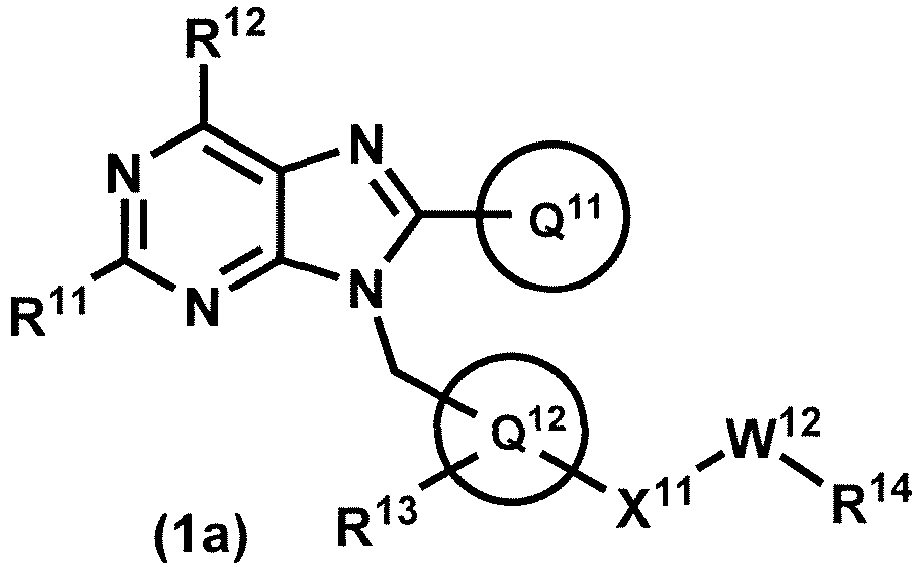 R11 is C1-6 alkoxy (which may be substituted with 1 - 3 the same or different substituents selected from the group consisting of halogen atom, hydroxy, C1-6 alkoxy, C3-7 cycloalkyl and 4- to 7-membered saturated heterocyclyl), 4-to 10-membered saturated heterocyclyloxy (which may be substituted with 1 - 4 the same or different substituents selected from the group consisting of halogen atom, and C1-6 alkyl), C1-6 alkyl (which may be substituted with 1 - 3 the same or different substituents selected from the group consisting of halogen atom, hydroxy, and C1-6 alkoxy), 4- to 10-membered saturated heterocyclyl (which may be substituted with 1 - 4 the same or different substituents selected from the group consisting of halogen atom, C1-6 alkyl, and C1-6 alkoxy), amino (which may be substituted with 1 - 2 the same or different C1-6 alkyl), halogen atom, or hydroxy;R12 is C1-6 alkyl or amino;Ring Q11 is(1) C6-10 aryl which may be substituted with 1 - 5 the same or different substituents selected from the group consisting of(a) halogen atom,(b) cyano,(c) C1-6 alkyl which may be substituted with 1 - 3 the same or different substituents selected from the group consisting of halogen atom, hydroxy, C1-6 alkoxy, and 4- to 7-membered saturated heterocyclyl,(d) C1-6 alkylsulfonyl,(e) C1-6 alkoxy which may be substituted with 1 - 3 the same or different substituents selected from the group consisting of halogen atom, hydroxy, and 4- to 7-membered saturated heterocyclyl, and(f) amino which may be substituted with 1 - 2 the same or different C1-6 alkyl, or(2) 5- to 10-membered heteroaryl which may be substituted with 1 - 4 the same or different substituents selected from the group consisting of (a) - (f) in the above (1) C6-10 aryl;Ring Q12 is benzene ring group, or 5- or 6-membered aromatic heterocyclyl;R13 is hydrogen atom, halogen atom, hydroxy, C1-6 alkyl (which may be substituted with 1 - 3 the same or different halogen atoms), or C1-6 alkoxy (which may be substituted with 1 - 3 the same or different halogen atoms);Q12-X11- is Q12-(single bond)-, Q12-(CH2)m-O-, Q12-(CH2)m-C(O)-, Q12-(CH2)m-NRa-, or Q12-(CH2) m-C(O)NRa-, wherein Ra is hydrogen atom or C1-6 alkyl; m is 0, 1, or 2;W12 is single bond or C1-3 alkylene; andR14 is(1) hydrogen atom,(2) -ORb wherein Rb is hydrogen atom, C1-6 alkyl, or C1-6 alkylsulfonyl,(3) -NRcRd wherein Rc and Rd are independently hydrogen atom, or C1-6 alkyl which may be substituted with 1 - 3 the same or different halogen atoms,(4) 4- to 10-membered saturated heterocyclyl which may be substituted with 1 - 4 the same or different substituents selected from the group consisting of(a) halogen atom,(b) hydroxy,(d) C1-6 alkyl which may be substituted with 1 - 3 the same or different substituents selected from the group consisting of halogen atom, hydroxy, and C1-6 alkoxy,(e) C1-6 alkoxy which may be substituted with 1 - 3 the same or different substituents selected from the group consisting of halogen atom, hydroxy, and C1-6 alkoxy,(f) C3-7 cycloalkyl,(g) C1-6 alkylcarbonyl which may be substituted with 1 - 3 the same or different substituents selected from the group consisting of halogen atom, hydroxy, amino (which may be substituted with 1 - 2 the same or different C1-6 alkyl), and C1-6 alkoxy,(h) C1-6 alkoxycarbonyl,(i) 4- to 7-membered saturated heterocyclyl which may be substituted with 1 - 4 the same or different substituents selected from the group consisting of halogen atom, C1-6 alkyl, and C1-6 alkoxy, and(j) oxo, or(5) 5- to 10-membered heteroaryl which may be substituted with 1 - 4 the same or different substituents selected from the group consisting of halogen atom, C1-6 alkyl, and C1-6 alkoxy.
 - The compound of claim 19 or a pharmaceutically acceptable salt thereof, wherein R12 is C1-4 alkyl.
- The compound of claim 19 or 20 or a pharmaceutically acceptable salt thereof, wherein R13 is hydrogen atom or halogen atom.
- The compound of any one of claims 19 - 21 or a pharmaceutically acceptable salt thereof, wherein
Ring Q11 is(1) pyridyl which may be substituted with 1 - 4 the same or different substituents selected from the group consisting of(a) halogen atom,(b) cyano,(c) C1-6 alkyl which may be substituted with 1 - 3 the same or different halogen atoms, and(d) C1-6 alkoxy which may be substituted with 1 - 3 the same or different halogen atoms, or(2) pyrimidinyl which may be substituted with 1 - 3 the same or different substituents selected from the group consisting of (a) - (d) in the above (1). - The compound of any one of claims 19 - 22 or a pharmaceutically acceptable salt thereof, wherein Ring Q11 is 5-fluoropyridin-3-yl, 5-cyanopyridin-3-yl, pyridin-3-yl, or pyrimidinyl.
- The compound of any one of claims 19 - 23 or a pharmaceutically acceptable salt thereof, wherein Ring Q12 is pyridine ring group, pyrazole ring group, isoxazole ring group, or benzene ring group.
- The compound of any one of claims 19 - 24 or a pharmaceutically acceptable salt thereof, wherein
R14 is the following formula (2), (3), (4), (5), (6), (7), (8), (9), (10), (11), (12), (13), (14), (15), or (16):


R15 is halogen, hydroxy, C1-6 alkyl (which may be substituted with 1 - 3 the same or different substituents selected from the group consisting of halogen atom, hydroxy, and C1-6 alkoxy), C3-7 cycloalkyl, C1-6 alkylcarbonyl (which may be substituted with one amino which may be substituted with 1 - 2 the same or different C1-6 alkyl), or 4- to 7-membered saturated heterocyclyl. - The compound of any one of claims 19 - 25 or a pharmaceutically acceptable salt thereof, wherein
R14 is the following formula (2), (3), (4), (5), (6), (7), (8), (9), or (10) :

R15 is halogen, hydroxy, C1-6 alkyl (which may be substituted with 1 - 3 the same or different substituents selected from the group consisting of halogen atom, hydroxy, and C1-6 alkoxy), C3-7 cycloalkyl, C1-6 alkylcarbonyl (which may be substituted with one amino which may be substituted with 1 - 2 the same or different C1-6 alkyl), or 4- to 7-membered saturated heterocyclyl. - The compound of claim 1 which is selected from the following compounds, or a pharmaceutically acceptable salt thereof:9-({6-[(3S)-1-azabicyclo[2.2.2]oct-3-yloxy]pyridin-3-yl}methyl)-8-(5-fluoropyridin-3-yl)-2-methoxy-6-methyl-9H-purine,9-({6-[(3S)-1-azabicyclo[2.2.2]oct-3-yloxy]pyridin-3-yl}methyl)-2-ethoxy-8-(5-fluoropyridin-3-yl)-6-methyl-9H-purine,8-(5-fluoropyridin-3-yl)-2-methoxy-6-methyl-9-(4-{[(1S,4S)-5-methyl-2,5-diazabicyclo[2.2.1]hept-2-yl]methyl}benzyl)-9H-purine,2-ethoxy-8-(5-fluoropyridin-3-yl)-6-methyl-9-(4-{[(1S,4S)-5-methyl-2,5-diazabicyclo[2.2.1]hept-2-yl]methyl}benzyl)-9H-purine,2-ethoxy-8-(5-fluoropyridin-3-yl)-6-methyl-9-(4-{[(1R,4R)-5-methyl-2,5-diazabicyclo[2.2.1]hept-2-yl]methyl}benzyl)-9H-purine,2-ethoxy-9-(4-{[(1S,4S)-5-ethyl-2,5-diazabicyclo[2.2.1]hept-2-yl]methyl}benzyl)-8-(5-fluoropyridin-3-yl)-6-methyl-9H-purine,9-(4-{[(1S,4S)-5-ethyl-2,5-diazabicyclo[2.2.1]hept-2-yl]methyl}benzyl)-8-(5-fluoropyridin-3-yl)-2-methoxy-6-methyl-9H-purine,8-(5-fluoropyridin-3-yl)-2-methoxy-6-methyl-9-(4-{[(1S,4S)-5-propyl-2,5-diazabicyclo[2.2.1]hept-2-yl]methyl}benzyl)-9H-purine,9-{4-[(5R)-1,4-diazabicyclo[3.2.1]oct-4-ylmethyl]benzyl}-2-ethoxy-8-(5-fluoropyridin-3-yl)-6-methyl-9H-purine,9-{4-[(3S)-1-azabicyclo[2.2.2]oct-3-yl]benzyl}-8-(5-fluoropyridin-3-yl)-2-methoxy-6-methyl-9H-purine,2-ethoxy-8-(5-fluoropyridin-3-yl)-6-methyl-9-{4-[(4-methylpiperazine-1-yl)methyl]benzyl}-9H-purine,9-[4-(1-azabicyclo[2.2.2]oct-3-yl)-2-methoxybenzyl]-2-ethoxy-8-(5-fluoropyridin-3-yl)-6-methyl-9H-purine,2-(1-azabicyclo[2.2.2]oct-3-yl)-5-{[2-ethoxy-8-(5-fluoropyridin-3-yl)-6-methyl-9H-purin-9-yl]methyl}benzonitrile,9-{[1-(1-azabicyclo[2.2.2]oct-3-ylmethyl)-1H-pyrazol-4-yl]methyl}-2-ethoxy-8-(5-fluoropyridin-3-yl)-6-methyl-9H-purine,2-(1-azabicyclo[2.2.2]oct-3-yl)-5-{[8-(5-fluoropyridin-3-yl)-2-methoxy-6-methyl-9H-purin-9-yl]methyl}benzonitrile,9-{2-fluoro-4-[(1-methylpiperidin-4-yl)methyl]benzyl}-8-(5-fluoropyridin-3-yl)-2-methoxy-6-methyl-9H-purine,9-{2-fluoro-4-[(1-methylazetidin-3-yl)methoxy]benzyl}-8-(5-fluoropyridin-3-yl)-2-methoxy-6-methyl-9H-purine,5-{9-[4-(1-ethylpiperidin-4-yl)-2-fluorobenzyl]-2-methoxy-6-methyl-9H-purin-8-yl}pyridine-3-carbonitrile,9-[2-fluoro-4-(1-methylpyrrolidin-3-yl)benzyl]-8-(5-fluoropyridin-3-yl)-2-methoxy-6-methyl-9H-purine,9-[4-(1-ethylpyrrolidin-3-yl)-2-fluorobenzyl]-8-(5-fluoropyridin-3-yl)-2-methoxy-6-methyl-9H-purine,9-[2-fluoro-4-(1-methylpiperidin-4-yl)benzyl]-2-methoxy-6-methyl-8-(pyridin-3-yl)-9H-purine,9-[4-(1-ethylpiperidin-4-yl)-2-fluorobenzyl]-2-methoxy-6-methyl-8-(pyridin-3-yl)-9H-purine,9-(2-fluoro-4-{[(3-endo)-8-methyl-8-azabicyclo[3.2.1]oct-3-yl]oxy}benzyl)-2-methoxy-6-methyl-8-(pyridin-3-yl)-9H-purine,9-{4-[(3S)-1-azabicyclo[2.2.2]oct-3-yloxy]-2-fluorobenzyl}-2-methoxy-6-methyl-8-(pyrimidin-5-yl)-9H-purine,3-{9-[4-(1-azabicyclo[2.2.2]oct-3-yl)-2-fluorobenzyl]-2-methoxy-6-methyl-9H-purin-8-yl}benzonitrile,9-[4-(1-azabicyclo[2.2.2]oct-3-yl)-3-fluorobenzyl]-8-(5-fluoropyridin-3-yl)-2-methoxy-6-methyl-9H-purine,9-[3-(1-azabicyclo[2.2.2]oct-3-yl)benzyl]-8-(5-fluoropyridin-3-yl)-2-methoxy-6-methyl-9H-purine,9-{[6-(1-azabicyclo[2.2.2]oct-3-yl)-2-methylpyridin-3-yl]methyl}-2-ethoxy-8-(5-fluoropyridin-3-yl)-6-methyl-9H-purine,9-{4-[(3S)-1-azabicyclo[2.2.2]oct-3-yloxy]-2-fluorobenzyl}-2-methoxy-6-methyl-8-(pyridin-3-yl)-9H-purine,9-{2-fluoro-4-[(1-methylpiperidin-4-yl)oxy]benzyl}-8-(5-fluoropyridin-3-yl)-2-methoxy-6-methyl-9H-purine,9-(2-fluoro-4-{ [(3S)-1-methylpyrrolidin-3-yl]oxy}benzyl)-8-(5-fluoropyridin-3-yl)-2-methoxy-6-methyl-9H-purine,9-(2-fluoro-4-{[(3R)-1-methylpyrrolidin-3-yl]oxy}benzyl)-8-(5-fluoropyridin-3-yl)-2-methoxy-6-methyl-9H-purine,9-{2-fluoro-4-[(1-methylazetidin-3-yl)oxy]benzyl}-8-(5-fluoropyridin-3-yl)-2-methoxy-6-methyl-9H-purine,1-(3-fluoro-4-{[8-(5-fluoropyridin-3-yl)-2-methoxy-6-methyl-9H-purin-9-yl]methyl}phenyl)-N,N-dimethylmethanamine,9-[4-(azetidin-1-ylmethyl)-2-fluorobenzyl]-8-(5-fluoropyridin-3-yl)-2-methoxy-6-methyl-9H-purine,9-(2-fluoro-4-{[(1S,4S)-5-methyl-2,5-diazabicyclo[2.2.1]hept-2-yl]methyl}benzyl)-8-(5-fluoropyridin-3-yl)-2-methoxy-6-methyl-9H-purine,9-[2-fluoro-4-(1-methylpiperidin-4-yl)benzyl]-8-(5-fluoropyridin-3-yl)-2-methoxy-6-methyl-9H-purine,9-[4-(1-ethylpiperidin-4-yl)-2-fluorobenzyl]-8-(5-fluoropyridin-3-yl)-2-methoxy-6-methyl-9H-purine,9-(2-fluoro-4-{[(3-endo)-8-methyl-8-azabicyclo[3.2.1]oct-3-yl]oxy}benzyl)-8-(5-fluoropyridin-3-yl)-2-methoxy-6-methyl-9H-purine,9-(2-fluoro-4-{[(3-endo)-8-methyl-8-azabicyclo[3.2.1]oct-3-yl]oxy}benzyl)-2-methoxy-6-methyl-8-(pyrimidin-5-yl)-9H-purine,5-[9-(2-fluoro-4-{[(3-endo)-8-methyl-8-azabicyclo[3.2.1]oct-3-yl]oxy}benzyl)-2-methoxy-6-methyl-9H-purin-8-yl]pyridine-3-carbonitrile,5-[9-(4-{[(3-endo)-8-ethyl-8-azabicyclo[3.2.1]oct-3-yl]oxy}-2-fluorobenzyl)-2-methoxy-6-methyl-9H-purin-8-yl]pyridine-3-carbonitrile,9-[4-(1-azabicyclo[2.2.2]oct-3-yl)-2-fluorobenzyl]-2-methoxy-6-methyl-8-(pyridin-3-yl)-9H-purine,9-[4-(1-azabicyclo[2.2.2]oct-3-yl)-2-fluorobenzyl]-2-methoxy-6-methyl-8-(4-methylpyridin-3-yl)-9H-purine,9-[4-(1-azabicyclo[2.2.2]oct-3-yl)-2-fluorobenzyl]-2-methoxy-6-methyl-8-(5-methylpyridin-3-yl)-9H-purine,5-[9-(2-fluoro-4-{[(1S,4S)-5-methyl-2,5-diazabicyclo[2.2.1]hept-2-yl]methyl}benzyl)-2-methoxy-6-methyl-9H-purin-8-yl]pyridine-3-carbonitrile,5-[9-(4-{[(1S,4S)-5-ethyl-2,5-diazabicyclo[2.2.1]hept-2-yl]methyl}-2-fluorobenzyl)-2-methoxy-6-methyl-9H-purin-8-yl]pyridine-3-carbonitrile,9-(2-fluoro-4-{[(1S,4S)-5-methyl-2,5-diazabicyclo[2.2.1]hept-2-yl]methyl}benzyl)-2-methoxy-6-methyl-8-(pyridin-3-yl)-9H-purine,5-[2-ethoxy-9-(2-fluoro-4-{[(1S,4S)-5-methyl-2,5-diazabicyclo[2.2.1]hept-2-yl]methyl}benzyl)-6-methyl-9H-purin-8-yl]pyridine-3-carbonitrile,2-ethoxy-9-(2-fluoro-4-{[(1S,4S)-5-methyl-2,5-diazabicyclo[2.2.1]hept-2-yl]methyl}benzyl)-6-methyl-8-(pyrimidin-5-yl)-9H-purine,2-ethoxy-9-(2-fluoro-4-{[(1S,4S)-5-methyl-2,5-diazabicyclo[2.2.1]hept-2-yl]methyl}benzyl)-8-(5-fluoropyridin-3-yl)-6-methyl-9H-purine,5-(9-{4-[(3S)-1-azabicyclo[2.2.2]oct-3-yloxy]-2-fluorobenzyl}-2-methoxy-6-methyl-9H-purin-8-yl)pyridine-3-carbonitrile,9-{[6-(1-azabicyclo[2.2.2]oct-3-yl)pyridin-3-yl]methyl}-2-ethoxy-8-(5-fluoropyridin-3-yl)-6-methyl-9H-purine,9-[4-(1-azabicyclo[2.2.2]oct-3-yl)-2-fluorobenzyl]-8-(5-fluoropyridin-3-yl)-2-methoxy-6-methyl-9H-purine,5-{9-[4-(1-azabicyclo[2.2.2]oct-3-yl)-2-fluorobenzyl]-2-methoxy-6-methyl-9H-purin-8-yl}pyridine-3-carbonitrile,9-{4-[(3S)-1-azabicyclo[2.2.2]oct-3-yloxy]-2-fluorobenzyl}-8-(5-fluoropyridin-3-yl)-2-methoxy-6-methyl-9H-purine,9-{4-[(3R)-1-azabicyclo[2.2.2]oct-3-yloxy]-2-fluorobenzyl}-8-(5-fluoropyridin-3-yl)-2-methoxy-6-methyl-9H-purine,9-(2-fluoro-4-{[(3-exo)-8-methyl-8-azabicyclo[3.2.1]oct-3-yl]oxy}benzyl)-8-(5-fluoropyridin-3-yl)-2-methoxy-6-methyl-9H-purine, and9-[5-(1-azabicyclo[2.2.2]oct-3-yl)-2-fluorobenzyl]-8-(5-fluoropyridin-3-yl)-2-methoxy-6-methyl-9H-purine.
- The compound of claim 1 which is selected from the following compounds, or a pharmaceutically acceptable salt thereof:1-(3-fluoro-4-{[8-(5-fluoropyridin-3-yl)-2-methoxy-6-methyl-9H-purin-9-yl]methyl}phenyl)-N,N-dimethylmethanamine,9-[4-(azetidin-1-ylmethyl)-2-fluorobenzyl]-8-(5-fluoropyridin-3-yl)-2-methoxy-6-methyl-9H-purine,9-(2-fluoro-4-{[(1S,4S)-5-methyl-2,5-diazabicyclo[2.2.1]hept-2-yl]methyl}benzyl)-8-(5-fluoropyridin-3-yl)-2-methoxy-6-methyl-9H-purine,9-[2-fluoro-4-(1-methylpiperidin-4-yl)benzyl]-8-(5-fluoropyridin-3-yl)-2-methoxy-6-methyl-9H-purine,9-[4-(1-ethylpiperidin-4-yl)-2-fluorobenzyl]-8-(5-fluoropyridin-3-yl)-2-methoxy-6-methyl-9H-purine,9-(2-fluoro-4-{[(3-endo)-8-methyl-8-azabicyclo[3.2.1]oct-3-yl]oxy}benzyl)-8-(5-fluoropyridin-3-yl)-2-methoxy-6-methyl-9H-purine,9-(2-fluoro-4-{[(3-endo)-8-methyl-8-azabicyclo[3.2.1]oct-3-yl]oxy}benzyl)-2-methoxy-6-methyl-8-(pyrimidin-5-yl)-9H-purine,5-[9-(2-fluoro-4-{[(3-endo)-8-methyl-8-azabicyclo[3.2.1]oct-3-yl]oxy}benzyl)-2-methoxy-6-methyl-9H-purin-8-yl]pyridine-3-carbonitrile,5-[9-(4-{[(3-endo)-8-ethyl-8-azabicyclo[3.2.1]oct-3-yl]oxy}-2-fluorobenzyl)-2-methoxy-6-methyl-9H-purin-8-yl]pyridine-3-carbonitrile,9-[4-(1-azabicyclo[2.2.2]oct-3-yl)-2-fluorobenzyl]-2-methoxy-6-methyl-8-(pyridin-3-yl)-9H-purine,9-[4-(1-azabicyclo[2.2.2]oct-3-yl)-2-fluorobenzyl]-2-methoxy-6-methyl-8-(4-methylpyridin-3-yl)-9H-purine,9-[4-(1-azabicyclo[2.2.2]oct-3-yl)-2-fluorobenzyl]-2-methoxy-6-methyl-8-(5-methylpyridin-3-yl)-9H-purine,5-[9-(2-fluoro-4-{[(1S,4S)-5-methyl-2,5-diazabicyclo[2.2.1]hept-2-yl]methyl}benzyl)-2-methoxy-6-methyl-9H-purin-8-yl]pyridine-3-carbonitrile,5-[9-(4-{[(1S,4S)-5-ethyl-2,5-diazabicyclo[2.2.1]hept-2-yl]methyl}-2-fluorobenzyl)-2-methoxy-6-methyl-9H-purin-8-yl]pyridine-3-carbonitrile,9-(2-fluoro-4-{[(1S,4S)-5-methyl-2,5-diazabicyclo[2.2.1]hept-2-yl]methyl}benzyl)-2-methoxy-6-methyl-8-(pyridin-3-yl)-9H-purine,5-[2-ethoxy-9-(2-fluoro-4-{[(1S,4S)-5-methyl-2,5-diazabicyclo[2.2.1]hept-2-yl]methyl}benzyl)-6-methyl-9H-purin-8-yl]pyridine-3-carbonitrile,2-ethoxy-9-(2-fluoro-4-{[(1S,4S)-5-methyl-2,5-diazabicyclo[2.2.1]hept-2-yl]methyl}benzyl)-6-methyl-8-(pyrimidin-5-yl)-9H-purine,2-ethoxy-9-(2-fluoro-4-{[(1S,4S)-5-methyl-2,5-diazabicyclo[2.2.1]hept-2-yl]methyl}benzyl)-8-(5-fluoropyridin-3-yl)-6-methyl-9H-purine,5-(9-{4-[(3S)-1-azabicyclo[2.2.2]oct-3-yloxy]-2-fluorobenzyl}-2-methoxy-6-methyl-9H-purin-8-yl)pyridine-3-carbonitrile,9-{[6-(1-azabicyclo[2.2.2]oct-3-yl)pyridin-3-yl]methyl}-2-ethoxy-8-(5-fluoropyridin-3-yl)-6-methyl-9H-purine,9-[4-(1-azabicyclo[2.2.2]oct-3-yl)-2-fluorobenzyl]-8-(5-fluoropyridin-3-yl)-2-methoxy-6-methyl-9H-purine,5-{9-[4-(1-azabicyclo[2.2.2]oct-3-yl)-2-fluorobenzyl]-2-methoxy-6-methyl-9H-purin-8-yl}pyridine-3-carbonitrile,Example 412: 9-{4-[(3S)-1-azabicyclo[2.2.2]oct-3-yloxy]-2-fluorobenzyl}-8-(5-fluoropyridin-3-yl)-2-methoxy-6-methyl-9H-purine,9-{4-[(3R)-1-azabicyclo[2.2.2]oct-3-yloxy]-2-fluorobenzyl}-8-(5-fluoropyridin-3-yl)-2-methoxy-6-methyl-9H-purine,9-(2-fluoro-4-{[(3-exo)-8-methyl-8-azabicyclo[3.2.1]oct-3-yl]oxy}benzyl)-8-(5-fluoropyridin-3-yl)-2-methoxy-6-methyl-9H-purine, and9-[5-(1-azabicyclo[2.2.2]oct-3-yl)-2-fluorobenzyl]-8-(5-fluoropyridin-3-yl)-2-methoxy-6-methyl-9H-purine.
- A medicament comprising the compound of any one of claims 1 - 28 or a pharmaceutically acceptable salt thereof as an active ingredient.
- A medicament for treating autoimmune disease, comprising the compound of any one of claims 1 - 28 or a pharmaceutically acceptable salt thereof as an active ingredient.
- An TLR7 inhibitor comprising the compound of any one of claims 1 - 28 or a pharmaceutically acceptable salt thereof as an active ingredient.
- A medicament for treating systemic lupus erythematosus, lupus nephritis, Sjogren's syndrome, idiopathic thrombocytopenic purpura, psoriasis, rheumatoid arthritis, polymyositis, dermatomyositis, Behcet's disease, multiple sclerosis, or pemphigus, comprising the compound of any one of claims 1 - 28 or a pharmaceutically acceptable salt thereof as an active ingredient.
- A medicament comprising the compound of any one of claims 1 - 28 or a pharmaceutically acceptable salt thereof in combination with at least one agent selected from steroid drugs, immunosuppressive drugs, agents against B cells, TLR inhibitors, and other agents for treating autoimmune disease.
- Use of the compound of any one of claims 1 - 28 or a pharmaceutically acceptable salt thereof, in the preparation of a medicament for treating systemic lupus erythematosus, lupus nephritis, Sjogren's syndrome, idiopathic thrombocytopenic purpura, psoriasis, rheumatoid arthritis, polymyositis, dermatomyositis, Behcet's disease, multiple sclerosis, or pemphigus.
- A method for treating systemic lupus erythematosus, lupus nephritis, Sjogren's syndrome, idiopathic thrombocytopenic purpura, psoriasis, rheumatoid arthritis, polymyositis, dermatomyositis, Behcet's disease, multiple sclerosis, or pemphigus, comprising administering a therapeutically effective amount of the compound of any one of claims 1 - 28 or a pharmaceutically acceptable salt thereof to a mammal.
Applications Claiming Priority (2)
| Application Number | Priority Date | Filing Date | Title |
|---|---|---|---|
| JP2016087656 | 2016-04-26 | ||
| PCT/JP2017/016445 WO2017188287A1 (en) | 2016-04-26 | 2017-04-25 | Substituted purine derivative |
Publications (3)
| Publication Number | Publication Date |
|---|---|
| EP3450433A1 true EP3450433A1 (en) | 2019-03-06 |
| EP3450433A4 EP3450433A4 (en) | 2019-10-16 |
| EP3450433B1 EP3450433B1 (en) | 2021-08-18 |
Family
ID=60159663
Family Applications (1)
| Application Number | Title | Priority Date | Filing Date |
|---|---|---|---|
| EP17789569.5A Active EP3450433B1 (en) | 2016-04-26 | 2017-04-25 | Purine derivatives as tlr7 inhibitors for treating e.g. systemic lupus erythematosus |
Country Status (6)
| Country | Link |
|---|---|
| US (1) | US10703755B2 (en) |
| EP (1) | EP3450433B1 (en) |
| JP (1) | JP6964072B2 (en) |
| CA (1) | CA3021947A1 (en) |
| TW (1) | TWI746545B (en) |
| WO (1) | WO2017188287A1 (en) |
Cited By (2)
| Publication number | Priority date | Publication date | Assignee | Title |
|---|---|---|---|---|
| CN110317202A (en) * | 2018-03-30 | 2019-10-11 | 江苏恒瑞医药股份有限公司 | Cyanopyrrole and heteroaryl analog derivative, preparation method and its application in medicine |
| WO2024105159A1 (en) * | 2022-11-16 | 2024-05-23 | University Of Zurich | Ligands of the m6a-rna readers |
Families Citing this family (9)
| Publication number | Priority date | Publication date | Assignee | Title |
|---|---|---|---|---|
| JP2021035910A (en) * | 2017-11-01 | 2021-03-04 | 大日本住友製薬株式会社 | Substituted purine compound |
| TW202126658A (en) * | 2019-09-29 | 2021-07-16 | 大陸商江蘇恆瑞醫藥股份有限公司 | Pyrrolo heteroaryl derivative or conjugate thereof, preparation method thereof and pharmaceutical use thereof |
| US20230131192A1 (en) * | 2020-01-27 | 2023-04-27 | Bristol-Myers Squibb Company | 1H-PYRAZOLO[4,3-d]PYRIMIDINE COMPOUNDS AS TOLL-LIKE RECEPTOR 7 (TLR7) AGONISTS |
| JP2023512204A (en) * | 2020-01-27 | 2023-03-24 | ブリストル-マイヤーズ スクイブ カンパニー | 1H-pyrazolo[4,3-d]pyrimidine compounds as Toll-like receptor 7 (TLR7) agonists |
| CN114276351B (en) * | 2020-09-27 | 2023-06-16 | 江苏恒瑞医药股份有限公司 | Nitrogen-containing heterocyclic derivative, preparation method and medical application thereof |
| CN115119508B (en) * | 2021-01-20 | 2024-05-24 | 上海维申医药有限公司 | Macrocyclic TLR7 agonist, preparation method, pharmaceutical composition and use thereof |
| CR20230478A (en) | 2021-04-16 | 2023-11-30 | Gilead Sciences Inc | THIENOPYRROL COMPOUNDS. |
| KR20240056747A (en) | 2021-09-10 | 2024-04-30 | 길리애드 사이언시즈, 인코포레이티드 | Thienopyrrole compounds |
| CN118724963A (en) * | 2023-03-30 | 2024-10-01 | 浙江养生堂天然药物研究所有限公司 | Phosphorus- or sulfur-containing macrocyclic compounds and uses thereof |
Family Cites Families (11)
| Publication number | Priority date | Publication date | Assignee | Title |
|---|---|---|---|---|
| AU1688599A (en) | 1998-01-05 | 1999-07-26 | Eisai Co. Ltd. | Purine derivatives and adenosine a2 receptor antagonists serving as preventives/remedies for diabetes |
| US6841549B1 (en) * | 1999-07-02 | 2005-01-11 | Eisai Co., Ltd. | Condensed imidazole compounds and a therapeutic agent for diabetes mellitus |
| DE60206756T2 (en) | 2001-06-29 | 2006-07-13 | CV Therapeutics, Inc., Palo Alto | PURIN DERIVATIVES AS A2B ADENOSINE RECEPTOR ANTAGONISTS |
| WO2003006465A1 (en) * | 2001-07-13 | 2003-01-23 | Cv Therapeutics, Inc. | Partial and full agonist of a adenosine receptors |
| ATE355291T1 (en) * | 2001-12-18 | 2006-03-15 | Cv Therapeutics Inc | A2A ADENOSINE RECEPTOR ANTAGONISTS |
| EP1667694B1 (en) | 2003-09-05 | 2010-04-28 | Anadys Pharmaceuticals, Inc. | Tlr7 ligands for the treatment of hepatitis c |
| EP1888587A1 (en) * | 2005-05-04 | 2008-02-20 | Pfizer Limited | 2-amido-6-amino-8-oxopurine derivatives as toll-like receptor modulators for the treatment of cancer and viral infections, such as hepatitis c |
| CA2691444C (en) * | 2007-06-29 | 2016-06-14 | Gilead Sciences, Inc. | Purine derivatives and their use as modulators of toll-like receptor 7 |
| JP2011500716A (en) * | 2007-10-16 | 2011-01-06 | ギリアード・パロ・アルト・インコーポレイテッド | A3 adenosine receptor antagonist |
| NZ601827A (en) * | 2007-10-18 | 2014-01-31 | Bavarian Nordic Inc | Use of mva to treat prostate cancer |
| WO2011059207A2 (en) * | 2009-11-13 | 2011-05-19 | Green Cross Corporation | Arylpiperazine-containing purine derivatives and uses thereof |
-
2017
- 2017-04-25 WO PCT/JP2017/016445 patent/WO2017188287A1/en not_active Ceased
- 2017-04-25 CA CA3021947A patent/CA3021947A1/en active Pending
- 2017-04-25 US US16/095,822 patent/US10703755B2/en not_active Expired - Fee Related
- 2017-04-25 TW TW106113800A patent/TWI746545B/en not_active IP Right Cessation
- 2017-04-25 JP JP2018514647A patent/JP6964072B2/en not_active Expired - Fee Related
- 2017-04-25 EP EP17789569.5A patent/EP3450433B1/en active Active
Cited By (3)
| Publication number | Priority date | Publication date | Assignee | Title |
|---|---|---|---|---|
| CN110317202A (en) * | 2018-03-30 | 2019-10-11 | 江苏恒瑞医药股份有限公司 | Cyanopyrrole and heteroaryl analog derivative, preparation method and its application in medicine |
| CN110317202B (en) * | 2018-03-30 | 2021-12-24 | 江苏恒瑞医药股份有限公司 | Cyanopyrroloheteroaryl derivative, preparation method and medical application thereof |
| WO2024105159A1 (en) * | 2022-11-16 | 2024-05-23 | University Of Zurich | Ligands of the m6a-rna readers |
Also Published As
| Publication number | Publication date |
|---|---|
| JP6964072B2 (en) | 2021-11-10 |
| CA3021947A1 (en) | 2017-11-02 |
| US20190169191A1 (en) | 2019-06-06 |
| JPWO2017188287A1 (en) | 2019-02-28 |
| TWI746545B (en) | 2021-11-21 |
| EP3450433A4 (en) | 2019-10-16 |
| WO2017188287A1 (en) | 2017-11-02 |
| US10703755B2 (en) | 2020-07-07 |
| EP3450433B1 (en) | 2021-08-18 |
| TW201739748A (en) | 2017-11-16 |
Similar Documents
| Publication | Publication Date | Title |
|---|---|---|
| EP3450433B1 (en) | Purine derivatives as tlr7 inhibitors for treating e.g. systemic lupus erythematosus | |
| US12410193B2 (en) | Bicyclic heterocyclyl derivatives as IRAK4 inhibitors | |
| US11390618B2 (en) | Inhibitors of cyclin-dependent kinases | |
| US10385051B2 (en) | Inhibitors of lysine specific demethylase-1 | |
| JP6800969B2 (en) | JAK kinase inhibitor compounds for the treatment of respiratory diseases | |
| US20250051324A1 (en) | Parp inhibitor, pharmaceutical composition comprising same, and use thereof | |
| US12492188B2 (en) | 1H-benzo[D]imidazole derivatives as TLR9 inhibitors for the treatment of fibrosis | |
| US11091460B2 (en) | Syk inhibitor and use method therefor | |
| TW202237597A (en) | Novel degraders of egfr | |
| WO2017071516A1 (en) | Kinase inhibitor, and preparing method and pharmaceutical use thereof | |
| US20240383900A1 (en) | Substituted pyrazolo [1,5-a]pyrimidine-7-amine compounds as cdk inhibitors and their therapeutic use | |
| US20220388962A1 (en) | Molecules that bind to tdp-43 for the treatment of amyotrophic lateral sclerosis and related disorders | |
| US20240101540A1 (en) | Targeted protein degradation of parp14 for use in therapy | |
| JP2025530793A (en) | EGFR inhibitors and their uses | |
| US20240051946A1 (en) | Targeted protein degradation of parp14 for use in therapy | |
| RU2796400C2 (en) | Pyrido[3,4-d]pyrimidine derivative and its pharmaceutically acceptable salt |
Legal Events
| Date | Code | Title | Description |
|---|---|---|---|
| STAA | Information on the status of an ep patent application or granted ep patent |
Free format text: STATUS: THE INTERNATIONAL PUBLICATION HAS BEEN MADE |
|
| PUAI | Public reference made under article 153(3) epc to a published international application that has entered the european phase |
Free format text: ORIGINAL CODE: 0009012 |
|
| STAA | Information on the status of an ep patent application or granted ep patent |
Free format text: STATUS: REQUEST FOR EXAMINATION WAS MADE |
|
| 17P | Request for examination filed |
Effective date: 20181101 |
|
| AK | Designated contracting states |
Kind code of ref document: A1 Designated state(s): AL AT BE BG CH CY CZ DE DK EE ES FI FR GB GR HR HU IE IS IT LI LT LU LV MC MK MT NL NO PL PT RO RS SE SI SK SM TR |
|
| AX | Request for extension of the european patent |
Extension state: BA ME |
|
| DAV | Request for validation of the european patent (deleted) | ||
| DAX | Request for extension of the european patent (deleted) | ||
| A4 | Supplementary search report drawn up and despatched |
Effective date: 20190916 |
|
| RIC1 | Information provided on ipc code assigned before grant |
Ipc: C07D 473/28 20060101ALI20190910BHEP Ipc: C07D 473/34 20060101ALI20190910BHEP Ipc: C07D 473/40 20060101ALI20190910BHEP Ipc: C07D 473/18 20060101AFI20190910BHEP Ipc: A61K 31/52 20060101ALI20190910BHEP Ipc: C07D 473/16 20060101ALI20190910BHEP Ipc: A61P 37/06 20060101ALI20190910BHEP |
|
| REG | Reference to a national code |
Ref country code: DE Ref legal event code: R079 Ref document number: 602017044366 Country of ref document: DE Free format text: PREVIOUS MAIN CLASS: C07D0473220000 Ipc: C07D0473180000 |
|
| RIC1 | Information provided on ipc code assigned before grant |
Ipc: A61K 31/5377 20060101ALI20200720BHEP Ipc: A61K 31/52 20060101ALI20200720BHEP Ipc: C07D 473/34 20060101ALI20200720BHEP Ipc: C07D 473/16 20060101ALI20200720BHEP Ipc: C07D 473/28 20060101ALI20200720BHEP Ipc: A61P 37/06 20060101ALI20200720BHEP Ipc: C07D 473/18 20060101AFI20200720BHEP Ipc: C07D 473/40 20060101ALI20200720BHEP |
|
| GRAP | Despatch of communication of intention to grant a patent |
Free format text: ORIGINAL CODE: EPIDOSNIGR1 |
|
| STAA | Information on the status of an ep patent application or granted ep patent |
Free format text: STATUS: GRANT OF PATENT IS INTENDED |
|
| INTG | Intention to grant announced |
Effective date: 20200916 |
|
| GRAJ | Information related to disapproval of communication of intention to grant by the applicant or resumption of examination proceedings by the epo deleted |
Free format text: ORIGINAL CODE: EPIDOSDIGR1 |
|
| STAA | Information on the status of an ep patent application or granted ep patent |
Free format text: STATUS: REQUEST FOR EXAMINATION WAS MADE |
|
| INTC | Intention to grant announced (deleted) | ||
| GRAP | Despatch of communication of intention to grant a patent |
Free format text: ORIGINAL CODE: EPIDOSNIGR1 |
|
| STAA | Information on the status of an ep patent application or granted ep patent |
Free format text: STATUS: GRANT OF PATENT IS INTENDED |
|
| INTG | Intention to grant announced |
Effective date: 20210324 |
|
| GRAS | Grant fee paid |
Free format text: ORIGINAL CODE: EPIDOSNIGR3 |
|
| GRAA | (expected) grant |
Free format text: ORIGINAL CODE: 0009210 |
|
| STAA | Information on the status of an ep patent application or granted ep patent |
Free format text: STATUS: THE PATENT HAS BEEN GRANTED |
|
| AK | Designated contracting states |
Kind code of ref document: B1 Designated state(s): AL AT BE BG CH CY CZ DE DK EE ES FI FR GB GR HR HU IE IS IT LI LT LU LV MC MK MT NL NO PL PT RO RS SE SI SK SM TR |
|
| REG | Reference to a national code |
Ref country code: GB Ref legal event code: FG4D |
|
| REG | Reference to a national code |
Ref country code: CH Ref legal event code: EP |
|
| REG | Reference to a national code |
Ref country code: DE Ref legal event code: R096 Ref document number: 602017044366 Country of ref document: DE |
|
| REG | Reference to a national code |
Ref country code: IE Ref legal event code: FG4D Ref country code: AT Ref legal event code: REF Ref document number: 1421542 Country of ref document: AT Kind code of ref document: T Effective date: 20210915 |
|
| REG | Reference to a national code |
Ref country code: LT Ref legal event code: MG9D |
|
| REG | Reference to a national code |
Ref country code: NL Ref legal event code: MP Effective date: 20210818 |
|
| REG | Reference to a national code |
Ref country code: AT Ref legal event code: MK05 Ref document number: 1421542 Country of ref document: AT Kind code of ref document: T Effective date: 20210818 |
|
| PG25 | Lapsed in a contracting state [announced via postgrant information from national office to epo] |
Ref country code: RS Free format text: LAPSE BECAUSE OF FAILURE TO SUBMIT A TRANSLATION OF THE DESCRIPTION OR TO PAY THE FEE WITHIN THE PRESCRIBED TIME-LIMIT Effective date: 20210818 Ref country code: SE Free format text: LAPSE BECAUSE OF FAILURE TO SUBMIT A TRANSLATION OF THE DESCRIPTION OR TO PAY THE FEE WITHIN THE PRESCRIBED TIME-LIMIT Effective date: 20210818 Ref country code: HR Free format text: LAPSE BECAUSE OF FAILURE TO SUBMIT A TRANSLATION OF THE DESCRIPTION OR TO PAY THE FEE WITHIN THE PRESCRIBED TIME-LIMIT Effective date: 20210818 Ref country code: LT Free format text: LAPSE BECAUSE OF FAILURE TO SUBMIT A TRANSLATION OF THE DESCRIPTION OR TO PAY THE FEE WITHIN THE PRESCRIBED TIME-LIMIT Effective date: 20210818 Ref country code: BG Free format text: LAPSE BECAUSE OF FAILURE TO SUBMIT A TRANSLATION OF THE DESCRIPTION OR TO PAY THE FEE WITHIN THE PRESCRIBED TIME-LIMIT Effective date: 20211118 Ref country code: AT Free format text: LAPSE BECAUSE OF FAILURE TO SUBMIT A TRANSLATION OF THE DESCRIPTION OR TO PAY THE FEE WITHIN THE PRESCRIBED TIME-LIMIT Effective date: 20210818 Ref country code: NO Free format text: LAPSE BECAUSE OF FAILURE TO SUBMIT A TRANSLATION OF THE DESCRIPTION OR TO PAY THE FEE WITHIN THE PRESCRIBED TIME-LIMIT Effective date: 20211118 Ref country code: PT Free format text: LAPSE BECAUSE OF FAILURE TO SUBMIT A TRANSLATION OF THE DESCRIPTION OR TO PAY THE FEE WITHIN THE PRESCRIBED TIME-LIMIT Effective date: 20211220 Ref country code: ES Free format text: LAPSE BECAUSE OF FAILURE TO SUBMIT A TRANSLATION OF THE DESCRIPTION OR TO PAY THE FEE WITHIN THE PRESCRIBED TIME-LIMIT Effective date: 20210818 Ref country code: FI Free format text: LAPSE BECAUSE OF FAILURE TO SUBMIT A TRANSLATION OF THE DESCRIPTION OR TO PAY THE FEE WITHIN THE PRESCRIBED TIME-LIMIT Effective date: 20210818 |
|
| PG25 | Lapsed in a contracting state [announced via postgrant information from national office to epo] |
Ref country code: PL Free format text: LAPSE BECAUSE OF FAILURE TO SUBMIT A TRANSLATION OF THE DESCRIPTION OR TO PAY THE FEE WITHIN THE PRESCRIBED TIME-LIMIT Effective date: 20210818 Ref country code: LV Free format text: LAPSE BECAUSE OF FAILURE TO SUBMIT A TRANSLATION OF THE DESCRIPTION OR TO PAY THE FEE WITHIN THE PRESCRIBED TIME-LIMIT Effective date: 20210818 Ref country code: GR Free format text: LAPSE BECAUSE OF FAILURE TO SUBMIT A TRANSLATION OF THE DESCRIPTION OR TO PAY THE FEE WITHIN THE PRESCRIBED TIME-LIMIT Effective date: 20211119 |
|
| PG25 | Lapsed in a contracting state [announced via postgrant information from national office to epo] |
Ref country code: NL Free format text: LAPSE BECAUSE OF FAILURE TO SUBMIT A TRANSLATION OF THE DESCRIPTION OR TO PAY THE FEE WITHIN THE PRESCRIBED TIME-LIMIT Effective date: 20210818 |
|
| PG25 | Lapsed in a contracting state [announced via postgrant information from national office to epo] |
Ref country code: DK Free format text: LAPSE BECAUSE OF FAILURE TO SUBMIT A TRANSLATION OF THE DESCRIPTION OR TO PAY THE FEE WITHIN THE PRESCRIBED TIME-LIMIT Effective date: 20210818 |
|
| REG | Reference to a national code |
Ref country code: DE Ref legal event code: R097 Ref document number: 602017044366 Country of ref document: DE |
|
| PG25 | Lapsed in a contracting state [announced via postgrant information from national office to epo] |
Ref country code: SM Free format text: LAPSE BECAUSE OF FAILURE TO SUBMIT A TRANSLATION OF THE DESCRIPTION OR TO PAY THE FEE WITHIN THE PRESCRIBED TIME-LIMIT Effective date: 20210818 Ref country code: SK Free format text: LAPSE BECAUSE OF FAILURE TO SUBMIT A TRANSLATION OF THE DESCRIPTION OR TO PAY THE FEE WITHIN THE PRESCRIBED TIME-LIMIT Effective date: 20210818 Ref country code: RO Free format text: LAPSE BECAUSE OF FAILURE TO SUBMIT A TRANSLATION OF THE DESCRIPTION OR TO PAY THE FEE WITHIN THE PRESCRIBED TIME-LIMIT Effective date: 20210818 Ref country code: EE Free format text: LAPSE BECAUSE OF FAILURE TO SUBMIT A TRANSLATION OF THE DESCRIPTION OR TO PAY THE FEE WITHIN THE PRESCRIBED TIME-LIMIT Effective date: 20210818 Ref country code: CZ Free format text: LAPSE BECAUSE OF FAILURE TO SUBMIT A TRANSLATION OF THE DESCRIPTION OR TO PAY THE FEE WITHIN THE PRESCRIBED TIME-LIMIT Effective date: 20210818 Ref country code: AL Free format text: LAPSE BECAUSE OF FAILURE TO SUBMIT A TRANSLATION OF THE DESCRIPTION OR TO PAY THE FEE WITHIN THE PRESCRIBED TIME-LIMIT Effective date: 20210818 |
|
| PLBE | No opposition filed within time limit |
Free format text: ORIGINAL CODE: 0009261 |
|
| STAA | Information on the status of an ep patent application or granted ep patent |
Free format text: STATUS: NO OPPOSITION FILED WITHIN TIME LIMIT |
|
| 26N | No opposition filed |
Effective date: 20220519 |
|
| PG25 | Lapsed in a contracting state [announced via postgrant information from national office to epo] |
Ref country code: IT Free format text: LAPSE BECAUSE OF FAILURE TO SUBMIT A TRANSLATION OF THE DESCRIPTION OR TO PAY THE FEE WITHIN THE PRESCRIBED TIME-LIMIT Effective date: 20210818 |
|
| PGFP | Annual fee paid to national office [announced via postgrant information from national office to epo] |
Ref country code: GB Payment date: 20220425 Year of fee payment: 6 Ref country code: FR Payment date: 20220421 Year of fee payment: 6 Ref country code: DE Payment date: 20220420 Year of fee payment: 6 |
|
| PG25 | Lapsed in a contracting state [announced via postgrant information from national office to epo] |
Ref country code: SI Free format text: LAPSE BECAUSE OF FAILURE TO SUBMIT A TRANSLATION OF THE DESCRIPTION OR TO PAY THE FEE WITHIN THE PRESCRIBED TIME-LIMIT Effective date: 20210818 |
|
| PGFP | Annual fee paid to national office [announced via postgrant information from national office to epo] |
Ref country code: CH Payment date: 20220421 Year of fee payment: 6 |
|
| REG | Reference to a national code |
Ref country code: BE Ref legal event code: MM Effective date: 20220430 |
|
| PG25 | Lapsed in a contracting state [announced via postgrant information from national office to epo] |
Ref country code: MC Free format text: LAPSE BECAUSE OF FAILURE TO SUBMIT A TRANSLATION OF THE DESCRIPTION OR TO PAY THE FEE WITHIN THE PRESCRIBED TIME-LIMIT Effective date: 20210818 Ref country code: LU Free format text: LAPSE BECAUSE OF NON-PAYMENT OF DUE FEES Effective date: 20220425 |
|
| REG | Reference to a national code |
Ref country code: DE Ref legal event code: R081 Ref document number: 602017044366 Country of ref document: DE Owner name: SUMITOMO PHARMA CO., LTD., JP Free format text: FORMER OWNER: SUMITOMO DAINIPPON PHARMA CO., LTD., OSAKA, JP |
|
| PG25 | Lapsed in a contracting state [announced via postgrant information from national office to epo] |
Ref country code: BE Free format text: LAPSE BECAUSE OF NON-PAYMENT OF DUE FEES Effective date: 20220430 |
|
| PG25 | Lapsed in a contracting state [announced via postgrant information from national office to epo] |
Ref country code: IE Free format text: LAPSE BECAUSE OF NON-PAYMENT OF DUE FEES Effective date: 20220425 |
|
| REG | Reference to a national code |
Ref country code: DE Ref legal event code: R119 Ref document number: 602017044366 Country of ref document: DE |
|
| REG | Reference to a national code |
Ref country code: CH Ref legal event code: PL |
|
| GBPC | Gb: european patent ceased through non-payment of renewal fee |
Effective date: 20230425 |
|
| PG25 | Lapsed in a contracting state [announced via postgrant information from national office to epo] |
Ref country code: GB Free format text: LAPSE BECAUSE OF NON-PAYMENT OF DUE FEES Effective date: 20230425 |
|
| PG25 | Lapsed in a contracting state [announced via postgrant information from national office to epo] |
Ref country code: LI Free format text: LAPSE BECAUSE OF NON-PAYMENT OF DUE FEES Effective date: 20230430 Ref country code: FR Free format text: LAPSE BECAUSE OF NON-PAYMENT OF DUE FEES Effective date: 20230430 Ref country code: DE Free format text: LAPSE BECAUSE OF NON-PAYMENT OF DUE FEES Effective date: 20231103 Ref country code: CH Free format text: LAPSE BECAUSE OF NON-PAYMENT OF DUE FEES Effective date: 20230430 Ref country code: GB Free format text: LAPSE BECAUSE OF NON-PAYMENT OF DUE FEES Effective date: 20230425 |
|
| PG25 | Lapsed in a contracting state [announced via postgrant information from national office to epo] |
Ref country code: HU Free format text: LAPSE BECAUSE OF FAILURE TO SUBMIT A TRANSLATION OF THE DESCRIPTION OR TO PAY THE FEE WITHIN THE PRESCRIBED TIME-LIMIT; INVALID AB INITIO Effective date: 20170425 |
|
| PG25 | Lapsed in a contracting state [announced via postgrant information from national office to epo] |
Ref country code: MK Free format text: LAPSE BECAUSE OF FAILURE TO SUBMIT A TRANSLATION OF THE DESCRIPTION OR TO PAY THE FEE WITHIN THE PRESCRIBED TIME-LIMIT Effective date: 20210818 Ref country code: CY Free format text: LAPSE BECAUSE OF FAILURE TO SUBMIT A TRANSLATION OF THE DESCRIPTION OR TO PAY THE FEE WITHIN THE PRESCRIBED TIME-LIMIT Effective date: 20210818 |
|
| PG25 | Lapsed in a contracting state [announced via postgrant information from national office to epo] |
Ref country code: TR Free format text: LAPSE BECAUSE OF FAILURE TO SUBMIT A TRANSLATION OF THE DESCRIPTION OR TO PAY THE FEE WITHIN THE PRESCRIBED TIME-LIMIT Effective date: 20210818 |
|
| PG25 | Lapsed in a contracting state [announced via postgrant information from national office to epo] |
Ref country code: MT Free format text: LAPSE BECAUSE OF FAILURE TO SUBMIT A TRANSLATION OF THE DESCRIPTION OR TO PAY THE FEE WITHIN THE PRESCRIBED TIME-LIMIT Effective date: 20210818 |