EP3445788B1 - Novel bispecific polypeptides against cd137 - Google Patents
Novel bispecific polypeptides against cd137 Download PDFInfo
- Publication number
- EP3445788B1 EP3445788B1 EP17718928.9A EP17718928A EP3445788B1 EP 3445788 B1 EP3445788 B1 EP 3445788B1 EP 17718928 A EP17718928 A EP 17718928A EP 3445788 B1 EP3445788 B1 EP 3445788B1
- Authority
- EP
- European Patent Office
- Prior art keywords
- seq
- cells
- binding
- antibody
- antibodies
- Prior art date
- Legal status (The legal status is an assumption and is not a legal conclusion. Google has not performed a legal analysis and makes no representation as to the accuracy of the status listed.)
- Active
Links
Images


Classifications
-
- C—CHEMISTRY; METALLURGY
- C07—ORGANIC CHEMISTRY
- C07K—PEPTIDES
- C07K16/00—Immunoglobulins [IG], e.g. monoclonal or polyclonal antibodies
- C07K16/18—Immunoglobulins [IG], e.g. monoclonal or polyclonal antibodies against material from animals or humans
- C07K16/28—Immunoglobulins [IG], e.g. monoclonal or polyclonal antibodies against material from animals or humans against receptors, cell surface antigens or cell surface determinants
- C07K16/30—Immunoglobulins [IG], e.g. monoclonal or polyclonal antibodies against material from animals or humans against receptors, cell surface antigens or cell surface determinants from tumour cells
-
- A—HUMAN NECESSITIES
- A61—MEDICAL OR VETERINARY SCIENCE; HYGIENE
- A61K—PREPARATIONS FOR MEDICAL, DENTAL OR TOILETRY PURPOSES
- A61K39/00—Medicinal preparations containing antigens or antibodies
- A61K39/395—Antibodies; Immunoglobulins; Immune serum, e.g. antilymphocytic serum
- A61K39/39533—Antibodies; Immunoglobulins; Immune serum, e.g. antilymphocytic serum against materials from animals
- A61K39/3955—Antibodies; Immunoglobulins; Immune serum, e.g. antilymphocytic serum against materials from animals against proteinaceous materials, e.g. enzymes, hormones, lymphokines
-
- A—HUMAN NECESSITIES
- A61—MEDICAL OR VETERINARY SCIENCE; HYGIENE
- A61K—PREPARATIONS FOR MEDICAL, DENTAL OR TOILETRY PURPOSES
- A61K39/00—Medicinal preparations containing antigens or antibodies
- A61K39/395—Antibodies; Immunoglobulins; Immune serum, e.g. antilymphocytic serum
- A61K39/39533—Antibodies; Immunoglobulins; Immune serum, e.g. antilymphocytic serum against materials from animals
- A61K39/39558—Antibodies; Immunoglobulins; Immune serum, e.g. antilymphocytic serum against materials from animals against tumor tissues, cells, antigens
-
- A—HUMAN NECESSITIES
- A61—MEDICAL OR VETERINARY SCIENCE; HYGIENE
- A61P—SPECIFIC THERAPEUTIC ACTIVITY OF CHEMICAL COMPOUNDS OR MEDICINAL PREPARATIONS
- A61P35/00—Antineoplastic agents
-
- A—HUMAN NECESSITIES
- A61—MEDICAL OR VETERINARY SCIENCE; HYGIENE
- A61P—SPECIFIC THERAPEUTIC ACTIVITY OF CHEMICAL COMPOUNDS OR MEDICINAL PREPARATIONS
- A61P37/00—Drugs for immunological or allergic disorders
- A61P37/02—Immunomodulators
- A61P37/04—Immunostimulants
-
- C—CHEMISTRY; METALLURGY
- C07—ORGANIC CHEMISTRY
- C07K—PEPTIDES
- C07K16/00—Immunoglobulins [IG], e.g. monoclonal or polyclonal antibodies
- C07K16/18—Immunoglobulins [IG], e.g. monoclonal or polyclonal antibodies against material from animals or humans
- C07K16/28—Immunoglobulins [IG], e.g. monoclonal or polyclonal antibodies against material from animals or humans against receptors, cell surface antigens or cell surface determinants
- C07K16/2878—Immunoglobulins [IG], e.g. monoclonal or polyclonal antibodies against material from animals or humans against receptors, cell surface antigens or cell surface determinants against the NGF-receptor/TNF-receptor superfamily, e.g. CD27, CD30, CD40, CD95
-
- A—HUMAN NECESSITIES
- A61—MEDICAL OR VETERINARY SCIENCE; HYGIENE
- A61K—PREPARATIONS FOR MEDICAL, DENTAL OR TOILETRY PURPOSES
- A61K39/00—Medicinal preparations containing antigens or antibodies
- A61K2039/505—Medicinal preparations containing antigens or antibodies comprising antibodies
-
- C—CHEMISTRY; METALLURGY
- C07—ORGANIC CHEMISTRY
- C07K—PEPTIDES
- C07K2317/00—Immunoglobulins specific features
- C07K2317/20—Immunoglobulins specific features characterized by taxonomic origin
- C07K2317/21—Immunoglobulins specific features characterized by taxonomic origin from primates, e.g. man
-
- C—CHEMISTRY; METALLURGY
- C07—ORGANIC CHEMISTRY
- C07K—PEPTIDES
- C07K2317/00—Immunoglobulins specific features
- C07K2317/30—Immunoglobulins specific features characterized by aspects of specificity or valency
- C07K2317/31—Immunoglobulins specific features characterized by aspects of specificity or valency multispecific
-
- C—CHEMISTRY; METALLURGY
- C07—ORGANIC CHEMISTRY
- C07K—PEPTIDES
- C07K2317/00—Immunoglobulins specific features
- C07K2317/50—Immunoglobulins specific features characterized by immunoglobulin fragments
- C07K2317/52—Constant or Fc region; Isotype
-
- C—CHEMISTRY; METALLURGY
- C07—ORGANIC CHEMISTRY
- C07K—PEPTIDES
- C07K2317/00—Immunoglobulins specific features
- C07K2317/50—Immunoglobulins specific features characterized by immunoglobulin fragments
- C07K2317/56—Immunoglobulins specific features characterized by immunoglobulin fragments variable (Fv) region, i.e. VH and/or VL
-
- C—CHEMISTRY; METALLURGY
- C07—ORGANIC CHEMISTRY
- C07K—PEPTIDES
- C07K2317/00—Immunoglobulins specific features
- C07K2317/60—Immunoglobulins specific features characterized by non-natural combinations of immunoglobulin fragments
- C07K2317/62—Immunoglobulins specific features characterized by non-natural combinations of immunoglobulin fragments comprising only variable region components
- C07K2317/622—Single chain antibody (scFv)
-
- C—CHEMISTRY; METALLURGY
- C07—ORGANIC CHEMISTRY
- C07K—PEPTIDES
- C07K2317/00—Immunoglobulins specific features
- C07K2317/70—Immunoglobulins specific features characterized by effect upon binding to a cell or to an antigen
- C07K2317/71—Decreased effector function due to an Fc-modification
-
- C—CHEMISTRY; METALLURGY
- C07—ORGANIC CHEMISTRY
- C07K—PEPTIDES
- C07K2317/00—Immunoglobulins specific features
- C07K2317/70—Immunoglobulins specific features characterized by effect upon binding to a cell or to an antigen
- C07K2317/74—Inducing cell proliferation
-
- C—CHEMISTRY; METALLURGY
- C07—ORGANIC CHEMISTRY
- C07K—PEPTIDES
- C07K2317/00—Immunoglobulins specific features
- C07K2317/70—Immunoglobulins specific features characterized by effect upon binding to a cell or to an antigen
- C07K2317/75—Agonist effect on antigen
-
- C—CHEMISTRY; METALLURGY
- C07—ORGANIC CHEMISTRY
- C07K—PEPTIDES
- C07K2317/00—Immunoglobulins specific features
- C07K2317/70—Immunoglobulins specific features characterized by effect upon binding to a cell or to an antigen
- C07K2317/76—Antagonist effect on antigen, e.g. neutralization or inhibition of binding
-
- C—CHEMISTRY; METALLURGY
- C07—ORGANIC CHEMISTRY
- C07K—PEPTIDES
- C07K2317/00—Immunoglobulins specific features
- C07K2317/90—Immunoglobulins specific features characterized by (pharmaco)kinetic aspects or by stability of the immunoglobulin
- C07K2317/92—Affinity (KD), association rate (Ka), dissociation rate (Kd) or EC50 value
-
- C—CHEMISTRY; METALLURGY
- C07—ORGANIC CHEMISTRY
- C07K—PEPTIDES
- C07K2317/00—Immunoglobulins specific features
- C07K2317/90—Immunoglobulins specific features characterized by (pharmaco)kinetic aspects or by stability of the immunoglobulin
- C07K2317/94—Stability, e.g. half-life, pH, temperature or enzyme-resistance
Definitions
- Cancer is a leading cause of premature deaths in the developed world.
- Immunotherapy of cancer aims to mount an effective immune response against tumour cells. This may be achieved by, for example, breaking tolerance against tumour antigen, augmenting anti-tumor immune responses, and stimulating local cytokine responses at the tumor site.
- the key effector cell of a long lasting anti-tumor immune response is the activated tumor specific effector T cell. Potent expansion of activated tumour-specific effector T cells can redirect the immune response towards the tumor.
- various immunosuppressive mechanisms induced by the tumor microenvironment suppress the activity of effector T cells.
- Several immunosuppressive mediators are expressed by the tumor cells. Such mediators inhibit T cell activation, either directly, or indirectly by inducing e.g.
- Treg regulatory T cells
- myeloid-derived suppressor cells e.g., myeloid-derived suppressor cells. Depleting, inhibiting, reverting or inactivating such regulatory cells may therefore provide anti-tumor effects and revert the immune suppression in the tumor microenvironment. Further, incomplete activation of effector T cells by, for example, dendritic cells can result in sub-optimally activated or anergic T cells, resulting in an inefficient anti-tumor response. In contrast, adequate induction by dendritic cells can generate a potent expansion of activated effector T cells, redirecting the immune response towards the tumor.
- NK cells play an important role in tumor immunology by attacking tumor cells with down-regulated human leukocyte antigen (HLA) expression and by inducing antibody dependent cellular cytotoxicity (ADCC). Stimulation of NK cells may thus also reduce tumor growth.
- HLA human leukocyte antigen
- ADCC antibody dependent cellular cytotoxicity
- Tumor-associated antigens are cell surface proteins selectively expressed on tumor cells.
- the term tumor- associated indicates that TAA are not completely tumor-specific, but are rather over-expressed on the tumor.
- a vast number of TAA have been described and used in various therapeutic rationales, including monoclonal antibodies, T cell redirecting therapies with TAA-CD3 bispecific antibodies, immunocytokines and antibody drug conjugates.
- Some well-studied TAA include the EGFR family molecules (HER2, HER3 and EGFR/HER1), VEGFR, EpCAM, CEA, PSA, PSMA, EphA2, gp100, GD2, MUC1, CD20, CD19, CD22 and CD33, summarized in (Cheever et al., 2009).
- 5T4 also designated trophoblast glycoprotein, TPBG, M6P1 and Waif1
- TPBG trophoblast glycoprotein
- M6P1 and Waif1 trophoblast glycoprotein
- Waif1 trophoblast glycoprotein 1
- 5T4 is a well-defined TAA originally identified by Professor Peter Stern, University of Manchester (Hole and Stern, 1988). It is an oncofetal antigen expressed in a high proportion of patients in a variety of malignancies, including non-small cell lung, renal, pancreas, prostate, breast, colorectal, gastric, ovarian and cervix cancers as well as in acute lymphocytic leukemia , and has also been shown to be expressed in tumor-initiating cells (Castro et al., 2012; Damelin et al., 2011; Elkord et al., 2009; Southall etal., 1990).
- 5T4 expression is tumor-selective, with no or low expression in most normal tissues.
- 5T4 is mainly expressed in the placenta (trophoblast and amniotic epithelium) and at low levels in some specialised epithelia (Hole and Stern, 1988), as well as low at levels in other normal tissues (see US 2010/0021483 ).
- placenta trophoblast and amniotic epithelium
- Hole and Stern, 1988 specialised epithelia
- Low at levels in other normal tissues see US 2010/0021483 .
- the safety risk associated with this is considered low since expression levels in the tumor are considerably higher. This is supported by the fact that the phase III clinical programs, ANYARA and TroVax targeting 5T4 did not report severe 5T4-related toxicities.
- CD137 (4-1BB, TNFRSF9) is a tumor necrosis factor (TNF) receptor (TNFR) superfamily member. Its role in cancer immunotherapy has been reviewed in e.g. (Bartkowiak and Curran, 2015). Activation of CD137 is dependent on receptor oligomerization (Rabu et al., 2005; Wyzgol et al., 2009) which is induced by binding to CD137L expressed as a trimer on the cell surface of antigen presenting cells (APCs) and other cell types.
- APCs antigen presenting cells
- CD137 is expressed on various cell populations including activated CD4 + and CD8 + T cells, regulatory T cells (Treg), dendritic cells (DC), monocytes, mast cells, eosinophils and tumor endothelial cells.
- CD137 activation plays an important role in CD8 + T cell activation and survival (Lee et al., 2002; Pulle et al., 2006). It sustains and augments effector functions and preferentially supports Th1 cytokine production (Shuford et al., 1997).
- CD137 stimulation initially results in activation and later in activation-induced cell death, which is thought to explain why CD137 agonistic antibodies have shown therapeutic effect in tumor immunity as well as in autoimmunity ( Zhang, JCI, 2007 , Sun, Trends Mol Med, 2003 ). CD137 has also been reported to suppress Treg function or convert Tregs to cytotoxic CD4 + T-cells (Akhmetzyanova et al., 2016; So et al., 2008).
- CD137 is upregulated on NK cells activated by cytokines or CD16 (Fc ⁇ RIII) stimulation (ref in Melero, CCR 19 (5)1044-53, 2013 ). Activation of CD137 has been shown to increase antibody-dependent cellular cytotoxicity (ADCC) activity of NK cells in both murine and human cells ( Kohrt 2012 and 2014 J Clin Invest, reviewed by Hout 2012, Oncoimm ). Further, CD137 is expressed on APCs, such as DCs and macrophages, and stimulation of CD137 on these cell types may induce immune activation that can result in tumor immunity.
- APCs such as DCs and macrophages
- Agonistic CD137 antibody has been shown to activate endothelial cells in the tumor environment, leading to upregulation of ICAM-1 and VCAM-1 and improved T cell recruitment ( Palazon, Cancer Res, 2011 ).
- the mode of action may include various cell types, with CD8 + T cells being one of the main effector cells involved in CD137-induced tumor immunity (Dubrot et al., 2010; Gauttier et al ., 2014; Kim et al., 2001; McMillin et al., 2006; Melero et al ., 1997; Miller et al., 2002; Sallin et al., 2014; Taraban et al., 2002; Uno et al., 2006; Vinay and Kwon, 2012; Wilcox et al ., 2002).
- Urelumab (BMS-66513) is a fully human IgG4 antibody developed by Bristol-Myers Squibb.
- BMS-66513 is a fully human IgG4 antibody developed by Bristol-Myers Squibb.
- Phase II studies in various indications are currently ongoing.
- a Phase II study with Urelumab as a second line therapy in metastatic melanoma was terminated in 2009 due to liver toxicity (Garber, 2011; Li and Liu, 2013).
- PF-05082566 is a fully human IgG2 antibody developed by Pfizer. It is currently in phase I development in lymphoma and various solid cancers and preliminary data suggest that it is well tolerated but with only modest anti-tumor effects.
- Toxicity upon CD137 activation has been observed in patients as well as in mouse models (Ascierto et al ., 2010; Dubrot et al., 2010; Niu et al ., 2007).
- the toxicity includes skin toxicities and liver toxicities manifested as increased aspartate amino transferase/alanine amino transferase ratio (ASAT/ALAT) levels and cytokine release.
- ASAT/ALAT aspartate amino transferase/alanine amino transferase ratio
- ADA antidrug-antibodies
- mice The toxicities seen in mice are reversible and seem to depend on TNFa/CD8+ cells (Ascierto et al., 2010). Toxicology studies in monkeys showed that both single and repeated dosing of up to 100mg/kg once weekly for four weeks was tolerable with no skin or liver toxicity detected (Ascierto 2010 Semin Onc).
- TNFR family members are dependent on receptor cross-linking for activation to be induced.
- Such crosslinking may either be induced by the natural ligand expressed on the cell surface of cells or by recombinant, multimerized ligand. Alternatively, it may be induced by an antibody binding to the receptor and cross-linked by its Fc region bound to an Fc ⁇ receptor (Fc ⁇ R).
- Fc ⁇ R Fc ⁇ receptor
- CD137 agonistic antibodies require cross-linking, e.g. via Fc ⁇ R for effective activation to occur in vivo.
- Fc ⁇ RII is not critical for induction of tumor immunity by CD137, whereas Fc ⁇ RIII impairs tumor immunity (Sallin etal., 2014; Sanmamed etal., 2015) in mouse studies.
- US 2015/307620 is entitled “Linked immunotherapeutic agonists that costimulate multiple pathways”.
- WO 2015/156268 (also published as EP-A-3130606 ) is entitled “Immunoactivating antigen-binding molecule” and relates to a bispecific antibody comprising a cancer-specific antigen-binding domain and a human CD137-binding domain.
- WO 2014/116846 is entitled “Methods and compositions for modulating an immune response”.
- WO 01/56603 is entitled “CD40-binding APC-activating molecules”.
- Makkouk et al., 2016 is entitled “Rationale for anti-CD137 cancer immunotherapy ".
- Arndt et al., 2013 is entitled “Costimulation improves the killing capability of T cells redirected to tumor cells expressing low levels of CD33: description of a novel modular targeting system ".
- Hinner et al., 2015 is a poster entitled “Costimulatory T cell engagement via a novel bispecific anti-CD137 /anti-HER2 protein ".
- Hinner et al., 2015 is an abstract entitled “Abstract B023: Costimulatory T-cell engagement via a novel bispecific anti-CD137 /anti-HER2 protein based on Anticalin® technology ".
- WO 2016/110584 is entitled “Agonistic TNF receptor binding agents”.
- WO 2016/115/274 is entitled “Multispecific immunomodulatory antigen-binding constructs”.
- WO 2016/185016 is entitled “Novel polypeptides”. Vezys et al., 2011 is entitled “4-1BB Signaling Synergizes with Programmed Death Ligand 1 Blockade To Augment CD8 T Cell Responses during Chronic Viral Infection”. Imura et al., 1997 is entitled “OX40 expressed on fresh leukemic cells from adult T-cell leukemia patients mediates cell adhesion to vascular endothelial cells: implication for the possible involvement of OX40 in leukemic cell infiltration ". Yamauchi et al., 2005 is entitled “The glypican 3 oncofetal protein is a promising diagnostic marker for hepatocellular carcinoma ". US 2007/161080 is entitled “Antibodies”.
- WO 2013/041687 is entitled “Bispecific binding molecules for 5T4 and CD3".
- Forsberg et al., 2010 is entitled “Naptumomab Estafenatox, an Engineered Antibody-superantigen Fusion Protein With Low Toxicity and Reduced Antigenicity ".
- White et al., 2015 is entitled “Conformation of the Human Immunoglobulin G2 Hinge Imparts Superagonistic Properties to Immunostimulatory Anticancer Antibodies ".
- Moraga et al. 2015 is entitled “Tuning Cytokine Receptor Signaling by Re-orienting Dimer Geometry with Surrogate Ligands
- Cheng et al., 2004 is entitled “Individualized Patient Dosing in Phase I Clinical Trials: The Role of Escalation With Overdose Control in PNU-214936 ".
- the present invention seeks to provide improved polypeptide-based therapies for the treatment of cancer.
- a first aspect of the invention provides a bispecific antibody comprising a first binding domain, designated B1, which is capable of binding specifically to CD137, and a second binding domain, designated B2, which is capable of specifically binding to a tumour cell-associated antigen, wherein the tumour cell-associated antigen is 5T4;
- Such bispecific compounds comprising one immune-activating moiety, that is a CD137 agonist, and one tumor-targeting moiety, that is a 5T4 binder, can be used to establish a highly effective and safe cancer immunotherapy.
- tumor-localizing immunotherapeutic molecules such as immunocytokines and bispecific antibodies have shown beneficial immune activation and inhibition of tumor growth in preclinical studies as well as in the clinic (reviewed in Kiefer and Neri, 2016).
- the designs of the molecular format of a CD137 agonist may be optimised. For example, a good efficacy/safety profile can be obtained by a TAA-CD137 bispecific antibody that requires crosslinking by binding to the TAA for CD137 activation to occur. Then, preactivated, CD137-expressing T cells residing in the tumor will preferentially be activated, whereas CD137 expressing cells in other tissues will not.
- activation' in this context being a net immune activation that results in a tumor-directed T cell response, for example by down-regulation of Tregs suppressive function and/or upregulation of effector T cell function).
- the bispecific polypeptides of the invention provide a distinct advantage over bispecific antibodies targeting CD3.
- CD3-targeting bispecific molecules use T cells as effector cells and are capable of activating T cells independent of TAA binding. Thus, they do not activate tumor specific T-cells in particular. The resulting anti-tumor effects are therefore not likely to generate a long lasting anti-tumor immunity.
- CD3 since CD3 is expressed on all T cells, systemic T cell activation is associated with toxicity issues.
- the bispecific antibodies of the invention have the potential to selectively activate tumor specific T-cells and generate a long lasting tumour immunity.
- polypeptide is used herein in its broadest sense to refer to a compound of two or more subunit amino acids, amino acid analogs, or other peptidomimetics.
- polypeptide thus includes short peptide sequences as well as longer polypeptides and proteins.
- amino acid refers to either natural and/or unnatural or synthetic amino acids, including both D or L optical isomers, and amino acid analogs and peptidomimetics.
- bispecific as used herein means the polypeptide is capable of specifically binding at least two target entities.
- the polypeptide is a bispecific antibody (numerous examples of which are described in detail below).
- first and/or second binding domains may be selected from the group consisting of antibodies and antigen-binding fragments thereof.
- an antibody or an antigen-binding fragment thereof we include substantially intact antibody molecules, as well as chimaeric antibodies, humanised antibodies, isolated human antibodies, single chain antibodies, bispecific antibodies, antibody heavy chains, antibody light chains, homodimers and heterodimers of antibody heavy and/or light chains, and antigen-binding fragments and derivatives of the same.
- Suitable antigen-binding fragments and derivatives include Fv fragments ( e.g . single chain Fv and disulphide-bonded Fv) and Fab-like fragments ( e.g . Fab fragments, Fab' fragments and F(ab)2 fragments).
- fragments may lead to improved pharmacological properties, such as better penetration of solid tissue.
- antigen-binding fragments such as Fab, Fv, ScFv and dAb antibody fragments can be expressed in and secreted from E. coli, thus allowing the facile production of large amounts of the said fragments.
- the antigen-binding fragment is selected from the group consisting of: Fv fragments (such as a single chain Fv fragment, or a disulphide-bonded Fv fragment), and Fab-like fragments (such as a Fab fragment; a Fab' fragment or a F(ab) 2 fragment).
- Fv fragments such as a single chain Fv fragment, or a disulphide-bonded Fv fragment
- Fab-like fragments such as a Fab fragment; a Fab' fragment or a F(ab) 2 fragment.
- first binding domain (B1) and/or the second binding domain (B2) may comprise or consist of a Fab fragment.
- first binding domain (B1) and/or the second binding domain (B2) may comprise or consist of an Fv fragment (such as an scFv or di-sulphide bridged Fv).
- Fv fragment such as an scFv or di-sulphide bridged Fv
- the VH and VL regions therein may be joined by a linker sequence, for example: GGGGSGGGGSGGGGS [SEQ ID NO: 93]
- scFv polypeptides may be glycosylated, for example N -glycosylated, on one or more amino acid residues.
- an antibody or an antigen-binding fragment thereof is also intended to encompass antibody mimics (for example, non-antibody scaffold structures that have a high degree of stability yet allow variability to be introduced at certain positions).
- antibody mimics include: affibodies (also called Trinectins; Nygren, 2008, FEBS J, 275, 2668-2676 ); CTLDs (also called Tetranectins; Innovations Pharmac. Technol. (2006), 27-30 ); adnectins (also called monobodies; Meth. Mol.
- chimaeric T-cell receptors also known as chimaeric T cell receptors, chimaeric immunoreceptors, and chimaeric antigen receptors or CARs
- CARs chimaeric antigen receptors
- Pule et al., 2003, Cytotherapy 5(3):211-26 engineered receptors, which graft an arbitrary specificity onto an immune effector cell.
- CARs are used to graft the specificity of a monoclonal antibody onto a T cell; with transfer of their coding sequence facilitated by retroviral vectors.
- fusions comprising a single-chain variable fragment (scFv) derived from a monoclonal antibody fused to CD3-zeta transmembrane and endodomain.
- scFv single-chain variable fragment
- antibodies may be generated via any one of several methods which employ induction of in vivo production of antibody molecules, screening of immunoglobulin libraries ( Orlandi et al, 1989. Proc. Natl. Acad. Sci. U.S.A. 86:3833-3837 ; Winter et al., 1991, Nature 349:293-299 ) or generation of monoclonal antibody molecules by cell lines in culture.
- these include, but are not limited to, the hybridoma technique, the human B-cell hybridoma technique, and the Epstein-Barr virus (EBV)-hybridoma technique ( Kohler et al., 1975.
- antibody fragments can be obtained using methods well known in the art (see, for example, Harlow & Lane, 1988, "Antibodies: A Laboratory Manual", Cold Spring Harbor Laboratory, New York ).
- antibody fragments according to the present invention can be prepared by proteolytic hydrolysis of the antibody or by expression in E . coli or mammalian cells ( e.g . Chinese hamster ovary cell culture or other protein expression systems) of DNA encoding the fragment.
- antibody fragments can be obtained by pepsin or papain digestion of whole antibodies by conventional methods.
- human or humanised antibodies are preferably used.
- Humanised forms of non-human (e.g . murine) antibodies are genetically engineered chimaeric antibodies or antibody fragments having preferably minimal-portions derived from non-human antibodies.
- Humanised antibodies include antibodies in which complementary determining regions of a human antibody (recipient antibody) are replaced by residues from a complementary determining region of a non-human species (donor antibody) such as mouse, rat or rabbit having the desired functionality.
- donor antibody such as mouse, rat or rabbit having the desired functionality.
- Fv framework residues of the human antibody are replaced by corresponding non-human residues.
- Humanised antibodies may also comprise residues which are found neither in the recipient antibody nor in the imported complementarity determining region or framework sequences.
- the humanised antibody will comprise substantially all of at least one, and typically two, variable domains, in which all or substantially all of the complementarity determining regions correspond to those of a non-human antibody and all, or substantially all, of the framework regions correspond to those of a relevant human consensus sequence.
- Humanised antibodies optimally also include at least a portion of an antibody constant region, such as an Fc region, typically derived from a human antibody (see, for example, Jones et al., 1986. Nature 321:522-525 ; Riechmann et al., 1988, Nature 332:323-329 ; Presta, 1992, Curr. Op. Struct. Biol. 2:593-596 ).
- the humanised antibody has one or more amino acid residues introduced into it from a source which is non-human. These non-human amino acid residues, often referred to as imported residues, are typically taken from an imported variable domain.
- Humanisation can be essentially performed as described (see, for example, Jones et al., 1986, Nature 321:522-525 ; Reichmann et al., 1988. Nature 332:323-327 ; Verhoeyen et al., 1988, Science 239:1534-1536I ; US 4,816,567 ) by substituting human complementarity determining regions with corresponding rodent complementarity determining regions.
- humanised antibodies are chimaeric antibodies, wherein substantially less than an intact human variable domain has been substituted by the corresponding sequence from a non-human species.
- humanised antibodies may be typically human antibodies in which some complementarity determining region residues and possibly some framework residues are substituted by residues from analogous sites in rodent antibodies.
- Human antibodies can also be identified using various techniques known in the art, including phage display libraries (see, for example, Hoogenboom & Winter, 1991, J. Mol. Biol. 227:381 ; Marks et al., 1991, J. Mol. Biol. 222:581 ; Cole et al., 1985, In: Monoclonal antibodies and Cancer Therapy, Alan R. Liss, pp. 77 ; Boerner et al., 1991. J. Immunol. 147:86-95 ).
- phage display libraries see, for example, Hoogenboom & Winter, 1991, J. Mol. Biol. 227:381 ; Marks et al., 1991, J. Mol. Biol. 222:581 ; Cole et al., 1985, In: Monoclonal antibodies and Cancer Therapy, Alan R. Liss, pp. 77 ; Boerner et al., 1991. J. Immunol. 147:86-95 ).
- bispecific antibodies of the present invention may be of any suitable structural format.
- bispecific antibodies of the invention are provided:
- the bispecific antibody may comprise a human Fc region, or a variant of a said region, where the region is an IgG1, IgG2, IgG3 or IgG4 region, preferably an IgG1 or IgG4 region.
- One approach to improve the efficacy of a therapeutic antibody is to increase its serum persistence, thereby allowing higher circulating levels, less frequent administration and reduced doses.
- FcRn which is expressed on the surface of endothelial cells, binds the IgG in a pH-dependent manner and protects it from degradation.
- the Fc portion of the bispecific antibody should bind with no or very low affinity to Fc ⁇ R, since Fc ⁇ R-mediated crosslinking of a CD137 antibody may induce activation.
- very low affinity we include that the Fc portion exhibits at least 10 times reduced affinity to Fc ⁇ RI, FcgRII and III compared to wild-type IgG1, as determined by the concentration where half maximal binding is achieved in flow cytometric analysis of Fc ⁇ R expressing cells ( Hezareh et al., 2001, J Virol, 75(24):12161-8 ) or by Fc ⁇ R ELISA ( Shields et al., 2001, J Biol Chem. 276(9):6591-604 ).
- ADCC antibody-dependent cellular cytotoxicity
- ADCP antibody-dependent cellular phagocytosis
- CDC complement-dependent cytotoxicity
- the four human IgG isotypes bind the activating Fc ⁇ receptors (Fc ⁇ RI, Fc ⁇ RIIa, Fc ⁇ RIIIa), the inhibitory Fc ⁇ RIIb receptor, and the first component of complement (C1q) with different affinities, yielding very different effector functions ( Bruhns et al., 2009, Blood. 113(16):3716-25 , the disclosures of which are incorporated herein by reference).
- IgG1 molecules have the highest affinity and capacity to induce effector functions, whereas IgG2, IgG3 and IgG4 are less effective (Bruhns, 2012; Hogarth and Pietersz, 2012; Stewart et al., 2014) ( Wang 2015 Front Im ; Vidarson 2014 Fron Imm ).
- certain mutations in the Fc region of IgG1 dramatically reduces FcyR affinity and effector function while retaining neonatal FcR (FcRn) interaction (Ju and Jung, 2014; Leabman et al., 2013; Oganesyan et al., 2008; Sazinsky et al., 2008).
- IgG1 mutants are N297A alone or in combination with D265A, as well as mutations at positions L234 and L235, including the so-called "LALA" double mutant L234A/L235A.
- Another position described to further silence IgG1 by mutation is P329 (see US 2012/0251531 ).
- choosing a mutated IgG1 format with low effector function but retained binding to FcRn may result in a bispecific antibody with 5T4-dependent activation of CD137, and exhibiting a favorable efficacy/safety profile and good PK properties.
- the polypeptide is incapable of inducing antibody dependent cell cytotoxicity (ADCC), antibody-dependent cellular phagocytosis (ADCP), and/or complement-dependent cytotoxicity (CDC).
- ADCC antibody dependent cell cytotoxicity
- ADCP antibody-dependent cellular phagocytosis
- CDC complement-dependent cytotoxicity
- the Fc region may be a variant of a human IgG1 Fc region comprising a mutation at one or more of the following positions: L234, L235, P239, D265, N297 and/or P329.
- alanine may be present at the mutated positions(s).
- the IgG1 variant may be a variant of a human IgG1 Fc region comprising mutations L234A and L235A (i.e . the LALA double mutant; see SEQ ID NO: 86).
- bispecific polypeptides of the invention may be of several different structural formats (for example, see Chan & Carter, 2016, Nature Reviews Immunology 10, 301-316 ).
- the bispecific antibody is selected from the groups consisting of:
- the bispecific antibody may be an IgG-scFv antibody (see Figure 1 ).
- the IgG-scFv antibody (and, specifically, the scFv domain therein) may be in either VH-VL or VL-VH orientation.
- the scFv may be stabilised by a S-S bridge between VH and VL.
- the bispecific antibody may be an scFv 2 -Fc antibody, for example a dimer wherein each polypeptide comprises, from the N-terminus to C-terminus, a first scFv, a hinge domain, an Fc domain and a second scFv (see Figure 1 ).
- binding domain B1 and binding domain B2 are fused directly to each other.
- binding domain B1 and binding domain B2 are joined via a polypeptide linker.
- a polypeptide linker may be a short linker peptide between about 10 to about 25 amino acids.
- the linker is usually rich in glycine for flexibility, as well as serine or threonine for solubility, and can either connect the N-terminus of the VH with the C-terminus of the VL, or vice versa.
- binding domain B1 and binding domain B2 are separated by immunoglobulin constant regions (such as an Fc region) on a polypeptide.
- amino acid includes the standard twenty genetically-encoded amino acids and their corresponding stereoisomers in the 'D' form (as compared to the natural 'L' form), omega-amino acids other naturally-occurring amino acids, unconventional amino acids (e.g . ⁇ , ⁇ -disubstituted amino acids, N-alkyl amino acids, etc. ) and chemically derivatised amino acids (see below).
- amino acid When an amino acid is being specifically enumerated, such as “alanine” or “Ala” or “A”, the term refers to both L -alanine and D -alanine unless explicitly stated otherwise.
- Other unconventional amino acids may also be suitable components for polypeptides of the present invention, as long as the desired functional property is retained by the polypeptide.
- each encoded amino acid residue where appropriate, is represented by a single letter designation, corresponding to the trivial name of the conventional amino acid.
- the antibody polypeptides as defined herein comprise or consist of L -amino acids.
- antibody polypeptides of the invention may comprise or consist of one or more amino acids which have been modified or derivatised.
- Chemical derivatives of one or more amino acids may be achieved by reaction with a functional side group.
- derivatised molecules include, for example, those molecules in which free amino groups have been derivatised to form amine hydrochlorides, p -toluene sulphonyl groups, carboxybenzoxy groups, t -butyloxycarbonyl groups, chloroacetyl groups or formyl groups.
- Free carboxyl groups may be derivatised to form salts, methyl and ethyl esters or other types of esters and hydrazides.
- Free hydroxyl groups may be derivatised to form O-acyl or O-alkyl derivatives.
- Also included as chemical derivatives are those peptides which contain naturally occurring amino acid derivatives of the twenty standard amino acids.
- 4-hydroxyproline may be substituted for proline
- 5-hydroxylysine may be substituted for lysine
- 3-methylhistidine may be substituted for histidine
- homoserine may be substituted for serine and ornithine for lysine.
- Derivatives also include peptides containing one or more additions or deletions as long as the requisite activity is maintained.
- Other included modifications are amidation, amino terminal acylation (e.g . acetylation or thioglycolic acid amidation), terminal carboxylamidation ( e.g . with ammonia or methylamine), and the like terminal modifications.
- one or more amino acid may be glycosylated, such as N -linked glycosylation (in which glycan moieties are attached to a nitrogen of asparagine or arginine side chains) and/or O-linked glycosylation (in which glycan moieties are attached to the hydroxyl oxygen of serine, threonine, tyrosine, hydroxylysine or hydroxyproline).
- N -linked glycosylation in which glycan moieties are attached to a nitrogen of asparagine or arginine side chains
- O-linked glycosylation in which glycan moieties are attached to the hydroxyl oxygen of serine, threonine, tyrosine, hydroxylysine or hydroxyproline.
- peptidomimetic compounds may also be useful.
- the term 'peptidomimetic' refers to a compound that mimics the conformation and desirable features of a particular peptide as a therapeutic agent.
- the said polypeptide includes not only molecules in which amino acid residues are joined by peptide (-CO-NH-) linkages but also molecules in which the peptide bond is reversed.
- retro-inverso peptidomimetics may be made using methods known in the art, for example such as those described in Meziere et al. (1997) J. Immunol. 159, 3230-3237 . This approach involves making pseudo-peptides containing changes involving the backbone, and not the orientation of side chains. Retro-inverse peptides, which contain NH-CO bonds instead of CO-NH peptide bonds, are much more resistant to proteolysis.
- the said polypeptide may be a peptidomimetic compound wherein one or more of the amino acid residues are linked by a -y(CH 2 NH)- bond in place of the conventional amide linkage.
- the peptide bond may be dispensed with altogether provided that an appropriate linker moiety which retains the spacing between the carbon atoms of the amino acid residues is used; it may be advantageous for the linker moiety to have substantially the same charge distribution and substantially the same planarity as a peptide bond.
- the said polypeptide may conveniently be blocked at its Nor C-terminus so as to help reduce susceptibility to exo-proteolytic digestion.
- a presumed bioactive conformation may be stabilised by a covalent modification, such as cyclisation or by incorporation of lactam or other types of bridges, for example see Veber et al., 1978, Proc. Natl. Acad. Sci. USA 75:2636 and Thursell et al., 1983, Biochem. Biophys. Res. Comm. 111:166 .
- the bispecific antibody of the invention is capable of inducing tumour immunity. This can be tested in vitro in T cell activation assays, e.g . by measuring IL-2 and IFNy production. Activation of effector T cells would indicate that a tumour specific T cell response can be achieved in vivo. Further, an anti-tumour response in an in vivo model, such as a mouse model would imply that a successful immune response towards the tumour has been achieved.
- the bispecific antibody may modulate the activity of a target immune system cell, wherein said modulation is an increase or decrease in the activity of said cell.
- a target immune system cell include T cells, dendritic cells and natural killer cells.
- the immune system cell is typically a T cell.
- the antibody may increase the activity of a CD4+ or CD8+ effector T cell, or may decrease the activity of a regulatory T cell (Treg). In either case, the net effect of the antibody will be an increase in the activity of effector T cells, particularly CD8+ effector T cells.
- Methods for determining a change in the activity of effector T cells are well known and include, for example, measuring for an increase in the level of T cell cytokine production (e.g . IFN- ⁇ or IL-2) or an increase in T cell proliferation in the presence of the antibody relative to the level of T cell cytokine production and/or T cell proliferation in the presence of a control. Assays for cell proliferation and/or cytokine production are well known.
- the antibody may be capable of inducing:
- the antibody of the invention or binding domains thereof can also be characterised and defined by their binding abilities.
- Standard assays to evaluate the binding ability of ligands towards targets are well known in the art, including for example, ELISAs, Western blots, RIAs, and flow cytometry analysis.
- the binding kinetics (e.g ., binding affinity) of the polypeptide also can be assessed by standard assays known in the art, such as by Surface Plasmon Resonance analysis (SPR).
- SPR Surface Plasmon Resonance analysis
- binding activity and "binding affinity” are intended to refer to the tendency of a polypeptide molecule to bind or not to bind to a target. Binding affinity may be quantified by determining the dissociation constant (Kd) for a polypeptide and its target. A lower Kd is indicative of a higher affinity for a target. Similarly, the specificity of binding of a polypeptide to its target may be defined in terms of the comparative dissociation constants (Kd) of the polypeptide for its target as compared to the dissociation constant with respect to the polypeptide and another, non-target molecule.
- Kd dissociation constant
- this dissociation constant can be determined directly by well-known methods, and can be computed even for complex mixtures by methods such as those, for example, set forth in Caceci et al. (Byte 9:340-362, 1984 ).
- the Kd may be established using a double-filter nitrocellulose filter binding assay such as that disclosed by Wong & Lohman (Proc. Natl. Acad. Sci. USA 90, 5428-5432, 1993 ).
- Other standard assays to evaluate the binding ability of ligands such as antibodies towards targets are known in the art, including for example, ELISAs, Western blots, RIAs, and flow cytometry analysis.
- the binding kinetics (e.g ., binding affinity) of the antibody also can be assessed by standard assays known in the art, such as by Biacore TM system analysis.
- a competitive binding assay can be conducted in which the binding of the antibody to the target is compared to the binding of the target by another, known ligand of that target, such as another antibody.
- the concentration at which 50% inhibition occurs is known as the Ki.
- the Ki is equivalent to Kd.
- the Ki value will never be less than the Kd, so measurement of Ki can conveniently be substituted to provide an upper limit for Kd.
- EC50 indicates the concentration at which a polypeptide achieves 50% of its maximum binding to a fixed quantity of target.
- IC50 indicates the concentration at which a polypeptide inhibits 50% of the maximum binding of a fixed quantity of competitor to a fixed quantity of target. In both cases, a lower level of EC50 or IC50 indicates a higher affinity for a target.
- the EC50 and IC50 values of a ligand for its target can both be determined by well-known methods, for example ELISA. Suitable assays to assess the EC50 and IC50 of polypeptides are set out in the Examples.
- a bispecific antibody of the invention is preferably capable of binding to its target with an affinity that is at least two-fold, 10-fold, 50-fold, 100-fold or greater than its affinity for binding to another non-target molecule.
- the bispecific antibodies of the invention comprise a binding domain (B1) which is capable of specifically binding to CD137.
- binding domain B1 binds to human CD137 with a K D of less than 10 ⁇ 10 -9 M, for example less than 4 ⁇ 10 -9 M or less than 1.2 ⁇ 10 -9 M.
- Binding domain B1 comprises CDRL1 corresponding to SEQ ID NO: 54, CDRL2 corresponding to SEQ ID NO: 55, and CDRL3 corresponding to SEQ ID NO: 83, and CDRH1 corresponding to SEQ ID NO: 62 or a variant of CDRH1 comprising having only one amino acid mutation relative to SEQ ID NO: 62, CDRH2 corresponding to SEQ ID NO: 69, and CDRH3 corresponding to SEQ ID NO: 76.
- binding domain B1 may comprisethe heavy chain variable region and/or the light chain variable region of antibody 1618/1619 (SEQ ID NO: 35 and/or SEQ ID NO: 33.
- bispecific polypeptides of the invention may alternatively comprise variants of the above-defined variable regions.
- a variant of any one of the heavy or light chain amino acid sequences recited herein may be a substitution, deletion or addition variant of said sequence.
- a variant may comprise 1, 2, 3, 4, 5, up to 10, up to 20, up to 30 or more amino acid substitutions and/or deletions from the said sequence.
- “Deletion” variants may comprise the deletion of individual amino acids, deletion of small groups of amino acids such as 2, 3, 4 or 5 amino acids, or deletion of larger amino acid regions, such as the deletion of specific amino acid domains or other features.
- “Substitution” variants preferably involve the replacement of one or more amino acids with the same number of amino acids and making conservative amino acid substitutions.
- an amino acid may be substituted with an alternative amino acid having similar properties, for example, another basic amino acid, another acidic amino acid, another neutral amino acid, another charged amino acid, another hydrophilic amino acid, another hydrophobic amino acid, another polar amino acid, another aromatic amino acid or another aliphatic amino acid.
- an alternative amino acid having similar properties, for example, another basic amino acid, another acidic amino acid, another neutral amino acid, another charged amino acid, another hydrophilic amino acid, another hydrophobic amino acid, another polar amino acid, another aromatic amino acid or another aliphatic amino acid.
- Amino acids herein may be referred to by full name, three letter code or single letter code.
- derivatives or “variants” include those in which instead of the naturally occurring amino acid the amino acid which appears in the sequence is a structural analog thereof.
- Amino acids used in the sequences may also be derivatised or modified, e.g. labelled, providing the function of the antibody is not significantly adversely affected.
- Derivatives and variants as described above may be prepared during synthesis of the antibody or by post- production modification, or when the antibody is in recombinant form using the known techniques of site- directed mutagenesis, random mutagenesis, or enzymatic cleavage and/or ligation of nucleic acids.
- variants have an amino acid sequence which has more than 60%, or more than 70%, e.g. 75 or 80%, preferably more than 85%, e.g. more than 90 or 95% amino acid identity to a sequence as shown in the sequences disclosed herein (e.g. the VH or VL region sequences, or CDR sequences therein). This level of amino acid identity may be seen across the full length of the relevant SEQ ID NO sequence or over a part of the sequence, such as across 20, 30, 50, 75, 100, 150, 200 or more amino acids, depending on the size of the full-length polypeptide.
- variants of the CDRH1 sequence have only one amino acid mutation relative to the reference sequence (such as a deletion, substitution and/or insertion of an amino acid).
- sequence identity refers to sequences which have the stated value when assessed using ClustalW (Thompson etal., 1994, Nucleic Acids Res. 22 (22):4673-80; the disclosures of which are incorporated herein by reference) with the following parameters: Pairwise alignment parameters -Method: accurate, Matrix: PAM, Gap open penalty: 10.00, Gap extension penalty: 0.10;
- binding domain B1 may comprises one or more variants of the above-defined light chain variable regions and/or said heavy chain variable regions having at least 90% sequence identity thereto.
- binding domain B1 comprises the heavy chain and/or the light chain of antibody 1618/1619.
- binding domain B1 comprises the light chain variable region and the heavy chain variable region of antibody 1618/1619 (SEQ ID NO: 35 and/or SEQ ID NO: 33), or a variant which has more than 60%, or more than 70%, e.g . 75 or 80%, preferably more than 85%, e.g. more than 90 or 95% amino acid identity to SEQ ID NO: 35 and/or SEQ ID NO: 33).
- the bispecific polypeptides of the invention further comprise a binding domain (B2) which is capable of specifically binding a tumour cell-associated antigen, wherein the tumour cell-associated antigen is 5T4.
- tumour cell-associated antigen we include proteins accessible on the extracellular surface of tumour cells, such that they are accessible to the bispecific polypeptides of the invention following administration into the body.
- the tumour cell-associated antigen is tumour specific, i.e . it is found exclusively on tumour cells and not on normal, healthy cells.
- the tumour cell-associated antigen may be preferentially expressed on tumour cells, i.e . it is expressed on tumour cells at a higher level than on normal, healthy cells (thus, expression of the antigen on tumour cells may be at least five times more than on normal, healthy cells, for example expression levels on tumour cells of at least ten times more, twenty times more, fifty time more or greater).
- tumour cell-associated antigen is the oncofetal antigen, 5T4 (for example, see UniProt Q13641).
- the tumour cell is a solid tumour cell.
- the solid tumour may be selected from the groups consisting of renal cell carcinoma, colorectal cancer, lung cancer, prostate cancer, breast cancer, melanomas, bladder cancer, brain/CNS cancer, cervical cancer, oesophageal cancer, gastric cancer, head/neck cancer, kidney cancer, liver cancer, lymphomas, ovarian cancer, pancreatic cancer and sarcomas.
- binding domain B2 binds to the tumour cell-associated antigen with a K D of less than 10 ⁇ 10 -9 M, for example less than 4 ⁇ 10 -9 M or less than 1.2 ⁇ 10 -9 M.
- Binding domain B2 comprises CDRL1 corresponding to SEQ ID NO: 54 or a variant of CDRL1 having only one amino acid mutation relative to SEQ ID NO: 54, CDRL2 corresponding to SEQ ID NO: 55, and CDRL3 corresponding to SEQ ID NO: 58; and CDRH1 corresponding to SEQ ID NO: 46, CDRH2 corresponding to SEQ ID NO: 48, and CDRH3 corresponding to SEQ ID NO: 52.
- binding domain B2 may comprise the heavy chain variable region and/or the light chain variable region of antibody 1210/1211 (SEQ ID NO: 11 and/or SEQ ID NO: 9).
- binding domain B2 may alternatively comprise variants of said light chain variable regions and/or said heavy chain variable regions, for example having at least 90% sequence identity thereto.
- variants of the CDRL1 sequence have only one amino acid mutation relative to the reference sequence (such as a deletion, substitution and/or insertion of an amino acid).
- binding domain B2 comprises the heavy chain and/or the light chain of antibody 1210/1211.
- binding domain B2 comprises the heavy chain variable region and the light chain variable region of antibody 1210/1211 (SEQ ID NO: 11 and SEQ ID NO: 9), or a variant which has more than 60%, or more than 70%, e.g . 75 or 80%, preferably more than 85%, e.g. more than 90 or 95% amino acid identity to SEQ ID NO: 11 and/or SEQ ID NO: 9).
- binding domain B1 is an IgG and binding domain B2 is an scFv.
- binding domain B1 may be an scFv and binding domain B2 may be an IgG.
- binding domain B1 is an scFv and binding domain B2 is an scFv ( e.g . in an scFv 2 -Fc format).
- B1 comprises the three CDRs of the light chain and the three CDRs of the heavy chain of antibody 1618/1619 (SEQ ID NOs: 54, 55 and 83 and SEQ ID NOs: 62, 69 and 76) and B2 comprises the three CDRs of the light chain and the three CDRs of the heavy chain of antibody 1210/1211 (SEQ ID NOs: 54, 55 and 58 and SEQ ID NOs: 46, 48 and 52).
- B1 comprises the light chain variable region and the heavy chain variable region of antibody 1210/1211 (SEQ ID NO: 11 and/or SEQ ID NO: 9) and B2 comprises the light chain variable region and the heavy chain variable region of antibody 1618/1619 (SEQ ID NO: 35 and/or SEQ ID NO: 33), or variants of said light chain variable regions and/or said heavy chain variable regions (for example, having at least 90% sequence identity thereto).
- the bispecific antibody polypeptides of the invention will comprise constant region sequences, in addition to the above-defined variable region sequences.
- An exemplary heavy chain constant region amino acid sequence which may be combined with any VH region sequence disclosed herein (to form a complete heavy chain) is the following IgG1 heavy chain constant region sequence: or a variant thereof comprising the L234A and L235A ("LALA") mutations (see amino acid residues highlighted above).
- an exemplary light chain constant region amino acid sequence which may be combined with any VL region sequence disclosed herein (to form a complete light chain) is the kappa chain constant region sequence reproduced here:
- the bispecific antibody of the invention may comprise:
- the bispecific antibody of the invention is an IgG-scFv bispecific antibody (for example, wherein B1 is an intact IgG and B2 is an scFv attached to the C-terminus of a heavy chain of the IgG, or vice versa ) .
- the bispecific antibody may comprise the following components:
- the antibody polypeptide is or comprises a recombinant polypeptide.
- Suitable methods for the production of such recombinant polypeptides are well known in the art, such as expression in prokaryotic or eukaryotic hosts cells (for example, see Green & Sambrook, 2012, Molecular Cloning, A Laboratory Manual, Fourth Edition, Cold Spring Harbor, New York ).
- Antibody polypeptides of the invention can also be produced using a commercially available in vitro translation system, such as rabbit reticulocyte lysate or wheatgerm lysate (available from Promega).
- the translation system is rabbit reticulocyte lysate.
- the translation system may be coupled to a transcription system, such as the TNT transcription-translation system (Promega). This system has the advantage of producing suitable mRNA transcript from an encoding DNA polynucleotide in the same reaction as the translation.
- antibody polypeptides of the invention may alternatively be synthesised artificially, for example using well known liquid-phase or solid phase synthesis techniques (such as t -Boc or Fmoc solid-phase peptide synthesis).
- a second aspect of the invention provides an isolated nucleic acid molecule encoding a bispecific polypeptide according to any one of the bispecific antibodies as described in the claims.
- nucleic acid molecule and “polynucleotide” are used interchangeably herein and refer to a polymeric form of nucleotides of any length, either deoxyribonucleotides or ribonucleotides, or analogs thereof.
- Non-limiting examples of polynucleotides include a gene, a gene fragment, messenger RNA (mRNA), cDNA, recombinant polynucleotides, plasmids, vectors, isolated DNA of any sequence, isolated RNA of any sequence, nucleic acid probes, and primers.
- a polynucleotide of the invention may be provided in isolated or substantially isolated form.
- substantially isolated it is meant that there may be substantial, but not total, isolation of the polypeptide from any surrounding medium.
- the polynucleotides may be mixed with carriers or diluents which will not interfere with their intended use and still be regarded as substantially isolated.
- a nucleic acid sequence which "encodes" a selected polypeptide is a nucleic acid molecule which is transcribed (in the case of DNA) and translated (in the case of mRNA) into a polypeptide in vivo when placed under the control of appropriate regulatory sequences.
- the boundaries of the coding sequence are determined by a start codon at the 5' (amino) terminus and a translation stop codon at the 3' (carboxy) terminus.
- such nucleic acid sequences can include, but are not limited to, cDNA from viral, prokaryotic or eukaryotic mRNA, genomic sequences from viral or prokaryotic DNA or RNA, and even synthetic DNA sequences.
- a transcription termination sequence may be located 3' to the coding sequence.
- a suitable polynucleotide sequence may alternatively be a variant.
- a variant may be a substitution, deletion or addition variant of any of the above nucleic acid sequences.
- a variant polynucleotide may comprise 1, 2, 3, 4, 5, up to 10, up to 20, up to 30, up to 40, up to 50, up to 75 or more nucleic acid substitutions and/or deletions from the sequences given in the sequence listing.
- Variants may be at least 70% homologous to a polynucleotide of any one of nucleic acid sequences disclosed herein, preferably at least 80 or 90% and more preferably at least 95%, 97% or 99% homologous thereto.
- homology and identity at these levels is present at least with respect to the coding regions of the polynucleotides.
- Methods of measuring homology are well known in the art and it will be understood by those of skill in the art that in the present context, homology is calculated on the basis of nucleic acid identity. Such homology may exist over a region of at least 15, preferably at least 30, for instance at least 40, 60, 100, 200 or more contiguous nucleotides. Such homology may exist over the entire length of the unmodified polynucleotide sequence.
- the PILEUP and BLAST algorithms can also be used to calculate homology or line up sequences (typically on their default settings), for example as described in Altschul, 1993, J Mol Evol 36:290-300 ; Altschul et al, 1990, J Mol Biol 215:403-10 ).
- HSPs high scoring sequence pair
- Extensions for the word hits in each direction are halted when: the cumulative alignment score goes to zero or below, due to the accumulation of one or more negative-scoring residue alignments; or the end of either sequence is reached.
- the BLAST algorithm parameters W, T and X determine the sensitivity and speed of the alignment.
- the BLAST algorithm performs a statistical analysis of the similarity between two sequences; see e.g . Karlin & Altschul, 1993, Proc. Natl. Acad. Sci. USA 90:5873-5787 .
- One measure of similarity provided by the BLAST algorithm is the smallest sum probability (P(N)), which provides an indication of the probability by which a match between two nucleotide or amino acid sequences would occur by chance.
- P(N) the smallest sum probability
- a sequence is considered similar to another sequence if the smallest sum probability in comparison of the first sequence to the second sequence is less than about 1, preferably less than about 0.1, more preferably less than about 0.01, and most preferably less than about 0.001.
- the homologue may differ from a sequence in the relevant polynucleotide by less than 3, 5, 10, 15, 20 or more mutations (each of which may be a substitution, deletion or insertion).
- These mutations may be measured over a region of at least 30, for instance at least 40, 60 or 100 or more contiguous nucleotides of the homologue.
- a variant sequence may vary from the specific sequences given in the sequence listing by virtue of the redundancy in the genetic code.
- the DNA code has 4 primary nucleic acid residues (A, T, C and G) and uses these to "spell" three letter codons which represent the amino acids the proteins encoded in an organism's genes.
- the linear sequence of codons along the DNA molecule is translated into the linear sequence of amino acids in the protein(s) encoded by those genes.
- the code is highly degenerate, with 61 codons coding for the 20 natural amino acids and 3 codons representing "stop" signals. Thus, most amino acids are coded for by more than one codon - in fact several are coded for by four or more different codons.
- a variant polynucleotide of the invention may therefore encode the same polypeptide sequence as another polynucleotide of the invention, but may have a different nucleic acid sequence due to the use of different codons to encode the same amino acids.
- a bispecific antibody of the invention may thus be produced from or delivered in the form of a polynucleotide which encodes, and is capable of expressing, it.
- Polynucleotides of the invention can be synthesised according to methods well known in the art, as described by way of example in Green & Sambrook (2012, Molecular Cloning - a laboratory manual, 4th edition; Cold Spring Harbor Press ).
- the nucleic acid molecules of the present invention may be provided in the form of an expression cassette which includes control sequences operably linked to the inserted sequence, thus allowing for expression of the polypeptide of the invention in vivo.
- These expression cassettes are typically provided within vectors (e.g., plasmids or recombinant viral vectors).
- vectors e.g., plasmids or recombinant viral vectors.
- Such an expression cassette may be administered directly to a host subject.
- a vector comprising a polynucleotide of the invention may be administered to a host subject.
- the polynucleotide is prepared and/or administered using a genetic vector.
- a suitable vector may be any vector which is capable of carrying a sufficient amount of genetic information, and allowing expression of an antibody of the invention.
- the present invention thus includes expression vectors that comprise such polynucleotide sequences.
- expression vectors are routinely constructed in the art of molecular biology and may for example involve the use of plasmid DNA and appropriate initiators, promoters, enhancers and other elements, such as for example polyadenylation signals which may be necessary, and which are positioned in the correct orientation, in order to allow for expression of a peptide of the invention.
- Other suitable vectors would be apparent to persons skilled in the art (see Green & Sambrook, supra ) .
- the invention also includes cells that have been modified to express a bispecific antibody of the invention.
- Such cells include transient, or preferably stable higher eukaryotic cell lines, such as mammalian cells or insect cells, lower eukaryotic cells, such as yeast or prokaryotic cells such as bacterial cells.
- Particular examples of cells which may be modified by insertion of vectors or expression cassettes encoding for a polypeptide of the invention include mammalian HEK293T, CHO, HeLa, NS0 and COS cells.
- the cell line selected will be one which is not only stable, but also allows for mature glycosylation and cell surface expression of a polypeptide.
- Such cell lines of the invention may be cultured using routine methods to produce a bispecific antibody of the invention, or may be used therapeutically or prophylactically to deliver antibodies of the invention to a subject.
- polynucleotides, expression cassettes or vectors of the invention may be administered to a cell from a subject ex vivo and the cell then returned to the body of the subject.
- the nucleic acid molecule encodes an antibody heavy chain or variable region thereof.
- the nucleic acid molecule encodes an antibody light chain or variable region thereof.
- nucleic acid molecule we include DNA (e.g . genomic DNA or complementary DNA) and mRNA molecules, which may be single- or double-stranded.
- isolated we mean that the nucleic acid molecule is not located or otherwise provided within a cell.
- the nucleic acid molecule is a cDNA molecule.
- nucleic acid molecule may be codon-optimised for expression of the antibody polypeptide in a particular host cell, e.g . for expression in human cells (for example, see Angov, 2011, Biotechnol. J. 6(6):650-659 ).
- the present invention provides pharmaceutical compositions comprising an effective amount of bispecific antibody of the invention.
- the invention provides a pharmaceutical composition further comprising at least one pharmaceutically acceptable diluent, carrier or excipient.
- chelating agents such as EDTA, citrate, EGTA or glutathione.
- the pharmaceutical compositions may be prepared in a manner known in the art that is sufficiently storage stable and suitable for administration to humans and animals.
- the pharmaceutical compositions may be lyophilised, e.g. through freeze drying, spray drying, spray cooling, or through use of particle formation from supercritical particle formation.
- pharmaceutically acceptable we mean a non-toxic material that does not decrease the effectiveness of the CD137 and 5T4-binding activity of the antibody polypeptide of the invention.
- pharmaceutically acceptable buffers, carriers or excipients are well-known in the art (see Remington's Pharmaceutical Sciences, 18th edition, A.R Gennaro, Ed., Mack Publishing Company (1990 ) and handbook of Pharmaceutical Excipients, 3rd edition, A. Kibbe, Ed ., Pharmaceutical Press (2000 )).
- buffer is intended to mean an aqueous solution containing an acid-base mixture with the purpose of stabilising pH.
- buffers are Trizma, Bicine, Tricine, MOPS, MOPSO, MOBS, Tris, Hepes, HEPBS, MES, phosphate, carbonate, acetate, citrate, glycolate, lactate, borate, ACES, ADA, tartrate, AMP, AMPD, AMPSO, BES, CABS, cacodylate, CHES, DIPSO, EPPS, ethanolamine, glycine, HEPPSO, imidazole, imidazolelactic acid, PIPES, SSC, SSPE, POPSO, TAPS, TABS, TAPSO and TES.
- diluent is intended to mean an aqueous or non-aqueous solution with the purpose of diluting the antibody polypeptide in the pharmaceutical preparation.
- the diluent may be one or more of saline, water, polyethylene glycol, propylene glycol, ethanol or oils (such as safflower oil, corn oil, peanut oil, cottonseed oil or sesame oil).
- adjuvant is intended to mean any compound added to the formulation to increase the biological effect of the antibody polypeptide of the invention.
- the adjuvant may be one or more of zinc, copper or silver salts with different anions, for example, but not limited to fluoride, chloride, bromide, iodide, tiocyanate, sulfite, hydroxide, phosphate, carbonate, lactate, glycolate, citrate, borate, tartrate, and acetates of different acyl composition.
- the adjuvant may also be cationic polymers such as cationic cellulose ethers, cationic cellulose esters, deacetylated hyaluronic acid, chitosan, cationic dendrimers, cationic synthetic polymers such as poly(vinyl imidazole), and cationic polypeptides such as polyhistidine, polylysine, polyarginine, and peptides containing these amino acids.
- cationic polymers such as cationic cellulose ethers, cationic cellulose esters, deacetylated hyaluronic acid, chitosan, cationic dendrimers, cationic synthetic polymers such as poly(vinyl imidazole), and cationic polypeptides such as polyhistidine, polylysine, polyarginine, and peptides containing these amino acids.
- the excipient may be one or more of carbohydrates, polymers, lipids and minerals.
- carbohydrates include lactose, glucose, sucrose, mannitol, and cyclodextrines, which are added to the composition, e.g . for facilitating lyophilisation.
- polymers are starch, cellulose ethers, cellulose carboxymethylcellulose, hydroxypropylmethyl cellulose, hydroxyethyl cellulose, ethylhydroxyethyl cellulose, alginates, carageenans, hyaluronic acid and derivatives thereof, polyacrylic acid, polysulphonate, polyethylenglycol/polyethylene oxide, polyethyleneoxide/polypropylene oxide copolymers, polyvinylalcohol/polyvinylacetate of different degree of hydrolysis, and polyvinylpyrrolidone, all of different molecular weight, which are added to the composition, e.g., for viscosity control, for achieving bioadhesion, or for protecting the lipid from chemical and proteolytic degradation.
- lipids are fatty acids, phospholipids, mono-, di-, and triglycerides, ceramides, sphingolipids and glycolipids, all of different acyl chain length and saturation, egg lecithin, soy lecithin, hydrogenated egg and soy lecithin, which are added to the composition for reasons similar to those for polymers.
- minerals are talc, magnesium oxide, zinc oxide and titanium oxide, which are added to the composition to obtain benefits such as reduction of liquid accumulation or advantageous pigment properties.
- bispecific antibodies of the invention may be formulated into any type of pharmaceutical composition known in the art to be suitable for the delivery thereof.
- the pharmaceutical compositions of the invention may be in the form of a liposome, in which the antibody is combined, in addition to other pharmaceutically acceptable carriers, with amphipathic agents such as lipids, which exist in aggregated forms as micelles, insoluble monolayers and liquid crystals.
- Suitable lipids for liposomal formulation include, without limitation, monoglycerides, diglycerides, sulfatides, lysolecithin, phospholipids, saponin, bile acids, and the like.
- Suitable lipids also include the lipids above modified by poly(ethylene glycol) in the polar headgroup for prolonging bloodstream circulation time. Preparation of such liposomal formulations is can be found in for example US 4,235,871 .
- compositions of the invention may also be in the form of biodegradable microspheres.
- Aliphatic polyesters such as poly(lactic acid) (PLA), poly(glycolic acid) (PGA), copolymers of PLA and PGA (PLGA) or poly(caprolactone) (PCL), and polyanhydrides have been widely used as biodegradable polymers in the production of microspheres. Preparations of such microspheres can be found in US 5,851,451 and in EP 0 213 303 .
- compositions of the invention are provided in the form of polymer gels, where polymers such as starch, cellulose ethers, cellulose carboxymethylcellulose, hydroxypropylmethyl cellulose, hydroxyethyl cellulose, ethylhydroxyethyl cellulose, alginates, carageenans, hyaluronic acid and derivatives thereof, polyacrylic acid, polyvinyl imidazole, polysulphonate, polyethylenglycol/ polyethylene oxide, polyethyleneoxide/polypropylene oxide copolymers, polyvinylalcohol/ polyvinylacetate of different degree of hydrolysis, and polyvinylpyrrolidone are used for thickening of the solution containing the agent.
- the polymers may also comprise gelatin or collagen.
- the antibody polypeptide may simply be dissolved in saline, water, polyethylene glycol, propylene glycol, ethanol or oils (such as safflower oil, corn oil, peanut oil, cottonseed oil or sesame oil), tragacanth gum, and/or various buffers.
- oils such as safflower oil, corn oil, peanut oil, cottonseed oil or sesame oil
- tragacanth gum and/or various buffers.
- compositions of the invention may include ions and a defined pH for potentiation of action of the active antibody polypeptide. Additionally, the compositions may be subjected to conventional pharmaceutical operations such as sterilisation and/or may contain conventional adjuvants such as preservatives, stabilisers, wetting agents, emulsifiers, buffers, fillers, etc.
- compositions according to the invention may be administered via any suitable route known to those skilled in the art.
- routes of administration include parenteral (intravenous, subcutaneous, and intramuscular), topical, ocular, nasal, pulmonar, buccal, oral, parenteral, vaginal and rectal. Also administration from implants is possible.
- the pharmaceutical compositions are administered parenterally, for example, intravenously, intracerebroventricularly, intraarticularly, intra-arterially, intraperitoneally, intrathecally, intraventricularly, intrasternally, intracranially, intramuscularly or subcutaneously, or they may be administered by infusion techniques. They are conveniently used in the form of a sterile aqueous solution which may contain other substances, for example, enough salts or glucose to make the solution isotonic with blood. The aqueous solutions should be suitably buffered (preferably to a pH of from 3 to 9), if necessary. The preparation of suitable parenteral formulations under sterile conditions is readily accomplished by standard pharmaceutical techniques well known to those skilled in the art.
- Formulations suitable for parenteral administration include aqueous and non-aqueous sterile injection solutions which may contain anti-oxidants, buffers, bacteriostats and solutes which render the formulation isotonic with the blood of the intended recipient; and aqueous and non-aqueous sterile suspensions which may include suspending agents and thickening agents.
- the formulations may be presented in unit-dose or multi-dose containers, for example sealed ampoules and vials, and may be stored in a freeze-dried (lyophilised) condition requiring only the addition of the sterile liquid carrier, for example water for injections, immediately prior to use.
- Extemporaneous injection solutions and suspensions may be prepared from sterile powders, granules and tablets of the kind previously described.
- compositions of the invention are particularly suitable for parenteral, e.g . intravenous, administration.
- compositions may be administered intranasally or by inhalation (for example, in the form of an aerosol spray presentation from a pressurised container, pump, spray or nebuliser with the use of a suitable propellant, such as dichlorodifluoromethane, trichlorofluoro-methane, dichlorotetrafluoro-ethane, a hydrofluoroalkane such as 1,1,1,2-tetrafluoroethane (HFA 134A3 or 1,1,1,2,3,3,3-heptafluoropropane (HFA 227EA3), carbon dioxide or other suitable gas).
- a suitable propellant such as dichlorodifluoromethane, trichlorofluoro-methane, dichlorotetrafluoro-ethane, a hydrofluoroalkane such as 1,1,1,2-tetrafluoroethane (HFA 134A3 or 1,1,1,2,3,3,3-heptafluoroprop
- the dosage unit may be determined by providing a valve to deliver a metered amount.
- the pressurised container, pump, spray or nebuliser may contain a solution or suspension of the active polypeptide, e.g . using a mixture of ethanol and the propellant as the solvent, which may additionally contain a lubricant, e.g. sorbitan trioleate.
- a lubricant e.g. sorbitan trioleate.
- Capsules and cartridges (made, for example, from gelatin) for use in an inhaler or insufflator may be formulated to contain a powder mix of a compound of the invention and a suitable powder base such as lactose or starch.
- a 'therapeutically effective amount', or 'effective amount', or 'therapeutically effective' refers to that amount which provides a therapeutic effect for a given condition and administration regimen. This is a predetermined quantity of active material calculated to produce a desired therapeutic effect in association with the required additive and diluent, i.e . a carrier or administration vehicle. Further, it is intended to mean an amount sufficient to reduce and most preferably prevent, a clinically significant deficit in the activity, function and response of the host. Alternatively, a therapeutically effective amount is sufficient to cause an improvement in a clinically significant condition in a host.
- the amount of a compound may vary depending on its specific activity. Suitable dosage amounts may contain a predetermined quantity of active composition calculated to produce the desired therapeutic effect in association with the required diluent.
- a therapeutically effective amount of the active component is provided.
- a therapeutically effective amount can be determined by the ordinary skilled medical or veterinary worker based on patient characteristics, such as age, weight, sex, condition, complications, other diseases, etc., as is well known in the art.
- the administration of the pharmaceutically effective dose can be carried out both by single administration in the form of an individual dose unit or else several smaller dose units and also by multiple administrations of subdivided doses at specific intervals. Alternatively, the does may be provided as a continuous infusion over a prolonged period.
- compositions are formulated for systemic administration.
- composition may preferably be formulated for sustained release over a period of time.
- the composition may be provided in or as part of a matrix facilitating sustained release.
- Preferred sustained release matrices may comprise a montanide or ⁇ -polyglutamic acid (PGA) nanoparticles.
- the antibodies can be formulated at various concentrations, depending on the efficacy/toxicity of the polypeptide being used.
- the formulation may comprise the active antibody at a concentration of between 0.1 ⁇ M and 1 mM, more preferably between 1 ⁇ M and 500 ⁇ M, between 500 ⁇ M and 1 mM, between 300 ⁇ M and 700 ⁇ M, between 1 ⁇ M and 100 ⁇ M, between 100 ⁇ M and 200 ⁇ M, between 200 ⁇ M and 300 ⁇ M, between 300 ⁇ M and 400 ⁇ M, between 400 ⁇ M and 500 ⁇ M, between 500 ⁇ M and 600 ⁇ M, between 600 ⁇ M and 700 ⁇ M, between 800 ⁇ M and 900 ⁇ M or between 900 ⁇ M and 1 mM.
- the formulation comprises the active antibody at a concentration of between 300 ⁇ M and 700 ⁇ M.
- the therapeutic dose of the antibody (with or without a therapeutic moiety) in a human patient will be in the range of 100 ⁇ g to 700 mg per administration (based on a body weight of 70kg).
- the maximum therapeutic dose may be in the range of 0.1 to 10 mg/kg per administration, e.g . between 0.1 and 5 mg/kg or between 1 and 5 mg/kg or between 0.1 and 2 mg/kg. It will be appreciated that such a dose may be administered at different intervals, as determined by the oncologist/physician; for example, a dose may be administered daily, twice-weekly, weekly, bi-weekly or monthly.
- compositions of the invention may be administered alone or in combination with other therapeutic agents used in the treatment of cancers, such as antimetabolites, alkylating agents, anthracyclines and other cytotoxic antibiotics, vinca alkyloids, etoposide, platinum compounds, taxanes, topoisomerase I inhibitors, other cytostatic drugs, antiproliferative immunosuppressants, corticosteroids, sex hormones and hormone antagonists, and other therapeutic antibodies (such as antibodies against a tumour-associated antigen or an immune checkpoint modulator).
- other therapeutic agents used in the treatment of cancers such as antimetabolites, alkylating agents, anthracyclines and other cytotoxic antibiotics, vinca alkyloids, etoposide, platinum compounds, taxanes, topoisomerase I inhibitors, other cytostatic drugs, antiproliferative immunosuppressants, corticosteroids, sex hormones and hormone antagonists, and other therapeutic antibodies (such as antibodies against a tumour-associated antigen or an
- compositions of the invention may be administered in combination with an immunotherapeutic agent that binds a target selected from the group consisting of PD-1/PD-1L, CTLA-4, OX40, CD40, GITR, LAG3, TIM3, CD27 and KIR.
- an immunotherapeutic agent that binds a target selected from the group consisting of PD-1/PD-1L, CTLA-4, OX40, CD40, GITR, LAG3, TIM3, CD27 and KIR.
- the invention encompasses combination therapies comprising a bispecific antibody of the invention together with a further immunotherapeutic agent, effective in the treatment of cancer, which specifically binds to an immune checkpoint molecule.
- a further immunotherapeutic agent effective in the treatment of cancer, which specifically binds to an immune checkpoint molecule.
- the therapeutic benefit of the further immunotherapeutic agent may be mediated by attenuating the function of an inhibitory immune checkpoint molecule and/or by activating the function of a stimulatory immune checkpoint or co-stimulatory molecule.
- the further immunotherapeutic agent is selected from the group consisting of:
- the further immunotherapeutic agent may be a PD1 inhibitor, such as an anti-PD1 antibody, or antigen-binding fragment thereof capable of inhibiting PD1 function (for example, Nivolumab, Pembrolizumab, Lambrolizumab, PDR-001, MEDI-0680 and AMP-224).
- the PD1 inhibitor may comprise or consist of an anti-PD-L1 antibody, or antigen-binding fragment thereof capable of inhibiting PD1 function (for example, Durvalumab, Atezolizumab, Avelumab and MDX-1105).
- the further immunotherapeutic agent is a CTLA-4 inhibitor, such as an anti-CTLA-4 antibody or antigen-binding portion thereof.
- the further immunotherapeutic agent activates OX40, such as an agonistic anti-OX40 antibody or antigen-binding portion thereof.
- the further immunotherapeutic agent activates CD40, such as an agonistic anti-CD40 antibody or antigen-binding portion thereof.
- the presence of the two active agents may provide a synergistic benefit in the treatment of a tumour in a subject.
- synergistic we include that the therapeutic effect of the two agents in combination (e.g . as determined by reference to the rate of growth or the size of the tumour) is greater than the additive therapeutic effect of the two agents administered on their own.
- Such synergism can be identified by testing the active agents, alone and in combination, in a relevant cell line model of the solid tumour.
- the antibodies in accordance with the present invention may be used in therapy or prophylaxis.
- therapeutic applications antibodies or compositions are administered to a subject already suffering from a disorder or condition, in an amount sufficient to cure, alleviate or partially arrest the condition or one or more of its symptoms. Such therapeutic treatment may result in a decrease in severity of disease symptoms, or an increase in frequency or duration of symptom-free periods. An amount adequate to accomplish this is defined as "therapeutically effective amount”.
- prophylactic applications antibodies or compositions are administered to a subject not yet exhibiting symptoms of a disorder or condition, in an amount sufficient to prevent or delay the development of symptoms. Such an amount is defined as a "prophylactically effective amount".
- the subject may have been identified as being at risk of developing the disease or condition by any suitable means.
- a seventh aspect of the invention provides a bispecific antibody according to the first aspect of the invention for use in medicine.
- An eighth aspect of the invention provides a bispecific antibody according to the first aspect of the invention for use in treating a neoplastic disorder in a subject.
- 'treatment' we include both therapeutic and prophylactic treatment of the patient.
- the term 'prophylactic' is used to encompass the use of an agent, or formulation thereof, as described herein which either prevents or reduces the likelihood of a neoplastic disorder, or the spread, dissemination, or metastasis of cancer cells in a patient or subject.
- the term 'prophylactic' also encompasses the use of an agent, or formulation thereof, as described herein to prevent recurrence of a neoplastic disorder in a patient who has previously been treated for the neoplastic disorder.
- the neoplastic disorder is associated with the formation of solid tumours within the subject's body.
- the solid tumour may be selected from the group consisting of prostate cancer, breast cancer, lung cancer, colorectal cancer, melanomas, bladder cancer, brain/CNS cancer, cervical cancer, oesophageal cancer, gastric cancer, head/neck cancer, kidney cancer, liver cancer, lymphomas, ovarian cancer, pancreatic cancer and sarcomas.
- the solid tumour may be selected from the groups consisting of renal cell carcinoma, colorectal cancer, lung cancer, prostate cancer and breast cancer.
- the subject is human.
- the method comprises administering the bispecific antibody systemically.
- the methods further comprises administering to the subject one or more additional therapeutic agents.
- SEQ ID NO. CHAIN NO. TYPE SEQUENCE 1 1206, heavy chain, VH aa 2 1206, heavy chain, VH nt 3 1207, light chain VL aa 4 1207, light chain VL nt 5 1208, heavy chain VH aa 6 1208, heavy chain VH nt 7 1135, light chain VL aa 8 1135, light chain VL nt 9 1210, heavy chain VH aa 10 1210, heavy chain VH nt 11 1211, light chain VL aa 12 1211, light chain VL nt 13 1212, heavy chain VH aa 14 1212, heavy chain VH nt 15 1213, light chain VL aa 16 1213, light chain VL nt 17 1200, heavy chain VH aa 18 1200, heavy chain VH nt 19 1201, light chain VL aa 20 1201, light chain VL nt 21 1202, heavy chain VH aa 22 1202, heavy chain VH nt 23 1203,
- Antibody name Composition of construct A (VH of B1) B (VL of B1) C (VH of B2) D (VL of B2) Connector* Additional alterations* 1618-1210LO1 1618 1619 2992 2993 m6 m2 * See Table D(5) and D(6) above for details
- Heavy chain [A (underlined); Heavy chain Fc sequence with modification m2; connector m6 (italic); C (bold); linker; D (bold underlined)]
- Phage display selections against h5T4 were performed using the scFv library ALLIGATOR-GOLD TM , a fully human scFv library containing more than 1 ⁇ 10 10 unique members (Alligator Bioscience AB, Lund, Sweden).
- selection strategies including solid phase selection, selection in solution using biotinylated 5T4-Fc, selection with biotinylated 5T4-Fc coupled to streptavidin beads as well as one round of selection against 5T4 expressing B16 cells using a phage stock that previously had been selected against the recombinant h5T4-Fc.
- phage stocks Prior to selection, phage stocks were pre-selected against streptavidin, Beriglobin or SLIT2 in order to remove potential binders to streptavidin, the Fc part of the target and binders cross reactive to other leucine rich repeat proteins.
- the selected 14 5T4 scFv clones were converted to full IgG1 for further characterization.
- a reference anti-5T4 antibody, designated 1628 was used in this study as a positive control.
- ELISA was performed using a standard protocol. Plates (#655074, Greiner Bio-One GmbH, Germany) were pre-coated with 0.5 ⁇ g/ml 5T4-Fc (obtained from Peter L. Stern, University of Manchester) overnight. 5T4 antibodies were diluted from 6 to 1.5 ⁇ 10 -3 ⁇ g/ml in 1:4 dilutions and added in duplicates of 50 ⁇ l to each well.
- Binding was detected with rabbit anti-h kappa L-chain-HRP (P0129, Dako Denmark) and the ELISA was developed with SuperSignal ELISA PICO Chemiluminescent substrate (Thermo Scientific Pierce, Rockford, IL USA) for 2-10 minutes and read in an automated microplate based multi-detection reader (FLUOstar OPTIMA, Netherlands).
- the potency of 5T4 antibodies in binding to cynomolgus 5T4 was determined by flow cytometry.
- CHO cells were stably transfected with Macaca mulatta (cynomolgus) 5T4.
- Cells were stained with 5T4 antibodies diluted in FACS buffer (PBS, 0.5 % BSA and 0.02% NaN 3 ) using a 1:4 titration starting at 2.5 nM. Binding was detected with the secondary antibody anti-IgG (Fc)-PE (109-115-098, Jackson ImmunoResearch Europe, UK) diluted 1:100. Samples were analysed either on a FACSCalibur or a FACSverse (BD Biosciences, Heidelberg, Germany) and mean fluorescence intensity (MFI) determined.
- FACS buffer PBS, 0.5 % BSA and 0.02% NaN 3
- Binding kinetics of the 5T4-specific mAbs have been studied using two different SPR-based platforms, the Biacore 3000 (GE Healthcare) and the MASS-1 platform (Sierra Sensors). Briefly, 5T4 was captured at the sensor chip surface either via direct amine coupling (Biacore platform) or using a streptavidin coated chip and biotinylated 5T4 (MASS-1 platform). The different 5T4-specific mAbs were then injected over the chip in increasing concentrations and the association and dissociation rates studied in real time. A 1:1 Langmuir model was used for curve fitting.
- Epitope mapping was performed by investigation of loss of binding by the antibodies using a panel of human/mouse chimeric 5T4 constructs by flow cytometry. This strategy was possible since none of the 5T4 antibodies cross-react with murine 5T4. Two strategies were used for the epitope mapping as illustrated in Figure 5 . In one approach, seven human/mouse 5T4 chimeras were constructed based on dividing 5T4 into seven different domains ( Figure 5 ). By replacing each domain with the corresponding mouse sequence seven human/mouse 7 5T4 human/mouse chimeras were generated.
- the chimeras were generated using the human protein 5T4 sequence NP_006661.1 (reference mRNA sequence NM_006670.4) and the corresponding mouse sequence NP_035757.2 (reference mRNA sequence NM_011627.4).
- Stably transfected CHO cells were generated and 5T4 expressing cells enriched by MACS sorting, resulting in 60-80% positive cells.
- the four 5T4 antibodies were shown to be more or less dependent on at least one of domains E2, E3, E4, E6 or aa 173-420, whereas no clear dependence on E1, E5 or E7 was observed (Table 7).
- the reference antibody 1628 differed from all the exemplary antibodies of the invention, and was completely dependent on E4 and aa173-420.
- Table 7 Summary of epitope mapping results summarized as normalized values for one representative experiment.
- Clone Group E1 E2 E3 E4 E5 E6 E7 aa173-420 1628 0.96 1.00 1.00 0.06 0.96 0.81 0.91 0.00 1208 1 0.95 0.68 0.96 0.65 1.00 0.94 0.99 1.00 1210 2 0.99 0.02 0.90 0.69 0.89 0.89 0.96 0.00 1206 3 0.96 0.74 0.25 0.52 0.90 0.94 0.94 0.30 1212 4 0.89 0.90 0.93 1.00 0.84 0.03 0.88 -0.01
- Phage display selections were performed using a human antibody (scFv) library, Alligator GOLD ® (Alligator Bioscience, Lund, Sweden). Selections towards recombinant CD137 in soluble form, coated onto the surface of beads or tubes, or expressed on the surface of CD137-transfected cells were performed. CTLA4-Fc and an irrelevant His-tagged protein were used as non-targets included in excess in the selections. Priorto each selection round, the phage stocks were pre-selected towards biotinylated beriglobin, CTLA4-Fc, beads or CD137 negative cells to remove unspecific binders.
- CD137 antibodies Binding of CD137 antibodies to recombinant human CD137 was determined by sandwich ELISA. Briefly, ELISA plates (Greiner # 655074) coated with recombinant human CD137-Fc (R&D # 838-4B) were incubated with serial dilutions of the various CD137 antibodies to be investigated. CD137 antibodies were detected using HRP-conjugated goat-anti-human kappa light chain (AbD Serotec # STAR127P) and developed with SuperSignal ELISA Pico Chemiluminescent substrate (Pierce # 37069). EC50 values of the various antibodies were determined in 2-6 separate experiments.
- Binding and EC50 was determined using flow cytometric analysis of CHO cells transfected with human CD137, cynomolgus CD137 or empty vector.
- the extracellular part of human or cynomolgus CD137 was fused to the transmembrane and intracellular part of human CD40 and cloned into pcDNA3.1.
- the vector was subsequently stably transfected into CHO cells.
- Expression of CD137 was confirmed by flow cytometry using CD137 antibody (human CD137-PE, BD Biosciences # 555956) for 30 min at 4°C.
- CD137-transfected and empty vector-transfected cells were incubated with CD137 antibodies for at least 1h at 4°C to saturate the binding.
- MFI data was normalized for each antibody, where 0% is defined as the lowest value and 100% is the highest value in the dose titration for each antibody.
- EC50 and 95% confidence interval were calculated with Graph Pad Prism based on data from the two experiments (non-linear regression (curve fit), constraints set to 0 and 100).
- the EC50 determination is presented as 95% confidence intervals for each CD137 antibody tested in order to include the inter and intra assay variations (Table 9).
- Table 9 95% confidence intervals for the EC50 of each CD137 antibody determined as an average from two experiments of normalized data Clone name Binding to human CD137, EC50 ( ⁇ g/mL) Binding to cyno CD137, EC50 ( ⁇ g/mL) Ratio, cyno:human 1811/1812 1.00-1.99 Nd Nd 1813/1814 0.21-0.31 0.13-0.24 0.69 1200/1201 0.20 - 0.36 Nd Nd 1202/1203 0.16-0.27 0.11-0.17 0.67 1204/1205 0.23-0.39 0.11-0.16 0.43 1214/1215 0.89-1.28 0.41 -0.80 0.54 1618/1619 0.11-0.19 0.086-0.15 0.77 1620/1621 0.20 - 0.42 3-5 * 14 * 1626/1627 0.38-0.67 0.16-0.27
- Human CD137 (R&D systems) was immobilized to the Biacore TM sensor chip, CM5, using conventional amine coupling.
- the tested antibody and control (serially diluted 1/2 10-0.63 nM) were analyzed for binding in HBS-P (GE, #BR-1003-68) at a flow rate of 30 ⁇ l/ml.
- the association was followed for 5 minutes and the dissociation for 15 minutes.
- Regeneration was performed twice using 10 mM Glycine pH 1.7 for 30 seconds.
- the kinetic parameters and the affinity constants were calculated using 1:1 Langmuir model.
- the affinities of the antibodies were in the nanomolar to sub-nanomolar range (Table 10) measured using bivalent antibodies flowed over CD137 coated on the chip surface.
- Table 10 Kinetic parameters measured by surface plasmon resonance Sample ka (1/Ms) kd (1/s) KD (M) 1200 ND ND ND 1202 6.76E+05 6.60E-04 9.76E-10 1204 2.54E+05 2.80E-04 1.10E-09 1214 4.54E+04 3.17E-05 6.99E-10 1618 1.02E+06 1.10E-04 1.07E-10 1620 3.92E+05 5.19E-04 1.32E-09 1626 2.32E+05 2.94E-04 1.27E-09 1814 1.05E+06 4.45E-04 4.24E-10 ND; not determined
- Binding to TNFR superfamily members for which ELISA methods had already been established (CD40 and OX40) was evaluated to detect potential propensity to cross react to non-target proteins.
- a BLAST search was performed identifying TNFRSF21 as the most similar sequence (34% sequence identity). Since this sequence similarity is rather low, determination of non-target binding to OX40 and CD40 was considered sufficient.
- ELISA plates (Greiner # 655074) were coated with 50 ⁇ l/well of recombinant human OX40 (R&D # 1493-CD), CD40-Fc (Ancell # 504-820) or CD137 (R&D # 838-4B) diluted to a final concentration of 0.5 ⁇ g/ml in PBS for 1h at 37°C or overnight at 4°C. Plates were washed with PBS+0.05% TWEEN20 (PBST), followed by block with PBST+1% bovine serum albumin (BSA).
- PBST PBS+0.05% TWEEN20
- BSA bovine serum albumin
- Antibody samples were prepared as serial 1/10 dilutions from 10 - 0.01 ⁇ g/ml in PBST+1% BSA and incubated for 1h in room temperature, followed by detection using a horse radish peroxidase-conjugated anti-human kappa light chain antibody (AbD Serotec # STAR127P) and developed using SuperSignal ELISA Pico Chemiluminescent substrate (Pierce ThermoScientific #37069).
- the chimeras were designed by exchanging domains or modules of the human CD137 with the corresponding mouse domain ( Figure 7 ).
- Genes of CD137 human/mouse chimeras were synthesized (GenScript) and constructs cloned into pcDNA3.1 vector (Invitrogen) and transiently transfected into FreeStyle 293-F cells (Invitrogen). The transfected cells were incubated with CD137 antibodies and control antibodies, followed by incubation with anti-human IgG-PE (Jackson Immunoresearch) for detection and analyzed with FACS Verse
- Binding to the different chimeric constructs was calculated as relative MFI compared to the binding of the isotype control, followed by normalization to the full-length human CD137 construct to minimize the effect of affinity differences between individual antibodies.
- Antibodies 1811/1812 (Reference antibody) and 1618/1619 are dependent on domain 1.
- Antibodies 1200/1201, 1202/1203 and 1204/1205 are mainly dependent on domain 2. In addition, some loss of binding is also seen for construct 1555, indicating an impact of domain 1 as well.
- Antibodies 1813/1814 (Reference antibody) and 1620/1621 appear to be mainly dependent on domains 3B-4A. However, loss of binding is seen for all constructs, making this pattern quite similar to pattern D.
- CD137 antibodies were evaluated in a T cell assay based on primary human CD8 + T cells. Briefly, CD8 + T cells were separated from human peripheral blood mononuclear cells by MACS separation (Miltenyi # 130-096-495) according to the manufacturer's protocol. Cells were incubated in 96-well microtiter plates (NuncThermo Scientific #268200), pre-coated with anti-CD3 antibody (clone OKT3, Affymetrix eBioscience # 16-0037) and titrated concentrations of the CD137 antibody to be tested. Following 72 or 96 hour incubation, culture medium was harvested and IFN- Y levels were determined by ELISA (BD #555142).
- Each clone was analyzed in at least 6 donors and compared to the reference CD137 antibody 1811/1812 and the negative control antibody.
- the stimulation index (SI, fold induction by antibody compared to negative control) was determined for each sample and normalized to the stimulation index for the reference antibody 1811/1812.
- the aim was to determine if the exemplary CD137 antibodies block the CD137 ligand binding.
- CD137 antibodies were divided in different groups based on their binding to similar subdomains of the CD137 antigen. If the CD137 antibodies bind to epitopes close to the ligand binding region, binding to the antigen can lead to partial or total blockade of ligand binding. Binding close to the CD137 ligand binding epitope may also affect the ligand binding due to steric hindrance or conformational changes of the CD137 ligand binding epitope. All CD137 antibodies were titrated against a fixed concentration of CD137L for evaluation of ligand blocking properties.
- CHO-cells transfected with human CD137 were used for the ligand competition.
- the extracellular part of human CD137 was fused to the transmembrane and intracellular part of hCD40 and cloned into pcDNA3.1.
- the vector was subsequently stably transfected into CHO cells.
- the expression of CD137 was confirmed by staining with commercial antibody targeting CD137.
- the CHO-huCD137 were pre-incubated with CD137 monoclonal antibodies, titrating down from 10:1 down to 0.01:1 molar ratio CD137 mAb (250 ⁇ g/ml) to CD137L (hCD137_CD8 Ligand) (Ancell # 503-020), for 1h at +4C before the addition of CD137 ligand at a concentration at EC50. After co-incubation for another 30 min at +4C, cells were washed and bound CD137 ligand was detected with aCD8a-PE (clone 53-6.7) (BD # 553033) and fixed with paraformaldehyde (10x concentrate BD CellFIX, BD biosciences). Analysis was performed with FACSverse and the MFI (Median Fluorescence Intensity) was calculated with FlowJo software
- CD137L blocking experiment was performed in duplicate. It can be concluded that not all CD137 mAbs tested were blocking the CD137 ligand binding (Table 13, Figure 9 ).
- Antibody 1814 also blocks the CD137L binding.
- 1618, belonging to group A which bound to domain 1 did not block CD137 ligand.
- Table 13 Maximal CD137 ligand competition of the CD137 antibodies, mean out of two experiments Group (domain mapping) CD137 mAb CD137L, inhib. A 1618 2% C 1814 67%
- the competition ELISA is performed by co-incubating biotinylated CD137 antibodies with non-biotinylated CD137 antibodies when binding to coated CD137-Fc. Competition is defined as loss of signal from the biotinylated CD137 antibody. Low competition values could either be due to no competition between the antibodies or binding kinetics of the antibodies. Binding of one antibody could also lead to steric hindrance or conformational changes when binding the antigen which affects the binding of the other CD137 antibody.
- CD137 antibodies were biotinylated (EZ-link NHS-LC-Biotin, ThermoFisher) and intact binding properties to CD137-Fc were verified with ELISA by comparing EC50 between biotinylated and non-biotinylated anti-CD137 mAbs.
- Non-biotinylated anti-CD137 (anti-CD137-bio) was pre-incubated with CD137-Fc at concentrations 30 times higher than the determined EC50 for 0.5 h. Without washing, anti-CD137-bio was added and co-incubated for another 1h. The binding of anti-CD137-bio was detected with Streptavidin-HRP (Pierce).
- CD137 antibodies The crosslinking dependency of CD137 antibodies was evaluated in a T cell assay based on primary human CD8 + T cells. Briefly, cells were incubated in 96-well microtiter plates (NuncThermo Scientific #268200) pre-coated with anti-CD3 antibody (clone OKT3, Affymetrix eBioscience # 16-0037). Titrated concentrations of CD137 antibodies in the presence and absence of crosslinking antibody, goat-anti human Fc F(ab')2 (Jackson Immuno #109-006-098) at 1:3 molar ratio were added to the plated. Following 72, culture medium was harvested and IFN- Y levels were determined by ELISA (BD #555142).
- 5T4-CD137 bsAb based on four 5T4 and eight CD137 antibodies were cloned as bsAb with one of the binding moieties cloned as a scFv and fused to the C-terminus of heavy chain of the IgG (i.e. in the Morrison format).
- the majority of the bsAb were clones with the 5T4 binder as scFv and the CD137 agonist as IgG, but in some constructs, a CD137 scFv was fused to the heavy chain of a 5T4 IgG (Table 15).
- isotype control constructs where either the 5T4 or the CD137 binder had been replaced with an isotype control antibody were included.
- bsAb were produced by transient transfection of Freestyle293 cells (Thermo Fischer) and purified by Protein A chromatography.
- the bsAb designation was as follows:
- the designation "1200-1206” refers to the 5T4 binder 1206 (i.e. comprising the variable domain heavy and light chain sequences of antibody 1206/1207) in scFv format fused to the C-terminus of the Fc of the CD137 agonist antibody 1200 (i.e. comprising the variable domain heavy and light chain sequences of antibody 1200/1201).
- CD137 and 5T4 Bispecific binding to both targets, CD137 and 5T4, was evaluated using a standard ELISA protocol. Plates (#655074, Greiner Bio-One GmbH, Germany) were pre-coated with 0.5 ⁇ g/ml 5T4-Fc (obtained from Professor Peter Stern, University of Manchester) overnight. CD137-5T4 bsAb were diluted from 8 to 2 ⁇ 10 -3 ⁇ g/ml in 1:4 dilutions and added in duplicates of 50 ⁇ l to each well. CD137-bio (Ancell #502-030) was used as detection antibody at 0.5 ⁇ g/ml and the binding was detected with Streptavidin-HRP (Pierce #21126).
- the ELISA was developed with SuperSignal ELISA PICO Chemiluminescent substrate (Thermo Scientific Pierce, Rockford, IL USA) during 2-10 minutes and read in an automated microplate based multi-detection reader (FLUOstar OPTIMA, Netherlands).
- CD137-5T4 bsAbs Binding kinetics of a selection of the CD137-5T4 bsAbs was evaluated using the SPR-based MASS-1 platform (Sierra Sensors). Briefly, CD137 or 5T4 was captured at the sensor chip surface using a streptavidin coated chip and biotinylated antigen. The different CD137-5T4 bsAbs were then injected over the chip in increasing concentrations and the association and dissociation rates studied in real time.
- 5T4-CD137 bsAb The functional activity of 5T4-CD137 bsAb was evaluated in a CD8 T cell assay, where cells were cultured in microtiter plates coated with 5T4-Fc and CD3 antibody.
- Peripheral blood mononuclear cells MNC
- Ficoll-Paque p 1.077g/ml
- CD8 + T cells were enriched by negative selection using the CD8 + T cell isolation kit (Miltenyi 130-096-495).
- CD137-5T4 bsAbs were diluted in RPMI containing 10% FCS and 10 mM Hepes and added to the plates 30 minutes before addition of CD8 + T cells (0.07 ⁇ 10 6 cells/well). Assay plates were incubated for either 68 or 92 h at 37 °C, and culture supernatant harvested. IFN- Y levels in the supernatants were measured by ELISA (BD OptiEIA #555142). Results are shown as fold change compared to CE_1200-1210, which was used as an internal control in all experiments.
- Results from the first set of bsAbs used at a fixed concentration of 1 ⁇ g/ml show that the majority of the bsAbs based on either of the 5T4 binders 1206, 1208 or 1210 were functional in the T cell assay, whereas those that were based on the 5T4 antibody 1212 were not.
- the agonistic effect of the 5T4-CD137 bsAb was dependent on cross-linking by 5T4, since no activation was obtained in the absence of 5T4 or using bsAb comprising one isotype control moiety.
- Example 21 Functional activity of 5T4-CD137 bispecific antibodies on human CD8+ T cells cultured with 5T4-expressing tumor cells
- CD8 T cells were isolated as described above, and cultured in the presence of 5T4-expressing cells B16 cells.
- B16 cells transfected with empty vector were used as negative control.
- CD3 stimulation was performed with aCD3 (OKT-3) coated beads (Dynal M-450 Tosylactivated #14013) according to the manufactures protocol.
- Irradiated B16 tumor cells (6000 cells/well) were added to the 96 well plates and let to attached for 2 h.
- CD137-5T4 bsAbs were added and incubated for 30 minutes prior to addition of CD8 + T cells (0.1 ⁇ 10 6 cells/well) and aCD3 coated beads (0.5 ⁇ 10 5 beads/well). Plates were cultured for 68 or 92 h and IFN- Y levels in the media measured by ELISA (BD OptiEIA #555142).
- Results from the fully cell-based assay show that the majority of the bsAb are functional and that the effect is 5T4-specific, with no activation induced by 5T4 negative B 16 cells or isotype-CD137 bsAb ( Figure 15 ).
- the aim of the optimization was to generate versions of the 5T4-specific 1210/1211 antibody in regards to affinity and biophysical properties. Selections were performed towards 5T4 with lead optimized library 1210LOlib1. In total, 170 unique clones were identified in the initial primary screening with good target signal as well as target/non-target ratio. These clones were further investigated in an extended primary screening with regards to temperature stability. The temperature stability evaluation showed that the majority of the identified unique clones displayed a better stability compared to the wild type 1210/1211 scFv clone. The top 96 clones were further evaluated in a dose-response ELISA and they all showed a similar and acceptable binding behaviour. Sequence analysis from the test-screening and primary screening showed similar trends.
- the top 96 identified clones from the primary and the extended primary screening were further re-cloned as the scFv-part in the Morrison-format, with 1618/1619 as the monoclonal antibody (mAb) part, and were evaluated based on binding, affinity and stability.
- the data are summarised in Table 18.
- the affinity evaluation showed that the affinity (KD) had been improved between 3 to more than 10 times compared to the wild type 1618-1210 clone.
- the EC50 evaluation on cells also showed similar behaviour of the different optimized variants and all showed an improved performance compared to the wild type 1618-1210 clone.
- the top performing clones show less than 10% aggregation after protein A purification and have a Tm higher than the Tm of the Fc (>70 °C) as measured by HPLC and DSF respectively.
- the aim of the optimization was to generate versions of the CD137-specific 1618/1619 antibody in regards to affinity and biophysical properties. Selections were performed towards CD137 with lead optimized library 1618LOlib1. In total, 153 unique clones were identified in the initial primary screening with good target signal as well as target/non-target ratio. These clones were further investigated in an extended primary screening with regards to temperature stability. The temperature stability evaluation allowed for identification of the best performing unique clones in regards to temperature stability compared to the wild type 1618/1619 scFv clone. The top 50 clones were further evaluated in a dose-response ELISA and they all showed a similar and acceptable binding behaviour. Sequence analysis from the test-screening and primary screening showed similar trends.
- the top 50 identified clones from the primary and the extended primary screening were further re-cloned as the scFv-part in the Morrison-format, with 1210/1211 as the monoclonal antibody (mAb) part, and were evaluated based on binding, affinity and stability.
- Optimized bispecific antibodies with improved biophysical properties were obtained using different strategies including combining lead optimized binding domains and the use of additional mutations and connectors.
- the bispecific antibody in this example is an IgG-scFv bispecific antibody.
- the CD137 binding domain is an intact IgG and the 5T4 binding domain is an scFv attached to the C-terminus of a heavy chain of the IgG.
- the bispecific antibodies comprise for example the following components: (1) Two heavy chains each comprising, in order from the N-terminus to the C terminus: [a VH sequence; A in Table 20 ] - [an H chain constant region of IgG1 subtype with no mutations unless stated by an mX suffix in Table 20] - [an m6, m15, m16 or m17 connector ] - [a scFv, wherein the variable chains (heavy or light) are ordered from the N-terminus to the C terminus so that chain C in Table 20 is followed by a linker and then followed by Chain D in Table 20]; and (2) Two light chains each comprising, in order from the N-terminus to the C terminus: [a VL sequence; B in Table 20] - [an L chain constant region].
- the scFv for some of the bispecific antibodies in this example carry recombinant N-glycosylation sites placed either in the
- Optimized bispecific antibody encoding genes were designed in house and synthesized at GeneArt (Thermo Fisher, Life Technologies) or generated by standard cloning methods into expression vectors. Bispecific antibodies were produced by transient transfection of Expi293 TM (Thermo Fischer Scientific) and purified by Protein A chromatography. Bispecific binding to both targets, CD137 and 5T4, was evaluated using a standard ELISA protocol. Plates (#655074, Greiner Bio-One GmbH, Germany) were pre-coated with 0.5 ⁇ g/ml 5T4-Fc (obtained from Professor Peter Stern, University of Manchester) overnight.
- CD137-5T4 bsAb were diluted from 8 to 2 ⁇ 10 -3 ⁇ g/ml in 1:4 dilutions and added in duplicates of 50 ⁇ l to each well.
- CD137-bio (Ancell #502-030) was used as detection antibody at 0.5 ⁇ g/ml and the binding was detected with Streptavidin-HRP (Pierce #21126).
- the ELISA was developed with SuperSignal ELISA PICO Chemiluminescent substrate (Thermo Scientific Pierce, Rockford, IL USA) during 2-10 minutes and read in an automated microplate based multi-detection reader (FLUOstar OPTIMA, Netherlands).
- the optimized bispecific antibodies consisting of lead optimized CD137 binding domains and/or lead optimized 5T4 binding domains and/or stabilised bispecific antibodies using novel connectors and/or additional stabilising strategies including reversed heavy and light chain order or N-glycosylation sites, display dual binding for both targets, CD137 and 5T4.
- Binding domains with improved binding such as for example 1210LO1 and 1210LO2 provide improved dual binding as observed as lower EC50 values compared to bispecific antibodies comprising non-optimized 1210 binding domains.
- ELISA was performed using a standard protocol. Plates (#655074, Greiner Bio-One GmbH, Germany) were pre-coated with 0.5 ⁇ g/ml 5T4-Fc (produced in-house) overnight. 5T4 antibodies were diluted in PBST+1% BSA and 50 ⁇ l was added to each well. Binding was detected with anti-human kappa light chain antibody (AbD Serotec # STAR127P) and the ELISA was developed with SuperSignal ELISA PICO Chemiluminescent substrate (Thermo Scientific Pierce, Rockford, IL USA) for 2-10 minutes and read in an automated microplate based multi-detection reader (FLUOstar OPTIMA, Netherlands).
- Binding curves for CHOh5T4 and CHOcyno5T4 cells can be seen in Figure 16 (A and B). All the lead optimized variants have similar binding potency towards both human and cyno 5T4 expressing cells as well as towards human 5T4 measured with ELISA compared to the original antibody. The lead optimized variants have an improved affinity for both human and cyno 5T4 as measured with both ELISA and FACS.
- CD137 mAb binding with flow cytometry was performed using human and cyno CD137-transfected CHO-K cell lines and as negative control, mock transfected cells.
- Cells were stained with CD137 lead optimised clones (as scFv in bsAb format) diluted in FACS buffer (PBS, 0.5 % BSA and 0.02% NaN 3 ). Binding was detected with the secondary antibody anti-IgG (Fc)-PE (109-115-098, Jackson ImmunoResearch Europe, UK) diluted 1:100. Samples were run on a FACSverse (BD Biosciences, Heidelberg, Germany) and mean fluorescence intensity (MFI) was determined using the FlowJo software.
- Fc secondary antibody anti-IgG
- ELISA plates (Greiner # 655074) were coated with 50 ⁇ l/well of recombinant CD137 (R&D # 838-4B) diluted to a final concentration of 0.5 ⁇ g/ml in PBS for 1h at 37°C or overnight at 4°C. Plates were washed with PBS+0.05% TWEEN20 (PBST), followed by block with PBST+1% bovine serum albumin (BSA).
- PBST PBS+0.05% TWEEN20
- BSA bovine serum albumin
- Antibody samples were diluted in PBST+1% BSA and incubated for 1h in room temperature, followed by detection using a horse radish peroxidase-conjugated anti-human kappa light chain antibody (AbD Serotec # STAR127P) and developed using SuperSignal ELISA Pico Chemiluminescent substrate (Pierce ThermoScientific #37069).
- the EC50 values are comparable to the wild type 1210-1618 (1618 as scFv) clone for both human and cyno CD137.
- Example 27 In vitro activity of lead optimised 5T4-CD137 (1618-1210) bispecific antibodies in an IFN ⁇ release assay using human CD8+ T cells on 5T4 coated plates
- the functional activity of the 5T4-CD137 bsAb was evaluated in a CD8+ T cell assay, where cells were cultured in microtiter plates coated with 5T4-Fc and CD3 antibody.
- Peripheral blood mononuclear cells (MNC) were isolated by density gradient centrifugation using Ficoll-Paque (p 1.077g/ml) (GE Healthcare #17-1440-02) from leucocyte concentrates obtained from healthy donors (Clinical Immunology and Transfusion Medicine, Labmedicin Region Sk ⁇ ne, Lund Sweden).
- CD8+T cells were enriched by negative selection using the CD8+ T cell isolation kit (Miltenyi 130-096-495).
- 1618-1210 bsAb was diluted in RPMI containing 10% FCS and 10 mM Hepes and added to the plates 30 minutes before addition of CD8+ T cells (0.07 x 10 6 cells/well). Assay plates were incubated for 68 h at 37°C, and culture supernatant harvested. IFN- Y levels in the supernatants were measured by ELISA (BD OptiElA #555142).
- the potency of the 1618-1210 bsAb was determined to EC50 0.6-0.9 nM using human CD8+ T cells cultured in 5T4-Fc coated plates and was based on two experiments and a total of six donors. The data were normalised and the EC50 was determined using a three-parameter sigmoidal dose-response model ( Figure 18 ).
- Bispecific antibodies variants with optimized variable domains of 1618-1619 and 1210-1211 were generated as outlined in Table D, Table E, Table 18, Table 19 and Table 20.
- the generated bsAbs variants with optimized variable sequences were functional in the CD8+ T cell assay with crosslinked 5T4-Fc as seen in Figure 19 .
- the calculated IFN ⁇ levels were normalised to a plate reference.
- Bispecific antibodies were also generated with different linkers as outlined in the Table D, Table E and Table 20, and were evaluated in the CD8 T cell assay. As shown in Figure 20 the generated bsAbs could induce a CD137 activation only in the presence of the tumour antigen. As in previous Figure 19 , the obtained IFN ⁇ values were normalised to a positive control in the plate.
- Example 28 In vitro activity of lead optimised 5T4-CD137 (1618-1210) bispecific antibodies in an IFN ⁇ release assay using human CD8+ T cells cultured with 5T4-expressing tumor cells (B16-5T4)
- CD8+ T cells were isolated as described above, and cultured in the presence of tumour associated antigen (TAA) 5T4-expressing cells B16 cells.
- TAA tumour associated antigen
- B16 cells transfected with empty vector were used as negative control.
- CD3 stimulation was performed with aCD3 (OKT3) coated beads (Dynal M-450 Tosylactivated #14013) according to the manufacturer's protocol.
- Irradiated B16 tumour cells (6000 cells/well) were added to the 96 well plates and left to attach for 2 hours.
- CD137-5T4 bsAbs were added and incubated for 30 minutes prior to addition of CD8+ T cells (0.1 ⁇ 10 6 cells/well) and aCD3 coated beads (0.5 ⁇ 10 5 beads/well). Plates were cultured for 68 hours and IFN- Y levels in the media were measured by ELISA (BD OptiEIA #555142).
- the bispecific antibody 1618-1210 induced IFN ⁇ production in CD8+ T cells in a dose dependent manner when cultured on cells expressing 5T4 (TAA), but not when cultured on cells that do not express 5T4.
- TAA 5T4
- the results further confirm that CD137-TAA antibodies stimulate T cells only in the presence of tumour antigens.
- the potency of 1618-1210 bsAb was determined to EC50 0.2-0.7 nM in the CD8+ T cell assay performed with B16-5T4 expressing tumour cells.
- the EC50 was based on the normalised data from two donors and determined by using a three-parameter sigmoidal dose-response model ( Figure 21 ).
- Example 29 In vitro activity of lead optimised 5T4-CD137 (1618-1210) bispecific antibodies in an IFN ⁇ release assay using human PBMCs cultured in 5T4-Fc coated plates
- 5T4-CD137 bsAb The functional activity of 5T4-CD137 bsAb was evaluated in a PBMC assay, where cells were cultured in microtiter plates coated with 5T4-Fc antibody.
- Peripheral blood mononuclear cells PBMC
- PBMC Peripheral blood mononuclear cells
- CD8+T cells were enriched by negative selection using the CD8+ T cell isolation kit (Miltenyi 130-096-495). Plates were coated with 5 ⁇ g/ml 5T4-Fc for 2 h at 37°C.
- 1618-1210 bsAb were diluted in RPMI containing 10% FCS and 10 mM Hepes and added to the plates 30 minutes before addition of CD8+ T cells (0.1x 10 6 cells/well).
- CD3 stimulation was performed with 1 ⁇ g/ml soluble aCD3.
- Assay plates were incubated for 68 hours at 37°C, and culture supernatant harvested. IFN- Y levels in the supernatants were measured by ELISA (BD OptiEIA #555142).
- Example 30 In vitro activity of lead optimised 5T4-CD137 bispecific antibodies in an IFN ⁇ release assay using human CD8+ T cells cultured with CD32 (Fc ⁇ RII)-expressing L cells
- CD8 T cells were isolated as described above, and cultured in the presence of CD32-expressing L cells.
- CD3 stimulation was performed with aCD3 (OKT3) coated beads (Dynal M-450 Tosylactivated #14013) according to the manufacturer's protocol.
- CD32 L cells (10000 cells/well) were added to the 96 well plates and left to attach for 2 hours.
- CD137 (1618) mAb with and without the LALA mutation was added and incubated for 30 minutes prior to addition of CD8+ T cells (0.1 ⁇ 10 6 cells/well) and aCD3 coated beads (0.5 ⁇ 10 5 beads/well). Plates were cultured for 68 hours and IFN- Y levels in the media were measured by ELISA (BD OptiEIA #555142).
- results from the co-culture assay of CD32-expressing cells with CD8+ T cells demonstrate that CD137 activation is only induced by 1618 containing the wt IgG1 and not by the Fc silenced 1618 IgG1 containing the LALA mutation, further supporting the conclusion that activation of T cells via CD137 with antibodies such as 1618/1619 requires cross linking.
- Bispecific antibodies against three tumor associated antigens TAA, EpCAM, HER2 and EGFR were generated.
- a scFv (1204/1205) binding to CD137 was fused to the C-terminal end of three different IgG antibodies with the sequences corresponding to the binding domains of Edrecolomab, Cetuximab and Herceptin.
- bsAbs were produced by transient transfection of Expi293 TM (Thermo Fischer Scientific) and purified by Protein A chromatography.
- TAA-bsAb were diluted from 20 ⁇ g/ml in 1:4 dilutions and added in duplicates of 50 ⁇ l to each well.
- CD137-bio (Ancell #502-030) was used as detection antibody at 0.5 ⁇ g/ml and the binding was detected with Streptavidin-HRP (Pierce #21126).
- the ELISA was developed with SuperSignal ELISA PICO Chemiluminescent substrate (Thermo Scientific Pierce, Rockford, IL USA) during 2-10 minutes and read in an automated microplate based multi-detection reader (FLUOstar OPTIMA, Netherlands).
- PBMCs Peripheral blood mononuclear cells
- CD8+T cells were enriched by negative selection using the CD8+ T cell isolation kit (Miltenyi 130-096-495). Plates were coated overnight at 4°C with 3 ⁇ g/ml aCD3, clone OKT3 (Affymetrix eBioscience #16-0037-85), washed and coated with 5 ⁇ g/ml TAA for 2 h at 37°C. After the TAA coating, plates were washed and blocked for a minimum of 30 minutes with RPMI (Gibco # 61870010) containing 10% FCS (Heat inactivated, Gibco #10270-106 lot 41Q9248K) and 10 mM Hepes (Gibco #15630056).
- TAA-CD137 bsAbs were diluted in RPMI containing 10% FCS and 10 mM Hepes and added to the plates 30 minutes before addition of CD8+ T cells (0.07 x 10 6 cells/well). Assay plates were incubated for 68 hours at 37°C, and culture supernatant harvested. IFN- Y levels in the supernatants were measured by ELISA (BD OptiEIA #555142).
- the anti-tumor effect of 1618-1210 was investigated using transgenic mice for human CD137 and subcutaneous syngeneic tumor model of CT26 colon carcinoma expressing human 5T4.
- the bispecific antibody 1618-1210 demonstrated tumor volume inhibition compared to monoclonal antibody 1618 targeting CD137.
- Human 4-1BB knock-in mouse model was developed by Prof. Lieping Chen and heterozygote F1 females were used in the experiments.
- the heterozygotes were generated by breeding male homozygotes for human CD137 in C57 background together with BalbC females. All experiments were done by approval of Malmö/Lund ethical committee.
- CT26 colon cancer cells were obtained from ATCC and transfected with human 5T4.
- the CT26-5T4 cell line growing in log phase was injected subcutaneously (0.5 ⁇ 10 6 cells in 100 ⁇ L on day 0 (D0)) into the right hind/flank. Intraperitoneal treatments (1.33nM) were done on days 7, 10, and 13.
- the tumor was measured in width, length and height with a calliper, of which the tumor volume was calculated (w/2 ⁇ l/2 ⁇ h/2 ⁇ pi ⁇ (4/3)).
- the animals were terminated before the tumor volume reached 2cm 3 , at wounding, or affected health of the mice.
- the data were analysed for tumor volume inhibition by the bispecific antibody compared to the monoclonal antibody using GraphPad Prism and Excel.
- Anti-tumor efficacy was demonstrated using treatment with bispecific antibody 1618-1210 compared to treatment with monoclonal antibody 1618 at days 8-22 in the form of tumor growth inhibition.
- the percentage of tumor volume inhibition ranged from 0-68% when treated with 1618-1210 (see Table 22).
- the anti-tumor effect of 1618-1210 was investigated using transgenic mice for human CD137 and a subcutaneous tumor model of CT26 colon carcinoma transfected with human 5T4.
- the bispecific antibody 1618-1210 demonstrated tumor volume inhibition compared to monoclonal CD137 mAb 1618.
- Table 22 Tumor inhibition Day after tumor inoculation Tumor growth inhibition (tumor volume) by bispecific Ab compared to monospecific Ab D0 0% D6 5% D8 17% D10 43 % D13 68 % D15 65 % D17 50 % D20 45 % D22 45 %
- mice Female SCID-Beige mice (7-8 w) from Taconic (Denmark) were used in the experiments. All experiments were done by approval of the Malmö/Lund ethical committee.
- B16.F10 wt (B16) melanoma was obtained from ATCC and cultivated according to recommendations by ATCC.
- B16-5T4 was obtained from Professor Peter Stern and cultivated in the same medium, supplemented with 1.2 mg/mL G418.
- CT26 and CT26-5T4 cells were cultivated in RPMI, 10% FCS, NaPy and HEPES.
- CT-5T4 medium was supplemented with 1.2 mg/mL G418.
- Intraperitoneal antibody treatments (100 ⁇ g) were done on days 6 and 13 for B16 tumors and days 6, 13 and 20 for CT26 tumors.
- each mouse received a single tumor in the right flank.
- the cell line growing in log phase, was injected subcutaneously (10 ⁇ 10 6 cells in 100 ⁇ L on day 0).
- Human PBMCs (10 ⁇ 10 6 in 100 ⁇ L), isolated from leukocyte concentrates, were injected intraperitoneally once the average tumor volume reached above 100 mm 3 .
- Intraperitoneal antibody treatments (100 ⁇ g) were done starting at 6 days after the PBMC transfer, on days 55, 62 and 67.
- mice were sacrificed 24 h after the final treatment and tumors were collected. Tumors were enzymatically digested using Liberase TL (Roche #05401020001) and DNase I (Roche #10104159001). Digested tumor material was passed through a 70 ⁇ m cell strainer (Fisher Scientific #22363548) and the resulting single cell suspension was stained for FACS analysis.
- Tm measurements were performed on soluble scFv or bispecific antibodies using protein fluorescence with the UNcle platform (Unchained Labs). Onset of aggregation was measured with static light scattering (SLS) with the UNcle platform. Measurements were performed in the temperature range 20 °C - 95 °C with ramping speed of 0.4 °C per min. in PBS and at a protein concentration range of 0.12-1.32 mg/ml. The data analysis was performed with the UNcle Analysis software version 2.0 using default settings.
- the optimized sequences exhibit improved Tm1 and Tagg compared to the wildtype sequences (1618 and 1210, respectively).
- Tm1 and Tagg for exemplary bispecific antibodies (in Morrison format) is displayed.
- the data shows that the thermostability is increased when the optimized sequences are employed in the bispecific format.
- Table 23 scFv antibody name Sequence ID Tm1 (°C) Tagg (°C) 1618 1618 1619 56.9 51.8 1210 1210 1211 72.7 70.5 1210LO1 2992 2993 78.8 75.0 1618LO1 3012 3013 59.5 58.0 1618LO3 3016 3017 58.3 56.3 1618LO11 3032 3033 60.3 58.8 1618LO12 3034 3035 58.8 56.9 1618LO13 3036 3037 60.5 58.1
- Table 24 Antibody name Composition of construct (amino acid sequences) Tm1 (°C) Tagg (°C) A (VH of B1) B (VL of B1) C (VH of B2) D (VL of B2 Connector ⁇ Additional alterations ⁇ 1618LO1-1210LO1 30
Landscapes
- Health & Medical Sciences (AREA)
- Chemical & Material Sciences (AREA)
- Immunology (AREA)
- Life Sciences & Earth Sciences (AREA)
- Organic Chemistry (AREA)
- Medicinal Chemistry (AREA)
- General Health & Medical Sciences (AREA)
- Proteomics, Peptides & Aminoacids (AREA)
- Molecular Biology (AREA)
- Biochemistry (AREA)
- Biophysics (AREA)
- Genetics & Genomics (AREA)
- Pharmacology & Pharmacy (AREA)
- Animal Behavior & Ethology (AREA)
- Public Health (AREA)
- Veterinary Medicine (AREA)
- Engineering & Computer Science (AREA)
- Bioinformatics & Cheminformatics (AREA)
- Cell Biology (AREA)
- Nuclear Medicine, Radiotherapy & Molecular Imaging (AREA)
- General Chemical & Material Sciences (AREA)
- Chemical Kinetics & Catalysis (AREA)
- Microbiology (AREA)
- Mycology (AREA)
- Epidemiology (AREA)
- Oncology (AREA)
- Biomedical Technology (AREA)
- Endocrinology (AREA)
- Peptides Or Proteins (AREA)
- Medicines Containing Antibodies Or Antigens For Use As Internal Diagnostic Agents (AREA)
- Medicines That Contain Protein Lipid Enzymes And Other Medicines (AREA)
- Preparation Of Compounds By Using Micro-Organisms (AREA)
- Micro-Organisms Or Cultivation Processes Thereof (AREA)
- Investigating Or Analysing Materials By Optical Means (AREA)
Description
- Cancer is a leading cause of premature deaths in the developed world. Immunotherapy of cancer aims to mount an effective immune response against tumour cells. This may be achieved by, for example, breaking tolerance against tumour antigen, augmenting anti-tumor immune responses, and stimulating local cytokine responses at the tumor site. The key effector cell of a long lasting anti-tumor immune response is the activated tumor specific effector T cell. Potent expansion of activated tumour-specific effector T cells can redirect the immune response towards the tumor. In this context, various immunosuppressive mechanisms induced by the tumor microenvironment suppress the activity of effector T cells. Several immunosuppressive mediators are expressed by the tumor cells. Such mediators inhibit T cell activation, either directly, or indirectly by inducing e.g. regulatory T cells (Treg) or myeloid-derived suppressor cells. Depleting, inhibiting, reverting or inactivating such regulatory cells may therefore provide anti-tumor effects and revert the immune suppression in the tumor microenvironment. Further, incomplete activation of effector T cells by, for example, dendritic cells can result in sub-optimally activated or anergic T cells, resulting in an inefficient anti-tumor response. In contrast, adequate induction by dendritic cells can generate a potent expansion of activated effector T cells, redirecting the immune response towards the tumor. In addition, Natural killer (NK) cells play an important role in tumor immunology by attacking tumor cells with down-regulated human leukocyte antigen (HLA) expression and by inducing antibody dependent cellular cytotoxicity (ADCC). Stimulation of NK cells may thus also reduce tumor growth.
- Tumor-associated antigens (TAA) are cell surface proteins selectively expressed on tumor cells. The term tumor-associated indicates that TAA are not completely tumor-specific, but are rather over-expressed on the tumor. A vast number of TAA have been described and used in various therapeutic rationales, including monoclonal antibodies, T cell redirecting therapies with TAA-CD3 bispecific antibodies, immunocytokines and antibody drug conjugates. Some well-studied TAA include the EGFR family molecules (HER2, HER3 and EGFR/HER1), VEGFR, EpCAM, CEA, PSA, PSMA, EphA2, gp100, GD2, MUC1, CD20, CD19, CD22 and CD33, summarized in (Cheever et al., 2009).
- 5T4 (also designated trophoblast glycoprotein, TPBG, M6P1 and Waif1) is a well-defined TAA originally identified by Professor Peter Stern, University of Manchester (Hole and Stern, 1988). It is an oncofetal antigen expressed in a high proportion of patients in a variety of malignancies, including non-small cell lung, renal, pancreas, prostate, breast, colorectal, gastric, ovarian and cervix cancers as well as in acute lymphocytic leukemia , and has also been shown to be expressed in tumor-initiating cells (Castro et al., 2012; Damelin et al., 2011; Elkord et al., 2009; Southall etal., 1990).
- 5T4 expression is tumor-selective, with no or low expression in most normal tissues. In non-malignant tissue, 5T4 is mainly expressed in the placenta (trophoblast and amniotic epithelium) and at low levels in some specialised epithelia (Hole and Stern, 1988), as well as low at levels in other normal tissues (see
US 2010/0021483 ). However, although low levels have been detected in some healthy tissue, the safety risk associated with this is considered low since expression levels in the tumor are considerably higher. This is supported by the fact that the phase III clinical programs, ANYARA and TroVax targeting 5T4 did not report severe 5T4-related toxicities. - Data from Stern et al. demonstrate that 5T4 regulates the functional activity of CXCR4 (Castro et al., 2012; Southgate et al., 2010). 5T4 binding antibodies or 5T4 knock-down resulted in inhibition of CXCR4-mediated cellular migration. The CXCR4 pathway is involved in tumor growth and metastasis. Therefore, targeting 5T4 in a CXCR4 inhibitory manner is likely to reduce tumor growth and/or spread.
- CD137 (4-1BB, TNFRSF9) is a tumor necrosis factor (TNF) receptor (TNFR) superfamily member. Its role in cancer immunotherapy has been reviewed in e.g. (Bartkowiak and Curran, 2015). Activation of CD137 is dependent on receptor oligomerization (Rabu et al., 2005; Wyzgol et al., 2009) which is induced by binding to CD137L expressed as a trimer on the cell surface of antigen presenting cells (APCs) and other cell types. CD137 is expressed on various cell populations including activated CD4+ and CD8+ T cells, regulatory T cells (Treg), dendritic cells (DC), monocytes, mast cells, eosinophils and tumor endothelial cells. CD137 activation plays an important role in CD8+ T cell activation and survival (Lee et al., 2002; Pulle et al., 2006). It sustains and augments effector functions and preferentially supports Th1 cytokine production (Shuford et al., 1997). In CD4+ T cells, CD137 stimulation initially results in activation and later in activation-induced cell death, which is thought to explain why CD137 agonistic antibodies have shown therapeutic effect in tumor immunity as well as in autoimmunity (Zhang, JCI, 2007, Sun, Trends Mol Med, 2003). CD137 has also been reported to suppress Treg function or convert Tregs to cytotoxic CD4+ T-cells (Akhmetzyanova et al., 2016; So et al., 2008).
- CD137 is upregulated on NK cells activated by cytokines or CD16 (FcγRIII) stimulation (ref in Melero, CCR 19 (5)1044-53, 2013). Activation of CD137 has been shown to increase antibody-dependent cellular cytotoxicity (ADCC) activity of NK cells in both murine and human cells (Kohrt 2012 and 2014 J Clin Invest, reviewed by Hout 2012, Oncoimm). Further, CD137 is expressed on APCs, such as DCs and macrophages, and stimulation of CD137 on these cell types may induce immune activation that can result in tumor immunity.
- Agonistic CD137 antibody has been shown to activate endothelial cells in the tumor environment, leading to upregulation of ICAM-1 and VCAM-1 and improved T cell recruitment (Palazon, Cancer Res, 2011).
- Several studies have demonstrated induction of tumor immunity by treatment with agonistic CD137 mAb in pre-clinical models. The mode of action may include various cell types, with CD8+ T cells being one of the main effector cells involved in CD137-induced tumor immunity (Dubrot et al., 2010; Gauttier et al., 2014; Kim et al., 2001; McMillin et al., 2006; Melero et al., 1997; Miller et al., 2002; Sallin et al., 2014; Taraban et al., 2002; Uno et al., 2006; Vinay and Kwon, 2012; Wilcox et al., 2002). In addition, it synergizes with several immunomodulators, including CpG, TRAIL, CD40, OX-40, DR5, PD-1/PD-L1, CTLA-4, Tim-3, IL-2 and IL-12 (Curran et al., 2011; Gray et al., 2008; Guo et al., 2013; Kwong et al., 2013; Lee et al., 2004; Morales-Kastresana et al., 2013; Pan et al., 2002; St Rose et al., 2013; Uno et al., 2006; Wei et al., 2013; Westwood et al., 2010; Westwood et al., 2014a; Westwood et al., 2014b). An important role of CD137 in the induction and maintenance of tumor immunity is further supported by the findings indicating that CD137+ tumor infiltrating T cells are tumor-specific and effectively protect from tumor growth (Ye et al., 2014).
- Two CD137 antibodies are in clinical development. Urelumab (BMS-66513) is a fully human IgG4 antibody developed by Bristol-Myers Squibb. Several phase I and II studies in various indications are currently ongoing. A Phase II study with Urelumab as a second line therapy in metastatic melanoma was terminated in 2009 due to liver toxicity (Garber, 2011; Li and Liu, 2013). PF-05082566 is a fully human IgG2 antibody developed by Pfizer. It is currently in phase I development in lymphoma and various solid cancers and preliminary data suggest that it is well tolerated but with only modest anti-tumor effects.
- Toxicity upon CD137 activation has been observed in patients as well as in mouse models (Ascierto et al., 2010; Dubrot et al., 2010; Niu et al., 2007). The toxicity includes skin toxicities and liver toxicities manifested as increased aspartate amino transferase/alanine amino transferase ratio (ASAT/ALAT) levels and cytokine release. This suggests that either the toxicity requires CD137 mediated pre-activation of immune cell populations (likely T cells) or it depends on secondary effects caused by antidrug-antibodies (ADA) response, potentially forming aggregates of CD137 antibodies that may lead to enhanced cross-linking. The toxicities seen in mice are reversible and seem to depend on TNFa/CD8+ cells (Ascierto et al., 2010). Toxicology studies in monkeys showed that both single and repeated dosing of up to 100mg/kg once weekly for four weeks was tolerable with no skin or liver toxicity detected (Ascierto 2010 Semin Onc).
- TNFR family members are dependent on receptor cross-linking for activation to be induced. Such crosslinking may either be induced by the natural ligand expressed on the cell surface of cells or by recombinant, multimerized ligand. Alternatively, it may be induced by an antibody binding to the receptor and cross-linked by its Fc region bound to an Fcγ receptor (FcγR). This cross-linking dependence has been shown for various TNFR members, including DR5, GITR, CD27 and CD40 (Li and Ravetch, 2011; White et al., 2011; Wilson et al., 2011a; Wilson et al., 2011b; Wyzgol et al., 2009). An important role for the inhibitory FcγRIIB (CD32B) in activation by agonistic TNFR family antibodies was shown in some studies (Li and Ravetch, 2011; White et al., 2011; White et al., 2013) whereas other data suggest that activation is induced by cross-linking of inhibitory as well as activating FcγRs (Li and Ravetch, 2011; Wilson etal., 2011a).
- Similar to other TNFR members, activation of CD137 is dependent on receptor oligomerization. Hexamers of CD137L effectively induce CD137 activation, whereas monomeric or trimeric CD137L does not (Rabu et al., 2005; Wyzgol et al., 2009). Thus, it is likely that CD137 agonistic antibodies require cross-linking, e.g. via FcγR for effective activation to occur in vivo. However, in contrast to other TNFR members, FcγRII is not critical for induction of tumor immunity by CD137, whereas FcγRIII impairs tumor immunity (Sallin etal., 2014; Sanmamed etal., 2015) in mouse studies.
- The translational relevance of the role of various FcγR in activation of CD137 and other TNFR superfamily members is uncertain, since the human FcγR distribution as well as the affinity of different IgG isotypes to different FcγR differ between mice and humans.
-
US 2015/307620 is entitled "Linked immunotherapeutic agonists that costimulate multiple pathways".WO 2015/156268 (also published asEP-A-3130606 ) is entitled "Immunoactivating antigen-binding molecule" and relates to a bispecific antibody comprising a cancer-specific antigen-binding domain and a human CD137-binding domain.WO 2014/116846 is entitled "Methods and compositions for modulating an immune response".WO 01/56603 WO 2016/110584 is entitled "Agonistic TNF receptor binding agents".WO 2016/115/274 is entitled "Multispecific immunomodulatory antigen-binding constructs".WO 2016/185016 is entitled "Novel polypeptides". Vezys et al., 2011 is entitled "4-1BB Signaling Synergizes withProgrammed Death Ligand 1 Blockade To Augment CD8 T Cell Responses during Chronic Viral Infection". Imura et al., 1997 is entitled "OX40 expressed on fresh leukemic cells from adult T-cell leukemia patients mediates cell adhesion to vascular endothelial cells: implication for the possible involvement of OX40 in leukemic cell infiltration". Yamauchi et al., 2005 is entitled "The ".US 2007/161080 is entitled "Antibodies".WO 2013/041687 is entitled "Bispecific binding molecules for 5T4 and CD3". Forsberg et al., 2010 is entitled "Naptumomab Estafenatox, an Engineered Antibody-superantigen Fusion Protein With Low Toxicity and Reduced Antigenicity". White et al., 2015 is entitled "Conformation of the Human Immunoglobulin G2 Hinge Imparts Superagonistic Properties to Immunostimulatory Anticancer Antibodies". Moraga et al., 2015 is entitled "Tuning Cytokine Receptor Signaling by Re-orienting Dimer Geometry with Surrogate Ligands". Cheng et al., 2004 is entitled "Individualized Patient Dosing in Phase I Clinical Trials: The Role of Escalation With Overdose Control in PNU-214936". - Despite progress in the development of immunotherapies for the treatment of various cancers over the last decade, there remains a need for new and efficacious agents.
- Accordingly, the present invention seeks to provide improved polypeptide-based therapies for the treatment of cancer.
- A first aspect of the invention provides a bispecific antibody comprising a first binding domain, designated B1, which is capable of binding specifically to CD137, and a second binding domain, designated B2, which is capable of specifically binding to a tumour cell-associated antigen, wherein the tumour cell-associated antigen is 5T4;
- wherein binding domain B1 comprises CDRL1 corresponding to SEQ ID NO: 54, CDRL2 corresponding to SEQ ID NO: 55, and CDRL3 corresponding to SEQ ID NO: 83, and
- wherein binding domain B1 comprises CDRH1 corresponding to SEQ ID NO: 62 or a variant of CDRH1 having only one amino acid mutation relative to SEQ ID NO: 62, CDRH2 corresponding to SEQ ID NO: 69, and CDRH3 corresponding to SEQ ID NO: 76; and
- wherein binding domain B2 comprises CDRL1 corresponding to SEQ ID NO: 54 or a variant of CDRL1 having only one amino acid mutation relative to SEQ ID NO: 54, CDRL2 corresponding to SEQ ID NO: 55, and CDRL3 corresponding to SEQ ID NO: 58, and
- wherein binding domain B2 comprises CDRH1 corresponding to SEQ ID NO: 46, CDRH2 corresponding to SEQ ID NO: 48, and CDRH3 corresponding to SEQ ID NO: 52.
- Such bispecific compounds comprising one immune-activating moiety, that is a CD137 agonist, and one tumor-targeting moiety, that is a 5T4 binder, can be used to establish a highly effective and safe cancer immunotherapy.
- Various types of tumor-localizing immunotherapeutic molecules, such as immunocytokines and bispecific antibodies have shown beneficial immune activation and inhibition of tumor growth in preclinical studies as well as in the clinic (reviewed in Kiefer and Neri, 2016).
- To avoid systemic toxicity by CD137 activating agents, yet obtain high efficacy in the tumor area, the designs of the molecular format of a CD137 agonist may be optimised. For example, a good efficacy/safety profile can be obtained by a TAA-CD137 bispecific antibody that requires crosslinking by binding to the TAA for CD137 activation to occur. Then, preactivated, CD137-expressing T cells residing in the tumor will preferentially be activated, whereas CD137 expressing cells in other tissues will not. This would allow focused activation of the relevant, tumor-specific T cells while limiting toxicity induced by generalised CD137 activation ('activation' in this context being a net immune activation that results in a tumor-directed T cell response, for example by down-regulation of Tregs suppressive function and/or upregulation of effector T cell function).
- The clinical progress with immunocytokines has so far not been impressive and the side effects still remain since the tumor-binding entity only confers limited tumor localization, with the bulk of the immunocytokine ending up in other compartments. Bispecific antibodies that restrict the activity to the tumor as described in this invention would provide a clear advantage over immunocytokines since they are inactive in the absence of tumors.
- Further, the bispecific polypeptides of the invention provide a distinct advantage over bispecific antibodies targeting CD3. CD3-targeting bispecific molecules use T cells as effector cells and are capable of activating T cells independent of TAA binding. Thus, they do not activate tumor specific T-cells in particular. The resulting anti-tumor effects are therefore not likely to generate a long lasting anti-tumor immunity. In addition, since CD3 is expressed on all T cells, systemic T cell activation is associated with toxicity issues. In contrast, the bispecific antibodies of the invention have the potential to selectively activate tumor specific T-cells and generate a long lasting tumour immunity.
- A "polypeptide" is used herein in its broadest sense to refer to a compound of two or more subunit amino acids, amino acid analogs, or other peptidomimetics. The term "polypeptide" thus includes short peptide sequences as well as longer polypeptides and proteins. As used herein, the term "amino acid" refers to either natural and/or unnatural or synthetic amino acids, including both D or L optical isomers, and amino acid analogs and peptidomimetics.
- The term "bispecific" as used herein means the polypeptide is capable of specifically binding at least two target entities.
- The polypeptide is a bispecific antibody (numerous examples of which are described in detail below).
- Thus, the first and/or second binding domains may be selected from the group consisting of antibodies and antigen-binding fragments thereof.
- By "an antibody or an antigen-binding fragment thereof" we include substantially intact antibody molecules, as well as chimaeric antibodies, humanised antibodies, isolated human antibodies, single chain antibodies, bispecific antibodies, antibody heavy chains, antibody light chains, homodimers and heterodimers of antibody heavy and/or light chains, and antigen-binding fragments and derivatives of the same. Suitable antigen-binding fragments and derivatives include Fv fragments (e.g. single chain Fv and disulphide-bonded Fv) and Fab-like fragments (e.g. Fab fragments, Fab' fragments and F(ab)2 fragments). The potential advantages of using antibody fragments, rather than whole antibodies, are several-fold. The smaller size of the fragments may lead to improved pharmacological properties, such as better penetration of solid tissue. Moreover, antigen-binding fragments such as Fab, Fv, ScFv and dAb antibody fragments can be expressed in and secreted from E. coli, thus allowing the facile production of large amounts of the said fragments.
- In one embodiment, the antigen-binding fragment is selected from the group consisting of: Fv fragments (such as a single chain Fv fragment, or a disulphide-bonded Fv fragment), and Fab-like fragments (such as a Fab fragment; a Fab' fragment or a F(ab)2 fragment).
- For example, the first binding domain (B1) and/or the second binding domain (B2) may comprise or consist of a Fab fragment.
- Alternatively, or in addition, the first binding domain (B1) and/or the second binding domain (B2) may comprise or consist of an Fv fragment (such as an scFv or di-sulphide bridged Fv). Where the binding domain is an scFv, the VH and VL regions therein may be joined by a linker sequence, for example:
GGGGSGGGGSGGGGS [SEQ ID NO: 93] - It will be appreciated by persons skilled in the art that such scFv polypeptides may be glycosylated, for example N-glycosylated, on one or more amino acid residues.
- The phrase "an antibody or an antigen-binding fragment thereof" is also intended to encompass antibody mimics (for example, non-antibody scaffold structures that have a high degree of stability yet allow variability to be introduced at certain positions). Those skilled in the art of biochemistry will be familiar with many such molecules, as discussed in Gebauer & Skerra, 2009, Curr Opin Chem Biol 13(3): 245-255. Exemplary antibody mimics include: affibodies (also called Trinectins; Nygren, 2008, FEBS J, 275, 2668-2676); CTLDs (also called Tetranectins; Innovations Pharmac. Technol. (2006), 27-30); adnectins (also called monobodies; Meth. Mol. Biol., 352 (2007), 95-109); anticalins ( Drug Discovery Today (2005), 10, 23-33); DARPins (ankyrins; Nat. Biotechnol. (2004), 22, 575-582); avimers ( Nat. Biotechnol. (2005), 23, 1556-1561); microbodies ( FEBS J, (2007), 274, 86-95); peptide aptamers ( Expert. Opin. Biol. Ther. (2005), 5, 783-797); Kunitz domains ( J. Pharmacol. Exp. Ther. (2006) 318, 803-809); affilins ( Trends. Biotechnol. (2005), 23, 514-522); affimers (Avacta Life Sciences, Wetherby, UK).
- Also described herein are chimaeric T-cell receptors (also known as chimaeric T cell receptors, chimaeric immunoreceptors, and chimaeric antigen receptors or CARs) (see Pule et al., 2003, Cytotherapy 5(3):211-26. These are engineered receptors, which graft an arbitrary specificity onto an immune effector cell. Typically, CARs are used to graft the specificity of a monoclonal antibody onto a T cell; with transfer of their coding sequence facilitated by retroviral vectors. The most common form of such molecules is fusions comprising a single-chain variable fragment (scFv) derived from a monoclonal antibody fused to CD3-zeta transmembrane and endodomain. When T cells express this fusion molecule, they recognize and kill target cells that express the transferred monoclonal antibody specificity.
- Persons skilled in the art will further appreciate that the invention also encompasses modified versions of antibodies, whether existing now or in the future, e.g. modified by the covalent attachment of polyethylene glycol or another suitable polymer (see below).
- Methods of generating antibodies and antibody fragments are well known in the art. For example, antibodies may be generated via any one of several methods which employ induction of in vivo production of antibody molecules, screening of immunoglobulin libraries (Orlandi et al, 1989. Proc. Natl. Acad. Sci. U.S.A. 86:3833-3837; Winter et al., 1991, Nature 349:293-299) or generation of monoclonal antibody molecules by cell lines in culture. These include, but are not limited to, the hybridoma technique, the human B-cell hybridoma technique, and the Epstein-Barr virus (EBV)-hybridoma technique (Kohler et al., 1975. Nature 256:4950497; Kozbor et al., 1985. J. Immunol. Methods 81:31-42; Cote et al., 1983. Proc. Natl. Acad. Sci. USA 80:2026-2030; Cole etal., 1984. Mol. Cell. Biol. 62:109-120).
- Suitable methods for the production of monoclonal antibodies are also disclosed in " Monoclonal Antibodies: A manual of techniques", H Zola (CRC Press, 1988) and in " Monoclonal Hybridoma Antibodies: Techniques and Applications", J G R Hurrell (CRC Press, 1982).
- Likewise, antibody fragments can be obtained using methods well known in the art (see, for example, Harlow & Lane, 1988, "Antibodies: A Laboratory Manual", Cold Spring Harbor Laboratory, New York). For example, antibody fragments according to the present invention can be prepared by proteolytic hydrolysis of the antibody or by expression in E. coli or mammalian cells (e.g. Chinese hamster ovary cell culture or other protein expression systems) of DNA encoding the fragment. Alternatively, antibody fragments can be obtained by pepsin or papain digestion of whole antibodies by conventional methods.
- It will be appreciated by persons skilled in the art that for human therapy or diagnostics, human or humanised antibodies are preferably used. Humanised forms of non-human (e.g. murine) antibodies are genetically engineered chimaeric antibodies or antibody fragments having preferably minimal-portions derived from non-human antibodies. Humanised antibodies include antibodies in which complementary determining regions of a human antibody (recipient antibody) are replaced by residues from a complementary determining region of a non-human species (donor antibody) such as mouse, rat or rabbit having the desired functionality. In some instances, Fv framework residues of the human antibody are replaced by corresponding non-human residues. Humanised antibodies may also comprise residues which are found neither in the recipient antibody nor in the imported complementarity determining region or framework sequences. In general, the humanised antibody will comprise substantially all of at least one, and typically two, variable domains, in which all or substantially all of the complementarity determining regions correspond to those of a non-human antibody and all, or substantially all, of the framework regions correspond to those of a relevant human consensus sequence. Humanised antibodies optimally also include at least a portion of an antibody constant region, such as an Fc region, typically derived from a human antibody (see, for example, Jones et al., 1986. Nature 321:522-525 ; Riechmann et al., 1988, Nature 332:323-329; Presta, 1992, Curr. Op. Struct. Biol. 2:593-596).
- Methods for humanising non-human antibodies are well known in the art. Generally, the humanised antibody has one or more amino acid residues introduced into it from a source which is non-human. These non-human amino acid residues, often referred to as imported residues, are typically taken from an imported variable domain. Humanisation can be essentially performed as described (see, for example, Jones et al., 1986, Nature 321:522-525; Reichmann et al., 1988. Nature 332:323-327; Verhoeyen et al., 1988, Science 239:1534-1536I;
US 4,816,567 ) by substituting human complementarity determining regions with corresponding rodent complementarity determining regions. Accordingly, such humanised antibodies are chimaeric antibodies, wherein substantially less than an intact human variable domain has been substituted by the corresponding sequence from a non-human species. In practice, humanised antibodies may be typically human antibodies in which some complementarity determining region residues and possibly some framework residues are substituted by residues from analogous sites in rodent antibodies. - Human antibodies can also be identified using various techniques known in the art, including phage display libraries (see, for example, Hoogenboom & Winter, 1991, J. Mol. Biol. 227:381; Marks et al., 1991, J. Mol. Biol. 222:581; Cole et al., 1985, In: Monoclonal antibodies and Cancer Therapy, Alan R. Liss, pp. 77; Boerner et al., 1991. J. Immunol. 147:86-95).
- It will be appreciated by persons skilled in the art that the bispecific antibodies of the present invention may be of any suitable structural format.
- Thus, in exemplary embodiments of the bispecific antibodies of the invention:
- (a) binding domain B1 and/or binding domain B2 is an intact IgG antibody (or, together, form an intact IgG antibody);
- (b) binding domain B1 and/or binding domain B2 is an Fv fragment (e.g. an scFv); and/or
- (c) binding domain B1 and/or binding domain B2 is a Fab fragment.
- It will be appreciated by persons skilled in the art that the bispecific antibody may comprise a human Fc region, or a variant of a said region, where the region is an IgG1, IgG2, IgG3 or IgG4 region, preferably an IgG1 or IgG4 region.
- Engineering the Fc region of a therapeutic monoclonal antibody or Fc fusion protein allows the generation of molecules that are better suited to the pharmacology activity required of them (Strohl, 2009, Curr Opin Biotechnol 20(6):685-91).
- One approach to improve the efficacy of a therapeutic antibody is to increase its serum persistence, thereby allowing higher circulating levels, less frequent administration and reduced doses.
- The half-life of an IgG depends on its pH-dependent binding to the neonatal receptor FcRn. FcRn, which is expressed on the surface of endothelial cells, binds the IgG in a pH-dependent manner and protects it from degradation.
- Some antibodies that selectively bind the FcRn at pH 6.0, but not pH 7.4, exhibit a higher half-life in a variety of animal models.
- Several mutations located at the interface between the CH2 and CH3 domains, such as T250Q/M428L (Hinton et al., 2004, J Biol Chem. 279(8):6213-6) and M252Y/S254T/T256E + H433K/N434F (Vaccaro et al., 2005, Nat. Biotechnol. 23(10):1283-8), have been shown to increase the binding affinity to FcRn and the half-life of IgG1 in vivo.
- To ensure lack of CD137 activation in the absence of the tumour antigen, the Fc portion of the bispecific antibody should bind with no or very low affinity to FcγR, since FcγR-mediated crosslinking of a CD137 antibody may induce activation. By "very low affinity" we include that the Fc portion exhibits at least 10 times reduced affinity to FcγRI, FcgRII and III compared to wild-type IgG1, as determined by the concentration where half maximal binding is achieved in flow cytometric analysis of FcγR expressing cells (Hezareh et al., 2001, J Virol, 75(24):12161-8) or by FcγR ELISA (Shields et al., 2001, J Biol Chem. 276(9):6591-604).
- Another factor to take into account is that engagement of FcγR's may also induce antibody-dependent cellular cytotoxicity (ADCC), antibody-dependent cellular phagocytosis (ADCP) and complement-dependent cytotoxicity (CDC) of cells coated with antibodies. Thus, to ensure tumor-dependent CD137 activation as well as to avoid depletion of CD137 expressing, tumor-reactive T effector cells, the isotype of a TAA-CD137 bispecific antibody should preferably be silent.
- The four human IgG isotypes bind the activating Fcγ receptors (FcγRI, FcγRIIa, FcγRIIIa), the inhibitory FcγRIIb receptor, and the first component of complement (C1q) with different affinities, yielding very different effector functions (Bruhns et al., 2009, Blood. 113(16):3716-25, the disclosures of which are incorporated herein by reference). IgG1 molecules have the highest affinity and capacity to induce effector functions, whereas IgG2, IgG3 and IgG4 are less effective (Bruhns, 2012; Hogarth and Pietersz, 2012; Stewart et al., 2014) (Wang 2015 Front Im; Vidarson 2014 Fron Imm). In addition, certain mutations in the Fc region of IgG1 dramatically reduces FcyR affinity and effector function while retaining neonatal FcR (FcRn) interaction (Ju and Jung, 2014; Leabman et al., 2013; Oganesyan et al., 2008; Sazinsky et al., 2008).
- The most widely used IgG1 mutants are N297A alone or in combination with D265A, as well as mutations at positions L234 and L235, including the so-called "LALA" double mutant L234A/L235A. Another position described to further silence IgG1 by mutation is P329 (see
US 2012/0251531 ). - Thus, choosing a mutated IgG1 format with low effector function but retained binding to FcRn may result in a bispecific antibody with 5T4-dependent activation of CD137, and exhibiting a favorable efficacy/safety profile and good PK properties.
- Advantageously, the polypeptide is incapable of inducing antibody dependent cell cytotoxicity (ADCC), antibody-dependent cellular phagocytosis (ADCP), and/or complement-dependent cytotoxicity (CDC). By "incapable" we include that the ability of the polypeptide to induce ADCC, etc., is at least 10-fold lower than compared to wild-type IgG1 as shown by e.g. monocyte-dependent ADCC or CDC assays described by Hezareh et al. 2001 (supra).
- In one embodiment, the Fc region may be a variant of a human IgG1 Fc region comprising a mutation at one or more of the following positions:
L234, L235, P239, D265, N297 and/or P329. - Advantageously, alanine may be present at the mutated positions(s).
- Optionally, the IgG1 variant may be a variant of a human IgG1 Fc region comprising mutations L234A and L235A (i.e. the LALA double mutant; see SEQ ID NO: 86).
- It will be appreciated by persons skilled in the art that the bispecific polypeptides of the invention may be of several different structural formats (for example, see Chan & Carter, 2016, ).
- In exemplary embodiments, the bispecific antibody is selected from the groups consisting of:
- (a) bivalent bispecific antibodies, such as IgG-scFv bispecific antibodies (for example, wherein B1 is an intact IgG and B2 is an scFv attached to B1 at the N-terminus of a light chain and/or at the C-terminus of a light chain and/or at the N-terminus of a heavy chain and/or at the C-terminus of a heavy chain of the IgG, or vice versa);
- (b) monovalent bispecific antibodies, such as a DuoBody® (Genmab AS, Copenhagen, Denmark) or 'knob-in-hole' bispecific antibody (for example, an scFv-KIH, scFv-KIHr, a BiTE-KIH or a BiTE- KIHr (see Xu et al., 2015, mAbs 7(1):231-242);
- (c) scFv2-Fc bispecific antibodies (such as ADAPTIR ™ bispecific antibodies from Aptevo Therapeutics Inc, Seattle, US);
- (d) BiTE/scFv2 bispecific antibodies;
- (e) DVD-Ig bispecific antibodies or other IgG-FAb, FAb-IgG bispecific antibodies regardless of bivalency or linkers/ connectors employed;
- (f) DART-based bispecific antibodies (for example, DART2-Fc, DART2-Fc or DART);
- (g) DNL-Fab3 bispecific antibodies; and
- (h) scFv-HSA-scFv bispecific antibodies.
- For example, the bispecific antibody may be an IgG-scFv antibody (see
Figure 1 ). The IgG-scFv antibody (and, specifically, the scFv domain therein) may be in either VH-VL or VL-VH orientation. In one embodiment, the scFv may be stabilised by a S-S bridge between VH and VL. - In an alternative embodiment, the bispecific antibody may be an scFv2-Fc antibody, for example a dimer wherein each polypeptide comprises, from the N-terminus to C-terminus, a first scFv, a hinge domain, an Fc domain and a second scFv (see
Figure 1 ). - In one embodiment, binding domain B1 and binding domain B2 are fused directly to each other.
- In an alternative embodiment, binding domain B1 and binding domain B2 are joined via a polypeptide linker. For example, a polypeptide linker may be a short linker peptide between about 10 to about 25 amino acids. The linker is usually rich in glycine for flexibility, as well as serine or threonine for solubility, and can either connect the N-terminus of the VH with the C-terminus of the VL, or vice versa.
- Thus, the linker may be selected from the group consisting of the amino acid sequence SGGGGSGGGGS (SEQ ID NO: 87), SGGGGSGGGGSAP (SEQ ID NO: 88), NFSQP (SEQ ID NO: 89), KRTVA (SEQ ID NO: 90), GGGSGGGG (SEQ ID NO: 91), GGGGSGGGGS, (SEQ ID NO: 92), GGGGSGGGGSGGGGS (SEQ ID NO: 93), THTCPPCPEPKSSDK (SEQ ID NO: 140), GGGS (SEQ ID NO: 141), EAAKEAAKGGGGS (SEQ ID NO: 142), EAAKEAAK (SEQ ID NO: 143), or (SG)m, where m = 1 to 7.
- In a further embodiment, binding domain B1 and binding domain B2 are separated by immunoglobulin constant regions (such as an Fc region) on a polypeptide.
- The term "amino acid" as used herein includes the standard twenty genetically-encoded amino acids and their corresponding stereoisomers in the 'D' form (as compared to the natural 'L' form), omega-amino acids other naturally-occurring amino acids, unconventional amino acids (e.g. α,α-disubstituted amino acids, N-alkyl amino acids, etc.) and chemically derivatised amino acids (see below).
- When an amino acid is being specifically enumerated, such as "alanine" or "Ala" or "A", the term refers to both L-alanine and D-alanine unless explicitly stated otherwise. Other unconventional amino acids may also be suitable components for polypeptides of the present invention, as long as the desired functional property is retained by the polypeptide. For the peptides shown, each encoded amino acid residue, where appropriate, is represented by a single letter designation, corresponding to the trivial name of the conventional amino acid.
- In one embodiment, the antibody polypeptides as defined herein comprise or consist of L-amino acids.
- It will be appreciated by persons skilled in the art that the antibody polypeptides of the invention may comprise or consist of one or more amino acids which have been modified or derivatised.
- Chemical derivatives of one or more amino acids may be achieved by reaction with a functional side group. Such derivatised molecules include, for example, those molecules in which free amino groups have been derivatised to form amine hydrochlorides, p-toluene sulphonyl groups, carboxybenzoxy groups, t-butyloxycarbonyl groups, chloroacetyl groups or formyl groups. Free carboxyl groups may be derivatised to form salts, methyl and ethyl esters or other types of esters and hydrazides. Free hydroxyl groups may be derivatised to form O-acyl or O-alkyl derivatives. Also included as chemical derivatives are those peptides which contain naturally occurring amino acid derivatives of the twenty standard amino acids. For example: 4-hydroxyproline may be substituted for proline; 5-hydroxylysine may be substituted for lysine; 3-methylhistidine may be substituted for histidine; homoserine may be substituted for serine and ornithine for lysine. Derivatives also include peptides containing one or more additions or deletions as long as the requisite activity is maintained. Other included modifications are amidation, amino terminal acylation (e.g. acetylation or thioglycolic acid amidation), terminal carboxylamidation (e.g. with ammonia or methylamine), and the like terminal modifications.
- Alternatively, or in addition, one or more amino acid may be glycosylated, such as N-linked glycosylation (in which glycan moieties are attached to a nitrogen of asparagine or arginine side chains) and/or O-linked glycosylation (in which glycan moieties are attached to the hydroxyl oxygen of serine, threonine, tyrosine, hydroxylysine or hydroxyproline). Methods for the production of glycosylated antibodies are well known in the art (for example, see Jefferis, 2009, Nature Reviews Drug Discovery 8:226-234).
- It will be further appreciated by persons skilled in the art that peptidomimetic compounds may also be useful. The term 'peptidomimetic' refers to a compound that mimics the conformation and desirable features of a particular peptide as a therapeutic agent.
- For example, the said polypeptide includes not only molecules in which amino acid residues are joined by peptide (-CO-NH-) linkages but also molecules in which the peptide bond is reversed. Such retro-inverso peptidomimetics may be made using methods known in the art, for example such as those described in Meziere et al. (1997) J. Immunol. 159, 3230-3237. This approach involves making pseudo-peptides containing changes involving the backbone, and not the orientation of side chains. Retro-inverse peptides, which contain NH-CO bonds instead of CO-NH peptide bonds, are much more resistant to proteolysis. Alternatively, the said polypeptide may be a peptidomimetic compound wherein one or more of the amino acid residues are linked by a -y(CH2NH)- bond in place of the conventional amide linkage.
- In a further alternative, the peptide bond may be dispensed with altogether provided that an appropriate linker moiety which retains the spacing between the carbon atoms of the amino acid residues is used; it may be advantageous for the linker moiety to have substantially the same charge distribution and substantially the same planarity as a peptide bond.
- It will also be appreciated that the said polypeptide may conveniently be blocked at its Nor C-terminus so as to help reduce susceptibility to exo-proteolytic digestion.
- A variety of un-coded or modified amino acids such as D-amino acids and N-methyl amino acids have also been used to modify mammalian peptides. In addition, a presumed bioactive conformation may be stabilised by a covalent modification, such as cyclisation or by incorporation of lactam or other types of bridges, for example see Veber et al., 1978, Proc. Natl. Acad. Sci. USA 75:2636 and Thursell et al., 1983, Biochem. Biophys. Res. Comm. 111:166.
- In one embodiment, the bispecific antibody of the invention is capable of inducing tumour immunity. This can be tested in vitro in T cell activation assays, e.g. by measuring IL-2 and IFNy production. Activation of effector T cells would indicate that a tumour specific T cell response can be achieved in vivo. Further, an anti-tumour response in an in vivo model, such as a mouse model would imply that a successful immune response towards the tumour has been achieved.
- Thus, the bispecific antibody may modulate the activity of a target immune system cell, wherein said modulation is an increase or decrease in the activity of said cell. Such cells include T cells, dendritic cells and natural killer cells.
- The immune system cell is typically a T cell. Thus, the antibody may increase the activity of a CD4+ or CD8+ effector T cell, or may decrease the activity of a regulatory T cell (Treg). In either case, the net effect of the antibody will be an increase in the activity of effector T cells, particularly CD8+ effector T cells. Methods for determining a change in the activity of effector T cells are well known and include, for example, measuring for an increase in the level of T cell cytokine production (e.g. IFN-γ or IL-2) or an increase in T cell proliferation in the presence of the antibody relative to the level of T cell cytokine production and/or T cell proliferation in the presence of a control. Assays for cell proliferation and/or cytokine production are well known.
- For example, the antibody may be capable of inducing:
- (a) activation of cytotoxic T cells, i.e. CD8+ T cells;
- (b) activation of helper T cells, i.e. CD4+ T cells;
- (c) activation of dendritic cells;
- (d) activation of natural killer cells; and/or
- (e) reprograming of Tregs into effector T cells (see Akhmetzyanova et al., 2016, J Immunol. 196(1):484-92).
- The antibody of the invention or binding domains thereof can also be characterised and defined by their binding abilities. Standard assays to evaluate the binding ability of ligands towards targets are well known in the art, including for example, ELISAs, Western blots, RIAs, and flow cytometry analysis. The binding kinetics (e.g., binding affinity) of the polypeptide also can be assessed by standard assays known in the art, such as by Surface Plasmon Resonance analysis (SPR).
- The terms "binding activity" and "binding affinity" are intended to refer to the tendency of a polypeptide molecule to bind or not to bind to a target. Binding affinity may be quantified by determining the dissociation constant (Kd) for a polypeptide and its target. A lower Kd is indicative of a higher affinity for a target. Similarly, the specificity of binding of a polypeptide to its target may be defined in terms of the comparative dissociation constants (Kd) of the polypeptide for its target as compared to the dissociation constant with respect to the polypeptide and another, non-target molecule.
- The value of this dissociation constant can be determined directly by well-known methods, and can be computed even for complex mixtures by methods such as those, for example, set forth in Caceci et al. (Byte 9:340-362, 1984). For example, the Kd may be established using a double-filter nitrocellulose filter binding assay such as that disclosed by Wong & Lohman (Proc. Natl. Acad. Sci. USA 90, 5428-5432, 1993). Other standard assays to evaluate the binding ability of ligands such as antibodies towards targets are known in the art, including for example, ELISAs, Western blots, RIAs, and flow cytometry analysis. The binding kinetics (e.g., binding affinity) of the antibody also can be assessed by standard assays known in the art, such as by Biacore™ system analysis.
- A competitive binding assay can be conducted in which the binding of the antibody to the target is compared to the binding of the target by another, known ligand of that target, such as another antibody. The concentration at which 50% inhibition occurs is known as the Ki. Under ideal conditions, the Ki is equivalent to Kd. The Ki value will never be less than the Kd, so measurement of Ki can conveniently be substituted to provide an upper limit for Kd.
- Alternative measures of binding affinity include EC50 or IC50. In this context EC50 indicates the concentration at which a polypeptide achieves 50% of its maximum binding to a fixed quantity of target. IC50 indicates the concentration at which a polypeptide inhibits 50% of the maximum binding of a fixed quantity of competitor to a fixed quantity of target. In both cases, a lower level of EC50 or IC50 indicates a higher affinity for a target. The EC50 and IC50 values of a ligand for its target can both be determined by well-known methods, for example ELISA. Suitable assays to assess the EC50 and IC50 of polypeptides are set out in the Examples.
- A bispecific antibody of the invention is preferably capable of binding to its target with an affinity that is at least two-fold, 10-fold, 50-fold, 100-fold or greater than its affinity for binding to another non-target molecule.
- The bispecific antibodies of the invention comprise a binding domain (B1) which is capable of specifically binding to CD137.
- Advantageously, binding domain B1 binds to human CD137 with a KD of less than 10 × 10-9M, for example less than 4 × 10⁻⁹M or less than 1.2×10⁻⁹M.
- Binding domain B1 comprises CDRL1 corresponding to SEQ ID NO: 54, CDRL2 corresponding to SEQ ID NO: 55, and CDRL3 corresponding to SEQ ID NO: 83, and CDRH1 corresponding to SEQ ID NO: 62 or a variant of CDRH1 comprising having only one amino acid mutation relative to SEQ ID NO: 62, CDRH2 corresponding to SEQ ID NO: 69, and CDRH3 corresponding to SEQ ID NO: 76.
- Thus, binding domain B1 may comprisethe heavy chain variable region and/or the light chain variable region of
antibody 1618/1619 (SEQ ID NO: 35 and/or SEQ ID NO: 33. - It will be appreciated by persons skilled in the art that the bispecific polypeptides of the invention may alternatively comprise variants of the above-defined variable regions.
- A variant of any one of the heavy or light chain amino acid sequences recited herein may be a substitution, deletion or addition variant of said sequence. A variant may comprise 1, 2, 3, 4, 5, up to 10, up to 20, up to 30 or more amino acid substitutions and/or deletions from the said sequence. "Deletion" variants may comprise the deletion of individual amino acids, deletion of small groups of amino acids such as 2, 3, 4 or 5 amino acids, or deletion of larger amino acid regions, such as the deletion of specific amino acid domains or other features. "Substitution" variants preferably involve the replacement of one or more amino acids with the same number of amino acids and making conservative amino acid substitutions. For example, an amino acid may be substituted with an alternative amino acid having similar properties, for example, another basic amino acid, another acidic amino acid, another neutral amino acid, another charged amino acid, another hydrophilic amino acid, another hydrophobic amino acid, another polar amino acid, another aromatic amino acid or another aliphatic amino acid. Some properties of the 20 main amino acids which can be used to select suitable substituents are as follows:
Ala, A aliphatic, hydrophobic, neutral Met, M hydrophobic, neutral Cys, C polar, hydrophobic, neutral Asn, N polar, hydrophilic, neutral Asp, D polar, hydrophilic, charged (-) Pro, P hydrophobic, neutral Glu, E polar, hydrophilic, charged (-) Gln, Q polar, hydrophilic, neutral Phe, F aromatic, hydrophobic, neutral Arg, R polar, hydrophilic, charged (+) Gly, G aliphatic, neutral Ser, S polar, hydrophilic, neutral His, H aromatic, polar, hydrophilic, charged (+) Thr, T polar, hydrophilic, neutral Ile, I aliphatic, hydrophobic, neutral Val, V aliphatic, hydrophobic, neutral Lys, K polar, hydrophilic, charged(+) Trp, W aromatic, hydrophobic, neutral Leu, L aliphatic, hydrophobic, neutral Tyr, Y aromatic, polar, hydrophobic - Amino acids herein may be referred to by full name, three letter code or single letter code.
- Preferred "derivatives" or "variants" include those in which instead of the naturally occurring amino acid the amino acid which appears in the sequence is a structural analog thereof. Amino acids used in the sequences may also be derivatised or modified, e.g. labelled, providing the function of the antibody is not significantly adversely affected.
- Derivatives and variants as described above may be prepared during synthesis of the antibody or by post- production modification, or when the antibody is in recombinant form using the known techniques of site- directed mutagenesis, random mutagenesis, or enzymatic cleavage and/or ligation of nucleic acids.
- Preferably variants have an amino acid sequence which has more than 60%, or more than 70%, e.g. 75 or 80%, preferably more than 85%, e.g. more than 90 or 95% amino acid identity to a sequence as shown in the sequences disclosed herein (e.g. the VH or VL region sequences, or CDR sequences therein). This level of amino acid identity may be seen across the full length of the relevant SEQ ID NO sequence or over a part of the sequence, such as across 20, 30, 50, 75, 100, 150, 200 or more amino acids, depending on the size of the full-length polypeptide.
- For example, variants of the CDRH1 sequence have only one amino acid mutation relative to the reference sequence (such as a deletion, substitution and/or insertion of an amino acid).
- In connection with amino acid sequences, "sequence identity" refers to sequences which have the stated value when assessed using ClustalW (Thompson etal., 1994, Nucleic Acids Res. 22(22):4673-80; the disclosures of which are incorporated herein by reference) with the following parameters:
Pairwise alignment parameters -Method: accurate, Matrix: PAM, Gap open penalty: 10.00, Gap extension penalty: 0.10; - Multiple alignment parameters -Matrix: PAM, Gap open penalty: 10.00, % identity for delay: 30, Penalize end gaps: on, Gap separation distance: 0, Negative matrix: no, Gap extension penalty: 0.20, Residue-specific gap penalties: on, Hydrophilic gap penalties: on, Hydrophilic residues: GPSNDQEKR. Sequence identity at a particular residue is intended to include identical residues which have simply been derivatised.
- Thus, in one embodiment binding domain B1 may comprises one or more variants of the above-defined light chain variable regions and/or said heavy chain variable regions having at least 90% sequence identity thereto.
- In preferred embodiments, binding domain B1 comprises the heavy chain and/or the light chain of
antibody 1618/1619. - Alternatively, binding domain B1 comprises the light chain variable region and the heavy chain variable region of
antibody 1618/1619 (SEQ ID NO: 35 and/or SEQ ID NO: 33), or a variant which has more than 60%, or more than 70%, e.g. 75 or 80%, preferably more than 85%, e.g. more than 90 or 95% amino acid identity to SEQ ID NO: 35 and/or SEQ ID NO: 33). - The bispecific polypeptides of the invention further comprise a binding domain (B2) which is capable of specifically binding a tumour cell-associated antigen, wherein the tumour cell-associated antigen is 5T4.
- By "tumour cell-associated antigen" we include proteins accessible on the extracellular surface of tumour cells, such that they are accessible to the bispecific polypeptides of the invention following administration into the body. In one embodiment, the tumour cell-associated antigen is tumour specific, i.e. it is found exclusively on tumour cells and not on normal, healthy cells. However, it will be appreciated by persons skilled in the art that the tumour cell-associated antigen may be preferentially expressed on tumour cells, i.e. it is expressed on tumour cells at a higher level than on normal, healthy cells (thus, expression of the antigen on tumour cells may be at least five times more than on normal, healthy cells, for example expression levels on tumour cells of at least ten times more, twenty times more, fifty time more or greater).
- The tumour cell-associated antigen is the oncofetal antigen, 5T4 (for example, see UniProt Q13641).
- In one embodiment, the tumour cell is a solid tumour cell.
- For example, the solid tumour may be selected from the groups consisting of renal cell carcinoma, colorectal cancer, lung cancer, prostate cancer, breast cancer, melanomas, bladder cancer, brain/CNS cancer, cervical cancer, oesophageal cancer, gastric cancer, head/neck cancer, kidney cancer, liver cancer, lymphomas, ovarian cancer, pancreatic cancer and sarcomas.
- Advantageously, binding domain B2 binds to the tumour cell-associated antigen with a KD of less than 10 ×10-9M, for example less than 4 ×10⁻⁹M or less than 1.2×10⁻⁹M.
- Binding domain B2 comprises CDRL1 corresponding to SEQ ID NO: 54 or a variant of CDRL1 having only one amino acid mutation relative to SEQ ID NO: 54, CDRL2 corresponding to SEQ ID NO: 55, and CDRL3 corresponding to SEQ ID NO: 58; and CDRH1 corresponding to SEQ ID NO: 46, CDRH2 corresponding to SEQ ID NO: 48, and CDRH3 corresponding to SEQ ID NO: 52.
- Thus, binding domain B2 may comprise the heavy chain variable region and/or the light chain variable region of
antibody 1210/1211 (SEQ ID NO: 11 and/or SEQ ID NO: 9). - It will be appreciated by skilled persons that binding domain B2 may alternatively comprise variants of said light chain variable regions and/or said heavy chain variable regions, for example having at least 90% sequence identity thereto.
- For example, variants of the CDRL1 sequence have only one amino acid mutation relative to the reference sequence (such as a deletion, substitution and/or insertion of an amino acid).
- In one embodiment, binding domain B2 comprises the heavy chain and/or the light chain of
antibody 1210/1211. - Alternatively, binding domain B2 comprises the heavy chain variable region and the light chain variable region of
antibody 1210/1211 (SEQ ID NO: 11 and SEQ ID NO: 9), or a variant which has more than 60%, or more than 70%, e.g. 75 or 80%, preferably more than 85%, e.g. more than 90 or 95% amino acid identity to SEQ ID NO: 11 and/or SEQ ID NO: 9). - In one preferred embodiment of the bispecific polypeptides of the invention, binding domain B1 is an IgG and binding domain B2 is an scFv. Conversely, binding domain B1 may be an scFv and binding domain B2 may be an IgG.
- In an alternative embodiment of the bispecific polypeptides of the invention, binding domain B1 is an scFv and binding domain B2 is an scFv (e.g. in an scFv2-Fc format).
- In exemplary bispecific polypeptides of the invention, B1 comprises the three CDRs of the light chain and the three CDRs of the heavy chain of
antibody 1618/1619 (SEQ ID NOs: 54, 55 and 83 and SEQ ID NOs: 62, 69 and 76) and B2 comprises the three CDRs of the light chain and the three CDRs of the heavy chain ofantibody 1210/1211 (SEQ ID NOs: 54, 55 and 58 and SEQ ID NOs: 46, 48 and 52). - In a preferred embodiment, B1 comprises the light chain variable region and the heavy chain variable region of
antibody 1210/1211 (SEQ ID NO: 11 and/or SEQ ID NO: 9) and B2 comprises the light chain variable region and the heavy chain variable region ofantibody 1618/1619 (SEQ ID NO: 35 and/or SEQ ID NO: 33), or variants of said light chain variable regions and/or said heavy chain variable regions (for example, having at least 90% sequence identity thereto). - Typically, the bispecific antibody polypeptides of the invention will comprise constant region sequences, in addition to the above-defined variable region sequences.
- An exemplary heavy chain constant region amino acid sequence which may be combined with any VH region sequence disclosed herein (to form a complete heavy chain) is the following IgG1 heavy chain constant region sequence:or a variant thereof comprising the L234A and L235A ("LALA") mutations (see amino acid residues highlighted above).

- Likewise, an exemplary light chain constant region amino acid sequence which may be combined with any VL region sequence disclosed herein (to form a complete light chain) is the kappa chain constant region sequence reproduced here:


- Thus, the bispecific antibody of the invention may comprise:
- (a) a binding domain (B1) comprising a heavy chain variable region of any of SEQ ID NOs: 33 and a light chain variable region of any of SEQ ID NOs: 35;
- (b) a heavy chain constant region comprising an Fc region (for example, SEQ ID NO: 94 or 96);
- (c) a binding domain (B2) comprising a heavy chain variable region of any of SEQ ID NOs: 9 and a light chain variable region of any of SEQ ID NOs: 11; and
- (d) optionally, a light chain constant region (for example SEQ ID NO:95).
- In one preferred embodiment, the bispecific antibody of the invention is an IgG-scFv bispecific antibody (for example, wherein B1 is an intact IgG and B2 is an scFv attached to the C-terminus of a heavy chain of the IgG, or vice versa).
- For example, the bispecific antibody may comprise the following components:
- (a) two heavy chains each comprising, in order from the N-terminus to the C terminus:
[a VH sequence] - [an H chain constant region] - [a connector] - [an scFv]
wherein the scFv may comprise of consist of in order from the N-terminus to the C terminus:
[a VH sequence] - [a linker] - [a VL sequence], or vice versa - (b) two light chains each comprising, in order from the N-terminus to the C terminus:
[a VL sequence] - [an L chain constant region] - In such "Morrison format" bispecific antibodies:
- the VH sequences may be selected from clone 1618 (SEQ ID NO: 33), clone 1210 (SEQ ID NO:9) or a variant thereof;
- the H chain constant region may be selected from any of those disclosed herein, for example SEQ ID NO:86 or 94;
- the connector may be selected from any of those disclosed herein, for example SEQ ID NOs:92 or 140 or 143;
- the linker within the scFv may be selected from any of those disclosed herein, for example SEQ ID NO:93, and
- the VL sequence within the scFv may be selected from clone 1619 (SEQ ID NO: 35), clone 1211 (SEQ ID NO: 11) or a variant thereof; and
- the L chain constant region may be selected from any of those disclosed herein, for example SEQ ID NO:95.
- As discussed above, methods for the production of antibody polypeptides of the invention are well known in the art.
- Conveniently, the antibody polypeptide is or comprises a recombinant polypeptide. Suitable methods for the production of such recombinant polypeptides are well known in the art, such as expression in prokaryotic or eukaryotic hosts cells (for example, see Green & Sambrook, 2012, Molecular Cloning, A Laboratory Manual, Fourth Edition, Cold Spring Harbor, New York).
- Antibody polypeptides of the invention can also be produced using a commercially available in vitro translation system, such as rabbit reticulocyte lysate or wheatgerm lysate (available from Promega). Preferably, the translation system is rabbit reticulocyte lysate. Conveniently, the translation system may be coupled to a transcription system, such as the TNT transcription-translation system (Promega). This system has the advantage of producing suitable mRNA transcript from an encoding DNA polynucleotide in the same reaction as the translation.
- It will be appreciated by persons skilled in the art that antibody polypeptides of the invention may alternatively be synthesised artificially, for example using well known liquid-phase or solid phase synthesis techniques (such as t-Boc or Fmoc solid-phase peptide synthesis).
- A second aspect of the invention provides an isolated nucleic acid molecule encoding a bispecific polypeptide according to any one of the bispecific antibodies as described in the claims.
- The terms "nucleic acid molecule" and "polynucleotide" are used interchangeably herein and refer to a polymeric form of nucleotides of any length, either deoxyribonucleotides or ribonucleotides, or analogs thereof. Non-limiting examples of polynucleotides include a gene, a gene fragment, messenger RNA (mRNA), cDNA, recombinant polynucleotides, plasmids, vectors, isolated DNA of any sequence, isolated RNA of any sequence, nucleic acid probes, and primers. A polynucleotide of the invention may be provided in isolated or substantially isolated form. By substantially isolated, it is meant that there may be substantial, but not total, isolation of the polypeptide from any surrounding medium. The polynucleotides may be mixed with carriers or diluents which will not interfere with their intended use and still be regarded as substantially isolated.
- A nucleic acid sequence which "encodes" a selected polypeptide is a nucleic acid molecule which is transcribed (in the case of DNA) and translated (in the case of mRNA) into a polypeptide in vivo when placed under the control of appropriate regulatory sequences. The boundaries of the coding sequence are determined by a start codon at the 5' (amino) terminus and a translation stop codon at the 3' (carboxy) terminus. For the purposes of the invention, such nucleic acid sequences can include, but are not limited to, cDNA from viral, prokaryotic or eukaryotic mRNA, genomic sequences from viral or prokaryotic DNA or RNA, and even synthetic DNA sequences. A transcription termination sequence may be located 3' to the coding sequence.
- A suitable polynucleotide sequence may alternatively be a variant. For example, a variant may be a substitution, deletion or addition variant of any of the above nucleic acid sequences. A variant polynucleotide may comprise 1, 2, 3, 4, 5, up to 10, up to 20, up to 30, up to 40, up to 50, up to 75 or more nucleic acid substitutions and/or deletions from the sequences given in the sequence listing.
- Variants may be at least 70% homologous to a polynucleotide of any one of nucleic acid sequences disclosed herein, preferably at least 80 or 90% and more preferably at least 95%, 97% or 99% homologous thereto. Preferably homology and identity at these levels is present at least with respect to the coding regions of the polynucleotides. Methods of measuring homology are well known in the art and it will be understood by those of skill in the art that in the present context, homology is calculated on the basis of nucleic acid identity. Such homology may exist over a region of at least 15, preferably at least 30, for instance at least 40, 60, 100, 200 or more contiguous nucleotides. Such homology may exist over the entire length of the unmodified polynucleotide sequence.
- Methods of measuring polynucleotide homology or identity are known in the art. For example the UWGCG Package provides the BESTFIT program which can be used to calculate homology (e.g. used on its default settings) (Devereux et al, 1984, Nucleic Acids Research 12:387-395).
- The PILEUP and BLAST algorithms can also be used to calculate homology or line up sequences (typically on their default settings), for example as described in Altschul, 1993, J Mol Evol 36:290-300; Altschul et al, 1990, J Mol Biol 215:403-10).
- Software for performing BLAST analysis is publicly available through the National Centre for Biotechnology Information (http://www.ncbi.nlm.nih.gov/). This algorithm involves first identifying high scoring sequence pair (HSPs) by identifying short words of length W in the query sequence that either match or satisfy some positive-valued threshold score T when aligned with a word of the same length in a database sequence. T is referred to as the neighbourhood word score threshold (Altschul et al, supra). These initial neighbourhood word hits act as seeds for initiating searches to find HSPs containing them. The word hits are extended in both directions along each sequence for as far as the cumulative alignment score can be increased. Extensions for the word hits in each direction are halted when: the cumulative alignment score goes to zero or below, due to the accumulation of one or more negative-scoring residue alignments; or the end of either sequence is reached. The BLAST algorithm parameters W, T and X determine the sensitivity and speed of the alignment. The BLAST program uses as defaults a word length (W) of 11, the BLOSUM62 scoring matrix (see Henikoff & Henikoff, 1992, Proc. Natl. Acad. Sci. USA 89:10915-10919) alignments (B) of 50, expectation (E) of 10, M=5, N=4, and a comparison of both strands.
- The BLAST algorithm performs a statistical analysis of the similarity between two sequences; see e.g. Karlin & Altschul, 1993, Proc. Natl. Acad. Sci. USA 90:5873-5787. One measure of similarity provided by the BLAST algorithm is the smallest sum probability (P(N)), which provides an indication of the probability by which a match between two nucleotide or amino acid sequences would occur by chance. For example, a sequence is considered similar to another sequence if the smallest sum probability in comparison of the first sequence to the second sequence is less than about 1, preferably less than about 0.1, more preferably less than about 0.01, and most preferably less than about 0.001.
- The homologue may differ from a sequence in the relevant polynucleotide by less than 3, 5, 10, 15, 20 or more mutations (each of which may be a substitution, deletion or insertion).
- These mutations may be measured over a region of at least 30, for instance at least 40, 60 or 100 or more contiguous nucleotides of the homologue.
- In one embodiment, a variant sequence may vary from the specific sequences given in the sequence listing by virtue of the redundancy in the genetic code. The DNA code has 4 primary nucleic acid residues (A, T, C and G) and uses these to "spell" three letter codons which represent the amino acids the proteins encoded in an organism's genes. The linear sequence of codons along the DNA molecule is translated into the linear sequence of amino acids in the protein(s) encoded by those genes. The code is highly degenerate, with 61 codons coding for the 20 natural amino acids and 3 codons representing "stop" signals. Thus, most amino acids are coded for by more than one codon - in fact several are coded for by four or more different codons. A variant polynucleotide of the invention may therefore encode the same polypeptide sequence as another polynucleotide of the invention, but may have a different nucleic acid sequence due to the use of different codons to encode the same amino acids.
- A bispecific antibody of the invention may thus be produced from or delivered in the form of a polynucleotide which encodes, and is capable of expressing, it.
- Polynucleotides of the invention can be synthesised according to methods well known in the art, as described by way of example in Green & Sambrook (2012, Molecular Cloning - a laboratory manual, 4th edition; Cold Spring Harbor Press).
- The nucleic acid molecules of the present invention may be provided in the form of an expression cassette which includes control sequences operably linked to the inserted sequence, thus allowing for expression of the polypeptide of the invention in vivo. These expression cassettes, in turn, are typically provided within vectors (e.g., plasmids or recombinant viral vectors). Such an expression cassette may be administered directly to a host subject. Alternatively, a vector comprising a polynucleotide of the invention may be administered to a host subject. Preferably the polynucleotide is prepared and/or administered using a genetic vector. A suitable vector may be any vector which is capable of carrying a sufficient amount of genetic information, and allowing expression of an antibody of the invention.
- The present invention thus includes expression vectors that comprise such polynucleotide sequences. Such expression vectors are routinely constructed in the art of molecular biology and may for example involve the use of plasmid DNA and appropriate initiators, promoters, enhancers and other elements, such as for example polyadenylation signals which may be necessary, and which are positioned in the correct orientation, in order to allow for expression of a peptide of the invention. Other suitable vectors would be apparent to persons skilled in the art (see Green & Sambrook, supra).
- The invention also includes cells that have been modified to express a bispecific antibody of the invention. Such cells include transient, or preferably stable higher eukaryotic cell lines, such as mammalian cells or insect cells, lower eukaryotic cells, such as yeast or prokaryotic cells such as bacterial cells. Particular examples of cells which may be modified by insertion of vectors or expression cassettes encoding for a polypeptide of the invention include mammalian HEK293T, CHO, HeLa, NS0 and COS cells. Preferably the cell line selected will be one which is not only stable, but also allows for mature glycosylation and cell surface expression of a polypeptide.
- Such cell lines of the invention may be cultured using routine methods to produce a bispecific antibody of the invention, or may be used therapeutically or prophylactically to deliver antibodies of the invention to a subject. Alternatively, polynucleotides, expression cassettes or vectors of the invention may be administered to a cell from a subject ex vivo and the cell then returned to the body of the subject.
- In one embodiment, the nucleic acid molecule encodes an antibody heavy chain or variable region thereof.
- In one embodiment, the nucleic acid molecule encodes an antibody light chain or variable region thereof.
- By "nucleic acid molecule" we include DNA (e.g. genomic DNA or complementary DNA) and mRNA molecules, which may be single- or double-stranded. By "isolated" we mean that the nucleic acid molecule is not located or otherwise provided within a cell.
- In one embodiment, the nucleic acid molecule is a cDNA molecule.
- It will be appreciated by persons skilled in the art that the nucleic acid molecule may be codon-optimised for expression of the antibody polypeptide in a particular host cell, e.g. for expression in human cells (for example, see Angov, 2011, Biotechnol. J. 6(6):650-659).
- Also included within the scope of the invention are the following:
- (a) a third aspect of the invention provides a vector (such as an expression vector) comprising a nucleic acid molecule according to the second aspect of the invention;
- (b) a fourth aspect of the invention provides a recombinant host cell (such as a mammalian cell, e.g. human cell, or Chinese hamster ovary cell, e.g. CHOK1SV cells) comprising a nucleic acid molecule according to the second aspect of the invention or a vector according to the third aspect of the invention; and
- (c) a fifth aspect of the invention provides a method of making a bispecific antibody according to the first aspect of the invention comprising culturing a population of host cells according to the fourth aspect of the invention under conditions in which said polypeptide is expressed, and isolating the bispecific antibody therefrom.
- In a sixth aspect, the present invention provides pharmaceutical compositions comprising an effective amount of bispecific antibody of the invention. The invention provides a pharmaceutical composition further comprising at least one pharmaceutically acceptable diluent, carrier or excipient.
- It will be appreciated by persons skilled in the art that additional compounds may also be included in the pharmaceutical compositions, including, chelating agents such as EDTA, citrate, EGTA or glutathione.
- The pharmaceutical compositions may be prepared in a manner known in the art that is sufficiently storage stable and suitable for administration to humans and animals. For example, the pharmaceutical compositions may be lyophilised, e.g. through freeze drying, spray drying, spray cooling, or through use of particle formation from supercritical particle formation.
- By "pharmaceutically acceptable" we mean a non-toxic material that does not decrease the effectiveness of the CD137 and 5T4-binding activity of the antibody polypeptide of the invention. Such pharmaceutically acceptable buffers, carriers or excipients are well-known in the art (see Remington's Pharmaceutical Sciences, 18th edition, A.R Gennaro, Ed., Mack Publishing Company (1990) and handbook of Pharmaceutical Excipients, 3rd edition, A. Kibbe, Ed ., Pharmaceutical Press (2000)).
- The term "buffer" is intended to mean an aqueous solution containing an acid-base mixture with the purpose of stabilising pH. Examples of buffers are Trizma, Bicine, Tricine, MOPS, MOPSO, MOBS, Tris, Hepes, HEPBS, MES, phosphate, carbonate, acetate, citrate, glycolate, lactate, borate, ACES, ADA, tartrate, AMP, AMPD, AMPSO, BES, CABS, cacodylate, CHES, DIPSO, EPPS, ethanolamine, glycine, HEPPSO, imidazole, imidazolelactic acid, PIPES, SSC, SSPE, POPSO, TAPS, TABS, TAPSO and TES.
- The term "diluent" is intended to mean an aqueous or non-aqueous solution with the purpose of diluting the antibody polypeptide in the pharmaceutical preparation. The diluent may be one or more of saline, water, polyethylene glycol, propylene glycol, ethanol or oils (such as safflower oil, corn oil, peanut oil, cottonseed oil or sesame oil).
- The term "adjuvant" is intended to mean any compound added to the formulation to increase the biological effect of the antibody polypeptide of the invention. The adjuvant may be one or more of zinc, copper or silver salts with different anions, for example, but not limited to fluoride, chloride, bromide, iodide, tiocyanate, sulfite, hydroxide, phosphate, carbonate, lactate, glycolate, citrate, borate, tartrate, and acetates of different acyl composition. The adjuvant may also be cationic polymers such as cationic cellulose ethers, cationic cellulose esters, deacetylated hyaluronic acid, chitosan, cationic dendrimers, cationic synthetic polymers such as poly(vinyl imidazole), and cationic polypeptides such as polyhistidine, polylysine, polyarginine, and peptides containing these amino acids.
- The excipient may be one or more of carbohydrates, polymers, lipids and minerals. Examples of carbohydrates include lactose, glucose, sucrose, mannitol, and cyclodextrines, which are added to the composition, e.g. for facilitating lyophilisation. Examples of polymers are starch, cellulose ethers, cellulose carboxymethylcellulose, hydroxypropylmethyl cellulose, hydroxyethyl cellulose, ethylhydroxyethyl cellulose, alginates, carageenans, hyaluronic acid and derivatives thereof, polyacrylic acid, polysulphonate, polyethylenglycol/polyethylene oxide, polyethyleneoxide/polypropylene oxide copolymers, polyvinylalcohol/polyvinylacetate of different degree of hydrolysis, and polyvinylpyrrolidone, all of different molecular weight, which are added to the composition, e.g., for viscosity control, for achieving bioadhesion, or for protecting the lipid from chemical and proteolytic degradation. Examples of lipids are fatty acids, phospholipids, mono-, di-, and triglycerides, ceramides, sphingolipids and glycolipids, all of different acyl chain length and saturation, egg lecithin, soy lecithin, hydrogenated egg and soy lecithin, which are added to the composition for reasons similar to those for polymers. Examples of minerals are talc, magnesium oxide, zinc oxide and titanium oxide, which are added to the composition to obtain benefits such as reduction of liquid accumulation or advantageous pigment properties.
- The bispecific antibodies of the invention may be formulated into any type of pharmaceutical composition known in the art to be suitable for the delivery thereof.
- In one embodiment, the pharmaceutical compositions of the invention may be in the form of a liposome, in which the antibody is combined, in addition to other pharmaceutically acceptable carriers, with amphipathic agents such as lipids, which exist in aggregated forms as micelles, insoluble monolayers and liquid crystals. Suitable lipids for liposomal formulation include, without limitation, monoglycerides, diglycerides, sulfatides, lysolecithin, phospholipids, saponin, bile acids, and the like. Suitable lipids also include the lipids above modified by poly(ethylene glycol) in the polar headgroup for prolonging bloodstream circulation time. Preparation of such liposomal formulations is can be found in for example
US 4,235,871 . - The pharmaceutical compositions of the invention may also be in the form of biodegradable microspheres. Aliphatic polyesters, such as poly(lactic acid) (PLA), poly(glycolic acid) (PGA), copolymers of PLA and PGA (PLGA) or poly(caprolactone) (PCL), and polyanhydrides have been widely used as biodegradable polymers in the production of microspheres. Preparations of such microspheres can be found in
US 5,851,451 and inEP 0 213 303 - In a further embodiment, the pharmaceutical compositions of the invention are provided in the form of polymer gels, where polymers such as starch, cellulose ethers, cellulose carboxymethylcellulose, hydroxypropylmethyl cellulose, hydroxyethyl cellulose, ethylhydroxyethyl cellulose, alginates, carageenans, hyaluronic acid and derivatives thereof, polyacrylic acid, polyvinyl imidazole, polysulphonate, polyethylenglycol/ polyethylene oxide, polyethyleneoxide/polypropylene oxide copolymers, polyvinylalcohol/ polyvinylacetate of different degree of hydrolysis, and polyvinylpyrrolidone are used for thickening of the solution containing the agent. The polymers may also comprise gelatin or collagen.
- Alternatively, the antibody polypeptide may simply be dissolved in saline, water, polyethylene glycol, propylene glycol, ethanol or oils (such as safflower oil, corn oil, peanut oil, cottonseed oil or sesame oil), tragacanth gum, and/or various buffers.
- It will be appreciated that the pharmaceutical compositions of the invention may include ions and a defined pH for potentiation of action of the active antibody polypeptide. Additionally, the compositions may be subjected to conventional pharmaceutical operations such as sterilisation and/or may contain conventional adjuvants such as preservatives, stabilisers, wetting agents, emulsifiers, buffers, fillers, etc.
- The pharmaceutical compositions according to the invention may be administered via any suitable route known to those skilled in the art. Thus, possible routes of administration include parenteral (intravenous, subcutaneous, and intramuscular), topical, ocular, nasal, pulmonar, buccal, oral, parenteral, vaginal and rectal. Also administration from implants is possible.
- In one preferred embodiment, the pharmaceutical compositions are administered parenterally, for example, intravenously, intracerebroventricularly, intraarticularly, intra-arterially, intraperitoneally, intrathecally, intraventricularly, intrasternally, intracranially, intramuscularly or subcutaneously, or they may be administered by infusion techniques. They are conveniently used in the form of a sterile aqueous solution which may contain other substances, for example, enough salts or glucose to make the solution isotonic with blood. The aqueous solutions should be suitably buffered (preferably to a pH of from 3 to 9), if necessary. The preparation of suitable parenteral formulations under sterile conditions is readily accomplished by standard pharmaceutical techniques well known to those skilled in the art.
- Formulations suitable for parenteral administration include aqueous and non-aqueous sterile injection solutions which may contain anti-oxidants, buffers, bacteriostats and solutes which render the formulation isotonic with the blood of the intended recipient; and aqueous and non-aqueous sterile suspensions which may include suspending agents and thickening agents. The formulations may be presented in unit-dose or multi-dose containers, for example sealed ampoules and vials, and may be stored in a freeze-dried (lyophilised) condition requiring only the addition of the sterile liquid carrier, for example water for injections, immediately prior to use. Extemporaneous injection solutions and suspensions may be prepared from sterile powders, granules and tablets of the kind previously described.
- Thus, the pharmaceutical compositions of the invention are particularly suitable for parenteral, e.g. intravenous, administration.
- Alternatively, the pharmaceutical compositions may be administered intranasally or by inhalation (for example, in the form of an aerosol spray presentation from a pressurised container, pump, spray or nebuliser with the use of a suitable propellant, such as dichlorodifluoromethane, trichlorofluoro-methane, dichlorotetrafluoro-ethane, a hydrofluoroalkane such as 1,1,1,2-tetrafluoroethane (HFA 134A3 or 1,1,1,2,3,3,3-heptafluoropropane (HFA 227EA3), carbon dioxide or other suitable gas). In the case of a pressurised aerosol, the dosage unit may be determined by providing a valve to deliver a metered amount. The pressurised container, pump, spray or nebuliser may contain a solution or suspension of the active polypeptide, e.g. using a mixture of ethanol and the propellant as the solvent, which may additionally contain a lubricant, e.g. sorbitan trioleate. Capsules and cartridges (made, for example, from gelatin) for use in an inhaler or insufflator may be formulated to contain a powder mix of a compound of the invention and a suitable powder base such as lactose or starch.
- The pharmaceutical compositions will be administered to a patient in a pharmaceutically effective dose. A 'therapeutically effective amount', or 'effective amount', or 'therapeutically effective', as used herein, refers to that amount which provides a therapeutic effect for a given condition and administration regimen. This is a predetermined quantity of active material calculated to produce a desired therapeutic effect in association with the required additive and diluent, i.e. a carrier or administration vehicle. Further, it is intended to mean an amount sufficient to reduce and most preferably prevent, a clinically significant deficit in the activity, function and response of the host. Alternatively, a therapeutically effective amount is sufficient to cause an improvement in a clinically significant condition in a host. As is appreciated by those skilled in the art, the amount of a compound may vary depending on its specific activity. Suitable dosage amounts may contain a predetermined quantity of active composition calculated to produce the desired therapeutic effect in association with the required diluent. In the methods and use for manufacture of compositions of the invention, a therapeutically effective amount of the active component is provided. A therapeutically effective amount can be determined by the ordinary skilled medical or veterinary worker based on patient characteristics, such as age, weight, sex, condition, complications, other diseases, etc., as is well known in the art. The administration of the pharmaceutically effective dose can be carried out both by single administration in the form of an individual dose unit or else several smaller dose units and also by multiple administrations of subdivided doses at specific intervals. Alternatively, the does may be provided as a continuous infusion over a prolonged period.
- Particularly preferred compositions are formulated for systemic administration.
- The composition may preferably be formulated for sustained release over a period of time. Thus the composition may be provided in or as part of a matrix facilitating sustained release. Preferred sustained release matrices may comprise a montanide or γ-polyglutamic acid (PGA) nanoparticles.
- The antibodies can be formulated at various concentrations, depending on the efficacy/toxicity of the polypeptide being used. For example, the formulation may comprise the active antibody at a concentration of between 0.1 µM and 1 mM, more preferably between 1 µM and 500 µM, between 500 µM and 1 mM, between 300 µM and 700 µM, between 1 µM and 100 µM, between 100 µM and 200 µM, between 200 µM and 300 µM, between 300 µM and 400 µM, between 400 µM and 500 µM, between 500 µM and 600 µM, between 600 µM and 700 µM, between 800 µM and 900 µM or between 900 µM and 1 mM. Typically, the formulation comprises the active antibody at a concentration of between 300 µM and 700 µM.
- Typically, the therapeutic dose of the antibody (with or without a therapeutic moiety) in a human patient will be in the range of 100 µg to 700 mg per administration (based on a body weight of 70kg). For example, the maximum therapeutic dose may be in the range of 0.1 to 10 mg/kg per administration, e.g. between 0.1 and 5 mg/kg or between 1 and 5 mg/kg or between 0.1 and 2 mg/kg. It will be appreciated that such a dose may be administered at different intervals, as determined by the oncologist/physician; for example, a dose may be administered daily, twice-weekly, weekly, bi-weekly or monthly.
- It will be appreciated by persons skilled in the art that the pharmaceutical compositions of the invention may be administered alone or in combination with other therapeutic agents used in the treatment of cancers, such as antimetabolites, alkylating agents, anthracyclines and other cytotoxic antibiotics, vinca alkyloids, etoposide, platinum compounds, taxanes, topoisomerase I inhibitors, other cytostatic drugs, antiproliferative immunosuppressants, corticosteroids, sex hormones and hormone antagonists, and other therapeutic antibodies (such as antibodies against a tumour-associated antigen or an immune checkpoint modulator).
- For example, the pharmaceutical compositions of the invention may be administered in combination with an immunotherapeutic agent that binds a target selected from the group consisting of PD-1/PD-1L, CTLA-4, OX40, CD40, GITR, LAG3, TIM3, CD27 and KIR.
- Thus, the invention encompasses combination therapies comprising a bispecific antibody of the invention together with a further immunotherapeutic agent, effective in the treatment of cancer, which specifically binds to an immune checkpoint molecule. It will be appreciated that the therapeutic benefit of the further immunotherapeutic agent may be mediated by attenuating the function of an inhibitory immune checkpoint molecule and/or by activating the function of a stimulatory immune checkpoint or co-stimulatory molecule.
- In one embodiment, the further immunotherapeutic agent is selected from the group consisting of:
- (a) an immunotherapeutic agent that inhibits the function of PD-1 and/or PD-1L;
- (b) an immunotherapeutic agent that inhibits the function of CTLA-4;
- (c) an immunotherapeutic agent that activates the function of OX40; and
- (d) an immunotherapeutic agent that binds activates the function of CD40.
- Thus, the further immunotherapeutic agent may be a PD1 inhibitor, such as an anti-PD1 antibody, or antigen-binding fragment thereof capable of inhibiting PD1 function (for example, Nivolumab, Pembrolizumab, Lambrolizumab, PDR-001, MEDI-0680 and AMP-224). Alternatively, the PD1 inhibitor may comprise or consist of an anti-PD-L1 antibody, or antigen-binding fragment thereof capable of inhibiting PD1 function (for example, Durvalumab, Atezolizumab, Avelumab and MDX-1105).
- In another embodiment, the further immunotherapeutic agent is a CTLA-4 inhibitor, such as an anti-CTLA-4 antibody or antigen-binding portion thereof.
- In a further embodiment, the further immunotherapeutic agent activates OX40, such as an agonistic anti-OX40 antibody or antigen-binding portion thereof.
- In a further embodiment, the further immunotherapeutic agent activates CD40, such as an agonistic anti-CD40 antibody or antigen-binding portion thereof.
- It will be appreciated by persons skilled in the art that the presence of the two active agents (as detailed above) may provide a synergistic benefit in the treatment of a tumour in a subject. By "synergistic" we include that the therapeutic effect of the two agents in combination (e.g. as determined by reference to the rate of growth or the size of the tumour) is greater than the additive therapeutic effect of the two agents administered on their own.
- Such synergism can be identified by testing the active agents, alone and in combination, in a relevant cell line model of the solid tumour.
- The antibodies in accordance with the present invention may be used in therapy or prophylaxis. In therapeutic applications, antibodies or compositions are administered to a subject already suffering from a disorder or condition, in an amount sufficient to cure, alleviate or partially arrest the condition or one or more of its symptoms. Such therapeutic treatment may result in a decrease in severity of disease symptoms, or an increase in frequency or duration of symptom-free periods. An amount adequate to accomplish this is defined as "therapeutically effective amount". In prophylactic applications, antibodies or compositions are administered to a subject not yet exhibiting symptoms of a disorder or condition, in an amount sufficient to prevent or delay the development of symptoms. Such an amount is defined as a "prophylactically effective amount". The subject may have been identified as being at risk of developing the disease or condition by any suitable means.
- Thus, a seventh aspect of the invention provides a bispecific antibody according to the first aspect of the invention for use in medicine.
- An eighth aspect of the invention provides a bispecific antibody according to the first aspect of the invention for use in treating a neoplastic disorder in a subject.
- By 'treatment' we include both therapeutic and prophylactic treatment of the patient. The term 'prophylactic' is used to encompass the use of an agent, or formulation thereof, as described herein which either prevents or reduces the likelihood of a neoplastic disorder, or the spread, dissemination, or metastasis of cancer cells in a patient or subject. The term 'prophylactic' also encompasses the use of an agent, or formulation thereof, as described herein to prevent recurrence of a neoplastic disorder in a patient who has previously been treated for the neoplastic disorder.
- In one embodiment, the neoplastic disorder is associated with the formation of solid tumours within the subject's body.
- Thus, the solid tumour may be selected from the group consisting of prostate cancer, breast cancer, lung cancer, colorectal cancer, melanomas, bladder cancer, brain/CNS cancer, cervical cancer, oesophageal cancer, gastric cancer, head/neck cancer, kidney cancer, liver cancer, lymphomas, ovarian cancer, pancreatic cancer and sarcomas.
- For example, the solid tumour may be selected from the groups consisting of renal cell carcinoma, colorectal cancer, lung cancer, prostate cancer and breast cancer.
- In one embodiment, the subject is human.
- In one embodiment, the method comprises administering the bispecific antibody systemically.
- In one embodiment, the methods further comprises administering to the subject one or more additional therapeutic agents.
- The listing or discussion of an apparently prior-published document in this specification should not necessarily be taken as an acknowledgement that the document is part of the state of the art or is common general knowledge.
- The use of the word "a" or "an" when used in conjunction with the term "comprising" in the claims and/or the specification may mean "one," but it is also consistent with the meaning of "one or more," "at least one," and "one or more than one."
- These, and other, embodiments of the invention will be better appreciated and understood when considered in conjunction with the above description and the accompanying drawings.
- The following drawings form part of the present specification and are included to further demonstrate certain aspects of the present invention. The invention may be better understood by reference to one or more of these drawings in combination with the detailed description of specific embodiments presented herein.
-
-
Figure 1 shows a schematic representation of the structure of exemplary formats for a bispecific antibody of the invention. In each format, the constant regions are shown as filled light grey; variable heavy chain regions VH1 are shown as chequered black and white; variable light chain regions VL1 are shown as filled white; variable heavy chain regions VH2 are shown as filled black; and variable light chain regions VL2 are shown as white with diagonal lines. CD137 binding domains (binding domain 1) are typically represented as a pair of a chequered black and white domain with a filled white domain (VH1/VL1); tumour-associated antigen binding domains (binding domain 2) are typically represented as a pair of a filled black domain and a white domain with diagonal lines (VH2/VL2). However, in all of the formats shown, it will be appreciated thatbinding domains -
Figure 2 shows an example of a dose-response experiment of 5T4 antibodies binding to 5T4-transfected B16 cells, analysed by flow cytometry. -
Figure 3 shows flow cytometry data showing normalized mean fluorescence intensity (MFI) of 5T4 mAb binding at a concentration of 2.5 µg/ml to 5T4-transfected B16 cells. The figure shows the mean ± SD of the pooled data from four experiments, with 1-4 data points for each antibody, as indicated in Table 2. MFI values were normalised to reference antibody 1628. -
Figure 4 shows dose-response analysis of 5T4 antibody binding to cynomolgus 5T4-transfected CHO cells. -
Figure 5 is an illustration of 5T4 chimeras used for epitope mapping of 5T4 antibodies. A: Each of the indicated domains E1-E7 were replaced by mouse 5T4 sequence in human/mouse chimeras. B: aa 173-420 were replaced by mouse 5T4 sequence -
Figure 6 shows binding of exemplary anti-CD137 antibodies to human and cynomolgus CD137. Data from two separate experiments are included. -
Figure 7 shows an overview of human/mouse CD137 chimeras. Black: mouse sequence, white: human sequence. -
Figure 8 shows stimulation index values normalized to reference 1811/1812. -
Figure 9 shows the summary of two experiments of CD137 mAb competition with CD137L binding to CHO-huCD137 cells (25 µg/ml). -
Figure 10 shows CD137 activation in the presence of crosslinking antibody. -
Figure 11 shows CD137 activation in the absence of crosslinking antibody. -
Figure 12 shows dose-response curves in dual ELISA of 5T4-CD137 bispecific antibodies. Each graph includes data based on one 5T4 binder (1206 [i.e. 1206/1207], 1208, 1210 or 1212) combined with various CD137 agonistic antibodies (1200 [i.e. 1200/1201], 1202, 1204, 1214, 1618, 1620 or 1626). -
Figure 13 shows 5T4-dependent T cell activation by exemplary and reference bispecific antibodies (bsAb). Each bsAb (1 µg/ml) was run in CD8 T cell assays based on 2-4 individual donors. The data is presented as mean fold change to reference (1200-1210) and error bars represent SD. The left part of the graph shows bispecific antibodies where the 5T4 scFv has been fused to CD137 IgG, i.e. 1200-1206 etc, whereas the right part of the graph shows bispecific antibodies where the CD137 scFv has been fused to 5T4 IgG, i.e. 1206-1200 etc. -
Figure 14 shows the dose-response of 5T4-CD137 bsAbs showing 5T4 dependent T cell activation. Data is analysed as fold change to reference (1200-1210 at 1 µg/ml). Upper panel: CD137 agonist as IgG and 5T4 binder as scFv fused to C-terminus of IgG. Lower panel: 5T4 binder as IgG and CD137 agonist as scFv fused to C-terminus of IgG. Clone designation follows the same principle as described forFigure 10 . -
Figure 15 shows the functional activity of exemplary and reference 5T4-CD137 bispecific antibodies on human CD8+ T cells cultured with 5T4-expressing tumor cells. All generated bsAbs were evaluated at 1 µg/ml in the fully cell-based T cell assay to verify the results obtained in the assay performed with coated 5T4-Fc. Results are presented as fold change to reference (1200-1210) and the error bars are the SD. Clone designation follows the same principle as described forFigure 10 . -
Figure 16 shows binding curves for 5T4 lead optimised clones to (A) CHOh5T4 and (B) CHOcyno5T4 cells. -
Figure 17 shows binding curves for CD137 lead optimised clones to (A) CHOhCD137 and (B) CHOcynoCD137 cells. -
Figure 18 shows the normalised interferon gamma (IFNγ) response in human CD8+ T cells cultured in 5T4-Fc coated plates, represented as a three-parameter sigmoidal dose-response model to enable determination of EC50. -
Figure 19 shows results for lead optimised bsAb in a CD8+ T cell assay with crosslinked 5T4-Fc, with normalised IFNγ levels to enable correlation of results between assay plates. -
Figure 20 shows results for bsAbs generated with different linkers in a CD8+ T cell assay with crosslinked 5T4-Fc, with normalised IFNγ levels to enable correlation of results between assay plates. -
Figure 21 shows the normalised interferon gamma (IFNγ) response using lead optimised bsAb in human CD8+ T cells cultured with 5T4-expressing and 5T4-non-expressing tumour cells, represented as a three-parameter sigmoidal dose-response model to enable determination of EC50 -
Figure 22 shows the interferon gamma (IFNγ) response from CD137-mediated activation of PBMCs with and without the presence of 5T4-Fc. -
Figure 23 shows the interferon gamma (IFNγ) response from co-culture of CD8+ T cells and CD32-expressing L cells. -
Figure 24 shows results from a dual ELISA detecting CD137, for TAA-CD137 bispecific antibodies. - Reference
Figure 25 shows the interferon gamma (IFNγ) response using TAA-CD137 bispecific antibodies in CD8+ T cells cultured on CD3/TAA-coated plates where the TAA is (A) EpCAM, (B) EGFR and (C) Her2. -
Figure 26 shows 5T4-dependent localization of bispecific antibody to the antigen-expressing tumors. B16 and B16-5T4 tumors were collected from SCID-Beige mice treated with vehicle, 1618-1210 (bsAb), 1618 (anti-CD137 Mab) or 2112 (reference anti-CD137 Mab). Localization of antibody to the tumors was detected with anti-human IgG and analyzed by flow cytometry. The graph shows the frequency of human IgG+ cells among live cells (n=5). -
Figure 27 shows 5T4-dependent localization of bispecific antibody to the antigen-expressing tumors. CT26 and CT26-5T4 tumors were collected from SCID-Beige mice treated with vehicle, 1618-1210, 1618 or 2112. Localization of antibody to the tumors was detected (A) with anti-human IgG or (B) by binding of biotinylated CD137, and analyzed by flow cytometry. The graphs show the frequency of positive cells among single, live tumor cells (n=5). -
Figure 28 shows the percentage of tumor cells that are positive for binding of biotinylated CD137 and the tumor antigen 5T4. SKOV-3 tumors were collected from SCID-Beige mice treated with vehicle, 1618-1210, 1618 or 2112. Localization of antibody to the 5T4 positive tumour cells was detected with anti-human IgG and anti-human 5T4-antibody. The graph show the frequency of double positive cells among single, live tumor cells (mCD45-CD45RA- (n=5/treatment). -
SEQ ID NO. CHAIN NO. TYPE SEQUENCE 1 1206, heavy chain, VH aa 
2 1206, heavy chain, VH nt 
3 1207, light chain VL aa 
4 1207, light chain VL nt 
5 1208, heavy chain VH aa 

6 1208, heavy chain VH nt 
7 1135, light chain VL aa 
8 1135, light chain VL nt 
9 1210, heavy chain VH aa 
10 1210, heavy chain VH nt 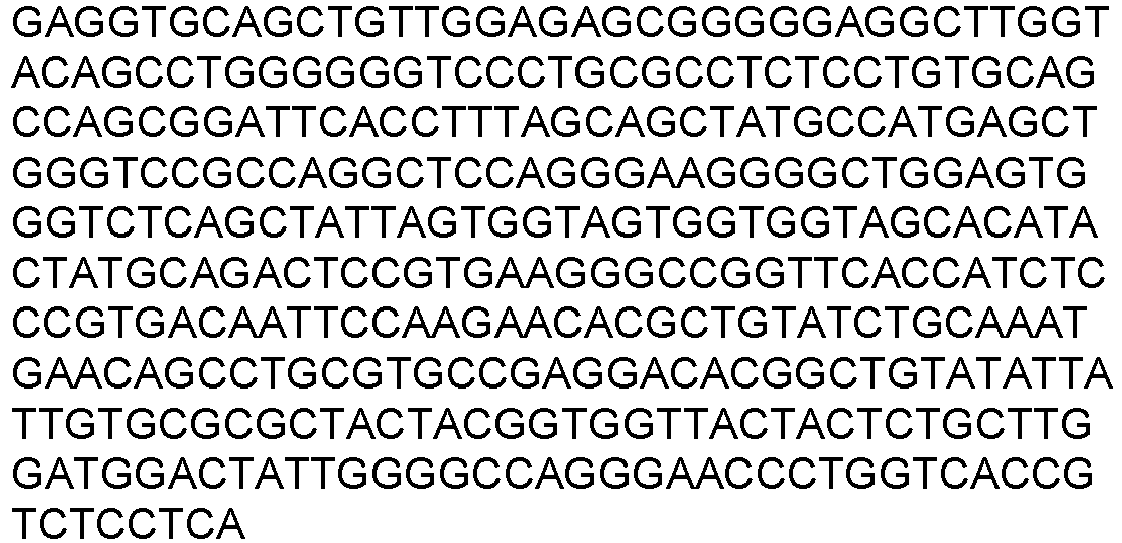
11 1211, light chain VL aa 
12 1211, light chain VL nt 
13 1212, heavy chain VH aa 

14 1212, heavy chain VH nt 
15 1213, light chain VL aa 
16 1213, light chain VL nt 
17 1200, heavy chain VH aa 
18 1200, heavy chain VH nt 
19 1201, light chain VL aa 
20 1201, light chain VL nt 
21 1202, heavy chain VH aa 
22 1202, heavy chain VH nt 
23 1203, light chain VL aa 
24 1203, light chain VL nt 
25 1205, light chain VL aa 
26 1205, light chain VL nt 
27 1204, heavy chain VH aa 
28 1204, heavy chain VH nt 
29 1214 (VH) aa 
30 1214 (VH) nt 
31 1215 (VL) aa 
32 1215 (VL) nt 
33 1618 (VH) aa 
34 1618 (VH) nt 
35 1619 (VL) aa 
36 1619 (VL) nt 
37 1620 (VH) aa 
38 1620 (VH) nt 
39 1621 (VL) aa 
40 1621 (VL) nt 
41 1626 (VH) aa 
42 1626 (VH) nt 
43 1627 (VL) aa 
44 1627 (VL) nt 
-
Clone name (mAb) VH VL H1 H2 H3 L1 L2 L3 1206/12 07 1206 1207 


QSISSY (SEQ ID NO: 54) AAS (SEQ ID NO: 55) 
1208/11 35 1208 1135 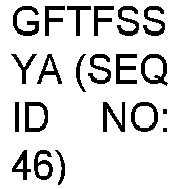


QSISSY (SEQ ID NO: 54) AAS (SEQ ID NO: 55) 
1210/12 11 1210 1211 


QSISSY (SEQ ID NO: 54) AAS (SEQ ID NO: 55) 
1212/12 13 1212 1213 


QSISSY (SEQ ID NO: 54) AAS (SEQ ID NO: 55) 
2992/29 93 2992 2993 

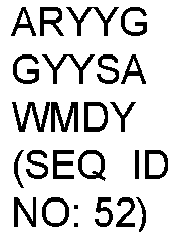
QSIRSA (SEQ ID NO:145) AAS (SEQ ID NO:55) 
2994/29 95 2994 2995 


QSIRSA (SEQ ID NO:145) AAS (SEQ ID NO:55) 
2996/29 97 2996 2997 
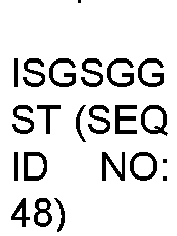

QSIRQA (SEQ ID NO:148) AAS (SEQ ID NO: 55) 
2998/29 99 2998 2999 


QSISQA (SEQ ID NO: 149) AAS (SEQ ID NO: 55) 
3000/30 01 3000 3001 


QSIRQA (SEQ ID NO: 148) AAD (SEQ ID NO: 151) 
3002/30 03 3002 3003 


QSIRSA (SEQ ID NO: 145) AAS (SEQ ID NO: 55) 
3004/30 05 3004 3005 


QSISSA (SEQ ID NO: 153) AAS (SEQ ID NO: 55) 
3006/30 07 3006 3007 


QSIHQA (SEQ ID NO: 154) GAS (SEQ ID NO: 155) 
3008/30 09 3008 3009 


QSIHQA (SEQ ID NO: 154) AAS (SEQ ID NO:55) 
-
Table C(1) - VH Antibody CDRH1 CDRH2 CDRH3 1200/1201 GFTFSSYA (SEQ ID NO: 46) ISGGGGGT (SEQ ID NO: 65) ARDVAYFDY (SEQ ID NO: 72) 1202/1203 GFTFYGSS (SEQ ID NO: 60) IYYGSSGT (SEQ ID NO: 66) ARSYYGYFDY (SEQ ID NO: 73) 1204/1205 GFTFSSYY (SEQ ID NO: 61) IGSYYGYT (SEQ ID NO: 67) ARAYYDYNYYYAYFDY (SEQ ID NO: 74) 1214/1215 GFTFSSYA (SEQ ID NO: 46) IGSGGGYT (SEQ ID NO: 68) ARVGHPFDY (SEQ ID NO: 75) 1618/1619 GFTFSYGS (SEQ ID NO: 62) ISSGSGST (SEQ ID NO: 69) ARSSYYGSYYSIDY (SEQ ID NO: 76) 1620/1621 GFTFSGYY (SEQ ID NO: 63) ISSSGSYT (SEQ ID NO: 70) ARSVGPYFDY (SEQ ID NO: 77) 1626/1627 GFTFGGYS (SEQ ID NO: 64) IGGYYYST (SEQ ID NO: 71) ARSYYGSIDY (SEQ ID NO: 78) 3012/3013 GFTFDYGS (SEQ ID NO: 156) ISSGSGST (SEQ ID NO: 69) ARSSYYGSYYSIDY (SEQ ID NO: 76) 3014/3015 GFTFSYGS (SEQ ID NO: 62) ISSGSGST (SEQ ID NO: 69) ARSSYYGSYYSIDY (SEQ ID NO: 76) 3016/3017 GFTFSYGS (SEQ ID NO: 62) ISSGSGST (SEQ ID NO: 69) ARSSYYGSYYSIDY (SEQ ID NO: 76) 3018/3019 GFTFDYGS (SEQ ID NO: 156) ISSGSGST (SEQ ID NO: 69) ARSSYYGSYYSIDY (SEQ ID NO: 76) 3020/3021 GFTFDYGS (SEQ ID NO: 156) ISSGSGST (SEQ ID NO: 69) ARSSYYGSYYSIDY (SEQ ID NO: 76) 3022/3023 GFTFDYGS (SEQ ID NO: 156) ISSGSGST (SEQ ID NO: 69) ARSSYYGSYYSIDY (SEQ ID NO: 76) 3024/3025 GFTFDYGS (SEQ ID NO: 156) ISSGSGST (SEQ ID NO: 69) ARSSYYGSYYSIDY (SEQ ID NO: 76) 3026/3027 GFTFDYGS (SEQ ID NO: 156) ISSGSGST (SEQ ID NO: 69) ARSSYYGSYYSIDY (SEQ ID NO: 76) 3028/3029 GFDFSYGS (SEQ ID NO: 157) ISSGSGST (SEQ ID NO: 69) ARSSYYGSYYSIDY (SEQ ID NO: 76) 3030/3031 GFTFDYGS (SEQ ID NO: 156) ISSGSGST (SEQ ID NO: 69) ARSSYYGSYYSIDY (SEQ ID NO: 76) 3032/3033 GFTFDYGS (SEQ ID NO: 156) ISSGSGST (SEQ ID NO: 69) ARSSYYGSYYSIDY (SEQ ID NO: 76) 3034/3035 GFTFSYGS (SEQ ID NO: 62) ISSGSGST (SEQ ID NO: 69) ARSSYYGSYYSIDY (SEQ ID NO: 76) 3036/3037 GFTFDYGS (SEQ ID NO: 156) ISSGSGST (SEQ ID NO: 69) ARSSYYGSYYSIDY (SEQ ID NO: 76) Table C(2) - VL Antibody CDRL1 CDRL2 CDRL3 1200/1201 QSISSY (SEQ ID NO: 54) AAS (SEQ ID NO: 55) QQYYIPHT (SEQ ID NO: 79) 1202/1203 QSISSY (SEQ ID NO: 54) AAS (SEQ ID NO: 55) QQYYTVVPFT (SEQ ID NO: 80) 1204/1205 QSISSY (SEQ ID NO: 54) AAS (SEQ ID NO: 55) QQSVPHYPFT (SEQ ID NO: 81) 1214/1215 QSISSY (SEQ ID NO: 54) AAS (SEQ ID NO: 55) QQDAYPHT (SEQ ID NO: 82) 1618/1619 QSISSY (SEQ ID NO: 54) AAS (SEQ ID NO: 55) QQYYDNLPT (SEQ ID NO: 83) 1620/1621 QSISSY (SEQ ID NO: 54) AAS (SEQ ID NO: 55) QQGVGPYT (SEQ ID NO: 84) 1626/1627 QSISSY (SEQ ID NO: 54) AAS (SEQ ID NO: 55) QQGTGYGPLT (SEQ ID NO: 85) 3012/3013 QSISQY (SEQ ID NO: 158) GAS (SEQ ID NO: 155) QQYYDNLPT (SEQ ID NO: 83) 3014/3015 QSIRQY (SEQ ID NO: 159) SAD (SEQ ID NO: 160) QQYYDNLPT (SEQ ID NO: 83) 3016/3017 QSIRQY (SEQ ID NO: 159) GAS (SEQ ID NO: 155) QQYYDNLPT (SEQ ID NO: 83) 3018/3019 QSISQY (SEQ ID NO: 158) SAE (SEQ ID NO: 161) QQYYDNLPT (SEQ ID NO: 83) 3020/3021 QSIRSY (SEQ ID NO: 162) SAS (SEQ ID NO: 163) QQYYDNLPT (SEQ ID NO: 83) 3022/3023 QSIRQY (SEQ ID NO: 159) GAS (SEQ ID NO: 155) QQYYDNLPT (SEQ ID NO: 83) 3024/3025 QSISSY (SEQ ID NO: 54) AAS (SEQ ID NO: 55) QQYYDNLPT (SEQ ID NO: 83) 3026/3027 QSIRSY (SEQ ID NO: 162) GAD (SEQ ID NO: 165) QQYYDNLPT (SEQ ID NO: 83) 3028/3029 QSIRQY (SEQ ID NO: 159) GAE (SEQ ID NO: 166) QQYYDNLPT (SEQ ID NO: 83) 3030/3031 QSISSY (SEQ ID NO: 54) GAE (SEQ ID NO: 166) QQYYDNLPT (SEQ ID NO: 83) 3032/3033 QSISSY (SEQ ID NO: 54) AAS (SEQ ID NO: 55) QQYYDNLPT (SEQ ID NO: 83) 3034/3035 QSISSY (SEQ ID NO: 54) GAS (SEQ ID NO: 155) QQYYDNLPT (SEQ ID NO: 83) 3036/3037 QSIRSY (SEQ ID NO: 162) GAS (SEQ ID NO: 155) QQYYDNLPT (SEQ ID NO: 83) - IgG1 LALA-sequence

-
- SGGGGSGGGGS (SEQ ID NO: 87)
- SGGGGSGGGGSAP (SEQ ID NO: 88)
- NFSQP (SEQ ID NO: 89), KRTVA (SEQ ID NO: 90)
- GGGSGGGG (SEQ ID NO: 91)
- GGGGSGGGGS (SEQ ID NO: 92)
- GGGGSGGGGSGGGGS (SEQ ID NO: 93)
-
-
IgG1 heavy chain constant region sequence:

-
IgG1 light chain constant region sequence:

-
Table D(1) - 5T4-specific VH sequences (optimised sequences from "1210"; SEQ ID NO:9) 2992 
2994 
2996 
2998 
3000 
3002 
3004 
3006 
3008 
Table D(2) - CD137-specific VH sequences (optimised sequences from "1618"; SEQ ID NO:33) 3012 
3014 
3016 
3018 
3020 
3022 
3024 
3026 
3028 
3030 
3032 
3034 
3036 
Table D(3) - 5T4-specific VL sequences (optimised sequences from "1211"; SEQ ID NO:11) 2993 
2995 
2997 
2999 
3001 
3003 
3005 
3007 
3009 
Table D(4) - CD137 specific VL sequences (optimised sequences from "1619"; SEQ ID NO: 35) 3013 
3015 
3017 
3019 
3021 
3023 
3025 
3027 
3029 
3031 
3033 
3035 
3037 
Table D(5) - Connector sequences Reference Amino acid sequence SEQ ID m6 GGGGSGGGGS SEQ ID NO: 92 m15 THTCPPCPEPKSSDK SEQ ID NO: 140 m16 GGGGS SEQ ID NO: 141 m17 EAAKEAAKGGGGS SEQ ID NO: 142 m18 EAAKEAAK SEQ ID NO: 143 Table D(6) - Additional alterations (modifications) Reference Alteration m2 L234A, L235A Fc mutations m5 G49C in heavy chain and Q120C in light chain of scFv m19 P15G, G16N, G17E, S18T in heavy chain of scFv -
Antibody name Composition of construct A (VH of B1) B (VL of B1) C (VH of B2) D (VL of B2) Connector* Additional alterations* 1618- 1210LO1 1618 1619 2992 2993 m6 m2 * See Table D(5) and D(6) above for details - Heavy chain:
[A (underlined); Heavy chain Fc sequence with modification m2; connector m6 (italic); C (bold); linker; D (bold underlined)]
- Light chain:
[B (bold underlined); Light chain constant sequence]
- Phage display selections against h5T4 were performed using the scFv library ALLIGATOR-GOLD™, a fully human scFv library containing more than 1×10¹⁰ unique members (Alligator Bioscience AB, Lund, Sweden). Several different selection strategies were employed, including solid phase selection, selection in solution using biotinylated 5T4-Fc, selection with biotinylated 5T4-Fc coupled to streptavidin beads as well as one round of selection against 5T4 expressing B16 cells using a phage stock that previously had been selected against the recombinant h5T4-Fc. Prior to selection, phage stocks were pre-selected against streptavidin, Beriglobin or SLIT2 in order to remove potential binders to streptavidin, the Fc part of the target and binders cross reactive to other leucine rich repeat proteins.
- To identify specific binders from the phage selection, approximately 1250 individual clones were screened in phage format using ELISA coated with 5T4-Fc or non-target protein (Biglycan or Orencia). This was followed by sequence analysis as well as screening as soluble scFv in full-curve ELISA, ELISA performed at 50°C and FACS analysis of selected clones. Based on this, 14 unique candidate scFv were chosen which bound to recombinant 5T4 and to 5T4 expressing cells without showing positive response to non-target molecules or to 5T4 negative cells.
- The selected 14 5T4 scFv clones were converted to full IgG1 for further characterization. A reference anti-5T4 antibody, designated 1628 (selected from a representative prior art disclosure), was used in this study as a positive control.
- Among the 14 clones, four clones were selected for further evaluation in bispecific antibody format. These four clones are described further below, and compared to the reference clone 1628.
- ELISA was performed using a standard protocol. Plates (#655074, Greiner Bio-One GmbH, Germany) were pre-coated with 0.5 µg/ml 5T4-Fc (obtained from Peter L. Stern, University of Manchester) overnight. 5T4 antibodies were diluted from 6 to 1.5 ×10⁻³ µg/ml in 1:4 dilutions and added in duplicates of 50 µl to each well. Binding was detected with rabbit anti-h kappa L-chain-HRP (P0129, Dako Denmark) and the ELISA was developed with SuperSignal ELISA PICO Chemiluminescent substrate (Thermo Scientific Pierce, Rockford, IL USA) for 2-10 minutes and read in an automated microplate based multi-detection reader (FLUOstar OPTIMA, Netherlands).
- The results show that the majority of the 5T4 mAbs bind with similar potency to 5T4 as 1628 (Table 1) with EC50 values in the sub-nM range. However, clone 1208 exhibits a slightly higher EC50 value.
Table 1 Summary of the obtained EC50 in the ELISA of all 5T4 mAb with the confidence intervals and number of experiments Clone name Mean EC50 (nM) EC50 (nM) 95% Confidence Intervals n Reference 1628 0.56 0.3-1.0 8 1206 0.64 0.3-1.4 4 1208 2.24 2.0-2.4 1 1210 0.48 0.2-1.1 4 1212 0.56 0.2-1.2 4 - Analysis of 5T4 mAb binding with flow cytometry was performed using 5T4-transfected cell lines and as negative control, mock transfected cells. Three different transfected cell lines used were used for this study; B16, A9 and CHO, transfected either with a 5T4 construct or with an empty vector control construct. Cells were stained with 5T4 antibodies diluted in FACS buffer (PBS, 0.5 % BSA and 0.02% NaN3). Binding was detected with the secondary antibody anti-IgG (Fc)-PE (109-115-098, Jackson ImmunoResearch Europe, UK) diluted 1:100. Samples were analysed either on a FACSCalibur or a FACSverse (BD Biosciences, Heidelberg, Germany) and mean fluorescence intensity (MFI) determined.
- In flow cytometric analysis of 5T4 antibody binding to 5T4-transfected B16 cells, most antibodies show good binding. Large variations in EC50 values between individual experiments were observed. Therefore, results are summarized as mean EC50 in nM as well as mean EC50 normalized to the internal control 1628 (Table 2). An example of dose-response curves for binding of 5T4 mAb to 5T4-transfected B16 cells is shown in
Figure 2 . InFigure 3 , normalized MFI values at a fixed concentration of 2.5 µg/ml antibody is shown. Taken together, the data indicate that most antibodies bind well to 5T4-transfected B 16 cells, with clone1208 exhibiting weaker binding.Table 2 Potency of 5T4 antibodies as determined by flow cytometric analysis of 5T4-transfected B16 cells EC50 (nM) Normalized EC50* n Clone Mean SD Mean SD 1206 1.8 1.6 3.9 2.7 4 1208 0.7 9.3 1 1210 0.8 0.7 1.6 1.3 4 1212 1.4 2.2 1.1 0.3 4 Reference 1628 1.1 1.4 1.0 4 *EC50 value normalized to 1628 - In a new attempt to calculate EC50 with flow cytometry a 5T4 mAb dose response experiment was performed using CHO cells stably transfected with human 5T4. A one to four titration series was performed starting from 2.5 nM. The data are summarized in Table 3.
Table 3 Summary of EC50 values, EC50 95% confidence intervals and EC50 normalised to 1628 in flow cytometric analysis of 5T4-transfected CHO cells. Data was normalised and the EC50 values were calculated by nonlinear regression. 1206 1208 1210 1628 EC50 nM 0.51 2.07 0.81 0.51 EC50 (95% confidence intervals) 0.2 to 1.2 1.6.to 2.7 0.3 to 2.2 0.14 to 1.8 Normalized to reference 1628 1.0 4.1 1.6 1.0 - Finally, binding potency to 5T4-transfected A9 cells was evaluated in two individual experiments. As in the experiments performed with B16-5T4 cells, the absolute EC50 values determined in individual experiments vary, and data is therefore presented as normalized to the reference 1628 (Table 4). Results indicate that the 5T4 antibodies bind with comparable potency to the reference 1628.
Table 4 Potency of 5T4 antibodies as determined by flow cytometric analysis of 5T4-transfected A9 cells Clone Normalized EC50* n Mean SD 1206 2.9 1.9 2 1208 3.9 2.2 2 1210 1.8 0.2 2 1212 0.4 - 1 1628 1.0 - 2 *EC50 value normalized to reference 1628 - To summarize, the binding potency of four 5T4 antibodies was evaluated by flow cytometry using three different 5T4-transfected cell lines (B16, CHO and A9). The conclusion from these studies is that all antibodies exhibit reasonable binding, with
clone 1208 in general exhibiting lower potency than the other clones. - The potency of 5T4 antibodies in binding to cynomolgus 5T4 was determined by flow cytometry. CHO cells were stably transfected with Macaca mulatta (cynomolgus) 5T4. Cells were stained with 5T4 antibodies diluted in FACS buffer (PBS, 0.5 % BSA and 0.02% NaN3) using a 1:4 titration starting at 2.5 nM. Binding was detected with the secondary antibody anti-IgG (Fc)-PE (109-115-098, Jackson ImmunoResearch Europe, UK) diluted 1:100. Samples were analysed either on a FACSCalibur or a FACSverse (BD Biosciences, Heidelberg, Germany) and mean fluorescence intensity (MFI) determined. Three experiments were performed with comparable results, although only one experiment included a full dose-response curve whereas the other two experiments included only three antibody concentrations. To compare the EC50 values between human and cynomolgus 5T4, the cy5T4/hu5T4 ratio was calculated from the experiment with the full dose-response.
- The three experiments that were performed demonstrate good binding to cynomolgus 5T4 by
clones Figure 4 , Table 5)Clone 1206 had a relatively good potency, but low efficacy. Comparison of the relative EC50 values between cynomolgus and human 5T4 for selected clones shows thatclones Table 5 EC50 values for cyno5T4 transfected cells and EC50 95% confidence intervals and the EC50cyno:EC50 human Antibody 1206 1208 1210 1212 1628 EC50 nM 1.53 0.96 0.70 30.7 93.0 EC50 (95% confidence intervals) 1.1 to 2.1 0.5 to 1.8 0.3 to 1.7 21 to 45 37 to 235 Ratio EC50cyno5T4/h5T4 3.0 0.5 0.9 140 182 Data were normalised and the EC50 values were calculated by nonlinear regression - Binding kinetics of the 5T4-specific mAbs have been studied using two different SPR-based platforms, the Biacore 3000 (GE Healthcare) and the MASS-1 platform (Sierra Sensors). Briefly, 5T4 was captured at the sensor chip surface either via direct amine coupling (Biacore platform) or using a streptavidin coated chip and biotinylated 5T4 (MASS-1 platform). The different 5T4-specific mAbs were then injected over the chip in increasing concentrations and the association and dissociation rates studied in real time. A 1:1 Langmuir model was used for curve fitting.
- A summary of binding rate constants and affinities obtained using the two platforms is presented in Table 6. It should however be taken into consideration that the assay setup used allows for bivalent binding of the mAbs to the antigen. This will give rise to avidity effects that lead to a significant underestimation of the off-rates (kd) and thus also the affinity value (KD). The different 5T4 antibodies show different binding characteristics, with 1208 and the reference 1628 displaying very low off-rates while on-rates vary less between the binders. It is obvious that there are significant variations between the two assays, with an over 10-fold difference for 1206 and 1628. For 1628 this is likely due the difficulty in accurate curve fitting when the off-rate becomes very low (close to no dissociation).
Table 6 Summary of binding kinetics of 5T4-specific mAbs Biacore MASS-1 Clone ka (1/Ms) kd (1/s) KD (M) ka (1/Ms) kd (1/s) KD (nM) 1206 1.3E+05 2.8E-04 2.3E-09 1.4E+06 1.3E-04 9.7E-11 1208 - - - 2.1E+05 2.1E-06 9.8E-12 1210 5.0E+05 1.0E-04 2.0E-10 5.1E+05 1.9E-04 3.7E-10 1212 4.5E+05 8.1E-04 1.8E-10 - - - 1628 6.4E+05 2.6E-08 4.1E-14 1.5E+06 2.1E-06 1.5E-12 - Epitope mapping was performed by investigation of loss of binding by the antibodies using a panel of human/mouse chimeric 5T4 constructs by flow cytometry. This strategy was possible since none of the 5T4 antibodies cross-react with murine 5T4. Two strategies were used for the epitope mapping as illustrated in
Figure 5 . In one approach, seven human/mouse 5T4 chimeras were constructed based on dividing 5T4 into seven different domains (Figure 5 ). By replacing each domain with the corresponding mouse sequence seven human/mouse 7 5T4 human/mouse chimeras were generated. The chimeras were generated using the human protein 5T4 sequence NP_006661.1 (reference mRNA sequence NM_006670.4) and the corresponding mouse sequence NP_035757.2 (reference mRNA sequence NM_011627.4). The human/mouse chimeric DNA constructs, as well as human and mouse wild-type 5T4, were cloned into pcDNA3.1 expression vectors. Stably transfected CHO cells were generated and 5T4 expressing cells enriched by MACS sorting, resulting in 60-80% positive cells. In the other approach, cells transfected with a human/mouse 5T4 chimera (Woods et al., 2002, Biochem J 366(1):353-365) was used, in which mouse sequence in amino acid 173-420 replaced the human sequence (Figure 5 ). As controls human 5T4 and mouse 5T4-transfected cells were used. - For flow cytometric analysis, cells were stained with different 5T4 antibodies diluted in FACS buffer (PBS, 0.5 % BSA). Binding was detected with the secondary antibody anti-IgG (Fc)-PE (109-115-098, Jackson ImmunoResearch Europe, UK) diluted 1:100. Samples were analysed by FACSverse (BD Biosciences, Heidelberg, Germany) and % positive cells were determined. To compensate for variations in % 5T4 positive cells in the various transfected populations, binding levels were normalized within each chimera by dividing % positive cells for each clone with % positive cells for the clones resulting in the highest % positive cells (% pos cellsclonX/% positive cellsmax). A normalized value ≤ 0.75 was defined as mAb binding being dependent on the replaced region, whereas a normalized value ≤ 0.25 was defined as complete dependence.
- The four 5T4 antibodies were shown to be more or less dependent on at least one of domains E2, E3, E4, E6 or aa 173-420, whereas no clear dependence on E1, E5 or E7 was observed (Table 7).
- All four antibodies had a distinct binding pattern:
- 1.
Clone 1208; dependent on E2 and E4 - 2.
Clone 1210; dependent on E2, E4 and aa173-420 - 3.
Clone 1206; dependent on E2, E3, E4 and aa173-420 - 4.
Clone 1212 dependent on E6 aa173-420 - The reference antibody 1628 differed from all the exemplary antibodies of the invention, and was completely dependent on E4 and aa173-420.
Table 7 Summary of epitope mapping results summarized as normalized values for one representative experiment. Clone Group E1 E2 E3 E4 E5 E6 E7 aa173-420 1628 0.96 1.00 1.00 0.06 0.96 0.81 0.91 0.00 1208 1 0.95 0.68 0.96 0.65 1.00 0.94 0.99 1.00 1210 2 0.99 0.02 0.90 0.69 0.89 0.89 0.96 0.00 1206 3 0.96 0.74 0.25 0.52 0.90 0.94 0.94 0.30 1212 4 0.89 0.90 0.93 1.00 0.84 0.03 0.88 -0.01 - The experiment was repeated once for E2, E3 and E6 chimeras and three times for the E4 chimera with high reproducibility. mAbs with a normalized binding value ≤ 0.75 are indicated in bold.
- Phage display selections were performed using a human antibody (scFv) library, Alligator GOLD ® (Alligator Bioscience, Lund, Sweden). Selections towards recombinant CD137 in soluble form, coated onto the surface of beads or tubes, or expressed on the surface of CD137-transfected cells were performed. CTLA4-Fc and an irrelevant His-tagged protein were used as non-targets included in excess in the selections. Priorto each selection round, the phage stocks were pre-selected towards biotinylated beriglobin, CTLA4-Fc, beads or CD137 negative cells to remove unspecific binders.
- To identify specific binders from the phage selection, approximately 4500 individual clones were screened in phage format using ELISA coated with either recombinant target (CD137-Fc) or non-target (CTLA4-Fc) protein, followed by confirmation as soluble scFv for some clones. Clones exhibiting specific binding to CD137 were sequenced and unique clones were produced as IgG for further characterization.
- Binding of CD137 antibodies to recombinant human CD137 was determined by sandwich ELISA. Briefly, ELISA plates (Greiner # 655074) coated with recombinant human CD137-Fc (R&D # 838-4B) were incubated with serial dilutions of the various CD137 antibodies to be investigated. CD137 antibodies were detected using HRP-conjugated goat-anti-human kappa light chain (AbD Serotec # STAR127P) and developed with SuperSignal ELISA Pico Chemiluminescent substrate (Pierce # 37069). EC50 values of the various antibodies were determined in 2-6 separate experiments.
- Two different reference anti-CD 137 antibodies have been used in this study, as positive controls (designated "1811/1812" and "1813/1814", both of which are available in the art).
- The majority of the antibodies exhibit EC50 values in a similar range as those of the reference antibodies, i.e. sub nM or low nM. Data are summarized in Table 8.
Table 8 EC50 values (nM) of Alligator-GOLD-derived CD137 antibodies determined by ELISA for human CD137 Clone name Mean SD n 1811/1812 0.75 0.137 8 1813/1814 0.33 0.069 5 1200/1201 0.39 0.037 3 1202/1203 0.41 0.050 4 1204/1205 0.34 0.058 6 1214/1215 0.98 0.124 6 1618/1619 0.35 0.018 4 1620/1621 0.38 0.137 2 1626/1627 0.22 0.057 2 n = number of data points. - Binding and EC50 was determined using flow cytometric analysis of CHO cells transfected with human CD137, cynomolgus CD137 or empty vector. The extracellular part of human or cynomolgus CD137 was fused to the transmembrane and intracellular part of human CD40 and cloned into pcDNA3.1. The vector was subsequently stably transfected into CHO cells. Expression of CD137 was confirmed by flow cytometry using CD137 antibody (human CD137-PE, BD Biosciences # 555956) for 30 min at 4°C. CD137-transfected and empty vector-transfected cells were incubated with CD137 antibodies for at least 1h at 4°C to saturate the binding. In order to minimize antibody internalization, 0.05% sodium azide was used in the incubation buffer and all work was performed on ice. The CD137 antibodies were detected using PE-conjugated anti-hlgG antibody (109-115-098, Jackson Immunoresearch laboratories), incubated for 30 min at 4°C. Directly after staining the cells were fixed with a paraformaldehyde solution (10x concentrate BD CellFIX, BD biosciences # 340181). Cells were analyzed by flow cytometry using FACSVerse (BD Biosciences). The median fluorescence intensity (MFI) for each sample was determined and the dose response data was analysed using Graph Pad Prism.
- MFI data was normalized for each antibody, where 0% is defined as the lowest value and 100% is the highest value in the dose titration for each antibody. EC50 and 95% confidence interval were calculated with Graph Pad Prism based on data from the two experiments (non-linear regression (curve fit), constraints set to 0 and 100).
- Binding to CHO-huCD137, CHO-cyCD137 and CHO-pcDNA was confirmed in two separate experiments (
Figure 6 ). All CD137 antibodies bind relatively well to human CD137 with EC50 comparable with the two reference antibodies 1811/1812 and 1813/1814. The majority of the CD137 antibodies tested bind well to cynomolgus CD137, except for reference antibody 1811/1812 and 1200/1201 (data not shown) which do not bind at all or very weakly, andclone 1620/1621 which binds weakly and does not reach a complete saturation. It should be noted that the maximum MFI obtained on the cynomolgus CD137 cells were 2-3 fold lower than on the human CD137 expressing cells, which indicate differences in receptor density on the cells. - The EC50 determination is presented as 95% confidence intervals for each CD137 antibody tested in order to include the inter and intra assay variations (Table 9).
Table 9 95% confidence intervals for the EC50 of each CD137 antibody determined as an average from two experiments of normalized data Clone name Binding to human CD137, EC50 (µg/mL) Binding to cyno CD137, EC50 (µg/mL) Ratio, cyno:human 1811/1812 1.00-1.99 Nd Nd 1813/1814 0.21-0.31 0.13-0.24 0.69 1200/1201 0.20 - 0.36 Nd Nd 1202/1203 0.16-0.27 0.11-0.17 0.67 1204/1205 0.23-0.39 0.11-0.16 0.43 1214/1215 0.89-1.28 0.41 -0.80 0.54 1618/1619 0.11-0.19 0.086-0.15 0.77 1620/1621 0.20 - 0.42 3-5* 14* 1626/1627 0.38-0.67 0.16-0.27 0.41 *The estimated 95% confidence interval is likely underestimated
Nd: no data due to incomplete binding to target. - Human CD137 (R&D systems) was immobilized to the Biacore™ sensor chip, CM5, using conventional amine coupling. The tested antibody and control (serially diluted 1/2 10-0.63 nM) were analyzed for binding in HBS-P (GE, #BR-1003-68) at a flow rate of 30 µl/ml. The association was followed for 5 minutes and the dissociation for 15 minutes. Regeneration was performed twice using 10 mM Glycine pH 1.7 for 30 seconds. The kinetic parameters and the affinity constants were calculated using 1:1 Langmuir model.
- The affinities of the antibodies were in the nanomolar to sub-nanomolar range (Table 10) measured using bivalent antibodies flowed over CD137 coated on the chip surface.
Table 10 Kinetic parameters measured by surface plasmon resonance Sample ka (1/Ms) kd (1/s) KD (M) 1200 ND ND ND 1202 6.76E+05 6.60E-04 9.76E-10 1204 2.54E+05 2.80E-04 1.10E-09 1214 4.54E+04 3.17E-05 6.99E-10 1618 1.02E+06 1.10E-04 1.07E-10 1620 3.92E+05 5.19E-04 1.32E-09 1626 2.32E+05 2.94E-04 1.27E-09 1814 1.05E+06 4.45E-04 4.24E-10 ND; not determined - Binding to TNFR superfamily members for which ELISA methods had already been established (CD40 and OX40) was evaluated to detect potential propensity to cross react to non-target proteins. In addition, a BLAST search was performed identifying TNFRSF21 as the most similar sequence (34% sequence identity). Since this sequence similarity is rather low, determination of non-target binding to OX40 and CD40 was considered sufficient.
- ELISA plates (Greiner # 655074) were coated with 50µl/well of recombinant human OX40 (R&D # 1493-CD), CD40-Fc (Ancell # 504-820) or CD137 (R&D # 838-4B) diluted to a final concentration of 0.5 µg/ml in PBS for 1h at 37°C or overnight at 4°C. Plates were washed with PBS+0.05% TWEEN20 (PBST), followed by block with PBST+1% bovine serum albumin (BSA). Antibody samples were prepared as serial 1/10 dilutions from 10 - 0.01 µg/ml in PBST+1% BSA and incubated for 1h in room temperature, followed by detection using a horse radish peroxidase-conjugated anti-human kappa light chain antibody (AbD Serotec # STAR127P) and developed using SuperSignal ELISA Pico Chemiluminescent substrate (Pierce ThermoScientific #37069).
- The results from the two experiments were similar. One antibody (1202/1203) exhibited weak binding to OX40 and CD40, whereas none of the remaining antibody showed any detectable binding to either OX40 or CD40. An overview of antibodies analyzed, and results from the two experiments is shown in Table 11. The EC50 for 1202/1203 binding to CD137 in ELISA was determined as 0.41 nM, corresponding to approx. 0.06 µg/ml. The ELISA signal is very low even at 10 µg/ml, and the EC50 for binding to OX40 and CD40 is most likely higher than 10 µg/ml since the dilution curves have not reached a plateau.
- Further, binding to primary PBL from multiple blood donors was tested. The binding to PBL was similar to Reference antibodies. No relevant unspecific binding to non-target proteins was detected.
Table 11 Summary of CD137 antibody unspecific binding to OX40 and CD40 pAb Binding to OX40 and CD40 EC50 CD137 1200/1201 No 1202/1203 Weak; EC50> 40 nM 0.4 nM 1204/1205 No 1214/1215 No 1618/1619 No 1620/1621 No 1626/1627 No - The ability of each antibody to bind to a panel of human/mouse CD137 chimeras expressed on the surface of transfected cells was analyzed by flow cytometry.
- The chimeras were designed by exchanging domains or modules of the human CD137 with the corresponding mouse domain (
Figure 7 ). Genes of CD137 human/mouse chimeras were synthesized (GenScript) and constructs cloned into pcDNA3.1 vector (Invitrogen) and transiently transfected into FreeStyle 293-F cells (Invitrogen). The transfected cells were incubated with CD137 antibodies and control antibodies, followed by incubation with anti-human IgG-PE (Jackson Immunoresearch) for detection and analyzed with FACS Verse - (BD Biosciences). Binding to the different chimeric constructs was calculated as relative MFI compared to the binding of the isotype control, followed by normalization to the full-length human CD137 construct to minimize the effect of affinity differences between individual antibodies.
- Four binding patterns can be observed as described below. Data is summarized in Table 12.
- Antibodies 1811/1812 (Reference antibody) and 1618/1619 are dependent on
domain 1. -
Antibodies 1200/1201, 1202/1203 and 1204/1205 are mainly dependent ondomain 2. In addition, some loss of binding is also seen forconstruct 1555, indicating an impact ofdomain 1 as well. - Antibodies 1813/1814 (Reference antibody) and 1620/1621 appear to be mainly dependent on domains 3B-4A. However, loss of binding is seen for all constructs, making this pattern quite similar to pattern D.
- For
antibodies 1214/1215 and 1626/1627, no clear dependence on particular CD137 domains could be demonstrated. Instead, these antibodies exhibited extensive loss of binding for all chimeras. However, for 1214/1215, the results differed between the experiments (see Table 12).Table 12 Median fluo full-length h rescen uman C ce inten D137 isity (M FI) for antibody sample/ /isotype contro l, normali zed to Group A B C D Domain 1 2 3B-4A Unclear Clone 1811
18121618
16191200
12011202
12031204
12051813
18141620
16211626
16271214
1215Exp 1Exp 21550 0.12 0.11 0.05 0.05 0.07 0.22 0.17 0.10 0.06 0.14 1551 0.41 0.67 0.04 0.05 0.11 0.37 0.33 0.11 0.07 0.15 1552 0.76 1.20 0.05 0.06 0.13 0.19 0.18 0.11 0.32 0.13 1553 1.07 1.24 0.65 0.65 0.85 0.17 0.17 0.14 0.41 0.15 1554 0.82 1.01 0.84 0.51 0.73 0.16 0.17 0.12 0.26 0.15 1555 0.11 0.12 0.24 0.26 0.28 0.26 0.32 0.29 0.30 0.45 1030* 1 1 1 1 1 1 1 1 1 1 *Full-length CD137 - Agonistic activity of CD137 antibodies was evaluated in a T cell assay based on primary human CD8+ T cells. Briefly, CD8+ T cells were separated from human peripheral blood mononuclear cells by MACS separation (Miltenyi # 130-096-495) according to the manufacturer's protocol. Cells were incubated in 96-well microtiter plates (NuncThermo Scientific #268200), pre-coated with anti-CD3 antibody (clone OKT3, Affymetrix eBioscience # 16-0037) and titrated concentrations of the CD137 antibody to be tested. Following 72 or 96 hour incubation, culture medium was harvested and IFN-Y levels were determined by ELISA (BD #555142).
- Each clone was analyzed in at least 6 donors and compared to the reference CD137 antibody 1811/1812 and the negative control antibody.
- Due to large intra-donor variations the stimulation index (SI, fold induction by antibody compared to negative control) was determined for each sample and normalized to the stimulation index for the reference antibody 1811/1812.
- Several clones with efficacy comparable to the reference 1811/1812 were identified. Data are summarized in
Figure 8 , which indicates the absolute IFN-Y levels induced by CD137 stimulation. However, all antibodies were not analyzed head-to-head in all donors, and the normalized SI is more relevant for comparison of the efficacy. The antibodies were evaluated in an IgG1 format, and the efficacy was measured using antibodies coated to the surface of the wells, which may influence the efficacy. - The aim was to determine if the exemplary CD137 antibodies block the CD137 ligand binding.
- In the previous domain mapping experiment, the CD137 antibodies were divided in different groups based on their binding to similar subdomains of the CD137 antigen. If the CD137 antibodies bind to epitopes close to the ligand binding region, binding to the antigen can lead to partial or total blockade of ligand binding. Binding close to the CD137 ligand binding epitope may also affect the ligand binding due to steric hindrance or conformational changes of the CD137 ligand binding epitope. All CD137 antibodies were titrated against a fixed concentration of CD137L for evaluation of ligand blocking properties.
- CHO-cells transfected with human CD137 were used for the ligand competition. The extracellular part of human CD137 was fused to the transmembrane and intracellular part of hCD40 and cloned into pcDNA3.1. The vector was subsequently stably transfected into CHO cells. The expression of CD137 was confirmed by staining with commercial antibody targeting CD137.
- The CHO-huCD137 were pre-incubated with CD137 monoclonal antibodies, titrating down from 10:1 down to 0.01:1 molar ratio CD137 mAb (250 µg/ml) to CD137L (hCD137_CD8 Ligand) (Ancell # 503-020), for 1h at +4C before the addition of CD137 ligand at a concentration at EC50. After co-incubation for another 30 min at +4C, cells were washed and bound CD137 ligand was detected with aCD8a-PE (clone 53-6.7) (BD # 553033) and fixed with paraformaldehyde (10x concentrate BD CellFIX, BD biosciences). Analysis was performed with FACSverse and the MFI (Median Fluorescence Intensity) was calculated with FlowJo software
- The CD137L blocking experiment was performed in duplicate. It can be concluded that not all CD137 mAbs tested were blocking the CD137 ligand binding (Table 13,
Figure 9 ). CD137 mAbs belonging to group B and C (1204 and 1620), binding to domain 2B-4A, were blocking the CD137L.Antibody 1814 also blocks the CD137L binding. 1618, belonging to group A which bound todomain 1, did not block CD137 ligand.Table 13 Maximal CD137 ligand competition of the CD137 antibodies, mean out of two experiments Group (domain mapping) CD137 mAb CD137L, inhib. A 1618 2 % C 1814 67% - By competing the exemplary CD137 antibodies with each another, it is possible to determine antibodies binding to similar epitopes based on their blocking pattern. The competition ELISA is performed by co-incubating biotinylated CD137 antibodies with non-biotinylated CD137 antibodies when binding to coated CD137-Fc. Competition is defined as loss of signal from the biotinylated CD137 antibody. Low competition values could either be due to no competition between the antibodies or binding kinetics of the antibodies. Binding of one antibody could also lead to steric hindrance or conformational changes when binding the antigen which affects the binding of the other CD137 antibody.
- CD137 antibodies were biotinylated (EZ-link NHS-LC-Biotin, ThermoFisher) and intact binding properties to CD137-Fc were verified with ELISA by comparing EC50 between biotinylated and non-biotinylated anti-CD137 mAbs. Non-biotinylated anti-CD137 (anti-CD137-bio) was pre-incubated with CD137-Fc at concentrations 30 times higher than the determined EC50 for 0.5 h. Without washing, anti-CD137-bio was added and co-incubated for another 1h. The binding of anti-CD137-bio was detected with Streptavidin-HRP (Pierce). Competition was calculated as the relative number by dividing the binding measured to other antibodies relative to its maximum competition (competing with itself). The relative values obtained were normalized against the maximum blocking capacity (Table 4).
Table 14 Summary of CD137 antibody competition ELISA from two experiments. Values are presented as % competition with CD137-bio. Group comp ELISA Pattern X Pattern Y 1812 1618 1202 1204 1814 1620 1626 1214 1812- bio 100 100 7 5 5 4 0 4 1814- bio 15 21 41 74 94 61 57 99 1202-bio 18 19 58 76 63 50 63 92 1214-bio 12 6 81 92 78 80 77 99 1618-bio 84 88 11 3 6 10 16 9 1620- bio 4 7 49 93 100 82 79 100 1626-bio 37 24 100 100 96 97 100 99 1204-bio 23 28 71 88 72 66 66 97 - When normalizing the relative competition values for each antibody a competition pattern could be identified (Table 14). The
antibodies 1812 and 1618 displayed a unique pattern in the competition ELISA (Pattern X). The other CD137 antibodies that were analyzed had a similar blocking pattern (Pattern Y). Differences in binding kinetics between those antibodies, may explain some of the minor variations in the binding patterns among these antibodies, although it cannot be excluded that the small variations within group Y reflects actual differences in the binding epitope. - The crosslinking dependency of CD137 antibodies was evaluated in a T cell assay based on primary human CD8+ T cells. Briefly, cells were incubated in 96-well microtiter plates (NuncThermo Scientific #268200) pre-coated with anti-CD3 antibody (clone OKT3, Affymetrix eBioscience # 16-0037). Titrated concentrations of CD137 antibodies in the presence and absence of crosslinking antibody, goat-anti human Fc F(ab')2 (Jackson Immuno #109-006-098) at 1:3 molar ratio were added to the plated. Following 72, culture medium was harvested and IFN-Y levels were determined by ELISA (BD #555142).
- The results are summarised in
Figure 10 showing the CD137 activation in the presence of crosslinking antibody andFigure 11 showing the activation in the absence of crosslinking antibody. From the results obtained it can be concluded thatCD137 mAb clone 1618 is crosslinking dependent and the reference, a CD137 specific IgG4 antibody (REF Ab), is crosslinking independent, when it comes to CD137 mediated activation of CD137-expressing immune cells. - Thirty 5T4-CD137 bsAb, based on four 5T4 and eight CD137 antibodies were cloned as bsAb with one of the binding moieties cloned as a scFv and fused to the C-terminus of heavy chain of the IgG (i.e. in the Morrison format). The majority of the bsAb were clones with the 5T4 binder as scFv and the CD137 agonist as IgG, but in some constructs, a CD137 scFv was fused to the heavy chain of a 5T4 IgG (Table 15). In addition, four isotype control constructs, where either the 5T4 or the CD137 binder had been replaced with an isotype control antibody were included. bsAb were produced by transient transfection of Freestyle293 cells (Thermo Fischer) and purified by Protein A chromatography.
- The bsAb designation was as follows:
- First number indicates antibody clone name
- Second number indicates scFv clone name
- Thus, the designation "1200-1206" refers to the 5T4 binder 1206 (i.e. comprising the variable domain heavy and light chain sequences of
antibody 1206/1207) in scFv format fused to the C-terminus of the Fc of the CD137 agonist antibody 1200 (i.e. comprising the variable domain heavy and light chain sequences ofantibody 1200/1201).Table 15 List of all 5T4-CD137 bsAb that were cloned and produced for further evaluation Protein name mAb target mAb (clone name) scFv target scFv (clone name) 1 1200-1206 CD137 1200 5T4 1206 2 1200-1208 CD137 1200 5T4 1208 3 1200-1210 CD137 1200 5T4 1210 4 1200-1212 CD137 1200 5T4 1212 5 1202-1206 CD137 1202 5T4 1206 6 1202-1208 CD137 1202 5T4 1208 7 1202-1210 CD137 1202 5T4 1210 8 1202-1212 CD137 1202 5T4 1212 9 1204-1206 CD137 1204 5T4 1206 10 1204-1208 CD137 1204 5T4 1208 11 1204-1210 CD137 1204 5T4 1210 12 1204-1212 CD137 1204 5T4 1212 13 1210-1202 5T4 1210 CD137 1202 14 1210-1204 5T4 1210 CD137 1204 15 1210-1214* 5T4 1210 CD137 1214 16 1212-1202 5T4 1212 CD137 1202 17 1212-1204 5T4 1212 CD137 1204 18 1212-1214 5T4 1212 CD137 1214 19 1206-1202 5T4 1206 CD137 1202 20 1206-1204 5T4 1206 CD137 1204 21 1208-1202 5T4 1208 CD137 1202 22 1208-1204 5T4 1208 CD137 1204 23 1214-1208 CD137 1214 5T4 1208 24 1618-1208 CD137 1618 5T4 1208 25 1620-1208 CD137 1620 5T4 1208 26 1626-1208 CD137 1626 5T4 1208 27 1214-1210 CD137 1214 5T4 1210 28 1618-1210 CD137 1618 5T4 1210 29 1620-1210 CD137 1620 5T4 1210 30 1626-1210 CD137 1626 5T4 1210 1862-1210 Isotype control 1862 5T4 1210 1862-1212 Isotype control 1862 5T4 1212 1202-1862 CD137 1202 Isotype control 1862 1204-1862 CD137 1204 Isotype control 1862 *No expression - Bispecific binding to both targets, CD137 and 5T4, was evaluated using a standard ELISA protocol. Plates (#655074, Greiner Bio-One GmbH, Germany) were pre-coated with 0.5 µg/ml 5T4-Fc (obtained from Professor Peter Stern, University of Manchester) overnight. CD137-5T4 bsAb were diluted from 8 to 2 ×10⁻³ µg/ml in 1:4 dilutions and added in duplicates of 50 µl to each well. CD137-bio (Ancell #502-030) was used as detection antibody at 0.5 µg/ml and the binding was detected with Streptavidin-HRP (Pierce #21126). The ELISA was developed with SuperSignal ELISA PICO Chemiluminescent substrate (Thermo Scientific Pierce, Rockford, IL USA) during 2-10 minutes and read in an automated microplate based multi-detection reader (FLUOstar OPTIMA, Netherlands).
- The majority of the bsAb bound to both targets in dual ELISA with EC50 values at sub- or low nM range. However, some bsAb exhibited considerably higher EC50 values, indicating poor affinity to either or both targets in this antibody - scFv combination. Dose response curves are shown in
Figure 12 and EC50 values are summarized in Table 16.Table 16 EC50 values of dual binding of 5T4-CD137 bispecific antibodies Clone EC50 (nM) 95% Confidence Intervals (nM) 1200-1206 2.17 1.3 - 3.7 1202-1206 0.61 0.3 - 1.2 1204-1206 0.54 0.3 - 0.9 1206-1202 0.28 0.2 - 0.4 1206-1204 0.66 0.4 - 1.1 1200-1208 16.82 7.9 - 35.8 1202-1208 2.25 1.1 - 4.7 1204-1208 2.34 1.2 - 4.6 1214-1208 1.40 0.5 - 4.1 1618-1208 1.47 0.4 - 5.2 1620-1208 12.70 5.7 - 28.4 1626-1208 1.91 0.6 - 5.9 1208-1202 1.32 0.7 - 2.5 1208-1204 1.21 0.7 - 2.1 1200-1210 3.73 2.6 - 5.3 1202-1210 1.20 0.6 - 2.4 1204-1210 0.73 0.4 - 1.4 1214-1210 0.19 0.1 - 0.5 1618-1210 0.20 0.1 - 0.6 1620-1210 1.74 0.7 - 4.1 1626-1210 0.40 0.1 - 1.2 1210-1202 0.28 0.1 - 0.6 1210-1204 0.28 0.1 - 0.5 1200-1212 1.55 1.0 - 2.3 1202-1212 1.67 1.0 - 2.7 1204-1212 1.01 0.6 - 1.6 1212-1202 0.57 0.4 - 0.9 1212-1204 0.27 0.2 - 0.5 1212-1214 0.79 0.5 - 1.3 - Binding kinetics of a selection of the CD137-5T4 bsAbs was evaluated using the SPR-based MASS-1 platform (Sierra Sensors). Briefly, CD137 or 5T4 was captured at the sensor chip surface using a streptavidin coated chip and biotinylated antigen. The different CD137-5T4 bsAbs were then injected over the chip in increasing concentrations and the association and dissociation rates studied in real time.
- A summary of the obtained binding rate constants and affinities obtained is presented in Table 17. It should be taken into consideration that the assay setup used allows for bivalent binding of the bsAbs to the antigen. This will give rise to avidity effects that lead to a significant underestimation of the off-rates (kd) and thus also the affinity value (KD). This makes comparisons to other compounds troublesome, but the obtained values are valid for comparisons within the dataset.
- The results from the kinetics analysis confirm retained affinity of the CD137-specific mAb part of the bispecific molecule, while the scFv part displays reduced 5T4 affinity as compared to the parental mAb. As expected, the conformational changes induced by a flexibility reducing linker in the scFv format has a negative effect on the antigen binding affinity. In the case of 1210 this effect is only minor, while the affinity of 1208 is reduced about 6 times.
Table 17 Summary of binding kinetics of CD137/5T4-specific bsAbs bsAb Antigen Fit model ka (1/Ms) kd (1/s) KD (M) parental mAb KD (M) 1618-1208 CD137 1:1 Langmuir 9.40E+05 1.09E-04 1.16E-10 1.56E-10 1618-1208 5T4 1:1 Langmuir 7.65E+04 4.62E-05 6.01E-10 9.63E-11 1618-1210 CD137 1:1 Langmuir 1.26E+06 1.62E-04 1.29E-10 1.56E-10 1618-1210 5T4 1:1 Langmuir 4.86E+05 4.55E-04 9.37E-10 4.37E-10 - The functional activity of 5T4-CD137 bsAb was evaluated in a CD8 T cell assay, where cells were cultured in microtiter plates coated with 5T4-Fc and CD3 antibody. Peripheral blood mononuclear cells (MNC) were isolated by density gradient centrifugation using Ficoll-Paque (p 1.077g/ml) (GE Healthcare #17-1440-02) from leucocyte concentrates obtained from healthy donors (Clinical Immunology and Transfusion Medicine, Labmedicin Region Skåne, Lund Sweden). CD8+T cells were enriched by negative selection using the CD8+ T cell isolation kit (Miltenyi 130-096-495). Plates were coated overnight at 4°C with 3 µg/ml aCD3, clone OKT3 (Affymetrix eBioscience #16-0037-85), washed and coated with 5 µg/ml 5T4-Fc for 2 h at 37 °C. After the 5T4-Fc coating, plates were washed and blocked for a minimum of 30 minutes with RPMI (Gibco # 61870010) containing 10 % FCS (Heat inactivated, Gibco # 10270-106 lot 41Q9248K) and 10 mM Hepes (Gibco # 15630056).
- CD137-5T4 bsAbs were diluted in RPMI containing 10% FCS and 10 mM Hepes and added to the plates 30 minutes before addition of CD8+ T cells (0.07 × 10⁶ cells/well). Assay plates were incubated for either 68 or 92 h at 37 °C, and culture supernatant harvested. IFN-Y levels in the supernatants were measured by ELISA (BD OptiEIA #555142). Results are shown as fold change compared to CE_1200-1210, which was used as an internal control in all experiments.
- Results from the first set of bsAbs used at a fixed concentration of 1µg/ml (
Figure 13 ) show that the majority of the bsAbs based on either of the5T4 binders 5T4 antibody 1212 were not. Data also suggest that bsAb based onCD137 clone 1202 may have lower efficacy and/or potency compared to bsAb based onCD137 clones - Based on these results, a second set of bsAbs based on five new CD137 clones as IgG and the
5T4 clones 5T4 binders Figure 14 . - CD8 T cells were isolated as described above, and cultured in the presence of 5T4-expressing cells B16 cells. B16 cells transfected with empty vector were used as negative control. CD3 stimulation was performed with aCD3 (OKT-3) coated beads (Dynal M-450 Tosylactivated #14013) according to the manufactures protocol.
- Irradiated B16 tumor cells (6000 cells/well) were added to the 96 well plates and let to attached for 2 h. CD137-5T4 bsAbs were added and incubated for 30 minutes prior to addition of CD8+ T cells (0.1 ×10⁶ cells/well) and aCD3 coated beads (0.5 ×10⁵ beads/well). Plates were cultured for 68 or 92 h and IFN-Y levels in the media measured by ELISA (BD OptiEIA #555142).
- Results from the fully cell-based assay show that the majority of the bsAb are functional and that the effect is 5T4-specific, with no activation induced by 5T4 negative B 16 cells or isotype-CD137 bsAb (
Figure 15 ). - The aim of the optimization was to generate versions of the 5T4-specific 1210/1211 antibody in regards to affinity and biophysical properties. Selections were performed towards 5T4 with lead optimized library 1210LOlib1. In total, 170 unique clones were identified in the initial primary screening with good target signal as well as target/non-target ratio. These clones were further investigated in an extended primary screening with regards to temperature stability. The temperature stability evaluation showed that the majority of the identified unique clones displayed a better stability compared to the
wild type 1210/1211 scFv clone. The top 96 clones were further evaluated in a dose-response ELISA and they all showed a similar and acceptable binding behaviour. Sequence analysis from the test-screening and primary screening showed similar trends. - The top 96 identified clones from the primary and the extended primary screening were further re-cloned as the scFv-part in the Morrison-format, with 1618/1619 as the monoclonal antibody (mAb) part, and were evaluated based on binding, affinity and stability.
- Kinetic measurements were performed using the Octet RED96 platform equipped with Anti-human Fab-
CH1 2nd generation sensor tips (ForteBio). Bispecific antibodies were diluted to 1.5 µg/ml in 1x kinetic buffer (ForteBio) and coupled to the biosensors. Human 5T4 (produced in-house) was diluted in 1x Kinetics Buffer to 50 nM, 10 nM and 2 nM. Binding kinetics were studied in 1x Kinetics buffer where association was allowed for 300 sec followed by dissociation for 600 sec. Sensor tips were regenerated using 10 mM glycine, pH 2.2. Data generated were referenced by subtracting a parallel buffer blank, the baseline was aligned with the y-axis, inter-step correlation by alignment against dissociation was performed and the data were smoothed by a Savitzky-Golay filter in the data analysis software (v.9.0.0.14). The processed data were fitted using a 1:1 Langmuir binding model with X2 as a measurement of fitting accuracy. - The data are summarised in Table 18. Overall, the lead optimized variants behaved very similarly in the EC50 evaluation in ELISA. The affinity evaluation showed that the affinity (KD) had been improved between 3 to more than 10 times compared to the wild type 1618-1210 clone. The EC50 evaluation on cells also showed similar behaviour of the different optimized variants and all showed an improved performance compared to the wild type 1618-1210 clone. In regards to stability, the top performing clones show less than 10% aggregation after protein A purification and have a Tm higher than the Tm of the Fc (>70 °C) as measured by HPLC and DSF respectively.
Table 18 Summary of affinity measurements of optimized 5T4-specific variable domains Antibody name Composition of construct (amino acid sequences) Affinity measurements Octet (5T4) A (VH of B1) B (VL of B1) C (VH of B2) D (VL of B2) Connector∗ Additional alteration∗ KD (M) kon(1/Ms) kdis(1/s) 1618-1210LO1 1618 1619 2992 2993 m6 m2 1,47E-10 2,23E+05 3,29E-05 1618-1210LO2 1618 1619 2994 2995 m6 m2 2,70E-10 1,67E+05 4,50E-05 1618-1210LO3 1618 1619 2996 2997 m6 m2 3,49E-10 2,12E+05 7,40E-05 1618-1210LO4 1618 1619 2998 2999 m6 m2 3,82E-10 2,02E+05 7,73E-05 1618-1210LO5 1618 1619 3000 3001 m6 m2 4,67E-10 1,64E+05 7,65E-05 1618-1210LO6 1618 1619 3002 3003 m6 m2 4,69E-10 2,27E+05 1,06E-04 1618-1210LO7 1618 1619 3004 3005 m6 m2 4,95E-10 1,68E+05 8,29E-05 1618-1210LO8 1618 1619 3006 3007 m6 m2 4,98E-10 1,77E+05 8,83E-05 1618-1210LO9 1618 1619 3008 3009 m6 m2 5,34E-10 2,35E+05 1,25E-04 * see Table D(5) and D(6) for details - The aim of the optimization was to generate versions of the CD137-specific 1618/1619 antibody in regards to affinity and biophysical properties. Selections were performed towards CD137 with lead optimized library 1618LOlib1. In total, 153 unique clones were identified in the initial primary screening with good target signal as well as target/non-target ratio. These clones were further investigated in an extended primary screening with regards to temperature stability. The temperature stability evaluation allowed for identification of the best performing unique clones in regards to temperature stability compared to the
wild type 1618/1619 scFv clone. The top 50 clones were further evaluated in a dose-response ELISA and they all showed a similar and acceptable binding behaviour. Sequence analysis from the test-screening and primary screening showed similar trends. - The top 50 identified clones from the primary and the extended primary screening were further re-cloned as the scFv-part in the Morrison-format, with 1210/1211 as the monoclonal antibody (mAb) part, and were evaluated based on binding, affinity and stability.
- Kinetic measurements were performed using the Octet RED96 platform equipped with Anti-human Fab-
CH1 2nd generation sensor tips (ForteBio). Bispecific antibodies were diluted to 1.5 µg/ml in 1x kinetic buffer (ForteBio) and coupled to the biosensors. Human CD137-Fc (R&D Systems, #838-4B) was diluted in 1x Kinetics Buffer to 50 nM, 10 nM and 2 nM. Binding kinetics were studied in 1x Kinetics buffer where association was allowed for 300 sec followed by dissociation for 600 sec. Sensor tips were regenerated using 10 mM glycine, pH 2.2. Data generated were referenced by subtracting a parallel buffer blank, the baseline was aligned with the y-axis, inter-step correlation by alignment against dissociation was performed and the data were smoothed by a Savitzky-Golay filter in the data analysis software (v.9.0.0.14). The processed data were fitted using a 1:1 Langmuir binding model with X2 as a measurement of fitting accuracy. - The data are summarised in Table 19. Overall, the lead optimized variants behaved very similarly in the EC50 evaluation in ELISA. The affinity evaluation showed that the affinity (KD) were comparable to the wild type 1210-1618 clone. The EC50 evaluation on cells also showed similar behaviour of the different optimized variants. In regards to stability, the top performing clones show less than 6% aggregation after protein A purification and have a Tm between 54°C - 59 °C as measured by HPLC and DSF respectively.
Table 19 Summary of affinity measurements of optimized CD137-specific variable domains Antibody name Composition of construct (amino acid sequences) Affinity measurements Octet (CD137) A (VH of B1) B (VL of B1) C (VH of B2) D (VL of B2) Connector∗ Additional alteration∗ KD (M) kon(1/Ms) kdis(1/s) 1210-1618LO1 1210 1211 3012 3013 m6 m2 1,58E-09 2,18E+05 3,44E-04 1210-1618LO2 1210 1211 3014 3015 m6 m2 1,64E-09 2,81E+05 4,61E-04 1210-1618LO3 1210 1211 3016 3017 m6 m2 1,90E-09 3,45E+05 6,54E-04 1210-1618LO4 1210 1211 3018 3019 m6 m2 2,38E-09 2,89E+05 6,87E-04 1210-1618LO5 1210 1211 3020 3021 m6 m2 2,56E-09 2,62E+05 6,72E-04 1210-1618LO6 1210 1211 3022 3023 m6 m2 2,57E-09 2,99E+05 7,68E-04 1210-1618LO7 1210 1211 3024 3025 m6 m2 2,86E-09 2,85E+05 8,14E-04 1210-1618LO8 1210 1211 3026 3027 m6 m2 2,98E-09 2,19E+05 6,53E-04 1210-1618LO9 1210 1211 3028 3029 m6 m2 3,24E-09 3,32E+05 1,08E-03 1210-1618L010 1210 1211 3030 3031 m6 m2 3,38E-09 2,80E+05 9,48E-04 1210-1618LO11 1210 1211 3032 3033 m6 m2 3,66E-09 2,89E+05 1,06E-03 1210-1618LO12 1210 1211 3034 3035 m6 m2 2,38E-09 3,83E+05 9,11E-04 1210-1618LO13 1210 1211 3036 3037 m6 m2 2,82E-09 3,52E+05 9,95E-04 * see Table D(5) and D(6) for details - Optimized bispecific antibodies with improved biophysical properties were obtained using different strategies including combining lead optimized binding domains and the use of additional mutations and connectors.
- The bispecific antibody in this example is an IgG-scFv bispecific antibody. The CD137 binding domain is an intact IgG and the 5T4 binding domain is an scFv attached to the C-terminus of a heavy chain of the IgG. The bispecific antibodies comprise for example the following components: (1) Two heavy chains each comprising, in order from the N-terminus to the C terminus: [a VH sequence; A in Table 20 ] - [an H chain constant region of IgG1 subtype with no mutations unless stated by an mX suffix in Table 20] - [an m6, m15, m16 or m17 connector ] - [a scFv, wherein the variable chains (heavy or light) are ordered from the N-terminus to the C terminus so that chain C in Table 20 is followed by a linker and then followed by Chain D in Table 20]; and (2) Two light chains each comprising, in order from the N-terminus to the C terminus: [a VL sequence; B in Table 20] - [an L chain constant region].
- The scFv for some of the bispecific antibodies in this example carry recombinant N-glycosylation sites placed either in the
- Optimized bispecific antibody encoding genes were designed in house and synthesized at GeneArt (Thermo Fisher, Life Technologies) or generated by standard cloning methods into expression vectors. Bispecific antibodies were produced by transient transfection of Expi293™ (Thermo Fischer Scientific) and purified by Protein A chromatography. Bispecific binding to both targets, CD137 and 5T4, was evaluated using a standard ELISA protocol. Plates (#655074, Greiner Bio-One GmbH, Germany) were pre-coated with 0.5 µg/ml 5T4-Fc (obtained from Professor Peter Stern, University of Manchester) overnight. CD137-5T4 bsAb were diluted from 8 to 2 ×10⁻³ µg/ml in 1:4 dilutions and added in duplicates of 50 µl to each well. CD137-bio (Ancell #502-030) was used as detection antibody at 0.5 µg/ml and the binding was detected with Streptavidin-HRP (Pierce #21126). The ELISA was developed with SuperSignal ELISA PICO Chemiluminescent substrate (Thermo Scientific Pierce, Rockford, IL USA) during 2-10 minutes and read in an automated microplate based multi-detection reader (FLUOstar OPTIMA, Netherlands).
- The data are summarised in Table 20. The optimized bispecific antibodies, consisting of lead optimized CD137 binding domains and/or lead optimized 5T4 binding domains and/or stabilised bispecific antibodies using novel connectors and/or additional stabilising strategies including reversed heavy and light chain order or N-glycosylation sites, display dual binding for both targets, CD137 and 5T4. Binding domains with improved binding such as for example 1210LO1 and 1210LO2 provide improved dual binding as observed as lower EC50 values compared to bispecific antibodies comprising non-optimized 1210 binding domains.
Table 20 Summary of Dual ELISA measurements of optimized CD137/5T4-specific bsAbs Antibody name Composition of construct (amino acid sequence) EC50 Dual ELISA A (VH of B1) B (VL of B1) C (VH of B2) D (VL of B2) Connector∗ Additional alteration∗ 1618LO1-1210LO1 3012 3013 2992 2993 m6 m2 0,5 1618LO1-1210LO2 3012 3013 2994 2995 m6 m2 0,5 1618LO3-1210LO1 3016 3017 2992 2993 m6 m2 0,5 1618LO3-1210LO2 3016 3017 2994 2995 m6 m2 0,4 1618LO3-1210 3016 3017 1210 1211 m6 m2 0,9 1618LO11-1210LO1 3032 3033 2992 2993 m6 m2 0,5 1618LO11-1210LO2 3032 3033 2994 2995 m6 m2 0,6 1618LO11-1210 3032 3033 1210 1211 m6 m2 1,1 1210-1618.m2.m15 1210 1211 1618 1619 m15 m2 0,4 1210-1618.m2.m16 1210 1211 1618 1619 m16 m2 0,4 1210-1618.m2.m7.m15 1210 1211 1619 1618 m15 m2 0,7 1210-1618.m2.m7.m17 1210 1211 1619 1618 m17 m2 0,6 1210-1618.m2.m7.m18 1210 1211 1619 1618 m18 m2 0,4 1618-1210.m2.m15 1618 1619 1210 1211 m15 m2 0,5 1618-1210.m2.m16 1618 1619 1210 1211 m16 m2 0,5 1618-1210.m2.m17 1618 1619 1210 1211 m17 m2 0,5 1618-1210.m2.m7.m15 1618 1619 1211 1210 m15 m2 5,3 1618-1210.m2.m7.m16 1618 1619 1211 1210 m16 m2 3,7 1618-1210.m2.m7.m17 1618 1619 1211 1210 m17 m2 1,2 1618-1210.m2.m7.m18 1618 1619 1211 1210 m18 m2 2,6 1618-1210.m2.m6.m19 1618 1619 1210 1211 m6 m2, m19 0,4 1618-1210.m2.m6.m20 1618 1619 1210 1211 m6 m2, m20 0,4 * see Table D(5) and D(6) for details - Analysis of 5T4 mAb binding with flow cytometry was performed using human and Macaca mulatta (cynomolgus) 5T4-transfected CHO-K cell lines and as negative control, mock transfected cells. Cells were stained with 5T4 lead optimised clones (scFv in bsAb format) diluted in FACS buffer (PBS, 0.5 % BSA and 0.02% NaN3). Binding was detected with the secondary antibody anti-IgG (Fc)-PE (109-115-098, Jackson ImmunoResearch Europe, UK) diluted 1:100. Samples were run on a FACSverse (BD Biosciences, Heidelberg, Germany) and mean fluorescence intensity (MFI) was determined using the FlowJo software.
- ELISA was performed using a standard protocol. Plates (#655074, Greiner Bio-One GmbH, Germany) were pre-coated with 0.5 µg/ml 5T4-Fc (produced in-house) overnight. 5T4 antibodies were diluted in PBST+1% BSA and 50 µl was added to each well. Binding was detected with anti-human kappa light chain antibody (AbD Serotec # STAR127P) and the ELISA was developed with SuperSignal ELISA PICO Chemiluminescent substrate (Thermo Scientific Pierce, Rockford, IL USA) for 2-10 minutes and read in an automated microplate based multi-detection reader (FLUOstar OPTIMA, Netherlands).
- Binding curves for CHOh5T4 and CHOcyno5T4 cells can be seen in
Figure 16 (A and B). All the lead optimized variants have similar binding potency towards both human and cyno 5T4 expressing cells as well as towards human 5T4 measured with ELISA compared to the original antibody. The lead optimized variants have an improved affinity for both human and cyno 5T4 as measured with both ELISA and FACS. - Analysis of CD137 mAb binding with flow cytometry was performed using human and cyno CD137-transfected CHO-K cell lines and as negative control, mock transfected cells. Cells were stained with CD137 lead optimised clones (as scFv in bsAb format) diluted in FACS buffer (PBS, 0.5 % BSA and 0.02% NaN3). Binding was detected with the secondary antibody anti-IgG (Fc)-PE (109-115-098, Jackson ImmunoResearch Europe, UK) diluted 1:100. Samples were run on a FACSverse (BD Biosciences, Heidelberg, Germany) and mean fluorescence intensity (MFI) was determined using the FlowJo software.
- ELISA plates (Greiner # 655074) were coated with 50µl/well of recombinant CD137 (R&D # 838-4B) diluted to a final concentration of 0.5 µg/ml in PBS for 1h at 37°C or overnight at 4°C. Plates were washed with PBS+0.05% TWEEN20 (PBST), followed by block with PBST+1% bovine serum albumin (BSA). Antibody samples were diluted in PBST+1% BSA and incubated for 1h in room temperature, followed by detection using a horse radish peroxidase-conjugated anti-human kappa light chain antibody (AbD Serotec # STAR127P) and developed using SuperSignal ELISA Pico Chemiluminescent substrate (Pierce ThermoScientific #37069).
- Binding curves of the bispecific antibodies to CHOhCD137 and CHOcynoCD137 cells can be seen in
Figure 17 (A and B). - The EC50 values are comparable to the wild type 1210-1618 (1618 as scFv) clone for both human and cyno CD137.
- The functional activity of the 5T4-CD137 bsAb was evaluated in a CD8+ T cell assay, where cells were cultured in microtiter plates coated with 5T4-Fc and CD3 antibody. Peripheral blood mononuclear cells (MNC) were isolated by density gradient centrifugation using Ficoll-Paque (p 1.077g/ml) (GE Healthcare #17-1440-02) from leucocyte concentrates obtained from healthy donors (Clinical Immunology and Transfusion Medicine, Labmedicin Region Skåne, Lund Sweden). CD8+T cells were enriched by negative selection using the CD8+ T cell isolation kit (Miltenyi 130-096-495). Plates were coated overnight at 4°C with 3 µg/ml aCD3, clone OKT3 (Affymetrix eBioscience #16-0037-85), washed and coated with 5 µg/ml 5T4-Fc for 2 h at 37°C. After the 5T4-Fc coating, plates were washed and blocked for a minimum of 30 minutes with RPMI (Gibco # 61870010) containing 10% FCS (Heat inactivated, Gibco # 10270-106 lot 41Q9248K) and 10 mM Hepes (Gibco # 15630056). 1618-1210 bsAb was diluted in RPMI containing 10% FCS and 10 mM Hepes and added to the plates 30 minutes before addition of CD8+ T cells (0.07 x 10⁶ cells/well). Assay plates were incubated for 68 h at 37°C, and culture supernatant harvested. IFN-Y levels in the supernatants were measured by ELISA (BD OptiElA #555142).
- The potency of the 1618-1210 bsAb was determined to EC50 0.6-0.9 nM using human CD8+ T cells cultured in 5T4-Fc coated plates and was based on two experiments and a total of six donors. The data were normalised and the EC50 was determined using a three-parameter sigmoidal dose-response model (
Figure 18 ). - Bispecific antibodies variants with optimized variable domains of 1618-1619 and 1210-1211 were generated as outlined in Table D, Table E, Table 18, Table 19 and Table 20. The generated bsAbs variants with optimized variable sequences were functional in the CD8+ T cell assay with crosslinked 5T4-Fc as seen in
Figure 19 . To correlate the results from the different assay plates the calculated IFNγ levels were normalised to a plate reference. - Bispecific antibodies were also generated with different linkers as outlined in the Table D, Table E and Table 20, and were evaluated in the CD8 T cell assay. As shown in
Figure 20 the generated bsAbs could induce a CD137 activation only in the presence of the tumour antigen. As in previousFigure 19 , the obtained IFNγ values were normalised to a positive control in the plate. - CD8+ T cells were isolated as described above, and cultured in the presence of tumour associated antigen (TAA) 5T4-expressing cells B16 cells. B16 cells transfected with empty vector were used as negative control. CD3 stimulation was performed with aCD3 (OKT3) coated beads (Dynal M-450 Tosylactivated #14013) according to the manufacturer's protocol.
- Irradiated B16 tumour cells (6000 cells/well) were added to the 96 well plates and left to attach for 2 hours. CD137-5T4 bsAbs were added and incubated for 30 minutes prior to addition of CD8+ T cells (0.1 ×10⁶ cells/well) and aCD3 coated beads (0.5 ×10⁵ beads/well). Plates were cultured for 68 hours and IFN-Y levels in the media were measured by ELISA (BD OptiEIA #555142).
- The bispecific antibody 1618-1210 induced IFNγ production in CD8+ T cells in a dose dependent manner when cultured on cells expressing 5T4 (TAA), but not when cultured on cells that do not express 5T4. The results further confirm that CD137-TAA antibodies stimulate T cells only in the presence of tumour antigens. The potency of 1618-1210 bsAb was determined to EC50 0.2-0.7 nM in the CD8+ T cell assay performed with B16-5T4 expressing tumour cells. The EC50 was based on the normalised data from two donors and determined by using a three-parameter sigmoidal dose-response model (
Figure 21 ). - The functional activity of 5T4-CD137 bsAb was evaluated in a PBMC assay, where cells were cultured in microtiter plates coated with 5T4-Fc antibody. Peripheral blood mononuclear cells (PBMC) were isolated by density gradient centrifugation using Ficoll-Paque (p 1.077g/ml) (GE Healthcare #17-1440-02) from leucocyte concentrates obtained from healthy donors (Clinical Immunology and Transfusion Medicine, Labmedicin Region Skåne, Lund Sweden). CD8+T cells were enriched by negative selection using the CD8+ T cell isolation kit (Miltenyi 130-096-495). Plates were coated with 5 µg/ml 5T4-Fc for 2 h at 37°C. After the 5T4-Fc coating, plates were washed and blocked for a minimum of 30 minutes with RPMI (Gibco # 61870010) containing 10 % FCS (Heat inactivated, Gibco # 10270-106 lot 41Q9248K) and 10 mM Hepes (Gibco # 15630056).
- 1618-1210 bsAb were diluted in RPMI containing 10% FCS and 10 mM Hepes and added to the plates 30 minutes before addition of CD8+ T cells (0.1x 10⁶ cells/well). CD3 stimulation was performed with 1 µg/ml soluble aCD3. Assay plates were incubated for 68 hours at 37°C, and culture supernatant harvested. IFN-Y levels in the supernatants were measured by ELISA (BD OptiEIA #555142).
- The results shown in
Figure 22 demonstrate that the bispecific antibody 1618-1210.m2 induced a TAA (5T4)-dependent CD137 mediated activation of PBMCs. No activation of PBMCs was detected without 5T4 present in the assay. - CD8 T cells were isolated as described above, and cultured in the presence of CD32-expressing L cells. CD3 stimulation was performed with aCD3 (OKT3) coated beads (Dynal M-450 Tosylactivated #14013) according to the manufacturer's protocol.
- Irradiated CD32 L cells (10000 cells/well) were added to the 96 well plates and left to attach for 2 hours. CD137 (1618) mAb with and without the LALA mutation was added and incubated for 30 minutes prior to addition of CD8+ T cells (0.1 ×10⁶ cells/well) and aCD3 coated beads (0.5 ×10⁵ beads/well). Plates were cultured for 68 hours and IFN-Y levels in the media were measured by ELISA (BD OptiEIA #555142).
- Results from the co-culture assay of CD32-expressing cells with CD8+ T cells, shown in
Figure 23 , demonstrate that CD137 activation is only induced by 1618 containing the wt IgG1 and not by the Fc silenced 1618 IgG1 containing the LALA mutation, further supporting the conclusion that activation of T cells via CD137 with antibodies such as 1618/1619 requires cross linking. - Bispecific antibodies against three tumor associated antigens (TAA), EpCAM, HER2 and EGFR were generated. A scFv (1204/1205) binding to CD137 was fused to the C-terminal end of three different IgG antibodies with the sequences corresponding to the binding domains of Edrecolomab, Cetuximab and Herceptin. bsAbs were produced by transient transfection of Expi293™ (Thermo Fischer Scientific) and purified by Protein A chromatography.
- Bispecific binding to both targets, CD137 and TAA, was evaluated using a standard ELISA protocol. Plates (#655074, Greiner Bio-One GmbH, Germany) were pre-coated with 0.5 µg/ml TAA (hEGFR-His, SinoBiological#10001-H08H, hEpCAM-Fc, SinoBiological #10694-H02H, HER2-His, SinoBiological#10004-H08H and 5T4-Fc) overnight. TAA-bsAb were diluted from 20 µg/ml in 1:4 dilutions and added in duplicates of 50 µl to each well. CD137-bio (Ancell #502-030) was used as detection antibody at 0.5 µg/ml and the binding was detected with Streptavidin-HRP (Pierce #21126). The ELISA was developed with SuperSignal ELISA PICO Chemiluminescent substrate (Thermo Scientific Pierce, Rockford, IL USA) during 2-10 minutes and read in an automated microplate based multi-detection reader (FLUOstar OPTIMA, Netherlands).
- The generated TAA-CD137 bsAbs bound to both targets in the dual ELISA with EC50 values in the low nM range (Table 21,
Figure 24 ).Table 21 Summary of the generated TAA-CD137 bsAbs mAb scFv bsAb name EpCam (2414) CD137 (1204) 2414-1204 EGFR (2424) CD137 (1204) 2424-1204 Her2 (2078) CD137 (1204) 2078-1204 - The functional activity of the three TAA-CD137 bsAbs binding to EpCAM, EGFR and Her2 was evaluated in a CD8+ T cell assay, where cells were cultured in microtiter plates coated with CD3 antibody and either EGFR, EpCam or Her2. As negative controls, parallel wells were coated with only CD3 antibody. Peripheral blood mononuclear cells (PBMCs) were isolated by density gradient centrifugation using Ficoll-Paque (p 1.077g/ml) (GE Healthcare #17-1440-02) from leucocyte concentrates obtained from healthy donors (Clinical Immunology and Transfusion Medicine, Labmedicin Region Skåne, Lund Sweden). CD8+T cells were enriched by negative selection using the CD8+ T cell isolation kit (Miltenyi 130-096-495). Plates were coated overnight at 4°C with 3 µg/ml aCD3, clone OKT3 (Affymetrix eBioscience #16-0037-85), washed and coated with 5 µg/ml TAA for 2 h at 37°C. After the TAA coating, plates were washed and blocked for a minimum of 30 minutes with RPMI (Gibco # 61870010) containing 10% FCS (Heat inactivated, Gibco #10270-106 lot 41Q9248K) and 10 mM Hepes (Gibco #15630056).
- TAA-CD137 bsAbs were diluted in RPMI containing 10% FCS and 10 mM Hepes and added to the plates 30 minutes before addition of CD8+ T cells (0.07 x 10⁶ cells/well). Assay plates were incubated for 68 hours at 37°C, and culture supernatant harvested. IFN-Y levels in the supernatants were measured by ELISA (BD OptiEIA #555142).
- The functionality of the EpCAM-1204 (
Figure 25(A) ), EGFR-1204 (Figure 25(B) ) and Her2-CD137 (Figure 25(C) ) bsAbs was analysed and it was concluded that all of the generated bsAbs induced TAA mediated CD137 activation in the presence of TAA and not in the absence of TAA (wells coated with only CD3 antibody). This strongly indicates that the TAA-dependent CD137-mediated immune cell activation generated by CD137-TAA antibodies is a general phenomenon applicable to all types of cell surface expressed TAA. - The anti-tumor effect of 1618-1210 (an exemplary antibody targeting CD137 and 5T4) was investigated using transgenic mice for human CD137 and subcutaneous syngeneic tumor model of CT26 colon carcinoma expressing human 5T4.
- The bispecific antibody 1618-1210 demonstrated tumor volume inhibition compared to
monoclonal antibody 1618 targeting CD137. - Human 4-1BB knock-in mouse model was developed by Prof. Lieping Chen and heterozygote F1 females were used in the experiments. The heterozygotes were generated by breeding male homozygotes for human CD137 in C57 background together with BalbC females. All experiments were done by approval of Malmö/Lund ethical committee.
- CT26 colon cancer cells were obtained from ATCC and transfected with human 5T4. The CT26-5T4 cell line growing in log phase was injected subcutaneously (0.5×10⁶ cells in 100µL on day 0 (D0)) into the right hind/flank. Intraperitoneal treatments (1.33nM) were done on
days - The tumor was measured in width, length and height with a calliper, of which the tumor volume was calculated (w/2 × l/2 × h/2 × pi × (4/3)). The animals were terminated before the tumor volume reached 2cm3, at wounding, or affected health of the mice.
- The data were analysed for tumor volume inhibition by the bispecific antibody compared to the monoclonal antibody using GraphPad Prism and Excel.
- Anti-tumor efficacy was demonstrated using treatment with bispecific antibody 1618-1210 compared to treatment with
monoclonal antibody 1618 at days 8-22 in the form of tumor growth inhibition. The percentage of tumor volume inhibition ranged from 0-68% when treated with 1618-1210 (see Table 22). - In conclusion, the anti-tumor effect of 1618-1210 was investigated using transgenic mice for human CD137 and a subcutaneous tumor model of CT26 colon carcinoma transfected with human 5T4. The bispecific antibody 1618-1210 demonstrated tumor volume inhibition compared to
monoclonal CD137 mAb 1618.Table 22 Tumor inhibition Day after tumor inoculation Tumor growth inhibition (tumor volume) by bispecific Ab compared to monospecific Ab D0 0 % D6 5% D8 17% D10 43 % D13 68 % D15 65 % D17 50 % D20 45 % D22 45 % - Female SCID-Beige mice (7-8 w) from Taconic (Denmark) were used in the experiments. All experiments were done by approval of the Malmö/Lund ethical committee.
- B16.F10 wt (B16) melanoma was obtained from ATCC and cultivated according to recommendations by ATCC. B16-5T4 was obtained from Professor Peter Stern and cultivated in the same medium, supplemented with 1.2 mg/mL G418. CT26 and CT26-5T4 cells were cultivated in RPMI, 10% FCS, NaPy and HEPES. CT-5T4 medium was supplemented with 1.2 mg/mL G418.
- For B16 and CT26 tumors, twin tumor studies were performed and each mouse received one 5T4 negative and one positive tumor at each side of the flank. The cell lines, growing in log phase, were injected subcutaneously (1×10⁵ cells in 100 µL at day 0). Human PBMCs (10×106 in 100 µL), isolated from leukocyte concentrates, were injected intraperitoneally on the same day. Leukocyte concentrates were obtained from Lund University Hospital.
- Intraperitoneal antibody treatments (100 µg) were done on
days 6 and 13 for B16 tumors anddays - For SKOV-3 tumors, each mouse received a single tumor in the right flank. The cell line, growing in log phase, was injected subcutaneously (10×106 cells in 100 µL on day 0). Human PBMCs (10×106 in 100 µL), isolated from leukocyte concentrates, were injected intraperitoneally once the average tumor volume reached above 100 mm3. Intraperitoneal antibody treatments (100 µg) were done starting at 6 days after the PBMC transfer, on
days 55, 62 and 67. - Mice were sacrificed 24 h after the final treatment and tumors were collected. Tumors were enzymatically digested using Liberase TL (Roche #05401020001) and DNase I (Roche #10104159001). Digested tumor material was passed through a 70 µm cell strainer (Fisher Scientific #22363548) and the resulting single cell suspension was stained for FACS analysis.
- Unspecific antibody binding was blocked using mouse IgG (Jackson ImmunoResearch #015-000-003) and Fc block (BD #553141). Dead cells were detected using Fixable Viability Stain 450 (BD #562247) according to manufacturer's instructions. Binding of antibody (human IgG) to the tumor cells was detected using goat-anti-human IgG - PE (Jackson ImmunoResearch #109-115-098). Samples were run on a FACSVerse (BD) and data were analysed using FlowJo software.
- Binding of human IgG was clearly detectable on approximately 6% of the cells in B16-5T4 tumors from mice treated with 1618-1210.m2.m5, but not in B16.F10 wt tumors from the same mice. Mice treated with 1618.m2 or 2112.s4.m3 had human IgG bound to <1% of cells irrespective of tumor type (
Figure 26 ). - A similar observation was made in CT26 tumor-bearing mice. Antibody localization was again observed specifically in 5T4-expressing tumors. Similar to B16 tumors, human IgG was detectable in approximately 8% of the viable tumor cells in mice treated with 1618-1210.m2.m5, but not with 1618.m2 or 2112.s4.m3. Additionally, biotinylated CD137 was also bound specifically by cells from 5T4-expressing tumors, from mice treated with 1618-1210.m2.m5 (
Figure 27 ). - Similar to what was observed for CT26 tumors, binding of biotinylated CD137 was observed in SKOV-3 tumors from mice treated with 1618-1210.m2.m5, but not 1618.m2 or 2112.s4.m3. Additionally, cells that had bound CD137 also expressed 5T4, suggesting that the bispecific antibody targets specifically 5T4-expressing cells and remains intact within the tumor (
Figure 28 ). - These data show that the bispecific antibody 1618-1210.m2.m5 binds selectively to 5T4-expressing tumors in vivo. In contrast, the CD137 monospecific antibodies 1618.m2 and 2112.s4.m3 do not localize to the tumors.
- Tm measurements were performed on soluble scFv or bispecific antibodies using protein fluorescence with the UNcle platform (Unchained Labs). Onset of aggregation was measured with static light scattering (SLS) with the UNcle platform. Measurements were performed in the
temperature range 20 °C - 95 °C with ramping speed of 0.4 °C per min. in PBS and at a protein concentration range of 0.12-1.32 mg/ml. The data analysis was performed with the UNcle Analysis software version 2.0 using default settings. - As can be seen in Table 23, the optimized sequences exhibit improved Tm1 and Tagg compared to the wildtype sequences (1618 and 1210, respectively).
- In Table 24, the Tm1 and Tagg for exemplary bispecific antibodies (in Morrison format) is displayed. The data shows that the thermostability is increased when the optimized sequences are employed in the bispecific format.
Table 23 scFv antibody name Sequence ID Tm1 (°C) Tagg (°C) 1618 1618 1619 56.9 51.8 1210 1210 1211 72.7 70.5 1210LO1 2992 2993 78.8 75.0 1618LO1 3012 3013 59.5 58.0 1618LO3 3016 3017 58.3 56.3 1618LO11 3032 3033 60.3 58.8 1618LO12 3034 3035 58.8 56.9 1618LO13 3036 3037 60.5 58.1 Table 24 Antibody name Composition of construct (amino acid sequences) Tm1 (°C) Tagg (°C) A (VH of B1) B (VL of B1) C (VH of B2) D (VL of B2 Connector∗ Additional alterations∗ 1618LO1-1210LO1 3012 3013 2992 2993 m6 m2 74.7 74.5 1618LO1-1210LO2 3012 3013 2994 2995 m6 m2 73.2 72.6 1618LO1-1210 3012 3013 1210 1211 m6 m2 71.1 71.1 1618LO3-1210LO1 3016 3017 2992 2993 m6 m2 73.5 73.5 1618LO3-1210LO2 3016 3017 2994 2995 m6 m2 73.0 72.8 1618LO3-1210 3016 3017 1210 1211 m6 m2 71.7 70.8 1618LO11-1210LO1 3032 3033 2992 2993 m6 m2 74.1 74.4 1618LO11-1210LO2 3032 3033 2994 2995 m6 m2 73.5 73.7 1618LO11-1210 3032 3033 1210 1211 m6 m2 71.3 71.9 * See Tables D(5) and D(6) for details -
- Akhmetzyanova, I., Zelinskyy, G., Littwitz-Salomon, E., Malyshkina, A., Dietze, K. K., Streeck, H., Brandau, S., and Dittmer, U. (2016) CD137 Agonist Therapy Can Reprogram Regulatory T Cells into Cytotoxic CD4+ T Cells with Antitumor Activity. J. Immunol. 196, 484-492.
- Ascierto, P. A., Simeone, E., Sznol, M., Fu, Y. X., and Melero, I. (2010) Clinical experiences with anti-CD137 and anti-PD1 therapeutic antibodies. Semin. Oncol. 37, 508-516.
- Bartkowiak, T. and Curran, M.A. (2015) 4-1BB Agonists: Multi-Potent Potentiators of Tumor Immunity. Front Oncol. 5, 117.
- Boghaert, E. R., Sridharan, L., Khandke, K. M., Armellino, D., Ryan, M. G., Myers, K., Harrop, R., Kunz, A., Hamann, P. R., Marquette, K., Dougher, M., DiJoseph, J. F., and Damle, N. K. (2008) The oncofetal protein, 5T4, is a suitable target for antibody-guided anticancer chemotherapy with calicheamicin. Int J Oncol. 32, 221-234.
- Castro, F. V., McGinn, O. J., Krishnan, S., Marinov, G., Li, J., Rutkowski, A. J., Elkord, E., Burt, D. J., Holland, M., Vaghjiani, R., Gallego, A., Saha, V., and Stern, P. L. (2012) 5T4 oncofetal antigen is expressed in high risk of relapse childhood pre-B acute lymphoblastic leukemia and is associated with a more invasive and chemotactic phenotype. Leukemia .
- Cheever, M. A., Allison, J. P., Ferris, A. S., Finn, O. J., Hastings, B. M., Hecht, T. T., Mellman, I., Prindiville, S. A., Viner, J. L., Weiner, L. M., and Matrisian, L. M. (2009) The prioritization of cancer antigens: a national cancer institute pilot project for the acceleration of translational research. Clin. Cancer Res. 15, 5323-5337.
- Curran, M. A., Kim, M., Montalvo, W., Al-Shamkhani, A., and Allison, J. P. (2011) Combination CTLA-4 blockade and 4-1BB activation enhances tumor rejection by increasing T-cell infiltration, proliferation, and cytokine production. PLoS. ONE. 6, e19499.
- Damelin, M., Geles, K. G., Follettie, M. T., Yuan, P., Baxter, M., Golas, J., DiJoseph, J. F., Karnoub, M., Huang, S., Diesl, V., Behrens, C., Choe, S. E., Rios, C., Gruzas, J., Sridharan, L., Dougher, M., Kunz, A., Hamann, P. R., Evans, D., Armellino, D., Khandke, K., Marquette, K., Tchistiakova, L., Boghaert, E. R., Abraham, R. T., Wistuba, I. I., and Zhou, B. B. (2011) Delineation of a cellular hierarchy in lung cancer reveals an oncofetal antigen expressed on tumor-initiating cells. Cancer Res 71, 4236-4246.
- Dubrot, J., Milheiro, F., Alfaro, C., Palazon, A., Martinez-Forero, I., Perez-Gracia, J. L., Morales-Kastresana, A., Romero-Trevejo, J. L., Ochoa, M. C., Hervas-Stubbs, S., Prieto, J., Jure-Kunkel, M., Chen, L., and Melero, I. (2010) Treatment with anti-CD137 mAbs causes intense accumulations of liver T cells without selective antitumor immunotherapeutic effects in this organ. Cancer Immunol. Immunother. 59, 1223-1233.
- Elkord, E., Shablak, A., Stern, P. L., and Hawkins, R. E. (2009) 5T4 as a target for immunotherapy in renal cell carcinoma. Expert Rev Anticancer Ther 9, 1705-1709.
- Forsberg, G., Ohlsson, L., Brodin, T., Bjork, P., Lando, P. A., Shaw, D., Stern, P. L., and Dohlsten, M. (2001) Therapy of human non-small-cell lung carcinoma using antibody targeting of a modified superantigen. Br. J Cancer 85, 129-136.
- Garber, K. (2011) Beyond ipilimumab: new approaches target the immunological synapse. J Natl Cancer Inst. 103, 1079-1082.
- Gauttier, V., Judor, J. P., Le, G., V, Cany, J., Ferry, N., and Conchon, S. (2014) Agonistic anti-CD137 antibody treatment leads to antitumor response in mice with liver cancer. Int. J. Cancer 135, 2857-2867.
- Gray, J. C., French, R. R., James, S., Al-Shamkhani, A., Johnson, P. W., and Glennie, M. J. (2008) Optimising anti-tumour CD8 T-cell responses using combinations of immunomodulatory antibodies. Eur. J. Immunol. 38, 2499-2511.
- Guo, Z., Cheng, D., Xia, Z., Luan, M., Wu, L., Wang, G., and Zhang, S. (2013) Combined TIM-3 blockade and CD137 activation affords the long-term protection in a murine model of ovarian cancer. J. Transl. Med. 11, 215.
- Hole, N. and Stern, P. L. (1988) A 72 kD trophoblast glycoprotein defined by a monoclonal antibody. Br. J Cancer 57, 239-246.
- Hornig, N., Reinhardt, K., Kermer, V., Kontermann, R. E., and Muller, D. (2013) Evaluating combinations of costimulatory antibody-ligand fusion proteins for targeted cancer immunotherapy. Cancer Immunol Immunother .
- Kermer, V., Hornig, N., Harder, M., Bondarieva, A., Kontermann, R. E., and Muller, D. (2014) Combining antibody-directed presentation of IL-15 and 4-1BBL in a trifunctional fusion protein for cancer immunotherapy. Mol. Cancer Ther. 13, 112-121.
- Kiefer, J. D. and Neri, D. (2016) Immunocytokines and bispecific antibodies: two complementary strategies for the selective activation of immune cells at the tumor site. Immunol. Rev. 270, 178-192.
- Kim, J. A., Averbook, B. J., Chambers, K., Rothchild, K., Kjaergaard, J., Papay, R., and Shu, S. (2001) Divergent effects of 4-1BB antibodies on antitumor immunity and on tumor-reactive T-cell generation. Cancer Res 61, 2031-2037.
- Kwong, B., Gai, S. A., Elkhader, J., Wittrup, K. D., and Irvine, D. J. (2013) Localized immunotherapy via liposome-anchored Anti-CD137 + IL-2 prevents lethal toxicity and elicits local and systemic antitumor immunity. Cancer Res. 73, 1547-1558.
- Lee, H. W., Park, S. J., Choi, B. K., Kim, H. H., Nam, K. O., and Kwon, B. S. (2002) 4-1BB promotes the survival of CD8+ T lymphocytes by increasing expression of Bcl-xL and Bfl-1. J Immunol 169, 4882-4888.
- Lee, S. J., Myers, L., Muralimohan, G., Dai, J., Qiao, Y., Li, Z., Mittler, R. S., and Vella, A. T. (2004) 4-1BB and OX40 dual costimulation synergistically stimulate primary specific CD8 T cells for robust effector function. J. Immunol. 173, 3002-3012.
- Li, F. and Ravetch, J. V. (2011) Inhibitory Fcgamma receptor engagement drives adjuvant and anti-tumor activities of agonistic CD40 antibodies. Science 333, 1030-1034.
- Li, S. Y. and Liu, Y. (2013) Immunotherapy of melanoma with the immune costimulatory monoclonal antibodies targeting CD137. Clin. Pharmacol. 5, 47-53.
- Liu, R., Jiang, W., Yang, M., Guo, H., Zhang, Y., Wang, J., Zhu, H., Shi, R., Fan, D., Yang, C., Zhu, Z., Xie, Y., and Xiong, D. (2010) Efficient inhibition of human B-cell lymphoma in SCID mice by synergistic antitumor effect of human 4-1BB ligand/anti-CD20 fusion proteins and anti-CD3/anti-CD20 diabodies. J. Immunother. 33, 500-509.
- McMillin, D. W., Hewes, B., Gangadharan, B., Archer, D. R., Mittler, R. S., and Spencer, H. T. (2006) Complete regression of large solid tumors using engineered drug-resistant hematopoietic cells and anti-CD137 immunotherapy. Hum. Gene Ther 17, 798-806.
- Melero, I., Shuford, W. W., Newby, S. A., Aruffo, A., Ledbetter, J. A., Hellstrom, K. E., Mittler, R. S., and Chen, L. (1997) Monoclonal antibodies against the 4-1BB T-cell activation molecule eradicate established tumors. .
- Miller, R. E., Jones, J., Le, T., Whitmore, J., Boiani, N., Gliniak, B., and Lynch, D. H. (2002) 4-1BB-specific monoclonal antibody promotes the generation of tumor-specific immune responses by direct activation of CD8 T cells in a CD40-dependent manner. J Immuno/169, 1792-1800.
- Morales-Kastresana, A., Sanmamed, M. F., Rodriguez, I., Palazon, A., Martinez-Forero, I., Labiano, S., Hervas-Stubbs, S., Sangro, B., Ochoa, C., Rouzaut, A., Azpilikueta, A., Bolanos, E., Jure-Kunkel, M., Gutgemann, I., and Melero, I. (2013) Combined immunostimulatory monoclonal antibodies extend survival in an aggressive transgenic hepatocellular carcinoma mouse model. Clin. Cancer Res. 19, 6151-6162.
- Niu, L., Strahotin, S., Hewes, B., Zhang, B., Zhang, Y., Archer, D., Spencer, T., Dillehay, D., Kwon, B., Chen, L., Vella, A. T., and Mittler, R. S. (2007) Cytokine-mediated disruption of lymphocyte trafficking, hemopoiesis, and induction of lymphopenia, anemia, and thrombocytopenia in anti-CD137-treated mice. J. Immunol. 178, 4194-4213.
- Pan, P. Y., Zang, Y., Weber, K., Meseck, M. L., and Chen, S. H. (2002) OX40 ligation enhances primary and memory cytotoxic T lymphocyte responses in an immunotherapy for hepatic colon metastases. .
- Pastor, F., Kolonias, D., McNamara, J. O., and Gilboa, E. (2011) Targeting 4-1BB costimulation to disseminated tumor lesions with bi-specific oligonucleotide aptamers. Mol Ther 19, 1878-1886.
- Pulle, G., Vidric, M., and Watts, T. H. (2006) IL-15-dependent induction of 4-1BB promotes antigen-independent CD8 memory T cell survival. J Immunol 176, 2739-2748.
- Rabu, C., Quemener, A., Jacques, Y., Echasserieau, K., Vusio, P., and Lang, F. (2005) Production of recombinant human trimeric CD137L (4-1BBL). Cross-linking is essential to its T cell co-stimulation activity. J Biol Chem 280, 41472-41481.
- Sallin, M. A., Zhang, X., So, E. C., Burch, E., Cai, L., Lin, W., Chapoval, A. I., and Strome, S. E. (2014) The anti-lymphoma activities of anti-CD137 monoclonal antibodies are enhanced in FcgammaRIII(-/-) mice. Cancer Immunol. Immunother. 63, 947-958.
- Sanmamed, M. F., Pastor, F., Rodriguez, A., Perez-Gracia, J. L., Rodriguez-Ruiz, M. E., Jure-Kunkel, M., and Melero, I. (2015) Agonists of Co-stimulation in Cancer Immunotherapy Directed Against CD137, OX40, GITR, CD27, CD28, and ICOS. Semin. Oncol. 42, 640-655.
- Schrand, B., Berezhnoy, A., Brenneman, R., Williams, A., Levay, A., Kong, L. Y., Rao, G., Zhou, S., Heimberger, A. B., and Gilboa, E. (2014) Targeting 4-1BB costimulation to the tumor stroma with bispecific aptamer conjugates enhances the therapeutic index of tumor immunotherapy. Cancer Immunol. Res. 2, 867-877.
- Shuford, W. W., Klussman, K., Tritchler, D. D., Loo, D. T., Chalupny, J., Siadak, A. W., Brown, T. J., Emswiler, J., Raecho, H., Larsen, C. P., Pearson, T. C., Ledbetter, J. A., Aruffo, A., and Mittler, R. S. (1997) 4-1BB costimulatory signals preferentially induce CD8+ T cell proliferation and lead to the amplification in vivo of cytotoxic T cell responses. J Exp. Med 186, 47-55.
- So, T., Lee, S. W., and Croft, M. (2008) Immune regulation and control of regulatory T cells by OX40 and 4-1BB. Cytokine Growth Factor Rev. 19, 253-262.
- Southall, P. J., Boxer, G. M., Bagshawe, K. D., Hole, N., Bromley, M., and Stern, P. L. (1990) Immunohistological distribution of 5T4 antigen in normal and malignant tissues. Br. J Cancer 61, 89-95.
- Southgate, T. D., McGinn, O. J., Castro, F. V., Rutkowski, A. J., AI-Muftah, M., Marinov, G., Smethurst, G. J., Shaw, D., Ward, C. M., Miller, C. J., and Stern, P. L. (2010) CXCR4 mediated chemotaxis is regulated by 5T4 oncofetal glycoprotein in mouse embryonic cells. PLoS. ONE. 5, e9982.
- St Rose, M. C., Taylor, R. A., Bandyopadhyay, S., Qui, H. Z., Hagymasi, A. T., Vella, A. T., and Adler, A. J. (2013) CD134/CD137 dual costimulation-elicited IFN-gamma maximizes effector T-cell function but limits Treg expansion. Immunol. Cell Biol. 91, 173-183.
- Taraban, V. Y., Rowley, T. F., O'Brien, L., Chan, H. T., Haswell, L. E., Green, M. H., Tutt, A. L., Glennie, M. J., and AI-Shamkhani, A. (2002) Expression and costimulatory effects of the TNF receptor superfamily members CD134 (OX40) and CD137 (4-1BB), and their role in the generation of anti-tumor immune responses. Eur J Immunol 32, 3617-3627.
- Uno, T., Takeda, K., Kojima, Y., Yoshizawa, H., Akiba, H., Mittler, R. S., Gejyo, F., Okumura, K., Yagita, H., and Smyth, M. J. (2006) Eradication of established tumors in mice by a combination antibody-based therapy. Nat. Med. 12, 693-698.
- Vinay, D. S. and Kwon, B. S. (2012) Immunotherapy of cancer with 4-1BB. Mol. Cancer Ther. 11, 1062-1070.
- Wei, H., Zhao, L., Li, W., Fan, K., Qian, W., Hou, S., Wang, H., Dai, M., Hellstrom, I., Hellstrom, K. E., and Guo, Y. (2013) Combinatorial PD-1 blockade and CD137 activation has therapeutic efficacy in murine cancer models and synergizes with cisplatin. PLoS. ONE. 8, e84927.
- Westwood, J. A., Darcy, P. K., Guru, P. M., Sharkey, J., Pegram, H. J., Amos, S. M., Smyth, M. J., and Kershaw, M. H. (2010) Three agonist antibodies in combination with high-dose IL-2 eradicate orthotopic kidney cancer in mice. J. Transl. Med. 8, 42.
- Westwood, J. A., Matthews, G. M., Shortt, J., Faulkner, D., Pegram, H. J., Duong, C. P., Chesi, M., Bergsagel, P. L., Sharp, L. L., Huhn, R. D., Darcy, P. K., Johnstone, R. W., and Kershaw, M. H. (2014a) Combination anti-CD137 and anti-CD40 antibody therapy in murine myc-driven hematological cancers. Leuk. Res. 38, 948-954.
- Westwood, J. A., Potdevin Hunnam, T. C., Pegram, H. J., Hicks, R. J., Darcy, P. K., and Kershaw, M. H. (2014b) Routes of delivery for CpG and anti-CD137 for the treatment of orthotopic kidney tumors in mice. PLoS. ONE. 9, e95847.
- White, A. L., Chan, H. T., French, R. R., Beers, S. A., Cragg, M. S., Johnson, P. W., and Glennie, M. J. (2013) FcgammaRlotalotaB controls the potency of agonistic anti-TNFR mAbs. Cancer Immunol Immunother 62, 941-948.
- White, A. L., Chan, H. T., Roghanian, A., French, R. R., Mockridge, C. I., Tutt, A. L., Dixon, S. V., Ajona, D., Verbeek, J. S., AI-Shamkhani, A., Cragg, M. S., Beers, S. A., and Glennie, M. J. (2011) Interaction with Fc{gamma}RIIB Is Critical for the Agonistic Activity of Anti-CD40 Monoclonal Antibody. J Immunol 187, 1754-1763.
- Wilcox, R. A., Flies, D. B., Zhu, G., Johnson, A. J., Tamada, K., Chapoval, A. I., Strome, S. E., Pease, L. R., and Chen, L. (2002) Provision of antigen and CD137 signaling breaks immunological ignorance, promoting regression of poorly immunogenic tumors. J Clin Invest 109, 651-659.
- Wilson, N. S., Yang, B., Yang, A., Loeser, S., Marsters, S., Lawrence, D., Li, Y., Pitti, R., Totpal, K., Yee, S., Ross, S., Vernes, J. M., Lu, Y., Adams, C., Offringa, R., Kelley, B., Hymowitz, S., Daniel, D., Meng, G., and Ashkenazi, A. (2011b) An Fcgamma receptor-dependent mechanism drives antibody-mediated target-receptor signaling in cancer cells. Cancer Cell 19, 101-113.
- Wilson, N. S., Yang, B., Yang, A., Loeser, S., Marsters, S., Lawrence, D., Li, Y., Pitti, R., Totpal, K., Yee, S., Ross, S., Vernes, J. M., Lu, Y., Adams, C., Offringa, R., Kelley, B., Hymowitz, S., Daniel, D., Meng, G., and Ashkenazi, A. (2011 a) An Fcgamma receptor-dependent mechanism drives antibody-mediated target-receptor signaling in cancer cells. Cancer Cell 19, 101-113.
- Wyzgol, A., Muller, N., Fick, A., Munkel, S., Grigoleit, G. U., Pfizenmaier, K., and Wajant, H. (2009) Trimer stabilization, oligomerization, and antibody-mediated cell surface immobilization improve the activity of soluble trimers of CD27L, CD40L, 41BBL, and glucocorticoid-induced TNF receptor ligand. J Immunol 183, 1851-1861.
- Ye, Q., Song, D. G., Poussin, M., Yamamoto, T., Best, A., Li, C., Coukos, G., and Powell, D. J., Jr. (2014) CD137 accurately identifies and enriches for naturally occurring tumor-reactive T cells in tumor. .
- Zhang, N., Sadun, R. E., Arias, R. S., Flanagan, M. L., Sachsman, S. M., Nien, Y. C., Khawli, L. A., Hu, P., and Epstein, A. L. (2007) Targeted and untargeted CD137L fusion proteins for the immunotherapy of experimental solid tumors. Clin. Cancer Res. 13, 2758-2767.
Claims (16)
- A bispecific antibody comprising a first binding domain, designated B1, which is capable of binding specifically to CD137; and a second binding domain, designated B2, which is capable of specifically binding to a tumour cell-associated antigen, wherein the tumour cell-associated antigen is 5T4;wherein binding domain B1 comprises CDRL1 corresponding to SEQ ID NO: 54, CDRL2 corresponding to SEQ ID NO: 55, and CDRL3 corresponding to SEQ ID NO: 83, andwherein binding domain B1 comprises CDRH1 corresponding to SEQ ID NO: 62 or a variant of CDRH1 having only one amino acid mutation relative to SEQ ID NO: 62, CDRH2 corresponding to SEQ ID NO: 69, and CDRH3 corresponding to SEQ ID NO: 76; andwherein binding domain B2 comprises CDRL1 corresponding to SEQ ID NO: 54 or a variant of CDRL1 having only one amino acid mutation relative to SEQ ID NO: 54, CDRL2 corresponding to SEQ ID NO: 55, and CDRL3 corresponding to SEQ ID NO: 58, andwherein binding domain B2 comprises CDRH1 corresponding to SEQ ID NO: 46, CDRH2 corresponding to SEQ ID NO: 48, and CDRH3 corresponding to SEQ ID NO: 52.
- A bispecific antibody according to any one of the preceding claims wherein:(a) binding domain B1 and/or binding domain B2 is an intact IgG antibody;(b) binding domain B1 and/or binding domain B2 is an Fv fragment; and/or(c) binding domain B1 and/or binding domain B2 is a Fab fragment;and/orwherein the bispecific antibody comprises a human Fc region or a variant of a said region, where the region is an IgG1, IgG2, IgG3 or IgG4 region, preferably an IgG1 or IgG4 Fc region; optionallywherein the human Fc region exhibits no or at least 10 times reduced affinity to FcgRI, FcgRII and FcgRIII when compared to human wild-type IgG1 as determined by the concentration where half maximal binding is achieved in flow cytometric analysis of FcyR expressing cells by FcyR ELISA; and/orwherein the human Fc region is a variant of a human IgG1 Fc region comprising a mutation at one or more of the following positions: L234, L235, P239, D265, N297 and/or P329; optionallywherein alanine is present at the mutated position(s), such as the double mutations L234A and L235A.
- A bispecific antibody according to Claim 2 wherein the bispecific antibody is selected from the groups consisting of:(a) bivalent bispecific antibodies, such as IgG-scFv bispecific antibodies (for example, wherein B1 is an intact IgG and B2 is an scFv attached to B1 at the N-terminus of a light chain and/or at the C-terminus of a light chain and/or at the N-terminus of a heavy chain and/or at the C-terminus of a heavy chain of the IgG, or wherein B2 is an intact IgG and B1 is an scFv attached to B2 at the N-terminus of a light chain and/or at the C-terminus of a light chain and/or at the N-terminus of a heavy chain and/or at the C-terminus of a heavy chain of the IgG);(b) monovalent bispecific antibodies, such as a 'knob-in-hole' bispecific antibody (for example, an scFv-KIH, scFv-KIHr, a BiTE-KIH or a BiTE- KIHr;(c) scFv2-Fc bispecific antibodies;(d) BiTE/scFv2 bispecific antibodies;(e) DVD-Ig bispecific antibodies or other IgG-FAb, FAb-IgG bispecific antibodies;(f) DART2-Fc or DART-Fc;(g) DNL-Fab3 bispecific antibodies; and(h) scFv-HSA-scFv bispecific antibodies.
- A bispecific antibody according to any one of the preceding claims wherein binding domain B1 and binding domain B2 are fused directly to each other; and/orwherein binding domain B1 and binding domain B2 are joined via a polypeptide linker; optionallywherein the linker is selected from the group consisting of the amino acid sequence SGGGGSGGGGS (SEQ ID NO: 87), SGGGGSGGGGSAP (SEQ ID NO: 88), NFSQP (SEQ ID NO: 89), KRTVA (SEQ ID NO: 90), GGGSGGGG (SEQ ID NO: 91), GGGGSGGGGS (SEQ ID NO: 92), GGGGSGGGGSGGGGS (SEQ ID NO: 93), THTCPPCPEPKSSDK (SEQ ID NO: 140), GGGS (SEQ ID NO: 141), EAAKEAAKGGGGS (SEQ ID NO: 142), EAAKEAAK (SEQ ID NO: 143), or (SG)m, where m = 1 to 7.
- A bispecific antibody according to any of the preceding claims, wherein the bispecific antibody is incapable of inducing antibody dependent cell cytotoxicity (ADCC), antibody-dependent cellular phagocytosis (ADCP) and/or complement-dependent cytotoxicity (CDC); and/orwherein the bispecific antibody thereof is capable of inducing tumour immunity; and/orwherein the bispecific antibody thereof is capable of inducing:(a) activation of cytotoxic T cells, i.e. CD8+ T cells;(b) activation of helper T cells, i.e. CD4+ T cells;(c) activation of dendritic cells; and/or(d) activation of natural killer cells; and/or(e) reprograming of Tregs into effector T cells.
- A bispecific antibody according to any of the preceding claims wherein binding domain B1 binds to human CD137 with a KD of less than 10 ×10-9M, for example less than 4 ×10⁻⁹M or less than 1.2×10⁻⁹M and/or wherein binding domain B2 binds to the tumour cell-associated antigen with a KD of less than 10 ×10-9M, for example less than 4 ×10⁻⁹M or less than 1.2×10⁻⁹M;
wherein the KD is measured by Surface Plasmon Resonance analysis (SPR). - A bispecific antibody according to any of the preceding claims wherein binding domain B1 comprises the light chain variable region SEQ ID NO: 35 and the heavy chain variable region SEQ ID NO: 33, or a variant which has more than 60%, or more than 70%, e.g. 75 or 80%, preferably more than 85%, e.g. more than 90 or 95% amino acid identity to SEQ ID NO: 35 and/or SEQ ID NO: 33.
- A bispecific antibody according to any of the preceding claims wherein binding domain B2 comprises the light chain variable region SEQ ID NO: 11 and the heavy chain variable region SEQ ID NO: 9, or a variant which has more than 60%, or more than 70%, e.g. 75 or 80%, preferably more than 85%, e.g. more than 90 or 95% amino acid identity to SEQ ID NO: 11 and/or SEQ ID NO: 9.
- A bispecific antibody according to any one of the preceding claims wherein:(a) B1 comprises the light chain variable region SEQ ID NO: 35 and/or the heavy chain variable region SEQ ID NO: 33 and B2 comprises the light chain variable region SEQ ID NO: 11 and/or the heavy chain variable region SEQ ID NO: 9; or(b) B1 and/or B2 comprise variants of said light chain variable regions and/or said heavy chain variable regions having at least 90% sequence identity thereto.
- An isolated nucleic acid molecule encoding a bispecific antibody according to any one of the preceding claims; optionally, wherein the molecule is a cDNA molecule.
- A vector comprising a nucleic acid molecule according to Claim 10; optionally wherein the vector is an expression vector.
- A recombinant host cell comprising a nucleic acid molecule according to Claim 10 or a vector according to Claim 11; optionally wherein the host cell is a bacterial cell, or a mammalian cell, or a human cell.
- A method for producing bispecific antibody according to any one of the Claims 1 to 9, the method comprising culturing a host cell as defined in Claim 12 under conditions which permit expression of the bispecific antibody.
- A pharmaceutical composition comprising an effective amount of bispecific antibody according to any one of the Claims 1 to 9 and a pharmaceutically-acceptable diluent, carrier or excipient; optionally adapted for parenteral delivery or adapted for intravenous delivery.
- A bispecific antibody according to any one of the Claims 1 to 9 for use in medicine.
- A bispecific antibody according to any one of the Claims 1 to 9 for use in treating or preventing a neoplastic disorder in a subject; optionally wherein the neoplastic disorder is associated with the formation of solid tumours within the subject's body; optionally
wherein the solid tumour is selected from the group consisting of prostate cancer, breast cancer, lung cancer, colorectal cancer, melanomas, bladder cancer, brain/CNS cancer, cervical cancer, oesophageal cancer, gastric cancer, head/neck cancer, kidney cancer, liver cancer, lymphomas, ovarian cancer, pancreatic cancer, sarcomas and renal cell carcinoma.
Applications Claiming Priority (2)
| Application Number | Priority Date | Filing Date | Title |
|---|---|---|---|
| GB201607046 | 2016-04-22 | ||
| PCT/EP2017/059656 WO2017182672A1 (en) | 2016-04-22 | 2017-04-24 | Novel bispecific polypeptides against cd137 |
Publications (2)
| Publication Number | Publication Date |
|---|---|
| EP3445788A1 EP3445788A1 (en) | 2019-02-27 |
| EP3445788B1 true EP3445788B1 (en) | 2022-01-19 |
Family
ID=58609424
Family Applications (1)
| Application Number | Title | Priority Date | Filing Date |
|---|---|---|---|
| EP17718928.9A Active EP3445788B1 (en) | 2016-04-22 | 2017-04-24 | Novel bispecific polypeptides against cd137 |
Country Status (14)
| Country | Link |
|---|---|
| US (2) | US20190169308A1 (en) |
| EP (1) | EP3445788B1 (en) |
| JP (2) | JP2019523630A (en) |
| KR (1) | KR102426765B1 (en) |
| CN (1) | CN109195994A (en) |
| AU (1) | AU2017252233A1 (en) |
| BR (1) | BR112018071612A2 (en) |
| CA (1) | CA3021618A1 (en) |
| DK (1) | DK3445788T3 (en) |
| ES (1) | ES2910365T3 (en) |
| IL (1) | IL262482A (en) |
| MX (1) | MX2018012897A (en) |
| RU (1) | RU2018139339A (en) |
| WO (1) | WO2017182672A1 (en) |
Families Citing this family (86)
| Publication number | Priority date | Publication date | Assignee | Title |
|---|---|---|---|---|
| NZ731185A (en) | 2014-10-29 | 2024-03-22 | Bicyclerd Ltd | Bicyclic peptide ligands specific for mt1-mmp |
| KR20190014525A (en) | 2016-05-27 | 2019-02-12 | 애브비 바이오테라퓨틱스 인크. | A bispecific binding protein that binds immuno-regulatory proteins to tumor antigens |
| JP7085709B2 (en) | 2016-06-20 | 2022-06-17 | エフ-スター セラピューティクス リミテッド | Binding molecule that binds to PD-L1 and LAG-3 |
| SG11201811184UA (en) | 2016-06-20 | 2019-01-30 | F Star Beta Ltd | Lag -3 binding members |
| BR112019000512A2 (en) | 2016-07-14 | 2019-04-24 | Genmab A/S | antibody, nucleic acid, expression vector, host cell, composition, methods of treating a disease, to produce a bispecific antibody and to detect if cross-linking between cd40 and cd137 expressing cells occurs in a sample, use of a multispecific antibody and kit |
| GB201612520D0 (en) | 2016-07-19 | 2016-08-31 | F-Star Beta Ltd | Binding molecules |
| EP3515951B1 (en) | 2016-09-23 | 2024-02-28 | Merus N.V. | Binding molecules that modulate a biological activity expressed by a cell |
| MY200973A (en) | 2017-04-11 | 2024-01-26 | Inhibrx Inc | Multispecific Polypeptide Constructs Having Constrained Cd3 Binding And Methods Of Using The Same |
| BR112019017241A2 (en) | 2017-04-13 | 2020-04-14 | Agenus Inc. | anti-cd137 antibodies and methods of using them |
| WO2019002842A1 (en) | 2017-06-26 | 2019-01-03 | Bicyclerd Limited | Bicyclic peptide ligands with detectable moieties and uses thereof |
| US11725060B2 (en) * | 2017-07-20 | 2023-08-15 | Aptevo Reserch and Development LLC | Antigen binding proteins binding to 5T4 and 4-1BB and related compositions and methods |
| JP7670481B2 (en) | 2017-08-04 | 2025-04-30 | バイスクルテクス・リミテッド | Bicyclic peptide ligands specific for CD137 - Patent application |
| KR20250020679A (en) | 2017-08-04 | 2025-02-11 | 젠맵 에이/에스 | Binding agents binding to pd-l1 and cd137 and use thereof |
| CA3082297A1 (en) * | 2017-11-13 | 2019-05-16 | Crescendo Biologics Limited | Molecules that bind to cd137 and psma |
| TWI825046B (en) | 2017-12-19 | 2023-12-11 | 英商拜西可泰克斯有限公司 | Bicyclic peptide ligands specific for epha2 |
| CA3086098A1 (en) | 2017-12-19 | 2019-06-27 | F-Star Beta Limited | Fc binding fragments comprising a pd-l1 antigen-binding site |
| CN109970865B (en) * | 2017-12-28 | 2022-10-04 | 上海细胞治疗研究院 | CD137 bidirectional activation costimulatory molecule receptor and application thereof |
| CA3091775A1 (en) | 2018-02-23 | 2019-08-29 | Bicycletx Limited | Multimeric bicyclic peptide ligands |
| MA52152A (en) | 2018-03-12 | 2021-01-20 | Genmab As | ANTIBODY |
| CA3095582A1 (en) * | 2018-04-04 | 2019-10-10 | Bicycletx Limited | Heterotandem bicyclic peptide complexes |
| TW202010757A (en) | 2018-04-11 | 2020-03-16 | 美商英伊布里克斯公司 | Multispecific polypeptide constructs having constrained CD3 binding and related methods and uses |
| WO2019232323A1 (en) * | 2018-05-31 | 2019-12-05 | Board Of Regents, The University Of Texas System | Bi-specific antibodies and use thereof |
| CN112566939A (en) * | 2018-06-06 | 2021-03-26 | 利达提斯有限公司 | Trimeric polypeptide complexes and uses thereof |
| GB201810316D0 (en) | 2018-06-22 | 2018-08-08 | Bicyclerd Ltd | Peptide ligands for binding to EphA2 |
| US11180531B2 (en) | 2018-06-22 | 2021-11-23 | Bicycletx Limited | Bicyclic peptide ligands specific for Nectin-4 |
| GB201811408D0 (en) | 2018-07-12 | 2018-08-29 | F Star Beta Ltd | CD137 Binding Molecules |
| GB201811450D0 (en) * | 2018-07-12 | 2018-08-29 | F Star Delta Ltd | Mesothelin and CD137 binding molecules |
| BR112021000394A2 (en) | 2018-07-12 | 2021-04-06 | F-Star Beta Limited | ANTIBODY MOLECULES THAT BIND TO PD-L1 AND CD137 |
| GB201811410D0 (en) | 2018-07-12 | 2018-08-29 | F Star Beta Ltd | OX40 Binding molecules |
| GB201811404D0 (en) * | 2018-07-12 | 2018-08-29 | F Star Beta Ltd | Anti-CD137 Antibodies |
| GB201811415D0 (en) | 2018-07-12 | 2018-08-29 | F Star Beta Ltd | Anti-Mesothelin Anti bodies |
| AU2019301206B2 (en) | 2018-07-12 | 2025-10-30 | Invox Pharma Limited | Antibody molecules that bind CD137 and OX40 |
| GB201811403D0 (en) | 2018-07-12 | 2018-08-29 | F Star Beta Ltd | Antibody molecules |
| WO2020023553A1 (en) | 2018-07-24 | 2020-01-30 | Inhibrx, Inc. | Multispecific polypeptide constructs containing a constrained cd3 binding domain and a receptor binding region and methods of using the same |
| EP3864051A4 (en) * | 2018-10-10 | 2022-11-23 | Zymeworks Inc. | CONSTRUCTIONS OF 4-1BB BINDING ANTIBODIES AND TUMOR ASSOCIATED ANTIGENS AND THEIR USES |
| US12590169B2 (en) | 2018-10-11 | 2026-03-31 | Inhibrx Biosciences, Inc. | 5T4 single domain antibodies and therapeutic compositions thereof |
| WO2020083277A1 (en) * | 2018-10-22 | 2020-04-30 | 上海一宸医药科技有限公司 | Bispecific antibody |
| SG11202105152YA (en) * | 2018-11-30 | 2021-06-29 | Abl Bio Inc | Anti-pd-l1/anti-4-1bb bispecific antibodies and uses thereof |
| GB201820295D0 (en) | 2018-12-13 | 2019-01-30 | Bicyclerd Ltd | Bicyclic peptide ligands specific for MT1-MMP |
| GB201820325D0 (en) | 2018-12-13 | 2019-01-30 | Bicyclerd Ltd | Bicyclic peptide ligands specific for psma |
| GB201820288D0 (en) | 2018-12-13 | 2019-01-30 | Bicycle Tx Ltd | Bicycle peptide ligaands specific for MT1-MMP |
| GB201820556D0 (en) | 2018-12-17 | 2019-01-30 | Alligator Bioscience Ab | Novel polypeptides |
| EP3898681A2 (en) * | 2018-12-17 | 2021-10-27 | Alligator Bioscience AB | Polypeptides |
| WO2020127374A2 (en) * | 2018-12-17 | 2020-06-25 | Alligator Bioscience Ab | Novel polypeptides |
| EP3897849A1 (en) | 2018-12-21 | 2021-10-27 | BicycleTx Limited | Bicyclic peptide ligands specific for pd-l1 |
| WO2020128527A1 (en) | 2018-12-21 | 2020-06-25 | Bicyclerd Limited | Bicyclic peptide ligands specific for pd-l1 |
| US20220008570A1 (en) * | 2018-12-21 | 2022-01-13 | Actinium Pharmaceuticals, Inc. | Combination of radioimmunotherapy and immune checkpoint therapy in the treatment of cancer |
| GB201900529D0 (en) | 2019-01-15 | 2019-03-06 | Bicycletx Ltd | Bicyclic peptide ligands specific for CD38 |
| TWI793395B (en) * | 2019-01-25 | 2023-02-21 | 大陸商信達生物製藥(蘇州)有限公司 | Bispecific antibodies that bind to pd-l1 and ox40 |
| GB201905100D0 (en) * | 2019-04-10 | 2019-05-22 | Antibody Innovation Ltd | Polypeptides and methods of use |
| KR20220007098A (en) | 2019-05-09 | 2022-01-18 | 바이사이클티엑스 리미티드 | Bicyclic peptide ligand specific for OX40 |
| MX2022001027A (en) * | 2019-07-26 | 2022-04-18 | Abl Bio Inc | ANTI-EGFR/ANTI-4-1BB BIASPECIFIC ANTIBODY AND USE THEREOF. |
| CN118638240A (en) * | 2019-07-26 | 2024-09-13 | 柳韩洋行 | Anti-HER2/anti-4-1BB bispecific antibodies and uses thereof |
| TWI860386B (en) * | 2019-07-30 | 2024-11-01 | 英商拜西可泰克斯有限公司 | Heterotandem bicyclic peptide complex |
| US12674001B2 (en) | 2019-09-12 | 2026-07-07 | Genmab A/S | Method of treating cancer by administering an antibody which binds to 5T4 |
| CN112592404B (en) * | 2019-09-20 | 2023-07-25 | 上海交通大学医学院 | Antibody activity modification and screening method thereof |
| SI4464721T1 (en) * | 2019-10-03 | 2025-08-29 | Bicycletx Limited | Heterotandem bicyclic peptide complexes |
| EP3816185A1 (en) | 2019-11-04 | 2021-05-05 | Numab Therapeutics AG | Multispecific antibody directed against pd-l1 and a tumor-associated antigen |
| WO2021101346A1 (en) * | 2019-11-21 | 2021-05-27 | Dong-A St Co., Ltd. | Anti-ror1/anti-4-1bb bispecific antibodies and uses thereof |
| US20230048361A1 (en) | 2019-12-31 | 2023-02-16 | Kahr Medical Ltd. | Methods of culturing t cells and uses of same |
| US20230048719A1 (en) | 2019-12-31 | 2023-02-16 | Kahr Medical Ltd. | Methods of culturing t cells with a 4-1bbl fusion polypeptide and uses of same |
| MX2022008412A (en) | 2020-01-07 | 2022-08-08 | Univ Texas | Improved human methylthioadenosine/adenosine depleting enzyme variants for cancer therapy. |
| KR20220133238A (en) | 2020-01-29 | 2022-10-04 | 더 보드 오브 리젠츠 오브 더 유니버시티 오브 텍사스 시스템 | Use of posiotinib for the treatment of cancers with NRG1 fusions |
| KR20220132555A (en) | 2020-01-29 | 2022-09-30 | 더 보드 오브 리젠츠 오브 더 유니버시티 오브 텍사스 시스템 | Use of EGFR/HER2 tyrosine kinase inhibitors and/or HER2/HER3 antibodies for the treatment of cancer with NRG1 fusions |
| EP4097129A1 (en) | 2020-01-29 | 2022-12-07 | Inhibrx, Inc. | Cd28 single domain antibodies and multivalent and multispecific constructs thereof |
| KR20220145859A (en) * | 2020-02-28 | 2022-10-31 | 상하이 헨리우스 바이오테크, 인크. | Anti-CD137 constructs, multispecific antibodies and uses thereof |
| CN115190889A (en) * | 2020-02-28 | 2022-10-14 | 上海复宏汉霖生物技术股份有限公司 | anti-CD 137 constructs, multispecific antibodies, and uses thereof |
| CA3146977A1 (en) * | 2020-04-15 | 2021-10-21 | Zymeworks Inc. | Antibody constructs binding 4-1bb and folate receptor alpha and uses thereof |
| JP2023504675A (en) | 2020-05-19 | 2023-02-06 | ベーリンガー インゲルハイム インターナショナル ゲゼルシャフト ミット ベシュレンクテル ハフツング | Binding molecules for cancer treatment |
| WO2022002063A1 (en) * | 2020-06-30 | 2022-01-06 | 和铂医药(上海)有限责任公司 | 4-1bb binding protein and application thereof |
| CN116348476A (en) | 2020-08-03 | 2023-06-27 | 拜斯科技术开发有限公司 | Peptide-Based Linkers |
| WO2022029496A1 (en) * | 2020-08-07 | 2022-02-10 | Eutilex Co., Ltd. | Anti-her2 / anti-4-1bb bispecific antibodies and uses thereof |
| CN116635425A (en) * | 2020-11-03 | 2023-08-22 | 德国癌症研究中心公共法律基金会 | Target cell-restricted, co-stimulatory, bispecific bivalent anti-CD28 antibody |
| JP7875865B2 (en) * | 2021-01-25 | 2026-06-18 | ユーハン・コーポレイション | Purification method for anti-4-1BB/anti-HER2 bispecific antibody |
| EP4396235A4 (en) * | 2021-09-02 | 2025-07-02 | Memorial Sloan Kettering Cancer Center | ANTI-CD33 ANTIBODIES AND USES THEREOF |
| US20250084155A1 (en) | 2021-09-29 | 2025-03-13 | Board Of Regents, The University Of Texas System | Anti-hsp70 antibodies and therapeutic uses thereof |
| WO2023061421A1 (en) * | 2021-10-12 | 2023-04-20 | Concept To Medicine Biotech Co., Ltd. | Single-domain 4-1bb antibodies |
| WO2023174521A1 (en) * | 2022-03-15 | 2023-09-21 | Genmab A/S | Binding agents binding to epcam and cd137 |
| JP2025529310A (en) * | 2022-09-06 | 2025-09-04 | ティージェイ バイオファーマ (シャンハイ) カンパニー, リミテッド | Multispecific constructs and uses thereof |
| EP4789724A2 (en) * | 2022-09-22 | 2026-08-12 | ABlink Biotech Co., Ltd. | Anti-4-1bb nanobody 137-7, preparation therefor, and use thereof |
| CN119997975A (en) * | 2022-10-19 | 2025-05-13 | 安斯泰来制药株式会社 | Application of anti-CLDN4-anti-CD137 bispecific antibodies in cancer treatment by combination with PD-1 signaling inhibitors |
| KR20240095012A (en) * | 2022-11-29 | 2024-06-25 | (주) 테라베스트 | Fusion protein comprising extracellular domain of cd137, immune cells expressing the same, and use thereof |
| WO2024143643A1 (en) * | 2022-12-30 | 2024-07-04 | 앱클론(주) | Affibody binding specifically to cd137 and use thereof |
| EP4758167A2 (en) * | 2023-08-09 | 2026-06-17 | Curadh MTR, Inc. | Trophoblast glycoprotein antibody compositions and methods of use |
| WO2025056180A1 (en) * | 2023-09-15 | 2025-03-20 | BioNTech SE | Methods of treatment using agents binding to epcam and cd137 in combination with pd-1 axis binding antagonists |
| WO2026042803A1 (en) * | 2024-08-21 | 2026-02-26 | アステラス製薬株式会社 | Use of anti-cldn4/anti-cd137 bispecific antibody in combination with platinum-based drug for treatment of cancer |
Citations (1)
| Publication number | Priority date | Publication date | Assignee | Title |
|---|---|---|---|---|
| WO2018156740A1 (en) * | 2017-02-24 | 2018-08-30 | Macrogenics, Inc. | Bispecific binding molecules that are capable of binding cd137 and tumor antigens, and uses thereof |
Family Cites Families (21)
| Publication number | Priority date | Publication date | Assignee | Title |
|---|---|---|---|---|
| US4235871A (en) | 1978-02-24 | 1980-11-25 | Papahadjopoulos Demetrios P | Method of encapsulating biologically active materials in lipid vesicles |
| US4816567A (en) | 1983-04-08 | 1989-03-28 | Genentech, Inc. | Recombinant immunoglobin preparations |
| SE459005B (en) | 1985-07-12 | 1989-05-29 | Aake Rikard Lindahl | SET TO MANUFACTURE SPHERICAL POLYMER PARTICLES |
| CA2192782C (en) | 1995-12-15 | 2008-10-14 | Nobuyuki Takechi | Production of microspheres |
| ATE411342T1 (en) * | 1999-11-18 | 2008-10-15 | Oxford Biomedica Ltd | SCFV ANTIBODIES AGAINST DISEASE-ASSOCIATED MOLECULES |
| MXPA02007473A (en) * | 2000-02-01 | 2003-09-22 | Tanox Inc | Cd40 binding apc activating molecules. |
| PT2857516T (en) | 2000-04-11 | 2017-08-28 | Genentech Inc | Multivalent antibodies and uses therefor |
| CA2578131A1 (en) | 2004-09-10 | 2006-03-23 | Wyeth | Humanized anti-5t4 antibodies and anti-5t4 antibody/calicheamicin conjugates |
| US7612181B2 (en) | 2005-08-19 | 2009-11-03 | Abbott Laboratories | Dual variable domain immunoglobulin and uses thereof |
| US20130295091A1 (en) | 2011-01-10 | 2013-11-07 | University Of Zurich | Combination therapy including tumor associated antigen binding antibodies |
| LT2691417T (en) | 2011-03-29 | 2018-10-25 | Roche Glycart Ag | Antibody fc variants |
| KR101870555B1 (en) | 2011-08-23 | 2018-06-22 | 로슈 글리카트 아게 | Bispecific antibodies specific for t-cell activating antigens and a tumor antigen and methods of use |
| MX2014003313A (en) * | 2011-09-23 | 2014-07-09 | Amgen Res Munich Gmbh | Bispecific binding molecules for 5t4 and cd3. |
| EP2948475A2 (en) * | 2013-01-23 | 2015-12-02 | AbbVie Inc. | Methods and compositions for modulating an immune response |
| MX380176B (en) * | 2014-04-07 | 2025-03-12 | Chugai Pharmaceutical Co Ltd | IMMUNOACTIVATED ANTIGEN-BOUND MOLECULE. |
| US20150307620A1 (en) * | 2014-04-16 | 2015-10-29 | University Of Connecticut | Linked immunotherapeutic agonists that costimulate multiple pathways |
| CN112546230A (en) * | 2014-07-09 | 2021-03-26 | 博笛生物科技有限公司 | Combination therapeutic compositions and combination therapeutic methods for treating cancer |
| SMT201900702T1 (en) * | 2015-01-08 | 2020-01-14 | Genmab As | Agonistic tnf receptor binding agents |
| WO2016115274A1 (en) * | 2015-01-14 | 2016-07-21 | Compass Therapeutics Llc | Multispecific immunomodulatory antigen-binding constructs |
| BR112017024770A2 (en) * | 2015-05-21 | 2018-07-31 | Alligator Bioscience Ab | innovative polypeptides |
| US11725060B2 (en) | 2017-07-20 | 2023-08-15 | Aptevo Reserch and Development LLC | Antigen binding proteins binding to 5T4 and 4-1BB and related compositions and methods |
-
2017
- 2017-04-24 BR BR112018071612-0A patent/BR112018071612A2/en not_active IP Right Cessation
- 2017-04-24 EP EP17718928.9A patent/EP3445788B1/en active Active
- 2017-04-24 RU RU2018139339A patent/RU2018139339A/en unknown
- 2017-04-24 AU AU2017252233A patent/AU2017252233A1/en not_active Abandoned
- 2017-04-24 JP JP2018555198A patent/JP2019523630A/en active Pending
- 2017-04-24 MX MX2018012897A patent/MX2018012897A/en unknown
- 2017-04-24 US US16/094,127 patent/US20190169308A1/en not_active Abandoned
- 2017-04-24 KR KR1020187030680A patent/KR102426765B1/en active Active
- 2017-04-24 CN CN201780025116.2A patent/CN109195994A/en active Pending
- 2017-04-24 DK DK17718928.9T patent/DK3445788T3/en active
- 2017-04-24 ES ES17718928T patent/ES2910365T3/en active Active
- 2017-04-24 WO PCT/EP2017/059656 patent/WO2017182672A1/en not_active Ceased
- 2017-04-24 CA CA3021618A patent/CA3021618A1/en active Pending
-
2018
- 2018-10-21 IL IL262482A patent/IL262482A/en unknown
-
2021
- 2021-09-23 US US17/482,708 patent/US12173082B2/en active Active
- 2021-11-26 JP JP2021192091A patent/JP2022058338A/en active Pending
Patent Citations (1)
| Publication number | Priority date | Publication date | Assignee | Title |
|---|---|---|---|---|
| WO2018156740A1 (en) * | 2017-02-24 | 2018-08-30 | Macrogenics, Inc. | Bispecific binding molecules that are capable of binding cd137 and tumor antigens, and uses thereof |
Non-Patent Citations (10)
| Title |
|---|
| ANN?L. WHITE ET AL: "Conformation of the Human Immunoglobulin G2 Hinge Imparts Superagonistic Properties to Immunostimulatory Anticancer Antibodies", CANCER CELL, vol. 27, no. 1, 1 January 2015 (2015-01-01), pages 138 - 148, XP055193819, ISSN: 1535-6108, DOI: 10.1016/j.ccell.2014.11.001 * |
| ANONYMOUS: "Difference Between Polypeptide and Protein", 12 October 2020 (2020-10-12), XP055740013, Retrieved from the Internet <URL:http://www.differencebetween.net/science/difference-between-polypeptide-and-protein/> [retrieved on 20201014] * |
| ANONYMOUS: "Polypeptide Definition and Examples -Biology Online Dictionary Dictionary > Polypeptide", 12 October 2020 (2020-10-12), XP055739991, Retrieved from the Internet <URL:https://www.biologyonline.com/dictionary/polypeptide> [retrieved on 20201014] * |
| ANONYMOUS: "Polypeptide", SIMPLE ENGLISH WIKIPEDIA, 24 February 2019 (2019-02-24), XP055739985, Retrieved from the Internet <URL:https://simple.wikipedia.org/w/index.php?title=Polypeptide&oldid=6453872> [retrieved on 20201014] * |
| ANONYMOUS: "Protein Structure", 12 October 2020 (2020-10-12), XP055739996, Retrieved from the Internet <URL:https://www.nature.com/scitable/topicpage/protein-structure-14122136/> [retrieved on 20201014] * |
| GUNDE ET AL.: "Poster #1532 - A novel, monovalent tri-specific antibody-based molecule that simultaneously modulates PD-L1 and 4-1BB exhibits potent anti-tumoral activity in vivo", 1 January 2019 (2019-01-01), Retrieved from the Internet <URL:https://cancerres.aacrjournals.org/content/79/13_Supplement/1532> * |
| J. D. CHENG: "Individualized Patient Dosing in Phase I Clinical Trials: The Role of Escalation With Overdose Control in PNU-214936", JOURNAL OF CLINICAL ONCOLOGY, vol. 22, no. 4, 15 February 2004 (2004-02-15), pages 602 - 609, XP055076597, ISSN: 0732-183X, DOI: 10.1200/JCO.2004.12.034 * |
| MORAGA IGNACIO ET AL: "Tuning Cytokine Receptor Signaling by Re-orienting Dimer Geometry with Surrogate Ligands", CELL, ELSEVIER, AMSTERDAM, NL, vol. 160, no. 6, 26 February 2015 (2015-02-26), pages 1196 - 1208, XP029203787, ISSN: 0092-8674, DOI: 10.1016/J.CELL.2015.02.011 * |
| SALLY YU SHI ET AL: "A biparatopic agonistic antibody that mimics fibroblast growth factor 21 ligand activity", JOURNAL OF BIOLOGICAL CHEMISTRY, vol. 293, no. 16, 26 February 2018 (2018-02-26), US, pages 5909 - 5919, XP055722903, ISSN: 0021-9258, DOI: 10.1074/jbc.RA118.001752 * |
| STEFFEN DICKOPF ET AL: "Format and geometries matter: Structure-based design defines the functionality of bispecific antibodies", COMPUTATIONAL AND STRUCTURAL BIOTECHNOLOGY JOURNAL, vol. 18, 14 May 2020 (2020-05-14), Sweden, pages 1221 - 1227, XP055740966, ISSN: 2001-0370, DOI: 10.1016/j.csbj.2020.05.006 * |
Also Published As
| Publication number | Publication date |
|---|---|
| IL262482A (en) | 2018-12-31 |
| US12173082B2 (en) | 2024-12-24 |
| JP2019523630A (en) | 2019-08-29 |
| MX2018012897A (en) | 2019-01-17 |
| EP3445788A1 (en) | 2019-02-27 |
| JP2022058338A (en) | 2022-04-12 |
| RU2018139339A3 (en) | 2020-09-28 |
| AU2017252233A1 (en) | 2018-11-15 |
| US20220213213A1 (en) | 2022-07-07 |
| KR102426765B1 (en) | 2022-07-29 |
| CN109195994A (en) | 2019-01-11 |
| WO2017182672A1 (en) | 2017-10-26 |
| DK3445788T3 (en) | 2022-04-11 |
| US20190169308A1 (en) | 2019-06-06 |
| CA3021618A1 (en) | 2017-10-26 |
| KR20180135454A (en) | 2018-12-20 |
| BR112018071612A2 (en) | 2019-02-19 |
| ES2910365T3 (en) | 2022-05-12 |
| RU2018139339A (en) | 2020-05-22 |
Similar Documents
| Publication | Publication Date | Title |
|---|---|---|
| US12173082B2 (en) | Bispecific polypeptides against CD137 | |
| US12509526B2 (en) | Anti-CD137 antibodies and uses thereof | |
| US20190161555A1 (en) | Bispecific Antibodies Directed Against OX40 and a Tumor-Associated Antigen | |
| EP3277305B1 (en) | Antigen binding molecules comprising a trimeric tnf family ligand | |
| EP3738609B1 (en) | Antigen binding molecules comprising a tnf family ligand trimer | |
| JP2022514343A (en) | Tumor targeting agonist CD28 antigen binding molecule | |
| US20220073635A1 (en) | Novel polypeptides | |
| US12448465B2 (en) | Peptides | |
| JP2024522340A (en) | Agonistic CD28 antigen-binding molecules targeting EpCAM | |
| US20220064325A1 (en) | Novel polypeptides | |
| HK40004686B (en) | Novel bispecific polypeptides against cd137 | |
| HK40003232A (en) | Novel bispecific polypeptides against cd137 |
Legal Events
| Date | Code | Title | Description |
|---|---|---|---|
| STAA | Information on the status of an ep patent application or granted ep patent |
Free format text: STATUS: UNKNOWN |
|
| STAA | Information on the status of an ep patent application or granted ep patent |
Free format text: STATUS: THE INTERNATIONAL PUBLICATION HAS BEEN MADE |
|
| PUAI | Public reference made under article 153(3) epc to a published international application that has entered the european phase |
Free format text: ORIGINAL CODE: 0009012 |
|
| STAA | Information on the status of an ep patent application or granted ep patent |
Free format text: STATUS: REQUEST FOR EXAMINATION WAS MADE |
|
| 17P | Request for examination filed |
Effective date: 20181120 |
|
| AK | Designated contracting states |
Kind code of ref document: A1 Designated state(s): AL AT BE BG CH CY CZ DE DK EE ES FI FR GB GR HR HU IE IS IT LI LT LU LV MC MK MT NL NO PL PT RO RS SE SI SK SM TR |
|
| AX | Request for extension of the european patent |
Extension state: BA ME |
|
| DAV | Request for validation of the european patent (deleted) | ||
| DAX | Request for extension of the european patent (deleted) | ||
| STAA | Information on the status of an ep patent application or granted ep patent |
Free format text: STATUS: EXAMINATION IS IN PROGRESS |
|
| 17Q | First examination report despatched |
Effective date: 20191106 |
|
| REG | Reference to a national code |
Ref country code: HK Ref legal event code: DE Ref document number: 40004686 Country of ref document: HK |
|
| GRAP | Despatch of communication of intention to grant a patent |
Free format text: ORIGINAL CODE: EPIDOSNIGR1 |
|
| STAA | Information on the status of an ep patent application or granted ep patent |
Free format text: STATUS: GRANT OF PATENT IS INTENDED |
|
| INTG | Intention to grant announced |
Effective date: 20210816 |
|
| GRAS | Grant fee paid |
Free format text: ORIGINAL CODE: EPIDOSNIGR3 |
|
| GRAA | (expected) grant |
Free format text: ORIGINAL CODE: 0009210 |
|
| STAA | Information on the status of an ep patent application or granted ep patent |
Free format text: STATUS: THE PATENT HAS BEEN GRANTED |
|
| AK | Designated contracting states |
Kind code of ref document: B1 Designated state(s): AL AT BE BG CH CY CZ DE DK EE ES FI FR GB GR HR HU IE IS IT LI LT LU LV MC MK MT NL NO PL PT RO RS SE SI SK SM TR |
|
| REG | Reference to a national code |
Ref country code: GB Ref legal event code: FG4D |
|
| REG | Reference to a national code |
Ref country code: CH Ref legal event code: EP |
|
| REG | Reference to a national code |
Ref country code: DE Ref legal event code: R096 Ref document number: 602017052481 Country of ref document: DE |
|
| REG | Reference to a national code |
Ref country code: AT Ref legal event code: REF Ref document number: 1463755 Country of ref document: AT Kind code of ref document: T Effective date: 20220215 |
|
| REG | Reference to a national code |
Ref country code: IE Ref legal event code: FG4D |
|
| REG | Reference to a national code |
Ref country code: DK Ref legal event code: T3 Effective date: 20220405 |
|
| REG | Reference to a national code |
Ref country code: NL Ref legal event code: FP |
|
| REG | Reference to a national code |
Ref country code: SE Ref legal event code: TRGR |
|
| REG | Reference to a national code |
Ref country code: LT Ref legal event code: MG9D |
|
| REG | Reference to a national code |
Ref country code: ES Ref legal event code: FG2A Ref document number: 2910365 Country of ref document: ES Kind code of ref document: T3 Effective date: 20220512 |
|
| PG25 | Lapsed in a contracting state [announced via postgrant information from national office to epo] |
Ref country code: RS Free format text: LAPSE BECAUSE OF FAILURE TO SUBMIT A TRANSLATION OF THE DESCRIPTION OR TO PAY THE FEE WITHIN THE PRESCRIBED TIME-LIMIT Effective date: 20220119 Ref country code: PT Free format text: LAPSE BECAUSE OF FAILURE TO SUBMIT A TRANSLATION OF THE DESCRIPTION OR TO PAY THE FEE WITHIN THE PRESCRIBED TIME-LIMIT Effective date: 20220519 Ref country code: NO Free format text: LAPSE BECAUSE OF FAILURE TO SUBMIT A TRANSLATION OF THE DESCRIPTION OR TO PAY THE FEE WITHIN THE PRESCRIBED TIME-LIMIT Effective date: 20220419 Ref country code: LT Free format text: LAPSE BECAUSE OF FAILURE TO SUBMIT A TRANSLATION OF THE DESCRIPTION OR TO PAY THE FEE WITHIN THE PRESCRIBED TIME-LIMIT Effective date: 20220119 Ref country code: HR Free format text: LAPSE BECAUSE OF FAILURE TO SUBMIT A TRANSLATION OF THE DESCRIPTION OR TO PAY THE FEE WITHIN THE PRESCRIBED TIME-LIMIT Effective date: 20220119 Ref country code: BG Free format text: LAPSE BECAUSE OF FAILURE TO SUBMIT A TRANSLATION OF THE DESCRIPTION OR TO PAY THE FEE WITHIN THE PRESCRIBED TIME-LIMIT Effective date: 20220419 |
|
| PGFP | Annual fee paid to national office [announced via postgrant information from national office to epo] |
Ref country code: IT Payment date: 20220422 Year of fee payment: 6 Ref country code: IE Payment date: 20220422 Year of fee payment: 6 Ref country code: ES Payment date: 20220510 Year of fee payment: 6 |
|
| PG25 | Lapsed in a contracting state [announced via postgrant information from national office to epo] |
Ref country code: PL Free format text: LAPSE BECAUSE OF FAILURE TO SUBMIT A TRANSLATION OF THE DESCRIPTION OR TO PAY THE FEE WITHIN THE PRESCRIBED TIME-LIMIT Effective date: 20220119 Ref country code: LV Free format text: LAPSE BECAUSE OF FAILURE TO SUBMIT A TRANSLATION OF THE DESCRIPTION OR TO PAY THE FEE WITHIN THE PRESCRIBED TIME-LIMIT Effective date: 20220119 Ref country code: GR Free format text: LAPSE BECAUSE OF FAILURE TO SUBMIT A TRANSLATION OF THE DESCRIPTION OR TO PAY THE FEE WITHIN THE PRESCRIBED TIME-LIMIT Effective date: 20220420 Ref country code: FI Free format text: LAPSE BECAUSE OF FAILURE TO SUBMIT A TRANSLATION OF THE DESCRIPTION OR TO PAY THE FEE WITHIN THE PRESCRIBED TIME-LIMIT Effective date: 20220119 |
|
| PGFP | Annual fee paid to national office [announced via postgrant information from national office to epo] |
Ref country code: AT Payment date: 20220422 Year of fee payment: 6 |
|
| PG25 | Lapsed in a contracting state [announced via postgrant information from national office to epo] |
Ref country code: IS Free format text: LAPSE BECAUSE OF FAILURE TO SUBMIT A TRANSLATION OF THE DESCRIPTION OR TO PAY THE FEE WITHIN THE PRESCRIBED TIME-LIMIT Effective date: 20220519 |
|
| REG | Reference to a national code |
Ref country code: DE Ref legal event code: R097 Ref document number: 602017052481 Country of ref document: DE |
|
| PG25 | Lapsed in a contracting state [announced via postgrant information from national office to epo] |
Ref country code: SM Free format text: LAPSE BECAUSE OF FAILURE TO SUBMIT A TRANSLATION OF THE DESCRIPTION OR TO PAY THE FEE WITHIN THE PRESCRIBED TIME-LIMIT Effective date: 20220119 Ref country code: SK Free format text: LAPSE BECAUSE OF FAILURE TO SUBMIT A TRANSLATION OF THE DESCRIPTION OR TO PAY THE FEE WITHIN THE PRESCRIBED TIME-LIMIT Effective date: 20220119 Ref country code: RO Free format text: LAPSE BECAUSE OF FAILURE TO SUBMIT A TRANSLATION OF THE DESCRIPTION OR TO PAY THE FEE WITHIN THE PRESCRIBED TIME-LIMIT Effective date: 20220119 Ref country code: EE Free format text: LAPSE BECAUSE OF FAILURE TO SUBMIT A TRANSLATION OF THE DESCRIPTION OR TO PAY THE FEE WITHIN THE PRESCRIBED TIME-LIMIT Effective date: 20220119 Ref country code: CZ Free format text: LAPSE BECAUSE OF FAILURE TO SUBMIT A TRANSLATION OF THE DESCRIPTION OR TO PAY THE FEE WITHIN THE PRESCRIBED TIME-LIMIT Effective date: 20220119 |
|
| PLBE | No opposition filed within time limit |
Free format text: ORIGINAL CODE: 0009261 |
|
| STAA | Information on the status of an ep patent application or granted ep patent |
Free format text: STATUS: NO OPPOSITION FILED WITHIN TIME LIMIT |
|
| PG25 | Lapsed in a contracting state [announced via postgrant information from national office to epo] |
Ref country code: AL Free format text: LAPSE BECAUSE OF FAILURE TO SUBMIT A TRANSLATION OF THE DESCRIPTION OR TO PAY THE FEE WITHIN THE PRESCRIBED TIME-LIMIT Effective date: 20220119 |
|
| 26N | No opposition filed |
Effective date: 20221020 |
|
| REG | Reference to a national code |
Ref country code: BE Ref legal event code: MM Effective date: 20220430 |
|
| PG25 | Lapsed in a contracting state [announced via postgrant information from national office to epo] |
Ref country code: MC Free format text: LAPSE BECAUSE OF FAILURE TO SUBMIT A TRANSLATION OF THE DESCRIPTION OR TO PAY THE FEE WITHIN THE PRESCRIBED TIME-LIMIT Effective date: 20220119 Ref country code: LU Free format text: LAPSE BECAUSE OF NON-PAYMENT OF DUE FEES Effective date: 20220424 |
|
| PG25 | Lapsed in a contracting state [announced via postgrant information from national office to epo] |
Ref country code: SI Free format text: LAPSE BECAUSE OF FAILURE TO SUBMIT A TRANSLATION OF THE DESCRIPTION OR TO PAY THE FEE WITHIN THE PRESCRIBED TIME-LIMIT Effective date: 20220119 Ref country code: BE Free format text: LAPSE BECAUSE OF NON-PAYMENT OF DUE FEES Effective date: 20220430 |
|
| REG | Reference to a national code |
Ref country code: AT Ref legal event code: UEP Ref document number: 1463755 Country of ref document: AT Kind code of ref document: T Effective date: 20220119 |
|
| P01 | Opt-out of the competence of the unified patent court (upc) registered |
Effective date: 20230516 |
|
| REG | Reference to a national code |
Ref country code: AT Ref legal event code: MM01 Ref document number: 1463755 Country of ref document: AT Kind code of ref document: T Effective date: 20230424 |
|
| PG25 | Lapsed in a contracting state [announced via postgrant information from national office to epo] |
Ref country code: AT Free format text: LAPSE BECAUSE OF NON-PAYMENT OF DUE FEES Effective date: 20230424 |
|
| REG | Reference to a national code |
Ref country code: IE Ref legal event code: MM4A |
|
| PG25 | Lapsed in a contracting state [announced via postgrant information from national office to epo] |
Ref country code: HU Free format text: LAPSE BECAUSE OF FAILURE TO SUBMIT A TRANSLATION OF THE DESCRIPTION OR TO PAY THE FEE WITHIN THE PRESCRIBED TIME-LIMIT; INVALID AB INITIO Effective date: 20170424 |
|
| PG25 | Lapsed in a contracting state [announced via postgrant information from national office to epo] |
Ref country code: IE Free format text: LAPSE BECAUSE OF NON-PAYMENT OF DUE FEES Effective date: 20230424 |
|
| PG25 | Lapsed in a contracting state [announced via postgrant information from national office to epo] |
Ref country code: MK Free format text: LAPSE BECAUSE OF FAILURE TO SUBMIT A TRANSLATION OF THE DESCRIPTION OR TO PAY THE FEE WITHIN THE PRESCRIBED TIME-LIMIT Effective date: 20220119 Ref country code: IT Free format text: LAPSE BECAUSE OF NON-PAYMENT OF DUE FEES Effective date: 20230424 Ref country code: IE Free format text: LAPSE BECAUSE OF NON-PAYMENT OF DUE FEES Effective date: 20230424 Ref country code: CY Free format text: LAPSE BECAUSE OF FAILURE TO SUBMIT A TRANSLATION OF THE DESCRIPTION OR TO PAY THE FEE WITHIN THE PRESCRIBED TIME-LIMIT Effective date: 20220119 |
|
| REG | Reference to a national code |
Ref country code: ES Ref legal event code: FD2A Effective date: 20240531 |
|
| PG25 | Lapsed in a contracting state [announced via postgrant information from national office to epo] |
Ref country code: TR Free format text: LAPSE BECAUSE OF FAILURE TO SUBMIT A TRANSLATION OF THE DESCRIPTION OR TO PAY THE FEE WITHIN THE PRESCRIBED TIME-LIMIT Effective date: 20220119 |
|
| PG25 | Lapsed in a contracting state [announced via postgrant information from national office to epo] |
Ref country code: ES Free format text: LAPSE BECAUSE OF NON-PAYMENT OF DUE FEES Effective date: 20230425 |
|
| PG25 | Lapsed in a contracting state [announced via postgrant information from national office to epo] |
Ref country code: ES Free format text: LAPSE BECAUSE OF NON-PAYMENT OF DUE FEES Effective date: 20230425 |
|
| PG25 | Lapsed in a contracting state [announced via postgrant information from national office to epo] |
Ref country code: MT Free format text: LAPSE BECAUSE OF FAILURE TO SUBMIT A TRANSLATION OF THE DESCRIPTION OR TO PAY THE FEE WITHIN THE PRESCRIBED TIME-LIMIT Effective date: 20220119 |
|
| PGFP | Annual fee paid to national office [announced via postgrant information from national office to epo] |
Ref country code: SE Payment date: 20260216 Year of fee payment: 10 |
|
| PGFP | Annual fee paid to national office [announced via postgrant information from national office to epo] |
Ref country code: GB Payment date: 20260216 Year of fee payment: 10 |
|
| PGFP | Annual fee paid to national office [announced via postgrant information from national office to epo] |
Ref country code: DK Payment date: 20260216 Year of fee payment: 10 |
|
| REG | Reference to a national code |
Ref country code: CH Ref legal event code: U11 Free format text: ST27 STATUS EVENT CODE: U-0-0-U10-U11 (AS PROVIDED BY THE NATIONAL OFFICE) Effective date: 20260501 |
|
| PGFP | Annual fee paid to national office [announced via postgrant information from national office to epo] |
Ref country code: NL Payment date: 20260422 Year of fee payment: 10 |
|
| PGFP | Annual fee paid to national office [announced via postgrant information from national office to epo] |
Ref country code: DE Payment date: 20260423 Year of fee payment: 10 |
|
| PGFP | Annual fee paid to national office [announced via postgrant information from national office to epo] |
Ref country code: CH Payment date: 20260501 Year of fee payment: 10 |
|
| PGFP | Annual fee paid to national office [announced via postgrant information from national office to epo] |
Ref country code: FR Payment date: 20260423 Year of fee payment: 10 |