EP3444704A1 - System for adjusting an audio/visual device based on health and wellness data - Google Patents
System for adjusting an audio/visual device based on health and wellness data Download PDFInfo
- Publication number
- EP3444704A1 EP3444704A1 EP18188023.8A EP18188023A EP3444704A1 EP 3444704 A1 EP3444704 A1 EP 3444704A1 EP 18188023 A EP18188023 A EP 18188023A EP 3444704 A1 EP3444704 A1 EP 3444704A1
- Authority
- EP
- European Patent Office
- Prior art keywords
- health
- user
- audio
- visual device
- wellness data
- Prior art date
- Legal status (The legal status is an assumption and is not a legal conclusion. Google has not performed a legal analysis and makes no representation as to the accuracy of the status listed.)
- Granted
Links
Images



Classifications
-
- G—PHYSICS
- G16—INFORMATION AND COMMUNICATION TECHNOLOGY [ICT] SPECIALLY ADAPTED FOR SPECIFIC APPLICATION FIELDS
- G16H—HEALTHCARE INFORMATICS, i.e. INFORMATION AND COMMUNICATION TECHNOLOGY [ICT] SPECIALLY ADAPTED FOR THE HANDLING OR PROCESSING OF MEDICAL OR HEALTHCARE DATA
- G16H10/00—ICT specially adapted for the handling or processing of patient-related medical or healthcare data
- G16H10/60—ICT specially adapted for the handling or processing of patient-related medical or healthcare data for patient-specific data, e.g. for electronic patient records
-
- G—PHYSICS
- G16—INFORMATION AND COMMUNICATION TECHNOLOGY [ICT] SPECIALLY ADAPTED FOR SPECIFIC APPLICATION FIELDS
- G16H—HEALTHCARE INFORMATICS, i.e. INFORMATION AND COMMUNICATION TECHNOLOGY [ICT] SPECIALLY ADAPTED FOR THE HANDLING OR PROCESSING OF MEDICAL OR HEALTHCARE DATA
- G16H40/00—ICT specially adapted for the management or administration of healthcare resources or facilities; ICT specially adapted for the management or operation of medical equipment or devices
- G16H40/60—ICT specially adapted for the management or administration of healthcare resources or facilities; ICT specially adapted for the management or operation of medical equipment or devices for the operation of medical equipment or devices
-
- H—ELECTRICITY
- H04—ELECTRIC COMMUNICATION TECHNIQUE
- H04N—PICTORIAL COMMUNICATION, e.g. TELEVISION
- H04N21/00—Selective content distribution, e.g. interactive television or video on demand [VOD]
- H04N21/40—Client devices specifically adapted for the reception of or interaction with content, e.g. set-top-box [STB]; Operations thereof
- H04N21/47—End-user applications
- H04N21/485—End-user interface for client configuration
-
- G—PHYSICS
- G06—COMPUTING OR CALCULATING; COUNTING
- G06F—ELECTRIC DIGITAL DATA PROCESSING
- G06F3/00—Input arrangements for transferring data to be processed into a form capable of being handled by the computer; Output arrangements for transferring data from processing unit to output unit, e.g. interface arrangements
- G06F3/01—Input arrangements or combined input and output arrangements for interaction between user and computer
- G06F3/011—Arrangements for interaction with the human body, e.g. for user immersion in virtual reality
-
- G—PHYSICS
- G06—COMPUTING OR CALCULATING; COUNTING
- G06F—ELECTRIC DIGITAL DATA PROCESSING
- G06F3/00—Input arrangements for transferring data to be processed into a form capable of being handled by the computer; Output arrangements for transferring data from processing unit to output unit, e.g. interface arrangements
- G06F3/01—Input arrangements or combined input and output arrangements for interaction between user and computer
- G06F3/011—Arrangements for interaction with the human body, e.g. for user immersion in virtual reality
- G06F3/015—Input arrangements based on nervous system activity detection, e.g. brain waves [EEG] detection, electromyograms [EMG] detection, electrodermal response detection
-
- G—PHYSICS
- G16—INFORMATION AND COMMUNICATION TECHNOLOGY [ICT] SPECIALLY ADAPTED FOR SPECIFIC APPLICATION FIELDS
- G16H—HEALTHCARE INFORMATICS, i.e. INFORMATION AND COMMUNICATION TECHNOLOGY [ICT] SPECIALLY ADAPTED FOR THE HANDLING OR PROCESSING OF MEDICAL OR HEALTHCARE DATA
- G16H40/00—ICT specially adapted for the management or administration of healthcare resources or facilities; ICT specially adapted for the management or operation of medical equipment or devices
- G16H40/60—ICT specially adapted for the management or administration of healthcare resources or facilities; ICT specially adapted for the management or operation of medical equipment or devices for the operation of medical equipment or devices
- G16H40/63—ICT specially adapted for the management or administration of healthcare resources or facilities; ICT specially adapted for the management or operation of medical equipment or devices for the operation of medical equipment or devices for local operation
-
- G—PHYSICS
- G16—INFORMATION AND COMMUNICATION TECHNOLOGY [ICT] SPECIALLY ADAPTED FOR SPECIFIC APPLICATION FIELDS
- G16H—HEALTHCARE INFORMATICS, i.e. INFORMATION AND COMMUNICATION TECHNOLOGY [ICT] SPECIALLY ADAPTED FOR THE HANDLING OR PROCESSING OF MEDICAL OR HEALTHCARE DATA
- G16H40/00—ICT specially adapted for the management or administration of healthcare resources or facilities; ICT specially adapted for the management or operation of medical equipment or devices
- G16H40/60—ICT specially adapted for the management or administration of healthcare resources or facilities; ICT specially adapted for the management or operation of medical equipment or devices for the operation of medical equipment or devices
- G16H40/67—ICT specially adapted for the management or administration of healthcare resources or facilities; ICT specially adapted for the management or operation of medical equipment or devices for the operation of medical equipment or devices for remote operation
-
- H—ELECTRICITY
- H04—ELECTRIC COMMUNICATION TECHNIQUE
- H04N—PICTORIAL COMMUNICATION, e.g. TELEVISION
- H04N21/00—Selective content distribution, e.g. interactive television or video on demand [VOD]
- H04N21/40—Client devices specifically adapted for the reception of or interaction with content, e.g. set-top-box [STB]; Operations thereof
- H04N21/41—Structure of client; Structure of client peripherals
- H04N21/4104—Peripherals receiving signals from specially adapted client devices
- H04N21/4126—The peripheral being portable, e.g. PDAs or mobile phones
-
- H—ELECTRICITY
- H04—ELECTRIC COMMUNICATION TECHNIQUE
- H04N—PICTORIAL COMMUNICATION, e.g. TELEVISION
- H04N21/00—Selective content distribution, e.g. interactive television or video on demand [VOD]
- H04N21/40—Client devices specifically adapted for the reception of or interaction with content, e.g. set-top-box [STB]; Operations thereof
- H04N21/41—Structure of client; Structure of client peripherals
- H04N21/422—Input-only peripherals, i.e. input devices connected to specially adapted client devices, e.g. global positioning system [GPS]
- H04N21/42204—User interfaces specially adapted for controlling a client device through a remote control device; Remote control devices therefor
-
- H—ELECTRICITY
- H04—ELECTRIC COMMUNICATION TECHNIQUE
- H04N—PICTORIAL COMMUNICATION, e.g. TELEVISION
- H04N21/00—Selective content distribution, e.g. interactive television or video on demand [VOD]
- H04N21/40—Client devices specifically adapted for the reception of or interaction with content, e.g. set-top-box [STB]; Operations thereof
- H04N21/43—Processing of content or additional data, e.g. demultiplexing additional data from a digital video stream; Elementary client operations, e.g. monitoring of home network or synchronising decoder's clock; Client middleware
- H04N21/442—Monitoring of processes or resources, e.g. detecting the failure of a recording device, monitoring the downstream bandwidth, the number of times a movie has been viewed, the storage space available from the internal hard disk
- H04N21/44213—Monitoring of end-user related data
- H04N21/44222—Analytics of user selections, e.g. selection of programmes or purchase activity
-
- H—ELECTRICITY
- H04—ELECTRIC COMMUNICATION TECHNIQUE
- H04N—PICTORIAL COMMUNICATION, e.g. TELEVISION
- H04N21/00—Selective content distribution, e.g. interactive television or video on demand [VOD]
- H04N21/40—Client devices specifically adapted for the reception of or interaction with content, e.g. set-top-box [STB]; Operations thereof
- H04N21/43—Processing of content or additional data, e.g. demultiplexing additional data from a digital video stream; Elementary client operations, e.g. monitoring of home network or synchronising decoder's clock; Client middleware
- H04N21/442—Monitoring of processes or resources, e.g. detecting the failure of a recording device, monitoring the downstream bandwidth, the number of times a movie has been viewed, the storage space available from the internal hard disk
- H04N21/44213—Monitoring of end-user related data
- H04N21/44222—Analytics of user selections, e.g. selection of programmes or purchase activity
- H04N21/44224—Monitoring of user activity on external systems, e.g. Internet browsing
-
- H—ELECTRICITY
- H04—ELECTRIC COMMUNICATION TECHNIQUE
- H04N—PICTORIAL COMMUNICATION, e.g. TELEVISION
- H04N21/00—Selective content distribution, e.g. interactive television or video on demand [VOD]
- H04N21/40—Client devices specifically adapted for the reception of or interaction with content, e.g. set-top-box [STB]; Operations thereof
- H04N21/45—Management operations performed by the client for facilitating the reception of or the interaction with the content or administrating data related to the end-user or to the client device itself, e.g. learning user preferences for recommending movies, resolving scheduling conflicts
- H04N21/4508—Management of client data or end-user data
- H04N21/4532—Management of client data or end-user data involving end-user characteristics, e.g. viewer profile, preferences
-
- H—ELECTRICITY
- H04—ELECTRIC COMMUNICATION TECHNIQUE
- H04N—PICTORIAL COMMUNICATION, e.g. TELEVISION
- H04N21/00—Selective content distribution, e.g. interactive television or video on demand [VOD]
- H04N21/40—Client devices specifically adapted for the reception of or interaction with content, e.g. set-top-box [STB]; Operations thereof
- H04N21/47—End-user applications
- H04N21/475—End-user interface for inputting end-user data, e.g. personal identification number [PIN], preference data
- H04N21/4758—End-user interface for inputting end-user data, e.g. personal identification number [PIN], preference data for providing answers, e.g. voting
-
- G—PHYSICS
- G06—COMPUTING OR CALCULATING; COUNTING
- G06F—ELECTRIC DIGITAL DATA PROCESSING
- G06F2203/00—Indexing scheme relating to G06F3/00 - G06F3/048
- G06F2203/01—Indexing scheme relating to G06F3/01
- G06F2203/011—Emotion or mood input determined on the basis of sensed human body parameters such as pulse, heart rate or beat, temperature of skin, facial expressions, iris, voice pitch, brain activity patterns
Definitions
- This disclosure generally relates to the field of audio/visual (“A/V”) devices. More particularly, the disclosure relates to adjustments to A/V device user preferences based on health and wellness data.
- A/V audio/visual
- a computer program product comprises a non-transitory computer readable storage device having a computer readable program stored thereon.
- the computer readable program when executed on a computer causes the computer to receive, with a receiver, health and wellness data of a user that is sensed by one or more sensors during consumption by the user of media content. Further, the computer is caused to receive, with the receiver, health and wellness data of the user that is determined by a healthcare provider during an event that is distinct from the consumption of the media content. In addition, the computer is caused to aggregate, with a processor, the health and wellness data of the user that is sensed and the health and wellness data of the user that is determined by the health care provider into an aggregated health and wellness data model.
- the computer is also caused to determine, with the processor, one or more optimal A/V device settings based on the aggregated health and wellness data model.
- the computer is caused to send, with the processor, the one or more optimal A/V device settings to an AN device so that the A/V device adjusts one or more A/V device settings based on the one or more optimal AN device settings.
- a process is provided to perform the functionality of the computer program product.
- a computer product comprises a non-transitory computer readable storage device having a computer readable program stored thereon.
- the computer readable program when executed on a computer causes the computer to receive, at an AN device from a server, one or more optimal AN device settings that are determined by the server based on an aggregated health and wellness data model.
- the aggregated health and wellness data model includes data that is sensed by one or more sensors during consumption by the user of media content at the A/V device in addition to health and wellness data of the user that is determined by a healthcare provider during an event that is distinct from the consumption of the media content.
- the computer is caused to adjust, at the A/V device, a user profile of the user based on the one or more optimal A/V device settings.
- the computer is caused to provide, at the A/V device, additional media content to the user based on the adjusted user profile.
- a configuration for adjusting an AN device based on health and wellness data is provided.
- the configuration allows for an automatic adjustment of user preferences for the A/V device based on a variety of health and wellness data.
- potential adverse health effects are minimized for a user by automatically adjusting the user preferences for an A/V device based on the health and wellness data for that particular user.
- those customized user preferences may be shared amongst multiple devices so that the user can conveniently access each AN device and consume media content according to the optimal device settings for that user; as a result, adverse health effects are minimized on devices that may not have participated in sensing the adverse health effects.
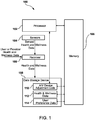
- Figure 1 illustrates an A/V device adjustment system 100 that is used to adjust A/V device settings based on health and wellness data for a corresponding user.
- the AN device adjustment system 100 is a server that remotely adjusts user preferences for various AN devices.
- the A/V device adjustment system 100 is illustrated herein as server, but can be implemented in a variety of devices and configurations.
- the A/V device being operated by the user may act as the A/V device adjustment system 100.
- a peer-to-peer configuration may be implemented such that one or more of the A/V devices acts as the A/V device adjustment system 100.
- the A/V device adjustment system 100 comprises a processor 102, a memory 106, e.g., random access memory (“RAM”) and/or read only memory (“ROM”), a data storage device 108, and various sensors 104.
- the sensors 104 may sense various health and wellness properties of one or more users that are consuming an A/V device. Examples of the sensors 104 include cameras, biometric sensors, infrared (“IR”) head sensors, smart watches, smart glasses, mobile devices, clothes, bracelets, fitness bands, necklaces, drones, and/or any other sensor that may automatically sense biological properties of the user without any manual input from the user. Examples of the sensed health and wellness properties include pulse rate, blood pressure, temperature, pupil dilation, and sweat. The sensors 104 may then provide the sensed health and wellness data to a receiver 109.
- IR infrared
- additional health and wellness data may also be received independently of that which is sensed from the user.
- a health care provider may provide data from medical records (e.g., annual checkup) to the receiver 109.
- the user may manually input health and wellness data that is observed by the user.
- the sensed, user provided, and/or health care entity provided health and wellness data may then be stored in the data storage device 108 and/or the memory 106.
- the sensors 104 are integrated within the A/V device adjustment system 100. In another aspect, the sensors 104 are not integrated within the A/V device adjustment system 100, but are in operable communication with the AN device adjustment system 100; such operable communication may be direct and/or indirect communication.
- a sensor 104 may send data directly to the A/V device adjustment system 100 (e.g., the sensor 104 is in close proximity to the AN device adjustment system 100), or data may be aggregated via a cloud service from the sensor 104 (e.g., a remote sensor 104) for retrieval by the AN device adjustment system 100.
- a sensor 104 may send the health and wellness data to a receiver 109 of the A/V device adjustment system 100 that may or may not be remotely located from the sensor 104, or the sensor 104 may act as a receiver 109 that is integrated within the AN device adjustment system 100.
- the processor 102 may execute A/V device adjustment code 110 to analyze the health and wellness data 112 aggregated from one or more different sources; as a result of this analysis, the processor 102 may determine an optimal user preference for content consumption. For example, the health and wellness data 112 may indicate that the user has difficulty hearing when the volume is below a particular volume threshold. Further, the health and wellness data 112 may indicate that the user has previously manually adjusted an AN device to a certain volume.
- the processor 102 may then execute the AN device adjustment code 100 to establish or adjust a user preference for volume when consuming media content; that user preference may be based on an average of measurements received from different sources, a weighting performed on different measurements, or a variety of other calculations used to determine an optimal user preference for an A/V device setting to minimize health and wellness adverse effects.
- the resulting user preference data 114 (e.g., volume, brightness, contrast, etc.) may be stored with the AN device adjustment code 100 and the health and wellness data 112 in one or more data storage devices 108 and or memory devices 106.
- the data storage device 108 loads A/V device adjustment code 110 from a computer readable storage device, e.g., a magnetic or optical drive, diskette, or non-volatile memory, DVD, CD-ROM, etc.
- the A/V device adjustment code 110 is then operated by the processor 102 in the memory 106 of the AN device adjustment system 100 to adjust the A/V device settings if the processor 102 determines that a particular A/V device has one or more properties that do not conform with the user preference data 114 that the processor 102 determines to be optimal for a particular user consuming media content.
- the data storage device 108 is the computer readable storage device.
- the A/V device adjustment code 110 is stored in the memory 106 rather than the data storage device 108. As such, the A/V device adjustment code 110 and associated data structures of the present disclosure may be stored on a computer readable storage device.
- the A/V device adjustment system 100 improves the functioning of a computing device by reducing the processing time to provide a customized user experience.
- the A/V device adjustment system 100 automatically senses data that may not feasibly be determined through manual calibration. For example, the process of a user attempting to provide manual subjective inputs to adjust a volume setting of an A/V device is ostensibly more time-consuming than the processor 104 obtaining sensed health and wellness data associated with the user and processing those signals to automatically determine whether or not to perform an A/V device adjustment.
- the AN device adjustment system 100 improves the functioning of a computing device via a user preference data model that is built according to the sensed health and wellness data, health and wellness data received from a healthcare provider system, and/or user inputted data via an input device associated with the A/V device.
- the A/V device adjustment system 100 allows the processor 104 to have increased flexibility to adjust the A/V device via data that the user may be unaware of.
- the components of the A/V device adjustment system 100 are illustrated in Figure 1 as being integrated within one device, the components may alternatively communicate with each other remotely through a network connection.
- the processor 102 may be stored on a remote server that communicates with the sensors 104 stored in a wearable device worn by the user.
- the processor 102 may be built into a sensor 104 itself.
- the processor 102 may be integrated into a sensor 104 of a wearable device (e.g., headset, watch, bracelet, glasses, etc.) or an adjoining apparatus of the wearable device.
- the processor 102 may be integrated into a wearable device, but the sensor 104 may be a distinct device that communicates, indirectly (through the receiver 109) or directly, with the processor 102.
- the sensor 104 may be built into a non-wearable device such as a camera that also has an integrated processor 102 (e.g., to measure pupil dilation and adjust the A/V device settings accordingly).
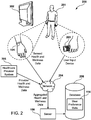
- FIG 2 illustrates an A/V configuration in which the A/V device adjustment system 100 illustrated in Figure 1 aggregates health and wellness data from different sources.
- the A/V device adjustment system 100 is illustrated as a server implementation, but a variety of other types of configurations may be used to implement the A/V device adjustment system 100.
- a first possible source of health and wellness data is determined from one or more sensors 104 worn by a user 201 during the consumption of media content on an A/V device such as, for example, a television 202.
- the consumption of the media content is not limited to viewing on a display screen such as the television 202 as the media consumption may also include listening to an audio experience, playing of a video game, participation in a physical task associated with an A/V device, etc.
- the one or more sensors 104 e.g., heart monitor, blood pressure monitor, scale, movement detector, etc.
- measure various health and wellness data e.g., pulse, heart rate, weight, pupil dilation, sweat, etc.
- the one or more sensors 104 measure certain health and wellness data that may not be convenient or feasible for the user 201 to measure during the consumption of the media content.
- the one or more sensors 104 then send the sensed health and wellness data through a network 204 (e.g., Internet, wireless network, wired network, etc.) to the AN device adjustment system 100.
- a network 204 e.g., Internet, wireless network, wired network, etc.
- a second possible source of health and wellness data may be obtained from a healthcare provider system 205.
- a doctor's office, hospital, and/or insurance provider may have medical records associated with the user 201 that was obtained during doctor visits, annual checkups, etc.
- the healthcare provider system 205 may send such health and wellness data to the A/V device adjustment system 100 so that the AN device adjustment system 100 may use such data in conjunction with the health and wellness data sensed by the one or more sensors 104.
- a third possible source of health and wellness data may be obtained via a user input device 203.
- the user 201 or a person trusted by the user 201, may provide manual inputs to the user input device 203 that indicate a user preference for particular A/V device settings (e.g., a particular setting for volume, brightness, contrast, etc.).
- the user input device 203 may be selected from a variety of devices that control and/or provide input to an A/V device.
- the user input device 203 may be a remote control, a keyboard, a joystick, a pointing device, etc.
- the A/V device adjustment system 100 determines one or more optimal user preferences for the user 201. For example, the AN device adjustment system 100 may determine that the user 201 prefers to listen to content at a particular A/V device volume, but that certain adverse effects result from that preferred volume (e.g., an increase in heart rate detected by the sensors 104) and that the doctor of the user 201 has advised against the user 201 listening to content at that volume. Accordingly, the AN device adjustment system 100 may adjust the volume setting only as much as necessary to conform to the doctor's recommendation.
- the A/V device adjustment system 100 implements one or more rules to adjust a setting of an A/V device.
- the one or more rules dictate the manner in which an A/V device setting is calculated based on different sources of health and wellness data. For example, one set of rules provides that priority is given to one designated source of data, e.g., a doctor over the user 201, in the event of a conflict of data.
- another set of rules may average the different designated sources of a data in the event of a conflict of data (i.e., the setting provided by the doctor of the user 201 is averaged with the preferred setting of the user 201). For instance, an average brightness setting may be calculated based upon the doctor's recommended brightness setting and the preferred brightness setting of the user 201. The implementation of such rules allows the A/V device adjustment system 100 to improve the process of determining an AN device setting for the user 201.
- the A/V device adjustment system 100 uses an artificial intelligence ("AI") computer implemented system to implement the one or more rules. Accordingly, the AI may adjust a setting of an A/V device based upon the aggregated health and wellness data meeting certain predefined criteria in addition to resolving conflicts based on one or more prioritization rules.
- AI artificial intelligence
- the A/V device adjustment system 100 stores the user preference data 114 in a database 206. Accordingly, the database 206 may be searched by the AN device adjustment system 100 or another system to adjust a setting for an AN device.
- the AN device adjustment system 100 may allow the user preference data 114 ( Figure 1 ) to be shared amongst multiple A/V devices via the database 206.
- Figure 3 illustrates a multi-device sharing configuration 300 that allows multiple A/V devices to share the user preference data 114 stored in the database 206 illustrated in Figure 2 .
- the database 206 allows multiple A/V devices used by the user 201 to access the same user preference data 114 that may have been generated during the consumption of content by the user 201 with a different AN device. Rather than having the user 201 subjectively approximate the user preference data 114 in a manner that is inaccurate, the database 206 allows for an automatic update of the user preferences 114 amongst multiple A/V devices used by the user 201.
- the user 201 may typically consume media content on the television 202 (e.g., smart television), a DVD player 301, and a tablet device 302.
- the database 206 stores the user preference data 114 ( Figure 1 ) generated by the A/V device adjustment system 100 during the viewing of media content on the television 202
- the AN devices settings of the television 202 in addition to AN device settings of devices not consumed during the generation of the user preference data 114 may be adjusted based on those user preferences 114.
- the A/V device adjustment system 100 further improves the functionality of a computing device; such sharing of user preferences allows multiple A/V devices to adjust AN device settings without performing the computations for determining the one or more optimal A/V device settings for the user 201.
- the A/V device adjustment system 100 illustrated in Figure 1 uses the processor 102 to execute the A/V device adjustment code 110 so that the processor 102 translates the user preference data 114 into a corresponding user interface for each of the A/V devices 202, 301, and 302 ( Figure 3 ) used by the user 201 to consume media content.
- each of the A/V devices 202, 301, and 302 may have different code, configuration parameters, designated labels, etc. for adjusting the device parameters for each of the corresponding AN devices 202, 301, and 302.
- the processor 102 may translate the user preference data 114 into code, configuration parameters, designated labels, etc. recognizable and executable by each of the AN devices 202, 301, and 302 so that the corresponding device settings may be adjusted on the respective devices.
- FIG 4 illustrates a health and wellness data model 400 that is used by a process 410 to translate the user preference data 114 ( Figure 1 ) into AN device adjustment parameters particular to a given A/V device.
- the health and wellness data model 400 may include health and wellness data that is aggregated from one or more different sources.
- the health and wellness data model 400 may include downloaded health and wellness data 401 from a healthcare provider of the user 201 ( Figure 2 ), sensed health and wellness data 402 that is sensed via one more sensors 104 ( Figure 1 ), and/or inputted health and wellness data 403 via that is inputted via one or more user input devices 203 ( Figure 2 ).
- the process 410 aggregates the health and wellness data from the health and wellness data model 400.
- the process 400 may analyze the aggregated health and wellness data to determine if any of the sources of the data model 400 should receive any of the aggregated health and wellness data for further review.
- the sensed health and wellness data 402 may indicate a physical condition of the user 201 ( Figure 2 ) that was not previously found by the healthcare provider of the user 201. Accordingly, the A/V device adjustment system 100 ( Figure 1 ) may send that particular data to the healthcare provider 201 for review prior to adjusting a setting of the A/V device for the user 201.
- the process 410 translates, with an application, the aggregated health and wellness data into A/V device settings for the applicable A/V device.
- an application may be stored on a server that implements the A/V device adjustment system 100 illustrated in Figures 1-3 .
- the application may access the database 206 to obtain the generated user preference data 114.
- the process 410 sends the A/V device settings to the applicable A/V device.
- the A/V device receives the A/V device settings from the application and adjusts a user profile for the user 201 ( Figure 2 ) based on the AN device settings. If a user profile has not been generated yet for the user 201, the A/V device may generate a user profile at that time.
- the process 410 advances to a decision block 415.
- the process 410 determines if the user 201 manually adjusted the recommended A/V device settings. If the user 201 has not manually changed any of the recommended AN device settings, the process 410 returns to the process block 411 to aggregate any further health and wellness data that is subsequently received from the data model 400.
- the process 410 proceeds to a process block 416 to send updated AN device settings from the AN device to the application. Further, at a process block 417, the process 410 translates, with the application, the updated A/V device settings into health and wellness terminology. The process 410 then returns to the process block 411 to aggregate the updated A/V device settings into the aggregated health and wellness data. The process 410 may also send the updated health and wellness terminology to the healthcare provider of the user 201. In other words, the process 410 provides a feedback loop to adjust the settings of an A/V device based on the monitored health and wellness data of the user 201 in addition to monitoring the response of the user 201 to those recommended A/V device settings.
- the health and wellness data that is provided to the receiver 109 of Figure 1 may be inputted via various GUIs.
- the application discussed with respect to Figure 4 may be accessible via such GUIs.
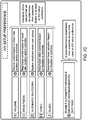
- Figures 5A-5C illustrate examples of GUI displays in which a user may enter health and wellness data to be sent to the receiver 109 of Figure 1 .
- the GUIs may be displayed by the application via a computing device (e.g., desktop computer, laptop, smartphone, tablet device, smartwatch, etc.).
- the user or trusted entity
- the user 201 may export the setup preferences determined from the health and wellness profile to various A/V devices so that all of the A/V devices share the same user profile.
- Figure 5A illustrates a GUI 500 from which different sources (e.g., user, healthcare provider, or wearable device) of health and wellness information may provide one or more inputs via various data fields.
- sources e.g., user, healthcare provider, or wearable device
- one of a variety of source buttons such as a user information source button 501, a healthcare provider source button 502, and a wearable device button 503 may be selected for health and wellness data input.
- selection of the user information source button 501 (as highlighted in Figure 5A ) generates one or more forms with one or more data fields from which the user 201 may enter data.
- Figure 5A illustrates the GUI 500 depicting data fields for a user's personal information such as name, contact information, birthdate, gender, weight, and height.
- Figure 5B illustrates the GUI 500 depicting data fields for a user's general health information such as pre-existing conditions, any current medications, etc.
- Figure 5C illustrates the GUI 500 depicting data fields for user's personal preferences for an AN device configuration.
- the user 201 may select a preference for volume, brightness, picture mode video duration per day, music duration per day, content edits, and parental level.
- the user 201 may specify a rule that the AN device adjustment system 100 uses to prioritize one source of health and wellness data over another.
- the user 201 may specify that the A/V device adjustment system 100 should prioritize the health provider recommendation, the user preference, or an automated conversion (e.g., via use of the AI) to determine optimal health and wellness data based on the aggregated health and wellness data.
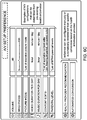
- Figures 6A-6C illustrate the GUI 500 depicting corresponding data fields to that illustrated in Figures 5A-5C when the health care provider has logged into the application to enter health and wellness data for the user 201. Accordingly, Figure 6A illustrates the healthcare provider source button 502 of the GUI 501 being highlighted.
- Figure 6A illustrates the GUI 500 depicting data fields for a health care provider's name, contact information, etc.
- Figure 6B illustrates the GUI 500 depicting data fields for a user's general health information such as pre-existing conditions, any current medications, etc. as determined by the health care provider rather than the user 201.
- Such data may be manually inputted by the health care provider via the application or may be imported by the application from the health care provider's system.
- the health care provider's system may export the data from the application to the health care provider's system so that the health care provider is aware of health and wellness data that was not gathered by the health care provider (e.g., health and wellness data sensed by the sensor 109 or manually inputted by the user 201 during consumption of media content).
- Figure 6C illustrates the GUI 500 depicting data fields for the health care provider's recommended preferences for an A/V device configuration.
- a doctor may select a preference for volume, brightness, picture mode video duration per day, music duration per day, content edits, and parental level for the user 201.
- the health care provider may specify a rule that the A/V device adjustment system 100 uses to prioritize one source of health and wellness data over another.
- the health care provider may specify that the A/V device adjustment system 100 should prioritize the health provider recommendation or an automated conversion (e.g., via use of the Al) to determine optimal health and wellness data based on the aggregated health and wellness data.
- Figures 7A-7C illustrate the GUI 500 depicting corresponding data fields to that illustrated in Figures 5A-5C when the user 201 (or trusted entity), during login to the application, enables a wearable device to influence A/V settings via health information gathered by the wearable device 104 ( Figure 1 ).
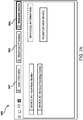
- Figure 7A illustrates the wearable device button 503 of the GUI 501 being highlighted.
- the user 201 may register the wearable device 104 ( Figure 1 ) with the application. Further, the user 201 may configure the application to automatically update health and wellness information directly from the wearable device 104 or manually synchronize the application with the wearable device 104.
- Figure 7A illustrates the GUI 500 depicting the wearable devices 104 that have been registered with the application.
- Figure 7B illustrates the GUI 500 depicting data fields that may be selected by the user 201 (or trusted entity) to track the activity of the user 201.
- the data fields may include calories burned, average heart rate, sleep/rest pattern, current workout, workout history, current location, location history, etc.
- Figure 7C illustrates recommended user preferences determined from the wearable device 104.
- the user 201 (or trusted entity) may configure the volume, brightness, etc. to be automatically controlled based on heart rate, location, and/or activities.
- the processes described herein may be implemented in a specialized, general, multi-purpose, or single purpose processor. Such a processor will execute instructions, either at the assembly, compiled or machine-level, to perform the processes. Those instructions can be written by one of ordinary skill in the art following the description of the figures corresponding to the processes and stored or transmitted on a computer readable medium. The instructions may also be created using source code or any other known computer-aided design tool.
- a computer readable medium may be any medium, e.g., computer readable storage device, capable of carrying those instructions and include a CD-ROM, DVD, magnetic or other optical disc, tape, silicon memory (e.g., removable, non-removable, volatile or non-volatile), packetized or non-packetized data through wireline or wireless transmissions locally or remotely through a network.
- a computer is herein intended to include any device that has a specialized, general, multi-purpose, or single purpose processor as described above.
- a computer may be a desktop computer, laptop, smartphone, tablet device, set top box, etc.
Landscapes
- Engineering & Computer Science (AREA)
- Health & Medical Sciences (AREA)
- General Health & Medical Sciences (AREA)
- Multimedia (AREA)
- Signal Processing (AREA)
- Biomedical Technology (AREA)
- Social Psychology (AREA)
- Databases & Information Systems (AREA)
- Human Computer Interaction (AREA)
- General Engineering & Computer Science (AREA)
- Theoretical Computer Science (AREA)
- Epidemiology (AREA)
- Medical Informatics (AREA)
- Public Health (AREA)
- Primary Health Care (AREA)
- General Business, Economics & Management (AREA)
- Business, Economics & Management (AREA)
- Computer Networks & Wireless Communication (AREA)
- General Physics & Mathematics (AREA)
- Physics & Mathematics (AREA)
- Neurosurgery (AREA)
- Dermatology (AREA)
- Neurology (AREA)
- Medical Treatment And Welfare Office Work (AREA)
- Measuring And Recording Apparatus For Diagnosis (AREA)
Abstract
Description
- This disclosure generally relates to the field of audio/visual ("A/V") devices. More particularly, the disclosure relates to adjustments to A/V device user preferences based on health and wellness data.
- Even though use of an increasing number of technology-based devices (e.g., televisions, smart phones, tablet devices, etc.) has provided numerous benefits, many of these devices also pose certain health concerns to users. For instance, users may suffer from nausea, eyestrain, headaches, motion sickness, etc. when consuming A/V content. Users often do not know the cause of such adverse effects (i.e., A/V content consumption) until after the media content has been consumed; even then, many users typically guess as to the cause of their discomfort. As a result, increased usage of conventional A/V devices may lead to a corresponding increase in adverse health effects.
- In one aspect, a computer program product comprises a non-transitory computer readable storage device having a computer readable program stored thereon. The computer readable program when executed on a computer causes the computer to receive, with a receiver, health and wellness data of a user that is sensed by one or more sensors during consumption by the user of media content. Further, the computer is caused to receive, with the receiver, health and wellness data of the user that is determined by a healthcare provider during an event that is distinct from the consumption of the media content. In addition, the computer is caused to aggregate, with a processor, the health and wellness data of the user that is sensed and the health and wellness data of the user that is determined by the health care provider into an aggregated health and wellness data model.
- The computer is also caused to determine, with the processor, one or more optimal A/V device settings based on the aggregated health and wellness data model. In addition, the computer is caused to send, with the processor, the one or more optimal A/V device settings to an AN device so that the A/V device adjusts one or more A/V device settings based on the one or more optimal AN device settings. In another aspect, a process is provided to perform the functionality of the computer program product.
- In yet another aspect, a computer product comprises a non-transitory computer readable storage device having a computer readable program stored thereon. The computer readable program when executed on a computer causes the computer to receive, at an AN device from a server, one or more optimal AN device settings that are determined by the server based on an aggregated health and wellness data model. The aggregated health and wellness data model includes data that is sensed by one or more sensors during consumption by the user of media content at the A/V device in addition to health and wellness data of the user that is determined by a healthcare provider during an event that is distinct from the consumption of the media content.
- Further, the computer is caused to adjust, at the A/V device, a user profile of the user based on the one or more optimal A/V device settings. In addition, the computer is caused to provide, at the A/V device, additional media content to the user based on the adjusted user profile.
- The above-mentioned features of the present disclosure will become more apparent with reference to the following description taken in conjunction with the accompanying drawings, wherein like reference numerals denote like elements and in which:
-
Figure 1 illustrates an A/V device adjustment system that is used to adjust A/V device settings based on health and wellness data for a corresponding user. -
Figure 2 illustrates an A/V configuration in which the A/V device adjustment system illustrated inFigure 1 aggregates health and wellness data from different sources. -
Figure 3 illustrates a multi-device sharing configuration that allows multiple A/V devices to share the user preferences stored in the database illustrated inFigure 2 . -
Figure 4 illustrates a health and wellness data model that is used by a process to translate the user preference data into A/V device adjustment parameters particular to a given A/V device. -
Figure 5A illustrates a graphical user interface ("GUI") depicting data fields for a user's personal information such as name, contact information, birthdate, gender, weight, and height. -
Figure 5B illustrates the GUI depicting data fields for a user's general health information such as pre-existing conditions, any current medications, etc. -
Figure 5C illustrates the GUI depicting data fields for user's personal preference for an A/V device configuration. -
Figure 6A illustrates the healthcare provider source button of the GUI being highlighted. -
Figure 6B illustrates the GUI depicting data fields for a user's general health information such as pre-existing conditions, any current medications, etc. as determined by the health care provider rather than the user. -
Figure 6C illustrates the GUI depicting data fields for the health care provider's recommended preferences for an A/V device configuration. -
Figure 7A illustrates the wearable device button of the GUI being highlighted. -
Figure 7B illustrates the GUI depicting data fields that may be selected by the user (or trusted entity) to track the activity of the user. -
Figure 7C illustrates recommended user preferences determined from the wearable device. - A configuration for adjusting an AN device based on health and wellness data is provided. The configuration allows for an automatic adjustment of user preferences for the A/V device based on a variety of health and wellness data. As a result, potential adverse health effects are minimized for a user by automatically adjusting the user preferences for an A/V device based on the health and wellness data for that particular user. Further, those customized user preferences may be shared amongst multiple devices so that the user can conveniently access each AN device and consume media content according to the optimal device settings for that user; as a result, adverse health effects are minimized on devices that may not have participated in sensing the adverse health effects.
-
Figure 1 illustrates an A/Vdevice adjustment system 100 that is used to adjust A/V device settings based on health and wellness data for a corresponding user. In one aspect, the ANdevice adjustment system 100 is a server that remotely adjusts user preferences for various AN devices. Accordingly, the A/Vdevice adjustment system 100 is illustrated herein as server, but can be implemented in a variety of devices and configurations. For example, the A/V device being operated by the user may act as the A/Vdevice adjustment system 100. As yet another example, a peer-to-peer configuration may be implemented such that one or more of the A/V devices acts as the A/Vdevice adjustment system 100. - As illustrated, the A/V
device adjustment system 100 comprises aprocessor 102, amemory 106, e.g., random access memory ("RAM") and/or read only memory ("ROM"), adata storage device 108, andvarious sensors 104. Thesensors 104 may sense various health and wellness properties of one or more users that are consuming an A/V device. Examples of thesensors 104 include cameras, biometric sensors, infrared ("IR") head sensors, smart watches, smart glasses, mobile devices, clothes, bracelets, fitness bands, necklaces, drones, and/or any other sensor that may automatically sense biological properties of the user without any manual input from the user. Examples of the sensed health and wellness properties include pulse rate, blood pressure, temperature, pupil dilation, and sweat. Thesensors 104 may then provide the sensed health and wellness data to areceiver 109. - Further, additional health and wellness data may also be received independently of that which is sensed from the user. For example, a health care provider may provide data from medical records (e.g., annual checkup) to the
receiver 109. In addition, the user may manually input health and wellness data that is observed by the user. The sensed, user provided, and/or health care entity provided health and wellness data may then be stored in thedata storage device 108 and/or thememory 106. - In one aspect, the
sensors 104 are integrated within the A/Vdevice adjustment system 100. In another aspect, thesensors 104 are not integrated within the A/Vdevice adjustment system 100, but are in operable communication with the ANdevice adjustment system 100; such operable communication may be direct and/or indirect communication. For example, asensor 104 may send data directly to the A/V device adjustment system 100 (e.g., thesensor 104 is in close proximity to the AN device adjustment system 100), or data may be aggregated via a cloud service from the sensor 104 (e.g., a remote sensor 104) for retrieval by the ANdevice adjustment system 100. For instance, asensor 104 may send the health and wellness data to areceiver 109 of the A/Vdevice adjustment system 100 that may or may not be remotely located from thesensor 104, or thesensor 104 may act as areceiver 109 that is integrated within the ANdevice adjustment system 100. - The
processor 102 may execute A/Vdevice adjustment code 110 to analyze the health andwellness data 112 aggregated from one or more different sources; as a result of this analysis, theprocessor 102 may determine an optimal user preference for content consumption. For example, the health andwellness data 112 may indicate that the user has difficulty hearing when the volume is below a particular volume threshold. Further, the health andwellness data 112 may indicate that the user has previously manually adjusted an AN device to a certain volume. Theprocessor 102 may then execute the ANdevice adjustment code 100 to establish or adjust a user preference for volume when consuming media content; that user preference may be based on an average of measurements received from different sources, a weighting performed on different measurements, or a variety of other calculations used to determine an optimal user preference for an A/V device setting to minimize health and wellness adverse effects. The resulting user preference data 114 (e.g., volume, brightness, contrast, etc.) may be stored with the ANdevice adjustment code 100 and the health andwellness data 112 in one or moredata storage devices 108 and ormemory devices 106. - In one aspect, the
data storage device 108 loads A/Vdevice adjustment code 110 from a computer readable storage device, e.g., a magnetic or optical drive, diskette, or non-volatile memory, DVD, CD-ROM, etc. The A/Vdevice adjustment code 110 is then operated by theprocessor 102 in thememory 106 of the ANdevice adjustment system 100 to adjust the A/V device settings if theprocessor 102 determines that a particular A/V device has one or more properties that do not conform with theuser preference data 114 that theprocessor 102 determines to be optimal for a particular user consuming media content. In another aspect, thedata storage device 108 is the computer readable storage device. In yet another aspect, the A/Vdevice adjustment code 110 is stored in thememory 106 rather than thedata storage device 108. As such, the A/Vdevice adjustment code 110 and associated data structures of the present disclosure may be stored on a computer readable storage device. - The A/V
device adjustment system 100 improves the functioning of a computing device by reducing the processing time to provide a customized user experience. In contrast with a manual calibration of a device that provides a user experience, the A/Vdevice adjustment system 100 automatically senses data that may not feasibly be determined through manual calibration. For example, the process of a user attempting to provide manual subjective inputs to adjust a volume setting of an A/V device is ostensibly more time-consuming than theprocessor 104 obtaining sensed health and wellness data associated with the user and processing those signals to automatically determine whether or not to perform an A/V device adjustment. - Further, the AN
device adjustment system 100 improves the functioning of a computing device via a user preference data model that is built according to the sensed health and wellness data, health and wellness data received from a healthcare provider system, and/or user inputted data via an input device associated with the A/V device. By implementing this particular data model, the A/Vdevice adjustment system 100 allows theprocessor 104 to have increased flexibility to adjust the A/V device via data that the user may be unaware of. - Although the components of the A/V
device adjustment system 100 are illustrated inFigure 1 as being integrated within one device, the components may alternatively communicate with each other remotely through a network connection. For example, theprocessor 102 may be stored on a remote server that communicates with thesensors 104 stored in a wearable device worn by the user. Alternatively, theprocessor 102 may be built into asensor 104 itself. For example, theprocessor 102 may be integrated into asensor 104 of a wearable device (e.g., headset, watch, bracelet, glasses, etc.) or an adjoining apparatus of the wearable device. As yet another example, theprocessor 102 may be integrated into a wearable device, but thesensor 104 may be a distinct device that communicates, indirectly (through the receiver 109) or directly, with theprocessor 102. As another example, thesensor 104 may be built into a non-wearable device such as a camera that also has an integrated processor 102 (e.g., to measure pupil dilation and adjust the A/V device settings accordingly). -
Figure 2 illustrates an A/V configuration in which the A/Vdevice adjustment system 100 illustrated inFigure 1 aggregates health and wellness data from different sources. For illustrative purposes, the A/Vdevice adjustment system 100 is illustrated as a server implementation, but a variety of other types of configurations may be used to implement the A/Vdevice adjustment system 100. - A first possible source of health and wellness data is determined from one or
more sensors 104 worn by auser 201 during the consumption of media content on an A/V device such as, for example, atelevision 202. The consumption of the media content is not limited to viewing on a display screen such as thetelevision 202 as the media consumption may also include listening to an audio experience, playing of a video game, participation in a physical task associated with an A/V device, etc. The one or more sensors 104 (e.g., heart monitor, blood pressure monitor, scale, movement detector, etc.) measure various health and wellness data (e.g., pulse, heart rate, weight, pupil dilation, sweat, etc.) during the media consumption of the content displayed by thetelevision 202 or other A/V device. Accordingly, the one ormore sensors 104 measure certain health and wellness data that may not be convenient or feasible for theuser 201 to measure during the consumption of the media content. The one ormore sensors 104 then send the sensed health and wellness data through a network 204 (e.g., Internet, wireless network, wired network, etc.) to the ANdevice adjustment system 100. - Further, a second possible source of health and wellness data may be obtained from a
healthcare provider system 205. For instance, a doctor's office, hospital, and/or insurance provider may have medical records associated with theuser 201 that was obtained during doctor visits, annual checkups, etc. Thehealthcare provider system 205 may send such health and wellness data to the A/Vdevice adjustment system 100 so that the ANdevice adjustment system 100 may use such data in conjunction with the health and wellness data sensed by the one ormore sensors 104. - In addition, a third possible source of health and wellness data may be obtained via a
user input device 203. Theuser 201, or a person trusted by theuser 201, may provide manual inputs to theuser input device 203 that indicate a user preference for particular A/V device settings (e.g., a particular setting for volume, brightness, contrast, etc.). Theuser input device 203 may be selected from a variety of devices that control and/or provide input to an A/V device. For example, theuser input device 203 may be a remote control, a keyboard, a joystick, a pointing device, etc. - After receiving the health and wellness data from the various sources, the A/V
device adjustment system 100 determines one or more optimal user preferences for theuser 201. For example, the ANdevice adjustment system 100 may determine that theuser 201 prefers to listen to content at a particular A/V device volume, but that certain adverse effects result from that preferred volume (e.g., an increase in heart rate detected by the sensors 104) and that the doctor of theuser 201 has advised against theuser 201 listening to content at that volume. Accordingly, the ANdevice adjustment system 100 may adjust the volume setting only as much as necessary to conform to the doctor's recommendation. - Therefore, in one aspect, the A/V
device adjustment system 100 implements one or more rules to adjust a setting of an A/V device. The one or more rules dictate the manner in which an A/V device setting is calculated based on different sources of health and wellness data. For example, one set of rules provides that priority is given to one designated source of data, e.g., a doctor over theuser 201, in the event of a conflict of data. As another example, another set of rules may average the different designated sources of a data in the event of a conflict of data (i.e., the setting provided by the doctor of theuser 201 is averaged with the preferred setting of the user 201). For instance, an average brightness setting may be calculated based upon the doctor's recommended brightness setting and the preferred brightness setting of theuser 201. The implementation of such rules allows the A/Vdevice adjustment system 100 to improve the process of determining an AN device setting for theuser 201. - In one aspect, the A/V
device adjustment system 100 uses an artificial intelligence ("AI") computer implemented system to implement the one or more rules. Accordingly, the AI may adjust a setting of an A/V device based upon the aggregated health and wellness data meeting certain predefined criteria in addition to resolving conflicts based on one or more prioritization rules. - In another aspect, the A/V
device adjustment system 100 stores theuser preference data 114 in adatabase 206. Accordingly, thedatabase 206 may be searched by the ANdevice adjustment system 100 or another system to adjust a setting for an AN device. - Further, the AN
device adjustment system 100 may allow the user preference data 114 (Figure 1 ) to be shared amongst multiple A/V devices via thedatabase 206.Figure 3 illustrates amulti-device sharing configuration 300 that allows multiple A/V devices to share theuser preference data 114 stored in thedatabase 206 illustrated inFigure 2 . Subsequent to generation of theuser preference data 114 by the A/Vdevice adjustment system 100, thedatabase 206 allows multiple A/V devices used by theuser 201 to access the sameuser preference data 114 that may have been generated during the consumption of content by theuser 201 with a different AN device. Rather than having theuser 201 subjectively approximate theuser preference data 114 in a manner that is inaccurate, thedatabase 206 allows for an automatic update of theuser preferences 114 amongst multiple A/V devices used by theuser 201. - For example, the
user 201 may typically consume media content on the television 202 (e.g., smart television), aDVD player 301, and atablet device 302. After thedatabase 206 stores the user preference data 114 (Figure 1 ) generated by the A/Vdevice adjustment system 100 during the viewing of media content on thetelevision 202, the AN devices settings of thetelevision 202 in addition to AN device settings of devices not consumed during the generation of the user preference data 114 (e.g., theDVD player 301 and the tablet device 302) may be adjusted based on thoseuser preferences 114. - By allowing for remote access to the user preference data 114 (
Figure 1 ) by devices that were not used to consume the media content, the A/Vdevice adjustment system 100 further improves the functionality of a computing device; such sharing of user preferences allows multiple A/V devices to adjust AN device settings without performing the computations for determining the one or more optimal A/V device settings for theuser 201. - Further, in one aspect, the A/V
device adjustment system 100 illustrated inFigure 1 uses theprocessor 102 to execute the A/Vdevice adjustment code 110 so that theprocessor 102 translates theuser preference data 114 into a corresponding user interface for each of the A/V devices Figure 3 ) used by theuser 201 to consume media content. In other words, each of the A/V devices devices processor 102 may translate theuser preference data 114 into code, configuration parameters, designated labels, etc. recognizable and executable by each of theAN devices -
Figure 4 illustrates a health andwellness data model 400 that is used by aprocess 410 to translate the user preference data 114 (Figure 1 ) into AN device adjustment parameters particular to a given A/V device. The health andwellness data model 400 may include health and wellness data that is aggregated from one or more different sources. For example, the health andwellness data model 400 may include downloaded health andwellness data 401 from a healthcare provider of the user 201 (Figure 2 ), sensed health andwellness data 402 that is sensed via one more sensors 104 (Figure 1 ), and/or inputted health andwellness data 403 via that is inputted via one or more user input devices 203 (Figure 2 ). - At a
process block 411, theprocess 410 aggregates the health and wellness data from the health andwellness data model 400. Prior to proceeding through the remainder of theprocess 400 to adjust an A/V device setting, theprocess 400 may analyze the aggregated health and wellness data to determine if any of the sources of thedata model 400 should receive any of the aggregated health and wellness data for further review. For example, the sensed health andwellness data 402 may indicate a physical condition of the user 201 (Figure 2 ) that was not previously found by the healthcare provider of theuser 201. Accordingly, the A/V device adjustment system 100 (Figure 1 ) may send that particular data to thehealthcare provider 201 for review prior to adjusting a setting of the A/V device for theuser 201. - Further, at a
process block 412, theprocess 410 translates, with an application, the aggregated health and wellness data into A/V device settings for the applicable A/V device. For example, an application may be stored on a server that implements the A/Vdevice adjustment system 100 illustrated inFigures 1-3 . The application may access thedatabase 206 to obtain the generateduser preference data 114. In addition, at aprocess block 413, theprocess 410 sends the A/V device settings to the applicable A/V device. - At a
process block 414, the A/V device receives the A/V device settings from the application and adjusts a user profile for the user 201 (Figure 2 ) based on the AN device settings. If a user profile has not been generated yet for theuser 201, the A/V device may generate a user profile at that time. - Further, the
process 410 advances to adecision block 415. At thedecision block 415, theprocess 410 determines if theuser 201 manually adjusted the recommended A/V device settings. If theuser 201 has not manually changed any of the recommended AN device settings, theprocess 410 returns to the process block 411 to aggregate any further health and wellness data that is subsequently received from thedata model 400. - At the
decision block 415, if theuser 201 has manually changed any of the recommended A/V device settings, theprocess 410 proceeds to aprocess block 416 to send updated AN device settings from the AN device to the application. Further, at aprocess block 417, theprocess 410 translates, with the application, the updated A/V device settings into health and wellness terminology. Theprocess 410 then returns to the process block 411 to aggregate the updated A/V device settings into the aggregated health and wellness data. Theprocess 410 may also send the updated health and wellness terminology to the healthcare provider of theuser 201. In other words, theprocess 410 provides a feedback loop to adjust the settings of an A/V device based on the monitored health and wellness data of theuser 201 in addition to monitoring the response of theuser 201 to those recommended A/V device settings. - The health and wellness data that is provided to the
receiver 109 ofFigure 1 may be inputted via various GUIs. For example, the application discussed with respect toFigure 4 may be accessible via such GUIs.Figures 5A-5C illustrate examples of GUI displays in which a user may enter health and wellness data to be sent to thereceiver 109 ofFigure 1 . The GUIs may be displayed by the application via a computing device (e.g., desktop computer, laptop, smartphone, tablet device, smartwatch, etc.). Once logged into the application, the user (or trusted entity) can enter personal information, general health information, and personal preferences. Theuser 201 may export the setup preferences determined from the health and wellness profile to various A/V devices so that all of the A/V devices share the same user profile. -
Figure 5A illustrates aGUI 500 from which different sources (e.g., user, healthcare provider, or wearable device) of health and wellness information may provide one or more inputs via various data fields. For instance, one of a variety of source buttons such a userinformation source button 501, a healthcareprovider source button 502, and awearable device button 503 may be selected for health and wellness data input. As an example, selection of the user information source button 501 (as highlighted inFigure 5A ) generates one or more forms with one or more data fields from which theuser 201 may enter data. - In particular,
Figure 5A illustrates theGUI 500 depicting data fields for a user's personal information such as name, contact information, birthdate, gender, weight, and height. Further,Figure 5B illustrates theGUI 500 depicting data fields for a user's general health information such as pre-existing conditions, any current medications, etc. In addition,Figure 5C illustrates theGUI 500 depicting data fields for user's personal preferences for an AN device configuration. For example, theuser 201 may select a preference for volume, brightness, picture mode video duration per day, music duration per day, content edits, and parental level. Further, theuser 201 may specify a rule that the ANdevice adjustment system 100 uses to prioritize one source of health and wellness data over another. For instance, theuser 201 may specify that the A/Vdevice adjustment system 100 should prioritize the health provider recommendation, the user preference, or an automated conversion (e.g., via use of the AI) to determine optimal health and wellness data based on the aggregated health and wellness data. - Further,
Figures 6A-6C illustrate theGUI 500 depicting corresponding data fields to that illustrated inFigures 5A-5C when the health care provider has logged into the application to enter health and wellness data for theuser 201. Accordingly,Figure 6A illustrates the healthcareprovider source button 502 of theGUI 501 being highlighted. - In particular,
Figure 6A illustrates theGUI 500 depicting data fields for a health care provider's name, contact information, etc. Further,Figure 6B illustrates theGUI 500 depicting data fields for a user's general health information such as pre-existing conditions, any current medications, etc. as determined by the health care provider rather than theuser 201. Such data may be manually inputted by the health care provider via the application or may be imported by the application from the health care provider's system. Further, the health care provider's system may export the data from the application to the health care provider's system so that the health care provider is aware of health and wellness data that was not gathered by the health care provider (e.g., health and wellness data sensed by thesensor 109 or manually inputted by theuser 201 during consumption of media content). - In addition,
Figure 6C illustrates theGUI 500 depicting data fields for the health care provider's recommended preferences for an A/V device configuration. For example, a doctor may select a preference for volume, brightness, picture mode video duration per day, music duration per day, content edits, and parental level for theuser 201. Further, the health care provider may specify a rule that the A/Vdevice adjustment system 100 uses to prioritize one source of health and wellness data over another. For instance, the health care provider may specify that the A/Vdevice adjustment system 100 should prioritize the health provider recommendation or an automated conversion (e.g., via use of the Al) to determine optimal health and wellness data based on the aggregated health and wellness data. - In addition,
Figures 7A-7C illustrate theGUI 500 depicting corresponding data fields to that illustrated inFigures 5A-5C when the user 201 (or trusted entity), during login to the application, enables a wearable device to influence A/V settings via health information gathered by the wearable device 104 (Figure 1 ). Accordingly,Figure 7A illustrates thewearable device button 503 of theGUI 501 being highlighted. Theuser 201 may register the wearable device 104 (Figure 1 ) with the application. Further, theuser 201 may configure the application to automatically update health and wellness information directly from thewearable device 104 or manually synchronize the application with thewearable device 104. - In particular,
Figure 7A illustrates theGUI 500 depicting thewearable devices 104 that have been registered with the application. Further,Figure 7B illustrates theGUI 500 depicting data fields that may be selected by the user 201 (or trusted entity) to track the activity of theuser 201. For example, the data fields may include calories burned, average heart rate, sleep/rest pattern, current workout, workout history, current location, location history, etc. In addition,Figure 7C illustrates recommended user preferences determined from thewearable device 104. For example, the user 201 (or trusted entity) may configure the volume, brightness, etc. to be automatically controlled based on heart rate, location, and/or activities. - The processes described herein may be implemented in a specialized, general, multi-purpose, or single purpose processor. Such a processor will execute instructions, either at the assembly, compiled or machine-level, to perform the processes. Those instructions can be written by one of ordinary skill in the art following the description of the figures corresponding to the processes and stored or transmitted on a computer readable medium. The instructions may also be created using source code or any other known computer-aided design tool. A computer readable medium may be any medium, e.g., computer readable storage device, capable of carrying those instructions and include a CD-ROM, DVD, magnetic or other optical disc, tape, silicon memory (e.g., removable, non-removable, volatile or non-volatile), packetized or non-packetized data through wireline or wireless transmissions locally or remotely through a network. A computer is herein intended to include any device that has a specialized, general, multi-purpose, or single purpose processor as described above. For example, a computer may be a desktop computer, laptop, smartphone, tablet device, set top box, etc.
- It is understood that the apparatuses, systems, computer program products, and processes described herein may also be applied in other types of apparatuses, systems, computer program products, and processes. Those skilled in the art will appreciate that the various adaptations and modifications of the aspects of the apparatuses, systems, computer program products, and processes described herein may be configured without departing from the scope and spirit of the present apparatuses, systems, computer program products, and processes. Therefore, it is to be understood that, within the scope of the appended claims, the present apparatuses, systems, computer program products, and processes may be practiced other than as specifically described herein.
Claims (20)
- A computer program product comprising a non-transitory computer readable storage device having a computer readable program stored thereon, wherein the computer readable program when executed on a computer causes the computer to:receive, with a receiver, health and wellness data of a user that is sensed by one or more sensors during consumption by the user of media content;receive, with the receiver, health and wellness data of the user that is determined by a healthcare provider during an event that is distinct from the consumption of the media content;aggregate, with a processor, the health and wellness data of the user that is sensed and the health and wellness data of the user that is determined by the health care provider into an aggregated health and wellness data model;determine, with the processor, one or more optimal audio/visual device settings based on the aggregated health and wellness data model; andsend, with the processor, the one or more optimal audio/visual device settings to an audio/visual device so that the audio/visual device adjusts one or more audio/visual device settings based on the one or more optimal audio/visual device settings.
- The computer program product of claim 1, wherein the audio/visual device is used by the user during the consumption of the media content when the health and wellness data is sensed by the one more sensors.
- The computer program product of claim 1, wherein the computer is further caused to store the one or more optimal audio/visual device settings in a database that is accessible by one or more additional audio/visual devices that were not used by the user during the consumption of the media content when the health and wellness data is sensed by the one more sensors.
- The computer program product of claim 1, wherein the computer is further caused to receive, with the receiver, one or more user inputs via a user input device that indicate health and wellness data of the user during consumption of the media content by the user.
- The computer program product of claim 1, wherein the computer is further caused to aggregate the one or more user inputs into the aggregated health and wellness data model.
- The computer program product of claim 1, wherein the processor determines the one or more optimal audio/visual device settings according to one or more rules if a conflict occurs between data in the aggregated health and wellness data model.
- The computer program product of claim 7, wherein the one or more rules dictate that the health and wellness data provided by the healthcare provider has priority over the health and wellness data of the user that is sensed by the one or more sensors.
- The computer program product of claim 1, wherein the processor further determines the one or more optimal audio/visual device settings by translating the aggregated health and wellness data from health and wellness terminology to audio/visual device settings associated with the audio/visual device.
- The computer program product of claim 1, wherein the computer is further caused to receive, with the receiver, an update to the one or more optimal audio/visual device settings performed via a user input at the audio/visual device.
- The computer program product of claim 9, wherein the computer is further caused to translate the updated one or more optimal audio/visual device settings into updated health and wellness terminology.
- The computer program product of claim 10, wherein the computer is further caused to send the updated health and wellness terminology to a system associated with the healthcare provider.
- A method comprising:receiving, with a receiver, health and wellness data of a user that is sensed by one or more sensors during consumption by the user of media content;receiving, with the receiver, health and wellness data of the user that is determined by a healthcare provider during an event that is distinct from the consumption of the media content;aggregating, with a processor, the health and wellness data of the user that is sensed and the health and wellness data of the user that is determined by the health care provider into an aggregated health and wellness data model;determining, with the processor, one or more optimal audio/visual device settings based on the aggregated health and wellness data model; andsending, with the processor, the one or more optimal audio/visual device settings to an audio/visual device so that the audio/visual device adjusts one or more audio/visual device settings based on the one or more optimal audio/visual device settings.
- A computer program product comprising a non-transitory computer readable storage device having a computer readable program stored thereon, wherein the computer readable program when executed on a computer causes the computer to:receive, at an audio/visual device from a server, one or more optimal audio/visual device settings that are determined by the server based on an aggregated health and wellness data model, the aggregated health and wellness data model comprising data that is sensed by one or more sensors during consumption by the user of media content at the audio/visual device in addition to health and wellness data of the user that is determined by a healthcare provider during an event that is distinct from the consumption of the media content;adjust, at the audio/visual device, a user profile of the user based on the one or more optimal audio/visual device settings; andprovide, at the audio/visual device, additional media content to the user based on the adjusted user profile.
- The computer program product of claim 13, wherein the aggregated health and wellness data model also includes one or more user inputs received via a user input device that indicate health and wellness data of the user during consumption of the media content by the user.
- The computer program product of claim 13, wherein the one or more optimal audio/visual device settings are determined according to one or more rules if a conflict occurs between data in the aggregated health and wellness data model.
- The computer program product of claim 15, wherein the one or more rules dictate that the health and wellness data provided by the healthcare provider has priority over the health and wellness data of the user that is sensed by the one or more sensors.
- The computer program product of claim 13, wherein the one or more optimal audio/visual device settings are further determined through a translation of the aggregated health and wellness data from health and wellness terminology to audio/visual device settings associated with the audio/visual device.
- The computer program product of claim 13, wherein the computer is further caused to receive an update to the one or more optimal audio/visual device settings via a user input at the audio/visual device.
- The computer program product of claim 18, wherein the computer is further caused to send the updated one or more optimal audio/visual device settings to the server so that the server translates the updated one or more optimal audio/visual devices settings into updated health and wellness terminology.
- The computer program product of claim 19, wherein the updated health and wellness terminology is sent to a system associated with the healthcare provider.
Applications Claiming Priority (1)
| Application Number | Priority Date | Filing Date | Title |
|---|---|---|---|
| US15/678,992 US11257573B2 (en) | 2017-08-16 | 2017-08-16 | System for adjusting an audio/visual device based on health and wellness data |
Publications (2)
| Publication Number | Publication Date |
|---|---|
| EP3444704A1 true EP3444704A1 (en) | 2019-02-20 |
| EP3444704B1 EP3444704B1 (en) | 2020-03-18 |
Family
ID=63490149
Family Applications (1)
| Application Number | Title | Priority Date | Filing Date |
|---|---|---|---|
| EP18188023.8A Active EP3444704B1 (en) | 2017-08-16 | 2018-08-08 | System for adjusting an audio/visual device based on health and wellness data |
Country Status (4)
| Country | Link |
|---|---|
| US (1) | US11257573B2 (en) |
| EP (1) | EP3444704B1 (en) |
| KR (1) | KR102087514B1 (en) |
| CN (1) | CN109411072B (en) |
Families Citing this family (3)
| Publication number | Priority date | Publication date | Assignee | Title |
|---|---|---|---|---|
| WO2019099699A1 (en) * | 2017-11-15 | 2019-05-23 | Starkey Laboratories, Inc. | Interactive system for hearing devices |
| CN115341357A (en) * | 2021-05-13 | 2022-11-15 | 青岛胶南海尔洗衣机有限公司 | Control method for laundry treatment apparatus and laundry treatment apparatus |
| US12160634B2 (en) * | 2022-05-31 | 2024-12-03 | Sony Interactive Entertainment LLC | Automated visual trigger profiling and detection |
Citations (4)
| Publication number | Priority date | Publication date | Assignee | Title |
|---|---|---|---|---|
| US20110125777A1 (en) * | 2009-11-25 | 2011-05-26 | At&T Intellectual Property I, L.P. | Sense and Match Advertising Content |
| US20120110602A1 (en) * | 2010-10-29 | 2012-05-03 | Cisco Technology, Inc. | Community Sensor-Coordinating Entity |
| US20140207950A1 (en) * | 2012-07-09 | 2014-07-24 | Parentsware Llc | Schedule and location responsive agreement compliance controlled information throttle |
| EP3001422A1 (en) * | 2014-09-25 | 2016-03-30 | Harman International Industries, Inc. | Media player automated control based on detected physiological parameters of a user |
Family Cites Families (30)
| Publication number | Priority date | Publication date | Assignee | Title |
|---|---|---|---|---|
| US20030126593A1 (en) | 2002-11-04 | 2003-07-03 | Mault James R. | Interactive physiological monitoring system |
| US7354380B2 (en) | 2003-04-23 | 2008-04-08 | Volpe Jr Joseph C | Heart rate monitor for controlling entertainment devices |
| DE102005046168A1 (en) | 2005-09-27 | 2007-04-12 | Siemens Audiologische Technik Gmbh | Method for adjusting a hearing device based on biometric data and corresponding hearing device |
| KR20070041079A (en) | 2005-10-14 | 2007-04-18 | 주식회사 팬택 | Display color change system of mobile terminal and its method |
| JP2008225794A (en) | 2007-03-12 | 2008-09-25 | Fujitsu Ltd | Information display method, information display device, and information display system |
| WO2010020924A1 (en) | 2008-08-20 | 2010-02-25 | Koninklijke Philips Electronics N.V. | Method, portable device and system for providing feedback related to a user's physical state |
| US20110166937A1 (en) | 2010-01-05 | 2011-07-07 | Searete Llc | Media output with micro-impulse radar feedback of physiological response |
| US8905927B2 (en) | 2010-11-30 | 2014-12-09 | Universal Electronics Inc. | System and method for non-intrusive health monitoring in the home |
| US20120253847A1 (en) | 2011-03-31 | 2012-10-04 | General Electric Company | Health information telecommunications system and method |
| US8702238B2 (en) * | 2011-06-23 | 2014-04-22 | Orca Health, Inc. | Interactive medical diagnosing with portable consumer devices |
| US9584573B2 (en) * | 2012-08-29 | 2017-02-28 | Ericsson Ab | Streaming policy management system and method |
| US10009644B2 (en) * | 2012-12-04 | 2018-06-26 | Interaxon Inc | System and method for enhancing content using brain-state data |
| US20160188824A1 (en) | 2013-07-31 | 2016-06-30 | Koninklijke Philips N.V. | Healthcare decision support system for tailoring patient care |
| US20160019360A1 (en) * | 2013-12-04 | 2016-01-21 | Apple Inc. | Wellness aggregator |
| KR20150094172A (en) | 2014-02-10 | 2015-08-19 | 삼성전자주식회사 | display apparatus and controlling method thereof |
| US20150294067A1 (en) | 2014-04-14 | 2015-10-15 | Elwha Llc | Devices, systems, and methods for automated enhanced care rooms |
| US11055980B2 (en) | 2014-04-16 | 2021-07-06 | Murata Vios, Inc. | Patient care and health information management systems and methods |
| US20150363554A1 (en) * | 2014-06-13 | 2015-12-17 | International Business Machines Corporation | Configuring accessibility settings following a medical change |
| WO2016029039A1 (en) * | 2014-08-20 | 2016-02-25 | Puretech Management, Inc. | Systems and techniques for identifying and exploiting relationships between media consumption and health |
| US9511259B2 (en) | 2014-10-30 | 2016-12-06 | Echostar Uk Holdings Limited | Fitness overlay and incorporation for home automation system |
| KR102320895B1 (en) | 2015-04-01 | 2021-11-03 | 엘지전자 주식회사 | Mobile terminal and method for controlling the same |
| US10231673B2 (en) | 2015-07-16 | 2019-03-19 | Samsung Electronics Company, Ltd. | Stress detection based on sympathovagal balance |
| US20170035328A1 (en) | 2015-08-07 | 2017-02-09 | Fitbit, Inc. | User identification via data collected from sensors of a wearable fitness monitor |
| US20170220570A1 (en) * | 2016-01-28 | 2017-08-03 | Echostar Technologies L.L.C. | Adjusting media content based on collected viewer data |
| CN109076196B (en) * | 2016-02-26 | 2020-01-14 | 亚马逊技术有限公司 | Sharing video recordings from audio/video recording and communication devices |
| US9983775B2 (en) * | 2016-03-10 | 2018-05-29 | Vignet Incorporated | Dynamic user interfaces based on multiple data sources |
| US10497191B2 (en) * | 2016-08-10 | 2019-12-03 | Elwha Llc | Systems and methods for individual identification and authorization utilizing conformable electronics |
| US10219037B2 (en) * | 2016-09-02 | 2019-02-26 | DISH Technologies L.L.C. | Video output based on user and location monitoring |
| US10602229B2 (en) * | 2016-12-30 | 2020-03-24 | Arris Enterprises Llc | Method and apparatus for controlling set top box volume based on mobile device events |
| US10205988B1 (en) * | 2017-08-10 | 2019-02-12 | Rovi Guides, Inc. | Systems and methods for automatically resuming appropriate paused content when there are multiple users at a media device |
-
2017
- 2017-08-16 US US15/678,992 patent/US11257573B2/en active Active
-
2018
- 2018-08-06 KR KR1020180091058A patent/KR102087514B1/en active Active
- 2018-08-08 EP EP18188023.8A patent/EP3444704B1/en active Active
- 2018-08-09 CN CN201810903023.1A patent/CN109411072B/en active Active
Patent Citations (4)
| Publication number | Priority date | Publication date | Assignee | Title |
|---|---|---|---|---|
| US20110125777A1 (en) * | 2009-11-25 | 2011-05-26 | At&T Intellectual Property I, L.P. | Sense and Match Advertising Content |
| US20120110602A1 (en) * | 2010-10-29 | 2012-05-03 | Cisco Technology, Inc. | Community Sensor-Coordinating Entity |
| US20140207950A1 (en) * | 2012-07-09 | 2014-07-24 | Parentsware Llc | Schedule and location responsive agreement compliance controlled information throttle |
| EP3001422A1 (en) * | 2014-09-25 | 2016-03-30 | Harman International Industries, Inc. | Media player automated control based on detected physiological parameters of a user |
Also Published As
| Publication number | Publication date |
|---|---|
| KR20190019016A (en) | 2019-02-26 |
| EP3444704B1 (en) | 2020-03-18 |
| US11257573B2 (en) | 2022-02-22 |
| US20190057187A1 (en) | 2019-02-21 |
| CN109411072B (en) | 2022-06-03 |
| KR102087514B1 (en) | 2020-03-11 |
| CN109411072A (en) | 2019-03-01 |
Similar Documents
| Publication | Publication Date | Title |
|---|---|---|
| US12257054B2 (en) | Systems and methods for estimating and predicting emotional states and affects and providing real time feedback | |
| US9269119B2 (en) | Devices and methods for health tracking and providing information for improving health | |
| JP6423802B2 (en) | Information processing system, information processing server, information processing program, and fatigue evaluation method | |
| WO2018171853A1 (en) | A telemedicine system for remote treatment of patients | |
| US11914784B1 (en) | Detecting emotions from micro-expressive free-form movements | |
| US10620593B2 (en) | Electronic device and control method thereof | |
| US11587672B1 (en) | Tiered time-in-range guiding interfaces for diabetes management | |
| US12394509B2 (en) | Artificially intelligent remote physical therapy and assessment of patients | |
| CN105431851B (en) | Healthcare decision support system and method and patient care system | |
| US10572632B2 (en) | Using augmented reality interface and real-time glucose data to control insulin delivery device | |
| EP3444704B1 (en) | System for adjusting an audio/visual device based on health and wellness data | |
| US20250318811A1 (en) | Systems, methods, and computer program products for integrating menstrual cycle data and providing customized feminine wellness information | |
| Feng et al. | Alert-based wearable sensing system for individualized thermal preference prediction | |
| US20240086761A1 (en) | Neuroergonomic api service for software applications | |
| US11843764B2 (en) | Virtual reality headsets and method of managing user experience with virtual reality headsets | |
| US20210327591A1 (en) | System for Efficiently Estimating and Improving Wellbeing | |
| WO2021146527A2 (en) | Systems and methods for adjusting training data based on sensor data | |
| US20250225415A1 (en) | System and method for real-time biodata analysis and personalized response adaptation | |
| JP7529029B2 (en) | Information processing device, control method, and program | |
| CN121335660A (en) | Systems and methods using portable computer devices with eye-tracking capabilities | |
| Kim | Ambient intelligence: Placement of Kinect sensors in the home of older adults with visual disabilities | |
| WO2025248302A1 (en) | Wearable fitness system with capacitive muscle monitoring, ai-driven feedback, and real-time ergonomic guidance | |
| KR20230162630A (en) | Systems and methods for improving thermometer reliability | |
| GB2640505A (en) | Monitoring of light exposure using a mobile device for adjustment of the human circadian clock | |
| JP2024176070A (en) | Information processing device and estimation method |
Legal Events
| Date | Code | Title | Description |
|---|---|---|---|
| PUAI | Public reference made under article 153(3) epc to a published international application that has entered the european phase |
Free format text: ORIGINAL CODE: 0009012 |
|
| STAA | Information on the status of an ep patent application or granted ep patent |
Free format text: STATUS: REQUEST FOR EXAMINATION WAS MADE |
|
| 17P | Request for examination filed |
Effective date: 20180808 |
|
| AK | Designated contracting states |
Kind code of ref document: A1 Designated state(s): AL AT BE BG CH CY CZ DE DK EE ES FI FR GB GR HR HU IE IS IT LI LT LU LV MC MK MT NL NO PL PT RO RS SE SI SK SM TR |
|
| AX | Request for extension of the european patent |
Extension state: BA ME |
|
| RIC1 | Information provided on ipc code assigned before grant |
Ipc: A61B 5/00 20060101ALI20190729BHEP Ipc: H04L 12/28 20060101ALI20190729BHEP Ipc: G16H 40/63 20180101ALI20190729BHEP Ipc: H04N 21/442 20110101ALI20190729BHEP Ipc: G16H 10/60 20180101ALI20190729BHEP Ipc: H04N 21/45 20110101ALI20190729BHEP Ipc: H04N 21/475 20110101ALI20190729BHEP Ipc: H04N 21/41 20110101ALI20190729BHEP Ipc: G16H 40/67 20180101ALI20190729BHEP Ipc: G06F 3/01 20060101AFI20190729BHEP |
|
| GRAP | Despatch of communication of intention to grant a patent |
Free format text: ORIGINAL CODE: EPIDOSNIGR1 |
|
| STAA | Information on the status of an ep patent application or granted ep patent |
Free format text: STATUS: GRANT OF PATENT IS INTENDED |
|
| INTG | Intention to grant announced |
Effective date: 20191009 |
|
| GRAS | Grant fee paid |
Free format text: ORIGINAL CODE: EPIDOSNIGR3 |
|
| GRAA | (expected) grant |
Free format text: ORIGINAL CODE: 0009210 |
|
| STAA | Information on the status of an ep patent application or granted ep patent |
Free format text: STATUS: THE PATENT HAS BEEN GRANTED |
|
| AK | Designated contracting states |
Kind code of ref document: B1 Designated state(s): AL AT BE BG CH CY CZ DE DK EE ES FI FR GB GR HR HU IE IS IT LI LT LU LV MC MK MT NL NO PL PT RO RS SE SI SK SM TR |
|
| REG | Reference to a national code |
Ref country code: GB Ref legal event code: FG4D |
|
| REG | Reference to a national code |
Ref country code: DE Ref legal event code: R096 Ref document number: 602018003111 Country of ref document: DE |
|
| REG | Reference to a national code |
Ref country code: AT Ref legal event code: REF Ref document number: 1246673 Country of ref document: AT Kind code of ref document: T Effective date: 20200415 Ref country code: IE Ref legal event code: FG4D |
|
| PG25 | Lapsed in a contracting state [announced via postgrant information from national office to epo] |
Ref country code: FI Free format text: LAPSE BECAUSE OF FAILURE TO SUBMIT A TRANSLATION OF THE DESCRIPTION OR TO PAY THE FEE WITHIN THE PRESCRIBED TIME-LIMIT Effective date: 20200318 Ref country code: RS Free format text: LAPSE BECAUSE OF FAILURE TO SUBMIT A TRANSLATION OF THE DESCRIPTION OR TO PAY THE FEE WITHIN THE PRESCRIBED TIME-LIMIT Effective date: 20200318 Ref country code: NO Free format text: LAPSE BECAUSE OF FAILURE TO SUBMIT A TRANSLATION OF THE DESCRIPTION OR TO PAY THE FEE WITHIN THE PRESCRIBED TIME-LIMIT Effective date: 20200618 |
|
| REG | Reference to a national code |
Ref country code: NL Ref legal event code: MP Effective date: 20200318 |
|
| PG25 | Lapsed in a contracting state [announced via postgrant information from national office to epo] |
Ref country code: BG Free format text: LAPSE BECAUSE OF FAILURE TO SUBMIT A TRANSLATION OF THE DESCRIPTION OR TO PAY THE FEE WITHIN THE PRESCRIBED TIME-LIMIT Effective date: 20200618 Ref country code: HR Free format text: LAPSE BECAUSE OF FAILURE TO SUBMIT A TRANSLATION OF THE DESCRIPTION OR TO PAY THE FEE WITHIN THE PRESCRIBED TIME-LIMIT Effective date: 20200318 Ref country code: SE Free format text: LAPSE BECAUSE OF FAILURE TO SUBMIT A TRANSLATION OF THE DESCRIPTION OR TO PAY THE FEE WITHIN THE PRESCRIBED TIME-LIMIT Effective date: 20200318 Ref country code: LV Free format text: LAPSE BECAUSE OF FAILURE TO SUBMIT A TRANSLATION OF THE DESCRIPTION OR TO PAY THE FEE WITHIN THE PRESCRIBED TIME-LIMIT Effective date: 20200318 Ref country code: GR Free format text: LAPSE BECAUSE OF FAILURE TO SUBMIT A TRANSLATION OF THE DESCRIPTION OR TO PAY THE FEE WITHIN THE PRESCRIBED TIME-LIMIT Effective date: 20200619 |
|
| REG | Reference to a national code |
Ref country code: LT Ref legal event code: MG4D |
|
| PG25 | Lapsed in a contracting state [announced via postgrant information from national office to epo] |
Ref country code: NL Free format text: LAPSE BECAUSE OF FAILURE TO SUBMIT A TRANSLATION OF THE DESCRIPTION OR TO PAY THE FEE WITHIN THE PRESCRIBED TIME-LIMIT Effective date: 20200318 |
|
| PG25 | Lapsed in a contracting state [announced via postgrant information from national office to epo] |
Ref country code: PT Free format text: LAPSE BECAUSE OF FAILURE TO SUBMIT A TRANSLATION OF THE DESCRIPTION OR TO PAY THE FEE WITHIN THE PRESCRIBED TIME-LIMIT Effective date: 20200812 Ref country code: EE Free format text: LAPSE BECAUSE OF FAILURE TO SUBMIT A TRANSLATION OF THE DESCRIPTION OR TO PAY THE FEE WITHIN THE PRESCRIBED TIME-LIMIT Effective date: 20200318 Ref country code: LT Free format text: LAPSE BECAUSE OF FAILURE TO SUBMIT A TRANSLATION OF THE DESCRIPTION OR TO PAY THE FEE WITHIN THE PRESCRIBED TIME-LIMIT Effective date: 20200318 Ref country code: SK Free format text: LAPSE BECAUSE OF FAILURE TO SUBMIT A TRANSLATION OF THE DESCRIPTION OR TO PAY THE FEE WITHIN THE PRESCRIBED TIME-LIMIT Effective date: 20200318 Ref country code: IS Free format text: LAPSE BECAUSE OF FAILURE TO SUBMIT A TRANSLATION OF THE DESCRIPTION OR TO PAY THE FEE WITHIN THE PRESCRIBED TIME-LIMIT Effective date: 20200718 Ref country code: CZ Free format text: LAPSE BECAUSE OF FAILURE TO SUBMIT A TRANSLATION OF THE DESCRIPTION OR TO PAY THE FEE WITHIN THE PRESCRIBED TIME-LIMIT Effective date: 20200318 Ref country code: SM Free format text: LAPSE BECAUSE OF FAILURE TO SUBMIT A TRANSLATION OF THE DESCRIPTION OR TO PAY THE FEE WITHIN THE PRESCRIBED TIME-LIMIT Effective date: 20200318 Ref country code: RO Free format text: LAPSE BECAUSE OF FAILURE TO SUBMIT A TRANSLATION OF THE DESCRIPTION OR TO PAY THE FEE WITHIN THE PRESCRIBED TIME-LIMIT Effective date: 20200318 |
|
| REG | Reference to a national code |
Ref country code: AT Ref legal event code: MK05 Ref document number: 1246673 Country of ref document: AT Kind code of ref document: T Effective date: 20200318 |
|
| REG | Reference to a national code |
Ref country code: DE Ref legal event code: R097 Ref document number: 602018003111 Country of ref document: DE |
|
| PLBE | No opposition filed within time limit |
Free format text: ORIGINAL CODE: 0009261 |
|
| STAA | Information on the status of an ep patent application or granted ep patent |
Free format text: STATUS: NO OPPOSITION FILED WITHIN TIME LIMIT |
|
| PG25 | Lapsed in a contracting state [announced via postgrant information from national office to epo] |
Ref country code: IT Free format text: LAPSE BECAUSE OF FAILURE TO SUBMIT A TRANSLATION OF THE DESCRIPTION OR TO PAY THE FEE WITHIN THE PRESCRIBED TIME-LIMIT Effective date: 20200318 Ref country code: DK Free format text: LAPSE BECAUSE OF FAILURE TO SUBMIT A TRANSLATION OF THE DESCRIPTION OR TO PAY THE FEE WITHIN THE PRESCRIBED TIME-LIMIT Effective date: 20200318 Ref country code: AT Free format text: LAPSE BECAUSE OF FAILURE TO SUBMIT A TRANSLATION OF THE DESCRIPTION OR TO PAY THE FEE WITHIN THE PRESCRIBED TIME-LIMIT Effective date: 20200318 Ref country code: ES Free format text: LAPSE BECAUSE OF FAILURE TO SUBMIT A TRANSLATION OF THE DESCRIPTION OR TO PAY THE FEE WITHIN THE PRESCRIBED TIME-LIMIT Effective date: 20200318 |
|
| 26N | No opposition filed |
Effective date: 20201221 |
|
| PG25 | Lapsed in a contracting state [announced via postgrant information from national office to epo] |
Ref country code: PL Free format text: LAPSE BECAUSE OF FAILURE TO SUBMIT A TRANSLATION OF THE DESCRIPTION OR TO PAY THE FEE WITHIN THE PRESCRIBED TIME-LIMIT Effective date: 20200318 |
|
| PG25 | Lapsed in a contracting state [announced via postgrant information from national office to epo] |
Ref country code: MC Free format text: LAPSE BECAUSE OF FAILURE TO SUBMIT A TRANSLATION OF THE DESCRIPTION OR TO PAY THE FEE WITHIN THE PRESCRIBED TIME-LIMIT Effective date: 20200318 |
|
| PG25 | Lapsed in a contracting state [announced via postgrant information from national office to epo] |
Ref country code: LU Free format text: LAPSE BECAUSE OF NON-PAYMENT OF DUE FEES Effective date: 20200808 |
|
| REG | Reference to a national code |
Ref country code: BE Ref legal event code: MM Effective date: 20200831 |
|
| PG25 | Lapsed in a contracting state [announced via postgrant information from national office to epo] |
Ref country code: SI Free format text: LAPSE BECAUSE OF FAILURE TO SUBMIT A TRANSLATION OF THE DESCRIPTION OR TO PAY THE FEE WITHIN THE PRESCRIBED TIME-LIMIT Effective date: 20200318 |
|
| PG25 | Lapsed in a contracting state [announced via postgrant information from national office to epo] |
Ref country code: FR Free format text: LAPSE BECAUSE OF NON-PAYMENT OF DUE FEES Effective date: 20200831 |
|
| PG25 | Lapsed in a contracting state [announced via postgrant information from national office to epo] |
Ref country code: BE Free format text: LAPSE BECAUSE OF NON-PAYMENT OF DUE FEES Effective date: 20200831 Ref country code: IE Free format text: LAPSE BECAUSE OF NON-PAYMENT OF DUE FEES Effective date: 20200808 |
|
| REG | Reference to a national code |
Ref country code: CH Ref legal event code: PL |
|
| PG25 | Lapsed in a contracting state [announced via postgrant information from national office to epo] |
Ref country code: LI Free format text: LAPSE BECAUSE OF NON-PAYMENT OF DUE FEES Effective date: 20210831 Ref country code: CH Free format text: LAPSE BECAUSE OF NON-PAYMENT OF DUE FEES Effective date: 20210831 |
|
| PG25 | Lapsed in a contracting state [announced via postgrant information from national office to epo] |
Ref country code: TR Free format text: LAPSE BECAUSE OF FAILURE TO SUBMIT A TRANSLATION OF THE DESCRIPTION OR TO PAY THE FEE WITHIN THE PRESCRIBED TIME-LIMIT Effective date: 20200318 Ref country code: MT Free format text: LAPSE BECAUSE OF FAILURE TO SUBMIT A TRANSLATION OF THE DESCRIPTION OR TO PAY THE FEE WITHIN THE PRESCRIBED TIME-LIMIT Effective date: 20200318 Ref country code: CY Free format text: LAPSE BECAUSE OF FAILURE TO SUBMIT A TRANSLATION OF THE DESCRIPTION OR TO PAY THE FEE WITHIN THE PRESCRIBED TIME-LIMIT Effective date: 20200318 |
|
| PG25 | Lapsed in a contracting state [announced via postgrant information from national office to epo] |
Ref country code: MK Free format text: LAPSE BECAUSE OF FAILURE TO SUBMIT A TRANSLATION OF THE DESCRIPTION OR TO PAY THE FEE WITHIN THE PRESCRIBED TIME-LIMIT Effective date: 20200318 Ref country code: AL Free format text: LAPSE BECAUSE OF FAILURE TO SUBMIT A TRANSLATION OF THE DESCRIPTION OR TO PAY THE FEE WITHIN THE PRESCRIBED TIME-LIMIT Effective date: 20200318 |
|
| P01 | Opt-out of the competence of the unified patent court (upc) registered |
Effective date: 20230528 |
|
| PGFP | Annual fee paid to national office [announced via postgrant information from national office to epo] |
Ref country code: DE Payment date: 20250724 Year of fee payment: 8 |
|
| PGFP | Annual fee paid to national office [announced via postgrant information from national office to epo] |
Ref country code: GB Payment date: 20250725 Year of fee payment: 8 |