EP3441377A1 - Method and material for additively manufacturing a ceramic containing article - Google Patents
Method and material for additively manufacturing a ceramic containing article Download PDFInfo
- Publication number
- EP3441377A1 EP3441377A1 EP18187076.7A EP18187076A EP3441377A1 EP 3441377 A1 EP3441377 A1 EP 3441377A1 EP 18187076 A EP18187076 A EP 18187076A EP 3441377 A1 EP3441377 A1 EP 3441377A1
- Authority
- EP
- European Patent Office
- Prior art keywords
- ceramic
- ceramic precursor
- curable resin
- article
- radiation
- Prior art date
- Legal status (The legal status is an assumption and is not a legal conclusion. Google has not performed a legal analysis and makes no representation as to the accuracy of the status listed.)
- Withdrawn
Links
Images
Classifications
-
- B—PERFORMING OPERATIONS; TRANSPORTING
- B28—WORKING CEMENT, CLAY, OR STONE
- B28B—SHAPING CLAY OR OTHER CERAMIC COMPOSITIONS; SHAPING SLAG; SHAPING MIXTURES CONTAINING CEMENTITIOUS MATERIAL, e.g. PLASTER
- B28B1/00—Producing shaped prefabricated articles from the material
- B28B1/001—Rapid manufacturing of 3D objects by additive depositing, agglomerating or laminating of material
-
- C—CHEMISTRY; METALLURGY
- C04—CEMENTS; CONCRETE; ARTIFICIAL STONE; CERAMICS; REFRACTORIES
- C04B—LIME, MAGNESIA; SLAG; CEMENTS; COMPOSITIONS THEREOF, e.g. MORTARS, CONCRETE OR LIKE BUILDING MATERIALS; ARTIFICIAL STONE; CERAMICS; REFRACTORIES; TREATMENT OF NATURAL STONE
- C04B35/00—Shaped ceramic products characterised by their composition; Ceramics compositions; Processing powders of inorganic compounds preparatory to the manufacturing of ceramic products
- C04B35/01—Shaped ceramic products characterised by their composition; Ceramics compositions; Processing powders of inorganic compounds preparatory to the manufacturing of ceramic products based on oxide ceramics
-
- B—PERFORMING OPERATIONS; TRANSPORTING
- B29—WORKING OF PLASTICS; WORKING OF SUBSTANCES IN A PLASTIC STATE IN GENERAL
- B29C—SHAPING OR JOINING OF PLASTICS; SHAPING OF MATERIAL IN A PLASTIC STATE, NOT OTHERWISE PROVIDED FOR; AFTER-TREATMENT OF THE SHAPED PRODUCTS, e.g. REPAIRING
- B29C64/00—Additive manufacturing, i.e. manufacturing of three-dimensional [3D] objects by additive deposition, additive agglomeration or additive layering, e.g. by 3D printing, stereolithography or selective laser sintering
- B29C64/10—Processes of additive manufacturing
- B29C64/106—Processes of additive manufacturing using only liquids or viscous materials, e.g. depositing a continuous bead of viscous material
-
- B—PERFORMING OPERATIONS; TRANSPORTING
- B29—WORKING OF PLASTICS; WORKING OF SUBSTANCES IN A PLASTIC STATE IN GENERAL
- B29C—SHAPING OR JOINING OF PLASTICS; SHAPING OF MATERIAL IN A PLASTIC STATE, NOT OTHERWISE PROVIDED FOR; AFTER-TREATMENT OF THE SHAPED PRODUCTS, e.g. REPAIRING
- B29C64/00—Additive manufacturing, i.e. manufacturing of three-dimensional [3D] objects by additive deposition, additive agglomeration or additive layering, e.g. by 3D printing, stereolithography or selective laser sintering
- B29C64/10—Processes of additive manufacturing
- B29C64/165—Processes of additive manufacturing using a combination of solid and fluid materials, e.g. a powder selectively bound by a liquid binder, catalyst, inhibitor or energy absorber
-
- B—PERFORMING OPERATIONS; TRANSPORTING
- B33—ADDITIVE MANUFACTURING TECHNOLOGY
- B33Y—ADDITIVE MANUFACTURING, i.e. MANUFACTURING OF THREE-DIMENSIONAL [3D] OBJECTS BY ADDITIVE DEPOSITION, ADDITIVE AGGLOMERATION OR ADDITIVE LAYERING, e.g. BY 3D PRINTING, STEREOLITHOGRAPHY OR SELECTIVE LASER SINTERING
- B33Y10/00—Processes of additive manufacturing
-
- B—PERFORMING OPERATIONS; TRANSPORTING
- B33—ADDITIVE MANUFACTURING TECHNOLOGY
- B33Y—ADDITIVE MANUFACTURING, i.e. MANUFACTURING OF THREE-DIMENSIONAL [3D] OBJECTS BY ADDITIVE DEPOSITION, ADDITIVE AGGLOMERATION OR ADDITIVE LAYERING, e.g. BY 3D PRINTING, STEREOLITHOGRAPHY OR SELECTIVE LASER SINTERING
- B33Y80/00—Products made by additive manufacturing
-
- C—CHEMISTRY; METALLURGY
- C04—CEMENTS; CONCRETE; ARTIFICIAL STONE; CERAMICS; REFRACTORIES
- C04B—LIME, MAGNESIA; SLAG; CEMENTS; COMPOSITIONS THEREOF, e.g. MORTARS, CONCRETE OR LIKE BUILDING MATERIALS; ARTIFICIAL STONE; CERAMICS; REFRACTORIES; TREATMENT OF NATURAL STONE
- C04B35/00—Shaped ceramic products characterised by their composition; Ceramics compositions; Processing powders of inorganic compounds preparatory to the manufacturing of ceramic products
- C04B35/01—Shaped ceramic products characterised by their composition; Ceramics compositions; Processing powders of inorganic compounds preparatory to the manufacturing of ceramic products based on oxide ceramics
- C04B35/03—Shaped ceramic products characterised by their composition; Ceramics compositions; Processing powders of inorganic compounds preparatory to the manufacturing of ceramic products based on oxide ceramics based on magnesium oxide, calcium oxide or oxide mixtures derived from dolomite
- C04B35/04—Shaped ceramic products characterised by their composition; Ceramics compositions; Processing powders of inorganic compounds preparatory to the manufacturing of ceramic products based on oxide ceramics based on magnesium oxide, calcium oxide or oxide mixtures derived from dolomite based on magnesium oxide
- C04B35/053—Fine ceramics
-
- C—CHEMISTRY; METALLURGY
- C04—CEMENTS; CONCRETE; ARTIFICIAL STONE; CERAMICS; REFRACTORIES
- C04B—LIME, MAGNESIA; SLAG; CEMENTS; COMPOSITIONS THEREOF, e.g. MORTARS, CONCRETE OR LIKE BUILDING MATERIALS; ARTIFICIAL STONE; CERAMICS; REFRACTORIES; TREATMENT OF NATURAL STONE
- C04B35/00—Shaped ceramic products characterised by their composition; Ceramics compositions; Processing powders of inorganic compounds preparatory to the manufacturing of ceramic products
- C04B35/01—Shaped ceramic products characterised by their composition; Ceramics compositions; Processing powders of inorganic compounds preparatory to the manufacturing of ceramic products based on oxide ceramics
- C04B35/10—Shaped ceramic products characterised by their composition; Ceramics compositions; Processing powders of inorganic compounds preparatory to the manufacturing of ceramic products based on oxide ceramics based on aluminium oxide
- C04B35/111—Fine ceramics
-
- C—CHEMISTRY; METALLURGY
- C04—CEMENTS; CONCRETE; ARTIFICIAL STONE; CERAMICS; REFRACTORIES
- C04B—LIME, MAGNESIA; SLAG; CEMENTS; COMPOSITIONS THEREOF, e.g. MORTARS, CONCRETE OR LIKE BUILDING MATERIALS; ARTIFICIAL STONE; CERAMICS; REFRACTORIES; TREATMENT OF NATURAL STONE
- C04B35/00—Shaped ceramic products characterised by their composition; Ceramics compositions; Processing powders of inorganic compounds preparatory to the manufacturing of ceramic products
- C04B35/01—Shaped ceramic products characterised by their composition; Ceramics compositions; Processing powders of inorganic compounds preparatory to the manufacturing of ceramic products based on oxide ceramics
- C04B35/14—Shaped ceramic products characterised by their composition; Ceramics compositions; Processing powders of inorganic compounds preparatory to the manufacturing of ceramic products based on oxide ceramics based on silica
-
- C—CHEMISTRY; METALLURGY
- C04—CEMENTS; CONCRETE; ARTIFICIAL STONE; CERAMICS; REFRACTORIES
- C04B—LIME, MAGNESIA; SLAG; CEMENTS; COMPOSITIONS THEREOF, e.g. MORTARS, CONCRETE OR LIKE BUILDING MATERIALS; ARTIFICIAL STONE; CERAMICS; REFRACTORIES; TREATMENT OF NATURAL STONE
- C04B35/00—Shaped ceramic products characterised by their composition; Ceramics compositions; Processing powders of inorganic compounds preparatory to the manufacturing of ceramic products
- C04B35/01—Shaped ceramic products characterised by their composition; Ceramics compositions; Processing powders of inorganic compounds preparatory to the manufacturing of ceramic products based on oxide ceramics
- C04B35/46—Shaped ceramic products characterised by their composition; Ceramics compositions; Processing powders of inorganic compounds preparatory to the manufacturing of ceramic products based on oxide ceramics based on titanium oxides or titanates
-
- C—CHEMISTRY; METALLURGY
- C04—CEMENTS; CONCRETE; ARTIFICIAL STONE; CERAMICS; REFRACTORIES
- C04B—LIME, MAGNESIA; SLAG; CEMENTS; COMPOSITIONS THEREOF, e.g. MORTARS, CONCRETE OR LIKE BUILDING MATERIALS; ARTIFICIAL STONE; CERAMICS; REFRACTORIES; TREATMENT OF NATURAL STONE
- C04B35/00—Shaped ceramic products characterised by their composition; Ceramics compositions; Processing powders of inorganic compounds preparatory to the manufacturing of ceramic products
- C04B35/01—Shaped ceramic products characterised by their composition; Ceramics compositions; Processing powders of inorganic compounds preparatory to the manufacturing of ceramic products based on oxide ceramics
- C04B35/48—Shaped ceramic products characterised by their composition; Ceramics compositions; Processing powders of inorganic compounds preparatory to the manufacturing of ceramic products based on oxide ceramics based on zirconium or hafnium oxides, zirconates, zircon or hafnates
- C04B35/486—Fine ceramics
-
- C—CHEMISTRY; METALLURGY
- C04—CEMENTS; CONCRETE; ARTIFICIAL STONE; CERAMICS; REFRACTORIES
- C04B—LIME, MAGNESIA; SLAG; CEMENTS; COMPOSITIONS THEREOF, e.g. MORTARS, CONCRETE OR LIKE BUILDING MATERIALS; ARTIFICIAL STONE; CERAMICS; REFRACTORIES; TREATMENT OF NATURAL STONE
- C04B35/00—Shaped ceramic products characterised by their composition; Ceramics compositions; Processing powders of inorganic compounds preparatory to the manufacturing of ceramic products
- C04B35/50—Shaped ceramic products characterised by their composition; Ceramics compositions; Processing powders of inorganic compounds preparatory to the manufacturing of ceramic products based on rare-earth compounds
-
- C—CHEMISTRY; METALLURGY
- C04—CEMENTS; CONCRETE; ARTIFICIAL STONE; CERAMICS; REFRACTORIES
- C04B—LIME, MAGNESIA; SLAG; CEMENTS; COMPOSITIONS THEREOF, e.g. MORTARS, CONCRETE OR LIKE BUILDING MATERIALS; ARTIFICIAL STONE; CERAMICS; REFRACTORIES; TREATMENT OF NATURAL STONE
- C04B35/00—Shaped ceramic products characterised by their composition; Ceramics compositions; Processing powders of inorganic compounds preparatory to the manufacturing of ceramic products
- C04B35/515—Shaped ceramic products characterised by their composition; Ceramics compositions; Processing powders of inorganic compounds preparatory to the manufacturing of ceramic products based on non-oxide ceramics
- C04B35/5154—Shaped ceramic products characterised by their composition; Ceramics compositions; Processing powders of inorganic compounds preparatory to the manufacturing of ceramic products based on non-oxide ceramics based on phosphides
-
- C—CHEMISTRY; METALLURGY
- C04—CEMENTS; CONCRETE; ARTIFICIAL STONE; CERAMICS; REFRACTORIES
- C04B—LIME, MAGNESIA; SLAG; CEMENTS; COMPOSITIONS THEREOF, e.g. MORTARS, CONCRETE OR LIKE BUILDING MATERIALS; ARTIFICIAL STONE; CERAMICS; REFRACTORIES; TREATMENT OF NATURAL STONE
- C04B35/00—Shaped ceramic products characterised by their composition; Ceramics compositions; Processing powders of inorganic compounds preparatory to the manufacturing of ceramic products
- C04B35/515—Shaped ceramic products characterised by their composition; Ceramics compositions; Processing powders of inorganic compounds preparatory to the manufacturing of ceramic products based on non-oxide ceramics
- C04B35/56—Shaped ceramic products characterised by their composition; Ceramics compositions; Processing powders of inorganic compounds preparatory to the manufacturing of ceramic products based on non-oxide ceramics based on carbides or oxycarbides
-
- C—CHEMISTRY; METALLURGY
- C04—CEMENTS; CONCRETE; ARTIFICIAL STONE; CERAMICS; REFRACTORIES
- C04B—LIME, MAGNESIA; SLAG; CEMENTS; COMPOSITIONS THEREOF, e.g. MORTARS, CONCRETE OR LIKE BUILDING MATERIALS; ARTIFICIAL STONE; CERAMICS; REFRACTORIES; TREATMENT OF NATURAL STONE
- C04B35/00—Shaped ceramic products characterised by their composition; Ceramics compositions; Processing powders of inorganic compounds preparatory to the manufacturing of ceramic products
- C04B35/515—Shaped ceramic products characterised by their composition; Ceramics compositions; Processing powders of inorganic compounds preparatory to the manufacturing of ceramic products based on non-oxide ceramics
- C04B35/58—Shaped ceramic products characterised by their composition; Ceramics compositions; Processing powders of inorganic compounds preparatory to the manufacturing of ceramic products based on non-oxide ceramics based on borides, nitrides, i.e. nitrides, oxynitrides, carbonitrides or oxycarbonitrides or silicides
-
- C—CHEMISTRY; METALLURGY
- C04—CEMENTS; CONCRETE; ARTIFICIAL STONE; CERAMICS; REFRACTORIES
- C04B—LIME, MAGNESIA; SLAG; CEMENTS; COMPOSITIONS THEREOF, e.g. MORTARS, CONCRETE OR LIKE BUILDING MATERIALS; ARTIFICIAL STONE; CERAMICS; REFRACTORIES; TREATMENT OF NATURAL STONE
- C04B35/00—Shaped ceramic products characterised by their composition; Ceramics compositions; Processing powders of inorganic compounds preparatory to the manufacturing of ceramic products
- C04B35/515—Shaped ceramic products characterised by their composition; Ceramics compositions; Processing powders of inorganic compounds preparatory to the manufacturing of ceramic products based on non-oxide ceramics
- C04B35/58—Shaped ceramic products characterised by their composition; Ceramics compositions; Processing powders of inorganic compounds preparatory to the manufacturing of ceramic products based on non-oxide ceramics based on borides, nitrides, i.e. nitrides, oxynitrides, carbonitrides or oxycarbonitrides or silicides
- C04B35/5805—Shaped ceramic products characterised by their composition; Ceramics compositions; Processing powders of inorganic compounds preparatory to the manufacturing of ceramic products based on non-oxide ceramics based on borides, nitrides, i.e. nitrides, oxynitrides, carbonitrides or oxycarbonitrides or silicides based on borides
-
- C—CHEMISTRY; METALLURGY
- C04—CEMENTS; CONCRETE; ARTIFICIAL STONE; CERAMICS; REFRACTORIES
- C04B—LIME, MAGNESIA; SLAG; CEMENTS; COMPOSITIONS THEREOF, e.g. MORTARS, CONCRETE OR LIKE BUILDING MATERIALS; ARTIFICIAL STONE; CERAMICS; REFRACTORIES; TREATMENT OF NATURAL STONE
- C04B35/00—Shaped ceramic products characterised by their composition; Ceramics compositions; Processing powders of inorganic compounds preparatory to the manufacturing of ceramic products
- C04B35/622—Forming processes; Processing powders of inorganic compounds preparatory to the manufacturing of ceramic products
- C04B35/62218—Forming processes; Processing powders of inorganic compounds preparatory to the manufacturing of ceramic products obtaining ceramic films, e.g. by using temporary supports
-
- C—CHEMISTRY; METALLURGY
- C04—CEMENTS; CONCRETE; ARTIFICIAL STONE; CERAMICS; REFRACTORIES
- C04B—LIME, MAGNESIA; SLAG; CEMENTS; COMPOSITIONS THEREOF, e.g. MORTARS, CONCRETE OR LIKE BUILDING MATERIALS; ARTIFICIAL STONE; CERAMICS; REFRACTORIES; TREATMENT OF NATURAL STONE
- C04B35/00—Shaped ceramic products characterised by their composition; Ceramics compositions; Processing powders of inorganic compounds preparatory to the manufacturing of ceramic products
- C04B35/622—Forming processes; Processing powders of inorganic compounds preparatory to the manufacturing of ceramic products
- C04B35/626—Preparing or treating the powders individually or as batches ; preparing or treating macroscopic reinforcing agents for ceramic products, e.g. fibres; mechanical aspects section B
- C04B35/62605—Treating the starting powders individually or as mixtures
- C04B35/6269—Curing of mixtures
-
- C—CHEMISTRY; METALLURGY
- C04—CEMENTS; CONCRETE; ARTIFICIAL STONE; CERAMICS; REFRACTORIES
- C04B—LIME, MAGNESIA; SLAG; CEMENTS; COMPOSITIONS THEREOF, e.g. MORTARS, CONCRETE OR LIKE BUILDING MATERIALS; ARTIFICIAL STONE; CERAMICS; REFRACTORIES; TREATMENT OF NATURAL STONE
- C04B35/00—Shaped ceramic products characterised by their composition; Ceramics compositions; Processing powders of inorganic compounds preparatory to the manufacturing of ceramic products
- C04B35/622—Forming processes; Processing powders of inorganic compounds preparatory to the manufacturing of ceramic products
- C04B35/626—Preparing or treating the powders individually or as batches ; preparing or treating macroscopic reinforcing agents for ceramic products, e.g. fibres; mechanical aspects section B
- C04B35/63—Preparing or treating the powders individually or as batches ; preparing or treating macroscopic reinforcing agents for ceramic products, e.g. fibres; mechanical aspects section B using additives specially adapted for forming the products, e.g.. binder binders
- C04B35/632—Organic additives
-
- C—CHEMISTRY; METALLURGY
- C04—CEMENTS; CONCRETE; ARTIFICIAL STONE; CERAMICS; REFRACTORIES
- C04B—LIME, MAGNESIA; SLAG; CEMENTS; COMPOSITIONS THEREOF, e.g. MORTARS, CONCRETE OR LIKE BUILDING MATERIALS; ARTIFICIAL STONE; CERAMICS; REFRACTORIES; TREATMENT OF NATURAL STONE
- C04B35/00—Shaped ceramic products characterised by their composition; Ceramics compositions; Processing powders of inorganic compounds preparatory to the manufacturing of ceramic products
- C04B35/622—Forming processes; Processing powders of inorganic compounds preparatory to the manufacturing of ceramic products
- C04B35/626—Preparing or treating the powders individually or as batches ; preparing or treating macroscopic reinforcing agents for ceramic products, e.g. fibres; mechanical aspects section B
- C04B35/63—Preparing or treating the powders individually or as batches ; preparing or treating macroscopic reinforcing agents for ceramic products, e.g. fibres; mechanical aspects section B using additives specially adapted for forming the products, e.g.. binder binders
- C04B35/638—Removal thereof
-
- C—CHEMISTRY; METALLURGY
- C04—CEMENTS; CONCRETE; ARTIFICIAL STONE; CERAMICS; REFRACTORIES
- C04B—LIME, MAGNESIA; SLAG; CEMENTS; COMPOSITIONS THEREOF, e.g. MORTARS, CONCRETE OR LIKE BUILDING MATERIALS; ARTIFICIAL STONE; CERAMICS; REFRACTORIES; TREATMENT OF NATURAL STONE
- C04B35/00—Shaped ceramic products characterised by their composition; Ceramics compositions; Processing powders of inorganic compounds preparatory to the manufacturing of ceramic products
- C04B35/622—Forming processes; Processing powders of inorganic compounds preparatory to the manufacturing of ceramic products
- C04B35/64—Burning or sintering processes
-
- B—PERFORMING OPERATIONS; TRANSPORTING
- B29—WORKING OF PLASTICS; WORKING OF SUBSTANCES IN A PLASTIC STATE IN GENERAL
- B29K—INDEXING SCHEME ASSOCIATED WITH SUBCLASSES B29B, B29C OR B29D, RELATING TO MOULDING MATERIALS OR TO MATERIALS FOR MOULDS, REINFORCEMENTS, FILLERS OR PREFORMED PARTS, e.g. INSERTS
- B29K2083/00—Use of polymers having silicon, with or without sulfur, nitrogen, oxygen, or carbon only, in the main chain, as moulding material
-
- B—PERFORMING OPERATIONS; TRANSPORTING
- B29—WORKING OF PLASTICS; WORKING OF SUBSTANCES IN A PLASTIC STATE IN GENERAL
- B29K—INDEXING SCHEME ASSOCIATED WITH SUBCLASSES B29B, B29C OR B29D, RELATING TO MOULDING MATERIALS OR TO MATERIALS FOR MOULDS, REINFORCEMENTS, FILLERS OR PREFORMED PARTS, e.g. INSERTS
- B29K2105/00—Condition, form or state of moulded material or of the material to be shaped
- B29K2105/06—Condition, form or state of moulded material or of the material to be shaped containing reinforcements, fillers or inserts
- B29K2105/16—Fillers
-
- B—PERFORMING OPERATIONS; TRANSPORTING
- B29—WORKING OF PLASTICS; WORKING OF SUBSTANCES IN A PLASTIC STATE IN GENERAL
- B29K—INDEXING SCHEME ASSOCIATED WITH SUBCLASSES B29B, B29C OR B29D, RELATING TO MOULDING MATERIALS OR TO MATERIALS FOR MOULDS, REINFORCEMENTS, FILLERS OR PREFORMED PARTS, e.g. INSERTS
- B29K2509/00—Use of inorganic materials not provided for in groups B29K2503/00 - B29K2507/00, as filler
- B29K2509/02—Ceramics
-
- C—CHEMISTRY; METALLURGY
- C04—CEMENTS; CONCRETE; ARTIFICIAL STONE; CERAMICS; REFRACTORIES
- C04B—LIME, MAGNESIA; SLAG; CEMENTS; COMPOSITIONS THEREOF, e.g. MORTARS, CONCRETE OR LIKE BUILDING MATERIALS; ARTIFICIAL STONE; CERAMICS; REFRACTORIES; TREATMENT OF NATURAL STONE
- C04B2235/00—Aspects relating to ceramic starting mixtures or sintered ceramic products
- C04B2235/02—Composition of constituents of the starting material or of secondary phases of the final product
- C04B2235/30—Constituents and secondary phases not being of a fibrous nature
- C04B2235/32—Metal oxides, mixed metal oxides, or oxide-forming salts thereof, e.g. carbonates, nitrates, (oxy)hydroxides, chlorides
- C04B2235/3205—Alkaline earth oxides or oxide forming salts thereof, e.g. beryllium oxide
- C04B2235/3213—Strontium oxides or oxide-forming salts thereof
-
- C—CHEMISTRY; METALLURGY
- C04—CEMENTS; CONCRETE; ARTIFICIAL STONE; CERAMICS; REFRACTORIES
- C04B—LIME, MAGNESIA; SLAG; CEMENTS; COMPOSITIONS THEREOF, e.g. MORTARS, CONCRETE OR LIKE BUILDING MATERIALS; ARTIFICIAL STONE; CERAMICS; REFRACTORIES; TREATMENT OF NATURAL STONE
- C04B2235/00—Aspects relating to ceramic starting mixtures or sintered ceramic products
- C04B2235/02—Composition of constituents of the starting material or of secondary phases of the final product
- C04B2235/30—Constituents and secondary phases not being of a fibrous nature
- C04B2235/32—Metal oxides, mixed metal oxides, or oxide-forming salts thereof, e.g. carbonates, nitrates, (oxy)hydroxides, chlorides
- C04B2235/3224—Rare earth oxide or oxide forming salts thereof, e.g. scandium oxide
- C04B2235/3229—Cerium oxides or oxide-forming salts thereof
-
- C—CHEMISTRY; METALLURGY
- C04—CEMENTS; CONCRETE; ARTIFICIAL STONE; CERAMICS; REFRACTORIES
- C04B—LIME, MAGNESIA; SLAG; CEMENTS; COMPOSITIONS THEREOF, e.g. MORTARS, CONCRETE OR LIKE BUILDING MATERIALS; ARTIFICIAL STONE; CERAMICS; REFRACTORIES; TREATMENT OF NATURAL STONE
- C04B2235/00—Aspects relating to ceramic starting mixtures or sintered ceramic products
- C04B2235/02—Composition of constituents of the starting material or of secondary phases of the final product
- C04B2235/30—Constituents and secondary phases not being of a fibrous nature
- C04B2235/48—Organic compounds becoming part of a ceramic after heat treatment, e.g. carbonising phenol resins
-
- C—CHEMISTRY; METALLURGY
- C04—CEMENTS; CONCRETE; ARTIFICIAL STONE; CERAMICS; REFRACTORIES
- C04B—LIME, MAGNESIA; SLAG; CEMENTS; COMPOSITIONS THEREOF, e.g. MORTARS, CONCRETE OR LIKE BUILDING MATERIALS; ARTIFICIAL STONE; CERAMICS; REFRACTORIES; TREATMENT OF NATURAL STONE
- C04B2235/00—Aspects relating to ceramic starting mixtures or sintered ceramic products
- C04B2235/02—Composition of constituents of the starting material or of secondary phases of the final product
- C04B2235/30—Constituents and secondary phases not being of a fibrous nature
- C04B2235/48—Organic compounds becoming part of a ceramic after heat treatment, e.g. carbonising phenol resins
- C04B2235/483—Si-containing organic compounds, e.g. silicone resins, (poly)silanes, (poly)siloxanes or (poly)silazanes
-
- C—CHEMISTRY; METALLURGY
- C04—CEMENTS; CONCRETE; ARTIFICIAL STONE; CERAMICS; REFRACTORIES
- C04B—LIME, MAGNESIA; SLAG; CEMENTS; COMPOSITIONS THEREOF, e.g. MORTARS, CONCRETE OR LIKE BUILDING MATERIALS; ARTIFICIAL STONE; CERAMICS; REFRACTORIES; TREATMENT OF NATURAL STONE
- C04B2235/00—Aspects relating to ceramic starting mixtures or sintered ceramic products
- C04B2235/60—Aspects relating to the preparation, properties or mechanical treatment of green bodies or pre-forms
- C04B2235/602—Making the green bodies or pre-forms by moulding
- C04B2235/6026—Computer aided shaping, e.g. rapid prototyping
Definitions
- the present disclosure relates generally to additive manufacturing, and more specifically to a method and material for additively manufacturing a ceramic containing article.
- Additive manufacturing processes are used to create three dimensional articles having unique and complex geometries that are either prohibitively expensive to create, or impossible to create, using alternative manufacturing processes.
- Typical additive manufacturing processes apply thermal energy to a material bed to iteratively create layers of a component out of the base material.
- plastics and metals are frequently utilized in additive manufacturing as the base material.
- the component In some cases, such as for components to be utilized in a gas turbine engine, the component must be suitable for exposure to extreme thermal conditions and extreme thermal cycling. Specific examples of such components include ceramic matrix composites, ceramic vanes, blade outer air seals, and the like.
- One method for creating articles suitable for such applications is the utilization of a ceramic, or a ceramic containing, material.
- An exemplary method for additively manufacturing a ceramic containing article includes selecting a ceramic precursor and a curable resin, determining a ratio of the ceramic precursor to the curable resin required to achieve a desired ceramic microstructure, mixing the ceramic precursor and the curable resin according to the determined ratio, and iteratively building an article by sequentially applying a layer of the mixture and curing the layer using an additive manufacturing machine.
- the ceramic precursor comprises an inorganic polymer.
- the inorganic polymer comprises one of polysilazanes, polycarbosilanes, polysilanes, polysiloxanes, polycarbosiloxanes, polyaluminosilazanes, polyaluminocarbosilanes, and boropolycarbosiloxanes.
- the inorganic polymer is a metal-modified preceramic polymer.
- the inorganic polymer is one of a solid and a liquid.
- the curable resin is an organic resin.
- the organic resin is a radiation cured resin.
- the layer comprises applying at least one of a light, ultra-violet (UV) radiation, infra-red (IR) radiation, thermal radiation, microwave radiation and plasma radiation to a material bed including at least one layer of the mixed ceramic precursor and curable resin.
- UV ultra-violet
- IR infra-red
- Another example of any of the above described exemplary methods for additively manufacturing a ceramic containing article further includes determining a miscibility of the ceramic precursor and curable resin and wherein mixing the ceramic precursor and the curable resin further comprises adding at least one coupling agent in response to the ceramic precursor and the curable resin being at most partially miscible.
- the coupling agent is a surfactant including one of an oligomer, one of a block copolymer modifier and a terpolymer modifier, and a silicon-containing coupling agent which contains two types of reactivity in the same molecule, such as silanes modified with functional groups.
- the surfactant comprises at least one of alkoxy, acetoxy, vinyl, allyl, epoxy, styryl, methacryloxy, acryloxy, amino, imido, ureide, mercapto and isocyanate groups.
- any of the above described exemplary methods for additively manufacturing a ceramic containing article mixing the ceramic precursor and the curable resin according to the determined ratio further comprises adding at least one non-coupling agent additive.
- any of the above described exemplary methods for additively manufacturing a ceramic containing article iteratively building the article by sequentially applying the layer of the mixture and curing the layer using the additive manufacturing machine further comprises altering a phase of the ceramic precursor such that the ceramic precursor is converted into a ceramic.
- Another example of any of the above described exemplary methods for additively manufacturing a ceramic containing article further includes converting the ceramic precursor into a ceramic material by altering the phase(s) of the ceramic precursor using a controlled decomposition process.
- an additively manufactured article includes a three dimensional article including a cured resin (e.g., a cured resin structure) and a ceramic precursor.
- the cured resin and the ceramic precursor are part of a homogenous mixture.
- the homogenous mixture includes at least one additive.
- the ceramic precursor is an inorganic polymer and wherein the curable resin is an organic resin.
- the three dimensional article is configured to form one of an oxide including one of silica, hafnia, zirconia, alumina, ceria, magnesia, strontia, titania and a non-oxides including one of a nitride, a carbide, a boride, a phosphide and a carbonitride.
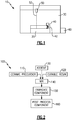
- FIG. 1 schematically illustrates an exemplary additive manufacturing machine 10 adapted to manufacture a ceramic containing article.
- the additive manufacturing machine 10 includes a material bed 20, such as a powder bed, disposed within a chamber 30.
- the material bed 20 can be a liquid resin reservoir such as would be used in a stereolithography additive manufacturing process.
- a material dispenser 40 dispenses a base material 42 into or onto the material bed 20 as needed.
- a radiation source 50 such as a laser, lamp, projector, light emitting diodes, microwave, or the like, is moveably disposed above the material bed 20, and applies precision radiation 52 to the material in the material bed. In one example, the relative distance between the material bed 20 and the radiation source 50 is variable.
- a controller 60 is connected to the chamber 30 and controls the operations of the additive manufacturing machine 10 according to a preprogrammed schedule in order to create a desired part.
- the radiation 52 causes the material in the material bed 20 to harden, increase in viscosity, or solidify, at the point of contact and within an effective volume specific to the interaction between the radiation 52 and the material in the bed 20.
- a complex layer is created.
- additional material 42 is applied to the material bed 20 or provided by the reservoir, and a new layer is created on top of the previous layer.
- the creation of each layer also fuses that layer to any previous layers resulting in a single complex three dimensional component being manufactured.
- an additional support structure is manufactured along with the created component and then removed manually, chemically, thermally or via milling or any other machining process or combinations of processes after the manufacturing process.
- any similar process or structure for additively manufacturing an article from a base material can be utilized to create the ceramic containing article described below.
- existing additive manufacturing processes utilize ceramic particulates dispersed as a slurry in a photoactive resin, or ceramic powder beds bound together by an added organic binder. In both cases, the process utilizes an existing ceramic particulate or powder and does not alter the phase of the ceramic included within the material bed.
- Figure 2 schematically illustrates an example process 100 for creating a ceramic containing article via additive manufacturing.
- Exemplary, but non limiting ceramics of particular interest include oxides such as silica, hafnia, zirconia, alumina, ceria, magnesia, strontia, titania and the like; non-oxides such as nitrides, carbides, borides, phosphides and carbonitrides including silicon nitride, silicon carbide, hafnium carbide, zirconium carbide, aluminum nitride and boron nitride; and oxycarbides or oxynitrides including silicon oxycarbide and silicon oxynitride.
- oxides such as silica, hafnia, zirconia, alumina, ceria, magnesia, strontia, titania and the like
- non-oxides such as nitrides, carbides, borides, phosphides
- a ceramic precursor 110 and a curable resin 120, are selected.
- the ceramic precursor 110 can be any preceramic inorganic polymer designed to produce a desired ceramic phase, or multiple desired ceramic phases, upon conversion to ceramic via a controlled thermal decomposition resulting from an exposure to a form of radiation and/or a controlled atmosphere.
- Exemplary ceramic precursors 110 include polysilazanes, polycarbosilanes, polysilanes, polysiloxanes, polycarbosiloxanes, polyaluminosilazanes, polyaluminocarbosilanes, boropolycarbosiloxanes and the like, including metal-modified preceramic polymers.
- the ceramic precursor 110 in some examples takes the form of a powder precursor. In alternative examples, the ceramic precursor 110 can take the form of a liquid precursor. Blends of ceramic precursors are also contemplated.
- Non-limiting examples of curable resins 120 include photopolymers or light-activated resins whose monomers/oligomers can be photo-initiated via ionic or free radical mechanisms.
- Examples of curable resins 120 include mono-, bi- and multifunctional acrylates and methacrylates, urethane acrylates, epoxies, urethanes and esters and blends thereof.
- Hybrid inorganic/organic curable resins such as UV-curable silicone-based polymers are also contemplated.
- the curable resin 120 is typically an organic resin selected based on the curing process of the additive manufacturing machine to be used, the desired composition and microstructure of the resultant ceramic containing article, and any number of other factors.
- a ceramic precursor 110 as well as a curable organic resin 120, an article can be generated that includes beneficial ceramic char within the microstructure after the curing process of the additive manufacturing method.
- the selected ceramic precursor 110 and the selected curable resin 120 are fully miscible.
- the ceramic precursor 110 and the curable resin 120 can form a homogenous mixture at all concentrations without the addition of any additives.
- no coupling agent or additives are required to fully and homogeneously mix the ceramic precursor 110 and the curable resin 120.
- the ceramic precursor 110 and the curable resin 120 are not fully miscible, and a coupling agent or compatibilizer is introduced as an additive 130.
- An exemplary coupling agent 130 is a surfactant material, such as an oligomer or polymer modifier (including block co- and terpolymers) or a silicon-containing coupling agent which contain two types (organic and inorganic) of reactivity in the same molecule, such as silanes modified with functional groups including, but not limited to alkoxy, acetoxy, vinyl, allyl, epoxy, styryl, methacryloxy, acryloxy, amino, imido, ureide, mercapto or isocyanate groups, with the material of the specific coupling agent 130 depending on miscibility of the ceramic precursor 110 and the curable resin 120, as well as the chemical properties leading to their lack of full miscibility.
- a surfactant material such as an oligomer or polymer modifier (including block co- and terpolymers) or a silicon-containing coupling agent which contain two types (organic and inorganic) of reactivity in the same molecule, such as silanes modified with functional groups including, but
- additional additives such as metals, ceramics, glass and carbon
- additional additives can be included within the mixture to provide additional functionality, as well as additional structural properties in the final ceramic phase of the material.
- the additional additives can be generally amorphous, semicrystalline, turbostratic or crystalline in nature.
- different compositions and microstructures can provide different benefits depending on the specific application of the ceramic containing article.
- one of skill in the art can tailor the specific composition and microstructure to the specific application by adjusting the ratio of ceramic precursor 110 to curable resin 120.
- the specific composition and microstructure achieved for a given ratio, additive(s), and curing method can be determined using experimentation performed by one of skill in the art.
- the materials are mixed in a mixing step 140.
- the resultant mixture includes a homogenous mixture of ceramic precursor 110 and curable resin 120, and can be utilized as the material 42 within the material bed 20 for an additive manufacturing process.
- the mixture is then utilized to fabricate the ceramic containing article according to an additive manufacturing process in a fabricate component step 150.
- the radiation 52 can take the form of light, such as from a laser source, ultra-violet (UV) radiation, infra-red (IR) radiation, thermal, microwave radiation, plasma radiation or any other similar radiation source or combination of sources.
- the radiation 52 is applied as described with regards to Figure 1 , and causes the curable resin 120 portion of the mixture to cure in the three dimensional form of the desired article.
- the post processing procedure 160 converts the ceramic precursor 110 into a ceramic material by altering the phase(s) of the ceramic precursor 110 using a controlled decomposition process selected from one or more of thermal, barometric and atmospheric processes.
- the post processing procedure 160 can apply controlled thermal conversion resulting in a known rate and quantity of mass loss, followed by structural alteration such as a densification or sintering process and one or more crystallization steps, resulting in the creation of the desired ceramic phase, or phases in the desired microstructure, from the ceramic precursor 110 portion of the mixture.
- a beneficial ceramic char can be generated to provide desired compositional or structural modifications during the post processing procedure 160.
Landscapes
- Chemical & Material Sciences (AREA)
- Engineering & Computer Science (AREA)
- Ceramic Engineering (AREA)
- Manufacturing & Machinery (AREA)
- Materials Engineering (AREA)
- Structural Engineering (AREA)
- Organic Chemistry (AREA)
- Inorganic Chemistry (AREA)
- Mechanical Engineering (AREA)
- Physics & Mathematics (AREA)
- Optics & Photonics (AREA)
- Composite Materials (AREA)
- Producing Shaped Articles From Materials (AREA)
- Compositions Of Macromolecular Compounds (AREA)
Abstract
Description
- The present disclosure relates generally to additive manufacturing, and more specifically to a method and material for additively manufacturing a ceramic containing article.
- Additive manufacturing processes are used to create three dimensional articles having unique and complex geometries that are either prohibitively expensive to create, or impossible to create, using alternative manufacturing processes. Typical additive manufacturing processes apply thermal energy to a material bed to iteratively create layers of a component out of the base material. By way of example, plastics and metals are frequently utilized in additive manufacturing as the base material.
- In some cases, such as for components to be utilized in a gas turbine engine, the component must be suitable for exposure to extreme thermal conditions and extreme thermal cycling. Specific examples of such components include ceramic matrix composites, ceramic vanes, blade outer air seals, and the like. One method for creating articles suitable for such applications is the utilization of a ceramic, or a ceramic containing, material.
- Traditional machining methods for manufacturing ceramic containing articles including complex shapes are complex, require extreme temperatures, and utilize multiple iterative processing steps. Further, complex shapes, such as interior geometries, end cuts, and the like are prohibitively expensive and time consuming to create.
- An exemplary method for additively manufacturing a ceramic containing article includes selecting a ceramic precursor and a curable resin, determining a ratio of the ceramic precursor to the curable resin required to achieve a desired ceramic microstructure, mixing the ceramic precursor and the curable resin according to the determined ratio, and iteratively building an article by sequentially applying a layer of the mixture and curing the layer using an additive manufacturing machine.
- In another example of the above described exemplary method for additively manufacturing a ceramic containing article the ceramic precursor comprises an inorganic polymer.
- In another example of any of the above described exemplary methods for additively manufacturing a ceramic containing article the inorganic polymer comprises one of polysilazanes, polycarbosilanes, polysilanes, polysiloxanes, polycarbosiloxanes, polyaluminosilazanes, polyaluminocarbosilanes, and boropolycarbosiloxanes.
- In another example of any of the above described exemplary methods for additively manufacturing a ceramic containing article the inorganic polymer is a metal-modified preceramic polymer.
- In another example of any of the above described exemplary methods for additively manufacturing a ceramic containing article the inorganic polymer is one of a solid and a liquid.
- In another example of any of the above described exemplary methods for additively manufacturing a ceramic containing article the curable resin is an organic resin.
- In another example of any of the above described exemplary methods for additively manufacturing a ceramic containing article the organic resin is a radiation cured resin.
- In another example of any of the above described exemplary methods for additively manufacturing a ceramic containing article curing the layer comprises applying at least one of a light, ultra-violet (UV) radiation, infra-red (IR) radiation, thermal radiation, microwave radiation and plasma radiation to a material bed including at least one layer of the mixed ceramic precursor and curable resin.
- Another example of any of the above described exemplary methods for additively manufacturing a ceramic containing article further includes determining a miscibility of the ceramic precursor and curable resin and wherein mixing the ceramic precursor and the curable resin further comprises adding at least one coupling agent in response to the ceramic precursor and the curable resin being at most partially miscible.
- In another example of any of the above described exemplary methods for additively manufacturing a ceramic containing article the coupling agent is a surfactant including one of an oligomer, one of a block copolymer modifier and a terpolymer modifier, and a silicon-containing coupling agent which contains two types of reactivity in the same molecule, such as silanes modified with functional groups.
- In another example of any of the above described exemplary methods for additively manufacturing a ceramic containing article the surfactant comprises at least one of alkoxy, acetoxy, vinyl, allyl, epoxy, styryl, methacryloxy, acryloxy, amino, imido, ureide, mercapto and isocyanate groups.
- In another example of any of the above described exemplary methods for additively manufacturing a ceramic containing article mixing the ceramic precursor and the curable resin according to the determined ratio further comprises adding at least one non-coupling agent additive.
- In another example of any of the above described exemplary methods for additively manufacturing a ceramic containing article iteratively building the article by sequentially applying the layer of the mixture and curing the layer using the additive manufacturing machine further comprises altering a phase of the ceramic precursor such that the ceramic precursor is converted into a ceramic.
- In another example of any of the above described exemplary methods for additively manufacturing a ceramic containing article altering the phase is achieved via a controlled thermal decomposition.
- Another example of any of the above described exemplary methods for additively manufacturing a ceramic containing article further includes converting the ceramic precursor into a ceramic material by altering the phase(s) of the ceramic precursor using a controlled decomposition process.
- In one exemplary embodiment an additively manufactured article includes a three dimensional article including a cured resin (e.g., a cured resin structure) and a ceramic precursor.
- In another example of the above described additively manufactured article the cured resin and the ceramic precursor are part of a homogenous mixture.
- In another example of any of the above described additively manufactured articles the homogenous mixture includes at least one additive.
- In another example of any of the above described additively manufactured articles the ceramic precursor is an inorganic polymer and wherein the curable resin is an organic resin.
- In another example of any of the above described additively manufactured articles the three dimensional article is configured to form one of an oxide including one of silica, hafnia, zirconia, alumina, ceria, magnesia, strontia, titania and a non-oxides including one of a nitride, a carbide, a boride, a phosphide and a carbonitride.
- These and other features of the present invention can be best understood from the following specification and drawings, the following of which is a brief description.
-
-
Figure 1 schematically illustrates an exemplary additive manufacturing machine for creating a ceramic containing article. -
Figure 2 schematically illustrates a first exemplary process for creating an additive manufacturing material mixture. -
Figure 1 schematically illustrates an exemplaryadditive manufacturing machine 10 adapted to manufacture a ceramic containing article. Theadditive manufacturing machine 10 includes amaterial bed 20, such as a powder bed, disposed within achamber 30. In alternative examples, thematerial bed 20 can be a liquid resin reservoir such as would be used in a stereolithography additive manufacturing process. A material dispenser 40 dispenses abase material 42 into or onto thematerial bed 20 as needed. Aradiation source 50, such as a laser, lamp, projector, light emitting diodes, microwave, or the like, is moveably disposed above thematerial bed 20, and appliesprecision radiation 52 to the material in the material bed. In one example, the relative distance between thematerial bed 20 and theradiation source 50 is variable. Acontroller 60 is connected to thechamber 30 and controls the operations of theadditive manufacturing machine 10 according to a preprogrammed schedule in order to create a desired part. - The
radiation 52 causes the material in thematerial bed 20 to harden, increase in viscosity, or solidify, at the point of contact and within an effective volume specific to the interaction between theradiation 52 and the material in thebed 20. By scanning theradiation 52 along thematerial bed 20 in a pattern controlled by thecontroller 60, a complex layer is created. Once the layer has been created,additional material 42 is applied to thematerial bed 20 or provided by the reservoir, and a new layer is created on top of the previous layer. The creation of each layer also fuses that layer to any previous layers resulting in a single complex three dimensional component being manufactured. In some examples, an additional support structure is manufactured along with the created component and then removed manually, chemically, thermally or via milling or any other machining process or combinations of processes after the manufacturing process. Alternatively, any similar process or structure for additively manufacturing an article from a base material can be utilized to create the ceramic containing article described below. - To create ceramic containing articles, existing additive manufacturing processes utilize ceramic particulates dispersed as a slurry in a photoactive resin, or ceramic powder beds bound together by an added organic binder. In both cases, the process utilizes an existing ceramic particulate or powder and does not alter the phase of the ceramic included within the material bed.
- While illustrated herein as an exemplary additive manufacturing machine, it should be appreciated that the following materials and methods can be utilized in conjunction with any known additive manufacturing process or could be adapted for utilization with any new additive manufacturing processes.
- With continued reference to
Figure 1, Figure 2 schematically illustrates anexample process 100 for creating a ceramic containing article via additive manufacturing. Exemplary, but non limiting ceramics of particular interest include oxides such as silica, hafnia, zirconia, alumina, ceria, magnesia, strontia, titania and the like; non-oxides such as nitrides, carbides, borides, phosphides and carbonitrides including silicon nitride, silicon carbide, hafnium carbide, zirconium carbide, aluminum nitride and boron nitride; and oxycarbides or oxynitrides including silicon oxycarbide and silicon oxynitride. Initially, a ceramic precursor 110, and acurable resin 120, are selected. The ceramic precursor 110 can be any preceramic inorganic polymer designed to produce a desired ceramic phase, or multiple desired ceramic phases, upon conversion to ceramic via a controlled thermal decomposition resulting from an exposure to a form of radiation and/or a controlled atmosphere. Exemplary ceramic precursors 110 include polysilazanes, polycarbosilanes, polysilanes, polysiloxanes, polycarbosiloxanes, polyaluminosilazanes, polyaluminocarbosilanes, boropolycarbosiloxanes and the like, including metal-modified preceramic polymers. The ceramic precursor 110 in some examples takes the form of a powder precursor. In alternative examples, the ceramic precursor 110 can take the form of a liquid precursor. Blends of ceramic precursors are also contemplated. - Non-limiting examples of
curable resins 120 include photopolymers or light-activated resins whose monomers/oligomers can be photo-initiated via ionic or free radical mechanisms. Examples ofcurable resins 120 include mono-, bi- and multifunctional acrylates and methacrylates, urethane acrylates, epoxies, urethanes and esters and blends thereof. Hybrid inorganic/organic curable resins such as UV-curable silicone-based polymers are also contemplated. - The
curable resin 120 is typically an organic resin selected based on the curing process of the additive manufacturing machine to be used, the desired composition and microstructure of the resultant ceramic containing article, and any number of other factors. By utilizing a ceramic precursor 110 as well as a curableorganic resin 120, an article can be generated that includes beneficial ceramic char within the microstructure after the curing process of the additive manufacturing method. - In some examples, the selected ceramic precursor 110 and the selected
curable resin 120 are fully miscible. In other words, the ceramic precursor 110 and thecurable resin 120 can form a homogenous mixture at all concentrations without the addition of any additives. In such an example, no coupling agent or additives are required to fully and homogeneously mix the ceramic precursor 110 and thecurable resin 120. In alternative examples, the ceramic precursor 110 and thecurable resin 120 are not fully miscible, and a coupling agent or compatibilizer is introduced as an additive 130. - An
exemplary coupling agent 130 is a surfactant material, such as an oligomer or polymer modifier (including block co- and terpolymers) or a silicon-containing coupling agent which contain two types (organic and inorganic) of reactivity in the same molecule, such as silanes modified with functional groups including, but not limited to alkoxy, acetoxy, vinyl, allyl, epoxy, styryl, methacryloxy, acryloxy, amino, imido, ureide, mercapto or isocyanate groups, with the material of thespecific coupling agent 130 depending on miscibility of the ceramic precursor 110 and thecurable resin 120, as well as the chemical properties leading to their lack of full miscibility. - In yet further examples, additional additives, such as metals, ceramics, glass and carbon, can be included within the mixture to provide additional functionality, as well as additional structural properties in the final ceramic phase of the material. The additional additives can be generally amorphous, semicrystalline, turbostratic or crystalline in nature.
- A ratio of ceramic precursor 110 to
curable resin 120, as well as the presence of any additives or coupling agents, determines the ceramic composition and microstructure of the resultant ceramic containing article. As is known in the art, different compositions and microstructures can provide different benefits depending on the specific application of the ceramic containing article. As such, one of skill in the art can tailor the specific composition and microstructure to the specific application by adjusting the ratio of ceramic precursor 110 tocurable resin 120. The specific composition and microstructure achieved for a given ratio, additive(s), and curing method can be determined using experimentation performed by one of skill in the art. - Once all of the included materials are selected, as well as their form and ratios, the materials are mixed in a mixing
step 140. The resultant mixture includes a homogenous mixture of ceramic precursor 110 andcurable resin 120, and can be utilized as thematerial 42 within thematerial bed 20 for an additive manufacturing process. The mixture is then utilized to fabricate the ceramic containing article according to an additive manufacturing process in a fabricatecomponent step 150. - During the additive manufacturing process, the
radiation 52 can take the form of light, such as from a laser source, ultra-violet (UV) radiation, infra-red (IR) radiation, thermal, microwave radiation, plasma radiation or any other similar radiation source or combination of sources. Theradiation 52 is applied as described with regards toFigure 1 , and causes thecurable resin 120 portion of the mixture to cure in the three dimensional form of the desired article. - Once the three dimensional form has solidified, the component is removed from the
additive manufacturing machine 10, and apost processing procedure 160 is applied to the component. Thepost processing procedure 160 converts the ceramic precursor 110 into a ceramic material by altering the phase(s) of the ceramic precursor 110 using a controlled decomposition process selected from one or more of thermal, barometric and atmospheric processes. By way of example, thepost processing procedure 160 can apply controlled thermal conversion resulting in a known rate and quantity of mass loss, followed by structural alteration such as a densification or sintering process and one or more crystallization steps, resulting in the creation of the desired ceramic phase, or phases in the desired microstructure, from the ceramic precursor 110 portion of the mixture. By using an organic curable resin, a beneficial ceramic char can be generated to provide desired compositional or structural modifications during thepost processing procedure 160. - It is further understood that any of the above described concepts can be used alone or in combination with any or all of the other above described concepts. Although an embodiment of this invention has been disclosed, a worker of ordinary skill in this art would recognize that certain modifications would come within the scope of this invention. For that reason, the following claims should be studied to determine the true scope and content of this invention.
Claims (15)
- A method for additively manufacturing a ceramic containing article comprising:selecting a ceramic precursor (110) and a curable resin (120);determining a ratio of the ceramic precursor (110) to the curable resin (120) required to achieve a desired ceramic microstructure;mixing the ceramic precursor (110) and the curable resin (120) according to the determined ratio; anditeratively building an article by sequentially applying a layer of the mixture and curing the layer using an additive manufacturing machine (10).
- The method of claim 1, wherein the ceramic precursor (110) comprises an inorganic polymer.
- The method of claim 2, wherein the inorganic polymer comprises one of polysilazanes, polycarbosilanes, polysilanes, polysiloxanes, polycarbosiloxanes, polyaluminosilazanes, polyaluminocarbosilanes, and boropolycarbosiloxanes.
- The method of claim 2, wherein the inorganic polymer is a metal-modified preceramic polymer, and/or is one of a solid and a liquid.
- The method of any preceding claim, wherein the curable resin (120) is an organic resin, and, optionally, the organic resin is a radiation cured resin.
- The method of any preceding claim, wherein curing the layer comprises applying at least one of a light, ultra-violet (UV) radiation, infra-red (IR) radiation, thermal radiation, microwave radiation and plasma radiation to a material bed (20) including at least one layer of the mixed ceramic precursor (110) and curable resin (120).
- The method of any preceding claim, further comprising determining a miscibility of the ceramic precursor (110) and curable resin (120), and wherein mixing the ceramic precursor (110) and the curable resin (120) further comprises adding at least one coupling agent (130) in response to the ceramic precursor (110) and the curable resin (120) being at most partially miscible.
- The method of claim 7, wherein the coupling agent (130) is a surfactant including one of an oligomer, one of a block copolymer modifier and a terpolymer modifier, and a silicon-containing coupling agent (130) which contains two types of reactivity in the same molecule, such as silanes modified with functional groups, and, optionally, the surfactant comprises at least one of alkoxy, acetoxy, vinyl, allyl, epoxy, styryl, methacryloxy, acryloxy, amino, imido, ureide, mercapto and isocyanate groups.
- The method of any preceding claim, wherein mixing the ceramic precursor (110) and the curable resin (120) according to the determined ratio further comprises adding at least one non-coupling agent additive.
- The method of any preceding claim, wherein iteratively building the article by sequentially applying the layer of the mixture and curing the layer using the additive manufacturing machine (10) further comprises altering a phase of the ceramic precursor (110) such that the ceramic precursor (110) is converted into a ceramic, and, optionally, altering the phase is achieved via a controlled thermal decomposition.
- The method of any of claims 1 to 9, further comprising converting the ceramic precursor (110) into a ceramic material by altering phase(s) of the ceramic precursor (110) using a controlled decomposition process.
- An additively manufactured article comprising:
a three dimensional article including a cured resin (120) and a ceramic precursor (110). - The additively manufactured article of claim 12, wherein the cured resin (120) and the ceramic precursor (110) are part of a homogenous mixture, and, optionally, the homogenous mixture includes at least one additive (130).
- The additively manufacture article of claim 12 or 13, wherein the ceramic precursor (110) is an inorganic polymer and the curable resin (120) is an organic resin.
- The additively manufactured article of claim 12, 13 or 14, wherein the three dimensional article is configured to form one of an oxide including one of silica, hafnia, zirconia, alumina, ceria, magnesia, strontia, titania and a non-oxides including one of a nitride, a carbide, a boride, a phosphide and a carbonitride.
Priority Applications (1)
| Application Number | Priority Date | Filing Date | Title |
|---|---|---|---|
| EP26160636.2A EP4725929A2 (en) | 2017-08-08 | 2018-08-02 | Method and material for additively manufacturing a ceramic containing article |
Applications Claiming Priority (1)
| Application Number | Priority Date | Filing Date | Title |
|---|---|---|---|
| US15/671,642 US10647023B2 (en) | 2017-08-08 | 2017-08-08 | Method and material for additively manufacturing a ceramic containing article |
Related Child Applications (1)
| Application Number | Title | Priority Date | Filing Date |
|---|---|---|---|
| EP26160636.2A Division EP4725929A2 (en) | 2017-08-08 | 2018-08-02 | Method and material for additively manufacturing a ceramic containing article |
Publications (1)
| Publication Number | Publication Date |
|---|---|
| EP3441377A1 true EP3441377A1 (en) | 2019-02-13 |
Family
ID=63293927
Family Applications (2)
| Application Number | Title | Priority Date | Filing Date |
|---|---|---|---|
| EP18187076.7A Withdrawn EP3441377A1 (en) | 2017-08-08 | 2018-08-02 | Method and material for additively manufacturing a ceramic containing article |
| EP26160636.2A Pending EP4725929A2 (en) | 2017-08-08 | 2018-08-02 | Method and material for additively manufacturing a ceramic containing article |
Family Applications After (1)
| Application Number | Title | Priority Date | Filing Date |
|---|---|---|---|
| EP26160636.2A Pending EP4725929A2 (en) | 2017-08-08 | 2018-08-02 | Method and material for additively manufacturing a ceramic containing article |
Country Status (2)
| Country | Link |
|---|---|
| US (1) | US10647023B2 (en) |
| EP (2) | EP3441377A1 (en) |
Cited By (1)
| Publication number | Priority date | Publication date | Assignee | Title |
|---|---|---|---|---|
| US20230302724A1 (en) * | 2022-03-23 | 2023-09-28 | The Texas A&M University System | Additive manufacturing apparatus with powder-integrated preceramic mixture and related methods |
Families Citing this family (6)
| Publication number | Priority date | Publication date | Assignee | Title |
|---|---|---|---|---|
| US10759697B1 (en) | 2019-06-11 | 2020-09-01 | MSB Global, Inc. | Curable formulations for structural and non-structural applications |
| CN110451986B (en) * | 2019-09-09 | 2021-12-10 | 中国人民解放军国防科技大学 | Photocuring 3D printing SiCN ceramic precursor material and application thereof |
| US11787117B2 (en) | 2020-04-23 | 2023-10-17 | Rtx Corporation | Fabricating ceramic structures |
| DE102021117691A1 (en) | 2021-07-08 | 2023-01-12 | Nippon Kornmeyer Carbon Group Gmbh | Process for producing molded parts from carbon or graphite using 3D printing |
| DE102023104545A1 (en) * | 2023-02-24 | 2024-08-29 | MTU Aero Engines AG | Method for at least partially producing an oxidation protection layer on a component of a thermal gas turbine |
| CN118420369B (en) * | 2024-04-30 | 2026-04-07 | 西安交通大学 | Photocurable silicon oxynitride ceramic slurry, preparation method and preparation method of complex structure porous ceramics |
Citations (3)
| Publication number | Priority date | Publication date | Assignee | Title |
|---|---|---|---|---|
| US7927538B2 (en) * | 2008-07-30 | 2011-04-19 | Ivoclar Vivadent Ag | Light-curing slips for the stereolithographic preparation of dental ceramics |
| EP3009416A1 (en) * | 2014-10-17 | 2016-04-20 | United Technologies Corporation | Functional inorganics and ceramic additive manufacturing |
| US20170008236A1 (en) * | 2012-03-02 | 2017-01-12 | Dynamic Material Systems, LLC | Additive Manufacturing 3D Printing of Advanced Ceramics |
Family Cites Families (3)
| Publication number | Priority date | Publication date | Assignee | Title |
|---|---|---|---|---|
| US5632925A (en) | 1995-01-10 | 1997-05-27 | Logic Tools L.L.C. | Ceramic or Modified silicone filled molding tools for high temperature processing |
| KR101318841B1 (en) * | 2005-10-17 | 2013-10-17 | 더 유니버시티 오브 아크론 | Hybrid manufacturing platform to produce multifunctional polymeric films |
| US10968527B2 (en) | 2015-11-12 | 2021-04-06 | California Institute Of Technology | Method for embedding inserts, fasteners and features into metal core truss panels |
-
2017
- 2017-08-08 US US15/671,642 patent/US10647023B2/en active Active
-
2018
- 2018-08-02 EP EP18187076.7A patent/EP3441377A1/en not_active Withdrawn
- 2018-08-02 EP EP26160636.2A patent/EP4725929A2/en active Pending
Patent Citations (3)
| Publication number | Priority date | Publication date | Assignee | Title |
|---|---|---|---|---|
| US7927538B2 (en) * | 2008-07-30 | 2011-04-19 | Ivoclar Vivadent Ag | Light-curing slips for the stereolithographic preparation of dental ceramics |
| US20170008236A1 (en) * | 2012-03-02 | 2017-01-12 | Dynamic Material Systems, LLC | Additive Manufacturing 3D Printing of Advanced Ceramics |
| EP3009416A1 (en) * | 2014-10-17 | 2016-04-20 | United Technologies Corporation | Functional inorganics and ceramic additive manufacturing |
Cited By (1)
| Publication number | Priority date | Publication date | Assignee | Title |
|---|---|---|---|---|
| US20230302724A1 (en) * | 2022-03-23 | 2023-09-28 | The Texas A&M University System | Additive manufacturing apparatus with powder-integrated preceramic mixture and related methods |
Also Published As
| Publication number | Publication date |
|---|---|
| US10647023B2 (en) | 2020-05-12 |
| US20190047173A1 (en) | 2019-02-14 |
| EP4725929A2 (en) | 2026-04-15 |
Similar Documents
| Publication | Publication Date | Title |
|---|---|---|
| US10647023B2 (en) | Method and material for additively manufacturing a ceramic containing article | |
| US11141879B2 (en) | Functional inorganics and ceramic additive manufacturing | |
| US10934397B2 (en) | Resin formulations for polymer-derived ceramic materials | |
| Gyak et al. | 3D-printed monolithic SiCN ceramic microreactors from a photocurable preceramic resin for the high temperature ammonia cracking process | |
| Furong et al. | Fused deposition modeling of Si3N4 ceramics: a cost-effective 3D-printing route for dense and high performance non-oxide ceramic materials | |
| US10703025B1 (en) | Methods and formulations for joining preceramic polymers in the fabrication of ceramic assemblies | |
| Lacelle et al. | Additive manufacturing of polymer derived ceramics: Materials, methods, and applications | |
| US11883978B2 (en) | In situ synthesis, densification and shaping of non-oxide ceramics by vacuum additive manufacturing technologies | |
| JP6749763B2 (en) | Porous ceramic materials for investment casting | |
| Homa et al. | A novel additive manufacturing technology for high‐performance ceramics | |
| Gupta et al. | Development of polycarbosilane (PCS) polymer and PCS-Derived SiC fibers and their composites | |
| Song et al. | Binder jetting 3D printing preparation of SiC ceramics with low free silicon content and densification by PIP and LSI process | |
| Montanari | Additive Manufacturing of Silicon Nitride | |
| JPH08151267A (en) | Production of silicon carbide-carbon sintered compact and silicon carbide-silicon composite material | |
| Gupta | Additive Manufacturing of Polymer-Derived Ceramics | |
| JP3207049B2 (en) | Ceramic molding composition | |
| KR102926159B1 (en) | METHOD FOR MANUFACTURING SiC PART USING 3D PRINTING AND SiC PART MANUFACTURED THEREBY | |
| Sarraf et al. | Preceramic Polymers for Additive Manufacturing of Silicate Ceramics | |
| Khuje et al. | Additive manufacturing pathways for polymer-derived ceramics: processing, structure, and function | |
| Han et al. | Additive Manufacturing of Advanced Ceramics Using Preceramic Polymers. Materials 2023, 16, 4636 | |
| JPH0891941A (en) | Optical molding method for ceramic | |
| Sarraf | Fabrication of dense polymer derived mullite ceramics by fused deposition modeling (FDM) method | |
| Lundberg et al. | Silicon Carbo-Nitride Ceramic Matrix Composites by Polymer Pyrolysis | |
| Lu | Fabrication of a silicon carbide fiber-reinforced ceramic composite by the polymer pyrolysis method |
Legal Events
| Date | Code | Title | Description |
|---|---|---|---|
| PUAI | Public reference made under article 153(3) epc to a published international application that has entered the european phase |
Free format text: ORIGINAL CODE: 0009012 |
|
| STAA | Information on the status of an ep patent application or granted ep patent |
Free format text: STATUS: THE APPLICATION HAS BEEN PUBLISHED |
|
| AK | Designated contracting states |
Kind code of ref document: A1 Designated state(s): AL AT BE BG CH CY CZ DE DK EE ES FI FR GB GR HR HU IE IS IT LI LT LU LV MC MK MT NL NO PL PT RO RS SE SI SK SM TR |
|
| AX | Request for extension of the european patent |
Extension state: BA ME |
|
| STAA | Information on the status of an ep patent application or granted ep patent |
Free format text: STATUS: REQUEST FOR EXAMINATION WAS MADE |
|
| 17P | Request for examination filed |
Effective date: 20190813 |
|
| RBV | Designated contracting states (corrected) |
Designated state(s): AL AT BE BG CH CY CZ DE DK EE ES FI FR GB GR HR HU IE IS IT LI LT LU LV MC MK MT NL NO PL PT RO RS SE SI SK SM TR |
|
| STAA | Information on the status of an ep patent application or granted ep patent |
Free format text: STATUS: EXAMINATION IS IN PROGRESS |
|
| 17Q | First examination report despatched |
Effective date: 20200207 |
|
| RAP1 | Party data changed (applicant data changed or rights of an application transferred) |
Owner name: RAYTHEON TECHNOLOGIES CORPORATION |
|
| RAP3 | Party data changed (applicant data changed or rights of an application transferred) |
Owner name: RTX CORPORATION |
|
| STAA | Information on the status of an ep patent application or granted ep patent |
Free format text: STATUS: THE APPLICATION HAS BEEN WITHDRAWN |
|
| 18W | Application withdrawn |
Effective date: 20260227 |