EP3438986A1 - Closed-loop blood glucose control systems and methods - Google Patents
Closed-loop blood glucose control systems and methods Download PDFInfo
- Publication number
- EP3438986A1 EP3438986A1 EP17306035.1A EP17306035A EP3438986A1 EP 3438986 A1 EP3438986 A1 EP 3438986A1 EP 17306035 A EP17306035 A EP 17306035A EP 3438986 A1 EP3438986 A1 EP 3438986A1
- Authority
- EP
- European Patent Office
- Prior art keywords
- insulin
- glucose
- patient
- plasma
- instantaneous
- Prior art date
- Legal status (The legal status is an assumption and is not a legal conclusion. Google has not performed a legal analysis and makes no representation as to the accuracy of the status listed.)
- Granted
Links
Images
Classifications
-
- G—PHYSICS
- G16—INFORMATION AND COMMUNICATION TECHNOLOGY [ICT] SPECIALLY ADAPTED FOR SPECIFIC APPLICATION FIELDS
- G16H—HEALTHCARE INFORMATICS, i.e. INFORMATION AND COMMUNICATION TECHNOLOGY [ICT] SPECIALLY ADAPTED FOR THE HANDLING OR PROCESSING OF MEDICAL OR HEALTHCARE DATA
- G16H20/00—ICT specially adapted for therapies or health-improving plans, e.g. for handling prescriptions, for steering therapy or for monitoring patient compliance
- G16H20/10—ICT specially adapted for therapies or health-improving plans, e.g. for handling prescriptions, for steering therapy or for monitoring patient compliance relating to drugs or medications, e.g. for ensuring correct administration to patients
- G16H20/17—ICT specially adapted for therapies or health-improving plans, e.g. for handling prescriptions, for steering therapy or for monitoring patient compliance relating to drugs or medications, e.g. for ensuring correct administration to patients delivered via infusion or injection
-
- A—HUMAN NECESSITIES
- A61—MEDICAL OR VETERINARY SCIENCE; HYGIENE
- A61B—DIAGNOSIS; SURGERY; IDENTIFICATION
- A61B5/00—Measuring for diagnostic purposes; Identification of persons
- A61B5/145—Measuring characteristics of blood in vivo, e.g. gas concentration or pH-value ; Measuring characteristics of body fluids or tissues, e.g. interstitial fluid or cerebral tissue
- A61B5/14532—Measuring characteristics of blood in vivo, e.g. gas concentration or pH-value ; Measuring characteristics of body fluids or tissues, e.g. interstitial fluid or cerebral tissue for measuring glucose, e.g. by tissue impedance measurement
-
- G—PHYSICS
- G16—INFORMATION AND COMMUNICATION TECHNOLOGY [ICT] SPECIALLY ADAPTED FOR SPECIFIC APPLICATION FIELDS
- G16H—HEALTHCARE INFORMATICS, i.e. INFORMATION AND COMMUNICATION TECHNOLOGY [ICT] SPECIALLY ADAPTED FOR THE HANDLING OR PROCESSING OF MEDICAL OR HEALTHCARE DATA
- G16H40/00—ICT specially adapted for the management or administration of healthcare resources or facilities; ICT specially adapted for the management or operation of medical equipment or devices
- G16H40/40—ICT specially adapted for the management or administration of healthcare resources or facilities; ICT specially adapted for the management or operation of medical equipment or devices for the management of medical equipment or devices, e.g. scheduling maintenance or upgrades
-
- G—PHYSICS
- G16—INFORMATION AND COMMUNICATION TECHNOLOGY [ICT] SPECIALLY ADAPTED FOR SPECIFIC APPLICATION FIELDS
- G16H—HEALTHCARE INFORMATICS, i.e. INFORMATION AND COMMUNICATION TECHNOLOGY [ICT] SPECIALLY ADAPTED FOR THE HANDLING OR PROCESSING OF MEDICAL OR HEALTHCARE DATA
- G16H50/00—ICT specially adapted for medical diagnosis, medical simulation or medical data mining; ICT specially adapted for detecting, monitoring or modelling epidemics or pandemics
- G16H50/50—ICT specially adapted for medical diagnosis, medical simulation or medical data mining; ICT specially adapted for detecting, monitoring or modelling epidemics or pandemics for simulation or modelling of medical disorders
-
- A—HUMAN NECESSITIES
- A61—MEDICAL OR VETERINARY SCIENCE; HYGIENE
- A61M—DEVICES FOR INTRODUCING MEDIA INTO, OR ONTO, THE BODY; DEVICES FOR TRANSDUCING BODY MEDIA OR FOR TAKING MEDIA FROM THE BODY; DEVICES FOR PRODUCING OR ENDING SLEEP OR STUPOR
- A61M5/00—Devices for bringing media into the body in a subcutaneous, intra-vascular or intramuscular way; Accessories therefor, e.g. filling or cleaning devices, arm-rests
- A61M5/14—Infusion devices, e.g. infusing by gravity; Blood infusion; Accessories therefor
- A61M5/142—Pressure infusion, e.g. using pumps
- A61M2005/14208—Pressure infusion, e.g. using pumps with a programmable infusion control system, characterised by the infusion program
-
- A—HUMAN NECESSITIES
- A61—MEDICAL OR VETERINARY SCIENCE; HYGIENE
- A61M—DEVICES FOR INTRODUCING MEDIA INTO, OR ONTO, THE BODY; DEVICES FOR TRANSDUCING BODY MEDIA OR FOR TAKING MEDIA FROM THE BODY; DEVICES FOR PRODUCING OR ENDING SLEEP OR STUPOR
- A61M5/00—Devices for bringing media into the body in a subcutaneous, intra-vascular or intramuscular way; Accessories therefor, e.g. filling or cleaning devices, arm-rests
- A61M5/14—Infusion devices, e.g. infusing by gravity; Blood infusion; Accessories therefor
- A61M5/168—Means for controlling media flow to the body or for metering media to the body, e.g. drip meters, counters ; Monitoring media flow to the body
- A61M5/172—Means for controlling media flow to the body or for metering media to the body, e.g. drip meters, counters ; Monitoring media flow to the body electrical or electronic
- A61M5/1723—Means for controlling media flow to the body or for metering media to the body, e.g. drip meters, counters ; Monitoring media flow to the body electrical or electronic using feedback of body parameters, e.g. blood-sugar, pressure
- A61M2005/1726—Means for controlling media flow to the body or for metering media to the body, e.g. drip meters, counters ; Monitoring media flow to the body electrical or electronic using feedback of body parameters, e.g. blood-sugar, pressure the body parameters being measured at, or proximate to, the infusion site
-
- A—HUMAN NECESSITIES
- A61—MEDICAL OR VETERINARY SCIENCE; HYGIENE
- A61M—DEVICES FOR INTRODUCING MEDIA INTO, OR ONTO, THE BODY; DEVICES FOR TRANSDUCING BODY MEDIA OR FOR TAKING MEDIA FROM THE BODY; DEVICES FOR PRODUCING OR ENDING SLEEP OR STUPOR
- A61M2230/00—Measuring parameters of the user
- A61M2230/20—Blood composition characteristics
- A61M2230/201—Glucose concentration
Definitions
- the controller 105 determines the doses of insulin to be injected to the patient during the next period so that the glucose level of the patient remains within an acceptable range to limit the risk of hyperglycemia or hypoglycemia.
- the glucose measurement values measured by the sensor 101 may for instance be used to perform a self-calibration operation of the physiological model.
- the model is represented on figure 2 as a processing block comprising:
- the physiological model MPC is for example a compartmental model comprising, in addition to the input variables i(t) and cho(t) and the output variable G(t), a plurality of state variables corresponding to the instantaneous values of a plurality of physiological variables of the patient as they evolves over time.
- the temporal evolution of the state variables is governed by a system of differential equations comprising a plurality of parameters represented in figure 2 by a vector [PARAM] applied to an input p1 of the MPC block.
- the model of figure 3 also comprises a second bi-compartmental sub-model 303 describing the absorption of exogenous insulin delivered to the patient in the blood plasma.
- Sub-model 303 takes a quantity of exogenous insulin i(t) delivered in the subcutaneous tissue of the patient as an input, for example in mU/min, and provides as an output a rate U I of absorption of insulin in the plasma, in MU/min.
- the sub-model 303 may for instance comprise two state variables S 1 and S 2 , respectively corresponding to on-board insulin which are insulin masses respectively in the first and the second compartments modeling a subcutaneous compartment representative of the sub-cutaneous tissue of the patient.
- the instantaneous on-board insulin level of the state variables S 1 and S 2 may for example be expressed in mmol.
- the sub-model 305 is thus a model of a plasma/body compartment of the patient, i.e. a model of the kinetic and chemical evolution of glucose and insulin in the plasma and the body of the patient.
- Variables Q1 and Q2 respectively correspond to masses of glucose respectively in the first and the second compartments, for example mmol.
- variable I is an instantaneous plasma insulin level, i.e. corresponds to insulinemia which is a concentration of insulin in the blood plasma.
- the instantaneous plasma insulin level is for example expressed in mU/1.
- the embodiments described are not limited to the Hovorka physiological model but are compatible with any physiological model describing the assimilation of insulin by a patient's body and its effect on the patient's blood glucose level.
- the absorption rate of insulin from the subcutaneous tissue to the plasma is constant.
- the absorption rate of insulin from the subcutaneous tissue to the plasma k a (t) is a function of the instantaneous on-board insulin level S 2 ( t ).
- the instantaneous absorption rate k a (t) of insulin from the subcutaneous tissue to the plasma may be a decreasing function of the instantaneous on-board insulin level S 2 ( t ).
- the instantaneous absorption rate k a (t) of insulin from the subcutaneous tissue may be proportional to an inverse of the instantaneous on-board insulin level S 2 ( t ).
- the instantaneous absorption rate of insulin k a (t) may be an increasing function of a heart rate of the patient.
- the cost optimization operation advantageously comprises a plurality of prediction steps for a plurality of respective tested insulin injection.
- a tested insulin injection is a set comprising at least one value indicative of a quantity of insulin injected at a future time.
- the tested insulin injection may comprise a plurality of M values indicative of a quantity of insulin injected at a respective future time of a plurality of M future time step, with M being an integer strictly greater than 1.
- a prediction step for a tested insulin injection comprises the sub-steps of:
- the cost function may be asymmetrical and in particular may penalize more strongly glucose level lower than the target glucose level than glucose level higher than the target glucose level.
- the controller can thus determine a quantity of insulin to inject by performing a cost optimization operation comprising a plurality of prediction steps for a plurality of respective tested insulin injection.
- the controller 105 can then generate an insulin delivery control signal from the quantity of insulin to inject and send the delivery control signal to the insulin delivery device 103.
- the delivery device can then inject insulin 430 on the basis of the delivery control signal.
- parameters of the [PARAM] vector some parameters may be considered as constant for a given patient, for example parameters k 12 , k a1 , k a2 , k a3 , k e , V I , V G and t max .
- Other parameters referred to hereinafter as time-dependent parameters, may change over time, for example the parameters k a , k b1 , k b2 , k b3 , EGP 0 , F 01 and F R .
- the self-calibration of the model should advantageously be carried out automatically by the system, in particular without physically measuring the parameters of the model.
- This method comprises an operation 410 of self-calibration of the model, which may for example be repeated at regular intervals, for example every 1 to 20 minutes.
- the controller 105 may simulates the behavior of the patient over the past period using the physiological model and taking into account glucose ingestions and exogenous insulin injections during this period. The controller 105 may then compares the glucose level curve estimated using the model to the actual glucose measurements by the sensor over the same period.
- the self-calibration operation comprises a step 501 during which a set of parameters of the model is initialized to a first set of values P1 of the parameter vector [PARAM].
- the set P1 corresponds, for example, to the values taken by the parameters [PARAM] during a previous self-calibration operation.
- the set of values P1 may be a predefined reference set corresponding, for example, to mean values of the parameters [PARAM] over a reference period.
- a set of state variables values may also be initialized to a first set of values I1 forming an initial state vector [INIT].
- the set of values I1 may be determined analytically, for example by assuming a stationary state of the patient in a period preceding the calibration phase and coinciding an estimated blood glucose level at time t0 with an actual glucose level measurement at that time.
- t is a discretized time
- t 0 correspond to an initial time of the past observation period
- t 0 + ⁇ T correspond to an end of said past observation period (for instance the beginning of the self-calibration operation)
- g ( t ) is a curve determined from the glucose level measurements
- g ⁇ ( t ) is a curve determined from the glucose level predicted by the model.
Landscapes
- Health & Medical Sciences (AREA)
- Engineering & Computer Science (AREA)
- Medical Informatics (AREA)
- Public Health (AREA)
- General Health & Medical Sciences (AREA)
- Biomedical Technology (AREA)
- Life Sciences & Earth Sciences (AREA)
- Primary Health Care (AREA)
- Epidemiology (AREA)
- General Business, Economics & Management (AREA)
- Physics & Mathematics (AREA)
- Business, Economics & Management (AREA)
- Pathology (AREA)
- Heart & Thoracic Surgery (AREA)
- Surgery (AREA)
- Optics & Photonics (AREA)
- Data Mining & Analysis (AREA)
- Biophysics (AREA)
- Databases & Information Systems (AREA)
- Molecular Biology (AREA)
- Emergency Medicine (AREA)
- Animal Behavior & Ethology (AREA)
- Veterinary Medicine (AREA)
- Chemical & Material Sciences (AREA)
- Bioinformatics & Cheminformatics (AREA)
- Medicinal Chemistry (AREA)
- Infusion, Injection, And Reservoir Apparatuses (AREA)
Abstract
a continuous glucose-monitoring sensor (101);
a subcutaneous insulin delivery device (103); and
a controller (105) which receives the glucose measurement values and provides the delivery control signal to the insulin delivery device on the basis of a predicted glucose level determined by computing a physiological model of glucose-insulin system in the patient where an instantaneous absorption rate of insulin from the subcutaneous tissue to the plasma is a function of the instantaneous on-board insulin level.
Description
- The instant invention relates to the field of closed-loop blood glucose control system for the controlled delivery of insulin to a patient. Such systems are also known as artificial pancreas.
- An artificial pancreas is a system that automatically regulates the insulin intake of a diabetic patient based on its blood glucose history, meal history, and insulin history.
- In particular, the present invention relates to Model-based Predictive Control (MPC) systems, also known as predictive control systems, in which the determination of the dose of insulin to be injected is based on a prediction of the patient's future blood glucose level obtained by computing a physiological model describing the effect of insulin in the patient's body and its impact on the patient's glucose level.
- It would be desirable to be able to improve the performance of model-based artificial pancreas, and more particularly to be able to improve the accuracy of the physiological model predictions in order to better estimate insulin requirements and reduce the risk of hyperglycemia or hypoglycemia.
- The instant invention has notably for object to improve this situation.
- According to an aspect, the invention relates to an automated closed-loop blood glucose control system for the controlled delivery of insulin to a patient comprising:
- a continuous glucose-monitoring sensor configured to provide a plurality of glucose measurement values representative of a measured glucose level of the patient at an associated plurality of measurement times;
- a subcutaneous insulin delivery device configured to deliver exogenous insulin in a subcutaneous tissue of the patient in response to an insulin delivery control signal, in particular continuously infused insulin and/or bolus insulin; and
- a controller programmed to receive the glucose measurement values and provide the delivery control signal to the insulin delivery device,
- wherein the controller is able to determine the insulin delivery control signal on the basis of a predicted glucose level determined by computing a physiological model of glucose-insulin system in the patient comprising a system of differential equations describing the evolution of a plurality of state variables as a function of time, said variables containing at least an instantaneous on-board insulin level representative of a quantity of insulin present in the subcutaneous layer and an instantaneous plasma insulin level representative of a quantity of insulin in a plasma of the patient,
- wherein said physiological model includes a sub-model of subcutaneous insulin absorption kinetics modeling transport of insulin from the subcutaneous tissue to the plasma, said sub-model comprising at least one differential equation describing an absorption of insulin from the subcutaneous tissue to the plasma wherein an instantaneous absorption rate of insulin from the subcutaneous tissue to the plasma is a function of the instantaneous on-board insulin level.
- This allows improving the accuracy of the physiological model predictions.
- According to some aspects, one may also use one or more of the following features:
- said instantaneous absorption rate of insulin from the subcutaneous tissue to the plasma is a decreasing function of the instantaneous on-board insulin level;
- the controller is able to perform at least one prediction step for a tested insulin injection, said tested insulin injection comprising at least one value indicative of a quantity of insulin injected at a future time, said prediction step comprising
- computing a plurality of predicted glucose levels at a plurality of respective future time steps, by unrolling the physiological model over time using a set of pre-estimated model parameters and said tested insulin injection, and
- determining a cost associated to said plurality of predicted glucose levels;
- said cost is function of a time-restricted subset of the plurality of predicted glucose levels such that
- a first predicted glucose level of said time-restricted subset is associated to a first time step not closer than 30 minutes from a current time step and
- a last predicted glucose level of said time-restricted subset is associated to a last time step not further than 3 hours from a current time step;
- the controller determines at least one insulin delivery control signal by performing a cost optimization operation comprising a plurality of prediction steps for a plurality of respective tested insulin injection;
- the controller is able to perform a self-calibration operation comprising a determination of a set of pre-estimated model parameters on the basis of a plurality of glucose measurement values, a plurality of known insulin delivery control signals and at least one meal ingestion indicator;
- said set of pre-estimated model parameters comprises a current instantaneous absorption rate of insulin, a current instantaneous on-board insulin level and a current instantaneous plasma insulin level;
- the controller periodically performs said self-calibration operation and said cost optimization operation;
- said physiological model of glucose-insulin system relates the evolution of state variables in a plurality of compartments, in particular at least a sub-cutaneous compartment and a plasma/body compartment;
- the system further comprises a physiological sensor adapted to measure physiological data, and wherein the instantaneous absorption rate of insulin from the subcutaneous tissue to the plasma is a function of said physiological data,
- Notably where the physiological sensor is a pulse monitoring sensor configured to provide a plurality of heart rate measurement values representative of a measured heart rate of the patient at an associated plurality of measurement times,
and wherein the instantaneous absorption rate of insulin from the subcutaneous tissue to the plasma is a increasing function of a heart rate of the patient. - According to another aspect, the invention relates to a method for the controlled delivery of insulin to a patient using an automated closed-loop blood glucose control system, the method comprising:
- continuously monitoring glucose, using a sensor, to provide a plurality of glucose measurement values representative of a measured glucose level of the patient at an associated plurality of measurement times;
- determining an insulin delivery control signal, using a controller, by computing a physiological model of glucose-insulin system in the patient comprising a system of differential equations describing the evolution of a plurality of state variables as a function of time, said variables containing at least an instantaneous on-board insulin level representative of a quantity of insulin present in the subcutaneous layer and an instantaneous plasma insulin level representative of a quantity of insulin in a plasma of the patient,
- wherein said physiological model includes a sub-model of subcutaneous insulin absorption kinetics modeling transport of insulin from the subcutaneous tissue to the plasma, said sub-model comprising at least one differential equation describing an absorption of insulin from the subcutaneous tissue to the plasma wherein an instantaneous absorption rate of insulin from the subcutaneous tissue to the plasma is a function of the instantaneous on-board insulin level,
- delivering exogenous insulin in a subcutaneous tissue of the patient, using a subcutaneous insulin delivery device, in accordance with said insulin delivery control signal, in particular delivering continuously infused insulin and/or bolus insulin.
- According to some embodiments, one may use one or more of following features:
- said instantaneous absorption rate of insulin from the subcutaneous tissue to the plasma is a decreasing function of the instantaneous on-board insulin level;
- determining said insulin delivery control signal comprises a cost optimization operation comprising a plurality of prediction steps for a plurality of respective tested insulin injections, each tested insulin injection comprising at least one value indicative of a quantity of insulin injected at a future time;
- said prediction step for a test set of insulin delivery control signals comprises:
- computing a plurality of predicted glucose levels at a plurality of respective future time steps, by unrolling the physiological model over time using a set of pre-estimated model parameters and said tested insulin injection, and
- determining a cost associated to said plurality of predicted glucose levels;
- determining said insulin delivery control signal comprises a self-calibration operation comprising a determination of a set of pre-estimated model parameters on the basis of a plurality of glucose measurement values, a plurality of known insulin delivery control and at least one meal ingestion indicator;
- said self-calibration operation and said cost optimization operation are periodically performed.
- Other characteristics and advantages of the invention will readily appear from the following description of several of its embodiments, provided as non-limitative examples, and of the accompanying drawings.
- On the drawings:
-
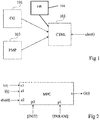
Figure 1 schematically illustrates, in the form of a block diagram, an embodiment of an automated closed-loop blood glucose control system for the controlled delivery of insulin to a patient according to the invention; -
Figure 2 is a simplified representation of a physiological model used in the system offigure 1 to predict blood glucose level of a patient; -
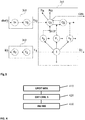
Figure 3 is a diagram representing in greater detail an embodiment of the physiological model offigure 2 ; -
Figure 4 is a diagram illustrating an example of a method for the controlled delivery of insulin to a patient using the automated closed-loop blood glucose control system offigure 1 ; and -
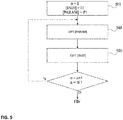
Figure 5 is an explanatory diagram for an embodiment of the self-calibration operation. - On the different figures, the same reference signs designate like or similar elements.
- For the sake of clarity, only elements which are useful for understanding the embodiments described are shown on the figures and detailed in the present description. In particular, the glucose-monitoring sensor and the insulin delivery device of the blood glucose control system are not specifically detailed since the embodiments of the present invention are compatible with all or a majority of the blood glucose measuring and insulin injection devices.
- Physical embodiments of the controller of the described control system are also not described with excessive details, the realization of such a controller unit being within the scope of the skilled man given the functional explanations given in the present specification.
-
Figure 1 illustrates an example of an embodiment of an automated closed-loop blood glucose control system for the controlled delivery of insulin to a patient, in the form of a block diagram. - The system of
figure 1 comprises a sensor 101 (CG) adapted to measure the blood glucose level of the patient. In normal operation, thesensor 101 can be positioned permanently on or in the body of the patient, for example at the level of its abdomen. Thesensor 101 is for example a sensor of the "Continuous Glucose Monitoring" type (CGM), that is to say a sensor adapted to measure continuously (for example at least once per minute) the patient's blood glucose level. Thesensor 101 is, for example, a subcutaneous blood glucose sensor. - The sensor may for instance comprise a disposable glucose sensor placed just under the skin, which may be worn for a few days and periodically replaced.
- During the operation of the method and system of the present invention, the
sensor 101 provides a plurality of glucose measurement values representative of a measured glucose level of the patient at an associated plurality of measurement times. - In the present description, "glucose level" is understood as a concentration of glucose in the blood, also called glycemia.
- The system of
figure 1 further comprises an insulin delivery device 103 (PMP), for example a subcutaneous injection device. Thedevice 103 is for example an automatic injection device, like an insulin pump, comprising an insulin reservoir connected to an injection needle implanted under the skin of the patient. The pump is electrically commanded to inject controlled doses of insulin at determined times. In normal operation, theinjection device 103 is positioned in or on the body of the patient, for example at the level of its abdomen. - During the operation of the method and system of the present invention, the
insulin delivery device 103 delivers exogenous insulin in the subcutaneous tissue of the patient in response to an insulin delivery control signal. The exogenous insulin is in particular rapid-acting insulin. Rapid-acting insulin can be delivered by the insulin delivery device in two ways: - a bolus dose that is delivered to cover food eaten or to correct a high blood glucose level, or
- a basal dose that is pumped continuously at an adjustable basal rate to deliver insulin needed between meals and at night.
- In some embodiments, the system may also comprise a
pulse monitoring sensor 104. Thepulse monitoring sensor 104 is able to provide a plurality of heart rate measurement values h(t) representative of a heart rate of the patient measured at an associated plurality of measurement times. Thepulse monitoring sensor 104 can be provided on an armband or waistband, for example. The sensor can be wirelessly connected to theremote controller 105 for the transfer of measured data thereto. - Alternatively, one may use another physiological sensor than a pulse monitoring sensor. Typical examples include a sensor measuring the electrical conductivity or the superficial temperature of the skin.
- As illustrated on
figure 1 , the system further comprises a controller 105 (CTRL) which is acontroller 105 connected to the glucose-monitoring sensor 101 and to theinsulin delivery device 103 and, optionally, to thepulse monitoring sensor 104, for example by wired or radio (wireless) links. - During the operation of the method and system of the present invention, the
controller 105 receives the blood glucose data of the patient measured by thesensor 101 and provides the delivery control signal to the insulin delivery device. Thecontroller 105 may further receive, via a non-detailed user interface, indication of an amount of glucose ingested by the patient. - Such an indication on the amount of glucose is referenced as cho(t) and is in particular representative of the evolution of the ingestion of carbohydrate by the patient.
- The
controller 105 is adapted to determine the insulin delivery control signal to provide to the insulin delivery device. - To this aim, the
controller 105 comprises a digital calculation circuit (not detailed), comprising, for example, a microprocessor. Thecontroller 105 is, for example, a mobile device carried by the patient throughout the day and/or at night. One possible embodiment of thecontroller 105 may be a smartphone device configured to implement a method as described hereinafter. - The
controller 105 is in particular adapted to determine a quantity of insulin to inject at at least one time step, taking into account a prediction of the future evolution of a blood glucose level of the patient as a function of time. - More precisely, the
controller 105 determine a quantity of insulin to inject at at least one time step on the basis of a predicted glucose level determined by computing a physiological model of glucose-insulin system in the patient. - This determination operation is performed during an
operation 420 illustrated onfigure 4 . - The
controller 105 first determines a curve representative of an expected evolution of the patient's glucose level as a function of time over a future period during a step 421 illustrated onfigure 4 . - Taking this curve into account, the
controller 105 determines the doses of insulin to be injected to the patient during the next period so that the glucose level of the patient remains within an acceptable range to limit the risk of hyperglycemia or hypoglycemia. As explained hereinafter, the glucose measurement values measured by thesensor 101 may for instance be used to perform a self-calibration operation of the physiological model. -
Figure 2 is a schematic illustration of a physiological model of glucose-insulin system that may be implemented in the system offigure 1 to predict the evolution of glucose level of the patient. - The model is represented on
figure 2 as a processing block comprising: - an input e1 on which is applied a signal i(t) indicative of an evolution, as a function of time t, of a quantity of exogenous insulin delivered in a subcutaneous layer of the patient by the insulin delivery device;
- an input e2 on which is applied a signal cho(t) indicative of the evolution, as a function of time t, of the amount of glucose ingested by the patient, for example a quantity of carbohydrate ingested during a meal at a given time;
- an input e3 on which is applied a signal h(t) indicative of the evolution, as a function of time t, of the heart rate of the patient; and
- an output s providing a signal G(t) representative of the evolution, as a function of time t, of the patient's glucose level.
- According to some embodiments, other physiological signals than the heart rate can be provided as input e3, as disclosed above.
- The physiological model MPC is for example a compartmental model comprising, in addition to the input variables i(t) and cho(t) and the output variable G(t), a plurality of state variables corresponding to the instantaneous values of a plurality of physiological variables of the patient as they evolves over time.
- The temporal evolution of the state variables is governed by a system of differential equations comprising a plurality of parameters represented in
figure 2 by a vector [PARAM] applied to an input p1 of the MPC block. - The response of the physiological model may also be conditioned by the initial values assigned to the state variables, which is represented on
figure 2 by a vector [INIT] applied to an input p2 of the MPC block. -
Figure 3 is a diagram which represents in greater detail a non-limiting example of a physiological model implemented in an embodiment of the system offigure 1 . - This exemplary model is known as the Hovorka model and is described for instance in "Nonlinear model predictive control of glucose concentration in subjects with ) and in "Partitioning glucose distribution/transport, disposal, and endogenous production during IVGTT" by Roman Hovorka et al. (Physical Endocrinol Metab 282: E992-E1007, 2002).
- The physiological model illustrated on
figure 3 comprises a first bi-compartmental sub-model 301 describing the effect of glucose intake on the rate of onset of glucose in blood plasma. -
Sub-model 301 takes as input a quantity of ingested glucose cho(t), for example in mmol/min, and provides as an output a rate UG of absorption of glucose in the blood plasma, for example in mmol/min. - In this model, sub-model 301 comprises two state variables D1 and D2 that respectively corresponds to glucose masses, for example in mmol, respectively in the first and the second compartment.
- The model of
figure 3 also comprises a second bi-compartmental sub-model 303 describing the absorption of exogenous insulin delivered to the patient in the blood plasma.Sub-model 303 takes a quantity of exogenous insulin i(t) delivered in the subcutaneous tissue of the patient as an input, for example in mU/min, and provides as an output a rate UI of absorption of insulin in the plasma, in MU/min. - The sub-model 303 may for instance comprise two state variables S1 and S2, respectively corresponding to on-board insulin which are insulin masses respectively in the first and the second compartments modeling a subcutaneous compartment representative of the sub-cutaneous tissue of the patient. The instantaneous on-board insulin level of the state variables S1 and S2 may for example be expressed in mmol.
- The model of
figure 3 may further comprise athird sub-model 305 describing the regulation of glucose by the patient's body. This sub-model 305 takes as inputs the absorption rates UG, UI of glucose and insulin, and gives as output the blood glucose level G(t), i.e. the concentration of glucose in the plasma, for example in mmol/l. - The sub-model 305 is thus a model of a plasma/body compartment of the patient, i.e. a model of the kinetic and chemical evolution of glucose and insulin in the plasma and the body of the patient.
- By "plasma and body of the patient", it is meant the body of the patient with the exception of the sub-cutaneous tissues.
- In this example, the
submodel 305 comprises six state variables Q1, Q2, x3, x1, x2, I. - Variables Q1 and Q2 respectively correspond to masses of glucose respectively in the first and the second compartments, for example mmol.
- Variables x1, x2, x3 are dimensionless variables respectively representing each of three respective actions of insulin on the kinetics of glucose.
- Finally, variable I is an instantaneous plasma insulin level, i.e. corresponds to insulinemia which is a concentration of insulin in the blood plasma. The instantaneous plasma insulin level is for example expressed in mU/1.
- The Hovorka model is governed by the following system of equations:



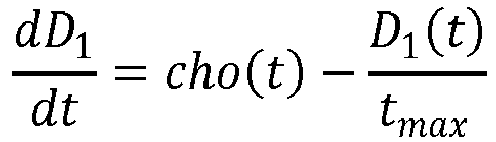


- This system of differential equations comprises fifteen parameters VG, F01, k12, FR, EGP0, kb1, ka1, kb2, ka2, kb3, ka3, ka, VI, ke and tmax with the following meaning:
- VG corresponds to a volume of distribution of the glucose, for example in liters,
- F01 corresponds to a non-insulin-dependent glucose transfer rate, for example in mmol/min,
- k12 corresponds to a transfer rate between the two compartments of
sub Model 305, for example in min-1, - ka1, ka2, ka3 correspond to an insulin deactivation rate constants, for example in min-1,
- FR corresponds to a urinary excretion of glucose, for example in mmol/min,
- EGP0 corresponds to an endogenous production of glucose, for example in min-1,
- kb1, kb2 and kb3 correspond to insulin activation rate constants, for example in min-1,
- ka corresponds to a rate of absorption of the insulin injected subcutaneously, for example in min-1,
- VI corresponds to the volume of distribution of the insulin, for example in liters,
- ke corresponds to a plasma elimination rate of insulin, for example in min-1, and
- tmax corresponds to a time to peak glucose absorption ingested by the patient, for example in min.
- These fifteen parameters correspond to the vector [PARAM] illustrated on
figure 2 . - This model further comprises ten state variables D1, D2, S1, S2, Q1, Q2, x1, x2, x3 and I, which are initiated to a vector [INIT] of initial values corresponding to values of these variables at a time step t0 corresponding a beginning of the simulation of the patient's behavior by the model.
- The system and method of the invention may also uses more simple physiological models than the Hovorka model described above, in particular a compartmental model with a smaller number of state variables and a reduced number of parameters compared to the Hovorka model.
- In some embodiment of the invention, several physiological models may be stored in the controller and the predictions of said models may be compared together or may be used independently, for example depending on a state of the controller or a confidence indicator that may be computed for the predictions of said models.
- In particular, the embodiments described are not limited to the Hovorka physiological model but are compatible with any physiological model describing the assimilation of insulin by a patient's body and its effect on the patient's blood glucose level.
- One example of another physiological model is the Cobelli model described in "A System Model of Oral Glucose Absorption: Validation on Gold Standard Data" by Chiara Dalla Man et al. in IEEE TRANSACTIONS ON BIOMEDICAL ENGINEERING, VOL 53, NO 12, DECEMBER 2006.
- Such models are known from the literature.
- In these models, the absorption rate of insulin from the subcutaneous tissue to the plasma is constant.
- There is such a need to improve the accuracy of predicting the absorption of insulin from the subcutaneous tissue to the plasma.
- To this aim, the absorption rate of insulin from the subcutaneous tissue to the plasma ka(t) is a function of the instantaneous on-board insulin level S2(t).
- In particular, the instantaneous absorption rate ka(t) of insulin from the subcutaneous tissue to the plasma may be a decreasing function of the instantaneous on-board insulin level S 2(t).
- In one embodiment of the invention, the instantaneous absorption rate ka(t) of insulin from the subcutaneous tissue may be proportional to an inverse of the instantaneous on-board insulin level S 2(t).
- This way, it is possible to take into account the absorption kinetics of the transport of insulin from the subcutaneous tissue to the plasma and in particular the subcutaneous blood flow.
- In some embodiment of the invention, the instantaneous absorption rate of insulin ka(t) may be a function of a heart rate of the patient.
- In particular, the instantaneous absorption rate of insulin ka(t) may be an increasing function of a heart rate of the patient.
- According to some embodiments, the instantaneous absorption rate of insulin ka(t) may be a function of other physiological signals than the heart rate, as disclosed above.
- Using the above described model, the
controller 105 perform can determine an insulin delivery control signal by performing a cost optimization operation as illustrated onfigure 4 . - The cost optimization operation advantageously comprises a plurality of prediction steps for a plurality of respective tested insulin injection.
- A tested insulin injection is a set comprising at least one value indicative of a quantity of insulin injected at a future time. The tested insulin injection may comprise a plurality of M values indicative of a quantity of insulin injected at a respective future time of a plurality of M future time step, with M being an integer strictly greater than 1.
- A prediction step for a tested insulin injection comprises the sub-steps of:
- computing a plurality of predicted glucose levels at a plurality of respective future time steps by unrolling the physiological model over time, and
- determining a cost associated to said plurality of predicted glucose levels.
- The unrolling of the physiological model over time is performed using the tested insulin injection and a set of pre-estimated model parameters that can be in particular determined during a self-calibration operation as detailed further below.
- The cost associated to the predicted glucose levels is for instance related to a distance of each predicted glucose level with a target glucose level.
- The target glucose level may be pre-defined and personalized for the patient. The target glucose level may be comprised between 100 and 130 mg/dL.
- The cost function can be for example a quadratic function of a difference between a predicted glucose level and a target glucose level.
- Advantageously, the cost function may be asymmetrical and in particular may penalize more strongly glucose level lower than the target glucose level than glucose level higher than the target glucose level.
- In some embodiment of the invention, the cost associated to the predicted glucose levels is a function of a time-restricted subset of the plurality of predicted glucose levels.
- Such a time-restricted subset may be such that the predicted glucose levels are only considered in a restricted range, in which the glucose level of the patient may be considered controllable by the system and method of the invention.
- For example, glucose level in a short future period close to the current time may not be considered controllable since the kinetic of sub-cutaneous delivered insulin is too slow to have an effect in the near future. On the other hand, glucose level in a far future period, far-away from the current time, may also not be considered controllable since the uncertainty on the parameters, states-variables and meal uptake is too high to have a reliable prediction of the glucose level.
- Thus, a first predicted glucose level of said time-restricted subset may be associated to a first time step not closer than 30 minutes from a current time step and a last predicted glucose level of said time-restricted subset may be associated to a last time step not further than 3 hours from a current time step.
- The controller can thus determine a quantity of insulin to inject by performing a cost optimization operation comprising a plurality of prediction steps for a plurality of respective tested insulin injection.
- The
controller 105 may in particular select a quantity of insulin to inject minimizing the cost associated to the predicted glucose levels. - The
controller 105 can then generate an insulin delivery control signal from the quantity of insulin to inject and send the delivery control signal to theinsulin delivery device 103. - The delivery device can then inject
insulin 430 on the basis of the delivery control signal. - Among the parameters of the [PARAM] vector, some parameters may be considered as constant for a given patient, for example parameters k12, ka1, ka2, ka3, ke, VI, VG and tmax. Other parameters, referred to hereinafter as time-dependent parameters, may change over time, for example the parameters ka, kb1, kb2, kb3, EGP0, F01 and FR.
- Because of this variation of some parameters, it is in practice necessary to regularly recalibrate or self-calibration the model in use, for example every 1 to 20 minutes, to ensure that the predictions remain accurate.
- The self-calibration of the model should advantageously be carried out automatically by the system, in particular without physically measuring the parameters of the model.
-
Figure 4 is a diagram illustrating an example of a method according to the invention. - This method comprises an
operation 410 of self-calibration of the model, which may for example be repeated at regular intervals, for example every 1 to 20 minutes. - This self-calibration operation is illustrated in greater detail on
figure 5 . - During this self-calibration operation, the
controller 105 implements a determination of a set of pre-estimated model parameters taking into account the glucose measurement values, known insulin delivery control signals and at least one meal ingestion indicator during a past period, for example a period of 1 to 10 hours preceding the self-calibration operation. - For example, during the self-calibration operation, the
controller 105 may simulates the behavior of the patient over the past period using the physiological model and taking into account glucose ingestions and exogenous insulin injections during this period. Thecontroller 105 may then compares the glucose level curve estimated using the model to the actual glucose measurements by the sensor over the same period. - The
controller 105 may then determine a set of predetermined values for a set of model parameters that leads to minimizing a cost function over the observation period. - In a similar manner, the self-calibration operation may comprise an estimation of the initial states vector [INIT] of the state variables of the model, as it will now be described in relation with
figure 5 which is illustrating an example of an embodiment of a method according to the invention. - The self-calibration operation comprises a
step 501 during which a set of parameters of the model is initialized to a first set of values P1 of the parameter vector [PARAM]. - The set P1 corresponds, for example, to the values taken by the parameters [PARAM] during a previous self-calibration operation. In a variant, the set of values P1 may be a predefined reference set corresponding, for example, to mean values of the parameters [PARAM] over a reference period.
- During a
step 501, a set of state variables values may also be initialized to a first set of values I1 forming an initial state vector [INIT]. - The set of values I1 may be determined analytically, for example by assuming a stationary state of the patient in a period preceding the calibration phase and coinciding an estimated blood glucose level at time t0 with an actual glucose level measurement at that time.
- In a
subsequent step 503, thecontroller 105 may fix the set of initial states [INIT] to its current state and search for a set of values for the parameters of the model to minimizing a cost, for example an error between an estimated glucose level curve predicted by the model and an actual glucose level curve during a past observation period. - An example of such a cost function may be written as:

- At the end of this step, the [PARAM] vector is updated with the new estimated values.
- In a
step 505 subsequent to step 503, thecontroller 105 then searches for a set of initial state values, setting the parameter set [PARAM] to its current state, here again by minimizing a cost such as the above described error between the estimated glucose level curve predicted by the model and an actual glucose level curve determined during a past observation period. - At the end of this step, the vector [INIT] is updated with the new estimated values.
- In some embodiments,
steps - The values of the parameters and the initial states of the model are then updated to the corresponding values of the vectors [PARAM] and [INIT] at the end of the Nth iteration of
steps - In a variant, the number of iterations of
steps - The algorithms that can be used to find the optimal values in
steps
Claims (15)
- An automated closed-loop blood glucose control system for the controlled delivery of insulin to a patient comprising:a continuous glucose-monitoring sensor (101) configured to provide a plurality of glucose measurement values representative of a measured glucose level of the patient at an associated plurality of measurement times;a subcutaneous insulin delivery device (103) configured to deliver exogenous insulin in a subcutaneous tissue of the patient in response to an insulin delivery control signal, in particular continuously infused insulin and/or bolus insulin; anda controller (105) programmed to receive the glucose measurement values and provide the delivery control signal to the insulin delivery device,wherein the controller (105) is able to determine the insulin delivery control signal on the basis of a predicted glucose level determined by computing a physiological model of glucose-insulin system in the patient comprising a system of differential equations describing the evolution of a plurality of state variables (D1, D2, S1, S2, Q1, Q2, x1, x2, x3, I) as a function of time, said variables containing at least an instantaneous on-board insulin level representative of a quantity of insulin present in the subcutaneous layer and an instantaneous plasma insulin level representative of a quantity of insulin in a plasma of the patient,wherein said physiological model includes a sub-model of subcutaneous insulin absorption kinetics modeling transport of insulin from the subcutaneous tissue to the plasma, said sub-model comprising at least one differential equation describing an absorption of insulin from the subcutaneous tissue to the plasma wherein an instantaneous absorption rate of insulin from the subcutaneous tissue to the plasma is a function of the instantaneous on-board insulin level.
- The system according to claim 1, wherein said instantaneous absorption rate of insulin from the subcutaneous tissue to the plasma is a decreasing function of the instantaneous on-board insulin level.
- The system according to anyone of claim 1 or 2, wherein the controller (105) is able to perform at least one prediction step for a tested insulin injection, said tested insulin injection comprising at least one value indicative of a quantity of insulin injected at a future time, said prediction step comprising
computing a plurality of predicted glucose levels at a plurality of respective future time steps, by unrolling the physiological model over time using a set of pre-estimated model parameters and said tested insulin injection, and
determining a cost associated to said plurality of predicted glucose levels. - The system according to claim 3, wherein said cost is function of a time-restricted subset of the plurality of predicted glucose levels such that
a first predicted glucose level of said time-restricted subset is associated to a first time step not closer than 30 minutes from a current time step and
a last predicted glucose level of said time-restricted subset is associated to a last time step not further than 3 hours from a current time step. - The system according to anyone of claim 3 or 4, wherein the controller determines at least one insulin delivery control signal by performing a cost optimization operation comprising a plurality of prediction steps for a plurality of respective tested insulin injection.
- The system according to anyone of claim 1 to 5, wherein the controller (105) is able to perform a self-calibration operation comprising a determination of a set of pre-estimated model parameters on the basis of a plurality of glucose measurement values, a plurality of known insulin delivery control signals and at least one meal ingestion indicator.
- The system according to claim 6, wherein said set of pre-estimated model parameters comprises a current instantaneous absorption rate of insulin, a current instantaneous on-board insulin level and a current instantaneous plasma insulin level.
- The system according to anyone of claim 3 to 7, wherein the controller periodically performs said self-calibration operation and said cost optimization operation.
- The system according to anyone of claim 1 to 8, wherein said physiological model of glucose-insulin system relates the evolution of state variables in a plurality of compartments, in particular at least a sub-cutaneous compartment and a plasma/body compartment.
- The system according to anyone of claim 1 to 9, wherein the system further comprises a physiological sensor adapted to measure physiological data, and wherein the instantaneous absorption rate of insulin from the subcutaneous tissue to the plasma is a function of said physiological data,
Notably where the physiological sensor is a pulse monitoring sensor configured to provide a plurality of heart rate measurement values representative of a measured heart rate of the patient at an associated plurality of measurement times,
and wherein the instantaneous absorption rate of insulin from the subcutaneous tissue to the plasma is a increasing function of a heart rate of the patient. - A method for the controlled delivery of insulin to a patient using an automated closed-loop blood glucose control system, the method comprising:continuously monitoring glucose, using a sensor, to provide a plurality of glucose measurement values representative of a measured glucose level of the patient at an associated plurality of measurement times;determining an insulin delivery control signal, using a controller, by computing a physiological model of glucose-insulin system in the patient comprising a system of differential equations describing the evolution of a plurality of state variables (D1, D2, S1, S2, Q1, Q2, x1, x2, x3, I) as a function of time, said variables containing at least an instantaneous on-board insulin level representative of a quantity of insulin present in the subcutaneous layer and an instantaneous plasma insulin level representative of a quantity of insulin in a plasma of the patient,wherein said physiological model includes a sub-model of subcutaneous insulin absorption kinetics modeling transport of insulin from the subcutaneous tissue to the plasma, said sub-model comprising at least one differential equation describing an absorption of insulin from the subcutaneous tissue to the plasma wherein an instantaneous absorption rate of insulin from the subcutaneous tissue to the plasma is a function of the instantaneous on-board insulin level,delivering exogenous insulin in a subcutaneous tissue of the patient, using a subcutaneous insulin delivery device, in accordance with said insulin delivery control signal, in particular delivering continuously infused insulin and/or bolus insulin (103).
- The method according to claim 11, wherein said instantaneous absorption rate of insulin from the subcutaneous tissue to the plasma is a decreasing function of the instantaneous on-board insulin level.
- The method according to anyone of claim 11 or 12, wherein determining said insulin delivery control signal comprises a cost optimization operation comprising a plurality of prediction steps for a plurality of respective tested insulin injections, each tested insulin injection comprising at least one value indicative of a quantity of insulin injected at a future time.
- The method according to claim 13, wherein said prediction step for a test set of insulin delivery control signals comprises:computing a plurality of predicted glucose levels at a plurality of respective future time steps, by unrolling the physiological model over time using a set of pre-estimated model parameters and said tested insulin injection, anddetermining a cost associated to said plurality of predicted glucose levels.
- The method according to anyone of claim 11 to 14, wherein determining said insulin delivery control signal comprises a self-calibration operation comprising a determination of a set of pre-estimated model parameters on the basis of a plurality of glucose measurement values, a plurality of known insulin delivery control and at least one meal ingestion indicator.
Priority Applications (2)
| Application Number | Priority Date | Filing Date | Title |
|---|---|---|---|
| EP17306035.1A EP3438986B8 (en) | 2017-08-02 | 2017-08-02 | Closed-loop blood glucose control systems and methods |
| PCT/EP2018/070902 WO2019025507A1 (en) | 2017-08-02 | 2018-08-01 | Closed-loop blood glucose control systems and methods |
Applications Claiming Priority (1)
| Application Number | Priority Date | Filing Date | Title |
|---|---|---|---|
| EP17306035.1A EP3438986B8 (en) | 2017-08-02 | 2017-08-02 | Closed-loop blood glucose control systems and methods |
Publications (4)
| Publication Number | Publication Date |
|---|---|
| EP3438986A1 true EP3438986A1 (en) | 2019-02-06 |
| EP3438986B1 EP3438986B1 (en) | 2024-07-10 |
| EP3438986C0 EP3438986C0 (en) | 2024-07-10 |
| EP3438986B8 EP3438986B8 (en) | 2024-08-21 |
Family
ID=59626537
Family Applications (1)
| Application Number | Title | Priority Date | Filing Date |
|---|---|---|---|
| EP17306035.1A Active EP3438986B8 (en) | 2017-08-02 | 2017-08-02 | Closed-loop blood glucose control systems and methods |
Country Status (2)
| Country | Link |
|---|---|
| EP (1) | EP3438986B8 (en) |
| WO (1) | WO2019025507A1 (en) |
Cited By (2)
| Publication number | Priority date | Publication date | Assignee | Title |
|---|---|---|---|---|
| US20220233152A1 (en) * | 2021-01-25 | 2022-07-28 | Dexcom, Inc. | Bayesian framework for personalized model identification and prediction of future blood glucose in type 1 diabetes using easily accessible patient data |
| US12205718B2 (en) | 2020-05-27 | 2025-01-21 | Dexcom, Inc. | Glucose prediction using machine learning and time series glucose measurements |
Citations (1)
| Publication number | Priority date | Publication date | Assignee | Title |
|---|---|---|---|---|
| US20160354543A1 (en) * | 2015-06-02 | 2016-12-08 | Ali Cinar | Multivariable artificial pancreas method and system |
Family Cites Families (1)
| Publication number | Priority date | Publication date | Assignee | Title |
|---|---|---|---|---|
| GB2436873A (en) * | 2006-04-07 | 2007-10-10 | Univ Cambridge Tech | Blood glucose monitoring systems |
-
2017
- 2017-08-02 EP EP17306035.1A patent/EP3438986B8/en active Active
-
2018
- 2018-08-01 WO PCT/EP2018/070902 patent/WO2019025507A1/en not_active Ceased
Patent Citations (1)
| Publication number | Priority date | Publication date | Assignee | Title |
|---|---|---|---|---|
| US20160354543A1 (en) * | 2015-06-02 | 2016-12-08 | Ali Cinar | Multivariable artificial pancreas method and system |
Non-Patent Citations (5)
| Title |
|---|
| "DTU Compute-Technical Report", vol. 13, 2013, TECHNICAL UNIVERSY OF DENMARK, ISSN: 1601-2321, article ANNE KATRINE DUUN-HENRIKSEN ET AL: "Modelling the Effect of Exercise on Insulin Pharmacokinetics in "Continuous Subcutaneous Insulin Infusion" Treated Type 1 Diabetes Patients", XP055438255 * |
| CHIARA DALLA MAN ET AL.: "A System Model of Oral Glucose Absorption: Validation on Gold Standard Data", IEEE TRANSACTIONS ON BIOMEDICAL ENGINEERING, vol. 53, no. 12, December 2006 (2006-12-01), XP011150965, DOI: doi:10.1109/TBME.2006.883792 |
| DIMITRI BOIROUX ET AL: "Model Predictive Control Algorithms for Pen and Pump Insulin Administration", 20 October 2015 (2015-10-20), pages 15 - 24, XP002776941, Retrieved from the Internet <URL:http://orbit.dtu.dk/files/57023470/phd283_Boiroux_D.pdf> [retrieved on 20171113] * |
| ROMAN HOVORKA ET AL.: "Nonlinear model predictive control of glucose concentration in subjects with type 1 diabetes", PHYSIOL MEAS., vol. 25, 2004, pages 905 - 920, XP020074167, DOI: doi:10.1088/0967-3334/25/4/010 |
| ROMAN HOVORKA ET AL.: "Partitioning glucose distribution/transport, disposal, and endogenous production during IVGTT", PHYSICAL ENDOCRINOL METAB, vol. 282, 2002, pages E992 - E1007 |
Cited By (4)
| Publication number | Priority date | Publication date | Assignee | Title |
|---|---|---|---|---|
| US12205718B2 (en) | 2020-05-27 | 2025-01-21 | Dexcom, Inc. | Glucose prediction using machine learning and time series glucose measurements |
| US12354742B2 (en) | 2020-05-27 | 2025-07-08 | Dexcom, Inc. | Glucose prediction using machine learning and time series glucose measurements |
| US20220233152A1 (en) * | 2021-01-25 | 2022-07-28 | Dexcom, Inc. | Bayesian framework for personalized model identification and prediction of future blood glucose in type 1 diabetes using easily accessible patient data |
| US12594040B2 (en) * | 2021-01-25 | 2026-04-07 | Dexcom, Inc. | Bayesian framework for personalized model identification and prediction of future blood glucose in type 1 diabetes using easily accessible patient data |
Also Published As
| Publication number | Publication date |
|---|---|
| WO2019025507A1 (en) | 2019-02-07 |
| EP3438986B1 (en) | 2024-07-10 |
| EP3438986B8 (en) | 2024-08-21 |
| EP3438986C0 (en) | 2024-07-10 |
Similar Documents
| Publication | Publication Date | Title |
|---|---|---|
| US11484652B2 (en) | Closed-loop blood glucose control systems and methods | |
| US11213249B2 (en) | Automated system for controlling the blood glucose level of a patient | |
| US11298460B2 (en) | Automated system for controlling the blood glucose level of a patient | |
| US11433184B2 (en) | Automated system for regulating a patient's blood glucose level | |
| US11605461B2 (en) | Risk-based control-to-range blood glucose diabetes management device | |
| EP3465491B1 (en) | Control-to-range aggressiveness | |
| US11883162B2 (en) | System for predicting a patient's blood glucose level | |
| US12383672B2 (en) | Automated system for controlling the blood sugar of a patient | |
| EP3438986B1 (en) | Closed-loop blood glucose control systems and methods | |
| JP7470121B2 (en) | An automated system for regulating a patient's blood sugar level | |
| KR102803476B1 (en) | Automated system to monitor patient blood sugar levels | |
| US12005233B2 (en) | Automated system for monitoring a patient's blood sugar |
Legal Events
| Date | Code | Title | Description |
|---|---|---|---|
| PUAI | Public reference made under article 153(3) epc to a published international application that has entered the european phase |
Free format text: ORIGINAL CODE: 0009012 |
|
| STAA | Information on the status of an ep patent application or granted ep patent |
Free format text: STATUS: THE APPLICATION HAS BEEN PUBLISHED |
|
| AK | Designated contracting states |
Kind code of ref document: A1 Designated state(s): AL AT BE BG CH CY CZ DE DK EE ES FI FR GB GR HR HU IE IS IT LI LT LU LV MC MK MT NL NO PL PT RO RS SE SI SK SM TR |
|
| AX | Request for extension of the european patent |
Extension state: BA ME |
|
| STAA | Information on the status of an ep patent application or granted ep patent |
Free format text: STATUS: REQUEST FOR EXAMINATION WAS MADE |
|
| 17P | Request for examination filed |
Effective date: 20190723 |
|
| RBV | Designated contracting states (corrected) |
Designated state(s): AL AT BE BG CH CY CZ DE DK EE ES FI FR GB GR HR HU IE IS IT LI LT LU LV MC MK MT NL NO PL PT RO RS SE SI SK SM TR |
|
| STAA | Information on the status of an ep patent application or granted ep patent |
Free format text: STATUS: EXAMINATION IS IN PROGRESS |
|
| 17Q | First examination report despatched |
Effective date: 20210323 |
|
| GRAP | Despatch of communication of intention to grant a patent |
Free format text: ORIGINAL CODE: EPIDOSNIGR1 |
|
| STAA | Information on the status of an ep patent application or granted ep patent |
Free format text: STATUS: GRANT OF PATENT IS INTENDED |
|
| RIC1 | Information provided on ipc code assigned before grant |
Ipc: A61M 5/172 20060101ALN20240418BHEP Ipc: A61M 5/142 20060101ALN20240418BHEP Ipc: A61B 5/145 20060101ALI20240418BHEP Ipc: G16H 50/50 20180101ALI20240418BHEP Ipc: G16H 40/40 20180101ALI20240418BHEP Ipc: G16H 20/17 20180101AFI20240418BHEP |
|
| GRAS | Grant fee paid |
Free format text: ORIGINAL CODE: EPIDOSNIGR3 |
|
| GRAA | (expected) grant |
Free format text: ORIGINAL CODE: 0009210 |
|
| STAA | Information on the status of an ep patent application or granted ep patent |
Free format text: STATUS: THE PATENT HAS BEEN GRANTED |
|
| INTG | Intention to grant announced |
Effective date: 20240514 |
|
| AK | Designated contracting states |
Kind code of ref document: B1 Designated state(s): AL AT BE BG CH CY CZ DE DK EE ES FI FR GB GR HR HU IE IS IT LI LT LU LV MC MK MT NL NO PL PT RO RS SE SI SK SM TR |
|
| REG | Reference to a national code |
Ref country code: CH Ref legal event code: EP |
|
| RAP4 | Party data changed (patent owner data changed or rights of a patent transferred) |
Owner name: DIABELOOP |
|
| REG | Reference to a national code |
Ref country code: CH Ref legal event code: PK Free format text: BERICHTIGUNG B8 |
|
| REG | Reference to a national code |
Ref country code: DE Ref legal event code: R096 Ref document number: 602017083160 Country of ref document: DE |
|
| U01 | Request for unitary effect filed |
Effective date: 20240727 |
|
| U07 | Unitary effect registered |
Designated state(s): AT BE BG DE DK EE FI FR IT LT LU LV MT NL PT SE SI Effective date: 20240812 |
|
| U20 | Renewal fee for the european patent with unitary effect paid |
Year of fee payment: 8 Effective date: 20240808 |
|
| PG25 | Lapsed in a contracting state [announced via postgrant information from national office to epo] |
Ref country code: NO Free format text: LAPSE BECAUSE OF FAILURE TO SUBMIT A TRANSLATION OF THE DESCRIPTION OR TO PAY THE FEE WITHIN THE PRESCRIBED TIME-LIMIT Effective date: 20241010 |
|
| PG25 | Lapsed in a contracting state [announced via postgrant information from national office to epo] |
Ref country code: PL Free format text: LAPSE BECAUSE OF FAILURE TO SUBMIT A TRANSLATION OF THE DESCRIPTION OR TO PAY THE FEE WITHIN THE PRESCRIBED TIME-LIMIT Effective date: 20240710 Ref country code: GR Free format text: LAPSE BECAUSE OF FAILURE TO SUBMIT A TRANSLATION OF THE DESCRIPTION OR TO PAY THE FEE WITHIN THE PRESCRIBED TIME-LIMIT Effective date: 20241011 |
|
| PG25 | Lapsed in a contracting state [announced via postgrant information from national office to epo] |
Ref country code: IS Free format text: LAPSE BECAUSE OF FAILURE TO SUBMIT A TRANSLATION OF THE DESCRIPTION OR TO PAY THE FEE WITHIN THE PRESCRIBED TIME-LIMIT Effective date: 20241110 |
|
| PG25 | Lapsed in a contracting state [announced via postgrant information from national office to epo] |
Ref country code: HR Free format text: LAPSE BECAUSE OF FAILURE TO SUBMIT A TRANSLATION OF THE DESCRIPTION OR TO PAY THE FEE WITHIN THE PRESCRIBED TIME-LIMIT Effective date: 20240710 |
|
| PG25 | Lapsed in a contracting state [announced via postgrant information from national office to epo] |
Ref country code: ES Free format text: LAPSE BECAUSE OF FAILURE TO SUBMIT A TRANSLATION OF THE DESCRIPTION OR TO PAY THE FEE WITHIN THE PRESCRIBED TIME-LIMIT Effective date: 20240710 Ref country code: RS Free format text: LAPSE BECAUSE OF FAILURE TO SUBMIT A TRANSLATION OF THE DESCRIPTION OR TO PAY THE FEE WITHIN THE PRESCRIBED TIME-LIMIT Effective date: 20241010 |
|
| PG25 | Lapsed in a contracting state [announced via postgrant information from national office to epo] |
Ref country code: RS Free format text: LAPSE BECAUSE OF FAILURE TO SUBMIT A TRANSLATION OF THE DESCRIPTION OR TO PAY THE FEE WITHIN THE PRESCRIBED TIME-LIMIT Effective date: 20241010 Ref country code: PL Free format text: LAPSE BECAUSE OF FAILURE TO SUBMIT A TRANSLATION OF THE DESCRIPTION OR TO PAY THE FEE WITHIN THE PRESCRIBED TIME-LIMIT Effective date: 20240710 Ref country code: NO Free format text: LAPSE BECAUSE OF FAILURE TO SUBMIT A TRANSLATION OF THE DESCRIPTION OR TO PAY THE FEE WITHIN THE PRESCRIBED TIME-LIMIT Effective date: 20241010 Ref country code: IS Free format text: LAPSE BECAUSE OF FAILURE TO SUBMIT A TRANSLATION OF THE DESCRIPTION OR TO PAY THE FEE WITHIN THE PRESCRIBED TIME-LIMIT Effective date: 20241110 Ref country code: HR Free format text: LAPSE BECAUSE OF FAILURE TO SUBMIT A TRANSLATION OF THE DESCRIPTION OR TO PAY THE FEE WITHIN THE PRESCRIBED TIME-LIMIT Effective date: 20240710 Ref country code: GR Free format text: LAPSE BECAUSE OF FAILURE TO SUBMIT A TRANSLATION OF THE DESCRIPTION OR TO PAY THE FEE WITHIN THE PRESCRIBED TIME-LIMIT Effective date: 20241011 Ref country code: ES Free format text: LAPSE BECAUSE OF FAILURE TO SUBMIT A TRANSLATION OF THE DESCRIPTION OR TO PAY THE FEE WITHIN THE PRESCRIBED TIME-LIMIT Effective date: 20240710 |
|
| REG | Reference to a national code |
Ref country code: CH Ref legal event code: PL |
|
| PG25 | Lapsed in a contracting state [announced via postgrant information from national office to epo] |
Ref country code: SM Free format text: LAPSE BECAUSE OF FAILURE TO SUBMIT A TRANSLATION OF THE DESCRIPTION OR TO PAY THE FEE WITHIN THE PRESCRIBED TIME-LIMIT Effective date: 20240710 |
|
| PG25 | Lapsed in a contracting state [announced via postgrant information from national office to epo] |
Ref country code: MC Free format text: LAPSE BECAUSE OF FAILURE TO SUBMIT A TRANSLATION OF THE DESCRIPTION OR TO PAY THE FEE WITHIN THE PRESCRIBED TIME-LIMIT Effective date: 20240710 Ref country code: CH Free format text: LAPSE BECAUSE OF NON-PAYMENT OF DUE FEES Effective date: 20240831 |
|
| PG25 | Lapsed in a contracting state [announced via postgrant information from national office to epo] |
Ref country code: CZ Free format text: LAPSE BECAUSE OF FAILURE TO SUBMIT A TRANSLATION OF THE DESCRIPTION OR TO PAY THE FEE WITHIN THE PRESCRIBED TIME-LIMIT Effective date: 20240710 |
|
| PG25 | Lapsed in a contracting state [announced via postgrant information from national office to epo] |
Ref country code: SK Free format text: LAPSE BECAUSE OF FAILURE TO SUBMIT A TRANSLATION OF THE DESCRIPTION OR TO PAY THE FEE WITHIN THE PRESCRIBED TIME-LIMIT Effective date: 20240710 |
|
| PLBE | No opposition filed within time limit |
Free format text: ORIGINAL CODE: 0009261 |
|
| STAA | Information on the status of an ep patent application or granted ep patent |
Free format text: STATUS: NO OPPOSITION FILED WITHIN TIME LIMIT |
|
| 26N | No opposition filed |
Effective date: 20250411 |
|
| GBPC | Gb: european patent ceased through non-payment of renewal fee |
Effective date: 20241010 |
|
| U20 | Renewal fee for the european patent with unitary effect paid |
Year of fee payment: 9 Effective date: 20250605 |
|
| PG25 | Lapsed in a contracting state [announced via postgrant information from national office to epo] |
Ref country code: GB Free format text: LAPSE BECAUSE OF NON-PAYMENT OF DUE FEES Effective date: 20241010 |
|
| PG25 | Lapsed in a contracting state [announced via postgrant information from national office to epo] |
Ref country code: IE Free format text: LAPSE BECAUSE OF NON-PAYMENT OF DUE FEES Effective date: 20240802 |
|
| U1N | Appointed representative for the unitary patent procedure changed after the registration of the unitary effect |
Representative=s name: LANNEL, PIERRE OLIVIER; FR |
|
| PG25 | Lapsed in a contracting state [announced via postgrant information from national office to epo] |
Ref country code: RO Free format text: LAPSE BECAUSE OF FAILURE TO SUBMIT A TRANSLATION OF THE DESCRIPTION OR TO PAY THE FEE WITHIN THE PRESCRIBED TIME-LIMIT Effective date: 20240710 |
|
| PG25 | Lapsed in a contracting state [announced via postgrant information from national office to epo] |
Ref country code: CY Free format text: LAPSE BECAUSE OF FAILURE TO SUBMIT A TRANSLATION OF THE DESCRIPTION OR TO PAY THE FEE WITHIN THE PRESCRIBED TIME-LIMIT; INVALID AB INITIO Effective date: 20170802 |
|
| PG25 | Lapsed in a contracting state [announced via postgrant information from national office to epo] |
Ref country code: HU Free format text: LAPSE BECAUSE OF FAILURE TO SUBMIT A TRANSLATION OF THE DESCRIPTION OR TO PAY THE FEE WITHIN THE PRESCRIBED TIME-LIMIT; INVALID AB INITIO Effective date: 20170802 |