EP3438858A1 - Closed-loop blood glucose control systems and methods - Google Patents
Closed-loop blood glucose control systems and methods Download PDFInfo
- Publication number
- EP3438858A1 EP3438858A1 EP17306034.4A EP17306034A EP3438858A1 EP 3438858 A1 EP3438858 A1 EP 3438858A1 EP 17306034 A EP17306034 A EP 17306034A EP 3438858 A1 EP3438858 A1 EP 3438858A1
- Authority
- EP
- European Patent Office
- Prior art keywords
- insulin
- patient
- glucose
- injection amount
- glucose level
- Prior art date
- Legal status (The legal status is an assumption and is not a legal conclusion. Google has not performed a legal analysis and makes no representation as to the accuracy of the status listed.)
- Pending
Links
Images


Classifications
-
- A—HUMAN NECESSITIES
- A61—MEDICAL OR VETERINARY SCIENCE; HYGIENE
- A61M—DEVICES FOR INTRODUCING MEDIA INTO, OR ONTO, THE BODY; DEVICES FOR TRANSDUCING BODY MEDIA OR FOR TAKING MEDIA FROM THE BODY; DEVICES FOR PRODUCING OR ENDING SLEEP OR STUPOR
- A61M5/00—Devices for bringing media into the body in a subcutaneous, intra-vascular or intramuscular way; Accessories therefor, e.g. filling or cleaning devices, arm-rests
- A61M5/14—Infusion devices, e.g. infusing by gravity; Blood infusion; Accessories therefor
- A61M5/168—Means for controlling media flow to the body or for metering media to the body, e.g. drip meters, counters ; Monitoring media flow to the body
- A61M5/172—Means for controlling media flow to the body or for metering media to the body, e.g. drip meters, counters ; Monitoring media flow to the body electrical or electronic
- A61M5/1723—Means for controlling media flow to the body or for metering media to the body, e.g. drip meters, counters ; Monitoring media flow to the body electrical or electronic using feedback of body parameters, e.g. blood-sugar, pressure
-
- G—PHYSICS
- G16—INFORMATION AND COMMUNICATION TECHNOLOGY [ICT] SPECIALLY ADAPTED FOR SPECIFIC APPLICATION FIELDS
- G16H—HEALTHCARE INFORMATICS, i.e. INFORMATION AND COMMUNICATION TECHNOLOGY [ICT] SPECIALLY ADAPTED FOR THE HANDLING OR PROCESSING OF MEDICAL OR HEALTHCARE DATA
- G16H50/00—ICT specially adapted for medical diagnosis, medical simulation or medical data mining; ICT specially adapted for detecting, monitoring or modelling epidemics or pandemics
- G16H50/50—ICT specially adapted for medical diagnosis, medical simulation or medical data mining; ICT specially adapted for detecting, monitoring or modelling epidemics or pandemics for simulation or modelling of medical disorders
-
- A—HUMAN NECESSITIES
- A61—MEDICAL OR VETERINARY SCIENCE; HYGIENE
- A61B—DIAGNOSIS; SURGERY; IDENTIFICATION
- A61B5/00—Measuring for diagnostic purposes; Identification of persons
- A61B5/145—Measuring characteristics of blood in vivo, e.g. gas concentration or pH-value ; Measuring characteristics of body fluids or tissues, e.g. interstitial fluid or cerebral tissue
- A61B5/14532—Measuring characteristics of blood in vivo, e.g. gas concentration or pH-value ; Measuring characteristics of body fluids or tissues, e.g. interstitial fluid or cerebral tissue for measuring glucose, e.g. by tissue impedance measurement
-
- G—PHYSICS
- G16—INFORMATION AND COMMUNICATION TECHNOLOGY [ICT] SPECIALLY ADAPTED FOR SPECIFIC APPLICATION FIELDS
- G16H—HEALTHCARE INFORMATICS, i.e. INFORMATION AND COMMUNICATION TECHNOLOGY [ICT] SPECIALLY ADAPTED FOR THE HANDLING OR PROCESSING OF MEDICAL OR HEALTHCARE DATA
- G16H20/00—ICT specially adapted for therapies or health-improving plans, e.g. for handling prescriptions, for steering therapy or for monitoring patient compliance
- G16H20/10—ICT specially adapted for therapies or health-improving plans, e.g. for handling prescriptions, for steering therapy or for monitoring patient compliance relating to drugs or medications, e.g. for ensuring correct administration to patients
- G16H20/17—ICT specially adapted for therapies or health-improving plans, e.g. for handling prescriptions, for steering therapy or for monitoring patient compliance relating to drugs or medications, e.g. for ensuring correct administration to patients delivered via infusion or injection
-
- G—PHYSICS
- G16—INFORMATION AND COMMUNICATION TECHNOLOGY [ICT] SPECIALLY ADAPTED FOR SPECIFIC APPLICATION FIELDS
- G16H—HEALTHCARE INFORMATICS, i.e. INFORMATION AND COMMUNICATION TECHNOLOGY [ICT] SPECIALLY ADAPTED FOR THE HANDLING OR PROCESSING OF MEDICAL OR HEALTHCARE DATA
- G16H40/00—ICT specially adapted for the management or administration of healthcare resources or facilities; ICT specially adapted for the management or operation of medical equipment or devices
- G16H40/40—ICT specially adapted for the management or administration of healthcare resources or facilities; ICT specially adapted for the management or operation of medical equipment or devices for the management of medical equipment or devices, e.g. scheduling maintenance or upgrades
-
- A—HUMAN NECESSITIES
- A61—MEDICAL OR VETERINARY SCIENCE; HYGIENE
- A61M—DEVICES FOR INTRODUCING MEDIA INTO, OR ONTO, THE BODY; DEVICES FOR TRANSDUCING BODY MEDIA OR FOR TAKING MEDIA FROM THE BODY; DEVICES FOR PRODUCING OR ENDING SLEEP OR STUPOR
- A61M5/00—Devices for bringing media into the body in a subcutaneous, intra-vascular or intramuscular way; Accessories therefor, e.g. filling or cleaning devices, arm-rests
- A61M5/14—Infusion devices, e.g. infusing by gravity; Blood infusion; Accessories therefor
- A61M5/142—Pressure infusion, e.g. using pumps
- A61M2005/14208—Pressure infusion, e.g. using pumps with a programmable infusion control system, characterised by the infusion program
-
- A—HUMAN NECESSITIES
- A61—MEDICAL OR VETERINARY SCIENCE; HYGIENE
- A61M—DEVICES FOR INTRODUCING MEDIA INTO, OR ONTO, THE BODY; DEVICES FOR TRANSDUCING BODY MEDIA OR FOR TAKING MEDIA FROM THE BODY; DEVICES FOR PRODUCING OR ENDING SLEEP OR STUPOR
- A61M5/00—Devices for bringing media into the body in a subcutaneous, intra-vascular or intramuscular way; Accessories therefor, e.g. filling or cleaning devices, arm-rests
- A61M5/14—Infusion devices, e.g. infusing by gravity; Blood infusion; Accessories therefor
- A61M5/168—Means for controlling media flow to the body or for metering media to the body, e.g. drip meters, counters ; Monitoring media flow to the body
- A61M5/172—Means for controlling media flow to the body or for metering media to the body, e.g. drip meters, counters ; Monitoring media flow to the body electrical or electronic
- A61M5/1723—Means for controlling media flow to the body or for metering media to the body, e.g. drip meters, counters ; Monitoring media flow to the body electrical or electronic using feedback of body parameters, e.g. blood-sugar, pressure
- A61M2005/1726—Means for controlling media flow to the body or for metering media to the body, e.g. drip meters, counters ; Monitoring media flow to the body electrical or electronic using feedback of body parameters, e.g. blood-sugar, pressure the body parameters being measured at, or proximate to, the infusion site
-
- A—HUMAN NECESSITIES
- A61—MEDICAL OR VETERINARY SCIENCE; HYGIENE
- A61M—DEVICES FOR INTRODUCING MEDIA INTO, OR ONTO, THE BODY; DEVICES FOR TRANSDUCING BODY MEDIA OR FOR TAKING MEDIA FROM THE BODY; DEVICES FOR PRODUCING OR ENDING SLEEP OR STUPOR
- A61M2205/00—General characteristics of the apparatus
- A61M2205/33—Controlling, regulating or measuring
- A61M2205/3303—Using a biosensor
-
- A—HUMAN NECESSITIES
- A61—MEDICAL OR VETERINARY SCIENCE; HYGIENE
- A61M—DEVICES FOR INTRODUCING MEDIA INTO, OR ONTO, THE BODY; DEVICES FOR TRANSDUCING BODY MEDIA OR FOR TAKING MEDIA FROM THE BODY; DEVICES FOR PRODUCING OR ENDING SLEEP OR STUPOR
- A61M2230/00—Measuring parameters of the user
- A61M2230/04—Heartbeat characteristics, e.g. ECG, blood pressure modulation
- A61M2230/06—Heartbeat rate only
-
- A—HUMAN NECESSITIES
- A61—MEDICAL OR VETERINARY SCIENCE; HYGIENE
- A61M—DEVICES FOR INTRODUCING MEDIA INTO, OR ONTO, THE BODY; DEVICES FOR TRANSDUCING BODY MEDIA OR FOR TAKING MEDIA FROM THE BODY; DEVICES FOR PRODUCING OR ENDING SLEEP OR STUPOR
- A61M2230/00—Measuring parameters of the user
- A61M2230/20—Blood composition characteristics
- A61M2230/201—Glucose concentration
Definitions
- the instant invention relates to the field of closed-loop blood glucose control system for the controlled delivery of insulin to a patient.
- Such systems are also known as artificial pancreas.
- An artificial pancreas is a system that automatically regulates the insulin intake of a diabetic patient based on its blood glucose history, meal history, and insulin history.
- the present invention relates to Model-based Predictive Control (MPC) systems, also known as predictive control systems, in which the determination of the dose of insulin to be injected is based on a prediction of the patient's future blood glucose level obtained by computing a physiological model describing the effect of insulin in the patient's body and its impact on the patient's glucose level.
- MPC Model-based Predictive Control
- the instant invention has notably for object to improve this situation.
- the invention relates to an automated closed-loop blood glucose control system for the controlled delivery of insulin to a patient comprising:
- the physiological sensor is a pulse monitoring sensor configured to provide a plurality of heart rate measurement values representative of a measured heart rate of the patient at an associated plurality of measurement times
- the maximal allowable insulin injection amount is a function of a heart rate of the patient, in particular a sensitivity of the patient to insulin is a function of a heart rate of the patient.
- the invention relates to a method for the controlled delivery of insulin to a patient using an automated closed-loop blood glucose control system, the method comprising:
- the glucose-monitoring sensor and the insulin delivery device of the blood glucose control system are not specifically detailed since the embodiments of the present invention are compatible with all or a majority of the blood glucose measuring and insulin injection devices.
- Figure 1 illustrates an example of an embodiment of an automated closed-loop blood glucose control system for the controlled delivery of insulin to a patient, in the form of a block diagram.
- the system of figure 1 comprises a sensor 101 (CG) adapted to measure the blood glucose level of the patient.
- the sensor 101 can be positioned permanently on or in the body of the patient, for example at the level of its abdomen.
- the sensor 101 is for example a sensor of the "Continuous Glucose Monitoring" type (CGM), that is to say a sensor adapted to measure continuously (for example at least once per minute) the patient's blood glucose level.
- CGM Continuous Glucose Monitoring
- the sensor 101 is, for example, a subcutaneous blood glucose sensor.
- the sensor may for instance comprise a disposable glucose sensor placed just under the skin, which may be worn for a few days and periodically replaced.
- the senor 101 provides a plurality of glucose measurement values representative of a measured glucose level of the patient at an associated plurality of measurement times.
- glucose level is understood as a concentration of glucose in the blood, also called glycemia.
- the system of figure 1 further comprises an insulin delivery device 103 (PMP), for example a subcutaneous injection device.
- the device 103 is for example an automatic injection device, like an insulin pump, comprising an insulin reservoir connected to an injection needle implanted under the skin of the patient.
- the pump is electrically commanded to inject controlled doses of insulin at determined times.
- the injection device 103 is positioned in or on the body of the patient, for example at the level of its abdomen.
- the insulin delivery device 103 delivers exogenous insulin in the subcutaneous tissue of the patient in response to an insulin delivery control signal.
- the exogenous insulin is in particular rapid-acting insulin. Rapid-acting insulin can be delivered by the insulin delivery device in two ways:
- the system may also comprise a pulse monitoring sensor 104.
- the pulse monitoring sensor 104 is able to provide a plurality of heart rate measurement values h(t) representative of a heart rate of the patient measured at an associated plurality of measurement times.
- the pulse monitoring sensor 104 can be provided on an armband or waistband, for example.
- the sensor can be wirelessly connected to the remote controller 105 for the transfer of measured data thereto.
- Typical examples include a sensor measuring the electrical conductivity or the superficial temperature of the skin.
- the system further comprises a controller 105 (CTRL) which is a controller 105 connected to the glucose-monitoring sensor 101 and to the insulin delivery device 103 and, optionally, to the pulse monitoring sensor 104, for example by wired or radio (wireless) links.
- CTRL controller 105
- the controller 105 receives the blood glucose data of the patient measured by the sensor 101 and provides the delivery control signal to the insulin delivery device.
- the controller 105 may further receive, via a non-detailed user interface, indication of an amount of glucose ingested by the patient.
- Such an indication on the amount of glucose is referenced as cho(t) and is in particular representative of the evolution of the ingestion of carbohydrate by the patient.
- the controller 105 is adapted to determine the insulin delivery control signal to provide to the insulin delivery device.
- the controller 105 comprises a digital calculation circuit (not detailed), comprising, for example, a microprocessor.
- the controller 105 is, for example, a mobile device carried by the patient throughout the day and/or at night.
- One possible embodiment of the controller 105 may be a smartphone device configured to implement a method as described hereinafter.
- the controller 105 is in particular adapted to determine a quantity of insulin to inject at at least one time step, taking into account a prediction of the future evolution of a blood glucose level of the patient as a function of time.
- the controller 105 determine a quantity of insulin to inject at at least one time step on the basis of a predicted glucose level determined by computing a physiological model of glucose-insulin system in the patient.
- This determination operation is performed during an operation 420 illustrated on figure 4 .
- the controller 105 thus determines a curve representative of an expected evolution of the patient's glucose level as a function of time over a future period.
- the controller 105 determines the doses of insulin to be injected to the patient during the next period so that the glucose level of the patient remains within an acceptable range to limit the risk of hyperglycemia or hypoglycemia.
- the glucose measurement values measured by the sensor 101 may for instance be used to perform a self-calibration operation of the physiological model.
- Figure 2 is a schematic illustration of a physiological model of glucose-insulin system that may be implemented in the system of figure 1 to predict the evolution of glucose level of the patient.
- the model is represented on figure 2 as a processing block comprising:
- other physiological signals than the heart rate can be provided as input e3, as disclosed above.
- the physiological model MPC is for example a compartmental model comprising, in addition to the input variables i(t) and cho(t) and the output variable G(t), a plurality of state variables corresponding to the instantaneous values of a plurality of physiological variables of the patient as they evolves over time.
- the temporal evolution of the state variables is governed by a system of differential equations comprising a plurality of parameters represented in figure 2 by a vector [PARAM] applied to an input p1 of the MPC block.
- the response of the physiological model may also be conditioned by the initial values assigned to the state variables, which is represented on figure 2 by a vector [INIT] applied to an input p2 of the MPC block.
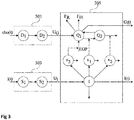
- Figure 3 is a diagram which represents in greater detail a non-limiting example of a physiological model implemented in an embodiment of the system of figure 1 .
- This exemplary model is known as the Hovorka model and is described for instance in " Nonlinear model predictive control of glucose concentration in subjects with type 1 diabetes” by Roman Hovorka et al. (Physiol Meas., 2004; 25: 905-920 ) and in “ Partitioning glucose distribution/transport, disposal, and endogenous production during IVGTT” by Roman Hovorka et al. (Physical Endocrinol Metab 282: E992-E1007, 2002 ).
- the physiological model illustrated on figure 3 comprises a first bi-compartmental sub-model 301 describing the effect of glucose intake on the rate of onset of glucose in blood plasma.
- Sub-model 301 takes as input a quantity of ingested glucose cho(t), for example in mmol/min, and provides as an output a rate U G of absorption of glucose in the blood plasma, for example in mmol/min.
- sub-model 301 comprises two state variables D 1 and D 2 that respectively corresponds to glucose masses, for example in mmol, respectively in the first and the second compartment.
- the model of figure 3 also comprises a second bi-compartmental sub-model 303 describing the absorption of exogenous insulin delivered to the patient in the blood plasma.
- Sub-model 303 takes a quantity of exogenous insulin i(t) delivered in the subcutaneous tissue of the patient as an input, for example in mU/min, and provides as an output a rate U I of absorption of insulin in the plasma, in MU/min.
- the sub-model 303 may for instance comprise two state variables S 1 and S 2 , respectively corresponding to on-board insulin which are insulin masses respectively in the first and the second compartments modeling a subcutaneous compartment representative of the sub-cutaneous tissue of the patient.
- the instantaneous on-board insulin level of the state variables S 1 and S 2 may for example be expressed in mmol.
- the model of figure 3 may further comprise a third sub-model 305 describing the regulation of glucose by the patient's body.
- This sub-model 305 takes as inputs the absorption rates U G , U I of glucose and insulin, and gives as output the blood glucose level G(t), i.e. the concentration of glucose in the plasma, for example in mmol/l.
- the sub-model 305 is thus a model of a plasma/body compartment of the patient, i.e. a model of the kinetic and chemical evolution of glucose and insulin in the plasma and the body of the patient.
- plasma and body of the patient it is meant the body of the patient with the exception of the sub-cutaneous tissues.
- the submodel 305 comprises six state variables Q1, Q2, x3, x1, x2, I.
- Variables Q1 and Q2 respectively correspond to masses of glucose respectively in the first and the second compartments, for example mmol.
- Variables x1, x2, x3 are dimensionless variables respectively representing each of three respective actions of insulin on the kinetics of glucose.
- variable I is an instantaneous plasma insulin level, i.e. corresponds to insulinemia which is a concentration of insulin in the blood plasma.
- the instantaneous plasma insulin level is for example expressed in mU/l.
- This system of differential equations comprises fifteen parameters V G , F 01 , k 12 , F R , EGP 0 , k b1 , k a1 , k b2 , k a2 , k b3 , k a3 , k a , V I , k e and t max with the following meaning:
- This model further comprises ten state variables D 1 , D 2 , S 1 , S 2 , Q 1 , Q 2 , x 1 , x 2 , x 3 and I, which are initiated to a vector [INIT] of initial values corresponding to values of these variables at a time step t0 corresponding a beginning of the simulation of the patient's behavior by the model.
- the system and method of the invention may also uses more simple physiological models than the Hovorka model described above, in particular a compartmental model with a smaller number of state variables and a reduced number of parameters compared to the Hovorka model.
- physiological models may be stored in the controller and the predictions of said models may be compared together or may be used independently, for example depending on a state of the controller or a confidence indicator that may be computed for the predictions of said models.
- the embodiments described are not limited to the Hovorka physiological model but are compatible with any physiological model describing the assimilation of insulin by a patient's body and its effect on the patient's blood glucose level.
- the absorption rate of insulin from the subcutaneous tissue to the plasma is constant.
- the controller 105 perform can determine an insulin delivery control signal by performing a cost optimization operation.
- the cost optimization operation advantageously comprises a plurality of prediction steps for a plurality of respective tested insulin injection.
- a tested insulin injection is a set comprising at least one value indicative of a quantity of insulin injected at a future time.
- the tested insulin injection may comprise a plurality of M values indicative of a quantity of insulin injected at a respective future time of a plurality of M future time step, with M being an integer strictly greater than 1.
- a prediction step 421 for a tested insulin injection comprises the sub-steps of:
- the unrolling of the physiological model over time is performed using the tested insulin injection and a set of pre-estimated model parameters that can be in particular determined during a self-calibration operation as detailed further below.
- the cost associated to the predicted glucose levels is for instance related to a distance of each predicted glucose level with a target glucose level.
- the target glucose level may be pre-defined and personalized for the patient.
- the target glucose level may be comprised between 100 and 130 mg/dL.
- the cost function can be for example a quadratic function of a difference between a predicted glucose level and a target glucose level.
- the cost function may be asymmetrical and in particular may penalize more strongly glucose level lower than the target glucose level than glucose level higher than the target glucose level.
- the cost associated to the predicted glucose levels is a function of a time-restricted subset of the plurality of predicted glucose levels.
- Such a time-restricted subset may be such that the predicted glucose levels are only considered in a restricted range, in which the glucose level of the patient may be considered controllable by the system and method of the invention.
- glucose level in a short future period close to the current time may not be considered controllable since the kinetic of sub-cutaneous delivered insulin is too slow to have an effect in the near future.
- glucose level in a far future period, far-away from the current time may also not be considered controllable since the uncertainty on the parameters, states-variables and meal uptake is too high to have a reliable prediction of the glucose level.
- a first predicted glucose level of said time-restricted subset may be associated to a first time step not closer than 30 minutes from a current time step and a last predicted glucose level of said time-restricted subset may be associated to a last time step not further than 3 hours from a current time step.
- the controller can thus determine a quantity of insulin to inject by performing a cost optimization operation comprising a plurality of prediction steps 421 for a plurality of respective tested insulin injection as illustrated on figure 4 .
- the controller 105 may in particular select a quantity of insulin to inject minimizing the cost associated to the predicted glucose levels.
- the controller 105 can then determine an insulin delivery control signal as follows.
- the controller 105 may compute a maximal allowable insulin injection amount i max during a step 424.
- the maximal allowable insulin injection amount is computed independently from the physiological model.
- the maximal allowable insulin injection amount is computed without unrolling the differential equations of the physiological model.
- the maximal allowable insulin injection amount i max is a function of a sensitivity S I of the patient to insulin.
- the maximal allowable insulin injection amount may for instance be proportional to an inverse of said sensitivity of the patient to insulin.
- the sensitivity S I may in particular be a decreasing function of the blood glucose level G of the patient.
- the sensitivity S I is a function of a glucose level of the patient such as the slope of said decreasing function is smaller at an intermediate glucose level of about 100 mg/dL than at low glucose level of less than 90 mg/dL and at high glucose level of more than 180 mg/dL.
- Such a curve may be pre-computed and stored in a memory of the controller 105.
- the curve may be computed in the following way.
- a plurality of simulated experiments can be conducted. Each simulated experiment involve the computation of a physiological model of glucose-insulin system in a patient to determine a predicted glucose level. A plurality of ratio of variations of the predicted glucose level to variations of the sub-cutaneous quantity of insulin may be computed from each simulated experiment.
- the physiological model includes in particular a first sub-model of an insulin-dependent glucose absorption compartment and a second sub-model of a non-insulin-dependent glucose absorption compartment.
- the first sub-model comprises for example a differential equation representative of a glycogenesis process while the second sub-model comprises for example a differential equation representative of a glycolysis process.
- the curve relating the sensitivity S I to the blood glucose level G of a patient may then be computed by averaging the plurality of experiments.
- in-vivo experiments may be conducted to measure a plurality of glucose levels and sub-cutaneous quantity of insulin.
- a plurality of ratio between variations of blood glucose level and variations of the sub-cutaneous quantity of insulin may also be determined from in-vivo experiments.
- the in-vivo experiments and the simulated experiments may be averaged together to determine a curve relating the sensitivity S I to the blood glucose level G.
- the maximal allowable insulin injection amount i max may also be a function of a predefined basal amount of continuously infused insulin and/or bolus insulin of the patient i basal .
- the predefined basal amount of continuously infused insulin i basal can be predetermined for a given patient, for example pre-computed by a physician.
- the basal amount of continuously infused insulin i basal is for example a function of a mean amount of insulin consumed by a patient during a day, a mean amount of carbohydrate consumed by a patient during a day and a weight of said patient.
- the personalized reactivity coefficient r norm is typically comprised between 1 and 3 and can be adjusted dynamically. This way, it is possible to adjust the responsiveness of the system and method of the invention.
- the maximal allowable insulin injection amount may also be a function of a heart rate of the patient h(t).
- the sensitivity of the patient to insulin is thus a function of a heart rate of the patient.
- the sensitivity of the patient to insulin may decrease as the patient's heart rate increases.
- the sensitivity of the patient to insulin may be a function of other physiological signals than the heart rate, as disclosed above.
- the controller 105 can determine 425 the insulin delivery control signal for example by capping the quantity of insulin to inject at the computed maximal allowable insulin injection amount.
- the delivery device can then inject insulin 430 on the basis of the delivery control signal.
- parameters of the [PARAM] vector some parameters may be considered as constant for a given patient, for example parameters k 12 , k a1 , k a2 , k a3 , k a , k e , V I , V G and t max .
- Other parameters referred to hereinafter as time-dependent parameters, may change over time, for example the parameters k b1 , k b2 , k b3 , EGP 0 , F 01 and F R .
- the self-calibration of the model should advantageously be carried out automatically by the system, in particular without physically measuring the parameters of the model.
- Figure 4 is a diagram illustrating an example of a method according to the invention.
- This method comprises an operation 410 of self-calibration of the model, which may for example be repeated at regular intervals, for example every 1 to 20 minutes.
- the controller 105 implements a determination of a set of pre-estimated model parameters taking into account the glucose measurement values, known insulin delivery control signals and at least one meal ingestion indicator during a past period, for example a period of 1 to 10 hours preceding the self-calibration operation.
- the controller 105 may simulates the behavior of the patient over the past period using the physiological model and taking into account glucose ingestions and exogenous insulin injections during this period. The controller 105 may then compares the glucose level curve estimated using the model to the actual glucose measurements by the sensor over the same period.
- the controller 105 may then determine a set of pre-determined values for a set of model parameters that leads to minimizing a cost function over the observation period.
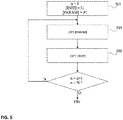
- the self-calibration operation may comprise an estimation of the initial states vector [INIT] of the state variables of the model, as it will now be described in relation with figure 5 which is illustrating an example of an embodiment of a method according to the invention.
- the self-calibration operation comprises a step 501 during which a set of parameters of the model is initialized to a first set of values P1 of the parameter vector [PARAM].
- the set P1 corresponds, for example, to the values taken by the parameters [PARAM] during a previous self-calibration operation.
- the set of values P1 may be a predefined reference set corresponding, for example, to mean values of the parameters [PARAM] over a reference period.
- a set of state variables values may also be initialized to a first set of values I1 forming an initial state vector [INIT].
- the set of values I1 may be determined analytically, for example by assuming a stationary state of the patient in a period preceding the calibration phase and coinciding an estimated blood glucose level at time t0 with an actual glucose level measurement at that time.
- the controller 105 may fix the set of initial states [INIT] to its current state and search for a set of values for the parameters of the model to minimizing a cost, for example an error between an estimated glucose level curve predicted by the model and an actual glucose level curve during a past observation period.
- t is a discretized time
- t 0 correspond to an initial time of the past observation period
- t 0 + ⁇ T correspond to an end of said past observation period (for instance the beginning of the self-calibration operation)
- g ( t ) is a curve determined from the glucose level measurements
- ⁇ ( t ) is a curve determined from the glucose level predicted by the model.
- the [PARAM] vector is updated with the new estimated values.
- step 505 the controller 105 then searches for a set of initial state values, setting the parameter set [PARAM] to its current state, here again by minimizing a cost such as the above described error between the estimated glucose level curve predicted by the model and an actual glucose level curve determined during a past observation period.
- the vector [INIT] is updated with the new estimated values.
- steps 503 and 505 may be reiterated a number N of times, where N is an integer greater than 1 that may be predetermined.
- the number of iterations of steps 503 and 505 may not be predetermined and may be adjusted by taking into account the evolution of cost function over the successive iterations.
Landscapes
- Health & Medical Sciences (AREA)
- Engineering & Computer Science (AREA)
- Public Health (AREA)
- Medical Informatics (AREA)
- General Health & Medical Sciences (AREA)
- Biomedical Technology (AREA)
- Primary Health Care (AREA)
- Epidemiology (AREA)
- General Business, Economics & Management (AREA)
- Pathology (AREA)
- Business, Economics & Management (AREA)
- Life Sciences & Earth Sciences (AREA)
- Data Mining & Analysis (AREA)
- Medicinal Chemistry (AREA)
- Bioinformatics & Cheminformatics (AREA)
- Chemical & Material Sciences (AREA)
- Databases & Information Systems (AREA)
- Veterinary Medicine (AREA)
- Heart & Thoracic Surgery (AREA)
- Animal Behavior & Ethology (AREA)
- Physics & Mathematics (AREA)
- Anesthesiology (AREA)
- Hematology (AREA)
- Vascular Medicine (AREA)
- Diabetes (AREA)
- Emergency Medicine (AREA)
- Optics & Photonics (AREA)
- Biophysics (AREA)
- Molecular Biology (AREA)
- Surgery (AREA)
- Infusion, Injection, And Reservoir Apparatuses (AREA)
- External Artificial Organs (AREA)
- Measuring Pulse, Heart Rate, Blood Pressure Or Blood Flow (AREA)
- Measurement Of The Respiration, Hearing Ability, Form, And Blood Characteristics Of Living Organisms (AREA)
Abstract
Description
- The instant invention relates to the field of closed-loop blood glucose control system for the controlled delivery of insulin to a patient. Such systems are also known as artificial pancreas.
- An artificial pancreas is a system that automatically regulates the insulin intake of a diabetic patient based on its blood glucose history, meal history, and insulin history.
- In particular, the present invention relates to Model-based Predictive Control (MPC) systems, also known as predictive control systems, in which the determination of the dose of insulin to be injected is based on a prediction of the patient's future blood glucose level obtained by computing a physiological model describing the effect of insulin in the patient's body and its impact on the patient's glucose level.
- It would be desirable to be able to improve the performance of model-based artificial pancreas, and more particularly to be able to improve the accuracy of the physiological model predictions in order to better estimate insulin requirements and reduce the risk of hyperglycemia or hypoglycemia.
- The instant invention has notably for object to improve this situation.
- According to an aspect, the invention relates to an automated closed-loop blood glucose control system for the controlled delivery of insulin to a patient comprising:
- a continuous glucose-monitoring sensor configured to provide a plurality of glucose measurement values representative of a measured glucose level of the patient at an associated plurality of measurement times;
- a subcutaneous insulin delivery device configured to deliver exogenous insulin in a subcutaneous tissue of the patient in response to an insulin delivery control signal, in particular continuously infused insulin and/or bolus insulin; and
- a controller programmed to receive the glucose measurement values and provide a delivery control signal to the insulin delivery device,
- wherein the controller is able to determine a quantity of insulin to inject at at least one time step on the basis of a predicted glucose level determined by computing a physiological model of glucose-insulin system in the patient, said model comprising a system of differential equations describing the evolution of a plurality of state variables as a function of time,
- wherein the controller is able to compute a maximal allowable insulin injection amount and to determine the insulin delivery control signal on the basis of the maximal allowable insulin injection amount and the quantity of insulin to inject at at least one time step.
- This allows improving the accuracy of the physiological model predictions.
- According to some aspects, one may use one or more of the following features:
- the maximal allowable insulin injection amount is computed independently from said physiological model, in particular independently of the differential equations of the physiological model describing the evolution of a plurality of state variables as a function of time;
- the maximal allowable insulin injection amount is a function of a sensitivity of the patient to insulin,
said sensitivity being representative of a ratio between a variation in a blood glucose level and a variation in a quantity of insulin present in the second compartment of the subcutaneous layer,
said sensitivity being a decreasing function of a glucose level of the patient,
in particular the maximal allowable insulin injection amount is proportional to an inverse of said sensitivity of the patient to insulin; - said sensitivity is a decreasing function of a glucose level of the patient wherein a slope of said decreasing function is smaller at an intermediate glucose level of about 100 mg/dL than at low glucose level of less than 90 mg/dL and at high glucose level of more than 180 mg/dL;
- a curve relating sensitivity to glucose level is precomputed by averaging at least a plurality of simulated experiments,
each simulated experiment comprises the determination of a predicted glucose level by computing a physiological model of glucose-insulin system in a patient,
said physiological model includes a first sub-model of an insulin-dependent glucose absorption compartment and a second sub-model of a non-insulin-dependent glucose absorption compartment,
in particular said first sub-model comprises at least one differential equation representative of a glycogenesis process and said second sub-model comprises at least one differential equation representative of a glycolysis process; - said maximal allowable insulin injection amount is a function of a predefined basal amount of continuously infused insulin and/or bolus insulin of the patient;
- said predefined basal amount of continuously infused insulin is predetermined as a function of at least a mean amount of insulin consumed by a patient during a day, a mean amount of carbohydrate consumed by a patient during a day and a weight of said patient;
- the maximal allowable insulin injection amount is a product of at least said predefined basal amount, a predefined personalized reactivity coefficient and an inverse of said sensitivity of the patient to insulin;
- said predefined personalized reactivity coefficient is comprised between 1 and 3;
- the insulin delivery control signal is determined by capping the quantity of insulin to inject at the computed maximal allowable insulin injection amount;
- the system further comprises a physiological sensor adapted to measure physiological data, and the maximal allowable insulin injection amount is a function of said physiological data,
- Notably where the physiological sensor is a pulse monitoring sensor configured to provide a plurality of heart rate measurement values representative of a measured heart rate of the patient at an associated plurality of measurement times,
and the maximal allowable insulin injection amount is a function of a heart rate of the patient,
in particular a sensitivity of the patient to insulin is a function of a heart rate of the patient. - According to another aspect, the invention relates to a method for the controlled delivery of insulin to a patient using an automated closed-loop blood glucose control system, the method comprising:
- continuously monitoring glucose, using a sensor, to provide a plurality of glucose measurement values representative of a measured glucose level of the patient at an associated plurality of measurement times;
- determining a quantity of insulin to inject at at least one time step, using a controller, by computing a physiological model of glucose-insulin system in the patient comprising a system of differential equations describing the evolution of a plurality of state variables as a function of time,
- computing a maximal allowable insulin injection amount,
- determining an insulin delivery control signal on the basis of the maximal allowable insulin injection amount and the quantity of insulin to inject at at least one time step, and
- delivering exogenous insulin in a subcutaneous tissue of the patient, using a subcutaneous insulin delivery device, in accordance with said insulin delivery control signal, in particular delivering continuously infused insulin and/or bolus insulin).
- According to some embodiments, one may also use one or more of the following features:
- said maximal allowable insulin injection amount is computed independently from said physiological model, in particular independently of the differential equations of the physiological model describing the evolution of a plurality of state variables as a function of time;
- said maximal allowable insulin injection amount is a function of a sensitivity of the patient to insulin,
said sensitivity being representative of a ratio between a variation in a blood glucose level and a variation in a quantity of insulin present in the second compartment of the subcutaneous layer,
said sensitivity being a decreasing function of a glucose level of the patient,
in particular the maximal allowable insulin injection amount is proportional to an inverse of said sensitivity of the patient to insulin; - in the above embodiment, said sensitivity is a decreasing function of a glucose level of the patient wherein a slope of said decreasing function is smaller at a intermediate glucose level of about 100 mg/dL than at low glucose level of less than 90 mg/dL and at high glucose level of more than 180 mg/dL;
- in any of the above two embodiments, a curve relating sensitivity to glucose level is pre-computed by averaging at least a plurality of simulated experiments,
each simulated experiment comprises the determination of a predicted glucose level by computing a physiological model of glucose-insulin system in a patient,
said physiological model includes a first sub-model of an insulin-dependent glucose absorption compartment and a second sub-model of a non-insulin-dependent glucose absorption compartment,
in particular said first sub-model comprises at least one differential equation representative of a glycogenesis process and said second sub-model comprises at least one differential equation representative of a glycolysis process; - said maximal allowable insulin injection amount is a function of a predefined basal amount of continuously infused insulin and/or bolus insulin of the patient;
- in the above embodiment, said predefined basal amount of continuously infused insulin is predetermined as a function of at least a mean amount of insulin consumed by a patient during a day, a mean amount of carbohydrate consumed by a patient during a day and a weight of said patient;
- in any of the above two embodiments, the maximal allowable insulin injection amount is a product of at least said predefined basal amount, a predefined personalized reactivity coefficient and an inverse of said sensitivity of the patient to insulin;
- in the above embodiment, said predefined personalized reactivity coefficient is comprised between 1 and 3;
- the insulin delivery control signal is determined by capping the quantity of insulin to inject at the computed maximal allowable insulin injection amount;
- said computing of a maximal allowable insulin injection amount is periodically performed.
- Other characteristics and advantages of the invention will readily appear from the following description of several of its embodiments, provided as non-limitative examples, and of the accompanying drawings.
- On the drawings:
-
Figure 1 schematically illustrates, in the form of a block diagram, an embodiment of an automated closed-loop blood glucose control system for the controlled delivery of insulin to a patient according to the invention; -
Figure 2 is a simplified representation of a physiological model used in the system offigure 1 to predict blood glucose level of a patient; -
Figure 3 is a diagram representing in greater detail an embodiment of the physiological model offigure 2 ; -
Figure 4 is a diagram illustrating an example of a method for the controlled delivery of insulin to a patient using the automated closed-loop blood glucose control system offigure 1 ; and -
Figure 5 is an explanatory diagram for an embodiment of the self-calibration operation. - On the different figures, the same reference signs designate like or similar elements.
- For the sake of clarity, only elements which are useful for understanding the embodiments described are shown on the figures and detailed in the present description. In particular, the glucose-monitoring sensor and the insulin delivery device of the blood glucose control system are not specifically detailed since the embodiments of the present invention are compatible with all or a majority of the blood glucose measuring and insulin injection devices.
- Physical embodiments of the controller of the described control system are also not described with excessive details, the realization of such a controller unit being within the scope of the skilled man given the functional explanations given in the present specification.
-
Figure 1 illustrates an example of an embodiment of an automated closed-loop blood glucose control system for the controlled delivery of insulin to a patient, in the form of a block diagram. - The system of
figure 1 comprises a sensor 101 (CG) adapted to measure the blood glucose level of the patient. In normal operation, thesensor 101 can be positioned permanently on or in the body of the patient, for example at the level of its abdomen. Thesensor 101 is for example a sensor of the "Continuous Glucose Monitoring" type (CGM), that is to say a sensor adapted to measure continuously (for example at least once per minute) the patient's blood glucose level. Thesensor 101 is, for example, a subcutaneous blood glucose sensor. - The sensor may for instance comprise a disposable glucose sensor placed just under the skin, which may be worn for a few days and periodically replaced.
- During the operation of the method and system of the present invention, the
sensor 101 provides a plurality of glucose measurement values representative of a measured glucose level of the patient at an associated plurality of measurement times. - In the present description, "glucose level" is understood as a concentration of glucose in the blood, also called glycemia.
- The system of
figure 1 further comprises an insulin delivery device 103 (PMP), for example a subcutaneous injection device. Thedevice 103 is for example an automatic injection device, like an insulin pump, comprising an insulin reservoir connected to an injection needle implanted under the skin of the patient. The pump is electrically commanded to inject controlled doses of insulin at determined times. In normal operation, theinjection device 103 is positioned in or on the body of the patient, for example at the level of its abdomen. - During the operation of the method and system of the present invention, the
insulin delivery device 103 delivers exogenous insulin in the subcutaneous tissue of the patient in response to an insulin delivery control signal. The exogenous insulin is in particular rapid-acting insulin. Rapid-acting insulin can be delivered by the insulin delivery device in two ways: - a bolus dose that is delivered to cover food eaten or to correct a high blood glucose level, or
- a basal dose that is pumped continuously at an adjustable basal rate to deliver insulin needed between meals and at night.
- In some embodiments, the system may also comprise a
pulse monitoring sensor 104. Thepulse monitoring sensor 104 is able to provide a plurality of heart rate measurement values h(t) representative of a heart rate of the patient measured at an associated plurality of measurement times. Thepulse monitoring sensor 104 can be provided on an armband or waistband, for example. The sensor can be wirelessly connected to theremote controller 105 for the transfer of measured data thereto. - Alternatively, one may use another physiological sensor than a pulse monitoring sensor. Typical examples include a sensor measuring the electrical conductivity or the superficial temperature of the skin.
- As illustrated on
figure 1 , the system further comprises a controller 105 (CTRL) which is acontroller 105 connected to the glucose-monitoring sensor 101 and to theinsulin delivery device 103 and, optionally, to thepulse monitoring sensor 104, for example by wired or radio (wireless) links. - During the operation of the method and system of the present invention, the
controller 105 receives the blood glucose data of the patient measured by thesensor 101 and provides the delivery control signal to the insulin delivery device. Thecontroller 105 may further receive, via a non-detailed user interface, indication of an amount of glucose ingested by the patient. - Such an indication on the amount of glucose is referenced as cho(t) and is in particular representative of the evolution of the ingestion of carbohydrate by the patient.
- The
controller 105 is adapted to determine the insulin delivery control signal to provide to the insulin delivery device. - To this aim, the
controller 105 comprises a digital calculation circuit (not detailed), comprising, for example, a microprocessor. Thecontroller 105 is, for example, a mobile device carried by the patient throughout the day and/or at night. One possible embodiment of thecontroller 105 may be a smartphone device configured to implement a method as described hereinafter. - The
controller 105 is in particular adapted to determine a quantity of insulin to inject at at least one time step, taking into account a prediction of the future evolution of a blood glucose level of the patient as a function of time. - More precisely, the
controller 105 determine a quantity of insulin to inject at at least one time step on the basis of a predicted glucose level determined by computing a physiological model of glucose-insulin system in the patient. - This determination operation is performed during an
operation 420 illustrated onfigure 4 . - The
controller 105 thus determines a curve representative of an expected evolution of the patient's glucose level as a function of time over a future period. - Taking this curve into account, the
controller 105 determines the doses of insulin to be injected to the patient during the next period so that the glucose level of the patient remains within an acceptable range to limit the risk of hyperglycemia or hypoglycemia. As explained hereinafter, the glucose measurement values measured by thesensor 101 may for instance be used to perform a self-calibration operation of the physiological model. -
Figure 2 is a schematic illustration of a physiological model of glucose-insulin system that may be implemented in the system offigure 1 to predict the evolution of glucose level of the patient. - The model is represented on
figure 2 as a processing block comprising: - an input e1 on which is applied a signal i(t) indicative of an evolution, as a function of time t, of a quantity of exogenous insulin delivered in a subcutaneous layer of the patient by the insulin delivery device;
- an input e2 on which is applied a signal cho(t) indicative of the evolution, as a function of time t, of the amount of glucose ingested by the patient, for example a quantity of carbohydrate ingested during a meal at a given time;
- an input e3 on which is applied a signal h(t) indicative of the evolution, as a function of time t, of the heart rate of the patient; and
- an output s providing a signal G(t) representative of the evolution, as a function of time t, of the patient's glucose level.
- According to some embodiments, other physiological signals than the heart rate can be provided as input e3, as disclosed above.
- The physiological model MPC is for example a compartmental model comprising, in addition to the input variables i(t) and cho(t) and the output variable G(t), a plurality of state variables corresponding to the instantaneous values of a plurality of physiological variables of the patient as they evolves over time.
- The temporal evolution of the state variables is governed by a system of differential equations comprising a plurality of parameters represented in
figure 2 by a vector [PARAM] applied to an input p1 of the MPC block. - The response of the physiological model may also be conditioned by the initial values assigned to the state variables, which is represented on
figure 2 by a vector [INIT] applied to an input p2 of the MPC block. -
Figure 3 is a diagram which represents in greater detail a non-limiting example of a physiological model implemented in an embodiment of the system offigure 1 . - This exemplary model is known as the Hovorka model and is described for instance in "Nonlinear model predictive control of glucose concentration in subjects with ) and in "Partitioning glucose distribution/transport, disposal, and endogenous production during IVGTT" by Roman Hovorka et al. (Physical Endocrinol Metab 282: E992-E1007, 2002).
- The physiological model illustrated on
figure 3 comprises a first bi-compartmental sub-model 301 describing the effect of glucose intake on the rate of onset of glucose in blood plasma. -
Sub-model 301 takes as input a quantity of ingested glucose cho(t), for example in mmol/min, and provides as an output a rate UG of absorption of glucose in the blood plasma, for example in mmol/min. - In this model, sub-model 301 comprises two state variables D1 and D2 that respectively corresponds to glucose masses, for example in mmol, respectively in the first and the second compartment.
- The model of
figure 3 also comprises a second bi-compartmental sub-model 303 describing the absorption of exogenous insulin delivered to the patient in the blood plasma.Sub-model 303 takes a quantity of exogenous insulin i(t) delivered in the subcutaneous tissue of the patient as an input, for example in mU/min, and provides as an output a rate UI of absorption of insulin in the plasma, in MU/min. - The sub-model 303 may for instance comprise two state variables S1 and S2, respectively corresponding to on-board insulin which are insulin masses respectively in the first and the second compartments modeling a subcutaneous compartment representative of the sub-cutaneous tissue of the patient. The instantaneous on-board insulin level of the state variables S1 and S2 may for example be expressed in mmol.
- The model of
figure 3 may further comprise athird sub-model 305 describing the regulation of glucose by the patient's body. This sub-model 305 takes as inputs the absorption rates UG, UI of glucose and insulin, and gives as output the blood glucose level G(t), i.e. the concentration of glucose in the plasma, for example in mmol/l. - The sub-model 305 is thus a model of a plasma/body compartment of the patient, i.e. a model of the kinetic and chemical evolution of glucose and insulin in the plasma and the body of the patient.
- By "plasma and body of the patient", it is meant the body of the patient with the exception of the sub-cutaneous tissues.
- In this example, the
submodel 305 comprises six state variables Q1, Q2, x3, x1, x2, I. - Variables Q1 and Q2 respectively correspond to masses of glucose respectively in the first and the second compartments, for example mmol.
- Variables x1, x2, x3 are dimensionless variables respectively representing each of three respective actions of insulin on the kinetics of glucose.
- Finally, variable I is an instantaneous plasma insulin level, i.e. corresponds to insulinemia which is a concentration of insulin in the blood plasma. The instantaneous plasma insulin level is for example expressed in mU/l.
- The Hovorka model is governed by the following system of equations:


- This system of differential equations comprises fifteen parameters VG, F01, k12, FR, EGP0, kb1, ka1, kb2, ka2, kb3, ka3, ka, VI, ke and tmax with the following meaning:
- VG corresponds to a volume of distribution of the glucose, for example in liters,
- F01 corresponds to a non-insulin-dependent glucose transfer rate, for example in mmol/min,
- k12 corresponds to a transfer rate between the two compartments of
sub Model 305, for example in min-1, - ka1, ka2, ka3 correspond to an insulin deactivation rate constants, for example in min-1,
- FR corresponds to a urinary excretion of glucose, for example in mmol/min,
- EGP0 corresponds to an endogenous production of glucose, for example in min-1,
- kb1, kb2 and kb3 correspond to insulin activation rate constants, for example in min-1,
- ka corresponds to a rate of absorption of the insulin injected subcutaneously, for example in min-1,
- VI corresponds to the volume of distribution of the insulin, for example in liters,
- ke corresponds to a plasma elimination rate of insulin, for example in min-1, and
- tmax corresponds to a time to peak glucose absorption ingested by the patient, for example in min.
- These fifteen parameters correspond to the vector [PARAM] illustrated on
figure 2 . - This model further comprises ten state variables D1, D2, S1, S2, Q1, Q2, x1, x2, x3 and I, which are initiated to a vector [INIT] of initial values corresponding to values of these variables at a time step t0 corresponding a beginning of the simulation of the patient's behavior by the model.
- The system and method of the invention may also uses more simple physiological models than the Hovorka model described above, in particular a compartmental model with a smaller number of state variables and a reduced number of parameters compared to the Hovorka model.
- In some embodiment of the invention, several physiological models may be stored in the controller and the predictions of said models may be compared together or may be used independently, for example depending on a state of the controller or a confidence indicator that may be computed for the predictions of said models.
- In particular, the embodiments described are not limited to the Hovorka physiological model but are compatible with any physiological model describing the assimilation of insulin by a patient's body and its effect on the patient's blood glucose level.
- One example of another physiological model is the Cobelli model described in "A System Model of Oral Glucose Absorption: Validation on Gold Standard Data" by Chiara Dalla Man et al. in IEEE TRANSACTIONS ON BIOMEDICAL ENGINEERING, VOL 53, NO 12, DECEMBER 2006.
- Such models are known from the literature.
- In these models, the absorption rate of insulin from the subcutaneous tissue to the plasma is constant.
- There is such a need to improve the accuracy of predicting the absorption of insulin from the subcutaneous tissue to the plasma.
- Using the above described model, the
controller 105 perform can determine an insulin delivery control signal by performing a cost optimization operation. - The cost optimization operation advantageously comprises a plurality of prediction steps for a plurality of respective tested insulin injection.
- A tested insulin injection is a set comprising at least one value indicative of a quantity of insulin injected at a future time. The tested insulin injection may comprise a plurality of M values indicative of a quantity of insulin injected at a respective future time of a plurality of M future time step, with M being an integer strictly greater than 1.
- A
prediction step 421 for a tested insulin injection comprises the sub-steps of: - computing 422 a plurality of predicted glucose levels at a plurality of respective future time steps by unrolling the physiological model over time, and
- determining 423 a cost associated to said plurality of predicted glucose levels.
- The unrolling of the physiological model over time is performed using the tested insulin injection and a set of pre-estimated model parameters that can be in particular determined during a self-calibration operation as detailed further below.
- The cost associated to the predicted glucose levels is for instance related to a distance of each predicted glucose level with a target glucose level.
- The target glucose level may be pre-defined and personalized for the patient. The target glucose level may be comprised between 100 and 130 mg/dL.
- The cost function can be for example a quadratic function of a difference between a predicted glucose level and a target glucose level.
- Advantageously, the cost function may be asymmetrical and in particular may penalize more strongly glucose level lower than the target glucose level than glucose level higher than the target glucose level.
- In some embodiment of the invention, the cost associated to the predicted glucose levels is a function of a time-restricted subset of the plurality of predicted glucose levels.
- Such a time-restricted subset may be such that the predicted glucose levels are only considered in a restricted range, in which the glucose level of the patient may be considered controllable by the system and method of the invention.
- For example, glucose level in a short future period close to the current time may not be considered controllable since the kinetic of sub-cutaneous delivered insulin is too slow to have an effect in the near future. On the other hand, glucose level in a far future period, far-away from the current time, may also not be considered controllable since the uncertainty on the parameters, states-variables and meal uptake is too high to have a reliable prediction of the glucose level.
- Thus, a first predicted glucose level of said time-restricted subset may be associated to a first time step not closer than 30 minutes from a current time step and a last predicted glucose level of said time-restricted subset may be associated to a last time step not further than 3 hours from a current time step.
- The controller can thus determine a quantity of insulin to inject by performing a cost optimization operation comprising a plurality of prediction steps 421 for a plurality of respective tested insulin injection as illustrated on
figure 4 . - The
controller 105 may in particular select a quantity of insulin to inject minimizing the cost associated to the predicted glucose levels. - The
controller 105 can then determine an insulin delivery control signal as follows. - First, the
controller 105 may compute a maximal allowable insulin injection amount imax during astep 424. - The maximal allowable insulin injection amount is computed independently from the physiological model. In particular, the maximal allowable insulin injection amount is computed without unrolling the differential equations of the physiological model.
- This increase the reliance of the system and method of the invention by reducing correlated errors arising from the simulation of the physiological model.
- In one embodiment of the invention, the maximal allowable insulin injection amount imax is a function of a sensitivity SI of the patient to insulin.
- The maximal allowable insulin injection amount may for instance be proportional to an inverse of said sensitivity of the patient to insulin.
- The sensitivity SI of the patient to insulin is representative of a ratio between a variation in a blood glucose level and a variation in a quantity of insulin present in the second compartment of the subcutaneous layer:

- The sensitivity SI may in particular be a decreasing function of the blood glucose level G of the patient.
- The sensitivity SI is a function of a glucose level of the patient such as the slope of said decreasing function is smaller at an intermediate glucose level of about 100 mg/dL than at low glucose level of less than 90 mg/dL and at high glucose level of more than 180 mg/dL.
- Such a curve may be pre-computed and stored in a memory of the
controller 105. The curve may be computed in the following way. - A plurality of simulated experiments can be conducted. Each simulated experiment involve the computation of a physiological model of glucose-insulin system in a patient to determine a predicted glucose level. A plurality of ratio of variations of the predicted glucose level to variations of the sub-cutaneous quantity of insulin may be computed from each simulated experiment.
- The physiological model includes in particular a first sub-model of an insulin-dependent glucose absorption compartment and a second sub-model of a non-insulin-dependent glucose absorption compartment.
- Thus, the first sub-model comprises for example a differential equation representative of a glycogenesis process while the second sub-model comprises for example a differential equation representative of a glycolysis process.
- The curve relating the sensitivity SI to the blood glucose level G of a patient may then be computed by averaging the plurality of experiments.
- In addition, in-vivo experiments may be conducted to measure a plurality of glucose levels and sub-cutaneous quantity of insulin. Thus, a plurality of ratio between variations of blood glucose level and variations of the sub-cutaneous quantity of insulin may also be determined from in-vivo experiments. The in-vivo experiments and the simulated experiments may be averaged together to determine a curve relating the sensitivity SI to the blood glucose level G.
- The maximal allowable insulin injection amount imax may also be a function of a predefined basal amount of continuously infused insulin and/or bolus insulin of the patient ibasal.
- The predefined basal amount of continuously infused insulin ibasal can be predetermined for a given patient, for example pre-computed by a physician. The basal amount of continuously infused insulin ibasal is for example a function of a mean amount of insulin consumed by a patient during a day, a mean amount of carbohydrate consumed by a patient during a day and a weight of said patient.
- More generally, the maximal allowable insulin injection amount imax can thus for example be a product of at least said predefined basal amount, a predefined personalized reactivity coefficient and an inverse of said sensitivity of the patient to insulin:

- The personalized reactivity coefficient rnorm is typically comprised between 1 and 3 and can be adjusted dynamically. This way, it is possible to adjust the responsiveness of the system and method of the invention.
- When the system comprises a pulse monitoring sensor, the maximal allowable insulin injection amount may also be a function of a heart rate of the patient h(t).
- In one example, the sensitivity of the patient to insulin is thus a function of a heart rate of the patient. In particular, the sensitivity of the patient to insulin may decrease as the patient's heart rate increases.
- According to some embodiments, the sensitivity of the patient to insulin may be a function of other physiological signals than the heart rate, as disclosed above.
- Once the maximal allowable insulin injection amount has been computed, the
controller 105 can determine 425 the insulin delivery control signal for example by capping the quantity of insulin to inject at the computed maximal allowable insulin injection amount. - This reduces the risk of unrealistic prediction from the model, in particular when there is a high level of noise or uncertainty for some of the current parameters. It is thus possible to ensure that the signal send to the delivery device is always in a reasonable range of values that is function of pre-determined parameters independent of the physiological model4.
- The delivery device can then inject
insulin 430 on the basis of the delivery control signal. - Among the parameters of the [PARAM] vector, some parameters may be considered as constant for a given patient, for example parameters k12, ka1, ka2, ka3, ka, ke, VI, VG and tmax. Other parameters, referred to hereinafter as time-dependent parameters, may change over time, for example the parameters kb1, kb2, kb3, EGP0, F01 and FR.
- Because of this variation of some parameters, it is in practice necessary to regularly recalibrate or self-calibration the model in use, for example every 1 to 20 minutes, to ensure that the predictions remain accurate.
- The self-calibration of the model should advantageously be carried out automatically by the system, in particular without physically measuring the parameters of the model.
-
Figure 4 is a diagram illustrating an example of a method according to the invention. - This method comprises an
operation 410 of self-calibration of the model, which may for example be repeated at regular intervals, for example every 1 to 20 minutes. - This self-calibration operation is illustrated in greater detail on
figure 5 . - During this self-calibration operation, the
controller 105 implements a determination of a set of pre-estimated model parameters taking into account the glucose measurement values, known insulin delivery control signals and at least one meal ingestion indicator during a past period, for example a period of 1 to 10 hours preceding the self-calibration operation. - For example, during the self-calibration operation, the
controller 105 may simulates the behavior of the patient over the past period using the physiological model and taking into account glucose ingestions and exogenous insulin injections during this period. Thecontroller 105 may then compares the glucose level curve estimated using the model to the actual glucose measurements by the sensor over the same period. - The
controller 105 may then determine a set of pre-determined values for a set of model parameters that leads to minimizing a cost function over the observation period. - In a similar manner, the self-calibration operation may comprise an estimation of the initial states vector [INIT] of the state variables of the model, as it will now be described in relation with
figure 5 which is illustrating an example of an embodiment of a method according to the invention. - The self-calibration operation comprises a
step 501 during which a set of parameters of the model is initialized to a first set of values P1 of the parameter vector [PARAM]. - The set P1 corresponds, for example, to the values taken by the parameters [PARAM] during a previous self-calibration operation. In a variant, the set of values P1 may be a predefined reference set corresponding, for example, to mean values of the parameters [PARAM] over a reference period.
- During a
step 501, a set of state variables values may also be initialized to a first set of values I1 forming an initial state vector [INIT]. - The set of values I1 may be determined analytically, for example by assuming a stationary state of the patient in a period preceding the calibration phase and coinciding an estimated blood glucose level at time t0 with an actual glucose level measurement at that time.
- In a
subsequent step 503, thecontroller 105 may fix the set of initial states [INIT] to its current state and search for a set of values for the parameters of the model to minimizing a cost, for example an error between an estimated glucose level curve predicted by the model and an actual glucose level curve during a past observation period. - An example of such a cost function may be written as:

- At the end of this step, the [PARAM] vector is updated with the new estimated values.
- In a
step 505 subsequent to step 503, thecontroller 105 then searches for a set of initial state values, setting the parameter set [PARAM] to its current state, here again by minimizing a cost such as the above described error between the estimated glucose level curve predicted by the model and an actual glucose level curve determined during a past observation period. - At the end of this step, the vector [INIT] is updated with the new estimated values.
- In some embodiments,
steps - The values of the parameters and the initial states of the model are then updated to the corresponding values of the vectors [PARAM] and [INIT] at the end of the Nth iteration of
steps - In a variant, the number of iterations of
steps - The algorithms that can be used to find the optimal values in
steps
Claims (15)
- An automated closed-loop blood glucose control system for the controlled delivery of insulin to a patient comprising:a continuous glucose-monitoring sensor (101) configured to provide a plurality of glucose measurement values representative of a measured glucose level of the patient at an associated plurality of measurement times;a subcutaneous insulin delivery device (103) configured to deliver exogenous insulin in a subcutaneous tissue of the patient in response to an insulin delivery control signal, in particular continuously infused insulin and/or bolus insulin; anda controller (105) programmed to receive the glucose measurement values and provide a delivery control signal to the insulin delivery device,wherein the controller (105) is able to determine a quantity of insulin to inject at at least one time step on the basis of a predicted glucose level determined by computing a physiological model of glucose-insulin system in the patient, said model comprising a system of differential equations describing the evolution of a plurality of state variables (D1, D2, S1, S2, Q1, Q2, x1, x2, x3, I) as a function of time,wherein the controller is able to compute a maximal allowable insulin injection amount and to determine the insulin delivery control signal on the basis of the maximal allowable insulin injection amount and the quantity of insulin to inject at at least one time step.
- The system according to claim 1, wherein the maximal allowable insulin injection amount is computed independently from said physiological model, in particular independently of the differential equations of the physiological model describing the evolution of a plurality of state variables (D1, D2, S1, S2, Q1, Q2, x1, x2, x3, I) as a function of time.
- The system according to claim 1 or 2, wherein the maximal allowable insulin injection amount is a function of a sensitivity of the patient to insulin,
said sensitivity being representative of a ratio between a variation in a blood glucose level and a variation in a quantity of insulin present in the second compartment of the subcutaneous layer,
said sensitivity being a decreasing function of a glucose level of the patient,
in particular wherein the maximal allowable insulin injection amount is proportional to an inverse of said sensitivity of the patient to insulin. - The system according to anyone of claim 1 to 3, wherein said sensitivity is a decreasing function of a glucose level of the patient wherein a slope of said decreasing function is smaller at an intermediate glucose level of about 100 mg/dL than at low glucose level of less than 90 mg/dL and at high glucose level of more than 180 mg/dL.
- The system according to anyone of claim 3 or 4, wherein a curve relating sensitivity to glucose level is precomputed by averaging at least a plurality of simulated experiments,
wherein each simulated experiment comprises the determination of a predicted glucose level by computing a physiological model of glucose-insulin system in a patient,
wherein said physiological model includes a first sub-model of an insulin-dependent glucose absorption compartment and a second sub-model of a non-insulin-dependent glucose absorption compartment,
in particular wherein said first sub-model comprises at least one differential equation representative of a glycogenesis process and said second sub-model comprises at least one differential equation representative of a glycolysis process. - The system according to anyone of claim 1 to 5, wherein said maximal allowable insulin injection amount is a function of a predefined basal amount of continuously infused insulin and/or bolus insulin of the patient.
- The system according to claim 6, wherein said predefined basal amount of continuously infused insulin is predetermined as a function of at least a mean amount of insulin consumed by a patient during a day, a mean amount of carbohydrate consumed by a patient during a day and a weight of said patient.
- The system according to claim 6 or 7, wherein the maximal allowable insulin injection amount is a product of at least said predefined basal amount, a predefined personalized reactivity coefficient and an inverse of said sensitivity of the patient to insulin.
- The system according to claim 8, wherein said predefined personalized reactivity coefficient is comprised between 1 and 3.
- The system according to anyone of claim 1 to 9, wherein the insulin delivery control signal is determined by capping the quantity of insulin to inject at the computed maximal allowable insulin injection amount.
- The system according to anyone of claim 1 to 10, wherein the system further comprises a physiological sensor adapted to measure physiological data, and wherein the maximal allowable insulin injection amount is a function of said physiological data,
Notably where the physiological sensor is a pulse monitoring sensor configured to provide a plurality of heart rate measurement values representative of a measured heart rate of the patient at an associated plurality of measurement times,
and wherein the maximal allowable insulin injection amount is a function of a heart rate of the patient,
in particular wherein a sensitivity of the patient to insulin is a function of a heart rate of the patient. - A method for the controlled delivery of insulin to a patient using an automated closed-loop blood glucose control system, the method comprising:continuously monitoring glucose, using a sensor, to provide a plurality of glucose measurement values representative of a measured glucose level of the patient at an associated plurality of measurement times;determining a quantity of insulin to inject at at least one time step, using a controller, by computing a physiological model of glucose-insulin system in the patient comprising a system of differential equations describing the evolution of a plurality of state variables (D1, D2, S1, S2, Q1, Q2, x1, x2, x3, I) as a function of time,computing a maximal allowable insulin injection amount,determining an insulin delivery control signal on the basis of the maximal allowable insulin injection amount and the quantity of insulin to inject at at least one time step, anddelivering exogenous insulin in a subcutaneous tissue of the patient, using a subcutaneous insulin delivery device, in accordance with said insulin delivery control signal, in particular delivering continuously infused insulin and/or bolus insulin (103).
- The method according to claim 12, wherein said maximal allowable insulin injection amount is computed independently from said physiological model, in particular independently of the differential equations of the physiological model describing the evolution of a plurality of state variables (D1, D2, S1, S2, Q1, Q2, x1, x2, x3, I) as a function of time.
- The method according to claim 12 or 13, wherein said maximal allowable insulin injection amount is a function of a sensitivity of the patient to insulin,
said sensitivity being representative of a ratio between a variation in a blood glucose level and a variation in a quantity of insulin present in the second compartment of the subcutaneous layer,
said sensitivity being a decreasing function of a glucose level of the patient,
in particular wherein the maximal allowable insulin injection amount is proportional to an inverse of said sensitivity of the patient to insulin. - The method according to anyone of claim 12 to 14, wherein the insulin delivery control signal is determined by capping the quantity of insulin to inject at the computed maximal allowable insulin injection amount.
Priority Applications (7)
| Application Number | Priority Date | Filing Date | Title |
|---|---|---|---|
| EP17306034.4A EP3438858A1 (en) | 2017-08-02 | 2017-08-02 | Closed-loop blood glucose control systems and methods |
| PCT/EP2018/070901 WO2019025506A1 (en) | 2017-08-02 | 2018-08-01 | Closed-loop blood glucose control systems and methods |
| JP2020503688A JP7290624B2 (en) | 2017-08-02 | 2018-08-01 | Closed-loop blood glucose control system and method of operating a closed-loop blood glucose control system |
| CA3071570A CA3071570C (en) | 2017-08-02 | 2018-08-01 | Closed-loop blood glucose control systems and methods |
| KR1020207003195A KR102601111B1 (en) | 2017-08-02 | 2018-08-01 | Closed-loop blood glucose control system and method |
| MX2020001276A MX2020001276A (en) | 2017-08-02 | 2018-08-01 | CLOSED CIRCUIT BLOOD GLUCOSE CONTROL SYSTEMS AND METHODS. |
| US16/645,436 US11484652B2 (en) | 2017-08-02 | 2018-08-01 | Closed-loop blood glucose control systems and methods |
Applications Claiming Priority (1)
| Application Number | Priority Date | Filing Date | Title |
|---|---|---|---|
| EP17306034.4A EP3438858A1 (en) | 2017-08-02 | 2017-08-02 | Closed-loop blood glucose control systems and methods |
Publications (1)
| Publication Number | Publication Date |
|---|---|
| EP3438858A1 true EP3438858A1 (en) | 2019-02-06 |
Family
ID=59626536
Family Applications (1)
| Application Number | Title | Priority Date | Filing Date |
|---|---|---|---|
| EP17306034.4A Pending EP3438858A1 (en) | 2017-08-02 | 2017-08-02 | Closed-loop blood glucose control systems and methods |
Country Status (7)
| Country | Link |
|---|---|
| US (1) | US11484652B2 (en) |
| EP (1) | EP3438858A1 (en) |
| JP (1) | JP7290624B2 (en) |
| KR (1) | KR102601111B1 (en) |
| CA (1) | CA3071570C (en) |
| MX (1) | MX2020001276A (en) |
| WO (1) | WO2019025506A1 (en) |
Cited By (1)
| Publication number | Priority date | Publication date | Assignee | Title |
|---|---|---|---|---|
| EP4254083A1 (en) * | 2022-03-30 | 2023-10-04 | Siemens Aktiengesellschaft | Method for parameterizing a monitoring system, parameter device, and a monitoring system |
Families Citing this family (10)
| Publication number | Priority date | Publication date | Assignee | Title |
|---|---|---|---|---|
| US11158413B2 (en) | 2018-04-23 | 2021-10-26 | Medtronic Minimed, Inc. | Personalized closed loop medication delivery system that utilizes a digital twin of the patient |
| US11147919B2 (en) | 2018-04-23 | 2021-10-19 | Medtronic Minimed, Inc. | Methodology to recommend and implement adjustments to a fluid infusion device of a medication delivery system |
| FR3083076B1 (en) * | 2018-06-29 | 2023-04-07 | Commissariat Energie Atomique | AUTOMATED PATIENT GLYCEMIA MONITORING SYSTEM |
| EP3938979A4 (en) * | 2019-03-15 | 2022-12-28 | 3M Innovative Properties Company | INDIVIDUALIZED MEDICINE USING CAUSAL MODELS |
| US11986629B2 (en) * | 2019-06-11 | 2024-05-21 | Medtronic Minimed, Inc. | Personalized closed loop optimization systems and methods |
| ES3011341T3 (en) | 2019-12-30 | 2025-04-07 | Hoffmann La Roche | Computer-implemented diabetes management methods |
| EP3985681A1 (en) | 2020-10-13 | 2022-04-20 | Diabeloop | Computerized system for the repeated determination of a set of at least one control parameters of a medical device |
| US11904140B2 (en) * | 2021-03-10 | 2024-02-20 | Insulet Corporation | Adaptable asymmetric medicament cost component in a control system for medicament delivery |
| EP4207210A1 (en) * | 2021-12-29 | 2023-07-05 | Diabeloop | Computerized method to assess confidence in a main predictive output determined by a predictive model |
| US20240075208A1 (en) * | 2022-09-01 | 2024-03-07 | Insulet Corporation | Method for detecting occlusions in a fluid path using blood glucose readings |
Citations (3)
| Publication number | Priority date | Publication date | Assignee | Title |
|---|---|---|---|---|
| US20100057043A1 (en) * | 2006-11-27 | 2010-03-04 | University Of Virginia Patent Foundation | Method, System, and Computer Program Product for the Detection of Physical Activity by Changes in Heart Rate, Assessment of Fast Changing Metabolic States, and Applications of Closed and Open Control Loop in Diabetes |
| US20170056591A1 (en) * | 2015-09-02 | 2017-03-02 | University Of Virginia Patent Foundation | System, method, and computer readable medium for dynamic insulin sensitivity in diabetic pump users |
| US20170080152A1 (en) * | 2009-03-31 | 2017-03-23 | Abbott Diabetes Care Inc. | Integrated closed-loop medication delivery with error model and safety check |
Family Cites Families (107)
| Publication number | Priority date | Publication date | Assignee | Title |
|---|---|---|---|---|
| US6689091B2 (en) | 1996-08-02 | 2004-02-10 | Tuan Bui | Medical apparatus with remote control |
| AU7098698A (en) | 1997-03-27 | 1998-10-22 | Alfred E. Mann Foundation For Scientific Research | System of implantable devices for monitoring and/or affecting body parameters |
| US5954643A (en) | 1997-06-09 | 1999-09-21 | Minimid Inc. | Insertion set for a transcutaneous sensor |
| US6558320B1 (en) | 2000-01-20 | 2003-05-06 | Medtronic Minimed, Inc. | Handheld personal data assistant (PDA) with a medical device and method of using the same |
| DK1436023T3 (en) | 2001-09-07 | 2013-02-18 | Medtronic Minimed Inc | Safety Limits for a Closed Circuit Fusion Pump Control |
| US7204823B2 (en) | 2001-12-19 | 2007-04-17 | Medtronic Minimed, Inc. | Medication delivery system and monitor |
| US7022072B2 (en) | 2001-12-27 | 2006-04-04 | Medtronic Minimed, Inc. | System for monitoring physiological characteristics |
| GB0206792D0 (en) | 2002-03-22 | 2002-05-01 | Leuven K U Res & Dev | Normoglycemia |
| US20040068230A1 (en) | 2002-07-24 | 2004-04-08 | Medtronic Minimed, Inc. | System for providing blood glucose measurements to an infusion device |
| US7404796B2 (en) | 2004-03-01 | 2008-07-29 | Becton Dickinson And Company | System for determining insulin dose using carbohydrate to insulin ratio and insulin sensitivity factor |
| WO2005061041A1 (en) | 2002-10-11 | 2005-07-07 | Becton, Dickinson And Company | Insulin delivery system with sensor |
| EP1560616B1 (en) | 2002-11-05 | 2018-01-24 | Bigfoot Biomedical, Inc. | A disposable wearable insulin dispensing device, a combination of such a device and a programming controller |
| US7547281B2 (en) | 2005-02-01 | 2009-06-16 | Medtronic Minimed, Inc. | Algorithm sensor augmented bolus estimator for semi-closed loop infusion system |
| EP1881786B1 (en) | 2005-05-13 | 2017-11-15 | Trustees of Boston University | Fully automated control system for type 1 diabetes |
| EP1728468A1 (en) | 2005-06-04 | 2006-12-06 | Roche Diagnostics GmbH | Evaluation of blood glucose concentration values for adaptation of insulin dosage |
| US20070060869A1 (en) | 2005-08-16 | 2007-03-15 | Tolle Mike C V | Controller device for an infusion pump |
| EP2926847B1 (en) | 2005-11-02 | 2022-05-25 | MedicalTree Patents Ltd. | Implantable infusion device with advanceable and retractable needle |
| US7941200B2 (en) | 2005-12-08 | 2011-05-10 | Roche Diagnostics Operations, Inc. | System and method for determining drug administration information |
| KR101036385B1 (en) | 2006-03-24 | 2011-05-23 | 제너럴 인스트루먼트 코포레이션 | Method and apparatus for configuring logical channels in a network |
| US20070255125A1 (en) | 2006-04-28 | 2007-11-01 | Moberg Sheldon B | Monitor devices for networked fluid infusion systems |
| US9056165B2 (en) | 2006-09-06 | 2015-06-16 | Medtronic Minimed, Inc. | Intelligent therapy recommendation algorithm and method of using the same |
| US7946985B2 (en) | 2006-12-29 | 2011-05-24 | Medtronic Minimed, Inc. | Method and system for providing sensor redundancy |
| US10154804B2 (en) | 2007-01-31 | 2018-12-18 | Medtronic Minimed, Inc. | Model predictive method and system for controlling and supervising insulin infusion |
| US8622991B2 (en) | 2007-03-19 | 2014-01-07 | Insuline Medical Ltd. | Method and device for drug delivery |
| US20080269723A1 (en) | 2007-04-25 | 2008-10-30 | Medtronic Minimed, Inc. | Closed loop/semi-closed loop therapy modification system |
| US10546659B2 (en) | 2007-06-21 | 2020-01-28 | University Of Virginia Patent Foundation | Method, system and computer simulation environment for testing of monitoring and control strategies in diabetes |
| JP5183736B2 (en) | 2007-06-21 | 2013-04-17 | ユニバーシティ オブ バージニア パテント ファウンデーション | LQG artificial pancreas control system and related method |
| EP2174248B1 (en) | 2007-06-25 | 2016-10-05 | Roche Diabetes Care GmbH | A method system and device for assessing insulin sensitivity |
| ES2733350T3 (en) | 2007-06-27 | 2019-11-28 | Hoffmann La Roche | System for medical diagnosis, treatment and prognosis for requested events and procedure |
| EP2171568B1 (en) | 2007-06-29 | 2018-05-30 | Roche Diabetes Care GmbH | User interface features for an electronic device |
| EP2227132B1 (en) | 2007-10-09 | 2023-03-08 | DexCom, Inc. | Integrated insulin delivery system with continuous glucose sensor |
| EP2141620B1 (en) | 2008-07-01 | 2018-10-31 | Roche Diabetes Care GmbH | Insulin pump and method for controlling a user interface of an insulin pump |
| US8784364B2 (en) | 2008-09-15 | 2014-07-22 | Deka Products Limited Partnership | Systems and methods for fluid delivery |
| GB2466183A (en) | 2008-12-09 | 2010-06-16 | Cambridge Entpr Ltd | Closed loop diabetes management system |
| EP2399205B1 (en) | 2009-02-25 | 2020-04-08 | University Of Virginia Patent Foundation | Cgm-based prevention of hypoglycemia via hypoglycemia risk assessment and smooth reduction insulin delivery |
| EP2400882B8 (en) | 2009-02-26 | 2017-08-30 | DreaMed Diabetes Ltd | Method and system for automatic monitoring of diabetes related treatments |
| WO2010135638A2 (en) | 2009-05-22 | 2010-11-25 | Abbott Diabetes Care Inc. | Methods for reducing false hypoglycemia alarm occurrence |
| EP4224483A1 (en) | 2009-05-29 | 2023-08-09 | University Of Virginia Patent Foundation | System coordinator and modular architecture for open-loop and closed-loop control of diabetes |
| US9687194B2 (en) | 2009-06-17 | 2017-06-27 | Medtronic Minimed, Inc. | Closed-loop glucose and/or insulin control system |
| GR20090100384A (en) | 2009-07-08 | 2011-02-18 | Αχιλλεας Τσουκαλης | Insulin pump |
| WO2011018460A1 (en) | 2009-08-10 | 2011-02-17 | Diabetes Tools Sweden Ab | Apparatus and method for processing glycemic data |
| EP2525863B1 (en) * | 2010-01-20 | 2018-12-05 | Roche Diabetes Care GmbH | A method and device for improving glycemic control |
| US8762070B2 (en) | 2010-02-11 | 2014-06-24 | Regents Of The University Of California | Systems, devices and methods to deliver biological factors or drugs to a subject |
| US8579879B2 (en) | 2010-02-19 | 2013-11-12 | Medtronic Minimed, Inc. | Closed-loop glucose control startup |
| US9398869B2 (en) | 2010-03-26 | 2016-07-26 | University Of Virginia Patent Foundation | Method, system, and computer program product for improving the accuracy of glucose sensors using insulin delivery observation in diabetes |
| US10561785B2 (en) | 2010-06-22 | 2020-02-18 | Medtronic Minimed, Inc. | Method and/or system for closed-loop control of glucose to a treatment range |
| US20120006100A1 (en) | 2010-07-06 | 2012-01-12 | Medtronic Minimed, Inc. | Method and/or system for determining blood glucose reference sample times |
| CA2816388C (en) | 2010-10-12 | 2016-12-06 | The Regents Of The University Of California | Maintaining multiple defined physiological zones using model predictive control |
| ES2755497T3 (en) | 2010-10-31 | 2020-04-22 | Univ Boston | Blood glucose monitoring system |
| US10390740B2 (en) | 2010-12-29 | 2019-08-27 | Medtronic Minimed, Inc. | Glycemic health metric determination and application |
| US9445757B2 (en) | 2010-12-29 | 2016-09-20 | Medtronic Minimed, Inc. | Glycemic health metric determination and application |
| GB2493712B (en) | 2011-08-12 | 2014-07-02 | Gene Onyx Ltd | Insulin pump |
| WO2013032965A1 (en) | 2011-08-26 | 2013-03-07 | University Of Virginia Patent Foundation | Method, system and computer readable medium for adaptive advisory control of diabetes |
| US20130060106A1 (en) | 2011-09-06 | 2013-03-07 | Medtronic Minimed, Inc. | Optical sensing systems and methods |
| US8882665B2 (en) | 2011-10-26 | 2014-11-11 | Medtronic Minimed, Inc. | Method and/or system for multicompartment analyte monitoring |
| US9907491B2 (en) | 2011-10-25 | 2018-03-06 | Medtronic Minimed, Inc. | Method and/or system for multicompartment analyte monitoring |
| US8870763B2 (en) | 2011-10-26 | 2014-10-28 | Medtronic Minimed, Inc. | Method and/or system for multicompartment analyte monitoring |
| US9414775B2 (en) | 2012-03-29 | 2016-08-16 | Senseonics, Incorporated | Purification of glucose concentration signal in an implantable fluorescence based glucose sensor |
| TWI600409B (en) | 2012-03-29 | 2017-10-01 | 感應學公司 | Method of an optical sensor for determining a concentration of glucose, and method of configuring said optical sensor |
| US10111588B2 (en) | 2012-03-29 | 2018-10-30 | Senseonics, Incorporated | Analyte sensor transceiver configured to provide tactile, visual, and/or aural feedback |
| KR101945341B1 (en) | 2012-04-17 | 2019-02-08 | 삼성전자주식회사 | Apparatus and method for auto-supplying insulin according to exercise |
| US20130298063A1 (en) | 2012-05-04 | 2013-11-07 | Medtronic Minimed, Inc. | Active Overlay of Diabetes Management Information on a Display |
| US9757510B2 (en) | 2012-06-29 | 2017-09-12 | Animas Corporation | Method and system to handle manual boluses or meal events for closed-loop controllers |
| WO2014008342A1 (en) | 2012-07-03 | 2014-01-09 | Edwards Lifesciences Corporation | Patient analyte information display |
| US9878096B2 (en) | 2012-08-30 | 2018-01-30 | Medtronic Minimed, Inc. | Generation of target glucose values for a closed-loop operating mode of an insulin infusion system |
| US9364609B2 (en) | 2012-08-30 | 2016-06-14 | Medtronic Minimed, Inc. | Insulin on board compensation for a closed-loop insulin infusion system |
| US9849239B2 (en) | 2012-08-30 | 2017-12-26 | Medtronic Minimed, Inc. | Generation and application of an insulin limit for a closed-loop operating mode of an insulin infusion system |
| KR102054540B1 (en) * | 2012-08-30 | 2019-12-10 | 메드트로닉 미니메드 인코포레이티드 | Safeguarding techniques for a closed-loop insulin infusion system |
| US9662445B2 (en) | 2012-08-30 | 2017-05-30 | Medtronic Minimed, Inc. | Regulating entry into a closed-loop operating mode of an insulin infusion system |
| US10496797B2 (en) * | 2012-08-30 | 2019-12-03 | Medtronic Minimed, Inc. | Blood glucose validation for a closed-loop operating mode of an insulin infusion system |
| US9623179B2 (en) | 2012-08-30 | 2017-04-18 | Medtronic Minimed, Inc. | Safeguarding techniques for a closed-loop insulin infusion system |
| US10130767B2 (en) | 2012-08-30 | 2018-11-20 | Medtronic Minimed, Inc. | Sensor model supervisor for a closed-loop insulin infusion system |
| US9486578B2 (en) | 2012-12-07 | 2016-11-08 | Animas Corporation | Method and system for tuning a closed-loop controller for an artificial pancreas |
| US9907909B2 (en) | 2012-12-20 | 2018-03-06 | Animas Corporation | Method and system for a hybrid control-to-target and control-to-range model predictive control of an artificial pancreas |
| CA2897925C (en) | 2013-01-14 | 2017-05-30 | The Regents Of The University Of California | Daily periodic target-zone modulation in the model predictive control problem for artificial pancreas for type 1 diabetes applications |
| WO2014109898A1 (en) | 2013-01-14 | 2014-07-17 | The Regents Of University Of California | Model-based personalization scheme of an artificial pancreas for type i diabetes applications |
| US10357606B2 (en) | 2013-03-13 | 2019-07-23 | Tandem Diabetes Care, Inc. | System and method for integration of insulin pumps and continuous glucose monitoring |
| US9795737B2 (en) | 2013-03-15 | 2017-10-24 | Animas Corporation | Method and system for closed-loop control of an artificial pancreas |
| EP2973095B1 (en) | 2013-03-15 | 2018-05-09 | Animas Corporation | Insulin time-action model |
| CN105339943B (en) | 2013-06-21 | 2019-01-01 | 费森尤斯维尔公司 | Method and control device for controlling insulin administration to a patient |
| EP3039596A4 (en) | 2013-08-30 | 2017-04-12 | Hospira, Inc. | System and method of monitoring and managing a remote infusion regimen |
| US9474855B2 (en) | 2013-10-04 | 2016-10-25 | Animas Corporation | Method and system for controlling a tuning factor due to sensor replacement for closed-loop controller in an artificial pancreas |
| WO2015073211A1 (en) | 2013-11-14 | 2015-05-21 | Regents Of The University Of California | Glucose rate increase detector: a meal detection module for the health monitoring system |
| EP3079585B1 (en) | 2013-12-11 | 2019-03-20 | Medtronic MiniMed, Inc. | Apparatus for predicting time to assess and/or control a glycemic state |
| US9649059B2 (en) | 2013-12-16 | 2017-05-16 | Medtronic Minimed, Inc. | Methods and systems for improving the reliability of orthogonally redundant sensors |
| AU2015274894B2 (en) | 2014-06-10 | 2018-11-15 | Bigfoot Biomedical, Inc. | Insulin delivery systems and methods |
| WO2016019133A1 (en) | 2014-07-30 | 2016-02-04 | Tandem Diabetes Care, Inc. | Temporary suspension for closed-loop medicament therapy |
| US10252002B2 (en) | 2014-08-01 | 2019-04-09 | Becton, Dickinson And Company | Continuous glucose monitoring injection device |
| AU2015301146B2 (en) | 2014-08-06 | 2020-06-25 | Regents Of The University Of California | Moving-horizon state-initializer for control applications |
| US9943645B2 (en) | 2014-12-04 | 2018-04-17 | Medtronic Minimed, Inc. | Methods for operating mode transitions and related infusion devices and systems |
| US9636453B2 (en) | 2014-12-04 | 2017-05-02 | Medtronic Minimed, Inc. | Advance diagnosis of infusion device operating mode viability |
| US9878097B2 (en) | 2015-04-29 | 2018-01-30 | Bigfoot Biomedical, Inc. | Operating an infusion pump system |
| US20160339175A1 (en) | 2015-05-20 | 2016-11-24 | Medtronic Minimed, Inc. | Infusion devices and related methods for therapy recommendations |
| CN107851224B (en) | 2015-06-28 | 2022-07-08 | 加利福尼亚大学董事会 | Velocity-weighted model predictive control of artificial pancreas for type 1 diabetes applications |
| US10293108B2 (en) | 2015-08-21 | 2019-05-21 | Medtronic Minimed, Inc. | Infusion devices and related patient ratio adjustment methods |
| US10117992B2 (en) | 2015-09-29 | 2018-11-06 | Medtronic Minimed, Inc. | Infusion devices and related rescue detection methods |
| US10716896B2 (en) | 2015-11-24 | 2020-07-21 | Insulet Corporation | Wearable automated medication delivery system |
| EP4458256A3 (en) | 2015-12-28 | 2025-01-08 | Medtronic Minimed, Inc. | Methods for continuous glucose monitoring |
| HK1257215A1 (en) | 2016-01-05 | 2019-10-18 | Bigfoot Biomedical, Inc. | Operating multi-modal medicine delivery systems |
| US10878964B2 (en) | 2016-01-12 | 2020-12-29 | President And Fellows Of Harvard College | Predictive control model for the artificial pancreas using past predictions |
| US10293101B2 (en) | 2016-01-14 | 2019-05-21 | Bigfoot Biomedical, Inc. | Diabetes management system |
| US20170220750A1 (en) | 2016-02-01 | 2017-08-03 | Dexcom, Inc. | System and method for decision support using lifestyle factors |
| US11160921B2 (en) | 2016-03-11 | 2021-11-02 | Micrel Medical Devices S.A. | Pump infusion system |
| US20200268968A1 (en) | 2016-04-22 | 2020-08-27 | Children`S Medical Center Corporation | Methods and systems for managing diabetes |
| US10332632B2 (en) | 2016-06-01 | 2019-06-25 | Roche Diabetes Care, Inc. | Control-to-range failsafes |
| US10332633B2 (en) | 2016-06-01 | 2019-06-25 | Roche Diabetes Care, Inc. | Control-to-range aggressiveness |
| US10297350B2 (en) | 2016-06-01 | 2019-05-21 | Roche Diabetes Care, Inc. | Risk-based control-to-range |
-
2017
- 2017-08-02 EP EP17306034.4A patent/EP3438858A1/en active Pending
-
2018
- 2018-08-01 US US16/645,436 patent/US11484652B2/en active Active
- 2018-08-01 KR KR1020207003195A patent/KR102601111B1/en active Active
- 2018-08-01 WO PCT/EP2018/070901 patent/WO2019025506A1/en not_active Ceased
- 2018-08-01 CA CA3071570A patent/CA3071570C/en active Active
- 2018-08-01 MX MX2020001276A patent/MX2020001276A/en unknown
- 2018-08-01 JP JP2020503688A patent/JP7290624B2/en active Active
Patent Citations (3)
| Publication number | Priority date | Publication date | Assignee | Title |
|---|---|---|---|---|
| US20100057043A1 (en) * | 2006-11-27 | 2010-03-04 | University Of Virginia Patent Foundation | Method, System, and Computer Program Product for the Detection of Physical Activity by Changes in Heart Rate, Assessment of Fast Changing Metabolic States, and Applications of Closed and Open Control Loop in Diabetes |
| US20170080152A1 (en) * | 2009-03-31 | 2017-03-23 | Abbott Diabetes Care Inc. | Integrated closed-loop medication delivery with error model and safety check |
| US20170056591A1 (en) * | 2015-09-02 | 2017-03-02 | University Of Virginia Patent Foundation | System, method, and computer readable medium for dynamic insulin sensitivity in diabetic pump users |
Non-Patent Citations (8)
| Title |
|---|
| B. AHREN: "Insulin Secretion and Insulin Sensitivity in Relation to Fasting Glucose in Healthy Subjects", DIABETES CARE, vol. 30, no. 3, 27 February 2007 (2007-02-27), US, pages 644 - 648, XP055425299, ISSN: 0149-5992, DOI: 10.2337/dc06-1759 * |
| CHIARA DALLA MAN ET AL.: "A System Model of Oral Glucose Absorption: Validation on Gold Standard Data", IEEE TRANSACTIONS ON BIOMEDICAL ENGINEERING, vol. 53, no. 12, December 2006 (2006-12-01), XP011150965, DOI: doi:10.1109/TBME.2006.883792 |
| DIMITRI BOIROUX ET AL: "Model Predictive Control Algorithms for Pen and Pump Insulin Administration", 20 October 2015 (2015-10-20), XP055424120, Retrieved from the Internet <URL:http://orbit.dtu.dk/files/57023470/phd283_Boiroux_D.pdf> [retrieved on 20171113] * |
| I AJMERA ET AL: "The impact of mathematical modeling on the understanding of diabetes and related complications", CPT: PHARMACOMETRICS & SYSTEMS PHARMACOLOGY, vol. 2, no. 7, 10 July 2013 (2013-07-10), pages e54, XP055425483, ISSN: 2163-8306, DOI: 10.1038/psp.2013.30 * |
| M. SCHIAVON ET AL: "Quantitative Estimation of Insulin Sensitivity in Type 1 Diabetic Subjects Wearing a Sensor-Augmented Insulin Pump", DIABETES CARE, vol. 37, no. 5, 6 December 2013 (2013-12-06), US, pages 1216 - 1223, XP055126332, ISSN: 0149-5992, DOI: 10.2337/dc13-1120 * |
| NELSON CHOW ET AL: "Determining starting basal rates of insulin infusion for insulin pump users: a comparison between methods", BMJ OPEN DIABETES RESEARCH & CARE, vol. 4, no. 1, 1 March 2016 (2016-03-01), pages e000145, XP055425636, DOI: 10.1136/bmjdrc-2015-000145 * |
| ROMAN HOVORKA ET AL.: "Nonlinear model predictive control of glucose concentration in subjects with type 1 diabetes", PHYSIOL MEAS., vol. 25, 2004, pages 905 - 920, XP020074167, DOI: doi:10.1088/0967-3334/25/4/010 |
| ROMAN HOVORKA ET AL.: "Partitioning glucose distribution/transport, disposal, and endogenous production during IVGTT", PHYSICAL ENDOCRINOL METAB, vol. 282, 2002, pages E992 - E1007 |
Cited By (1)
| Publication number | Priority date | Publication date | Assignee | Title |
|---|---|---|---|---|
| EP4254083A1 (en) * | 2022-03-30 | 2023-10-04 | Siemens Aktiengesellschaft | Method for parameterizing a monitoring system, parameter device, and a monitoring system |
Also Published As
| Publication number | Publication date |
|---|---|
| JP7290624B2 (en) | 2023-06-13 |
| KR102601111B1 (en) | 2023-11-10 |
| US20200282141A1 (en) | 2020-09-10 |
| MX2020001276A (en) | 2020-10-16 |
| CA3071570A1 (en) | 2019-02-07 |
| KR20200037233A (en) | 2020-04-08 |
| JP2020529230A (en) | 2020-10-08 |
| CA3071570C (en) | 2024-04-23 |
| WO2019025506A1 (en) | 2019-02-07 |
| US11484652B2 (en) | 2022-11-01 |
Similar Documents
| Publication | Publication Date | Title |
|---|---|---|
| US11484652B2 (en) | Closed-loop blood glucose control systems and methods | |
| US11213249B2 (en) | Automated system for controlling the blood glucose level of a patient | |
| US11298460B2 (en) | Automated system for controlling the blood glucose level of a patient | |
| US11605461B2 (en) | Risk-based control-to-range blood glucose diabetes management device | |
| US11433184B2 (en) | Automated system for regulating a patient's blood glucose level | |
| EP3465491B1 (en) | Control-to-range aggressiveness | |
| EP1881786B1 (en) | Fully automated control system for type 1 diabetes | |
| US11883162B2 (en) | System for predicting a patient's blood glucose level | |
| US12383672B2 (en) | Automated system for controlling the blood sugar of a patient | |
| EP3438986B1 (en) | Closed-loop blood glucose control systems and methods | |
| CN110352460A (en) | artificial pancreas | |
| JP7470121B2 (en) | An automated system for regulating a patient's blood sugar level | |
| KR102803476B1 (en) | Automated system to monitor patient blood sugar levels | |
| US12005233B2 (en) | Automated system for monitoring a patient's blood sugar |
Legal Events
| Date | Code | Title | Description |
|---|---|---|---|
| PUAI | Public reference made under article 153(3) epc to a published international application that has entered the european phase |
Free format text: ORIGINAL CODE: 0009012 |
|
| STAA | Information on the status of an ep patent application or granted ep patent |
Free format text: STATUS: THE APPLICATION HAS BEEN PUBLISHED |
|
| AK | Designated contracting states |
Kind code of ref document: A1 Designated state(s): AL AT BE BG CH CY CZ DE DK EE ES FI FR GB GR HR HU IE IS IT LI LT LU LV MC MK MT NL NO PL PT RO RS SE SI SK SM TR |
|
| AX | Request for extension of the european patent |
Extension state: BA ME |
|
| RIC1 | Information provided on ipc code assigned before grant |
Ipc: G06F 19/00 20180101AFI20171127BHEP Ipc: A61B 5/145 20060101ALI20171127BHEP |
|
| STAA | Information on the status of an ep patent application or granted ep patent |
Free format text: STATUS: REQUEST FOR EXAMINATION WAS MADE |
|
| 17P | Request for examination filed |
Effective date: 20190723 |
|
| RBV | Designated contracting states (corrected) |
Designated state(s): AL AT BE BG CH CY CZ DE DK EE ES FI FR GB GR HR HU IE IS IT LI LT LU LV MC MK MT NL NO PL PT RO RS SE SI SK SM TR |
|
| STAA | Information on the status of an ep patent application or granted ep patent |
Free format text: STATUS: EXAMINATION IS IN PROGRESS |
|
| 17Q | First examination report despatched |
Effective date: 20210319 |
|
| RAP3 | Party data changed (applicant data changed or rights of an application transferred) |
Owner name: DIABELOOP |
|
| REG | Reference to a national code |
Ref country code: DE Ref legal event code: R079 Free format text: PREVIOUS MAIN CLASS: G06F0019000000 Ipc: G16H0050500000 |
|
| RIC1 | Information provided on ipc code assigned before grant |
Ipc: G16H 50/50 20180101AFI20260109BHEP Ipc: G16H 20/17 20180101ALI20260109BHEP Ipc: A61B 5/145 20060101ALI20260109BHEP Ipc: G16H 40/40 20180101ALI20260109BHEP |
|
| GRAP | Despatch of communication of intention to grant a patent |
Free format text: ORIGINAL CODE: EPIDOSNIGR1 |
|
| STAA | Information on the status of an ep patent application or granted ep patent |
Free format text: STATUS: GRANT OF PATENT IS INTENDED |
|
| INTG | Intention to grant announced |
Effective date: 20260220 |
|
| GRAS | Grant fee paid |
Free format text: ORIGINAL CODE: EPIDOSNIGR3 |
|
| GRAA | (expected) grant |
Free format text: ORIGINAL CODE: 0009210 |
|
| STAA | Information on the status of an ep patent application or granted ep patent |
Free format text: STATUS: THE PATENT HAS BEEN GRANTED |