EP3438668A1 - Diagnosis and risk stratification of fungal infections - Google Patents
Diagnosis and risk stratification of fungal infections Download PDFInfo
- Publication number
- EP3438668A1 EP3438668A1 EP17185036.5A EP17185036A EP3438668A1 EP 3438668 A1 EP3438668 A1 EP 3438668A1 EP 17185036 A EP17185036 A EP 17185036A EP 3438668 A1 EP3438668 A1 EP 3438668A1
- Authority
- EP
- European Patent Office
- Prior art keywords
- patients
- ifi
- proadm
- ifd
- invasive fungal
- Prior art date
- Legal status (The legal status is an assumption and is not a legal conclusion. Google has not performed a legal analysis and makes no representation as to the accuracy of the status listed.)
- Withdrawn
Links
- 208000031888 Mycoses Diseases 0.000 title claims abstract description 47
- 238000003745 diagnosis Methods 0.000 title claims abstract description 41
- 238000013517 stratification Methods 0.000 title claims abstract description 30
- 206010017533 Fungal infection Diseases 0.000 title description 33
- 208000015181 infectious disease Diseases 0.000 claims abstract description 80
- 206010040047 Sepsis Diseases 0.000 claims abstract description 72
- 102000034567 proadrenomedullin Human genes 0.000 claims abstract description 70
- 108010012004 proadrenomedullin Proteins 0.000 claims abstract description 70
- 108090000765 processed proteins & peptides Proteins 0.000 claims abstract description 48
- 238000000034 method Methods 0.000 claims abstract description 47
- 206010040070 Septic Shock Diseases 0.000 claims abstract description 46
- 239000012634 fragment Substances 0.000 claims abstract description 46
- 230000036303 septic shock Effects 0.000 claims abstract description 46
- 238000003556 assay Methods 0.000 claims abstract description 26
- 239000003550 marker Substances 0.000 claims abstract description 20
- 230000036961 partial effect Effects 0.000 claims abstract description 18
- 208000037026 Invasive Fungal Infections Diseases 0.000 claims abstract description 13
- 208000037265 diseases, disorders, signs and symptoms Diseases 0.000 claims description 29
- 101800004616 Adrenomedullin Proteins 0.000 claims description 25
- 102000004379 Adrenomedullin Human genes 0.000 claims description 24
- ULCUCJFASIJEOE-NPECTJMMSA-N adrenomedullin Chemical compound C([C@@H](C(=O)N[C@@H](CCC(N)=O)C(=O)NCC(=O)N[C@@H]([C@@H](C)CC)C(=O)N[C@@H](CCCNC(N)=N)C(=O)N[C@@H](CO)C(=O)N[C@@H](CC=1C=CC=CC=1)C(=O)NCC(=O)N[C@@H]1C(N[C@@H](CCCNC(N)=N)C(=O)N[C@@H](CC=2C=CC=CC=2)C(=O)NCC(=O)N[C@H](C(=O)N[C@@H](CSSC1)C(=O)N[C@@H]([C@@H](C)O)C(=O)N[C@@H](C(C)C)C(=O)N[C@@H](CCC(N)=O)C(=O)N[C@@H](CCCCN)C(=O)N[C@@H](CC(C)C)C(=O)N[C@@H](C)C(=O)N[C@@H](CC=1NC=NC=1)C(=O)N[C@@H](CCC(N)=O)C(=O)N[C@@H]([C@@H](C)CC)C(=O)N[C@@H](CC=1C=CC(O)=CC=1)C(=O)N[C@@H](CCC(N)=O)C(=O)N[C@@H](CC=1C=CC=CC=1)C(=O)N[C@@H]([C@@H](C)O)C(=O)N[C@@H](CC(O)=O)C(=O)N[C@@H](CCCCN)C(=O)N[C@@H](CC(O)=O)C(=O)N[C@@H](CCCCN)C(=O)N[C@@H](CC(O)=O)C(=O)N[C@@H](CC(N)=O)C(=O)N[C@@H](C(C)C)C(=O)N[C@@H](C)C(=O)N1[C@@H](CCC1)C(=O)N[C@@H](CCCNC(N)=N)C(=O)N[C@@H](CO)C(=O)N[C@@H](CCCCN)C(=O)N[C@@H]([C@@H](C)CC)C(=O)N[C@@H](CO)C(=O)N1[C@@H](CCC1)C(=O)N[C@@H](CCC(N)=O)C(=O)NCC(=O)N[C@@H](CC=1C=CC(O)=CC=1)C(N)=O)[C@@H](C)O)=O)NC(=O)[C@H](CC(N)=O)NC(=O)[C@H](CC(N)=O)NC(=O)[C@H](CCSC)NC(=O)[C@H](CO)NC(=O)[C@H](CCC(N)=O)NC(=O)[C@H](CCCNC(N)=N)NC(=O)[C@@H](N)CC=1C=CC(O)=CC=1)C1=CC=CC=C1 ULCUCJFASIJEOE-NPECTJMMSA-N 0.000 claims description 23
- 201000010099 disease Diseases 0.000 claims description 23
- 238000002560 therapeutic procedure Methods 0.000 claims description 21
- OMDQUFIYNPYJFM-XKDAHURESA-N (2r,3r,4s,5r,6s)-2-(hydroxymethyl)-6-[[(2r,3s,4r,5s,6r)-4,5,6-trihydroxy-3-[(2s,3s,4s,5s,6r)-3,4,5-trihydroxy-6-(hydroxymethyl)oxan-2-yl]oxyoxan-2-yl]methoxy]oxane-3,4,5-triol Chemical compound O[C@@H]1[C@@H](O)[C@@H](O)[C@@H](CO)O[C@@H]1OC[C@@H]1[C@@H](O[C@H]2[C@H]([C@@H](O)[C@H](O)[C@@H](CO)O2)O)[C@H](O)[C@H](O)[C@H](O)O1 OMDQUFIYNPYJFM-XKDAHURESA-N 0.000 claims description 18
- 229920000926 Galactomannan Polymers 0.000 claims description 18
- 238000011282 treatment Methods 0.000 claims description 17
- 241000222122 Candida albicans Species 0.000 claims description 15
- 238000012360 testing method Methods 0.000 claims description 12
- 238000001514 detection method Methods 0.000 claims description 11
- 239000003814 drug Substances 0.000 claims description 11
- 241000222120 Candida <Saccharomycetales> Species 0.000 claims description 9
- 238000004458 analytical method Methods 0.000 claims description 8
- 229940079593 drug Drugs 0.000 claims description 8
- 238000000338 in vitro Methods 0.000 claims description 8
- 241000228212 Aspergillus Species 0.000 claims description 7
- 208000028399 Critical Illness Diseases 0.000 claims description 7
- 230000001154 acute effect Effects 0.000 claims description 7
- 101800001288 Atrial natriuretic factor Proteins 0.000 claims description 6
- 102400001282 Atrial natriuretic peptide Human genes 0.000 claims description 6
- 101800001890 Atrial natriuretic peptide Proteins 0.000 claims description 6
- 108010074051 C-Reactive Protein Proteins 0.000 claims description 6
- 102100032752 C-reactive protein Human genes 0.000 claims description 6
- 102000015696 Interleukins Human genes 0.000 claims description 6
- 108010063738 Interleukins Proteins 0.000 claims description 6
- 102400001018 Proadrenomedullin N-20 terminal peptide Human genes 0.000 claims description 6
- 101800000795 Proadrenomedullin N-20 terminal peptide Proteins 0.000 claims description 6
- KBZOIRJILGZLEJ-LGYYRGKSSA-N argipressin Chemical compound C([C@H]1C(=O)N[C@@H](CCC(N)=O)C(=O)N[C@@H](CC(N)=O)C(=O)N[C@@H](CSSC[C@@H](C(N[C@@H](CC=2C=CC(O)=CC=2)C(=O)N1)=O)N)C(=O)N1[C@@H](CCC1)C(=O)N[C@@H](CCCN=C(N)N)C(=O)NCC(N)=O)C1=CC=CC=C1 KBZOIRJILGZLEJ-LGYYRGKSSA-N 0.000 claims description 6
- 238000011156 evaluation Methods 0.000 claims description 6
- 230000036541 health Effects 0.000 claims description 6
- PIRWNASAJNPKHT-SHZATDIYSA-N pamp Chemical compound C([C@@H](C(=O)N[C@@H](CCCNC(N)=N)C(=O)N[C@@H](CCCCN)C(=O)N[C@@H](CCCCN)C(=O)N[C@@H](CC=1C2=CC=CC=C2NC=1)C(=O)N[C@@H](CC(N)=O)C(=O)N[C@@H](CCCCN)C(=O)N[C@@H](CC=1C2=CC=CC=C2NC=1)C(=O)N[C@@H](C)C(=O)N[C@@H](CC(C)C)C(=O)N[C@@H](CO)C(=O)N[C@@H](CCCNC(N)=N)C(N)=O)NC(=O)[C@H](CCC(O)=O)NC(=O)[C@H](CO)NC(=O)[C@H](C)NC(=O)[C@@H](NC(=O)[C@H](CC(O)=O)NC(=O)[C@H](CC(C)C)NC(=O)[C@H](CCCNC(N)=N)NC(=O)[C@H](C)N)C(C)C)C1=CC=CC=C1 PIRWNASAJNPKHT-SHZATDIYSA-N 0.000 claims description 6
- 230000035479 physiological effects, processes and functions Effects 0.000 claims description 6
- 238000004393 prognosis Methods 0.000 claims description 6
- 241001225321 Aspergillus fumigatus Species 0.000 claims description 5
- 108010074328 Interferon-gamma Proteins 0.000 claims description 5
- 108050003558 Interleukin-17 Proteins 0.000 claims description 5
- 102000013691 Interleukin-17 Human genes 0.000 claims description 5
- 229940091771 aspergillus fumigatus Drugs 0.000 claims description 5
- 208000024891 symptom Diseases 0.000 claims description 5
- 102000004127 Cytokines Human genes 0.000 claims description 4
- 108090000695 Cytokines Proteins 0.000 claims description 4
- 102000008070 Interferon-gamma Human genes 0.000 claims description 4
- 206010028980 Neoplasm Diseases 0.000 claims description 4
- 108010048233 Procalcitonin Proteins 0.000 claims description 4
- 108010056009 adrenotensin Proteins 0.000 claims description 4
- 201000011510 cancer Diseases 0.000 claims description 4
- 230000001684 chronic effect Effects 0.000 claims description 4
- 229960003130 interferon gamma Drugs 0.000 claims description 4
- CWCXERYKLSEGEZ-KDKHKZEGSA-N procalcitonin Chemical compound C([C@@H](C(=O)N1CCC[C@H]1C(=O)N[C@@H](CCC(N)=O)C(=O)N[C@H](C(=O)N[C@@H](C)C(=O)N[C@@H]([C@@H](C)CC)C(=O)NCC(=O)N[C@@H](C(C)C)C(=O)NCC(=O)N[C@@H](C)C(=O)N1[C@@H](CCC1)C(=O)NCC(O)=O)[C@@H](C)O)NC(=O)[C@@H](NC(=O)[C@H](CC=1NC=NC=1)NC(=O)[C@H](CC=1C=CC=CC=1)NC(=O)[C@H](CCCCN)NC(=O)[C@H](CC(N)=O)NC(=O)[C@H](CC=1C=CC=CC=1)NC(=O)[C@H](CC(O)=O)NC(=O)[C@H](CCC(N)=O)NC(=O)[C@@H](NC(=O)[C@H](CC=1C=CC(O)=CC=1)NC(=O)[C@@H](NC(=O)CNC(=O)[C@H](CC(C)C)NC(=O)[C@H](CCSC)NC(=O)[C@H]1NC(=O)[C@H]([C@@H](C)O)NC(=O)[C@H](CO)NC(=O)[C@H](CC(C)C)NC(=O)[C@H](CC(N)=O)NC(=O)CNC(=O)[C@@H](N)CSSC1)[C@@H](C)O)[C@@H](C)O)[C@@H](C)O)C1=CC=CC=C1 CWCXERYKLSEGEZ-KDKHKZEGSA-N 0.000 claims description 4
- MZOFCQQQCNRIBI-VMXHOPILSA-N (3s)-4-[[(2s)-1-[[(2s)-1-[[(1s)-1-carboxy-2-hydroxyethyl]amino]-4-methyl-1-oxopentan-2-yl]amino]-5-(diaminomethylideneamino)-1-oxopentan-2-yl]amino]-3-[[2-[[(2s)-2,6-diaminohexanoyl]amino]acetyl]amino]-4-oxobutanoic acid Chemical compound OC[C@@H](C(O)=O)NC(=O)[C@H](CC(C)C)NC(=O)[C@H](CCCN=C(N)N)NC(=O)[C@H](CC(O)=O)NC(=O)CNC(=O)[C@@H](N)CCCCN MZOFCQQQCNRIBI-VMXHOPILSA-N 0.000 claims description 3
- 206010061598 Immunodeficiency Diseases 0.000 claims description 3
- 102000003814 Interleukin-10 Human genes 0.000 claims description 3
- 108090000174 Interleukin-10 Proteins 0.000 claims description 3
- 102000004889 Interleukin-6 Human genes 0.000 claims description 3
- 108090001005 Interleukin-6 Proteins 0.000 claims description 3
- 206010053159 Organ failure Diseases 0.000 claims description 3
- 206010035664 Pneumonia Diseases 0.000 claims description 3
- 108060008682 Tumor Necrosis Factor Proteins 0.000 claims description 3
- 102000000852 Tumor Necrosis Factor-alpha Human genes 0.000 claims description 3
- -1 for example Proteins 0.000 claims description 3
- 238000002483 medication Methods 0.000 claims description 3
- 208000004235 neutropenia Diseases 0.000 claims description 3
- 239000013610 patient sample Substances 0.000 claims description 3
- 230000035488 systolic blood pressure Effects 0.000 claims description 3
- FYGDTMLNYKFZSV-WFYNLLPOSA-N (2s,3r,4s,5s,6r)-2-[(2r,4r,5r,6s)-4,5-dihydroxy-2-(hydroxymethyl)-6-[(2r,3s,4r,5r,6s)-4,5,6-trihydroxy-2-(hydroxymethyl)oxan-3-yl]oxyoxan-3-yl]oxy-6-(hydroxymethyl)oxane-3,4,5-triol Chemical compound O[C@@H]1[C@@H](O)[C@H](O)[C@@H](CO)O[C@H]1OC1[C@@H](CO)O[C@@H](O[C@@H]2[C@H](O[C@H](O)[C@H](O)[C@H]2O)CO)[C@H](O)[C@H]1O FYGDTMLNYKFZSV-WFYNLLPOSA-N 0.000 claims description 2
- 102400000345 Angiotensin-2 Human genes 0.000 claims description 2
- 101800000733 Angiotensin-2 Proteins 0.000 claims description 2
- ODKSFYDXXFIFQN-UHFFFAOYSA-N Arginine Chemical compound OC(=O)C(N)CCCNC(N)=N ODKSFYDXXFIFQN-UHFFFAOYSA-N 0.000 claims description 2
- 229920002498 Beta-glucan Polymers 0.000 claims description 2
- 102400000060 Copeptin Human genes 0.000 claims description 2
- 101800000115 Copeptin Proteins 0.000 claims description 2
- 102400000686 Endothelin-1 Human genes 0.000 claims description 2
- 101800004490 Endothelin-1 Proteins 0.000 claims description 2
- 229920001503 Glucan Polymers 0.000 claims description 2
- 101000998146 Homo sapiens Interleukin-17A Proteins 0.000 claims description 2
- 102000003777 Interleukin-1 beta Human genes 0.000 claims description 2
- 108090000193 Interleukin-1 beta Proteins 0.000 claims description 2
- 102100033461 Interleukin-17A Human genes 0.000 claims description 2
- 102100030703 Interleukin-22 Human genes 0.000 claims description 2
- GXBMIBRIOWHPDT-UHFFFAOYSA-N Vasopressin Natural products N1C(=O)C(CC=2C=C(O)C=CC=2)NC(=O)C(N)CSSCC(C(=O)N2C(CCC2)C(=O)NC(CCCN=C(N)N)C(=O)NCC(N)=O)NC(=O)C(CC(N)=O)NC(=O)C(CCC(N)=O)NC(=O)C1CC1=CC=CC=C1 GXBMIBRIOWHPDT-UHFFFAOYSA-N 0.000 claims description 2
- 102000002852 Vasopressins Human genes 0.000 claims description 2
- 108010004977 Vasopressins Proteins 0.000 claims description 2
- 229950006323 angiotensin ii Drugs 0.000 claims description 2
- 230000037396 body weight Effects 0.000 claims description 2
- NSQLIUXCMFBZME-MPVJKSABSA-N carperitide Chemical compound C([C@H]1C(=O)NCC(=O)NCC(=O)N[C@@H](CCCNC(N)=N)C(=O)N[C@@H](CCSC)C(=O)N[C@@H](CC(O)=O)C(=O)N[C@@H](CCCNC(N)=N)C(=O)N[C@H](C(NCC(=O)N[C@@H](C)C(=O)N[C@@H](CCC(N)=O)C(=O)N[C@@H](CO)C(=O)NCC(=O)N[C@@H](CC(C)C)C(=O)NCC(=O)N[C@@H](CSSC[C@@H](C(=O)N1)NC(=O)[C@H](CO)NC(=O)[C@H](CO)NC(=O)[C@H](CCCNC(N)=N)NC(=O)[C@H](CCCNC(N)=N)NC(=O)[C@H](CC(C)C)NC(=O)[C@@H](N)CO)C(=O)N[C@@H](CC(N)=O)C(=O)N[C@@H](CO)C(=O)N[C@@H](CC=1C=CC=CC=1)C(=O)N[C@@H](CCCNC(N)=N)C(=O)N[C@@H](CC=1C=CC(O)=CC=1)C(O)=O)=O)[C@@H](C)CC)C1=CC=CC=C1 NSQLIUXCMFBZME-MPVJKSABSA-N 0.000 claims description 2
- 239000003153 chemical reaction reagent Substances 0.000 claims description 2
- 230000035487 diastolic blood pressure Effects 0.000 claims description 2
- 238000003748 differential diagnosis Methods 0.000 claims description 2
- 230000002708 enhancing effect Effects 0.000 claims description 2
- 230000028993 immune response Effects 0.000 claims description 2
- 230000001939 inductive effect Effects 0.000 claims description 2
- 108010074109 interleukin-22 Proteins 0.000 claims description 2
- 229940047122 interleukins Drugs 0.000 claims description 2
- 229960003726 vasopressin Drugs 0.000 claims description 2
- 240000002355 Celtis tournefortii var. glabrata Species 0.000 claims 1
- CZGUSIXMZVURDU-JZXHSEFVSA-N Ile(5)-angiotensin II Chemical compound C([C@@H](C(=O)N[C@@H]([C@@H](C)CC)C(=O)N[C@@H](CC=1NC=NC=1)C(=O)N1[C@@H](CCC1)C(=O)N[C@@H](CC=1C=CC=CC=1)C([O-])=O)NC(=O)[C@@H](NC(=O)[C@H](CCCNC(N)=[NH2+])NC(=O)[C@@H]([NH3+])CC([O-])=O)C(C)C)C1=CC=C(O)C=C1 CZGUSIXMZVURDU-JZXHSEFVSA-N 0.000 claims 1
- 239000000654 additive Substances 0.000 claims 1
- 238000011321 prophylaxis Methods 0.000 claims 1
- 230000002538 fungal effect Effects 0.000 description 29
- 230000001965 increasing effect Effects 0.000 description 22
- 239000000523 sample Substances 0.000 description 21
- 230000036470 plasma concentration Effects 0.000 description 20
- 210000002381 plasma Anatomy 0.000 description 18
- 229940121375 antifungal agent Drugs 0.000 description 15
- 230000000843 anti-fungal effect Effects 0.000 description 13
- 239000000975 dye Substances 0.000 description 13
- 102000004169 proteins and genes Human genes 0.000 description 13
- 108090000623 proteins and genes Proteins 0.000 description 13
- 238000002553 single reaction monitoring Methods 0.000 description 11
- 102000004196 processed proteins & peptides Human genes 0.000 description 10
- 241000222126 [Candida] glabrata Species 0.000 description 9
- 210000004369 blood Anatomy 0.000 description 9
- 239000008280 blood Substances 0.000 description 9
- 244000053095 fungal pathogen Species 0.000 description 9
- 150000001413 amino acids Chemical group 0.000 description 8
- 239000012530 fluid Substances 0.000 description 8
- 238000003018 immunoassay Methods 0.000 description 7
- 201000009085 invasive aspergillosis Diseases 0.000 description 7
- 210000002345 respiratory system Anatomy 0.000 description 7
- 210000002966 serum Anatomy 0.000 description 7
- 206010042938 Systemic candida Diseases 0.000 description 6
- 230000003187 abdominal effect Effects 0.000 description 6
- 208000035475 disorder Diseases 0.000 description 6
- 238000002965 ELISA Methods 0.000 description 5
- 239000012491 analyte Substances 0.000 description 5
- 239000012472 biological sample Substances 0.000 description 5
- 238000009640 blood culture Methods 0.000 description 5
- 208000017773 candidemia Diseases 0.000 description 5
- 238000002372 labelling Methods 0.000 description 5
- 210000004185 liver Anatomy 0.000 description 5
- 238000001356 surgical procedure Methods 0.000 description 5
- 208000035473 Communicable disease Diseases 0.000 description 4
- 241000233866 Fungi Species 0.000 description 4
- 208000001953 Hypotension Diseases 0.000 description 4
- 208000036142 Viral infection Diseases 0.000 description 4
- 208000027418 Wounds and injury Diseases 0.000 description 4
- 230000036543 hypotension Effects 0.000 description 4
- 239000011159 matrix material Substances 0.000 description 4
- 238000005399 mechanical ventilation Methods 0.000 description 4
- 238000011002 quantification Methods 0.000 description 4
- 238000003127 radioimmunoassay Methods 0.000 description 4
- 230000001225 therapeutic effect Effects 0.000 description 4
- 230000009385 viral infection Effects 0.000 description 4
- 208000035143 Bacterial infection Diseases 0.000 description 3
- 206010017523 Fungaemia Diseases 0.000 description 3
- 206010058558 Hypoperfusion Diseases 0.000 description 3
- 230000005856 abnormality Effects 0.000 description 3
- 230000001032 anti-candidal effect Effects 0.000 description 3
- 238000013459 approach Methods 0.000 description 3
- 230000001580 bacterial effect Effects 0.000 description 3
- 208000022362 bacterial infectious disease Diseases 0.000 description 3
- 239000003795 chemical substances by application Substances 0.000 description 3
- 208000019425 cirrhosis of liver Diseases 0.000 description 3
- 230000003247 decreasing effect Effects 0.000 description 3
- 230000036039 immunity Effects 0.000 description 3
- 230000003993 interaction Effects 0.000 description 3
- 230000002906 microbiologic effect Effects 0.000 description 3
- 230000004048 modification Effects 0.000 description 3
- 238000012986 modification Methods 0.000 description 3
- 206010034674 peritonitis Diseases 0.000 description 3
- 239000002243 precursor Substances 0.000 description 3
- 230000002035 prolonged effect Effects 0.000 description 3
- 238000012959 renal replacement therapy Methods 0.000 description 3
- PYWVYCXTNDRMGF-UHFFFAOYSA-N rhodamine B Chemical compound [Cl-].C=12C=CC(=[N+](CC)CC)C=C2OC2=CC(N(CC)CC)=CC=C2C=1C1=CC=CC=C1C(O)=O PYWVYCXTNDRMGF-UHFFFAOYSA-N 0.000 description 3
- 230000028327 secretion Effects 0.000 description 3
- 230000009885 systemic effect Effects 0.000 description 3
- 229920001817 Agar Polymers 0.000 description 2
- VVJKKWFAADXIJK-UHFFFAOYSA-N Allylamine Chemical compound NCC=C VVJKKWFAADXIJK-UHFFFAOYSA-N 0.000 description 2
- 241000894006 Bacteria Species 0.000 description 2
- 102000004190 Enzymes Human genes 0.000 description 2
- 108090000790 Enzymes Proteins 0.000 description 2
- 101000690940 Homo sapiens Pro-adrenomedullin Proteins 0.000 description 2
- 208000000785 Invasive Pulmonary Aspergillosis Diseases 0.000 description 2
- YNAVUWVOSKDBBP-UHFFFAOYSA-N Morpholine Chemical compound C1COCCN1 YNAVUWVOSKDBBP-UHFFFAOYSA-N 0.000 description 2
- 108010033276 Peptide Fragments Proteins 0.000 description 2
- 102000007079 Peptide Fragments Human genes 0.000 description 2
- 108010076504 Protein Sorting Signals Proteins 0.000 description 2
- KAESVJOAVNADME-UHFFFAOYSA-N Pyrrole Chemical compound C=1C=CNC=1 KAESVJOAVNADME-UHFFFAOYSA-N 0.000 description 2
- 102000007056 Recombinant Fusion Proteins Human genes 0.000 description 2
- 108010008281 Recombinant Fusion Proteins Proteins 0.000 description 2
- 206010051379 Systemic Inflammatory Response Syndrome Diseases 0.000 description 2
- 230000021736 acetylation Effects 0.000 description 2
- 238000006640 acetylation reaction Methods 0.000 description 2
- 239000008272 agar Substances 0.000 description 2
- 230000007815 allergy Effects 0.000 description 2
- APKFDSVGJQXUKY-INPOYWNPSA-N amphotericin B Chemical compound O[C@H]1[C@@H](N)[C@H](O)[C@@H](C)O[C@H]1O[C@H]1/C=C/C=C/C=C/C=C/C=C/C=C/C=C/[C@H](C)[C@@H](O)[C@@H](C)[C@H](C)OC(=O)C[C@H](O)C[C@H](O)CC[C@@H](O)[C@H](O)C[C@H](O)C[C@](O)(C[C@H](O)[C@H]2C(O)=O)O[C@H]2C1 APKFDSVGJQXUKY-INPOYWNPSA-N 0.000 description 2
- 238000009635 antibiotic susceptibility testing Methods 0.000 description 2
- 239000003429 antifungal agent Substances 0.000 description 2
- 239000011324 bead Substances 0.000 description 2
- 230000003115 biocidal effect Effects 0.000 description 2
- 210000001124 body fluid Anatomy 0.000 description 2
- 238000011088 calibration curve Methods 0.000 description 2
- 229940095731 candida albicans Drugs 0.000 description 2
- 210000001175 cerebrospinal fluid Anatomy 0.000 description 2
- 230000008859 change Effects 0.000 description 2
- 230000006329 citrullination Effects 0.000 description 2
- 238000012790 confirmation Methods 0.000 description 2
- 238000011161 development Methods 0.000 description 2
- 206010012601 diabetes mellitus Diseases 0.000 description 2
- 230000004069 differentiation Effects 0.000 description 2
- 238000013399 early diagnosis Methods 0.000 description 2
- 238000005516 engineering process Methods 0.000 description 2
- MHMNJMPURVTYEJ-UHFFFAOYSA-N fluorescein-5-isothiocyanate Chemical compound O1C(=O)C2=CC(N=C=S)=CC=C2C21C1=CC=C(O)C=C1OC1=CC(O)=CC=C21 MHMNJMPURVTYEJ-UHFFFAOYSA-N 0.000 description 2
- 230000013595 glycosylation Effects 0.000 description 2
- 238000006206 glycosylation reaction Methods 0.000 description 2
- 239000001963 growth medium Substances 0.000 description 2
- 238000011081 inoculation Methods 0.000 description 2
- 238000001840 matrix-assisted laser desorption--ionisation time-of-flight mass spectrometry Methods 0.000 description 2
- 238000005259 measurement Methods 0.000 description 2
- 230000011987 methylation Effects 0.000 description 2
- 238000007069 methylation reaction Methods 0.000 description 2
- 239000000203 mixture Substances 0.000 description 2
- 108091005601 modified peptides Proteins 0.000 description 2
- 238000012544 monitoring process Methods 0.000 description 2
- 230000036963 noncompetitive effect Effects 0.000 description 2
- 230000000771 oncological effect Effects 0.000 description 2
- 230000004768 organ dysfunction Effects 0.000 description 2
- 230000008520 organization Effects 0.000 description 2
- 210000000496 pancreas Anatomy 0.000 description 2
- 244000052769 pathogen Species 0.000 description 2
- 230000026731 phosphorylation Effects 0.000 description 2
- 238000006366 phosphorylation reaction Methods 0.000 description 2
- 108010001062 polysaccharide-K Proteins 0.000 description 2
- 229910052761 rare earth metal Inorganic materials 0.000 description 2
- 150000002910 rare earth metals Chemical class 0.000 description 2
- 238000011160 research Methods 0.000 description 2
- 208000023504 respiratory system disease Diseases 0.000 description 2
- 230000004044 response Effects 0.000 description 2
- 230000002441 reversible effect Effects 0.000 description 2
- 210000003296 saliva Anatomy 0.000 description 2
- 238000001179 sorption measurement Methods 0.000 description 2
- 241000894007 species Species 0.000 description 2
- 238000003860 storage Methods 0.000 description 2
- ANRHNWWPFJCPAZ-UHFFFAOYSA-M thionine Chemical compound [Cl-].C1=CC(N)=CC2=[S+]C3=CC(N)=CC=C3N=C21 ANRHNWWPFJCPAZ-UHFFFAOYSA-M 0.000 description 2
- 210000001519 tissue Anatomy 0.000 description 2
- 238000010798 ubiquitination Methods 0.000 description 2
- 210000002700 urine Anatomy 0.000 description 2
- LITBAYYWXZOHAW-XDZRHBBOSA-N (2s,5r,6r)-6-[[(2r)-2-[(4-ethyl-2,3-dioxopiperazine-1-carbonyl)amino]-2-phenylacetyl]amino]-3,3-dimethyl-7-oxo-4-thia-1-azabicyclo[3.2.0]heptane-2-carboxylic acid;(2s,3s,5r)-3-methyl-4,4,7-trioxo-3-(triazol-1-ylmethyl)-4$l^{6}-thia-1-azabicyclo[3.2.0]hept Chemical compound C([C@]1(C)S([C@H]2N(C(C2)=O)[C@H]1C(O)=O)(=O)=O)N1C=CN=N1.O=C1C(=O)N(CC)CCN1C(=O)N[C@H](C=1C=CC=CC=1)C(=O)N[C@@H]1C(=O)N2[C@@H](C(O)=O)C(C)(C)S[C@@H]21 LITBAYYWXZOHAW-XDZRHBBOSA-N 0.000 description 1
- CUKWUWBLQQDQAC-VEQWQPCFSA-N (3s)-3-amino-4-[[(2s)-1-[[(2s)-1-[[(2s)-1-[[(2s,3s)-1-[[(2s)-1-[(2s)-2-[[(1s)-1-carboxyethyl]carbamoyl]pyrrolidin-1-yl]-3-(1h-imidazol-5-yl)-1-oxopropan-2-yl]amino]-3-methyl-1-oxopentan-2-yl]amino]-3-(4-hydroxyphenyl)-1-oxopropan-2-yl]amino]-3-methyl-1-ox Chemical compound C([C@@H](C(=O)N[C@@H]([C@@H](C)CC)C(=O)N[C@@H](CC=1NC=NC=1)C(=O)N1[C@@H](CCC1)C(=O)N[C@@H](C)C(O)=O)NC(=O)[C@@H](NC(=O)[C@H](CCCN=C(N)N)NC(=O)[C@@H](N)CC(O)=O)C(C)C)C1=CC=C(O)C=C1 CUKWUWBLQQDQAC-VEQWQPCFSA-N 0.000 description 1
- TZMSYXZUNZXBOL-UHFFFAOYSA-N 10H-phenoxazine Chemical compound C1=CC=C2NC3=CC=CC=C3OC2=C1 TZMSYXZUNZXBOL-UHFFFAOYSA-N 0.000 description 1
- VGIRNWJSIRVFRT-UHFFFAOYSA-N 2',7'-difluorofluorescein Chemical compound OC(=O)C1=CC=CC=C1C1=C2C=C(F)C(=O)C=C2OC2=CC(O)=C(F)C=C21 VGIRNWJSIRVFRT-UHFFFAOYSA-N 0.000 description 1
- WQZIDRAQTRIQDX-UHFFFAOYSA-N 6-carboxy-x-rhodamine Chemical compound OC(=O)C1=CC=C(C([O-])=O)C=C1C(C1=CC=2CCCN3CCCC(C=23)=C1O1)=C2C1=C(CCC1)C3=[N+]1CCCC3=C2 WQZIDRAQTRIQDX-UHFFFAOYSA-N 0.000 description 1
- BZTDTCNHAFUJOG-UHFFFAOYSA-N 6-carboxyfluorescein Chemical compound C12=CC=C(O)C=C2OC2=CC(O)=CC=C2C11OC(=O)C2=CC=C(C(=O)O)C=C21 BZTDTCNHAFUJOG-UHFFFAOYSA-N 0.000 description 1
- VWOLRKMFAJUZGM-UHFFFAOYSA-N 6-carboxyrhodamine 6G Chemical compound [Cl-].C=12C=C(C)C(NCC)=CC2=[O+]C=2C=C(NCC)C(C)=CC=2C=1C1=CC(C(O)=O)=CC=C1C(=O)OCC VWOLRKMFAJUZGM-UHFFFAOYSA-N 0.000 description 1
- CJIJXIFQYOPWTF-UHFFFAOYSA-N 7-hydroxycoumarin Natural products O1C(=O)C=CC2=CC(O)=CC=C21 CJIJXIFQYOPWTF-UHFFFAOYSA-N 0.000 description 1
- GZSUIHUAFPHZSU-UHFFFAOYSA-N 9-ethyl-2,3-dihydro-1h-carbazol-4-one Chemical compound C12=CC=CC=C2N(CC)C2=C1C(=O)CCC2 GZSUIHUAFPHZSU-UHFFFAOYSA-N 0.000 description 1
- GJCOSYZMQJWQCA-UHFFFAOYSA-N 9H-xanthene Chemical compound C1=CC=C2CC3=CC=CC=C3OC2=C1 GJCOSYZMQJWQCA-UHFFFAOYSA-N 0.000 description 1
- 208000029483 Acquired immunodeficiency Diseases 0.000 description 1
- 239000012099 Alexa Fluor family Substances 0.000 description 1
- APKFDSVGJQXUKY-KKGHZKTASA-N Amphotericin-B Natural products O[C@H]1[C@@H](N)[C@H](O)[C@@H](C)O[C@H]1O[C@H]1C=CC=CC=CC=CC=CC=CC=C[C@H](C)[C@@H](O)[C@@H](C)[C@H](C)OC(=O)C[C@H](O)C[C@H](O)CC[C@@H](O)[C@H](O)C[C@H](O)C[C@](O)(C[C@H](O)[C@H]2C(O)=O)O[C@H]2C1 APKFDSVGJQXUKY-KKGHZKTASA-N 0.000 description 1
- 201000002909 Aspergillosis Diseases 0.000 description 1
- 208000036641 Aspergillus infections Diseases 0.000 description 1
- 101100039010 Caenorhabditis elegans dis-3 gene Proteins 0.000 description 1
- 206010007134 Candida infections Diseases 0.000 description 1
- 206010007559 Cardiac failure congestive Diseases 0.000 description 1
- 208000024172 Cardiovascular disease Diseases 0.000 description 1
- 108010020326 Caspofungin Proteins 0.000 description 1
- 108010049047 Echinocandins Proteins 0.000 description 1
- 108090000288 Glycoproteins Proteins 0.000 description 1
- 102000003886 Glycoproteins Human genes 0.000 description 1
- 206010019280 Heart failures Diseases 0.000 description 1
- 102000006947 Histones Human genes 0.000 description 1
- 108010033040 Histones Proteins 0.000 description 1
- 241000282412 Homo Species 0.000 description 1
- 108010021625 Immunoglobulin Fragments Proteins 0.000 description 1
- 102000008394 Immunoglobulin Fragments Human genes 0.000 description 1
- 208000036827 Infectious disease carrier Diseases 0.000 description 1
- 102100037850 Interferon gamma Human genes 0.000 description 1
- 108090000978 Interleukin-4 Proteins 0.000 description 1
- 241000665848 Isca Species 0.000 description 1
- 238000001276 Kolmogorov–Smirnov test Methods 0.000 description 1
- 208000019693 Lung disease Diseases 0.000 description 1
- 238000000585 Mann–Whitney U test Methods 0.000 description 1
- 241001465754 Metazoa Species 0.000 description 1
- 208000004221 Multiple Trauma Diseases 0.000 description 1
- 208000023637 Multiple injury Diseases 0.000 description 1
- KWYHDKDOAIKMQN-UHFFFAOYSA-N N,N,N',N'-tetramethylethylenediamine Chemical compound CN(C)CCN(C)C KWYHDKDOAIKMQN-UHFFFAOYSA-N 0.000 description 1
- 208000008589 Obesity Diseases 0.000 description 1
- 206010030302 Oliguria Diseases 0.000 description 1
- 208000037273 Pathologic Processes Diseases 0.000 description 1
- 241000235645 Pichia kudriavzevii Species 0.000 description 1
- 208000002151 Pleural effusion Diseases 0.000 description 1
- 206010036790 Productive cough Diseases 0.000 description 1
- 208000029464 Pulmonary infiltrates Diseases 0.000 description 1
- 208000001647 Renal Insufficiency Diseases 0.000 description 1
- 208000006011 Stroke Diseases 0.000 description 1
- 241000700605 Viruses Species 0.000 description 1
- 210000001015 abdomen Anatomy 0.000 description 1
- 239000000370 acceptor Substances 0.000 description 1
- DZBUGLKDJFMEHC-UHFFFAOYSA-O acridine;hydron Chemical compound C1=CC=CC2=CC3=CC=CC=C3[NH+]=C21 DZBUGLKDJFMEHC-UHFFFAOYSA-O 0.000 description 1
- 206010000891 acute myocardial infarction Diseases 0.000 description 1
- 230000002411 adverse Effects 0.000 description 1
- VREFGVBLTWBCJP-UHFFFAOYSA-N alprazolam Chemical compound C12=CC(Cl)=CC=C2N2C(C)=NN=C2CN=C1C1=CC=CC=C1 VREFGVBLTWBCJP-UHFFFAOYSA-N 0.000 description 1
- 230000004075 alteration Effects 0.000 description 1
- 229960003942 amphotericin b Drugs 0.000 description 1
- 230000003321 amplification Effects 0.000 description 1
- 230000003872 anastomosis Effects 0.000 description 1
- 230000000340 anti-metabolite Effects 0.000 description 1
- 229940100197 antimetabolite Drugs 0.000 description 1
- 239000002256 antimetabolite Substances 0.000 description 1
- 238000003491 array Methods 0.000 description 1
- 208000037849 arterial hypertension Diseases 0.000 description 1
- 230000011681 asexual reproduction Effects 0.000 description 1
- 238000013465 asexual reproduction Methods 0.000 description 1
- 238000011888 autopsy Methods 0.000 description 1
- 244000052616 bacterial pathogen Species 0.000 description 1
- 239000000090 biomarker Substances 0.000 description 1
- 230000036772 blood pressure Effects 0.000 description 1
- 208000037815 bloodstream infection Diseases 0.000 description 1
- 230000036760 body temperature Effects 0.000 description 1
- 210000000621 bronchi Anatomy 0.000 description 1
- 210000003123 bronchiole Anatomy 0.000 description 1
- 210000004900 c-terminal fragment Anatomy 0.000 description 1
- 208000032343 candida glabrata infection Diseases 0.000 description 1
- 201000003984 candidiasis Diseases 0.000 description 1
- 150000001720 carbohydrates Chemical class 0.000 description 1
- 206010007625 cardiogenic shock Diseases 0.000 description 1
- JYIKNQVWKBUSNH-WVDDFWQHSA-N caspofungin Chemical compound C1([C@H](O)[C@@H](O)[C@H]2C(=O)N[C@H](C(=O)N3CC[C@H](O)[C@H]3C(=O)N[C@H](NCCN)[C@H](O)C[C@@H](C(N[C@H](C(=O)N3C[C@H](O)C[C@H]3C(=O)N2)[C@@H](C)O)=O)NC(=O)CCCCCCCC[C@@H](C)C[C@@H](C)CC)[C@H](O)CCN)=CC=C(O)C=C1 JYIKNQVWKBUSNH-WVDDFWQHSA-N 0.000 description 1
- 229960003034 caspofungin Drugs 0.000 description 1
- 230000001413 cellular effect Effects 0.000 description 1
- 210000003169 central nervous system Anatomy 0.000 description 1
- 238000012512 characterization method Methods 0.000 description 1
- 210000000038 chest Anatomy 0.000 description 1
- 238000000546 chi-square test Methods 0.000 description 1
- 235000019219 chocolate Nutrition 0.000 description 1
- 238000003776 cleavage reaction Methods 0.000 description 1
- 208000035850 clinical syndrome Diseases 0.000 description 1
- 238000010367 cloning Methods 0.000 description 1
- 230000002860 competitive effect Effects 0.000 description 1
- 238000002967 competitive immunoassay Methods 0.000 description 1
- 239000002299 complementary DNA Substances 0.000 description 1
- 238000002591 computed tomography Methods 0.000 description 1
- 208000029078 coronary artery disease Diseases 0.000 description 1
- 239000003246 corticosteroid Substances 0.000 description 1
- 229960001334 corticosteroids Drugs 0.000 description 1
- 235000001671 coumarin Nutrition 0.000 description 1
- 125000000332 coumarinyl group Chemical group O1C(=O)C(=CC2=CC=CC=C12)* 0.000 description 1
- 229940127089 cytotoxic agent Drugs 0.000 description 1
- 239000002254 cytotoxic agent Substances 0.000 description 1
- 231100000599 cytotoxic agent Toxicity 0.000 description 1
- 230000023753 dehiscence Effects 0.000 description 1
- 238000001212 derivatisation Methods 0.000 description 1
- 238000013461 design Methods 0.000 description 1
- 238000002405 diagnostic procedure Methods 0.000 description 1
- 230000029087 digestion Effects 0.000 description 1
- 208000028659 discharge Diseases 0.000 description 1
- 239000006185 dispersion Substances 0.000 description 1
- 238000009826 distribution Methods 0.000 description 1
- 230000002526 effect on cardiovascular system Effects 0.000 description 1
- 230000000694 effects Effects 0.000 description 1
- 230000008030 elimination Effects 0.000 description 1
- 238000003379 elimination reaction Methods 0.000 description 1
- 238000009112 empiric therapy Methods 0.000 description 1
- ZMMJGEGLRURXTF-UHFFFAOYSA-N ethidium bromide Chemical compound [Br-].C12=CC(N)=CC=C2C2=CC=C(N)C=C2[N+](CC)=C1C1=CC=CC=C1 ZMMJGEGLRURXTF-UHFFFAOYSA-N 0.000 description 1
- 229960005542 ethidium bromide Drugs 0.000 description 1
- 210000003195 fascia Anatomy 0.000 description 1
- 238000000684 flow cytometry Methods 0.000 description 1
- RFHAOTPXVQNOHP-UHFFFAOYSA-N fluconazole Chemical compound C1=NC=NN1CC(C=1C(=CC(F)=CC=1)F)(O)CN1C=NC=N1 RFHAOTPXVQNOHP-UHFFFAOYSA-N 0.000 description 1
- 229960004884 fluconazole Drugs 0.000 description 1
- XRECTZIEBJDKEO-UHFFFAOYSA-N flucytosine Chemical compound NC1=NC(=O)NC=C1F XRECTZIEBJDKEO-UHFFFAOYSA-N 0.000 description 1
- 229960004413 flucytosine Drugs 0.000 description 1
- 238000002637 fluid replacement therapy Methods 0.000 description 1
- GNBHRKFJIUUOQI-UHFFFAOYSA-N fluorescein Chemical compound O1C(=O)C2=CC=CC=C2C21C1=CC=C(O)C=C1OC1=CC(O)=CC=C21 GNBHRKFJIUUOQI-UHFFFAOYSA-N 0.000 description 1
- 239000007850 fluorescent dye Substances 0.000 description 1
- 238000005194 fractionation Methods 0.000 description 1
- 238000004362 fungal culture Methods 0.000 description 1
- 239000007789 gas Substances 0.000 description 1
- 210000001035 gastrointestinal tract Anatomy 0.000 description 1
- 210000004392 genitalia Anatomy 0.000 description 1
- 102000046663 human ADM Human genes 0.000 description 1
- 229910052739 hydrogen Inorganic materials 0.000 description 1
- 239000001257 hydrogen Substances 0.000 description 1
- 230000002209 hydrophobic effect Effects 0.000 description 1
- 230000001506 immunosuppresive effect Effects 0.000 description 1
- 230000002458 infectious effect Effects 0.000 description 1
- 208000014674 injury Diseases 0.000 description 1
- 230000009545 invasion Effects 0.000 description 1
- 238000011835 investigation Methods 0.000 description 1
- 210000003734 kidney Anatomy 0.000 description 1
- 201000006370 kidney failure Diseases 0.000 description 1
- 208000006443 lactic acidosis Diseases 0.000 description 1
- 210000002429 large intestine Anatomy 0.000 description 1
- 238000012125 lateral flow test Methods 0.000 description 1
- 210000000265 leukocyte Anatomy 0.000 description 1
- 239000007788 liquid Substances 0.000 description 1
- 238000009630 liquid culture Methods 0.000 description 1
- 210000004072 lung Anatomy 0.000 description 1
- 239000000463 material Substances 0.000 description 1
- 230000001404 mediated effect Effects 0.000 description 1
- 239000002609 medium Substances 0.000 description 1
- 230000003340 mental effect Effects 0.000 description 1
- 238000010197 meta-analysis Methods 0.000 description 1
- 238000002493 microarray Methods 0.000 description 1
- 244000005700 microbiome Species 0.000 description 1
- 210000004877 mucosa Anatomy 0.000 description 1
- 238000007837 multiplex assay Methods 0.000 description 1
- 210000003205 muscle Anatomy 0.000 description 1
- 210000004898 n-terminal fragment Anatomy 0.000 description 1
- 210000005036 nerve Anatomy 0.000 description 1
- 238000003199 nucleic acid amplification method Methods 0.000 description 1
- 102000039446 nucleic acids Human genes 0.000 description 1
- 108020004707 nucleic acids Proteins 0.000 description 1
- 150000007523 nucleic acids Chemical class 0.000 description 1
- 230000000474 nursing effect Effects 0.000 description 1
- 230000000414 obstructive effect Effects 0.000 description 1
- 210000000056 organ Anatomy 0.000 description 1
- 244000045947 parasite Species 0.000 description 1
- 230000001717 pathogenic effect Effects 0.000 description 1
- 230000001575 pathological effect Effects 0.000 description 1
- 230000009054 pathological process Effects 0.000 description 1
- 230000007170 pathology Effects 0.000 description 1
- 230000002085 persistent effect Effects 0.000 description 1
- 150000005053 phenanthridines Chemical class 0.000 description 1
- INAAIJLSXJJHOZ-UHFFFAOYSA-N pibenzimol Chemical compound C1CN(C)CCN1C1=CC=C(N=C(N2)C=3C=C4NC(=NC4=CC=3)C=3C=CC(O)=CC=3)C2=C1 INAAIJLSXJJHOZ-UHFFFAOYSA-N 0.000 description 1
- 210000004224 pleura Anatomy 0.000 description 1
- 210000003281 pleural cavity Anatomy 0.000 description 1
- 150000004291 polyenes Chemical class 0.000 description 1
- 108010049361 preproadrenomedullin Proteins 0.000 description 1
- 230000003449 preventive effect Effects 0.000 description 1
- 230000008569 process Effects 0.000 description 1
- 230000000770 proinflammatory effect Effects 0.000 description 1
- 239000003531 protein hydrolysate Substances 0.000 description 1
- 230000006337 proteolytic cleavage Effects 0.000 description 1
- 238000000746 purification Methods 0.000 description 1
- 238000010791 quenching Methods 0.000 description 1
- 239000011541 reaction mixture Substances 0.000 description 1
- 230000009467 reduction Effects 0.000 description 1
- 230000000241 respiratory effect Effects 0.000 description 1
- 230000029058 respiratory gaseous exchange Effects 0.000 description 1
- 238000012552 review Methods 0.000 description 1
- MYIOYATURDILJN-UHFFFAOYSA-N rhodamine 110 Chemical compound [Cl-].C=12C=CC(N)=CC2=[O+]C2=CC(N)=CC=C2C=1C1=CC=CC=C1C(O)=O MYIOYATURDILJN-UHFFFAOYSA-N 0.000 description 1
- 238000012502 risk assessment Methods 0.000 description 1
- 230000007017 scission Effects 0.000 description 1
- 238000000926 separation method Methods 0.000 description 1
- 210000003491 skin Anatomy 0.000 description 1
- 210000000813 small intestine Anatomy 0.000 description 1
- 239000007790 solid phase Substances 0.000 description 1
- 210000000952 spleen Anatomy 0.000 description 1
- 210000003802 sputum Anatomy 0.000 description 1
- 208000024794 sputum Diseases 0.000 description 1
- 238000010561 standard procedure Methods 0.000 description 1
- 238000007619 statistical method Methods 0.000 description 1
- 210000002784 stomach Anatomy 0.000 description 1
- 238000005728 strengthening Methods 0.000 description 1
- 239000000126 substance Substances 0.000 description 1
- 230000009897 systematic effect Effects 0.000 description 1
- 230000008718 systemic inflammatory response Effects 0.000 description 1
- ABZLKHKQJHEPAX-UHFFFAOYSA-N tetramethylrhodamine Chemical compound C=12C=CC(N(C)C)=CC2=[O+]C2=CC(N(C)C)=CC=C2C=1C1=CC=CC=C1C([O-])=O ABZLKHKQJHEPAX-UHFFFAOYSA-N 0.000 description 1
- MPLHNVLQVRSVEE-UHFFFAOYSA-N texas red Chemical compound [O-]S(=O)(=O)C1=CC(S(Cl)(=O)=O)=CC=C1C(C1=CC=2CCCN3CCCC(C=23)=C1O1)=C2C1=C(CCC1)C3=[N+]1CCCC3=C2 MPLHNVLQVRSVEE-UHFFFAOYSA-N 0.000 description 1
- 210000003437 trachea Anatomy 0.000 description 1
- 238000002054 transplantation Methods 0.000 description 1
- 230000008733 trauma Effects 0.000 description 1
- ORHBXUUXSCNDEV-UHFFFAOYSA-N umbelliferone Chemical compound C1=CC(=O)OC2=CC(O)=CC=C21 ORHBXUUXSCNDEV-UHFFFAOYSA-N 0.000 description 1
- HFTAFOQKODTIJY-UHFFFAOYSA-N umbelliferone Natural products Cc1cc2C=CC(=O)Oc2cc1OCC=CC(C)(C)O HFTAFOQKODTIJY-UHFFFAOYSA-N 0.000 description 1
- 210000001635 urinary tract Anatomy 0.000 description 1
- 229960003165 vancomycin Drugs 0.000 description 1
- 210000003462 vein Anatomy 0.000 description 1
- 238000009423 ventilation Methods 0.000 description 1
- 244000052613 viral pathogen Species 0.000 description 1
- 210000002845 virion Anatomy 0.000 description 1
- 230000009278 visceral effect Effects 0.000 description 1
Images

Classifications
-
- G—PHYSICS
- G01—MEASURING; TESTING
- G01N—INVESTIGATING OR ANALYSING MATERIALS BY DETERMINING THEIR CHEMICAL OR PHYSICAL PROPERTIES
- G01N33/00—Investigating or analysing materials by specific methods not covered by groups G01N1/00 - G01N31/00
- G01N33/48—Biological material, e.g. blood, urine; Haemocytometers
- G01N33/50—Chemical analysis of biological material, e.g. blood, urine; Testing involving biospecific ligand binding methods; Immunological testing
- G01N33/68—Chemical analysis of biological material, e.g. blood, urine; Testing involving biospecific ligand binding methods; Immunological testing involving proteins, peptides or amino acids
- G01N33/6893—Chemical analysis of biological material, e.g. blood, urine; Testing involving biospecific ligand binding methods; Immunological testing involving proteins, peptides or amino acids related to diseases not provided for elsewhere
-
- G—PHYSICS
- G01—MEASURING; TESTING
- G01N—INVESTIGATING OR ANALYSING MATERIALS BY DETERMINING THEIR CHEMICAL OR PHYSICAL PROPERTIES
- G01N33/00—Investigating or analysing materials by specific methods not covered by groups G01N1/00 - G01N31/00
- G01N33/48—Biological material, e.g. blood, urine; Haemocytometers
- G01N33/50—Chemical analysis of biological material, e.g. blood, urine; Testing involving biospecific ligand binding methods; Immunological testing
- G01N33/68—Chemical analysis of biological material, e.g. blood, urine; Testing involving biospecific ligand binding methods; Immunological testing involving proteins, peptides or amino acids
-
- G—PHYSICS
- G01—MEASURING; TESTING
- G01N—INVESTIGATING OR ANALYSING MATERIALS BY DETERMINING THEIR CHEMICAL OR PHYSICAL PROPERTIES
- G01N33/00—Investigating or analysing materials by specific methods not covered by groups G01N1/00 - G01N31/00
- G01N33/48—Biological material, e.g. blood, urine; Haemocytometers
- G01N33/50—Chemical analysis of biological material, e.g. blood, urine; Testing involving biospecific ligand binding methods; Immunological testing
- G01N33/74—Chemical analysis of biological material, e.g. blood, urine; Testing involving biospecific ligand binding methods; Immunological testing involving hormones or other non-cytokine intercellular protein regulatory factors such as growth factors, including receptors to hormones and growth factors
-
- G—PHYSICS
- G01—MEASURING; TESTING
- G01N—INVESTIGATING OR ANALYSING MATERIALS BY DETERMINING THEIR CHEMICAL OR PHYSICAL PROPERTIES
- G01N2333/00—Assays involving biological materials from specific organisms or of a specific nature
- G01N2333/435—Assays involving biological materials from specific organisms or of a specific nature from animals; from humans
- G01N2333/52—Assays involving cytokines
- G01N2333/525—Tumor necrosis factor [TNF]
-
- G—PHYSICS
- G01—MEASURING; TESTING
- G01N—INVESTIGATING OR ANALYSING MATERIALS BY DETERMINING THEIR CHEMICAL OR PHYSICAL PROPERTIES
- G01N2333/00—Assays involving biological materials from specific organisms or of a specific nature
- G01N2333/435—Assays involving biological materials from specific organisms or of a specific nature from animals; from humans
- G01N2333/52—Assays involving cytokines
- G01N2333/54—Interleukins [IL]
- G01N2333/5412—IL-6
-
- G—PHYSICS
- G01—MEASURING; TESTING
- G01N—INVESTIGATING OR ANALYSING MATERIALS BY DETERMINING THEIR CHEMICAL OR PHYSICAL PROPERTIES
- G01N2333/00—Assays involving biological materials from specific organisms or of a specific nature
- G01N2333/435—Assays involving biological materials from specific organisms or of a specific nature from animals; from humans
- G01N2333/52—Assays involving cytokines
- G01N2333/54—Interleukins [IL]
- G01N2333/5428—IL-10
-
- G—PHYSICS
- G01—MEASURING; TESTING
- G01N—INVESTIGATING OR ANALYSING MATERIALS BY DETERMINING THEIR CHEMICAL OR PHYSICAL PROPERTIES
- G01N2333/00—Assays involving biological materials from specific organisms or of a specific nature
- G01N2333/435—Assays involving biological materials from specific organisms or of a specific nature from animals; from humans
- G01N2333/52—Assays involving cytokines
- G01N2333/555—Interferons [IFN]
- G01N2333/57—IFN-gamma
-
- G—PHYSICS
- G01—MEASURING; TESTING
- G01N—INVESTIGATING OR ANALYSING MATERIALS BY DETERMINING THEIR CHEMICAL OR PHYSICAL PROPERTIES
- G01N2800/00—Detection or diagnosis of diseases
- G01N2800/26—Infectious diseases, e.g. generalised sepsis
-
- G—PHYSICS
- G01—MEASURING; TESTING
- G01N—INVESTIGATING OR ANALYSING MATERIALS BY DETERMINING THEIR CHEMICAL OR PHYSICAL PROPERTIES
- G01N2800/00—Detection or diagnosis of diseases
- G01N2800/50—Determining the risk of developing a disease
-
- G—PHYSICS
- G01—MEASURING; TESTING
- G01N—INVESTIGATING OR ANALYSING MATERIALS BY DETERMINING THEIR CHEMICAL OR PHYSICAL PROPERTIES
- G01N2800/00—Detection or diagnosis of diseases
- G01N2800/52—Predicting or monitoring the response to treatment, e.g. for selection of therapy based on assay results in personalised medicine; Prognosis
Definitions
- the invention relates to a method for the diagnosis and/or risk stratification of fungal infections, in particular invasive fungal infections (hereinafter in short referred to as "IFI") (synonym: invasive fungal diseases (hereinafter in short referred to as “IFD”) associated with sepsis or septic shock, wherein a determination of the marker proadrenomedullin (proADM) or a partial peptide or fragment thereof, in particular midregional proadrenomedullin (MR-proADM), or contained in a marker combination (panel, cluster), is carried out from a patient to be examined. Furthermore, the invention relates to a diagnostic assay and a kit for carrying out the method.
- IFI invasive fungal infections
- IFD invasive fungal diseases
- proADM proadrenomedullin
- MR-proADM midregional proadrenomedullin
- MR-proADM midregional proadrenomedullin
- the invention relates to
- pre-proADM preproadrenomedullin
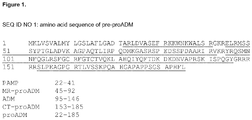
- Pre-proADM comprises 185 amino acids and has the sequence according to SEQ ID No: 1 ( Figure 1 ).
- pre-pro-ADM fragments of pre-pro-ADM include PAMP (AA 22-41) (SEQ ID No: 2), MR-pro-ADM (midregional proadrenomedullin) (AA 45-92) (SEQ ID No: 3), ADM (Adrenomedullin) (AA 95-146) (SEQ ID No: 4), CTpro-ADM (Adrenotensin) (AA 153-185) (SEQ ID No: 5) and "proadrenomedullin” (proADM) (AA 22-185) (SEQ ID No: 6).
- PAMP AA 22-41
- MR-pro-ADM midregional proadrenomedullin
- ADM Adrenomedullin
- CTpro-ADM Adrenotensin
- proADM AA 22-185) (SEQ ID No: 6).
- the well-known peptide adrenomedullin is a peptide which comprises 52 amino acids (SEQ ID No: 4) and which comprises the amino acids 95 to 146 of pre-proADM, from which it is formed by proteolytic cleavage.
- ADM peptide adrenomedullin
- proAdrenomedullin proADM
- Adrenomedullin (1-52) measured in human plasma by radioimmunoassay: plasma concentration, adsorption, and storage.
- Clin Chem 1998; 44:571-7 Ueda S, Nishio K, Minamino N, Kubo A, Akai Y, Kangawa K, et al. Increased plasma levels of adrenomedullin in patients with systemic inflammatory response syndrome.
- MR-proADM mid-regional pro-Adrenomedullin
- N-terminal fragments of (pre)proAdrenomedulin for diagnosis have also been described in EP0622458B1 , such as PAMP ( Hashida S, Kitamura K, Nagatomo Y, Shibata Y, Imamura T, Yamada K, et al. Development of an ultra-sensitive enzyme immunoassay for human pro-adrenomedullin N-terminal peptide and direct measurement of two molecular forms of PAMP in plasma from healthy subjects and patients with cardiovascular disease. Clin Biochem 2004; 37: 14-21 ).
- Sepsis-associated mortality in patients suffering from IFI/IFD is known to be high, amounting up to 42% for Candida spp. and even much higher for Aspergillus spp.
- Sepsis is generally caused by a dysregulated host response to infection ( Singer M, Deutschman CS, Seymour CW et al. (2016) The Third International Consensus Definitions for Sepsis and Septic Shock (Sepsis-3).
- Jama 315:801-81 is most frequently caused by bacteria, whereas fungal or viral infections are less common ( Eggimann P, Garbino J, Pittet D (2003) Epidemiology of Candida species infections in critically ill non-immunosuppressed patients. Lancet Infect Dis 3:685-702 ). Accordingly, fungemia is only present in 3% of unselected sepsis cases (Eggimann (supra)). Contrariwise, fungi are one of the most isolated species recovered from abdominal foci in peritonitis and numerous patients develop fungal colonization during their hospital stay (Eggimann (supra)).
- proadrenomedullin or a partial peptide or fragment thereof, in particular midregional proadrenomedullin (MR-proADM) for the diagnosis of IFI/IFD is not disclosed and likewise the diagnosis of IFI/IFD associated with sepsis or septic shock is not disclosed.
- proADM proadrenomedullin
- MR-proADM midregional proadrenomedullin
- This object is accomplished by means of a method for in vitro diagnosis and/or risk stratification of fungal infections, in particular IFI/IFD associated with sepsis or septic shock, wherein a determination of the marker proadrenomedullin (proADM) or a partial peptide or fragment thereof, in particular midregional proadrenomedullin (MR-proADM), or contained in a marker combination (panel, cluster), is carried out from a patient to be examined (referred to hereinafter as method according to the invention).
- proADM marker proadrenomedullin
- MR-proADM midregional proadrenomedullin
- MR-proADM midregional proadrenomedullin
- MR-proADM is a preferred embodiment and demonstrates great plasma stability, which is particularly advantageous.
- the said fragments according to the invention preferably refer to at least one of the group PAMP (SEQ ID No: 2), MR-pro-ADM (midregional proadrenomedullin) (SEQ ID No: 3), ADM (Adrenomedullin) (SEQ ID No: 4), CT-pro-ADM (Adrenotensin) (SEQ ID No: 5).
- PAMP SEQ ID No: 2
- MR-pro-ADM midregional proadrenomedullin
- ADM Adrenomedullin
- CT-pro-ADM Adrenotensin
- proadrenomedullin or a partial peptide or fragment thereof, in particular midregional proadrenomedullin (MR-proADM) according to the invention can demonstrate modifications such as glycolization, lip(o)idization, or derivatization.
- Diagnosing according to the present invention includes determining, monitoring, confirmation, subclassification and prediction of the relevant disease, disorder, complication, or risk.
- Determining relates to becoming aware of a disease, disorder, complication or risk.
- Monitoring relates to keeping track of an already diagnosed disease, disorder, complication or risk, e.g. to analyze the progression of the disease or the influence of a particular treatment on the progression of disease or disorder.
- Confirmation relates to the strengthening or substantiating a diagnosis already performed using other indicators or markers.
- Subclassification relates to further defining a diagnosis according to different subclasses of the diagnosed disease, disorder, complication or risk, e.g. defining according to mild and severe forms of the disease.
- Prediction relates to prognosing a disease disorder or complication before other symptoms or markers have become evident or have become significantly altered.
- diagnosis can comprise finding patients having IFI/IFD, in particular IFI/IFD associated with sepsis or septic shock, with the worse prognosis, for the purpose of intensive diagnosis and therapy/treatment of IFI/IFD, with the goal of allowing as advantageous a course of the IFI/IFD as possible.
- risk stratification relates to the grouping of subjects into different risk groups according to their further prognosis. Risk stratification also relates to stratification for applying preventive and/or therapeutic measures.
- the method according to the invention allows clinical decisions that lead to a more rapid diagnosis of fungal infections in critically ill patients.
- the method according to the invention allows clinical decisions that lead to a more rapid diagnosis of the IFI/IFD, in particular IFI/IFD associated with sepsis or septic shock.
- Such clinical decisions also comprise further treatment using medications, for the treatment or therapy of the IFI/IFD, in particular IFI/IFD associated with sepsis or septic shock.
- IFI/IFD in particular IFI/IFD associated with sepsis or septic shock
- clinical decisions since clinical symptoms in IFI/IFD are unspecific and recent diagnostic tools for the detection of fungal pathogens are associated with relevant weaknesses, , the differentiation and delineation from other infectious diseases caused by e.g. bacterial or viral pathogens, as well as the identification of IFI/IFD, in particular IFI/IFD associated with sepsis or septic shock are essential.
- Such clinical decisions also comprise further therapy by means of medications for treatment or therapy of IFI/IFD, in particular IFI/IFD associated with sepsis or septic shock, wherein at least one antifungal agent is used, like polyene antifungal drugs (e.g. (liposomal) amphotericin B), echinocandins (e.g. caspofungin), azole antifungal drugs (e.g. fluconazole), allylamine and morpholine antifungal drugs, antimetabolite antifungal drugs (e.g. 5-fluorocytosine).
- polyene antifungal drugs e.g. (liposomal) amphotericin B
- echinocandins e.g. caspofungin
- azole antifungal drugs e.g. fluconazole
- allylamine and morpholine antifungal drugs e.g. 5-fluorocytosine.
- diagnosis and/or risk stratification take place for assessing the course of fungal infections, in particular IFI/IFD associated with sepsis or septic shock.
- diagnosis and/or risk stratification take place for the course of IFI/IFD as an accompaniment to therapy and to adjust therapeutic treatment such as for example mechanical ventilation, renal replacement therapy or antifungal therapy.
- the adjustment of a therapeutic treatment may also include the decision whether the subject is treated further as done before or whether the treatment is adapted.
- the adjustment of the therapeutic treatment may be whether the subject is kept on the intensive care unit (ICU) or emergency department (ED) or whether it is released.
- ICU intensive care unit
- ED emergency department
- Sepsis in the context of the invention refers to a systemic response to infection. Alternatively, sepsis may be seen as the combination of SIRS with a confirmed infectious process or an infection. Sepsis may be characterized as clinical syndrome defined by the presence of both infection and a systemic inflammatory response ( Levy MM et al. 2001 SCCM/ESICM/ACCP/ATS/SIS International Sepsis Definitions Conference. Crit Care Med. 2003 Apr;31(4):1250-6 ). The term “sepsis” used herein includes, but is not limited to, sepsis, severe sepsis, septic shock.
- Severe sepsis in this context means sepsis associated with organ dysfunction, hypoperfusion abnormality, or sepsis-induced hypotension.
- Hypoperfusion abnormalities include lactic acidosis, oliguria and acute alteration of mental status.
- Sepsis-induced hypotension is defined by the presence of a systolic blood pressure of less than about 90 mm Hg or its reduction by about 40 mm Hg or more from baseline in the absence of other causes for hypotension (e.g. cardiogenic shock).
- Septic shock is defined as severe sepsis with sepsis-induced hypotension persisting despite adequate fluid resuscitation, along with the presence of hypoperfusion abnormalities or organ dysfunction ( Bone et al., CHEST 101(6): 1644-55, 1992 ).
- sepsis also includes severe sepsis or septic shock based on the SEPSIS-2 definition (Bone et al., 2009).
- serpsis also includes subjects falling within the SEPSIS-3 definition (Singer et al., 2016).
- sepsis used herein relates to all possible stages in the development of sepsis.
- infection within the scope of the invention means a pathological process caused by the invasion of normally sterile tissue or fluid by potentially pathogenic agents/ pathogens, organisms and/or microorganisms, and relates preferably to infection(s) by fungi, bacteria, viruses, and/or parasites.
- the infection can be a bacterial infection, viral infection, and/or fungal infection.
- the infection can be a local or systemic infection.
- the subject suffering from an infection can suffer from more than one source(s) of infection simultaneously.
- the subject can suffer from a viral infection and fungal infection; from a bacterial and fungal infection, and from a bacterial infection, fungal infection and viral infection.
- the subject suffers from sepsis, severe sepsis or septic shock.
- the subject may preferably suffer from a respiratory disease, preferably an infection of the lower respiratory tract.
- respiratory disease comprises pathological conditions affecting the organs and tissues that make gas exchange possible in higher organisms, and also includes conditions of the upper respiratory tract, trachea, bronchi, bronchioles, alveoli, pleura and pleural cavity, and the nerves and muscles of breathing.
- the subject may preferably suffer from an abdominal disease, preferably an infection of the abdominal area comprising the gastrointestinal tract (stomach, large intestine, small intestine), liver, spleen and pancreas.
- abdominal disease preferably an infection of the abdominal area comprising the gastrointestinal tract (stomach, large intestine, small intestine), liver, spleen and pancreas.
- samples of bodily fluids particularly blood, serum, plasma, cerebrospinal fluid, urine, saliva, sputum, and pleural effusions, preferably whole blood, serum, or plasma or a mixture thereof, are taken from the patient to be examined, and the diagnosis takes place in vitro / ex vivo , i.e. outside of the human or animal body.
- samples of bodily fluids particularly blood, serum, plasma, cerebrospinal fluid, urine, saliva, sputum, and pleural effusions, preferably whole blood, serum, or plasma or a mixture thereof.
- the sample is selected from the group consisting of a blood sample, a serum sample, a plasma sample, a cerebrospinal fluid sample, a saliva sample and a urine sample or an extract of any of the aforementioned samples.
- the sample is a blood sample, most preferably a serum sample or a plasma sample.
- the diagnosis and/or risk stratification can take place on the basis of the determination of the mature adrenomedullin or proadrenomedullin (proADM) or a partial peptide or fragment thereof, in particular midregional proadrenomedullin (MR-proADM), and its amount or level that is present, or a change in amount or level, as compared with a reference, in at least one patient sample.
- proADM mature adrenomedullin or proadrenomedullin
- MR-proADM midregional proadrenomedullin
- level in the context of the present invention relates to the concentration (preferably expressed as weight/volume; w/v) of proadrenomedullin (proADM) or a partial peptide or fragment thereof, in particular midregional proadrenomedullin (MR-proADM), in the sample taken from a patient.
- concentration preferably expressed as weight/volume; w/v
- MR-proADM midregional proadrenomedullin
- IFI/IFD International Fensus Group
- EORTC/MSG National Institute of Allergy and Infectious Diseases Mycoses Study Group
- IFI European Organization for Research and Treatment of Cancer/Invasive fungal infections
- EORTC/MSG National Institute of Allergy and Infectious Diseases Mycoses Study Group
- IFI European Organization for Research and Treatment of Cancer/Invasive fungal infections
- EORTC/MSG National Institute of Allergy and Infectious Diseases Mycoses Study Group
- Ascioglu S, Rex JH, de Pauw B Bennett JE, Bille J, Crokaert F, Denning DW, Donnelly JP, Edwards JE, Erjavec Z, Fiere D, Lortholary O, Maertens J, Meis JF, Patterson TF, Ritter J, Selleslag D, Shah PM, Stevens DA, Walsh TJ
- IFI/IFD have also the meaning of a systemic, generalized, deep-seated, visceral and severe, life-threatening fungal infections, rather than a superficial, local, colonized, benign, self-limiting fungal disease or infection.
- the terms IFI/IFD encompass the risk of an adverse event, like death and increased morbidity.
- patient refers to a living human or non-human organism that is receiving medical care or that should receive medical care due to a disease. This includes persons with no defined illness who are being investigated for signs of pathology. Thus, the methods and assays described herein are applicable to both, human and veterinary disease.
- Preferred patients for diagnosis or risk stratification according to the invention are critically ill patients, in particular patients being immunomodulated due to medicaments or disease or due to means of inducing, enhancing, or suppressing an immune response including immunocompromised patients such as patients who underwent transplantation or patients with severe neutropenia or cancer patients. Hence, such mentioned patients are preferred for a risk-stratification according to the invention.
- Preferred patients for diagnosis or a risk stratification according to the invention can be critically ill patients who are diagnosed with sepsis, severe sepsis or septic shock, or patients who have symptoms according to infectious diseases but no manifested sepsis, patients with local infections (e.g. respiratory tract, urinary tract, abdominal, skin, mucosa, genital, central nervous system), patients treated with mechanical ventilation, fluids, renal replacement therapy, patients receiving antifungal therapy, patients who underwent surgeries, in particular liver surgeries, patients with liver cirrhosis and patients who suffered a trauma (polytrauma).
- local infections e.g. respiratory tract, urinary tract, abdominal, skin, mucosa, genital, central nervous system
- patients treated with mechanical ventilation, fluids, renal replacement therapy e.g. respiratory tract, urinary tract, abdominal, skin, mucosa, genital, central nervous system
- patients receiving antifungal therapy e.g. respiratory tract, urinary tract, abdominal, skin, mucosa, genital, central
- the method of the invention can be used for patient management which refers to:
- the invention relates to the diagnosis and/or risk stratification of IFI/IFD, in particular caused by Candida spp. (e.g. C. albicans , C. glabrata ), Aspergillus spp. (e.g. Aspergillus fumigatus ), etc., which are the most common pathogens responsible for IFI/IFD, in particular IFI/IFD associated with sepsis or septic shock.
- Candida spp. e.g. C. albicans , C. glabrata
- Aspergillus spp. e.g. Aspergillus fumigatus
- IFI/IFD associated with sepsis or septic shock.
- the invention relates to the diagnosis and/or risk stratification of IFI/IFD associated with sepsis and/or septic shock.
- IFI/IFD associated with sepsis and/or septic shock particularly comprises the comorbidity of these indications, i.e. in addition to an existing underlying disease (index disease), namely IFI/IFD, an existing, diagnostically distinguishable disease profile, namely sepsis and/or septic shock, is determined, i.e. there is an associated disease profile.
- index disease namely IFI/IFD
- an existing, diagnostically distinguishable disease profile namely sepsis and/or septic shock
- proadrenomedullin or a partial peptide or fragment thereof, in particular midregional proadrenomedullin (MR-proADM)
- MR-proADM midregional proadrenomedullin
- the proadrenomedullin (proADM) or a partial peptide or fragment thereof, in particular midregional proadrenomedullin (MR-proADM) is/are contained in a marker combination (panel, cluster), specifically preferably those that already indicate IFI/IFD, in particular IFI/IFD associated with sepsis or septic shock.
- the invention relates to an embodiment of the method according to the invention where the determination is additionally carried out with at least one further marker or clinical score or clinical parameter selected from the group of C-reactive protein (CRP), cytokines, such as TNF-alpha, for example, interleukins, such as IL-10, IL-6, IL-22, IL17A and IL-17B, interleukin-1ß, procalcitonin and fragments thereof, pro-atrial natriuretic peptide and fragments thereof (ANP, pro ANP), pro-arginin vasopressin and fragments thereof(AVP, pro-AVP, copeptin), angiotensin II, endothelin-1, glucans, interferon gamma (INF-gamma), beta-D-glucan, galactomannan, and adhesion molecules, such as VCAM or ICAM, sequential organ failure assessment score (SOFA), simplified acute physiology score (SAPSII score), the Acute Physiology and
- detection of galactomannan in bodily fluid is used to diagnose invasive fungal (aspergillosis) infections in humans.
- the method according to the invention can be carried out by means of parallel or simultaneous determinations of the markers (e.g. multi-titer plates with 96 cavities and more), where the determinations are carried out on at least one patient sample.
- the markers e.g. multi-titer plates with 96 cavities and more
- the method according to the invention and its determinations can be carried out using an automated analysis device, particularly using a Kryptor (BRAHMS GmbH, Hennigsdorf, Germany).
- the method according to the invention and its determinations can be carried out by means of a rapid test (e.g. lateral flow test), whether using single-parameter or multi-parameter determinations.
- a rapid test e.g. lateral flow test
- the invention relates to the use of proadrenomedullin (proADM) or a partial peptide or fragment thereof, in particular midregional proadrenomedullin (MR-proADM), or contained in a marker combination (panel, cluster), for in vitro diagnosis and/or risk stratification of IFI/IFD, in particular IFI/IFD associated with sepsis or septic shock.
- proADM proadrenomedullin
- MR-proADM midregional proadrenomedullin
- the marker combination can contain another suitable marker, if necessary.
- proadrenomedullin or a partial peptide or fragment thereof, in particular midregional proadrenomedullin (MR-proADM), herein is performed using a detection method and/or a diagnostic assay as explained below.
- Another object is making available a corresponding diagnostic assay, or the use of such an assay for carrying out the methods according to the invention.
- an “assay” or “diagnostic assay” can be of any type applied in the field of diagnostics. Such an assay may be based on the binding of an analyte to be detected to one or more capture probes (capture molecules) with a certain affinity. Concerning the interaction between capture molecules and target molecules or molecules of interest, the affinity constant is preferably greater than 10 8 M - 1.
- a marker can be determined by mass spectrometric based methods, such as methods determining the relative quantification or determining the absolute quantification of the protein or fragment thereof of interest.
- Capture molecules are molecules which may be used to bind target molecules or molecules of interest, i.e. analytes (i.e. in the context of the present invention the cardiovascular peptide(s)), from a sample. Capture molecules must thus be shaped adequately, both spatially and in terms of surface features, such as surface charge, hydrophobicity, hydrophilicity, presence or absence of Lewis donors and/or acceptors, to specifically bind the target molecules or molecules of interest.
- the binding may for instance be mediated by ionic, van-der-Waals, pi-pi, sigma-pi, hydrophobic or hydrogen bond interactions or a combination of two or more of the aforementioned interactions between the capture molecules and the target molecules or molecules of interest.
- capture molecules may for instance be selected from the group comprising a nucleic acid molecule, a carbohydrate molecule, a RNA molecule, a protein, an antibody, a peptide or a glycoprotein.
- the capture molecules are antibodies, including fragments thereof with sufficient affinity to a target or molecule of interest, and including recombinant antibodies or recombinant antibody fragments, as well as chemically and/or biochemically modified derivatives of said antibodies or fragments derived from the variant chain with a length of at least 12 amino acids thereof.
- the preferred detection methods comprise immunoassays in various formats such as for instance radioimmunoassay (RIA), chemiluminescence- and fluorescence- immunoassays, Enzyme-linked immunoassays (ELISA), Luminex®-based bead arrays, protein microarray assays, and rapid test formats such as for instance immunochromatographic strip tests.
- RIA radioimmunoassay
- ELISA Enzyme-linked immunoassays
- Luminex®-based bead arrays Luminex®-based bead arrays
- protein microarray assays protein microarray assays
- rapid test formats such as for instance immunochromatographic strip tests.
- the assays can be homogenous or heterogeneous assays, competitive and non-competitive sandwich assays.
- the assay is in the form of a sandwich assay, which is a non-competitive immunoassay, wherein the molecule to be detected and/or quantified is bound to a first antibody and to a second antibody.
- the first antibody may be bound to a solid phase, e.g. a bead, a surface of a well or other container, a chip or a strip
- the second antibody is an antibody which is labeled, e.g. with a dye, with a radioisotope, or a reactive or catalytically active moiety.
- the amount of labeled antibody bound to the analyte is then measured by an appropriate method.
- the general composition and procedures involved with "sandwich assays" are well-established and known to the skilled person. ( The Immunoassay Handbook, Ed. David Wild, Elsevier LTD, Oxford; 3rd ed. (May 2005 ); Hultschig C et al., Curr Opin Chem Biol. 2006 Feb;10(1):4-10 )).
- the assay comprises at least one or two capture molecules, preferably antibodies which are both present as dispersions in a liquid reaction mixture, wherein a first labeling component is attached to the first capture molecule, wherein said first labeling component is part of a labeling system based on fluorescence- or chemiluminescence-quenching or amplification, and a second labeling component of said marking system is attached to the second capture molecule, so that upon binding of both capture molecules to the analyte a measurable signal is generated that allows for the detection of the formed sandwich complexes in the solution comprising the sample.
- a first labeling component is attached to the first capture molecule
- said first labeling component is part of a labeling system based on fluorescence- or chemiluminescence-quenching or amplification
- a second labeling component of said marking system is attached to the second capture molecule, so that upon binding of both capture molecules to the analyte a measurable signal is generated that allows for the detection of the formed sandwich complexe
- said labeling system comprises rare earth cryptates or rare earth chelates in combination with a fluorescence dye or chemiluminescence dye, in particular a dye of the cyanine type.
- fluorescence based assays comprise the use of dyes, which may for instance be selected from the group comprising FAM (5-or 6-carboxyfluorescein), VIC, NED, Fluorescein, Fluoresceinisothiocyanate (FITC), IRD-700/800, Cyanine dyes, such as CY3, CY5, CY3.5, CY5.5, Cy7, Xanthen, 6-Carboxy-2',4',7',4,7-hexachlorofluorescein (HEX), TET, 6-Carboxy-4',5'-dichloro-2',7'-dimethodyfluorescein (JOE), N,N,N',N'-Tetramethyl-6-carboxyrhodamine (TAMRA), 6-Carboxy-X-rhodamine (ROX), 5-Carboxyrhodamine-6G (R6G5), 6-carboxyrhodamine-6G (RG6), Rhodamine
- chemiluminescence based assays comprise the use of dyes, based on the physical principles described for chemiluminescent materials in Kirk-Othmer, Encyclopedia of chemical technology, 4th ed., executive editor, J. I. Kroschwitz; editor, M. Howe-Grant, John Wiley & Sons, 1993, vol.15, p. 518-562 .
- Preferred chemiluminescent dyes are acridiniumesters.
- Such a diagnostic assay is particularly understood in the broadest sense a device for carrying out the method according to the invention.
- a diagnostic assay for detecting and measuring a biomarker can be combined with an assay method to detect fungal pathogens or fungal molecules.
- molecular diagnostic applications e.g. PCR
- mass spectometry can be applied.
- antibodies or detecting agents are preferred which specifically detect parts of the fungi, particularly parts of the e.g. active, growing fungi e.g. hypha or parts of the asexual reproduction bodies e.g. spores (so called ISCA Diagnostics).
- the invention furthermore relates to a kit or the use of such a kit for in vitro diagnosis or risk stratification of IFI/IFD, in particular IFI/IFD associated with sepsis or septic shock, where a determination of proadrenomedullin (proADM) or a partial peptide or fragment thereof, in particular midregional proadrenomedullin (MR-proADM), or contained in a marker combination (panel, cluster), is carried out in a patient to be investigated, particularly taking into consideration the aforementioned embodiments.
- proADM proadrenomedullin
- MR-proADM midregional proadrenomedullin
- a marker combination panel, cluster
- the methods of the present invention may in part be computer-implemented or supported by a computer system.
- the determined level of the marker(s) can be combined with other marker levels and/or parameters of the subject in order to calculate a score which is indicative for the diagnosis, prognosis, risk assessment and/or risk stratification.
- the determined values may be entered (either manually by a health professional or automatically from the device(s) in which the respective marker level(s) has/have been determined) into the computer-system.
- the computer-system can be directly at the point-of-care (e.g. ICU or ED) or it can be at a remote location connected via a computer network (e.g. via the internet).
- the computer-system will store the values (e.g.
- marker level or parameters such as age, blood pressure, weight, sex, etc.
- calculate the score based-on pre-defined and/or pre-stored reference levels or reference values.
- the resulting score will be displayed and/or printed for the user (typically a health professional such as a physician).
- the associated prognosis, diagnosis, assessment or stratification will be displayed and/or printed for the user (typically a health professional such as a physician).
- Crit Care Med 41:580-637 Treatment of patients with septic shock included early-goal directed therapy ( Romani L (2004) Immunity to fungal infections. Nat Rev Immunol 4:1-23 ), elimination of the septic focus and broad-spectrum antibiosis Romani L (2004) Immunity to fungal infections. Nat Rev Immunol 4:1-23 ; Schroeder M, Simon M, Katchanov J et al. (2016) Does galactomannan testing increase diagnostic accuracy for IPA in the ICU? A prospective observational study. Crit Care 20:139 ; Zedek DC, Miller MB (2006) Use of galactomannan enzyme immunoassay for diagnosis of invasive aspergillosis in a tertiary-care center over a 12-month period.
- Blood sample were collected at sepsis onset (T0) and 1 day (T1), 2 days (T2), 7 days (T3) 14 days (T4), 21 days (T5) and 28 days (T6) afterwards.
- Relevant baseline data demographic data, primary site of infection
- clinical data disease severity scores, such as Simplified Acute Physiology Score (SAPS II), Sequential Organ Failure Assessment Score (SOFA) and Acute Physiology Health Evaluation score (APACHE II), surgical procedures, antifungal therapy, outcome parameters) as well as routine infection parameters (e.g. leukocytes, C-reactive protein (CRP), procalcitonin (PCT), body temperature) were collected.
- routine infection parameters e.g. leukocytes, C-reactive protein (CRP), procalcitonin (PCT), body temperature
- Plasma concentrations of BG were measured using the Glucatell ® -Kit (Pyroquant Diagnostik GmbH) according to the manufacturer's instructions.
- Plasma concentrations of MR-proADM were measured using a TRACE (Time Resolved Amplified Cryptate Emission) technology in combination with a new sandwich immunoassay (Kryptor Compact Plus Analyser, BRAHMS, Hennigsdorf, Germany).
- concentrations of GM were measured using an enzyme-linked immunoassay (PlateliaTM Aspergillus AG, Biorad, Kunststoff) in plasma samples at all time points.
- GM in bronchoalveolar lavage fluid were measured using the same technique, however only in selected cases of suspected invasive aspergillosis (IA). The following GM concentrations were used as cut-off values: Plasma>0.5, BALF>1.0.
- Plasma concentrations of II-2, -4, -6, -10, -17A, TNF- ⁇ and IFN- ⁇ were measured on a FACSVerse flow cytometer (BD Biosciences, Heidelberg, Germany) using a multiplex assay (Human Th1/Th2/Th17 Cytokine Kit, BD Biosciences, Heidelberg, Germany) according to the manufacturer's instructions.
- Blood culture Blood culture testing at Heidelberg University Hospital is routinely performed as described elsewhere ( Gumbinger C, Hug A, Murle B et al. (2013) Early blood-based microbiological testing is ineffective in severe stroke patients. J Neurol Sci 325:46-50 ).
- Whole blood samples are obtained via direct venipuncture (e.g., antecubital vein) applying sterile techniques and 10 mL blood is inoculated to both an aerobic and an anaerobic liquid culture medium (BACTEC PLUS, BD Biosciences, Heidelberg, Germany).
- tracheal aspirates and drainage fluids were streaked manually on Columbia (BD), chocolate (bM), MacConkey (bM), Schaedler and kanamycin-vancomycin (BD, Bi-plate) and chromogenic Candida agar (BD), while wound swabs were inoculated semi-automated by PREVI IsolaTM instrument on the same agar types.
- Candida spp. in the respiratory tract or in fluids from drainages were classified as colonization. Positive results in blood cultures, intraoperative swabs and Aspergillus spp. in deep respiratory tract specimens with accompanying pulmonary infiltrates were classified as infection.
- Candida albicans specific IgM, IgA and IgG antibodies in serum were detected and quantified using Serion ELISA classic TM
- Candida albicans IgA/IgG/IgM ESR 117A/G/M, Virion Serion, Wuerzburg, Germany
- BEP III Siemens Healthcare Diagnostics, Marburg, Germany
- Zou M Tang L, Zhao S et al. (2012) Systematic review and meta-analysis of detecting galactomannan in bronchoalveolar lavage fluid for diagnosing invasive aspergillosis.
- PLoS One 7:e43347 ).
- colonization and infection was found in 22 (44.0%), and 11 (22.0%) patients, respectively.
- 8 (16.0%) participants exclusively revealed Candida spp. in respiratory secretions (5x C. albicans, 1x C. albicans and glabrata , 2x C. albicans and C . spp), whereas in 6 (12.0%) patients Candida spp. could only be cultured from drainage fluids (3x C. albicans, 2x C. glabrata, 1x C. albicans and C. glabrata ).
- 8 (16.0%) patients were colonized at both sides (4x C. albicans, 1x C. albicans and C .
- Antifungal therapy In total, 21 of 50 (42.0%) patients received an antifungal therapy during study participation. Of 17 patients without any fungal isolates, 2 (11.8%) patients received an empiric antifungal therapy. Of the remaining 33 patients with fungal isolates, 19 (57.6%) patients received an antifungal therapy, which was initiated in terms a specific therapy in 15 (78.9%) patients. Vice versa, treatment was initiated in terms of an empiric therapy in the remaining 4 (21.1%) cases, which was stopped later on in all of these patients. In 7 (33.3%) patients, the initial antifungal therapy was changed in the course of the disease.
- BG (1,3)-ß-D-glucan
- GM Galactomannan
- Plasma concentrations of GM remained below the cut-off value of ⁇ 0.5 in 46 of 50 patients (92.0%). Contrariwise, 4 patients (8.0%) presented with sporadically increased plasma concentrations of GM above the cut-off value without any other (clinical, radiological, cultural) signs or risk factors for an IA (data not shown). In these cases, increased plasma concentrations of GM were most probably attributable to the underlying antibiotic therapy (e.g. piperacillin-tazobactam), which is well known to be associated with increased GM concentrations [15, 68].
- antibiotic therapy e.g. piperacillin-tazobactam
- INF- ⁇ pro-inflammatory cytokine INF- ⁇
- IL-4 pro-inflammatory cytokine
- -6 pro-inflammatory cytokine
- -17 pro-inflammatory cytokine
- MR-proADM MR-proADM
- Plasma levels of the pro-inflammatory cytokine INF- ⁇ were shown to be markedly, respectively significantly elevated in patients suffering from a fungal infection in comparison to both control groups, starting from seven days after sepsis onset (T3). This increase in INF- ⁇ was paralleled by a significant release of the immunosuppressive cytokines IL-10 and -4 in infected patients.
- Plasma levels of IL-6 were shown to be significantly elevated in patients suffering from a fungal infection in comparison to septic patients with a fungal colonization or without any fungal findings at different time points especially in the early course of the disease (e.g. at T0, T1).
- IL-17A was also shown to be significantly increased in septic patients suffering from a fungal infection in comparison to septic patients with a fungal colonization or without any fungal findings within the first 7 days after sepsis onset ( Figure 2A ). Therefore, IL-17A was found to be a suitable tool for early identification of patients with a fungal infection as assessed by ROC-analysis (ROC-AUC for patients with a fungal infection vs.
- ROC receiver operating characteristic
Landscapes
- Life Sciences & Earth Sciences (AREA)
- Health & Medical Sciences (AREA)
- Engineering & Computer Science (AREA)
- Molecular Biology (AREA)
- Immunology (AREA)
- Chemical & Material Sciences (AREA)
- Biomedical Technology (AREA)
- Urology & Nephrology (AREA)
- Hematology (AREA)
- Biotechnology (AREA)
- Analytical Chemistry (AREA)
- Cell Biology (AREA)
- Pathology (AREA)
- Food Science & Technology (AREA)
- Medicinal Chemistry (AREA)
- Physics & Mathematics (AREA)
- Microbiology (AREA)
- Biochemistry (AREA)
- General Health & Medical Sciences (AREA)
- General Physics & Mathematics (AREA)
- Proteomics, Peptides & Aminoacids (AREA)
- Endocrinology (AREA)
- Medicines That Contain Protein Lipid Enzymes And Other Medicines (AREA)
- Peptides Or Proteins (AREA)
- Investigating Or Analysing Biological Materials (AREA)
Abstract
The invention relates to a method for the diagnosis and/or risk stratification of invasive fungal infections (IFI) / invasive fungal diseases (IFD) and in particular associated with sepsis or septic shock, wherein a determination of the marker proadrenomedullin (proADM) or a partial peptide or fragment thereof, in particular midregional proadrenomedullin (MR-proADM), or contained in a marker combination (panel, cluster), is carried out from a patient to be examined. Furthermore, the invention relates to a diagnostic assay and a kit for carrying out the method.
Description
- The invention relates to a method for the diagnosis and/or risk stratification of fungal infections, in particular invasive fungal infections (hereinafter in short referred to as "IFI") (synonym: invasive fungal diseases (hereinafter in short referred to as "IFD") associated with sepsis or septic shock, wherein a determination of the marker proadrenomedullin (proADM) or a partial peptide or fragment thereof, in particular midregional proadrenomedullin (MR-proADM), or contained in a marker combination (panel, cluster), is carried out from a patient to be examined. Furthermore, the invention relates to a diagnostic assay and a kit for carrying out the method.
- The precursor peptide, which comprises, inter alia, a signal sequence of 21 amino acids at the N-terminus, is referred to as "preproadrenomedullin" (pre-proADM) (Kitamura K, Sakata J, Kangawa K, Kojima M, Matsuo H, Eto T. Cloning and characterization of cDNA encoding a precursor for human adrenomedullin, Biochem Biophys Res Commun 1993: 194:720-725).
Pre-proADM comprises 185 amino acids and has the sequence according to SEQ ID No: 1 (Figure 1 ). Known fragments of pre-pro-ADM include PAMP (AA 22-41) (SEQ ID No: 2), MR-pro-ADM (midregional proadrenomedullin) (AA 45-92) (SEQ ID No: 3), ADM (Adrenomedullin) (AA 95-146) (SEQ ID No: 4), CTpro-ADM (Adrenotensin) (AA 153-185) (SEQ ID No: 5) and "proadrenomedullin" (proADM) (AA 22-185) (SEQ ID No: 6). - The well-known peptide adrenomedullin (ADM) is a peptide which comprises 52 amino acids (SEQ ID No: 4) and which comprises the amino acids 95 to 146 of pre-proADM, from which it is formed by proteolytic cleavage. However, it is disadvantageous that because of the lack of stability of the adrenomedullin, as well as its short lifetime in the plasma (Lewis LK, Smith MW, Yandle TG, Richards AM, Nicholls MG. Adrenomedullin measured in human plasma by radioimmunoassay: plasma concentration, adsorption, and storage. Clin Chem. 44:571-7, 1998), no reliable diagnosis can usually take place.
- To date, substantially only a few fragments of the peptide fragments formed in the cleavage of the pre-proADM have been more exactly characterized, in particular the physiologically active peptides adrenomedullin (ADM) and "PAMP", a peptide comprising 20 amino acids (22-41) which follows the 21 amino acids of the signal peptide in pre-proADM.
- Furthermore, prior art describes how to determine proAdrenomedullin (proADM) and Adrenomedullin in diagnosis (
EP0622458B1 , Lewis LK, Smith MW, Yandle TG, Richards AM, Nicholls MG. Adrenomedullin (1-52) measured in human plasma by radioimmunoassay: plasma concentration, adsorption, and storage. Clin Chem 1998; 44:571-7; Ueda S, Nishio K, Minamino N, Kubo A, Akai Y, Kangawa K, et al. Increased plasma levels of adrenomedullin in patients with systemic inflammatory response syndrome. Am J Respir Crit Care Med 1999;160:132-6; Kobayashi K, Kitamura K, Etoh T, Nagatomo Y, Takenaga M, Ishikawa T, et al. Increased plasma adrenomedullin levels in chronic congestive heart failure. Am Heart J 1996; 131:994-8; Kobayashi K, Kitamura K, Hirayama N, Date H, Kashiwagi T, Ikushima I, et al. Increased plasma adrenomedullin in acute myocardial infarction. Am Heart J 1996; 131:676-80.), in particular for the purpose of diagnosing sepsis (EP1121600B1 ). - Moreover, a further fragment of the pro-Adrenomedullin, namely the so-called mid-regional pro-Adrenomedullin (MR-proADM), is disclosed in
EP1488209B1 for diagnostic purposes (Struck J, Tao C, Morgenthaler NG, Bergmann A. Identification of an Adrenomedullin precursor fragment in plasma of sepsis patients. Peptides 2004; 25: 1369-72; Morgenthaler NG, Struck J, Alonso C, Bergmann A. Measurement of mid-regional pro-adrenomedullin in plasma with an immunoluminometric assay. Clin Chem 2005; 51:1823-9; Christ-Crain M, Morgenthaler NG, Stolz D, Muller C, Bingisser R, Harbarth S, et al. Pro-adrenomedullin to predict severity and outcome in community-acquired pneumonia [ISRCTN04176397]. Crit Care 2006; 10:R96; Christ-Crain M, Morgenthaler NG, Struck J, Harbarth S, Bergmann A, Muller B. Mid-regional pro-adrenomedullin as a prognostic marker in sepsis: an observational study. Crit Care 2005; 9: R816-24). - N-terminal fragments of (pre)proAdrenomedulin for diagnosis have also been described in
EP0622458B1 , such as PAMP (Hashida S, Kitamura K, Nagatomo Y, Shibata Y, Imamura T, Yamada K, et al. Development of an ultra-sensitive enzyme immunoassay for human pro-adrenomedullin N-terminal peptide and direct measurement of two molecular forms of PAMP in plasma from healthy subjects and patients with cardiovascular disease. Clin Biochem 2004; 37: 14-21). - A C-terminal fragment of (pre)proAdrenomedulin for diagnosis has also been described in
EP2111552B1 , namely CT-pro-ADM (Adrenotensin). - Although, the group of fungal infected patients seems to be small, the number of IFI/IFD is growing up due to an increasing number of immunocompromised patients, a more aggressive surgical therapy in older patients with relevant co-morbidities and an increasing number of oncologic diseases (Bassetti M, Righi E, Costa A et al. (2006) Epidemiological trends in nosocomial candidemia in intensive care. BMC Infect Dis 6:21). Within this context three fungal species seem to be most relevant in Europe: Candida albicans (C. albicans), Candida glabrata (C. glabrata) and Aspergillus fumigatus (Lichtenstern C, Herold C, Mieth M et al. (2015) Relevance of Candida and other mycoses for morbidity and mortality in severe sepsis and septic shock due to peritonitis. Mycoses 58:399-407).
- Sepsis-associated mortality in patients suffering from IFI/IFD is known to be high, amounting up to 42% for Candida spp. and even much higher for Aspergillus spp. (Shorr AF, Gupta V, Sun X et al. (2009) Burden of early-onset candidemia: analysis of culture-positive bloodstream infections from a large U.S. database. Crit Care Med 37:2519-2526; quiz 2535, Trof RJ, Beishuizen A, Debets-Ossenkopp YJ et al. (2007) Management of invasive pulmonary aspergillosis in non-neutropenic critically ill patients. Intensive Care Med 33:1694-1703).
- Sepsis is generally caused by a dysregulated host response to infection (Singer M, Deutschman CS, Seymour CW et al. (2016) The Third International Consensus Definitions for Sepsis and Septic Shock (Sepsis-3). Jama 315:801-81), is most frequently caused by bacteria, whereas fungal or viral infections are less common (Eggimann P, Garbino J, Pittet D (2003) Epidemiology of Candida species infections in critically ill non-immunosuppressed patients. Lancet Infect Dis 3:685-702). Accordingly, fungemia is only present in 3% of unselected sepsis cases (Eggimann (supra)). Contrariwise, fungi are one of the most isolated species recovered from abdominal foci in peritonitis and numerous patients develop fungal colonization during their hospital stay (Eggimann (supra)).
- Especially in patients suffering from fungemia, diagnostic weaknesses may contribute substantially to this alarming mortality. Only a small part of affected patients show positive blood-cultures and fungal growth on culture media is known to be very slow. Accordingly, several studies have shown, that IFI/IFD are the most frequently missed diagnoses in critically ill patients (Combes A, Mokhtari M, Couvelard A et al. (2004) Clinical and autopsy diagnoses in the intensive care unit: a prospective study. Arch Intern Med 164:389-392).
- What all these amounts to is, that a life-saving antifungal therapy is either missed, or initiated with a minimum delay of 2 to 3 days (Abe M, Kimura M, Araoka H et al. (2016) Is initial serum (1,3)-beta-d-glucan truly associated with mortality in patients with candidaemia? Clin Microbiol Infect 22:576). Such a delay is known to be associated with an increased mortality.
- Hereto, there is a need for presenting a reliable diagnosis of IFI/IFD, or for undertaking (risk) stratification, particularly with regard to further clinical decisions and, in particular, with regard to the degree of severity of fungal infections, in particular IFI/IFD associated with sepsis or septic shock.
- However, suitability of proadrenomedullin (proADM) or a partial peptide or fragment thereof, in particular midregional proadrenomedullin (MR-proADM) for the diagnosis of IFI/IFD is not disclosed and likewise the diagnosis of IFI/IFD associated with sepsis or septic shock is not disclosed.
- It is the object of the present invention to make available an improved method for the diagnosis and/or risk stratification of fungal infections, in particular IFI/IFD associated with sepsis or septic shock.
- This object is accomplished by means of a method for in vitro diagnosis and/or risk stratification of fungal infections, in particular IFI/IFD associated with sepsis or septic shock, wherein a determination of the marker proadrenomedullin (proADM) or a partial peptide or fragment thereof, in particular midregional proadrenomedullin (MR-proADM), or contained in a marker combination (panel, cluster), is carried out from a patient to be examined (referred to hereinafter as method according to the invention). However, midregional proadrenomedullin (MR-proADM) is a preferred embodiment and demonstrates great plasma stability, which is particularly advantageous.
- The said fragments according to the invention preferably refer to at least one of the group PAMP (SEQ ID No: 2), MR-pro-ADM (midregional proadrenomedullin) (SEQ ID No: 3), ADM (Adrenomedullin) (SEQ ID No: 4), CT-pro-ADM (Adrenotensin) (SEQ ID No: 5).
- Furthermore, the proadrenomedullin (proADM) or a partial peptide or fragment thereof, in particular midregional proadrenomedullin (MR-proADM) according to the invention can demonstrate modifications such as glycolization, lip(o)idization, or derivatization.
- Diagnosing according to the present invention includes determining, monitoring, confirmation, subclassification and prediction of the relevant disease, disorder, complication, or risk. Determining relates to becoming aware of a disease, disorder, complication or risk. Monitoring relates to keeping track of an already diagnosed disease, disorder, complication or risk, e.g. to analyze the progression of the disease or the influence of a particular treatment on the progression of disease or disorder. Confirmation relates to the strengthening or substantiating a diagnosis already performed using other indicators or markers. Subclassification relates to further defining a diagnosis according to different subclasses of the diagnosed disease, disorder, complication or risk, e.g. defining according to mild and severe forms of the disease. Prediction relates to prognosing a disease disorder or complication before other symptoms or markers have become evident or have become significantly altered.
- The term "diagnosis," according to the invention, can comprise finding patients having IFI/IFD, in particular IFI/IFD associated with sepsis or septic shock, with the worse prognosis, for the purpose of intensive diagnosis and therapy/treatment of IFI/IFD, with the goal of allowing as advantageous a course of the IFI/IFD as possible.
- In the present invention, the term "risk stratification" relates to the grouping of subjects into different risk groups according to their further prognosis. Risk stratification also relates to stratification for applying preventive and/or therapeutic measures.
- For this reason, it is particularly advantageous that a reliable diagnosis and/or risk stratification can take place by means of the method according to the invention. The method according to the invention allows clinical decisions that lead to a more rapid diagnosis of fungal infections in critically ill patients. The method according to the invention allows clinical decisions that lead to a more rapid diagnosis of the IFI/IFD, in particular IFI/IFD associated with sepsis or septic shock. Such clinical decisions also comprise further treatment using medications, for the treatment or therapy of the IFI/IFD, in particular IFI/IFD associated with sepsis or septic shock.
- Appropriate treatment requires early diagnosis and differentiation of IFI/IFD, in particular IFI/IFD associated with sepsis or septic shock, even upon emergency room admission, in conjunction with clinical decisions. Since clinical symptoms in IFI/IFD are unspecific and recent diagnostic tools for the detection of fungal pathogens are associated with relevant weaknesses, , the differentiation and delineation from other infectious diseases caused by e.g. bacterial or viral pathogens, as well as the identification of IFI/IFD, in particular IFI/IFD associated with sepsis or septic shock are essential.
- Such clinical decisions also comprise further therapy by means of medications for treatment or therapy of IFI/IFD, in particular IFI/IFD associated with sepsis or septic shock, wherein at least one antifungal agent is used, like polyene antifungal drugs (e.g. (liposomal) amphotericin B), echinocandins (e.g. caspofungin), azole antifungal drugs (e.g. fluconazole), allylamine and morpholine antifungal drugs, antimetabolite antifungal drugs (e.g. 5-fluorocytosine).
- In another preferred embodiment of the method according to the invention, diagnosis and/or risk stratification take place for assessing the course of fungal infections, in particular IFI/IFD associated with sepsis or septic shock.
- In another preferred embodiment of the method according to the invention, diagnosis and/or risk stratification take place for the course of IFI/IFD as an accompaniment to therapy and to adjust therapeutic treatment such as for example mechanical ventilation, renal replacement therapy or antifungal therapy.
- The adjustment of a therapeutic treatment may also include the decision whether the subject is treated further as done before or whether the treatment is adapted. For example, the adjustment of the therapeutic treatment may be whether the subject is kept on the intensive care unit (ICU) or emergency department (ED) or whether it is released.
- Furthermore, the invention relates a method for diagnosis and/or risk stratification of IFI/IFD, in particular IFI/IFD associated with sepsis or septic shock, or to a method for in vitro diagnosis for early or differential diagnosis or prognosis of IFI/IFD, in particular IFI/IFD associated with sepsis or septic shock, according to one of the above embodiments, where after occurrence of the symptoms (t=0), a cut-off (threshold value) of 6.99 nmol/L, after one day (t=1d) a cut-off (threshold value) of 8.53 nmol/L, after two days (t=2d) a cut-off (threshold value) of 5.10 nmol/L of proadrenomedullin (proADM) or a partial peptide or fragment thereof, in particular midregional proadrenomedullin (MR-proADM), is/are significant (specific) for the said diagnosis and/or risk stratification.
- "Sepsis" in the context of the invention refers to a systemic response to infection. Alternatively, sepsis may be seen as the combination of SIRS with a confirmed infectious process or an infection. Sepsis may be characterized as clinical syndrome defined by the presence of both infection and a systemic inflammatory response (Levy MM et al. 2001 SCCM/ESICM/ACCP/ATS/SIS International Sepsis Definitions Conference. Crit Care Med. 2003 Apr;31(4):1250-6). The term "sepsis" used herein includes, but is not limited to, sepsis, severe sepsis, septic shock. Severe sepsis in this context means sepsis associated with organ dysfunction, hypoperfusion abnormality, or sepsis-induced hypotension. Hypoperfusion abnormalities include lactic acidosis, oliguria and acute alteration of mental status. Sepsis-induced hypotension is defined by the presence of a systolic blood pressure of less than about 90 mm Hg or its reduction by about 40 mm Hg or more from baseline in the absence of other causes for hypotension (e.g. cardiogenic shock). Septic shock is defined as severe sepsis with sepsis-induced hypotension persisting despite adequate fluid resuscitation, along with the presence of hypoperfusion abnormalities or organ dysfunction (Bone et al., CHEST 101(6): 1644-55, 1992).
- The term "sepsis" also includes severe sepsis or septic shock based on the SEPSIS-2 definition (Bone et al., 2009). The term "sepsis" also includes subjects falling within the SEPSIS-3 definition (Singer et al., 2016).
- The term "sepsis" used herein relates to all possible stages in the development of sepsis.
- As used herein, "infection" within the scope of the invention means a pathological process caused by the invasion of normally sterile tissue or fluid by potentially pathogenic agents/ pathogens, organisms and/or microorganisms, and relates preferably to infection(s) by fungi, bacteria, viruses, and/or parasites. Accordingly, the infection can be a bacterial infection, viral infection, and/or fungal infection. The infection can be a local or systemic infection. Further, the subject suffering from an infection can suffer from more than one source(s) of infection simultaneously. For example, the subject can suffer from a viral infection and fungal infection; from a bacterial and fungal infection, and from a bacterial infection, fungal infection and viral infection.
- Particularly, the subject suffers from sepsis, severe sepsis or septic shock. Further, the subject may preferably suffer from a respiratory disease, preferably an infection of the lower respiratory tract. As used herein respiratory disease comprises pathological conditions affecting the organs and tissues that make gas exchange possible in higher organisms, and also includes conditions of the upper respiratory tract, trachea, bronchi, bronchioles, alveoli, pleura and pleural cavity, and the nerves and muscles of breathing.
- Further, the subject may preferably suffer from an abdominal disease, preferably an infection of the abdominal area comprising the gastrointestinal tract (stomach, large intestine, small intestine), liver, spleen and pancreas.
- In another preferred embodiment of the method according to the invention, samples of bodily fluids, particularly blood, serum, plasma, cerebrospinal fluid, urine, saliva, sputum, and pleural effusions, preferably whole blood, serum, or plasma or a mixture thereof, are taken from the patient to be examined, and the diagnosis takes place in vitro/ex vivo, i.e. outside of the human or animal body. In addition, one of skill in the art would realize that some test samples would be more readily analyzed following a fractionation or purification procedure, for example, separation of whole blood into serum or plasma components.
- Thus, in a preferred embodiment of the invention the sample is selected from the group consisting of a blood sample, a serum sample, a plasma sample, a cerebrospinal fluid sample, a saliva sample and a urine sample or an extract of any of the aforementioned samples. Preferably, the sample is a blood sample, most preferably a serum sample or a plasma sample.
- The diagnosis and/or risk stratification can take place on the basis of the determination of the mature adrenomedullin or proadrenomedullin (proADM) or a partial peptide or fragment thereof, in particular midregional proadrenomedullin (MR-proADM), and its amount or level that is present, or a change in amount or level, as compared with a reference, in at least one patient sample.
- The term "level" or "amount" in the context of the present invention relates to the concentration (preferably expressed as weight/volume; w/v) of proadrenomedullin (proADM) or a partial peptide or fragment thereof, in particular midregional proadrenomedullin (MR-proADM), in the sample taken from a patient.
- Within the scope of this invention, the terms "IFI/IFD" are understood as described by the European Organization for Research and Treatment of Cancer/Invasive fungal infections (IFI) Cooperative Group; National Institute of Allergy and Infectious Diseases Mycoses Study Group (EORTC/MSG) Consensus Group in 2002 and 2008 (Ascioglu S, Rex JH, de Pauw B, Bennett JE, Bille J, Crokaert F, Denning DW, Donnelly JP, Edwards JE, Erjavec Z, Fiere D, Lortholary O, Maertens J, Meis JF, Patterson TF, Ritter J, Selleslag D, Shah PM, Stevens DA, Walsh TJ; Invasive Fungal Infections Cooperative Group of the European Organization for Research and Treatment of Cancer; Mycoses Study Group of the National Institute of Allergy and Infectious Diseases; .Clin Infect Dis. 2002 . Epub 2001 Nov 26; De Pauw B, Walsh TJ, Donnelly JP, Stevens DA, Edwards JE, Calandra T, Pappas PG, Maertens J, Lortholary O, Kauffman CA, Denning DW, Patterson TF, Maschmeyer G, Bille J, Dismukes WE, Herbrecht R, Hope WW, Kibbler CC, Kullberg BJ, Marr KA, Muñoz P, Odds FC, Perfect JR, Restrepo A, Ruhnke M, Segal BH, Sobel JD, Sorrell TC, Viscoli C, Wingard JR, Zaoutis T, Bennett JE; European Organization for Research and Treatment of Cancer/Invasive Fungal Infections Cooperative Group; National Institute of Allergy and Infectious Diseases Mycoses Study Group (EORTC/MSG) Consensus Group.Clin Infect Dis. 2008 Jun 15;46(12):1813-21. doi: 10.1086/588660).
Within the scope of this invention, the terms "IFI/IFD" have also the meaning of a systemic, generalized, deep-seated, visceral and severe, life-threatening fungal infections, rather than a superficial, local, colonized, benign, self-limiting fungal disease or infection.
The terms IFI/IFD encompass the risk of an adverse event, like death and increased morbidity. - The term "patient" as used herein refers to a living human or non-human organism that is receiving medical care or that should receive medical care due to a disease. This includes persons with no defined illness who are being investigated for signs of pathology. Thus, the methods and assays described herein are applicable to both, human and veterinary disease.
- Preferred patients for diagnosis or risk stratification according to the invention are critically ill patients, in particular patients being immunomodulated due to medicaments or disease or due to means of inducing, enhancing, or suppressing an immune response including immunocompromised patients such as patients who underwent transplantation or patients with severe neutropenia or cancer patients. Hence, such mentioned patients are preferred for a risk-stratification according to the invention.
- Preferred patients for diagnosis or a risk stratification according to the invention can be critically ill patients who are diagnosed with sepsis, severe sepsis or septic shock, or patients who have symptoms according to infectious diseases but no manifested sepsis, patients with local infections (e.g. respiratory tract, urinary tract, abdominal, skin, mucosa, genital, central nervous system), patients treated with mechanical ventilation, fluids, renal replacement therapy, patients receiving antifungal therapy, patients who underwent surgeries, in particular liver surgeries, patients with liver cirrhosis and patients who suffered a trauma (polytrauma).
- The method of the invention can be used for patient management which refers to:
- the decision for admission to hospital or intensive care unit,
- the decision for relocation of the patient to a specialized hospital or a specialized hospital unit,
- the evaluation for an early discharge from the intensive care unit or hospital,
- the allocation of resources (e.g. physician and/ or nursing staff, diagnostics, therapeutics).
- For this reason, the invention relates to the diagnosis and/or risk stratification of IFI/IFD, in particular caused by Candida spp. (e.g. C. albicans, C. glabrata), Aspergillus spp. (e.g. Aspergillus fumigatus), etc., which are the most common pathogens responsible for IFI/IFD, in particular IFI/IFD associated with sepsis or septic shock.
- In a very preferred embodiment the invention relates to the diagnosis and/or risk stratification of IFI/IFD associated with sepsis and/or septic shock.
- The term "IFI/IFD associated with sepsis and/or septic shock" particularly comprises the comorbidity of these indications, i.e. in addition to an existing underlying disease (index disease), namely IFI/IFD, an existing, diagnostically distinguishable disease profile, namely sepsis and/or septic shock, is determined, i.e. there is an associated disease profile. This approach allows to prevent the adverse outcome of a sepsis and/or septic shock due to the first IFI/IFD, if an anti-fungal agent (drug) is timely applied to a patient.
- In another embodiment, the determination of proadrenomedullin (proADM) or a partial peptide or fragment thereof, in particular midregional proadrenomedullin (MR-proADM) can additionally take place with other markers, where the proadrenomedullin (proADM) or a partial peptide or fragment thereof, in particular midregional proadrenomedullin (MR-proADM) is/are contained in a marker combination (panel, cluster), specifically preferably those that already indicate IFI/IFD, in particular IFI/IFD associated with sepsis or septic shock.
- For this reason, the invention relates to an embodiment of the method according to the invention where the determination is additionally carried out with at least one further marker or clinical score or clinical parameter selected from the group of C-reactive protein (CRP), cytokines, such as TNF-alpha, for example, interleukins, such as IL-10, IL-6, IL-22, IL17A and IL-17B, interleukin-1ß, procalcitonin and fragments thereof, pro-atrial natriuretic peptide and fragments thereof (ANP, pro ANP), pro-arginin vasopressin and fragments thereof(AVP, pro-AVP, copeptin), angiotensin II, endothelin-1, glucans, interferon gamma (INF-gamma), beta-D-glucan, galactomannan, and adhesion molecules, such as VCAM or ICAM, sequential organ failure assessment score (SOFA), simplified acute physiology score (SAPSII score), the Acute Physiology and Chronic Health Evaluation II (APACHE II) score , the Pneumonia Severity Index (PSI) score, age, gender, family history, ethnicity, body weight, body mass index (BMI), systolic blood pressure, diastolic blood pressure, heart rate, temperature, from a patient to be examined.
- In particular, detection of galactomannan in bodily fluid is used to diagnose invasive fungal (aspergillosis) infections in humans.
- In another embodiment of the invention, the method according to the invention can be carried out by means of parallel or simultaneous determinations of the markers (e.g. multi-titer plates with 96 cavities and more), where the determinations are carried out on at least one patient sample.
- Furthermore, the method according to the invention and its determinations can be carried out using an automated analysis device, particularly using a Kryptor (BRAHMS GmbH, Hennigsdorf, Germany).
- In another embodiment, the method according to the invention and its determinations can be carried out by means of a rapid test (e.g. lateral flow test), whether using single-parameter or multi-parameter determinations.
- Furthermore, the invention relates to the use of proadrenomedullin (proADM) or a partial peptide or fragment thereof, in particular midregional proadrenomedullin (MR-proADM), or contained in a marker combination (panel, cluster), for in vitro diagnosis and/or risk stratification of IFI/IFD, in particular IFI/IFD associated with sepsis or septic shock. The marker combination can contain another suitable marker, if necessary.
- Determining (or measuring or detecting) the level of proadrenomedullin (proADM) or a partial peptide or fragment thereof, in particular midregional proadrenomedullin (MR-proADM), herein is performed using a detection method and/or a diagnostic assay as explained below.
- Another object is making available a corresponding diagnostic assay, or the use of such an assay for carrying out the methods according to the invention.
- As mentioned herein, an "assay" or "diagnostic assay" can be of any type applied in the field of diagnostics. Such an assay may be based on the binding of an analyte to be detected to one or more capture probes (capture molecules) with a certain affinity. Concerning the interaction between capture molecules and target molecules or molecules of interest, the affinity constant is preferably greater than 108
M -1. - Moreover, a marker can be determined by mass spectrometric based methods, such as methods determining the relative quantification or determining the absolute quantification of the protein or fragment thereof of interest.
- Relative quantification "rSRM" may be achieved by:
- 1. Determining increased or decreased presence of the target protein by comparing the SRM (Selected reaction monitoring) signature peak area from a given target fragment peptide detected in the sample to the same SRM signature peak area of the target fragment peptide in at least a second, third, fourth or more biological samples.
- 2. Determining increased or decreased presence of target protein by comparing the SRM signature peak area from a given target peptide detected in the sample to SRM signature peak areas developed from fragment peptides from other proteins, in other samples derived from different and separate biological sources, where the SRM signature peak area comparison between the two samples for a peptide fragment are normalized for e.g. to amount of protein analyzed in each sample.
- 3. Determining increased or decreased presence of the target protein by comparing the SRM signature peak area for a given target peptide to the SRM signature peak areas from other fragment peptides derived from different proteins within the same biological sample in order to normalize changing levels of histones protein to levels of other proteins that do not change their levels of expression under various cellular conditions.
- 4. These assays can be applied to both unmodified fragment peptides and to modified fragment peptides of the target proteins, where the modifications include, but are not limited to phosphorylation and/or glycosylation, acetylation, methylation (mono, di, tri), citrullination, ubiquitinylation and where the relative levels of modified peptides are determined in the same manner as determining relative amounts of unmodified peptides.
- Absolute quantification of a given peptide may be achieved by:
- 1. Comparing the SRM/MRM signature peak area for a given fragment peptide from the target proteins in an individual biological sample to the SRM/MRM signature peak area of an internal fragment peptide standard spiked into the protein lysate from the biological sample. The internal standard may be a labeled synthetic version of the fragment peptide from the target protein that is being interrogated or the labeled recombinant protein. This standard is spiked into a sample in known amounts before (mandatory for the recombinant protein) or after digestion, and the SRM/MRM signature peak area can be determined for both the internal fragment peptide standard and the native fragment peptide in the biological sample separately, followed by comparison of both peak areas. This can be applied to unmodified fragment peptides and modified fragment peptides, where the modifications include but are not limited to phosphorylation and/or glycosylation, acetylation, methylation (e.g. mono-, di-, or trimethylation), citrullination, ubiquitinylation, and where the absolute levels of modified peptides can be determined in the same manner as determining absolute levels of unmodified peptides.
- 2. Peptides can also be quantified using external calibration curves. The normal curve approach uses a constant amount of a heavy peptide as an internal standard and a varying amount of light synthetic peptide spiked into the sample. A representative matrix similar to that of the test samples needs to be used to construct standard curves to account for a matrix effect. Besides, reverse curve method circumvents the issue of endogenous analyte in the matrix, where a constant amount of light peptide is spiked on top of the endogenous analyte to create an internal standard and varying amount of heavy peptide are spiked to create a set of concentration standards. Test samples to be compared with either the normal or reverse curves are spiked with the same amount of standard peptide as the internal standard spiked into the matrix used to create the calibration curve.
- In the context of the present invention, "capture molecules" are molecules which may be used to bind target molecules or molecules of interest, i.e. analytes (i.e. in the context of the present invention the cardiovascular peptide(s)), from a sample. Capture molecules must thus be shaped adequately, both spatially and in terms of surface features, such as surface charge, hydrophobicity, hydrophilicity, presence or absence of Lewis donors and/or acceptors, to specifically bind the target molecules or molecules of interest. Hereby, the binding may for instance be mediated by ionic, van-der-Waals, pi-pi, sigma-pi, hydrophobic or hydrogen bond interactions or a combination of two or more of the aforementioned interactions between the capture molecules and the target molecules or molecules of interest. In the context of the present invention, capture molecules may for instance be selected from the group comprising a nucleic acid molecule, a carbohydrate molecule, a RNA molecule, a protein, an antibody, a peptide or a glycoprotein. Preferably, the capture molecules are antibodies, including fragments thereof with sufficient affinity to a target or molecule of interest, and including recombinant antibodies or recombinant antibody fragments, as well as chemically and/or biochemically modified derivatives of said antibodies or fragments derived from the variant chain with a length of at least 12 amino acids thereof.
- The preferred detection methods comprise immunoassays in various formats such as for instance radioimmunoassay (RIA), chemiluminescence- and fluorescence- immunoassays, Enzyme-linked immunoassays (ELISA), Luminex®-based bead arrays, protein microarray assays, and rapid test formats such as for instance immunochromatographic strip tests.
- The assays can be homogenous or heterogeneous assays, competitive and non-competitive sandwich assays. In a particularly preferred embodiment, the assay is in the form of a sandwich assay, which is a non-competitive immunoassay, wherein the molecule to be detected and/or quantified is bound to a first antibody and to a second antibody. The first antibody may be bound to a solid phase, e.g. a bead, a surface of a well or other container, a chip or a strip, and the second antibody is an antibody which is labeled, e.g. with a dye, with a radioisotope, or a reactive or catalytically active moiety. The amount of labeled antibody bound to the analyte is then measured by an appropriate method. The general composition and procedures involved with "sandwich assays" are well-established and known to the skilled person. (The Immunoassay Handbook, Ed. David Wild, Elsevier LTD, Oxford; 3rd ed. (May 2005); Hultschig C et al., Curr Opin Chem Biol. 2006 Feb;10(1):4-10)).
- In a particularly preferred embodiment the assay comprises at least one or two capture molecules, preferably antibodies which are both present as dispersions in a liquid reaction mixture, wherein a first labeling component is attached to the first capture molecule, wherein said first labeling component is part of a labeling system based on fluorescence- or chemiluminescence-quenching or amplification, and a second labeling component of said marking system is attached to the second capture molecule, so that upon binding of both capture molecules to the analyte a measurable signal is generated that allows for the detection of the formed sandwich complexes in the solution comprising the sample.
- Even more preferred, said labeling system comprises rare earth cryptates or rare earth chelates in combination with a fluorescence dye or chemiluminescence dye, in particular a dye of the cyanine type.
- In the context of the present invention, fluorescence based assays comprise the use of dyes, which may for instance be selected from the group comprising FAM (5-or 6-carboxyfluorescein), VIC, NED, Fluorescein, Fluoresceinisothiocyanate (FITC), IRD-700/800, Cyanine dyes, such as CY3, CY5, CY3.5, CY5.5, Cy7, Xanthen, 6-Carboxy-2',4',7',4,7-hexachlorofluorescein (HEX), TET, 6-Carboxy-4',5'-dichloro-2',7'-dimethodyfluorescein (JOE), N,N,N',N'-Tetramethyl-6-carboxyrhodamine (TAMRA), 6-Carboxy-X-rhodamine (ROX), 5-Carboxyrhodamine-6G (R6G5), 6-carboxyrhodamine-6G (RG6), Rhodamine, Rhodamine Green, Rhodamine Red, Rhodamine 110, BODIPY dyes, such as BODIPY TMR, Oregon Green, Coumarines such as Umbelliferone, Benzimides, such as Hoechst 33258; Phenanthridines, such as Texas Red, Yakima Yellow, Alexa Fluor, PET, Ethidiumbromide, Acridinium dyes, Carbazol dyes, Phenoxazine dyes, Porphyrine dyes, Polymethin dyes, and the like.
- In the context of the present invention, chemiluminescence based assays comprise the use of dyes, based on the physical principles described for chemiluminescent materials in Kirk-Othmer, Encyclopedia of chemical technology, 4th ed., executive editor, J. I. Kroschwitz; editor, M. Howe-Grant, John Wiley & Sons, 1993, vol.15, p. 518-562. Preferred chemiluminescent dyes are acridiniumesters.
- Within the scope of this invention, such a diagnostic assay is particularly understood in the broadest sense a device for carrying out the method according to the invention.
- Within the scope of this invention, a diagnostic assay for detecting and measuring a biomarker can be combined with an assay method to detect fungal pathogens or fungal molecules. For detecting fungal pathogens or fungal molecules, molecular diagnostic applications (e.g. PCR) or mass spectometry can be applied. Moreover, antibodies or detecting agents are preferred which specifically detect parts of the fungi, particularly parts of the e.g. active, growing fungi e.g. hypha or parts of the asexual reproduction bodies e.g. spores (so called ISCA Diagnostics).
- The invention furthermore relates to a kit or the use of such a kit for in vitro diagnosis or risk stratification of IFI/IFD, in particular IFI/IFD associated with sepsis or septic shock, where a determination of proadrenomedullin (proADM) or a partial peptide or fragment thereof, in particular midregional proadrenomedullin (MR-proADM), or contained in a marker combination (panel, cluster), is carried out in a patient to be investigated, particularly taking into consideration the aforementioned embodiments. Such detection reagents comprise capture molecules like antibodies, etc.
- The methods of the present invention may in part be computer-implemented or supported by a computer system. In the computer-system, the determined level of the marker(s) can be combined with other marker levels and/or parameters of the subject in order to calculate a score which is indicative for the diagnosis, prognosis, risk assessment and/or risk stratification. For example, the determined values may be entered (either manually by a health professional or automatically from the device(s) in which the respective marker level(s) has/have been determined) into the computer-system. The computer-system can be directly at the point-of-care (e.g. ICU or ED) or it can be at a remote location connected via a computer network (e.g. via the internet). Typically, the computer-system will store the values (e.g. marker level or parameters such as age, blood pressure, weight, sex, etc.) on a computer-readable medium and calculate the score based-on pre-defined and/or pre-stored reference levels or reference values. The resulting score will be displayed and/or printed for the user (typically a health professional such as a physician). Alternatively, or in addition, the associated prognosis, diagnosis, assessment or stratification will be displayed and/or printed for the user (typically a health professional such as a physician).
- The following examples and figures serve for a more detailed explanation of the invention, but without restricting the invention to these examples and figures.
- Study design. The observational clinical study was approved by the local ethics committee (Ethics Committee of the Medical Faculty of Heidelberg, Trial Code No. S-097/2013 / German Clinical Trials Register: DRKS00005463) and was conducted in the surgical intensive care unit of Heidelberg University Hospital, Germany between November 2013 and January 2015. All study patients or their legal designees gave written informed consent. In total 50 patients suffering from septic shock according to the criteria of the Surviving Sepsis Campaign: International Guidelines for Management of Severe Sepsis and Septic Shock 2012 were enrolled in this study (Dellinger RP, Levy MM, Rhodes A et al. (2013) Surviving sepsis campaign: international guidelines for management of severe sepsis and septic shock: 2012. Crit Care Med 41:580-637. Treatment of patients with septic shock included early-goal directed therapy (Romani L (2004) Immunity to fungal infections. Nat Rev Immunol 4:1-23), elimination of the septic focus and broad-spectrum antibiosis Romani L (2004) Immunity to fungal infections. Nat Rev Immunol 4:1-23; Schroeder M, Simon M, Katchanov J et al. (2016) Does galactomannan testing increase diagnostic accuracy for IPA in the ICU? A prospective observational study. Crit Care 20:139; Zedek DC, Miller MB (2006) Use of galactomannan enzyme immunoassay for diagnosis of invasive aspergillosis in a tertiary-care center over a 12-month period. J Clin Microbiol 44:1601).
Blood sample were collected at sepsis onset (T0) and 1 day (T1), 2 days (T2), 7 days (T3) 14 days (T4), 21 days (T5) and 28 days (T6) afterwards. Relevant baseline data (demographic data, primary site of infection), clinical data (disease severity scores, such as Simplified Acute Physiology Score (SAPS II), Sequential Organ Failure Assessment Score (SOFA) and Acute Physiology Health Evaluation score (APACHE II), surgical procedures, antifungal therapy, outcome parameters) as well as routine infection parameters (e.g. leukocytes, C-reactive protein (CRP), procalcitonin (PCT), body temperature) were collected. - Immunoassays. Plasma concentrations of BG were measured using the Glucatell®-Kit (Pyroquant Diagnostik GmbH) according to the manufacturer's instructions. Plasma concentrations of MR-proADM were measured using a TRACE (Time Resolved Amplified Cryptate Emission) technology in combination with a new sandwich immunoassay (Kryptor Compact Plus Analyser, BRAHMS, Hennigsdorf, Germany). In all patients, concentrations of GM were measured using an enzyme-linked immunoassay (Platelia™ Aspergillus AG, Biorad, Munich) in plasma samples at all time points. Concentrations of GM in bronchoalveolar lavage fluid (BALF) were measured using the same technique, however only in selected cases of suspected invasive aspergillosis (IA). The following GM concentrations were used as cut-off values: Plasma>0.5, BALF>1.0.
- Flowcytometry. Plasma concentrations of II-2, -4, -6, -10, -17A, TNF-α and IFN-γ were measured on a FACSVerse flow cytometer (BD Biosciences, Heidelberg, Germany) using a multiplex assay (Human Th1/Th2/Th17 Cytokine Kit, BD Biosciences, Heidelberg, Germany) according to the manufacturer's instructions.
- Blood culture. Blood culture testing at Heidelberg University Hospital is routinely performed as described elsewhere (Gumbinger C, Hug A, Murle B et al. (2013) Early blood-based microbiological testing is ineffective in severe stroke patients. J Neurol Sci 325:46-50).
Whole blood samples are obtained via direct venipuncture (e.g., antecubital vein) applying sterile techniques and 10 mL blood is inoculated to both an aerobic and an anaerobic liquid culture medium (BACTEC PLUS, BD Biosciences, Heidelberg, Germany). Cultures are incubated for 5 days (BACTEC, BD Biosciences, Heidelberg, Germany) and positive cultures are analyzed according to approved inhouse hospital standard techniques, including identification by VITEK2 (Biomerieux, Nuertingen, Germany) or MALDI TOF (Bruker, Madison, WI, USA) and automated antimicrobial susceptibility testing (VITEK 2). - Culture-based diagnostic procedures in tracheal secretion, wound swabs and drainage fluids. Briefly, tracheal aspirates and drainage fluids were streaked manually on Columbia (BD), chocolate (bM), MacConkey (bM), Schaedler and kanamycin-vancomycin (BD, Bi-plate) and chromogenic Candida agar (BD), while wound swabs were inoculated semi-automated by PREVI Isola™ instrument on the same agar types. All plates were incubated at 37°C in 5% CO2 for 24 to 48h, except the Schaedler-KV bi-plates, which were incubated at 37°C in an anaerobic chamber (GasPak; Becton, Dickinson, Franklin Lakes, NJ) for 48h as described (Mischnik A, Mieth M, Busch CJ et al. (2012) First evaluation of automated specimen inoculation for wound swab samples by use of the Previ Isola system compared to manual inoculation in a routine laboratory: finding a cost-effective and accurate approach. J Clin Microbiol 50:2732-2736). Bacterial and fungal colonies were identified by MALDI-ToF mass spectrometry and automated AST was performed on VITEK II instruments (bM).
- Group definitions. Candida spp. in the respiratory tract or in fluids from drainages were classified as colonization. Positive results in blood cultures, intraoperative swabs and Aspergillus spp. in deep respiratory tract specimens with accompanying pulmonary infiltrates were classified as infection.
- Anti-Candida-antibody titer. Candida albicans specific IgM, IgA and IgG antibodies in serum were detected and quantified using Serion ELISA classic ™Candida albicans IgA/IgG/IgM (ESR 117A/G/M, Virion Serion, Wuerzburg, Germany) as described in the manufacturer's instructions using a Behring ELISA Processor (BEP III, Siemens Healthcare Diagnostics, Marburg, Germany), (Zou M, Tang L, Zhao S et al. (2012) Systematic review and meta-analysis of detecting galactomannan in bronchoalveolar lavage fluid for diagnosing invasive aspergillosis. PLoS One 7:e43347).
- Statistical analyses. The resulting data were entered into an electronic database (Excel 2010; Microsoft Corp, Redmond, USA) and evaluated using the SPSS software (Version 21.0; SPSS, Inc., Chicago, USA). Categorical data were summarized using absolute and relative frequencies. Quantitative data were summarized using median with quartiles. The Kolmogorov-Smirnov test was applied to check for normal distribution. Due to non-normally distributed data, non-parametric methods for evaluation were used (Chi-square test for categorical data, Mann-Whitney U test for continuous data). Appropriate cut-off values for the detection of a fungal infection were calculated using ROC analyses. A p-value < 0.05 was considered statistically significant. Concerning symbolism and higher orders of significance: p < 0.05: *, p < 0.01: **, p < 0.001: ***.
- Patient's characteristics. In total, 50 patients with septic shock were included in the presented investigation. Patients' characteristics are presented in Table 1. The underlying septic focus was the abdomen (n=43; 86%), followed by the lung (n=6; 12%), as well as the urogenital tract (n=1; 2%). The overall 28-day as well as 90-day mortality was 22% (n=11) and 34% (n=17), respectively. The median length of ICU as well as hospital stay was 20 days, and 44 days, respectively.
Table 1. Patient's characteristics (n=50) All patients (n=50) without fungal isolates (n=17) with fungal isolates (n=33) p for patients without fungal isolates vs. patients with fungal isolates Gender male 38 (76) 11 (64.7) 27 (81.8) 0.160 Age (years) 66 (61-75) 71 (64-80) 66 (59-74) 0.117 BMI (kg/m2) 27.2 (24.4-30.9) 27.2 (25.7-34.9) 26.9 (23.1-30.9) 0.401 Postoperatively 31 9 (52.9) 22 (66.7) 0.206 peritonitis initial operation Kidney 2 (4) 0 (0) 2 (6.1) 0.431 Liver 11 (22) 1 (2.1) 10 (30.3) 0.047* Pancreas 2 (10) 1 (5.9) 1 (3.0) 0.569 GIT 38 ((76) 14 (82.4) 24 (72.7) 0.350 VAS 3 (6) 2 (11.8) 1 (3.0) 0.264 Others 12 (24) 3 (17.6) 9 (27.3) 0.350 ≥48 h after hospital admission 25 (50) 7 (41.2) 18 (54.5) 0.276 NYHA 0-I 41 (82) 13 (76.4) 28 (84.8) 0.358 Diabetes mellitus 17 (34) 5 (29.4) 12 (36.3) 0.434 Arterial hypertension 34 (68) 12 (70.6) 22 (66.7) 0.520 Coronary heart disease 8 (16) 5 (29.4) 3 (9.1) 0.076 Chronic obstructive 10 (20) 5 (29.4) 5 (15.2) 0.204 lung disease Renal insufficiency 7 (14) 1 (5.9) 6 (18.2) 0.231 Renal replacement 15 (30) 2 (11.8) 13 (39.4) 0.041* therapy Liver cirrhosis 13 (26) 3 (17.6) 10 (30.3) 0.270 Oncological disease 33 (66) 11 (64.7) 22 (66.7) 0.566 APACHE II* 30 (28-35) 32 (28-36) 30 (28-34) 0.491 SOFA* 11 (10-14) 11 (10-14) 11 (10-14) 0.959 SAPS* 65 (49-75) 72 (48-75) 65 (51-72) 0.467 Candida colonization 22 (44) 0 (0) 22 (66.7) --- Candida infection 10 (20) 0 (0) 10 (30.3) --- Candidemia 3 (6) 0 (0) 3 (9.1) --- Aspergillus spp. 1 (3) 0 (0) 1 (3.0) Candida-Score 4 (4-4) 4 (4-4) 4 (4-4) 0.080 Duration of mechanical (hours) ventilation 145.5 (67.3-450) 89 (46-145) 181 (77-682) 0.015* ICU length of stay (days) 19.5 (12-44) 12 (3-17) 24 (15-46) 0.002** Hospital length of stay (days) 44 (23.3-68.5) 24 (12-40) 51 (39-78) 0.007** Tracheotomy 14 (28) 2 (11.8) 12 (36.3) 0.063 Anastomosis leakage 24 (48) 7 (41.2) 17 (51.5) 0.347 Fascia dehiscence 12 (24) 2 (11.8) 10 (30.3) 0.134 90 day mortality 17 (34) 8 (47.1) 9 (27.3) 0.175 28 day mortality 11 (22) 7 (41.2) 4 (12.1) 0.025* - Data are presented as either number (with the corresponding percentage value) or median (with accompanying quartiles).
- Culture-based microbiological diagnostics. As assessed by culture-based microbiological diagnostics, fungal pathogens were present in 33 patients (66.0%), whereas 17 patients (34.0%) revealed negative fungal cultures. Fungal isolates were found in one or multiple locations in 25 (75.8%), or 8 (24.2%) patients respectively and were located at the following sites: respiratory tract (n= 17; 51.5%), abdominal site (n=21; 63.6%) and blood culture (n=3; 9.1%). Characteristics of patients with or without fungal pathogens are presented in Table 1. Patients with fungal pathogens underwent more frequently liver surgery prior to study inclusion and the need for renal replacement therapy was shown to be significantly increased. Concerning further markers for morbidity, fungal-positive patients revealed a significant prolonged duration of mechanical ventilation and the need for tracheostomy tended to be increased. Moreover, length of ICU as well as hospital stay was significantly prolonged in patients with fungal pathogens. Surprisingly, 28-day mortality was significantly increased in patients without fungal pathogens, whereas 90-day mortality was shown to be comparable.
- Based on the group definitions as described in the methods section, colonization and infection was found in 22 (44.0%), and 11 (22.0%) patients, respectively. In colonized patients, 8 (16.0%) participants exclusively revealed Candida spp. in respiratory secretions (5x C. albicans, 1x C. albicans and glabrata, 2x C. albicans and C. spp), whereas in 6 (12.0%) patients Candida spp. could only be cultured from drainage fluids (3x C. albicans, 2x C. glabrata, 1x C. albicans and C. glabrata). Contrariwise, 8 (16.0%) patients were colonized at both sides (4x C. albicans, 1x C. albicans and C. spp., 3x C. albicans and C. glabrata). In infected patients, fungemia was found in 3 (6.0%) patients (2x C. albicans, 1x C. glabrata) and positive abdominal wound swabs were found in 7 (14.0%) patients (4x C. albicans, 1x C. glabrata, 1x C. krusei, 1x C. albicansand C. glabrata). Moreover, in one (2.0%) patient Aspergillus fumigatuswas isolated in respiratory tract secretions. Concerning risk factors, liver surgery prior to study inclusion as well as liver cirrhosis could be observed more frequently in patients with a fungal infection. Moreover, the duration of ICU stay as well as mechanical ventilation was significantly prolonged and the need for tracheotomy was significantly increased in patients suffering from a fungal infection. Although morbidity was shown to be increased, mortality at 28 and 90 days didn't differ significantly between infected and uninfected patients.
- Antifungal therapy. In total, 21 of 50 (42.0%) patients received an antifungal therapy during study participation. Of 17 patients without any fungal isolates, 2 (11.8%) patients received an empiric antifungal therapy. Of the remaining 33 patients with fungal isolates, 19 (57.6%) patients received an antifungal therapy, which was initiated in terms a specific therapy in 15 (78.9%) patients. Vice versa, treatment was initiated in terms of an empiric therapy in the remaining 4 (21.1%) cases, which was stopped later on in all of these patients. In 7 (33.3%) patients, the initial antifungal therapy was changed in the course of the disease.
- (1,3)-ß-D-glucan (BG). Plasma concentrations of BG were comparable between the three subgroups throughout the entire study period and therefore failed to be of diagnostic value for the prediction of a fungal infection (data not shown). Even in patients suffering from candidemia, plasma concentrations of BG were not increased reliably.
- Galactomannan (GM). Plasma concentrations of GM remained below the cut-off value of <0.5 in 46 of 50 patients (92.0%). Contrariwise, 4 patients (8.0%) presented with sporadically increased plasma concentrations of GM above the cut-off value without any other (clinical, radiological, cultural) signs or risk factors for an IA (data not shown). In these cases, increased plasma concentrations of GM were most probably attributable to the underlying antibiotic therapy (e.g. piperacillin-tazobactam), which is well known to be associated with increased GM concentrations [15, 68].
- One patient presented with the diagnosis of an IA as assessed by cultural detection of Aspergillus fumigatus in BALF, which was confirmed by high-resolution computed tomography. Moreover, GM concentrations in BALF were increased above the cut-off value, whereas plasma concentrations of GM remained below the cut-off value at all time points. Apart from septic shock as well as preexisting adipositas per magna and insulin-depending diabetes mellitus, the patient did not suffer from classical predisposing risk factors for IA (e.g. neutropenia, hemato-oncological diseases treated with cytotoxic agents, intake of corticosteroids, innate or acquired immunodeficiency). The patient was treated with liposomal amphotericin B for 6 weeks, which led to a decrease of GM in BALF below the cut-off value. Moreover, culture of BALF remained negative for Aspergillus fumigatus after the end the treatment period.
- Anti-Candida antibody titer. In the subgroup of patients without any fungal findings (n=17), 4 patients (23.5%) presented with a "false" positive anti-Candida antibody titer (>1:320), whereas colonized patients (n=22) were shown to have positive test results in 81.8% (n=18). Patients suffering from a fungal infection (n=11) also revealed positive test results in 81.8% (n=9), but unfortunately two patients presenting with candidemia (at sepsis onset) failed to show a positive anti-Candida antibody titer.
- With regard to fungal immunity, special caution should be given to the plasma levels of INF-γ, IL-4, -6, - 10, -17 as well as MR-proADM. Plasma levels of the pro-inflammatory cytokine INF-γ were shown to be markedly, respectively significantly elevated in patients suffering from a fungal infection in comparison to both control groups, starting from seven days after sepsis onset (T3). This increase in INF-γ was paralleled by a significant release of the immunosuppressive cytokines IL-10 and -4 in infected patients. Plasma levels of IL-6 were shown to be significantly elevated in patients suffering from a fungal infection in comparison to septic patients with a fungal colonization or without any fungal findings at different time points especially in the early course of the disease (e.g. at T0, T1). In parallel, IL-17A was also shown to be significantly increased in septic patients suffering from a fungal infection in comparison to septic patients with a fungal colonization or without any fungal findings within the first 7 days after sepsis onset (
Figure 2A ). Therefore, IL-17A was found to be a suitable tool for early identification of patients with a fungal infection as assessed by ROC-analysis (ROC-AUC for patients with a fungal infection vs. non-infected patients (= patients without any fungal isolates + colonized patients) e.g. at t0: 0.714; Cut-Off 14.165pg/ml → Sens. 0.818; 1-Spec. 0.323, t1: 0.776; Cut-Off: 14.22pg/ml → Sens. 0.818; 1-Spec. 0.29, t2: 0.865 Cut-Off 15.00pg/ml → Sens. 0.818; 1-Spec. 0.194, etc.) (Figure 2B ). The same holds true for plasma levels of MR-proADM, which were shown to be significantly increased in infected patients in comparison to colonized patients as well as patients without any fungal findings (Figure 3A ). Accordingly, MR-proADM was shown to be a suitable tool for the identification of patients with a fungal infection as assessed by a receiver operating characteristic (ROC)-analyses (ROC-area under the curve (AUC) for patients with a fungal infection vs. non-infected patients (= see above) e.g. at t0: 0.738; Cut-Off: 6,99nmol/l → Sens. 0.727; 1-Spec. 0.333, t1: 0.755; Cut-Off: 8.53nmol/l → Sens. 0.727; 1-Spec. 0.212, t2: 0.774; Cut-Off 5.10nmol/l → Sens. 0.818; 1-Spec. 0.273, etc.) (Figure 3B ).

-
-
Figure 1 . SEQ ID No. 1 of preproADM with the related partial sequences and fragments. -
Figure 2 . Plasma concentrations of interleukin (IL)-17A in patients with septic shock.- (A) Plasma concentrations of IL-17A were measured in patients suffering from septic shock with a fungal infection (grey squared box), a fungal colonization (grey plane box) or without any fungal findings (white box). Plasma samples were collected at the onset of septic shock (T0), and 1 day (T1), 2 days (T2), 7 days (T3), 14 days (T4), 21 days (T5) and 28 days (T6) afterwards. Data in box plots are given as median, 25th percentile, 75th percentile with the 10th as well as 90th percentile at the end of the whiskers. Concerning symbolism and higher orders of significance: p < 0.05: *, p < 0.01: **, p < 0.001: ***.
- (B) Receiver operating characteristic (ROC) analysis with interleukin (IL)-17A in all participating patients at sepsis onset (T0), and 1 day (T1), 2 days (T2) as well as 7 days (T3) afterwards with regard to the prediction of a fungal infection up to day 28.
-
Figure 3 . Plasma concentrations of midregional proAdrenomedullin (MR-proADM) in patients with septic shock.- (A) Plasma concentrations of MR-proADM were measured in patients suffering from septic shock with a fungal infection (grey squared box), a fungal colonization (grey plane box) or without any fungal findings (white box). Plasma samples were collected at the onset of septic shock (T0), and 1 day (T1), 2 days (T2), 7 days (T3), 14 days (T4), 21 days (T5) and 28 days (T6) afterwards. Data in box plots are given as median, 25th percentile, 75th percentile with the 10th as well as 90th percentile at the end of the whiskers. Concerning symbolism and higher orders of significance: p < 0.05: *, p < 0.01: **, p < 0.001: ***.
- (B) Receiver operating characteristic (ROC) analysis with midregional proAdrenomedullin (MR-proADM) in all participating patients at sepsis onset (T0), and 1 day (T1), 2 days (T2) as well as 7 days (T3) afterwards with regard to the prediction of a fungal infection up to day 28.


Claims (14)
- Method for in vitro diagnosis and/or risk stratification of invasive fungal infections (IFI) and/or invasive fungal diseases (IFD),
characterized in that
a determination of proadrenomedullin (proADM) (SEQ ID No: 6) or a partial peptide or fragment thereof, in particular midregional proadrenomedullin (MR-proADM) (SEQ ID No: 3) thereof, is carried out from a patient to be examined. - Method for in vitro diagnosis and/or risk stratification of invasive fungal infections (IFI) and/or invasive fungal diseases (IFD) associated with sepsis and/or septic shock
characterized in that
a determination of proadrenomedullin (proADM) (SEQ ID No: 6) or a partial peptide or fragment thereof, in particular midregional proadrenomedullin (MR-proADM) (SEQ ID No: 3) thereof, is carried out from a patient to be examined - Method according to one of the preceding claims, wherein said fragments are at least one of the group of PAMP (SEQ ID No: 2), MR-proADM (midregional proadrenomedullin) (SEQ ID No: 3), ADM (Adrenomedullin) (SEQ ID No: 4), CT-pro-ADM (Adrenotensin) (SEQ ID No: 5).
- Method of one of the preceding claims,
characterized in that said invasive fungal infections (IFI) and/or invasive fungal diseases (IFD) is/are caused particularly by Candida spp., C. albicans, C. glabrata, Aspergillus spp. Aspergillus fumigatus. - Method according to one of the preceding claims,
characterized in that
a determination is additionally carried out with at least one further marker and/or clinical score and/or clinical parameter selected from the group of C-reactive protein (CRP), cytokines, such as TNF-alpha, for example, interleukins, such as IL-10, IL-6, IL-22, IL17A and IL-17B, interleukin-1ß, procalcitonin and fragments thereof, pro-atrial natriuretic peptide and fragments thereof (ANP, pro ANP), pro-arginin vasopressin and fragments thereof(AVP, pro-AVP, copeptin), angiotensin II, endothelin-1, glucans, interferon gamma (INF-gamma), beta-D-glucan, galactomannan, and adhesion molecules, such as VCAM or ICAM, sequential organ failure assessment score (SOFA), simplified acute physiology score (SAPSII score), the Acute Physiology and Chronic Health Evaluation II (APACHE II) score, the Pneumonia Severity Index (PSI) score, age, gender, family history, ethnicity, body weight, body mass index (BMI), systolic blood pressure, diastolic blood pressure, heart rate, temperature from a patient to be examined. - Method according to one of the preceding claims,
characterized in that
parallel or simultaneous determinations of the markers are carried out. - Method according to one of the preceding claims,
characterized in that
the determinations are carried out on at least one patient sample. - Method according to one of the preceding claims,
characterized in that
the determinations are carried out using an automated analysis device or diagnostic assay. - Method according to one of the preceding claims,
characterized in that the determinations are carried out by means of a rapid test, particularly with single-parameter or multi-parameter determinations. - Method according to one of the preceding claims,
characterized in that the stratification of patients is directed to clinical decisions, particularly further treatment by means of medications for the treatment or therapy of invasive fungal infections (IFI) and/or invasive fungal diseases (IFD), particularly invasive fungal infections (IFI) and/or invasive fungal diseases (IFD) associated with sepsis and/or septic shock. - Method according to claim 10,
wherein the patients are selected from the group of patients being critically ill, in particular immunomodulated due to medicaments or disease or due to means of inducing, enhancing, or suppressing an immune response including immunocompromised patients and/or severe neutropenia, cancer patients. - Method according to one of the preceding claims,
characterized in that the diagnosis and/or risk stratification takes place for prognosis, for prophylaxis, for early detection and detection by means of differential diagnosis, for assessment of the degree of severity, and for assessing the course of invasive fungal infections (IFI) and/or invasive fungal diseases (IFD), particularly invasive fungal infections (IFI) and/or invasive fungal diseases (IFD) associated with sepsis and/or septic shock, as an accompaniment to therapy. - Method according to one of the preceding claims,
characterized in that after occurrence of the symptoms (t=0), a cut-off (threshold value) of 6.99 nmol/L or after one day (t=1d) a cut-off (threshold value) of 8.53 nmol/L or after two days (t=2d) a cut-off (threshold value) of 5.10 nmol/L of proadrenomedullin (proADM) or a partial peptide or fragment thereof, in particular midregional proadrenomedullin (MR-proADM), is/are significant (specific) for the said diagnosis and/or risk stratification. - Use of a kit or diagnostic assay for in vitro diagnosis and/or risk stratification of invasive fungal infections (IFI) and/or invasive fungal diseases (IFD), particularly invasive fungal infections (IFI) and/or invasive fungal diseases (IFD) associated with sepsis and/or septic shock,
containing detection reagents for determining the proadrenomedullin (proADM) (SEQ ID No: 6) or a partial peptide or fragment thereof, in particular midregional proadrenomedullin (MR-proADM) (SEQ ID No: 3) thereof, or contained in a marker combination and/or clinical score and/or clinical parameter according to claim 5, and ancillary substances.
Priority Applications (6)
| Application Number | Priority Date | Filing Date | Title |
|---|---|---|---|
| EP17185036.5A EP3438668A1 (en) | 2017-08-04 | 2017-08-04 | Diagnosis and risk stratification of fungal infections |
| EP18759263.9A EP3662289A1 (en) | 2017-08-04 | 2018-08-06 | Diagnosis and risk stratification of fungal infections |
| US16/636,235 US11592450B2 (en) | 2017-08-04 | 2018-08-06 | Diagnosis and risk stratification of fungal infections |
| CN201880050696.5A CN111051888B (en) | 2017-08-04 | 2018-08-06 | Diagnosis and risk stratification of fungal infections |
| PCT/EP2018/071305 WO2019025639A1 (en) | 2017-08-04 | 2018-08-06 | Diagnosis and risk stratification of fungal infections |
| JP2020528512A JP7258880B2 (en) | 2017-08-04 | 2018-08-06 | Diagnosis and risk stratification of fungal infections |
Applications Claiming Priority (1)
| Application Number | Priority Date | Filing Date | Title |
|---|---|---|---|
| EP17185036.5A EP3438668A1 (en) | 2017-08-04 | 2017-08-04 | Diagnosis and risk stratification of fungal infections |
Publications (1)
| Publication Number | Publication Date |
|---|---|
| EP3438668A1 true EP3438668A1 (en) | 2019-02-06 |
Family
ID=59649492
Family Applications (2)
| Application Number | Title | Priority Date | Filing Date |
|---|---|---|---|
| EP17185036.5A Withdrawn EP3438668A1 (en) | 2017-08-04 | 2017-08-04 | Diagnosis and risk stratification of fungal infections |
| EP18759263.9A Pending EP3662289A1 (en) | 2017-08-04 | 2018-08-06 | Diagnosis and risk stratification of fungal infections |
Family Applications After (1)
| Application Number | Title | Priority Date | Filing Date |
|---|---|---|---|
| EP18759263.9A Pending EP3662289A1 (en) | 2017-08-04 | 2018-08-06 | Diagnosis and risk stratification of fungal infections |
Country Status (5)
| Country | Link |
|---|---|
| US (1) | US11592450B2 (en) |
| EP (2) | EP3438668A1 (en) |
| JP (1) | JP7258880B2 (en) |
| CN (1) | CN111051888B (en) |
| WO (1) | WO2019025639A1 (en) |
Cited By (1)
| Publication number | Priority date | Publication date | Assignee | Title |
|---|---|---|---|---|
| CN113424065A (en) * | 2019-02-21 | 2021-09-21 | B.R.A.H.M.S有限公司 | Diagnosis or prognosis of adverse events following surgery |
Families Citing this family (1)
| Publication number | Priority date | Publication date | Assignee | Title |
|---|---|---|---|---|
| WO2019055609A1 (en) * | 2017-09-14 | 2019-03-21 | University Of Alabama At Birmingham | Biomarkers and methods for assessing myocardial infarction and serious infection risk in rheumatoid arthritis patients |
Citations (5)
| Publication number | Priority date | Publication date | Assignee | Title |
|---|---|---|---|---|
| WO1997007214A1 (en) * | 1995-08-18 | 1997-02-27 | The Government Of The United States Of America, Represented By The Secretary, Department Of Health And Human Services | Functional role of adrenomedullin (am) and the gene-related product (pamp) in human pathology and physiology |
| EP0622458B1 (en) | 1993-04-26 | 2003-01-22 | SHIONOGI & CO., LTD. | Adrenomedullin |
| EP1488209B1 (en) | 2003-04-10 | 2005-12-07 | B.R.A.H.M.S Aktiengesellschaft | Identifying a midregional proadrenomedullin partial peptide in biological liquids for diagnostic purposes, and immunoassays for conducting an identification of this type |
| EP1121600B1 (en) | 1998-10-15 | 2006-03-15 | B.R.A.H.M.S Aktiengesellschaft | Method and substances for diagnosis and therapy of sepsis and sepsis-like systemic infections |
| EP2111552B1 (en) | 2006-12-20 | 2012-04-04 | B.R.A.H.M.S GmbH | Diagnosis and risk stratification by means of the novel marker ct-proadm |
Family Cites Families (21)
| Publication number | Priority date | Publication date | Assignee | Title |
|---|---|---|---|---|
| WO2001018550A2 (en) | 1999-09-10 | 2001-03-15 | The Government Of The United States Of America As Represented By The Secretary, Department Of Health And Human Services | Determination of adrenomedullin-binding proteins |
| KR100425525B1 (en) | 2000-11-21 | 2004-03-30 | 재단법인서울대학교산학협력재단 | Diagnostic agents for detecting premature birth, fetal infection and fetal damage and diagnostic kit containing the same |
| DE102006034142A1 (en) | 2006-07-24 | 2008-01-31 | B.R.A.H.M.S. Aktiengesellschaft | Method for controlling the therapy of heart failure patients by the in vitro determination of threshold levels of vasoactive peptides |
| DE102006046996A1 (en) * | 2006-10-01 | 2008-04-03 | Brahms Aktiengesellschaft | Diagnosis process for respiratory infections involves using procalcitonin as marker for assessing patient risk level |
| DE102006052916A1 (en) * | 2006-11-08 | 2008-05-15 | Brahms Aktiengesellschaft | Diagnosis and risk stratification of diabetes mellitus using MR-proADM |
| US9012151B2 (en) * | 2006-11-09 | 2015-04-21 | B.R.A.H.M.S. Gmbh | Methods of diagnosis and risk stratification of adverse events in post myocardial infarction patients using pro-adrenomedullin |
| WO2008109903A1 (en) | 2007-03-12 | 2008-09-18 | Biomedica Medizinprodukte Gmbh & Co Kg | Diagnosis of septic complications |
| AU2008295046B2 (en) | 2007-09-07 | 2013-08-01 | Universitat Zurich | Method for assaying sepsis in humans |
| ES2486268T3 (en) | 2007-11-16 | 2014-08-18 | Biocartis Nv | Biomarkers and procedures for diagnosis, prediction and / or prognosis of septicemia and their uses |
| US9229013B2 (en) | 2009-05-05 | 2016-01-05 | B.R.A.H.M.S Gmbh | Vasoactive hormone-based stratification of patients suffering from diseases related to endothelial function/dysfunction |
| WO2010139475A1 (en) | 2009-06-05 | 2010-12-09 | B.R.A.H.M.S Gmbh | Detection of bacterial infections in subjects suffering from dyspnea |
| ES2601104T3 (en) | 2009-10-13 | 2017-02-14 | B.R.A.H.M.S Gmbh | Procalcitonin for the diagnosis of bacterial infections and the guide to antibiotic treatment in patients with acute stroke or transient ischemic accident |
| BR112012022509A2 (en) | 2010-03-08 | 2017-09-26 | Brahms Gmbh | Procalcitonin for the diagnosis of bacterial infections and antibiotic treatment guidance in patients with non-specific complaints. |
| RU2017110678A (en) | 2010-11-01 | 2019-01-24 | Б.Р.А.Х.М.С Гмбх | EVALUATION OF THE FORECAST AND RISK OF PATIENTS WITH NON-SPECIFIC COMPLAINTS |
| JP2012159356A (en) | 2011-01-31 | 2012-08-23 | Mochida Pharmaceut Co Ltd | Combined diagnostic marker for sepsis |
| CA2836562C (en) * | 2011-05-19 | 2021-04-27 | Kamon Shirakawa | Diagnosis of respiratory tract infectious disease using blood specimens |
| WO2013086359A1 (en) | 2011-12-08 | 2013-06-13 | Astute Medical, Inc. | Methods and compositions for diagnosis and prognosis of renal injury and renal failure |
| CN108362885B (en) | 2013-03-20 | 2021-05-14 | 斯弗因高泰克有限公司 | Adrenomedullin to guide blood pressure lowering therapy |
| CN119199150A (en) | 2015-11-27 | 2024-12-27 | B.R.A.H.M.S 有限公司 | MR-proADM as a marker of the extracellular volume status of the subject |
| CN109716136B (en) | 2016-07-08 | 2023-09-22 | 斯弗因高泰克有限公司 | Adrenomedullin to assess congestion in patients with acute heart failure |
| CA3033094A1 (en) | 2016-08-09 | 2018-02-15 | B.R.A.H.M.S Gmbh | Histones and/or proadm as markers indicating an adverse event |
-
2017
- 2017-08-04 EP EP17185036.5A patent/EP3438668A1/en not_active Withdrawn
-
2018
- 2018-08-06 JP JP2020528512A patent/JP7258880B2/en active Active
- 2018-08-06 WO PCT/EP2018/071305 patent/WO2019025639A1/en not_active Ceased
- 2018-08-06 EP EP18759263.9A patent/EP3662289A1/en active Pending
- 2018-08-06 US US16/636,235 patent/US11592450B2/en active Active
- 2018-08-06 CN CN201880050696.5A patent/CN111051888B/en active Active
Patent Citations (6)
| Publication number | Priority date | Publication date | Assignee | Title |
|---|---|---|---|---|
| EP0622458B1 (en) | 1993-04-26 | 2003-01-22 | SHIONOGI & CO., LTD. | Adrenomedullin |
| WO1997007214A1 (en) * | 1995-08-18 | 1997-02-27 | The Government Of The United States Of America, Represented By The Secretary, Department Of Health And Human Services | Functional role of adrenomedullin (am) and the gene-related product (pamp) in human pathology and physiology |
| EP1121600B1 (en) | 1998-10-15 | 2006-03-15 | B.R.A.H.M.S Aktiengesellschaft | Method and substances for diagnosis and therapy of sepsis and sepsis-like systemic infections |
| EP1488209B1 (en) | 2003-04-10 | 2005-12-07 | B.R.A.H.M.S Aktiengesellschaft | Identifying a midregional proadrenomedullin partial peptide in biological liquids for diagnostic purposes, and immunoassays for conducting an identification of this type |
| EP2111552B1 (en) | 2006-12-20 | 2012-04-04 | B.R.A.H.M.S GmbH | Diagnosis and risk stratification by means of the novel marker ct-proadm |
| US20150011017A1 (en) * | 2006-12-20 | 2015-01-08 | Brahms Gmbh | Diagnosis and risk stratification by means of the novel marker ct-proadm |
Non-Patent Citations (32)
| Title |
|---|
| "Encyclopedia of chemical technology", vol. 15, 1993, JOHN WILEY & SONS, pages: 518 - 562 |
| "The Immunoassay Handbook", May 2005, ELSEVIER LTD |
| ABE M; KIMURA M; ARAOKA H ET AL.: "Is initial serum (1,3)-beta-d-glucan truly associated with mortality in patients with candidaemia?", CLIN MICROBIOL INFECT, vol. 22, 2016, pages 576 |
| ASCIOGLU S; REX JH; DE PAUW B; BENNETT JE; BILLE J; CROKAERT F; DENNING DW; DONNELLY JP; EDWARDS JE; ERJAVEC Z: "Invasive Fungal Infections Cooperative Group of the European Organization for Research and Treatment of Cancer", MYCOSES STUDY GROUP OF THE NATIONAL INSTITUTE OF ALLERGY AND INFECTIOUS DISEASES; .CLIN INFECT DIS., vol. 34, no. 1, 1 January 2002 (2002-01-01), pages 7 - 14 |
| BEISHUIZEN A; DEBETS-OSSENKOPP YJ ET AL.: "Management of invasive pulmonary aspergillosis in non-neutropenic critically ill patients", INTENSIVE CARE MED, vol. 33, 2007, pages 1694 - 1703, XP019536406, DOI: doi:10.1007/s00134-007-0791-z |
| BONE ET AL., CHEST, vol. 101, no. 6, 1992, pages 1644 - 55 |
| CHRIST-CRAIN M; MORGENTHALER NG; STOLZ D; MULLER C; BINGISSER R; HARBARTH S ET AL.: "Pro-adrenomedullin to predict severity and outcome in community-acquired pneumonia [ISRCTN04176397", CRIT CARE, 2006 |
| CHRIST-CRAIN M; MORGENTHALER NG; STRUCK J; HARBARTH S; BERGMANN A; MULLER B.: "Mid-regional pro-adrenomedullin as a prognostic marker in sepsis: an observational study", CRIT CARE, vol. 9, 2005, pages R816 - 24, XP021012417, DOI: doi:10.1186/cc3885 |
| CHRIST-CRAIN MIRJAM ET AL: "Mid-regional pro-adrenomedullin as a prognostic marker in sepsis: an observational study", CRITICAL CARE, BIOMED CENTRAL LTD., LONDON, GB, vol. 9, no. 6, 15 November 2005 (2005-11-15), pages R816 - R824, XP021012417, ISSN: 1364-8535, DOI: 10.1186/CC3885 * |
| CLIN CHEM, vol. 44, 1998, pages 571 - 7 |
| CLIN CHEM., vol. 44, 1998, pages 571 - 7 |
| COMBES A; MOKHTARI M; COUVELARD A ET AL.: "Clinical and autopsy diagnoses in the intensive care unit: a prospective study", ARCH INTERN MED, vol. 164, 2004, pages 389 - 392 |
| CRIT CARE MED, vol. 37, pages 2519 - 2526 |
| DAVID ANDALUZ-OJEDA ET AL: "Superior accuracy ofmid-regional proadrenomedullin formortality prediction insepsis withvarying levels ofillness severity", INTENSIVE CARE, 1 January 2017 (2017-01-01), pages 15, XP055418338, Retrieved from the Internet <URL:https://annalsofintensivecare.springeropen.com/track/pdf/10.1186/s13613-017-0238-9?site=annalsofintensivecare.springeropen.com> DOI: 10.1186/s13613-017-0238-9 * |
| DE LA TORRE-PRADOS MARIA V ET AL: "Mid-regional pro-adrenomedullin as prognostic biomarker in septic shock", MINERVA ANESTESIOLOGICA : GIORNALE ITALIANO DI ANESTESIA E DI ANALG, SOCIETÀ ITALIANA DI ANESTESIOLOGIA, IT, vol. 82, no. 7, 1 July 2016 (2016-07-01), pages 760 - 766, XP009192235, ISSN: 1827-1596 * |
| DE PAUW B; WALSH TJ; DONNELLY JP; STEVENS DA; EDWARDS JE; CALANDRA T; PAPPAS PG; MAERTENS J; LORTHOLARY O; KAUFFMAN CA: "European Organization for Research and Treatment of Cancer/Invasive Fungal Infections Cooperative Group", NATIONAL INSTITUTE OF ALLERGY AND INFECTIOUS DISEASES MYCOSES STUDY GROUP (EORTC/MSG) CONSENSUS GROUP.CLIN INFECT DIS., vol. 46, no. 12, 15 June 2008 (2008-06-15), pages 1813 - 21 |
| EGGIMANN P; GARBINO J: "Pittet D (2003) Epidemiology of Candida species infections in critically ill non-immunosuppressed patients", LANCET INFECT DIS, vol. 3, pages 685 - 702, XP004809957, DOI: doi:10.1016/S1473-3099(03)00801-6 |
| GUMBINGER C; HUG A; MURLE B ET AL.: "Early blood-based microbiological testing is ineffective in severe stroke patients", J NEUROL SCI, vol. 325, 2013, pages 46 - 50 |
| HASHIDA S; KITAMURA K; NAGATOMO Y; SHIBATA Y; IMAMURA T; YAMADA K ET AL.: "Development of an ultra-sensitive enzyme immunoassay for human pro-adrenomedullin N-terminal peptide and direct measurement of two molecular forms of PAMP in plasma from healthy subjects and patients with cardiovascular disease", CLIN BIOCHEM, vol. 37, 2004, pages 14 - 21 |
| HULTSCHIG C ET AL., CURR OPIN CHEM BIOL., vol. 10, no. 1, February 2006 (2006-02-01), pages 4 - 10 |
| KITAMURA K; SAKATA J; KANGAWA K; KOJIMA M; MATSUO H; ETO T.: "Cloning and characterization of cDNA encoding a precursor for human adrenomedullin", BIOCHEM BIOPHYS RES COMMUN, vol. 194, 1993, pages 720 - 725, XP024767316, DOI: doi:10.1006/bbrc.1993.1881 |
| KOBAYASHI K; KITAMURA K; ETOH T; NAGATOMO Y; TAKENAGA M; ISHIKAWA T ET AL.: "Increased plasma adrenomedullin levels in chronic congestive heart failure", AM HEART J, vol. 131, 1996, pages 994 - 8, XP004530584, DOI: doi:10.1016/S0002-8703(96)90185-4 |
| KOBAYASHI K; KITAMURA K; HIRAYAMA N; DATE H; KASHIWAGI T; IKUSHIMA I ET AL.: "Increased plasma adrenomedullin in acute myocardial infarction", AM HEART J, vol. 131, 1996, pages 676 - 80, XP004537851, DOI: doi:10.1016/S0002-8703(96)90270-7 |
| LEVY MM ET AL.: "2001 SCCM/ESICM/ACCP/ATS/SIS International Sepsis Definitions Conference", CRIT CARE MED., vol. 31, no. 4, April 2003 (2003-04-01), pages 1250 - 6 |
| MISCHNIK A; MIETH M; BUSCH CJ ET AL.: "First evaluation of automated specimen inoculation for wound swab samples by use of the Previ Isola system compared to manual inoculation in a routine laboratory: finding a cost-effective and accurate approach", J CLIN MICROBIOL, vol. 50, 2012, pages 2732 - 2736 |
| MORGENTHALER NG; STRUCK J; ALONSO C; BERGMANN A.: "Measurement of mid-regional pro-adrenomedullin in plasma with an immunoluminometric assay", CLIN CHEM, vol. 51, 2005, pages 1823 - 9 |
| MYCOSES, vol. 58, pages 399 - 407 |
| SEBASTIAN DECKER ET AL: "Immune-Response Patterns and Next Generation Sequencing Diagnostics for the Detection of Mycoses in Patients with Septic Shock-Results of a Combined Clinical and Experimental Investigation", INTERNATIONAL JOURNAL OF MOLECULAR SCIENCES, vol. 18, no. 8, 18 August 2017 (2017-08-18), pages 1796, XP055417185, DOI: 10.3390/ijms18081796 * |
| SINGER M; DEUTSCHMAN CS; SEYMOUR CW ET AL.: "The Third International Consensus Definitions for Sepsis and Septic Shock (Sepsis-3", JAMA, vol. 315, 2016, pages 801 - 81 |
| STRUCK J; TAO C; MORGENTHALER NG; BERGMANN A: "Identification of an Adrenomedullin precursor fragment in plasma of sepsis patients", PEPTIDES, vol. 25, 2004, pages 1369 - 72, XP004551479, DOI: doi:10.1016/j.peptides.2004.06.019 |
| UEDA S; NISHIO K; MINAMINO N; KUBO A; AKAI Y; KANGAWA K ET AL.: "Increased plasma levels of adrenomedullin in patients with systemic inflammatory response syndrome", AM J RESPIR CRIT CARE MED, vol. 160, 1999, pages 132 - 6, XP055052609, DOI: doi:10.1164/ajrccm.160.1.9810006 |
| ZOU M; TANG L; ZHAO S ET AL.: "Systematic review and meta-analysis of detecting galactomannan in bronchoalveolar lavage fluid for diagnosing invasive aspergillosis", PLOS ONE, vol. 7, 2012, pages e43347 |
Cited By (1)
| Publication number | Priority date | Publication date | Assignee | Title |
|---|---|---|---|---|
| CN113424065A (en) * | 2019-02-21 | 2021-09-21 | B.R.A.H.M.S有限公司 | Diagnosis or prognosis of adverse events following surgery |
Also Published As
| Publication number | Publication date |
|---|---|
| JP2020530123A (en) | 2020-10-15 |
| CN111051888A (en) | 2020-04-21 |
| US20200371113A1 (en) | 2020-11-26 |
| CN111051888B (en) | 2024-04-02 |
| EP3662289A1 (en) | 2020-06-10 |
| JP7258880B2 (en) | 2023-04-17 |
| US11592450B2 (en) | 2023-02-28 |
| WO2019025639A1 (en) | 2019-02-07 |
Similar Documents
| Publication | Publication Date | Title |
|---|---|---|
| Müller et al. | Calcitonin precursors are reliable markers of sepsis in a medical intensive care unit | |
| Heper et al. | Evaluation of serum C-reactive protein, procalcitonin, tumor necrosis factor alpha, and interleukin-10 levels as diagnostic and prognostic parameters in patients with community-acquired sepsis, severe sepsis, and septic shock | |
| EP3803396B1 (en) | Biomarkers for the diagnosis of invasive fungal infections | |
| CN102782501B (en) | IL-6 detection based early diagnosis and prediction of systemic inflammatory response syndrome and sepsis in asymptomatic patients | |
| EP3729101B1 (en) | Workflow for risk assessment and patient management using procalcitonin and proadrenomedullin | |
| JP2025019061A (en) | Diagnosis or prognosis of postoperative adverse events | |
| JP7579353B2 (en) | Proadrenomedullin for prognosticating disease progression in severe acute respiratory syndrome (SARS) | |
| Yucel et al. | The prognostic value of atrial and brain natriuretic peptides, troponin I and C-reactive protein in patients with sepsis | |
| US20210109118A1 (en) | Antibiotic therapy guidance based on pro-adm | |
| US20240393352A1 (en) | Antibiotic therapy guidance based on procalcitonin in patients with comorbidities | |
| US20180052179A1 (en) | Risk assessment for antibiotics treatment in patients suffering from primary non-infectious disease by determining the level of procalcitonin | |
| US11592450B2 (en) | Diagnosis and risk stratification of fungal infections | |
| CN111065927B (en) | PRO-ADM as a treatment monitoring marker in critically ill patients | |
| WO2021024856A1 (en) | Protein diagnostic biomarkers for interstitial pneumonia | |
| HK40042817B (en) | Biomarkers for the diagnosis of invasive fungal infections | |
| HK40042817A (en) | Biomarkers for the diagnosis of invasive fungal infections | |
| Fahmy et al. | The role of mid-regional proadrenomedullin in diagnosis of sepsis in intensive care unit patients | |
| HK40029756B (en) | Workflow for risk assessment and patient management using procalcitonin and midregionalproadrenomedullin | |
| Vijay et al. | Biomarkers improves prognostic and mortality prediction in pneumonia | |
| Zhout et al. | Home/Knowledge/Content |
Legal Events
| Date | Code | Title | Description |
|---|---|---|---|
| PUAI | Public reference made under article 153(3) epc to a published international application that has entered the european phase |
Free format text: ORIGINAL CODE: 0009012 |
|
| STAA | Information on the status of an ep patent application or granted ep patent |
Free format text: STATUS: THE APPLICATION HAS BEEN PUBLISHED |
|
| AK | Designated contracting states |
Kind code of ref document: A1 Designated state(s): AL AT BE BG CH CY CZ DE DK EE ES FI FR GB GR HR HU IE IS IT LI LT LU LV MC MK MT NL NO PL PT RO RS SE SI SK SM TR |
|
| AX | Request for extension of the european patent |
Extension state: BA ME |
|
| STAA | Information on the status of an ep patent application or granted ep patent |
Free format text: STATUS: THE APPLICATION IS DEEMED TO BE WITHDRAWN |
|
| 18D | Application deemed to be withdrawn |
Effective date: 20190807 |