EP3438051A1 - Method for synthesis of copper/copper oxide nanocrystals - Google Patents
Method for synthesis of copper/copper oxide nanocrystals Download PDFInfo
- Publication number
- EP3438051A1 EP3438051A1 EP18186469.5A EP18186469A EP3438051A1 EP 3438051 A1 EP3438051 A1 EP 3438051A1 EP 18186469 A EP18186469 A EP 18186469A EP 3438051 A1 EP3438051 A1 EP 3438051A1
- Authority
- EP
- European Patent Office
- Prior art keywords
- nanocrystals
- copper
- solvent
- predetermined temperature
- reaction mixture
- Prior art date
- Legal status (The legal status is an assumption and is not a legal conclusion. Google has not performed a legal analysis and makes no representation as to the accuracy of the status listed.)
- Withdrawn
Links
- 239000010949 copper Substances 0.000 title claims abstract description 118
- 239000002159 nanocrystal Substances 0.000 title claims abstract description 85
- 238000000034 method Methods 0.000 title claims description 36
- RYGMFSIKBFXOCR-UHFFFAOYSA-N Copper Chemical compound [Cu] RYGMFSIKBFXOCR-UHFFFAOYSA-N 0.000 title claims description 16
- 229910052802 copper Inorganic materials 0.000 title claims description 13
- 230000015572 biosynthetic process Effects 0.000 title abstract description 12
- 238000003786 synthesis reaction Methods 0.000 title abstract description 11
- QPLDLSVMHZLSFG-UHFFFAOYSA-N Copper oxide Chemical compound [Cu]=O QPLDLSVMHZLSFG-UHFFFAOYSA-N 0.000 title description 6
- 239000005751 Copper oxide Substances 0.000 title 1
- 229910000431 copper oxide Inorganic materials 0.000 title 1
- 239000011541 reaction mixture Substances 0.000 claims abstract description 21
- BERDEBHAJNAUOM-UHFFFAOYSA-N copper(I) oxide Inorganic materials [Cu]O[Cu] BERDEBHAJNAUOM-UHFFFAOYSA-N 0.000 claims description 153
- KRFJLUBVMFXRPN-UHFFFAOYSA-N cuprous oxide Chemical compound [O-2].[Cu+].[Cu+] KRFJLUBVMFXRPN-UHFFFAOYSA-N 0.000 claims description 153
- 239000002904 solvent Substances 0.000 claims description 35
- HEMHJVSKTPXQMS-UHFFFAOYSA-M Sodium hydroxide Chemical compound [OH-].[Na+] HEMHJVSKTPXQMS-UHFFFAOYSA-M 0.000 claims description 33
- CIWBSHSKHKDKBQ-JLAZNSOCSA-N Ascorbic acid Chemical compound OC[C@H](O)[C@H]1OC(=O)C(O)=C1O CIWBSHSKHKDKBQ-JLAZNSOCSA-N 0.000 claims description 22
- 229920000036 polyvinylpyrrolidone Polymers 0.000 claims description 15
- 239000001267 polyvinylpyrrolidone Substances 0.000 claims description 15
- 235000013855 polyvinylpyrrolidone Nutrition 0.000 claims description 15
- 239000007864 aqueous solution Substances 0.000 claims description 14
- MPTQRFCYZCXJFQ-UHFFFAOYSA-L copper(II) chloride dihydrate Chemical compound O.O.[Cl-].[Cl-].[Cu+2] MPTQRFCYZCXJFQ-UHFFFAOYSA-L 0.000 claims description 14
- 239000008367 deionised water Substances 0.000 claims description 13
- 239000002211 L-ascorbic acid Substances 0.000 claims description 10
- 235000000069 L-ascorbic acid Nutrition 0.000 claims description 10
- 229960005070 ascorbic acid Drugs 0.000 claims description 10
- 229910052760 oxygen Inorganic materials 0.000 claims description 10
- QVGXLLKOCUKJST-UHFFFAOYSA-N atomic oxygen Chemical compound [O] QVGXLLKOCUKJST-UHFFFAOYSA-N 0.000 claims description 9
- 239000001301 oxygen Substances 0.000 claims description 9
- XLYOFNOQVPJJNP-UHFFFAOYSA-N water Chemical group O XLYOFNOQVPJJNP-UHFFFAOYSA-N 0.000 claims description 9
- 229910021641 deionized water Inorganic materials 0.000 claims description 7
- 239000000243 solution Substances 0.000 claims description 7
- 238000003756 stirring Methods 0.000 claims description 6
- 239000002244 precipitate Substances 0.000 claims description 4
- 238000006243 chemical reaction Methods 0.000 abstract description 19
- JPVYNHNXODAKFH-UHFFFAOYSA-N Cu2+ Chemical compound [Cu+2] JPVYNHNXODAKFH-UHFFFAOYSA-N 0.000 abstract description 15
- 229910001431 copper ion Inorganic materials 0.000 abstract description 13
- 239000003638 chemical reducing agent Substances 0.000 abstract description 11
- 239000003795 chemical substances by application Substances 0.000 abstract description 10
- 230000008901 benefit Effects 0.000 abstract description 5
- 238000004519 manufacturing process Methods 0.000 abstract description 3
- 239000000376 reactant Substances 0.000 abstract description 3
- 238000001308 synthesis method Methods 0.000 abstract description 2
- CURLTUGMZLYLDI-UHFFFAOYSA-N Carbon dioxide Chemical compound O=C=O CURLTUGMZLYLDI-UHFFFAOYSA-N 0.000 description 15
- 238000006722 reduction reaction Methods 0.000 description 15
- OKKJLVBELUTLKV-UHFFFAOYSA-N Methanol Chemical compound OC OKKJLVBELUTLKV-UHFFFAOYSA-N 0.000 description 14
- 229910002092 carbon dioxide Inorganic materials 0.000 description 14
- 239000013078 crystal Substances 0.000 description 14
- 239000001569 carbon dioxide Substances 0.000 description 13
- 238000001878 scanning electron micrograph Methods 0.000 description 12
- 230000009467 reduction Effects 0.000 description 11
- LFQSCWFLJHTTHZ-UHFFFAOYSA-N Ethanol Chemical compound CCO LFQSCWFLJHTTHZ-UHFFFAOYSA-N 0.000 description 9
- 238000002441 X-ray diffraction Methods 0.000 description 9
- ORTQZVOHEJQUHG-UHFFFAOYSA-L copper(II) chloride Chemical compound Cl[Cu]Cl ORTQZVOHEJQUHG-UHFFFAOYSA-L 0.000 description 9
- 229910021592 Copper(II) chloride Inorganic materials 0.000 description 7
- 239000002994 raw material Substances 0.000 description 7
- 230000002194 synthesizing effect Effects 0.000 description 7
- 239000002245 particle Substances 0.000 description 6
- 238000001144 powder X-ray diffraction data Methods 0.000 description 6
- 239000000047 product Substances 0.000 description 6
- XTVVROIMIGLXTD-UHFFFAOYSA-N copper(II) nitrate Chemical compound [Cu+2].[O-][N+]([O-])=O.[O-][N+]([O-])=O XTVVROIMIGLXTD-UHFFFAOYSA-N 0.000 description 5
- 239000007787 solid Substances 0.000 description 5
- QTMDXZNDVAMKGV-UHFFFAOYSA-L copper(ii) bromide Chemical compound [Cu+2].[Br-].[Br-] QTMDXZNDVAMKGV-UHFFFAOYSA-L 0.000 description 4
- -1 for example Chemical compound 0.000 description 4
- 239000000463 material Substances 0.000 description 4
- 239000000203 mixture Substances 0.000 description 4
- 125000004430 oxygen atom Chemical group O* 0.000 description 4
- 239000000126 substance Substances 0.000 description 4
- CSCPPACGZOOCGX-UHFFFAOYSA-N Acetone Chemical compound CC(C)=O CSCPPACGZOOCGX-UHFFFAOYSA-N 0.000 description 3
- LYCAIKOWRPUZTN-UHFFFAOYSA-N Ethylene glycol Chemical compound OCCO LYCAIKOWRPUZTN-UHFFFAOYSA-N 0.000 description 3
- PEDCQBHIVMGVHV-UHFFFAOYSA-N Glycerine Chemical compound OCC(O)CO PEDCQBHIVMGVHV-UHFFFAOYSA-N 0.000 description 3
- MUBZPKHOEPUJKR-UHFFFAOYSA-N Oxalic acid Chemical compound OC(=O)C(O)=O MUBZPKHOEPUJKR-UHFFFAOYSA-N 0.000 description 3
- QGZKDVFQNNGYKY-UHFFFAOYSA-N ammonia Natural products N QGZKDVFQNNGYKY-UHFFFAOYSA-N 0.000 description 3
- 230000003197 catalytic effect Effects 0.000 description 3
- 229940112669 cuprous oxide Drugs 0.000 description 3
- 238000004090 dissolution Methods 0.000 description 3
- 239000010411 electrocatalyst Substances 0.000 description 3
- 238000000921 elemental analysis Methods 0.000 description 3
- XLYOFNOQVPJJNP-ZSJDYOACSA-N heavy water Substances [2H]O[2H] XLYOFNOQVPJJNP-ZSJDYOACSA-N 0.000 description 3
- VNWKTOKETHGBQD-UHFFFAOYSA-N methane Chemical compound C VNWKTOKETHGBQD-UHFFFAOYSA-N 0.000 description 3
- OKTJSMMVPCPJKN-UHFFFAOYSA-N Carbon Chemical compound [C] OKTJSMMVPCPJKN-UHFFFAOYSA-N 0.000 description 2
- 229910021595 Copper(I) iodide Inorganic materials 0.000 description 2
- 229910021590 Copper(II) bromide Inorganic materials 0.000 description 2
- 229910021594 Copper(II) fluoride Inorganic materials 0.000 description 2
- RTZKZFJDLAIYFH-UHFFFAOYSA-N Diethyl ether Chemical compound CCOCC RTZKZFJDLAIYFH-UHFFFAOYSA-N 0.000 description 2
- VGGSQFUCUMXWEO-UHFFFAOYSA-N Ethene Chemical compound C=C VGGSQFUCUMXWEO-UHFFFAOYSA-N 0.000 description 2
- OAKJQQAXSVQMHS-UHFFFAOYSA-N Hydrazine Chemical compound NN OAKJQQAXSVQMHS-UHFFFAOYSA-N 0.000 description 2
- MHAJPDPJQMAIIY-UHFFFAOYSA-N Hydrogen peroxide Chemical compound OO MHAJPDPJQMAIIY-UHFFFAOYSA-N 0.000 description 2
- KFSLWBXXFJQRDL-UHFFFAOYSA-N Peracetic acid Chemical compound CC(=O)OO KFSLWBXXFJQRDL-UHFFFAOYSA-N 0.000 description 2
- RAHZWNYVWXNFOC-UHFFFAOYSA-N Sulphur dioxide Chemical compound O=S=O RAHZWNYVWXNFOC-UHFFFAOYSA-N 0.000 description 2
- 229910052799 carbon Inorganic materials 0.000 description 2
- 239000003054 catalyst Substances 0.000 description 2
- 238000005119 centrifugation Methods 0.000 description 2
- 150000001879 copper Chemical class 0.000 description 2
- 229910000009 copper(II) carbonate Inorganic materials 0.000 description 2
- JJLJMEJHUUYSSY-UHFFFAOYSA-L copper(II) hydroxide Inorganic materials [OH-].[OH-].[Cu+2] JJLJMEJHUUYSSY-UHFFFAOYSA-L 0.000 description 2
- ARUVKPQLZAKDPS-UHFFFAOYSA-L copper(II) sulfate Chemical compound [Cu+2].[O-][S+2]([O-])([O-])[O-] ARUVKPQLZAKDPS-UHFFFAOYSA-L 0.000 description 2
- 229910000366 copper(II) sulfate Inorganic materials 0.000 description 2
- LSXDOTMGLUJQCM-UHFFFAOYSA-M copper(i) iodide Chemical compound I[Cu] LSXDOTMGLUJQCM-UHFFFAOYSA-M 0.000 description 2
- OPQARKPSCNTWTJ-UHFFFAOYSA-L copper(ii) acetate Chemical compound [Cu+2].CC([O-])=O.CC([O-])=O OPQARKPSCNTWTJ-UHFFFAOYSA-L 0.000 description 2
- GWFAVIIMQDUCRA-UHFFFAOYSA-L copper(ii) fluoride Chemical compound [F-].[F-].[Cu+2] GWFAVIIMQDUCRA-UHFFFAOYSA-L 0.000 description 2
- 239000011646 cupric carbonate Substances 0.000 description 2
- 230000001419 dependent effect Effects 0.000 description 2
- 230000000694 effects Effects 0.000 description 2
- IKDUDTNKRLTJSI-UHFFFAOYSA-N hydrazine hydrate Chemical compound O.NN IKDUDTNKRLTJSI-UHFFFAOYSA-N 0.000 description 2
- 239000007788 liquid Substances 0.000 description 2
- 229910052751 metal Inorganic materials 0.000 description 2
- 239000002184 metal Substances 0.000 description 2
- BDAGIHXWWSANSR-UHFFFAOYSA-N methanoic acid Natural products OC=O BDAGIHXWWSANSR-UHFFFAOYSA-N 0.000 description 2
- 230000004048 modification Effects 0.000 description 2
- 238000012986 modification Methods 0.000 description 2
- 239000002086 nanomaterial Substances 0.000 description 2
- 230000003647 oxidation Effects 0.000 description 2
- 238000007254 oxidation reaction Methods 0.000 description 2
- 230000008569 process Effects 0.000 description 2
- WGTYBPLFGIVFAS-UHFFFAOYSA-M tetramethylammonium hydroxide Chemical compound [OH-].C[N+](C)(C)C WGTYBPLFGIVFAS-UHFFFAOYSA-M 0.000 description 2
- WRIDQFICGBMAFQ-UHFFFAOYSA-N (E)-8-Octadecenoic acid Natural products CCCCCCCCCC=CCCCCCCC(O)=O WRIDQFICGBMAFQ-UHFFFAOYSA-N 0.000 description 1
- QGLWBTPVKHMVHM-KTKRTIGZSA-N (z)-octadec-9-en-1-amine Chemical compound CCCCCCCC\C=C/CCCCCCCCN QGLWBTPVKHMVHM-KTKRTIGZSA-N 0.000 description 1
- BTOOAFQCTJZDRC-UHFFFAOYSA-N 1,2-hexadecanediol Chemical compound CCCCCCCCCCCCCCC(O)CO BTOOAFQCTJZDRC-UHFFFAOYSA-N 0.000 description 1
- WBIQQQGBSDOWNP-UHFFFAOYSA-N 2-dodecylbenzenesulfonic acid Chemical compound CCCCCCCCCCCCC1=CC=CC=C1S(O)(=O)=O WBIQQQGBSDOWNP-UHFFFAOYSA-N 0.000 description 1
- LQJBNNIYVWPHFW-UHFFFAOYSA-N 20:1omega9c fatty acid Natural products CCCCCCCCCCC=CCCCCCCCC(O)=O LQJBNNIYVWPHFW-UHFFFAOYSA-N 0.000 description 1
- OSWFIVFLDKOXQC-UHFFFAOYSA-N 4-(3-methoxyphenyl)aniline Chemical compound COC1=CC=CC(C=2C=CC(N)=CC=2)=C1 OSWFIVFLDKOXQC-UHFFFAOYSA-N 0.000 description 1
- MOMKYJPSVWEWPM-UHFFFAOYSA-N 4-(chloromethyl)-2-(4-methylphenyl)-1,3-thiazole Chemical compound C1=CC(C)=CC=C1C1=NC(CCl)=CS1 MOMKYJPSVWEWPM-UHFFFAOYSA-N 0.000 description 1
- QSBYPNXLFMSGKH-UHFFFAOYSA-N 9-Heptadecensaeure Natural products CCCCCCCC=CCCCCCCCC(O)=O QSBYPNXLFMSGKH-UHFFFAOYSA-N 0.000 description 1
- VHUUQVKOLVNVRT-UHFFFAOYSA-N Ammonium hydroxide Chemical compound [NH4+].[OH-] VHUUQVKOLVNVRT-UHFFFAOYSA-N 0.000 description 1
- UGFAIRIUMAVXCW-UHFFFAOYSA-N Carbon monoxide Chemical compound [O+]#[C-] UGFAIRIUMAVXCW-UHFFFAOYSA-N 0.000 description 1
- ZZZCUOFIHGPKAK-UHFFFAOYSA-N D-erythro-ascorbic acid Natural products OCC1OC(=O)C(O)=C1O ZZZCUOFIHGPKAK-UHFFFAOYSA-N 0.000 description 1
- 241000196324 Embryophyta Species 0.000 description 1
- 239000005977 Ethylene Substances 0.000 description 1
- PIICEJLVQHRZGT-UHFFFAOYSA-N Ethylenediamine Chemical compound NCCN PIICEJLVQHRZGT-UHFFFAOYSA-N 0.000 description 1
- 229930091371 Fructose Natural products 0.000 description 1
- 239000005715 Fructose Substances 0.000 description 1
- RFSUNEUAIZKAJO-ARQDHWQXSA-N Fructose Chemical compound OC[C@H]1O[C@](O)(CO)[C@@H](O)[C@@H]1O RFSUNEUAIZKAJO-ARQDHWQXSA-N 0.000 description 1
- WQZGKKKJIJFFOK-GASJEMHNSA-N Glucose Natural products OC[C@H]1OC(O)[C@H](O)[C@@H](O)[C@@H]1O WQZGKKKJIJFFOK-GASJEMHNSA-N 0.000 description 1
- ODKSFYDXXFIFQN-BYPYZUCNSA-N L-arginine Chemical compound OC(=O)[C@@H](N)CCCN=C(N)N ODKSFYDXXFIFQN-BYPYZUCNSA-N 0.000 description 1
- 229930064664 L-arginine Natural products 0.000 description 1
- 235000014852 L-arginine Nutrition 0.000 description 1
- 239000005642 Oleic acid Substances 0.000 description 1
- ZQPPMHVWECSIRJ-UHFFFAOYSA-N Oleic acid Natural products CCCCCCCCC=CCCCCCCCC(O)=O ZQPPMHVWECSIRJ-UHFFFAOYSA-N 0.000 description 1
- 239000002202 Polyethylene glycol Substances 0.000 description 1
- 235000000538 Terminalia arjuna Nutrition 0.000 description 1
- 244000071109 Terminalia arjuna Species 0.000 description 1
- 229930003268 Vitamin C Natural products 0.000 description 1
- 239000002253 acid Substances 0.000 description 1
- 150000007513 acids Chemical class 0.000 description 1
- 150000001298 alcohols Chemical class 0.000 description 1
- 235000001014 amino acid Nutrition 0.000 description 1
- 150000001413 amino acids Chemical class 0.000 description 1
- 229910021529 ammonia Inorganic materials 0.000 description 1
- 235000011114 ammonium hydroxide Nutrition 0.000 description 1
- WQZGKKKJIJFFOK-VFUOTHLCSA-N beta-D-glucose Chemical compound OC[C@H]1O[C@@H](O)[C@H](O)[C@@H](O)[C@@H]1O WQZGKKKJIJFFOK-VFUOTHLCSA-N 0.000 description 1
- 238000009835 boiling Methods 0.000 description 1
- 229910000085 borane Inorganic materials 0.000 description 1
- 229910002091 carbon monoxide Inorganic materials 0.000 description 1
- 238000010276 construction Methods 0.000 description 1
- BWFPGXWASODCHM-UHFFFAOYSA-N copper monosulfide Chemical compound [Cu]=S BWFPGXWASODCHM-UHFFFAOYSA-N 0.000 description 1
- ZKXWKVVCCTZOLD-FDGPNNRMSA-N copper;(z)-4-hydroxypent-3-en-2-one Chemical compound [Cu].C\C(O)=C\C(C)=O.C\C(O)=C\C(C)=O ZKXWKVVCCTZOLD-FDGPNNRMSA-N 0.000 description 1
- GEZOTWYUIKXWOA-UHFFFAOYSA-L copper;carbonate Chemical compound [Cu+2].[O-]C([O-])=O GEZOTWYUIKXWOA-UHFFFAOYSA-L 0.000 description 1
- AEJIMXVJZFYIHN-UHFFFAOYSA-N copper;dihydrate Chemical compound O.O.[Cu] AEJIMXVJZFYIHN-UHFFFAOYSA-N 0.000 description 1
- GBRBMTNGQBKBQE-UHFFFAOYSA-L copper;diiodide Chemical compound I[Cu]I GBRBMTNGQBKBQE-UHFFFAOYSA-L 0.000 description 1
- 235000019854 cupric carbonate Nutrition 0.000 description 1
- 238000009826 distribution Methods 0.000 description 1
- 229940060296 dodecylbenzenesulfonic acid Drugs 0.000 description 1
- 238000000724 energy-dispersive X-ray spectrum Methods 0.000 description 1
- 238000005516 engineering process Methods 0.000 description 1
- 239000000284 extract Substances 0.000 description 1
- 238000001914 filtration Methods 0.000 description 1
- 235000019253 formic acid Nutrition 0.000 description 1
- 238000007710 freezing Methods 0.000 description 1
- 230000008014 freezing Effects 0.000 description 1
- 239000000446 fuel Substances 0.000 description 1
- 239000008103 glucose Substances 0.000 description 1
- PCHJSUWPFVWCPO-UHFFFAOYSA-N gold Chemical compound [Au] PCHJSUWPFVWCPO-UHFFFAOYSA-N 0.000 description 1
- 229910052737 gold Inorganic materials 0.000 description 1
- 239000010931 gold Substances 0.000 description 1
- 150000004694 iodide salts Chemical class 0.000 description 1
- QXJSBBXBKPUZAA-UHFFFAOYSA-N isooleic acid Natural products CCCCCCCC=CCCCCCCCCC(O)=O QXJSBBXBKPUZAA-UHFFFAOYSA-N 0.000 description 1
- 150000002739 metals Chemical class 0.000 description 1
- 230000007935 neutral effect Effects 0.000 description 1
- 229910000510 noble metal Inorganic materials 0.000 description 1
- ZQPPMHVWECSIRJ-KTKRTIGZSA-N oleic acid Chemical compound CCCCCCCC\C=C/CCCCCCCC(O)=O ZQPPMHVWECSIRJ-KTKRTIGZSA-N 0.000 description 1
- 239000003960 organic solvent Substances 0.000 description 1
- 235000006408 oxalic acid Nutrition 0.000 description 1
- 239000003002 pH adjusting agent Substances 0.000 description 1
- 229920001223 polyethylene glycol Polymers 0.000 description 1
- 238000000746 purification Methods 0.000 description 1
- 230000035484 reaction time Effects 0.000 description 1
- 229910052709 silver Inorganic materials 0.000 description 1
- 239000004332 silver Substances 0.000 description 1
- 239000012279 sodium borohydride Substances 0.000 description 1
- 229910000033 sodium borohydride Inorganic materials 0.000 description 1
- 229940057950 sodium laureth sulfate Drugs 0.000 description 1
- 235000019983 sodium metaphosphate Nutrition 0.000 description 1
- SXHLENDCVBIJFO-UHFFFAOYSA-M sodium;2-[2-(2-dodecoxyethoxy)ethoxy]ethyl sulfate Chemical compound [Na+].CCCCCCCCCCCCOCCOCCOCCOS([O-])(=O)=O SXHLENDCVBIJFO-UHFFFAOYSA-M 0.000 description 1
- 230000003381 solubilizing effect Effects 0.000 description 1
- 238000003860 storage Methods 0.000 description 1
- 235000000346 sugar Nutrition 0.000 description 1
- 150000008163 sugars Chemical class 0.000 description 1
- 239000008399 tap water Substances 0.000 description 1
- 230000009466 transformation Effects 0.000 description 1
- UORVGPXVDQYIDP-UHFFFAOYSA-N trihydridoboron Substances B UORVGPXVDQYIDP-UHFFFAOYSA-N 0.000 description 1
- FIQMHBFVRAXMOP-UHFFFAOYSA-N triphenylphosphane oxide Chemical compound C=1C=CC=CC=1P(C=1C=CC=CC=1)(=O)C1=CC=CC=C1 FIQMHBFVRAXMOP-UHFFFAOYSA-N 0.000 description 1
- 239000011718 vitamin C Substances 0.000 description 1
- 235000019154 vitamin C Nutrition 0.000 description 1
- 238000007704 wet chemistry method Methods 0.000 description 1
Images





Classifications
-
- B—PERFORMING OPERATIONS; TRANSPORTING
- B01—PHYSICAL OR CHEMICAL PROCESSES OR APPARATUS IN GENERAL
- B01J—CHEMICAL OR PHYSICAL PROCESSES, e.g. CATALYSIS OR COLLOID CHEMISTRY; THEIR RELEVANT APPARATUS
- B01J31/00—Catalysts comprising hydrides, coordination complexes or organic compounds
- B01J31/40—Regeneration or reactivation
- B01J31/4015—Regeneration or reactivation of catalysts containing metals
- B01J31/4023—Regeneration or reactivation of catalysts containing metals containing iron group metals, noble metals or copper
-
- C—CHEMISTRY; METALLURGY
- C25—ELECTROLYTIC OR ELECTROPHORETIC PROCESSES; APPARATUS THEREFOR
- C25B—ELECTROLYTIC OR ELECTROPHORETIC PROCESSES FOR THE PRODUCTION OF COMPOUNDS OR NON-METALS; APPARATUS THEREFOR
- C25B11/00—Electrodes; Manufacture thereof not otherwise provided for
- C25B11/04—Electrodes; Manufacture thereof not otherwise provided for characterised by the material
- C25B11/051—Electrodes formed of electrocatalysts on a substrate or carrier
- C25B11/073—Electrodes formed of electrocatalysts on a substrate or carrier characterised by the electrocatalyst material
- C25B11/091—Electrodes formed of electrocatalysts on a substrate or carrier characterised by the electrocatalyst material consisting of at least one catalytic element and at least one catalytic compound; consisting of two or more catalytic elements or catalytic compounds
-
- C—CHEMISTRY; METALLURGY
- C01—INORGANIC CHEMISTRY
- C01G—COMPOUNDS CONTAINING METALS NOT COVERED BY SUBCLASSES C01D OR C01F
- C01G3/00—Compounds of copper
- C01G3/02—Oxides; Hydroxides
-
- B—PERFORMING OPERATIONS; TRANSPORTING
- B01—PHYSICAL OR CHEMICAL PROCESSES OR APPARATUS IN GENERAL
- B01J—CHEMICAL OR PHYSICAL PROCESSES, e.g. CATALYSIS OR COLLOID CHEMISTRY; THEIR RELEVANT APPARATUS
- B01J15/00—Chemical processes in general for reacting gaseous media with non-particulate solids, e.g. sheet material; Apparatus specially adapted therefor
- B01J15/005—Chemical processes in general for reacting gaseous media with non-particulate solids, e.g. sheet material; Apparatus specially adapted therefor in the presence of catalytically active bodies, e.g. porous plates
-
- B—PERFORMING OPERATIONS; TRANSPORTING
- B01—PHYSICAL OR CHEMICAL PROCESSES OR APPARATUS IN GENERAL
- B01J—CHEMICAL OR PHYSICAL PROCESSES, e.g. CATALYSIS OR COLLOID CHEMISTRY; THEIR RELEVANT APPARATUS
- B01J23/00—Catalysts comprising metals or metal oxides or hydroxides, not provided for in group B01J21/00
- B01J23/70—Catalysts comprising metals or metal oxides or hydroxides, not provided for in group B01J21/00 of the iron group metals or copper
- B01J23/72—Copper
-
- B—PERFORMING OPERATIONS; TRANSPORTING
- B01—PHYSICAL OR CHEMICAL PROCESSES OR APPARATUS IN GENERAL
- B01J—CHEMICAL OR PHYSICAL PROCESSES, e.g. CATALYSIS OR COLLOID CHEMISTRY; THEIR RELEVANT APPARATUS
- B01J23/00—Catalysts comprising metals or metal oxides or hydroxides, not provided for in group B01J21/00
- B01J23/90—Regeneration or reactivation
- B01J23/94—Regeneration or reactivation of catalysts comprising metals, oxides or hydroxides of the iron group metals or copper
-
- B—PERFORMING OPERATIONS; TRANSPORTING
- B01—PHYSICAL OR CHEMICAL PROCESSES OR APPARATUS IN GENERAL
- B01J—CHEMICAL OR PHYSICAL PROCESSES, e.g. CATALYSIS OR COLLOID CHEMISTRY; THEIR RELEVANT APPARATUS
- B01J35/00—Catalysts, in general, characterised by their form or physical properties
- B01J35/30—Catalysts, in general, characterised by their form or physical properties characterised by their physical properties
- B01J35/33—Electric or magnetic properties
-
- B—PERFORMING OPERATIONS; TRANSPORTING
- B22—CASTING; POWDER METALLURGY
- B22F—WORKING METALLIC POWDER; MANUFACTURE OF ARTICLES FROM METALLIC POWDER; MAKING METALLIC POWDER; APPARATUS OR DEVICES SPECIALLY ADAPTED FOR METALLIC POWDER
- B22F9/00—Making metallic powder or suspensions thereof
- B22F9/16—Making metallic powder or suspensions thereof using chemical processes
- B22F9/18—Making metallic powder or suspensions thereof using chemical processes with reduction of metal compounds
- B22F9/24—Making metallic powder or suspensions thereof using chemical processes with reduction of metal compounds starting from liquid metal compounds, e.g. solutions
-
- C—CHEMISTRY; METALLURGY
- C25—ELECTROLYTIC OR ELECTROPHORETIC PROCESSES; APPARATUS THEREFOR
- C25B—ELECTROLYTIC OR ELECTROPHORETIC PROCESSES FOR THE PRODUCTION OF COMPOUNDS OR NON-METALS; APPARATUS THEREFOR
- C25B3/00—Electrolytic production of organic compounds
- C25B3/20—Processes
- C25B3/25—Reduction
-
- C—CHEMISTRY; METALLURGY
- C01—INORGANIC CHEMISTRY
- C01P—INDEXING SCHEME RELATING TO STRUCTURAL AND PHYSICAL ASPECTS OF SOLID INORGANIC COMPOUNDS
- C01P2002/00—Crystal-structural characteristics
- C01P2002/70—Crystal-structural characteristics defined by measured X-ray, neutron or electron diffraction data
- C01P2002/72—Crystal-structural characteristics defined by measured X-ray, neutron or electron diffraction data by d-values or two theta-values, e.g. as X-ray diagram
-
- C—CHEMISTRY; METALLURGY
- C01—INORGANIC CHEMISTRY
- C01P—INDEXING SCHEME RELATING TO STRUCTURAL AND PHYSICAL ASPECTS OF SOLID INORGANIC COMPOUNDS
- C01P2002/00—Crystal-structural characteristics
- C01P2002/80—Crystal-structural characteristics defined by measured data other than those specified in group C01P2002/70
- C01P2002/85—Crystal-structural characteristics defined by measured data other than those specified in group C01P2002/70 by XPS, EDX or EDAX data
-
- C—CHEMISTRY; METALLURGY
- C01—INORGANIC CHEMISTRY
- C01P—INDEXING SCHEME RELATING TO STRUCTURAL AND PHYSICAL ASPECTS OF SOLID INORGANIC COMPOUNDS
- C01P2004/00—Particle morphology
- C01P2004/01—Particle morphology depicted by an image
- C01P2004/03—Particle morphology depicted by an image obtained by SEM
-
- C—CHEMISTRY; METALLURGY
- C01—INORGANIC CHEMISTRY
- C01P—INDEXING SCHEME RELATING TO STRUCTURAL AND PHYSICAL ASPECTS OF SOLID INORGANIC COMPOUNDS
- C01P2004/00—Particle morphology
- C01P2004/30—Particle morphology extending in three dimensions
-
- C—CHEMISTRY; METALLURGY
- C01—INORGANIC CHEMISTRY
- C01P—INDEXING SCHEME RELATING TO STRUCTURAL AND PHYSICAL ASPECTS OF SOLID INORGANIC COMPOUNDS
- C01P2004/00—Particle morphology
- C01P2004/30—Particle morphology extending in three dimensions
- C01P2004/38—Particle morphology extending in three dimensions cube-like
-
- C—CHEMISTRY; METALLURGY
- C01—INORGANIC CHEMISTRY
- C01P—INDEXING SCHEME RELATING TO STRUCTURAL AND PHYSICAL ASPECTS OF SOLID INORGANIC COMPOUNDS
- C01P2004/00—Particle morphology
- C01P2004/60—Particles characterised by their size
- C01P2004/62—Submicrometer sized, i.e. from 0.1-1 micrometer
-
- C—CHEMISTRY; METALLURGY
- C01—INORGANIC CHEMISTRY
- C01P—INDEXING SCHEME RELATING TO STRUCTURAL AND PHYSICAL ASPECTS OF SOLID INORGANIC COMPOUNDS
- C01P2004/00—Particle morphology
- C01P2004/80—Particles consisting of a mixture of two or more inorganic phases
Definitions
- Copper metal (Cu) is a well-known electrocatalyst for the reduction of CO 2 to products of methane (CH 4 ), ethylene (C 2 H 4 ), and alcohols such as methanol (CH 3 OH).
- Cu is desirable because it is more abundant and less expensive compared to other noble metals such as gold and silver that may be used for such purposes.
- Cu has the second highest electrical conductivity among all metals.
- the surface of Cu can be easily oxidized during synthesis and storage, therefore reducing its electrocatalytic activity.
- Cu 2 O cuprous oxide
- Cu 2 O crystals are reducible, and the crystals include a higher number of low-coordinated active sites than Cu.
- Cu 2 O is one of the three stable oxide forms of Cu, which can have an oxidation state of +1 or +2.
- the unit cell of Cu 2 O crystals consists of four copper atoms and two oxygen atoms.
- Cu 2 O has a lattice constant of 4.2696 ⁇ .
- copper atoms are arranged in a face-centered manner while oxygen atoms are arranged in a body-centered manner. Copper atoms are linearly coordinated to two oxygen atoms, while oxygen atoms are tetrahedrally coordinated to four copper atoms.
- the synthesis of Cu 2 O has been widely investigated. These studies mainly focused on using various methods of synthesis to control the size of the Cu 2 O particles.
- Cu 2 O acts as an electrocatalyst for CO 2 conversion. It was found that methanol is a major product from the reduction of CO 2 . Cu (I) sites in the electrocatalyst are believed to drive high CH 3 OH generation from CO 2 .
- the ⁇ 110 ⁇ facet series have shown superior catalytic performance as compared to other crystal facets due to the surface energies of the Cu 2 O crystallographic facets.
- the crystallographic facets are generally arranged in the order from least to most catalytic performance of r ⁇ 100 ⁇ ⁇ r ⁇ 111 ⁇ ⁇ r ⁇ 110 ⁇ ⁇ r ⁇ hkl ⁇ .
- the surfaces of Cu 2 O minimize their free energy by reconstruction, and include facet growth on certain clean or adsorbate-covered atomically rough surfaces during the reduction.
- Surface energy of Cu 2 O is minimized by the formation of hill-and-valley nanostructures with high-energy index facets in close-packed orientations for a higher selectivity of CO 2 reduction.
- a method of producing Cu 2 O/Cu nanocrystals includes providing 70-90 ml of a solvent.
- a reaction mixture is prepared by dissolving copper (II) chloride dihydrate in the solvent to provide a molar concentration of 9-11 mM copper (II) chloride dihydrate in the solvent, dissolving polyvinylpyrrolidone with an average molecular weight of 35,000-45,000 g/mol in the solvent to provide a molar concentration of 0.02-0.06 mM polyvinylpyrrolidone in the solvent, adding 9-11 mL of 0.1-0.3 M sodium hydroxide aqueous solution to the solvent, and adding 9-11 mL of 0.4-0.8 M L-ascorbic acid to the solvent.
- the method includes stirring the reaction mixture at a predetermined temperature for two to four hours to thereby precipitate Cu 2 O/Cu nanocrystals.
- the predetermined temperature is from 65°C to 75°C, from 25°C to 35°C, or from -5°C to 5°C.
- the present subject matter provides a method for morphology controlled synthesis of nanocrystals comprising a mixture of Cu and Cu 2 O (herein referred to as "Cu/Cu 2 O nanocrystals" or “mixed Cu/Cu 2 O nanocrystals”).
- the method produces mixed Cu/Cu 2 O nanocrystals that incorporate the advantages of both Cu and Cu 2 O nanostructures, which can be used in the reduction of CO 2 , for example, in the reduction of CO 2 to methanol.
- the Cu/Cu 2 O nanocrystals are produced by a reduction reaction performed at a predetermined reaction temperature.
- the predetermined reaction temperature can be varied to control the morphology of the product of Cu/Cu 2 O nanocrystals.
- the morphology characteristics controlled by the reaction temperature can include the average size of crystals in the product, the copper to oxygen ratio in the product, the shape of the crystals in the product, or combinations thereof.
- the morphology of the Cu/Cu 2 O nanocrystals can be controlled with repeated consistency to obtain a desired crystal morphology. That is, performing the reaction at certain predetermined temperatures will provide Cu/Cu 2 O nanocrystals having a particular average particle size, a particular ratio of copper to oxygen, a particular shape including a higher ratio of ⁇ 110 ⁇ facets and ⁇ 220 ⁇ facets, or combinations thereof. Cu/Cu 2 O nanocrystals having certain morphologies can influence their electrocatalytic activity when they are used for the reduction of CO 2 .
- the reduction reaction may be performed at the predetermined temperature using a wet chemical process including a reaction mixture of raw materials.
- the raw materials used in synthesizing Cu/Cu 2 O nanocrystals may therefore include a solvent, which may be used to dissolve other raw materials so that a wet chemical reaction can proceed between the reactants.
- the solvent may include any liquid capable of solubilizing the other raw materials, and can include tap or deionized water, aqueous ammonia solutions, or an organic solvent such as methanol, ethanol, acetone, ether, or glycerol for example.
- the solvent includes deionized water.
- the raw materials used in the reduction reaction for synthesizing Cu/Cu 2 O nanocrystals can include a copper ion contributor, which may be any substance that is capable of contributing copper ions (Cu 2+ ), including for example, a copper salt or hydrate thereof.
- a copper ion contributor which may be any substance that is capable of contributing copper ions (Cu 2+ ), including for example, a copper salt or hydrate thereof.
- the copper salt can include for example copper (II) chloride (CuCl 2 ), copper (II) fluoride (CuF 2 ), copper (II) chloride (CuCl 2 ), copper (II) bromide (CuBr 2 ), copper (II) iodide (CuI 2 ), cuprous iodide (CuI), copper (II) oxide (CuO), copper (II) sulfide (CuS), copper (II) sulfate (CuSO 4 ), copper (II) nitride (Cu 3 N 2 ), copper(II) nitrate (Cu(NO 3 ) 2 ), copper (II) phosphide (Cu 3 P 2 ), copper(II) acetate (Cu(CH 2 CO 2 - )), copper (II) hydroxide (CuOH) 2 , copper(II) carbonate (CuCO 3 ), and copper(II) acetylacetonate (Cu(C 5 H 7 O
- the copper ion contributor can be added to the solvent as a solid that is then dissolved therein.
- the amount of the copper ion contributor used in the reaction in not critical, and the copper ion contributor can be included at an amount to provide a molar concentration (i.e. molarity) of 1-20 millimoles (mmol) of copper ion contributor per liter (L) of solvent, i.e. mmol/L or millimolar (mM).
- the copper ion contributor may also be included to provide a molar concentration of 5-15 mM, or 9-11 mM, or about 10 mM.
- the copper ion contributor is copper (II) chloride dihydrate, and is included in an amount to provide a molar concentration of 10 mM of copper (II) chloride dihydrate in the solvent, or 0.8 mmol of copper (II) chloride dihydrate per 80 mL of solvent.
- the materials used in synthesizing Cu/Cu 2 O nanocrystals may also include a capping agent, which is used to stabilize the nanocrystals and control the nanocrystal growth.
- the capping agent may include for example, polyvinylpyrrolidone (PVP), plant-derived extracts such as those from Terminalia arjuna, ethylene glycol, oleic acid, sodium laureth sulfate, sodium metaphosphate, oleylamine, dodecylbenzenesulfonic acid, ethylene diamine, triphenylphosphine oxide, peracetic acid, polyethylene glycol, fructose, tetramethylammonium hydroxide, and amino acids such as L-arginine.
- the capping agent includes solid PVP with an average molecular weight of 30,000-50,000 g/mol, or 35,000-45,000 g/mol, or 40,000 g/mol.
- the capping agent may be added to the solvent as a solid for dissolution therein.
- the amount of capping agent used in the reaction in not critical, and the capping agent can be included at an amount to provide a molar concentration of 0.01-0.08 mM, 0.02-0.06 mM, or 0.03-0.05 mM, or about 0.04 mM.
- the capping agent is PVP with an average molecular weight of 40,000 g/mol, and is included in an amount to provide a molar concentration of 0.04 mM of PVP in the solvent, or 3.2 micromoles ( ⁇ m) of PVP per 80 mL of solvent.
- the materials used in synthesizing Cu/Cu 2 O nanocrystals may also include a pH adjustor, which can include various acids or bases such as sodium hydroxide (NaOH) or ammonia for example.
- the pH adjustor may be used to adjust the pH of the reaction mixture to be between 2.0 and 12.0.
- the pH adjustor may be introduced as a solid for dissolution in the solvent, or as a solution, such as an aqueous solution after the pH adjustor has been dissolved in water.
- the pH adjustor includes sodium hydroxide, which may be introduced as an aqueous solution having a molar concentration of sodium hydroxide of 0.05-0.4 M, 0.1-0.3 M, or about 0.2 M, and in an amount of 1-20 mL, 5-15 mL, 9-11 mL, or about 10 mL of the solution. In one aspect, 10 mL of 0.2 M sodium hydroxide aqueous solution is introduced into the reaction mixture.
- the materials used in synthesizing Cu/Cu 2 O nanocrystals may also include a reducing agent, which is included to donate electrons (by oxidation of the reducing agent) that are used for the reduction of the copper ions to produce Cu/Cu 2 O nanocrystals.
- the reducing agent may include for example, L-ascorbic acid (i.e. vitamin C, or C 6 H 8 O 6 ), hydrazine monohydrate, sodium borohydride, hydrazine, 1,2-hexadecanediol, glucose, carbon monoxide, sulfur dioxide, iodides, hydrogen peroxide, oxalic acid, formic acid, carbon, reducing sugars, or a borane compound.
- the reducing agent may be added to the solvent as a solid for dissolution therein, or in a solution, such as an aqueous solution after the reducing agent has been dissolved in water.
- the reducing agent is added to the solvent as a solution.
- the amount of the reducing agent used in the reaction is not critical.
- the reducing agent includes L-ascorbic acid, which may be introduced as an aqueous solution having a molar concentration of L-ascorbic acid of 0.1-1 M, 0.4-0.8 M, or about 0.6 M, and in an amount of 1-20 mL, 5-15 mL, 9-11 mL, or about 10 mL of the solution. In one aspect, 10 mL of 0.6 M L-ascorbic acid aqueous solution is introduced into the reaction mixture.
- a method of synthesizing Cu/Cu 2 O nanocrystals includes providing a solvent and dissolving a copper ion contributor in the solvent. A capping agent is then dissolved in the solvent, followed by the addition of a pH adjuster (in the form of an aqueous solution) and reducing agent (in the form of an aqueous solution) to thereby form a reaction mixture.
- the method includes stirring the reaction mixture for two to four hours while maintaining the reaction mixture at a predetermined temperature.
- the predetermined temperature may be dependent on the solvent used, wherein the freezing and boiling points of the solvent may limit the reaction temperature at a lower and upper end respectively.
- a method of synthesizing Cu/Cu 2 O nanocrystals includes dissolving copper (II) chloride dihydrate in 70-90 ml of a solvent to provide a molar concentration of 9-11 mM of copper (II) chloride dihydrate.
- PVP with an average molecular weight of 35,000-45,000 g/mol is also dissolved in the solvent at a molar concentration of 0.03-0.05 mM of PVP.
- 9-11 mL of 0.1 - 0.3 M sodium hydroxide aqueous solution is added, followed by adding 9-11 mL of 0.4-0.8 M L-ascorbic acid aqueous solution to thereby form a reaction mixture.
- the reaction mixture is agitated, for example by continuous stirring, for 2-4 hours as a predetermined temperature to thereby precipitate Cu 2 O/Cu nanocrystals.
- the Cu 2 O/Cu nanocrystals are collected by centrifugation, filtration, or the like, and are washed with de-ionized water and ethanol to remove unreacted chemicals, and then dried.
- the predetermined temperature may be from 65°C to 75°C, from 69°C to 71°C, 70°C ⁇ 0.1-0.5°C, or 70°C.
- the method may produce Cu 2 O/Cu nanocrystals having an average size of from 770nm to 870nm, 810nm to 830nm, 820nm ⁇ 1-5 nm, or 820nm.
- the method may produce Cu 2 O/Cu nanocrystals having a ratio of copper to oxygen from 2.2 to 2.0:1, 2.1:1, or 68.2:31.8.
- the method may produce Cu 2 O/Cu nanocrystals in the form of corner-truncated cubes.
- the predetermined temperature may be from 25°C to 35°C, from 29°C to 31°C, 30°C ⁇ 0.1-0.5°C, or 30°C.
- the method may produce Cu 2 O/Cu nanocrystals having an average size of from 200nm to 240nm, 210nm to 230nm, 220nm ⁇ 1-5nm, or 220nm.
- the method may produce Cu 2 O/Cu nanocrystals having a ratio of copper to oxygen from 1.6 to 1.4:1, 1.5:1, or 60.7:39.3.
- the method may produce Cu 2 O/Cu nanocrystals in the form of slightly corner-truncated cubes.
- the predetermined temperature may be from - 5°C to 5°C, from -1°C to 1°C, 0°C ⁇ 0.1-0.5°C, or 0°C.
- the method may produce Cu 2 O/Cu nanocrystals having an average size of from 370nm to 430nm, 390nm to 410nm, 400 nm ⁇ 1-5nm, or 400nm.
- the method may produce Cu 2 O/Cu nanocrystals having a ratio of copper to oxygen from 2.9 to 2.7:1, 2.8:1, or 73.6:26.4.
- the method may produce Cu 2 O/Cu nanocrystals in the form of slightly corner-truncated cubes, with a higher ratio of ⁇ 110 ⁇ facets and ⁇ 220 ⁇ facets that those prepared at 70°C.
- Examples 1-3 were conducted in accordance with the present subject matter.
- the raw materials included copper (II) chloride dihydrate, PVP with an average molecular weight of 40,000 g/mol (“PVP40”), L-ascorbic acid, and sodium hydroxide, all of which were analytical grade chemicals purchased from Sigma Aldrich, of St. Louis, MO, and used without further modification or purification.
- each example was prepared by dissolving copper (II) chloride dihydrate (CuCl 2 • 2H 2 O) in 80 ml de-ionized water to provide a molar concentration of 10 mM of copper (II) chloride dihydrate in the de-ionized water.
- PVP40 was dissolved in the de-ionized water and stirred thoroughly until PVP40 dissolved completely to provide a molar concentration of 0.04 mM of PVP40 in the de-ionized water. 10 ml of 0.2 M NaOH aqueous solution was added dropwise into the reaction mixture.
- Table 1 below provides a summary for the experimental conditions for all the examples, and results of the Cu/Cu2O nanocrystal synthesis at different predetermined temperatures.
- Table 1 Ex. Temperature and Reaction Time Concentration of CuCl 2 • 2H 2 O Concentration of PVP40 Crystal Shape Crystal Size 1 70°C, 3h 10.0 mM 0.4 mM Corner truncated cube 820 nm 2 30°C, 3h 10.0 mM 0.4 mM Slightly corner truncated cube 220 nm 3 0°C, 3h 10.0 mM 0.4 mM Slightly corner truncated cube 400 nm
- Example 1 was performed at a predetermined temperature of 70°C for three hours. Results of Example 1 are depicted in Figs. 1-4 .
- Fig. 1 which is an SEM image
- Fig. 2 which is another SEM image produced in conjunction with the energy dispersive X-ray (EDX) pattern of Fig. 4
- the Cu/Cu 2 O nanocrystals prepared at 70°C displayed uniform shapes, had a sharper-edged corner truncated cube shapes, and particle sizes of 820 nm ⁇ 50 nm.
- Fig. 3 depicts a powder XRD pattern for the Cu/Cu 2 O nanocrystals prepared at 70°C.
- Fig. 4 which is an elemental analysis shown on an energy dispersive X-ray pattern
- the Cu/Cu 2 O nanocrystals prepared at 70°C had a ratio of Cu:O of 68.2:31.8.
- Example 2 The synthesis of Example 2 was performed at a predetermined temperature of 30°C for three hours. Results of Example 2 are depicted in Figs. 5-8 . As depicted in Fig. 5 , which is an SEM image, and Fig. 6 , which is another SEM image produced in conjunction with the energy dispersive X-ray pattern of Fig. 8 , the Cu/Cu 2 O nanocrystals prepared at 30°C displayed uniform shapes, had slightly corner truncated cube shapes, and particle sizes of 220 nm ⁇ 20 nm. Fig. 7 depicts a powder XRD pattern for the Cu/Cu 2 O nanocrystals prepared at 30°C. As depicted in Fig. 8 , which is an elemental analysis shown on an energy dispersive X-ray pattern, the Cu/Cu 2 O nanocrystals prepared at 30°C had a ratio of Cu:O of 60.7:39.3.
- Example 3 The synthesis of Example 3 was performed at a predetermined temperature of 0°C for three hours. Results of Example 3 are depicted in Figs. 9-12 .
- Fig. 9 which is an SEM image
- Fig. 10 which is another SEM image produced in conjunction with the energy dispersive X-ray pattern of Fig. 12
- the Cu/Cu 2 O nanocrystals prepared at 0°C displayed uniform shapes, had slightly corner truncated cube shapes, and particle sizes of 400 nm ⁇ 30 nm.
- Fig. 11 which is a powder XRD pattern
- Fig. 11 which is a powder XRD pattern
- the Cu/Cu 2 O nanocrystals prepared at 0°C had a ratio of ⁇ 110 ⁇ facets and ⁇ 220 ⁇ facets greater than those prepared at 70°C.
- Fig. 12 which is an elemental analysis shown on an energy dispersive X-ray pattern, the Cu/Cu 2 O nanocrystals prepared at 0°C had a ratio of Cu:O of 73.6:26.4.
- the morphology of the Cu/Cu 2 O nanocrystals is dependent on the reaction temperature.
- the Cu/Cu 2 O nanocrystals were generally larger (average 810nm), sharper-edged corner truncated cubes, but at lower temperatures, for example at 30°C and 0°C, the crystal size was smaller and the shape was a slightly corner-truncated cube.
- the structural properties of the synthesized Cu/Cu 2 O nanocrystals were analyzed by the X-ray diffraction (XRD) patterns shown in Figure 3 , 7 and 11 .
- the diffraction peaks at 29.7°, 36.6°, 42.6° and 61.7° were assigned to the crystal facets of ⁇ 110 ⁇ , ⁇ 111 ⁇ , ⁇ 200 ⁇ and ⁇ 220 ⁇ , respectively as depicted.
- Cu/Cu 2 O nanocrystals synthesized at temperatures of 30°C and 0°C have a higher ratio of facets ⁇ 110 ⁇ and ⁇ 220 ⁇ than those prepared at a reaction temperature of 70°C.
- the ⁇ 110 ⁇ facet series was reported to show superior catalytic performance compared to ⁇ 100 ⁇ and ⁇ 111 ⁇ facets.
- the present subject matter provides a simple approach to achieve the crystallographic morphology construction of Cu/Cu 2 O nanocrystals by controlling the temperature during the synthetic process. Temperature regulation enables control of the average particle size and shape of the Cu/Cu 2 O nanocrystals.
- the size distribution of the Cu/Cu 2 O nanocrystals ranges from 200 nm to 1000 nm.
- the shape of the Cu/Cu 2 O nanocrystals varies from edged corner truncated cubes to slightly corner truncated cubes.
- Cu/Cu 2 O crystals synthesized at lower temperature than 30°C have higher ratio of facets ⁇ 110 ⁇ and ⁇ 220 ⁇ than that above 30°C.
- the atomic ratio of Cu to O in Cu/Cu 2 O crystals synthesized from 0°C is more than 2:1.
- This simple synthetic approach has advantages such as mass production, easy operation, high reproducibility and may provide a systematically direct method for the morphology transformation of other materials.
- reaction temperatures is maintained at a predetermined temperature of 70°C, 30°C or 0°C, which are used to produce different and controlled morphologies for the Cu/Cu 2 O nanocrystals.
- the reaction mixture includes a copper ion contributor, a capping agent, a pH adjustor, and reducing agent.
- the reaction mixture is held at the predetermined temperature for three hours to produce the Cu/Cu 2 O nanocrystals.
- the synthesis method has advantages such as mass production, easy operation, and high reproducibility.
Landscapes
- Chemical & Material Sciences (AREA)
- Organic Chemistry (AREA)
- Chemical Kinetics & Catalysis (AREA)
- Engineering & Computer Science (AREA)
- Materials Engineering (AREA)
- Inorganic Chemistry (AREA)
- Electrochemistry (AREA)
- Metallurgy (AREA)
- General Chemical & Material Sciences (AREA)
- Catalysts (AREA)
- Manufacture Of Metal Powder And Suspensions Thereof (AREA)
Abstract
Description
- Electrochemical conversion of carbon dioxide (CO2) to liquid fuels is an important research area aimed at developing technologies that promote carbon neutral energy cycles. Copper metal (Cu) is a well-known electrocatalyst for the reduction of CO2 to products of methane (CH4), ethylene (C2H4), and alcohols such as methanol (CH3OH). Cu is desirable because it is more abundant and less expensive compared to other noble metals such as gold and silver that may be used for such purposes. In addition, Cu has the second highest electrical conductivity among all metals. However, the surface of Cu can be easily oxidized during synthesis and storage, therefore reducing its electrocatalytic activity.
- An alternative to Cu is cuprous oxide (Cu2O). Cu2O crystals are reducible, and the crystals include a higher number of low-coordinated active sites than Cu. Cu2O is one of the three stable oxide forms of Cu, which can have an oxidation state of +1 or +2. The unit cell of Cu2O crystals consists of four copper atoms and two oxygen atoms. Cu2O has a lattice constant of 4.2696 Å. In Cu2O, copper atoms are arranged in a face-centered manner while oxygen atoms are arranged in a body-centered manner. Copper atoms are linearly coordinated to two oxygen atoms, while oxygen atoms are tetrahedrally coordinated to four copper atoms. The synthesis of Cu2O has been widely investigated. These studies mainly focused on using various methods of synthesis to control the size of the Cu2O particles.
- Cu2O acts as an electrocatalyst for CO2 conversion. It was found that methanol is a major product from the reduction of CO2. Cu (I) sites in the electrocatalyst are believed to drive high CH3OH generation from CO2. In the reduction of CO2 using Cu2O as a catalyst, the {110} facet series have shown superior catalytic performance as compared to other crystal facets due to the surface energies of the Cu2O crystallographic facets. The crystallographic facets are generally arranged in the order from least to most catalytic performance of r {100} < r {111} < r {110} < r {hkl}.
- In this regard, the surfaces of Cu2O minimize their free energy by reconstruction, and include facet growth on certain clean or adsorbate-covered atomically rough surfaces during the reduction. Surface energy of Cu2O is minimized by the formation of hill-and-valley nanostructures with high-energy index facets in close-packed orientations for a higher selectivity of CO2 reduction.
- According to one aspect, a method of producing Cu2O/Cu nanocrystals includes providing 70-90 ml of a solvent. A reaction mixture is prepared by dissolving copper (II) chloride dihydrate in the solvent to provide a molar concentration of 9-11 mM copper (II) chloride dihydrate in the solvent, dissolving polyvinylpyrrolidone with an average molecular weight of 35,000-45,000 g/mol in the solvent to provide a molar concentration of 0.02-0.06 mM polyvinylpyrrolidone in the solvent, adding 9-11 mL of 0.1-0.3 M sodium hydroxide aqueous solution to the solvent, and adding 9-11 mL of 0.4-0.8 M L-ascorbic acid to the solvent. The method includes stirring the reaction mixture at a predetermined temperature for two to four hours to thereby precipitate Cu2O/Cu nanocrystals. The predetermined temperature is from 65°C to 75°C, from 25°C to 35°C, or from -5°C to 5°C.
-
-
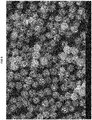
FIG. 1 is an SEM image of Cu/Cu2O nanocrystals prepared at 70°C in accordance with the present subject matter. -
FIG. 2 is another SEM image of Cu/Cu2O nanocrystals prepared at 70°C. -
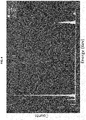
FIG. 3 is a powder XRD pattern of Cu/Cu2O nanocrystals prepared at 70°C. -
FIG. 4 is an energy dispersive X-ray pattern of Cu/Cu2O nanocrystals prepared at 70°C. -
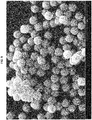
FIG. 5 is an SEM image of Cu/Cu2O nanocrystals prepared at 30°C in accordance with the present subject matter. -
FIG. 6 is another SEM image of Cu/Cu2O nanocrystals prepared at 30°C. -
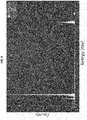
FIG. 7 is a powder XRD pattern of Cu/Cu2O nanocrystals prepared at 30°C. -
FIG. 8 is an energy dispersive X-ray pattern of Cu/Cu2O nanocrystals prepared at 30°C. -
FIG. 9 is an SEM image of Cu/Cu2O nanocrystals prepared at 0°C in accordance with the present subject matter. -
FIG. 10 is another SEM image of Cu/Cu2O nanocrystals prepared at 0°C. -
FIG. 11 is a powder XRD pattern of Cu/Cu2O nanocrystals prepared at 0°C. -
FIG. 12 is an energy dispersive X-ray pattern of Cu/Cu2O nanocrystals prepared at 0°C. - The present subject matter provides a method for morphology controlled synthesis of nanocrystals comprising a mixture of Cu and Cu2O (herein referred to as "Cu/Cu2O nanocrystals" or "mixed Cu/Cu2O nanocrystals"). The method produces mixed Cu/Cu2O nanocrystals that incorporate the advantages of both Cu and Cu2O nanostructures, which can be used in the reduction of CO2, for example, in the reduction of CO2 to methanol.
- The Cu/Cu2O nanocrystals are produced by a reduction reaction performed at a predetermined reaction temperature. When other variables are kept constant, the predetermined reaction temperature can be varied to control the morphology of the product of Cu/Cu2O nanocrystals. The morphology characteristics controlled by the reaction temperature can include the average size of crystals in the product, the copper to oxygen ratio in the product, the shape of the crystals in the product, or combinations thereof.
- By performing the reduction reaction at certain predetermined temperatures, the morphology of the Cu/Cu2O nanocrystals can be controlled with repeated consistency to obtain a desired crystal morphology. That is, performing the reaction at certain predetermined temperatures will provide Cu/Cu2O nanocrystals having a particular average particle size, a particular ratio of copper to oxygen, a particular shape including a higher ratio of {110} facets and {220} facets, or combinations thereof. Cu/Cu2O nanocrystals having certain morphologies can influence their electrocatalytic activity when they are used for the reduction of CO2.
- The reduction reaction may be performed at the predetermined temperature using a wet chemical process including a reaction mixture of raw materials. The raw materials used in synthesizing Cu/Cu2O nanocrystals may therefore include a solvent, which may be used to dissolve other raw materials so that a wet chemical reaction can proceed between the reactants. The solvent may include any liquid capable of solubilizing the other raw materials, and can include tap or deionized water, aqueous ammonia solutions, or an organic solvent such as methanol, ethanol, acetone, ether, or glycerol for example. In one non-limiting embodiment, the solvent includes deionized water.
- The raw materials used in the reduction reaction for synthesizing Cu/Cu2O nanocrystals can include a copper ion contributor, which may be any substance that is capable of contributing copper ions (Cu2+), including for example, a copper salt or hydrate thereof. The copper salt can include for example copper (II) chloride (CuCl2), copper (II) fluoride (CuF2), copper (II) chloride (CuCl2), copper (II) bromide (CuBr2), copper (II) iodide (CuI2), cuprous iodide (CuI), copper (II) oxide (CuO), copper (II) sulfide (CuS), copper (II) sulfate (CuSO4), copper (II) nitride (Cu3N2), copper(II) nitrate (Cu(NO3)2), copper (II) phosphide (Cu3P2), copper(II) acetate (Cu(CH2CO2 -)), copper (II) hydroxide (CuOH)2, copper(II) carbonate (CuCO3), and copper(II) acetylacetonate (Cu(C5H7O2)2). In one non-limiting example, the copper ion contributor includes copper (II) chloride dihydrate (CuCl2•2H2O).
- The copper ion contributor can be added to the solvent as a solid that is then dissolved therein. The amount of the copper ion contributor used in the reaction in not critical, and the copper ion contributor can be included at an amount to provide a molar concentration (i.e. molarity) of 1-20 millimoles (mmol) of copper ion contributor per liter (L) of solvent, i.e. mmol/L or millimolar (mM). The copper ion contributor may also be included to provide a molar concentration of 5-15 mM, or 9-11 mM, or about 10 mM. In one non-limiting example, the copper ion contributor is copper (II) chloride dihydrate, and is included in an amount to provide a molar concentration of 10 mM of copper (II) chloride dihydrate in the solvent, or 0.8 mmol of copper (II) chloride dihydrate per 80 mL of solvent.
- The materials used in synthesizing Cu/Cu2O nanocrystals may also include a capping agent, which is used to stabilize the nanocrystals and control the nanocrystal growth. The capping agent may include for example, polyvinylpyrrolidone (PVP), plant-derived extracts such as those from Terminalia arjuna, ethylene glycol, oleic acid, sodium laureth sulfate, sodium metaphosphate, oleylamine, dodecylbenzenesulfonic acid, ethylene diamine, triphenylphosphine oxide, peracetic acid, polyethylene glycol, fructose, tetramethylammonium hydroxide, and amino acids such as L-arginine. In one non-limiting example, the capping agent includes solid PVP with an average molecular weight of 30,000-50,000 g/mol, or 35,000-45,000 g/mol, or 40,000 g/mol.
- The capping agent may be added to the solvent as a solid for dissolution therein. The amount of capping agent used in the reaction in not critical, and the capping agent can be included at an amount to provide a molar concentration of 0.01-0.08 mM, 0.02-0.06 mM, or 0.03-0.05 mM, or about 0.04 mM. In one non-limiting example, the capping agent is PVP with an average molecular weight of 40,000 g/mol, and is included in an amount to provide a molar concentration of 0.04 mM of PVP in the solvent, or 3.2 micromoles (µm) of PVP per 80 mL of solvent.
- The materials used in synthesizing Cu/Cu2O nanocrystals may also include a pH adjustor, which can include various acids or bases such as sodium hydroxide (NaOH) or ammonia for example. The pH adjustor may be used to adjust the pH of the reaction mixture to be between 2.0 and 12.0. The pH adjustor may be introduced as a solid for dissolution in the solvent, or as a solution, such as an aqueous solution after the pH adjustor has been dissolved in water. In one non-limiting example, the pH adjustor includes sodium hydroxide, which may be introduced as an aqueous solution having a molar concentration of sodium hydroxide of 0.05-0.4 M, 0.1-0.3 M, or about 0.2 M, and in an amount of 1-20 mL, 5-15 mL, 9-11 mL, or about 10 mL of the solution. In one aspect, 10 mL of 0.2 M sodium hydroxide aqueous solution is introduced into the reaction mixture.
- The materials used in synthesizing Cu/Cu2O nanocrystals may also include a reducing agent, which is included to donate electrons (by oxidation of the reducing agent) that are used for the reduction of the copper ions to produce Cu/Cu2O nanocrystals. The reducing agent may include for example, L-ascorbic acid (i.e. vitamin C, or C6H8O6), hydrazine monohydrate, sodium borohydride, hydrazine, 1,2-hexadecanediol, glucose, carbon monoxide, sulfur dioxide, iodides, hydrogen peroxide, oxalic acid, formic acid, carbon, reducing sugars, or a borane compound.
- The reducing agent may be added to the solvent as a solid for dissolution therein, or in a solution, such as an aqueous solution after the reducing agent has been dissolved in water. In one non-limiting example, the reducing agent is added to the solvent as a solution. The amount of the reducing agent used in the reaction is not critical. In one non-limiting example, the reducing agent includes L-ascorbic acid, which may be introduced as an aqueous solution having a molar concentration of L-ascorbic acid of 0.1-1 M, 0.4-0.8 M, or about 0.6 M, and in an amount of 1-20 mL, 5-15 mL, 9-11 mL, or about 10 mL of the solution. In one aspect, 10 mL of 0.6 M L-ascorbic acid aqueous solution is introduced into the reaction mixture.
- A method of synthesizing Cu/Cu2O nanocrystals includes providing a solvent and dissolving a copper ion contributor in the solvent. A capping agent is then dissolved in the solvent, followed by the addition of a pH adjuster (in the form of an aqueous solution) and reducing agent (in the form of an aqueous solution) to thereby form a reaction mixture. The method includes stirring the reaction mixture for two to four hours while maintaining the reaction mixture at a predetermined temperature. The predetermined temperature may be dependent on the solvent used, wherein the freezing and boiling points of the solvent may limit the reaction temperature at a lower and upper end respectively.
- In one non-limiting embodiment, a method of synthesizing Cu/Cu2O nanocrystals includes dissolving copper (II) chloride dihydrate in 70-90 ml of a solvent to provide a molar concentration of 9-11 mM of copper (II) chloride dihydrate. PVP with an average molecular weight of 35,000-45,000 g/mol is also dissolved in the solvent at a molar concentration of 0.03-0.05 mM of PVP. Then, 9-11 mL of 0.1 - 0.3 M sodium hydroxide aqueous solution is added, followed by adding 9-11 mL of 0.4-0.8 M L-ascorbic acid aqueous solution to thereby form a reaction mixture.
- The reaction mixture is agitated, for example by continuous stirring, for 2-4 hours as a predetermined temperature to thereby precipitate Cu2O/Cu nanocrystals. The Cu2O/Cu nanocrystals are collected by centrifugation, filtration, or the like, and are washed with de-ionized water and ethanol to remove unreacted chemicals, and then dried.
- In one embodiment, the predetermined temperature may be from 65°C to 75°C, from 69°C to 71°C, 70°C ± 0.1-0.5°C, or 70°C. In this embodiment, the method may produce Cu2O/Cu nanocrystals having an average size of from 770nm to 870nm, 810nm to 830nm, 820nm ± 1-5 nm, or 820nm. The method may produce Cu2O/Cu nanocrystals having a ratio of copper to oxygen from 2.2 to 2.0:1, 2.1:1, or 68.2:31.8. The method may produce Cu2O/Cu nanocrystals in the form of corner-truncated cubes.
- In another embodiment, the predetermined temperature may be from 25°C to 35°C, from 29°C to 31°C, 30°C ± 0.1-0.5°C, or 30°C. In this embodiment, the method may produce Cu2O/Cu nanocrystals having an average size of from 200nm to 240nm, 210nm to 230nm, 220nm ± 1-5nm, or 220nm. The method may produce Cu2O/Cu nanocrystals having a ratio of copper to oxygen from 1.6 to 1.4:1, 1.5:1, or 60.7:39.3. The method may produce Cu2O/Cu nanocrystals in the form of slightly corner-truncated cubes.
- In still another embodiment, the predetermined temperature may be from - 5°C to 5°C, from -1°C to 1°C, 0°C ± 0.1-0.5°C, or 0°C. In this embodiment, the method may produce Cu2O/Cu nanocrystals having an average size of from 370nm to 430nm, 390nm to 410nm, 400 nm ± 1-5nm, or 400nm. The method may produce Cu2O/Cu nanocrystals having a ratio of copper to oxygen from 2.9 to 2.7:1, 2.8:1, or 73.6:26.4. The method may produce Cu2O/Cu nanocrystals in the form of slightly corner-truncated cubes, with a higher ratio of {110} facets and {220} facets that those prepared at 70°C.
- The following Examples 1-3 were conducted in accordance with the present subject matter. In Examples 1-3, the raw materials included copper (II) chloride dihydrate, PVP with an average molecular weight of 40,000 g/mol ("PVP40"), L-ascorbic acid, and sodium hydroxide, all of which were analytical grade chemicals purchased from Sigma Aldrich, of St. Louis, MO, and used without further modification or purification.
- In Examples 1-3, the concentration of the raw materials was kept fixed, and each example was prepared by dissolving copper (II) chloride dihydrate (CuCl2 • 2H2O) in 80 ml de-ionized water to provide a molar concentration of 10 mM of copper (II) chloride dihydrate in the de-ionized water. PVP40 was dissolved in the de-ionized water and stirred thoroughly until PVP40 dissolved completely to provide a molar concentration of 0.04 mM of PVP40 in the de-ionized water. 10 ml of 0.2 M NaOH aqueous solution was added dropwise into the reaction mixture. After 30 minutes of stirring, 10 ml of 0.6M L-ascorbic acid was applied dropwise into the reaction mixture and the mixture was allowed to react for three hours at a predetermined temperature. During the reaction and depending on the predetermined temperature, the reaction mixture changed color to light blue, dark blue or turbid red. All of Examples 1-3 were carried out under constant stirring and maintained at the predetermined temperature. The resulting precipitate was collected by centrifugation and washed with de-ionized water three times and ethanol twice to remove unreacted chemicals, and finally dried at 40°C in a vacuum oven for 6 hours to thereby produce Cu2O/Cu nanocrystals.
- Table 1 below provides a summary for the experimental conditions for all the examples, and results of the Cu/Cu2O nanocrystal synthesis at different predetermined temperatures.
Table 1 Ex. Temperature and Reaction Time Concentration of CuCl2 • 2H2O Concentration of PVP40 Crystal Shape Crystal Size 1 70°C, 3h 10.0 mM 0.4 mM Corner truncated cube 820 nm 2 30°C, 3h 10.0 mM 0.4 mM Slightly corner truncated cube 220 nm 3 0°C, 3h 10.0 mM 0.4 mM Slightly corner truncated cube 400 nm - Referring to the figures, the synthesis of Example 1 was performed at a predetermined temperature of 70°C for three hours. Results of Example 1 are depicted in
Figs. 1-4 . As depicted inFig. 1 , which is an SEM image, andFig. 2 , which is another SEM image produced in conjunction with the energy dispersive X-ray (EDX) pattern ofFig. 4 , the Cu/Cu2O nanocrystals prepared at 70°C displayed uniform shapes, had a sharper-edged corner truncated cube shapes, and particle sizes of 820 nm ± 50 nm.Fig. 3 depicts a powder XRD pattern for the Cu/Cu2O nanocrystals prepared at 70°C. As depicted inFig. 4 , which is an elemental analysis shown on an energy dispersive X-ray pattern, the Cu/Cu2O nanocrystals prepared at 70°C had a ratio of Cu:O of 68.2:31.8. - The synthesis of Example 2 was performed at a predetermined temperature of 30°C for three hours. Results of Example 2 are depicted in
Figs. 5-8 . As depicted inFig. 5 , which is an SEM image, andFig. 6 , which is another SEM image produced in conjunction with the energy dispersive X-ray pattern ofFig. 8 , the Cu/Cu2O nanocrystals prepared at 30°C displayed uniform shapes, had slightly corner truncated cube shapes, and particle sizes of 220 nm ± 20 nm.Fig. 7 depicts a powder XRD pattern for the Cu/Cu2O nanocrystals prepared at 30°C. As depicted inFig. 8 , which is an elemental analysis shown on an energy dispersive X-ray pattern, the Cu/Cu2O nanocrystals prepared at 30°C had a ratio of Cu:O of 60.7:39.3. - The synthesis of Example 3 was performed at a predetermined temperature of 0°C for three hours. Results of Example 3 are depicted in
Figs. 9-12 . As depicted inFig. 9 , which is an SEM image, andFig. 10 , which is another SEM image produced in conjunction with the energy dispersive X-ray pattern ofFig. 12 , the Cu/Cu2O nanocrystals prepared at 0°C displayed uniform shapes, had slightly corner truncated cube shapes, and particle sizes of 400 nm ± 30 nm. Comparison ofFig. 11 , which is a powder XRD pattern, andFig. 3 reveals that the Cu/Cu2O nanocrystals prepared at 0°C had a ratio of {110} facets and {220} facets greater than those prepared at 70°C. As depicted inFig. 12 , which is an elemental analysis shown on an energy dispersive X-ray pattern, the Cu/Cu2O nanocrystals prepared at 0°C had a ratio of Cu:O of 73.6:26.4. - As can be seen, the morphology of the Cu/Cu2O nanocrystals, including the shape, size, and ratio of copper to oxygen, is dependent on the reaction temperature. At a reaction temperature greater than 30°C, for example at 70°C, the Cu/Cu2O nanocrystals were generally larger (average 810nm), sharper-edged corner truncated cubes, but at lower temperatures, for example at 30°C and 0°C, the crystal size was smaller and the shape was a slightly corner-truncated cube.
- The structural properties of the synthesized Cu/Cu2O nanocrystals were analyzed by the X-ray diffraction (XRD) patterns shown in
Figure 3 ,7 and11 . The diffraction peaks at 29.7°, 36.6°, 42.6° and 61.7° were assigned to the crystal facets of {110}, {111}, {200} and {220}, respectively as depicted. - Significantly, Cu/Cu2O nanocrystals synthesized at temperatures of 30°C and 0°C have a higher ratio of facets {110} and {220} than those prepared at a reaction temperature of 70°C. As discussed herein, when Cu/Cu2O nanocrystals are used as a catalyst for reduction of carbon dioxide, the {110} facet series was reported to show superior catalytic performance compared to {100} and {111} facets.
- Energy dispersive X-ray was applied to study the atomic composition of the synthesized nanocrystals shown in
Figure 2 and4 ,6 and8 , and10 and12 . The resulting EDX spectra exhibit the characteristic peaks of Cu and O. Furthermore, the atomic ratio of Cu to O in Cu/Cu2O crystals synthesized at a low temperature of 0°C is more than the theoretical value of 2:1, indicating that the crystal is a mixture of Cu and Cu2O. This indicates that there is metallic copper produced in the process that will benefit the electrocatalytic reduction of CO2 or other applications. - The present subject matter provides a simple approach to achieve the crystallographic morphology construction of Cu/Cu2O nanocrystals by controlling the temperature during the synthetic process. Temperature regulation enables control of the average particle size and shape of the Cu/Cu2O nanocrystals. The size distribution of the Cu/Cu2O nanocrystals ranges from 200 nm to 1000 nm. The shape of the Cu/Cu2O nanocrystals varies from edged corner truncated cubes to slightly corner truncated cubes. Significantly, Cu/Cu2O crystals synthesized at lower temperature than 30°C have higher ratio of facets {110} and {220} than that above 30°C. Furthermore, the atomic ratio of Cu to O in Cu/Cu2O crystals synthesized from 0°C is more than 2:1. This simple synthetic approach has advantages such as mass production, easy operation, high reproducibility and may provide a systematically direct method for the morphology transformation of other materials.
- It will be appreciated that various of the above-disclosed and other features and functions, or alternatives or varieties thereof, may be desirably combined into many other different systems or applications. Also that various presently unforeseen or unanticipated alternatives, modifications, variations or improvements therein may be subsequently made by those skilled in the art which are also intended to be encompassed by the following claims.
A simple approach to produce mixed Cu/Cu2O nanocrystals having a specific morphology by controlling the reaction temperature during Cu/Cu2O nanocrystals synthesis. Other variables are kept constant, such as the amount of reactants, while the reaction temperatures is maintained at a predetermined temperature of 70°C, 30°C or 0°C, which are used to produce different and controlled morphologies for the Cu/Cu2O nanocrystals. The reaction mixture includes a copper ion contributor, a capping agent, a pH adjustor, and reducing agent. The reaction mixture is held at the predetermined temperature for three hours to produce the Cu/Cu2O nanocrystals. The synthesis method has advantages such as mass production, easy operation, and high reproducibility.
Claims (15)
- A method of producing Cu2O/Cu nanocrystals, comprising:providing 70-90 ml of a solvent,dissolving copper (II) chloride dihydrate in the solvent to provide a molar concentration of 9-11 mM of copper (II) chloride dihydrate in the solvent, dissolving polyvinylpyrrolidone with an average molecular weight of 35,000-45,000 g/mol in the solvent to provide a molar concentration of 0.02-0.06 mM of polyvinylpyrrolidone in the solvent, adding 9-11 mL of 0.1-0.3 M sodium hydroxide aqueous solution to the solvent, and adding 9-11 mL of 0.4-0.8 M L-ascorbic acid solution to the solvent to thereby form a reaction mixture, andstirring the reaction mixture at a predetermined temperature for two to four hours to thereby precipitate Cu2O/Cu nanocrystals,wherein the predetermined temperature is from 65°C to 75°C, from 25°C to 35°C, or from -5°C to 5°C.
- The method according to claim 1, wherein the predetermined temperature is from 65°C to 75°C, preferably from 69°C to 71°C.
- The method according to claim 2, wherein the Cu2O/Cu nanocrystals have an average size of from 770nm to 870nm.
- The method according to claim 2, wherein the Cu2O/Cu nanocrystals have a ratio of copper to oxygen from 2.2:1 to 2.0:1.
- The method according to claim 2, wherein the Cu2O/Cu nanocrystals are in the form of corner-truncated cubes.
- The method according to claim 1, wherein the predetermined temperature is from 25°C to 35°C, preferably from 29°C to 31°C.
- The method according to claim 6, wherein the Cu2O/Cu nanocrystals have an average size of from 200nm to 240nm.
- The method according to claim 6, wherein the Cu2O/Cu nanocrystals have a ratio of copper to oxygen from 1.6:1 to 1.4:1.
- The method according to claim 6, wherein the Cu2O/Cu nanocrystals are in the form of slightly corner-truncated cubes.
- The method according to claim 1, wherein the predetermined temperature is from -5°C to 5°C.
- The method according to claim 10, wherein the predetermined temperature is from -1°C to 1°C.
- The method according to claim 10, wherein the Cu2O/Cu nanocrystals have an average size of from 370nm to 430 nm.
- The method according to claim 10, wherein the Cu2O/Cu nanocrystals have a ratio of copper to oxygen from 2.9:1 to 2.7:1.
- The method according to claim 10, wherein the Cu2O/Cu nanocrystals are in the form of slightly corner-truncated cubes.
- The method according to claim 1, wherein:the solvent is deionized water,the molar concentration of copper (II) chloride dihydrate in the deionized water is 10 mM,the average molecular weight of the polyvinylpyrrolidone is 40,000 g/mol and the molar concentration of polyvinylpyrrolidone in the deionized water is 0.04 mM.10 mL of 0.2 M sodium hydroxide aqueous solution is added to the deionized water,10 mL of 0.6 M L-ascorbic acid is added to the deionized water, andthe reaction mixture is stirred at the predetermined temperature for 3 hours.
Applications Claiming Priority (1)
| Application Number | Priority Date | Filing Date | Title |
|---|---|---|---|
| US15/664,795 US10913056B2 (en) | 2017-07-31 | 2017-07-31 | Method for synthesis of copper/copper oxide nanocrystals |
Publications (1)
| Publication Number | Publication Date |
|---|---|
| EP3438051A1 true EP3438051A1 (en) | 2019-02-06 |
Family
ID=63254503
Family Applications (1)
| Application Number | Title | Priority Date | Filing Date |
|---|---|---|---|
| EP18186469.5A Withdrawn EP3438051A1 (en) | 2017-07-31 | 2018-07-31 | Method for synthesis of copper/copper oxide nanocrystals |
Country Status (4)
| Country | Link |
|---|---|
| US (1) | US10913056B2 (en) |
| EP (1) | EP3438051A1 (en) |
| JP (1) | JP7154861B2 (en) |
| CN (1) | CN109321943B (en) |
Cited By (1)
| Publication number | Priority date | Publication date | Assignee | Title |
|---|---|---|---|---|
| WO2020225315A1 (en) * | 2019-05-07 | 2020-11-12 | Total Se | Electrocatalysts synthesized under co2 electroreduction and related methods and uses |
Families Citing this family (24)
| Publication number | Priority date | Publication date | Assignee | Title |
|---|---|---|---|---|
| US10696614B2 (en) * | 2017-12-29 | 2020-06-30 | Uchicago Argonne, Llc | Photocatalytic reduction of carbon dioxide to methanol or carbon monoxide using cuprous oxide |
| US11267712B2 (en) * | 2018-10-10 | 2022-03-08 | Honda Motor Co., Ltd. | Tuning products selectivity of CO2 reduction reaction with surface ligands |
| CN109940169B (en) * | 2019-04-19 | 2022-03-29 | 陕西科技大学 | Nano copper and preparation method thereof |
| CN110014160B (en) * | 2019-04-26 | 2021-12-07 | 陕西科技大学 | Ellipsoidal Cu2O/Cu/Cu3Preparation method of N composite powder |
| CN110385443A (en) * | 2019-07-28 | 2019-10-29 | 长春黄金研究院烟台贵金属材料研究所有限公司 | A kind of preparation method of acid system Nanometer Copper colloidal sol |
| CN111091978B (en) * | 2019-12-30 | 2021-11-09 | 安徽大学 | Ni3S4Quantum dot electrode material and preparation method and application thereof |
| CA3166043A1 (en) * | 2020-01-27 | 2021-08-05 | Katsushi Fujii | Cathode electrode, composite of cathode electrode and substrate, and method of manufacturing composite of cathode electrode and substrate |
| CN113751009B (en) * | 2020-06-01 | 2024-08-16 | 同济大学 | Preparation method of core-sheath structure Cu/Cu2O-ZnO-Fe3O4 nanocomposite photocatalyst |
| CN112473667B (en) * | 2020-11-24 | 2022-11-29 | 西安理工大学 | Preparation method of CuO catalysts with different morphology and surface Cu+ content |
| CN112742388B (en) * | 2021-01-15 | 2022-09-09 | 新疆大学 | Preparation method of organic pollutant reduction catalyst |
| CN112899709B (en) * | 2021-01-19 | 2022-01-18 | 北京化工大学 | Copper-based compound/copper nano electrode with interface synergistic effect and preparation and application thereof |
| CN113353967B (en) * | 2021-06-03 | 2023-06-13 | 厦门理工学院 | A controllable synthesis method and application of multi-morphology Cu2O |
| US11376570B1 (en) | 2021-07-21 | 2022-07-05 | King Abdulaziz University | Method of forming copper oxide-on-copper nanomaterial catalyst mesh |
| CN113862715B (en) * | 2021-07-28 | 2023-10-03 | 王荔 | Multivalent copper nanomaterial, preparation method thereof and application of multivalent copper nanomaterial serving as electrocatalyst in carbon capture technology |
| CN113862721B (en) * | 2021-09-29 | 2023-02-28 | 深圳大学 | A copper nanoparticle catalyst for adjusting the optimal current density of carbon dioxide electrochemical reduction to prepare multi-carbon products and its preparation method |
| JP7713378B2 (en) * | 2021-12-03 | 2025-07-25 | 日本化学工業株式会社 | Cuprous oxide particles, their manufacturing method, photosintering composition, and method for forming conductive film using the same |
| CN113955795A (en) * | 2021-12-06 | 2022-01-21 | 苏州北美国际高级中学 | A kind of preparation method of nanometer copper oxide |
| CN114682258B (en) * | 2022-04-08 | 2024-04-09 | 陕西轩意光电科技有限公司 | CuO/Cu 2 Preparation method and application of O nano flower-shaped spherical thermal catalyst |
| CN115852485B (en) * | 2023-02-07 | 2023-05-02 | 南开大学 | A graded tip cuprous oxide single crystal material and its preparation method and application |
| CN116005195A (en) * | 2023-02-27 | 2023-04-25 | 中国石油大学(华东) | Gas-assisted synthesis method of microcrystalline cuprous oxide electrocatalyst and application thereof |
| CN116570575B (en) * | 2023-05-22 | 2026-02-13 | 福州大学 | A GSH/pH dual-responsive Cu2O@Cu2+/ZIF-67@ZnPc core-shell nanomedicine |
| US20250289771A1 (en) * | 2024-03-08 | 2025-09-18 | Hubbell Incorporated | Exothermic reaction mixtures |
| CN120026346B (en) * | 2025-04-24 | 2025-07-18 | 同济大学 | An iron-doped copper oxide catalyst and its preparation method and its application in electrocatalytic nitrate synthesis of ammonia |
| CN120502343B (en) * | 2025-07-18 | 2025-10-14 | 山东理工大学 | Preparation method of a hollow block Cu/CuI catalyst and its application in photocatalytic reduction of CO2 to multi-carbon products |
Citations (3)
| Publication number | Priority date | Publication date | Assignee | Title |
|---|---|---|---|---|
| CN102502772B (en) * | 2011-11-03 | 2013-12-11 | 中国科学技术大学 | Removing method of cuprous oxide nanocrystal surface protective agent, and catalytic application thereof |
| CN106082301A (en) * | 2016-05-25 | 2016-11-09 | 苏州美纳福健康科技有限公司 | A kind of preparation method of nano cuprous oxide hollow ball |
| CN106378141A (en) * | 2016-11-14 | 2017-02-08 | 中国科学技术大学 | ZnO/Cu nanometer crystal composite material, and preparation method and application thereof |
Family Cites Families (11)
| Publication number | Priority date | Publication date | Assignee | Title |
|---|---|---|---|---|
| DE69122573T2 (en) | 1990-07-30 | 1997-03-13 | Mitsubishi Gas Chemical Co | Process for the production of multilayer boards |
| TW508658B (en) | 2000-05-15 | 2002-11-01 | Asm Microchemistry Oy | Process for producing integrated circuits |
| KR100486604B1 (en) | 2002-10-30 | 2005-05-03 | (주)창성 | Method for manufacturing nano-scale copper powders by wet reducing process |
| US7718094B2 (en) | 2004-06-18 | 2010-05-18 | The Research Foundation Of State University Of New York | Preparation of metallic nanoparticles |
| CN101348275B (en) * | 2008-09-11 | 2010-06-30 | 北京航空航天大学 | Preparation method of polyhedral cuprous oxide nanoparticles |
| WO2012060776A1 (en) | 2010-07-19 | 2012-05-10 | National University Of Singapore | Metal nanowires, nanomesh and a method of fabrication |
| ES2893853T3 (en) | 2011-07-26 | 2022-02-10 | Oned Mat Inc | Method for producing silicon nanowires |
| US20140060639A1 (en) | 2012-08-31 | 2014-03-06 | OneSun, LLC | Copper oxide core/shell nanocrystals for use in photovoltaic cells |
| TWI537049B (en) | 2014-03-11 | 2016-06-11 | 國立清華大學 | Catalytic reaction |
| JP6352444B2 (en) | 2014-12-03 | 2018-07-04 | 株式会社日立製作所 | Metal oxide particles for bonding, sintered bonding agent including the same, method for producing metal oxide particles for bonding, and method for bonding electronic components |
| US10329677B2 (en) | 2016-11-01 | 2019-06-25 | King Fahd University Of Petroleum And Minerals | Method for electrochemical reduction of carbon dioxide |
-
2017
- 2017-07-31 US US15/664,795 patent/US10913056B2/en active Active
-
2018
- 2018-07-31 EP EP18186469.5A patent/EP3438051A1/en not_active Withdrawn
- 2018-07-31 JP JP2018143538A patent/JP7154861B2/en active Active
- 2018-07-31 CN CN201810859393.XA patent/CN109321943B/en active Active
Patent Citations (3)
| Publication number | Priority date | Publication date | Assignee | Title |
|---|---|---|---|---|
| CN102502772B (en) * | 2011-11-03 | 2013-12-11 | 中国科学技术大学 | Removing method of cuprous oxide nanocrystal surface protective agent, and catalytic application thereof |
| CN106082301A (en) * | 2016-05-25 | 2016-11-09 | 苏州美纳福健康科技有限公司 | A kind of preparation method of nano cuprous oxide hollow ball |
| CN106378141A (en) * | 2016-11-14 | 2017-02-08 | 中国科学技术大学 | ZnO/Cu nanometer crystal composite material, and preparation method and application thereof |
Non-Patent Citations (3)
| Title |
|---|
| DONG-FENG ZHANG ET AL: "Delicate control of crystallographic facet-oriented Cu2O nanocrystals and the correlated adsorption ability", JOURNAL OF MATERIALS CHEMISTRY, vol. 19, no. 29, 1 January 2009 (2009-01-01), GB, pages 5220, XP055525780, ISSN: 0959-9428, DOI: 10.1039/b816349a * |
| DONG-FENG ZHANG ET AL: "Supporting information: Delicate control of crystallographic facet-oriented Cu2O nanocrystals and the correlated adsorption ability", JOURNAL OF MATERIALS CHEMISTRY, 1 January 2009 (2009-01-01), pages 5220, XP055525802, Retrieved from the Internet <URL:http://www.rsc.org/suppdata/jm/b8/b816349a/b816349a.pdf> [retrieved on 20181121], DOI: 10.1039/b816349a * |
| QING HUA ET AL: "Morphological Evolution of Cu2O Nanocrystals in an Acid Solution: Stability of Different Crystal Planes", LANGMUIR, vol. 27, no. 2, 18 January 2011 (2011-01-18), US, pages 665 - 671, XP055525822, ISSN: 0743-7463, DOI: 10.1021/la104475s * |
Cited By (1)
| Publication number | Priority date | Publication date | Assignee | Title |
|---|---|---|---|---|
| WO2020225315A1 (en) * | 2019-05-07 | 2020-11-12 | Total Se | Electrocatalysts synthesized under co2 electroreduction and related methods and uses |
Also Published As
| Publication number | Publication date |
|---|---|
| US10913056B2 (en) | 2021-02-09 |
| CN109321943A (en) | 2019-02-12 |
| JP7154861B2 (en) | 2022-10-18 |
| CN109321943B (en) | 2023-02-17 |
| JP2019026551A (en) | 2019-02-21 |
| US20190030523A1 (en) | 2019-01-31 |
Similar Documents
| Publication | Publication Date | Title |
|---|---|---|
| US10913056B2 (en) | Method for synthesis of copper/copper oxide nanocrystals | |
| US11339487B2 (en) | Synergistic effects of multi-faceted CU2O nanocrystals for electrochemical CO2 reduction | |
| Yang et al. | Strain engineering in electrocatalysts: fundamentals, progress, and perspectives | |
| US11873566B2 (en) | Cu/Cu2O interface nanostructures for electrochemical CO2 reduction | |
| US8986514B2 (en) | Photoreduction catalyst, and method for synthesizing ammonia and method for decreasing nitrogen oxides in water using the same | |
| Zhu et al. | In situ development of highly concave and composition-confined PtNi octahedra with high oxygen reduction reaction activity and durability | |
| Guo et al. | Noble metal nanodendrites: growth mechanisms, synthesis strategies and applications | |
| CA3103706A1 (en) | Method of producing stable cu-based core-shell nanoparticles | |
| KR101485446B1 (en) | Method for Au-Pd alloy nanocrystals | |
| US20220209248A1 (en) | Catalyst for fuel cell and method for preparing the same | |
| Eid et al. | Nanoarchitectonic metals | |
| Huang et al. | Recent advances in surface reconstruction toward self-adaptive electrocatalysis: a review | |
| KR102537063B1 (en) | Preparing method of metal-based nanomaterials, metal-based nanomaterials prepared therefrom, catalyst and detection device | |
| Feng et al. | Two-dimensional noble metal-based intermetallics for electrocatalysis | |
| Xie et al. | Valorizing Nitrate in Electrochemical Nitrogen Cycling: Copper‐Based Catalysts from Reduction to C–N Coupling | |
| Sabouhanian et al. | Unveiling the potential of bismuth-based catalysts for electrochemical CO 2 reduction | |
| Peng et al. | Engineering Cu-based catalysts for CO2 electroreduction: from catalyst design to practical applications | |
| Kim et al. | Reactive nanotemplates for synthesis of highly efficient electrocatalysts: beyond simple morphology transfer | |
| KR101938333B1 (en) | Preparation method of cubic platinum nanoparticles for ammonia oxidtion | |
| KR101338534B1 (en) | Pt-Ni Alloy Nanodendrites for Fuel cell catalyst | |
| US20220231306A1 (en) | Intermetallic catalyst and method for preparing the same | |
| CN116079046B (en) | A Ru-Ir-M ternary alloy hollow nanocrystal and its synthesis method and application | |
| JP2009035773A (en) | Method for producing tin nanoparticles | |
| Lai et al. | One-pot seedless aqueous design of metal nanostructures for energy electrocatalytic applications | |
| US20220219158A1 (en) | Intermetallic catalyst and method for preparing the same |
Legal Events
| Date | Code | Title | Description |
|---|---|---|---|
| PUAI | Public reference made under article 153(3) epc to a published international application that has entered the european phase |
Free format text: ORIGINAL CODE: 0009012 |
|
| STAA | Information on the status of an ep patent application or granted ep patent |
Free format text: STATUS: THE APPLICATION HAS BEEN PUBLISHED |
|
| AK | Designated contracting states |
Kind code of ref document: A1 Designated state(s): AL AT BE BG CH CY CZ DE DK EE ES FI FR GB GR HR HU IE IS IT LI LT LU LV MC MK MT NL NO PL PT RO RS SE SI SK SM TR |
|
| AX | Request for extension of the european patent |
Extension state: BA ME |
|
| RIN1 | Information on inventor provided before grant (corrected) |
Inventor name: LI, XIA Inventor name: RAO, YI Inventor name: CHEN, GUGANG Inventor name: HARUTYUNYAN, AVETIK |
|
| STAA | Information on the status of an ep patent application or granted ep patent |
Free format text: STATUS: REQUEST FOR EXAMINATION WAS MADE |
|
| 17P | Request for examination filed |
Effective date: 20190806 |
|
| RBV | Designated contracting states (corrected) |
Designated state(s): AL AT BE BG CH CY CZ DE DK EE ES FI FR GB GR HR HU IE IS IT LI LT LU LV MC MK MT NL NO PL PT RO RS SE SI SK SM TR |
|
| STAA | Information on the status of an ep patent application or granted ep patent |
Free format text: STATUS: THE APPLICATION IS DEEMED TO BE WITHDRAWN |
|
| 18D | Application deemed to be withdrawn |
Effective date: 20210202 |