EP3436353B1 - Solid-state cooling add-on bar unit for aircraft food service apparatus - Google Patents
Solid-state cooling add-on bar unit for aircraft food service apparatus Download PDFInfo
- Publication number
- EP3436353B1 EP3436353B1 EP17776682.1A EP17776682A EP3436353B1 EP 3436353 B1 EP3436353 B1 EP 3436353B1 EP 17776682 A EP17776682 A EP 17776682A EP 3436353 B1 EP3436353 B1 EP 3436353B1
- Authority
- EP
- European Patent Office
- Prior art keywords
- air
- solid
- galley
- state
- hot
- Prior art date
- Legal status (The legal status is an assumption and is not a legal conclusion. Google has not performed a legal analysis and makes no representation as to the accuracy of the status listed.)
- Active
Links
Images


Classifications
-
- B—PERFORMING OPERATIONS; TRANSPORTING
- B60—VEHICLES IN GENERAL
- B60H—ARRANGEMENTS OF HEATING, COOLING, VENTILATING OR OTHER AIR-TREATING DEVICES SPECIALLY ADAPTED FOR PASSENGER OR GOODS SPACES OF VEHICLES
- B60H1/00—Heating, cooling or ventilating devices
- B60H1/00478—Air-conditioning devices using the Peltier effect
-
- B—PERFORMING OPERATIONS; TRANSPORTING
- B60—VEHICLES IN GENERAL
- B60H—ARRANGEMENTS OF HEATING, COOLING, VENTILATING OR OTHER AIR-TREATING DEVICES SPECIALLY ADAPTED FOR PASSENGER OR GOODS SPACES OF VEHICLES
- B60H1/00—Heating, cooling or ventilating devices
- B60H1/22—Heating, cooling or ventilating devices the heat source being other than the propulsion plant
- B60H1/2215—Heating, cooling or ventilating devices the heat source being other than the propulsion plant the heat being derived from electric heaters
- B60H1/2225—Heating, cooling or ventilating devices the heat source being other than the propulsion plant the heat being derived from electric heaters arrangements of electric heaters for heating air
-
- B—PERFORMING OPERATIONS; TRANSPORTING
- B64—AIRCRAFT; AVIATION; COSMONAUTICS
- B64D—EQUIPMENT FOR FITTING IN OR TO AIRCRAFT; FLIGHT SUITS; PARACHUTES; ARRANGEMENT OR MOUNTING OF POWER PLANTS OR PROPULSION TRANSMISSIONS IN AIRCRAFT
- B64D11/00—Passenger or crew accommodation; Flight-deck installations not otherwise provided for
- B64D11/0007—Devices specially adapted for food or beverage distribution services
-
- B—PERFORMING OPERATIONS; TRANSPORTING
- B64—AIRCRAFT; AVIATION; COSMONAUTICS
- B64D—EQUIPMENT FOR FITTING IN OR TO AIRCRAFT; FLIGHT SUITS; PARACHUTES; ARRANGEMENT OR MOUNTING OF POWER PLANTS OR PROPULSION TRANSMISSIONS IN AIRCRAFT
- B64D11/00—Passenger or crew accommodation; Flight-deck installations not otherwise provided for
- B64D11/04—Galleys
-
- B—PERFORMING OPERATIONS; TRANSPORTING
- B64—AIRCRAFT; AVIATION; COSMONAUTICS
- B64D—EQUIPMENT FOR FITTING IN OR TO AIRCRAFT; FLIGHT SUITS; PARACHUTES; ARRANGEMENT OR MOUNTING OF POWER PLANTS OR PROPULSION TRANSMISSIONS IN AIRCRAFT
- B64D13/00—Arrangements or adaptations of air-treatment apparatus for aircraft crew or passengers, or freight space
- B64D13/06—Arrangements or adaptations of air-treatment apparatus for aircraft crew or passengers, or freight space the air being conditioned
- B64D13/08—Arrangements or adaptations of air-treatment apparatus for aircraft crew or passengers, or freight space the air being conditioned the air being heated or cooled
-
- F—MECHANICAL ENGINEERING; LIGHTING; HEATING; WEAPONS; BLASTING
- F25—REFRIGERATION OR COOLING; COMBINED HEATING AND REFRIGERATION SYSTEMS; HEAT PUMP SYSTEMS; MANUFACTURE OR STORAGE OF ICE; LIQUEFACTION SOLIDIFICATION OF GASES
- F25B—REFRIGERATION MACHINES, PLANTS OR SYSTEMS; COMBINED HEATING AND REFRIGERATION SYSTEMS; HEAT PUMP SYSTEMS
- F25B21/00—Machines, plants or systems, using electric or magnetic effects
- F25B21/02—Machines, plants or systems, using electric or magnetic effects using Peltier effect; using Nernst-Ettinghausen effect
-
- F—MECHANICAL ENGINEERING; LIGHTING; HEATING; WEAPONS; BLASTING
- F25—REFRIGERATION OR COOLING; COMBINED HEATING AND REFRIGERATION SYSTEMS; HEAT PUMP SYSTEMS; MANUFACTURE OR STORAGE OF ICE; LIQUEFACTION SOLIDIFICATION OF GASES
- F25B—REFRIGERATION MACHINES, PLANTS OR SYSTEMS; COMBINED HEATING AND REFRIGERATION SYSTEMS; HEAT PUMP SYSTEMS
- F25B21/00—Machines, plants or systems, using electric or magnetic effects
- F25B21/02—Machines, plants or systems, using electric or magnetic effects using Peltier effect; using Nernst-Ettinghausen effect
- F25B21/04—Machines, plants or systems, using electric or magnetic effects using Peltier effect; using Nernst-Ettinghausen effect reversible
-
- F—MECHANICAL ENGINEERING; LIGHTING; HEATING; WEAPONS; BLASTING
- F25—REFRIGERATION OR COOLING; COMBINED HEATING AND REFRIGERATION SYSTEMS; HEAT PUMP SYSTEMS; MANUFACTURE OR STORAGE OF ICE; LIQUEFACTION SOLIDIFICATION OF GASES
- F25B—REFRIGERATION MACHINES, PLANTS OR SYSTEMS; COMBINED HEATING AND REFRIGERATION SYSTEMS; HEAT PUMP SYSTEMS
- F25B2321/00—Details of machines, plants or systems, using electric or magnetic effects
- F25B2321/02—Details of machines, plants or systems, using electric or magnetic effects using Peltier effects; using Nernst-Ettinghausen effects
- F25B2321/025—Removal of heat
- F25B2321/0251—Removal of heat by a gas
-
- Y—GENERAL TAGGING OF NEW TECHNOLOGICAL DEVELOPMENTS; GENERAL TAGGING OF CROSS-SECTIONAL TECHNOLOGIES SPANNING OVER SEVERAL SECTIONS OF THE IPC; TECHNICAL SUBJECTS COVERED BY FORMER USPC CROSS-REFERENCE ART COLLECTIONS [XRACs] AND DIGESTS
- Y02—TECHNOLOGIES OR APPLICATIONS FOR MITIGATION OR ADAPTATION AGAINST CLIMATE CHANGE
- Y02T—CLIMATE CHANGE MITIGATION TECHNOLOGIES RELATED TO TRANSPORTATION
- Y02T50/00—Aeronautics or air transport
- Y02T50/40—Weight reduction
Definitions
- thermoelectric device also known as a thermoelectric cooler (TECs)
- LRU fully integrated galley line replaceable units
- thermoelectric effect is the direct conversion of temperature differences to electric voltage and vice versa.
- a thermoelectric device creates voltage when there is a different temperature on each side. Conversely, when a voltage is applied to it, it creates a temperature difference. At the atomic scale, an applied temperature gradient causes charge carriers in the material to diffuse from the hot side to the cold side. This effect can be used to generate electricity, measure temperature or change the temperature of objects. Because the direction of heating and cooling is determined by the polarity of the applied voltage, thermoelectric devices can be used as temperature controllers.
- the TED can be manufactured using hot and cold side finned (air-to-air) or fin and tank (air-to-liquid) heat sinks on either side of a thermoelectric module (TEM).
- TEM thermoelectric module
- the TEM is formed of P and T type semiconductors sandwiched between inner conductive plates and outer ceramic plates.
- the invention utilizes the advantages of TED technology to provide unique compact cooling solutions that are integrated into the food service apparatus structure.
- United States patent US 2,973,627 discloses a hot junction structure for thermoelectric heat pumps comprising a pair of bodies formed of dissimilar thermoelectric materials having hot and cold junction ends, a pair of conducting rods having adjacent ends thereof joint respectively to the hot ends of said bodies and a rigid heat dissipating member providing an extended heat transfer service.
- the member is joined to the other ends of said rods and supports said rods and said bodies.
- a rigid plate is formed of heat insulating material and perforations therein.
- the hot junction structure further comprises means clamping said member to one face of said plate in such a manner that said rods project through said plates and beyond the opposite face of the plate.
- US Patent Application No. 2010/071384 A1 describes a refrigeration system for cooling food or beverages using a liquid cooling system of a vehicle, including a compartment for food or beverages, and a first chilled liquid coolant system and second chilled coolant system operating together as a cascade cooling system.
- German Patent No. DE 43 08 144 describes a serving trolley having an inner space for the storage of food and drinks on board an airplane having a heating/cooling device with at least one Peltier element being arranged so that its heat-absorbing side faces a cooling compartment and its heat-emitting side faces a warming compartment of the inner space.
- thermoelectric cooling device with a liquid heat exchanger, at least two air heat exchangers, and at least two thermoelectric modules, wherein the liquid heat exchanger includes a liquid circulation path through which liquid coolant flows to exchange heat with the liquid heat exchanger.
- US Patent Application No. 2013/247590 A1 describes a dynamic chilled mini-bar including a cover; a movable compartment translatable to expose an interior thereof from behind the cover; and a cooling device operable to cool the interior of the movable compartment.
- the solid-state cooling apparatus includes a plurality of the solid-state air-to-air thermoelectric devices configured to be positioned in a vertical stack in the galley and adapted to discharge chilled air for downward flow through the galley from a top of the galley to a bottom of the galley.
- FIGS 1 , 2 and 3 illustrate the basic principles of operation of a typical TED, which are well understood by those of skill in the relevant technology area.
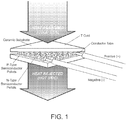
- Figure 1 illustrates a TEM apparatus, which operates on the principle of passing an electric current between the semiconductors to create a differential temperature between one side of the module and the other side.
- the temperature on the cold side is further reduced (absorbed heat).
- a finned aluminum, graphite or other material heat sink is used to dissipate the heat. Circulating air through the finned cold side heat sink allows a chilled airflow to be produced, which can be recirculated within a closed compartment or used as a cold air cascade with no recirculation.
- the heated air is commonly regarded as waste.
- a suitable liquid may be used.
- a typical TED 10 is shown, and includes a shroud 12 covering finned heat sinks 14 and 16 on the hot side.
- An axial cooling fan 18 pulls air through the TED 10.
- the cold side includes a partial shroud 20 that partially covers a finned heat sink 22.
- An axial recirculation/cascade fan 24 expels cold air from the TED 10 for cooling.
- FIG. 4 illustrates a galley add-on bar unit 30 that is adapted to be inserted as a module in an aircraft galley monument (not shown).
- the bar unit 30 includes sliding drawers 32, 34 for holding drink cans or similar products.
- the drawers 32, 34 are cooled with semi-enclosed reversed recirculated cooling and vertically mounted air-to-air TEDs 36, 38. Waste heat expelled from the TEDs 36, 38 is used for cabin warming through a hot air outlet 40 that discharges the waste heat from the hot side of the TEDs 36, 38 that cool the sliding drawers 32, 34.
- An ice bucket/bottle chiller 42 with a fully enclosed recirculated cooling and horizontally mounted air-to-air TED 44 is mounted in the bar unit 30.
- a semi-enclosed warming compartment 46 is heated using the waste heat from the ice bucket/bottle chiller 42.
- a cold air cascade TED unit 48 with no recirculation and open cooled shelves 50 uses either an air-to-air or liquid-to-air hot to cold side.
- the cold air from the TED 48 is thus permitted to cascade downward through the open cooled shelves 50, cooling the items stored on the shelves 48.
- Hot exhaust is vented upwardly away from the bar unit 30 and can also be used to provide warm air for the aircraft cabin.
- the TEDs remain a line replaceable unit (LRU) for maintenance, repair and replacement purposes.
- the chilled air produced by the thermoelectric cycle can be used in a fully enclosed or semi-enclosed compartment where the air is recirculated or as a cascade where the cooled air is not recirculated, as referenced above.
- the galley-integrated compartment LRU can take the form of a sliding drawer with an opening lid where chilled air is introduced underneath a perforated shelf supporting drink cans.
- Recirculated air can be scavenged and returned by a scroll fan 50 across a hot/cold divider plate 52 and a finned heat sink 54, and this chilled air circulation is regarded as semi-sealed. See Figure 5 .
- the ice bucket/bottle chiller 42 is cooled by air circulated around an inset container.
- the ice and/or bottles can be placed, replaced or refreshed in the container without disrupting the recirculated cold air.
- Air is passed across a hot/cold divider plate 60 and a finned heat sink 62 by two axial fans 64, 66.
- the chilled air circulation is therefore considered sealed. See Figure 6 .
- a cold air cascade such as used to chill the open shelves 50 takes the form of a ducted, chilled airflow.
- the chilled airflow is not recirculated and vents to atmosphere.
- Axial fans 70, 72 circulate air across a hot/cold side divider plate 74 and a finned heat sink 76.
- the finned heat sinks and air-to-air TED can be manufactured from graphene to significantly improve thermal conductivity by a factor of 25 and also reduce weight,
- the TEDs can use DC or AC electric fans to provide cold side air distribution and hot side cooling. These can take the form of axial, tube axial and scroll blower type fans.
- the divider panel between the hot and cold side of a TED can be made from an insulation value panel such as fiberglass, skinned foam core panel, encapsulated Vacuum Insulation Panel (VIP) or a honeycomb core fiberglass panel treated with thermal resistant paint.
- VIP encapsulated Vacuum Insulation Panel
- the hot side heat sink can be cooled by the aircraft's cabin air extraction system, in place of electric fans.
- the TED hot side finned heat sink can be replaced with a liquid heat exchanger.
- the liquid can either be supplied by the aircraft from an existing chilled liquid loop system, or connected to a localized system using incorporating a liquid to air heat exchanger with forced air-cooling.
- the TEM can be provided with a two-stage cooling system where the ambient supply air of the secondary stage hot side is pre-cooled by an integrated primary stage. This allows a greater temperature delta to be achieved between the secondary stage hot and cold sides.
- two stage TEDs larger compartments such as Meal Box (Standard Units) storage and Meal Carts (Trolleys) bays can be chilled.
- the finned cold side heat sink of a TED can be replaced with a direct contact conduction plate, which can be used to chill individual items or specific areas instead of using a circulated airflow.
- the invention significantly reduces the size, cost and weight and complexity of a chiller installation, reduces maintenance costs and MTBF of the LRU, and makes replacement very quick and easy.
- TEDs also eliminate the use of environmentally unfriendly gases and/or fluids in the manufacture and operation of the existing vapor cycle and chilled liquid galley coolers.
Landscapes
- Engineering & Computer Science (AREA)
- Physics & Mathematics (AREA)
- Mechanical Engineering (AREA)
- Thermal Sciences (AREA)
- Aviation & Aerospace Engineering (AREA)
- General Engineering & Computer Science (AREA)
- Health & Medical Sciences (AREA)
- General Health & Medical Sciences (AREA)
- Pulmonology (AREA)
- Devices That Are Associated With Refrigeration Equipment (AREA)
Description
- This application relates to solid-state cooling apparatuses for use in connection with add-on bar units for aircraft galleys and similar monuments. The invention utilizes a commercially-available thermoelectric device (TED) also known as a thermoelectric cooler (TECs), to provide the basis of specific and unique methods of cooling beverages and other food in the form of fully integrated galley line replaceable units (LRU). These certification requirements are less stringent than the requirements applied to Galley Insert Equipment (GAINS).
- The thermoelectric effect is the direct conversion of temperature differences to electric voltage and vice versa. A thermoelectric device creates voltage when there is a different temperature on each side. Conversely, when a voltage is applied to it, it creates a temperature difference. At the atomic scale, an applied temperature gradient causes charge carriers in the material to diffuse from the hot side to the cold side. This effect can be used to generate electricity, measure temperature or change the temperature of objects. Because the direction of heating and cooling is determined by the polarity of the applied voltage, thermoelectric devices can be used as temperature controllers.
- The TED can be manufactured using hot and cold side finned (air-to-air) or fin and tank (air-to-liquid) heat sinks on either side of a thermoelectric module (TEM). The TEM is formed of P and T type semiconductors sandwiched between inner conductive plates and outer ceramic plates.
- The invention utilizes the advantages of TED technology to provide unique compact cooling solutions that are integrated into the food service apparatus structure.
- United States patent
US 2,973,627 discloses a hot junction structure for thermoelectric heat pumps comprising a pair of bodies formed of dissimilar thermoelectric materials having hot and cold junction ends, a pair of conducting rods having adjacent ends thereof joint respectively to the hot ends of said bodies and a rigid heat dissipating member providing an extended heat transfer service. The member is joined to the other ends of said rods and supports said rods and said bodies. A rigid plate is formed of heat insulating material and perforations therein. The hot junction structure further comprises means clamping said member to one face of said plate in such a manner that said rods project through said plates and beyond the opposite face of the plate. -
US Patent Application No. 2010/071384 A1 describes a refrigeration system for cooling food or beverages using a liquid cooling system of a vehicle, including a compartment for food or beverages, and a first chilled liquid coolant system and second chilled coolant system operating together as a cascade cooling system. - German Patent No.
DE 43 08 144 describes a serving trolley having an inner space for the storage of food and drinks on board an airplane having a heating/cooling device with at least one Peltier element being arranged so that its heat-absorbing side faces a cooling compartment and its heat-emitting side faces a warming compartment of the inner space. -
US Patent Application No. 2014/123683 A1 describes a thermoelectric cooling device with a liquid heat exchanger, at least two air heat exchangers, and at least two thermoelectric modules, wherein the liquid heat exchanger includes a liquid circulation path through which liquid coolant flows to exchange heat with the liquid heat exchanger. -
US Patent Application No. 2013/247590 A1 describes a dynamic chilled mini-bar including a cover; a movable compartment translatable to expose an interior thereof from behind the cover; and a cooling device operable to cool the interior of the movable compartment. - It is therefore an object of the invention to provide a functional integration of TEDs into the food service apparatus structure, allowing them to be certified as part of the food service apparatus systems for airworthiness certification purposes, as opposed to the more stringent requirements applied to externally manufactured, and supplied GAINS.
- It is another object of the invention to provide integration of a TED into the food service apparatus structure in a manner that significantly reduces the size, cost and weight and complexity of a chiller installation.
- It is another object of the invention to provide integration of a TED into the food service apparatus structure in a manner that eliminates the use of environmentally, unfriendly gases and/or fluids in the manufacture and operation of the existing vapor cycle and chilled liquid food service apparatus coolers.
- These and other objects and advantages of the present invention are achieved by providing a solid-state cooling apparatus as defined in claim 1.
- According to an embodiment of the invention, the solid-state cooling apparatus includes a plurality of the solid-state air-to-air thermoelectric devices configured to be positioned in a vertical stack in the galley and adapted to discharge chilled air for downward flow through the galley from a top of the galley to a bottom of the galley.
- Some of the objects of the invention have been set forth above. Other objects and advantages of the invention will appear as the description of the invention proceeds when taken in conjunction with the following drawings, in which:
-
Figure 1 is a schematic representation of the operation of a typical TED; -
Figure 2 is a representation of the cold side of a typical thermoelectric device; -
Figure 3 is a representation of the hot side of a typical thermoelectric device (TED); -
Figure 4 is a vertical cross-section through a galley add-on bar unit in accordance with an embodiment of the invention; -
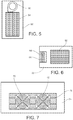
Figure 5 is a layout of the cold side of the line replaceable unit in the form of a sliding drawer for holding chilled beverage cans; -
Figure 6 is a layout of the cold side of the line replaceable unit in the form of an enclosed ice bucket or bottle chiller; -
Figure 7 is a layout of a cold air cascade in the form of a ducted chilled airflow supplying horizontal shelves for housing beverage cans. -
Figures 1 ,2 and 3 illustrate the basic principles of operation of a typical TED, which are well understood by those of skill in the relevant technology area. -
Figure 1 illustrates a TEM apparatus, which operates on the principle of passing an electric current between the semiconductors to create a differential temperature between one side of the module and the other side. By cooling the hot side of the module (rejected heat), the temperature on the cold side is further reduced (absorbed heat). In air-to-air configurations, a finned aluminum, graphite or other material heat sink is used to dissipate the heat. Circulating air through the finned cold side heat sink allows a chilled airflow to be produced, which can be recirculated within a closed compartment or used as a cold air cascade with no recirculation. - To cool the hot side, ambient air is used. The heated air is commonly regarded as waste.
- As an alternative to using air to cool the hot side, a suitable liquid may be used.
- As is shown in
Figures 2 and 3 , a typical TED 10 is shown, and includes ashroud 12 coveringfinned heat sinks axial cooling fan 18 pulls air through the TED 10. The cold side includes apartial shroud 20 that partially covers afinned heat sink 22. An axial recirculation/cascade fan 24 expels cold air from the TED 10 for cooling. - These principles are put to efficient and effective use in the environment of an aircraft galley in the present invention, which is illustrated according to several applications in
Figures 4-7 . -
Figure 4 illustrates a galley add-onbar unit 30 that is adapted to be inserted as a module in an aircraft galley monument (not shown). Thebar unit 30 includes slidingdrawers 32, 34 for holding drink cans or similar products. Thedrawers 32, 34 are cooled with semi-enclosed reversed recirculated cooling and vertically mounted air-to-air TEDs hot air outlet 40 that discharges the waste heat from the hot side of the TEDs 36, 38 that cool thesliding drawers 32, 34. - An ice bucket/
bottle chiller 42 with a fully enclosed recirculated cooling and horizontally mounted air-to-air TED 44 is mounted in thebar unit 30. Asemi-enclosed warming compartment 46 is heated using the waste heat from the ice bucket/bottle chiller 42. - A cold air cascade TED
unit 48 with no recirculation and open cooledshelves 50 uses either an air-to-air or liquid-to-air hot to cold side. The cold air from the TED 48 is thus permitted to cascade downward through the open cooledshelves 50, cooling the items stored on theshelves 48. Hot exhaust is vented upwardly away from thebar unit 30 and can also be used to provide warm air for the aircraft cabin. - Despite their functional integration, the TEDs remain a line replaceable unit (LRU) for maintenance, repair and replacement purposes. The chilled air produced by the thermoelectric cycle can be used in a fully enclosed or semi-enclosed compartment where the air is recirculated or as a cascade where the cooled air is not recirculated, as referenced above. As described above, the galley-integrated compartment LRU can take the form of a sliding drawer with an opening lid where chilled air is introduced underneath a perforated shelf supporting drink cans. Recirculated air can be scavenged and returned by a
scroll fan 50 across a hot/cold divider plate 52 and a finned heat sink 54, and this chilled air circulation is regarded as semi-sealed. SeeFigure 5 . - The ice bucket/
bottle chiller 42 is cooled by air circulated around an inset container. - The ice and/or bottles can be placed, replaced or refreshed in the container without disrupting the recirculated cold air. Air is passed across a hot/
cold divider plate 60 and afinned heat sink 62 by twoaxial fans Figure 6 . - As shown in
Figure 7 , a cold air cascade such as used to chill theopen shelves 50 takes the form of a ducted, chilled airflow. The chilled airflow is not recirculated and vents to atmosphere.Axial fans 70, 72 circulate air across a hot/coldside divider plate 74 and a finned heat sink 76. - The finned heat sinks and air-to-air TED can be manufactured from graphene to significantly improve thermal conductivity by a factor of 25 and also reduce weight, The TEDs can use DC or AC electric fans to provide cold side air distribution and hot side cooling. These can take the form of axial, tube axial and scroll blower type fans.
- The divider panel between the hot and cold side of a TED can be made from an insulation value panel such as fiberglass, skinned foam core panel, encapsulated Vacuum Insulation Panel (VIP) or a honeycomb core fiberglass panel treated with thermal resistant paint. In certain TED designs, the hot side heat sink can be cooled by the aircraft's cabin air extraction system, in place of electric fans.
- Where practical, the TED hot side finned heat sink can be replaced with a liquid heat exchanger. The liquid can either be supplied by the aircraft from an existing chilled liquid loop system, or connected to a localized system using incorporating a liquid to air heat exchanger with forced air-cooling.
- The TEM can be provided with a two-stage cooling system where the ambient supply air of the secondary stage hot side is pre-cooled by an integrated primary stage. This allows a greater temperature delta to be achieved between the secondary stage hot and cold sides. With higher cooling capacity, two stage TEDs, larger compartments such as Meal Box (Standard Units) storage and Meal Carts (Trolleys) bays can be chilled. Where appropriate, the finned cold side heat sink of a TED can be replaced with a direct contact conduction plate, which can be used to chill individual items or specific areas instead of using a circulated airflow.
- The chilling of galley components using circulated chilled liquid (via an aircraft based system) or vapor cycle air chiller is known technology, as are the principles of thermoelectric cooling. However, the functional integration of solid-state cooling into a galley structure, as an LRU is not.
- Unique aspects of the designs such as the use of the hot exhaust for secondary heating purposes, two-stage cooling, graphene heat sinks, VIP-based hot/cold side dividers and enclosed, semi-closed and open loop chilling applications are also novel.
- The invention significantly reduces the size, cost and weight and complexity of a chiller installation, reduces maintenance costs and MTBF of the LRU, and makes replacement very quick and easy. TEDs also eliminate the use of environmentally unfriendly gases and/or fluids in the manufacture and operation of the existing vapor cycle and chilled liquid galley coolers.
- An integrated line replaceable unit solid-state cooling apparatus for use in connection with add-on bar units for aircraft galleys and similar monuments is described above.
Claims (2)
- A solid-state cooling apparatus for a galley installed in an aircraft, comprising:(a) at least one storage enclosure (32, 34) for containing chilled beverage and/or foods for storage;(b) a solid-state air-to-air thermoelectric device (10, 36, 38) having a hot side and a cold side mountable in the galley and(c) a waste heat capture device including a hot air outlet (40) for discharging waste heat from the hot side of the solid-state air-to-air thermoelectric device into the aircraft exterior to the galley, characterized in thatthe solid-state air-to-air thermoelectric device (10, 36, 38) has a finned heat sink (22) on the cold side and finned heat sinks (14, 16) on the hot side as well as an axial cooling fan (18) mounted on a shroud (12) covering the finned heat sinks (14, 16) for pulling air through the solid-state air-to-air thermoelectric device (10, 34, 36) as well as an axial recirculation/cascade fan (24) mounted on a partial shroud (20) partially covering the finned heat sink (22) for expelling cold air from the solid-state air-to-air thermoelectric device (10, 34, 36) for circulating chilled air in proximity to the storage enclosure.
- A solid-state cooling apparatus for a galley according to claim 1 and including a plurality of the solid-state air-to-air thermoelectric devices configured to be positioned in a vertical stack in the galley and adapted to discharge chilled air for downward flow through the galley from a top of the galley to a bottom of the galley.
Applications Claiming Priority (2)
| Application Number | Priority Date | Filing Date | Title |
|---|---|---|---|
| US201662316042P | 2016-03-31 | 2016-03-31 | |
| PCT/US2017/025115 WO2017173130A1 (en) | 2016-03-31 | 2017-03-30 | Solid-state cooling add-on bar unit for aircraft food service apparatus |
Publications (3)
| Publication Number | Publication Date |
|---|---|
| EP3436353A1 EP3436353A1 (en) | 2019-02-06 |
| EP3436353A4 EP3436353A4 (en) | 2019-09-11 |
| EP3436353B1 true EP3436353B1 (en) | 2021-12-22 |
Family
ID=59960681
Family Applications (1)
| Application Number | Title | Priority Date | Filing Date |
|---|---|---|---|
| EP17776682.1A Active EP3436353B1 (en) | 2016-03-31 | 2017-03-30 | Solid-state cooling add-on bar unit for aircraft food service apparatus |
Country Status (4)
| Country | Link |
|---|---|
| US (1) | US10315487B2 (en) |
| EP (1) | EP3436353B1 (en) |
| CN (1) | CN108712984B (en) |
| WO (1) | WO2017173130A1 (en) |
Families Citing this family (11)
| Publication number | Priority date | Publication date | Assignee | Title |
|---|---|---|---|---|
| JP6321184B2 (en) * | 2013-12-31 | 2018-05-09 | ジェンサーム オートモーティブ システムズ チャイナリミテッド | Ventilation system |
| DE102017200734A1 (en) | 2017-01-18 | 2018-07-19 | Airbus Operations Gmbh | Temperature control system for a Galleyfach a galley |
| US11136125B2 (en) * | 2017-03-29 | 2021-10-05 | Rockwell Collins, Inc. | Liquid chilled galley bar unit |
| CN108255215A (en) * | 2017-12-08 | 2018-07-06 | 东莞市升微机电设备科技有限公司 | A kind of electronic cooling anti-condensation system and its anti-condensation method |
| US20200377216A1 (en) * | 2019-05-31 | 2020-12-03 | Hamilton Sundstrand Corporation | Aircraft cabin air thermodynamic control |
| EP4034462A1 (en) | 2019-09-23 | 2022-08-03 | Safran Cabin Germany GmbH | Galley module for an aircraft and method for the open-loop and/or closed-loop control of the temperature in a food and/or drinks compartment of a galley module |
| US11502021B2 (en) | 2019-12-16 | 2022-11-15 | B/E Aerospace, Inc. | Flatpack thermoelectric air chiller with pre-cooling cycle |
| US11828497B2 (en) | 2020-03-10 | 2023-11-28 | B/E Aerospace, Inc. | Chilled liquid recirculation device for galley refrigeration systems |
| US20230400231A1 (en) * | 2022-06-08 | 2023-12-14 | B/E Aerospace, Inc. | High efficiency micro-chiller unit |
| US12296959B2 (en) | 2022-06-08 | 2025-05-13 | B/E Aerospace, Inc. | In-seat mini-bar features |
| US20230400250A1 (en) * | 2022-06-08 | 2023-12-14 | B/E Aerospace, Inc. | Roll-bond component forming cart bay walls with liquid circulation and a high efficiency micro-chiller heat sink |
Family Cites Families (12)
| Publication number | Priority date | Publication date | Assignee | Title |
|---|---|---|---|---|
| US2973627A (en) | 1959-06-29 | 1961-03-07 | Westinghouse Electric Corp | Thermoelectric heat pump |
| US4949627A (en) * | 1989-03-09 | 1990-08-21 | Nordskog Robert A | Coffee maker for use in aircraft |
| DE4308144C1 (en) | 1993-03-15 | 1994-10-27 | Deutsche Aerospace Airbus | Serving trolley on board an aeroplane |
| IL136275A0 (en) * | 2000-05-22 | 2001-05-20 | Active Cool Ltd | Active cooling system for cpu and semiconductors also enabling thermal acceleration |
| US6344630B1 (en) * | 2000-10-25 | 2002-02-05 | Cambro Manufacturing Company | Thermoelectric heated food service cart |
| CN1774401A (en) * | 2003-04-16 | 2006-05-17 | 詹姆斯·J·里迪 | Efficient thermoelectric water generator |
| CA2617895C (en) * | 2005-08-04 | 2013-06-18 | Eic Solution, Inc. | Thermoelectrically air conditioned transit case |
| US9238398B2 (en) * | 2008-09-25 | 2016-01-19 | B/E Aerospace, Inc. | Refrigeration systems and methods for connection with a vehicle's liquid cooling system |
| DE102010031909A1 (en) | 2010-07-22 | 2012-01-26 | Airbus Operations Gmbh | sealing system |
| WO2013142836A1 (en) * | 2012-03-23 | 2013-09-26 | B/E Aerospace, Inc. | Dynamic chilled mini-bar for aircraft passenger suite |
| US20130344789A1 (en) * | 2012-05-03 | 2013-12-26 | Thomas M. Lee | Remote heated and cooled compartments for aircraft galleys |
| CN105247300A (en) * | 2012-11-08 | 2016-01-13 | B/E航空公司 | Thermoelectric device with liquid and air heat exchanger |
-
2017
- 2017-03-30 WO PCT/US2017/025115 patent/WO2017173130A1/en not_active Ceased
- 2017-03-30 EP EP17776682.1A patent/EP3436353B1/en active Active
- 2017-03-30 US US15/474,781 patent/US10315487B2/en active Active
- 2017-03-30 CN CN201780015325.9A patent/CN108712984B/en active Active
Non-Patent Citations (1)
| Title |
|---|
| None * |
Also Published As
| Publication number | Publication date |
|---|---|
| CN108712984A (en) | 2018-10-26 |
| WO2017173130A1 (en) | 2017-10-05 |
| US10315487B2 (en) | 2019-06-11 |
| US20170282679A1 (en) | 2017-10-05 |
| EP3436353A4 (en) | 2019-09-11 |
| EP3436353A1 (en) | 2019-02-06 |
| CN108712984B (en) | 2022-04-29 |
Similar Documents
| Publication | Publication Date | Title |
|---|---|---|
| US10315487B2 (en) | Solid-state cooling add-on bar unit for aircraft food service apparatus | |
| EP2830942B1 (en) | Aircraft galley chiller system | |
| US9188380B2 (en) | Aircraft galley liquid cooling system | |
| EP3017256B1 (en) | Aircraft galley air chiller system | |
| US11136125B2 (en) | Liquid chilled galley bar unit | |
| US20150089968A1 (en) | Aircraft air chiller with reduced profile | |
| EP2917660B1 (en) | Thermoelectric cooling device including a liquid heat exchanger disposed between air heat exchangers | |
| US20140102120A1 (en) | Absorption cooling for aircraft trolleys and compartments | |
| CN113375362B (en) | Refrigerating liquid recirculation device for kitchen refrigerating system | |
| EP4289737A1 (en) | High efficiency micro-chiller unit | |
| US20100043451A1 (en) | Thermoelectric hot/cold pans | |
| EP4509405A1 (en) | System for cooling an aircraft galley trolley | |
| US20230400250A1 (en) | Roll-bond component forming cart bay walls with liquid circulation and a high efficiency micro-chiller heat sink | |
| EP4596403A1 (en) | Aircraft cabin trolley, aircraft galley arrangement and aircraft | |
| BR102017001170A2 (en) | CONVERSIBLE MONUMENT, AND, AIRCRAFT |
Legal Events
| Date | Code | Title | Description |
|---|---|---|---|
| STAA | Information on the status of an ep patent application or granted ep patent |
Free format text: STATUS: THE INTERNATIONAL PUBLICATION HAS BEEN MADE |
|
| PUAI | Public reference made under article 153(3) epc to a published international application that has entered the european phase |
Free format text: ORIGINAL CODE: 0009012 |
|
| STAA | Information on the status of an ep patent application or granted ep patent |
Free format text: STATUS: REQUEST FOR EXAMINATION WAS MADE |
|
| 17P | Request for examination filed |
Effective date: 20180912 |
|
| AK | Designated contracting states |
Kind code of ref document: A1 Designated state(s): AL AT BE BG CH CY CZ DE DK EE ES FI FR GB GR HR HU IE IS IT LI LT LU LV MC MK MT NL NO PL PT RO RS SE SI SK SM TR |
|
| AX | Request for extension of the european patent |
Extension state: BA ME |
|
| DAV | Request for validation of the european patent (deleted) | ||
| DAX | Request for extension of the european patent (deleted) | ||
| A4 | Supplementary search report drawn up and despatched |
Effective date: 20190809 |
|
| RIC1 | Information provided on ipc code assigned before grant |
Ipc: F25B 21/04 20060101ALI20190805BHEP Ipc: B64D 11/00 20060101ALI20190805BHEP Ipc: B60H 1/22 20060101ALI20190805BHEP Ipc: F25B 21/02 20060101ALI20190805BHEP Ipc: B60H 1/00 20060101ALI20190805BHEP Ipc: B64D 11/04 20060101AFI20190805BHEP |
|
| STAA | Information on the status of an ep patent application or granted ep patent |
Free format text: STATUS: EXAMINATION IS IN PROGRESS |
|
| 17Q | First examination report despatched |
Effective date: 20200324 |
|
| GRAP | Despatch of communication of intention to grant a patent |
Free format text: ORIGINAL CODE: EPIDOSNIGR1 |
|
| STAA | Information on the status of an ep patent application or granted ep patent |
Free format text: STATUS: GRANT OF PATENT IS INTENDED |
|
| INTG | Intention to grant announced |
Effective date: 20210715 |
|
| GRAS | Grant fee paid |
Free format text: ORIGINAL CODE: EPIDOSNIGR3 |
|
| GRAA | (expected) grant |
Free format text: ORIGINAL CODE: 0009210 |
|
| STAA | Information on the status of an ep patent application or granted ep patent |
Free format text: STATUS: THE PATENT HAS BEEN GRANTED |
|
| AK | Designated contracting states |
Kind code of ref document: B1 Designated state(s): AL AT BE BG CH CY CZ DE DK EE ES FI FR GB GR HR HU IE IS IT LI LT LU LV MC MK MT NL NO PL PT RO RS SE SI SK SM TR |
|
| REG | Reference to a national code |
Ref country code: GB Ref legal event code: FG4D |
|
| REG | Reference to a national code |
Ref country code: CH Ref legal event code: EP |
|
| REG | Reference to a national code |
Ref country code: DE Ref legal event code: R096 Ref document number: 602017051287 Country of ref document: DE |
|
| REG | Reference to a national code |
Ref country code: AT Ref legal event code: REF Ref document number: 1456904 Country of ref document: AT Kind code of ref document: T Effective date: 20220115 |
|
| REG | Reference to a national code |
Ref country code: IE Ref legal event code: FG4D |
|
| REG | Reference to a national code |
Ref country code: LT Ref legal event code: MG9D |
|
| PG25 | Lapsed in a contracting state [announced via postgrant information from national office to epo] |
Ref country code: RS Free format text: LAPSE BECAUSE OF FAILURE TO SUBMIT A TRANSLATION OF THE DESCRIPTION OR TO PAY THE FEE WITHIN THE PRESCRIBED TIME-LIMIT Effective date: 20211222 Ref country code: LT Free format text: LAPSE BECAUSE OF FAILURE TO SUBMIT A TRANSLATION OF THE DESCRIPTION OR TO PAY THE FEE WITHIN THE PRESCRIBED TIME-LIMIT Effective date: 20211222 Ref country code: FI Free format text: LAPSE BECAUSE OF FAILURE TO SUBMIT A TRANSLATION OF THE DESCRIPTION OR TO PAY THE FEE WITHIN THE PRESCRIBED TIME-LIMIT Effective date: 20211222 Ref country code: BG Free format text: LAPSE BECAUSE OF FAILURE TO SUBMIT A TRANSLATION OF THE DESCRIPTION OR TO PAY THE FEE WITHIN THE PRESCRIBED TIME-LIMIT Effective date: 20220322 |
|
| REG | Reference to a national code |
Ref country code: NL Ref legal event code: MP Effective date: 20211222 |
|
| REG | Reference to a national code |
Ref country code: AT Ref legal event code: MK05 Ref document number: 1456904 Country of ref document: AT Kind code of ref document: T Effective date: 20211222 |
|
| PG25 | Lapsed in a contracting state [announced via postgrant information from national office to epo] |
Ref country code: SE Free format text: LAPSE BECAUSE OF FAILURE TO SUBMIT A TRANSLATION OF THE DESCRIPTION OR TO PAY THE FEE WITHIN THE PRESCRIBED TIME-LIMIT Effective date: 20211222 Ref country code: NO Free format text: LAPSE BECAUSE OF FAILURE TO SUBMIT A TRANSLATION OF THE DESCRIPTION OR TO PAY THE FEE WITHIN THE PRESCRIBED TIME-LIMIT Effective date: 20220322 Ref country code: LV Free format text: LAPSE BECAUSE OF FAILURE TO SUBMIT A TRANSLATION OF THE DESCRIPTION OR TO PAY THE FEE WITHIN THE PRESCRIBED TIME-LIMIT Effective date: 20211222 Ref country code: HR Free format text: LAPSE BECAUSE OF FAILURE TO SUBMIT A TRANSLATION OF THE DESCRIPTION OR TO PAY THE FEE WITHIN THE PRESCRIBED TIME-LIMIT Effective date: 20211222 Ref country code: GR Free format text: LAPSE BECAUSE OF FAILURE TO SUBMIT A TRANSLATION OF THE DESCRIPTION OR TO PAY THE FEE WITHIN THE PRESCRIBED TIME-LIMIT Effective date: 20220323 |
|
| PG25 | Lapsed in a contracting state [announced via postgrant information from national office to epo] |
Ref country code: NL Free format text: LAPSE BECAUSE OF FAILURE TO SUBMIT A TRANSLATION OF THE DESCRIPTION OR TO PAY THE FEE WITHIN THE PRESCRIBED TIME-LIMIT Effective date: 20211222 |
|
| PG25 | Lapsed in a contracting state [announced via postgrant information from national office to epo] |
Ref country code: SM Free format text: LAPSE BECAUSE OF FAILURE TO SUBMIT A TRANSLATION OF THE DESCRIPTION OR TO PAY THE FEE WITHIN THE PRESCRIBED TIME-LIMIT Effective date: 20211222 Ref country code: SK Free format text: LAPSE BECAUSE OF FAILURE TO SUBMIT A TRANSLATION OF THE DESCRIPTION OR TO PAY THE FEE WITHIN THE PRESCRIBED TIME-LIMIT Effective date: 20211222 Ref country code: RO Free format text: LAPSE BECAUSE OF FAILURE TO SUBMIT A TRANSLATION OF THE DESCRIPTION OR TO PAY THE FEE WITHIN THE PRESCRIBED TIME-LIMIT Effective date: 20211222 Ref country code: PT Free format text: LAPSE BECAUSE OF FAILURE TO SUBMIT A TRANSLATION OF THE DESCRIPTION OR TO PAY THE FEE WITHIN THE PRESCRIBED TIME-LIMIT Effective date: 20220422 Ref country code: ES Free format text: LAPSE BECAUSE OF FAILURE TO SUBMIT A TRANSLATION OF THE DESCRIPTION OR TO PAY THE FEE WITHIN THE PRESCRIBED TIME-LIMIT Effective date: 20211222 Ref country code: EE Free format text: LAPSE BECAUSE OF FAILURE TO SUBMIT A TRANSLATION OF THE DESCRIPTION OR TO PAY THE FEE WITHIN THE PRESCRIBED TIME-LIMIT Effective date: 20211222 Ref country code: CZ Free format text: LAPSE BECAUSE OF FAILURE TO SUBMIT A TRANSLATION OF THE DESCRIPTION OR TO PAY THE FEE WITHIN THE PRESCRIBED TIME-LIMIT Effective date: 20211222 |
|
| PG25 | Lapsed in a contracting state [announced via postgrant information from national office to epo] |
Ref country code: PL Free format text: LAPSE BECAUSE OF FAILURE TO SUBMIT A TRANSLATION OF THE DESCRIPTION OR TO PAY THE FEE WITHIN THE PRESCRIBED TIME-LIMIT Effective date: 20211222 Ref country code: AT Free format text: LAPSE BECAUSE OF FAILURE TO SUBMIT A TRANSLATION OF THE DESCRIPTION OR TO PAY THE FEE WITHIN THE PRESCRIBED TIME-LIMIT Effective date: 20211222 |
|
| REG | Reference to a national code |
Ref country code: DE Ref legal event code: R097 Ref document number: 602017051287 Country of ref document: DE |
|
| PG25 | Lapsed in a contracting state [announced via postgrant information from national office to epo] |
Ref country code: IS Free format text: LAPSE BECAUSE OF FAILURE TO SUBMIT A TRANSLATION OF THE DESCRIPTION OR TO PAY THE FEE WITHIN THE PRESCRIBED TIME-LIMIT Effective date: 20220422 |
|
| PLBE | No opposition filed within time limit |
Free format text: ORIGINAL CODE: 0009261 |
|
| STAA | Information on the status of an ep patent application or granted ep patent |
Free format text: STATUS: NO OPPOSITION FILED WITHIN TIME LIMIT |
|
| PG25 | Lapsed in a contracting state [announced via postgrant information from national office to epo] |
Ref country code: MC Free format text: LAPSE BECAUSE OF FAILURE TO SUBMIT A TRANSLATION OF THE DESCRIPTION OR TO PAY THE FEE WITHIN THE PRESCRIBED TIME-LIMIT Effective date: 20211222 Ref country code: DK Free format text: LAPSE BECAUSE OF FAILURE TO SUBMIT A TRANSLATION OF THE DESCRIPTION OR TO PAY THE FEE WITHIN THE PRESCRIBED TIME-LIMIT Effective date: 20211222 Ref country code: AL Free format text: LAPSE BECAUSE OF FAILURE TO SUBMIT A TRANSLATION OF THE DESCRIPTION OR TO PAY THE FEE WITHIN THE PRESCRIBED TIME-LIMIT Effective date: 20211222 |
|
| REG | Reference to a national code |
Ref country code: CH Ref legal event code: PL |
|
| 26N | No opposition filed |
Effective date: 20220923 |
|
| REG | Reference to a national code |
Ref country code: BE Ref legal event code: MM Effective date: 20220331 |
|
| PG25 | Lapsed in a contracting state [announced via postgrant information from national office to epo] |
Ref country code: LU Free format text: LAPSE BECAUSE OF NON-PAYMENT OF DUE FEES Effective date: 20220330 Ref country code: LI Free format text: LAPSE BECAUSE OF NON-PAYMENT OF DUE FEES Effective date: 20220331 Ref country code: IE Free format text: LAPSE BECAUSE OF NON-PAYMENT OF DUE FEES Effective date: 20220330 Ref country code: CH Free format text: LAPSE BECAUSE OF NON-PAYMENT OF DUE FEES Effective date: 20220331 |
|
| PG25 | Lapsed in a contracting state [announced via postgrant information from national office to epo] |
Ref country code: SI Free format text: LAPSE BECAUSE OF FAILURE TO SUBMIT A TRANSLATION OF THE DESCRIPTION OR TO PAY THE FEE WITHIN THE PRESCRIBED TIME-LIMIT Effective date: 20211222 Ref country code: BE Free format text: LAPSE BECAUSE OF NON-PAYMENT OF DUE FEES Effective date: 20220331 |
|
| PG25 | Lapsed in a contracting state [announced via postgrant information from national office to epo] |
Ref country code: IT Free format text: LAPSE BECAUSE OF FAILURE TO SUBMIT A TRANSLATION OF THE DESCRIPTION OR TO PAY THE FEE WITHIN THE PRESCRIBED TIME-LIMIT Effective date: 20211222 |
|
| PG25 | Lapsed in a contracting state [announced via postgrant information from national office to epo] |
Ref country code: HU Free format text: LAPSE BECAUSE OF FAILURE TO SUBMIT A TRANSLATION OF THE DESCRIPTION OR TO PAY THE FEE WITHIN THE PRESCRIBED TIME-LIMIT; INVALID AB INITIO Effective date: 20170330 |
|
| PG25 | Lapsed in a contracting state [announced via postgrant information from national office to epo] |
Ref country code: MK Free format text: LAPSE BECAUSE OF FAILURE TO SUBMIT A TRANSLATION OF THE DESCRIPTION OR TO PAY THE FEE WITHIN THE PRESCRIBED TIME-LIMIT Effective date: 20211222 Ref country code: CY Free format text: LAPSE BECAUSE OF FAILURE TO SUBMIT A TRANSLATION OF THE DESCRIPTION OR TO PAY THE FEE WITHIN THE PRESCRIBED TIME-LIMIT Effective date: 20211222 |
|
| PG25 | Lapsed in a contracting state [announced via postgrant information from national office to epo] |
Ref country code: TR Free format text: LAPSE BECAUSE OF FAILURE TO SUBMIT A TRANSLATION OF THE DESCRIPTION OR TO PAY THE FEE WITHIN THE PRESCRIBED TIME-LIMIT Effective date: 20211222 |
|
| PG25 | Lapsed in a contracting state [announced via postgrant information from national office to epo] |
Ref country code: MT Free format text: LAPSE BECAUSE OF FAILURE TO SUBMIT A TRANSLATION OF THE DESCRIPTION OR TO PAY THE FEE WITHIN THE PRESCRIBED TIME-LIMIT Effective date: 20211222 |
|
| P01 | Opt-out of the competence of the unified patent court (upc) registered |
Free format text: CASE NUMBER: UPC_APP_0017226_3436353/2025 Effective date: 20251211 |
|
| PGFP | Annual fee paid to national office [announced via postgrant information from national office to epo] |
Ref country code: GB Payment date: 20260219 Year of fee payment: 10 |
|
| PGFP | Annual fee paid to national office [announced via postgrant information from national office to epo] |
Ref country code: DE Payment date: 20260219 Year of fee payment: 10 |
|
| PGFP | Annual fee paid to national office [announced via postgrant information from national office to epo] |
Ref country code: FR Payment date: 20260220 Year of fee payment: 10 |