EP3435624A1 - Distributed authentication for service gating - Google Patents
Distributed authentication for service gating Download PDFInfo
- Publication number
- EP3435624A1 EP3435624A1 EP18183808.7A EP18183808A EP3435624A1 EP 3435624 A1 EP3435624 A1 EP 3435624A1 EP 18183808 A EP18183808 A EP 18183808A EP 3435624 A1 EP3435624 A1 EP 3435624A1
- Authority
- EP
- European Patent Office
- Prior art keywords
- client
- server
- access
- operating system
- message
- Prior art date
- Legal status (The legal status is an assumption and is not a legal conclusion. Google has not performed a legal analysis and makes no representation as to the accuracy of the status listed.)
- Granted
Links
Images


Classifications
-
- H—ELECTRICITY
- H04—ELECTRIC COMMUNICATION TECHNIQUE
- H04L—TRANSMISSION OF DIGITAL INFORMATION, e.g. TELEGRAPHIC COMMUNICATION
- H04L63/00—Network architectures or network communication protocols for network security
- H04L63/20—Network architectures or network communication protocols for network security for managing network security; network security policies in general
-
- H—ELECTRICITY
- H04—ELECTRIC COMMUNICATION TECHNIQUE
- H04L—TRANSMISSION OF DIGITAL INFORMATION, e.g. TELEGRAPHIC COMMUNICATION
- H04L63/00—Network architectures or network communication protocols for network security
- H04L63/08—Network architectures or network communication protocols for network security for authentication of entities
- H04L63/0807—Network architectures or network communication protocols for network security for authentication of entities using tickets, e.g. Kerberos
-
- H—ELECTRICITY
- H04—ELECTRIC COMMUNICATION TECHNIQUE
- H04L—TRANSMISSION OF DIGITAL INFORMATION, e.g. TELEGRAPHIC COMMUNICATION
- H04L63/00—Network architectures or network communication protocols for network security
- H04L63/10—Network architectures or network communication protocols for network security for controlling access to devices or network resources
-
- H—ELECTRICITY
- H04—ELECTRIC COMMUNICATION TECHNIQUE
- H04L—TRANSMISSION OF DIGITAL INFORMATION, e.g. TELEGRAPHIC COMMUNICATION
- H04L63/00—Network architectures or network communication protocols for network security
- H04L63/12—Applying verification of the received information
- H04L63/123—Applying verification of the received information received data contents, e.g. message integrity
Definitions
- This disclosure relates to security; and in particular, to enforcing security policies in distributed message-based operating systems.
- OS Operating System
- a message-based OS such as a microkernel-based OS
- the message-based OS builds smaller tasks than those normally run by monolithic kernels.
- Some tasks are limited to memory management, process management, timer services, scheduling services and communication.
- Distributed processes referred to as servers
- queriesing programs referred to as clients
- processes refers to a series of actions and/or multiple threads.
- microkernels execute only the minimum computer requirements for an input and an output.
- Other processes such as a file system management or drivers, for example, are managed outside of the microkernel through separate servers.
- the clients and servers are distributed. The distributed clients and servers present security risks because these processes and programs do not enforce security policies or make use of security mechanisms.
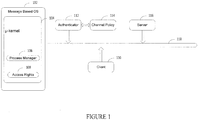
- FIG. 1 is block diagram of a message-based OS enforcing security policies.
- the message-based OS includes a microkernel 104, access rights 108, a channel policy 114, and a set of application processes 110 - 112, 116, and 118 created by a process manager 106.
- the process manager 106 provides OS services that may include process creation, process accounting, memory management, and/or pathname space management, etc.
- the process manager 106 receive messages from other OS processes, may spawn new OS processes, may terminate OS processes, and manage the OS processes' lifetime.
- the channel policy 114 may be a file or database where the security policy for the system resides.
- the channel policy 114 is consulted by authenticator 112, which determines the rights and permissions associated with any request.
- self-verifying security is based on two credentials: access rights and tokens.
- Access rights provide permissions to communicate with other processes such as the servers 116 (one is shown) and the authenticator 112.
- clients 110 Before clients 110 (one is shown) establish message channels 118 (one is shown), they receive access rights 108 from the process manager 106.
- the access rights 108 are granted when clients 110 are created or when clients 110 invoke microkernel calls that initiate process manager functions.
- a client 110 When access rights are granted, a client 110 creates a message channel 118 and identifies itself through authenticating information.
- the authenticating information contains information that the authenticator 112 processes to verify client 110 identity.
- the authenticating information may be encrypted in a data object, delivered via messaging, and include routing information.
- the authenticating information ensures that the requesting entity, here, the client 110, receives only access rights that it is entitled.
- the authenticating information may include the client's name, a unique identifier, and an optional timestamp. Once issued, the authenticating information may be processed until the authenticating information expires.
- a comparator and timestamp validator within the authenticator 112 validates the timestamp through timing rendered by separate synchronized clocks.
- the authenticator 112 looks up the authenticating information in the channel policy 114 files within memory. When the authenticating information is found in the channel policy 114, the authenticator 112 sends a token 202 to the client 110 through the message channel 118.
- a token 202 encapsulates the permissions given to access some or all of the OS resources that supplement the microkernel 104. Some tokens 202 define the operations a client 110 may execute and the rights to access, view, and/or use, the services provided by a server 116.
- the access rights 108 may also include the rights to create a message channel 118, rights to access one or more servers 116, rights to access other OS resources, permissions to execute certain operations (such as the ability to inspect, open, or transfer files), and/or etc.
- Some tokens 202 encapsulate optional fields that reflect the client's 110 rights to generate a communication channel 118 (optional channel rights 206) and an optional timestamp 204, as shown in FIG. 2 .
- the optional timestamp 204 allows the client 110 to access the server 116 or other OS resources multiple times until the token 202 expires without further authentication.
- software within server 116 compares the timestamp to a reference time via the synchronized clocks described above to determine if the difference falls within an accepted range (e.g., via a comparator and timestamp validator) and therefore, is valid.
- a system security architect or a security mechanism assigns channel policies 114 that define the rights and operations that are granted to clients 110, and in alternate, define the rights and operations that are granted to clients 110 and servers 116 when the OS is created.
- the channel policies 114 do not change after the system is created.
- the channel policies are stored in non-volatile forms such as an image that is retained in a file.
- the persistence of the file means that the mandatory access controls established by the channel policies 114 are not supplemented and do not change once the channel policies 114 are established. This permanence means that the systems are less vulnerable to attacks because the channel policies 114 do not change once the OS is generated.
- the client 110 saves the token 202 in memory.
- clients 110 obtain separate tokens 202 for each server 116 or OS resource the client 110 accesses.
- the authenticator 112 in response to the client's 110 request, decrypts the client's 110 authenticating information from the client request, compares the authenticating information against the channel policies 114, and compares the timestamp against a current time. If there is a match or if the difference falls within an acceptable range, the authenticator 112 sends back another token to the client 110 through the message channel 118.
- access to each of the servers 116 or OS resources the client 110 requests occurs once in time or once during each processing session, which effectively conserves bandwidth.
- a session means the time during which a process like the microkernel 104 accepts and processes input. It is also the time in which a querying program and a process (e.g., a client 110 and a server 116), or a process and the microkernel 104, maintains a communication connection.
- a querying program and a process e.g., a client 110 and a server 116
- a process and the microkernel 104 maintains a communication connection.
- Each of the permissions granted for the distributed servers 116 is encapsulated in one or more tokens 202 that are sent back via a message and stored at the client 110.
- the term encapsulated refers to constructed according to a single protocol.
- the client 110 When the client 110 accesses the services provided by the server 116, the client first generates a message similar to the message it sent to the authenticator 112.
- the client 110 encodes authenticating information via a data object consisting of the client's name, a unique identifier, a token 202, and an optional timestamp.
- the data object may also include routing information.
- the client transmits the data object to the server 116, which decrypts and verifies the authenticating information as discussed previously. If a token 202 specifies access to limited services (e.g., a sub-set of all of the services a server 116 provides), the server 116 restricts the client's access to only its authorized services.
- each client 110 and/or server 116 transmission may include a token 202 that is then validated at the receiving node to ensure that each communication originates from authorized processes and/or programs.
- the server 116 receives access rights 108 from the process manager 106 and tokens 202 from the authenticator 112 in the same manner as those the client 110 receives its rights and tokens 202 as described above.
- the server 116 sends its own authenticating information to the client 110 through a data object consisting of the server's name, a unique identifier, a token 202, and an optional timestamp to the client 110 in response to the client's 110 request.
- the client 110 verifies the access rights the client can provide to the server 116.
- the access rights grant the server 116 rights to communicate with the client 110.
- FIG. 3 is flow diagram of a secure message-based operating system protocol.
- the protocol shown in FIG. 3 is a series of steps, involving two or more entities, designed to authenticate access to a service provided by server 116.
- a “series of steps” generally refers to a sequence, from start to finish.
- “Involving two or more entities” generally refers to least two entities being involved to complete the protocol; one entity alone does not make a protocol.
- “designed to authenticate access to a service provided by server 116” generally refers to the protocol informing the server 116 of which services can be accessed by the client 110. Once established, client 110 can make use of that service under the terms and conditions specified by the token.
- the protocol of FIG. 3 may be implemented using the systems described in FIGS. 1 and 4 .
- the protocol provides privacy, authentication, and security to a distributed message-based OS.
- Security is based on multiple credentials: access rights 108 and tokens 202.
- Access rights 108 provide permissions to communicate with other processes and querying programs.
- Tokens 202 encapsulate the permissions to access some or all of the distributed services provided by a server 116.
- Some tokens 202 provide rights to create one or more message channels 118, rights to access OS resources, and/or rights that allow a process or program to execute certain operations, etc.
- the process manager 106 creates the application processes 110 - 112, 116 and 118 that include the client 110 process, the authenticator 112 process, and the server 116 process at 302.
- the client 110 When access rights are granted by the process manager 106 at 304, the client 110 creates a message channel 118 to the authenticator 112 and requests access rights 108 to server 116 at 308. When access rights 108 are denied the process manager 106 transmits an error message to the client 110 at 306.
- the authenticator 112 looks up the authenticating information in the channel policy 114 files or database records. When authenticating information is not found in the channel policy 114, the authenticator issues an error message to the client 110 at 310. When the authenticating information is found in the channel policy 114, the authenticator 112 sends a token 202 to the client 110 through the message channel 118 at 312.
- a token 202 encapsulates the permissions to access OS resources that supplement the microkernel 104.
- Some tokens 202 define the operations granted to one or more clients 110 including rights to create a message channel 118, rights to access one or more servers 116, rights to access other OS resources, and/or permissions to execute certain operations.
- Some tokens 202 include a timestamp that allows the client 110 to access the server 116 or other OS resources multiple times until a timestamp validating process notifies the server 116 that the token expired.
- the client 110 When the client 110 desires to access processes provided by the server 116, the client 110 generates a message like the message it sends to the authenticator 112 as previously described at 314.
- the client 110 encodes authenticating information via a data object consisting of: the client's name, a unique identifier, a token 202, and an optional timestamp.
- the data object may also include routing information.
- the server 116 decrypts and verifies the authenticating information as discussed above and verifies the permissions granted to server 116 at 316. If the client's token 202 limits access to certain services (a sub-set of the server's services), the server 116 restricts the client's access to only authorized services.
- the messaging channel 118 between a client 110 and server 116 is persistent, neither the authenticating information nor token 202 are exchanged with each communication between the client 110 and server 116. However, when spoofing is detected, some or all of the client 110 and/or server 116 transmission may include tokens 202 to ensure that all communication originates from authorized processes.
- the server 116 receives access rights 108 from the process manager 106 and token(s) 202 from the authenticator 112 in the same manner as those provided to the client 110.
- the server 116 sends its own authenticating information, routing information and a data object to the client 116.
- the data object includes the server's name, a unique identifier, a token 202, and an optional timestamp that may be used to authenticate the server 116 in response to the client's 110 request.
- client 110 verifies the server's 116 access rights to serve client 110.
- the access rights allow the server 116 to communicate with the client 110.
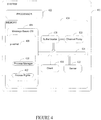
- FIG. 4 is a block diagram of an alternate secure message-based OS 400.
- the system 400 comprises a processor 402, a memory 404 (the contents of which are accessible by the processor 402) a message-based OS module 406, a microkernel module 408, a process manager module 410 and an access rights module 412.
- the memory 404 may store instructions that causes the system to render some or all of the functionality associated with the systems described herein.
- memory 404 may store instructions that when executed by the processor 402 causes the system to enforce a security policy and/or enable security mechanisms through the channel policy files or records 420 and the application process modules: client module 416, the authenticator module 418, and the server module 422 through an input/output (I/O) interface 424.
- I/O input/output
- the processor 402 may include a single processor or multiple processors that are disposed on a single chip, on multiple devices or distributed in a message-based OS system.
- the processor 402 may be hardware that executes computer executable instructions or computer code retained in a local centralized memory 404 or in distributed memory to perform one or more features of message-based OS.
- the systems and processes shown in FIGS. 1-4 may be implemented in many different ways and with one or more enhancements.
- the enhancements may include using compression functions (e.g., one-way hash functions), message authentication codes, and/or message integrity checks that convert a variable-length input string into a fixed length (generally smaller) output string object that is appended with each message.
- the fixed length output string may serve as a fingerprint of each message.
- the fingerprints may be returned to a sending node when received by a recipient node to ascertain message origin, verify that the message has not been modified in transit, and prevent an intruder from substituting a false message for a legitimate one.
- each process module such as the message-based OS module 102 and application processes modules 416, 418, 422, and 424 may be implemented in hardware or a combination of hardware and software.
- Each module of FIG. 4 may include an application specific integrated circuit (ASIC), a Field Programmable Gate Array (FPGA), a circuit, a digital logic circuit, an analog circuit, a combination of discrete circuits, gates, or any other type of hardware or combination thereof.
- ASIC application specific integrated circuit
- FPGA Field Programmable Gate Array
- each module may include memory hardware, such as a portion of the memory 406 that comprises instructions executable by the processor 402 to implement one or more of the features of the modules. Because each module includes at least some hardware, some modules can be referred to as hardware modules.
- Memory 406 may retain an ordered listing of executable instructions for implementing the functions described.
- a machine-readable medium may selectively be, but not limited to, a non-transitory electronic, magnetic, optical, electromagnetic, infrared, or a semiconductor medium.
- a non-exhaustive list of examples of a machine-readable medium includes: a portable magnetic or optical disk, a volatile memory, such as a Random Access Memory (RAM), a Read-Only Memory (ROM), an Erasable Programmable Read-Only Memory (EPROM or Flash memory), or a database management system.
- the memory 406 may comprise a single device or multiple devices that may be disposed on one or more dedicated memory devices or executed by a processor or other similar device. When functions or steps are said to be “responsive to” or occur “in response to" a function or a process, the device functions or steps necessarily occur as a result of the function or message. It is not sufficient that a function or act merely follow or occur subsequent to another.
- the functions, acts, or tasks illustrated in the FIGS. or described may be executed in response to one or more logic or instructions stored in or on non-transitory computer readable media.
- the functions, acts or tasks are independent of the particular type of instructions set, storage media, processor or processing strategy and may be performed by software, hardware, integrated circuits, firmware, micro code and the like, operating alone or in combination.
- the instructions are stored on a removable media device for reading by local or remote systems.
- the logic or instructions are stored in a remote location for transfer through a computer network or over wireless or tangible communication lines.
- the disclosed system and process reinforces security and reliability through security policies and security mechanisms through a small, reliable, replicable message-based microkernel OS.
- the message-based microkernel OS is used in many systems including embedded systems and devices that respond to real events in real time. This means that the message-based microkernel OS processes events as they happen, not later. In other words, the system processes information at the same rate as it is received, enabling direct control of a process.
- a wireless phone, a navigation process, or an autonomous vehicle may be an embedded system that interacts with real-time events. This means that the computing power is an integral part of the systems/processes and the real time message-based OS responds to event immediately, unbuffered, and not stored for processing later.
- a vehicle generally includes a car, bus, truck, tractor, motorcycle, bicycle, tricycle, quadricycle, or other cycle, ship, submarine, boat or other watercraft, helicopter, drone, airplane or other aircraft, train, tram or other railed vehicle, spaceplane or other spacecraft, and any other type of vehicle whether currently existing or after-arising this disclosure.
- it comprises a device or structure for transporting persons or things.
- the subject-matter of the disclosure may also relate, among other matters, to the following numbered aspects:
Landscapes
- Engineering & Computer Science (AREA)
- Computer Security & Cryptography (AREA)
- Computer Hardware Design (AREA)
- Computing Systems (AREA)
- General Engineering & Computer Science (AREA)
- Computer Networks & Wireless Communication (AREA)
- Signal Processing (AREA)
- Storage Device Security (AREA)
Abstract
Description
- This disclosure relates to security; and in particular, to enforcing security policies in distributed message-based operating systems.
- This disclosure refers to the following drawings and description. The components in the drawings are not necessarily to scale; emphasis instead is placed upon illustrating the principles described. Moreover, in the figures, like referenced numerals designate corresponding parts throughout the different views.
-
FIG. 1 is a message-based operating system enforcing security policies. -
FIG. 2 is an example token passed between operating system nodes. -
FIG. 3 is a secure message-based operating system protocol. -
FIG. 4 is an alternate message-based operating system enforcing security policies. - For years, security has been the focus of end-user software. These programs adhere closely to secure practices while security hackers invest heavily in breaking those practices. Today, security begins when software is written and continues as the software is executed. Software is tested early and often. However, exposing flaws in software can be harder than designing the software because the software operates on a foundation called an Operating System (OS). An OS supports a computer's basic functions such as coordinating and manipulating computer hardware, scheduling tasks, and controlling access to peripheral devices.
- When tasks are part of a message-based OS, such as a microkernel-based OS, for example, the message-based OS builds smaller tasks than those normally run by monolithic kernels. Some tasks are limited to memory management, process management, timer services, scheduling services and communication. Distributed processes (referred to as servers) and querying programs (referred to as clients) execute other tasks. Generally, the term processes refers to a series of actions and/or multiple threads. Unlike monolithic kernels, microkernels execute only the minimum computer requirements for an input and an output. Other processes, such as a file system management or drivers, for example, are managed outside of the microkernel through separate servers. Here, the clients and servers are distributed. The distributed clients and servers present security risks because these processes and programs do not enforce security policies or make use of security mechanisms.
-
FIG. 1 is block diagram of a message-based OS enforcing security policies. The message-based OS includes amicrokernel 104,access rights 108, achannel policy 114, and a set of application processes 110 - 112, 116, and 118 created by aprocess manager 106. Theprocess manager 106 provides OS services that may include process creation, process accounting, memory management, and/or pathname space management, etc. Theprocess manager 106 receive messages from other OS processes, may spawn new OS processes, may terminate OS processes, and manage the OS processes' lifetime. Thechannel policy 114 may be a file or database where the security policy for the system resides. Thechannel policy 114 is consulted byauthenticator 112, which determines the rights and permissions associated with any request. - In
FIG. 1 , self-verifying security is based on two credentials: access rights and tokens. Access rights provide permissions to communicate with other processes such as the servers 116 (one is shown) and theauthenticator 112. Before clients 110 (one is shown) establish message channels 118 (one is shown), they receiveaccess rights 108 from theprocess manager 106. Theaccess rights 108 are granted whenclients 110 are created or whenclients 110 invoke microkernel calls that initiate process manager functions. - When access rights are granted, a
client 110 creates amessage channel 118 and identifies itself through authenticating information. The authenticating information contains information that theauthenticator 112 processes to verifyclient 110 identity. The authenticating information may be encrypted in a data object, delivered via messaging, and include routing information. The authenticating information ensures that the requesting entity, here, theclient 110, receives only access rights that it is entitled. The authenticating information may include the client's name, a unique identifier, and an optional timestamp. Once issued, the authenticating information may be processed until the authenticating information expires. - In some systems, a comparator and timestamp validator within the
authenticator 112 validates the timestamp through timing rendered by separate synchronized clocks. Theclient 110 andauthenticator 112, respectively, access the separate synchronized clocks when transmitting to other OS nodes - one for a timestamp appended by the issuing node the other for a reference value used in a comparison executed by the validating node. If a comparator at the validating node determines that a timestamp is too far in the future or too far in the past (e.g., beyond certain thresholds), theauthenticator 112 transmits an error message toclient 110. - If the timestamp is valid, the
authenticator 112 looks up the authenticating information in thechannel policy 114 files within memory. When the authenticating information is found in thechannel policy 114, theauthenticator 112 sends atoken 202 to theclient 110 through themessage channel 118. Atoken 202 encapsulates the permissions given to access some or all of the OS resources that supplement themicrokernel 104. Sometokens 202 define the operations aclient 110 may execute and the rights to access, view, and/or use, the services provided by aserver 116. Theaccess rights 108 may also include the rights to create amessage channel 118, rights to access one ormore servers 116, rights to access other OS resources, permissions to execute certain operations (such as the ability to inspect, open, or transfer files), and/or etc. Sometokens 202 encapsulate optional fields that reflect the client's 110 rights to generate a communication channel 118 (optional channel rights 206) and anoptional timestamp 204, as shown inFIG. 2 . Theoptional timestamp 204 allows theclient 110 to access theserver 116 or other OS resources multiple times until thetoken 202 expires without further authentication. If theoptional timestamp 204 is used, software withinserver 116 compares the timestamp to a reference time via the synchronized clocks described above to determine if the difference falls within an accepted range (e.g., via a comparator and timestamp validator) and therefore, is valid. - Unlike security policies enforced in other distributed networks, a system security architect or a security mechanism assigns
channel policies 114 that define the rights and operations that are granted toclients 110, and in alternate, define the rights and operations that are granted toclients 110 andservers 116 when the OS is created. Thechannel policies 114 do not change after the system is created. The channel policies are stored in non-volatile forms such as an image that is retained in a file. The persistence of the file means that the mandatory access controls established by thechannel policies 114 are not supplemented and do not change once thechannel policies 114 are established. This permanence means that the systems are less vulnerable to attacks because thechannel policies 114 do not change once the OS is generated. - In
FIG. 1 , theclient 110 saves thetoken 202 in memory. In some systems,clients 110 obtainseparate tokens 202 for eachserver 116 or OS resource theclient 110 accesses. Should aclient 110 need a token, theauthenticator 112, in response to the client's 110 request, decrypts the client's 110 authenticating information from the client request, compares the authenticating information against thechannel policies 114, and compares the timestamp against a current time. If there is a match or if the difference falls within an acceptable range, theauthenticator 112 sends back another token to theclient 110 through themessage channel 118. In other OS systems, access to each of theservers 116 or OS resources theclient 110 requests occurs once in time or once during each processing session, which effectively conserves bandwidth. Generally, a session means the time during which a process like themicrokernel 104 accepts and processes input. It is also the time in which a querying program and a process (e.g., aclient 110 and a server 116), or a process and themicrokernel 104, maintains a communication connection. Each of the permissions granted for the distributedservers 116 is encapsulated in one ormore tokens 202 that are sent back via a message and stored at theclient 110. Generally, the term encapsulated refers to constructed according to a single protocol. - When the
client 110 accesses the services provided by theserver 116, the client first generates a message similar to the message it sent to theauthenticator 112. Theclient 110 encodes authenticating information via a data object consisting of the client's name, a unique identifier, a token 202, and an optional timestamp. The data object may also include routing information. The client transmits the data object to theserver 116, which decrypts and verifies the authenticating information as discussed previously. If a token 202 specifies access to limited services (e.g., a sub-set of all of the services aserver 116 provides), theserver 116 restricts the client's access to only its authorized services. Because themessaging channel 118 between aclient 110 andserver 116 remains open until theprocess manager 106,client 110, orserver 116 closes it (meaning it is persistent), neither the authenticating information nor token is exchanged with each communication between theclient 110 andserver 116 in some systems. However, when spoofing is detected, some or eachclient 110 and/orserver 116 transmission may include a token 202 that is then validated at the receiving node to ensure that each communication originates from authorized processes and/or programs. - When mutual authentication is practiced, the
server 116 receivesaccess rights 108 from theprocess manager 106 andtokens 202 from theauthenticator 112 in the same manner as those theclient 110 receives its rights andtokens 202 as described above. When aserver 116 receives its token 202 from theauthenticator 112, theserver 116 sends its own authenticating information to theclient 110 through a data object consisting of the server's name, a unique identifier, a token 202, and an optional timestamp to theclient 110 in response to the client's 110 request. Once theserver 116 is authenticated at theclient 110, theclient 110 verifies the access rights the client can provide to theserver 116. In one implementation, the access rights grant theserver 116 rights to communicate with theclient 110. -
FIG. 3 is flow diagram of a secure message-based operating system protocol. The protocol shown inFIG. 3 is a series of steps, involving two or more entities, designed to authenticate access to a service provided byserver 116. A "series of steps" generally refers to a sequence, from start to finish. "Involving two or more entities" generally refers to least two entities being involved to complete the protocol; one entity alone does not make a protocol. Finally, "designed to authenticate access to a service provided byserver 116" generally refers to the protocol informing theserver 116 of which services can be accessed by theclient 110. Once established,client 110 can make use of that service under the terms and conditions specified by the token. - The protocol of
FIG. 3 may be implemented using the systems described inFIGS. 1 and4 . The protocol provides privacy, authentication, and security to a distributed message-based OS. Security is based on multiple credentials:access rights 108 andtokens 202.Access rights 108 provide permissions to communicate with other processes and querying programs.Tokens 202 encapsulate the permissions to access some or all of the distributed services provided by aserver 116. Sometokens 202 provide rights to create one ormore message channels 118, rights to access OS resources, and/or rights that allow a process or program to execute certain operations, etc. InFIG. 3 , theprocess manager 106 creates the application processes 110 - 112, 116 and 118 that include theclient 110 process, theauthenticator 112 process, and theserver 116 process at 302. - When access rights are granted by the
process manager 106 at 304, theclient 110 creates amessage channel 118 to theauthenticator 112 andrequests access rights 108 toserver 116 at 308. Whenaccess rights 108 are denied theprocess manager 106 transmits an error message to theclient 110 at 306. - If the timestamp is valid, the
authenticator 112 looks up the authenticating information in thechannel policy 114 files or database records. When authenticating information is not found in thechannel policy 114, the authenticator issues an error message to theclient 110 at 310. When the authenticating information is found in thechannel policy 114, theauthenticator 112 sends a token 202 to theclient 110 through themessage channel 118 at 312. A token 202 encapsulates the permissions to access OS resources that supplement themicrokernel 104. Sometokens 202 define the operations granted to one ormore clients 110 including rights to create amessage channel 118, rights to access one ormore servers 116, rights to access other OS resources, and/or permissions to execute certain operations. Sometokens 202 include a timestamp that allows theclient 110 to access theserver 116 or other OS resources multiple times until a timestamp validating process notifies theserver 116 that the token expired. - When the
client 110 desires to access processes provided by theserver 116, theclient 110 generates a message like the message it sends to theauthenticator 112 as previously described at 314. Theclient 110 encodes authenticating information via a data object consisting of: the client's name, a unique identifier, a token 202, and an optional timestamp. The data object may also include routing information. Theserver 116 decrypts and verifies the authenticating information as discussed above and verifies the permissions granted toserver 116 at 316. If the client's token 202 limits access to certain services (a sub-set of the server's services), theserver 116 restricts the client's access to only authorized services. Because themessaging channel 118 between aclient 110 andserver 116 is persistent, neither the authenticating information nor token 202 are exchanged with each communication between theclient 110 andserver 116. However, when spoofing is detected, some or all of theclient 110 and/orserver 116 transmission may includetokens 202 to ensure that all communication originates from authorized processes. - When a mutual authentication process is practiced, the
server 116 receivesaccess rights 108 from theprocess manager 106 and token(s) 202 from theauthenticator 112 in the same manner as those provided to theclient 110. When theserver 116 is authenticated, theserver 116 sends its own authenticating information, routing information and a data object to theclient 116. The data object includes the server's name, a unique identifier, a token 202, and an optional timestamp that may be used to authenticate theserver 116 in response to the client's 110 request. Once authenticated,client 110 verifies the server's 116 access rights to serveclient 110. In one implementation, the access rights allow theserver 116 to communicate with theclient 110. -
FIG. 4 is a block diagram of an alternate secure message-basedOS 400. Thesystem 400 comprises aprocessor 402, a memory 404 (the contents of which are accessible by the processor 402) a message-basedOS module 406, amicrokernel module 408, aprocess manager module 410 and anaccess rights module 412. Thememory 404 may store instructions that causes the system to render some or all of the functionality associated with the systems described herein. For example,memory 404 may store instructions that when executed by theprocessor 402 causes the system to enforce a security policy and/or enable security mechanisms through the channel policy files orrecords 420 and the application process modules:client module 416, theauthenticator module 418, and theserver module 422 through an input/output (I/O)interface 424. Theprocessor 402 may include a single processor or multiple processors that are disposed on a single chip, on multiple devices or distributed in a message-based OS system. Theprocessor 402 may be hardware that executes computer executable instructions or computer code retained in a localcentralized memory 404 or in distributed memory to perform one or more features of message-based OS. - The systems and processes shown in
FIGS. 1-4 may be implemented in many different ways and with one or more enhancements. The enhancements may include using compression functions (e.g., one-way hash functions), message authentication codes, and/or message integrity checks that convert a variable-length input string into a fixed length (generally smaller) output string object that is appended with each message. The fixed length output string may serve as a fingerprint of each message. The fingerprints may be returned to a sending node when received by a recipient node to ascertain message origin, verify that the message has not been modified in transit, and prevent an intruder from substituting a false message for a legitimate one. Further, each process module such as the message-basedOS module 102 andapplication processes modules FIG. 4 may include an application specific integrated circuit (ASIC), a Field Programmable Gate Array (FPGA), a circuit, a digital logic circuit, an analog circuit, a combination of discrete circuits, gates, or any other type of hardware or combination thereof. Alternatively or in addition, each module may include memory hardware, such as a portion of thememory 406 that comprises instructions executable by theprocessor 402 to implement one or more of the features of the modules. Because each module includes at least some hardware, some modules can be referred to as hardware modules. -
Memory 406 may retain an ordered listing of executable instructions for implementing the functions described. A machine-readable medium may selectively be, but not limited to, a non-transitory electronic, magnetic, optical, electromagnetic, infrared, or a semiconductor medium. A non-exhaustive list of examples of a machine-readable medium includes: a portable magnetic or optical disk, a volatile memory, such as a Random Access Memory (RAM), a Read-Only Memory (ROM), an Erasable Programmable Read-Only Memory (EPROM or Flash memory), or a database management system. Thememory 406 may comprise a single device or multiple devices that may be disposed on one or more dedicated memory devices or executed by a processor or other similar device. When functions or steps are said to be "responsive to" or occur "in response to" a function or a process, the device functions or steps necessarily occur as a result of the function or message. It is not sufficient that a function or act merely follow or occur subsequent to another. - The functions, acts, or tasks illustrated in the FIGS. or described may be executed in response to one or more logic or instructions stored in or on non-transitory computer readable media. The functions, acts or tasks are independent of the particular type of instructions set, storage media, processor or processing strategy and may be performed by software, hardware, integrated circuits, firmware, micro code and the like, operating alone or in combination. In implementations, the instructions are stored on a removable media device for reading by local or remote systems. In other implementations, the logic or instructions are stored in a remote location for transfer through a computer network or over wireless or tangible communication lines.
- The disclosed system and process reinforces security and reliability through security policies and security mechanisms through a small, reliable, replicable message-based microkernel OS. The message-based microkernel OS is used in many systems including embedded systems and devices that respond to real events in real time. This means that the message-based microkernel OS processes events as they happen, not later. In other words, the system processes information at the same rate as it is received, enabling direct control of a process. A wireless phone, a navigation process, or an autonomous vehicle may be an embedded system that interacts with real-time events. This means that the computing power is an integral part of the systems/processes and the real time message-based OS responds to event immediately, unbuffered, and not stored for processing later. Here, a vehicle generally includes a car, bus, truck, tractor, motorcycle, bicycle, tricycle, quadricycle, or other cycle, ship, submarine, boat or other watercraft, helicopter, drone, airplane or other aircraft, train, tram or other railed vehicle, spaceplane or other spacecraft, and any other type of vehicle whether currently existing or after-arising this disclosure. In other words, it comprises a device or structure for transporting persons or things.
- The subject-matter of the disclosure may also relate, among other matters, to the following numbered aspects:
- 1. A system that enforces a security policy in a message-based operating system, the system comprising a processor configured to:
- control access to an operating system authenticator in response to an invocation of a microkernel call that initiates a process manager function in accordance with an access right retained in a microkernel; and
- control access to a server serving a client in the message-based operating system according to a token issued by the operating system authenticator, the token establishing the client's access to the services provided by the server.
- 2. The system of aspect 1 wherein the processor is further configured to control access by a second client requesting services from the server in the message-based operating system according to a second token, the second token establishing the server's rights to communicate with the second client.
- 3. The system of aspect 2 wherein the server executes the invocation of the microkernel call.
- 4. The system of any of aspects 1 to 3 wherein the client executes the invocation of the microkernel call.
- 5. The system of any of aspects 1 to 4 wherein access to the server by the operating system authenticator includes a right to generate a persistent message channel between the client and the server.
- 6. The system of any of aspects 1 to 5 wherein the token comprises a temporal validator that provides a temporal restriction on the client's access right to a processes provided by the server.
- 7. The system of any of aspects 1 to 6 wherein the access to the operating system authenticator are stored in an image in a non-volatile form that does not change.
- 8. The system of any of aspects 1 to 6 wherein the system comprises vehicle.
- 9. A machine-readable medium encoded with machine-executable instructions, wherein execution of the machine-executable instructions is for:
- enforcing a security policy in a message-based operating system;
- controlling access to an operating system authenticator in response to an invocation of a microkernel call that initiates a process manager function in accordance with an access right retained in a microkernel; and
- controlling access to a server serving a client in the message-based operating system according to a token issued by the operating system authenticator, the token establishing the client's access to the processes provided by the server.
- 10. The machine-readable medium of aspect 9 where the machine-readable medium encoded controls access to the client requesting services from the server in the message-based operating system according to a second token, the second token establishing the server's rights to communicate with the client.
- 11. The machine-readable medium of aspect 10 where the server executes the invocation of the microkernel call.
- 12. The machine-readable medium of any of aspects 9 to 11 where the client executes the invocation of the microkernel call.
- 13. The machine-readable medium of any of aspects 9 to 12 where access to the server granted by the operating system authenticator includes a right to generate a persistent message channel between the client and the server.
- 14. The machine-readable medium of any of aspects 9 to 13 where the token comprises a temporal validator that provides temporal restrictions on the client's access to the processes provided by the server.
- 15. The machine-readable medium of any of aspects 9 to 14 where the access right to the operating system authenticator is stored in an image in a non-volatile form that does not change.
- 16. A method that enforces a security policy in a message-based operating system comprising:
- controlling access to an operating system authenticator in response to an invocation of a microkernel call that initiates process manager functions in accordance with an access right retained in a microkernel; and
- controlling access to a server serving a client in the message-based operating system according to a token issued by the operating system authenticator, the token establishing the client's access to a service provided by the server.
- 17. The method of aspect 16 where the processor is further configured to control access to a second client requesting a service from the server in the message-based operating system according to a second token, the second token establishing the server's rights to communicate with the second client.
- 18. The method of aspect 17 where the server executes the invocation of the microkernel call.
- 19. The method of any of aspects 16 to 18 where the client executes the invocation of the microkernel call.
- 20. The method of any of aspects 16 to 19 where a grant access to the server by the operating system authenticator includes a right to generate a persistent message channel between the client and the server.
- 21. The method of any of aspects 16 to 20 where the token comprises a temporal validator that provides a temporal restriction on the client's access to the processes provided by the server.
- 22. The method of any of aspects 16 to 21 where the access rights to the operating system authenticator are stored in an image in a non-volatile form that does not change.
- All of the descriptions, regardless of the particular implementation, is illustrative in nature, rather than limiting. For example, although selected aspects, features, or components of the implementations are shown as being stored in local memories, all or part of the systems or processes may be stored in, distributed across, or read from local and/or remote distributed storage media.
- While various embodiments have been described, it will be apparent to those of ordinary skill in the art that many more embodiments and implementations are possible. Accordingly, the embodiments described herein are examples, not the only possible embodiments and implementations.
Claims (14)
- A system that enforces a security policy in a message-based operating system, the system comprising a processor configured to:control access to an operating system authenticator in response to an invocation of a microkernel call that initiates a process manager function in accordance with an access right retained in a microkernel; andcontrol access to a server serving a client in the message-based operating system according to a token issued by the operating system authenticator, the token establishing the client's access to the services provided by the server.
- The system of claim 1 where the processor is further configured to control access by a second client requesting services from the server in the message-based operating system according to a second token, the second token establishing the server's right to communicate with the second client.
- The system of claim 2 wherein the server executes the invocation of the microkernel call or wherein the client executes the invocation of the microkernel call.
- The system of any preceding claim wherein a grant of access to the server by the operating system authenticator includes a right to generate a persistent message channel between the client and the server.
- The system of any preceding claim wherein the token comprises a temporal validator that provides a temporal restriction on the client's access to a process provided by the server.
- The system of any preceding claim wherein the access to the operating system authenticator are stored in an image in a non-volatile form that does not change.
- The system of any preceding claim wherein the system comprises vehicle.
- A method that enforces a security policy in a message-based operating system, the method comprising:controlling access to an operating system authenticator in response to an invocation of a microkernel call that initiates a process manager function in accordance with an access right retained in a microkernel; andcontrolling to a server serving a client in the message-based operating system according to a token issued by the operating system authenticator, the token establishing the client's access to a service provided by the server.
- The method of claim 8 where the processor is further configured to control access to a second client requesting a service from the server in the message-based operating system according to a second token, the second token establishing the server's rights to communicate with the second client.
- The method of claim 8 or 9 where the server executes the invocation of the microkernel call, or where the client executes the invocation of the microkernel call.
- The method of any one of claims 8 to 10 where a grant of access to the server by the operating system authenticator includes a right to generate a persistent message channel between the client and the server.
- The method of any one of claims 8 to 11 where the token comprises a temporal validator that provides a temporal restriction on the client's access to the processes provided by the server.
- The method of any one of claims 8 to 12 where the access right to the operating system authenticator are stored in an image in a non-volatile form that does not change.
- A computer program which when executed on a computing device is configured to carry out the method of any one of claims 8 to 13.
Applications Claiming Priority (1)
| Application Number | Priority Date | Filing Date | Title |
|---|---|---|---|
| US15/658,145 US10798128B2 (en) | 2017-07-24 | 2017-07-24 | Distributed authentication for service gating |
Publications (2)
| Publication Number | Publication Date |
|---|---|
| EP3435624A1 true EP3435624A1 (en) | 2019-01-30 |
| EP3435624B1 EP3435624B1 (en) | 2021-04-28 |
Family
ID=63108404
Family Applications (1)
| Application Number | Title | Priority Date | Filing Date |
|---|---|---|---|
| EP18183808.7A Active EP3435624B1 (en) | 2017-07-24 | 2018-07-16 | Distributed authentication for service gating |
Country Status (2)
| Country | Link |
|---|---|
| US (1) | US10798128B2 (en) |
| EP (1) | EP3435624B1 (en) |
Families Citing this family (1)
| Publication number | Priority date | Publication date | Assignee | Title |
|---|---|---|---|---|
| EP4095726A1 (en) * | 2021-05-27 | 2022-11-30 | AO Kaspersky Lab | System and method for building a security monitor in a microkernel |
Citations (1)
| Publication number | Priority date | Publication date | Assignee | Title |
|---|---|---|---|---|
| US20110035586A1 (en) * | 2008-04-08 | 2011-02-10 | Eads Defence And Security Systems | System and method for securing a computer comprising a microkernel |
Family Cites Families (6)
| Publication number | Priority date | Publication date | Assignee | Title |
|---|---|---|---|---|
| DE10146361B4 (en) * | 2001-09-20 | 2007-02-01 | Fraunhofer-Gesellschaft zur Förderung der angewandten Forschung e.V. | Distributed system |
| TW201042973A (en) * | 2008-11-28 | 2010-12-01 | Ibm | Token-based client to server authentication of a secondary communication channel by way of primary authenticated communication channels |
| US8868907B2 (en) * | 2009-03-18 | 2014-10-21 | University Of Louisville Research Foundation, Inc. | Device, method, and system for processing communications for secure operation of industrial control system field devices |
| US8505083B2 (en) * | 2010-09-30 | 2013-08-06 | Microsoft Corporation | Remote resources single sign on |
| DE102011106078A1 (en) * | 2011-06-30 | 2013-01-03 | Continental Automotive Gmbh | Vehicle unit and method for operating the vehicle unit |
| US10152331B2 (en) * | 2014-05-16 | 2018-12-11 | Wind River Systems, Inc. | Method and system for enforcing kernel mode access protection |
-
2017
- 2017-07-24 US US15/658,145 patent/US10798128B2/en active Active
-
2018
- 2018-07-16 EP EP18183808.7A patent/EP3435624B1/en active Active
Patent Citations (1)
| Publication number | Priority date | Publication date | Assignee | Title |
|---|---|---|---|---|
| US20110035586A1 (en) * | 2008-04-08 | 2011-02-10 | Eads Defence And Security Systems | System and method for securing a computer comprising a microkernel |
Non-Patent Citations (3)
| Title |
|---|
| BRANSTAD M ET AL: "Access meditation in a message passing kernel", PROCEEDINGS OF THE SYMPOSIUM ON SECURITY AND PRIVACY. OAKLAND, MAY 1 - 3, 1989; [PROCEEDINGS OF THE SYMPOSIUM ON SECURITY AND PRIVACY], WASHINGTON, IEEE COMP. SOC. PRESS, US, vol. -, 1 May 1989 (1989-05-01), pages 66 - 72, XP010016008, ISBN: 978-0-8186-1939-7, DOI: 10.1109/SECPRI.1989.36278 * |
| CHAYNIKA KAPOOR ET AL: "Kernel Operating System", IJRIT INTERNATIONAL JOURNAL OF RESEARCH IN INFORMATION TECHNOLOGY INTERNATIONAL JOURNAL OF RESEARCH IN INFORMATION TECHNOLOGY, 1 October 2014 (2014-10-01), pages 96 - 106, XP055495381, Retrieved from the Internet <URL:https://708e8bd3-a-bb6ad6f3-s-sites.googlegroups.com/a/ijrit.com/papers/october/V2I1019.pdf?attachauth=ANoY7coQojbrRmrN3sLO8UKbd4dQbLV0fpENyHMkJYdwwiyjMx-iHBICySIeOIAdtIQgakxIFUg4AF5sIkebgHrxK7GkA5X-5jd6HKxOJAXk7ZDdZcvpRZRG818iPGHFlMMbLCO9QXfa3b26m7BvotMxvwxUOJhjO45LgFYdwB1QrNtcfwutWmDYRWC0-eCtYo6j3> * |
| WANG XIAOLONG ET AL: "Enhanced Security of Building Automation Systems Through Microkernel-Based Controller Platforms", 2017 IEEE 37TH INTERNATIONAL CONFERENCE ON DISTRIBUTED COMPUTING SYSTEMS WORKSHOPS (ICDCSW), IEEE, 5 June 2017 (2017-06-05), pages 37 - 44, XP033122901, DOI: 10.1109/ICDCSW.2017.25 * |
Also Published As
| Publication number | Publication date |
|---|---|
| US20190028513A1 (en) | 2019-01-24 |
| US10798128B2 (en) | 2020-10-06 |
| EP3435624B1 (en) | 2021-04-28 |
Similar Documents
| Publication | Publication Date | Title |
|---|---|---|
| US12199971B2 (en) | System and method for transferring device identifying information | |
| EP4005173B1 (en) | Registering and requesting services in a service based architecture | |
| US20230385098A1 (en) | Enforce changes in session behavior based on updated machine learning model with detected risk behavior during session | |
| KR102308403B1 (en) | Resource access control using a validation token | |
| US20210136068A1 (en) | Telecom node control via blockchain | |
| US11356458B2 (en) | Systems, methods, and computer program products for dual layer federated identity based access control | |
| US20180307858A1 (en) | Multi-party authentication and authorization | |
| US10498733B2 (en) | Secure transfer of authentication information | |
| EP3533181B1 (en) | Path-based access control for message-based operating systems | |
| CN116319024B (en) | Access control method and device of zero trust system and zero trust system | |
| US9990505B2 (en) | Temporally isolating data accessed by a computing device | |
| US20170064556A1 (en) | On-Device Authorization of Devices for Collaboration and Association | |
| EP3062254B1 (en) | License management for device management system | |
| KR102058283B1 (en) | Secure Interoperability Framework between diverse IoT Service Platforms and Apparatus | |
| CN116192483A (en) | Authentication authentication method, device, equipment and medium | |
| CN113472820A (en) | Cloud resource security isolation control method and system based on zero trust model | |
| CN115941287B (en) | Cryptographic service integration and management methods, devices, management platforms and storage media | |
| US11184354B2 (en) | Network-based authorization for disconnected devices | |
| US10798128B2 (en) | Distributed authentication for service gating | |
| CN114363373B (en) | Application communication management system, method, device, electronic equipment and storage medium | |
| US8850515B2 (en) | Method and apparatus for subject recognition session validation | |
| CN112464213B (en) | Operating system access control method, device, equipment and storage medium | |
| Ferretti et al. | Authorization transparency for accountable access to IoT services | |
| EP4078895B1 (en) | Resource authorization | |
| CN119402221A (en) | A dynamic management and control architecture, method and system for cross-region and cross-domain data sharing |
Legal Events
| Date | Code | Title | Description |
|---|---|---|---|
| PUAI | Public reference made under article 153(3) epc to a published international application that has entered the european phase |
Free format text: ORIGINAL CODE: 0009012 |
|
| STAA | Information on the status of an ep patent application or granted ep patent |
Free format text: STATUS: THE APPLICATION HAS BEEN PUBLISHED |
|
| AK | Designated contracting states |
Kind code of ref document: A1 Designated state(s): AL AT BE BG CH CY CZ DE DK EE ES FI FR GB GR HR HU IE IS IT LI LT LU LV MC MK MT NL NO PL PT RO RS SE SI SK SM TR |
|
| AX | Request for extension of the european patent |
Extension state: BA ME |
|
| STAA | Information on the status of an ep patent application or granted ep patent |
Free format text: STATUS: REQUEST FOR EXAMINATION WAS MADE |
|
| 17P | Request for examination filed |
Effective date: 20190716 |
|
| RBV | Designated contracting states (corrected) |
Designated state(s): AL AT BE BG CH CY CZ DE DK EE ES FI FR GB GR HR HU IE IS IT LI LT LU LV MC MK MT NL NO PL PT RO RS SE SI SK SM TR |
|
| RAP1 | Party data changed (applicant data changed or rights of an application transferred) |
Owner name: BLACKBERRY LIMITED |
|
| GRAP | Despatch of communication of intention to grant a patent |
Free format text: ORIGINAL CODE: EPIDOSNIGR1 |
|
| STAA | Information on the status of an ep patent application or granted ep patent |
Free format text: STATUS: GRANT OF PATENT IS INTENDED |
|
| INTG | Intention to grant announced |
Effective date: 20201223 |
|
| GRAS | Grant fee paid |
Free format text: ORIGINAL CODE: EPIDOSNIGR3 |
|
| GRAA | (expected) grant |
Free format text: ORIGINAL CODE: 0009210 |
|
| STAA | Information on the status of an ep patent application or granted ep patent |
Free format text: STATUS: THE PATENT HAS BEEN GRANTED |
|
| AK | Designated contracting states |
Kind code of ref document: B1 Designated state(s): AL AT BE BG CH CY CZ DE DK EE ES FI FR GB GR HR HU IE IS IT LI LT LU LV MC MK MT NL NO PL PT RO RS SE SI SK SM TR |
|
| REG | Reference to a national code |
Ref country code: GB Ref legal event code: FG4D |
|
| REG | Reference to a national code |
Ref country code: CH Ref legal event code: EP |
|
| REG | Reference to a national code |
Ref country code: AT Ref legal event code: REF Ref document number: 1388419 Country of ref document: AT Kind code of ref document: T Effective date: 20210515 |
|
| REG | Reference to a national code |
Ref country code: DE Ref legal event code: R096 Ref document number: 602018016091 Country of ref document: DE |
|
| REG | Reference to a national code |
Ref country code: IE Ref legal event code: FG4D |
|
| REG | Reference to a national code |
Ref country code: LT Ref legal event code: MG9D |
|
| REG | Reference to a national code |
Ref country code: AT Ref legal event code: MK05 Ref document number: 1388419 Country of ref document: AT Kind code of ref document: T Effective date: 20210428 |
|
| PG25 | Lapsed in a contracting state [announced via postgrant information from national office to epo] |
Ref country code: NL Free format text: LAPSE BECAUSE OF FAILURE TO SUBMIT A TRANSLATION OF THE DESCRIPTION OR TO PAY THE FEE WITHIN THE PRESCRIBED TIME-LIMIT Effective date: 20210428 Ref country code: BG Free format text: LAPSE BECAUSE OF FAILURE TO SUBMIT A TRANSLATION OF THE DESCRIPTION OR TO PAY THE FEE WITHIN THE PRESCRIBED TIME-LIMIT Effective date: 20210728 Ref country code: AT Free format text: LAPSE BECAUSE OF FAILURE TO SUBMIT A TRANSLATION OF THE DESCRIPTION OR TO PAY THE FEE WITHIN THE PRESCRIBED TIME-LIMIT Effective date: 20210428 Ref country code: FI Free format text: LAPSE BECAUSE OF FAILURE TO SUBMIT A TRANSLATION OF THE DESCRIPTION OR TO PAY THE FEE WITHIN THE PRESCRIBED TIME-LIMIT Effective date: 20210428 Ref country code: HR Free format text: LAPSE BECAUSE OF FAILURE TO SUBMIT A TRANSLATION OF THE DESCRIPTION OR TO PAY THE FEE WITHIN THE PRESCRIBED TIME-LIMIT Effective date: 20210428 Ref country code: LT Free format text: LAPSE BECAUSE OF FAILURE TO SUBMIT A TRANSLATION OF THE DESCRIPTION OR TO PAY THE FEE WITHIN THE PRESCRIBED TIME-LIMIT Effective date: 20210428 |
|
| REG | Reference to a national code |
Ref country code: DE Ref legal event code: R079 Ref document number: 602018016091 Country of ref document: DE Free format text: PREVIOUS MAIN CLASS: H04L0029060000 Ipc: H04L0065000000 |
|
| PG25 | Lapsed in a contracting state [announced via postgrant information from national office to epo] |
Ref country code: LV Free format text: LAPSE BECAUSE OF FAILURE TO SUBMIT A TRANSLATION OF THE DESCRIPTION OR TO PAY THE FEE WITHIN THE PRESCRIBED TIME-LIMIT Effective date: 20210428 Ref country code: PL Free format text: LAPSE BECAUSE OF FAILURE TO SUBMIT A TRANSLATION OF THE DESCRIPTION OR TO PAY THE FEE WITHIN THE PRESCRIBED TIME-LIMIT Effective date: 20210428 Ref country code: PT Free format text: LAPSE BECAUSE OF FAILURE TO SUBMIT A TRANSLATION OF THE DESCRIPTION OR TO PAY THE FEE WITHIN THE PRESCRIBED TIME-LIMIT Effective date: 20210830 Ref country code: NO Free format text: LAPSE BECAUSE OF FAILURE TO SUBMIT A TRANSLATION OF THE DESCRIPTION OR TO PAY THE FEE WITHIN THE PRESCRIBED TIME-LIMIT Effective date: 20210728 Ref country code: RS Free format text: LAPSE BECAUSE OF FAILURE TO SUBMIT A TRANSLATION OF THE DESCRIPTION OR TO PAY THE FEE WITHIN THE PRESCRIBED TIME-LIMIT Effective date: 20210428 Ref country code: SE Free format text: LAPSE BECAUSE OF FAILURE TO SUBMIT A TRANSLATION OF THE DESCRIPTION OR TO PAY THE FEE WITHIN THE PRESCRIBED TIME-LIMIT Effective date: 20210428 Ref country code: GR Free format text: LAPSE BECAUSE OF FAILURE TO SUBMIT A TRANSLATION OF THE DESCRIPTION OR TO PAY THE FEE WITHIN THE PRESCRIBED TIME-LIMIT Effective date: 20210729 Ref country code: IS Free format text: LAPSE BECAUSE OF FAILURE TO SUBMIT A TRANSLATION OF THE DESCRIPTION OR TO PAY THE FEE WITHIN THE PRESCRIBED TIME-LIMIT Effective date: 20210828 |
|
| REG | Reference to a national code |
Ref country code: NL Ref legal event code: MP Effective date: 20210428 |
|
| PG25 | Lapsed in a contracting state [announced via postgrant information from national office to epo] |
Ref country code: ES Free format text: LAPSE BECAUSE OF FAILURE TO SUBMIT A TRANSLATION OF THE DESCRIPTION OR TO PAY THE FEE WITHIN THE PRESCRIBED TIME-LIMIT Effective date: 20210428 Ref country code: EE Free format text: LAPSE BECAUSE OF FAILURE TO SUBMIT A TRANSLATION OF THE DESCRIPTION OR TO PAY THE FEE WITHIN THE PRESCRIBED TIME-LIMIT Effective date: 20210428 Ref country code: SK Free format text: LAPSE BECAUSE OF FAILURE TO SUBMIT A TRANSLATION OF THE DESCRIPTION OR TO PAY THE FEE WITHIN THE PRESCRIBED TIME-LIMIT Effective date: 20210428 Ref country code: SM Free format text: LAPSE BECAUSE OF FAILURE TO SUBMIT A TRANSLATION OF THE DESCRIPTION OR TO PAY THE FEE WITHIN THE PRESCRIBED TIME-LIMIT Effective date: 20210428 Ref country code: DK Free format text: LAPSE BECAUSE OF FAILURE TO SUBMIT A TRANSLATION OF THE DESCRIPTION OR TO PAY THE FEE WITHIN THE PRESCRIBED TIME-LIMIT Effective date: 20210428 Ref country code: CZ Free format text: LAPSE BECAUSE OF FAILURE TO SUBMIT A TRANSLATION OF THE DESCRIPTION OR TO PAY THE FEE WITHIN THE PRESCRIBED TIME-LIMIT Effective date: 20210428 Ref country code: RO Free format text: LAPSE BECAUSE OF FAILURE TO SUBMIT A TRANSLATION OF THE DESCRIPTION OR TO PAY THE FEE WITHIN THE PRESCRIBED TIME-LIMIT Effective date: 20210428 |
|
| REG | Reference to a national code |
Ref country code: DE Ref legal event code: R097 Ref document number: 602018016091 Country of ref document: DE |
|
| REG | Reference to a national code |
Ref country code: CH Ref legal event code: PL |
|
| PLBE | No opposition filed within time limit |
Free format text: ORIGINAL CODE: 0009261 |
|
| STAA | Information on the status of an ep patent application or granted ep patent |
Free format text: STATUS: NO OPPOSITION FILED WITHIN TIME LIMIT |
|
| PG25 | Lapsed in a contracting state [announced via postgrant information from national office to epo] |
Ref country code: MC Free format text: LAPSE BECAUSE OF FAILURE TO SUBMIT A TRANSLATION OF THE DESCRIPTION OR TO PAY THE FEE WITHIN THE PRESCRIBED TIME-LIMIT Effective date: 20210428 |
|
| REG | Reference to a national code |
Ref country code: BE Ref legal event code: MM Effective date: 20210731 |
|
| 26N | No opposition filed |
Effective date: 20220131 |
|
| PG25 | Lapsed in a contracting state [announced via postgrant information from national office to epo] |
Ref country code: LI Free format text: LAPSE BECAUSE OF NON-PAYMENT OF DUE FEES Effective date: 20210731 Ref country code: CH Free format text: LAPSE BECAUSE OF NON-PAYMENT OF DUE FEES Effective date: 20210731 |
|
| PG25 | Lapsed in a contracting state [announced via postgrant information from national office to epo] |
Ref country code: IS Free format text: LAPSE BECAUSE OF FAILURE TO SUBMIT A TRANSLATION OF THE DESCRIPTION OR TO PAY THE FEE WITHIN THE PRESCRIBED TIME-LIMIT Effective date: 20210828 Ref country code: LU Free format text: LAPSE BECAUSE OF NON-PAYMENT OF DUE FEES Effective date: 20210716 Ref country code: AL Free format text: LAPSE BECAUSE OF FAILURE TO SUBMIT A TRANSLATION OF THE DESCRIPTION OR TO PAY THE FEE WITHIN THE PRESCRIBED TIME-LIMIT Effective date: 20210428 |
|
| PG25 | Lapsed in a contracting state [announced via postgrant information from national office to epo] |
Ref country code: IT Free format text: LAPSE BECAUSE OF FAILURE TO SUBMIT A TRANSLATION OF THE DESCRIPTION OR TO PAY THE FEE WITHIN THE PRESCRIBED TIME-LIMIT Effective date: 20210428 Ref country code: IE Free format text: LAPSE BECAUSE OF NON-PAYMENT OF DUE FEES Effective date: 20210716 Ref country code: BE Free format text: LAPSE BECAUSE OF NON-PAYMENT OF DUE FEES Effective date: 20210731 |
|
| P01 | Opt-out of the competence of the unified patent court (upc) registered |
Effective date: 20230518 |
|
| PG25 | Lapsed in a contracting state [announced via postgrant information from national office to epo] |
Ref country code: CY Free format text: LAPSE BECAUSE OF FAILURE TO SUBMIT A TRANSLATION OF THE DESCRIPTION OR TO PAY THE FEE WITHIN THE PRESCRIBED TIME-LIMIT Effective date: 20210428 |
|
| PG25 | Lapsed in a contracting state [announced via postgrant information from national office to epo] |
Ref country code: HU Free format text: LAPSE BECAUSE OF FAILURE TO SUBMIT A TRANSLATION OF THE DESCRIPTION OR TO PAY THE FEE WITHIN THE PRESCRIBED TIME-LIMIT; INVALID AB INITIO Effective date: 20180716 |
|
| PG25 | Lapsed in a contracting state [announced via postgrant information from national office to epo] |
Ref country code: MK Free format text: LAPSE BECAUSE OF FAILURE TO SUBMIT A TRANSLATION OF THE DESCRIPTION OR TO PAY THE FEE WITHIN THE PRESCRIBED TIME-LIMIT Effective date: 20210428 |
|
| PG25 | Lapsed in a contracting state [announced via postgrant information from national office to epo] |
Ref country code: MT Free format text: LAPSE BECAUSE OF FAILURE TO SUBMIT A TRANSLATION OF THE DESCRIPTION OR TO PAY THE FEE WITHIN THE PRESCRIBED TIME-LIMIT Effective date: 20210428 |
|
| PGFP | Annual fee paid to national office [announced via postgrant information from national office to epo] |
Ref country code: DE Payment date: 20250722 Year of fee payment: 8 |
|
| PGFP | Annual fee paid to national office [announced via postgrant information from national office to epo] |
Ref country code: GB Payment date: 20250724 Year of fee payment: 8 |
|
| PGFP | Annual fee paid to national office [announced via postgrant information from national office to epo] |
Ref country code: FR Payment date: 20250723 Year of fee payment: 8 |
|
| PG25 | Lapsed in a contracting state [announced via postgrant information from national office to epo] |
Ref country code: TR Free format text: LAPSE BECAUSE OF FAILURE TO SUBMIT A TRANSLATION OF THE DESCRIPTION OR TO PAY THE FEE WITHIN THE PRESCRIBED TIME-LIMIT Effective date: 20210428 |