EP3434678A1 - Salt form of dppiv inhibitor and preparation method for salt form - Google Patents
Salt form of dppiv inhibitor and preparation method for salt form Download PDFInfo
- Publication number
- EP3434678A1 EP3434678A1 EP17769445.2A EP17769445A EP3434678A1 EP 3434678 A1 EP3434678 A1 EP 3434678A1 EP 17769445 A EP17769445 A EP 17769445A EP 3434678 A1 EP3434678 A1 EP 3434678A1
- Authority
- EP
- European Patent Office
- Prior art keywords
- crystal
- another preferred
- maleate
- glycolate
- group
- Prior art date
- Legal status (The legal status is an assumption and is not a legal conclusion. Google has not performed a legal analysis and makes no representation as to the accuracy of the status listed.)
- Granted
Links
- XKMHHZMODVVEIO-OAHLLOKOSA-N COC(c1cc(N=C(N(Cc2ccccc2C#N)C2=O)N(CCC3)C[C@@H]3N)c2[s]1)=O Chemical compound COC(c1cc(N=C(N(Cc2ccccc2C#N)C2=O)N(CCC3)C[C@@H]3N)c2[s]1)=O XKMHHZMODVVEIO-OAHLLOKOSA-N 0.000 description 1
Images




Classifications
-
- C—CHEMISTRY; METALLURGY
- C07—ORGANIC CHEMISTRY
- C07D—HETEROCYCLIC COMPOUNDS
- C07D495/00—Heterocyclic compounds containing in the condensed system at least one hetero ring having sulfur atoms as the only ring hetero atoms
- C07D495/02—Heterocyclic compounds containing in the condensed system at least one hetero ring having sulfur atoms as the only ring hetero atoms in which the condensed system contains two hetero rings
- C07D495/04—Ortho-condensed systems
-
- A—HUMAN NECESSITIES
- A61—MEDICAL OR VETERINARY SCIENCE; HYGIENE
- A61K—PREPARATIONS FOR MEDICAL, DENTAL OR TOILETRY PURPOSES
- A61K31/00—Medicinal preparations containing organic active ingredients
- A61K31/33—Heterocyclic compounds
- A61K31/395—Heterocyclic compounds having nitrogen as a ring hetero atom, e.g. guanethidine or rifamycins
- A61K31/495—Heterocyclic compounds having nitrogen as a ring hetero atom, e.g. guanethidine or rifamycins having six-membered rings with two or more nitrogen atoms as the only ring heteroatoms, e.g. piperazine or tetrazines
- A61K31/505—Pyrimidines; Hydrogenated pyrimidines, e.g. trimethoprim
- A61K31/519—Pyrimidines; Hydrogenated pyrimidines, e.g. trimethoprim ortho- or peri-condensed with heterocyclic rings
-
- A—HUMAN NECESSITIES
- A61—MEDICAL OR VETERINARY SCIENCE; HYGIENE
- A61P—SPECIFIC THERAPEUTIC ACTIVITY OF CHEMICAL COMPOUNDS OR MEDICINAL PREPARATIONS
- A61P13/00—Drugs for disorders of the urinary system
- A61P13/12—Drugs for disorders of the urinary system of the kidneys
-
- A—HUMAN NECESSITIES
- A61—MEDICAL OR VETERINARY SCIENCE; HYGIENE
- A61P—SPECIFIC THERAPEUTIC ACTIVITY OF CHEMICAL COMPOUNDS OR MEDICINAL PREPARATIONS
- A61P25/00—Drugs for disorders of the nervous system
-
- A—HUMAN NECESSITIES
- A61—MEDICAL OR VETERINARY SCIENCE; HYGIENE
- A61P—SPECIFIC THERAPEUTIC ACTIVITY OF CHEMICAL COMPOUNDS OR MEDICINAL PREPARATIONS
- A61P27/00—Drugs for disorders of the senses
- A61P27/02—Ophthalmic agents
-
- A—HUMAN NECESSITIES
- A61—MEDICAL OR VETERINARY SCIENCE; HYGIENE
- A61P—SPECIFIC THERAPEUTIC ACTIVITY OF CHEMICAL COMPOUNDS OR MEDICINAL PREPARATIONS
- A61P3/00—Drugs for disorders of the metabolism
- A61P3/08—Drugs for disorders of the metabolism for glucose homeostasis
- A61P3/10—Drugs for disorders of the metabolism for glucose homeostasis for hyperglycaemia, e.g. antidiabetics
-
- A—HUMAN NECESSITIES
- A61—MEDICAL OR VETERINARY SCIENCE; HYGIENE
- A61P—SPECIFIC THERAPEUTIC ACTIVITY OF CHEMICAL COMPOUNDS OR MEDICINAL PREPARATIONS
- A61P9/00—Drugs for disorders of the cardiovascular system
-
- A—HUMAN NECESSITIES
- A61—MEDICAL OR VETERINARY SCIENCE; HYGIENE
- A61P—SPECIFIC THERAPEUTIC ACTIVITY OF CHEMICAL COMPOUNDS OR MEDICINAL PREPARATIONS
- A61P9/00—Drugs for disorders of the cardiovascular system
- A61P9/10—Drugs for disorders of the cardiovascular system for treating ischaemic or atherosclerotic diseases, e.g. antianginal drugs, coronary vasodilators, drugs for myocardial infarction, retinopathy, cerebrovascula insufficiency, renal arteriosclerosis
-
- A—HUMAN NECESSITIES
- A61—MEDICAL OR VETERINARY SCIENCE; HYGIENE
- A61P—SPECIFIC THERAPEUTIC ACTIVITY OF CHEMICAL COMPOUNDS OR MEDICINAL PREPARATIONS
- A61P9/00—Drugs for disorders of the cardiovascular system
- A61P9/12—Antihypertensives
-
- C—CHEMISTRY; METALLURGY
- C07—ORGANIC CHEMISTRY
- C07B—GENERAL METHODS OF ORGANIC CHEMISTRY; APPARATUS THEREFOR
- C07B2200/00—Indexing scheme relating to specific properties of organic compounds
- C07B2200/13—Crystalline forms, e.g. polymorphs
Definitions
- the present invention relates to the field of medicinal chemistry, and in particular to a salt form of (R)-methyl-2-(3-aminopiperidin-1-yl)-3-(2-cyanobenzyl)-4-carbonyl-3,4-dihydrothi ophene [3,2-d]pyrimidine-6-carboxylic acid, preparation method and use thereof.
- Diabetes is a metabolic disease caused by metabolic disorders of sugar, fat and protein which are resulted from insufficient insulin secretion in the human body and dysfunction of pancreatic ⁇ cells.
- Hyperglycemia caused by diabetes can cause damage of body tissues and lead to microvascular lesion and macrovascular lesion, such as retinopathy, kidney disease, neuropathy, stroke and coronary atheroma, and other complications that seriously damage human health and threaten human life safety.
- Diabetes can be divided into type 1 diabetes (T1DM) and type 2 diabetes (T2DM).
- the DPP-IV inhibitor (saxagliptin) improves alpha and beta cell dysfunction by increasing the levels of endogenous active glucagon-like peptide-1 (GLP-1) and glucose-dependent insulinotropic peptide (GIP).
- DPP IV inhibitors can significantly reduce blood glucose levels in the body, increase glucose tolerance, promote insulin secretion, reduce glucagon levels, delay insulin resistance and increase response level of insulin in patients with type 2 diabetes when blood glucose increases.
- DPP IV inhibitors Compared with existing oral diabetes drugs, DPP IV inhibitors have following characteristics: (1) DPP IV inhibitors do not require injections, and can continuously reduce glycosylated hemoglobin levels by oral administration; (2) long-term use of DPP IV inhibitors have good tolerance; (3) insulin secretion and the release of glucagon can be improved; (4) insulin sensitivity can be improved, while increasing pancreatic ⁇ cell function; (5) incidence of hypoglycemia is lower, and weight gain, nausea, vomiting and gastrointestinal dysfunction won't occur; (6) DPP IV inhibitors have synergistic effects when used in combination with other type II diabetes drugs. However, such drugs may cause side effects such as pancreatitis, urticaria and angioedema.
- a salt form of a compound of formula I is provided, and the salt form is selected from the group consisting of hydrochloride, maleate, phosphate and glycolate
- the salt form is a crystal.
- the hydrochloride is a crystal.
- the X-ray powder diffraction pattern of the hydrochloride crystal includes 3 or more 2 ⁇ values selected from the group consisting of: 7.43 ⁇ 0.2°, 11.06 ⁇ 0.2°, 11.70 ⁇ 0.2°, 13.46 ⁇ 0.2°, 15.03 ⁇ 0.2°, 15.34 ⁇ 0.2°, 18.32 ⁇ 0.2°, 21.96 ⁇ 0.2°, 24.01 ⁇ 0.2°, 27.20 ⁇ 0.2°, 29.32 ⁇ 0.2°, 30.26 ⁇ 0.2°.
- the X-ray powder diffraction pattern of the hydrochloride crystal includes 3 or more 2 ⁇ values selected from the group consisting of 7.43°, 11.06°, 11.70°, 18.32°, 21.96°, 24.01°, 27.20°, 29.32°, 30.26°.
- the X-ray powder diffraction pattern of the hydrochloride crystal includes 3 or more 2 ⁇ values selected from the group consisting of: 7.43 ⁇ 0.2°, 11.06 ⁇ 0.2°, 11.70 ⁇ 0.2°, 13.46 ⁇ 0.2°, 15.03 ⁇ 0.2°, 15.34 ⁇ 0.2°, 15.84 ⁇ 0.2°, 16.35 ⁇ 0.2°, 17.59 ⁇ 0.2°, 18.32 ⁇ 0.2°, 19.54 ⁇ 0.2°, 20.13 ⁇ 0.2°, 21.24 ⁇ 0.2°, 21.96 ⁇ 0.2°, 22.46 ⁇ 0.2°, 22.74 ⁇ 0.2°, 23.67 ⁇ 0.2°, 24.01 ⁇ 0.2°, 24.83 ⁇ 0.2°, 25.19 ⁇ 0.2°, 26.63 ⁇ 0.2°, 27.20 ⁇ 0.2°, 29.32 ⁇ 0.2°, 30.26 ⁇ 0.2°, 32.15 ⁇ 0.2°.
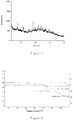
- the X-ray powder diffraction pattern of the hydrochloride crystal is substantially characterized as in Figure 1 .
- the X-ray powder diffraction pattern of the hydrochloride crystal has a deviation of ⁇ 0.5° from a characteristic absorption peak represented by a 2 ⁇ value, preferably a deviation of ⁇ 0.3°, more preferably a deviation of ⁇ 0.1°.
- DSC spectrum differential scanning calorimetry analysis spectrum
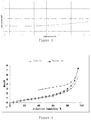
- the DSC spectrum of the hydrochloride crystal is substantially as shown in Figure 3 .
- thermogravimetric analysis pattern (TG pattern) of the hydrochloride crystal is substantially characterized as in Figure 2 .
- the thermal weight loss of the hydrochloride crystal is 64-65 wt% at 400 °C, preferably 64.33 wt%.
- the weight gain of the hydrochloride crystal is calculated to be ⁇ 3%, preferably ⁇ 1%, more preferably ⁇ 0.3%, after being placed in a desiccator having a humidity of 50% for 24 hours and taken out.
- the DVS pattern of the hydrochloride crystal is substantially as shown in Figure 4 .
- the IR pattern of the hydrochloride crystal includes 3 or more characteristic absorption peaks represented by the wavelength ⁇ selected from the group consisting of: 3429 ⁇ 2 cm -1 , 2951 ⁇ 2 cm -1 , 2827 ⁇ 2 cm -1 , 2225 ⁇ 2 cm -1 , 1720 ⁇ 2 cm -1 , 1687 ⁇ 2 cm -1 , 1560 ⁇ 2 cm -1 , 1533 ⁇ 2 cm -1 , 1446 ⁇ 2 cm -1 , 1385 ⁇ 2 cm -1 , 1261 ⁇ 2 cm -1 , 1064 ⁇ 2 cm -1 , 771 ⁇ 2 cm -1 .
- the IR pattern of the hydrochloride crystal is substantially as shown in Figure 5 .
- the Raman diagram of the hydrochloride crystal is substantially as shown in Figure 6 .
- the maleate is a crystal.
- the X-ray powder diffraction pattern of the maleate crystal includes 3 or more 2 ⁇ values selected from the group consisting of 7.55 ⁇ 0.2°, 12.41 ⁇ 0.2°, 15.45 ⁇ 0.2°, 17.50 ⁇ 0.2°, 20.89 ⁇ 0.2°, 26.59 ⁇ 0.2°, 26.93 ⁇ 0.2°.
- the X-ray powder diffraction pattern of the maleate crystal includes 3 or more 2 ⁇ values selected from the group consisting of 7.55 ⁇ 0.2°, 12.41 ⁇ 0.2°, 15.45 ⁇ 0.2°, 17.50 ⁇ 0.2°, 20.89 ⁇ 0.2°, 26.59 ⁇ 0.2°, 26.93 ⁇ 0.2°, 27.10 ⁇ 0.2°, 28.21 ⁇ 0.2°, 30.53 ⁇ 0.2°, 32.96 ⁇ 0.2°.
- the X-ray powder diffraction pattern of the maleate crystal includes 3 or more 2 ⁇ values selected from the group consisting of 7.55 ⁇ 0.2°, 10.83 ⁇ 0.2°, 12.41 ⁇ 0.2°, 13.22 ⁇ 0.2°, 14.38 ⁇ 0.2°, 14.75 ⁇ 0.2°, 15.45 ⁇ 0.2°, 15.80 ⁇ 0.2°, 17.50 ⁇ 0.2°, 18.30 ⁇ 0.2°, 19.40 ⁇ 0.2°, 20.43 ⁇ 0.2°, 20.89 ⁇ 0.2°, 21.85 ⁇ 0.2°, 22.87 ⁇ 0.2°, 23.25 ⁇ 0.2°, 25.04 ⁇ 0.2°, 26.59 ⁇ 0.2°, 26.93 ⁇ 0.2°, 27.10 ⁇ 0.2°, 28.21 ⁇ 0.2°, 30.53 ⁇ 0.2°, 32.96 ⁇ 0.2°.
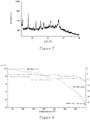
- the X-ray powder diffraction pattern of the maleate crystal is substantially characterized as in Figure 7 .
- the X-ray powder diffraction pattern of the maleate crystal has a deviation of ⁇ 0.5° from a characteristic absorption peak represented by a 2 ⁇ value, preferably a deviation of ⁇ 0.3°, more preferably a deviation of ⁇ 0.1°.
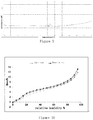
- the DSC pattern of the maleate crystal is substantially as shown in Figure 9 .
- the TG pattern of the maleate crystal comprises a characteristic absorption peak selected from the group consisting of 77 ⁇ 2°C, 180 ⁇ 5 °C and 284 ⁇ 5 °C.
- the TG pattern of the maleate crystal comprises a characteristic absorption peak selected from the group consisting of 77.3 °C, 179.6 °C and 283.6 °C.
- thermogravimetric analysis pattern (TG pattern) of the maleate crystal is substantially characterized as in Figure 8 .
- the thermal weight loss of the maleate crystal is 42-43 wt% at 400 °C, preferably 42.58 wt%.
- the starting value of the endothermic transition temperature of the maleate crystal is 110 ⁇ 2 °C, preferably 110.37 °C.
- the weight gain of the maleate crystal is calculated to be ⁇ 3%, preferably ⁇ 1%, more preferably ⁇ 0.3%, after being placed in a desiccator having a humidity of 50% for 24 hours and taken out.
- the DVS pattern of maleate crystal is substantially as shown in Figure 10 .
- the IR pattern of the maleate comprises 3 or more characteristic absorption peaks represented by the wavelength ⁇ selected from the group consisting of: 3429 ⁇ 2 cm -1 , 3062 ⁇ 2 cm -1 , 2954 ⁇ 2 cm -1 , 2862 ⁇ 2 cm -1 . 2224 ⁇ 2 cm -1 , 1720 ⁇ 2 cm -1 , 1676 ⁇ 2 cm -1 , 1558 ⁇ 2 cm -1 , 1531 ⁇ 2 cm -1 , 1469 ⁇ 2 cm -1 , 1354 ⁇ 2 cm -1 , 1290 ⁇ 2 cm -1 , 1219 ⁇ 2 cm -1 , 1063 ⁇ 2 cm -1 , 864 ⁇ 2 cm -1 , 775 ⁇ 2 cm -1 , 654 ⁇ 2 cm -1 .
- the IR pattern of the maleate crystal is substantially as shown in Figure 11 .
- the Raman diagram of the maleate crystal is substantially as shown in Figure 12 .
- the phosphate is a crystal.
- the X-ray powder diffraction pattern of the phosphate crystal comprises 3 or more 2 ⁇ values selected from the group consisting of 11.99 ⁇ 0.2°, 12.20 ⁇ 0.2°, 14.80 ⁇ 0.2°, 20.11 ⁇ 0.2°, 20.46 ⁇ 0.2°, 24.18 ⁇ 0.2°, 24.68 ⁇ 0.2°.
- the X-ray powder diffraction pattern of the phosphate crystal comprises 3 or more 2 ⁇ values selected from the group consisting of 11.99 ⁇ 0.2°, 12.20 ⁇ 0.2°, 14.80 ⁇ 0.2°, 20.11 ⁇ 0.2°, 20.46 ⁇ 0.2°, 23.15 ⁇ 0.2°, 24.18 ⁇ 0.2°, 24.68 ⁇ 0.2°, 25.63 ⁇ 0.2°, 26.15 ⁇ 0.2°.
- the X-ray powder diffraction pattern of the phosphate crystal comprises 3 or more 2 ⁇ values selected from the group consisting of 6.23 ⁇ 0.2°, 11.99 ⁇ 0.2°, 12.20 ⁇ 0.2°, 14.80 ⁇ 0.2°, 15.16 ⁇ 0.2°, 16.04 ⁇ 0.2°, 16.56 ⁇ 0.2°, 17.90 ⁇ 0.2°, 20.11 ⁇ 0.2°, 20.46 ⁇ 0.2°, 22.74 ⁇ 0.2°, 23.15 ⁇ 0.2°, 24.18 ⁇ 0.2°, 24.68 ⁇ 0.2°, 25.63 ⁇ 0.2°, 26.15 ⁇ 0.2°.
- the X-ray powder diffraction pattern of the phosphate crystal is substantially characterized as in Figure 13 .
- the X-ray powder diffraction pattern of the phosphate crystal has a deviation of ⁇ 0.5° from a characteristic absorption peak represented by a 2 ⁇ value, preferably a deviation of ⁇ 0.3°, more preferably a deviation of ⁇ 0.1°.
- DSC spectrum differential scanning calorimetry analysis spectrum
- the DSC pattern of the phosphate crystal is substantially as shown in Figure 15 .
- the TG pattern of the phosphate crystal there is a characteristic absorption peak at 361 ⁇ 2 °C, preferably 361.0 °C.
- the thermal weight loss of the phosphate crystal is 47-48 wt% at 400 °C, preferably 47.57 wt%.
- thermogravimetric analysis pattern (TG pattern) of the phosphate crystal is substantially characterized as in Figure 14 .
- the starting value of the endothermic transition temperature of the phosphate crystal is 148 ⁇ 2 °C, preferably 148.0 °C.
- the weight gain of the phosphate crystal is calculated to be ⁇ 3%, preferably ⁇ 1%, more preferably ⁇ 0.3%, after being placed in a desiccator having a humidity of 50% for 24 hours and taken out.
- the DVS pattern of the phosphate crystal is substantially as shown in Figure 16 .
- the IR pattern of the phosphate crystal comprises 3 or more characteristic absorption peaks represented by the wavelength ⁇ selected from the group consisting of: 3408 ⁇ 2 cm -1 , 2951 ⁇ 2 cm -1 , 2860 ⁇ 2 cm -1 , 2225 ⁇ 2 cm -1 , 1716 ⁇ 2 cm -1 , 1684 ⁇ 2 cm -1 , 1601 ⁇ 2 cm -1 , 1556 ⁇ 2 cm -1 , 1531 ⁇ 2 cm -1 , 1450 ⁇ 2 cm -1 , 1379 ⁇ 2 cm -1 , 1282 ⁇ 2 cm -1 , 1238 ⁇ 2 cm -1 , 1124 ⁇ 2 cm -1 , 1064 ⁇ 2 cm -1 , 947 ⁇ 2 cm -1 , 868 ⁇ 2 cm -1 , 758 ⁇ 2 cm -1 , 521 ⁇ 2 cm -1 .
- the IR pattern of the phosphate crystal is substantially as shown in Figure 17 .
- the Raman diagram of the phosphate crystal is substantially as shown in Figure 18 .
- the glycolate is a crystal.
- the X-ray powder diffraction pattern of the glycolate crystal includes 3 or more 2 ⁇ values selected from the group consisting of: 8.92 ⁇ 0.2°, 10.20 ⁇ 0.2°, 13.35 ⁇ 0.2°, 16.89 ⁇ 0.2°, 19.37 ⁇ 0.2°.
- the X-ray powder diffraction pattern of the glycolate crystal includes 3 or more 2 ⁇ values selected from the group consisting of: 8.92 ⁇ 0.2°, 10.20 ⁇ 0.2°, 13.35 ⁇ 0.2°, 16.89 ⁇ 0.2°, 19.37 ⁇ 0.2°, 20.51 ⁇ 0.2°, 21.22 ⁇ 0.2°, 21.78 ⁇ 0.2°, 23.00 ⁇ 0.2°.
- the X-ray powder diffraction pattern of the glycolate crystal includes 3 or more 2 ⁇ values selected from the group consisting of: 8.92 ⁇ 0.2°, 10.20 ⁇ 0.2°, 13.35 ⁇ 0.2°, 16.89 ⁇ 0.2°, 19.37 ⁇ 0.2°, 20.51 ⁇ 0.2°, 21.22 ⁇ 0.2°, 21.78 ⁇ 0.2°, 23.00 ⁇ 0.2°, 23.87 ⁇ 0.2°, 24.08 ⁇ 0.2°, 24.37 ⁇ 0.2°, 25.52 ⁇ 0.2°, 33.81 ⁇ 0.2°.
- the X-ray powder diffraction pattern of the glycolate crystal includes 3 or more 2 ⁇ values selected from the group consisting of 6.66 ⁇ 0.2°, 8.92 ⁇ 0.2°, 9.91 ⁇ 0.2°, 10.20 ⁇ 0.2°, 13.35 ⁇ 0.2°, 13.92 ⁇ 0.2°, 15.78 ⁇ 0.2°, 16.71 ⁇ 0.2°, 16.89 ⁇ 0.2°, 17.41 ⁇ 0.2°, 18.70 ⁇ 0.2°, 19.37 ⁇ 0.2°, 20.12 ⁇ 0.2°, 20.51 ⁇ 0.2°, 21.22 ⁇ 0.2°, 21.78 ⁇ 0.2°, 22.75 ⁇ 0.2°, 23.00 ⁇ 0.2°, 23.87 ⁇ 0.2°, 24.08 ⁇ 0.2°, 24.37 ⁇ 0.2°, 25.52 ⁇ 0.2°, 26.44 ⁇ 0.2°, 27.02 ⁇ 0.2°, 27.48 ⁇ 0.2°, 28.23 ⁇ 0.2°, 28.63 ⁇ 0.2°, 28.84 ⁇ 0.2°, 29.68 ⁇ 0.2°, 30.14 ⁇ 0.2°, 30.51 ⁇ 0.2°, 31.41 ⁇ 0.2°, 31.76 ⁇ 0.2°, 33.00
- the X-ray powder diffraction pattern of the glycolate crystal is substantially characterized as in Figure 19 .
- the X-ray powder diffraction pattern of the glycolate crystal has a deviation of ⁇ 0.5° from the characteristic absorption peak represented by the 2 ⁇ value, preferably a deviation of ⁇ 0.3°, more preferably a deviation of ⁇ 0.1°.
- the DSC pattern of the glycolate crystal is substantially as shown in Figure 21 .
- the starting value of the endothermic transition temperature of the glycolate crystal is 148 ⁇ 2 °C, preferably 148.0 °C.
- the TG pattern of the glycolate crystal there is a characteristic absorption peak at 192 ⁇ 2 °C and 268 ⁇ 2 °C, preferably 192.5 °C, 268.0 °C.
- the TG pattern of the glycolate crystal is substantially as shown in Figure 20 .
- the thermal weight loss of the glycolate crystal is 53-54 wt% at 400 °C , preferably 53.41 wt%.
- the weight gain of the glycolate crystal is calculated to be ⁇ 3%, preferably ⁇ 1%, more preferably ⁇ 0.3%, after being placed in a desiccator having a humidity of 50% for 24 hours and taken out.
- the DVS pattern of glycolate crystal is substantially as shown in Figure 22 .
- the IR pattern of the glycolate crystal includes 3 or more characteristic absorption peaks represented by the wavelength ⁇ selected from the group consisting of 3462 ⁇ 2 cm -1 , 2958 ⁇ 2 cm -1 , 2837 ⁇ 2 cm -1 , 2227 ⁇ 2 cm -1 , 1720 ⁇ 2 cm -1 , 1674 ⁇ 2 cm -1 , 1558 ⁇ 2 cm -1 , 1533 ⁇ 2 cm -1 , 1450 ⁇ 2 cm -1 , 1350 ⁇ 2 cm -1 , 1282 ⁇ 2 cm -1 , 1223 ⁇ 2 cm -1 , 1072 ⁇ 2 cm -1 , 928 ⁇ 2 cm -1 , 760 ⁇ 2 cm -1 , 692 ⁇ 2 cm -1 .
- the IR pattern of the glycolate is substantially as shown in Figure 23 .
- the Raman diagram of the glycolate is substantially as shown in Figure 24 .
- a salt form combination comprises one or more salt forms of the hydrochloride, the maleate, the phosphate, the glycolate or the like according to the first aspect of the present invention or consists of salt forms of the hydrochloride, the maleate, the phosphate or the glycolate according to the first aspect of the invention.
- the total weight percentage of the hydrochloride, the maleate, the phosphate and the glycolate is 60-99.999%, preferably 80-99.999%, more preferably 90-99.999%.
- the salt form combination further comprises: other salt forms of (R)-methyl-2-(3-aminopiperidin-1-yl)-3-(2-cyanobenzyl)-4-carbonyl-3,4-dihydrothi ophene [3,2-d]pyrimidine-6-carboxylic acid, free base of (R)-methyl-2-(3-aminopiperidin-1-yl)-3-(2-cyanobenzyl)-4-carbonyl-3,4-dihydrothi ophene[3,2-d]pyrimidine-6-carboxylic acid.
- a method for preparing a salt form of a compound of formula I according to the first aspect of the invention comprises the following steps of:
- the solvent is selected from the group consisting of a alcohol, ether, ketone, ester, or a combination thereof.
- the alcohol is a C1-C10 alcohol, preferably C1-C8 alcohol, more preferably C1-C5 alcohol.
- the alcohol is selected from the group consisting of methanol, ethanol, n-propanol, isopropanol, n-butanol, neopentyl alcohol, or a combination thereof.
- the ether is a C2-C8 ether, preferably a C2-C5 ether.
- the ether is selected from the group consisting of ethyl ether, tetrahydrofuran, or a combination thereof.
- the ester is C1-C10 ester, preferably C1-C7 ester, more preferably C1-C5 ester.
- the ester is selected from the group consisting of methyl formate, ethyl acetate, isobutyl formate, or a combination thereof.
- the molar ratio of the free base to the acid is 1:0.8-1:1.5, preferably 1:0.9-1:1.3, more preferably 1:1.0-1:1.1.
- the temperature ranges from 10 to 80 °C, preferably from 30 to 50 °C.
- the reaction time is from 0.1 to 10 h, preferably from 0.5 to 6 h.
- the drying temperature is from 10 to 90 °C, preferably from 20 to 80 °C, more preferably from 40 to 70 °C.
- the drying pressure is 0 to 20 KPa, preferably 0 to 10 KPa, more preferably 5 to 10 KPa.
- the drying time is from 5 to 150 hours, preferably from 30 to 100 hours, more preferably from 60 to 80 hours.
- step (2) the crystallization is carried out at 0 to 50 °C, preferably 0 to 40 °C, more preferably 20 to 30 °C.
- the crystallization is carried out with stirring.
- the yield of the method is from 50% to 99.9%, preferably from 75% to 99.9%, more preferably from 85% to 99.9%.
- a pharmaceutical composition comprising:
- the excipient is selected from the group consisting of fillers, disintegrants, binders, lubricants, or a combination thereof.
- the filler is selected from the group consisting of starch, lactose, microcrystalline cellulose, dextrin, mannitol, magnesium oxide, calcium sulfate, or a combination thereof.
- the disintegrant is selected from the group consisting of carboxymethylcellulose and a salt thereof, crosslinked carboxymethylcellulose and a salt thereof, crosslinked povidone, sodium carboxymethyl starch, low substituted hydroxypropylcellulose, or a combination thereof.
- the binder is selected from the group consisting of povidone, hydroxypropylmethylcellulose, starch pulp, or a combination thereof.
- the lubricant is selected from the group consisting of magnesium stearate, calcium stearate, or a combination thereof.
- a use of the salt form according to the first aspect of the invention or the salt form combination according to the second aspect of the invention or the pharmaceutical composition of the fourth aspect of the invention is provided, for preparation of a medicament for preventing or treating type II diabetes mellitus and/or complications of type II diabetes mellitus.
- the complications of type II diabetes mellitus are selected from the group consisting of coronary artery disease, stroke, hypertension, nephropathy, peripheral vascular disease, neurological disease, and retinopathy.
- a method for treating or preventing type II diabetes mellitus and/or complications of type II diabetes mellitus comprises the steps of administering to a patient a therapeutically effective amount of the hydrochloride, the maleate, the phosphate, the glycolate of the compound of formula I according to the first aspect of the invention or a combination thereof, or the salt form combination according to the second aspect of the invention, or the pharmaceutical composition according to the fourth aspect of the invention.
- the compound of formula I according to the invention is (R)-methyl-2-(3-aminopiperidin-1-yl)-3-(2-cyanobenzyl)-4-carbonyl-3,4-dihydrothioph ene[3,2-d]pyrimidine-6-carboxylic acid.
- (R)-methyl-2-(3-aminopiperidin-1-yl)-3-(2-cyanobenzyl)-4-carbonyl-3,4-dihy drothiophene[3,2-d]pyrimidine-6-carboxylic acid (Formula I) is a novel DPP IV selective, reversible competitive inhibitor with strong hypoglycemic activity in vivo. Its inhibitory activity is up to nanomolar level, and its DPP IV inhibitory activity and selectivity in vitro are superior to the marketed drugs, sitagliptin and vildagliptin.
- the compound of formula I is effective in inhibiting DPP IV activity in normal mice and rat plasma, and its DPP IV inhibitory activity is superior to the marketed drug alogliptin.
- the compound of formula I can increase the oral glucose tolerance of normal ICR mice in a dose-dependent manner, and the onset dose is only 0.1 mg/kg, which is better than alogliptin; the compound can effectively decrease fasting blood glucose of ob/ob mice when it is chronic administered to ob/ob mice, which is superior to the positive control drug alogliptin; the chronic administration of the compound can reduce its fasting blood glucose of the gene-deficient db/db mice, which is comparable to the positive control drug alogliptin.
- hypoglycemic effect of this compound in vivo is superior to that of the currently clinically used DPPIV inhibitor.
- the free base of (R)-methyl-2-(3-aminopiperidin-1-yl)-3-(2-cyanobenzyl)4-carbonyl-3,4-dihydrothi ophene[3,2-d]pyrimidine-6-carboxylic acid powder is obtained by the preparation method described in CN201210262331.3 .
- the present invention provides a hydrochloride of a compound of formula I.
- the hydrochloride is a crystal.
- the X-ray powder diffraction pattern of the hydrochloride crystal includes 3 or more 2 ⁇ values selected from the group consisting of: 7.43 ⁇ 0.2°, 11.06 ⁇ 0.2°, 11.70 ⁇ 0.2°, 13.46 ⁇ 0.2°, 15.03 ⁇ 0.2°, 15.34 ⁇ 0.2°, 18.32 ⁇ 0.2°, 21.96 ⁇ 0.2°, 24.01 ⁇ 0.2°, 27.20 ⁇ 0.2°, 29.32 ⁇ 0.2°, 30.26 ⁇ 0.2°.
- the X-ray powder diffraction pattern of the hydrochloride crystal includes 3 or more 2 ⁇ values selected from the group consisting of 7.43°, 11.06°, 11.70°, 18.32°, 21.96°, 24.01°, 27.20°, 29.32°, 30.26°.
- the X-ray powder diffraction pattern of the hydrochloride crystal includes 3 or more 2 ⁇ values selected from the group consisting of: 7.43 ⁇ 0.2°, 11.06 ⁇ 0.2°, 11.70 ⁇ 0.2°, 13.46 ⁇ 0.2°, 15.03 ⁇ 0.2°, 15.34 ⁇ 0.2°, 15.84 ⁇ 0.2°, 16.35 ⁇ 0.2°, 17.59 ⁇ 0.2°, 18.32 ⁇ 0.2°, 19.54 ⁇ 0.2°, 20.13 ⁇ 0.2°, 21.24 ⁇ 0.2°, 21.96 ⁇ 0.2°, 22.46 ⁇ 0.2°, 22.74 ⁇ 0.2°, 23.67 ⁇ 0.2°, 24.01 ⁇ 0.2°, 24.83 ⁇ 0.2°, 25.19 ⁇ 0.2°, 26.63 ⁇ 0.2°, 27.20 ⁇ 0.2°, 29.32 ⁇ 0.2°, 30.26 ⁇ 0.2°, 32.15 ⁇ 0.2°.
- the X-ray powder diffraction pattern of the hydrochloride crystal is substantially characterized as in Figure 1 .
- the X-ray powder diffraction pattern of the hydrochloride crystal has a deviation of ⁇ 0.5° from a characteristic absorption peak represented by a 2 ⁇ value, preferably a deviation of ⁇ 0.3°, more preferably a deviation of ⁇ 0.1°.
- DSC spectrum differential scanning calorimetry analysis spectrum
- the DSC spectrum of the hydrochloride crystal is substantially as shown in Figure 3 .
- thermogravimetric analysis pattern (TG pattern) of the hydrochloride crystal is substantially characterized as in Figure 2 .
- the thermal weight loss of the hydrochloride crystal is 64-65 wt% at 400 °C, preferably 64.33 wt%.
- the weight gain of the hydrochloride crystal is calculated to be ⁇ 3%, preferably ⁇ 1%, more preferably ⁇ 0.3%, after being placed in a desiccator having a humidity of 50% for 24 hours and taken out.
- the DVS pattern of the hydrochloride crystal is substantially as shown in Figure 4 .
- the IR pattern of the hydrochloride crystal includes 3 or more characteristic absorption peaks represented by the wavelength ⁇ selected from the group consisting of: 3429 ⁇ 2 cm -1 , 2951 ⁇ 2 cm -1 , 2827 ⁇ 2 cm -1 , 2225 ⁇ 2 cm -1 , 1720 ⁇ 2 cm -1 , 1687 ⁇ 2 cm -1 , 1560 ⁇ 2 cm -1 , 1533 ⁇ 2 cm -1 , 1446 ⁇ 2 cm -1 , 1385 ⁇ 2 cm -1 , 1261 ⁇ 2 cm -1 , 1064 ⁇ 2 cm -1 , 771 ⁇ 2 cm -1 .
- the IR pattern of the hydrochloride crystal is substantially as shown in Figure 5 .
- the Raman diagram of hydrochloride crystal is substantially as shown in Figure 6 .
- the present invention provides a maleate of a compound of formula I.
- the maleate is a crystal.
- the X-ray powder diffraction pattern of the maleate crystal includes 3 or more 2 ⁇ values selected from the group consisting of 7.55 ⁇ 0.2°, 12.41 ⁇ 0.2°, 15.45 ⁇ 0.2°, 17.50 ⁇ 0.2°, 20.89 ⁇ 0.2°, 26.59 ⁇ 0.2°, 26.93 ⁇ 0.2°.
- the X-ray powder diffraction pattern of the maleate crystal includes 3 or more 2 ⁇ values selected from the group consisting of 7.55 ⁇ 0.2°, 12.41 ⁇ 0.2°, 15.45 ⁇ 0.2°, 17.50 ⁇ 0.2°, 20.89 ⁇ 0.2°, 26.59 ⁇ 0.2°, 26.93 ⁇ 0.2°, 27.10 ⁇ 0.2°, 28.21 ⁇ 0.2°, 30.53 ⁇ 0.2°, 32.96 ⁇ 0.2°.
- the X-ray powder diffraction pattern of the maleate crystal includes 3 or more 2 ⁇ values selected from the group consisting of 7.55 ⁇ 0.2°, 10.83 ⁇ 0.2°, 12.41 ⁇ 0.2°, 13.22 ⁇ 0.2°, 14.38 ⁇ 0.2°, 14.75 ⁇ 0.2°, 15.45 ⁇ 0.2°, 15.80 ⁇ 0.2°, 17.50 ⁇ 0.2°, 18.30 ⁇ 0.2°, 19.40 ⁇ 0.2°, 20.43 ⁇ 0.2°, 20.89 ⁇ 0.2°, 21.85 ⁇ 0.2°, 22.87 ⁇ 0.2°, 23.25 ⁇ 0.2°, 25.04 ⁇ 0.2°, 26.59 ⁇ 0.2°, 26.93 ⁇ 0.2°, 27.10 ⁇ 0.2°, 28.21 ⁇ 0.2°, 30.53 ⁇ 0.2°, 32.96 ⁇ 0.2°.
- the X-ray powder diffraction pattern of the maleate crystal is substantially characterized as in Figure 7 .
- the X-ray powder diffraction pattern of the maleate crystal has a deviation of ⁇ 0.5° from a characteristic absorption peak represented by a 2 ⁇ value, preferably a deviation of ⁇ 0.3°, more preferably a deviation of ⁇ 0.1°.
- the DSC pattern of the maleate crystal is substantially as shown in Figure 9 .
- the TG pattern of the maleate crystal comprises a characteristic absorption peak selected from the group consisting of 77 ⁇ 2°C, 180 ⁇ 5 °C and 284 ⁇ 5 °C.
- the TG pattern of the maleate crystal comprises a characteristic absorption peak selected from the group consisting of 77.3 °C, 179.6 °C and 283.6 °C.
- thermogravimetric analysis pattern (TG pattern) of the maleate crystal is substantially characterized as in Figure 8 .
- the thermal weight loss of the maleate crystal is 42-43 wt% at 400 °C, preferably 42.58 wt%.
- the starting value of the endothermic transition temperature of the maleate crystal is 110 ⁇ 2 °C, preferably 110.37 °C.
- the weight gain of the maleate crystal is calculated to be ⁇ 3%, preferably ⁇ 1%, more preferably ⁇ 0.3%, after being placed in a desiccator having a humidity of 50% for 24 hours and taken out.
- the DVS pattern of the maleate crystal is substantially as shown in Figure 10 .
- the IR pattern of the maleate comprises 3 or more characteristic absorption peaks represented by the wavelength ⁇ selected from the group consisting of: 3429 ⁇ 2 cm -1 , 3062 ⁇ 2 cm -1 , 2954 ⁇ 2 cm -1 , 2862 ⁇ 2 cm -1 . 2224 ⁇ 2 cm -1 , 1720 ⁇ 2 cm -1 , 1676 ⁇ 2 cm -1 , 1558 ⁇ 2 cm -1 , 1531 ⁇ 2 cm -1 , 1469 ⁇ 2 cm -1 , 1354 ⁇ 2 cm -1 , 1290 ⁇ 2 cm -1 , 1219 ⁇ 2 cm -1 , 1063 ⁇ 2 cm -1 , 864 ⁇ 2 cm -1 , 775 ⁇ 2 cm -1 , 654 ⁇ 2 cm -1 .
- the IR pattern of the maleate crystal is substantially as shown in Figure 11 .
- the Raman diagram of the maleate crystal is substantially as shown in Figure 12 .
- the present invention provides a phosphate of a compound of formula I.
- the phosphate is a crystal.
- the X-ray powder diffraction pattern of the phosphate crystal comprises 3 or more 2 ⁇ values selected from the group consisting of 11.99 ⁇ 0.2°, 12.20 ⁇ 0.2°, 14.80 ⁇ 0.2°, 20.11 ⁇ 0.2°, 20.46 ⁇ 0.2°, 24.18 ⁇ 0.2°, 24.68 ⁇ 0.2°.
- the X-ray powder diffraction pattern of the phosphate crystal comprises 3 or more 2 ⁇ values selected from the group consisting of 11.99 ⁇ 0.2°, 12.20 ⁇ 0.2°, 14.80 ⁇ 0.2°, 20.11 ⁇ 0.2°, 20.46 ⁇ 0.2°, 23.15 ⁇ 0.2°, 24.18 ⁇ 0.2°, 24.68 ⁇ 0.2°, 25.63 ⁇ 0.2°, 26.15 ⁇ 0.2°.
- the X-ray powder diffraction pattern of the phosphate crystal comprises 3 or more 2 ⁇ values selected from the group consisting of 6.23 ⁇ 0.2°, 11.99 ⁇ 0.2°, 12.20 ⁇ 0.2°, 14.80 ⁇ 0.2°, 15.16 ⁇ 0.2°, 16.04 ⁇ 0.2°, 16.56 ⁇ 0.2°, 17.90 ⁇ 0.2°, 20.11 ⁇ 0.2°, 20.46 ⁇ 0.2°, 22.74 ⁇ 0.2°, 23.15 ⁇ 0.2°, 24.18 ⁇ 0.2°, 24.68 ⁇ 0.2°, 25.63 ⁇ 0.2°, 26.15 ⁇ 0.2°.
- the X-ray powder diffraction pattern of the phosphate crystal is substantially characterized as in Figure 13 .
- the X-ray powder diffraction pattern of the phosphate crystal has a deviation of ⁇ 0.5° from a characteristic absorption peak represented by a 2 ⁇ value, preferably a deviation of ⁇ 0.3°, more preferably a deviation of ⁇ 0.1°.
- DSC spectrum differential scanning calorimetry analysis spectrum
- the DSC pattern of the phosphate crystal is substantially as shown in Figure 15 .
- the TG pattern of the phosphate crystal there is a characteristic absorption peak at 361 ⁇ 2 °C, preferably 361.0 °C.
- the thermal weight loss of the phosphate crystal is 47-48 wt% at 400 °C, preferably 47.57 wt%.
- thermogravimetric analysis pattern (TG pattern) of the phosphate crystal is substantially characterized as in Figure 14 .
- the starting value of the endothermic transition temperature of the phosphate crystal is 148 ⁇ 2 °C, preferably 148.0 °C.
- the weight gain of the phosphate crystal is calculated to be ⁇ 3%, preferably ⁇ 1%, more preferably ⁇ 0.3%, after being placed in a desiccator having a humidity of 50% for 24 hours and taken out.
- the DVS pattern of phosphate crystal is substantially as shown in Figure 16 .
- the IR pattern of the phosphate crystal comprises 3 or more characteristic absorption peaks represented by the wavelength ⁇ selected from the group consisting of: 3408 ⁇ 2 cm -1 , 2951 ⁇ 2 cm -1 , 2860 ⁇ 2 cm -1 , 2225 ⁇ 2 cm -1 , 1716 ⁇ 2 cm -1 , 1684 ⁇ 2 cm -1 , 1601 ⁇ 2 cm -1 , 1556 ⁇ 2 cm -1 , 1531 ⁇ 2 cm -1 , 1450 ⁇ 2 cm -1 , 1379 ⁇ 2 cm -1 , 1282 ⁇ 2 cm -1 , 1238 ⁇ 2 cm -1 , 1124 ⁇ 2 cm -1 , 1064 ⁇ 2 cm -1 , 947 ⁇ 2 cm -1 , 868 ⁇ 2 cm -1 , 758 ⁇ 2 cm -1 , 521 ⁇ 2 cm -1 .
- the IR pattern of phosphate crystal is substantially as shown in Figure 17 .
- the Raman diagram of the phosphate crystal is substantially as shown in Figure 18 .
- the present invention provides a glycolate of a compound of formula I,
- the glycolate is a crystal.
- the X-ray powder diffraction pattern of the glycolate crystal includes 3 or more 2 ⁇ values selected from the group consisting of: 8.92 ⁇ 0.2°, 10.20 ⁇ 0.2°, 13.35 ⁇ 0.2°, 16.89 ⁇ 0.2°, 19.37 ⁇ 0.2°.
- the X-ray powder diffraction pattern of the glycolate crystal includes 3 or more 2 ⁇ values selected from the group consisting of: 8.92 ⁇ 0.2°, 10.20 ⁇ 0.2°, 13.35 ⁇ 0.2°, 16.89 ⁇ 0.2°, 19.37 ⁇ 0.2°, 20.51 ⁇ 0.2°, 21.22 ⁇ 0.2°, 21.78 ⁇ 0.2°, 23.00 ⁇ 0.2°.
- the X-ray powder diffraction pattern of the glycolate crystal includes 3 or more 2 ⁇ values selected from the group consisting of: 8.92 ⁇ 0.2°, 10.20 ⁇ 0.2°, 13.35 ⁇ 0.2°, 16.89 ⁇ 0.2°, 19.37 ⁇ 0.2°, 20.51 ⁇ 0.2°, 21.22 ⁇ 0.2°, 21.78 ⁇ 0.2°, 23.00 ⁇ 0.2°, 23.87 ⁇ 0.2°, 24.08 ⁇ 0.2°, 24.37 ⁇ 0.2°, 25.52 ⁇ 0.2°, 33.81 ⁇ 0.2°.
- the X-ray powder diffraction pattern of the glycolate crystal includes 3 or more 2 ⁇ values selected from the group consisting of 6.66 ⁇ 0.2°, 8.92 ⁇ 0.2°, 9.91 ⁇ 0.2°, 10.20 ⁇ 0.2°, 13.35 ⁇ 0.2°, 13.92 ⁇ 0.2°, 15.78 ⁇ 0.2°, 16.71 ⁇ 0.2°, 16.89 ⁇ 0.2°, 17.41 ⁇ 0.2°, 18.70 ⁇ 0.2°, 19.37 ⁇ 0.2°, 20.12 ⁇ 0.2°, 20.51 ⁇ 0.2°, 21.22 ⁇ 0.2°, 21.78 ⁇ 0.2°, 22.75 ⁇ 0.2°, 23.00 ⁇ 0.2°, 23.87 ⁇ 0.2°, 24.08 ⁇ 0.2°, 24.37 ⁇ 0.2°, 25.52 ⁇ 0.2°, 26.44 ⁇ 0.2°, 27.02 ⁇ 0.2°, 27.48 ⁇ 0.2°, 28.23 ⁇ 0.2°, 28.63 ⁇ 0.2°, 28.84 ⁇ 0.2°, 29.68 ⁇ 0.2°, 30.14 ⁇ 0.2°, 30.51 ⁇ 0.2°, 31.41 ⁇ 0.2°, 31.76 ⁇ 0.2°, 33.00
- the X-ray powder diffraction pattern of the glycolate crystal is substantially characterized as in Figure 19 .
- the X-ray powder diffraction pattern of the glycolate crystal has a deviation of ⁇ 0.5° from the characteristic absorption peak represented by the 2 ⁇ value, preferably a deviation of ⁇ 0.3°, more preferably a deviation of ⁇ 0.1°.
- the differential scanning calorimetry analysis spectrum (DSC spectrum) of the glycolate crystal has a characteristic absorption peak at 189 ⁇ 5 °C.
- the DSC pattern of glycolate crystal is substantially as shown in Figure 21 .
- the starting value of the endothermic transition temperature of the glycolate crystal is 148 ⁇ 2 °C, preferably 148.0 °C.
- the TG pattern of the glycolate crystal there is a characteristic absorption peak at 192 ⁇ 2 °C and 268 ⁇ 2 °C, preferably 192.5 °C, 268.0 °C.
- the TG pattern of the glycolate crystal is substantially as shown in Figure 20 .
- the thermal weight loss of the glycolate crystal is 53-54 wt% at 400 °C , preferably 53.41 wt%.
- the weight gain of the glycolate crystal is calculated to be ⁇ 3%, preferably ⁇ 1%, more preferably ⁇ 0.3%, after being placed in a desiccator having a humidity of 50% for 24 hours and taken out.
- the DVS pattern of the glycolate crystal is substantially as shown in Figure 22 .
- the IR pattern of the glycolate crystal includes 3 or more characteristic absorption peaks represented by the wavelength ⁇ selected from the group consisting of 3462 ⁇ 2 cm -1 , 2958 ⁇ 2 cm -1 , 2837 ⁇ 2 cm -1 , 2227 ⁇ 2 cm -1 , 1720 ⁇ 2 cm -1 , 1674 ⁇ 2 cm -1 , 1558 ⁇ 2 cm -1 , 1533 ⁇ 2 cm -1 , 1450 ⁇ 2 cm -1 , 1350 ⁇ 2 cm -1 , 1282 ⁇ 2 cm -1 , 1223 ⁇ 2 cm -1 , 1072 ⁇ 2 cm -1 , 928 ⁇ 2 cm -1 , 760 ⁇ 2 cm -1 , 692 ⁇ 2 cm -1 .
- the IR pattern of the glycolate is substantially as shown in Figure 23 .
- the Raman diagram of the glycolate is substantially as shown in Figure 24 .
- the crystal composition comprises the hydrochloride, maleate, phosphate, glycolate or consists of the hydrochloride, maleate, phosphate, glycolate.
- the weight percentage of the hydrochloride, the maleate, the phosphate, the glycolate is 60-99.999%, preferably from 80-99.999%, more preferably 90-99.999%.
- the crystal composition further comprises: hydrochloride, maleate, phosphate, glycolate of (R)-methyl-2-(3-aminopiperidin-1-yl)-3-(2-cyanobenzyl)-4-carbonyl -3,4-dihydrothiophene[3,2-d]pyrimidine-6-carboxylic acid, free base of (R)-methyl-2-(3-aminopiperidin-1-yl)-3-(2-cyanobenzyl)-4-carbonyl-3,4-dihydrothi ophene [3,2-d]pyrimidine-6-carboxylic acid.
- a method for the preparation of a salt form of the compound of formula I comprises the following steps of:
- the solvent is selected from the group consisting of a alcohol, ether, ketone, ester, or a combination thereof.
- the alcohol is a C1-C10 alcohol, preferably C1-C8 alcohol, more preferably C1-C5 alcohol.
- the alcohol is selected from the group consisting of a methanol, ethanol, n-propanol, isopropanol, n-butanol, neopentyl alcohol, or a combination thereof.
- the ether is a C2-C8 ether, preferably a C2-C5 ether.
- the ether is selected from the group consisting of ethyl ether, tetrahydrofuran, or a combination thereof.
- the ester is a C1-C10 ester, preferably C1-C7 ester, more preferably C1-C5 ester.
- the ester is selected from the group consisting of methyl formate, ethyl acetate, isobutyl formate, or a combination thereof.
- the molar ratio of the free base to the acid is 1:0.8-1:1.5, preferably 1:0.9-1:1.3, more preferably 1:1.0-1:1.1.
- the temperature ranges from 10 to 80 °C, preferably from 30 to 50 °C.
- the reaction time is from 0.1 to 10 h, preferably from 0.5 to 6 h.
- the drying temperature is from 10 to 90 °C, preferably from 20 to 80 °C, more preferably from 40 to 70 °C.
- the drying pressure is 0 to 20 KPa, preferably 0 to 10 KPa, more preferably 5 to 10 KPa.
- the drying time is from 5 to 150 hours, preferably from 30 to 100 hours, more preferably from 60 to 80 hours.
- step (2) the crystallization is carried out at 0 to 50 °C, preferably 0 to 40 °C, more preferably 20 to 30 °C.
- the crystallization is carried out with stirring.
- the yield of the method is from 50% to 99.9%, preferably from 75% to 99.9%, more preferably from 85% to 99.9%.
- the present invention provides a pharmaceutical composition
- a pharmaceutical composition comprising
- the excipients are not particularly limited, which can be selected from conventional materials in the art, or may be prepared by conventional methods, or are commercially available.
- the excipients include, but are not limited to, fillers, disintegrants, binders, lubricants, or combinations thereof.
- the fillers include, but are not limited to, starch, lactose, microcrystalline cellulose, dextrin, mannitol, magnesium oxide, calcium sulfate, or combinations thereof.
- the disintegrants include, but are not limited to, carboxymethylcellulose and salts thereof, croscarmellose and salts thereof, crospovidone, sodium carboxymethyl starch, low substituting hydroxypropyl cellulose, or combinations thereof.
- the binders include, but are not limited to, povidone, hydroxypropyl methylcellulose, starch slurry, or combinations thereof.
- the lubricants include, but are not limited to, magnesium stearate, calcium stearate, or combinations thereof.
- the present invention also provides a use of the hydrochloride, maleate, phosphate and glycolate of (R)-methyl-2-(3-aminopiperidin-1-yl)-3-(2-cyanobenzyl)-4-carbonyl-3,4-dihydrothi ophene[3,2-d]pyrimidine-6-carboxylic acid or the salt form composition or the pharmaceutical composition, for preparation of a medicament for preventing or treating type II diabetes mellitus and/or complications of type II diabetes mellitus.
- the complications of type II diabetes include, but are not limited to, coronary artery disease, stroke, hypertension, kidney disease, peripheral vascular disease, neurological disease, retinopathy.
- the invention also provides a method for treating or preventing type II diabetes mellitus and/or complications of type II diabetes mellitus, including administering to a patient a therapeutically effective amount of the hydrochloride, maleate, phosphate and glycolate of (R)-methyl-2-(3-aminopiperidin-1-yl)-3-(2-cyanobenzyl)-4-carbonyl-3,4-dihydrothi ophene[3,2-d]pyrimidine-6-carboxylic acid crystal or the salt form composition or the pharmaceutical composition.
- the administration amount of the hydrochloride, maleate, phosphate and glycolate of the present invention or the pharmaceutical composition thereof varies depending on the age, sex, race, condition and the like of the patient.
- the compound of the present invention may be administered alone or in combination with other drugs or active ingredients.
- the administration mode of the crystalline form or the pharmaceutical composition of the present invention is not particularly limited.
- Administration modes identical or similar to conventional administration modes for (R)-methyl-2-(3-aminopiperidin-1-yl)-3-(2-cyanobenzyl)-4-carbonyl-3,4-dihydrothi ophene[3,2-d] pyrimidine-6-carboxylic acid can be used, which includes (but not limited to) oral, transdermal, intravenous, intramuscular, topical route and the like.
- the crystal is subjected to a series of general tests as follows.
- X-ray Diffraction is a structural analysis method for spatial distribution of the inner atoms of a substance by X-ray diffraction formed by the crystal.
- X-rays having a certain wavelength are irradiated onto a crystalline substance, the X-rays are scattered due to the presence of a regularly arranged atom or ion in the crystal, and the scattered X-rays are intensified in some directions to show unique diffraction phenomenon corresponding to crystalline structure.
- test parameters of XRD are as follows: instrument model: Bruker D8advance; target: Cu-K ⁇ (40 kV, 40 mA); distance from sample to detector: 30 cm; scanning range: 3° ⁇ 40°(2 theta value) ; scanning step: 0.1 s.
- Thermo Gravimetric Analysis is an analytical technique for determining the mass change of a substance with temperature under programmed temperature control conditions.
- Thermo Gravimetric Analysis can be used to obtain the heat generated by the thermal changes of the sample. It is suitable for checking the loss of crystallization solvent or crystal water molecules or the sublimation and decomposition process and value of the sample in a crystalline material. It can also effectively distinguish whether the material contains the crystallization solvent or crystalline water.
- test parameters of the TGA are as follows: Instrument type: Netzsch TG 209F3; Crucible: Alumina crucible; Temperature range: 30 to 400 °C; Scanning rate: 10 K/min; purge gas: 25 mL/min; Protective gas: 15 mL/min.
- DSC Differential Scanning Calorimeter
- test parameters of the DSC are as follows: Instrument type: Perkin Elmer DSC 8500; Crucible: Aluminum crucible; Scanning from 50 °C to 280 °C at a heating rate of 10 °C/min under nitrogen purge.
- Dynamic vapor absorption (DVS) test/water absorption test rapidly measures the increase and loss of the moisture in the sample caused by flow carrier gas with set relative humidity (RH), wherein the sample is placed on a digital microbalance with high sensitivity and high stability at a self-suspension state, and then the adsorption/desorption of water vapor is measured by measuring the increase / decrease of mass of the material, thereby determining the hygroscopicity of the sample.
- RH relative humidity
- test parameters of the DVS are as follows: Instrument type: SMS DVS Intrinsic; Non-hydrate: 0 to 95%-0% RH; Temperature: 25 °C; Hydrate: 40 to 95%-0% RH; Temperature: 25 °C.
- IR Infra-red Spectrometry
- test parameters of IR are as follows: instrument model: Nicolet 6700 Fourier transform infrared spectrometer; single point ATR method with a resolution 4.0 cm -1 .
- Raman Spectroscopy is a method of studying the molecular vibration based on the Raman effects. In contrast to the infrared absorption spectrum, the Raman Spectroscopy studies the frequency of the scattered light generated by the interaction of the molecule and the light. Non-polar groups, which generally have unobvious infrared absorption, have obvious Raman spectra absorption.
- test parameters of the RM are as follows: Instrument type: Thermo DXR Raman Microscope (confocal microscopy Raman spectrometer); laser wavelength: 532 nm; exposure time: 1.0 sec; exposure times: 10.
- Example 1 The hydrochloride prepared in Example 1 was subjected to tests, such as XRD, TGA, DSC, DVS, IR and Raman etc.
- Figure 1 is an XRD pattern of the hydrochloride of Example 1, and it can be seen from Figure 1 that there are absorption peaks at 7.43°, 11.06°, 11.70°, 13.46°, 15.03°, 15.34°, 15.84°, 16.35°, 17.59°, 18.32°, 19.54°, 20.13°, 21.24°, 21.96°, 22.46°, 22.74°, 23.67°, 24.01°, 24.83°, 25.19°, 26.63°, 27.20°, 29.32°, 30.26°, 32.15° for the hydrochloride.
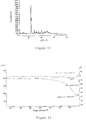
- Figure 2 is a TG diagram of the hydrochloride of Example 1, and it can be seen from Figure 2 that the weight loss of the hydrochloride is 64.33% at 210-400°C.
- Figure 3 is a differential scanning calorimetry (DSC) analysis spectrum of the hydrochloride of Example 1, and it can be seen from Figure 3 that there is no melting peak prior to decomposition for the hydrochloride.
- DSC differential scanning calorimetry
- Figure 4 is a hygroscopicity analysis (DVS) pattern of the hydrochloride of Example 1. It can be seen from Figure 4 that the hydrochloride is slightly hygroscopic, and the humidity variation range is small (less than 3.0%) in the conventional storage humidity range. It absorbs 2.54% of water at 80% RH.
- VFS hygroscopicity analysis
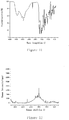
- Figure 5 is an infrared spectrum (IR) diagram of the hydrochloride of Example 1, and it can be seen from Figure 5 that there are characteristic absorption peaks at 3429, 2951, 2827, 2225, 1720, 1687, 1560, 1533, 1446, 1385, 1261, 1064, 771 cm -1 for the hydrochloride.
- IR infrared spectrum
- the maleate prepared in Example 2 was subjected to tests, such as XRD, TGA, DSC, DVS, IR and Raman etc.
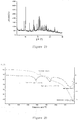
- Figure 7 is an XRD pattern of the maleate of Example 2. It can be seen from Figure 7 that there are absorption peaks at 7.55°, 10.83°, 12.41°, 13.22°, 14.38°, 14.75°, 15.45°, 15.80°, 17.50°, 18.30°, 19.40°, 20.43°, 20.89°, 21.85°, 22.87°, 23.25°, 25.04°, 26.59°, 26.93°, 27.10°, 28.21°, 30.53°, 32.96° for the maleate.
- Figure 8 is a TG diagram of the maleate of Example 2. It can be seen from Figure 8 that the weight loss of the maleate is 42.56% at 210-400°C.
- Figure 9 is a differential scanning calorimetry (DSC) analysis spectrum of the maleate of Example 2. It can be seen from Figure 9 that the corresponding DSC of the maleate shows a melting point of 113.80°C.
- Figure 10 is a hygroscopicity analysis (DVS) pattern of the maleate of Example 2. It can be seen from Figure 10 that the maleate has a slightly hygroscopicity, and the humidity variation range is small (less than 2.0%) in the conventional storage humidity range. It absorbs 1.57% of water at 80% RH.
- VFS hygroscopicity analysis
- Figure 11 is an infrared spectrum (IR) diagram of the maleate of Example 2. It can be seen from Figure 11 that there are characteristic absorption peaks at 3429, 3062, 2954, 2862, 2224, 1720, 1676, 1558, 1531, 1469, 1354, 1290, 1219, 1063, 864, 775, 654 cm -1 for the maleate.
- IR infrared spectrum
- the phosphate prepared in Example 3 was subjected to tests, such as XRD, TGA, DSC, DVS, IR and Raman etc.
- Figure 13 is an XRD pattern of the phosphate of Example 3, and it can be seen from Figure 13 that there are absorption peaks at 6.23°, 11.99°, 12.20°, 14.80°, 15.16°, 16.04°, 16.56°, 17.90°, 20.11°, 20.46°, 22.74°, 23.15°, 24.18°, 24.68°, 25.63°, 26.15° for the phosphate.
- Figure 14 is a TG diagram of the phosphate of Example 3, and it can be seen from Figure 14 that the weight loss of the phosphate is 47.57% at 210-400°C.
- Figure 15 is a differential scanning calorimetry (DSC) analysis spectrum of the phosphate of Example 3. It can be seen from Figure 15 that the corresponding DSC of the phosphate shows a melting point of 154.80°C.
- Figure 16 is a hygroscopicity analysis (DVS) pattern of the phosphate of Example 3. It can be seen from Figure 16 that the phosphate is slightly hygroscopic, and the humidity variation range is small in the conventional storage humidity range.
- VFS hygroscopicity analysis
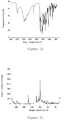
- Figure 17 is an infrared spectrum (IR) diagram of the phosphate of Example 3. It can be seen from Figure 17 that there are characteristic absorption peaks at 3408, 2951, 2860, 2225, 1716, 1684, 1601, 1556, 1531, 1450, 1379, 1282, 1238, 1124, 1064, 947, 868, 758, 521 cm -1 for the phosphate.
- IR infrared spectrum
- the glycolate prepared in Example 4 was subjected to tests, such as XRD, TGA, DSC, DVS, IR and Raman etc.
- Figure 19 is an XRD pattern of the glycolate of Example 4. It can be seen from Figure 19 that there are absorption peaks at 6.66°, 8.92°, 9.91°, 10.20°, 13.35°, 13.92°, 15.78°, 16.71°, 16.89°, 17.41°, 18.70°, 19.37°, 20.12°, 20.51°, 21.22°, 21.78°, 22.75°, 23.00°, 23.87°, 24.08°, 24.37°, 25.52°, 26.55°, 27.02°, 27.48°, 28.23°, 28.63°, 28.84°, 29.68°, 30.14°, 30.51°, 31.41°, 31.76°, 33.00°, 33.81°, 34.13°, 35.21°, 35.83°, 36.37°, 37.70°, 37.93° for the glycolate.
- Figure 20 is a TG diagram of the glycolate of Example 4. It can be seen from Figure 20 that the weight loss of the glycolate is 53.41% at 210-400°C.
- Figure 21 is a differential scanning calorimetry (DSC) analysis spectrum of the glycolate of Example 4, and it can be seen from Figure 21 that the corresponding DSC of the glycolate shows a melting point of 188.75°C.
- Figure 22 is a hygroscopicity analysis (DVS) pattern of the glycolate of Example 4. It can be seen from Figure 22 that the glycolate is slightly hygroscopic, and the humidity variation range is small (less than 2.0%) in the conventional storage humidity range. It absorbs 1.23% of water at 80% RH.
- VFS hygroscopicity analysis
- Figure 23 is an infrared spectrum (IR) diagram of the glycolate of Example 4. It can be seen from Figure 23 that there are characteristic absorption peaks at 3462, 2958, 2837, 2227, 1720, 1674, 1558, 1533, 1450, 1350, 1282, 1223, 1072, 928, 760, 692 cm -1 for the glycolate.
- IR infrared spectrum
Landscapes
- Health & Medical Sciences (AREA)
- Chemical & Material Sciences (AREA)
- Organic Chemistry (AREA)
- Medicinal Chemistry (AREA)
- Pharmacology & Pharmacy (AREA)
- Life Sciences & Earth Sciences (AREA)
- Animal Behavior & Ethology (AREA)
- General Health & Medical Sciences (AREA)
- Public Health (AREA)
- Veterinary Medicine (AREA)
- Diabetes (AREA)
- Engineering & Computer Science (AREA)
- Bioinformatics & Cheminformatics (AREA)
- Chemical Kinetics & Catalysis (AREA)
- Nuclear Medicine, Radiotherapy & Molecular Imaging (AREA)
- General Chemical & Material Sciences (AREA)
- Hematology (AREA)
- Obesity (AREA)
- Emergency Medicine (AREA)
- Endocrinology (AREA)
- Epidemiology (AREA)
- Cardiology (AREA)
- Heart & Thoracic Surgery (AREA)
- Urology & Nephrology (AREA)
- Vascular Medicine (AREA)
- Biomedical Technology (AREA)
- Neurology (AREA)
- Neurosurgery (AREA)
- Ophthalmology & Optometry (AREA)
- Pharmaceuticals Containing Other Organic And Inorganic Compounds (AREA)
- Heterocyclic Carbon Compounds Containing A Hetero Ring Having Oxygen Or Sulfur (AREA)
Abstract
Description
- The present invention relates to the field of medicinal chemistry, and in particular to a salt form of (R)-methyl-2-(3-aminopiperidin-1-yl)-3-(2-cyanobenzyl)-4-carbonyl-3,4-dihydrothi ophene [3,2-d]pyrimidine-6-carboxylic acid, preparation method and use thereof.
- Diabetes is a metabolic disease caused by metabolic disorders of sugar, fat and protein which are resulted from insufficient insulin secretion in the human body and dysfunction of pancreatic β cells. Hyperglycemia caused by diabetes can cause damage of body tissues and lead to microvascular lesion and macrovascular lesion, such as retinopathy, kidney disease, neuropathy, stroke and coronary atheroma, and other complications that seriously damage human health and threaten human life safety.
- Diabetes can be divided into
type 1 diabetes (T1DM) andtype 2 diabetes (T2DM). The DPP-IV inhibitor (saxagliptin) improves alpha and beta cell dysfunction by increasing the levels of endogenous active glucagon-like peptide-1 (GLP-1) and glucose-dependent insulinotropic peptide (GIP). DPP IV inhibitors can significantly reduce blood glucose levels in the body, increase glucose tolerance, promote insulin secretion, reduce glucagon levels, delay insulin resistance and increase response level of insulin in patients withtype 2 diabetes when blood glucose increases. Compared with existing oral diabetes drugs, DPP IV inhibitors have following characteristics: (1) DPP IV inhibitors do not require injections, and can continuously reduce glycosylated hemoglobin levels by oral administration; (2) long-term use of DPP IV inhibitors have good tolerance; (3) insulin secretion and the release of glucagon can be improved; (4) insulin sensitivity can be improved, while increasing pancreatic β cell function; (5) incidence of hypoglycemia is lower, and weight gain, nausea, vomiting and gastrointestinal dysfunction won't occur; (6) DPP IV inhibitors have synergistic effects when used in combination with other type II diabetes drugs. However, such drugs may cause side effects such as pancreatitis, urticaria and angioedema. - (R)-methyl-2-(3-aminopiperidin-1-yl)-3-(2-cyanobenzyl)-4-carbonyl-3,4-dihy drothiophene[3,2-d]pyrimidine-6-carboxylic acid (compound of formula I) is a novel DPP IV inhibitor with strong hypoglycemic activity in vivo. However, the overall performance of the existing (R)-methyl-2-(3-aminopiperidin-1-yl)-3-(2-cyanobenzyl)-4-carbonyl-3,4-dihydrothi ophene[3,2-d]pyrimidine-6-carboxylic acid is still unsatisfactory.
- Therefore, there is an urgent need in the art to develop a new salt form of (R)-methyl-2-(3-aminopiperidin-1-yl)-3-(2-cyanobenzyl)-4-carbonyl-3,4-dihydrothi ophene[3,2-d]pyrimidine-6-carboxylic acid which is highly efficient, low toxicity and long-acting so as to obtain a pharmaceutically active ingredient having superior properties.
- It is an object of the present invention to provide salt forms of a compound of formula I which is highly effective, low toxicity and long lasting.
- In the first aspect of the invention, a salt form of a compound of formula I is provided, and the salt form is selected from the group consisting of hydrochloride, maleate, phosphate and glycolate

- In another preferred embodiment, the salt form is a crystal.
- In another preferred embodiment, the hydrochloride is a crystal.
- In another preferred embodiment, the X-ray powder diffraction pattern of the hydrochloride crystal includes 3 or more 2θ values selected from the group consisting of: 7.43±0.2°, 11.06±0.2°, 11.70±0.2°, 13.46±0.2°, 15.03±0.2°, 15.34±0.2°, 18.32±0.2°, 21.96±0.2°, 24.01±0.2°, 27.20±0.2°, 29.32±0.2°, 30.26±0.2°.
- In another preferred embodiment, the X-ray powder diffraction pattern of the hydrochloride crystal includes 3 or more 2θ values selected from the group consisting of 7.43°, 11.06°, 11.70°, 18.32°, 21.96°, 24.01°, 27.20°, 29.32°, 30.26°.
- In another preferred embodiment, the X-ray powder diffraction pattern of the hydrochloride crystal includes 3 or more 2θ values selected from the group consisting of: 7.43±0.2°, 11.06±0.2°, 11.70±0.2°, 13.46±0.2°, 15.03±0.2°, 15.34±0.2°, 15.84±0.2°, 16.35±0.2°, 17.59±0.2°, 18.32±0.2°, 19.54±0.2°, 20.13±0.2°, 21.24±0.2°, 21.96 ±0.2°, 22.46±0.2°, 22.74±0.2°, 23.67±0.2°, 24.01±0.2°, 24.83±0.2°, 25.19±0.2°, 26.63±0.2°, 27.20±0.2°, 29.32±0.2°, 30.26 ±0.2°, 32.15±0.2°.
- In another preferred embodiment, the X-ray powder diffraction pattern of the hydrochloride crystal is substantially characterized as in
Figure 1 . - In another preferred embodiment, the X-ray powder diffraction pattern of the hydrochloride crystal has a deviation of ±0.5° from a characteristic absorption peak represented by a 2θ value, preferably a deviation of ±0.3°, more preferably a deviation of ±0.1°.
- In another preferred embodiment, in the differential scanning calorimetry analysis spectrum (DSC spectrum) of the hydrochloride crystal, there is no melting peak prior to decomposition.
- In another preferred embodiment, the DSC spectrum of the hydrochloride crystal is substantially as shown in
Figure 3 . - In another preferred embodiment, in the TG pattern of the hydrochloride crystal, there is a characteristic absorption peak at 272±2 °C.
- In another preferred embodiment, in the TG pattern of the hydrochloride crystal, there is a characteristic absorption peak at 272.6 °C.
- In another preferred embodiment, the thermogravimetric analysis pattern (TG pattern) of the hydrochloride crystal is substantially characterized as in
Figure 2 . - In another preferred embodiment, the thermal weight loss of the hydrochloride crystal is 64-65 wt% at 400 °C, preferably 64.33 wt%.
- In another preferred embodiment, the weight gain of the hydrochloride crystal is calculated to be ≤ 3%, preferably ≤ 1%, more preferably ≤ 0.3%, after being placed in a desiccator having a humidity of 50% for 24 hours and taken out.
- In another preferred embodiment, the DVS pattern of the hydrochloride crystal is substantially as shown in
Figure 4 . - In another preferred embodiment, the IR pattern of the hydrochloride crystal includes 3 or more characteristic absorption peaks represented by the wavelength λ selected from the group consisting of: 3429±2 cm-1, 2951±2 cm-1, 2827±2 cm-1, 2225±2 cm-1, 1720±2 cm-1, 1687±2 cm-1, 1560±2 cm-1, 1533±2 cm-1, 1446±2 cm-1, 1385±2 cm-1, 1261±2 cm-1, 1064±2 cm-1, 771±2 cm-1.
- In another preferred embodiment, the IR pattern of the hydrochloride crystal is substantially as shown in
Figure 5 . - In another preferred embodiment, the Raman diagram of the hydrochloride crystal is substantially as shown in
Figure 6 . - In another preferred embodiment, the maleate is a crystal.
- In another preferred embodiment, the X-ray powder diffraction pattern of the maleate crystal includes 3 or more 2θ values selected from the group consisting of 7.55±0.2°, 12.41±0.2°, 15.45±0.2°, 17.50±0.2°, 20.89±0.2°, 26.59±0.2°, 26.93±0.2°.
- In another preferred embodiment, the X-ray powder diffraction pattern of the maleate crystal includes 3 or more 2θ values selected from the group consisting of 7.55±0.2°, 12.41±0.2°, 15.45±0.2°, 17.50±0.2°, 20.89±0.2°, 26.59±0.2°, 26.93±0.2°, 27.10±0.2°, 28.21±0.2°, 30.53±0.2°, 32.96±0.2°.
- In another preferred embodiment, the X-ray powder diffraction pattern of the maleate crystal includes 3 or more 2θ values selected from the group consisting of 7.55±0.2°, 10.83±0.2°, 12.41±0.2°, 13.22±0.2°, 14.38±0.2°, 14.75±0.2°, 15.45±0.2°, 15.80±0.2°, 17.50±0.2°, 18.30±0.2°, 19.40±0.2°, 20.43±0.2°, 20.89±0.2°, 21.85±0.2°, 22.87±0.2°, 23.25±0.2°, 25.04±0.2°, 26.59±0.2°, 26.93±0.2°, 27.10±0.2°, 28.21±0.2°, 30.53±0.2°, 32.96±0.2°.
- In another preferred embodiment, the X-ray powder diffraction pattern of the maleate crystal is substantially characterized as in
Figure 7 . - In another preferred embodiment, the X-ray powder diffraction pattern of the maleate crystal has a deviation of ±0.5° from a characteristic absorption peak represented by a 2θ value, preferably a deviation of ±0.3°, more preferably a deviation of ± 0.1°.
- In another preferred embodiment, in the differential scanning calorimetry analysis spectrum (DSC spectrum) of the maleate crystal, there is a characteristic absorption peak at 113±5 °C.
- In another preferred embodiment, in the differential scanning calorimetry analysis spectrum (DSC spectrum) of the maleate crystal, there is a characteristic absorption peak at 113.8 °C.
- In another preferred embodiment, the DSC pattern of the maleate crystal is substantially as shown in
Figure 9 . - In another preferred embodiment, the TG pattern of the maleate crystal comprises a characteristic absorption peak selected from the group consisting of 77±2°C, 180±5 °C and 284±5 °C.
- In another preferred embodiment, the TG pattern of the maleate crystal comprises a characteristic absorption peak selected from the group consisting of 77.3 °C, 179.6 °C and 283.6 °C.
- In another preferred embodiment, the thermogravimetric analysis pattern (TG pattern) of the maleate crystal is substantially characterized as in
Figure 8 . - In another preferred embodiment, the thermal weight loss of the maleate crystal is 42-43 wt% at 400 °C, preferably 42.58 wt%.
- In another preferred embodiment, the starting value of the endothermic transition temperature of the maleate crystal is 110±2 °C, preferably 110.37 °C.
- In another preferred embodiment, the weight gain of the maleate crystal is calculated to be ≤ 3%, preferably ≤ 1%, more preferably ≤ 0.3%, after being placed in a desiccator having a humidity of 50% for 24 hours and taken out.
- In another preferred embodiment, the DVS pattern of maleate crystal is substantially as shown in
Figure 10 . - In another preferred embodiment, the IR pattern of the maleate comprises 3 or more characteristic absorption peaks represented by the wavelength λ selected from the group consisting of: 3429±2 cm-1, 3062±2 cm-1, 2954±2 cm-1, 2862±2 cm-1. 2224±2 cm-1, 1720±2 cm-1, 1676±2 cm-1, 1558±2 cm-1, 1531±2 cm-1, 1469±2 cm-1, 1354±2 cm-1, 1290±2 cm-1, 1219±2 cm-1, 1063±2 cm-1, 864±2 cm-1, 775±2 cm-1, 654±2 cm-1.
- In another preferred embodiment, the IR pattern of the maleate crystal is substantially as shown in
Figure 11 . - In another preferred embodiment, the Raman diagram of the maleate crystal is substantially as shown in
Figure 12 . - In another preferred embodiment, the phosphate is a crystal.
- In another preferred embodiment, the X-ray powder diffraction pattern of the phosphate crystal comprises 3 or more 2θ values selected from the group consisting of 11.99±0.2°, 12.20±0.2°, 14.80±0.2°, 20.11±0.2°, 20.46±0.2°, 24.18±0.2°, 24.68±0.2°.
- In another preferred embodiment, the X-ray powder diffraction pattern of the phosphate crystal comprises 3 or more 2θ values selected from the group consisting of 11.99±0.2°, 12.20±0.2°, 14.80±0.2°, 20.11±0.2°, 20.46±0.2°, 23.15±0.2°, 24.18±0.2°, 24.68±0.2°, 25.63±0.2°, 26.15±0.2°.
- In another preferred embodiment, the X-ray powder diffraction pattern of the phosphate crystal comprises 3 or more 2θ values selected from the group consisting of 6.23±0.2°, 11.99±0.2°, 12.20±0.2°, 14.80±0.2°, 15.16±0.2°, 16.04±0.2°, 16.56±0.2°, 17.90±0.2°, 20.11±0.2°, 20.46±0.2°, 22.74±0.2°, 23.15±0.2°, 24.18±0.2°, 24.68±0.2°, 25.63±0.2°, 26.15±0.2°.
- In another preferred embodiment, the X-ray powder diffraction pattern of the phosphate crystal is substantially characterized as in
Figure 13 . - In another preferred embodiment, the X-ray powder diffraction pattern of the phosphate crystal has a deviation of ±0.5° from a characteristic absorption peak represented by a 2θ value, preferably a deviation of ±0.3°, more preferably a deviation of ±0.1°.
- In another preferred embodiment, in the differential scanning calorimetry analysis spectrum (DSC spectrum) of the phosphate crystal, there is a characteristic absorption peak at 155±5 °C, preferably 154.8 °C.
- In another preferred embodiment, the DSC pattern of the phosphate crystal is substantially as shown in
Figure 15 . - In another preferred embodiment, in the TG pattern of the phosphate crystal, there is a characteristic absorption peak at 361±2 °C, preferably 361.0 °C.
- In another preferred embodiment, the thermal weight loss of the phosphate crystal is 47-48 wt% at 400 °C, preferably 47.57 wt%.
- In another preferred embodiment, the thermogravimetric analysis pattern (TG pattern) of the phosphate crystal is substantially characterized as in
Figure 14 . - In another preferred embodiment, the starting value of the endothermic transition temperature of the phosphate crystal is 148±2 °C, preferably 148.0 °C.
- In another preferred embodiment, the weight gain of the phosphate crystal is calculated to be ≤ 3%, preferably ≤ 1%, more preferably ≤ 0.3%, after being placed in a desiccator having a humidity of 50% for 24 hours and taken out.
- In another preferred embodiment, the DVS pattern of the phosphate crystal is substantially as shown in
Figure 16 . - In another preferred embodiment, the IR pattern of the phosphate crystal comprises 3 or more characteristic absorption peaks represented by the wavelength λ selected from the group consisting of: 3408±2 cm-1, 2951±2 cm-1, 2860±2 cm-1, 2225±2 cm-1, 1716±2 cm-1, 1684±2 cm-1, 1601±2 cm-1, 1556±2 cm-1, 1531±2 cm-1, 1450±2 cm-1, 1379±2 cm-1, 1282±2 cm-1, 1238±2 cm-1, 1124±2 cm-1, 1064±2 cm-1, 947±2 cm-1, 868±2 cm-1, 758±2 cm-1 , 521±2 cm-1.
- In another preferred embodiment, the IR pattern of the phosphate crystal is substantially as shown in
Figure 17 . - In another preferred embodiment, the Raman diagram of the phosphate crystal is substantially as shown in
Figure 18 . - In another preferred embodiment, the glycolate is a crystal.
- In another preferred embodiment, the X-ray powder diffraction pattern of the glycolate crystal includes 3 or more 2θ values selected from the group consisting of: 8.92±0.2°, 10.20±0.2°, 13.35±0.2°, 16.89±0.2°, 19.37±0.2°.
- In another preferred embodiment, the X-ray powder diffraction pattern of the glycolate crystal includes 3 or more 2θ values selected from the group consisting of: 8.92±0.2°, 10.20±0.2°, 13.35±0.2°, 16.89±0.2°, 19.37±0.2°, 20.51±0.2°, 21.22±0.2°, 21.78±0.2°, 23.00±0.2°.
- In another preferred embodiment, the X-ray powder diffraction pattern of the glycolate crystal includes 3 or more 2θ values selected from the group consisting of: 8.92±0.2°, 10.20±0.2°, 13.35±0.2°, 16.89±0.2°, 19.37±0.2°, 20.51±0.2°, 21.22±0.2°, 21.78±0.2°, 23.00±0.2°, 23.87±0.2°, 24.08±0.2°, 24.37±0.2°, 25.52±0.2°, 33.81±0.2°.
- In another preferred embodiment, the X-ray powder diffraction pattern of the glycolate crystal includes 3 or more 2θ values selected from the group consisting of 6.66±0.2°, 8.92±0.2°, 9.91±0.2°, 10.20±0.2°, 13.35±0.2°, 13.92±0.2°, 15.78±0.2°, 16.71±0.2°, 16.89±0.2°, 17.41±0.2°, 18.70±0.2°, 19.37±0.2°, 20.12±0.2°, 20.51±0.2°, 21.22±0.2°, 21.78±0.2°, 22.75±0.2°, 23.00±0.2°, 23.87±0.2°, 24.08±0.2°, 24.37±0.2°, 25.52±0.2°, 26.44±0.2°, 27.02±0.2°, 27.48±0.2°, 28.23±0.2°, 28.63±0.2°, 28.84±0.2°, 29.68±0.2°, 30.14±0.2°, 30.51±0.2°, 31.41±0.2°, 31.76±0.2°, 33.00±0.2°, 33.81±0.2°, 34.13±0.2°, 35.21±0.2°, 25.83±0.2°, 36.37±0.2°, 37.70±0.2°, 37.93±0.2°.
- In another preferred embodiment, the X-ray powder diffraction pattern of the glycolate crystal is substantially characterized as in
Figure 19 . - In another preferred embodiment, the X-ray powder diffraction pattern of the glycolate crystal has a deviation of ±0.5° from the characteristic absorption peak represented by the 2θ value, preferably a deviation of ±0.3°, more preferably a deviation of ±0.1°.
- In another preferred embodiment, in the differential scanning calorimetry analysis spectrum (DSC spectrum) of the glycolate crystal, there is a characteristic absorption peak at 189±5 °C.
- In another preferred embodiment, the DSC pattern of the glycolate crystal is substantially as shown in
Figure 21 . - In another preferred embodiment, the starting value of the endothermic transition temperature of the glycolate crystal is 148±2 °C, preferably 148.0 °C.
- In another preferred embodiment, in the TG pattern of the glycolate crystal, there is a characteristic absorption peak at 192±2 °C and 268±2 °C, preferably 192.5 °C, 268.0 °C.
- In another preferred embodiment, the TG pattern of the glycolate crystal is substantially as shown in
Figure 20 . - In another preferred embodiment, the thermal weight loss of the glycolate crystal is 53-54 wt% at 400 °C , preferably 53.41 wt%.
- In another preferred embodiment, the weight gain of the glycolate crystal is calculated to be ≤ 3%, preferably ≤ 1%, more preferably ≤ 0.3%, after being placed in a desiccator having a humidity of 50% for 24 hours and taken out.
- In another preferred embodiment, the DVS pattern of glycolate crystal is substantially as shown in
Figure 22 . - In another preferred embodiment, the IR pattern of the glycolate crystal includes 3 or more characteristic absorption peaks represented by the wavelength λ selected from the group consisting of 3462±2 cm-1, 2958±2 cm-1, 2837±2 cm-1, 2227±2 cm-1, 1720±2 cm-1, 1674±2 cm-1, 1558±2 cm-1, 1533±2 cm-1, 1450±2 cm-1, 1350±2 cm-1, 1282±2 cm-1, 1223±2 cm-1, 1072±2 cm-1, 928±2 cm-1, 760±2 cm-1, 692±2 cm-1.
- In another preferred embodiment, the IR pattern of the glycolate is substantially as shown in
Figure 23 . - In another preferred embodiment, the Raman diagram of the glycolate is substantially as shown in
Figure 24 . - In the second aspect of the present invention, a salt form combination is provided, the salt form combination comprises one or more salt forms of the hydrochloride, the maleate, the phosphate, the glycolate or the like according to the first aspect of the present invention or consists of salt forms of the hydrochloride, the maleate, the phosphate or the glycolate according to the first aspect of the invention.
- In another preferred embodiment, by the total weight of the salt form combination, the total weight percentage of the hydrochloride, the maleate, the phosphate and the glycolate is 60-99.999%, preferably 80-99.999%, more preferably 90-99.999%.
- In another preferred embodiment, the salt form combination further comprises: other salt forms of (R)-methyl-2-(3-aminopiperidin-1-yl)-3-(2-cyanobenzyl)-4-carbonyl-3,4-dihydrothi ophene [3,2-d]pyrimidine-6-carboxylic acid, free base of (R)-methyl-2-(3-aminopiperidin-1-yl)-3-(2-cyanobenzyl)-4-carbonyl-3,4-dihydrothi ophene[3,2-d]pyrimidine-6-carboxylic acid.
- In the third aspect of the invention, a method for preparing a salt form of a compound of formula I according to the first aspect of the invention is provided, and the method comprises the following steps of:
- (1) a free base of the compound of formula I is dissolved in a solvent and a certain amount of acid is added;
- (2) the solution obtained in step (1) is allowed to be placed for a certain period of time to carry out a reaction at a certain temperature, and crystals are crystallized with stirring to obtain solids;
- (3) the solids obtained in step (2) are filtered and/or dried to obtain the salt form of the first aspect of the invention.
- In another preferred embodiment, in step (1), the solvent is selected from the group consisting of a alcohol, ether, ketone, ester, or a combination thereof.
- In another preferred embodiment, the alcohol is a C1-C10 alcohol, preferably C1-C8 alcohol, more preferably C1-C5 alcohol.
- In another preferred embodiment, the alcohol is selected from the group consisting of methanol, ethanol, n-propanol, isopropanol, n-butanol, neopentyl alcohol, or a combination thereof.
- In another preferred embodiment, the ether is a C2-C8 ether, preferably a C2-C5 ether.
- In another preferred embodiment, the ether is selected from the group consisting of ethyl ether, tetrahydrofuran, or a combination thereof.
- In another preferred embodiment, the ester is C1-C10 ester, preferably C1-C7 ester, more preferably C1-C5 ester.
- In another preferred embodiment, the ester is selected from the group consisting of methyl formate, ethyl acetate, isobutyl formate, or a combination thereof.
- In another preferred embodiment, in step (1), the molar ratio of the free base to the acid is 1:0.8-1:1.5, preferably 1:0.9-1:1.3, more preferably 1:1.0-1:1.1.
- In another preferred embodiment, in step (1), the temperature ranges from 10 to 80 °C, preferably from 30 to 50 °C.
- In another preferred embodiment, in step (1), the reaction time is from 0.1 to 10 h, preferably from 0.5 to 6 h.
- In another preferred embodiment, in step (2), the drying temperature is from 10 to 90 °C, preferably from 20 to 80 °C, more preferably from 40 to 70 °C.
- In another preferred embodiment, in step (2), the drying pressure is 0 to 20 KPa, preferably 0 to 10 KPa, more preferably 5 to 10 KPa.
- In another preferred embodiment, in step (2), the drying time is from 5 to 150 hours, preferably from 30 to 100 hours, more preferably from 60 to 80 hours.
- In another preferred embodiment, in step (2), the crystallization is carried out at 0 to 50 °C, preferably 0 to 40 °C, more preferably 20 to 30 °C.
- In another preferred embodiment, the crystallization is carried out with stirring.
- In another preferred embodiment, in step (3), the yield of the method is from 50% to 99.9%, preferably from 75% to 99.9%, more preferably from 85% to 99.9%.
- In the fourth aspect of the invention, a pharmaceutical composition is provided, and the pharmaceutical composition comprises:
- (1) the hydrochloride, the maleate, the phosphate, the glycolate of the compound of formula I according to the first aspect of the invention, or a combination thereof;
- (2) a pharmaceutically acceptable excipient.
- In another preferred embodiment, the excipient is selected from the group consisting of fillers, disintegrants, binders, lubricants, or a combination thereof.
- In another preferred embodiment, the filler is selected from the group consisting of starch, lactose, microcrystalline cellulose, dextrin, mannitol, magnesium oxide, calcium sulfate, or a combination thereof.
- In another preferred embodiment, the disintegrant is selected from the group consisting of carboxymethylcellulose and a salt thereof, crosslinked carboxymethylcellulose and a salt thereof, crosslinked povidone, sodium carboxymethyl starch, low substituted hydroxypropylcellulose, or a combination thereof.
- In another preferred embodiment, the binder is selected from the group consisting of povidone, hydroxypropylmethylcellulose, starch pulp, or a combination thereof.
- In another preferred embodiment, the lubricant is selected from the group consisting of magnesium stearate, calcium stearate, or a combination thereof.
- In the fifth aspect of the present invention, a use of the salt form according to the first aspect of the invention or the salt form combination according to the second aspect of the invention or the pharmaceutical composition of the fourth aspect of the invention is provided, for preparation of a medicament for preventing or treating type II diabetes mellitus and/or complications of type II diabetes mellitus.
- In another preferred embodiment, the complications of type II diabetes mellitus are selected from the group consisting of coronary artery disease, stroke, hypertension, nephropathy, peripheral vascular disease, neurological disease, and retinopathy.
- In the sixth aspect of the present invention, a method for treating or preventing type II diabetes mellitus and/or complications of type II diabetes mellitus is provided, and the method comprises the steps of administering to a patient a therapeutically effective amount of the hydrochloride, the maleate, the phosphate, the glycolate of the compound of formula I according to the first aspect of the invention or a combination thereof, or the salt form combination according to the second aspect of the invention, or the pharmaceutical composition according to the fourth aspect of the invention.
- It should be understood that in the present invention, any of the technical features specifically described above and below (such as in the Examples) can be combined with each other, thereby constituting new or preferred technical solutions which will not redundantly be described one by one herein.
-
-
Figure 1 is an XRD pattern of the hydrochloride of Example 1 of the present invention. -
Figure 2 is a TG diagram of the hydrochloride of Example 1 of the present invention. -
Figure 3 is a differential scanning calorimetry (DSC) analysis spectrum of the hydrochloride of Example 1 of the present invention. -
Figure 4 is a hygroscopicity analysis (DVS) spectrum of the hydrochloride of Example 1 of the present invention. -
Figure 5 is an infrared spectrum (IR) spectrum of the hydrochloride of Example 1 of the present invention. -
Figure 6 is a Raman spectrum of the hydrochloride of Example 1 of the present invention. -
Figure 7 is an XRD pattern of the maleate of Example 2 of the present invention. -
Figure 8 is a TG diagram of the maleate of Example 2 of the present invention. -
Figure 9 is a differential scanning calorimetry (DSC) analysis spectrum of the maleate of Example 2 of the present invention. -
Figure 10 is a hygroscopicity analysis (DVS) spectrum of the maleate of Example 2 of the present invention. -
Figure 11 is an infrared (IR) spectrum of the maleate of Example 2 of the present invention. -
Figure 12 is a Raman spectrum of the maleate of Example 2 of the present invention. -
Figure 13 is an XRD pattern of the phosphate of Example 3 of the present invention. -
Figure 14 is a TG diagram of the phosphate of Example 3 of the present invention. -
Figure 15 is a differential scanning calorimetry (DSC) analysis spectrum of the phosphate of Example 3 of the present invention. -
Figure 16 is a hygroscopicity analysis (DVS) spectrum of the phosphate of Example 3 of the present invention. -
Figure 17 is an infrared (IR) spectrum of the phosphate of Example 3 of the present invention. -
Figure 18 is a Raman spectrum of the phosphate of Example 3 of the present invention. -
Figure 19 is an XRD pattern of the glycolate of Example 4 of the present invention. -
Figure 20 is a TG diagram of the glycolate of Example 4 of the present invention. -
Figure 21 is a differential scanning calorimetry (DSC) analysis spectrum of the glycolate of Example 4 of the present invention. -
Figure 22 is a hygroscopicity analysis (DVS) spectrum of the glycolate of Example 4 of the present invention. -
Figure 23 is an infrared (IR) spectrum of the glycolate of Example 4 of the present invention. -
Figure 24 is a Raman spectrum of the glycolate of Example 4 of the present invention. - Through extensive and intensive research, the inventors have unexpectedly prepared a salt form of (R)-methyl-2-(3-aminopiperidin-1-yl)-3-(2-cyanobenzyl)-4-carbonyl-3,4-dihydrothi ophene[3,2-d]pyrimidine-6-carboxylic acid with better pharmaceutical properties. Based on the above findings, the inventors have completed the present invention.
- The compound of formula I according to the invention is (R)-methyl-2-(3-aminopiperidin-1-yl)-3-(2-cyanobenzyl)-4-carbonyl-3,4-dihydrothioph ene[3,2-d]pyrimidine-6-carboxylic acid.

- (R)-methyl-2-(3-aminopiperidin-1-yl)-3-(2-cyanobenzyl)-4-carbonyl-3,4-dihy drothiophene[3,2-d]pyrimidine-6-carboxylic acid (Formula I) is a novel DPP IV selective, reversible competitive inhibitor with strong hypoglycemic activity in vivo. Its inhibitory activity is up to nanomolar level, and its DPP IV inhibitory activity and selectivity in vitro are superior to the marketed drugs, sitagliptin and vildagliptin.
- In animals, the compound of formula I is effective in inhibiting DPP IV activity in normal mice and rat plasma, and its DPP IV inhibitory activity is superior to the marketed drug alogliptin. The compound of formula I can increase the oral glucose tolerance of normal ICR mice in a dose-dependent manner, and the onset dose is only 0.1 mg/kg, which is better than alogliptin; the compound can effectively decrease fasting blood glucose of ob/ob mice when it is chronic administered to ob/ob mice, which is superior to the positive control drug alogliptin; the chronic administration of the compound can reduce its fasting blood glucose of the gene-deficient db/db mice, which is comparable to the positive control drug alogliptin.
- Pharmacokinetics and safety studies have shown that the compound of formula I has good pharmacokinetic properties and safety in rats and dogs, and its half-life and AUCo-t are superior to those of the marketed drug alogliptin in rats and dogs. The compound is safe and the acute toxicity test of ICR mice shows that no animal died in the 300 mg/kg administration group. The acute toxicity test of Beagle dogs shows that there is no animal death in the 1 g/kg administration group. The subacute toxicity experiment of rats shows that there is no obvious toxicity reaction in 150 mg/kg orally administrated group.
- Based on the results of pharmacodynamic evaluation in vitro, pharmacological evaluation in vivo, pharmacokinetic study and safety evaluation etc., the hypoglycemic effect of this compound in vivo is superior to that of the currently clinically used DPPIV inhibitor.
- In the present invention, the free base of (R)-methyl-2-(3-aminopiperidin-1-yl)-3-(2-cyanobenzyl)4-carbonyl-3,4-dihydrothi ophene[3,2-d]pyrimidine-6-carboxylic acid powder is obtained by the preparation method described in
CN201210262331.3 - The present invention provides a hydrochloride of a compound of formula I.
- In another preferred embodiment, the hydrochloride is a crystal.
- In another preferred embodiment, the X-ray powder diffraction pattern of the hydrochloride crystal includes 3 or more 2θ values selected from the group consisting of: 7.43±0.2°, 11.06±0.2°, 11.70±0.2°, 13.46±0.2°, 15.03±0.2°, 15.34±0.2°, 18.32±0.2°, 21.96±0.2°, 24.01±0.2°, 27.20±0.2°, 29.32±0.2°, 30.26±0.2°.
- In another preferred embodiment, the X-ray powder diffraction pattern of the hydrochloride crystal includes 3 or more 2θ values selected from the group consisting of 7.43°, 11.06°, 11.70°, 18.32°, 21.96°, 24.01°, 27.20°, 29.32°, 30.26°.
- In another preferred embodiment, the X-ray powder diffraction pattern of the hydrochloride crystal includes 3 or more 2θ values selected from the group consisting of: 7.43±0.2°, 11.06±0.2°, 11.70±0.2°, 13.46±0.2°, 15.03±0.2°, 15.34±0.2°, 15.84±0.2°, 16.35±0.2°, 17.59±0.2°, 18.32±0.2°, 19.54±0.2°, 20.13±0.2°, 21.24±0.2°, 21.96 ±0.2°, 22.46±0.2°, 22.74±0.2°, 23.67±0.2°, 24.01±0.2°, 24.83±0.2°, 25.19±0.2°, 26.63±0.2°, 27.20±0.2°, 29.32±0.2°, 30.26 ±0.2°, 32.15±0.2°.
- In another preferred embodiment, the X-ray powder diffraction pattern of the hydrochloride crystal is substantially characterized as in
Figure 1 . - In another preferred embodiment, the X-ray powder diffraction pattern of the hydrochloride crystal has a deviation of ±0.5° from a characteristic absorption peak represented by a 2θ value, preferably a deviation of ±0.3°, more preferably a deviation of ±0.1°.
- In another preferred embodiment, in the differential scanning calorimetry analysis spectrum (DSC spectrum) of the hydrochloride crystal, there is no melting peak prior to decomposition.
- In another preferred embodiment, the DSC spectrum of the hydrochloride crystal is substantially as shown in
Figure 3 . - In another preferred embodiment, in the TG pattern of the hydrochloride crystal, there is a characteristic absorption peak at 272±2 °C.
- In another preferred embodiment, in the TG pattern of the hydrochloride crystal, there is a characteristic absorption peak at 272.6 °C.
- In another preferred embodiment, the thermogravimetric analysis pattern (TG pattern) of the hydrochloride crystal is substantially characterized as in
Figure 2 . - In another preferred embodiment, the thermal weight loss of the hydrochloride crystal is 64-65 wt% at 400 °C, preferably 64.33 wt%.
- In another preferred embodiment, the weight gain of the hydrochloride crystal is calculated to be ≤ 3%, preferably ≤ 1%, more preferably ≤ 0.3%, after being placed in a desiccator having a humidity of 50% for 24 hours and taken out.
- In another preferred embodiment, the DVS pattern of the hydrochloride crystal is substantially as shown in
Figure 4 . - In another preferred embodiment, the IR pattern of the hydrochloride crystal includes 3 or more characteristic absorption peaks represented by the wavelength λ selected from the group consisting of: 3429±2 cm-1, 2951±2 cm-1, 2827±2 cm-1, 2225±2 cm-1, 1720±2 cm-1, 1687±2 cm-1, 1560±2 cm-1, 1533±2 cm-1, 1446±2 cm-1, 1385±2 cm-1, 1261±2 cm-1, 1064±2 cm-1, 771±2 cm-1.
- In another preferred embodiment, the IR pattern of the hydrochloride crystal is substantially as shown in
Figure 5 . - In another preferred embodiment, the Raman diagram of hydrochloride crystal is substantially as shown in
Figure 6 . - The present invention provides a maleate of a compound of formula I.
- In another preferred embodiment, the maleate is a crystal.
- In another preferred embodiment, the X-ray powder diffraction pattern of the maleate crystal includes 3 or more 2θ values selected from the group consisting of 7.55±0.2°, 12.41±0.2°, 15.45±0.2°, 17.50±0.2°, 20.89±0.2°, 26.59±0.2°, 26.93±0.2°.
- In another preferred embodiment, the X-ray powder diffraction pattern of the maleate crystal includes 3 or more 2θ values selected from the group consisting of 7.55±0.2°, 12.41±0.2°, 15.45±0.2°, 17.50±0.2°, 20.89±0.2°, 26.59±0.2°, 26.93±0.2°, 27.10±0.2°, 28.21±0.2°, 30.53±0.2°, 32.96±0.2°.
- In another preferred embodiment, the X-ray powder diffraction pattern of the maleate crystal includes 3 or more 2θ values selected from the group consisting of 7.55±0.2°, 10.83±0.2°, 12.41±0.2°, 13.22±0.2°, 14.38±0.2°, 14.75±0.2°, 15.45±0.2°, 15.80±0.2°, 17.50±0.2°, 18.30±0.2°, 19.40±0.2°, 20.43±0.2°, 20.89±0.2°, 21.85±0.2°, 22.87±0.2°, 23.25±0.2°, 25.04±0.2°, 26.59±0.2°, 26.93±0.2°, 27.10±0.2°, 28.21±0.2°, 30.53±0.2°, 32.96±0.2°.
- In another preferred embodiment, the X-ray powder diffraction pattern of the maleate crystal is substantially characterized as in
Figure 7 . - In another preferred embodiment, the X-ray powder diffraction pattern of the maleate crystal has a deviation of ±0.5° from a characteristic absorption peak represented by a 2θ value, preferably a deviation of ±0.3°, more preferably a deviation of ± 0.1°.
- In another preferred embodiment, in the differential scanning calorimetry analysis spectrum (DSC spectrum) of the maleate crystal, there is a characteristic absorption peak at 113±5 °C.
- In another preferred embodiment, in the differential scanning calorimetry analysis spectrum (DSC spectrum) of the maleate crystal, there is a characteristic absorption peak at 113.8 °C.
- In another preferred embodiment, the DSC pattern of the maleate crystal is substantially as shown in
Figure 9 . - In another preferred embodiment, the TG pattern of the maleate crystal comprises a characteristic absorption peak selected from the group consisting of 77±2°C, 180±5 °C and 284±5 °C.
- In another preferred embodiment, the TG pattern of the maleate crystal comprises a characteristic absorption peak selected from the group consisting of 77.3 °C, 179.6 °C and 283.6 °C.
- In another preferred embodiment, the thermogravimetric analysis pattern (TG pattern) of the maleate crystal is substantially characterized as in
Figure 8 . - In another preferred embodiment, the thermal weight loss of the maleate crystal is 42-43 wt% at 400 °C, preferably 42.58 wt%.
- In another preferred embodiment, the starting value of the endothermic transition temperature of the maleate crystal is 110±2 °C, preferably 110.37 °C.
- In another preferred embodiment, the weight gain of the maleate crystal is calculated to be ≤ 3%, preferably ≤ 1%, more preferably ≤ 0.3%, after being placed in a desiccator having a humidity of 50% for 24 hours and taken out.
- In another preferred embodiment, the DVS pattern of the maleate crystal is substantially as shown in
Figure 10 . - In another preferred embodiment, the IR pattern of the maleate comprises 3 or more characteristic absorption peaks represented by the wavelength λ selected from the group consisting of: 3429±2 cm-1, 3062±2 cm-1, 2954±2 cm-1, 2862±2 cm-1. 2224±2 cm-1, 1720±2 cm-1, 1676±2 cm-1, 1558±2 cm-1, 1531±2 cm-1, 1469±2 cm-1, 1354±2 cm-1, 1290±2 cm-1, 1219±2 cm-1, 1063±2 cm-1, 864±2 cm-1, 775±2 cm-1, 654±2 cm-1.
- In another preferred embodiment, the IR pattern of the maleate crystal is substantially as shown in
Figure 11 . - In another preferred embodiment, the Raman diagram of the maleate crystal is substantially as shown in
Figure 12 . - The present invention provides a phosphate of a compound of formula I.
- In another preferred embodiment, the phosphate is a crystal.
- In another preferred embodiment, the X-ray powder diffraction pattern of the phosphate crystal comprises 3 or more 2θ values selected from the group consisting of 11.99±0.2°, 12.20±0.2°, 14.80±0.2°, 20.11±0.2°, 20.46±0.2°, 24.18±0.2°, 24.68±0.2°.
- In another preferred embodiment, the X-ray powder diffraction pattern of the phosphate crystal comprises 3 or more 2θ values selected from the group consisting of 11.99±0.2°, 12.20±0.2°, 14.80±0.2°, 20.11±0.2°, 20.46±0.2°, 23.15±0.2°, 24.18±0.2°, 24.68±0.2°, 25.63±0.2°, 26.15±0.2°.
- In another preferred embodiment, the X-ray powder diffraction pattern of the phosphate crystal comprises 3 or more 2θ values selected from the group consisting of 6.23±0.2°, 11.99±0.2°, 12.20±0.2°, 14.80±0.2°, 15.16±0.2°, 16.04±0.2°, 16.56±0.2°, 17.90±0.2°, 20.11±0.2°, 20.46±0.2°, 22.74±0.2°, 23.15±0.2°, 24.18±0.2°, 24.68±0.2°, 25.63±0.2°, 26.15±0.2°.
- In another preferred embodiment, the X-ray powder diffraction pattern of the phosphate crystal is substantially characterized as in
Figure 13 . - In another preferred embodiment, the X-ray powder diffraction pattern of the phosphate crystal has a deviation of ±0.5° from a characteristic absorption peak represented by a 2θ value, preferably a deviation of ±0.3°, more preferably a deviation of ±0.1°.
- In another preferred embodiment, in the differential scanning calorimetry analysis spectrum (DSC spectrum) of the phosphate crystal, there is a characteristic absorption peak at 155±5 °C, preferably 154.8 °C.
- In another preferred embodiment, the DSC pattern of the phosphate crystal is substantially as shown in
Figure 15 . - In another preferred embodiment, in the TG pattern of the phosphate crystal, there is a characteristic absorption peak at 361±2 °C, preferably 361.0 °C.
- In another preferred embodiment, the thermal weight loss of the phosphate crystal is 47-48 wt% at 400 °C, preferably 47.57 wt%.
- In another preferred embodiment, the thermogravimetric analysis pattern (TG pattern) of the phosphate crystal is substantially characterized as in
Figure 14 . - In another preferred embodiment, the starting value of the endothermic transition temperature of the phosphate crystal is 148±2 °C, preferably 148.0 °C.
- In another preferred embodiment, the weight gain of the phosphate crystal is calculated to be ≤ 3%, preferably ≤ 1%, more preferably ≤ 0.3%, after being placed in a desiccator having a humidity of 50% for 24 hours and taken out.
- In another preferred embodiment, the DVS pattern of phosphate crystal is substantially as shown in
Figure 16 . - In another preferred embodiment, the IR pattern of the phosphate crystal comprises 3 or more characteristic absorption peaks represented by the wavelength λ selected from the group consisting of: 3408±2 cm-1, 2951±2 cm-1, 2860±2 cm-1, 2225±2 cm-1, 1716±2 cm-1, 1684±2 cm-1, 1601±2 cm-1, 1556±2 cm-1, 1531±2 cm-1, 1450±2 cm-1, 1379±2 cm-1, 1282±2 cm-1, 1238±2 cm-1, 1124±2 cm-1, 1064±2 cm-1, 947±2 cm-1, 868±2 cm-1, 758 ±2 cm-1 , 521±2 cm-1.
- In another preferred embodiment, the IR pattern of phosphate crystal is substantially as shown in
Figure 17 . - In another preferred embodiment, the Raman diagram of the phosphate crystal is substantially as shown in
Figure 18 . - The present invention provides a glycolate of a compound of formula I,
- In another preferred embodiment, the glycolate is a crystal.
- In another preferred embodiment, the X-ray powder diffraction pattern of the glycolate crystal includes 3 or more 2θ values selected from the group consisting of: 8.92±0.2°, 10.20±0.2°, 13.35±0.2°, 16.89±0.2°, 19.37±0.2°.
- In another preferred embodiment, the X-ray powder diffraction pattern of the glycolate crystal includes 3 or more 2θ values selected from the group consisting of: 8.92±0.2°, 10.20±0.2°, 13.35±0.2°, 16.89±0.2°, 19.37±0.2°, 20.51±0.2°, 21.22±0.2°, 21.78±0.2°, 23.00±0.2°.
- In another preferred embodiment, the X-ray powder diffraction pattern of the glycolate crystal includes 3 or more 2θ values selected from the group consisting of: 8.92±0.2°, 10.20±0.2°, 13.35±0.2°, 16.89±0.2°, 19.37±0.2°, 20.51±0.2°, 21.22±0.2°, 21.78±0.2°, 23.00±0.2°, 23.87±0.2°, 24.08±0.2°, 24.37±0.2°, 25.52±0.2°, 33.81±0.2°.
- In another preferred embodiment, the X-ray powder diffraction pattern of the glycolate crystal includes 3 or more 2θ values selected from the group consisting of 6.66±0.2°, 8.92±0.2°, 9.91±0.2°, 10.20±0.2°, 13.35±0.2°, 13.92±0.2°, 15.78±0.2°, 16.71±0.2°, 16.89±0.2°, 17.41±0.2°, 18.70±0.2°, 19.37±0.2°, 20.12±0.2°, 20.51±0.2°, 21.22±0.2°, 21.78±0.2°, 22.75±0.2°, 23.00±0.2°, 23.87±0.2°, 24.08±0.2°, 24.37±0.2°, 25.52±0.2°, 26.44±0.2°, 27.02±0.2°, 27.48±0.2°, 28.23±0.2°, 28.63±0.2°, 28.84±0.2°, 29.68±0.2°, 30.14±0.2°, 30.51±0.2°, 31.41±0.2°, 31.76±0.2°, 33.00±0.2°, 33.81±0.2°, 34.13±0.2°, 35.21±0.2°, 25.83±0.2°, 36.37±0.2°, 37.70±0.2°, 37.93±0.2°.
- In another preferred embodiment, the X-ray powder diffraction pattern of the glycolate crystal is substantially characterized as in
Figure 19 . - In another preferred embodiment, the X-ray powder diffraction pattern of the glycolate crystal has a deviation of ±0.5° from the characteristic absorption peak represented by the 2θ value, preferably a deviation of ±0.3°, more preferably a deviation of ±0.1°.
- In another preferred embodiment, the differential scanning calorimetry analysis spectrum (DSC spectrum) of the glycolate crystal has a characteristic absorption peak at 189±5 °C.
- In another preferred embodiment, the DSC pattern of glycolate crystal is substantially as shown in
Figure 21 . - In another preferred embodiment, the starting value of the endothermic transition temperature of the glycolate crystal is 148±2 °C, preferably 148.0 °C.
- In another preferred embodiment, in the TG pattern of the glycolate crystal, there is a characteristic absorption peak at 192±2 °C and 268±2 °C, preferably 192.5 °C, 268.0 °C.
- In another preferred embodiment, the TG pattern of the glycolate crystal is substantially as shown in
Figure 20 . - In another preferred embodiment, the thermal weight loss of the glycolate crystal is 53-54 wt% at 400 °C , preferably 53.41 wt%.
- In another preferred embodiment, the weight gain of the glycolate crystal is calculated to be ≤ 3%, preferably ≤ 1%, more preferably ≤ 0.3%, after being placed in a desiccator having a humidity of 50% for 24 hours and taken out.
- In another preferred embodiment, the DVS pattern of the glycolate crystal is substantially as shown in
Figure 22 . - In another preferred embodiment, the IR pattern of the glycolate crystal includes 3 or more characteristic absorption peaks represented by the wavelength λ selected from the group consisting of 3462±2 cm-1, 2958±2 cm-1, 2837±2 cm-1, 2227±2 cm-1, 1720±2 cm-1, 1674±2 cm-1, 1558±2 cm-1, 1533±2 cm-1, 1450±2 cm-1, 1350±2 cm-1, 1282±2 cm-1, 1223±2 cm-1, 1072±2 cm-1, 928±2 cm-1, 760±2 cm-1, 692±2 cm-1.
- In another preferred embodiment, the IR pattern of the glycolate is substantially as shown in
Figure 23 . - In another preferred embodiment, the Raman diagram of the glycolate is substantially as shown in
Figure 24 . - In the present invention, the crystal composition comprises the hydrochloride, maleate, phosphate, glycolate or consists of the hydrochloride, maleate, phosphate, glycolate.
- In another preferred embodiment, by the total weight of the crystal composition, the weight percentage of the hydrochloride, the maleate, the phosphate, the glycolate is 60-99.999%, preferably from 80-99.999%, more preferably 90-99.999%.
- In another preferred embodiment, the crystal composition further comprises: hydrochloride, maleate, phosphate, glycolate of (R)-methyl-2-(3-aminopiperidin-1-yl)-3-(2-cyanobenzyl)-4-carbonyl -3,4-dihydrothiophene[3,2-d]pyrimidine-6-carboxylic acid, free base of (R)-methyl-2-(3-aminopiperidin-1-yl)-3-(2-cyanobenzyl)-4-carbonyl-3,4-dihydrothi ophene [3,2-d]pyrimidine-6-carboxylic acid.
- In the present invention, a method for the preparation of a salt form of the compound of formula I is provided, and the method comprises the following steps of:
- (1) a free base of the compound of formula I is dissolved in a solvent and a certain amount of acid is added;
- (2) the solution obtained in step (1) is allowed to be placed for a certain period of time to carry out a reaction at a certain temperature, and the crystal is crystallized with stirring to obtain solids;
- (3) the solids obtained in step (2) are filtered and/or dried to obtain the salt form of the first aspect of the invention.
- In another preferred embodiment, in step (1), the solvent is selected from the group consisting of a alcohol, ether, ketone, ester, or a combination thereof.
- In another preferred embodiment, the alcohol is a C1-C10 alcohol, preferably C1-C8 alcohol, more preferably C1-C5 alcohol.
- In another preferred embodiment, the alcohol is selected from the group consisting of a methanol, ethanol, n-propanol, isopropanol, n-butanol, neopentyl alcohol, or a combination thereof.
- In another preferred embodiment, the ether is a C2-C8 ether, preferably a C2-C5 ether.
- In another preferred embodiment, the ether is selected from the group consisting of ethyl ether, tetrahydrofuran, or a combination thereof.
- In another preferred embodiment, the ester is a C1-C10 ester, preferably C1-C7 ester, more preferably C1-C5 ester.
- In another preferred embodiment, the ester is selected from the group consisting of methyl formate, ethyl acetate, isobutyl formate, or a combination thereof.
- In another preferred embodiment, in step (1), the molar ratio of the free base to the acid is 1:0.8-1:1.5, preferably 1:0.9-1:1.3, more preferably 1:1.0-1:1.1.
- In another preferred embodiment, in step (1), the temperature ranges from 10 to 80 °C, preferably from 30 to 50 °C.
- In another preferred embodiment, in step (1), the reaction time is from 0.1 to 10 h, preferably from 0.5 to 6 h.
- In another preferred embodiment, in step (2), the drying temperature is from 10 to 90 °C, preferably from 20 to 80 °C, more preferably from 40 to 70 °C.
- In another preferred embodiment, in step (2), the drying pressure is 0 to 20 KPa, preferably 0 to 10 KPa, more preferably 5 to 10 KPa.
- In another preferred embodiment, in step (2), the drying time is from 5 to 150 hours, preferably from 30 to 100 hours, more preferably from 60 to 80 hours.
- In another preferred embodiment, in step (2), the crystallization is carried out at 0 to 50 °C, preferably 0 to 40 °C, more preferably 20 to 30 °C.
- In another preferred embodiment, the crystallization is carried out with stirring.
- In another preferred embodiment, in step (3), the yield of the method is from 50% to 99.9%, preferably from 75% to 99.9%, more preferably from 85% to 99.9%.
- The present invention provides a pharmaceutical composition comprising
- (1) the hydrochloride, the maleate, the phosphate, the glycolate of the compound of formula I according to the first aspect of the invention, or combinations thereof;
- (2) a pharmaceutically acceptable excipient.
- It should be understood that, in the present invention, the excipients are not particularly limited, which can be selected from conventional materials in the art, or may be prepared by conventional methods, or are commercially available.
- Typically, the excipients include, but are not limited to, fillers, disintegrants, binders, lubricants, or combinations thereof.
- Typically, the fillers include, but are not limited to, starch, lactose, microcrystalline cellulose, dextrin, mannitol, magnesium oxide, calcium sulfate, or combinations thereof.
- Typically, the disintegrants include, but are not limited to, carboxymethylcellulose and salts thereof, croscarmellose and salts thereof, crospovidone, sodium carboxymethyl starch, low substituting hydroxypropyl cellulose, or combinations thereof.
- Typically, the binders include, but are not limited to, povidone, hydroxypropyl methylcellulose, starch slurry, or combinations thereof.
- Typically, the lubricants include, but are not limited to, magnesium stearate, calcium stearate, or combinations thereof.
- The present invention also provides a use of the hydrochloride, maleate, phosphate and glycolate of (R)-methyl-2-(3-aminopiperidin-1-yl)-3-(2-cyanobenzyl)-4-carbonyl-3,4-dihydrothi ophene[3,2-d]pyrimidine-6-carboxylic acid or the salt form composition or the pharmaceutical composition, for preparation of a medicament for preventing or treating type II diabetes mellitus and/or complications of type II diabetes mellitus.
- Typically, the complications of type II diabetes include, but are not limited to, coronary artery disease, stroke, hypertension, kidney disease, peripheral vascular disease, neurological disease, retinopathy.
- The invention also provides a method for treating or preventing type II diabetes mellitus and/or complications of type II diabetes mellitus, including administering to a patient a therapeutically effective amount of the hydrochloride, maleate, phosphate and glycolate of (R)-methyl-2-(3-aminopiperidin-1-yl)-3-(2-cyanobenzyl)-4-carbonyl-3,4-dihydrothi ophene[3,2-d]pyrimidine-6-carboxylic acid crystal or the salt form composition or the pharmaceutical composition.
- The administration amount of the hydrochloride, maleate, phosphate and glycolate of the present invention or the pharmaceutical composition thereof varies depending on the age, sex, race, condition and the like of the patient.
- The compound of the present invention may be administered alone or in combination with other drugs or active ingredients.
- In the present invention, the administration mode of the crystalline form or the pharmaceutical composition of the present invention is not particularly limited. Administration modes identical or similar to conventional administration modes for (R)-methyl-2-(3-aminopiperidin-1-yl)-3-(2-cyanobenzyl)-4-carbonyl-3,4-dihydrothi ophene[3,2-d] pyrimidine-6-carboxylic acid can be used, which includes (but not limited to) oral, transdermal, intravenous, intramuscular, topical route and the like.
-
- (1) The hydrochloride, maleate, phosphate and glycolate of the present invention have higher purity;
- (2) The hydrochloride, maleate, phosphate and glycolate of the present invention have superior stability, especially stability in water, enhanced oral absorption capacity and improved bioavailability;
- (3) The hydrochloride, maleate, phosphate and glycolate crystalline forms of the present invention have lower hygroscopicity, and when the relative humidity is less than 50%, the hydrochloride, maleate, phosphate and glycolate have a hygroscopicity of ≤0.3%;
- (4) The hydrochloride, maleate, phosphate and glycolate of the present invention are not easily degraded under conventional conditions;
- (5) The preparation method of the hydrochloride, maleate, phosphate and glycolate of the invention is simple in operation, easy to control, of good reproducibility, and suitable for industrial production;
- (6) The salt form compound of the present invention has superior oral hypoglycemic activity in preventing or treating type II diabetes.
- The present invention will be further illustrated below with reference to the specific examples. It should be understood that these examples are only to illustrate the invention but not to limit the scope of the invention. The experimental methods with no specific conditions described in the following examples are generally performed under the conventional conditions, or according to the manufacture's instructions. Unless indicated otherwise, parts and percentage are calculated by weight.
- Unless otherwise defined, all professional and scientific terminology used in the text have the same meanings as known to the skilled in the art. In addition, any methods and materials similar or equal with the record content can apply to the methods of the invention. The method of the preferred embodiment described herein and the material are only for demonstration purposes.
- In the present invention, the crystal is subjected to a series of general tests as follows.
- X-ray Diffraction (XRD) is a structural analysis method for spatial distribution of the inner atoms of a substance by X-ray diffraction formed by the crystal. When X-rays having a certain wavelength are irradiated onto a crystalline substance, the X-rays are scattered due to the presence of a regularly arranged atom or ion in the crystal, and the scattered X-rays are intensified in some directions to show unique diffraction phenomenon corresponding to crystalline structure.
- In the present invention, the test parameters of XRD are as follows: instrument model: Bruker D8advance; target: Cu-Kα (40 kV, 40 mA); distance from sample to detector: 30 cm; scanning range: 3°∼ 40°(2 theta value) ; scanning step: 0.1 s.
- Thermo Gravimetric Analysis (TGA) is an analytical technique for determining the mass change of a substance with temperature under programmed temperature control conditions. Thermo Gravimetric Analysis can be used to obtain the heat generated by the thermal changes of the sample. It is suitable for checking the loss of crystallization solvent or crystal water molecules or the sublimation and decomposition process and value of the sample in a crystalline material. It can also effectively distinguish whether the material contains the crystallization solvent or crystalline water.
- In the present invention, the test parameters of the TGA are as follows: Instrument type: Netzsch TG 209F3; Crucible: Alumina crucible; Temperature range: 30 to 400 °C; Scanning rate: 10 K/min; purge gas: 25 mL/min; Protective gas: 15 mL/min.
- Differential Scanning Calorimeter (DSC) is a technique for determining the change of temperature difference between the sample and the inert reference (commonly used α-Al2O3) with temperature by using programme controlling heating or cooling. DSC analysis is suitable for analysing the melt decomposition state, mixed crystal matter state, crystal transformation matter state etc. of the sample.
- In the present invention, the test parameters of the DSC are as follows:
Instrument type:Perkin Elmer DSC 8500; Crucible: Aluminum crucible; Scanning from 50 °C to 280 °C at a heating rate of 10 °C/min under nitrogen purge. - Dynamic vapor absorption (DVS) test/water absorption test rapidly measures the increase and loss of the moisture in the sample caused by flow carrier gas with set relative humidity (RH), wherein the sample is placed on a digital microbalance with high sensitivity and high stability at a self-suspension state, and then the adsorption/desorption of water vapor is measured by measuring the increase / decrease of mass of the material, thereby determining the hygroscopicity of the sample.
- In the present invention, the test parameters of the DVS are as follows: Instrument type: SMS DVS Intrinsic; Non-hydrate: 0 to 95%-0% RH; Temperature: 25 °C; Hydrate: 40 to 95%-0% RH; Temperature: 25 °C.
- Infra-red Spectrometry (IR) is the first analytical method used for the recognition and identification of crystalline substances. Due to different electrical environment of covalent bond in different crystal molecules, the covalent bond strength may change, and the change of covalent bond strength will inevitably lead to different IR spectra of different crystal forms.
- In the present invention, the test parameters of IR are as follows: instrument model: Nicolet 6700 Fourier transform infrared spectrometer; single point ATR method with a resolution 4.0 cm-1.
- Raman Spectroscopy (RM) is a method of studying the molecular vibration based on the Raman effects. In contrast to the infrared absorption spectrum, the Raman Spectroscopy studies the frequency of the scattered light generated by the interaction of the molecule and the light. Non-polar groups, which generally have unobvious infrared absorption, have obvious Raman spectra absorption.
- In the present invention, the test parameters of the RM are as follows: Instrument type: Thermo DXR Raman Microscope (confocal microscopy Raman spectrometer); laser wavelength: 532 nm; exposure time: 1.0 sec; exposure times: 10.
- 200 mg of (R)-methyl-2-(3-aminopiperidin-1-yl)-3-(2-cyanobenzyl)-4-carbonyl-3,4-dihydrothi ophene[3, 2-d]pyrimidine-6-carboxylic acid was dissolved in solvent, THF-MeOH (1:1, v/v), and an identical equivalent of hydrochloric acid was added [(concentration 0.02 M, solvent THF-MeOH (1:1, v/v))], the solution obtained above was allowed to stand for 1h at 40 °C , and the crystals precipitated with stirring. The hydrochloride was obtained by filtering, and the hydrochloride was recrystallized by adding acetone-water (1:1, v/v). The obtained solid material was placed in a vacuum drying oven and dried for 70 hours under vacuum at 50 °C, 5 KPa to obtain 150 mg of (R)-methyl-2-(3-aminopiperidin-1-yl)-3-(2) -cyanobenzyl)-4-carbonyl-3,4-dihydrothiophene[3,2-d]pyrimidine-6-carboxylic acid hydrochloride.
- The hydrochloride prepared in Example 1 was subjected to tests, such as XRD, TGA, DSC, DVS, IR and Raman etc.
-
Figure 1 is an XRD pattern of the hydrochloride of Example 1, and it can be seen fromFigure 1 that there are absorption peaks at 7.43°, 11.06°, 11.70°, 13.46°, 15.03°, 15.34°, 15.84°, 16.35°, 17.59°, 18.32°, 19.54°, 20.13°, 21.24°, 21.96°, 22.46°, 22.74°, 23.67°, 24.01°, 24.83°, 25.19°, 26.63°, 27.20°, 29.32°, 30.26°, 32.15° for the hydrochloride. -
Figure 2 is a TG diagram of the hydrochloride of Example 1, and it can be seen fromFigure 2 that the weight loss of the hydrochloride is 64.33% at 210-400°C. -
Figure 3 is a differential scanning calorimetry (DSC) analysis spectrum of the hydrochloride of Example 1, and it can be seen fromFigure 3 that there is no melting peak prior to decomposition for the hydrochloride. -
Figure 4 is a hygroscopicity analysis (DVS) pattern of the hydrochloride of Example 1. It can be seen fromFigure 4 that the hydrochloride is slightly hygroscopic, and the humidity variation range is small (less than 3.0%) in the conventional storage humidity range. It absorbs 2.54% of water at 80% RH. -
Figure 5 is an infrared spectrum (IR) diagram of the hydrochloride of Example 1, and it can be seen fromFigure 5 that there are characteristic absorption peaks at 3429, 2951, 2827, 2225, 1720, 1687, 1560, 1533, 1446, 1385, 1261, 1064, 771 cm-1 for the hydrochloride. - 200 mg of (R)-methyl-2-(3-aminopiperidin-1-yl)-3-(2-cyanobenzyl)-4-carbonyl-3,4-dihydrothi ophene[3, 2-d]pyrimidine-6-carboxylic acid was dissolved in solvent THF-MeOH (1:1, v/v), and an identical equivalent of maleic acid was added [(concentration 0.02 M, solvent THF-MeOH (1:1, v/v))], the solution obtained above was allowed to stand for 1h at 40 °C , and the crystals precipitated with stirring. The maleate was obtained by filtering, and the maleate was recrystallized by adding acetone-water (1:1, v/v). The obtained solid material was placed in a vacuum drying oven and dried for 70 hours under vacuum at 50 °C, 5 KPa to obtain 170 mg of (R)-methyl-2-(3-aminopiperidin-1-yl)-3-(2) -cyanobenzyl)-4-carbonyl-3,4-dihydrothiophene[3,2-d]pyrimidine-6-carboxylic acid maleate.
- The maleate prepared in Example 2 was subjected to tests, such as XRD, TGA, DSC, DVS, IR and Raman etc.
-
Figure 7 is an XRD pattern of the maleate of Example 2. It can be seen fromFigure 7 that there are absorption peaks at 7.55°, 10.83°, 12.41°, 13.22°, 14.38°, 14.75°, 15.45°, 15.80°, 17.50°, 18.30°, 19.40°, 20.43°, 20.89°, 21.85°, 22.87°, 23.25°, 25.04°, 26.59°, 26.93°, 27.10°, 28.21°, 30.53°, 32.96° for the maleate. -
Figure 8 is a TG diagram of the maleate of Example 2. It can be seen fromFigure 8 that the weight loss of the maleate is 42.56% at 210-400°C. -
Figure 9 is a differential scanning calorimetry (DSC) analysis spectrum of the maleate of Example 2. It can be seen fromFigure 9 that the corresponding DSC of the maleate shows a melting point of 113.80°C. -
Figure 10 is a hygroscopicity analysis (DVS) pattern of the maleate of Example 2. It can be seen fromFigure 10 that the maleate has a slightly hygroscopicity, and the humidity variation range is small (less than 2.0%) in the conventional storage humidity range. It absorbs 1.57% of water at 80% RH. -
Figure 11 is an infrared spectrum (IR) diagram of the maleate of Example 2. It can be seen fromFigure 11 that there are characteristic absorption peaks at 3429, 3062, 2954, 2862, 2224, 1720, 1676, 1558, 1531, 1469, 1354, 1290, 1219, 1063, 864, 775, 654 cm-1 for the maleate. - 200 mg of (R)-methyl-2-(3-aminopiperidin-1-yl)-3-(2-cyanobenzyl)-4-carbonyl-3,4-dihydrothi ophene[3, 2-d]pyrimidine-6-carboxylic acid was dissolved in solvent THF-MeOH (1:1, v/v), and an identical equivalent of phosphoric acid was added [(concentration 0.02 M, solvent THF-MeOH (1:1, v/v))], the solution obtained above was allowed to stand for 1h at 40 °C , and the crystals precipitated with stirring. The phosphate was obtained by filtering, and the phosphate was recrystallized by adding acetone-water (1:1, v/v). The obtained solid material was placed in a vacuum drying oven and dried for 70 hours under vacuum at 50 °C, 5 KPa to obtain 152 mg of (R)-methyl-2-(3-aminopiperidin-1-yl)-3-(2-cyanobenzyl)-4-carbonyl-3,4-dihydrothi ophene[3,2-d]pyrimidine-6-carboxylic acid phosphate.
- The phosphate prepared in Example 3 was subjected to tests, such as XRD, TGA, DSC, DVS, IR and Raman etc.
-
Figure 13 is an XRD pattern of the phosphate of Example 3, and it can be seen fromFigure 13 that there are absorption peaks at 6.23°, 11.99°, 12.20°, 14.80°, 15.16°, 16.04°, 16.56°, 17.90°, 20.11°, 20.46°, 22.74°, 23.15°, 24.18°, 24.68°, 25.63°, 26.15° for the phosphate. -
Figure 14 is a TG diagram of the phosphate of Example 3, and it can be seen fromFigure 14 that the weight loss of the phosphate is 47.57% at 210-400°C. -
Figure 15 is a differential scanning calorimetry (DSC) analysis spectrum of the phosphate of Example 3. It can be seen fromFigure 15 that the corresponding DSC of the phosphate shows a melting point of 154.80°C. -
Figure 16 is a hygroscopicity analysis (DVS) pattern of the phosphate of Example 3. It can be seen fromFigure 16 that the phosphate is slightly hygroscopic, and the humidity variation range is small in the conventional storage humidity range. -
Figure 17 is an infrared spectrum (IR) diagram of the phosphate of Example 3. It can be seen fromFigure 17 that there are characteristic absorption peaks at 3408, 2951, 2860, 2225, 1716, 1684, 1601, 1556, 1531, 1450, 1379, 1282, 1238, 1124, 1064, 947, 868, 758, 521 cm-1 for the phosphate. - 200 mg of (R)-methyl-2-(3-aminopiperidin-1-yl)-3-(2-cyanobenzyl)-4-carbonyl-3,4-dihydrothi ophene[3, 2-d]pyrimidine-6-carboxylic acid was dissolved in solvent THF-MeOH (1:1, v/v), and an identical equivalent of glycolic acid was added [(concentration 0.02 M, solvent THF-MeOH (1:1, v/v))], the solution obtained above was allowed to stand for 1h at 40 °C , and the crystals precipitated with stirring. The glycolate was obtained by filtering, and the glycolate was recrystallized by adding acetone-water (1:1, v/v). The obtained solid material was placed in a vacuum drying oven and dried for 70 hours under vacuum at 50 °C, 5 KPa to obtain 165 mg of (R)-methyl-2-(3-aminopiperidin-1-yl)-3-(2-cyanobenzyl)-4-carbonyl-3,4-dihydrothi ophene[3,2-d]pyrimidine-6-carboxylic acid glycolate.
- The glycolate prepared in Example 4 was subjected to tests, such as XRD, TGA, DSC, DVS, IR and Raman etc.
-
Figure 19 is an XRD pattern of the glycolate of Example 4. It can be seen fromFigure 19 that there are absorption peaks at 6.66°, 8.92°, 9.91°, 10.20°, 13.35°, 13.92°, 15.78°, 16.71°, 16.89°, 17.41°, 18.70°, 19.37°, 20.12°, 20.51°, 21.22°, 21.78°, 22.75°, 23.00°, 23.87°, 24.08°, 24.37°, 25.52°, 26.55°, 27.02°, 27.48°, 28.23°, 28.63°, 28.84°, 29.68°, 30.14°, 30.51°, 31.41°, 31.76°, 33.00°, 33.81°, 34.13°, 35.21°, 35.83°, 36.37°, 37.70°, 37.93° for the glycolate. -
Figure 20 is a TG diagram of the glycolate of Example 4. It can be seen fromFigure 20 that the weight loss of the glycolate is 53.41% at 210-400°C. -
Figure 21 is a differential scanning calorimetry (DSC) analysis spectrum of the glycolate of Example 4, and it can be seen fromFigure 21 that the corresponding DSC of the glycolate shows a melting point of 188.75°C. -
Figure 22 is a hygroscopicity analysis (DVS) pattern of the glycolate of Example 4. It can be seen fromFigure 22 that the glycolate is slightly hygroscopic, and the humidity variation range is small (less than 2.0%) in the conventional storage humidity range. It absorbs 1.23% of water at 80% RH. -
Figure 23 is an infrared spectrum (IR) diagram of the glycolate of Example 4. It can be seen fromFigure 23 that there are characteristic absorption peaks at 3462, 2958, 2837, 2227, 1720, 1674, 1558, 1533, 1450, 1350, 1282, 1223, 1072, 928, 760, 692 cm-1 for the glycolate. - All literatures mentioned in the present invention are incorporated by reference herein, as though individually incorporated by reference. Additionally, it should be understood that after reading the above teaching, many variations and modifications may be made by the skilled in the art, and these equivalents also fall within the scope as defined by the appended claims.
Claims (10)
- A salt form of a compound of formula I, characterized in that the salt form is selected from the group consisting of hydrochloride, maleate, phosphate and glycolate

- The salt form of claim 1 wherein the salt form is a crystal.
- The salt form of claim 1 wherein the hydrochloride has one or more characteristics selected from the group consisting of:(1) the hydrochloride is a crystal; and/or(2) the X-ray powder diffraction pattern of the hydrochloride crystal includes 3 or more 2θ values selected from the group consisting of: 7.43±0.2°, 11.06±0.2°, 11.70±0.2°, 13.46±0.2°, 15.03±0.2°, 15.34±0.2°, 18.32±0.2°, 21.96±0.2°, 24.01±0.2°, 27.20±0.2°, 29.32±0.2°, 30.26±0.2°; and/or(3) in the differential scanning calorimetry analysis spectrum (DSC spectrum) of the hydrochloride crystal, there is no melting peak before decomposition; and/or(4) in the TG diagram of the hydrochloride crystal, there is a characteristic absorption peak at 272 ± 2 °C; and/or(5) the thermal weight loss of the hydrochloride crystal is 64-65 wt% at 400 °C; and/or(6) the weight gain of the hydrochloride crystal is calculated to be ≤ 3%, preferably ≤ 1%, more preferably ≤ 0.3%, after being placed in a desiccator having a humidity of 50% for 24 hours and taken out; and/or(7) the IR pattern of the hydrochloride crystal includes three or more characteristic absorption peaks represented by the wavelength λ selected from the group consisting of: 3429±2 cm-1, 2951±2 cm-1, 2827±2 cm-1, 2225±2 cm-1, 1720±2 cm-1, 1687±2 cm-1, 1560±2 cm-1, 1533±2 cm-1, 1446±2 cm-1, 1385±2 cm-1, 1261±2 cm-1, 1064±2 cm-1, 771±2 cm-1.
- The salt form of claim 1 wherein the maleate has one or more characteristics selected from the group consisting of:(1) the maleate is a crystal; and/or(2) the X-ray powder diffraction pattern of the maleate crystal includes 3 or more 2θ values selected from the group consisting of: 7.55±0.2°, 12.41±0.2°, 15.45±0.2°, 17.50±0.2°, 20.89 ± 0.2°, 26.59 ± 0.2°, 26.93 ± 0.2°; and/or(3) in the differential scanning calorimetry analysis spectrum (DSC spectrum) of the maleate crystal, there is a characteristic absorption peak at 113±5 °C; and/or(4) the TG diagram of the maleate crystal includes characteristic absorption peaks selected from the group consisting of 77±2°C, 180±5°C, 284±5°C; and/or(5) the thermal weight loss of the maleate crystal is 42-43 wt% at 400 °C; and/or(6) the starting value of the endothermic transition temperature of the maleate crystal is 110±2 °C; and/or(7) the weight gain of the maleate crystal is calculated to be ≤ 3%, preferably ≤ 1%, more preferably ≤ 0.3%, after placed in a desiccator having a humidity of 50% for 24 hours and taken out; and/or(8) the IR pattern of the maleate includes three or more characteristic absorption peaks represented by the wavelength λ selected from the group consisting of: 3429±2 cm-1, 3062±2 cm-1, 2954±2 cm-1, 2862±2 cm-1, 2224±2 cm-1, 1720±2 cm-1, 1676±2 cm-1, 1558±2 cm-1, 1531±2 cm-1, 1469±2 cm-1, 1354±2 cm-1, 1290±2 cm-1, 1219±2 cm-1, 1063±2 cm-1, 864±2 cm-1, 775±2 cm-1, 654±2 cm-1.
- The salt form of claim 1 wherein the phosphate has one or more characteristics selected from the group consisting of:(1) the phosphate is a crystal; and/or(2) the X-ray powder diffraction pattern of the phosphate crystal includes 3 or more 2θ values selected from the group consisting of 11.99±0.2°, 12.20±0.2°, 14.80±0.2°, 20.11±0.2°, 20.46±0.2°, 24.18±0.2°, 24.68±0.2°; and/or(3) in the differential scanning calorimetry analysis spectrum (DSC spectrum) of the phosphate crystal, there is a characteristic absorption peak at 155±5 °C; and/or(4) in the TG pattern of the phosphate crystal, there is a characteristic absorption peak at 361±2 °C; and/or(5) the thermal weight loss of the phosphate crystal is 47-48 wt% at 400 °C; and/or(6) the starting value of the endothermic transition temperature of the phosphate crystal is 148±2 °C; and/or(7) the weight gain of the phosphate crystal is calculated to be ≤ 3%, preferably ≤ 1%, more preferably ≤ 0.3%, after being placed in a desiccator having a humidity of 50% for 24 hours and taken out; and/or(8) the IR pattern of the phosphate crystal includes three or more characteristic absorption peaks represented by the wavelength λ selected from the group consisting of: 3408±2 cm-1, 2951±2 cm-1, 2860±2 cm-1, 2225±2 cm-1, 1716±2 cm-1, 1684±2 cm-1, 1601±2 cm-1, 1556±2 cm-1, 1531±2 cm-1, 1450±2 cm-1, 1379±2 cm-1, 1282±2 cm-1, 1238±2 cm-1, 1124±2 cm-1, 1064±2 cm-1, 947±2 cm-1, 868±2 cm-1, 758±2 cm-1, 521±2 cm-1.
- The salt form of claim 1 wherein the glycolate has one or more characteristics selected from the group consisting of:(1) the glycolate is a crystal; and/or(2) the X-ray powder diffraction pattern of the glycolate crystal includes 3 or more 2θ values selected from the group consisting of: 8.92±0.2°, 10.20±0.2°, 13.35±0.2°, 16.89±0.2°, 19.37 ± 0.2 °; and/or(3) in the differential scanning calorimetry analysis spectrum (DSC spectrum) of the glycolate crystal, there is a characteristic absorption peak at 189±5 °C; and/or(4) the starting value of the endothermic transition temperature of the glycolate crystal is 148±2 °C; and/or(5) in the TG pattern of the glycolate crystal, there is a characteristic absorption peak at 192±2 °C, 268±2 °C; and/or(6) the thermal weight loss of the glycolate crystal is 53-54 wt% at 400 °C; and/or(7) the weight gain of the glycolate crystal is calculated to be ≤ 3%, preferably ≤ 1%, more preferably ≤ 0.3%, after being placed in a desiccator having a humidity of 50% for 24 hours and taken out; and/or(8) the IR pattern of the glycolate crystal includes three or more characteristic absorption peaks represented by the wavelength λ selected from the group consisting of: 3462±2 cm-1, 2958±2 cm-1, 2837±2 cm-1, 2227±2 cm-1, 1720±2 cm-1, 1674±2 cm-1, 1558±2 cm-1, 1533±2 cm-1, 1450±2 cm-1, 1350±2 cm-1, 1282±2 cm-1, 1223±2 cm-1, 1072±2 cm-1, 928±2 cm-1, 760±2 cm-1, 692±2 cm-1.
- A method for preparing a salt form of a compound of formula I according to claim 1, characterized in that the method comprises the following steps of:(1) a free base of the compound of formula I is dissolved in a solvent and a certain amount of acid is added;(2) the solution obtained in step (1) is allowed to stand for a certain period of time to carry out a reaction at a certain temperature, and crystals are crystallized under stirring to obtain solids;(3) the solids obtained in step (2) are filtered and/or dried to obtain the salt form according to claim 1.
- The method of claim 7, wherein the alcohol is a C1-C10 alcohol.
- A pharmaceutical composition, characterized in that the pharmaceutical composition comprises(1) the hydrochloride, the maleate, the phosphate, the glycolate of the compound of formula I according to claim 1, or a combination thereof; and(2) a pharmaceutically acceptable excipient.
- Use of the salt form according to claim 1 or the pharmaceutical composition according to claim 9, for the preparation of a medicament for preventing or treating type 2 diabetes and/or a complication of type 2 diabetes.
Applications Claiming Priority (2)
| Application Number | Priority Date | Filing Date | Title |
|---|---|---|---|
| CN201610165573.9A CN107216340B (en) | 2016-03-22 | 2016-03-22 | A kind of salt form of DPPIV inhibitor and preparation method thereof |
| PCT/CN2017/077679 WO2017162168A1 (en) | 2016-03-22 | 2017-03-22 | Salt form of dppiv inhibitor and preparation method for salt form |
Publications (3)
| Publication Number | Publication Date |
|---|---|
| EP3434678A1 true EP3434678A1 (en) | 2019-01-30 |
| EP3434678A4 EP3434678A4 (en) | 2019-01-30 |
| EP3434678B1 EP3434678B1 (en) | 2021-01-06 |
Family
ID=59899186
Family Applications (1)
| Application Number | Title | Priority Date | Filing Date |
|---|---|---|---|
| EP17769445.2A Active EP3434678B1 (en) | 2016-03-22 | 2017-03-22 | Salt form of dppiv inhibitor and preparation method for salt form |
Country Status (8)
| Country | Link |
|---|---|
| US (1) | US10611774B2 (en) |
| EP (1) | EP3434678B1 (en) |
| JP (1) | JP6871941B2 (en) |
| KR (1) | KR102238364B1 (en) |
| CN (1) | CN107216340B (en) |
| CA (1) | CA3018800C (en) |
| RU (1) | RU2734549C2 (en) |
| WO (1) | WO2017162168A1 (en) |
Families Citing this family (1)
| Publication number | Priority date | Publication date | Assignee | Title |
|---|---|---|---|---|
| CN110240603B (en) * | 2018-03-09 | 2021-10-22 | 中国科学院上海药物研究所 | A new medicinal use of thiophene[3,2-d]pyrimidin-4-one compounds |
Family Cites Families (7)
| Publication number | Priority date | Publication date | Assignee | Title |
|---|---|---|---|---|
| IT1272290B (en) * | 1994-06-20 | 1997-06-16 | Avantgarde Spa | SALT OF L-CARNITINE AND PHARMACEUTICAL COMPOSITIONS THAT CONTAIN IT FOR THE TREATMENT OF SKIN DISEASES |
| AU2002366810B2 (en) * | 2001-12-20 | 2009-06-11 | Osi Pharmaceuticals, Inc. | Pancreatic lipase inhibitor compounds, their synthesis and use |
| EA022310B1 (en) * | 2008-12-23 | 2015-12-30 | Бёрингер Ингельхайм Интернациональ Гмбх | SALT FORMS OF ORGANIC COMPOUND |
| ES2660146T3 (en) * | 2009-04-29 | 2018-03-21 | Nerviano Medical Sciences S.R.L. | Cdk inhibitor salts |
| CN103130819B (en) * | 2011-12-01 | 2016-01-20 | 中国科学院上海药物研究所 | Thiophene [3,2-d] pyrimidin-4-one compounds, its preparation method, pharmaceutical composition and purposes |
| CN103709163B (en) * | 2012-09-29 | 2016-12-21 | 齐鲁制药有限公司 | Xanthine derivative, Preparation Method And The Use |
| CN105985353B (en) * | 2015-02-11 | 2020-07-21 | 中国科学院上海药物研究所 | Crystal form A of compound and preparation method thereof |
-
2016
- 2016-03-22 CN CN201610165573.9A patent/CN107216340B/en active Active
-
2017
- 2017-03-22 CA CA3018800A patent/CA3018800C/en active Active
- 2017-03-22 RU RU2018137020A patent/RU2734549C2/en active
- 2017-03-22 WO PCT/CN2017/077679 patent/WO2017162168A1/en not_active Ceased
- 2017-03-22 US US16/087,318 patent/US10611774B2/en active Active
- 2017-03-22 EP EP17769445.2A patent/EP3434678B1/en active Active
- 2017-03-22 KR KR1020187030139A patent/KR102238364B1/en active Active
- 2017-03-22 JP JP2018549826A patent/JP6871941B2/en active Active
Also Published As
| Publication number | Publication date |
|---|---|
| RU2018137020A3 (en) | 2020-04-22 |
| CN107216340B (en) | 2021-05-04 |
| KR20180120776A (en) | 2018-11-06 |
| KR102238364B1 (en) | 2021-04-09 |
| EP3434678B1 (en) | 2021-01-06 |
| CA3018800C (en) | 2021-02-16 |
| EP3434678A4 (en) | 2019-01-30 |
| JP6871941B2 (en) | 2021-05-19 |
| US20190031678A1 (en) | 2019-01-31 |
| RU2734549C2 (en) | 2020-10-20 |
| CA3018800A1 (en) | 2017-09-28 |
| CN107216340A (en) | 2017-09-29 |
| WO2017162168A1 (en) | 2017-09-28 |
| JP2019509314A (en) | 2019-04-04 |
| US10611774B2 (en) | 2020-04-07 |
| RU2018137020A (en) | 2020-04-22 |
Similar Documents
| Publication | Publication Date | Title |
|---|---|---|
| KR20240000540A (en) | (S)-N-(3-(2-(((R)-1-hydroxypropan-2-yl)amino)-6-morpholinopyridin-4-yl)-4-methylphenyl)-3- Solid state forms of (2,2,2-trifluoroethyl)pyrrolidine-1-carboxamide and salts thereof | |
| EP3434678B1 (en) | Salt form of dppiv inhibitor and preparation method for salt form | |
| CN102659813B (en) | 2-((2-(3-aminopiperidine-1)-4-oxythiophene (3, 2-d) pyrimidine-3(4H)-methyl) polymorphic benzonitrile, and preparation method and pharmacological applications thereof | |
| EP3434677B1 (en) | Polymorphs of dppiv inhibitor maleate and preparation method therefor | |
| EP3257856B1 (en) | Crystal form a of compound and preparation method thereof | |
| CN101684103B (en) | Compound with 1,2,4-triazole structure and preparation method and application thereof | |
| CA3080657A1 (en) | Crystalline salt of a tricyclic poly(adp-ribose) polymerase inhibitor | |
| KR20190090729A (en) | A Novel Tofacitinib Salt, Preparation Methods thereof and Pharmaceutical Compositions Comprising thereof |
Legal Events
| Date | Code | Title | Description |
|---|---|---|---|
| STAA | Information on the status of an ep patent application or granted ep patent |
Free format text: STATUS: THE INTERNATIONAL PUBLICATION HAS BEEN MADE |
|
| PUAI | Public reference made under article 153(3) epc to a published international application that has entered the european phase |
Free format text: ORIGINAL CODE: 0009012 |
|
| STAA | Information on the status of an ep patent application or granted ep patent |
Free format text: STATUS: REQUEST FOR EXAMINATION WAS MADE |
|
| 17P | Request for examination filed |
Effective date: 20181017 |
|
| A4 | Supplementary search report drawn up and despatched |
Effective date: 20181207 |
|
| AK | Designated contracting states |
Kind code of ref document: A1 Designated state(s): AL AT BE BG CH CY CZ DE DK EE ES FI FR GB GR HR HU IE IS IT LI LT LU LV MC MK MT NL NO PL PT RO RS SE SI SK SM TR |
|
| AX | Request for extension of the european patent |
Extension state: BA ME |
|
| DAV | Request for validation of the european patent (deleted) | ||
| DAX | Request for extension of the european patent (deleted) | ||
| STAA | Information on the status of an ep patent application or granted ep patent |
Free format text: STATUS: EXAMINATION IS IN PROGRESS |
|
| 17Q | First examination report despatched |
Effective date: 20191119 |
|
| GRAP | Despatch of communication of intention to grant a patent |
Free format text: ORIGINAL CODE: EPIDOSNIGR1 |
|
| STAA | Information on the status of an ep patent application or granted ep patent |
Free format text: STATUS: GRANT OF PATENT IS INTENDED |
|
| INTG | Intention to grant announced |
Effective date: 20200805 |
|
| GRAS | Grant fee paid |
Free format text: ORIGINAL CODE: EPIDOSNIGR3 |
|
| GRAA | (expected) grant |
Free format text: ORIGINAL CODE: 0009210 |
|
| STAA | Information on the status of an ep patent application or granted ep patent |
Free format text: STATUS: THE PATENT HAS BEEN GRANTED |
|
| AK | Designated contracting states |
Kind code of ref document: B1 Designated state(s): AL AT BE BG CH CY CZ DE DK EE ES FI FR GB GR HR HU IE IS IT LI LT LU LV MC MK MT NL NO PL PT RO RS SE SI SK SM TR |
|
| REG | Reference to a national code |
Ref country code: GB Ref legal event code: FG4D |
|
| REG | Reference to a national code |
Ref country code: AT Ref legal event code: REF Ref document number: 1352256 Country of ref document: AT Kind code of ref document: T Effective date: 20210115 Ref country code: CH Ref legal event code: EP |
|
| REG | Reference to a national code |
Ref country code: DE Ref legal event code: R096 Ref document number: 602017030989 Country of ref document: DE |
|
| REG | Reference to a national code |
Ref country code: IE Ref legal event code: FG4D |
|
| REG | Reference to a national code |
Ref country code: NL Ref legal event code: FP |
|
| REG | Reference to a national code |
Ref country code: AT Ref legal event code: MK05 Ref document number: 1352256 Country of ref document: AT Kind code of ref document: T Effective date: 20210106 |
|
| REG | Reference to a national code |
Ref country code: LT Ref legal event code: MG9D |
|
| PG25 | Lapsed in a contracting state [announced via postgrant information from national office to epo] |
Ref country code: BG Free format text: LAPSE BECAUSE OF FAILURE TO SUBMIT A TRANSLATION OF THE DESCRIPTION OR TO PAY THE FEE WITHIN THE PRESCRIBED TIME-LIMIT Effective date: 20210406 Ref country code: LT Free format text: LAPSE BECAUSE OF FAILURE TO SUBMIT A TRANSLATION OF THE DESCRIPTION OR TO PAY THE FEE WITHIN THE PRESCRIBED TIME-LIMIT Effective date: 20210106 Ref country code: GR Free format text: LAPSE BECAUSE OF FAILURE TO SUBMIT A TRANSLATION OF THE DESCRIPTION OR TO PAY THE FEE WITHIN THE PRESCRIBED TIME-LIMIT Effective date: 20210407 Ref country code: FI Free format text: LAPSE BECAUSE OF FAILURE TO SUBMIT A TRANSLATION OF THE DESCRIPTION OR TO PAY THE FEE WITHIN THE PRESCRIBED TIME-LIMIT Effective date: 20210106 Ref country code: HR Free format text: LAPSE BECAUSE OF FAILURE TO SUBMIT A TRANSLATION OF THE DESCRIPTION OR TO PAY THE FEE WITHIN THE PRESCRIBED TIME-LIMIT Effective date: 20210106 Ref country code: NO Free format text: LAPSE BECAUSE OF FAILURE TO SUBMIT A TRANSLATION OF THE DESCRIPTION OR TO PAY THE FEE WITHIN THE PRESCRIBED TIME-LIMIT Effective date: 20210406 Ref country code: PT Free format text: LAPSE BECAUSE OF FAILURE TO SUBMIT A TRANSLATION OF THE DESCRIPTION OR TO PAY THE FEE WITHIN THE PRESCRIBED TIME-LIMIT Effective date: 20210506 |
|
| PG25 | Lapsed in a contracting state [announced via postgrant information from national office to epo] |
Ref country code: SE Free format text: LAPSE BECAUSE OF FAILURE TO SUBMIT A TRANSLATION OF THE DESCRIPTION OR TO PAY THE FEE WITHIN THE PRESCRIBED TIME-LIMIT Effective date: 20210106 Ref country code: AT Free format text: LAPSE BECAUSE OF FAILURE TO SUBMIT A TRANSLATION OF THE DESCRIPTION OR TO PAY THE FEE WITHIN THE PRESCRIBED TIME-LIMIT Effective date: 20210106 Ref country code: PL Free format text: LAPSE BECAUSE OF FAILURE TO SUBMIT A TRANSLATION OF THE DESCRIPTION OR TO PAY THE FEE WITHIN THE PRESCRIBED TIME-LIMIT Effective date: 20210106 Ref country code: RS Free format text: LAPSE BECAUSE OF FAILURE TO SUBMIT A TRANSLATION OF THE DESCRIPTION OR TO PAY THE FEE WITHIN THE PRESCRIBED TIME-LIMIT Effective date: 20210106 Ref country code: LV Free format text: LAPSE BECAUSE OF FAILURE TO SUBMIT A TRANSLATION OF THE DESCRIPTION OR TO PAY THE FEE WITHIN THE PRESCRIBED TIME-LIMIT Effective date: 20210106 |
|
| PG25 | Lapsed in a contracting state [announced via postgrant information from national office to epo] |
Ref country code: IS Free format text: LAPSE BECAUSE OF FAILURE TO SUBMIT A TRANSLATION OF THE DESCRIPTION OR TO PAY THE FEE WITHIN THE PRESCRIBED TIME-LIMIT Effective date: 20210506 |
|
| REG | Reference to a national code |
Ref country code: DE Ref legal event code: R097 Ref document number: 602017030989 Country of ref document: DE |
|
| PG25 | Lapsed in a contracting state [announced via postgrant information from national office to epo] |
Ref country code: EE Free format text: LAPSE BECAUSE OF FAILURE TO SUBMIT A TRANSLATION OF THE DESCRIPTION OR TO PAY THE FEE WITHIN THE PRESCRIBED TIME-LIMIT Effective date: 20210106 Ref country code: CZ Free format text: LAPSE BECAUSE OF FAILURE TO SUBMIT A TRANSLATION OF THE DESCRIPTION OR TO PAY THE FEE WITHIN THE PRESCRIBED TIME-LIMIT Effective date: 20210106 Ref country code: MC Free format text: LAPSE BECAUSE OF FAILURE TO SUBMIT A TRANSLATION OF THE DESCRIPTION OR TO PAY THE FEE WITHIN THE PRESCRIBED TIME-LIMIT Effective date: 20210106 Ref country code: SM Free format text: LAPSE BECAUSE OF FAILURE TO SUBMIT A TRANSLATION OF THE DESCRIPTION OR TO PAY THE FEE WITHIN THE PRESCRIBED TIME-LIMIT Effective date: 20210106 |
|
| PLBE | No opposition filed within time limit |
Free format text: ORIGINAL CODE: 0009261 |
|
| STAA | Information on the status of an ep patent application or granted ep patent |
Free format text: STATUS: NO OPPOSITION FILED WITHIN TIME LIMIT |
|
| PG25 | Lapsed in a contracting state [announced via postgrant information from national office to epo] |
Ref country code: RO Free format text: LAPSE BECAUSE OF FAILURE TO SUBMIT A TRANSLATION OF THE DESCRIPTION OR TO PAY THE FEE WITHIN THE PRESCRIBED TIME-LIMIT Effective date: 20210106 Ref country code: DK Free format text: LAPSE BECAUSE OF FAILURE TO SUBMIT A TRANSLATION OF THE DESCRIPTION OR TO PAY THE FEE WITHIN THE PRESCRIBED TIME-LIMIT Effective date: 20210106 Ref country code: SK Free format text: LAPSE BECAUSE OF FAILURE TO SUBMIT A TRANSLATION OF THE DESCRIPTION OR TO PAY THE FEE WITHIN THE PRESCRIBED TIME-LIMIT Effective date: 20210106 |
|
| 26N | No opposition filed |
Effective date: 20211007 |
|
| REG | Reference to a national code |
Ref country code: BE Ref legal event code: MM Effective date: 20210331 |
|
| PG25 | Lapsed in a contracting state [announced via postgrant information from national office to epo] |
Ref country code: IE Free format text: LAPSE BECAUSE OF NON-PAYMENT OF DUE FEES Effective date: 20210322 Ref country code: ES Free format text: LAPSE BECAUSE OF FAILURE TO SUBMIT A TRANSLATION OF THE DESCRIPTION OR TO PAY THE FEE WITHIN THE PRESCRIBED TIME-LIMIT Effective date: 20210106 Ref country code: AL Free format text: LAPSE BECAUSE OF FAILURE TO SUBMIT A TRANSLATION OF THE DESCRIPTION OR TO PAY THE FEE WITHIN THE PRESCRIBED TIME-LIMIT Effective date: 20210106 Ref country code: LU Free format text: LAPSE BECAUSE OF NON-PAYMENT OF DUE FEES Effective date: 20210322 |
|
| PG25 | Lapsed in a contracting state [announced via postgrant information from national office to epo] |
Ref country code: SI Free format text: LAPSE BECAUSE OF FAILURE TO SUBMIT A TRANSLATION OF THE DESCRIPTION OR TO PAY THE FEE WITHIN THE PRESCRIBED TIME-LIMIT Effective date: 20210106 |
|
| PG25 | Lapsed in a contracting state [announced via postgrant information from national office to epo] |
Ref country code: IS Free format text: LAPSE BECAUSE OF FAILURE TO SUBMIT A TRANSLATION OF THE DESCRIPTION OR TO PAY THE FEE WITHIN THE PRESCRIBED TIME-LIMIT Effective date: 20210506 |
|
| PG25 | Lapsed in a contracting state [announced via postgrant information from national office to epo] |
Ref country code: BE Free format text: LAPSE BECAUSE OF NON-PAYMENT OF DUE FEES Effective date: 20210331 |
|
| PG25 | Lapsed in a contracting state [announced via postgrant information from national office to epo] |
Ref country code: CY Free format text: LAPSE BECAUSE OF FAILURE TO SUBMIT A TRANSLATION OF THE DESCRIPTION OR TO PAY THE FEE WITHIN THE PRESCRIBED TIME-LIMIT Effective date: 20210106 |
|
| P01 | Opt-out of the competence of the unified patent court (upc) registered |
Effective date: 20230529 |
|
| PG25 | Lapsed in a contracting state [announced via postgrant information from national office to epo] |
Ref country code: HU Free format text: LAPSE BECAUSE OF FAILURE TO SUBMIT A TRANSLATION OF THE DESCRIPTION OR TO PAY THE FEE WITHIN THE PRESCRIBED TIME-LIMIT; INVALID AB INITIO Effective date: 20170322 |
|
| PG25 | Lapsed in a contracting state [announced via postgrant information from national office to epo] |
Ref country code: MK Free format text: LAPSE BECAUSE OF FAILURE TO SUBMIT A TRANSLATION OF THE DESCRIPTION OR TO PAY THE FEE WITHIN THE PRESCRIBED TIME-LIMIT Effective date: 20210106 |
|
| PG25 | Lapsed in a contracting state [announced via postgrant information from national office to epo] |
Ref country code: MT Free format text: LAPSE BECAUSE OF FAILURE TO SUBMIT A TRANSLATION OF THE DESCRIPTION OR TO PAY THE FEE WITHIN THE PRESCRIBED TIME-LIMIT Effective date: 20210106 |
|
| PGFP | Annual fee paid to national office [announced via postgrant information from national office to epo] |
Ref country code: DE Payment date: 20250319 Year of fee payment: 9 |
|
| PGFP | Annual fee paid to national office [announced via postgrant information from national office to epo] |
Ref country code: NL Payment date: 20250319 Year of fee payment: 9 |
|
| PGFP | Annual fee paid to national office [announced via postgrant information from national office to epo] |
Ref country code: FR Payment date: 20250326 Year of fee payment: 9 |
|
| PGFP | Annual fee paid to national office [announced via postgrant information from national office to epo] |
Ref country code: GB Payment date: 20250324 Year of fee payment: 9 Ref country code: IT Payment date: 20250325 Year of fee payment: 9 |
|
| PGFP | Annual fee paid to national office [announced via postgrant information from national office to epo] |
Ref country code: CH Payment date: 20250401 Year of fee payment: 9 |
|
| PG25 | Lapsed in a contracting state [announced via postgrant information from national office to epo] |
Ref country code: TR Free format text: LAPSE BECAUSE OF FAILURE TO SUBMIT A TRANSLATION OF THE DESCRIPTION OR TO PAY THE FEE WITHIN THE PRESCRIBED TIME-LIMIT Effective date: 20210106 |