EP3433333B1 - Azeotropic and azeotrope-like compositions of z-1233zd - Google Patents
Azeotropic and azeotrope-like compositions of z-1233zd Download PDFInfo
- Publication number
- EP3433333B1 EP3433333B1 EP17714369.0A EP17714369A EP3433333B1 EP 3433333 B1 EP3433333 B1 EP 3433333B1 EP 17714369 A EP17714369 A EP 17714369A EP 3433333 B1 EP3433333 B1 EP 3433333B1
- Authority
- EP
- European Patent Office
- Prior art keywords
- composition
- agents
- composition according
- mole
- foam
- Prior art date
- Legal status (The legal status is an assumption and is not a legal conclusion. Google has not performed a legal analysis and makes no representation as to the accuracy of the status listed.)
- Active
Links
Images

Classifications
-
- A—HUMAN NECESSITIES
- A62—LIFE-SAVING; FIRE-FIGHTING
- A62D—CHEMICAL MEANS FOR EXTINGUISHING FIRES OR FOR COMBATING OR PROTECTING AGAINST HARMFUL CHEMICAL AGENTS; CHEMICAL MATERIALS FOR USE IN BREATHING APPARATUS
- A62D1/00—Fire-extinguishing compositions; Use of chemical substances in extinguishing fires
- A62D1/0028—Liquid extinguishing substances
- A62D1/0057—Polyhaloalkanes
-
- A—HUMAN NECESSITIES
- A62—LIFE-SAVING; FIRE-FIGHTING
- A62C—FIRE-FIGHTING
- A62C2/00—Fire prevention or containment
-
- A—HUMAN NECESSITIES
- A62—LIFE-SAVING; FIRE-FIGHTING
- A62C—FIRE-FIGHTING
- A62C31/00—Delivery of fire-extinguishing material
- A62C31/005—Delivery of fire-extinguishing material using nozzles
-
- C—CHEMISTRY; METALLURGY
- C08—ORGANIC MACROMOLECULAR COMPOUNDS; THEIR PREPARATION OR CHEMICAL WORKING-UP; COMPOSITIONS BASED THEREON
- C08J—WORKING-UP; GENERAL PROCESSES OF COMPOUNDING; AFTER-TREATMENT NOT COVERED BY SUBCLASSES C08B, C08C, C08F, C08G or C08H
- C08J9/00—Working-up of macromolecular substances to porous or cellular articles or materials; After-treatment thereof
- C08J9/04—Working-up of macromolecular substances to porous or cellular articles or materials; After-treatment thereof using blowing gases generated by a previously added blowing agent
- C08J9/12—Working-up of macromolecular substances to porous or cellular articles or materials; After-treatment thereof using blowing gases generated by a previously added blowing agent by a physical blowing agent
- C08J9/14—Working-up of macromolecular substances to porous or cellular articles or materials; After-treatment thereof using blowing gases generated by a previously added blowing agent by a physical blowing agent organic
- C08J9/142—Compounds containing oxygen but no halogen atom
-
- C—CHEMISTRY; METALLURGY
- C08—ORGANIC MACROMOLECULAR COMPOUNDS; THEIR PREPARATION OR CHEMICAL WORKING-UP; COMPOSITIONS BASED THEREON
- C08J—WORKING-UP; GENERAL PROCESSES OF COMPOUNDING; AFTER-TREATMENT NOT COVERED BY SUBCLASSES C08B, C08C, C08F, C08G or C08H
- C08J9/00—Working-up of macromolecular substances to porous or cellular articles or materials; After-treatment thereof
- C08J9/04—Working-up of macromolecular substances to porous or cellular articles or materials; After-treatment thereof using blowing gases generated by a previously added blowing agent
- C08J9/12—Working-up of macromolecular substances to porous or cellular articles or materials; After-treatment thereof using blowing gases generated by a previously added blowing agent by a physical blowing agent
- C08J9/14—Working-up of macromolecular substances to porous or cellular articles or materials; After-treatment thereof using blowing gases generated by a previously added blowing agent by a physical blowing agent organic
- C08J9/143—Halogen containing compounds
- C08J9/144—Halogen containing compounds containing carbon, halogen and hydrogen only
-
- C—CHEMISTRY; METALLURGY
- C08—ORGANIC MACROMOLECULAR COMPOUNDS; THEIR PREPARATION OR CHEMICAL WORKING-UP; COMPOSITIONS BASED THEREON
- C08J—WORKING-UP; GENERAL PROCESSES OF COMPOUNDING; AFTER-TREATMENT NOT COVERED BY SUBCLASSES C08B, C08C, C08F, C08G or C08H
- C08J9/00—Working-up of macromolecular substances to porous or cellular articles or materials; After-treatment thereof
- C08J9/04—Working-up of macromolecular substances to porous or cellular articles or materials; After-treatment thereof using blowing gases generated by a previously added blowing agent
- C08J9/12—Working-up of macromolecular substances to porous or cellular articles or materials; After-treatment thereof using blowing gases generated by a previously added blowing agent by a physical blowing agent
- C08J9/14—Working-up of macromolecular substances to porous or cellular articles or materials; After-treatment thereof using blowing gases generated by a previously added blowing agent by a physical blowing agent organic
- C08J9/149—Mixtures of blowing agents covered by more than one of the groups C08J9/141 - C08J9/143
-
- C—CHEMISTRY; METALLURGY
- C09—DYES; PAINTS; POLISHES; NATURAL RESINS; ADHESIVES; COMPOSITIONS NOT OTHERWISE PROVIDED FOR; APPLICATIONS OF MATERIALS NOT OTHERWISE PROVIDED FOR
- C09K—MATERIALS FOR MISCELLANEOUS APPLICATIONS, NOT PROVIDED FOR ELSEWHERE
- C09K3/00—Materials not provided for elsewhere
- C09K3/30—Materials not provided for elsewhere for aerosols
-
- C—CHEMISTRY; METALLURGY
- C09—DYES; PAINTS; POLISHES; NATURAL RESINS; ADHESIVES; COMPOSITIONS NOT OTHERWISE PROVIDED FOR; APPLICATIONS OF MATERIALS NOT OTHERWISE PROVIDED FOR
- C09K—MATERIALS FOR MISCELLANEOUS APPLICATIONS, NOT PROVIDED FOR ELSEWHERE
- C09K5/00—Heat-transfer, heat-exchange or heat-storage materials, e.g. refrigerants; Materials for the production of heat or cold by chemical reactions other than by combustion
- C09K5/02—Materials undergoing a change of physical state when used
- C09K5/04—Materials undergoing a change of physical state when used the change of state being from liquid to vapour or vice versa
- C09K5/041—Materials undergoing a change of physical state when used the change of state being from liquid to vapour or vice versa for compression-type refrigeration systems
- C09K5/044—Materials undergoing a change of physical state when used the change of state being from liquid to vapour or vice versa for compression-type refrigeration systems comprising halogenated compounds
-
- C—CHEMISTRY; METALLURGY
- C09—DYES; PAINTS; POLISHES; NATURAL RESINS; ADHESIVES; COMPOSITIONS NOT OTHERWISE PROVIDED FOR; APPLICATIONS OF MATERIALS NOT OTHERWISE PROVIDED FOR
- C09K—MATERIALS FOR MISCELLANEOUS APPLICATIONS, NOT PROVIDED FOR ELSEWHERE
- C09K5/00—Heat-transfer, heat-exchange or heat-storage materials, e.g. refrigerants; Materials for the production of heat or cold by chemical reactions other than by combustion
- C09K5/02—Materials undergoing a change of physical state when used
- C09K5/04—Materials undergoing a change of physical state when used the change of state being from liquid to vapour or vice versa
- C09K5/041—Materials undergoing a change of physical state when used the change of state being from liquid to vapour or vice versa for compression-type refrigeration systems
- C09K5/044—Materials undergoing a change of physical state when used the change of state being from liquid to vapour or vice versa for compression-type refrigeration systems comprising halogenated compounds
- C09K5/045—Materials undergoing a change of physical state when used the change of state being from liquid to vapour or vice versa for compression-type refrigeration systems comprising halogenated compounds containing only fluorine as halogen
-
- C—CHEMISTRY; METALLURGY
- C11—ANIMAL OR VEGETABLE OILS, FATS, FATTY SUBSTANCES OR WAXES; FATTY ACIDS THEREFROM; DETERGENTS; CANDLES
- C11D—DETERGENT COMPOSITIONS; USE OF SINGLE SUBSTANCES AS DETERGENTS; SOAP OR SOAP-MAKING; RESIN SOAPS; RECOVERY OF GLYCEROL
- C11D7/00—Compositions of detergents based essentially on non-surface-active compounds
- C11D7/50—Solvents
- C11D7/5036—Azeotropic mixtures containing halogenated solvents
- C11D7/504—Azeotropic mixtures containing halogenated solvents all solvents being halogenated hydrocarbons
- C11D7/5054—Mixtures of (hydro)chlorofluorocarbons and (hydro) fluorocarbons
-
- C—CHEMISTRY; METALLURGY
- C11—ANIMAL OR VEGETABLE OILS, FATS, FATTY SUBSTANCES OR WAXES; FATTY ACIDS THEREFROM; DETERGENTS; CANDLES
- C11D—DETERGENT COMPOSITIONS; USE OF SINGLE SUBSTANCES AS DETERGENTS; SOAP OR SOAP-MAKING; RESIN SOAPS; RECOVERY OF GLYCEROL
- C11D7/00—Compositions of detergents based essentially on non-surface-active compounds
- C11D7/50—Solvents
- C11D7/5036—Azeotropic mixtures containing halogenated solvents
- C11D7/5068—Mixtures of halogenated and non-halogenated solvents
- C11D7/5077—Mixtures of only oxygen-containing solvents
- C11D7/5086—Mixtures of only oxygen-containing solvents the oxygen-containing solvents being different from alcohols, e.g. mixtures of water and ethers
-
- C—CHEMISTRY; METALLURGY
- C11—ANIMAL OR VEGETABLE OILS, FATS, FATTY SUBSTANCES OR WAXES; FATTY ACIDS THEREFROM; DETERGENTS; CANDLES
- C11D—DETERGENT COMPOSITIONS; USE OF SINGLE SUBSTANCES AS DETERGENTS; SOAP OR SOAP-MAKING; RESIN SOAPS; RECOVERY OF GLYCEROL
- C11D7/00—Compositions of detergents based essentially on non-surface-active compounds
- C11D7/50—Solvents
- C11D7/5036—Azeotropic mixtures containing halogenated solvents
- C11D7/5068—Mixtures of halogenated and non-halogenated solvents
- C11D7/509—Mixtures of hydrocarbons and oxygen-containing solvents
-
- H—ELECTRICITY
- H01—ELECTRIC ELEMENTS
- H01B—CABLES; CONDUCTORS; INSULATORS; SELECTION OF MATERIALS FOR THEIR CONDUCTIVE, INSULATING OR DIELECTRIC PROPERTIES
- H01B3/00—Insulators or insulating bodies characterised by the insulating materials; Selection of materials for their insulating or dielectric properties
- H01B3/18—Insulators or insulating bodies characterised by the insulating materials; Selection of materials for their insulating or dielectric properties mainly consisting of organic substances
- H01B3/56—Insulators or insulating bodies characterised by the insulating materials; Selection of materials for their insulating or dielectric properties mainly consisting of organic substances gases
-
- C—CHEMISTRY; METALLURGY
- C08—ORGANIC MACROMOLECULAR COMPOUNDS; THEIR PREPARATION OR CHEMICAL WORKING-UP; COMPOSITIONS BASED THEREON
- C08J—WORKING-UP; GENERAL PROCESSES OF COMPOUNDING; AFTER-TREATMENT NOT COVERED BY SUBCLASSES C08B, C08C, C08F, C08G or C08H
- C08J2203/00—Foams characterized by the expanding agent
- C08J2203/12—Organic compounds only containing carbon, hydrogen and oxygen atoms, e.g. ketone or alcohol
-
- C—CHEMISTRY; METALLURGY
- C08—ORGANIC MACROMOLECULAR COMPOUNDS; THEIR PREPARATION OR CHEMICAL WORKING-UP; COMPOSITIONS BASED THEREON
- C08J—WORKING-UP; GENERAL PROCESSES OF COMPOUNDING; AFTER-TREATMENT NOT COVERED BY SUBCLASSES C08B, C08C, C08F, C08G or C08H
- C08J2203/00—Foams characterized by the expanding agent
- C08J2203/14—Saturated hydrocarbons, e.g. butane; Unspecified hydrocarbons
- C08J2203/142—Halogenated saturated hydrocarbons, e.g. H3C-CF3
-
- C—CHEMISTRY; METALLURGY
- C08—ORGANIC MACROMOLECULAR COMPOUNDS; THEIR PREPARATION OR CHEMICAL WORKING-UP; COMPOSITIONS BASED THEREON
- C08J—WORKING-UP; GENERAL PROCESSES OF COMPOUNDING; AFTER-TREATMENT NOT COVERED BY SUBCLASSES C08B, C08C, C08F, C08G or C08H
- C08J2203/00—Foams characterized by the expanding agent
- C08J2203/16—Unsaturated hydrocarbons
- C08J2203/162—Halogenated unsaturated hydrocarbons, e.g. H2C=CF2
-
- C—CHEMISTRY; METALLURGY
- C08—ORGANIC MACROMOLECULAR COMPOUNDS; THEIR PREPARATION OR CHEMICAL WORKING-UP; COMPOSITIONS BASED THEREON
- C08J—WORKING-UP; GENERAL PROCESSES OF COMPOUNDING; AFTER-TREATMENT NOT COVERED BY SUBCLASSES C08B, C08C, C08F, C08G or C08H
- C08J2203/00—Foams characterized by the expanding agent
- C08J2203/18—Binary blends of expanding agents
- C08J2203/182—Binary blends of expanding agents of physical blowing agents, e.g. acetone and butane
-
- C—CHEMISTRY; METALLURGY
- C08—ORGANIC MACROMOLECULAR COMPOUNDS; THEIR PREPARATION OR CHEMICAL WORKING-UP; COMPOSITIONS BASED THEREON
- C08J—WORKING-UP; GENERAL PROCESSES OF COMPOUNDING; AFTER-TREATMENT NOT COVERED BY SUBCLASSES C08B, C08C, C08F, C08G or C08H
- C08J2205/00—Foams characterised by their properties
- C08J2205/04—Foams characterised by their properties characterised by the foam pores
- C08J2205/052—Closed cells, i.e. more than 50% of the pores are closed
-
- C—CHEMISTRY; METALLURGY
- C08—ORGANIC MACROMOLECULAR COMPOUNDS; THEIR PREPARATION OR CHEMICAL WORKING-UP; COMPOSITIONS BASED THEREON
- C08J—WORKING-UP; GENERAL PROCESSES OF COMPOUNDING; AFTER-TREATMENT NOT COVERED BY SUBCLASSES C08B, C08C, C08F, C08G or C08H
- C08J2325/00—Characterised by the use of homopolymers or copolymers of compounds having one or more unsaturated aliphatic radicals, each having only one carbon-to-carbon double bond, and at least one being terminated by an aromatic carbocyclic ring; Derivatives of such polymers
- C08J2325/02—Homopolymers or copolymers of hydrocarbons
- C08J2325/04—Homopolymers or copolymers of styrene
- C08J2325/06—Polystyrene
-
- C—CHEMISTRY; METALLURGY
- C08—ORGANIC MACROMOLECULAR COMPOUNDS; THEIR PREPARATION OR CHEMICAL WORKING-UP; COMPOSITIONS BASED THEREON
- C08J—WORKING-UP; GENERAL PROCESSES OF COMPOUNDING; AFTER-TREATMENT NOT COVERED BY SUBCLASSES C08B, C08C, C08F, C08G or C08H
- C08J2375/00—Characterised by the use of polyureas or polyurethanes; Derivatives of such polymers
- C08J2375/04—Polyurethanes
-
- C—CHEMISTRY; METALLURGY
- C09—DYES; PAINTS; POLISHES; NATURAL RESINS; ADHESIVES; COMPOSITIONS NOT OTHERWISE PROVIDED FOR; APPLICATIONS OF MATERIALS NOT OTHERWISE PROVIDED FOR
- C09K—MATERIALS FOR MISCELLANEOUS APPLICATIONS, NOT PROVIDED FOR ELSEWHERE
- C09K2205/00—Aspects relating to compounds used in compression type refrigeration systems
- C09K2205/10—Components
- C09K2205/104—Carboxylic acid esters
-
- C—CHEMISTRY; METALLURGY
- C09—DYES; PAINTS; POLISHES; NATURAL RESINS; ADHESIVES; COMPOSITIONS NOT OTHERWISE PROVIDED FOR; APPLICATIONS OF MATERIALS NOT OTHERWISE PROVIDED FOR
- C09K—MATERIALS FOR MISCELLANEOUS APPLICATIONS, NOT PROVIDED FOR ELSEWHERE
- C09K2205/00—Aspects relating to compounds used in compression type refrigeration systems
- C09K2205/10—Components
- C09K2205/11—Ethers
-
- C—CHEMISTRY; METALLURGY
- C09—DYES; PAINTS; POLISHES; NATURAL RESINS; ADHESIVES; COMPOSITIONS NOT OTHERWISE PROVIDED FOR; APPLICATIONS OF MATERIALS NOT OTHERWISE PROVIDED FOR
- C09K—MATERIALS FOR MISCELLANEOUS APPLICATIONS, NOT PROVIDED FOR ELSEWHERE
- C09K2205/00—Aspects relating to compounds used in compression type refrigeration systems
- C09K2205/10—Components
- C09K2205/12—Hydrocarbons
- C09K2205/122—Halogenated hydrocarbons
-
- C—CHEMISTRY; METALLURGY
- C09—DYES; PAINTS; POLISHES; NATURAL RESINS; ADHESIVES; COMPOSITIONS NOT OTHERWISE PROVIDED FOR; APPLICATIONS OF MATERIALS NOT OTHERWISE PROVIDED FOR
- C09K—MATERIALS FOR MISCELLANEOUS APPLICATIONS, NOT PROVIDED FOR ELSEWHERE
- C09K2205/00—Aspects relating to compounds used in compression type refrigeration systems
- C09K2205/10—Components
- C09K2205/12—Hydrocarbons
- C09K2205/126—Unsaturated fluorinated hydrocarbons
-
- C—CHEMISTRY; METALLURGY
- C09—DYES; PAINTS; POLISHES; NATURAL RESINS; ADHESIVES; COMPOSITIONS NOT OTHERWISE PROVIDED FOR; APPLICATIONS OF MATERIALS NOT OTHERWISE PROVIDED FOR
- C09K—MATERIALS FOR MISCELLANEOUS APPLICATIONS, NOT PROVIDED FOR ELSEWHERE
- C09K2205/00—Aspects relating to compounds used in compression type refrigeration systems
- C09K2205/22—All components of a mixture being fluoro compounds
-
- C—CHEMISTRY; METALLURGY
- C09—DYES; PAINTS; POLISHES; NATURAL RESINS; ADHESIVES; COMPOSITIONS NOT OTHERWISE PROVIDED FOR; APPLICATIONS OF MATERIALS NOT OTHERWISE PROVIDED FOR
- C09K—MATERIALS FOR MISCELLANEOUS APPLICATIONS, NOT PROVIDED FOR ELSEWHERE
- C09K2205/00—Aspects relating to compounds used in compression type refrigeration systems
- C09K2205/32—The mixture being azeotropic
-
- H—ELECTRICITY
- H01—ELECTRIC ELEMENTS
- H01H—ELECTRIC SWITCHES; RELAYS; SELECTORS; EMERGENCY PROTECTIVE DEVICES
- H01H33/00—High-tension or heavy-current switches with arc-extinguishing or arc-preventing means
- H01H33/02—Details
- H01H33/04—Means for extinguishing or preventing arc between current-carrying parts
- H01H33/22—Selection of fluids for arc-extinguishing
Definitions
- the present invention relates to the discovery of azeotropic or azeotrope-like compositions which include Z -1-chloro-3,3,3-trifluoropropene.
- These compositions are useful as aerosol propellants, refrigerants, cleaning agents, expansion agents ("blowing agents") for the production of thermoplastic and thermoset foams, heat transfer media, gaseous dielectrics, solvents, fire extinguishing and suppression agents, power cycle working fluids, polymerization media, particulate removal fluids, carrier fluids, buffing abrasive agents, and displacement drying agents.
- CFCs chlorofluorocarbons
- HCFCs hydrochlorofluorocarbons
- HFCs hydrofluorocarbons
- HFOs hydrofluoroolefins
- HCFOs hydrochlorofluoroolefins
- HFCs do not contribute to the destruction of stratospheric ozone, but are of concern due to their contribution to the "greenhouse effect," i.e., they contribute to global warming. As a result, they have come under scrutiny, and their widespread use may also be limited in the future. Unlike HFCs, many HFOs and HCFOs do not contribute to the greenhouse effect, as they react and decompose in the atmosphere relatively quickly. However, HFOs such as HFO-1234ze and HCFOs such as E-HCFO-1233zd have been found to be too unstable for many applications.
- Azeotrope or azeotrope-like compositions comprising HCFO-1233zd are described, for example, in US 2009/305876 A1 , US 7 438 825 B1 , WO 2009/061557 A1 , and US 2013/109771 A1 .
- Azeotrope-like mixtures comprising dimethoxymethane are described, for example, in US 2010/078585 A1 .
- the use of azeotropic compositions as a dielectric gas in high-voltage devices is described in US 2011/232939 A1 .
- the present invention provides a composition comprising Z-1233zd and a second component, wherein said second component is dimethoxymethane, wherein dimethoxymethane is present in an effective amount to form an azeotrope or azeotrope-like mixture with the Z-1233zd, and wherein the composition is selected from the group consisting of
- the present invention further provides a composition as described in claim 2.
- composition according to the present invention further comprises an additive selected from the group consisting of lubricants, pour point modifiers, anti-foam agents, viscosity improvers, emulsifiers dispersants, oxidation inhibitors, extreme pressure agents, corrosion inhibitors, detergents, catalysts, surfactants, flame retardants, preservatives, colorants, antioxidants, reinforcing agents, fillers, antistatic agents, solubilizing agents, IR attenuating agents, nucleating agents, cell controlling agents, extrusion aids, stabilizing agents, thermally insulating agents, plasticizers, viscosity modifiers, impact modifiers, gas barrier resins, polymer modifiers, rheology modifiers, antibacterial agents, vapor pressure modifiers, UV absorbers, cross-linking agents, permeability modifiers, bitterants, propellants and acid catchers.
- an additive selected from the group consisting of lubricants, pour point modifiers, anti-foam agents, viscosity improvers, emulsifier
- the present invention further provides a process of forming a foam comprising:
- the present invention further provides a foam formed by the process described above.
- the present invention further provides a foam comprising a polymer and the composition according to the present invention.
- the present invention further provides a pre-mix composition comprising a foamable component and a composition according to the present invention as a blowing agent.
- the present invention further provides a process for producing refrigeration comprising condensing the composition according to the present invention, and thereafter evaporating said composition in the vicinity of the body to be cooled.
- the present invention further provides a heat transfer system comprising the composition according to the present invention as a heat transfer medium.
- the present invention further provides a method of cleaning a surface comprising bringing the composition according to the present invention into contact with said surface.
- the present invention further provides an aerosol product comprising a component to be dispensed and the composition according to the present invention as a propellant.
- the present invention further provides a method for extinguishing or suppressing a flame comprising dispensing the composition according to the present invention at said flame.
- the present invention further provides a system for preventing or suppressing a flame comprising a vessel containing the composition according to the present invention and a nozzle to dispense said composition toward an anticipated or actual location of said flame.
- the present invention further provides a process for dissolving a solute comprising contacting and mixing said solute with a sufficient quantity of the composition according to the present invention.
- the present invention further provides a method for preventing or rapidly quenching an electric discharge in a space in a high voltage device comprising injecting the composition according to the present invention into said space as a gaseous dielectric.
- the present invention further provides a high voltage device comprising the composition according to the present invention as a gaseous dielectric.
- the present invention further provides the high voltage device described above, selected from the group consisting of a transformer, a circuit breaker, a switch and a radar waveguide.
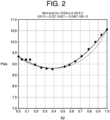
- FIG. 1 displays the vapor/liquid equilibrium curve for a mixture of Z-1233zd (cis-1233zd) and dimethoxymethane (methylal) at 29.9 °C.
- the present invention relates to azeotropic and near-azeotropic compositions of Z-1233zd with dimethoxymethane.
- Alternate designations for dimethoxymethane (CH 3 OCH 2 OCH 3 ) include DMM, methylal and dimethylformal.
- azeotrope or azeotrope-like compositions of the present invention can be prepared by any convenient method including mixing or combining the desired amounts.
- a preferred method is to weigh the desired component amounts and thereafter combine them in an appropriate container.
- inventive compositions can be used in a wide range of applications, including their use as aerosol propellants, refrigerants, solvents, cleaning agents, blowing agents (foam expansion agents) for thermoplastic and thermoset foams, heat transfer media, gaseous dielectrics, fire extinguishing and suppression agents, power cycle working fluids, polymerization media, particulate removal fluids, carrier fluids, buffing abrasive agents, and displacement drying agents.
- compositions of the present invention shall be understood to mean the azeotropic and near-azeotropic compositions of Z-1233zd and a second component which is dimethoxymethane.
- compositions can act as a working fluid used to carry heat from a heat source to a heat sink.
- Such heat transfer compositions may also be useful as a refrigerant in a cycle wherein the fluid undergoes a phase change; that is, from a liquid to a gas and back, or vice versa.
- heat transfer systems include but are not limited to air conditioners, freezers, refrigerators, heat pumps, water chillers, flooded evaporator chillers, direct expansion chillers, walk-in coolers, heat pumps, mobile refrigerators, mobile air conditioning units and combinations thereof.
- compositions comprising Z-1233zd are useful in mobile heat transfer systems, including refrigeration, air conditioning, or heat pump systems or apparatus.
- the compositions are useful in stationary heat transfer systems, including refrigeration, air conditioning, or heat pump systems or apparatus.
- mobile heat transfer system shall be understood to mean any refrigeration, air conditioner, or heating apparatus incorporated into a transportation unit for the road, rail, sea or air.
- mobile refrigeration or air conditioner units include those apparatus that are independent of any moving carrier and are known as “intermodal" systems.
- intermodal systems include “containers' (combined sea/land transport) as well as “swap bodies” (combined road/rail transport).
- stationary heat transfer system shall be understood to mean a system that is fixed in place during operation.
- a stationary heat transfer system may be located within or attached to a building, or may be a stand-alone device located out of doors, such as a soft drink vending machine.
- Such a stationary application may be a stationary air conditioning device or heat pump, including but not limited to a chiller, a high temperature heat pumps, which may be a trans-critical heat pump (one that operates with a condenser temperature above 50°C, 70°C, 80°C, 100°C, 120°C, 140°C, 160°C, 180°C, or 200°C), a residential, commercial or industrial air conditioning system, and may be window-mounted, ductless, ducted, packaged terminal, a chiller, and one that is exterior but connected to a building, such as a rooftop system.
- a trans-critical heat pump one that operates with a condenser temperature above 50°C, 70°C, 80°C, 100°C, 120°C, 140°C, 160°C, 180°C, or 200°C
- a residential, commercial or industrial air conditioning system and may be window-mounted, ductless, ducted, packaged terminal, a chiller, and one that is exterior but connected to a building, such as a rooftop
- the disclosed compositions may be useful in high temperature, medium temperature and/or low temperature refrigeration equipment including commercial, industrial or residential refrigerators and freezers, ice machines, self-contained coolers and freezers, flooded evaporator chillers, direct expansion chillers, walk-in and reach-in coolers and freezers, and combination systems.
- the disclosed compositions may be used in supermarket refrigerator systems.
- compositions as disclosed herein containing Z-1233zd may be useful in methods for producing cooling, producing heating, and transferring heat.
- a method for producing cooling comprising evaporating any of the present compositions comprising Z-1233zd in the vicinity of a body to be cooled, and thereafter condensing said composition.
- a method for producing heating comprising condensing any of the present compositions comprising Z-1233zd in the vicinity of a body to be heated, and thereafter evaporating said compositions.
- a method of using the present compositions comprising Z-1233zd as a heat transfer fluid composition comprises transporting said composition from a heat source to a heat sink.
- compositions disclosed herein may be useful as a replacement for a currently used (“incumbent") refrigerant, including but not limited to R-123 (or HFC-123, 2,2-dichloro-1,1,1-trifluoroethane), R-11 (or CFC-11, trichlorofluoromethane), R-12 (or CFC-12, dichlorodifluoromethane), R-22 (chlorodifluoromethane), R-245fa (or HFC-245fa, 1,1,1,3,3-pentafluoropropane), R-114 (or CFC-114, 1,2-dichloro-1,1,2,2-tetrafluoroethane), R-236fa (or HFC-236fa, 1,1,1,3,3,3-hexafluoropropane), R-236ea (or HFC-236ea, 1,1,1,2,3,3-hexafluoropropane), R-124 (or HCFC-124, 2-chlor
- incumbent refrigerant shall be understood to mean the refrigerant for which the heat transfer system was designed to operate, or the refrigerant that is resident in the heat transfer system.
- a method for operating a heat transfer system or for transferring heat that is designed to operate with an incumbent refrigerant by charging an empty system with a composition of the present invention, or by substantially replacing said incumbent refrigerant with a composition of the present invention.
- the term "substantially replacing” shall be understood to mean allowing the incumbent refrigerant to drain from the system, or pumping the incumbent refrigerant from the system, and then charging the system with a composition of the present invention.
- the system may be flushed with one or more quantities of the replacement refrigerant before being charged. It shall be understood that some small quantity of the incumbent refrigerant may be present in the system after the system has been charged with the composition of the present invention.
- a method for recharging a heat transfer system that contains an incumbent refrigerant and a lubricant comprising substantially removing the incumbent refrigerant from the heat transfer system while retaining a substantial portion of the lubricant in said system and introducing one of the present compositions comprising Z-1233zd to the heat transfer system.
- the lubricant in the system is partially replaced.
- compositions of the present invention comprising Z-1233zd may be used to top-off a refrigerant charge in a chiller. For instance, if a chiller using HCFC-123 has diminished performance due to leakage of refrigerant, the compositions as disclosed herein may be added to bring performance back up to specification.
- a heat exchange system containing any of the present compositions comprising Z-1233zd is provided, wherein said system is selected from the group consisting of air conditioners, freezers, refrigerators, heat pumps, water chillers, flooded evaporator chillers, direct expansion chillers, walk-in coolers, heat pumps, mobile refrigerators, mobile air conditioning units, and systems having combinations thereof.
- the compositions comprising Z-1233zd may be useful in secondary loop systems wherein these compositions serve as the primary refrigerant thus providing cooling to a secondary heat transfer fluid that thereby cools a remote location.
- Each of a vapor-compression refrigeration system, an air conditioning system, and a heat pump system includes as components an evaporator, a compressor, a condenser, and an expansion device.
- a vapor-compression cycle re-uses refrigerant in multiple steps producing a cooling effect in one step and a heating effect in a different step.
- the cycle can be described simply as follows. Liquid refrigerant enters an evaporator through an expansion device, and the liquid refrigerant boils in the evaporator, by withdrawing heat from the environment, at a low temperature to form a vapor and produce cooling. The low-pressure vapor enters a compressor where the vapor is compressed to raise its pressure and temperature.
- the higher-pressure (compressed) vapor refrigerant then enters the condenser in which the refrigerant condenses and discharges its heat to the environment.
- the refrigerant returns to the expansion device through which the liquid expands from the higher-pressure level in the condenser to the low-pressure level in the evaporator, thus repeating the cycle.
- a heat transfer system containing any of the present compositions comprising Z-1233zd.
- a refrigeration, air-conditioning or heat pump apparatus containing any of the present compositions comprising Z-1233zd.
- a stationary refrigeration or air-conditioning apparatus containing any of the present compositions comprising Z-1233zd.
- a mobile refrigeration or air conditioning apparatus containing a composition as disclosed herein.
- one of the present compositions comprising Z-1233zd and at least one additive.
- the most common additive is a lubricant.
- Lubricants and other additives are discussed in Fuels and Lubricants Handbook: Technology, Properties, Performance and Testing, Ch. 15, "Refrigeration Lubricants - Properties and Applications,” Michels, H. Harvey and Seinel, Tobias H., MNL37WCD-EB, ASTM International, June 2003 .
- Lubricants include polyolesters (“POEs”), naphthenic mineral oils (“NMOs”) and polyalkylene glycols (“PAGs”), and synthetic lubricants.
- additives are selected from the group that are chemically active in the sense that they can react with metals in the system or with contaminants in the lubricant, including dispersants, oxidation inhibitors, extreme pressure agents, corrosion inhibitors, detergents, acid catchers.
- oxidation inhibitor can be dependent on the selection of lubricant.
- Alkyl phenols e.g., dibutylhydroxytoluene
- Nitrogen containing inhibitors e.g., arylamines and phenols
- mineral oil lubricants e.g., arylamines and phenols
- Acid catchers can be especially important in synthetic lubricant systems, and include alkanolamines, long chain amides and imines, carbonates and epoxides. Still other additives are selected from the group that change physical property characteristics selected from the group consisting of pour point modifiers, anti-foam agents, viscosity improvers, and emulsifiers. Anti-foam agents include the polydimethyl siloxanes, polyalkoxyamines and polyacrylates.
- the present invention further relates to a method of forming a foam comprising: (a) adding to a foamable composition a composition of the present invention; and (b) reacting the foamable composition under conditions effective to form a foam.
- Closed-cell polyisocyanate-based foams are widely used for insulation purposes, for example, in building construction and in the manufacture of energy efficient electrical appliances.
- polyurethane (polyisocyanurate) board stock is used in roofing and siding for its insulation and load-carrying capabilities.
- Poured and sprayed polyurethane foams are widely used for a variety of applications including insulating roofs, insulating large structures such as storage tanks, insulating appliances such as refrigerators and freezers, insulating refrigerated trucks and railcars, etc.
- thermoplastic foam primarily polystyrene foam.
- Polyolefin foams e.g., polystyrene, polyethylene, and polypropylene
- CFC-12 diichlorodifluoromethane
- HCFC-22 chlorodifluoromethane
- HFC-152a HFCs
- a third important type of insulating foam is phenolic foam. These foams, which have very attractive flammability characteristics, were generally made with CFC-11 (trichlorofluoromethane) and CFC-113 (1,1,2-trichloro-1,2,2-trifluoroethane) blowing agents.
- CFC-11 trichlorofluoromethane
- CFC-113 1,1,2-trichloro-1,2,2-trifluoroethane
- open-cell foams are also of commercial interest, for example in the production of fluid-absorbent articles.
- U.S. Patent no. 6,703,431 (Dietzen, et. al. ) describes open-cell foams based on thermoplastics polymers that are useful for fluid-absorbent hygiene articles such as wound contact materials.
- U.S. Patent no, 6,071,580 (Bland, et. al.
- open-cell foams have also found application in evacuated or vacuum panel technologies, for example in the production of evacuated insulation panels as described in U.S. Patent no. 5,977,271 (Malone ). Using open-cell foams in evacuated insulation panels, it has been possible to obtain R-values of 10 to 15 per inch (2.54 cm) of thickness depending upon the evacuation or vacuum level, polymer type, cell size, density, and open cell content of the foam. These open-cell foams have traditionally been produced employing CFCs, HCFCs, or more recently, HFCs as blowing agents.
- Multimodal foams are also of commercial interest, and are described, for example, in U.S. Patent nos. 6,787,580 (Chonde, et. al.) and 5,332,761 (Paquet, et. al.) .
- a multimodal foam is a foam having a multimodal cell size distribution, and such foams have particular utility in thermally insulating articles since they often have higher insulating values (R-values) than analogous foams having a generally uniform cell size distribution.
- R-values insulating values
- These foams have been produced employing CFCs, HCFCs, and, more recently, HFCs as the blowing agent.
- foams require blowing (expansion) agents for their manufacture.
- Insulating foams depend on the use of halocarbon blowing agents, not only to foam the polymer, but primarily for their low vapor thermal conductivity, a very important characteristic for insulation value.
- foamable compositions and preferably thermoset or thermoplastic foam compositions, prepared using the compositions of the present disclosure.
- one or more of the present compositions are included as or part of a blowing agent in a foamable composition, which composition preferably includes one or more additional components capable of reacting and/or foaming under the proper conditions to form a foam or cellular structure.
- foam, and preferably closed cell foam prepared from a polymer foam formulation containing a blowing agent comprising the compositions of the present disclosure.
- Certain embodiments provide methods of preparing foams.
- a blowing agent comprising a composition of the present disclosure is added to and reacted with a foamable composition, which foamable composition may include one or more additional components capable of reacting and/or foaming under the proper conditions to form a foam or cellular structure.
- Any of the methods well known in the art such as those described in " Polyurethanes Chemistry and Technology," Volumes I and II, Saunders and Frisch, 1962, John Wiley and Sons, New York, N.Y ., may be used or adapted for use in accordance with the foam embodiments.
- ingredients in preparing foams.
- additional ingredients are , catalysts, surfactants, flame retardants, preservatives, colorants, antioxidants, reinforcing agents, fillers, antistatic agents, solubilizing agents, IR attenuating agents, nucleating agents, cell controlling agents, extrusion aids, stabilizing agents, thermally insulating agents, plasticizers, viscosity modifiers, impact modifiers, gas barrier resins, polymer modifiers, rheology modifiers, antibacterial agents, vapor pressure modifiers, UV absorbers, cross-linking agents, permeability modifiers, bitterants, propellants and the like.
- Polyurethane foams are generally prepared by combining and reacting an isocyanate with a polyol in the presence of a blowing or expanding agent and auxiliary chemicals added to control and modify both the polyurethane reaction itself and the properties of the final polymer.
- a blowing or expanding agent and auxiliary chemicals added to control and modify both the polyurethane reaction itself and the properties of the final polymer.
- these materials can be premixed into two non-reacting parts typically referred to as the "A-side" and the "B-side.”
- A-side is intended to mean isocyanate or isocyanate containing mixture.
- An isocyanate containing mixture may include the isocyanate, the blowing or expanding agent and auxiliary chemicals, like catalysts, surfactants, stabilizers, chain extenders, cross-linkers, water, fire retardants, smoke suppressants, pigments, coloring materials, fillers, etc.
- B-side is intended to mean polyol or polyol containing mixture.
- a polyol containing mixture usually includes the polyol, the blowing or expanding agent and auxiliary chemicals, like catalysts, surfactants, stabilizers, chain extenders, cross-linkers, water, fire retardants, smoke suppressants, pigments, coloring materials, fillers, etc.
- a surfactant When preparing a foam by a process disclosed herein, it is generally preferred to employ a minor amount of a surfactant to stabilize the foaming reaction mixture until it cures.
- Such surfactants may comprise a liquid or solid organosilicone compound.
- Other, less preferred surfactants include polyethylene glycol ethers of long chain alcohols, tertiary amine or alkanolamine salts of long chain alkyl acid sulfate esters, alkyl sulfonic esters and alkyl arylsulfonic acids.
- the surfactants are employed in amounts sufficient to stabilize the foaming reaction mixture against collapse and to prevent the formation of large, uneven cells. About 0.2 to about 5 parts or even more of the surfactant per 100 parts by weight of polyol are usually sufficient.
- One or more catalysts for the reaction of the polyol with the polyisocyanate may also be used. Any suitable urethane catalyst may be used, including tertiary amine compounds and organometallic compounds. Such catalysts are used in an amount which measurably increases the rate of reaction of the polyisocyanate. Typical amounts are about 0.1 to about 5 parts of catalyst per 100 parts by weight of polyol.
- the invention is directed to a closed cell foam prepared by foaming a foamable composition in the presence of a blowing agent described above.
- Another aspect is for a foam premix composition
- a foam premix composition comprising a polyol and a blowing agent described above.
- one aspect is for a method of forming a foam comprising:
- the terms "foamable composition” and “foamable component” shall be understood herein to mean isocyanate or an isocyanate-containing mixture.
- the terms “foamable composition” and “foamable component” shall be understood herein to mean a polyolefin or a polyolefin-containing mixture.
- a further aspect is for a method of forming a polyisocyanate-based foam comprising reacting at least one organic polyisocyanate with at least one active hydrogen-containing compound in the presence of a blowing agent described above. Another aspect is for a polyisocyanate foam produced by said method.
- Another embodiment of the present invention relates to the use of an inventive composition as described herein for use as a propellant in sprayable composition. Additionally, the present invention relates to a sprayable composition comprising an inventive composition as described herein.
- the active ingredient to be sprayed together with inert ingredients, solvents and other materials may also be present in a sprayable composition.
- the sprayable composition is an aerosol.
- Suitable active materials to be sprayed include, without limitations, cosmetic materials, such as deodorants, perfumes, hair sprays, cleaners, and polishing agents as well as medicinal materials such as anti-asthma and anti-halitosis medications.
- the present invention further relates to a process for producing aerosol products comprising the step of adding an inventive composition as described herein to active ingredients in an aerosol container, wherein said composition functions as a propellant.
- a further aspect provides methods of suppressing a flame, said methods comprising contacting a flame with a fluid comprising an inventive composition of the present disclosure.
- Any suitable methods for contacting the flame with the present composition may be used.
- an inventive composition of the present disclosure may be sprayed, poured, and the like onto the flame, or at least a portion of the flame may be immersed in the flame suppression composition.
- those of skill in the art will be readily able to adapt a variety of conventional apparatus and methods of flame suppression for use in the present disclosure.
- a further embodiment provides methods of extinguishing or suppressing a fire in a total-flood application comprising providing an agent comprising an inventive composition of the present disclosure; disposing the agent in a pressurized discharge system; and discharging the agent into an area to extinguish or suppress fires in that area.
- Another embodiment provides methods of inerting a space to prevent a fire or explosion comprising providing an agent comprising an inventive composition of the present disclosure; disposing the agent in a pressurized discharge system; and discharging the agent into the space to prevent a fire or explosion from occurring.
- the extinguishing method can be carried out by introducing the composition into an enclosed area surrounding a fire. Any of the known methods of introduction can be utilized provided that appropriate quantities of the composition are metered into the enclosed area at appropriate intervals.
- a composition can be introduced by streaming, e.g., using conventional portable (or fixed) fire extinguishing equipment; by misting; or by flooding, e.g., by releasing (using appropriate piping, valves, and controls) the composition into an enclosed area surrounding a fire.
- the composition can optionally be combined with an inert propellant, e.g., nitrogen, argon, decomposition products of glycidyl azide polymers or carbon dioxide, to increase the rate of discharge of the composition from the streaming or flooding equipment utilized.
- the extinguishing process involves introducing an inventive composition of the present disclosure to a fire or flame in an amount sufficient to extinguish the fire or flame.
- an inventive composition of the present disclosure to a fire or flame in an amount sufficient to extinguish the fire or flame.
- the amount of flame suppressant needed to extinguish a particular fire will depend upon the nature and extent of the hazard.
- cup burner test data are useful in determining the amount or concentration of flame suppressant required to extinguish a particular type and size of fire.
- a dielectric gas, or insulating gas is a dielectric material in gaseous state. Its main purpose is to prevent or rapidly quench electric discharges. Dielectric gases are used as electrical insulators in high voltage applications, e.g., transformers, circuit breakers, switchgear (namely high voltage switchgear), and radar waveguides. As used herein, the term "high voltage” shall be understood to mean above 1000 V for alternating current, and at least 1500 V for direct current. The inventive compositions can be useful as gaseous dielectrics in high voltage applications.
- inventive compositions may also be used as inert media for polymerization reactions, fluids for removing particulates from metal surfaces, as carrier fluids that may be used, for example, to place a fine film of lubricant on metal parts or as buffing abrasive agents to remove buffing abrasive compounds from polished surfaces such as metal. They are also used as displacement drying agents for removing water, such as from jewelry or metal parts, as resist developers in conventional circuit manufacturing techniques including chlorine-type developing agents, or as strippers for photoresists when used with, for example, a chlorohydrocarbon such as 1,1,1-trichloroethane or trichloroethylene. It is desirable to identify new agents for these applications with reduced global warming potential.
- Binary azeotropic or azeotrope-like compositions of substantially constant-boiling mixtures can be characterized, depending upon the conditions chosen, in a number of ways. For example, it is well known by those skilled in the art, that, at different pressures the composition of a given azeotrope or azeotrope-like composition will vary at least to some degree, as will the boiling point temperature. Thus, an azeotropic or azeotrope-like composition of two compounds represents a unique type of relationship but with a variable composition that depends on temperature and/or pressure. Therefore, compositional ranges, rather than fixed compositions, are often used to define azeotropes and azeotrope-like compositions.
- azeotropic composition One way to characterize an azeotropic composition is that the vapor produced by partial evaporation or distillation of the liquid has the same composition as the liquid from which it was evaporated or distilled, that is, the admixture distills/refluxes without compositional change.
- Constant boiling compositions are characterized as azeotropic because they exhibit either a maximum or minimum boiling point, as compared with that of the non-azeotropic mixtures of the same components.
- Azeotropic compositions are also characterized by a minimum or a maximum in the vapor pressure of the mixture relative to the vapor pressure of the neat components at a constant temperature.
- azeotrope-like composition and “near-azeotropic composition” shall be understood to mean a composition wherein the difference between the bubble point pressure (“BP") and dew point pressure (“DP”) of the composition at a particular temperature is less than or equal to 5 percent based upon the bubble point pressure, i.e., [(BP-VP)/BP] x 100 ⁇ 5.
- 3 percent azeotrope-like composition and “3 percent near-azeotropic composition” shall be understood to mean a composition wherein the difference between the bubble point pressure ("BP") and dew point pressure ("DP") of the composition at a particular temperature is less than or equal to 3 percent based upon the bubble point pressure, i.e., [(BP-VP)/BP] x 100 ⁇ 3.
- effective amount is defined as the amount of each component of the inventive compositions which, when combined, results in the formation of an azeotropic or azeotrope-like composition.
- This definition includes the amounts of each component, which amounts may vary depending on the pressure applied to the composition so long as the azeotropic or azeotrope-like compositions continue to exist at the different pressures, but with possible different boiling points. Therefore, effective amount includes the amounts, such as may be expressed in weight percentages, of each component of the compositions of the instant invention which form azeotropic or azeotrope-like compositions at temperatures or pressures other than as described herein.
- a method known as the PTx method can be used. In this procedure, the total absolute pressure in a cell of known volume is measured at a constant temperature for various compositions of the two compounds.
- Use of the PTx Method is described in detail in " Phase Equilibrium in Process Design", Wiley-Interscience Publisher, 1970, written by Harold R. Null, on pages 124 to 126 .
- the resulting pressure v. liquid composition data are alternately referred to as Vapor Liquid Equilibria data (or "VLE data.")
- NRTL Non-Random, Two-Liquid
- VLE data The collection of VLE data, the determination of interaction parameters by regression and the use of an equation of state to predict non-ideal behavior of a system are taught in " Double Azeotropy in Binary Mixtures of NH3 and CHF2CF2," C.-P. Chai Kao, M.E. Paulaitis, A. Yokozeki, Fluid Phase Equilibria, 127 (1997) 191-203 .
- the NRTL equation together with the PTx cell data, can sufficiently predict the relative volatilities of the Z-1233zd-containing compositions of the present invention and can therefore predict the behavior of these mixtures in multi-stage separation equipment such as distillation columns.
- Z-1233zd may be abbreviated to "Z1233zd.”
- Table 1.4 The data in Table 1.4 are broadly summarized in Tables 1 .5 and 1.6 below.
- Azeotrope-like compositions (based on [(BP-VP)/BP] x 100 ⁇ 5), are summarized in Table 1.5, and 3% near-azeotropic compositions (where [(BP-VP)/BP] x 100 ⁇ 3) are listed in Table 1.6.
- Table 1.5 Predicted Near-Azeotropes of the Z-1233zd/DMM System.
Landscapes
- Chemical & Material Sciences (AREA)
- Engineering & Computer Science (AREA)
- Chemical Kinetics & Catalysis (AREA)
- Organic Chemistry (AREA)
- Materials Engineering (AREA)
- Health & Medical Sciences (AREA)
- Physics & Mathematics (AREA)
- Polymers & Plastics (AREA)
- Wood Science & Technology (AREA)
- Life Sciences & Earth Sciences (AREA)
- Oil, Petroleum & Natural Gas (AREA)
- Medicinal Chemistry (AREA)
- Business, Economics & Management (AREA)
- Emergency Management (AREA)
- Combustion & Propulsion (AREA)
- Thermal Sciences (AREA)
- Public Health (AREA)
- Spectroscopy & Molecular Physics (AREA)
- Dispersion Chemistry (AREA)
- General Chemical & Material Sciences (AREA)
- Manufacture Of Porous Articles, And Recovery And Treatment Of Waste Products (AREA)
- Detergent Compositions (AREA)
- Organic Low-Molecular-Weight Compounds And Preparation Thereof (AREA)
Description
- The present invention relates to the discovery of azeotropic or azeotrope-like compositions which include Z -1-chloro-3,3,3-trifluoropropene. These compositions are useful as aerosol propellants, refrigerants, cleaning agents, expansion agents ("blowing agents") for the production of thermoplastic and thermoset foams, heat transfer media, gaseous dielectrics, solvents, fire extinguishing and suppression agents, power cycle working fluids, polymerization media, particulate removal fluids, carrier fluids, buffing abrasive agents, and displacement drying agents.
- Many industries have been working for the past few decades to find replacements for the ozone depleting chlorofluorocarbons (CFCs) and hydrochlorofluorocarbons (HCFCs). The CFCs and HCFCs have been employed in a wide range of applications, including their use as aerosol propellants, refrigerants, cleaning agents, expansion agents for thermoplastic and thermoset foams, heat transfer media, gaseous dielectrics, fire extinguishing and suppression agents, power cycle working fluids, polymerization media, particulate removal fluids, carrier fluids, buffing abrasive agents, and displacement drying agents. In the search for replacements for these versatile compounds, many industries have turned to the use of hydrofluorocarbons (HFCs), hydrofluoroolefins (HFOs), and hydrochlorofluoroolefins (HCFOs).
- The HFCs do not contribute to the destruction of stratospheric ozone, but are of concern due to their contribution to the "greenhouse effect," i.e., they contribute to global warming. As a result, they have come under scrutiny, and their widespread use may also be limited in the future. Unlike HFCs, many HFOs and HCFOs do not contribute to the greenhouse effect, as they react and decompose in the atmosphere relatively quickly. However, HFOs such as HFO-1234ze and HCFOs such as E-HCFO-1233zd have been found to be too unstable for many applications.
- Azeotrope or azeotrope-like compositions comprising HCFO-1233zd are described, for example, in
US 2009/305876 A1 ,US 7 438 825 B1 ,WO 2009/061557 A1 , andUS 2013/109771 A1 . Azeotrope-like mixtures comprising dimethoxymethane are described, for example, inUS 2010/078585 A1 . The use of azeotropic compositions as a dielectric gas in high-voltage devices is described inUS 2011/232939 A1 . - Mixtures of certain hydrocarbons or fluorocarbons that include Z-1-chloro-3,3,3-trifluoropropene (Z-CF3CH=CHCl, Z-1233zd) are believed to function as potential candidates for replacement of CFCs and HCFCs, but to display low global warming potentials ("GWPs"), and not contribute to the destruction of stratospheric ozone.
- The present invention provides a composition comprising Z-1233zd and a second component, wherein said second component is dimethoxymethane, wherein dimethoxymethane is present in an effective amount to form an azeotrope or azeotrope-like mixture with the Z-1233zd, and wherein the composition is selected from the group consisting of
- (a) an azeotropic or azeotrope-like composition comprising from 38.0 to 47.1 mole % Z-1233zd and from 52.9 mole % to 62.0 mole % dimethoxymethane and
- (b) an azeotrope-like composition comprising from 1 mole % to 99 mole % Z-1233zd and from 99 mole % to 1 mole % dimethoxymethane at a temperature of from -40 °C to 140 °C.
- The present invention further provides a composition as described in claim 2.
- In one embodiment the composition according to the present invention further comprises an additive selected from the group consisting of lubricants, pour point modifiers, anti-foam agents, viscosity improvers, emulsifiers dispersants, oxidation inhibitors, extreme pressure agents, corrosion inhibitors, detergents, catalysts, surfactants, flame retardants, preservatives, colorants, antioxidants, reinforcing agents, fillers, antistatic agents, solubilizing agents, IR attenuating agents, nucleating agents, cell controlling agents, extrusion aids, stabilizing agents, thermally insulating agents, plasticizers, viscosity modifiers, impact modifiers, gas barrier resins, polymer modifiers, rheology modifiers, antibacterial agents, vapor pressure modifiers, UV absorbers, cross-linking agents, permeability modifiers, bitterants, propellants and acid catchers.
- The present invention further provides a process of forming a foam comprising:
- (a) adding a foamable composition to a blowing agent; and,
- (b) reacting said foamable composition under conditions effective to form a foam,
- The present invention further provides a foam formed by the process described above.
- The present invention further provides a foam comprising a polymer and the composition according to the present invention.
- The present invention further provides a pre-mix composition comprising a foamable component and a composition according to the present invention as a blowing agent.
- The present invention further provides a process for producing refrigeration comprising condensing the composition according to the present invention, and thereafter evaporating said composition in the vicinity of the body to be cooled.
- The present invention further provides a heat transfer system comprising the composition according to the present invention as a heat transfer medium.
- The present invention further provides a method of cleaning a surface comprising bringing the composition according to the present invention into contact with said surface.
- The present invention further provides an aerosol product comprising a component to be dispensed and the composition according to the present invention as a propellant.
- The present invention further provides a method for extinguishing or suppressing a flame comprising dispensing the composition according to the present invention at said flame.
- The present invention further provides a system for preventing or suppressing a flame comprising a vessel containing the composition according to the present invention and a nozzle to dispense said composition toward an anticipated or actual location of said flame.
- The present invention further provides a process for dissolving a solute comprising contacting and mixing said solute with a sufficient quantity of the composition according to the present invention.
- The present invention further provides a method for preventing or rapidly quenching an electric discharge in a space in a high voltage device comprising injecting the composition according to the present invention into said space as a gaseous dielectric.
- The present invention further provides a high voltage device comprising the composition according to the present invention as a gaseous dielectric.
- The present invention further provides the high voltage device described above, selected from the group consisting of a transformer, a circuit breaker, a switch and a radar waveguide.
-
FIG. 1 displays the vapor/liquid equilibrium curve for a mixture of Z-1233zd (cis-1233zd) and dimethoxymethane (methylal) at 29.9 °C. - The present invention relates to azeotropic and near-azeotropic compositions of Z-1233zd with dimethoxymethane.
- Alternate designations for Z-1233zd include Z-1-chloro-3,3,3-trifluoropropene (Z-CF3CH=CHCl), cis-1-chloro-3,3,3-trifluoropropene, cis-1233zd, Z-HFO-1233zd and cis-HFO-1233zd. Alternate designations for dimethoxymethane (CH3OCH2OCH3) include DMM, methylal and dimethylformal.
- The azeotrope or azeotrope-like compositions of the present invention can be prepared by any convenient method including mixing or combining the desired amounts. A preferred method is to weigh the desired component amounts and thereafter combine them in an appropriate container.
- The inventive compositions can be used in a wide range of applications, including their use as aerosol propellants, refrigerants, solvents, cleaning agents, blowing agents (foam expansion agents) for thermoplastic and thermoset foams, heat transfer media, gaseous dielectrics, fire extinguishing and suppression agents, power cycle working fluids, polymerization media, particulate removal fluids, carrier fluids, buffing abrasive agents, and displacement drying agents.
- As used herein, the terms "inventive compositions" and "compositions of the present invention" shall be understood to mean the azeotropic and near-azeotropic compositions of Z-1233zd and a second component which is dimethoxymethane.
- The disclosed compositions can act as a working fluid used to carry heat from a heat source to a heat sink. Such heat transfer compositions may also be useful as a refrigerant in a cycle wherein the fluid undergoes a phase change; that is, from a liquid to a gas and back, or vice versa.
- Examples of heat transfer systems include but are not limited to air conditioners, freezers, refrigerators, heat pumps, water chillers, flooded evaporator chillers, direct expansion chillers, walk-in coolers, heat pumps, mobile refrigerators, mobile air conditioning units and combinations thereof.
- In one embodiment, the compositions comprising Z-1233zd are useful in mobile heat transfer systems, including refrigeration, air conditioning, or heat pump systems or apparatus. In another embodiment, the compositions are useful in stationary heat transfer systems, including refrigeration, air conditioning, or heat pump systems or apparatus.
- As used herein, the term "mobile heat transfer system" shall be understood to mean any refrigeration, air conditioner, or heating apparatus incorporated into a transportation unit for the road, rail, sea or air. In addition, mobile refrigeration or air conditioner units, include those apparatus that are independent of any moving carrier and are known as "intermodal" systems. Such intermodal systems include "containers' (combined sea/land transport) as well as "swap bodies" (combined road/rail transport).
- As used herein, the term "stationary heat transfer system" shall be understood to mean a system that is fixed in place during operation. A stationary heat transfer system may be located within or attached to a building, or may be a stand-alone device located out of doors, such as a soft drink vending machine. Such a stationary application may be a stationary air conditioning device or heat pump, including but not limited to a chiller, a high temperature heat pumps, which may be a trans-critical heat pump (one that operates with a condenser temperature above 50°C, 70°C, 80°C, 100°C, 120°C, 140°C, 160°C, 180°C, or 200°C), a residential, commercial or industrial air conditioning system, and may be window-mounted, ductless, ducted, packaged terminal, a chiller, and one that is exterior but connected to a building, such as a rooftop system. In stationary refrigeration applications, the disclosed compositions may be useful in high temperature, medium temperature and/or low temperature refrigeration equipment including commercial, industrial or residential refrigerators and freezers, ice machines, self-contained coolers and freezers, flooded evaporator chillers, direct expansion chillers, walk-in and reach-in coolers and freezers, and combination systems. In some embodiments, the disclosed compositions may be used in supermarket refrigerator systems.
- Therefore in accordance with the present invention, the compositions as disclosed herein containing Z-1233zd may be useful in methods for producing cooling, producing heating, and transferring heat.
- In one embodiment, a method is provided for producing cooling comprising evaporating any of the present compositions comprising Z-1233zd in the vicinity of a body to be cooled, and thereafter condensing said composition.
- In another embodiment, a method is provided for producing heating comprising condensing any of the present compositions comprising Z-1233zd in the vicinity of a body to be heated, and thereafter evaporating said compositions.
- In another embodiment, disclosed is a method of using the present compositions comprising Z-1233zd as a heat transfer fluid composition. The method comprises transporting said composition from a heat source to a heat sink.
- Any one of the compositions disclosed herein may be useful as a replacement for a currently used ("incumbent") refrigerant, including but not limited to R-123 (or HFC-123, 2,2-dichloro-1,1,1-trifluoroethane), R-11 (or CFC-11, trichlorofluoromethane), R-12 (or CFC-12, dichlorodifluoromethane), R-22 (chlorodifluoromethane), R-245fa (or HFC-245fa, 1,1,1,3,3-pentafluoropropane), R-114 (or CFC-114, 1,2-dichloro-1,1,2,2-tetrafluoroethane), R-236fa (or HFC-236fa, 1,1,1,3,3,3-hexafluoropropane), R-236ea (or HFC-236ea, 1,1,1,2,3,3-hexafluoropropane), R-124 (or HCFC-124, 2-chloro-1,1,1,2-tetrafluoroethane), among others.
- As used herein, the term "incumbent refrigerant" shall be understood to mean the refrigerant for which the heat transfer system was designed to operate, or the refrigerant that is resident in the heat transfer system.
- In another embodiment is provided a method for operating a heat transfer system or for transferring heat that is designed to operate with an incumbent refrigerant by charging an empty system with a composition of the present invention, or by substantially replacing said incumbent refrigerant with a composition of the present invention.
- As used herein, the term "substantially replacing" shall be understood to mean allowing the incumbent refrigerant to drain from the system, or pumping the incumbent refrigerant from the system, and then charging the system with a composition of the present invention. The system may be flushed with one or more quantities of the replacement refrigerant before being charged. It shall be understood that some small quantity of the incumbent refrigerant may be present in the system after the system has been charged with the composition of the present invention.
- In another embodiment is provided a method for recharging a heat transfer system that contains an incumbent refrigerant and a lubricant, said method comprising substantially removing the incumbent refrigerant from the heat transfer system while retaining a substantial portion of the lubricant in said system and introducing one of the present compositions comprising Z-1233zd to the heat transfer system. In some embodiments, the lubricant in the system is partially replaced.
- In another embodiment, the compositions of the present invention comprising Z-1233zd may be used to top-off a refrigerant charge in a chiller. For instance, if a chiller using HCFC-123 has diminished performance due to leakage of refrigerant, the compositions as disclosed herein may be added to bring performance back up to specification.
- In another embodiment, a heat exchange system containing any of the present compositions comprising Z-1233zd is provided, wherein said system is selected from the group consisting of air conditioners, freezers, refrigerators, heat pumps, water chillers, flooded evaporator chillers, direct expansion chillers, walk-in coolers, heat pumps, mobile refrigerators, mobile air conditioning units, and systems having combinations thereof. Additionally, the compositions comprising Z-1233zd may be useful in secondary loop systems wherein these compositions serve as the primary refrigerant thus providing cooling to a secondary heat transfer fluid that thereby cools a remote location.
- Each of a vapor-compression refrigeration system, an air conditioning system, and a heat pump system includes as components an evaporator, a compressor, a condenser, and an expansion device. A vapor-compression cycle re-uses refrigerant in multiple steps producing a cooling effect in one step and a heating effect in a different step. The cycle can be described simply as follows. Liquid refrigerant enters an evaporator through an expansion device, and the liquid refrigerant boils in the evaporator, by withdrawing heat from the environment, at a low temperature to form a vapor and produce cooling. The low-pressure vapor enters a compressor where the vapor is compressed to raise its pressure and temperature. The higher-pressure (compressed) vapor refrigerant then enters the condenser in which the refrigerant condenses and discharges its heat to the environment. The refrigerant returns to the expansion device through which the liquid expands from the higher-pressure level in the condenser to the low-pressure level in the evaporator, thus repeating the cycle.
- In one embodiment, there is provided a heat transfer system containing any of the present compositions comprising Z-1233zd. In another embodiment is disclosed a refrigeration, air-conditioning or heat pump apparatus containing any of the present compositions comprising Z-1233zd. In another embodiment, is disclosed a stationary refrigeration or air-conditioning apparatus containing any of the present compositions comprising Z-1233zd. In yet another embodiment is disclosed a mobile refrigeration or air conditioning apparatus containing a composition as disclosed herein.
- In one embodiment, there is provided one of the present compositions comprising Z-1233zd and at least one additive. The most common additive is a lubricant. Lubricants and other additives are discussed in Fuels and Lubricants Handbook: Technology, Properties, Performance and Testing, Ch. 15, "Refrigeration Lubricants - Properties and Applications," Michels, H. Harvey and Seinel, Tobias H., MNL37WCD-EB, ASTM International, June 2003. Lubricants include polyolesters ("POEs"), naphthenic mineral oils ("NMOs") and polyalkylene glycols ("PAGs"), and synthetic lubricants. Other additives are selected from the group that are chemically active in the sense that they can react with metals in the system or with contaminants in the lubricant, including dispersants, oxidation inhibitors, extreme pressure agents, corrosion inhibitors, detergents, acid catchers. The selection of oxidation inhibitor can be dependent on the selection of lubricant. Alkyl phenols (e.g., dibutylhydroxytoluene) may be useful for polyolester lubricants. Nitrogen containing inhibitors (e.g., arylamines and phenols) may be useful for mineral oil lubricants. Acid catchers can be especially important in synthetic lubricant systems, and include alkanolamines, long chain amides and imines, carbonates and epoxides. Still other additives are selected from the group that change physical property characteristics selected from the group consisting of pour point modifiers, anti-foam agents, viscosity improvers, and emulsifiers. Anti-foam agents include the polydimethyl siloxanes, polyalkoxyamines and polyacrylates.
- The present invention further relates to a method of forming a foam comprising: (a) adding to a foamable composition a composition of the present invention; and (b) reacting the foamable composition under conditions effective to form a foam.
- Closed-cell polyisocyanate-based foams are widely used for insulation purposes, for example, in building construction and in the manufacture of energy efficient electrical appliances. In the construction industry, polyurethane (polyisocyanurate) board stock is used in roofing and siding for its insulation and load-carrying capabilities. Poured and sprayed polyurethane foams are widely used for a variety of applications including insulating roofs, insulating large structures such as storage tanks, insulating appliances such as refrigerators and freezers, insulating refrigerated trucks and railcars, etc.
- A second type of insulating foam is thermoplastic foam, primarily polystyrene foam. Polyolefin foams (e.g., polystyrene, polyethylene, and polypropylene) are widely used in insulation and packaging applications. These thermoplastic foams were generally made with CFC-12 (dichlorodifluoromethane) as the blowing agent. More recently HCFCs (HCFC-22, chlorodifluoromethane) or blends of HCFCs (HCFC-22/HCFC-142b) or HFCs (HFC-152a) have been employed as blowing agents for polystyrene.
- A third important type of insulating foam is phenolic foam. These foams, which have very attractive flammability characteristics, were generally made with CFC-11 (trichlorofluoromethane) and CFC-113 (1,1,2-trichloro-1,2,2-trifluoroethane) blowing agents
In addition to closed-cell foams, open-cell foams are also of commercial interest, for example in the production of fluid-absorbent articles.U.S. Patent no. 6,703,431 (Dietzen, et. al. ) describes open-cell foams based on thermoplastics polymers that are useful for fluid-absorbent hygiene articles such as wound contact materials.U.S. Patent no, 6,071,580 (Bland, et. al. ) describes absorbent extruded thermoplastic foams which can be employed in various absorbency applications. Open-cell foams have also found application in evacuated or vacuum panel technologies, for example in the production of evacuated insulation panels as described inU.S. Patent no. 5,977,271 (Malone ). Using open-cell foams in evacuated insulation panels, it has been possible to obtain R-values of 10 to 15 per inch (2.54 cm) of thickness depending upon the evacuation or vacuum level, polymer type, cell size, density, and open cell content of the foam. These open-cell foams have traditionally been produced employing CFCs, HCFCs, or more recently, HFCs as blowing agents. - Multimodal foams are also of commercial interest, and are described, for example, in
U.S. Patent nos. 6,787,580 (Chonde, et. al.) and5,332,761 (Paquet, et. al.) . A multimodal foam is a foam having a multimodal cell size distribution, and such foams have particular utility in thermally insulating articles since they often have higher insulating values (R-values) than analogous foams having a generally uniform cell size distribution. These foams have been produced employing CFCs, HCFCs, and, more recently, HFCs as the blowing agent. - All of these various types of foams require blowing (expansion) agents for their manufacture. Insulating foams depend on the use of halocarbon blowing agents, not only to foam the polymer, but primarily for their low vapor thermal conductivity, a very important characteristic for insulation value.
- Other embodiments provide foamable compositions, and preferably thermoset or thermoplastic foam compositions, prepared using the compositions of the present disclosure. In such foam embodiments, one or more of the present compositions are included as or part of a blowing agent in a foamable composition, which composition preferably includes one or more additional components capable of reacting and/or foaming under the proper conditions to form a foam or cellular structure. Another aspect relates to foam, and preferably closed cell foam, prepared from a polymer foam formulation containing a blowing agent comprising the compositions of the present disclosure.
- Certain embodiments provide methods of preparing foams. In such foam embodiments, a blowing agent comprising a composition of the present disclosure is added to and reacted with a foamable composition, which foamable composition may include one or more additional components capable of reacting and/or foaming under the proper conditions to form a foam or cellular structure. Any of the methods well known in the art, such as those described in "Polyurethanes Chemistry and Technology," Volumes I and II, Saunders and Frisch, 1962, John Wiley and Sons, New York, N.Y., may be used or adapted for use in accordance with the foam embodiments.
- In certain embodiments, it is often desirable to employ certain other ingredients in preparing foams. Among these additional ingredients are , catalysts, surfactants, flame retardants, preservatives, colorants, antioxidants, reinforcing agents, fillers, antistatic agents, solubilizing agents, IR attenuating agents, nucleating agents, cell controlling agents, extrusion aids, stabilizing agents, thermally insulating agents, plasticizers, viscosity modifiers, impact modifiers, gas barrier resins, polymer modifiers, rheology modifiers, antibacterial agents, vapor pressure modifiers, UV absorbers, cross-linking agents, permeability modifiers, bitterants, propellants and the like.
- Polyurethane foams are generally prepared by combining and reacting an isocyanate with a polyol in the presence of a blowing or expanding agent and auxiliary chemicals added to control and modify both the polyurethane reaction itself and the properties of the final polymer. For processing convenience, these materials can be premixed into two non-reacting parts typically referred to as the "A-side" and the "B-side."
- The term "A-side" is intended to mean isocyanate or isocyanate containing mixture. An isocyanate containing mixture may include the isocyanate, the blowing or expanding agent and auxiliary chemicals, like catalysts, surfactants, stabilizers, chain extenders, cross-linkers, water, fire retardants, smoke suppressants, pigments, coloring materials, fillers, etc.
- The term "B-side" is intended to mean polyol or polyol containing mixture. A polyol containing mixture usually includes the polyol, the blowing or expanding agent and auxiliary chemicals, like catalysts, surfactants, stabilizers, chain extenders, cross-linkers, water, fire retardants, smoke suppressants, pigments, coloring materials, fillers, etc.
- To prepare the foam, appropriate amounts of A-side and B-side are then combined to react.
- When preparing a foam by a process disclosed herein, it is generally preferred to employ a minor amount of a surfactant to stabilize the foaming reaction mixture until it cures. Such surfactants may comprise a liquid or solid organosilicone compound. Other, less preferred surfactants include polyethylene glycol ethers of long chain alcohols, tertiary amine or alkanolamine salts of long chain alkyl acid sulfate esters, alkyl sulfonic esters and alkyl arylsulfonic acids. The surfactants are employed in amounts sufficient to stabilize the foaming reaction mixture against collapse and to prevent the formation of large, uneven cells. About 0.2 to about 5 parts or even more of the surfactant per 100 parts by weight of polyol are usually sufficient.
- One or more catalysts for the reaction of the polyol with the polyisocyanate may also be used. Any suitable urethane catalyst may be used, including tertiary amine compounds and organometallic compounds. Such catalysts are used in an amount which measurably increases the rate of reaction of the polyisocyanate. Typical amounts are about 0.1 to about 5 parts of catalyst per 100 parts by weight of polyol.
- Thus, in one aspect, the invention is directed to a closed cell foam prepared by foaming a foamable composition in the presence of a blowing agent described above.
- Another aspect is for a foam premix composition comprising a polyol and a blowing agent described above.
- Additionally, one aspect is for a method of forming a foam comprising:
- (a) adding to a foamable composition a blowing agent described above; and
- (b) reacting the foamable composition under conditions effective to form a foam.
- In the context of polyurethane foams, the terms "foamable composition" and "foamable component" shall be understood herein to mean isocyanate or an isocyanate-containing mixture. In the context of polystyrene foams, the terms "foamable composition" and "foamable component" shall be understood herein to mean a polyolefin or a polyolefin-containing mixture.
- A further aspect is for a method of forming a polyisocyanate-based foam comprising reacting at least one organic polyisocyanate with at least one active hydrogen-containing compound in the presence of a blowing agent described above. Another aspect is for a polyisocyanate foam produced by said method.
- Another embodiment of the present invention relates to the use of an inventive composition as described herein for use as a propellant in sprayable composition. Additionally, the present invention relates to a sprayable composition comprising an inventive composition as described herein. The active ingredient to be sprayed together with inert ingredients, solvents and other materials may also be present in a sprayable composition. Preferably, the sprayable composition is an aerosol. Suitable active materials to be sprayed include, without limitations, cosmetic materials, such as deodorants, perfumes, hair sprays, cleaners, and polishing agents as well as medicinal materials such as anti-asthma and anti-halitosis medications.
- The present invention further relates to a process for producing aerosol products comprising the step of adding an inventive composition as described herein to active ingredients in an aerosol container, wherein said composition functions as a propellant.
- A further aspect provides methods of suppressing a flame, said methods comprising contacting a flame with a fluid comprising an inventive composition of the present disclosure. Any suitable methods for contacting the flame with the present composition may be used. For example, an inventive composition of the present disclosure may be sprayed, poured, and the like onto the flame, or at least a portion of the flame may be immersed in the flame suppression composition. In light of the teachings herein, those of skill in the art will be readily able to adapt a variety of conventional apparatus and methods of flame suppression for use in the present disclosure.
- A further embodiment provides methods of extinguishing or suppressing a fire in a total-flood application comprising providing an agent comprising an inventive composition of the present disclosure; disposing the agent in a pressurized discharge system; and discharging the agent into an area to extinguish or suppress fires in that area.
- Another embodiment provides methods of inerting a space to prevent a fire or explosion comprising providing an agent comprising an inventive composition of the present disclosure; disposing the agent in a pressurized discharge system; and discharging the agent into the space to prevent a fire or explosion from occurring.
- The term "extinguishment" is usually used to denote complete elimination of a fire; whereas, "suppression" is often used to denote reduction, but not necessarily total elimination, of a fire or explosion. As used herein, terms "extinguishment" and "suppression" will be used interchangeably. There are four general types of halocarbon fire and explosion protection applications:
- 1) In total-flood fire extinguishment and/or suppression applications, the agent is discharged into a space to achieve a concentration sufficient to extinguish or suppress an existing fire. Total flooding use includes protection of enclosed, potentially occupied spaces such, as computer rooms as well as specialized, often unoccupied spaces such as aircraft engine nacelles and engine compartments in vehicles.
- 2) In streaming applications, the agent is applied directly onto a fire or into the region of a fire. This is usually accomplished using manually operated wheeled or portable units. A second method, included as a streaming application, uses a "localized" system, which discharges the agent toward a fire from one or more fixed nozzles. Localized systems may be activated either manually or automatically.
- 3) In explosion suppression, an inventive composition of the present disclosure is discharged to suppress an explosion that has already been initiated. The term "suppression" is normally used in this application because the explosion is usually self-limiting. However, the use of this term does not necessarily imply that the explosion is not extinguished by the agent. In this application, a detector is usually used to detect an expanding fireball from an explosion, and the agent is discharged rapidly to suppress the explosion. Explosion suppression is used primarily, but not solely, in defense applications.
- 4) In inertion, an inventive composition of the present disclosure is discharged into a space to prevent an explosion or a fire from being initiated. Often, a system similar or identical to that used for total-flood fire extinguishment or suppression is used. Usually, the presence of a dangerous condition (for example, dangerous concentrations of flammable or explosive gases) is detected, and the inventive composition of the present disclosure is then discharged to prevent the explosion or fire from occurring until the condition can be remedied.
- The extinguishing method can be carried out by introducing the composition into an enclosed area surrounding a fire. Any of the known methods of introduction can be utilized provided that appropriate quantities of the composition are metered into the enclosed area at appropriate intervals. For example, a composition can be introduced by streaming, e.g., using conventional portable (or fixed) fire extinguishing equipment; by misting; or by flooding, e.g., by releasing (using appropriate piping, valves, and controls) the composition into an enclosed area surrounding a fire. The composition can optionally be combined with an inert propellant, e.g., nitrogen, argon, decomposition products of glycidyl azide polymers or carbon dioxide, to increase the rate of discharge of the composition from the streaming or flooding equipment utilized.
- Preferably, the extinguishing process involves introducing an inventive composition of the present disclosure to a fire or flame in an amount sufficient to extinguish the fire or flame. One skilled in this field will recognize that the amount of flame suppressant needed to extinguish a particular fire will depend upon the nature and extent of the hazard. When the flame suppressant is to be introduced by flooding, cup burner test data are useful in determining the amount or concentration of flame suppressant required to extinguish a particular type and size of fire.
- Laboratory tests useful for determining effective concentration ranges of an inventive composition when used in conjunction with extinguishing or suppressing a fire in a total-flood application or fire inertion are described, for example, in
U.S. Patent no. 5,759,430 . - A dielectric gas, or insulating gas, is a dielectric material in gaseous state. Its main purpose is to prevent or rapidly quench electric discharges. Dielectric gases are used as electrical insulators in high voltage applications, e.g., transformers, circuit breakers, switchgear (namely high voltage switchgear), and radar waveguides. As used herein, the term "high voltage" shall be understood to mean above 1000 V for alternating current, and at least 1500 V for direct current. The inventive compositions can be useful as gaseous dielectrics in high voltage applications.
- The inventive compositions may also be used as inert media for polymerization reactions, fluids for removing particulates from metal surfaces, as carrier fluids that may be used, for example, to place a fine film of lubricant on metal parts or as buffing abrasive agents to remove buffing abrasive compounds from polished surfaces such as metal. They are also used as displacement drying agents for removing water, such as from jewelry or metal parts, as resist developers in conventional circuit manufacturing techniques including chlorine-type developing agents, or as strippers for photoresists when used with, for example, a chlorohydrocarbon such as 1,1,1-trichloroethane or trichloroethylene. It is desirable to identify new agents for these applications with reduced global warming potential.
- Binary azeotropic or azeotrope-like compositions of substantially constant-boiling mixtures can be characterized, depending upon the conditions chosen, in a number of ways. For example, it is well known by those skilled in the art, that, at different pressures the composition of a given azeotrope or azeotrope-like composition will vary at least to some degree, as will the boiling point temperature. Thus, an azeotropic or azeotrope-like composition of two compounds represents a unique type of relationship but with a variable composition that depends on temperature and/or pressure. Therefore, compositional ranges, rather than fixed compositions, are often used to define azeotropes and azeotrope-like compositions.
- As used herein, the term "azeotropic composition" shall be understood to mean a composition where at a given temperature at equilibrium, the boiling point pressure (of the liquid phase) is identical to the dew point pressure (of the vapor phase), i.e., X2 = Y2. One way to characterize an azeotropic composition is that the vapor produced by partial evaporation or distillation of the liquid has the same composition as the liquid from which it was evaporated or distilled, that is, the admixture distills/refluxes without compositional change. Constant boiling compositions are characterized as azeotropic because they exhibit either a maximum or minimum boiling point, as compared with that of the non-azeotropic mixtures of the same components. Azeotropic compositions are also characterized by a minimum or a maximum in the vapor pressure of the mixture relative to the vapor pressure of the neat components at a constant temperature.
- As used herein, the terms "azeotrope-like composition" and "near-azeotropic composition" shall be understood to mean a composition wherein the difference between the bubble point pressure ("BP") and dew point pressure ("DP") of the composition at a particular temperature is less than or equal to 5 percent based upon the bubble point pressure, i.e., [(BP-VP)/BP] x 100 ≤ 5. As used herein, the terms "3 percent azeotrope-like composition" and "3 percent near-azeotropic composition" shall be understood to mean a composition wherein the difference between the bubble point pressure ("BP") and dew point pressure ("DP") of the composition at a particular temperature is less than or equal to 3 percent based upon the bubble point pressure, i.e., [(BP-VP)/BP] x 100 ≤ 3.
- For purposes of this invention, "effective amount" is defined as the amount of each component of the inventive compositions which, when combined, results in the formation of an azeotropic or azeotrope-like composition. This definition includes the amounts of each component, which amounts may vary depending on the pressure applied to the composition so long as the azeotropic or azeotrope-like compositions continue to exist at the different pressures, but with possible different boiling points. Therefore, effective amount includes the amounts, such as may be expressed in weight percentages, of each component of the compositions of the instant invention which form azeotropic or azeotrope-like compositions at temperatures or pressures other than as described herein.
- As used herein, the term "mole fraction" shall be understood to mean the ratio of the number of moles of one component in the binary composition to the sum of the numbers of moles of each of the two components in said composition (e.g., X2 = m2/(m1 + m2).
- To determine the relative volatility of any two compounds, a method known as the PTx method can be used. In this procedure, the total absolute pressure in a cell of known volume is measured at a constant temperature for various compositions of the two compounds. Use of the PTx Method is described in detail in "Phase Equilibrium in Process Design", Wiley-Interscience Publisher, 1970, written by Harold R. Null, on pages 124 to 126. The resulting pressure v. liquid composition data are alternately referred to as Vapor Liquid Equilibria data (or "VLE data.")
- These measurements can be converted into equilibrium vapor and liquid compositions in the PTx cell by using an activity coefficient equation model, such as the Non-Random, Two-Liquid (NRTL) equation, to represent liquid phase nonidealities. Use of an activity coefficient equation, such as the NRTL equation is described in detail in "The Properties of Gases and Liquids," 4th edition, published by McGraw Hill, written by Reid, Prausnitz and Poling, on pages 241 to 387, and in "Phase Equilibria in Chemical Engineering," published by Butterworth Publishers, 1985, written by Stanley M. Walas, pages 165 to 244. The collection of VLE data, the determination of interaction parameters by regression and the use of an equation of state to predict non-ideal behavior of a system are taught in "Double Azeotropy in Binary Mixtures of NH3 and CHF2CF2," C.-P. Chai Kao, M.E. Paulaitis, A. Yokozeki, Fluid Phase Equilibria, 127 (1997) 191-203. Without wishing to be bound by any theory or explanation, it is believed that the NRTL equation, together with the PTx cell data, can sufficiently predict the relative volatilities of the Z-1233zd-containing compositions of the present invention and can therefore predict the behavior of these mixtures in multi-stage separation equipment such as distillation columns.
- For economy of space in the tables that follow, "Z-1233zd" may be abbreviated to "Z1233zd."
- The binary system of Z-1233zd/dimethoxymethane was explored for potential azeotropic and near-azeotropic behavior. To determine the relative volatility of this binary system, the PTx method described above was used. The pressure in a PTx cell of known volume was measured at constant temperature of 29.9 °C for various binary compositions. The collected experimental data are displayed in Table 1.1 below.
Table 1-1. VLE Data for the Z-1233zd/Dimethoxymethane System. X2 Y2 Pexp psia [kPa] Pcalc psia [kPa] Pcalc-Pexp psia [kPa] 0.000 0.000 9.329 [64.321] 0.038 0.030 9.197 [63.411] 9.241 [63.714] 0.005 [0.034] 0.085 0.069 9.191 [63.369] 9.140 [63.018] -0.006 [-0.041] 0.131 0.110 9.192 [63.376] 9.050 [62.397] -0.015 [-0.103] 0.188 0.165 8.964 [61.804] 8.956 [61.749] -0.001 [-0.007] 0.259 0.240 8.827 [60.860] 8.865 [61.122] 0.004 [-0.075] 0.318 0.307 8.790 [60.604] 8.818 [60.797] 0.003 [0.002] 0.384 0.385 8.760 [60.398] 8.799 [60.666] 0.005 [0.034] 0.522 0.552 8.877 [61.204] 8.892 [61.308] 0.002 [0.013] 0.576 0.617 8.970 [61.845] 8.980 [61.914] 0.001 [0.007] 0.642 0.694 9.118 [62.866] 9.128 [62.953] 0.001 [0.007] 0.715 0.772 9.354 [64.493] 9.340 [64.397] -0.002 [-0.013] 0.793 0.848 9.657 [66.582] 9.621 [66.334] -0.004 [-0.075] 0.869 0.913 9.991 [86.885] 9.940 [68.533] -0.005 [-0.034] 0.939 0.963 10.307 [71.064] 10.259 [70.733] -0.005 [-0.034] 1.000 1.000 10.556 [72.781] X2 = liquid mole fraction of Z-1233zd.
Y2 = vapor mole fraction of Z-1233zd.
Pexp = experimentally measured pressure.
Pcalc = pressure as calculated by NRTL model. - The above vapor pressure v. Z-1233zd liquid mole fraction data are plotted in
Figure 1 . The experimental data points are shown inFigure 1 as solid points. The solid line represents bubble point predictions using the NRTL equation. The dashed line represents predicted dew points. - Based on these VLE data, interaction coefficients were extracted. The NRTL model was run over the temperature range of -40 to 140 deg. C in increments of 10 deg. C allowing pressure to vary such that the azeotropic condition (X2 = Y2) was met. The resulting predictions of azeotropes in the Z-1233zd/DMM system are displayed in Table 1.2.
Table 1.2. Predicted Azeotropes of the Z-1233zd/DMM System from -40 to 140 deg. C. Temp. (deg. C) Pressure (psia) [kPa] Z1233zd Vapor mol. frac. DMM Vapor mol. frac. Z1233zd Liquid mol. frac. DMM Liquid mol. frac. Z1233zd Liquid wt. frac. DMM Liquid wt. frac. -40 0.18 [1.24] 0.394 0.606 0.394 0.606 0.527 0.473 -30 0.38 [2.62] 0.389 0.611 0.389 0.611 0.522 0.478 -20 0.73 [5.03] 0.385 0.615 0.385 0.615 0.518 0.482 -10 1.33 [9.17] 0.382 0.618 0.382 0.618 0.515 0.485 0 2.28 [15.72] 0.381 0.619 0.381 0.619 0.513 0.487 10 3.72 [25.64] 0.380 0.620 0.380 0.620 0.513 0.487 20 5.84 [40.26] 0.382 0.618 0.382 0.618 0.514 0.486 29.9 8.78 [60.53] 0.385 0.615 0.385 0.615 0.517 0.483 30 8.82 [60.81] 0.385 0.615 0.385 0.615 0.517 0.483 40 12.90 [88.94] 0.389 0.611 0.389 0.611 0.522 0.478 50 18.33 [126.38] 0.395 0.605 0.395 0.605 0.529 0.471 60 25.37 [174.91] 0.403 0.597 0.403 0.597 0.536 0.464 70 34.31 [236.55] 0.411 0.589 0.411 0.589 0.545 0.455 80 45.44 [313.29] 0.421 0.579 0.421 0.579 0.555 0.445 90 59.05 [407.13] 0.431 0.569 0.431 0.569 0.565 0.435 100 75.45 [520.20] 0.440 0.560 0.440 0.560 0.574 0.426 110 94.94 [654.58] 0.450 0.550 0.450 0.550 0.583 0.417 120 117.82 [812.34] 0.458 0.542 0.458 0.542 0.592 0.408 130 144.38 [995.46] 0.465 0.535 0.465 0.535 0.599 0.401 140 174.86 [1205.61] 0.471 0.529 0.471 0.529 0.605 0.395 - The model was used to predict azeotropes over a pressure range of 1-31 atm (101.325 - 3141.075 kPa) at 1 atm (101.235 kPa) increments, the results of which are displayed in Table 1.3.
Table 1.3. Predicted Azeotropes of the A-1233zd/DMM System from 1 to 31 Atm (101.325 to 3141.075 kPa). Pressure (atm) [kPa] Temp. (deg. C) Z1233zd Vapor mol. frac. DMM Vapor mol. frac. Z1233zd Liquid mol. frac. DMM Liquid mol. frac. Z1233zd Liquid wt. frac. DMM Liquid wt. frac. 1 [101.325] 43.6 0.391 0.609 0.391 0.609 0.524 0.476 2 [202.65] 64.8 0.407 0.593 0.407 0.593 0.540 0.460 3 [303.97] 78.9 0.420 0.580 0.420 0.580 0.554 0.446 4 [405.30] 89.8 0.431 0.569 0.431 0.569 0.565 0.435 5 [506.62] 98.9 0.439 0.561 0.439 0.561 0.573 0.427 6 [607.95] 106.7 0.447 0.553 0.447 0.553 0.581 0.419 7 [709.27] 113.6 0.453 0.547 0.453 0.547 0.587 0.413 8 [810.60] 119.9 0.458 0.542 0.458 0.542 0.591 0.409 9 [911.92] 125.6 0.462 0.538 0.462 0.538 0.596 0.404 10 [1013.25] 130.9 0.466 0.534 0.466 0.534 0.599 0.401 11 [1114.58] 135.8 0.469 0.531 0.469 0.531 0.602 0.398 12 [1215.90] 140.5 0.472 0.528 0.472 0.528 0.605 0.395 13 [1317.22] 144.8 0.474 0.526 0.474 0.526 0.607 0.393 14 [1418.55] 149.0 0.476 0.524 0.476 0.524 0.609 0.391 15 [1519.88] 152.9 0.478 0.522 0.478 0.522 0.611 0.389 16 [1621.20] 156.7 0.480 0.520 0.480 0.520 0.613 0.387 17 [1722.53] 160.4 0.481 0.519 0.481 0.519 0.614 0.386 18 [1823.85] 163.9 0.483 0.517 0.483 0.517 0.616 0.384 19 [1925.17] 167.3 0.484 0.516 0.484 0.516 0.617 0.383 20 [2026.50] 170.6 0.486 0.514 0.486 0.514 0.618 0.382 21 [2167.82] 173.8 0.487 0.513 0.487 0.513 0.620 0.380 22 [2229.15] 176.9 0.489 0.511 0.489 0.511 0.621 0.379 23 [2330.47] 180.0 0.491 0.509 0.491 0.509 0.623 0.377 24 [2431.80] 183.0 0.493 0.507 0.493 0.507 0.625 0.375 25 [2533.13] 186.0 0.495 0.505 0.495 0.505 0.627 0.373 26 [2634.45] 189.0 0.497 0.503 0.497 0.503 0.629 0.371 27 [2735.78] 192.0 0.501 0.499 0.501 0.499 0.632 0.368 28 [2837.10] 195.1 0.505 0.495 0.505 0.495 0.636 0.364 29 [2938.43] 198.5 0.513 0.487 0.513 0.487 0.644 0.356 30 [3039.75] 202.0 0.522 0.478 0.522 0.478 0.652 0.348 31 [3141.02] 205.8 0.528 0.472 0.528 0.472 0.657 0.343 - The model was run over a temperature range from -40 to 140 deg. C in 20 deg. increments, and also at 29.9 deg. for the purpose of comparison to experimentally measured results. At each temperature, the model was run over the full range from 0 to 1 of Z-1233zd liquid molar composition in increments of 0.002. Thus the model was run at a total of 5511 combinations of temperature and Z-1233zd liquid molar composition (11 temperatures x 501 compositions = 5511). Among those 5511 combinations, some qualify as azeotropic or near-azeotropic, and it is these combinations that Applicant claims. For purposes of brevity, the listing of the 5511 combinations was edited to reflect increments of 0.10 Z-1233zd liquid molar composition, or the boundaries of near-azeotropic behavior. The resulting abridged listing is presented in Table 1.4.
Table 1.4. Predicted Near-Azeotropes of the Z-1233zd/DMM System. Temp. (deg. C) Liquid mol. frac. Z-1233zd Vapor mol. frac. Z-1233zd Liquid mol. frac DMM Vapor mol. frac DMM Bubble Point Pressure (psia) [kPa] Dew Point Pressure (psia) [kPa] [(BP-DP)/ BP] x 100 -40.00 0.000 0.000 1.000 1.000 0.211 [1.454] 0.211 [1.454] 0.00% -40.00 0.002 0.001 0.998 0.999 0.211 [1.454] 0.211 [1.454] 0.08% -40.00 0.100 0.063 0.900 0.937 0.202 [1.392] 0.198 [1.365] 2.02% -40.00 0.200 0.151 0.800 0.849 0.193 [1.303] 0.190 [1.310] 1.66% -40.00 0.300 0.264 0.700 0.736 0.187 [1.289] 0.186 [1.282] 0.56% -40.00 0.400 0.403 0.600 0.597 0.185 [1.275] 0.185 [1.275] 0.00% -40.00 0.500 0.555 0.500 0.445 0.188 [1.296] 0.186 [1.282] 1.01% -40.00 0.600 0.702 0.400 0.298 0.198 [1.365] 0.190 [1.310] 3.88% -40.00 0.628 0.740 0.372 0.260 0.202 [1.392] 0.192 [1.323] 4.94% -40.00 0.630 0.742 0.370 0.258 0.202 [1.392] 0.192 [1.323] 5.02% -40.00 0.966 0.990 0.034 0.010 0.272 [1.875] 0.259 [1.785] 5.05% -40.00 0.968 0.990 0.032 0.010 0.273 [1.882] 0.260 [1.792] 4.81% -40.00 0.998 0.999 0.002 0.001 0.279 [1.923] 0.278 [1.916] 0.34% -40.00 1.000 1.000 0.000 0.000 0.279 [1.923] 0.279 [1.923] 0.00% -20.00 0.000 0.000 1.000 1.000 0.813 [5.605] 0.813 [5.605] 0.00% -20.00 0.002 0.001 0.998 0.999 0.813 [5.605] 0.812 [5.598] 0.05% -20.00 0.100 0.070 0.900 0.930 0.783 [5.398] 0.773 [5.329] 1.28% -20.00 0.200 0.161 0.800 0.839 0.757 [5.219] 0.749 [5.641] 1.01% -20.00 0.300 0.274 0.700 0.726 0.739 [5.095] 0.737 [5.081] 0.30% -20.00 0.400 0.406 0.600 0.594 0.734 [5.060] 0.734 [5.060] 0.01% -20.00 0.500 0.547 0.500 0.453 0.745 [5.136] 0.739 [5.095] 0.75% -20.00 0.600 0.683 0.400 0.317 0.774 [5.336] 0.754 [5.198] 2.63% -20.00 0.696 0.797 0.304 0.203 0.819 [5.646] 0.778 [5.364] 5.00% -20.00 0.698 0.799 0.302 0.201 0.820 [5.653] 0.779 [5.371] 5.04% -20.00 0.700 0.801 0.300 0.199 0.821 [5.660] 0.779 [5.371] 5.09% -20.00 0.928 0.969 0.072 0.031 0.964 [6.646] 0.915 [6,308] 5.05% -20.00 0.930 0.970 0.070 0.030 0.965 [6.653] 0.917 [6.322] 4.96% -20.00 0.998 0.999 0.002 0.001 1.007 [6.943] 1.005 [6.929] 0.18% -20.00 1.000 1.000 0.000 0.000 1.009 [6.956] 1.009 [6.956] 0.00% 0.00 0.000 0.000 1.000 1.000 2.470 [17.030] 2.470 [17.030] 0.00% 0.00 0.002 0.001 0.998 0.999 2.469 [17.023] 2.468 [17.016] 0.03% 0.00 0.100 0.075 0.900 0.925 2.392 [16.492] 2.372 [16.354] 0.84% 0.00 0.200 0.169 0.800 0.831 2.328 [16.050] 2.313 [15.947] 0.65% 0.00 0.300 0.280 0.700 0.720 2.287 [15.768] 2.282 [15.733] 0.18% 0.00 0.400 0.406 0.600 0.594 2.276 [15.692] 2.276 [15.692] 0.01% 0.00 0.500 0.538 0.500 0.462 2.303 [15.878] 2.291 [15.795] 0.52% 0.00 0.600 0.667 0.400 0.333 2.371 [16.347] 2.330 [16.064] 1.74% 0.00 0.700 0.781 0.300 0.219 2.479 [17.092] 2.397 [16.526] 3.31% 0.00 0.800 0.875 0.200 0.125 2.617 [18.043] 2.502 [17.250] 4.38% 0.00 0.900 0.946 0.100 0.054 2.769 [19.091] 2.665 [18.374] 3.77% 0.00 0.998 0.999 0.002 0.001 2.919 [20.125] 2.916 [20.105] 0.11% 1.000 1.000 0.000 0.000 2.922 [20.146] 2.922 [20.146] 0.00% 20.00 0.000 0.000 1.000 1.000 6.249 [43.085] 6.249 [43.085] 0.00% 20.00 0.002 0.001 0.998 0.999 6.246 [43.064] 6.244 [43.050] 0.02% 20.00 0.100 0.079 0.900 0.921 6.079 [41.913] 6.044 [41.671] 0.58% 20.00 0.200 0.174 0.800 0.826 5.944 [40.982] 5.918 [40.803] 0.45% 20.00 0.300 0.284 0.700 0.716 5.859 [40.396] 5.851 [40.341] 0.12% 20.00 0.400 0.404 0.600 0.596 5.837 [40.244] 5.836 [40.237] 0.01% 20.00 0.500 0.530 0.500 0.470 5.889 [40.603] 5.869 [40.465] 0.34% 20.00 0.600 0.654 0.400 0.346 6.022 [41.520] 5.953 [41.044] 1.14% 20.00 0.700 0.766 0.300 0.234 6.231 [42.691] 6.096 [42.030] 2.16% 20.00 0.800 0.861 0.200 0.139 6.502 [44.829] 6.316 [43.547] 2.86% 20.00 0.900 0.939 0.100 0.061 6.811 [46.960] 6.645 [45.815] 2.45% 20.00 0.998 0.999 0.002 0.001 7.127 [49.138] 7.122 [49.104] 0.07% 20.00 1.000 1.000 0.000 0.000 7.134 [49.187] 7.134 [49.187] 0.00% 29.93 0.000 0.000 1.000 1.000 9.364 [64.562] 9.364 [64.562] 0.00% 29.93 0.002 0.001 0.998 0.999 9.359 [64.528] 9.357 [64.514] 0.02% 29.93 0.100 0.081 0.900 0.919 9.127 [62.928] 9.081 [62.611] 0.50% 29.93 0.200 0.176 0.800 0.824 8.939 [61.632] 8.904 [61.390] 0.39% 29.93 0.300 0.285 0.700 0.715 8.820 [60.811] 8.810 [60.742] 0.11% 29.93 0.400 0.403 0.600 0.597 8.787 [60.584] 8.786 [60.577] 0.00% 29.93 0.500 0.527 0.500 0.473 8.854 [61.046] 8.830 [60.880] 0.27% 29.93 0.600 0.648 0.400 0.352 9.029 [62.252] 8.946 [61.680] 0.92% 29.93 0.700 0.759 0.300 0.241 9.307 [64.169] 9.143 [63.038] 1.76% 29.93 0.800 0.856 0.200 0.144 9.670 [66.672] 9.443 [65.107] 2.35% 29.93 0.900 0.936 0.100 0.064 10.091 [69.574] 9.887 [68.168] 2.02% 29.93 0.998 0.999 0.002 0.001 10.528 [72.588] 10.522 [72.546] 0.06% 29.93 1.000 1.000 0.000 0.000 10.537 [72.650] 10.537 [72.650] 40.00 0.000 0.000 1.000 1.000 13.703 [94.478] 13.703 [94.478] 0.00% 40.00 0.002 0.002 0.998 0.998 13.696 [94.430] 13.693 [94.409] 0.02% 40.00 0.100 0.082 0.900 0.918 13.375 [92.217] 13.317 [91.817] 0.44% 40.00 0.200 0.177 0.800 0.823 13.118 [90.445] 13.073 [90.135] 0.34% 40.00 0.300 0.285 0.700 0.715 12.953 [89.307] 12.939 [89.211] 0.10% 40.00 0.400 0.402 0.600 0.598 12.903 [88.963] 12.903 [88.963] 0.00% 40.00 0.500 0.523 0.500 0.477 12.986 [89.556] 12.959 [89.349] 0.21% 40.00 0.600 0.643 0.400 0.357 13.210 [91.079] 13.113 [90.410] 0.74% 40.00 0.700 0.754 0.300 0.246 13.572 [93.575] 13.377 [92.231] 1.44% 40.00 0.800 0.851 0.200 0.149 14.051 [96.878] 13.778 [94.995] 1.94% 40.00 0.900 0.933 0.100 0.067 14.615 [100.766] 14.367 [99.056] 1.70% 40.00 0.998 0.999 0.002 0.001 15.212 [104.883] 15.204 [104.827] 0.05% 40.00 1.000 1.000 0.000 0.000 15.224 [104.965] 15.224 [104.965] 0.00% 60.00 0.000 0.000 1.000 1.000 26.837 [185.034] 26.837 [185.034] 0.00% 60.00 0.002 0.002 0.998 0.998 26.824 [184.944] 26.821 [184.924] 0.01% 60.00 0.100 0.084 0.900 0.916 26.251 [180.994] 26.158 [180.353] 0.35% 60.00 0.200 0.179 0.800 0.821 25.788 [177.802] 25.713 [177.284] 0.29% 60.00 0.300 0.285 0.700 0.715 25.484 [175.705] 25.458 [175,526] 0.10% 60.00 0.400 0.400 0.600 0.600 25.373 [174.940] 25.373 [174.940] 0.00% 60.00 0.500 0.517 0.500 0.483 25.480 [175.678] 25.449 [175.464] 0.12% 60.00 0.600 0.634 0.400 0.366 25.821 [178.029] 25.695 [177.160] 0.49% 60.00 0.700 0.744 0.300 0.256 26.395 [181.987] 26.131 [180.166] 1.00% 60.00 0.800 0.843 0.200 0.157 27.182 [189.413] 26.801 [184.786] 1.40% 60.00 0.900 0.929 0.100 0.071 28.139 [194.011] 27.782 [191.550] 1.27% 60.00 0.998 0.999 0.002 0.001 29.190 [201.257] 29.178 [201.175] 0.04% 60.00 1.000 1.000 0.000 0.000 29.212 [201.409] 29.212 [201.409] 0.00% 80.00 0.000 0.000 1.000 1.000 48.031 [331.162] 48.031 [331.162] 0.00% 80.00 0.002 0.002 0.998 0.998 48.009 [331.010] 48.003 [330.969] 0.01% 80.00 0.100 0.085 0.900 0.915 47.027 [324.239] 46.879 [323.219] 0.31% 80.00 0.200 0.180 0.800 0.820 46.227 [318.723] 46.100 [317.848] 0.28% 80.00 0.300 0.285 0.700 0.715 45.683 [314.973] 45.632 [314.621] 0.11% 80.00 0.400 0.397 0.600 0.603 45.443 [313.318] 45.441 [313.304] 0.00% 80.00 0.500 0.512 0.500 0.488 45.549 [314.049] 45.520 [313.849] 0.06% 80.00 0.600 0.627 0.400 0.373 46.030 [317.365] 45.879 [316.324] 0.33% 80.00 0.700 0.737 0.300 0.263 46.897 [323.343] 46.552 [320.964] 0.74% 80.00 0.800 0.838 0.200 0.162 48.134 [331.872] 47.609 [328.252] 1.09% 80.00 0.900 0.926 0.100 0.074 49.696 [342.641] 49.178 [339.070] 1.04% 80.00 0.998 0.999 0.002 0.001 51.468 [354.859] 51.450 [354.735] 0.04% 1.000 1.000 0.000 0.000 51.507 [355.128] 51.507 [355.128] 100.00 0.000 0.000 1.000 1.000 79.955 [551.270] 79.955 [551.270] 0.00% 100.00 0.002 0.002 0.998 0.998 79.919 [551.022] 79.910 [550.960] 0.01% 100.00 0.100 0.085 0.900 0.915 78.280 [539.721] 78.042 [538.080] 0.30% 100.00 0.200 0.181 0.800 0.819 76.930 [530.413] 76.712 [528.910] 0.28% 100.00 0.300 0.284 0.700 0.716 75.977 [523.842] 75.876 [523.146] 0.13% 100.00 0.400 0.395 0.600 0.605 75.495 [520.519] 75.485 [520.450] 0.01% 100.00 0.500 0.509 0.500 0.491 75.552 [520.912] 75.528 [520.747] 0.03% 100.00 0.600 0.623 0.400 0.377 76.203 [525.401] 76.022 [524.153] 0.24% 100.00 0.700 0.733 0.300 0.267 77.483 [534.226] 77.027 [531.082] 0.59% 100.00 0.800 0.834 0.200 0.166 79.394 [547.402] 78.655 [542.307] 0.93% 100.00 0.900 0.924 0.100 0.076 81.894 [564.639] 81.125 [559.337] 0.94% 100.00 0.998 0.999 0.002 0.001 84.822 [584.827] 84.792 [584.620] 0.03% 100.00 1.000 1.000 0.000 0.000 84.885 [585.261] 84.885 [585.261] 0.00% 120.00 0.000 0.000 1.000 1.000 125.531 [865.505] 125.531 [865.505] 0.00% 120.00 0.002 0.002 0.998 0.998 125.471 [865.092] 125.457 [864.995] 0.01% 120.00 0.100 0.086 0.900 0.914 122.767 [846.448] 122.375 [843.725] 0.32% 120.00 0.200 0.180 0.800 0.820 120.514 [830.9140] 120.140 [828.336] 0.31% 120.00 0.300 0.283 0.700 0.717 118.878 [819.634] 118.686 [818.311] 0.16% 120.00 0.400 0.393 0.600 0.607 117.972 [813.388] 117.941 [813.174] 0.03% 120.00 0.500 0.506 0.500 0.494 117.906 [812.933] 117.887 [812.802] 0.02% 120.00 0.600 0.620 0.400 0.380 118.781 [818.966] 118.558 [817.428] 0.19% 120.00 0.700 0.730 0.300 0.270 120.678 [832.045] 120.049 [827.708] 0.52% 120.00 0.800 0.832 0.200 0.168 123.637 [852.447] 122.555 [844.986] 0.88% 120.00 0.900 0.923 0.100 0.077 127.636 [880.019] 126.452 [871.855] 0.93% 120.00 0.998 0.999 0.002 0.001 132.444 [913.141] 132.397 [912.845] 0.04% 1.000 1.000 0.000 0.000 132.550 [913.900] 132.550 [913.900] 140.00 0.000 0.000 1.000 1.000 187.944 [1295.828] 187.944 [1295.828] 0.00% 140.00 0.002 0.002 0.998 0.998 187.845 [1295.166] 187.822 [1294.987] 0.01% 140.00 0.100 0.086 0.900 0.914 183.369 [1264.284] 182.711 [1259.747] 0.36% 140.00 0.200 0.180 0.800 0.820 179.618 [1238.422] 178.970 [1233.954] 0.36% 140.00 0.300 0.282 0.700 0.718 176.846 [1219.330] 176.489 [1216.848] 0.20% 140.00 0.400 0.391 0.600 0.609 175.222 [1208.113] 175.146 [1207.589] 0.04% 140.00 0.500 0.504 0.500 0.496 174.924 [1206.058] 174.910 [1205,961] 0.01% 140.00 0.600 0.618 0.400 0.382 176.130 [1214.373] 175.834 [1212.332] 0.17% 140.00 0.700 0.728 0.300 0.272 179.002] [1234.175 178.083 [1227.839] 0.51% 140.00 0.800 0.832 0.200 0.168 183.659] [1266.263 181.991 [1254.783] 0.91% 140.00 0.900 0.923 0.100 0.077 190.128] [1310.886 188.224 [1297.758] 1.00% 140.00 0.998 0.999 0.002 0.001 198.098] [1365.837 198.018 [1365.286] 0.04% 1.000 1.000 0.000 0.000 198.275] [1367.057 198.275 [1367.057] 0.00% - The data in Table 1.4 are broadly summarized in Tables 1 .5 and 1.6 below. Azeotrope-like compositions (based on [(BP-VP)/BP] x 100 ≤ 5), are summarized in Table 1.5, and 3% near-azeotropic compositions (where [(BP-VP)/BP] x 100 ≤ 3) are listed in Table 1.6.
Table 1.5. Predicted Near-Azeotropes of the Z-1233zd/DMM System. Components T (°C) Z-1233zd /DMM Liquid Mole Percentage Range Z-1233zd / DMM -40 1-62 / 99-38 97-99 / 3-1 Z-1233zd / DMM -20 1-69 /99-31 93-99 / 7-1 Z-1233zd / DMM 0 1-99 / 99-1 Z-1233zd / DMM 20 1-99 / 99-1 Z-1233zd / DMM 29.9 1-99 / 99-1 Z-1233zd / DMM 40 1-99 / 99-1 Z-1233zd / DMM 60 1-99 / 99-1 Z-1233zd / DMM 80 1-99 / 99-1 Z-1233zd / DMM 100 1-99 / 99-1 Z-1233zd / DMM 120 1-99 / 99-1 Z-1233zd / DMM 140 1-99 / 99-1 Table 1.6. Predicted 3% Near-Azeotropes of the Z-1233zd/DMM System. Components T (°C) Z-1233zd/DMM Liquid Mole Percentage Range Z-1233zd / DMM -40 1-57 / 99-43 Z-1233zd / DMM -20 1-61 /99-39 Z-1233zd / DMM 0 1-68 / 99-32 Z-1233zd / DMM 20 1-99 / 99-1 Z-1233zd / DMM 29.9 1-99 / 99-1 Z-1233zd / DMM 40 1-99 / 99-1 Z-1233zd / DMM 60 1-99 / 99-1 Z-1233zd / DMM 80 1-99 / 99-1 Z-1233zd / DMM 100 1-99 / 99-1 Z-1233zd / DMM 120 1-99 / 99-1 Z-1233zd / DMM 140 1-99 / 99-1 - At atmospheric pressure, all compositions were found to be 3% near azeotropes.
Claims (14)
- A composition comprising Z-1233zd and a second component, wherein said second component is dimethoxymethane,wherein dimethoxymethane is present in an effective amount to form an azeotrope or azeotrope-like mixture with the Z-1233zd,and wherein the composition is selected from the group consisting of(a) an azeotropic or azeotrope-like composition comprising from 38.0 to 47.1 mole % Z-1233zd and from 52.9 mole % to 62.0 mole % dimethoxymethane and(b) an azeotrope-like composition comprising from 1 mole % to 99 mole % Z-1233zd and from 99 mole % to 1 mole % dimethoxymethane at a temperature of from -40 °C to 140 °C.
- The azeotropic or azeotrope-like composition of claim 1 comprising from 38.0 to 47.1 mole % Z-1233zd and from 52.9 mole % to 62.0 mole % dimethoxymethane, wherein the vapor pressure is from 0.18 psia (12.41 mbar) to 174.86 psia (12.06 bar), at a temperature of from -40 °C to 140 °C.
- The composition according to any one of Claims 1 or 2 further comprising an additive selected from the group consisting of lubricants, pour point modifiers, anti-foam agents, viscosity improvers, emulsifiers dispersants, oxidation inhibitors, extreme pressure agents, corrosion inhibitors, detergents, catalysts, surfactants, flame retardants, preservatives, colorants, antioxidants, reinforcing agents, fillers, antistatic agents, solubilizing agents, IR attenuating agents, nucleating agents, cell controlling agents, extrusion aids, stabilizing agents, thermally insulating agents, plasticizers, viscosity modifiers, impact modifiers, gas barrier resins, polymer modifiers, rheology modifiers, antibacterial agents, vapor pressure modifiers, UV absorbers, cross-linking agents, permeability modifiers, bitterants, propellants and acid catchers.
- A process of forming a foam comprising:(a) adding a foamable composition to a blowing agent; and,(b) reacting said foamable composition under conditions effective to form a foam,wherein said blowing agent comprises the composition according to any one of Claims 1 or 2.
- A foam formed by the process according to Claim 4 or a foam comprising a polymer and the composition according to any one of Claims 1 or 2 or a pre-mix composition comprising a foamable component and a blowing agent, said blowing agent comprising the composition according to any one of Claims 1 or 2.
- A process for producing refrigeration comprising;(a) condensing the composition according to any one of Claims 1 or 2; and,(b) evaporating said composition in the vicinity of a body to be cooled.
- A heat transfer system comprising a heat transfer medium, wherein said heat transfer medium comprises the composition according to any one of Claims 1 or 2.
- A method of cleaning a surface comprising bringing the composition according to any one of Claims 1 or 2 into contact with said surface.
- An aerosol product comprising a component to be dispensed and a propellant, wherein said propellant comprises the composition according to any one of Claims 1 or 2.
- A method for extinguishing or suppressing a flame comprising dispensing the composition according to any one of Claims 1 or 2 at said flame.
- A system for preventing or suppressing a flame comprising a vessel containing the composition according to any one of Claims 1 or 2 and a nozzle to dispense said composition toward an anticipated or actual location of said flame.
- A process for dissolving a solute comprising contacting and mixing said solute with a sufficient quantity of the composition according to any one of Claims 1 or 2.
- A method for preventing or rapidly quenching an electric discharge in a space in a high voltage device comprising injecting a gaseous dielectric into said space, wherein said gaseous dielectric comprises the composition according to any one of Claims 1 or 2.
- A high voltage device comprising a gaseous dielectric, wherein said gaseous dielectric comprises the composition according to any one of Claims 1 or 2, wherein the high voltage device is preferably selected from the group consisting of a transformer, a circuit breaker, a switch and a radar waveguide.
Priority Applications (1)
| Application Number | Priority Date | Filing Date | Title |
|---|---|---|---|
| EP25170435.9A EP4560000A3 (en) | 2016-03-24 | 2017-03-17 | Azeotropic and azeotrope-like compositions of z-1233zd |
Applications Claiming Priority (2)
| Application Number | Priority Date | Filing Date | Title |
|---|---|---|---|
| US201662312694P | 2016-03-24 | 2016-03-24 | |
| PCT/US2017/023001 WO2017165225A1 (en) | 2016-03-24 | 2017-03-17 | AZEOTROPIC AND AZEOTROPE-LIKE COMPOSITIONS OF Z-1233zd |
Related Child Applications (1)
| Application Number | Title | Priority Date | Filing Date |
|---|---|---|---|
| EP25170435.9A Division EP4560000A3 (en) | 2016-03-24 | 2017-03-17 | Azeotropic and azeotrope-like compositions of z-1233zd |
Publications (2)
| Publication Number | Publication Date |
|---|---|
| EP3433333A1 EP3433333A1 (en) | 2019-01-30 |
| EP3433333B1 true EP3433333B1 (en) | 2025-05-14 |
Family
ID=58448649
Family Applications (2)
| Application Number | Title | Priority Date | Filing Date |
|---|---|---|---|
| EP17714369.0A Active EP3433333B1 (en) | 2016-03-24 | 2017-03-17 | Azeotropic and azeotrope-like compositions of z-1233zd |
| EP25170435.9A Pending EP4560000A3 (en) | 2016-03-24 | 2017-03-17 | Azeotropic and azeotrope-like compositions of z-1233zd |
Family Applications After (1)
| Application Number | Title | Priority Date | Filing Date |
|---|---|---|---|
| EP25170435.9A Pending EP4560000A3 (en) | 2016-03-24 | 2017-03-17 | Azeotropic and azeotrope-like compositions of z-1233zd |
Country Status (7)
| Country | Link |
|---|---|
| US (1) | US20190070447A1 (en) |
| EP (2) | EP3433333B1 (en) |
| JP (1) | JP6921106B2 (en) |
| CN (2) | CN108779384A (en) |
| ES (1) | ES3031301T3 (en) |
| PL (1) | PL3433333T3 (en) |
| WO (1) | WO2017165225A1 (en) |
Families Citing this family (6)
| Publication number | Priority date | Publication date | Assignee | Title |
|---|---|---|---|---|
| ES3066632T3 (en) * | 2017-05-08 | 2026-05-13 | Solstice Advanced Mat Us Inc | Fire extinguishing compositions and methods |
| CA3110090A1 (en) * | 2018-08-31 | 2020-03-05 | Formulated Solutions, Llc | Cryogenic, kinetically active formulations and systems for their dispensing |
| WO2020099992A1 (en) * | 2018-11-13 | 2020-05-22 | Invista North America S.A R.L. | Azeotropically-modified blowing agents for forming foams |
| US11655328B2 (en) | 2020-09-02 | 2023-05-23 | Ventrex Systems, LLC | Dimensionally stable closed-cell and rigid foams produced with methylal blowing agent |
| WO2024109939A1 (en) * | 2022-11-26 | 2024-05-30 | 深圳市创客工场科技有限公司 | Fire extinguishing control method, fire extinguishing system and fire extinguishing protection system |
| WO2026075801A1 (en) * | 2024-10-04 | 2026-04-09 | University Of Massachusetts | Binary solvent composition and method for removing a coating from a surface |
Citations (5)
| Publication number | Priority date | Publication date | Assignee | Title |
|---|---|---|---|---|
| WO2006094303A2 (en) | 2005-03-04 | 2006-09-08 | E.I. Dupont De Nemours And Company | Compositions comprising a fluoroolefin |
| US7438825B1 (en) | 2008-03-07 | 2008-10-21 | Arkema Inc. | Azeotrope-like composition of 1,1,1-trifluoro-3-chloropropene and dimethoxymethane |
| EP2335782A2 (en) | 2005-06-24 | 2011-06-22 | Honeywell International Inc. | Compositions containing fluorine substituted olefins |
| WO2012075283A2 (en) | 2010-12-03 | 2012-06-07 | Honeywell International Inc. | Azeotrope-like compositions of (z)-1-chloro-3,3,3-trifluoropropene and hydrogen fluoride |
| EP3202882A1 (en) | 2014-10-02 | 2017-08-09 | Central Glass Co., Ltd. | Azeotropic like composition containing 2-chloro-1,3,3,3-tetrafluoropropene and 1-chloro-3,3,3-trifluoropropene |
Family Cites Families (17)
| Publication number | Priority date | Publication date | Assignee | Title |
|---|---|---|---|---|
| US5759430A (en) | 1991-11-27 | 1998-06-02 | Tapscott; Robert E. | Clean, tropodegradable agents with low ozone depletion and global warming potentials to protect against fires and explosions |
| US5332761A (en) | 1992-06-09 | 1994-07-26 | The Dow Chemical Company | Flexible bimodal foam structures |
| US5977271A (en) | 1994-09-02 | 1999-11-02 | The Dow Chemical Company | Process for preparing thermoset interpolymers and foams |
| WO1998056430A2 (en) | 1997-06-11 | 1998-12-17 | The Dow Chemical Company | Absorbent, extruded thermoplastic foams |
| KR20030051738A (en) | 2000-10-24 | 2003-06-25 | 다우 글로벌 테크놀로지스 인크. | Preparation process for multimodal thermoplastic polymer foam |
| DE10055084A1 (en) | 2000-11-07 | 2002-06-13 | Basf Ag | Flexible, open-celled, microcellular polymer foams |
| US20090253820A1 (en) * | 2006-03-21 | 2009-10-08 | Honeywell International Inc. | Foaming agents and compositions containing fluorine sustituted olefins and methods of foaming |
| US9499729B2 (en) * | 2006-06-26 | 2016-11-22 | Honeywell International Inc. | Compositions and methods containing fluorine substituted olefins |
| KR102171637B1 (en) * | 2007-04-27 | 2020-10-29 | 더 케무어스 컴퍼니 에프씨, 엘엘씨 | Azeotropic and azeotrope-like compositions of z-1,1,1,4,4,4-hexafluoro-2-butene |
| US7736529B2 (en) * | 2007-10-12 | 2010-06-15 | Honeywell International Inc | Azeotrope-like compositions containing sulfur hexafluoride and uses thereof |
| US7479238B1 (en) * | 2007-11-06 | 2009-01-20 | Arkema Inc. | Azeotrope-like composition of 1,1,1-trifluoro-3-chloropropene and methyl formate |
| US8820079B2 (en) * | 2008-12-05 | 2014-09-02 | Honeywell International Inc. | Chloro- and bromo-fluoro olefin compounds useful as organic rankine cycle working fluids |
| US8163196B2 (en) * | 2008-10-28 | 2012-04-24 | Honeywell International Inc. | Azeotrope-like compositions comprising 1-chloro-3,3,3-trifluoropropene |
| US20130109771A1 (en) * | 2008-10-28 | 2013-05-02 | Honeywell International Inc. | Azeotrope-like compositions including cis-1-chloro-3,3,3-trifluoropropene |
| SI3812360T1 (en) * | 2009-09-09 | 2024-02-29 | Honeywell International Inc. | Monochlorotrifluoropropene compounds and compositions and methods using same |
| FR2957350B1 (en) * | 2010-03-09 | 2013-06-14 | Arkema France | EXPANSION AGENT COMPOSITIONS BASED ON HYDROCHLOROFLUOROOLEFIN |
| JP6213194B2 (en) * | 2013-11-29 | 2017-10-18 | セントラル硝子株式会社 | Method for converting thermal energy into mechanical energy, organic Rankine cycle device, and method for replacing working fluid |
-
2017
- 2017-03-17 WO PCT/US2017/023001 patent/WO2017165225A1/en not_active Ceased
- 2017-03-17 EP EP17714369.0A patent/EP3433333B1/en active Active
- 2017-03-17 EP EP25170435.9A patent/EP4560000A3/en active Pending
- 2017-03-17 US US16/086,496 patent/US20190070447A1/en not_active Abandoned
- 2017-03-17 CN CN201780019943.0A patent/CN108779384A/en active Pending
- 2017-03-17 CN CN202610390180.1A patent/CN122302827A/en active Pending
- 2017-03-17 JP JP2018550367A patent/JP6921106B2/en active Active
- 2017-03-17 PL PL17714369.0T patent/PL3433333T3/en unknown
- 2017-03-17 ES ES17714369T patent/ES3031301T3/en active Active
Patent Citations (5)
| Publication number | Priority date | Publication date | Assignee | Title |
|---|---|---|---|---|
| WO2006094303A2 (en) | 2005-03-04 | 2006-09-08 | E.I. Dupont De Nemours And Company | Compositions comprising a fluoroolefin |
| EP2335782A2 (en) | 2005-06-24 | 2011-06-22 | Honeywell International Inc. | Compositions containing fluorine substituted olefins |
| US7438825B1 (en) | 2008-03-07 | 2008-10-21 | Arkema Inc. | Azeotrope-like composition of 1,1,1-trifluoro-3-chloropropene and dimethoxymethane |
| WO2012075283A2 (en) | 2010-12-03 | 2012-06-07 | Honeywell International Inc. | Azeotrope-like compositions of (z)-1-chloro-3,3,3-trifluoropropene and hydrogen fluoride |
| EP3202882A1 (en) | 2014-10-02 | 2017-08-09 | Central Glass Co., Ltd. | Azeotropic like composition containing 2-chloro-1,3,3,3-tetrafluoropropene and 1-chloro-3,3,3-trifluoropropene |
Also Published As
| Publication number | Publication date |
|---|---|
| CN122302827A (en) | 2026-06-30 |
| US20190070447A1 (en) | 2019-03-07 |
| ES3031301T3 (en) | 2025-07-07 |
| JP2019513173A (en) | 2019-05-23 |
| JP6921106B2 (en) | 2021-08-18 |
| EP3433333A1 (en) | 2019-01-30 |
| CN108779384A (en) | 2018-11-09 |
| PL3433333T3 (en) | 2025-09-01 |
| EP4560000A3 (en) | 2025-08-13 |
| WO2017165225A1 (en) | 2017-09-28 |
| EP4560000A2 (en) | 2025-05-28 |
Similar Documents
| Publication | Publication Date | Title |
|---|---|---|
| US11986692B2 (en) | Compositions and uses of trans-1,1,1,4,4,4-hexafluoro-2-butene | |
| US8388857B2 (en) | Stabilized hydrochlorofluoroolefins and hydrofluoroolefins | |
| CN107530564B (en) | Azeotropic and azeotrope-like compositions of Z-1-chloro-3,3,3-trifluoropropene | |
| EP4560000A2 (en) | Azeotropic and azeotrope-like compositions of z-1233zd | |
| US7479238B1 (en) | Azeotrope-like composition of 1,1,1-trifluoro-3-chloropropene and methyl formate | |
| US20250230347A1 (en) | Fluorobutene compositions comprising e-1,1,1,4,4,4-hexafluoro-2-butene and uses thereof | |
| EP3841180B1 (en) | Azeotropic and azeotrope-like compositions of z-1,1,1,4,4,4-hexafluorobut-2-ene |
Legal Events
| Date | Code | Title | Description |
|---|---|---|---|
| STAA | Information on the status of an ep patent application or granted ep patent |
Free format text: STATUS: UNKNOWN |
|
| STAA | Information on the status of an ep patent application or granted ep patent |
Free format text: STATUS: THE INTERNATIONAL PUBLICATION HAS BEEN MADE |
|
| PUAI | Public reference made under article 153(3) epc to a published international application that has entered the european phase |
Free format text: ORIGINAL CODE: 0009012 |
|
| STAA | Information on the status of an ep patent application or granted ep patent |
Free format text: STATUS: REQUEST FOR EXAMINATION WAS MADE |
|
| 17P | Request for examination filed |
Effective date: 20180919 |
|
| AK | Designated contracting states |
Kind code of ref document: A1 Designated state(s): AL AT BE BG CH CY CZ DE DK EE ES FI FR GB GR HR HU IE IS IT LI LT LU LV MC MK MT NL NO PL PT RO RS SE SI SK SM TR |
|
| AX | Request for extension of the european patent |
Extension state: BA ME |
|
| DAV | Request for validation of the european patent (deleted) | ||
| DAX | Request for extension of the european patent (deleted) | ||
| STAA | Information on the status of an ep patent application or granted ep patent |
Free format text: STATUS: EXAMINATION IS IN PROGRESS |
|
| 17Q | First examination report despatched |
Effective date: 20200626 |
|
| REG | Reference to a national code |
Ref legal event code: R079 Ipc: H01B0003560000 Ref country code: DE Ref legal event code: R079 Ref document number: 602017089447 Country of ref document: DE Free format text: PREVIOUS MAIN CLASS: C09K0003300000 Ipc: H01B0003560000 |
|
| GRAP | Despatch of communication of intention to grant a patent |
Free format text: ORIGINAL CODE: EPIDOSNIGR1 |
|
| STAA | Information on the status of an ep patent application or granted ep patent |
Free format text: STATUS: GRANT OF PATENT IS INTENDED |
|
| RIC1 | Information provided on ipc code assigned before grant |
Ipc: C11D 7/50 20060101ALI20241213BHEP Ipc: C08J 9/14 20060101ALI20241213BHEP Ipc: A62D 1/00 20060101ALI20241213BHEP Ipc: C09K 5/04 20060101ALI20241213BHEP Ipc: C09K 3/30 20060101ALI20241213BHEP Ipc: H01B 3/56 20060101AFI20241213BHEP |
|
| INTG | Intention to grant announced |
Effective date: 20250108 |
|
| GRAS | Grant fee paid |
Free format text: ORIGINAL CODE: EPIDOSNIGR3 |
|
| GRAA | (expected) grant |
Free format text: ORIGINAL CODE: 0009210 |
|
| STAA | Information on the status of an ep patent application or granted ep patent |
Free format text: STATUS: THE PATENT HAS BEEN GRANTED |
|
| AK | Designated contracting states |
Kind code of ref document: B1 Designated state(s): AL AT BE BG CH CY CZ DE DK EE ES FI FR GB GR HR HU IE IS IT LI LT LU LV MC MK MT NL NO PL PT RO RS SE SI SK SM TR |
|
| REG | Reference to a national code |
Ref country code: GB Ref legal event code: FG4D |
|
| REG | Reference to a national code |
Ref country code: CH Ref legal event code: EP |
|
| P01 | Opt-out of the competence of the unified patent court (upc) registered |
Free format text: CASE NUMBER: APP_17663/2025 Effective date: 20250410 |
|
| REG | Reference to a national code |
Ref country code: IE Ref legal event code: FG4D |
|
| REG | Reference to a national code |
Ref country code: DE Ref legal event code: R096 Ref document number: 602017089447 Country of ref document: DE |
|
| REG | Reference to a national code |
Ref country code: ES Ref legal event code: FG2A Ref document number: 3031301 Country of ref document: ES Kind code of ref document: T3 Effective date: 20250707 |
|
| REG | Reference to a national code |
Ref country code: NL Ref legal event code: FP |
|
| REG | Reference to a national code |
Ref country code: SE Ref legal event code: TRGR |
|
| REG | Reference to a national code |
Ref country code: GR Ref legal event code: EP Ref document number: 20250401364 Country of ref document: GR Effective date: 20250808 |
|
| PG25 | Lapsed in a contracting state [announced via postgrant information from national office to epo] |
Ref country code: FI Free format text: LAPSE BECAUSE OF FAILURE TO SUBMIT A TRANSLATION OF THE DESCRIPTION OR TO PAY THE FEE WITHIN THE PRESCRIBED TIME-LIMIT Effective date: 20250514 Ref country code: PT Free format text: LAPSE BECAUSE OF FAILURE TO SUBMIT A TRANSLATION OF THE DESCRIPTION OR TO PAY THE FEE WITHIN THE PRESCRIBED TIME-LIMIT Effective date: 20250915 |
|
| REG | Reference to a national code |
Ref country code: LT Ref legal event code: MG9D |
|
| PG25 | Lapsed in a contracting state [announced via postgrant information from national office to epo] |
Ref country code: NO Free format text: LAPSE BECAUSE OF FAILURE TO SUBMIT A TRANSLATION OF THE DESCRIPTION OR TO PAY THE FEE WITHIN THE PRESCRIBED TIME-LIMIT Effective date: 20250814 |
|
| REG | Reference to a national code |
Ref country code: AT Ref legal event code: MK05 Ref document number: 1795541 Country of ref document: AT Kind code of ref document: T Effective date: 20250514 |
|
| PG25 | Lapsed in a contracting state [announced via postgrant information from national office to epo] |
Ref country code: BG Free format text: LAPSE BECAUSE OF FAILURE TO SUBMIT A TRANSLATION OF THE DESCRIPTION OR TO PAY THE FEE WITHIN THE PRESCRIBED TIME-LIMIT Effective date: 20250514 |
|
| PG25 | Lapsed in a contracting state [announced via postgrant information from national office to epo] |
Ref country code: HR Free format text: LAPSE BECAUSE OF FAILURE TO SUBMIT A TRANSLATION OF THE DESCRIPTION OR TO PAY THE FEE WITHIN THE PRESCRIBED TIME-LIMIT Effective date: 20250514 |
|
| PG25 | Lapsed in a contracting state [announced via postgrant information from national office to epo] |
Ref country code: AT Free format text: LAPSE BECAUSE OF FAILURE TO SUBMIT A TRANSLATION OF THE DESCRIPTION OR TO PAY THE FEE WITHIN THE PRESCRIBED TIME-LIMIT Effective date: 20250514 |
|
| PG25 | Lapsed in a contracting state [announced via postgrant information from national office to epo] |
Ref country code: RS Free format text: LAPSE BECAUSE OF FAILURE TO SUBMIT A TRANSLATION OF THE DESCRIPTION OR TO PAY THE FEE WITHIN THE PRESCRIBED TIME-LIMIT Effective date: 20250814 |
|
| PG25 | Lapsed in a contracting state [announced via postgrant information from national office to epo] |
Ref country code: IS Free format text: LAPSE BECAUSE OF FAILURE TO SUBMIT A TRANSLATION OF THE DESCRIPTION OR TO PAY THE FEE WITHIN THE PRESCRIBED TIME-LIMIT Effective date: 20250914 |
|
| PG25 | Lapsed in a contracting state [announced via postgrant information from national office to epo] |
Ref country code: LV Free format text: LAPSE BECAUSE OF FAILURE TO SUBMIT A TRANSLATION OF THE DESCRIPTION OR TO PAY THE FEE WITHIN THE PRESCRIBED TIME-LIMIT Effective date: 20250514 |
|
| PG25 | Lapsed in a contracting state [announced via postgrant information from national office to epo] |
Ref country code: DK Free format text: LAPSE BECAUSE OF FAILURE TO SUBMIT A TRANSLATION OF THE DESCRIPTION OR TO PAY THE FEE WITHIN THE PRESCRIBED TIME-LIMIT Effective date: 20250514 Ref country code: SM Free format text: LAPSE BECAUSE OF FAILURE TO SUBMIT A TRANSLATION OF THE DESCRIPTION OR TO PAY THE FEE WITHIN THE PRESCRIBED TIME-LIMIT Effective date: 20250514 |
|
| PG25 | Lapsed in a contracting state [announced via postgrant information from national office to epo] |
Ref country code: CZ Free format text: LAPSE BECAUSE OF FAILURE TO SUBMIT A TRANSLATION OF THE DESCRIPTION OR TO PAY THE FEE WITHIN THE PRESCRIBED TIME-LIMIT Effective date: 20250514 |
|
| PG25 | Lapsed in a contracting state [announced via postgrant information from national office to epo] |
Ref country code: EE Free format text: LAPSE BECAUSE OF FAILURE TO SUBMIT A TRANSLATION OF THE DESCRIPTION OR TO PAY THE FEE WITHIN THE PRESCRIBED TIME-LIMIT Effective date: 20250514 |
|
| PG25 | Lapsed in a contracting state [announced via postgrant information from national office to epo] |
Ref country code: RO Free format text: LAPSE BECAUSE OF FAILURE TO SUBMIT A TRANSLATION OF THE DESCRIPTION OR TO PAY THE FEE WITHIN THE PRESCRIBED TIME-LIMIT Effective date: 20250514 Ref country code: SK Free format text: LAPSE BECAUSE OF FAILURE TO SUBMIT A TRANSLATION OF THE DESCRIPTION OR TO PAY THE FEE WITHIN THE PRESCRIBED TIME-LIMIT Effective date: 20250514 |
|
| REG | Reference to a national code |
Ref country code: DE Ref legal event code: R026 Ref document number: 602017089447 Country of ref document: DE |
|
| PLBI | Opposition filed |
Free format text: ORIGINAL CODE: 0009260 |
|
| REG | Reference to a national code |
Ref country code: CH Ref legal event code: L10 Free format text: ST27 STATUS EVENT CODE: U-0-0-L10-L00 (AS PROVIDED BY THE NATIONAL OFFICE) Effective date: 20260225 |
|
| PLAX | Notice of opposition and request to file observation + time limit sent |
Free format text: ORIGINAL CODE: EPIDOSNOBS2 |
|
| PGFP | Annual fee paid to national office [announced via postgrant information from national office to epo] |
Ref country code: NL Payment date: 20260219 Year of fee payment: 10 |
|
| 26 | Opposition filed |
Opponent name: ARKEMA FRANCE Effective date: 20260213 |
|
| PGFP | Annual fee paid to national office [announced via postgrant information from national office to epo] |
Ref country code: SE Payment date: 20260219 Year of fee payment: 10 |
|
| PGFP | Annual fee paid to national office [announced via postgrant information from national office to epo] |
Ref country code: GB Payment date: 20260219 Year of fee payment: 10 |
|
| PGFP | Annual fee paid to national office [announced via postgrant information from national office to epo] |
Ref country code: DE Payment date: 20260219 Year of fee payment: 10 |
|
| PGFP | Annual fee paid to national office [announced via postgrant information from national office to epo] |
Ref country code: BE Payment date: 20260219 Year of fee payment: 10 Ref country code: IT Payment date: 20260219 Year of fee payment: 10 |
|
| PGFP | Annual fee paid to national office [announced via postgrant information from national office to epo] |
Ref country code: FR Payment date: 20260219 Year of fee payment: 10 |
|
| PGFP | Annual fee paid to national office [announced via postgrant information from national office to epo] |
Ref country code: TR Payment date: 20260224 Year of fee payment: 10 |
|
| PGFP | Annual fee paid to national office [announced via postgrant information from national office to epo] |
Ref country code: GR Payment date: 20260224 Year of fee payment: 10 Ref country code: PL Payment date: 20260225 Year of fee payment: 10 |
|
| PG25 | Lapsed in a contracting state [announced via postgrant information from national office to epo] |
Ref country code: LT Free format text: LAPSE BECAUSE OF FAILURE TO SUBMIT A TRANSLATION OF THE DESCRIPTION OR TO PAY THE FEE WITHIN THE PRESCRIBED TIME-LIMIT Effective date: 20250514 |
|
| PLBB | Reply of patent proprietor to notice(s) of opposition received |
Free format text: ORIGINAL CODE: EPIDOSNOBS3 |
|
| PGFP | Annual fee paid to national office [announced via postgrant information from national office to epo] |
Ref country code: ES Payment date: 20260401 Year of fee payment: 10 |