EP3432168B1 - Metadata separated container format - Google Patents
Metadata separated container format Download PDFInfo
- Publication number
- EP3432168B1 EP3432168B1 EP18184842.5A EP18184842A EP3432168B1 EP 3432168 B1 EP3432168 B1 EP 3432168B1 EP 18184842 A EP18184842 A EP 18184842A EP 3432168 B1 EP3432168 B1 EP 3432168B1
- Authority
- EP
- European Patent Office
- Prior art keywords
- data
- file
- meta
- segments
- segment
- Prior art date
- Legal status (The legal status is an assumption and is not a legal conclusion. Google has not performed a legal analysis and makes no representation as to the accuracy of the status listed.)
- Active
Links
Images








Classifications
-
- G—PHYSICS
- G06—COMPUTING OR CALCULATING; COUNTING
- G06F—ELECTRIC DIGITAL DATA PROCESSING
- G06F16/00—Information retrieval; Database structures therefor; File system structures therefor
- G06F16/10—File systems; File servers
- G06F16/13—File access structures, e.g. distributed indices
-
- G—PHYSICS
- G06—COMPUTING OR CALCULATING; COUNTING
- G06F—ELECTRIC DIGITAL DATA PROCESSING
- G06F16/00—Information retrieval; Database structures therefor; File system structures therefor
- G06F16/10—File systems; File servers
- G06F16/16—File or folder operations, e.g. details of user interfaces specifically adapted to file systems
- G06F16/164—File meta data generation
-
- G—PHYSICS
- G06—COMPUTING OR CALCULATING; COUNTING
- G06F—ELECTRIC DIGITAL DATA PROCESSING
- G06F16/00—Information retrieval; Database structures therefor; File system structures therefor
- G06F16/10—File systems; File servers
- G06F16/17—Details of further file system functions
- G06F16/174—Redundancy elimination performed by the file system
- G06F16/1748—De-duplication implemented within the file system, e.g. based on file segments
- G06F16/1752—De-duplication implemented within the file system, e.g. based on file segments based on file chunks
-
- G—PHYSICS
- G06—COMPUTING OR CALCULATING; COUNTING
- G06F—ELECTRIC DIGITAL DATA PROCESSING
- G06F3/00—Input arrangements for transferring data to be processed into a form capable of being handled by the computer; Output arrangements for transferring data from processing unit to output unit, e.g. interface arrangements
- G06F3/06—Digital input from, or digital output to, record carriers, e.g. RAID, emulated record carriers or networked record carriers
- G06F3/0601—Interfaces specially adapted for storage systems
- G06F3/0602—Interfaces specially adapted for storage systems specifically adapted to achieve a particular effect
- G06F3/0608—Saving storage space on storage systems
-
- G—PHYSICS
- G06—COMPUTING OR CALCULATING; COUNTING
- G06F—ELECTRIC DIGITAL DATA PROCESSING
- G06F3/00—Input arrangements for transferring data to be processed into a form capable of being handled by the computer; Output arrangements for transferring data from processing unit to output unit, e.g. interface arrangements
- G06F3/06—Digital input from, or digital output to, record carriers, e.g. RAID, emulated record carriers or networked record carriers
- G06F3/0601—Interfaces specially adapted for storage systems
- G06F3/0628—Interfaces specially adapted for storage systems making use of a particular technique
- G06F3/0638—Organizing or formatting or addressing of data
- G06F3/064—Management of blocks
- G06F3/0641—De-duplication techniques
-
- G—PHYSICS
- G06—COMPUTING OR CALCULATING; COUNTING
- G06F—ELECTRIC DIGITAL DATA PROCESSING
- G06F3/00—Input arrangements for transferring data to be processed into a form capable of being handled by the computer; Output arrangements for transferring data from processing unit to output unit, e.g. interface arrangements
- G06F3/06—Digital input from, or digital output to, record carriers, e.g. RAID, emulated record carriers or networked record carriers
- G06F3/0601—Interfaces specially adapted for storage systems
- G06F3/0668—Interfaces specially adapted for storage systems adopting a particular infrastructure
- G06F3/0671—In-line storage system
- G06F3/0673—Single storage device
-
- H—ELECTRICITY
- H03—ELECTRONIC CIRCUITRY
- H03M—CODING; DECODING; CODE CONVERSION IN GENERAL
- H03M7/00—Conversion of a code where information is represented by a given sequence or number of digits to a code where the same, similar or subset of information is represented by a different sequence or number of digits
- H03M7/30—Compression; Expansion; Suppression of unnecessary data, e.g. redundancy reduction
- H03M7/3059—Digital compression and data reduction techniques where the original information is represented by a subset or similar information, e.g. lossy compression
- H03M7/3064—Segmenting
-
- H—ELECTRICITY
- H03—ELECTRONIC CIRCUITRY
- H03M—CODING; DECODING; CODE CONVERSION IN GENERAL
- H03M7/00—Conversion of a code where information is represented by a given sequence or number of digits to a code where the same, similar or subset of information is represented by a different sequence or number of digits
- H03M7/30—Compression; Expansion; Suppression of unnecessary data, e.g. redundancy reduction
- H03M7/3084—Compression; Expansion; Suppression of unnecessary data, e.g. redundancy reduction using adaptive string matching, e.g. the Lempel-Ziv method
- H03M7/3091—Data deduplication
- H03M7/3095—Data deduplication using variable length segments
Definitions
- Computing devices generate, use, and store data.
- the data may be, for example, images, document, webpages, or meta-data associated with any of the files.
- the data may be stored locally on a persistent storage of a computing device and/or may be stored remotely on a persistent storage of another computing device.
- US 2011/185149 provides data deduplication compression in a streaming storage application which provides a deduplication archive that enables storage of the archive to, and extraction from, a streaming storage medium.
- One implementation involves compressing fully sequential data stored in a data repository to a sequential streaming storage, by: splitting fully sequential data into data blocks; hashing content of each data block and comparing each hash to an in-memory lookup table for a match, the in-memory lookup table storing all hashes that have been encountered during the compression of the fully sequential data; for each data block without a hash match, adding the data block as a new data block for compression of fully sequential data; and encoding duplicate data blocks using the in-memory lookup table into data segments.
- embodiments of the invention relate to systems, devices, and methods for managing data. More specifically, the systems, devices, and methods may reduce the amount of storage required to store data.
- a data management device includes an object storage.
- the object storage stores two different types of object.
- the first type is a data object that stored portions of files. Files are divided into segments and the segments are stored in one or more data objects.
- the second type is a meta-data object that stores information related to the portions of the files stored in data objects.
- the information related to the portion, e.g., the segments, of the files stored in the meta-data objects may include fingerprints of the portions of the files, e.g., fingerprints of the segments, and the size of the portions of the files and/or the files stored in the data objects.
- the object storage is a deduplicate storage.
- Data to-be-stored in the object storage is deduplicated, before storage, by dividing the to-be-stored data into file segments, identifying file segments that are duplicates of file segments already stored in the object storage, deleting the identified duplicate file segments, and storing the remaining file segments in data objects of the object storage.
- Meta-data corresponding to the now-stored file segments is stored in meta-data objects of the object storage. Removing the duplicate file segments may reduce the quantity of storage required to store the to-be-stored data when compared to the quantity of storage space required to store the to-be-stored data without being deduplicated.
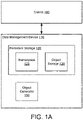
- FIG. 1 shows a system in accordance with one or more embodiments of the invention.
- the system may include clients (100) that store data in the data management device (110).
- the clients (100) and data management device (110) may be operably connected to each other.
- Each component of the system is discussed below.
- the clients (100) may be computing devices.
- the computing device may be, for example, a mobile phone, a tablet computer, a laptop computer, a desktop computer, a server, or a cloud resource.
- the computing device may include one or more processors, memory (e.g., random access memory), and persistent storage (e.g., disk drives, solid state drives, etc.).
- the persistent storage may store computer instructions, e.g., computer code, that when executed by the processor(s) of the computing device cause the computing device to perform the functions described in this.
- the data management device (110) may be other types of computing devices without departing from the invention.
- the clients (100) may be programmed to stored data in the data management device (110). More specifically, the clients (100) may send data to the data management device (110) for storage and may request data managed by the data management device (110). The data management device (110) may store the data or provide the requested data in response to such requests.
- the data management device (110) may be a computing device.
- the computing device may be, for example, a mobile phone, a tablet computer, a laptop computer, a desktop computer, a server, or a cloud resource.
- the computing device may include one or more processors, memory ( e.g ., random access memory), and persistent storage ( e.g ., disk drives, solid state drives, etc.).
- the persistent storage may store computer instructions, e.g., computer code, that when executed by the processor(s) of the computing device cause the computing device to perform the functions described in this application and illustrated in at least FIGs. 4A-4E .
- the data management device (110) may be other types of computing devices without departing from the invention.
- the data management device (110) may include a persistent storage (120) and an object generator. Each component of the data management device (110) is discussed below.
- the data management device (110) includes a persistent storage (120).
- the persistent storage (120) may include physical storage devices.
- the physical storage devices may be, for example, hard disk drives, solid state drives, tape drives that support random access, or any other type of persistent storage media.
- the persistent storage (120) may include any number and/or combination of physical storage devices.
- the persistent storage (120) may include an object storage (130) for storing data from the clients (100).
- an object storage is a data storage architecture that manages data as objects. Each object may include a number of bytes for storing data in the object. In one or more embodiments of the invention, the object storage does not include a file system. Rather, a namespace (125) may be used to organize the data stored in the object storage. For additional details regarding the object storage (130), see FIG. 1B .
- the persistent storage (120) may include the namespace (125).
- the namespace (125) may be a data structure stored on physical storage devices of the persistent storage (120) that organizes the data storage resources of the physical storage devices.
- the namespace (125) may associate a file with a file recipe stored in the persistent storage.
- the file recipe may be used to generate a file stored in the object storage (130) using file segments stored in the object storage (130).
- Each file recipe may include information that enables a number of file segments to be retrieved from the object storage.
- the retrieved file segments may then be used to generate the file stored in the object storage. For additional details regarding file segments, See FIGs. 2A , 3A, and 3B .
- the data management may include an object generator (150).
- the object generator (150) may generate objects stored in the object storage (130).
- the object generator (150) may generate different types of objects. More specifically, the object generator (150) may generate data objects that store file segments and meta-data objects that store meta-data regarding file segments stored in data objects. For additional details regarding data objects and meta-data objects, See FIGs. 2A-2D .
- the object generator (150) may be a physical device.
- the physical device may include circuitry.
- the physical device may be, for example, a field-programmable gate array, application specific integrated circuit, programmable processor, microcontroller, digital signal processor, or other hardware processor.
- the physical device may be adapted to provide the functionality described in this application and to perform the methods shown in FIGs. 4A-4E .
- the object generator (150) may be implemented as computer instructions, e.g., computer code, stored on a persistent storage that when executed by a processor of the data management device (110) cause the data management device (110) to provide the functionality described throughout this application and to perform the methods shown in FIGs. 4A-4E .
- FIG. 1B shows a diagram of an object storage (130) in accordance with one or more embodiments of the invention.
- the object storage (130) may be a data structure that organizes stored data into objects.
- the object storage (130) includes at least one data object (132A) and at least one meta-data object (133A).
- the data objects (132A) include file segments of files.
- the meta-data objects (133A) include meta-data regarding the file segments stored in data objects (132A).
- FIG. 2A shows an example of a data object in accordance with one or more embodiments of the invention.
- the data object A (132B) includes an identifier (200), a compression region description (205), and a compression region (210A).
- the identifier (200) may be a name, bit sequence, or other information used to identify the data object.
- the identifier (200) may uniquely identify the data from the other objects of the object storage.
- the compression region description (205) includes description information regarding the compression region (210A).
- the compression region description (205) includes information that enables file segments stored in the compression region (210A) to be read.
- the compression region description (205) includes information that specifies the start of each file segment and the length of each file segment stored in the compression region.
- the compression region description (205) may include other information without departing from the invention.
- the compression region (210A) includes any number of file segments (210B-210N).
- the file segments of the compression region (210A) may be aggregated together.
- the compression region (210A) is compressed.
- the compression of the compression region (210A) may be a lossless compression.
- FIG. 2B shows an example of a meta-data object in accordance with one or more embodiments of the invention.
- the meta-data object A (133B) includes an identifier (220), a meta-data region description (225), and a meta-data region (230A).
- the identifier (220) may be a name, bit sequence, or other information used to identify the data object.
- the identifier (220) may uniquely identify the data from the other objects of the object storage.
- the meta-data region description (225) includes description information regarding the meta-data region (230A).
- the meta-data region description (225) includes information that enables file segment meta-data stored in the meta-data region (230A) to be read.
- the meta-data region description (225) includes information that specifies the start of each file segment meta-data, the length of each file segment meta-data, and/or the end of each file segment meta-data stored in the meta-data region (230A).
- the meta-data region description (225) may include other information without departing from the invention.
- the meta-data region (230A) includes file segment meta-data (230B-230N) regarding file segments stored in one or more data objects of the object storage.
- the file segment meta-data stored in the meta-data region (230A) may be aggregated together.
- the meta-data region (230A) is not compressed.
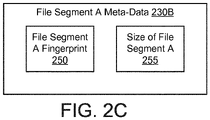
- FIG. 2C shows an example of file segment meta-data in accordance with one or more embodiments of the invention.
- the file segment A meta-data (230B) includes meta-data regarding an associated file segment stored in a data object of the object storage.
- the file segment A meta-data (230B) includes a file segment A fingerprint (250) and a size of file segment A (255).
- the file segment A meta-data (230B) may include a fingerprint of the associated file segment.
- the size of file segment A (255) may specify the size of the associated file segment.
- a fingerprint of a file segment may be a bit sequence that virtually uniquely identifies the file segment from other file segments stored in the object storage.
- virtually uniquely means that the probability of collision between each fingerprint of two file segments that include different data is negligible, compared to the probability of other unavoidable causes of fatal errors.
- the probability is 10 ⁇ -20 or less.
- the unavoidable fatal error may be caused by a force of nature such as, for example, a tornado.
- the fingerprint of any two file segments that specify different data will virtually always be different.
- Fingerprints of the file segments stored in the object storage may be used to deduplicate files for storage in the object storage.
- FIGs. 2D , 3A, and 3B include graphical representations of the relationships.
- FIG. 2D shows a relationship diagram that illustrate relationships between file segments, meta-data of the file segments, and fingerprints of the meta-data in accordance with one or more embodiments of the invention.
- meta-data regarding a file segment stored in the object storage there is a one to one relationship between meta-data regarding a file segment stored in the object storage and the file segment stored in the object storage.
- associated file segment A meta-data (270) will be store in a meta-data object storage.
- a single copy of the file segment A (271) and the file segment A meta-data (270) will be stored in the object storage.
- file segments of different files may have the same fingerprint.
- a file segment A (271) of a first file and a file segment B (272) of a second file may have the same fingerprint A (275) if both include the same data.
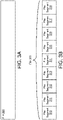
- FIG. 3A shows a diagram of a file (300) in accordance with one or more embodiments of the invention.
- the file may include data.
- the data may be any type of data, may be in any format, and of any length.
- FIG. 3B shows a diagram of file segments (310-318) of the file (300) of the data.
- Each file segment may include separate, distinct portions of the file (300).
- Each of the file segments may be of different, but similar lengths.
- each file segment may include approximately 8 kilobytes of data, e.g., a first file segment may include 8.03 kilobytes of data, the second file segment may include 7.96 kilobytes of data, etc.
- the average amount of data of each file segment is between 7.95 and 8.05 kilobytes.
- a file may be broken up into file segment using the method illustrated in FIG. 4B .
- the data management device (110, FIG. 1A ) may receive data from clients (100, FIG. 1A ) for storage.
- the data management device (110, FIG. 1A ) may store the data in an object storage (130, FIG. 1A ).
- FIGs. 4A-4E show flowcharts of methods of storing data in the object storage (130, FIG. 1D).
- FIG. 4A shows a flowchart of a method in accordance with one or more embodiments of the invention.
- the method depicted in FIG. 4A may be used to store data in an object storage in accordance with one or more embodiments of the invention.
- the method shown in FIG. 4A may be performed by, for example, an object generator (150, FIG. 1A ).
- Other component of the data management device (110) or the illustrated system may perform the method illustrated in FIG. 4A without departing from the invention.
- Step 400 a file is obtained for storage.
- the file may be obtained by receiving a file storage request from a client that specifies the file.
- Step 410 the file is segmented to obtain file segments.
- the file may be segmented to obtain file segments by performing the method shown in FIG. 4B .
- the file may be segmented to obtain file segments using other methods than the method shown in FIG. 4B without departing from the invention.
- Step 420 the file segments are deduplicated.
- the file segments may be deduplicated using the method shown in FIG. 4C .
- the file segments may be deduplicated using other methods than the method shown in FIG. 4C without departing from the invention.
- the deduplicated file segments are stored in a data object.
- the file segments may be stored in a data object using the method shown in FIG. 4D .
- the file segments may be stored in a data object using other methods than the method shown in FIG. 4D without departing from the invention.
- meta-data of the deduplicated file segments are stored in a meta-data object.
- the meta-data of the deduplicated file segments may be stored in a meta-data object using the method shown in FIG. 4E .
- the meta-data of the deduplicated file segments may be stored in a meta-data object using other methods than the method shown in FIG. 4C without departing from the invention.
- the method may end following Step 440.
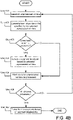
- FIG. 4B shows a flowchart of a method in accordance with one or more embodiments of the invention.
- the method depicted in FIG. 4B may be used to store file segments of a file in accordance with one or more embodiments of the invention.
- the method shown in FIG. 4A may be performed by, for example, an object generator (150, FIG. 1A ).
- Other component of the data management device (110) or the illustrated system may perform the method illustrated in FIG. 4B without departing from the invention.
- an unprocessed window of a file is selected.
- a window of a portion of the file is a predetermined number of bits of the file.
- a first window may be the first 1024 bits of the file
- a second window may be 1024 bits of the file starting at the second bit of the file
- the third window may be 1024 bits of the file starting at the third bit, etc.
- Each window of the file may be considered to be unprocessed at the start of the method illustrated in FIG. 4B .
- a hash of the portion of the file specified by the unprocessed window is obtained.
- the hash may be a cryptographic hash.
- the cryptographic hash is a secure hash algorithm 1 (SHA-1) hash.
- the cryptographic hash is a secure hash algorithm 2 (SHA-2) or a secure hash algorithm 3 (SHA-3) hash. Other hashes may be used without departing from the invention.
- Step 403 hash is compared to a predetermined bit sequence. If the hash matches the predetermined bit sequence, the method proceeds to Step 404. If the hash does not match the predetermined bit sequence, the method proceeds to Step 405.
- the predetermined bit sequence includes the same number of bits as the hash.
- the predetermined bit sequence may be any bit pattern. The same bit pattern may used each time a hash is compared to the bit sequence in the method shown in FIG. 4B .
- a segment breakpoint may be generated based on the selected unprocessed window.
- the segment breakpoint may specify a bit of the file.
- the bit of the file may be the first bit of the file specified by the unprocessed window.
- the selected unprocessed window is marked as processed.
- the selected unprocessed window may be marked as unprocessed by, for example, incrementing a bookmark that specifies a bit of the file to the next bit of the file.
- Step 406 it is determined whether all of the windows of the file are processed. If all of the windows of the file are processed, the method may proceed to Step 407. If all of the windows of the file are not processed, the method may proceed to Step 401.
- the length of the window and the bookmark that specifies the bit of the file may be used to determine whether all of the windows are processed. Specifically, the bookmark and the length of the window may be used to determine whether the window would exceed the length of the file.
- Step 407 the file is divided into file segments using the segment breakpoints.
- the segment breakpoints may specify bits of the file.
- the file may be broken into file segments starting and ending at each of the breakpoints.
- the method may end following Step 407.
- the method shown in FIG. 4B may be described as performing a rolling hash of the file.
- Performing the rolling hash may generate hashes, i.e., bit sequences, corresponding to portions of the file.
- Each portion of the file may start at different bits of the file and include the same number of bits.
- Each of the generated hashes may be compared to a predetermined bit sequence and thereby generate segment breakpoints.
- the same predetermined bit sequence may be used in Step 403. Using the same bit sequence in Step 403 will increase the likelihood that file are segmented similarly each time copies of the file are segmented.
- FIG. 4C shows a flowchart of a method in accordance with one or more embodiments of the invention.
- the method depicted in FIG. 4C may be used to deduplicate file segments of a file in accordance with one or more embodiments of the invention.
- the method shown in FIG. 4C may be performed by, for example, an object generator (150, FIG. 1A ).
- Other component of the data management device (110) or the illustrated system may perform the method illustrated in FIG. 4C without departing from the invention.
- Step 411 an unprocessed file segment of a file is selected.
- all of the file segments of a file may be considered to be unprocessed.
- a fingerprint of the selected unprocessed file segment is generated.
- the fingerprint of the unprocessed file segment is generated using Rabin's fingerprinting algorithm.
- the fingerprint of the unprocessed file segment is generated using a cryptographic hash function.
- the cryptographic hash function may be, for example, a message digest (MD) algorithm or a secure hash algorithm (SHA).
- MD message digest
- SHA secure hash algorithm
- the message MD algorithm may be MD5.
- the SHA may be SHA-0, SHA-1, SHA-2, or SHA3. Other fingerprinting algorithms may be used without departing from the invention.
- Step 413 it is determined whether the generated fingerprint matches an existing fingerprint stored in the object storage. If the generated fingerprint matches an existing fingerprint, the method proceeds to Step 414. If the generated fingerprint does not match an existing fingerprint, the method proceeds to Step 405.
- the generated fingerprint is only a matched to a portion of the fingerprints stored in the object storage. For example, only fingerprints stored in a portion of the meta-data objects of the object storage may be loaded into memory and used as the basis for comparison of the generated fingerprint.
- Step 414 the selected unprocessed file segment is marked as a duplicate.
- Step 415 the selected unprocessed file segment is marked as processed.
- Step 416 it is determined whether all of the file segments of the file are processed. If all of the windows of the file segments of the file are processed, the method may proceed to Step 417. If all of the windows of the file segments of the file are not processed, the method may proceed to Step 411.
- Step 417 all of the file segments marked as duplicate are deleted.
- the remaining file segments, i.e., the file segments not deleted in Step 417, are the deduplicated file segments.
- the method may end following Step 417.
- FIG. 4C shows a process of performing deduplication by identifying groups of duplicate segments and then deleting the segments
- other methods that are not performed in a batch process can be used without departing from the invention. For example, whenever a fingerprint is identified to not match an existing fingerprint in Step 413, the corresponding file segment could be stored in a data object. In other words, an inline rather than a batching processes could be used without departing from the invention.
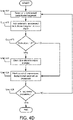
- FIG. 4D shows a flowchart of a method in accordance with one or more embodiments of the invention.
- the method depicted in FIG. 4D may be used to store deduplicate file segments in an object storage in accordance with one or more embodiments of the invention.
- the method shown in FIG. 4D may be performed by, for example, an object generator (150, FIG. 1A ).
- Other component of the data management device (110) or the illustrated system may perform the method illustrated in FIG. 4D without departing from the invention.
- Step 421 an unprocessed deduplicated file segment is selected.
- all of the file segments may be considered to be unprocessed.
- Step 422 the selected unprocessed deduplicated file segment is added to a data object.
- the selected unprocessed deduplicated file segment may be added to a compression region of a data object.
- the unprocessed deduplicated file segment may be compressed before being added to the compression region.
- the compression region description of the data object may be updated based on the addition. More specifically, the start, length, and/or end of the deduplicated file segment within the data object may be added to the compression region description. Different information may be added to the compression region description to update the compression region description without departing from the invention.
- Step 423 it is determined whether the data object is full. If the data object is full, the method proceeds to Step 424. If the data object is not full, the method proceeds to Step 425.
- the data object may be determined to be full based on the quantity of data stored in the compression region. More specifically, the determination maybe based on a number of bytes required to store the compressed file segments of the compression region.
- the number of bits may be a predetermined quantity of bits such as, for example, 5 megabytes.
- Step 424 the data object is stored in the object storage.
- the file segments of the compression region may be compressed before the data object is stored in the object storage.
- Step 425 the selected unprocessed deduplicated file segment is marked as processed.
- Step 426 it is determined whether all of the deduplicated file segments are processed. If all of the deduplicate file segments are processed, the method may end following Step 426. If all of the deduplicated file segments are not processed, the method may proceed to Step 421.
- FIG. 4E shows a flowchart of a method in accordance with one or more embodiments of the invention.
- the method depicted in FIG. 4E may be used to store meta-data in an object storage in accordance with one or more embodiments of the invention.
- the method shown in FIG. 4E may be performed by, for example, an object generator (150, FIG. 1A ).
- Other component of the data management device (110) or the illustrated system may perform the method illustrated in FIG. 4E without departing from the invention.
- Step 431 an unprocessed deduplicated file segment is selected.
- all of the deduplicated file segments may be considered to be unprocessed.
- Step 432 a fingerprint of the selected unprocessed deduplicate file segment is added to a meta-data object.
- the fingerprint of the selected unprocessed deduplicated file segment may be added to a meta-data region of a meta-data object.
- the meta-data region description of the meta-data object may be updated based on the addition. More specifically, the start, length, and/or end of the fingerprint within the data object may be added to the meta-data region description. Different information may be added to the meta-data region description to update the meta-data region description without departing from the invention. For example, a size of the selected unprocessed deduplicated file segment may be added to the meta-data region, in addition to the fingerprint, without departing from the invention.
- Step 433 it is determined whether the meta-data object is full. If the meta-data object is full, the method proceeds to Step 434. If the meta-data object is not full, the method proceeds to Step 435.
- the meta-data object may be determined to be full based on the quantity of data stored in the meta-data region. More specifically, the determination maybe based on a number of bytes required to store the meta-data of the meta-data region.
- the number of bits may be a predetermined quantity of bits such as, for example, 5 megabytes.
- Step 434 the meta-data object is stored in the object storage.
- Step 435 the selected unprocessed deduplicated file segment is marked as processed.
- Step 436 it is determined whether all of the deduplicated file segments are processed. If all of the deduplicate file segments are processed, the method may end following Step 436. If all of the deduplicated file segments are not processed, the method may proceed to Step 431.
- Steps 432-435 may be performed in coordination with Step 422-425 of FIG. 4D .
- a client send a data storage request to a data management device.
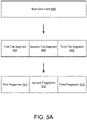
- the data storage request specifies a text document 500 as shown in FIG. 5A .
- the data management device obtains the requested text document 500.
- the text document may be, for example, a word document including a final draft of a report documenting the status of a project. A previous draft of the report documenting the status of the project is already stored in the data management device.
- the data management device segments the file a first file segment (501), a second file segment (502), and a third file segment (503).
- the data management device generates a first fingerprint (511) of the first file segment (501), a second fingerprint (512) of the second file segment (502), and a third fingerprint (513) of the third file segment (503).
- the first file segment includes an introductory portion of the report that was not changed from the draft of the report.
- the second file segment includes a required materials portion of the report that was changed from the draft of the report.
- the third file segment includes a project completion timeline that was changed from draft of the report.
- the file segments (511-513) are then deduplicated.
- the data management device matched the first fingerprint (511) to a stored fingerprint (515) corresponding to a file segment of the draft report that included the introduction section of the report.
- the second fingerprint (512) and third fingerprint (513) did not match any fingerprints in the object storage.
- the example ends following the storage of the data object (520) and meta-data object (550) in the object storage.
- One or more embodiments of the invention may be implemented using instructions executed by one or more processors in the data storage device. Further, such instructions may correspond to computer readable instructions that are stored on one or more non-transitory computer readable mediums.
- One or more embodiments of the invention may enable one or more of the following: i) reduces the number of disk input-output (IO) operation required to deduplicate a file when compared to an object storage that stores both data and meta-data in the same object, ii) reduces the number of disk (IO) operation required to required to perform garbage collection when compared to an object storage that stores both data and meta-data in the same object, and iii) reduces the bandwidth used to perform deduplication when a portion of the object storage utilizes data store of a remote computing device.
- IO disk input-output
Landscapes
- Engineering & Computer Science (AREA)
- Theoretical Computer Science (AREA)
- Physics & Mathematics (AREA)
- General Engineering & Computer Science (AREA)
- General Physics & Mathematics (AREA)
- Human Computer Interaction (AREA)
- Data Mining & Analysis (AREA)
- Databases & Information Systems (AREA)
- Information Retrieval, Db Structures And Fs Structures Therefor (AREA)
Description
- Computing devices generate, use, and store data. The data may be, for example, images, document, webpages, or meta-data associated with any of the files. The data may be stored locally on a persistent storage of a computing device and/or may be stored remotely on a persistent storage of another computing device.
-
US 2011/185149 provides data deduplication compression in a streaming storage application which provides a deduplication archive that enables storage of the archive to, and extraction from, a streaming storage medium. One implementation involves compressing fully sequential data stored in a data repository to a sequential streaming storage, by: splitting fully sequential data into data blocks; hashing content of each data block and comparing each hash to an in-memory lookup table for a match, the in-memory lookup table storing all hashes that have been encountered during the compression of the fully sequential data; for each data block without a hash match, adding the data block as a new data block for compression of fully sequential data; and encoding duplicate data blocks using the in-memory lookup table into data segments. - Efficient Deduplication Techniques for Modern Backup Operation of JEAHONG MIN ET AL, IEEE Transactions on Computers, Vol. 60, No. 6, June 2011, proposes efficient deduplication techniques for modern backup operation using a modified algorithm which maintains tables to exploit temporal locality of fingerprint lookup, and context aware chunking to maximise chunking speed and deduplication ratio.
- The invention is defined in the independent claims set out below. Preferable features are set out in the dependent claims.
- Certain embodiments of the invention will be described with reference to the accompanying drawings. However, the accompanying drawings illustrate only certain aspects or implementations of the invention by way of example and are not meant to limit the scope of the claims.
-
FIG. 1A shows a diagram of a system in accordance with one or more embodiments of the invention. -
FIG. 1B shows a diagram of an object storage in accordance with one or more embodiments of the invention. -
FIG. 2A shows a diagram of a data object in accordance with one or more embodiments of the invention. -
FIG. 2B shows a diagram of a meta-data object in accordance with one or more embodiments of the invention. -
FIG. 2C shows a diagram of meta-data stored in a meta-data object in accordance with one or more embodiments of the invention. -
FIG. 2D shows a diagram of data relationships in accordance with one or more embodiments of the invention. -
FIG. 3A shows a diagram of a file in accordance with one or more embodiments of the invention. -
FIG. 3B shows a diagram of a relationship between file segments of a file and the file in accordance with one or more embodiments of the invention. -
FIG. 4A shows a flowchart of a method of storing data in an object storage in accordance with one or more embodiments of the invention. -
FIG. 4B shows a flowchart of a method of segmenting a file in accordance with one or more embodiments of the invention. -
FIG. 4C shows a flowchart of a method of deduplicating file segments in accordance with one or more embodiments of the invention. -
FIG. 4D shows a flowchart of a method of storing deduplicated file segments in a data object in accordance with one or more embodiments of the invention. -
FIG. 4E shows a flowchart of a method of storing meta-data of deduplicated file segments in a meta-data object in accordance with one or more embodiments of the invention. -
FIG. 5A shows a first portion of an example of storing data in an object storage. -
FIG. 5B shows a second portion of the example of storing data in the object storage. -
FIG. 5C shows a third portion of the example of storing data in the object storage. - In general, embodiments of the invention relate to systems, devices, and methods for managing data. More specifically, the systems, devices, and methods may reduce the amount of storage required to store data.
- In one or more embodiments of the invention, a data management device includes an object storage. The object storage stores two different types of object. The first type is a data object that stored portions of files. Files are divided into segments and the segments are stored in one or more data objects. The second type is a meta-data object that stores information related to the portions of the files stored in data objects. The information related to the portion, e.g., the segments, of the files stored in the meta-data objects may include fingerprints of the portions of the files, e.g., fingerprints of the segments, and the size of the portions of the files and/or the files stored in the data objects.
- In one or more embodiments of the invention, the object storage is a deduplicate storage. Data to-be-stored in the object storage is deduplicated, before storage, by dividing the to-be-stored data into file segments, identifying file segments that are duplicates of file segments already stored in the object storage, deleting the identified duplicate file segments, and storing the remaining file segments in data objects of the object storage. Meta-data corresponding to the now-stored file segments is stored in meta-data objects of the object storage. Removing the duplicate file segments may reduce the quantity of storage required to store the to-be-stored data when compared to the quantity of storage space required to store the to-be-stored data without being deduplicated.
-
FIG. 1 shows a system in accordance with one or more embodiments of the invention. The system may include clients (100) that store data in the data management device (110). The clients (100) and data management device (110) may be operably connected to each other. Each component of the system is discussed below. - The clients (100) may be computing devices. The computing device may be, for example, a mobile phone, a tablet computer, a laptop computer, a desktop computer, a server, or a cloud resource. The computing device may include one or more processors, memory (e.g., random access memory), and persistent storage (e.g., disk drives, solid state drives, etc.). The persistent storage may store computer instructions, e.g., computer code, that when executed by the processor(s) of the computing device cause the computing device to perform the functions described in this. The data management device (110) may be other types of computing devices without departing from the invention.
- The clients (100) may be programmed to stored data in the data management device (110). More specifically, the clients (100) may send data to the data management device (110) for storage and may request data managed by the data management device (110). The data management device (110) may store the data or provide the requested data in response to such requests.
- The data management device (110) may be a computing device. The computing device may be, for example, a mobile phone, a tablet computer, a laptop computer, a desktop computer, a server, or a cloud resource. The computing device may include one or more processors, memory (e.g., random access memory), and persistent storage (e.g., disk drives, solid state drives, etc.). The persistent storage may store computer instructions, e.g., computer code, that when executed by the processor(s) of the computing device cause the computing device to perform the functions described in this application and illustrated in at least
FIGs. 4A-4E . The data management device (110) may be other types of computing devices without departing from the invention. - The data management device (110) may include a persistent storage (120) and an object generator. Each component of the data management device (110) is discussed below.
- The data management device (110) includes a persistent storage (120). The persistent storage (120) may include physical storage devices. The physical storage devices may be, for example, hard disk drives, solid state drives, tape drives that support random access, or any other type of persistent storage media. The persistent storage (120) may include any number and/or combination of physical storage devices.
- The persistent storage (120) may include an object storage (130) for storing data from the clients (100). As used herein, an object storage is a data storage architecture that manages data as objects. Each object may include a number of bytes for storing data in the object. In one or more embodiments of the invention, the object storage does not include a file system. Rather, a namespace (125) may be used to organize the data stored in the object storage. For additional details regarding the object storage (130), see
FIG. 1B . - The persistent storage (120) may include the namespace (125). The namespace (125) may be a data structure stored on physical storage devices of the persistent storage (120) that organizes the data storage resources of the physical storage devices.
- In one or more embodiments of the invention, the namespace (125) may associate a file with a file recipe stored in the persistent storage. The file recipe may be used to generate a file stored in the object storage (130) using file segments stored in the object storage (130). Each file recipe may include information that enables a number of file segments to be retrieved from the object storage. The retrieved file segments may then be used to generate the file stored in the object storage. For additional details regarding file segments, See
FIGs. 2A ,3A, and 3B . - The data management may include an object generator (150). The object generator (150) may generate objects stored in the object storage (130). The object generator (150) may generate different types of objects. More specifically, the object generator (150) may generate data objects that store file segments and meta-data objects that store meta-data regarding file segments stored in data objects. For additional details regarding data objects and meta-data objects, See
FIGs. 2A-2D . - In one or more embodiments of the invention, the object generator (150) may be a physical device. The physical device may include circuitry. The physical device may be, for example, a field-programmable gate array, application specific integrated circuit, programmable processor, microcontroller, digital signal processor, or other hardware processor. The physical device may be adapted to provide the functionality described in this application and to perform the methods shown in
FIGs. 4A-4E . - In one or more embodiments of the invention, the object generator (150) may be implemented as computer instructions, e.g., computer code, stored on a persistent storage that when executed by a processor of the data management device (110) cause the data management device (110) to provide the functionality described throughout this application and to perform the methods shown in
FIGs. 4A-4E . - As discussed above, the object generator (150) may generate objects stored in the object storage (130).
FIG. 1B shows a diagram of an object storage (130) in accordance with one or more embodiments of the invention. The object storage (130) may be a data structure that organizes stored data into objects. - In one or more embodiments of the invention, the object storage (130) includes at least one data object (132A) and at least one meta-data object (133A). The data objects (132A) include file segments of files. The meta-data objects (133A) include meta-data regarding the file segments stored in data objects (132A).
-
FIG. 2A shows an example of a data object in accordance with one or more embodiments of the invention. The data object A (132B) includes an identifier (200), a compression region description (205), and a compression region (210A). - The identifier (200) may be a name, bit sequence, or other information used to identify the data object. The identifier (200) may uniquely identify the data from the other objects of the object storage.
- The compression region description (205) includes description information regarding the compression region (210A). The compression region description (205) includes information that enables file segments stored in the compression region (210A) to be read. The compression region description (205) includes information that specifies the start of each file segment and the length of each file segment stored in the compression region. The compression region description (205) may include other information without departing from the invention.
- The compression region (210A) includes any number of file segments (210B-210N). The file segments of the compression region (210A) may be aggregated together. The compression region (210A) is compressed. The compression of the compression region (210A) may be a lossless compression.
-
FIG. 2B shows an example of a meta-data object in accordance with one or more embodiments of the invention. The meta-data object A (133B) includes an identifier (220), a meta-data region description (225), and a meta-data region (230A). - The identifier (220) may be a name, bit sequence, or other information used to identify the data object. The identifier (220) may uniquely identify the data from the other objects of the object storage.
- The meta-data region description (225) includes description information regarding the meta-data region (230A). The meta-data region description (225) includes information that enables file segment meta-data stored in the meta-data region (230A) to be read. The meta-data region description (225) includes information that specifies the start of each file segment meta-data, the length of each file segment meta-data, and/or the end of each file segment meta-data stored in the meta-data region (230A). The meta-data region description (225) may include other information without departing from the invention.
- The meta-data region (230A) includes file segment meta-data (230B-230N) regarding file segments stored in one or more data objects of the object storage. The file segment meta-data stored in the meta-data region (230A) may be aggregated together. In one or more embodiments of the invention, the meta-data region (230A) is not compressed.
-
FIG. 2C shows an example of file segment meta-data in accordance with one or more embodiments of the invention. The file segment A meta-data (230B) includes meta-data regarding an associated file segment stored in a data object of the object storage. The file segment A meta-data (230B) includes a file segment A fingerprint (250) and a size of file segment A (255). The file segment A meta-data (230B) may include a fingerprint of the associated file segment. The size of file segment A (255) may specify the size of the associated file segment. - As used herein, a fingerprint of a file segment may be a bit sequence that virtually uniquely identifies the file segment from other file segments stored in the object storage. As used herein, virtually uniquely means that the probability of collision between each fingerprint of two file segments that include different data is negligible, compared to the probability of other unavoidable causes of fatal errors. In one or more embodiments of the invention, the probability is 10^-20 or less. In one or more embodiments of the invention, the unavoidable fatal error may be caused by a force of nature such as, for example, a tornado. In other words, the fingerprint of any two file segments that specify different data will virtually always be different.
- Fingerprints of the file segments stored in the object storage may be used to deduplicate files for storage in the object storage. To further clarify the relationships between files, file segments, and fingerprints,
FIGs. 2D ,3A, and 3B include graphical representations of the relationships. - More specifically,
FIG. 2D shows a relationship diagram that illustrate relationships between file segments, meta-data of the file segments, and fingerprints of the meta-data in accordance with one or more embodiments of the invention. - As seen from the diagram, there is a one to one relationship between meta-data regarding a file segment stored in the object storage and the file segment stored in the object storage. In other words, for an example file segment A (271) stored in a data object of the object storage, associated file segment A meta-data (270) will be store in a meta-data object storage. A single copy of the file segment A (271) and the file segment A meta-data (270) will be stored in the object storage.
- Additionally, as seen from
FIG. 2D , there is a one to many relationship between file segments and fingerprints. More specifically, file segments of different files, or the same file, may have the same fingerprint. For example, a file segment A (271) of a first file and a file segment B (272) of a second file may have the same fingerprint A (275) if both include the same data. -
FIG. 3A shows a diagram of a file (300) in accordance with one or more embodiments of the invention. The file may include data. The data may be any type of data, may be in any format, and of any length. -
FIG. 3B shows a diagram of file segments (310-318) of the file (300) of the data. Each file segment may include separate, distinct portions of the file (300). Each of the file segments may be of different, but similar lengths. For example, each file segment may include approximately 8 kilobytes of data, e.g., a first file segment may include 8.03 kilobytes of data, the second file segment may include 7.96 kilobytes of data, etc. In one or more embodiments of the invention, the average amount of data of each file segment is between 7.95 and 8.05 kilobytes. A file may be broken up into file segment using the method illustrated inFIG. 4B . - As discussed above, the data management device (110,
FIG. 1A ) may receive data from clients (100,FIG. 1A ) for storage. The data management device (110,FIG. 1A ) may store the data in an object storage (130,FIG. 1A ).FIGs. 4A-4E show flowcharts of methods of storing data in the object storage (130, FIG. 1D). -
FIG. 4A shows a flowchart of a method in accordance with one or more embodiments of the invention. The method depicted inFIG. 4A may be used to store data in an object storage in accordance with one or more embodiments of the invention. The method shown inFIG. 4A may be performed by, for example, an object generator (150,FIG. 1A ). Other component of the data management device (110) or the illustrated system may perform the method illustrated inFIG. 4A without departing from the invention. - In
Step 400, a file is obtained for storage. The file may be obtained by receiving a file storage request from a client that specifies the file. - In
Step 410, the file is segmented to obtain file segments. The file may be segmented to obtain file segments by performing the method shown inFIG. 4B . The file may be segmented to obtain file segments using other methods than the method shown inFIG. 4B without departing from the invention. - In
Step 420, the file segments are deduplicated. The file segments may be deduplicated using the method shown inFIG. 4C . The file segments may be deduplicated using other methods than the method shown inFIG. 4C without departing from the invention. - In
Step 430, the deduplicated file segments are stored in a data object. The file segments may be stored in a data object using the method shown inFIG. 4D . The file segments may be stored in a data object using other methods than the method shown inFIG. 4D without departing from the invention. - In
Step 440, meta-data of the deduplicated file segments are stored in a meta-data object. The meta-data of the deduplicated file segments may be stored in a meta-data object using the method shown inFIG. 4E . The meta-data of the deduplicated file segments may be stored in a meta-data object using other methods than the method shown inFIG. 4C without departing from the invention. - The method may end following
Step 440. -
FIG. 4B shows a flowchart of a method in accordance with one or more embodiments of the invention. The method depicted inFIG. 4B may be used to store file segments of a file in accordance with one or more embodiments of the invention. The method shown inFIG. 4A may be performed by, for example, an object generator (150,FIG. 1A ). Other component of the data management device (110) or the illustrated system may perform the method illustrated inFIG. 4B without departing from the invention. - In
Step 401, an unprocessed window of a file is selected. As used herein, a window of a portion of the file is a predetermined number of bits of the file. For example, a first window may be the first 1024 bits of the file, a second window may be 1024 bits of the file starting at the second bit of the file, the third window may be 1024 bits of the file starting at the third bit, etc. Each window of the file may be considered to be unprocessed at the start of the method illustrated inFIG. 4B . - In
Step 402, a hash of the portion of the file specified by the unprocessed window is obtained. In one or more embodiments of the invention, the hash may be a cryptographic hash. In one or more embodiments of the invention, the cryptographic hash is a secure hash algorithm 1 (SHA-1) hash. In one or more embodiments of the invention, the cryptographic hash is a secure hash algorithm 2 (SHA-2) or a secure hash algorithm 3 (SHA-3) hash. Other hashes may be used without departing from the invention. - In
Step 403, hash is compared to a predetermined bit sequence. If the hash matches the predetermined bit sequence, the method proceeds to Step 404. If the hash does not match the predetermined bit sequence, the method proceeds to Step 405. - In one or more embodiments of the invention, the predetermined bit sequence includes the same number of bits as the hash. The predetermined bit sequence may be any bit pattern. The same bit pattern may used each time a hash is compared to the bit sequence in the method shown in
FIG. 4B . - In
Step 404, a segment breakpoint may be generated based on the selected unprocessed window. The segment breakpoint may specify a bit of the file. The bit of the file may be the first bit of the file specified by the unprocessed window. - In
Step 405, the selected unprocessed window is marked as processed. The selected unprocessed window may be marked as unprocessed by, for example, incrementing a bookmark that specifies a bit of the file to the next bit of the file. - In
Step 406, it is determined whether all of the windows of the file are processed. If all of the windows of the file are processed, the method may proceed to Step 407. If all of the windows of the file are not processed, the method may proceed to Step 401. - In one or more embodiments of the invention, the length of the window and the bookmark that specifies the bit of the file may be used to determine whether all of the windows are processed. Specifically, the bookmark and the length of the window may be used to determine whether the window would exceed the length of the file.
- In
Step 407, the file is divided into file segments using the segment breakpoints. As discussed above, the segment breakpoints may specify bits of the file. The file may be broken into file segments starting and ending at each of the breakpoints. - The method may end following
Step 407. - In one or more embodiments of the invention, the method shown in
FIG. 4B may be described as performing a rolling hash of the file. Performing the rolling hash may generate hashes, i.e., bit sequences, corresponding to portions of the file. Each portion of the file may start at different bits of the file and include the same number of bits. Each of the generated hashes may be compared to a predetermined bit sequence and thereby generate segment breakpoints. Each time a file is segmented using the method shown inFIG. 4B , the same predetermined bit sequence may be used inStep 403. Using the same bit sequence inStep 403 will increase the likelihood that file are segmented similarly each time copies of the file are segmented. -
FIG. 4C shows a flowchart of a method in accordance with one or more embodiments of the invention. The method depicted inFIG. 4C may be used to deduplicate file segments of a file in accordance with one or more embodiments of the invention. The method shown inFIG. 4C may be performed by, for example, an object generator (150,FIG. 1A ). Other component of the data management device (110) or the illustrated system may perform the method illustrated inFIG. 4C without departing from the invention. - In
Step 411, an unprocessed file segment of a file is selected. At the start of the method illustrated inFIG. 4C , all of the file segments of a file may be considered to be unprocessed. - In
Step 412, a fingerprint of the selected unprocessed file segment is generated. In one or more embodiments of the invention, the fingerprint of the unprocessed file segment is generated using Rabin's fingerprinting algorithm. In one or more embodiments of the invention, the fingerprint of the unprocessed file segment is generated using a cryptographic hash function. The cryptographic hash function may be, for example, a message digest (MD) algorithm or a secure hash algorithm (SHA). The message MD algorithm may be MD5. The SHA may be SHA-0, SHA-1, SHA-2, or SHA3. Other fingerprinting algorithms may be used without departing from the invention. - In
Step 413, it is determined whether the generated fingerprint matches an existing fingerprint stored in the object storage. If the generated fingerprint matches an existing fingerprint, the method proceeds to Step 414. If the generated fingerprint does not match an existing fingerprint, the method proceeds to Step 405. - In one or more embodiments of the invention, the generated fingerprint is only a matched to a portion of the fingerprints stored in the object storage. For example, only fingerprints stored in a portion of the meta-data objects of the object storage may be loaded into memory and used as the basis for comparison of the generated fingerprint.
- In
Step 414, the selected unprocessed file segment is marked as a duplicate. - In
Step 415, the selected unprocessed file segment is marked as processed. - In
Step 416, it is determined whether all of the file segments of the file are processed. If all of the windows of the file segments of the file are processed, the method may proceed to Step 417. If all of the windows of the file segments of the file are not processed, the method may proceed to Step 411. - In
Step 417, all of the file segments marked as duplicate are deleted. The remaining file segments, i.e., the file segments not deleted inStep 417, are the deduplicated file segments. - The method may end following
Step 417. - While
FIG. 4C shows a process of performing deduplication by identifying groups of duplicate segments and then deleting the segments, other methods that are not performed in a batch process can be used without departing from the invention. For example, whenever a fingerprint is identified to not match an existing fingerprint inStep 413, the corresponding file segment could be stored in a data object. In other words, an inline rather than a batching processes could be used without departing from the invention. -
FIG. 4D shows a flowchart of a method in accordance with one or more embodiments of the invention. The method depicted inFIG. 4D may be used to store deduplicate file segments in an object storage in accordance with one or more embodiments of the invention. The method shown inFIG. 4D may be performed by, for example, an object generator (150,FIG. 1A ). Other component of the data management device (110) or the illustrated system may perform the method illustrated inFIG. 4D without departing from the invention. - In
Step 421, an unprocessed deduplicated file segment is selected. At the start of the method illustrated inFIG. 4D , all of the file segments may be considered to be unprocessed. - In
Step 422, the selected unprocessed deduplicated file segment is added to a data object. - In one or more embodiments of the invention, the selected unprocessed deduplicated file segment may be added to a compression region of a data object. The unprocessed deduplicated file segment may be compressed before being added to the compression region. The compression region description of the data object may be updated based on the addition. More specifically, the start, length, and/or end of the deduplicated file segment within the data object may be added to the compression region description. Different information may be added to the compression region description to update the compression region description without departing from the invention.
- In
Step 423, it is determined whether the data object is full. If the data object is full, the method proceeds to Step 424. If the data object is not full, the method proceeds to Step 425. - The data object may be determined to be full based on the quantity of data stored in the compression region. More specifically, the determination maybe based on a number of bytes required to store the compressed file segments of the compression region. The number of bits may be a predetermined quantity of bits such as, for example, 5 megabytes.
- In
Step 424, the data object is stored in the object storage. - In one or more embodiments of the invention, the file segments of the compression region may be compressed before the data object is stored in the object storage.
- In
Step 425, the selected unprocessed deduplicated file segment is marked as processed. - In
Step 426, it is determined whether all of the deduplicated file segments are processed. If all of the deduplicate file segments are processed, the method may end followingStep 426. If all of the deduplicated file segments are not processed, the method may proceed to Step 421. -
FIG. 4E shows a flowchart of a method in accordance with one or more embodiments of the invention. The method depicted inFIG. 4E may be used to store meta-data in an object storage in accordance with one or more embodiments of the invention. The method shown inFIG. 4E may be performed by, for example, an object generator (150,FIG. 1A ). Other component of the data management device (110) or the illustrated system may perform the method illustrated inFIG. 4E without departing from the invention. - In
Step 431, an unprocessed deduplicated file segment is selected. At the start of the method illustrated inFIG. 4E , all of the deduplicated file segments may be considered to be unprocessed. - In
Step 432, a fingerprint of the selected unprocessed deduplicate file segment is added to a meta-data object. - In one or more embodiments of the invention, the fingerprint of the selected unprocessed deduplicated file segment may be added to a meta-data region of a meta-data object. The meta-data region description of the meta-data object may be updated based on the addition. More specifically, the start, length, and/or end of the fingerprint within the data object may be added to the meta-data region description. Different information may be added to the meta-data region description to update the meta-data region description without departing from the invention. For example, a size of the selected unprocessed deduplicated file segment may be added to the meta-data region, in addition to the fingerprint, without departing from the invention.
- In
Step 433, it is determined whether the meta-data object is full. If the meta-data object is full, the method proceeds to Step 434. If the meta-data object is not full, the method proceeds to Step 435. - The meta-data object may be determined to be full based on the quantity of data stored in the meta-data region. More specifically, the determination maybe based on a number of bytes required to store the meta-data of the meta-data region. The number of bits may be a predetermined quantity of bits such as, for example, 5 megabytes.
- In
Step 434, the meta-data object is stored in the object storage. - In
Step 435, the selected unprocessed deduplicated file segment is marked as processed. - In
Step 436, it is determined whether all of the deduplicated file segments are processed. If all of the deduplicate file segments are processed, the method may end followingStep 436. If all of the deduplicated file segments are not processed, the method may proceed to Step 431. - While illustrated as separate methods in
FIGs. 4D and4E , embodiments of the invention are not limited to separately performed methods. For example, both of the methods may be performed at the same time. Steps 432-435 may be performed in coordination with Step 422-425 ofFIG. 4D . - The following is an explanatory example. The explanatory example is included for purposes of explanation and is not limiting.
- A client send a data storage request to a data management device. The data storage request specifies a
text document 500 as shown inFIG. 5A . - In response to the data storage request, the data management device obtains the requested
text document 500. The text document may be, for example, a word document including a final draft of a report documenting the status of a project. A previous draft of the report documenting the status of the project is already stored in the data management device. - The data management device segments the file a first file segment (501), a second file segment (502), and a third file segment (503). The data management device generates a first fingerprint (511) of the first file segment (501), a second fingerprint (512) of the second file segment (502), and a third fingerprint (513) of the third file segment (503). The first file segment includes an introductory portion of the report that was not changed from the draft of the report. The second file segment includes a required materials portion of the report that was changed from the draft of the report. The third file segment includes a project completion timeline that was changed from draft of the report.
- The file segments (511-513) are then deduplicated. During deduplication shown in
FIG. 5B , the data management device matched the first fingerprint (511) to a stored fingerprint (515) corresponding to a file segment of the draft report that included the introduction section of the report. The second fingerprint (512) and third fingerprint (513) did not match any fingerprints in the object storage. - Based on the match, only the second file segment (502) and third file segment (503) were added to a data object (520) for storage in the object storage as shown in
FIG. 5C . The first file segment (501) was deleted. Similarly, only the second fingerprint (512) and third fingerprint (513) were added to a meta-data object (550) of the object storage. - The example ends following the storage of the data object (520) and meta-data object (550) in the object storage.
- One or more embodiments of the invention may be implemented using instructions executed by one or more processors in the data storage device. Further, such instructions may correspond to computer readable instructions that are stored on one or more non-transitory computer readable mediums.
- One or more embodiments of the invention may enable one or more of the following: i) reduces the number of disk input-output (IO) operation required to deduplicate a file when compared to an object storage that stores both data and meta-data in the same object, ii) reduces the number of disk (IO) operation required to required to perform garbage collection when compared to an object storage that stores both data and meta-data in the same object, and iii) reduces the bandwidth used to perform deduplication when a portion of the object storage utilizes data store of a remote computing device.
- While the invention has been described above with respect to a limited number of embodiments, those skilled in the art, having the benefit of this disclosure, will appreciate that other embodiments can be devised which do not depart from the scope of the invention as disclosed herein. Accordingly, the scope of the invention should be limited only by the attached claims.
Claims (12)
- A data management device (110), comprising:a persistent storage (120) comprising an object storage (130), wherein the object storage includes:a data object (132), wherein the data object (132) comprises:a compression region (210A), wherein the compression region (210A) is compressed and comprises a first plurality of file segments (210B-210N) associated with a first file;a compression region description (205) that specifies a start location and a length of each file segment of the first plurality of file segments; andan identifier (200);and, a meta-data object (133), wherein the meta-data object (133) comprises:a meta-data region (230A), wherein the meta-data region (230A) comprises a first plurality of file segment meta-data (230B-230N) regarding the first plurality of file segments (210B-210N);a meta-data region description (225) that specifies a start location and a length of each file segment meta-data of the first plurality of file segments (210B-210N); andan identifier (220);and, a processor programmed to:segment (410) the first file into the first plurality of file segments (210B-210N);generate the file segment meta-data of the first plurality of file segments (210B-210N);store (430) a portion of the first plurality of file segments in the data object; andstore (440) a portion of the file segment meta-data of the first plurality of file segment metadata in the meta-data object.
- The data management device (110) of claim 1, wherein the compression region (210A) comprises a second plurality of file segments associated with a second file.
- The data management device (110) of claim 2, wherein the compression region description (205) specifies the start location and a length of the second plurality of file segments.
- The data management device (110) of any of claim 1 to claim 3, wherein the meta-data of the plurality of file segments comprises:a fingerprint of a file segment of the plurality of file segments (210B-210N); anda size of the file segment of the plurality of file segments (210B-210N).
- The data management device (110) of claim 1, wherein the meta-data region (230A) is not compressed.
- The data management device (110) of claim 1, wherein segmenting the first file into the first plurality of file segments (210B-210N) comprises:generating (402) a rolling hash (SHA-1 - 3) of the first file;selecting (404) a plurality of segment breakpoints based on the rolling hash; anddividing (407) the first file into the first plurality of file segments (210B-210N) based on the segment breakpoints.
- The data management device (110) of claim 1, wherein generate meta-data of the first plurality of file segments (210B-210N) comprises:generating (412) a fingerprint of a first file segment of the first plurality of file segments (210B-210N);matching the fingerprint to a second plurality of fingerprints stored in the object storage (130);making (413) a determination that the fingerprint matches a fingerprint of the second plurality of fingerprints; anddeleting the first file segment based on the determination.
- The data management device (110) of claim 7, wherein the second plurality of fingerprints is stored in data objects of the object storage (130) that do not include file segments of any file stored in the object storage (130).
- The data management device (110) of any of claim 1 to claim 3, wherein generating meta-data of the plurality of file segments (210B-210N) comprises:generating (412) a fingerprint of a first file segment of the plurality of file segments (210B-210N);matching the fingerprint to a second plurality of fingerprints stored in the object storage (130);making (413) a determination that the fingerprint does not match a fingerprint of the second plurality of fingerprints; andselecting the first file segment for storage in the data object (132).
- The data management device (110) of claim 1, wherein storing the portion of the first plurality of file segments (210B-210N) in the data object of the object storage comprises:adding (422) a first file segment of the first plurality of file segments (210B-210N) to a first data object (132);making (423) a determination that the first data object (132) is full based on the addition of the first file segment;in response to the determination, storing (424) the first data object (132) in the object storage (130); andadding a second file segment of the first plurality of file segments (210B-210N) to a second data object that is not full.
- The data management device (110) of claim 1, wherein store the portion of the meta-data of the first plurality of file segments (210B-210N) in the meta-data object(133) of the object storage (130) comprises:Adding (432) a fingerprint of a first file segment of the first plurality of file segments (210B-210N) to the meta-data object (133);making (433) a determination that the meta-data object (133) is not full based on the addition of the fingerprint of the first file segment; andin response to the determination, adding a fingerprint of a second file segment of the first plurality of file segments (210B-210N) to the meta-data object (133).
- A method of operating a data management device (110), comprising:segmenting (410), by the data management device (110), a file into a plurality of file segments(210B-210N);generating, by the data management device (110), meta-data of the plurality of file segments(210B-210N), wherein generating, by the data management device (110), meta-data of the plurality of file segments (210B-210N) comprises:generating (412), by the data management device (110), a fingerprint of a first file segment of the plurality of file segments (210B-210N),matching, by the data management device (110), the fingerprint to a second plurality of fingerprints stored in meta-data objects of an object storage (130),making (413), by the data management device (110), a determination that the fingerprint matches a fingerprint of the second plurality of fingerprints, anddeleting, by the data management device (110), the first file segment based on the determination;storing (430), by the data management device, a portion of the plurality of file segments in a data object of the object storage; andstoring (440), by the data management device, meta-data of the plurality of file segments in a meta-data object of the object storage,wherein the meta-data object (133) further comprises a meta-data region description (225) that specifies contents of a meta-data region (230A) comprising the meta-data of the plurality of file segments (210B-210N),wherein the contents of the meta-data region description (225) comprise a start location and a length of the meta-data of the plurality of file segments (210B-210N) or a start location and an end location of the meta-data of the plurality of file segments (210B-210N).
Applications Claiming Priority (1)
| Application Number | Priority Date | Filing Date | Title |
|---|---|---|---|
| US15/656,338 US11461269B2 (en) | 2017-07-21 | 2017-07-21 | Metadata separated container format |
Publications (2)
| Publication Number | Publication Date |
|---|---|
| EP3432168A1 EP3432168A1 (en) | 2019-01-23 |
| EP3432168B1 true EP3432168B1 (en) | 2022-12-28 |
Family
ID=63014457
Family Applications (1)
| Application Number | Title | Priority Date | Filing Date |
|---|---|---|---|
| EP18184842.5A Active EP3432168B1 (en) | 2017-07-21 | 2018-07-20 | Metadata separated container format |
Country Status (3)
| Country | Link |
|---|---|
| US (1) | US11461269B2 (en) |
| EP (1) | EP3432168B1 (en) |
| CN (1) | CN110019039B (en) |
Families Citing this family (4)
| Publication number | Priority date | Publication date | Assignee | Title |
|---|---|---|---|---|
| JP6860037B2 (en) * | 2019-05-20 | 2021-04-14 | 日本電気株式会社 | Deduplication storage method, deduplication storage controller, deduplication storage system, program |
| US11861169B2 (en) * | 2020-06-26 | 2024-01-02 | Netapp, Inc. | Layout format for compressed data |
| US20220237176A1 (en) * | 2021-01-27 | 2022-07-28 | EMC IP Holding Company LLC | Method and system for managing changes of records on hosts |
| US12602572B2 (en) * | 2023-12-23 | 2026-04-14 | Qomplx Llc | Collaborative generative artificial intelligence content identification and verification |
Family Cites Families (114)
| Publication number | Priority date | Publication date | Assignee | Title |
|---|---|---|---|---|
| US6976134B1 (en) | 2001-09-28 | 2005-12-13 | Emc Corporation | Pooling and provisioning storage resources in a storage network |
| IL147073A0 (en) | 2001-12-10 | 2002-08-14 | Monosphere Ltd | Method for managing the storage resources attached to a data network |
| CA2384185A1 (en) | 2002-04-29 | 2003-10-29 | Ibm Canada Limited-Ibm Canada Limitee | Resizable cache sensitive hash table |
| US6928526B1 (en) | 2002-12-20 | 2005-08-09 | Datadomain, Inc. | Efficient data storage system |
| JP2005165486A (en) | 2003-12-01 | 2005-06-23 | Sony Corp | File management apparatus, storage management system, storage management method, program, and recording medium |
| US7284093B2 (en) | 2004-01-16 | 2007-10-16 | International Business Machines Corporation | Self-tuning cache |
| US7117310B2 (en) | 2004-02-18 | 2006-10-03 | Lsi Logic Corporation | Systems and methods for cache synchronization between redundant storage controllers |
| US7818515B1 (en) | 2004-08-10 | 2010-10-19 | Symantec Operating Corporation | System and method for enforcing device grouping rules for storage virtualization |
| US8739020B2 (en) | 2005-08-03 | 2014-05-27 | Aol Inc. | Enhanced favorites service for web browsers and web applications |
| US7536500B2 (en) | 2006-09-29 | 2009-05-19 | Intel Corporation | Header blocks for flash memory writes |
| US8214517B2 (en) | 2006-12-01 | 2012-07-03 | Nec Laboratories America, Inc. | Methods and systems for quick and efficient data management and/or processing |
| US7844581B2 (en) | 2006-12-01 | 2010-11-30 | Nec Laboratories America, Inc. | Methods and systems for data management using multiple selection criteria |
| JP2008217216A (en) | 2007-03-01 | 2008-09-18 | Hitachi Ltd | Load balancing method and computer system |
| US7769971B2 (en) | 2007-03-29 | 2010-08-03 | Data Center Technologies | Replication and restoration of single-instance storage pools |
| US8768895B2 (en) * | 2007-04-11 | 2014-07-01 | Emc Corporation | Subsegmenting for efficient storage, resemblance determination, and transmission |
| US8190835B1 (en) | 2007-12-31 | 2012-05-29 | Emc Corporation | Global de-duplication in shared architectures |
| WO2009087413A1 (en) | 2008-01-08 | 2009-07-16 | Taptu Ltd. | Data storage |
| US8515909B2 (en) | 2008-04-29 | 2013-08-20 | International Business Machines Corporation | Enhanced method and system for assuring integrity of deduplicated data |
| US8204868B1 (en) | 2008-06-30 | 2012-06-19 | Symantec Operating Corporation | Method and system for improving performance with single-instance-storage volumes by leveraging data locality |
| US8046551B1 (en) | 2008-08-14 | 2011-10-25 | Emc Corporation | Techniques for processing I/O requests |
| US8316064B2 (en) | 2008-08-25 | 2012-11-20 | Emc Corporation | Method and apparatus for managing data objects of a data storage system |
| US8626723B2 (en) | 2008-10-14 | 2014-01-07 | Vmware, Inc. | Storage-network de-duplication |
| US8060715B2 (en) | 2009-03-31 | 2011-11-15 | Symantec Corporation | Systems and methods for controlling initialization of a fingerprint cache for data deduplication |
| US20110055471A1 (en) | 2009-08-28 | 2011-03-03 | Jonathan Thatcher | Apparatus, system, and method for improved data deduplication |
| WO2011024239A1 (en) | 2009-08-31 | 2011-03-03 | Hitachi, Ltd. | Storage system having plurality of flash packages |
| US8321648B2 (en) | 2009-10-26 | 2012-11-27 | Netapp, Inc | Use of similarity hash to route data for improved deduplication in a storage server cluster |
| US8121993B2 (en) | 2009-10-28 | 2012-02-21 | Oracle America, Inc. | Data sharing and recovery within a network of untrusted storage devices using data object fingerprinting |
| US8782323B2 (en) | 2009-10-30 | 2014-07-15 | International Business Machines Corporation | Data storage management using a distributed cache scheme |
| US9514055B2 (en) | 2009-12-31 | 2016-12-06 | Seagate Technology Llc | Distributed media cache for data storage systems |
| US8407193B2 (en) * | 2010-01-27 | 2013-03-26 | International Business Machines Corporation | Data deduplication for streaming sequential data storage applications |
| US8468455B2 (en) | 2010-02-24 | 2013-06-18 | Novell, Inc. | System and method for providing virtual desktop extensions on a client desktop |
| US8805967B2 (en) | 2010-05-03 | 2014-08-12 | Panzura, Inc. | Providing disaster recovery for a distributed filesystem |
| US8935487B2 (en) | 2010-05-05 | 2015-01-13 | Microsoft Corporation | Fast and low-RAM-footprint indexing for data deduplication |
| US8898114B1 (en) | 2010-08-27 | 2014-11-25 | Dell Software Inc. | Multitier deduplication systems and methods |
| US8577850B1 (en) | 2010-11-15 | 2013-11-05 | Symantec Corporation | Techniques for global data deduplication |
| US8396841B1 (en) | 2010-11-30 | 2013-03-12 | Symantec Corporation | Method and system of multi-level and multi-mode cloud-based deduplication |
| US8904120B1 (en) | 2010-12-15 | 2014-12-02 | Netapp Inc. | Segmented fingerprint datastore and scaling a fingerprint datastore in de-duplication environments |
| US8898119B2 (en) | 2010-12-15 | 2014-11-25 | Netapp, Inc. | Fingerprints datastore and stale fingerprint removal in de-duplication environments |
| US9442671B1 (en) | 2010-12-23 | 2016-09-13 | Emc Corporation | Distributed consumer cloud storage system |
| CN102567427B (en) * | 2010-12-30 | 2014-06-11 | 中国移动通信集团公司 | Method and device for processing object data |
| US9280550B1 (en) | 2010-12-31 | 2016-03-08 | Emc Corporation | Efficient storage tiering |
| US8676834B2 (en) | 2011-02-16 | 2014-03-18 | International Business Machines Corporation | Set-level comparisons in dynamically formed groups |
| US8341312B2 (en) | 2011-04-29 | 2012-12-25 | International Business Machines Corporation | System, method and program product to manage transfer of data to resolve overload of a storage system |
| US9244967B2 (en) | 2011-08-01 | 2016-01-26 | Actifio, Inc. | Incremental copy performance between data stores |
| US8589640B2 (en) | 2011-10-14 | 2013-11-19 | Pure Storage, Inc. | Method for maintaining multiple fingerprint tables in a deduplicating storage system |
| US8732521B2 (en) | 2011-08-31 | 2014-05-20 | Oracle International Corporation | Detection of logical corruption in persistent storage and automatic recovery therefrom |
| US8990171B2 (en) | 2011-09-01 | 2015-03-24 | Microsoft Corporation | Optimization of a partially deduplicated file |
| US8799467B2 (en) | 2011-09-09 | 2014-08-05 | Microsoft Corporation | Storage and communication de-duplication |
| US8949208B1 (en) | 2011-09-30 | 2015-02-03 | Emc Corporation | System and method for bulk data movement between storage tiers |
| US8943032B1 (en) | 2011-09-30 | 2015-01-27 | Emc Corporation | System and method for data migration using hybrid modes |
| US8898120B1 (en) | 2011-10-09 | 2014-11-25 | Symantec Corporation | Systems and methods for distributed data deduplication |
| US9047304B2 (en) | 2011-11-28 | 2015-06-02 | International Business Machines Corporation | Optimization of fingerprint-based deduplication |
| CN103136114B (en) | 2011-11-30 | 2015-11-25 | 华为技术有限公司 | Storage means and memory storage |
| CN104067239B (en) | 2012-02-02 | 2017-05-10 | 慧与发展有限责任合伙企业 | Systems and methods for data chunk deduplication |
| US8732403B1 (en) | 2012-03-14 | 2014-05-20 | Netapp, Inc. | Deduplication of data blocks on storage devices |
| WO2013165388A1 (en) | 2012-05-01 | 2013-11-07 | Hewlett-Packard Development Company, L.P. | Segment combining for deduplication |
| WO2013177065A2 (en) | 2012-05-20 | 2013-11-28 | Storsimple, Inc. | System and methods for implementing a server-based hierarchical mass storage system |
| US8918390B1 (en) | 2012-06-13 | 2014-12-23 | Emc Corporation | Preferential selection of candidates for delta compression |
| US9164688B2 (en) | 2012-07-03 | 2015-10-20 | International Business Machines Corporation | Sub-block partitioning for hash-based deduplication |
| US9183200B1 (en) | 2012-08-02 | 2015-11-10 | Symantec Corporation | Scale up deduplication engine via efficient partitioning |
| US9367480B2 (en) | 2012-08-07 | 2016-06-14 | Dell Products L.P. | System and method for updating data in a cache |
| US9830111B1 (en) | 2012-08-08 | 2017-11-28 | Amazon Technologies, Inc. | Data storage space management |
| JP6083973B2 (en) * | 2012-08-08 | 2017-02-22 | 株式会社メガチップス | Data storage control device and data storage method |
| US8700578B1 (en) * | 2012-09-27 | 2014-04-15 | Emc Corporation | System and method for determining physical storage space of a deduplicated storage system |
| US9495379B2 (en) | 2012-10-08 | 2016-11-15 | Veritas Technologies Llc | Locality aware, two-level fingerprint caching |
| CN103020174B (en) | 2012-11-28 | 2016-01-06 | 华为技术有限公司 | Similarity analysis method, Apparatus and system |
| EP3460683B1 (en) | 2012-12-12 | 2021-08-11 | Huawei Technologies Co., Ltd. | Data processing method and apparatus in cluster system |
| US9274954B1 (en) | 2012-12-18 | 2016-03-01 | Netapp, Inc. | Caching data using multiple cache devices |
| GB2509504A (en) | 2013-01-04 | 2014-07-09 | Ibm | Accessing de-duplicated data files stored across networked servers |
| US9317218B1 (en) | 2013-02-08 | 2016-04-19 | Emc Corporation | Memory efficient sanitization of a deduplicated storage system using a perfect hash function |
| US9798731B2 (en) | 2013-03-06 | 2017-10-24 | Dell Products, Lp | Delta compression of probabilistically clustered chunks of data |
| US9244623B1 (en) | 2013-03-13 | 2016-01-26 | Emc Corporation | Parallel de-duplication of data chunks of a shared data object using a log-structured file system |
| US9471500B2 (en) | 2013-04-12 | 2016-10-18 | Nec Corporation | Bucketized multi-index low-memory data structures |
| EP2997497B1 (en) | 2013-05-16 | 2021-10-27 | Hewlett Packard Enterprise Development LP | Selecting a store for deduplicated data |
| US9424185B1 (en) | 2013-06-04 | 2016-08-23 | Emc Corporation | Method and system for garbage collection of data storage systems |
| US9298724B1 (en) | 2013-06-14 | 2016-03-29 | Symantec Corporation | Systems and methods for preserving deduplication efforts after backup-job failures |
| US9251160B1 (en) | 2013-06-27 | 2016-02-02 | Symantec Corporation | Data transfer between dissimilar deduplication systems |
| US9386086B2 (en) | 2013-09-11 | 2016-07-05 | Cisco Technology Inc. | Dynamic scaling for multi-tiered distributed systems using payoff optimization of application classes |
| US9336143B1 (en) | 2013-09-26 | 2016-05-10 | Emc Corporation | Indexing a deduplicated cache system by integrating fingerprints of underlying deduplicated storage system |
| US9390116B1 (en) | 2013-09-26 | 2016-07-12 | Emc Corporation | Insertion and eviction schemes for deduplicated cache system of a storage system |
| US9678973B2 (en) | 2013-10-15 | 2017-06-13 | Hitachi Data Systems Corporation | Multi-node hybrid deduplication |
| US9158633B2 (en) | 2013-12-24 | 2015-10-13 | International Business Machines Corporation | File corruption recovery in concurrent data protection |
| US9390281B2 (en) | 2013-12-30 | 2016-07-12 | Open Invention Network, Llc | Protecting data in insecure cloud storage |
| CN103812939B (en) * | 2014-02-17 | 2017-02-08 | 大连云动力科技有限公司 | Big data storage system |
| US9361032B2 (en) | 2014-05-14 | 2016-06-07 | International Business Machines Corporation | Management of server cache storage space |
| US10002048B2 (en) | 2014-05-15 | 2018-06-19 | International Business Machines Corporation | Point-in-time snap copy management in a deduplication environment |
| US9250823B1 (en) | 2014-05-20 | 2016-02-02 | Emc Corporation | Online replacement of physical storage in a virtual storage system |
| CN104010042A (en) | 2014-06-10 | 2014-08-27 | 浪潮电子信息产业股份有限公司 | Backup mechanism for repeating data deleting of cloud service |
| US9798728B2 (en) | 2014-07-24 | 2017-10-24 | Netapp, Inc. | System performing data deduplication using a dense tree data structure |
| WO2016054212A1 (en) | 2014-10-01 | 2016-04-07 | Cacheio Llc | Efficient metadata in a storage system |
| EP3210350B1 (en) | 2014-10-21 | 2020-05-20 | Twilio, Inc. | Method for providing a miro-services communication platform |
| US10372695B2 (en) | 2014-12-27 | 2019-08-06 | Intel Corporation | Technologies for computing rolling hashes |
| US10175894B1 (en) | 2014-12-30 | 2019-01-08 | EMC IP Holding Company LLC | Method for populating a cache index on a deduplicated storage system |
| US9952933B1 (en) * | 2014-12-31 | 2018-04-24 | Veritas Technologies Llc | Fingerprint change during data operations |
| JP6476932B2 (en) | 2015-02-02 | 2019-03-06 | 富士通株式会社 | Storage device, control program, storage system, and data transfer method |
| US9436392B1 (en) | 2015-02-17 | 2016-09-06 | Nimble Storage, Inc. | Access-based eviction of blocks from solid state drive cache memory |
| US20160323367A1 (en) | 2015-04-30 | 2016-11-03 | Lifespeed, Inc. | Massively-scalable, asynchronous backend cloud computing architecture |
| US9612749B2 (en) | 2015-05-19 | 2017-04-04 | Vmware, Inc. | Opportunistic asynchronous deduplication using an in-memory cache |
| US10296219B2 (en) | 2015-05-28 | 2019-05-21 | Vmware, Inc. | Data deduplication in a block-based storage system |
| US20170017907A1 (en) | 2015-07-13 | 2017-01-19 | Cisco Technology, Inc. | Supply chain excellence as a service |
| US10104167B2 (en) | 2015-09-28 | 2018-10-16 | Verizon Patent And Licensing Inc. | Networking functions in a micro-services architecture |
| CN105511814A (en) * | 2015-12-11 | 2016-04-20 | 上海爱数信息技术股份有限公司 | Storage method of static data file |
| KR102082765B1 (en) * | 2015-12-29 | 2020-02-28 | 후아웨이 테크놀러지 컴퍼니 리미티드 | Deduplication Methods and Storage Devices |
| US10261946B2 (en) | 2016-01-12 | 2019-04-16 | International Business Machines Corporation | Rebalancing distributed metadata |
| US10078451B1 (en) | 2016-01-22 | 2018-09-18 | Red Hat, Inc. | Deduplicating data based on boundary identification |
| US20170220334A1 (en) | 2016-01-29 | 2017-08-03 | General Electric Company | Mobile management of industrial assets |
| US10140066B2 (en) | 2016-02-01 | 2018-11-27 | International Business Machines Corporation | Smart partitioning of storage access paths in shared storage services |
| US10445292B1 (en) | 2016-03-30 | 2019-10-15 | Veritas Technologies Llc | Sharing services between deduplication systems |
| US10453076B2 (en) | 2016-06-02 | 2019-10-22 | Facebook, Inc. | Cold storage for legal hold data |
| US9973573B2 (en) | 2016-06-08 | 2018-05-15 | International Business Machines Corporation | Concurrency reduction service |
| EP3519965B1 (en) | 2016-09-29 | 2023-05-03 | Veritas Technologies LLC | Systems and methods for healing images in deduplication storage |
| US10735553B2 (en) | 2016-11-23 | 2020-08-04 | Level 3 Communications, Llc | Micro-services in a telecommunications network |
| US10102150B1 (en) | 2017-04-28 | 2018-10-16 | EMC IP Holding Company LLC | Adaptive smart data cache eviction |
| US11010300B2 (en) | 2017-05-04 | 2021-05-18 | Hewlett Packard Enterprise Development Lp | Optimized record lookups |
-
2017
- 2017-07-21 US US15/656,338 patent/US11461269B2/en active Active
-
2018
- 2018-07-20 EP EP18184842.5A patent/EP3432168B1/en active Active
- 2018-07-23 CN CN201810809900.9A patent/CN110019039B/en active Active
Non-Patent Citations (1)
| Title |
|---|
| YAN-KIT LI ET AL: "Efficient Hybrid Inline and Out-of-Line Deduplication for Backup Storage", ACM TRANSACTIONS ON STORAGE, ASSOCIATION FOR COMPUTING MACHINERY, NEW YORK, NY, US, vol. 11, no. 1, 29 December 2014 (2014-12-29), pages 1 - 21, XP058062463, ISSN: 1553-3077, DOI: 10.1145/2641572 * |
Also Published As
| Publication number | Publication date |
|---|---|
| US20190026299A1 (en) | 2019-01-24 |
| EP3432168A1 (en) | 2019-01-23 |
| US11461269B2 (en) | 2022-10-04 |
| CN110019039A (en) | 2019-07-16 |
| CN110019039B (en) | 2023-08-11 |
Similar Documents
| Publication | Publication Date | Title |
|---|---|---|
| US11416452B2 (en) | Determining chunk boundaries for deduplication of storage objects | |
| US8812738B2 (en) | Method and apparatus for content-aware and adaptive deduplication | |
| US9430156B1 (en) | Method to increase random I/O performance with low memory overheads | |
| US8943032B1 (en) | System and method for data migration using hybrid modes | |
| US9715434B1 (en) | System and method for estimating storage space needed to store data migrated from a source storage to a target storage | |
| US8949208B1 (en) | System and method for bulk data movement between storage tiers | |
| US9141633B1 (en) | Special markers to optimize access control list (ACL) data for deduplication | |
| US8983952B1 (en) | System and method for partitioning backup data streams in a deduplication based storage system | |
| US10339112B1 (en) | Restoring data in deduplicated storage | |
| US11409766B2 (en) | Container reclamation using probabilistic data structures | |
| US8836548B1 (en) | Method and system for data compression at a storage system | |
| US9183218B1 (en) | Method and system to improve deduplication of structured datasets using hybrid chunking and block header removal | |
| US10915260B1 (en) | Dual-mode deduplication based on backup history | |
| CN102456059A (en) | Data de-duplication processing system | |
| US11836388B2 (en) | Intelligent metadata compression | |
| EP3432168A1 (en) | Metadata separated container format | |
| US10949088B1 (en) | Method or an apparatus for having perfect deduplication, adapted for saving space in a deduplication file system | |
| CN105917304A (en) | Apparatus and method for data de-duplication | |
| CN104408154A (en) | Repeated data deletion method and device | |
| WO2018191712A1 (en) | Wan optimized micro-service based deduplication | |
| US11093453B1 (en) | System and method for asynchronous cleaning of data objects on cloud partition in a file system with deduplication | |
| US11163748B1 (en) | Fingerprint backward compatibility in deduplication backup systems | |
| US10860212B1 (en) | Method or an apparatus to move perfect de-duplicated unique data from a source to destination storage tier | |
| CN110019056B (en) | Container metadata separation for cloud layer | |
| US20190034282A1 (en) | Offline repopulation of cache |
Legal Events
| Date | Code | Title | Description |
|---|---|---|---|
| PUAI | Public reference made under article 153(3) epc to a published international application that has entered the european phase |
Free format text: ORIGINAL CODE: 0009012 |
|
| STAA | Information on the status of an ep patent application or granted ep patent |
Free format text: STATUS: THE APPLICATION HAS BEEN PUBLISHED |
|
| AK | Designated contracting states |
Kind code of ref document: A1 Designated state(s): AL AT BE BG CH CY CZ DE DK EE ES FI FR GB GR HR HU IE IS IT LI LT LU LV MC MK MT NL NO PL PT RO RS SE SI SK SM TR |
|
| AX | Request for extension of the european patent |
Extension state: BA ME |
|
| RIC1 | Information provided on ipc code assigned before grant |
Ipc: G06F 17/30 20060101AFI20180913BHEP Ipc: H03M 7/30 20060101ALI20180913BHEP Ipc: G06F 3/06 20060101ALI20180913BHEP |
|
| STAA | Information on the status of an ep patent application or granted ep patent |
Free format text: STATUS: REQUEST FOR EXAMINATION WAS MADE |
|
| 17P | Request for examination filed |
Effective date: 20190722 |
|
| RBV | Designated contracting states (corrected) |
Designated state(s): AL AT BE BG CH CY CZ DE DK EE ES FI FR GB GR HR HU IE IS IT LI LT LU LV MC MK MT NL NO PL PT RO RS SE SI SK SM TR |
|
| STAA | Information on the status of an ep patent application or granted ep patent |
Free format text: STATUS: EXAMINATION IS IN PROGRESS |
|
| 17Q | First examination report despatched |
Effective date: 20200115 |
|
| REG | Reference to a national code |
Ref country code: DE Ref legal event code: R079 Ref document number: 602018044650 Country of ref document: DE Free format text: PREVIOUS MAIN CLASS: G06F0017300000 Ipc: G06F0016174000 |
|
| RIC1 | Information provided on ipc code assigned before grant |
Ipc: H03M 7/30 20060101ALI20220422BHEP Ipc: G06F 3/06 20060101ALI20220422BHEP Ipc: G06F 16/174 20190101AFI20220422BHEP |
|
| GRAP | Despatch of communication of intention to grant a patent |
Free format text: ORIGINAL CODE: EPIDOSNIGR1 |
|
| STAA | Information on the status of an ep patent application or granted ep patent |
Free format text: STATUS: GRANT OF PATENT IS INTENDED |
|
| INTG | Intention to grant announced |
Effective date: 20220623 |
|
| GRAJ | Information related to disapproval of communication of intention to grant by the applicant or resumption of examination proceedings by the epo deleted |
Free format text: ORIGINAL CODE: EPIDOSDIGR1 |
|
| STAA | Information on the status of an ep patent application or granted ep patent |
Free format text: STATUS: EXAMINATION IS IN PROGRESS |
|
| GRAP | Despatch of communication of intention to grant a patent |
Free format text: ORIGINAL CODE: EPIDOSNIGR1 |
|
| STAA | Information on the status of an ep patent application or granted ep patent |
Free format text: STATUS: GRANT OF PATENT IS INTENDED |
|
| INTC | Intention to grant announced (deleted) | ||
| GRAS | Grant fee paid |
Free format text: ORIGINAL CODE: EPIDOSNIGR3 |
|
| INTG | Intention to grant announced |
Effective date: 20221025 |
|
| GRAA | (expected) grant |
Free format text: ORIGINAL CODE: 0009210 |
|
| STAA | Information on the status of an ep patent application or granted ep patent |
Free format text: STATUS: THE PATENT HAS BEEN GRANTED |
|
| AK | Designated contracting states |
Kind code of ref document: B1 Designated state(s): AL AT BE BG CH CY CZ DE DK EE ES FI FR GB GR HR HU IE IS IT LI LT LU LV MC MK MT NL NO PL PT RO RS SE SI SK SM TR |
|
| REG | Reference to a national code |
Ref country code: GB Ref legal event code: FG4D |
|
| REG | Reference to a national code |
Ref country code: CH Ref legal event code: EP |
|
| REG | Reference to a national code |
Ref country code: DE Ref legal event code: R096 Ref document number: 602018044650 Country of ref document: DE |
|
| REG | Reference to a national code |
Ref country code: AT Ref legal event code: REF Ref document number: 1540933 Country of ref document: AT Kind code of ref document: T Effective date: 20230115 |
|
| REG | Reference to a national code |
Ref country code: IE Ref legal event code: FG4D |
|
| REG | Reference to a national code |
Ref country code: LT Ref legal event code: MG9D |
|
| PG25 | Lapsed in a contracting state [announced via postgrant information from national office to epo] |
Ref country code: SE Free format text: LAPSE BECAUSE OF FAILURE TO SUBMIT A TRANSLATION OF THE DESCRIPTION OR TO PAY THE FEE WITHIN THE PRESCRIBED TIME-LIMIT Effective date: 20221228 Ref country code: NO Free format text: LAPSE BECAUSE OF FAILURE TO SUBMIT A TRANSLATION OF THE DESCRIPTION OR TO PAY THE FEE WITHIN THE PRESCRIBED TIME-LIMIT Effective date: 20230328 Ref country code: LT Free format text: LAPSE BECAUSE OF FAILURE TO SUBMIT A TRANSLATION OF THE DESCRIPTION OR TO PAY THE FEE WITHIN THE PRESCRIBED TIME-LIMIT Effective date: 20221228 Ref country code: FI Free format text: LAPSE BECAUSE OF FAILURE TO SUBMIT A TRANSLATION OF THE DESCRIPTION OR TO PAY THE FEE WITHIN THE PRESCRIBED TIME-LIMIT Effective date: 20221228 |
|
| REG | Reference to a national code |
Ref country code: NL Ref legal event code: MP Effective date: 20221228 |
|
| REG | Reference to a national code |
Ref country code: AT Ref legal event code: MK05 Ref document number: 1540933 Country of ref document: AT Kind code of ref document: T Effective date: 20221228 |
|
| PG25 | Lapsed in a contracting state [announced via postgrant information from national office to epo] |
Ref country code: RS Free format text: LAPSE BECAUSE OF FAILURE TO SUBMIT A TRANSLATION OF THE DESCRIPTION OR TO PAY THE FEE WITHIN THE PRESCRIBED TIME-LIMIT Effective date: 20221228 Ref country code: LV Free format text: LAPSE BECAUSE OF FAILURE TO SUBMIT A TRANSLATION OF THE DESCRIPTION OR TO PAY THE FEE WITHIN THE PRESCRIBED TIME-LIMIT Effective date: 20221228 Ref country code: HR Free format text: LAPSE BECAUSE OF FAILURE TO SUBMIT A TRANSLATION OF THE DESCRIPTION OR TO PAY THE FEE WITHIN THE PRESCRIBED TIME-LIMIT Effective date: 20221228 Ref country code: GR Free format text: LAPSE BECAUSE OF FAILURE TO SUBMIT A TRANSLATION OF THE DESCRIPTION OR TO PAY THE FEE WITHIN THE PRESCRIBED TIME-LIMIT Effective date: 20230329 |
|
| PG25 | Lapsed in a contracting state [announced via postgrant information from national office to epo] |
Ref country code: NL Free format text: LAPSE BECAUSE OF FAILURE TO SUBMIT A TRANSLATION OF THE DESCRIPTION OR TO PAY THE FEE WITHIN THE PRESCRIBED TIME-LIMIT Effective date: 20221228 |
|
| P01 | Opt-out of the competence of the unified patent court (upc) registered |
Effective date: 20230528 |
|
| PG25 | Lapsed in a contracting state [announced via postgrant information from national office to epo] |
Ref country code: SM Free format text: LAPSE BECAUSE OF FAILURE TO SUBMIT A TRANSLATION OF THE DESCRIPTION OR TO PAY THE FEE WITHIN THE PRESCRIBED TIME-LIMIT Effective date: 20221228 Ref country code: RO Free format text: LAPSE BECAUSE OF FAILURE TO SUBMIT A TRANSLATION OF THE DESCRIPTION OR TO PAY THE FEE WITHIN THE PRESCRIBED TIME-LIMIT Effective date: 20221228 Ref country code: PT Free format text: LAPSE BECAUSE OF FAILURE TO SUBMIT A TRANSLATION OF THE DESCRIPTION OR TO PAY THE FEE WITHIN THE PRESCRIBED TIME-LIMIT Effective date: 20230428 Ref country code: ES Free format text: LAPSE BECAUSE OF FAILURE TO SUBMIT A TRANSLATION OF THE DESCRIPTION OR TO PAY THE FEE WITHIN THE PRESCRIBED TIME-LIMIT Effective date: 20221228 Ref country code: EE Free format text: LAPSE BECAUSE OF FAILURE TO SUBMIT A TRANSLATION OF THE DESCRIPTION OR TO PAY THE FEE WITHIN THE PRESCRIBED TIME-LIMIT Effective date: 20221228 Ref country code: CZ Free format text: LAPSE BECAUSE OF FAILURE TO SUBMIT A TRANSLATION OF THE DESCRIPTION OR TO PAY THE FEE WITHIN THE PRESCRIBED TIME-LIMIT Effective date: 20221228 Ref country code: AT Free format text: LAPSE BECAUSE OF FAILURE TO SUBMIT A TRANSLATION OF THE DESCRIPTION OR TO PAY THE FEE WITHIN THE PRESCRIBED TIME-LIMIT Effective date: 20221228 |
|
| PG25 | Lapsed in a contracting state [announced via postgrant information from national office to epo] |
Ref country code: SK Free format text: LAPSE BECAUSE OF FAILURE TO SUBMIT A TRANSLATION OF THE DESCRIPTION OR TO PAY THE FEE WITHIN THE PRESCRIBED TIME-LIMIT Effective date: 20221228 Ref country code: PL Free format text: LAPSE BECAUSE OF FAILURE TO SUBMIT A TRANSLATION OF THE DESCRIPTION OR TO PAY THE FEE WITHIN THE PRESCRIBED TIME-LIMIT Effective date: 20221228 Ref country code: IS Free format text: LAPSE BECAUSE OF FAILURE TO SUBMIT A TRANSLATION OF THE DESCRIPTION OR TO PAY THE FEE WITHIN THE PRESCRIBED TIME-LIMIT Effective date: 20230428 Ref country code: AL Free format text: LAPSE BECAUSE OF FAILURE TO SUBMIT A TRANSLATION OF THE DESCRIPTION OR TO PAY THE FEE WITHIN THE PRESCRIBED TIME-LIMIT Effective date: 20221228 |
|
| REG | Reference to a national code |
Ref country code: DE Ref legal event code: R097 Ref document number: 602018044650 Country of ref document: DE |
|
| PG25 | Lapsed in a contracting state [announced via postgrant information from national office to epo] |
Ref country code: DK Free format text: LAPSE BECAUSE OF FAILURE TO SUBMIT A TRANSLATION OF THE DESCRIPTION OR TO PAY THE FEE WITHIN THE PRESCRIBED TIME-LIMIT Effective date: 20221228 |
|
| PLBE | No opposition filed within time limit |
Free format text: ORIGINAL CODE: 0009261 |
|
| STAA | Information on the status of an ep patent application or granted ep patent |
Free format text: STATUS: NO OPPOSITION FILED WITHIN TIME LIMIT |
|
| 26N | No opposition filed |
Effective date: 20230929 |
|
| PG25 | Lapsed in a contracting state [announced via postgrant information from national office to epo] |
Ref country code: SI Free format text: LAPSE BECAUSE OF FAILURE TO SUBMIT A TRANSLATION OF THE DESCRIPTION OR TO PAY THE FEE WITHIN THE PRESCRIBED TIME-LIMIT Effective date: 20221228 |
|
| PG25 | Lapsed in a contracting state [announced via postgrant information from national office to epo] |
Ref country code: MC Free format text: LAPSE BECAUSE OF FAILURE TO SUBMIT A TRANSLATION OF THE DESCRIPTION OR TO PAY THE FEE WITHIN THE PRESCRIBED TIME-LIMIT Effective date: 20221228 |
|
| PG25 | Lapsed in a contracting state [announced via postgrant information from national office to epo] |
Ref country code: MC Free format text: LAPSE BECAUSE OF FAILURE TO SUBMIT A TRANSLATION OF THE DESCRIPTION OR TO PAY THE FEE WITHIN THE PRESCRIBED TIME-LIMIT Effective date: 20221228 |
|
| REG | Reference to a national code |
Ref country code: CH Ref legal event code: PL |
|
| REG | Reference to a national code |
Ref country code: BE Ref legal event code: MM Effective date: 20230731 |
|
| PG25 | Lapsed in a contracting state [announced via postgrant information from national office to epo] |
Ref country code: LU Free format text: LAPSE BECAUSE OF NON-PAYMENT OF DUE FEES Effective date: 20230720 |
|
| PG25 | Lapsed in a contracting state [announced via postgrant information from national office to epo] |
Ref country code: LU Free format text: LAPSE BECAUSE OF NON-PAYMENT OF DUE FEES Effective date: 20230720 |
|
| REG | Reference to a national code |
Ref country code: IE Ref legal event code: MM4A |
|
| PG25 | Lapsed in a contracting state [announced via postgrant information from national office to epo] |
Ref country code: CH Free format text: LAPSE BECAUSE OF NON-PAYMENT OF DUE FEES Effective date: 20230731 |
|
| PG25 | Lapsed in a contracting state [announced via postgrant information from national office to epo] |
Ref country code: IT Free format text: LAPSE BECAUSE OF FAILURE TO SUBMIT A TRANSLATION OF THE DESCRIPTION OR TO PAY THE FEE WITHIN THE PRESCRIBED TIME-LIMIT Effective date: 20221228 Ref country code: FR Free format text: LAPSE BECAUSE OF NON-PAYMENT OF DUE FEES Effective date: 20230731 Ref country code: BE Free format text: LAPSE BECAUSE OF NON-PAYMENT OF DUE FEES Effective date: 20230731 |
|
| PG25 | Lapsed in a contracting state [announced via postgrant information from national office to epo] |
Ref country code: IE Free format text: LAPSE BECAUSE OF NON-PAYMENT OF DUE FEES Effective date: 20230720 |
|
| PG25 | Lapsed in a contracting state [announced via postgrant information from national office to epo] |
Ref country code: IE Free format text: LAPSE BECAUSE OF NON-PAYMENT OF DUE FEES Effective date: 20230720 |
|
| PG25 | Lapsed in a contracting state [announced via postgrant information from national office to epo] |
Ref country code: BG Free format text: LAPSE BECAUSE OF FAILURE TO SUBMIT A TRANSLATION OF THE DESCRIPTION OR TO PAY THE FEE WITHIN THE PRESCRIBED TIME-LIMIT Effective date: 20221228 |
|
| PG25 | Lapsed in a contracting state [announced via postgrant information from national office to epo] |
Ref country code: BG Free format text: LAPSE BECAUSE OF FAILURE TO SUBMIT A TRANSLATION OF THE DESCRIPTION OR TO PAY THE FEE WITHIN THE PRESCRIBED TIME-LIMIT Effective date: 20221228 |
|
| PG25 | Lapsed in a contracting state [announced via postgrant information from national office to epo] |
Ref country code: CY Free format text: LAPSE BECAUSE OF FAILURE TO SUBMIT A TRANSLATION OF THE DESCRIPTION OR TO PAY THE FEE WITHIN THE PRESCRIBED TIME-LIMIT; INVALID AB INITIO Effective date: 20180720 |
|
| PG25 | Lapsed in a contracting state [announced via postgrant information from national office to epo] |
Ref country code: HU Free format text: LAPSE BECAUSE OF FAILURE TO SUBMIT A TRANSLATION OF THE DESCRIPTION OR TO PAY THE FEE WITHIN THE PRESCRIBED TIME-LIMIT; INVALID AB INITIO Effective date: 20180720 |
|
| PGFP | Annual fee paid to national office [announced via postgrant information from national office to epo] |
Ref country code: DE Payment date: 20250620 Year of fee payment: 8 |
|
| PG25 | Lapsed in a contracting state [announced via postgrant information from national office to epo] |
Ref country code: TR Free format text: LAPSE BECAUSE OF FAILURE TO SUBMIT A TRANSLATION OF THE DESCRIPTION OR TO PAY THE FEE WITHIN THE PRESCRIBED TIME-LIMIT Effective date: 20221228 |
|
| PGFP | Annual fee paid to national office [announced via postgrant information from national office to epo] |
Ref country code: GB Payment date: 20260618 Year of fee payment: 9 |