EP3431478B1 - Micromolecular lung-targeting drug - Google Patents
Micromolecular lung-targeting drug Download PDFInfo
- Publication number
- EP3431478B1 EP3431478B1 EP16894120.1A EP16894120A EP3431478B1 EP 3431478 B1 EP3431478 B1 EP 3431478B1 EP 16894120 A EP16894120 A EP 16894120A EP 3431478 B1 EP3431478 B1 EP 3431478B1
- Authority
- EP
- European Patent Office
- Prior art keywords
- acid
- compound
- lung
- pharmaceutically acceptable
- acceptable salt
- Prior art date
- Legal status (The legal status is an assumption and is not a legal conclusion. Google has not performed a legal analysis and makes no representation as to the accuracy of the status listed.)
- Active
Links
- 0 CNC*CN(C)C Chemical compound CNC*CN(C)C 0.000 description 2
- UDAULNDFFKITRZ-UHFFFAOYSA-N CC(C)(C)OC(c1ccc(CCl)cc1)=O Chemical compound CC(C)(C)OC(c1ccc(CCl)cc1)=O UDAULNDFFKITRZ-UHFFFAOYSA-N 0.000 description 1
- VKPNELJCFAMASY-UHFFFAOYSA-N CCCN(C)CCCN(C)C Chemical compound CCCN(C)CCCN(C)C VKPNELJCFAMASY-UHFFFAOYSA-N 0.000 description 1
- TUUONFWQAVHAFN-UHFFFAOYSA-N CN(C)CCCN(C)Cc(cc1)ccc1C(O)=O Chemical compound CN(C)CCCN(C)Cc(cc1)ccc1C(O)=O TUUONFWQAVHAFN-UHFFFAOYSA-N 0.000 description 1
Images

Classifications
-
- A—HUMAN NECESSITIES
- A61—MEDICAL OR VETERINARY SCIENCE; HYGIENE
- A61K—PREPARATIONS FOR MEDICAL, DENTAL OR TOILETRY PURPOSES
- A61K31/00—Medicinal preparations containing organic active ingredients
- A61K31/33—Heterocyclic compounds
- A61K31/335—Heterocyclic compounds having oxygen as the only ring hetero atom, e.g. fungichromin
- A61K31/365—Lactones
-
- A—HUMAN NECESSITIES
- A61—MEDICAL OR VETERINARY SCIENCE; HYGIENE
- A61K—PREPARATIONS FOR MEDICAL, DENTAL OR TOILETRY PURPOSES
- A61K31/00—Medicinal preparations containing organic active ingredients
- A61K31/33—Heterocyclic compounds
- A61K31/395—Heterocyclic compounds having nitrogen as a ring hetero atom, e.g. guanethidine or rifamycins
- A61K31/495—Heterocyclic compounds having nitrogen as a ring hetero atom, e.g. guanethidine or rifamycins having six-membered rings with two or more nitrogen atoms as the only ring heteroatoms, e.g. piperazine or tetrazines
- A61K31/496—Non-condensed piperazines containing further heterocyclic rings, e.g. rifampin, thiothixene or sparfloxacin
-
- A—HUMAN NECESSITIES
- A61—MEDICAL OR VETERINARY SCIENCE; HYGIENE
- A61K—PREPARATIONS FOR MEDICAL, DENTAL OR TOILETRY PURPOSES
- A61K47/00—Medicinal preparations characterised by the non-active ingredients used, e.g. carriers or inert additives; Targeting or modifying agents chemically bound to the active ingredient
- A61K47/50—Medicinal preparations characterised by the non-active ingredients used, e.g. carriers or inert additives; Targeting or modifying agents chemically bound to the active ingredient the non-active ingredient being chemically bound to the active ingredient, e.g. polymer-drug conjugates
- A61K47/51—Medicinal preparations characterised by the non-active ingredients used, e.g. carriers or inert additives; Targeting or modifying agents chemically bound to the active ingredient the non-active ingredient being chemically bound to the active ingredient, e.g. polymer-drug conjugates the non-active ingredient being a modifying agent
- A61K47/54—Medicinal preparations characterised by the non-active ingredients used, e.g. carriers or inert additives; Targeting or modifying agents chemically bound to the active ingredient the non-active ingredient being chemically bound to the active ingredient, e.g. polymer-drug conjugates the non-active ingredient being a modifying agent the modifying agent being an organic compound
- A61K47/545—Heterocyclic compounds
-
- A—HUMAN NECESSITIES
- A61—MEDICAL OR VETERINARY SCIENCE; HYGIENE
- A61K—PREPARATIONS FOR MEDICAL, DENTAL OR TOILETRY PURPOSES
- A61K47/00—Medicinal preparations characterised by the non-active ingredients used, e.g. carriers or inert additives; Targeting or modifying agents chemically bound to the active ingredient
- A61K47/50—Medicinal preparations characterised by the non-active ingredients used, e.g. carriers or inert additives; Targeting or modifying agents chemically bound to the active ingredient the non-active ingredient being chemically bound to the active ingredient, e.g. polymer-drug conjugates
- A61K47/51—Medicinal preparations characterised by the non-active ingredients used, e.g. carriers or inert additives; Targeting or modifying agents chemically bound to the active ingredient the non-active ingredient being chemically bound to the active ingredient, e.g. polymer-drug conjugates the non-active ingredient being a modifying agent
- A61K47/54—Medicinal preparations characterised by the non-active ingredients used, e.g. carriers or inert additives; Targeting or modifying agents chemically bound to the active ingredient the non-active ingredient being chemically bound to the active ingredient, e.g. polymer-drug conjugates the non-active ingredient being a modifying agent the modifying agent being an organic compound
- A61K47/555—Medicinal preparations characterised by the non-active ingredients used, e.g. carriers or inert additives; Targeting or modifying agents chemically bound to the active ingredient the non-active ingredient being chemically bound to the active ingredient, e.g. polymer-drug conjugates the non-active ingredient being a modifying agent the modifying agent being an organic compound pre-targeting systems involving an organic compound, other than a peptide, protein or antibody, for targeting specific cells
-
- A—HUMAN NECESSITIES
- A61—MEDICAL OR VETERINARY SCIENCE; HYGIENE
- A61K—PREPARATIONS FOR MEDICAL, DENTAL OR TOILETRY PURPOSES
- A61K9/00—Medicinal preparations characterised by special physical form
- A61K9/0012—Galenical forms characterised by the site of application
- A61K9/0019—Injectable compositions; Intramuscular, intravenous, arterial, subcutaneous administration; Compositions to be administered through the skin in an invasive manner
-
- A—HUMAN NECESSITIES
- A61—MEDICAL OR VETERINARY SCIENCE; HYGIENE
- A61P—SPECIFIC THERAPEUTIC ACTIVITY OF CHEMICAL COMPOUNDS OR MEDICINAL PREPARATIONS
- A61P11/00—Drugs for disorders of the respiratory system
-
- A—HUMAN NECESSITIES
- A61—MEDICAL OR VETERINARY SCIENCE; HYGIENE
- A61P—SPECIFIC THERAPEUTIC ACTIVITY OF CHEMICAL COMPOUNDS OR MEDICINAL PREPARATIONS
- A61P35/00—Antineoplastic agents
-
- A—HUMAN NECESSITIES
- A61—MEDICAL OR VETERINARY SCIENCE; HYGIENE
- A61P—SPECIFIC THERAPEUTIC ACTIVITY OF CHEMICAL COMPOUNDS OR MEDICINAL PREPARATIONS
- A61P37/00—Drugs for immunological or allergic disorders
- A61P37/02—Immunomodulators
- A61P37/06—Immunosuppressants, e.g. drugs for graft rejection
-
- C—CHEMISTRY; METALLURGY
- C07—ORGANIC CHEMISTRY
- C07D—HETEROCYCLIC COMPOUNDS
- C07D493/00—Heterocyclic compounds containing oxygen atoms as the only ring hetero atoms in the condensed system
- C07D493/02—Heterocyclic compounds containing oxygen atoms as the only ring hetero atoms in the condensed system in which the condensed system contains two hetero rings
- C07D493/04—Ortho-condensed systems
-
- A—HUMAN NECESSITIES
- A61—MEDICAL OR VETERINARY SCIENCE; HYGIENE
- A61K—PREPARATIONS FOR MEDICAL, DENTAL OR TOILETRY PURPOSES
- A61K31/00—Medicinal preparations containing organic active ingredients
- A61K31/13—Amines
- A61K31/135—Amines having aromatic rings, e.g. ketamine, nortriptyline
-
- A—HUMAN NECESSITIES
- A61—MEDICAL OR VETERINARY SCIENCE; HYGIENE
- A61K—PREPARATIONS FOR MEDICAL, DENTAL OR TOILETRY PURPOSES
- A61K31/00—Medicinal preparations containing organic active ingredients
- A61K31/56—Compounds containing cyclopenta[a]hydrophenanthrene ring systems; Derivatives thereof, e.g. steroids
- A61K31/57—Compounds containing cyclopenta[a]hydrophenanthrene ring systems; Derivatives thereof, e.g. steroids substituted in position 17 beta by a chain of two carbon atoms, e.g. pregnane or progesterone
- A61K31/573—Compounds containing cyclopenta[a]hydrophenanthrene ring systems; Derivatives thereof, e.g. steroids substituted in position 17 beta by a chain of two carbon atoms, e.g. pregnane or progesterone substituted in position 21, e.g. cortisone, dexamethasone, prednisone or aldosterone
Definitions
- the present disclosure relates to the field of medicine, specifically to a small molecular lung-targeting drug, and its use for preparing drugs that prevent and control pneumonia, bronchitis, lung tumor, rejections after lung transplantation and other lung diseases.
- Lung is an important respiratory organ of the human body and is the main place for gas exchange. Normal lung function is the guarantee for life. Therefore, lung disease is one of the common diseases that threaten human life and health, including pneumonia, bronchitis, lung cancer, pulmonary tuberculosis, emphysema and so on. Since most lung diseases require long-term drug treatment, it is especially important to increase the safety and effectiveness of the drugs and reduce the toxicity and side effects.
- the lung-targeting drug delivery system can specifically concentrate the drug in the lung, increase the concentration of the drug in the lung or increase the retention time of the drug in the lung, thereby improving the efficacy of the drug and reducing the systemic toxicity and side effects. Therefore, the study of lung-targeting drug delivery system is significantly important for the treatment of lung diseases.
- the lung-targeting drug delivery system under research is mainly particles drug delivery system, such as microspheres, microcapsules, liposomes, nanoparticles, etc.
- the drug-containing particles arrive at the lung through blood circulation, they may be engulfed by the reticuloendothelial system of the lung tissue or mechanically ingested by the lung capillaries, so that the drug can be concentrated in the lung tissue.
- the problems to be solved in the particles drug delivery system For example, the problem of drug burst, the particle diameter and the particle size are hard to be strictly controlled, the drug loading is low, the stability is not good, the preparation process is complicated, and it is difficult to be produced in large-scale.
- lung-targeting carriers include peptides, proteins, vitamins, polysaccharides, monoclonal antibodies, etc., but most of these carriers are macromolecular substances, and the drug-carrier conjugate structure after preparation is unclear, the quality is difficult to be put under strictly control, and it is difficult to be developed into new drugs.
- JPS6323884A discloses N-benzoyl-4 ⁇ -amino-4'-demethylpodophyllotoxin and its preparation. The compound is described as having antitumor activity.
- CN101074233A discloses a method for the preparation of a 4'-demethylepipodophyllotoxin derivative by taking etoposide as raw material and its application in the preparation of antitumor medicine.
- the drug D for treating lung diseases includes but is not limited to: antineoplastic, anti-inflammatory drug, antiviral drug, anti-tuberculosis drug, anti-microbial drug, immunosuppressant and so on.
- Antineoplastic for example podophyllotoxin, etoposide, tripterine, gemcitabine, fluorouracil, chlorambucil, cyclophosphamide, melphalan, paclitaxel and vinblastine, and analog and/or derivative thereof.
- Anti-inflammatory drug for example non-steroidal (indomethacin, ibuprofen and analog and/or derivative thereof), steroids (cortisone, hydrocortisone, dexamethasone, prednisone, and analog and/or derivative thereof).
- non-steroidal indomethacin, ibuprofen and analog and/or derivative thereof
- steroids cortisone, hydrocortisone, dexamethasone, prednisone, and analog and/or derivative thereof.
- Antiviral drug for example zidovudine, zalcitabine, acyclovir, ribavirin, amantadine hydrochloride and vidarabine, and analog and/or derivative thereof.
- Anti-tuberculosis drug for example isoniazid, rifampicin, pyrazinamide, ethambutol, and analog and/or derivative thereof.
- Anti-microbial drug for example penicillins (amoxicillin, ciclacillin and analog and/or derivative), cephalosporins (cephalexin, cefradine and analog and/or derivative), tetracyclines (tetracycline hydrochloride, doxycycline and analog and/or derivative).
- Immunosuppressant for example triptolide, cyclosporin, tacrolimus, rapamycin, mycophenolate mofetil, mizoribine and analog and/or derivative.
- the pharmaceutically acceptable salt of the compound is a salt formed from the compound and an inorganic acid or an organic acid, wherein the acid comprises hydrochloric acid, hydrobromic acid, sulfuric acid, phosphoric acid, acetic acid, trifluoroacetic acid, lactic acid, pyruvic acid, malonic acid, succinic acid, glutaric acid, fumaric acid, tartaric acid, maleic acid, citric acid, ascorbic acid, oxalic acid, niacin, camphoric acid, gluconic acid, glucuronic acid, pamoic acid, methanesulfonic acid, ethanesulfonic acid, sulfamic acid and p-toluenesulfonic acid.
- the acid comprises hydrochloric acid, hydrobromic acid, sulfuric acid, phosphoric acid, acetic acid, trifluoroacetic acid, lactic acid, pyruvic acid, malonic acid, succinic acid, glutaric acid, fumaric acid
- the pharmaceutically acceptable preparation formed from the compound or the pharmaceutically acceptable salt thereof includes, but is not limited to tablet, suppository, soft capsule, hard capsule, solution, suspension, aerosol, injection, lyophilized powders for injection, sustained-release controlled-release preparation and various particles drug delivery systems; and the preparation may be administered by mouth, nasal, rectal, transdermal or injection.
- the present disclosure also provides a method for preparing drugs that prevent and control pneumonia, bronchitis, lung tumor, rejections after lung transplantation and other lung diseases using the compound or the pharmaceutically acceptable salt thereof of the present disclosure.
- the present disclosure also provides a method for preventing or controlling pneumonia, bronchitis, lung tumor, rejections after lung transplantation and other lung diseases, comprising administering the compound or the pharmaceutically acceptable salts thereof of the present disclosure to the subjects suffering from the diseases.
- the present disclosure further provides a method for preparing the small molecular lung-targeting compound of the present disclosure: and D are subjected to an acylation reaction or an etherification reaction to give the compound represented by Formula I, wherein:
- the present disclosure further provides a small molecular lung-targeting podophyllotoxin derivative.
- Podophyllotoxin is a kind of natural product having obvious antitumor activity, which has strong killing effect on many kinds of tumor cells and a broad-spectrum antitumor activity.
- the use of podophyllotoxin as an antineoplastic is limited. Since the 1950s, many modifications have been made to podophyllotoxin, and researches have synthesized thousands of derivatives, aiming to obtain a derivative that has small toxicity and side effects and strong antitumor activity.
- podophyllotoxin derivative with 4-position nitrogen substitution can significantly enhance antitumor activity, such as 4 ⁇ -amino-4'-demethylepipodophyllotoxin.
- the present disclosure further provides a lung-targeting podophyllotoxin derivative with 4-position nitrogen substitution. More specifically, podophyllotoxin derivative with 4-position nitrogen substitution is wherein:
- the present disclosure further provides a method for preparing the small molecular lung-targeting podophyllotoxin derivative: reacting with 4 ⁇ -amino-4'-demethylepipodophyllotoxin to give the small molecular lung-targeting podophyllotoxin derivative, and the reaction equation is shown hereinafter: wherein:
- compound 8 is a common raw material in the chemical industry, which can be purchased on the market.
- Another object of the present disclosure is to provide a use of the small molecular lung-targeting compound or the pharmaceutically acceptable salts thereof of the present disclosure for preparing drugs that prevent and treat lung diseases with ,.
- the lung diseases include pneumonia, bronchitis, lung tumor, rejection after lung transplantation and other lung diseases.
- the above compounds are subjected to in vivo drug distribution test and in vivo efficacy test.
- the test results show that the small molecular lung-targeting compound prepared by the present disclosure or the pharmaceutically acceptable salt thereof has significantly higher lung aggregation concentration and lung retention time than other tissues, so that the curative effect is improved and/or the dosage is reduced, and the occurrence of toxicity and side effects is reduced, and the effectiveness and safety of the product is further improved.
- the experiments disclosed in the present disclosure are merely exemplary experiments in numerous experiments in the development of the present disclosure, which merely aim at illustrating the lung-targeting ability of the compounds of the present disclosure and their effectiveness and safety.
- the desiccant was removed by filtration, and the solution was evaporated to dryness under reduced pressure.
- 16mg of 4'-demethylepipodophyllotoxin was accurately weighed, 5% DMSO, 20% polyethylene glycol 400 and 20% absolute ethanol were added to help dissolution, so as to prepare an injection for intravenous injection with a concentration of 2mg/mL.
- 28mg of etoposide was accurately weighed, and 5% DMSO, 20% polyethylene glycol 400 and 20% absolute ethanol were added to help dissolution, so as to prepare an injection for intravenous injection with a concentration of 3.5mg/mL.
- mice 5 minutes, 15 minutes, 30 minutes, 1 hour, 2 hours, 4 hours, 8 hours, 12 hours, 24 hours and 48 hours after administration, the blood was collected and the mice sacrificed in all groups.
- the whole blood was put into sodium heparin-containing EP tubes, centrifuged at 5000 rpm at 4°C for 5 min, and the upper plasma was collected and frozen at -40°C for use.
- the hearts, livers, spleens, lungs, kidneys, brains and pancreas of the mice were immediately separated, and the residual blood was washed away with physiological saline.
- the remaining water on the surfaces of the organs was absorbed with filter papers.
- the organs were weighed and physiological saline 2 times the volume of the organs was added for homogenization.
- 0.1mL of mouse plasma and 0.1mL of tissue homogenate were taken and put into a 0.5mL EP tube, 0.3mL of methanol was added to all the samples as a protein precipitant.
- the sample was subjected to vortex vibration for 5 minutes, and then centrifuged at 13000 rpm at 4°C for 10 min.
- the supernatant was taken and filtered with a 0.22 ⁇ m organic filtration membrane, and 1 ⁇ L of the sample was taken and subjected to LC-MS/MS analysis.
- RRLC Rapid Resolution Rapid LC System
- chromatographic column Agilent Diamonsil ODS column (50 mm ⁇ 4.6 mm, 1.8 ⁇ m)
- mobile phase for 4'-de
- Mass spectra conditions Agilent Triple Quadrupole Mass Spectrometry (6410B); the analytes were subjected to a multiple reaction monitoring (MRM) in positive mode: for 4'-demethylepipodophyllotoxin, etoposide, compound DC and compound DP, fragmentation voltages were 97 V, 148 V, 190 V and 169 V, respectively; collision cell voltages were 20 V, 12 V, 52 V and 36 V, respectively; and ionic reactions (m/z) were 401.1 ⁇ 185, 589.2 ⁇ 229, 632.3 ⁇ 86.1 and 616.3 ⁇ 58.1, respectively; drying gas temperature: 350°C; drying gas flow rate: 10L/min; atomization air pressure: 30psi; and the capillary voltage: 4000V.
- MRM multiple reaction monitoring
- Ce lung C max
- Re lung AUC 0 ⁇ t
- lung compound / AUC 0 ⁇ t lung drug or control
- Results of Figure 1 showed that 5 minutes after administration by tail intravenous injection, the concentrations of compound DC and DP in the lung were much higher than 4'-demethylepipodophyllotoxin original drug group and etoposide control group.
- the peak concentration of compound DC in the lung was 5.29 times and 4.54 times of that of 4'-demethylepipodophyllotoxin original drug group and etoposide control group, respectively; and the peak concentration of compound DP in the lung was 5.41 times and 4.65 times of that of 4'-demethylepipodophyllotoxin original drug group and the etoposide control group, respectively.
- the lung relative uptake rate of compound DC was 168.38 times and 98.16 times of that of 4'-demethylepipodophyllotoxin original drug group and etoposide control group, respectively; and the lung relative uptake rate of compound DP was 42.56 times and 24.81 times of 4'-demethylepipodophyllotoxin original drug group and etoposide control group, respectively.
- mice Male, 20 ⁇ 2g, 6 to 8 week-old
- mice were used and intravenously injected with mouse melanoma B16 cells in logarithmic growth phase. 5 ⁇ 10 5 cells were injected into each mouse to establish a melanoma lung metastasis model, and the mice were randomly divided into 5 groups (recorded as the 0th day).
- the injections for intravenous injecting used in the experiment were prepared according to Example 6. On the 4th, 7th and 13th day after the modeling, each group was subjected to intravenous injection for four times.
- 4'-demethylepipodophyllotoxin was provided at a dosage of 5.00mg/kg, and etoposide, compound DC and compound DP were provided at equimolar amount with 4'-demethylepipodophyllotoxin, and the administration dosages were etoposide 7.36mg/kg, compound DC 7.89mg/kg, and compound DP 7.69mg/kg, respectively.
- the control group was administered with equal amount of solvent. All mice were housed normally and sacrificed on the 22 nd day after modeling. The lung tissue was immediately separated out, washed with physiological saline and weighed, and the number of tumor nodules was calculated.
- Compound DC group and DP group have the best curative effects, which were significantly better than that of 4'-demethylepipodophyllotoxin group and etoposide group, with the least tumor-bearing lung weight and the number of lung metastasis tumor nodules.
Landscapes
- Health & Medical Sciences (AREA)
- Chemical & Material Sciences (AREA)
- Life Sciences & Earth Sciences (AREA)
- Organic Chemistry (AREA)
- Public Health (AREA)
- Medicinal Chemistry (AREA)
- Animal Behavior & Ethology (AREA)
- General Health & Medical Sciences (AREA)
- Veterinary Medicine (AREA)
- Pharmacology & Pharmacy (AREA)
- Engineering & Computer Science (AREA)
- Bioinformatics & Cheminformatics (AREA)
- Epidemiology (AREA)
- Immunology (AREA)
- Chemical Kinetics & Catalysis (AREA)
- Nuclear Medicine, Radiotherapy & Molecular Imaging (AREA)
- General Chemical & Material Sciences (AREA)
- Transplantation (AREA)
- Pulmonology (AREA)
- Molecular Biology (AREA)
- Dermatology (AREA)
- Pharmaceuticals Containing Other Organic And Inorganic Compounds (AREA)
Description
- This application claims the priority of
Chinese Patent Application No. 201610151988.0, filed on March 17, 2016 - The present disclosure relates to the field of medicine, specifically to a small molecular lung-targeting drug, and its use for preparing drugs that prevent and control pneumonia, bronchitis, lung tumor, rejections after lung transplantation and other lung diseases.
- Lung is an important respiratory organ of the human body and is the main place for gas exchange. Normal lung function is the guarantee for life. Therefore, lung disease is one of the common diseases that threaten human life and health, including pneumonia, bronchitis, lung cancer, pulmonary tuberculosis, emphysema and so on. Since most lung diseases require long-term drug treatment, it is especially important to increase the safety and effectiveness of the drugs and reduce the toxicity and side effects.
- The lung-targeting drug delivery system can specifically concentrate the drug in the lung, increase the concentration of the drug in the lung or increase the retention time of the drug in the lung, thereby improving the efficacy of the drug and reducing the systemic toxicity and side effects. Therefore, the study of lung-targeting drug delivery system is significantly important for the treatment of lung diseases.
- At present, the lung-targeting drug delivery system under research is mainly particles drug delivery system, such as microspheres, microcapsules, liposomes, nanoparticles, etc. After the particles are intravenously injected into the body, the drug-containing particles arrive at the lung through blood circulation, they may be engulfed by the reticuloendothelial system of the lung tissue or mechanically ingested by the lung capillaries, so that the drug can be concentrated in the lung tissue. However, there are some problems to be solved in the particles drug delivery system. For example, the problem of drug burst, the particle diameter and the particle size are hard to be strictly controlled, the drug loading is low, the stability is not good, the preparation process is complicated, and it is difficult to be produced in large-scale. In addition, other lung-targeting carriers include peptides, proteins, vitamins, polysaccharides, monoclonal antibodies, etc., but most of these carriers are macromolecular substances, and the drug-carrier conjugate structure after preparation is unclear, the quality is difficult to be put under strictly control, and it is difficult to be developed into new drugs.
- JPS6323884A discloses N-benzoyl-4β-amino-4'-demethylpodophyllotoxin and its preparation. The compound is described as having antitumor activity.
- Cho S. J. et al., J. Med. Chem., 1996, 39,1383-1395, applied comparative molecular field analysis (CoMFA) and a CoMFA/q2-GRS technique to identify structural requirements for increasing the ability of analogs of 4'-O-demethylepipodophyllotoxin to form a cellular protein-DNA complex and describe a method to incorporate different types of probe atoms using the q2-GRS routine.
- Xiao Z. et al., J. Med. Chem. 2002, 45, 2294-2309 applied, a variable selection k nearest neighbor quantitative structure-activity relationship (kNN QSAR) method to develop predictive QSAR models for epipodophyllotoxins synthesized previously to develop potential anticancer agents.
- Duca M. et al., Bioconjugate Chem., 2005, 16, 873-884, aim to design DNA site-specific molecules and attached analogues of etoposide, a 4'-demethylepipodophyllotoxin derivative, to Triplex-Forming Oligonucleotides.
-
CN101074233A discloses a method for the preparation of a 4'-demethylepipodophyllotoxin derivative by taking etoposide as raw material and its application in the preparation of antitumor medicine. - Naik P. K. et al., J. Mol. Graph. Model., 2010, 29, 546-564, evaluated both docking and molecular mechanics based energy minimization of docking complex for computational modeling of epipodophyllotoxin and its derivatives as potent inhibitor of TP IIα.
- Thus, it is necessary to develop a small molecular lung-targeting drug that has clear curative effect, safe and reliable, and the quality of which is easy to be controlled.
- The present disclosure provides a compound represented by Formula I or a pharmaceutically acceptable salt thereof:

- m=0, 1, 2, 3, 4;
- n=0, 1, 2, 3, 4;
- R1, R2, R3, R4 are each independently selected from the group consisting of hydrogen, halogen, hydroxyl, mercapto, nitro, amino, acetyl amino, cyano, acetoxy, acetate, C1~C4 alkyl, C1~C4 alkoxy, trifluoromethyl and trifluoromethoxy;
- A is

- or A is a 5 to 6 membered heterocyclic ring or substituted heterocyclic ring containing 1 to 2 nitrogen atoms, and the substituent of the substituted heterocyclic ring is selected from the group consisting of halogen, hydroxyl group, mercapto group, nitro group, C1~C4 alkyl and C1~C4 alkoxy;
- X is optionally selected from the group consisting of


- D is preferably a known drug or biological active compound with a molecular weight of less than 1000 Dalton used for treating lung diseases, and the D and the X are connected via a covalent bond; specifically, through an acylation reaction or etherification reaction, D and X are linked by forming amide, ether or thioether together.
- In the present disclosure, the drug D for treating lung diseases includes but is not limited to: antineoplastic, anti-inflammatory drug, antiviral drug, anti-tuberculosis drug, anti-microbial drug, immunosuppressant and so on.
- Antineoplastic: for example podophyllotoxin, etoposide, tripterine, gemcitabine, fluorouracil, chlorambucil, cyclophosphamide, melphalan, paclitaxel and vinblastine, and analog and/or derivative thereof.
- Anti-inflammatory drug: for example non-steroidal (indomethacin, ibuprofen and analog and/or derivative thereof), steroids (cortisone, hydrocortisone, dexamethasone, prednisone, and analog and/or derivative thereof).
- Antiviral drug: for example zidovudine, zalcitabine, acyclovir, ribavirin, amantadine hydrochloride and vidarabine, and analog and/or derivative thereof.
- Anti-tuberculosis drug: for example isoniazid, rifampicin, pyrazinamide, ethambutol, and analog and/or derivative thereof.
- Anti-microbial drug: for example penicillins (amoxicillin, ciclacillin and analog and/or derivative), cephalosporins (cephalexin, cefradine and analog and/or derivative), tetracyclines (tetracycline hydrochloride, doxycycline and analog and/or derivative).
- Immunosuppressant: for example triptolide, cyclosporin, tacrolimus, rapamycin, mycophenolate mofetil, mizoribine and analog and/or derivative.
- In the present disclosure, the pharmaceutically acceptable salt of the compound is a salt formed from the compound and an inorganic acid or an organic acid, wherein the acid comprises hydrochloric acid, hydrobromic acid, sulfuric acid, phosphoric acid, acetic acid, trifluoroacetic acid, lactic acid, pyruvic acid, malonic acid, succinic acid, glutaric acid, fumaric acid, tartaric acid, maleic acid, citric acid, ascorbic acid, oxalic acid, niacin, camphoric acid, gluconic acid, glucuronic acid, pamoic acid, methanesulfonic acid, ethanesulfonic acid, sulfamic acid and p-toluenesulfonic acid.
- In the present disclosure, the pharmaceutically acceptable preparation formed from the compound or the pharmaceutically acceptable salt thereof includes, but is not limited to tablet, suppository, soft capsule, hard capsule, solution, suspension, aerosol, injection, lyophilized powders for injection, sustained-release controlled-release preparation and various particles drug delivery systems; and the preparation may be administered by mouth, nasal, rectal, transdermal or injection.
- The present disclosure also provides a method for preparing drugs that prevent and control pneumonia, bronchitis, lung tumor, rejections after lung transplantation and other lung diseases using the compound or the pharmaceutically acceptable salt thereof of the present disclosure.
- On the other hand, the present disclosure also provides a method for preventing or controlling pneumonia, bronchitis, lung tumor, rejections after lung transplantation and other lung diseases, comprising administering the compound or the pharmaceutically acceptable salts thereof of the present disclosure to the subjects suffering from the diseases.
- The present disclosure further provides a method for preparing the small molecular lung-targeting compound of the present disclosure:

- m=0, 1, 2, 3, 4;
- n=0, 1, 2, 3, 4;
- L is a leaving group, which includes but is not limited to hydroxy, mercapto group, halogen, amino group, methoxy group, ethoxy, tert-butoxy, azido group and so on;
- R1, R2, R3, R4 are each independently selected from the group consisting of hydrogen, halogen, hydroxyl, mercapto, nitro, amino, acetyl amino, cyano, acetoxy, acetate, C1~C4 alkyl, C1~C4 alkoxy, trifluoromethyl and trifluoromethoxy;
- A is

- or A is a 5 to 6 membered heterocyclic ring or substituted heterocyclic ring containing 1 to 2 nitrogen atoms;
- X is optionally selected from the group consisting of


- D is optionally selected from the group consisting of antineoplastic, anti-inflammatory drug, antiviral drug, anti-tuberculosis drug, anti-microbial drug and immunosuppressant.
- The present disclosure further provides a small molecular lung-targeting podophyllotoxin derivative.
- Podophyllotoxin is a kind of natural product having obvious antitumor activity, which has strong killing effect on many kinds of tumor cells and a broad-spectrum antitumor activity. However, due to the serious toxicity and side effects of podophyllotoxin, especially its serious damage on stomach and intestine, the use of podophyllotoxin as an antineoplastic is limited. Since the 1950s, many modifications have been made to podophyllotoxin, and researches have synthesized thousands of derivatives, aiming to obtain a derivative that has small toxicity and side effects and strong antitumor activity. Wherein the C-4β-glycosyl substituted derivative etoposide (VP-16) and the teniposide (VM-26) have been successfully used in clinical practice and become the first-line treatment for small cell lung cancer. However, neither etoposide nor teniposide has lung-targeting effect, which not only decreases the curative effect, but also causes different range of toxicity and side effects on other tissues and organs. Studies have shown that the adverse reaction of etoposide mainly manifested in severe bone marrow suppression, which is a dose-limiting toxicity. In addition, there is also severe a gastrointestinal reaction, a certain degree of neurotoxicity, cutaneous anaphylaxis, alopecia and so on. Therefore, it is still an important spot in the study to modify the structure of podophyllotoxin so as to find a highly effective and low toxic antineoplastic drug, which will be important for promoting podophyllotoxin targeting to lung. Researches have shown that podophyllotoxin derivative with 4-position nitrogen substitution can significantly enhance antitumor activity, such as 4β-amino-4'-demethylepipodophyllotoxin. Thus, the present disclosure further provides a lung-targeting podophyllotoxin derivative with 4-position nitrogen substitution. More specifically, podophyllotoxin derivative with 4-position nitrogen substitution is

- A is
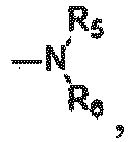
- or A is selected from the group consisting of


- The present disclosure further provides a method for preparing the small molecular lung-targeting podophyllotoxin derivative:
reacting

- A is

- or A is selected from the group consisting of


- More specifically, by reacting N,N,N'-trimethyl-N'-(4-carboxybenzyl)-1,3-propanediamine and 4-(4-methylpiperazin-1-ylmethyl)benzoic acid with 4β-amino-4'-demethylepipodophyllotoxin under the reaction of 2-(7-azobenzotriazole)-N,N,N',N'-tetramethyluron hexafluorophosphate (HATU) and the triethylamine, respectively, compounds DC and DP are prepared.
- The structural formula of compounds DC and DP are shown hereinafter,


- The method for synthesizing compounds DC and DP will be illustrated briefly hereinafter.
- (1) 4β-amino-4'-demethylepipodophyllotoxin is synthesized by the method provided by J. Med. Chem, 1991(34):3346-3350.

- Under condition of ice bath, 4'-demethylepipodophyllotoxin (compound 1) and the sodium azide are suspended in trichloromethane, and trifluoroacetic acid is slowly added dropwise under stirring. The temperature of the mixture is raised to room temperature, and the mixture is stirred overnight. After the completion of the reaction is detected by TLC, saturated sodium carbonate solution is added and the organic layer is separated, which is washed with the saturated saline, and fully dried with anhydrous sodium sulfate. The desiccant is removed by filtration, and the solution is evaporated to dryness under reduced pressure. The crude product is purified by silica gel column chromatography to give a white foam like solid, i.e., compound 2.
- Under condition of room temperature,
compound 2 and 10% Pd/C are suspended in anhydrous methanol, and reduced by introducing hydrogen. The reaction is carried out overnight at room temperature. After the completion of the reaction is detected by TLC, the catalyst is removed by filtration, and the solution is evaporated to dryness under reduced pressure. The crude product is purified by silica gel column chromatography to give a white solid, i.e., compound 3. -
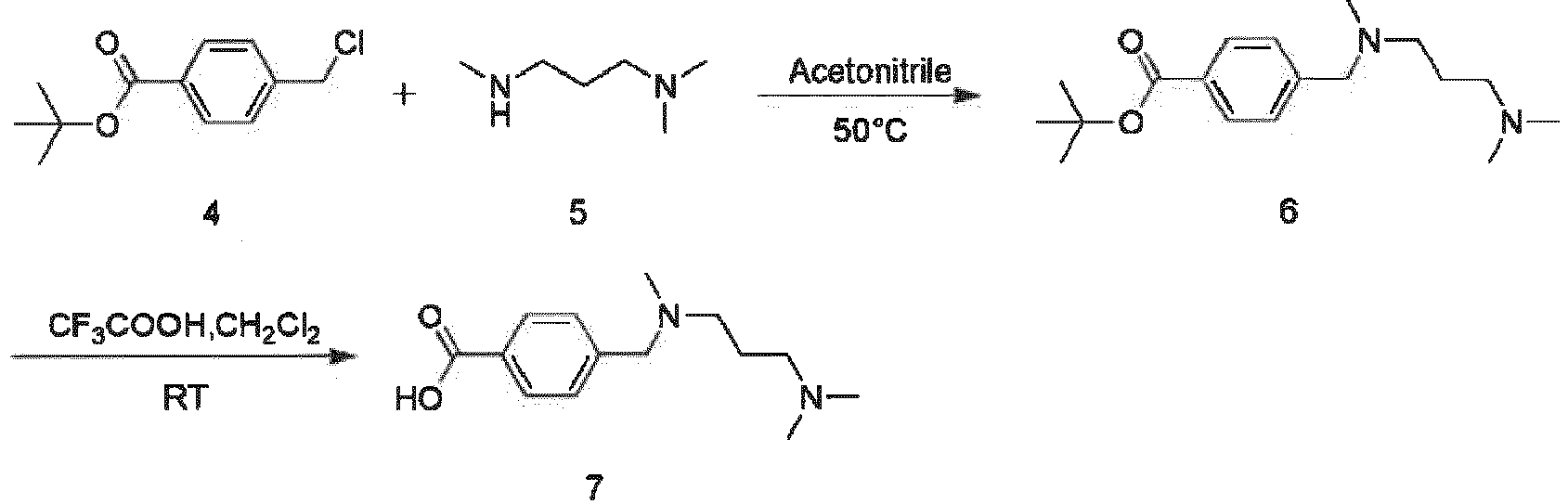
- Tert-butyl 4-chloromethylbenzoate (compound 4) is dissolved in anhydrous acetonitrile, N,N,N'-trimethyl-1,3-propanediamine (compound 5) is slowly added dropwise. The reaction is carried out under stirring in 50°C oil bath for 1 hour. After the completion of the reaction is detected by TLC, the solution is evaporated to dryness under reduced pressure. The crude product is purified by silica gel column chromatography to give a faint yellow oil product, i.e., compound 6.
- Under condition of ice bath, the compound 6 is dissolved in dichloromethane, and trifluoroacetic acid is slowly added dropwise under stirring. The reaction is carried out under stirring for 3 hours in ice bath. After the completion of the reaction is detected by TLC, the solution is evaporated to dryness under reduced pressure to give a faint yellow oil product. The crude product is dissolved in a small amount of methanol and hydrogen chloride gas is introduced therein. The product is salted under appropriate stirring, and the solution is evaporated to dryness under reduced pressure, followed by recrystallization in acetone-methanol to give a white solid, i.e., compound 7.
-

- Compound 3 and compound 7 are weighed and put into a round bottom flask, anhydrous dichloromethane is added, and then 2-(7-azobenzotriazole)-N,N,N',N'-tetramethyluronium hexafluorophosphate (HATU) and triethylamine are added. The reaction is carried out under stirring at room temperature for 3 hours. The solution is evaporated to dryness under reduced pressure. The crude product is purified by silica gel column chromatography to give a faint yellow solid, i.e., compound DC.
-

- Compound 3 and compound 8 are weighed and put into a round bottom flask, anhydrous dichloromethane is added, and then 2-(7-azobenzotriazole)-N,N,N',N'-tetramethyluronium hexafluorophosphate (HATU) and triethylamine are added. The reaction is carried out under stirring at room temperature for 3 hours. The solution is evaporated to dryness under reduced pressure. The crude product is purified by silica gel column chromatography to give a faint yellow solid, i.e., compound DP.
- Wherein compound 8 is a common raw material in the chemical industry, which can be purchased on the market.
- Another object of the present disclosure is to provide a use of the small molecular lung-targeting compound or the pharmaceutically acceptable salts thereof of the present disclosure for preparing drugs that prevent and treat lung diseases with ,.
- The lung diseases include pneumonia, bronchitis, lung tumor, rejection after lung transplantation and other lung diseases.
- The beneficial effects of the present disclosure are illustrated hereinafter.
- In order to demonstrate the lung-targeting ability of the small molecular lung-targeting compound of the present disclosure or the pharmaceutically acceptable salt thereof, the above compounds are subjected to in vivo drug distribution test and in vivo efficacy test. The test results show that the small molecular lung-targeting compound prepared by the present disclosure or the pharmaceutically acceptable salt thereof has significantly higher lung aggregation concentration and lung retention time than other tissues, so that the curative effect is improved and/or the dosage is reduced, and the occurrence of toxicity and side effects is reduced, and the effectiveness and safety of the product is further improved.
- The experiments disclosed in the present disclosure are merely exemplary experiments in numerous experiments in the development of the present disclosure, which merely aim at illustrating the lung-targeting ability of the compounds of the present disclosure and their effectiveness and safety.
-
-
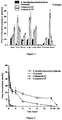
Figure 1 is a concentration distribution profile of 4'-demethylepipodophyllotoxin, etoposide, compound DC and compound DP in tissues after 5 minutes administration by tail vein injection. -
Figure 2 is a concentration-time curve of 4'-demethylepipodophyllotoxin, etoposide, compound DC and compound DP in lung after administration by tail vein injection. -
Figure 3 shows the tumor-bearing lung weight after melanoma lung metastasis tumor is treated with 4'-demethylepipodophyllotoxin, etoposide, compound DC and compound DP. -
Figure 4 shows the number of metastasis tumor nodules after melanoma lung metastasis tumor is treated with 4'-demethylepipodophyllotoxin, etoposide, compound DC and compound DP. - The small molecular lung-targeting compound related to the present disclosure and the method for preparing the same will be further illustrated in combination with examples hereinafter. It is not limited to the present disclosure, and the modifications by one of ordinary skill in the art with the common knowledge are within the scope of the present disclosure.
- Under condition of ice bath, 400mg (1mmol) of 4'-demethylepipodophyllotoxin (compound 1) and 325mg (5mmol) of sodium azide were suspended in trichloromethane (40mL) in a 100mL round-bottom flask, and 2mL of trifluoroacetic acid was slowly dropped under stirring. The temperature of the mixture was raised to room temperature, and the mixture was stirred overnight. After the completion of the reaction was detected by TLC, 25mL of saturated sodium carbonate solution was added and the organic layer was separated, which was washed with saturated saline (25 mL×2) and fully dried with anhydrous sodium sulfate. The desiccant was removed by filtration, and the solution was evaporated to dryness under reduced pressure. The crude product was purified by silica gel column chromatography (ethyl acetate : petroleum ether = 5 : 2) to give 390mg of pure compound 2, which was a white foam like solid. The yield was 91.8%.
- 1H-NMR (400 MHz, CDCl3): δ 6.81 (s, 1H), 6.59 (s, 1H), 6.27 (s, 2H), 6.01-6.03 (m, 2H), 5.48 (s, 1H), 4.77-4.78 (d, J = 3.2 Hz, 1H), 4.62-4.63 (d, J = 5.2 Hz, 1H) ,4.29-4.31 (d, J = 9.6 Hz, 2H), 3.77 (s, 6H), 3.14-3.19 (dd, J = 5.2, 14.0 Hz, 1H), 2.91-2.97 (m, 1H).
- ESI-MS (m/z): 448.1 [M+Na] +
- At room temperature, 425mg (1mmol) of compound 2 and 100mg of 10% Pd/C were suspended in dry methanol in a 100mL round-bottom flask, and reduced by introducing hydrogen. The reaction was carried out overnight at room temperature. After the completion of the reaction was detected by TLC, the catalyst was removed by filtration, and the solution was evaporated to dryness under reduced pressure. The crude product was purified by silica gel column chromatography (dichloromethane : methanol = 120 : 1) to give 320mg of pure compound 3, which was a white solid. The yield was 80.2%.
- 1H-NMR (400 MHz, CDCl3): δ 6.81 (s, 1H), 6.50 (s, 1H), 6.31 (s, 2H), 5.95-5.98 (m, 2H), 4.56-4.57 (d, J = 4.8 Hz, 1H), 4.29-4.31 (d, J = 9.2 Hz, 2H), 4.21-4.22 (d, J = 4.0 Hz, 1H), 3.78 (s, 6H), 3.27-3.32 (dd, J = 5.2, 14.0 Hz, 1H), 2.82-2.85 (m, 1H).
- 13C-NMR(100MHz,CDCl3): δ 175.41, 147.59, 147.27, 146.32, 134.11, 133.87, 131.23, 131.13, 110.23, 108.59, 107.92, 101.32, 68.14, 56.39, 48.89, 43.72, 40.22, 37.97.
- ESI-MS (m/z): 400.1 [M+H]+.
- 454mg (2mmol) of tert-butyl 4-chloromethylbenzoate (compound 4) was put into a 100mL round-bottom flask, and 40mL of anhydrous acetonitrile was added to dissolve it. Then 0.584mL (4mmol) of N,N,N'-trimethyl-1,3-propanediamine was dropped in. The reaction was carried out under stirring in 50°C oil bath for 1 hour. After the completion of the reaction was detected by TLC, the solution was evaporated to dryness under reduced pressure. The crude product was purified by silica gel column chromatography (dichloromethane : methanol = 25 : 1) to give 495mg of pure compound 6, which was a faint yellow oil product. The yield was 80.9%.
- 1H-NMR (400 MHz, CDCl3): δ 7.92-7.94 (d, J = 7.6 Hz, 2H), 7.35-7.37 (d, J = 8.0 Hz, 2H), 3.52 (s, 2H), 2.37-2.41 (t, J = 7.6 Hz, 2H), 2.28-2.32 (t, J = 7.2 Hz, 2H), 2.23 (s, 6H), 2.18(s, 3H), 1.67-1.71 (m, 2H), 1.59 (s, 9H).
- ESI-MS (m/z): 307.2 [M+H] +
- Under condition of ice bath, 306mg (1mmol) of compound 6 was put into a 25mL round-bottom flask, and 6mL of dichloromethane was added to dissolve it. Then 2mL of trifluoroacetic acid was slowly dropped in. The reaction was carried out under stirring for 3 hours in ice bath. After the completion of the reaction was detected by TLC, the solution was evaporated to dryness under reduced pressure to give a faint yellow oil product. The crude product was dissolved in a small amount of methanol, and hydrogen chloride was introduced therein. The product was salted under appropriate stirring, and the solution was evaporated to dryness under reduced pressure, followed by recrystallization in acetone-methanol to give 231mg of pure compound 7, which was a white solid. The yield was 71.5%.
- 1H-NMR (400 MHz, D2O): δ 8.11-8.13 (d, J = 7.6 Hz, 2H), 7.64-7.66 (d, J = 8.0 Hz, 2H), 4.44-4.54 (d, J = 37.6, 2H), 3.28 (s, 2H), 3.20-3.24 (t, J = 8.0 Hz, 2H), 2.93 (s, 6H), 2.89 (s, 3H), 2.26 (s, 2H).
- ESI-MS (m/z): 251.1 [M+H] +.
- 200mg (0.5mmol) of compound 3 and 194mg (0.6mmol) of compound 7 were weighed and put in a 50mL round-bottom flask, and 25mL of anhydrous dichloromethane was added and stirred. Then 266mg (0.7mmol) of HATU and 251µL (1.8mmol) of triethylamine were added, stirred and reacted for 3 hours at room temperature. The solution was evaporated to dryness under reduced pressure. The crude product was purified by silica gel column chromatography (dichloromethane : methanol: triethylamine = 20 : 1 : 0.2%) to give 260mg of pure compound DC, which was a faint yellow solid. The yield was 82.4%.
- 1H-NMR (400 MHz, CDCl3): δ 7.71-7.73 (d, J = 8.0 Hz, 2H), 7.39-7.41 (d, J = 8.0 Hz, 2H), 6.82 (s, 1H), 6.32 (s, 2H), 6.55 (s, 1H), 5.97 and 5.99 (2s, 2H), 5.42-5.45 (m, 1H), 4.61-4.62 (d, J = 4.8 Hz, 1H), 4.47-4.51 (m, 1H), 3.87-3.92 (m, 1H), 3.78 (s, 6H) , 3.52 (s, 2H), 3.01-3.06 (m, 1H), 2.91-2.96 (dd, J = 4.8, 14.0 Hz, 1H), 2.37-2.41 (t, J = 7.2 Hz, 2H), 2.31-2.35 (t, J = 7.6 Hz, 2H), 2.25 (s, 6H), 2.19 (s, 3H), 1.66-1.73 (m, 2H).
- 13C-NMR (100 MHz, CDCl3): δ 174.55, 167.37, 148.20,147.47, 146.77, 143.87, 134.41, 132.72, 131.62, 129.75, 129.07, 128.91, 127.03, 109.97, 109.12, 107.67, 101.51, 69.20, 61.65, 57.57, 56.22, 55.36, 48.44, 45.29, 43.51, 42.13, 41.80, 37.37, 25.21.
- ESI-MS (m/z): 632.3 [M+H] +.
- 200mg (0.5mmol) of compound 3 and 184mg (0.6mmol) of compound 8 were weighed and put in a 50mL round-bottom flask, 25mL of anhydrous dichloromethane was added, and then 266mg (0.7mmol) of HATU and 251 µL (1.8mmol) of triethylamine were added. The reaction was carried out under stirring at room temperature for 3 hours. The solution was evaporated to dryness under reduced pressure. The crude product was purified by silica gel column chromatography (dichloromethane : methanol: triethylamine = 30 : 1 : 0.2%) to give 260mg of pure compound DP, which was a faint yellow solid. The yield was 84.6%.
- 1H-NMR (400 MHz, CDCl3): δ 7.71-7.73 ( d, J = 8.0 Hz, 2H) ,7.40-7.42 (d, J = 8.0 Hz, 2H), 6.81 (s, 1H), 6.55 (s, 1H), 6.32 (s, 2H), 5.97 and 5.99 (2s, 2H), 5.41-5.44 (m, 1H), 4.60-4.61 (d, J = 4.8 Hz, 1H), 4.47-4.51(m, 1H), 3.86-3.91 (m, 1H), 3.78 (s, 6H), 3.55 (s, 2H), 3.03-3.06 (m, 1H), 2.91-2.95 (dd, J = 5.2, 14.0 Hz, 1H), 2.48 (s, 8H) 2.30 (s, 3H).
- 13C-NMR (100 MHz, CDCl3): δ 174.44, 167.30, 148.32, 147.56, 146.59, 142.89, 134.15, 132.71, 131.77, 130.06, 129.34, 128.80, 127.02, 110.04, 109.04, 107.74, 101.54, 69.18, 62.35, 56.29, 54.86, 52.89, 48.52, 45.83, 43.54, 41.82, 37.46.
- ESI-MS (m/z): 616.3 [M+H] +.
- Preparation of injection containing DC or DP.
- 3.8 g of compound DC or DP was accurately weighed, 5% DMSO, 20
% polyethylene glycol - 16mg of 4'-demethylepipodophyllotoxin was accurately weighed, 5% DMSO, 20
% polyethylene glycol % polyethylene glycol % polyethylene glycol - 200 Kunming mice (male, 20 ± 2 g) were used, which were fasted for 12 h before the experiment and given free access to water. In the experiment, they were randomly divided into 4 groups and administered by tail intravenous injection. The administration of 4'-demethylepipodophyllotoxin was carried out with a dosage of 10.00mg/kg. Etoposide, compound DC and compound DP were administered in equimolar amount as 4'-demethylepipodophyllotoxin, and the administration dosages were etoposide 14.71mg/kg, compound DC 15.78mg/kg, and compound DP 15.38mg/kg, respectively. 5 minutes, 15 minutes, 30 minutes, 1 hour, 2 hours, 4 hours, 8 hours, 12 hours, 24 hours and 48 hours after administration, the blood was collected and the mice sacrificed in all groups. The whole blood was put into sodium heparin-containing EP tubes, centrifuged at 5000 rpm at 4°C for 5 min, and the upper plasma was collected and frozen at -40°C for use. The hearts, livers, spleens, lungs, kidneys, brains and pancreas of the mice were immediately separated, and the residual blood was washed away with physiological saline. The remaining water on the surfaces of the organs was absorbed with filter papers. The organs were weighed and physiological saline 2 times the volume of the organs was added for homogenization.
- 0.1mL of mouse plasma and 0.1mL of tissue homogenate were taken and put into a 0.5mL EP tube, 0.3mL of methanol was added to all the samples as a protein precipitant. The sample was subjected to vortex vibration for 5 minutes, and then centrifuged at 13000 rpm at 4°C for 10 min. The supernatant was taken and filtered with a 0.22µm organic filtration membrane, and 1µL of the sample was taken and subjected to LC-MS/MS analysis.
- Liquid phase conditions: Agilent 1200 Series High Resolution Rapid LC System (RRLC); chromatographic column: Agilent Diamonsil ODS column (50 mm × 4.6 mm, 1.8µm); mobile phase: for 4'-demethylepipodophyllotoxin, methanol : 0.1% formic acid aqueous solution = 50 : 50, for etoposide, acetonitrile : 0.1% formic acid aqueous solution = 35 : 65, for compound DC, methanol : 0.1% formic acid aqueous solution = 45 : 65, and for compound DP, methanol : 0.1% formic acid aqueous solution = 34 : 66; flow rate: 0.4mL/min; column temperature: 30°C; and injection volume: 1µL.
- Mass spectra conditions: Agilent Triple Quadrupole Mass Spectrometry (6410B); the analytes were subjected to a multiple reaction monitoring (MRM) in positive mode: for 4'-demethylepipodophyllotoxin, etoposide, compound DC and compound DP, fragmentation voltages were 97 V, 148 V, 190 V and 169 V, respectively; collision cell voltages were 20 V, 12 V, 52 V and 36 V, respectively; and ionic reactions (m/z) were 401.1→185, 589.2→229, 632.3→86.1 and 616.3 →58.1, respectively; drying gas temperature: 350°C; drying gas flow rate: 10L/min; atomization air pressure: 30psi; and the capillary voltage: 4000V.
- Each pharmacokinetic parameters were calculated by DAS3.2.5 software, and the formula for calculating the targeting ability evaluation index, i.e., peak concentration ratio Ce and relative uptake rate Re, were shown hereinafter.


- Results of
Figure 1 showed that 5 minutes after administration by tail intravenous injection, the concentrations of compound DC and DP in the lung were much higher than 4'-demethylepipodophyllotoxin original drug group and etoposide control group. Based on the peak concentration ratio Ce, the peak concentration of compound DC in the lung was 5.29 times and 4.54 times of that of 4'-demethylepipodophyllotoxin original drug group and etoposide control group, respectively; and the peak concentration of compound DP in the lung was 5.41 times and 4.65 times of that of 4'-demethylepipodophyllotoxin original drug group and the etoposide control group, respectively. - The results in
Figure 2 showed that after administration of compound DC and DP by tail intravenous injection, the drug concentrations in the lung were much higher than that of 4'-demethylepipodophyllotoxin original drug group and etoposide control group at each time point. One hour after the administration, the concentration of 4'-demethylepipodophyllotoxin (original drug) in the lung was below the detectable limit. Two hours after the administration, the concentration of etoposide (control) in the lung was below the detectable limit. However, compounds DC and DP still maintained at a relatively high drug concentration and lasted for up to 48 hours and 12 hours, respectively, significantly prolonging the retention time of the drug in the lung. Based on the relative uptake rate Re, the lung relative uptake rate of compound DC was 168.38 times and 98.16 times of that of 4'-demethylepipodophyllotoxin original drug group and etoposide control group, respectively; and the lung relative uptake rate of compound DP was 42.56 times and 24.81 times of 4'-demethylepipodophyllotoxin original drug group and etoposide control group, respectively. - The above experiment results show that compound DC and DP have obvious lung-targeting ability, which significantly improves the accumulating concentration of drug in lung, and prolongs the retention time in lung, so as to decrease the administration dosage of the drug and decrease the toxicity and side effects.
- The experiment was performed according to the method reported by Small, 2014(3):524-535. C57BL/6 mice (male, 20±2g, 6 to 8 week-old) were used and intravenously injected with mouse melanoma B16 cells in logarithmic growth phase. 5 × 10⁵ cells were injected into each mouse to establish a melanoma lung metastasis model, and the mice were randomly divided into 5 groups (recorded as the 0th day). The injections for intravenous injecting used in the experiment were prepared according to Example 6. On the 4th, 7th and 13th day after the modeling, each group was subjected to intravenous injection for four times. 4'-demethylepipodophyllotoxin was provided at a dosage of 5.00mg/kg, and etoposide, compound DC and compound DP were provided at equimolar amount with 4'-demethylepipodophyllotoxin, and the administration dosages were etoposide 7.36mg/kg, compound DC 7.89mg/kg, and compound DP 7.69mg/kg, respectively. The control group was administered with equal amount of solvent. All mice were housed normally and sacrificed on the 22nd day after modeling. The lung tissue was immediately separated out, washed with physiological saline and weighed, and the number of tumor nodules was calculated.
- The results of the
Figure 3 and Figure 4 showed that after establishing a mouse melanoma lung metastasis model, severe lung metastasis tumor appeared in the control group, demonstrating that the model was established successfully in the experiment. The other administration groups have different degrees of inhibitory effects on lung metastatic tumor. Comparing with the control group, 4'-demethylepipodophyllotoxin group and etoposide group have improved the lung metastatic tumor to a certain degree, reduced the tumor-bearing lung weight, and decreases the number of lung metastasis tumor nodules. Compound DC group and DP group have the best curative effects, which were significantly better than that of 4'-demethylepipodophyllotoxin group and etoposide group, with the least tumor-bearing lung weight and the number of lung metastasis tumor nodules. - The above experiment results demonstrate that compounds DC and DP have significant lung-targeting effect, and they have stronger inhibition effect and better drug effect for lung tumor.
Claims (8)
- A compound of the following structure

- A compound of the following structure

- The compound or the pharmaceutically acceptable salt thereof according to claim 1 or 2, which is a salt formed from the compound and an inorganic acid or an organic acid, comprising hydrochloric acid, hydrobromic acid, sulfuric acid, phosphoric acid, acetic acid, trifluoroacetic acid, lactic acid, pyruvic acid, malonic acid, succinic acid, glutaric acid, fumaric acid, tartaric acid, maleic acid, citric acid, ascorbic acid, oxalic acid, niacin, camphoric acid, gluconic acid, glucuronic acid, pamoic acid, methanesulfonic acid, ethanesulfonic acid, sulfamic acid and p-toluenesulfonic acid.
- A method for preparing the compound or the pharmaceutically acceptable salt thereof according to claim 1, comprising: reacting N,N,N'-trimethyl-N'-(4-carboxybenzyl)-1,3-propanediamine with 4β-amino-4'-demethylepipodophyllotoxin under the action of 2-(7-azobenzotriazole)-N,N,N',N'-tetramethyluronium hexafluorophosphate and triethylamine.
- A method for preparing the compound or the pharmaceutically acceptable salt thereof according to claim 2, comprising: reacting 4-[(4-methylpiperazin-1-yl)methyl]benzoic acid with 4β-amino-4'-demethylepipodophyllotoxin under the action of 2-(7-azobenzotriazole)-N,N,N',N'-tetramethyluronium hexafluorophosphate and triethylamine.
- The compound or the pharmaceutically acceptable salt thereof according to claim 1 or 2 for use in preventing or controlling pneumonia, bronchitis, lung tumor, rejection after lung transplantation or other lung disease.
- A pharmaceutically acceptable preparation, comprising the compound or the pharmaceutically acceptable salt thereof according to claim 1 or 2, wherein the preparation is selected from tablet, suppository, soft capsule or hard capsule, solution, suspension or aerosol, injection, lyophilized powders for injection, sustained-release controlled-release preparation and various particle drug delivery system, and wherein the preparation is administered by a manner of mouth, nasal, rectal, transdermal or injection.
- The preparation according to claim 7, which is an injection and administered by injection.
Applications Claiming Priority (2)
| Application Number | Priority Date | Filing Date | Title |
|---|---|---|---|
| CN201610151988.0A CN105732651B (en) | 2016-03-17 | 2016-03-17 | A kind of small molecule Lung targeting drug |
| PCT/CN2016/092829 WO2017156959A1 (en) | 2016-03-17 | 2016-08-02 | Micromolecular lung-targeting drug |
Publications (3)
| Publication Number | Publication Date |
|---|---|
| EP3431478A1 EP3431478A1 (en) | 2019-01-23 |
| EP3431478A4 EP3431478A4 (en) | 2019-11-06 |
| EP3431478B1 true EP3431478B1 (en) | 2021-11-17 |
Family
ID=56250675
Family Applications (1)
| Application Number | Title | Priority Date | Filing Date |
|---|---|---|---|
| EP16894120.1A Active EP3431478B1 (en) | 2016-03-17 | 2016-08-02 | Micromolecular lung-targeting drug |
Country Status (4)
| Country | Link |
|---|---|
| US (1) | US10639295B2 (en) |
| EP (1) | EP3431478B1 (en) |
| CN (1) | CN105732651B (en) |
| WO (1) | WO2017156959A1 (en) |
Families Citing this family (2)
| Publication number | Priority date | Publication date | Assignee | Title |
|---|---|---|---|---|
| CN105732651B (en) * | 2016-03-17 | 2018-07-20 | 重庆药友制药有限责任公司 | A kind of small molecule Lung targeting drug |
| CN108285455B (en) * | 2017-08-16 | 2022-02-08 | 汤亚杰 | 4 beta-amino substituted podophyllotoxin derivative and preparation method and application thereof |
Family Cites Families (12)
| Publication number | Priority date | Publication date | Assignee | Title |
|---|---|---|---|---|
| JPS6323884A (en) * | 1986-07-17 | 1988-02-01 | Nippon Kayaku Co Ltd | Novel podophyllotoxin derivative |
| ATE186302T1 (en) | 1989-02-23 | 1999-11-15 | Univ North Carolina | ETOPOSIDE ANALOGUES |
| US5332811A (en) * | 1989-09-12 | 1994-07-26 | The University Of North Carolina At Chapel Hill | Etopside analogs |
| CN101074233B (en) | 2007-06-22 | 2010-11-24 | 浙江大学 | 4'-norepipodophyllotoxin derivative and its preparation method and use |
| CN102875564B (en) | 2012-09-29 | 2015-10-21 | 湖北工业大学 | The nitrogen of tool anti-tumor activity replaces podophyllum derivative and its production and use |
| CN103304574A (en) * | 2013-03-29 | 2013-09-18 | 西南交通大学 | Anticancer 4'-nor-anthricin and preparation method thereof |
| CN103613600B (en) | 2013-11-15 | 2017-01-04 | 湖北工业大学 | Anilino-podophyllum derivative of tool anti-tumor activity and its production and use |
| CN103601732A (en) | 2013-11-15 | 2014-02-26 | 湖北工业大学 | Nitrogen-substituted podophyllotoxin derivative with anti-tumor activity and preparation method and use thereof |
| CN103690512B (en) * | 2013-12-24 | 2016-03-09 | 浙江尖峰药业有限公司 | A kind of deoxypodophyllotoxin polymer micelle lyophilized formulations |
| CN105037379B (en) * | 2014-04-25 | 2017-12-19 | 上海医药工业研究院 | Podophyllotoxin derivative, its preparation method, pharmaceutical composition and application |
| CN104523597B (en) | 2014-12-15 | 2017-06-30 | 四川大学 | A kind of targeting drug administration preparation of podophillotoxines medicine |
| CN105732651B (en) | 2016-03-17 | 2018-07-20 | 重庆药友制药有限责任公司 | A kind of small molecule Lung targeting drug |
-
2016
- 2016-03-17 CN CN201610151988.0A patent/CN105732651B/en active Active
- 2016-08-02 WO PCT/CN2016/092829 patent/WO2017156959A1/en not_active Ceased
- 2016-08-02 EP EP16894120.1A patent/EP3431478B1/en active Active
- 2016-08-02 US US16/085,577 patent/US10639295B2/en active Active
Non-Patent Citations (1)
| Title |
|---|
| None * |
Also Published As
| Publication number | Publication date |
|---|---|
| US10639295B2 (en) | 2020-05-05 |
| CN105732651B (en) | 2018-07-20 |
| WO2017156959A1 (en) | 2017-09-21 |
| US20190029997A1 (en) | 2019-01-31 |
| EP3431478A1 (en) | 2019-01-23 |
| EP3431478A4 (en) | 2019-11-06 |
| CN105732651A (en) | 2016-07-06 |
Similar Documents
| Publication | Publication Date | Title |
|---|---|---|
| KR20110036888A (en) | Modified Drugs for Use in Liposomal Nanoparticles | |
| ES2880029T3 (en) | Amphotericin B derivatives | |
| CN104520309A (en) | N-substituted second generation derivatives of antifungal antibiotic amphotericin B and methods of their preparation and application | |
| JP2001506232A (en) | Glycoconjugates of modified camptothecin derivatives (A- or B-ring bond) | |
| CN104306332B (en) | Camptothecin phospholipid compound, and medicinal composition and application thereof | |
| CN110054659A (en) | The method for improving Antitumor Activity of Drugs | |
| CN107382966A (en) | A kind of piperlongumine ligustrazine heterocomplex, preparation method and medical usage | |
| CN109998996B (en) | Lipid composition and method for improving antitumor activity of drug | |
| CN101302199B (en) | Guidemycin and use thereof in tumor treatment | |
| CN107216362B (en) | Cytarabine amphiphilic small molecule prodrug and preparation method and application thereof | |
| EP1666486A1 (en) | Compound modified with glycerol derivative | |
| US10639295B2 (en) | Podophyllotoxin derivative with 4-position nitrogen substitution and preparation method and application thereof | |
| EP3299381B1 (en) | Water soluble rapamycin derivative | |
| EP2672821B9 (en) | Cathepsin c inhibitors | |
| EP3378495B1 (en) | Composition comprising novel glutamic acid derivative and block copolymer, and use thereof | |
| CN103183722B (en) | Glyoxalase I inhibitor, preparation method and medical application thereof | |
| CN103788165B (en) | Cytosine arabinoside cholic acid binding substances and its production and use | |
| CN117843713A (en) | Kinase inhibitor based on tumor microenvironment activation, composition and application | |
| CN112245391A (en) | Antitumor lipid composition | |
| CN101402640B (en) | Diester camptothecin derivative, preparation method and uses thereof | |
| CN111393368A (en) | Indenopyrazole hydrochloride derivative and preparation method and application thereof | |
| EP3470403B1 (en) | Taxoid compound and preparation method and use thereof | |
| KR102916585B1 (en) | Mitochondrial-targeted antibiotic modified for cancer treatment with minimal nuclear gene damage, and anticancer pharmaceutical composition comprising the same | |
| CN106146612B (en) | A class of glyoxalase I irreversible inhibitors and their preparation methods and uses | |
| CN105037490B (en) | A kind of glyoxalase I irreversible inhibitor and its preparation method and application |
Legal Events
| Date | Code | Title | Description |
|---|---|---|---|
| STAA | Information on the status of an ep patent application or granted ep patent |
Free format text: STATUS: THE INTERNATIONAL PUBLICATION HAS BEEN MADE |
|
| PUAI | Public reference made under article 153(3) epc to a published international application that has entered the european phase |
Free format text: ORIGINAL CODE: 0009012 |
|
| STAA | Information on the status of an ep patent application or granted ep patent |
Free format text: STATUS: REQUEST FOR EXAMINATION WAS MADE |
|
| 17P | Request for examination filed |
Effective date: 20180926 |
|
| AK | Designated contracting states |
Kind code of ref document: A1 Designated state(s): AL AT BE BG CH CY CZ DE DK EE ES FI FR GB GR HR HU IE IS IT LI LT LU LV MC MK MT NL NO PL PT RO RS SE SI SK SM TR |
|
| AX | Request for extension of the european patent |
Extension state: BA ME |
|
| DAV | Request for validation of the european patent (deleted) | ||
| DAX | Request for extension of the european patent (deleted) | ||
| RIC1 | Information provided on ipc code assigned before grant |
Ipc: A61P 37/06 20060101ALI20190925BHEP Ipc: A61K 31/365 20060101ALI20190925BHEP Ipc: C07D 493/04 20060101ALI20190925BHEP Ipc: A61P 11/00 20060101ALI20190925BHEP Ipc: A61K 31/496 20060101ALI20190925BHEP Ipc: A61K 47/54 20170101AFI20190925BHEP Ipc: A61P 35/00 20060101ALI20190925BHEP |
|
| A4 | Supplementary search report drawn up and despatched |
Effective date: 20191007 |
|
| STAA | Information on the status of an ep patent application or granted ep patent |
Free format text: STATUS: EXAMINATION IS IN PROGRESS |
|
| 17Q | First examination report despatched |
Effective date: 20200618 |
|
| GRAP | Despatch of communication of intention to grant a patent |
Free format text: ORIGINAL CODE: EPIDOSNIGR1 |
|
| STAA | Information on the status of an ep patent application or granted ep patent |
Free format text: STATUS: GRANT OF PATENT IS INTENDED |
|
| RIC1 | Information provided on ipc code assigned before grant |
Ipc: A61P 11/00 20060101ALI20210226BHEP Ipc: A61K 31/496 20060101ALI20210226BHEP Ipc: C07D 493/04 20060101AFI20210226BHEP Ipc: A61P 37/06 20060101ALI20210226BHEP Ipc: A61K 47/54 20170101ALI20210226BHEP Ipc: A61K 31/365 20060101ALI20210226BHEP Ipc: A61P 35/00 20060101ALI20210226BHEP |
|
| INTG | Intention to grant announced |
Effective date: 20210316 |
|
| GRAS | Grant fee paid |
Free format text: ORIGINAL CODE: EPIDOSNIGR3 |
|
| GRAJ | Information related to disapproval of communication of intention to grant by the applicant or resumption of examination proceedings by the epo deleted |
Free format text: ORIGINAL CODE: EPIDOSDIGR1 |
|
| GRAL | Information related to payment of fee for publishing/printing deleted |
Free format text: ORIGINAL CODE: EPIDOSDIGR3 |
|
| STAA | Information on the status of an ep patent application or granted ep patent |
Free format text: STATUS: EXAMINATION IS IN PROGRESS |
|
| INTC | Intention to grant announced (deleted) | ||
| GRAP | Despatch of communication of intention to grant a patent |
Free format text: ORIGINAL CODE: EPIDOSNIGR1 |
|
| STAA | Information on the status of an ep patent application or granted ep patent |
Free format text: STATUS: GRANT OF PATENT IS INTENDED |
|
| RIC1 | Information provided on ipc code assigned before grant |
Ipc: A61P 37/06 20060101ALI20210812BHEP Ipc: A61P 35/00 20060101ALI20210812BHEP Ipc: A61P 11/00 20060101ALI20210812BHEP Ipc: A61K 31/365 20060101ALI20210812BHEP Ipc: A61K 31/496 20060101ALI20210812BHEP Ipc: A61K 47/54 20170101ALI20210812BHEP Ipc: C07D 493/04 20060101AFI20210812BHEP |
|
| INTG | Intention to grant announced |
Effective date: 20210906 |
|
| GRAA | (expected) grant |
Free format text: ORIGINAL CODE: 0009210 |
|
| STAA | Information on the status of an ep patent application or granted ep patent |
Free format text: STATUS: THE PATENT HAS BEEN GRANTED |
|
| AK | Designated contracting states |
Kind code of ref document: B1 Designated state(s): AL AT BE BG CH CY CZ DE DK EE ES FI FR GB GR HR HU IE IS IT LI LT LU LV MC MK MT NL NO PL PT RO RS SE SI SK SM TR |
|
| REG | Reference to a national code |
Ref country code: GB Ref legal event code: FG4D |
|
| REG | Reference to a national code |
Ref country code: IE Ref legal event code: FG4D |
|
| REG | Reference to a national code |
Ref country code: DE Ref legal event code: R096 Ref document number: 602016066461 Country of ref document: DE |
|
| REG | Reference to a national code |
Ref country code: AT Ref legal event code: REF Ref document number: 1447982 Country of ref document: AT Kind code of ref document: T Effective date: 20211215 |
|
| REG | Reference to a national code |
Ref country code: LT Ref legal event code: MG9D |
|
| REG | Reference to a national code |
Ref country code: NL Ref legal event code: MP Effective date: 20211117 |
|
| REG | Reference to a national code |
Ref country code: AT Ref legal event code: MK05 Ref document number: 1447982 Country of ref document: AT Kind code of ref document: T Effective date: 20211117 |
|
| PG25 | Lapsed in a contracting state [announced via postgrant information from national office to epo] |
Ref country code: RS Free format text: LAPSE BECAUSE OF FAILURE TO SUBMIT A TRANSLATION OF THE DESCRIPTION OR TO PAY THE FEE WITHIN THE PRESCRIBED TIME-LIMIT Effective date: 20211117 Ref country code: LT Free format text: LAPSE BECAUSE OF FAILURE TO SUBMIT A TRANSLATION OF THE DESCRIPTION OR TO PAY THE FEE WITHIN THE PRESCRIBED TIME-LIMIT Effective date: 20211117 Ref country code: FI Free format text: LAPSE BECAUSE OF FAILURE TO SUBMIT A TRANSLATION OF THE DESCRIPTION OR TO PAY THE FEE WITHIN THE PRESCRIBED TIME-LIMIT Effective date: 20211117 Ref country code: BG Free format text: LAPSE BECAUSE OF FAILURE TO SUBMIT A TRANSLATION OF THE DESCRIPTION OR TO PAY THE FEE WITHIN THE PRESCRIBED TIME-LIMIT Effective date: 20220217 Ref country code: AT Free format text: LAPSE BECAUSE OF FAILURE TO SUBMIT A TRANSLATION OF THE DESCRIPTION OR TO PAY THE FEE WITHIN THE PRESCRIBED TIME-LIMIT Effective date: 20211117 |
|
| PG25 | Lapsed in a contracting state [announced via postgrant information from national office to epo] |
Ref country code: IS Free format text: LAPSE BECAUSE OF FAILURE TO SUBMIT A TRANSLATION OF THE DESCRIPTION OR TO PAY THE FEE WITHIN THE PRESCRIBED TIME-LIMIT Effective date: 20220317 Ref country code: SE Free format text: LAPSE BECAUSE OF FAILURE TO SUBMIT A TRANSLATION OF THE DESCRIPTION OR TO PAY THE FEE WITHIN THE PRESCRIBED TIME-LIMIT Effective date: 20211117 Ref country code: PT Free format text: LAPSE BECAUSE OF FAILURE TO SUBMIT A TRANSLATION OF THE DESCRIPTION OR TO PAY THE FEE WITHIN THE PRESCRIBED TIME-LIMIT Effective date: 20220317 Ref country code: PL Free format text: LAPSE BECAUSE OF FAILURE TO SUBMIT A TRANSLATION OF THE DESCRIPTION OR TO PAY THE FEE WITHIN THE PRESCRIBED TIME-LIMIT Effective date: 20211117 Ref country code: NO Free format text: LAPSE BECAUSE OF FAILURE TO SUBMIT A TRANSLATION OF THE DESCRIPTION OR TO PAY THE FEE WITHIN THE PRESCRIBED TIME-LIMIT Effective date: 20220217 Ref country code: NL Free format text: LAPSE BECAUSE OF FAILURE TO SUBMIT A TRANSLATION OF THE DESCRIPTION OR TO PAY THE FEE WITHIN THE PRESCRIBED TIME-LIMIT Effective date: 20211117 Ref country code: LV Free format text: LAPSE BECAUSE OF FAILURE TO SUBMIT A TRANSLATION OF THE DESCRIPTION OR TO PAY THE FEE WITHIN THE PRESCRIBED TIME-LIMIT Effective date: 20211117 Ref country code: HR Free format text: LAPSE BECAUSE OF FAILURE TO SUBMIT A TRANSLATION OF THE DESCRIPTION OR TO PAY THE FEE WITHIN THE PRESCRIBED TIME-LIMIT Effective date: 20211117 Ref country code: GR Free format text: LAPSE BECAUSE OF FAILURE TO SUBMIT A TRANSLATION OF THE DESCRIPTION OR TO PAY THE FEE WITHIN THE PRESCRIBED TIME-LIMIT Effective date: 20220218 Ref country code: ES Free format text: LAPSE BECAUSE OF FAILURE TO SUBMIT A TRANSLATION OF THE DESCRIPTION OR TO PAY THE FEE WITHIN THE PRESCRIBED TIME-LIMIT Effective date: 20211117 |
|
| PG25 | Lapsed in a contracting state [announced via postgrant information from national office to epo] |
Ref country code: SM Free format text: LAPSE BECAUSE OF FAILURE TO SUBMIT A TRANSLATION OF THE DESCRIPTION OR TO PAY THE FEE WITHIN THE PRESCRIBED TIME-LIMIT Effective date: 20211117 Ref country code: SK Free format text: LAPSE BECAUSE OF FAILURE TO SUBMIT A TRANSLATION OF THE DESCRIPTION OR TO PAY THE FEE WITHIN THE PRESCRIBED TIME-LIMIT Effective date: 20211117 Ref country code: RO Free format text: LAPSE BECAUSE OF FAILURE TO SUBMIT A TRANSLATION OF THE DESCRIPTION OR TO PAY THE FEE WITHIN THE PRESCRIBED TIME-LIMIT Effective date: 20211117 Ref country code: EE Free format text: LAPSE BECAUSE OF FAILURE TO SUBMIT A TRANSLATION OF THE DESCRIPTION OR TO PAY THE FEE WITHIN THE PRESCRIBED TIME-LIMIT Effective date: 20211117 Ref country code: DK Free format text: LAPSE BECAUSE OF FAILURE TO SUBMIT A TRANSLATION OF THE DESCRIPTION OR TO PAY THE FEE WITHIN THE PRESCRIBED TIME-LIMIT Effective date: 20211117 Ref country code: CZ Free format text: LAPSE BECAUSE OF FAILURE TO SUBMIT A TRANSLATION OF THE DESCRIPTION OR TO PAY THE FEE WITHIN THE PRESCRIBED TIME-LIMIT Effective date: 20211117 |
|
| REG | Reference to a national code |
Ref country code: DE Ref legal event code: R097 Ref document number: 602016066461 Country of ref document: DE |
|
| PLBE | No opposition filed within time limit |
Free format text: ORIGINAL CODE: 0009261 |
|
| STAA | Information on the status of an ep patent application or granted ep patent |
Free format text: STATUS: NO OPPOSITION FILED WITHIN TIME LIMIT |
|
| 26N | No opposition filed |
Effective date: 20220818 |
|
| PG25 | Lapsed in a contracting state [announced via postgrant information from national office to epo] |
Ref country code: AL Free format text: LAPSE BECAUSE OF FAILURE TO SUBMIT A TRANSLATION OF THE DESCRIPTION OR TO PAY THE FEE WITHIN THE PRESCRIBED TIME-LIMIT Effective date: 20211117 |
|
| PG25 | Lapsed in a contracting state [announced via postgrant information from national office to epo] |
Ref country code: SI Free format text: LAPSE BECAUSE OF FAILURE TO SUBMIT A TRANSLATION OF THE DESCRIPTION OR TO PAY THE FEE WITHIN THE PRESCRIBED TIME-LIMIT Effective date: 20211117 |
|
| PG25 | Lapsed in a contracting state [announced via postgrant information from national office to epo] |
Ref country code: MC Free format text: LAPSE BECAUSE OF FAILURE TO SUBMIT A TRANSLATION OF THE DESCRIPTION OR TO PAY THE FEE WITHIN THE PRESCRIBED TIME-LIMIT Effective date: 20211117 |
|
| REG | Reference to a national code |
Ref country code: CH Ref legal event code: PL |
|
| PG25 | Lapsed in a contracting state [announced via postgrant information from national office to epo] |
Ref country code: LU Free format text: LAPSE BECAUSE OF NON-PAYMENT OF DUE FEES Effective date: 20220802 Ref country code: LI Free format text: LAPSE BECAUSE OF NON-PAYMENT OF DUE FEES Effective date: 20220831 Ref country code: CH Free format text: LAPSE BECAUSE OF NON-PAYMENT OF DUE FEES Effective date: 20220831 |
|
| REG | Reference to a national code |
Ref country code: BE Ref legal event code: MM Effective date: 20220831 |
|
| PG25 | Lapsed in a contracting state [announced via postgrant information from national office to epo] |
Ref country code: IT Free format text: LAPSE BECAUSE OF FAILURE TO SUBMIT A TRANSLATION OF THE DESCRIPTION OR TO PAY THE FEE WITHIN THE PRESCRIBED TIME-LIMIT Effective date: 20211117 |
|
| PG25 | Lapsed in a contracting state [announced via postgrant information from national office to epo] |
Ref country code: IE Free format text: LAPSE BECAUSE OF NON-PAYMENT OF DUE FEES Effective date: 20220802 |
|
| PG25 | Lapsed in a contracting state [announced via postgrant information from national office to epo] |
Ref country code: BE Free format text: LAPSE BECAUSE OF NON-PAYMENT OF DUE FEES Effective date: 20220831 |
|
| PG25 | Lapsed in a contracting state [announced via postgrant information from national office to epo] |
Ref country code: HU Free format text: LAPSE BECAUSE OF FAILURE TO SUBMIT A TRANSLATION OF THE DESCRIPTION OR TO PAY THE FEE WITHIN THE PRESCRIBED TIME-LIMIT; INVALID AB INITIO Effective date: 20160802 |
|
| PG25 | Lapsed in a contracting state [announced via postgrant information from national office to epo] |
Ref country code: MK Free format text: LAPSE BECAUSE OF FAILURE TO SUBMIT A TRANSLATION OF THE DESCRIPTION OR TO PAY THE FEE WITHIN THE PRESCRIBED TIME-LIMIT Effective date: 20211117 Ref country code: CY Free format text: LAPSE BECAUSE OF FAILURE TO SUBMIT A TRANSLATION OF THE DESCRIPTION OR TO PAY THE FEE WITHIN THE PRESCRIBED TIME-LIMIT Effective date: 20211117 |
|
| PG25 | Lapsed in a contracting state [announced via postgrant information from national office to epo] |
Ref country code: MT Free format text: LAPSE BECAUSE OF FAILURE TO SUBMIT A TRANSLATION OF THE DESCRIPTION OR TO PAY THE FEE WITHIN THE PRESCRIBED TIME-LIMIT Effective date: 20211117 |
|
| PGFP | Annual fee paid to national office [announced via postgrant information from national office to epo] |
Ref country code: DE Payment date: 20250812 Year of fee payment: 10 |
|
| PGFP | Annual fee paid to national office [announced via postgrant information from national office to epo] |
Ref country code: GB Payment date: 20250826 Year of fee payment: 10 |
|
| PGFP | Annual fee paid to national office [announced via postgrant information from national office to epo] |
Ref country code: FR Payment date: 20250828 Year of fee payment: 10 |
|
| PG25 | Lapsed in a contracting state [announced via postgrant information from national office to epo] |
Ref country code: TR Free format text: LAPSE BECAUSE OF FAILURE TO SUBMIT A TRANSLATION OF THE DESCRIPTION OR TO PAY THE FEE WITHIN THE PRESCRIBED TIME-LIMIT Effective date: 20211117 |