EP3430994A1 - Sign parameter display method and system, sign parameter processing method and system, and related device - Google Patents
Sign parameter display method and system, sign parameter processing method and system, and related device Download PDFInfo
- Publication number
- EP3430994A1 EP3430994A1 EP16893882.7A EP16893882A EP3430994A1 EP 3430994 A1 EP3430994 A1 EP 3430994A1 EP 16893882 A EP16893882 A EP 16893882A EP 3430994 A1 EP3430994 A1 EP 3430994A1
- Authority
- EP
- European Patent Office
- Prior art keywords
- physiological parameter
- analysis result
- parameter analysis
- time period
- terminal
- Prior art date
- Legal status (The legal status is an assumption and is not a legal conclusion. Google has not performed a legal analysis and makes no representation as to the accuracy of the status listed.)
- Granted
Links
Images


Classifications
-
- A—HUMAN NECESSITIES
- A61—MEDICAL OR VETERINARY SCIENCE; HYGIENE
- A61B—DIAGNOSIS; SURGERY; IDENTIFICATION
- A61B5/00—Measuring for diagnostic purposes; Identification of persons
- A61B5/74—Details of notification to user or communication with user or patient; User input means
- A61B5/742—Details of notification to user or communication with user or patient; User input means using visual displays
-
- A—HUMAN NECESSITIES
- A61—MEDICAL OR VETERINARY SCIENCE; HYGIENE
- A61B—DIAGNOSIS; SURGERY; IDENTIFICATION
- A61B5/00—Measuring for diagnostic purposes; Identification of persons
- A61B5/0002—Remote monitoring of patients using telemetry, e.g. transmission of vital signals via a communication network
- A61B5/0004—Remote monitoring of patients using telemetry, e.g. transmission of vital signals via a communication network characterised by the type of physiological signal transmitted
- A61B5/0006—ECG or EEG signals
-
- A—HUMAN NECESSITIES
- A61—MEDICAL OR VETERINARY SCIENCE; HYGIENE
- A61B—DIAGNOSIS; SURGERY; IDENTIFICATION
- A61B5/00—Measuring for diagnostic purposes; Identification of persons
- A61B5/02—Detecting, measuring or recording for evaluating the cardiovascular system, e.g. pulse, heart rate, blood pressure or blood flow
- A61B5/0205—Simultaneously evaluating both cardiovascular conditions and different types of body conditions, e.g. heart and respiratory condition
-
- A—HUMAN NECESSITIES
- A61—MEDICAL OR VETERINARY SCIENCE; HYGIENE
- A61B—DIAGNOSIS; SURGERY; IDENTIFICATION
- A61B5/00—Measuring for diagnostic purposes; Identification of persons
- A61B5/02—Detecting, measuring or recording for evaluating the cardiovascular system, e.g. pulse, heart rate, blood pressure or blood flow
- A61B5/024—Measuring pulse rate or heart rate
- A61B5/02405—Determining heart rate variability
-
- A—HUMAN NECESSITIES
- A61—MEDICAL OR VETERINARY SCIENCE; HYGIENE
- A61B—DIAGNOSIS; SURGERY; IDENTIFICATION
- A61B5/00—Measuring for diagnostic purposes; Identification of persons
- A61B5/02—Detecting, measuring or recording for evaluating the cardiovascular system, e.g. pulse, heart rate, blood pressure or blood flow
- A61B5/024—Measuring pulse rate or heart rate
- A61B5/0245—Measuring pulse rate or heart rate by using sensing means generating electric signals, i.e. ECG signals
-
- A—HUMAN NECESSITIES
- A61—MEDICAL OR VETERINARY SCIENCE; HYGIENE
- A61B—DIAGNOSIS; SURGERY; IDENTIFICATION
- A61B5/00—Measuring for diagnostic purposes; Identification of persons
- A61B5/72—Signal processing specially adapted for physiological signals or for diagnostic purposes
- A61B5/7271—Specific aspects of physiological measurement analysis
- A61B5/7275—Determining trends in physiological measurement data; Predicting development of a medical condition based on physiological measurements, e.g. determining a risk factor
-
- A—HUMAN NECESSITIES
- A61—MEDICAL OR VETERINARY SCIENCE; HYGIENE
- A61B—DIAGNOSIS; SURGERY; IDENTIFICATION
- A61B5/00—Measuring for diagnostic purposes; Identification of persons
- A61B5/74—Details of notification to user or communication with user or patient; User input means
- A61B5/746—Alarms related to a physiological condition, e.g. details of setting alarm thresholds or avoiding false alarms
-
- G—PHYSICS
- G16—INFORMATION AND COMMUNICATION TECHNOLOGY [ICT] SPECIALLY ADAPTED FOR SPECIFIC APPLICATION FIELDS
- G16H—HEALTHCARE INFORMATICS, i.e. INFORMATION AND COMMUNICATION TECHNOLOGY [ICT] SPECIALLY ADAPTED FOR THE HANDLING OR PROCESSING OF MEDICAL OR HEALTHCARE DATA
- G16H40/00—ICT specially adapted for the management or administration of healthcare resources or facilities; ICT specially adapted for the management or operation of medical equipment or devices
- G16H40/60—ICT specially adapted for the management or administration of healthcare resources or facilities; ICT specially adapted for the management or operation of medical equipment or devices for the operation of medical equipment or devices
- G16H40/63—ICT specially adapted for the management or administration of healthcare resources or facilities; ICT specially adapted for the management or operation of medical equipment or devices for the operation of medical equipment or devices for local operation
-
- A—HUMAN NECESSITIES
- A61—MEDICAL OR VETERINARY SCIENCE; HYGIENE
- A61B—DIAGNOSIS; SURGERY; IDENTIFICATION
- A61B5/00—Measuring for diagnostic purposes; Identification of persons
- A61B5/02—Detecting, measuring or recording for evaluating the cardiovascular system, e.g. pulse, heart rate, blood pressure or blood flow
- A61B5/024—Measuring pulse rate or heart rate
- A61B5/02438—Measuring pulse rate or heart rate with portable devices, e.g. worn by the patient
-
- A—HUMAN NECESSITIES
- A61—MEDICAL OR VETERINARY SCIENCE; HYGIENE
- A61B—DIAGNOSIS; SURGERY; IDENTIFICATION
- A61B5/00—Measuring for diagnostic purposes; Identification of persons
- A61B5/74—Details of notification to user or communication with user or patient; User input means
- A61B5/7465—Arrangements for interactive communication between patient and care services, e.g. by using a telephone network
Definitions
- the present disclosure relates to the field of displaying physiological parameters, in particular to a physiological parameter display method and system, a physiological parameter processing method and system, a terminal for physiological parameter display and a server for physiological parameter processing.
- Electrocardiogram as a professional diagnostic means, requires electrodes to be placed with professional medical knowledge and requires interpretation for waveforms. Electrocardiogram has been used in hospitals, but may not fully meet the requirements of clinical applications. For patients having chronic heart disease, or for healthy people who care about heart function, how to use the electrocardiogram function to form an effective result display and track is a basic problem that needs to be solved for the electrocardiogram to go from the inside of the hospital to the outside of the hospital.
- One embodiment of the present disclosure discloses a physiological parameter display method and system, a physiological parameter processing method and system, a terminal and a server, which may effectively meet different requirements of the user under different conditions, so that physical condition management effects may be effectively achieved.
- One embodiment of the present disclosure discloses a physiological parameter display method which is applied to a terminal, the terminal is capable of communicating with a server and a wireless sensor respectively, the physiological parameter display method including:
- Acquiring the physiological parameter analysis result in the segment dynamic recording mode further includes the terminal transmitting a second control instruction to the wireless sensor in response to a second input from the user, so as to acquire the physiological parameter in the first set time period from the wireless sensor and to process the physiological parameter in the first set time period to acquire a fifth physiological parameter analysis result, a complexity of the fourth physiological parameter analysis result being greater than that of the fifth physiological parameter analysis result.
- the different working modes further include a long-time big-data mode, wherein acquiring the physiological parameter analysis result in the long-time big-data mode is transmitting a third control instruction to the server, so as to acquire, from the server, a sixth physiological parameter analysis result obtained by means of the server processing the physiological parameter in a second set time period, the third control instruction including a start time and an end time of the second set time period, and a duration of the first set time period being shorter than that of the second set time period.
- the first physiological parameter analysis result, the second physiological parameter analysis result, the third physiological parameter analysis result, the fourth physiological parameter analysis result, the fifth physiological parameter analysis result, and the sixth physiological parameter analysis result are different from one another.
- Presenting the corresponding output information according to the second physiological parameter analysis result in the real-time monitoring mode includes:
- Presenting the corresponding output information according to the third physiological parameter analysis result in the event measurement mode includes:
- One embodiment of the present disclosure further discloses a physiological parameter processing method which is applied to a server, the server is capable of performing a communication connection with a terminal, the physiological parameter processing method including:
- One embodiment of the present disclosure discloses a physiological parameter display system which is applied to a terminal, the terminal is in communication connection with a server and/or a wireless sensor, the physiological parameter display system including:
- Acquiring the physiological parameter analysis result in the segment dynamic recording mode further includes the physiological parameter analysis result acquisition module transmitting a second control instruction to the wireless sensor in response to a second input from the user, so as to acquire the physiological parameter in the first set time period from the wireless sensor and to process the physiological parameter in the first set time period to acquire a fifth physiological parameter analysis result, a complexity of the fourth physiological parameter analysis result being greater than that of the fifth physiological parameter analysis result.
- the different working modes further include a long-time big-data mode, wherein acquiring the physiological parameter analysis result in the long-time big-data mode includes transmitting a third control instruction to the server, so as to acquire, from the server, a sixth physiological parameter analysis result obtained by means of the server processing the physiological parameter in a second set time period, the third control instruction including a start time and an end time of the second set time period, and a duration of the first set time period being shorter than that of the second set time period.
- the first physiological parameter analysis result, the second physiological parameter analysis result, the third physiological parameter analysis result, the fourth physiological parameter analysis result, the fifth physiological parameter analysis result, and the sixth physiological parameter analysis result are different from one another.
- the display control module presenting the corresponding output information according to the second physiological parameter analysis result in the real-time monitoring mode includes:
- the display control module presenting the corresponding output information according to the third physiological parameter analysis result in the event measurement mode includes:
- One embodiment of the present disclosure further discloses a physiological parameter processing system which is applied to a server, wherein the server is capable of performing a communication connection with a terminal, the physiological parameter processing system including:
- One embodiment of the present disclosure further discloses a terminal, including:
- Acquiring the physiological parameter analysis result in the segment dynamic recording mode further includes the terminal transmitting a second control instruction to the wireless sensor in response to a second input from the user, so as to acquire the physiological parameter in the first set time period from the wireless sensor and to process the physiological parameter in the first set time period to acquire a fifth physiological parameter analysis result, a complexity of the fourth physiological parameter analysis result being greater than that of the fifth physiological parameter analysis result.
- the different working modes further include a long-time big-data mode, wherein acquiring the physiological parameter analysis result in the long-time big-data mode is transmitting a third control instruction to the server, so as to acquire, from the server, a sixth physiological parameter analysis result obtained by means of the server processing the physiological parameter in a second set time period, the third control instruction including a start time and an end time of the second set time period, and a duration of the first set time period being shorter than that of the second set time period.
- the first physiological parameter analysis result, the second physiological parameter analysis result, the third physiological parameter analysis result, the fourth physiological parameter analysis result, the fifth physiological parameter analysis result, and the sixth physiological parameter analysis result are different from one another.
- Presenting the corresponding output information according to the second physiological parameter analysis result in the real-time monitoring mode includes:
- Presenting the corresponding output information according to the third physiological parameter analysis result in the event measurement mode includes:
- One embodiment of the present disclosure further discloses a server, including:
- different working modes may be provided for a user to select, and corresponding physiological parameter analysis results may be displayed in the different working modes, and therefore different requirements of the user under different conditions may be effectively met, so that the physical condition management effect may be effectively achieved.
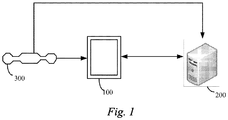
- an application environment in one embodiment of the present disclosure may include a terminal 100, a server 200, and a wireless sensor 300.
- the terminal 100 is capable of performing a communication connection with the server 200 and the wireless sensor 300 respectively, and generally, the terminal 100 may perform the communication connection with the wireless sensor 300 by means of a short-distance communication protocol, such as the Bluetooth 4.0 low power protocol, the ZigBee protocol, and the ANT+ protocol and may perform the communication connection with the server 200 by means of optical fiber communication, Ethernet communication, 3G/4G communication, etc.
- the terminal 100 may be a smart phone, a tablet, a multimedia player, etc.
- the server 200 may be a server or a server cluster, and multiple servers may interact with one another.
- the wireless sensor 300 is mainly a sensor that is capable of sensing physiological parameters, for example, the sensed physiological parameter may be an electrocardiogram parameter, or a respiration rate, etc.
- the present disclosure describes the physiological parameter as the electrocardiogram parameter.
- the physiological parameter sensed by the wireless sensor 300 may be transmitted to the terminal 100, and then transmitted to the server 200 by the terminal 100, the server 200 analyzes the physiological parameter to obtain an analysis result, and the terminal 100 receives the analysis result from the server 200 for display, and the terminal 100 may also directly analyze the physiological parameter to obtain the analysis result.
- the analysis result obtained by the terminal 100 is simpler than the analysis result obtained by the server 200.
- the wireless sensor 300 may first cache the sensed physiological parameter, and after the connection is recovered, the locally cached physiological parameter is transmitted to the terminal 100 and then transmitted to the server 200 by the terminal 100.
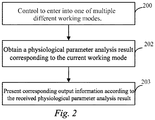
- a physiological parameter display method in one embodiment of the present disclosure is applied to the terminal 100, and may include the steps of: Step 200, controlling the terminal 100 to enter into one of multiple different working modes.
- the different working modes include at least a real-time parameter mode, a real-time monitoring mode, an event measurement mode, and a segment dynamic recording mode.
- the terminal 100 displays different information in the different working modes.
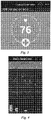
- the terminal 100 displays a heart rate (as shown in FIG. 3 ) at the current moment, and it is suitable for a situation in which the current heart rate is desired.
- the terminal 100 displays an electrocardiogram waveform (as shown in FIG. 4 ) in real time which is used for real-time monitoring to observe whether there is an heart rate abnormality, or an arrhythmia abnormality, etc., and it is suitable for monitoring patients outside the hospital.
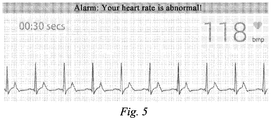
- the terminal 100 displays an electrocardiogram waveform (as shown in FIG. 5 ) for a time period (usually 30 S-60 S) starting from the current moment, so as to observe whether there is an abnormality, and it is suitable for the condition in which the user feels uncomfortable suddenly, for example, feels chest tight.
- the terminal 100 displays the electrocardiogram waveform analysis result (as shown in FIG. 6 ) for a specific time segment (for example, for a time period in which a certain sport is played), and it is suitable for the condition in which the user wants to know about the heart function when undertaking a certain activity, e.g., the heart function during mountain climbing, swimming, etc.
- the detected and displayed contents in the real-time parameter mode, the real-time monitoring mode, and the event measurement mode are all related to the current physiological parameter of the user, and therefore before entering into the real-time parameter mode, the real-time monitoring mode, and the event measurement mode, it is necessary to ensure that the wireless sensor 300 is properly worn on the body of the user and is in a normal working state.
- the different working modes may further include a long-time big-data mode.
- the terminal 100 displays a result (as shown in FIG. 7 ) obtained by analyzing dynamic record data for a time period exceeding a certain length (for example, several days, several months, etc.), e.g., a resting heart rate, the frequency of arrhythmias, etc., so as to observe a long-term changing trend of the heart function and to achieve the purpose of chronic disease management or heart function health management, wherein the record data analyzed in the long-time big-data mode contain all of the record data over a long time period.
- a result as shown in FIG. 7
- the switching of different working modes may be performed according to an input from the user. For example, initially, the terminal by default enters into the real-time parameter mode in which the user may select to enter into other modes according to different scenarios. For example, when the user suddenly feels chest tight, he or she may select to enter into the event measurement mode.
- the server 200 processes and analyzes a received physiological parameter in the swimming time period to generate an electrocardiogram waveform analysis map, and the terminal 100 displays the generated electrocardiogram waveform analysis map, so that the user may learn about the heart function during swimming according to the displayed electrocardiogram waveform analysis map.
- several different working modes are initially provided for selection, and the user may select to enter into a required working mode according to different scenarios without using the real-time parameter mode as an entry for the other working modes. This embodiment does not limit the specific switching method for the different working modes.
- the terminal 100 when displaying the corresponding display content in each working mode, the terminal 100 further displays switching options for different modes, such as a mode switching icon, for the user to operate so as to generate input triggers to enter into the different modes.
- Step 201 acquiring a physiological parameter analysis result corresponding to a current working mode.
- acquiring the physiological parameter analysis result in the real-time parameter mode is the terminal 100 processing a physiological parameter sensed by the wireless sensor 300 at the current moment to obtain a first physiological parameter analysis result.
- Acquiring the physiological parameter analysis result in the real-time monitoring mode includes the terminal 100 processing a physiological parameter sensed by the wireless sensor 300 in a successive time period starting from the current moment to obtain a second physiological parameter analysis result.
- Acquiring the physiological parameter analysis result in the event measurement mode is the terminal 100 processing a physiological parameter sensed by the wireless sensor 300 in a pre-set time period starting from the current moment to obtain a third physiological parameter analysis result.
- Acquiring the physiological parameter analysis result in the segment dynamic recording mode includes the terminal 100 transmitting a first control instruction to the server 200 in response to a first input from the user, so as to obtain, from the server 200, a fourth physiological parameter analysis result acquired by means of the server 200 processing a physiological parameter in a first set time period, the first control instruction including a start time and an end time of the first set time period.
- the first, second, third and fourth physiological parameter analysis results are different from one another.
- the physiological parameter is the electrocardiogram parameter
- the first, second, third and fourth physiological parameter analysis results are as described above with reference to FIGS. 3 - 6 , and will not be described again.
- acquiring the physiological parameter analysis result in the segment dynamic recording mode further includes the terminal 100 transmitting a second control instruction to the wireless sensor 100 in response to a second input from the user, so as to acquire, from the wireless sensor 100, the physiological parameter in the first set time period, and to process the acquired physiological parameter to obtain a fifth physiological parameter analysis result. That is, in the segment dynamic recording mode, the terminal 100 may both obtain the corresponding physiological parameter analysis result by processing the physiological parameter in the first set time period by itself, and directly acquire the corresponding physiological parameter analysis result from the server 200. In the segment dynamic recording mode, an option may be provided for the user to select whether to acquire the corresponding physiological parameter analysis result from the server 200, or to obtain the corresponding physiological parameter analysis result through calculation by the terminal 100 itself.
- the fifth physiological parameter analysis result is usually simpler than the fourth physiological parameter analysis result.
- acquiring the physiological parameter analysis result in the long-time big-data mode is transmitting a third control instruction to the server 200, so as to acquire, from the server 200, a sixth physiological parameter analysis result acquired by means of the server 200 processing a physiological parameter in a second set time period, the third control instruction including a start time and an end time of the second set time period, and the sixth physiological parameter analysis result being different from the first, second, third, fourth and fifth physiological parameter analysis results.
- the physiological parameter is the electrocardiogram parameter
- the sixth physiological parameter analysis results is as described above with reference to FIG. 7 , and will not be described again.
- the first set time period and the second set time period are set by the user via the terminal 100, wherein the duration of the first set time period is usually shorter than that of the second set time period, for example, the duration of the first set time period is usually from half an hour to 24 hours, and the duration of the second set time period is usually several days, several months, etc.
- Step 202 presenting corresponding output information according to the acquired physiological parameter analysis result.
- the terminal 100 presenting the corresponding output information according to the acquired physiological parameter analysis result includes displaying the acquired physiological parameter analysis result.
- different working modes may be provided for a user to select, so as to display the corresponding physiological parameter analysis results in the different working modes, and therefore different requirements of the user under different conditions may be effectively met, so that the physical condition management effect may be effectively achieved.
- presenting the corresponding output information according to the second physiological parameter analysis result when in the real-time monitoring mode includes:
- the user may intuitively determine whether there is an abnormality with the body according to whether the alarm information is displayed.
- presenting the corresponding output information according to the third physiological parameter analysis result when in the event measurement mode includes:
- the user may intuitively determine whether there is an abnormality with the body according to whether the alarm information is displayed.
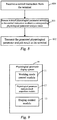
- FIG. 8 is a flowchart of a physiological parameter processing method in one embodiment of the present disclosure, which is applied to the server 300, and may include the steps of: Step 800, receiving a control instruction transmitted by the terminal 100.
- Step 801 processing a stored physiological parameter according to the control instruction to obtain a corresponding physiological parameter analysis result.
- the physiological parameter in the first set time period is processed to obtain a fourth physiological parameter analysis result.
- the physiological parameter in the second set time period is processed to obtain a sixth physiological parameter analysis result, the duration of the first set time period being shorter than that of the second set time period, and the fourth physiological parameter analysis result being different from the sixth physiological parameter analysis result.
- Step 802 transmitting the physiological parameter analysis result to the terminal 100.
- a physiological parameter display system 10 in one embodiment of the present disclosure is applied to the terminal 100 and may include a working mode control module 11, a physiological parameter analysis result acquisition module 12, and a display control module 13.
- the physiological parameter display system 10 may be an application that may be installed on the terminal 100 and has a login account, that is, a third-party application.
- the working mode control module 11 is used to control the terminal 100 to enter into one of multiple different working modes.
- the different working modes include at least a real-time parameter mode, a real-time monitoring mode, an event measurement mode, and a segment dynamic recording mode.
- the terminal 100 displays different information in the different working modes.
- the terminal 100 displays a heart rate (as shown in FIG. 3 ) at the current moment, and it is suitable for a situation in which the current heart rate is desired.
- the terminal 100 displays an electrocardiogram waveform (as shown in FIG. 4 ) in real time which is used for real-time monitoring to observe whether there is an heart rate abnormality, or an arrhythmia abnormality, etc., and it is suitable for monitoring patients outside the hospital.
- the terminal 100 displays an electrocardiogram waveform (as shown in FIG. 5 ) for a time period (usually 30 S-60 S) starting from the current moment, so as to observe whether there is an abnormality, and it is suitable for the condition in which the user feels uncomfortable suddenly, for example, feels chest tight.
- the terminal 100 displays the electrocardiogram waveform analysis result (as shown in FIG. 6 ) for a specific time segment (for example, for a time period in which a certain sport is played), and it is suitable for the condition in which the user wants to know about the heart function when undertaking a certain activity, e.g., the heart function during mountain climbing, swimming, etc.
- the detected and displayed contents in the real-time parameter mode, the real-time monitoring mode, and the event measurement mode are all related to the current physiological parameter of the user, and therefore before entering into the real-time parameter mode, the real-time monitoring mode, and the event measurement mode, it is necessary to ensure that the wireless sensor 300 is properly worn on the body of the user and is in a normal working state.
- the different working modes may further include a long-time big-data mode.
- the terminal 100 displays a result (as shown in FIG. 7 ) obtained by analyzing dynamic record data for a time period exceeding a certain length (for example, several days, several months, etc.), e.g., a resting heart rate, the frequency of arrhythmias, etc., so as to observe a long-term changing trend of the heart function and to achieve the purpose of chronic disease management or heart function health management, wherein the record data analyzed in the long-time big-data mode contain all of the record data over a long time period.
- a result as shown in FIG. 7
- the switching of different working modes may be performed according to an input from the user. For example, initially, the terminal by default enters into the real-time parameter mode in which the user may select to enter into other modes according to different scenarios. For example, when the user suddenly feels chest tight, he or she may select to enter into the event measurement mode.
- the server 200 processes and analyzes a received physiological parameter in the swimming time period to generate an electrocardiogram waveform analysis map, and the terminal 100 displays the generated electrocardiogram waveform analysis map, so that the user may learn about the heart function during swimming according to the displayed electrocardiogram waveform analysis map.
- several different working modes are initially provided for selection, and the user may select to enter into a required working mode according to different scenarios without using the real-time parameter mode as an entry for the other working modes. This embodiment does not limit the specific switching method for the different working modes.
- the terminal 100 when displaying the corresponding display content in each working mode, the terminal 100 further displays switching options for different modes, such as a mode switching icon, for the user to operate so as to generate input triggers to enter into the different modes.
- the physiological parameter analysis result acquisition module 12 is used to acquire a physiological parameter analysis result corresponding to a current working mode.
- acquiring the physiological parameter analysis result in the real-time parameter mode is the physiological parameter analysis result acquisition module 12 processing a physiological parameter sensed by the wireless sensor 300 at the current moment to obtain a first physiological parameter analysis result.
- Acquiring the physiological parameter analysis result in the real-time monitoring mode includes the physiological parameter analysis result acquisition module 12 processing a physiological parameter sensed by the wireless sensor 300 in a successive time period starting from the current moment to obtain a second physiological parameter analysis result.
- Acquiring the physiological parameter analysis result in the event measurement mode is the physiological parameter analysis result acquisition module 12 processing a physiological parameter sensed by the wireless sensor 300 in a pre-set time period starting from the current moment to obtain a third physiological parameter analysis result.
- the physiological parameter analysis result acquisition module 12 transmitting a first control instruction to the server 200 in response to a first input from the user, so as to obtain, from the server 200, a fourth physiological parameter analysis result acquired by means of the server 200 processing the physiological parameter in the first set time period, the first control instruction including a start time and an end time of the first set time period.
- the first, second, third and fourth physiological parameter analysis results are different from one another.
- the physiological parameter is the electrocardiogram parameter
- the first, second, third and fourth physiological parameter analysis results are as described above with reference to FIGS. 3 - 6 , and will not be described again.
- acquiring the physiological parameter analysis result in the segment dynamic recording mode further includes the physiological parameter analysis result acquisition module 12 transmitting a second control instruction to the wireless sensor 100 in response to a second input from the user, so as to acquire, from the wireless sensor 100, the physiological parameter in the first set time period, and to process the acquired physiological parameter to obtain a fifth physiological parameter analysis result. That is, in the segment dynamic recording mode, the terminal 100 may both obtain the corresponding physiological parameter analysis result by processing the physiological parameter in the first set time period by itself, and directly acquire the corresponding physiological parameter analysis result from the server 200. In the segment dynamic recording mode, an option may be provided for the user to select whether to acquire the corresponding physiological parameter analysis result from the server 200, or to obtain the corresponding physiological parameter analysis result through calculation by the terminal 100 itself.
- the fifth physiological parameter analysis result is usually simpler than the fourth physiological parameter analysis result.
- acquiring the physiological parameter analysis result in the long-time big-data mode is the physiological parameter analysis result acquisition module 12 transmitting a third control instruction to the server 200, so as to acquire, from the server 200, a sixth physiological parameter analysis result acquired by means of the server 200 processing a physiological parameter in a second set time period, the third control instruction including a start time and an end time of the second set time period, and the sixth physiological parameter analysis result being different from the first, second, third, fourth and fifth physiological parameter analysis results.
- the physiological parameter is the electrocardiogram parameter
- the sixth physiological parameter analysis results is as described above with reference to FIG. 7 , and will not be described again.
- the first set time period and the second set time period are set by the user via the terminal 100, wherein the duration of the first set time period is usually shorter than that of the second set time period, for example, the duration of the first set time period is usually from half an hour to 24 hours, and the duration of the second set time period is usually several days, several months, etc.
- the display control module 13 is used to present corresponding output information according to the acquired physiological parameter analysis result. Specifically, the display control module 13 presenting the corresponding output information according to the acquired physiological parameter analysis result includes displaying the received physiological parameter analysis result.
- different working modes may be provided for a user to select, so as to display the corresponding physiological parameter analysis results in the different working modes, and therefore different requirements of the user under different conditions may be effectively met, so that the physical condition management effect may be effectively achieved.
- the display control module 13 presenting the corresponding output information according to the second physiological parameter analysis result when in the real-time monitoring mode includes:
- the user may intuitively determine whether there is an abnormality with the body according to whether the alarm information is displayed.
- the display control module 13 presenting the corresponding output information according to the third physiological parameter analysis result when in the event measurement mode includes:
- the user may intuitively determine whether there is an abnormality with the body according to whether the alarm information is displayed.
- a physiological parameter processing system 20 in one embodiment of the present disclosure is applied to the server 200 and may include a receiving module 21, an analysis processing module 22, and a transmitting module 23.
- the physiological parameter processing system 20 may be a background portion of the application (the physiological parameter display system 10) installed on the terminal 100.
- the receiving module 21 is used to receive the control instruction from the terminal 100.
- the analysis processing module 22 is used to process a stored physiological parameter according to the control instruction to obtain a corresponding physiological parameter analysis result.
- the physiological parameter in the first set time period is processed to obtain a fourth physiological parameter analysis result.
- the physiological parameter in the second set time period is processed to obtain a sixth physiological parameter analysis result, the duration of the first set time period being shorter than that of the second set time period, and the fourth physiological parameter analysis result being different from the sixth physiological parameter analysis result.
- the transmitting module 23 is used to transmit the generated physiological parameter analysis result to the terminal 100.
- the terminal 100 in the embodiments of the present disclosure may include components, such as an input unit 101, a processor 102, an output unit 103, a communication unit 104, and a memory 105. These components communicate over one or more buses. It is to be understood by those skilled in the art that the structure of the terminal 100 shown in FIG. 11 does not constitute a limit of the present disclosure, and it may be a bus-shaped structure or may be a star-shaped structure, and may also include more or fewer components than those shown in FIG. 11 , or the combination of some components, or different component arrangements.
- the input unit 101 is used to realize the interaction between the user and the terminal 100 and/or input of information to the terminal.
- the input unit 101 may receive numeric or character information input by the user to generate a signal input related to user settings or function control.
- the input unit 101 may be a touch panel, or may be other human-machine interaction interfaces, such as physical input keys, a microphone, etc., and may also be other external information capturing devices, such as cameras.
- the processor 102 is a control center of the terminal 100, which connects various parts of the entire terminal 100 using various interfaces and lines, and by running or executing program codes and/or modules stored in the memory 105 and calling data stored in the memory 105, executes various functions of the terminal 100 and/or processes the data.
- the processor 102 may be composed of an integrated circuit (IC), for example, may be composed of a single packaged IC, or may be composed by connecting multiple packaged ICs with the same function or different functions.
- the processor 102 may include only a central processing unit (CPU), or may be a CPU, a digital signal processor (DSP), a graphics processing unit (GPU) and a combination of control chips (e.g., baseband chips) in the communication unit.
- the CPU may be a single operation core, and may also include multiple operation cores.
- the output unit 103 may include, but is not limited to, an image output unit, a sound output and tactile output unit.
- the image output unit is used to output text, pictures, and/or videos.
- the image output unit may include a display panel, such as a display panel configured in the form of an LCD (Liquid Crystal Display), an OLED (Organic Light-Emitting Diode), or a field emission display (FED), etc.
- the image output unit may include a reflective display, for example, an electrophoretic display, or a display using interferometric modulation of light.
- the memory 105 may be used to store program codes and modules, and the processor 102 executes various functional applications of the terminal 100 and realizes data processing by running the program codes and modules stored in the memory 105.
- the memory 105 mainly includes a program storage area and a data storage area, wherein the program storage area may store an operating system, program codes required for at least one function, such as program codes for performing physiological parameter display; and the data storage area may store data created according to the use of the terminal 100, such as the physiological parameter, etc.
- the memory 105 may include a volatile memory, such as a nonvolatile random access memory (NVRAM), a phase change RAM (PRAM), and a magnetoresistive RAM (MRAM), or may include a non-volatile memory, such as at least one magnetic disk storage device, an electrically erasable programmable read-only memory (EEPROM), and a flash memory device, e.g., a NOR flash memory or a NAND flash memory.
- NVRAM nonvolatile random access memory
- PRAM phase change RAM
- MRAM magnetoresistive RAM
- EEPROM electrically erasable programmable read-only memory
- flash memory device e.g., a NOR flash memory or a NAND flash memory.
- the non-volatile memory stores the operating system and the program codes executed by the processor unit.
- the communication unit 104 is used to establish communication channels, so that the terminal 100 is connected to the server 200 and the wireless sensor 300 via the communication channels.
- the communication unit 104 may include wireless communication modules such as a wireless local area network (wireless LAN) module, a Bluetooth module, a near field communication (NFC), a baseband module, and wired communication modules such as an Ethernet, a universal serial bus (USB), Lightning (currently used by Apple for iPhone 5/5s/5c apparatuses, etc.).
- the processor 102 may call the program codes stored in the memory 105 for executing the following operations:
- acquiring the physiological parameter analysis result in the segment dynamic recording mode further includes the terminal 100 transmitting a second control instruction to the wireless sensor 100 in response to a second input from the user, so as to acquire, from the wireless sensor 100, the physiological parameter in the first set time period, and to process the acquired physiological parameter to obtain a fifth physiological parameter analysis result, a complexity of the fourth physiological parameter analysis result being greater than that of the fifth physiological parameter analysis result.
- the different working modes may further include a long-time big-data mode, wherein acquiring the physiological parameter analysis result in the long-time big-data mode is transmitting a second control instruction to the server 200, so as to acquire, from the server 200, a sixth physiological parameter analysis result acquired by means of the server 200 processing a physiological parameter in a second set time period, the second control instruction including a start time and an end time of the second set time period, and a duration of the first set time period being shorter than that of the second set time period.
- a long-time big-data mode wherein acquiring the physiological parameter analysis result in the long-time big-data mode is transmitting a second control instruction to the server 200, so as to acquire, from the server 200, a sixth physiological parameter analysis result acquired by means of the server 200 processing a physiological parameter in a second set time period, the second control instruction including a start time and an end time of the second set time period, and a duration of the first set time period being shorter than that of the second set time period.
- the first, second, third, fourth, fifth and sixth physiological parameter analysis results are different from one another.
- different working modes may be provided for a user to select, so as to display the corresponding physiological parameter analysis results in the different working modes, and therefore different requirements of the user under different conditions may be effectively met, so that the physical condition management effect may be effectively achieved.
- presenting the corresponding output information according to the second physiological parameter analysis result when in the real-time monitoring mode includes:
- the user may intuitively determine whether there is an abnormality with the body according to whether the alarm information is displayed.
- presenting the corresponding output information according to the third physiological parameter analysis result when in the event measurement mode includes:
- the user may intuitively determine whether there is an abnormality with the body according to whether the alarm information is displayed.
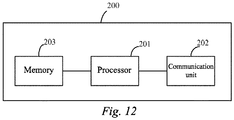
- the server 200 in the embodiments of the present disclosure may include components, such as a processor 201, a communication unit 202, and a memory 203. These components communicate over one or more buses. It is to be understood by those skilled in the art that the structure of the server 200 shown in FIG. 12 does not constitute a limit of the present disclosure, which may be a bus-shaped structure or may be a star-shaped structure, and may also include more or fewer components than those shown in FIG. 12 , or the combination of certain components, or different component arrangements.
- the processor 201 is a control center of the server 200, which connects various parts of the entire server 200 using various interfaces and lines, and by running or executing program codes and/or modules stored in the memory 203 and calling data stored in the memory 203, executes various functions of the server 200 and/or processes the data.
- the memory 203 may be used to store program codes and modules, and the processor 201 executes various functional applications of the server 200 and realizes data processing by running the program codes and modules stored in the memory 203.
- the memory 203 mainly includes a program storage area and a data storage area, wherein the program storage area may store an operating system, program codes required for at least one function, such as program codes for performing physiological parameter processing; and the data storage area may store data created according to the use of the server, such as the physiological parameter.
- the communication unit 202 is used to establish a communication channel, so that the server 200 is connected to the terminal 100 via the communication channel.
- the processor 201 may call the program codes stored in the memory 203 for executing the following operations:
Landscapes
- Health & Medical Sciences (AREA)
- Life Sciences & Earth Sciences (AREA)
- Engineering & Computer Science (AREA)
- Biomedical Technology (AREA)
- Public Health (AREA)
- Medical Informatics (AREA)
- General Health & Medical Sciences (AREA)
- Pathology (AREA)
- Biophysics (AREA)
- Physics & Mathematics (AREA)
- Heart & Thoracic Surgery (AREA)
- Molecular Biology (AREA)
- Surgery (AREA)
- Animal Behavior & Ethology (AREA)
- Physiology (AREA)
- Veterinary Medicine (AREA)
- Cardiology (AREA)
- Signal Processing (AREA)
- Computer Networks & Wireless Communication (AREA)
- Artificial Intelligence (AREA)
- Computer Vision & Pattern Recognition (AREA)
- Psychiatry (AREA)
- Business, Economics & Management (AREA)
- General Business, Economics & Management (AREA)
- Epidemiology (AREA)
- Primary Health Care (AREA)
- Pulmonology (AREA)
- Measuring And Recording Apparatus For Diagnosis (AREA)
- Mobile Radio Communication Systems (AREA)
Abstract
Description
- The present disclosure relates to the field of displaying physiological parameters, in particular to a physiological parameter display method and system, a physiological parameter processing method and system, a terminal for physiological parameter display and a server for physiological parameter processing.
- Electrocardiogram, as a professional diagnostic means, requires electrodes to be placed with professional medical knowledge and requires interpretation for waveforms. Electrocardiogram has been used in hospitals, but may not fully meet the requirements of clinical applications. For patients having chronic heart disease, or for healthy people who care about heart function, how to use the electrocardiogram function to form an effective result display and track is a basic problem that needs to be solved for the electrocardiogram to go from the inside of the hospital to the outside of the hospital.
- With the rapid development of technologies such as semiconductors, batteries, and production processes, many wearable electrocardiogram measuring apparatuses have emerged, and this has solved the first problem of the electrocardiogram entering homes. However, how to display data collected by the wearable electrocardiogram measuring apparatuses to achieve the real heart function management effect is an important technical problem that needs to be solved.
- One embodiment of the present disclosure discloses a physiological parameter display method and system, a physiological parameter processing method and system, a terminal and a server, which may effectively meet different requirements of the user under different conditions, so that physical condition management effects may be effectively achieved.
- One embodiment of the present disclosure discloses a physiological parameter display method which is applied to a terminal, the terminal is capable of communicating with a server and a wireless sensor respectively, the physiological parameter display method including:
- controlling the terminal to enter into one of multiple different working modes, the different working modes include at least a real-time parameter mode, a real-time monitoring mode, an event measurement mode, and a segment dynamic recording mode;
- acquiring a physiological parameter analysis result corresponding to a current working mode, wherein acquiring the physiological parameter analysis result in the real-time parameter mode includes the terminal processing the physiological parameter sensed by the wireless sensor at a current moment to acquire a first physiological parameter analysis result; acquiring the physiological parameter analysis result in the real-time monitoring mode includes the terminal processing the physiological parameter sensed by the wireless sensor in a successive time period starting from the current moment to acquire a second physiological parameter analysis result; acquiring the physiological parameter analysis result in the event measurement mode includes the terminal processing the physiological parameter sensed by the wireless sensor in a preset time period starting from the current moment to acquire a third physiological parameter analysis result; and acquiring the physiological parameter analysis result in the segment dynamic recording mode includes the terminal transmitting a first control instruction to the server in response to a first input from a user, so as to acquire, from the server, a fourth physiological parameter analysis result obtained by means of the server processing the physiological parameter in a first set time period, the first control instruction including a start time and an end time of the first set time period; and
- presenting corresponding output information according to the acquired physiological parameter analysis result, wherein the output information includes the acquired physiological parameter analysis result.
- Acquiring the physiological parameter analysis result in the segment dynamic recording mode further includes the terminal transmitting a second control instruction to the wireless sensor in response to a second input from the user, so as to acquire the physiological parameter in the first set time period from the wireless sensor and to process the physiological parameter in the first set time period to acquire a fifth physiological parameter analysis result, a complexity of the fourth physiological parameter analysis result being greater than that of the fifth physiological parameter analysis result.
- The different working modes further include a long-time big-data mode, wherein acquiring the physiological parameter analysis result in the long-time big-data mode is transmitting a third control instruction to the server, so as to acquire, from the server, a sixth physiological parameter analysis result obtained by means of the server processing the physiological parameter in a second set time period, the third control instruction including a start time and an end time of the second set time period, and a duration of the first set time period being shorter than that of the second set time period.
- The first physiological parameter analysis result, the second physiological parameter analysis result, the third physiological parameter analysis result, the fourth physiological parameter analysis result, the fifth physiological parameter analysis result, and the sixth physiological parameter analysis result are different from one another.
- Presenting the corresponding output information according to the second physiological parameter analysis result in the real-time monitoring mode includes:
- displaying the second physiological parameter analysis result;
- determining whether an abnormality has occurred according to the second physiological parameter analysis result; and
- displaying alarm information when the abnormality has occurred.
- Presenting the corresponding output information according to the third physiological parameter analysis result in the event measurement mode includes:
- displaying the third physiological parameter analysis result;
- determining whether an abnormality has occurred according to the third physiological parameter analysis result; and
- displaying alarm information when the abnormality has occurred.
- One embodiment of the present disclosure further discloses a physiological parameter processing method which is applied to a server, the server is capable of performing a communication connection with a terminal, the physiological parameter processing method including:
- receiving a control instruction transmitted by the terminal;
- processing a stored physiological parameter according to the control instruction to acquire a corresponding physiological parameter analysis result, wherein when the control instruction is to acquire an analysis result for the physiological parameter in a first set time period, the physiological parameter in the first set time period is processed to acquire a fourth physiological parameter analysis result; and when the control instruction is to acquire an analysis result for the physiological parameter in a second set time period, the physiological parameter in the second set time period is processed to acquire a sixth physiological parameter analysis result, a duration of the first set time period being shorter than that of the second set time period; and
- transmitting the physiological parameter analysis result to the terminal.
- One embodiment of the present disclosure discloses a physiological parameter display system which is applied to a terminal, the terminal is in communication connection with a server and/or a wireless sensor, the physiological parameter display system including:
- a working mode control module for controlling the terminal to enter into one of multiple different working modes, the different working modes including at least a real-time parameter mode, a real-time monitoring mode, an event measurement mode, and a segment dynamic recording mode;
- a physiological parameter analysis result acquisition module for acquiring a physiological parameter analysis result corresponding to a current working mode, wherein acquiring the physiological parameter analysis result in the real-time parameter mode includes the physiological parameter analysis result acquisition module processing the physiological parameter sensed by the wireless sensor at a current moment to acquire a first physiological parameter analysis result; acquiring the physiological parameter analysis result in the real-time monitoring mode includes the physiological parameter analysis result acquisition module processing the physiological parameter sensed by the wireless sensor in a successive time period starting from the current moment to acquire a second physiological parameter analysis result; acquiring the physiological parameter analysis result in the event measurement mode includes the physiological parameter analysis result acquisition module processing the physiological parameter sensed by the wireless sensor in a preset time period starting from the current moment to acquire a third physiological parameter analysis result; and acquiring the physiological parameter analysis result in the segment dynamic recording mode includes the physiological parameter analysis result acquisition module transmitting a first control instruction to the server in response to a first input from a user, so as to acquire, from the server, a fourth physiological parameter analysis result obtained by means of the server processing the physiological parameter in a first set time period, the first control instruction including a start time and an end time of the first set time period; and
- a display control module for presenting corresponding output information according to the physiological parameter analysis result, wherein the output information includes the physiological parameter analysis result.
- Acquiring the physiological parameter analysis result in the segment dynamic recording mode further includes the physiological parameter analysis result acquisition module transmitting a second control instruction to the wireless sensor in response to a second input from the user, so as to acquire the physiological parameter in the first set time period from the wireless sensor and to process the physiological parameter in the first set time period to acquire a fifth physiological parameter analysis result, a complexity of the fourth physiological parameter analysis result being greater than that of the fifth physiological parameter analysis result.
- The different working modes further include a long-time big-data mode, wherein acquiring the physiological parameter analysis result in the long-time big-data mode includes transmitting a third control instruction to the server, so as to acquire, from the server, a sixth physiological parameter analysis result obtained by means of the server processing the physiological parameter in a second set time period, the third control instruction including a start time and an end time of the second set time period, and a duration of the first set time period being shorter than that of the second set time period.
- The first physiological parameter analysis result, the second physiological parameter analysis result, the third physiological parameter analysis result, the fourth physiological parameter analysis result, the fifth physiological parameter analysis result, and the sixth physiological parameter analysis result are different from one another.
- The display control module presenting the corresponding output information according to the second physiological parameter analysis result in the real-time monitoring mode includes:
- displaying the second physiological parameter analysis result;
- determining whether an abnormality has occurred according to the second physiological parameter analysis result; and
- displaying alarm information when the abnormality has occurred.
- The display control module presenting the corresponding output information according to the third physiological parameter analysis result in the event measurement mode includes:
- displaying the third physiological parameter analysis result;
- determining whether an abnormality has occurred according to the third physiological parameter analysis result; and
- displaying alarm information when the abnormality has occurred.
- One embodiment of the present disclosure further discloses a physiological parameter processing system which is applied to a server, wherein the server is capable of performing a communication connection with a terminal, the physiological parameter processing system including:
- a receiving module for receiving a control instruction transmitted by the terminal; and
- an analysis processing module for processing a stored physiological parameter according to the control instruction to acquire a corresponding physiological parameter analysis result, wherein when the control instruction is to acquire an analysis result for the physiological parameter in a first set time period, the physiological parameter in the first set time period is processed to acquire a fourth physiological parameter analysis result; and when the control instruction is to acquire an analysis result for the physiological parameter in a second set time period, the physiological parameter in the second set time period is processed to acquire a sixth physiological parameter analysis result, a duration of the first set time period being shorter than that of the second set time period; and
- a transmitting module for transmitting the physiological parameter analysis result to the terminal.
- One embodiment of the present disclosure further discloses a terminal, including:
- a communication unit for performing a communication connection with a wireless sensor and a server respectively;
- a memory for storing program codes; and
- a processor for calling the program codes stored in the memory to execute the following operations:
- controlling the terminal to enter into one of multiple different working modes, the different working modes including at least a real-time parameter mode, a real-time monitoring mode, an event measurement mode, and a segment dynamic recording mode;
- acquiring a physiological parameter analysis result corresponding to a current working mode, wherein acquiring the physiological parameter analysis result in the real-time parameter mode includes the terminal processing the physiological parameter sensed by the wireless sensor at a current moment to acquire a first physiological parameter analysis result; acquiring the physiological parameter analysis result in the real-time monitoring mode includes the terminal processing the physiological parameter sensed by the wireless sensor in a successive time period starting from the current moment to acquire a second physiological parameter analysis result; acquiring the physiological parameter analysis result in the event measurement mode includes the terminal processing the physiological parameter sensed by the wireless sensor in a preset time period starting from the current moment to acquire a third physiological parameter analysis result; and acquiring the physiological parameter analysis result in the segment dynamic recording mode includes the terminal transmitting a first control instruction to the server in response to a first input from a user, so as to acquire, from the server, a fourth physiological parameter analysis result obtained by means of the server processing the physiological parameter in a first set time period, the first control instruction including a start time and an end time of the first set time period; and
- presenting corresponding output information according to the acquired physiological parameter analysis result, wherein the output information includes the acquired physiological parameter analysis result.
- Acquiring the physiological parameter analysis result in the segment dynamic recording mode further includes the terminal transmitting a second control instruction to the wireless sensor in response to a second input from the user, so as to acquire the physiological parameter in the first set time period from the wireless sensor and to process the physiological parameter in the first set time period to acquire a fifth physiological parameter analysis result, a complexity of the fourth physiological parameter analysis result being greater than that of the fifth physiological parameter analysis result.
- The different working modes further include a long-time big-data mode, wherein acquiring the physiological parameter analysis result in the long-time big-data mode is transmitting a third control instruction to the server, so as to acquire, from the server, a sixth physiological parameter analysis result obtained by means of the server processing the physiological parameter in a second set time period, the third control instruction including a start time and an end time of the second set time period, and a duration of the first set time period being shorter than that of the second set time period.
- The first physiological parameter analysis result, the second physiological parameter analysis result, the third physiological parameter analysis result, the fourth physiological parameter analysis result, the fifth physiological parameter analysis result, and the sixth physiological parameter analysis result are different from one another.
- Presenting the corresponding output information according to the second physiological parameter analysis result in the real-time monitoring mode includes:
- displaying the second physiological parameter analysis result;
- determining whether an abnormality has occurred according to the second physiological parameter analysis result; and displaying alarm information when the abnormality has occurred.
- Presenting the corresponding output information according to the third physiological parameter analysis result in the event measurement mode includes:
- displaying the third physiological parameter analysis result;
- determining whether an abnormality has occurred according to the third physiological parameter analysis result; and
- displaying alarm information when the abnormality has occurred.
- One embodiment of the present disclosure further discloses a server, including:
- a communication unit for performing a communication connection with a terminal;
- a memory for storing program codes and at least one physiological parameter; and
- a processor for executing the program codes stored in the memory to execute the following operations:
- receiving a control instruction transmitted by the terminal;
- processing a stored physiological parameter according to the control instruction to acquire a corresponding physiological parameter analysis result, wherein when it is interpreted that the control instruction is to acquire an analysis result for a physiological parameter in a first set time period, the physiological parameter in the first set time period is processed to acquire a fourth physiological parameter analysis result, and when it is interpreted that the control instruction is to acquire an analysis result for a physiological parameter in a second set time period, the physiological parameter in the second set time period is processed to acquire a sixth physiological parameter analysis result, a duration of the first set time period being shorter than that of the second set time period; and
- transmitting the physiological parameter analysis result to the terminal.
- In the present disclosure, different working modes may be provided for a user to select, and corresponding physiological parameter analysis results may be displayed in the different working modes, and therefore different requirements of the user under different conditions may be effectively met, so that the physical condition management effect may be effectively achieved.
- In order to more clearly illustrate technical solutions in the embodiments of the present disclosure, a brief introduction to the drawings required for the embodiments will be provided below. Obviously, the drawings in the following description are only some of the embodiments of the present disclosure, and those skilled in the art would also be able to obtain other drawings from these drawings without expending any inventive effort.
-
FIG. 1 is a schematic diagram of an application environment; -
FIG. 2 is a flowchart of a physiological parameter display method; -
FIG. 3 is a schematic diagram of the content displayed by a terminal in a real-time parameter mode; -
FIG. 4 is a schematic diagram of the content displayed by a terminal in a real-time monitoring mode; -
FIG. 5 is a schematic diagram of the content displayed by a terminal in an event measurement mode; -
FIG. 6 is a schematic diagram of the content displayed by a terminal in a segment dynamic recording mode; -
FIG. 7 is a schematic diagram of the content displayed by a terminal in a long-time big-data mode; -
FIG. 8 is a flowchart of a physiological parameter processing method; -
FIG. 9 is a functional module diagram of a physiological parameter display system; -
FIG. 10 is a functional module diagram of a physiological parameter processing system; -
FIG. 11 is a schematic diagram of the basic structural of a terminal; and -
FIG. 12 is a schematic diagram of the basic structural of a server. - The technical solutions of the embodiments of the present application will be described below clearly and comprehensively in conjunction with the drawings of the embodiments of the present disclosure. Clearly, the embodiments described are merely some embodiments of the present disclosure and are not all the possible embodiments. Based on the embodiments given in the present disclosure, all other embodiments that would be obtained by those skilled in the art without expending inventive effort shall all fall within the scope of protection of the present disclosure.
- With reference to
FIG. 1 , an application environment in one embodiment of the present disclosure may include a terminal 100, aserver 200, and awireless sensor 300. The terminal 100 is capable of performing a communication connection with theserver 200 and thewireless sensor 300 respectively, and generally, the terminal 100 may perform the communication connection with thewireless sensor 300 by means of a short-distance communication protocol, such as the Bluetooth 4.0 low power protocol, the ZigBee protocol, and the ANT+ protocol and may perform the communication connection with theserver 200 by means of optical fiber communication, Ethernet communication, 3G/4G communication, etc. The terminal 100 may be a smart phone, a tablet, a multimedia player, etc. Theserver 200 may be a server or a server cluster, and multiple servers may interact with one another. Thewireless sensor 300 is mainly a sensor that is capable of sensing physiological parameters, for example, the sensed physiological parameter may be an electrocardiogram parameter, or a respiration rate, etc. The present disclosure describes the physiological parameter as the electrocardiogram parameter. The physiological parameter sensed by thewireless sensor 300 may be transmitted to the terminal 100, and then transmitted to theserver 200 by the terminal 100, theserver 200 analyzes the physiological parameter to obtain an analysis result, and the terminal 100 receives the analysis result from theserver 200 for display, and the terminal 100 may also directly analyze the physiological parameter to obtain the analysis result. Generally, the analysis result obtained by the terminal 100 is simpler than the analysis result obtained by theserver 200. Certainly, when thewireless sensor 300 is disconnected from the terminal 100, thewireless sensor 300 may first cache the sensed physiological parameter, and after the connection is recovered, the locally cached physiological parameter is transmitted to the terminal 100 and then transmitted to theserver 200 by theterminal 100. - With reference to
FIG. 2 , a physiological parameter display method in one embodiment of the present disclosure is applied to the terminal 100, and may include the steps of:
Step 200, controlling the terminal 100 to enter into one of multiple different working modes. - Specifically, the different working modes include at least a real-time parameter mode, a real-time monitoring mode, an event measurement mode, and a segment dynamic recording mode. The terminal 100 displays different information in the different working modes. In the real-time parameter mode, the terminal 100 displays a heart rate (as shown in
FIG. 3 ) at the current moment, and it is suitable for a situation in which the current heart rate is desired. In the real-time monitoring mode, the terminal 100 displays an electrocardiogram waveform (as shown inFIG. 4 ) in real time which is used for real-time monitoring to observe whether there is an heart rate abnormality, or an arrhythmia abnormality, etc., and it is suitable for monitoring patients outside the hospital. In the event measurement mode, the terminal 100 displays an electrocardiogram waveform (as shown inFIG. 5 ) for a time period (usually 30 S-60 S) starting from the current moment, so as to observe whether there is an abnormality, and it is suitable for the condition in which the user feels uncomfortable suddenly, for example, feels chest tight. In the segment dynamic recording mode, the terminal 100 displays the electrocardiogram waveform analysis result (as shown inFIG. 6 ) for a specific time segment (for example, for a time period in which a certain sport is played), and it is suitable for the condition in which the user wants to know about the heart function when undertaking a certain activity, e.g., the heart function during mountain climbing, swimming, etc. The detected and displayed contents in the real-time parameter mode, the real-time monitoring mode, and the event measurement mode are all related to the current physiological parameter of the user, and therefore before entering into the real-time parameter mode, the real-time monitoring mode, and the event measurement mode, it is necessary to ensure that thewireless sensor 300 is properly worn on the body of the user and is in a normal working state. - Further, the different working modes may further include a long-time big-data mode. In the long-time big-data mode, the terminal 100 displays a result (as shown in
FIG. 7 ) obtained by analyzing dynamic record data for a time period exceeding a certain length (for example, several days, several months, etc.), e.g., a resting heart rate, the frequency of arrhythmias, etc., so as to observe a long-term changing trend of the heart function and to achieve the purpose of chronic disease management or heart function health management, wherein the record data analyzed in the long-time big-data mode contain all of the record data over a long time period. - Specifically, the switching of different working modes may be performed according to an input from the user. For example, initially, the terminal by default enters into the real-time parameter mode in which the user may select to enter into other modes according to different scenarios. For example, when the user suddenly feels chest tight, he or she may select to enter into the event measurement mode. For another example, after swimming, the user wants to know about the heart function during swimming, he or she may select to enter into the segment dynamic recording mode and input a swimming time period (including a start time and an end time), then the
server 200 processes and analyzes a received physiological parameter in the swimming time period to generate an electrocardiogram waveform analysis map, and the terminal 100 displays the generated electrocardiogram waveform analysis map, so that the user may learn about the heart function during swimming according to the displayed electrocardiogram waveform analysis map. For another example, several different working modes are initially provided for selection, and the user may select to enter into a required working mode according to different scenarios without using the real-time parameter mode as an entry for the other working modes. This embodiment does not limit the specific switching method for the different working modes. In one embodiment, when displaying the corresponding display content in each working mode, the terminal 100 further displays switching options for different modes, such as a mode switching icon, for the user to operate so as to generate input triggers to enter into the different modes. -
Step 201, acquiring a physiological parameter analysis result corresponding to a current working mode. - Specifically, acquiring the physiological parameter analysis result in the real-time parameter mode is the terminal 100 processing a physiological parameter sensed by the
wireless sensor 300 at the current moment to obtain a first physiological parameter analysis result. Acquiring the physiological parameter analysis result in the real-time monitoring mode includes the terminal 100 processing a physiological parameter sensed by thewireless sensor 300 in a successive time period starting from the current moment to obtain a second physiological parameter analysis result. Acquiring the physiological parameter analysis result in the event measurement mode is the terminal 100 processing a physiological parameter sensed by thewireless sensor 300 in a pre-set time period starting from the current moment to obtain a third physiological parameter analysis result. Acquiring the physiological parameter analysis result in the segment dynamic recording mode includes the terminal 100 transmitting a first control instruction to theserver 200 in response to a first input from the user, so as to obtain, from theserver 200, a fourth physiological parameter analysis result acquired by means of theserver 200 processing a physiological parameter in a first set time period, the first control instruction including a start time and an end time of the first set time period. The first, second, third and fourth physiological parameter analysis results are different from one another. When the physiological parameter is the electrocardiogram parameter, the first, second, third and fourth physiological parameter analysis results are as described above with reference toFIGS. 3 - 6 , and will not be described again. - Further, acquiring the physiological parameter analysis result in the segment dynamic recording mode further includes the terminal 100 transmitting a second control instruction to the
wireless sensor 100 in response to a second input from the user, so as to acquire, from thewireless sensor 100, the physiological parameter in the first set time period, and to process the acquired physiological parameter to obtain a fifth physiological parameter analysis result. That is, in the segment dynamic recording mode, the terminal 100 may both obtain the corresponding physiological parameter analysis result by processing the physiological parameter in the first set time period by itself, and directly acquire the corresponding physiological parameter analysis result from theserver 200. In the segment dynamic recording mode, an option may be provided for the user to select whether to acquire the corresponding physiological parameter analysis result from theserver 200, or to obtain the corresponding physiological parameter analysis result through calculation by the terminal 100 itself. The fifth physiological parameter analysis result is usually simpler than the fourth physiological parameter analysis result. - Further, acquiring the physiological parameter analysis result in the long-time big-data mode is transmitting a third control instruction to the
server 200, so as to acquire, from theserver 200, a sixth physiological parameter analysis result acquired by means of theserver 200 processing a physiological parameter in a second set time period, the third control instruction including a start time and an end time of the second set time period, and the sixth physiological parameter analysis result being different from the first, second, third, fourth and fifth physiological parameter analysis results. When the physiological parameter is the electrocardiogram parameter, the sixth physiological parameter analysis results is as described above with reference toFIG. 7 , and will not be described again. The first set time period and the second set time period are set by the user via the terminal 100, wherein the duration of the first set time period is usually shorter than that of the second set time period, for example, the duration of the first set time period is usually from half an hour to 24 hours, and the duration of the second set time period is usually several days, several months, etc. -
Step 202, presenting corresponding output information according to the acquired physiological parameter analysis result. - Specifically, the terminal 100 presenting the corresponding output information according to the acquired physiological parameter analysis result includes displaying the acquired physiological parameter analysis result.
- In the embodiment, different working modes may be provided for a user to select, so as to display the corresponding physiological parameter analysis results in the different working modes, and therefore different requirements of the user under different conditions may be effectively met, so that the physical condition management effect may be effectively achieved.
- In a further embodiment, presenting the corresponding output information according to the second physiological parameter analysis result when in the real-time monitoring mode includes:
- displaying the second physiological parameter analysis result;
- determining whether an abnormality has occurred according to the second physiological parameter analysis result; and
- displaying alarm information when the abnormality has occurred.
- In this way, the user may intuitively determine whether there is an abnormality with the body according to whether the alarm information is displayed.
- In a further embodiment, presenting the corresponding output information according to the third physiological parameter analysis result when in the event measurement mode includes:
- displaying the third physiological parameter analysis result;
- determining whether an abnormality has occurred according to the third physiological parameter analysis result; and
- displaying alarm information when the abnormality has occurred (as shown in
FIG. 5 ). - In this way, the user may intuitively determine whether there is an abnormality with the body according to whether the alarm information is displayed.
-
FIG. 8 is a flowchart of a physiological parameter processing method in one embodiment of the present disclosure, which is applied to theserver 300, and may include the steps of:
Step 800, receiving a control instruction transmitted by theterminal 100. -
Step 801, processing a stored physiological parameter according to the control instruction to obtain a corresponding physiological parameter analysis result. - Specifically, when it is interpreted that the control instruction is to acquire an analysis result for a physiological parameter in a first set time period, the physiological parameter in the first set time period is processed to obtain a fourth physiological parameter analysis result. When it is interpreted that the control instruction is to acquire an analysis result for a physiological parameter in a second set time period, the physiological parameter in the second set time period is processed to obtain a sixth physiological parameter analysis result, the duration of the first set time period being shorter than that of the second set time period, and the fourth physiological parameter analysis result being different from the sixth physiological parameter analysis result.
-
Step 802, transmitting the physiological parameter analysis result to the terminal 100. - With reference to
FIG. 9 , a physiologicalparameter display system 10 in one embodiment of the present disclosure is applied to the terminal 100 and may include a workingmode control module 11, a physiological parameter analysis resultacquisition module 12, and adisplay control module 13. The physiologicalparameter display system 10 may be an application that may be installed on the terminal 100 and has a login account, that is, a third-party application. - The working
mode control module 11 is used to control the terminal 100 to enter into one of multiple different working modes. - Specifically, the different working modes include at least a real-time parameter mode, a real-time monitoring mode, an event measurement mode, and a segment dynamic recording mode. The terminal 100 displays different information in the different working modes. In the real-time parameter mode, the terminal 100 displays a heart rate (as shown in
FIG. 3 ) at the current moment, and it is suitable for a situation in which the current heart rate is desired. In the real-time monitoring mode, the terminal 100 displays an electrocardiogram waveform (as shown inFIG. 4 ) in real time which is used for real-time monitoring to observe whether there is an heart rate abnormality, or an arrhythmia abnormality, etc., and it is suitable for monitoring patients outside the hospital. In the event measurement mode, the terminal 100 displays an electrocardiogram waveform (as shown inFIG. 5 ) for a time period (usually 30 S-60 S) starting from the current moment, so as to observe whether there is an abnormality, and it is suitable for the condition in which the user feels uncomfortable suddenly, for example, feels chest tight. In the segment dynamic recording mode, the terminal 100 displays the electrocardiogram waveform analysis result (as shown inFIG. 6 ) for a specific time segment (for example, for a time period in which a certain sport is played), and it is suitable for the condition in which the user wants to know about the heart function when undertaking a certain activity, e.g., the heart function during mountain climbing, swimming, etc. The detected and displayed contents in the real-time parameter mode, the real-time monitoring mode, and the event measurement mode are all related to the current physiological parameter of the user, and therefore before entering into the real-time parameter mode, the real-time monitoring mode, and the event measurement mode, it is necessary to ensure that thewireless sensor 300 is properly worn on the body of the user and is in a normal working state. - Further, the different working modes may further include a long-time big-data mode. In the long-time big-data mode, the terminal 100 displays a result (as shown in
FIG. 7 ) obtained by analyzing dynamic record data for a time period exceeding a certain length (for example, several days, several months, etc.), e.g., a resting heart rate, the frequency of arrhythmias, etc., so as to observe a long-term changing trend of the heart function and to achieve the purpose of chronic disease management or heart function health management, wherein the record data analyzed in the long-time big-data mode contain all of the record data over a long time period. - Specifically, the switching of different working modes may be performed according to an input from the user. For example, initially, the terminal by default enters into the real-time parameter mode in which the user may select to enter into other modes according to different scenarios. For example, when the user suddenly feels chest tight, he or she may select to enter into the event measurement mode. For another example, after swimming, the user wants to know about the heart function during swimming, he or she may select to enter into the segment dynamic recording mode and input a swimming time period (including a start time and an end time), then the
server 200 processes and analyzes a received physiological parameter in the swimming time period to generate an electrocardiogram waveform analysis map, and the terminal 100 displays the generated electrocardiogram waveform analysis map, so that the user may learn about the heart function during swimming according to the displayed electrocardiogram waveform analysis map. For another example, several different working modes are initially provided for selection, and the user may select to enter into a required working mode according to different scenarios without using the real-time parameter mode as an entry for the other working modes. This embodiment does not limit the specific switching method for the different working modes. In one embodiment, when displaying the corresponding display content in each working mode, the terminal 100 further displays switching options for different modes, such as a mode switching icon, for the user to operate so as to generate input triggers to enter into the different modes. - The physiological parameter analysis result
acquisition module 12 is used to acquire a physiological parameter analysis result corresponding to a current working mode. - Specifically, acquiring the physiological parameter analysis result in the real-time parameter mode is the physiological parameter analysis result
acquisition module 12 processing a physiological parameter sensed by thewireless sensor 300 at the current moment to obtain a first physiological parameter analysis result. Acquiring the physiological parameter analysis result in the real-time monitoring mode includes the physiological parameter analysis resultacquisition module 12 processing a physiological parameter sensed by thewireless sensor 300 in a successive time period starting from the current moment to obtain a second physiological parameter analysis result. Acquiring the physiological parameter analysis result in the event measurement mode is the physiological parameter analysis resultacquisition module 12 processing a physiological parameter sensed by thewireless sensor 300 in a pre-set time period starting from the current moment to obtain a third physiological parameter analysis result. Acquiring the physiological parameter analysis result in the segment dynamic recording mode is the physiological parameter analysis resultacquisition module 12 transmitting a first control instruction to theserver 200 in response to a first input from the user, so as to obtain, from theserver 200, a fourth physiological parameter analysis result acquired by means of theserver 200 processing the physiological parameter in the first set time period, the first control instruction including a start time and an end time of the first set time period. The first, second, third and fourth physiological parameter analysis results are different from one another. When the physiological parameter is the electrocardiogram parameter, the first, second, third and fourth physiological parameter analysis results are as described above with reference toFIGS. 3 - 6 , and will not be described again. - Further, acquiring the physiological parameter analysis result in the segment dynamic recording mode further includes the physiological parameter analysis result
acquisition module 12 transmitting a second control instruction to thewireless sensor 100 in response to a second input from the user, so as to acquire, from thewireless sensor 100, the physiological parameter in the first set time period, and to process the acquired physiological parameter to obtain a fifth physiological parameter analysis result. That is, in the segment dynamic recording mode, the terminal 100 may both obtain the corresponding physiological parameter analysis result by processing the physiological parameter in the first set time period by itself, and directly acquire the corresponding physiological parameter analysis result from theserver 200. In the segment dynamic recording mode, an option may be provided for the user to select whether to acquire the corresponding physiological parameter analysis result from theserver 200, or to obtain the corresponding physiological parameter analysis result through calculation by the terminal 100 itself. The fifth physiological parameter analysis result is usually simpler than the fourth physiological parameter analysis result. - Further, acquiring the physiological parameter analysis result in the long-time big-data mode is the physiological parameter analysis result
acquisition module 12 transmitting a third control instruction to theserver 200, so as to acquire, from theserver 200, a sixth physiological parameter analysis result acquired by means of theserver 200 processing a physiological parameter in a second set time period, the third control instruction including a start time and an end time of the second set time period, and the sixth physiological parameter analysis result being different from the first, second, third, fourth and fifth physiological parameter analysis results. When the physiological parameter is the electrocardiogram parameter, the sixth physiological parameter analysis results is as described above with reference toFIG. 7 , and will not be described again. The first set time period and the second set time period are set by the user via the terminal 100, wherein the duration of the first set time period is usually shorter than that of the second set time period, for example, the duration of the first set time period is usually from half an hour to 24 hours, and the duration of the second set time period is usually several days, several months, etc. - The
display control module 13 is used to present corresponding output information according to the acquired physiological parameter analysis result. Specifically, thedisplay control module 13 presenting the corresponding output information according to the acquired physiological parameter analysis result includes displaying the received physiological parameter analysis result. - In the embodiment, different working modes may be provided for a user to select, so as to display the corresponding physiological parameter analysis results in the different working modes, and therefore different requirements of the user under different conditions may be effectively met, so that the physical condition management effect may be effectively achieved.
- In one further embodiment, the
display control module 13 presenting the corresponding output information according to the second physiological parameter analysis result when in the real-time monitoring mode includes: - displaying the second physiological parameter analysis result;
- determining whether an abnormality has occurred according to the second physiological parameter analysis result; and
- displaying alarm information when the abnormality has occurred.
- In this way, the user may intuitively determine whether there is an abnormality with the body according to whether the alarm information is displayed.
- In one further embodiment, the
display control module 13 presenting the corresponding output information according to the third physiological parameter analysis result when in the event measurement mode includes: - displaying the third physiological parameter analysis result;
- determining whether an abnormality has occurred according to the third physiological parameter analysis result; and
- displaying alarm information when the abnormality has occurred.
- In this way, the user may intuitively determine whether there is an abnormality with the body according to whether the alarm information is displayed.
- With reference to
FIG. 10 , a physiologicalparameter processing system 20 in one embodiment of the present disclosure is applied to theserver 200 and may include a receivingmodule 21, ananalysis processing module 22, and a transmittingmodule 23. The physiologicalparameter processing system 20 may be a background portion of the application (the physiological parameter display system 10) installed on theterminal 100. - The receiving
module 21 is used to receive the control instruction from the terminal 100. - The
analysis processing module 22 is used to process a stored physiological parameter according to the control instruction to obtain a corresponding physiological parameter analysis result. - Specifically, when it is interpreted that the control instruction is to acquire an analysis result for a physiological parameter in a first set time period, the physiological parameter in the first set time period is processed to obtain a fourth physiological parameter analysis result. When it is interpreted that the control instruction is to acquire an analysis result for a physiological parameter in a second set time period, the physiological parameter in the second set time period is processed to obtain a sixth physiological parameter analysis result, the duration of the first set time period being shorter than that of the second set time period, and the fourth physiological parameter analysis result being different from the sixth physiological parameter analysis result.
- The transmitting
module 23 is used to transmit the generated physiological parameter analysis result to the terminal 100. - With reference to
FIG. 11 , the terminal 100 in the embodiments of the present disclosure may include components, such as aninput unit 101, aprocessor 102, anoutput unit 103, acommunication unit 104, and amemory 105. These components communicate over one or more buses. It is to be understood by those skilled in the art that the structure of the terminal 100 shown inFIG. 11 does not constitute a limit of the present disclosure, and it may be a bus-shaped structure or may be a star-shaped structure, and may also include more or fewer components than those shown inFIG. 11 , or the combination of some components, or different component arrangements. - The
input unit 101 is used to realize the interaction between the user and the terminal 100 and/or input of information to the terminal. For example, theinput unit 101 may receive numeric or character information input by the user to generate a signal input related to user settings or function control. In the specific embodiments of the present disclosure, theinput unit 101 may be a touch panel, or may be other human-machine interaction interfaces, such as physical input keys, a microphone, etc., and may also be other external information capturing devices, such as cameras. - The
processor 102 is a control center of the terminal 100, which connects various parts of theentire terminal 100 using various interfaces and lines, and by running or executing program codes and/or modules stored in thememory 105 and calling data stored in thememory 105, executes various functions of the terminal 100 and/or processes the data. Theprocessor 102 may be composed of an integrated circuit (IC), for example, may be composed of a single packaged IC, or may be composed by connecting multiple packaged ICs with the same function or different functions. For example, theprocessor 102 may include only a central processing unit (CPU), or may be a CPU, a digital signal processor (DSP), a graphics processing unit (GPU) and a combination of control chips (e.g., baseband chips) in the communication unit. In the embodiments of the present disclosure, the CPU may be a single operation core, and may also include multiple operation cores. - The
output unit 103 may include, but is not limited to, an image output unit, a sound output and tactile output unit. The image output unit is used to output text, pictures, and/or videos. The image output unit may include a display panel, such as a display panel configured in the form of an LCD (Liquid Crystal Display), an OLED (Organic Light-Emitting Diode), or a field emission display (FED), etc. Or the image output unit may include a reflective display, for example, an electrophoretic display, or a display using interferometric modulation of light. - The
memory 105 may be used to store program codes and modules, and theprocessor 102 executes various functional applications of the terminal 100 and realizes data processing by running the program codes and modules stored in thememory 105. Thememory 105 mainly includes a program storage area and a data storage area, wherein the program storage area may store an operating system, program codes required for at least one function, such as program codes for performing physiological parameter display; and the data storage area may store data created according to the use of the terminal 100, such as the physiological parameter, etc. In the specific embodiments of the present disclosure, thememory 105 may include a volatile memory, such as a nonvolatile random access memory (NVRAM), a phase change RAM (PRAM), and a magnetoresistive RAM (MRAM), or may include a non-volatile memory, such as at least one magnetic disk storage device, an electrically erasable programmable read-only memory (EEPROM), and a flash memory device, e.g., a NOR flash memory or a NAND flash memory. The non-volatile memory stores the operating system and the program codes executed by the processor unit. - The
communication unit 104 is used to establish communication channels, so that the terminal 100 is connected to theserver 200 and thewireless sensor 300 via the communication channels. Thecommunication unit 104 may include wireless communication modules such as a wireless local area network (wireless LAN) module, a Bluetooth module, a near field communication (NFC), a baseband module, and wired communication modules such as an Ethernet, a universal serial bus (USB), Lightning (currently used by Apple for iPhone 5/5s/5c apparatuses, etc.). - In the terminal 100 shown in
FIG. 11 , theprocessor 102 may call the program codes stored in thememory 105 for executing the following operations: - controlling the terminal 100 to enter into one of multiple different working modes, wherein the multiple different working modes include at least a real-time parameter mode, a real-time monitoring mode, an event measurement mode, and a segment dynamic recording mode;
- acquiring a physiological parameter analysis result corresponding to a current working mode, wherein acquiring the physiological parameter analysis result in the real-time parameter mode is the terminal 100 processing a physiological parameter sensed by the
wireless sensor 300 at a current moment to acquire a first physiological parameter analysis result; acquiring the physiological parameter analysis result in the real-time monitoring mode is the terminal 100 processing a physiological parameter sensed by thewireless sensor 300 in a successive time period starting from the current moment to acquire a second physiological parameter analysis result; acquiring the physiological parameter analysis result in the event measurement mode is the terminal 100 processing a physiological parameter sensed by thewireless sensor 300 in a preset time period starting from the current moment to acquire a third physiological parameter analysis result; and acquiring the physiological parameter analysis result in the segment dynamic recording mode includes the terminal 100 transmitting a first control instruction to theserver 200 in response to a first input from a user, so as to acquire, from theserver 200, a fourth physiological parameter analysis result acquired by means of theserver 200 processing a physiological parameter in a first set time period, the first control instruction including a start time and an end time of the first set time period; and - presenting corresponding output information according to the received physiological parameter analysis result, wherein the output information includes the received physiological parameter analysis result.
- Further, acquiring the physiological parameter analysis result in the segment dynamic recording mode further includes the terminal 100 transmitting a second control instruction to the
wireless sensor 100 in response to a second input from the user, so as to acquire, from thewireless sensor 100, the physiological parameter in the first set time period, and to process the acquired physiological parameter to obtain a fifth physiological parameter analysis result, a complexity of the fourth physiological parameter analysis result being greater than that of the fifth physiological parameter analysis result. - Further, the different working modes may further include a long-time big-data mode, wherein acquiring the physiological parameter analysis result in the long-time big-data mode is transmitting a second control instruction to the
server 200, so as to acquire, from theserver 200, a sixth physiological parameter analysis result acquired by means of theserver 200 processing a physiological parameter in a second set time period, the second control instruction including a start time and an end time of the second set time period, and a duration of the first set time period being shorter than that of the second set time period. - The first, second, third, fourth, fifth and sixth physiological parameter analysis results are different from one another.
- In the embodiment, different working modes may be provided for a user to select, so as to display the corresponding physiological parameter analysis results in the different working modes, and therefore different requirements of the user under different conditions may be effectively met, so that the physical condition management effect may be effectively achieved.
- In one further embodiment, presenting the corresponding output information according to the second physiological parameter analysis result when in the real-time monitoring mode includes:
- displaying the second physiological parameter analysis result;
- determining whether an abnormality has occurred according to the second physiological parameter analysis result; and
- displaying alarm information when the abnormality has occurred.
- In this way, the user may intuitively determine whether there is an abnormality with the body according to whether the alarm information is displayed.
- In one further embodiment, presenting the corresponding output information according to the third physiological parameter analysis result when in the event measurement mode includes:
- displaying the third physiological parameter analysis result;
- determining whether an abnormality has occurred according to the third physiological parameter analysis result; and
- displaying alarm information when the abnormality has occurred.
- In this way, the user may intuitively determine whether there is an abnormality with the body according to whether the alarm information is displayed.
- With reference to
FIG. 12 , theserver 200 in the embodiments of the present disclosure may include components, such as aprocessor 201, acommunication unit 202, and amemory 203. These components communicate over one or more buses. It is to be understood by those skilled in the art that the structure of theserver 200 shown inFIG. 12 does not constitute a limit of the present disclosure, which may be a bus-shaped structure or may be a star-shaped structure, and may also include more or fewer components than those shown inFIG. 12 , or the combination of certain components, or different component arrangements. - The
processor 201 is a control center of theserver 200, which connects various parts of theentire server 200 using various interfaces and lines, and by running or executing program codes and/or modules stored in thememory 203 and calling data stored in thememory 203, executes various functions of theserver 200 and/or processes the data. - The
memory 203 may be used to store program codes and modules, and theprocessor 201 executes various functional applications of theserver 200 and realizes data processing by running the program codes and modules stored in thememory 203. Thememory 203 mainly includes a program storage area and a data storage area, wherein the program storage area may store an operating system, program codes required for at least one function, such as program codes for performing physiological parameter processing; and the data storage area may store data created according to the use of the server, such as the physiological parameter. - The
communication unit 202 is used to establish a communication channel, so that theserver 200 is connected to the terminal 100 via the communication channel. - In the
server 200 shown inFIG. 12 , theprocessor 201 may call the program codes stored in thememory 203 for executing the following operations: - receiving the control instruction from the terminal 100;
- processing a stored physiological parameter according to the control instruction to acquire a corresponding physiological parameter analysis result, wherein when it is interpreted that the control instruction is to acquire an analysis result for a physiological parameter in a first set time period, the physiological parameter in the first set time period is processed to obtain a fourth physiological parameter analysis result; and when it is interpreted that the control instruction is to acquire an analysis result for a physiological parameter in a second set time period, the physiological parameter in the second set time period is processed to obtain a sixth physiological parameter analysis result, the duration of the first set time period being shorter than that of the second set time period, and the fourth physiological parameter analysis result being different from the sixth physiological parameter analysis result; and
- transmitting the generated physiological parameter analysis result to the terminal 100.
- Described above are preferred embodiments of the present disclosure, and it should be noted that a person of ordinary skill in the art could also make some improvements and modifications without departing from the principles of the present disclosure and these improvements and modifications would all fall within the scope of protection of the present disclosure.
Claims (21)
- A physiological parameter display method which is applied to a terminal, the terminal is capable of communicating with a server and a wireless sensor respectively, the physiological parameter display method comprising:controlling the terminal to enter into one of multiple different working modes, the different working modes comprising at least a real-time parameter mode, a real-time monitoring mode, an event measurement mode, and a segment dynamic recording mode;acquiring a physiological parameter analysis result corresponding to a current working mode, wherein acquiring the physiological parameter analysis result in the real-time parameter mode comprises the terminal processing the physiological parameter sensed by the wireless sensor at a current moment to acquire a first physiological parameter analysis result; acquiring the physiological parameter analysis result in the real-time monitoring mode comprises the terminal processing the physiological parameter sensed by the wireless sensor in a successive time period starting from the current moment to acquire a second physiological parameter analysis result; acquiring the physiological parameter analysis result in the event measurement mode comprises the terminal processing the physiological parameter sensed by the wireless sensor in a preset time period starting from the current moment to acquire a third physiological parameter analysis result; and acquiring the physiological parameter analysis result in the segment dynamic recording mode comprises the terminal transmitting a first control instruction to the server in response to a first input from a user, so as to acquire, from the server, a fourth physiological parameter analysis result obtained by means of the server processing the physiological parameter in a first set time period, the first control instruction comprising a start time and an end time of the first set time period; andpresenting corresponding output information according to the acquired physiological parameter analysis result, wherein the output information comprises the acquired physiological parameter analysis result.
- The physiological parameter display method of claim 1, wherein acquiring the physiological parameter analysis result in the segment dynamic recording mode further comprises the terminal transmitting a second control instruction to the wireless sensor in response to a second input from the user, so as to acquire the physiological parameter in the first set time period from the wireless sensor and to process the physiological parameter in the first set time period to acquire a fifth physiological parameter analysis result, a complexity of the fourth physiological parameter analysis result being greater than that of the fifth physiological parameter analysis result.
- The physiological parameter display method of claim 2, wherein the different working modes further comprise a long-time big-data mode, wherein acquiring the physiological parameter analysis result in the long-time big-data mode comprises the terminal transmitting a third control instruction to the server, so as to acquire, from the server, a sixth physiological parameter analysis result obtained by means of the server processing the physiological parameter in a second set time period, the third control instruction comprising a start time and an end time of the second set time period, and a duration of the first set time period being shorter than that of the second set time period.
- The physiological parameter display method of claim 3, wherein the first physiological parameter analysis result, the second physiological parameter analysis result, the third physiological parameter analysis result, the fourth physiological parameter analysis result, the fifth physiological parameter analysis result, and the sixth physiological parameter analysis result are different from one another.
- The physiological parameter display method of claim 1, wherein presenting the corresponding output information according to the second physiological parameter analysis result in the real-time monitoring mode comprises:displaying the second physiological parameter analysis result;determining whether an abnormality has occurred according to the second physiological parameter analysis result; anddisplaying alarm information when the abnormality has occurred.
- The physiological parameter display method of claim 1, wherein presenting the corresponding output information according to the third physiological parameter analysis result in the event measurement mode comprises:displaying the third physiological parameter analysis result;determining whether an abnormality has occurred according to the third physiological parameter analysis result; anddisplaying alarm information when the abnormality has occurred.
- A physiological parameter processing method which is applied to a server, the server is capable of performing a communication connection with a terminal, the physiological parameter processing method comprising:receiving a control instruction transmitted by the terminal;processing a stored physiological parameter according to the control instruction to acquire a corresponding physiological parameter analysis result, wherein when the control instruction is to acquire an analysis result for the physiological parameter in a first set time period, the physiological parameter in the first set time period is processed to acquire a fourth physiological parameter analysis result; and when the control instruction is to acquire an analysis result for the physiological parameter in a second set time period, the physiological parameter in the second set time period is processed to acquire a sixth physiological parameter analysis result, a duration of the first set time period being shorter than that of the second set time period; andtransmitting the physiological parameter analysis result to the terminal.
- A physiological parameter display system which is applied to a terminal, the terminal is in communication connection with a server and/or a wireless sensor, the physiological parameter display system comprising:a working mode control module for controlling the terminal to enter into one of multiple different working modes, the different working modes comprising at least a real-time parameter mode, a real-time monitoring mode, an event measurement mode, and a segment dynamic recording mode;a physiological parameter analysis result acquisition module for acquiring a physiological parameter analysis result corresponding to a current working mode, wherein acquiring the physiological parameter analysis result in the real-time parameter mode comprises the physiological parameter analysis result acquisition module processing the physiological parameter sensed by the wireless sensor at a current moment to acquire a first physiological parameter analysis result; acquiring the physiological parameter analysis result in the real-time monitoring mode comprises the physiological parameter analysis result acquisition module processing the physiological parameter sensed by the wireless sensor in a successive time period starting from the current moment to acquire a second physiological parameter analysis result; acquiring the physiological parameter analysis result in the event measurement mode comprises the physiological parameter analysis result acquisition module processing the physiological parameter sensed by the wireless sensor in a preset time period starting from the current moment to acquire a third physiological parameter analysis result; and acquiring the physiological parameter analysis result in the segment dynamic recording mode comprises the physiological parameter analysis result acquisition module transmitting a first control instruction to the server in response to a first input from a user, so as to acquire, from the server, a fourth physiological parameter analysis result obtained by means of the server processing the physiological parameter in a first set time period, the first control instruction comprising a start time and an end time of the first set time period; anda display control module for presenting corresponding output information according to the physiological parameter analysis result, wherein the output information comprises the physiological parameter analysis result.
- The physiological parameter display system of claim 8, wherein acquiring the physiological parameter analysis result in the segment dynamic recording mode further comprises the physiological parameter analysis result acquisition module transmitting a second control instruction to the wireless sensor in response to a second input from the user, so as to acquire the physiological parameter in the first set time period from the wireless sensor and to process the physiological parameter in the first set time period to acquire a fifth physiological parameter analysis result, a complexity of the fourth physiological parameter analysis result being greater than that of the fifth physiological parameter analysis result.
- The physiological parameter display system of claim 9, wherein the different working modes further comprise a long-time big-data mode, wherein acquiring the physiological parameter analysis result in the long-time big-data mode comprises the terminal transmitting a third control instruction to the server, so as to acquire, from the server, a sixth physiological parameter analysis result obtained by means of the server processing the physiological parameter in a second set time period, the third control instruction comprising a start time and an end time of the second set time period, and a duration of the first set time period being shorter than that of the second set time period.
- The physiological parameter display system of claim 10, wherein the first physiological parameter analysis result, the second physiological parameter analysis result, the third physiological parameter analysis result, the fourth physiological parameter analysis result, the fifth physiological parameter analysis result, and the sixth physiological parameter analysis result are different from one another.
- The physiological parameter display system of claim 8, wherein the display control module presenting the corresponding output information according to the second physiological parameter analysis result in the real-time monitoring mode comprises:displaying the second physiological parameter analysis result;determining whether an abnormality has occurred according to the second physiological parameter analysis result; anddisplaying alarm information when the abnormality has occurred.
- The physiological parameter display system of claim 8, wherein the display control module presenting the corresponding output information according to the third physiological parameter analysis result in the event measurement mode comprises:displaying the third physiological parameter analysis result;determining whether an abnormality has occurred according to the third physiological parameter analysis result; anddisplaying alarm information when the abnormality has occurred.
- A physiological parameter processing system which is applied to a server, the server is capable of performing a communication connection with a terminal, the physiological parameter processing system comprising:a receiving module for receiving a control instruction transmitted by the terminal; andan analysis processing module for processing a stored physiological parameter according to the control instruction to acquire a corresponding physiological parameter analysis result, wherein when the control instruction is to acquire an analysis result for the physiological parameter in a first set time period, the physiological parameter in the first set time period is processed to acquire a fourth physiological parameter analysis result; and when the control instruction is to acquire an analysis result for the physiological parameter in a second set time period, the physiological parameter in the second set time period is processed to acquire a sixth physiological parameter analysis result, a duration of the first set time period being shorter than that of the second set time period; anda transmitting module for transmitting the physiological parameter analysis result to the terminal.
- A terminal, comprising:a communication unit for performing a communication connection with a wireless sensor and/or a server respectively;a memory for storing program codes; anda processor for calling the program codes stored in the memory to execute the following operations:controlling the terminal to enter into one of multiple different working modes, the different working modes comprising at least a real-time parameter mode, a real-time monitoring mode, an event measurement mode, and a segment dynamic recording mode;acquiring a physiological parameter analysis result corresponding to a current working mode, wherein acquiring the physiological parameter analysis result in the real-time parameter mode comprises the terminal processing the physiological parameter sensed by the wireless sensor at a current moment to acquire a first physiological parameter analysis result; acquiring the physiological parameter analysis result in the real-time monitoring mode comprises the terminal processing the physiological parameter sensed by the wireless sensor in a successive time period starting from the current moment to acquire a second physiological parameter analysis result; acquiring the physiological parameter analysis result in the event measurement mode comprises the terminal processing the physiological parameter sensed by the wireless sensor in a preset time period starting from the current moment to acquire a third physiological parameter analysis result; and acquiring the physiological parameter analysis result in the segment dynamic recording mode comprises the terminal transmitting a first control instruction to the server in response to a first input from a user, so as to acquire, from the server, a fourth physiological parameter analysis result obtained by means of the server processing the physiological parameter in a first set time period, the first control instruction comprising a start time and an end time of the first set time period; andpresenting corresponding output information according to the acquired physiological parameter analysis result, wherein the output information comprises the acquired physiological parameter analysis result.
- The terminal of claim 15, wherein acquiring the physiological parameter analysis result in the segment dynamic recording mode further comprises the terminal transmitting a second control instruction to the wireless sensor in response to a second input from the user, so as to acquire the physiological parameter in the first set time period from the wireless sensor and to process the physiological parameter in the first set time period to acquire a fifth physiological parameter analysis result, a complexity of the fourth physiological parameter analysis result being greater than that of the fifth physiological parameter analysis result.
- The terminal of claim 16, wherein the different working modes further comprise a long-time big-data mode, wherein acquiring the physiological parameter analysis result in the long-time big-data mode comprises transmitting a third control instruction to the server, so as to acquire, from the server, a sixth physiological parameter analysis result obtained by means of the server processing the physiological parameter in a second set time period, the third control instruction comprising a start time and an end time of the second set time period, and a duration of the first set time period being shorter than that of the second set time period.
- The terminal of claim 17, wherein the first physiological parameter analysis result, the second physiological parameter analysis result, the third physiological parameter analysis result, the fourth physiological parameter analysis result, the fifth physiological parameter analysis result, and the sixth physiological parameter analysis result are different from one another.
- The terminal of claim 15, wherein presenting the corresponding output information according to the second physiological parameter analysis result in the real-time monitoring mode comprises:displaying the second physiological parameter analysis result;determining whether an abnormality has occurred according to the second physiological parameter analysis result; anddisplaying alarm information when the abnormality has occurred.
- The terminal of claim 15, wherein presenting the corresponding output information according to the third physiological parameter analysis result in the event measurement mode comprises:displaying the third physiological parameter analysis result;determining whether an abnormality has occurred according to the third physiological parameter analysis result; anddisplaying alarm information when the abnormality has occurred.
- A server, comprising:a communication unit for performing a communication connection with a terminal;a memory for storing program codes and at least one physiological parameter; anda processor for executing the program codes stored in the memory to execute the following operations:receiving a control instruction transmitted by the terminal;processing a stored physiological parameter according to the control instruction to acquire a corresponding physiological parameter analysis result, wherein when the control instruction is to acquire an analysis result for a physiological parameter in a first set time period, the physiological parameter in the first set time period is processed to acquire a fourth physiological parameter analysis result, and when the control instruction is to acquire an analysis result for a physiological parameter in a second set time period, the physiological parameter in the second set time period is processed to acquire a sixth physiological parameter analysis result, a duration of the first set time period being shorter than that of the second set time period; andtransmitting the physiological parameter analysis result to the terminal.
Applications Claiming Priority (1)
| Application Number | Priority Date | Filing Date | Title |
|---|---|---|---|
| PCT/CN2016/076429 WO2017156717A1 (en) | 2016-03-15 | 2016-03-15 | Sign parameter display method and system, sign parameter processing method and system, and related device |
Publications (3)
| Publication Number | Publication Date |
|---|---|
| EP3430994A1 true EP3430994A1 (en) | 2019-01-23 |
| EP3430994A4 EP3430994A4 (en) | 2019-12-04 |
| EP3430994B1 EP3430994B1 (en) | 2022-02-23 |
Family
ID=59850586
Family Applications (1)
| Application Number | Title | Priority Date | Filing Date |
|---|---|---|---|
| EP16893882.7A Active EP3430994B1 (en) | 2016-03-15 | 2016-03-15 | Sign parameter display method and system |
Country Status (4)
| Country | Link |
|---|---|
| US (1) | US11071503B2 (en) |
| EP (1) | EP3430994B1 (en) |
| CN (1) | CN108601542A (en) |
| WO (1) | WO2017156717A1 (en) |
Families Citing this family (3)
| Publication number | Priority date | Publication date | Assignee | Title |
|---|---|---|---|---|
| US10852069B2 (en) | 2010-05-04 | 2020-12-01 | Fractal Heatsink Technologies, LLC | System and method for maintaining efficiency of a fractal heat sink |
| CN108056759A (en) * | 2018-01-12 | 2018-05-22 | 苏州玺氏贸易有限公司 | A kind of facial-care system |
| WO2021034784A1 (en) | 2019-08-16 | 2021-02-25 | Poltorak Technologies, LLC | Device and method for medical diagnostics |
Family Cites Families (14)
| Publication number | Priority date | Publication date | Assignee | Title |
|---|---|---|---|---|
| US4679144A (en) * | 1984-08-21 | 1987-07-07 | Q-Med, Inc. | Cardiac signal real time monitor and method of analysis |
| US6579231B1 (en) * | 1998-03-27 | 2003-06-17 | Mci Communications Corporation | Personal medical monitoring unit and system |
| WO2006008740A1 (en) * | 2004-07-21 | 2006-01-26 | Aerotel Medical Systems (1998) Ltd. | Wearable device, system and method for measuring physiological and/or environmental parameters |
| EP1850734A4 (en) * | 2005-01-13 | 2009-08-26 | Welch Allyn Inc | MONITOR OF VITAL SIGNS |
| CN200977155Y (en) * | 2006-09-19 | 2007-11-21 | 焦秉立 | Multifunctional wireless portable medical monitor |
| SG141283A1 (en) * | 2006-09-29 | 2008-04-28 | Nextwave Biomedical Pte Ltd | Method and apparatus for generating an electrocardiogram |
| US7788343B2 (en) * | 2006-10-02 | 2010-08-31 | Patrick Haselhurst | Method and system for analysis of medical data |
| US9044136B2 (en) * | 2007-02-16 | 2015-06-02 | Cim Technology Inc. | Wearable mini-size intelligent healthcare system |
| CN101385641B (en) * | 2007-09-11 | 2015-03-25 | 深圳迈瑞生物医疗电子股份有限公司 | Wave analysis method and device of physiological parameter |
| CA2754721A1 (en) * | 2009-03-11 | 2010-09-16 | Airstrip Ip Holdings, Llc | Systems and methods for viewing patient data |
| CN103230269B (en) * | 2013-04-09 | 2015-02-04 | 江苏康朋医疗科技有限公司 | Wireless portable ECG (electrocardiograph) monitor |
| CN203988013U (en) * | 2014-07-16 | 2014-12-10 | 上海诺诚电气有限公司 | Vital Signs Multi-parameter Monitor |
| CN105266776B (en) * | 2015-09-06 | 2017-11-10 | 陈才维 | A kind of method for measuring of human health |
| CN205031237U (en) * | 2015-09-25 | 2016-02-17 | 上海大羊数据技术有限公司 | Long -range healthy management system |
-
2016
- 2016-03-15 WO PCT/CN2016/076429 patent/WO2017156717A1/en not_active Ceased
- 2016-03-15 CN CN201680079207.XA patent/CN108601542A/en active Pending
- 2016-03-15 EP EP16893882.7A patent/EP3430994B1/en active Active
-
2018
- 2018-09-11 US US16/127,775 patent/US11071503B2/en active Active
Also Published As
| Publication number | Publication date |
|---|---|
| EP3430994A4 (en) | 2019-12-04 |
| US11071503B2 (en) | 2021-07-27 |
| CN108601542A (en) | 2018-09-28 |
| WO2017156717A1 (en) | 2017-09-21 |
| EP3430994B1 (en) | 2022-02-23 |
| US20190000400A1 (en) | 2019-01-03 |
Similar Documents
| Publication | Publication Date | Title |
|---|---|---|
| US10987065B2 (en) | Medical monitoring system, method of displaying monitoring data, and monitoring data display device | |
| CN114052727B (en) | Monitoring system, physiological sign parameter display method and device | |
| CN104305972B (en) | Multi-parameter monitoring based on intelligent watch with it is health management system arranged | |
| US20200054292A1 (en) | Remote biometric monitoring and communication system | |
| US20140171753A1 (en) | Portable medical monitoring system with cloud connection and global access | |
| US20170357765A1 (en) | User interface for configurably displaying real-time data for multiple patients | |
| CA2825195C (en) | Systems and methods for viewing patient data | |
| RU2712949C2 (en) | Portable device and method of processing continuous monitoring data showing analyte content in physiological fluid, medical system and computer-readable data medium | |
| US11071503B2 (en) | Physiological parameter display methods and systems | |
| CN101385641A (en) | Waveform Analysis Method and Device for Physiological Parameters | |
| US20150157278A1 (en) | Electronic device, method, and storage medium | |
| US20210321886A1 (en) | Portable monitoring apparatus, monitoring device, monitoring system and patient status monitoring method | |
| US12558016B2 (en) | Premature beat detection method, electronic device and medium | |
| WO2020133347A1 (en) | Method and apparatus for monitoring patient | |
| CN112996436B (en) | A physiological sign monitoring method and monitoring device for fluid infusion | |
| Sneha et al. | A wireless based patient monitoring system using Android technology | |
| US20130079655A1 (en) | Portable electrocardiograph | |
| CN112911990A (en) | Medical monitoring equipment and state information display method thereof | |
| WO2020258333A1 (en) | Monitoring and processing method and device, and storage medium | |
| WO2020133430A1 (en) | Monitoring method and device based on physiological parameters, and computer storage medium | |
| US20250385010A1 (en) | Remote health monitoring using plug-in devices with eventful and stateful health monitoring | |
| WO2019220451A1 (en) | A handheld ecg monitering device | |
| US20160143597A1 (en) | Processing device | |
| Hung et al. | Compatible design of wireless physiological measurement system with a health management function | |
| CN119781616A (en) | A biological physiological characteristic parameter display method and related device |
Legal Events
| Date | Code | Title | Description |
|---|---|---|---|
| STAA | Information on the status of an ep patent application or granted ep patent |
Free format text: STATUS: THE INTERNATIONAL PUBLICATION HAS BEEN MADE |
|
| PUAI | Public reference made under article 153(3) epc to a published international application that has entered the european phase |
Free format text: ORIGINAL CODE: 0009012 |
|
| STAA | Information on the status of an ep patent application or granted ep patent |
Free format text: STATUS: REQUEST FOR EXAMINATION WAS MADE |
|
| 17P | Request for examination filed |
Effective date: 20180918 |
|
| AK | Designated contracting states |
Kind code of ref document: A1 Designated state(s): AL AT BE BG CH CY CZ DE DK EE ES FI FR GB GR HR HU IE IS IT LI LT LU LV MC MK MT NL NO PL PT RO RS SE SI SK SM TR |
|
| AX | Request for extension of the european patent |
Extension state: BA ME |
|
| DAV | Request for validation of the european patent (deleted) | ||
| DAX | Request for extension of the european patent (deleted) | ||
| A4 | Supplementary search report drawn up and despatched |
Effective date: 20191104 |
|
| RIC1 | Information provided on ipc code assigned before grant |
Ipc: G16H 40/00 20180101ALI20191028BHEP Ipc: A61B 5/04 20060101AFI20191028BHEP Ipc: A61B 5/0245 20060101ALI20191028BHEP Ipc: A61B 5/024 20060101ALI20191028BHEP Ipc: A61B 5/0432 20060101ALI20191028BHEP Ipc: A61B 5/044 20060101ALI20191028BHEP Ipc: A61B 5/00 20060101ALI20191028BHEP |
|
| STAA | Information on the status of an ep patent application or granted ep patent |
Free format text: STATUS: EXAMINATION IS IN PROGRESS |
|
| 17Q | First examination report despatched |
Effective date: 20200707 |
|
| REG | Reference to a national code |
Ref country code: DE Ref legal event code: R079 Ref document number: 602016069469 Country of ref document: DE Free format text: PREVIOUS MAIN CLASS: A61B0005040000 Ipc: G16H0040000000 |
|
| RIC1 | Information provided on ipc code assigned before grant |
Ipc: A61B 5/00 20060101ALI20210802BHEP Ipc: A61B 5/024 20060101ALI20210802BHEP Ipc: A61B 5/0245 20060101ALI20210802BHEP Ipc: G16H 40/00 20180101AFI20210802BHEP |
|
| GRAP | Despatch of communication of intention to grant a patent |
Free format text: ORIGINAL CODE: EPIDOSNIGR1 |
|
| STAA | Information on the status of an ep patent application or granted ep patent |
Free format text: STATUS: GRANT OF PATENT IS INTENDED |
|
| INTG | Intention to grant announced |
Effective date: 20210915 |
|
| GRAS | Grant fee paid |
Free format text: ORIGINAL CODE: EPIDOSNIGR3 |
|
| GRAA | (expected) grant |
Free format text: ORIGINAL CODE: 0009210 |
|
| STAA | Information on the status of an ep patent application or granted ep patent |
Free format text: STATUS: THE PATENT HAS BEEN GRANTED |
|
| RIN1 | Information on inventor provided before grant (corrected) |
Inventor name: SUN, YAWEI Inventor name: GUAN, FANGYONG Inventor name: FANG, HAO Inventor name: XU, CONG Inventor name: CHEN, GUANGLEI Inventor name: LIU, ZHONGHUA |
|
| AK | Designated contracting states |
Kind code of ref document: B1 Designated state(s): AL AT BE BG CH CY CZ DE DK EE ES FI FR GB GR HR HU IE IS IT LI LT LU LV MC MK MT NL NO PL PT RO RS SE SI SK SM TR |
|
| REG | Reference to a national code |
Ref country code: GB Ref legal event code: FG4D |
|
| REG | Reference to a national code |
Ref country code: CH Ref legal event code: EP |
|
| REG | Reference to a national code |
Ref country code: AT Ref legal event code: REF Ref document number: 1471072 Country of ref document: AT Kind code of ref document: T Effective date: 20220315 |
|
| REG | Reference to a national code |
Ref country code: IE Ref legal event code: FG4D |
|
| REG | Reference to a national code |
Ref country code: DE Ref legal event code: R096 Ref document number: 602016069469 Country of ref document: DE |
|
| REG | Reference to a national code |
Ref country code: NL Ref legal event code: FP |
|
| REG | Reference to a national code |
Ref country code: LT Ref legal event code: MG9D |
|
| REG | Reference to a national code |
Ref country code: AT Ref legal event code: MK05 Ref document number: 1471072 Country of ref document: AT Kind code of ref document: T Effective date: 20220223 |
|
| PG25 | Lapsed in a contracting state [announced via postgrant information from national office to epo] |
Ref country code: SE Free format text: LAPSE BECAUSE OF FAILURE TO SUBMIT A TRANSLATION OF THE DESCRIPTION OR TO PAY THE FEE WITHIN THE PRESCRIBED TIME-LIMIT Effective date: 20220223 Ref country code: RS Free format text: LAPSE BECAUSE OF FAILURE TO SUBMIT A TRANSLATION OF THE DESCRIPTION OR TO PAY THE FEE WITHIN THE PRESCRIBED TIME-LIMIT Effective date: 20220223 Ref country code: PT Free format text: LAPSE BECAUSE OF FAILURE TO SUBMIT A TRANSLATION OF THE DESCRIPTION OR TO PAY THE FEE WITHIN THE PRESCRIBED TIME-LIMIT Effective date: 20220623 Ref country code: NO Free format text: LAPSE BECAUSE OF FAILURE TO SUBMIT A TRANSLATION OF THE DESCRIPTION OR TO PAY THE FEE WITHIN THE PRESCRIBED TIME-LIMIT Effective date: 20220523 Ref country code: LT Free format text: LAPSE BECAUSE OF FAILURE TO SUBMIT A TRANSLATION OF THE DESCRIPTION OR TO PAY THE FEE WITHIN THE PRESCRIBED TIME-LIMIT Effective date: 20220223 Ref country code: HR Free format text: LAPSE BECAUSE OF FAILURE TO SUBMIT A TRANSLATION OF THE DESCRIPTION OR TO PAY THE FEE WITHIN THE PRESCRIBED TIME-LIMIT Effective date: 20220223 Ref country code: ES Free format text: LAPSE BECAUSE OF FAILURE TO SUBMIT A TRANSLATION OF THE DESCRIPTION OR TO PAY THE FEE WITHIN THE PRESCRIBED TIME-LIMIT Effective date: 20220223 Ref country code: BG Free format text: LAPSE BECAUSE OF FAILURE TO SUBMIT A TRANSLATION OF THE DESCRIPTION OR TO PAY THE FEE WITHIN THE PRESCRIBED TIME-LIMIT Effective date: 20220523 |
|
| PG25 | Lapsed in a contracting state [announced via postgrant information from national office to epo] |
Ref country code: PL Free format text: LAPSE BECAUSE OF FAILURE TO SUBMIT A TRANSLATION OF THE DESCRIPTION OR TO PAY THE FEE WITHIN THE PRESCRIBED TIME-LIMIT Effective date: 20220223 Ref country code: LV Free format text: LAPSE BECAUSE OF FAILURE TO SUBMIT A TRANSLATION OF THE DESCRIPTION OR TO PAY THE FEE WITHIN THE PRESCRIBED TIME-LIMIT Effective date: 20220223 Ref country code: GR Free format text: LAPSE BECAUSE OF FAILURE TO SUBMIT A TRANSLATION OF THE DESCRIPTION OR TO PAY THE FEE WITHIN THE PRESCRIBED TIME-LIMIT Effective date: 20220524 Ref country code: FI Free format text: LAPSE BECAUSE OF FAILURE TO SUBMIT A TRANSLATION OF THE DESCRIPTION OR TO PAY THE FEE WITHIN THE PRESCRIBED TIME-LIMIT Effective date: 20220223 Ref country code: AT Free format text: LAPSE BECAUSE OF FAILURE TO SUBMIT A TRANSLATION OF THE DESCRIPTION OR TO PAY THE FEE WITHIN THE PRESCRIBED TIME-LIMIT Effective date: 20220223 |
|
| PG25 | Lapsed in a contracting state [announced via postgrant information from national office to epo] |
Ref country code: IS Free format text: LAPSE BECAUSE OF FAILURE TO SUBMIT A TRANSLATION OF THE DESCRIPTION OR TO PAY THE FEE WITHIN THE PRESCRIBED TIME-LIMIT Effective date: 20220623 |
|
| PG25 | Lapsed in a contracting state [announced via postgrant information from national office to epo] |
Ref country code: SM Free format text: LAPSE BECAUSE OF FAILURE TO SUBMIT A TRANSLATION OF THE DESCRIPTION OR TO PAY THE FEE WITHIN THE PRESCRIBED TIME-LIMIT Effective date: 20220223 Ref country code: SK Free format text: LAPSE BECAUSE OF FAILURE TO SUBMIT A TRANSLATION OF THE DESCRIPTION OR TO PAY THE FEE WITHIN THE PRESCRIBED TIME-LIMIT Effective date: 20220223 Ref country code: RO Free format text: LAPSE BECAUSE OF FAILURE TO SUBMIT A TRANSLATION OF THE DESCRIPTION OR TO PAY THE FEE WITHIN THE PRESCRIBED TIME-LIMIT Effective date: 20220223 Ref country code: EE Free format text: LAPSE BECAUSE OF FAILURE TO SUBMIT A TRANSLATION OF THE DESCRIPTION OR TO PAY THE FEE WITHIN THE PRESCRIBED TIME-LIMIT Effective date: 20220223 Ref country code: DK Free format text: LAPSE BECAUSE OF FAILURE TO SUBMIT A TRANSLATION OF THE DESCRIPTION OR TO PAY THE FEE WITHIN THE PRESCRIBED TIME-LIMIT Effective date: 20220223 Ref country code: CZ Free format text: LAPSE BECAUSE OF FAILURE TO SUBMIT A TRANSLATION OF THE DESCRIPTION OR TO PAY THE FEE WITHIN THE PRESCRIBED TIME-LIMIT Effective date: 20220223 |
|
| REG | Reference to a national code |
Ref country code: CH Ref legal event code: PL |
|
| REG | Reference to a national code |
Ref country code: DE Ref legal event code: R097 Ref document number: 602016069469 Country of ref document: DE |
|
| PG25 | Lapsed in a contracting state [announced via postgrant information from national office to epo] |
Ref country code: MC Free format text: LAPSE BECAUSE OF FAILURE TO SUBMIT A TRANSLATION OF THE DESCRIPTION OR TO PAY THE FEE WITHIN THE PRESCRIBED TIME-LIMIT Effective date: 20220223 Ref country code: AL Free format text: LAPSE BECAUSE OF FAILURE TO SUBMIT A TRANSLATION OF THE DESCRIPTION OR TO PAY THE FEE WITHIN THE PRESCRIBED TIME-LIMIT Effective date: 20220223 |
|
| REG | Reference to a national code |
Ref country code: BE Ref legal event code: MM Effective date: 20220331 |
|
| PLBE | No opposition filed within time limit |
Free format text: ORIGINAL CODE: 0009261 |
|
| STAA | Information on the status of an ep patent application or granted ep patent |
Free format text: STATUS: NO OPPOSITION FILED WITHIN TIME LIMIT |
|
| PG25 | Lapsed in a contracting state [announced via postgrant information from national office to epo] |
Ref country code: LU Free format text: LAPSE BECAUSE OF NON-PAYMENT OF DUE FEES Effective date: 20220315 Ref country code: LI Free format text: LAPSE BECAUSE OF NON-PAYMENT OF DUE FEES Effective date: 20220331 Ref country code: IE Free format text: LAPSE BECAUSE OF NON-PAYMENT OF DUE FEES Effective date: 20220315 Ref country code: CH Free format text: LAPSE BECAUSE OF NON-PAYMENT OF DUE FEES Effective date: 20220331 |
|
| 26N | No opposition filed |
Effective date: 20221124 |
|
| PG25 | Lapsed in a contracting state [announced via postgrant information from national office to epo] |
Ref country code: SI Free format text: LAPSE BECAUSE OF FAILURE TO SUBMIT A TRANSLATION OF THE DESCRIPTION OR TO PAY THE FEE WITHIN THE PRESCRIBED TIME-LIMIT Effective date: 20220223 Ref country code: BE Free format text: LAPSE BECAUSE OF NON-PAYMENT OF DUE FEES Effective date: 20220331 |
|
| PG25 | Lapsed in a contracting state [announced via postgrant information from national office to epo] |
Ref country code: HU Free format text: LAPSE BECAUSE OF FAILURE TO SUBMIT A TRANSLATION OF THE DESCRIPTION OR TO PAY THE FEE WITHIN THE PRESCRIBED TIME-LIMIT; INVALID AB INITIO Effective date: 20160315 |
|
| PG25 | Lapsed in a contracting state [announced via postgrant information from national office to epo] |
Ref country code: MK Free format text: LAPSE BECAUSE OF FAILURE TO SUBMIT A TRANSLATION OF THE DESCRIPTION OR TO PAY THE FEE WITHIN THE PRESCRIBED TIME-LIMIT Effective date: 20220223 Ref country code: CY Free format text: LAPSE BECAUSE OF FAILURE TO SUBMIT A TRANSLATION OF THE DESCRIPTION OR TO PAY THE FEE WITHIN THE PRESCRIBED TIME-LIMIT Effective date: 20220223 |
|
| PG25 | Lapsed in a contracting state [announced via postgrant information from national office to epo] |
Ref country code: TR Free format text: LAPSE BECAUSE OF FAILURE TO SUBMIT A TRANSLATION OF THE DESCRIPTION OR TO PAY THE FEE WITHIN THE PRESCRIBED TIME-LIMIT Effective date: 20220223 |
|
| PG25 | Lapsed in a contracting state [announced via postgrant information from national office to epo] |
Ref country code: MT Free format text: LAPSE BECAUSE OF FAILURE TO SUBMIT A TRANSLATION OF THE DESCRIPTION OR TO PAY THE FEE WITHIN THE PRESCRIBED TIME-LIMIT Effective date: 20220223 |
|
| PGFP | Annual fee paid to national office [announced via postgrant information from national office to epo] |
Ref country code: GB Payment date: 20260324 Year of fee payment: 11 |
|
| PGFP | Annual fee paid to national office [announced via postgrant information from national office to epo] |
Ref country code: DE Payment date: 20260319 Year of fee payment: 11 |
|
| PGFP | Annual fee paid to national office [announced via postgrant information from national office to epo] |
Ref country code: IT Payment date: 20260324 Year of fee payment: 11 |
|
| PGFP | Annual fee paid to national office [announced via postgrant information from national office to epo] |
Ref country code: NL Payment date: 20260319 Year of fee payment: 11 |
|
| PGFP | Annual fee paid to national office [announced via postgrant information from national office to epo] |
Ref country code: FR Payment date: 20260320 Year of fee payment: 11 |