EP3429986B1 - Method of preparing substituted bicyclo[1.1.1]pentanes - Google Patents
Method of preparing substituted bicyclo[1.1.1]pentanes Download PDFInfo
- Publication number
- EP3429986B1 EP3429986B1 EP17710733.1A EP17710733A EP3429986B1 EP 3429986 B1 EP3429986 B1 EP 3429986B1 EP 17710733 A EP17710733 A EP 17710733A EP 3429986 B1 EP3429986 B1 EP 3429986B1
- Authority
- EP
- European Patent Office
- Prior art keywords
- formula
- alkyl
- aryl
- compound
- branched
- Prior art date
- Legal status (The legal status is an assumption and is not a legal conclusion. Google has not performed a legal analysis and makes no representation as to the accuracy of the status listed.)
- Active
Links
- 0 *c(cccc1)[n+]1O* Chemical compound *c(cccc1)[n+]1O* 0.000 description 2
- JPGAVALYSQOEMD-UHFFFAOYSA-N CC(C1)(C2)CC12[NH+]([O-])O Chemical compound CC(C1)(C2)CC12[NH+]([O-])O JPGAVALYSQOEMD-UHFFFAOYSA-N 0.000 description 1
- SBSDFCPVJKUHCG-UHFFFAOYSA-N CCOC(C(C1)(C2)CC12C(Cl)=O)=O Chemical compound CCOC(C(C1)(C2)CC12C(Cl)=O)=O SBSDFCPVJKUHCG-UHFFFAOYSA-N 0.000 description 1
Images


Classifications
-
- C—CHEMISTRY; METALLURGY
- C07—ORGANIC CHEMISTRY
- C07C—ACYCLIC OR CARBOCYCLIC COMPOUNDS
- C07C67/00—Preparation of carboxylic acid esters
- C07C67/30—Preparation of carboxylic acid esters by modifying the acid moiety of the ester, such modification not being an introduction of an ester group
- C07C67/333—Preparation of carboxylic acid esters by modifying the acid moiety of the ester, such modification not being an introduction of an ester group by isomerisation; by change of size of the carbon skeleton
- C07C67/343—Preparation of carboxylic acid esters by modifying the acid moiety of the ester, such modification not being an introduction of an ester group by isomerisation; by change of size of the carbon skeleton by increase in the number of carbon atoms
-
- C—CHEMISTRY; METALLURGY
- C07—ORGANIC CHEMISTRY
- C07C—ACYCLIC OR CARBOCYCLIC COMPOUNDS
- C07C1/00—Preparation of hydrocarbons from one or more compounds, none of them being a hydrocarbon
- C07C1/26—Preparation of hydrocarbons from one or more compounds, none of them being a hydrocarbon starting from organic compounds containing only halogen atoms as hetero-atoms
- C07C1/28—Preparation of hydrocarbons from one or more compounds, none of them being a hydrocarbon starting from organic compounds containing only halogen atoms as hetero-atoms by ring closure
-
- C—CHEMISTRY; METALLURGY
- C07—ORGANIC CHEMISTRY
- C07C—ACYCLIC OR CARBOCYCLIC COMPOUNDS
- C07C227/00—Preparation of compounds containing amino and carboxyl groups bound to the same carbon skeleton
- C07C227/14—Preparation of compounds containing amino and carboxyl groups bound to the same carbon skeleton from compounds containing already amino and carboxyl groups or derivatives thereof
- C07C227/18—Preparation of compounds containing amino and carboxyl groups bound to the same carbon skeleton from compounds containing already amino and carboxyl groups or derivatives thereof by reactions involving amino or carboxyl groups, e.g. hydrolysis of esters or amides, by formation of halides, salts or esters
-
- C—CHEMISTRY; METALLURGY
- C07—ORGANIC CHEMISTRY
- C07C—ACYCLIC OR CARBOCYCLIC COMPOUNDS
- C07C231/00—Preparation of carboxylic acid amides
- C07C231/02—Preparation of carboxylic acid amides from carboxylic acids or from esters, anhydrides, or halides thereof by reaction with ammonia or amines
-
- C—CHEMISTRY; METALLURGY
- C07—ORGANIC CHEMISTRY
- C07C—ACYCLIC OR CARBOCYCLIC COMPOUNDS
- C07C231/00—Preparation of carboxylic acid amides
- C07C231/12—Preparation of carboxylic acid amides by reactions not involving the formation of carboxamide groups
-
- C—CHEMISTRY; METALLURGY
- C07—ORGANIC CHEMISTRY
- C07C—ACYCLIC OR CARBOCYCLIC COMPOUNDS
- C07C235/00—Carboxylic acid amides, the carbon skeleton of the acid part being further substituted by oxygen atoms
- C07C235/70—Carboxylic acid amides, the carbon skeleton of the acid part being further substituted by oxygen atoms having carbon atoms of carboxamide groups and doubly-bound oxygen atoms bound to the same carbon skeleton
- C07C235/82—Carboxylic acid amides, the carbon skeleton of the acid part being further substituted by oxygen atoms having carbon atoms of carboxamide groups and doubly-bound oxygen atoms bound to the same carbon skeleton with the carbon atom of at least one of the carboxamide groups bound to a carbon atom of a ring other than a six-membered aromatic ring
-
- C—CHEMISTRY; METALLURGY
- C07—ORGANIC CHEMISTRY
- C07C—ACYCLIC OR CARBOCYCLIC COMPOUNDS
- C07C245/00—Compounds containing chains of at least two nitrogen atoms with at least one nitrogen-to-nitrogen multiple bond
- C07C245/12—Diazo compounds, i.e. compounds having the free valencies of >N2 groups attached to the same carbon atom
- C07C245/14—Diazo compounds, i.e. compounds having the free valencies of >N2 groups attached to the same carbon atom having diazo groups bound to acyclic carbon atoms of a carbon skeleton
- C07C245/18—Diazo compounds, i.e. compounds having the free valencies of >N2 groups attached to the same carbon atom having diazo groups bound to acyclic carbon atoms of a carbon skeleton the carbon skeleton being further substituted by carboxyl groups
-
- C—CHEMISTRY; METALLURGY
- C07—ORGANIC CHEMISTRY
- C07C—ACYCLIC OR CARBOCYCLIC COMPOUNDS
- C07C259/00—Compounds containing carboxyl groups, an oxygen atom of a carboxyl group being replaced by a nitrogen atom, this nitrogen atom being further bound to an oxygen atom and not being part of nitro or nitroso groups
- C07C259/04—Compounds containing carboxyl groups, an oxygen atom of a carboxyl group being replaced by a nitrogen atom, this nitrogen atom being further bound to an oxygen atom and not being part of nitro or nitroso groups without replacement of the other oxygen atom of the carboxyl group, e.g. hydroxamic acids
- C07C259/08—Compounds containing carboxyl groups, an oxygen atom of a carboxyl group being replaced by a nitrogen atom, this nitrogen atom being further bound to an oxygen atom and not being part of nitro or nitroso groups without replacement of the other oxygen atom of the carboxyl group, e.g. hydroxamic acids having carbon atoms of hydroxamic groups bound to carbon atoms of rings other than six-membered aromatic rings
-
- C—CHEMISTRY; METALLURGY
- C07—ORGANIC CHEMISTRY
- C07C—ACYCLIC OR CARBOCYCLIC COMPOUNDS
- C07C303/00—Preparation of esters or amides of sulfuric acids; Preparation of sulfonic acids or of their esters, halides, anhydrides or amides
- C07C303/02—Preparation of esters or amides of sulfuric acids; Preparation of sulfonic acids or of their esters, halides, anhydrides or amides of sulfonic acids or halides thereof
- C07C303/22—Preparation of esters or amides of sulfuric acids; Preparation of sulfonic acids or of their esters, halides, anhydrides or amides of sulfonic acids or halides thereof from sulfonic acids, by reactions not involving the formation of sulfo or halosulfonyl groups; from sulfonic halides by reactions not involving the formation of halosulfonyl groups
-
- C—CHEMISTRY; METALLURGY
- C07—ORGANIC CHEMISTRY
- C07C—ACYCLIC OR CARBOCYCLIC COMPOUNDS
- C07C303/00—Preparation of esters or amides of sulfuric acids; Preparation of sulfonic acids or of their esters, halides, anhydrides or amides
- C07C303/26—Preparation of esters or amides of sulfuric acids; Preparation of sulfonic acids or of their esters, halides, anhydrides or amides of esters of sulfonic acids
- C07C303/30—Preparation of esters or amides of sulfuric acids; Preparation of sulfonic acids or of their esters, halides, anhydrides or amides of esters of sulfonic acids by reactions not involving the formation of esterified sulfo groups
-
- C—CHEMISTRY; METALLURGY
- C07—ORGANIC CHEMISTRY
- C07C—ACYCLIC OR CARBOCYCLIC COMPOUNDS
- C07C303/00—Preparation of esters or amides of sulfuric acids; Preparation of sulfonic acids or of their esters, halides, anhydrides or amides
- C07C303/36—Preparation of esters or amides of sulfuric acids; Preparation of sulfonic acids or of their esters, halides, anhydrides or amides of amides of sulfonic acids
- C07C303/40—Preparation of esters or amides of sulfuric acids; Preparation of sulfonic acids or of their esters, halides, anhydrides or amides of amides of sulfonic acids by reactions not involving the formation of sulfonamide groups
-
- C—CHEMISTRY; METALLURGY
- C07—ORGANIC CHEMISTRY
- C07C—ACYCLIC OR CARBOCYCLIC COMPOUNDS
- C07C313/00—Sulfinic acids; Sulfenic acids; Halides, esters or anhydrides thereof; Amides of sulfinic or sulfenic acids, i.e. compounds having singly-bound oxygen atoms of sulfinic or sulfenic groups replaced by nitrogen atoms, not being part of nitro or nitroso groups
- C07C313/02—Sulfinic acids; Derivatives thereof
-
- C—CHEMISTRY; METALLURGY
- C07—ORGANIC CHEMISTRY
- C07C—ACYCLIC OR CARBOCYCLIC COMPOUNDS
- C07C313/00—Sulfinic acids; Sulfenic acids; Halides, esters or anhydrides thereof; Amides of sulfinic or sulfenic acids, i.e. compounds having singly-bound oxygen atoms of sulfinic or sulfenic groups replaced by nitrogen atoms, not being part of nitro or nitroso groups
- C07C313/02—Sulfinic acids; Derivatives thereof
- C07C313/04—Sulfinic acids; Esters thereof
-
- C—CHEMISTRY; METALLURGY
- C07—ORGANIC CHEMISTRY
- C07C—ACYCLIC OR CARBOCYCLIC COMPOUNDS
- C07C313/00—Sulfinic acids; Sulfenic acids; Halides, esters or anhydrides thereof; Amides of sulfinic or sulfenic acids, i.e. compounds having singly-bound oxygen atoms of sulfinic or sulfenic groups replaced by nitrogen atoms, not being part of nitro or nitroso groups
- C07C313/02—Sulfinic acids; Derivatives thereof
- C07C313/06—Sulfinamides
-
- C—CHEMISTRY; METALLURGY
- C07—ORGANIC CHEMISTRY
- C07C—ACYCLIC OR CARBOCYCLIC COMPOUNDS
- C07C45/00—Preparation of compounds having >C = O groups bound only to carbon or hydrogen atoms; Preparation of chelates of such compounds
- C07C45/61—Preparation of compounds having >C = O groups bound only to carbon or hydrogen atoms; Preparation of chelates of such compounds by reactions not involving the formation of >C = O groups
- C07C45/67—Preparation of compounds having >C = O groups bound only to carbon or hydrogen atoms; Preparation of chelates of such compounds by reactions not involving the formation of >C = O groups by isomerisation; by change of size of the carbon skeleton
- C07C45/68—Preparation of compounds having >C = O groups bound only to carbon or hydrogen atoms; Preparation of chelates of such compounds by reactions not involving the formation of >C = O groups by isomerisation; by change of size of the carbon skeleton by increase in the number of carbon atoms
-
- C—CHEMISTRY; METALLURGY
- C07—ORGANIC CHEMISTRY
- C07C—ACYCLIC OR CARBOCYCLIC COMPOUNDS
- C07C51/00—Preparation of carboxylic acids or their salts, halides or anhydrides
- C07C51/347—Preparation of carboxylic acids or their salts, halides or anhydrides by reactions not involving formation of carboxyl groups
- C07C51/353—Preparation of carboxylic acids or their salts, halides or anhydrides by reactions not involving formation of carboxyl groups by isomerisation; by change of size of the carbon skeleton
-
- C—CHEMISTRY; METALLURGY
- C07—ORGANIC CHEMISTRY
- C07C—ACYCLIC OR CARBOCYCLIC COMPOUNDS
- C07C67/00—Preparation of carboxylic acid esters
- C07C67/30—Preparation of carboxylic acid esters by modifying the acid moiety of the ester, such modification not being an introduction of an ester group
- C07C67/31—Preparation of carboxylic acid esters by modifying the acid moiety of the ester, such modification not being an introduction of an ester group by introduction of functional groups containing oxygen only in singly bound form
-
- C—CHEMISTRY; METALLURGY
- C07—ORGANIC CHEMISTRY
- C07C—ACYCLIC OR CARBOCYCLIC COMPOUNDS
- C07C67/00—Preparation of carboxylic acid esters
- C07C67/30—Preparation of carboxylic acid esters by modifying the acid moiety of the ester, such modification not being an introduction of an ester group
- C07C67/313—Preparation of carboxylic acid esters by modifying the acid moiety of the ester, such modification not being an introduction of an ester group by introduction of doubly bound oxygen containing functional groups, e.g. carboxyl groups
-
- C—CHEMISTRY; METALLURGY
- C07—ORGANIC CHEMISTRY
- C07C—ACYCLIC OR CARBOCYCLIC COMPOUNDS
- C07C67/00—Preparation of carboxylic acid esters
- C07C67/30—Preparation of carboxylic acid esters by modifying the acid moiety of the ester, such modification not being an introduction of an ester group
- C07C67/317—Preparation of carboxylic acid esters by modifying the acid moiety of the ester, such modification not being an introduction of an ester group by splitting-off hydrogen or functional groups; by hydrogenolysis of functional groups
-
- C—CHEMISTRY; METALLURGY
- C07—ORGANIC CHEMISTRY
- C07D—HETEROCYCLIC COMPOUNDS
- C07D263/00—Heterocyclic compounds containing 1,3-oxazole or hydrogenated 1,3-oxazole rings
- C07D263/02—Heterocyclic compounds containing 1,3-oxazole or hydrogenated 1,3-oxazole rings not condensed with other rings
- C07D263/08—Heterocyclic compounds containing 1,3-oxazole or hydrogenated 1,3-oxazole rings not condensed with other rings having one double bond between ring members or between a ring member and a non-ring member
- C07D263/16—Heterocyclic compounds containing 1,3-oxazole or hydrogenated 1,3-oxazole rings not condensed with other rings having one double bond between ring members or between a ring member and a non-ring member with hetero atoms or with carbon atoms having three bonds to hetero atoms with at the most one bond to halogen, e.g. ester or nitrile radicals, directly attached to ring carbon atoms
-
- C—CHEMISTRY; METALLURGY
- C07—ORGANIC CHEMISTRY
- C07C—ACYCLIC OR CARBOCYCLIC COMPOUNDS
- C07C2531/00—Catalysts comprising hydrides, coordination complexes or organic compounds
- C07C2531/02—Catalysts comprising hydrides, coordination complexes or organic compounds containing organic compounds or metal hydrides
- C07C2531/12—Catalysts comprising hydrides, coordination complexes or organic compounds containing organic compounds or metal hydrides containing organo-metallic compounds or metal hydrides
-
- C—CHEMISTRY; METALLURGY
- C07—ORGANIC CHEMISTRY
- C07C—ACYCLIC OR CARBOCYCLIC COMPOUNDS
- C07C2602/00—Systems containing two condensed rings
- C07C2602/36—Systems containing two condensed rings the rings having more than two atoms in common
- C07C2602/38—Systems containing two condensed rings the rings having more than two atoms in common the bicyclo ring system containing five carbon atoms
-
- C—CHEMISTRY; METALLURGY
- C07—ORGANIC CHEMISTRY
- C07C—ACYCLIC OR CARBOCYCLIC COMPOUNDS
- C07C2603/00—Systems containing at least three condensed rings
- C07C2603/56—Ring systems containing bridged rings
- C07C2603/58—Ring systems containing bridged rings containing three rings
- C07C2603/60—Ring systems containing bridged rings containing three rings containing at least one ring with less than six members
- C07C2603/62—Ring systems containing bridged rings containing three rings containing at least one ring with less than six members containing three- or four-membered rings
Definitions
- the invention relates to a new and efficient process for the preparation of a class of molecules, namely bicyclo[1.1.1]pentanes and derivatives thereof by a one-step reaction of [1.1.1]propellane with a variety of reagents under irradiation and/or in the presence of radical initiators to obtain bicyclo[1.1.1]pentane intermediates asymmetrically substituted at position 1 and 3, which are useful for the preparation of various bicyclo[1.1.1]pentane derivatives and physiologically active substances or materials containing these.
- Bicyclo[1.1.1]pentanes and their derivatives are structural motifs in many physiologically active compounds and therefore are used as key intermediates in their preparation. It was shown that in a number of cases, active molecules containing these derivatives show useful physico-chemical properties and that their use is sometimes superior to more standard fragments such as aromatic or lipophilic groups, making them potential bioisosters for phenyl or tert-butyl groups as postulated and/or demonstrated in the literature (e.g. M. R. Barbachyn et al. Bioorg. Med. Chem. Lett. 1993, 3, 671-676 , A. F. Stepan et al. J. Med. Chem. 2012, 55, 3414-3424 , K. D. Bunker et al. Org. Lett. 2011, 13, 4746-4748 and Y. L. Goh et al. Org. Lett. 2014, 16, 1884-1887 ).
- Bicyclo[1.1.1]pentanes have been used as intermediates in the preparation of various compounds with different areas of application.
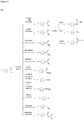
- the properties displayed by compounds containing bicyclo[1.1.1]pentanes are not limited to a particular medical indication (see for example Figure 1 describing several physiologically active compounds that have been reported to benefit from the properties of the bicyclo[1.1.1]pentanes, such as fluoroquinolone antibiotics, JAK inhibitors or gamma-secretase inhibitors).
- bicyclo[1.1.1]pentane derivatives there is therefore an increasing interest in the area of life science as well as material sciences to access the most diverse set of bicyclo[1.1.1]pentane derivatives in large quantities in a time and cost efficient manner.
- the current process to make bicyclo[1.1.1]pentane derivatives is still tedious and requires several steps, especially for the synthesis of asymmetrically substituted derivatives, and often requires toxic reagents.
- two main approaches are known to access bicyclo[1.1.1]pentanes: The first one requires the preparation of bicyclo[1.1.0]butanes followed by cyclopropanation with a carbene (:CCI2) and dechlorination, as reported by Applequist et al. J. Org. Chem. 1982, 4985-4995 ( Figure 2A ).
- this synthesis uses toxic and/or expensive reagents and presents moderate yields.
- the second approach is the most described synthesis in the prior art ( Org. Synth. 1998, 75, 98 ; Org. Synth. 2000, 77, 249 ) in which the central bond of [1.1.1]propellane is reacted with a variety of reagents to form 1,3-disubstituted bicyclo[1.1.1]pentanes.
- the scope of reagents and reactions mainly delivers symmetrical bicyclo[1.1.1]pentane derivatives, or asymmetrically substituted derivatives that are limited to substituents unsuitable for further derivatization.
- the yields are usually low to moderate and suffer from contamination with a number of by-products, principally due to polymerization and dimerization.
- Wiberg (Chem. Rev. 1989, 89, 975-983 ) provides a review article about the preparation of various small ring propellane structures. This review briefly summarizes free radical additions for the formation of bicyclo[1.1.1]pentanes by reacting [1.1.1]propellane with various reagents such as CCl 4 , BrCCl 3 , l 2 , PhSH, PsSSPh, PhSeSePh, tBuOCI or carbonyl compounds.
- various reagents such as CCl 4 , BrCCl 3 , l 2 , PhSH, PsSSPh, PhSeSePh, tBuOCI or carbonyl compounds.
- the present invention provides an improved method for the preparation of asymmetrically 1,3-disubsituted bicyclo[1.1.1]pentane intermediates in a highly efficient manner by using a one-step photochemical and/or radical reaction (in a batch or flow system).
- the obtained bicyclo[1.1.1]pentane intermediates are suitable for derivatization using any standard reaction disclosed in the prior art to obtain symmetrically and asymmetrically mono- and 1,3-disubstituted bicyclo[1.1.1]pentane derivatives.
- reaction step B for producing an asymmetrically substituted compound of formula I, wherein comprising the step of reacting [1.1.1]propellane of formula II with a compound of formula III, wherein Z is C,
- the method of the invention is directed towards a one-step process wherein X is halogen, preferably Cl for producing a compound of formula la, preferably Ib
- the present invention provides the use of the obtained compound of formula I, preferably formula la, more preferably Ib, as an intermediate without further purification in subsequent derivatization reactions.
- the one step process for producing a compound of formula I is followed by the step (hereinafter also called reaction step C) of reacting the obtained compound of formula I, preferably formula Ia or Ib, with a nucleophile, to obtain a compound of formula V wherein
- the [1.1.1]propellane of formula II is obtained by reaction of a tetrahalide of formula IV with 2 or more equivalents of an alkyl or aryl lithium at temperatures below 0 °C (hereinafter also called reaction step A).
- reaction steps B and C to obtain a compound of Formula V from a compound of Formula II are performed (a) in a batch system or (b) in a flow system.
- reaction steps A and B to obtain a compound of Formula I, preferably Formula Ia or Ib, from a compound of Formula IV are performed (a) in a batch system or (b) in a flow system.
- reaction steps A and B and C to obtain a compound of Formula V from a compound of Formula IV (via the intermediate of Formula I, preferably Formula Ia or Ib) are performed (a) in a batch system and/or (b) in a flow system.
- step of reacting [1.1.1]propellane of formula II with a compound of formula III is carried out under irradiation and/or in the presence of a radical initiator
- Va aqueous solution of an organic or inorganic base
- Z is C
- X is Cl
- the acid chloride of formula III formed is coupled under transition-metal catalysis with a coupling partner, a coupling partner being an alkali metal organyl or an alkaline earth metal organyl (MR 1 , wherein M is Li, Na or Mg), a stannane (R 1 Sn(R 2 ) 3 ), a cuprate [R 1 CuR 1 ] - or [R 1 CuCN] - ) an organozinc compound (R 1 ZnQ, or R 1 ZnR 1 , wherein Q is halogen), an organobismuth compound ((R 1 ) 3 Bi), a boronic acid R 1 B(OH) 2 , a boronic ester R 1 B(OR 2 ) 2 or a potassium trifluoroborate R 1 BF 3 K, wherein R 1 and R 2 are independently of each other -(C 1 -C 20 )alkyl, aryl or heteroaryl to form products of formula
- the present invention provides an improved method for the one-step preparation of asymmetrically 1,3-disubsituted bicyclo[1.1.1]pentane intermediates in a highly efficient manner by using a photochemical and/or radical reaction.
- the obtained bicyclo[1.1.1]pentanes are reactive intermediates, which are suitable for use in any standard derivatization reaction disclosed in the prior art to obtain asymmetrically or symmetrically mono- and 1,3-disubsituted bicyclo[1.1.1]pentane derivatives in a batch or flow system.
- bicyclo[1.1.1]pentane intermediate(s) is used for asymmetrically 1,3-disubstituted compounds of formula I (or an acid halide of formula Ia or an acid chloride of formula Ib), while the term “bicyclo[1.1.1]pentane derivatives” is used for asymmetrically or symmetrically mono- and 1,3-disubsituted compounds of formula V (or formula Va-Vi), which are obtained by reacting the reactive bicyclo[1.1.1]pentane intermediates with various nucleophiles.
- alkyl refers to a fully saturated linear or branched hydrocarbon moiety having 1 to 20 carbon atoms, wherein the alkyl radical may be optionally substituted independently with one or more substituents described herein. Unless otherwise provided, alkyl refers to hydrocarbon moieties having 1 to 16 carbon atoms, 1 to 10 carbon atoms, 1 to 8 carbon atoms, or 1 to 4 carbon atoms.
- alkyl include, but are not limited to, methyl, ethyl, n-propyl, iso-propyl, n-butyl, sec-butyl, iso-butyl, tert-butyl, n-pentyl, isopentyl, neopentyl, n-hexyl, 3-methylhexyl, 2,2-dimethylpentyl, 2,3-dimethylpentyl, n-heptyl, n-octyl, n-nonyl, n-decyl and the like.
- Carbocyclyl or “carbocycle” refers to a saturated or partially unsaturated, cyclic or branched cyclic group, having one, two or more rings, preferably one ring formed by a skeleton that contains from 3 to 14 carbon atoms, preferably from five or six to ten carbon atoms, for example cyclopropyl, cyclobutyl, cyclopentyl, cyclohexyl, tetralin, cyclopentenyl or cyclohex-2-enyl groups.
- the unsaturated carbocyclic groups contain preferably one or two double and/or triple bonds.
- heterocyclyl refers to a 5 to 15 membered saturated non-aromatic ring or multiple condensed ring system, e.g. a 4-, 5-, 6-, or 7-membered monocyclic, 6-, 7-, 8-, 9-, 10-, 11-, or 12-membered bicyclic or 10-, 11-, 12-, 13-, 14- or 15-membered tricyclic ring system, having from 2 to 14, preferably from 2 to 6 carbon atoms, and from 1 to 8, preferably from 1 to 4 heteroatoms, selected from nitrogen, sulfur, phosphorus, and/or oxygen within the ring.
- a 4-, 5-, 6-, or 7-membered monocyclic, 6-, 7-, 8-, 9-, 10-, 11-, or 12-membered bicyclic or 10-, 11-, 12-, 13-, 14- or 15-membered tricyclic ring system having from 2 to 14, preferably from 2 to 6 carbon atoms, and from 1 to 8, preferably from 1 to 4 heteroatoms
- the heterocyclic group can be attached at a heteroatom or a carbon atom.
- the heterocyclyl can include fused or bridged rings as well as spirocyclic rings.
- Examples of heterocycles include tetrahydrofuran (THF), dihydrofuran, 1,4-dioxane, morpholine, 1,4-dithiane, piperazine, piperidine, 1,3-dioxolane, imidazolidine, imidazoline, pyrroline, pyrrolidine, tetrahydropyran, dihydropyran, oxathioiane, dithiolane, 1,3-dioxane, 1, 3-dithiane, oxathiane and thiomorpholine.
- a heterocyclic group may be optionally substituted with 1 to 5 substituents independently selected from the groups referred to hereinafter.
- aryl refers to an aromatic carbocyclic group of 6 to 20 carbon atoms having a single ring (e.g., phenyl) or multiple rings (e.g., biphenyl) or multiple condensed (fused) rings (e.g., naphthyl, fluorenyl and anthryl).
- aryl groups are from 6 to 10 membered ring systems and include phenyl, fluorenyl, naphthyl, anthryl, and the like.
- An aryl group may be optionally substituted with 1 to 5 substituents independently selected from the groups referred to hereinafter.
- heteroaryl refers to a 5 to 20 membered monocyclic- or bicyclic- or tricyclic-aromatic ring system, having 1 to 10 heteroatoms selected from N, O or S.
- the heteroaryl is a 5 to 10 membered ring system (e.g., 5 to 7 membered monocycle or an 8 to 10 membered bicycle) or a 5 to 7 membered ring system.
- Typical heteroaryl groups include 2- or 3-thienyl, 2- or 3-furyl, 2- or 3-pyrrolyl, 2-, 4-, or 5- imidazolyl, 3-, 4-, or 5- pyrazolyl, 2-, 4-, or 5-thiazolyl, 3-, 4-, or 5-isothiazolyl, 2-, 4-, or 5- oxazolyl, 3-, 4-, or 5-isoxazolyl, 3- or 5-1,2,4-triazolyl, 4- or 5-1,2, 3-triazolyl, tetrazolyl, 2-, 3-, or 4-pyridyl, 3- or 4-pyridazinyl, 3-, 4-, or 5-pyrazinyl, 2-pyrazinyl, and 2-, 4-, or 5- pyrimidinyl.
- a heteroaryl group may be optionally substituted with 1 to 5 substituents independently selected from the groups referred to hereinafter.
- alkylaryl refers to combinations of -(C 1 -C 5 )alkyl and (C 6 -C 12 )aryl groups, optionally substituted by one or more selected from halogen or methoxy groups.
- alkylaryl groups include benzyl, paramethoxybenzyl, metacholorobenzyl groups.
- alkylheteroaryl refers to combinations of -(C 1 -C 5 )alkyl and (C 6 -C 12 )heteroaryl groups containing one to three heteroatoms selected from N, O or S, optionally substituted by one or more selected from halogen or methoxy groups.
- halogen or “hal” with respect to group X refers to fluoro, chloro, bromo, and iodo, preferably fluoro, chloro, bromo, more preferably chloro; and "halogen” or “hal” with respect to group Q refers to fluoro, chloro, bromo, and iodo.
- R 1 and R 2 are independently of each other H, saturated linear or branched - (C 1 -C 20 )alkyl, aryl or form together a cycle.
- alkyl and aryl in connection with groups R1, R2, R3 and R4 are defined as hereinabove
- the term “cycle” is defined as hereinabove by carbocyclyl, heterocyclyl, aryl and heteroaryl.
- alkyl includes methyl, ethyl, propyl, butyl, pentyl, tert-butyl
- aryl includes phenyl, benzyl
- cycle includes cyclopentyl, cyclohexyl.
- one pot process refers to two or more consecutive reactions, which are carried out without isolating and/or purifying the respective intermediates, typically in a single reaction vessel.
- One-pot-processes are amenable to be used in continuous process reactors, or continuous flow reactors, wherein fresh reactants are continuously added to the reactor and the reaction products are continuously removed.
- leaving group or "LG” is readily understood by those skilled in the art and is typically any group or atom that enhances the electrophilicity of the atom to which it is attached for easy displacement.
- Preferred leaving groups are halogen atoms such as chloride, bromide, iodide or sulfonyl groups such as mesylate, tosylate, perfluorosulfonylate.
- the leaving group When the leaving group is attached to a carbonyl group, it can be a halogen or sulfonyl group as defined above or an ester so that the carbonyl group is activated as an anhydride.
- nucleophile is readily understood by a person skilled in the art as a chemical species which donates an electron pair to an electrophile to form a chemical bond.
- nucleophiles include uncharged compounds such as amines, enamines, hydrazines, enols, mercaptans, alcohols, carboxylic acids, diazo compounds and azides, and charged moieties such as alkoxides, carboxylates, thiolates, carbanions, metallated amines (e.g., amine anions, for example, sodamide), and a variety of organic and inorganic anions (for example NaN 3 ).
- coupling partner is understood as a chemical species comprising at least one hydrocarbon fragment and is able to undergo a transition metal catalyzed coupling reaction forming a new carbon-carbon bond.
- Examples of coupling partners include organohalides, boronic acids, boronic esters, potassium trifluoroborates, transition metal organyls such as stannanes, cuprates, organozinc compounds or organobismuth compounds or alkali or alkaline earth organyls, more specifically alkali metal organyl or an alkaline earth metal organyl (MR 1 , wherein M is Li, Na or Mg), a stannane (R 1 Sn(R 2 ) 3 ), a cuprate [R 1 CuR 1 ] - or [R 1 CuCN - ]) an organozinc compound (R 1 ZnQ, or R 1 ZnR 1 , wherein Q is halogen), an organobismuth compound ((R 1 ) 3 Bi), a boronic
- radical initiator is defined as a substance that can produce radical species under mild conditions and promote radical reactions. These substances generally possess weak bonds—bonds that have small bond dissociation energies. Typical examples are halogen molecules, azo compounds, and organic and inorganic peroxides. Radical initiators can be used in catalytic amounts, in stoichiometric amount or in excess, preferably in catalytic amounts.
- one-step as used herein with respect to a specific reaction or method steps means a direct conversion of the starting material(s) to the respective product (for example direct conversion of compounds of formula II and III to a compound of formula I or V or conversion of compounds of formula IV to a compound of formula I or V via the compound of formula II) without the formation of an intermediate step.
- flow as used herein in the context of a "flow reaction”, a “flow process” applies to chemical reactions run in a continuously flowing stream rather than in batch production.
- Pumps or sur-pressures are used to move a fluid (liquid, solutions or suspensions) into a tube, and where tubes containing fluid join one another, the fluids contact one another. If these fluids are composed of or contain molecules that can react together, a reaction takes place. The reaction may need to be catalyzed or initiated by external factors such as temperature or irradiation.
- flow system refers to the equipment, vessels, tubing used to perform a flow reaction as described above.
- continuous flow refers to a series of transformations where the product of a reaction performed in flow in a flow system is directly transferred to another flow system to undergo another reaction.
- batch refers to chemical transformations performed in a vessel using techniques that are standard for those skilled in the art.
- reaction steps A, B and C being performed in a "batch system and/or flow system" means that any combination of batch and flow system can be used, more specifically (i) reaction steps A, B, C can be run in batch, or (ii) reaction step A can be run in batch and reaction steps B, C in flow, or (iii) reaction steps A, B can be run in flow and reaction step C in batch or (iv) reaction steps A, B, C can be run in flow.
- the photoreactor for a batch system consists in a lamp, a jacketed immersion well, a cold finger condenser, a reaction vessel, a cooling bath, and a magnetic-stirrer device.
- the lamp can be a low-pressure, medium-pressure or high pressure mercury lamp, LED lamp, a UVC lamp or an incandescent lamp (for instance a tungsten lamp).
- the wavelength suitable for such transformation can be in the visible and/or UV spectra.
- An immersion well is used for cooling down the lamp is made by double-walled quartz or borosilicate glass being transparent to UV light and thus transmitting light with wavelengths at a wide, in particular wavelengths as low as 200 nm, more specifically wavelengths between 200 nm - 400 nm.
- a typical reaction set-up may include e.g. a reaction vessel, which is a multi-necked flask or reactor.
- the cold finger condenser works as a trap of volatile organic compounds and is installed in one of the 4 neck of the reaction vessel. It is also possible to use several lamps equipped with suitable cooling systems positioned around or in the reaction vessel to maximize irradiation.
- the photoreactor for a flow system is constructed by wrapping 1, 2, 3 or more layers of tubing around the jacketed immersion well containing a lamp and cooled down with water or any other solvent.
- the photoreactor for flow system is wrapped in aluminium foil or any reflective material in order to minimize light loss, and cooled with a cooling bath.
- the reaction solutions are pumped through the reactor using a pump, or a sur-pressure in the flask containing the solution, at controlled flow rates via mixing device and a back pressure regulator.
- the lamp can be a low-pressure, medium-pressure or high pressure mercury lamp, LED lamp, a UVC lamp or an incandescent lamp (for instance a tungsten lamp).
- the wavelength suitable for such transformation can be in the visible and/or UV spectra.
- the immersion well for cooling down the lamp is made by double-walled quartz or borosilicate glass.
- the tubing around the jacketed immersion well can be a Fluorinated Ethylene Propylene (FEP) tubing, a polytetrafluoroethylene (PTFE) tubing, or other tubing allowing external light to irradiate the content of the tubing.
- FEP Fluorinated Ethylene Propylene
- PTFE polytetrafluoroethylene
- the size of tubing can be 1/16", 1/8", 1/4", 3/16", etc.
- the pump can be a HPLC pump, a peristaltic pump, a syringe pump, etc.
- the mixing device can be for example a Tefzel ® (ETFE) Tee, PEEK Tee, Steel Tee or others.
- the present invention provides an improved method for the one-step preparation of asymmetrically 1,3-di-subsituted bicyclo[1.1.1]pentane intermediates of Formula I comprising the step of reacting [1.1.1]propellane of Formula II with an appropriate compound of Formula III wherein
- Illustrative examples of a compound of Formula III include, but are not limited to, methyl 2-chloro-2-oxoacetate or ethyl chlorooxoacetate or 2-oxo-2-phenylacetyl chloride or or trifluoroacetyl chloride in a photochemical reaction in batch or in a flow system.
- Amounts of reactant undergoing homolytic or heterolytic cleavage can be sub-stoichiometric amount, stoichiometric amount or in excess, preferably in a range between 0.5 and 3 equivalents compared to [1.1.1]propellane.
- X is CI
- the method of the invention is directed towards a one-step process wherein X is halogen, preferably Cl for producing a compound of formula la, preferably Ib
- the present invention provides the use of the obtained compound of formula I, preferably formula la, more preferably Ib, as an intermediate without further purification in subsequent derivatization reactions.
- the one step process for producing a compound of formula I is followed by the step (hereinafter also called reaction step C) of reacting the obtained compound of formula I, preferably formula Ia or Ib, with a nucleophile, to obtain a compound of formula V wherein
- reaction step A preparation of [1.1.1]propellane (reaction step A) for further use in the one-step method of the invention, is as follows:
- [1.1.1]propellane is obtained from 1,1-dibromo-2,2-bis(chloromethyl)cyclopropane, preferably through a halogen-lithium exchange of bromine atoms with a suitable organolithium species such as MeLi, EtLi, PrLi, iPrLi, nBuLi, sec-Buli, tBuLi or an aromatic-Lithium species such as PhLi or the like.
- the organolithium species is added (preferably as a solution) in a batch system to a reactor containing 1,1-dibromo-2,2-bis(chloromethyl)cyclopropane as a suspension or solution in a suitable solvent.
- Solvents of choice for 1,1-dibromo-2,2-bis(chloromethyl)cyclopropane include alkanes (pentane, hexane, heptane, cyclohexane, petroleum ether) aromatic solvents (benzene, toluene, cymene) or ethers (diethyl ether, diisopropyl ether, TBME, THF, MeTHF).
- Temperatures of addition are between -80 °C and 0 °C, preferably between - 60 °C and -20 °C.
- the reaction is then left at a temperature ranging from -20 °C and 50 °C, preferably between 0 °C and 30 °C. Reactions times range from 1h and 12h, preferably between 1h and 6h.
- the solution of organolithium species is pumped or pushed using a sur-pressure into a flow system where it is mixed to a solution or suspension of 1,1-dibromo-2,2-bis(chloromethyl)cyclopropane also added using a pump or sur-pressure.
- the obtained [1.1.1]propellane is either distilled from the reactor if the solvent of choice is a low-boiling solvent or co-distilled from the reactor with the reaction solvent if the solvent is a high-boiling solvent.
- the obtained [1.1.1]propellane (or solution of [1.1.1]propellane) is condensed using a cooling system at a range between - 196 °C to 0 °C, preferably between -80 °C and -20 °C.
- the reaction mixture is cooled to a temperature ranging from -80 °C to 0 °C, preferably between -60 °C to 20 °C and quenched with an aqueous solution of a base, preferably an inorganic base, before being extracted at a pH ranging from 1 to 10 with an appropriate solvent.
- reaction mixture is filtered through a pad of unreactive material such as silica or celite or glass beads or any sort of filter.
- the solution of distilled or crude or filtered [1.1.1]propellane is reacted directly in the next batch reaction with or without further dilution.
- the solution of distilled or crude or filtered [1.1.1]propellane is pumped directly in a flow reactor, with or without dilution.
- Z represents C
- X represents halogen, - OR 1 , -NR 1 R 2 , wherein R 1 and R 2 are independently of each other H, saturated linear or branched -(C 1 -C 20 )alkyl, aryl or form together a cycle, preferably halogen, more preferably chloride.
- R 1 and R 2 are independently of each other H
- the reaction proceeds at a temperature range of -50 °C to RT, preferably -40 °C to 0 °C.
- the concentration of the reaction is in a range of 0.01M to 2M.
- reaction time is between 1 min to 12h.
- reaction is performed in a batch reactor equipped with a irradiation source and appropriate cooling.
- reaction occurs in a flow reactor equipped with an irradiation source, also named photo-flow reactor.
- the crude reaction can be worked up and the product isolated by standard techniques.
- the crude mixture can be further reacted in the next step (reaction step C).
- reaction step C The use of bicyclo[1.1.1]pentane intermediates as prepared by the methods of the invention as key intermediates in many syntheses are as follows (reaction step C): The intermediate obtained in reaction step B, either purified or crude, is reacted with various nucleophiles.
- X is a halide, preferably chloride, and Z is a C
- treatment with an amino alcohol followed by dehydration gives an oxazolidine or oxazole
- treatment with a diamine followed by dehydration gives an imidazoline or imidazole
- treatment with an amino thiol followed by dehydration gives a thiazole.
- X is a halide, preferably chloride, and treatment with an azide salt or ammonia and diphenylphosphorylazide gives access to of Formula Vd. , wherein Y, Z are as defined above.
- Acyl azides can undergo Curtius rearrangements to afford the corresponding amine or carbamate.
- Primary amides obtained from treatment with ammonia can undergo Hoffmann rearrangements to provide the corresponding amines
- Diazoketones can further react in Arndt Eistert rearrangements to afford the homologated acids.
- X is a halide, preferably chloride, and Z is C and treatment with a hydrazine or hydroxylamine affords an acyl hydrazine of Formula Vf or an acyl hydroxylamine of Formula Vg, wherein R 1 is H, a saturated linear or branched -(C 1 -C 20 )alkyl, aryl or alkylaryl.
- X is halide, preferably chloride, and Z is C and treatment with a coupling partner, a coupling partner being an alkali metal organyl or an alkaline earth metal organyl (MR 1 , wherein M is Li, Na or Mg), a stannane (R 1 Sn(R 2 ) 3 ), a cuprate [R 1 CuR 1 ] - or [R 1 CuCN - ]) an organozinc compound (R 1 ZnQ, or R 1 ZnR 1 , wherein Q is halogen), an organobismuth compound ((R 1 ) 3 Bi), a boronic acid R 1 B(OH) 2 , a boronic ester R 1 B(OR 2 ) 2 or a potassium trifluoroborate R 1 BF 3 K affords a compound of Formula Vi, wherein R 1 and R 2 are independently of each other-(C 1 -C 20 )alkyl, aryl or heteroaryl.
- a coupling partner being an
- X is an halide, preferably chloride, and treatment with N-hydroxy-2-thiopyridinone or a similar reagent (i.e. its anion) affords an ester of the type of Barton that provides a terminal bicyclo[1.1.1]pentane after treatment with light or a radical initiator.
- the reaction is run in batch from purified or crude intermediate obtained from reaction step B.
- the desired reactants are added to the same reaction vessel used for reaction step B and the intermediate obtained from reaction step B is used crude (Batch, one-pot reaction sequence).
- the solution of crude intermediate from reaction step B (obtained in batch) is added to a flow system to undergo the next transformation to afford products of formula Va-Vi (Batch -> flow sequence).
- the solution of crude intermediate from reaction step B (obtained in flow) is added to a flow system to undergo the next transformation to afford products of formula Va-Vi (flow -> flow sequence).
- the solution of crude intermediate from reaction step B (obtained in flow) is added to a batch reactor to undergo the next transformation with suitable reactants and afford products of formula Va-Vi (flow -> batch sequence).
- the crude or purified intermediate obtained in reaction step B is injected in a flow reaction apparatus to be transformed.
- This solution can be used directly without further purification with a nucleophile to obtain another bicyclo[1.1.1]pentane derivative or the solvent can be removed under reduced pressure to obtain methyl 3-(chlorocarbonyl)bicyclo[1.1.1]pentane-1-carboxylate 4 as a yellow solid which can be used for any other suitable step without further purification.
- This solution can be used directly without further purification with a nucleophile to obtain another bicyclo[1.1.1]pentane derivative or the solvent can be removed under reduced pressure to obtain ethyl 3-(chlorocarbonyl)bicyclo[1.1.1]pentane-1-carboxylate 6 as a yellow solid which can be used for any other suitable step without further purification.
- This solution can be used directly without further purification with a nucleophile to obtain another bicyclo[1.1.1]pentane derivative or the solvent can be removed under reduced pressure to obtain tert-butyl 3-(chlorocarbonyl)bicyclo[1.1.1]pentane-1-carboxylate 8 which can be used for any other suitable step without further purification.
- the solution of reagent (2) at 0 to -80 °C was then injected at a flow rate of 4.0 mL.min -1 and the solution of reagent (3) at room temperature was then injected at a flow rate of 0.5 mL.min -1 to the photoreactor (volume 58 mL; FEP tube was rotated on the lamp) in an ice bath.
- the mixture was then extracted with DCM (3 x 500 mL).
- the solution of reagent (2) at -50 to -60 °C was then injected at a flow rate of 9.0 mL.min -1 and the solution of reagent (5) at room temperature was then injected at a flow rate of 0.9 mL.min -1 to the photoreactor (volume 58 mL; FEP tube was rotated on the lamp) in an ice bath.
- the reaction mixture was quenched with aqueous basic solution of NaOH, KOH, NaHCO3 or KHCO3, etc after the solution exits the photoreactor and the solution was vigorously stirred over 30 min, then, the aqueous layer and the organic layer were separated.
- 3-aminophenylzinc iodide (4 mL, 0.25M in THF, 1 mmol) was added to a round bottom flask under N 2 atmosphere and cooled to 0C in an ice-bath. Then, ethyl 3-(chlorocarbonyl)bicyclo[1.1.1]pentane-1-carboxylate 6 (161 mg, 0.8 mmol) was added and the mixture was allowed to warm to rt and stirred for 3 h at rt. Then, the mixture was quenched with sat. NH 4 CI solution and extracted with EtOAc (x3). The combined organic layers were washed with sat.
- Ethyl 3-(chlorocarbonyl)bicyclo[1.1.1]pentane-1-carboxylate 6 (1.05 g, 5.2 mmol) and tributyl(m-tolyl)stannane previously prepared (0.99 g, 2.6 mmol, 0.5 equiv.) and Indium metal (0.6 g, 1 equiv) were mixed in neat conditions and stirred for 25 h. Then, the crude was purified by flash chromatography with EtOAc/Hexanes from 0% to 20% to obtain Ethyl 3-(3-methylbenzoyl)bicyclo[1.1.1]pentane-1-carboxylate 23.
Landscapes
- Chemical & Material Sciences (AREA)
- Organic Chemistry (AREA)
- Chemical Kinetics & Catalysis (AREA)
- Engineering & Computer Science (AREA)
- Oil, Petroleum & Natural Gas (AREA)
- Organic Low-Molecular-Weight Compounds And Preparation Thereof (AREA)
- Heterocyclic Carbon Compounds Containing A Hetero Ring Having Nitrogen And Oxygen As The Only Ring Hetero Atoms (AREA)
- Low-Molecular Organic Synthesis Reactions Using Catalysts (AREA)
Description
- The invention relates to a new and efficient process for the preparation of a class of molecules, namely bicyclo[1.1.1]pentanes and derivatives thereof by a one-step reaction of [1.1.1]propellane with a variety of reagents under irradiation and/or in the presence of radical initiators to obtain bicyclo[1.1.1]pentane intermediates asymmetrically substituted at
position 1 and 3, which are useful for the preparation of various bicyclo[1.1.1]pentane derivatives and physiologically active substances or materials containing these. - Bicyclo[1.1.1]pentanes and their derivatives are structural motifs in many physiologically active compounds and therefore are used as key intermediates in their preparation. It was shown that in a number of cases, active molecules containing these derivatives show useful physico-chemical properties and that their use is sometimes superior to more standard fragments such as aromatic or lipophilic groups, making them potential bioisosters for phenyl or tert-butyl groups as postulated and/or demonstrated in the literature (e.g. M. R. Barbachyn et al. Bioorg. Med. Chem. Lett. 1993, 3, 671-676, A. F. Stepan et al. J. Med. Chem. 2012, 55, 3414-3424, K. D. Bunker et al. Org. Lett. 2011, 13, 4746-4748 and Y. L. Goh et al. Org. Lett. 2014, 16, 1884-1887).
- Bicyclo[1.1.1]pentanes have been used as intermediates in the preparation of various compounds with different areas of application. Thus, the properties displayed by compounds containing bicyclo[1.1.1]pentanes are not limited to a particular medical indication (see for example
Figure 1 describing several physiologically active compounds that have been reported to benefit from the properties of the bicyclo[1.1.1]pentanes, such as fluoroquinolone antibiotics, JAK inhibitors or gamma-secretase inhibitors). - There is therefore an increasing interest in the area of life science as well as material sciences to access the most diverse set of bicyclo[1.1.1]pentane derivatives in large quantities in a time and cost efficient manner. However, the current process to make bicyclo[1.1.1]pentane derivatives is still tedious and requires several steps, especially for the synthesis of asymmetrically substituted derivatives, and often requires toxic reagents. To date two main approaches are known to access bicyclo[1.1.1]pentanes: The first one requires the preparation of bicyclo[1.1.0]butanes followed by cyclopropanation with a carbene (:CCI2) and dechlorination, as reported by Applequist et al. J. Org. Chem. 1982, 4985-4995 (
Figure 2A ). However, this synthesis uses toxic and/or expensive reagents and presents moderate yields. - The second approach is the most described synthesis in the prior art (Org. Synth. 1998, 75, 98; Org. Synth. 2000, 77, 249) in which the central bond of [1.1.1]propellane is reacted with a variety of reagents to form 1,3-disubstituted bicyclo[1.1.1]pentanes. The scope of reagents and reactions mainly delivers symmetrical bicyclo[1.1.1]pentane derivatives, or asymmetrically substituted derivatives that are limited to substituents unsuitable for further derivatization. Furthermore, the yields are usually low to moderate and suffer from contamination with a number of by-products, principally due to polymerization and dimerization.
- The synthesis of asymmetrical derivatives is in particular challenging and obtained products are usually in form of mixtures with by-products, regio-isomers or polymers.
- One particular method (P. Kaszyncki, and J. Michl, J. Org. Chem. 1988, 53, 4594-4596) to access synthetically useful intermediates such as 1,3-disubstituted monoacid-monoesters consists in treating [1.1.1]propellane with buta-2,3-dione under irradiation to give the diketone intermediate (
Figure 2B ). Subsequent haloform reaction, followed by di-ester formation and mono-saponification afforded the desymmetrized product. However, a total of 6 reaction steps are required with an overall yield varying between 20% and 40%, associated with problems of reproducibility and the need for repeated purifications at each step make this route very difficult in particular to perform on large scale. - Wiberg (Chem. Rev. 1989, 89, 975-983) provides a review article about the preparation of various small ring propellane structures. This review briefly summarizes free radical additions for the formation of bicyclo[1.1.1]pentanes by reacting [1.1.1]propellane with various reagents such as CCl4, BrCCl3, l2, PhSH, PsSSPh, PhSeSePh, tBuOCI or carbonyl compounds.
- Therefore, there is a need for a synthetically efficient route that could overcome the disadvantages of the methods in the prior art, which is also compatible with large-scale production using common reagents and minimal need for purification. Applicants have now found a new, efficient, selective and versatile method for synthesizing a wide range of asymmetrically 1,3-disubstituted bicyclo[1.1.1]pentane intermediates and symmetrically and asymmetrically mono- and 1,3-disubstituted bicyclo[1.1.1]pentane derivatives thereof.
- The present invention provides an improved method for the preparation of asymmetrically 1,3-disubsituted bicyclo[1.1.1]pentane intermediates in a highly efficient manner by using a one-step photochemical and/or radical reaction (in a batch or flow system). The obtained bicyclo[1.1.1]pentane intermediates are suitable for derivatization using any standard reaction disclosed in the prior art to obtain symmetrically and asymmetrically mono- and 1,3-disubstituted bicyclo[1.1.1]pentane derivatives.
- More specifically, the present invention provides in one aspect a one-step process (hereinafter also called reaction step B) for producing an asymmetrically substituted compound of formula I, wherein


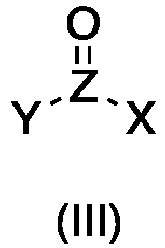
- Y is R1-C(=O)-, R1OC(=O)-, -CN, R1R2NC(=O)-, wherein R1 and R2 are independently of each other H, saturated linear or branched -(C1-C20)alkyl, aryl or form together a cycle,
- X is halogen. In the following saturated linear or branched -(C1-C20)alkyl includes-(C1-C20)alkyl wherein one or two non-adjacent CH2 groups may be replaced by -O-, - CH=CH-, -CO-, -OCO-, -COO-, -NCO-, -CON-, in such a way that O atoms are not linked directly to one another.
- In specific embodiments the method of the invention is directed towards a one-step process wherein X is halogen, preferably Cl for producing a compound of formula la, preferably Ib

- In another aspect the present invention provides the use of the obtained compound of formula I, preferably formula la, more preferably Ib, as an intermediate without further purification in subsequent derivatization reactions. Thus, in a specific embodiment the one step process for producing a compound of formula I (or la or Ib) is followed by the step (hereinafter also called reaction step C) of reacting the obtained compound of formula I, preferably formula Ia or Ib, with a nucleophile, to obtain a compound of formula V

- Z is C,
- Y is R1-C(=O)-, R1OC(=O)-, -CN, R1R2NC(=O)-, wherein R1 and R2 are independently of each other H, saturated linear or branched -(C1-C20)alkyl, aryl or form together a cycle, and
- G is-OR1 -SR1, -NR1R2, -N3, -NH-NHR1, -NH-OR1, -C(=N2)H, -O-(N-2-thiopyridone), R1, - O(C(=O)R1, wherein R1 and R2 are independently of each other H, saturated linear or branched -(C1-C20)alkyl or aryl.
- In a further embodiment the [1.1.1]propellane of formula II is obtained by reaction of a tetrahalide of formula IV with 2 or more equivalents of an alkyl or aryl lithium at temperatures below 0 °C (hereinafter also called reaction step A).

- In a specific embodiment the reaction steps B and C to obtain a compound of Formula V from a compound of Formula II (via the intermediate of Formula I, preferably Formula Ia or Ib) are performed (a) in a batch system or (b) in a flow system.
- In another specific embodiment the reaction steps A and B to obtain a compound of Formula I, preferably Formula Ia or Ib, from a compound of Formula IV are performed (a) in a batch system or (b) in a flow system.
- In yet another specific embodiment the reaction steps A and B and C to obtain a compound of Formula V from a compound of Formula IV (via the intermediate of Formula I, preferably Formula Ia or Ib) are performed (a) in a batch system and/or (b) in a flow system.
- In a further embodiment the step of reacting [1.1.1]propellane of formula II with a compound of formula III is carried out under irradiation and/or in the presence of a radical initiator
- In one embodiment, the nucleophile reacting with a compound of formula I (or Ia or Ib) is water, such as an aqueous solution of an organic or inorganic base to form products of formula (Va), wherein

Y represents R1-C(=O)-, R1OC(=O)-, -CN, R1R2NC(=O)-, wherein R1 and R2 are independently of each other H, saturated linear or branched -(C1-C20)alkyl, aryl, or form together a cycle. - In another embodiment, the nucleophile reacting with a compound of formula I (or Ia or Ib) is an alcohol or N-hydroxy-2-thiopyridone (or its anion) of formula R3-OH to form products of Formula (Vb), wherein

Y represents R1-C(=O)-, R1OC(=O)-, -CN, R1R2NC(=O)-, wherein R1 and R2 are independently of each other H, saturated linear or branched -(C1-C20)alkyl, aryl, or form together a cycle and R3 is H, saturated linear or branched -(C1-C20)alkyl, aryl or - N-2-thiopyridone. - In another embodiment, the nucleophile reacting with a compound of formula I (or Ia or Ib) is an amine of formula HNR1R2 to form products of Formula (Vc), wherein

Y represents R1-C(=O)-, R1OC(=O)-, -CN, R1R2NC(=O)-, wherein R1 and R2 are independently of each other H, saturated linear or branched -(C1-C20)alkyl, aryl or form together a cycle. - In another embodiment, the nucleophile reacting with a compound of formula I (or Ia or Ib) is an azide (-N3), ammonia, a hydrazine (H2N-NHR1), an hydroxylamine (H2N-OR1) or a diazo compound (R4-CH=N2) to form products of Formula (Vd-Vh), wherein

- Y represents R1-C(=O)-, R1OC(=O)-, -CN, R1R2NC(=O)-, wherein R1 and R2 are independently of each other H, saturated linear or branched -(C1-C20)alkyl, aryl or form together a cycle
- R4 represents H, saturated or unsaturated linear or branched -(C1-C20)alkyl, TMS or aryl.
- In another embodiment, Z is C, X is Cl and the acid chloride of formula III formed is coupled under transition-metal catalysis with a coupling partner, a coupling partner being an alkali metal organyl or an alkaline earth metal organyl (MR1, wherein M is Li, Na or Mg), a stannane (R1Sn(R2)3), a cuprate [R1CuR1]-or [R1CuCN]-) an organozinc compound (R1ZnQ, or R1ZnR1, wherein Q is halogen), an organobismuth compound ((R1)3Bi), a boronic acid R1B(OH)2, a boronic ester R1B(OR2)2 or a potassium trifluoroborate R1BF3K, wherein R1 and R2 are independently of each other -(C1-C20)alkyl, aryl or heteroaryl to form products of formula Vi wherein

Y represents R1-C(=O)-, R1OC(=O)-, -CN, R1R2NC(=O)-, wherein R1 and R2 are independently of each other H, saturated linear or branched -(C1-C20)alkyl, aryl or form together a cycle. -
-
Figure 1 . Physiologically active compounds containing bicyclo[1.1.1]pentane units, such as fluoroquinolone antibiotics, JAK inhibitors or gamma-secretase inhibitors. -
Figure 2 (A) Synthesis of bicyclo[1.1.1]pentanes by first preparing bicyclo[1.1.0]butanes followed by cyclopropanation with a carbene :CCl2 and dechlorination (Applequist et al. J. Org. Chem. 1982, 4985-4995). (B) Synthesis of bicyclo[1.1.1]pentanes by treating [1.1.1]propellane with buta-2,3-dione under irradiation to give the diketone intermediate, followed by a haloform reaction, and subsequent di-ester formation and mono-saponification (P. Kaszyncki, and J. Michl, J. Org. Chem. 1988, 53, 4594-4596) -
Figure 3 (A) Schematic comparsion of synthesis of asymmetric acid chlorides according to prior art methods and the methods of the present invention -
Figure 3 (B) Reactivity of bicyclo[1.1.1]pentanes as prepared by the methods of the invention (reaction step C) - The present invention provides an improved method for the one-step preparation of asymmetrically 1,3-disubsituted bicyclo[1.1.1]pentane intermediates in a highly efficient manner by using a photochemical and/or radical reaction. The obtained bicyclo[1.1.1]pentanes are reactive intermediates, which are suitable for use in any standard derivatization reaction disclosed in the prior art to obtain asymmetrically or symmetrically mono- and 1,3-disubsituted bicyclo[1.1.1]pentane derivatives in a batch or flow system.
- The term "bicyclo[1.1.1]pentane intermediate(s)" is used for asymmetrically 1,3-disubstituted compounds of formula I (or an acid halide of formula Ia or an acid chloride of formula Ib), while the term "bicyclo[1.1.1]pentane derivatives" is used for asymmetrically or symmetrically mono- and 1,3-disubsituted compounds of formula V (or formula Va-Vi), which are obtained by reacting the reactive bicyclo[1.1.1]pentane intermediates with various nucleophiles.
- The term "asymmetrically" as used herein refers to compounds of formula I (or Ia or Ib), wherein the two ring substituents of a bicyclo[1.1.1]pentane intermediate (i.e. group Y and group -Z(=O)X) are not identical.
- As used herein, the term "alkyl" refers to a fully saturated linear or branched hydrocarbon moiety having 1 to 20 carbon atoms, wherein the alkyl radical may be optionally substituted independently with one or more substituents described herein. Unless otherwise provided, alkyl refers to hydrocarbon moieties having 1 to 16 carbon atoms, 1 to 10 carbon atoms, 1 to 8 carbon atoms, or 1 to 4 carbon atoms. Representative examples of alkyl include, but are not limited to, methyl, ethyl, n-propyl, iso-propyl, n-butyl, sec-butyl, iso-butyl, tert-butyl, n-pentyl, isopentyl, neopentyl, n-hexyl, 3-methylhexyl, 2,2-dimethylpentyl, 2,3-dimethylpentyl, n-heptyl, n-octyl, n-nonyl, n-decyl and the like.
- The term "carbocyclyl" or "carbocycle" refers to a saturated or partially unsaturated, cyclic or branched cyclic group, having one, two or more rings, preferably one ring formed by a skeleton that contains from 3 to 14 carbon atoms, preferably from five or six to ten carbon atoms, for example cyclopropyl, cyclobutyl, cyclopentyl, cyclohexyl, tetralin, cyclopentenyl or cyclohex-2-enyl groups. The unsaturated carbocyclic groups contain preferably one or two double and/or triple bonds.
- As used herein, the term "heterocyclyl" or "heterocycle" refers to a 5 to 15 membered saturated non-aromatic ring or multiple condensed ring system, e.g. a 4-, 5-, 6-, or 7-membered monocyclic, 6-, 7-, 8-, 9-, 10-, 11-, or 12-membered bicyclic or 10-, 11-, 12-, 13-, 14- or 15-membered tricyclic ring system, having from 2 to 14, preferably from 2 to 6 carbon atoms, and from 1 to 8, preferably from 1 to 4 heteroatoms, selected from nitrogen, sulfur, phosphorus, and/or oxygen within the ring. The heterocyclic group can be attached at a heteroatom or a carbon atom. The heterocyclyl can include fused or bridged rings as well as spirocyclic rings. Examples of heterocycles include tetrahydrofuran (THF), dihydrofuran, 1,4-dioxane, morpholine, 1,4-dithiane, piperazine, piperidine, 1,3-dioxolane, imidazolidine, imidazoline, pyrroline, pyrrolidine, tetrahydropyran, dihydropyran, oxathioiane, dithiolane, 1,3-dioxane, 1, 3-dithiane, oxathiane and thiomorpholine. A heterocyclic group may be optionally substituted with 1 to 5 substituents independently selected from the groups referred to hereinafter.
- As used herein, the term "aryl" refers to an aromatic carbocyclic group of 6 to 20 carbon atoms having a single ring (e.g., phenyl) or multiple rings (e.g., biphenyl) or multiple condensed (fused) rings (e.g., naphthyl, fluorenyl and anthryl). Preferably, aryl groups are from 6 to 10 membered ring systems and include phenyl, fluorenyl, naphthyl, anthryl, and the like. An aryl group may be optionally substituted with 1 to 5 substituents independently selected from the groups referred to hereinafter.
- As used herein, the term "heteroaryl" refers to a 5 to 20 membered monocyclic- or bicyclic- or tricyclic-aromatic ring system, having 1 to 10 heteroatoms selected from N, O or S. Typically, the heteroaryl is a 5 to 10 membered ring system (e.g., 5 to 7 membered monocycle or an 8 to 10 membered bicycle) or a 5 to 7 membered ring system. Typical heteroaryl groups include 2- or 3-thienyl, 2- or 3-furyl, 2- or 3-pyrrolyl, 2-, 4-, or 5- imidazolyl, 3-, 4-, or 5- pyrazolyl, 2-, 4-, or 5-thiazolyl, 3-, 4-, or 5-isothiazolyl, 2-, 4-, or 5- oxazolyl, 3-, 4-, or 5-isoxazolyl, 3- or 5-1,2,4-triazolyl, 4- or 5-1,2, 3-triazolyl, tetrazolyl, 2-, 3-, or 4-pyridyl, 3- or 4-pyridazinyl, 3-, 4-, or 5-pyrazinyl, 2-pyrazinyl, and 2-, 4-, or 5- pyrimidinyl. A heteroaryl group may be optionally substituted with 1 to 5 substituents independently selected from the groups referred to hereinafter.
- As used herein, the term "alkylaryl" refers to combinations of -(C1-C5)alkyl and (C6-C12)aryl groups, optionally substituted by one or more selected from halogen or methoxy groups. Examples of alkylaryl groups include benzyl, paramethoxybenzyl, metacholorobenzyl groups.
- As used herein, the term "alkylheteroaryl" refers to combinations of -(C1-C5)alkyl and (C6-C12)heteroaryl groups containing one to three heteroatoms selected from N, O or S, optionally substituted by one or more selected from halogen or methoxy groups.
- As used herein, the term "halogen" or "hal" with respect to group X refers to fluoro, chloro, bromo, and iodo, preferably fluoro, chloro, bromo, more preferably chloro; and "halogen" or "hal" with respect to group Q refers to fluoro, chloro, bromo, and iodo.
- As used herein, the term "optionally substituted" with respect to the groups defined herein refers, unless otherwise specified, to a group that is unsubstituted or is substituted by one or more, such as 1 to 5, preferably 1, 2, 3 or 4, suitable non-hydrogen substituents, each of which is independently selected from the group consisting of alkyl, alkenyl, alkynyl, hal, -oxo (=O), -OR1, -NR1R2, -SR1, nitro, cyano, - COR1, -COOR1, -CONR1R2, cycloalkyl, heterocyclyl, aryl, heteroaryl as defined herein, wherein R1 and R2 are independently of each other H, saturated linear or branched - (C1-C20)alkyl, wherein one or two non-adjacent CH2 groups may be replaced by —O— , -CH=CH-, —CO—, —OCO—, —COO—, —NCO—, —CON—, in such a way that O atoms are not linked directly to one another.
- Groups R1 and R2 are independently of each other H, saturated linear or branched - (C1-C20)alkyl, aryl or form together a cycle. In specific embodiments, R1 and R2 are independently of each other H, saturated linear or branched -(C1-C20)alkyl, preferably -(C1-C12)alkyl, more preferably -(C1-C8)alkyl, wherein one or two non-adjacent CH2 groups may be replaced by —O—, —CH=CH—, —CO—, —OCO—, —COO—, —NCO— , —CON—, in such a way that O atoms are not linked directly to one another; preferably-(C1-C8)alkyl, wherein one or two non-adjacent CH2 groups may be replaced by -O-, -CH=CH-, —CO—, —OCO—, —COO—. The terms "alkyl" and "aryl" in connection with groups R1, R2, R3 and R4 are defined as hereinabove, the term "cycle" is defined as hereinabove by carbocyclyl, heterocyclyl, aryl and heteroaryl. In a specific embodiment, "alkyl" includes methyl, ethyl, propyl, butyl, pentyl, tert-butyl, "aryl" includes phenyl, benzyl, and "cycle" includes cyclopentyl, cyclohexyl.
- As used herein, the term "one pot" process refers to two or more consecutive reactions, which are carried out without isolating and/or purifying the respective intermediates, typically in a single reaction vessel. One-pot-processes are amenable to be used in continuous process reactors, or continuous flow reactors, wherein fresh reactants are continuously added to the reactor and the reaction products are continuously removed.
- As used herein the term "leaving group" or "LG" is readily understood by those skilled in the art and is typically any group or atom that enhances the electrophilicity of the atom to which it is attached for easy displacement. Preferred leaving groups are halogen atoms such as chloride, bromide, iodide or sulfonyl groups such as mesylate, tosylate, perfluorosulfonylate. When the leaving group is attached to a carbonyl group, it can be a halogen or sulfonyl group as defined above or an ester so that the carbonyl group is activated as an anhydride.
- The term "nucleophile" is readily understood by a person skilled in the art as a chemical species which donates an electron pair to an electrophile to form a chemical bond. Examples of nucleophiles include uncharged compounds such as amines, enamines, hydrazines, enols, mercaptans, alcohols, carboxylic acids, diazo compounds and azides, and charged moieties such as alkoxides, carboxylates, thiolates, carbanions, metallated amines (e.g., amine anions, for example, sodamide), and a variety of organic and inorganic anions (for example NaN3). Preferred nucleophiles for use in the present invention include aliphatic and aromatic alcohols of formula HOR1, mercaptans of formula HSR1, azides -N3, ammonia (H3N), amines of formula HNR1R2, hydrazines of formula H2N-NHR1, hydroxylamines of formula H2N-OR1, diazomethanes of formula R4-HC(=N2), N-hydroxy-2-thiopyridone (or anions thereof).
- The term "coupling partner" is understood as a chemical species comprising at least one hydrocarbon fragment and is able to undergo a transition metal catalyzed coupling reaction forming a new carbon-carbon bond. Examples of coupling partners include organohalides, boronic acids, boronic esters, potassium trifluoroborates, transition metal organyls such as stannanes, cuprates, organozinc compounds or organobismuth compounds or alkali or alkaline earth organyls, more specifically alkali metal organyl or an alkaline earth metal organyl (MR1, wherein M is Li, Na or Mg), a stannane (R1Sn(R2)3), a cuprate [R1CuR1]- or [R1CuCN-]) an organozinc compound (R1ZnQ, or R1ZnR1, wherein Q is halogen), an organobismuth compound ((R1)3Bi), a boronic acid R1B(OH)2, a boronic ester R1B(OR2)2 or a potassium trifluoroborate R1BF3K.
- As used herein the term "radical initiator" is defined as a substance that can produce radical species under mild conditions and promote radical reactions. These substances generally possess weak bonds—bonds that have small bond dissociation energies. Typical examples are halogen molecules, azo compounds, and organic and inorganic peroxides. Radical initiators can be used in catalytic amounts, in stoichiometric amount or in excess, preferably in catalytic amounts.
- The term "one-step" as used herein with respect to a specific reaction or method steps means a direct conversion of the starting material(s) to the respective product (for example direct conversion of compounds of formula II and III to a compound of formula I or V or conversion of compounds of formula IV to a compound of formula I or V via the compound of formula II) without the formation of an intermediate step.
- The term "flow" as used herein in the context of a "flow reaction", a "flow process" applies to chemical reactions run in a continuously flowing stream rather than in batch production. Pumps or sur-pressures are used to move a fluid (liquid, solutions or suspensions) into a tube, and where tubes containing fluid join one another, the fluids contact one another. If these fluids are composed of or contain molecules that can react together, a reaction takes place. The reaction may need to be catalyzed or initiated by external factors such as temperature or irradiation.
- As used herein the term "flow system" refers to the equipment, vessels, tubing used to perform a flow reaction as described above.
- As used herein, the term "continuous flow" refers to a series of transformations where the product of a reaction performed in flow in a flow system is directly transferred to another flow system to undergo another reaction.
- As used herein, the term "batch", "batch system" or "batch reaction" refers to chemical transformations performed in a vessel using techniques that are standard for those skilled in the art.
- Referring to a reaction sequence such as reaction steps A, B and C being performed in a "batch system and/or flow system" means that any combination of batch and flow system can be used, more specifically (i) reaction steps A, B, C can be run in batch, or (ii) reaction step A can be run in batch and reaction steps B, C in flow, or (iii) reaction steps A, B can be run in flow and reaction step C in batch or (iv) reaction steps A, B, C can be run in flow.
- The photoreactor for a batch system consists in a lamp, a jacketed immersion well, a cold finger condenser, a reaction vessel, a cooling bath, and a magnetic-stirrer device. The lamp can be a low-pressure, medium-pressure or high pressure mercury lamp, LED lamp, a UVC lamp or an incandescent lamp (for instance a tungsten lamp). The wavelength suitable for such transformation can be in the visible and/or UV spectra. An immersion well is used for cooling down the lamp is made by double-walled quartz or borosilicate glass being transparent to UV light and thus transmitting light with wavelengths at a wide, in particular wavelengths as low as 200 nm, more specifically wavelengths between 200 nm - 400 nm. A typical reaction set-up may include e.g. a reaction vessel, which is a multi-necked flask or reactor. The cold finger condenser works as a trap of volatile organic compounds and is installed in one of the 4 neck of the reaction vessel. It is also possible to use several lamps equipped with suitable cooling systems positioned around or in the reaction vessel to maximize irradiation.
- The photoreactor for a flow system is constructed by wrapping 1, 2, 3 or more layers of tubing around the jacketed immersion well containing a lamp and cooled down with water or any other solvent. The photoreactor for flow system is wrapped in aluminium foil or any reflective material in order to minimize light loss, and cooled with a cooling bath. The reaction solutions are pumped through the reactor using a pump, or a sur-pressure in the flask containing the solution, at controlled flow rates via mixing device and a back pressure regulator. The lamp can be a low-pressure, medium-pressure or high pressure mercury lamp, LED lamp, a UVC lamp or an incandescent lamp (for instance a tungsten lamp). The wavelength suitable for such transformation can be in the visible and/or UV spectra. The immersion well for cooling down the lamp is made by double-walled quartz or borosilicate glass. The tubing around the jacketed immersion well can be a Fluorinated Ethylene Propylene (FEP) tubing, a polytetrafluoroethylene (PTFE) tubing, or other tubing allowing external light to irradiate the content of the tubing. The size of tubing can be 1/16", 1/8", 1/4", 3/16", etc. The pump can be a HPLC pump, a peristaltic pump, a syringe pump, etc. The mixing device can be for example a Tefzel® (ETFE) Tee, PEEK Tee, Steel Tee or others.
- The present invention provides an improved method for the one-step preparation of asymmetrically 1,3-di-subsituted bicyclo[1.1.1]pentane intermediates of Formula I


- Z is C,
- Y is R1-C(=O)-, R1OC(=O)-, -CN, R1R2NC(=O)-, wherein R1 and R2 are independently of each other H, saturated linear or branched -(C1-C20)alkyl, aryl or form together a cycle.
- X is halogen.
- Illustrative examples of a compound of Formula III include, but are not limited to, methyl 2-chloro-2-oxoacetate or ethyl chlorooxoacetate or 2-oxo-2-phenylacetyl chloride or or trifluoroacetyl chloride in a photochemical reaction in batch or in a flow system.
- Amounts of reactant undergoing homolytic or heterolytic cleavage can be sub-stoichiometric amount, stoichiometric amount or in excess, preferably in a range between 0.5 and 3 equivalents compared to [1.1.1]propellane.
- In preferred embodiments, X is CI.
- Thus, in specific embodiments the method of the invention is directed towards a one-step process wherein X is halogen, preferably Cl for producing a compound of formula la, preferably Ib

- In another aspect the present invention provides the use of the obtained compound of formula I, preferably formula la, more preferably Ib, as an intermediate without further purification in subsequent derivatization reactions. Thus, in a specific embodiment the one step process for producing a compound of formula I (or la or Ib) is followed by the step (hereinafter also called reaction step C) of reacting the obtained compound of formula I, preferably formula Ia or Ib, with a nucleophile, to obtain a compound of formula V

- Z is C,
- Y is R1-C(=O)-, R1OC(=O)-, -CN, R1R2NC(=O)-, wherein R1 and R2 are independently of each other H, saturated linear or branched -(C1-C20)alkyl, aryl or form together a cycle, and
- G is -OR1, -SR1, -NR1R2, -N3, -NH-NHR1, -NH-OR1, -C(=N2)H, -O-(N-2-thiopyridone), R1, -O(C(=O)R1, wherein R1 and R2 are independently of each other H, saturated linear or branched -(C1-C20)alkyl, aryl or form together a cycle.
- In other embodiments the preparation of [1.1.1]propellane (reaction step A) for further use in the one-step method of the invention, is as follows:

- In a particular embodiment, [1.1.1]propellane is obtained from 1,1-dibromo-2,2-bis(chloromethyl)cyclopropane, preferably through a halogen-lithium exchange of bromine atoms with a suitable organolithium species such as MeLi, EtLi, PrLi, iPrLi, nBuLi, sec-Buli, tBuLi or an aromatic-Lithium species such as PhLi or the like. In a preferred embodiment the organolithium species is added (preferably as a solution) in a batch system to a reactor containing 1,1-dibromo-2,2-bis(chloromethyl)cyclopropane as a suspension or solution in a suitable solvent. Solvents of choice for 1,1-dibromo-2,2-bis(chloromethyl)cyclopropane include alkanes (pentane, hexane, heptane, cyclohexane, petroleum ether) aromatic solvents (benzene, toluene, cymene) or ethers (diethyl ether, diisopropyl ether, TBME, THF, MeTHF). Temperatures of addition are between -80 °C and 0 °C, preferably between - 60 °C and -20 °C. The reaction is then left at a temperature ranging from -20 °C and 50 °C, preferably between 0 °C and 30 °C. Reactions times range from 1h and 12h, preferably between 1h and 6h.
- In another embodiment, the solution of organolithium species is pumped or pushed using a sur-pressure into a flow system where it is mixed to a solution or suspension of 1,1-dibromo-2,2-bis(chloromethyl)cyclopropane also added using a pump or sur-pressure.
- In one embodiment, the obtained [1.1.1]propellane is either distilled from the reactor if the solvent of choice is a low-boiling solvent or co-distilled from the reactor with the reaction solvent if the solvent is a high-boiling solvent. The obtained [1.1.1]propellane (or solution of [1.1.1]propellane) is condensed using a cooling system at a range between - 196 °C to 0 °C, preferably between -80 °C and -20 °C.
- In another embodiment, the reaction mixture is cooled to a temperature ranging from -80 °C to 0 °C, preferably between -60 °C to 20 °C and quenched with an aqueous solution of a base, preferably an inorganic base, before being extracted at a pH ranging from 1 to 10 with an appropriate solvent.
- In another embodiment, the reaction mixture is filtered through a pad of unreactive material such as silica or celite or glass beads or any sort of filter.
- In yet another embodiment, the solution of distilled or crude or filtered [1.1.1]propellane is reacted directly in the next batch reaction with or without further dilution.
- In yet another embodiment, the solution of distilled or crude or filtered [1.1.1]propellane is pumped directly in a flow reactor, with or without dilution.
- In a specific embodiment, Z represents C, Y represents R1-C(=O)-, R1OC(=O)-, -CN, R1R2NC(=O)-, wherein R1 and R2 are independently of each other H, saturated linear or branched -(C1-C20)alkyl, aryl or form together a cycle and X represents halogen, - OR1, -NR1R2, wherein R1 and R2 are independently of each other H, saturated linear or branched -(C1-C20)alkyl, aryl or form together a cycle, preferably halogen, more preferably chloride.
- In specific embodiments (which applies to all of the above combinations) R1 and R2 are independently of each other H
- In one embodiment, the reaction proceeds at a temperature range of -50 °C to RT, preferably -40 °C to 0 °C.
- In another embodiment, the concentration of the reaction is in a range of 0.01M to 2M.
- In another embodiment, the reaction time is between 1 min to 12h.
- In another embodiment, the reaction is performed in a batch reactor equipped with a irradiation source and appropriate cooling.
- In yet another embodiment, the reaction occurs in a flow reactor equipped with an irradiation source, also named photo-flow reactor.
- In one embodiment, the crude reaction can be worked up and the product isolated by standard techniques. In another embodiment, the crude mixture can be further reacted in the next step (reaction step C).
- The use of bicyclo[1.1.1]pentane intermediates as prepared by the methods of the invention as key intermediates in many syntheses are as follows (reaction step C):
The intermediate obtained in reaction step B, either purified or crude, is reacted with various nucleophiles. - In one embodiment, X is a halide, preferably chloride and treatment with an aqueous solution of a base, preferably an inorganic base, provides an acid (when Z = C), to afford products of formula Va

- In another embodiment, X is a halide, preferably chloride and treatment with an alcohol provides an ester (when Z = C), to afford products of formula Vb

- In another embodiment, X is a halide, preferably chloride and treatment with an amine provides an amide (when Z = C), to afford products of formula Vc

- In another embodiment, X is a halide, preferably chloride, and Z is a C, and treatment with an amino alcohol followed by dehydration gives an oxazolidine or oxazole, or treatment with a diamine followed by dehydration gives an imidazoline or imidazole, or treatment with an amino thiol followed by dehydration gives a thiazole.
- In another embodiment, X is a halide, preferably chloride, and treatment with an azide salt or ammonia and diphenylphosphorylazide gives access to of Formula Vd.
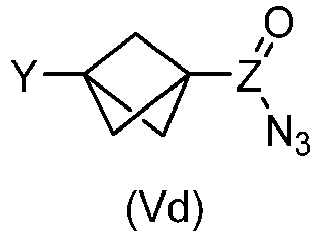
- Acyl azides can undergo Curtius rearrangements to afford the corresponding amine or carbamate. Primary amides obtained from treatment with ammonia can undergo Hoffmann rearrangements to provide the corresponding amines
- In another embodiment, X is a halide, preferably chloride and Z is C and treatment with diazomethane of formula R4-CH=N2 affords diazoketones formula Vh.

- Diazoketones can further react in Arndt Eistert rearrangements to afford the homologated acids.
- In another embodiment, X is a halide, preferably chloride, and Z is C and treatment with a hydrazine or hydroxylamine affords an acyl hydrazine of Formula Vf or an acyl hydroxylamine of Formula Vg, wherein R1 is H, a saturated linear or branched -(C1-C20)alkyl, aryl or alkylaryl.

- In another embodiment, X is halide, preferably chloride, and Z is C and treatment with a coupling partner, a coupling partner being an alkali metal organyl or an alkaline earth metal organyl (MR1, wherein M is Li, Na or Mg), a stannane (R1Sn(R2)3), a cuprate [R1CuR1]- or [R1CuCN-]) an organozinc compound (R1ZnQ, or R1ZnR1, wherein Q is halogen), an organobismuth compound ((R1)3Bi), a boronic acid R1B(OH)2, a boronic ester R1B(OR2)2 or a potassium trifluoroborate R1BF3K affords a compound of Formula Vi, wherein R1 and R2 are independently of each other-(C1-C20)alkyl, aryl or heteroaryl.

- In another embodiment, X is an halide, preferably chloride, and treatment with N-hydroxy-2-thiopyridinone or a similar reagent (i.e. its anion) affords an ester of the type of Barton that provides a terminal bicyclo[1.1.1]pentane after treatment with light or a radical initiator.
- In one embodiment, the reaction is run in batch from purified or crude intermediate obtained from reaction step B.
- In a preferred embodiment, the desired reactants are added to the same reaction vessel used for reaction step B and the intermediate obtained from reaction step B is used crude (Batch, one-pot reaction sequence).
- In another preferred embodiment, the solution of crude intermediate from reaction step B (obtained in batch) is added to a flow system to undergo the next transformation to afford products of formula Va-Vi (Batch -> flow sequence).
- In another preferred embodiment, the solution of crude intermediate from reaction step B (obtained in flow) is added to a flow system to undergo the next transformation to afford products of formula Va-Vi (flow -> flow sequence).
- In yet another preferred embodiment, the solution of crude intermediate from reaction step B (obtained in flow) is added to a batch reactor to undergo the next transformation with suitable reactants and afford products of formula Va-Vi (flow -> batch sequence).
- In another embodiment, the crude or purified intermediate obtained in reaction step B is injected in a flow reaction apparatus to be transformed.
-

- To a suspension of 1,1-dibromo-2,2-bis(chloromethyl)cyclopropane (1, 518 g, 1.74 mol, 1 equiv.) in dry Et2O (600 mL) was added dropwise by cannula a 1.6 M MeLi solution in Et2O (2400 mL, 3.83 mol, 2.2 equiv.) at -50 to -60°C under N2 atmosphere. After MeLi addition, the reaction mixture was allowed to warm to 0°C over 1 h. Then, the reaction mixture was removed from the dry ice/acetone bath and placed in an ice-water bath at 0°C and stirred for 2 h. Then, a distillation apparatus is connected and the receiving flask is cooled to -78°C. [1.1.1]
propellane 2 is obtained as a solution in Et2O in a concentration of 0.3 to 0.6 M in 70-95% yield. - To a distilled solution of [1.1.1]propellane in Et2O (750 mL, 375 mmol, 1 equiv) between -20 and -30°C was added methyl 2-chloro-2-oxoacetate 3 (41.9 mL, 375 mmol, 1 equiv.). The reaction mixture was irradiated using a Hanovia medium pressure mercury-vapor lamp until full consumption of [1.1.1]propellane, giving methyl 3-(chlorocarbonyl)bicyclo[1.1.1]pentane-1-carboxylate 4 in Et2O solution. This solution can be used directly without further purification with a nucleophile to obtain another bicyclo[1.1.1]pentane derivative or the solvent can be removed under reduced pressure to obtain methyl 3-(chlorocarbonyl)bicyclo[1.1.1]pentane-1-carboxylate 4 as a yellow solid which can be used for any other suitable step without further purification.
-

- To a distilled solution of [1.1.1]propellane in Et2O 2, prepared as described in example 1(a) (750 mL, 305 mmol, 1 equiv.) between -20 and -30°C was added ethyl chlorooxoacetate 5 (34.1 mL, 305 mmol, 1 equiv.). The reaction mixture was irradiated with a Hanovia medium pressure mercury-vapor lamp until full consumption of [1.1.1]propellane, giving ethyl 3-(chlorocarbonyl)bicyclo[1.1.1]pentane-1-carboxylate 6 in an etheral solution. This solution can be used directly without further purification with a nucleophile to obtain another bicyclo[1.1.1]pentane derivative or the solvent can be removed under reduced pressure to obtain ethyl 3-(chlorocarbonyl)bicyclo[1.1.1]pentane-1-carboxylate 6 as a yellow solid which can be used for any other suitable step without further purification.
-

- To a distilled solution of [1.1.1]propellane in Et2O 2, prepared as described in example 1(a) (333 mL, 136 mmol, 1 equiv.) between -20 and -30°C was added tert-butyl 2-chloro-2-oxoacetate 7 (22.38 g, 136 mmol, 1 equiv.). The reaction mixture was irradiated with a Hanovia medium pressure mercury-vapor lamp until full consumption of [1.1.1]propellane, giving tert-butyl 3-(chlorocarbonyl)bicyclo[1.1.1]pentane-1-carboxylate 8 in an etheral solution. This solution can be used directly without further purification with a nucleophile to obtain another bicyclo[1.1.1]pentane derivative or the solvent can be removed under reduced pressure to obtain tert-butyl 3-(chlorocarbonyl)bicyclo[1.1.1]pentane-1-carboxylate 8 which can be used for any other suitable step without further purification.
-

- To a solution of methyl 3-(chlorocarbonyl)bicyclo[1.1.1]pentane-1-carboxylate 4 in Et2O prepared as described in example 1(a) was added 1L of distilled water and a solid inorganic base or an aqueous basic solution solution such as NaOH, KOH, NaHCO3, KHCO3, etc until the pH was basic and the mixture was vigorously stirred at rt between 2 and 16 h. The aqueous layer was separated and extracted with DCM (x2). Then the aqueous phase was acidified to pH=1. This mixture was extracted with DCM (x3) and the combined organic layers were dried over anhydrous MgSO4, filtered and concentrated under reduced pressure to provide 3-(methoxycarbonyl)bicyclo[1.1.1]pentane-1-carboxylic acid 9 in 30% yield as a pale yellow solid. 1H NMR: (400 MHz, Chloroform-d) δ 3.69 (s, 3H), 2.40 (s, 6H) ppm. 13C NMR: (400 MHz, Chloroform-d) δ 174.86, 169.56, 52.80, 51.90, 37.55 ppm.
-

- To a solution of ethyl 3-(chlorocarbonyl)bicyclo[1.1.1]pentane-1-carboxylate 6 in Et2O prepared as described in example 1(b) was added 1L of distilled water and a solid inorganic base or an aqueous basic solution solution such as NaOH, KOH, NaHCO3, KHCO3, etc until the pH was basic and the mixture was vigorously stirred at rt between 2 and 16 h. The aqueous layer was separated and extracted with DCM (x2). Then the aqueous phase was acidified to pH=1. This mixture was extracted with DCM (x3) and the combined organic layers were dried over anhydrous MgSO4, filtered and concentrated under reduced pressure to provide 3-(ethoxycarbonyl)bicyclo[1.1.1]pentane-1-carboxylic acid 10 in 42% yield as a white solid. 1H NMR: (400 MHz, Chloroform-d) δ 1.27 (t, J=7.2 Hz, 3H), 2.34 (s, 6H), 4.14 (q, J=7.2 Hz, 2H), 10.65 (bs, 1H). 13C NMR: (400 MHz, Chloroform-d) δ 175.1, 169.5, 61.0, 52.8, 37.8, 37.5, 14.2 ppm.
-

- To a solution of tert-butyl 3-(chlorocarbonyl)bicyclo[1.1.1]pentane-1-carboxylate 8 in Et2O prepared as described in example 1(c) was added 1L of distilled water and a solid inorganic base or an aqueous basic solution solution such as NaOH, KOH, NaHCO3, KHCO3, etc until the pH was basic and the mixture was vigorously stirred at rt between 2 and 16 h. The aqueous layer was separated and extracted with DCM (x2). Then the aqueous phase was acidified to pH=1. This mixture was extracted with DCM (x3) and the combined organic layers were dried over anhydrous MgSO4, filtered and concentrated under reduced pressure to provide 3-(tert-butoxycarbonyl)bicyclo[1.1.1]pentane-1-carboxylicacid 11 in 24%yield. 1H NMR: (400 MHz, Chloroform-d) δ 2.28 (s, 6H), 1.56 (s, 9H).
-

- A solution of [1.1.1]propellane in Et2O 2 (500 mL, 161 mmol, 1 equiv.), and a solution of methyl chlorooxoacetate 3 (16.3 mL, 177 mmol, 1.1 equiv.) in Et2O (49.7 mL) were prepared independently. The entire reactor was flushed with pure Et2O (pump 1: 4.0 mL·min-1, pump 2: 0.5 mL·min-1) for 5 min. The solution of reagent (2) at 0 to -80 °C was then injected at a flow rate of 4.0 mL.min-1 and the solution of reagent (3) at room temperature was then injected at a flow rate of 0.5 mL.min-1 to the photoreactor (volume 58 mL; FEP tube was rotated on the lamp) in an ice bath. The reaction mixture was quenched with aqueous basic solution of NaOH, KOH, NaHCO3 or KHCO3, etc after the solution exits the photoreactor. After 2 h of vigorous stirring, the aqueous layer was separated and acidified until pH = 1. The mixture was then extracted with DCM (3 x 500 mL). The combined organic layers were dried over MgSO4, filtered and concentrated under reduced pressure to provide 3-(methoxycarbonyl)bicyclo[1.1.1]pentane-1-carboxylic acid (9, 17.5 g, 103 mmol, 63%) as a pale yellow solid.
-

-

- To a solution of ethyl 3-(chlorocarbonyl)bicyclo[1.1.1]pentane-1-carboxylate 6 (1.17 g, 5.81 mmol, 1 equiv.) in diethyl ether was added dropwise dimethylamine (2.91 mL, 5.81 mmol, 1 equiv.) at rt and the mixture was stirred 2 h. Then, water was added and the crude was extracted with EtOAc. The combined organic layer was dried over anhydrous MgSO4, filtered and the volatiles removed under reduced pressure to provide ethyl 3-(dimethylcarbamoyl)bicyclo[1.1.1]pentane-1-carboxylate 12.
-

- To a suspension of Cul (2.52 g, 13.23 mmol, 1.2 equiv.) in dry THF (30.6 mL), was added MeLi 1.6 M in Et2O (16.5 mL, 26.5 mmol, 2.4 equiv.) dropwise at 0°C under N2 atmosphere. Then, the reaction mixture was cooled down to -78°C and a solution of methyl 3-(chlorocarbonyl)bicyclo[1.1.1]pentane-1-carboxylate 4 in dry THF (30.6 mL) was added dropwise. The reaction mixture was stirred at -78°C for 2 h and then, methanol (11.15 mL, 276 mmol, 25 equiv.) was added and the mixture was allowed to warm to rt. A saturated solution of NH4CI was added and the mixture extracted with EtOAc (x3). The combined organic layers were dried over anhydrous MgSO4, filtered and concentrated in vacuum. The residue was purified by flash chromatography (EtOAc/
hexanes 0% to 75%) to provide methyl 3-acetylbicyclo[1.1.1]pentane-1-carboxylate 13 as an oil in 49% yield. 1H NMR: (400 MHz, Chloroform-d) δ 3.69 (s, 3H), 2.28 (s, 6H), 2.09 (s, 3H) ppm. -

- To a solution of ethyl 3-(chlorocarbonyl)bicyclo[1.1.1]pentane-1-carboxylate 6 (1.17 g, 5.81 mmol, 1 equiv.) in diethyl ether was added dropwise 7M ammonia in methanol (0.8 mL, 5.6 mmol, 1 equiv.) at rt and the mixture was stirred 2 h. Then, water was added and the crude was extracted with EtOAc. The combined organic layer was dried over anhydrous MgSO4, filtered and the volatiles removed under reduced pressure to provide ethyl 3-carbamoylbicyclo[1.1.1]pentane-1-carboxylate 14.
-

- A solution of ethyl 3-(chlorocarbonyl)bicyclo[1.1.1]pentane-1-carboxylate 6 (26.99 g, 143 mmol) in chloroform (100 ml) was added dropwise to a mixture of sodium 2-sulfidopyridine 1-oxide (21.34 g, 143 mmol, 1 equiv.) and N,N-dimethylpyridin-4-amine (1.748 g, 14.31 mmol, 0.1 equiv.) in chloroform (700 ml) at 23 °C under N2 atmosphere and the mixture was stirred for 30 min. Then, the mixture was irradiated with a tungsten lamp (240W) for 2 h. The crude was washed with 1M HCI, sat. NaHCO3, brine, dried over anhydrous MgSO4, filtered through a silica pad and concentrated in vacuum to obtain methyl bicyclo[1.1.1]pentane-1-carboxylate as a colorless oil in 36% yield. 1H NMR (300 MHz, CDCl3) δ 3.66 (3H), 2.42 (1H), 2.08 (6H).
-

- Ethyl 3-(chlorocarbonyl)bicyclo[1.1.1]pentane-1-carboxylate 6 (4.7 g, 23 mmol) was dissolved in Et2O was added NaHCO3 (1equiv.) and the mixture was stirred for 2 h. Then, the crude was diluted with water and extracted with DCM (x2) the aqueous phase was acidified with 6M HCI solution to pH=1 and extracted again with DCM (x3). The volatiles were dried over anhydrous MgSO4 and evaporated under reduced pressure. The residue was re-suspended in DCM (503 mL) and a catalytic amount of HOBt and DMAP, N,O-dimethylhydroxylamine (4.90 g) and EDC (9.3 g) were added and the mixture was stirred at rt overnight. Then, the reaction mixture was poured into water and extracted with EtOAc. The combined organic layers were washed with brine, dried over anhydrous MgSO4, filtered and concentrated in vacuum. The residue was purified by flash chromatography (EtOAc/
hex 0% to 80%) to obtain ethyl 3-(methoxy(methyl)carbamoyl)bicyclo[1.1.1]pentane-1-carboxylate 16 in 46% yield. -

- Ethyl 3-(chlorocarbonyl)bicyclo[1.1.1]pentane-1-carboxylate 6 (1.1 g, 5.4 mmol) was dissolved in a MeCN (13 mL) and THF (13 mL) mixture and added dropwise to an ice water cooled solution of (diazomethyl)trimethylsilane (2.71 mL, 5.43 mmol) and triethylamine (1.13 mL, 8.15 mmol) in a MeCN (13 mL) and THF (13 mL) mixture and the reaction was allowed to warm to rt and stirred overnight. Then, the solvents were removed and the residue re-dissolved in EtOAc and washed with water, sat. NaHCO3 solution and brine. The organic layer was dried over anhydrous MgSO4, filtered and concentrated in vacuum. The crude was purified by flash chromatography with (EtOAc/hexanes 20% to 50%) to provide ethyl 3-(2-diazoacetyl)bicyclo[1.1.1]pentane-1-carboxylate 17 in 56% yield as a yellow oil.
-

- To a solution of ethyl 3-(chlorocarbonyl)bicyclo[1.1.1]pentane-l-carboxylate 6 in DCM was added 5 equiv. of 2-amino-2-methylpropan-1-ol at 0°C and the reaction mixture was allowed to warm to rt and stirred overnight. Then the reaction was diluted with DCM, washed with water (x3), 1M HCI solution, brine, dried over anhydrous MgSO4, filtered and concentrated in vacuum. The residue was re-suspendend in a DCM/benzene (5:2) mixture and thionyl chloride (3 equiv) was added at rt and the mixture refluxed briefly and stirred at rt for 3 h. Then, the reaction mixture was frozen with liquid N2 and Et2O followed by 10 M NaOH solution addition. The liquid N2 bath was removed and water was added. The mixture was allowed to warm up to rt, diluted with Et2O, washed with water and brine, dried over MgSO4, filtered and concentrated in vacuum to provide ethyl 3-(4,4-dimethyl-4,5-dihydrooxazol-2-yl)bicyclo[1.1.1]pentane-1-carboxylate 18 in 56% yield.
-

- To a solution of ethyl 3-(chlorocarbonyl)bicyclo[1.1.1]pentane-1-carboxylate 6 (1.135 g, 5.6 mmol, 1 equiv.) in EtOH (20 mL) was added NaBH4 (0.636 g, 16.8 mmol, 3 equiv) and the reaction was stirred at rt overnight. Then, the mixture was quenched with water and extracted with EtOAc (x3), the combined organic layers were dried over MgSO4, filtered and concentrated in vacuum to provide ethyl 3-(hydroxymethyl)bicyclo[1.1.1]pentane-1-carboxylate 19.
-

- To a solution of ethyl 3-(chlorocarbonyl)bicyclo[1.1.1]pentane-1-carboxylate 6 (1.13 g, 5.6 mmol, 1 equiv.) in Et2O was added dropwise (3-bromophenyl)methanamine (1.04 g, 5.6 mmol, 1 equiv.) at rt and the mixture was stirred 2 h. Then, water was added and the crude was extracted with EtOAc. The combined organic layers were dried over MgSO4, filtered and the volatiles removed under reduced pressure to provide ethyl 3-((3-bromobenzyl)carbamoyl)bicyclo[1.1.1]pentane-1-carboxylate 20.
-

- 3-aminophenylzinc iodide (4 mL, 0.25M in THF, 1 mmol) was added to a round bottom flask under N2 atmosphere and cooled to 0C in an ice-bath. Then, ethyl 3-(chlorocarbonyl)bicyclo[1.1.1]pentane-1-carboxylate 6 (161 mg, 0.8 mmol) was added and the mixture was allowed to warm to rt and stirred for 3 h at rt. Then, the mixture was quenched with sat. NH4CI solution and extracted with EtOAc (x3). The combined organic layers were washed with sat. NaHCO3 solution, 8% NH4OH solution and brine and dried over anhydrous MgSO4, filtered and concentrated in vacuum. Ethyl 3-(3-aminobenzoyl)bicyclo[1.1.1]pentane-1-carboxylate 21 was obtained by crystallization from hexane/Et2O.
-
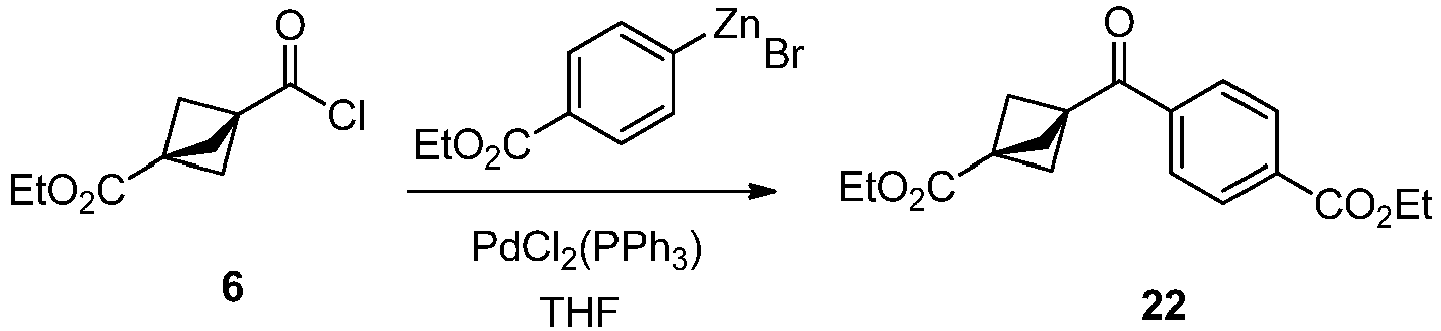
- Ethyl 3-(chlorocarbonyl)bicyclo[1.1.1]pentane-1-carboxylate 6 (1.05 g, 5.2 mmol) and PdCl2(PPh3) (1760 mg, 0.25 mmol) were dissolved in THF (35 mL). Then, (4-(ethoxycarbonyl)phenyl)zinc(II) bromide 0.5 M solution in THF (10 mL, 5 mmol) was added at rt and the mixture was stirred at the same temperature for 5 h. Then, the mixture was partitioned between Et2O and sat. NH4CI and the aqueous phase extracted with Et2O. The combined organic layers were washed with brine, dried over anhydrous MgSO4, filtered and concentrated in vacuum. The crude was purified by flash chromatography with EtOAc/hexanes from 0% to 10% to obtain Ethyl 3-(4-(ethoxycarbonyl)benzoyl)bicyclo[1.1.1]pentane-1-carboxylate 22.
-

- Ethyl 3-(chlorocarbonyl)bicyclo[1.1.1]pentane-1-carboxylate 6 (1.05 g, 5.2 mmol) and tributyl(m-tolyl)stannane previously prepared (0.99 g, 2.6 mmol, 0.5 equiv.) and Indium metal (0.6 g, 1 equiv) were mixed in neat conditions and stirred for 25 h. Then, the crude was purified by flash chromatography with EtOAc/Hexanes from 0% to 20% to obtain Ethyl 3-(3-methylbenzoyl)bicyclo[1.1.1]pentane-1-carboxylate 23.
-

- Pd(OAc)2 (0.05 mmol) was suspended in HMPA (1 mL) under N2 atmosphere at rt. Et3N (134 uL, 0.1 mmol) was added and the mixture was stirred for 5 min. Then, a solution of ethyl 3-(chlorocarbonyl)bicyclo[1.1.1]pentane-1-carboxylate 6 (1.05 g, 5.2 mmol) in HMPA (3 mL) was added dropwise, followed by addition of triphenylbismuth (1 mmol) in HMPA (5 mL). The crude was heated at 65°C for 5 h. Then, the crude was allowed to cool down to rt and diluted with Et2O, filtered through basic alumina and washed with Et2O. The ethereal solution was washed with water, dried over anhydrous MgSO4, filtered and concentrated in vacuum. The residue was purified by flash chromatography with EtOAc/hexanes from 0% to 20% to provide ethyl 3-benzoylbicyclo[1.1.1]pentane-1-carboxylate 24
Claims (14)
- A one-step process for producing an asymmetrically substituted compound of formula I,


 Z is CY is R1-C(=O)-, R1OC(=O)-, -CN, R1R2NC(=O)-, wherein R1 and R2 are independently of each other H, saturated linear or branched -(C1-C20)alkyl, wherein one or two non-adjacent CH2 groups may be replaced by —O—, —CH=CH—, —CO—, — OCO—, —COO—, —NCO—, —CON—, in such a way that O atoms are not linked directly to one another; aryl or form together a cycle;X is halogen.
 - A one-step process according to claim 1, wherein X is CI.
- A process according to claim 1 or 2, further comprising the step of reacting the obtained compound of formula I with a nucleophile, wherein the nucleophile is HOR1, HSR1, HNR1R2, -N3, H3N, H2N-NHR1, H2N-OR1. R4-CH(=N2), N-hydroxy-2-thiopyridone or a coupling partner, a coupling partner being an alkali metal organyl or an alkaline earth metal organyl, a stannane, a cuprate, an organozinc compound, an organobismuth compound, a boronic acid R1B(OH)2, a boronic ester R1B(OR2)2 or a potassium trifluoroborate R1BF3K, wherein R1 and R2 are independently of each other H, saturated linear or branched -(C1-C20)alkyl, wherein one or two non-adjacent CH2 groups may be replaced by -O-, — CH=CH-, —CO—, —OCO—, —COO—, —NCO—, —CON—, in such a way that O atoms are not linked directly to one another; aryl or form together a cycle and R4 represents H, saturated or unsaturated linear or branched -(C1-C20)alkyl, TMS or aryl to obtain a compound of formula V
 Z is C;Y is R1-C(=O)-, R1OC(=O)-, -CN, R1R2NC(=O)-, wherein R1 and R2 are independently of each other H, saturated linear or branched -(C1-C20)alkyl, wherein one or two non-adjacent CH2 groups may be replaced by —O—, —CH=CH—, —CO—, — OCO—, —COO—, —NCO—, —CON—, in such a way that O atoms are not linked directly to one another; aryl or form together a cycle;G is -OR1, -SR1, -NR1R2, -N3, -NH2 -NH-NHR1. -NH-OR1, -C(=N2)R4, -O-(N-2-thiopyridone), -OC(=O)R1, wherein R1 and R2 are independently of each other H, saturated linear or branched -(C1-C20)alkyl, wherein one or two non-adjacent CH2 groups may be replaced by —O—, —CH=CH—, —CO—, —OCO—, —COO— , —NCO—, —CON—, in such a way that O atoms are not linked directly to one another; aryl, heteroaryl or form together a cycle and R4 represents H, saturated or unsaturated linear or branched -(C1-C20)alkyl, TMS or aryl.
 - A process according to any preceding claim wherein the [1.1.1]propellane of formula II is obtained by reaction of a tetrahalide of formula IV with an alkyl or aryl lithium at temperature below 0 °C.

- A process according to claim 3, wherein the reaction steps to obtain a compound of Formula V from a compound of Formula II are performed (a) in a batch system and/or (b) in a flow system.
- A process according to claim 4, wherein the reaction steps to obtain a compound of Formula I from a compound of Formula IV are performed (a) in a batch system and/or (b) in a flow system.
- A process according to claim 4, wherein the reaction steps to obtain a compound of V from a compound of Formula IV are performed (a) in a batch system and/or (b) in a flow system.
- A process according to any preceding claim wherein the step of reacting [1.1.1]propellane of formula II with a compound of formula III is carried out under irradiation.
- A process according to any preceding claim wherein the step of reacting [1.1.1]propellane of formula II with a compound of formula III is carried out in the presence of a radical initiator.
- A process according to claims 3 to 9 wherein the nucleophile is water to obtain products of formula (Va), wherein
 Z is CY is R1-C(=O)-, R1OC(=O)-, -CN, R1R2NC(=O)-, wherein R1 and R2 are independently of each other H, saturated linear or branched -(C1-C20)alkyl, wherein one or two non-adjacent CH2 groups may be replaced by —O—, —CH=CH—, —CO—, — OCO—, —COO—, —NCO—, —CON—, in such a way that O atoms are not linked directly to one another, aryl, or form together a cycle.
 - A process according to claims 3 to 9 wherein the nucleophile is HOR3 to obtain a compound of formula (Vb), wherein
 Z is CY is R1-C(=O)-, R1OC(=O)-, -CN, R1R2NC(=O)-, wherein R1 and R2 are independently of each other H, saturated linear or branched -(C1-C20)alkyl, wherein one or two non-adjacent CH2 groups may be replaced by —O—, —CH=CH—, —CO—, — OCO—, —COO—, —NCO—, —CON—, in such a way that O atoms are not linked directly to one another; aryl or form together a cycle andR3 is H, saturated linear or branched -(C1-C20)alkyl, aryl or -N-2-thiopyridone.
 - A process according to claims 3 to 9 wherein the nucleophile is HNR1R2 to obtain compounds of formula (Vc), wherein
 Z is CY is R1-C(=O)-, R1OC(=O)- -CN, R1R2NC(=O)-, andR1 and R2 are independently of each other H, saturated linear or branched -(C1-C20)alkyl, wherein one or two non-adjacent CH2 groups may be replaced by — O—, -CH=CH-, —CO—, —OCO—, —COO—, —NCO—, —CON—, in such a way that O atoms are not linked directly to one another; aryl or form together a cycle.
 - A process according to claims 3 to 9 wherein the nucleophile is -N3, H3N, H2N-NHR1, H2N-OR1, R4CH(=N2) to form products of formula Vd-h, wherein
 Z is CY is R1-C(=O)-, R1OC(=O)- -CN, R1R2NC(=O)-, wherein R1 and R2 are independently of each other H, saturated linear or branched -(C1-C20)alkyl, wherein one or two non-adjacent CH2 groups may be replaced by —O—, —CH=CH—, —CO—, — OCO—, —COO—, —NCO—, —CON—, in such a way that O atoms are not linked directly to one another; aryl or form together a cycle,R1 and R2 are independently of each other H, saturated or unsaturated linear or branched -(C1-C20)alkyl, wherein one or two non-adjacent CH2 groups may be replaced by -O-, —CH=CH—, -CO-, -OCO-, -COO-, -NCO-, -CON-, in such a way that O atoms are not linked directly to one another; aryl, alkylaryl or form together a cycle;R4 is H, saturated or unsaturated linear or branched -(C1-C20)alkyl, TMS or aryl.
 - A process according to any preceding claim wherein Y represents R1-C(=O)- or R1OC(=O)-, wherein R1 is saturated linear or branched -(C1-C20)alkyl, wherein one or two non-adjacent CH2 groups may be replaced by —O—, —CH=CH—, —CO— , —OCO—, —COO—, —NCO—, —CON—, in such a way that O atoms are not linked directly to one another; or aryl.
Applications Claiming Priority (2)
| Application Number | Priority Date | Filing Date | Title |
|---|---|---|---|
| CH3302016 | 2016-03-14 | ||
| PCT/EP2017/055979 WO2017157932A1 (en) | 2016-03-14 | 2017-03-14 | Method of preparing substituted bicyclo[1 1 1]pentanes |
Publications (2)
| Publication Number | Publication Date |
|---|---|
| EP3429986A1 EP3429986A1 (en) | 2019-01-23 |
| EP3429986B1 true EP3429986B1 (en) | 2022-01-05 |
Family
ID=56958694
Family Applications (1)
| Application Number | Title | Priority Date | Filing Date |
|---|---|---|---|
| EP17710733.1A Active EP3429986B1 (en) | 2016-03-14 | 2017-03-14 | Method of preparing substituted bicyclo[1.1.1]pentanes |
Country Status (6)
| Country | Link |
|---|---|
| US (1) | US10513483B2 (en) |
| EP (1) | EP3429986B1 (en) |
| JP (1) | JP6953660B2 (en) |
| CN (1) | CN109071409B (en) |
| ES (1) | ES2916099T3 (en) |
| WO (1) | WO2017157932A1 (en) |
Families Citing this family (16)
| Publication number | Priority date | Publication date | Assignee | Title |
|---|---|---|---|---|
| CN109661399B (en) | 2016-08-23 | 2021-09-07 | 里科瑞尔姆Ip控股有限责任公司 | cross-coupling method |
| CA3074073A1 (en) * | 2017-09-11 | 2019-03-14 | Recurium Ip Holdings, Llc | Continuous flow processes for making bicyclic compounds |
| EP3781142A4 (en) * | 2018-04-19 | 2022-03-30 | Merck Sharp & Dohme Corp. | NEW COMPOUNDS [1.1.1] BICYCLO USED AS INDOLEAMINE 2,3-DIOXYGENASE INHIBITORS |
| WO2020248126A1 (en) * | 2019-06-11 | 2020-12-17 | 吉林凯莱英医药化学有限公司 | Continuous synthesis method for 1,1'-bicyclo[1.1.1]pentane-1,3-diethyl ketone organic matter |
| JP7308298B2 (en) * | 2019-06-18 | 2023-07-13 | ジィリン アシムケム ラボラトリーズ カンパニー リミテッド | Continuous synthesis method for propellane compounds |
| CA3150941A1 (en) * | 2019-08-14 | 2021-02-18 | Recurium Ip Holdings, Llc | Process for making [1.1.1] propellane |
| WO2021046515A1 (en) | 2019-09-06 | 2021-03-11 | Board Of Regents, The University Of Texas System | Inhibitors of receptor interacting protein kinase i for the treatment of disease |
| IL291665B2 (en) * | 2019-09-27 | 2025-07-01 | Univ Texas | Inhibitors of receptor interaction with protein kinase I for the treatment of disease |
| JP2023502514A (en) | 2019-11-26 | 2023-01-24 | ボード オブ レジェンツ,ザ ユニバーシティ オブ テキサス システム | Inhibitors of receptor-interacting protein kinase I for the treatment of diseases - Patents.com |
| WO2022170218A1 (en) * | 2021-02-05 | 2022-08-11 | The Board Of Regents Of The University Of Texas System | Intramolecular cyclization for general synthesis of bicyclic alkyl bioisostere boronates |
| JP7694948B2 (en) * | 2021-08-31 | 2025-06-18 | 国立大学法人 東京大学 | Encapsulation of BCP and a new method for the synthesis of propellane |
| WO2023037934A1 (en) | 2021-09-13 | 2023-03-16 | 富士フイルム株式会社 | Production method for encapsulation of bicycloalkane compound |
| EP4403546B1 (en) | 2021-09-13 | 2026-03-04 | FUJIFILM Corporation | Method for producing 1,3-disubstituted bicyclo[1.1.1]pentane by photoreaction |
| CN115974795A (en) * | 2022-12-26 | 2023-04-18 | 杭州师范大学 | A kind of disubstituted bicyclo[1.1.1]pentane containing perfluoroalkyl and N heterocycle and its synthesis method |
| CN119822937A (en) * | 2023-10-12 | 2025-04-15 | 牛津大学(苏州)科技有限公司 | Process for the preparation of mono-substituted bicyclo [1.1.1] pentane derivatives |
| WO2026001865A1 (en) * | 2024-06-24 | 2026-01-02 | Sironax Ltd. | Rip1 modulators, preparations, and uses thereof |
Family Cites Families (2)
| Publication number | Priority date | Publication date | Assignee | Title |
|---|---|---|---|---|
| JPH04500663A (en) * | 1988-06-03 | 1992-02-06 | ザ ユニヴァーシティー オブ テキサス システム | [1.1.1] Propellane-based compounds and methods |
| CA2937731C (en) * | 2014-01-27 | 2019-09-24 | Pfizer Inc. | Bifunctional cytotoxic agents |
-
2017
- 2017-03-14 ES ES17710733T patent/ES2916099T3/en active Active
- 2017-03-14 US US16/085,163 patent/US10513483B2/en active Active
- 2017-03-14 EP EP17710733.1A patent/EP3429986B1/en active Active
- 2017-03-14 WO PCT/EP2017/055979 patent/WO2017157932A1/en not_active Ceased
- 2017-03-14 CN CN201780017702.2A patent/CN109071409B/en active Active
- 2017-03-14 JP JP2018546549A patent/JP6953660B2/en active Active
Non-Patent Citations (1)
| Title |
|---|
| LUKE D. ELLIOTT ET AL: "Batch versus Flow Photochemistry: A Revealing Comparison of Yield and Productivity", CHEMISTRY - A EUROPEAN JOURNAL, vol. 20, no. 46, 10 November 2014 (2014-11-10), pages 15226 - 15232, XP055316646, ISSN: 0947-6539, DOI: 10.1002/chem.201404347 * |
Also Published As
| Publication number | Publication date |
|---|---|
| JP6953660B2 (en) | 2021-10-27 |
| EP3429986A1 (en) | 2019-01-23 |
| CN109071409A (en) | 2018-12-21 |
| US10513483B2 (en) | 2019-12-24 |
| ES2916099T3 (en) | 2022-06-28 |
| JP2019510012A (en) | 2019-04-11 |
| US20190092714A1 (en) | 2019-03-28 |
| CN109071409B (en) | 2021-09-17 |
| WO2017157932A1 (en) | 2017-09-21 |
Similar Documents
| Publication | Publication Date | Title |
|---|---|---|
| US10513483B2 (en) | Method of preparing substituted bicyclo[1.1.1] pentanes | |
| CN107573267B (en) | Alkylsulfonyl fluoride compound containing trifluoromethyl group, its preparation method and application | |
| Wang et al. | Silver-mediated activation of terminal alkynes: A strategy to construct bis-ethynynl selenides and tellurides | |
| Maghsoodlou et al. | Highly stereoselective construction of functionalized cyclopropanes from the reaction between acetylenic esters and C–H acids in the presence of triphenylarsine | |
| Andrianova et al. | (NHC) AgCl catalyzed bromofluorocyclopropanation of alkenes with CFBr2CO2Na | |
| CN108424343B (en) | A kind of allene thiocyanide derivatives and synthesis method thereof | |
| Zhou et al. | Air Oxidative Radical Oxysulfurization of Alkynes Leading to α-Thioaldehydes | |
| HK1261462B (en) | Method of preparing substituted bicyclo [1.1.1]pentanes | |
| CN117142997B (en) | Synthesis method of selenyldibenzosuberone promoted by visible light | |
| Shi et al. | Asymmetric total synthesis of (+)-isocryptotanshinone and formal synthesis of (−)-cryptotanshinone | |
| Schobert et al. | Microwave-accelerated Claisen rearrangements of allyl tetronates and tetramates | |
| Du et al. | A novel ring-opening based tandem domino process of an activated vinyl cyclopropane | |
| CN115385835A (en) | Synthetic method of selenium ester compound | |
| CN108947995B (en) | Preparation method of polysubstituted oxadiazine derivative | |
| KR20080073658A (en) | Preparation of Organic Compounds Containing Trifluoromethyl Group on Quaternary Carbon | |
| Chaumont-Olive et al. | Total synthesis of spiromastilactone A | |
| CN105622544B (en) | A kind of synthetic method of N- sulfonyls -3,4- dihydro -2H-1,4- thiazines | |
| CN119823061B (en) | Synthetic method of 3-trifluoromethyl-1, 4-benzoxazepine compound | |
| CN113429325B (en) | A kind of polysubstituted selenium-containing cyclopentene (hexene) skeleton derivative and synthesis method thereof | |
| CN115043799B (en) | Preparation method of 5, 6-dihydrobenzofuranone derivative | |
| Das et al. | Design and synthesis of (E)-1-((3-ethyl-2, 4, 4-trimethylcyclohex-2-enylidene) methyl-4-substituted benzenes from 1-(2, 6, 6-trimethylcyclohex-1-enyl) ethanol | |
| CN120504620A (en) | Improved SF5Cl synthesis method and beta-SF (sulfur hexafluoride) preparation method5Synthesis method and application of ketone compound | |
| CN101851186A (en) | The synthetic method of cilastatin sodium | |
| CN106243150B (en) | A kind of chirality sulphur (selenium) is for the environment-friendly preparation method thereof of phosphonate ester | |
| RU2708456C1 (en) | 5-aryl-4-fluoroisoxazoles and a method for production thereof |
Legal Events
| Date | Code | Title | Description |
|---|---|---|---|
| STAA | Information on the status of an ep patent application or granted ep patent |
Free format text: STATUS: UNKNOWN |
|
| STAA | Information on the status of an ep patent application or granted ep patent |
Free format text: STATUS: THE INTERNATIONAL PUBLICATION HAS BEEN MADE |
|
| PUAI | Public reference made under article 153(3) epc to a published international application that has entered the european phase |
Free format text: ORIGINAL CODE: 0009012 |
|
| STAA | Information on the status of an ep patent application or granted ep patent |
Free format text: STATUS: REQUEST FOR EXAMINATION WAS MADE |
|
| 17P | Request for examination filed |
Effective date: 20180913 |
|
| AK | Designated contracting states |
Kind code of ref document: A1 Designated state(s): AL AT BE BG CH CY CZ DE DK EE ES FI FR GB GR HR HU IE IS IT LI LT LU LV MC MK MT NL NO PL PT RO RS SE SI SK SM TR |
|
| AX | Request for extension of the european patent |
Extension state: BA ME |
|
| DAV | Request for validation of the european patent (deleted) | ||
| DAX | Request for extension of the european patent (deleted) | ||
| REG | Reference to a national code |
Ref country code: HK Ref legal event code: DE Ref document number: 1261462 Country of ref document: HK |
|
| STAA | Information on the status of an ep patent application or granted ep patent |
Free format text: STATUS: EXAMINATION IS IN PROGRESS |
|
| 17Q | First examination report despatched |
Effective date: 20200806 |
|
| RIC1 | Information provided on ipc code assigned before grant |
Ipc: C07C 245/18 20060101ALI20210129BHEP Ipc: C07D 263/16 20060101ALI20210129BHEP Ipc: C07C 69/757 20060101ALI20210129BHEP Ipc: C07C 1/28 20060101ALI20210129BHEP Ipc: C07C 67/313 20060101ALI20210129BHEP Ipc: C07C 69/753 20060101ALI20210129BHEP Ipc: C07C 235/82 20060101ALI20210129BHEP Ipc: C07C 49/313 20060101ALI20210129BHEP Ipc: C07C 13/605 20060101ALI20210129BHEP Ipc: C07C 231/02 20060101ALI20210129BHEP Ipc: C07C 67/343 20060101AFI20210129BHEP Ipc: C07C 45/68 20060101ALI20210129BHEP |
|
| GRAP | Despatch of communication of intention to grant a patent |
Free format text: ORIGINAL CODE: EPIDOSNIGR1 |
|
| STAA | Information on the status of an ep patent application or granted ep patent |
Free format text: STATUS: GRANT OF PATENT IS INTENDED |
|
| INTG | Intention to grant announced |
Effective date: 20210317 |
|
| GRAJ | Information related to disapproval of communication of intention to grant by the applicant or resumption of examination proceedings by the epo deleted |
Free format text: ORIGINAL CODE: EPIDOSDIGR1 |
|
| STAA | Information on the status of an ep patent application or granted ep patent |
Free format text: STATUS: EXAMINATION IS IN PROGRESS |
|
| GRAP | Despatch of communication of intention to grant a patent |
Free format text: ORIGINAL CODE: EPIDOSNIGR1 |
|
| STAA | Information on the status of an ep patent application or granted ep patent |
Free format text: STATUS: GRANT OF PATENT IS INTENDED |
|
| INTC | Intention to grant announced (deleted) | ||
| INTG | Intention to grant announced |
Effective date: 20210806 |
|
| GRAS | Grant fee paid |
Free format text: ORIGINAL CODE: EPIDOSNIGR3 |
|
| GRAA | (expected) grant |
Free format text: ORIGINAL CODE: 0009210 |
|
| STAA | Information on the status of an ep patent application or granted ep patent |
Free format text: STATUS: THE PATENT HAS BEEN GRANTED |
|
| AK | Designated contracting states |
Kind code of ref document: B1 Designated state(s): AL AT BE BG CH CY CZ DE DK EE ES FI FR GB GR HR HU IE IS IT LI LT LU LV MC MK MT NL NO PL PT RO RS SE SI SK SM TR |
|
| REG | Reference to a national code |
Ref country code: GB Ref legal event code: FG4D |
|
| REG | Reference to a national code |
Ref country code: CH Ref legal event code: EP |
|
| REG | Reference to a national code |
Ref country code: AT Ref legal event code: REF Ref document number: 1460433 Country of ref document: AT Kind code of ref document: T Effective date: 20220115 |
|
| REG | Reference to a national code |
Ref country code: DE Ref legal event code: R096 Ref document number: 602017051856 Country of ref document: DE |
|
| REG | Reference to a national code |
Ref country code: IE Ref legal event code: FG4D |
|
| REG | Reference to a national code |
Ref country code: GR Ref legal event code: EP Ref document number: 20220400334 Country of ref document: GR Effective date: 20220309 |
|
| REG | Reference to a national code |
Ref country code: LT Ref legal event code: MG9D |
|
| REG | Reference to a national code |
Ref country code: NL Ref legal event code: MP Effective date: 20220105 |
|
| REG | Reference to a national code |
Ref country code: AT Ref legal event code: MK05 Ref document number: 1460433 Country of ref document: AT Kind code of ref document: T Effective date: 20220105 |
|
| REG | Reference to a national code |
Ref country code: ES Ref legal event code: FG2A Ref document number: 2916099 Country of ref document: ES Kind code of ref document: T3 Effective date: 20220628 |
|
| PG25 | Lapsed in a contracting state [announced via postgrant information from national office to epo] |
Ref country code: NL Free format text: LAPSE BECAUSE OF FAILURE TO SUBMIT A TRANSLATION OF THE DESCRIPTION OR TO PAY THE FEE WITHIN THE PRESCRIBED TIME-LIMIT Effective date: 20220105 |
|
| PG25 | Lapsed in a contracting state [announced via postgrant information from national office to epo] |
Ref country code: SE Free format text: LAPSE BECAUSE OF FAILURE TO SUBMIT A TRANSLATION OF THE DESCRIPTION OR TO PAY THE FEE WITHIN THE PRESCRIBED TIME-LIMIT Effective date: 20220105 Ref country code: RS Free format text: LAPSE BECAUSE OF FAILURE TO SUBMIT A TRANSLATION OF THE DESCRIPTION OR TO PAY THE FEE WITHIN THE PRESCRIBED TIME-LIMIT Effective date: 20220105 Ref country code: PT Free format text: LAPSE BECAUSE OF FAILURE TO SUBMIT A TRANSLATION OF THE DESCRIPTION OR TO PAY THE FEE WITHIN THE PRESCRIBED TIME-LIMIT Effective date: 20220505 Ref country code: NO Free format text: LAPSE BECAUSE OF FAILURE TO SUBMIT A TRANSLATION OF THE DESCRIPTION OR TO PAY THE FEE WITHIN THE PRESCRIBED TIME-LIMIT Effective date: 20220405 Ref country code: LT Free format text: LAPSE BECAUSE OF FAILURE TO SUBMIT A TRANSLATION OF THE DESCRIPTION OR TO PAY THE FEE WITHIN THE PRESCRIBED TIME-LIMIT Effective date: 20220105 Ref country code: HR Free format text: LAPSE BECAUSE OF FAILURE TO SUBMIT A TRANSLATION OF THE DESCRIPTION OR TO PAY THE FEE WITHIN THE PRESCRIBED TIME-LIMIT Effective date: 20220105 Ref country code: BG Free format text: LAPSE BECAUSE OF FAILURE TO SUBMIT A TRANSLATION OF THE DESCRIPTION OR TO PAY THE FEE WITHIN THE PRESCRIBED TIME-LIMIT Effective date: 20220405 |
|
| PG25 | Lapsed in a contracting state [announced via postgrant information from national office to epo] |
Ref country code: PL Free format text: LAPSE BECAUSE OF FAILURE TO SUBMIT A TRANSLATION OF THE DESCRIPTION OR TO PAY THE FEE WITHIN THE PRESCRIBED TIME-LIMIT Effective date: 20220105 Ref country code: LV Free format text: LAPSE BECAUSE OF FAILURE TO SUBMIT A TRANSLATION OF THE DESCRIPTION OR TO PAY THE FEE WITHIN THE PRESCRIBED TIME-LIMIT Effective date: 20220105 Ref country code: FI Free format text: LAPSE BECAUSE OF FAILURE TO SUBMIT A TRANSLATION OF THE DESCRIPTION OR TO PAY THE FEE WITHIN THE PRESCRIBED TIME-LIMIT Effective date: 20220105 Ref country code: AT Free format text: LAPSE BECAUSE OF FAILURE TO SUBMIT A TRANSLATION OF THE DESCRIPTION OR TO PAY THE FEE WITHIN THE PRESCRIBED TIME-LIMIT Effective date: 20220105 |
|
| PG25 | Lapsed in a contracting state [announced via postgrant information from national office to epo] |
Ref country code: IS Free format text: LAPSE BECAUSE OF FAILURE TO SUBMIT A TRANSLATION OF THE DESCRIPTION OR TO PAY THE FEE WITHIN THE PRESCRIBED TIME-LIMIT Effective date: 20220505 |
|
| REG | Reference to a national code |
Ref country code: DE Ref legal event code: R097 Ref document number: 602017051856 Country of ref document: DE |
|
| PG25 | Lapsed in a contracting state [announced via postgrant information from national office to epo] |
Ref country code: SM Free format text: LAPSE BECAUSE OF FAILURE TO SUBMIT A TRANSLATION OF THE DESCRIPTION OR TO PAY THE FEE WITHIN THE PRESCRIBED TIME-LIMIT Effective date: 20220105 Ref country code: SK Free format text: LAPSE BECAUSE OF FAILURE TO SUBMIT A TRANSLATION OF THE DESCRIPTION OR TO PAY THE FEE WITHIN THE PRESCRIBED TIME-LIMIT Effective date: 20220105 Ref country code: RO Free format text: LAPSE BECAUSE OF FAILURE TO SUBMIT A TRANSLATION OF THE DESCRIPTION OR TO PAY THE FEE WITHIN THE PRESCRIBED TIME-LIMIT Effective date: 20220105 Ref country code: MC Free format text: LAPSE BECAUSE OF FAILURE TO SUBMIT A TRANSLATION OF THE DESCRIPTION OR TO PAY THE FEE WITHIN THE PRESCRIBED TIME-LIMIT Effective date: 20220105 Ref country code: EE Free format text: LAPSE BECAUSE OF FAILURE TO SUBMIT A TRANSLATION OF THE DESCRIPTION OR TO PAY THE FEE WITHIN THE PRESCRIBED TIME-LIMIT Effective date: 20220105 Ref country code: DK Free format text: LAPSE BECAUSE OF FAILURE TO SUBMIT A TRANSLATION OF THE DESCRIPTION OR TO PAY THE FEE WITHIN THE PRESCRIBED TIME-LIMIT Effective date: 20220105 Ref country code: CZ Free format text: LAPSE BECAUSE OF FAILURE TO SUBMIT A TRANSLATION OF THE DESCRIPTION OR TO PAY THE FEE WITHIN THE PRESCRIBED TIME-LIMIT Effective date: 20220105 |
|
| PLBE | No opposition filed within time limit |
Free format text: ORIGINAL CODE: 0009261 |
|
| STAA | Information on the status of an ep patent application or granted ep patent |
Free format text: STATUS: NO OPPOSITION FILED WITHIN TIME LIMIT |
|
| PG25 | Lapsed in a contracting state [announced via postgrant information from national office to epo] |
Ref country code: AL Free format text: LAPSE BECAUSE OF FAILURE TO SUBMIT A TRANSLATION OF THE DESCRIPTION OR TO PAY THE FEE WITHIN THE PRESCRIBED TIME-LIMIT Effective date: 20220105 |
|
| 26N | No opposition filed |
Effective date: 20221006 |
|
| PG25 | Lapsed in a contracting state [announced via postgrant information from national office to epo] |
Ref country code: LU Free format text: LAPSE BECAUSE OF NON-PAYMENT OF DUE FEES Effective date: 20220314 |
|
| PG25 | Lapsed in a contracting state [announced via postgrant information from national office to epo] |
Ref country code: SI Free format text: LAPSE BECAUSE OF FAILURE TO SUBMIT A TRANSLATION OF THE DESCRIPTION OR TO PAY THE FEE WITHIN THE PRESCRIBED TIME-LIMIT Effective date: 20220105 |
|
| PG25 | Lapsed in a contracting state [announced via postgrant information from national office to epo] |
Ref country code: HU Free format text: LAPSE BECAUSE OF FAILURE TO SUBMIT A TRANSLATION OF THE DESCRIPTION OR TO PAY THE FEE WITHIN THE PRESCRIBED TIME-LIMIT; INVALID AB INITIO Effective date: 20170314 |
|
| PG25 | Lapsed in a contracting state [announced via postgrant information from national office to epo] |
Ref country code: MK Free format text: LAPSE BECAUSE OF FAILURE TO SUBMIT A TRANSLATION OF THE DESCRIPTION OR TO PAY THE FEE WITHIN THE PRESCRIBED TIME-LIMIT Effective date: 20220105 Ref country code: CY Free format text: LAPSE BECAUSE OF FAILURE TO SUBMIT A TRANSLATION OF THE DESCRIPTION OR TO PAY THE FEE WITHIN THE PRESCRIBED TIME-LIMIT Effective date: 20220105 |
|
| PG25 | Lapsed in a contracting state [announced via postgrant information from national office to epo] |
Ref country code: TR Free format text: LAPSE BECAUSE OF FAILURE TO SUBMIT A TRANSLATION OF THE DESCRIPTION OR TO PAY THE FEE WITHIN THE PRESCRIBED TIME-LIMIT Effective date: 20220105 |
|
| PG25 | Lapsed in a contracting state [announced via postgrant information from national office to epo] |
Ref country code: MT Free format text: LAPSE BECAUSE OF FAILURE TO SUBMIT A TRANSLATION OF THE DESCRIPTION OR TO PAY THE FEE WITHIN THE PRESCRIBED TIME-LIMIT Effective date: 20220105 |
|
| REG | Reference to a national code |
Ref country code: DE Ref legal event code: R082 Ref document number: 602017051856 Country of ref document: DE Representative=s name: KOELLNER, MALTE, DR., DE Ref country code: DE Ref legal event code: R082 Ref document number: 602017051856 Country of ref document: DE Representative=s name: KOELLNER, MALTE, DIPL.-PHYS. DR.RER.NAT., DE |
|
| PGFP | Annual fee paid to national office [announced via postgrant information from national office to epo] |
Ref country code: ES Payment date: 20250429 Year of fee payment: 9 |
|
| PGFP | Annual fee paid to national office [announced via postgrant information from national office to epo] |
Ref country code: CH Payment date: 20250401 Year of fee payment: 9 |
|
| REG | Reference to a national code |
Ref country code: CH Ref legal event code: U11 Free format text: ST27 STATUS EVENT CODE: U-0-0-U10-U11 (AS PROVIDED BY THE NATIONAL OFFICE) Effective date: 20260401 |
|
| PGFP | Annual fee paid to national office [announced via postgrant information from national office to epo] |
Ref country code: GB Payment date: 20260324 Year of fee payment: 10 |
|
| PGFP | Annual fee paid to national office [announced via postgrant information from national office to epo] |
Ref country code: DE Payment date: 20260319 Year of fee payment: 10 Ref country code: IE Payment date: 20260319 Year of fee payment: 10 |
|
| PGFP | Annual fee paid to national office [announced via postgrant information from national office to epo] |
Ref country code: BE Payment date: 20260319 Year of fee payment: 10 Ref country code: IT Payment date: 20260324 Year of fee payment: 10 |
|
| PGFP | Annual fee paid to national office [announced via postgrant information from national office to epo] |
Ref country code: FR Payment date: 20260320 Year of fee payment: 10 |
|
| PGFP | Annual fee paid to national office [announced via postgrant information from national office to epo] |
Ref country code: GR Payment date: 20260320 Year of fee payment: 10 |