EP3429147A1 - Information transmission method and device - Google Patents
Information transmission method and device Download PDFInfo
- Publication number
- EP3429147A1 EP3429147A1 EP16905746.0A EP16905746A EP3429147A1 EP 3429147 A1 EP3429147 A1 EP 3429147A1 EP 16905746 A EP16905746 A EP 16905746A EP 3429147 A1 EP3429147 A1 EP 3429147A1
- Authority
- EP
- European Patent Office
- Prior art keywords
- signals
- time
- subcarrier spacing
- frequency region
- symbol
- Prior art date
- Legal status (The legal status is an assumption and is not a legal conclusion. Google has not performed a legal analysis and makes no representation as to the accuracy of the status listed.)
- Granted
Links
Images




Classifications
-
- H—ELECTRICITY
- H04—ELECTRIC COMMUNICATION TECHNIQUE
- H04W—WIRELESS COMMUNICATION NETWORKS
- H04W72/00—Local resource management
- H04W72/12—Wireless traffic scheduling
- H04W72/1263—Mapping of traffic onto schedule, e.g. scheduled allocation or multiplexing of flows
-
- H—ELECTRICITY
- H04—ELECTRIC COMMUNICATION TECHNIQUE
- H04W—WIRELESS COMMUNICATION NETWORKS
- H04W72/00—Local resource management
- H04W72/04—Wireless resource allocation
- H04W72/044—Wireless resource allocation based on the type of the allocated resource
- H04W72/0453—Resources in frequency domain, e.g. a carrier in FDMA
-
- H—ELECTRICITY
- H04—ELECTRIC COMMUNICATION TECHNIQUE
- H04L—TRANSMISSION OF DIGITAL INFORMATION, e.g. TELEGRAPHIC COMMUNICATION
- H04L5/00—Arrangements affording multiple use of the transmission path
- H04L5/003—Arrangements for allocating sub-channels of the transmission path
- H04L5/0053—Allocation of signalling, i.e. of overhead other than pilot signals
-
- H—ELECTRICITY
- H04—ELECTRIC COMMUNICATION TECHNIQUE
- H04L—TRANSMISSION OF DIGITAL INFORMATION, e.g. TELEGRAPHIC COMMUNICATION
- H04L1/00—Arrangements for detecting or preventing errors in the information received
- H04L1/0001—Systems modifying transmission characteristics according to link quality, e.g. power backoff
- H04L1/0033—Systems modifying transmission characteristics according to link quality, e.g. power backoff arrangements specific to the transmitter
-
- H—ELECTRICITY
- H04—ELECTRIC COMMUNICATION TECHNIQUE
- H04L—TRANSMISSION OF DIGITAL INFORMATION, e.g. TELEGRAPHIC COMMUNICATION
- H04L25/00—Baseband systems
- H04L25/02—Details ; arrangements for supplying electrical power along data transmission lines
- H04L25/03—Shaping networks in transmitter or receiver, e.g. adaptive shaping networks
-
- H—ELECTRICITY
- H04—ELECTRIC COMMUNICATION TECHNIQUE
- H04L—TRANSMISSION OF DIGITAL INFORMATION, e.g. TELEGRAPHIC COMMUNICATION
- H04L5/00—Arrangements affording multiple use of the transmission path
- H04L5/0001—Arrangements for dividing the transmission path
- H04L5/0003—Two-dimensional division
- H04L5/0005—Time-frequency
- H04L5/0007—Time-frequency the frequencies being orthogonal, e.g. OFDM(A) or DMT
-
- H—ELECTRICITY
- H04—ELECTRIC COMMUNICATION TECHNIQUE
- H04L—TRANSMISSION OF DIGITAL INFORMATION, e.g. TELEGRAPHIC COMMUNICATION
- H04L5/00—Arrangements affording multiple use of the transmission path
- H04L5/003—Arrangements for allocating sub-channels of the transmission path
- H04L5/0044—Allocation of payload; Allocation of data channels, e.g. PDSCH or PUSCH
-
- H—ELECTRICITY
- H04—ELECTRIC COMMUNICATION TECHNIQUE
- H04L—TRANSMISSION OF DIGITAL INFORMATION, e.g. TELEGRAPHIC COMMUNICATION
- H04L5/00—Arrangements affording multiple use of the transmission path
- H04L5/003—Arrangements for allocating sub-channels of the transmission path
- H04L5/0048—Allocation of pilot signals, i.e. of signals known to the receiver
-
- H—ELECTRICITY
- H04—ELECTRIC COMMUNICATION TECHNIQUE
- H04L—TRANSMISSION OF DIGITAL INFORMATION, e.g. TELEGRAPHIC COMMUNICATION
- H04L5/00—Arrangements affording multiple use of the transmission path
- H04L5/003—Arrangements for allocating sub-channels of the transmission path
- H04L5/0048—Allocation of pilot signals, i.e. of signals known to the receiver
- H04L5/0051—Allocation of pilot signals, i.e. of signals known to the receiver of dedicated pilots, i.e. pilots destined for a single user or terminal
-
- H—ELECTRICITY
- H04—ELECTRIC COMMUNICATION TECHNIQUE
- H04L—TRANSMISSION OF DIGITAL INFORMATION, e.g. TELEGRAPHIC COMMUNICATION
- H04L5/00—Arrangements affording multiple use of the transmission path
- H04L5/003—Arrangements for allocating sub-channels of the transmission path
- H04L5/0058—Allocation criteria
- H04L5/0073—Allocation arrangements that take into account other cell interferences
-
- H—ELECTRICITY
- H04—ELECTRIC COMMUNICATION TECHNIQUE
- H04W—WIRELESS COMMUNICATION NETWORKS
- H04W72/00—Local resource management
- H04W72/12—Wireless traffic scheduling
-
- H—ELECTRICITY
- H04—ELECTRIC COMMUNICATION TECHNIQUE
- H04W—WIRELESS COMMUNICATION NETWORKS
- H04W72/00—Local resource management
- H04W72/20—Control channels or signalling for resource management
-
- H—ELECTRICITY
- H04—ELECTRIC COMMUNICATION TECHNIQUE
- H04W—WIRELESS COMMUNICATION NETWORKS
- H04W88/00—Devices specially adapted for wireless communication networks, e.g. terminals, base stations or access point devices
-
- H—ELECTRICITY
- H04—ELECTRIC COMMUNICATION TECHNIQUE
- H04L—TRANSMISSION OF DIGITAL INFORMATION, e.g. TELEGRAPHIC COMMUNICATION
- H04L5/00—Arrangements affording multiple use of the transmission path
- H04L5/0001—Arrangements for dividing the transmission path
- H04L5/0003—Two-dimensional division
- H04L5/0005—Time-frequency
Definitions
- the present disclosure relates to the field of communication, and more particularly to a method and device for transmitting information.
- a uniform parameter set is adopted for data transmission of a network device and a terminal device.
- the communication protocol specifies a parameter set in a Long Term Evolution (LTE) system as follows: a radio frame is 10ms, a radio frame includes 10 subframes, a subframe includes two time slots, a time slot includes 7 symbols, 12 continuous subcarriers on frequency and a time slot on a time domain form a Resource Block (RB), a spacing between every two subcarriers is 15k, a subcarrier on a frequency domain and a symbol on the time domain are called a Resource Element (RE) and the like.
- LTE Long Term Evolution
- RB Resource Block
- RE Resource Element
- Embodiments of the present disclosure provide a method and device for transmitting information. Different subcarrier spacings may be adopted for transmission of reference signals and data, adoption of reference signals corresponding to the same subcarrier spacing for data of different subcarrier spacings may be supported, interference between reference signals may be suppressed, and channel estimation complexity may be reduced, so that communication performance is improved.
- a method for transmitting information which may include that:
- a size of the subcarrier spacing of the data signals or the control signals is different from the subcarrier spacing corresponding to the reference signals, so that data and the reference signals may be independently optimized respectively.
- the first signals may be configured for a receiver to demodulate the second signals.
- the information transmission method may further include that:
- the data signals and the control signals may correspond to different subcarrier spacings.
- the information transmission method may further include that: ninth signals are transmitted via the first symbol, with the first subcarrier spacing, of the first time-frequency region, the ninth signals being data signals or control signals.
- the ninth signals and the first signals may be arranged alternately on the frequency domain.
- a second aspect provides a method for transmitting information, which may include that:
- the information transmission method may further include that: the receiver uses the first signals to demodulate the second signals.
- a third aspect provides a device for transmitting information, which is configured to execute the method in the first aspect or any optional implementation of the first aspect.
- the information transmission device includes module units configured to execute the method in the first aspect or any possible implementation of the first aspect.
- a fourth aspect provides a device for transmitting information, which is configured to execute the method in the second aspect or any optional implementation of the second aspect.
- the information transmission device includes module units configured to execute the method in the second aspect or any possible implementation of the second aspect.
- a fifth aspect provides a device for transmitting information, which includes a memory and a processor, wherein the memory is configured to store an instruction, the processor is configured to execute the instruction stored in the memory, and when the processor executes the instruction stored in the memory, such execution enables the processor to execute the method in the first aspect or any optional implementation of the first aspect.
- a sixth aspect provides a device for transmitting information, which includes a memory and a processor, wherein the memory is configured to store an instruction, the processor is configured to execute the instruction stored in the memory, and when the processor executes the instruction stored in the memory, such execution enables the processor to execute the method in the second aspect or any optional implementation of the second aspect.
- a seventh aspect provides a computer storage medium, in which a program code is stored, the program code being configured to indicate the method in the first aspect or any optional implementation of the first aspect to be executed.
- An eighth aspect provides a computer storage medium, in which a program code is stored, the program code being configured to indicate the method in the second aspect or any optional implementation of the second aspect to be executed.
- GSM Global System of Mobile Communication
- CDMA Code Division Multiple Access
- WCDMA Wideband Code Division Multiple Access
- GPRS General Packet Radio Service
- LTE Long Term Evolution
- UMTS Universal Mobile Telecommunication System
- a terminal device may also refer to User Equipment (UE), an access terminal, a user unit, a user station, a mobile station, a mobile radio station, a remote station, a remote terminal, a mobile device, a user terminal, a terminal, a wireless communication device, a user agent or a user device.
- UE User Equipment
- the access terminal may be a cell phone, a cordless phone, a Session Initiation Protocol (SIP) phone, a Wireless Local Loop (WLL) station, a Personal Digital Assistant (PDA), a handheld device with a wireless communication function, a computing device, another processing device connected to a wireless modem, a vehicle-mounted device, a wearable device, a terminal device in a future 5G network, a terminal device in a future evolved Public Land Mobile Network (PLMN) or the like.
- SIP Session Initiation Protocol
- WLL Wireless Local Loop
- PDA Personal Digital Assistant
- a network device may be a device configured to communicate with the terminal device.
- the network device may be a Base Transceiver Station (BTS) in the GSM or the CDMA, may also be a NodeB (NB) in the WCDMA system, may also be an Evolutional Node B (eNB or eNodeB) in the LTE system and may further be a wireless controller in a Cloud Radio Access Network (CRAN) scenario.
- the network device may be a relay station, an access point, a vehicle-mounted device, a wearable device, a network device in the future 5G network, a network device in the future evolved PLMN or the like.
- FIG. 1 is a schematic diagram of an application scenario according to the present disclosure.
- a communication system 100 in FIG. 1 may include a network device 110 and a terminal device 120.
- the network device 110 is configured to provide communication service for the terminal device 120 for access to a core network.
- the terminal device 120 searches a synchronization signal, broadcast signal and the like sent by the network device 110 to access the network, thereby communicating with the network.
- Arrows illustrated in FIG. 1 may represent uplink/downlink transmission implemented through a cellular link between the terminal device 120 and the network device 110.
- the network device 110 may be a sender or a receiver and the terminal device may be a sender or a receiver.
- T is the symbol length
- ⁇ f is the subcarrier spacing.
- the subcarrier spacing mentioned in the embodiments of the present disclosure may be, but not limited to, 15kHZ, 30kHZ and 60kHZ.
- FIG. 2 is a schematic flowchart of a method for transmitting information 200 according to an embodiment of the present disclosure.
- FIG. 2 illustrates acts or operations of the information transmission method. However, these acts or operations are only examples. Other operations or transformations of each operation in FIG. 2 may also be executed in the embodiment of the disclosure.
- a first sender transmits first signals to a receiver via a first symbol, with a first subcarrier spacing, of a first time-frequency region.
- the first signals are reference signals.
- the first sender transmits second signals to the receiver via a second symbol, with a second subcarrier spacing, of the first time-frequency region.
- the second signals are reference signals.
- the first subcarrier spacing is different from the second subcarrier spacing.
- a size of the first time-frequency region is a size of a minimum time-frequency scheduling unit of data signals.
- the first signals may be configured for the receiver to demodulate the second signals.
- a subcarrier spacing 60kHZ may be used to send reference signals on a symbol #1, a symbol #3, a symbol #5 and a symbol #7 and a subcarrier spacing 15kHZ may be used to send data signals or control signals on a symbol #2, a symbol #4, a symbol #6 and a symbol #8.
- the minimum time-frequency scheduling unit mentioned in the embodiment of the present disclosure is a minimum time-frequency scheduling unit (for example, a subframe) of data, i.e., fewest time-frequency resources occupied by data sent by a user at one time.
- Data signals, reference signals and control signaling may be transmitted in the time-frequency scheduling unit.
- FIG. 4 is a schematic flowchart of a method for transmitting information 300 executed by a receiver according to an embodiment of the disclosure. It is to be understood that FIG. 4 illustrates acts or operations of the information transmission method. However, these acts or operations are only examples. Other operations or transformations of each operation in FIG. 3 may also be executed in the embodiment of the disclosure.
- the receiver receives first signals via a first symbol, with a first subcarrier spacing, of a first time-frequency region.
- the first signals are reference signals.
- the receiver receives second signals via a second symbol, with a second subcarrier spacing, of the first time-frequency region.
- the second signals are reference signals.
- the first subcarrier spacing is different from the second subcarrier spacing.
- a size of the first time-frequency region is a size of a minimum time-frequency scheduling unit of data signals or control signals.
- the receiver after receiving the first signals and/or the second signals, may perform subsequent processing, for example, using the first signals to demodulate the second signals.
- subsequent processing for example, using the first signals to demodulate the second signals.
- the time-frequency scheduling unit mentioned in the embodiment of the present disclosure may be divided into a time-domain scheduling unit in a time-domain dimension and a frequency-domain unit in a frequency-domain dimension.
- the time-domain scheduling unit may be a time slot, a subframe or a Transmission Time Interval (TTI).
- TTI Transmission Time Interval
- the time-domain scheduling unit may be a symbol.
- the frequency-domain scheduling unit may be a subcarrier.
- the frequency-domain scheduling unit may be a Resource Element Group (REG).
- REG Resource Element Group
- the time-frequency scheduling unit mentioned in the embodiment of the present disclosure may also be limited in both time/frequency-domain dimensions.
- the minimum time-frequency scheduling unit may be an RB.
- An RB may be 1 subframe xl2 subcarriers.
- time-domain scheduling unit frequency-domain scheduling unit or time/frequency-domain scheduling unit is only a specific implementation of the embodiment of the present disclosure.
- Another division manner may also be adopted in the embodiment of the present disclosure.
- a size of a minimum time-frequency scheduling unit of data signals or control signals is different from the subcarrier spacing corresponding to the reference signals, so that a flexible subcarrier spacing design is achieved.
- the subcarrier spacing corresponding to the reference signals may be different from the subcarrier spacing corresponding to the data signals or the control signals, the subcarrier spacing corresponding to the reference signals may be increased at the same time of maintaining the subcarrier spacing corresponding to the data signals or the control signals to accordingly shorten a channel estimation delay.
- a symbol length of a reference signal corresponding to a 60kHz subcarrier spacing is 1/4 of a symbol length of a reference signal corresponding to a 15kHz subcarrier spacing, and a receiver may start channel estimation 50 ⁇ s earlier.
- TCP Transmission Control Protocol
- a relatively long subcarrier spacing such as 60kHz mainly has the shortcomings that a Cyclic Prefix (CP) overhead is excessively high, a relatively long CP is required to be inserted in a macro cell coverage scenario and adoption of a relatively long subcarrier spacing for all data transmission may bring great loss to spectrum efficiency.
- CP Cyclic Prefix
- a reference signal only occupies a small number of symbols, so that spectrum efficiency loss will be not so huge, but a quite obvious gain is brought by delay shortening.
- subcarrier spacings for corresponding reference signals may be the same but subcarrier spacings for corresponding data signals or control signals may be different.
- regions #1 and #2 correspond to the same time domain and adjacent frequency domains
- subcarrier spacings of symbols configured to send reference signals in the region #1 and the region #2 are the same and subcarrier spacings of symbols where non-reference signals in the region #1 and the region #2 are located are different.
- regions #1 and #2 correspond to the same time domain and frequency domain but correspond to different cells or terminal devices
- subcarrier spacings of symbols configured to send reference signals in the region #1 and the region #2 are the same and subcarrier spacings of symbols where non-reference signals in the region #1 and the region #2 are different.
- time-frequency shapes of resource particles occupied by reference signals with the same subcarrier spacing in the embodiment of the present disclosure are the same.
- only one reference signal pattern type may be designed, and a transmitter and a receiver may implement a uniform reference signal sending and channel estimation algorithm, so that complexity of standards and devices is greatly reduced, corresponding control signaling notifying a reference signal type is also greatly simplified, and an overhead is greatly reduced.
- an orthogonal or low correlation sequence may be adopted for reference signals with the same subcarrier spacing.
- subcarrier spacings of data signals (or control signals) sent by a network device by using two cells on symbols occupied by non-reference signals are different
- subcarrier spacings of reference signals on the same antenna port are the same
- time-frequency shapes of resource particles occupied by the reference signals are the same.
- an orthogonal or low correlation sequence is adopted for the reference signals of the two cells on the same antenna port.
- a terminal device corresponding to the time-frequency region mentioned in the embodiment of the present disclosure refers to a terminal device using the time-frequency resource to send signals.
- a cell corresponding to the time-frequency region mentioned in the embodiment of the present disclosure refers to a cell adopted when information is sent in the time-frequency region, may be applied to uplink and may also be applied to downlink.
- a magnitude of a sequence number of each process does not mean an execution sequence and the execution sequence of each process should be determined by its function and an internal logic and should not form any limit to an implementation process of the embodiments of the present disclosure.
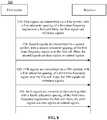
- FIG. 7 is a schematic flowchart of a method for transmitting information 400 according to an embodiment of the present disclosure.
- a first time-frequency region and second time-frequency region illustrated in FIG. 7 have a same time domain, have a same frequency domain, or have adjacent frequency domains. Sizes of the first and second time-frequency regions are a size of a minimum time-frequency scheduling unit of data signals.
- a second subcarrier spacing is different from a third subcarrier spacing.
- a first sender may be a network device and a receiver may be a terminal device.
- Receivers corresponding to different time-frequency regions may be the same terminal device and may also be different terminal devices.
- the method may also be applied to uplink transmission.
- the sender is a terminal device and the receiver is a network device.
- Receivers corresponding to different time-frequency regions may be the same network device and may also be different network devices.
- the first sender transmits first signals via a first symbol, with a first subcarrier spacing, of a first time-frequency region over a first cell.
- the first signals are reference signals.
- the receiver receives the first signals via the first symbol, with the first subcarrier spacing, of the first time-frequency region over the first cell.
- the first sender transmits second signals via a second symbol, with a second subcarrier spacing, of the first time-frequency region over the first cell.
- the second signals are data signals or control signals.
- the receiver receives the second signals via the second symbol, with the second subcarrier spacing, of the first time-frequency region over the first cell.
- the first sender transmits third signals via a third symbol, with the first subcarrier spacing, of a second time-frequency region over a second cell.
- the third signals are reference signals.
- the receiver receives the third signals via the third symbol, with the first subcarrier spacing, of the second time-frequency region over the second cell.
- the first sender transmits fourth signals via a fourth symbol, with a third subcarrier spacing, of the second time-frequency region over the second cell.
- the fourth signals are data signals or control signals.
- the receiver receives the fourth signals via the fourth symbol, with the third subcarrier spacing, of the second time-frequency region over the second cell.
- the same subcarrier spacing may also be adopted for reference signals, so that an orthogonal or low correlation design may be adopted to avoid serious inter-subcarrier interference probably formed between reference signals for which different subcarrier spacings are adopted on adjacent or the same frequency band may be avoided, and channel estimation performance is ensured.
- FIG. 8 is a schematic flowchart of a method for transmitting information 500 according to an embodiment of the present disclosure.
- a first time-frequency region and third time-frequency region illustrated in FIG. 8 have a same time domain and different frequency domains. Sizes of the first and third time-frequency regions are a size of a minimum time-frequency scheduling unit of data signals.
- a second subcarrier spacing is different from a fourth subcarrier spacing.
- a first sender may be a network device and a receiver may be a terminal device.
- Receivers corresponding to different time-frequency regions may be the same terminal device and may also be different terminal devices.
- the method may also be applied to uplink transmission.
- the sender is a terminal device and the receiver may be a network device.
- the first sender transmits first signals via a first symbol, with a first subcarrier spacing, of a first time-frequency region over a first cell.
- the first signals are reference signals.
- the receiver receives the first signals via the first symbol, with the first subcarrier spacing, of the first time-frequency region over the first cell.
- the first sender transmits second signals via a second symbol, with a second subcarrier spacing, of the first time-frequency region over the first cell.
- the second signals are data signals or control signals.
- the receiver receives the second signals via the second symbol, with the second subcarrier spacing, of the first time-frequency region over the first cell.
- the first sender transmits fifth signals via a fifth symbol, with the first subcarrier spacing, of a third time-frequency region over the first cell.
- the fifth signals are reference signals.
- the receiver receives the fifth signals via the fifth symbol, with the first subcarrier spacing, of the third time-frequency region over the first cell
- the first sender transmits sixth signals via a six symbol, with a fourth subcarrier spacing, of the third time-frequency region over the first cell.
- the sixth signals are data signals or control signals.
- the fifth signals are configured for the receiver to demodulate the sixth signals.
- the receiver receives sixth signals via the sixth symbol, with the fourth subcarrier spacing, of the third time-frequency region over the first cell.
- FIG. 9 is a schematic flowchart of a method for transmitting information 600 according to an embodiment of the present disclosure.
- a first time-frequency region and fourth time-frequency region illustrated in FIG. 9 have a same time domain.
- the first time-frequency region and the fourth time-frequency region have a same time domain, or have a same frequency domain or adjacent frequency domains. and/or a first sender and a second sender are located in a same cell.
- Sizes of the first and fourth time-frequency regions are a size of a minimum time-frequency scheduling unit of data signals.
- a second subcarrier spacing is different from a fifth subcarrier spacing.
- the method may be applied to uplink transmission.
- the first sender and the second sender may be located in the same cell or the first time-frequency region where the first sender sends signals and the fourth time-frequency region where the second sender sends information are the same or adjacent in time and frequency.
- the method may be applied to downlink transmission.
- the first time-frequency region where the first sender sends signals and the fourth time-frequency region where the second sender sends information are the same or adjacent in time and frequency.
- the first sender and the second sender may correspond to different cells.
- the first sender transmits first signals via a first symbol, with a first subcarrier spacing, of a first time-frequency region.
- the first signals are reference signals.
- the receiver receives the first signals via the first symbol, with the first subcarrier spacing, of the first time-frequency region.
- the first sender transmits second signals via a second symbol, with a second subcarrier spacing, of the first time-frequency region.
- the second signals are data signals or control signals.
- the receiver receives the second signals via the second symbol, with the second subcarrier spacing, of the first time-frequency region.
- the first sender transmits seventh signals via a seventh symbol, with the first subcarrier spacing, of a fourth time-frequency region, the seventh signals being reference signals.
- the receiver receives the seventh signals via the seventh symbol, with the first subcarrier spacing, of the fourth time-frequency region.
- the second sender transmits eighth signals via an eighth symbol, with a fifth subcarrier spacing, of the fourth time-frequency region, the eighth signals being data signals or control signals.
- the seventh signals are configured for the receiver to demodulate the eighth signals.
- the receiver receives the eighth signals via the eighth symbol, with the fifth subcarrier spacing, of the fourth time-frequency region.
- the data signals or the control signals may also be sent on the symbol sending the reference signals.
- the data signals or the control signals may be arranged alternately with the reference signals.
- a subcarrier spacing 60kHZ may be used to send data signals or control signals on a symbol #1, a symbol #3, a symbol #5 and a symbol #7.
- the sent data signals or control signals may be arranged alternately with the reference signals on a frequency domain.
- alternately arrangement mentioned in the embodiment of the present disclosure does not always refer to one-to-one sequential alternately arrangement and may be determined according to a magnitude relationship between the signal number of the reference signals and the signal number of the data signals (or the control signals). For example, on a certain symbol, reference signals on a first subcarrier, data or control signals are sent on a second, third and fourth subcarriers, reference signals are sent on a fifth subcarrier, data or control signals are sent on a sixth, seventh and eighth subcarriers, and so on.
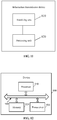
- FIG. 10 is a schematic block diagram of a device for transmitting information 700 according to an embodiment of the present disclosure.
- the device 700 includes a processing unit 710 and a sending unit 720.
- the processing unit 710 is configured to acquire first signals and second signals, the first signals being reference signals and the second signals being data signals or control signals.
- the sending unit 720 is configured to transmit the first signals via a first symbol, with a first subcarrier spacing, of a first time-frequency region and transmit the second signals via a second symbol, with a second subcarrier spacing, of the first time-frequency region.
- the first subcarrier spacing is different from the second subcarrier spacing.
- a size of the first time-frequency region is a size of a minimum time-frequency scheduling unit of data signals.
- the first signals are configured for a receiver to demodulate the second signals.
- the processing unit 710 is further configured to acquire third signals and fourth signals, the third signals being reference signals and the fourth signals being data signals or control signals.
- the sending unit 720 is further configured to transmit the first signals via the first symbol, with the first subcarrier spacing, of the first time-frequency region over a first cell, transmit the second signals via the second symbol, with the second subcarrier spacing, of the first time-frequency region over the first cell, transmit the third signals via a third symbol, with the first subcarrier spacing, of a second time-frequency region over a second cell and transmit the fourth signals via a fourth symbol, with a third subcarrier spacing, of the second time-frequency domain over the second cell.
- the second subcarrier spacing is different from the third subcarrier spacing and the first cell is different from the second cell.
- the first time-frequency region and the second time-frequency region have a same time domain, have a same frequency domain, or have adjacent frequency domains.
- a size of the second time-frequency region is a size of a minimum time-frequency scheduling unit of data signals.
- the processing unit 710 is further configured to acquire fifth signals and sixth signals, the fifth signals being reference signals and the sixth signals being data signals or control signals.
- the sending unit 720 is further configured to transmit the first signals via the first symbol, with the first subcarrier spacing, of the first time-frequency region over the first cell, transmit the second signals via the second symbol, with the second subcarrier spacing, of the first time-frequency region over the first cell, transmit the fifth signals via a fifth symbol, with the first subcarrier spacing, of a third time-frequency region over the first cell and transmit the sixth signals via a sixth symbol, with a fourth subcarrier spacing, of the third time-frequency region over the first cell.
- the second subcarrier spacing is different from the fourth subcarrier spacing.
- the first time-frequency region and the third time-frequency region have a same time domain and different frequency domains.
- a size of the third time-frequency region is a size of a minimum time-frequency scheduling unit of data signals.
- the subcarrier spacing for the data signals is different from the subcarrier spacing for the control signals.
- the processing unit 710 is further configured to acquire ninth signals, the ninth signals being data signals or control signals.
- the sending unit is further configured to send the ninth signals through the first subcarrier spacing on the first symbol in the first time-frequency region.
- the device 700 may correspond to the sender in the abovementioned method embodiment, may implement corresponding operations of the sender and will not be elaborated herein for simplicity.
- FIG. 11 is a schematic block diagram of a device for transmitting information 800 according to an embodiment of the present disclosure. As illustrated in FIG. 11 , the device 800 includes a receiving unit 810 and a processing unit 820.
- the receiving unit 810 is configured for a receiver to receive first signals via a first symbol, with a first subcarrier spacing, of a first time-frequency region, the first signals being reference signals, and receive second signals via a second symbol, with a second subcarrier spacing, of the first time-frequency region.
- the second signals are data signals or control signals.
- the processing unit 820 is configured to process the first signals and the second signals.
- the first subcarrier spacing is different from the second subcarrier spacing.
- a size of the first time-frequency region is a size of a minimum time-frequency scheduling unit of data signals or control signals.
- processing unit 820 is further configured to use the first signals to demodulate the second signals.
- the sending unit 810 is further configured to receive the first signals via the first symbol, with the first subcarrier spacing, of the first time-frequency region over a first cell, receive the second signals via the second symbol, with the second subcarrier spacing, of the first time-frequency region over the first cell, receive third signals via a third symbol, with the first subcarrier spacing, of a second time-frequency region over a second cell, the third signals being reference signals, and receive fourth signals via a fourth symbol, with a third subcarrier spacing, of the second time-frequency region over the second cell.
- the fourth signals are data signals or control signals.
- the processing unit 820 is configured to process the third signals and the fourth signals.
- the second subcarrier spacing is different from the third subcarrier spacing and the first cell is different from the second cell.
- the first time-frequency region and the second time-frequency region have a same time domain, have a same frequency domain, or have adjacent frequency domains.
- a size of the second time-frequency region is a size of a minimum time-frequency scheduling unit of data signals.
- the receiving unit 810 is further configured to receive the first signals via the first symbol, with the first subcarrier spacing, of the first time-frequency region over a first cell, receive the second signals via the second symbol, with the second subcarrier spacing, of the first time-frequency region over the first cell, receive fifth signals via a fifth symbol, with the first subcarrier spacing, of a third time-frequency region.
- the fifth signals are reference signals.
- the receiving unit 810 is further configured to receive sixth signals via a sixth symbol, with a fourth subcarrier spacing, of the third time-frequency region over the first cell.
- the sixth signals are data signals or control signals.
- the processing unit 820 is further configured to process the fifth signals and the sixth signals.
- the second subcarrier spacing is different from the fourth subcarrier spacing.
- the first time-frequency region and the third time-frequency region have a same time domain and different frequency domains.
- a size of the third time-frequency region is a size of a minimum time-frequency scheduling unit of data signals or control signals.
- the device 800 may correspond to the receiver in the abovementioned method embodiment, may implement corresponding operations of the receiver and will not be elaborated herein for simplicity.
- FIG. 12 is a schematic block diagram of a device 900 according to an embodiment of the present disclosure.
- the device 900 includes a processor 910, a memory 920 and a transceiver 930.
- the memory 920 is configured to store a program instruction.
- the processor 910 may call the program instruction stored in the memory 920.
- the transceiver 930 is configured for external communication.
- the device 900 further includes a bus system 940 interconnecting the processor 910, the memory 920 and the transceiver 930.
- the device 900 may correspond to the sender in the abovementioned method embodiment and is configured to realize corresponding functions of the sender or may correspond to the receiver in the abovementioned method embodiment and is configured to realize corresponding functions of the receiver.
- the processor 910 is configured to call the instruction stored in the memory 920 to execute the following operations:
- the first subcarrier spacing is different from the second subcarrier spacing, and a size of the first time-frequency region is a size of a minimum time-frequency scheduling unit of data signals.
- the first signals are configured for a receiver to demodulate the second signals.
- the processor 910 is configured to call the instruction stored in the memory 920 to execute the following operations: transmitting, by using the transceiver 930, the first signals via the first symbol, with the first subcarrier spacing, of the first time-frequency region over a first cell; transmitting, by using the transceiver 930, the second signals via the second symbol, with the second subcarrier spacing, of the first time-frequency region, including: transmitting second signals, by using a first sender, the second signals via the second symbol, with the second subcarrier spacing, of the first time-frequency region; transmitting, by using the transceiver 930, third signals via a third symbol, with the first subcarrier spacing, of a second time-frequency region, the third signals being reference signals; and transmitting, by using the transceiver 930, fourth signals via fourth symbol, with a third subcarrier spacing, of the second time-frequency region.
- the fourth signals are data signals or control signals.
- the second subcarrier spacing is different from the third subcarrier spacing.
- the first cell is different from the second cell.
- the first time-frequency region and the second time-frequency region have a same time domain and different frequency domains.
- a size of the second time-frequency region is a size of a minimum time-frequency scheduling unit of data signals.
- the processor 910 is configured to call the instruction stored in the memory 920 to execute the following operations: transmitting, by using the transceiver 930, the first signals via the first symbol, with a first subcarrier spacing, of the first time-frequency region over a first cell; transmitting, by using the transceiver 930, the second signals via the second symbol, with the second subcarrier spacing, of the first time-frequency region; transmitting, by using the transceiver 930, fifth signals via a fifth symbol, with the first subcarrier spacing, of a third time-frequency region over the first cell, the fifth signals being reference signals; and transmitting, by using the transceiver 930, sixth signals via a sixth symbol, with a fourth subcarrier spacing, of the third time-frequency region.
- the sixth signals are data signals or control signals.
- the second subcarrier spacing is different from the third subcarrier spacing.
- the first time-frequency region and the third time-frequency region have a same time domain and different frequency domains.
- a size of the third time-frequency region is a size of a minimum time-frequency scheduling unit of data signals.
- the subcarrier spacing for the data signals is different from the subcarrier spacing for the control signals.
- the processor 910 is configured to call the instruction stored in the memory 920 to execute the following operation: transmitting, by using the transceiver 930, ninth signals via the first symbol, with the first subcarrier spacing, of the first time-frequency region, the ninth signals being data signals or control signals.
- the ninth signals and the first signals are arranged alternately on the frequency domain.
- the device 900 is the receiver as an example.
- the processor 910 is configured to call the instruction stored in the memory 920 to execute the following operations: receiving, by using the transceiver 930, first signals via a first symbol, with a first subcarrier spacing, of a first time-frequency region, the first signals being reference signals; and receiving, by using the transceiver 930, second signals via a second symbol, with a second subcarrier spacing, of the first time-frequency region.
- the second signals are data signals or control signals.
- the first subcarrier spacing is different from the second subcarrier spacing.
- a size of the first time-frequency region is a size of a minimum time-frequency scheduling unit of data signals or control signals.
- the processor 910 is configured to call the instruction stored in the memory 920 to execute the following operation: demodulating, by the receiver, the second signals by using the first signals.
- the processor 910 is configured to call the instruction stored in the memory 920 to execute the following operations: receiving, by using the transceiver 930, the first signals via the first symbol, with the first subcarrier spacing, of the first time-frequency region over a first cell; receiving, by using the transceiver 930, the second signals via the second symbol, with the second subcarrier spacing, of the first time-frequency region over the first cell; receiving, by using the transceiver 930, third signals via a third symbol, with the first subcarrier spacing, of a second time-frequency region over a second cell, the third signals being reference signals; and receiving, by using the transceiver 930, fourth signals via a fourth symbol, with a third subcarrier spacing, of the second time-frequency region over the second cell.
- the fourth signals are data signals or control signals.
- the second subcarrier spacing is different from the third subcarrier spacing.
- the first cell is different from the second cell.
- the first time-frequency region and the second time-frequency region have a same time domain, have a same frequency domain, or have adjacent frequency domains.
- a size of the second time-frequency region is a size of a minimum time-frequency scheduling unit of data signals or control signals.
- the processor 910 is configured to call the instruction stored in the memory 920 to execute the following operations: receiving, by using the transceiver 930, the first signals via the first symbol, with the first subcarrier spacing, of the first time-frequency region over a first cell; receiving, by using the transceiver 930, the second signals via the second symbol, with the second subcarrier spacing, of the first time-frequency region over the first cell; receiving, by using the transceiver 930, fifth signals via a fifth symbol, with the first subcarrier spacing, of a third time-frequency region over the first cell, the fifth signals being reference signals; and receiving, by using the transceiver 930, sixth signals via a sixth symbol, with a fourth subcarrier spacing, of the third time-frequency region over the first cell.
- the sixth signals are data signals or control signals.
- the second subcarrier spacing is different from the third subcarrier spacing.
- the first time-frequency region and the third time-frequency region have a same time domain and different frequency domains.
- a size of the third time-frequency region is a size of a minimum time-frequency scheduling unit of data signals or control signals.
- the disclosed system, device and method may be implemented in another manner.
- the device embodiment described above is only schematic, and for example, division of the units is only logic function division, and other division manners may be adopted during practical implementation.
- multiple units or components may be combined or integrated into another system, or some characteristics may be neglected or not executed.
- coupling or direct coupling or communication connection between each displayed or discussed component may be indirect coupling or communication connection, implemented through some interfaces, of the device or the units, and may be electrical and mechanical or adopt other forms.
- the units described as separate parts may or may not be physically separated, and parts displayed as units may or may not be physical units, and namely may be located in the same place, or may also be distributed to multiple network units. Part or all of the units may be selected to achieve the purpose of the solutions of the embodiments according to a practical requirement.
- each functional unit in each embodiment of the present disclosure may be integrated into a processing unit, each unit may also physically exist independently, and two or more than two units may also be integrated into a unit.
- the function may also be stored in a computer-readable storage medium.
- the technical solutions of the present disclosure substantially or parts making contributions to the conventional art or part of the technical solutions may be embodied in form of software product, and the computer software product is stored in a storage medium, including a plurality of instructions configured to enable a piece of computer equipment (which may be a personal computer, a server, network equipment or the like) to execute all or part of the acts of the method in each embodiment of the present disclosure.
- the abovementioned storage medium includes: various media capable of storing program codes such as a U disk, a mobile hard disk, a Read-Only Memory (ROM), a Random Access Memory (RAM), a magnetic disk or an optical disk.
Landscapes
- Engineering & Computer Science (AREA)
- Signal Processing (AREA)
- Computer Networks & Wireless Communication (AREA)
- Power Engineering (AREA)
- Quality & Reliability (AREA)
- Mobile Radio Communication Systems (AREA)
Abstract
Description
- The present disclosure relates to the field of communication, and more particularly to a method and device for transmitting information.
- With development of networks, service requirements keep increasing and service requirement types also keep increasing. In an existing network standard communication protocol, a uniform parameter set is adopted for data transmission of a network device and a terminal device. For example, the communication protocol specifies a parameter set in a Long Term Evolution (LTE) system as follows: a radio frame is 10ms, a radio frame includes 10 subframes, a subframe includes two time slots, a time slot includes 7 symbols, 12 continuous subcarriers on frequency and a time slot on a time domain form a Resource Block (RB), a spacing between every two subcarriers is 15k, a subcarrier on a frequency domain and a symbol on the time domain are called a Resource Element (RE) and the like. With service diversification, adoption of a specific parameter set for data transmission may limit transmission of data of different types and further result in relatively poor communication performance.
- Embodiments of the present disclosure provide a method and device for transmitting information. Different subcarrier spacings may be adopted for transmission of reference signals and data, adoption of reference signals corresponding to the same subcarrier spacing for data of different subcarrier spacings may be supported, interference between reference signals may be suppressed, and channel estimation complexity may be reduced, so that communication performance is improved.
- In a first aspect, there is provided a method for transmitting information, which may include that:
- a first sender transmit first signals via a first symbol, with a first subcarrier spacing, of a first time-frequency region, the first signals being reference signals; and
- the first sender transmit second signals via a second symbol, with a second subcarrier spacing, of the first time-frequency region, the second signals being data signals or control signals, wherein
- the first subcarrier spacing may be different from the second subcarrier spacing, and a size of the first time-frequency region may be a size of a minimum time-frequency scheduling unit of data signals.
- In such a manner, in the embodiments of the present disclosure, a size of the subcarrier spacing of the data signals or the control signals is different from the subcarrier spacing corresponding to the reference signals, so that data and the reference signals may be independently optimized respectively.
- In a possible implementation, the first signals may be configured for a receiver to demodulate the second signals.
- In a possible implementation, the operation that the first sender transmits the first signals via the first symbol, with the first subcarrier spacing, of the first time-frequency region may include that: the first sender transmits the first signals via the first symbol, with the first subcarrier spacing, of the first time-frequency region over a first cell;
the operation that the first sender transmits the second signals via the second symbol, with the second subcarrier spacing, of the first time-frequency region may include that: the first sender transmits the second signals via the second symbol, with the second subcarrier spacing, of the first time-frequency region over the first cell; and
the information transmission method may further include that: the first sender transmits third signals via a third symbol, with the first subcarrier spacing, of a second time-frequency region over a second cell, the third signals being reference signals, and the first sender transmits fourth signals via a fourth symbol, with a third subcarrier spacing, of the second time-frequency region over the second cell, the fourth signals being data signals or control signals,
wherein the second subcarrier spacing may be different from the third subcarrier spacing, and the first cell may be different from the second cell;
the first time-frequency region and the second time-frequency region may have a same time domain, have a same frequency domain, or have adjacent frequency domains; and a size of the second time-frequency region may be a size of a minimum time-frequency scheduling unit of data signals. - In such a manner, even though different subcarrier spacings are adopted for data signals or control signals of two adjacent cells, the same subcarrier spacing may also be adopted for their reference signals, so that an orthogonal or low correlation design may be adopted to avoid serious inter-subcarrier interference between reference signals for which different subcarrier spacings are adopted on adjacent or the same frequency band, and channel estimation performance is ensured.
- In a possible implementation, the operation that the first sender transmits the first signals via the first symbol, with the first subcarrier spacing, of the first time-frequency region may include that: the first sender transmits the first signals via the first symbol, with the first subcarrier spacing, of the first time-frequency region over a first cell;
the operation that the first sender transmits the second signals via the second symbol, with the second subcarrier spacing, of the first time-frequency region may include that: the first sender transmits the second signals via the second symbol, with the second subcarrier spacing, of the first time-frequency region over the first cell and
the information transmission method may further include that: - the first sender transmits fifth signals via a fifth symbol, with the first subcarrier spacing, of a third time-frequency region over the first cell, the fifth signals being reference signals, and
- the first sender transmits sixth signals via a six symbol, with a fourth subcarrier spacing, of the third time-frequency region over the first cell, the sixth signals being data signals or control signals,
- wherein the second subcarrier spacing may be different from the fourth subcarrier spacing;
- the first time-frequency region and the third time-frequency region may have a same time domain and different frequency domains; and a size of the third time-frequency region may be a size of a minimum time-frequency scheduling unit of data signals.
- In such a manner, even though different subcarrier spacings are adopted for data signals or control signals in different time-frequency regions of the same cell, the same subcarrier spacing is also adopted for their reference signals, so that the orthogonal or low correlation design may be adopted to avoid serious inter-subcarrier interference between reference signals, for which different subcarrier spacings are adopted, in adjacent time-frequency regions of the same cell, and the channel estimation performance is ensured.
- In a possible implementation, the information transmission method may further include that:
- a second sender transmits seventh signals via a seventh symbol, with the first subcarrier spacing, of a fourth time-frequency region, the seventh signals being reference signals; and
- the second sender transmits eighth signals via an eighth symbol, with a fifth subcarrier spacing, of the fourth time-frequency region, the eighth signals being data signals or control signals,
- wherein the first subcarrier spacing may be different from the fifth subcarrier spacing;
- the first time-frequency region and the fourth time-frequency region may have a same time domain; the first time-frequency region and the fourth time-frequency region may have a same time domain, or have a same frequency domain or adjacent frequency domains, and/or the first sender and the second sender may be located in the same cell; and a size of the fourth time-frequency region may be a size of a minimum time-frequency scheduling unit of data signals or control signals.
- In a possible implementation, the data signals and the control signals may correspond to different subcarrier spacings.
- In a possible implementation, the information transmission method may further include that:
ninth signals are transmitted via the first symbol, with the first subcarrier spacing, of the first time-frequency region, the ninth signals being data signals or control signals. - In a possible implementation, the ninth signals and the first signals may be arranged alternately on the frequency domain.
- A second aspect provides a method for transmitting information, which may include that:
- a receiver receives first signals via a first symbol, with a first subcarrier spacing, of a first time-frequency region, the first signals being reference signals; and
- the receiver receives second signals via a second symbol, with a second subcarrier spacing, of the first time-frequency region, the second signals being data signals or control signals, wherein
- the first subcarrier spacing may be different from the second subcarrier spacing, and a size of the first time-frequency region may be a size of a minimum time-frequency scheduling unit of data signals or control signals.
- In a possible implementation, the information transmission method may further include that:
the receiver uses the first signals to demodulate the second signals. - In a possible implementation, the operation that the receiver receives the first signals via the first symbol, with the first subcarrier spacing, of the first time-frequency region may include that: the receiver receives the first signals via the first symbol, with the first subcarrier spacing, of the first time-frequency region over a first cell;
the operation that the receiver receives the second signals via the second symbol, with the second subcarrier spacing, of the first time-frequency region may include that: the receiver receives the second signals via the second symbol, with the second subcarrier spacing, of the first time-frequency region over the first cell; and
the information transmission method may further include that: the receiver receives third signals via a third symbol, with the first subcarrier spacing, of a second time-frequency region over a second cell, the third signals being reference signals, and the receiver receives fourth signals via a fourth symbol, with a third subcarrier spacing, of the second time-frequency region over the second cell, the fourth signals being data signals or control signals,
wherein the second subcarrier spacing may be different from the third subcarrier spacing, and the first cell may be different from the second cell;
the first time-frequency region and the second time-frequency region may have a same time domain, have a same frequency domain, or have adjacent frequency domains; and a size of the second time-frequency region may be a size of a minimum time-frequency scheduling unit of data signals or control signals. - In a possible implementation, the operation that the receiver receives the first signals via the first symbol, with the first subcarrier spacing, of the first time-frequency region may include that: the receiver receives the first signals via the first symbol, with the first subcarrier spacing, of the first time-frequency region over a first cell;
the operation that the receiver receives the second signals via the second symbol, with the second subcarrier spacing, of the first time-frequency region may include that: the receiver receives the second signals via the second symbol, with the second subcarrier spacing, of the first time-frequency region over the first cell; and
the information transmission method may further include that: - the receiver receives fifth signals via a fifth symbol, with the first subcarrier spacing, of a third time-frequency region over the first cell, the fifth signals being reference signals, and
- the receiver receives sixth signals via a sixth symbol, with a fourth subcarrier spacing, of the third time-frequency region over the first cell, the sixth signals being data signals or control signals,
- wherein the second subcarrier spacing may be different from the fourth subcarrier spacing;
- the first time-frequency region and the third time-frequency region may have a same time domain and different frequency domains; and a size of the third time-frequency region may be a size of a minimum time-frequency scheduling unit of data signals or control signals.
- A third aspect provides a device for transmitting information, which is configured to execute the method in the first aspect or any optional implementation of the first aspect. Specifically, the information transmission device includes module units configured to execute the method in the first aspect or any possible implementation of the first aspect.
- A fourth aspect provides a device for transmitting information, which is configured to execute the method in the second aspect or any optional implementation of the second aspect. Specifically, the information transmission device includes module units configured to execute the method in the second aspect or any possible implementation of the second aspect.
- A fifth aspect provides a device for transmitting information, which includes a memory and a processor, wherein the memory is configured to store an instruction, the processor is configured to execute the instruction stored in the memory, and when the processor executes the instruction stored in the memory, such execution enables the processor to execute the method in the first aspect or any optional implementation of the first aspect.
- A sixth aspect provides a device for transmitting information, which includes a memory and a processor, wherein the memory is configured to store an instruction, the processor is configured to execute the instruction stored in the memory, and when the processor executes the instruction stored in the memory, such execution enables the processor to execute the method in the second aspect or any optional implementation of the second aspect.
- A seventh aspect provides a computer storage medium, in which a program code is stored, the program code being configured to indicate the method in the first aspect or any optional implementation of the first aspect to be executed.
- An eighth aspect provides a computer storage medium, in which a program code is stored, the program code being configured to indicate the method in the second aspect or any optional implementation of the second aspect to be executed.
- In order to describe the technical solutions of the embodiments of the present disclosure more clearly, the drawings required to be used in descriptions about the embodiments or a conventional art will be simply introduced below. It is apparent that the drawings described below are only some embodiments of the present disclosure. Other drawings may further be obtained by those of ordinary skill in the art according to these drawings without creative work.
-
FIG. 1 is a diagram of an application scenario according to an embodiment of the present disclosure. -
FIG. 2 is a schematic flowchart of a method for transmitting information according to an embodiment of the present disclosure. -
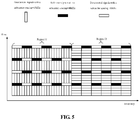
FIG. 3 is a diagram showing usage of a time-frequency resource according to an embodiment of the present disclosure. -
FIG. 4 is a schematic flowchart of a method for transmitting information according to an embodiment of the present disclosure. -
FIG. 5 is a diagram showing usage of a time-frequency resource according to an embodiment of the present disclosure. -
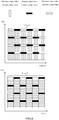
FIG. 6 is a diagram showing usage of a time-frequency resource according to an embodiment of the present disclosure. -
FIG. 7 is a schematic flowchart of a method for transmitting information according to an embodiment of the present disclosure. -
FIG. 8 is a schematic flowchart of a method for transmitting information according to an embodiment of the present disclosure. -
FIG. 9 is a schematic flowchart of a method for transmitting information according to an embodiment of the present disclosure. -
FIG. 10 is a schematic flowchart of a device for transmitting information according to an embodiment of the present disclosure. -
FIG. 11 is a schematic flowchart of a device for transmitting information according to an embodiment of the present disclosure. -
FIG. 12 is a schematic flowchart of a device for transmitting information according to an embodiment of the present disclosure. - The technical solutions in the embodiments of the present disclosure will be clearly and completely described below in conjunction with the drawings in the embodiments of the present disclosure. It is apparent that the described embodiments are not all embodiments but part of embodiments of the present disclosure. All other embodiments obtained by those of ordinary skill in the art on the basis of the embodiments in the present disclosure without creative work shall fall within the scope of protection of the present disclosure.
- It is to be understood that the technical solutions of the embodiments of the present disclosure may be applied to various communication systems, for example, a present communication system of a Global System of Mobile Communication (GSM), a Code Division Multiple Access (CDMA) system, a Wideband Code Division Multiple Access (WCDMA) system, a General Packet Radio Service (GPRS), an LTE system, a Universal Mobile Telecommunication System (UMTS) and the like, and are particularly applied to a future 5th-Generation (5G) system.
- In the embodiments of the present disclosure, a terminal device may also refer to User Equipment (UE), an access terminal, a user unit, a user station, a mobile station, a mobile radio station, a remote station, a remote terminal, a mobile device, a user terminal, a terminal, a wireless communication device, a user agent or a user device. The access terminal may be a cell phone, a cordless phone, a Session Initiation Protocol (SIP) phone, a Wireless Local Loop (WLL) station, a Personal Digital Assistant (PDA), a handheld device with a wireless communication function, a computing device, another processing device connected to a wireless modem, a vehicle-mounted device, a wearable device, a terminal device in a future 5G network, a terminal device in a future evolved Public Land Mobile Network (PLMN) or the like.
- In the embodiments of the present disclosure, a network device may be a device configured to communicate with the terminal device. The network device may be a Base Transceiver Station (BTS) in the GSM or the CDMA, may also be a NodeB (NB) in the WCDMA system, may also be an Evolutional Node B (eNB or eNodeB) in the LTE system and may further be a wireless controller in a Cloud Radio Access Network (CRAN) scenario. Or the network device may be a relay station, an access point, a vehicle-mounted device, a wearable device, a network device in the future 5G network, a network device in the future evolved PLMN or the like.
FIG. 1 is a schematic diagram of an application scenario according to the present disclosure. Acommunication system 100 inFIG. 1 may include anetwork device 110 and aterminal device 120. Thenetwork device 110 is configured to provide communication service for theterminal device 120 for access to a core network. Theterminal device 120 searches a synchronization signal, broadcast signal and the like sent by thenetwork device 110 to access the network, thereby communicating with the network. Arrows illustrated inFIG. 1 may represent uplink/downlink transmission implemented through a cellular link between theterminal device 120 and thenetwork device 110. In the embodiments of the present disclosure, thenetwork device 110 may be a sender or a receiver and the terminal device may be a sender or a receiver. - In the embodiments of the present disclosure, a subcarrier spacing and symbol length adopted for signal transmission form an inversely proportional relationship T=1/Δf, where T is the symbol length and Δf is the subcarrier spacing. For example, if the subcarrier spacing is 15kHZ, the symbol length is 66.67µs. The subcarrier spacing mentioned in the embodiments of the present disclosure may be, but not limited to, 15kHZ, 30kHZ and 60kHZ.
-
FIG. 2 is a schematic flowchart of a method for transmittinginformation 200 according to an embodiment of the present disclosure.FIG. 2 illustrates acts or operations of the information transmission method. However, these acts or operations are only examples. Other operations or transformations of each operation inFIG. 2 may also be executed in the embodiment of the disclosure. - In 210, a first sender transmits first signals to a receiver via a first symbol, with a first subcarrier spacing, of a first time-frequency region. Here, the first signals are reference signals.
- In 220, the first sender transmits second signals to the receiver via a second symbol, with a second subcarrier spacing, of the first time-frequency region. Here, the second signals are reference signals. The first subcarrier spacing is different from the second subcarrier spacing. A size of the first time-frequency region is a size of a minimum time-frequency scheduling unit of data signals. Optionally, the first signals may be configured for the receiver to demodulate the second signals.
- For example, in a time-frequency region illustrated in
FIG. 3 , a subcarrier spacing 60kHZ may be used to send reference signals on asymbol # 1, asymbol # 3, asymbol # 5 and asymbol # 7 and a subcarrier spacing 15kHZ may be used to send data signals or control signals on asymbol # 2, asymbol # 4, asymbol # 6 and asymbol # 8. - It is to be understood that the minimum time-frequency scheduling unit mentioned in the embodiment of the present disclosure is a minimum time-frequency scheduling unit (for example, a subframe) of data, i.e., fewest time-frequency resources occupied by data sent by a user at one time. Data signals, reference signals and control signaling may be transmitted in the time-frequency scheduling unit.
- Correspondingly,
FIG. 4 is a schematic flowchart of a method for transmittinginformation 300 executed by a receiver according to an embodiment of the disclosure. It is to be understood thatFIG. 4 illustrates acts or operations of the information transmission method. However, these acts or operations are only examples. Other operations or transformations of each operation inFIG. 3 may also be executed in the embodiment of the disclosure. - In 310, the receiver receives first signals via a first symbol, with a first subcarrier spacing, of a first time-frequency region. Here, the first signals are reference signals.
- The receiver receives second signals via a second symbol, with a second subcarrier spacing, of the first time-frequency region. Here, the second signals are reference signals. The first subcarrier spacing is different from the second subcarrier spacing. A size of the first time-frequency region is a size of a minimum time-frequency scheduling unit of data signals or control signals.
- Optionally, the receiver, after receiving the first signals and/or the second signals, may perform subsequent processing, for example, using the first signals to demodulate the second signals. There are no limits made to specific processing operations in the embodiment of the present disclosure.
- The time-frequency scheduling unit mentioned in the embodiment of the present disclosure may be divided into a time-domain scheduling unit in a time-domain dimension and a frequency-domain unit in a frequency-domain dimension.
- For example, for data signals, the time-domain scheduling unit may be a time slot, a subframe or a Transmission Time Interval (TTI). For control signals, the time-domain scheduling unit may be a symbol. For data signals, the frequency-domain scheduling unit may be a subcarrier. For control signals, the frequency-domain scheduling unit may be a Resource Element Group (REG).
- The time-frequency scheduling unit mentioned in the embodiment of the present disclosure may also be limited in both time/frequency-domain dimensions. For example, for data signals, the minimum time-frequency scheduling unit may be an RB. An RB may be 1 subframe xl2 subcarriers.
- It is to be understood that the abovementioned division manner for the time-domain scheduling unit, frequency-domain scheduling unit or time/frequency-domain scheduling unit is only a specific implementation of the embodiment of the present disclosure. Another division manner may also be adopted in the embodiment of the present disclosure.
- In such a manner, in the embodiment of the present disclosure, a size of a minimum time-frequency scheduling unit of data signals or control signals is different from the subcarrier spacing corresponding to the reference signals, so that a flexible subcarrier spacing design is achieved.
- Specifically, since the subcarrier spacing corresponding to the reference signals may be different from the subcarrier spacing corresponding to the data signals or the control signals, the subcarrier spacing corresponding to the reference signals may be increased at the same time of maintaining the subcarrier spacing corresponding to the data signals or the control signals to accordingly shorten a channel estimation delay. For example, a symbol length of a reference signal corresponding to a 60kHz subcarrier spacing is 1/4 of a symbol length of a reference signal corresponding to a 15kHz subcarrier spacing, and a receiver may start channel estimation 50µs earlier. For a service focused on low delay performance, this is an apparent advantage. Even for an ordinary Transmission Control Protocol (TCP) service, a throughput may also indirectly be improved. A relatively long subcarrier spacing such as 60kHz mainly has the shortcomings that a Cyclic Prefix (CP) overhead is excessively high, a relatively long CP is required to be inserted in a macro cell coverage scenario and adoption of a relatively long subcarrier spacing for all data transmission may bring great loss to spectrum efficiency. However, a reference signal only occupies a small number of symbols, so that spectrum efficiency loss will be not so huge, but a quite obvious gain is brought by delay shortening.
- Optionally, in the embodiment of the present disclosure, for different terminals, or different cells or different frequency bands, subcarrier spacings for corresponding reference signals may be the same but subcarrier spacings for corresponding data signals or control signals may be different.
- For example, as illustrated in
FIG. 5 ,regions # 1 and #2 correspond to the same time domain and adjacent frequency domains, subcarrier spacings of symbols configured to send reference signals in theregion # 1 and theregion # 2 are the same and subcarrier spacings of symbols where non-reference signals in theregion # 1 and theregion # 2 are located are different. - For example, as illustrated in
FIG. 6 ,regions # 1 and #2 correspond to the same time domain and frequency domain but correspond to different cells or terminal devices, subcarrier spacings of symbols configured to send reference signals in theregion # 1 and theregion # 2 are the same and subcarrier spacings of symbols where non-reference signals in theregion # 1 and theregion # 2 are different. - Optionally, time-frequency shapes of resource particles occupied by reference signals with the same subcarrier spacing in the embodiment of the present disclosure are the same.
- In such a manner, in the embodiment of the present disclosure, for multiple terminals, or multiple cells or multiple frequency bands adopting different subcarrier spacings for data transmission, only one reference signal pattern type may be designed, and a transmitter and a receiver may implement a uniform reference signal sending and channel estimation algorithm, so that complexity of standards and devices is greatly reduced, corresponding control signaling notifying a reference signal type is also greatly simplified, and an overhead is greatly reduced.
- Optionally, an orthogonal or low correlation sequence may be adopted for reference signals with the same subcarrier spacing.
- For example, subcarrier spacings of data signals (or control signals) sent by a network device by using two cells on symbols occupied by non-reference signals are different, subcarrier spacings of reference signals on the same antenna port are the same and time-frequency shapes of resource particles occupied by the reference signals are the same. Optionally, an orthogonal or low correlation sequence is adopted for the reference signals of the two cells on the same antenna port.
- It is to be understood that a terminal device corresponding to the time-frequency region mentioned in the embodiment of the present disclosure refers to a terminal device using the time-frequency resource to send signals. A cell corresponding to the time-frequency region mentioned in the embodiment of the present disclosure refers to a cell adopted when information is sent in the time-frequency region, may be applied to uplink and may also be applied to downlink.
- For convenient understanding, detailed descriptions will be made below in conjunction with
FIG. 7 to FIG. 9 . - It is to be understood that, in various embodiments of the present disclosure, a magnitude of a sequence number of each process does not mean an execution sequence and the execution sequence of each process should be determined by its function and an internal logic and should not form any limit to an implementation process of the embodiments of the present disclosure.
- It is also to be understood that there is a corresponding receiving operation of the receiver for each sending operation of the sender in the embodiment of the present disclosure. Elaborations are omitted herein for simplicity.
-
FIG. 7 is a schematic flowchart of a method for transmittinginformation 400 according to an embodiment of the present disclosure. A first time-frequency region and second time-frequency region illustrated inFIG. 7 have a same time domain, have a same frequency domain, or have adjacent frequency domains. Sizes of the first and second time-frequency regions are a size of a minimum time-frequency scheduling unit of data signals. A second subcarrier spacing is different from a third subcarrier spacing. - Optionally, the method may be applied to downlink transmission. In such case, a first sender may be a network device and a receiver may be a terminal device. Receivers corresponding to different time-frequency regions may be the same terminal device and may also be different terminal devices.
- Optionally, the method may also be applied to uplink transmission. In such case, the sender is a terminal device and the receiver is a network device. Receivers corresponding to different time-frequency regions may be the same network device and may also be different network devices.
- In 410, the first sender transmits first signals via a first symbol, with a first subcarrier spacing, of a first time-frequency region over a first cell. Here, the first signals are reference signals.
- Correspondingly, the receiver receives the first signals via the first symbol, with the first subcarrier spacing, of the first time-frequency region over the first cell.
- In 420, the first sender transmits second signals via a second symbol, with a second subcarrier spacing, of the first time-frequency region over the first cell. The second signals are data signals or control signals.
- Correspondingly, the receiver receives the second signals via the second symbol, with the second subcarrier spacing, of the first time-frequency region over the first cell.
- In 430, the first sender transmits third signals via a third symbol, with the first subcarrier spacing, of a second time-frequency region over a second cell. The third signals are reference signals.
- Correspondingly, the receiver receives the third signals via the third symbol, with the first subcarrier spacing, of the second time-frequency region over the second cell.
- In 440, the first sender transmits fourth signals via a fourth symbol, with a third subcarrier spacing, of the second time-frequency region over the second cell. The fourth signals are data signals or control signals.
- Correspondingly, the receiver receives the fourth signals via the fourth symbol, with the third subcarrier spacing, of the second time-frequency region over the second cell.
- In such a manner, in the embodiment of the present disclosure, even though different subcarrier spacings are adopted for data signals or control signals of the same frequency band or adjacent frequency bands, the same subcarrier spacing may also be adopted for reference signals, so that an orthogonal or low correlation design may be adopted to avoid serious inter-subcarrier interference probably formed between reference signals for which different subcarrier spacings are adopted on adjacent or the same frequency band may be avoided, and channel estimation performance is ensured.
-
FIG. 8 is a schematic flowchart of a method for transmittinginformation 500 according to an embodiment of the present disclosure. A first time-frequency region and third time-frequency region illustrated inFIG. 8 have a same time domain and different frequency domains. Sizes of the first and third time-frequency regions are a size of a minimum time-frequency scheduling unit of data signals. A second subcarrier spacing is different from a fourth subcarrier spacing. - Optionally, the method may be applied to downlink transmission. In such case, a first sender may be a network device and a receiver may be a terminal device. Receivers corresponding to different time-frequency regions may be the same terminal device and may also be different terminal devices.
- Of course, the method may also be applied to uplink transmission. In such case, the sender is a terminal device and the receiver may be a network device.
- In 510, the first sender transmits first signals via a first symbol, with a first subcarrier spacing, of a first time-frequency region over a first cell. Here, the first signals are reference signals.
- Correspondingly, the receiver receives the first signals via the first symbol, with the first subcarrier spacing, of the first time-frequency region over the first cell.
- In 520, the first sender transmits second signals via a second symbol, with a second subcarrier spacing, of the first time-frequency region over the first cell. The second signals are data signals or control signals.
- Correspondingly, the receiver receives the second signals via the second symbol, with the second subcarrier spacing, of the first time-frequency region over the first cell.
- In 530, the first sender transmits fifth signals via a fifth symbol, with the first subcarrier spacing, of a third time-frequency region over the first cell. The fifth signals are reference signals.
- Correspondingly, the receiver receives the fifth signals via the fifth symbol, with the first subcarrier spacing, of the third time-frequency region over the first cell
- In 540, the first sender transmits sixth signals via a six symbol, with a fourth subcarrier spacing, of the third time-frequency region over the first cell. The sixth signals are data signals or control signals. Optionally, the fifth signals are configured for the receiver to demodulate the sixth signals.
- Correspondingly, the receiver receives sixth signals via the sixth symbol, with the fourth subcarrier spacing, of the third time-frequency region over the first cell.
- In such a manner, in the embodiment of the present disclosure, even though different subcarrier spacings are adopted for data signals or control signals of the same cell, the same subcarrier spacing is also adopted for reference signals, so that serious inter-subcarrier interference probably formed between reference signals for which different subcarrier spacings are adopted in the same cell may be avoided, and channel estimation performance is ensured.
-
FIG. 9 is a schematic flowchart of a method for transmittinginformation 600 according to an embodiment of the present disclosure. A first time-frequency region and fourth time-frequency region illustrated inFIG. 9 have a same time domain. The first time-frequency region and the fourth time-frequency region have a same time domain, or have a same frequency domain or adjacent frequency domains. and/or a first sender and a second sender are located in a same cell. Sizes of the first and fourth time-frequency regions are a size of a minimum time-frequency scheduling unit of data signals. A second subcarrier spacing is different from a fifth subcarrier spacing. - Optionally, the method may be applied to uplink transmission. During application to uplink transmission, the first sender and the second sender may be located in the same cell or the first time-frequency region where the first sender sends signals and the fourth time-frequency region where the second sender sends information are the same or adjacent in time and frequency.
- Optionally, the method may be applied to downlink transmission. In such case, the first time-frequency region where the first sender sends signals and the fourth time-frequency region where the second sender sends information are the same or adjacent in time and frequency. In such case, the first sender and the second sender may correspond to different cells.
- In 610, the first sender transmits first signals via a first symbol, with a first subcarrier spacing, of a first time-frequency region. Here, the first signals are reference signals.
- Correspondingly, the receiver receives the first signals via the first symbol, with the first subcarrier spacing, of the first time-frequency region.
- In 620, the first sender transmits second signals via a second symbol, with a second subcarrier spacing, of the first time-frequency region. The second signals are data signals or control signals.
- Correspondingly, the receiver receives the second signals via the second symbol, with the second subcarrier spacing, of the first time-frequency region.
- In 630, the first sender transmits seventh signals via a seventh symbol, with the first subcarrier spacing, of a fourth time-frequency region, the seventh signals being reference signals.
- Correspondingly, the receiver receives the seventh signals via the seventh symbol, with the first subcarrier spacing, of the fourth time-frequency region.
- In 640, the second sender transmits eighth signals via an eighth symbol, with a fifth subcarrier spacing, of the fourth time-frequency region, the eighth signals being data signals or control signals. Optionally, the seventh signals are configured for the receiver to demodulate the eighth signals.
- Correspondingly, the receiver receives the eighth signals via the eighth symbol, with the fifth subcarrier spacing, of the fourth time-frequency region.
- Optionally, in the embodiment of the present disclosure, the data signals or the control signals may also be sent on the symbol sending the reference signals. Optionally, the data signals or the control signals may be arranged alternately with the reference signals.
- For example, in a time-frequency region illustrated in
FIG. 3 , a subcarrier spacing 60kHZ may be used to send data signals or control signals on asymbol # 1, asymbol # 3, asymbol # 5 and asymbol # 7. The sent data signals or control signals may be arranged alternately with the reference signals on a frequency domain. - It is to be understood that alternately arrangement mentioned in the embodiment of the present disclosure does not always refer to one-to-one sequential alternately arrangement and may be determined according to a magnitude relationship between the signal number of the reference signals and the signal number of the data signals (or the control signals). For example, on a certain symbol, reference signals on a first subcarrier, data or control signals are sent on a second, third and fourth subcarriers, reference signals are sent on a fifth subcarrier, data or control signals are sent on a sixth, seventh and eighth subcarriers, and so on.
-
FIG. 10 is a schematic block diagram of a device for transmitting information 700 according to an embodiment of the present disclosure. As illustrated inFIG. 10 , the device 700 includes aprocessing unit 710 and a sendingunit 720. Theprocessing unit 710 is configured to acquire first signals and second signals, the first signals being reference signals and the second signals being data signals or control signals. The sendingunit 720 is configured to transmit the first signals via a first symbol, with a first subcarrier spacing, of a first time-frequency region and transmit the second signals via a second symbol, with a second subcarrier spacing, of the first time-frequency region. The first subcarrier spacing is different from the second subcarrier spacing. A size of the first time-frequency region is a size of a minimum time-frequency scheduling unit of data signals. - Optionally, the first signals are configured for a receiver to demodulate the second signals.
- Optionally, the
processing unit 710 is further configured to acquire third signals and fourth signals, the third signals being reference signals and the fourth signals being data signals or control signals. The sendingunit 720 is further configured to transmit the first signals via the first symbol, with the first subcarrier spacing, of the first time-frequency region over a first cell, transmit the second signals via the second symbol, with the second subcarrier spacing, of the first time-frequency region over the first cell, transmit the third signals via a third symbol, with the first subcarrier spacing, of a second time-frequency region over a second cell and transmit the fourth signals via a fourth symbol, with a third subcarrier spacing, of the second time-frequency domain over the second cell. The second subcarrier spacing is different from the third subcarrier spacing and the first cell is different from the second cell. The first time-frequency region and the second time-frequency region have a same time domain, have a same frequency domain, or have adjacent frequency domains. A size of the second time-frequency region is a size of a minimum time-frequency scheduling unit of data signals. - Optionally, the
processing unit 710 is further configured to acquire fifth signals and sixth signals, the fifth signals being reference signals and the sixth signals being data signals or control signals. The sendingunit 720 is further configured to transmit the first signals via the first symbol, with the first subcarrier spacing, of the first time-frequency region over the first cell, transmit the second signals via the second symbol, with the second subcarrier spacing, of the first time-frequency region over the first cell, transmit the fifth signals via a fifth symbol, with the first subcarrier spacing, of a third time-frequency region over the first cell and transmit the sixth signals via a sixth symbol, with a fourth subcarrier spacing, of the third time-frequency region over the first cell. The second subcarrier spacing is different from the fourth subcarrier spacing. The first time-frequency region and the third time-frequency region have a same time domain and different frequency domains. A size of the third time-frequency region is a size of a minimum time-frequency scheduling unit of data signals. - Optionally, the subcarrier spacing for the data signals is different from the subcarrier spacing for the control signals.
- Optionally, the
processing unit 710 is further configured to acquire ninth signals, the ninth signals being data signals or control signals. The sending unit is further configured to send the ninth signals through the first subcarrier spacing on the first symbol in the first time-frequency region. - The device 700 may correspond to the sender in the abovementioned method embodiment, may implement corresponding operations of the sender and will not be elaborated herein for simplicity.
-
FIG. 11 is a schematic block diagram of a device for transmitting information 800 according to an embodiment of the present disclosure. As illustrated inFIG. 11 , the device 800 includes a receivingunit 810 and aprocessing unit 820. - The receiving
unit 810 is configured for a receiver to receive first signals via a first symbol, with a first subcarrier spacing, of a first time-frequency region, the first signals being reference signals, and receive second signals via a second symbol, with a second subcarrier spacing, of the first time-frequency region. The second signals are data signals or control signals. Theprocessing unit 820 is configured to process the first signals and the second signals. The first subcarrier spacing is different from the second subcarrier spacing. A size of the first time-frequency region is a size of a minimum time-frequency scheduling unit of data signals or control signals. - Optionally, the
processing unit 820 is further configured to use the first signals to demodulate the second signals. - Optionally, the sending
unit 810 is further configured to receive the first signals via the first symbol, with the first subcarrier spacing, of the first time-frequency region over a first cell, receive the second signals via the second symbol, with the second subcarrier spacing, of the first time-frequency region over the first cell, receive third signals via a third symbol, with the first subcarrier spacing, of a second time-frequency region over a second cell, the third signals being reference signals, and receive fourth signals via a fourth symbol, with a third subcarrier spacing, of the second time-frequency region over the second cell. The fourth signals are data signals or control signals. Theprocessing unit 820 is configured to process the third signals and the fourth signals. The second subcarrier spacing is different from the third subcarrier spacing and the first cell is different from the second cell. The first time-frequency region and the second time-frequency region have a same time domain, have a same frequency domain, or have adjacent frequency domains. A size of the second time-frequency region is a size of a minimum time-frequency scheduling unit of data signals. - Optionally, the receiving
unit 810 is further configured to receive the first signals via the first symbol, with the first subcarrier spacing, of the first time-frequency region over a first cell, receive the second signals via the second symbol, with the second subcarrier spacing, of the first time-frequency region over the first cell, receive fifth signals via a fifth symbol, with the first subcarrier spacing, of a third time-frequency region. Here, the fifth signals are reference signals. The receivingunit 810 is further configured to receive sixth signals via a sixth symbol, with a fourth subcarrier spacing, of the third time-frequency region over the first cell. The sixth signals are data signals or control signals. Theprocessing unit 820 is further configured to process the fifth signals and the sixth signals. The second subcarrier spacing is different from the fourth subcarrier spacing. The first time-frequency region and the third time-frequency region have a same time domain and different frequency domains. A size of the third time-frequency region is a size of a minimum time-frequency scheduling unit of data signals or control signals. - The device 800 may correspond to the receiver in the abovementioned method embodiment, may implement corresponding operations of the receiver and will not be elaborated herein for simplicity.
-
FIG. 12 is a schematic block diagram of adevice 900 according to an embodiment of the present disclosure. Thedevice 900 includes aprocessor 910, amemory 920 and atransceiver 930. Thememory 920 is configured to store a program instruction. Theprocessor 910 may call the program instruction stored in thememory 920. Thetransceiver 930 is configured for external communication. Optionally, thedevice 900 further includes abus system 940 interconnecting theprocessor 910, thememory 920 and thetransceiver 930. - Optionally, the
device 900 may correspond to the sender in the abovementioned method embodiment and is configured to realize corresponding functions of the sender or may correspond to the receiver in the abovementioned method embodiment and is configured to realize corresponding functions of the receiver. - Descriptions will be made below at first with the condition that the
device 900 is the sender as an example. - Specifically, the
processor 910 is configured to call the instruction stored in thememory 920 to execute the following operations: - transmitting, by using the
transceiver 930, first signals via a first symbol, with a first subcarrier spacing, of a first time-frequency region, here, the first signals are reference signals; and - transmitting, by using the
transceiver 930, second signals via a second symbol, with a second subcarrier spacing, of the first time-frequency region, here, the second signals are data signals or control signals. - The first subcarrier spacing is different from the second subcarrier spacing, and a size of the first time-frequency region is a size of a minimum time-frequency scheduling unit of data signals.
- Optionally, the first signals are configured for a receiver to demodulate the second signals.
- Optionally, the
processor 910 is configured to call the instruction stored in thememory 920 to execute the following operations: transmitting, by using thetransceiver 930, the first signals via the first symbol, with the first subcarrier spacing, of the first time-frequency region over a first cell; transmitting, by using thetransceiver 930, the second signals via the second symbol, with the second subcarrier spacing, of the first time-frequency region, including: transmitting second signals, by using a first sender, the second signals via the second symbol, with the second subcarrier spacing, of the first time-frequency region; transmitting, by using thetransceiver 930, third signals via a third symbol, with the first subcarrier spacing, of a second time-frequency region, the third signals being reference signals; and transmitting, by using thetransceiver 930, fourth signals via fourth symbol, with a third subcarrier spacing, of the second time-frequency region. The fourth signals are data signals or control signals. The second subcarrier spacing is different from the third subcarrier spacing. The first cell is different from the second cell. The first time-frequency region and the second time-frequency region have a same time domain and different frequency domains. A size of the second time-frequency region is a size of a minimum time-frequency scheduling unit of data signals. - Optionally, the
processor 910 is configured to call the instruction stored in thememory 920 to execute the following operations: transmitting, by using thetransceiver 930, the first signals via the first symbol, with a first subcarrier spacing, of the first time-frequency region over a first cell; transmitting, by using thetransceiver 930, the second signals via the second symbol, with the second subcarrier spacing, of the first time-frequency region; transmitting, by using thetransceiver 930, fifth signals via a fifth symbol, with the first subcarrier spacing, of a third time-frequency region over the first cell, the fifth signals being reference signals; and transmitting, by using thetransceiver 930, sixth signals via a sixth symbol, with a fourth subcarrier spacing, of the third time-frequency region. The sixth signals are data signals or control signals. The second subcarrier spacing is different from the third subcarrier spacing. The first time-frequency region and the third time-frequency region have a same time domain and different frequency domains. A size of the third time-frequency region is a size of a minimum time-frequency scheduling unit of data signals. - Optionally, the subcarrier spacing for the data signals is different from the subcarrier spacing for the control signals.
- Optionally, the
processor 910 is configured to call the instruction stored in thememory 920 to execute the following operation: transmitting, by using thetransceiver 930, ninth signals via the first symbol, with the first subcarrier spacing, of the first time-frequency region, the ninth signals being data signals or control signals. - Optionally, the ninth signals and the first signals are arranged alternately on the frequency domain.
- Descriptions will be made below at first with the condition that the
device 900 is the receiver as an example. - The
processor 910 is configured to call the instruction stored in thememory 920 to execute the following operations: receiving, by using thetransceiver 930, first signals via a first symbol, with a first subcarrier spacing, of a first time-frequency region, the first signals being reference signals; and receiving, by using thetransceiver 930, second signals via a second symbol, with a second subcarrier spacing, of the first time-frequency region. The second signals are data signals or control signals. The first subcarrier spacing is different from the second subcarrier spacing. A size of the first time-frequency region is a size of a minimum time-frequency scheduling unit of data signals or control signals. - Optionally, the
processor 910 is configured to call the instruction stored in thememory 920 to execute the following operation: demodulating, by the receiver, the second signals by using the first signals. - Optionally, the
processor 910 is configured to call the instruction stored in thememory 920 to execute the following operations: receiving, by using thetransceiver 930, the first signals via the first symbol, with the first subcarrier spacing, of the first time-frequency region over a first cell; receiving, by using thetransceiver 930, the second signals via the second symbol, with the second subcarrier spacing, of the first time-frequency region over the first cell; receiving, by using thetransceiver 930, third signals via a third symbol, with the first subcarrier spacing, of a second time-frequency region over a second cell, the third signals being reference signals; and receiving, by using thetransceiver 930, fourth signals via a fourth symbol, with a third subcarrier spacing, of the second time-frequency region over the second cell. The fourth signals are data signals or control signals. The second subcarrier spacing is different from the third subcarrier spacing. The first cell is different from the second cell. The first time-frequency region and the second time-frequency region have a same time domain, have a same frequency domain, or have adjacent frequency domains. A size of the second time-frequency region is a size of a minimum time-frequency scheduling unit of data signals or control signals. - Optionally, the
processor 910 is configured to call the instruction stored in thememory 920 to execute the following operations: receiving, by using thetransceiver 930, the first signals via the first symbol, with the first subcarrier spacing, of the first time-frequency region over a first cell; receiving, by using thetransceiver 930, the second signals via the second symbol, with the second subcarrier spacing, of the first time-frequency region over the first cell; receiving, by using thetransceiver 930, fifth signals via a fifth symbol, with the first subcarrier spacing, of a third time-frequency region over the first cell, the fifth signals being reference signals; and receiving, by using thetransceiver 930, sixth signals via a sixth symbol, with a fourth subcarrier spacing, of the third time-frequency region over the first cell. The sixth signals are data signals or control signals. The second subcarrier spacing is different from the third subcarrier spacing. The first time-frequency region and the third time-frequency region have a same time domain and different frequency domains. A size of the third time-frequency region is a size of a minimum time-frequency scheduling unit of data signals or control signals. - Those of ordinary skill in the art may realize that the units and algorithm acts of each example described in conjunction with the embodiments disclosed in the disclosure may be implemented by electronic hardware or a combination of computer software and the electronic hardware. Whether these functions are executed in a hardware or software manner depends on specific applications and design constraints of the technical solutions. Professionals may realize the described functions for each specific application by using different methods, but such realization shall fall within the scope of the present disclosure.
- Those skilled in the art may clearly learn about that specific working processes of the system, device and unit described above may refer to the corresponding processes in the method embodiment and will not be elaborated herein for convenient and brief description.
- In some embodiments provided by the present disclosure, it is to be understood that the disclosed system, device and method may be implemented in another manner. For example, the device embodiment described above is only schematic, and for example, division of the units is only logic function division, and other division manners may be adopted during practical implementation. For example, multiple units or components may be combined or integrated into another system, or some characteristics may be neglected or not executed. In addition, coupling or direct coupling or communication connection between each displayed or discussed component may be indirect coupling or communication connection, implemented through some interfaces, of the device or the units, and may be electrical and mechanical or adopt other forms.
- The units described as separate parts may or may not be physically separated, and parts displayed as units may or may not be physical units, and namely may be located in the same place, or may also be distributed to multiple network units. Part or all of the units may be selected to achieve the purpose of the solutions of the embodiments according to a practical requirement.
- In addition, each functional unit in each embodiment of the present disclosure may be integrated into a processing unit, each unit may also physically exist independently, and two or more than two units may also be integrated into a unit.
- When being realized in form of software functional unit and sold or used as an independent product, the function may also be stored in a computer-readable storage medium. Based on such an understanding, the technical solutions of the present disclosure substantially or parts making contributions to the conventional art or part of the technical solutions may be embodied in form of software product, and the computer software product is stored in a storage medium, including a plurality of instructions configured to enable a piece of computer equipment (which may be a personal computer, a server, network equipment or the like) to execute all or part of the acts of the method in each embodiment of the present disclosure. The abovementioned storage medium includes: various media capable of storing program codes such as a U disk, a mobile hard disk, a Read-Only Memory (ROM), a Random Access Memory (RAM), a magnetic disk or an optical disk.
- The above is only the specific implementation of the present disclosure and not intended to limit the scope of protection of the present disclosure. Any variations or replacements apparent to those skilled in the art within the technical scope disclosed by the present disclosure shall fall within the scope of protection of the present disclosure. Therefore, the scope of protection of the present disclosure shall be subject to the scope of protection of the claims.
Claims (22)
- A method for transmitting information, comprising:transmitting, by a first sender, first signals via a first symbol, with a first subcarrier spacing, of a first time-frequency region, the first signals being reference signals; andtransmitting, by a first sender, first signals via a second symbol, with a second subcarrier spacing, of a first time-frequency region, the second signals being data signals or control signals, whereinthe first subcarrier spacing is different from the second subcarrier spacing, and a size of the first time-frequency region is a size of a minimum time-frequency scheduling unit of data signals.
- The method of claim 1, wherein the first signals are configured for a receiver to demodulate the second signals.
- The method of claim 2, whereintransmitting, by the first sender, the first signals via the first symbol, with the first subcarrier spacing, of the first time-frequency region comprises: transmitting, by the first sender, the first signals via the first symbol, with the first subcarrier spacing, of the first time-frequency region over a first cell; andtransmitting, by the first sender, the first signals via the second symbol, with the second subcarrier spacing, of the first time-frequency region comprises: transmitting, by the first sender, the second signals via the second symbol, with the second subcarrier spacing, of the first time-frequency region over the first cell,wherein the method further comprises: transmitting, by the first sender, third signals via a third symbol, with the first subscriber spacing, of the second time-frequency region over a second cell, the third signals being reference signals, and transmitting, by the first sender, fourth signals via a fourth symbol, with a third subscriber spacing, of the second time-frequency region over a second cell, the fourth signals being data signals or control signals,wherein the second subcarrier spacing is different from the third subcarrier spacing, and the first cell is different from the second cell;the first time-frequency region and the second time-frequency region have a same time domain and have a same domain or adjacent frequency domains; and a size of the second time-frequency region is a size of a minimum time-frequency scheduling unit of data signals.
- The method of claim 1 or 2, whereintransmitting, by the first sender, the first signals via the first symbol, with the first subcarrier spacing, of the first time-frequency region comprises: transmitting, by the first sender, the first signals via the first symbol, with the first subcarrier spacing, of the first time-frequency region over a first cell; andtransmitting, by the first sender, the first signals via the second symbol, with the second subcarrier spacing, of the first time-frequency region comprises: transmitting, by the first sender, the second signals via the second symbol, with the second subcarrier spacing, of the first time-frequency region over the first cell,wherein the method further comprises:transmitting, by the first sender, fifth signals via a fifth symbol, with a first subcarrier spacing, of the third time-frequency region over a first cell, the fifth signals being reference signals, andtransmitting, by the first sender, sixth signals via a sixth symbol, with a fourth subcarrier spacing, of the third time-frequency region over a first cell, the sixth signals being data signals or control signals,wherein the second subcarrier spacing is different from the fourth subcarrier spacing;the first time-frequency region and the third time-frequency region have a same time domain and different frequency domains; and a size of the third time-frequency region is a size of a minimum time-frequency scheduling unit of data signals.
- The method of claim 1 or 2, further comprising:transmitting, by a second sender, seventh signals via a seventh symbol, with the first subcarrier spacing, of a fourth time-frequency region, the seventh signals being reference signals; andtransmitting, by a second sender, eighth signals via an eighth symbol, with a fifth subcarrier spacing, of the fourth time-frequency domain, the eighth signals being data signals or control signals,wherein the first subcarrier spacing is different from the fifth subcarrier spacing;the first time-frequency region and the fourth time-frequency region have a same time domain; the first time-frequency region and the fourth time-frequency region have a same time domain, or have a same frequency domain or adjacent frequency domains, and/or the first sender and the second sender are located in a same cell; and a size of the fourth time-frequency region is a size of a minimum time-frequency scheduling unit of data signals or control signals.
- The method of any one of claims 1-5, wherein the subcarrier spacing for the data signals is different from the subcarrier spacing for the control signals.
- The method of any one of claims 1-6, further comprising:transmitting ninth signals via the first symbol, with the first subcarrier spacing, of the first time-frequency region, the ninth signals being data signals or control signals.
- The method of claim 7, wherein the ninth signals and the first signals are arranged alternately on the frequency domain.
- A method for transmitting information, comprising:receiving, by a receiver, first signals via a first symbol, with a first subcarrier spacing, of a first time-frequency region, the first signals being reference signals; andreceiving, by the receiver, second signals via a second symbol, with a second subcarrier spacing, of the first time-frequency region, the second signals being data signals or control signals, whereinthe first subcarrier spacing is different from the second subcarrier spacing, and a size of the first time-frequency region is a size of a minimum time-frequency scheduling unit of data signals or control signals.
- The method of claim 9, further comprising:demodulating, by the receiver, the second signals by using the first signals.
- The method of claim 9 or 10, whereinreceiving, by the receiver, the first signals via the first symbol, with the first subcarrier spacing, of the first time-frequency region comprises: receiving, by the receiver, the first signals via the first symbol, with the first subcarrier spacing, of the first time-frequency region over a first cell; andreceiving, by the receiver, the second signals via the second symbol, with the second subcarrier spacing, of the first time-frequency region comprises: receiving, by the receiver, the second signals via the second symbol, with the second subcarrier spacing, of the first time-frequency region over the first cell,wherein the method further comprises: receiving, by the receiver, third signals via a third symbol, with the first subcarrier spacing, of a second time-frequency region over a second cell, the third signals being reference signals, and receiving, by the receiver, fourth signals via a fourth symbol, with a third subcarrier spacing, of the second time-frequency region over the second cell, the fourth signals being data signals or control signals,wherein the second subcarrier spacing is different from the third subcarrier spacing, and the first cell is different from the second cell;the first time-frequency region and the second time-frequency region have a same time domain , have a same frequency domain, or have adjacent frequency domains; and a size of the second time-frequency region is a size of a minimum time-frequency scheduling unit of data signals or control signals.
- The method of claim 9 or 10, whereinreceiving, by the receiver, the first signals via the first symbol, with the first subcarrier spacing, of the first time-frequency region comprises: receiving, by the receiver, the first signals via the first symbol, with the first subcarrier spacing, of the first time-frequency region over a first cell; andreceiving, by the receiver, the second signals via the second symbol, with the second subcarrier spacing, of the first time-frequency region comprises: receiving, by the receiver, the second signals via the second symbol, with the second subcarrier spacing, of the first time-frequency region over the first cell, whereinthe method further comprises:receiving, by the receiver, fifth signals via a fifth symbol, with the first subcarrier spacing, of a third time-frequency region over the first cell, the fifth signals being reference signals, andreceiving, by the receiver, sixth signals via a sixth symbol, with a fourth subcarrier spacing, of the third time-frequency region over the first cell, the sixth signals being data signals or control signals,wherein the second subcarrier spacing is different from the fourth subcarrier spacing;the first time-frequency region and the third time-frequency region have a same time domain and different frequency domains; and a size of the third time-frequency region is a size of a minimum time-frequency scheduling unit of data signals or control signals.
- A device for transmitting information, comprising:a processing unit, configured to acquire first signals and second signals, the first signals being reference signals and the second signals being data signals or control signals; anda sending unit, configured to transmit the first signals via a first symbol, with a first subcarrier spacing, of a first time-frequency region and transmit the second signals via a second symbol, with a second subcarrier spacing, of the first time-frequency region, whereinthe first subcarrier spacing is different from the second subcarrier spacing, and a size of the first time-frequency region is a size of a minimum time-frequency scheduling unit of data signals.
- The device of claim 13, wherein the first signals are configured for a receiver to demodulate the second signals.
- The device of claim 13 or 14, whereinthe processing unit is further configured to acquire third signals and fourth signals, the third signals being reference signals and the fourth signals being data signals or control signals; andthe sending unit is further configured to:transmit the first signals via the first symbol, with the first subcarrier spacing, of the first time-frequency region over a first cell,transmit the second signals via the second symbol, with the second subcarrier spacing, of the first time-frequency region over the first cell,transmit the third signals via a third symbol, with the first subcarrier spacing, of a second time-frequency region over a second cell, andtransmit the fourth signals via a fourth symbol, with a third subcarrier spacing, of the second time-frequency domain over the second cell,wherein the second subcarrier spacing is different from the third subcarrier spacing, and the first cell is different from the second cell;the first time-frequency region and the second time-frequency region have a same time domain , have a same frequency domain, or have adjacent frequency domains; and a size of the second time-frequency region is a size of a minimum time-frequency scheduling unit of data signals.
- The device of claim 13 or 14, whereinthe processing unit is further configured to acquire fifth signals and sixth signals, the fifth signals being reference signals and the sixth signals being data signals or control signals; andthe sending unit is further configured to:transmit the first signals via the first symbol, with the first subcarrier spacing, of the first time-frequency region over the first cell,transmit the second signals via the second symbol, with the second subcarrier spacing, of the first time-frequency region over the first cell,transmit the fifth signals via a fifth symbol, with the first subcarrier spacing, of a third time-frequency region over the first cell; andtransmit the sixth signals via a sixth symbol, with a fourth subcarrier spacing, of the third time-frequency region over the first cell,wherein the second subcarrier spacing is different from the fourth subcarrier spacing;the first time-frequency region and the third time-frequency region have a same time domain and different frequency domains; and a size of the third time-frequency region is a size of a minimum time-frequency scheduling unit of data signals.
- The device of any one of claims 13-16, wherein the subcarrier spacing for the data signals is different from the subcarrier spacing for the control signals.
- The device of any one of claims 13-17, whereinthe processing unit is further configured to acquire ninth signals, the ninth signals being data signals or control signals; andthe sending unit is further configured to:transmit the ninth signals via a first symbol, with the first subcarrier spacing, of the first time-frequency region.
- A device for transmitting information, comprising:a receiving unit, configured for a receiver to receive first signals via a first symbol, with a first subcarrier spacing, of a first time-frequency region, the first signals being reference signals, and receive second signals via a second symbol, with a second subcarrier spacing, of the first time-frequency region, the second signals being data signals or control signals; anda processing unit, configured to process the first signals and the second signals,wherein the first subcarrier spacing is different from the second subcarrier spacing, and a size of the first time-frequency region is a size of a minimum time-frequency scheduling unit of data signals or control signals.
- The device of claim 19, wherein the processing unit is further configured to:use the first signals to demodulate the second signals.
- The device of claim 19 or 20, wherein the receiving unit is further configured to:receive the first signals via the first symbol, with the first subcarrier spacing, of the first time-frequency region over a first cell,receive the second signals via the second symbol, with the second subcarrier spacing, of the first time-frequency region over the first cell,receive third signals via a third symbol, with the first subcarrier spacing, of a second time-frequency region over a second cell, the third signals being reference signals, andreceive fourth signals via a fourth symbol, with a third subcarrier spacing, of the second time-frequency region over the second cell, the fourth signals being data signals or control signals; andthe processing unit is configured to process the third signals and the fourth signals.wherein the second subcarrier spacing is different from the third subcarrier spacing, and the first cell is different from the second cell;the first time-frequency region and the second time-frequency region have a same time domain, have a same frequency domain, or have adjacent frequency domains; and a size of the second time-frequency region is a size of a minimum time-frequency scheduling unit of data signals or control signals.
- The device of claim 19 or 20, wherein the receiving unit is further configured to:receive the first signals via the first symbol, with the first subcarrier spacing, of the first time-frequency region over a first cell,receive the second signals via the second symbol, with the second subcarrier spacing, of the first time-frequency region over the first cell,receive fifth signals via a fifth symbol, with the first subcarrier spacing, of a third time-frequency region over the first cell, the fifth signals being reference signals, andreceive sixth signals via a sixth symbol, with a fourth subcarrier spacing, of the third time-frequency region over the first cell, the sixth signals being data signals or control signals; andthe processing unit is configured to process the fifth signals and the sixth signals.wherein the second subcarrier spacing is different from the fourth subcarrier spacing;the first time-frequency region and the third time-frequency region have a same time domain and different frequency domains; and a size of the third time-frequency region is a size of a minimum time-frequency scheduling unit of data signals or control signals.
Applications Claiming Priority (1)
| Application Number | Priority Date | Filing Date | Title |
|---|---|---|---|
| PCT/CN2016/086421 WO2017219204A1 (en) | 2016-06-20 | 2016-06-20 | Information transmission method and device |
Publications (3)
| Publication Number | Publication Date |
|---|---|
| EP3429147A1 true EP3429147A1 (en) | 2019-01-16 |
| EP3429147A4 EP3429147A4 (en) | 2019-05-15 |
| EP3429147B1 EP3429147B1 (en) | 2024-01-24 |
Family
ID=60783688
Family Applications (1)
| Application Number | Title | Priority Date | Filing Date |
|---|---|---|---|
| EP16905746.0A Active EP3429147B1 (en) | 2016-06-20 | 2016-06-20 | Information transmission method and device |
Country Status (7)
| Country | Link |
|---|---|
| US (2) | US11032834B2 (en) |
| EP (1) | EP3429147B1 (en) |
| JP (2) | JP2019523571A (en) |
| KR (1) | KR20190022466A (en) |
| CN (2) | CN111885726B (en) |
| TW (1) | TWI753916B (en) |
| WO (1) | WO2017219204A1 (en) |
Families Citing this family (9)
| Publication number | Priority date | Publication date | Assignee | Title |
|---|---|---|---|---|
| WO2017015837A1 (en) * | 2015-07-27 | 2017-02-02 | 华为技术有限公司 | Method and apparatus for realizing data transmission |
| CN107734674B (en) * | 2016-08-11 | 2023-09-01 | 华为技术有限公司 | Method and system for data transmission |
| EP3334221B1 (en) * | 2016-12-07 | 2020-09-16 | Alcatel Lucent | Device for a radio communication system and method of operating such device |
| CN111726311B (en) * | 2019-03-18 | 2021-10-22 | 华为技术有限公司 | Data channel transmission method and device |
| US12513547B2 (en) | 2021-04-27 | 2025-12-30 | Apple Inc. | Wireless device scheduling availability during neighbor cell measurements |
| CN115913498A (en) * | 2021-09-30 | 2023-04-04 | 华为技术有限公司 | A communication method and device |
| EP4436011A4 (en) | 2021-11-15 | 2025-03-05 | Nippon Steel Corporation | ROTOR CORE, ROTOR AND ELECTRIC LATHE |
| CN121126363A (en) * | 2024-06-12 | 2025-12-12 | 华为技术有限公司 | Communication methods and communication devices |
| CN121729852A (en) * | 2024-07-18 | 2026-03-24 | 北京小米移动软件有限公司 | Signal transmission methods and devices, storage media |
Family Cites Families (23)
| Publication number | Priority date | Publication date | Assignee | Title |
|---|---|---|---|---|
| US20040081131A1 (en) * | 2002-10-25 | 2004-04-29 | Walton Jay Rod | OFDM communication system with multiple OFDM symbol sizes |
| JP4291674B2 (en) * | 2003-11-11 | 2009-07-08 | 株式会社エヌ・ティ・ティ・ドコモ | OFDM transmitter and OFDM receiver |
| CN101023611B (en) | 2004-09-18 | 2010-12-01 | 三星电子株式会社 | Apparatus and method for frequency synchronization in an orthogonal frequency division multiplexing system |
| US7817533B2 (en) | 2006-01-11 | 2010-10-19 | Amicus Wireless Technology Ltd. | Device and method for performing channel estimation for OFDM-based signals with variable pilot subcarrier spacing |
| US8077595B2 (en) * | 2006-02-21 | 2011-12-13 | Qualcomm Incorporated | Flexible time-frequency multiplexing structure for wireless communication |
| US9461736B2 (en) | 2006-02-21 | 2016-10-04 | Qualcomm Incorporated | Method and apparatus for sub-slot packets in wireless communication |
| CN101132384B (en) | 2006-08-23 | 2011-01-12 | 大唐移动通信设备有限公司 | Method and apparatus for pilot frequency multiplexing in OFDM system |
| CN101154980A (en) | 2006-09-25 | 2008-04-02 | 华为技术有限公司 | Method and module for determining uplink reference signal resources |
| KR101350623B1 (en) * | 2007-02-02 | 2014-01-10 | 엘지전자 주식회사 | Method of Transmitting Scheduling Reference Signal |
| CN101325739A (en) | 2007-06-14 | 2008-12-17 | 北京三星通信技术研究有限公司 | Method for transmitting uplink data and uplink control signaling |
| KR101520667B1 (en) | 2007-09-10 | 2015-05-18 | 엘지전자 주식회사 | Allocation method of pilot subcarriers in mimo system |
| JP5042361B2 (en) * | 2008-04-23 | 2012-10-03 | シャープ株式会社 | Communication system, transmitter, receiver, and communication method |
| CN101577857A (en) * | 2008-05-10 | 2009-11-11 | 中兴通讯股份有限公司 | Collocation method, data transmission method and device of multimedia broadcast and multicast service |
| US20110134879A1 (en) | 2008-08-05 | 2011-06-09 | Panasonic Corporation | Wireless communication device and power density setting method |
| CN101577357A (en) | 2009-05-20 | 2009-11-11 | 电子科技大学 | Strap-shaped linetype ferrite phase shifter |
| JP4733200B2 (en) | 2009-08-20 | 2011-07-27 | 株式会社エヌ・ティ・ティ・ドコモ | Receiver |
| WO2014060037A1 (en) | 2012-10-18 | 2014-04-24 | Nokia Solutions And Networks Oy | Communication of control information and data in frames |
| JP5970595B2 (en) | 2015-09-02 | 2016-08-17 | 株式会社Nttドコモ | Radio base station apparatus, user terminal, and radio communication method |
| JP2019057747A (en) | 2016-02-04 | 2019-04-11 | シャープ株式会社 | Terminal apparatus, base station apparatus, and communication method |
| WO2017164222A1 (en) | 2016-03-25 | 2017-09-28 | 株式会社Nttドコモ | User terminal, wireless base station, and wireless communication method |
| CN110233694B (en) | 2016-04-25 | 2020-11-24 | 韩国电子通信研究院 | Method of transmitting/receiving discovery signal |
| CA3022668C (en) | 2016-05-13 | 2019-07-16 | Telefonaktiebolaget Lm Ericsson (Publ) | Multi-subcarrier system with multiple numerologies |
| CN109314684B (en) * | 2016-05-27 | 2021-12-07 | 株式会社Ntt都科摩 | User terminal and wireless communication method |
-
2016
- 2016-06-20 WO PCT/CN2016/086421 patent/WO2017219204A1/en not_active Ceased
- 2016-06-20 CN CN202010731548.9A patent/CN111885726B/en active Active
- 2016-06-20 KR KR1020187031929A patent/KR20190022466A/en not_active Withdrawn
- 2016-06-20 JP JP2018557097A patent/JP2019523571A/en active Pending
- 2016-06-20 EP EP16905746.0A patent/EP3429147B1/en active Active
- 2016-06-20 CN CN201680084835.7A patent/CN109076034B/en active Active
- 2016-06-20 US US16/090,809 patent/US11032834B2/en active Active
-
2017
- 2017-06-13 TW TW106119694A patent/TWI753916B/en active
-
2021
- 2021-05-14 US US17/321,335 patent/US11528728B2/en active Active
- 2021-08-13 JP JP2021131907A patent/JP2021185697A/en not_active Withdrawn
Also Published As
| Publication number | Publication date |
|---|---|
| TW201801490A (en) | 2018-01-01 |
| KR20190022466A (en) | 2019-03-06 |
| US20210274523A1 (en) | 2021-09-02 |
| HK1258241A1 (en) | 2019-11-08 |
| US20190098650A1 (en) | 2019-03-28 |
| EP3429147B1 (en) | 2024-01-24 |
| TWI753916B (en) | 2022-02-01 |
| CN111885726B (en) | 2022-10-21 |
| CN109076034B (en) | 2020-08-25 |
| CN111885726A (en) | 2020-11-03 |
| CN109076034A (en) | 2018-12-21 |
| US11032834B2 (en) | 2021-06-08 |
| JP2019523571A (en) | 2019-08-22 |
| JP2021185697A (en) | 2021-12-09 |
| EP3429147A4 (en) | 2019-05-15 |
| WO2017219204A1 (en) | 2017-12-28 |
| US11528728B2 (en) | 2022-12-13 |
Similar Documents
| Publication | Publication Date | Title |
|---|---|---|
| US11528728B2 (en) | Information transmission method and device | |
| US11665656B2 (en) | Information transmission method and information transmission apparatus | |
| EP2797355B1 (en) | Wireless communication method and apparatus | |
| EP3496479B1 (en) | Techniques for flexible wireless data transmitting | |
| TWI756255B (en) | Method and apparatus for transmitting pilot signal | |
| EP3637818B1 (en) | Signal sending and receiving method and device | |
| WO2019029346A1 (en) | Method used for transmitting reference signal and communication device | |
| TW201804774A (en) | Method for transmitting data, network device and terminal device | |
| CN114666919B (en) | Random access method, information broadcasting method, device and electronic device | |
| CN109075823B (en) | Signal transmission method and device | |
| HK1258241B (en) | Information transmission method and device | |
| HK1262567A1 (en) | Data transmission method, network equipment, terminal equipment and readable storage medium | |
| HK1262567B (en) | Data transmission method, network equipment, terminal equipment and readable storage medium |
Legal Events
| Date | Code | Title | Description |
|---|---|---|---|
| STAA | Information on the status of an ep patent application or granted ep patent |
Free format text: STATUS: THE INTERNATIONAL PUBLICATION HAS BEEN MADE |
|
| PUAI | Public reference made under article 153(3) epc to a published international application that has entered the european phase |
Free format text: ORIGINAL CODE: 0009012 |
|
| STAA | Information on the status of an ep patent application or granted ep patent |
Free format text: STATUS: REQUEST FOR EXAMINATION WAS MADE |
|
| 17P | Request for examination filed |
Effective date: 20181010 |
|
| AK | Designated contracting states |
Kind code of ref document: A1 Designated state(s): AL AT BE BG CH CY CZ DE DK EE ES FI FR GB GR HR HU IE IS IT LI LT LU LV MC MK MT NL NO PL PT RO RS SE SI SK SM TR |
|
| AX | Request for extension of the european patent |
Extension state: BA ME |
|
| A4 | Supplementary search report drawn up and despatched |
Effective date: 20190412 |
|
| RIC1 | Information provided on ipc code assigned before grant |
Ipc: H04L 5/00 20060101ALI20190408BHEP Ipc: H04W 88/00 20090101ALI20190408BHEP Ipc: H04L 25/03 20060101AFI20190408BHEP |
|
| DAV | Request for validation of the european patent (deleted) | ||
| DAX | Request for extension of the european patent (deleted) | ||
| RAP1 | Party data changed (applicant data changed or rights of an application transferred) |
Owner name: GUANGDONG OPPO MOBILE TELECOMMUNICATIONS CORP., LT |
|
| STAA | Information on the status of an ep patent application or granted ep patent |
Free format text: STATUS: EXAMINATION IS IN PROGRESS |
|
| 17Q | First examination report despatched |
Effective date: 20210311 |
|
| RIC1 | Information provided on ipc code assigned before grant |
Ipc: H04W 88/00 20090101ALI20230817BHEP Ipc: H04L 5/00 20060101ALI20230817BHEP Ipc: H04L 25/03 20060101AFI20230817BHEP |
|
| GRAP | Despatch of communication of intention to grant a patent |
Free format text: ORIGINAL CODE: EPIDOSNIGR1 |
|
| STAA | Information on the status of an ep patent application or granted ep patent |
Free format text: STATUS: GRANT OF PATENT IS INTENDED |
|
| INTG | Intention to grant announced |
Effective date: 20231011 |
|
| GRAS | Grant fee paid |
Free format text: ORIGINAL CODE: EPIDOSNIGR3 |
|
| GRAA | (expected) grant |
Free format text: ORIGINAL CODE: 0009210 |
|
| STAA | Information on the status of an ep patent application or granted ep patent |
Free format text: STATUS: THE PATENT HAS BEEN GRANTED |
|
| AK | Designated contracting states |
Kind code of ref document: B1 Designated state(s): AL AT BE BG CH CY CZ DE DK EE ES FI FR GB GR HR HU IE IS IT LI LT LU LV MC MK MT NL NO PL PT RO RS SE SI SK SM TR |
|
| REG | Reference to a national code |
Ref country code: GB Ref legal event code: FG4D |
|
| REG | Reference to a national code |
Ref country code: CH Ref legal event code: EP |
|
| REG | Reference to a national code |
Ref country code: IE Ref legal event code: FG4D |
|
| REG | Reference to a national code |
Ref country code: DE Ref legal event code: R096 Ref document number: 602016085539 Country of ref document: DE |
|
| REG | Reference to a national code |
Ref country code: LT Ref legal event code: MG9D |
|
| REG | Reference to a national code |
Ref country code: NL Ref legal event code: MP Effective date: 20240124 |
|
| PG25 | Lapsed in a contracting state [announced via postgrant information from national office to epo] |
Ref country code: NL Free format text: LAPSE BECAUSE OF FAILURE TO SUBMIT A TRANSLATION OF THE DESCRIPTION OR TO PAY THE FEE WITHIN THE PRESCRIBED TIME-LIMIT Effective date: 20240124 |
|
| PG25 | Lapsed in a contracting state [announced via postgrant information from national office to epo] |
Ref country code: NL Free format text: LAPSE BECAUSE OF FAILURE TO SUBMIT A TRANSLATION OF THE DESCRIPTION OR TO PAY THE FEE WITHIN THE PRESCRIBED TIME-LIMIT Effective date: 20240124 |
|
| PG25 | Lapsed in a contracting state [announced via postgrant information from national office to epo] |
Ref country code: IS Free format text: LAPSE BECAUSE OF FAILURE TO SUBMIT A TRANSLATION OF THE DESCRIPTION OR TO PAY THE FEE WITHIN THE PRESCRIBED TIME-LIMIT Effective date: 20240524 |
|
| PG25 | Lapsed in a contracting state [announced via postgrant information from national office to epo] |
Ref country code: LT Free format text: LAPSE BECAUSE OF FAILURE TO SUBMIT A TRANSLATION OF THE DESCRIPTION OR TO PAY THE FEE WITHIN THE PRESCRIBED TIME-LIMIT Effective date: 20240124 |
|
| PG25 | Lapsed in a contracting state [announced via postgrant information from national office to epo] |
Ref country code: GR Free format text: LAPSE BECAUSE OF FAILURE TO SUBMIT A TRANSLATION OF THE DESCRIPTION OR TO PAY THE FEE WITHIN THE PRESCRIBED TIME-LIMIT Effective date: 20240425 |
|
| REG | Reference to a national code |
Ref country code: AT Ref legal event code: MK05 Ref document number: 1653038 Country of ref document: AT Kind code of ref document: T Effective date: 20240124 |
|
| PG25 | Lapsed in a contracting state [announced via postgrant information from national office to epo] |
Ref country code: RS Free format text: LAPSE BECAUSE OF FAILURE TO SUBMIT A TRANSLATION OF THE DESCRIPTION OR TO PAY THE FEE WITHIN THE PRESCRIBED TIME-LIMIT Effective date: 20240424 Ref country code: HR Free format text: LAPSE BECAUSE OF FAILURE TO SUBMIT A TRANSLATION OF THE DESCRIPTION OR TO PAY THE FEE WITHIN THE PRESCRIBED TIME-LIMIT Effective date: 20240124 |
|
| PG25 | Lapsed in a contracting state [announced via postgrant information from national office to epo] |
Ref country code: ES Free format text: LAPSE BECAUSE OF FAILURE TO SUBMIT A TRANSLATION OF THE DESCRIPTION OR TO PAY THE FEE WITHIN THE PRESCRIBED TIME-LIMIT Effective date: 20240124 |
|
| PG25 | Lapsed in a contracting state [announced via postgrant information from national office to epo] |
Ref country code: AT Free format text: LAPSE BECAUSE OF FAILURE TO SUBMIT A TRANSLATION OF THE DESCRIPTION OR TO PAY THE FEE WITHIN THE PRESCRIBED TIME-LIMIT Effective date: 20240124 |
|
| PG25 | Lapsed in a contracting state [announced via postgrant information from national office to epo] |
Ref country code: RS Free format text: LAPSE BECAUSE OF FAILURE TO SUBMIT A TRANSLATION OF THE DESCRIPTION OR TO PAY THE FEE WITHIN THE PRESCRIBED TIME-LIMIT Effective date: 20240424 Ref country code: NO Free format text: LAPSE BECAUSE OF FAILURE TO SUBMIT A TRANSLATION OF THE DESCRIPTION OR TO PAY THE FEE WITHIN THE PRESCRIBED TIME-LIMIT Effective date: 20240424 Ref country code: LT Free format text: LAPSE BECAUSE OF FAILURE TO SUBMIT A TRANSLATION OF THE DESCRIPTION OR TO PAY THE FEE WITHIN THE PRESCRIBED TIME-LIMIT Effective date: 20240124 Ref country code: IS Free format text: LAPSE BECAUSE OF FAILURE TO SUBMIT A TRANSLATION OF THE DESCRIPTION OR TO PAY THE FEE WITHIN THE PRESCRIBED TIME-LIMIT Effective date: 20240524 Ref country code: HR Free format text: LAPSE BECAUSE OF FAILURE TO SUBMIT A TRANSLATION OF THE DESCRIPTION OR TO PAY THE FEE WITHIN THE PRESCRIBED TIME-LIMIT Effective date: 20240124 Ref country code: GR Free format text: LAPSE BECAUSE OF FAILURE TO SUBMIT A TRANSLATION OF THE DESCRIPTION OR TO PAY THE FEE WITHIN THE PRESCRIBED TIME-LIMIT Effective date: 20240425 Ref country code: FI Free format text: LAPSE BECAUSE OF FAILURE TO SUBMIT A TRANSLATION OF THE DESCRIPTION OR TO PAY THE FEE WITHIN THE PRESCRIBED TIME-LIMIT Effective date: 20240124 Ref country code: ES Free format text: LAPSE BECAUSE OF FAILURE TO SUBMIT A TRANSLATION OF THE DESCRIPTION OR TO PAY THE FEE WITHIN THE PRESCRIBED TIME-LIMIT Effective date: 20240124 Ref country code: BG Free format text: LAPSE BECAUSE OF FAILURE TO SUBMIT A TRANSLATION OF THE DESCRIPTION OR TO PAY THE FEE WITHIN THE PRESCRIBED TIME-LIMIT Effective date: 20240124 Ref country code: AT Free format text: LAPSE BECAUSE OF FAILURE TO SUBMIT A TRANSLATION OF THE DESCRIPTION OR TO PAY THE FEE WITHIN THE PRESCRIBED TIME-LIMIT Effective date: 20240124 |
|
| PG25 | Lapsed in a contracting state [announced via postgrant information from national office to epo] |
Ref country code: PL Free format text: LAPSE BECAUSE OF FAILURE TO SUBMIT A TRANSLATION OF THE DESCRIPTION OR TO PAY THE FEE WITHIN THE PRESCRIBED TIME-LIMIT Effective date: 20240124 Ref country code: PT Free format text: LAPSE BECAUSE OF FAILURE TO SUBMIT A TRANSLATION OF THE DESCRIPTION OR TO PAY THE FEE WITHIN THE PRESCRIBED TIME-LIMIT Effective date: 20240524 |
|
| PG25 | Lapsed in a contracting state [announced via postgrant information from national office to epo] |
Ref country code: SE Free format text: LAPSE BECAUSE OF FAILURE TO SUBMIT A TRANSLATION OF THE DESCRIPTION OR TO PAY THE FEE WITHIN THE PRESCRIBED TIME-LIMIT Effective date: 20240124 Ref country code: PT Free format text: LAPSE BECAUSE OF FAILURE TO SUBMIT A TRANSLATION OF THE DESCRIPTION OR TO PAY THE FEE WITHIN THE PRESCRIBED TIME-LIMIT Effective date: 20240524 Ref country code: PL Free format text: LAPSE BECAUSE OF FAILURE TO SUBMIT A TRANSLATION OF THE DESCRIPTION OR TO PAY THE FEE WITHIN THE PRESCRIBED TIME-LIMIT Effective date: 20240124 Ref country code: LV Free format text: LAPSE BECAUSE OF FAILURE TO SUBMIT A TRANSLATION OF THE DESCRIPTION OR TO PAY THE FEE WITHIN THE PRESCRIBED TIME-LIMIT Effective date: 20240124 |
|
| PG25 | Lapsed in a contracting state [announced via postgrant information from national office to epo] |
Ref country code: DK Free format text: LAPSE BECAUSE OF FAILURE TO SUBMIT A TRANSLATION OF THE DESCRIPTION OR TO PAY THE FEE WITHIN THE PRESCRIBED TIME-LIMIT Effective date: 20240124 |
|
| PG25 | Lapsed in a contracting state [announced via postgrant information from national office to epo] |
Ref country code: SM Free format text: LAPSE BECAUSE OF FAILURE TO SUBMIT A TRANSLATION OF THE DESCRIPTION OR TO PAY THE FEE WITHIN THE PRESCRIBED TIME-LIMIT Effective date: 20240124 |
|
| PG25 | Lapsed in a contracting state [announced via postgrant information from national office to epo] |
Ref country code: EE Free format text: LAPSE BECAUSE OF FAILURE TO SUBMIT A TRANSLATION OF THE DESCRIPTION OR TO PAY THE FEE WITHIN THE PRESCRIBED TIME-LIMIT Effective date: 20240124 Ref country code: CZ Free format text: LAPSE BECAUSE OF FAILURE TO SUBMIT A TRANSLATION OF THE DESCRIPTION OR TO PAY THE FEE WITHIN THE PRESCRIBED TIME-LIMIT Effective date: 20240124 |
|
| REG | Reference to a national code |
Ref country code: DE Ref legal event code: R097 Ref document number: 602016085539 Country of ref document: DE |
|
| PG25 | Lapsed in a contracting state [announced via postgrant information from national office to epo] |
Ref country code: SK Free format text: LAPSE BECAUSE OF FAILURE TO SUBMIT A TRANSLATION OF THE DESCRIPTION OR TO PAY THE FEE WITHIN THE PRESCRIBED TIME-LIMIT Effective date: 20240124 |
|
| PG25 | Lapsed in a contracting state [announced via postgrant information from national office to epo] |
Ref country code: SM Free format text: LAPSE BECAUSE OF FAILURE TO SUBMIT A TRANSLATION OF THE DESCRIPTION OR TO PAY THE FEE WITHIN THE PRESCRIBED TIME-LIMIT Effective date: 20240124 Ref country code: SK Free format text: LAPSE BECAUSE OF FAILURE TO SUBMIT A TRANSLATION OF THE DESCRIPTION OR TO PAY THE FEE WITHIN THE PRESCRIBED TIME-LIMIT Effective date: 20240124 Ref country code: RO Free format text: LAPSE BECAUSE OF FAILURE TO SUBMIT A TRANSLATION OF THE DESCRIPTION OR TO PAY THE FEE WITHIN THE PRESCRIBED TIME-LIMIT Effective date: 20240124 Ref country code: EE Free format text: LAPSE BECAUSE OF FAILURE TO SUBMIT A TRANSLATION OF THE DESCRIPTION OR TO PAY THE FEE WITHIN THE PRESCRIBED TIME-LIMIT Effective date: 20240124 Ref country code: DK Free format text: LAPSE BECAUSE OF FAILURE TO SUBMIT A TRANSLATION OF THE DESCRIPTION OR TO PAY THE FEE WITHIN THE PRESCRIBED TIME-LIMIT Effective date: 20240124 Ref country code: CZ Free format text: LAPSE BECAUSE OF FAILURE TO SUBMIT A TRANSLATION OF THE DESCRIPTION OR TO PAY THE FEE WITHIN THE PRESCRIBED TIME-LIMIT Effective date: 20240124 |
|
| PLBE | No opposition filed within time limit |
Free format text: ORIGINAL CODE: 0009261 |
|
| STAA | Information on the status of an ep patent application or granted ep patent |
Free format text: STATUS: NO OPPOSITION FILED WITHIN TIME LIMIT |
|
| PG25 | Lapsed in a contracting state [announced via postgrant information from national office to epo] |
Ref country code: IT Free format text: LAPSE BECAUSE OF FAILURE TO SUBMIT A TRANSLATION OF THE DESCRIPTION OR TO PAY THE FEE WITHIN THE PRESCRIBED TIME-LIMIT Effective date: 20240124 |
|
| PG25 | Lapsed in a contracting state [announced via postgrant information from national office to epo] |
Ref country code: IT Free format text: LAPSE BECAUSE OF FAILURE TO SUBMIT A TRANSLATION OF THE DESCRIPTION OR TO PAY THE FEE WITHIN THE PRESCRIBED TIME-LIMIT Effective date: 20240124 |
|
| 26N | No opposition filed |
Effective date: 20241025 |
|
| PG25 | Lapsed in a contracting state [announced via postgrant information from national office to epo] |
Ref country code: MC Free format text: LAPSE BECAUSE OF FAILURE TO SUBMIT A TRANSLATION OF THE DESCRIPTION OR TO PAY THE FEE WITHIN THE PRESCRIBED TIME-LIMIT Effective date: 20240124 |
|
| REG | Reference to a national code |
Ref country code: CH Ref legal event code: PL |
|
| PG25 | Lapsed in a contracting state [announced via postgrant information from national office to epo] |
Ref country code: LU Free format text: LAPSE BECAUSE OF NON-PAYMENT OF DUE FEES Effective date: 20240620 |
|
| GBPC | Gb: european patent ceased through non-payment of renewal fee |
Effective date: 20240620 |
|
| PG25 | Lapsed in a contracting state [announced via postgrant information from national office to epo] |
Ref country code: IE Free format text: LAPSE BECAUSE OF NON-PAYMENT OF DUE FEES Effective date: 20240620 |
|
| PG25 | Lapsed in a contracting state [announced via postgrant information from national office to epo] |
Ref country code: CH Free format text: LAPSE BECAUSE OF NON-PAYMENT OF DUE FEES Effective date: 20240630 Ref country code: BE Free format text: LAPSE BECAUSE OF NON-PAYMENT OF DUE FEES Effective date: 20240630 Ref country code: SI Free format text: LAPSE BECAUSE OF FAILURE TO SUBMIT A TRANSLATION OF THE DESCRIPTION OR TO PAY THE FEE WITHIN THE PRESCRIBED TIME-LIMIT Effective date: 20240124 |
|
| PG25 | Lapsed in a contracting state [announced via postgrant information from national office to epo] |
Ref country code: FR Free format text: LAPSE BECAUSE OF NON-PAYMENT OF DUE FEES Effective date: 20240630 |
|
| PG25 | Lapsed in a contracting state [announced via postgrant information from national office to epo] |
Ref country code: GB Free format text: LAPSE BECAUSE OF NON-PAYMENT OF DUE FEES Effective date: 20240620 |
|
| REG | Reference to a national code |
Ref country code: BE Ref legal event code: MM Effective date: 20240630 |
|
| PGFP | Annual fee paid to national office [announced via postgrant information from national office to epo] |
Ref country code: DE Payment date: 20250625 Year of fee payment: 10 |
|
| PG25 | Lapsed in a contracting state [announced via postgrant information from national office to epo] |
Ref country code: CY Free format text: LAPSE BECAUSE OF FAILURE TO SUBMIT A TRANSLATION OF THE DESCRIPTION OR TO PAY THE FEE WITHIN THE PRESCRIBED TIME-LIMIT; INVALID AB INITIO Effective date: 20160620 |
|
| PG25 | Lapsed in a contracting state [announced via postgrant information from national office to epo] |
Ref country code: HU Free format text: LAPSE BECAUSE OF FAILURE TO SUBMIT A TRANSLATION OF THE DESCRIPTION OR TO PAY THE FEE WITHIN THE PRESCRIBED TIME-LIMIT; INVALID AB INITIO Effective date: 20160620 |