EP3428826A1 - Ransomware detection apparatus and operating method thereof - Google Patents
Ransomware detection apparatus and operating method thereof Download PDFInfo
- Publication number
- EP3428826A1 EP3428826A1 EP18169793.9A EP18169793A EP3428826A1 EP 3428826 A1 EP3428826 A1 EP 3428826A1 EP 18169793 A EP18169793 A EP 18169793A EP 3428826 A1 EP3428826 A1 EP 3428826A1
- Authority
- EP
- European Patent Office
- Prior art keywords
- code
- ransomware
- value
- operates
- cpu
- Prior art date
- Legal status (The legal status is an assumption and is not a legal conclusion. Google has not performed a legal analysis and makes no representation as to the accuracy of the status listed.)
- Granted
Links
Images




Classifications
-
- G—PHYSICS
- G06—COMPUTING OR CALCULATING; COUNTING
- G06F—ELECTRIC DIGITAL DATA PROCESSING
- G06F21/00—Security arrangements for protecting computers, components thereof, programs or data against unauthorised activity
- G06F21/50—Monitoring users, programs or devices to maintain the integrity of platforms, e.g. of processors, firmware or operating systems
- G06F21/55—Detecting local intrusion or implementing counter-measures
-
- G—PHYSICS
- G06—COMPUTING OR CALCULATING; COUNTING
- G06F—ELECTRIC DIGITAL DATA PROCESSING
- G06F21/00—Security arrangements for protecting computers, components thereof, programs or data against unauthorised activity
- G06F21/50—Monitoring users, programs or devices to maintain the integrity of platforms, e.g. of processors, firmware or operating systems
- G06F21/55—Detecting local intrusion or implementing counter-measures
- G06F21/56—Computer malware detection or handling, e.g. anti-virus arrangements
- G06F21/566—Dynamic detection, i.e. detection performed at run-time, e.g. emulation, suspicious activities
-
- G—PHYSICS
- G06—COMPUTING OR CALCULATING; COUNTING
- G06F—ELECTRIC DIGITAL DATA PROCESSING
- G06F21/00—Security arrangements for protecting computers, components thereof, programs or data against unauthorised activity
- G06F21/50—Monitoring users, programs or devices to maintain the integrity of platforms, e.g. of processors, firmware or operating systems
- G06F21/55—Detecting local intrusion or implementing counter-measures
- G06F21/556—Detecting local intrusion or implementing counter-measures involving covert channels, i.e. data leakage between processes
-
- G—PHYSICS
- G06—COMPUTING OR CALCULATING; COUNTING
- G06F—ELECTRIC DIGITAL DATA PROCESSING
- G06F21/00—Security arrangements for protecting computers, components thereof, programs or data against unauthorised activity
- G06F21/50—Monitoring users, programs or devices to maintain the integrity of platforms, e.g. of processors, firmware or operating systems
- G06F21/55—Detecting local intrusion or implementing counter-measures
- G06F21/554—Detecting local intrusion or implementing counter-measures involving event detection and direct action
-
- G—PHYSICS
- G06—COMPUTING OR CALCULATING; COUNTING
- G06F—ELECTRIC DIGITAL DATA PROCESSING
- G06F21/00—Security arrangements for protecting computers, components thereof, programs or data against unauthorised activity
- G06F21/50—Monitoring users, programs or devices to maintain the integrity of platforms, e.g. of processors, firmware or operating systems
- G06F21/55—Detecting local intrusion or implementing counter-measures
- G06F21/56—Computer malware detection or handling, e.g. anti-virus arrangements
- G06F21/568—Computer malware detection or handling, e.g. anti-virus arrangements eliminating virus, restoring damaged files
-
- H—ELECTRICITY
- H04—ELECTRIC COMMUNICATION TECHNIQUE
- H04L—TRANSMISSION OF DIGITAL INFORMATION, e.g. TELEGRAPHIC COMMUNICATION
- H04L63/00—Network architectures or network communication protocols for network security
- H04L63/14—Network architectures or network communication protocols for network security for detecting or protecting against malicious traffic
-
- H—ELECTRICITY
- H04—ELECTRIC COMMUNICATION TECHNIQUE
- H04L—TRANSMISSION OF DIGITAL INFORMATION, e.g. TELEGRAPHIC COMMUNICATION
- H04L63/00—Network architectures or network communication protocols for network security
- H04L63/14—Network architectures or network communication protocols for network security for detecting or protecting against malicious traffic
- H04L63/1408—Network architectures or network communication protocols for network security for detecting or protecting against malicious traffic by monitoring network traffic
- H04L63/1416—Event detection, e.g. attack signature detection
-
- H—ELECTRICITY
- H04—ELECTRIC COMMUNICATION TECHNIQUE
- H04W—WIRELESS COMMUNICATION NETWORKS
- H04W12/00—Security arrangements; Authentication; Protecting privacy or anonymity
- H04W12/12—Detection or prevention of fraud
-
- G—PHYSICS
- G06—COMPUTING OR CALCULATING; COUNTING
- G06F—ELECTRIC DIGITAL DATA PROCESSING
- G06F2221/00—Indexing scheme relating to security arrangements for protecting computers, components thereof, programs or data against unauthorised activity
- G06F2221/03—Indexing scheme relating to G06F21/50, monitoring users, programs or devices to maintain the integrity of platforms
- G06F2221/033—Test or assess software
Definitions
- the present invention relates to a ransomware detection apparatus and an operation method thereof.
- Ransomware is a malicious program that encrypts data of a user in a computer system and then requests money and has made trouble recently. Ransomware has penetrated a computer of the user in various ways as well as via e-mail, and its severity is increasing
- ransomware there is no method of blocking ransomware by detecting whether the computer system has been infected by ransomware in advance or recognizing whether ransomware encrypts data in real time. After the data has been encrypted by ransomware once, since it is impossible to recover the data, and it causes much more damage than other malicious codes.
- the present invention has been made in an effort to provide an apparatus and method for detecting ransomware in real time or at the initial stage of encryption.
- a ransomware detection apparatus may include a frequency converter receiving an OP code currently being executed in a CPU and converting a value of the OP code into a frequency domain to generate a first OP code frequency waveform, a memory storing a second OP code frequency waveform, which is a value obtained by converting the OP code corresponding to a ransomware encryption algorithm into a frequency domain, and a ransomware determiner comparing the first OP code frequency waveform with the second OP code frequency waveform to determine whether ransomware operates.
- the ransomware detection apparatus may further include an OP code decoder receiving a processor tracer packet corresponding to a calculation code from the CPU and decoding the processor trace packet into the calculation code, and then outputting the decoded calculation code to the frequency converter.
- the ransomware determiner may calculate a degree of similarity between the first OP code frequency waveform and the second OP code frequency waveform and determine that ransomware operates when the degree of similarity exceeds a predetermined reference value.
- the ransomware determiner may compare main frequencies between the first OP code frequency waveform and the second OP code frequency waveform and calculate a correlation coefficient to calculate the degree of similarity.
- the ransomware determiner may store the code currently being executed in the CPU in a recovery storage device.
- the frequency converter may perform an FFT (Fast Fourier Transform) on the value of the OP code to generate the first OP code frequency waveform.
- FFT Fast Fourier Transform
- the value of the OP code may be a decimal number.
- a PT processor tracer
- OP code operation code
- the determining may include calculating a degree of similarity between the first OP code frequency waveform and the second OP code frequency waveform, and determining that ransomware operates through the degree of similarity.
- the method may further include when it is determined in the determining that ransomware operates, storing the code currently being executed in the CPU.
- the method may further include when it is determined in the determining that ransomware operates, requesting the CPU to stop a corresponding process.
- the generating of the first OP code frequency waveform may include considering the value of the OP code as a signal to convert the value of the OP code into the frequency domain.
- a method of operating an apparatus that detects whether ransomware operates in a CPU may include receiving an OP code currently being executed in the CPU, converting a value of the OP code into a frequency domain, and analyzing a first value corresponding to the frequency domain to determine whether ransomware operates.
- the determining may include comparing a second value, which is a value obtained by converting the OP code corresponding to a ransomware encryption algorithm into the frequency domain with the first value to determine whether ransomware operates.
- ransomware may be determined in real time or at the initial stage of encryption by determining whether ransomware operates by performing a frequency analysis operation on an OP code generated in a CPU calculation process.
- the ransomware detection apparatus may detect ransomware by analyzing a CPU calculation characteristic generated in a data encryption process of software and recognizing encryption in real time or at the initial stage of encryption.
- the biggest characteristic when ransomware operates in a computer system is that ransomware performs an encryption process repeatedly.
- the ransomware detection apparatus and method according to an exemplary embodiment of the present invention uses the encryption characteristic of ransomware (that is, repetition of the encryption process), which will be described in detail.
- FIG. 1 is a diagram illustrating a relationship between a ransomware detection apparatus 100 and a peripheral apparatus according to an exemplary embodiment of the present invention.
- a CPU 200 is a central processing unit in a computer system.
- the CPU 200 executes various instructions stored in a memory (not shown).
- the CPU 200 provides a processor tracer (PT) packet.
- the PT packet provides information capable of decoding an operation code (hereinafter referred to as the 'OP code').
- the ransomware detection apparatus 100 determines whether ransomware operates using the PT packet provided from the CPU 200.
- the ransomware detection apparatus 100 detects ransomware using the OP code after decoding the PT packet into the OP code. More specifically, the ransomware detection apparatus 100 determines whether encryption is being performed using a frequency characteristic on the OP code of an encryption algorithm used in ransomware and detects ransomware based on determination.
- FIG. 2 is a diagram showing an example of a round iteration code for an encryption algorithm.
- the encryption algorithm of FIG. 2 represents an AES (Advance Encryption Standard) 128 algorithm that is frequently used in ransomware, but other encryption algorithms (TEA, RC4, etc.) used in ransomware may also be applied to the present invention.
- AES Advanced Encryption Standard
- the AES 128 algorithm repeats the code shown in FIG. 2 10 times (i.e., round iteration of 10 times is used), and performs encryption on a 128-bit block. Also, AES192 uses round iteration of 12 times and AES256 uses round iteration of 14 times.
- the ransomware detection apparatus 100 considers a value of an OP code generated, as a signal, while the encryption algorithm is repeatedly performed to conduct a procedure.
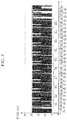
- FIG. 3 is a diagram showing a signal of a value of an OP code. That is, FIG. 3 shows that the value of the OP code generated when an encryption algorithm of FIG. 2 is repeatedly performed 10 times is considered as a signal.
- Table 1 below is a diagram of OP codes.
- Table 1 OP code(decimal) Instruction 403 mov rdi, rsp 67 call 0x7f6fce38d9b0 639 push rbp 403 mov rbp, rsp 639 push r15 639 push r14 639 push r13 639 push r12 403 mov r12, rdi 639 push rbx 773 sub rsp, 0x38 659 rdtsc 745 shl rdx, 0x20 403 mov eax, eax 466 or ra x, rdx 367 lea rdx, ptr [rip+0x22449a] 403 mov qword ptr [rip+0x224283], rax 403 mov rax, qword ptr [rip+0x22448c] 403 mov r14, rdx
- the OP code may be expressed as a decimal number, and this OP code may be considered as one signal.
- the decimal number which is the value of the OP code is considered as a signal value
- the value of the OP code for the encryption algorithm of FIG. 2 may be converted into a signal waveform shown in FIG. 3 . Since ransomware performs the encryption algorithm repeatedly, as shown in FIG. 3 , the signal waveform of the OP code value has periodicity.
- FIG. 4 shows a waveform obtained by converting a signal waveform of FIG. 3 into a frequency domain. That is, FIG. 4 shows that FFT (Fast Fourier Transform) is performed on the signal waveform of FIG. 3 . Meanwhile, a FFT sampling size is 512 points in FIG. 4 .
- FFT Fast Fourier Transform
- the frequency transformed waveform has a periodic function frequency characteristic with high amplitude at a multiple of a basic frequency (the number of iterations of an encryption algorithm 10, 10 Hz).
- the ransomware detection apparatus 100 detects whether it is ransomware using a characteristic of an OP code (i.e., a frequency characteristic of the OP code) in an encryption algorithm described in FIGS. 2 to 4 .
- a characteristic of an OP code i.e., a frequency characteristic of the OP code
- FIG. 5 is a block diagram specifically illustrating the ransomware detection apparatus 100 according to an exemplary embodiment of the present invention.
- the ransomware detection apparatus 100 includes an OP code decoder 110, a frequency converter 120, a ransomware determiner 130, a memory 140, and a recovery storage device 150.
- the OP code decoder 110 receives a PT packet currently being executed from the CPU 200 and performs decoding on the received PT packet into an OP code.
- a method of decoding the PT packet into the OP code may be understood by one of ordinary skill in the art, and thus a detailed description thereof is omitted.
- the frequency converter 120 receives the OP code from the OP code decoder 110 and performs conversion into a frequency domain by considering a value of the OP code as single signal. Ransomware repeatedly performs an encryption algorithm and thus the value of the OP code corresponding to the encryption algorithm has a periodic characteristic.
- the value of the OP code for the AES 128 algorithm has a signal waveform as shown in FIG. 3
- the frequency converter 120 may obtain a waveform converted into the frequency domain as shown in FIG. 4 .
- the frequency converter 120 may perform frequency conversion using a FFT.
- a value converted into the frequency domain by the frequency converter 120 is referred to as an 'OP code frequency waveform'.
- the memory 140 previously stores an OP code frequency waveform corresponding to an encryption algorithm (for example, the AES 128 algorithm) used in a ransomware operation. That is, the memory 140 stores the frequency waveform as shown in FIG. 4 .
- an encryption algorithm for example, the AES 128 algorithm
- the ransomware determiner 130 receives an input of the OP code frequency waveform from the frequency converter 120.
- the ransomware determiner 130 determine whether ransomware operates by comparing the OP code frequency waveform received from the frequency converter 120 with the OP code frequency waveform previously stored in the memory 140.
- the ransomware determiner 130 may compare main frequencies between two OP code frequency waveforms (the OP code frequency waveform received from the frequency converter 120 and the OP code frequency waveform previously stored in the memory 140) and calculate a correlation coefficient between the two OP code frequency waveforms.
- the ransomware determiner 130 may calculate a degree of similarity through the compared main frequency and the calculated correlation coefficient and determine that ransomware currently operates when the degree of similarity exceeds a predetermined reference value. Then, the ransomware determiner 130 may determine that ransomware does not currently operate when the calculated degree of similarity is below the predetermined reference value.
- the ransomware determiner 130 may copy a code currently being executed in a memory (not shown) connected to the CPU 200 and stores the copied code in the recovery storage device 150. That is, the recovery storage device 150 stores the code related to the currently operating ransomware.
- a user may extract an encryption key by analyzing the code stored in the recovery storage device 150 and recover files infected by Ransomware using the extracted encryption key.
- the recovery storage device 150 may be implemented as nonvolatile memory. Then, when the ransomware determiner 130 determines that ransomware currently operates, the ransomware determiner 130 may request the CPU 200 to stop a corresponding process.
- the ransomware detection apparatus 100 may determine whether ransomware operates by frequency-analyzing an OP code generated in a CPU calculation process, thereby determining ransomware in real time or at the initial stage of encryption.
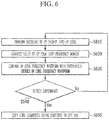
- FIG. 6 is a flowchart showing a ransomware detection method according to an exemplary embodiment of the present invention.
- the ransomware detection apparatus 100 receives a PT packet currently being executed from the CPU 200 and decodes the received PT packet into an OP code (S610). That is, the OP code decoder 110 decodes the PT packet received from the CPU 200 into the OP code.
- the ransomware detection apparatus 100 considers the OP code as a signal and converts a value of the OP code into a frequency domain (S620).
- the OP code has a time sequentially input value, and thus the OP code may be considered as the signal.
- the frequency converter 120 converts the value of the OP code considered as the signal into a frequency waveform (an OP code frequency waveform). For example, in the case of the AES128 algorithm, the frequency converter 120 converts a signal in a time domain shown in FIG. 3 into the signal in the frequency domain shown in FIG. 4 .
- the ransomware detection apparatus 100 compares the OP code frequency waveform generated in step S620 with a previously stored OP code frequency waveform (S630).
- the OP code frequency waveform previously stored in the memory 140 is an OP code frequency waveform corresponding to an encryption algorithm used in a ransomware operation. That is, the ransomware determiner 130 may compare main frequencies between the two OP code frequency waveforms, calculate a correlation coefficient between the two OP code frequency waveforms, and calculate a degree of similarity of the two OP code frequency waveforms. If the calculated degree of similarity exceeds a predetermined reference value, the ransomware determiner 130 determines that ransomware currently operates.
- step S630 If it is determined that a result of comparison in step S630 is ransomware, the ransomware detection apparatus 100 copies and stores the code currently being executed in the CPU 200 (S640 and S650). That is, when the ransomware determiner 130 determines that ransomware operates, the ransomware determiner 130 reads and copies code currently being executed in a memory (not shown) connected to the CPU 200, and stores the copied code in the recovery storage device 150. Then, when the ransomware detection apparatus 100 determines that the ransomware operates, the ransomware detection apparatus 100 requests the CPU 200 to stop a corresponding process.
- step S630 If it is determined that the result of comparison in step S630 is not ransomware, the ransomware detection apparatus 100 returns back to step S610 (S640 and S610).
Landscapes
- Engineering & Computer Science (AREA)
- Computer Security & Cryptography (AREA)
- Software Systems (AREA)
- Theoretical Computer Science (AREA)
- Computer Hardware Design (AREA)
- General Engineering & Computer Science (AREA)
- Physics & Mathematics (AREA)
- General Physics & Mathematics (AREA)
- Signal Processing (AREA)
- Computer Networks & Wireless Communication (AREA)
- Virology (AREA)
- Health & Medical Sciences (AREA)
- Computing Systems (AREA)
- General Health & Medical Sciences (AREA)
- Measurement And Recording Of Electrical Phenomena And Electrical Characteristics Of The Living Body (AREA)
- Transmitters (AREA)
- Debugging And Monitoring (AREA)
- Investigating Or Analysing Biological Materials (AREA)
Abstract
Description
- This application claims priority to and the benefit of Korean Patent Application Nos.
10-2017-0087327 10-2018-0047591 - The present invention relates to a ransomware detection apparatus and an operation method thereof.
- Ransomware is a malicious program that encrypts data of a user in a computer system and then requests money and has made trouble recently. Ransomware has penetrated a computer of the user in various ways as well as via e-mail, and its severity is increasing
- However, there is no method of blocking ransomware by detecting whether the computer system has been infected by ransomware in advance or recognizing whether ransomware encrypts data in real time. After the data has been encrypted by ransomware once, since it is impossible to recover the data, and it causes much more damage than other malicious codes.
- The above information disclosed in this Background section is only for enhancement of understanding of the background of the invention and therefore it may contain information that does not form the prior art that is already known in this country to a person of ordinary skill in the art.
- The present invention has been made in an effort to provide an apparatus and method for detecting ransomware in real time or at the initial stage of encryption.
- According to an embodiment of the present invention, a ransomware detection apparatus may include a frequency converter receiving an OP code currently being executed in a CPU and converting a value of the OP code into a frequency domain to generate a first OP code frequency waveform, a memory storing a second OP code frequency waveform, which is a value obtained by converting the OP code corresponding to a ransomware encryption algorithm into a frequency domain, and a ransomware determiner comparing the first OP code frequency waveform with the second OP code frequency waveform to determine whether ransomware operates.
- The ransomware detection apparatus may further include an OP code decoder receiving a processor tracer packet corresponding to a calculation code from the CPU and decoding the processor trace packet into the calculation code, and then outputting the decoded calculation code to the frequency converter.
- The ransomware determiner may calculate a degree of similarity between the first OP code frequency waveform and the second OP code frequency waveform and determine that ransomware operates when the degree of similarity exceeds a predetermined reference value.
- The ransomware determiner may compare main frequencies between the first OP code frequency waveform and the second OP code frequency waveform and calculate a correlation coefficient to calculate the degree of similarity.
- When the ransomware determiner determines that ransomware operates, the ransomware determiner may store the code currently being executed in the CPU in a recovery storage device.
- When the ransomware determiner determines that ransomware operates, the ransomware determiner may request the CPU to stop a corresponding process.
- The frequency converter may perform an FFT (Fast Fourier Transform) on the value of the OP code to generate the first OP code frequency waveform.
- The value of the OP code may be a decimal number.
- According to another embodiment of the present invention, a method of operating a ransomware detection apparatus that detects whether ransomware operates in a computer system comprising a CPU may include receiving a PT (processor tracer) packet currently being executed from the CPU, decoding the PT packet into an OP code (operation code), converting a value of the OP code into a frequency domain to generate a first OP code frequency waveform, storing a second OP code frequency waveform, which is a value obtained by converting the OP code corresponding to a ransomware encryption algorithm into a frequency domain, and comparing the first OP code frequency waveform with the second OP code frequency waveform to determine whether ransomware operates.
- The determining may include calculating a degree of similarity between the first OP code frequency waveform and the second OP code frequency waveform, and determining that ransomware operates through the degree of similarity.
- The method may further include when it is determined in the determining that ransomware operates, storing the code currently being executed in the CPU.
- The method may further include when it is determined in the determining that ransomware operates, requesting the CPU to stop a corresponding process.
- The generating of the first OP code frequency waveform may include considering the value of the OP code as a signal to convert the value of the OP code into the frequency domain.
- According to another embodiment of the present invention, a method of operating an apparatus that detects whether ransomware operates in a CPU may include receiving an OP code currently being executed in the CPU, converting a value of the OP code into a frequency domain, and analyzing a first value corresponding to the frequency domain to determine whether ransomware operates.
- The determining may include comparing a second value, which is a value obtained by converting the OP code corresponding to a ransomware encryption algorithm into the frequency domain with the first value to determine whether ransomware operates.
- According to an exemplary embodiment of the present invention, ransomware may be determined in real time or at the initial stage of encryption by determining whether ransomware operates by performing a frequency analysis operation on an OP code generated in a CPU calculation process.
-
-
FIG. 1 is a diagram illustrating a relationship between a ransomware detection apparatus and a peripheral apparatus according to an exemplary embodiment of the present invention. -
FIG. 2 is a diagram showing an example of a round iteration code for an encryption algorithm. -
FIG. 3 is a diagram showing a signal of a value of an OP code. -
FIG. 4 shows a waveform obtained by converting a signal waveform ofFIG. 3 into a frequency domain. -
FIG. 5 is a block diagram specifically illustrating theransomware detection apparatus 100 according to an exemplary embodiment of the present invention. -
FIG. 6 is a flowchart showing a ransomware detection method according to an exemplary embodiment of the present invention. - In the following detailed description, only certain exemplary embodiments of the present invention have been shown and described, simply by way of illustration. As those skilled in the art would realize, the described embodiments may be modified in various different ways, all without departing from the spirit or scope of the present invention. Accordingly, the drawings and description are to be regarded as illustrative in nature and not restrictive. Like reference numerals designate like elements throughout the specification.
- Throughout this specification and the claims that follow, when it is described that an element is "coupled" to another element, the element may be "directly coupled" to the other element or "electrically coupled" to the other element through a third element. In addition, unless explicitly described to the contrary, the word "comprise" and variations such as "comprises" or "comprising", will be understood to imply the inclusion of stated elements but not the exclusion of any other elements.
- The ransomware detection apparatus according to an exemplary embodiment of the present invention may detect ransomware by analyzing a CPU calculation characteristic generated in a data encryption process of software and recognizing encryption in real time or at the initial stage of encryption. The biggest characteristic when ransomware operates in a computer system is that ransomware performs an encryption process repeatedly. The ransomware detection apparatus and method according to an exemplary embodiment of the present invention uses the encryption characteristic of ransomware (that is, repetition of the encryption process), which will be described in detail.
-
FIG. 1 is a diagram illustrating a relationship between aransomware detection apparatus 100 and a peripheral apparatus according to an exemplary embodiment of the present invention. - A
CPU 200 is a central processing unit in a computer system. TheCPU 200 executes various instructions stored in a memory (not shown). In general, theCPU 200 provides a processor tracer (PT) packet. The PT packet provides information capable of decoding an operation code (hereinafter referred to as the 'OP code'). - The
ransomware detection apparatus 100 determines whether ransomware operates using the PT packet provided from theCPU 200. Theransomware detection apparatus 100 detects ransomware using the OP code after decoding the PT packet into the OP code. More specifically, theransomware detection apparatus 100 determines whether encryption is being performed using a frequency characteristic on the OP code of an encryption algorithm used in ransomware and detects ransomware based on determination. -
FIG. 2 is a diagram showing an example of a round iteration code for an encryption algorithm. For convenience of explanation, the encryption algorithm ofFIG. 2 represents an AES (Advance Encryption Standard) 128 algorithm that is frequently used in ransomware, but other encryption algorithms (TEA, RC4, etc.) used in ransomware may also be applied to the present invention. - The AES 128 algorithm repeats the code shown in
FIG. 2 10 times (i.e., round iteration of 10 times is used), and performs encryption on a 128-bit block. Also, AES192 uses round iteration of 12 times and AES256 uses round iteration of 14 times. Theransomware detection apparatus 100 according to an exemplary embodiment of the present invention considers a value of an OP code generated, as a signal, while the encryption algorithm is repeatedly performed to conduct a procedure. -
FIG. 3 is a diagram showing a signal of a value of an OP code. That is,FIG. 3 shows that the value of the OP code generated when an encryption algorithm ofFIG. 2 is repeatedly performed 10 times is considered as a signal. - Table 1 below is a diagram of OP codes.
(Table 1) OP code(decimal) Instruction 403 mov rdi, rsp 67 call 0x7f6fce38d9b0 639 push rbp 403 mov rbp, rsp 639 push r15 639 push r14 639 push r13 639 push r12 403 mov r12, rdi 639 push rbx 773 sub rsp, 0x38 659 rdtsc 745 shl rdx, 0x20 403 mov eax, eax 466 or ra x, rdx 367 lea rdx, ptr [rip+0x22449a] 403 mov qword ptr [rip+0x224283], rax 403 mov rax, qword ptr [rip+0x22448c] 403 mov r14, rdx 773 sub r14, qword ptr [rip+0x224612] 403 mov qword ptr [rip+0x224ff3], rdx 787 tes t r ax, rax 403 mov qword ptr [rip+0x224fd9], r14 310 jz 0x7f6fce38da92 367 lea rex, ptr [rip+0x224634] 403 mov r9, 0x3800003d8 403 mov r8, 0x37ffffb78 403 mov esi, 0x6fffffff 403 mov r11d, 0x6ffffdff - As shown in Table 1, the OP code may be expressed as a decimal number, and this OP code may be considered as one signal. When the decimal number which is the value of the OP code is considered as a signal value, the value of the OP code for the encryption algorithm of
FIG. 2 may be converted into a signal waveform shown inFIG. 3 . Since ransomware performs the encryption algorithm repeatedly, as shown inFIG. 3 , the signal waveform of the OP code value has periodicity. -
FIG. 4 shows a waveform obtained by converting a signal waveform ofFIG. 3 into a frequency domain. That is,FIG. 4 shows that FFT (Fast Fourier Transform) is performed on the signal waveform ofFIG. 3 . Meanwhile, a FFT sampling size is 512 points inFIG. 4 . - As shown in
FIG. 4 , the frequency transformed waveform has a periodic function frequency characteristic with high amplitude at a multiple of a basic frequency (the number of iterations of an encryption algorithm 10, 10 Hz). - The
ransomware detection apparatus 100 according to an exemplary embodiment of the present invention detects whether it is ransomware using a characteristic of an OP code (i.e., a frequency characteristic of the OP code) in an encryption algorithm described inFIGS. 2 to 4 . -
FIG. 5 is a block diagram specifically illustrating theransomware detection apparatus 100 according to an exemplary embodiment of the present invention. - As shown in
FIG. 5 , theransomware detection apparatus 100 according to an exemplary embodiment of the present invention includes anOP code decoder 110, afrequency converter 120, aransomware determiner 130, amemory 140, and arecovery storage device 150. - The
OP code decoder 110 receives a PT packet currently being executed from theCPU 200 and performs decoding on the received PT packet into an OP code. A method of decoding the PT packet into the OP code may be understood by one of ordinary skill in the art, and thus a detailed description thereof is omitted. - The
frequency converter 120 receives the OP code from theOP code decoder 110 and performs conversion into a frequency domain by considering a value of the OP code as single signal. Ransomware repeatedly performs an encryption algorithm and thus the value of the OP code corresponding to the encryption algorithm has a periodic characteristic. For example, the value of the OP code for the AES 128 algorithm has a signal waveform as shown inFIG. 3 , and thefrequency converter 120 may obtain a waveform converted into the frequency domain as shown inFIG. 4 . Meanwhile, thefrequency converter 120 may perform frequency conversion using a FFT. Hereinafter, a value converted into the frequency domain by thefrequency converter 120 is referred to as an 'OP code frequency waveform'. - The
memory 140 previously stores an OP code frequency waveform corresponding to an encryption algorithm (for example, the AES 128 algorithm) used in a ransomware operation. That is, thememory 140 stores the frequency waveform as shown inFIG. 4 . - The
ransomware determiner 130 receives an input of the OP code frequency waveform from thefrequency converter 120. Theransomware determiner 130 determine whether ransomware operates by comparing the OP code frequency waveform received from thefrequency converter 120 with the OP code frequency waveform previously stored in thememory 140. In this regard, theransomware determiner 130 may compare main frequencies between two OP code frequency waveforms (the OP code frequency waveform received from thefrequency converter 120 and the OP code frequency waveform previously stored in the memory 140) and calculate a correlation coefficient between the two OP code frequency waveforms. Theransomware determiner 130 may calculate a degree of similarity through the compared main frequency and the calculated correlation coefficient and determine that ransomware currently operates when the degree of similarity exceeds a predetermined reference value. Then, theransomware determiner 130 may determine that ransomware does not currently operate when the calculated degree of similarity is below the predetermined reference value. - Meanwhile, when the
ransomware determiner 130 determines that ransomware currently operates, theransomware determiner 130 may copy a code currently being executed in a memory (not shown) connected to theCPU 200 and stores the copied code in therecovery storage device 150. That is, therecovery storage device 150 stores the code related to the currently operating ransomware. A user may extract an encryption key by analyzing the code stored in therecovery storage device 150 and recover files infected by Ransomware using the extracted encryption key. Therecovery storage device 150 may be implemented as nonvolatile memory. Then, when theransomware determiner 130 determines that ransomware currently operates, theransomware determiner 130 may request theCPU 200 to stop a corresponding process. - As described above, the
ransomware detection apparatus 100 according to an exemplary embodiment of the present invention may determine whether ransomware operates by frequency-analyzing an OP code generated in a CPU calculation process, thereby determining ransomware in real time or at the initial stage of encryption. -
FIG. 6 is a flowchart showing a ransomware detection method according to an exemplary embodiment of the present invention. - The
ransomware detection apparatus 100 receives a PT packet currently being executed from theCPU 200 and decodes the received PT packet into an OP code (S610). That is, theOP code decoder 110 decodes the PT packet received from theCPU 200 into the OP code. - The
ransomware detection apparatus 100 considers the OP code as a signal and converts a value of the OP code into a frequency domain (S620). The OP code has a time sequentially input value, and thus the OP code may be considered as the signal. Thefrequency converter 120 converts the value of the OP code considered as the signal into a frequency waveform (an OP code frequency waveform). For example, in the case of the AES128 algorithm, thefrequency converter 120 converts a signal in a time domain shown inFIG. 3 into the signal in the frequency domain shown inFIG. 4 . - The
ransomware detection apparatus 100 compares the OP code frequency waveform generated in step S620 with a previously stored OP code frequency waveform (S630). The OP code frequency waveform previously stored in thememory 140 is an OP code frequency waveform corresponding to an encryption algorithm used in a ransomware operation. That is, theransomware determiner 130 may compare main frequencies between the two OP code frequency waveforms, calculate a correlation coefficient between the two OP code frequency waveforms, and calculate a degree of similarity of the two OP code frequency waveforms. If the calculated degree of similarity exceeds a predetermined reference value, theransomware determiner 130 determines that ransomware currently operates. - If it is determined that a result of comparison in step S630 is ransomware, the
ransomware detection apparatus 100 copies and stores the code currently being executed in the CPU 200 (S640 and S650). That is, when theransomware determiner 130 determines that ransomware operates, theransomware determiner 130 reads and copies code currently being executed in a memory (not shown) connected to theCPU 200, and stores the copied code in therecovery storage device 150. Then, when theransomware detection apparatus 100 determines that the ransomware operates, theransomware detection apparatus 100 requests theCPU 200 to stop a corresponding process. - If it is determined that the result of comparison in step S630 is not ransomware, the
ransomware detection apparatus 100 returns back to step S610 (S640 and S610). - While the present invention has been particularly shown and described with reference to exemplary embodiments thereof, it will be understood by those of ordinary skill in the art that various changes in form and details may be made therein without departing from the spirit and scope of the present invention as defined by the following claims.
Claims (15)
- A ransomware detection apparatus comprising:a frequency converter receiving an OP code currently being executed in a CPU and converting a value of the OP code into a frequency domain to generate a first OP code frequency waveform,a memory storing a second OP code frequency waveform, which is a value obtained by converting the OP code corresponding to a ransomware encryption algorithm into a frequency domain, anda ransomware determiner comparing the first OP code frequency waveform with the second OP code frequency waveform to determine whether ransomware operates
- The ransomware detection apparatus of claim 1, further comprising:
an OP code decoder receiving a processor tracer packet corresponding to a calculation code from the CPU and decoding the processor trace packet into the calculation code, and then outputting the decoded calculation code to the frequency converter. - The ransomware detection apparatus of claim 1, wherein:
the ransomware determiner calculates a degree of similarity between the first OP code frequency waveform and the second OP code frequency waveform and determines that ransomware operates when the degree of similarity exceeds a predetermined reference value. - The ransomware detection apparatus of claim 3, wherein:
the ransomware determiner compares main frequencies between the first OP code frequency waveform and the second OP code frequency waveform and calculates a correlation coefficient to calculate the degree of similarity. - The ransomware detection apparatus of claim 1, wherein:
when the ransomware determiner determines that ransomware operates, the ransomware determiner stores the code currently being executed in the CPU in a recovery storage device. - The ransomware detection apparatus of claim 1, wherein:
when the ransomware determiner determines that ransomware operates, the ransomware determiner requests the CPU to stop a corresponding process. - The ransomware detection apparatus of claim 1, wherein:
the frequency converter performs an FFT (Fast Fourier Transform) on the value of the OP code to generate the first OP code frequency waveform. - The ransomware detection apparatus of claim 1, wherein:
the value of the OP code is a decimal number. - A method of operating a ransomware detection apparatus that detects whether ransomware operates in a computer system comprising a CPU, the method comprising:receiving a PT (processor tracer) packet currently being executed from the CPU,decoding the PT packet into an OP code (operation code),converting a value of the OP code into a frequency domain to generate a first OP code frequency waveform,storing a second OP code frequency waveform, which is a value obtained by converting the OP code corresponding to a ransomware encryption algorithm into a frequency domain, andcomparing the first OP code frequency waveform with the second OP code frequency waveform to determine whether ransomware operates.
- The method of claim 9, wherein:the determining comprises,calculating a degree of similarity between the first OP code frequency waveform and the second OP code frequency waveform, anddetermining that ransomware operates through the degree of similarity.
- The method of claim 9, further comprising:
when it is determined in the determining that ransomware operates, storing the code currently being executed in the CPU. - The method of claim 9, further comprising:
when it is determined in the determining that ransomware operates, requesting the CPU to stop a corresponding process. - The method of claim 9, wherein:
the generating of the first OP code frequency waveform comprises considering the value of the OP code as a signal to convert the value of the OP code into the frequency domain. - A method of operating an apparatus that detects whether ransomware operates in a CPU, the method comprising:receiving an OP code currently being executed in the CPU,converting a value of the OP code into a frequency domain, andanalyzing a first value corresponding to the frequency domain to determine whether ransomware operates.
- The method of claim 14, wherein:
the determining comprises comparing a second value, which is a value obtained by converting the OP code corresponding to a ransomware encryption algorithm into the frequency domain with the first value to determine whether ransomware operates.
Applications Claiming Priority (2)
| Application Number | Priority Date | Filing Date | Title |
|---|---|---|---|
| KR20170087327 | 2017-07-10 | ||
| KR1020180047591A KR102145289B1 (en) | 2017-07-10 | 2018-04-24 | Ransomware dectection appartus and operating method thereof |
Publications (2)
| Publication Number | Publication Date |
|---|---|
| EP3428826A1 true EP3428826A1 (en) | 2019-01-16 |
| EP3428826B1 EP3428826B1 (en) | 2020-12-02 |
Family
ID=62104110
Family Applications (1)
| Application Number | Title | Priority Date | Filing Date |
|---|---|---|---|
| EP18169793.9A Active EP3428826B1 (en) | 2017-07-10 | 2018-04-27 | Ransomware detection apparatus and operating method thereof |
Country Status (3)
| Country | Link |
|---|---|
| US (1) | US20190012459A1 (en) |
| EP (1) | EP3428826B1 (en) |
| CN (1) | CN109241732B (en) |
Families Citing this family (7)
| Publication number | Priority date | Publication date | Assignee | Title |
|---|---|---|---|---|
| US11042638B2 (en) * | 2017-11-14 | 2021-06-22 | Southern Methodist University | Detecting malicious software using sensors |
| EP3623982B1 (en) | 2018-09-12 | 2021-05-19 | British Telecommunications public limited company | Ransomware remediation |
| EP3623980B1 (en) * | 2018-09-12 | 2021-04-28 | British Telecommunications public limited company | Ransomware encryption algorithm determination |
| EP3623981B1 (en) * | 2018-09-12 | 2021-04-28 | British Telecommunications public limited company | Index based ransomware categorisation |
| EP3850514B1 (en) | 2018-09-12 | 2023-09-20 | British Telecommunications public limited company | Encryption key seed determination |
| KR102395263B1 (en) | 2020-08-20 | 2022-05-10 | 한국전자통신연구원 | Apparatus and method for recovering encryption key based on memeory analysis |
| US12511392B1 (en) * | 2025-08-29 | 2025-12-30 | Halcyon Tech, Inc. | Ransomware detection using cryptographic API call graph analysis |
Citations (5)
| Publication number | Priority date | Publication date | Assignee | Title |
|---|---|---|---|---|
| US20030097595A1 (en) * | 2000-10-23 | 2003-05-22 | Craig Partridge | Method and system for passively analyzing communication data based on frequency analysis of encrypted data traffic, and method and system for deterring passive analysis of communication data |
| US20100235913A1 (en) * | 2009-03-12 | 2010-09-16 | Microsoft Corporation | Proactive Exploit Detection |
| WO2016115280A1 (en) * | 2015-01-14 | 2016-07-21 | Virta Laboratories, Inc. | Anomaly and malware detection using side channel analysis |
| US20160378988A1 (en) * | 2015-06-26 | 2016-12-29 | Quick Heal Technologies Private Limited | Anti-ransomware |
| US20170147815A1 (en) * | 2015-11-25 | 2017-05-25 | Lockheed Martin Corporation | Method for detecting a threat and threat detecting apparatus |
Family Cites Families (3)
| Publication number | Priority date | Publication date | Assignee | Title |
|---|---|---|---|---|
| GB2432933B (en) * | 2006-03-14 | 2008-07-09 | Streamshield Networks Ltd | A method and apparatus for providing network security |
| WO2013184108A1 (en) * | 2012-06-06 | 2013-12-12 | Empire Technology Development Llc | Software protection mechanism |
| WO2017131975A1 (en) * | 2016-01-25 | 2017-08-03 | Acalvio Technologies, Inc. | Detecting security threats by combining deception mechanisms and data science |
-
2018
- 2018-04-26 US US15/963,906 patent/US20190012459A1/en not_active Abandoned
- 2018-04-27 EP EP18169793.9A patent/EP3428826B1/en active Active
- 2018-04-28 CN CN201810397736.5A patent/CN109241732B/en active Active
Patent Citations (5)
| Publication number | Priority date | Publication date | Assignee | Title |
|---|---|---|---|---|
| US20030097595A1 (en) * | 2000-10-23 | 2003-05-22 | Craig Partridge | Method and system for passively analyzing communication data based on frequency analysis of encrypted data traffic, and method and system for deterring passive analysis of communication data |
| US20100235913A1 (en) * | 2009-03-12 | 2010-09-16 | Microsoft Corporation | Proactive Exploit Detection |
| WO2016115280A1 (en) * | 2015-01-14 | 2016-07-21 | Virta Laboratories, Inc. | Anomaly and malware detection using side channel analysis |
| US20160378988A1 (en) * | 2015-06-26 | 2016-12-29 | Quick Heal Technologies Private Limited | Anti-ransomware |
| US20170147815A1 (en) * | 2015-11-25 | 2017-05-25 | Lockheed Martin Corporation | Method for detecting a threat and threat detecting apparatus |
Also Published As
| Publication number | Publication date |
|---|---|
| CN109241732A (en) | 2019-01-18 |
| CN109241732B (en) | 2021-11-30 |
| EP3428826B1 (en) | 2020-12-02 |
| US20190012459A1 (en) | 2019-01-10 |
Similar Documents
| Publication | Publication Date | Title |
|---|---|---|
| EP3428826B1 (en) | Ransomware detection apparatus and operating method thereof | |
| US10374789B2 (en) | Encrypting and decrypting information | |
| Garfinkel | Digital media triage with bulk data analysis and bulk_extractor | |
| US20180152445A1 (en) | Method and apparatus for authenticating user | |
| US8549624B2 (en) | Probabilistic shellcode detection | |
| Billeb et al. | Biometric template protection for speaker recognition based on universal background models | |
| US20140150101A1 (en) | Method for recognizing malicious file | |
| CN116055067B (en) | Weak password detection method, device, electronic equipment and medium | |
| CN111049858B (en) | A cross-validation-based baseline scanning vulnerability deduplication method, device and device | |
| CN109118420B (en) | Watermark identification model establishing and identifying method, device, medium and electronic equipment | |
| AU2012201539B2 (en) | Systems and methods for processing documents of unknown or unspecified format | |
| CN112860933B (en) | Ciphertext image retrieval method, device, terminal equipment and storage medium | |
| CN109117622A (en) | A kind of identity identifying method based on audio-frequency fingerprint | |
| CN112632504B (en) | Web page access method, device, system, computer equipment and storage medium | |
| CN113987500A (en) | Malicious PDF document detection method and device and electronic equipment | |
| Taşdelen et al. | Analysing and carving MS Word and PDF files from RAM images on Windows | |
| CN106874758A (en) | A kind of method and apparatus for recognizing document code | |
| EP3142292B1 (en) | Encrypted-data processing method, system, apparatus, and program | |
| CN110135154B (en) | Injection attack detection system and method for application program | |
| KR102145289B1 (en) | Ransomware dectection appartus and operating method thereof | |
| CN116305130A (en) | Dual system intelligent switching method, system and medium based on system environment recognition | |
| Zhang et al. | One-factor cancelable fingerprint template protection based on feature enhanced hashing | |
| JP2019032688A (en) | Source code analysis device, source code analysis method, and source code analysis program | |
| Lee et al. | New Approach on Steganalysis: Reverse-Engineering based Steganography SW Analysis | |
| CN115412350B (en) | Attack detection method, attack detection device, and computer-readable storage medium |
Legal Events
| Date | Code | Title | Description |
|---|---|---|---|
| PUAI | Public reference made under article 153(3) epc to a published international application that has entered the european phase |
Free format text: ORIGINAL CODE: 0009012 |
|
| STAA | Information on the status of an ep patent application or granted ep patent |
Free format text: STATUS: THE APPLICATION HAS BEEN PUBLISHED |
|
| AK | Designated contracting states |
Kind code of ref document: A1 Designated state(s): AL AT BE BG CH CY CZ DE DK EE ES FI FR GB GR HR HU IE IS IT LI LT LU LV MC MK MT NL NO PL PT RO RS SE SI SK SM TR |
|
| AX | Request for extension of the european patent |
Extension state: BA ME |
|
| STAA | Information on the status of an ep patent application or granted ep patent |
Free format text: STATUS: REQUEST FOR EXAMINATION WAS MADE |
|
| 17P | Request for examination filed |
Effective date: 20190716 |
|
| RBV | Designated contracting states (corrected) |
Designated state(s): AL AT BE BG CH CY CZ DE DK EE ES FI FR GB GR HR HU IE IS IT LI LT LU LV MC MK MT NL NO PL PT RO RS SE SI SK SM TR |
|
| GRAP | Despatch of communication of intention to grant a patent |
Free format text: ORIGINAL CODE: EPIDOSNIGR1 |
|
| STAA | Information on the status of an ep patent application or granted ep patent |
Free format text: STATUS: GRANT OF PATENT IS INTENDED |
|
| INTG | Intention to grant announced |
Effective date: 20200624 |
|
| RIN1 | Information on inventor provided before grant (corrected) |
Inventor name: KIM, JONGHYUN Inventor name: CHOI, DOO HO Inventor name: JIN, SEUNG HUN Inventor name: KIM, TAESUNG Inventor name: KIM, IK KYUN |
|
| GRAS | Grant fee paid |
Free format text: ORIGINAL CODE: EPIDOSNIGR3 |
|
| GRAA | (expected) grant |
Free format text: ORIGINAL CODE: 0009210 |
|
| STAA | Information on the status of an ep patent application or granted ep patent |
Free format text: STATUS: THE PATENT HAS BEEN GRANTED |
|
| AK | Designated contracting states |
Kind code of ref document: B1 Designated state(s): AL AT BE BG CH CY CZ DE DK EE ES FI FR GB GR HR HU IE IS IT LI LT LU LV MC MK MT NL NO PL PT RO RS SE SI SK SM TR |
|
| REG | Reference to a national code |
Ref country code: GB Ref legal event code: FG4D |
|
| REG | Reference to a national code |
Ref country code: AT Ref legal event code: REF Ref document number: 1341725 Country of ref document: AT Kind code of ref document: T Effective date: 20201215 Ref country code: CH Ref legal event code: EP |
|
| REG | Reference to a national code |
Ref country code: IE Ref legal event code: FG4D |
|
| REG | Reference to a national code |
Ref country code: DE Ref legal event code: R096 Ref document number: 602018010256 Country of ref document: DE |
|
| PG25 | Lapsed in a contracting state [announced via postgrant information from national office to epo] |
Ref country code: RS Free format text: LAPSE BECAUSE OF FAILURE TO SUBMIT A TRANSLATION OF THE DESCRIPTION OR TO PAY THE FEE WITHIN THE PRESCRIBED TIME-LIMIT Effective date: 20201202 Ref country code: FI Free format text: LAPSE BECAUSE OF FAILURE TO SUBMIT A TRANSLATION OF THE DESCRIPTION OR TO PAY THE FEE WITHIN THE PRESCRIBED TIME-LIMIT Effective date: 20201202 Ref country code: NO Free format text: LAPSE BECAUSE OF FAILURE TO SUBMIT A TRANSLATION OF THE DESCRIPTION OR TO PAY THE FEE WITHIN THE PRESCRIBED TIME-LIMIT Effective date: 20210302 Ref country code: GR Free format text: LAPSE BECAUSE OF FAILURE TO SUBMIT A TRANSLATION OF THE DESCRIPTION OR TO PAY THE FEE WITHIN THE PRESCRIBED TIME-LIMIT Effective date: 20210303 |
|
| REG | Reference to a national code |
Ref country code: NL Ref legal event code: MP Effective date: 20201202 |
|
| REG | Reference to a national code |
Ref country code: AT Ref legal event code: MK05 Ref document number: 1341725 Country of ref document: AT Kind code of ref document: T Effective date: 20201202 |
|
| PG25 | Lapsed in a contracting state [announced via postgrant information from national office to epo] |
Ref country code: PL Free format text: LAPSE BECAUSE OF FAILURE TO SUBMIT A TRANSLATION OF THE DESCRIPTION OR TO PAY THE FEE WITHIN THE PRESCRIBED TIME-LIMIT Effective date: 20201202 Ref country code: LV Free format text: LAPSE BECAUSE OF FAILURE TO SUBMIT A TRANSLATION OF THE DESCRIPTION OR TO PAY THE FEE WITHIN THE PRESCRIBED TIME-LIMIT Effective date: 20201202 Ref country code: SE Free format text: LAPSE BECAUSE OF FAILURE TO SUBMIT A TRANSLATION OF THE DESCRIPTION OR TO PAY THE FEE WITHIN THE PRESCRIBED TIME-LIMIT Effective date: 20201202 Ref country code: BG Free format text: LAPSE BECAUSE OF FAILURE TO SUBMIT A TRANSLATION OF THE DESCRIPTION OR TO PAY THE FEE WITHIN THE PRESCRIBED TIME-LIMIT Effective date: 20210302 |
|
| PG25 | Lapsed in a contracting state [announced via postgrant information from national office to epo] |
Ref country code: NL Free format text: LAPSE BECAUSE OF FAILURE TO SUBMIT A TRANSLATION OF THE DESCRIPTION OR TO PAY THE FEE WITHIN THE PRESCRIBED TIME-LIMIT Effective date: 20201202 Ref country code: HR Free format text: LAPSE BECAUSE OF FAILURE TO SUBMIT A TRANSLATION OF THE DESCRIPTION OR TO PAY THE FEE WITHIN THE PRESCRIBED TIME-LIMIT Effective date: 20201202 |
|
| REG | Reference to a national code |
Ref country code: LT Ref legal event code: MG9D |
|
| PG25 | Lapsed in a contracting state [announced via postgrant information from national office to epo] |
Ref country code: PT Free format text: LAPSE BECAUSE OF FAILURE TO SUBMIT A TRANSLATION OF THE DESCRIPTION OR TO PAY THE FEE WITHIN THE PRESCRIBED TIME-LIMIT Effective date: 20210405 Ref country code: SK Free format text: LAPSE BECAUSE OF FAILURE TO SUBMIT A TRANSLATION OF THE DESCRIPTION OR TO PAY THE FEE WITHIN THE PRESCRIBED TIME-LIMIT Effective date: 20201202 Ref country code: RO Free format text: LAPSE BECAUSE OF FAILURE TO SUBMIT A TRANSLATION OF THE DESCRIPTION OR TO PAY THE FEE WITHIN THE PRESCRIBED TIME-LIMIT Effective date: 20201202 Ref country code: LT Free format text: LAPSE BECAUSE OF FAILURE TO SUBMIT A TRANSLATION OF THE DESCRIPTION OR TO PAY THE FEE WITHIN THE PRESCRIBED TIME-LIMIT Effective date: 20201202 Ref country code: EE Free format text: LAPSE BECAUSE OF FAILURE TO SUBMIT A TRANSLATION OF THE DESCRIPTION OR TO PAY THE FEE WITHIN THE PRESCRIBED TIME-LIMIT Effective date: 20201202 Ref country code: CZ Free format text: LAPSE BECAUSE OF FAILURE TO SUBMIT A TRANSLATION OF THE DESCRIPTION OR TO PAY THE FEE WITHIN THE PRESCRIBED TIME-LIMIT Effective date: 20201202 Ref country code: SM Free format text: LAPSE BECAUSE OF FAILURE TO SUBMIT A TRANSLATION OF THE DESCRIPTION OR TO PAY THE FEE WITHIN THE PRESCRIBED TIME-LIMIT Effective date: 20201202 |
|
| PG25 | Lapsed in a contracting state [announced via postgrant information from national office to epo] |
Ref country code: AT Free format text: LAPSE BECAUSE OF FAILURE TO SUBMIT A TRANSLATION OF THE DESCRIPTION OR TO PAY THE FEE WITHIN THE PRESCRIBED TIME-LIMIT Effective date: 20201202 |
|
| REG | Reference to a national code |
Ref country code: DE Ref legal event code: R097 Ref document number: 602018010256 Country of ref document: DE |
|
| PG25 | Lapsed in a contracting state [announced via postgrant information from national office to epo] |
Ref country code: IS Free format text: LAPSE BECAUSE OF FAILURE TO SUBMIT A TRANSLATION OF THE DESCRIPTION OR TO PAY THE FEE WITHIN THE PRESCRIBED TIME-LIMIT Effective date: 20210402 |
|
| PLBE | No opposition filed within time limit |
Free format text: ORIGINAL CODE: 0009261 |
|
| STAA | Information on the status of an ep patent application or granted ep patent |
Free format text: STATUS: NO OPPOSITION FILED WITHIN TIME LIMIT |
|
| PG25 | Lapsed in a contracting state [announced via postgrant information from national office to epo] |
Ref country code: AL Free format text: LAPSE BECAUSE OF FAILURE TO SUBMIT A TRANSLATION OF THE DESCRIPTION OR TO PAY THE FEE WITHIN THE PRESCRIBED TIME-LIMIT Effective date: 20201202 Ref country code: IT Free format text: LAPSE BECAUSE OF FAILURE TO SUBMIT A TRANSLATION OF THE DESCRIPTION OR TO PAY THE FEE WITHIN THE PRESCRIBED TIME-LIMIT Effective date: 20201202 |
|
| 26N | No opposition filed |
Effective date: 20210903 |
|
| PG25 | Lapsed in a contracting state [announced via postgrant information from national office to epo] |
Ref country code: MC Free format text: LAPSE BECAUSE OF FAILURE TO SUBMIT A TRANSLATION OF THE DESCRIPTION OR TO PAY THE FEE WITHIN THE PRESCRIBED TIME-LIMIT Effective date: 20201202 Ref country code: DK Free format text: LAPSE BECAUSE OF FAILURE TO SUBMIT A TRANSLATION OF THE DESCRIPTION OR TO PAY THE FEE WITHIN THE PRESCRIBED TIME-LIMIT Effective date: 20201202 Ref country code: SI Free format text: LAPSE BECAUSE OF FAILURE TO SUBMIT A TRANSLATION OF THE DESCRIPTION OR TO PAY THE FEE WITHIN THE PRESCRIBED TIME-LIMIT Effective date: 20201202 |
|
| PG25 | Lapsed in a contracting state [announced via postgrant information from national office to epo] |
Ref country code: LU Free format text: LAPSE BECAUSE OF NON-PAYMENT OF DUE FEES Effective date: 20210427 |
|
| REG | Reference to a national code |
Ref country code: BE Ref legal event code: MM Effective date: 20210430 |
|
| PG25 | Lapsed in a contracting state [announced via postgrant information from national office to epo] |
Ref country code: FR Free format text: LAPSE BECAUSE OF NON-PAYMENT OF DUE FEES Effective date: 20210430 Ref country code: ES Free format text: LAPSE BECAUSE OF FAILURE TO SUBMIT A TRANSLATION OF THE DESCRIPTION OR TO PAY THE FEE WITHIN THE PRESCRIBED TIME-LIMIT Effective date: 20201202 Ref country code: LI Free format text: LAPSE BECAUSE OF NON-PAYMENT OF DUE FEES Effective date: 20210430 Ref country code: CH Free format text: LAPSE BECAUSE OF NON-PAYMENT OF DUE FEES Effective date: 20210430 |
|
| PG25 | Lapsed in a contracting state [announced via postgrant information from national office to epo] |
Ref country code: IE Free format text: LAPSE BECAUSE OF NON-PAYMENT OF DUE FEES Effective date: 20210427 |
|
| PG25 | Lapsed in a contracting state [announced via postgrant information from national office to epo] |
Ref country code: IS Free format text: LAPSE BECAUSE OF FAILURE TO SUBMIT A TRANSLATION OF THE DESCRIPTION OR TO PAY THE FEE WITHIN THE PRESCRIBED TIME-LIMIT Effective date: 20210402 |
|
| PG25 | Lapsed in a contracting state [announced via postgrant information from national office to epo] |
Ref country code: BE Free format text: LAPSE BECAUSE OF NON-PAYMENT OF DUE FEES Effective date: 20210430 |
|
| PG25 | Lapsed in a contracting state [announced via postgrant information from national office to epo] |
Ref country code: CY Free format text: LAPSE BECAUSE OF FAILURE TO SUBMIT A TRANSLATION OF THE DESCRIPTION OR TO PAY THE FEE WITHIN THE PRESCRIBED TIME-LIMIT Effective date: 20201202 |
|
| PG25 | Lapsed in a contracting state [announced via postgrant information from national office to epo] |
Ref country code: HU Free format text: LAPSE BECAUSE OF FAILURE TO SUBMIT A TRANSLATION OF THE DESCRIPTION OR TO PAY THE FEE WITHIN THE PRESCRIBED TIME-LIMIT; INVALID AB INITIO Effective date: 20180427 |
|
| P01 | Opt-out of the competence of the unified patent court (upc) registered |
Effective date: 20230625 |
|
| PG25 | Lapsed in a contracting state [announced via postgrant information from national office to epo] |
Ref country code: MK Free format text: LAPSE BECAUSE OF FAILURE TO SUBMIT A TRANSLATION OF THE DESCRIPTION OR TO PAY THE FEE WITHIN THE PRESCRIBED TIME-LIMIT Effective date: 20201202 |
|
| PG25 | Lapsed in a contracting state [announced via postgrant information from national office to epo] |
Ref country code: MT Free format text: LAPSE BECAUSE OF FAILURE TO SUBMIT A TRANSLATION OF THE DESCRIPTION OR TO PAY THE FEE WITHIN THE PRESCRIBED TIME-LIMIT Effective date: 20201202 |
|
| PGFP | Annual fee paid to national office [announced via postgrant information from national office to epo] |
Ref country code: GB Payment date: 20250320 Year of fee payment: 8 |
|
| PGFP | Annual fee paid to national office [announced via postgrant information from national office to epo] |
Ref country code: DE Payment date: 20250320 Year of fee payment: 8 |
|
| PG25 | Lapsed in a contracting state [announced via postgrant information from national office to epo] |
Ref country code: TR Free format text: LAPSE BECAUSE OF FAILURE TO SUBMIT A TRANSLATION OF THE DESCRIPTION OR TO PAY THE FEE WITHIN THE PRESCRIBED TIME-LIMIT Effective date: 20201202 |