EP3428650A2 - Method for quantifying cognitive dysfunction disease biomarker using mass spectrometry and mass spectrometer - Google Patents
Method for quantifying cognitive dysfunction disease biomarker using mass spectrometry and mass spectrometer Download PDFInfo
- Publication number
- EP3428650A2 EP3428650A2 EP18183279.1A EP18183279A EP3428650A2 EP 3428650 A2 EP3428650 A2 EP 3428650A2 EP 18183279 A EP18183279 A EP 18183279A EP 3428650 A2 EP3428650 A2 EP 3428650A2
- Authority
- EP
- European Patent Office
- Prior art keywords
- peptide
- seq
- amino acid
- acid sequence
- sequence represented
- Prior art date
- Legal status (The legal status is an assumption and is not a legal conclusion. Google has not performed a legal analysis and makes no representation as to the accuracy of the status listed.)
- Withdrawn
Links
- 208000037265 diseases, disorders, signs and symptoms Diseases 0.000 title claims abstract description 53
- 208000010877 cognitive disease Diseases 0.000 title claims abstract description 49
- 239000000090 biomarker Substances 0.000 title claims abstract description 38
- 238000000034 method Methods 0.000 title claims description 35
- 238000004949 mass spectrometry Methods 0.000 title claims description 12
- 108090000765 processed proteins & peptides Proteins 0.000 claims abstract description 140
- 238000005259 measurement Methods 0.000 claims abstract description 63
- 238000002552 multiple reaction monitoring Methods 0.000 claims abstract description 47
- 102000004196 processed proteins & peptides Human genes 0.000 claims abstract description 37
- 238000004885 tandem mass spectrometry Methods 0.000 claims abstract description 23
- 230000007704 transition Effects 0.000 claims abstract description 19
- 239000012472 biological sample Substances 0.000 claims abstract description 17
- 239000002243 precursor Substances 0.000 claims abstract description 16
- 125000003275 alpha amino acid group Chemical group 0.000 claims description 46
- 238000004458 analytical method Methods 0.000 claims description 22
- 108010063628 acarboxyprothrombin Proteins 0.000 claims description 15
- 102100033772 Complement C4-A Human genes 0.000 claims description 6
- 108010077773 Complement C4a Proteins 0.000 claims description 6
- 102000004878 Gelsolin Human genes 0.000 claims description 6
- 108090001064 Gelsolin Proteins 0.000 claims description 6
- 108010094028 Prothrombin Proteins 0.000 claims description 6
- 102100027378 Prothrombin Human genes 0.000 claims description 6
- 229940039716 prothrombin Drugs 0.000 claims description 6
- 102100021582 Neurexin-1-beta Human genes 0.000 claims description 5
- 102100021345 Neurexin-2-beta Human genes 0.000 claims description 5
- 101710157086 Neurexin-2-beta Proteins 0.000 claims description 5
- 102000004279 Oxytocin receptors Human genes 0.000 claims description 5
- 108090000876 Oxytocin receptors Proteins 0.000 claims description 5
- 102000004893 Transcription factor AP-2 Human genes 0.000 claims description 5
- 108090001039 Transcription factor AP-2 Proteins 0.000 claims description 5
- 108010038347 neurexin Ibeta Proteins 0.000 claims description 5
- 102100033725 Tumor necrosis factor receptor superfamily member 16 Human genes 0.000 claims description 4
- 101710187888 Tumor necrosis factor receptor superfamily member 16 Proteins 0.000 claims description 4
- FWMNVWWHGCHHJJ-SKKKGAJSSA-N 4-amino-1-[(2r)-6-amino-2-[[(2r)-2-[[(2r)-2-[[(2r)-2-amino-3-phenylpropanoyl]amino]-3-phenylpropanoyl]amino]-4-methylpentanoyl]amino]hexanoyl]piperidine-4-carboxylic acid Chemical compound C([C@H](C(=O)N[C@H](CC(C)C)C(=O)N[C@H](CCCCN)C(=O)N1CCC(N)(CC1)C(O)=O)NC(=O)[C@H](N)CC=1C=CC=CC=1)C1=CC=CC=C1 FWMNVWWHGCHHJJ-SKKKGAJSSA-N 0.000 claims description 3
- 108010028778 Complement C4 Proteins 0.000 claims description 3
- 108010010038 Gamma-protocadherins Proteins 0.000 claims description 3
- 150000002500 ions Chemical class 0.000 description 39
- 239000000243 solution Substances 0.000 description 24
- 239000000523 sample Substances 0.000 description 23
- 239000007788 liquid Substances 0.000 description 14
- 239000012071 phase Substances 0.000 description 14
- 238000012545 processing Methods 0.000 description 14
- 239000002904 solvent Substances 0.000 description 14
- OKKJLVBELUTLKV-UHFFFAOYSA-N Methanol Chemical compound OC OKKJLVBELUTLKV-UHFFFAOYSA-N 0.000 description 12
- DTQVDTLACAAQTR-UHFFFAOYSA-N Trifluoroacetic acid Chemical compound OC(=O)C(F)(F)F DTQVDTLACAAQTR-UHFFFAOYSA-N 0.000 description 12
- 239000007789 gas Substances 0.000 description 12
- 238000002414 normal-phase solid-phase extraction Methods 0.000 description 12
- 102000004169 proteins and genes Human genes 0.000 description 11
- 108090000623 proteins and genes Proteins 0.000 description 11
- 150000001875 compounds Chemical class 0.000 description 10
- 239000000047 product Substances 0.000 description 9
- 210000002966 serum Anatomy 0.000 description 8
- 210000004027 cell Anatomy 0.000 description 6
- 239000003153 chemical reaction reagent Substances 0.000 description 6
- 238000003745 diagnosis Methods 0.000 description 6
- 238000001294 liquid chromatography-tandem mass spectrometry Methods 0.000 description 6
- 238000004445 quantitative analysis Methods 0.000 description 6
- 238000010586 diagram Methods 0.000 description 5
- 239000003814 drug Substances 0.000 description 5
- 230000006870 function Effects 0.000 description 5
- 238000010438 heat treatment Methods 0.000 description 5
- 238000002156 mixing Methods 0.000 description 5
- 229940124597 therapeutic agent Drugs 0.000 description 5
- 238000005119 centrifugation Methods 0.000 description 4
- 201000010099 disease Diseases 0.000 description 4
- 238000000132 electrospray ionisation Methods 0.000 description 4
- BDAGIHXWWSANSR-UHFFFAOYSA-N methanoic acid Natural products OC=O BDAGIHXWWSANSR-UHFFFAOYSA-N 0.000 description 4
- 239000003960 organic solvent Substances 0.000 description 4
- 238000002360 preparation method Methods 0.000 description 4
- 239000012488 sample solution Substances 0.000 description 4
- WEVYAHXRMPXWCK-UHFFFAOYSA-N Acetonitrile Chemical compound CC#N WEVYAHXRMPXWCK-UHFFFAOYSA-N 0.000 description 3
- 208000024827 Alzheimer disease Diseases 0.000 description 3
- 108010028780 Complement C3 Proteins 0.000 description 3
- 102100022133 Complement C3 Human genes 0.000 description 3
- 102000004190 Enzymes Human genes 0.000 description 3
- 108090000790 Enzymes Proteins 0.000 description 3
- 239000007864 aqueous solution Substances 0.000 description 3
- 238000011088 calibration curve Methods 0.000 description 3
- 238000006243 chemical reaction Methods 0.000 description 3
- 238000001514 detection method Methods 0.000 description 3
- 238000013399 early diagnosis Methods 0.000 description 3
- 229940088598 enzyme Drugs 0.000 description 3
- 238000002474 experimental method Methods 0.000 description 3
- 230000035945 sensitivity Effects 0.000 description 3
- XLYOFNOQVPJJNP-UHFFFAOYSA-N water Substances O XLYOFNOQVPJJNP-UHFFFAOYSA-N 0.000 description 3
- OSWFIVFLDKOXQC-UHFFFAOYSA-N 4-(3-methoxyphenyl)aniline Chemical compound COC1=CC=CC(C=2C=CC(N)=CC=2)=C1 OSWFIVFLDKOXQC-UHFFFAOYSA-N 0.000 description 2
- XKRFYHLGVUSROY-UHFFFAOYSA-N Argon Chemical compound [Ar] XKRFYHLGVUSROY-UHFFFAOYSA-N 0.000 description 2
- IJGRMHOSHXDMSA-UHFFFAOYSA-N Atomic nitrogen Chemical compound N#N IJGRMHOSHXDMSA-UHFFFAOYSA-N 0.000 description 2
- 102100029258 Protocadherin gamma-A10 Human genes 0.000 description 2
- 101710142869 Protocadherin gamma-A10 Proteins 0.000 description 2
- 238000007792 addition Methods 0.000 description 2
- XAGFODPZIPBFFR-UHFFFAOYSA-N aluminium Chemical compound [Al] XAGFODPZIPBFFR-UHFFFAOYSA-N 0.000 description 2
- 229910052782 aluminium Inorganic materials 0.000 description 2
- 238000000889 atomisation Methods 0.000 description 2
- 210000004369 blood Anatomy 0.000 description 2
- 239000008280 blood Substances 0.000 description 2
- 210000001175 cerebrospinal fluid Anatomy 0.000 description 2
- 238000013480 data collection Methods 0.000 description 2
- 238000013500 data storage Methods 0.000 description 2
- 230000000694 effects Effects 0.000 description 2
- 235000019253 formic acid Nutrition 0.000 description 2
- 230000007087 memory ability Effects 0.000 description 2
- 238000012986 modification Methods 0.000 description 2
- 230000004048 modification Effects 0.000 description 2
- 238000007781 pre-processing Methods 0.000 description 2
- 238000000926 separation method Methods 0.000 description 2
- 239000012086 standard solution Substances 0.000 description 2
- 239000006228 supernatant Substances 0.000 description 2
- 208000024891 symptom Diseases 0.000 description 2
- 229940100578 Acetylcholinesterase inhibitor Drugs 0.000 description 1
- 208000000044 Amnesia Diseases 0.000 description 1
- 102000013455 Amyloid beta-Peptides Human genes 0.000 description 1
- 108010090849 Amyloid beta-Peptides Proteins 0.000 description 1
- 206010012289 Dementia Diseases 0.000 description 1
- 102100034745 E3 ubiquitin-protein ligase HERC2 Human genes 0.000 description 1
- 101710144727 E3 ubiquitin-protein ligase HERC2 Proteins 0.000 description 1
- 101000872516 Homo sapiens E3 ubiquitin-protein ligase HERC2 Proteins 0.000 description 1
- 108060008683 Tumor Necrosis Factor Receptor Proteins 0.000 description 1
- 230000005856 abnormality Effects 0.000 description 1
- 230000009471 action Effects 0.000 description 1
- 230000032683 aging Effects 0.000 description 1
- 229910052786 argon Inorganic materials 0.000 description 1
- 238000000065 atmospheric pressure chemical ionisation Methods 0.000 description 1
- 230000015572 biosynthetic process Effects 0.000 description 1
- 230000003727 cerebral blood flow Effects 0.000 description 1
- 239000000544 cholinesterase inhibitor Substances 0.000 description 1
- 230000003930 cognitive ability Effects 0.000 description 1
- 230000003920 cognitive function Effects 0.000 description 1
- 230000007423 decrease Effects 0.000 description 1
- 238000011161 development Methods 0.000 description 1
- 230000018109 developmental process Effects 0.000 description 1
- 238000002059 diagnostic imaging Methods 0.000 description 1
- 238000007865 diluting Methods 0.000 description 1
- 239000003085 diluting agent Substances 0.000 description 1
- 229960003135 donepezil hydrochloride Drugs 0.000 description 1
- XWAIAVWHZJNZQQ-UHFFFAOYSA-N donepezil hydrochloride Chemical compound [H+].[Cl-].O=C1C=2C=C(OC)C(OC)=CC=2CC1CC(CC1)CCN1CC1=CC=CC=C1 XWAIAVWHZJNZQQ-UHFFFAOYSA-N 0.000 description 1
- 238000001035 drying Methods 0.000 description 1
- 238000005516 engineering process Methods 0.000 description 1
- 238000001704 evaporation Methods 0.000 description 1
- 230000008020 evaporation Effects 0.000 description 1
- 230000004153 glucose metabolism Effects 0.000 description 1
- 238000000752 ionisation method Methods 0.000 description 1
- 238000004811 liquid chromatography Methods 0.000 description 1
- 231100000863 loss of memory Toxicity 0.000 description 1
- 230000014759 maintenance of location Effects 0.000 description 1
- 239000011159 matrix material Substances 0.000 description 1
- 230000007246 mechanism Effects 0.000 description 1
- 230000006386 memory function Effects 0.000 description 1
- 239000000203 mixture Substances 0.000 description 1
- 230000005405 multipole Effects 0.000 description 1
- 239000006199 nebulizer Substances 0.000 description 1
- 238000002545 neutral loss scan Methods 0.000 description 1
- 229910052757 nitrogen Inorganic materials 0.000 description 1
- 238000002600 positron emission tomography Methods 0.000 description 1
- 238000002541 precursor ion scan Methods 0.000 description 1
- 230000002265 prevention Effects 0.000 description 1
- 230000008569 process Effects 0.000 description 1
- 238000002540 product ion scan Methods 0.000 description 1
- 238000003908 quality control method Methods 0.000 description 1
- 230000004044 response Effects 0.000 description 1
- 238000005070 sampling Methods 0.000 description 1
- 238000012216 screening Methods 0.000 description 1
- 238000002603 single-photon emission computed tomography Methods 0.000 description 1
- 239000000758 substrate Substances 0.000 description 1
- 238000003786 synthesis reaction Methods 0.000 description 1
- 238000012360 testing method Methods 0.000 description 1
- WROMPOXWARCANT-UHFFFAOYSA-N tfa trifluoroacetic acid Chemical compound OC(=O)C(F)(F)F.OC(=O)C(F)(F)F WROMPOXWARCANT-UHFFFAOYSA-N 0.000 description 1
- 238000013519 translation Methods 0.000 description 1
- 102000003298 tumor necrosis factor receptor Human genes 0.000 description 1
Images



Classifications
-
- G—PHYSICS
- G01—MEASURING; TESTING
- G01N—INVESTIGATING OR ANALYSING MATERIALS BY DETERMINING THEIR CHEMICAL OR PHYSICAL PROPERTIES
- G01N30/00—Investigating or analysing materials by separation into components using adsorption, absorption or similar phenomena or using ion-exchange, e.g. chromatography or field flow fractionation
- G01N30/02—Column chromatography
-
- G—PHYSICS
- G01—MEASURING; TESTING
- G01N—INVESTIGATING OR ANALYSING MATERIALS BY DETERMINING THEIR CHEMICAL OR PHYSICAL PROPERTIES
- G01N33/00—Investigating or analysing materials by specific methods not covered by groups G01N1/00 - G01N31/00
- G01N33/48—Biological material, e.g. blood, urine; Haemocytometers
- G01N33/50—Chemical analysis of biological material, e.g. blood, urine; Testing involving biospecific ligand binding methods; Immunological testing
- G01N33/68—Chemical analysis of biological material, e.g. blood, urine; Testing involving biospecific ligand binding methods; Immunological testing involving proteins, peptides or amino acids
- G01N33/6893—Chemical analysis of biological material, e.g. blood, urine; Testing involving biospecific ligand binding methods; Immunological testing involving proteins, peptides or amino acids related to diseases not provided for elsewhere
- G01N33/6896—Neurological disorders, e.g. Alzheimer's disease
-
- C—CHEMISTRY; METALLURGY
- C12—BIOCHEMISTRY; BEER; SPIRITS; WINE; VINEGAR; MICROBIOLOGY; ENZYMOLOGY; MUTATION OR GENETIC ENGINEERING
- C12Q—MEASURING OR TESTING PROCESSES INVOLVING ENZYMES, NUCLEIC ACIDS OR MICROORGANISMS; COMPOSITIONS OR TEST PAPERS THEREFOR; PROCESSES OF PREPARING SUCH COMPOSITIONS; CONDITION-RESPONSIVE CONTROL IN MICROBIOLOGICAL OR ENZYMOLOGICAL PROCESSES
- C12Q1/00—Measuring or testing processes involving enzymes, nucleic acids or microorganisms; Compositions therefor; Processes of preparing such compositions
- C12Q1/34—Measuring or testing processes involving enzymes, nucleic acids or microorganisms; Compositions therefor; Processes of preparing such compositions involving hydrolase
-
- C—CHEMISTRY; METALLURGY
- C12—BIOCHEMISTRY; BEER; SPIRITS; WINE; VINEGAR; MICROBIOLOGY; ENZYMOLOGY; MUTATION OR GENETIC ENGINEERING
- C12Q—MEASURING OR TESTING PROCESSES INVOLVING ENZYMES, NUCLEIC ACIDS OR MICROORGANISMS; COMPOSITIONS OR TEST PAPERS THEREFOR; PROCESSES OF PREPARING SUCH COMPOSITIONS; CONDITION-RESPONSIVE CONTROL IN MICROBIOLOGICAL OR ENZYMOLOGICAL PROCESSES
- C12Q1/00—Measuring or testing processes involving enzymes, nucleic acids or microorganisms; Compositions therefor; Processes of preparing such compositions
- C12Q1/48—Measuring or testing processes involving enzymes, nucleic acids or microorganisms; Compositions therefor; Processes of preparing such compositions involving transferase
-
- C—CHEMISTRY; METALLURGY
- C12—BIOCHEMISTRY; BEER; SPIRITS; WINE; VINEGAR; MICROBIOLOGY; ENZYMOLOGY; MUTATION OR GENETIC ENGINEERING
- C12Q—MEASURING OR TESTING PROCESSES INVOLVING ENZYMES, NUCLEIC ACIDS OR MICROORGANISMS; COMPOSITIONS OR TEST PAPERS THEREFOR; PROCESSES OF PREPARING SUCH COMPOSITIONS; CONDITION-RESPONSIVE CONTROL IN MICROBIOLOGICAL OR ENZYMOLOGICAL PROCESSES
- C12Q1/00—Measuring or testing processes involving enzymes, nucleic acids or microorganisms; Compositions therefor; Processes of preparing such compositions
- C12Q1/56—Measuring or testing processes involving enzymes, nucleic acids or microorganisms; Compositions therefor; Processes of preparing such compositions involving blood clotting factors, e.g. involving thrombin, thromboplastin, fibrinogen
-
- G—PHYSICS
- G01—MEASURING; TESTING
- G01N—INVESTIGATING OR ANALYSING MATERIALS BY DETERMINING THEIR CHEMICAL OR PHYSICAL PROPERTIES
- G01N30/00—Investigating or analysing materials by separation into components using adsorption, absorption or similar phenomena or using ion-exchange, e.g. chromatography or field flow fractionation
- G01N30/02—Column chromatography
- G01N30/62—Detectors specially adapted therefor
- G01N30/72—Mass spectrometers
-
- G—PHYSICS
- G01—MEASURING; TESTING
- G01N—INVESTIGATING OR ANALYSING MATERIALS BY DETERMINING THEIR CHEMICAL OR PHYSICAL PROPERTIES
- G01N33/00—Investigating or analysing materials by specific methods not covered by groups G01N1/00 - G01N31/00
- G01N33/48—Biological material, e.g. blood, urine; Haemocytometers
- G01N33/50—Chemical analysis of biological material, e.g. blood, urine; Testing involving biospecific ligand binding methods; Immunological testing
- G01N33/68—Chemical analysis of biological material, e.g. blood, urine; Testing involving biospecific ligand binding methods; Immunological testing involving proteins, peptides or amino acids
- G01N33/6803—General methods of protein analysis not limited to specific proteins or families of proteins
- G01N33/6848—Methods of protein analysis involving mass spectrometry
-
- H—ELECTRICITY
- H01—ELECTRIC ELEMENTS
- H01J—ELECTRIC DISCHARGE TUBES OR DISCHARGE LAMPS
- H01J49/00—Particle spectrometers or separator tubes
- H01J49/0027—Methods for using particle spectrometers
- H01J49/0031—Step by step routines describing the use of the apparatus
-
- H—ELECTRICITY
- H01—ELECTRIC ELEMENTS
- H01J—ELECTRIC DISCHARGE TUBES OR DISCHARGE LAMPS
- H01J49/00—Particle spectrometers or separator tubes
- H01J49/004—Combinations of spectrometers, tandem spectrometers, e.g. MS/MS, MSn
-
- H—ELECTRICITY
- H01—ELECTRIC ELEMENTS
- H01J—ELECTRIC DISCHARGE TUBES OR DISCHARGE LAMPS
- H01J49/00—Particle spectrometers or separator tubes
- H01J49/004—Combinations of spectrometers, tandem spectrometers, e.g. MS/MS, MSn
- H01J49/0045—Combinations of spectrometers, tandem spectrometers, e.g. MS/MS, MSn characterised by the fragmentation or other specific reaction
-
- H—ELECTRICITY
- H01—ELECTRIC ELEMENTS
- H01J—ELECTRIC DISCHARGE TUBES OR DISCHARGE LAMPS
- H01J49/00—Particle spectrometers or separator tubes
- H01J49/26—Mass spectrometers or separator tubes
- H01J49/34—Dynamic spectrometers
- H01J49/42—Stability-of-path spectrometers, e.g. monopole, quadrupole, multipole, farvitrons
- H01J49/4205—Device types
- H01J49/421—Mass filters, i.e. deviating unwanted ions without trapping
- H01J49/4215—Quadrupole mass filters
-
- G—PHYSICS
- G01—MEASURING; TESTING
- G01N—INVESTIGATING OR ANALYSING MATERIALS BY DETERMINING THEIR CHEMICAL OR PHYSICAL PROPERTIES
- G01N2800/00—Detection or diagnosis of diseases
- G01N2800/28—Neurological disorders
-
- H—ELECTRICITY
- H01—ELECTRIC ELEMENTS
- H01J—ELECTRIC DISCHARGE TUBES OR DISCHARGE LAMPS
- H01J49/00—Particle spectrometers or separator tubes
- H01J49/0027—Methods for using particle spectrometers
- H01J49/0036—Step by step routines describing the handling of the data generated during a measurement
Definitions
- the present invention relates to a method for detecting and quantifying biomarkers of cognitive dysfunction diseases by quantifying a plurality of types of peptides using mass spectrometry and a mass spectrometer.
- Cognitive dysfunction diseases including Alzheimer's disease are diseases that cause a decline in memory ability and cognitive ability of a patient, and the disease progresses gradually and continuously over 10 to 20 years.
- Alzheimer's disease In an advanced cognitive dysfunction disease in which the disease has progressed, not only the loss of memory function and cognitive function, but also the collapse of personality is caused and the social life function of the patient is lost and so development of an effective therapeutic agent is desired.
- the following three methods are mainly used for diagnosing cognitive dysfunction diseases:
- MMSE Mini-Mental State Examination
- HDS-R Hasegawa Dementia Scale-Revised
- WAIS-III Wechsler Adult Intelligence Scale
- PET Positron Emission Tomography
- SPECT Single Photon Emission Computed Tomography
- the method (1) is usually used for the purpose of screening for cognitive dysfunction disease and does not lead to definitive diagnosis.
- patients with cognitive dysfunction diseases classified as serious cannot be diagnosed by HSD-R and MMSE (Non Patent Literature 1)" Nagai Shoten Co., Ltd., April 2004).
- the method (2) requires the use of special and expensive equipment and it is difficult to implement the method in all medical institutions. Further, in the methods (1) and (2), the diagnostic result may differ depending on the physician in charge, resulting in lack of objectivity.
- the method (3) has high diagnostic sensitivity and enables objective diagnosis, sampling of cerebrospinal fluid is technically difficult and is not practical.
- biomarkers show a difference in content not only between subjects with cognitive dysfunction disease and non-cognitive dysfunction disease subjects, but also between subjects with cognitive dysfunction diseases of different degrees of progression, and thus, the measurement of content of such biomarkers is expected as an effective method for early diagnosis of cognitive dysfunction diseases and determination of the degree of progression of symptoms of the disease.
- Non Patent Literature 1 Edited by Imaharu Nakano and Hidehiro Mizusawa "Yoku wakaru arutsuhaimah byo-jissaini kakawaru hitono tameni (Alzheimer's Disease Understood Well-For Actual Participants) "
- Patent Literatures 1 to 6 described above as a method for detecting a cognitive dysfunction disease biomarker, a measuring method using an antigen-antibody reaction, an enzyme activity measuring method using a reaction between a substrate and an enzyme, or a measuring method using mass spectrometry is disclosed.
- the measuring method using the antigen-antibody reaction and the enzyme activity measuring method are methods for measuring one type of protein or one type of peptide alone, and it takes time and effort to measure various types of biomarkers.
- a subject to be solved by the present invention is to provide a technology for detecting a biomarker of cognitive dysfunction disease in a biological sample in a short time specifically with high sensitivity.
- the present invention aimed at solving the aforementioned problem provides a method for quantifying a cognitive dysfunction disease biomarker based on a result obtained by performing a multiple reaction monitoring (MRM) measurement using a mass spectrometer capable of MS/MS measurement of the cognitive dysfunction disease biomarker contained in a biological sample, wherein the cognitive dysfunction disease biomarker includes at least one peptide selected from the group consisting of:
- the present invention has been made by finding an MRM transition, which is a combination of a mass-to-charge ratio of a precursor ion associated with each peptide and a mass-to-charge ratio of a product ion, as an optimum measurement condition when the above 14 peptides known as cognitive dysfunction disease biomarkers are quantified by performing MRM measurements using a mass spectrometer capable of MS/MS measurement. That is, by setting the transition in the MRM measurement as described above for each of the 14 peptides, each of the 14 peptides contained in a biological sample can be detected specifically and highly sensitively.
- the present invention provides a mass spectrometer that determines a content of a cognitive dysfunction disease biomarker based on a result of mass spectrometry of the cognitive dysfunction disease biomarker contained in a biological sample, the mass spectrometer including:
- the mass analysis unit is preferably a triple quadrupole mass analysis unit, and in that case, the measurement condition storage unit may store, in addition to the MRM transitions of 14 peptides, collision energy, the voltage value to be applied to each rod electrode of a front quadrupole mass filter and a rear quadrupole mass filter and the like.
- the collision energy and the voltage value to be applied to each rod electrode of the front quadrupole mass filter and the rear quadrupole mass filter may be determined by the user who performs the measurement using the present apparatus by performing preliminary experiments or the like or may be determined by the manufacturer itself that manufactures the apparatus by performing preliminary experiments or the like. Alternatively, the manufacturer may provide measurement conditions to the user in response to a request from the user.
- biomarkers of cognitive dysfunction disease in a biological sample can be detected and quantified in a short time specifically and highly sensitively, so that an early diagnosis of cognitive dysfunction diseases can be made.
- Fig. 1 is a schematic block diagram of a liquid chromatograph mass spectrometer (LC-MS/MS) used for carrying out the method for quantifying a cognitive dysfunction disease biomarker according to the present invention.
- LC-MS/MS liquid chromatograph mass spectrometer
- the liquid chromatograph mass spectrometer includes a liquid chromatograph unit (LC unit) 10 and a mass analysis unit (MS/MS unit) 20.
- LC unit liquid chromatograph unit
- MS/MS unit mass analysis unit
- the LC unit 10 includes a mobile phase vessel 11 in which a mobile phase is stored, a pump 12 that sucks the mobile phase to feed the mobile phase at a constant flow rate, an injector 13 that injects a predetermined amount of sample prepared in advance into the mobile phase, and a column 14 that separates various compounds contained in the sample in a time direction.
- a mobile phase vessel 11 in which a mobile phase is stored
- a pump 12 that sucks the mobile phase to feed the mobile phase at a constant flow rate
- an injector 13 that injects a predetermined amount of sample prepared in advance into the mobile phase
- a column 14 that separates various compounds contained in the sample in a time direction.
- the MS/MS unit 20 is constituted of a tandem quadrupole mass spectrometer and has a configuration of a multi-stage differential evacuation system including first and second intermediate vacuum chambers 22 and 23 having a degree of vacuum stepwisely increased between an ionization chamber 21 which is at atmospheric pressure and a high vacuum analysis chamber 24 evacuated by a high-performance vacuum pump.
- the ionization chamber 21 is provided with an electrospray ionization probe 25 for atomization while applying electric charge to a sample solution, and the ionization chamber 21 and the first intermediate vacuum chamber 22 at the next stage are communicated through a heating capillary 26 with a small diameter.
- the first intermediate vacuum chamber 22 and the second intermediate vacuum chamber 23 are separated by a skimmer 28 having a small hole at the top, and ion guides 27 and 29 for transporting ions to the latter stage while converging ions are installed in the first intermediate vacuum chamber 22 and the second intermediate vacuum chamber 23, respectively.
- a front quadrupole mass filter 30 that separates ions in accordance with a mass-to-charge ratio while facing a collision cell 31 in which a multipole ion guide 32 is installed, a rear quadrupole mass filter 33 for similarly separating ions in accordance with a mass-to-charge ratio, and further an ion detector 34 are installed.
- a CID gas supply unit 35 supplies a CID gas such as argon or nitrogen into the collision cell 31.
- a power supply unit 36 applies predetermined voltages to the electrospray ionization probe 25, the ion guides 27, 29, 32, the quadrupole mass filters 30, 33, and the like.
- a data processing unit 40 includes a data collection unit 41, a data storage unit 42, a graph creation unit 43, a quantitative analysis unit 44, and the like as functional blocks.
- a control unit 50 to which an input unit 52 and a display unit 53 are attached includes a processing condition parameter storage unit 51 and controls, based on processing condition parameters stored in advance in the storage unit 51, the operation of each unit such as the pump 12 and the injector 13 of the LC unit 10 and the power supply unit 36 and the CID gas supply unit 35 of the MS/MS unit 20.
- the control unit 50 functions as a measurement execution unit of the present invention
- the processing condition parameter storage unit 51 functions as a measurement condition mechanism unit. At least portion of the functions of the control unit 50 and the data processing unit 40 can be implemented by using a personal computer as a hardware resource and executing dedicated control and processing software installed in advance on the computer.
- the basic MS/MS measurement operation in the LC-MS/MS according to the present embodiment is as follows.
- the pump 12 sucks a mobile phase from the mobile phase vessel 11 and feeds the mobile phase to the column 14 at a constant flow rate.
- a constant amount of sample liquid is introduced into the mobile phase from the injector 13
- the sample is introduced into the column 14 in the flow of the mobile phase, and various compounds in the sample are separated in the time direction while passing through the column 14 and eluted from the outlet of the column 14 before being introduced into the MS/MS unit 20.
- the eluate from the column 14 reaches the electrospray ionization probe 25 in the MS/MS unit 20, the eluate is atomized while being charged at the tip of the probe 25.
- Charged droplets formed by atomization are fragmented while being split caused by the action of electrostatic force due to the applied charge, and in the process the solvent evaporates and ions derived from the compound pop out.
- Ions thus generated are sent to the first intermediate vacuum chamber 22 through the heating capillary 26 and are converged by the ion guide 27 before being sent to the second intermediate vacuum chamber 23 via the small hole at the top of the skimmer 28. Then, the ions derived from the compound are converged by the ion guide 29 and sent to the analysis chamber 24 before being introduced into the space in the longitudinal direction of the front quadrupole mass filter 30.
- the ionization method is not limited to the electrospray ionization method and it is a matter of course that an atmospheric pressure chemical ionization method, an atmospheric pressure photoionization method or the like may be used.
- each rod electrode of the front quadrupole mass filter 30 and the rear quadrupole mass filter 33 is supplied with a predetermined voltage (voltage in which a high-frequency voltage and a direct-current voltage are superimposed) from the power supply unit 36, and a CID gas is continuously or intermittently supplied from the CID gas supply unit 35 into the collision cell 31. Accordingly, among various ions sent to the front quadrupole mass filter 30, only ions having a specific mass-to-charge ratio corresponding to the voltage applied to each rod electrode of the front quadrupole mass filter 30 pass through the filter 30 and are introduced into the collision cell 31 as precursor ions.
- the precursor ions collide with the CID gas and dissociated, generating various product ions.
- the generated various product ions are introduced into the rear quadrupole mass filter 33, only product ions having a specific mass-to-charge ratio corresponding to the voltage applied to each rod electrode of the rear quadrupole mass filter 33 pass through the filter 33 and reach the ion detector 34 before being detected.
- a pulse count type detector can be used as the ion detector 34 and in such a case, pulse signals corresponding to the number of incident ions are output as detection signals.
- a detection signal of the ion detector 34 is digitized and input into the data processing unit 40.
- the data processing unit 40 creates a mass chromatogram in the vicinity of the time at which the compound appears for each compound to be measured, based on data sequentially input. Then, in the mass chromatogram, a peak corresponding to the compound to be measured is detected to calculate the peak area, and the concentration value of the compound to be measured, that is, the quantitative value is calculated by referring to a calibration curve, a table or the like indicating the relationship between the peak area value stored in the quantitative analysis unit 44 and the concentration.
- MRM multiple reaction monitoring
- MS/MS measurements are carried out by allowing only ions having a predetermined mass-to-charge ratio in each of the front quadrupole mass filter 30 and the rear quadrupole mass filter 33, so that specific product ions corresponding to specific precursor ions derived from the peptide to be measured are detected.
- MRM measurement it is possible to carry out measurements in which a plurality of channels in each of which the mass-to-charge ratio (m/z) of precursor ions and the mass-to-charge ratio (m/z) of product ions are paired is set.
- the MRM measurement is used as the MS/MS measurement.
- Table 1 shows the identification numbers (ID) representing the 14 partial peptides, the intact protein name as the source of the peptides, and the amino acid sequences of the peptides.
- ID identification numbers
- Table 1 shows the identification numbers (ID) representing the 14 partial peptides, the intact protein name as the source of the peptides, and the amino acid sequences of the peptides.
- No. Peptide ID Protein name Amino acid sequence 1 AD 1008 Complement C4-A APLQPVTPLQLFEGRRN Complement C4-A 2 AD1025 Transcription factor AP-2 ⁇ PGRQSQEGAGLPSHHG Transcription factor AP-2 gamma 3
- AD1042 Oxytocin receptor AAPPGAEGNRT Oxytocin receptor 4
- AD1046 E3 ubiquitin ligase HERC2 KLAELPAAAQPSAEDSD E3 ubiquitin-protein ligase HERC2 5 AD1048 (ADPEP2036) Pro
- each value of the retention time of each peptide under predetermined separation conditions in the LC unit 10 a combination of the mass-to-charge ratio of precursor ions and the mass-to-charge ratio of product ions derived from each peptide, which is a condition for performing MRM measurement in the MS/MS unit 20 (hereinafter, referred to as a "MRM transition"), the collision energy, the voltage (Q1 pre-rod bias voltage) applied to each rod electrode of the front quadrupole mass filter 30, and the voltage (Q3 pre-rod bias voltage) applied to each rod electrode of the rear quadrupole mass filter 33 can be cited.
- MRM transition MRM transition
- an appropriate MRM transition, the collision energy value, the Q1 pre-rod bias voltage value, and the Q3 pre-rod bias voltage value are determined in advance for each of the 14 peptides, and these MRM parameters are stored in the processing condition parameter storage unit 51.
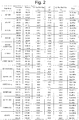
- Fig. 2 shows MRM parameters for each peptide stored in the processing condition parameter storage unit 51.
- Blood is collected from the subject and left for a predetermined period of time, followed by centrifugation before the supernatant (serum) is collected.
- Preprocessing is performed according to the procedure shown in Fig. 3 .
- the upper surface of the sample plate is sealed with an aluminum seal and the sample plate is stirred by a plate shaker. Then, the sample is subjected to the first centrifugation (100 g, 2 minutes, 4°C) by a centrifuge corresponding to the sample plate, heat treatment (100°C, 15 minutes), storage in ice (10 minutes), and the second centrifugation (100 g, 2 minutes, 4°C).
- the solvent B (500 ⁇ L of 50% to 100% methanol) is added to each well of a solid phase extraction column (trade name: Oasis HLB ⁇ Elution Plate, manufactured by Water Inc., hereinafter, referred to as the "solid phase extraction plate") corresponding to the 96-well plate to remove insoluble components, followed by adding 500 ⁇ L of the solvent C (aqueous solution containing 0.1% to 1% TFA) to adjust the solid phase extraction plate.
- a solid phase extraction column trade name: Oasis HLB ⁇ Elution Plate, manufactured by Water Inc., hereinafter, referred to as the "solid phase extraction plate”
- the solvent C aqueous solution containing 0.1% to 1% TFA
- each well of the solid phase extraction plate 50 ⁇ L of the solvent A (water-soluble organic solvent containing [0.1% to 1% TFA] + [5% to 50% ACN]) is added to each well of the solid phase extraction plate to elute peptide adsorbed onto the solid phase extraction plate into each well of the 96-well sample plate for mass spectrometry.
- the liquid contained in each well of the 96-well sample plate obtained as described above becomes a sample solution for mass spectrometry.
- the 96-well sample plate containing sample solutions for mass spectrometry obtained by treatment with the solid phase extraction column was set onto a sample mounting portion of the injector 13 of the LC-MS/MS described above to perform chromatographic mass spectrometry .
- Specific apparatus names of the LC unit 10 and the MS/MS unit 20, treatment conditions and the like in each unit, and analysis results thereof are shown below.
- the MRM measurement in the MS/MS unit 20 was performed by using the MRM parameters (see Fig. 2 ) of each peptide stored in advance in the processing condition parameter storage unit 51.
- Fig. 5 is a base peak chromatogram created based on the ionic strength of the obtained 14 peptides as a result of conducting liquid chromatograph mass spectrometry on a biological sample (serum) collected from a certain subject.
- the symbols shown in Fig. 5 correspond to those shown in Table 1.
- peaks derived from the 14 peptides were respectively observed.
- MRM parameters for each peptide are stored in advance in the processing condition parameter storage unit 51 for all of the 14 peptides, but MRM parameters for each peptide may be stored in the processing condition parameter storage unit 51 for one or a plurality of peptides selected from the 14 peptides.
- a solid phase extraction plate may be constituted by using a C18 column generally used as a reversed phase column of liquid chromatography.
Landscapes
- Life Sciences & Earth Sciences (AREA)
- Chemical & Material Sciences (AREA)
- Health & Medical Sciences (AREA)
- Engineering & Computer Science (AREA)
- Organic Chemistry (AREA)
- Analytical Chemistry (AREA)
- Molecular Biology (AREA)
- Proteomics, Peptides & Aminoacids (AREA)
- Immunology (AREA)
- Physics & Mathematics (AREA)
- Zoology (AREA)
- Wood Science & Technology (AREA)
- Biochemistry (AREA)
- General Health & Medical Sciences (AREA)
- Biotechnology (AREA)
- Microbiology (AREA)
- Bioinformatics & Cheminformatics (AREA)
- Biomedical Technology (AREA)
- Hematology (AREA)
- Biophysics (AREA)
- Urology & Nephrology (AREA)
- Genetics & Genomics (AREA)
- General Engineering & Computer Science (AREA)
- Pathology (AREA)
- General Physics & Mathematics (AREA)
- Neurosurgery (AREA)
- Cell Biology (AREA)
- Food Science & Technology (AREA)
- Medicinal Chemistry (AREA)
- Bioinformatics & Computational Biology (AREA)
- Neurology (AREA)
- Spectroscopy & Molecular Physics (AREA)
- Chemical Kinetics & Catalysis (AREA)
- Other Investigation Or Analysis Of Materials By Electrical Means (AREA)
- Investigating Or Analysing Biological Materials (AREA)
- Peptides Or Proteins (AREA)
Abstract
Description
- The present invention relates to a method for detecting and quantifying biomarkers of cognitive dysfunction diseases by quantifying a plurality of types of peptides using mass spectrometry and a mass spectrometer.
- Cognitive dysfunction diseases including Alzheimer's disease are diseases that cause a decline in memory ability and cognitive ability of a patient, and the disease progresses gradually and continuously over 10 to 20 years. In an advanced cognitive dysfunction disease in which the disease has progressed, not only the loss of memory function and cognitive function, but also the collapse of personality is caused and the social life function of the patient is lost and so development of an effective therapeutic agent is desired.
- In Japan, several therapeutic agents have been developed and used, including donepezil hydrochloride as an acetylcholinesterase inhibitor approved as a therapeutic agent for Alzheimer type dementia in 1999, but all therapeutic agents only slow the progression of the symptoms and does not restore the declined function. Therefore, in order to make the current therapeutic agents more effective, it is desirable to find a cognitive dysfunction disease at an early stage.
- The following three methods are mainly used for diagnosing cognitive dysfunction diseases:
- This is a method in which a specialized clinician inquires about the orientation (current year and month, time, the basic situation such as where you are), memory ability, computational power, and language ability of a testee and makes a diagnosis based on the results. Mini-Mental State Examination (MMSE), Hasegawa Dementia Scale-Revised (HDS-R), Wechsler Adult Intelligence Scale, Third Edition (WAIS-III) are available.
- This is a method of measuring the cerebral blood flow rate and glucose metabolism by Positron Emission Tomography (PET) or Single Photon Emission Computed Tomography (SPECT) to make a diagnosis based on the results.
- This is a method of measuring the quantity and quantity ratio of total tau (t-tau) and amyloid β peptide in cerebrospinal fluid to make a diagnosis based on the results.
- The method (1) is usually used for the purpose of screening for cognitive dysfunction disease and does not lead to definitive diagnosis. In addition, patients with cognitive dysfunction diseases classified as serious cannot be diagnosed by HSD-R and MMSE (Non Patent Literature 1)" Nagai Shoten Co., Ltd., April 2004). The method (2) requires the use of special and expensive equipment and it is difficult to implement the method in all medical institutions. Further, in the methods (1) and (2), the diagnostic result may differ depending on the physician in charge, resulting in lack of objectivity.
- Although the method (3) has high diagnostic sensitivity and enables objective diagnosis, sampling of cerebrospinal fluid is technically difficult and is not practical.
- On the other hand, a difference in the content of a plurality of specific proteins or peptides derived from the proteins contained in blood (including serum and plasma), which is a biological sample relatively easily obtainable, was found between patients having a cognitive dysfunction disease (cognitive dysfunction disease subjects) and those who do not suffer from a cognitive dysfunction disease (non-cognitive dysfunction disease subjects), and a method of detecting cognitive dysfunction diseases using these proteins or peptides as biomarkers has been discussed (
Patent Literatures 1 to 6). Among these biomarkers, some biomarkers show a difference in content not only between subjects with cognitive dysfunction disease and non-cognitive dysfunction disease subjects, but also between subjects with cognitive dysfunction diseases of different degrees of progression, and thus, the measurement of content of such biomarkers is expected as an effective method for early diagnosis of cognitive dysfunction diseases and determination of the degree of progression of symptoms of the disease. -
- Patent Literature 1:
JP 2010-271078 A - Patent Literature 2:
JP 2012-037349 A - Patent Literature 3:
JP 2012-132808 A - Patent Literature 4:
JP 2016-028243 A - Patent Literature 5:
JP 2016-028244 A - Patent Literature 6:
WO 2014/207888 - Non Patent Literature 1: Edited by Imaharu Nakano and Hidehiro Mizusawa "Yoku wakaru arutsuhaimah byo-jissaini kakawaru hitono tameni (Alzheimer's Disease Understood Well-For Actual Participants)"
- In order to achieve an early diagnosis of cognitive dysfunction diseases or to improve the accuracy of determination of the degree of progression, it is necessary to specifically and highly sensitively detect a plurality of types of biomarkers contained in a biological sample. In addition, as the number of patients with cognitive dysfunction diseases is expected to increase along with aging, considering that the number of specimens (the number of biological samples) for diagnosing cognitive dysfunction disease increases, it is necessary to make the time needed for detecting one type of biomarker as short as possible.
- In
Patent Literatures 1 to 6 described above, as a method for detecting a cognitive dysfunction disease biomarker, a measuring method using an antigen-antibody reaction, an enzyme activity measuring method using a reaction between a substrate and an enzyme, or a measuring method using mass spectrometry is disclosed. However, the measuring method using the antigen-antibody reaction and the enzyme activity measuring method are methods for measuring one type of protein or one type of peptide alone, and it takes time and effort to measure various types of biomarkers. On the other hand, in the measuring method using the mass spectrometry, while it is possible to measure a plurality of types of biomarkers at a time, measurement conditions need to be set appropriately for each of the plurality of types of biomarkers in order to enhance the detection sensitivity, but measurement conditions are not discussed inPatent Literatures 1 to 6. Under present circumstances, as described above, there is no established method for detecting biomarkers of cognitive dysfunction diseases satisfying the above-mentioned desires. - A subject to be solved by the present invention is to provide a technology for detecting a biomarker of cognitive dysfunction disease in a biological sample in a short time specifically with high sensitivity.
- Thus, the present invention aimed at solving the aforementioned problem provides a method for quantifying a cognitive dysfunction disease biomarker based on a result obtained by performing a multiple reaction monitoring (MRM) measurement using a mass spectrometer capable of MS/MS measurement of the cognitive dysfunction disease biomarker contained in a biological sample,
wherein
the cognitive dysfunction disease biomarker includes at least one peptide selected from the group consisting of: - a complement C4-A-derived peptide AD1008 composed of an amino acid sequence represented by SEQ ID NO: 1,
- a transcription factor AP-2γ-derived peptide AD1025 composed of an amino acid sequence represented by SEQ ID NO: 2,
- an oxytocin receptor-derived peptide AD1042 composed of an amino acid sequence represented by SEQ ID NO: 3,
- an E3 ubiquitin ligase HERC-derived peptide AD1046 composed of an amino acid sequence represented by SEQ ID NO: 4,
- a prothrombin-derived peptide AD1048 composed of an amino acid sequence represented by SEQ ID NO: 5,
- a complement C4-derived peptide AD1049 composed of an amino acid sequence represented by SEQ ID NO: 6,
- a tumor necrosis factor receptor superfamily member 16-derived peptide ADPEP109315 composed of an amino acid sequence represented by SEQ ID NO: 7,
- a gelsolin-derived peptide ADPEP421488 composed of an amino acid sequence represented by SEQ ID NO: 8,
- a neurexin-2-β precursor-derived peptide ADPEP 1315 composed of an amino acid sequence represented by SEQ ID NO: 9,
- a neurexin-1-β-derived peptide ADPEP12neu composed of an amino acid sequence represented by SEQ ID NO: 10,
- a prothrombin precursor-derived peptide ADPEP1396 composed of an amino acid sequence represented by SEQ ID NO: 11,
- a prothrombin precursor-derived peptide ADPEP1039 composed of an amino acid sequence represented by SEQ ID NO: 12,
- a prothrombin precursor-derived peptide ADPEP1250 composed of an amino acid sequence represented by SEQ ID NO: 13, and
- a protocadherin γ-derived peptide AD1089 composed of an amino acid sequence represented by SEQ ID NO: 14, and
- an MRM transition which is a combination of a mass-to-charge ratio of a precursor ion and a mass-to-charge ratio of a product ion, the MRM transition being one of measurement conditions of the MRM measurement, is:
- 646.05/763.95, 646.05/410.25 or 646.05/615.35 for the peptide AD1008,
- 538.95/534.25, 538.95/484.75 or 538.95/541.25 for the peptide AD1025,
- 520.75/449.70, 520.75/401.20 or 520.75/801.40 for the peptide AD1042,
- 856.90/720.25, 856.90/993.55 or 856.90/555.35 for the peptide AD1046,
- 776.00/1061.50, 776.00/1036.45 or 776.00/1150.50 for the peptide AD1048,
- 512.30/516.30, 512.30/629.35 or 512.30/453.75 for the peptide AD1049,
- 518.25/642.85, 518.25/586.30 or 776.90/796.40 for the peptide ADPEP109315,
- 725.40/378.15, 725.40/917.45 or 725.40/873.95 for the peptide ADPEP421488,
- 744.35/885.45, 744.35/757.40 or 496.60/472.25 for the peptide ADPEP1315,
- 942.00/448.20, 628.35/448.20 or 942.00/547.25 for the peptide ADPEP12neu,
- 781.35/781.40, 521.25/533.30 or 781.35/1072.50 for the peptide ADPEP1396,
- 638.80/1072.50, 638.80/862.40 or 638.80/747.35 for the peptide ADPEP1039,
- 478.25/452.25, 478.25/509.75 or 478.25/351.20 for the peptide ADPEP1250, and
- 458.25/331.20, 458.25/602.35 or 458.25/701.40 for the peptide AD1089.
- The present invention has been made by finding an MRM transition, which is a combination of a mass-to-charge ratio of a precursor ion associated with each peptide and a mass-to-charge ratio of a product ion, as an optimum measurement condition when the above 14 peptides known as cognitive dysfunction disease biomarkers are quantified by performing MRM measurements using a mass spectrometer capable of MS/MS measurement. That is, by setting the transition in the MRM measurement as described above for each of the 14 peptides, each of the 14 peptides contained in a biological sample can be detected specifically and highly sensitively.
- Also, the present invention provides a mass spectrometer that determines a content of a cognitive dysfunction disease biomarker based on a result of mass spectrometry of the cognitive dysfunction disease biomarker contained in a biological sample, the mass spectrometer including:
- a mass analysis unit capable of an MS/MS measurement;
- a measurement condition storage unit that stores MRM transitions of 14 peptides having the above-mentioned
SEQ ID NOs 1 to 14 as measurement conditions including MRM transitions, each of the MRM transitions being a combination of a mass-to-charge ratio of a precursor ion and a mass-to-charge ratio of a product ion when the mass analysis unit performs an MRM measurement; and - a measurement execution unit that causes the mass analysis unit to perform MRM measurements of the 14 peptides using the measurement conditions stored in the measurement condition storage unit.
- In the above configuration, the mass analysis unit is preferably a triple quadrupole mass analysis unit, and in that case, the measurement condition storage unit may store, in addition to the MRM transitions of 14 peptides, collision energy, the voltage value to be applied to each rod electrode of a front quadrupole mass filter and a rear quadrupole mass filter and the like. Here, the collision energy and the voltage value to be applied to each rod electrode of the front quadrupole mass filter and the rear quadrupole mass filter may be determined by the user who performs the measurement using the present apparatus by performing preliminary experiments or the like or may be determined by the manufacturer itself that manufactures the apparatus by performing preliminary experiments or the like. Alternatively, the manufacturer may provide measurement conditions to the user in response to a request from the user.
- According to the present invention, biomarkers of cognitive dysfunction disease in a biological sample can be detected and quantified in a short time specifically and highly sensitively, so that an early diagnosis of cognitive dysfunction diseases can be made.
-
-
Fig. 1 is a schematic block diagram of an embodiment of a liquid chromatograph mass spectrometer used for carrying out a method for quantifying a cognitive dysfunction disease biomarker according to the present invention. -
Fig. 2 is a diagram showing MRM transitions of 14 biomarker peptides of cognitive dysfunction diseases. -
Fig. 3 is a diagram illustrating a procedure of preprocessing. -
Fig. 4 is a diagram showing a gradient profile of analysis in a liquid chromatograph unit. -
Fig. 5 is an MRM chromatogram obtained as a result of measuring a certain biological sample using the liquid chromatograph mass spectrometer according to the present embodiment. - Hereinafter, an embodiment of a method for quantifying a cognitive dysfunction disease biomarker according to the present invention will be described with reference to the drawings.
-
Fig. 1 is a schematic block diagram of a liquid chromatograph mass spectrometer (LC-MS/MS) used for carrying out the method for quantifying a cognitive dysfunction disease biomarker according to the present invention. - The liquid chromatograph mass spectrometer includes a liquid chromatograph unit (LC unit) 10 and a mass analysis unit (MS/MS unit) 20.
- The
LC unit 10 includes amobile phase vessel 11 in which a mobile phase is stored, apump 12 that sucks the mobile phase to feed the mobile phase at a constant flow rate, aninjector 13 that injects a predetermined amount of sample prepared in advance into the mobile phase, and acolumn 14 that separates various compounds contained in the sample in a time direction. When so-called gradient separation is performed in which theLC unit 10 separates compounds contained in a sample while continuously changing the composition of a plurality of mobile phases, two or moremobile phase vessels 11 and two ormore pumps 12 are provided. - The MS/
MS unit 20 is constituted of a tandem quadrupole mass spectrometer and has a configuration of a multi-stage differential evacuation system including first and secondintermediate vacuum chambers ionization chamber 21 which is at atmospheric pressure and a highvacuum analysis chamber 24 evacuated by a high-performance vacuum pump. Theionization chamber 21 is provided with anelectrospray ionization probe 25 for atomization while applying electric charge to a sample solution, and theionization chamber 21 and the firstintermediate vacuum chamber 22 at the next stage are communicated through aheating capillary 26 with a small diameter. The firstintermediate vacuum chamber 22 and the secondintermediate vacuum chamber 23 are separated by askimmer 28 having a small hole at the top, and ion guides 27 and 29 for transporting ions to the latter stage while converging ions are installed in the firstintermediate vacuum chamber 22 and the secondintermediate vacuum chamber 23, respectively. In theanalysis chamber 24, a front quadrupolemass filter 30 that separates ions in accordance with a mass-to-charge ratio while facing acollision cell 31 in which amultipole ion guide 32 is installed, a rear quadrupolemass filter 33 for similarly separating ions in accordance with a mass-to-charge ratio, and further anion detector 34 are installed. A CIDgas supply unit 35 supplies a CID gas such as argon or nitrogen into thecollision cell 31. In addition, apower supply unit 36 applies predetermined voltages to theelectrospray ionization probe 25, the ion guides 27, 29, 32, the quadrupole mass filters 30, 33, and the like. - A
data processing unit 40 includes adata collection unit 41, adata storage unit 42, agraph creation unit 43, aquantitative analysis unit 44, and the like as functional blocks. Acontrol unit 50 to which aninput unit 52 and adisplay unit 53 are attached includes a processing conditionparameter storage unit 51 and controls, based on processing condition parameters stored in advance in thestorage unit 51, the operation of each unit such as thepump 12 and theinjector 13 of theLC unit 10 and thepower supply unit 36 and the CIDgas supply unit 35 of the MS/MS unit 20. In the present embodiment, thecontrol unit 50 functions as a measurement execution unit of the present invention, and the processing conditionparameter storage unit 51 functions as a measurement condition mechanism unit. At least portion of the functions of thecontrol unit 50 and thedata processing unit 40 can be implemented by using a personal computer as a hardware resource and executing dedicated control and processing software installed in advance on the computer. - The basic MS/MS measurement operation in the LC-MS/MS according to the present embodiment is as follows.
- First, the
pump 12 sucks a mobile phase from themobile phase vessel 11 and feeds the mobile phase to thecolumn 14 at a constant flow rate. When a constant amount of sample liquid is introduced into the mobile phase from theinjector 13, the sample is introduced into thecolumn 14 in the flow of the mobile phase, and various compounds in the sample are separated in the time direction while passing through thecolumn 14 and eluted from the outlet of thecolumn 14 before being introduced into the MS/MS unit 20. - When the eluate from the
column 14 reaches theelectrospray ionization probe 25 in the MS/MS unit 20, the eluate is atomized while being charged at the tip of theprobe 25. Charged droplets formed by atomization are fragmented while being split caused by the action of electrostatic force due to the applied charge, and in the process the solvent evaporates and ions derived from the compound pop out. - Ions thus generated are sent to the first
intermediate vacuum chamber 22 through theheating capillary 26 and are converged by the ion guide 27 before being sent to the secondintermediate vacuum chamber 23 via the small hole at the top of theskimmer 28. Then, the ions derived from the compound are converged by the ion guide 29 and sent to theanalysis chamber 24 before being introduced into the space in the longitudinal direction of the front quadrupolemass filter 30. It should be noted that the ionization method is not limited to the electrospray ionization method and it is a matter of course that an atmospheric pressure chemical ionization method, an atmospheric pressure photoionization method or the like may be used. - When an MS/MS analysis is performed in the MS/
MS unit 20, each rod electrode of the front quadrupolemass filter 30 and the rear quadrupolemass filter 33 is supplied with a predetermined voltage (voltage in which a high-frequency voltage and a direct-current voltage are superimposed) from thepower supply unit 36, and a CID gas is continuously or intermittently supplied from the CIDgas supply unit 35 into thecollision cell 31. Accordingly, among various ions sent to the front quadrupolemass filter 30, only ions having a specific mass-to-charge ratio corresponding to the voltage applied to each rod electrode of the front quadrupolemass filter 30 pass through thefilter 30 and are introduced into thecollision cell 31 as precursor ions. In thecollision cell 31, the precursor ions collide with the CID gas and dissociated, generating various product ions. When the generated various product ions are introduced into the rear quadrupolemass filter 33, only product ions having a specific mass-to-charge ratio corresponding to the voltage applied to each rod electrode of the rear quadrupolemass filter 33 pass through thefilter 33 and reach theion detector 34 before being detected. A pulse count type detector can be used as theion detector 34 and in such a case, pulse signals corresponding to the number of incident ions are output as detection signals. - A detection signal of the
ion detector 34 is digitized and input into thedata processing unit 40. Thedata processing unit 40 creates a mass chromatogram in the vicinity of the time at which the compound appears for each compound to be measured, based on data sequentially input. Then, in the mass chromatogram, a peak corresponding to the compound to be measured is detected to calculate the peak area, and the concentration value of the compound to be measured, that is, the quantitative value is calculated by referring to a calibration curve, a table or the like indicating the relationship between the peak area value stored in thequantitative analysis unit 44 and the concentration. - Also in the present embodiment, similarly to the general LC-MS/MS, multiple reaction monitoring (MRM) measurements, product ion scan measurements, precursor ion scan measurements, and neutral loss scan measurements are prepared as the mode of MS/MS measurements.
- In the MRM measurement, MS/MS measurements are carried out by allowing only ions having a predetermined mass-to-charge ratio in each of the front quadrupole
mass filter 30 and the rear quadrupolemass filter 33, so that specific product ions corresponding to specific precursor ions derived from the peptide to be measured are detected. In the MRM measurement, it is possible to carry out measurements in which a plurality of channels in each of which the mass-to-charge ratio (m/z) of precursor ions and the mass-to-charge ratio (m/z) of product ions are paired is set. In the quantitative analysis of a cognitive dysfunction disease biomarker described below, the MRM measurement is used as the MS/MS measurement. - Next, a procedure when a quantitative analysis of a cognitive dysfunction disease biomarker is performed using the LC-MS/MS in the present embodiment will be described. It is assumed here that 14 partial peptides shown in Table 1 are used as cognitive dysfunction disease biomarkers. These 14 partial peptides are all generated as partial peptides as a result of proteins, which are present in a complete state in the living body of a person not suffering from a cognitive dysfunction disease (hereinafter, referred to as "intact protein"), being digested in the living body of a cognitive dysfunction disease patient. Alternatively, these 14 partial peptides are translated and synthesized as partial peptides due to splicing abnormality or the like in translation and synthesis of proteins. Table 1 shows the identification numbers (ID) representing the 14 partial peptides, the intact protein name as the source of the peptides, and the amino acid sequences of the peptides.
[Table 1] No. Peptide ID Protein name Amino acid sequence 1 AD 1008 Complement C4-A APLQPVTPLQLFEGRRN Complement C4- A 2 AD1025 Transcription factor AP-2 γ PGRQSQEGAGLPSHHG Transcription factor AP-2 gamma 3 AD1042 Oxytocin receptor AAPPGAEGNRT Oxytocin receptor 4 AD1046 E3 ubiquitin ligase HERC2 KLAELPAAAQPSAEDSD E3 ubiquitin- protein ligase HERC2 5 AD1048 (ADPEP2036) Prothrombin TATSEYQTFFNPRTFGSGEAD Prothrombin 6 AD1049 Complement C3 APVIHQEMIGGLRN Complement C3 7 ADPEP109315 Tumor necrosis factor receptor superfamily member 16QTASGQALKGDGGLYS Tumor necrosis factor receptor superfamily 8 ADPEP421488 Gelsolin GLGLSYLSSHIANVERVPFD Gelsolin 9 ADPEP1315 Neurexin-2-β precursor RSGGNATLQVDSWP Neurexin-2- beta precursor 10 ADPEP12neu Neurexin 1-β NIAIVGDVRLVGEVPSSGT Neurexin 1- β 11 ADPEP1396 Prothrombin precursor TATSEYQTFFNPR Prothrombin precursor 12 ADPEP1039 Prothrombin precursor GLDEDSDRAIEG Prothrombin precursor 13 ADPEP1250 Prothrombin precursor GLDEDSDRAIEGR Prothrombin precursor 14 AD 1089 Protocadherin γ A-10 GVSGSHFVGVDGVR Protocadherin gamma A-10 - As shown in Table 1, the amino acid sequence of each of the 14 peptides is known, and by conducting a preliminary experiment or by using a general compound database, measurement conditions suitable for quantitative analysis using the LC-MS/MS in the present embodiment can be determined. As such measurement conditions, each value of the retention time of each peptide under predetermined separation conditions in the
LC unit 10, a combination of the mass-to-charge ratio of precursor ions and the mass-to-charge ratio of product ions derived from each peptide, which is a condition for performing MRM measurement in the MS/MS unit 20 (hereinafter, referred to as a "MRM transition"), the collision energy, the voltage (Q1 pre-rod bias voltage) applied to each rod electrode of the front quadrupolemass filter 30, and the voltage (Q3 pre-rod bias voltage) applied to each rod electrode of the rear quadrupolemass filter 33 can be cited. - In the present embodiment, in order to be capable of determining the content of each of the 14 peptides in a biological sample, an appropriate MRM transition, the collision energy value, the Q1 pre-rod bias voltage value, and the Q3 pre-rod bias voltage value are determined in advance for each of the 14 peptides, and these MRM parameters are stored in the processing condition
parameter storage unit 51.Fig. 2 shows MRM parameters for each peptide stored in the processing conditionparameter storage unit 51. - Next, description will be given from the preparation of a biological sample to measurement processing in the
LC unit 10 and the MS/MS unit 20. - First, the following reagents, tools and the like are prepared.
- (1) Standard solution for calibration curve (STD solution): A reagent containing a predetermined amount of peptide, more specifically a predetermined amount of one or a plurality of peptides selected from 14 peptides listed in Table 1, the peptide including a portion of the amino acid sequence of an intact protein (prothrombin, gelsolin, complement C4A, complement C3) that serves as a biomarker of cognitive dysfunction disease. The STD solution may be a standard serum containing a predetermined amount of one or a plurality of peptides selected from the 14 peptides. By stepwisely diluting the STD solution using a predetermined diluent, each calibration point solution (for example, solutions for six calibration points) on the calibration curve is prepared.
- (2) Standard solution for quality control (QC solution): A solution prepared by mixing a solution for calibration point prepared from the STD solution. For example, in the case of six calibration points, a solution prepared by mixing the solution of
calibration point 1 and the solution ofcalibration point 2, a solution prepared by mixing the solution of calibration point 3 and the solution ofcalibration point 4, and a solution prepared by mixing the solution ofcalibration point 5 and the solution ofcalibration point 6 are each used as QC solutions. - (3) Stable isotope reagent: A reagent containing a predetermined amount of the 14 peptides in which a portion of atoms is substituted with stable isotopes.
- (4) Solvent A: A water-soluble organic solvent containing 0.1% to 1% trifluoroacetic acid (TFA) and 5% to 50% acetonitrile (ACN)
- (5) Solvent B: 50% to 100% methanol
- (6) Solvent C: An aqueous solution containing 0.1% to 1% TFA
- (7) Solvent D: A water-soluble organic solvent containing 0.1% to 1% TFA and 5% to 50% methanol
- (8) Aluminum seal
- (9) A 96-hole (well) sample plate
- (10) A plate mat for evaporation prevention
- Blood is collected from the subject and left for a predetermined period of time, followed by centrifugation before the supernatant (serum) is collected.
- Preprocessing is performed according to the procedure shown in
Fig. 3 . - First, 25 µL of biological sample serum is injected into each well of the 96-well sample plate. In addition, 25 µL of the STD solution or QC solution is injected into wells different from the wells into which serum has been injected.
- Next, 475 µL of the solvent C (an aqueous solution containing 0.1% to 1% TFA) is added to each well of the sample plate into which the serum, the STD solution, or the QC solution has been injected and further, 20 µL of the stable isotope reagent is added. Accordingly, 520 µL of liquid (mixed liquid) has been injected into each well.
- Subsequently, the upper surface of the sample plate is sealed with an aluminum seal and the sample plate is stirred by a plate shaker. Then, the sample is subjected to the first centrifugation (100 g, 2 minutes, 4°C) by a centrifuge corresponding to the sample plate, heat treatment (100°C, 15 minutes), storage in ice (10 minutes), and the second centrifugation (100 g, 2 minutes, 4°C).
- First, the solvent B (500 µL of 50% to 100% methanol) is added to each well of a solid phase extraction column (trade name: Oasis HLB µElution Plate, manufactured by Water Inc., hereinafter, referred to as the "solid phase extraction plate") corresponding to the 96-well plate to remove insoluble components, followed by adding 500 µL of the solvent C (aqueous solution containing 0.1% to 1% TFA) to adjust the solid phase extraction plate.
- Next, 500 µL of the supernatant in each well of the sample plate after the second centrifugation of the pretreatment is added to the corresponding well of the solid phase extraction plate. Subsequently, 500 µL of the solvent D (water-soluble organic solvent containing [0.1% to 1% TFA] + [5% to 50% methanol]) is added into each well of the solid phase extraction plate to clean and discharge matrix components non-specifically adsorbed onto the solid phase extraction plate. Then, 50 µL of the solvent A (water-soluble organic solvent containing [0.1% to 1% TFA] + [5% to 50% ACN]) is added to each well of the solid phase extraction plate to elute peptide adsorbed onto the solid phase extraction plate into each well of the 96-well sample plate for mass spectrometry. The liquid contained in each well of the 96-well sample plate obtained as described above becomes a sample solution for mass spectrometry.
- The 96-well sample plate containing sample solutions for mass spectrometry obtained by treatment with the solid phase extraction column was set onto a sample mounting portion of the
injector 13 of the LC-MS/MS described above to perform chromatographic mass spectrometry . Specific apparatus names of theLC unit 10 and the MS/MS unit 20, treatment conditions and the like in each unit, and analysis results thereof are shown below. -
- Apparatus name: A high-performance liquid chromatograph apparatus (trade name: Nexera XR (manufactured by Shimadzu Corporation)) capable of gradient analysis was used.
- Column: A reversed-phase column for analysis of peptides and proteins (trade name: Aeris (registered trademark) peptide (Phenomenex Inc.), column size: 2.1 × 50 mm, 2.6 µm (MAX Pressure: 1000 bar (100 MPa)) was used.
- Analysis method: A gradient analysis was adopted in which the sample solution for mass spectrometry was temporally separated while temporally changing the mixing ratio of solvent E and solvent F below.
Fig. 4 shows a gradient profile.- Solvent E: Water: ACN: formic acid = 98: 2: 0.1
- Solvent F: Water: ACN: formic acid = 10: 90: 0.1
- Heating temperature; 55°C
- Sampler temperature; 5°C
-
- Apparatus name: A triple quadrupole mass spectrometer (trade name: LCMS-8060 (manufactured by Shimadzu Corporation)), which is a mass spectrometer capable of MRM measurement, was used. The setting values of each unit at the time of analysis are as follows:
- CID gas pressure: 270kPa
- Interface voltage: 3kV
- Nebulizer gas flow rate: 3L/min
- Heating gas flow rate: 10L/min
- Interface temperature: 300°C
- DL temperature: 250°C
- Heat block temperature: 400°C
- Drying gas flow rate: 10L/min
- The MRM measurement in the MS/
MS unit 20 was performed by using the MRM parameters (seeFig. 2 ) of each peptide stored in advance in the processing conditionparameter storage unit 51. -
Fig. 5 is a base peak chromatogram created based on the ionic strength of the obtained 14 peptides as a result of conducting liquid chromatograph mass spectrometry on a biological sample (serum) collected from a certain subject. The symbols shown inFig. 5 correspond to those shown in Table 1. As shown inFig. 5 , peaks derived from the 14 peptides were respectively observed. - The above embodiment is merely an example of the present invention, and for example, a gas chromatograph may be used instead of the liquid chromatograph.
- In the above embodiment, MRM parameters for each peptide are stored in advance in the processing condition
parameter storage unit 51 for all of the 14 peptides, but MRM parameters for each peptide may be stored in the processing conditionparameter storage unit 51 for one or a plurality of peptides selected from the 14 peptides. - In addition, the tools and apparatuses used in the above embodiment are merely examples, and the present invention is not limited thereto. For example, a solid phase extraction plate may be constituted by using a C18 column generally used as a reversed phase column of liquid chromatography.
- In addition, it is obvious that even if appropriate modifications, amendments, or additions are made within the scope of the spirit of the present invention, these modifications, amendments, or additions are included within the scope of claims of the present application.
-
- 10
- Liquid Chromatograph Unit
- 14
- Column
- 20
- MS/MS Unit
- 30
- Quadrupole Mass Filter
- 30
- Front Quadrupole Mass Filter
- 31
- Collision Cell
- 32
- Ion Guide
- 34
- Ion Detector
- 35
- Cid Gas Supply Unit
- 36
- Power Supply Unit
- 40
- Data Processing Unit
- 41
- Data Collection Unit
- 42
- Data Storage Unit
- 43
- Graph Creation Unit
- 44
- Quantitative Analysis Unit
- 50
- Control Unit
- 52
- Input Unit
- 53
- Display Unit


Claims (4)
- A method for quantifying a cognitive dysfunction disease biomarker based on a result obtained by performing a multiple reaction monitoring (MRM) measurement using a mass spectrometer capable of MS/MS measurement of the cognitive dysfunction disease biomarker contained in a biological sample,
wherein
the cognitive dysfunction disease biomarker includes at least one peptide selected from the group consisting of:a complement C4-A-derived peptide AD1008 composed of an amino acid sequence represented by SEQ ID NO: 1,a transcription factor AP-2γ-derived peptide AD1025 composed of an amino acid sequence represented by SEQ ID NO: 2,an oxytocin receptor-derived peptide AD1042 composed of an amino acid sequence represented by SEQ ID NO: 3,an E3 ubiquitin ligase HERC-derived peptide AD1046 composed of an amino acid sequence represented by SEQ ID NO: 4,a prothrombin-derived peptide AD1048 composed of an amino acid sequence represented by SEQ ID NO: 5,a complement C4-derived peptide AD1049 composed of an amino acid sequence represented by SEQ ID NO: 6,a tumor necrosis factor receptor superfamily member 16-derived peptide ADPEP109315 composed of an amino acid sequence represented by SEQ ID NO: 7,a gelsolin-derived peptide ADPEP421488 composed of an amino acid sequence represented by SEQ ID NO: 8,a neurexin-2-β precursor-derived peptide ADPEP 1315 composed of an amino acid sequence represented by SEQ ID NO: 9,a neurexin-1-β-derived peptide ADPEP12neu composed of an amino acid sequence represented by SEQ ID NO: 10,a prothrombin precursor-derived peptide ADPEP1396 composed of an amino acid sequence represented by SEQ ID NO: 11,a prothrombin precursor-derived peptide ADPEP1039 composed of an amino acid sequence represented by SEQ ID NO: 12,a prothrombin precursor-derived peptide ADPEP1250 composed of an amino acid sequence represented by SEQ ID NO: 13, anda protocadherin γ-derived peptide AD1089 composed of an amino acid sequence represented by SEQ ID NO: 14, andan MRM transition which is a combination of a mass-to-charge ratio of a precursor ion and a mass-to-charge ratio of a product ion, the MRM transition being one of measurement conditions of the MRM measurement, is:646.05/763.95, 646.05/410.25 or 646.05/615.35 for the peptide AD1008,538.95/534.25, 538.95/484.75 or 538.95/541.25 for the peptide AD1025,520.75/449.70, 520.75/401.20 or 520.75/801.40 for the peptide AD1042,856.90/720.25, 856.90/993.55 or 856.90/555.35 for the peptide AD1046,776.00/1061.50, 776.00/1036.45 or 776.00/1150.50 for the peptide AD1048,512.30/516.30, 512.30/629.35 or 512.30/453.75 for the peptide AD1049,518.25/642.85, 518.25/586.30 or 776.90/796.40 for the peptide ADPEP109315,725.40/378.15, 725.40/917.45 or 725.40/873.95 for the peptide ADPEP421488,744.35/885.45, 744.35/757.40 or 496.60/472.25 for the peptide ADPEP1315,942.00/448.20, 628.35/448.20 or 942.00/547.25 for the peptide ADPEP12neu,781.35/781.40, 521.25/533.30 or 781.35/1072.50 for the peptide ADPEP1396,638.80/1072.50, 638.80/862.40 or 638.80/747.35 for the peptide ADPEP1039,478.25/452.25, 478.25/509.75 or 478.25/351.20 for the peptide ADPEP1250, and458.25/331.20, 458.25/602.35 or 458.25/701.40 for the peptide AD1089. - The method for quantifying a cognitive dysfunction disease biomarker using a mass spectrometer according to claim 1, wherein the mass spectrometer is a triple quadrupole mass spectrometer.
- A mass spectrometer that determines a content of a cognitive dysfunction disease biomarker based on a result of mass spectrometry of the cognitive dysfunction disease biomarker contained in a biological sample, the mass spectrometer comprising:a mass analysis unit capable of an MS/MS measurement;a measurement condition storage unit that stores MRM transitions of 14 peptides as measurement conditions including MRM transitions, each of the MRM transitions being a combination of a mass-to-charge ratio of a precursor ion and a mass-to-charge ratio of a product ion when the mass analysis unit performs an MRM measurement; anda measurement execution unit that causes the mass analysis unit to perform MRM measurements of the 14 peptides using the measurement conditions stored in the measurement condition storage unit,whereinthe 14 peptides are:a complement C4-A-derived peptide AD1008 composed of an amino acid sequence represented by SEQ ID NO: 1,a transcription factor AP-2γ-derived peptide AD1025 composed of an amino acid sequence represented by SEQ ID NO: 2,an oxytocin receptor-derived peptide AD1042 composed of an amino acid sequence represented by SEQ ID NO: 3,an E3 ubiquitin ligase HERC-derived peptide AD1046 composed of an amino acid sequence represented by SEQ ID NO: 4,a prothrombin-derived peptide AD1048 composed of an amino acid sequence represented by SEQ ID NO: 5,a complement C4-derived peptide AD1049 composed of an amino acid sequence represented by SEQ ID NO: 6,a tumor necrosis factor receptor superfamily member 16-derived peptide ADPEP109315 composed of an amino acid sequence represented by SEQ ID NO: 7,a gelsolin-derived peptide ADPEP421488 composed of an amino acid sequence represented by SEQ ID NO: 8,a neurexin-2-β precursor-derived peptide ADPEP 1315 composed of an amino acid sequence represented by SEQ ID NO: 9,a neurexin-1-β-derived peptide ADPEP12neu composed of an amino acid sequence represented by SEQ ID NO: 10,a prothrombin precursor-derived peptide ADPEP1396 composed of an amino acid sequence represented by SEQ ID NO: 11,a prothrombin precursor-derived peptide ADPEP1039 composed of an amino acid sequence represented by SEQ ID NO: 12,a prothrombin precursor-derived peptide ADPEP1250 composed of an amino acid sequence represented by SEQ ID NO: 13, anda protocadherin γ-derived peptide AD1089 composed of an amino acid sequence represented by SEQ ID NO: 14, andthe MRM transitions of the 14 peptides are:646.05/763.95, 646.05/410.25 or 646.05/615.35 for the peptide AD1008,538.95/534.25, 538.95/484.75 or 538.95/541.25 for the peptide AD1025,520.75/449.70, 520.75/401.20 or 520.75/801.40 for the peptide AD1042,856.90/720.25, 856.90/993.55 or 856.90/555.35 for the peptide AD1046,776.00/1061.50, 776.00/1036.45, or 776.00/1150.50 for the peptide AD1048,512.30/516.30, 512.30/629.35 or 512.30/453.75 for the peptide AD1049,518.25/642.85, 518.25/586.30 or 776.90/796.40 for the peptide ADPEP109315,725.40/378.15, 725.40/917.45, or 725.40/873.95 for the peptide ADPEP421488,744.35/885.45, 744.35/757.40 or 496.60/472.25 for the peptide ADPEP1315,942.00/448.20, 628.35/448.20 or 942.00/547.25 for the peptide ADPEP12neu,781.35/781.40, 521.25/533.30 or 781.35/1072.50 for the peptide ADPEP1396,638.80/1072.50, 638.80/862.40 or 638.80/747.35 for the peptide ADPEP1039,478.25/452.25, 478.25/509.75 or 478.25/351.20 for the peptide ADPEP1250, and458.25/331.20, 458.25/602.35 or 458.25/701.40 for the peptide AD1089.
- The mass spectrometer according to claim 3, wherein
the mass analysis unit is a triple quadrupole mass analysis unit, and
the measurement conditions stored in the measurement condition storage unit further include one or a plurality of values selected from collision energy, a voltage value to be applied to each rod electrode of a front quadrupole mass filter, and a voltage value to be applied to each rod electrode of a rear quadrupole mass filter.
Applications Claiming Priority (1)
| Application Number | Priority Date | Filing Date | Title |
|---|---|---|---|
| JP2017137725A JP2019020206A (en) | 2017-07-14 | 2017-07-14 | Cognitive disorder biomarker quantification method using mass analysis and mass spectroscope |
Publications (2)
| Publication Number | Publication Date |
|---|---|
| EP3428650A2 true EP3428650A2 (en) | 2019-01-16 |
| EP3428650A3 EP3428650A3 (en) | 2019-05-01 |
Family
ID=63371457
Family Applications (1)
| Application Number | Title | Priority Date | Filing Date |
|---|---|---|---|
| EP18183279.1A Withdrawn EP3428650A3 (en) | 2017-07-14 | 2018-07-12 | Method for quantifying cognitive dysfunction disease biomarker using mass spectrometry and mass spectrometer |
Country Status (4)
| Country | Link |
|---|---|
| US (1) | US20190018021A1 (en) |
| EP (1) | EP3428650A3 (en) |
| JP (1) | JP2019020206A (en) |
| CN (1) | CN109254089A (en) |
Cited By (1)
| Publication number | Priority date | Publication date | Assignee | Title |
|---|---|---|---|---|
| EP3654032A4 (en) * | 2017-07-14 | 2021-04-14 | Mcbi Inc. | DISEASE DETECTION PROCESS |
Families Citing this family (4)
| Publication number | Priority date | Publication date | Assignee | Title |
|---|---|---|---|---|
| JP7156081B2 (en) * | 2019-02-20 | 2022-10-19 | 株式会社島津製作所 | Cognitive function indexing method |
| JP7295513B2 (en) * | 2019-05-10 | 2023-06-21 | 大陽日酸株式会社 | Labeling composition for mass spectrometry, quantitative analysis method for metabolites, and kinetic analysis method for metabolites |
| CN113906293A (en) * | 2019-05-31 | 2022-01-07 | 株式会社新日本科学 | Mass spectrometry method using chromatography mass spectrometry device |
| WO2026019905A1 (en) * | 2024-07-16 | 2026-01-22 | New York University | A biomarker for cerebral amyloid angiopathy and amyloid related imaging abnormality risk |
Citations (6)
| Publication number | Priority date | Publication date | Assignee | Title |
|---|---|---|---|---|
| JP2010271078A (en) | 2009-05-19 | 2010-12-02 | Mcbi:Kk | Biomarker for mental illness including cognitive dysfunction disease and method for detecting mental illness including cognitive dysfunction disease using the biomarker |
| JP2012037349A (en) | 2010-08-06 | 2012-02-23 | Mcbi:Kk | Biomarker of cognitive function disorder disease and method for detecting cognitive function disorder disease using the biomarker |
| JP2012132808A (en) | 2010-12-22 | 2012-07-12 | Mcbi:Kk | Biomarker for cognitive function disorder disease and method for detecting cognitive function disorder disease by using biomarker |
| WO2014207888A1 (en) | 2013-06-28 | 2014-12-31 | 株式会社Mcbi | Biomarkers for cognitive dysfunction diseases and method for detecting cognitive dysfunction disease using biomarkers |
| JP2016028243A (en) | 2015-09-09 | 2016-02-25 | 株式会社Mcbi | Biomarker for cognitive dysfunction disease and method for detecting cognitive dysfunction disease using the biomarker |
| JP2016028244A (en) | 2015-09-09 | 2016-02-25 | 株式会社Mcbi | Biomarker of cognitive function impairment disease and method of detecting cognitive function impairment disease using the biomarker |
Family Cites Families (2)
| Publication number | Priority date | Publication date | Assignee | Title |
|---|---|---|---|---|
| WO2015031694A2 (en) * | 2013-08-28 | 2015-03-05 | Caris Science, Inc. | Oligonucleotide probes and uses thereof |
| SG10201901076WA (en) * | 2014-02-08 | 2019-03-28 | Genentech Inc | Methods of treating alzheimer's disease |
-
2017
- 2017-07-14 JP JP2017137725A patent/JP2019020206A/en active Pending
-
2018
- 2018-07-12 EP EP18183279.1A patent/EP3428650A3/en not_active Withdrawn
- 2018-07-13 US US16/034,542 patent/US20190018021A1/en not_active Abandoned
- 2018-07-13 CN CN201810769895.3A patent/CN109254089A/en not_active Withdrawn
Patent Citations (6)
| Publication number | Priority date | Publication date | Assignee | Title |
|---|---|---|---|---|
| JP2010271078A (en) | 2009-05-19 | 2010-12-02 | Mcbi:Kk | Biomarker for mental illness including cognitive dysfunction disease and method for detecting mental illness including cognitive dysfunction disease using the biomarker |
| JP2012037349A (en) | 2010-08-06 | 2012-02-23 | Mcbi:Kk | Biomarker of cognitive function disorder disease and method for detecting cognitive function disorder disease using the biomarker |
| JP2012132808A (en) | 2010-12-22 | 2012-07-12 | Mcbi:Kk | Biomarker for cognitive function disorder disease and method for detecting cognitive function disorder disease by using biomarker |
| WO2014207888A1 (en) | 2013-06-28 | 2014-12-31 | 株式会社Mcbi | Biomarkers for cognitive dysfunction diseases and method for detecting cognitive dysfunction disease using biomarkers |
| JP2016028243A (en) | 2015-09-09 | 2016-02-25 | 株式会社Mcbi | Biomarker for cognitive dysfunction disease and method for detecting cognitive dysfunction disease using the biomarker |
| JP2016028244A (en) | 2015-09-09 | 2016-02-25 | 株式会社Mcbi | Biomarker of cognitive function impairment disease and method of detecting cognitive function impairment disease using the biomarker |
Non-Patent Citations (1)
| Title |
|---|
| "Yoku wakaru arutsuhaimah byo—jissaini kakawaru hitono tameni (Alzheimer's Disease Understood Well-For Actual Participants" |
Cited By (1)
| Publication number | Priority date | Publication date | Assignee | Title |
|---|---|---|---|---|
| EP3654032A4 (en) * | 2017-07-14 | 2021-04-14 | Mcbi Inc. | DISEASE DETECTION PROCESS |
Also Published As
| Publication number | Publication date |
|---|---|
| US20190018021A1 (en) | 2019-01-17 |
| CN109254089A (en) | 2019-01-22 |
| JP2019020206A (en) | 2019-02-07 |
| EP3428650A3 (en) | 2019-05-01 |
Similar Documents
| Publication | Publication Date | Title |
|---|---|---|
| US12196765B2 (en) | Mass spectrometry assay for congenital adrenal hyperplasia | |
| US20260086101A1 (en) | Quantitation of insulin-like growth factor-i and insulin-like growth factor-ii with high-resolution mass spectrometry | |
| US20190018021A1 (en) | Method for quantifying cognitive dysfunction disease biomaker using mass spectrometry and mass spectrometer | |
| US20250191903A1 (en) | Apolipoprotein e isoype detection by mass spectrometry | |
| CN115508483A (en) | A rapid LC-MS/MS method for the detection of methylmalonic acid in serum samples | |
| EP3654032B1 (en) | Disease detection method | |
| AU2023248408A1 (en) | Detection of insulin-like growth factor-2 variants by mass spectrometry | |
| US20130267031A1 (en) | Method for Measuring Neuropeptide Y in Biological Samples | |
| HK40120889A (en) | Mass spectrometry assay for congenital adrenal hyperplasia | |
| JP2014153205A (en) | Disease diagnostic device and disease diagnostic method |
Legal Events
| Date | Code | Title | Description |
|---|---|---|---|
| PUAI | Public reference made under article 153(3) epc to a published international application that has entered the european phase |
Free format text: ORIGINAL CODE: 0009012 |
|
| STAA | Information on the status of an ep patent application or granted ep patent |
Free format text: STATUS: REQUEST FOR EXAMINATION WAS MADE |
|
| 17P | Request for examination filed |
Effective date: 20180712 |
|
| AK | Designated contracting states |
Kind code of ref document: A2 Designated state(s): AL AT BE BG CH CY CZ DE DK EE ES FI FR GB GR HR HU IE IS IT LI LT LU LV MC MK MT NL NO PL PT RO RS SE SI SK SM TR |
|
| AX | Request for extension of the european patent |
Extension state: BA ME |
|
| PUAL | Search report despatched |
Free format text: ORIGINAL CODE: 0009013 |
|
| AK | Designated contracting states |
Kind code of ref document: A3 Designated state(s): AL AT BE BG CH CY CZ DE DK EE ES FI FR GB GR HR HU IE IS IT LI LT LU LV MC MK MT NL NO PL PT RO RS SE SI SK SM TR |
|
| AX | Request for extension of the european patent |
Extension state: BA ME |
|
| RIC1 | Information provided on ipc code assigned before grant |
Ipc: G01N 33/68 20060101AFI20190325BHEP |
|
| STAA | Information on the status of an ep patent application or granted ep patent |
Free format text: STATUS: THE APPLICATION HAS BEEN WITHDRAWN |
|
| 18W | Application withdrawn |
Effective date: 20191107 |