EP3426615B1 - Glass window having a luminous capability - Google Patents
Glass window having a luminous capability Download PDFInfo
- Publication number
- EP3426615B1 EP3426615B1 EP17713793.2A EP17713793A EP3426615B1 EP 3426615 B1 EP3426615 B1 EP 3426615B1 EP 17713793 A EP17713793 A EP 17713793A EP 3426615 B1 EP3426615 B1 EP 3426615B1
- Authority
- EP
- European Patent Office
- Prior art keywords
- glass
- sheet layer
- glass sheet
- thin film
- layer
- Prior art date
- Legal status (The legal status is an assumption and is not a legal conclusion. Google has not performed a legal analysis and makes no representation as to the accuracy of the status listed.)
- Active
Links
Images





Classifications
-
- C—CHEMISTRY; METALLURGY
- C03—GLASS; MINERAL OR SLAG WOOL
- C03C—CHEMICAL COMPOSITION OF GLASSES, GLAZES OR VITREOUS ENAMELS; SURFACE TREATMENT OF GLASS; SURFACE TREATMENT OF FIBRES OR FILAMENTS MADE FROM GLASS, MINERALS OR SLAGS; JOINING GLASS TO GLASS OR OTHER MATERIALS
- C03C17/00—Surface treatment of glass, not in the form of fibres or filaments, by coating
- C03C17/006—Surface treatment of glass, not in the form of fibres or filaments, by coating with materials of composite character
- C03C17/007—Surface treatment of glass, not in the form of fibres or filaments, by coating with materials of composite character containing a dispersed phase, e.g. particles, fibres or flakes, in a continuous phase
-
- B—PERFORMING OPERATIONS; TRANSPORTING
- B32—LAYERED PRODUCTS
- B32B—LAYERED PRODUCTS, i.e. PRODUCTS BUILT-UP OF STRATA OF FLAT OR NON-FLAT, e.g. CELLULAR OR HONEYCOMB, FORM
- B32B17/00—Layered products essentially comprising sheet glass, or glass, slag, or like fibres
- B32B17/06—Layered products essentially comprising sheet glass, or glass, slag, or like fibres comprising glass as the main or only constituent of a layer, next to another layer of a specific material
-
- B—PERFORMING OPERATIONS; TRANSPORTING
- B32—LAYERED PRODUCTS
- B32B—LAYERED PRODUCTS, i.e. PRODUCTS BUILT-UP OF STRATA OF FLAT OR NON-FLAT, e.g. CELLULAR OR HONEYCOMB, FORM
- B32B17/00—Layered products essentially comprising sheet glass, or glass, slag, or like fibres
- B32B17/06—Layered products essentially comprising sheet glass, or glass, slag, or like fibres comprising glass as the main or only constituent of a layer, next to another layer of a specific material
- B32B17/10—Layered products essentially comprising sheet glass, or glass, slag, or like fibres comprising glass as the main or only constituent of a layer, next to another layer of a specific material of synthetic resin
- B32B17/10005—Layered products essentially comprising sheet glass, or glass, slag, or like fibres comprising glass as the main or only constituent of a layer, next to another layer of a specific material of synthetic resin laminated safety glass or glazing
- B32B17/10009—Layered products essentially comprising sheet glass, or glass, slag, or like fibres comprising glass as the main or only constituent of a layer, next to another layer of a specific material of synthetic resin laminated safety glass or glazing characterized by the number, the constitution or treatment of glass sheets
- B32B17/10018—Layered products essentially comprising sheet glass, or glass, slag, or like fibres comprising glass as the main or only constituent of a layer, next to another layer of a specific material of synthetic resin laminated safety glass or glazing characterized by the number, the constitution or treatment of glass sheets comprising only one glass sheet
-
- B—PERFORMING OPERATIONS; TRANSPORTING
- B32—LAYERED PRODUCTS
- B32B—LAYERED PRODUCTS, i.e. PRODUCTS BUILT-UP OF STRATA OF FLAT OR NON-FLAT, e.g. CELLULAR OR HONEYCOMB, FORM
- B32B17/00—Layered products essentially comprising sheet glass, or glass, slag, or like fibres
- B32B17/06—Layered products essentially comprising sheet glass, or glass, slag, or like fibres comprising glass as the main or only constituent of a layer, next to another layer of a specific material
- B32B17/10—Layered products essentially comprising sheet glass, or glass, slag, or like fibres comprising glass as the main or only constituent of a layer, next to another layer of a specific material of synthetic resin
- B32B17/10005—Layered products essentially comprising sheet glass, or glass, slag, or like fibres comprising glass as the main or only constituent of a layer, next to another layer of a specific material of synthetic resin laminated safety glass or glazing
- B32B17/10009—Layered products essentially comprising sheet glass, or glass, slag, or like fibres comprising glass as the main or only constituent of a layer, next to another layer of a specific material of synthetic resin laminated safety glass or glazing characterized by the number, the constitution or treatment of glass sheets
- B32B17/10036—Layered products essentially comprising sheet glass, or glass, slag, or like fibres comprising glass as the main or only constituent of a layer, next to another layer of a specific material of synthetic resin laminated safety glass or glazing characterized by the number, the constitution or treatment of glass sheets comprising two outer glass sheets
-
- B—PERFORMING OPERATIONS; TRANSPORTING
- B32—LAYERED PRODUCTS
- B32B—LAYERED PRODUCTS, i.e. PRODUCTS BUILT-UP OF STRATA OF FLAT OR NON-FLAT, e.g. CELLULAR OR HONEYCOMB, FORM
- B32B17/00—Layered products essentially comprising sheet glass, or glass, slag, or like fibres
- B32B17/06—Layered products essentially comprising sheet glass, or glass, slag, or like fibres comprising glass as the main or only constituent of a layer, next to another layer of a specific material
- B32B17/10—Layered products essentially comprising sheet glass, or glass, slag, or like fibres comprising glass as the main or only constituent of a layer, next to another layer of a specific material of synthetic resin
- B32B17/10005—Layered products essentially comprising sheet glass, or glass, slag, or like fibres comprising glass as the main or only constituent of a layer, next to another layer of a specific material of synthetic resin laminated safety glass or glazing
- B32B17/10165—Functional features of the laminated safety glass or glazing
- B32B17/10541—Functional features of the laminated safety glass or glazing comprising a light source or a light guide
-
- B—PERFORMING OPERATIONS; TRANSPORTING
- B32—LAYERED PRODUCTS
- B32B—LAYERED PRODUCTS, i.e. PRODUCTS BUILT-UP OF STRATA OF FLAT OR NON-FLAT, e.g. CELLULAR OR HONEYCOMB, FORM
- B32B17/00—Layered products essentially comprising sheet glass, or glass, slag, or like fibres
- B32B17/06—Layered products essentially comprising sheet glass, or glass, slag, or like fibres comprising glass as the main or only constituent of a layer, next to another layer of a specific material
- B32B17/10—Layered products essentially comprising sheet glass, or glass, slag, or like fibres comprising glass as the main or only constituent of a layer, next to another layer of a specific material of synthetic resin
- B32B17/10005—Layered products essentially comprising sheet glass, or glass, slag, or like fibres comprising glass as the main or only constituent of a layer, next to another layer of a specific material of synthetic resin laminated safety glass or glazing
- B32B17/1055—Layered products essentially comprising sheet glass, or glass, slag, or like fibres comprising glass as the main or only constituent of a layer, next to another layer of a specific material of synthetic resin laminated safety glass or glazing characterized by the resin layer, i.e. interlayer
- B32B17/10761—Layered products essentially comprising sheet glass, or glass, slag, or like fibres comprising glass as the main or only constituent of a layer, next to another layer of a specific material of synthetic resin laminated safety glass or glazing characterized by the resin layer, i.e. interlayer containing vinyl acetal
-
- B—PERFORMING OPERATIONS; TRANSPORTING
- B32—LAYERED PRODUCTS
- B32B—LAYERED PRODUCTS, i.e. PRODUCTS BUILT-UP OF STRATA OF FLAT OR NON-FLAT, e.g. CELLULAR OR HONEYCOMB, FORM
- B32B17/00—Layered products essentially comprising sheet glass, or glass, slag, or like fibres
- B32B17/06—Layered products essentially comprising sheet glass, or glass, slag, or like fibres comprising glass as the main or only constituent of a layer, next to another layer of a specific material
- B32B17/10—Layered products essentially comprising sheet glass, or glass, slag, or like fibres comprising glass as the main or only constituent of a layer, next to another layer of a specific material of synthetic resin
- B32B17/10005—Layered products essentially comprising sheet glass, or glass, slag, or like fibres comprising glass as the main or only constituent of a layer, next to another layer of a specific material of synthetic resin laminated safety glass or glazing
- B32B17/1055—Layered products essentially comprising sheet glass, or glass, slag, or like fibres comprising glass as the main or only constituent of a layer, next to another layer of a specific material of synthetic resin laminated safety glass or glazing characterized by the resin layer, i.e. interlayer
- B32B17/1077—Layered products essentially comprising sheet glass, or glass, slag, or like fibres comprising glass as the main or only constituent of a layer, next to another layer of a specific material of synthetic resin laminated safety glass or glazing characterized by the resin layer, i.e. interlayer containing polyurethane
-
- B—PERFORMING OPERATIONS; TRANSPORTING
- B32—LAYERED PRODUCTS
- B32B—LAYERED PRODUCTS, i.e. PRODUCTS BUILT-UP OF STRATA OF FLAT OR NON-FLAT, e.g. CELLULAR OR HONEYCOMB, FORM
- B32B17/00—Layered products essentially comprising sheet glass, or glass, slag, or like fibres
- B32B17/06—Layered products essentially comprising sheet glass, or glass, slag, or like fibres comprising glass as the main or only constituent of a layer, next to another layer of a specific material
- B32B17/10—Layered products essentially comprising sheet glass, or glass, slag, or like fibres comprising glass as the main or only constituent of a layer, next to another layer of a specific material of synthetic resin
- B32B17/10005—Layered products essentially comprising sheet glass, or glass, slag, or like fibres comprising glass as the main or only constituent of a layer, next to another layer of a specific material of synthetic resin laminated safety glass or glazing
- B32B17/1055—Layered products essentially comprising sheet glass, or glass, slag, or like fibres comprising glass as the main or only constituent of a layer, next to another layer of a specific material of synthetic resin laminated safety glass or glazing characterized by the resin layer, i.e. interlayer
- B32B17/10788—Layered products essentially comprising sheet glass, or glass, slag, or like fibres comprising glass as the main or only constituent of a layer, next to another layer of a specific material of synthetic resin laminated safety glass or glazing characterized by the resin layer, i.e. interlayer containing ethylene vinylacetate
-
- B—PERFORMING OPERATIONS; TRANSPORTING
- B32—LAYERED PRODUCTS
- B32B—LAYERED PRODUCTS, i.e. PRODUCTS BUILT-UP OF STRATA OF FLAT OR NON-FLAT, e.g. CELLULAR OR HONEYCOMB, FORM
- B32B17/00—Layered products essentially comprising sheet glass, or glass, slag, or like fibres
- B32B17/06—Layered products essentially comprising sheet glass, or glass, slag, or like fibres comprising glass as the main or only constituent of a layer, next to another layer of a specific material
- B32B17/10—Layered products essentially comprising sheet glass, or glass, slag, or like fibres comprising glass as the main or only constituent of a layer, next to another layer of a specific material of synthetic resin
- B32B17/10005—Layered products essentially comprising sheet glass, or glass, slag, or like fibres comprising glass as the main or only constituent of a layer, next to another layer of a specific material of synthetic resin laminated safety glass or glazing
- B32B17/10807—Making laminated safety glass or glazing; Apparatus therefor
- B32B17/10899—Making laminated safety glass or glazing; Apparatus therefor by introducing interlayers of synthetic resin
- B32B17/10935—Making laminated safety glass or glazing; Apparatus therefor by introducing interlayers of synthetic resin as a preformed layer, e.g. formed by extrusion
-
- B—PERFORMING OPERATIONS; TRANSPORTING
- B32—LAYERED PRODUCTS
- B32B—LAYERED PRODUCTS, i.e. PRODUCTS BUILT-UP OF STRATA OF FLAT OR NON-FLAT, e.g. CELLULAR OR HONEYCOMB, FORM
- B32B37/00—Methods or apparatus for laminating, e.g. by curing or by ultrasonic bonding
- B32B37/14—Methods or apparatus for laminating, e.g. by curing or by ultrasonic bonding characterised by the properties of the layers
- B32B37/16—Methods or apparatus for laminating, e.g. by curing or by ultrasonic bonding characterised by the properties of the layers with all layers existing as coherent layers before laminating
- B32B37/18—Methods or apparatus for laminating, e.g. by curing or by ultrasonic bonding characterised by the properties of the layers with all layers existing as coherent layers before laminating involving the assembly of discrete sheets or panels only
-
- B—PERFORMING OPERATIONS; TRANSPORTING
- B32—LAYERED PRODUCTS
- B32B—LAYERED PRODUCTS, i.e. PRODUCTS BUILT-UP OF STRATA OF FLAT OR NON-FLAT, e.g. CELLULAR OR HONEYCOMB, FORM
- B32B37/00—Methods or apparatus for laminating, e.g. by curing or by ultrasonic bonding
- B32B37/14—Methods or apparatus for laminating, e.g. by curing or by ultrasonic bonding characterised by the properties of the layers
- B32B37/16—Methods or apparatus for laminating, e.g. by curing or by ultrasonic bonding characterised by the properties of the layers with all layers existing as coherent layers before laminating
- B32B37/18—Methods or apparatus for laminating, e.g. by curing or by ultrasonic bonding characterised by the properties of the layers with all layers existing as coherent layers before laminating involving the assembly of discrete sheets or panels only
- B32B37/182—Methods or apparatus for laminating, e.g. by curing or by ultrasonic bonding characterised by the properties of the layers with all layers existing as coherent layers before laminating involving the assembly of discrete sheets or panels only one or more of the layers being plastic
-
- C—CHEMISTRY; METALLURGY
- C03—GLASS; MINERAL OR SLAG WOOL
- C03C—CHEMICAL COMPOSITION OF GLASSES, GLAZES OR VITREOUS ENAMELS; SURFACE TREATMENT OF GLASS; SURFACE TREATMENT OF FIBRES OR FILAMENTS MADE FROM GLASS, MINERALS OR SLAGS; JOINING GLASS TO GLASS OR OTHER MATERIALS
- C03C1/00—Ingredients generally applicable to manufacture of glasses, glazes, or vitreous enamels
- C03C1/006—Ingredients generally applicable to manufacture of glasses, glazes, or vitreous enamels to produce glass through wet route
- C03C1/008—Ingredients generally applicable to manufacture of glasses, glazes, or vitreous enamels to produce glass through wet route for the production of films or coatings
-
- C—CHEMISTRY; METALLURGY
- C03—GLASS; MINERAL OR SLAG WOOL
- C03C—CHEMICAL COMPOSITION OF GLASSES, GLAZES OR VITREOUS ENAMELS; SURFACE TREATMENT OF GLASS; SURFACE TREATMENT OF FIBRES OR FILAMENTS MADE FROM GLASS, MINERALS OR SLAGS; JOINING GLASS TO GLASS OR OTHER MATERIALS
- C03C17/00—Surface treatment of glass, not in the form of fibres or filaments, by coating
- C03C17/006—Surface treatment of glass, not in the form of fibres or filaments, by coating with materials of composite character
- C03C17/008—Surface treatment of glass, not in the form of fibres or filaments, by coating with materials of composite character comprising a mixture of materials covered by two or more of the groups C03C17/02, C03C17/06, C03C17/22 and C03C17/28
-
- C—CHEMISTRY; METALLURGY
- C03—GLASS; MINERAL OR SLAG WOOL
- C03C—CHEMICAL COMPOSITION OF GLASSES, GLAZES OR VITREOUS ENAMELS; SURFACE TREATMENT OF GLASS; SURFACE TREATMENT OF FIBRES OR FILAMENTS MADE FROM GLASS, MINERALS OR SLAGS; JOINING GLASS TO GLASS OR OTHER MATERIALS
- C03C3/00—Glass compositions
- C03C3/04—Glass compositions containing silica
-
- G—PHYSICS
- G02—OPTICS
- G02B—OPTICAL ELEMENTS, SYSTEMS OR APPARATUS
- G02B6/00—Light guides; Structural details of arrangements comprising light guides and other optical elements, e.g. couplings
- G02B6/0001—Light guides; Structural details of arrangements comprising light guides and other optical elements, e.g. couplings specially adapted for lighting devices or systems
- G02B6/0011—Light guides; Structural details of arrangements comprising light guides and other optical elements, e.g. couplings specially adapted for lighting devices or systems the light guides being planar or of plate-like form
- G02B6/0033—Means for improving the coupling-out of light from the light guide
- G02B6/0035—Means for improving the coupling-out of light from the light guide provided on the surface of the light guide or in the bulk of it
- G02B6/004—Scattering dots or dot-like elements, e.g. microbeads, scattering particles, nanoparticles
- G02B6/0041—Scattering dots or dot-like elements, e.g. microbeads, scattering particles, nanoparticles provided in the bulk of the light guide
-
- G—PHYSICS
- G02—OPTICS
- G02B—OPTICAL ELEMENTS, SYSTEMS OR APPARATUS
- G02B6/00—Light guides; Structural details of arrangements comprising light guides and other optical elements, e.g. couplings
- G02B6/0001—Light guides; Structural details of arrangements comprising light guides and other optical elements, e.g. couplings specially adapted for lighting devices or systems
- G02B6/0011—Light guides; Structural details of arrangements comprising light guides and other optical elements, e.g. couplings specially adapted for lighting devices or systems the light guides being planar or of plate-like form
- G02B6/0033—Means for improving the coupling-out of light from the light guide
- G02B6/0058—Means for improving the coupling-out of light from the light guide varying in density, size, shape or depth along the light guide
-
- G—PHYSICS
- G02—OPTICS
- G02B—OPTICAL ELEMENTS, SYSTEMS OR APPARATUS
- G02B6/00—Light guides; Structural details of arrangements comprising light guides and other optical elements, e.g. couplings
- G02B6/0001—Light guides; Structural details of arrangements comprising light guides and other optical elements, e.g. couplings specially adapted for lighting devices or systems
- G02B6/0011—Light guides; Structural details of arrangements comprising light guides and other optical elements, e.g. couplings specially adapted for lighting devices or systems the light guides being planar or of plate-like form
- G02B6/0065—Manufacturing aspects; Material aspects
-
- G—PHYSICS
- G02—OPTICS
- G02B—OPTICAL ELEMENTS, SYSTEMS OR APPARATUS
- G02B6/00—Light guides; Structural details of arrangements comprising light guides and other optical elements, e.g. couplings
- G02B6/0001—Light guides; Structural details of arrangements comprising light guides and other optical elements, e.g. couplings specially adapted for lighting devices or systems
- G02B6/0011—Light guides; Structural details of arrangements comprising light guides and other optical elements, e.g. couplings specially adapted for lighting devices or systems the light guides being planar or of plate-like form
- G02B6/0081—Mechanical or electrical aspects of the light guide and light source in the lighting device peculiar to the adaptation to planar light guides, e.g. concerning packaging
- G02B6/0095—Light guides as housings, housing portions, shelves, doors, tiles, windows, or the like
-
- B—PERFORMING OPERATIONS; TRANSPORTING
- B32—LAYERED PRODUCTS
- B32B—LAYERED PRODUCTS, i.e. PRODUCTS BUILT-UP OF STRATA OF FLAT OR NON-FLAT, e.g. CELLULAR OR HONEYCOMB, FORM
- B32B2255/00—Coating on the layer surface
- B32B2255/20—Inorganic coating
-
- B—PERFORMING OPERATIONS; TRANSPORTING
- B32—LAYERED PRODUCTS
- B32B—LAYERED PRODUCTS, i.e. PRODUCTS BUILT-UP OF STRATA OF FLAT OR NON-FLAT, e.g. CELLULAR OR HONEYCOMB, FORM
- B32B2264/00—Composition or properties of particles which form a particulate layer or are present as additives
- B32B2264/10—Inorganic particles
- B32B2264/102—Oxide or hydroxide
-
- B—PERFORMING OPERATIONS; TRANSPORTING
- B32—LAYERED PRODUCTS
- B32B—LAYERED PRODUCTS, i.e. PRODUCTS BUILT-UP OF STRATA OF FLAT OR NON-FLAT, e.g. CELLULAR OR HONEYCOMB, FORM
- B32B2307/00—Properties of the layers or laminate
- B32B2307/40—Properties of the layers or laminate having particular optical properties
- B32B2307/402—Coloured
- B32B2307/4026—Coloured within the layer by addition of a colorant, e.g. pigments, dyes
-
- B—PERFORMING OPERATIONS; TRANSPORTING
- B32—LAYERED PRODUCTS
- B32B—LAYERED PRODUCTS, i.e. PRODUCTS BUILT-UP OF STRATA OF FLAT OR NON-FLAT, e.g. CELLULAR OR HONEYCOMB, FORM
- B32B2307/00—Properties of the layers or laminate
- B32B2307/40—Properties of the layers or laminate having particular optical properties
- B32B2307/414—Translucent
-
- B—PERFORMING OPERATIONS; TRANSPORTING
- B32—LAYERED PRODUCTS
- B32B—LAYERED PRODUCTS, i.e. PRODUCTS BUILT-UP OF STRATA OF FLAT OR NON-FLAT, e.g. CELLULAR OR HONEYCOMB, FORM
- B32B2315/00—Other materials containing non-metallic inorganic compounds not provided for in groups B32B2311/00 - B32B2313/04
- B32B2315/08—Glass
-
- B—PERFORMING OPERATIONS; TRANSPORTING
- B32—LAYERED PRODUCTS
- B32B—LAYERED PRODUCTS, i.e. PRODUCTS BUILT-UP OF STRATA OF FLAT OR NON-FLAT, e.g. CELLULAR OR HONEYCOMB, FORM
- B32B2323/00—Polyalkenes
- B32B2323/04—Polyethylene
-
- B—PERFORMING OPERATIONS; TRANSPORTING
- B32—LAYERED PRODUCTS
- B32B—LAYERED PRODUCTS, i.e. PRODUCTS BUILT-UP OF STRATA OF FLAT OR NON-FLAT, e.g. CELLULAR OR HONEYCOMB, FORM
- B32B2327/00—Polyvinylhalogenides
- B32B2327/06—PVC, i.e. polyvinylchloride
-
- B—PERFORMING OPERATIONS; TRANSPORTING
- B32—LAYERED PRODUCTS
- B32B—LAYERED PRODUCTS, i.e. PRODUCTS BUILT-UP OF STRATA OF FLAT OR NON-FLAT, e.g. CELLULAR OR HONEYCOMB, FORM
- B32B2367/00—Polyesters, e.g. PET, i.e. polyethylene terephthalate
-
- B—PERFORMING OPERATIONS; TRANSPORTING
- B32—LAYERED PRODUCTS
- B32B—LAYERED PRODUCTS, i.e. PRODUCTS BUILT-UP OF STRATA OF FLAT OR NON-FLAT, e.g. CELLULAR OR HONEYCOMB, FORM
- B32B2369/00—Polycarbonates
-
- B—PERFORMING OPERATIONS; TRANSPORTING
- B32—LAYERED PRODUCTS
- B32B—LAYERED PRODUCTS, i.e. PRODUCTS BUILT-UP OF STRATA OF FLAT OR NON-FLAT, e.g. CELLULAR OR HONEYCOMB, FORM
- B32B2605/00—Vehicles
- B32B2605/006—Transparent parts other than made from inorganic glass, e.g. polycarbonate glazings
-
- B—PERFORMING OPERATIONS; TRANSPORTING
- B60—VEHICLES IN GENERAL
- B60J—WINDOWS, WINDSCREENS, NON-FIXED ROOFS, DOORS, OR SIMILAR DEVICES FOR VEHICLES; REMOVABLE EXTERNAL PROTECTIVE COVERINGS SPECIALLY ADAPTED FOR VEHICLES
- B60J1/00—Windows; Windscreens; Accessories therefor
-
- C—CHEMISTRY; METALLURGY
- C03—GLASS; MINERAL OR SLAG WOOL
- C03C—CHEMICAL COMPOSITION OF GLASSES, GLAZES OR VITREOUS ENAMELS; SURFACE TREATMENT OF GLASS; SURFACE TREATMENT OF FIBRES OR FILAMENTS MADE FROM GLASS, MINERALS OR SLAGS; JOINING GLASS TO GLASS OR OTHER MATERIALS
- C03C2217/00—Coatings on glass
- C03C2217/40—Coatings comprising at least one inhomogeneous layer
- C03C2217/43—Coatings comprising at least one inhomogeneous layer consisting of a dispersed phase in a continuous phase
- C03C2217/44—Coatings comprising at least one inhomogeneous layer consisting of a dispersed phase in a continuous phase characterized by the composition of the continuous phase
- C03C2217/45—Inorganic continuous phases
- C03C2217/452—Glass
-
- C—CHEMISTRY; METALLURGY
- C03—GLASS; MINERAL OR SLAG WOOL
- C03C—CHEMICAL COMPOSITION OF GLASSES, GLAZES OR VITREOUS ENAMELS; SURFACE TREATMENT OF GLASS; SURFACE TREATMENT OF FIBRES OR FILAMENTS MADE FROM GLASS, MINERALS OR SLAGS; JOINING GLASS TO GLASS OR OTHER MATERIALS
- C03C2217/00—Coatings on glass
- C03C2217/40—Coatings comprising at least one inhomogeneous layer
- C03C2217/43—Coatings comprising at least one inhomogeneous layer consisting of a dispersed phase in a continuous phase
- C03C2217/46—Coatings comprising at least one inhomogeneous layer consisting of a dispersed phase in a continuous phase characterized by the dispersed phase
-
- C—CHEMISTRY; METALLURGY
- C03—GLASS; MINERAL OR SLAG WOOL
- C03C—CHEMICAL COMPOSITION OF GLASSES, GLAZES OR VITREOUS ENAMELS; SURFACE TREATMENT OF GLASS; SURFACE TREATMENT OF FIBRES OR FILAMENTS MADE FROM GLASS, MINERALS OR SLAGS; JOINING GLASS TO GLASS OR OTHER MATERIALS
- C03C2217/00—Coatings on glass
- C03C2217/40—Coatings comprising at least one inhomogeneous layer
- C03C2217/43—Coatings comprising at least one inhomogeneous layer consisting of a dispersed phase in a continuous phase
- C03C2217/46—Coatings comprising at least one inhomogeneous layer consisting of a dispersed phase in a continuous phase characterized by the dispersed phase
- C03C2217/47—Coatings comprising at least one inhomogeneous layer consisting of a dispersed phase in a continuous phase characterized by the dispersed phase consisting of a specific material
- C03C2217/475—Inorganic materials
- C03C2217/476—Tin oxide or doped tin oxide
-
- C—CHEMISTRY; METALLURGY
- C03—GLASS; MINERAL OR SLAG WOOL
- C03C—CHEMICAL COMPOSITION OF GLASSES, GLAZES OR VITREOUS ENAMELS; SURFACE TREATMENT OF GLASS; SURFACE TREATMENT OF FIBRES OR FILAMENTS MADE FROM GLASS, MINERALS OR SLAGS; JOINING GLASS TO GLASS OR OTHER MATERIALS
- C03C2217/00—Coatings on glass
- C03C2217/40—Coatings comprising at least one inhomogeneous layer
- C03C2217/43—Coatings comprising at least one inhomogeneous layer consisting of a dispersed phase in a continuous phase
- C03C2217/46—Coatings comprising at least one inhomogeneous layer consisting of a dispersed phase in a continuous phase characterized by the dispersed phase
- C03C2217/48—Coatings comprising at least one inhomogeneous layer consisting of a dispersed phase in a continuous phase characterized by the dispersed phase having a specific function
-
- C—CHEMISTRY; METALLURGY
- C03—GLASS; MINERAL OR SLAG WOOL
- C03C—CHEMICAL COMPOSITION OF GLASSES, GLAZES OR VITREOUS ENAMELS; SURFACE TREATMENT OF GLASS; SURFACE TREATMENT OF FIBRES OR FILAMENTS MADE FROM GLASS, MINERALS OR SLAGS; JOINING GLASS TO GLASS OR OTHER MATERIALS
- C03C2217/00—Coatings on glass
- C03C2217/40—Coatings comprising at least one inhomogeneous layer
- C03C2217/43—Coatings comprising at least one inhomogeneous layer consisting of a dispersed phase in a continuous phase
- C03C2217/46—Coatings comprising at least one inhomogeneous layer consisting of a dispersed phase in a continuous phase characterized by the dispersed phase
- C03C2217/48—Coatings comprising at least one inhomogeneous layer consisting of a dispersed phase in a continuous phase characterized by the dispersed phase having a specific function
- C03C2217/485—Pigments
-
- C—CHEMISTRY; METALLURGY
- C03—GLASS; MINERAL OR SLAG WOOL
- C03C—CHEMICAL COMPOSITION OF GLASSES, GLAZES OR VITREOUS ENAMELS; SURFACE TREATMENT OF GLASS; SURFACE TREATMENT OF FIBRES OR FILAMENTS MADE FROM GLASS, MINERALS OR SLAGS; JOINING GLASS TO GLASS OR OTHER MATERIALS
- C03C2218/00—Methods for coating glass
- C03C2218/10—Deposition methods
- C03C2218/11—Deposition methods from solutions or suspensions
- C03C2218/113—Deposition methods from solutions or suspensions by sol-gel processes
Definitions
- This disclosure generally relates to a glass window having a luminous capability.
- Automotive glass windows having a luminous capability are known in the art such as described in EP Patent Pub. Nos. 2401639 and 2219056 and U.S. Patent Pub. Nos. 2015/0298601 and 2007/0098969 .
- At least some conventional glass windows have a light source(s) positioned at one or more edge portions of the glass, and visible light from the light sources is introduced into the glass window to generate luminance at a main surface of the glass window.
- the luminance is achieved by visible light scattering at particles such as indium tin oxide and/or titanium oxide in a glass lamination.
- Some art describes the particles as dissolved either in a polymeric matrix or in a screen print paint.
- EP Patent Pub. No. 2219056 and WO Patent Pub. No. 2010/097110 are examples of the particles as dissolved either in a polymeric matrix or in a screen print paint.
- WO 2015/118279 A1 describes a luminous glazing unit which includes a glass substrate, an additional tinted element, a light source optically coupled to the glass substrate, and a light-extracting device associated with the glass substrate.
- EP 2 219056 A1 describes a pane with at least one integrated light field, a method for its production, and its use.BRIEF SUMMARY OF THE INVENTION
- the disclosed invention is generally directed to glass windows having a luminous capability for architectural and automotive applications, such as automotive sunroofs.
- the invention provides a glass window having a luminous capability and a method for the manufacture of a glass window having a luminous capability, as described in the claims.
- Described herein are glass windows having a luminous capability, in a luminous state, which have luminousness at peripheral portions of the thin film and a light intensity that fades out in a direction from edge portions of the glass window towards the center of the glass window.
- FIG. 1 shows a schematic diagram of a glass window 1 having a luminous capability.
- Glass window 1 may be a laminated glass window or a single-sheet glass window.
- glass window 1 comprises a glass sheet layer 2, a thin film layer 3, and at least one light source 5 positioned at an edge portion 32 of the thin film layer 3 and/or at an edge portion 22 of the glass sheet layer 2.
- Glass sheet layer 2 may be a flat glass or a curved glass.
- a curved glass is generally preferable for automotive use.
- the curved glass can be manufactured from a flat glass sheet using known methods for forming curved automotive glass.
- Glass sheet layer 2 may be formed from, for example, a safety glass such as a tempered glass.
- Glass sheet layer 2 is of soda-lime glass.
- Glass sheet layer 2 is an inorganic glass sheet with high or low transparency, such as soda-lime glass produced by the float process or the roll-out process commonly employed in producing glass substrates for automobiles or architectural applications.
- Glass sheet layer 2 may be either colorless (for example clear glass) or colored (for example green tint glass or privacy glass) and may be combined with other functional films (for example acoustic interlayers). Further, glass sheet layer 2 may be in any of various forms, such as a panorama sunroof for automobiles.
- thin film layer 3 comprises a matrix 33 of a thin film material and fine particles 4 dispersed in the matrix 33, and is formed on a main surface 21 of glass sheet layer 2.
- the thin film layer 3 covers all or substantially all of main surface 21 of glass sheet layer 2.
- the thin film layer 3 may comprise (a) partial blank portion(s) that form(s) (a) figure(s) of logo.
- the thin film layer 3 covers all or substantially all of a main surface 21 of glass sheet layer 2.
- the thin film layer 3 may form a figure(s) of logo.
- the thickness of thin film layer 3 is about 1 to 10 micrometers, or preferably about 2 to 6 micrometers. If the thickness of thin film layer 3 is less than about 1 micrometer, the amount of light 51 that is introduced into thin film layer 3 may be undesirably decreased. On the other hand, a thin film layer 3 that is greater than 10 micrometers in thickness may undesirably increase the cost of the glass window 1.
- the light source(s) 5 is/are positioned at the edge portion of the glass sheet layer 2 or the interlayer film layer 6.
- the thin film material of the thin film layer is made of the silicon oxide-based material and the glass sheet layer 2 is made of the soda-lime glass; the layer 2 (or both the layer 2 and the layer 6) may form an optical waveguide, because a refractive index of the layer 2 is higher than that of the layer 3.
- the light 51 basically travels within the waveguide reflecting at interfaces of the optical waveguide, but the light 51 may be partially introduced to the layer 3 because light 51 with a high incident angle at the interfaces may be enter into the layer 3.
- a glass window 1 may have a good balance between luminous area and brightness.
- an organic pigment such as Pigment Blu15 (Copper Phthalocyanine), Pigment Yellow 150 (Nickel,5,5'-azobis-2,4,6(1H,3H,5H)-pyrimidinetrione complexes), Pigment Green 7, Pigment Green 36, Pigment Red 122, Pigment Red 254, Pigment Orange, quinacridone-based pink color pigment, or an inorganic pigment such as ((Fe,Mn),(Fe,Mn) 2 O 4 (for gray color), CoAl 2 O 4 , (Co,Zn,Ni) 2 TiO 4 (for blue color), Fe 2 O 3 (for brown color), FeOOH (for yellow color).
- the fine particles 4 may comprise at least one selected from a group consisting of ITO, ATO, titanium oxide, tungsten oxide, zirconium oxide, diamond, and the above pigments.
- the fine particles 4 have a median particle size distribution (D 50 ) of preferably less than approximately 200 nm.
- D 50 median particle size distribution
- fine particles 4 having a D 50 less than approximately 200 nm scatter desirable wavelengths of visible light and prevent color shifts of the light 51 emitted by the light source 5.
- the mean diameter of fine particles 4 may provide a haze below approximately 10% for the glass window 1 in the luminous state, as measured by International Organization for Standardization ("ISO") Standard 14782:1999 titled Plastics-Determination of haze for transparent materials.
- ISO International Organization for Standardization
- the concentration of fine particles 4 in thin film layer 3 is preferably 1% to 50% by weight or more preferably 2% to 40% by weight. If the concentration of fine particles 4 is less than about 1% by weight, luminance may be undesirably low. On the other hand, if the concentration of fine particles 4 is more than about 50% by weight, the haze of the glass window 1 may be undesirably high in the non-luminous state.
- the concentration of the organic pigment in thin film layer 3 is preferably 0.05% to 10% by weight or more preferably 0.1 % to 8% by weight. If the concentration of the organic pigment is less than about 0.05% by weight, luminance by the organic pigment may be undesirably low. On the other hand, if the concentration of the organic pigment is more than about 10% by weight, the visible transmittance of the glass window 1 may be undesirably low in the non-luminous state.
- the concentration of the inorganic pigment, in thin film layer 3 is preferably 1% to 50% by weight or more preferably 2% to 40% by weight. If the concentration of the inorganic pigment is less than about 1% by weight, luminance by the inorganic pigment may be undesirably low. On the other hand, if the concentration of the colorant is more than about 50% by weight, the visible transmittance of the glass window 1 may be undesirably low in the non-luminous state.
- At least one light source 5 is positioned at the edge portion 32 of thin film layer 3 and/or at the edge portion 22 of glass sheet layer 2 for introducing light 51 into thin film layer 3.
- Light source 5 may be any device that can generate visible light.
- the visible light may be white light or colored light such as red, blue, green, yellow, orange, pink, purple and so on.
- light source 5 may be a light-emitting diode ("LED”), organic light-emitting diode (“OLED”), electroluminescent (“EL”) film, LASER, or an optical fiber.
- light source 5 is arranged along edge portion 32 of thin film layer 3. Any number of light sources may be selected depending upon the design and requirements for a particular glass window. Further, light sources may be located and/or oriented on edge portions 32 and/or 22, and/or any other edge portions of the glass window 1, in any manner consistent with this disclosure. For example, multiple light sources may be arrayed along one or more edges, or all edges, of a glass window.
- Second glass sheet layer 2s may be a safety glass such as a tempered glass, and second glass sheet layer 2s may be an inorganic glass sheet with high or low transparency, such as soda-lime glass produced by the float process or the roll-out process commonly employed in producing glass substrates for automobiles or architectural applications.
- Second glass sheet layer 2s may be either colorless (for example clear glass) or colored (for example green tint glass or privacy glass) and may be combined with other functional films (for example acoustic interlayers or colored interlayers). Further, second glass sheet layer 2s may be in any of various forms.
- light source 5 may be positioned at the edge portion (not shown in FIG. 4 ) of thin film layer 3 and/or at an edge portion (not shown in FIG. 4 ) of glass sheet layer 2 and/or second glass sheet layer 2s.
- light source 5 may also be positioned between two interlayers.
- Example 1 The procedure of example 1 was repeated, with the exception that Pigment Blue 15 was used as the fine particle 4 instead of ITO and, in the treating agent, a ratio between the Pigment Blue 15 and a total of the solid contents made from the tetraalkoxysilane and the trialkoxysilane was 0.4:99.6 on a weight percentage basis.
- Pigment Blue 15 was used as the fine particle 4 instead of ITO and, in the treating agent, a ratio between the Pigment Blue 15 and a total of the solid contents made from the tetraalkoxysilane and the trialkoxysilane was 0.4:99.6 on a weight percentage basis.
- FIGs. 9(a)-9(d) Photographs of the glass window 1 in a luminous state are shown in FIGs. 9(a)-9(d) .
- the luminosity of a peripheral portion of the glass window 1 was observed.
- the luminosity was more vivid than the example 1, especially in the case of white and red light 51.
- Example 1 The procedure of example 1 was repeated, with the exception that Pigment Yellow 150 was used as the fine particle 4 instead of ITO and, in the treating agent, a ratio between the Pigment Blue 15 and a total of the solid contents made from the tetraalkoxysilane and the trialkoxysilane was 1.5:98.5 on a weight percentage basis.
- Pigment Yellow 150 was used as the fine particle 4 instead of ITO and, in the treating agent, a ratio between the Pigment Blue 15 and a total of the solid contents made from the tetraalkoxysilane and the trialkoxysilane was 1.5:98.5 on a weight percentage basis.
- Photographs of the glass window 1 in a luminous state are shown in FIGs. 10(a)-10(d) .
- the luminosity of a peripheral portion of the glass window 1 was observed.
- the luminosity was more vivid than example 1, especially in the case of white and green light 51.
Landscapes
- Chemical & Material Sciences (AREA)
- Physics & Mathematics (AREA)
- Engineering & Computer Science (AREA)
- Organic Chemistry (AREA)
- Geochemistry & Mineralogy (AREA)
- Materials Engineering (AREA)
- General Chemical & Material Sciences (AREA)
- Life Sciences & Earth Sciences (AREA)
- Chemical Kinetics & Catalysis (AREA)
- Optics & Photonics (AREA)
- General Physics & Mathematics (AREA)
- Composite Materials (AREA)
- Dispersion Chemistry (AREA)
- Manufacturing & Machinery (AREA)
- Laminated Bodies (AREA)
- Joining Of Glass To Other Materials (AREA)
- Optical Elements Other Than Lenses (AREA)
- Optical Filters (AREA)
- Surface Treatment Of Glass (AREA)
Description
- This disclosure generally relates to a glass window having a luminous capability.
- Automotive glass windows having a luminous capability are known in the art such as described in
EP Patent Pub. Nos. 2401639 and2219056 andU.S. Patent Pub. Nos. 2015/0298601 and2007/0098969 . At least some conventional glass windows have a light source(s) positioned at one or more edge portions of the glass, and visible light from the light sources is introduced into the glass window to generate luminance at a main surface of the glass window. The luminance is achieved by visible light scattering at particles such as indium tin oxide and/or titanium oxide in a glass lamination. Some art describes the particles as dissolved either in a polymeric matrix or in a screen print paint. For example,EP Patent Pub. No. 2219056 andWO Patent Pub. No. 2010/097110 . -
WO 2015/118279 A1 describes a luminous glazing unit which includes a glass substrate, an additional tinted element, a light source optically coupled to the glass substrate, and a light-extracting device associated with the glass substrate.EP 2 219056 A1 - The disclosed invention is generally directed to glass windows having a luminous capability for architectural and automotive applications, such as automotive sunroofs.
- The invention provides a glass window having a luminous capability and a method for the manufacture of a glass window having a luminous capability, as described in the claims.
- Described herein are glass windows having a luminous capability, in a luminous state, which have luminousness at peripheral portions of the thin film and a light intensity that fades out in a direction from edge portions of the glass window towards the center of the glass window.
- The features and advantages of the invention may be better and more completely understood with reference to the attached drawings in which corresponding reference symbols indicate corresponding parts, and in which:
-
FIG. 1 shows a schematic diagram of a glass window having a luminous capability; -
FIG. 2 shows a schematic diagram of a glass window as luminous glass; -
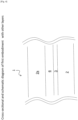
FIG. 3 shows a main section of a glass window as luminous glass, the main section corresponding to the cross-section A-A' ofFIG. 2 ; -
FIG. 4 shows a schematic and cross-sectional drawing of a glass window further incorporating an interlayer plastic film and a second glass sheet layer; -
FIG. 5 shows a cross-sectional and schematic diagram of a glass window having a luminous capability; -
FIG. 6 shows a cross-sectional and schematic diagram of apparatus for evaluation of a luminous status of a sample; -
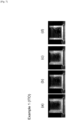
FIGs. 7(a)-7(d) show photographs of the glass window in a luminous state in example 1; -
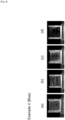
FIGs. 8(a)-8(d) show photographs of the glass window in a luminous state in example 2; -
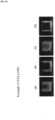
FIGs. 9(a)-9(d) show photographs of the glass window in a luminous state in example 3; and -
FIGs. 10(a)-10(d) show photographs of the glass window in a luminous state in example 4. - The invention is described with respect to the attached drawings, although the disclosure is not limited thereto. Further, the drawings may not be drawn to scale, to better illustrate the disclosed embodiments.
-
FIG. 1 shows a schematic diagram of aglass window 1 having a luminous capability.Glass window 1 may be a laminated glass window or a single-sheet glass window. As shown inFIG. 1 ,glass window 1 comprises aglass sheet layer 2, athin film layer 3, and at least onelight source 5 positioned at anedge portion 32 of thethin film layer 3 and/or at anedge portion 22 of theglass sheet layer 2. -
Glass sheet layer 2 may be a flat glass or a curved glass. A curved glass is generally preferable for automotive use. The curved glass can be manufactured from a flat glass sheet using known methods for forming curved automotive glass.Glass sheet layer 2 may be formed from, for example, a safety glass such as a tempered glass.Glass sheet layer 2 is of soda-lime glass.Glass sheet layer 2 is an inorganic glass sheet with high or low transparency, such as soda-lime glass produced by the float process or the roll-out process commonly employed in producing glass substrates for automobiles or architectural applications.Glass sheet layer 2 may be either colorless (for example clear glass) or colored (for example green tint glass or privacy glass) and may be combined with other functional films (for example acoustic interlayers). Further,glass sheet layer 2 may be in any of various forms, such as a panorama sunroof for automobiles. - With further reference now to
Figs. 2-3 ,thin film layer 3 comprises amatrix 33 of a thin film material andfine particles 4 dispersed in thematrix 33, and is formed on a main surface 21 ofglass sheet layer 2. InFIG. 1 , thethin film layer 3 covers all or substantially all of main surface 21 ofglass sheet layer 2. Thethin film layer 3 may comprise (a) partial blank portion(s) that form(s) (a) figure(s) of logo. Thethin film layer 3 covers all or substantially all of a main surface 21 ofglass sheet layer 2. Thethin film layer 3 may form a figure(s) of logo. - The thickness of
thin film layer 3 is about 1 to 10 micrometers, or preferably about 2 to 6 micrometers. If the thickness ofthin film layer 3 is less than about 1 micrometer, the amount oflight 51 that is introduced intothin film layer 3 may be undesirably decreased. On the other hand, athin film layer 3 that is greater than 10 micrometers in thickness may undesirably increase the cost of theglass window 1. - The thin film material is a silicon oxide-based material and the
matrix 33 may be formed, for example, by wet coating, through applying and heating a coating solution obtained by subjecting an alkoxysilane to hydrolysis and polycondensation in a solvent. Conventional solvents such as discussed inU.S. Patent Nos. 8,299,169 ,8,216,670 , and8,246,848 , andJP Pub. No. 2015-034281 matrix 33. Other thin film materials consistent with this disclosure may also be used. - An introduction of the
light 51 into theglass window 1 from the edge of theglass sheet layer 2 or aninterlayer film layer 6 may be easier than introduction of thelight 51 from the edge of thethin film layer 3. Therefore, it is preferable that the light source(s) 5 is/are positioned at the edge portion of theglass sheet layer 2 or theinterlayer film layer 6. The thin film material of the thin film layer is made of the silicon oxide-based material and theglass sheet layer 2 is made of the soda-lime glass; the layer 2 (or both thelayer 2 and the layer 6) may form an optical waveguide, because a refractive index of thelayer 2 is higher than that of thelayer 3. Thelight 51 basically travels within the waveguide reflecting at interfaces of the optical waveguide, but thelight 51 may be partially introduced to thelayer 3 becauselight 51 with a high incident angle at the interfaces may be enter into thelayer 3. Thus, such aglass window 1 may have a good balance between luminous area and brightness. - The coating solution further comprises
fine particles 4. The coating may comprise indium tin oxide (ITO)fine particles 4 dispersed in amatrix 33 of silicon oxide-based material. Thefine particles 4 may be formed from, for example and without limitation, antimony tin oxide (ATO), titanium oxide, tungsten oxide, zirconium oxide, and/or diamond. These materials have a higher refractive index (in the visible spectrum) than that of thematrix 33. Therefore, light scatterings 41 are generated and result in luminance of thethin film layer 3. Thethin film layer 3 may comprise not only thefine particles 4 such as ITO, ATO, titanium oxide, tungsten oxide, zirconium oxide, diamond and so on but, also a combination of such fine particles and dye. - The
fine particles 4 may comprise or essentially consist of a colorant, by which thethin film layer 3 results in colored film. In the case that thefine particles 4 comprise or essentially consist of the colorant, the luminous ofglass window 1 may become more vivid than without the colorant. The colorant not just scatters the light 51, but partially absorbs the light 51. For that reason, it is thought that a vivid luminosity can be achieved. As an example of the colorant, there can be mentioned an organic pigment such as Pigment Blu15 (Copper Phthalocyanine), Pigment Yellow 150 (Nickel,5,5'-azobis-2,4,6(1H,3H,5H)-pyrimidinetrione complexes),Pigment Green 7, Pigment Green 36, Pigment Red 122, Pigment Red 254, Pigment Orange, quinacridone-based pink color pigment, or an inorganic pigment such as ((Fe,Mn),(Fe,Mn)2O4 (for gray color), CoAl2O4, (Co,Zn,Ni)2TiO4 (for blue color), Fe2O3 (for brown color), FeOOH (for yellow color). Thefine particles 4 may comprise at least one selected from a group consisting of ITO, ATO, titanium oxide, tungsten oxide, zirconium oxide, diamond, and the above pigments. - The
fine particles 4 have a median particle size distribution (D50) of preferably less than approximately 200 nm. For example,fine particles 4 having a D50 less than approximately 200 nm scatter desirable wavelengths of visible light and prevent color shifts of the light 51 emitted by thelight source 5. Bythin film layer 3 having such a structure,fine particles 4 may scatter light 51 fromlight source 5 and generate light scatterings 41, resulting in luminance of thethin film layer 3. Further, the mean diameter offine particles 4 may provide a haze below approximately 10% for theglass window 1 in the luminous state, as measured by International Organization for Standardization ("ISO") Standard 14782:1999 titled Plastics-Determination of haze for transparent materials. - The concentration of
fine particles 4 inthin film layer 3 is preferably 0.1% to 50% by weight or more preferably 0.2% to 40% by weight. If the concentration offine particles 4 is less than about 0.1% by weight, luminance may be undesirably low. On the other hand, if the concentration offine particles 4 is more than about 50% by weight, the haze of theglass window 1 may be undesirably high in the non-luminous state. - Further, the luminous behavior may depend on the concentration of
fine particles 4 and a distance from thelight source 51. Near thelight source 51, a bright luminous area 42 may be formed. Further, as the concentration offine particles 4 increases above more than about, e.g., 15% by weight, much of the light 51 may fade out on shorter distances and the bright luminous area 42 ofglass window 1 may decrease. On the other hand, as the concentration offine particles 4 decreases below about, e.g., 10% by weight, much of light 51 may fade out on longer distances and the bright luminous area 42 ofglass window 1 may become wider. - In the case that the luminosity generated from light scattering by the fine particles (such as ITO, ATO, titanium oxide, zirconium oxide, diamond and so on; that is, in the case that the colorant is not used), the concentration of
fine particles 4 inthin film layer 3 is preferably 1% to 50% by weight or more preferably 2% to 40% by weight. If the concentration offine particles 4 is less than about 1% by weight, luminance may be undesirably low. On the other hand, if the concentration offine particles 4 is more than about 50% by weight, the haze of theglass window 1 may be undesirably high in the non-luminous state. - In the case that the
fine particles 4 comprise or essentially consist of the organic pigment as the colorant, the concentration of the organic pigment inthin film layer 3 is preferably 0.05% to 10% by weight or more preferably 0.1 % to 8% by weight. If the concentration of the organic pigment is less than about 0.05% by weight, luminance by the organic pigment may be undesirably low. On the other hand, if the concentration of the organic pigment is more than about 10% by weight, the visible transmittance of theglass window 1 may be undesirably low in the non-luminous state. - In the case that the
fine particles 4 comprise or essentially consist of the inorganic pigment as the colorant, the concentration of the inorganic pigment, inthin film layer 3 is preferably 1% to 50% by weight or more preferably 2% to 40% by weight. If the concentration of the inorganic pigment is less than about 1% by weight, luminance by the inorganic pigment may be undesirably low. On the other hand, if the concentration of the colorant is more than about 50% by weight, the visible transmittance of theglass window 1 may be undesirably low in the non-luminous state. - With continuing reference to
FIGS. 1 and2 , at least onelight source 5 is positioned at theedge portion 32 ofthin film layer 3 and/or at theedge portion 22 ofglass sheet layer 2 for introducing light 51 intothin film layer 3.Light source 5 may be any device that can generate visible light. The visible light may be white light or colored light such as red, blue, green, yellow, orange, pink, purple and so on. For example and without limitation,light source 5 may be a light-emitting diode ("LED"), organic light-emitting diode ("OLED"), electroluminescent ("EL") film, LASER, or an optical fiber. - In
FIGS. 1 and2 ,light source 5 is arranged alongedge portion 32 ofthin film layer 3. Any number of light sources may be selected depending upon the design and requirements for a particular glass window. Further, light sources may be located and/or oriented onedge portions 32 and/or 22, and/or any other edge portions of theglass window 1, in any manner consistent with this disclosure. For example, multiple light sources may be arrayed along one or more edges, or all edges, of a glass window. - With reference now to
FIG. 4 , a schematic and cross-sectional drawing ofglass window 1 ofFIG. 1 is shown with additional, optional layers. InFIG. 4 ,glass window 1 further comprises a secondglass sheet layer 2s and an interlayerplastic film layer 6. Secondglass sheet layer 2s may be a glass sheet layer as previously described with respect toglass sheet layer 2. For example, second glass sheet layer may be a flat glass or a curved glass, provided that secondglass sheet layer 2s andglass sheet layer 2 are compatible inglass window 1. Secondglass sheet layer 2s may be a safety glass such as a tempered glass, and secondglass sheet layer 2s may be an inorganic glass sheet with high or low transparency, such as soda-lime glass produced by the float process or the roll-out process commonly employed in producing glass substrates for automobiles or architectural applications. Secondglass sheet layer 2s may be either colorless (for example clear glass) or colored (for example green tint glass or privacy glass) and may be combined with other functional films (for example acoustic interlayers or colored interlayers). Further, secondglass sheet layer 2s may be in any of various forms. -
Plastic film layer 6 may be formed from, for example and without limitation, polyvinyl butyral resin ("PVB"), ethylene vinyl acetate resin ("EVA"), or polyurethane resin ("PU").Plastic film 6 layer may be either colorless or colored (for example, having a dark gray hue) with high or low transparency. In some embodiments,plastic film layer 6 does not comprise fine particles which may scatter light and decrease luminance ofthin film layer 3. In various other embodiments, optional interlayers may have different refractive properties depending upon the design and requirements for a particular glass window. - In
FIG. 4 ,thin film layer 3 is adjacent to a main surface of secondglass sheet layer 2s, andplastic film layer 6 is adjacent to main surface 21 ofglass sheet layer 2. The number and type of interlayers and the location of various layers withinglass window 1 may vary depending upon the design and requirements for a particular glass window. In some embodiments,plastic film layer 6 is bonded tothin film layer 3 and main surface 21 ofglass sheet layer 2, for example, by known lamination processes. - Further, in
FIG. 4 and some embodiments,light source 5 may be positioned at the edge portion (not shown inFIG. 4 ) ofthin film layer 3 and/or at an edge portion (not shown inFIG. 4 ) ofglass sheet layer 2 and/or secondglass sheet layer 2s. In embodiments comprising more than one interlayer, for example two plastic film layers,light source 5 may also be positioned between two interlayers. - With reference now to
FIG. 5 , a cross-sectional and schematic diagram of aglass window 1s having luminous capability is shown. The glass window ofFIG. 5 comprises aresinous sheet layer 2r and athin film layer 3, aglass sheet layer 2, at least one interlayerplastic film layer 6, and at least one light source 5 (not shown inFIG. 5 ), as previously described, positioned at an edge portion (not shown inFIG. 5 ) ofthin film layer 3 and/orresinous sheet layer 2r. In embodiments comprising one or more interlayers, at least onelight source 5 may additionally be positioned between two interlayers.Resinous sheet layer 2r may be formed from, for example and without limitation, polyethylene terephthalate resin, polycarbonate resin, polyvinyl chloride resin, polyethylene resin, or other known resinous materials consistent with this disclosure. - In
FIG. 5 ,thin film layer 3 is stacked on a main surface ofresinous sheet layer 2r.Plastic film layer 6 is bonded tothin film layer 3 and main surface 21 ofglass sheet layer 2 using known lamination processes. - The glass window disclosed is used for not only automobiles but also for architectural applications. Although certain example embodiments have been described above, the present disclosure is not limited thereto. Also, the features, aspects, advantages, and example embodiments described herein may be combined to realize yet further embodiments. Further, the current disclosure covers various modifications and equivalent arrangements included within the spirit and scope of the appended claims.
- Example Examples will be discussed hereinafter.
- Tetraethoxysilane (Si(OC2H5)4, referred to as TEOS) and methyltriethoxysilane (CH3Si(OC2H5)3, referred to as MTES) were used as raw material of silicon oxide. A sol solution was prepared by mixing 26.05 g of TEOS, 8.68 g of MTES, 25.25 g of propylene glycol monoethyl ether and 16.91 g of 0.5 N acetic acid with stirring at 40° C for 15 hours. In the sol solution, a ratio between a solid content made from the tetraalkoxysilane and that made from the trialkoxysilane was 70:30 on a weight percentage basis.
- ITO ultrafine particles having an average particle size of 50 nm were used as the fine particles. 23.10 g of a dispersion liquid of the ultrafine particles (ITO ultrafine particles concentration: 30 wt %, solvent: isopropyl alcohol, available from Mitsubishi Materials Corporation) was mixed into the sol solution obtained in a coating solution. In the treating agent, a ratio between the ITO ultrafine particles and a total of the solid contents made from the tetraalkoxysilane and the trialkoxysilane was 30:70 on a weight percentage basis.
- As a
glass sheet layer 2, conventional clear soda-lime glass manufactured by a float process in the form of a 300 mm x 300 mm x 3 mm (thickness) flat plate was prepared. A surface of the glass was polished with a polishing liquid, rinsed in water and then dried, in which the used polishing liquid was a 2 wt % ceria slurry obtained by mixing a glass polishing agent MIREK E40 (T) (available from MITSUI MINING & SMELTING CO., LTD.) into water. - A cotton cloth (available under the trade name of BEMCOT) was impregnated with the coating solution. Then, the rinsed surface of the glass was wiped with the cotton cloth thereby applying the coating solution to the surface of the glass. Thereafter, a heat treatment was carried out for 10 minutes so that the substrate had a temperature of 200 °C, thereby obtaining a glass sample comprising a
glass sheet layer 2 and athin film layer 3. A thickness of thethin film layer 3 of the glass sample was 1.4 µm. - The prepared sample was inserted to
frame 7 embedded multiple LEDs in the longitudinal direction as shown inFIG. 6 , resulting in theglass window 1. Theframe 7 covered three edges of the sample. LEDs which can generate white, blue, green and red lights were selected. The light emitted from the LEDs was inserted in the samples from three edges of theglass sheet layer 2. A luminous state of eachglass window 1 was observed. Photographs of theglass window 1 in a luminous state are shown inFIGs. 7(a)-7(d) . As shown inFIGs. 7(a)-7(d) , the luminosity of a peripheral portion of theglass window 1 was observed. - The procedure of example 1 was repeated, with the exception that Pigment Blue 15 was used as the
fine particle 4 instead of ITO and, in the treating agent, a ratio between the Pigment Blue 15 and a total of the solid contents made from the tetraalkoxysilane and the trialkoxysilane was 0.4:99.6 on a weight percentage basis. - Photographs of the
glass window 1 in a luminous state are shown inFIGs. 8(a)-8(d) . As shown inFIGs. 8(a)-8(d) , the luminous of a peripheral portion of theglass window 1 was observed. The luminosity was more vivid than the example 1, especially in the case of blue andgreen light 51. - The procedure of example 1 was repeated, with the exception that quinacridone-based pink color pigment was used as the
fine particle 4 instead of ITO and, in the treating agent, a ratio between the Pigment Blue 15 and a total of the solid contents made from the tetraalkoxysilane and the trialkoxysilane was 0.8:99.2 on a weight percentage basis. - Photographs of the
glass window 1 in a luminous state are shown inFIGs. 9(a)-9(d) . As shown inFIGs. 9(a)-9(d) , the luminosity of a peripheral portion of theglass window 1 was observed. The luminosity was more vivid than the example 1, especially in the case of white andred light 51. - The procedure of example 1 was repeated, with the exception that Pigment Yellow 150 was used as the
fine particle 4 instead of ITO and, in the treating agent, a ratio between the Pigment Blue 15 and a total of the solid contents made from the tetraalkoxysilane and the trialkoxysilane was 1.5:98.5 on a weight percentage basis. - Photographs of the
glass window 1 in a luminous state are shown inFIGs. 10(a)-10(d) . As shown inFIGs. 10(a)-10(d) , the luminosity of a peripheral portion of theglass window 1 was observed. The luminosity was more vivid than example 1, especially in the case of white andgreen light 51.
Claims (15)
- A glass window (1) having a luminous capability and comprising:
at least one glass sheet layer, including a first glass sheet layer (2) of soda-lime glass;
a thin film layer (3) having fine particles (4) dispersed in a matrix (33) of silicon oxide-based thin-film material, the thin film layer being from 1 to 10 µm thick and covering all or substantially all of a main surface (21) of the first glass sheet layer (2); anda light source (5), positioned at an edge portion (32,22) of at least one of the thin film layer (3) and the glass sheet layer (2) or, if the window comprises a second glass sheet layer (2s) and interlayer (6) between said glass layers, at an edge portion of at least one of the thin film layer (3), the glass sheet layer (2), the second glass sheet layer (2s) and the interlayer (6);wherein in its non-luminous state a haze of the glass window (1), as measured by International Organization for Standardization Standard 14782:1999, is below approximately 10%. - The glass window of claim 1, wherein the fine particles (4) have a higher refractive index than the matrix (33).
- The glass window of claim 1, wherein the fine particles (4) scatter visible light from the light source (5) and in a luminous state, the light intensity fades out from an edge portion of the glass window towards a center portion of the glass window.
- The glass window of any one of claims 1 to 3, wherein the concentration of the fine particles (4) in the thin film layer (3) is 1% to 50% by weight.
- The glass window of any one of claims 1 to 4, wherein a thickness of the thin film layer (3) is 2 to 6 µm.
- The glass window of claim 1, wherein the fine particles (4) are composed of at least one selected from indium tin oxide (ITO), antimony tin oxide (ATO), titanium oxide, tungsten oxide, zirconium oxide and diamond.
- The glass window of claim 1, wherein the fine particles (4) have a mean diameter D50 less than about 200 nm.
- The glass window of claim 1, further comprising:a second glass sheet layer (2s), andwherein the light source is positioned at one or more of (i) an edge portion of the thin film layer (3), (ii) an edge portion of the first glass sheet layer (2), (iii) an edge portion of the second glass sheet layer (2s), and (iv) a position between the first glass sheet layer (2) and second glass sheet layer (2s).
- The glass window of claim 8, comprising an interlayer film layer (6) between the first glass sheet layer (2) and the second glass sheet layer (2s).
- The glass window of claim 9 wherein the interlayer is formed from at least one of polyvinyl butyral, ethylene vinyl acetate, and polyurethane.
- The glass window of any one of claims 1 to 10,wherein the thin film layer (3) is a colored film, andwherein the fine particles (4) comprise a colorant.
- A method for manufacturing a glass window (1) having a luminous capability and wherein a haze of the window in its non-luminous state, as measured by International Organization for Standardization Standard 14782:1999, is below approximately 10%, comprising:providing a glass sheet layer (2) of soda-lime glass;coating all or substantially all of a main surface (21) of the glass sheet layer with a thin film layer (3) having fine particles dispersed in a matrix of a silicon oxide-based thin film material, the thin film layer being from 1 to 10 µm thick; andpositioning at least one light source (5) at one or more of (i) an edge portion of the glass sheet layer (2), and (ii) an edge portion of the thin film layer (3) or, if the window comprises a second glass sheet layer (2s) and interlayer (6) between said glass layers, positioning at least one light source (5) at one or more of (i) an edge portion of the glass sheet layer (2), (ii) an edge portion of the thin film layer (3), (iii) an edge portion of the second glass sheet layer (2s), and (iv) an edge portion of the interlayer (6).
- The method of claim 12, wherein the coating step comprises a wet coating process.
- The method of claim 13, comprisingproviding a second glass sheet layer (2s), andbonding an interlayer (6) between the thin film layer (3) and the second glass sheet layer (2s).
- The method of claim 14, comprisingproviding a resinous sheet layer, andbonding an interlayer between the thin film layer and the resinous sheet layer.
Applications Claiming Priority (3)
| Application Number | Priority Date | Filing Date | Title |
|---|---|---|---|
| US201662305118P | 2016-03-08 | 2016-03-08 | |
| US201662414192P | 2016-10-28 | 2016-10-28 | |
| PCT/JP2017/006695 WO2017154583A1 (en) | 2016-03-08 | 2017-02-23 | Glass window having a luminous capability |
Publications (2)
| Publication Number | Publication Date |
|---|---|
| EP3426615A1 EP3426615A1 (en) | 2019-01-16 |
| EP3426615B1 true EP3426615B1 (en) | 2024-11-20 |
Family
ID=58413158
Family Applications (1)
| Application Number | Title | Priority Date | Filing Date |
|---|---|---|---|
| EP17713793.2A Active EP3426615B1 (en) | 2016-03-08 | 2017-02-23 | Glass window having a luminous capability |
Country Status (4)
| Country | Link |
|---|---|
| US (1) | US10550031B2 (en) |
| EP (1) | EP3426615B1 (en) |
| JP (1) | JP6974742B2 (en) |
| WO (1) | WO2017154583A1 (en) |
Families Citing this family (8)
| Publication number | Priority date | Publication date | Assignee | Title |
|---|---|---|---|---|
| US11953713B2 (en) | 2019-03-21 | 2024-04-09 | Acr Ii Glass America Inc. | Glazing having lighting capabilities |
| EP3797957A1 (en) * | 2019-09-25 | 2021-03-31 | Kuraray Europe GmbH | Apparatus for measuring an optical parameter of a laminated glazing |
| JP7270518B2 (en) * | 2019-10-02 | 2023-05-10 | 旭ビルウォール株式会社 | Fragment built-in laminated glass and its manufacturing method |
| DE102019129399A1 (en) * | 2019-10-31 | 2021-05-06 | Dr. Ing. H.C. F. Porsche Aktiengesellschaft | Window device for a motor vehicle and method for operating it |
| EP4011848A4 (en) * | 2019-11-28 | 2022-10-19 | Sekisui Chemical Co., Ltd. | INTERMEDIATE FILM FOR LAMINATED GLASS, LAMINATED GLASS AND IMAGE DISPLAY SYSTEM |
| EP4067071A4 (en) * | 2019-11-28 | 2024-01-17 | Sekisui Chemical Co., Ltd. | Intermediate film for laminated glass, laminated glass, and image display system |
| WO2022056436A1 (en) * | 2020-09-14 | 2022-03-17 | Scott Freeman | Colored automotive windows |
| US20240336040A1 (en) * | 2021-09-30 | 2024-10-10 | Sekisui Chemical Co., Ltd. | Intermediate film for laminated glass, and laminated glass |
Family Cites Families (16)
| Publication number | Priority date | Publication date | Assignee | Title |
|---|---|---|---|---|
| WO2005054915A1 (en) | 2003-12-02 | 2005-06-16 | Koninklijke Philips Electronics N.V. | Light-guiding assembly and automotive vehicle roof |
| JP4872549B2 (en) | 2005-11-15 | 2012-02-08 | セントラル硝子株式会社 | Manufacturing method of heat ray shielding film forming substrate |
| EP2036868B1 (en) | 2006-09-08 | 2016-03-30 | Central Glass Company, Limited | Heat ray shielding glass for vehicle and process for producing the same |
| CN101675133A (en) | 2007-05-08 | 2010-03-17 | 中央硝子株式会社 | Coating fluid applicable by hand for sol-gel film formation |
| DE102009006856A1 (en) | 2009-01-30 | 2010-08-19 | Saint-Gobain Sekurit Deutschland Gmbh & Co. Kg | Disc with at least one integrated light field |
| EP2401639B1 (en) | 2009-02-24 | 2019-09-18 | AGC Glass Europe | Laminated glass diffused lighting panel and method of manufacturing it |
| JP5255023B2 (en) | 2010-03-18 | 2013-08-07 | ビジョン開発株式会社 | Light scattering film containing diamond and method for forming the same |
| WO2012059126A1 (en) | 2010-11-03 | 2012-05-10 | Agc Glass Europe | Laminated inorganic and organic glass diffused lighting panel |
| EP2683033A4 (en) | 2011-03-02 | 2015-03-11 | Central Glass Co Ltd | Terminal structure for glass plate with conductive section and glass plate article utilizing same |
| WO2013161827A1 (en) | 2012-04-24 | 2013-10-31 | 旭硝子株式会社 | Method for producing glass substrate with silicon oxide film containing inorganic fine particles |
| KR101728256B1 (en) | 2012-09-14 | 2017-04-18 | 쌩-고벵 글래스 프랑스 | Pane having an electrical connection element |
| DE102012109900B4 (en) | 2012-10-17 | 2015-10-15 | Bayerische Motoren Werke Aktiengesellschaft | vehicle glazing |
| JP6273980B2 (en) | 2013-07-11 | 2018-02-07 | セントラル硝子株式会社 | Plate glass with ultraviolet shielding film, method for producing the same, and coating solution for coating film of sheet glass with ultraviolet shielding film |
| FR3017332B1 (en) * | 2014-02-10 | 2016-02-19 | Saint Gobain | LUMINOUS GLAZING WITH OPTICAL ISOLATOR. |
| ES2819184T3 (en) | 2014-12-16 | 2021-04-15 | Saint Gobain | Moon with an electrical connection element and a flexible connection cable |
| DE202016008092U1 (en) | 2016-12-28 | 2017-03-03 | Few Fahrzeugelektrikwerk Gmbh & Co. Kg | Electrical connection element |
-
2017
- 2017-02-23 US US16/082,482 patent/US10550031B2/en active Active
- 2017-02-23 EP EP17713793.2A patent/EP3426615B1/en active Active
- 2017-02-23 WO PCT/JP2017/006695 patent/WO2017154583A1/en not_active Ceased
- 2017-02-23 JP JP2018526591A patent/JP6974742B2/en active Active
Also Published As
| Publication number | Publication date |
|---|---|
| WO2017154583A1 (en) | 2017-09-14 |
| JP6974742B2 (en) | 2021-12-01 |
| US20190218139A1 (en) | 2019-07-18 |
| EP3426615A1 (en) | 2019-01-16 |
| US10550031B2 (en) | 2020-02-04 |
| JP2019513662A (en) | 2019-05-30 |
Similar Documents
| Publication | Publication Date | Title |
|---|---|---|
| US10550031B2 (en) | Glass window having a luminous capability | |
| JP6936809B2 (en) | Laminated vehicle windshield with internal light emitting sign | |
| KR101767292B1 (en) | Composite glass pane as a head-up display | |
| CN107074148B (en) | Luminous window glass for transport means and its manufacture | |
| CN107107572B (en) | Laminated vehicle windshield with internally illuminated logo | |
| JP6806788B2 (en) | Laminated vehicle windshield with internal light emitting sign | |
| US9612386B2 (en) | Luminous glazing unit with optical isolator | |
| KR101493627B1 (en) | Glass pane as head-up display | |
| KR102480290B1 (en) | Light-emitting laminated glazing for vehicles, including inorganic light-emitting diodes, and manufacturing thereof | |
| CN107087402A (en) | Lamination vehicle windscreen with internal illumination mark | |
| CN114502370A (en) | Luminous glass element for a motor vehicle and motor vehicle comprising said luminous glass element | |
| US20250153463A1 (en) | Illuminable enamelled substrate and its manufacture | |
| US11639085B2 (en) | Luminescent glazings | |
| CN116897140B (en) | Luminescent enamel substrate and its manufacturing | |
| US12269239B1 (en) | Illuminable glazing | |
| US20250085471A1 (en) | Illuminable glazing unit | |
| WO2023160997A1 (en) | Illuminable glazing | |
| CN118418673A (en) | Glass components and window assemblies |
Legal Events
| Date | Code | Title | Description |
|---|---|---|---|
| STAA | Information on the status of an ep patent application or granted ep patent |
Free format text: STATUS: UNKNOWN |
|
| STAA | Information on the status of an ep patent application or granted ep patent |
Free format text: STATUS: THE INTERNATIONAL PUBLICATION HAS BEEN MADE |
|
| PUAI | Public reference made under article 153(3) epc to a published international application that has entered the european phase |
Free format text: ORIGINAL CODE: 0009012 |
|
| STAA | Information on the status of an ep patent application or granted ep patent |
Free format text: STATUS: REQUEST FOR EXAMINATION WAS MADE |
|
| 17P | Request for examination filed |
Effective date: 20181005 |
|
| AK | Designated contracting states |
Kind code of ref document: A1 Designated state(s): AL AT BE BG CH CY CZ DE DK EE ES FI FR GB GR HR HU IE IS IT LI LT LU LV MC MK MT NL NO PL PT RO RS SE SI SK SM TR |
|
| AX | Request for extension of the european patent |
Extension state: BA ME |
|
| DAV | Request for validation of the european patent (deleted) | ||
| DAX | Request for extension of the european patent (deleted) | ||
| STAA | Information on the status of an ep patent application or granted ep patent |
Free format text: STATUS: EXAMINATION IS IN PROGRESS |
|
| 17Q | First examination report despatched |
Effective date: 20210113 |
|
| GRAP | Despatch of communication of intention to grant a patent |
Free format text: ORIGINAL CODE: EPIDOSNIGR1 |
|
| STAA | Information on the status of an ep patent application or granted ep patent |
Free format text: STATUS: GRANT OF PATENT IS INTENDED |
|
| INTG | Intention to grant announced |
Effective date: 20240703 |
|
| GRAS | Grant fee paid |
Free format text: ORIGINAL CODE: EPIDOSNIGR3 |
|
| GRAA | (expected) grant |
Free format text: ORIGINAL CODE: 0009210 |
|
| STAA | Information on the status of an ep patent application or granted ep patent |
Free format text: STATUS: THE PATENT HAS BEEN GRANTED |
|
| AK | Designated contracting states |
Kind code of ref document: B1 Designated state(s): AL AT BE BG CH CY CZ DE DK EE ES FI FR GB GR HR HU IE IS IT LI LT LU LV MC MK MT NL NO PL PT RO RS SE SI SK SM TR |
|
| REG | Reference to a national code |
Ref country code: GB Ref legal event code: FG4D |
|
| REG | Reference to a national code |
Ref country code: CH Ref legal event code: EP |
|
| REG | Reference to a national code |
Ref country code: DE Ref legal event code: R096 Ref document number: 602017086217 Country of ref document: DE |
|
| REG | Reference to a national code |
Ref country code: IE Ref legal event code: FG4D |
|
| REG | Reference to a national code |
Ref country code: LT Ref legal event code: MG9D |
|
| REG | Reference to a national code |
Ref country code: NL Ref legal event code: MP Effective date: 20241120 |
|
| PG25 | Lapsed in a contracting state [announced via postgrant information from national office to epo] |
Ref country code: HR Free format text: LAPSE BECAUSE OF FAILURE TO SUBMIT A TRANSLATION OF THE DESCRIPTION OR TO PAY THE FEE WITHIN THE PRESCRIBED TIME-LIMIT Effective date: 20241120 Ref country code: IS Free format text: LAPSE BECAUSE OF FAILURE TO SUBMIT A TRANSLATION OF THE DESCRIPTION OR TO PAY THE FEE WITHIN THE PRESCRIBED TIME-LIMIT Effective date: 20250320 Ref country code: PT Free format text: LAPSE BECAUSE OF FAILURE TO SUBMIT A TRANSLATION OF THE DESCRIPTION OR TO PAY THE FEE WITHIN THE PRESCRIBED TIME-LIMIT Effective date: 20250320 |
|
| PG25 | Lapsed in a contracting state [announced via postgrant information from national office to epo] |
Ref country code: FI Free format text: LAPSE BECAUSE OF FAILURE TO SUBMIT A TRANSLATION OF THE DESCRIPTION OR TO PAY THE FEE WITHIN THE PRESCRIBED TIME-LIMIT Effective date: 20241120 Ref country code: NL Free format text: LAPSE BECAUSE OF FAILURE TO SUBMIT A TRANSLATION OF THE DESCRIPTION OR TO PAY THE FEE WITHIN THE PRESCRIBED TIME-LIMIT Effective date: 20241120 |
|
| REG | Reference to a national code |
Ref country code: AT Ref legal event code: MK05 Ref document number: 1743458 Country of ref document: AT Kind code of ref document: T Effective date: 20241120 |
|
| PG25 | Lapsed in a contracting state [announced via postgrant information from national office to epo] |
Ref country code: BG Free format text: LAPSE BECAUSE OF FAILURE TO SUBMIT A TRANSLATION OF THE DESCRIPTION OR TO PAY THE FEE WITHIN THE PRESCRIBED TIME-LIMIT Effective date: 20241120 |
|
| PG25 | Lapsed in a contracting state [announced via postgrant information from national office to epo] |
Ref country code: ES Free format text: LAPSE BECAUSE OF FAILURE TO SUBMIT A TRANSLATION OF THE DESCRIPTION OR TO PAY THE FEE WITHIN THE PRESCRIBED TIME-LIMIT Effective date: 20241120 |
|
| PG25 | Lapsed in a contracting state [announced via postgrant information from national office to epo] |
Ref country code: NO Free format text: LAPSE BECAUSE OF FAILURE TO SUBMIT A TRANSLATION OF THE DESCRIPTION OR TO PAY THE FEE WITHIN THE PRESCRIBED TIME-LIMIT Effective date: 20250220 |
|
| PG25 | Lapsed in a contracting state [announced via postgrant information from national office to epo] |
Ref country code: LV Free format text: LAPSE BECAUSE OF FAILURE TO SUBMIT A TRANSLATION OF THE DESCRIPTION OR TO PAY THE FEE WITHIN THE PRESCRIBED TIME-LIMIT Effective date: 20241120 Ref country code: AT Free format text: LAPSE BECAUSE OF FAILURE TO SUBMIT A TRANSLATION OF THE DESCRIPTION OR TO PAY THE FEE WITHIN THE PRESCRIBED TIME-LIMIT Effective date: 20241120 Ref country code: GR Free format text: LAPSE BECAUSE OF FAILURE TO SUBMIT A TRANSLATION OF THE DESCRIPTION OR TO PAY THE FEE WITHIN THE PRESCRIBED TIME-LIMIT Effective date: 20250221 |
|
| PG25 | Lapsed in a contracting state [announced via postgrant information from national office to epo] |
Ref country code: PL Free format text: LAPSE BECAUSE OF FAILURE TO SUBMIT A TRANSLATION OF THE DESCRIPTION OR TO PAY THE FEE WITHIN THE PRESCRIBED TIME-LIMIT Effective date: 20241120 |
|
| PG25 | Lapsed in a contracting state [announced via postgrant information from national office to epo] |
Ref country code: RS Free format text: LAPSE BECAUSE OF FAILURE TO SUBMIT A TRANSLATION OF THE DESCRIPTION OR TO PAY THE FEE WITHIN THE PRESCRIBED TIME-LIMIT Effective date: 20250220 |
|
| PG25 | Lapsed in a contracting state [announced via postgrant information from national office to epo] |
Ref country code: SM Free format text: LAPSE BECAUSE OF FAILURE TO SUBMIT A TRANSLATION OF THE DESCRIPTION OR TO PAY THE FEE WITHIN THE PRESCRIBED TIME-LIMIT Effective date: 20241120 |
|
| PG25 | Lapsed in a contracting state [announced via postgrant information from national office to epo] |
Ref country code: DK Free format text: LAPSE BECAUSE OF FAILURE TO SUBMIT A TRANSLATION OF THE DESCRIPTION OR TO PAY THE FEE WITHIN THE PRESCRIBED TIME-LIMIT Effective date: 20241120 |
|
| PG25 | Lapsed in a contracting state [announced via postgrant information from national office to epo] |
Ref country code: EE Free format text: LAPSE BECAUSE OF FAILURE TO SUBMIT A TRANSLATION OF THE DESCRIPTION OR TO PAY THE FEE WITHIN THE PRESCRIBED TIME-LIMIT Effective date: 20241120 |
|
| PG25 | Lapsed in a contracting state [announced via postgrant information from national office to epo] |
Ref country code: RO Free format text: LAPSE BECAUSE OF FAILURE TO SUBMIT A TRANSLATION OF THE DESCRIPTION OR TO PAY THE FEE WITHIN THE PRESCRIBED TIME-LIMIT Effective date: 20241120 |
|
| PG25 | Lapsed in a contracting state [announced via postgrant information from national office to epo] |
Ref country code: SK Free format text: LAPSE BECAUSE OF FAILURE TO SUBMIT A TRANSLATION OF THE DESCRIPTION OR TO PAY THE FEE WITHIN THE PRESCRIBED TIME-LIMIT Effective date: 20241120 |
|
| PG25 | Lapsed in a contracting state [announced via postgrant information from national office to epo] |
Ref country code: CZ Free format text: LAPSE BECAUSE OF FAILURE TO SUBMIT A TRANSLATION OF THE DESCRIPTION OR TO PAY THE FEE WITHIN THE PRESCRIBED TIME-LIMIT Effective date: 20241120 |
|
| PG25 | Lapsed in a contracting state [announced via postgrant information from national office to epo] |
Ref country code: IT Free format text: LAPSE BECAUSE OF FAILURE TO SUBMIT A TRANSLATION OF THE DESCRIPTION OR TO PAY THE FEE WITHIN THE PRESCRIBED TIME-LIMIT Effective date: 20241120 |
|
| REG | Reference to a national code |
Ref country code: DE Ref legal event code: R097 Ref document number: 602017086217 Country of ref document: DE |
|
| PG25 | Lapsed in a contracting state [announced via postgrant information from national office to epo] |
Ref country code: SE Free format text: LAPSE BECAUSE OF FAILURE TO SUBMIT A TRANSLATION OF THE DESCRIPTION OR TO PAY THE FEE WITHIN THE PRESCRIBED TIME-LIMIT Effective date: 20241120 |
|
| PG25 | Lapsed in a contracting state [announced via postgrant information from national office to epo] |
Ref country code: MC Free format text: LAPSE BECAUSE OF FAILURE TO SUBMIT A TRANSLATION OF THE DESCRIPTION OR TO PAY THE FEE WITHIN THE PRESCRIBED TIME-LIMIT Effective date: 20241120 |
|
| PLBE | No opposition filed within time limit |
Free format text: ORIGINAL CODE: 0009261 |
|
| STAA | Information on the status of an ep patent application or granted ep patent |
Free format text: STATUS: NO OPPOSITION FILED WITHIN TIME LIMIT |
|
| REG | Reference to a national code |
Ref country code: CH Ref legal event code: PL |
|
| PG25 | Lapsed in a contracting state [announced via postgrant information from national office to epo] |
Ref country code: LU Free format text: LAPSE BECAUSE OF NON-PAYMENT OF DUE FEES Effective date: 20250223 |
|
| PG25 | Lapsed in a contracting state [announced via postgrant information from national office to epo] |
Ref country code: CH Free format text: LAPSE BECAUSE OF NON-PAYMENT OF DUE FEES Effective date: 20250228 |
|
| 26N | No opposition filed |
Effective date: 20250821 |
|
| GBPC | Gb: european patent ceased through non-payment of renewal fee |
Effective date: 20250223 |
|
| REG | Reference to a national code |
Ref country code: BE Ref legal event code: MM Effective date: 20250228 |
|
| PG25 | Lapsed in a contracting state [announced via postgrant information from national office to epo] |
Ref country code: GB Free format text: LAPSE BECAUSE OF NON-PAYMENT OF DUE FEES Effective date: 20250223 |
|
| PG25 | Lapsed in a contracting state [announced via postgrant information from national office to epo] |
Ref country code: BE Free format text: LAPSE BECAUSE OF NON-PAYMENT OF DUE FEES Effective date: 20250228 |
|
| PG25 | Lapsed in a contracting state [announced via postgrant information from national office to epo] |
Ref country code: IE Free format text: LAPSE BECAUSE OF NON-PAYMENT OF DUE FEES Effective date: 20250223 |
|
| PGFP | Annual fee paid to national office [announced via postgrant information from national office to epo] |
Ref country code: DE Payment date: 20260226 Year of fee payment: 10 |
|
| PGFP | Annual fee paid to national office [announced via postgrant information from national office to epo] |
Ref country code: FR Payment date: 20260225 Year of fee payment: 10 |