EP3425952A1 - Cellular telecommunications network - Google Patents
Cellular telecommunications network Download PDFInfo
- Publication number
- EP3425952A1 EP3425952A1 EP18178167.5A EP18178167A EP3425952A1 EP 3425952 A1 EP3425952 A1 EP 3425952A1 EP 18178167 A EP18178167 A EP 18178167A EP 3425952 A1 EP3425952 A1 EP 3425952A1
- Authority
- EP
- European Patent Office
- Prior art keywords
- values
- sub
- graphs
- base stations
- edges
- Prior art date
- Legal status (The legal status is an assumption and is not a legal conclusion. Google has not performed a legal analysis and makes no representation as to the accuracy of the status listed.)
- Granted
Links
Images




Classifications
-
- H—ELECTRICITY
- H04—ELECTRIC COMMUNICATION TECHNIQUE
- H04W—WIRELESS COMMUNICATION NETWORKS
- H04W16/00—Network planning, e.g. coverage or traffic planning tools; Network deployment, e.g. resource partitioning or cells structures
- H04W16/02—Resource partitioning among network components, e.g. reuse partitioning
-
- H—ELECTRICITY
- H04—ELECTRIC COMMUNICATION TECHNIQUE
- H04W—WIRELESS COMMUNICATION NETWORKS
- H04W24/00—Supervisory, monitoring or testing arrangements
- H04W24/02—Arrangements for optimising operational condition
-
- H—ELECTRICITY
- H04—ELECTRIC COMMUNICATION TECHNIQUE
- H04W—WIRELESS COMMUNICATION NETWORKS
- H04W24/00—Supervisory, monitoring or testing arrangements
- H04W24/04—Arrangements for maintaining operational condition
-
- H—ELECTRICITY
- H04—ELECTRIC COMMUNICATION TECHNIQUE
- H04W—WIRELESS COMMUNICATION NETWORKS
- H04W28/00—Network traffic management; Network resource management
- H04W28/16—Central resource management; Negotiation of resources or communication parameters, e.g. negotiating bandwidth or QoS [Quality of Service]
- H04W28/18—Negotiating wireless communication parameters
-
- H—ELECTRICITY
- H04—ELECTRIC COMMUNICATION TECHNIQUE
- H04W—WIRELESS COMMUNICATION NETWORKS
- H04W84/00—Network topologies
- H04W84/02—Hierarchically pre-organised networks, e.g. paging networks, cellular networks, WLAN [Wireless Local Area Network] or WLL [Wireless Local Loop]
- H04W84/04—Large scale networks; Deep hierarchical networks
- H04W84/042—Public Land Mobile systems, e.g. cellular systems
-
- H—ELECTRICITY
- H04—ELECTRIC COMMUNICATION TECHNIQUE
- H04W—WIRELESS COMMUNICATION NETWORKS
- H04W16/00—Network planning, e.g. coverage or traffic planning tools; Network deployment, e.g. resource partitioning or cells structures
- H04W16/02—Resource partitioning among network components, e.g. reuse partitioning
- H04W16/10—Dynamic resource partitioning
-
- H—ELECTRICITY
- H04—ELECTRIC COMMUNICATION TECHNIQUE
- H04W—WIRELESS COMMUNICATION NETWORKS
- H04W16/00—Network planning, e.g. coverage or traffic planning tools; Network deployment, e.g. resource partitioning or cells structures
- H04W16/18—Network planning tools
Definitions
- the present invention relates to a cellular telecommunications network and a method of operating the same.
- a cellular telecommunications network includes a plurality of base stations which each serve a plurality of User Equipment (UE) within the base station's coverage area (known as a "cell").
- the base station must operate within defined sets of operating parameters, such as transmission power, Physical Cell Identifier (PCI), or Inter-Cell Interference Coordination (ICIC) resource assignment.
- PCI Physical Cell Identifier
- ICIC Inter-Cell Interference Coordination
- the selection of a particular operating parameter from each set of operating parameters has a significant impact on the overall performance of the cellular network due to the likelihood of interference should any two base stations have conflicting values for a particular operating parameter (e.g. two neighbouring base stations having the same PCI value, such that a UE or other neighbouring base station cannot discern between their transmissions without the further computational burden of decoding a unique identifier, such as the E-UTRAN Cell Global Identifier (ECGI)).
- ECGI E-UTRAN Cell Global Identifier
- HetNets Heterogeneous Networks
- base stations which are of different forms, such as macro base stations and the various base stations which are generally referred to as "small cells" (such as femto base stations, pico base stations, metro base stations and micro base stations).
- small cells such as femto base stations, pico base stations, metro base stations and micro base stations.
- cellular network operators were able to pre-plan the location and operating parameters of each macro base station in order to minimise any operating parameter conflict (and therefore maximise performance).
- HetNets are often deployed in an ad-hoc manner (for example, by being positioned by the end-user and having its operating parameters selected by Self-Organising Network (SON) algorithms, which may differ between network operators), such that the likelihood of operating parameter conflict increases.
- SON Self-Organising Network
- Another technique employed by cellular network operators is that of 'pooling', in which a set of operating parameters are divided into subsets which are designated to a particular group of base stations.
- An example of this technique is PCI pooling, in which the set of 504 PCI values are divided into subsets, and a particular group of base stations (such as a group associated with a particular operator, or a group associated with a particular transmission range) must use one of those subsets.
- This can be useful for the base station's SON algorithms, as certain characteristics of their neighbours can be determined simply by decoding their PCIs.
- the reduction in size of the set of operating parameters available to a group of base stations increases the likelihood of neighbouring base stations having conflicting operating parameters.
- an operator of a cellular network having a plurality of such pools is presented with an optimisation problem for the size of each subset of operating parameters for each pool. That is, as a subset for one pool increases, the likelihood of a conflict within that pool decreases. However, an increase in a subset for one pool typically results in a reduction in a subset for another pool, such that the likelihood of a conflict in the other pool may increase.
- a further problem is known in that any change in the subset for a pool may require a period of service interruption whilst each base station (and its connected UEs) reconfigure.
- a method of operating a cellular telecommunications network comprising a plurality of base stations, wherein each base station of the plurality of base stations has an operational parameter being one of a set of values, wherein the set includes k values
- the method comprising the steps of: defining a first graph comprising a first plurality of nodes and a first plurality of edges, wherein a node of the first plurality of nodes represents a first base station of the plurality of base stations, and an edge of the first plurality of edges represents a first neighbouring relationship between two base stations of the plurality of base stations, wherein each edge of the first plurality of edges has an associated first weight value; partitioning the first graph into a first set of sub-graphs, wherein the first set of sub-graphs includes k sub-graphs, each having a subset of the first plurality of nodes and a subset of the first plurality of edges, such as to minimise a first sum value of all first weight values associated
- Embodiments of the present invention have the benefits of allowing a cellular network operator to objectively evaluate whether a change in an operating parameter would be beneficial based on the first conflict value.
- the change may be whether the size of the set of operating parameter values should be increased or decreased, or whether the values for a base station of the plurality of base stations should be reselected.
- the method may further comprise the steps of: partitioning the first graph into a second set of sub-graphs, wherein the second set of sub-graphs includes m sub-graphs, each having a subset of the first plurality of nodes and a subset of the first plurality of edges, such as to minimise a second sum value of the first weight values associated with each edge of each subset of the first plurality of edges in all sub-graphs of the second set of sub-graphs; and calculating a second conflict value based on the second sum value, wherein the step of initiating a change includes determining whether the set of values for the operational parameter should have k or m values based on the first and second conflict values.
- the cellular network operator may determine whether to change the size of an operating parameter set (from k to m ) based on their respective conflict values. It may be determined to initiate such a change if the second conflict value satisfies a threshold.
- the method may further comprise the steps of: defining a second graph comprising a second plurality of nodes and a second plurality of edges, wherein a node of the second plurality of nodes represents a second base station of the plurality of base stations, and an edge of the second plurality of edges represents a second neighbouring relationship between two base stations of the plurality of base stations, wherein each edge of the second plurality of edges has an associated second weight value; partitioning the second graph into a third set of sub-graphs, wherein the third set of sub-graphs includes k sub-graphs, each having a subset of the second plurality of nodes and a subset of the second plurality of edges, such as to minimise a third sum value of the second weight values associated with each edge of each subset of the second plurality of edges in all sub-graphs of the third set of sub-graphs; and calculating the first conflict value based on the first and third sum values.
- the conflict value may be determined by evaluating a plurality of graphs which each represent
- the method may further comprise the steps of: partitioning the second graph into a fourth set of sub-graphs, wherein the fourth set of sub-graphs includes m values, each having a subset of the second plurality of nodes and a subset of the second plurality of edges, such as to minimise a fourth sum value of the second weight values associated with each edge of each subset of the plurality of edges in all sub-graphs of the fourth set of sub-graphs; and calculating the second conflict value based on the second and fourth sum values.
- the cellular operator may therefore determine whether or not to initiate a change in the size of an operating parameter set based on a conflict value which is evaluated based on the first and second graphs.
- the operational parameter may be a Physical Cell Identifier, PCI, and the set may be a PCI pool. Furthermore, the first weight value may represent a PCI conflict and the second weight value may represent a PCI confusion.
- the method may further comprise the step of: causing the first base station of the plurality of base stations to reconfigure the operational parameter based on the set of values, wherein the set includes m values.
- the step of determining whether to initiate a change may include determining whether the first base station in the plurality of base stations should reselect its operational parameter based on the first conflict value.
- a computer program comprising instructions which, when the program is executed by a computer, cause the computer to carry out the steps of the method of the first aspect of the invention.
- the computer program may be provided on a computer readable medium.
- a network node for a cellular telecommunications network, the network node comprising a receiver configured to receive an operational parameter value associated with each base station of a plurality of base stations, wherein the operational parameter values are each one of a set of values; and a processor configured to carry out the method of the first aspect of the invention.
- the network node may be part of a cellular network.
- the cellular network 1 is a Heterogeneous Network (HetNet) having a macro base station 10 with a coverage area 12 (typically known as a "cell").
- the cellular network 1 includes a first, second and third cluster 100, 200, 300 of femto base stations.
- the first cluster 100 includes ten femto base stations
- the second cluster 200 includes twenty-five femto base stations
- the third cluster 300 includes thirty-five femto base stations.
- an outline of the overall coverage areas of the first, second and third clusters 100, 200, 300 is shown (rather than the coverage area of each femto base station) for simplicity.
- Figure 1 also illustrates a network manager 20 of the cellular network 1, which is connected to the macro base station and each femto base station of the first, second and third cluster.
- the cellular network 1 further includes several User Equipment (UE) connected to each base station, but these are not shown in Figure 1 for simplicity.
- UE User Equipment
- FIG. 2 illustrates a first femto base station 110 of the first cluster of base stations.
- the femto base station 110 includes a first transceiver 111, a processor 113, memory 115 and a second transceiver 117, all connected via bus 119.
- the first transceiver 111 is an antenna configured for cellular communications according to the 3 rd Generation Partnership Project (3GPP) Long Term Evolution (LTE) protocol, such that any connected UEs may be provided with voice and data services, which will typically use the processor 113 and memory 115 modules.
- 3GPP 3 rd Generation Partnership Project
- LTE Long Term Evolution
- the second transceiver 117 is a fibre optic connection to the cellular core network (known as a "backhaul"), such that the femto base station 110 may connect to the network manager 20, packet-data networks (e.g. the Internet), and other core network services.
- a fibre optic connection to the cellular core network (known as a "backhaul"), such that the femto base station 110 may connect to the network manager 20, packet-data networks (e.g. the Internet), and other core network services.
- packet-data networks e.g. the Internet
- cellular networking protocols such as LTE
- LTE cellular networking protocols
- PCI Physical Cell Identifier
- the processor 113 of the first femto base station 110 includes a plurality of Self-Organised Network (SON) algorithms, including one SON algorithm to select the PCI value from the set of PCI values.
- SON Self-Organised Network
- the first femto base station 110 is configured to populate a Neighbour Relations Table, NRT, which identifies nearby base stations and several of their operating parameters, which is stored in memory 115. This may be populated by instructing its connected UEs to search for nearby base stations and prepare measurement reports, or by a Network Listen function in which the first femto base station 110 mimics these UE functions to directly determine the identities and operating parameters of its neighbours (e.g. by the cooperation of the processor 113, first transceiver 111, and memory 115). In this embodiment, the first femto base station 110 is configured to report its selected values of each operating parameter (e.g. PCI) and its NRT to the network manager 20 via the second transceiver 117.
- NRT Neighbour Relations Table
- the macro base station 10 and other femto base stations of the first, second and third clusters 100, 200, 300 include the same elements as the first femto base station 110 described above, although there may be differences depending on the deployment scenario (for example, the macro base station 10 will have a greater transmission power such that it may transmit over a greater coverage area, and is more likely to have its operating parameter values selected by the cellular network operator rather than by a SON algorithm).
- FIG. 3 illustrates the network manager 20 in more detail.
- the network manager 20 includes a first transceiver 21, a processor 23 and memory 25, all connected via bus 27.
- the first transceiver 21 is an optical fibre connection with each base station of the cellular network 1 and to other cellular core entities.
- memory 25 includes a database having several tables, which will now be described.
- a first table is a base station table, which identifies each base station in the cellular network, their operating parameter values, and the contents of their NRTs (as reported from each base station).
- a second table is a network table, which identifies certain properties for each operating parameter (such as the subset of values allocated to a cluster, any unallocated values within each cluster, and several operator defined thresholds). The value of this data will become clear upon review of the method of the present invention.
- a cellular network operator is optimising PCI allocations within the cellular network 1.
- the network manager 20 receives the PCI for each base station in the cellular network 1 (including the macro base station 10, and each femto base station of the first, second and third cluster 100, 200, 300), and stores these values in memory.
- the network manager 20 also receives the NRT for each base station in the cellular network 1, which identifies each base station's neighbour, and stores these values in memory.
- This data allows the network manager 20 to identify any two neighbours which have a direct PCI conflict (that is, two base stations whose respective coverage areas cover the other base station and whose PCI values are the same), any two neighbours which have an indirect conflict (that is, two base stations whose respective coverage areas cover the other base station and whose PCI values are not the same but are known to interfere, such as a mod-3, mod-6 or mod-30 conflict), and any two base stations which have a PCI confusion (that is, two base stations whose PCI values are the same and whose respective coverage areas do not cover each other but cover a common neighbouring base station).
- a direct PCI conflict that is, two base stations whose respective coverage areas cover the other base station and whose PCI values are the same
- any two neighbours which have an indirect conflict that is, two base stations whose respective coverage areas cover the other base station and whose PCI values are not the same but are known to interfere, such as a mod-3, mod-6 or mod-30 conflict
- any two base stations which have a PCI confusion
- the network manager 20 creates a first graph 500 for the first cluster 100 of base stations in the cellular network 1 based on this data.
- the first graph 500 includes a plurality of nodes 500a...500j, which represent all ten femto base stations in the first cluster 100.
- the first graph 500 also includes a plurality of edges 550a...550e which each terminate at two of the plurality of nodes 500a...500j.
- an edge terminates at two of the plurality of nodes 500a...500j if the two femto base stations represented by those two nodes have a direct or indirect PCI conflict.
- x 1 denotes a first edge type in a sub-graph representing a direct PCI conflict and y 1 is a first weighting representing an impact on network performance for the first edge type
- x 2 denotes a second edge type in a sub-graph representing a mod-3 PCI conflict and y 2 is a second weighting representing an impact on network performance for the second edge type
- x 3 denotes a third edge type in a sub-graph representing a mod-6 PCI conflict and y 3 is a third weighting representing an impact on network performance for the third edge type
- x 4 denotes a fourth edge type in a sub-graph representing a mod-30 PCI conflict and y 4 is a fourth weighting representing an impact on network performance for the fourth edge type.
- the process of partitioning the first graph 500 into k sub-graphs so as to minimise the total weight of all edges joining nodes in all sub-graphs is known as the "minimum k- partition" problem.
- the network manager 20 uses the Iterative Clustering Heuristic (ICH) technique detailed in " A branch-and-cut algorithm based on semidefinite programming for the minimum k-partition problem” (Ghaddar, B., Anjos, M.F. & Liers, F. Ann Oper Res (2011) 188: 155.
- ICH Iterative Clustering Heuristic
- equation (5) means that the matrix X is required to be positive semidefinite, or in other words the scalar value v T Xv is non-negative for any vector v.
- SDP programs can be solved using known software such as DSDP (https://neos-server.org/neos/solvers/sdp:DSDP/SDPA.html ) or cvxpy (http://www.cvxpy.org/en/latest/ ).
- the network manager 20 stores the PCI conflict value (being the value of the sum of equation 1) in memory 25.
- the network manager 20 creates a second graph 600 for the first cluster 100 of base stations in the cellular network based on the data stored in memory 25.
- the second graph 600 also includes the plurality of nodes 500a...500j, which represent all ten femto base stations in the first cluster 100.
- the second graph 600 also includes a plurality of edges 650a...650c which each terminate at two of the plurality of nodes 500a...500j.
- an edge terminates at two of the plurality of nodes 500a...500j if the two femto base stations represented by those two nodes have a PCI confusion.
- x 5 denotes a fifth edge type in a sub-graph representing a PCI confusion
- y 5 is a first weighting representing an impact on network performance for the fifth edge type.
- the fifth weighting is again stored in the second table in memory 25, is defined by the cellular network operator, and in this example takes the value 0.25.
- the process of partitioning the second graph 600 into k sub-graphs so as to minimise the weight of the edges joining nodes in all sub-graphs is again performed using the technique referred to above.
- the network manager 20 stores the PCI confusion conflict value (being the value of the sum of equation 6) in memory 25.
- step S6 the PCI conflict and PCI confusion values are summed to create an overall PCI conflict value based on the current PCI pool size.
- step S7 the network manager 20 re-evaluates equations (1) and (6) for a plurality of alternative PCI pool sizes.
- the alternative PCI pool sizes, m 1 ...m 4 are 3, 4, 6 and 7, such that the first and second graphs are each partitioned into m 1 ...m 4 sub-graphs so as to minimise the total weight of the edges joining nodes in all sub-graphs.
- the overall PCI conflict value for each of the plurality of alternative PCI pool sizes are then stored in memory 25.
- step S8 the network manager 20 determines if there are any other clusters in the cellular network 1 which need to be evaluated. In this example, the network manager 20 determines that the second and third clusters 200, 300 should also be evaluated, and the method loops back to step S2 and evaluates the overall PCI conflict values for the current PCI pool size and a plurality of alternative PCI pool sizes for the second and third clusters 200, 300. These values are stored in memory 25.
- step S9 the network manager 20 determines whether to initiate a PCI value related change in any one of the clusters 100, 200, 300 in the cellular network 1 based on the overall PCI conflict values and the data stored in the network table in memory 25 (such as the cellular network operator's thresholds).
- the network manager 20 compares the overall PCI conflict values for the current PCI pool size and the plurality of alternative PCI pool sizes for the first, second and third clusters 100, 200, 300 to a threshold (representing the cellular network operator's acceptable level of conflict). In doing so, the network manager 20 determines that the first cluster's current PCI pool size is not acceptable (as the overall PCI conflict value of the current PCI pool size is greater than the threshold), and the second and third cluster's current PCI pool size is acceptable (as the overall PCI conflict value of the current PCI pool size is less than the threshold).
- the network manager 20 also determines that an alternative PCI pool size for the first cluster 100 to increase the PCI pool size by one value would lead to an overall PCI conflict value that would be less than the threshold. Accordingly, it is determined that a change in PCI pool size for the first cluster to increase its PCI pool size by one value is beneficial.
- the network manager 20 further determines whether such a change should be implemented based on data relating to the cellular network and the overall PCI conflict values of the other clusters. Accordingly, the network manager 20 determines (from the network table stored in memory 25), whether there are any unallocated PCI values in the cellular network that may be allocated to the first cluster 100. In this example, there are no such unallocated values. The network manager 20 therefore determines whether any of the alternative PCI pool sizes for the second and third clusters 200, 300 that have fewer PCI values than the current PCI pool sizes for those clusters would be acceptable (i.e. if the overall PCI conflict value of those alternative PCI pool sizes are also less than the threshold).
- the network manager 20 determines that the second cluster 200 may reduce its PCI pool size by one value, and reallocate that PCI value to the first cluster 100.
- the network manager 20 may then instruct each femto base station in the first and second clusters 100, 200 that their PCI pool sizes have changed and, if necessary, they should perform a PCI reselection operation.
- the network manager 20 is able to evaluate the optimum PCI pool size for each cluster in the cellular network 1 (being the smallest PCI pool size that satisfies a threshold representing an acceptable level of conflict as defined by the cellular network operator), and initiate a change in the relevant clusters such that each base station in the cluster adopts the optimum PCI pool size.
- the network manager 20 is also able to determine (following a determination that the current PCI pool size of one or more clusters is not the optimum PCI pool size) whether or not to initiate a change in those one or more clusters. This decision may be based on an evaluation of the level of service disruption to each UE connected to each femto base station in those one or more clusters as the PCI values are reselected to be within the new PCI pool size. This may be based on the number of active sessions associated with all femto base station in those clusters, the proportion of UEs of all femto base stations in those clusters in idle mode, the time of day, the settling time for PCI reselection algorithms, etc. Following this decision, the network manager 20 may then initiate a change in the manner described above, or may instead loop back to step S1.
- the network manager determines whether or not a particular operating parameter pool size is acceptable or not by comparison to a threshold.
- These thresholds may be set by the network operator by calibration and may be varied according to their policy on acceptability on operating parameter conflict.
- these thresholds may include several components, such that a PCI conflict threshold may include a direct PCI conflict threshold, a mod-3 PCI conflict threshold, etc., and the cellular network operator may define a PCI conflict value as acceptable or not based on one or more of these thresholds.
- weightings used for each edge type may be set by the network operator by calibration and are representative of the network operator's perceived impact on network performance of a particular conflict.
- these weightings may be based on the number of cellular network operators that exist in a particular cluster, the level of conflict between those operators' SON algorithms, the level of synchronisation between base stations in the cluster, the level of overlap of coverage areas between base stations in the cluster (based on measured pathloss), etc.
- the method is performed in a network manager which is configured to receive the relevant data from each base station in the network.
- a network manager which is configured to receive the relevant data from each base station in the network.
- nodes in the network may be configured to receive this data and perform the above method.
- a base station may be configured to receive the data (e.g. over an X2 interface), and perform the above method.
- the network manager may build a graph having a plurality of nodes representing base stations in a cluster and a plurality of edges representing ICIC colour conflict between any two nodes of the plurality of nodes. The weighting for these edges may then be based the operator's perceived impact on network performance from such colour conflict, which may be based on the types of colour selection SON algorithms, the level of colour-selection SON coordination, the operator's policy on edge user experience versus peak rate, form of fractional frequency reuse, etc.
- a cluster was a group of base stations that were assigned a particular subset of the set of operating parameter values, wherein the grouping was based on those base stations' locations.
- this form of grouping is non-essential and may instead be based on other characteristics, such as the base station's operator, or the transmission range of the base station.
Landscapes
- Engineering & Computer Science (AREA)
- Computer Networks & Wireless Communication (AREA)
- Signal Processing (AREA)
- Quality & Reliability (AREA)
- Mobile Radio Communication Systems (AREA)
Abstract
Description
- The present invention relates to a cellular telecommunications network and a method of operating the same.
- A cellular telecommunications network includes a plurality of base stations which each serve a plurality of User Equipment (UE) within the base station's coverage area (known as a "cell"). The base station must operate within defined sets of operating parameters, such as transmission power, Physical Cell Identifier (PCI), or Inter-Cell Interference Coordination (ICIC) resource assignment. The selection of a particular operating parameter from each set of operating parameters has a significant impact on the overall performance of the cellular network due to the likelihood of interference should any two base stations have conflicting values for a particular operating parameter (e.g. two neighbouring base stations having the same PCI value, such that a UE or other neighbouring base station cannot discern between their transmissions without the further computational burden of decoding a unique identifier, such as the E-UTRAN Cell Global Identifier (ECGI)).
- In recent years, Heterogeneous Networks (HetNets) have become an increasingly popular solution to the growing demand for cellular networking services. HetNets include a number of different base stations which are of different forms, such as macro base stations and the various base stations which are generally referred to as "small cells" (such as femto base stations, pico base stations, metro base stations and micro base stations). Prior to the introduction of HetNets, cellular network operators were able to pre-plan the location and operating parameters of each macro base station in order to minimise any operating parameter conflict (and therefore maximise performance). However, the small cells of HetNets are often deployed in an ad-hoc manner (for example, by being positioned by the end-user and having its operating parameters selected by Self-Organising Network (SON) algorithms, which may differ between network operators), such that the likelihood of operating parameter conflict increases.
- Another technique employed by cellular network operators is that of 'pooling', in which a set of operating parameters are divided into subsets which are designated to a particular group of base stations. An example of this technique is PCI pooling, in which the set of 504 PCI values are divided into subsets, and a particular group of base stations (such as a group associated with a particular operator, or a group associated with a particular transmission range) must use one of those subsets. This can be useful for the base station's SON algorithms, as certain characteristics of their neighbours can be determined simply by decoding their PCIs. However, the reduction in size of the set of operating parameters available to a group of base stations increases the likelihood of neighbouring base stations having conflicting operating parameters.
- Accordingly, an operator of a cellular network having a plurality of such pools is presented with an optimisation problem for the size of each subset of operating parameters for each pool. That is, as a subset for one pool increases, the likelihood of a conflict within that pool decreases. However, an increase in a subset for one pool typically results in a reduction in a subset for another pool, such that the likelihood of a conflict in the other pool may increase. A further problem is known in that any change in the subset for a pool may require a period of service interruption whilst each base station (and its connected UEs) reconfigure.
- It is therefore desirable to alleviate some or all of the above problems.
- According to a first aspect of the invention, there is provided a method of operating a cellular telecommunications network comprising a plurality of base stations, wherein each base station of the plurality of base stations has an operational parameter being one of a set of values, wherein the set includes k values, the method comprising the steps of: defining a first graph comprising a first plurality of nodes and a first plurality of edges, wherein a node of the first plurality of nodes represents a first base station of the plurality of base stations, and an edge of the first plurality of edges represents a first neighbouring relationship between two base stations of the plurality of base stations, wherein each edge of the first plurality of edges has an associated first weight value; partitioning the first graph into a first set of sub-graphs, wherein the first set of sub-graphs includes k sub-graphs, each having a subset of the first plurality of nodes and a subset of the first plurality of edges, such as to minimise a first sum value of all first weight values associated with each edge of each subset of the first plurality of edges in all sub-graphs of the first set of sub-graphs; calculating a first conflict value based on the first sum value; and initiating a change relating to the operating parameter to one or more base stations in the plurality of base stations if the first conflict value satisfies a condition.
- Embodiments of the present invention have the benefits of allowing a cellular network operator to objectively evaluate whether a change in an operating parameter would be beneficial based on the first conflict value. The change may be whether the size of the set of operating parameter values should be increased or decreased, or whether the values for a base station of the plurality of base stations should be reselected.
- The method may further comprise the steps of: partitioning the first graph into a second set of sub-graphs, wherein the second set of sub-graphs includes m sub-graphs, each having a subset of the first plurality of nodes and a subset of the first plurality of edges, such as to minimise a second sum value of the first weight values associated with each edge of each subset of the first plurality of edges in all sub-graphs of the second set of sub-graphs; and calculating a second conflict value based on the second sum value, wherein the step of initiating a change includes determining whether the set of values for the operational parameter should have k or m values based on the first and second conflict values. Thus, the cellular network operator may determine whether to change the size of an operating parameter set (from k to m) based on their respective conflict values. It may be determined to initiate such a change if the second conflict value satisfies a threshold.
- The method may further comprise the steps of: defining a second graph comprising a second plurality of nodes and a second plurality of edges, wherein a node of the second plurality of nodes represents a second base station of the plurality of base stations, and an edge of the second plurality of edges represents a second neighbouring relationship between two base stations of the plurality of base stations, wherein each edge of the second plurality of edges has an associated second weight value; partitioning the second graph into a third set of sub-graphs, wherein the third set of sub-graphs includes k sub-graphs, each having a subset of the second plurality of nodes and a subset of the second plurality of edges, such as to minimise a third sum value of the second weight values associated with each edge of each subset of the second plurality of edges in all sub-graphs of the third set of sub-graphs; and calculating the first conflict value based on the first and third sum values. Thus, the conflict value may be determined by evaluating a plurality of graphs which each represent a particular conflict (e.g. the first graph representing a PCI collision and the second graph representing a PCI confusion).
- The method may further comprise the steps of: partitioning the second graph into a fourth set of sub-graphs, wherein the fourth set of sub-graphs includes m values, each having a subset of the second plurality of nodes and a subset of the second plurality of edges, such as to minimise a fourth sum value of the second weight values associated with each edge of each subset of the plurality of edges in all sub-graphs of the fourth set of sub-graphs; and calculating the second conflict value based on the second and fourth sum values. The cellular operator may therefore determine whether or not to initiate a change in the size of an operating parameter set based on a conflict value which is evaluated based on the first and second graphs.
- The operational parameter may be a Physical Cell Identifier, PCI, and the set may be a PCI pool. Furthermore, the first weight value may represent a PCI conflict and the second weight value may represent a PCI confusion.
- If it is determined that the set should have m values, then the method may further comprise the step of: causing the first base station of the plurality of base stations to reconfigure the operational parameter based on the set of values, wherein the set includes m values.
- The step of determining whether to initiate a change may include determining whether the first base station in the plurality of base stations should reselect its operational parameter based on the first conflict value.
- According to a second aspect of the invention, there is provided a computer program comprising instructions which, when the program is executed by a computer, cause the computer to carry out the steps of the method of the first aspect of the invention. The computer program may be provided on a computer readable medium.
- According to a third aspect of the present invention, there is provided a network node for a cellular telecommunications network, the network node comprising a receiver configured to receive an operational parameter value associated with each base station of a plurality of base stations, wherein the operational parameter values are each one of a set of values; and a processor configured to carry out the method of the first aspect of the invention. The network node may be part of a cellular network.
- In order that the present invention may be better understood, embodiments thereof will now be described, by way of example only, with reference to the accompanying drawings in which:
-
Figure 1 is a schematic diagram of an embodiment of a cellular telecommunications network of the present invention; -
Figure 2 is a schematic diagram of a base station of the network ofFigure 1 ; -
Figure 3 is a schematic diagram of a network manager of the network ofFigure 1 ; -
Figure 4 is a flow diagram of an embodiment of a method of the present invention; -
Figure 5 is a first graph used in the method ofFigure 4 ; and -
Figure 6 is a second graph used in the method ofFigure 4 . - An embodiment of a
cellular telecommunications network 1 will now be described with reference toFigures 1 to 3 . Thecellular network 1 is a Heterogeneous Network (HetNet) having amacro base station 10 with a coverage area 12 (typically known as a "cell"). Thecellular network 1 includes a first, second andthird cluster first cluster 100 includes ten femto base stations, thesecond cluster 200 includes twenty-five femto base stations, and thethird cluster 300 includes thirty-five femto base stations. InFigure 1 , an outline of the overall coverage areas of the first, second andthird clusters -
Figure 1 also illustrates anetwork manager 20 of thecellular network 1, which is connected to the macro base station and each femto base station of the first, second and third cluster. Thecellular network 1 further includes several User Equipment (UE) connected to each base station, but these are not shown inFigure 1 for simplicity. -
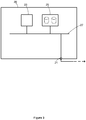
Figure 2 illustrates a firstfemto base station 110 of the first cluster of base stations. The femtobase station 110 includes afirst transceiver 111, aprocessor 113,memory 115 and asecond transceiver 117, all connected viabus 119. In this embodiment, thefirst transceiver 111 is an antenna configured for cellular communications according to the 3rd Generation Partnership Project (3GPP) Long Term Evolution (LTE) protocol, such that any connected UEs may be provided with voice and data services, which will typically use theprocessor 113 andmemory 115 modules. In this embodiment, thesecond transceiver 117 is a fibre optic connection to the cellular core network (known as a "backhaul"), such that thefemto base station 110 may connect to thenetwork manager 20, packet-data networks (e.g. the Internet), and other core network services. - Several processes of the first
femto base station 110 will now be described. As noted in the Background section above, cellular networking protocols (such as LTE) define several operating parameters, each having a set of values, and each base station must use one or more values of each of these sets of values in order to operate in accordance with the protocol. For example, the Physical Cell Identifier (PCI) is an operating parameter which has a set of values between 0 and 503. Each base station must select and use one of these values. In this embodiment, theprocessor 113 of the firstfemto base station 110 includes a plurality of Self-Organised Network (SON) algorithms, including one SON algorithm to select the PCI value from the set of PCI values. In a second process, the firstfemto base station 110 is configured to populate a Neighbour Relations Table, NRT, which identifies nearby base stations and several of their operating parameters, which is stored inmemory 115. This may be populated by instructing its connected UEs to search for nearby base stations and prepare measurement reports, or by a Network Listen function in which the firstfemto base station 110 mimics these UE functions to directly determine the identities and operating parameters of its neighbours (e.g. by the cooperation of theprocessor 113,first transceiver 111, and memory 115). In this embodiment, the firstfemto base station 110 is configured to report its selected values of each operating parameter (e.g. PCI) and its NRT to thenetwork manager 20 via thesecond transceiver 117. - The
macro base station 10 and other femto base stations of the first, second andthird clusters femto base station 110 described above, although there may be differences depending on the deployment scenario (for example, themacro base station 10 will have a greater transmission power such that it may transmit over a greater coverage area, and is more likely to have its operating parameter values selected by the cellular network operator rather than by a SON algorithm). -
Figure 3 illustrates thenetwork manager 20 in more detail. Thenetwork manager 20 includes afirst transceiver 21, aprocessor 23 andmemory 25, all connected viabus 27. Thefirst transceiver 21 is an optical fibre connection with each base station of thecellular network 1 and to other cellular core entities. In this embodiment,memory 25 includes a database having several tables, which will now be described. A first table is a base station table, which identifies each base station in the cellular network, their operating parameter values, and the contents of their NRTs (as reported from each base station). A second table is a network table, which identifies certain properties for each operating parameter (such as the subset of values allocated to a cluster, any unallocated values within each cluster, and several operator defined thresholds). The value of this data will become clear upon review of the method of the present invention. - An embodiment of a method of the present invention will now be described, with reference to
Figures 4 to 6 , in which a cellular network operator is optimising PCI allocations within thecellular network 1. In a first step (S1), thenetwork manager 20 receives the PCI for each base station in the cellular network 1 (including themacro base station 10, and each femto base station of the first, second andthird cluster network manager 20 also receives the NRT for each base station in thecellular network 1, which identifies each base station's neighbour, and stores these values in memory. This data allows thenetwork manager 20 to identify any two neighbours which have a direct PCI conflict (that is, two base stations whose respective coverage areas cover the other base station and whose PCI values are the same), any two neighbours which have an indirect conflict (that is, two base stations whose respective coverage areas cover the other base station and whose PCI values are not the same but are known to interfere, such as a mod-3, mod-6 or mod-30 conflict), and any two base stations which have a PCI confusion (that is, two base stations whose PCI values are the same and whose respective coverage areas do not cover each other but cover a common neighbouring base station). - In step S2, the
network manager 20 creates a first graph 500 for thefirst cluster 100 of base stations in thecellular network 1 based on this data. The first graph 500, as shown inFigure 5 , includes a plurality ofnodes 500a...500j, which represent all ten femto base stations in thefirst cluster 100. The first graph 500 also includes a plurality ofedges 550a...550e which each terminate at two of the plurality ofnodes 500a...500j. In this first graph 500, an edge terminates at two of the plurality ofnodes 500a...500j if the two femto base stations represented by those two nodes have a direct or indirect PCI conflict. - In step S3, the
network manager 20 partitions the first graph 500 into k sub-graphs, wherein k is the size of the PCI pool (e.g. if the PCI pool includesvalues nodes 500a...500j and a subset of the plurality ofedges 550a...550e in such a way so as to minimise the following equation:
- Where x1 denotes a first edge type in a sub-graph representing a direct PCI conflict and y1 is a first weighting representing an impact on network performance for the first edge type, x2 denotes a second edge type in a sub-graph representing a mod-3 PCI conflict and y2 is a second weighting representing an impact on network performance for the second edge type, x3 denotes a third edge type in a sub-graph representing a mod-6 PCI conflict and y3 is a third weighting representing an impact on network performance for the third edge type, and x4 denotes a fourth edge type in a sub-graph representing a mod-30 PCI conflict and y4 is a fourth weighting representing an impact on network performance for the fourth edge type. These weightings, which are stored in the second table in
memory 25, are defined by the cellular network operator and, in this example, are y1 =1, y2 =0.2, y3 =0.05, y4 =0.05. - The process of partitioning the first graph 500 into k sub-graphs so as to minimise the total weight of all edges joining nodes in all sub-graphs is known as the "minimum k-partition" problem. There are several techniques that may be used by the
network manager 20 to perform this process and, in this embodiment, thenetwork manager 20 uses the Iterative Clustering Heuristic (ICH) technique detailed in "A branch-and-cut algorithm based on semidefinite programming for the minimum k-partition problem" (Ghaddar, B., Anjos, M.F. & Liers, F. Ann Oper Res (2011) 188: 155. doi:10.1007/s10479-008-0481-4), although as an alternative thenetwork manager 20 may also use the technique detailed in "Semidefinite relaxations for partitioning, assignment and ordering problems" (Rendl, F. Ann Oper Res (2016) 240: 119. doi:10.1007/s10479-015-2015-1). These articles are hereby incorporated by reference in their entirety. For completeness, the ICH technique will now be summarised. - Given a graph G(V,E) with n vertices, weights wij between vertices i and j, and number of partitions k, and the following Semidefinite Programming (SDP) relaxation:


- Then the heuristic is described in the following algorithm:
- 1. Initialise a parameter r, the current number of partitions, to zero;
- 2. Initialise a parameter m, the current number of nodes, to n;
- 3. Initialise a tolerance tol, for example, tol = 1.7;
- 4. Solve the SDP relaxation (equations 2 to 5) with m nodes and get the optimal solution X*;
- 5. Take each triplet of vertices i, j, and h and sum the values on their edges: Tijh =

- 6. Sort the values of Tijh
- 7.
- (a) Choose vertices i, j, and h with Tijh ≥ tol to be in the same partition
- (b) If any vertices remain unassigned to a partition, choose vertices with Tijh ≤ tol to be in separate partitions
- (c) Update r to be the number of current partitions
- 8. If r> k,
- (a) Aggregate the vertices that are in the same partition into a single vertex. Call these new vertices 1', 2',...r'.
- (b) Set m=r and create the new aggregate weight matrix with entries
w i'j' = ∑ i∈i',j∈j'wij - (c) Return to step 4.
- 9. End
- It is noted that equation (5) means that the matrix X is required to be positive semidefinite, or in other words the scalar value vTXv is non-negative for any vector v. Furthermore, SDP programs can be solved using known software such as DSDP (https://neos-server.org/neos/solvers/sdp:DSDP/SDPA.html) or cvxpy (http://www.cvxpy.org/en/latest/).
- Following step S3, the
network manager 20 stores the PCI conflict value (being the value of the sum of equation 1) inmemory 25. - In step S4, the
network manager 20 creates a second graph 600 for thefirst cluster 100 of base stations in the cellular network based on the data stored inmemory 25. As shown inFigure 6 , the second graph 600 also includes the plurality ofnodes 500a...500j, which represent all ten femto base stations in thefirst cluster 100. The second graph 600 also includes a plurality ofedges 650a...650c which each terminate at two of the plurality ofnodes 500a...500j. In the second graph 600, an edge terminates at two of the plurality ofnodes 500a...500j if the two femto base stations represented by those two nodes have a PCI confusion. - In step S5, the
network manager 20 partitions the second graph 600 into k sub-graphs, wherein k is again the size of the PCI pool, such that each sub-graph includes a subset of the plurality ofnodes 500a...500j and a subset of the plurality ofedges 650a...650b in order to minimise the following equation:
- Where x5 denotes a fifth edge type in a sub-graph representing a PCI confusion and y5 is a first weighting representing an impact on network performance for the fifth edge type. The fifth weighting is again stored in the second table in
memory 25, is defined by the cellular network operator, and in this example takes the value 0.25. The process of partitioning the second graph 600 into k sub-graphs so as to minimise the weight of the edges joining nodes in all sub-graphs is again performed using the technique referred to above. Following this step, thenetwork manager 20 stores the PCI confusion conflict value (being the value of the sum of equation 6) inmemory 25. In step S6, the PCI conflict and PCI confusion values are summed to create an overall PCI conflict value based on the current PCI pool size. - In step S7, the
network manager 20 re-evaluates equations (1) and (6) for a plurality of alternative PCI pool sizes. In this example, the alternative PCI pool sizes, m1...m4, are 3, 4, 6 and 7, such that the first and second graphs are each partitioned into m1...m4 sub-graphs so as to minimise the total weight of the edges joining nodes in all sub-graphs. - The overall PCI conflict value for each of the plurality of alternative PCI pool sizes are then stored in
memory 25. - In step S8, the
network manager 20 determines if there are any other clusters in thecellular network 1 which need to be evaluated. In this example, thenetwork manager 20 determines that the second andthird clusters third clusters memory 25. - Once the
network manager 20 has evaluated these overall PCI conflict values for all PCI pool sizes for eachcluster network manager 20 determines whether to initiate a PCI value related change in any one of theclusters cellular network 1 based on the overall PCI conflict values and the data stored in the network table in memory 25 (such as the cellular network operator's thresholds). Several examples will now be discussed. - In a first example, the
network manager 20 compares the overall PCI conflict values for the current PCI pool size and the plurality of alternative PCI pool sizes for the first, second andthird clusters network manager 20 determines that the first cluster's current PCI pool size is not acceptable (as the overall PCI conflict value of the current PCI pool size is greater than the threshold), and the second and third cluster's current PCI pool size is acceptable (as the overall PCI conflict value of the current PCI pool size is less than the threshold). Thenetwork manager 20 also determines that an alternative PCI pool size for thefirst cluster 100 to increase the PCI pool size by one value would lead to an overall PCI conflict value that would be less than the threshold. Accordingly, it is determined that a change in PCI pool size for the first cluster to increase its PCI pool size by one value is beneficial. - In this example, the
network manager 20 further determines whether such a change should be implemented based on data relating to the cellular network and the overall PCI conflict values of the other clusters. Accordingly, thenetwork manager 20 determines (from the network table stored in memory 25), whether there are any unallocated PCI values in the cellular network that may be allocated to thefirst cluster 100. In this example, there are no such unallocated values. Thenetwork manager 20 therefore determines whether any of the alternative PCI pool sizes for the second andthird clusters network manager 20 determines that thesecond cluster 200 may reduce its PCI pool size by one value, and reallocate that PCI value to thefirst cluster 100. Thenetwork manager 20 may then instruct each femto base station in the first andsecond clusters - Thus, in general terms, the
network manager 20 is able to evaluate the optimum PCI pool size for each cluster in the cellular network 1 (being the smallest PCI pool size that satisfies a threshold representing an acceptable level of conflict as defined by the cellular network operator), and initiate a change in the relevant clusters such that each base station in the cluster adopts the optimum PCI pool size. - In a further enhancement of the above first example, the
network manager 20 is also able to determine (following a determination that the current PCI pool size of one or more clusters is not the optimum PCI pool size) whether or not to initiate a change in those one or more clusters. This decision may be based on an evaluation of the level of service disruption to each UE connected to each femto base station in those one or more clusters as the PCI values are reselected to be within the new PCI pool size. This may be based on the number of active sessions associated with all femto base station in those clusters, the proportion of UEs of all femto base stations in those clusters in idle mode, the time of day, the settling time for PCI reselection algorithms, etc. Following this decision, thenetwork manager 20 may then initiate a change in the manner described above, or may instead loop back to step S1. - In the above embodiments, the network manager determines whether or not a particular operating parameter pool size is acceptable or not by comparison to a threshold. These thresholds may be set by the network operator by calibration and may be varied according to their policy on acceptability on operating parameter conflict. Furthermore, these thresholds may include several components, such that a PCI conflict threshold may include a direct PCI conflict threshold, a mod-3 PCI conflict threshold, etc., and the cellular network operator may define a PCI conflict value as acceptable or not based on one or more of these thresholds.
- Furthermore, the skilled person will understand that the weightings used for each edge type may be set by the network operator by calibration and are representative of the network operator's perceived impact on network performance of a particular conflict. In particular, these weightings may be based on the number of cellular network operators that exist in a particular cluster, the level of conflict between those operators' SON algorithms, the level of synchronisation between base stations in the cluster, the level of overlap of coverage areas between base stations in the cluster (based on measured pathloss), etc.
- In the above embodiments, the method is performed in a network manager which is configured to receive the relevant data from each base station in the network. However, the skilled person will understand many other nodes in the network may be configured to receive this data and perform the above method. For example, a base station may be configured to receive the data (e.g. over an X2 interface), and perform the above method.
- Furthermore, the skilled person will understand that the above embodiments use the PCI as the operating parameter as an example only, and that the present invention may be applied to other operating parameters which have a defined set of values (such as ICIC resource assignment, transmission power, etc.). For example, the network manager may build a graph having a plurality of nodes representing base stations in a cluster and a plurality of edges representing ICIC colour conflict between any two nodes of the plurality of nodes. The weighting for these edges may then be based the operator's perceived impact on network performance from such colour conflict, which may be based on the types of colour selection SON algorithms, the level of colour-selection SON coordination, the operator's policy on edge user experience versus peak rate, form of fractional frequency reuse, etc.
- In the above embodiments, a cluster was a group of base stations that were assigned a particular subset of the set of operating parameter values, wherein the grouping was based on those base stations' locations. However, the skilled person will understand that this form of grouping is non-essential and may instead be based on other characteristics, such as the base station's operator, or the transmission range of the base station.
- The skilled person will also understand that the embodiments of the present invention may be utilised by a cellular network operator on initial network configuration or for ongoing optimisation.
- The skilled person will understand that any combination of features is permissible within the scope of the invention, as claimed.
Claims (14)
- A method of operating a cellular telecommunications network comprising a plurality of base stations, wherein each base station of the plurality of base stations has an operational parameter being one of a set of values, wherein the set includes k values, the method comprising the steps of:defining a first graph comprising a first plurality of nodes and a first plurality of edges, wherein a node of the first plurality of nodes represents a first base station of the plurality of base stations, and an edge of the first plurality of edges represents a first neighbouring relationship between two base stations of the plurality of base stations, wherein each edge of the first plurality of edges has an associated first weight value; partitioning the first graph into a first set of sub-graphs, wherein the first set of sub-graphs includes k sub-graphs, each having a subset of the first plurality of nodes and a subset of the first plurality of edges, such as to minimise a first sum value of all first weight values associated with each edge of each subset of the first plurality of edges in all sub-graphs of the first set of sub-graphs;calculating a first conflict value based on the first sum value; andinitiating a change relating to the operating parameter to one or more base stations in the plurality of base stations if the first conflict value satisfies a condition.
- A method as claimed in Claim 1, further comprising the steps of:partitioning the first graph into a second set of sub-graphs, wherein the second set of sub-graphs includes m sub-graphs, each having a subset of the first plurality of nodes and a subset of the first plurality of edges, such as to minimise a second sum value of the first weight values associated with each edge of each subset of the first plurality of edges in all sub-graphs of the second set of sub-graphs; andcalculating a second conflict value based on the second sum value,wherein the step of initiating a change includes determining whether the set of values for the operational parameter should have k or m values based on the first and second conflict values.
- A method as claimed in Claim 2, wherein the step of initiating a change includes determining whether the set of values for the operational parameter should have k or m values based on the first and second conflict values and on whether the second conflict value satisfies a threshold.
- A method as claimed in any one of Claims 1 to 3, further comprising the steps of:defining a second graph comprising a second plurality of nodes and a second plurality of edges, wherein a node of the second plurality of nodes represents a second base station of the plurality of base stations, and an edge of the second plurality of edges represents a second neighbouring relationship between two base stations of the plurality of base stations, wherein each edge of the second plurality of edges has an associated second weight value;partitioning the second graph into a third set of sub-graphs, wherein the third set of sub-graphs includes k sub-graphs, each having a subset of the second plurality of nodes and a subset of the second plurality of edges, such as to minimise a third sum value of the second weight values associated with each edge of each subset of the second plurality of edges in all sub-graphs of the third set of sub-graphs; andcalculating the first conflict value based on the first and third sum values.
- A method as claimed in Claim 4 when dependent on Claim 2, further comprising the steps of:partitioning the second graph into a fourth set of sub-graphs, wherein the fourth set of sub-graphs includes m values, each having a subset of the second plurality of nodes and a subset of the second plurality of edges, such as to minimise a fourth sum value of the second weight values associated with each edge of each subset of the plurality of edges in all sub-graphs of the fourth set of sub-graphs; andcalculating the second conflict value based on the second and fourth sum values.
- A method as claimed in any one of the preceding claims, wherein the operational parameter is a Physical Cell Identifier, PCI, and the set is a PCI pool.
- A method as claimed in Claim 6 when dependent on Claim 4, wherein the first weight value represents a PCI conflict and the second weight value represents a PCI confusion.
- A method as claimed in Claim 2 or any one of Claims 3 to 7 when dependent on Claim 2, wherein, if it is determined that the set of values for the operating parameter should have m values, then the method further comprises the step of:
causing the first base station of the plurality of base stations to reconfigure the operational parameter based on the set of values, wherein the set includes m values. - A method as claimed in Claim 1, or Claim 4 when dependent on Claim 1 only, wherein the step of initiating a change includes determining whether the first base station in the plurality of base stations should reselect its operational parameter based on the first conflict value.
- A method as claimed in any one of the preceding claims, wherein the first weight value represents a coverage area overlap between the two base stations of the plurality of base stations.
- A computer program comprising instructions which, when the program is executed by a computer, cause the computer to carry out the steps of any one of the preceding claims.
- A computer readable carrier medium comprising the computer program of Claim 11.
- A network node for a cellular telecommunications network, the network node comprising
a receiver configured to receive an operational parameter value associated with each base station of a plurality of base stations, wherein the operational parameter values are each one of a set of values; and
a processor configured to carry out the method of any one of Claims 1 to 10. - A cellular network including the network node of Claim 13.
Applications Claiming Priority (1)
| Application Number | Priority Date | Filing Date | Title |
|---|---|---|---|
| EP17180358 | 2017-07-07 |
Publications (2)
| Publication Number | Publication Date |
|---|---|
| EP3425952A1 true EP3425952A1 (en) | 2019-01-09 |
| EP3425952B1 EP3425952B1 (en) | 2020-02-19 |
Family
ID=59337471
Family Applications (1)
| Application Number | Title | Priority Date | Filing Date |
|---|---|---|---|
| EP18178167.5A Active EP3425952B1 (en) | 2017-07-07 | 2018-06-18 | Cellular telecommunications network |
Country Status (4)
| Country | Link |
|---|---|
| US (1) | US10863360B2 (en) |
| EP (1) | EP3425952B1 (en) |
| KR (1) | KR102171429B1 (en) |
| CN (1) | CN109219057B (en) |
Families Citing this family (5)
| Publication number | Priority date | Publication date | Assignee | Title |
|---|---|---|---|---|
| US10856213B2 (en) | 2014-11-20 | 2020-12-01 | British Telecommunications Public Limited Company | Connecting an UE to a basestation, with a quality of service and an allowed CSG service priority |
| CN109792685B (en) | 2016-09-29 | 2022-02-11 | 英国电讯有限公司 | Base station and method of operating a base station in a cellular telecommunications network |
| GB2597096B (en) | 2020-07-15 | 2022-10-05 | British Telecomm | Computer-implemented automatic security methods and systems |
| GB2597097B (en) | 2020-07-15 | 2022-10-05 | British Telecomm | Computer-implemented automatic security methods and systems |
| JPWO2024228250A1 (en) * | 2023-05-02 | 2024-11-07 |
Family Cites Families (52)
| Publication number | Priority date | Publication date | Assignee | Title |
|---|---|---|---|---|
| CN101335971B (en) * | 2007-06-28 | 2011-04-27 | 联想(北京)有限公司 | Resource scheduling method of multi-hop wireless network based on relay station |
| US8265033B2 (en) | 2007-08-13 | 2012-09-11 | Telefonakatiebolaget Lm Ericsson (Publ) | Closed subscriber group cell handover |
| EP2154917A1 (en) | 2008-08-13 | 2010-02-17 | Nokia Siemens Networks OY | Transmission of a synchronization signal within a cellular telecommunication network with temporarily increased transmitting power |
| WO2010024743A1 (en) | 2008-08-27 | 2010-03-04 | Telefonaktiebolaget L M Ericsson (Publ) | Method and arrangement, cell id collision detection |
| US8180368B2 (en) | 2008-11-11 | 2012-05-15 | Trueposition, Inc. | Femto-cell location by direct methods |
| US9344258B2 (en) | 2008-12-23 | 2016-05-17 | Google Technology Holdings LLC | Method and apparatus for configuring radio frequency resources for a customer premises base station |
| US8838090B2 (en) | 2009-01-15 | 2014-09-16 | Telefonaktiebolaget Lm Ericsson (Publ) | Automatic detection and correction of physical cell identity conflicts |
| EP2271142B1 (en) | 2009-06-26 | 2012-08-29 | Alcatel Lucent | Method, computer program product and base station apparatus for detecting PCI collisions |
| US8886126B2 (en) * | 2009-07-09 | 2014-11-11 | Qualcomm Incorporated | Resolution algorithms for multi-radio coexistence |
| JP4648474B2 (en) | 2009-08-18 | 2011-03-09 | 株式会社エヌ・ティ・ティ・ドコモ | Mobile communication method |
| US9037174B2 (en) | 2009-09-02 | 2015-05-19 | Telefonaktiebolaget L M Ericsson (Publ) | Method and arrangement for improving radio network characteristics |
| JP2011078024A (en) | 2009-10-01 | 2011-04-14 | Ntt Docomo Inc | Mobile communication method, mobile station, and radio base station |
| US20110111745A1 (en) | 2009-11-06 | 2011-05-12 | Samsung Electronics Co., Ltd. | Systems and methods for cell search in multi-tier communication systems |
| WO2011113467A1 (en) | 2010-03-15 | 2011-09-22 | Nokia Siemens Networks Oy | Relay nodes |
| CN102202361B (en) | 2010-03-23 | 2013-12-04 | 华为技术有限公司 | Method, device and system for controlling subscriber handover access between node base stations |
| CN105101320B (en) | 2010-05-07 | 2019-12-31 | 北京三星通信技术研究有限公司 | A method for establishing a connection between base stations |
| US9749880B2 (en) | 2010-06-30 | 2017-08-29 | Verizon Patent And Licensing Inc. | Base station failover using neighboring base stations as relays |
| US8750098B2 (en) | 2010-07-28 | 2014-06-10 | At&T Intellectual Property I, L.P. | Femtocell service through a secondary connection |
| US9203691B2 (en) | 2010-08-31 | 2015-12-01 | Siklu Communication ltd. | Fail-safe communication systems and methods |
| US9392420B2 (en) | 2010-12-17 | 2016-07-12 | Telefonaktiebolaget L M Ericsson (Publ) | Closed subscriber group (CSG) handling for supporting network sharing of home base stations |
| US9113368B2 (en) * | 2011-03-25 | 2015-08-18 | Qualcomm Incorporated | Maintaining neighbor cell list |
| KR101884348B1 (en) | 2011-03-30 | 2018-08-30 | 엘지전자 주식회사 | server for control plane at mobile communication network and for providing local CSG and access control method |
| WO2012138125A2 (en) | 2011-04-04 | 2012-10-11 | Lg Electronics Inc. | Method for performing mobility in a wireless communication system and apparatus for the same |
| KR101430243B1 (en) | 2011-04-14 | 2014-08-18 | 주식회사 케이티 | Femto base station and management system of the femto base station for x2 interface connection |
| US20120275315A1 (en) | 2011-04-27 | 2012-11-01 | Motorola Solutions, Inc. | Physical-layer cell identity (pci) conflict detection |
| US20130005340A1 (en) | 2011-06-30 | 2013-01-03 | Nokia Siemens Networks Oy | Handover Between Different Closed Subscriber Groups |
| US20130089070A1 (en) | 2011-09-06 | 2013-04-11 | Powerwave Technologies, Inc. | Small cells implementing multiple air interfaces |
| WO2013036078A2 (en) | 2011-09-07 | 2013-03-14 | 엘지전자 주식회사 | Method and apparatus for remote access in a wireless communication system |
| CN102395152A (en) | 2011-11-14 | 2012-03-28 | 中兴通讯股份有限公司 | Method, system and base station for detecting conflict or confusion of neighborhood physical logos in network |
| WO2013120274A1 (en) | 2012-02-17 | 2013-08-22 | Nokia (China) Investment Co., Ltd. | Methods, apparatuses and computer program products for wlan discovery and handover in coexisted lte and wlan networks |
| CN104365140A (en) | 2012-03-22 | 2015-02-18 | 交互数字专利控股公司 | Method and apparatus for offloading backhaul traffic |
| WO2014029107A1 (en) | 2012-08-24 | 2014-02-27 | 华为技术有限公司 | Pci confusion detection method, user equipment, and base station |
| US9392627B2 (en) | 2012-09-13 | 2016-07-12 | Qualcomm Incorporated | Method and apparatus for physical cell identifier collision detection and neighboring cell list construction |
| US9113352B2 (en) | 2012-09-25 | 2015-08-18 | Parallel Wireless, Inc. | Heterogeneous self-organizing network for access and backhaul |
| US20150358940A1 (en) | 2014-06-05 | 2015-12-10 | Qualcomm Incorporated | Mbms coexistence in a network with multiple types of base stations |
| US9078157B2 (en) | 2012-12-31 | 2015-07-07 | Verizon Patent And Licensing Inc. | Quick recovery of RF sessions after backhaul link failure |
| US9451466B2 (en) | 2013-03-15 | 2016-09-20 | Qualcomm Incorporated | Base station employing shared resources among antenna units |
| KR101519067B1 (en) * | 2013-08-30 | 2015-05-12 | 에스케이텔레콤 주식회사 | Cell identification allocating apparatus and control method thereof |
| US9497654B2 (en) | 2013-09-04 | 2016-11-15 | Qualcomm Incorporated | Methods and apparatus for network entity collision detection |
| US9084165B2 (en) | 2013-10-02 | 2015-07-14 | Public Wireless, Inc. | Systems and methods for deployment operations for small cells in self-organizing networks |
| US9743397B2 (en) | 2013-11-14 | 2017-08-22 | Telefonaktiebolaget L M Ericsson (Publ) | Reduced-size message pass in factor graphs for wireless communications networks |
| CN106105283B (en) * | 2014-02-25 | 2019-10-22 | 英国电讯有限公司 | Method, device and computer storage medium for allocating physical cell IDs to cells |
| US9999042B2 (en) | 2014-03-18 | 2018-06-12 | British Telecommnications Public Limited Company | Small cell resource allocation |
| US9344929B2 (en) | 2014-03-24 | 2016-05-17 | Cisco Technology, Inc. | Facilitating automatic neighbor relation in a wireless telecommunication network environment |
| US10856213B2 (en) | 2014-11-20 | 2020-12-01 | British Telecommunications Public Limited Company | Connecting an UE to a basestation, with a quality of service and an allowed CSG service priority |
| US10194474B2 (en) | 2015-03-19 | 2019-01-29 | British Telecommunications Public Limited Company | Communications network |
| CN104735717B (en) * | 2015-04-15 | 2018-07-27 | 广东海格怡创科技有限公司 | Cell PCI configuration methods and system |
| EP3357272B1 (en) | 2015-09-28 | 2023-04-19 | British Telecommunications public limited company | Cellular telecommunications network |
| CN105611554A (en) | 2015-12-18 | 2016-05-25 | 河北电信设计咨询有限公司 | Physical cell identification distribution method |
| US10362555B2 (en) | 2016-03-04 | 2019-07-23 | British Telecommunications Public Limited Company | Cellular telecommunications network |
| US10405280B2 (en) | 2016-03-17 | 2019-09-03 | British Telecommunications Public Limited Company | Cellular telecommunications network |
| CN106211209B (en) * | 2016-06-27 | 2019-08-23 | 广东海格怡创科技有限公司 | The method and apparatus for obtaining the total interference value of PCI based on co-frequency cell related coefficient |
-
2018
- 2018-06-18 EP EP18178167.5A patent/EP3425952B1/en active Active
- 2018-06-29 US US16/023,917 patent/US10863360B2/en active Active
- 2018-07-02 KR KR1020180076271A patent/KR102171429B1/en active Active
- 2018-07-06 CN CN201810734650.7A patent/CN109219057B/en active Active
Non-Patent Citations (3)
| Title |
|---|
| GHADDAR, B.; ANJOS, M.F.; LIERS, F., ANN OPER RES, vol. 188, 2011, pages 155 |
| JAMIE FAIRBROTHER ET AL: "A two-level graph partitioning problem arising in mobile wireless communications", 24 May 2017 (2017-05-24), pages 1 - 23, XP055442467, Retrieved from the Internet <URL:https://arxiv.org/pdf/1705.08773v1.pdf> [retrieved on 20180119] * |
| RENDL, F., ANN OPER RES, vol. 240, 2016, pages 119 |
Also Published As
| Publication number | Publication date |
|---|---|
| US10863360B2 (en) | 2020-12-08 |
| CN109219057A (en) | 2019-01-15 |
| CN109219057B (en) | 2022-01-25 |
| KR20190005745A (en) | 2019-01-16 |
| US20190014478A1 (en) | 2019-01-10 |
| KR102171429B1 (en) | 2020-10-29 |
| EP3425952B1 (en) | 2020-02-19 |
Similar Documents
| Publication | Publication Date | Title |
|---|---|---|
| EP3425952B1 (en) | Cellular telecommunications network | |
| US8971818B2 (en) | System and method for configuring a communications network | |
| EP3078223B1 (en) | Self-organized distributed assignment, optimization, and use of physical cell ids | |
| EP2735190B1 (en) | Inter-cell interference coordination in wireless networks | |
| EP2907356B1 (en) | Method for dynamic inter-cell interference coordination, cell controller and system | |
| US9538369B2 (en) | Allocation of physical cell identification | |
| US9392432B2 (en) | Interface between base stations for topology discovery to enable coordinated resource usage | |
| US20140073339A1 (en) | Method, apparatus, and base station for resource allocation | |
| US20220210706A1 (en) | Method and apparatus for identifying target neighbor cell for handover of user equipment (ue) | |
| US10285186B2 (en) | System and method for grouping and selecting transmission points | |
| EP3200507B1 (en) | Method and device for selecting heterogeneous network serving cell based on inter-cell cooperation | |
| Mohajer et al. | Big data-based self optimization networking in multi carrier mobile networks | |
| EP4260532A1 (en) | Load management of overlapping cells based on user throughput | |
| CN104010315A (en) | Cell selection scheme based on user experience quality | |
| GB2564427A (en) | Cellular telecommunications network | |
| JP2016541188A (en) | Method and system for muting radio resources in a radio communication system | |
| TW201503722A (en) | Methods and systems for load balancing and interference coordination in networks | |
| EP4068855A1 (en) | Method for recommending target cell for handover in open-radio access network environment | |
| CN117202282A (en) | Cell switching method and device based on wireless fingerprint database | |
| Kudo et al. | Cell selection using distributed Q-learning in heterogeneous networks | |
| Kuang | Joint user association and reuse pattern selection in heterogeneous networks | |
| Tiwana et al. | Self-organizing networks: A packet scheduling approach for coverage/capacity optimization in 4G networks using reinforcement learning | |
| Sedlacek et al. | Analysis of neighbourhood relations for femtocell networks | |
| EP4260601A1 (en) | Load management of overlapping cells based on user throughput | |
| Peng et al. | Efficient resource allocation scheme to maximise number of users with quality of service demands in small cells |
Legal Events
| Date | Code | Title | Description |
|---|---|---|---|
| PUAI | Public reference made under article 153(3) epc to a published international application that has entered the european phase |
Free format text: ORIGINAL CODE: 0009012 |
|
| STAA | Information on the status of an ep patent application or granted ep patent |
Free format text: STATUS: THE APPLICATION HAS BEEN PUBLISHED |
|
| AK | Designated contracting states |
Kind code of ref document: A1 Designated state(s): AL AT BE BG CH CY CZ DE DK EE ES FI FR GB GR HR HU IE IS IT LI LT LU LV MC MK MT NL NO PL PT RO RS SE SI SK SM TR |
|
| AX | Request for extension of the european patent |
Extension state: BA ME |
|
| STAA | Information on the status of an ep patent application or granted ep patent |
Free format text: STATUS: REQUEST FOR EXAMINATION WAS MADE |
|
| 17P | Request for examination filed |
Effective date: 20190610 |
|
| RBV | Designated contracting states (corrected) |
Designated state(s): AL AT BE BG CH CY CZ DE DK EE ES FI FR GB GR HR HU IE IS IT LI LT LU LV MC MK MT NL NO PL PT RO RS SE SI SK SM TR |
|
| GRAP | Despatch of communication of intention to grant a patent |
Free format text: ORIGINAL CODE: EPIDOSNIGR1 |
|
| STAA | Information on the status of an ep patent application or granted ep patent |
Free format text: STATUS: GRANT OF PATENT IS INTENDED |
|
| RIC1 | Information provided on ipc code assigned before grant |
Ipc: H04W 16/10 20090101ALN20190904BHEP Ipc: H04W 24/02 20090101AFI20190904BHEP Ipc: H04W 16/18 20090101ALN20190904BHEP |
|
| INTG | Intention to grant announced |
Effective date: 20190920 |
|
| GRAS | Grant fee paid |
Free format text: ORIGINAL CODE: EPIDOSNIGR3 |
|
| GRAA | (expected) grant |
Free format text: ORIGINAL CODE: 0009210 |
|
| STAA | Information on the status of an ep patent application or granted ep patent |
Free format text: STATUS: THE PATENT HAS BEEN GRANTED |
|
| AK | Designated contracting states |
Kind code of ref document: B1 Designated state(s): AL AT BE BG CH CY CZ DE DK EE ES FI FR GB GR HR HU IE IS IT LI LT LU LV MC MK MT NL NO PL PT RO RS SE SI SK SM TR |
|
| REG | Reference to a national code |
Ref country code: CH Ref legal event code: EP |
|
| REG | Reference to a national code |
Ref country code: DE Ref legal event code: R096 Ref document number: 602018002500 Country of ref document: DE |
|
| REG | Reference to a national code |
Ref country code: AT Ref legal event code: REF Ref document number: 1236372 Country of ref document: AT Kind code of ref document: T Effective date: 20200315 |
|
| REG | Reference to a national code |
Ref country code: IE Ref legal event code: FG4D |
|
| REG | Reference to a national code |
Ref country code: NL Ref legal event code: MP Effective date: 20200219 |
|
| PG25 | Lapsed in a contracting state [announced via postgrant information from national office to epo] |
Ref country code: FI Free format text: LAPSE BECAUSE OF FAILURE TO SUBMIT A TRANSLATION OF THE DESCRIPTION OR TO PAY THE FEE WITHIN THE PRESCRIBED TIME-LIMIT Effective date: 20200219 Ref country code: NO Free format text: LAPSE BECAUSE OF FAILURE TO SUBMIT A TRANSLATION OF THE DESCRIPTION OR TO PAY THE FEE WITHIN THE PRESCRIBED TIME-LIMIT Effective date: 20200519 Ref country code: RS Free format text: LAPSE BECAUSE OF FAILURE TO SUBMIT A TRANSLATION OF THE DESCRIPTION OR TO PAY THE FEE WITHIN THE PRESCRIBED TIME-LIMIT Effective date: 20200219 |
|
| REG | Reference to a national code |
Ref country code: LT Ref legal event code: MG4D |
|
| PG25 | Lapsed in a contracting state [announced via postgrant information from national office to epo] |
Ref country code: IS Free format text: LAPSE BECAUSE OF FAILURE TO SUBMIT A TRANSLATION OF THE DESCRIPTION OR TO PAY THE FEE WITHIN THE PRESCRIBED TIME-LIMIT Effective date: 20200619 Ref country code: GR Free format text: LAPSE BECAUSE OF FAILURE TO SUBMIT A TRANSLATION OF THE DESCRIPTION OR TO PAY THE FEE WITHIN THE PRESCRIBED TIME-LIMIT Effective date: 20200520 Ref country code: BG Free format text: LAPSE BECAUSE OF FAILURE TO SUBMIT A TRANSLATION OF THE DESCRIPTION OR TO PAY THE FEE WITHIN THE PRESCRIBED TIME-LIMIT Effective date: 20200519 Ref country code: SE Free format text: LAPSE BECAUSE OF FAILURE TO SUBMIT A TRANSLATION OF THE DESCRIPTION OR TO PAY THE FEE WITHIN THE PRESCRIBED TIME-LIMIT Effective date: 20200219 Ref country code: LV Free format text: LAPSE BECAUSE OF FAILURE TO SUBMIT A TRANSLATION OF THE DESCRIPTION OR TO PAY THE FEE WITHIN THE PRESCRIBED TIME-LIMIT Effective date: 20200219 Ref country code: HR Free format text: LAPSE BECAUSE OF FAILURE TO SUBMIT A TRANSLATION OF THE DESCRIPTION OR TO PAY THE FEE WITHIN THE PRESCRIBED TIME-LIMIT Effective date: 20200219 |
|
| PG25 | Lapsed in a contracting state [announced via postgrant information from national office to epo] |
Ref country code: NL Free format text: LAPSE BECAUSE OF FAILURE TO SUBMIT A TRANSLATION OF THE DESCRIPTION OR TO PAY THE FEE WITHIN THE PRESCRIBED TIME-LIMIT Effective date: 20200219 |
|
| PG25 | Lapsed in a contracting state [announced via postgrant information from national office to epo] |
Ref country code: ES Free format text: LAPSE BECAUSE OF FAILURE TO SUBMIT A TRANSLATION OF THE DESCRIPTION OR TO PAY THE FEE WITHIN THE PRESCRIBED TIME-LIMIT Effective date: 20200219 Ref country code: DK Free format text: LAPSE BECAUSE OF FAILURE TO SUBMIT A TRANSLATION OF THE DESCRIPTION OR TO PAY THE FEE WITHIN THE PRESCRIBED TIME-LIMIT Effective date: 20200219 Ref country code: SK Free format text: LAPSE BECAUSE OF FAILURE TO SUBMIT A TRANSLATION OF THE DESCRIPTION OR TO PAY THE FEE WITHIN THE PRESCRIBED TIME-LIMIT Effective date: 20200219 Ref country code: PT Free format text: LAPSE BECAUSE OF FAILURE TO SUBMIT A TRANSLATION OF THE DESCRIPTION OR TO PAY THE FEE WITHIN THE PRESCRIBED TIME-LIMIT Effective date: 20200712 Ref country code: EE Free format text: LAPSE BECAUSE OF FAILURE TO SUBMIT A TRANSLATION OF THE DESCRIPTION OR TO PAY THE FEE WITHIN THE PRESCRIBED TIME-LIMIT Effective date: 20200219 Ref country code: SM Free format text: LAPSE BECAUSE OF FAILURE TO SUBMIT A TRANSLATION OF THE DESCRIPTION OR TO PAY THE FEE WITHIN THE PRESCRIBED TIME-LIMIT Effective date: 20200219 Ref country code: CZ Free format text: LAPSE BECAUSE OF FAILURE TO SUBMIT A TRANSLATION OF THE DESCRIPTION OR TO PAY THE FEE WITHIN THE PRESCRIBED TIME-LIMIT Effective date: 20200219 Ref country code: LT Free format text: LAPSE BECAUSE OF FAILURE TO SUBMIT A TRANSLATION OF THE DESCRIPTION OR TO PAY THE FEE WITHIN THE PRESCRIBED TIME-LIMIT Effective date: 20200219 Ref country code: RO Free format text: LAPSE BECAUSE OF FAILURE TO SUBMIT A TRANSLATION OF THE DESCRIPTION OR TO PAY THE FEE WITHIN THE PRESCRIBED TIME-LIMIT Effective date: 20200219 |
|
| REG | Reference to a national code |
Ref country code: AT Ref legal event code: MK05 Ref document number: 1236372 Country of ref document: AT Kind code of ref document: T Effective date: 20200219 |
|
| REG | Reference to a national code |
Ref country code: DE Ref legal event code: R097 Ref document number: 602018002500 Country of ref document: DE |
|
| PLBE | No opposition filed within time limit |
Free format text: ORIGINAL CODE: 0009261 |
|
| STAA | Information on the status of an ep patent application or granted ep patent |
Free format text: STATUS: NO OPPOSITION FILED WITHIN TIME LIMIT |
|
| 26N | No opposition filed |
Effective date: 20201120 |
|
| PG25 | Lapsed in a contracting state [announced via postgrant information from national office to epo] |
Ref country code: IT Free format text: LAPSE BECAUSE OF FAILURE TO SUBMIT A TRANSLATION OF THE DESCRIPTION OR TO PAY THE FEE WITHIN THE PRESCRIBED TIME-LIMIT Effective date: 20200219 Ref country code: MC Free format text: LAPSE BECAUSE OF FAILURE TO SUBMIT A TRANSLATION OF THE DESCRIPTION OR TO PAY THE FEE WITHIN THE PRESCRIBED TIME-LIMIT Effective date: 20200219 Ref country code: AT Free format text: LAPSE BECAUSE OF FAILURE TO SUBMIT A TRANSLATION OF THE DESCRIPTION OR TO PAY THE FEE WITHIN THE PRESCRIBED TIME-LIMIT Effective date: 20200219 |
|
| PG25 | Lapsed in a contracting state [announced via postgrant information from national office to epo] |
Ref country code: PL Free format text: LAPSE BECAUSE OF FAILURE TO SUBMIT A TRANSLATION OF THE DESCRIPTION OR TO PAY THE FEE WITHIN THE PRESCRIBED TIME-LIMIT Effective date: 20200219 Ref country code: SI Free format text: LAPSE BECAUSE OF FAILURE TO SUBMIT A TRANSLATION OF THE DESCRIPTION OR TO PAY THE FEE WITHIN THE PRESCRIBED TIME-LIMIT Effective date: 20200219 |
|
| PG25 | Lapsed in a contracting state [announced via postgrant information from national office to epo] |
Ref country code: LU Free format text: LAPSE BECAUSE OF NON-PAYMENT OF DUE FEES Effective date: 20200618 |
|
| REG | Reference to a national code |
Ref country code: BE Ref legal event code: MM Effective date: 20200630 |
|
| PG25 | Lapsed in a contracting state [announced via postgrant information from national office to epo] |
Ref country code: IE Free format text: LAPSE BECAUSE OF NON-PAYMENT OF DUE FEES Effective date: 20200618 |
|
| PG25 | Lapsed in a contracting state [announced via postgrant information from national office to epo] |
Ref country code: BE Free format text: LAPSE BECAUSE OF NON-PAYMENT OF DUE FEES Effective date: 20200630 |
|
| REG | Reference to a national code |
Ref country code: CH Ref legal event code: PL |
|
| PG25 | Lapsed in a contracting state [announced via postgrant information from national office to epo] |
Ref country code: LI Free format text: LAPSE BECAUSE OF NON-PAYMENT OF DUE FEES Effective date: 20210630 Ref country code: CH Free format text: LAPSE BECAUSE OF NON-PAYMENT OF DUE FEES Effective date: 20210630 |
|
| PG25 | Lapsed in a contracting state [announced via postgrant information from national office to epo] |
Ref country code: TR Free format text: LAPSE BECAUSE OF FAILURE TO SUBMIT A TRANSLATION OF THE DESCRIPTION OR TO PAY THE FEE WITHIN THE PRESCRIBED TIME-LIMIT Effective date: 20200219 Ref country code: MT Free format text: LAPSE BECAUSE OF FAILURE TO SUBMIT A TRANSLATION OF THE DESCRIPTION OR TO PAY THE FEE WITHIN THE PRESCRIBED TIME-LIMIT Effective date: 20200219 Ref country code: CY Free format text: LAPSE BECAUSE OF FAILURE TO SUBMIT A TRANSLATION OF THE DESCRIPTION OR TO PAY THE FEE WITHIN THE PRESCRIBED TIME-LIMIT Effective date: 20200219 |
|
| PG25 | Lapsed in a contracting state [announced via postgrant information from national office to epo] |
Ref country code: MK Free format text: LAPSE BECAUSE OF FAILURE TO SUBMIT A TRANSLATION OF THE DESCRIPTION OR TO PAY THE FEE WITHIN THE PRESCRIBED TIME-LIMIT Effective date: 20200219 Ref country code: AL Free format text: LAPSE BECAUSE OF FAILURE TO SUBMIT A TRANSLATION OF THE DESCRIPTION OR TO PAY THE FEE WITHIN THE PRESCRIBED TIME-LIMIT Effective date: 20200219 |
|
| P01 | Opt-out of the competence of the unified patent court (upc) registered |
Effective date: 20230623 |
|
| PGFP | Annual fee paid to national office [announced via postgrant information from national office to epo] |
Ref country code: GB Payment date: 20260525 Year of fee payment: 9 |
|
| PGFP | Annual fee paid to national office [announced via postgrant information from national office to epo] |
Ref country code: DE Payment date: 20260520 Year of fee payment: 9 |
|
| PGFP | Annual fee paid to national office [announced via postgrant information from national office to epo] |
Ref country code: FR Payment date: 20260521 Year of fee payment: 9 |