EP3425500A1 - Information processing apparatus and carrier means - Google Patents
Information processing apparatus and carrier means Download PDFInfo
- Publication number
- EP3425500A1 EP3425500A1 EP18181335.3A EP18181335A EP3425500A1 EP 3425500 A1 EP3425500 A1 EP 3425500A1 EP 18181335 A EP18181335 A EP 18181335A EP 3425500 A1 EP3425500 A1 EP 3425500A1
- Authority
- EP
- European Patent Office
- Prior art keywords
- term
- application
- information
- module
- term module
- Prior art date
- Legal status (The legal status is an assumption and is not a legal conclusion. Google has not performed a legal analysis and makes no representation as to the accuracy of the status listed.)
- Withdrawn
Links
Images





Classifications
-
- G—PHYSICS
- G06—COMPUTING OR CALCULATING; COUNTING
- G06F—ELECTRIC DIGITAL DATA PROCESSING
- G06F16/00—Information retrieval; Database structures therefor; File system structures therefor
- G06F16/80—Information retrieval; Database structures therefor; File system structures therefor of semi-structured data, e.g. markup language structured data such as SGML, XML or HTML
-
- G—PHYSICS
- G06—COMPUTING OR CALCULATING; COUNTING
- G06F—ELECTRIC DIGITAL DATA PROCESSING
- G06F40/00—Handling natural language data
- G06F40/20—Natural language analysis
- G06F40/263—Language identification
-
- G—PHYSICS
- G06—COMPUTING OR CALCULATING; COUNTING
- G06F—ELECTRIC DIGITAL DATA PROCESSING
- G06F8/00—Arrangements for software engineering
- G06F8/60—Software deployment
- G06F8/61—Installation
-
- G—PHYSICS
- G06—COMPUTING OR CALCULATING; COUNTING
- G06F—ELECTRIC DIGITAL DATA PROCESSING
- G06F8/00—Arrangements for software engineering
- G06F8/60—Software deployment
- G06F8/65—Updates
-
- G—PHYSICS
- G06—COMPUTING OR CALCULATING; COUNTING
- G06F—ELECTRIC DIGITAL DATA PROCESSING
- G06F9/00—Arrangements for program control, e.g. control units
- G06F9/06—Arrangements for program control, e.g. control units using stored programs, i.e. using an internal store of processing equipment to receive or retain programs
- G06F9/44—Arrangements for executing specific programs
- G06F9/451—Execution arrangements for user interfaces
- G06F9/454—Multi-language systems; Localisation; Internationalisation
Definitions
- the present invention relates to an information processing apparatus and carrier means.
- Character strings to be displayed on a screen of an application in Android which is an example of an operating system (OS) are typically embedded in the application.
- a technique is known for dynamically changing character strings to be displayed on the screen of the application. Further, a technique is known for adding character strings that are not originally embedded in the application.
- JP-2014-063472-A discloses an application installed in an information processing apparatus, the application being composed of a program logic and language resource modules.
- the information processing apparatus can provide a display language desired by a user, by switching the language resource modules.
- a definition is required, for each term to be displayed, between a term ID and a character string of the term to be actually displayed.
- a definition is required, for each term to be displayed, between a term ID and a character string of the term to be actually displayed.
- Android registered trademark
- a processing for the above association is performed each time the OS is started up.
- the larger the number of applications or the number of terms to be displayed on a screen of the application the longer it takes to start up the OS.
- An aspect of the present invention has an object to provide an information processing apparatus capable of preventing startup time from getting long steadily due to an increase in the number of terms to be displayed on a screen.
- an information processing apparatus (500) is capable of displaying terms each having a character string embedded in an application (10) and terms each having a character string to be added by at least one term module (20, 22) for the application (10), on a screen of the application (10).
- the information processing apparatus (500) includes term management means (38, 40) for storing association information associating, for each of the terms, term identification information of the application (10) identifying the character string embedded in the application (10) with term identification information of the at least one term module (20, 22) identifying the character string embedded in the at least one term module (20, 22).
- the information processing apparatus (500) includes selection means (36) for acquiring the term identification information of the application (10) or the term identification information of the at least one term module (20, 22) from the term management means (38, 40), and selecting a character string to be displayed on the screen of the application (10), using the term identification information acquired.
- the information processing apparatus (500) includes association information generating means (36) for determining, during startup of the information processing apparatus (500), whether at least one of the application (10) and the at least one term module (20, 22) has been updated, and generating the association information associating the term identification information of the application (10) with the term identification information of the at least one term module (20, 22), to be stored by the term management means (38, 40) based on determination that at least one of the application (10) and the at least one term module (20, 22) has been updated.
- startup time can be prevented from getting long steadily due to an increase in the number of terms to be displayed on a screen.
- FIG. 1 is a block diagram illustrating an example of a hardware configuration of the image forming apparatus 1, according to the present embodiment.
- a hardware configuration of a multifunction peripheral MFP
- the multifunction peripheral is an apparatus including a plurality of functions, such as a print function, a scanner function, and a copy function.
- the image forming apparatus 1 illustrated in FIG. 1 includes an information processing terminal 500 and a main unit 600.
- the information processing terminal 500 functions as an operation unit that receives an operation of a user. Examples of the information processing terminal 500 includes a tablet terminal.
- the main unit 600 implements various functions, such as the print function, the scanner function, and the copy function.
- the information processing terminal 500 and the main unit 600 are mutually communicably connected through a communication channel 550.
- the communication channel 550 may be in compliance with a universal serial bus (USB) standard, for example.
- the information processing terminal 500 and the main unit 600 may communicate with each other have a communication channel 551 through a short-range wireless communication network, such as a local area network (LAN) or Bluetooth (registered trademark).
- LAN local area network
- Bluetooth registered trademark
- the image forming apparatus 1 of FIG. 1 is regarded as an image forming system including the information processing terminal 500 and the main unit 600.
- the main unit 600 includes a controller 601, an external interface (I/F) 602, a communication interface (I/F) 603, a printer 604, and a scanner 605.
- the controller 601 includes a central processing unit (CPU) 611, a random-access memory (RAM) 612, a read-only memory (ROM) 613, a non-volatile random-access memory (NVRAM) 614, and a hard disk drive (HDD) 615.
- the ROM 613 stores various programs and data.
- the RAM 612 temporarily stores programs and data.
- the NVRAM 614 stores, for example, setting information.
- the HDD 615 stores various programs and data.
- the CPU 611 loads the programs, data, or the setting information from the ROM 613, the NVRAM 614, or the HDD 615 onto the RAM 612 for processing, to control entire operation of the main unit 600 and implement various functions.
- the external I/F 602 is an interface that enables the main unit 600 to communicate with the information processing terminal 500 through the communication channel 550.
- the communication I/F 603 is an interface that connects the main unit 600 to the information processing terminal 500 or a network through the communication channel 551.
- the printer 604 forms an image onto a conveyed object according to print data.
- the conveyed object include, but not limited to, paper, coated paper, thick paper, overhead projector (OHP) film, plastic film, prepreg, and copper foil.
- the scanner 605 reads image data (electronic data) from an original, to generate an image file (electronic file).
- FIG. 2 is a block diagram illustrating an example of a hardware configuration of the information processing terminal 500, according to the present embodiment.
- the information processing terminal 500 of FIG. 2 includes an input device 501, a display 502, an external interface (I/F) 503, a random access memory (RAM) 504, a read only memory (ROM) 505, a central processing unit (CPU) 506, a communication interface (I/F) 507, and a hard disk drive (HDD) 508, mutually connected through a bus B.
- I/F external interface
- RAM random access memory
- ROM read only memory
- CPU central processing unit
- I/F communication interface
- HDD hard disk drive
- the input device 501 includes a touch panel and hardware keys, and the user inputs an operation signal into the input device 501.
- the display 502 includes a liquid crystal display (LCD), and displays information.
- the communication I/F 507 is an interface that connects the information processing terminal 500 to the main unit 600 or various networks.
- the HDD 508 is an example of a nonvolatile storage device storing programs and data. Examples of the stored program and data include an operating system (OS), which is basic software for controlling entire operation of the information processing terminal 500, and an application for providing various functions on the OS.
- the information processing terminal 500 may include, instead of or in alternative to the HDD 508, a drive that uses, as a storage medium, a flash memory such as a solid state drive (SSD).
- SSD solid state drive
- the external I/F 503 in an interface that connects the information processing terminal 500 with the main unit 600 or a recording medium 503a.
- the information processing terminal 500 reads or writes data to and from the recording medium 503a through the external I/F 503.
- Examples of the recording medium 503a include a flexible disk, a compact disc (CD), a digital versatile disc (DVD), a secure digital (SD) memory card, and a USB memory.
- the ROM 505 is an example of a nonvolatile semiconductor memory (storage) capable of storing a program and data even after the information processing terminal 500 is turned off as the power is not supplied.
- the ROM 505 stores programs and data, such as OS settings, network settings, and a basic input output system (BIOS) to be performed when the information processing terminal 500 is started up.
- the RAM 504 is an example of a volatile semiconductor memory (storage) that temporarily stores programs and data.
- the CPU 506 loads programs or data from a storage device such as the ROM 505 and the HDD 508 onto the RAM 504 for processing, to control entire operation of the information processing terminal 500 and implement the various functions.
- the hardware configuration as in FIG. 2 allows the information processing terminal 500 to function as: an input unit that receives an input from the user; and a display unit that performs displaying.
- the information processing terminal 500 is an example of an information processing apparatus capable of adding terms to be displayed by an application, using at least one term module.
- the image forming apparatus 1 is also an example of an information processing apparatus capable of adding terms to be displayed by an application, using at least one term module.
- the image forming apparatus 1 of FIG. 1 includes the information processing terminal 500 and the main unit 600 separated from each other. However, the image forming apparatus 1 may include the information processing terminal 500 built in the main unit 600 as the operation unit, or may include the main unit 600 having the function of the information processing terminal 500.
- FIG. 3 is a block diagram of an example of software configuration of the information processing terminal 500 that functions as an operation unit.
- the information processing terminal 500 of FIG. 3 includes an application 10, a term module 20, and a term module 22 corresponding to the application 10, and an OS framework (OS F/W) 30.
- OS F/W OS framework
- the OS F/W 30 is an OS of the information processing terminal 500, and is, for example, Android (registered trademark).
- the application 10 is a program that operates on the OS F/W 30 of the information processing terminal 500.
- the application 10 stores a plurality of term files.
- the term files each stores terms to be displayed on a screen of the application 10, the terms being described in a language, such as Japanese or English.
- the application 10 is arranged on the OS F/W 30 in FIG. 3 , but may be arranged in the OS F/W 30.
- Each of the term module 20 and the term module 22 is a module having addition/correction terms corresponding to the application 10, and stores a plurality of term files.
- Each of the term module 20 and the term module 22 has a format equivalent to the format of the application.
- Each of the term files stored by the application 10, the term module 20 and the term module 22, is a file of terms to be displayed in the application, the terms being described in each language such as Japanese or English.
- the application 10, the term module 20 and the term module 22 each include "osManifest.xml", which is a file describing static information regarding the application 10 (e.g., an application name and a version name).
- the OS F/W 30 of FIG. 3 includes an installer 32, an application update-information table 34, a language management module 36, a term-ID management table 38, a term-ID management table 40, and a term priority table 42.
- the installer 32 installs the application 10, the term module 20, and the term module 22 onto the information processing terminal 500.
- the application update-information table 34 stores update information regarding the application 10.
- the language management module 36 manages the term-ID management table 38, the term-ID management table 40, and the term priority table 42.
- the term-ID management table 38 is for the term module 20, and associates the terms in the application 10 with the terms in the term module 20.
- the term-ID management table 40 is for the term module 22, and associates the terms in the application 10 with the terms in the term module 22.
- the term priority table 42 is for the application 10, and indicates which terms in the application 10, the term module 20 and the term module 22 are to be preferentially displayed.
- FIG. 3 an example is illustrated in which one application 10 is installed.
- a plurality of applications and term modules corresponding to the plurality of applications are installed.
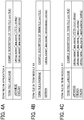
- FIGs. 4A, 4B, and 4C illustrates examples of descriptions of the term files.
- the term files are described in an extensible markup language (xml) format.
- the term files of FIGs. 4A, 4B, and 4C are provided for different languages.
- the term files define respective terms having an identical term ID (app_name).
- app_name an identical term ID
- FIG. 4A when Japanese is set to the language in the operation unit, a Japanese character string " " (meaning "app” in English) is displayed.
- English is set to the language in the operation unit, a character string "app" is displayed.
- the terms are defined by term IDs identical to the term IDs of the terms in the application 10 to which the language is to be added, in each of the term module 20 and the term module 22.
- TERM FILE IN TERM MODULE AX of FIG. 4B
- German is set to the language in the operation unit, a character string "anassemble" is displayed.
- the term module 20 and term module 22 each correct a term in the application 10
- the term is defined by a term ID identical to the term ID of the term to be corrected in the application 10, in each of the term module 20 and the term module 22.
- TERM FILE IN TERM MODULE AY of FIG. 4C
- Japanese is set to the language in the operation unit, a character string " " (meaning "application” in English) is displayed.
- the OS F/W 30 manages the terms by assigning a numerical value such as "0x000", which is a unique value in the application 10, to a term ID such as "app_name”. This also applies to the terms to be defined in the term module 20 and term module22, in addition to the application 10.
- the numerical value assigned to the term ID will be referred to as a term identification number.
- the term identification number is assigned to each application 10, and mutually different numbers are given for "app_name" in the application 10, the term module 20 and the term module 22.
- the term identification number may vary each time the application 10 is updated.
- the term-ID management table 38 and the term-ID management table 40 are required in order to retain the association between the term ID, the term identification number of the application 10, the term identification number of the term module 20, and the term identification number of the term module 22.
- FIG. 5 is an illustration for describing an additional tag of "osManifest.xml".
- "osManifest.xml" illustrated in FIG. 5 is a file describing information regarding the application 10, included in each of the application 10, the term module 20 and the term module 22. For example, an item of FIG. 5 is described in "osManifest.xml" in each of the term module 20 and the term module 22.
- a tag "overlay” describes to which application 10 the term module 20 and the term module 22 perform term addition/correction.
- targetPackage describes the package name of the application 10 as a target.
- targetPackage specifies the application 10 to which the term addition/ correction is to be performed.
- priority describes priority. Even when the term module 20 and the term module 22 have the same “targetPackage", an order in which the term module 20 and the term module 22 are checked is determined based on the priority described in the "priority". For example, the larger the numerical value of "priority", the higher the priority.
- FIG. 6 is an illustration of an example data structure of a term priority table.
- the term priority table 42 indicates which terms in the term module 20 and the term module 22 corresponding to the application 10 are to be preferentially displayed.
- the term in the term module 22 is used for a term that does not present in the term module 20 to which a highest priority is assigned.
- the term in the application 10 is used for a term that does not present in the term module 22 to which a second highest priority is assigned.
- the terms are preferentially applied in the order of the term module 20, the term module 22, and the application 10 in the term priority table 42 of FIG. 6 .
- the OS F/W 30 acquires numerical values for "priority" from "osManifest.xml" included in the term module 20 and the term module 22 and compares the acquired numerical values, to create the term priority table 42.
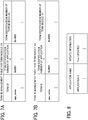
- FIGs. 7A and 7B are illustrations of example data structures of the term-ID management table 38 and the term-ID management table 40.
- the number of term-ID management tables is equal to the number of term modules corresponding to each application. For example, in a case where the term module 20 and the term module 22 are provided for the application 10, the term-ID management table 38 storing association information indicating the association between the application 10 and the term module 20 and the term-ID management table 40 storing association information indicating the association between the application 10 and the term module 22, are provided.
- the term-ID management table 38 associates the term ID, the term identification number of the application 10, and the term identification number of the term module 20 with each other.
- the term-ID management table 40 associates the term ID, the term identification number of the application 10, and the term identification number of the term module 22 with each other.
- the term-ID management table 38 and the term-ID management table 40 store the term identification numbers assigned by the OS F/W 30 to all the term IDs to be defined by the application 10, the term module 20, and the term module 22. Thus, the terms defined by the application 10, the term module 20 and the term module 22, are in association together.
- FIG. 8 is an illustration of an example of data structure of the application update-information table 34.
- the application update-information table 34 stores update information indicating whether each application has been updated.
- "UPDATE INFORMATION” in the application update-information table 34 has "True”.
- "UPDATE INFORMATION" in the application update-information table 34 has "False”.
- the information processing terminal 500 creates the term-ID management table 38 and the term-ID management table 40 in a case where the following conditions in which the contents of the term-ID management tables 38 and 40 are likely to change, are satisfied, instead of creating the term-ID management table 38 and the term-ID management table 40 each time startup is performed.
- the conditions in which the contents of the term-ID management table 38 and the term-ID management table 40 are likely to change include an update of the application 10 and updates of the term module 20 and the term module 22.
- the information processing terminal 500 stores, in the application update-information table 34, the update information indicating that the application 10 has been updated.
- the information processing terminal 500 refers to the application update-information table 34 during startup, to recreate the term-ID management table 38 and the term-ID management table 40 based on the update information indicating that the application 10 has been updated.
- the information processing terminal 500 deletes the term-ID management table 38 for the updated term module 20 and/or the term-ID management table 40 for the updated term module 22.
- the information processing terminal 500 checks whether the term-ID management table 38 and/or the term-ID management table 40 are present, to recreate the term-ID management table 38 and/or the term-ID management table 40 that are identified as not being present.
- the information processing terminal 500 may store update information indicating that the term module 20 and the term module 22 have been updated, similarly to the application update-information table 34.
- the information processing terminal 500 refers to a table storing the update information indicating that the term module 20 and/or the term module 22 have been updated, to recreate the term-ID management table 38 and/or the term-ID management table 40, based on the update information indicating that the term module 20 and/or the term module 22 have been updated.
- the application 10, the term module 20 and the term module 22 are not updated frequently.
- the information processing terminal 500 according to the present embodiment decreases the frequency of creation of the term-ID management table 38 and the term-ID management table 40, to prevent startup time from getting long steadily in accordance with an increase in the number of applications 10 or the number of terms.
- the term-ID management tables for term modules in which no contents are likely to change may be controlled not to be recreated.
- FIG. 9 is a sequence diagram illustrating an example of startup processing by the information processing terminal 500. Although the sequence diagram of FIG. 9 illustrates processing in a case where the application 10 has been installed, in a case where another application has been installed, similar processing is required for each application.
- the OS F/W 30 is started up.
- the OS F/W 30 performs normal startup processing. After the normal startup processing, the OS F/W 30 makes a startup request to the language management module 36, at step S13.
- the language management module 36 acquires numerical values of "priority" from the term module 20 and the term module 22 at steps S14 and S15, respectively, and compares the numerical values, to create the term priority table 42 for the application 10 illustrated in FIG. 6 .
- step S17 the language management module 36 creates the term-ID management table 38 and the term-ID management table 40.
- a condition in which the contents of the term-ID management table 38 and the term-ID management table 40 are likely to change is the absence of the term-ID management table 38 and the term-ID management table 40 or retention of the update information indicating that the application 10 has been updated, in the application update-information table 34. The details of the process at step S17 will be described later.
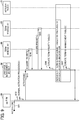
- FIG. 10 is a sequence diagram illustrating an example of term-display processing by the information processing terminal 500.
- the application 10 specifies the term ID and makes a request to the OS F/W 30 for the display, at step S21.
- the processing proceeds to step S22, and the OS F/W 30 specifies the term ID and makes a request to the language management module 36 for the character string.
- step S23 the language management module 36 refers to the term priority table 42 as in FIG. 6 , to acquire a name of the term module to which the highest priority is assigned. In this example, a name "term module AX" of the term module 20 is acquired.
- step S24 the language management module 36 refers to the term-ID management table 38 for the term module 20, to which the highest priority is assigned, to acquire the term identification number "0x1002" of the term module 20 corresponding to the term ID from the OS F/W 30.
- step S25 the language management module 36 passes the acquired term identification number "0x1002" of the term module 20 to the term module 20, to acquire the character string "ancrypt” corresponding to the term identification number "0x1002".
- step S26 the language management module 36 passes the acquired character string "ancrypt” to the OS F/W 30.
- step S27 the OS F/W 30 displays the character string "ancrypt" acquired from the language management module 36.
- FIG. 11 is a flowchart illustrating an example of creation-determination processing for the term-ID management table 38 and the term-ID management table 40, performed by the language management module 36.
- the creation-determination processing for the term-ID management table 38 and the term-ID management table 40 corresponds to the details of the processing at step S17 of FIG. 9 .
- the language management module 36 determines whether the application update-information table 34 of FIG. 8 stores the update information "True” indicating that the application 10 has been updated.
- step S32 the language management module 36 creates the term-ID management table 38 and the term-ID management table 40 for both of the term module 20 and the term module 22 corresponding to the application 10.
- step S33 the language management module 36 updates the update information "True" stored in the application update-information table 34 of FIG. 8 , to "False".
- the update information "False” indicates that the application 10 has not been updated.
- the language management module 36 When the application update-information table 34 does not store the update information indicating that the application 10 has been updated, the language management module 36 performs the processes of steps S34 and S35 on the term module 20 and the term module 22. At step S34, the language management module 36 determines whether the term-ID management table 38 and the term-ID management table 40 exist for the term module 20 and the term module 22, respectively.
- step S35 the language management module 36 creates the term-ID management table 38 for the term module 20.
- step S35 the language management module 36 creates the term-ID management table 40 for the term module 22.
- the conditions in which the contents of the term-ID management table 38 and the term-ID management table 40 are likely to change include "the presence or absence of the update information indicating that the application 10 has been updated" and "the presence or absence of the term-ID management tables", either one of the conditions will suffice. Adoption of both the conditions increases the frequency in which the information processing terminal 500 according to the present embodiment reduces startup time.
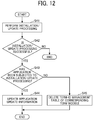
- FIG. 12 is a flowchart illustrating an example of installation/update processing performed by an installer.
- the installer 32 performs installation/update processing.
- the processing of FIG. 12 ends.
- the installer 32 determines whether the installation/update processing has been performed on the application 10. When the installer 32 determines that the installation/update processing has been performed on the application 10, the processing proceeds to step S44. At step S44, the installer 32 stores the update information "True" indicating that the application 10 has been updated, in the application update-information table 34 of FIG. 8 . When the installer 32 determines that the installation/update processing has been performed on any other target than the application 10, the processing proceeds to step S45. At step S45, the installer 32 deletes, for example, the term-ID management table 38 for the term module 20 and/or the term-ID management table 40 for the term module 22, on which the installation/update processing has been performed.
- the determination is performed as to whether the creation of the term-ID management table 38 and the term-ID management table 40 is required during the startup of the information processing terminal 500, based on "the presence or absence of the term-ID management table 38 and the term-ID management table 40".
- the determination as to whether the creation of the term-ID management table 38 and the term-ID management table 40 is required during the startup of the information processing terminal 500 may be made based on information regarding the installed/updated term module 20 and term module 22 stored in a nonvolatile memory.
- the term-ID management table 38 and the term-ID management table 40 are created during the startup of the information processing terminal 500
- the creation is made during the startup of the application 10 or in an idle status after the startup of the information processing terminal 500.
- the term-ID management table 38 and the term-ID management table 40 are created during the startup of the information processing terminal 500.
- the information processing terminal 500 does not create the term-ID management table 38 and the term-ID management table 40 during startup. Thus, the frequency of delay of startup can be reduced.
- Each of the term-ID management table 38 and the term-ID management table 40 is an example of term management means.
- the language management module 36 is an example of selection means and association generating means.
- the application update-information table 34 is an example of update information storing means.
- the installer 32 is an example of install means.
- the present invention can be implemented in any convenient form, for example using dedicated hardware, or a mixture of dedicated hardware and software.
- the present invention may be implemented as computer software implemented by one or more networked processing apparatuses.
- the processing apparatuses can compromise any suitably programmed apparatuses such as a general-purpose computer, personal digital assistant, mobile telephone (such as a WAP or 3G-compliant phone) and so on. Since the present invention can be implemented as software, each and every aspect of the present invention thus encompasses computer software implementable on a programmable device.
- the computer software can be provided to the programmable device using any conventional carrier medium (carrier means).
- the carrier medium can compromise a transient carrier medium such as an electrical, optical, microwave, acoustic or radio frequency signal carrying the computer code.
- transient medium is a TCP/IP signal carrying computer code over an IP network, such as the Internet.
- the carrier medium can also comprise a storage medium for storing processor readable code such as a floppy disk, hard disk, CD ROM, magnetic tape device or solid state memory device.
Landscapes
- Engineering & Computer Science (AREA)
- Theoretical Computer Science (AREA)
- Software Systems (AREA)
- General Engineering & Computer Science (AREA)
- Physics & Mathematics (AREA)
- General Physics & Mathematics (AREA)
- Computer Security & Cryptography (AREA)
- Human Computer Interaction (AREA)
- Data Mining & Analysis (AREA)
- Databases & Information Systems (AREA)
- Audiology, Speech & Language Pathology (AREA)
- Computational Linguistics (AREA)
- General Health & Medical Sciences (AREA)
- Artificial Intelligence (AREA)
- Health & Medical Sciences (AREA)
- Stored Programmes (AREA)
Abstract
Description
- The present invention relates to an information processing apparatus and carrier means.
- Character strings to be displayed on a screen of an application in Android (registered trademark), which is an example of an operating system (OS), are typically embedded in the application. A technique is known for dynamically changing character strings to be displayed on the screen of the application. Further, a technique is known for adding character strings that are not originally embedded in the application.
-
JP-2014-063472-A - In a conventional application, a definition is required, for each term to be displayed, between a term ID and a character string of the term to be actually displayed. In a conventional technique of dynamically changing character strings to be displayed on a screen of an application using a term module, it is required to manage terms defined in the term module in association with terms defined in the application, one by one.
- For example, in Android (registered trademark), which is an example of an OS, a processing for the above association is performed each time the OS is started up. Thus, the larger the number of applications or the number of terms to be displayed on a screen of the application, the longer it takes to start up the OS.
- An aspect of the present invention has an object to provide an information processing apparatus capable of preventing startup time from getting long steadily due to an increase in the number of terms to be displayed on a screen.
- In one aspect of the present invention, an information processing apparatus (500) is capable of displaying terms each having a character string embedded in an application (10) and terms each having a character string to be added by at least one term module (20, 22) for the application (10), on a screen of the application (10). The information processing apparatus (500) includes term management means (38, 40) for storing association information associating, for each of the terms, term identification information of the application (10) identifying the character string embedded in the application (10) with term identification information of the at least one term module (20, 22) identifying the character string embedded in the at least one term module (20, 22). The information processing apparatus (500) includes selection means (36) for acquiring the term identification information of the application (10) or the term identification information of the at least one term module (20, 22) from the term management means (38, 40), and selecting a character string to be displayed on the screen of the application (10), using the term identification information acquired. The information processing apparatus (500) includes association information generating means (36) for determining, during startup of the information processing apparatus (500), whether at least one of the application (10) and the at least one term module (20, 22) has been updated, and generating the association information associating the term identification information of the application (10) with the term identification information of the at least one term module (20, 22), to be stored by the term management means (38, 40) based on determination that at least one of the application (10) and the at least one term module (20, 22) has been updated.
- According to an aspect of the present invention, startup time can be prevented from getting long steadily due to an increase in the number of terms to be displayed on a screen.
- A more complete appreciation of the embodiments and many of the attendant advantages and features thereof can be readily obtained and understood from the following detailed description with reference to the accompanying drawings, wherein:
-
FIG. 1 is a block diagram illustrating an example of a hardware configuration of an image forming apparatus, according to an embodiment of the present invention; -
FIG. 2 is a block diagram illustrating an example of a hardware configuration of an information processing terminal, according to an embodiment of the present invention; -
FIG. 3 is a block diagram illustrating an example of a software configuration of the information processing terminal that functions as an operation unit, according to an embodiment of the present invention; -
FIGs. 4A, 4B, and 4C are illustrations of examples of descriptions of term files, according to an embodiment of the present invention; -
FIG. 5 is an illustration for describing an additional tag of "osManifest.xml", according to an embodiment of the present invention; -
FIG. 6 is an illustration of an example data structure of a term priority table, according to an embodiment of the present invention; -
FIGs. 7A and 7B are illustrations of example data structures of term-ID management tables, according to an embodiment of the present invention; -
FIG. 8 is an illustration of an example of data structure of an application update-information table, according to an embodiment of the present invention; -
FIG. 9 is a sequence diagram illustrating an example of startup processing of the information processing terminal, according to an embodiment of the present invention; -
FIG. 10 is a sequence diagram illustrating an example of term-display processing of the information processing terminal, according to an embodiment of the present invention; -
FIG. 11 is a flowchart illustrating an example of creation-determination processing for the term-ID management tables, performed by a language management module according to an embodiment of the present invention, and -
FIG. 12 is a flowchart illustrating an example of installation/update processing performed by an installer, according to an embodiment of the present invention. - The accompanying drawings are intended to depict embodiments of the present invention and should not be interpreted to limit the scope thereof. The accompanying drawings are not to be considered as drawn to scale unless explicitly noted.
- In describing embodiments illustrated in the drawings, specific terminology is employed for the sake of clarity. However, the disclosure of this specification is not intended to be limited to the specific terminology so selected and it is to be understood that each specific element includes all technical equivalents that have a similar function, operate in a similar manner, and achieve a similar result.
- As used herein, the singular forms "a", "an", and "the" are intended to include the multiple forms as well, unless the context clearly indicates otherwise.
- An embodiment of the present invention will be described in detail below with reference to the drawings.
- A hardware configuration of an
image forming apparatus 1 according to the present embodiment, will be described with reference toFIG. 1. FIG. 1 is a block diagram illustrating an example of a hardware configuration of theimage forming apparatus 1, according to the present embodiment. Although inFIG. 1 , a hardware configuration of a multifunction peripheral (MFP) is illustrated as an example of theimage forming apparatus 1, theimage forming apparatus 1 may be any other suitable apparatus. The multifunction peripheral is an apparatus including a plurality of functions, such as a print function, a scanner function, and a copy function. - The
image forming apparatus 1 illustrated inFIG. 1 includes aninformation processing terminal 500 and amain unit 600. Theinformation processing terminal 500 functions as an operation unit that receives an operation of a user. Examples of theinformation processing terminal 500 includes a tablet terminal. Themain unit 600 implements various functions, such as the print function, the scanner function, and the copy function. - The
information processing terminal 500 and themain unit 600 are mutually communicably connected through acommunication channel 550. Thecommunication channel 550 may be in compliance with a universal serial bus (USB) standard, for example. Theinformation processing terminal 500 and themain unit 600 may communicate with each other have acommunication channel 551 through a short-range wireless communication network, such as a local area network (LAN) or Bluetooth (registered trademark). In another example, theimage forming apparatus 1 ofFIG. 1 is regarded as an image forming system including theinformation processing terminal 500 and themain unit 600. - The
main unit 600 includes acontroller 601, an external interface (I/F) 602, a communication interface (I/F) 603, aprinter 604, and ascanner 605. Thecontroller 601 includes a central processing unit (CPU) 611, a random-access memory (RAM) 612, a read-only memory (ROM) 613, a non-volatile random-access memory (NVRAM) 614, and a hard disk drive (HDD) 615. TheROM 613 stores various programs and data. The RAM 612 temporarily stores programs and data. The NVRAM 614 stores, for example, setting information. The HDD 615 stores various programs and data. - The
CPU 611 loads the programs, data, or the setting information from theROM 613, the NVRAM 614, or theHDD 615 onto theRAM 612 for processing, to control entire operation of themain unit 600 and implement various functions. - The external I/
F 602 is an interface that enables themain unit 600 to communicate with theinformation processing terminal 500 through thecommunication channel 550. The communication I/F 603 is an interface that connects themain unit 600 to theinformation processing terminal 500 or a network through thecommunication channel 551. - The
printer 604 forms an image onto a conveyed object according to print data. Examples of the conveyed object include, but not limited to, paper, coated paper, thick paper, overhead projector (OHP) film, plastic film, prepreg, and copper foil. Thescanner 605 reads image data (electronic data) from an original, to generate an image file (electronic file). - The
information processing terminal 500 that functions as the operation unit, is implemented by, for example, a computer having a hardware configuration illustrated inFIG. 2. FIG. 2 is a block diagram illustrating an example of a hardware configuration of theinformation processing terminal 500, according to the present embodiment. - The
information processing terminal 500 ofFIG. 2 includes aninput device 501, adisplay 502, an external interface (I/F) 503, a random access memory (RAM) 504, a read only memory (ROM) 505, a central processing unit (CPU) 506, a communication interface (I/F) 507, and a hard disk drive (HDD) 508, mutually connected through a bus B. - The
input device 501 includes a touch panel and hardware keys, and the user inputs an operation signal into theinput device 501. Thedisplay 502 includes a liquid crystal display (LCD), and displays information. The communication I/F 507 is an interface that connects theinformation processing terminal 500 to themain unit 600 or various networks. - The
HDD 508 is an example of a nonvolatile storage device storing programs and data. Examples of the stored program and data include an operating system (OS), which is basic software for controlling entire operation of theinformation processing terminal 500, and an application for providing various functions on the OS. Theinformation processing terminal 500 may include, instead of or in alternative to theHDD 508, a drive that uses, as a storage medium, a flash memory such as a solid state drive (SSD). - The external I/
F 503 in an interface that connects theinformation processing terminal 500 with themain unit 600 or arecording medium 503a. Theinformation processing terminal 500 reads or writes data to and from therecording medium 503a through the external I/F 503. Examples of therecording medium 503a include a flexible disk, a compact disc (CD), a digital versatile disc (DVD), a secure digital (SD) memory card, and a USB memory. - The
ROM 505 is an example of a nonvolatile semiconductor memory (storage) capable of storing a program and data even after theinformation processing terminal 500 is turned off as the power is not supplied. TheROM 505 stores programs and data, such as OS settings, network settings, and a basic input output system (BIOS) to be performed when theinformation processing terminal 500 is started up. TheRAM 504 is an example of a volatile semiconductor memory (storage) that temporarily stores programs and data. - The
CPU 506 loads programs or data from a storage device such as theROM 505 and theHDD 508 onto theRAM 504 for processing, to control entire operation of theinformation processing terminal 500 and implement the various functions. The hardware configuration as inFIG. 2 allows theinformation processing terminal 500 to function as: an input unit that receives an input from the user; and a display unit that performs displaying. - The
information processing terminal 500 according to the present embodiment, is an example of an information processing apparatus capable of adding terms to be displayed by an application, using at least one term module. Theimage forming apparatus 1 is also an example of an information processing apparatus capable of adding terms to be displayed by an application, using at least one term module. Theimage forming apparatus 1 ofFIG. 1 includes theinformation processing terminal 500 and themain unit 600 separated from each other. However, theimage forming apparatus 1 may include theinformation processing terminal 500 built in themain unit 600 as the operation unit, or may include themain unit 600 having the function of theinformation processing terminal 500. - Next, a description is given of a functional configuration of the
information processing terminal 500 of theimage forming apparatus 1, according to the present embodiment.FIG. 3 is a block diagram of an example of software configuration of theinformation processing terminal 500 that functions as an operation unit. Theinformation processing terminal 500 ofFIG. 3 includes anapplication 10, aterm module 20, and aterm module 22 corresponding to theapplication 10, and an OS framework (OS F/W) 30. - The OS F/
W 30 is an OS of theinformation processing terminal 500, and is, for example, Android (registered trademark). Theapplication 10 is a program that operates on the OS F/W 30 of theinformation processing terminal 500. Theapplication 10 stores a plurality of term files. The term files each stores terms to be displayed on a screen of theapplication 10, the terms being described in a language, such as Japanese or English. Theapplication 10 is arranged on the OS F/W 30 inFIG. 3 , but may be arranged in the OS F/W 30. - Each of the
term module 20 and theterm module 22 is a module having addition/correction terms corresponding to theapplication 10, and stores a plurality of term files. Each of theterm module 20 and theterm module 22 has a format equivalent to the format of the application. Each of the term files stored by theapplication 10, theterm module 20 and theterm module 22, is a file of terms to be displayed in the application, the terms being described in each language such as Japanese or English. - Furthermore, the
application 10, theterm module 20 and theterm module 22 each include "osManifest.xml", which is a file describing static information regarding the application 10 (e.g., an application name and a version name). - The OS F/
W 30 ofFIG. 3 includes aninstaller 32, an application update-information table 34, alanguage management module 36, a term-ID management table 38, a term-ID management table 40, and a term priority table 42. - The
installer 32 installs theapplication 10, theterm module 20, and theterm module 22 onto theinformation processing terminal 500. The application update-information table 34 stores update information regarding theapplication 10. Thelanguage management module 36 manages the term-ID management table 38, the term-ID management table 40, and the term priority table 42. - The term-ID management table 38 is for the
term module 20, and associates the terms in theapplication 10 with the terms in theterm module 20. The term-ID management table 40 is for theterm module 22, and associates the terms in theapplication 10 with the terms in theterm module 22. The term priority table 42 is for theapplication 10, and indicates which terms in theapplication 10, theterm module 20 and theterm module 22 are to be preferentially displayed. - In
FIG. 3 , an example is illustrated in which oneapplication 10 is installed. In another example, a plurality of applications and term modules corresponding to the plurality of applications are installed. -
FIGs. 4A, 4B, and 4C illustrates examples of descriptions of the term files. In examples ofFIGs. 4A, 4B, and 4C , the term files are described in an extensible markup language (xml) format. The term files ofFIGs. 4A, 4B, and 4C are provided for different languages. The term files define respective terms having an identical term ID (app_name). Thus, when theinformation processing terminal 500 specifies the term ID to a position at which a character string is to be displayed on an application screen, even if the language in the operation unit is changed to a language, the character string can be displayed in the language after the change. In the example ofFIG. 4A , when Japanese is set to the language in the operation unit, a Japanese character string "" (meaning "app" in English) is displayed. When English is set to the language in the operation unit, a character string "app" is displayed.
- In a case where the
term module 20 and theterm module 22 each add a language to theapplication 10, the terms are defined by term IDs identical to the term IDs of the terms in theapplication 10 to which the language is to be added, in each of theterm module 20 and theterm module 22. In an example of "TERM FILE IN TERM MODULE AX" ofFIG. 4B , for example, when German is set to the language in the operation unit, a character string "anwendung" is displayed. - Furthermore, in a case where the
term module 20 andterm module 22 each correct a term in theapplication 10, the term is defined by a term ID identical to the term ID of the term to be corrected in theapplication 10, in each of theterm module 20 and theterm module 22. In an example of "TERM FILE IN TERM MODULE AY" ofFIG. 4C , for example, when Japanese is set to the language in the operation unit, a character string "" (meaning "application" in English) is displayed.
- In order to facilitate the management of the terms, the OS F/
W 30 manages the terms by assigning a numerical value such as "0x000", which is a unique value in theapplication 10, to a term ID such as "app_name". This also applies to the terms to be defined in theterm module 20 and term module22, in addition to theapplication 10. Hereinafter, the numerical value assigned to the term ID will be referred to as a term identification number. - The term identification number is assigned to each
application 10, and mutually different numbers are given for "app_name" in theapplication 10, theterm module 20 and theterm module 22. The term identification number may vary each time theapplication 10 is updated. The term-ID management table 38 and the term-ID management table 40 are required in order to retain the association between the term ID, the term identification number of theapplication 10, the term identification number of theterm module 20, and the term identification number of theterm module 22. -
FIG. 5 is an illustration for describing an additional tag of "osManifest.xml". "osManifest.xml" illustrated inFIG. 5 is a file describing information regarding theapplication 10, included in each of theapplication 10, theterm module 20 and theterm module 22. For example, an item ofFIG. 5 is described in "osManifest.xml" in each of theterm module 20 and theterm module 22. - A tag "overlay" describes to which
application 10 theterm module 20 and theterm module 22 perform term addition/correction. "targetPackage" describes the package name of theapplication 10 as a target. "targetPackage" specifies theapplication 10 to which the term addition/ correction is to be performed.
"priority" describes priority. Even when theterm module 20 and theterm module 22 have the same "targetPackage", an order in which theterm module 20 and theterm module 22 are checked is determined based on the priority described in the "priority". For example, the larger the numerical value of "priority", the higher the priority. -
FIG. 6 is an illustration of an example data structure of a term priority table. The term priority table 42 indicates which terms in theterm module 20 and theterm module 22 corresponding to theapplication 10 are to be preferentially displayed. InFIG. 6 , for example, for a term that does not present in theterm module 20 to which a highest priority is assigned, the term in theterm module 22, to which a second highest priority is assigned, is used. For a term that does not present in theterm module 22 to which a second highest priority is assigned, the term in theapplication 10, to which a third highest priority is assigned, is used. In this manner, the terms are preferentially applied in the order of theterm module 20, theterm module 22, and theapplication 10 in the term priority table 42 ofFIG. 6 . During the startup of theinformation processing terminal 500, the OS F/W 30 acquires numerical values for "priority" from "osManifest.xml" included in theterm module 20 and theterm module 22 and compares the acquired numerical values, to create the term priority table 42. -
FIGs. 7A and 7B are illustrations of example data structures of the term-ID management table 38 and the term-ID management table 40. The number of term-ID management tables is equal to the number of term modules corresponding to each application. For example, in a case where theterm module 20 and theterm module 22 are provided for theapplication 10, the term-ID management table 38 storing association information indicating the association between theapplication 10 and theterm module 20 and the term-ID management table 40 storing association information indicating the association between theapplication 10 and theterm module 22, are provided. - The term-ID management table 38 associates the term ID, the term identification number of the
application 10, and the term identification number of theterm module 20 with each other. The term-ID management table 40 associates the term ID, the term identification number of theapplication 10, and the term identification number of theterm module 22 with each other. The term-ID management table 38 and the term-ID management table 40 store the term identification numbers assigned by the OS F/W 30 to all the term IDs to be defined by theapplication 10, theterm module 20, and theterm module 22. Thus, the terms defined by theapplication 10, theterm module 20 and theterm module 22, are in association together. -
FIG. 8 is an illustration of an example of data structure of the application update-information table 34. The application update-information table 34 stores update information indicating whether each application has been updated. In the example ofFIG. 3 , when theinstaller 32 updates (or newly installs) theapplication 10, "UPDATE INFORMATION" in the application update-information table 34 has "True". Then, after creation of the term-ID management table 38 and the term-ID management table 40 during the startup of theinformation processing terminal 500, "UPDATE INFORMATION" in the application update-information table 34 has "False". - The
information processing terminal 500 according to the present embodiment creates the term-ID management table 38 and the term-ID management table 40 in a case where the following conditions in which the contents of the term-ID management tables 38 and 40 are likely to change, are satisfied, instead of creating the term-ID management table 38 and the term-ID management table 40 each time startup is performed. In the present embodiment, the conditions in which the contents of the term-ID management table 38 and the term-ID management table 40 are likely to change, include an update of theapplication 10 and updates of theterm module 20 and theterm module 22. - In a case where the
application 10 has been updated, it is likely that the term identification number of theapplication 10 is changed and it is likely that a new term has been added. In this case, the term identification number of theapplication 10 in each of the term-ID management table 38 and the term-ID management table 40 do not correspond due to the update, thus recreation of the term-ID management table 38 and the term-ID management table 40 is required. - Therefore, when the
application 10 is updated (or newly installed), theinformation processing terminal 500 according to the present embodiment stores, in the application update-information table 34, the update information indicating that theapplication 10 has been updated. Theinformation processing terminal 500 refers to the application update-information table 34 during startup, to recreate the term-ID management table 38 and the term-ID management table 40 based on the update information indicating that theapplication 10 has been updated. - In a case where the
term module 20 and theterm module 22 have been updated, recreation of the term-ID management table 38 and the term-ID management table 40 is required because of the same reason as in the case where theapplication 10 has been updated. When theterm module 20 and/or theterm module 22 are updated (or newly installed), theinformation processing terminal 500 according to the present embodiment deletes the term-ID management table 38 for the updatedterm module 20 and/or the term-ID management table 40 for the updatedterm module 22. During startup, theinformation processing terminal 500 checks whether the term-ID management table 38 and/or the term-ID management table 40 are present, to recreate the term-ID management table 38 and/or the term-ID management table 40 that are identified as not being present. - When the
term module 20 and theterm module 22 are updated (or newly installed), theinformation processing terminal 500 according to the present embodiment may store update information indicating that theterm module 20 and theterm module 22 have been updated, similarly to the application update-information table 34. In this case, during startup, theinformation processing terminal 500 refers to a table storing the update information indicating that theterm module 20 and/or theterm module 22 have been updated, to recreate the term-ID management table 38 and/or the term-ID management table 40, based on the update information indicating that theterm module 20 and/or theterm module 22 have been updated. - The
application 10, theterm module 20 and theterm module 22 are not updated frequently. Theinformation processing terminal 500 according to the present embodiment decreases the frequency of creation of the term-ID management table 38 and the term-ID management table 40, to prevent startup time from getting long steadily in accordance with an increase in the number ofapplications 10 or the number of terms. - In a case where the present embodiment is applied to the conventional OS F/
W 30 designed to recreate all the term-ID management tables during the startup of theinformation processing terminal 500, the term-ID management tables for term modules in which no contents are likely to change may be controlled not to be recreated. -
FIG. 9 is a sequence diagram illustrating an example of startup processing by theinformation processing terminal 500. Although the sequence diagram ofFIG. 9 illustrates processing in a case where theapplication 10 has been installed, in a case where another application has been installed, similar processing is required for each application. - At step S11, the OS F/
W 30 is started up. At step S12, the OS F/W 30 performs normal startup processing. After the normal startup processing, the OS F/W 30 makes a startup request to thelanguage management module 36, at step S13. - In response to the startup request received from the OS F/
W 30, thelanguage management module 36 acquires numerical values of "priority" from theterm module 20 and theterm module 22 at steps S14 and S15, respectively, and compares the numerical values, to create the term priority table 42 for theapplication 10 illustrated inFIG. 6 . - Then, in a case where the conditions in which the contents of the term-ID management table 38 and the term-ID management table 40 are likely to change, are satisfied, the processing proceeds to step S17. At step S17, the
language management module 36 creates the term-ID management table 38 and the term-ID management table 40. InFIG. 9 , a condition in which the contents of the term-ID management table 38 and the term-ID management table 40 are likely to change, is the absence of the term-ID management table 38 and the term-ID management table 40 or retention of the update information indicating that theapplication 10 has been updated, in the application update-information table 34. The details of the process at step S17 will be described later. -
FIG. 10 is a sequence diagram illustrating an example of term-display processing by theinformation processing terminal 500. To display a term (character string) corresponding to a term ID, theapplication 10 specifies the term ID and makes a request to the OS F/W 30 for the display, at step S21. The processing proceeds to step S22, and the OS F/W 30 specifies the term ID and makes a request to thelanguage management module 36 for the character string. - The processing proceeds to step S23, and the
language management module 36 refers to the term priority table 42 as inFIG. 6 , to acquire a name of the term module to which the highest priority is assigned. In this example, a name "term module AX" of theterm module 20 is acquired. The processing proceeds to step S24, and thelanguage management module 36 refers to the term-ID management table 38 for theterm module 20, to which the highest priority is assigned, to acquire the term identification number "0x1002" of theterm module 20 corresponding to the term ID from the OS F/W 30. - The processing proceeds to step S25, and the
language management module 36 passes the acquired term identification number "0x1002" of theterm module 20 to theterm module 20, to acquire the character string "anwendung" corresponding to the term identification number "0x1002". At step S26, thelanguage management module 36 passes the acquired character string "anwendung" to the OS F/W 30. At step S27, the OS F/W 30 displays the character string "anwendung" acquired from thelanguage management module 36. -
FIG. 11 is a flowchart illustrating an example of creation-determination processing for the term-ID management table 38 and the term-ID management table 40, performed by thelanguage management module 36. The creation-determination processing for the term-ID management table 38 and the term-ID management table 40 corresponds to the details of the processing at step S17 ofFIG. 9 . - At step S31, the
language management module 36 determines whether the application update-information table 34 ofFIG. 8 stores the update information "True" indicating that theapplication 10 has been updated. - When the application update-information table 34 stores the update information indicating that the
application 10 has been updated, the processing proceeds to step S32. At step S32, thelanguage management module 36 creates the term-ID management table 38 and the term-ID management table 40 for both of theterm module 20 and theterm module 22 corresponding to theapplication 10. After the creation of the term-ID management table 38 and the term-ID management table 40, the operation proceeds to step S33. At step S33, thelanguage management module 36 updates the update information "True" stored in the application update-information table 34 ofFIG. 8 , to "False". The update information "False" indicates that theapplication 10 has not been updated. - When the application update-information table 34 does not store the update information indicating that the
application 10 has been updated, thelanguage management module 36 performs the processes of steps S34 and S35 on theterm module 20 and theterm module 22. At step S34, thelanguage management module 36 determines whether the term-ID management table 38 and the term-ID management table 40 exist for theterm module 20 and theterm module 22, respectively. - When no term-ID management table 38 exists, the processing proceeds to step S35. At step S35, the
language management module 36 creates the term-ID management table 38 for theterm module 20. When no term-ID management table 40 exists, the processing proceeds to step S35. At step S35, thelanguage management module 36 creates the term-ID management table 40 for theterm module 22. - Although in
FIG. 11 , the conditions in which the contents of the term-ID management table 38 and the term-ID management table 40 are likely to change, include "the presence or absence of the update information indicating that theapplication 10 has been updated" and "the presence or absence of the term-ID management tables", either one of the conditions will suffice. Adoption of both the conditions increases the frequency in which theinformation processing terminal 500 according to the present embodiment reduces startup time. -
FIG. 12 is a flowchart illustrating an example of installation/update processing performed by an installer. At step S41, theinstaller 32 performs installation/update processing. When the installation/update processing at step S41 is unsuccessful, the processing ofFIG. 12 ends. - When the installation/update processing at step S41 is successful, the
installer 32 determines whether the installation/update processing has been performed on theapplication 10. When theinstaller 32 determines that the installation/update processing has been performed on theapplication 10, the processing proceeds to step S44. At step S44, theinstaller 32 stores the update information "True" indicating that theapplication 10 has been updated, in the application update-information table 34 ofFIG. 8 . When theinstaller 32 determines that the installation/update processing has been performed on any other target than theapplication 10, the processing proceeds to step S45. At step S45, theinstaller 32 deletes, for example, the term-ID management table 38 for theterm module 20 and/or the term-ID management table 40 for theterm module 22, on which the installation/update processing has been performed. - In the present embodiment, a description is given heretofore of an example in which the determination is performed as to whether the creation of the term-ID management table 38 and the term-ID management table 40 is required during the startup of the
information processing terminal 500, based on "the presence or absence of the term-ID management table 38 and the term-ID management table 40". In another example, the determination as to whether the creation of the term-ID management table 38 and the term-ID management table 40 is required during the startup of theinformation processing terminal 500, may be made based on information regarding the installed/updatedterm module 20 andterm module 22 stored in a nonvolatile memory. - Further, although in the present embodiment, a description is given heretofore of an example in which the term-ID management table 38 and the term-ID management table 40 are created during the startup of the
information processing terminal 500, in another example, the creation is made during the startup of theapplication 10 or in an idle status after the startup of theinformation processing terminal 500. - According to the present embodiment, in a case where the conditions in which the contents of the term-ID management table 38 and the term-ID management table 40 are likely to change, are satisfied, the term-ID management table 38 and the term-ID management table 40 are created during the startup of the
information processing terminal 500. When the conditions in which the contents of the term-ID management table 38 and the term-ID management table 40 are likely to change, are not satisfied, theinformation processing terminal 500 according to the present embodiment does not create the term-ID management table 38 and the term-ID management table 40 during startup. Thus, the frequency of delay of startup can be reduced. - The above-described embodiments are illustrative and do not limit the present invention. Thus, numerous additional modifications and variations are possible in light of the above teachings. For example, elements and/or features of different illustrative embodiments may be combined with each other and/or substituted for each other within the scope of the present invention. Any one of the above-described operations may be performed in various other ways, for example, in an order different from the one described above.
- Each of the term-ID management table 38 and the term-ID management table 40 is an example of term management means. The
language management module 36 is an example of selection means and association generating means. The application update-information table 34 is an example of update information storing means. Theinstaller 32 is an example of install means. - The present invention can be implemented in any convenient form, for example using dedicated hardware, or a mixture of dedicated hardware and software. The present invention may be implemented as computer software implemented by one or more networked processing apparatuses. The processing apparatuses can compromise any suitably programmed apparatuses such as a general-purpose computer, personal digital assistant, mobile telephone (such as a WAP or 3G-compliant phone) and so on. Since the present invention can be implemented as software, each and every aspect of the present invention thus encompasses computer software implementable on a programmable device. The computer software can be provided to the programmable device using any conventional carrier medium (carrier means). The carrier medium can compromise a transient carrier medium such as an electrical, optical, microwave, acoustic or radio frequency signal carrying the computer code. An example of such a transient medium is a TCP/IP signal carrying computer code over an IP network, such as the Internet. The carrier medium can also comprise a storage medium for storing processor readable code such as a floppy disk, hard disk, CD ROM, magnetic tape device or solid state memory device.
Claims (7)
- An information processing apparatus (500) capable of displaying terms each having a character string embedded in an application (10) and terms each having a character string to be added by at least one term module (20, 22) for the application (10), on a screen of the application (10), the information processing apparatus (500) comprising:term management means (38, 40) for storing association information associating, for each of the terms, term identification information of the application (10) identifying the character string embedded in the application (10) with term identification information of the at least one term module (20, 22) identifying the character string embedded in the at least one term module (20, 22);selection means (36) for acquiring the term identification information of the application (10) or the term identification information of the at least one term module (20, 22) from the term management means (38, 40), and selecting a character string to be displayed on the screen of the application (10), using the term identification information acquired; andassociation information generating means (36) for determining, during startup of the information processing apparatus (500), whether at least one of the application (10) and the at least one term module (20, 22) has been updated, and generating the association information associating the term identification information of the application (10) with the term identification information of the at least one term module (20, 22), to be stored by the term management means (38, 40) based on determination that at least one of the application (10) and the at least one term module (20, 22) has been updated.
- The information processing apparatus (500) of claim 1, further comprising:update-information storing means (34) for storing update information indicating that the application (10) has been updated; andinstall means (32) for installing the application (10) or the at least one term module (20, 22), and when the application (10) has been installed, storing information indicating an update of the application (10) in the update-information storing means (34), and when the at least one term module (20, 22) has been installed, deleting the association information for the at least one term module (20, 22) that has been installed stored in the term management means (38, 40),wherein the association information generating means (36) determines whether the application (10) has been updated, based on the update information stored in the update-information storing means (34), and determines whether the at least one term module (20, 22) has been updated, based on presence or absence of the association information stored in the term management means (38, 40).
- The information processing apparatus (500) of claim 1, further comprising:update-information storing means (34) for storing update information indicating that at least one of the application (10) and the at least one term module (20, 22) has been updated; andinstall means (32) for installing the application (10) or the at least one term module (20, 22), and storing information indicating an update of the application (10) or the at least one term module (20, 22), on which the installing has been performed, in the update-information storing means (34),wherein the association information generating means (36) determines whether at least one of the application (10) and the at least one term module (20, 22) has been updated, based on the update information stored in the update-information storing means (34).
- The information processing apparatus (500) of any one of claims 1 to 3, wherein
the association information generating means (36) generates, based on determination that the application (10) has been updated, the association information for each of the at least one term module (20, 22) of the application (10) that is determined as having been updated, and
the association information generating means (36) generates, based on determination that one or more of the at least one term module (20, 22) has been updated, the association information for the one or more of the at least one term module (20, 22) that is/are determined as having been updated. - The information processing apparatus (500) of any one of claims 1 to 4, wherein
a priority order is assigned to the application (10) and the at least one term module (20, 22), and
in response to a request for displaying the terms, the selection means (36) acquires the term identification information of the application (10) or the term identification information of the at least one term module (20, 22) from the term management means (38, 40) based on the priority order. - The information processing apparatus (500) of any one of claims 1 to 5, wherein
the information processing apparatus (500) functions as an operation unit of an image forming apparatus (1). - A carrier means carrying a computer readable code for controlling an information processing apparatus (500) capable of displaying terms each having a character string embedded in an application (10) and terms each having a character string to be added by a term module (20, 22) for the application (10), on a screen of the application (10), to function as:term management means (38, 40) for storing association information associating, for each of the terms, term identification information of the application (10) identifying the character string embedded in the application (10) with term identification information of the at least one term module (20, 22) identifying the character string embedded in the at least one term module (20, 22);selection means (36) for acquiring the term identification information of the application (10) or the term identification information of the at least one term module (20, 22) from the term management means (38, 40), and selecting a character string to be displayed on the screen of the application (10), using the term identification information acquired; andassociation information generating means (36) for determining, during startup of the information processing apparatus (500), whether at least one of the application (10) and the at least one term module (20, 22) has been updated, and generating the association information associating the term identification information of the application (10) with the term identification information of the at least one term module (20, 22), to be stored by the term management means (38, 40) based on determination that at least one of the application (10) and the at least one term module (20, 22) has been updated.
Applications Claiming Priority (1)
| Application Number | Priority Date | Filing Date | Title |
|---|---|---|---|
| JP2017133151A JP6866788B2 (en) | 2017-07-06 | 2017-07-06 | Information processing equipment and programs |
Publications (1)
| Publication Number | Publication Date |
|---|---|
| EP3425500A1 true EP3425500A1 (en) | 2019-01-09 |
Family
ID=62846017
Family Applications (1)
| Application Number | Title | Priority Date | Filing Date |
|---|---|---|---|
| EP18181335.3A Withdrawn EP3425500A1 (en) | 2017-07-06 | 2018-07-03 | Information processing apparatus and carrier means |
Country Status (3)
| Country | Link |
|---|---|
| US (1) | US10546017B2 (en) |
| EP (1) | EP3425500A1 (en) |
| JP (1) | JP6866788B2 (en) |
Families Citing this family (3)
| Publication number | Priority date | Publication date | Assignee | Title |
|---|---|---|---|---|
| JP7331525B2 (en) | 2019-07-24 | 2023-08-23 | 株式会社リコー | Image forming apparatus, information processing method and program |
| US11394844B2 (en) | 2019-09-30 | 2022-07-19 | Ricoh Company, Ltd. | Authentication system, shared terminal, and authentication method |
| CN115485657B (en) * | 2021-03-30 | 2025-10-17 | 京东方科技集团股份有限公司 | Program data packet generation method, device, equipment and storage medium |
Citations (3)
| Publication number | Priority date | Publication date | Assignee | Title |
|---|---|---|---|---|
| JP2014063472A (en) | 2012-08-29 | 2014-04-10 | Canon Inc | Information processor, method thereof and program |
| EP3094071A1 (en) * | 2015-05-12 | 2016-11-16 | Konica Minolta, Inc. | Interaction between a translation application and an (other) add-on application in an image forming apparatus |
| US20160357734A1 (en) * | 2015-06-03 | 2016-12-08 | Ricoh Company, Ltd. | Information processing apparatus, system, and method, and recording medium |
Family Cites Families (14)
| Publication number | Priority date | Publication date | Assignee | Title |
|---|---|---|---|---|
| JP2011180856A (en) * | 2010-03-02 | 2011-09-15 | Ricoh Co Ltd | Image forming apparatus and program |
| CN103140848B (en) * | 2010-10-08 | 2016-08-03 | 日本电气株式会社 | Character conversion system and character conversion method |
| JP2013132040A (en) | 2011-11-22 | 2013-07-04 | Ricoh Co Ltd | Image forming apparatus, backup and restore processing method, and program |
| JP6131551B2 (en) | 2012-09-18 | 2017-05-24 | 株式会社リコー | Information processing system, information processing apparatus, information processing method, and information processing program |
| JP6295563B2 (en) | 2013-03-04 | 2018-03-20 | 株式会社リコー | Information processing system, device, information processing method, and information processing program |
| JP6123393B2 (en) * | 2013-03-15 | 2017-05-10 | 株式会社リコー | Information processing system, information processing method, and program |
| WO2014155742A1 (en) * | 2013-03-29 | 2014-10-02 | 楽天株式会社 | Information processing system, control method for information processing system, information processing device, control method for information processing device, information storage medium, and program |
| KR102274182B1 (en) * | 2014-08-01 | 2021-07-06 | 삼성전자주식회사 | Semiconductor device and method therefor |
| JP2016224918A (en) * | 2015-06-03 | 2016-12-28 | 株式会社リコー | Information processing device, program, information processing system and information processing method |
| JP6493041B2 (en) | 2015-07-08 | 2019-04-03 | 株式会社リコー | Information processing apparatus, image processing apparatus, program, and method |
| JP6569381B2 (en) | 2015-08-17 | 2019-09-04 | 株式会社リコー | Information processing apparatus, image processing apparatus, and program |
| JP6686337B2 (en) | 2015-09-15 | 2020-04-22 | 株式会社リコー | Image forming apparatus, method and program |
| JP2017058855A (en) | 2015-09-15 | 2017-03-23 | 株式会社リコー | Information processing apparatus, program, information processing system, and image processing apparatus |
| US20180068345A1 (en) | 2016-09-08 | 2018-03-08 | Tatsuma HIROKAWA | Information processing apparatus, method of processing information, and storage medium |
-
2017
- 2017-07-06 JP JP2017133151A patent/JP6866788B2/en active Active
-
2018
- 2018-07-03 EP EP18181335.3A patent/EP3425500A1/en not_active Withdrawn
- 2018-07-03 US US16/026,445 patent/US10546017B2/en not_active Expired - Fee Related
Patent Citations (3)
| Publication number | Priority date | Publication date | Assignee | Title |
|---|---|---|---|---|
| JP2014063472A (en) | 2012-08-29 | 2014-04-10 | Canon Inc | Information processor, method thereof and program |
| EP3094071A1 (en) * | 2015-05-12 | 2016-11-16 | Konica Minolta, Inc. | Interaction between a translation application and an (other) add-on application in an image forming apparatus |
| US20160357734A1 (en) * | 2015-06-03 | 2016-12-08 | Ricoh Company, Ltd. | Information processing apparatus, system, and method, and recording medium |
Non-Patent Citations (2)
| Title |
|---|
| ANONYMOUS: "mysql - select only one element from an priority ordered group with limits? - Database Administrators Stack Exchange", 15 April 2016 (2016-04-15), XP055525795, Retrieved from the Internet <URL:https://dba.stackexchange.com/questions/135399/select-only-one-element-from-an-priority-ordered-group-with-limits> [retrieved on 20181121] * |
| TILO: "Check if my IOS application is updated", 3 June 2013 (2013-06-03), XP055525759, Retrieved from the Internet <URL:https://stackoverflow.com/questions/16899503/check-if-my-ios-application-is-updated> [retrieved on 20181121] * |
Also Published As
| Publication number | Publication date |
|---|---|
| US10546017B2 (en) | 2020-01-28 |
| JP6866788B2 (en) | 2021-04-28 |
| JP2019016169A (en) | 2019-01-31 |
| US20190012402A1 (en) | 2019-01-10 |
Similar Documents
| Publication | Publication Date | Title |
|---|---|---|
| US7600226B2 (en) | Device driver updating method and program, information processing apparatus and server apparatus using the same, and storage for storing device driver updating program | |
| EP2879051B1 (en) | An electronic device including a MTD used temporarily during non-volatile memory file system update | |
| US20190171443A1 (en) | Method of Updating Application and Recording Medium | |
| US11216266B2 (en) | Information processing apparatus and firmware updating method | |
| US10089102B2 (en) | Information processing apparatus, method, and program | |
| US9013724B2 (en) | Information processing apparatus and program | |
| US10970020B2 (en) | Non-transitory computer-readable recording medium storing computer-readable instructions for causing information processing device to execute image process, and information processing device | |
| EP3094071A1 (en) | Interaction between a translation application and an (other) add-on application in an image forming apparatus | |
| US9086938B2 (en) | Information processing apparatus, control method thereof, and storage medium | |
| EP3893102B1 (en) | Information processing device, server device, control method, and control program | |
| US10546017B2 (en) | Displaying terms having corresponding character strings on a display | |
| US9600751B2 (en) | Image forming apparatus and control method thereof with a determination whether an application relates to a dynamic update for reflecting change of the network setting without rebooting the apparatus | |
| US20220334820A1 (en) | System and method for intermediate software upgrades for information handling systems | |
| US8422040B2 (en) | Image forming system and method, management apparatus, and recording medium | |
| US10250766B2 (en) | Method and device for changing display language of application | |
| EP3260981A1 (en) | Information processing apparatus, information processing system, and information processing method for updating firmware | |
| JP2006178881A (en) | Software management system and software management method | |
| US10438021B2 (en) | Device and control method | |
| US11023216B2 (en) | Storage medium, information processing apparatus, and control method | |
| EP3245593B1 (en) | Information processing apparatus, information processing system, information processing method, computer program, and storage medium | |
| US7702890B2 (en) | Information processing apparatus and program | |
| US20230185553A1 (en) | Information processing apparatus, control method of information processing apparatus, and storage medium | |
| JP2015121887A (en) | Information processing device and control method thereof, and program | |
| EP3699749B1 (en) | Image forming device | |
| JP6337520B2 (en) | Information processing apparatus, program, information processing system, and information processing method |
Legal Events
| Date | Code | Title | Description |
|---|---|---|---|
| PUAI | Public reference made under article 153(3) epc to a published international application that has entered the european phase |
Free format text: ORIGINAL CODE: 0009012 |
|
| STAA | Information on the status of an ep patent application or granted ep patent |
Free format text: STATUS: REQUEST FOR EXAMINATION WAS MADE |
|
| 17P | Request for examination filed |
Effective date: 20180703 |
|
| AK | Designated contracting states |
Kind code of ref document: A1 Designated state(s): AL AT BE BG CH CY CZ DE DK EE ES FI FR GB GR HR HU IE IS IT LI LT LU LV MC MK MT NL NO PL PT RO RS SE SI SK SM TR |
|
| AX | Request for extension of the european patent |
Extension state: BA ME |
|
| STAA | Information on the status of an ep patent application or granted ep patent |
Free format text: STATUS: EXAMINATION IS IN PROGRESS |
|
| 17Q | First examination report despatched |
Effective date: 20191126 |
|
| STAA | Information on the status of an ep patent application or granted ep patent |
Free format text: STATUS: THE APPLICATION IS DEEMED TO BE WITHDRAWN |
|
| 18D | Application deemed to be withdrawn |
Effective date: 20230201 |