EP3425336A1 - Inertia measurement apparatus and unmanned aerial vehicle - Google Patents
Inertia measurement apparatus and unmanned aerial vehicle Download PDFInfo
- Publication number
- EP3425336A1 EP3425336A1 EP17902587.9A EP17902587A EP3425336A1 EP 3425336 A1 EP3425336 A1 EP 3425336A1 EP 17902587 A EP17902587 A EP 17902587A EP 3425336 A1 EP3425336 A1 EP 3425336A1
- Authority
- EP
- European Patent Office
- Prior art keywords
- weighting piece
- inertial measurement
- measurement device
- metal sheet
- channel
- Prior art date
- Legal status (The legal status is an assumption and is not a legal conclusion. Google has not performed a legal analysis and makes no representation as to the accuracy of the status listed.)
- Granted
Links
Images



Classifications
-
- G—PHYSICS
- G01—MEASURING; TESTING
- G01C—MEASURING DISTANCES, LEVELS OR BEARINGS; SURVEYING; NAVIGATION; GYROSCOPIC INSTRUMENTS; PHOTOGRAMMETRY OR VIDEOGRAMMETRY
- G01C21/00—Navigation; Navigational instruments not provided for in groups G01C1/00 - G01C19/00
- G01C21/10—Navigation; Navigational instruments not provided for in groups G01C1/00 - G01C19/00 by using measurements of speed or acceleration
- G01C21/12—Navigation; Navigational instruments not provided for in groups G01C1/00 - G01C19/00 by using measurements of speed or acceleration executed aboard the object being navigated; Dead reckoning
- G01C21/16—Navigation; Navigational instruments not provided for in groups G01C1/00 - G01C19/00 by using measurements of speed or acceleration executed aboard the object being navigated; Dead reckoning by integrating acceleration or speed, i.e. inertial navigation
- G01C21/165—Navigation; Navigational instruments not provided for in groups G01C1/00 - G01C19/00 by using measurements of speed or acceleration executed aboard the object being navigated; Dead reckoning by integrating acceleration or speed, i.e. inertial navigation combined with non-inertial navigation instruments
-
- G—PHYSICS
- G01—MEASURING; TESTING
- G01C—MEASURING DISTANCES, LEVELS OR BEARINGS; SURVEYING; NAVIGATION; GYROSCOPIC INSTRUMENTS; PHOTOGRAMMETRY OR VIDEOGRAMMETRY
- G01C21/00—Navigation; Navigational instruments not provided for in groups G01C1/00 - G01C19/00
- G01C21/26—Navigation; Navigational instruments not provided for in groups G01C1/00 - G01C19/00 specially adapted for navigation in a road network
- G01C21/265—Navigation; Navigational instruments not provided for in groups G01C1/00 - G01C19/00 specially adapted for navigation in a road network constructional aspects of navigation devices, e.g. housings, mountings, displays
-
- G—PHYSICS
- G01—MEASURING; TESTING
- G01C—MEASURING DISTANCES, LEVELS OR BEARINGS; SURVEYING; NAVIGATION; GYROSCOPIC INSTRUMENTS; PHOTOGRAMMETRY OR VIDEOGRAMMETRY
- G01C21/00—Navigation; Navigational instruments not provided for in groups G01C1/00 - G01C19/00
- G01C21/10—Navigation; Navigational instruments not provided for in groups G01C1/00 - G01C19/00 by using measurements of speed or acceleration
- G01C21/12—Navigation; Navigational instruments not provided for in groups G01C1/00 - G01C19/00 by using measurements of speed or acceleration executed aboard the object being navigated; Dead reckoning
- G01C21/16—Navigation; Navigational instruments not provided for in groups G01C1/00 - G01C19/00 by using measurements of speed or acceleration executed aboard the object being navigated; Dead reckoning by integrating acceleration or speed, i.e. inertial navigation
- G01C21/18—Stabilised platforms, e.g. by gyroscope
-
- G—PHYSICS
- G01—MEASURING; TESTING
- G01C—MEASURING DISTANCES, LEVELS OR BEARINGS; SURVEYING; NAVIGATION; GYROSCOPIC INSTRUMENTS; PHOTOGRAMMETRY OR VIDEOGRAMMETRY
- G01C25/00—Manufacturing, calibrating, cleaning, or repairing instruments or devices referred to in the other groups of this subclass
-
- G—PHYSICS
- G01—MEASURING; TESTING
- G01C—MEASURING DISTANCES, LEVELS OR BEARINGS; SURVEYING; NAVIGATION; GYROSCOPIC INSTRUMENTS; PHOTOGRAMMETRY OR VIDEOGRAMMETRY
- G01C5/00—Measuring height; Measuring distances transverse to line of sight; Levelling between separated points; Surveyors' levels
- G01C5/06—Measuring height; Measuring distances transverse to line of sight; Levelling between separated points; Surveyors' levels by using barometric means
-
- B—PERFORMING OPERATIONS; TRANSPORTING
- B64—AIRCRAFT; AVIATION; COSMONAUTICS
- B64U—UNMANNED AERIAL VEHICLES [UAV]; EQUIPMENT THEREFOR
- B64U2201/00—UAVs characterised by their flight controls
-
- B—PERFORMING OPERATIONS; TRANSPORTING
- B64—AIRCRAFT; AVIATION; COSMONAUTICS
- B64U—UNMANNED AERIAL VEHICLES [UAV]; EQUIPMENT THEREFOR
- B64U2201/00—UAVs characterised by their flight controls
- B64U2201/10—UAVs characterised by their flight controls autonomous, i.e. by navigating independently from ground or air stations, e.g. by using inertial navigation systems [INS]
Definitions
- the present invention relates to the field of unmanned aerial vehicle, and in particular to an inertial measurement device and an unmanned aerial vehicle.
- Inertial measurement devices are core modules of control systems of unmanned aerial vehicle.
- the date which are captured by an inertial sensor and a barometric sensor, are analyzed to obtain attitude information and location information of an unmanned aerial vehicle, and to realize complete autonomous navigation.
- violent random vibration of the unmanned aerial vehicle is the main mechanical environment faced by an inertial measurement device.
- the vibration can not only cause a relatively large noise in an output signal of the inertial measurement device in measurement, leading to a data distortion and a lower precision of measurement, but also damage the electronic components in the inertial measurement device.
- the turbulent airflow at a high speed in the flight environment may influence the barometric sensor in the inertial measurement device, and thus result in a fluctuation or even a serious deviation in the data measured by the barometric sensor.
- the present invention provides an inertial measurement device and an unmanned aerial vehicle, which can solve the problem of low integration level, unsatisfactory damping effect and impressionable measurement of the inertial measurement devices in the related art.
- An inertial measurement device which includes: a shell, sensor components and vibration damping components installed in the shell, the sensor components includes an integrated circuit board, an inertial sensor connected to the integrated circuit board, and a barometric sensor connected to the integrated circuit board; the vibration damping components includes a first cushion, a first weighting piece, a second weighting piece and a second cushion which are connected successively, at least one holding cavity for accommodating the integrated circuit board is formed between the first weighting piece and the second weighting piece, the first weighting piece has the holding cavity for accommodating the inertial sensor and a pressure chamber accommodating the barometric sensor and communicating with an exterior of the inertial measurement device.
- an airflow channel communicating with the exterior of the inertial measurement device is formed in the top surface of the first weighting piece, and the first weighting piece has baroports for connecting the airflow channel to the pressure chamber.
- the airflow channel includes a T-shaped channel, peripheral channels, and inner channels which are symmetrically connected to the T-shaped channel.
- the inner channels each is connected to a respective one of the peripheral channels.
- Two of the peripheral channels are connected to each other and each has an air inlet, two of the baroports are symmetrically connected to two ends of the T-shaped channel.
- the T-shaped channel includes a transverse channel and a longitudinal channel connected to a midpoint of the transverse channel. Two of the baroports are symmetrically connected to ends of the transverse channel. The inner channels are symmetrically connected to the longitudinal channel.
- the inertial measurement device includes at least one structure of a group consisting of:
- the shell includes an annular housing, a first metal sheet and a second metal sheet.
- the first metal sheet and the second metal sheet are respectively located on a top surface and a bottom surface of the annular housing.
- the sensor components and the vibration damping components are arranged in the annular housing and are compressed by the first metal sheet and the second metal sheet.
- opposite edges of the first metal sheet each extends at least one first male tab towards the annular housing.
- Opposite edges of the second metal sheet each extends at least one second male tab towards the annular housing.
- the at least one first male tab and the at least one second male tab are inserted into the annular housing and contacting with an inwall of the annular housing.
- the first weighting piece includes a sealing cover.
- a surface of the pressure chamber, facing the second weighting piece, is connected to the sealing cover.
- the sealing cover segregates the pressure chamber and the holding cavity.
- the holding cavity is filled with thermally conductive silicone grease.
- An unmanned aerial vehicle which includes any inertial measurement device described hereinabove.
- the structure described above not only improves the integration level of the entire inertial measurement device, but also decrease the interference of outside factors to the measurement performed by the inertial sensor and barometric sensor, thereby improving the precision of measurement of the inertial measurement device.
- the inertial measurement device includes a shell, sensor components and vibration damping components.
- the sensor components and the vibration damping components are installed in the shell.
- the shell includes an annular housing 5, as well as an upper metal sheet 1 and a lower metal sheet 11, which are respectively located on and below the annular housing 5.
- the sensor components and the vibration damping components described above are disposed in the annular housing 5 and supported by the lower metal sheet 11.
- the opposite edges of the upper metal sheet 1 each extends at least one snap ring
- the opposite edges of the lower metal sheet 11 each extend at least one snap ring.
- the snap ring on the upper metal sheet 1 may be called as first snap ring 1.1
- the snap ring on the lower metal sheet 11 may be called as second snap ring 11.1.
- Buckles 5.1 are set at positions of the annular housing 5 corresponding to the snap rings. Through the interlocking between the buckles 5.1 and the snap rings, the annular housing 5 is respectively buckled with the upper metal sheet 1 and the lower metal sheet 11.
- each of the two edges of the upper sheet metal 1 may be provided with two snap rings, and each of the two edges of the lower sheet metal 11 may be provided with two snap rings.
- the number of buckles 5.1 arranged on the side surface of the annular housing 5 is the same as the number of the snap rings.
- At least one notch 5.2 may be set on the annular housing 5.
- the notch 5.2 may form an air inlet channel with at least one of the upper metal sheet 1 and the lower metal sheet 11, and the air may enter the shell through the air inlet channel.
- the male tabs on the upper metal sheet 1 may be called as first male tabs 1.2
- the male tabs on the lower metal sheet 11 may be called as second male tabs 11.2.
- the male tabs may be inserted into the annular housing 5 and may contact with the inwall of the annular housing 5.
- the male tabs on the one hand serves as stiffeners, so as to prevent the annular housing 5 from deforming, improve the rigidity of the annular housing.
- the male tabs enable the connection between the upper metal sheet 1 and the annular housing 5 as well as the connection between the lower metal sheet 11 and the annular housing 5 to be securer.
- the male tabs fix the sensor components and the vibration damping components installed in the annular housing 5.
- the sensor components and the vibration damping components may be compressed in the annular housing 5 by means of the first metal sheet 1 and the second metal sheet 11, which makes the structure of the inertial measurement device stable.
- the fact that the sensor components and the vibration damping components are disposed in the annular housing 5 can reduce the influence of external environment on the precision of measurement of sensor components, protect the vibration damping components, avoid exposure of the vibration damping components, lengthen the service life of the vibration damping components, make the vibration damping components firmly installed and hard to fall off, and improve the damping effect of the vibration damping components.
- two convex platforms may be arranged on the bottom surface of the shell of the control device.
- the two convex platforms are arranged at positions corresponding to two diagonal through-holes 11.3 of the four through-holes 11.3. Since the convex platforms are arranged in the two through-holes 11.3, the position of the inertial measurement device is relatively fixed, so as to avoid the shaking of the inertial measurement device installed in the shell.
- the vibration damping components and the sensor components integrally fixed in the annular housing 5, and are fixed by means of the upper metal sheet 1 and the lower metal sheet 11. This can limit the relative movement of the parts of the vibration damping components and the sensor components, strengthen the rigidity of the inertial measurement device, and reduce the vibration of the parts.
- the sensor components described above may include at least one integrated circuit board, an inertial sensor (not shown) connected to the integrated circuit board and a barometric sensor (not shown) connected to the integrated circuit board.
- the at least one integrated circuit board includes a first integrated circuit board 10 and a second integrated circuit board 9.
- the first integrated circuit board 10 and the second integrated circuit board 9 are connected to each other by a first flexible flat cable (not shown).
- the inertial sensor and a second flexible flat cable 7 may be arranged on the first integrated circuit board 10.
- the inertial sensor may include a gyroscope and a accelerometer.
- the signal from the inertial sensor is delivered to other devices through flexible flat cables, which can improve the reliability, effectiveness, stability and precision of the measurement dates.
- the second flexible flat cable 7 may be connected to the control circuit board for flight control of the unmanned aerial vehicle.
- the barometric sensor may be arranged on the second integrated circuit board 9.
- the vibration damping components described above may include a first cushion 2, a first weighting piece 3, a second weighting piece 4 and a second cushion 6, which are connected from top to bottom and disposed in the annular housing 5.
- the upper metal sheet 1 on the shell compresses on the first cushion 2, and the lower metal sheet 11 on the shell compresses under the second cushion 6.
- the first cushion 2, the first weighting piece 3, the second weighting piece 4 and the second cushion 6 are compressed in the annular housing 5 by the upper metal sheet 1 and the lower metal sheet 11, such that the positions of the first cushion 2, the first weighting piece 3, the second weighting piece 4 and the second cushion 6 are stable.
- a slot with an impassable bottom may be formed at middle part of the first cushion 2.
- the bottom of the first cushion 2 is fixed on the top surface of the first weighting piece 3 by means of an adhesive plate 8.
- the top surface of the first cushion 2 may be fixed on the bottom surface of the upper metal sheet 1 by means of an adhesive plate 8.
- the adhesive plate 8 on the bottom surface of the first cushion 2 is not slotted.
- the adhesive plate 8 on the top surface of the first cushion 2 may be slotted at the middle part or may not be slotted according to the requirements.
- the second flexible flat cable 7 may be disposed in the slot of the first cushion 2 to save space.
- the second cushion 6 may have a shape of a hollow rectangular plate.
- the middle part of the second cushion 6 may have a through-hole.
- the through-hole can improve the effect of vibration damping of the second cushion 6.
- the top surface of the second cushion 6 may be adhered to the bottom surface of the second weighting piece 4 by means of the adhesive plate 8.
- the bottom surface of the second cushion 6 may be adhered to the top surface of the lower metal sheet 11 by means of the adhesive plate 8.
- Holes, each having the same size as the through-hole, may be opened in the middle part of the adhesive plates 8 on the both sides of the second cushion 6.
- the holes each may has a shape of square, round or oval.
- the manner in which the cushions are fixed by means of the adhesive plates 8 as described above can reduce the time and cost required for fixing multiple components, thereby improving the integration level of the inertial measurement device and decreasing the vibration.
- both the first cushion 2 and the second cushion 6 may be made of porous and breathable material. This can avoid local turbulence caused by the wind at excessive speed, buffer isolation vibration, reduce common vibration frequency and buffer high-speed turbulence.
- both the first cushion 2 and the second cushion 6 described above may be made of vibration damping cotton.
- the vibration damping cotton has a good elasticity, so that the vibration of the sensor components caused by the unmanned aerial vehicle can attenuate rapidly.
- Holding cavities for accommodating integrated circuit boards may be formed between the first weighting piece 3 and the second weighting piece 4.
- the first integrated circuit board 10 of the integrated circuit boards may be disposed in the second weighting piece 4.
- At least one holding cavity 3.1 and a pressure chamber 3.2 may be formed in the first weighting piece 3.
- the number of the at least one holding cavity 3.1 may be two.
- the two holding cavities 3.1 may be respectively used to accommodate a gyroscope and accelerometer of the inertial sensor.
- the pressure chamber 3.2 communicates with the exterior of the inertial measurement device and may respectively accommodate the second integrated circuit board 9 and the barometric sensor on the second integrated circuit board 9.
- the arrangement of the sensor components in the inner space of the first weighting piece 3 and the second weighting piece 4 can avoid the need for additional space for the sensor components, which increases the integration level of the inertial measurement device, reduces the influence of the vibration on the inertial sensor and reduce interference from high speed turbulence to the barometric sensor, thus improving the precision of measurement of the inertial sensor and the barometric sensor.
- the first weighting piece 3 and the second weighting piece 4 each may have a shape of rectangular, which can reduce the installation space of the first weighting piece 3 and the second weighting piece 4.
- the first weighting piece 3 and the second weighting piece 4 described above may be made of metal.
- the density of metal makes the first weighting piece 3 and the second weighting piece 4 each have a certain weight, thus decreasing the vibration of the sensor components in the first weighting piece 3 and the second weighting piece 4.
- a rectangular slot is arranged in the second weighting piece 4.
- the rectangular slot may be used for accommodating the first integrated circuit board 10.
- the arrangement of the rectangular slot can save space, make the first integrated circuit board 10 dissipate heat quickly and evenly, so as to avoid the short circuit caused by too much heat at a part of the first integrated circuit and prolong the service life of components on the first integrated circuit board 10.
- the first weighting piece 3 may have only the holding cavities 3.1 and the pressure chamber 3.2, the weight of the first weighting piece 3 is greater than the weight of the second weighting piece 4. This reduces the vibration frequency of the inertial measurement device, so that the sensor components in the first weighting piece 3 and the sensor components in the second weighting piece 4 are in a stable environment.
- a sealing cover 3.8 is installed on the pressure chamber 3.2.
- the sealing cover 3.8 is fastened to the pressure chamber 3.2 by connectors.
- the sealing cover 3.8 is used to seal the pressure chamber 3.2.
- Four through-holes may be arranged on the sealing cover 3.8. Threaded holes are set in the positions corresponding to the pressure chamber 3.2 in the first weighting piece 3.
- the sealing cover 3.8 is connected to the pressure chamber 3.2 through the connectors.
- the connectors may be screws.
- FIG. 8 there are two blind-holes 3.81 with internal threads on the sealing cover 3.8.
- screws with external threads may be screwed into the blind-holes with internal threads.
- the sealing cover 3.8 can be detached by pulling the sealing cover 3.8 outward by means of the screws. The operation is simple and convenient.
- the holding cavities formed by the first weighting piece 3 and the second weighting piece 4 may be filled with the thermally conductive silicone grease.
- the filled thermally conductive silicone grease can mitigate the vibration, keep the temperature of all the components on the first integrated circuit board 10 in the second weighting piece 4 within a certain range and evenly heated, and avoid the vibration from the components themselves.
- the filled thermally conductive silicone grease enables multiple components on the integrated circuit board to form a whole and vibrate at a same frequency to mitigate the vibration.
- the thermally conductive silicone grease can possibly influence the air pressure in the pressure chamber 3.2
- the pressure chamber 3.2 is arranged on the first weighting piece 3 and is sealed by the sealing cover 3.8, such that the pressure chamber 3.2 is isolated from the holding cavities formed between the first weighting piece 3 and the second weighting piece 4. This avoids the influence of thermally conductive silicone grease on the air pressure inside the pressure chamber 3.2 and improves the precision of the measurement results from the barometric sensor in the pressure chamber 3.2.
- an airflow channel communicating with the exterior of the inertial measurement device is arranged in the top surface of the first weighting piece 3. Slots are formed in the top surface of the first weighting piece 3.
- the adhesive plate 8 is adhered to the top surface of the first weighting piece 3 and forms the airflow channel with the slots. Baroports are arranged in the first weighting piece 3 to connect the airflow channel and the pressure chamber 3.2. The arrangement of the baroports 3.3 and the airflow channel enables that the internal pressure of the pressure chamber 3.2 is the same as that of the external air pressure, so as to buffer and isolate vibration, and buffer the high-speed turbulence.
- the airflow channel may also be arranged in the first weighting piece 3 as long as the pressure chamber 3.2 communicates with the exterior.
- the airflow channel describe above may include peripheral channels 3.4, inner channels 3.5 and a T-shaped channel 3.6.
- the T-shaped channel 3.6 may include a transverse channel 3.61 and a longitudinal channel 3.62 connected to a midpoint of the transverse channel 3.61.
- the baroports 3.3 may be symmetrically connected to both ends of the transverse channel 3.61.
- the inner channels 3.5 are symmetrically connected to both sides of the longitudinal channel 3.62.
- Each of the inner channels 3.5 is connected to a peripheral channel 3.4.
- Two peripheral channels 3.4 are interconnected and each of the peripheral channels 3.4 is connected to one of multiple air inlets 3.7. Air may enter the airflow channel through the air inlets 3.7, and enter the pressure chamber 3.2 through the baroports 3.3.
- both the inner channels 3.5 and the peripheral channels 3.4 which are symmetrically arranged, constitute a gate structure.
- the external high-speed turbulence enters a first air inlet 3.7 and is divided into two streams into the peripheral channels 3.4.
- the first stream is offset by a stream from a second air inlet 3.7 at the connection of the two peripheral channels 3.4.
- the second stream passes through the peripheral channel 3.4 and enters an inner channel 3.5.
- the stream entering the inner channel 3.5 is divided into a first part and a second part while passing through the T-shaped channel 3.6.
- the first part enters the pressure chamber 3.2 through a baroport 3.3 on the transverse channel 3.61.
- the second part flows to the longitudinal channel 3.62, returns after reaching the bottom of the longitudinal channel 3.62, and flows into the pressure chamber 3.2 through the baroport 3.3.
- the peripheral channels 3.4, the inner channels 3.5, the T-shaped channel 3.6 and the two air inlets 3.7 may be regarded as forming two inlet channels which are symmetric with each other.
- the two inlet channels enable an air convection to be formed in the pressure chamber 3.2. This balances the pressure difference between the internal pressure and the external pressure, buffers and isolates turbulence, such that the local environment of high-speed and low-pressure produced by a single inlet channel in the related arts is avoided.
- Each inlet channel has a bending shape formed by a peripheral channel 3.4, an inner channel 3.5 and the T-shaped channel 3.6, which buffers the high-speed turbulence and avoids the influence of the high-speed turbulence on the measurements of sensors.
- each of the four corners of the first weighting piece 3 and the second weighting piece 4 is provided with a convex platform.
- Each convex platform has a connecting hole.
- the first weighting piece 3 and the second weighting piece 4 are fastened together by means of connectors in the connecting holes.
- the connecting holes in the first weighting piece 3 may be called as first connecting holes 3.9, and the first connecting holes 3.9 may be through-holes.
- the connecting holes in the second weighting piece 4 may be called as second connecting holes 4.1, and the second connecting holes 4.1 may be threaded holes.
- the connectors may be screws.
- the first integrated circuit board 10 in this embodiment has a shape of quadrangle, and the four corners are cut to form hypotenuses 10.1.
- the convex platforms at the four corners of the second weighting piece 4 each is convex to the interior to form a curved surface with an arc-shaped surface 4.2.
- the arc-shaped surface 4.2 is tangent to the hypotenuse 10.1 at a corresponding one of the four corners of the first integrated circuit board 10.
- the structure described above improves the integration level of the entire inertial measurement device. Furthermore, the structure can reduce the influence from the external factors on the measurement performed by the inertial sensor and the barometric sensor, and improve the precision of measurement of the inertial measurement device.
- the present invention provides an inertial measurement device and an unmanned aerial vehicle, which improve the integration level, the effect of vibration damping, and the precision of measurement of sensors of the inertial measurement device.
Landscapes
- Engineering & Computer Science (AREA)
- Radar, Positioning & Navigation (AREA)
- Remote Sensing (AREA)
- Physics & Mathematics (AREA)
- General Physics & Mathematics (AREA)
- Automation & Control Theory (AREA)
- Manufacturing & Machinery (AREA)
- Gyroscopes (AREA)
- Aviation & Aerospace Engineering (AREA)
- Geophysics And Detection Of Objects (AREA)
Abstract
Description
- The present invention relates to the field of unmanned aerial vehicle, and in particular to an inertial measurement device and an unmanned aerial vehicle.
- Inertial measurement devices are core modules of control systems of unmanned aerial vehicle. The date, which are captured by an inertial sensor and a barometric sensor, are analyzed to obtain attitude information and location information of an unmanned aerial vehicle, and to realize complete autonomous navigation.
- In the field of unmanned aerial vehicle, violent random vibration of the unmanned aerial vehicle is the main mechanical environment faced by an inertial measurement device. The vibration can not only cause a relatively large noise in an output signal of the inertial measurement device in measurement, leading to a data distortion and a lower precision of measurement, but also damage the electronic components in the inertial measurement device.
- In addition, in the flight of the unmanned aerial vehicle, because of the high speed and a large altitude difference, the turbulent airflow at a high speed in the flight environment may influence the barometric sensor in the inertial measurement device, and thus result in a fluctuation or even a serious deviation in the data measured by the barometric sensor.
- The present invention provides an inertial measurement device and an unmanned aerial vehicle, which can solve the problem of low integration level, unsatisfactory damping effect and impressionable measurement of the inertial measurement devices in the related art.
- An inertial measurement device is provided, which includes: a shell, sensor components and vibration damping components installed in the shell, the sensor components includes an integrated circuit board, an inertial sensor connected to the integrated circuit board, and a barometric sensor connected to the integrated circuit board;
the vibration damping components includes a first cushion, a first weighting piece, a second weighting piece and a second cushion which are connected successively, at least one holding cavity for accommodating the integrated circuit board is formed between the first weighting piece and the second weighting piece, the first weighting piece has the holding cavity for accommodating the inertial sensor and a pressure chamber accommodating the barometric sensor and communicating with an exterior of the inertial measurement device. - In one or more embodiments, an airflow channel communicating with the exterior of the inertial measurement device is formed in the top surface of the first weighting piece, and the first weighting piece has baroports for connecting the airflow channel to the pressure chamber.
- In one or more embodiments, the airflow channel includes a T-shaped channel, peripheral channels, and inner channels which are symmetrically connected to the T-shaped channel. The inner channels each is connected to a respective one of the peripheral channels. Two of the peripheral channels are connected to each other and each has an air inlet, two of the baroports are symmetrically connected to two ends of the T-shaped channel.
- In one or more embodiments, the T-shaped channel includes a transverse channel and a longitudinal channel connected to a midpoint of the transverse channel. Two of the baroports are symmetrically connected to ends of the transverse channel. The inner channels are symmetrically connected to the longitudinal channel.
- In one or more embodiments, the inertial measurement device includes at least one structure of a group consisting of:
- the bottom surface of the first cushion is fastened to the top surface of the first weighting piece by means of an adhesive plate, and the airflow channel is formed between the first weighting piece and the adhesive plate; and
- the bottom surface and the top surface of the second cushion are respectively fastened to the shell and the bottom surface of the second weighting piece.
- In one or more embodiments, the shell includes an annular housing, a first metal sheet and a second metal sheet. The first metal sheet and the second metal sheet are respectively located on a top surface and a bottom surface of the annular housing. The sensor components and the vibration damping components are arranged in the annular housing and are compressed by the first metal sheet and the second metal sheet.
- In one or more embodiments, opposite edges of the first metal sheet each extends at least one first male tab towards the annular housing. Opposite edges of the second metal sheet each extends at least one second male tab towards the annular housing. The at least one first male tab and the at least one second male tab are inserted into the annular housing and contacting with an inwall of the annular housing.
- In one or more embodiments, the first weighting piece includes a sealing cover. A surface of the pressure chamber, facing the second weighting piece, is connected to the sealing cover. The sealing cover segregates the pressure chamber and the holding cavity.
- In one or more embodiments, the holding cavity is filled with thermally conductive silicone grease.
- An unmanned aerial vehicle is provided, which includes any inertial measurement device described hereinabove.
- The structure described above not only improves the integration level of the entire inertial measurement device, but also decrease the interference of outside factors to the measurement performed by the inertial sensor and barometric sensor, thereby improving the precision of measurement of the inertial measurement device.
-
-
FIG. 1 is an exploded structure diagram of an inertial measurement device according to an embodiment of the present invention; -
FIG. 2 is an overall structure diagram of an inertial measurement device according to an embodiment of the present invention; -
FIG. 3 is a structure diagram of a first integrated circuit board according to an embodiment of the present invention; -
FIG. 4 is a structure diagram of the cooperation of a first weighting piece, a second weighting piece and sensor components according to an embodiment of in the present invention; -
FIG. 5 is a structure diagram 1 of a first weighting piece according to an embodiment of the present invention; -
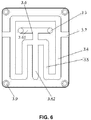
FIG. 6 is a structure diagram 2 of a first weighting piece according to an embodiment of the present invention; -
FIG. 7 is an exploded structure diagram of a first weighting piece according to an embodiment of the present invention; and -
FIG. 8 is a structure diagram of a sealing cover on a pressure chamber according to an embodiment of the present invention. - In the drawings:
- 1: upper metal sheet; 1.1: first snap ring; 1.2: first male tab;
- 2: first vibration damping cushion;
- 3: first weighting piece; 3.1: holding cavity; 3.2: pressure chamber; 3.3: baroports; 3.4: peripheral channels; 3.5: inner channels; 3.6: T-shaped channel; 3.7: air inlet; 3.8: sealing cover; 3.9: first connecting holes; 3.61: transverse channel; 3.62: longitudinal channel; 3.81: blind-hole;
- 4: second weighting piece; 4.1: second connecting holes; 4.2: arc-shaped surface;
- 5: annular housing; 5.1: buckle; 5.2: notch;
- 6: second cushion;
- 7: second flexible flat cable;
- 8: adhesive plate;
- 9: second integrated circuit board;
- 10: first integrated circuit board; 10.1: hypotenuse;
- 11: lower metal sheet; 11.1: second snap ring; 11.2: second male tab; 11.3: through-hole.
- Technical solutions of the present invention will be optionally described by embodiments in conjunction with the accompanying drawings in the specification. In view of the problems described above in the relate art, numerous improvements have been made to inertial measurement devices. However, there are still following problems: (1) the existing inertial measurement devices are bulky, heavy and have a low integration level, while it is difficult to achieve the overall light weight of the inertial measurement device and ensure that the strength and stiffness of the structure of the inertial measurement devices to meet the actual requirements at the same time; (2) the effect of vibration damping is poor in the case where only the displacement of the integrated circuit board provided with an inertial sensor is limited to reduce the influence of the vibration frequency on the inertial sensor, it is thus difficult to ensure the stable and reliable operation of the aircraft.
- This embodiment provides an inertial measurement device, as shown in
FIG. 1 to FIG. 8 . The inertial measurement device includes a shell, sensor components and vibration damping components. The sensor components and the vibration damping components are installed in the shell. - As shown in
FIG. 1 andFIG. 2 , the shell includes anannular housing 5, as well as anupper metal sheet 1 and alower metal sheet 11, which are respectively located on and below theannular housing 5. The sensor components and the vibration damping components described above are disposed in theannular housing 5 and supported by thelower metal sheet 11. - In one or more embodiments, the opposite edges of the
upper metal sheet 1 each extends at least one snap ring, the opposite edges of thelower metal sheet 11 each extend at least one snap ring. In this embodiment, the snap ring on theupper metal sheet 1 may be called as first snap ring 1.1, the snap ring on thelower metal sheet 11 may be called as second snap ring 11.1. In one or more embodiments. Buckles 5.1 are set at positions of theannular housing 5 corresponding to the snap rings. Through the interlocking between the buckles 5.1 and the snap rings, theannular housing 5 is respectively buckled with theupper metal sheet 1 and thelower metal sheet 11. In this embodiment, each of the two edges of theupper sheet metal 1 may be provided with two snap rings, and each of the two edges of thelower sheet metal 11 may be provided with two snap rings. Correspondingly, the number of buckles 5.1 arranged on the side surface of theannular housing 5 is the same as the number of the snap rings. - In this embodiment, at least one notch 5.2 may be set on the
annular housing 5. The notch 5.2 may form an air inlet channel with at least one of theupper metal sheet 1 and thelower metal sheet 11, and the air may enter the shell through the air inlet channel. - In one or more embodiments, the two edges, adjacent to the first snap rings on the
upper metal sheet 1, each extends two male tabs towards theannular housing 5. The two edges, adjacent to the second snap rings on thelower sheet metal 11, each extend two male tabs towards theannular housing 5. In this embodiment, the male tabs on theupper metal sheet 1 may be called as first male tabs 1.2, and the male tabs on thelower metal sheet 11 may be called as second male tabs 11.2. The male tabs may be inserted into theannular housing 5 and may contact with the inwall of theannular housing 5. The male tabs on the one hand serves as stiffeners, so as to prevent theannular housing 5 from deforming, improve the rigidity of the annular housing. The male tabs on the other hand enable the connection between theupper metal sheet 1 and theannular housing 5 as well as the connection between thelower metal sheet 11 and theannular housing 5 to be securer. The male tabs fix the sensor components and the vibration damping components installed in theannular housing 5. - In this embodiment, after the sensor components and the vibration damping components are disposed in the
annular housing 5, the sensor components and the vibration damping components may be compressed in theannular housing 5 by means of thefirst metal sheet 1 and thesecond metal sheet 11, which makes the structure of the inertial measurement device stable. The fact that the sensor components and the vibration damping components are disposed in theannular housing 5 can reduce the influence of external environment on the precision of measurement of sensor components, protect the vibration damping components, avoid exposure of the vibration damping components, lengthen the service life of the vibration damping components, make the vibration damping components firmly installed and hard to fall off, and improve the damping effect of the vibration damping components. - In one or more embodiments, there are four through-holes 11.3 arranged on the surface of the lower metal sheet 11(as shown in
FIG. 1 ), and the successive connection of the four through-holes 11.3 forms a quadrangle. When the inertial measurement device installed in the shell (not shown) of a control device (not shown), two convex platforms (not shown) may be arranged on the bottom surface of the shell of the control device. The two convex platforms are arranged at positions corresponding to two diagonal through-holes 11.3 of the four through-holes 11.3. Since the convex platforms are arranged in the two through-holes 11.3, the position of the inertial measurement device is relatively fixed, so as to avoid the shaking of the inertial measurement device installed in the shell. - In this embodiment, the vibration damping components and the sensor components integrally fixed in the
annular housing 5, and are fixed by means of theupper metal sheet 1 and thelower metal sheet 11. This can limit the relative movement of the parts of the vibration damping components and the sensor components, strengthen the rigidity of the inertial measurement device, and reduce the vibration of the parts. - According to
FIG. 3 andFIG. 4 , the sensor components described above may include at least one integrated circuit board, an inertial sensor (not shown) connected to the integrated circuit board and a barometric sensor (not shown) connected to the integrated circuit board. In one or more embodiments, the at least one integrated circuit board includes a firstintegrated circuit board 10 and a second integrated circuit board 9. The firstintegrated circuit board 10 and the second integrated circuit board 9 are connected to each other by a first flexible flat cable (not shown). The inertial sensor and a second flexibleflat cable 7 may be arranged on the firstintegrated circuit board 10. The inertial sensor may include a gyroscope and a accelerometer. The signal from the inertial sensor is delivered to other devices through flexible flat cables, which can improve the reliability, effectiveness, stability and precision of the measurement dates. The second flexibleflat cable 7 may be connected to the control circuit board for flight control of the unmanned aerial vehicle. The barometric sensor may be arranged on the second integrated circuit board 9. - As shown in
FIG. 1 , the vibration damping components described above may include a first cushion 2, afirst weighting piece 3, asecond weighting piece 4 and asecond cushion 6, which are connected from top to bottom and disposed in theannular housing 5. Theupper metal sheet 1 on the shell compresses on the first cushion 2, and thelower metal sheet 11 on the shell compresses under thesecond cushion 6. The first cushion 2, thefirst weighting piece 3, thesecond weighting piece 4 and thesecond cushion 6 are compressed in theannular housing 5 by theupper metal sheet 1 and thelower metal sheet 11, such that the positions of the first cushion 2, thefirst weighting piece 3, thesecond weighting piece 4 and thesecond cushion 6 are stable. - In one or more embodiments, a slot with an impassable bottom may be formed at middle part of the first cushion 2. The bottom of the first cushion 2 is fixed on the top surface of the
first weighting piece 3 by means of anadhesive plate 8. The top surface of the first cushion 2 may be fixed on the bottom surface of theupper metal sheet 1 by means of anadhesive plate 8. Theadhesive plate 8 on the bottom surface of the first cushion 2 is not slotted. Theadhesive plate 8 on the top surface of the first cushion 2 may be slotted at the middle part or may not be slotted according to the requirements. The second flexibleflat cable 7 may be disposed in the slot of the first cushion 2 to save space. - The
second cushion 6 may have a shape of a hollow rectangular plate. The middle part of thesecond cushion 6 may have a through-hole. The through-hole can improve the effect of vibration damping of thesecond cushion 6. The top surface of thesecond cushion 6 may be adhered to the bottom surface of thesecond weighting piece 4 by means of theadhesive plate 8. The bottom surface of thesecond cushion 6 may be adhered to the top surface of thelower metal sheet 11 by means of theadhesive plate 8. Holes, each having the same size as the through-hole, may be opened in the middle part of theadhesive plates 8 on the both sides of thesecond cushion 6. The holes each may has a shape of square, round or oval. - The manner in which the cushions are fixed by means of the
adhesive plates 8 as described above can reduce the time and cost required for fixing multiple components, thereby improving the integration level of the inertial measurement device and decreasing the vibration. - In this embodiment, both the first cushion 2 and the
second cushion 6 may be made of porous and breathable material. This can avoid local turbulence caused by the wind at excessive speed, buffer isolation vibration, reduce common vibration frequency and buffer high-speed turbulence. In this embodiment, both the first cushion 2 and thesecond cushion 6 described above may be made of vibration damping cotton. The vibration damping cotton has a good elasticity, so that the vibration of the sensor components caused by the unmanned aerial vehicle can attenuate rapidly. - Holding cavities (not shown) for accommodating integrated circuit boards may be formed between the
first weighting piece 3 and thesecond weighting piece 4. As shown inFIG. 4 , the firstintegrated circuit board 10 of the integrated circuit boards may be disposed in thesecond weighting piece 4. At least one holding cavity 3.1 and a pressure chamber 3.2 may be formed in thefirst weighting piece 3. The number of the at least one holding cavity 3.1 may be two. The two holding cavities 3.1 may be respectively used to accommodate a gyroscope and accelerometer of the inertial sensor. The pressure chamber 3.2 communicates with the exterior of the inertial measurement device and may respectively accommodate the second integrated circuit board 9 and the barometric sensor on the second integrated circuit board 9. The arrangement of the sensor components in the inner space of thefirst weighting piece 3 and thesecond weighting piece 4 can avoid the need for additional space for the sensor components, which increases the integration level of the inertial measurement device, reduces the influence of the vibration on the inertial sensor and reduce interference from high speed turbulence to the barometric sensor, thus improving the precision of measurement of the inertial sensor and the barometric sensor. - In this embodiment, the
first weighting piece 3 and thesecond weighting piece 4 each may have a shape of rectangular, which can reduce the installation space of thefirst weighting piece 3 and thesecond weighting piece 4. Thefirst weighting piece 3 and thesecond weighting piece 4 described above may be made of metal. The density of metal makes thefirst weighting piece 3 and thesecond weighting piece 4 each have a certain weight, thus decreasing the vibration of the sensor components in thefirst weighting piece 3 and thesecond weighting piece 4. In one or more embodiments, as shown inFIG. 4 , a rectangular slot is arranged in thesecond weighting piece 4. The rectangular slot may be used for accommodating the firstintegrated circuit board 10. The arrangement of the rectangular slot can save space, make the firstintegrated circuit board 10 dissipate heat quickly and evenly, so as to avoid the short circuit caused by too much heat at a part of the first integrated circuit and prolong the service life of components on the firstintegrated circuit board 10. - In this embodiment, since the
first weighting piece 3 may have only the holding cavities 3.1 and the pressure chamber 3.2, the weight of thefirst weighting piece 3 is greater than the weight of thesecond weighting piece 4. This reduces the vibration frequency of the inertial measurement device, so that the sensor components in thefirst weighting piece 3 and the sensor components in thesecond weighting piece 4 are in a stable environment. - In one or more embodiments, as shown in
FIG. 7 , a sealing cover 3.8 is installed on the pressure chamber 3.2. The sealing cover 3.8 is fastened to the pressure chamber 3.2 by connectors. The sealing cover 3.8 is used to seal the pressure chamber 3.2. Four through-holes may be arranged on the sealing cover 3.8. Threaded holes are set in the positions corresponding to the pressure chamber 3.2 in thefirst weighting piece 3. The sealing cover 3.8 is connected to the pressure chamber 3.2 through the connectors. In this embodiment, the connectors may be screws. - In one or more embodiments, as shown in
FIG. 8 , there are two blind-holes 3.81 with internal threads on the sealing cover 3.8. When the sealing cover 3.8 is detached, screws with external threads may be screwed into the blind-holes with internal threads. The sealing cover 3.8 can be detached by pulling the sealing cover 3.8 outward by means of the screws. The operation is simple and convenient. - In this embodiment, the holding cavities formed by the
first weighting piece 3 and thesecond weighting piece 4 may be filled with the thermally conductive silicone grease. The filled thermally conductive silicone grease can mitigate the vibration, keep the temperature of all the components on the firstintegrated circuit board 10 in thesecond weighting piece 4 within a certain range and evenly heated, and avoid the vibration from the components themselves. The filled thermally conductive silicone grease enables multiple components on the integrated circuit board to form a whole and vibrate at a same frequency to mitigate the vibration. - Furthermore, in this embodiment, since the thermally conductive silicone grease can possibly influence the air pressure in the pressure chamber 3.2, the pressure chamber 3.2 is arranged on the
first weighting piece 3 and is sealed by the sealing cover 3.8, such that the pressure chamber 3.2 is isolated from the holding cavities formed between thefirst weighting piece 3 and thesecond weighting piece 4. This avoids the influence of thermally conductive silicone grease on the air pressure inside the pressure chamber 3.2 and improves the precision of the measurement results from the barometric sensor in the pressure chamber 3.2. - In this embodiment, optionally, as shown in
FIG. 6 , an airflow channel communicating with the exterior of the inertial measurement device is arranged in the top surface of thefirst weighting piece 3. Slots are formed in the top surface of thefirst weighting piece 3. Theadhesive plate 8 is adhered to the top surface of thefirst weighting piece 3 and forms the airflow channel with the slots. Baroports are arranged in thefirst weighting piece 3 to connect the airflow channel and the pressure chamber 3.2. The arrangement of the baroports 3.3 and the airflow channel enables that the internal pressure of the pressure chamber 3.2 is the same as that of the external air pressure, so as to buffer and isolate vibration, and buffer the high-speed turbulence. The airflow channel may also be arranged in thefirst weighting piece 3 as long as the pressure chamber 3.2 communicates with the exterior. - In this embodiment, the airflow channel describe above may include peripheral channels 3.4, inner channels 3.5 and a T-shaped channel 3.6. The T-shaped channel 3.6 may include a transverse channel 3.61 and a longitudinal channel 3.62 connected to a midpoint of the transverse channel 3.61. The baroports 3.3 may be symmetrically connected to both ends of the transverse channel 3.61. In one or more embodiments, the inner channels 3.5 are symmetrically connected to both sides of the longitudinal channel 3.62. Each of the inner channels 3.5 is connected to a peripheral channel 3.4. Two peripheral channels 3.4 are interconnected and each of the peripheral channels 3.4 is connected to one of multiple air inlets 3.7. Air may enter the airflow channel through the air inlets 3.7, and enter the pressure chamber 3.2 through the baroports 3.3. In this embodiment, both the inner channels 3.5 and the peripheral channels 3.4, which are symmetrically arranged, constitute a gate structure.
- The external high-speed turbulence enters a first air inlet 3.7 and is divided into two streams into the peripheral channels 3.4. The first stream is offset by a stream from a second air inlet 3.7 at the connection of the two peripheral channels 3.4. The second stream passes through the peripheral channel 3.4 and enters an inner channel 3.5. The stream entering the inner channel 3.5 is divided into a first part and a second part while passing through the T-shaped channel 3.6. The first part enters the pressure chamber 3.2 through a baroport 3.3 on the transverse channel 3.61. The second part flows to the longitudinal channel 3.62, returns after reaching the bottom of the longitudinal channel 3.62, and flows into the pressure chamber 3.2 through the baroport 3.3.
- In this embodiment, the peripheral channels 3.4, the inner channels 3.5, the T-shaped channel 3.6 and the two air inlets 3.7, may be regarded as forming two inlet channels which are symmetric with each other. The two inlet channels enable an air convection to be formed in the pressure chamber 3.2. This balances the pressure difference between the internal pressure and the external pressure, buffers and isolates turbulence, such that the local environment of high-speed and low-pressure produced by a single inlet channel in the related arts is avoided. Each inlet channel has a bending shape formed by a peripheral channel 3.4, an inner channel 3.5 and the T-shaped channel 3.6, which buffers the high-speed turbulence and avoids the influence of the high-speed turbulence on the measurements of sensors.
- In one or more embodiments, as shown in
FIG. 4 and FIG. 5 , each of the four corners of thefirst weighting piece 3 and thesecond weighting piece 4 is provided with a convex platform. Each convex platform has a connecting hole. Thefirst weighting piece 3 and thesecond weighting piece 4 are fastened together by means of connectors in the connecting holes. The connecting holes in thefirst weighting piece 3 may be called as first connecting holes 3.9, and the first connecting holes 3.9 may be through-holes. The connecting holes in thesecond weighting piece 4 may be called as second connecting holes 4.1, and the second connecting holes 4.1 may be threaded holes. The connectors may be screws. - In one or more embodiments, as shown in
FIG. 4 , the firstintegrated circuit board 10 in this embodiment has a shape of quadrangle, and the four corners are cut to form hypotenuses 10.1. Correspondingly, the convex platforms at the four corners of thesecond weighting piece 4 each is convex to the interior to form a curved surface with an arc-shaped surface 4.2. The arc-shaped surface 4.2 is tangent to the hypotenuse 10.1 at a corresponding one of the four corners of the firstintegrated circuit board 10. This structure makes the firstintegrated circuit board 10 fixed firmly, can have the function of limitation and fixation, avoid the loosening of the first integrated circuit board in use, facilitate the assembly, and improve the precision of measurement of the inertial sensor. - In this embodiment, the structure described above improves the integration level of the entire inertial measurement device. Furthermore, the structure can reduce the influence from the external factors on the measurement performed by the inertial sensor and the barometric sensor, and improve the precision of measurement of the inertial measurement device.
- The present invention provides an inertial measurement device and an unmanned aerial vehicle, which improve the integration level, the effect of vibration damping, and the precision of measurement of sensors of the inertial measurement device.
Claims (10)
- An inertial measurement device, comprising:a shell;a plurality of sensor components installed in the shell, wherein the sensor components comprises an integrated circuit board, an inertial sensor connected to the integrated circuit board, and a barometric sensor connected to the integrated circuit board; anda plurality of vibration damping components installed in the shell, wherein the vibration damping components comprise a first cushion, a first weighting piece, a second weighting piece and a second cushion which are connected successively, wherein at least one holding cavity for accommodating the integrated circuit board is formed between the first weighting piece and the second weighting piece, the first weighting piece has the holding cavity for accommodating the inertial sensor and a pressure chamber accommodating the barometric sensor and communicating with an exterior of the inertial measurement device.
- The inertial measurement device according to claim 1, wherein an airflow channel communicating with the exterior of the inertial measurement device is formed in the top surface of the first weighting piece, and the first weighting piece has a plurality of baroports for connecting the airflow channel to the pressure chamber.
- The inertial measurement device according to claim 2, wherein the airflow channel comprises a T-shaped channel, a plurality of peripheral channels, and a plurality of inner channels which are symmetrically connected to the T-shaped channel, the inner channels each is connected to a respective one of the peripheral channels, two of the peripheral channels are connected to each other and each has an air inlet, two of the baroports are symmetrically connected to two ends of the T-shaped channel.
- The inertial measurement device according to claim 3, wherein the T-shaped channel comprise a transverse channel and a longitudinal channel connected to a midpoint of the transverse channel, two of the baroports are symmetrically connected to ends of the transverse channel, the inner channels are symmetrically connected to the longitudinal channel.
- The inertial measurement device according to any one of claims 2 to 4, comprising at least one structure of a group consisting of:the bottom surface of the first cushion is fastened to the top surface of the first weighting piece by means of an adhesive plate, and the airflow channel is formed between the first weighting piece and the adhesive plate; andthe bottom surface and the top surface of the second cushion are respectively fastened to the shell and the bottom surface of the second weighting piece.
- The inertial measurement device according to claim 1, wherein the shell comprises an annular housing, a first metal sheet and a second metal sheet, the first metal sheet and the second metal sheet are respectively located on a top surface and a bottom surface of the annular housing, the sensor components and the vibration damping components are arranged in the annular housing and are compressed by the first metal sheet and the second metal sheet.
- The inertial measurement device according to claim 6, wherein opposite edges of the first metal sheet each extends at least one first male tab towards the annular housing, opposite edges of the second metal sheet each extends at least one second male tab towards the annular housing, the at least one first male tab and the at least one second male tab are inserted into the annular housing and contacting with an inwall of the annular housing.
- The inertial measurement device according to claim 1, wherein the first weighting piece comprises a sealing cover, a surface of the pressure chamber, facing the second weighting piece, is connected to the sealing cover, the sealing cover segregates the pressure chamber and the holding cavity.
- The inertial measurement device according to claim 8, wherein the holding cavity is filled with thermally conductive silicone grease.
- An unmanned aerial vehicle, comprising the inertial measurement devices according to any one of claims 1 to 9.
Applications Claiming Priority (2)
| Application Number | Priority Date | Filing Date | Title |
|---|---|---|---|
| CN201710292749.1A CN106871895B (en) | 2017-04-28 | 2017-04-28 | A kind of inertial measuring unit and unmanned vehicle |
| PCT/CN2017/084484 WO2018196042A1 (en) | 2017-04-28 | 2017-05-16 | Inertia measurement apparatus and unmanned aerial vehicle |
Publications (3)
| Publication Number | Publication Date |
|---|---|
| EP3425336A1 true EP3425336A1 (en) | 2019-01-09 |
| EP3425336A4 EP3425336A4 (en) | 2019-11-27 |
| EP3425336B1 EP3425336B1 (en) | 2021-03-24 |
Family
ID=59161528
Family Applications (1)
| Application Number | Title | Priority Date | Filing Date |
|---|---|---|---|
| EP17902587.9A Active EP3425336B1 (en) | 2017-04-28 | 2017-05-16 | Inertia measurement apparatus and unmanned aerial vehicle |
Country Status (4)
| Country | Link |
|---|---|
| US (1) | US11326885B2 (en) |
| EP (1) | EP3425336B1 (en) |
| CN (1) | CN106871895B (en) |
| WO (1) | WO2018196042A1 (en) |
Cited By (1)
| Publication number | Priority date | Publication date | Assignee | Title |
|---|---|---|---|---|
| CN113654552A (en) * | 2021-06-30 | 2021-11-16 | 贵州航天控制技术有限公司 | MEMS inertia measuring device capable of resisting large overload |
Families Citing this family (8)
| Publication number | Priority date | Publication date | Assignee | Title |
|---|---|---|---|---|
| JP6863266B2 (en) * | 2017-12-20 | 2021-04-21 | オムロン株式会社 | Mobile device with pressure sensor and pressure sensor |
| EP3741661A4 (en) * | 2018-01-19 | 2021-02-17 | SZ DJI Technology Co., Ltd. | Anmanned aerial vehicle |
| CN108036891B (en) * | 2018-01-26 | 2025-03-11 | 上海歌尔泰克机器人有限公司 | Air pressure sensor protection structure, barometer and drone |
| CN109631882B (en) * | 2018-12-13 | 2020-08-18 | 上海航天控制技术研究所 | High-reliability circuit based on damping system |
| US11694831B2 (en) * | 2019-09-23 | 2023-07-04 | Apple Inc. | Haptic actuator including outwardly extending terminals from first and second housing shells and related methods |
| CN111322984B (en) * | 2020-04-15 | 2023-10-03 | 深圳市创客火科技有限公司 | Altitude calculating method and device, unmanned aerial vehicle and storage medium |
| CN113252294B (en) * | 2021-06-16 | 2022-01-07 | 西南交通大学 | A test system and monitoring method for spatial wind speed and direction of a sea-crossing bridge |
| CN114858165B (en) * | 2022-07-06 | 2022-11-29 | 河北美泰电子科技有限公司 | Inertial navigation assembly |
Family Cites Families (9)
| Publication number | Priority date | Publication date | Assignee | Title |
|---|---|---|---|---|
| FR2886724A1 (en) * | 1986-01-10 | 2006-12-08 | Sagem | Compact, lightweight central position guiding plant, e.g. for orbiting missile or spacecraft, includes core structure with accelerometer(s), gyroscope(s), mirrors and Cassegrain telescope as star viewer |
| WO2016161562A1 (en) * | 2015-04-07 | 2016-10-13 | SZ DJI Technology Co., Ltd. | System and method for providing a simple and reliable inertia measurement unit (imu) |
| CN204757990U (en) * | 2015-07-01 | 2015-11-11 | 极翼机器人(上海)有限公司 | Novel unmanned vehicles inertia measured module |
| CN104931054A (en) * | 2015-07-06 | 2015-09-23 | 极翼机器人(上海)有限公司 | Inertia measurement shock absorber and unmanned aerial vehicle inertia measuring module |
| CN205748395U (en) * | 2016-05-21 | 2016-11-30 | 上海拓攻机器人有限公司 | A kind of inertial measuring unit for unmanned vehicle |
| CN205664838U (en) * | 2016-06-08 | 2016-10-26 | 上海拓攻机器人有限公司 | A inertia measurement assembly for unmanned vehicles |
| CN206038016U (en) * | 2016-06-28 | 2017-03-22 | 上海拓攻机器人有限公司 | Inertia measurement assembly reaches unmanned vehicles who contains it |
| CN205957985U (en) * | 2016-08-26 | 2017-02-15 | 北京臻迪机器人有限公司 | Inertia measurement assembly who detects is pressed to gas collection |
| CN206670648U (en) * | 2017-04-28 | 2017-11-24 | 上海拓攻机器人有限公司 | A kind of inertial measuring unit and unmanned vehicle |
-
2017
- 2017-04-28 CN CN201710292749.1A patent/CN106871895B/en active Active
- 2017-05-16 WO PCT/CN2017/084484 patent/WO2018196042A1/en not_active Ceased
- 2017-05-16 EP EP17902587.9A patent/EP3425336B1/en active Active
- 2017-05-16 US US16/088,462 patent/US11326885B2/en active Active
Cited By (1)
| Publication number | Priority date | Publication date | Assignee | Title |
|---|---|---|---|---|
| CN113654552A (en) * | 2021-06-30 | 2021-11-16 | 贵州航天控制技术有限公司 | MEMS inertia measuring device capable of resisting large overload |
Also Published As
| Publication number | Publication date |
|---|---|
| US11326885B2 (en) | 2022-05-10 |
| CN106871895B (en) | 2019-03-29 |
| WO2018196042A1 (en) | 2018-11-01 |
| CN106871895A (en) | 2017-06-20 |
| EP3425336B1 (en) | 2021-03-24 |
| US20210095964A1 (en) | 2021-04-01 |
| EP3425336A4 (en) | 2019-11-27 |
Similar Documents
| Publication | Publication Date | Title |
|---|---|---|
| EP3425336B1 (en) | Inertia measurement apparatus and unmanned aerial vehicle | |
| EP2225922B1 (en) | A housing for electrical components | |
| US5890569A (en) | Vibration isolation system for an inertial sensor assembly | |
| US7746639B2 (en) | Canister housing | |
| US20200209275A1 (en) | Inertia measurement module for unmanned aircraft | |
| EP1381827B1 (en) | Compact vibration isolation system for an inertial sensor assembly | |
| US20120130671A1 (en) | Vibration isolation interposer die | |
| CN107478224B (en) | Inertial Measurement Units and Mechanical Equipment | |
| US9560779B2 (en) | Thermal stabilization of temperature sensitive components | |
| US7885056B2 (en) | Center instrument pedestal display | |
| CN105509741B (en) | Flight control components and unmanned aerial vehicles | |
| CN104142150A (en) | Integrated small-size laser gyroscope inertia measurement device | |
| EP3432111B1 (en) | Control apparatus for unmanned aerial vehicle, and unmanned aerial vehicle | |
| RU2430333C1 (en) | Navigation system and navigation system case | |
| US9370090B2 (en) | Circuit card assembly and method of manufacturing thereof | |
| KR101547379B1 (en) | Aircraft canister | |
| US10156445B2 (en) | Inertial measurement device with dual suspension | |
| EP3741661A1 (en) | Anmanned aerial vehicle | |
| US9625284B2 (en) | Shock mount in environment sensor protector for non-isolated systems | |
| CN206670648U (en) | A kind of inertial measuring unit and unmanned vehicle | |
| CN113124915B (en) | Many rotor unmanned aerial vehicle's flight control system and many rotor unmanned aerial vehicle | |
| CN211702606U (en) | Airborne control box and unmanned aerial vehicle | |
| US20210237869A1 (en) | Unmanned aerial vehicle | |
| CN108770183B (en) | A three-axis vibration reduction structure based on FR4 printed circuit board | |
| CN112964253A (en) | Vibration reduction mechanism of inertia measurement assembly, flight control inertia measurement assembly and aircraft |
Legal Events
| Date | Code | Title | Description |
|---|---|---|---|
| STAA | Information on the status of an ep patent application or granted ep patent |
Free format text: STATUS: UNKNOWN |
|
| STAA | Information on the status of an ep patent application or granted ep patent |
Free format text: STATUS: THE INTERNATIONAL PUBLICATION HAS BEEN MADE |
|
| PUAI | Public reference made under article 153(3) epc to a published international application that has entered the european phase |
Free format text: ORIGINAL CODE: 0009012 |
|
| STAA | Information on the status of an ep patent application or granted ep patent |
Free format text: STATUS: REQUEST FOR EXAMINATION WAS MADE |
|
| 17P | Request for examination filed |
Effective date: 20181002 |
|
| AK | Designated contracting states |
Kind code of ref document: A1 Designated state(s): AL AT BE BG CH CY CZ DE DK EE ES FI FR GB GR HR HU IE IS IT LI LT LU LV MC MK MT NL NO PL PT RO RS SE SI SK SM TR |
|
| AX | Request for extension of the european patent |
Extension state: BA ME |
|
| A4 | Supplementary search report drawn up and despatched |
Effective date: 20191024 |
|
| RIC1 | Information provided on ipc code assigned before grant |
Ipc: G01C 21/26 20060101ALI20191018BHEP Ipc: G01C 21/18 20060101AFI20191018BHEP Ipc: G01C 25/00 20060101ALI20191018BHEP |
|
| DAV | Request for validation of the european patent (deleted) | ||
| DAX | Request for extension of the european patent (deleted) | ||
| RIC1 | Information provided on ipc code assigned before grant |
Ipc: G01C 21/26 20060101ALI20200828BHEP Ipc: G01C 21/18 20060101AFI20200828BHEP Ipc: B64C 39/02 20060101ALI20200828BHEP Ipc: G01C 25/00 20060101ALI20200828BHEP |
|
| GRAP | Despatch of communication of intention to grant a patent |
Free format text: ORIGINAL CODE: EPIDOSNIGR1 |
|
| STAA | Information on the status of an ep patent application or granted ep patent |
Free format text: STATUS: GRANT OF PATENT IS INTENDED |
|
| INTG | Intention to grant announced |
Effective date: 20201014 |
|
| GRAS | Grant fee paid |
Free format text: ORIGINAL CODE: EPIDOSNIGR3 |
|
| GRAA | (expected) grant |
Free format text: ORIGINAL CODE: 0009210 |
|
| STAA | Information on the status of an ep patent application or granted ep patent |
Free format text: STATUS: THE PATENT HAS BEEN GRANTED |
|
| AK | Designated contracting states |
Kind code of ref document: B1 Designated state(s): AL AT BE BG CH CY CZ DE DK EE ES FI FR GB GR HR HU IE IS IT LI LT LU LV MC MK MT NL NO PL PT RO RS SE SI SK SM TR |
|
| REG | Reference to a national code |
Ref country code: GB Ref legal event code: FG4D |
|
| REG | Reference to a national code |
Ref country code: CH Ref legal event code: NV Representative=s name: DENNEMEYER AG, CH Ref country code: CH Ref legal event code: EP |
|
| REG | Reference to a national code |
Ref country code: IE Ref legal event code: FG4D |
|
| REG | Reference to a national code |
Ref country code: AT Ref legal event code: REF Ref document number: 1374932 Country of ref document: AT Kind code of ref document: T Effective date: 20210415 Ref country code: DE Ref legal event code: R096 Ref document number: 602017035482 Country of ref document: DE |
|
| REG | Reference to a national code |
Ref country code: LT Ref legal event code: MG9D |
|
| PG25 | Lapsed in a contracting state [announced via postgrant information from national office to epo] |
Ref country code: HR Free format text: LAPSE BECAUSE OF FAILURE TO SUBMIT A TRANSLATION OF THE DESCRIPTION OR TO PAY THE FEE WITHIN THE PRESCRIBED TIME-LIMIT Effective date: 20210324 Ref country code: FI Free format text: LAPSE BECAUSE OF FAILURE TO SUBMIT A TRANSLATION OF THE DESCRIPTION OR TO PAY THE FEE WITHIN THE PRESCRIBED TIME-LIMIT Effective date: 20210324 Ref country code: GR Free format text: LAPSE BECAUSE OF FAILURE TO SUBMIT A TRANSLATION OF THE DESCRIPTION OR TO PAY THE FEE WITHIN THE PRESCRIBED TIME-LIMIT Effective date: 20210625 Ref country code: NO Free format text: LAPSE BECAUSE OF FAILURE TO SUBMIT A TRANSLATION OF THE DESCRIPTION OR TO PAY THE FEE WITHIN THE PRESCRIBED TIME-LIMIT Effective date: 20210624 Ref country code: BG Free format text: LAPSE BECAUSE OF FAILURE TO SUBMIT A TRANSLATION OF THE DESCRIPTION OR TO PAY THE FEE WITHIN THE PRESCRIBED TIME-LIMIT Effective date: 20210624 |
|
| PG25 | Lapsed in a contracting state [announced via postgrant information from national office to epo] |
Ref country code: LV Free format text: LAPSE BECAUSE OF FAILURE TO SUBMIT A TRANSLATION OF THE DESCRIPTION OR TO PAY THE FEE WITHIN THE PRESCRIBED TIME-LIMIT Effective date: 20210324 Ref country code: RS Free format text: LAPSE BECAUSE OF FAILURE TO SUBMIT A TRANSLATION OF THE DESCRIPTION OR TO PAY THE FEE WITHIN THE PRESCRIBED TIME-LIMIT Effective date: 20210324 Ref country code: SE Free format text: LAPSE BECAUSE OF FAILURE TO SUBMIT A TRANSLATION OF THE DESCRIPTION OR TO PAY THE FEE WITHIN THE PRESCRIBED TIME-LIMIT Effective date: 20210324 |
|
| REG | Reference to a national code |
Ref country code: NL Ref legal event code: MP Effective date: 20210324 |
|
| REG | Reference to a national code |
Ref country code: AT Ref legal event code: MK05 Ref document number: 1374932 Country of ref document: AT Kind code of ref document: T Effective date: 20210324 |
|
| PG25 | Lapsed in a contracting state [announced via postgrant information from national office to epo] |
Ref country code: NL Free format text: LAPSE BECAUSE OF FAILURE TO SUBMIT A TRANSLATION OF THE DESCRIPTION OR TO PAY THE FEE WITHIN THE PRESCRIBED TIME-LIMIT Effective date: 20210324 |
|
| PG25 | Lapsed in a contracting state [announced via postgrant information from national office to epo] |
Ref country code: AT Free format text: LAPSE BECAUSE OF FAILURE TO SUBMIT A TRANSLATION OF THE DESCRIPTION OR TO PAY THE FEE WITHIN THE PRESCRIBED TIME-LIMIT Effective date: 20210324 Ref country code: SM Free format text: LAPSE BECAUSE OF FAILURE TO SUBMIT A TRANSLATION OF THE DESCRIPTION OR TO PAY THE FEE WITHIN THE PRESCRIBED TIME-LIMIT Effective date: 20210324 Ref country code: CZ Free format text: LAPSE BECAUSE OF FAILURE TO SUBMIT A TRANSLATION OF THE DESCRIPTION OR TO PAY THE FEE WITHIN THE PRESCRIBED TIME-LIMIT Effective date: 20210324 Ref country code: EE Free format text: LAPSE BECAUSE OF FAILURE TO SUBMIT A TRANSLATION OF THE DESCRIPTION OR TO PAY THE FEE WITHIN THE PRESCRIBED TIME-LIMIT Effective date: 20210324 Ref country code: LT Free format text: LAPSE BECAUSE OF FAILURE TO SUBMIT A TRANSLATION OF THE DESCRIPTION OR TO PAY THE FEE WITHIN THE PRESCRIBED TIME-LIMIT Effective date: 20210324 |
|
| PG25 | Lapsed in a contracting state [announced via postgrant information from national office to epo] |
Ref country code: RO Free format text: LAPSE BECAUSE OF FAILURE TO SUBMIT A TRANSLATION OF THE DESCRIPTION OR TO PAY THE FEE WITHIN THE PRESCRIBED TIME-LIMIT Effective date: 20210324 Ref country code: SK Free format text: LAPSE BECAUSE OF FAILURE TO SUBMIT A TRANSLATION OF THE DESCRIPTION OR TO PAY THE FEE WITHIN THE PRESCRIBED TIME-LIMIT Effective date: 20210324 Ref country code: PL Free format text: LAPSE BECAUSE OF FAILURE TO SUBMIT A TRANSLATION OF THE DESCRIPTION OR TO PAY THE FEE WITHIN THE PRESCRIBED TIME-LIMIT Effective date: 20210324 Ref country code: PT Free format text: LAPSE BECAUSE OF FAILURE TO SUBMIT A TRANSLATION OF THE DESCRIPTION OR TO PAY THE FEE WITHIN THE PRESCRIBED TIME-LIMIT Effective date: 20210726 Ref country code: IS Free format text: LAPSE BECAUSE OF FAILURE TO SUBMIT A TRANSLATION OF THE DESCRIPTION OR TO PAY THE FEE WITHIN THE PRESCRIBED TIME-LIMIT Effective date: 20210724 |
|
| REG | Reference to a national code |
Ref country code: DE Ref legal event code: R097 Ref document number: 602017035482 Country of ref document: DE |
|
| PG25 | Lapsed in a contracting state [announced via postgrant information from national office to epo] |
Ref country code: ES Free format text: LAPSE BECAUSE OF FAILURE TO SUBMIT A TRANSLATION OF THE DESCRIPTION OR TO PAY THE FEE WITHIN THE PRESCRIBED TIME-LIMIT Effective date: 20210324 Ref country code: LU Free format text: LAPSE BECAUSE OF NON-PAYMENT OF DUE FEES Effective date: 20210516 Ref country code: MC Free format text: LAPSE BECAUSE OF FAILURE TO SUBMIT A TRANSLATION OF THE DESCRIPTION OR TO PAY THE FEE WITHIN THE PRESCRIBED TIME-LIMIT Effective date: 20210324 Ref country code: DK Free format text: LAPSE BECAUSE OF FAILURE TO SUBMIT A TRANSLATION OF THE DESCRIPTION OR TO PAY THE FEE WITHIN THE PRESCRIBED TIME-LIMIT Effective date: 20210324 Ref country code: AL Free format text: LAPSE BECAUSE OF FAILURE TO SUBMIT A TRANSLATION OF THE DESCRIPTION OR TO PAY THE FEE WITHIN THE PRESCRIBED TIME-LIMIT Effective date: 20210324 |
|
| PLBE | No opposition filed within time limit |
Free format text: ORIGINAL CODE: 0009261 |
|
| STAA | Information on the status of an ep patent application or granted ep patent |
Free format text: STATUS: NO OPPOSITION FILED WITHIN TIME LIMIT |
|
| REG | Reference to a national code |
Ref country code: BE Ref legal event code: MM Effective date: 20210531 |
|
| PG25 | Lapsed in a contracting state [announced via postgrant information from national office to epo] |
Ref country code: SI Free format text: LAPSE BECAUSE OF FAILURE TO SUBMIT A TRANSLATION OF THE DESCRIPTION OR TO PAY THE FEE WITHIN THE PRESCRIBED TIME-LIMIT Effective date: 20210324 |
|
| 26N | No opposition filed |
Effective date: 20220104 |
|
| PG25 | Lapsed in a contracting state [announced via postgrant information from national office to epo] |
Ref country code: IE Free format text: LAPSE BECAUSE OF NON-PAYMENT OF DUE FEES Effective date: 20210516 |
|
| PG25 | Lapsed in a contracting state [announced via postgrant information from national office to epo] |
Ref country code: IS Free format text: LAPSE BECAUSE OF FAILURE TO SUBMIT A TRANSLATION OF THE DESCRIPTION OR TO PAY THE FEE WITHIN THE PRESCRIBED TIME-LIMIT Effective date: 20210724 |
|
| PG25 | Lapsed in a contracting state [announced via postgrant information from national office to epo] |
Ref country code: BE Free format text: LAPSE BECAUSE OF NON-PAYMENT OF DUE FEES Effective date: 20210531 |
|
| PG25 | Lapsed in a contracting state [announced via postgrant information from national office to epo] |
Ref country code: IT Free format text: LAPSE BECAUSE OF FAILURE TO SUBMIT A TRANSLATION OF THE DESCRIPTION OR TO PAY THE FEE WITHIN THE PRESCRIBED TIME-LIMIT Effective date: 20210324 |
|
| PG25 | Lapsed in a contracting state [announced via postgrant information from national office to epo] |
Ref country code: CY Free format text: LAPSE BECAUSE OF FAILURE TO SUBMIT A TRANSLATION OF THE DESCRIPTION OR TO PAY THE FEE WITHIN THE PRESCRIBED TIME-LIMIT Effective date: 20210324 |
|
| PG25 | Lapsed in a contracting state [announced via postgrant information from national office to epo] |
Ref country code: HU Free format text: LAPSE BECAUSE OF FAILURE TO SUBMIT A TRANSLATION OF THE DESCRIPTION OR TO PAY THE FEE WITHIN THE PRESCRIBED TIME-LIMIT; INVALID AB INITIO Effective date: 20170516 |
|
| PG25 | Lapsed in a contracting state [announced via postgrant information from national office to epo] |
Ref country code: MK Free format text: LAPSE BECAUSE OF FAILURE TO SUBMIT A TRANSLATION OF THE DESCRIPTION OR TO PAY THE FEE WITHIN THE PRESCRIBED TIME-LIMIT Effective date: 20210324 |
|
| PG25 | Lapsed in a contracting state [announced via postgrant information from national office to epo] |
Ref country code: TR Free format text: LAPSE BECAUSE OF FAILURE TO SUBMIT A TRANSLATION OF THE DESCRIPTION OR TO PAY THE FEE WITHIN THE PRESCRIBED TIME-LIMIT Effective date: 20210324 |
|
| PG25 | Lapsed in a contracting state [announced via postgrant information from national office to epo] |
Ref country code: MT Free format text: LAPSE BECAUSE OF FAILURE TO SUBMIT A TRANSLATION OF THE DESCRIPTION OR TO PAY THE FEE WITHIN THE PRESCRIBED TIME-LIMIT Effective date: 20210324 |
|
| PGFP | Annual fee paid to national office [announced via postgrant information from national office to epo] |
Ref country code: DE Payment date: 20250513 Year of fee payment: 9 |
|
| PGFP | Annual fee paid to national office [announced via postgrant information from national office to epo] |
Ref country code: FR Payment date: 20250530 Year of fee payment: 9 |
|
| PGFP | Annual fee paid to national office [announced via postgrant information from national office to epo] |
Ref country code: CH Payment date: 20250601 Year of fee payment: 9 |
|
| PGFP | Annual fee paid to national office [announced via postgrant information from national office to epo] |
Ref country code: GB Payment date: 20260310 Year of fee payment: 10 |