EP3422130A1 - Method and system for autonomously operating an aircraft - Google Patents
Method and system for autonomously operating an aircraft Download PDFInfo
- Publication number
- EP3422130A1 EP3422130A1 EP17382412.9A EP17382412A EP3422130A1 EP 3422130 A1 EP3422130 A1 EP 3422130A1 EP 17382412 A EP17382412 A EP 17382412A EP 3422130 A1 EP3422130 A1 EP 3422130A1
- Authority
- EP
- European Patent Office
- Prior art keywords
- aircraft
- actions
- aidl
- data
- flight
- Prior art date
- Legal status (The legal status is an assumption and is not a legal conclusion. Google has not performed a legal analysis and makes no representation as to the accuracy of the status listed.)
- Granted
Links
Images


Classifications
-
- G—PHYSICS
- G05—CONTROLLING; REGULATING
- G05D—SYSTEMS FOR CONTROLLING OR REGULATING NON-ELECTRIC VARIABLES
- G05D1/00—Control of position, course, altitude or attitude of land, water, air or space vehicles, e.g. using automatic pilots
- G05D1/10—Simultaneous control of position or course in three dimensions
- G05D1/101—Simultaneous control of position or course in three dimensions specially adapted for aircraft
-
- G—PHYSICS
- G05—CONTROLLING; REGULATING
- G05D—SYSTEMS FOR CONTROLLING OR REGULATING NON-ELECTRIC VARIABLES
- G05D1/00—Control of position, course, altitude or attitude of land, water, air or space vehicles, e.g. using automatic pilots
- G05D1/0088—Control of position, course, altitude or attitude of land, water, air or space vehicles, e.g. using automatic pilots characterized by the autonomous decision making process, e.g. artificial intelligence, predefined behaviours
-
- G—PHYSICS
- G06—COMPUTING OR CALCULATING; COUNTING
- G06N—COMPUTING ARRANGEMENTS BASED ON SPECIFIC COMPUTATIONAL MODELS
- G06N20/00—Machine learning
-
- G—PHYSICS
- G06—COMPUTING OR CALCULATING; COUNTING
- G06N—COMPUTING ARRANGEMENTS BASED ON SPECIFIC COMPUTATIONAL MODELS
- G06N3/00—Computing arrangements based on biological models
- G06N3/004—Artificial life, i.e. computing arrangements simulating life
- G06N3/006—Artificial life, i.e. computing arrangements simulating life based on simulated virtual individual or collective life forms, e.g. social simulations or particle swarm optimisation [PSO]
-
- G—PHYSICS
- G06—COMPUTING OR CALCULATING; COUNTING
- G06N—COMPUTING ARRANGEMENTS BASED ON SPECIFIC COMPUTATIONAL MODELS
- G06N7/00—Computing arrangements based on specific mathematical models
- G06N7/01—Probabilistic graphical models, e.g. probabilistic networks
-
- G—PHYSICS
- G08—SIGNALLING
- G08G—TRAFFIC CONTROL SYSTEMS
- G08G5/00—Traffic control systems for aircraft
- G08G5/30—Flight plan management
- G08G5/32—Flight plan management for flight plan preparation
-
- G—PHYSICS
- G08—SIGNALLING
- G08G—TRAFFIC CONTROL SYSTEMS
- G08G5/00—Traffic control systems for aircraft
- G08G5/70—Arrangements for monitoring traffic-related situations or conditions
- G08G5/72—Arrangements for monitoring traffic-related situations or conditions for monitoring traffic
- G08G5/723—Arrangements for monitoring traffic-related situations or conditions for monitoring traffic from the aircraft
-
- G—PHYSICS
- G08—SIGNALLING
- G08G—TRAFFIC CONTROL SYSTEMS
- G08G5/00—Traffic control systems for aircraft
- G08G5/80—Anti-collision systems
-
- B—PERFORMING OPERATIONS; TRANSPORTING
- B64—AIRCRAFT; AVIATION; COSMONAUTICS
- B64U—UNMANNED AERIAL VEHICLES [UAV]; EQUIPMENT THEREFOR
- B64U2101/00—UAVs specially adapted for particular uses or applications
- B64U2101/30—UAVs specially adapted for particular uses or applications for imaging, photography or videography
- B64U2101/31—UAVs specially adapted for particular uses or applications for imaging, photography or videography for surveillance
-
- B—PERFORMING OPERATIONS; TRANSPORTING
- B64—AIRCRAFT; AVIATION; COSMONAUTICS
- B64U—UNMANNED AERIAL VEHICLES [UAV]; EQUIPMENT THEREFOR
- B64U2201/00—UAVs characterised by their flight controls
- B64U2201/10—UAVs characterised by their flight controls autonomous, i.e. by navigating independently from ground or air stations, e.g. by using inertial navigation systems [INS]
Definitions
- the present disclosure is comprised in the field of avionics, and relates to methods and systems for autonomously operating an aircraft.
- SPO Single pilot operations
- UAV unmanned air vehicles
- a critical part on any autonomous system is training.
- current training methods include data driven modelling of flight dynamics, flight control and trajectory planning on unmanned aircraft that learn from data available for small vehicles.
- the present disclosure refers to a method and a system for autonomously operating an aircraft aircraft which has been trained to operate and fly autonomously, removing all the complexity derived from autonomous vehicle training by exploiting surveillance recorded data to instruct the optimal actions to take as a response to onboard sensor data.
- the surveillance data can be easily obtained, for instance, from the FAA System Wide Information Management (SWIM) infrastructure or from global flight tracking providers.
- SWIM System Wide Information Management
- the surveillance data may include, among other data, radar and/or ADS tracks.
- the proposed method allows tailored autonomous commanding and controlling of aircraft according to the actual aircraft performance and capabilities using a learning process that leverages recorded flight data.
- the only inputs needed for training are time-evolving sequences of aircraft historical positions obtained from radar data or ADS data, like ADS-B or ADS-C.
- the onboard automation tool is instructed on the optimal actions to take to command the aircraft on behalf of a human.
- These actions are expressed in Aircraft Intent Description Language (AIDL) format, as described for instance in Lopez-Leones, Javier, et al., "The aircraft intent description language: a key enabler for air-ground synchronization in trajectory-based operations", 2007 IEEE/AIAA 26th Digital Avionics Systems Conference ; and in Vilaplana, Miguel A., et al. "Towards a formal language for the common description of aircraft intent.” 24th Digital Avionics Systems Conference. Vol. 1. IEEE, 2005 .
- AIDL Aircraft Intent Description Language
- a method of autonomously operating an aircraft comprising a pre-flight training step comprising and a real-time control step executed during the flight of an aircraft.
- the pre-flight training step comprises retrieving recorded surveillance data of a plurality of flights corresponding to at least one aircraft type and at least one route; inferring aircraft intent from the recorded surveillance data; computing reconstructed trajectories using the inferred aircraft intent; selecting a training dataset comprising aircraft intent and reconstructed trajectories of flights corresponding to a particular aircraft type and route; and applying a machine learning algorithm on the training dataset to obtain a mapping function between aircraft states and actions.
- the real-time control step comprises repeatedly retrieving onboard sensor data; obtaining real-time aircraft states from the onboard sensor data; determining actions associated to the real-time aircraft states using the mapping function; and executing the selected actions on the aircraft.
- the aircraft intent is expressed in AIDL format, and the actions comprise navigation and guidance commands expressed as AIDL instructions.
- the mapping function may comprise a table mapping sensor values with AIDL instructions.
- the step of determining actions may comprise searching the mapping table for sensor values corresponding to the retrieved onboard sensor data and, if no exact match is found, using an interpolation process to determine the associated AIDL instructions.
- the machine learning algorithm is a reinforcement learning algorithm that obtains a policy ⁇ maximizing an accumulated reward R associated to the aircraft state that matches the landing of the flight at a destination airport.
- the reinforcement learning algorithm may comprise solving six independent Markov Decision Process for predicting six independent AIDL instructions, wherein action and state spaces are different for each AIDL thread.
- the machine learning module may be a reinforcement learning module configured to obtain a policy ⁇ maximizing an accumulated reward R associated to the aircraft state that matches the landing of the flight at a destination airport.
- the reinforcement learning module is configured to solve six independent Markov Decision Process for predicting six independent AIDL instructions, wherein action and state spaces are different for each AIDL thread.
- the system may comprise an aircraft Flight Management System for executing the selected actions on the aircraft.
- a computer program product for autonomously operating an aircraft comprising at least one computer-readable storage medium comprising a set of instructions stored therein which, when executed by a processor, causes the processor to perform the steps of the method.
- the present disclosure refers to a method that produces guidance commands as output based on current onboard sensor readings for autonomous operations.
- An onboard command and control automation system is trained in advance using recorded historical surveillance data.
- the invention implements a machine learning process under uncertainty using Reinforcement Learning methods (such as the one described in Richard S. Sutton & Andrew G Barto, "Reinforcement Learning: An Introduction", MIT Press, Cambridge, MA ) applied to a description of the aircraft intent as defined by the AIDL (Aircraft Intent Description Language) format.
- Reinforcement Learning methods such as the one described in Richard S. Sutton & Andrew G Barto, "Reinforcement Learning: An Introduction", MIT Press, Cambridge, MA
- AIDL Aircraft Intent Description Language
- the method of autonomously operating an aircraft comprises a pre-flight training step and a real-time control step executed during the flight of an aircraft covering a determined route.
- Figure 1 depicts an overall view of a pre-flight training step 100, in which recorded surveillance data 110 of a plurality of flights is first retrieved, for instance by accessing a database containing multiple ADS-B data and/or radar tracks data.
- the surveillance data 110 includes at least changes of aircraft position (longitude A, latitude ⁇ , altitude h) over time (t).
- an inferring step 120 is applied on the recorded surveillance data 110 to obtain inferred aircraft intent 130, preferably expressed in AIDL format.
- inferred aircraft intent 130 reconstructed trajectories 150 are computed in a trajectory computation step 140.
- a machine learning algorithm 170 is applied on a training dataset 160 comprising aircraft intent 130 and reconstructed trajectories 150 corresponding to the aircraft type and route of interest (the recorded surveillance data 110 may comprise data from different routes and aircraft types which are not relevant for the particular aircraft).
- the result of the machine learning algorithm 170 is a mapping function 180 relating aircraft states with actions, which will be later explained in detail.
- a diagram represents the real-time control step 200 executed onboard during the flight.
- the training step 100 must have been previously finished.
- Onboard sensor data 210 (such as position 211, altitude 212, speed 213, heading 214, fuel quantity 215, time 216 or other sensor information 217) from sensors installed onboard the aircraft are repeatedly captured in an onboard command and control automation process 220.
- the onboard command and control process 220 uses the retrieved onboard sensor data 210, the onboard command and control process 220 obtains real-time aircraft states 222 and applies the mapping function 180 previously determined in the pre-flight training step 100 to determine actions 224 associated to the real-time aircraft states 222.
- the mapping function 180 must be understood in a broad sense as a mapping process, relationship or a correlation that allows determining actions 224 for given aircraft states 222.
- the mapping process comprises a lookup in a mapping table searchable by sensor values (such as position, altitude, speed, heading, fuel, time and others) that returns six AIDL instructions (one per AIDL thread) per search. Every row in the mapping table is a state-action vector, wherein the states 222 are the sensor values and the action 224 is the AIDL instruction associated to the state.
- the mapping table does not necessarily include all possible mappings between sensor data 210 and AIDL instructions to execute instantly; in these cases interpolation (any known interpolation method) will be needed.
- the output of the onboard command and control process 220 comprises a set of navigation and guidance commands 230, corresponding to the actions 224, which are executing by the aircraft Flight Management System, FMS 240.
- the navigation and guidance commands 230 include AIDL instructions.
- an inferring and trajectory reconstruction module 310 receives as input surveillance data 110 for aviation domain from one or more sources, such as RADAR, ADS (ADS-C / ADS-B), QAR.
- Inferring and trajectory reconstruction techniques are applied to recorded surveillance data 110. Different known inferring and trajectory reconstruction techniques may be applied; for instance, the ones disclosed in patent documents US8977484-B1 , US9366538-B2 and EP3109805-A1 .
- Inference algorithms are based on the assumption that the aircraft motion can be represented as a point-mass model that makes possible to compute the aircraft intent 130 that best describes the actual trajectory registered in the surveillance data 110. Using the recorded surveillance data 110 and linking them to the weather forecasts that represent the atmospheric conditions about the planned route on the day of operation, inferring algorithms allow generating an aircraft intent 130.
- the method also comprises analyzing the recorded surveillance data 110 and determining the aircraft type and computing aircraft performance data relating to that type of aircraft. For example, radar traces or other radar/ADS data may be used to identify each aircraft's call sign or tail number, which may be compared with records to determine the aircraft type.
- Both datasets (130, 150) are used as inputs to a reinforcement learning module 330 implementing a machine learning algorithm 170 (in particular, a reinforcement learning algorithm).
- a clustering module 320 applies a clustering process on the reconstructed trajectories 150 and the aircraft intent data 130, which are classified by aircraft type and route (departure-destination on the flight plan) in order to select a training dataset 160 referred to the particular aircraft model and route of the aircraft to which the autonomous control method is being applied.
- an onboard command and control automation module 340 may model the aircraft being in a state s ⁇ S (S is the set of all possible states) and is configured to determine actions a ⁇ A (A is the set of all possible actions) to be executed by the aircraft control system (e.g. the FMS 240).
- the onboard command and control automation module 340 also gets a reward R, which is a scalar value and assumed to be a function of the state s observed.
- the goal of reinforcement learning is to find a mapping from aircraft states to actions, called policy ⁇ , that picks actions a in given state s, maximizing the cumulative expected reward.
- an onboard command and control automation module 340 explores the space of possible strategies and receives feedback on the outcome about the decision taken. From this information, an optimal policy must be deduced when maximizing the accumulated reward R received.
- AIDL format can be mapped to reinforcement learning parameters as follows: I. Action: Is a command executed by the aircraft FMS 240 that produces an effect on the aircraft motion. AIDL alphabet contains 35 possible basic actions that is increased when considering action specifiers. II. State: Is defined by the readings of the sensors onboard. In general, multiple variables can define the aircraft state, and many of them are highly correlated: ⁇ longitude Longitude of center of gravity ⁇ latitude Geodetic latitude of center of gravity d distance Total Horizontal Distance Hp altitude Geopotential Pressure Altitude Vcas speed Calibrated Airspeed M speed Mach Number t time Total time elapsed ⁇ TAS bearing Aerodynamic yaw angle m mass Aircraft Mass III. Reward: In general, the maximum reward will be associated to the state that matches the successful landing of the flight at the destination airport. The reinforcement learning method take care about back-propagating the reward.
- a MDP is defined as a 4 element tuple ⁇ S,A,R,T ⁇ where S is a set of states, A is a set of actions, R is the reward function that maps each state/action pair with a real value and T is the Markovian state transition function T( s '
- the goal is to find a policy ⁇ (s) that determines which action to select from a state based on the past history of states and actions.
- An optimal policy is the one that maximizes the expected utility, where the utility of a policy can be evaluated using Dynamic Programming (DP).
- the problem can be decomposed into 6 independent MDP's because 6 independent instructions are being predicted, where action and state spaces are different for each thread, and in all cases are a reduced subset of original space and action spaces. Additional post-processing on longitudinal threads 1 & 2 is executed, not applying none of the predicted instruction in case of two instructions of the same group being active at the same time -that would not be executable on the cockpit-. So, from the point of view of reinforcement learning, it can be assumed that the AIDL threads are totally decoupled.
- Model-free reinforcement learning does not require building explicit representations of the transition and reward models.
- the onboard command and control automation module 340 must generalize from limited experience to states that have not yet been visited on training data 160. The assumption in local approximation methods is that states that are close together are likely to have similar state-action value.
- a limited number of state/action values will be stored on memory, obtained from data using maximum likelihood estimation.
- the state/action values may be stored on a table having N columns, where the first N-1 columns may be values captured by the onboard sensors and the last AIDL instruction to execute.
- the table is obtained as a result to solving the 6 independent MDP's (a direct mapping).
- most of the variables are continuous, it is normally necessary to use interpolation.
- all continuous state variables are discretized using buckets that can be easily reconfigured in order to be able to adjust the optimal bucket size based on experimentations.
- the real-time control step 200 during flight phase starts.
- the onboard command and control automation module 340 is capable of selecting the optimal action from each MDP solution (6 AIDL instructions).
- One important capability of the method is that the onboard command and control automation system reacts in real time to sensor data changes. Training phase results are stored on system memory, so accessing to the optimal action at every situation is extremely fast.
- the output of the onboard command and control automation module 340 a set of navigation and guidance commands 230 including AIDL instructions.
- the onboard command and control automation module 340 is able to operate just combining the 6 optimal actions on an AIDL operation and executing that operation.
Landscapes
- Engineering & Computer Science (AREA)
- Physics & Mathematics (AREA)
- General Physics & Mathematics (AREA)
- Theoretical Computer Science (AREA)
- Software Systems (AREA)
- Artificial Intelligence (AREA)
- Evolutionary Computation (AREA)
- Aviation & Aerospace Engineering (AREA)
- Computing Systems (AREA)
- Mathematical Physics (AREA)
- Data Mining & Analysis (AREA)
- General Engineering & Computer Science (AREA)
- Radar, Positioning & Navigation (AREA)
- Remote Sensing (AREA)
- Medical Informatics (AREA)
- Automation & Control Theory (AREA)
- Health & Medical Sciences (AREA)
- Computer Vision & Pattern Recognition (AREA)
- Life Sciences & Earth Sciences (AREA)
- Biomedical Technology (AREA)
- General Health & Medical Sciences (AREA)
- Computational Linguistics (AREA)
- Molecular Biology (AREA)
- Biophysics (AREA)
- Computational Mathematics (AREA)
- Pure & Applied Mathematics (AREA)
- Mathematical Optimization (AREA)
- Mathematical Analysis (AREA)
- Algebra (AREA)
- Probability & Statistics with Applications (AREA)
- Business, Economics & Management (AREA)
- Game Theory and Decision Science (AREA)
- Traffic Control Systems (AREA)
- Navigation (AREA)
- Feedback Control In General (AREA)
- Mobile Radio Communication Systems (AREA)
Abstract
- a pre-flight training step (100) comprising:
retrieving recorded surveillance data (110) of a plurality of flights corresponding to at least one aircraft type and at least one route;
inferring (120) aircraft intent (130) from the recorded surveillance data (110);
computing (140) reconstructed trajectories (150) using the inferred aircraft intent (130);
selecting a training dataset (160) comprising aircraft intent (130) and reconstructed trajectories (150) of flights corresponding to a particular aircraft type and route;
applying a machine learning algorithm (170) on the training dataset (160) to obtain a mapping function (180) between aircraft states and actions; and
- a real-time control step (200) executed during a flight of an aircraft, the real-time control step (200) comprising:
repeatedly retrieving onboard sensor data (210);
obtaining real-time aircraft states (222) from the onboard sensor data (210);
determining actions (224) associated to the real-time aircraft states (222) using the mapping function (180); and
executing the selected actions (224) on the aircraft.
Description
- The present disclosure is comprised in the field of avionics, and relates to methods and systems for autonomously operating an aircraft.
- Single pilot operations (SPO) -i.e. flying a commercial aircraft with only one pilot in the cockpit-, fully automated commercial airplanes and unmanned air vehicles (UAV), need to be assisted by advanced onboard automation tools.
- Crew cost and crew availability are typical key business drivers for an airline. Improvements in these areas lead to cost reduction and an increase of business revenues. However, the operation of commercial aircraft, especially freighters, in an autonomous way must be safely performed.
- A critical part on any autonomous system is training. To some extent, current training methods include data driven modelling of flight dynamics, flight control and trajectory planning on unmanned aircraft that learn from data available for small vehicles.
- However, data availability is an important drawback of current data-driven UAV training systems, and there is no existing solution that addresses the problem of training an onboard automation tool based on surveillance data. Although there are researches for specific models of small UAV trained with data from a particular sensor, none of the current training methods are generic (i.e. they cannot be generalized and implemented on any unmanned vehicle). Besides, management of uncertainty present on training data is not taken into account on current data driven training systems.
- Therefore, there is a need to provide a new process to train and operate an aircraft onboard command and control system that overcome the existing drawbacks.
- The present disclosure refers to a method and a system for autonomously operating an aircraft aircraft which has been trained to operate and fly autonomously, removing all the complexity derived from autonomous vehicle training by exploiting surveillance recorded data to instruct the optimal actions to take as a response to onboard sensor data.
- Inferring navigation and guidance commands from historical surveillance data of commercial aircraft and developing a system capable of applying these commands based on onboard sensor readings is a new approach for autonomous vehicles. The surveillance data can be easily obtained, for instance, from the FAA System Wide Information Management (SWIM) infrastructure or from global flight tracking providers. The surveillance data may include, among other data, radar and/or ADS tracks.
- The proposed method allows tailored autonomous commanding and controlling of aircraft according to the actual aircraft performance and capabilities using a learning process that leverages recorded flight data. The only inputs needed for training are time-evolving sequences of aircraft historical positions obtained from radar data or ADS data, like ADS-B or ADS-C. The onboard automation tool is instructed on the optimal actions to take to command the aircraft on behalf of a human. These actions are expressed in Aircraft Intent Description Language (AIDL) format, as described for instance in Lopez-Leones, Javier, et al., "The aircraft intent description language: a key enabler for air-ground synchronization in trajectory-based operations", 2007 IEEE/AIAA 26th Digital Avionics Systems Conference; and in Vilaplana, Miguel A., et al. "Towards a formal language for the common description of aircraft intent." 24th Digital Avionics Systems Conference. Vol. 1. IEEE, 2005.
- In accordance with one aspect of the present disclosure there is provided a method of autonomously operating an aircraft, the method comprising a pre-flight training step comprising and a real-time control step executed during the flight of an aircraft.
- The pre-flight training step comprises retrieving recorded surveillance data of a plurality of flights corresponding to at least one aircraft type and at least one route; inferring aircraft intent from the recorded surveillance data; computing reconstructed trajectories using the inferred aircraft intent; selecting a training dataset comprising aircraft intent and reconstructed trajectories of flights corresponding to a particular aircraft type and route; and applying a machine learning algorithm on the training dataset to obtain a mapping function between aircraft states and actions.
- The real-time control step comprises repeatedly retrieving onboard sensor data; obtaining real-time aircraft states from the onboard sensor data; determining actions associated to the real-time aircraft states using the mapping function; and executing the selected actions on the aircraft.
- According to an embodiment, the aircraft intent is expressed in AIDL format, and the actions comprise navigation and guidance commands expressed as AIDL instructions. The mapping function may comprise a table mapping sensor values with AIDL instructions. The step of determining actions may comprise searching the mapping table for sensor values corresponding to the retrieved onboard sensor data and, if no exact match is found, using an interpolation process to determine the associated AIDL instructions.
- In an embodiment, the machine learning algorithm is a reinforcement learning algorithm that obtains a policy π maximizing an accumulated reward R associated to the aircraft state that matches the landing of the flight at a destination airport. The reinforcement learning algorithm may comprise solving six independent Markov Decision Process for predicting six independent AIDL instructions, wherein action and state spaces are different for each AIDL thread.
- In accordance with a further aspect of the present disclosure there is provided a system for autonomously operating an aircraft, comprising:
- An inferring and trajectory reconstruction module configured to infer aircraft intent from recorded surveillance data of a plurality of flights corresponding to at least one aircraft type and at least one route; and computing reconstructed trajectories using the inferred aircraft intent.
- A clustering module configured to select a training dataset comprising aircraft intent and reconstructed trajectories of flights corresponding to a particular aircraft type and route.
- A machine learning module configured to apply a machine learning algorithm on the training dataset to obtain a mapping function between aircraft states and actions.
- An onboard command and control automation module (340) configured to repeatedly retrieve onboard sensor data (210) during a flight of an aircraft; obtain real-time aircraft states (222) from the onboard sensor data (210); determining actions (224) associated to the real-time aircraft states (222) using the mapping function (180); and instructing the execution of the selected actions (224) on the aircraft.
- In an embodiment, the onboard command and control automation module is configured to determine actions by searching a mapping table (mapping sensor values with AIDL instructions) for sensor values corresponding to the retrieved onboard sensor data and, if no exact match is found, using interpolation to determine the associated AIDL instructions.
- The machine learning module may be a reinforcement learning module configured to obtain a policy π maximizing an accumulated reward R associated to the aircraft state that matches the landing of the flight at a destination airport. In an embodiment, the reinforcement learning module is configured to solve six independent Markov Decision Process for predicting six independent AIDL instructions, wherein action and state spaces are different for each AIDL thread.
- The system may comprise an aircraft Flight Management System for executing the selected actions on the aircraft.
- In accordance with yet a further aspect of the present invention there is provided a computer program product for autonomously operating an aircraft, comprising at least one computer-readable storage medium comprising a set of instructions stored therein which, when executed by a processor, causes the processor to perform the steps of the method.
- The present method can be used for autonomous vehicle navigation techniques of commercial aircraft and UAV, and is especially valuable as it can be applied to any commercial aircraft regardless the aircraft type, just changing the learning dataset. Training datasets can be obtained from multiples sources, such as ADS-B providers, Federal Aviation Administration or equivalent organizations around the globe, and airlines (e.g. from QAR -Quick Access Recorder-).
- The features, functions, and advantages that have been discussed can be achieved independently in various embodiments or may be combined in yet other embodiments further details of which can be seen with reference to the following description and drawings.
- A series of drawings which aid in better understanding the invention and which are expressly related with an embodiment of said invention, presented as a non-limiting example thereof, are very briefly described below.
-
Figure 1 represents a schematic diagram of a pre-flight training step. -
Figure 2 depicts a diagram of a real-time control step executed onboard during the flight. -
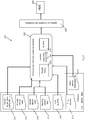
Figure 3 represents a block diagram describing an embodiment of the method of autonomously operating an aircraft. - The present disclosure refers to a method that produces guidance commands as output based on current onboard sensor readings for autonomous operations. An onboard command and control automation system is trained in advance using recorded historical surveillance data.
- The invention implements a machine learning process under uncertainty using Reinforcement Learning methods (such as the one described in Richard S. Sutton & Andrew G Barto, "Reinforcement Learning: An Introduction", MIT Press, Cambridge, MA) applied to a description of the aircraft intent as defined by the AIDL (Aircraft Intent Description Language) format.
- The method of autonomously operating an aircraft comprises a pre-flight training step and a real-time control step executed during the flight of an aircraft covering a determined route.
Figure 1 depicts an overall view of apre-flight training step 100, in which recordedsurveillance data 110 of a plurality of flights is first retrieved, for instance by accessing a database containing multiple ADS-B data and/or radar tracks data. For each flight, thesurveillance data 110 includes at least changes of aircraft position (longitude A, latitude ϕ, altitude h) over time (t). - Then, an
inferring step 120 is applied on the recordedsurveillance data 110 to obtain inferredaircraft intent 130, preferably expressed in AIDL format. Using the inferredaircraft intent 130, reconstructedtrajectories 150 are computed in atrajectory computation step 140. Amachine learning algorithm 170 is applied on atraining dataset 160 comprisingaircraft intent 130 and reconstructedtrajectories 150 corresponding to the aircraft type and route of interest (the recordedsurveillance data 110 may comprise data from different routes and aircraft types which are not relevant for the particular aircraft). The result of themachine learning algorithm 170 is amapping function 180 relating aircraft states with actions, which will be later explained in detail. - In
Figure 2 a diagram represents the real-time control step 200 executed onboard during the flight. Thetraining step 100 must have been previously finished. Onboard sensor data 210 (such asposition 211,altitude 212,speed 213, heading 214,fuel quantity 215,time 216 or other sensor information 217) from sensors installed onboard the aircraft are repeatedly captured in an onboard command andcontrol automation process 220. Using the retrievedonboard sensor data 210, the onboard command andcontrol process 220 obtains real-time aircraft states 222 and applies themapping function 180 previously determined in thepre-flight training step 100 to determineactions 224 associated to the real-time aircraft states 222. Themapping function 180 must be understood in a broad sense as a mapping process, relationship or a correlation that allows determiningactions 224 for given aircraft states 222. In an embodiment, the mapping process comprises a lookup in a mapping table searchable by sensor values (such as position, altitude, speed, heading, fuel, time and others) that returns six AIDL instructions (one per AIDL thread) per search. Every row in the mapping table is a state-action vector, wherein thestates 222 are the sensor values and theaction 224 is the AIDL instruction associated to the state. The mapping table does not necessarily include all possible mappings betweensensor data 210 and AIDL instructions to execute instantly; in these cases interpolation (any known interpolation method) will be needed. The output of the onboard command andcontrol process 220 comprises a set of navigation and guidance commands 230, corresponding to theactions 224, which are executing by the aircraft Flight Management System,FMS 240. In an embodiment, the navigation and guidance commands 230 include AIDL instructions. - A block diagram describing an embodiment of a system for autonomously operating an
aircraft 300 is depicted inFigure 3 . According to the diagram, an inferring andtrajectory reconstruction module 310 receives asinput surveillance data 110 for aviation domain from one or more sources, such as RADAR, ADS (ADS-C / ADS-B), QAR. - Inferring and trajectory reconstruction techniques are applied to recorded
surveillance data 110. Different known inferring and trajectory reconstruction techniques may be applied; for instance, the ones disclosed in patent documentsUS8977484-B1 ,US9366538-B2 EP3109805-A1 . - Inference algorithms are based on the assumption that the aircraft motion can be represented as a point-mass model that makes possible to compute the
aircraft intent 130 that best describes the actual trajectory registered in thesurveillance data 110. Using the recordedsurveillance data 110 and linking them to the weather forecasts that represent the atmospheric conditions about the planned route on the day of operation, inferring algorithms allow generating anaircraft intent 130. - The method also comprises analyzing the recorded
surveillance data 110 and determining the aircraft type and computing aircraft performance data relating to that type of aircraft. For example, radar traces or other radar/ADS data may be used to identify each aircraft's call sign or tail number, which may be compared with records to determine the aircraft type. - Even considering ADS-B messages, which contain broader information than typical position data included in radar tracks (latitude, longitude and altitude over time), the availability of accurate information about airspeeds and ground speed is almost ineffective, while aircraft mass, which is the key state variable to compute other related kinetic state variables, is not available.
- However, making use of inferred aircraft intent 130 generated from the recorded
surveillance data 110, it is possible to launch an aircraft mass inference and a trajectory reconstruction process that will populate the state vector adding times (increased granularity) and state variables (state vector enrichment) not included in the original surveillance-based trajectory representation. - Therefore, the result of the inference and trajectory reconstruction stage applied to recorded flight data of a given flight includes the
aircraft intent 130 instance and the reconstructedtrajectory 150 that matches the originalraw surveillance data 110 corresponding to that flight. - Both datasets (130, 150) are used as inputs to a
reinforcement learning module 330 implementing a machine learning algorithm 170 (in particular, a reinforcement learning algorithm). Before applying the reinforcement learning, aclustering module 320 applies a clustering process on the reconstructedtrajectories 150 and the aircraftintent data 130, which are classified by aircraft type and route (departure-destination on the flight plan) in order to select atraining dataset 160 referred to the particular aircraft model and route of the aircraft to which the autonomous control method is being applied. - Reinforcement learning techniques are then applied on the
training dataset 160. In such scenario, an onboard command andcontrol automation module 340 may model the aircraft being in a state s ∈ S (S is the set of all possible states) and is configured to determine actions a ∈ A (A is the set of all possible actions) to be executed by the aircraft control system (e.g. the FMS 240). During the reinforcement learning, the onboard command andcontrol automation module 340 also gets a reward R, which is a scalar value and assumed to be a function of the state s observed. The goal of reinforcement learning is to find a mapping from aircraft states to actions, called policy π, that picks actions a in given state s, maximizing the cumulative expected reward. - So, in the reinforcement learning stage, an onboard command and
control automation module 340 explores the space of possible strategies and receives feedback on the outcome about the decision taken. From this information, an optimal policy must be deduced when maximizing the accumulated reward R received. - The components in AIDL format can be mapped to reinforcement learning parameters as follows:
I. Action: Is a command executed by theaircraft FMS 240 that produces an effect on the aircraft motion. AIDL alphabet contains 35 possible basic actions that is increased when considering action specifiers.
II. State: Is defined by the readings of the sensors onboard. In general, multiple variables can define the aircraft state, and many of them are highly correlated:λ longitude Longitude of center of gravity ϕ latitude Geodetic latitude of center of gravity d distance Total Horizontal Distance Hp altitude Geopotential Pressure Altitude Vcas speed Calibrated Airspeed M speed Mach Number t time Total time elapsed χTAS bearing Aerodynamic yaw angle m mass Aircraft Mass - The set of variables that determines the aircraft state may be the outcome of several different sensors on the aircraft (e.g. position is obtained from both GPS and IRS -inertial reference system-), thus reducing the state error. That error is small compared to the one that the inferred aircraft intent injects into the system, and for that reason in an embodiment Markov Decision Process (MDP) is preferably selected as framework to model the problem.
- A MDP is defined as a 4 element tuple {S,A,R,T} where S is a set of states, A is a set of actions, R is the reward function that maps each state/action pair with a real value and T is the Markovian state transition function T(s'|s,a) that represents the probability of transitioning from state s to s' after executing the action a. The goal is to find a policy π(s) that determines which action to select from a state based on the past history of states and actions. An optimal policy is the one that maximizes the expected utility, where the utility of a policy can be evaluated using Dynamic Programming (DP).
- The problem composed by the equations of motion contains six degrees of freedom that must be closed by the six active instructions (i.e. actions), each of them adding its effect constraint as an algebraic equation that closes a specific degree of freedom. Based on AIDL definition, actions are assigned to groups and only one instruction per group can be active in parallel. At the same time, inferring methods are based on pattern recognition, what leads to an aircraft intent that uses a subset of instructions and actions, so baseline intents are parameterized to match observed aircraft surveillance data.
- Therefore, the problem can be decomposed into 6 independent MDP's because 6 independent instructions are being predicted, where action and state spaces are different for each thread, and in all cases are a reduced subset of original space and action spaces. Additional post-processing on
longitudinal threads 1 & 2 is executed, not applying none of the predicted instruction in case of two instructions of the same group being active at the same time -that would not be executable on the cockpit-. So, from the point of view of reinforcement learning, it can be assumed that the AIDL threads are totally decoupled. - System dynamics and reward function are not known exactly over the state space. Model-free reinforcement learning does not require building explicit representations of the transition and reward models. The onboard command and
control automation module 340 must generalize from limited experience to states that have not yet been visited ontraining data 160. The assumption in local approximation methods is that states that are close together are likely to have similar state-action value. - For each of the 6 threads, a limited number of state/action values will be stored on memory, obtained from data using maximum likelihood estimation. For instance, the state/action values may be stored on a table having N columns, where the first N-1 columns may be values captured by the onboard sensors and the last AIDL instruction to execute. The table is obtained as a result to solving the 6 independent MDP's (a direct mapping). As most of the variables are continuous, it is normally necessary to use interpolation. Then, to train the system, all continuous state variables are discretized using buckets that can be easily reconfigured in order to be able to adjust the optimal bucket size based on experimentations. A simple example of bucket sizes for several aircraft states:
Bucket size Range λ 0.1 deg Depends on the are used on clustering ϕ 0.1 deg Depends on the are used on clustering d 5 miles Depends on the city pairs selected on clustering Hp 500ft -500-53000 Vcas 5kt 0-500 - Q-learning algorithm, a reinforcement learning technique, is then executed, estimating state-action value function (table mapping the sensor values to an AIDL instruction) based on neighbor states. Alternatively, other techniques such as SARSA (State-Action-Reward-State-Action) may be employed instead of Q-Learning. Solving the MDP's completes the
training step 100, obtaining themapping function 180. - Once the
training step 100 is completed, the real-time control step 200 during flight phase starts. Based ononboard sensor data 210, the onboard command andcontrol automation module 340 is capable of selecting the optimal action from each MDP solution (6 AIDL instructions). One important capability of the method is that the onboard command and control automation system reacts in real time to sensor data changes. Training phase results are stored on system memory, so accessing to the optimal action at every situation is extremely fast. - The output of the onboard command and control automation module 340 a set of navigation and guidance commands 230 including AIDL instructions. During the flight, the onboard command and
control automation module 340 is able to operate just combining the 6 optimal actions on an AIDL operation and executing that operation.
Claims (15)
- A method of autonomously operating an aircraft, comprising:- a pre-flight training step (100) comprising:retrieving recorded surveillance data (110) of a plurality of flights corresponding to at least one aircraft type and at least one route;inferring (120) aircraft intent (130) from the recorded surveillance data (110);computing (140) reconstructed trajectories (150) using the inferred aircraft intent (130);selecting a training dataset (160) comprising aircraft intent (130) and reconstructed trajectories (150) of flights corresponding to a particular aircraft type and route;applying a machine learning algorithm (170) on the training dataset (160) to obtain a mapping function (180) between aircraft states and actions; and- a real-time control step (200) executed during a flight of an aircraft, the real-time control step (200) comprising:repeatedly retrieving onboard sensor data (210);obtaining real-time aircraft states (222) from the onboard sensor data (210);determining actions (224) associated to the real-time aircraft states (222) using the mapping function (180); andexecuting the selected actions (224) on the aircraft.
- The method of claim 1, wherein the aircraft intent (130) is expressed in AIDL format.
- The method of claim 2, wherein the actions (224) comprise navigation and guidance commands (230) expressed as AIDL instructions.
- The method of claim 3, wherein the mapping function (180) comprises a table mapping sensor values with AIDL instructions.
- The method of claim 4, wherein the step of determining actions (224) comprises searching the mapping table for sensor values corresponding to the retrieved onboard sensor data (210) and, if no exact match is found, using an interpolation process to determine the associated AIDL instructions.
- The method of any preceding claim, wherein the recorded surveillance data (110) comprise at least one of the following: ADS-B data, radar tracks data, flight Quick Access Recorder data.
- The method of any preceding claim, wherein the machine learning algorithm (170) is a reinforcement learning algorithm that obtains a policy π maximizing an accumulated reward R associated to the aircraft state (222) that matches the landing of the flight at a destination airport.
- The method of claim 7, wherein the reinforcement learning algorithm comprises solving six independent Markov Decision Process for predicting six independent AIDL instructions, wherein action and state spaces are different for each AIDL thread.
- A system for autonomously operating an aircraft, comprising:- an inferring and trajectory reconstruction module (310) configured to:infer aircraft intent (130) from recorded surveillance data (110) of a plurality of flights corresponding to at least one aircraft type and at least one route;computing (140) reconstructed trajectories (150) using the inferred aircraft intent (130);- a clustering module (320) configured to select a training dataset (160) comprising aircraft intent (130) and reconstructed trajectories (150) of flights corresponding to a particular aircraft type and route;- a machine learning module configured to apply a machine learning algorithm (170) on the training dataset (160) to obtain a mapping function (180) between aircraft states and actions; and- an onboard command and control automation module (340) configured to:repeatedly retrieve onboard sensor data (210) during a flight of an aircraft;obtain real-time aircraft states (222) from the onboard sensor data (210);determining actions (224) associated to the real-time aircraft states (222) using the mapping function (180); andinstructing the execution of the selected actions (224) on the aircraft.
- The system of claim 9, wherein the aircraft intent (130) is expressed in AIDL format and the actions (224) comprise navigation and guidance commands (230) expressed as AIDL instructions.
- The system of claim 10, wherein the mapping function (180) comprises a table mapping sensor values with AIDL instructions; and wherein the onboard command and control automation module (340) is configured to determine actions (224) by searching the mapping table for sensor values corresponding to the retrieved onboard sensor data (210) and, if no exact match is found, using interpolation to determine the associated AIDL instructions.
- A system of any of claims 9 to 11, wherein the machine learning module is a reinforcement learning module (330) configured to obtain a policy π maximizing an accumulated reward R associated to the aircraft state (222) that matches the landing of the flight at a destination airport.
- The system of claim 12, wherein the reinforcement learning module (330) is configured to solve six independent Markov Decision Process for predicting six independent AIDL instructions, wherein action and state spaces are different for each AIDL thread.
- The system of any of claims 9 to 13, comprising an aircraft Flight Management System (240) for executing the selected actions (224) on the aircraft.
- A computer program product for autonomously operating an aircraft, comprising at least one computer-readable storage medium comprising a set of instructions stored therein which, when executed by a processor, causes the processor to perform the method of any of claims 1 to 8.
Priority Applications (7)
| Application Number | Priority Date | Filing Date | Title |
|---|---|---|---|
| EP17382412.9A EP3422130B8 (en) | 2017-06-29 | 2017-06-29 | Method and system for autonomously operating an aircraft |
| ES17382412T ES2943122T3 (en) | 2017-06-29 | 2017-06-29 | Method and system for autonomously operating an aircraft |
| CA3003363A CA3003363C (en) | 2017-06-29 | 2018-04-30 | Methode et systeme de vol autonome d'un aeronef |
| CN201810486480.5A CN109213188B (en) | 2017-06-29 | 2018-05-21 | Method and system for autonomously operating an aircraft |
| US15/990,447 US10983533B2 (en) | 2017-06-29 | 2018-05-25 | Method and system for autonomously operating an aircraft |
| BR102018012639-3A BR102018012639A2 (en) | 2017-06-29 | 2018-06-20 | method and system for autonomously operating an aircraft |
| JP2018119579A JP7066546B2 (en) | 2017-06-29 | 2018-06-25 | Methods and systems for autonomously maneuvering aircraft |
Applications Claiming Priority (1)
| Application Number | Priority Date | Filing Date | Title |
|---|---|---|---|
| EP17382412.9A EP3422130B8 (en) | 2017-06-29 | 2017-06-29 | Method and system for autonomously operating an aircraft |
Publications (3)
| Publication Number | Publication Date |
|---|---|
| EP3422130A1 true EP3422130A1 (en) | 2019-01-02 |
| EP3422130B1 EP3422130B1 (en) | 2023-02-15 |
| EP3422130B8 EP3422130B8 (en) | 2023-03-22 |
Family
ID=59298423
Family Applications (1)
| Application Number | Title | Priority Date | Filing Date |
|---|---|---|---|
| EP17382412.9A Active EP3422130B8 (en) | 2017-06-29 | 2017-06-29 | Method and system for autonomously operating an aircraft |
Country Status (7)
| Country | Link |
|---|---|
| US (1) | US10983533B2 (en) |
| EP (1) | EP3422130B8 (en) |
| JP (1) | JP7066546B2 (en) |
| CN (1) | CN109213188B (en) |
| BR (1) | BR102018012639A2 (en) |
| CA (1) | CA3003363C (en) |
| ES (1) | ES2943122T3 (en) |
Cited By (4)
| Publication number | Priority date | Publication date | Assignee | Title |
|---|---|---|---|---|
| CN111026147A (en) * | 2019-12-25 | 2020-04-17 | 北京航空航天大学 | A zero-overshoot UAV position control method and device based on deep reinforcement learning |
| CN113189989A (en) * | 2021-04-21 | 2021-07-30 | 东风柳州汽车有限公司 | Vehicle intention prediction method, device, equipment and storage medium |
| EP4057097A1 (en) * | 2021-03-12 | 2022-09-14 | The Boeing Company | Artificial intelligence powered emergency pilot assistance system |
| CN116225058A (en) * | 2023-02-21 | 2023-06-06 | 北京邮电大学 | UAV trajectory planning method, device, electronic equipment and storage medium |
Families Citing this family (31)
| Publication number | Priority date | Publication date | Assignee | Title |
|---|---|---|---|---|
| US11691755B2 (en) * | 2018-04-16 | 2023-07-04 | Wing Aviation Llc | Multi-UAV management |
| US10990096B2 (en) * | 2018-04-27 | 2021-04-27 | Honda Motor Co., Ltd. | Reinforcement learning on autonomous vehicles |
| US11107001B1 (en) * | 2018-09-26 | 2021-08-31 | Rockwell Collins, Inc. | Systems and methods for practical autonomy decision controller |
| WO2020110040A1 (en) * | 2018-11-27 | 2020-06-04 | Leonardo S.P.A. | Suborbital space traffic control system with radar system and ads-b receiver |
| US11074480B2 (en) * | 2019-01-31 | 2021-07-27 | StradVision, Inc. | Learning method and learning device for supporting reinforcement learning by using human driving data as training data to thereby perform personalized path planning |
| CN110083058B (en) * | 2019-03-19 | 2022-02-15 | 四川函钛科技有限公司 | Re-landing classification method based on time sequence QAR parameter |
| US11410558B2 (en) * | 2019-05-21 | 2022-08-09 | International Business Machines Corporation | Traffic control with reinforcement learning |
| CN110807264B (en) * | 2019-11-07 | 2023-09-01 | 四川航天神坤科技有限公司 | Real-time monitoring and early warning method and device for radar targets in 3D system |
| CN111123963B (en) * | 2019-12-19 | 2021-06-08 | 南京航空航天大学 | Autonomous Navigation System and Method in Unknown Environment Based on Reinforcement Learning |
| CN111160755B (en) * | 2019-12-26 | 2023-08-18 | 西北工业大学 | A real-time scheduling method for aircraft overhaul workshop based on DQN |
| US12416925B2 (en) | 2020-04-30 | 2025-09-16 | Rakuten Group, Inc. | Learning device, information processing device, and learned control model |
| WO2021220467A1 (en) * | 2020-04-30 | 2021-11-04 | 楽天株式会社 | Learning device, information processing device, and learned control model |
| FR3111466A1 (en) * | 2020-06-12 | 2021-12-17 | Thales | System and method for the improved determination of aircraft trajectory parameters |
| CN112367109B (en) * | 2020-09-28 | 2022-02-01 | 西北工业大学 | Incentive method for digital twin-driven federal learning in air-ground network |
| US12094349B2 (en) | 2020-10-21 | 2024-09-17 | The Boeing Company | Optimizing flights of a fleet of aircraft using a reinforcement learning model |
| EP4016502B1 (en) * | 2020-12-17 | 2025-06-18 | The Boeing Company | Dialogue system for autonomous aircraft |
| CN113110546B (en) * | 2021-04-20 | 2022-09-23 | 南京大学 | Unmanned aerial vehicle autonomous flight control method based on offline reinforcement learning |
| CN114036631B (en) * | 2021-10-22 | 2024-09-20 | 南京航空航天大学 | A method for generating guidance strategy for autonomous rendezvous and docking of spacecraft based on reinforcement learning |
| US11803197B2 (en) * | 2021-11-15 | 2023-10-31 | Beta Air, Llc | Systems and methods for controlling a flight boundary of an aircraft |
| US12399507B2 (en) * | 2021-11-15 | 2025-08-26 | Beta Air Llc | Systems and methods for controlling a flight boundary of an aircraft |
| CN114089762B (en) * | 2021-11-22 | 2024-06-21 | 江苏科技大学 | A path planning method for amphibious unmanned aerial vehicle based on reinforcement learning |
| CN114141062B (en) * | 2021-11-30 | 2022-11-01 | 中国电子科技集团公司第二十八研究所 | A decision-making method for aircraft separation management based on deep reinforcement learning |
| FR3130956B1 (en) * | 2021-12-17 | 2025-05-02 | Thales Sa | Method for assisting in piloting an aircraft, associated electronic piloting assistance device and assistance system |
| CN114638442B (en) * | 2022-05-19 | 2022-09-02 | 珠海翔翼航空技术有限公司 | Flight training scheme generation system, method and equipment for individual difference |
| CN116299448A (en) * | 2023-01-09 | 2023-06-23 | 哈尔滨工业大学重庆研究院 | A super-resolution imaging method for airborne ground-penetrating radar based on differential interferometry |
| CN115857556B (en) * | 2023-01-30 | 2023-07-14 | 中国人民解放军96901部队 | Unmanned aerial vehicle collaborative detection planning method based on reinforcement learning |
| US12424111B2 (en) | 2023-03-24 | 2025-09-23 | Rockwell Collins, Inc. | System and method for performing re-routing in real time |
| CN116430904B (en) * | 2023-05-15 | 2025-08-01 | 西安电子科技大学 | Unmanned aerial vehicle autonomous path planning method based on lightweight continuous SAC algorithm |
| US20260011252A1 (en) * | 2024-07-05 | 2026-01-08 | Mitsubishi Electric Research Laboratories, Inc. | System and Method for Aircraft Approach Management |
| CN118915467B (en) * | 2024-08-08 | 2025-02-07 | 大连理工大学 | Data-driven learning control method for hypersonic aircraft |
| CN121635468A (en) * | 2026-02-05 | 2026-03-10 | 浙江大学 | Autonomous agile waypoint tracking method and system for fixed-wing unmanned aerial vehicle |
Citations (3)
| Publication number | Priority date | Publication date | Assignee | Title |
|---|---|---|---|---|
| US8977484B1 (en) | 2013-08-22 | 2015-03-10 | The Boeing Company | Using aircraft trajectory data to infer aircraft intent |
| US9366538B2 (en) | 2013-08-30 | 2016-06-14 | The Boeing Company | Method and system for estimating aircraft course |
| EP3109805A1 (en) | 2015-06-22 | 2016-12-28 | The Boeing Company | A computer-implemented method and system for estimating impact of new operational conditions in a baseline air traffic scenario |
Family Cites Families (9)
| Publication number | Priority date | Publication date | Assignee | Title |
|---|---|---|---|---|
| US8326780B2 (en) * | 2008-10-14 | 2012-12-04 | Honda Motor Co., Ltd. | Smoothed sarsa: reinforcement learning for robot delivery tasks |
| JP2011114536A (en) | 2009-11-26 | 2011-06-09 | Alpine Electronics Inc | Vehicle periphery image providing device |
| EP2482269B1 (en) | 2011-01-28 | 2017-03-22 | The Boeing Company | Providing data for predicting aircraft trajectory |
| EP2801963B1 (en) | 2013-05-09 | 2016-01-20 | The Boeing Company | Providing a description of aircraft intent |
| US20150017609A1 (en) * | 2013-07-09 | 2015-01-15 | General Electric Company | Method and apparatus for generating or updating an aviation simulation scenario |
| JP6181300B2 (en) * | 2014-09-05 | 2017-08-16 | エスゼット ディージェイアイ テクノロジー カンパニー リミテッドSz Dji Technology Co.,Ltd | System for controlling the speed of unmanned aerial vehicles |
| US9442496B1 (en) | 2015-09-18 | 2016-09-13 | Amazon Technologies, Inc. | Active airborne noise abatement |
| JP6600213B2 (en) | 2015-09-28 | 2019-10-30 | 双葉電子工業株式会社 | Flight control device, flight control method, flying object |
| WO2017108133A1 (en) | 2015-12-23 | 2017-06-29 | Swiss Reinsurance Company Ltd. | Automated, reactive flight-delay risk-transfer system and method thereof |
-
2017
- 2017-06-29 EP EP17382412.9A patent/EP3422130B8/en active Active
- 2017-06-29 ES ES17382412T patent/ES2943122T3/en active Active
-
2018
- 2018-04-30 CA CA3003363A patent/CA3003363C/en active Active
- 2018-05-21 CN CN201810486480.5A patent/CN109213188B/en active Active
- 2018-05-25 US US15/990,447 patent/US10983533B2/en active Active
- 2018-06-20 BR BR102018012639-3A patent/BR102018012639A2/en not_active Application Discontinuation
- 2018-06-25 JP JP2018119579A patent/JP7066546B2/en active Active
Patent Citations (3)
| Publication number | Priority date | Publication date | Assignee | Title |
|---|---|---|---|---|
| US8977484B1 (en) | 2013-08-22 | 2015-03-10 | The Boeing Company | Using aircraft trajectory data to infer aircraft intent |
| US9366538B2 (en) | 2013-08-30 | 2016-06-14 | The Boeing Company | Method and system for estimating aircraft course |
| EP3109805A1 (en) | 2015-06-22 | 2016-12-28 | The Boeing Company | A computer-implemented method and system for estimating impact of new operational conditions in a baseline air traffic scenario |
Non-Patent Citations (4)
| Title |
|---|
| LOPEZ-LEONES, JAVIER ET AL.: "The aircraft intent description language: a key enabler for air-ground synchronization in trajectory-based operations", IEEE/AIAA 26TH DIGITAL AVIONICS SYSTEMS CONFERENCE, 2007 |
| MONTELLA COREY ET AL: "Reinforcement learning for autonomous dynamic soaring in shear winds", 2014 IEEE/RSJ INTERNATIONAL CONFERENCE ON INTELLIGENT ROBOTS AND SYSTEMS, IEEE, 14 September 2014 (2014-09-14), pages 3423 - 3428, XP032676912, DOI: 10.1109/IROS.2014.6943039 * |
| SUCK STEFAN ET AL: "Aircraft Pilot Intention Recognition for Advanced Cockpit Assistance Systems", 21 June 2016, NETWORK AND PARALLEL COMPUTING; [LECTURE NOTES IN COMPUTER SCIENCE; LECT.NOTES COMPUTER], SPRINGER INTERNATIONAL PUBLISHING, CHAM, PAGE(S) 231 - 240, ISBN: 978-3-642-35622-3, ISSN: 0302-9743, XP047349547 * |
| VILAPLANA, MIGUEL A. ET AL.: "24th Digital Avionics Systems Conference", vol. 1, 2005, IEEE, article "Towards a formal language for the common description of aircraft intent" |
Cited By (5)
| Publication number | Priority date | Publication date | Assignee | Title |
|---|---|---|---|---|
| CN111026147A (en) * | 2019-12-25 | 2020-04-17 | 北京航空航天大学 | A zero-overshoot UAV position control method and device based on deep reinforcement learning |
| EP4057097A1 (en) * | 2021-03-12 | 2022-09-14 | The Boeing Company | Artificial intelligence powered emergency pilot assistance system |
| CN113189989A (en) * | 2021-04-21 | 2021-07-30 | 东风柳州汽车有限公司 | Vehicle intention prediction method, device, equipment and storage medium |
| CN113189989B (en) * | 2021-04-21 | 2022-07-01 | 东风柳州汽车有限公司 | Vehicle intention prediction method, device, equipment and storage medium |
| CN116225058A (en) * | 2023-02-21 | 2023-06-06 | 北京邮电大学 | UAV trajectory planning method, device, electronic equipment and storage medium |
Also Published As
| Publication number | Publication date |
|---|---|
| CA3003363C (en) | 2023-08-01 |
| CN109213188A (en) | 2019-01-15 |
| US10983533B2 (en) | 2021-04-20 |
| JP2019059461A (en) | 2019-04-18 |
| CA3003363A1 (en) | 2018-12-29 |
| EP3422130B1 (en) | 2023-02-15 |
| JP7066546B2 (en) | 2022-05-13 |
| BR102018012639A2 (en) | 2019-01-15 |
| CN109213188B (en) | 2024-06-14 |
| ES2943122T3 (en) | 2023-06-09 |
| EP3422130B8 (en) | 2023-03-22 |
| US20190005828A1 (en) | 2019-01-03 |
Similar Documents
| Publication | Publication Date | Title |
|---|---|---|
| US10983533B2 (en) | Method and system for autonomously operating an aircraft | |
| Alligier et al. | Machine learning and mass estimation methods for ground-based aircraft climb prediction | |
| Ramasamy et al. | Next generation flight management system for real-time trajectory based operations | |
| US10041809B2 (en) | Aircraft intent processor | |
| CN112034887A (en) | Optimal path training method for unmanned aerial vehicle to avoid cylindrical barrier to reach target point | |
| Hernández et al. | Data-driven aircraft trajectory predictions using ensemble meta-estimators | |
| US9745052B2 (en) | Determining enhanced operating state for aircraft | |
| Ayala et al. | UAV control in autonomous object-goal navigation: a systematic literature review | |
| US10062291B1 (en) | Systems and methods for providing improved flight guidance | |
| Palamas et al. | A multi-task learning framework for drone state identification and trajectory prediction | |
| EP4057097B1 (en) | Artificial intelligence powered emergency pilot assistance system | |
| Yuan et al. | Trajectory prediction for fighter aircraft ground collision avoidance based on the model predictive control technique | |
| Ariola et al. | Model predictive control for a swarm of fixed wing uavs | |
| EP4398063B1 (en) | System and method for operating an aircraft during a climb phase | |
| De Dominicis et al. | Trajectory prediction and conflict detection for unmanned traffic management: A performance comparison of machine-learning-based approaches | |
| Soler et al. | En-route optimal flight planning constrained to pass through waypoints using MINLP | |
| Luo et al. | Quadrotor navigation considering attitude: A deep reinforcement learning method using tangent path rewards | |
| Feng et al. | Modelling and implementation of unmanned aircraft collision avoidance | |
| Cui et al. | Nonlinear Model Predictive Control for UAV Trajectory Optimization | |
| Di Vito et al. | An overview on systems and algorithms for on-board 3D/4D trajectory management | |
| Conte et al. | Evaluating a reinforcement learning approach for collision avoidance with heterogeneous aircraft | |
| Sacharny et al. | Dynamic Airspace Control via Spatial Network Morphing | |
| US20260118879A1 (en) | Route survivability autonomous method and system for an unmanned aircraft system | |
| US20240427349A1 (en) | System and Methods for Operating an Aircraft During a Climb Phase of Flight | |
| Ayalew et al. | Data Driven UAM Flight Energy Consumption Prediction and Risk Assessment |
Legal Events
| Date | Code | Title | Description |
|---|---|---|---|
| STAA | Information on the status of an ep patent application or granted ep patent |
Free format text: STATUS: EXAMINATION IS IN PROGRESS |
|
| PUAI | Public reference made under article 153(3) epc to a published international application that has entered the european phase |
Free format text: ORIGINAL CODE: 0009012 |
|
| 17P | Request for examination filed |
Effective date: 20170629 |
|
| AK | Designated contracting states |
Kind code of ref document: A1 Designated state(s): AL AT BE BG CH CY CZ DE DK EE ES FI FR GB GR HR HU IE IS IT LI LT LU LV MC MK MT NL NO PL PT RO RS SE SI SK SM TR |
|
| AX | Request for extension of the european patent |
Extension state: BA ME |
|
| RIC1 | Information provided on ipc code assigned before grant |
Ipc: G06N 5/00 20060101ALN20220720BHEP Ipc: G05D 1/10 20060101ALI20220720BHEP Ipc: G05D 1/00 20060101AFI20220720BHEP |
|
| GRAP | Despatch of communication of intention to grant a patent |
Free format text: ORIGINAL CODE: EPIDOSNIGR1 |
|
| STAA | Information on the status of an ep patent application or granted ep patent |
Free format text: STATUS: GRANT OF PATENT IS INTENDED |
|
| INTG | Intention to grant announced |
Effective date: 20220831 |
|
| GRAS | Grant fee paid |
Free format text: ORIGINAL CODE: EPIDOSNIGR3 |
|
| GRAA | (expected) grant |
Free format text: ORIGINAL CODE: 0009210 |
|
| STAA | Information on the status of an ep patent application or granted ep patent |
Free format text: STATUS: THE PATENT HAS BEEN GRANTED |
|
| AK | Designated contracting states |
Kind code of ref document: B1 Designated state(s): AL AT BE BG CH CY CZ DE DK EE ES FI FR GB GR HR HU IE IS IT LI LT LU LV MC MK MT NL NO PL PT RO RS SE SI SK SM TR |
|
| REG | Reference to a national code |
Ref country code: CH Ref legal event code: EP Ref country code: GB Ref legal event code: FG4D |
|
| REG | Reference to a national code |
Ref country code: DE Ref legal event code: R096 Ref document number: 602017066016 Country of ref document: DE |
|
| REG | Reference to a national code |
Ref country code: CH Ref legal event code: PK Free format text: BERICHTIGUNG B8 Ref country code: AT Ref legal event code: REF Ref document number: 1548559 Country of ref document: AT Kind code of ref document: T Effective date: 20230315 Ref country code: IE Ref legal event code: FG4D |
|
| RAP4 | Party data changed (patent owner data changed or rights of a patent transferred) |
Owner name: THE BOEING COMPANY |
|
| REG | Reference to a national code |
Ref country code: DE Ref legal event code: R081 Ref document number: 602017066016 Country of ref document: DE Owner name: THE BOEING COMPANY, ARLINGTON, US Free format text: FORMER OWNER: THE BOEING COMPANY, CHICAGO, IL, US |
|
| REG | Reference to a national code |
Ref country code: ES Ref legal event code: FG2A Ref document number: 2943122 Country of ref document: ES Kind code of ref document: T3 Effective date: 20230609 |
|
| REG | Reference to a national code |
Ref country code: LT Ref legal event code: MG9D |
|
| REG | Reference to a national code |
Ref country code: NL Ref legal event code: MP Effective date: 20230215 |
|
| REG | Reference to a national code |
Ref country code: AT Ref legal event code: MK05 Ref document number: 1548559 Country of ref document: AT Kind code of ref document: T Effective date: 20230215 |
|
| PG25 | Lapsed in a contracting state [announced via postgrant information from national office to epo] |
Ref country code: RS Free format text: LAPSE BECAUSE OF FAILURE TO SUBMIT A TRANSLATION OF THE DESCRIPTION OR TO PAY THE FEE WITHIN THE PRESCRIBED TIME-LIMIT Effective date: 20230215 Ref country code: PT Free format text: LAPSE BECAUSE OF FAILURE TO SUBMIT A TRANSLATION OF THE DESCRIPTION OR TO PAY THE FEE WITHIN THE PRESCRIBED TIME-LIMIT Effective date: 20230615 Ref country code: NO Free format text: LAPSE BECAUSE OF FAILURE TO SUBMIT A TRANSLATION OF THE DESCRIPTION OR TO PAY THE FEE WITHIN THE PRESCRIBED TIME-LIMIT Effective date: 20230515 Ref country code: NL Free format text: LAPSE BECAUSE OF FAILURE TO SUBMIT A TRANSLATION OF THE DESCRIPTION OR TO PAY THE FEE WITHIN THE PRESCRIBED TIME-LIMIT Effective date: 20230215 Ref country code: LV Free format text: LAPSE BECAUSE OF FAILURE TO SUBMIT A TRANSLATION OF THE DESCRIPTION OR TO PAY THE FEE WITHIN THE PRESCRIBED TIME-LIMIT Effective date: 20230215 Ref country code: LT Free format text: LAPSE BECAUSE OF FAILURE TO SUBMIT A TRANSLATION OF THE DESCRIPTION OR TO PAY THE FEE WITHIN THE PRESCRIBED TIME-LIMIT Effective date: 20230215 Ref country code: HR Free format text: LAPSE BECAUSE OF FAILURE TO SUBMIT A TRANSLATION OF THE DESCRIPTION OR TO PAY THE FEE WITHIN THE PRESCRIBED TIME-LIMIT Effective date: 20230215 Ref country code: AT Free format text: LAPSE BECAUSE OF FAILURE TO SUBMIT A TRANSLATION OF THE DESCRIPTION OR TO PAY THE FEE WITHIN THE PRESCRIBED TIME-LIMIT Effective date: 20230215 |
|
| PG25 | Lapsed in a contracting state [announced via postgrant information from national office to epo] |
Ref country code: SE Free format text: LAPSE BECAUSE OF FAILURE TO SUBMIT A TRANSLATION OF THE DESCRIPTION OR TO PAY THE FEE WITHIN THE PRESCRIBED TIME-LIMIT Effective date: 20230215 Ref country code: PL Free format text: LAPSE BECAUSE OF FAILURE TO SUBMIT A TRANSLATION OF THE DESCRIPTION OR TO PAY THE FEE WITHIN THE PRESCRIBED TIME-LIMIT Effective date: 20230215 Ref country code: IS Free format text: LAPSE BECAUSE OF FAILURE TO SUBMIT A TRANSLATION OF THE DESCRIPTION OR TO PAY THE FEE WITHIN THE PRESCRIBED TIME-LIMIT Effective date: 20230615 Ref country code: GR Free format text: LAPSE BECAUSE OF FAILURE TO SUBMIT A TRANSLATION OF THE DESCRIPTION OR TO PAY THE FEE WITHIN THE PRESCRIBED TIME-LIMIT Effective date: 20230516 Ref country code: FI Free format text: LAPSE BECAUSE OF FAILURE TO SUBMIT A TRANSLATION OF THE DESCRIPTION OR TO PAY THE FEE WITHIN THE PRESCRIBED TIME-LIMIT Effective date: 20230215 |
|
| PG25 | Lapsed in a contracting state [announced via postgrant information from national office to epo] |
Ref country code: SM Free format text: LAPSE BECAUSE OF FAILURE TO SUBMIT A TRANSLATION OF THE DESCRIPTION OR TO PAY THE FEE WITHIN THE PRESCRIBED TIME-LIMIT Effective date: 20230215 Ref country code: RO Free format text: LAPSE BECAUSE OF FAILURE TO SUBMIT A TRANSLATION OF THE DESCRIPTION OR TO PAY THE FEE WITHIN THE PRESCRIBED TIME-LIMIT Effective date: 20230215 Ref country code: EE Free format text: LAPSE BECAUSE OF FAILURE TO SUBMIT A TRANSLATION OF THE DESCRIPTION OR TO PAY THE FEE WITHIN THE PRESCRIBED TIME-LIMIT Effective date: 20230215 Ref country code: DK Free format text: LAPSE BECAUSE OF FAILURE TO SUBMIT A TRANSLATION OF THE DESCRIPTION OR TO PAY THE FEE WITHIN THE PRESCRIBED TIME-LIMIT Effective date: 20230215 Ref country code: CZ Free format text: LAPSE BECAUSE OF FAILURE TO SUBMIT A TRANSLATION OF THE DESCRIPTION OR TO PAY THE FEE WITHIN THE PRESCRIBED TIME-LIMIT Effective date: 20230215 |
|
| REG | Reference to a national code |
Ref country code: DE Ref legal event code: R097 Ref document number: 602017066016 Country of ref document: DE |
|
| PG25 | Lapsed in a contracting state [announced via postgrant information from national office to epo] |
Ref country code: SK Free format text: LAPSE BECAUSE OF FAILURE TO SUBMIT A TRANSLATION OF THE DESCRIPTION OR TO PAY THE FEE WITHIN THE PRESCRIBED TIME-LIMIT Effective date: 20230215 |
|
| PLBE | No opposition filed within time limit |
Free format text: ORIGINAL CODE: 0009261 |
|
| STAA | Information on the status of an ep patent application or granted ep patent |
Free format text: STATUS: NO OPPOSITION FILED WITHIN TIME LIMIT |
|
| PG25 | Lapsed in a contracting state [announced via postgrant information from national office to epo] |
Ref country code: MC Free format text: LAPSE BECAUSE OF FAILURE TO SUBMIT A TRANSLATION OF THE DESCRIPTION OR TO PAY THE FEE WITHIN THE PRESCRIBED TIME-LIMIT Effective date: 20230215 |
|
| 26N | No opposition filed |
Effective date: 20231116 |
|
| PG25 | Lapsed in a contracting state [announced via postgrant information from national office to epo] |
Ref country code: SI Free format text: LAPSE BECAUSE OF FAILURE TO SUBMIT A TRANSLATION OF THE DESCRIPTION OR TO PAY THE FEE WITHIN THE PRESCRIBED TIME-LIMIT Effective date: 20230215 Ref country code: MC Free format text: LAPSE BECAUSE OF FAILURE TO SUBMIT A TRANSLATION OF THE DESCRIPTION OR TO PAY THE FEE WITHIN THE PRESCRIBED TIME-LIMIT Effective date: 20230215 |
|
| REG | Reference to a national code |
Ref country code: CH Ref legal event code: PL |
|
| REG | Reference to a national code |
Ref country code: BE Ref legal event code: MM Effective date: 20230630 |
|
| PG25 | Lapsed in a contracting state [announced via postgrant information from national office to epo] |
Ref country code: LU Free format text: LAPSE BECAUSE OF NON-PAYMENT OF DUE FEES Effective date: 20230629 |
|
| REG | Reference to a national code |
Ref country code: IE Ref legal event code: MM4A |
|
| PG25 | Lapsed in a contracting state [announced via postgrant information from national office to epo] |
Ref country code: LU Free format text: LAPSE BECAUSE OF NON-PAYMENT OF DUE FEES Effective date: 20230629 |
|
| PG25 | Lapsed in a contracting state [announced via postgrant information from national office to epo] |
Ref country code: IE Free format text: LAPSE BECAUSE OF NON-PAYMENT OF DUE FEES Effective date: 20230629 |
|
| PG25 | Lapsed in a contracting state [announced via postgrant information from national office to epo] |
Ref country code: IE Free format text: LAPSE BECAUSE OF NON-PAYMENT OF DUE FEES Effective date: 20230629 Ref country code: CH Free format text: LAPSE BECAUSE OF NON-PAYMENT OF DUE FEES Effective date: 20230630 |
|
| PG25 | Lapsed in a contracting state [announced via postgrant information from national office to epo] |
Ref country code: IT Free format text: LAPSE BECAUSE OF FAILURE TO SUBMIT A TRANSLATION OF THE DESCRIPTION OR TO PAY THE FEE WITHIN THE PRESCRIBED TIME-LIMIT Effective date: 20230215 Ref country code: BE Free format text: LAPSE BECAUSE OF NON-PAYMENT OF DUE FEES Effective date: 20230630 |
|
| PG25 | Lapsed in a contracting state [announced via postgrant information from national office to epo] |
Ref country code: BG Free format text: LAPSE BECAUSE OF FAILURE TO SUBMIT A TRANSLATION OF THE DESCRIPTION OR TO PAY THE FEE WITHIN THE PRESCRIBED TIME-LIMIT Effective date: 20230215 |
|
| PG25 | Lapsed in a contracting state [announced via postgrant information from national office to epo] |
Ref country code: BG Free format text: LAPSE BECAUSE OF FAILURE TO SUBMIT A TRANSLATION OF THE DESCRIPTION OR TO PAY THE FEE WITHIN THE PRESCRIBED TIME-LIMIT Effective date: 20230215 |
|
| PGFP | Annual fee paid to national office [announced via postgrant information from national office to epo] |
Ref country code: DE Payment date: 20250627 Year of fee payment: 9 |
|
| PGFP | Annual fee paid to national office [announced via postgrant information from national office to epo] |
Ref country code: GB Payment date: 20250627 Year of fee payment: 9 |
|
| PGFP | Annual fee paid to national office [announced via postgrant information from national office to epo] |
Ref country code: FR Payment date: 20250625 Year of fee payment: 9 |
|
| PG25 | Lapsed in a contracting state [announced via postgrant information from national office to epo] |
Ref country code: CY Free format text: LAPSE BECAUSE OF FAILURE TO SUBMIT A TRANSLATION OF THE DESCRIPTION OR TO PAY THE FEE WITHIN THE PRESCRIBED TIME-LIMIT; INVALID AB INITIO Effective date: 20170629 |
|
| PG25 | Lapsed in a contracting state [announced via postgrant information from national office to epo] |
Ref country code: HU Free format text: LAPSE BECAUSE OF FAILURE TO SUBMIT A TRANSLATION OF THE DESCRIPTION OR TO PAY THE FEE WITHIN THE PRESCRIBED TIME-LIMIT; INVALID AB INITIO Effective date: 20170629 |
|
| PGFP | Annual fee paid to national office [announced via postgrant information from national office to epo] |
Ref country code: ES Payment date: 20250701 Year of fee payment: 9 |
|
| PG25 | Lapsed in a contracting state [announced via postgrant information from national office to epo] |
Ref country code: TR Free format text: LAPSE BECAUSE OF FAILURE TO SUBMIT A TRANSLATION OF THE DESCRIPTION OR TO PAY THE FEE WITHIN THE PRESCRIBED TIME-LIMIT Effective date: 20230215 |