EP3421967A1 - Capillary viscometer and method for analysis of fluids, in particular oils - Google Patents
Capillary viscometer and method for analysis of fluids, in particular oils Download PDFInfo
- Publication number
- EP3421967A1 EP3421967A1 EP18177715.2A EP18177715A EP3421967A1 EP 3421967 A1 EP3421967 A1 EP 3421967A1 EP 18177715 A EP18177715 A EP 18177715A EP 3421967 A1 EP3421967 A1 EP 3421967A1
- Authority
- EP
- European Patent Office
- Prior art keywords
- fluid
- microchannel
- oils
- dynamic viscosity
- capillary
- Prior art date
- Legal status (The legal status is an assumption and is not a legal conclusion. Google has not performed a legal analysis and makes no representation as to the accuracy of the status listed.)
- Granted
Links
Images

Classifications
-
- G—PHYSICS
- G01—MEASURING; TESTING
- G01N—INVESTIGATING OR ANALYSING MATERIALS BY DETERMINING THEIR CHEMICAL OR PHYSICAL PROPERTIES
- G01N11/00—Investigating flow properties of materials, e.g. viscosity, plasticity; Analysing materials by determining flow properties
- G01N11/02—Investigating flow properties of materials, e.g. viscosity, plasticity; Analysing materials by determining flow properties by measuring flow of the material
- G01N11/04—Investigating flow properties of materials, e.g. viscosity, plasticity; Analysing materials by determining flow properties by measuring flow of the material through a restricted passage, e.g. tube, aperture
-
- G—PHYSICS
- G01—MEASURING; TESTING
- G01N—INVESTIGATING OR ANALYSING MATERIALS BY DETERMINING THEIR CHEMICAL OR PHYSICAL PROPERTIES
- G01N13/00—Investigating surface or boundary effects, e.g. wetting power; Investigating diffusion effects; Analysing materials by determining surface, boundary, or diffusion effects
- G01N13/02—Investigating surface tension of liquids
- G01N2013/0208—Investigating surface tension of liquids by measuring contact angle
-
- G—PHYSICS
- G01—MEASURING; TESTING
- G01N—INVESTIGATING OR ANALYSING MATERIALS BY DETERMINING THEIR CHEMICAL OR PHYSICAL PROPERTIES
- G01N13/00—Investigating surface or boundary effects, e.g. wetting power; Investigating diffusion effects; Analysing materials by determining surface, boundary, or diffusion effects
- G01N13/02—Investigating surface tension of liquids
- G01N2013/0241—Investigating surface tension of liquids bubble, pendant drop, sessile drop methods
Definitions
- the present invention relates to a capillary viscosimeter and a method for analysis of fluids, in particular oils.
- the present invention relates to a cost-efficient, portable and disposable device for monitoring the quality of oil "on-field" and represents a valuable alternative to expensive and less quick traditional systems.
- the herein described viscosimeter can be useful for monitoring the quality of cooking oils used in restaurants and public places wherein frying oils are repeatedly used, or when it is necessary to check and validate the oil excellence following the suspected addition of lower quality oils.
- the invention can be applied in industrial plants for monitoring viscosity variations following chemical/physical treatments (as for instance for assessing the efficiency of regeneration processes).
- Viscosity is a particularly relevant parameter for oils, differing significantly in edible vegetable oils according to the type (sunflower, olive, corn, etcetera), the growing area (from which the oil composition depends) [ Eur J. Lipid Sci. Technol. 2011, 113, 1019-1025 ], and the mechanical/physical treatments (for instance for industrial purposes before placing them on the market), or use for food applications (e.g. for frying) [ J. Food Eng. 105 (2011) 169-179 ].
- Patent CN204462012U relates more in detail to a method for determining the purity of olive oil, assessing whether it is doped with less expensive oils, increasing the refraction index and decreasing the reflectivity. This is possible as the majority of cheap oils has a lower refraction index than the olive oil one. A neat olive oil sample is used as reference in the measurements.
- the Inventors implemented a prototype having a sensitivity of 0,00704dB/% which is sufficient for determining even 1% contamination in olive oil. However, the measurements do not report any assessment of the specific error of each measurement.
- the arrangement consists in a device based on PDMS interfaced with an optical system composed of a light source, two optical fibers (an inlet one and an outlet one), a 3dB coupler, a long period fiber grating refractive index, an optical power-meter, a PDMS microchannel, connections, injection pumps and a tank.
- the PDMS microchannel serves as a micro-container, thanks to the optical transparency necessary for measurements. It has a substantially passive role. Authors wash the device with isopropanol after each measuring and use it again. The sample flows into the chip by means of injection pumps, with external power supply.
- the Authors carried out a measuring at room temperature but without assessing the local temperature increase caused by the laser beam.
- the temperature control is an important parameter which significantly affects the determined specific refractive index value.
- the device and method of CN204462012U is also expensive, complex (optical set up to be aligned, external power supply for pumping the liquid etcetera), and apt to cross-contamination (the measurement set-up not being permanent, and the microchannel being reusable).
- the purpose of the present invention is to provide a viscosimeter for fluids solving the problems and overcoming the drawbacks of the prior art. It is a subject-matter of the present invention a viscosimeter for fluids according to the appended claims.
- Oils are liquids that adsorb on various surfaces; thus, the study of their capillary dynamics in order to extract the ⁇ values must be performed in oil-repellent microchannels.
- the microchannel coating in case of viscosity analysis of any fluid, the microchannel coating must be adapted each time for flowing the fluid being examined without any absorption occurring .
- the microchannel coating in case of oils it is necessary to have oil-repellent coatings.
- the density of the liquid as well as viscosity depend on boundary parameters, such as temperature and pressure.
- a conventional capillary viscosimeter is calibrated for measuring newtonian liquid viscosity.
- the lab-on-chip system proposed in this invention does not have this kind of constraints but can be extended to all types of liquids.
- fluorinated coatings [ Viola et al. J. Fluor. Chem. 128(10), 1335-1339 (2007 ); Arima et al.
- the invention consists in implementing a cheap, disposable (possibly portable) device for monitoring the oil quality and the composition thereof.
- the functionality of the proposed capillary viscosimeter must refer to the implementation of a capillary regime, guaranteed by the evidence of a laminar motion of the fluids being studied.
- Such conditions in the case of fluids with newtonian behaviour, are generally guaranteed by a sub-millimetric ( ⁇ 1mm) surface-volume ratio of microchannels (that can otherwise be represented by the hydraulic radius) in particular for various applications below 500 microns, even below 300 microns for others, according to the structural and chemical/physical parameters of the liquid used.
- a Polydimethylsiloxane (PDMS) linear microchannel was manufactured having 1 cm nominal length, 20 micron depth and 150 micron width using a soft lithography approach proving the PDMS copy of a photoresist (based on SU-8) mould reproducing the negative of the channel.
- the manufacturing procedure is similar to industrial moulding however on a micron to millimeter scale. Soon after polymerization, the copy structured with the channel was detached from the mould; 1.5 mm diameter inlet and outlet holes were created on the copy which was later put in suitable contact with a PDMS plane layer manufactured by polymerizing PDMS in a normal laboratory Petri dish not containing microstructures. Both surfaces were activated by means of plasma treatment of oxygen and sealed in oven at 200°C.
- PDMS is the only material usable by the invention.
- any material can be used, even plastic or metal or mixed or composite, that can be structured according to the microscale.
- polymeric materials as COC, PEEK, PMMA, PTFE
- glass, silica, ...) can be used to produce microchannels.
- the preferred choice is PDMS as it is cheap and as it can be easily structured at the microscale.
- the device was connected to small tubes made of plastic (1/16 of external diameter, IDEX-HS; they are small pipes connecting the device to syringe micropumps; all this is necessary to deposit in a controlled way in oleophobic coating.
- Idex-Hs is a company that manufactures them) and filled with a solution containing hydrophobin (HFBII, 0.1 mg/ml) at a constant speed of 10 ⁇ l/min with syringe pumps. After complete filling, the liquid was incubated for 30 minutes. Then the proteic solution was removed at a rate of 100 ⁇ l/min and the washing was performed with a buffer solution at 20 ⁇ l/min.
- a fluoropolymer solution (F10, 0.1% v/v) was injected to obtain the inner coating of the microchannel walls.
- F10 fluoropolymer solution
- coatings other than F10 can be used.
- oleophobic coatings on plastic material based on perfluoroalkyl ethyl acrylate S. Ozbay et al. Colloid. Surface A 481, 537-546 (2015 )
- polymer mixtures as PSS, FEP, PEEK
- microchannel PDMS inlet and outlet were opened with a blade to obtain the device adapted for the capillary dynamics analysis and the consequent derivation of the dynamic viscosity values.
- Experiments with the capillary viscosimeter were carried out with optical microscope Nikon (Nikon Eclipse Ti), interfaced with a CCD camera, and on which a software developed in laboratory for detecting the displacements as a function of time was implemented.
- Capillary dynamic studies on standard oils were carried out depositing a drop (200 ⁇ l) of EVOc, SFP and a 1:1 mixture of EVOc/SFP (MIXh) at the inlet of the microchannels of two respective identical chips.
- the drop flows by capillary action inside the device; the software allows to reconstruct the capillary dynamics acquiring the fluid front position along the channel length as a function of time.
- the obtained graph shows the position coordinate (mm) with respect to time (s) (see figure 2a ).
- Fit results provide the dynamic viscosity values extrapolated from the measurings and fittings (Step 3 and 5); they are summarized in Figure 3 and in Table 1, where for each type of examined oil, they are reported: contact angle values ⁇ with the PDMS surface coated with HFBII/F10 and the surface tension values ⁇ (as described in step 3), and the viscosity values ⁇ as results from the fits shown in figure 3 ( ⁇ calculated from micro-fluidics defined as ⁇ m) with respect to standard values ( ⁇ s at 20°C) calculated by a standard rheometer.
- Xm and Xs ratios between ⁇ m / ⁇ m EVOc and between ⁇ s / ⁇ sEVOc are also reported. Table 1.
- the measured viscosity represents the plateau value reached during the flow. While a single value can be identified for EVOc and SFO, on the contrary two values were found for MIXh. This is due to the fact that the functionalized micro-channel as described at "Step 2" acts as a chromatography column and separates the two mixture components during the flow due to their differences in ⁇ . As a consequence, the dynamic viscosity of the mixture shows two regimes and two viscosity values are extracted after data reprocessing. This is an important result considering that the viscosity values calculated using a standard rheometer can be compared for a neat sunflower-seed oil and for the same oil in the 1:1 mixture with olive oil.
- the invention shows some substantial peculiarities with respect to the known art which can be summarized non comprehensively as follows.
- common capillary viscosimeters have a geometry that uses gravity acceleration to obtain the measurement, they allow to determine the kinematic viscosity parameter (that is the ratio between the dynamic viscosity of a fluid and its density).
- kinematic viscosity parameter that is the ratio between the dynamic viscosity of a fluid and its density
- the capillary viscosimeter herein proposed allows to measure directly the dynamic viscosity parameter of an oil.
- the direct detection of the dynamic viscosity allows a more correct assessment of the chemical-physical characteristics of an oil or of a mixture, as it is independent from the fluid density, and makes it possible to compare mixtures whose density is not known.
- the chip according to the invention acts also as a system able to separate mixtures of oils with different viscosity.
- the aforesaid chip can be used for a wide variety of newtonian liquids and not. As far as inventors know, there is not a similar commercially available system as regards ease of use, efficiency and cost-effectiveness and enabling to separate mixtures acting as chromatography column.
- the present description does not relate to the implementation of micro fluidic PDMS devices integrating the coating (already described in the published text) to guarantee oils flowing and not being adsorbed, but rather the identification of neat or in-mixture oily matrices through the examination of chemical-physical parameters (viscosity in particular) in a cheap and potentially portable micro-fluidic device.
- the device works even independently from the coating. It is in fact possible to follow a capillary dynamics of the different oils also in a device manufactured exclusively in PDMS. In this case, the only difference is that the dynamics is interrupted at an early stage, due to the absorption by PDMS walls, depriving data analysis from the final regime of dynamics, which is functional to determine correctly the viscosity parameter.
- the proposed device falls within the category of new generation lab-on-chip devices of the not-biomedical type. As it is based on the measurement of the dynamic viscosity parameter, as regards the authorizations for placing it into the market, we could think that reference can be made to international rules and standards, which the certified capillary viscosimeters are subjected to (http://www.encosrl.com/download/brochure/poulten/Viscosi metri_2015.pdf).
- the type of oil injected in the device is determined by the calculation of the dynamic viscosity parameter from capillary dynamic curves.
- oils viscosity can be measured, without using a reference using small volumes of sample (few microlitres).
- the oil identification is due to the comparison with the preset reference values.
- the chip according to the invention is also able to separate mixtures of two oils, acting as a flow chromatography column. In such a case, two distinct values of dynamic viscosity can be extrapolated. This allows to identify the two components of the mixture.
- the invention setup is composed of a PDMS microchannel interfaced to an optical microscope and a PC for data analysis and processing.
- the microscope and pc may be further miniaturized using the high-resolution camera of a cell phone whereon the data analysis software is installed.
- the PDMS (or other material) microchannel is internally coated with an oleophobic coating reducing the oil absorption during the measuring and allows to better study the capillary dynamics for determining the viscosity parameter with high precision also in mixtures.
- viscosity measuring is determined in Pa*s with an error smaller than 1%.
- the dynamic viscosity measuring derived from the capillary flow, is made in real time and under real experimental conditions, in terms of local temperature, density, contact angle and surface tension.
- the microchannel is the active part, as interactions of oils with the inner walls drive the flow of the fluid (no external power supply is necessary for pumping) by capillarity action.
- the study of capillary dynamics is the means for extracting the dynamic viscosity values of neat oils and components separated in mixtures.
- the integrated circuit according to the invention is more cost-effective (no optical assembly to be aligned, no external power supply for pumping the liquid), it is disposable (only the set-up is permanent, the channel is replaced) and therefore there are fewer problems related to cross-contamination.
- the use of one single chip prevents the small quantity of solvent used for the rinsing from modifying the chemical-physical characteristics of the sample. Therefore, the fact that assessment is based on absolute values and not on a measuring with a reference sample (that is neat olive oil) makes it less vulnerable to variability than the reference sample (which can degrade over time).
- the dynamic viscosity, as well as the refraction index, are in fact physical magnitudes influenced by the structural characteristics of the material at the real measuring conditions. Furthermore, as the system according to the invention is able to determine oils inside the mixture as their viscosity is calculated, the device according to the known art detects a contamination of the reference sample (olive oil) without identifying it.
- the device of the invention Due to its capacity to act as viscosity gradient chromatography column, the device of the invention is able to determine oils in the mixture while the device in the patent only detects a contamination of the reference sample without identifying the latter.
Landscapes
- Physics & Mathematics (AREA)
- Health & Medical Sciences (AREA)
- Life Sciences & Earth Sciences (AREA)
- Chemical & Material Sciences (AREA)
- Analytical Chemistry (AREA)
- Biochemistry (AREA)
- General Health & Medical Sciences (AREA)
- General Physics & Mathematics (AREA)
- Immunology (AREA)
- Pathology (AREA)
- Investigating Or Analysing Materials By Optical Means (AREA)
Abstract
Description
- The present invention relates to a capillary viscosimeter and a method for analysis of fluids, in particular oils.
- More precisely, the present invention relates to a cost-efficient, portable and disposable device for monitoring the quality of oil "on-field" and represents a valuable alternative to expensive and less quick traditional systems. We believe that the herein described viscosimeter can be useful for monitoring the quality of cooking oils used in restaurants and public places wherein frying oils are repeatedly used, or when it is necessary to check and validate the oil excellence following the suspected addition of lower quality oils. In addition to the food sector, the invention can be applied in industrial plants for monitoring viscosity variations following chemical/physical treatments (as for instance for assessing the efficiency of regeneration processes).
- Viscosity is a particularly relevant parameter for oils, differing significantly in edible vegetable oils according to the type (sunflower, olive, corn, etcetera), the growing area (from which the oil composition depends) [Eur J. Lipid Sci. Technol. 2011, 113, 1019-1025], and the mechanical/physical treatments (for instance for industrial purposes before placing them on the market), or use for food applications (e.g. for frying) [J. Food Eng. 105 (2011) 169-179].
- Traditional rheometric apparatuses on a laboratory scale allow to extract viscosity values out of oil samples by measuring the properties of the fluids using torsional motors and torque transducers implying shear and elongation forces. Usually, they need millilitre-sized samples and they are not suitable for the "on-field use" (on-line monitoring of an industrial process, quality control of oils in restaurants, etcetera). For these applications, device miniaturization is needed, however as it is difficult to compact the typical mechanical systems of mass rheology, new approaches based on microfluidic technology are presently being studied. Flow measurements in microchannels provide an estimation of the fluid viscosity due to the high sensitivity to the interface conditions.
- In literature, they are mainly reported emulsion-based microfluidic viscosimeters [Lab Chip 2013, 13, 297-301] as well as single-step systems based on capillary flow, stagnation point flow, or contraction geometries [C. J. Tubo and G. H. McKinley, Mech. Res. Commun., 2009, 36, 110-120]. Less usual approaches estimate the local rheological response of nanoparticles (Waigh, 2005; Larson, 2007), single polymers (Shaqfeh 2005), and liquid crystals (Choi et al, 2004;. Shojaei-Zadeh and Anna, 2006).
- For example, within the framework of microscale emulsion rheometers, a viscosimeter based on drops of few nanolitres (for example, water-in-oil) working without additive has recently been reported [Lab Chip 2013, 13, 297-301]. The assessment of the flow rate of a confined volume of a liquid to which a pressure is applied for passing through a channel restriction, allowed to measure samples with a viscosity of 101 mPa*s, with the limitation for samples with a viscosity higher than that of the oily phase.
- The main viscosimeters characteristics and limitations have been examined in C. J. Pipe and G. H. McKinley [Mech. Res. Commun., 2009, 36, 110-120]. Among the single-step microfluidic viscosimeters, capillary pressure rheometers are the simplest, most cost-effective and easiest to manufacture. In the past the experimental reconstruction of the capillary dynamics was tested for organic solvents [Microfluid Nanofluid. 13, 399-409 (2012)], viscoelastic liquids [Anal. Chem. 77(2), 591-595 (2005)], microcapsules [Lab Chip, 14, 4391-4397 (2014), Chem. Eur. J. 20, 1-6 (2014)] and water [Appl. Surf. Sci. 258, 8032-8039 (2012)], in PDMS micro-channels without or with coatings. In such confined systems, the capillary dynamics is strongly influenced by fluid viscosity (η), by wettability of the inner walls and by the chemical interactions at the liquid/solid interface.
- In patent
CN204462012U , "Determination of the purity of an oil with an instrument equipped with a PDMS microfluidic channel", a PDMS device interfaced with an optical set-up was implemented for determining the purity of olive oil on the basis of the refractive index and of the reflectivity variations. - Patent
CN204462012U relates more in detail to a method for determining the purity of olive oil, assessing whether it is doped with less expensive oils, increasing the refraction index and decreasing the reflectivity. This is possible as the majority of cheap oils has a lower refraction index than the olive oil one. A neat olive oil sample is used as reference in the measurements. - The Inventors implemented a prototype having a sensitivity of 0,00704dB/% which is sufficient for determining even 1% contamination in olive oil. However, the measurements do not report any assessment of the specific error of each measurement.
- The arrangement consists in a device based on PDMS interfaced with an optical system composed of a light source, two optical fibers (an inlet one and an outlet one), a 3dB coupler, a long period fiber grating refractive index, an optical power-meter, a PDMS microchannel, connections, injection pumps and a tank.
- In such a system, the PDMS microchannel serves as a micro-container, thanks to the optical transparency necessary for measurements. It has a substantially passive role. Authors wash the device with isopropanol after each measuring and use it again. The sample flows into the chip by means of injection pumps, with external power supply.
- The Authors carried out a measuring at room temperature but without assessing the local temperature increase caused by the laser beam. The temperature control is an important parameter which significantly affects the determined specific refractive index value.
- The device and method of
CN204462012U is also expensive, complex (optical set up to be aligned, external power supply for pumping the liquid etcetera), and apt to cross-contamination (the measurement set-up not being permanent, and the microchannel being reusable). - The purpose of the present invention is to provide a viscosimeter for fluids solving the problems and overcoming the drawbacks of the prior art. It is a subject-matter of the present invention a viscosimeter for fluids according to the appended claims.
- The invention shall be now described for exemplary but not limiting purposes, referring in particular to the drawing of the appended figures, wherein:
-
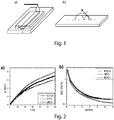
figure 1 shows the diagram of an indicative chip used in the invention, wherein a= 20 microns and b=150 microns represent the microchannel depth and width;figure 1b explains the correspondence with the parameters measured instep 3 i.e. cosθ and surface tension of the liquid γ: -
figure 2 shows a trend of capillary dynamics for commercial extra-virgin olive oil (EVOc, curve with the square markers), sunflower-seed oil (SFO, dotted curve), a 1:1 mixture of EVOc and SFO (MIXh, curve with the triangle markers): a) distance curves z towards time t and b) η curve as a function of the distance z; -
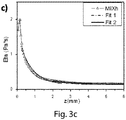
figure 3(a) shows a fit of the curve with the square markers shown inFigure 2b ) and referred to EVOc; -
figure 3(b) shows a fit of the dotted curve shown inFigure 2b ) and referred to SFO; and -
figure 3(a) shows a fit of the curve with triangle markers shown inFigure 2b ) and referred to MIXh; - It is herein specified that elements of different embodiments may be combined to provide further embodiments, without limitation, complying with the technical concept of the invention, as the average expert in the field clearly understands from what described.
- The present description also refers to the known art regarding its implementation, the not described detail characteristics, such as for example less important elements usually used in the known art in solutions of the same type.
- When an element is introduced it always means that it can be "at least one" or "one or more". When a list of elements or characteristics is listed in this description it means that the subject-matter according to the invention "includes" or alternatively "is composed of "such elements.
- Oils are liquids that adsorb on various surfaces; thus, the study of their capillary dynamics in order to extract the η values must be performed in oil-repellent microchannels.
- More generally, in case of viscosity analysis of any fluid, the microchannel coating must be adapted each time for flowing the fluid being examined without any absorption occurring . For example, in case of oils it is necessary to have oil-repellent coatings.
- It is worth specifying that kinematic viscosity is given by: υ=η/ρ where η is the dynamic viscosity and ρ is the density of the liquid. The density of the liquid as well as viscosity depend on boundary parameters, such as temperature and pressure. A conventional capillary viscosimeter is calibrated for measuring newtonian liquid viscosity. The lab-on-chip system proposed in this invention does not have this kind of constraints but can be extended to all types of liquids. On the basis of the experience of the inventors in developing fluorinated coatings [Viola et al. J. Fluor. Chem. 128(10), 1335-1339 (2007); Arima et al. Thin Solid Films 520, 2293-2300 (2012), Gazzera et al. Adv. Mater. )]] and on recent studies on olephobic properties of some of them [L. Gazzera et al. Adv. Mater. )], in this invention capillary dynamics is used to distinguish between different species of vegetable oils, and to separate oils from mixtures, thanks to a dependence of the flow mobility on the η parameter and on the strong interactions at the solid/liquid interface.
- The invention consists in implementing a cheap, disposable (possibly portable) device for monitoring the oil quality and the composition thereof.
- Five main steps can be identified:
- 1) manufacturing of microchannels:
- 2) functionalization of the microchannels;
- 3) contact angle measurements for assessing the device surface tension and surface wettability, by a "pendant drop" approach (procedure detailed at "step three");
- 4) flow speed measurement of a generic fluid in a capillary dynamic regime, obtained by recording the displacement coordinate of the flow front over time (procedure detailed at "step four"); and
- 5) data processing and derivation of the dynamic viscosity of the analyzed fluids. The analysis are, for exemplary purposes, carried out on neat and in-mixture extra-virgin olive oil and sunflower-seed oil, but they can be extended to other types of oils. In particular, measurement at point 4) was carried out with commercial extra-virgin olive oil (EVOc) and sunflower-seed oil (SFO), and also with a 1:1 mixture EVOc/SFO (MIXh). The general form of the microchannel of
step 1 is illustrated infigure 1(a) , wherein a, b are the channel height and width. The device is placed below an optical microscope provided with a camera and connected to a computer. The camera and a software installed on the pc allow to view the fluid front and record its position as a function of time during motion within the microchannel. - Ultimately the functionality of the proposed capillary viscosimeter, based on microfluidic lab-on-chip , must refer to the implementation of a capillary regime, guaranteed by the evidence of a laminar motion of the fluids being studied. Such conditions, in the case of fluids with newtonian behaviour, are generally guaranteed by a sub-millimetric (< 1mm) surface-volume ratio of microchannels (that can otherwise be represented by the hydraulic radius) in particular for various applications below 500 microns, even below 300 microns for others, according to the structural and chemical/physical parameters of the liquid used.
- A Polydimethylsiloxane (PDMS) linear microchannel was manufactured having 1 cm nominal length, 20 micron depth and 150 micron width using a soft lithography approach proving the PDMS copy of a photoresist (based on SU-8) mould reproducing the negative of the channel. The manufacturing procedure is similar to industrial moulding however on a micron to millimeter scale. Soon after polymerization, the copy structured with the channel was detached from the mould; 1.5 mm diameter inlet and outlet holes were created on the copy which was later put in suitable contact with a PDMS plane layer manufactured by polymerizing PDMS in a normal laboratory Petri dish not containing microstructures. Both surfaces were activated by means of plasma treatment of oxygen and sealed in oven at 200°C.
- However, it should not be understood that PDMS is the only material usable by the invention. As a matter of fact, in all the examples and in the general formulation of the invention any material can be used, even plastic or metal or mixed or composite, that can be structured according to the microscale. For example, polymeric materials (as COC, PEEK, PMMA, PTFE...) and not (glass, silica, ...) can be used to produce microchannels. The preferred choice is PDMS as it is cheap and as it can be easily structured at the microscale.
- Soon after the preparation, the device was connected to small tubes made of plastic (1/16 of external diameter, IDEX-HS; they are small pipes connecting the device to syringe micropumps; all this is necessary to deposit in a controlled way in oleophobic coating. Idex-Hs is a company that manufactures them) and filled with a solution containing hydrophobin (HFBII, 0.1 mg/ml) at a constant speed of 10 µl/min with syringe pumps. After complete filling, the liquid was incubated for 30 minutes. Then the proteic solution was removed at a rate of 100 µl/min and the washing was performed with a buffer solution at 20 µl/min. Finally, after removing the buffer, a fluoropolymer solution (F10, 0.1% v/v) was injected to obtain the inner coating of the microchannel walls. In general, in the invention, coatings other than F10 can be used. For example in literature they are reported oleophobic coatings on plastic material based on perfluoroalkyl ethyl acrylate (S. Ozbay et al. Colloid. Surface A 481, 537-546 (2015)), based on polymer mixtures as PSS, FEP, PEEK (H. Wang et al. J Polym Res 23, 137 (2016), D. Gao et al. Prog. Org. Coat. 82, 74-80 (2015)), of perfluorinated graphene oxides (T. Bharathidasan et al. Carbon 84, 207-213 (2015)), or PDMS microstructurings coated with fluorosilanes (Z. Pan et al. Appl. Surf. Sci. 324, 612-620 (2015)).
- "Pendant drop" measurements and contact angle θ measurements were performed on PDMS functionalized with HFBII and F10 for EVOc, SFO (therefore a piece of material functionalized as the channel according to the invention should be) and for a 1:1 mixture MIXh of the two oils in order to extrapolate from the software CAM200 (KSV Instruments Ltd), the surface tension values γ and the wettability parameters (cosθ) to be inserted into the equation for processing data (step 5).
Figure 1b shows what such parameters refer to. - The microchannel PDMS inlet and outlet were opened with a blade to obtain the device adapted for the capillary dynamics analysis and the consequent derivation of the dynamic viscosity values. Experiments with the capillary viscosimeter were carried out with optical microscope Nikon (Nikon Eclipse Ti), interfaced with a CCD camera, and on which a software developed in laboratory for detecting the displacements as a function of time was implemented. Capillary dynamic studies on standard oils were carried out depositing a drop (200 µl) of EVOc, SFP and a 1:1 mixture of EVOc/SFP (MIXh) at the inlet of the microchannels of two respective identical chips. Soon after the deposition, the drop flows by capillary action inside the device; the software allows to reconstruct the capillary dynamics acquiring the fluid front position along the channel length as a function of time. The obtained graph shows the position coordinate (mm) with respect to time (s) (see
figure 2a ). - The curves shown in
figure 2a were reprocessed inFigure 2b , considering the dependence of the capillary flow on the dynamic viscosity η, after inserting data related to wettability and surface tension (step 3). - Curve reprocessing is performed starting from a capillary dynamics law of Washburn type:

- RH is the hydraulic radius equal to (b*a)/(b+2a) (see
Figure 1 ) - γ is the surface tension at the liquid-gas interface
- θ is the contact angle with the surface
- η is the liquid dynamic viscosity
- a, b are the channel height and width (see
Figure 1 ) - Dynamic viscosity is the resistance of a fluid to flowing and represents a momentum exchange coefficient. It is often called dynamic viscosity to distinguish it from kinematic viscosity, which is a magnitude similar to dynamic viscosity, however it is dimensionally different. Viscosity is dimensionally expressed by a force on a surface over a time lapse, that is, by a pressure over a time lapse and, in terms of fundament magnitudes, by M • L-1 • T-1 (mass divided by length and time). Dynamic viscosity is measured in the International System in poiseuille and in the cgs system in poise and are valid the equivalences :[1 Pa s = 1 PI].
- Fit results provide the dynamic viscosity values extrapolated from the measurings and fittings (
Step 3 and 5); they are summarized inFigure 3 and in Table 1, where for each type of examined oil, they are reported: contact angle values θ with the PDMS surface coated with HFBII/F10 and the surface tension values γ (as described in step 3), and the viscosity values η as results from the fits shown infigure 3 (η calculated from micro-fluidics defined as ηm) with respect to standard values (ηs at 20°C) calculated by a standard rheometer. Xm and Xs ratios between ηm/ηmEVOc and between ηs/ηsEVOc are also reported.Table 1. Sample θ y (mM/m) ηm (Pa*s) Ratio Xm (ηm/ηmEVOc) ηs (Pa*s) Ratio Xs (ηs/ηsEVOc) @ 20°C EVOc 67.75±0.76 32.83±0.31 0.153 ± 4.7E-4 1.00 ± 0.01 0.080 1.00 SFO 63.89±0.39 31.37±0.40 0.133 ± 3.7E-3 0.87 ± 0.03 0.070 0.88 MIXh 64.80±1.70 32.10±0.36 0.123 ± 1.4E-2 (I) 0.80 ± 0.09 (I) 0.070 0.88 0.153 ± 5.6E-4 (II) 1.00 ± 0.01 (II) - The measured viscosity represents the plateau value reached during the flow. While a single value can be identified for EVOc and SFO, on the contrary two values were found for MIXh. This is due to the fact that the functionalized micro-channel as described at "
Step 2" acts as a chromatography column and separates the two mixture components during the flow due to their differences in η. As a consequence, the dynamic viscosity of the mixture shows two regimes and two viscosity values are extracted after data reprocessing. This is an important result considering that the viscosity values calculated using a standard rheometer can be compared for a neat sunflower-seed oil and for the same oil in the 1:1 mixture with olive oil. - We highlight the fact that the dynamic viscosity of a liquid in a microfluidic system, considered as the macroscopic expression of the liquid molecule stretching, is highly influenced by confinement and by the instant variation of all the structural and temperature parameters. It is further demonstrated that viscosity in a microchannel is characterized by a further extensional viscosity component due to the inner high pressure under confinement. Consequently, even though the calculated absolute values (ηm) are different from neat EVOc and SFO values extracted by standard rheometers (ηs), the trend is similar (see values Xm and Xs, which represent the ratio between microfluidic ηm/ηmEVOc and between ηs/ηsEVOc for standard measurements, reported in Table 1 for comparison).
- The invention shows some substantial peculiarities with respect to the known art which can be summarized non comprehensively as follows. As common capillary viscosimeters have a geometry that uses gravity acceleration to obtain the measurement, they allow to determine the kinematic viscosity parameter (that is the ratio between the dynamic viscosity of a fluid and its density). Furthermore, their use is indicated only for newtonian liquids.
- On the contrary the capillary viscosimeter herein proposed allows to measure directly the dynamic viscosity parameter of an oil. The direct detection of the dynamic viscosity allows a more correct assessment of the chemical-physical characteristics of an oil or of a mixture, as it is independent from the fluid density, and makes it possible to compare mixtures whose density is not known. Furthermore, as already demonstrated, the chip according to the invention acts also as a system able to separate mixtures of oils with different viscosity. Finally, the aforesaid chip can be used for a wide variety of newtonian liquids and not. As far as inventors know, there is not a similar commercially available system as regards ease of use, efficiency and cost-effectiveness and enabling to separate mixtures acting as chromatography column.
- As regard the aforementioned article "Lara Gazzera, Claudio Corti, Lisa Pirrie, Arja Paananen, Alessandro Monfredini, Gabriella Cavallo, Simona Bettini, Gabriele Giancane, Ludovico Valli, Markus B. Linder, Giuseppe Resnati, Roberto Milani, and Pierangelo Metrangolo Adv. Mater. " it should be specified the following.
- The present description does not relate to the implementation of micro fluidic PDMS devices integrating the coating (already described in the published text) to guarantee oils flowing and not being adsorbed, but rather the identification of neat or in-mixture oily matrices through the examination of chemical-physical parameters (viscosity in particular) in a cheap and potentially portable micro-fluidic device.
- In principle the device works even independently from the coating. It is in fact possible to follow a capillary dynamics of the different oils also in a device manufactured exclusively in PDMS. In this case, the only difference is that the dynamics is interrupted at an early stage, due to the absorption by PDMS walls, depriving data analysis from the final regime of dynamics, which is functional to determine correctly the viscosity parameter.
- Vice versa, in the device with coating, on top of confirming a purely capillary dynamics of oils (though it was predictable on the basis of the preceding studies given the lack of absorption phenomena related to the presence of coating), the preferential interaction of some oils contained inside mixtures with the walls of the device with coating and the completely different dynamic behaviour result to be very innovative and surprising. This clearly indicates that the device acts as a microfluidic chromatography column, thus determining different and interpolated dynamic viscosity trends with respect to the channel length (or the flowing time lapse) to extract the viscosities of oils inside mixtures.
- The proposed device falls within the category of new generation lab-on-chip devices of the not-biomedical type. As it is based on the measurement of the dynamic viscosity parameter, as regards the authorizations for placing it into the market, we could think that reference can be made to international rules and standards, which the certified capillary viscosimeters are subjected to (http://www.encosrl.com/download/brochure/poulten/Viscosi metri_2015.pdf).
- In the system according to the invention, the type of oil injected in the device is determined by the calculation of the dynamic viscosity parameter from capillary dynamic curves.
- Different oils viscosity can be measured, without using a reference using small volumes of sample (few microlitres). The oil identification is due to the comparison with the preset reference values.
- The chip according to the invention is also able to separate mixtures of two oils, acting as a flow chromatography column. In such a case, two distinct values of dynamic viscosity can be extrapolated. This allows to identify the two components of the mixture.
- The invention setup is composed of a PDMS microchannel interfaced to an optical microscope and a PC for data analysis and processing. The microscope and pc may be further miniaturized using the high-resolution camera of a cell phone whereon the data analysis software is installed.
- The PDMS (or other material) microchannel is internally coated with an oleophobic coating reducing the oil absorption during the measuring and allows to better study the capillary dynamics for determining the viscosity parameter with high precision also in mixtures. In the chip according to the invention, viscosity measuring is determined in Pa*s with an error smaller than 1%.
- The dynamic viscosity measuring, derived from the capillary flow, is made in real time and under real experimental conditions, in terms of local temperature, density, contact angle and surface tension.
- For all these reasons, in the chip according to the invention, the microchannel is the active part, as interactions of oils with the inner walls drive the flow of the fluid (no external power supply is necessary for pumping) by capillarity action. The study of capillary dynamics is the means for extracting the dynamic viscosity values of neat oils and components separated in mixtures.
- On the basis of a comparison with the systems of the prior art, in particular patent
CN204462012U , it is apparent that the integrated circuit according to the invention is more cost-effective (no optical assembly to be aligned, no external power supply for pumping the liquid), it is disposable (only the set-up is permanent, the channel is replaced) and therefore there are fewer problems related to cross-contamination. Furthermore, the use of one single chip prevents the small quantity of solvent used for the rinsing from modifying the chemical-physical characteristics of the sample. Therefore, the fact that assessment is based on absolute values and not on a measuring with a reference sample (that is neat olive oil) makes it less vulnerable to variability than the reference sample (which can degrade over time). The dynamic viscosity, as well as the refraction index, are in fact physical magnitudes influenced by the structural characteristics of the material at the real measuring conditions. Furthermore, as the system according to the invention is able to determine oils inside the mixture as their viscosity is calculated, the device according to the known art detects a contamination of the reference sample (olive oil) without identifying it. - Due to its capacity to act as viscosity gradient chromatography column, the device of the invention is able to determine oils in the mixture while the device in the patent only detects a contamination of the reference sample without identifying the latter. In the above, preferred embodiments were described and some variants of the present invention were suggested, however it should be understood that experts in the field shall make modification and changes without departing from the relative scope of protection, as defined in the appended claims.
Claims (10)
- A method for determining the dynamic viscosity of a fluid, in particular oils, comprising the following steps:A. providing at least one microchannel having hydraulic radius smaller than 1 mm;B. functionalizing the inner surface of said at least a microchannel with a coating repelling said fluid, i.e. such as not to allow the adsorption of the fluid;C. carrying out a measurement of the surface tension γ of the fluid by a "pendant drop" measurement, i.e. drop hanging from a needle;D. carrying out a measurement of the contact angle θ of a drop of said fluid deposited on a flat surface of the same material as the inner surface of the microchannel functionalized as in step B;E. flowing said fluid in the microchannel in a capillary dynamic regime, the fluid having a flow front advancing along the microchannel;F. during the preceding step, recording a displacement coordinate z(t) of the flow front over time t, by means of optical microscope interfaced with a camera; andG. calculating dynamic viscosity η of said fluid on the basis of the displacement coordinate of step F, of the contact angle θ and of the surface tension γ of step C.
- The method according to claim 1, wherein in step A the microchannel has height a and width b, and in step G a capillary dynamics law of Washburn type is used:

- The method according to claim 1 or 2, wherein said at least one microchannel is made of PDMS.
- The method according to any one of claims 1 to 4, wherein the hydraulic radius is smaller than 0.5 micron.
- The method according to claim 4, wherein the hydraulic radius is smaller than 0.3 micron.
- The method according to any one of claims 1 to 5, wherein said repellent coating is F10.
- A viscosimeter for determining the dynamic viscosity of a fluid, in particular oils, comprising:- at least one microchannel with:• hydraulic radius smaller than 1 mm;• internal surface functionalized with a coating repelling said fluid, i.e. such as not to allow the adsorption of the fluid;- an optical microscope interfaced with a camera and a software;
wherein said microscope, said camera and said software are configured to:∘ measuring a contact angle θ of a drop of a flat surface of the same material as said inner functionalized surface; and∘ measuring a surface tension γ from a fluid drop hanging from a needle;∘ measuring over time a flow front of the fluid when it advances along the microchannel, recording a correspondent displacement coordinate z(t) of the flow front over time t; and∘ calculating the dynamic viscosity η of said fluid on the basis of the displacement coordinate, of the contact angle and of the surface tension. - The viscosimeter according to claim 6, wherein said at least one microchannel is made of PDMS.
- The viscosimeter according to claim 6 or 7, wherein said repellent coating is F10.
- The viscosimeter according to one of claims 6 to 9, wherein the microchannel has height a and width b, and the calculation of dynamic viscosity is made using a capillary dynamics law of Washburn type:

Applications Claiming Priority (1)
| Application Number | Priority Date | Filing Date | Title |
|---|---|---|---|
| IT102017000071008A IT201700071008A1 (en) | 2017-06-26 | 2017-06-26 | Capillary viscosimeter and method for analysis of fluids, in particular oils. |
Publications (2)
| Publication Number | Publication Date |
|---|---|
| EP3421967A1 true EP3421967A1 (en) | 2019-01-02 |
| EP3421967B1 EP3421967B1 (en) | 2021-09-01 |
Family
ID=60182990
Family Applications (1)
| Application Number | Title | Priority Date | Filing Date |
|---|---|---|---|
| EP18177715.2A Active EP3421967B1 (en) | 2017-06-26 | 2018-06-14 | Capillary viscometer and method for analysis of fluids, in particular oils |
Country Status (3)
| Country | Link |
|---|---|
| EP (1) | EP3421967B1 (en) |
| ES (1) | ES2900161T3 (en) |
| IT (1) | IT201700071008A1 (en) |
Cited By (1)
| Publication number | Priority date | Publication date | Assignee | Title |
|---|---|---|---|---|
| CN114993879A (en) * | 2022-06-01 | 2022-09-02 | 国家石油天然气管网集团有限公司 | System and method for on-line determination of density of high waxy crude oil |
Citations (3)
| Publication number | Priority date | Publication date | Assignee | Title |
|---|---|---|---|---|
| JP2011039002A (en) * | 2009-08-18 | 2011-02-24 | Nec Corp | Micro electrophoresis chip and analysis method |
| CN204462012U (en) * | 2014-12-19 | 2015-07-08 | 施玲燕 | A kind of olive oil purity testing instrument based on PDMS microchannel |
| US20160305864A1 (en) * | 2013-12-09 | 2016-10-20 | Texas Tech University System | Smart Phone Based Multiplexed Viscometer for High Throughput Analysis of Fluids |
-
2017
- 2017-06-26 IT IT102017000071008A patent/IT201700071008A1/en unknown
-
2018
- 2018-06-14 ES ES18177715T patent/ES2900161T3/en active Active
- 2018-06-14 EP EP18177715.2A patent/EP3421967B1/en active Active
Patent Citations (3)
| Publication number | Priority date | Publication date | Assignee | Title |
|---|---|---|---|---|
| JP2011039002A (en) * | 2009-08-18 | 2011-02-24 | Nec Corp | Micro electrophoresis chip and analysis method |
| US20160305864A1 (en) * | 2013-12-09 | 2016-10-20 | Texas Tech University System | Smart Phone Based Multiplexed Viscometer for High Throughput Analysis of Fluids |
| CN204462012U (en) * | 2014-12-19 | 2015-07-08 | 施玲燕 | A kind of olive oil purity testing instrument based on PDMS microchannel |
Non-Patent Citations (3)
| Title |
|---|
| EVANGELIA ROUMPEA ET AL: "Experimental investigations of non-Newtonian/Newtonian liquid-liquid flows in microchannels", AI CH E JOURNAL, vol. 63, no. 8, 27 March 2017 (2017-03-27), US, pages 3599 - 3609, XP055443755, ISSN: 0001-1541, DOI: 10.1002/aic.15704 * |
| FISHER L R ET AL: "An experimental study of the washburn equation for liquid flow in very fine capillaries", JOURNAL OF COLLOID AND INTERFACE SCIENCE, ACADEMIC PRESS,INC, US, vol. 69, no. 3, 1 May 1979 (1979-05-01), pages 486 - 492, XP024187408, ISSN: 0021-9797, [retrieved on 19790501], DOI: 10.1016/0021-9797(79)90138-3 * |
| PATRICK HENNING: ". Traditional Viscometer Theory and Design SPECTROVISC Q3000 SERIES VISCOMETER - A PORTABLE KINEMATIC OIL ANALYSIS SOLUTION FOR FIELD-BASED USERS", 1 January 2014 (2014-01-01), XP055443739, Retrieved from the Internet <URL:https://www.spectrosci.com/product/pvisc-q3000/?fileID=5124bffa44ba961401452d59646a281a> [retrieved on 20180123] * |
Cited By (1)
| Publication number | Priority date | Publication date | Assignee | Title |
|---|---|---|---|---|
| CN114993879A (en) * | 2022-06-01 | 2022-09-02 | 国家石油天然气管网集团有限公司 | System and method for on-line determination of density of high waxy crude oil |
Also Published As
| Publication number | Publication date |
|---|---|
| EP3421967B1 (en) | 2021-09-01 |
| IT201700071008A1 (en) | 2018-12-26 |
| ES2900161T3 (en) | 2022-03-16 |
Similar Documents
| Publication | Publication Date | Title |
|---|---|---|
| Gupta et al. | Microfluidic viscometers for shear rheology of complex fluids and biofluids | |
| Patari et al. | Liquid wicking in a paper strip: An experimental and numerical study | |
| Raj et al. | A combined experimental and theoretical approach towards mechanophenotyping of biological cells using a constricted microchannel | |
| Puneeth et al. | Microfluidic viscometers for biochemical and biomedical applications: A review | |
| Nezhad et al. | PDMS microcantilever-based flow sensor integration for lab-on-a-chip | |
| Oh et al. | 3D-printed capillary circuits for rapid, low-cost, portable analysis of blood viscosity | |
| EP2413128A1 (en) | Improved microfluidic sensor units to detect the presence of an analyte in a sample-fluid | |
| Kang et al. | Development of a paper-based viscometer for blood plasma using colorimetric analysis | |
| Lagoy et al. | Microfluidic devices for behavioral analysis, microscopy, and neuronal imaging in Caenorhabditis elegans | |
| Lee et al. | Electrofluidic circuit-based microfluidic viscometer for analysis of Newtonian and non-Newtonian liquids under different temperatures | |
| Vega‐Sánchez et al. | Pressure drop measurements in microfluidic devices: a review on the accurate quantification of interfacial slip | |
| Gavoille et al. | Microfluidic approaches for accessing thermophysical properties of fluid systems | |
| Bianco et al. | Integrated microfluidic viscometer for edible oil analysis | |
| Cito et al. | Visualization and measurement of capillary-driven blood flow using spectral domain optical coherence tomography | |
| Li et al. | Preparation of paper micro-fluidic devices used in bio-assay based on drop-on-demand wax droplet generation | |
| CN103814284A (en) | Capillary microviscometer | |
| Zabihihesari et al. | PDMS-based microfluidic capillary pressure-driven viscometry and application to Drosophila melanogaster’s hemolymph | |
| Mohammadamini et al. | A suspended polymeric microfluidic sensor for liquid flow rate measurement in microchannels | |
| André et al. | A new way to measure viscosity in droplet-based microfluidics for high throughput analysis | |
| Marcali et al. | Impedimetric detection and lumped element modelling of a hemagglutination assay in microdroplets | |
| US9945773B2 (en) | Flow cell and liquid feed system | |
| EP3421967B1 (en) | Capillary viscometer and method for analysis of fluids, in particular oils | |
| JP4277785B2 (en) | Fluid fluidity measuring method and measuring apparatus used therefor | |
| Kapadia et al. | A novel microfluidic viscometer for measuring viscosity of ultrasmall volumes of Newtonian and non-Newtonian liquids | |
| Morhell et al. | A single channel capillary microviscometer |
Legal Events
| Date | Code | Title | Description |
|---|---|---|---|
| PUAI | Public reference made under article 153(3) epc to a published international application that has entered the european phase |
Free format text: ORIGINAL CODE: 0009012 |
|
| STAA | Information on the status of an ep patent application or granted ep patent |
Free format text: STATUS: THE APPLICATION HAS BEEN PUBLISHED |
|
| AK | Designated contracting states |
Kind code of ref document: A1 Designated state(s): AL AT BE BG CH CY CZ DE DK EE ES FI FR GB GR HR HU IE IS IT LI LT LU LV MC MK MT NL NO PL PT RO RS SE SI SK SM TR |
|
| AX | Request for extension of the european patent |
Extension state: BA ME |
|
| STAA | Information on the status of an ep patent application or granted ep patent |
Free format text: STATUS: REQUEST FOR EXAMINATION WAS MADE |
|
| 17P | Request for examination filed |
Effective date: 20190705 |
|
| RBV | Designated contracting states (corrected) |
Designated state(s): AL AT BE BG CH CY CZ DE DK EE ES FI FR GB GR HR HU IE IS IT LI LT LU LV MC MK MT NL NO PL PT RO RS SE SI SK SM TR |
|
| RIC1 | Information provided on ipc code assigned before grant |
Ipc: G01N 13/02 20060101ALN20210311BHEP Ipc: G01N 11/04 20060101AFI20210311BHEP |
|
| RIC1 | Information provided on ipc code assigned before grant |
Ipc: G01N 13/02 20060101ALN20210317BHEP Ipc: G01N 11/04 20060101AFI20210317BHEP |
|
| GRAP | Despatch of communication of intention to grant a patent |
Free format text: ORIGINAL CODE: EPIDOSNIGR1 |
|
| RIC1 | Information provided on ipc code assigned before grant |
Ipc: G01N 13/02 20060101ALN20210322BHEP Ipc: G01N 11/04 20060101AFI20210322BHEP |
|
| STAA | Information on the status of an ep patent application or granted ep patent |
Free format text: STATUS: GRANT OF PATENT IS INTENDED |
|
| RIC1 | Information provided on ipc code assigned before grant |
Ipc: G01N 13/02 20060101ALN20210408BHEP Ipc: G01N 11/04 20060101AFI20210408BHEP |
|
| RIC1 | Information provided on ipc code assigned before grant |
Ipc: G01N 13/02 20060101ALN20210409BHEP Ipc: G01N 11/04 20060101AFI20210409BHEP |
|
| INTG | Intention to grant announced |
Effective date: 20210429 |
|
| GRAS | Grant fee paid |
Free format text: ORIGINAL CODE: EPIDOSNIGR3 |
|
| GRAA | (expected) grant |
Free format text: ORIGINAL CODE: 0009210 |
|
| STAA | Information on the status of an ep patent application or granted ep patent |
Free format text: STATUS: THE PATENT HAS BEEN GRANTED |
|
| AK | Designated contracting states |
Kind code of ref document: B1 Designated state(s): AL AT BE BG CH CY CZ DE DK EE ES FI FR GB GR HR HU IE IS IT LI LT LU LV MC MK MT NL NO PL PT RO RS SE SI SK SM TR |
|
| REG | Reference to a national code |
Ref country code: GB Ref legal event code: FG4D |
|
| REG | Reference to a national code |
Ref country code: CH Ref legal event code: EP Ref country code: AT Ref legal event code: REF Ref document number: 1426718 Country of ref document: AT Kind code of ref document: T Effective date: 20210915 |
|
| REG | Reference to a national code |
Ref country code: DE Ref legal event code: R096 Ref document number: 602018022673 Country of ref document: DE |
|
| REG | Reference to a national code |
Ref country code: IE Ref legal event code: FG4D |
|
| REG | Reference to a national code |
Ref country code: LT Ref legal event code: MG9D |
|
| REG | Reference to a national code |
Ref country code: NL Ref legal event code: MP Effective date: 20210901 |
|
| PG25 | Lapsed in a contracting state [announced via postgrant information from national office to epo] |
Ref country code: BG Free format text: LAPSE BECAUSE OF FAILURE TO SUBMIT A TRANSLATION OF THE DESCRIPTION OR TO PAY THE FEE WITHIN THE PRESCRIBED TIME-LIMIT Effective date: 20211201 Ref country code: LT Free format text: LAPSE BECAUSE OF FAILURE TO SUBMIT A TRANSLATION OF THE DESCRIPTION OR TO PAY THE FEE WITHIN THE PRESCRIBED TIME-LIMIT Effective date: 20210901 Ref country code: NO Free format text: LAPSE BECAUSE OF FAILURE TO SUBMIT A TRANSLATION OF THE DESCRIPTION OR TO PAY THE FEE WITHIN THE PRESCRIBED TIME-LIMIT Effective date: 20211201 Ref country code: FI Free format text: LAPSE BECAUSE OF FAILURE TO SUBMIT A TRANSLATION OF THE DESCRIPTION OR TO PAY THE FEE WITHIN THE PRESCRIBED TIME-LIMIT Effective date: 20210901 Ref country code: HR Free format text: LAPSE BECAUSE OF FAILURE TO SUBMIT A TRANSLATION OF THE DESCRIPTION OR TO PAY THE FEE WITHIN THE PRESCRIBED TIME-LIMIT Effective date: 20210901 Ref country code: SE Free format text: LAPSE BECAUSE OF FAILURE TO SUBMIT A TRANSLATION OF THE DESCRIPTION OR TO PAY THE FEE WITHIN THE PRESCRIBED TIME-LIMIT Effective date: 20210901 Ref country code: RS Free format text: LAPSE BECAUSE OF FAILURE TO SUBMIT A TRANSLATION OF THE DESCRIPTION OR TO PAY THE FEE WITHIN THE PRESCRIBED TIME-LIMIT Effective date: 20210901 |
|
| REG | Reference to a national code |
Ref country code: AT Ref legal event code: MK05 Ref document number: 1426718 Country of ref document: AT Kind code of ref document: T Effective date: 20210901 |
|
| PG25 | Lapsed in a contracting state [announced via postgrant information from national office to epo] |
Ref country code: PL Free format text: LAPSE BECAUSE OF FAILURE TO SUBMIT A TRANSLATION OF THE DESCRIPTION OR TO PAY THE FEE WITHIN THE PRESCRIBED TIME-LIMIT Effective date: 20210901 Ref country code: LV Free format text: LAPSE BECAUSE OF FAILURE TO SUBMIT A TRANSLATION OF THE DESCRIPTION OR TO PAY THE FEE WITHIN THE PRESCRIBED TIME-LIMIT Effective date: 20210901 Ref country code: GR Free format text: LAPSE BECAUSE OF FAILURE TO SUBMIT A TRANSLATION OF THE DESCRIPTION OR TO PAY THE FEE WITHIN THE PRESCRIBED TIME-LIMIT Effective date: 20211202 |
|
| REG | Reference to a national code |
Ref country code: ES Ref legal event code: FG2A Ref document number: 2900161 Country of ref document: ES Kind code of ref document: T3 Effective date: 20220316 |
|
| PG25 | Lapsed in a contracting state [announced via postgrant information from national office to epo] |
Ref country code: AT Free format text: LAPSE BECAUSE OF FAILURE TO SUBMIT A TRANSLATION OF THE DESCRIPTION OR TO PAY THE FEE WITHIN THE PRESCRIBED TIME-LIMIT Effective date: 20210901 |
|
| PG25 | Lapsed in a contracting state [announced via postgrant information from national office to epo] |
Ref country code: IS Free format text: LAPSE BECAUSE OF FAILURE TO SUBMIT A TRANSLATION OF THE DESCRIPTION OR TO PAY THE FEE WITHIN THE PRESCRIBED TIME-LIMIT Effective date: 20220101 Ref country code: SM Free format text: LAPSE BECAUSE OF FAILURE TO SUBMIT A TRANSLATION OF THE DESCRIPTION OR TO PAY THE FEE WITHIN THE PRESCRIBED TIME-LIMIT Effective date: 20210901 Ref country code: SK Free format text: LAPSE BECAUSE OF FAILURE TO SUBMIT A TRANSLATION OF THE DESCRIPTION OR TO PAY THE FEE WITHIN THE PRESCRIBED TIME-LIMIT Effective date: 20210901 Ref country code: RO Free format text: LAPSE BECAUSE OF FAILURE TO SUBMIT A TRANSLATION OF THE DESCRIPTION OR TO PAY THE FEE WITHIN THE PRESCRIBED TIME-LIMIT Effective date: 20210901 Ref country code: PT Free format text: LAPSE BECAUSE OF FAILURE TO SUBMIT A TRANSLATION OF THE DESCRIPTION OR TO PAY THE FEE WITHIN THE PRESCRIBED TIME-LIMIT Effective date: 20220103 Ref country code: NL Free format text: LAPSE BECAUSE OF FAILURE TO SUBMIT A TRANSLATION OF THE DESCRIPTION OR TO PAY THE FEE WITHIN THE PRESCRIBED TIME-LIMIT Effective date: 20210901 Ref country code: EE Free format text: LAPSE BECAUSE OF FAILURE TO SUBMIT A TRANSLATION OF THE DESCRIPTION OR TO PAY THE FEE WITHIN THE PRESCRIBED TIME-LIMIT Effective date: 20210901 Ref country code: CZ Free format text: LAPSE BECAUSE OF FAILURE TO SUBMIT A TRANSLATION OF THE DESCRIPTION OR TO PAY THE FEE WITHIN THE PRESCRIBED TIME-LIMIT Effective date: 20210901 Ref country code: AL Free format text: LAPSE BECAUSE OF FAILURE TO SUBMIT A TRANSLATION OF THE DESCRIPTION OR TO PAY THE FEE WITHIN THE PRESCRIBED TIME-LIMIT Effective date: 20210901 |
|
| REG | Reference to a national code |
Ref country code: DE Ref legal event code: R097 Ref document number: 602018022673 Country of ref document: DE |
|
| PLBE | No opposition filed within time limit |
Free format text: ORIGINAL CODE: 0009261 |
|
| STAA | Information on the status of an ep patent application or granted ep patent |
Free format text: STATUS: NO OPPOSITION FILED WITHIN TIME LIMIT |
|
| PG25 | Lapsed in a contracting state [announced via postgrant information from national office to epo] |
Ref country code: DK Free format text: LAPSE BECAUSE OF FAILURE TO SUBMIT A TRANSLATION OF THE DESCRIPTION OR TO PAY THE FEE WITHIN THE PRESCRIBED TIME-LIMIT Effective date: 20210901 |
|
| 26N | No opposition filed |
Effective date: 20220602 |
|
| PG25 | Lapsed in a contracting state [announced via postgrant information from national office to epo] |
Ref country code: SI Free format text: LAPSE BECAUSE OF FAILURE TO SUBMIT A TRANSLATION OF THE DESCRIPTION OR TO PAY THE FEE WITHIN THE PRESCRIBED TIME-LIMIT Effective date: 20210901 |
|
| REG | Reference to a national code |
Ref country code: DE Ref legal event code: R119 Ref document number: 602018022673 Country of ref document: DE |
|
| PG25 | Lapsed in a contracting state [announced via postgrant information from national office to epo] |
Ref country code: MC Free format text: LAPSE BECAUSE OF FAILURE TO SUBMIT A TRANSLATION OF THE DESCRIPTION OR TO PAY THE FEE WITHIN THE PRESCRIBED TIME-LIMIT Effective date: 20210901 |
|
| REG | Reference to a national code |
Ref country code: CH Ref legal event code: PL |
|
| REG | Reference to a national code |
Ref country code: BE Ref legal event code: MM Effective date: 20220630 |
|
| GBPC | Gb: european patent ceased through non-payment of renewal fee |
Effective date: 20220614 |
|
| PG25 | Lapsed in a contracting state [announced via postgrant information from national office to epo] |
Ref country code: LU Free format text: LAPSE BECAUSE OF NON-PAYMENT OF DUE FEES Effective date: 20220614 Ref country code: LI Free format text: LAPSE BECAUSE OF NON-PAYMENT OF DUE FEES Effective date: 20220630 Ref country code: IE Free format text: LAPSE BECAUSE OF NON-PAYMENT OF DUE FEES Effective date: 20220614 Ref country code: CH Free format text: LAPSE BECAUSE OF NON-PAYMENT OF DUE FEES Effective date: 20220630 |
|
| PG25 | Lapsed in a contracting state [announced via postgrant information from national office to epo] |
Ref country code: GB Free format text: LAPSE BECAUSE OF NON-PAYMENT OF DUE FEES Effective date: 20220614 Ref country code: DE Free format text: LAPSE BECAUSE OF NON-PAYMENT OF DUE FEES Effective date: 20230103 Ref country code: BE Free format text: LAPSE BECAUSE OF NON-PAYMENT OF DUE FEES Effective date: 20220630 |
|
| P01 | Opt-out of the competence of the unified patent court (upc) registered |
Effective date: 20230615 |
|
| PG25 | Lapsed in a contracting state [announced via postgrant information from national office to epo] |
Ref country code: HU Free format text: LAPSE BECAUSE OF FAILURE TO SUBMIT A TRANSLATION OF THE DESCRIPTION OR TO PAY THE FEE WITHIN THE PRESCRIBED TIME-LIMIT; INVALID AB INITIO Effective date: 20180614 |
|
| PG25 | Lapsed in a contracting state [announced via postgrant information from national office to epo] |
Ref country code: MK Free format text: LAPSE BECAUSE OF FAILURE TO SUBMIT A TRANSLATION OF THE DESCRIPTION OR TO PAY THE FEE WITHIN THE PRESCRIBED TIME-LIMIT Effective date: 20210901 Ref country code: CY Free format text: LAPSE BECAUSE OF FAILURE TO SUBMIT A TRANSLATION OF THE DESCRIPTION OR TO PAY THE FEE WITHIN THE PRESCRIBED TIME-LIMIT Effective date: 20210901 |
|
| PG25 | Lapsed in a contracting state [announced via postgrant information from national office to epo] |
Ref country code: MT Free format text: LAPSE BECAUSE OF FAILURE TO SUBMIT A TRANSLATION OF THE DESCRIPTION OR TO PAY THE FEE WITHIN THE PRESCRIBED TIME-LIMIT Effective date: 20210901 |
|
| PGFP | Annual fee paid to national office [announced via postgrant information from national office to epo] |
Ref country code: FR Payment date: 20250630 Year of fee payment: 8 |
|
| PGFP | Annual fee paid to national office [announced via postgrant information from national office to epo] |
Ref country code: ES Payment date: 20250701 Year of fee payment: 8 |
|
| PGFP | Annual fee paid to national office [announced via postgrant information from national office to epo] |
Ref country code: IT Payment date: 20250624 Year of fee payment: 8 |
|
| PG25 | Lapsed in a contracting state [announced via postgrant information from national office to epo] |
Ref country code: TR Free format text: LAPSE BECAUSE OF FAILURE TO SUBMIT A TRANSLATION OF THE DESCRIPTION OR TO PAY THE FEE WITHIN THE PRESCRIBED TIME-LIMIT Effective date: 20210901 |