EP3421447A1 - Fatty acid compound, preparation method therefor and use thereof - Google Patents
Fatty acid compound, preparation method therefor and use thereof Download PDFInfo
- Publication number
- EP3421447A1 EP3421447A1 EP17755775.8A EP17755775A EP3421447A1 EP 3421447 A1 EP3421447 A1 EP 3421447A1 EP 17755775 A EP17755775 A EP 17755775A EP 3421447 A1 EP3421447 A1 EP 3421447A1
- Authority
- EP
- European Patent Office
- Prior art keywords
- carbon atoms
- adjacent carbon
- atoms form
- fatty acid
- compound
- Prior art date
- Legal status (The legal status is an assumption and is not a legal conclusion. Google has not performed a legal analysis and makes no representation as to the accuracy of the status listed.)
- Granted
Links
- 0 C*C[C@](*)C(*O)[N+]([O-])=O Chemical compound C*C[C@](*)C(*O)[N+]([O-])=O 0.000 description 2
- LEKHKVCSQCSYPR-ARJAWSKDSA-N CC(CCCCC/C=C\CCCCC(C)(C(O)=O)c1ccccc1)(C(O)=O)c1ccccc1 Chemical compound CC(CCCCC/C=C\CCCCC(C)(C(O)=O)c1ccccc1)(C(O)=O)c1ccccc1 LEKHKVCSQCSYPR-ARJAWSKDSA-N 0.000 description 1
- DMOGUJFBWMBJNS-UHFFFAOYSA-N COC(C1(CCCCCC(CCCCCC2(CCCC2)C(OC)=O)=O)CCCC1)=O Chemical compound COC(C1(CCCCCC(CCCCCC2(CCCC2)C(OC)=O)=O)CCCC1)=O DMOGUJFBWMBJNS-UHFFFAOYSA-N 0.000 description 1
- DDSYWTCBKZSLED-UHFFFAOYSA-N N#CCS(c(cc1)ccc1I)(=O)=O Chemical compound N#CCS(c(cc1)ccc1I)(=O)=O DDSYWTCBKZSLED-UHFFFAOYSA-N 0.000 description 1
- XPNBYUCYFKYVAW-UPHRSURJSA-N OC(C1(CCCCC/C=C\CCCCC2(CCCCC2)C(O)=O)CCCCC1)=O Chemical compound OC(C1(CCCCC/C=C\CCCCC2(CCCCC2)C(O)=O)CCCCC1)=O XPNBYUCYFKYVAW-UPHRSURJSA-N 0.000 description 1
Images

Classifications
-
- C—CHEMISTRY; METALLURGY
- C07—ORGANIC CHEMISTRY
- C07C—ACYCLIC OR CARBOCYCLIC COMPOUNDS
- C07C51/00—Preparation of carboxylic acids or their salts, halides or anhydrides
- C07C51/09—Preparation of carboxylic acids or their salts, halides or anhydrides from carboxylic acid esters or lactones
-
- A—HUMAN NECESSITIES
- A61—MEDICAL OR VETERINARY SCIENCE; HYGIENE
- A61P—SPECIFIC THERAPEUTIC ACTIVITY OF CHEMICAL COMPOUNDS OR MEDICINAL PREPARATIONS
- A61P3/00—Drugs for disorders of the metabolism
- A61P3/04—Anorexiants; Antiobesity agents
-
- C—CHEMISTRY; METALLURGY
- C07—ORGANIC CHEMISTRY
- C07C—ACYCLIC OR CARBOCYCLIC COMPOUNDS
- C07C61/00—Compounds having carboxyl groups bound to carbon atoms of rings other than six-membered aromatic rings
- C07C61/16—Unsaturated compounds
- C07C61/35—Unsaturated compounds having unsaturation outside the rings
-
- A—HUMAN NECESSITIES
- A61—MEDICAL OR VETERINARY SCIENCE; HYGIENE
- A61K—PREPARATIONS FOR MEDICAL, DENTAL OR TOILETRY PURPOSES
- A61K31/00—Medicinal preparations containing organic active ingredients
- A61K31/185—Acids; Anhydrides, halides or salts thereof, e.g. sulfur acids, imidic, hydrazonic or hydroximic acids
- A61K31/19—Carboxylic acids, e.g. valproic acid
- A61K31/194—Carboxylic acids, e.g. valproic acid having two or more carboxyl groups, e.g. succinic, maleic or phthalic acid
-
- A—HUMAN NECESSITIES
- A61—MEDICAL OR VETERINARY SCIENCE; HYGIENE
- A61P—SPECIFIC THERAPEUTIC ACTIVITY OF CHEMICAL COMPOUNDS OR MEDICINAL PREPARATIONS
- A61P3/00—Drugs for disorders of the metabolism
- A61P3/08—Drugs for disorders of the metabolism for glucose homeostasis
- A61P3/10—Drugs for disorders of the metabolism for glucose homeostasis for hyperglycaemia, e.g. antidiabetics
-
- C—CHEMISTRY; METALLURGY
- C07—ORGANIC CHEMISTRY
- C07C—ACYCLIC OR CARBOCYCLIC COMPOUNDS
- C07C55/00—Saturated compounds having more than one carboxyl group bound to acyclic carbon atoms
- C07C55/26—Saturated compounds having more than one carboxyl group bound to acyclic carbon atoms containing rings other than aromatic rings
- C07C55/28—Saturated compounds having more than one carboxyl group bound to acyclic carbon atoms containing rings other than aromatic rings monocyclic
-
- C—CHEMISTRY; METALLURGY
- C07—ORGANIC CHEMISTRY
- C07C—ACYCLIC OR CARBOCYCLIC COMPOUNDS
- C07C57/00—Unsaturated compounds having carboxyl groups bound to acyclic carbon atoms
- C07C57/02—Unsaturated compounds having carboxyl groups bound to acyclic carbon atoms with only carbon-to-carbon double bonds as unsaturation
- C07C57/13—Dicarboxylic acids
-
- C—CHEMISTRY; METALLURGY
- C07—ORGANIC CHEMISTRY
- C07C—ACYCLIC OR CARBOCYCLIC COMPOUNDS
- C07C57/00—Unsaturated compounds having carboxyl groups bound to acyclic carbon atoms
- C07C57/26—Unsaturated compounds having carboxyl groups bound to acyclic carbon atoms containing rings other than six-membered aromatic rings
-
- C—CHEMISTRY; METALLURGY
- C07—ORGANIC CHEMISTRY
- C07C—ACYCLIC OR CARBOCYCLIC COMPOUNDS
- C07C57/00—Unsaturated compounds having carboxyl groups bound to acyclic carbon atoms
- C07C57/30—Unsaturated compounds having carboxyl groups bound to acyclic carbon atoms containing six-membered aromatic rings
- C07C57/42—Unsaturated compounds having carboxyl groups bound to acyclic carbon atoms containing six-membered aromatic rings having unsaturation outside the rings
-
- C—CHEMISTRY; METALLURGY
- C07—ORGANIC CHEMISTRY
- C07C—ACYCLIC OR CARBOCYCLIC COMPOUNDS
- C07C61/00—Compounds having carboxyl groups bound to carbon atoms of rings other than six-membered aromatic rings
- C07C61/16—Unsaturated compounds
-
- C—CHEMISTRY; METALLURGY
- C07—ORGANIC CHEMISTRY
- C07C—ACYCLIC OR CARBOCYCLIC COMPOUNDS
- C07C61/00—Compounds having carboxyl groups bound to carbon atoms of rings other than six-membered aromatic rings
- C07C61/16—Unsaturated compounds
- C07C61/20—Unsaturated compounds having a carboxyl group bound to a five-membered ring
-
- C—CHEMISTRY; METALLURGY
- C07—ORGANIC CHEMISTRY
- C07C—ACYCLIC OR CARBOCYCLIC COMPOUNDS
- C07C61/00—Compounds having carboxyl groups bound to carbon atoms of rings other than six-membered aromatic rings
- C07C61/16—Unsaturated compounds
- C07C61/22—Unsaturated compounds having a carboxyl group bound to a six-membered ring
-
- C—CHEMISTRY; METALLURGY
- C07—ORGANIC CHEMISTRY
- C07C—ACYCLIC OR CARBOCYCLIC COMPOUNDS
- C07C2601/00—Systems containing only non-condensed rings
- C07C2601/06—Systems containing only non-condensed rings with a five-membered ring
- C07C2601/08—Systems containing only non-condensed rings with a five-membered ring the ring being saturated
-
- C—CHEMISTRY; METALLURGY
- C07—ORGANIC CHEMISTRY
- C07C—ACYCLIC OR CARBOCYCLIC COMPOUNDS
- C07C2601/00—Systems containing only non-condensed rings
- C07C2601/12—Systems containing only non-condensed rings with a six-membered ring
- C07C2601/16—Systems containing only non-condensed rings with a six-membered ring the ring being unsaturated
-
- Y—GENERAL TAGGING OF NEW TECHNOLOGICAL DEVELOPMENTS; GENERAL TAGGING OF CROSS-SECTIONAL TECHNOLOGIES SPANNING OVER SEVERAL SECTIONS OF THE IPC; TECHNICAL SUBJECTS COVERED BY FORMER USPC CROSS-REFERENCE ART COLLECTIONS [XRACs] AND DIGESTS
- Y02—TECHNOLOGIES OR APPLICATIONS FOR MITIGATION OR ADAPTATION AGAINST CLIMATE CHANGE
- Y02P—CLIMATE CHANGE MITIGATION TECHNOLOGIES IN THE PRODUCTION OR PROCESSING OF GOODS
- Y02P20/00—Technologies relating to chemical industry
- Y02P20/50—Improvements relating to the production of bulk chemicals
- Y02P20/55—Design of synthesis routes, e.g. reducing the use of auxiliary or protecting groups
Definitions
- the present invention belongs to the field of medicinal chemistry, and relates to a class of fatty acid compounds or pharmaceutically acceptable salts thereof, preparation methods for the same and pharmaceutical compositions comprising these compounds.
- Such compounds have the ability of activating AMPK in human HepG2 hepatoma cells and inhibiting the glucose output capacity of primary hepatocytes in C57bl/6j mice, which can be used to prepare drugs for treating obesity and diabetes.
- Diabetes mellitus is a group of metabolic disorders caused by islet dysfunction, insulin resistance etc..
- a variety of pathogenic factors such as genetic factors, immune dysfunction, mental factors, can cause diabetes.
- 366 million people had diabetes worldwide. Diabetes has become the third largest disease, following cardio-cerebrovascular diseases and malignant tumors. China has been the world's biggest diabetes country with a prevalence rate of 9.7%, which is higher than the world's average. With 92.4 million diabetics in total, China is ranking the top in the world.
- drugs for the treatment of type II diabetes including metformin, sulfonylureas, DPP-4 inhibitors, PPAR ⁇ agonists, ⁇ -glucosidase inhibitors, insulin and GLP-1 analogues, etc.
- the present drugs have some defects, such as insignificant curative effect, and short acting time. Some drugs even have side effects like hypoglycemia, weight gain, edema, fracture, lactic acidosis and gastrointestinal discomfort etc.
- Adenosine monophosphate activated protein kinase plays a leading role in the glucolipid metabolism in vivo. It is an energy meter and main metabolic switch that senses and decodes intracellular changes in energy status. AMPK activation can significantly treat the metabolic disorders of type II diabetes, and improve insulin sensitivity in vivo. It has been confirmed as a new target for the treatment of type II diabetes. Clinical drugs with hypoglycemic and lipid-lowering effects, like metformin, TZDs and berberine, have been proved to be able to activate AMPK at the cellular level, which paved a rout for AMPK as a new anti-diabetic drug target.
- a class of fatty acid compounds have been designed and synthesized. These compounds have the ability to activate AMPK at the cellular level and inhibit mouse primary hepatocyte glucose output. Some of these compounds exhibit excellent AMPK activationeffects, and could significantly stimulate the phosphorylation of AMPK and ACC in a concentration-dependent manner at the cellular level. Most of the compounds had the significantly effect of reducing glucose output. Such compounds have tremendous development potentials as therapeutic drugs for diabetes.
- a class of fatty acid compounds was designed and synthesized. These compounds were found to be able to activate AMPK and reduce primary mouse hepatocyte glucose output.
- the compounds represented by Formula I-IV have the ability to activate AMPK. These compounds can significantly promote the phosphorylation of AMPK and ACC in HepG2 cells in a dose-dependent manner and have the significantly effect of inhibiting the glucose output.
- one object of the present invention is to provide a novel class of fatty acid compounds having the ability to activate AMPK or pharmaceutically acceptable salts thereof.
- Another object of the present invention is to provide a method for preparing such fatty acid compounds having the ability to activate AMPK or a pharmaceutically acceptable salt thereof.
- Another object of the present invention is to provide a pharmaceutical composition including a fatty acid compound having the ability to activate AMPK, which comprises a therapeutically effective amount of the said fatty acid compound in the present invention or a pharmaceutically acceptable salt thereof as an active ingredient and a pharmaceutically acceptable adjuvant.
- a further object of the present invention is to provide a use of the fatty acid compounds or pharmaceutically acceptable salts thereof and pharmaceutical compositions thereof in the preparation of a medicament as an AMPK activator, particularly, in the preparation of a medicament for the treatment of obesity or diabetes.
- the present invention provides a fatty acid compound represented by following formula I:
- the fatty acid compound of the present invention is represented by the following formula III:
- the fatty acid compound of the present invention is represented by the following formula IV:
- the said compound represented by the formula I-IV or a pharmaceutically acceptable salt thereof can be prepared through conventional reactions in organic synthesis.
- the compound of the formula I-III can be synthesized by the following route.
- the compound represented by the formula II is synthesized by the following route 4,
- the compound represented by formula III is prepared through the following route 5.
- R 3 , R 4 , R 5 , R 6 , m, n and p are the same as described above.
- the compounds of the present invention having the ability to activate AMPK improve glycolipid metabolism at the cellular and whole animal level.
- the compounds can be used for the preparation of a medicament for treating obesity or diabetes.
- the present invention provides a pharmaceutical composition for treating obesity or diabetes.
- the pharmaceutical composition comprises a therapeutically effective amount of one or more compounds represented by the formula I, or pharmaceutically acceptable salts thereof as an active ingredient, and pharmaceutically acceptable adjuvants such as dispersing agents, excipients, disintegrating agents, antioxidants, sweeteners, coating agents.
- the pharmaceutical composition can be prepared according to a conventional preparation method in the pharmaceutical field, and can be made into various conventional dosage forms, including tablets, coated tablets, capsules, powders and so on.
- NMR NMR was conducted on a Mercury-Vx 300Minstrument manufactured by Varian; Mass spectra were obtained using Agilent 1200 Quadrupole LC/MS mass spectrometer. Reagents are mainly provided by Shanghai Chemical Reagent Company.
- the silica gel plate(model GF 254) for thin layer chromatography (TLC) was manufactured by Huiyou Silica gel Development Co. Ltd., Yantai, Shandong.
- the compounds were purified by column chromatography with a silica gel of 200-300 mesh, modelzcx-11,manufactured by Qingdao Haiyang Chemical Co. Ltd.
- methyl cyclopentanecarboxylate1.28 g (10 mmol) and 1,5-dibromopentane 2.49 g (11 mmol) were added to the reaction flask, dissolved in 50 mL of tetrahydrofuran, and cooled to 0°C. LDA(0.467 mmol) was slowly added in a drop wise manner for about 1 hour. After then, the reaction was stirred overnight at room temperature, and monitored by TLC on the next day. The reaction was quenched by the addition of a saturated aqueous solution of ammonium chloride. After the addition, the mixture was extracted three times with EtOAc.
- compound B3 (1.7 g, 6.2 mmol), tosylmethyl isocyanide (0.64 g, 3.1 mmol) and tetrabutylammonium iodide (0.23 g, 0.62 mmol) were dissolved in 10 mL of DMSO. The solution was cooled to 0°C, added sodium hydride (60%) (0.3 g, 7.4 mmol) in portions. After then, the reaction was stirred overnight at room temperature, and monitored by TLC on the next day. The reaction mixture was quenched with water. After then, the mixture was extracted three times with DCM.
- the compound B30 (40 mg, 0.01 mmol) was dissolved in 5 mL of ethanol, added 1mL of an aqueous solution of KOH (100 mg, 1.7 mmol).
- the reaction mixture was refluxed for 6 hours, and monitored by TLC. After the reaction was completed, the mixture was cooled to room temperature, and most of the ethanol was removed by rotary evaporation. The residue was diluted with water (4mL) and extracted with ethyl ether twice to remove impurities.
- the aqueous phase was adjusted to acidity by adding 2N HCl, and extracted with DCM for four times.
- Phosphorus pentachloride (4.37g, 21mmol) was suspended in 10mL of chloroform, cooled to 0°C, and added to a solution of compound B31 (1.96g, 20mmol) in 10mL of chloroform. After the addition, the mixture was stirred at room temperature for 2h, then refluxed for 2h. After then, the reaction mixture was poured on 50 g of ice, added NaHCO 3 . The organic phase was separated, and the aqueous phase was extracted with DCM. The combined organic phase was washed with saturated sodium bicarbonate solution and brine. The mixture was dried over anhydrous Na 2 SO 4 , concentrated, then added 5 mL of DCM.
- the compound B37 (40 mg, 0.01 mmol) was dissolved in 5 mL of ethanol, addedlmL of an aqueous solution of KOH (100 mg, 1.7 mmol).
- the reaction mixture was refluxed for 6 hours, and monitored by TLC. After the reaction was completed, the mixture was cooled to room temperature, and most of the ethanol was removed by rotary evaporation. The residue was diluted with water (4mL) and extracted with ethyl ether twice to remove impurities.
- the aqueous phase was adjusted to acidity by adding 2N HCl, and extracted with DCM for four times.
Landscapes
- Chemical & Material Sciences (AREA)
- Organic Chemistry (AREA)
- Health & Medical Sciences (AREA)
- Veterinary Medicine (AREA)
- Public Health (AREA)
- General Health & Medical Sciences (AREA)
- Animal Behavior & Ethology (AREA)
- Life Sciences & Earth Sciences (AREA)
- Medicinal Chemistry (AREA)
- Pharmacology & Pharmacy (AREA)
- Diabetes (AREA)
- Engineering & Computer Science (AREA)
- Epidemiology (AREA)
- Hematology (AREA)
- Nuclear Medicine, Radiotherapy & Molecular Imaging (AREA)
- General Chemical & Material Sciences (AREA)
- Chemical Kinetics & Catalysis (AREA)
- Obesity (AREA)
- Bioinformatics & Cheminformatics (AREA)
- Endocrinology (AREA)
- Oil, Petroleum & Natural Gas (AREA)
- Emergency Medicine (AREA)
- Child & Adolescent Psychology (AREA)
- Organic Low-Molecular-Weight Compounds And Preparation Thereof (AREA)
- Acyclic And Carbocyclic Compounds In Medicinal Compositions (AREA)
- Low-Molecular Organic Synthesis Reactions Using Catalysts (AREA)
Abstract
Description
- The present invention belongs to the field of medicinal chemistry, and relates to a class of fatty acid compounds or pharmaceutically acceptable salts thereof, preparation methods for the same and pharmaceutical compositions comprising these compounds. Such compounds have the ability of activating AMPK in human HepG2 hepatoma cells and inhibiting the glucose output capacity of primary hepatocytes in C57bl/6j mice, which can be used to prepare drugs for treating obesity and diabetes.
- Diabetes mellitus is a group of metabolic disorders caused by islet dysfunction, insulin resistance etc.. A variety of pathogenic factors, such as genetic factors, immune dysfunction, mental factors, can cause diabetes. According to the statistics of the World Health Organization in 2011, 366 million people had diabetes worldwide. Diabetes has become the third largest disease, following cardio-cerebrovascular diseases and malignant tumors. China has been the world's biggest diabetes country with a prevalence rate of 9.7%, which is higher than the world's average. With 92.4 million diabetics in total, China is ranking the top in the world.
- Now, there are many drugs for the treatment of type II diabetes, including metformin, sulfonylureas, DPP-4 inhibitors, PPARγ agonists, α-glucosidase inhibitors, insulin and GLP-1 analogues, etc. However, the present drugs have some defects, such as insignificant curative effect, and short acting time. Some drugs even have side effects like hypoglycemia, weight gain, edema, fracture, lactic acidosis and gastrointestinal discomfort etc.
- Adenosine monophosphate activated protein kinase (AMPK) plays a leading role in the glucolipid metabolism in vivo. It is an energy meter and main metabolic switch that senses and decodes intracellular changes in energy status. AMPK activation can significantly treat the metabolic disorders of type II diabetes, and improve insulin sensitivity in vivo. It has been confirmed as a new target for the treatment of type II diabetes. Clinical drugs with hypoglycemic and lipid-lowering effects, like metformin, TZDs and berberine, have been proved to be able to activate AMPK at the cellular level, which paved a rout for AMPK as a new anti-diabetic drug target.
- A class of fatty acid compounds have been designed and synthesized. These compounds have the ability to activate AMPK at the cellular level and inhibit mouse primary hepatocyte glucose output. Some of these compounds exhibit excellent AMPK activationeffects, and could significantly stimulate the phosphorylation of AMPK and ACC in a concentration-dependent manner at the cellular level. Most of the compounds had the significantly effect of reducing glucose output. Such compounds have tremendous development potentials as therapeutic drugs for diabetes.
- A class of fatty acid compounds was designed and synthesized. These compounds were found to be able to activate AMPK and reduce primary mouse hepatocyte glucose output. The compounds represented by Formula I-IV have the ability to activate AMPK. These compounds can significantly promote the phosphorylation of AMPK and ACC in HepG2 cells in a dose-dependent manner and have the significantly effect of inhibiting the glucose output.
- Therefore, one object of the present invention is to provide a novel class of fatty acid compounds having the ability to activate AMPK or pharmaceutically acceptable salts thereof.
- Another object of the present invention is to provide a method for preparing such fatty acid compounds having the ability to activate AMPK or a pharmaceutically acceptable salt thereof.
- Another object of the present invention is to provide a pharmaceutical composition including a fatty acid compound having the ability to activate AMPK, which comprises a therapeutically effective amount of the said fatty acid compound in the present invention or a pharmaceutically acceptable salt thereof as an active ingredient and a pharmaceutically acceptable adjuvant.
- A further object of the present invention is to provide a use of the fatty acid compounds or pharmaceutically acceptable salts thereof and pharmaceutical compositions thereof in the preparation of a medicament as an AMPK activator, particularly, in the preparation of a medicament for the treatment of obesity or diabetes.
- The present invention provides a fatty acid compound represented by following formula I:

- wherein, R1, R2, R3, R4, R5, and R6 are each independently H, C1∼C4 alkyl, C1∼C4 alkenyl, C1∼C4 alkynyl, C3∼C7 cycloalkyl, C3∼C7 cycloalkenyl, phenyl or benzyl, preferably, R1, R2, R3, R4, R5, and R6 are each independently H, C1∼C3 alkyl, C3∼C6 cycloalkyl, C3∼C6 cycloalkenyl, or phenyl,
- alternatively, R1 and R2 together with their adjacent carbon atoms form a C3-C7 cycloalkyl group, or together with their adjacent carbon atoms form a C3-C7 cycloalkenyl group;
- alternatively, R3 and R4 together with their adjacent carbon atoms form a C3∼C7 cycloalkyl group, or together with their adjacent carbon atoms form a C3∼C7 cycloalkenyl group;
- alternatively, R5 and R6 together with their adjacent carbon atoms form a C3∼C7 cycloalkyl group, or together with their adjacent carbon atoms form a C3∼C7 cycloalkenyl group,
- m, n are each independently 1, 2, 3, 4, 5 or 6, preferably 2, 3, 4 or 5,
- Y1 and Y2 are each independently -OH, -COOH, -COOR7, -SO3H, -SO2NHR, -PO(OH)OEt, -CONHCN,


- wherein, R7 is methyl or ethyl, R is methyl or ethyl; preferably, Y1 and Y2 are each independently -COOH,
- ---represents a double bond or a single bond,
- the double bond is either cis or trans.
- In the present invention, the said alkyl group includes a linear or branched alkyl group, and the said alkenyl group includes a linear or branched alkenyl group.
- In a preferred embodiment, the fatty acid compound of the present invention is represented by the following formula II:

- wherein R1, R2, R3, R4, R5 and R6 are each independently H, C1∼C4 alkyl, C1∼C4 alkenyl, C1∼C4 alkynyl, C3∼C7 cycloalkyl, C3∼C7 cycloalkenyl, phenyl or benzyl; preferably, R1, R2, R3, R4, R5, R6 are each independently H, C1∼C3 alkyl, C3∼C6 cycloalkyl, C3∼ C6 cycloalkenyl or phenyl; more preferably, R1 and R2 are H, R3, R4, R5, R6 are each independently H, C1∼C3 alkyl or phenyl.
- alternatively, R5 and R6 together with their adjacent carbon atoms form a C3∼C7 cycloalkyl group, or together with their adjacent carbon atom form a C3∼C7 cycloalkenyl group,
- alternatively, R3 and R4 together with their adjacent carbon atoms form a C3∼C7 cycloalkyl group, or together with their adjacent carbon atoms form a C3∼C7 cycloalkenyl group;
- m, n are each independently 1, 2, 3, 4, 5 or 6, preferably 2, 3, 4 or 5,
- the double bond is either cis or trans.
- In another preferred embodiment, the fatty acid compound of the present invention is represented by the following formula III:

- wherein, R3, R4, R5, R6 are each independently H, C1∼C4 alkyl, C1∼C4 alkenyl, C1∼C4 alkynyl, C3∼C7 cycloalkyl, C3∼C7 cycloalkenyl, phenyl or benzyl, preferably, R3, R4, R5, R6 are each independently H, C1∼C3 alkyl, C3∼C6 cycloalkyl, C3∼C6 cycloalkenyl or phenyl,
- alternatively, R5 and R6 together with their adjacent carbon atoms form a C3∼C7 cycloalkyl group, or together with their adjacent carbon atoms form a C3∼C7 cycloalkenyl group,
- alternatively, R3 and R4 together with their adjacent carbon atoms form a C3∼C7 cycloalkyl group, or together with their adjacent carbon atoms form a C3∼C7 cycloalkenyl group,
- m, n are each independently 1, 2, 3, 4, 5 or 6, preferably 2, 3, 4 or 5.
- In another preferred embodiment, the fatty acid compound of the present invention is represented by the following formula IV:

- wherein, R3, R4, R5, R6 are each independently H, C1∼C4 alkyl, C1∼C4 alkenyl, C1∼C4 alkynyl, C3∼C7 cycloalkyl, C3∼C7 cycloalkenyl, phenyl or benzyl, preferably, R3, R4, R5, R6 are each independently H, C1∼C3 alkyl, C3∼C6 cycloalkyl, C3∼C6 cycloalkenyl or phenyl;
- alternatively, R5 and R6 together with their adjacent carbon atoms form a C3∼C7 cycloalkyl group, or together with their adjacent carbon atoms form a C3∼C7 cycloalkenyl group,
- alternatively, R3 and R4 together with their adjacent carbon atoms form a C3∼C7 cycloalkyl group, or together with their adjacent carbon atoms form a C3∼C7 cycloalkenyl group.
- m, n are each independently 1, 2, 3, 4, 5 or 6, preferably 2, 3, 4 or 5,
- p is 1, 2 or 3, preferably 2.
- The said fatty acid compound having the ability to activate AMPK is most preferably selected from the following compound:


- The said compound represented by the formula I-IV or a pharmaceutically acceptable salt thereof can be prepared through conventional reactions in organic synthesis. The compound of the formula I-III can be synthesized by the following route.
-

- (1) reacting substituted ethyl acetate A1 with dibromoalkane A2 through a condensation reaction in the presence of lithium diisopropylamide (LDA) and an organic solvent to obtain intermediate A3; under the same conditions, replacing A1 with

- (2) reacting equivalent A3 and A4 with tosylmethyl isocyanide in the presence of NaH, tetrabutylammonium iodide (TBAI), and dimethyl sulfoxide (DMSO) to obtain compound A5;
- (3) reacting A5 with concentrated hydrochloric acid to remove hydrocyanic acid and p-toluenesulfonic acid to obtain A6; wherein, the reaction can be carried out in an organic solvent, the organic solvent is preferably dichloromethane (DCM);
- (4) under alkaline conditions, conducting A6 a hydrolysis reaction and acidulating by dilute hydrochloric acid to obtain A7; wherein, the said alkaline reagent is preferably KOH; and the said hydrolysis reaction which removes the ester group is preferably carried out in the presence of an organic solvent such as ethanol;
- (5) further reducing A7 with sodium borohydride to obtain A8;
- (6) refluxing a toluene solution including A8 and the catalyst p-toluenesulfonic acid to obtain a compound A9 or A10.
-

- (1) reacting sodium acetylide A11 with bromo A12 in DMF to obtain intermediate A13;
- (2) condensing alkynyl compound A13 and brominated compound A2 in the presence of n-butyl lithium and hexamethylphosphoric triamide (HMPA) to give intermediate A14;
- (3) refluxing intermediate A14 with lithium bromide in an organic solvent to give intermediate A15; wherein, the said organic solvent is preferably acetone;
- (4) condensing A15 with A16 or A17 in the presence of lithium diisopropylamide (LDA) to obtain intermediate A18;
- (5) conducting A18 a hydrogenation reaction to obtain intermediate A19;
- (6) under alkaline conditions, conducting A19 a hydrolysis reaction and acidulating by dilute hydrochloric acid to obtain A20; wherein, the said alkaline reagent is preferably KOH; and the said hydrolysis reaction which removes the ester group is preferably carried out in the presence of an organic solvent such as ethanol.
- Intermediate A15 of
Route 2 can also be prepared through route 3. -

- (1) reacting 1-alkynyl-alcohol compound A21 in the presence of pyridine p-toluenesulfonate (PPTS) and 2-tetrahydropyran (THP) to give intermediate A23; reacting 1-hydroxy-bromo compound A22 in the presence of pyridine p-toluenesulfonate and 2-tetrahydropyran (THP) to obtained intermediate A24;
- (2) condensing A23 with A24 in the presence of n-butyl lithium and HMPA to give intermediate A25;
- (3) deprotection of A25 in the presence of p-toluenesulfonic acid (TsOH) and an organic solvent to obtain intermediate A26; wherein, the said organic solvent is preferably methanol;
- (4) reacting A26 with carbon tetrabromide and triphenylphosphine (PPh3) to give the intermediate A15.
- In routes 1 - 3: the definitions of R3, R4, R5, R6, n and m in the reaction formulas are the same as described above.
- The compound represented by the formula II is synthesized by the following
route 4, -

- (1) reacting intermediate A18 with bis(pinacolato)diboron catalyzed by tetrakis(triphenylphosphine)platinum to form intermediate A26;
- (2) conducting A26 a coupling reaction with iodide R1I or R2I to give intermediate A27;
- (3) under alkaline conditions, conducting A27 a hydrolysis reaction and acidulating by dilute hydrochloric acid to obtain the compound represented by the formula II.
- The compound represented by formula III is prepared through the following route 5.
-

wherein, the definitions of R3, R4, R5, R6, m and n are the same as described above. - The compound represented by the formula IV is prepared by the following route 6.
-

- (1) first, converting compound A29 to a bromo olefin intermediate A30;
- (2) converting intermediate A30 to intermediate A31 in the presence of potassium iodide and cuprous iodide;
- (3) further coupling A31 with boron reagents A32 and A33 to obtain intermediate A34;
- (4) under alkaline conditions, conducting A34 a hydrolysis reaction and acidulating by dilute hydrochloric acid to obtain the compound represented by the formula IV; wherein, the said alkaline reagent is preferably KOH; and the said hydrolysis reaction which removes the ester group is preferably carried out in the presence of an organic solvent such as ethanol.
- Wherein, the definitions of R3, R4, R5, R6, m, n and p are the same as described above.
- The compounds of the present invention having the ability to activate AMPK improve glycolipid metabolism at the cellular and whole animal level. The compounds can be used for the preparation of a medicament for treating obesity or diabetes.
- The present invention provides a pharmaceutical composition for treating obesity or diabetes. The pharmaceutical composition comprises a therapeutically effective amount of one or more compounds represented by the formula I, or pharmaceutically acceptable salts thereof as an active ingredient, and pharmaceutically acceptable adjuvants such as dispersing agents, excipients, disintegrating agents, antioxidants, sweeteners, coating agents. The pharmaceutical composition can be prepared according to a conventional preparation method in the pharmaceutical field, and can be made into various conventional dosage forms, including tablets, coated tablets, capsules, powders and so on.
-
-
Figure 1 is a bar graph of the compound promoting phosphorylation of AMPK in human HepG2 liver cancer cells; -
Figure 2 is a bar graph of the compound promoting phosphorylation of ACC in human HepG2 liver cancer cells; -
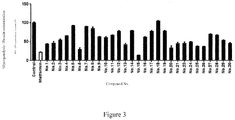
Figure 3 is a bar graph of the compound inhibiting sugar output of mouse primary hepatocytes. - The present invention will be further illustrated based on the following examples, but the present invention will not be limited thereto.
- In following preparation examples, NMR was conducted on a Mercury-Vx 300Minstrument manufactured by Varian; Mass spectra were obtained using Agilent 1200 Quadrupole LC/MS mass spectrometer. Reagents are mainly provided by Shanghai Chemical Reagent Company. The silica gel plate(model GF 254) for thin layer chromatography (TLC) was manufactured by Huiyou Silica gel Development Co. Ltd., Yantai, Shandong. The compounds were purified by column chromatography with a silica gel of 200-300 mesh, modelzcx-11,manufactured by Qingdao Haiyang Chemical Co. Ltd.
-

-

- Under the argon gas protection, methyl cyclopentanecarboxylate1.28 g (10 mmol) and 1,5-dibromopentane 2.49 g (11 mmol) were added to the reaction flask, dissolved in 50 mL of tetrahydrofuran, and cooled to 0°C. LDA(0.467 mmol) was slowly added in a drop wise manner for about 1 hour. After then, the reaction was stirred overnight at room temperature, and monitored by TLC on the next day. The reaction was quenched by the addition of a saturated aqueous solution of ammonium chloride. After the addition, the mixture was extracted three times with EtOAc. The combined organic layers were washed with brine, dried over anhydrous Na2SO4, concentrated and purified by using column chromatography with PE:EA (v/v)=100:1, to provide 1.7g of compound B3 as a pale yellow liquid, yield 62%. 1H NMR (300 MHz, CDCl3) δ3.63 (s, 3H), 3.36 (t, 2H), 2.05-2.09 (m, 2H), 1.78-1.83 (m, 2H), 1.54-1.60 (m, 6H), 1.35-1.44 (m, 4H), 1.18-1.21 ppm (m, 2H).
-

- Under the argon gas protection, compound B3 (1.7 g, 6.2 mmol), tosylmethyl isocyanide (0.64 g, 3.1 mmol) and tetrabutylammonium iodide (0.23 g, 0.62 mmol) were dissolved in 10 mL of DMSO. The solution was cooled to 0°C, added sodium hydride (60%) (0.3 g, 7.4 mmol) in portions. After then, the reaction was stirred overnight at room temperature, and monitored by TLC on the next day. The reaction mixture was quenched with water. After then, the mixture was extracted three times with DCM. The combined organic layers were washed with brine, dried over anhydrous Na2SO4, concentrated and held for use in the next step without purification. The crude product was added 20mL of DCM, and 4mL of concentrated hydrochloric acid. The reaction was stirred at room temperature for 1 hour, and diluted with water, extracted with dichloromethane for three times. The organic phase was washed with brine, dried over anhydrous Na2SO4. The solvent was removed using rotary evaporation. The residue was purified by using column chromatography with PE:EA (v/v)=30:1, to provide 850 mg of compound B4, as a pale yellow liquid, yield 65%. 1H NMR (300 MHz, CDCl3) δ3.63 (s, 6H), 2.33 (t, 4H), 2.04-2.09 (m, 4H), 1.52-1.58 (m, 16H), 1.40-1.52 (m, 4H), 1.17-1.23 ppm (m, 8H).
-

- Compound B4 (422 mg, 1 mmol) was dissolved in 10 mL of ethanol and added 2mL of an aqueous solution of KOH (500 mg, 8.9 mmol). The reaction mixture was refluxed for 3 hours, and monitored by TLC. After the reaction was completed, the mixture was cooled to room temperature, and most of the ethanol was removed by rotary evaporation. The residue was diluted with water and extracted with DCM to remove a small amount of impurities. The mixture was adjusted to acidity by adding 2N HCl, and extracted with DCM for three times. The organic phase was washed with brine, dried over anhydrous Na2SO4, concentrated to get a 300 mg of crude product which was held for use in the next step without purification.
-

- Compound B5 (366 mg, 1 mmol) was dissolved in 10 mL of methanol, cooled to 0°C. The mixture was added sodium borohydride (76 mg, 2 mmol) and stirred for 0.5 h, followed by adding 304mg of sodium hydride (8mmol) in portions. After then, the reaction was stirred at room temperature for 1 hour, monitored by TLC. After the reaction was completed, the mixture was diluted with water, was adjusted to acidity by adding 2N HCl. The mixture was extracted with dichloromethane for three times. The organic phase was washed with brine, dried over anhydrous Na2SO4. The solvent was removed by using rotary evaporation. The residue was purified by using column chromatography with DCM: MeOH (v/v) = 50:1 to 20:1, to afford 320 mg of compound B6, yield 87%. 1H NMR (300 MHz, CDCl3) δ3.56-3.58(m, 1H), 2.10-2.15 (m, 4H), 1.62-1.68 (m, 16H), 1.45-1.52 (m, 8H), 1.17-1.23 ppm (m, 8H).
-

- A solution of compound B6 (40 mg, 0.22 mmol) in 80 mL of toluene was added 30 mg of p-toluenesulfonic acid. The reaction mixture was refluxed for 2 days, monitored by TLC. After the reaction was completed, the solvent was removed by using rotary evaporation. The residue was purified by using column chromatography with DCM:MeOH (v/v) = 100:1 to give compound B7, 30 mg, yield 85%. 1H NMR (300 MHz, CDCl3) δ5.33-5.34(m, 1H), 2.15-2.17 (m, 4H), 1.97-2.09 (m, 4H), 1.62-1.64 (m, 12H), 1.40-1.49 (m, 6H), 1.26-1.29 ppm (m, 10H).
- In the same way, the following compounds were obtained:
-
Compound 1 was prepared by replacing reagent B1 with ethyl isobutyrate:
1H NMR (300 MHz, CDCl3) δ5.34-5.36(m, 2H), 1.95-1.98 (m, 4H), 1.50-1.55 (m, 4H), 1.21-1.42 (m, 10H), 1.18 ppm (s, 12H). -
Compound 2 was prepared by replacing reactant B1 with ethyl isobutyrate, and replacing reactant B2 with 1,6-dibromohexane: 1H NMR (300 MHz, CDCl3) δ5.34-5.35(m, 2H), 1.96-1.98 (m, 4H), 1.50-1.52 (m, 4H), 1.21-1.42 (m, 14H), 1.17 ppm (s, 12H). - Compound 3 was prepared by replacing the reactant B1 with ethyl isobutyrate, and replacing the reactant B2 with 1,4-dibromobutane: 1H NMR (300 MHz, CDCl3) δ5.29-5.38(m, 2H), 1.92-1.95 (m, 4H), 1.43-1.52 (m, 4H), 1.21-1.42 (m, 6H), 1.13 ppm (s, 12H).
-
Compound 4 was prepared by replacing the reactant B1 with ethyl isobutyrate, and replacing the reactant B2 with 1,7-dibromoheptane: 1H NMR (300 MHz, CDCl3) δ5.34-5.35(m, 2H), 1.94-1.95 (m, 4H), 1.48-1.52 (m, 6H), 1.21-1.42 (m, 16H), 1.17 ppm (s, 12H). - Compound 6 was prepared by replacing the reactant B2 with 1,6-dibromohexane: 1H NMR (300 MHz, CDCl3) δ5.33-5.34(m, 2H), 2.12-2.16 (m, 4H), 1.94-2.02 (m, 4H), 1.62-1.64 (m, 12H), 1.40-1.49 (m, 6H), 1.26-1.29 ppm (m, 12H).
- Compound 7 was prepared by replacing the reactant B2 with 1, 4-dibromobutane: 1H NMR (300 MHz, CDCl3) δ5.33-5.42(m, 2H), 2.14-2.18 (m, 4H), 1.96-1.99 (m, 4H), 1.62-1.64 (m, 10H), 1.40-1.49 (m, 6H), 1.26-1.29 ppm (m, 6H).
-
Compound 8 was prepared by replacing the reactant B2 with 1,7-dibromoheptane: 1H NMR (300 MHz, CDCl3) δ5.33-5.36(m, 2H), 2.12-2.16 (m, 4H), 1.96-1.99 (m, 4H), 1.62-1.64 (m, 12H), 1.40-1.49 (m, 6H), 1.26-1.29 ppm (m, 16H). - Compound 9 was prepared by replacing the reactant B1 with ethyl 2-phenylpropionate: 1H NMR (300 MHz, CDCl3) δ7.26-7.36(m, 10H), 5.34-5.36(m, 2H), 2.02-2.22(m, 4H), 1.86-2.03 (m, 4H), 1.54 (s, 6H), 1.22-1.42 (m, 10H).
- Compound 10 was prepared by replacing the reactant B1 with ethyl cyclohexylcarboxylate: 1H NMR (300 MHz, CDCl3) δ5.32-5.34(m, 2H), 2.06-2.09 (m, 4H), 1.94-1.98 (m, 4H), 1.45-1.65 (m, 10H), 1.15-1.45 (m, 18H), 0.88-0.96ppm (m, 2H).
- Compound 11 was prepared by replacing the reactant B1 with ethyl cyclobutanecarboxylate: 1H NMR (300 MHz, CDCl3) δ5.32-5.34(m, 2H), 2.43-2.45 (m, 4H), 1.96-1.99 (m, 4H), 1.81-1.92 (m, 10H), 1.76-1.1.82 (m, 4H), 1.25-1.36 ppm (m, 8H).
- Compound 12
1H NMR (300 MHz, CDCl3) δ5.34-5.36(m, 2H), 2.36-2.43(t, 4H), 1.96-2.05 (m, 4H), 1.53-1.65 (m, 4H), 1.22-1.40 (m, 10H). - Compound 13 was prepared by replacing the reactant B1 with ethyl cyclobutylate, and replacing
reactant B2with 1,6-dibromohexane: 1H NMR (300 MHz, CDCl3) δ5.33-5.35(m, 2H), 2.43-2.45 (m, 4H), 1.96-1.99 (m, 4H), 1.81-1.92 (m, 10H), 1.75-1.1.82 (m, 4H), 1.11-1.28 ppm (m, 12H). - Compound 14 was prepared by replacing the reactant B1 with ethyl 2-methylbutyrate: 1H NMR (300 MHz, CDCl3) δ5.33-5.35(m, 2H), 1.96-2.02 (m, 4H), 1.60-1.78 (m, 4H), 1.38-1.58 (m, 4H), 1.22-1.40 (m, 8H), 1.11(s, 6H), 0.85ppm (t, 6H).
- Compound 15 was prepared by replacing the reactant B1 with cyclopentene-1-carboxylic acid ethyl ester, replacing the reactant B2 with 1,6-dibromohexane: 1H NMR (300 MHz, CDCl3) δ5.60(S, 4H), 5.32-5.34(m, 2H), 2.88-2.94(d, J=16Hz, 4H), 2.27-2.32(d, J=16Hz, 4H), 1.94-1.96 (m, 4H), 1.67-1.72 (m, 4H), 1.19-1.38 ppm (m, 18H).
-
Compound 16 was prepared by replacing the reactant B1 with cyclopentene-1-carboxylic acid ethyl ester: 1H NMR (300 MHz, CDCl3) δ5.60(S, 4H), 5.32-5.34(m, 2H), 2.88-2.93(d, J=16Hz, 4H), 2.27-2.32(d, J=16Hz, 4H), 1.96-1.99 (m, 4H), 1.67-1.73 (m, 4H), 1.25-1.38 ppm (m, 14H). - Compound 17 was prepared by replacing the reactant B1 with ethyl 2-phenyl-propionate, and replacing the reactant B2 with 1,6-dibromohexane: 1H NMR (300 MHz, CDCl3) 57.26-7.40(m, 10H), 5.34-5.36(m, 2H), 2.02-2.22(m, 4H), 1.86-2.03 (m, 4H), 1.55(s, 6H), 1.18-1.42 (m, 14H).
- Compound 18 was prepared by replacing the reactant B1 with ethyl 2-phenyl-propionate, and replacing the reactant B2 with 1,7-dibromoheptane: 1H NMR (300 MHz, CDCl3) δ7.23-7.38(m, 10H), 5.34-5.36(m, 2H), 2.02-2.22(m, 4H), 1.86-2.03 (m, 4H), 1.55(s, 6H), 1.18-1.42 (m, 18H).
- Compound 19 was prepared by replacing the reactant B1 with ethyl 2-methylbutyrate, and replacing the reactant B2 with 1,6-dibromohexane: 1H NMR (300 MHz, CDCl3) δ5.33-5.35(m, 2H), 1.96-2.02 (m, 4H), 1.58-1.78 (m, 4H), 1.38-1.58 (m, 4H), 1.22-1.40 (m, 14H), 1.11(s, 6H), 0.86ppm (t, 6H).
- Compound 20 was prepared by replacing the reactant B1 with ethyl 2-methylbutyrate, and replacing the reactant B2 with 1,7-dibromoheptane: 1H NMR (300 MHz, CDCl3) δ5.33-5.35(m, 2H), 1.96-2.02 (m, 4H), 1.58-1.70 (m, 4H), 1.38-1.50 (m, 4H), 1.22-1.40 (m, 18H), 1.11(s, 6H), 0.86ppm (t, 6H).
- Compound 21 was prepared by replacing the reactant B1 with ethyl cyclohexylcarboxylate, and replacing the reactant B2 with 1,6-dibromohexane: 1H NMR (300 MHz, CDCl3) δ5.32-5.34(m, 2H), 2.04-2.05 (m, 4H), 1.94-1.98 (m, 4H), 1.45-1.65 (m, 12H), 1.15-1.45 (m, 22H).
- Compound 22 was prepared by replacing the reactant B1 with ethyl cyclohexylcarboxylate, and replacing the reactant B2 with 1,7-dibromoheptane: 1H NMR (300 MHz, CDCl3) δ5.32-5.34(m, 2H), 2.04-2.08 (m, 4H), 1.96-2.01 (m, 4H), 1.45-1.65 (m, 12H), 1.23-1.45 (m, 26H).
-

-

- The compound 5-hexyn-1-ol (9 g, 91 mmol) and pyridinium p-toluenesulfonate (25.1 g, 100 mmol) were dissolved in 100 mL of DCM, and added THF (12.5 mL, 126 mmol). The reaction mixture was stirred at room temperature for overnight. Progress of reaction was monitored by TLC. Upon completion, most of the DCM was removed until about 30 mL left. Then, the residue was added 100 mL of ethyl ether and stirred for 0.5 h. The solid was filtered off, and washed with ethyl ether. The filtrate was concentrated, and then, purified using column chromatography with PE: EA (v/v)=50/1 to give the compound B8 as an oil, 18g, yield >100%.
-

- The compound 5-bromo-1-pentanol (15.1 g, 91 mmol) and pyridinium p-toluenesulfonate (25.1 g, 100 mmol) were dissolved in 100 mL of DCM, added THF (12.5 mL, 126 mmol). The reaction mixture was stirred at room temperature for overnight. Progress of reaction was monitored by TLC. Upon completion, most of the DCM was removed until about 30 mL left. Then, the residue was added 100 mL of ethyl ether and stirred for 0.5 h. The solid was filtered off, and washed with ethyl ether. The filtrate was concentrated, and then, purified using column chromatography with PE: EA (v/v)=50/1 to give the compound B9, 18 g, yield 79%.
-

- Compound B8 (5.4 g, 30 mmol) was dissolved in 40 mL of anhydrous THF, cooled to -40°C. n-butyl lithium (19 mL, 30.4 mmol) was added dropwise (in about 0.5 h) to the solution, then 10 mL of HMPA was added. The reaction was stirred at -40°C for 1 hour, then, a solution of compound B9 (7.78 g, 31 mmol) in 10 mL THF was added and stirred for 1 hour. The reaction was slowly warmed to room temperature and stirred overnight. The reaction was quenched by the addition of a saturated aqueous solution of ammonium chloride. After the addition, the two phase were separated, and the separated aqueous phase was extracted one time with EtOAc. The combined organic layers were washed with brine, dried, concentrated, and then, purified using column chromatography with PE: EA (v/v)=20/1→10/1→5/1 to give the compound B10, 8.5 g, yield 80%.
-

- Compound B10 (3 g, 8.5 mmol) was dissolved in 100 mL of methanol and 10 mL of water, and added p-toluenesulfonic acid (300 mg). The reaction mixture was stirred at room temperature for overnight. Progress of reaction was monitored by TLC. Upon completion, most of the methanol was removed. Then, the residue was diluted with water and extracted twice with ethyl ether. The combined organic layers were washed with water and brine, dried, concentrated, and then, purified by using column chromatography with PE: EA (v/v)=2/1→1/1→1/2 to give the compound B11, 1.1 g, yield 70%.
-

- Compound B11 (1.1 g, 5.9 mmol) and carbon tetrabromide (5.95 g, 17.9 mmol) were dissolved in 30 mL of anhydrous DCM, cooled to 0°C, then, added a solution of triphenylphosphine (4.7 g, 17.9 mmol) in 10 mL of DCM dropwise. After stirred at room temperature for 1 h, the reaction was completed. The reaction mixture was condensed into about 15 mL, added 50 mL of ethyl ether and stirred for 0.5 h. The solid was filtered off. The filtrate is concentrated, and purified using column chromatography with PE: EA=30/1 to give the bromo compound B12, 1.84 g, yield 100%.
-

- Compound B12 (1.84 g, 5.9 mmol) and ethyl isobutyrate (2.73 g, 23.6 mmol) were dissolved in 50 mL of anhydrous THF, cooled to 0°C, then, added LDA (15.7 mL, 23.6 mmol) dropwise (in about 0.5 h). The reaction was stirred at 0°C for 1 hour, then, slowly warmed to room temperature and stirred overnight. Progress of reaction was monitored by TLC. Upon completion, the reaction was quenched by the addition of a saturated aqueous solution of ammonium chloride. After the addition, the two phase were separated, and the separated aqueous phase was extracted two times with EtOAc. The combined organic layers were washed with water and brine, dried, concentrated, and then, purified using column chromatography with PE: EA (v/v)= 50/1 → 20/1 to give the compound B13, 1.8 g, yield 80%.
-

- Under one atm. of H2, nickel acetate (749 mg, 3 mmol) was suspended in 20 mL of absolute ethanol, sodium borohydride (114 mg, 3 mmol) was quickly added. The flask was evacuated and flushed with hydrogen twice and the solution turned black. After stirred at room temperature for 15 minutes, the mixture was added ethylenediamine (0.45 mL, 6 mmol) and a solution of compound B13 (1.8 g, 4.7 mmol) in 10 mL of absolute ethanol. The reaction was stirred at room temperature for 2 h, monitored by TLC. Upon completion, the reaction was diluted with 50 mL of ethyl ether, filtered through Celite. The filtrate was concentrated and purified by using column chromatography with PE/EA (v/v) = 50/1 to obtain product B14, 1.7 g, yield 95%.
-

- Compound B14 (1.7 g, 4.45 mmol) was dissolved in 50 mL of ethanol and added 10mL of an aqueous solution of KOH (2g, 35mmol). The reaction mixture was refluxed for 6 hours, and monitored by TLC. After the reaction was completed, the mixture was cooled to room temperature, and most of the ethanol was removed by rotary evaporation. The residue was diluted with water (40mL) and extracted with ethyl ether twice to remove impurities. The mixture was adjusted to acidity by adding 2N HCl, and extracted with DCM for four times. The combined organic phase was washed with water and brine, dried, concentrated and purified using column chromatography with DCM/MeOH (v/v) = 100/1 to give compound 24, 1.1 g.
Compound 24
1H NMR (600 MHz, DMSO) δ5.31-5.32(m, 2H), 1.96-1.98 (m, 4H), 1.40-1.44(m, 4H), 1.22-1.30 (m, 4H), 1.18-1.22 (m, 6H), 1.06 ppm (s, 12H).
Compound 23
1H NMR (300 MHz, CD3Cl) δ5.31-5.32(m, 2H), 1.96-1.98 (m, 4H), 1.40-1.44(m, 4H), 1.18-1.22 (m, 8H), 1.06 ppm (s, 12H).
Compound 25
1H NMR (300 MHz, CD3Cl) δ5.30-5.32(m, 2H), 1.96-1.98 (m, 4H), 1.40-1.45(m, 4H), 1.18-1.22 (m, 12H), 1.06 ppm (s, 12H). -

-

- Compound B8 (460 mg, 2.5 mmol) was dissolved in 20 mL of dry THF and Schwartz's reagent (chloridobis(η5-cyclopentadienyl)hydridozirconium) (1.63 g, 6.3 mmol) was added. The reaction was stirred at room temperature for 2 h, then, cooled to 0°C, and adding a saturated solution of I2 in DCM (30 mL). After stirred at 0°C for 10 min, the reaction was quenched with 20mL of saturated Na2S2O3 solution. The mixture was extracted two times with DCM. The combined organic layers were washed with water and brine, dried, concentrated, and then, purified by using column chromatography with PE/EA (v/v) = 50/1 → 20/1 to obtain the product B16, 450mg, yield 58%.
-

- Under the protection of argon gas, 2 mL of 9-BBN solution 0.5M in THF was added to compound B15 (60 mg, 0.35 mmol). After stirred at room temperature for 2 hours, the reaction mixture was added 2 mL of solution of compound B16 in DMF, and then added Cs2CO3 (156 mg), AsPh3 (24 mg) and 1 mL of water in order. After evacuated and flushed with argon gas for 5 min, Pd(dppf)Cl2 (20 mg) was added. The reaction was stirred at room temperature overnight. The reaction was diluted with 30 mL of ethyl ether, washed with water and brine, dried, concentrated. The residue was purified by using column chromatography with PE/EA (v/v) = 50/1 → 20/1 to give the product B18, 54mg, yield 90%.
-

- Compound B19 (350 mg, 0.95 mmol) was dissolved in 10 mL of methanol and 1 mL of water, and added p-toluenesulfonic acid (25 mg). The reaction was stirred at room temperature overnight, monitored by TLC. Upon completion, most of the methanol was removed. The residue was diluted with water, and extracted twice with ethyl ether. The combined organic phase was washed with water and brine, dried, concentrated and purified using column chromatography with PE: EA (v/v)=4/1 to give a product B19, 200 mg, yield 78%
-

- Compound B19 (200 mg, 0.7 mmol) and carbon tetrabromide (302 mg, 0.91 mmol) were dissolved in 10 mL of anhydrous DCM. Cooled to 0°C, the reaction was added 2mL of triphenylphosphine (256 g, 0.98 mmol) in DCM, and stirred for 1 h. After the reaction was complete, the reaction mixture was concentrated and purified using column chromatography with PE: EA (v/v)=20/1 to give a bromo compound B20, 206 mg, yield 87%.
-

- Compound B20 (200 mg, 0.57 mmol) and ethyl isobutyrate (100 mg, 0.86 mmol) were dissolved in 10 mL of anhydrous THF. Cooled to 0°C, the reaction was added LDA (0.6 mL, 0.9 mmol) dropwise (in about 0.5h). After stirred at 0°C for 1 h, the reaction was warmed to room temperature and stirred overnight. Progress of reaction was monitored by TLC. Upon completion, the reaction was quenched by the addition of a saturated aqueous solution of ammonium chloride. After the addition, the two phase were separated, and the separated aqueous phase was extracted two times with EtOAc. The combined organic layers were washed with water and brine, dried, concentrated, and then, purified using column chromatography with PE:EA (v/v) = 50/1, the product B21, 177mg, yield 80%.
-

- Compound B21 (107 mg, 0.28 mmol) was dissolved in 10 mL of EtOAc, added 2mL of an aqueous solution of KOH (200mg, 3.5mmol). The reaction mixture was refluxed for 6 hours, and monitored by TLC. After the reaction was completed, the mixture was cooled to room temperature, and most of the ethanol was removed by rotary evaporation. The residue was diluted with water (10mL) and extracted two times with ethyl ether to remove impurities. The aqueous phase was adjusted to acidity by adding 2N HCl, and extracted with DCM for four times. The combined organic phase was washed with water and brine, dried, concentrated and purified using column chromatography with DCM/MeOH (v/v) = 100/1 to obtain the compound, 70 mg.
Compound 30
1H NMR (600 MHz, DMSO) δ5.35-5.36(m, 2H), 1.92-1.94 (m, 4H), 1.40-1.43 (m, 4H), 1.27-1.29 (m, 4H), 1.17-1.19 (m, 6H),1.18 ppm (s, 12H). -

-

- Bis(pinacolato)diboron (483 mg, 1.9 mmol) and tetrakis(phenylphosphine) platinum (70 mg) were placed in a 25 mL round bottom flask. After evacuated and flushed with argon gas three times, B13 (660 mg, 1.74 mmol) of 10 mL DMF was added dropwise. The reaction was heated at 80°C overnight. The mixture was diluted with water, and extracted with ethyl ether. The combined organic phase was washed with water and brine, dried. The solvent was removed using rotary evaporation. The residue was purified using column chromatography with PE / EA (v/v) =10/1 to give the product B22, 1g, yield 90%.
1H NMR (300 MHz, CDCl3) δ4.08-4.11(m, 4H), 2.13-2.16 (m, 4H), 1.40-1.43 (m, 4H), 1.25-1.33(m, 10H), 1.27 (m, 24H), 1.17-1.19 (t, 6H), 1.13 ppm (s, 12H) -

- Compound B22 (150 mg, 0.23 mmol), iodomethane (0.1 mL) and triphenylphosphine (10 mg) were dissolved in 1 mL of dioxane. After evacuated and flushed with argon gas three times, the mixture was added palladium acetate (20 mg), 0.2 mL of an aqueous solution of KOH (40 mg). The reaction mixture was heated at 90°C for 12 h, diluted with water and ethyl acetate, and extracted three times with ethyl acetate. The combined organic phase was washed with water and brine, dried, and concentrated. The residue was purified using column chromatography with PE/EA (v/v) = 50/1 to give the product B23, 30mg, yield 31%.
-

- Compound B23 (30 mg, 0.07 mmol) was dissolved in 5 mL of ethanol and added 1mL of an aqueous solution of KOH (50mg, 0.89mmol). The reaction mixture was refluxed for 6 hours, and monitored by TLC. After the reaction was completed, the mixture was cooled to room temperature, and most of the ethanol was removed by rotary evaporation. The residue was diluted with water (4mL) and extracted with ethyl ether twice to remove impurities. The aqueous phase was adjusted to acidity by adding 2N HCl, and extracted with DCM for four times. The combined organic phase was washed with water and brine, dried, concentrated and purified using column chromatography with DCM/MeOH (v/v) = 100/1 to get 15mg compound 28.
Compound 28
1H NMR (300 MHz, CDCl3) δ 1.94-1.96 (m, 4H), 1.58 (s, 6H), 1.48-1.50 (m, 4H), 1.25-1.33(m, 12H), 1.13 ppm (s, 12H). -

- Under a nitrogen atmosphere, 1 mL of dry DCM was added to a 20 mL reaction flask, then added diethylzinc (1 mL, 1 mmol), and cooled to -40°C. After 5 min, 0.5 mL of diiodomethane (0.54 g, 2 mmol) solution in DCM was added dropwise. After reacted at -40°C for 1 h, the reaction was added trichloroacetic acid (16 mg, 0.1 mmol) and DME (45 mg, 0.5 mmol), then, warmed to -15°C and stirred for 1 h. 0.5 mL of B14 solution (193 mg, 0.5 mmol) in DCM was added. After the addition, the reaction mixture was stirred at room temperature overnight. The reaction was quenched by the addition of a saturated aqueous solution of ammonium chloride and extracted three times with ethyl acetate. The combined organic layers were washed with brine, dried, concentrated, and then, purified using column chromatography with PE: EA (v/v) = 50/1 to give the product B24, 120mg, yield 60%.
- Compound B24 (100 mg, 0.25 mmol) was dissolved in 5 mL of ethanol and added 1mL of an aqueous solution of KOH (10mg, 0.18mmol). The reaction mixture was refluxed for 6 hours, and monitored by TLC. After the reaction was completed, the mixture was cooled to room temperature, and most of the ethanol was removed by rotary evaporation. The residue was diluted with water (4mL) and extracted with ethyl ether twice to remove impurities. The aqueous phase was adjusted to acidity by adding 2N HCl, and extracted with DCM for four times. The combined organic phase was washed with water and brine, dried, concentrated and purified by using column chromatography with DCM/MeOH (v/v) = 100/1 to give compound 29, 65mg.
Compound 29
1H NMR (300 MHz, CDCl3) δ 1.1.45-1.52 (m, 4H), 1.21-1.43(m, 16H), 1.18 (s, 12H), 0.65-0.70ppm (m, 2H) -

-

- Compound B25 (1.6 g, 8 mmol) was dissolved in 8 mL of DMF. After cooled to 0°C, the reaction mixture was added a solution of sodium acetylide in xylene (18%, 12 mmol). After the addition, the reaction mixture was stirred at room temperature overnight. The reaction was added water and ethyl ether, and separated. The organic layers were washed with water and brine, dried, concentrated, and then, distilled under reduced pressure to obtain 1.2 g of B26.
-

- Compound B26 (1.2 g, 8 mmol) was dissolved in 15 mL of anhydrous THF, cooled to -40°C, n-butyllithium (5.2 mL, 1.6 M, 8.3 mmol) was added dropwise. After the addition, HMPA (4 mL) was added and stirred for 1 h. After that, the reaction mixture was added a solution of B25 (1.6 g, 8.2 mmol) in 5 mL THF, and stirred at room temperature overnight. The reaction was quenched by the addition of a saturated aqueous solution of ammonium chloride. After the addition, the two phase were separated, and the separated aqueous phase was extracted with EtOAc. The combined organic layers were washed with brine, dried, concentrated, and then, purified using column chromatography with PE: EA (v/v) = 100/1 to give the product B27, 1.6g, yield 80%.
-

- Compound B27 (100 mg, 0.4 mmol) and lithium bromide (688 mg, 8 mmol) were dissolved in 3-pentanone (7 mL). The reaction mixture was heated with an oil bath at 120°C for 6 h. Then, 3-pentanone was removed by rotary evaporation and added water and EtOAc. The two phase were separated, and the organic phase was washed with brine, dried, concentrated to get a 120mg of crude product which was held for use in the next step without purification.
-

- Compound B28 (120 mg, 0.34 mmol) and ethyl isobutyrate (238 g, 2 mmol) were dissolved in 5 mL anhydrous THF, cooled to 0°C, and then added LDA (1.3 mL, 2 mmol) dropwise (in about 0.5h). After stirred at 0°C for 1 h, the reaction was warmed to room temperature and stirred overnight. Progress of reaction was monitored by TLC. Upon completion, the reaction was quenched by the addition of a saturated aqueous solution of ammonium chloride. After the addition, the two phase were separated, and the separated aqueous phase was extracted two times with EtOAc. The combined organic layers were washed with water and brine, dried, concentrated, and then, purified using column chromatography with PE: EA (v/v) =50/1 to give the product B29, 80 g, yield 56%.
-

- Under one atm. of H2, nickel acetate (25 mg, 0.1 mmol) was suspended in 1 mL of absolute ethanol, sodium borohydride (7 mg, 0.18 mmol) was quickly added. The flask was evacuated and flushed with hydrogen twice and the solution became black. After stirred at room temperature for 15 minutes, the mixture was added ethylenediamine (15 µL), and a solution of compound B29 (75 mg, 0.17 mmol) in 1 mL absolute ethanol. The reaction was stirred at room temperature for 2 h, monitored by TLC. Upon completion, the reaction was diluted with 10 mL of ethyl ether, filtered through Celite. The filtrate was concentrated and purified using column chromatography with PE/EA (v/v) = 50/1 to obtain product B30, 45 mg, yield 60%.
-

- The compound B30 (40 mg, 0.01 mmol) was dissolved in 5 mL of ethanol, added 1mL of an aqueous solution of KOH (100 mg, 1.7 mmol). The reaction mixture was refluxed for 6 hours, and monitored by TLC. After the reaction was completed, the mixture was cooled to room temperature, and most of the ethanol was removed by rotary evaporation. The residue was diluted with water (4mL) and extracted with ethyl ether twice to remove impurities. The aqueous phase was adjusted to acidity by adding 2N HCl, and extracted with DCM for four times. The combined organic phase was washed with water and brine, dried, concentrated and purified using column chromatography with DCM/MeOH (v/v) = 100/1 to give 20 mg of compound 26.
Compound 26
1H NMR (300 MHz, CD3Cl) δ5.30-5.32(m, 2H), 1.98-2.02(m, 4H), 1.48-1.53(m, 4H), 1.18-1.22 (m, 16H), 1.06 ppm (s, 12H) -

-

- Phosphorus pentachloride (4.37g, 21mmol) was suspended in 10mL of chloroform, cooled to 0°C, and added to a solution of compound B31 (1.96g, 20mmol) in 10mL of chloroform. After the addition, the mixture was stirred at room temperature for 2h, then refluxed for 2h. After then, the reaction mixture was poured on 50 g of ice, added NaHCO3. The organic phase was separated, and the aqueous phase was extracted with DCM. The combined organic phase was washed with saturated sodium bicarbonate solution and brine. The mixture was dried over anhydrous Na2SO4, concentrated, then added 5 mL of DCM. After cooled to -5°C, the mixture was slowly added bromine (2.08 g, 13 mmol) in a dropwise manner. After stirred at -5°C for 10 min, the mixture was added sodium thiosulfate 10% solution and washed with brine, dried and concentrated, and purified using column chromatography with petroleum ether to give Compound B32, 2.2 g.
-

- A solution of compound B32 (2.2g) in MeOH (8 mL) was added to a solution of KOH (1 g, 18 mmol) in MeOH (8 mL) under refluxing. The reaction mixture was refluxed for 3 hours, and cooled to room temperature. The mixture was adjusted to acidity by adding 6N HCl, added water and extracted with DCM for two times. The combined organic phase was washed with water and brine, dried, concentrated and purified using column chromatography with petroleum ether to give compound B33, 1.1 g, two steps yield 23%.
-

- Compound B33 (700 mg, 2.9 mmol), potassium iodide (4.9 g, 30 mmol) and cuprous iodide (2.85 g, 15 mmol) were placed in 8 mL of HMPA. The reaction was heated with an oil bath at 120°C for 15 h. Cooled to room temperature, the mixture was added 20 mL of 2N HCL and 20 mL of benzene. The two phase were separated, and the aqueous phase was extracted with benzene. The combined organic phase was added sodium thiosulfate 10% solution, washed with brine, dried and concentrated. The residue was purified using column chromatography with petroleum ether to give 828 mg of compound B34, yield 85%.
-

- Under the protection of argon gas, 3.5 mL of 9-BBN solution 0.5M in THF was added to compound B35 (100 mg, 0.58 mmol). After stirred at room temperature for 2 hours, the reaction mixure was added 2 mL of solution of compound B34 (50 mg, 0.15 mmol) in DMF, and then added CS2CO3 (156 mg), AsPh3 (24 mg) and 1 mL of water in order. After evacuated and flushed with and argon gas for 5 min, Pd(dppf)Cl2 (30 mg) was added. The reaction was stirred at room temperature overnight. The reaction was diluted with 30 mL of ethyl ether, washed with water and brine, dried, concentrated. The residue was purified using column chromatography with PE/EA (v/v) = 50/1 to give the product B37, 70mg, yield 70%.
-

- The compound B37 (40 mg, 0.01 mmol) was dissolved in 5 mL of ethanol, addedlmL of an aqueous solution of KOH (100 mg, 1.7 mmol). The reaction mixture was refluxed for 6 hours, and monitored by TLC. After the reaction was completed, the mixture was cooled to room temperature, and most of the ethanol was removed by rotary evaporation. The residue was diluted with water (4mL) and extracted with ethyl ether twice to remove impurities. The aqueous phase was adjusted to acidity by adding 2N HCl, and extracted with DCM for four times. The combined organic phase was washed with water and brine, dried, concentrated and purified by using column chromatography with DCM/MeOH (v/v) = 100/1 to give 20 mg of compound 27.
Compound 27
1H NMR (300 MHz, CD3Cl) δ1.89-1.91(m, 8H), 1.52-1.54(m, 8H), 1.19-1.22 (m, 8H), 1.06 ppm (s, 12H). -
- (1) Detection purpose: To detect whether the fatty acid compound is a small molecule compound that can promote phosphorylation of α subunitT172 site of AMPK and phosphorylation of classical siteACC1 S79 of AMPK in human hepatoma cell HepG2.
- (2) Experimental principle: In the cell, small molecule compounds activate AMPK, which promotes phosphorylation of the α-subunit T172 site and the downstream substrate acetyl CoA carboxylase (ACC) Ser-79site.
- (3) Detection reagents: Total AMPK, phospho-AMPKa (T172), phospho-ACC (S79), and Total ACC antibody were purchased from Cell Signaling Technology.
- (4) Experimental method:
- 1) Human hepatoma cells HepG2 cells were inoculated into a 24-well plate at a density of 300,000 per mL. After grew adhering to the wall12 hours, they were replaced on serumfree highsugar medium for 12 hours.
Compounds 1 to 30 prepared by the present invention (in 1 ‰ DMSO, 50 µM) were separately added to treat for 6 hours(1‰ DMSO as a negative control). The cells to be harvested were washed with pre-cooled PBS. 1×SDS gel loading buffer (50 mM Tris-HCl (pH 6.8), 100 mM DTT, 2% SDS, 10% glycerol, 0.1% bromophenol blue) was added. Lyse cells on ice for 10 minutes(24 well plates, 100 µL per well). - 2) The sample was taken in a 1.5 mL EP tube, heated at 100 C for 10 minutes, and then centrifuged at 12000 g for 10 minutes. The supernatant was subjected to SDS-PAGE electrophoresis under the following conditions, concentrated gel: 80 volts, separation gel: 120 volts.
- 3) After the electrophoresis, the protein was transferred to a nitrocellulose membrane (
constant pressure 100 V, 100 min) using Biorad wet electrical transduction system. After the desired band was cut, the strip was blocked in a blocking solution (TBST, containing 5% BSA) for 1 hour at room temperature. The strips were placed in a solution of primary antibody and incubated overnight at 4°C. - 4) On next day, the target strip was placed in TBST and washed at room temperature for 10 minutes (3 times). The strips were then incubated in a solution of secondary antibody (goat anti-rabbit and goat anti-mouse1:5000 in TBST) for 1 hour at room temperature. Then, membrane was washed with TBST for 10 minutes (3 times) and exposed with ECL reagent.
- 1) Human hepatoma cells HepG2 cells were inoculated into a 24-well plate at a density of 300,000 per mL. After grew adhering to the wall12 hours, they were replaced on serumfree highsugar medium for 12 hours.
- (5) Experimental results:
As shown inFigures 1 and 2 , among the fatty acid compounds obtained, most of the compounds (50 µM) significantly promoted phosphorylation of AMPK and ACC. The effects of promotion AMPK phosphorylation of compounds, such as 4, 5, 8, 18, 19, 20, were over 4 times comparing with the negative control. The effects of promotion ACC phosphorylation of compounds like 4, 8, 18, 20, 21, 22 was over 4 times compare with the negative control. -
- (1) Test purpose: To test whether the fatty acid compounds can inhibit hepatocyte glucose output on primary hepatocytes of C57bL/6j mice.
- (2) Experimental principle: Small molecule compounds act on mouse primary hepatocytes, inhibit gluconeogenesis, and then affect the glucose output of cells into the medium. The effect of compounds on gluconeogenesis is evaluated by detecting the glucose concentration in the medium after the treatment of different compounds.
- (3) Detection reagent: The glucose detection kit was purchased from Shanghai Mind Bioengineering Co., Ltd.
- (4) Experimental method:
- 1) the primary hepatocytes of C57bl/6j mice were isolated and inoculated into a 24-well plate at a density of 300,000 per mL. After grew adhering to the wall for 6 hours, they were replaced on serumfree highsugar medium for 12 hours.
Compounds 1 to 30 prepared by the present invention (in 1 ‰ DMSO, 50 µM) were separately added to treat for 6 hours (1‰ DMSO as a negative control). The medium was gently mixed, 50 µL of supernatant was taken from every well, and glucose concentration was measured by a glucose oxidase assay kit. - 2) The medium was discarded. The cells was washed with PBS, spin dried, added 200 µL of 250 mM sodium hydroxide solution. Lyse the cells for 30 minutes, then take the lysate. The protein concentration was determined using coomassie blue staining.
- 3) The amount of glucose output in the cells is corrected by the protein concentration, and the effect of the compound on the glucose output of the hepatocytes is compared.
- 1) the primary hepatocytes of C57bl/6j mice were isolated and inoculated into a 24-well plate at a density of 300,000 per mL. After grew adhering to the wall for 6 hours, they were replaced on serumfree highsugar medium for 12 hours.
- (5) Experimental results:
After treating the primary hepatocytes with the compounds obtained, no obvious abnormalities in the morphology of the hepatocytes and a decrease in the protein concentration were observed. It is indicated that the compounds had no significant toxic effects at the sub-dose and treatment time. As shown inFigure 3 , most of these fatty acid compounds have a significant inhibitory effect on glucose output. The effects of gluconeogenesis inhibition of compounds, including 1, 2, 6, 13, 15, 20, more than 50% of the negative control (Figure 3 ).
Claims (14)
- A fatty acid compound represented by following formula I, or, a pharmaceutically acceptable salt thereof:
 wherein, R1, R2, R3, R4, R5, and R6 are each independently H, C1∼C4 alkyl, C1∼C4 alkenyl, C1∼C4 alkynyl, C3∼C7 cycloalkyl, C3∼C7 cycloalkenyl, phenyl or benzyl,alternatively, R1 and R2 together with their adjacent carbon atoms form a C3-C7 cycloalkyl group, or together with their adjacent carbon atoms form a C3-C7 cycloalkenyl group;alternatively, R3 and R4 together with their adjacent carbon atoms form a C3∼C7 cycloalkyl group, or together with their adjacent carbon atoms form a C3∼C7 cycloalkenyl group;alternatively, R5 and R6 together with their adjacent carbon atoms form a C3∼C7 cycloalkyl group, or together with their adjacent carbon atoms form a C3∼C7 cycloalkenyl group,m, n are each independently 1, 2, 3, 4, 5 or 6;Y1 and Y2 are each independently -OH, -COOH, -COOR7, -SO3H, -SO2NHR, -PO(OH)OEt, -CONHCN,
 wherein, R7 is methyl or ethyl, R is methyl or ethyl;---represents a double bond or a single bond,the double bond is either cis or trans.
 - The fatty acid compound represented by following formula I according to claim 1, or a pharmaceutically acceptable salt thereof, wherein:R1, R2, R3, R4, R5, and R6 are each independently H, C1∼C3 alkyl, C3∼C6 cycloalkyl, C3∼C6 cycloalkenyl, or phenyl,alternatively, R1 and R2 together with their adjacent carbon atoms form a C3-C7 cycloalkyl group, or together with their adjacent carbon atoms form a C3-C7 cycloalkenyl group;alternatively, R3 and R4 together with their adjacent carbon atoms form a C3∼C7 cycloalkyl group, or together with their adjacent carbon atoms form a C3∼C7 cycloalkenyl group;alternatively, R5 and R6 together with their adjacent carbon atoms form a C3∼C7 cycloalkyl group, or together with their adjacent carbon atoms form a C3∼C7 cycloalkenyl group,m, n are each independently 2, 3, 4 or 5,Y1 and Y2 are each independently -COOH;--- represents a double bond or a single bond,the double bond is either cis or trans.
- The fatty acid compound represented by following formula I according to claim 1, or a pharmaceutically acceptable salt thereof, wherein the said fatty acid compound has the structure of formula II:
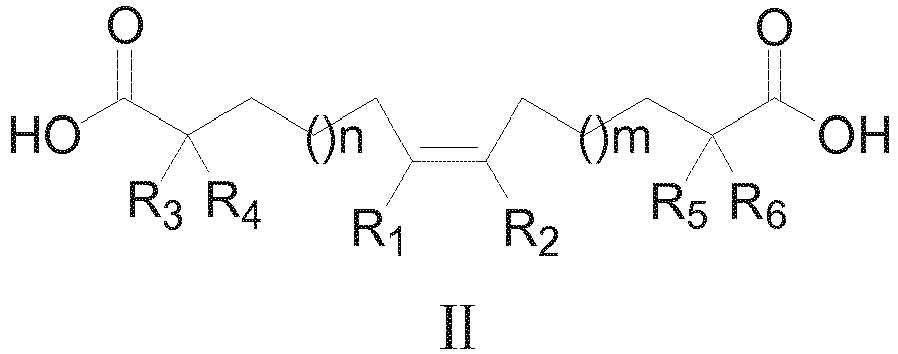 wherein R1, R2, R3, R4, R5 and R6 are each independently H, C1∼C4 alkyl, C1∼C4 alkenyl, C1∼C4 alkynyl, C3∼C7 cycloalkyl, C3∼C7 cycloalkenyl, phenyl or benzyl;alternatively, R5 and R6 together with their adjacent carbon atoms form a C3∼C7 cycloalkyl group, or together with their adjacent carbon atom form a C3∼C7 cycloalkenyl group,alternatively, R3 and R4 together with their adjacent carbon atoms form a C3∼C7 cycloalkyl group, or together with their adjacent carbon atoms form a C3∼C7 cycloalkenyl group;m, n are each independently 1, 2, 3, 4, 5 or 6,the double bond is either cis or trans.
 - The fatty acid compound represented by following formula I according to claim 1, or a pharmaceutically acceptable salt thereof, wherein the said fatty acid compound has the structure of formula III:
 wherein, R3, R4, R5, R6 are each independently H, C1∼C4 alkyl, C1∼C4 alkenyl, C1∼C4 alkynyl, C3∼C7 cycloalkyl, C3∼C7 cycloalkenyl, phenyl or benzyl,alternatively, R5 and R6 together with their adjacent carbon atoms form a C3∼C7 cycloalkyl group, or together with their adjacent carbon atoms form a C3∼C7 cycloalkenyl group,alternatively, R3 and R4 together with their adjacent carbon atoms form a C3∼C7 cycloalkyl group, or together with their adjacent carbon atoms form a C3∼C7 cycloalkenyl group,m, n are each independently 1, 2, 3, 4, 5 or 6.
 - The fatty acid compound represented by following formula I according to claim 1, or a pharmaceutically acceptable salt thereof, wherein the said fatty acid compound has the structure of formula IV:
 wherein, R3, R4, R5, R6 are each independently H, C1∼C4 alkyl, C1∼C4 alkenyl, C1∼C4 alkynyl, C3∼C7 cycloalkyl, C3∼C7 cycloalkenyl, phenyl or benzyl,alternatively, R5 and R6 together with their adjacent carbon atoms form a C3∼C7 cycloalkyl group, or together with their adjacent carbon atoms form a C3∼C7 cycloalkenyl group,alternatively, R3 and R4 together with their adjacent carbon atoms form a C3∼C7 cycloalkyl group, or together with their adjacent carbon atoms form a C3∼C7 cycloalkenyl group.m, n are each independently 1, 2, 3, 4, 5 or 6,p is 1, 2 or 3.
 - The fatty acid compound represented by following formula I according to claim 1, or a pharmaceutically acceptable salt thereof, wherein the said fatty acid compound is selected from:









- A method for preparing the fatty acid compound represented by following formula I according to claim 1, the method comprises the following steps:
 (1) reacting substituted ethyl acetate A1 with dibromoalkane A2 in the presence of lithium diisopropylamide and an organic solvent to obtain intermediate A3; under the same conditions, replacing A1 with
 (2) reacting equivalent A3 and A4 with tosylmethyl isocyanide in the presence of NaH, tetrabutylammonium iodide, and dimethyl sulfoxide to obtain compound A5;(3) reacting A5 with concentrated hydrochloric acid to remove hydrocyanic acid and p-toluenesulfonic acid to obtain A6;(4) under alkaline conditions, conducting A6 a hydrolysis reaction and acidulating by dilute hydrochloric acid to obtain A7;(5) further reducing A7 with sodium borohydride to obtain A8;(6) refluxing a toluene solution including of A8 and the catalyst p-toluenesulfonic acid to obtain a compound A9 or A10;the definitions of R3, R4, R5, R6, n and m are the same as described in claim 1.
 - A method for preparing the fatty acid compound represented by following formula I according to claim 1, the method comprises the following steps:
 (1) reacting sodium acetylide A11 with bromo A12 in DMF to obtain intermediate A13;(2) condensing alkynyl compound A13 and brominated compound A2 in the presence of n-butyl lithium and hexamethylphosphoric triamide to give intermediate A14;(3) refluxing intermediate A14 with lithium bromide in an organic solvent to give intermediate A15;(4) condensing A15 with A16 or A17 in the presence of lithium diisopropylamide to obtain intermediate A18;(5) conducting A18 a hydrogenation reaction to obtain intermediate A19;(6) under alkaline conditions, conducting A19 a hydrolysis reaction and acidulating by dilute hydrochloric acid to obtain A20;the definitions of R3, R4, R5, R6, n and m are the same as described in claim 1.
 - The method for preparing the fatty acid compound represented by following formula I according to claim 8, intermediate A15 of be prepared taking the following steps:
 (1) reacting 1-alkynyl-alcohol compound A21 in the presence of pyridine p-toluenesulfonate and 2-tetrahydropyran to give intermediate A23; reacting 1-hydroxy-bromo compound A22 in the presence of pyridine p-toluenesulfonate and 2-tetrahydropyran to obtained intermediate A24;(2) condensing A23 with A24 in the presence of n-butyllithium and HMPA to give intermediate A25;(3) deprotection of A25 in the presence of p-toluenesulfonic acid and an organic solvent to obtain intermediate A26;(4) reacting A26 with carbon tetrabromide and triphenylphosphine to give the intermediate A15;the definitions of n and m are the same as described in claim 1.
 - The method for preparing the fatty acid compound represented by following formula I according to claim 3, the method comprises the following steps:
 (1) reacting intermediate A18 with bis(pinacolato)diboron catalyzed by Tetrakis(triphenylphosphine)platinum to form intermediate A26;(2) conducting A26 a coupling reaction with iodide R1I or R2I to give intermediate A27;(3) under alkaline conditions, conducting A27 a hydrolysis reaction and acidulating by dilute hydrochloric acid to obtain the compound represented by the formula II;wherein, the definitions of R3, R4, R5, R6, m and n are the same as described in claim 3.
 - The method for preparing the fatty acid compound represented by following formula I according to claim 4, the method comprises the following steps:

wherein, the definitions of R3, R4, R5, R6, m and n are the same as described in claim4. - The method for preparing the fatty acid compound represented by following formula I according to claim 5, the method comprises the following steps:
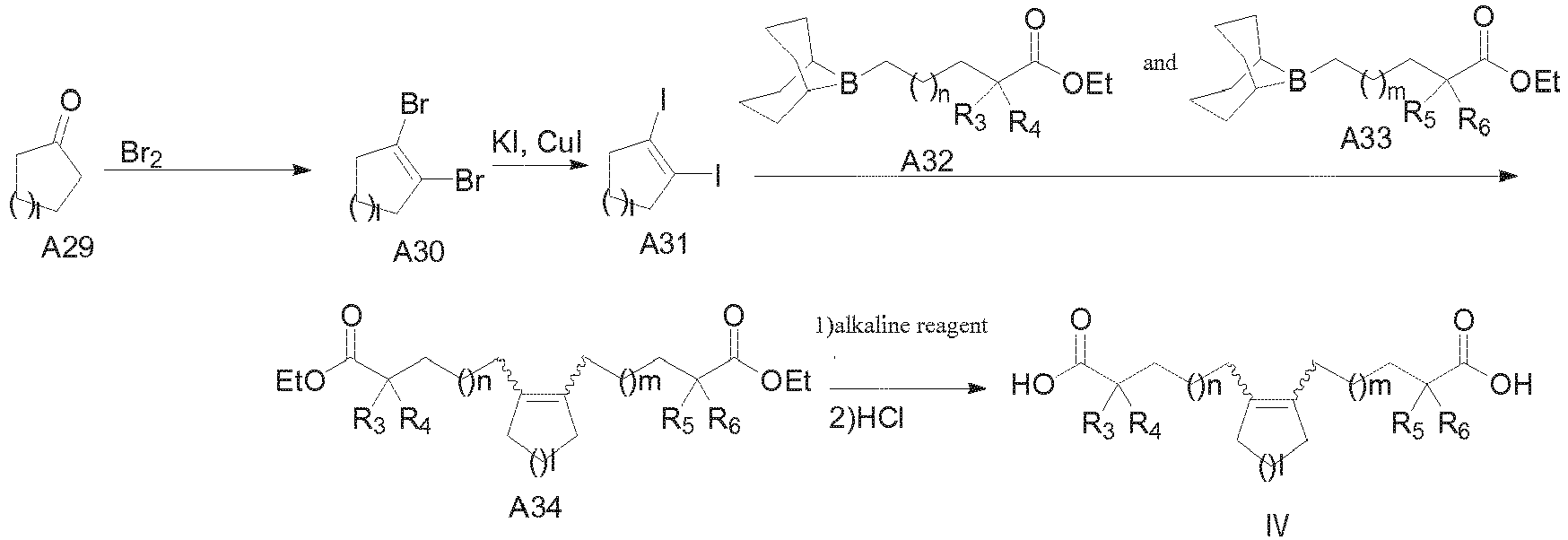 (1) first, converting compound A29 to a bromo olefin intermediate A30;(2) converting intermediate A30 to intermediate A31 in the presence of potassium iodide and cuprous iodide;(3) further coupling A31 with boron reagents A32 and A33 to obtain intermediate A34;(4) under alkaline conditions, conducting A34 a hydrolysis reaction and acidulating by dilute hydrochloric acid to obtain the compound represented by the formula IV;wherein, the definitions of R3, R4, R5, R6, m, n and p are the same as described in claim5.
 - A use of the fatty acid compound or pharmaceutically acceptable salts thereof according to any one of claims 1 to 6 in preparing a medicament for the treatment of obesity or diabetes.
- A pharmaceutical composition for treating obesity or diabetes, comprising one or more selected from the group consisting of the fatty acid compound or pharmaceutically acceptable salts thereof according to any one of claims 1 to 6 as an active ingredient, and one or more pharmaceutically acceptable adjuvants.
Applications Claiming Priority (2)
| Application Number | Priority Date | Filing Date | Title |
|---|---|---|---|
| CN201610105067.0A CN107118098B (en) | 2016-02-25 | 2016-02-25 | A class of fatty acid compounds, its preparation method and use |
| PCT/CN2017/074039 WO2017143946A1 (en) | 2016-02-25 | 2017-02-20 | Fatty acid compound, preparation method therefor and use thereof |
Publications (3)
| Publication Number | Publication Date |
|---|---|
| EP3421447A1 true EP3421447A1 (en) | 2019-01-02 |
| EP3421447A4 EP3421447A4 (en) | 2019-02-20 |
| EP3421447B1 EP3421447B1 (en) | 2021-03-24 |
Family
ID=59684700
Family Applications (1)
| Application Number | Title | Priority Date | Filing Date |
|---|---|---|---|
| EP17755775.8A Active EP3421447B1 (en) | 2016-02-25 | 2017-02-20 | Fatty acid compound, preparation method therefor and use thereof |
Country Status (5)
| Country | Link |
|---|---|
| US (1) | US10414713B2 (en) |
| EP (1) | EP3421447B1 (en) |
| JP (1) | JP6651028B2 (en) |
| CN (1) | CN107118098B (en) |
| WO (1) | WO2017143946A1 (en) |
Families Citing this family (4)
| Publication number | Priority date | Publication date | Assignee | Title |
|---|---|---|---|---|
| CN115572224A (en) * | 2021-06-21 | 2023-01-06 | 上海茂晟康慧科技有限公司 | Synthesis method of (S) - (-) -3-cyclohexenecarboxylic acid |
| CN115887435A (en) * | 2021-09-23 | 2023-04-04 | 博骥源(上海)生物医药有限公司 | Long-chain compounds and their uses |
| CN115894220A (en) * | 2021-09-23 | 2023-04-04 | 中国科学院上海药物研究所 | A class of long-chain compounds acting on ACLY, its preparation method and use |
| WO2025223509A1 (en) * | 2024-04-25 | 2025-10-30 | 博骥源(上海)生物医药有限公司 | Class of dienyl long-chain compounds acting on acly, and preparation method therefor and use thereof |
Family Cites Families (17)
| Publication number | Priority date | Publication date | Assignee | Title |
|---|---|---|---|---|
| US3930024A (en) * | 1969-09-02 | 1975-12-30 | Parke Davis & Co | Pharmaceutical compositions and methods |
| US3773946A (en) * | 1969-09-02 | 1973-11-20 | Parke Davis & Co | Triglyceride-lowering compositions and methods |
| IL64542A0 (en) * | 1981-12-15 | 1982-03-31 | Yissum Res Dev Co | Long-chain alpha,omega-dicarboxylic acids and derivatives thereof and pharmaceutical compositions containing them |
| JPS59164716A (en) * | 1983-03-09 | 1984-09-17 | Mitsubishi Chem Ind Ltd | Biosynthetic inhibitor for fatty acid |
| JPS59219920A (en) * | 1983-05-28 | 1984-12-11 | 日本ケミコン株式会社 | Electrolyte for driving electrolytic condenser |
| DE3423166A1 (en) * | 1984-06-22 | 1986-01-02 | Epis S.A., Zug | ALPHA, OMEGA DICARBONIC ACIDS, METHOD FOR THE PRODUCTION THEREOF AND MEDICINAL PRODUCTS CONTAINING THESE COMPOUNDS |
| US5026461A (en) * | 1990-01-19 | 1991-06-25 | E. I. Du Pont De Nemours And Company | Process for the preparation of dodecanedioic acid |
| DE4436578A1 (en) * | 1994-10-13 | 1996-04-18 | Boehringer Mannheim Gmbh | New alpha, alpha, alpha ', alpha'-tetrachlorodicarboxylic acids, processes for their preparation and medicaments containing them |
| IL119971A (en) * | 1997-01-07 | 2003-02-12 | Yissum Res Dev Co | Pharmaceutical compositions containing dicarboxylic acids and derivatives thereof and some novel dicarboxylic acids |
| US7304093B2 (en) * | 2000-10-11 | 2007-12-04 | Esperion Therapeutics, Inc. | Ketone compounds and compositions for cholesterol management and related uses |
| CA2425311C (en) * | 2000-10-11 | 2011-06-14 | Esperion Therapeutics, Inc. | Ketone compounds and compositions for cholesterol management and related uses |
| US7993654B2 (en) * | 2002-12-23 | 2011-08-09 | Beiersdorf Ag | Self-adhesive polymer matrix containing sea algae extract |
| CA2513660C (en) * | 2003-01-23 | 2012-05-08 | Esperion Therapeutics, Inc. | Hydroxyl compounds and compositions for cholesterol management and related uses |
| IL181577A0 (en) * | 2007-02-26 | 2007-07-04 | Jacob Bar Tana | Combination therapy composition and methods for the treatment of cardiovascular disorders and immune-related disorders |
| US8158391B2 (en) * | 2009-05-06 | 2012-04-17 | Dna Twopointo, Inc. | Production of an α-carboxyl-ω-hydroxy fatty acid using a genetically modified Candida strain |
| US8623897B2 (en) * | 2010-09-20 | 2014-01-07 | Kareus Therapeutics, Sa | Methods and compositions for treatment of diabetes and dyslipidemia |
| FR3024037B1 (en) * | 2014-07-25 | 2018-03-02 | Sederma | COSMETIC OR DERMATOLOGICAL ACTIVE INGREDIENT COMPRISING A MIXTURE OF UNSATURATED FATTY DICARBOXYLIC ACIDS, COMPOSITIONS COMPRISING THE SAME, AND COSMETIC OR DERMATOLOGICAL USES |
-
2016
- 2016-02-25 CN CN201610105067.0A patent/CN107118098B/en active Active
-
2017
- 2017-02-20 EP EP17755775.8A patent/EP3421447B1/en active Active
- 2017-02-20 WO PCT/CN2017/074039 patent/WO2017143946A1/en not_active Ceased
- 2017-02-20 JP JP2018544043A patent/JP6651028B2/en active Active
- 2017-02-20 US US16/075,528 patent/US10414713B2/en active Active
Also Published As
| Publication number | Publication date |
|---|---|
| JP6651028B2 (en) | 2020-02-19 |
| JP2019507150A (en) | 2019-03-14 |
| WO2017143946A1 (en) | 2017-08-31 |
| US20190039989A1 (en) | 2019-02-07 |
| US10414713B2 (en) | 2019-09-17 |
| EP3421447A4 (en) | 2019-02-20 |
| EP3421447B1 (en) | 2021-03-24 |
| CN107118098B (en) | 2020-07-14 |
| CN107118098A (en) | 2017-09-01 |
Similar Documents
| Publication | Publication Date | Title |
|---|---|---|
| EP3421447B1 (en) | Fatty acid compound, preparation method therefor and use thereof | |
| JP3348859B2 (en) | Protein kinase C inhibitor | |
| JP6790007B2 (en) | A novel antagonist of the glucagon receptor | |
| CA2968449C (en) | 1-[2-(aminomethyl)benzyl]-2-thioxo-1,2,3,5-tetrahydro-4h-pyrrolo[3,2-d]pyrimidin-4-ones as inhibitors of myeloperoxidase | |
| SG187176A1 (en) | Agonists of gpr40 | |
| WO2014169817A1 (en) | Phenylalanine compound having nitrogen heterocyclic link, pharmaceutical composition thereof, preparation method therefor, and use thereof | |
| CN111757770B (en) | 3-Phenyl-4-hexynoic acid derivatives as GPR40 agonists | |
| US20200131144A1 (en) | Amine or (thio)amide containing lxr modulators | |
| Satapathy et al. | New classes of carborane-appended 5-thio-D-glucopyranose derivatives | |
| EP1805160B1 (en) | Substituted benzopyrans as selective estrogen receptor-beta agonists | |
| JP7266676B2 (en) | Potassium salt monohydrate of thienopyridone derivative and its preparation | |
| JP2016500096A (en) | New inhibitor of sodium-iodine symporter | |
| US9328128B2 (en) | Arylfluorophosphate inhibitors of intestinal apical membrane sodium/phosphate co-transport | |
| SE526598C2 (en) | R - (-) - N-methyl-3 - ((2-methyl-4-hydroxyphenyl) oxy) -3-phenyl-1-amine propane and pharmaceutical preparations comprising this substance or its salt for inhibiting monoamine uptake | |
| CN108129543B (en) | Oleanolic acid derivative and preparation method and application thereof | |
| EP3114111B1 (en) | Bicyclic pyrrole derivatives useful as agonists of gpr120 | |
| US20240218013A1 (en) | Process for the preparation of B-[(7alpha,17beta)-17-hydroxy-7-[9-[(4,4,5,5,5-pentafluoropentyl) sulfinyl]nonyl]estra-1,3,5(10)-trien-3-yl]-boronic acid and intermediates of said process | |
| EP3072873B1 (en) | Vitamin d analogues of pharmaceutical interest | |
| CN119504835B (en) | BTK protein degradation agent with silicon-containing group as hydrophobic tag, preparation method, pharmaceutical composition and application thereof | |
| CN119504834B (en) | PD-L1 protein degradation agent with silicon-containing group as hydrophobic label, preparation method, pharmaceutical composition and application thereof | |
| EP4091672A1 (en) | Stable bioisostere of resolvin e2 | |
| EP4740942A1 (en) | Aromatic amide derivative and use thereof | |
| CN101108791B (en) | Substituted phenylpropene derivatives and their preparation and use | |
| HK1203965B (en) | Boron-based 4-hydroxytamoxifen and endoxifen prodrugs as treatment for breast cancer | |
| HK1180692B (en) | Arylfluorophosphate inhibitors of intestinal apical membrane sodium/phosphate co-transport |
Legal Events
| Date | Code | Title | Description |
|---|---|---|---|
| STAA | Information on the status of an ep patent application or granted ep patent |
Free format text: STATUS: THE INTERNATIONAL PUBLICATION HAS BEEN MADE |
|
| PUAI | Public reference made under article 153(3) epc to a published international application that has entered the european phase |
Free format text: ORIGINAL CODE: 0009012 |
|
| STAA | Information on the status of an ep patent application or granted ep patent |
Free format text: STATUS: REQUEST FOR EXAMINATION WAS MADE |
|
| 17P | Request for examination filed |
Effective date: 20180912 |
|
| AK | Designated contracting states |
Kind code of ref document: A1 Designated state(s): AL AT BE BG CH CY CZ DE DK EE ES FI FR GB GR HR HU IE IS IT LI LT LU LV MC MK MT NL NO PL PT RO RS SE SI SK SM TR |
|
| AX | Request for extension of the european patent |
Extension state: BA ME |
|
| RIC1 | Information provided on ipc code assigned before grant |
Ipc: C07C 61/22 20060101ALI20190110BHEP Ipc: A61P 3/10 20060101ALI20190110BHEP Ipc: C07C 57/13 20060101AFI20190110BHEP Ipc: C07C 61/16 20060101ALI20190110BHEP Ipc: A61P 3/04 20060101ALI20190110BHEP Ipc: A61K 31/194 20060101ALI20190110BHEP Ipc: C07C 57/42 20060101ALI20190110BHEP Ipc: C07C 55/28 20060101ALI20190110BHEP Ipc: C07C 51/09 20060101ALI20190110BHEP Ipc: C07C 61/35 20060101ALI20190110BHEP Ipc: C07C 61/20 20060101ALI20190110BHEP Ipc: C07C 57/26 20060101ALI20190110BHEP |
|
| A4 | Supplementary search report drawn up and despatched |
Effective date: 20190118 |
|
| DAV | Request for validation of the european patent (deleted) | ||
| DAX | Request for extension of the european patent (deleted) | ||
| STAA | Information on the status of an ep patent application or granted ep patent |
Free format text: STATUS: EXAMINATION IS IN PROGRESS |
|
| 17Q | First examination report despatched |
Effective date: 20200207 |
|
| GRAP | Despatch of communication of intention to grant a patent |
Free format text: ORIGINAL CODE: EPIDOSNIGR1 |
|
| STAA | Information on the status of an ep patent application or granted ep patent |
Free format text: STATUS: GRANT OF PATENT IS INTENDED |
|
| INTG | Intention to grant announced |
Effective date: 20200826 |
|
| GRAS | Grant fee paid |
Free format text: ORIGINAL CODE: EPIDOSNIGR3 |
|
| GRAA | (expected) grant |
Free format text: ORIGINAL CODE: 0009210 |
|
| STAA | Information on the status of an ep patent application or granted ep patent |
Free format text: STATUS: THE PATENT HAS BEEN GRANTED |
|
| AK | Designated contracting states |
Kind code of ref document: B1 Designated state(s): AL AT BE BG CH CY CZ DE DK EE ES FI FR GB GR HR HU IE IS IT LI LT LU LV MC MK MT NL NO PL PT RO RS SE SI SK SM TR |
|
| REG | Reference to a national code |
Ref country code: GB Ref legal event code: FG4D |
|
| REG | Reference to a national code |
Ref country code: CH Ref legal event code: EP |
|
| REG | Reference to a national code |
Ref country code: IE Ref legal event code: FG4D |
|
| REG | Reference to a national code |
Ref country code: AT Ref legal event code: REF Ref document number: 1374366 Country of ref document: AT Kind code of ref document: T Effective date: 20210415 Ref country code: DE Ref legal event code: R096 Ref document number: 602017035261 Country of ref document: DE |
|
| REG | Reference to a national code |
Ref country code: LT Ref legal event code: MG9D |
|
| PG25 | Lapsed in a contracting state [announced via postgrant information from national office to epo] |
Ref country code: GR Free format text: LAPSE BECAUSE OF FAILURE TO SUBMIT A TRANSLATION OF THE DESCRIPTION OR TO PAY THE FEE WITHIN THE PRESCRIBED TIME-LIMIT Effective date: 20210625 Ref country code: FI Free format text: LAPSE BECAUSE OF FAILURE TO SUBMIT A TRANSLATION OF THE DESCRIPTION OR TO PAY THE FEE WITHIN THE PRESCRIBED TIME-LIMIT Effective date: 20210324 Ref country code: HR Free format text: LAPSE BECAUSE OF FAILURE TO SUBMIT A TRANSLATION OF THE DESCRIPTION OR TO PAY THE FEE WITHIN THE PRESCRIBED TIME-LIMIT Effective date: 20210324 Ref country code: NO Free format text: LAPSE BECAUSE OF FAILURE TO SUBMIT A TRANSLATION OF THE DESCRIPTION OR TO PAY THE FEE WITHIN THE PRESCRIBED TIME-LIMIT Effective date: 20210624 Ref country code: BG Free format text: LAPSE BECAUSE OF FAILURE TO SUBMIT A TRANSLATION OF THE DESCRIPTION OR TO PAY THE FEE WITHIN THE PRESCRIBED TIME-LIMIT Effective date: 20210624 |
|
| PG25 | Lapsed in a contracting state [announced via postgrant information from national office to epo] |
Ref country code: RS Free format text: LAPSE BECAUSE OF FAILURE TO SUBMIT A TRANSLATION OF THE DESCRIPTION OR TO PAY THE FEE WITHIN THE PRESCRIBED TIME-LIMIT Effective date: 20210324 Ref country code: LV Free format text: LAPSE BECAUSE OF FAILURE TO SUBMIT A TRANSLATION OF THE DESCRIPTION OR TO PAY THE FEE WITHIN THE PRESCRIBED TIME-LIMIT Effective date: 20210324 Ref country code: SE Free format text: LAPSE BECAUSE OF FAILURE TO SUBMIT A TRANSLATION OF THE DESCRIPTION OR TO PAY THE FEE WITHIN THE PRESCRIBED TIME-LIMIT Effective date: 20210324 |
|
| REG | Reference to a national code |
Ref country code: NL Ref legal event code: MP Effective date: 20210324 |
|
| REG | Reference to a national code |
Ref country code: AT Ref legal event code: MK05 Ref document number: 1374366 Country of ref document: AT Kind code of ref document: T Effective date: 20210324 |
|
| PG25 | Lapsed in a contracting state [announced via postgrant information from national office to epo] |
Ref country code: NL Free format text: LAPSE BECAUSE OF FAILURE TO SUBMIT A TRANSLATION OF THE DESCRIPTION OR TO PAY THE FEE WITHIN THE PRESCRIBED TIME-LIMIT Effective date: 20210324 |
|
| PG25 | Lapsed in a contracting state [announced via postgrant information from national office to epo] |
Ref country code: CZ Free format text: LAPSE BECAUSE OF FAILURE TO SUBMIT A TRANSLATION OF THE DESCRIPTION OR TO PAY THE FEE WITHIN THE PRESCRIBED TIME-LIMIT Effective date: 20210324 Ref country code: EE Free format text: LAPSE BECAUSE OF FAILURE TO SUBMIT A TRANSLATION OF THE DESCRIPTION OR TO PAY THE FEE WITHIN THE PRESCRIBED TIME-LIMIT Effective date: 20210324 Ref country code: LT Free format text: LAPSE BECAUSE OF FAILURE TO SUBMIT A TRANSLATION OF THE DESCRIPTION OR TO PAY THE FEE WITHIN THE PRESCRIBED TIME-LIMIT Effective date: 20210324 Ref country code: SM Free format text: LAPSE BECAUSE OF FAILURE TO SUBMIT A TRANSLATION OF THE DESCRIPTION OR TO PAY THE FEE WITHIN THE PRESCRIBED TIME-LIMIT Effective date: 20210324 Ref country code: AT Free format text: LAPSE BECAUSE OF FAILURE TO SUBMIT A TRANSLATION OF THE DESCRIPTION OR TO PAY THE FEE WITHIN THE PRESCRIBED TIME-LIMIT Effective date: 20210324 |
|
| PG25 | Lapsed in a contracting state [announced via postgrant information from national office to epo] |
Ref country code: IS Free format text: LAPSE BECAUSE OF FAILURE TO SUBMIT A TRANSLATION OF THE DESCRIPTION OR TO PAY THE FEE WITHIN THE PRESCRIBED TIME-LIMIT Effective date: 20210724 Ref country code: PL Free format text: LAPSE BECAUSE OF FAILURE TO SUBMIT A TRANSLATION OF THE DESCRIPTION OR TO PAY THE FEE WITHIN THE PRESCRIBED TIME-LIMIT Effective date: 20210324 Ref country code: PT Free format text: LAPSE BECAUSE OF FAILURE TO SUBMIT A TRANSLATION OF THE DESCRIPTION OR TO PAY THE FEE WITHIN THE PRESCRIBED TIME-LIMIT Effective date: 20210726 Ref country code: RO Free format text: LAPSE BECAUSE OF FAILURE TO SUBMIT A TRANSLATION OF THE DESCRIPTION OR TO PAY THE FEE WITHIN THE PRESCRIBED TIME-LIMIT Effective date: 20210324 Ref country code: SK Free format text: LAPSE BECAUSE OF FAILURE TO SUBMIT A TRANSLATION OF THE DESCRIPTION OR TO PAY THE FEE WITHIN THE PRESCRIBED TIME-LIMIT Effective date: 20210324 |
|
| REG | Reference to a national code |
Ref country code: DE Ref legal event code: R097 Ref document number: 602017035261 Country of ref document: DE |
|
| PG25 | Lapsed in a contracting state [announced via postgrant information from national office to epo] |
Ref country code: AL Free format text: LAPSE BECAUSE OF FAILURE TO SUBMIT A TRANSLATION OF THE DESCRIPTION OR TO PAY THE FEE WITHIN THE PRESCRIBED TIME-LIMIT Effective date: 20210324 Ref country code: DK Free format text: LAPSE BECAUSE OF FAILURE TO SUBMIT A TRANSLATION OF THE DESCRIPTION OR TO PAY THE FEE WITHIN THE PRESCRIBED TIME-LIMIT Effective date: 20210324 Ref country code: ES Free format text: LAPSE BECAUSE OF FAILURE TO SUBMIT A TRANSLATION OF THE DESCRIPTION OR TO PAY THE FEE WITHIN THE PRESCRIBED TIME-LIMIT Effective date: 20210324 |
|
| PLBE | No opposition filed within time limit |
Free format text: ORIGINAL CODE: 0009261 |
|
| STAA | Information on the status of an ep patent application or granted ep patent |
Free format text: STATUS: NO OPPOSITION FILED WITHIN TIME LIMIT |
|
| PG25 | Lapsed in a contracting state [announced via postgrant information from national office to epo] |
Ref country code: SI Free format text: LAPSE BECAUSE OF FAILURE TO SUBMIT A TRANSLATION OF THE DESCRIPTION OR TO PAY THE FEE WITHIN THE PRESCRIBED TIME-LIMIT Effective date: 20210324 |
|
| 26N | No opposition filed |
Effective date: 20220104 |
|
| PG25 | Lapsed in a contracting state [announced via postgrant information from national office to epo] |
Ref country code: IS Free format text: LAPSE BECAUSE OF FAILURE TO SUBMIT A TRANSLATION OF THE DESCRIPTION OR TO PAY THE FEE WITHIN THE PRESCRIBED TIME-LIMIT Effective date: 20210724 |
|
| PG25 | Lapsed in a contracting state [announced via postgrant information from national office to epo] |
Ref country code: MC Free format text: LAPSE BECAUSE OF FAILURE TO SUBMIT A TRANSLATION OF THE DESCRIPTION OR TO PAY THE FEE WITHIN THE PRESCRIBED TIME-LIMIT Effective date: 20210324 |
|
| REG | Reference to a national code |
Ref country code: CH Ref legal event code: PL |
|
| REG | Reference to a national code |
Ref country code: BE Ref legal event code: MM Effective date: 20220228 |
|
| PG25 | Lapsed in a contracting state [announced via postgrant information from national office to epo] |
Ref country code: LU Free format text: LAPSE BECAUSE OF NON-PAYMENT OF DUE FEES Effective date: 20220220 |
|
| PG25 | Lapsed in a contracting state [announced via postgrant information from national office to epo] |
Ref country code: LI Free format text: LAPSE BECAUSE OF NON-PAYMENT OF DUE FEES Effective date: 20220228 Ref country code: IE Free format text: LAPSE BECAUSE OF NON-PAYMENT OF DUE FEES Effective date: 20220220 Ref country code: CH Free format text: LAPSE BECAUSE OF NON-PAYMENT OF DUE FEES Effective date: 20220228 |
|
| PG25 | Lapsed in a contracting state [announced via postgrant information from national office to epo] |
Ref country code: BE Free format text: LAPSE BECAUSE OF NON-PAYMENT OF DUE FEES Effective date: 20220228 |
|
| P01 | Opt-out of the competence of the unified patent court (upc) registered |
Effective date: 20230509 |
|
| PG25 | Lapsed in a contracting state [announced via postgrant information from national office to epo] |
Ref country code: HU Free format text: LAPSE BECAUSE OF FAILURE TO SUBMIT A TRANSLATION OF THE DESCRIPTION OR TO PAY THE FEE WITHIN THE PRESCRIBED TIME-LIMIT; INVALID AB INITIO Effective date: 20170220 |
|
| PG25 | Lapsed in a contracting state [announced via postgrant information from national office to epo] |
Ref country code: MK Free format text: LAPSE BECAUSE OF FAILURE TO SUBMIT A TRANSLATION OF THE DESCRIPTION OR TO PAY THE FEE WITHIN THE PRESCRIBED TIME-LIMIT Effective date: 20210324 Ref country code: CY Free format text: LAPSE BECAUSE OF FAILURE TO SUBMIT A TRANSLATION OF THE DESCRIPTION OR TO PAY THE FEE WITHIN THE PRESCRIBED TIME-LIMIT Effective date: 20210324 |
|
| PG25 | Lapsed in a contracting state [announced via postgrant information from national office to epo] |
Ref country code: MT Free format text: LAPSE BECAUSE OF FAILURE TO SUBMIT A TRANSLATION OF THE DESCRIPTION OR TO PAY THE FEE WITHIN THE PRESCRIBED TIME-LIMIT Effective date: 20210324 |
|
| PG25 | Lapsed in a contracting state [announced via postgrant information from national office to epo] |
Ref country code: TR Free format text: LAPSE BECAUSE OF FAILURE TO SUBMIT A TRANSLATION OF THE DESCRIPTION OR TO PAY THE FEE WITHIN THE PRESCRIBED TIME-LIMIT Effective date: 20210324 |
|
| PGFP | Annual fee paid to national office [announced via postgrant information from national office to epo] |
Ref country code: GB Payment date: 20260128 Year of fee payment: 10 |
|
| PGFP | Annual fee paid to national office [announced via postgrant information from national office to epo] |
Ref country code: DE Payment date: 20260227 Year of fee payment: 10 |
|
| PGFP | Annual fee paid to national office [announced via postgrant information from national office to epo] |
Ref country code: IT Payment date: 20260227 Year of fee payment: 10 |
|
| PGFP | Annual fee paid to national office [announced via postgrant information from national office to epo] |
Ref country code: FR Payment date: 20260223 Year of fee payment: 10 |