EP3416956B1 - Methylamine derivatives as lysyl oxidase inhibitors for the treatment of cancer - Google Patents
Methylamine derivatives as lysyl oxidase inhibitors for the treatment of cancer Download PDFInfo
- Publication number
- EP3416956B1 EP3416956B1 EP17706871.5A EP17706871A EP3416956B1 EP 3416956 B1 EP3416956 B1 EP 3416956B1 EP 17706871 A EP17706871 A EP 17706871A EP 3416956 B1 EP3416956 B1 EP 3416956B1
- Authority
- EP
- European Patent Office
- Prior art keywords
- group
- alkyl
- compound
- substituted
- ring
- Prior art date
- Legal status (The legal status is an assumption and is not a legal conclusion. Google has not performed a legal analysis and makes no representation as to the accuracy of the status listed.)
- Active
Links
Images




Classifications
-
- C—CHEMISTRY; METALLURGY
- C07—ORGANIC CHEMISTRY
- C07D—HETEROCYCLIC COMPOUNDS
- C07D333/00—Heterocyclic compounds containing five-membered rings having one sulfur atom as the only ring hetero atom
- C07D333/02—Heterocyclic compounds containing five-membered rings having one sulfur atom as the only ring hetero atom not condensed with other rings
- C07D333/04—Heterocyclic compounds containing five-membered rings having one sulfur atom as the only ring hetero atom not condensed with other rings not substituted on the ring sulphur atom
- C07D333/26—Heterocyclic compounds containing five-membered rings having one sulfur atom as the only ring hetero atom not condensed with other rings not substituted on the ring sulphur atom with hetero atoms or with carbon atoms having three bonds to hetero atoms with at the most one bond to halogen, e.g. ester or nitrile radicals, directly attached to ring carbon atoms
- C07D333/30—Hetero atoms other than halogen
- C07D333/34—Sulfur atoms
-
- C—CHEMISTRY; METALLURGY
- C07—ORGANIC CHEMISTRY
- C07D—HETEROCYCLIC COMPOUNDS
- C07D417/00—Heterocyclic compounds containing two or more hetero rings, at least one ring having nitrogen and sulfur atoms as the only ring hetero atoms, not provided for by group C07D415/00
- C07D417/02—Heterocyclic compounds containing two or more hetero rings, at least one ring having nitrogen and sulfur atoms as the only ring hetero atoms, not provided for by group C07D415/00 containing two hetero rings
- C07D417/12—Heterocyclic compounds containing two or more hetero rings, at least one ring having nitrogen and sulfur atoms as the only ring hetero atoms, not provided for by group C07D415/00 containing two hetero rings linked by a chain containing hetero atoms as chain links
-
- A—HUMAN NECESSITIES
- A61—MEDICAL OR VETERINARY SCIENCE; HYGIENE
- A61P—SPECIFIC THERAPEUTIC ACTIVITY OF CHEMICAL COMPOUNDS OR MEDICINAL PREPARATIONS
- A61P35/00—Antineoplastic agents
-
- C—CHEMISTRY; METALLURGY
- C07—ORGANIC CHEMISTRY
- C07D—HETEROCYCLIC COMPOUNDS
- C07D263/00—Heterocyclic compounds containing 1,3-oxazole or hydrogenated 1,3-oxazole rings
- C07D263/02—Heterocyclic compounds containing 1,3-oxazole or hydrogenated 1,3-oxazole rings not condensed with other rings
- C07D263/30—Heterocyclic compounds containing 1,3-oxazole or hydrogenated 1,3-oxazole rings not condensed with other rings having two or three double bonds between ring members or between ring members and non-ring members
- C07D263/34—Heterocyclic compounds containing 1,3-oxazole or hydrogenated 1,3-oxazole rings not condensed with other rings having two or three double bonds between ring members or between ring members and non-ring members with hetero atoms or with carbon atoms having three bonds to hetero atoms with at the most one bond to halogen, e.g. ester or nitrile radicals, directly attached to ring carbon atoms
- C07D263/46—Sulfur atoms
-
- C—CHEMISTRY; METALLURGY
- C07—ORGANIC CHEMISTRY
- C07D—HETEROCYCLIC COMPOUNDS
- C07D277/00—Heterocyclic compounds containing 1,3-thiazole or hydrogenated 1,3-thiazole rings
- C07D277/02—Heterocyclic compounds containing 1,3-thiazole or hydrogenated 1,3-thiazole rings not condensed with other rings
- C07D277/20—Heterocyclic compounds containing 1,3-thiazole or hydrogenated 1,3-thiazole rings not condensed with other rings having two or three double bonds between ring members or between ring members and non-ring members
- C07D277/22—Heterocyclic compounds containing 1,3-thiazole or hydrogenated 1,3-thiazole rings not condensed with other rings having two or three double bonds between ring members or between ring members and non-ring members with only hydrogen atoms, hydrocarbon or substituted hydrocarbon radicals, directly attached to ring carbon atoms
- C07D277/26—Radicals substituted by sulfur atoms
-
- C—CHEMISTRY; METALLURGY
- C07—ORGANIC CHEMISTRY
- C07D—HETEROCYCLIC COMPOUNDS
- C07D277/00—Heterocyclic compounds containing 1,3-thiazole or hydrogenated 1,3-thiazole rings
- C07D277/02—Heterocyclic compounds containing 1,3-thiazole or hydrogenated 1,3-thiazole rings not condensed with other rings
- C07D277/20—Heterocyclic compounds containing 1,3-thiazole or hydrogenated 1,3-thiazole rings not condensed with other rings having two or three double bonds between ring members or between ring members and non-ring members
- C07D277/32—Heterocyclic compounds containing 1,3-thiazole or hydrogenated 1,3-thiazole rings not condensed with other rings having two or three double bonds between ring members or between ring members and non-ring members with hetero atoms or with carbon atoms having three bonds to hetero atoms with at the most one bond to halogen, e.g. ester or nitrile radicals, directly attached to ring carbon atoms
- C07D277/36—Sulfur atoms
-
- C—CHEMISTRY; METALLURGY
- C07—ORGANIC CHEMISTRY
- C07D—HETEROCYCLIC COMPOUNDS
- C07D333/00—Heterocyclic compounds containing five-membered rings having one sulfur atom as the only ring hetero atom
- C07D333/02—Heterocyclic compounds containing five-membered rings having one sulfur atom as the only ring hetero atom not condensed with other rings
- C07D333/04—Heterocyclic compounds containing five-membered rings having one sulfur atom as the only ring hetero atom not condensed with other rings not substituted on the ring sulphur atom
- C07D333/06—Heterocyclic compounds containing five-membered rings having one sulfur atom as the only ring hetero atom not condensed with other rings not substituted on the ring sulphur atom with only hydrogen atoms, hydrocarbon or substituted hydrocarbon radicals, directly attached to the ring carbon atoms
- C07D333/14—Radicals substituted by singly bound hetero atoms other than halogen
- C07D333/18—Radicals substituted by singly bound hetero atoms other than halogen by sulfur atoms
-
- C—CHEMISTRY; METALLURGY
- C07—ORGANIC CHEMISTRY
- C07D—HETEROCYCLIC COMPOUNDS
- C07D409/00—Heterocyclic compounds containing two or more hetero rings, at least one ring having sulfur atoms as the only ring hetero atoms
- C07D409/02—Heterocyclic compounds containing two or more hetero rings, at least one ring having sulfur atoms as the only ring hetero atoms containing two hetero rings
- C07D409/12—Heterocyclic compounds containing two or more hetero rings, at least one ring having sulfur atoms as the only ring hetero atoms containing two hetero rings linked by a chain containing hetero atoms as chain links
-
- C—CHEMISTRY; METALLURGY
- C12—BIOCHEMISTRY; BEER; SPIRITS; WINE; VINEGAR; MICROBIOLOGY; ENZYMOLOGY; MUTATION OR GENETIC ENGINEERING
- C12Q—MEASURING OR TESTING PROCESSES INVOLVING ENZYMES, NUCLEIC ACIDS OR MICROORGANISMS; COMPOSITIONS OR TEST PAPERS THEREFOR; PROCESSES OF PREPARING SUCH COMPOSITIONS; CONDITION-RESPONSIVE CONTROL IN MICROBIOLOGICAL OR ENZYMOLOGICAL PROCESSES
- C12Q1/00—Measuring or testing processes involving enzymes, nucleic acids or microorganisms; Compositions therefor; Processes of preparing such compositions
- C12Q1/34—Measuring or testing processes involving enzymes, nucleic acids or microorganisms; Compositions therefor; Processes of preparing such compositions involving hydrolase
- C12Q1/37—Measuring or testing processes involving enzymes, nucleic acids or microorganisms; Compositions therefor; Processes of preparing such compositions involving hydrolase involving peptidase or proteinase
-
- C—CHEMISTRY; METALLURGY
- C12—BIOCHEMISTRY; BEER; SPIRITS; WINE; VINEGAR; MICROBIOLOGY; ENZYMOLOGY; MUTATION OR GENETIC ENGINEERING
- C12Y—ENZYMES
- C12Y304/00—Hydrolases acting on peptide bonds, i.e. peptidases (3.4)
- C12Y304/21—Serine endopeptidases (3.4.21)
Definitions
- This invention relates to compounds. More specifically, the invention relates to compounds useful as lysyl oxidase (LOX) and lysyl oxidase-like (LOXL) family members (LOXL1, LOXL2, LOXL3, LOXL4) inhibitors, to pharmaceutical compositions comprising the compounds, and to the compounds for use in the treatment of conditions mediated by LOX and LOXL, for example cancer.
- LOX lysyl oxidase
- LOXL lysyl oxidase-like family members
- LOX protein-6-lysine-oxidase; EC 1.4.3.13
- ECM extracellular matrix
- LOX is secreted as a precursor protein that is proteolytically processed by procollagen C-proteinases (bone morphogenetic protein 1 - BMP-1) and mammalian tolloid-like protein (mTLL-1)(Uzel, Scott et al. 2001) to generate an 18kDa pro-peptide and the 32kDa active LOX enzyme (Lucero and Kagan 2006).
- the catalytic domain contains copper and a lysine-tyrosylquinone (LTQ) cofactor.
- LTQ is formed by post-translational oxidation of a catalytic site tyrosine (Tyr349), which then condenses onto a lysine, also within the catalytic site (Lys314), to form a stable covalent modification that is an essential part of the catalytic mechanism (Lucero and Kagan 2006) (Kagan and Li 2003).
- LOX is part of a protein family consisting of five paralogues, LOX, LOX-like 1 [LOXL1], LOX-like 2 [LOXL2], LOX-like 3 [LOXL3] and LOX-like 4 [LOXL4]), all containing a conserved catalytic region.
- LOX enzymes play a crucial role in maintaining ECM stability, by initiating and regulating the crosslinking of collagens and elastin within the extracellular matrix (ECM). The activity of these enzymes is key to maintaining the normal tensile and elastic features of connective tissue of many organ systems within the body. LOX expression decreases during ageing indicating that its activity is especially important during development.
- LOX In addition to its role in tissue remodelling, LOX also plays a critical role in primary cancer and metastasis. Studies have shown that LOX plays a fundamental role in the growth of primary tumours in colorectal and lung cancer (Gao, Xiao et al. 2010, Baker, Cox et al. 2011) and glioblastoma (Mammoto, Jiang et al. 2013).
- LOX is elevated in more than 70 % of breast cancer patients with Estrogen Receptor negative disease, in 80 % of head & neck cancer patients, in 33 % of primary colorectal carcinomas (CRC) and 48 % of metastatic tissues from patients with CRC (Baker, Cox et al. 2011), and in cirrhotic hepatocellular carcinoma (HCC) patients with a history of alcoholism (Huang, Ho et al. 2013).
- CRC primary colorectal carcinomas
- HCC cirrhotic hepatocellular carcinoma
- LOX is also overexpressed in numerous other cancers including lung, prostate and pancreatic cancers.
- Elevated LOX expression is also associated with metastasis and decreased patient survival (Baker, Cox et al. 2011, Wilgus, Borczuk et al. 2011)
- LOXL2 is another member of the LOX family that is involved in the cross-linking of extracellular collagens and elastin (Vadasz, Kessler et al. 2005) (Kim, Kim et al. 2010).
- the LOXL2 protein has scavenger receptor cysteine-rich regions that are commonly found in cell surface receptors and adhesion molecules, as well as a cytokine receptor-like domain.
- LOXL2 expression has been found upregulated in breast, gastric, colon, esophageal, head and neck, lung and laryngeal carcinomas, as reviewed in Barker et al (Barker, Cox et al. 2012) and in renal cells carcinoma (Hase, Jingushi et al. 2014) (Nishikawa, Chiyomaru et al. 2015).
- LOXL1 was found to be overexpressed in metastatic non-small cell lung cancer (NSCLC), and the metastatic phenotype can be reduced by inhibition with LOXL1 siRNA (Lee, Kim et al. 2011).
- LOXL3 mRNA was expressed in Hs578T highly invasive breast cancer cells, but not in poorly invasive and non-metastatic breast cancer cells MCF7 and T47D (Kirschmann, Seftor et al. 2002).
- EMT epithelial-mesenchymal transition
- LOX and LOXL are implicated in fibrotic diseases, such as liver fibrosis, lung fibrosis, kidney fibrosis, cardiac fibrosis, myelofibrosis and schleroderma. Both LOX and LOXL are highly expressed in fibrotic areas, in surrounding myofibroblasts and in serum of patients with fibrotic conditions (Kagan 1994) (Kim, Peyrol et al. 1999) (Siegel, Chen et al. 1978) (Jourdan-Le Saux, Gleyzal et al. 1994) (Murawaki, Kusakabe et al. 1991).
- LOX is also implicated in cardiovascular disease. As discussed in the detailed description of the invention, LOX inhibition may prove beneficial in the treatment or prevention of cardiovascular conditions, including hypertensive heart disease, heart failure, cardiac hypertrophy and atherosclerosis.
- LOX is associated with the amyloid-beta (A ⁇ ) related pathological hallmarks (such as cerebral amyloid angiopathy and senile plaques) of both Alzheimer's disease (AD) and hereditary cerebral hemorrhage with amyloidosis of the Dutch type (HCHWA-D) pathogenesis (Wilhelmus, Bol et al. 2013).
- LOX activity is increased in the hippocampal samples of Alzheimer's disease and also in non-Alzheimer's dementia (Gilad, Kagan et al. 2005).
- LOX is increased at the site of brain injury (Gilad, Kagan et al. 2001) and spinal cord injury and its inhibition lead to accelerated functional recovery in an unilateral spinal cord dissection model (Gilad and Gilad 2001).
- LOXLs are implicated in pulmonary diseases.
- LOXL2 and LOXL3 are likely to have a role in Primary Alveolar Proteinosis (PAP) since both are expressed in PAP tissue, but not normal lung tissue (Neufeld and Brekhman 2009).
- PAP Primary Alveolar Proteinosis
- LOX inhibition may be beneficial in the treatment of various ocular conditions. Inhibition of LOX or LOXL2 prevents neovascularization and fibrosis following laser-induced choroidal neovascularization (CNV). Therefore LOX and LOXL inhibitors can be useful in the treatment of conditions characterized by neovascularization, such as age-related macular degeneration (AMD), diabetic retinopathy and retinopathy of prematurity (Stalmans, Marshall et al. 2010).
- AMD age-related macular degeneration
- D diabetic retinopathy
- retinopathy of prematurity Talmans, Marshall et al. 2010.
- LOX is implicated in inflammatory conditions and may be useful in the treatment of conditions including, but not limited to acute respiratory distress syndrome (ARDS) (Mambetsariev, Tian et al. 2014).
- ARDS acute respiratory distress syndrome
- LOX is the main isoenzyme expressed in human adipose tissue and that its expression is strongly upregulated in samples from obese patients.
- ⁇ -aminopropionitrile reduces body weight gain and improves the metabolic profile in diet-induced obesity in rats (Miana, Galan et al. 2015) and reduces local adipose tissue inflammation (Halberg, Khan et al. 2009).
- LOX is upregulated in endometriosis and may be implicated in the establishment and progression of endometriotic lesions (Ruiz, Dutil et al. 2011) (Dentillo, Meola et al. 2010).
- Certain LOX inhibitors are known. These include ⁇ -aminopropionitrile (BAPN), haloamines, 1,2-diamines, allyl and propargyl amines, hydrazines, semicarbazide and thiolactones, benzylamines, mercaptopyridine and pyridazinone compounds (Pinnell and Martin 1968) (Tang, Simpson et al. 1984) (Palfreyman, McDonald et al. 1989) (Sayre 2007) (Carrington, Bird et al. 1984) (Levene, Sharman et al. 1992) (Liu, Nellaiappan et al.
- BAPN ⁇ -aminopropionitrile
- haloamines 1,2-diamines
- allyl and propargyl amines hydrazines
- semicarbazide and thiolactones benzylamines
- LOX inhibitors containing hydrazine and hydrazide groups Boundke et al, 2017
- LOXL2 inhibitors derivatives of haloallylamine (Chang et al, 2017), pyridines (Rowbottom et al, 2016a; Rowbottom et al, 2016b), pyrimidines (Rowbottom & Hutchinson, 2017a) and chromenones (Rowbottom & Hutchinson, 2017b).
- one of W and Z is carbon and is bonded to the residue and the other of W and Z is selected from the group consisting of: N and CR; wherein R is selected from the group consisting of: H, halo, -OR A1 , -NR A1 R B1 , -SR A1 , -CN, -NO 2 , -NR A1 C(O)R B1 , -C(O)NR A1 R B1 , -NR A1 C(O)OR B1 , -OC(O)NR A1 R B1 , - NR A1 C(O)NR A1 R B1 , -NR A1 SO 2 R B1 , -SO 2 NR A1 R B1 , -SO 2 R A1 , -C(O)R A1 and -C(O)OR A1 .
- one of W and Z is carbon and is bonded to the residue and the other of W and Z is selected from the group consisting of: N and CH.
- Y is selected from the group consisting of: N and CR; wherein R is selected from the group consisting of: H, halo, -OR A1 , -NR A1 R B1 , -SR A1 , -CN, -NO 2 , -NR A1 C(O)R B1 , - C(O)NR A1 R B1 , -NR A1 C(O)OR B1 , -OC(O)NR A1 R B1 , -NR A1 C(O)NR A1 R B1 , -NR A1 SO 2 R B1 , -SO 2 NR A1 R B1 , - SO 2 R A1 , -C(O)R A1 , -C(O)OR A1 and C 3-6 cycloalkyl, wherein the C 3-6 cycloalkyl groups are themselves optionally substituted with a substituent selected from the group consisting of: R A1 , halo, -OR A
- Y is selected from the group consisting of: N and CR; wherein R is selected from the group consisting of: H, halo, -OR A1 , -NR A1 R B1 , -SR A1 , -CN, -NO 2 , -NR A1 C(O)R B1 , - C(O)NR A1 R B1 , -NR A1 C(O)OR B1 , -OC(O)NR A1 R B1 , -NR A1 C(O)NR A1 R B1 , -NR A1 SO 2 R B1 , -SO 2 NR A1 R B1 , - SO 2 R A1 , -C(O)R A1 and -C(O)OR A1 .
- Y is selected from the group consisting of: N and CH.
- W, X, Y and Z are selected per the following table: W X Y Z S CR CR S N CR S CR N S N N CR S CR CR S N N S CR N S N
- the residue of the compound of Formula (I) can be substituted by the analogous portion of the Formulae of the other compounds of the invention, e.g. the compounds of Formulae (II), (III), (IV), (Va), (Vb) and (Vc).
- x is 1.
- x is 2.
- x is 2.
- n is 1, 2, 3, 4, 5 or 6.
- n is 1, 2, 3 or 4.
- n 1, 2, 3, 4, 5 or 6 and R 3 is as defined as per the following embodiments:
- R 3 is selected from the group consisting of: halo, 6-membered aryl, 5- or 6-membered heteroaryl including 1, 2 or 3 heteroatoms selected from N, O or S, -OR A1 , -NR A1 R B1 , - SR A1 , -CN, -NO 2 , -NR A1 C(O)R B1 , -C(O)NR A1 R B1 , -NR A1 C(O)OR B1 , -OC(O)NR A1 R B1 , - NR A1 C(O)NR A1 R B1 , -NR A1 SO 2 R B1 , -SO 2 NR A1 R B1 , -SO 2 R A1 , -C(O)R A1 , -C(O)OR A1 and C 3-6 cycloalkyl.
- the 6-membered aryl and 5- or 6-membered heteroaryl groups can be substituted with 1, 2 or 3 substituents selected from the group consisting of: halo, C 1-4 alkyl, C 1-4 haloalkyl, -OR A1 , -NR A1 R B1 , -CN, -NO 2 , -N 3 , -NR A1 C(O)R B1 , -C(O)NR A1 R B1 , -NR A1 C(O)OR B1 , -O(O)NR A1 R B1 , - NR A1 C(O)NR A1 R B1 , -NR A1 SO 2 R B1 , -SO 2 NR A1 R B1 , -SO 2 R A1 , -C(O)R A1 , -C(O)OR A1 and C 3-6 cycloalkyl.
- the R A1 and R B1 groups are at each occurrence independently selected from the group consisting of: H, C 1-4 alkyl and C 1-4 haloalkyl.
- R A1 and R B1 together with the nitrogen atom to which they are bonded can form a 4- to 7-membered ring system.
- n is 1 and R 3 is selected from the group consisting of: halo, 6-membered aryl, 5- or 6-membered heteroaryl including 1, 2 or 3 heteroatoms selected from N, O or S, -OR A1 , - NR A1 R B1 , -CN, -NO 2 , -NR A1 C(O)R B1 , -C(O)NR A1 R B1 , -NR A1 SO 2 R B1 , -SO 2 NR A1 R B1 , -SO 2 R A1 , -C(O)R A1 , - C(O)OR A1 and C 3-6 cycloalkyl.
- n is 2 and R 3 is selected from the group consisting of: halo, 6-membered aryl, 5- or 6-membered heteroaryl including 1, 2 or 3 heteroatoms selected from N, O or S, -OR A1 , - NR A1 R B1 , -CN, -NO 2 , -NR A1 C(O)R B1 , -C(O)NR A1 R B1 , -NR A1 SO 2 R B1 , -SO 2 NR A1 R B1 , -SO 2 R A1 , -C(O)R A1 , - C(O)OR A1 and C 3-6 cycloalkyl.
- n is 3 and R 3 is selected from the group consisting of: halo, 6-membered aryl, 5- or 6-membered heteroaryl including 1, 2 or 3 heteroatoms selected from N, O or S, -OR A1 , - NR A1 R B1 , -CN, -NO 2 , -NR A1 C(O)R B1 , -C(O)NR A1 R B1 , -NR A1 SO 2 R B1 , -SO 2 NR A1 R B1 , -SO 2 R A1 , -C(O)R A1 , - C(O)OR A1 and C 3-6 cycloalkyl.
- n is 4 and R 3 is selected from the group consisting of: halo, 6-membered aryl, 5- or 6-membered heteroaryl including 1, 2 or 3 heteroatoms selected from N, O or S, -OR A1 , - NR A1 R B1 , -CN, -NO 2 , -NR A1 C(O)R B1 , -C(O)NR A1 R B1 , -NR A1 SO 2 R B1 , -SO 2 NR A1 R B1 , -SO 2 R A1 , -C(O)R A1 , - C(O)OR A1 and C 3-6 cycloalkyl.
- R 3 is selected from the group consisting of: halo, 6-membered aryl, 5- or 6-membered heteroaryl including 1, 2 or 3 heteroatoms selected from N, O or S, -OR A1 , -NR A1 R B1 , - CN, -NO 2 , -SO 2 R A1 , -C(O)R A1 , -C(O)OR A1 and C 3-6 cycloalkyl.
- R 3 is 6-membered aryl. In an embodiment, R 3 is phenyl.
- R 3 is -SO 2 R A1 .
- R A1 is C 1-4 alkyl, more preferably methyl.
- R 3 is - NR A1 R B1 .
- n is 1 and R 3 is 6-membered aryl. In an embodiment, n is 1 and R 3 is phenyl.
- n is 4 and R 3 is -SO 2 R A1 .
- R A1 is C 1-4 alkyl, more preferably methyl.
- R 1 and R 2 are each H.
- n 0.
- n 0 and R 3 is as defined as per the following embodiments:
- R 3 is an unsubstituted or substituted 3- to 15-membered ring system, including 0, 1, 2 or 3 heteroatoms selected from N, O or S, wherein the ring system is connected to the remainder of the compound of Formula (I) via a carbon atom.
- the compound of the present invention has a structure according to Formula (II): wherein W, X, Y, Z and x are as defined for the compound of Formula (I) and wherein "Ring A” an unsubstituted or substituted 3- to 15-membered ring system, including 0, 1, 2 or 3 heteroatoms selected from N, O or S, wherein the ring system is connected to the remainder of the compound of Formula (I) via a carbon atom.
- "Ring A” an unsubstituted or substituted 3- to 12-membered ring system, including 0, 1, 2 or 3 heteroatoms selected from N, O or S, wherein the ring system is connected to the remainder of the compound of Formula (I) via a carbon atom.
- Ring A is an unsubstituted or substituted C 3-8 cycloalkyl or an unsubstituted or substituted C 3-8 cycloalkenyl.
- Ring A is an unsubstituted or substituted group selected from the group consisting of: cyclopropyl, cyclobutyl, cyclopentyl, cyclohexyl, cycloheptyl, cyclooctyl, cyclopropenyl, cyclobutenyl, cyclopentenyl, cyclopentadienyl, cyclohexenyl, cyclohexadienyl, cycloheptenyl, cycloheptadienyl, cyclooctenyl and cyclooctadienyl.
- Ring A is an unsubstituted or substituted C 5 or C 6 cycloalkyl. In an embodiment, Ring A is an unsubstituted or substituted cyclohexyl, preferably unsubstituted cyclohexyl.
- Ring A When Ring A is substituted, the substituents of Ring A are preferably selected from the group consisting of: halo, 6-membered aryl, -OR A1 and -NR A1 SO 2 R B1 , wherein R A1 and R B1 are at each occurrence independently selected from the group consisting of: H, C 1-4 alkyl, C 1-4 haloalkyl, C 1-4 alkyl substituted with OH. Preferably R A1 and R B1 are at each occurrence independently selected from the group consisting of: H and C 1-4 alkyl.
- Ring A is an unsubstituted or substituted 5- to 10-membered ring system, including 0, 1, 2 or 3 heteroatoms selected from N, O or S, wherein the ring system is connected to the remainder of the compound of Formula (I) via a carbon atom.
- Ring A is an unsubstituted or substituted group selected from the group consisting of: indanyl, indenyl, tetralinyl, oxiranyl, aziridinyl, azetidinyl, oxetanyl, tetrahydrofuranyl, pyrrolidinyl, pyrrolinyl, imidazolidinyl, imidazolinyl, succinimidyl, pyrazolidinyl, pyrazolinyl, oxazolidinyl, oxazolinyl, dioxolanyl, isoxazolidinyl, isoxazolinyl, thiazolidinyl, thiazolinyl, isothiazolidinyl, isothiazolinyl, piperidinyl, morpholinyl, thiomorpholinyl, thiomorpholinyl dioxide, piperazinyl, dioxanyl, di
- Ring A is an unsubstituted or substituted 6- to 10-membered aryl or an unsubstituted or substituted 5- to 10-membered heteroaryl including 1, 2 or 3 heteroatoms selected from N, O or S, wherein the ring system is connected to the remainder of the compound of Formula (I) via a carbon atom.
- Ring A is an unsubstituted or substituted 6- to 10-membered aryl.
- Ring A is an unsubstituted or substituted phenyl or unsubstituted or substituted naphthyl.
- Ring A is an unsubstituted or substituted 10- to 14-membered aryl.
- Ring A is an unsubstituted or substituted anthracene.
- Ring A is an unsubstituted or substituted 5- to 10-membered heteroaryl including 1, 2 or 3 heteroatoms selected from N, O or S.
- Ring A is an unsubstituted or substituted heteroaryl group selected from the group consisting of: pyridyl, pyridazinyl, pyrimidinyl, pyrazinyl, thiophenyl, furanyl, pyrrolyl, pyrazolyl, imidazolyl, triazolyl, oxazolyl, isoxazolyl, thiazolyl, isothiazolyl, thiadiazolyl, oxadiazolyl, quinolinyl, isoquinolinyl, indolyl, isoindolyl, benzimidazolyl, benzothiophenyl, benzofuranyl, benzothiazolyl and benzoxazolyl.
- Ring A is unsubstituted or substituted thiophenyl or pyridyl.
- Ring A is an unsubstituted or substituted tetralinyl, quinolinyl, pyrazolyl or pyrimidinyl.
- Ring A When Ring A is substituted, the substituents of Ring A are selected from the group consisting of: halo, C 1-4 alkyl, C 2-4 alkenyl, C 2-4 alkynyl, C 1-4 haloalkyl, 6-membered aryl, 5- or 6-membered heteroaryl including 1, 2 or 3 heteroatoms selected from N, O or S, -OR A1 , -NR A1 R B1 , - SR A1 , -CN, -NO 2 , -N 3 , -NR A1 C(O)R B1 , -C(O)NR A1 R B1 , -NR A1 C(O)OR B1 , -OC(O)NR A1 R B1 , - NR A1 C(O)NR A1 R B1 , -NR A1 SO 2 R B1 , -SO 2 NR A1 R B1 , -SO 2 R A1 , -C(O)R A1
- the 4- to 7-membered ring system that is formed by R A1 , R B1 and the nitrogen atom to which they are bonded or formed by R A5 , R B5 and the nitrogen atom to which they are bonded can optionally be substituted by a 6-membered aryl or a 5- or 6-membered heteroaryl including 1, 2 or 3 heteroatoms selected from N, O or S.
- Ring A When Ring A is substituted, the substituents of Ring A are preferably selected from the group consisting of: halo (e.g. F, Cl, Br or I), 6-membered aryl, -OR A1 , -SO 2 R A1 and -NR A1 SO 2 R B1 , wherein R A1 and R B1 are at each occurrence independently selected from the group consisting of: H, C 1-4 alkyl, C 1-4 haloalkyl, C 1-4 alkyl substituted with a substituent selected from the group consisting of: -OR A5 , -NR A5 R B5 , -CN, -NO 2 , -N 3 , -NR A5 C(O)R B5 , -C(O)NR A5 R B5 , -NR A5 SO 2 R B5 , -SO 2 NR A5 R B5 , -SO 2 NR A5 R B5 , -SO 2 R A5 , -C(O
- R A1 and R B1 are at each occurrence independently selected from the group consisting of: H and C 1-4 alkyl. More preferably R A1 and R B1 are at each occurrence independently selected from the group consisting of: H and C 1 alkyl.
- Ring A When Ring A is substituted, the substituents of Ring A are preferably selected from the group consisting of: halo (e.g. F, Cl, Br or I), C 1-4 alkyl, C 1-4 haloalkyl, 6-membered aryl, 5- or 6-membered heteroaryl including 1, 2 or 3 heteroatoms selected from N, O or S, -OR A1 , -NR A1 R B1 , - C(O)NR A1 R B1 , -SO 2 NR A1 R B1 , -SO 2 R A1 and -C(O)OR A1 , wherein the C 1-4 alkyl, C 1-4 haloalkyl, 6-membered aryl and 5- or 6-membered heteroaryl are optionally substituted with a substituent selected from the group consisting of: R A1 , halo and C 3-6 cycloalkyl, wherein R A1 and R B1 are at each occurrence independently selected from the group consisting of: H
- the 4- to 7-membered ring system that is formed by R A1 , R B1 and the nitrogen atom to which they are bonded or formed by R A5 , R B5 and the nitrogen atom to which they are bonded can optionally be substituted by a 6-membered aryl or a 5- or 6-membered heteroaryl including 1, 2 or 3 heteroatoms selected from N, O or S.
- Ring A is an unsubstituted or substituted 6- to 10-membered aryl.
- Ring A is an unsubstituted or substituted phenyl.
- the compound of the present invention has a structure according to Formula (III): wherein W, X, Y, Z and x are as defined for the compound of Formula (I);
- p is 0.
- R 4 is selected from the group consisting of halo, C 1-4 alkyl, C 1-4 haloalkyl, -OR A2 , -NR A2 R B2 , -CN, -NO 2 , -NR A2 C(O)R B2 , -C(O)NR A2 R B2 , -NR A2 SO 2 R B2 , -SO 2 NR A2 R B2 , - SO 2 R A2 , -C(O)R A2 , -C(O)OR A2 and C 3-6 cycloalkyl, wherein R A2 and R B2 are at each occurrence independently selected from the group consisting of: H, C 1-4 alkyl, C 1-4 haloalkyl and C 1-4 alkyl substituted with a substituent selected from the group consisting of: -OR A5 , -NR A5 R B5 , -CN, -NO 2 , -N 3
- L 1 is a linker moiety selected from the group consisting of: -NR A2 C(O)-, - C(O)NR A2 -, -NR A2 C(O)NR B2 -, -NR A2 SO 2 -, -SO 2 NR A2 -, -C(O)-, -C(O)O- and -OC(O)-, wherein R A2 and R B2 are each independently selected from the group consisting of: H, C 1-4 alkyl, C 1-4 haloalkyl and C 1-4 alkyl substituted with a substituent selected from the group consisting of: -OR A5 , -NR A5 R B5 , -CN, -NO 2 , -N 3 , -NR A5 C(O)R B5 , -C(O)NR A5 R B5 , -NR A5 SO 2 R B5 , -SO 2 NR A5 R B5 , -SO 2 NR A
- L 1 is a linker moiety selected from the group consisting of: - C(O)NR A2 -, -C(O)- and -C(O)O-, wherein R A2 is selected from the group consisting of: H, C 1-4 alkyl, C 1-4 haloalkyl and C 1-4 alkyl substituted with a substituent selected from the group consisting of: -OR A5 , - NR A5 R B5 , -CN, -NO 2 , -N 3 , -NR A5 C(O)R B5 , -C(O)NR A5 R B5 , -NR A5 SO 2 R B5 , -SO 2 NR A5 R B5 , -SO 2 R A5 , - C(O)R A5 , -C(O)OR A5 and C 3-6 cycloalkyl, wherein R A5 and R B5 are each independently selected from the group consisting of H and C 1-4
- L 1 is a bond
- q is 0.
- q is 1, 2, 3 or 4.
- q is 1 or 2. More preferably, q is 2.
- R A3 and R B3 are each independently selected from the group consisting of: H, halo, C 1-4 alkyl and C 1-4 haloalkyl.
- R A3 and R B3 are each H.
- L 2 is a bond
- L 2 is a linker moiety selected from the group consisting of: -NR A2 C(O)-, - C(O)NR A2 -, -NR A2 SO 2 -, -SO 2 NR A2 - and -SO 2 -.
- L 2 is -SO 2 -.
- r is 0.
- Ring B is an unsubstituted or substituted 6- to 10-membered aryl or an unsubstituted or substituted 5- to 10-membered heteroaryl including 1, 2 or 3 heteroatoms selected from N, O or S.
- Ring B is an unsubstituted or substituted 6-to 10-membered aryl.
- Ring B is an unsubstituted or substituted phenyl.
- Ring B is an unsubstituted or substituted 5- to 10-membered heteroaryl including 1, 2 or 3 heteroatoms selected from N, O or S.
- Ring B is an unsubstituted or substituted pyrazolyl, an unsubstituted or substituted isoxazolyl, an unsubstituted or substituted pyridinyl, an unsubstituted or substituted thiophenyl, an unsubstituted or substituted imidazole.
- Ring B is an unsubstituted or substituted 4- to 10-membered heterocycloalkyl including 1, 2 or 3 heteroatoms selected from N, O or S.
- Ring B is an unsubstituted or substituted 5-membered heterocycloalkyl including 1, 2 or 3 heteroatoms selected from N, O or S. More preferably Ring B is pyrrolidinyl.
- Ring B When Ring B is substituted, the substituents of Ring B are selected from the group consisting of: halo, C 1-4 alkyl, C 1-4 haloalkyl, 6-membered aryl, 5- or 6-membered heteroaryl including 1, 2 or 3 heteroatoms selected from N, O or S, -OR A2 , -NR A2 R B2 , -CN, -NO 2 , -NR A2 C(O)R B2 , - C(O)NR A2 R B2 , -NR A2 SO 2 R B2 , -SO 2 NR A2 R B2 , -SO 2 R A2 , -C(O)R A2 , -C(O)OR A2 and C 3-6 cycloalkyl, wherein R A2 and R B2 are at each occurrence independently selected from the group consisting of: H, C 1-4 alkyl, C 1-4 haloalkyl, C 1-4 alkyl substituted with a substituent
- Ring B When Ring B is substituted, the substituents of Ring B are preferably selected from the group consisting of: halo, 6-membered aryl, -OR A2 , -SO 2 R A2 , -C(O)OR A2 and -NR A2 SO 2 R B2 , wherein R A2 and R B2 are at each occurrence independently selected from the group consisting of: H, C 1-4 alkyl, C 1-4 haloalkyl, C 1-4 alkyl substituted with a substituent selected from the group consisting of: -OR A5 , - NR A5 R B5 , -CN, -NO 2 , -N 3 , -NR A5 C(O)R B5 , -C(O)NR A5 R B5 , -NR A5 SO 2 R B5 , -SO 2 NR A5 R B5 , -SO 2 R A5 , - C(O)R A5 , -C(O)OR
- Ring B When Ring B is substituted, the substituents of Ring B are selected from the group consisting of: halo, oxide, C 1-4 alkyl, C 1-4 haloalkyl, C 3-6 cycloalkyl and C 1-4 alkyl substituted with a substituent selected from the group consisting of: -OR A5 , -NR A5 R B5 , -CN, -NOz, -N 3 , -NR A5 C(O)R B5 , - C(O)NR A5 R B5 , -NR A5 SO 2 R B5 , -SO 2 NR A5 R B5 , -SO 2 R A5 , -C(O)R A5 , -C(O)OR A5 and C 3-6 cycloalkyl, wherein R A5 and R B5 are each independently selected from the group consisting of H and C 1-4 alkyl.
- Ring B is an unsubstituted phenyl.
- R 5 is selected from the group consisting of: H, C 1-4 alkyl, C 1-4 haloalkyl, - O-C 1-4 alkyl, -O-C 1-4 haloalkyl, -OR A2 , -NR A2 C(O)R B2 , -C(O)NR A2 R B2 , -NR A2 SO 2 R B2 , -SO 2 NR A2 R B2 , - SO 2 R A2 , -C(O)R A2 and -C(O)OR A2 , wherein R A2 and R B2 are at each occurrence independently selected from the group consisting of: H, C 1-4 alkyl, C 1-4 haloalkyl and C 1-4 alkyl substituted with a substituent selected from the group consisting of: -OR A5 , -NR A5 R B5 , -CN, -NO 2 , -N 3 , -NR A5 C(O)R
- R 5 is selected from the group consisting of: H, C 1-4 alkyl, -OR A2 , and -C(O)OR A2 , wherein R A2 and R B2 are at each occurrence independently selected from the group consisting of: H, C 1-4 alkyl, C 1-4 haloalkyl and C 1-4 alkyl substituted with a substituent selected from the group consisting of: -OR A5 , -NR A5 R B5 , -CN, -NO 2 , -N 3 , -NR A5 C(O)R B5 , -C(O)NR A5 R B5 , -NR A5 SO 2 R B5 , -SO 2 NR A5 R B5 , - SO 2 R A5 , -C(O)R A5 , -C(O)OR A5 and C 3-6 cycloalkyl, wherein R A5 and R B5 are each independently selected from the group consisting of H and C 1-4 alky
- p is 0 and L 1 , q, R A3 , R B3 , L 2 , r, Ring B and R 5 are as defined as per the following embodiments.
- L 1 is a linker moiety selected from the group consisting of: -NR A2 C(O)-, - C(O)NR A2 -, -NR A2 C(O)NR B2 -, -NR A2 SO 2 -, -SO 2 NR A2 -, -SO 2 -, -C(O)-, -C(O)O- and -OC(O)-.
- L 1 is a linker moiety selected from the group consisting of: -C(O)NR A2 -, -C(O)- and - C(O)O-.
- R A2 and R B2 are each independently selected from the group consisting of: H, C 1-4 alkyl, C 1-4 haloalkyl and C 1-4 alkyl substituted with a substituent selected from the group consisting of: -OR A5 , -NR A5 R B5 , -CN, -NO 2 , -N 3 , -NR A5 C(O)R B5 , -C(O)NR A5 R B5 , -NR A5 SO 2 R B5 , - SO 2 NR A5 R B5 , -SO 2 R A5 , -C(O)R A5 , -C(O)OR A5 and C 3-6 cycloalkyl, wherein R A5 and R B5 are each independently selected from the group consisting of H and C 1-4 alkyl.
- R A2 is H.
- L 1 is a linker moiety selected from the group consisting of: -C(O)NR A2 -, - C(O)- and -C(O)O- and q, R A3 , R B3 , L 2 , r, Ring B and R 5 are as defined as per the following embodiments.
- q is 0.
- q is 1 or 2. More preferably, q is 2.
- q is 0 and L 2 , r, Ring B and R 5 are as defined as per the following embodiments. In an alternative embodiment, q is 1 or 2 and R A3 , R B3 , L 2 , r, Ring B and R 5 are as defined as per the following embodiments.
- R A3 and R B3 are each independently selected from the group consisting of: H, halo, C 1-4 alkyl and C 1-4 haloalkyl.
- R A3 and R B3 are each H.
- R A3 and R B3 are each independently selected from the group consisting of: H, halo, C 1-4 alkyl and C 1-4 haloalkyl and L 2 , r, Ring B and R 5 are as defined as per the following embodiments. In an embodiment, R A3 and R B3 are each H and L 2 , r, Ring B and R 5 are as defined as per the following embodiments.
- L 2 is a linker moiety selected from the group consisting of: a bond, NR A2 C(O)-, -C(O)NR A2 -, -NR A2 SO 2 -, -SO 2 NR A2 - and -SO 2 -.
- L 2 is a bond.
- L 2 is -SO 2 -.
- L 2 is a bond and r, Ring B and R 5 are as defined as per the following embodiments.
- L 2 is -SO 2 - and r, Ring B and R 5 are as defined as per the following embodiments.
- r is 0 and R 5 is as defined as per the following embodiments. In an alternative embodiment, r is 1 and Ring B and R 5 are as defined as per the following embodiments.
- Ring B is an unsubstituted or substituted 6- to 10-membered aryl or an unsubstituted or substituted 5- to 10-membered heteroaryl including 1, 2 or 3 heteroatoms selected from N, O or S.
- Ring B is an unsubstituted or substituted 6- to 10-membered aryl.
- Ring B is an unsubstituted or substituted phenyl. More preferably, Ring B is an unsubstituted phenyl.
- Ring B is an unsubstituted or substituted 4- to 10-membered heterocycloalkyl including 1, 2 or 3 heteroatoms selected from N, O or S.
- Ring B is an unsubstituted or substituted 5-membered heterocycloalkyl including 1, 2 or 3 heteroatoms selected from N, O or S, more preferably Ring B is pyrrolidinyl.
- Ring B is an unsubstituted or substituted phenyl (preferably unsubstituted phenyl) and R 5 is as defined as per the following embodiments.
- Ring B is an unsubstituted or substituted pyrrolidinyl and R 5 is as defined as per the following embodiments.
- R 5 is selected from the group consisting of: H, C 1-4 alkyl, -OR A2 , and - C(O)OR A2 , wherein R A2 and R B2 are at each occurrence independently selected from the group consisting of: H, C 1-4 alkyl, C 1-4 haloalkyl and C 1-4 alkyl substituted with a substituent selected from the group consisting of: -OR A5 , -NR A5 R B5 , -CN, -NOz, -N 3 , -NR A5 C(O)R B5 , -C(O)NR A5 R B5 , -NR A5 SO 2 R B5 , - SO 2 NR A5 R B5 , -SO 2 R A5 , -C(O)R A5 , -C(O)OR A5 and C 3-6 cycloalkyl, wherein R A5 and R B5 are each independently selected from the group consisting of H and C 1-4 alkyl
- the compound of the present invention has a structure according to Formula (III) above;
- p is 0 and L 1 , q, R A3 , R B3 , L 2 , r, Ring B and R 5 are as defined as per the following embodiments.
- R 4 is selected from the group consisting of halo, C 1-4 alkyl, C 1-4 haloalkyl, -OR A2 , -NR A2 R B2 , -C(O)NR A2 R B2 , -SO 2 R A2 and -C(O)OR A2 , wherein the C 1-4 alkyl and C 1-4 haloalkyl are optionally substituted with -OR A2 , wherein R A2 and R B2 are at each occurrence independently selected from the group consisting of: H, C 1-4 alkyl and C 1-4 alkyl substituted with - OR A5 , wherein R A5 is selected from the group consisting of H and C 1-4 alkyl; wherein in the specific group -NR A2 R B2 , R A2 and R B2 , together with the nitrogen atom to which they are bonded can form a 4-to 7-membered ring system; L 1 , q, R A3
- L 1 is a bond
- q is 1
- L 2 is a bond (such that Ring B is directly bonded to the phenyl ring): and r, Ring B and R 5 are as defined as per the following embodiments.
- r is 1 and Ring B and R 5 are as defined as per the following embodiments.
- Ring B is an unsubstituted or substituted phenyl (preferably unsubstituted phenyl) and R 5 is as defined as per the following embodiments.
- Ring B is an unsubstituted or substituted pyrrolidinyl and R 5 is as defined as per the following embodiments.
- Ring B is an unsubstituted or substituted unsubstituted or substituted pyrazolyl, an unsubstituted or substituted isoxazolyl, an unsubstituted or substituted pyridinyl, an unsubstituted or substituted thiophenyl, an unsubstituted or substituted imidazole and R 5 is as defined as per the following embodiments.
- R 5 is selected from the group consisting of: H, halo, C 1-4 alkyl, C 1-4 haloalkyl, C 3-6 cycloalkyl and C 1-4 alkyl substituted with a substituent selected from the group consisting of: -OR A2 , -NR A2 R B2 , -CN, -NO 2 , -N 3 , -NR A2 C(O)R B2 , -C(O)NR A2 R B2 , -NR A2 SO 2 R B2 , - SO 2 NR A2 R B2 , -SO 2 R A2 , -C(O)R A2 , -C(O)OR A2 and C 3-6 cycloalkyl, wherein R A2 and R B2 are each independently selected from the group consisting of H and C 1-4 alkyl.
- the compound of the present invention has a structure according to Formula (III) above;
- p is 0.
- R 4 is selected from the group consisting of halo, C 1-4 alkyl, C 1-4 haloalkyl, -OR A2 , -NR A2 R B2 , -CN, -NO 2 , -NR A2 C(O)R B2 , -C(O)NR A2 R B2 , -NR A2 SO 2 R B2 , -SO 2 NR A2 R B2 , - SO 2 R A2 , -C(O)R A2 , -C(O)OR A2 and C 3-6 cycloalkyl, wherein R A2 and R B2 are at each occurrence independently selected from the group consisting of: H, C 1-4 alkyl, C 1-4 haloalkyl and C 1-4 alkyl substituted with a substituent selected from the group consisting of: -OR A5 , -NR A5 R B5 , -CN, -NO 2 , -N 3
- L 1 is a linker moiety selected from the group consisting of: -NR A2 SO 2 -, - SO 2 NR A2 - and -SO 2 -; wherein R A2 is selected from the group consisting of: H, C 1-4 alkyl, C 1-4 haloalkyl and C 1-4 alkyl substituted with a substituent selected from the group consisting of: -OR A5 , -NR A5 R B5 , - CN, -NO 2 , -N 3 , -NR A5 C(O)R B5 , -C(O)NR A5 R B5 , -NR A5 SO 2 R B5 , -SO 2 NR A5 R B5 , -SO 2 NR A5 R B5 , -SO 2 R A5 , -C(O)R A5 , - C(O)OR A5 and C 3-6 cycloalkyl, wherein R A5 and R B5 are each independently selected from the
- q is 0.
- q is 1, 2, 3 or 4.
- q is 1, 2 or 3. More preferably, q is 2 or 3.
- R A3 and R B3 are each independently selected from the group consisting of: H, halo, C 1-4 alkyl and C 1-4 haloalkyl.
- R A3 and R B3 are each H.
- L 2 is a bond
- L 2 is a linker moiety selected from the group consisting of: -NR A2 -, - NR A2 C(O)-, -C(O)NR A2 -, -NR A2 SO 2 -, -SO 2 NR A2 - and -SO 2 -.
- L 2 is a linker moiety selected from the group consisting of: -NR A2 -, -NR A2 C(O)- and -NR A2 SO 2 -.
- R A2 is H.
- r is 0.
- Ring B is an unsubstituted or substituted 6- to 10-membered aryl, unsubstituted or substituted 5- to 10-membered heteroaryl including 1, 2 or 3 heteroatoms selected from N, O or S, an unsubstituted or substituted 3- to 10-membered cycloalkyl (preferably an unsubstituted or substituted 3- to 6-membered cycloalkyl) or an unsubstituted or substituted 4- to 10-membered heterocycloalkyl (preferably an unsubstituted or substituted 4- to 7-membered heterocycloalkyl) including 1, 2 or 3 heteroatoms selected from N, O or S.
- Ring B is an unsubstituted or substituted 6- to 10-membered aryl.
- Ring B is an unsubstituted or substituted phenyl.
- Ring B is an unsubstituted or substituted 4- to 10-membered heterocycloalkyl including 1, 2 or 3 heteroatoms selected from N, O or S.
- Ring B is an unsubstituted or substituted 4-, 5-, 6- or 7-membered heterocycloalkyl including 1, 2 or 3 heteroatoms selected from N, O or S.
- the unsubstituted or substituted 4-, 5-, 6- or 7-membered heterocycloalkyl includes 1 or 2 nitrogen atoms.
- Ring B When Ring B is substituted, the substituents of Ring B are selected from the group consisting of: halo, C 1-4 alkyl, C 1-4 haloalkyl, 6-membered aryl, 5- or 6-membered heteroaryl including 1, 2 or 3 heteroatoms selected from N, O or S, -OR A2 , -NR A2 R B2 , -CN, -NO 2 , -NR A2 C(O)R B2 , - C(O)NR A2 R B2 , -NR A2 SO 2 R B2 , -SO 2 NR A2 R B2 , -SO 2 R A2 , -C(O)R A2 , -C(O)OR A2 and C 3-6 cycloalkyl, wherein R A2 and R B2 are at each occurrence independently selected from the group consisting of: H, C 1-4 alkyl, C 1-4 haloalkyl, C 1-4 alkyl substituted with a substituent
- Ring B When Ring B is substituted, the substituents of Ring B are preferably selected from the group consisting of: halo, 6-membered aryl, -OR A2 , -SO 2 R A2 and -NR A2 SO 2 R B2 , wherein R A2 and R B2 are at each occurrence independently selected from the group consisting of: H, C 1-4 alkyl, C 1-4 haloalkyl, C 1-4 alkyl substituted with a substituent selected from the group consisting of: -OR A5 , - NR A5 R B5 , -CN, -NO 2 , -N 3 , -NR A5 C(O)R B5 , -C(O)NR A5 R B5 , -NR A5 SO 2 R B5 , -SO 2 NR A5 R B5 , -SO 2 R A5 , - C(O)R A5 , -C(O)OR A5 and C 3-6 cycloalky
- Ring B is an unsubstituted phenyl. In an embodiment, Ring B is unsubstituted pyrrolidinyl. In an embodiment, Ring B is unsubstituted piperazinyl. In an embodiment, Ring B is unsubstituted 1,3-diazepanyl.
- R 5 is selected from the group consisting of: H, C 1-4 alkyl, C 1-4 haloalkyl, - OR A2 , -NR A2 R B2 , -N 3 , -C(O)R A2 , -C(O)NR A2 R B2 and -SO 2 R A2 , wherein R A2 and R B2 are at each occurrence independently selected from the group consisting of: H, C 1-4 alkyl, C 1-4 haloalkyl, C 1-4 alkyl substituted with a substituent selected from the group consisting of: -OH, -O-C 1-4 alkyl, NH 2 , -NH(C 1-4 alkyl), -N(C 1-4 alkyl) 2 , -SH, -S-C 1-4 alkyl, -CN, -NO 2 , 6-membered aryl, 5- or 6-membered heteroaryl including 1, 2 or 3 heteroatoms selected from the group consisting of
- R 5 is selected from the group consisting of: H, C 1-4 alkyl, -OR A2 , - NR A2 R B2 , -N 3 , -C(O)R A2 , -C(O)NR A2 R B2 and -SO 2 R A2 , wherein R A2 and R B2 are at each occurrence independently selected from the group consisting of: H, C 1-4 alkyl, C 1-4 haloalkyl and C 1-4 alkyl substituted with a substituent selected from the group consisting of: -OH, -O-C 1-4 alkyl, NH 2 , -NH(C 1-4 alkyl), -N(C 1-4 alkyl) 2 , -SH, -S-C 1-4 alkyl, -CN, -NO 2 , 6-membered aryl, 5- or 6-membered heteroaryl including 1, 2 or 3 heteroatoms selected from the group consisting of O, N or S and C 3-6
- p is 0 and L 1 , q, R A3 , R B3 , L 2 , r, Ring B and R 5 are as defined as per the following embodiments.
- L 1 is a linker moiety selected from the group consisting of: -NR A2 SO 2 -, - SO 2 NR A2 - and -SO 2 -, wherein R A2 is selected from the group consisting of: H, C 1-4 alkyl, C 1-4 haloalkyl and C 1-4 alkyl substituted with a substituent selected from the group consisting of: -OR A5 , -NR A5 R B5 , - CN, -NOz, -N 3 , -NR A5 C(O)R B5 , -C(O)NR A5 R B5 , -NR A5 SO 2 R B5 , -SO 2 NR A5 R B5 , -SO 2 R A5 , -C(O)R A5 , - C(O)OR A5 and C 3-6 cycloalkyl, wherein R A5 and R B5 are each independently selected from the group consisting of H and C 1-4 alkyl, C
- L 1 is -SO 2 - and q, R A3 , R B3 , L 2 , r, Ring B and R 5 are as defined as per the following embodiments.
- q is 0.
- q is 1, 2, 3 or 4.
- q is 1, 2 or 3. More preferably, q is 2 or 3.
- q is 0 and L 2 , r, Ring B and R 5 are as defined as per the following embodiments. In an alternative embodiment, q is 2 or 3 and R A3 , R B3 , L 2 , r, Ring B and R 5 are as defined as per the following embodiments.
- R A3 and R B3 are each independently selected from the group consisting of: H, halo, C 1-4 alkyl and C 1-4 haloalkyl.
- R A3 and R B3 are each H.
- R A3 and R B3 are each independently selected from the group consisting of: H, halo, C 1-4 alkyl and C 1-4 haloalkyl and L 2 , r, Ring B and R 5 are as defined as per the following embodiments. In an embodiment, R A3 and R B3 are each H and L 2 , r, Ring B and R 5 are as defined as per the following embodiments.
- L 2 is a bond and r, Ring B and R 5 are as defined as per the following embodiments.
- L 2 is a linker moiety selected from the group consisting of: -NR A2 -, -NR A2 C(O)- and -NR A2 SO 2 - and r, Ring B and R 5 are as defined as per the following embodiments.
- R A2 is H.
- r is 0.
- Ring B is an unsubstituted or substituted 6- to 10-membered aryl or an unsubstituted or substituted 4- to 10-membered heterocycloalkyl including 1, 2 or 3 heteroatoms selected from N, O or S.
- Ring B is an unsubstituted or substituted 6- to 10-membered aryl.
- Ring B is an unsubstituted or substituted phenyl.
- Ring B is an unsubstituted or substituted 4- to 10-membered heterocycloalkyl including 1, 2 or 3 heteroatoms selected from N, O or S.
- Ring B is an unsubstituted or substituted 4-, 5-, 6- or 7-membered heterocycloalkyl including 1, 2 or 3 heteroatoms selected from N, O or S.
- the unsubstituted or substituted 4-, 5-, 6- or 7-membered heterocycloalkyl includes 1 or 2 nitrogen atoms.
- Ring B is an unsubstituted phenyl.
- Ring B is unsubstituted pyrrolidinyl.
- Ring B is unsubstituted piperazinyl.
- Ring B is unsubstituted 1,3-diazepanyl.
- r is 0 and R 5 is as defined as per the following embodiments.
- r is 1 and Ring B is unsubstituted phenyl, unsubstituted pyrrolidinyl, unsubstituted piperazinyl or unsubstituted 1,3-diazepanyl and R 5 is as defined as per the following embodiments.
- R 5 is selected from the group consisting of: H, C 1-4 alkyl, C 1-4 haloalkyl, - OR A2 , -NR A2 R B2 , -N 3 , -C(O)NR A2 R B2 and -SO 2 R A2 , wherein R A2 and R B2 are at each occurrence independently selected from the group consisting of: H, C 1-4 alkyl, C 1-4 haloalkyl, C 1-4 alkyl substituted with a substituent selected from the group consisting of: -OH, -O-C 1-4 alkyl, NH 2 , -NH(C 1-4 alkyl), - N(C 1-4 alkyl) 2 , -CN, -NO 2 , 6-membered aryl, 5- or 6-membered heteroaryl including 1, 2 or 3 heteroatoms selected from the group consisting of O, N or S and C 3-6 cycloalkyl.
- R 5 is selected from the group consisting of: H, C 1-4 alkyl, -OR A2 , -NR A2 R B2 , -N 3 , -C(O)NR A2 R B2 and - SO 2 R A2 , wherein R A2 and R B2 are at each occurrence independently selected from the group consisting of: H, C 1-4 alkyl, C 1-4 haloalkyl, C 1-4 alkyl substituted with a substituent selected from the group consisting of: -OH, -O-C 1-4 alkyl, NH 2 , -NH(C 1-4 alkyl), -N(C 1-4 alkyl) 2 , -CN, -NO 2 , 6-membered aryl, 5- or 6-membered heteroaryl including 1, 2 or 3 heteroatoms selected from the group consisting of O, N or S and C 3-6 cycloalkyl.
- R A2 and R B2 are at each occurrence independently selected from the group consisting of:
- the compound of the present invention has a structure according to Formula (III) above;
- p is 1.
- R 4 is a C 1-4 alkylene residue and one of R A3 and R B3 is a C 1-4 alkylene residue, such that R 4 , together with the atom to which it is bonded, forms a 5- or 6-membered ring with one of R A3 or R B3 and the other of R A3 and R B3 is H.
- q is 1.
- L 1 is selected from the group consisting of: -O-, -NR A2 -, -S- and -SO 2 -. In an embodiment L 1 is -SO 2 -.
- L 2 is a bond
- r is 0.
- R 5 is H.
- L 2 is a bond
- r is 0 and R 5 is H.
- the compound of the present invention has a structure according to Formula (III) above;
- p is 0.
- R 4 is selected from the group consisting of halo, C 1-4 alkyl, C 1-4 haloalkyl, -OR A2 , -NR A2 R B2 , -CN, -NO 2 , -NR A2 C(O)R B2 , -C(O)NR A2 R B2 , -NR A2 SO 2 R B2 , -SO 2 NR A2 R B2 , - SO 2 R A2 , -C(O)R A2 , -C(O)OR A2 and C 3-6 cycloalkyl, wherein R A2 and R B2 are at each occurrence independently selected from the group consisting of: H, C 1-4 alkyl, C 1-4 haloalkyl and C 1-4 alkyl substituted with a substituent selected from the group consisting of: -OR A5 , -NR A5 R B5 , -CN, -NO 2 , -N 3
- L 1 is a linker moiety selected from the group consisting of: -NR A2 SO 2 -, - SO 2 NR A2 - and -SO 2 -; wherein R A2 is selected from the group consisting of: H, C 1-4 alkyl, C 1-4 haloalkyl and C 1-4 alkyl substituted with a substituent selected from the group consisting of: -OR A5 , -NR A5 R B5 , - CN, -NO 2 , -N 3 , -NR A5 C(O)R B5 , -C(O)NR A5 R B5 , -NR A5 SO 2 R B5 , -SO 2 NR A5 R B5 , -SO 2 NR A5 R B5 , -SO 2 R A5 , -C(O)R A5 , - C(O)OR A5 and C 3-6 cycloalkyl, wherein R A5 and R B5 are each independently selected from the
- q is 0.
- q is 1, 2, 3 or 4.
- q is 1, 2 or 3. More preferably, q is 2 or 3.
- R A3 and R B3 are each independently selected from the group consisting of: H, halo, C 1-4 alkyl and C 1-4 haloalkyl.
- R A3 and R B3 are each H.
- L 2 is a bond
- L 2 is a linker moiety selected from the group consisting of: -NR A2 -, - NR A2 C(O)-, -C(O)NR A2 -, -NR A2 SO 2 -, -SO 2 NR A2 - and -SO 2 -.
- L 2 is a linker moiety selected from the group consisting of: -NR A2 -, -NR A2 C(O)- and -NR A2 SO 2 -.
- R A2 is H.
- r is 0.
- Ring B is an unsubstituted or substituted 6- to 10-membered aryl, unsubstituted or substituted 5- to 10-membered heteroaryl including 1, 2 or 3 heteroatoms selected from N, O or S, an unsubstituted or substituted 3- to 10-membered cycloalkyl or an unsubstituted or substituted 4- to 10-membered heterocycloalkyl including 1, 2 or 3 heteroatoms selected from N, O or S.
- Ring B is an unsubstituted or substituted 4- to 10-membered heterocycloalkyl including 1, 2 or 3 heteroatoms selected from N, O or S. In an embodiment, Ring B is an unsubstituted or substituted 4-, 5-, 6- or 7-membered heterocycloalkyl including 1, 2 or 3 heteroatoms selected from N, O or S.
- Ring B is an unsubstituted or substituted heterocycloalkyl ring selected from the group consisting of: azetidinyl, oxetanyl, tetrahydrofuranyl, pyrrolidinyl, imidazolidinyl, succinimidyl, pyrazolidinyl, oxazolidinyl, dioxolanyl, isoxazolidinyl, thiazolidinyl, isothiazolidinyl, piperidinyl, morpholinyl, thiomorpholinyl, thiomorpholinyl dioxide, piperazinyl, dioxanyl, tetrahydropyranyl, azepanyl and diazepanyl.
- Ring B When Ring B is substituted, the substituents of Ring B are selected from the group consisting of: halo, C 1-4 alkyl, C 1-4 haloalkyl, 6-membered aryl, 5- or 6-membered heteroaryl including 1, 2 or 3 heteroatoms selected from N, O or S, -OR A2 , -NR A2 R B2 , -CN, -NO 2 , -NR A2 C(O)R B2 , - C(O)NR A2 R B2 , -NR A2 SO 2 R B2 , -SO 2 NR A2 R B2 , -SO 2 R A2 , -C(O)R A2 , -C(O)OR A2 and C 3-6 cycloalkyl, wherein R A2 and R B2 are at each occurrence independently selected from the group consisting of: H, C 1-4 alkyl, C 1-4 haloalkyl, C 1-4 alkyl substituted with a substituent
- Ring B When Ring B is substituted, the substituents of Ring B are preferably selected from the group consisting of: halo, C 1-4 alkyl and C 1-4 haloalkyl.
- Ring B is unsubstituted pyrrolidinyl.
- R 5 is selected from the group consisting of: H; C 1-4 alkyl; C 1-4 haloalkyl; C 1-4 alkyl or C 1-4 haloalkyl substituted with a substituent selected from the group consisting of: -OR A2 , - NR A2 R B2 , -CN, -NO 2 , -N 3 , -NR A2 C(O)R B2 , -C(O)NR A2 R B2 , -NR A2 SO 2 R B2 , -SO 2 NR A2 R B2 , -SO 2 R A2 , - C(O)R A2 , -C(O)OR A2 and C 3-6 cycloalkyl, wherein R A2 and R B2 are at each occurrence independently selected from the group consisting of: H, C 1-4 alkyl, C 1-4 haloalkyl and C 1-4 alkyl substituted with a substituent selected from the group consisting of:
- p is 0 and L 1 , q, R A3 , R B3 , L 2 , r, Ring B and R 5 are as defined as per the following embodiments:
- L 1 is a linker moiety selected from the group consisting of: -NR A2 SO 2 -, - SO 2 NR A2 - and -SO 2 -, wherein R A2 is selected from the group consisting of: H, C 1-4 alkyl, C 1-4 haloalkyl and C 1-4 alkyl substituted with a substituent selected from the group consisting of: -OR A5 , -NR A5 R B5 , - CN, -NO 2 , -N 3 , -NR A5 C(O)R B5 , -C(O)NR A5 R B5 , -NR A5 SO 2 R B5 , -SO 2 NR A5 R B5 , -SO 2 NR A5 R B5 , -SO 2 R A5 , -C(O)R A5 , - C(O)OR A5 and C 3-6 cycloalkyl, wherein R A5 and R B5 are each independently selected from the
- L 1 is -SO 2 - and q, R A3 , R B3 , L 2 , r, Ring B and R 5 are as defined as per the following embodiments.
- L 1 is -SO 2 NR A2 -, preferably SO 2 NMe, and q, R A3 , R B3 , L 2 , r, Ring B and R 5 are as defined as per the following embodiments.
- q is 0.
- q is 0 and L 2 , r, Ring B and R 5 are as defined as per the following embodiments.
- L 2 is a bond
- L 2 is a bond and r, Ring B and R 5 are as defined as per the following embodiments.
- r is 0.
- Ring B is an unsubstituted or substituted 4- to 10-membered heterocycloalkyl including 1, 2 or 3 heteroatoms selected from N, O or S.
- Ring B is an unsubstituted or substituted 4-, 5-, 6- or 7-membered heterocycloalkyl including 1, 2 or 3 heteroatoms selected from N, O or S.
- the unsubstituted or substituted 5-, 6- or 7-membered heterocycloalkyl includes 1 or 2 nitrogen atoms.
- Ring B is unsubstituted pyrrolidinyl.
- r is 0 and R 5 is as defined as per the following embodiments. In an embodiment, r is 1 and Ring B is unsubstituted pyrrolidinyl and R 5 is as defined as per the following embodiments.
- R 5 is selected from the group consisting of: H; C 1-4 alkyl; C 1-4 haloalkyl; C 1-4 alkyl or C 1-4 haloalkyl substituted with a substituent selected from the group consisting of: -OR A2 , - NR A2 R B2 , -CN, -NO 2 , -N 3 , -NR A2 C(O)R B2 , -C(O)NR A2 R B2 , -NR A2 SO 2 R B2 , -SO 2 NR A2 R B2 , -SO 2 R A2 , - C(O)R A2 , -C(O)OR A2 and C 3-6 cycloalkyl; wherein R A2 and R B2 are at each occurrence independently selected from the group consisting of: H, C 1-4 alkyl, C 1-4 haloalkyl and C 1-4 alkyl substituted with a substituent selected from the group consisting of:
- the compound of the present invention has a structure according to Formula (IV):
- p is 0.
- R 4 is selected from the group consisting of halo, C 1-4 alkyl, C 1-4 haloalkyl, -OR A2 , -NR A2 R B2 , -CN, -NO 2 , -NR A2 C(O)R B2 , -C(O)NR A2 R B2 , -NR A2 SO 2 R B2 , -SO 2 NR A2 R B2 , - SO 2 R A2 , -C(O)R A2 , -C(O)OR A2 and C 3-6 cycloalkyl, wherein R A2 and R B2 are at each occurrence independently selected from the group consisting of: H, C 1-4 alkyl, C 1-4 haloalkyl and C 1-4 alkyl substituted with a substituent selected from the group consisting of: -OR A5 , -NR A5 R B5 , -CN, -NO 2 , -N 3
- y is 1.
- y is 2.
- Ring C is an unsubstituted or substituted 4- to 10-membered heterocycloalkyl including 1, 2 or 3 heteroatoms selected from N, O or S. In an embodiment, Ring C is an unsubstituted or substituted 4-, 5-, 6- or 7-membered heterocycloalkyl including 1, 2 or 3 heteroatoms selected from N, O or S.
- Ring C is an unsubstituted or substituted heterocycloalkyl ring selected from the group consisting of: azetidinyl, oxetanyl, tetrahydrofuranyl, pyrrolidinyl, imidazolidinyl, succinimidyl, pyrazolidinyl, oxazolidinyl, dioxolanyl, isoxazolidinyl, thiazolidinyl, isothiazolidinyl, piperidinyl, morpholinyl, thiomorpholinyl, piperazinyl, dioxanyl, tetrahydropyranyl, azepanyl and diazepanyl.
- the unsubstituted or substituted 5-, 6- or 7-membered heterocycloalkyl includes 1 or 2 nitrogen atoms. More preferably, Ring C is an unsubstituted or substituted 5-membered heterocycloalkyl including 1, 2 or 3 heteroatoms selected from N, O or S.
- Ring C When Ring C is substituted, the substituents of Ring C are selected from the group consisting of: halo, C 1-4 alkyl, C 1-4 haloalkyl, 6-membered aryl, 5- or 6-membered heteroaryl including 1, 2 or 3 heteroatoms selected from N, O or S, -OR A2 , -NR A2 R B2 , -CN, -NO 2 , -NR A2 C(O)R B2 , - C(O)NR A2 R B2 , -NR A2 SO 2 R B2 , -SO 2 NR A2 R B2 , -SO 2 R A2 , -C(O)R A2 , -C(O)OR A2 and C 3-6 cycloalkyl, wherein R A2 and R B2 are at each occurrence independently selected from the group consisting of: H, C 1-4 alkyl, C 1-4 haloalkyl, C 1-4 alkyl substituted with a substituent
- Ring C is unsubstituted pyrrolidinyl.
- s is 1.
- t is 1. In an embodiment, t is 0.
- R A4 and R B4 are each independently selected from the group consisting of: H, halo, C 1-4 alkyl and C 1-4 haloalkyl.
- R A4 and R B4 are each H.
- L 3 is a linker moiety selected from the group consisting of: -O-, -NR A2 -, - S-, -NR A2 C(O)-, -NR A2 C(O)O-, -C(O)NR A2 -, -NR A2 C(O)NR B2 -, -OC(O)NR A2 -, -NR A2 SO 2 - and - SO 2 NR A2 -.
- L 3 is a linker moiety selected from the group consisting of: -O-, - NR A2 C(O)O-, -OC(O)NR A2 -, -NR A2 SO 2 - and -SO 2 NR A2 -. In an embodiment, L 3 is a linker moiety selected from the group consisting of: -O-, -OC(O)NR A2 - and -NR A2 SO 2 -.
- u is 0. In an embodiment, u is 1.
- Ring D is an unsubstituted or substituted 6- to 10-membered aryl.
- Ring D is an unsubstituted or substituted phenyl.
- Ring D When Ring D is substituted, the substituents of Ring B are selected from the group consisting of: halo, C 1-4 alkyl, C 1-4 haloalkyl, 6-membered aryl, 5- or 6-membered heteroaryl including 1, 2 or 3 heteroatoms selected from N, O or S, -OR A2 , -NR A2 R B2 , -CN, -NO 2 , -NR A2 C(O)R B2 , - C(O)NR A2 R B2 , -NR A2 SO 2 R B2 , -SO 2 NR A2 R B2 , -SO 2 R A2 , -C(O)R A2 , -C(O)OR A2 and C 3-6 cycloalkyl, wherein R A2 and R B2 are at each occurrence independently selected from the group consisting of: H, C 1-4 alkyl, C 1-4 haloalkyl, C 1-4 alkyl substituted with a substituent
- Ring D is an unsubstituted phenyl.
- R 5 is selected from the group consisting of: H, halo, C 1-4 alkyl, C 1-4 haloalkyl, -OR A2 , -NR A2 R B2 , wherein R A2 and R B2 are at each occurrence independently selected from the group consisting of: H, C 1-4 alkyl, C 1-4 haloalkyl and C 1-4 alkyl substituted with a substituent selected from the group consisting of: -OR A5 , -NR A5 R B5 , -CN, -NO 2 , -N 3 , -NR A5 C(O)R B5 , -C(O)NR A5 R B5 , -NR A5 SO 2 R B5 , -SO 2 NR A5 R B5 , -SO 2 R A5 , -C(O)R A5 , -C(O)OR A5 and C 3-6 cycloalkyl, wherein R A5 and R B5 are each occurrence independently
- R 5 is selected from the group consisting of: H and halo, preferably R 5 is selected from the group consisting of: H and F.
- R 5 is C 1-4 alkyl, preferably C 1 , C 2 , C 3 or C 4 alkyl.
- p is 0 and y, Ring C, s, R A4 , R B4 , L 3 , t, u, Ring D and R 5 are as defined as per the following embodiments.
- y is 1. In an embodiment, y is 2.
- y is 1 and Ring C, s, R A4 , R B4 , L 3 , t, u, Ring D and R 5 are as defined as per the following embodiments. In an embodiment, y is 2 and Ring C, s, R A4 , R B4 , L 3 , t, u, Ring D and R 5 are as defined as per the following embodiments.
- Ring C is an unsubstituted or substituted 4- to 10-membered heterocycloalkyl including 1, 2 or 3 heteroatoms selected from N, O or S.
- Ring C is an unsubstituted or substituted 5-, 6- or 7-membered heterocycloalkyl including 1, 2 or 3 heteroatoms selected from N, O or S.
- the unsubstituted or substituted 5-, 6- or 7-membered heterocycloalkyl includes 1 or 2 nitrogen atoms.
- Ring C is unsubstituted pyrrolidinyl.
- Ring C is unsubstituted pyrrolidinyl and s, R A4 , R B4 , L 3 , t, u, Ring D and R 5 are as defined as per the following embodiments.
- s is 1 and R A4 , R B4 , L 3 , t, u, Ring D and R 5 are as defined as per the following embodiments.
- s is 1 and R A4 and R B4 are each H and L 3 , t, u, Ring D and R 5 are as defined as per the following embodiments.
- t is 1 and R A4 and R B4 are each H and L 3 , u, Ring D and R 5 are as defined as per the following embodiments.
- t is 0 and L 3 , u, Ring D and R 5 are as defined as per the following embodiments.
- L 3 is a linker moiety selected from the group consisting of: -O-, - OC(O)NR A2 - and -NR A2 SO 2 - and u, Ring D and R 5 are as defined as per the following embodiments.
- u is 0 and R 5 is as defined as per the following embodiments. In an embodiment, u is 1 and Ring D and R 5 are as defined as per the following embodiments.
- Ring D is an unsubstituted or substituted 6- to 10-membered aryl, preferably an unsubstituted or substituted phenyl, and R 5 is as defined as per the following embodiments.
- R 5 is selected from the group consisting of: H, halo (e.g. F, Cl, Br or I), C 1-4 alkyl, C 1-4 haloalkyl, -OR A2 , -NR A2 R B2 , wherein R A2 and R B2 are at each occurrence independently selected from the group consisting of: H, C 1-4 alkyl, C 1-4 haloalkyl and C 1-4 alkyl substituted with a substituent selected from the group consisting of: -OR A5 , -NR A5 R B5 , -CN, -NO 2 , -N 3 , -NR A5 C(O)R B5 , - C(O)NR A5 R B5 , -NR A5 SO 2 R B5 , -SO 2 NR A5 R B5 , -SO 2 R A5 , -C(O)R A5 , -C(O)OR A5 and C 3-6 cycloalkyl
- R 5 is selected from the group consisting of: H and halo, preferably R 5 is selected from the group consisting of: H and F.
- R 5 is C 1-4 alkyl, preferably C 1 , C 2 , C 3 or C 4 alkyl.
- the compound of the present invention has a structure according to Formula (Va), (Vb) or (Vc):
- y is 2.
- p is 0.
- R 6 is selected from the group consisting of: unsubstituted C 1-4 alkyl and an unsubstituted 3- to 12-membered ring system, including 0, 1, 2 or 3 heteroatoms selected from N, O or S.
- R 6 is selected from the group consisting of: unsubstituted C 1 , C 2 or C 3 alkyl, for example methyl, ethyl, n-propyl or iso-propyl.
- R 6 is a 5-, 6- or 7- membered ring system including 0, 1, 2 or 3 heteroatoms selected from N, O or S. In an embodiment, R 6 is a 5- membered ring system including 0 or 1 heteroatoms selected from N, O or S. In an embodiment, R 6 is pyrrolidine.
- R 7 is C 1-4 alkyl, optionally R 7 is C 1 , C 2 , C 3 or C 4 alkyl. Preferably, R 7 is C 4 alkyl. More preferably R 7 is tert-butyl.
- R 7 is C 1-4 haloalkyl, optionally R 7 is C 1 , C 2 , C 3 or C 4 haloalkyl. Preferably, R 7 is C 1 haloalkyl. More preferably R 7 is CF 3 .
- R 7 is -OR A2 , wherein R A2 is selected from the group consisting of: H, C 1-4 alkyl, C 1-4 haloalkyl and C 1-4 alkyl substituted with a substituent selected from the group consisting of: -OR A5 , -NR A5 R B5 , -CN, -NO 2 , -N 3 , -NR A5 C(O)R B5 , -C(O)NR A5 R B5 , -NR A5 SO 2 R B5 , -SO 2 NR A5 R B5 , - SO 2 R A5 , -C(O)R A5 , -C(O)OR A5 and C 3-6 cycloalkyl, wherein R A5 and R B5 are each independently selected from the group consisting of H and C 1-4 alkyl.
- R 7 is -OR A2 , wherein R A2 is C 1 , C 2 , C 3 or C 4 alkyl. More preferably, R A2 is ethyl, iso-propyl or tert-butyl.
- R 7 is 6-membered aryl which is optionally substituted with 1, 2 or 3 substituents independently selected from the group consisting of: halo, C 1-4 alkyl, C 1-4 haloalkyl, -O-C 1-4 alkyl, -O-C 1-4 haloalkyl.
- R 7 is unsubstituted phenyl.
- R 7 is phenyl substituted with 1, 2 or 3 substituents independently selected from the group consisting of: halo, C 1-4 alkyl, C 1-4 haloalkyl, -O-C 1-4 alkyl, -O-C 1-4 haloalkyl.
- R 7 is phenyl substituted with 1, 2 or 3 substituents independently selected from the group consisting of: halo, C 1-4 alkyl and -O-C 1-4 alkyl.
- R 7 is substituted with 1 or 2 substituents selected from the group consisting of: C 1 alkyl, C 2 alkyl, C 3 alkyl, C 4 alkyl, -O-C 1 alkyl, -O-C 2 alkyl, -O-C 3 alkyl, -O-C 4 alkyl, chloro and fluoro.
- R 7 is substituted with 1 or 2 substituents selected from the group consisting of: C 1 alkyl, C 2 alkyl, -O-C 1 alkyl, -O-C 2 alkyl, chloro and fluoro.
- R 7 is 5- or 6-membered heteroaryl including 1, 2 or 3 heteroatoms selected from N, O or S which is optionally substituted with 1, 2 or 3 substituents independently selected from the group consisting of: halo, C 1-4 alkyl, C 1-4 haloalkyl, -O-C 1-4 alkyl, -O-C 1-4 haloalkyl.
- R 7 is selected from the group consisting of: azetidinyl, oxetanyl, tetrahydrofuranyl, pyrrolidinyl, pyrrolinyl, imidazolidinyl, imidazolinyl, succinimidyl, pyrazolidinyl, pyrazolinyl, oxazolidinyl, oxazolinyl, dioxolanyl, isoxazolidinyl, isoxazolinyl, thiazolidinyl, thiazolinyl, isothiazolidinyl, isothiazolinyl, piperidinyl, morpholinyl, thiomorpholinyl, piperazinyl, dioxanyl, dihydropyranyl, tetrahydropyranyl, pyridyl, pyridazinyl, pyrimidinyl, pyrazinyl, thioph
- R 7 is selected from the group consisting of: pyridyl, thiophenyl and pyrazolyl which is optionally substituted with 1, 2 or 3 substituents independently selected from the group consisting of: halo, C 1-4 alkyl, C 1-4 haloalkyl, -O-C 1-4 alkyl, -O-C 1-4 haloalkyl.
- R 7 is substituted with 1 or 2 substituents selected from the group consisting of: C 1 alkyl, C 2 alkyl, -O-C 1 alkyl, -O-C 2 alkyl, chloro and fluoro. More preferably, R 7 is substituted a C 1 alkyl.
- R 7 is C 2-4 alkynyl, which is optionally substituted with TMS.
- p is 0 and y, R 6 and R 7 are as defined as per the following embodiments.
- y is 1 and R 6 and R 7 are as defined as per the following embodiments. In an embodiment, y is 2 and R 6 and R 7 are as defined as per the following embodiments.
- R 6 is selected from the group consisting of: unsubstituted C 1 , C 2 or C 3 alkyl, for example methyl, ethyl, n-propyl or iso-propyl and R 7 is as defined as per the following embodiments.
- R 7 is C 1-4 alkyl, optionally R 7 is C 1 , C 2 , C 3 or C 4 alkyl. Preferably, R 7 is C 4 alkyl. More preferably R 7 is tert-butyl.
- R 7 is C 1-4 haloalkyl, optionally R 7 is C 1 , C 2 , C 3 or C 4 haloalkyl. Preferably, R 7 is C 1 haloalkyl. More preferably R 7 is CF 3 .
- R 7 is -OR A2 , wherein R A2 is selected from the group consisting of: H, C 1-4 alkyl, C 1-4 haloalkyl and C 1-4 alkyl substituted with a substituent selected from the group consisting of: -OR A5 , -NR A5 R B5 , -CN, -NO 2 , -N 3 , -NR A5 C(O)R B5 , -C(O)NR A5 R B5 , -NR A5 SO 2 R B5 , -SO 2 NR A5 R B5 , - SO 2 R A5 , -C(O)R A5 , -C(O)OR A5 and C 3-6 cycloalkyl, wherein R A5 and R B5 are each independently selected from the group consisting of H and C 1-4 alkyl.
- R 7 is -OR A2 , wherein R A2 is C 1 , C 2 , C 3 or C 4 alkyl. More preferably, R A2 is ethyl, iso-propyl or tert-butyl.
- R 7 is 6-membered aryl which is optionally substituted with 1, 2 or 3 substituents independently selected from the group consisting of: halo, C 1-4 alkyl, C 1-4 haloalkyl, -O-C 1-4 alkyl, -O-C 1-4 haloalkyl.
- R 7 is unsubstituted phenyl.
- R 7 is phenyl substituted with 1, 2 or 3 substituents independently selected from the group consisting of: halo, C 1-4 alkyl, C 1-4 haloalkyl, -O-C 1-4 alkyl, -O-C 1-4 haloalkyl.
- R 7 is phenyl substituted with 1, 2 or 3 substituents independently selected from the group consisting of: halo, C 1-4 alkyl and -O-C 1-4 alkyl.
- R 7 is substituted with 1 or 2 substituents selected from the group consisting of: C 1 alkyl, C 2 alkyl, -O-C 1 alkyl, -O-C 2 alkyl, chloro and fluoro.
- R 7 is 5- or 6-membered heteroaryl including 1, 2 or 3 heteroatoms selected from N, O or S which is optionally substituted with 1, 2 or 3 substituents independently selected from the group consisting of: halo, C 1-4 alkyl, C 1-4 haloalkyl, -O-C 1-4 alkyl, -O-C 1-4 haloalkyl.
- R 7 is selected from the group consisting of: azetidinyl, oxetanyl, tetrahydrofuranyl, pyrrolidinyl, pyrrolinyl, imidazolidinyl, imidazolinyl, succinimidyl, pyrazolidinyl, pyrazolinyl, oxazolidinyl, oxazolinyl, dioxolanyl, isoxazolidinyl, isoxazolinyl, thiazolidinyl, thiazolinyl, isothiazolidinyl, isothiazolinyl, piperidinyl, morpholinyl, thiomorpholinyl, piperazinyl, dioxanyl, dihydropyranyl, tetrahydropyranyl, pyridyl, pyridazinyl, pyrimidinyl, pyrazinyl, thioph
- R 7 is selected from the group consisting of: pyridyl, thiophenyl and pyrazolyl which is optionally substituted with 1, 2 or 3 substituents independently selected from the group consisting of: halo, C 1-4 alkyl, C 1-4 haloalkyl, -O-C 1-4 alkyl, -O-C 1-4 haloalkyl.
- R 7 is substituted with 1 or 2 substituents selected from the group consisting of: C 1 alkyl, C 2 alkyl, -O-C 1 alkyl, -O-C 2 alkyl, chloro and fluoro. More preferably, R 7 is substituted a C 1 alkyl.
- R 7 is C 2-4 alkynyl, which is optionally substituted with TMS.
- R 7 is C 1-4 alkyl, optionally R 7 is C 1 , C 2 , C 3 or C 4 alkyl. Preferably, R 7 is C 4 alkyl. More preferably R 7 is tert-butyl.
- R 7 is C 1-4 haloalkyl, optionally R 7 is C 1 , C 2 , C 3 or C 4 haloalkyl. Preferably, R 7 is C 1 haloalkyl. More preferably R 7 is CF 3 .
- R 7 is -OR A2 , wherein R A2 is selected from the group consisting of: H, C 1-4 alkyl, C 1-4 haloalkyl and C 1-4 alkyl substituted with a substituent selected from the group consisting of: -OR A5 , -NR A5 R B5 , -CN, -NO 2 , -N 3 , -NR A5 C(O)R B5 , -C(O)NR A5 R B5 , -NR A5 SO 2 R B5 , -SO 2 NR A5 R B5 , - SO 2 R A5 , -C(O)R A5 , -C(O)OR A5 and C 3-6 cycloalkyl, wherein R A5 and R B5 are each independently selected from the group consisting of H and C 1-4 alkyl.
- R 7 is -OR A2 , wherein R A2 is C 1 , C 2 , C 3 or C 4 alkyl. More preferably, R A2 is ethyl, iso-propyl or tert-butyl.
- R 7 is 6-membered aryl which is optionally substituted with 1, 2 or 3 substituents independently selected from the group consisting of: halo, C 1-4 alkyl, C 1-4 haloalkyl, -O-C 1-4 alkyl, -O-C 1-4 haloalkyl.
- R 7 is unsubstituted phenyl.
- R 7 is phenyl substituted with 1, 2 or 3 substituents independently selected from the group consisting of: halo, C 1-4 alkyl, C 1-4 haloalkyl, -O-C 1-4 alkyl, -O-C 1-4 haloalkyl.
- R 7 is phenyl substituted with 1, 2 or 3 substituents independently selected from the group consisting of: halo, C 1-4 alkyl and -O-C 1-4 alkyl.
- R 7 is substituted with 1 or 2 substituents selected from the group consisting of: C 1 alkyl, C 2 alkyl, -O-C 1 alkyl, -O-C 2 alkyl, chloro and fluoro.
- R 7 is 5- or 6-membered heteroaryl including 1, 2 or 3 heteroatoms selected from N, O or S which is optionally substituted with 1, 2 or 3 substituents independently selected from the group consisting of: halo, C 1-4 alkyl, C 1-4 haloalkyl, -O-C 1-4 alkyl, -O-C 1-4 haloalkyl.
- R 7 is selected from the group consisting of: azetidinyl, oxetanyl, tetrahydrofuranyl, pyrrolidinyl, pyrrolinyl, imidazolidinyl, imidazolinyl, succinimidyl, pyrazolidinyl, pyrazolinyl, oxazolidinyl, oxazolinyl, dioxolanyl, isoxazolidinyl, isoxazolinyl, thiazolidinyl, thiazolinyl, isothiazolidinyl, isothiazolinyl, piperidinyl, morpholinyl, thiomorpholinyl, piperazinyl, dioxanyl, dihydropyranyl, tetrahydropyranyl, pyridyl, pyridazinyl, pyrimidinyl, pyrazinyl, thioph
- R 7 is selected from the group consisting of: pyridyl, thiophenyl and pyrazolyl which is optionally substituted with 1, 2 or 3 substituents independently selected from the group consisting of: halo, C 1-4 alkyl, C 1-4 haloalkyl, -O-C 1-4 alkyl, -O-C 1-4 haloalkyl.
- R 7 is substituted with 1 or 2 substituents selected from the group consisting of: C 1 alkyl, C 2 alkyl, -O-C 1 alkyl, -O-C 2 alkyl, chloro and fluoro. More preferably, R 7 is substituted a C 1 alkyl.
- R 7 is C 2-4 alkynyl, which is optionally substituted with TMS.
- the compound of the present invention has a structure according to Formula (VI):
- Y is CR. In an embodiment, R is H or F.
- Y is N.
- W is carbon and is bonded to
- Z is CR. In an embodiment, R is H.
- W is CR. In an embodiment, R is H.
- Z is carbon and is bonded to
- the compound of formula (VI) has the structure:
- the compound of formula (VI) has the structure:
- the compound of formula (VI) has the structure:
- the compound of formula (VI) has the structure:
- x is 2.
- R 4 is meta- to the -S(O) x - group:
- R 4 is para- to the -S(O) x - group:
- R 4 is selected from the group consisting of -CH 2 CH 3 , -OCH 3 , -SO 2 Me, -C(O)NMe 2 and -C(O)OH.
- Ring E is phenyl, optionally
- Ring E is
- Ring E is
- Ring E is
- R 5 is selected from the group consisting of: H, -CH 3 and -CH 2 OCH 3 .
- the compound is selected from the group consisting of:
- the compound is:
- the compound is:
- the compound is:
- a pharmaceutical formulation comprising a compound of the invention, or a pharmaceutically acceptable salt thereof, and a pharmaceutically acceptable excipient.
- a further aspect provides a compound of the invention, or a pharmaceutically acceptable salt thereof, for use as a medicament.
- a compound of the invention for use in the treatment of a condition which is modulated by LOX, for example a condition which is modulated by LOX, LOXL1, LOXL2, LOXL3 or LOLXL4 or a combination thereof.
- a compound of the invention for use in the treatment of a proliferative disease for example a cancer.
- the compound of the invention may be used alone or in combination with one or more additional anti-tumour agent and/or radiotherapy for the treatment of a cancer.
- the compound of the invention may be for use in the treatment of a non-metastatic cancer.
- the compound of the invention may be for use in the treatment of metastatic cancer.
- the compound of the invention may be for use in the prevention or treatment of tumour metastasis.
- a further aspect provides a compound of the invention, or a pharmaceutically acceptable salt thereof, for use in the treatment of a condition selected from a fibrotic condition, an inflammatory condition, cardiovascular disease, pulmonary diseases, neurodegenerative diseases, ocular conditions particularly those characterized by neovascularization, viral infection, endometriosis, psoriasis and adiposity
- references to “treating” or “treatment” include prophylaxis as well as the alleviation of established symptoms of a condition.
- Treating” or “treatment” of a state, disorder or condition therefore includes: (1) preventing or delaying the appearance of clinical symptoms of the state, disorder or condition developing in a human that may be afflicted with or predisposed to the state, disorder or condition but does not yet experience or display clinical or subclinical symptoms of the state, disorder or condition, (2) inhibiting the state, disorder or condition, i.e., arresting, reducing or delaying the development of the disease or a relapse thereof (in case of maintenance treatment) or at least one clinical or subclinical symptom thereof, or (3) relieving or attenuating the disease, i.e., causing regression of the state, disorder or condition or at least one of its clinical or subclinical symptoms.
- a “therapeutically effective amount” means the amount of a compound that, when administered to a mammal for treating a disease, is sufficient to effect such treatment for the disease.
- the “therapeutically effective amount” will vary depending on the compound, the disease and its severity and the age, weight, etc., of the mammal to be treated.
- halo refers to one of the halogens, group 17 of the periodic table.
- the term refers to fluorine, chlorine, bromine and iodine.
- the term refers to fluorine or chlorine.
- C m - n refers to a group with m to n carbon atoms.
- C 1 - 6 alkyl refers to a linear or branched hydrocarbon chain containing 1, 2, 3, 4, 5 or 6 carbon atoms, for example methyl, ethyl, n -propyl, iso -propyl, n -butyl, sec -butyl, tert -butyl, n- pentyl and n -hexyl.
- C 1 - 4 alkyl similarly refers to such groups containing up to 4 carbon atoms.
- Alkylene groups are divalent alkyl groups and may likewise be linear or branched and have two points of attachment to the remainder of the molecule.
- C 1 - 6 haloalkyl refers to a hydrocarbon chain substituted with at least one halogen atom independently chosen at each occurrence, for example fluorine, chlorine, bromine and iodine.
- the halogen atom may be present at any position on the hydrocarbon chain.
- C 1-6 haloalkyl may refer to chloromethyl, fluoromethyl, trifluoromethyl, chloroethyl e.g. 1-chloromethyl and 2-chloroethyl, trichloroethyl e.g.
- C 2 - 6 alkenyl includes a branched or linear hydrocarbon chain containing at least one double bond and having 2, 3, 4, 5 or 6 carbon atoms.
- the double bond(s) may be present as the E or Z isomer.
- the double bond may be at any possible position of the hydrocarbon chain.
- the "C 2-6 alkenyl” may be ethenyl, propenyl, butenyl, butadienyl, pentenyl, pentadienyl, hexenyl and hexadienyl.
- C 2 - 6 alkynyl includes a branched or linear hydrocarbon chain containing at least one triple bond and having 2, 3, 4, 5 or 6 carbon atoms.
- the triple bond may be at any possible position of the hydrocarbon chain.
- the "C 2-6 alkynyl” may be ethynyl, propynyl, butynyl, pentynyl and hexynyl.
- C 3-6 cycloalkyl includes a saturated hydrocarbon ring system containing 3, 4, 5 or 6 carbon atoms.
- the "C 3 -C 6 cycloalkyl” may be cyclopropyl, cyclobutyl, cyclopentyl, cyclohexyl, bicycle[2.1.1]hexane or bicycle[1.1.1]pentane.
- heterocyclyl includes a non-aromatic saturated or partially saturated monocyclic or fused, bridged, or spiro bicyclic heterocyclic ring system(s).
- Monocyclic heterocyclic rings may contain from about 3 to 12 (suitably from 3 to 7) ring atoms, with from 1 to 5 (suitably 1, 2 or 3) heteroatoms selected from nitrogen, oxygen or sulfur in the ring.
- Bicyclic heterocycles may contain from 7 to 17 member atoms, suitably 7 to 12 member atoms, in the ring.
- Bicyclic heterocyclic(s) rings may be fused, spiro, or bridged ring systems.
- heterocyclic groups include cyclic ethers such as oxiranyl, oxetanyl, tetrahydrofuranyl, dioxanyl, and substituted cyclic ethers.
- Heterocycles comprising at least one nitrogen in a ring position include, for example, azetidinyl, pyrrolidinyl, piperidinyl, piperazinyl, morpholinyl, thiomorpholinyl, tetrahydrotriazinyl, tetrahydropyrazolyl, tetrahydropyridinyl, homopiperidinyl, homopiperazinyl, 3,8-diaza-bicyclo[3.2.1]octanyl, 8-aza-bicyclo[3.2.1]octanyl, 2,5-Diaza-bicyclo[2.2.1]heptanyl and the like.
- Typical sulfur containing heterocycles include tetrahydrothienyl, dihydro-1,3-dithiol, tetrahydro-2H-thiopyran, and hexahydrothiepine.
- Other heterocycles include dihydro oxathiolyl, tetrahydro oxazolyl, tetrahydro-oxadiazolyl, tetrahydrodioxazolyl, tetrahydrooxathiazolyl, hexahydrotriazinyl, tetrahydro oxazinyl, tetrahydropyrimidinyl, dioxolinyl, octahydrobenzofuranyl, octahydrobenzimidazolyl, and octahydrobenzothiazolyl.
- the oxidized sulfur heterocycles containing SO or SO 2 groups are also included.
- examples include the sulfoxide and sulfone forms of tetrahydrothienyl and thiomorpholinyl such as tetrahydrothiene 1,1-dioxide and thiomorpholinyl 1,1-dioxide.
- a suitable value for a heterocyclyl group which bears 1 or 2 oxo ( O), for example, 2 oxopyrrolidinyl, 2-oxoimidazolidinyl, 2-oxopiperidinyl, 2,5-dioxopyrrolidinyl, 2,5-dioxoimidazolidinyl or 2,6-dioxopiperidinyl.
- heterocyclyl groups are saturated monocyclic 3 to 7 membered heterocyclyls containing 1, 2 or 3 heteroatoms selected from nitrogen, oxygen or sulfur, for example azetidinyl, tetrahydrofuranyl, tetrahydropyranyl, pyrrolidinyl, morpholinyl, tetrahydrothienyl, tetrahydrothienyl 1,1-dioxide, thiomorpholinyl, thiomorpholinyl 1,1-dioxide, piperidinyl, homopiperidinyl, piperazinyl or homopiperazinyl.
- any heterocycle may be linked to another group via any suitable atom, such as via a carbon or nitrogen atom.
- piperidino or “morpholino” refers to a piperidin-1-yl or morpholin-4-yl ring that is linked via the ring nitrogen.
- bridged ring systems includes ring systems in which two rings share more than two atoms, see for example Advanced Organic Chemistry, by Jerry March, 4th Edition, Wiley Interscience, pages 131-133, 1992 .
- bridged heterocyclyl ring systems include, aza-bicyclo[2.2.1]heptane, 2-oxa-5-azabicyclo[2.2.1]heptane, aza-bicyclo[2.2.2]octane, aza-bicyclo[3.2.1]octane, and quinuclidine.
- spiro bi-cyclic ring systems includes ring systems in which two ring systems share one common spiro carbon atom, i.e. the heterocyclic ring is linked to a further carbocyclic or heterocyclic ring through a single common spiro carbon atom.
- spiro ring systems examples include 3,8-diaza-bicyclo[3.2.1]octane, 2,5-Diaza-bicyclo[2.2.1]heptane, 6-azaspiro[3.4]octane, 2-oxa-6-azaspiro[3.4]octane, 2-azaspiro[3.3]heptane, 2-oxa-6-azaspiro[3.3]heptane, 6-oxa-2-azaspiro[3.4]octane, 2,7-diaza-spiro[4.4]nonane, 2-azaspiro[3.5]nonane, 2-oxa-7-azaspiro[3.5]nonane and 2-oxa-6-azaspiro[3.5]nonane.
- Heterocyclyl-C m - n alkyl includes a heterocyclyl group covalently attached to a C m - n alkylene group, both of which are defined herein.
- aromatic when applied to a substituent as a whole includes a single ring or polycyclic ring system with 4n + 2 electrons in a conjugated ⁇ system within the ring or ring system where all atoms contributing to the conjugated ⁇ system are in the same plane.
- aryl includes an aromatic hydrocarbon ring system.
- the ring system has 4n +2 electrons in a conjugated ⁇ system within a ring where all atoms contributing to the conjugated ⁇ system are in the same plane.
- the "aryl” may be phenyl and naphthyl.
- the aryl system itself may be substituted with other groups.
- heteroaryl includes an aromatic mono- or bicyclic ring incorporating one or more (for example 1-4, particularly 1, 2 or 3) heteroatoms selected from nitrogen, oxygen or sulfur.
- the ring or ring system has 4n + 2 electrons in a conjugated ⁇ system where all atoms contributing to the conjugated ⁇ system are in the same plane.
- heteroaryl groups are monocyclic and bicyclic groups containing from five to twelve ring members, and more usually from five to ten ring members.
- the heteroaryl group can be, for example, a 5- or 6-membered monocyclic ring or a 9- or 10-membered bicyclic ring, for example a bicyclic structure formed from fused five and six membered rings or two fused six membered rings.
- Each ring may contain up to about four heteroatoms typically selected from nitrogen, sulfur and oxygen.
- the heteroaryl ring will contain up to 3 heteroatoms, more usually up to 2, for example a single heteroatom.
- the heteroaryl ring contains at least one ring nitrogen atom.
- the nitrogen atoms in the heteroaryl rings can be basic, as in the case of an imidazole or pyridine, or essentially non-basic as in the case of an indole or pyrrole nitrogen.
- the number of basic nitrogen atoms present in the heteroaryl group, including any amino group substituents of the ring, will be less than five.
- heteroaryl examples include furyl, pyrrolyl, thienyl, oxazolyl, isoxazolyl, imidazolyl, pyrazolyl, thiazolyl, isothiazolyl, oxadiazolyl, thiadiazolyl, triazolyl, tetrazolyl, pyridyl, pyridazinyl, pyrimidinyl, pyrazinyl, 1,3,5-triazenyl, benzofuranyl, indolyl, isoindolyl, benzothienyl, benzoxazolyl, benzimidazolyl, benzothiazolyl, benzothiazolyl, indazolyl, purinyl, benzofurazanyl, quinolyl, isoquinolyl, quinazolinyl, quinoxalinyl, cinnolinyl, pteridinyl, naphthyridinyl, carb
- Heteroaryl also covers partially aromatic bi- or polycyclic ring systems wherein at least one ring is an aromatic ring and one or more of the other ring(s) is a non-aromatic, saturated or partially saturated ring, provided at least one ring contains one or more heteroatoms selected from nitrogen, oxygen or sulfur.
- partially aromatic heteroaryl groups include for example, tetrahydroisoquinolinyl, tetrahydroquinolinyl, 2-oxo-1,2,3,4-tetrahydroquinolinyl, dihydrobenzthienyl, dihydrobenzfuranyl, 2,3-dihydro-benzo[1,4]dioxinyl, benzo[1,3]dioxolyl, 2,2-dioxo-1,3-dihydro-2-benzothienyl, 4,5,6,7-tetrahydrobenzofuranyl, indolinyl, 1,2,3,4-tetrahydro-1,8-naphthyridinyl, 1,2,3,4-tetrahydropyrido[2,3- b ]pyrazinyl and 3,4-dihydro-2 H -pyrido[3,2- b ][1,4]oxazinyl.
- heteroaryl groups examples include but are not limited to pyrrolyl, furanyl, thienyl, imidazolyl, furazanyl, oxazolyl, oxadiazolyl, oxatriazolyl, isoxazolyl, thiazolyl, isothiazolyl, pyrazolyl, triazolyl and tetrazolyl groups.
- heteroaryl groups examples include but are not limited to pyridyl, pyrazinyl, pyridazinyl, pyrimidinyl and triazinyl.
- bicyclic heteroaryl groups containing a six membered ring fused to a five membered ring include but are not limited to benzofuranyl, benzothiophenyl, benzimidazolyl, benzoxazolyl, benzisoxazolyl, benzothiazolyl, benzisothiazolyl, isobenzofuranyl, indolyl, isoindolyl, indolizinyl, indolinyl, isoindolinyl, purinyl (e.g., adeninyl, guaninyl), indazolyl, benzodioxolyl, pyrrolopyridine, and pyrazolopyridinyl groups.
- bicyclic heteroaryl groups containing two fused six membered rings include but are not limited to quinolinyl, isoquinolinyl, chromanyl, thiochromanyl, chromenyl, isochromenyl, chromanyl, isochromanyl, benzodioxanyl, quinolizinyl, benzoxazinyl, benzodiazinyl, pyridopyridinyl, quinoxalinyl, quinazolinyl, cinnolinyl, phthalazinyl, naphthyridinyl and pteridinyl groups.
- Heteroaryl-C m - n alkyl- includes a heteroaryl group covalently attached to a C m - n alkylene group, both of which are defined herein.
- heteroaralkyl groups include pyridin-3-ylmethyl and the like.
- a bond terminating in a represents that the bond is connected to another atom that is not shown in the structure.
- a bond terminating inside a cyclic structure and not terminating at an atom of the ring structure represents that the bond may be connected to any of the atoms in the ring structure where allowed by valency.
- a moiety may be substituted at any point on the moiety where chemically possible and consistent with atomic valency requirements.
- the moiety may be substituted by one or more substituents, e.g. 1, 2, 3 or 4 substituents; optionally there are 1 or 2 substituents on a group. Where there are two or more substituents, the substituents may be the same or different.
- ortho, meta and para substitution are well understood terms in the art.
- "ortho" substitution is a substitution pattern where adjacent carbons possess a substituent, whether a simple group, for example the fluoro group in the example below, or other portions of the molecule, as indicated by the bond ending in
- Metal substitution is a substitution pattern where two substituents are on carbons one carbon removed from each other, i.e. with a single carbon atom between the substituted carbons. In other words there is a substituent on the second atom away from the atom with another substituent.
- substituents are on carbons one carbon removed from each other, i.e. with a single carbon atom between the substituted carbons.
- substituents there is a substituent on the second atom away from the atom with another substituent.
- the groups below are meta substituted.
- Para substitution is a substitution pattern where two substituents are on carbons two carbons removed from each other, i.e. with two carbon atoms between the substituted carbons. In other words there is a substituent on the third atom away from the atom with another substituent.
- the groups below are para substituted.
- acyl includes an organic radical derived from, for example, an organic acid by the removal of the hydroxyl group, e.g. a radical having the formula R-C(O)-, where R may be selected from H, C 1-6 alkyl, C 3-8 cycloalkyl, phenyl, benzyl or phenethyl group, e.g. R is H or C 1-3 alkyl.
- R is H or C 1-3 alkyl.
- acyl is alkyl-carbonyl.
- Examples of acyl groups include, but are not limited to, formyl, acetyl, propionyl and butyryl.
- a particular acyl group is acetyl (also represented as Ac).
- the various functional groups and substituents making up the compounds of the present invention are typically chosen such that the molecular weight of the compound does not exceed 1000. More usually, the molecular weight of the compound will be less than 750, for example less than 700, or less than 650, or less than 600, or less than 550. More preferably, the molecular weight is less than 525 and, for example, is 500 or less.
- Suitable or preferred features of any compounds of the present invention may also be suitable features of any other aspect.
- the invention contemplates pharmaceutically acceptable salts of the compounds of the invention. These may include the acid addition and base salts of the compounds. These may be acid addition and base salts of the compounds.
- Suitable acid addition salts are formed from acids which form non-toxic salts. Examples include the acetate, aspartate, benzoate, besylate, bicarbonate/carbonate, bisulfate/sulfate, borate, camsylate, citrate, edisylate, esylate, formate, fumarate, gluceptate, gluconate, glucuronate, hexafluorophosphate, hibenzate, hydrochloride/chloride, hydrobromide/bromide, hydroiodide/iodide, isethionate, lactate, malate, maleate, malonate, mesylate, methylsulfate, naphthylate, 1,5-naphthalenedisulfonate, 2-napsylate, nicotinate, nitrate, orotate, oxalate, palmitate, pamoate, phosphate/hydrogen phosphate/dihydrogen phosphate, saccharate, stearate
- Suitable base salts are formed from bases which form non-toxic salts. Examples include the aluminium, arginine, benzathine, calcium, choline, diethylamine, diolamine, glycine, lysine, magnesium, meglumine, olamine, potassium, sodium, tromethamine and zinc salts. Hemisalts of acids and bases may also be formed, for example, hemisulfate and hemicalcium salts.
- suitable salts see " Handbook of Pharmaceutical Salts: Properties, Selection, and Use” by Stahl and Wermuth (Wiley-VCH, Weinheim, Germany, 2002 ).
- compositions of the invention may be prepared by for example, one or more of the following methods:
- the resulting salt may precipitate out and be collected by filtration or may be recovered by evaporation of the solvent.
- the degree of ionisation in the resulting salt may vary from completely ionised to almost non-ionised.
- isomers Compounds that have the same molecular formula but differ in the nature or sequence of bonding of their atoms or the arrangement of their atoms in space are termed “isomers”. Isomers that differ in the arrangement of their atoms in space are termed “stereoisomers”. Stereoisomers that are not mirror images of one another are termed “diastereomers” and those that are non-superimposable mirror images of each other are termed “enantiomers”. When a compound has an asymmetric centre, for example, it is bonded to four different groups, a pair of enantiomers is possible.
- An enantiomer can be characterized by the absolute configuration of its asymmetric centre and is described by the R- and S-sequencing rules of Cahn and Prelog, or by the manner in which the molecule rotates the plane of polarized light and designated as dextrorotatory or levorotatory (i.e., as (+) or (-)-isomers respectively).
- a chiral compound can exist as either individual enantiomer or as a mixture thereof.
- a mixture containing equal proportions of the enantiomers is called a "racemic mixture". Where a compound of the invention has two or more stereo centres any combination of ( R ) and ( S ) stereoisomers is contemplated.
- the combination of ( R ) and ( S ) stereoisomers may result in a diastereomeric mixture or a single diastereoisomer.
- the compounds of the invention may be present as a single stereoisomer or may be mixtures of stereoisomers, for example racemic mixtures and other enantiomeric mixtures, and diasteroemeric mixtures. Where the mixture is a mixture of enantiomers the enantiomeric excess may be any of those disclosed above. Where the compound is a single stereoisomer the compounds may still contain other diasteroisomers or enantiomers as impurities. Hence a single stereoisomer does not necessarily have an enantiomeric excess (e.e.) or diastereomeric excess (d.e.) of 100% but could have an e.e. or d.e. of about at least 85%
- the compounds of this invention may possess one or more asymmetric centres; such compounds can therefore be produced as individual (R)- or (S)-stereoisomers or as mixtures thereof. Unless indicated otherwise, the description or naming of a particular compound in the specification and claims is intended to include both individual enantiomers and mixtures, racemic or otherwise, thereof.
- the methods for the determination of stereochemistry and the separation of stereoisomers are well-known in the art (see discussion in Chapter 4 of "Advanced Organic Chemistry", 4th edition J. March, John Wiley and Sons, New York, 2001 ), for example by synthesis from optically active starting materials or by resolution of a racemic form.
- Some of the compounds of the invention may have geometric isomeric centres (E- and Z- isomers). It is to be understood that the present invention encompasses all optical, diastereoisomers and geometric isomers and mixtures thereof that possess LOX inhibitory activity.
- Radionuclides that may be incorporated include 2 H (also written as “D” for deuterium), 3 H (also written as "T” for tritium), 11 C, 13 C, 14 C, 15 O, 17 O, 18 O, 18 F and the like.
- the radionuclide that is used will depend on the specific application of that radio-labelled derivative. For example, for in vitro competition assays, 3 H or 14 C are often useful. For radio-imaging applications, 11 C or 18 F are often useful.
- the radionuclide is 3 H.
- the radionuclide is 14 C.
- the radionuclide is 11 C.
- the radionuclide is 18 F.
- tautomeric forms include keto-, enol-, and enolate-forms, as in, for example, the following tautomeric pairs: keto/enol (illustrated below), imine/enamine, amide/imino alcohol, amidine/amidine, nitroso/oxime, thioketone/enethiol, and nitro/aci-nitro.
- the in vivo effects of a compound of the invention may be exerted in part by one or more metabolites that are formed within the human or animal body after administration of a compound of the invention.
- Necessary starting materials may be obtained by standard procedures of organic chemistry. The preparation of such starting materials is described in conjunction with the following representative process variants and within the accompanying Examples. Alternatively necessary starting materials are obtainable by analogous procedures to those illustrated which are within the ordinary skill of an organic chemist.
- protecting groups see one of the many general texts on the subject, for example, ' Protective Groups in Organic Synthesis' by Theodora Green (publisher: John Wiley & Sons ).
- Protecting groups may be removed by any convenient method described in the literature or known to the skilled chemist as appropriate for the removal of the protecting group in question, such methods being chosen so as to effect removal of the protecting group with the minimum disturbance of groups elsewhere in the molecule.
- reactants include, for example, groups such as amino, carboxy or hydroxy it may be desirable to protect the group in some of the reactions mentioned herein.
- a suitable protecting group for an amino or alkylamino group is, for example, an acyl group, for example an alkanoyl group such as acetyl or trifluoroacetyl, an alkoxycarbonyl group, for example a methoxycarbonyl, ethoxycarbonyl or t-butoxycarbonyl group, an arylmethoxycarbonyl group, for example benzyloxycarbonyl, or an aroyl group, for example benzoyl.
- the deprotection conditions for the above protecting groups necessarily vary with the choice of protecting group.
- an acyl group such as an alkanoyl or alkoxycarbonyl group or an aroyl group may be removed by, for example, hydrolysis with a suitable base such as an alkali metal hydroxide, for example lithium or sodium hydroxide.
- a suitable base such as an alkali metal hydroxide, for example lithium or sodium hydroxide.
- an acyl group such as a tert-butoxycarbonyl group may be removed, for example, by treatment with a suitable acid as hydrochloric, sulfuric or phosphoric acid or trifluoroacetic acid and an arylmethoxycarbonyl group such as a benzyloxycarbonyl group may be removed, for example, by hydrogenation over a catalyst such as palladium-on-carbon, or by treatment with a Lewis acid for example BF 3 .OEt 2 .
- a suitable alternative protecting group for a primary amino group is, for example, a phthaloyl group which may be removed by treatment with an alkylamine, for example dimethylaminopropylamine, or with hydrazine.
- a suitable protecting group for a hydroxy group is, for example, an acyl group, for example an alkanoyl group such as acetyl, an aroyl group, for example benzoyl, or an arylmethyl group, for example benzyl.
- the deprotection conditions for the above protecting groups will necessarily vary with the choice of protecting group.
- an acyl group such as an alkanoyl or an aroyl group may be removed, for example, by hydrolysis with a suitable base such as an alkali metal hydroxide, for example lithium, sodium hydroxide or ammonia.
- a suitable base such as an alkali metal hydroxide, for example lithium, sodium hydroxide or ammonia.
- an arylmethyl group such as a benzyl group may be removed, for example, by hydrogenation over a catalyst such as palladium-on-carbon.
- a suitable protecting group for a carboxy group is, for example, an esterifying group, for example a methyl or an ethyl group which may be removed, for example, by hydrolysis with a base such as sodium hydroxide, or for example a t-butyl group which may be removed, for example, by treatment with an acid, for example an organic acid such as trifluoroacetic acid, or for example a benzyl group which may be removed, for example, by hydrogenation over a catalyst such as palladium-on-carbon.
- a base such as sodium hydroxide
- a t-butyl group which may be removed, for example, by treatment with an acid, for example an organic acid such as trifluoroacetic acid, or for example a benzyl group which may be removed, for example, by hydrogenation over a catalyst such as palladium-on-carbon.
- Resins may also be used as a protecting group.
- LHS left hand side fragment
- RHS right hand side fragment
- These building blocks are either commercially available, for example 5-bromothiophene-2-carbonitrile, or can be synthesised by halogenation of the heteroaryl rings (1) as shown in Scheme 1.
- Group G can be any suitable precursors of the aminomethyl moiety, for example a hydrogen, a nitrile, a carbonyl, a methyl, a protected hydroxymethyl or a protected aminomethyl group.
- alpha halogenation product (2) or the beta product (3) can be obtained, which will serve as the building blocks for the 2-aminomethyl-5-sulfonyl and 2-aminomethyl-4-sufonyl analogues respectively.
- alpha halogenation refers to conversion of W from CH to C-Halogen.
- Beta halogenation refers to conversion of Z from CH to C-Halogen.
- the bromothiazole building block (8) can be synthesised from the alpha bromination of protected aminomethylthiazole(AMTz) (7) using N-bromosuccinimide (NBS) (Hynes, 2009) as illustrated in Scheme 2.
- N-bromosuccinimide N-bromosuccinimide
- bromination of cyanothiazole (9) can afford cyanobromothiazole (10), which can be an important building block itself. Reduction of the nitrile of cyanobromothiazole (10) and subsequent Boc protection affords bromothiazole (8).
- a beta halogenation example is illustrated in Scheme 3, using the methods of Renault et al (Renault, 1997).
- treatment of thiophene-2-carbaldehyde (12) with bromine (Br 2 ) in the presence of aluminium trichloride (AlCl 3 ) leads to beta brominated intermediate (13).
- This can be employed directly as a building block for subsequent RHS side chain attachment (see subsequent sections).
- it can be converted to a more convenient building block, for example 4-bromothiophene-2-carbonitrile (14) using hydroxylamine-O-sulfonic acid ⁇ Zhi, 2000 #374 ⁇ .
- 5-halo-2-carbonitriles (15) can undergo nucleophilic substitution with a range of conveniently substituted alkyl, cycloalkyl, heterocycloalkyl, aryl or heteroaryl thiols to generate the corresponding thioethers (16), as shown in Scheme 4.
- the nitrile group of intermediates (17) can be subsequently reduced, for example with borane-THF complex (BH 3 .THF) or lithium aluminium hydride (LiAlH 4 ), to afford 2-aminomethyl-5-sulfonyl or -sulfinyl analogues (18).
- the BH 3 .THF reagent can be replaced by BD 3 .THF to give the dideuterated analogues (19).
- Thioethers (21) can be obtained from 4-halo-2-carbonitriles (20) by nucleophilic substitution as described above.
- the dideuterated analogues (24) can be obtained when the reduction is performed using BD 3 .THF instead of BH 3 .THF.
- Another highly versatile synthetic route based on intermediate thioethers (16) or (21) begins with the reduction of the nitrile moiety using, for example, BH 3 .THF as shown in Scheme 7.
- In-situ protection of the resulting primary amino group affords the corresponding protected thioethers (32) or (33).
- Subsequent oxidation using m -CPBA affords the corresponding protected sulfone/sulfoxides, which can undergo protecting group (PG) removal to furnish the desired 2-aminomethyl-5-sulfonyl or - sulfinyl analogues (18) or 2-aminomethyl-4-sulfonyl or-sulfinyl analogues (23).
- thiophene examples the reduction of nitrile intermediate (26) using BH 3 .THF followed by in-situ protection of the resulting primary amino group, with for example, BoczO or trifluoroacetic anhydride (TFAA), affords protected thioethers (34) and (35) respectively as exemplified in Scheme 8.
- 2-aminomethyl-5-sulfonyl-1 ,4-thiazole analogues (38) can be derived from the commercially available 2-chlorothiazole-5-carbonitrile (36).
- Carbonyl compounds in this context refer to carboxylic acids, esters, aldehydes and amides.
- Scheme 9 (exemplified for 5-halo-2-carbonyl starting material (39)), the starting haloheteroaryl carbonyl compounds can be substituted with thiols to afford thioethers (40).
- the thioethers can be oxidised to sulfones or sulfoxides (41) as previously described.
- the carbonyl group can then be converted to the aminomethyl moiety to furnish the desired 2-aminomethyl-heteroaryl analogues (18).
- the carbonyl moiety of thioethers (40) can be converted to aminomethyl and protected with for example (but not limited to) a Boc group.
- This intermediates (34) can subsequently be oxidised to the corresponding sulfone/sulfoxides and then deprotected to afford the desired 2-aminomethyl-5-sulfinyl- and -sulfonyl analogues (18).
- 2-Aminomethyl-4-sulfinyl and -sulfonyl analogues (23) can be obtained from 4-halo-2-carbonyl heteroaryls (42) via thioether (43) in a similar manner.
- suitable reduction agents for example diisobutylaluminium hydride (DIBAL-H) for esters, BH 3 .THF for carboxylic acids and aldehydes.
- Alcohols (48) can be sulfonylated with, for example, methanesulfonyl chloride to give intermediate mesylate (49). Displacement of the mesylate with, for example, sodium azide and subsequent hydrogenolysis furnishes the desired AMT analogues (47).
- DCC dicyclohexylcarbodiimide
- the resultant amides (45) can be reduced to amine (47) directly using, for example, BH 3 .THF.
- nitriles (46) with, for example, trifluoroacetic anhydride or with P 2 O 5 , and subsequently reduced to amines (47) using BH 3 .THF.
- Aldehydes (50) can be converted directly to amines (47) by reductive amination using, for example, ammonium formate and sodium triacetoxyborohydride.
- it can be converted to the amine (47) via the corresponding oxime using hydroxylamine, followed by oxime reduction using, for example, zinc and acetic acid.
- Heteroarylthiols (52) and (55) are essential building blocks for this method. These building blocks are either commercially available, or can be synthesised from haloheteroaryls (5) or (53) as shown in Scheme 11.
- Group G can be any suitable precursors of the aminomethyl moiety, for example a hydrogen, a nitrile, a carbonyl, a methyl, a protected hydroxymethyl or a protected aminomethyl group.
- the halide group of haloheteroaryls (5) or (53) can be substituted with a suitable thiol precursor (SPre), for example by nucleophilic substitution or metal catalysed cross coupling, to afford heteroarylthiol precursors (51) or (54).
- SPre suitable thiol precursor
- the precursor groups can be subsequently removed to reveal the desired thiols (52) or (55) respectively.
- the thiol precursor is 2-ethylhexyl 3-mercaptopropanoate (57).
- Thiazolethiol building block (58) can be synthesised from the sulfide intermediate (57), as exemplified in Scheme 12.
- Pd-catalysed cross coupling of bromothiazole (8) and 2-ethylhexyl 3-mercaptopropanoate affords sulfide (57), which can be converted to thiazolethiol (58) under basic conditions in a retro-Michael reaction.
- Group G can be any suitable precursors of the aminomethyl moiety, for example, a hydrogen, a methyl, a nitrile, a carbonyl, a protected hydroxymethyl or a protected aminomethyl group.
- the thioethers can be oxidised to the corresponding sulfones/sulfoxides (60) with m-CPBA. These can be subsequently converted to the desired aminomethyl heteroaryl targets (18) using conditions specific to particular G groups.
- the hydroxyl group of intermediate (68) can be converted to the corresponding amino group by different methods.
- the method illustrated in Scheme 14 involves conversion to the corresponding azide under Mitsunobu conditions using diphenylphosphoryl azide (DPPA), PPh 3 and diisopropyl azodicarboxylate (DIAD).
- DPPA diphenylphosphoryl azide
- PPh 3 PPh 3
- DIAD diisopropyl azodicarboxylate
- the azide product can undergo subsequent hydrogenolysis over Pd/C catalyst to afford the AMT analogues with the desired substitutions (28).
- thiazolethiol (58) can be condensed with, for example, a conveniently substituted alkyl, aryl or heteroaryl halide in the presence of a base, for example, K 2 CO 3 , to afford thioethers (70), as illustrated in Scheme 15.
- a base for example, K 2 CO 3
- the protecting group can be subsequently removed to afford the desired aminomethylthiazole (AMTz) analogues (71) as the hydrochloride salt.
- heterocycles can be deprotonated in the 5-position using strong organometallic bases, for example alkyl lithium, Grignard reagents and organocuprates, to afford 5-metallated-2-methyl-heterocycles (73) as exemplified in Scheme 16.
- This metallated species can undergo substitution with conveniently substituted alkyl, cycloalkyl, heterocycloalkyl, aryl or heteroaryl disulfides (RSSR) to afford thioethers (74).
- RSSR heteroaryl disulfides
- thioethers 74
- Subsequent S-oxidation followed by benzylic halogenation affords heteroarylmethyl halide (75).
- the halide can then be substituted with the amino group using various methods, for example, displacement with sodium azide followed by reduction of the azido moiety to afford the desired aminomethylheteroaryl analogues (18).
- Scheme 17 exemplifies the synthesis of thiophene analogues (28) using this method, starting from the commercially available 2-methylthiophene (76).
- Lithiated 2-methylthiophene generated in situ from treatment with n BuLi, can react with a range of disulfides (RS-SR) to afford thiophene thioethers (77).
- the thioethers can be oxidised to the corresponding sulfones with m-CPBA, and subsequent benzylic bromination using for example NBS and benzoyl peroxide (BzzOz) affords alkyl bromides (78).
- BzzOz benzoyl peroxide
- Group G can be any suitable precursors of the aminomethyl moiety, for example, a nitrile, a carbonyl, a methyl, a protected hydroxymethyl or a protected aminomethyl group.
- Transition metal-catalysed cross coupling of compound (5) with a range of conveniently substituted alkyl, cycloalkyl, heterocycloalkyl, aryl or heteroaryl thiols using, for example, Pd(0) or Cu(I) can generate the corresponding thioethers (59).
- the thioethers can be oxidised to the corresponding sulfones/sulfoxides (60) with m -CPBA. These can be subsequently converted to the desired aminomethyl heteroaryl targets (18) using conditions specific to particular G groups.
- the commercially available 4-bromothiophene-2-carbonitrile (14), for example, can undergo a palladium(0) catalysed cross coupling with alkyl, cycloalkyl, heterocycloalkyl, aryl or heteroaryl thiols to afford thioether intermediates (79), as exemplified in Scheme 19.
- the intermediates can be oxidised to the corresponding sulfone (80) using m -CPBA. Subsequent borane-mediated nitrile reduction gives the desired product (81).
- Group G can be any suitable precursors of the aminomethyl moiety, for example, a nitrile or a protected aminomethyl group.
- Transition metal-catalysed cross coupling of compound (52) with a range of conveniently substituted aryl or heteroaryl thiols using, for example, Pd(0) or Cu(I) can generate the corresponding thioethers (82).
- the thioethers can be oxidised to the corresponding sulfones/sulfoxides (83) with m-CPBA. These can be subsequently converted to the desired aminomethyl heteroaryl targets (84) using conditions specific to particular G groups.
- 2-Aminomethyl-4-sulfonyl or -sulfinyl analogues (87) can also be obtained from thiol (55) by this method.
- any of the intermediates in the routes above that are formed after the coupling step of the LHS heteroaryl and the RHS groups can be further modified to afford the desired product.
- sulfido precursors (88), (89) and (90) can be converted to bis-sulfide (91) by any one of the methods previous described in Section A.
- Group G can be any suitable precursors of the aminomethyl moiety, for example a hydrogen, a nitrile, a carbonyl, a methyl, a protected hydroxymethyl or a protected aminomethyl group.
- both the sulfide groups can be oxidised to bis-sulfones (92) using, for example, m-CPBA.
- Bis-sulfones (92) can be subsequently converted to the desired aminomethyl heteroaryl analogues (93) using methods specific for the G group, previously described.
- AMT analogue with a sulfonylbenzyl side chain can be obtained from bis-sulfide (95) as illustrated in Scheme 23.
- Desirable thiol building blocks such as (4-(methylthio)phenyl)methanethiol (94)can be synthesised by a number of methods, for example , from the corresponding alkyl bromide as illustrated in Scheme 24.
- the bromide group on benzyl bromide (97) can be substituted for a suitable thio precursor, for example (but not limiting to) thioacetate.
- the thioacetate formed (98) can be hydrolysed to the corresponding thiol (94) in acidic conditions.
- Ring A can be attached to the aminomethylheteroaryl core by the methods described in section A if the Ring A precursors are readily available commercially. The methods described in the subsequent sections allow the synthesis of analogues where Ring A is further functionalised, and are valid for certain substituents selected from the set described in embodiment [0050].
- Het-substituted phenyl sulfide (102) can be obtained by any one of the methods described in Section A, for example by the condensation of heteroaryl halide (5) and Het-substituted thiophenol (99). Sulfide (102) can undergo a wide range of reactions at the -Het(H) n group, for example alkylation, acylation, sulfonylation, carbamoylation etc.
- This can be condensed with, for example, acyl chlorides/anhydrides, sulfonyl chlorides/anhydrides, chloroformates, isocyanates etc. to give the corresponding amides, sulfonamides, carbamates, urea (107), which can be converted to the desired AMT analogues (108) by the aforementioned m-CPBA oxidation/BH 3 .THF reduction sequence.
- Analogues with Ring A substituted with a carboxlic ester or a carboxamide can be obtained by the synthetic route exemplified in Scheme 27.
- Group G can be any suitable precursors of the aminomethyl moiety, for example a hydrogen, a nitrile, a carbonyl, a methyl, a protected hydroxymethyl or a protected aminomethyl group.
- Sulfonyl/sulfinyl-phenyl ester (112) can be obtained by any one of the methods described in Section A, for example from the nucleophilic substitution of heteroaryl halide (5) and thiophenols conveniently substituted with a wide range of alkyl, cycloalkyl and heterocycloalkyl carboxylates (109).
- Esters (112) can be converted to the desired aminoheteroaryl analogues (113) by methods specific to the G group as previous described.
- R' H, substituted alkyl, cycloalkyl, heterocycloalkyl, aryl, heteroaryl
- This can subsequently be converted to the desired aminomethylheteroaryl analogues (115) using the methods described in Section A.
- Direct conversion of esters (117) to amides (119) can be accomplished by treatment with selected primary and secondary amines at elevated temperature.
- saponification of esters (117) furnishes the corresponding carboxylic acids (118).
- the carboxyl group can be conveniently substituted with a range of primary and secondary amines by the use of suitable coupling reagent, for example HBTU or EDCI, to afford the corresponding amides (119).
- suitable coupling reagent for example HBTU or EDCI
- ring A can be attached to the aminomethylheteroaryl core with the sulfonyl substituents (SOzR) already installed.
- SOzR sulfonyl substituents
- the resultant bis-sulfonyl (125) can be converted to the desired aminomethylheteroaryl analogues (126) by methods specific to the G group as previously described.
- Group G can be any suitable precursors of the aminomethyl moiety, for example a hydrogen, a nitrile, a carbonyl, a methyl, a protected hydroxymethyl or a protected aminomethyl group.
- the bis sulfonyl intermediate (125) can be subsequently converted to the desired aminomethylheteroaryl analogues (126) by methods specific to the G group previous described.
- sulfonamide substituents can be introduced to Ring A using this method, starting from conveniently substituted sulfonamido-thiols (130) and 5-bromothiophene-2-carbonitrile (25) as illustrated in Scheme 31.
- the resulting sulfide intermediates (131) can be converted to the desired AMT-analogues (132) as previously described.
- Scheme 32 exemplifies the synthesis of some sulfonamido-thiophenol building blocks (130), starting from the commercially available para / meta fluoro- or chlorobenzenesulfonyl chlorides (133). Hence, condensation of sulfonyl chloride (133) with conveniently substituted primary or secondary amines affords the corresponding sulfonamides (134). Subsequent treatment with NaSMe (>2 equiv.) furnishes the desired thiophenols (130).
- condensation of the commercially available thiophene-2-thiol (65) with haloaryl or haloheteroaryl leads to thioethers (136).
- Formylation of the thiophene ring employing phosphorus oxychloride and dimethyformamide gives the corresponding aldehydes, which can be reduced to alcohols (137) using sodium borohydride.
- S-oxidation with m -CPBA affords sulfonyl-alcohol (138).
- the hydroxyl group of intermediate (138) can be converted to the corresponding amino group by different methods.
- the method illustrated in Scheme 33 involves conversion to the corresponding azide under Mitsunobu conditions using DPPA, PPh 3 and DIAD.
- the azide product can undergo subsequent hydrogenolysis over Pd/C catalyst to afford the AMT analogues with the desired substitutions (141).
- the method described in Scheme 33 can also be applied to the synthesis of other examples with heterocyclic ring A, for example, bis-thiophene analogues (141).
- sulfonyl substituents can be obtained, for example, by halogen displacement or cross coupling from halogen substituted Ring A, as exemplified in Scheme 34.
- the 4-halobenzene intermediate (143) can be obtained by any one of the methods described in Section A, with the nucleophilic substitution between 4-halothiophenol (142) and heteroaryl halide (5) and subsequent sulfide-to-sulfone oxidation illustrated here.
- Group G can be any suitable precursors of the aminomethyl moiety, for example a hydrogen, a nitrile, a carbonyl, a methyl, a protected hydroxymethyl or a protected aminomethyl group.
- Intermediate (143) can be conveniently substituted with any suitable nucleophiles (by nucleophilic substitution) or coupling partners (by cross coupling) to afford intermediate (144).
- This versatile intermediate can be used to attach various substituents on ring A, for example it can be substituted with amines and alcohols to produce anilines and ethers, and with carbon-based nucleophiles or coupling partners to introduce alkyl, alkenyl, alkynyl, aryl or heteroaryl substituents.
- the chlorine atom of sulfone (146) can be conveniently substituted with other functional groups, for example mercaptoethanol or other mercaptoalkanols to afford sulfides (147), which can be subsequently oxidised to the bis-sulfone intermediates (148) with m-CPBA.
- This intermediate can be treated with HCl for the removal of the Boc protecting group, affording the 5-sulfonylphenyl-sulfonyl AMT analogues (149).
- a convenient RHS intermediate can be attached to the LHS heteroaryl fragment and then conveniently modified to introduce the desired R 4 , L 1 , -(CR A3 R B3 ) q -, L 2 , Ring B or/and R 5 groups.
- para / meta Fluoro- or chlorobenzenesulfonyl chlorides (150) can be condensed with conveniently substituted cyclic amines, cyclic diamines, other cyclic heterocycloalkyls containing a secondary amine or other amines containing a cyclic substituent (S-prolinol exemplified here), to afford the corresponding sulfonamides.
- hydroxyalkyl sulfone intermediates (148) can be obtained by methods described in Scheme 35.
- the hydroxyl group can be converted to a leaving group, for example the mesylate, by treatment with methanesulfonyl chloride as shown in Scheme 37.
- Nucleophiles H-Nu and M-Nu similar to above can be introduced to vinyl sulfone (157) by Michael-type addition, leading to the corresponding sulfones (158).
- Sulfones (155) and (158) can be converted to the desired AMT analogues (156) and (159) by treatment with HCl.
- AMT analogues (162) can be converted to the desired AMT analogues (162) by methods previously described.
- Derivatisation of alcohols to form numerous types of linkages to a cycloalkyl, heterocycloalkyl, aryl, heteroaryl or a chain bearing one of these groups is well known in the art, thus not limiting to only carbamates and ureas. All the examples described in this section are illustrated for 2-aminomethyl-5-sulfonyl heteroaryl compounds. All the methods employed are also suitable for the synthesis of the regioisomeric 2-aminomethyl-4-heteroaryl sulfonyl compounds.
- compounds of formula (Va) can be synthesised by any of the methods described previously in Section A and B2c.
- compounds of this class can be synthesised via the bis-sulfonyl intermediate (164, Scheme 40) bearing a leaving group (LG), which can be obtained by any one of the methods previous described.
- Group G can be any suitable precursors of the aminomethyl moiety, for example a hydrogen, a nitrile, a carbonyl, a methyl, a protected hydroxymethyl or a protected aminomethyl group.
- the leaving group (LG) on intermediate (164) can be conveniently substituted for a range of aryl, heteroaryl, alkynyl, alkenyl and amino substituents using metal catalysed cross couplings, for example Suzuki coupling employing boronic acids/boronates, Stille coupling employing stannates, Sonogashira coupling employing alkynyl cuprates, Heck coupling employing alkenes and Buchwald coupling employing amines.
- the coupled product (165) can be converted to the desired aminomethylheteroaryl analogues (166) by methods previously described.
- Alkoxy substituted analogues (170) can be obtained by the condensation of phenols (169) with conveniently substituted alkyl-, cycloalkyl-, heterocycloalkyl halides/sulfonates/trichloroacetimidates to give the corresponding alkoxides.
- the bromine atom of intermediate (172) can be conveniently substituted using a range of Pd(0) catalysed coupling processes.
- the Boc protecting group of the cross-coupled product (172) can be subsequently removed by treatment with HCl to afford 5-(1,3-bis-sulfonylaryl) AMT analogues with the desired substitutents (174).
- the corresponding sulfoxido-sulfide product can then undergo a Pummerer-type reaction employing trifluoroacetic anhydride, triethylamine and methanol to afford 3-bromo-5-(methylthio)benzenethiol (171).
- the phenol intermediate (180) can be alkylated with conveniently substituted primary and secondary alkyl halides/sulfonates or tertiary alkyl trichloroacetimidate to afford the corresponding ethers (181), which upon reduction using BH 3 .THF affords the desired AMT analogues (182) as illustrated in Scheme 44.
- the free hydroxyl group of phenol (180) can be converted to a leaving group, for example a triflate (183), which can be conveniently substituted using a range of Pd-catalysed coupling processes, for example with alkyl, cycloalkyl, aryl, heteroaryl or alkenyl boronic acids/boronates (Suzuki) or the equivalent stannates (Stille), alkynyl cuprate (Sonogashira), amines (Buchwald) e.t.c.
- the cross-coupled products (184) can be subsequently reduced by BH 3 .THF to afford analogues of formula Va (174) where R 7 is a carbon- or nitrogen-based substituent.
- TIPS-SH triisopropylsilylthiol
- compounds of formula (Vb) can be synthesised by any of the methods described previously.
- compounds of this class can be synthesised via the halide intermediates (188, Scheme 46), which can be obtained by any one of the methods previous described, for example from the condensation of heteroaryl halides (5) and conveniently substituted thiols (187).
- Group G can be any suitable precursors of the aminomethyl moiety, for example a hydrogen, a nitrile, a carbonyl, a methyl, a protected hydroxymethyl or a protected aminomethyl group.
- the halide group (Hal 1 , preferably F and CI) para to the sulfonyl moiety on sulfonylphenyl intermediate (188) can undergo selective nucleophilic substitution with a conveniently substituted alkyl, cycloalkyl, heterocycloalkyl, aryl and heteroaryl thiols (R 6 SH) to afford the corresponding sulfides, which can be subsequently oxidised to sulfone (189) using m-CPBA.
- the halide group (Hal 2 , preferably I, Br and CI) of sulfone (189) can be conveniently substituted with a range of aryl, heteroaryl, alkynyl, alkenyl and amino substituents using metal catalysed cross couplings, for example Suzuki coupling employing boronic acids/boronates, Stille coupling employing stannates, Sonogashira coupling employing alkynyl cuprates, Heck coupling employing alkenes and Buchwald coupling employing amines.
- the coupled products (190) can be converted to the desired aminomethylheteroaryl analogues (191) by methods previously described.
- the bromine atom of intermediate (193) can be conveniently substituted using a range of Pd(0) catalysed coupling processes, for example with alkyl, cycloalkyl, aryl, heteroaryl or alkenyl boronic acids/boronates (Suzuki) or the equivalent stannates (Stille), alkynyl cuprate (Sonogashira) e.t.c. as well as amines (Buchwald).
- the Boc protecting group of the cross-coupled product can be subsequently removed by treatment with HCl to afford 5-(1,4-bis-sulfonylaryl) AMT analogues (194) with the desired R 7 substitutents.
- compounds of formula (Vc) can be synthesised by methods described in Section A.
- compounds of this class can be synthesised via the halide intermediate (196, Scheme 48), which can be obtained by methods previous described in Section A and B2c, for example by the condensation of heteroaryl halides (5) and conveniently substituted thiols (195).
- Group G can be any suitable precursors of the aminomethyl moiety, for example a hydrogen, a nitrile, a carbonyl, a methyl, a protected hydroxymethyl or a protected aminomethyl group.
- the halide group (Hal 1 ) on bis-sulfonylphenyl intermediate (196) can be conveniently substituted for a range of aryl, heteroaryl, alkynyl, alkenyl and amino substituents using metal catalysed cross couplings, for example Suzuki coupling employing boronic acids/boronates, Stille coupling employing stannates, Sonogashira coupling employing alkynyl cuprates, Heck coupling employing alkenes and Buchwald coupling or direct aromatic nucleophilic substitution employing amines.
- the coupled products (197) can be converted to the desired amino methyl heteroaryl analogues (198) by methods specific to Group G previously described.
- the methods described above are illustrated for 2-aminomethyl-5-sulfonyl heteroaryl compounds, but are also suitable for the synthesis of the regioisomeric 2-aminomethyl-4-heteroaryl sulfonyl compounds.
- thiophenol building blocks (201) An example of the synthesis of thiophenol building blocks (201) is illustrated in Scheme 49.
- the commercially available 2,5-dibromophenol (199) can undergo nucleophilic substitution with a range of conveniently substituted alkyl, cycloalkyl or heterocycloalkyl halides or sulfonates to afford thioethers (200).
- the meta bromide group can undergo selectively Pd(0) catalysed cross coupling with methyl 3-mercaptopropanoate as described in Section A2a, which after treatment with base affords the desired thiophenol building block (201).
- compounds of formula (VI) can be synthesised by methods described in Sections A and B of the General Synthetic Methods.
- compounds with carboxylic acid (205) or carboxamide (207) can be synthesised via the tert-butyl carboxylate intermediate (203, Scheme 50), which can be obtained by methods previously described.
- Group G can be any suitable precursors of the aminomethyl moiety, for example a hydrogen, a nitrile, a carbonyl, a methyl, a protected hydroxymethyl or a protected aminomethyl group.
- the tert -butyl group of intermediate (203) can be removed by treatment with an acid, for example HCl, to afford the corresponding carboxylic acid (204).
- the carboxylic acid (204) can be converted to the desired aminomethylheteroaryl analogues (205) by methods previously described.
- the amide intermediates (206) can be converted to the desired aminomethylheteroaryl analogues (207) by methods previously described.
- the tert -butyl ester intermediate (209) can be synthesised from tert -butyl ((5-bromothiazol-2-yl)methyl)carbamate (8) and tert -butyl 5-mercapto-[1,1'-biphenyl]-3-carboxylate (209) by a Pd-catalysed cross coupling followed by m-CPBA oxidation of the resultant sulfide (Scheme 51) as previously described.
- both the Boc protecting group for the amino functionality and the tert-butyl ester are cleaved concomitantly by treatment with HCl to afford carboxyl-aminomethylthiazole analogue (210).
- the amino group of analogue (210) can be selectively protected with 1 equivalent of BoczO to afford carboxylic acid intermediate (211), as illustrated in Scheme 52.
- the carboxyl group can undergo amide coupling mediated by common coupling agents, for example HATU, with a range of conveniently substituted amines, in this example 3-(( tert -butyldimethylsilyl)oxy)pyrrolidine, to afford amide (212).
- Both the Boc and the TBS protecting group can be removed by treatment with HCl to afford the desired amido-aminomethylthiazole analogue (213).
- Treatment of alcohol (214) with diphenylphosphoryl azide (DPPA) leads to 2-(azidomethyl)-3-fluorothiophene, which can undergo subsequent azide reduction using LiAlH 4 and Boc protection to afford carbamate (215).
- DPPA diphenylphosphoryl azide
- NBS selective bromination using NBS leads to bromothiophene (216), which can be converted to the desired AMT analogues by methods described above.
- Compounds of the invention may exist in a single crystal form or in a mixture of crystal forms or they may be amorphous.
- compounds of the invention intended for pharmaceutical use may be administered as crystalline or amorphous products. They may be obtained, for example, as solid plugs, powders, or films by methods such as precipitation, crystallization, freeze drying, or spray drying, or evaporative drying. Microwave or radio frequency drying may be used for this purpose.
- the processes defined herein may further comprise the step of subjecting the compound of the invention to a salt exchange, particularly in situations where the compound of the invention is formed as a mixture of different salt forms.
- the salt exchange suitably comprises immobilising the compound of the invention on a suitable solid support or resin, and eluting the compounds with an appropriate acid to yield a single salt of the compound of the invention.
- the present invention provides a pharmaceutical formulation comprising a compound of the invention, or a pharmaceutically acceptable salt thereof, and a pharmaceutically acceptable excipient.
- compositions of the invention may be in a form suitable for oral use (for example as tablets, lozenges, hard or soft capsules, aqueous or oily suspensions, emulsions, dispersible powders or granules, syrups or elixirs), for topical use (for example as creams, ointments, gels, or aqueous or oily solutions or suspensions), for administration by inhalation (for example as a finely divided powder or a liquid aerosol), for administration by insufflation (for example as a finely divided powder) or for parenteral administration (for example as a sterile aqueous or oily solution for intravenous, subcutaneous, intramuscular, intraperitoneal or intramuscular dosing or as a suppository for rectal dosing).
- oral use for example as tablets, lozenges, hard or soft capsules, aqueous or oily suspensions, emulsions, dispersible powders or granules, syrups or
- compositions of the invention may be obtained by conventional procedures using conventional pharmaceutical excipients, well known in the art.
- compositions intended for oral use may contain, for example, one or more colouring, sweetening, flavouring and/or preservative agents.
- An effective amount of a compound of the present invention for use in therapy of a condition is an amount sufficient to symptomatically relieve in a warm-blooded animal, particularly a human the symptoms of the condition or to slow the progression of the condition.
- a formulation intended for oral administration to humans will generally contain, for example, from 0.5 mg to 0.5 g of active agent (more suitably from 0.5 to 100 mg, for example from 1 to 30 mg) compounded with an appropriate and convenient amount of excipients which may vary from about 5 to about 98 percent by weight of the total composition.
- the size of the dose for therapeutic or prophylactic purposes of a compound of the invention will naturally vary according to the nature and severity of the conditions, the age and sex of the animal or patient and the route of administration, according to well known principles of medicine.
- a daily dose in the range for example, a daily dose selected from 0.1 mg/kg to 100 mg/kg, 1 mg/kg to 75mg/kg, 1 mg/kg to 50 mg/kg, 1 mg/kg to 20 mg/kg or 5 mg/kg to 10 mg/kg body weight is received, given if required in divided doses.
- a daily dose in the range for example, 0.1 mg/kg to 30 mg/kg body weight will generally be used.
- a dose in the range for example, 0.05 mg/kg to 25 mg/kg body weight will be used.
- the compound of the invention is admistered orally, for example in the form of a tablet, or capsule doasage form.
- the daily dose administered orally may be, for example a total daily dose selected from 1 mg to 1000 mg, 5 mg to 1000 mg, 10 mg to 750 mg or 25 mg to 500 mg.
- unit dosage forms will contain about 0.5 mg to 0.5 g of a compound of this invention.
- the present invention provides a compound of the invention, or a pharmaceutically acceptable salt thereof, for use as a medicament.
- a further aspect of the invention provides a compound of the invention, or a pharmaceutically acceptable salt thereof, for use in the treatment of a disease or medical condition mediated by LOX.
- LOX Unless stated otherwise reference to the treatment of a disease or medical condition mediated by LOX is intended to encompass diseases or medical conditions mediated by any one of LOX, LOXL1, LOXL2, LOXL3 or LOXL4.
- any reference herein to a compound for a particular use is also intended to be a reference to (i) the use of the compound of the invention, or pharmaceutically acceptable salt thereof, in the manufacture of a medicament for the treatment of that disease or condition; and (ii) a method of treating the disease or condition in a subject, the method comprising administering to the subject a therapeutically effective amount of the compound of the invention, or pharmaceutically acceptable salt thereof.
- the disease of medical condition mediated by LOX may be any of the diseases or medical conditions listed in this application.
- the role of the LOX family of may have distinct roles in diseases such as cancer. Accordingly the selective inhibition of a LOX may be advantageous.
- a further aspect of the invention provides a compound of the invention, or pharmaceutically acceptable salt thereof, for use in the treatment of a proliferative disease.
- the proliferative disease may be malignant or non-malignant.
- LOX plays a critical role in primary cancer and metastasis.
- Evidence supporting this role of LOX in primary tumour growth and metastasis is described below.
- LOX plays a fundamental role in the growth of primary tumours in colorectal and lung cancer (Gao, Xiao et al. 2010, Baker, Cox et al. 2011) and glioblastoma (Mammoto, Jiang et al. 2013).
- PDAC KRAS mut /p53 wt cells (which endogenously express low levels of LOX) were engineered to express high levels of human LOX. In murine allograft models using these cells primary tumour growth is increased significantly (Miller, Morton et al. 2015).
- Lysyl oxidase activity participates in primary tumor growth in a transgenic mouse model of aggressive pancreatic ductal adenocarcinoma (PDAC) by directly impacting the senescence stability (Wiel, Augert et al. 2013).
- PDAC pancreatic ductal adenocarcinoma
- LOX is elevated in more than 70 % of breast cancer patients with Estrogen Receptor negative disease, in 80 % of head & neck cancer patients, in 33 % of primary colorectal carcinomas (CRC) and 48 % of metastatic tissues from patients with CRC (Baker, Cox et al. 2011), and in cirrhotic HCC patients with a history of alcoholism (Huang, Ho et al. 2013).
- LOX is also overexpressed in lung adenocarcinoma (Wilgus, Borczuk et al. 2011), LKB1-mutant lung cancer(Gao, Xiao et al.
- LOXL2 is another member of the LOX family that is involved in the cross-linking of extracellular collagens and elastin (Vadasz, Kessler et al. 2005) (Kim, Kim et al. 2010).
- the LOXL2 protein has scavenger receptor cysteine-rich regions that are commonly found in cell surface receptors and adhesion molecules, as well as a cytokine receptor-like domain.
- LOXL2 expression has been found upregulated in breast, gastric, colon, esophageal, head and neck, lung and laryngeal carcinomas, as reviewed in Barker et al (Barker, Cox et al. 2012) and in renal cells carcinoma (Hase, Jingushi et al. 2014) (Nishikawa, Chiyomaru et al. 2015).
- High LOXL2 expression has been associated with poor prognosis in patients with squamous cell carcinoma, laryngeal, oesophagus and breast cancer, increased metastases in colon and breast cancer, as well as drug resistance in pancreatic cancer cells - reviewed in Barker et al (Barker, Cox et al. 2012).
- LOXL2 up-regulation increases the invasiveness of otherwise non-invasive breast cancer cells (Akiri, Sabo et al. 2003). Furthermore, LOXL2 and LOXL4 are required for metastatic niche formation in a breast orthotopic mouse model (Wong et al, 2011). LOXL2 expression is associated with lymph node metastasis, histological grades and poor prognosis in cholangiocarcinoma, and knockdown of LOXL2 reduces invasion and metastasis (Xu, Li et al. 2014). HCC metastasis relies on LOXL2, which is overexpressed in tumor tissues and sera of HCC patients (Wong, Tse et al. 2014).
- LOXL2 transcription is regulated by HIF-1 and upregulation of LOXL2 in hypoxia has been shown to downregulate E-cadherin leading to epithelial to mesenchymal transition (EMT) (Schietke, Warnecke et al. 2010) which is a key step in tumour progression, invasion and metastasis.
- EMT epithelial to mesenchymal transition
- LOXL2 was shown to be involved in both EMT and tumour progression in murine squamous and spindle cell carcinomas (Fong, Dietzsch et al. 2007) (Moreno-Bueno, Salvador et al. 2011).
- LOXL2 expression is positively associated in CRC (Offenberg, Brunner et al. 2008).
- LOXL2 has also been linked to Src kinase/focal adhesion kinase (Src/FAK) pathway activation, and this appears to be the major pathway where secreted LOXL2 induces gastric tumour cell invasion and metastasis (Peng, Ran et al. 2009).
- LOXL2 antibody treatment significantly reduces bone metastases from intracardiac injection of breast carcinoma cells (Barry-Hamilton, Spangler et al. 2010).
- Barker et al have provided preclinical evidence that LOXL2 inhibition is highly effective against spontaneous lung, liver and bone metastases of mammary carcinoma cells (Barker, Chang et al. 2011). Therefore, LOXL2 also represents a promising therapeutic target for the treatment of primary and metastatic cancer.
- LOXL1, LOXL3 and LOXL3 are also implicated in proliferative conditions including cancer (see Background to the Invention).
- a compound of the invention, or pharmaceutically acceptable salt thereof for use in the treatment of a cancer In one embodiment the cancer is non-metastatic. Accordingly the compound of the invention, or a pharmaceutically acceptable salt thereof may be for use in the treatment of a primary tumour in a subject.
- Elevated LOX expression is associated with metastasis and decreased patient survival (Baker, Cox et al. 2011, Wilgus, Borczuk et al. 2011) Increased LOX expression is associated with disease grade, increased distant metastasis and lower overall survival in breast cancer patients with oestrogen receptor (ER)-negative tumours (Erler, Bennewith et al. 2006), in head & neck cancer patients (Albinger-Hegyi, Stoeckli et al. 2010, Toustrup, Sorensen et al. 2011), gastric cancer (Kasashima, Yashiro et al. 2015), hepatocellular carcinoma (Zhu, Huang et al.
- LOX expression is a determinant of poor survival in pancreatic cancer (Miller, Morton et al. 2015). Inhibition of LOX eliminates metastasis in mice with orthotopically grown human breast cancer (Erler, Bennewith et al. 2006) and inhibits tumour angiogenesis in a human colorectal cancer model (Baker, Bird et al. 2013).
- tumour-secreted LOX by genetic (shRNA), antibody (Ab) or the irreversible non-selective small molecule inhibitor BAPN, significantly reduced invasion and metastasis of orthotopic human breast tumours or circulating human breast cancer cells (Bondareva, Downey et al. 2009, Erler, Bennewith et al. 2009, Levental, Yu et al. 2009), CRC (Baker, Cox et al. 2011), HCC (Huang, Ho et al. 2013), LKB1-mutant lung adenocarcinoma (Gao, Xiao et al. 2010), anaplastic thyroid cancer (Boufraqech, Nilubol et al.
- LOX family members (especially LOX and LOXL2) play a critical role in the metastatic spread of cancer cells (Erler, Bennewith et al. 2006, Bondareva, Downey et al. 2009, Erler, Bennewith et al. 2009, Levental, Yu et al. 2009, Gao, Xiao et al. 2010).
- hypoxia a condition that occurs due to inadequate blood supply when solid tumours exceed about 1cm 3 in size
- cancer cells produce and secrete LOX into the circulation (Erler, Bennewith et al. 2009).
- LOX regulates invasion of cancer cells in vitro.
- cancer cells expressing high levels of LOX show increased ability to invade 3D collagen I and Matrigel matrices (Kirschmann, Seftor et al. 2002) (Erler, Bennewith et al. 2006).
- experimental over-expression of LOX enhances invasion of cancer cells, whereas genetic knock-down of LOX using RNA interference (RNAi; with both short hairpin RNA [shRNA] or small interfering RNA [siRNA]) or antisense technology) inhibits the in vitro invasion activity of cancer cells (Kirschmann, Seftor et al. 2002) (Erler, Bennewith et al. 2006).
- RNAi RNA interference
- shRNA short hairpin RNA
- siRNA small interfering RNA
- LOX beta-aminopropionitrile
- BAPN beta-aminopropionitrile
- LOX LOX-derived dendritic cells
- cancer cells do not colonise the lungs efficiently when LOX is inhibited by shRNA (Erler et al, 2006) and it was found that metastatic lung tumours regress when mice are treated with LOX neutralising antibodies (Erler, Bennewith et al. 2006).
- the colonisation of the lung by human breast cancer cells was enhanced when the cells were co-injected with conditioned medium from cells expressing LOX, but this was blocked if the mice were treated with conditioned medium in the presence of BAPN or a LOX antibody (Erler, Bennewith et al. 2009).
- LOX is essential for phosphorylation of the focal adhesion kinase (FAK) downstream of integrin signalling (Erler, Bennewith et al. 2006).
- FAK focal adhesion kinase
- FAK is a tyrosine kinase that interacts with several signalling molecules and is critical for cell survival (van Nimwegen and van de Water 2007).
- LOX-mediated collagen cross-linking results in increased tissue stiffness and activation of the FAK/SRC signalling in in vitro and in vivo models of CRC.
- Cells expressing high levels of enzymatically active LOX have an increased capacity to proliferate, invade and metastasise.
- LOX have both cell-dependent and cell-autonomous roles in metastatic tumour growth at several levels: enhances the ability of cancer cells to invade locally, possibly by enhancing migration away from the primary site; conditions the future metastatic sites in preparation for the arrival of the BMDCs and then tumour cells; supports the survival/proliferation of the cancer cells once they colonise the niche.
- the compound of the invention or a pharmaceutically acceptable salt thereof may be for use in the treatment of metastatic cancer in a subject.
- a compound of the invention, or a pharmaceutically acceptable salt thereof may be for use as an inhibitor of the motility of tumour cells.
- the compound of the invention, or a pharmaceutically acceptable salt thereof may be for use as an inhibitor of the dissemination and invasiveness of mammalian cancer cells leading to inhibition of metastatic tumour growth.
- a compound of the invention, or a pharmaceutically acceptable salt thereof may be for use as an anti-invasive agent for use in the containment and/or treatment of solid tumour disease.
- a compound of the invention, or a pharmaceutically acceptable salt thereof may be for use in the prevention or inhibition of cancer metastasis.
- Cancer associated fibroblasts are recruited by cancer cells recruit fibroblasts through various growth factors and cytokines and form a myofibroblastic microenvironment that promotes cancer growth, survival, local invasion and metastasis (Karagiannis, Poutahidis et al. 2012). Persistent presence of myofibroblasts in cancer contributes to desmoplasia, a cancer-specific type of fibrosis. Desmoplasia and increased fibrosis have been associated with progression of several cancers such as breast, pancreatic, colorectal, gastric and hepatocellular (Barker, Cox et al. 2012).
- Lysyl oxidase family members expression has been found associated with tumour ECM, tumour stroma or tumour-associated vasculature of several cancers, such as colorectal, pancreatic, breast, laryngeal, endometrial, testicular, hepatocellular, renal (reviewed in Barker et al (Barker, Cox et al. 2012)), gastric cancer (Kasashima, Yashiro et al. 2014), and to be involved in their progression and metastasis (Akiri, Sabo et al. 2003, Barry-Hamilton, Spangler et al. 2010, Barker, Bird et al.
- KCOT keratocystic odontogenic tumors
- a compound of the invention or a pharmaceutically acceptable salt thereof for use in the treatment of desmoplasia.
- the compound of the invention may be for use in the treatment of a cancer, which may be non-metastatic or metastatic and which may be a solid tumour or a haematological ("liquid”) cancer selected from, for example:
- a compound of the invention, or a pharmaceutically acceptable salt thereof may be for use in the treatment of a cancer selected from pancreatic, colorectal, breast and lung cancer.
- a compound of the invention, or a pharmaceutically acceptable salt thereof the invention may be for use in the treatment of a benign proliferative disease.
- the benign disease may be a benign tumour, for example hemangiomas, hepatocellular adenoma, cavernous haemangioma, focal nodular hyperplasia, acoustic neuromas, neurofibroma, bile duct adenoma, bile duct cystanoma, fibroma, lipomas, leiomyomas, mesotheliomas, teratomas, myxomas, nodular regenerative hyperplasia, trachomas, pyogenic granulomas, moles, uterine fibroids, thyroid adenomas, adrenocortical adenomas or pituitary adenomas.
- the benign condition may be endometriosis or a keratocystic odontogenic tumor.
- LOX and LOXL are implicated in fibrotic diseases.
- a compound of the invention or a pharmaceutically acceptable salt thereof may be for use in the treatment of a fibrotic disorder.
- the fibrotic disorder may be a disorder characterised by excess fibrosis, e.g., an excess of fibrous connective tissue in a tissue or organ, e.g., triggered by a reparative or reactive process, e.g., in response to injury (e.g., scarring, healing) or excess fibrotic tissue arising from a single cell line (e.g., fibroma).
- LOX has been implicated in the pathogenesis of renal fibrosis and its inhibition with the alleviation of the symptoms (Di Donato, Ghiggeri et al. 1997, Haase 2009, Chen, Lin et al. 2015). Hyperuricemia results in hypertension, intrarenal vascular disease, and renal injury and is associated with increased expression of lysyl oxidase (LOX) and fibronectin in kidneys (Yang, Wang et al. 2010).
- LOX and LOXL2 are involved in liver fibrosis (Kagan 1994, Marshall and Smith 2011) (Ricard-Blum, Bresson-Hadni et al. 1996) (Smith and Van Vlasselaer 2011) (Georges, Hui et al. 2007), liver cirrhosis (the last stage of liver fibrosis) (Kagan 1994) and related diseases such as Wilson's disease and primary biliary cirrhosis (Vadasz, Kessler et al. 2005).
- Simtuzumab (GS-6624; AB-0024), an allosteric humanised monoclonal antibody which inhibits LOXL2, is in clinical trials for the treatment of a number of fibrotic conditons: myelofibrosis (Primary myelofibrosis, Post Polycythemia Vera or Post Essential Thrombocythemia Myelofibrosis), idiopathic pulmonary fibrosis (IPF), liver fibrosis due to non-alcoholic steatohepatitis (NASH), HIV and/or Hepatitis C- infection or primary sclerosing cholangitis (PSC) and compensated liver cirrhosis due to NASH.
- myelofibrosis Primary myelofibrosis, Post Polycythemia Vera or Post Essential Thrombocythemia Myelofibrosis
- IPF idiopathic pulmonary fibrosis
- the fibrotic disorder may be any of those discussed in the above three paragraphs.
- the compound of the invention or a pharmaceutically acceptable salt thereof may be for use in the treatment of a fibrotic disorder selected from:
- Angiogenesis the formation of new blood vessels, is essential for tumor growth and progression.
- LOX and LOXL2 are key players in promoting angiogenesis in a number of tumour models, such as colorectal (Baker, Bird et al. 2013), ovarian, lung cancer (Zaffryar-Eilot, Marshall et al. 2013), melanoma (Osawa, Ohga et al. 2013), glioblastoma (Mammoto, Jiang et al. 2013).
- LOX is overexpressed in tumour endothelial cells (Osawa, Ohga et al. 2013). Increased LOX tumour expression is associated with increased VEGF expression (Mammoto, Jiang et al. 2013), (Baker, Bird et al. 2013).
- LOXL2 inhibition led to the normalisation of vasculature and increased tumour perfusion in ovarian xenograft and lung allograft mice models (Zaffryar-Eilot, Marshall et al. 2013).
- LOX mediates vascular permeability by modulating the stiffness of the endothelial barrier.
- Abnormal vascular permeability such as present in diseases such as pulmonary edema and acute respiratory distress syndrome (ARDS) or endotoxin-induced lung injury can be normalised by LOX inhibition (Mammoto, Mammoto et al. 2013) (Ingber and Mammoto 2014).
- a compound of the invention or a pharmaceutically acceptable salt thereof may be for use as an anti-angiogenic agent.
- a compound of the invention or a pharmaceutically acceptable salt thereof may be for use in vascular normalisation.
- a compound of the invention or a pharmaceutically acceptable salt thereof may be for use in the treatment is treatment of pulmonary embolism, emphysema, pleural effusion, pulmonary oedema, brain swelling, plural effusion, pericardial effusion and ascites.
- a compound of the invention or a pharmaceutically acceptable salt thereof may be for use in the treatment is treatment of ischemia; ischemic stroke, ischemic heart disease, cerebral infarct, peripheral vascular disease, elephantiasis, lymphatic obstruction.
- the treatment is treatment of age-related macular degeneration (AMD), diabetic retinopathy and retinopathy of prematurity.
- AMD age-related macular degeneration
- diabetic retinopathy AMD
- retinopathy of prematurity AMD
- LOX inhibitors can be useful for the treatment of ARDS (Mambetsariev, Tian et al. 2014).
- LOX and LOXL1 reduction and collagen crosslinking reduction have been associated with decreased inflammation in an Angiotensin II induced model of hypertension (Gonzalez, Rhaleb et al. 2014).
- a compound of the invention, or a pharmaceutically acceptable salt thereof may be useful in the treatment of an inflammatory condition.
- the inflammatory condition may be any of those described herein.
- the compound of the invention, or a pharmaceutically acceptable salt thereof may be for use in the treatment of acute inflammation (e.g., mediated by an acute infection).
- the compound of the invention, or a pharmaceutically acceptable salt thereof may be for use in the treatment of chronic inflammatory disease, for example a disease selected from inflammatory bowel diseases (e.g. Crohn's disease and ulcerative colitis), psoriasis, sarcoidosis, rheumatoid arthritis, osteoarthritis, psoriatic arthritis, Reiter's syndrome, traumatic arthritis, rubella arthritis, acute synovitis, gouty arthritis and spondylitis.
- chronic inflammatory disease for example a disease selected from inflammatory bowel diseases (e.g. Crohn's disease and ulcerative colitis), psoriasis, sarcoidosis, rheumatoid arthritis, osteoarthritis, psoriatic arthritis, Reiter's syndrome, traumatic arthritis, rubella arthritis, acute synovitis, gouty arthritis and spondylitis.
- chronic inflammatory disease for example a disease selected from inflammatory bowel diseases (e.g. Crohn
- the compound of the invention may be for use in the treatment of rheumatoid arthritis; osteoarthritis; psoriatic arthritis; Reiter's syndrome; traumatic arthritis; rubella arthritis; acute synovitis; gouty arthritis; or spondylitis; diabetes or gout.
- the compound of the invention may be for use in the treatment of psoriasis; eczema; sarcoidosis, allergic rhinitis; allergic conjunctivitis; asthma, acute respiratory distress syndrome, acute lung injury (ALI), acute respiratory distress syndrome (ARDS), endotoxin-induced lung injury, pulmonary inflammation, chronic obstructive pulmonary disease and systemic cachexia.
- the compound of the invention may be for use in the treatment of rheumatoid arthritis, osteoarthritis, psoriatic arthritis, Reiter's syndrome, traumatic arthritis, rubella arthritis, acute synovitis, gouty arthritis or spondylitis, diabetes or gout.
- the compound of the invention, or a pharmaceutically acceptable salt thereof may be for use in the treatment of endotoxemia; toxic shock syndrome, inflammatory bowel disease, atherosclerosis, irritable bowel syndrome, Crohn's disease, ulcerative colitis, a bone resorption disease, osteoporosis, diabetes, reperfusion injury, graft versus host reaction, allograft rejection, sepsis, septic shock, endotoxic shock, Gram negative sepsis, glomerulonephritis, restenosis, vasculitis, or thrombosis.
- toxic shock syndrome inflammatory bowel disease, atherosclerosis, irritable bowel syndrome, Crohn's disease, ulcerative colitis, a bone resorption disease, osteoporosis, diabetes, reperfusion injury, graft versus host reaction, allograft rejection, sepsis, septic shock, endotoxic shock, Gram negative sepsis, glomerulonephritis, restenosis, vasculitis, or
- the compound of the invention may be for use in the treatment of polymyositis, systemic lupus or interstitial nephritis.
- Interrupting collagen crosslinking by LOX with BAPN treatment reduces myocardial fibrosis in a mouse model, which is useful as potential therapeutic targeting of collagen regulation and thereby age-related myocardial fibrosis (Rosin, Sopel et al. 2015).
- Increased expression of LOX is associated with myocardial fibrosis and cardiac dysfunction (Zibadi, Vazquez et al. 2010) (Gao, Xiao et al. 2010) (Lopez, Gonzalez et al. 2010).
- Left atrial myocardium of patients with atrial fibrillation express higher levels of lysyl oxidase and fibronectin expression as well as collagen crosslinking. Fibronectin upregulation is mediated by LOX in cardiac fibroblasts (Adam, Theobald et al. 2011).
- LOX inhibitors can be useful for the prevention of fibrotic atrial remodelling.
- Lysyl oxidases play a causal role in experimental pulmonary hypertension and inhibition with BAPN reduces the symptoms (Nave, Mizikova et al. 2014).
- LOX facilitate the formation of crosslinked and therefore insoluble collagen and the subsequent left ventricle stiffness and systolic dysfunction in patients with hypertensive heart disease (HHD) and heart failure (HF) of hypertensive origin (Lopez, Gonzalez et al. 2013) (Lopez, Querejeta et al. 2012).
- HHD hypertensive heart disease
- HF heart failure
- a role for LOXL1 has been suggested in cardiac hypertrophy and BAPN administration inhibits angiotensin II-induced cardiac hypertrophy in vivo (Ohmura, Yasukawa et al. 2012).
- Lysyl oxidase inhibition has been proposed as a therapeutic method for decreasing or preventing recurrent restenosis (Nuthakki, Fleser et al. 2004) (Brasselet, Durand et al. 2005). Increased LOX activity has been observed in atherosclerosis (Kagan, Raghavan et al. 1981).
- compound of the invention may be for use in the treatment of a cardiovascular disease, for example any one of the diseases mentioned in this section, e.g. the treatment of atherosclerosis, myocardial fibrosis, prevention of fibrotic atrial remodelling, old myocardial infarction; congestive heart failure, cardiomyopathy, hypertensive heart disease (HHD), hypertension (for example pulmonary hypertension) and fibrosis associated with hypertension, restenosis (e.g. coronary, carotid, and cerebral lesions), and heart disease associated with cardiac ischemic events.
- a cardiovascular disease for example any one of the diseases mentioned in this section, e.g. the treatment of atherosclerosis, myocardial fibrosis, prevention of fibrotic atrial remodelling, old myocardial infarction; congestive heart failure, cardiomyopathy, hypertensive heart disease (HHD), hypertension (for example pulmonary hypertension) and fibrosis associated with hypertension, restenosis (e.g. coronary, carot
- LOX is associated with nurological conditions including Alzheimer's disease and other neurological conditions. Accordingly, in one embodiment there is provided a compound of the invention, or a pharmaceutically acceptable salt thereof may be for use in the treatment of a neurological condition mediated by LOX or LOXL.
- the neurological condition may be Alzheimer's disease (AD) and hereditary cerebral hemorrhage with amyloidosis of the Dutch type (HCHWA-D) or non-Alzheimer's dementia.
- LOX is increased at the site of brain injury (Gilad, Kagan et al. 2001) and spinal cord injury and its inhibition lead to accelerated functional recovery in a unilateral spinal cord dissection model (Gilad and Gilad 2001).
- a compound of the invention, or a pharmaceutically acceptable salt thereof may be for use in the treatment nerve damage, for example the promotion of nerve regrowth and/or recovery after spinal cord injury.
- LOXL2 and LOXL3 are likely to have a role in Primary Alveolar Proteinosis (PAP) since both are expressed in PAP tissue, but not normal lung tissue (Neufeld and Brekhman 2009). Excessive lysyl oxidase activity was linked to the pathologic pulmonary features of bronchopulmonary dysplasia (Kumarasamy, Schmitt et al. 2009).
- a compound of the invention, or a pharmaceutically acceptable salt thereof may be for use in the treatment of primary alveolar proteinosis (PAP) or bronchopulmonary dysplasia.
- LOXL2 Increased LOXL2 levels have been associated with failure following glaucoma surgery and treatment with a LOXL2 antibody reduced pathological angiogenesis, inflammation, and ocular fibrosis (Park, Kim et al. 2014) (Van Bergen, Marshall et al. 2013) (Stalmans, Van Bergen et al. 2011).
- Expression of lysyl oxidase-type enzymes increases following laser-induced choroidal neovascularization (CNV) in a model of age-related macular degeneration (AMD), in parallel with fibrotic damage. Inhibition of LOX or LOXL2 prevents neovascularization and fibrosis following laser-induced CNV.
- a compound of the invention, or a pharmaceutically acceptable salt thereof may be for use in the treatment of an ocular condition mediated by LOX or a LOXL, for example any of the ocular conditions listed in the paragraph above.
- LOX is the main isoenzyme expressed in human adipose tissue and that its expression is strongly upregulated in samples from obese patients.
- ⁇ -aminopropionitrile reduces body weight gain and improves the metabolic profile in diet-induced obesity in rats (Miana, Galan et al. 2015) and reduces local adipose tissue inflammation (Halberg, Khan et al. 2009).
- a compound of the invention, or a pharmaceutically acceptable salt thereof may be for use in the treatment of obesity.
- LOX has been suggested as a new therapeutic target in bacterial infections and subsequent fibrotic complications.
- LOX is upregulated in infections with Staphylococcus Aureus and inhibition with BAPN influences resulting abscesses morphology and collagenisation (Beerlage, Greb et al. 2013).
- LOX is implicated also in some parasitic diseases: LOX and LOXLs are upregulated in the early stages of liver granuloma development in schistosomiasis (Decitre, Gleyzal et al. 1998), and BAPN inhibition reduces the size of the granulomas and reduces the egg load in combination with antiparasitic drug PZQ compared to PZQ alone (Giboda, Zenka et al. 1992),
- the compound is for use in the treatment of a bacterial infection, for example infection with Staphylococcus Aureus.
- the compound of the invention may be for use in the treatment or prevention of infection associated fibrosis, for example to prevent or inhibit abcess formation associated with the infection.
- the formation of abcesses can provide a favourable microenvironment for the bacteria to multiply. Inhibition of abcess formation may be beneficial in that it may provide enhanced exposure of the bacertia to antibiotics at the site of infection, because the shielding effect provided by the abcess would be reduced or eliminated.
- combination treatments comprising a compound of the invention together with an antibiotic agent may provide an enhanced antibacterial effect.
- the compound of the invention may also be for use in the prevention or inhibition of tissue fibrosis following eradication of the infection and healing of the infection sites.
- the compound is for use in the treatment of a parasitic infection, for example schistosomiasis.
- Elevated levels of the epidermal growth factor receptor (EGFR), a growth-factor-receptor tyrosine kinase, and/or its ligands is observed in many cancer types and is involved in the promotion of tumour growth.
- EGFR inhibitors have been directed to a number of cancer types, including NSCLC, pancreatic cancer, squamous cells carcinoma, skin cancer, thyroid, colorectal, prostate, gastric, renal, breast, head & neck cancers, glioma, meningiomas, mesothelioma, cervical carcinomas epidermal carcinomas (reviewed in Bianco et al (Bianco, Gelardi et al. 2007)).
- Elevated EGFR was found to act as a strong indicator of poor prognosis in head and neck, ovarian, cervical, bladder and oesophageal cancers (Nicholson, Gee et al. 2001).
- EGFR inhibitors have also been proposed for the treatment of metastatic prostate cancer (Ree, Bratland et al. 2008), biliary cancer such as cholangiocarcinoma with a mutation in ERRFI1 (Borad, Carpten et al. 2014).
- Blockade of the kinase activity of EGFR does not reach maximum therapeutic efficacy.
- the inventors have demonstrated that LOX inhibitors reduce the level of surface EGFR suggesting the possibility that these compounds will have an effect on reducing EGFR activation.
- EGFR inhibition has been targeted as treatment for a number of other diseases, such as prevention and treatment of obesity (Threadgill and Barrick 2007), treatment of Alzheimer's disease (Ma 2013), treatment of Chlamydia infection and related diseases (Tsang and Furdui 2015), treatment of viral diseases (Jung 2010), promotion of axon regeneration (He and Koprivica 2007), treatment of genetic skin disorders characterized by hyperkeratosis, keratinocyte hyperplasia, and/or ichthyosis (Alexandrescu 2009).
- diseases such as prevention and treatment of obesity (Threadgill and Barrick 2007), treatment of Alzheimer's disease (Ma 2013), treatment of Chlamydia infection and related diseases (Tsang and Furdui 2015), treatment of viral diseases (Jung 2010), promotion of axon regeneration (He and Koprivica 2007), treatment of genetic skin disorders characterized by hyperkeratosis, keratinocyte hyperplasia, and/or ichthyosis (Alexandrescu 2009).
- LOX inhibitors could be useful in the treatment of diseases which can be targeted by EGFR inhibition.
- a compound of the invention, or a pharmaceutically acceptable salt thereof may be for use in the treatment of a cancer which over-expresses EGFR.
- the cancer over-expressing EGFR may be, for example NSCLC, pancreatic cancer, squamous cells carcinoma, skin cancer, thyroid, colorectal, prostate, renal, breast, head & neck cancers, glioma, mesothelioma, epidermal carcinomas ovarian, cervical, bladder and oesophageal cancers or a biliary cancer such as cholangiocarcinoma.
- the present invention relates to a lysyl oxidase inhibitor that is a compound of the present invention or a pharmaceutical composition of the present invention for use in the treatment or prevention of a cancer associated with overexpression of EGFR.
- the cancer may be selected from the group consisting of: NSCLC, pancreatic cancer, squamous cells carcinoma, skin cancer, thyroid, colorectal, prostate, renal, breast, head & neck cancers, glioma, mesothelioma, epidermal carcinomas ovarian, cervical, bladder and oesophageal cancers and a biliary cancer such as cholangiocarcinoma.
- the lysyl oxidase inhibitor may downregulate expression of MATN2 and/or activate SMAD2.
- the lysyl oxidase inhibitor may downregulate expression of HTRA1.
- the lysyl inhibitor may inhibit maturation of lysyl oxidase and/or inhibit the catalytic activity of lysyl oxidase.
- the lysyl oxidase inhibitor may not inhibit MAO-A and/or MAO-B.
- the lysyl oxidase inhibitor may downregulate expression of MATN2 or HTRA1 and/or activate SMAD2.
- the lysyl inhibitor may inhibit maturation of lysyl oxidase and/or inhibit the catalytic activity of lysyl oxidase.
- the lysyl oxidase inhibitor may not inhibit MAO-A and/or MAO-B.
- Epidermal Growth Factor Receptor (EGFR, HER1 in humans) is a member of the ErbB family of receptors.
- EGFR is a cell-surface receptor which is activated by binding of specific ligands such as epidermal growth factor (EGF) and transforming growth factor ⁇ (TGF ⁇ ).
- EGF epidermal growth factor
- TGF ⁇ transforming growth factor ⁇
- LOX lysyl oxidase
- LOX inhibitors can disrupt EGFR membrane localisation, block EGFR signalling and, thereby, suppress tumour growth in cancers associated with overexpression of EGFR.
- LOX inhibitors will have particular utility in the treatment of cancers associated with overexpression of EGFR.
- EGFR may be used as a stratification marker to determine subpopulations which are more likely to respond to treatment with a LOX inhibitor.
- overexpression it is meant the presence of increased copies of the EGFR gene or increased EPGR protein (preferably at the surface) in or on a cancer cell compared to a non-cancerous cell of the same tissue type.
- overexpression may be defined as at least a two-fold amplification of the EGFR gene, as determined by fluorescent in-situ hybridization (FISH), or as a positive staining using anti-EGFR antibodies in an immunohistochemistry (IHC) assay.
- FISH fluorescent in-situ hybridization
- IHC immunohistochemistry
- overexpression may be measured by the fraction of cell membrane labelled with a specific antibody; thus overexpression of EGFR may be defined as at least 1% or at least 2% or at least 3% membranous staining and 1+ (or 2+ or 3+) intensity, or at least 10% membranous staining.
- cells may be classified as cells that do not express, or have undetectable levels of EGFR, cells expressing low levels of EGFR (about 1000 to about 100,00 receptors/cell), medium levels of EGFR (about 10,000 to about 100,000 receptors/cell) and cells expressing high levels of EGFR (about 1 ⁇ 10 6 or more receptors/cell).
- the cancer susceptible to treatment using a LOX inhibitor of the present invention are cancers characterized by two-fold or greater amplification of the EGFR gene, positive (1+, 2+, or 3+) IHC assay, at least 1%, or at least 10% membranous staining, medium or high levels of EGFR and preferably cancer cells characterized by high levels of EGFR.
- overexpression may be determined using anti-EGFR antibodies (preferably anti-HER1) in an immunohistochemistry (IHC) assay.
- Matrilin2 (MATN2) is a secreted protein with 10 EGF-like repeats ( Wagener, R. et al. The matrilins--adaptor proteins in the extracellular matrix. FEBS Lett 579, 3323-3329, doi:10.1016/j.febslet.2005.03.018 (2005 )).
- a protein sequence of human MATN2 may be obtained from uniprot (Universal protein resource) reference O00339-1.
- the present invention has surprisingly shown that recombinant human MATN2 increase the levels of EGFR at the surface of the cell and thus MATN2 strongly enhances EGF-induced EGFR activation. Without wishing to be bound by theory, it is believed that MATN2 binding traps EGFR at the cell surface to present it to EGF for activation.
- LOX inhibitors can downregulate expression of MATN2 which leads to increased internalisation of EGFR. Accordingly, the LOX inhibitors may have particular utility in the treatment of cancers having elevated levels of MATN2 compared to a reference sample.
- levels of MATN2 may be determined using immunofluorescence using a commercially available anti-human MATN2 antibody (e.g. from R&D).
- a commercially available anti-human MATN2 antibody e.g. from R&D
- the sample may be subjected to incubation with primary anti-MATN2 antibodies followed by fluorescence secondary antibodies (such as those available from Life Technologies) and then the levels determined using confocal imaging.
- fluorescence secondary antibodies such as those available from Life Technologies
- Smad proteins are signal transducers and transcriptional modulators that mediate multiple signaling pathways.
- SMAD2 mediates the signal of the transforming growth factor (TGF)-beta, and thus regulates multiple cellular processes, such as cell proliferation, apoptosis, and differentiation.
- TGF transforming growth factor
- SARA Smad anchor for receptor activation
- a human protein sequence may be obtained from uniprot (Universal protein resource) reference Q15796.
- the present invention has surprisingly found strong activation of SMAD2 in LOX deficient cells and that TGF ⁇ 1 downregulates MATN2 mRNA.
- LOX inhibitors may activate SMAD2 which will lead to the downregulation of MATN2.
- activation of SMAD2 (which may be measured by upregulation of phospho-SMAD2 (pSMAD2)) will lead to a reduction of EGFR at the cell surface.
- SMAD2 may be used as a biomarker to determine response to treatment with a LOX inhibitor.
- levels of pSMAD2 may be determined using an anti-pSMAD2 antibody (such as those commercially available from Millipore).
- HTRA1 is a secreted serine protease known to block TGF ⁇ 1 signalling by cleaving mature TGF ⁇ 1.
- a protein sequence for HTRA1 may be obtained from uniprot (Universal protein resource) reference Q92743 version 1.
- the present invention has surprisingly shown that LOX depletion reduces the levels of extracellular homotrimeric HTRA1, the active form of this enzyme and HTRA1 suppresses SMAD2 activation and resuces MATN2 expression in LOX depleted cells.
- HTRA1 reducing HTRA1 will activate SMAD2 causing a reduction in the expression of MATN2 mRNA.
- MATN2 binding traps EGFR at the cell surface to present it to EGF for activation it is believed that elevated protein stability of HTRA1 will indicate an increased likelihood of response to treatment with a LOX inhibitor.
- HTRA1 may be used as a biomarker.
- the LOX inhibitors may have particular utility in the treatment of cancers having elevated levels of HTRA1 compared to a reference sample.
- levels of HTRA1 may be determined using immunofluorescence using a commercially available anti-human HTRA1 antibody (anti-human HTRA1 antibody, R&D).
- anti-human HTRA1 antibody R&D
- the sample may be subjected to incubation with primary anti-HTRA1 antibodies followed by fluorescence secondary antibodies (such as those available from Life Technologies) and then the levels determined using confocal imaging.
- fluorescence secondary antibodies such as those available from Life Technologies
- LOX inhibition can be a useful method for improving the efficacy of other drugs or addressing resistance to drug treatment through a number of mechanisms.
- Specific inhibition of LOX with siRNA can induce apoptosis of laryngeal cancer Hep-2 cells and enhance the sensitivity of Hep-2 cells to chemotherapeutic drugs such as cisplatin (Dong, Lu et al. 2014) and to radiation (Dong, Xin et al. 2014).
- LOX-expression and secretion is increased in response to ionizing radiation (IR) and hypoxia, suggesting that LOX may contribute towards an IR-induced migratory phenotype in sublethally-irradiated tumor cells and tumor progression; therefore LOX inhibitors can be used in combination with radiotherapy to reduce side effects in surrounding tissues receiving a reduced radiation dose (Shen, Sharma et al. 2014).
- LOX and LOXL2 inhibition can alter vascular permeability or normalise vasculature in a tumour environment, which can enhance the delivery or effectiveness of drugs (Ingber and Mammoto 2014) (Marshall, Spangler et al.
- LOX inhibition synergized with gemcitabine to kill tumors and significantly prolonged tumor-free survival in a pancreatic mouse model. This was associated with stromal alterations and increased infiltration of macrophages and neutrophils into tumors. Therefore, targeting LOX could improve outcome in surgically resectable disease (Miller, Morton et al. 2015).
- the compounds of the invention may be used alone to provide a therapeutic effect.
- the compounds of the invention may also be used in combination with one or more additional anti-tumour agent and/or radiotherapy.
- Such chemotherapy may include one or more of the following categories of anti-cancer agents:
- the additional anti-tumour agent may be a single agent or one or more of the additional agents listed herein.
- Particular anti-cancer agents which may be used together with a compound of the invention include for example: Such combination treatment may be achieved by way of the simultaneous, sequential or separate dosing of the individual components of the treatment. Such combination products employ the compounds of this invention within a therapeutically effective dosage range described hereinbefore and the other pharmaceutically-active agent within its approved dosage range.
- the amount of the compound of the invention and the amount of the other pharmaceutically active agent(s) are, when combined, therapeutically effective to treat a targeted disorder in the patient.
- the combined amounts are "therapeutically effective amount” if they are, when combined, sufficient to reduce or completely alleviate symptoms or other detrimental effects of the disorder; cure the disorder; reverse, completely stop, or slow the progress of the disorder; or reduce the risk of the disorder getting worse.
- such amounts may be determined by one skilled in the art by, for example, starting with the dosage range described in this specification for the compound of the invention and an approved or otherwise published dosage range(s) of the other pharmaceutically active compound(s).
- a pharmaceutical product comprising a compound of the invention as defined hereinbefore and an additional anti-cancer agent as defined hereinbefore for the conjoint treatment of cancer.
- a compound of the invention for use simultaneously, sequentially or separately with an additional anti-cancer agent as defined hereinbefore, in the treatment of a cancer.
- the compound of the invention may also be used be used in combination with radiotherapy.
- Suitable radiotherapy treatments include, for example X-ray therapy, proton beam therapy or electron beam therapies.
- Radiotherapy may also encompass the use of radionuclide agents, for example 131 I, 32 P, 90 Y, 89 Sr, 153 Sm or 223 Ra.
- radionuclide therapies are well known and commercially available.
- a compound of the invention or a pharmaceutically acceptable salt thereof as defined hereinbefore for use in the treatment of cancer conjointly with radiotherapy.
- m -CPBA was added in small portions to a solution of the starting sulfide in DCM and the mixture was stirred at rt for 3 - 16 h.
- EtOAc was added.
- the organic phase was washed with sat. NaHCOs (3 ⁇ ), dried over MgSO 4 and filtered.
- the solvent was removed under reduced pressure and the crude sulfone can be purified by chromatrogaphy if necessary.
- 4 M HCl in dioxane was added to the sulfone intermediate (neat or as a solution in DCM) and the mixture was stirred at rt for 1 - 16 h.
- the solid was collected, washed with EtOAc and dissolved in MeOH.
- the solvent was removed under reduced pressure to afford the desired amine hydrochloride. If necessary, this can be further purified by chromatography in its free amine form, which can be obtained by treatment with 7 N NH 3 in MeOH.
- MeOH was added to dissolve the solid and the suspension was filtered. The solvent was removed under reduced pressure to afford the desired amine hydrochloride. If necessary, this can be further purified by chromatography in its free amine form, which can be obtained by treatment with 7 N NH 3 in MeOH.
- Condition B same as condition A, with DIPEA used instead of NaO t Bu and toluene used instead of t BuOH/toluene.
- Alkoxide base NaO t Bu, NaOEt or KO t Bu
- the mixture was degassed with argon and stirred at rt for 2 - 4 h.
- EtOAc After diluting with EtOAc, the organic phase was washed with 0.5M HCl and H 2 O, dried over MgSO 4 and filtered. The solvent was removed under reduced pressure and the crude was purified by chromatography if necessary to afford sulfide GP14_2
- m -CPBA was added in small portions to a solution of sulfide GP17_1 in DCM and the mixture was stirred at rt for 3-16 h. When complete conversion was achieved, EtOAc was added. The organic phase was washed with sat. NaHCOs (3 ⁇ ) and sat. Na 2 S 2 O 4 , dried over MgSO 4 and filtered. The solvent was removed under reduced pressure. The crude was purified by column chromatography to afford sulfone GP17_2.
- Amine or amine hydrochloride (HNR 2 ) was added to a mixture of carboxylic acid GP18_1, HATU and DIPEA in DMF and the mixture was stirred at rt for 16 h. Water was added and the aqueous phase was extracted by EtOAc (3 ⁇ ). The combined organic layer was washed with brine, dried over Na 2 SO 4 and filtered. The solvent was removed under reduced pressure. The crude was purified by chromatography to afford the desired amide GP18_2 .
- 5-(Benzylsulfonyl)thiophene-2-carbonitrile was synthesised according to general procedures GP1 - from i) 5-bromothiophene-2-carbonitrile (150 ⁇ L, 1.35 mmol), benzylmercaptan (174 ⁇ L, 1.49 mmol), NaH (60% in mineral oil; 59.5 mg, 1.49 mmol) and DMF (4.5mL); 140 °C, 16 h. ii) m -CPBA (77%; 757 mg, 3.38 mmol) and DCM (4.5 mL); rt, 4 h.
- the title compound was synthesised according to general procedures GP2a - from BHs (1.0 M in THF; 1.10 mL, 1.10 mmol), 5-(benzylsulfonyl)thiophene-2-carbonitrile (151 mg, 0.570 mmol) and THF (2.8 mL); rt, 1 h.
- the crude was purified by chromatography (MeOH/DCM 0 ⁇ 20%) to afford the title compound as a white crystalline solid (23 mg, 15%).
- 5-(Naphthalen-2-ylsulfonyl)thiophene-2-carbonitrile was synthesised according to general procedures GP1 - from i) 5-chlorothiophene-2-carbonitrile (598 mg, 4.18 mmol), naphthalene-2-thiol (670 mg, 4.18 mmol), K 2 CO 3 (721 mg, 5.22 mmol) and DMF (11.6 mL); 130 °C, 16 h. ii) m -CPBA (77%; 1.95 g, 8.70 mmol) and DCM (17.4 mL); rt, 5 h. The crude (white solid; 517 mg, 41%) was used in the subsequent transformation without further purification.
- the title compound was synthesised according to general procedures GP2a - from BHs (1.0 M in THF; 5.10 mL, 5.10 mmol), 5-(naphthalen-2-ylsulfonyl)thiophene-2-carbonitrile (510 mg, 1.71 mmol) and THF (10 mL); rt, 3 h.
- the crude was purified by chromatography (EtOH/cyclohexane 30 ⁇ 100%) to afford the title compound as a white solid (273 mg, 54%).
- 5-(Cyclohexylsulfonyl)thiophene-2-carbonitrile was synthesised according to general procedures GP1 - from i) 5-bromothiophene-2-carbonitrile (100 ⁇ L, 0.901 mmol), cyclohexylmercaptan (121 ⁇ L, 0.991 mmol), NaH (60% in mineral oil; 39.6 mg, 0.985 mmol) and DMF (3.0 mL); 130 °C, 16 h. ii) m-CPBA (77%; 489 mg, 2.18 mmol) and DCM (15 mL); rt, 3 h.
- 5-((2-Bromophenyl)sulfonyl)thiophene-2-carbonitrile was synthesised according to general procedures GP1 - from i) 5-bromothiophene-2-carbonitrile (100 ⁇ L, 0.901 mmol), 2-bromobenzenethiol (119 ⁇ L, 0.991 mmol), NaH (60% in mineral oil; 39.6 mg, 0.985 mmol) and DMF (3.0 mL); 130 °C, 220 h.
- the title compound was synthesised according to general procedures GP2a - from BHs (1.0 M in THF; 1.10 mL, 1.10 mmol), 5-((2-bromophenyl)sulfonyl)thiophene-2-carbonitrile (108 mg, 0.364 mmol) and THF (1.8 mL); rt, 2 h.
- the crude was purified by chromatography (MeOH/DCM 0 ⁇ 20%) to afford a colourless oil (19 mg, 17%).
- the title compound was synthesised according to general procedures GP2a - from BHs (1.0 M in THF; 8.40 mL, 8.40 mmol), 5-((4-(methylsulfonyl)phenyl)sulfonyl)thiophene-2-carbonitrile (921 mg, 2.81 mmol) and THF (18 mL); 50 °C, 3 h.
- the crude was purified by chromatography (MeOH/DCM 0 ⁇ 20%) to afford the title compound as a white solid (310 mg, 34%).
- 5-(Naphthalen-1-ylsulfonyl)thiophene-2-carbonitrile was synthesised according to general procedures GP1 - from i) 5-chlorothiophene-2-carbonitrile (95 ⁇ L, 0.901 mmol), naphthalene-1-thiol (137 ⁇ L, 0.991 mmol), K 2 CO 3 (250 mg, 1.80 mmol) and DMF (3.0 mL); 120 °C, 16 h. ii) m-CPBA (77%; 504 mg, 2.25 mmol) and DCM (15 mL); rt, 16 h.
- the title compound was synthesised according to general procedures GP2a - from BHs (1.0 M in THF; 1.10 mL, 1.10 mmol), 5-(naphthalen-1-ylsulfonyl)thiophene-2-carbonitrile (110 mg, 0.367 mmol) and THF (1.8 mL); rt, 2 h.
- the crude was purified by chromatography (MeOH/DCM 0 ⁇ 20%) to afford a white crystalline solid (25 mg, 23%).
- the title compound was synthesised according to general procedures GP2a - from BHs (1.0 M in THF; 0.88 mL, 0.88 mmol), 5-((3-(Methylsulfonyl)phenyl)sulfonyl)thiophene-2-carbonitrile (96 mg, 0.293 mmol) and THF (1.5 mL); rt, 1 h.
- the crude was purified by chromatography (MeOH/DCM 0 ⁇ 20%) to afford the tile compound as a white solid (60 mg, 63%).
- the title compound was synthesised according to general procedures GP2a - from BHs (1.0 M in THF; 0.41 mL, 0.41 mmol), 5-((2-(methylsulfonyl)phenyl)sulfonyl)thiophene-2-carbonitrile (45 mg, 0.137 mmol) and THF (0.8 mL); rt, 1 h.
- the crude was purified by chromatography (MeOH/DCM 0 ⁇ 20%) to afford the title compound as a white solid (17 mg, 39%).
- the title compound was synthesised according to general procedures GP2a - from BHs (1.0 M in THF; 0.61 mL, 0.61 mmol), N -(4-((5-cyanothiophen-2-yl)sulfonyl)phenyl)-methanesulfonamide (69 mg, 0.202 mmol) and THF (0.6 mL); rt, 1 h.
- the crude was purified by chromatography (MeOH/DCM 5 ⁇ 25%) to afford the title compound as a yellow solid (2 mg, 3%).
- N -((5-((4-( N , N -Dimethylsulfamoyl)phenyl)thio)thiophen-2-yl)methyl)-2,2,2-trifluoroacetamide was synthesised according to general procedures GP5 - from i) 5-chlorothiophene-2-carbonitrile (171 mg, 1.19 mmol), 4-mercapto- N , N -dimethylbenzenesulfonamide (235 mg, 1.08 mmol), K 2 CO 3 (224 mg, 1.62 mmol) and DMF (3.6 mL); 130 °C, 16 h. Chromatography (EtOAc/cyclohexane 0 ⁇ 35%), 166 mg, 47%.
- N -((5-((3-( N , N -dimethylsulfamoyl)phenyl)thio)thiophen-2-yl)methyl)-2,2,2-trifluoroacetamide was synthesised according to general procedures GP5 - from i) 5-chlorothiophene-2-carbonitrile (326 mg, 2.27 mmol), 3-mercapto- N , N -dimethylbenzenesulfonamide (492 mg, 2.27 mmol), K 2 CO 3 (469 mg, 3.40 mmol) and DMF (7.6 mL); 130 °C, 16 h. Yield - 316 mg, 43%.
- tert-Butyl ((5-((4-chlorophenyl)thio)thiophen-2-yl)methyl)carbamate was synthesised according to general procedures GP3 - from i) 5-chlorothiophene-2-carbonitrile (1.0 g, 6.96 mmol), 4-chlorothiophenol (1.21 mg, 8.36 mmol), K 2 CO 3 (1.73 g, 12.5 mmol) and DMF (17.5 mL); 130 °C, 16 h. Chromatography (EtOAc/cyclohexane 0 ⁇ 5%), 882 mg, 52%.
- 5-((4-methoxyphenyl)sulfonyl)thiophene-2-carbonitrile was synthesised according to general procedures GP1 - from i) 5-bromothiophene-2-carbonitrile (89 ⁇ L, 0.796 mmol), 4-methoxythiophenol (117 ⁇ L, 0.955 mmol), K 2 CO 3 (220 mg, 1.59 mmol) and DMF (2.7 mL); 140 °C, 20 h. ii) m-CPBA (77%; 249 mg, 1.11 mmol) and DCM (1.7 mL); rt, 16 h.
- tert-Butyl ((5-([1,1'-biphenyl]-3-ylthio)thiophen-2-yl)methyl)carbamate was synthesised according to general procedures GP3 - from i) 5-bromothiophene-2-carbonitrile (160 mg, 1.11 mmol), [1,1'-biphenyl]-3-thiol (223 mg, 1.22 mmol), K 2 CO 3 (308 mg, 2.23 mmol) and DMF (4.6 mL); 120 °C, 16 h; 327 mg, 92%.
- the title compound was synthesised according to general procedures GP4 - from i) tert- butyl ((5-([1,1'-biphenyl]-3-ylthio)thiophen-2-yl)methyl)carbamate (64 mg, 0.161 mmol), m-CPBA (77%; 69 mg, 0.402 mmol), DCM (2.0 mL); 45 °C, 1.5 h; chromatography (EtOAc/cyclohexane 0 ⁇ 30%). ii) 4 M HCl in dioxane (8.0 mL); rt, 16 h. The white precipitate was filtered, washed with excess EtOAc.
- tert -Butyl ((5-([1,1'-biphenyl]-4-ylthio)thiophen-2-yl)methyl)carbamate was synthesised according to general procedures GP3 - from i) 5-chlorothiophene-2-carbonitrile (168 mg, 1.17 mmol), [1,1'-biphenyl]-4-thiol (235 mg, 1.29 mmol), K 2 CO 3 (356 mg, 2.58 mmol) and DMF (4.6 mL); 120 °C, 16 h. Chromatography (EtOAc/cyclohexane 0 ⁇ 20%), 348 mg, 92%.
- the title compound was synthesised according to general procedures GP4 - from i) tert- butyl ((5-([1,1'-biphenyl]-4-ylthio)thiophen-2-yl)methyl)carbamate (246 mg, 0.690 mmol), m-CPBA (300 mg, 1.74 mmol), DCM (8.0 mL); 45 °C, 1 h; chromatography (MeOH/DCM 0 ⁇ 5%). ii) 4 M HCl in dioxane (20 mL); rt, 16 h. The white precipitate was filtered, washed with excess EtOAc.
- the title compound was synthesised according to general procedures GP2c - from BDs (1.0 M in THF; 1.5 mL, 1.5 mmol), 5-(naphthalen-2-ylsulfonyl)thiophene-2-carbonitrile (150 mg, 0.5 mmol) and dry THF (10 mL); rt, 1 h.
- the crude was purified by chromatography (cyclohexane/ethanol 70:30 to 0:100) to afford the title compound as a white solid (22 mg, 14%).
- the title compound was obtained according to general procedures GP2a - from 5-((4-(phenylsulfonyl)phenyl)sulfonyl)thiophene-2-carbonitrile (40 mg, 0.1 mmol), BH 3 (1.0 M in THF; 0.5 mL, 0.5 mmol) and THF (4 mL); rt, 3 h.
- the crude was purified by chromatography (EtOH/cyclohexane 0 ⁇ 100%) to afford the product (8 mg, 20%) as a glassy solid.
- the title compound was synthesised according to general procedures GP7 - from i) tert- butyl ((5-((4-(vinylsulfonyl)phenyl)sulfonyl)thiophen-2-yl)methyl)carbamate (61 mg, 0.138 mmol), Pyrrolidine (12.6 ⁇ L, 0.151 mmol) and DCM (0.8 mL); rt, 16 h. Chromatography (EtOH/cyclohexane 10 ⁇ 60%). ii) 4.0 M HCl in dioxane (4 mL); rt, 16 h. The title compound was obtained as a white solid (58 mg, quant.), which didn't require further purification.
- the title compound was synthesised according to general procedures GP8 - from i) tert- butyl ((5-((4-(vinylsulfonyl)phenyl)sulfonyl)thiophen-2-yl)methyl)carbamate (65.9 mg, 0.149 mmol), K 2 CO 3 (24.6 mg, 0.178 mmol) and MeOH (1 mL); 2 h, rt. ii) 4 M HCl in dioxane (5 mL); rt, 3 h.
- the title compound was obtained as a white solid (30 mg, 54% yield) and didn't require further purification.
- the title compound was synthesised according to general procedures GP8 - from i) tert- butyl ((5-((4-(vinylsulfonyl)phenyl)sulfonyl)thiophen-2-yl)methyl)carbamate (59.6 mg, 0.134 mmol), NaOEt (21% in EtOH; 65.3 ⁇ L, 0.175 mmol) and EtOH (1 mL); 2 h, rt. ii) 4 M HCl in dioxane (5 mL); rt, 3 h.
- the title compound was obtained as a white solid (22 mg, 42% yield) and didn't require further purification.
- Benzoyl chloride (BzCl, 22.2 ⁇ L, 0.191 mmol) was added to a solution of tert -butyl ((5-((4-((2-aminoethyl)sulfonyl)phenyl)sulfonyl)thiophen-2-yl)methyl)carbamate (80 mg, 0.174 mmol) and Et 3 N (29.1 ⁇ L, 0.209 mmol) in DCM (1.2 mL) and the mixture was stirred at rt for 1 h. DCM (20 mL) was added.
- the title compound was synthesised according to general procedures GP7 - from i) tert- butyl ((5-((4-(vinylsulfonyl)phenyl)sulfonyl)thiophen-2-yl)methyl)carbamate (185 mg, 0.417 mmol), homopiperazine (418 mg, 4.17 mmol) and DCM (6.0 mL); rt, 1 h. 200 mg, 88%, white solid.
Landscapes
- Chemical & Material Sciences (AREA)
- Organic Chemistry (AREA)
- Health & Medical Sciences (AREA)
- Life Sciences & Earth Sciences (AREA)
- General Health & Medical Sciences (AREA)
- Zoology (AREA)
- Proteomics, Peptides & Aminoacids (AREA)
- Engineering & Computer Science (AREA)
- Wood Science & Technology (AREA)
- Public Health (AREA)
- Nuclear Medicine, Radiotherapy & Molecular Imaging (AREA)
- Medicinal Chemistry (AREA)
- Pharmacology & Pharmacy (AREA)
- Animal Behavior & Ethology (AREA)
- Veterinary Medicine (AREA)
- General Chemical & Material Sciences (AREA)
- Chemical Kinetics & Catalysis (AREA)
- Biotechnology (AREA)
- Biophysics (AREA)
- Genetics & Genomics (AREA)
- Bioinformatics & Cheminformatics (AREA)
- Biochemistry (AREA)
- Molecular Biology (AREA)
- Microbiology (AREA)
- Immunology (AREA)
- Physics & Mathematics (AREA)
- General Engineering & Computer Science (AREA)
- Analytical Chemistry (AREA)
- Pharmaceuticals Containing Other Organic And Inorganic Compounds (AREA)
- Plural Heterocyclic Compounds (AREA)
- Investigating Or Analysing Biological Materials (AREA)
- Thiazole And Isothizaole Compounds (AREA)
- Heterocyclic Carbon Compounds Containing A Hetero Ring Having Nitrogen And Oxygen As The Only Ring Hetero Atoms (AREA)
- Pyridine Compounds (AREA)
- Acyclic And Carbocyclic Compounds In Medicinal Compositions (AREA)
Description
- This invention relates to compounds. More specifically, the invention relates to compounds useful as lysyl oxidase (LOX) and lysyl oxidase-like (LOXL) family members (LOXL1, LOXL2, LOXL3, LOXL4) inhibitors, to pharmaceutical compositions comprising the compounds, and to the compounds for use in the treatment of conditions mediated by LOX and LOXL, for example cancer.
- LOX (protein-6-lysine-oxidase; EC 1.4.3.13) is an extracellular enzyme that catalyses oxidative deamination of the primary amines of lysine and hydroxylysine in proteins such as collagen and tropoelastin to generate peptidyl-[α]-aminoadipic-[δ]-semialdehyde, an aldehyde that spontaneously condenses to form inter- and intra-chain cross-links (Lucero and Kagan 2006). LOX regulates maturation of proteins in the extracellular matrix (ECM), thereby contributing to ECM tensile strength and function and so playing an important role in connective tissue remodelling. Other proteins have been reported as substrates for oxidation by LOX, such as basic fibroblast growth factor, PDGFR-β and other cationic proteins (Kagan and Li 2003, Li, Nugent et al. 2003, Lucero and Kagan 2006, Lucero, Ravid et al. 2008).
- LOX is secreted as a precursor protein that is proteolytically processed by procollagen C-proteinases (bone morphogenetic protein 1 - BMP-1) and mammalian tolloid-like protein (mTLL-1)(Uzel, Scott et al. 2001) to generate an 18kDa pro-peptide and the 32kDa active LOX enzyme (Lucero and Kagan 2006). The catalytic domain contains copper and a lysine-tyrosylquinone (LTQ) cofactor. LTQ is formed by post-translational oxidation of a catalytic site tyrosine (Tyr349), which then condenses onto a lysine, also within the catalytic site (Lys314), to form a stable covalent modification that is an essential part of the catalytic mechanism (Lucero and Kagan 2006) (Kagan and Li 2003).
- LOX is part of a protein family consisting of five paralogues, LOX, LOX-like 1 [LOXL1], LOX-like 2 [LOXL2], LOX-like 3 [LOXL3] and LOX-like 4 [LOXL4]), all containing a conserved catalytic region. LOX enzymes play a crucial role in maintaining ECM stability, by initiating and regulating the crosslinking of collagens and elastin within the extracellular matrix (ECM). The activity of these enzymes is key to maintaining the normal tensile and elastic features of connective tissue of many organ systems within the body. LOX expression decreases during ageing indicating that its activity is especially important during development.
- In addition to its role in tissue remodelling, LOX also plays a critical role in primary cancer and metastasis. Studies have shown that LOX plays a fundamental role in the growth of primary tumours in colorectal and lung cancer (Gao, Xiao et al. 2010, Baker, Cox et al. 2011) and glioblastoma (Mammoto, Jiang et al. 2013).
- Expression of LOX is elevated in more than 70 % of breast cancer patients with Estrogen Receptor negative disease, in 80 % of head & neck cancer patients, in 33 % of primary colorectal carcinomas (CRC) and 48 % of metastatic tissues from patients with CRC (Baker, Cox et al. 2011), and in cirrhotic hepatocellular carcinoma (HCC) patients with a history of alcoholism (Huang, Ho et al. 2013). As discussed in more detail in the description, LOX is also overexpressed in numerous other cancers including lung, prostate and pancreatic cancers.
- Elevated LOX expression is also associated with metastasis and decreased patient survival (Baker, Cox et al. 2011, Wilgus, Borczuk et al. 2011)
- Other members of the LOX family have been implicated in proliferative diseases such as cancer. LOXL2 is another member of the LOX family that is involved in the cross-linking of extracellular collagens and elastin (Vadasz, Kessler et al. 2005) (Kim, Kim et al. 2010). In addition to conserved C-terminal region, the LOXL2 protein has scavenger receptor cysteine-rich regions that are commonly found in cell surface receptors and adhesion molecules, as well as a cytokine receptor-like domain.
- LOXL2 expression has been found upregulated in breast, gastric, colon, esophageal, head and neck, lung and laryngeal carcinomas, as reviewed in Barker et al (Barker, Cox et al. 2012) and in renal cells carcinoma (Hase, Jingushi et al. 2014) (Nishikawa, Chiyomaru et al. 2015).
- Studies have suggested that LOX and LOXL2 do not compensate one another, as manipulation of LOX expression did not affect LOXL2 levels in a colorectal cancer model (Baker, Cox et al. 2011). Thus while LOX and LOXL2 are involved in similar extra-cellular processes, it appears that they have distinct roles.
- LOXL1 was found to be overexpressed in metastatic non-small cell lung cancer (NSCLC), and the metastatic phenotype can be reduced by inhibition with LOXL1 siRNA (Lee, Kim et al. 2011).
- LOXL3 mRNA was expressed in Hs578T highly invasive breast cancer cells, but not in poorly invasive and non-metastatic breast cancer cells MCF7 and T47D (Kirschmann, Seftor et al. 2002). Overexpression of LOXL3 in MDCK epithelial cells induces an epithelial-mesenchymal transition (EMT) process, which is a key step in the progression of metastasis (Peinado, Del Carmen Iglesias-de la Cruz et al. 2005).
- In a study on the mRNA levels of LOXL4 in head and neck squamous cell carcinomas, high expression of LOXL4 gene was detected in 71 % of all carcinomas and only in 9% of the healthy mucosa samples, indicating that LOXL4 may serve as a selective molecular marker in primary and metastatic head and neck carcinoma (Scola and Gorogh 2010). Up-regulation of LOXL4 was demonstrated in invasive HNC and revealed a significant correlation between LOXL4 expression and local lymph node metastases and higher tumour stages (Goeroegh, Weise et al. 2007).LOXL4 promotes metastasis in gastric cancer (Li, Zhao et al. 2015). LOXL4 together with LOXL2 has been found to be required for metastatic niche formation in a breast orthotopic mouse model (Wong, Gilkes et al. 2011).
- LOX and LOXL are implicated in fibrotic diseases, such as liver fibrosis, lung fibrosis, kidney fibrosis, cardiac fibrosis, myelofibrosis and schleroderma. Both LOX and LOXL are highly expressed in fibrotic areas, in surrounding myofibroblasts and in serum of patients with fibrotic conditions (Kagan 1994) (Kim, Peyrol et al. 1999) (Siegel, Chen et al. 1978) (Jourdan-Le Saux, Gleyzal et al. 1994) (Murawaki, Kusakabe et al. 1991).
- LOX is also implicated in cardiovascular disease. As discussed in the detailed description of the invention, LOX inhibition may prove beneficial in the treatment or prevention of cardiovascular conditions, including hypertensive heart disease, heart failure, cardiac hypertrophy and atherosclerosis.
- LOX is associated with the amyloid-beta (Aβ) related pathological hallmarks (such as cerebral amyloid angiopathy and senile plaques) of both Alzheimer's disease (AD) and hereditary cerebral hemorrhage with amyloidosis of the Dutch type (HCHWA-D) pathogenesis (Wilhelmus, Bol et al. 2013). LOX activity is increased in the hippocampal samples of Alzheimer's disease and also in non-Alzheimer's dementia (Gilad, Kagan et al. 2005). LOX is increased at the site of brain injury (Gilad, Kagan et al. 2001) and spinal cord injury and its inhibition lead to accelerated functional recovery in an unilateral spinal cord dissection model (Gilad and Gilad 2001).
- LOXLs are implicated in pulmonary diseases. LOXL2 and LOXL3 are likely to have a role in Primary Alveolar Proteinosis (PAP) since both are expressed in PAP tissue, but not normal lung tissue (Neufeld and Brekhman 2009).
- LOX inhibition may be beneficial in the treatment of various ocular conditions. Inhibition of LOX or LOXL2 prevents neovascularization and fibrosis following laser-induced choroidal neovascularization (CNV). Therefore LOX and LOXL inhibitors can be useful in the treatment of conditions characterized by neovascularization, such as age-related macular degeneration (AMD), diabetic retinopathy and retinopathy of prematurity (Stalmans, Marshall et al. 2010).
- LOX is implicated in inflammatory conditions and may be useful in the treatment of conditions including, but not limited to acute respiratory distress syndrome (ARDS) (Mambetsariev, Tian et al. 2014).
- LOX is the main isoenzyme expressed in human adipose tissue and that its expression is strongly upregulated in samples from obese patients. β-aminopropionitrile reduces body weight gain and improves the metabolic profile in diet-induced obesity in rats (Miana, Galan et al. 2015) and reduces local adipose tissue inflammation (Halberg, Khan et al. 2009).
- LOX is upregulated in endometriosis and may be implicated in the establishment and progression of endometriotic lesions (Ruiz, Dutil et al. 2011) (Dentillo, Meola et al. 2010).
- Certain LOX inhibitors are known. These include β-aminopropionitrile (BAPN), haloamines, 1,2-diamines, allyl and propargyl amines, hydrazines, semicarbazide and thiolactones, benzylamines, mercaptopyridine and pyridazinone compounds (Pinnell and Martin 1968) (Tang, Simpson et al. 1984) (Palfreyman, McDonald et al. 1989) (Sayre 2007) (Carrington, Bird et al. 1984) (Levene, Sharman et al. 1992) (Liu, Nellaiappan et al. 1997) (Williamson and Kagan 1987) (Anderson, Bartlett et al. 2007) (Schohe-Loop, Burchardt et al. 2003) (Burchardt 2006, Aslam, Miele et al. 2015). However, in general these compounds are either non-selective, lack potency or are unsuitable for use in patients. It is believed that the only LOX inhibitor which has progressed to clinical trials in humans is BAPN. However, it is believed that this compound has not been used clinically since 1978. More recent LOX and LOXL2 inhibitors have been described: LOX inhibitors containing hydrazine and hydrazide groups (Burke et al, 2017); LOXL2 inhibitors: derivatives of haloallylamine (Chang et al, 2017), pyridines (Rowbottom et al, 2016a; Rowbottom et al, 2016b), pyrimidines (Rowbottom & Hutchinson, 2017a) and chromenones (Rowbottom & Hutchinson, 2017b).
- There is therefore a need for new LOX inhibitors.
- In accordance with the present invention there is provided a compound of Formula (I) or a pharmaceutically acceptable salt thereof:

- X is S;
- Y is selected from the group consisting of: N and CR; wherein R is selected from the group consisting of: H, halo, C1-4 alkyl, C1-4 haloalkyl, -ORA1, -NRA1RB1, -SRA1, -CN, -NO2, -NRA1C(O)RB1, - C(O)NRA1RB1, -NRA1C(O)ORB1, -OC(O)NRA1RB1, -NRA1C(O)NRA1RB1, -NRA1SO2RB1, -SO2NRA1RB1, - SO2RA1, -C(O)RA1, -C(O)ORA1 and C3-6 cycloalkyl, wherein the C1-4 alkyl, C1-4 haloalkyl and C3-6 cycloalkyl groups are themselves optionally substituted with a substituent selected from the group consisting of: RA1, halo, -ORA1, =O, -NRA1RB1, -SRA1, CN, -NO2, -NRA1C(O)RB1, -C(O)NRA1RB1, - NRA1C(O)ORB1, -OC(O)NRA1RB1, -NRA1C(O)NRA1RB1, -NRA1SO2RB1, -SO2NRA1RB1, -SO2RA1, - C(O)RA1, -C(O)ORA1 and C3-6 cycloalkyl;
- one of W and Z is carbon and is bonded to the

- x is 1 or 2;
- n is 0, 1, 2, 3, 4, 5 or 6;
- R1 and R2 are independently selected at each occurrence from: H, halo, C1-4 alkyl, C1-4 haloalkyl, - ORA1, -NRA1RB1, -CN, -NOz, -NRA1C(O)RB1, -C(O)NRA1RB1, -NRA1SO2RB1, -SO2NRA1RB1, -SO2RA1, - C(O)RA1, -C(O)ORA1 and C3-6 cycloalkyl, or together R1 and R2 are =O, wherein the C1-4 alkyl, C1-4 haloalkyl and C3-6 cycloalkyl groups are themselves optionally substituted with RA1, halo, -ORA1, =O, - NRA1RB1, -SRA1, -CN, -NO2, -NRA1C(O)RB1, -C(O)NRA1RB1, -NRA1C(O)ORB1, -OC(O)NRA1RB1, - NRA1C(O)NRA1RB1, -NRA1SO2RB1, -SO2NRA1RB1, -SO2RA1, -C(O)RA1, -C(O)ORA1 and C3-6 cycloalkyl;
- when n is 0, R3 is optionally substituted 3- to 15-membered ring system, including 0, 1, 2 or 3 heteroatoms selected from N, O or S, wherein the ring system is connected to the remainder of the compound of Formula (I) via a carbon atom, and when n is 1, 2, 3, 4, 5 or 6 R3 is selected from the group consisting of optionally substituted 3- to 15-membered ring system, including 0, 1, 2 or 3 heteroatoms selected from N, O or S, halo, -ORA1, -NRA1RB1, -SRA1, -CN, -NO2, -NRA1C(O)RB1, - C(O)NRA1RB1, -NRA1C(O)ORB1, -OC(O)NRA1RB1, -NRA1C(O)NRA1RB1, -NRA1SO2RB1, -SO2NRA1RB1, - SO2RA1, -C(O)RA1 and -C(O)ORA1;
and - RA1 and RB1 are at each occurrence independently selected from the group consisting of: H, C1-4 alkyl, C1-4 haloalkyl and C1-4 alkyl substituted with a substituent selected from the group consisting of: - ORA5, -NRA5RB5, -CN, -NO2, -N3, -NRA5C(O)RB5, -C(O)NRA5RB5, -NRA5SO2RB5, -SO2NRA5RB5, -SO2RA5, -C(O)RA5, -C(O)ORA5 and C3-6 cycloalkyl, wherein RA5 and RB5 are each independently selected from the group consisting of H and C1-4 alkyl; wherein in the specific group -NRA1RB1, RA1 and RB1, together with the nitrogen atom to which they are bonded can form a 4- to 7-membered ring system; and wherein in the specific group -NRA5RB5, RA5 and RB5, together with the nitrogen atom to which they are bonded can form a 4- to 7-membered ring system;
- with the proviso that the following compound is excluded:

- In accordance with the present invention there is also provided a compound of Formula (I), or a pharmaceutically acceptable salt thereof:

- X is S;
- Y is selected from the group consisting of: N and CR;
- one of W and Z is carbon and is bonded to the

- wherein:
- each R is independently selected from the group consisting of: H, halo, C1-4 alkyl, C1-4 haloalkyl, - ORA1, -NRA1RB1, -SRA1, -CN, -NO2, -NRA1C(O)RB1, -C(O)NRA1RB1, -NRA1C(O)ORB1, -OC(O)NRA1RB1, - NRA1C(O)NRA1RB1, -NRA1SO2RB1, -SO2NRA1RB1, -SO2RA1, -C(O)RA1, -C(O)ORA1 and C3-6 cycloalkyl, wherein the C1-4 alkyl, C1-4 haloalkyl and C3-6 cycloalkyl groups are themselves optionally substituted with a substituent selected from the group consisting of: RA1, halo, -ORA1, =O, -NRA1RB1, -SRA1, CN, - NO2, -NRA1C(O)RB1, -C(O)NRA1RB1, -NRA1C(O)ORB1, -OC(O)NRA1RB1, -NRA1C(O)NRA1RB1, - NRA1SO2RB1, -SO2NRA1RB1, -SO2RA1, -C(O)RA1, -C(O)ORA1 and C3-6 cycloalkyl;
- x is 1 or 2;
- n is 0, 1, 2, 3, 4, 5 or 6;
- R1 and R2 are independently selected at each occurrence from: H, halo, C1-4 alkyl, C1-4 haloalkyl, - ORA1, -NRA1RB1, -CN, -NO2, -NRA1C(O)RB1, -C(O)NRA1RB1, -NRA1SO2RB1, -SO2NRA1RB1, -SO2RA1, - C(O)RA1, -C(O)ORA1 and C3-6 cycloalkyl, or together R1 and R2 are =O, wherein the C1-4 alkyl, C1-4 haloalkyl and C3-6 cycloalkyl groups are themselves optionally substituted with RA1, halo, -ORA1, =O, - NRA1RB1, -SRA1, -CN, -NO2, -NRA1C(O)RB1, -C(O)NRA1RB1, -NRA1C(O)ORB1, -OC(O)NRA1RB1, - NRA1C(O)NRA1RB1, -NRA1SO2RB1, -SO2NRA1RB1, -SO2RA1, -C(O)RA1, -C(O)ORA1 and C3-6 cycloalkyl;
- when n is 0, R3 is optionally substituted 3- to 15-membered ring system, including 0, 1, 2 or 3 heteroatoms selected from N, O or S, wherein the ring system is connected to the remainder of the compound of Formula (I) via a carbon atom, and when n is 1, 2, 3, 4, 5 or 6 R3 is selected from the group consisting of optionally substituted 3- to 15-membered ring system, including 0, 1, 2 or 3 heteroatoms selected from N, O or S, halo, -ORA1, -NRA1RB1, -SRA1, -CN, -NO2, -NRA1C(O)RB1, - C(O)NRA1RB1, -NRA1C(O)ORB1, -OC(O)NRA1RB1, -NRA1C(O)NRA1RB1, -NRA1SO2RB1, -SO2NRA1RB1, - SO2RA1, -C(O)RA1 and -C(O)ORA1;
and - RA1 and RB1 are at each occurrence independently selected from the group consisting of: H, C1-4 alkyl, C1-4 haloalkyl and C1-4 alkyl substituted with a substituent selected from the group consisting of: - ORA5, -NRA5RB5, -CN, -NO2, -N3, -NRA5C(O)RB5, -C(O)NRA5RB5, -NRA5SO2RB5, -SO2NRA5RB5, -SO2RA5, -C(O)RA5, -C(O)ORA5 and C3-6 cycloalkyl, wherein RA5 and RB5 are each independently selected from the group consisting of H and C1-4 alkyl; wherein in the specific group -NRA1RB1, RA1 and RB1, together with the nitrogen atom to which they are bonded can form a 4- to 7-membered ring system; and wherein in the specific group -NRA5RB5, RA5 and RB5, together with the nitrogen atom to which they are bonded can form a 4- to 7-membered ring system;
- with the proviso that the following compound is excluded:

- In an embodiment, one of W and Z is carbon and is bonded to the

- In an embodiment, one of W and Z is carbon and is bonded to the

- In an embodiment, Y is selected from the group consisting of: N and CR; wherein R is selected from the group consisting of: H, halo, -ORA1, -NRA1RB1, -SRA1, -CN, -NO2, -NRA1C(O)RB1, - C(O)NRA1RB1, -NRA1C(O)ORB1, -OC(O)NRA1RB1, -NRA1C(O)NRA1RB1, -NRA1SO2RB1, -SO2NRA1RB1, - SO2RA1, -C(O)RA1, -C(O)ORA1 and C3-6 cycloalkyl, wherein the C3-6 cycloalkyl groups are themselves optionally substituted with a substituent selected from the group consisting of: RA1, halo, -ORA1, =O, - NRA1RB1, -SRA1, CN, -NO2, -NRA1C(O)RB1, -C(O)NRA1RB1, -NRA1C(O)ORB1, -OC(O)NRA1RB1, - NRA1C(O)NRA1RB1, -NRA1SO2RB1, -SO2NRA1RB1, -SO2RA1, -C(O)RA1, -C(O)ORA1 and C3-6 cycloalkyl.
- In an embodiment, Y is selected from the group consisting of: N and CR; wherein R is selected from the group consisting of: H, halo, -ORA1, -NRA1RB1, -SRA1, -CN, -NO2, -NRA1C(O)RB1, - C(O)NRA1RB1, -NRA1C(O)ORB1, -OC(O)NRA1RB1, -NRA1C(O)NRA1RB1, -NRA1SO2RB1, -SO2NRA1RB1, - SO2RA1, -C(O)RA1 and -C(O)ORA1.
- In an embodiment, Y is selected from the group consisting of: N and CH.
- In an embodiment, the substituents on the 3- to 15-membered ring system are selected from the group consisting of: halo, C1-4 alkyl, C2-4 alkenyl, C2-4 alkynyl, C1-4 haloalkyl, 6-membered aryl, 5-or 6-membered heteroaryl including 1, 2 or 3 heteroatoms selected from the group consisting of O, N or S, -ORA1, =O, -NRA1RB1, -SRA1, -CN, -NO2, -N3, -NRA1C(O)RB1, -C(O)NRA1RB1, -NRA1C(O)ORB1, - OC(O)NRA1RB1, -NRA1C(O)NRA1RB1, -NRA1SO2RB1, -SO2NRA1RB1, -SO2RA1, -C(O)RA1, -C(O)ORA1 and C3-6 cycloalkyl, wherein the C1-4 alkyl, C2-4 alkenyl, C2-4 alkynyl, C1-4 haloalkyl, 6-membered aryl, 5- or 6-membered heteroaryl and C3-6 cycloalkyl groups are optionally substituted with RA1, halo, -ORA1, =O, -NRA1RB1, -SRA1, -CN, -NO2, -N3, -NRA1C(O)RB1, -C(O)NRA1RB1, -NRA1C(O)ORB1, - OC(O)NRA1RB1, -NRA1C(O)NRA1RB1, -NRA1SO2RB1, -SO2NRA1RB1, -SO2RA1, -C(O)RA1, -C(O)ORA1 and C3-6 cycloalkyl, wherein in the specific group -NRA1RB1, RA1 and RB1, together with the nitrogen atom to which they are bonded can form a 4- to 7-membered ring system. Further substituents for the 3- to 15-membered ring system are provided in the following embodiments.
- The following embodiments are generally applicable throughout the remaining disclosure. Thus, the below listed combinations of W, X, Y and Z are generally applicable to all other recited embodiments.
- In an embodiment, W, X, Y and Z are selected per the following table:
W X Y Z 
S CR CR 
S N CR 
S CR N 
S N N CR S CR 
CR S N 
N S CR 
N S N 
- In the above table, the

- The following embodiments are also generally applicable throughout the remaining disclosure. Thus, the following embodiments relating to x are generally applicable to all other recited embodiments. In an embodiment, x is 1. In an embodiment, x is 2. Preferably, x is 2.
- In an embodiment, n is 1, 2, 3, 4, 5 or 6. Preferably, n is 1, 2, 3 or 4.
- In an embodiment, n is 1, 2, 3, 4, 5 or 6 and R3 is as defined as per the following embodiments:
- In an embodiment, R3 is selected from the group consisting of: halo, 6-membered aryl, 5- or 6-membered heteroaryl including 1, 2 or 3 heteroatoms selected from N, O or S, -ORA1, -NRA1RB1, - SRA1, -CN, -NO2, -NRA1C(O)RB1, -C(O)NRA1RB1, -NRA1C(O)ORB1, -OC(O)NRA1RB1, - NRA1C(O)NRA1RB1, -NRA1SO2RB1, -SO2NRA1RB1, -SO2RA1, -C(O)RA1, -C(O)ORA1 and C3-6 cycloalkyl. In an embodiment, the 6-membered aryl and 5- or 6-membered heteroaryl groups can be substituted with 1, 2 or 3 substituents selected from the group consisting of: halo, C1-4 alkyl, C1-4 haloalkyl, -ORA1, -NRA1RB1, -CN, -NO2, -N3, -NRA1C(O)RB1, -C(O)NRA1RB1, -NRA1C(O)ORB1, -O(O)NRA1RB1, - NRA1C(O)NRA1RB1, -NRA1SO2RB1, -SO2NRA1RB1, -SO2RA1, -C(O)RA1, -C(O)ORA1 and C3-6 cycloalkyl. The RA1 and RB1 groups are at each occurrence independently selected from the group consisting of: H, C1-4 alkyl and C1-4 haloalkyl. In the specific group -NRA1RB1, RA1 and RB1, together with the nitrogen atom to which they are bonded can form a 4- to 7-membered ring system.
- In an embodiment, n is 1 and R3 is selected from the group consisting of: halo, 6-membered aryl, 5- or 6-membered heteroaryl including 1, 2 or 3 heteroatoms selected from N, O or S, -ORA1, - NRA1RB1, -CN, -NO2, -NRA1C(O)RB1, -C(O)NRA1RB1, -NRA1SO2RB1, -SO2NRA1RB1, -SO2RA1, -C(O)RA1, - C(O)ORA1 and C3-6 cycloalkyl.
- In an embodiment, n is 2 and R3 is selected from the group consisting of: halo, 6-membered aryl, 5- or 6-membered heteroaryl including 1, 2 or 3 heteroatoms selected from N, O or S, -ORA1, - NRA1RB1, -CN, -NO2, -NRA1C(O)RB1, -C(O)NRA1RB1, -NRA1SO2RB1, -SO2NRA1RB1, -SO2RA1, -C(O)RA1, - C(O)ORA1 and C3-6 cycloalkyl.
- In an embodiment, n is 3 and R3 is selected from the group consisting of: halo, 6-membered aryl, 5- or 6-membered heteroaryl including 1, 2 or 3 heteroatoms selected from N, O or S, -ORA1, - NRA1RB1, -CN, -NO2, -NRA1C(O)RB1, -C(O)NRA1RB1, -NRA1SO2RB1, -SO2NRA1RB1, -SO2RA1, -C(O)RA1, - C(O)ORA1 and C3-6 cycloalkyl.
- In an embodiment, n is 4 and R3 is selected from the group consisting of: halo, 6-membered aryl, 5- or 6-membered heteroaryl including 1, 2 or 3 heteroatoms selected from N, O or S, -ORA1, - NRA1RB1, -CN, -NO2, -NRA1C(O)RB1, -C(O)NRA1RB1, -NRA1SO2RB1, -SO2NRA1RB1, -SO2RA1, -C(O)RA1, - C(O)ORA1 and C3-6 cycloalkyl.
- In an embodiment, R3 is selected from the group consisting of: halo, 6-membered aryl, 5- or 6-membered heteroaryl including 1, 2 or 3 heteroatoms selected from N, O or S, -ORA1, -NRA1RB1, - CN, -NO2, -SO2RA1, -C(O)RA1, -C(O)ORA1 and C3-6 cycloalkyl.
- In an embodiment, R3 is 6-membered aryl. In an embodiment, R3 is phenyl.
- In an embodiment, R3 is -SO2RA1. Preferably, RA1 is C1-4 alkyl, more preferably methyl.
- In an embodiment, R3 is - NRA1RB1.
- In an embodiment, n is 1 and R3 is 6-membered aryl. In an embodiment, n is 1 and R3 is phenyl.
- In an embodiment, n is 4 and R3 is -SO2RA1. Preferably, RA1 is C1-4 alkyl, more preferably methyl.
- In an embodiment, R1 and R2 are each H.
- In an embodiment, n is 0.
- In an embodiment, n is 0 and R3 is as defined as per the following embodiments:
- In an embodiment, R3 is an unsubstituted or substituted 3- to 15-membered ring system, including 0, 1, 2 or 3 heteroatoms selected from N, O or S, wherein the ring system is connected to the remainder of the compound of Formula (I) via a carbon atom.
- In an embodiment, the compound of the present invention has a structure according to Formula (II):

- In an embodiment, the 3- to 15-membered ring system, including 0, 1, 2 or 3 heteroatoms selected from N, O or S is substituted with a substituent selected from the group consisting of: halo, C1-4 alkyl, C1-4 haloalkyl, C1-4 alkyl substituted with a substituent selected from the group consisting of: halo, C1-4 alkyl, C1-4 haloalkyl, -ORA1, =O, -NRA1RB1, -SRA1, -CN, -NO2, -N3, -NRA1C(O)RB1, - C(O)NRA1RB1, -NRA1C(O)ORB1, -OC(O)NRA1RB1, -NRA1C(O)NRA1RB1, -NRA1SO2RB1, -SO2NRA1RB1, - SO2RA1, -C(O)RA1, -C(O)ORA1 and C3-6 cycloalkyl, 6-membered aryl, 5- or 6-membered heteroaryl including 1, 2 or 3 heteroatoms selected from the group consisting of O, N or S, -ORA1, =O, -NRA1RB1, -SRA1, -CN, -NO2, -N3, -NRA1C(O)RB1, -C(O)NRA1RB1, -NRA1C(O)ORB1, -OC(O)NRA1RB1, - NRA1C(O)NRA1RB1, -NRA1SO2RB1, -SO2NRA1RB1, -SO2RA1, -C(O)RA1, -C(O)ORA1 and C3-6 cycloalkyl .
- In an embodiment, Ring A is an unsubstituted or substituted C3-8 cycloalkyl or an unsubstituted or substituted C3-8 cycloalkenyl. In an embodiment, Ring A is an unsubstituted or substituted group selected from the group consisting of: cyclopropyl, cyclobutyl, cyclopentyl, cyclohexyl, cycloheptyl, cyclooctyl, cyclopropenyl, cyclobutenyl, cyclopentenyl, cyclopentadienyl, cyclohexenyl, cyclohexadienyl, cycloheptenyl, cycloheptadienyl, cyclooctenyl and cyclooctadienyl.
- In a preferred embodiment, Ring A is an unsubstituted or substituted C5 or C6 cycloalkyl. In an embodiment, Ring A is an unsubstituted or substituted cyclohexyl, preferably unsubstituted cyclohexyl.
- When Ring A is substituted, the substituents of Ring A are selected from the group consisting of: halo, C1-4 alkyl, C1-4 haloalkyl, 6-membered aryl, 5- or 6-membered heteroaryl including 1, 2 or 3 heteroatoms selected from N, O or S, -ORA1, =O, -NRA1RB1, -SRA1, -CN, -NO2, - NRA1C(O)RB1, -C(O)NRA1RB1, -NRA1C(O)ORB1, -OC(O)NRA1RB1, -NRA1C(O)NRA1RB1, -NRA1SO2RB1, - SO2NRA1RB1, -SO2RA1, -C(O)RA1, -C(O)ORA1 and C3-6 cycloalkyl, wherein the C1-4 alkyl, C1-4 haloalkyl, 6-membered aryl, 5- or 6-membered heteroaryl and C3-6 cycloalkyl groups are (where chemically possible) optionally substituted with a substituent selected from the group consisting of: RA1, halo, - ORA1, =O, -NRA1RB1, -SRA1, -CN, -NO2, -N3, -NRA1C(O)RB1, -C(O)NRA1RB1, -NRA1C(O)ORB1, - OC(O)NRA1RB1, -NRA1C(O)NRA1RB1, -NRA1SO2RB1, -SO2NRA1RB1, -SO2RA1, -C(O)RA1, -C(O)ORA1 and C3-6 cycloalkyl, RA1 and RB1 are at each occurrence independently selected from the group consisting of: H, C1-4 alkyl, C1-4 haloalkyl, C1-4 alkyl substituted with a substituent selected from the group consisting of: -ORA5, -NRA5RB5, -CN, -NO2, -N3, -NRA5C(O)RB5, -C(O)NRA5RB5, -NRA5SO2RB5, - SO2NRA5RB5, -SO2RA5, -C(O)RA5, -C(O)ORA5 and C3-6 cycloalkyl, wherein RA5 and RB5 are each independently selected from the group consisting of H and C1-4 alkyl. In the specific group -NRA1RB1, RA1 and RB1, together with the nitrogen atom to which they are bonded can form a 4- to 7-membered ring system. In the specific group -NRA5RB5, RA5 and RB5, together with the nitrogen atom to which they are bonded can form a 4- to 7-membered ring system.
- When Ring A is substituted, the substituents of Ring A are preferably selected from the group consisting of: halo, 6-membered aryl, -ORA1 and -NRA1SO2RB1, wherein RA1 and RB1 are at each occurrence independently selected from the group consisting of: H, C1-4 alkyl, C1-4 haloalkyl, C1-4 alkyl substituted with OH. Preferably RA1 and RB1 are at each occurrence independently selected from the group consisting of: H and C1-4 alkyl.
- In an embodiment, Ring A is an unsubstituted or substituted 5- to 10-membered ring system, including 0, 1, 2 or 3 heteroatoms selected from N, O or S, wherein the ring system is connected to the remainder of the compound of Formula (I) via a carbon atom.
- In an embodiment Ring A is an unsubstituted or substituted group selected from the group consisting of: indanyl, indenyl, tetralinyl, oxiranyl, aziridinyl, azetidinyl, oxetanyl, tetrahydrofuranyl, pyrrolidinyl, pyrrolinyl, imidazolidinyl, imidazolinyl, succinimidyl, pyrazolidinyl, pyrazolinyl, oxazolidinyl, oxazolinyl, dioxolanyl, isoxazolidinyl, isoxazolinyl, thiazolidinyl, thiazolinyl, isothiazolidinyl, isothiazolinyl, piperidinyl, morpholinyl, thiomorpholinyl, thiomorpholinyl dioxide, piperazinyl, dioxanyl, dihydropyranyl, tetrahydropyranyl, indolinyl, isoindolinyl, chromenyl, chromanyl, isochromanyl, dihydroquinolinyl, tetrahydroquinolinyl, dihydroisoquinolinyl, tetrahydroisoquinolinyl, phenyl, naphthyl, pyridyl, pyridazinyl, pyrimidinyl, pyrazinyl, thiophenyl, furanyl, pyrrolyl, pyrazolyl, imidazolyl, triazolyl, tetrazolyl, oxazolyl, isoxazolyl, thiazolyl, isothiazolyl, thiadiazolyl, oxadiazolyl, quinolinyl, isoquinolinyl, indolyl, isoindolyl, benzimidazolyl, benzothiophenyl, benzofuranyl, benzothiazolyl and benzoxazolyl.
- In an embodiment Ring A is an unsubstituted or substituted 6- to 10-membered aryl or an unsubstituted or substituted 5- to 10-membered heteroaryl including 1, 2 or 3 heteroatoms selected from N, O or S, wherein the ring system is connected to the remainder of the compound of Formula (I) via a carbon atom.
- In an embodiment, Ring A is an unsubstituted or substituted 6- to 10-membered aryl. Preferably, Ring A is an unsubstituted or substituted phenyl or unsubstituted or substituted naphthyl.
- In an embodiment, Ring A is an unsubstituted or substituted 10- to 14-membered aryl. Preferably, Ring A is an unsubstituted or substituted anthracene.
- In an embodiment, Ring A is an unsubstituted or substituted 5- to 10-membered heteroaryl including 1, 2 or 3 heteroatoms selected from N, O or S. In an embodiment, Ring A is an unsubstituted or substituted heteroaryl group selected from the group consisting of: pyridyl, pyridazinyl, pyrimidinyl, pyrazinyl, thiophenyl, furanyl, pyrrolyl, pyrazolyl, imidazolyl, triazolyl, oxazolyl, isoxazolyl, thiazolyl, isothiazolyl, thiadiazolyl, oxadiazolyl, quinolinyl, isoquinolinyl, indolyl, isoindolyl, benzimidazolyl, benzothiophenyl, benzofuranyl, benzothiazolyl and benzoxazolyl. Preferably, Ring A is unsubstituted or substituted thiophenyl or pyridyl. Preferably, Ring A is an unsubstituted or substituted tetralinyl, quinolinyl, pyrazolyl or pyrimidinyl.
- When Ring A is substituted, the substituents of Ring A are selected from the group consisting of: halo, C1-4 alkyl, C2-4 alkenyl, C2-4 alkynyl, C1-4 haloalkyl, 6-membered aryl, 5- or 6-membered heteroaryl including 1, 2 or 3 heteroatoms selected from N, O or S, -ORA1, -NRA1RB1, - SRA1, -CN, -NO2, -N3, -NRA1C(O)RB1, -C(O)NRA1RB1, -NRA1C(O)ORB1, -OC(O)NRA1RB1, - NRA1C(O)NRA1RB1, -NRA1SO2RB1, -SO2NRA1RB1, -SO2RA1, -C(O)RA1, -C(O)ORA1 and C3-6 cycloalkyl, wherein the C1-4 alkyl, C2-4 alkenyl, C2-4 alkynyl, C1-4 haloalkyl, 6-membered aryl, 5- or 6-membered heteroaryl and C3-6 cycloalkyl groups are optionally substituted with a substituent selected from the group consisting of: RA1, halo, -ORA1, =O, -NRA1RB1, -SRA1, -CN, -NO2, -N3, -NRA1C(O)RB1, - C(O)NRA1RB1, -NRA1C(O)ORB1, -OC(O)NRA1RB1, -NRA1C(O)NRA1RB1, -NRA1SO2RB1, -SO2NRA1RB1, - SO2RA1, -C(O)RA1, -C(O)ORA1 and C3-6 cycloalkyl, wherein RA1 and RB1 are at each occurrence independently selected from the group consisting of: H, C1-4 alkyl, C1-4 haloalkyl and C1-4 alkyl substituted with a substituent selected from the group consisting of: -ORA5, -NRA5RB5, -CN, -NOz, -N3, -NRA5C(O)RB5, -C(O)NRA5RB5, -NRA5SO2RB5, -SO2NRA5RB5, -SO2RA5, -C(O)RA5, -C(O)ORA5 and C3-6 cycloalkyl, wherein RA5 and RB5 are each independently selected from the group consisting of H and C1-4 alkyl. In the specific group -NRA1RB1, RA1 and RB1, together with the nitrogen atom to which they are bonded can form a 4- to 7-membered ring system. In the specific group -NRA5RB5, RA5 and RB5, together with the nitrogen atom to which they are bonded can form a 4- to 7-membered ring system. The 4- to 7-membered ring system that is formed by RA1, RB1 and the nitrogen atom to which they are bonded or formed by RA5, RB5 and the nitrogen atom to which they are bonded can optionally be substituted by a 6-membered aryl or a 5- or 6-membered heteroaryl including 1, 2 or 3 heteroatoms selected from N, O or S.
- When Ring A is substituted, the substituents of Ring A are preferably selected from the group consisting of: halo (e.g. F, Cl, Br or I), 6-membered aryl, -ORA1, -SO2RA1 and -NRA1SO2RB1, wherein RA1 and RB1 are at each occurrence independently selected from the group consisting of: H, C1-4 alkyl, C1-4 haloalkyl, C1-4 alkyl substituted with a substituent selected from the group consisting of: -ORA5, -NRA5RB5, -CN, -NO2, -N3, -NRA5C(O)RB5, -C(O)NRA5RB5, -NRA5SO2RB5, -SO2NRA5RB5, - SO2RA5, -C(O)RA5, -C(O)ORA5 and C3-6 cycloalkyl, wherein RA5 and RB5 are each independently selected from the group consisting of H and C1-4 alkyl, preferably H. In the specific group -NRA5RB5, RA5 and RB5, together with the nitrogen atom to which they are bonded can form a 4- to 7-membered ring system. Preferably RA1 and RB1 are at each occurrence independently selected from the group consisting of: H and C1-4 alkyl. More preferably RA1 and RB1 are at each occurrence independently selected from the group consisting of: H and C1 alkyl.
- When Ring A is substituted, the substituents of Ring A are preferably selected from the group consisting of: halo (e.g. F, Cl, Br or I), C1-4 alkyl, C1-4 haloalkyl, 6-membered aryl, 5- or 6-membered heteroaryl including 1, 2 or 3 heteroatoms selected from N, O or S, -ORA1, -NRA1RB1, - C(O)NRA1RB1, -SO2NRA1RB1, -SO2RA1 and -C(O)ORA1, wherein the C1-4 alkyl, C1-4 haloalkyl, 6-membered aryl and 5- or 6-membered heteroaryl are optionally substituted with a substituent selected from the group consisting of: RA1, halo and C3-6 cycloalkyl, wherein RA1 and RB1 are at each occurrence independently selected from the group consisting of: H, C1-4 alkyl, C1-4 haloalkyl and C1-4 alkyl substituted with a substituent selected from the group consisting of: -ORA5, -NRA5RB5, -CN, -NOz, -N3, -NRA5C(O)RB5, -C(O)NRA5RB5, -NRA5SO2RB5, -SO2NRA5RB5, -SO2RA5, -C(O)RA5, -C(O)ORA5 and C3-6 cycloalkyl, wherein RA5 and RB5 are each independently selected from the group consisting of H and C1-4 alkyl. In the specific group -NRA1RB1, RA1 and RB1, together with the nitrogen atom to which they are bonded can form a 4- to 7-membered ring system. In the specific group -NRA5RB5, RA5 and RB5, together with the nitrogen atom to which they are bonded can form a 4- to 7-membered ring system. The 4- to 7-membered ring system that is formed by RA1, RB1 and the nitrogen atom to which they are bonded or formed by RA5, RB5 and the nitrogen atom to which they are bonded can optionally be substituted by a 6-membered aryl or a 5- or 6-membered heteroaryl including 1, 2 or 3 heteroatoms selected from N, O or S.
- In an embodiment, Ring A is an unsubstituted or substituted 6- to 10-membered aryl. Preferably, Ring A is an unsubstituted or substituted phenyl.
- In an embodiment, the compound of the present invention has a structure according to Formula (III):

- R4 is independently at each occurrence selected from the group consisting of halo, C1-4 alkyl, C2-4 alkenyl, C2-4 alkynyl (optionally substituted with trimethylsilyl - TMS), C1-4 haloalkyl, 6-membered aryl, 5- or 6-membered heteroaryl including 1, 2 or 3 heteroatoms selected from N, O or S, -ORA2, - NRA2RB2, -SRA2, -CN, -NO2, -N3, -NRA2C(O)RB2, -C(O)NRA2RB2, -NRA2C(O)ORB2, -OC(O)NRA2RB2, - NRA2C(O)NRA2RB2, -NRA2SO2RB2, -SO2NRA2RB2, -SO2RA2, -C(O)RA2, -C(O)ORA2 and C3-6 cycloalkyl, wherein the C1-4 alkyl, C2-4 alkenyl, C2-4 alkynyl, C1-4 haloalkyl, 6-membered aryl, 5- or 6-membered heteroaryl and C3-6 cycloalkyl groups are optionally substituted with RA2, halo, -ORA2, =O, -NRA2RB2, - SRA2, -CN, -NO2, -N3, -NRA2C(O)RB2, -C(O)NRA2RB2, -NRA2C(O)ORB2, -OC(O)NRA2RB2, - NRA2C(O)NRA2RB2, -NRA2SO2RB2, -SO2NRA2RB2, -SO2RA2, -C(O)RA2, -C(O)ORA2 and C3-6 cycloalkyl,
- wherein RA2 and RB2 are at each occurrence independently selected from the group consisting of: H, C1-4 alkyl, C1-4 haloalkyl, 6-membered aryl, 5- or 6-membered heteroaryl including 1, 2 or 3 heteroatoms selected from the group consisting of O, N or S and C3-6 cycloalkyl, wherein the C1-4 alkyl, C1-4 haloalkyl, 6-membered aryl, 5- or 6-membered heteroaryl and C3-6 cycloalkyl groups are themselves optionally substituted with a substituent selected from the group consisting of -ORA5, - NRA5RB5, -CN, -NO2, -N3, -NRA5C(O)RB5, -C(O)NRA5RB5, -NRA5SO2RB5, -SO2NRA5RB5, -SO2RA5, - C(O)RA5, -C(O)ORA5 and C3-6 cycloalkyl, wherein RA5 and RB5 are each independently selected from the group consisting of H and C1-4 alkyl; wherein in the specific group -NRA2RB2, RA2 and RB2, together with the nitrogen atom to which they are bonded can form a 4- to 7-membered ring system; and wherein in the specific group -NRA5RB5, RA5 and RB5, together with the nitrogen atom to which they are bonded can form a 4- to 7-membered ring system;
- p is 0, 1 or 2;
- L1 is a linker moiety selected from the group consisting of: a bond, -O-, -NRA2-, -S-, -NRA2C(O)-, - NRA2C(O)O-, NRA2C(O)NRB2-, -C(O)NRA2-, -OC(O)NRA2-, -NRA2SO2-, -SO2NRA2-, -SO2-, -C(O)-, - C(O)O-, -OC(O)-;
- RA3 and RB3 are each independently selected at each occurrence from the group consisting of: H, halo, C1-4 alkyl, C1-4 haloalkyl, -ORA2, -NRA2RB2, -CN, -NOz, -NRA2C(O)RB2, -C(O)NRA2RB2, - NRA2SO2RB2, -SO2NRA2RB2, -SO2RA2, -C(O)RA2, -C(O)ORA2 and C3-6 cycloalkyl, or together RA3 and RB3 are =O, wherein the C1-4 alkyl, C1-4 haloalkyl and C3-6 cycloalkyl groups are themselves optionally substituted with RA2, halo, -ORA2, =O, -NRA2RB2, -SRA2, -CN, -NOz, -NRA2C(O)RB2, -C(O)NRA2RB2, - NRA2C(O)ORB2, -OC(O)NRA2RB2, -NRA2C(O)NRA2RB2, -NRA2SO2RB2, -SO2NRA2RB2, -SO2RA2, - C(O)RA2, -C(O)ORA2 and C3-6 cycloalkyl;
- q is 0, 1, 2, 3 or 4;
- L2 is a linker moiety selected from the group consisting of: a bond, -O-, -NRA2-, -S-, -NRA2C(O)-, - NRA2C(O)O-, NRA2C(O)NRB2-, -C(O)NRA2-, -OC(O)NRA2-, -NRA2SO2-, -SO2NRA2-, -SO2-, -C(O)-, - C(O)O-, -OC(O)-;
- r is 0 or 1;
- "Ring B" is an unsubstituted 3- to 12-membered ring system, including 0, 1, 2 or 3 heteroatoms selected from N, O or S, or substituted 3- to 12-membered ring system, including 0, 1, 2 or 3 heteroatoms selected from N, O or S which is substituted with a substituent selected from the group consisting of: halo, C1-4 alkyl, C1-4 haloalkyl, 6-membered aryl, 5- or 6-membered heteroaryl including 1, 2 or 3 heteroatoms selected from the group consisting of O, N or S, -ORA2, =O, -NRA2RB2, -SRA2, - CN, -NO2, -N3, -NRA2C(O)RB2, -C(O)NRA2RB2, -NRA2C(O)ORB2, -OC(O)NRA2RB2, -NRA2C(O)NRA2RB2, - NRA2SO2RB2, -SO2NRA2RB2, -SO2RA2, -C(O)RA2, -C(O)ORA2 and C3-6 cycloalkyl, wherein the C1-4 alkyl, C1-4 haloalkyl, 6-membered aryl, 5- or 6-membered heteroaryl and C3-6 cycloalkyl groups are themselves optionally substituted with RA2, halo, -ORA2, =O, -NRA2RB2, -SRA2, -CN, -NO2, - NRA2C(O)RB2, -C(O)NRA2RB2, -NRA2C(O)ORB2, -OC(O)NRA2RB2, -NRA2C(O)NRA2RB2, -NRA2SO2RB2, - SO2NRA2RB2, -SO2RA2, -C(O)RA2, -C(O)ORA2 and C3-6 cycloalkyl;
- R5 is selected from the group consisting of: H, halo, C1-4 alkyl, C1-4 haloalkyl, -ORA2, -NRA2RB2, -SRA2, - CN, -NO2, -N3, -NRA2C(O)RB2, -C(O)NRA2RB2, -NRA2C(O)ORB2, -OC(O)NRA2RB2, -NRA2C(O)NRA2RB2, - NRA2SO2RB2, -SO2NRA2RB2, -SO2RA2, -C(O)RA2, -C(O)ORA2, C3-6 cycloalkyl, wherein the C1-4 alkyl, C1-4 haloalkyl and C3-6 cycloalkyl groups are themselves optionally substituted with a substituent selected from the group consisting of: RA2, halo, -ORA2, =O, -NRA2RB2, -SRA2, -CN, -NOz, -N3, -NRA2C(O)RB2, - C(O)NRA2RB2, -NRA2C(O)ORB2, -OC(O)NRA2RB2, -NRA2C(O)NRA2RB2, -NRA2SO2RB2, -SO2NRA2RB2, - SO2RA2, -C(O)RA2, -C(O)ORA2 and C3-6 cycloalkyl.
- For the absence of doubt, when L1 is a bond, L2 is a bond and q is 0, the moiety -L1-(CRA3RB3)q-L2- is a single bond.
- In an embodiment, p is 0.
- In an embodiment, p is 1 and R4 is selected from the group consisting of halo, C1-4 alkyl, C1-4 haloalkyl, -ORA2, -NRA2RB2, -CN, -NO2, -NRA2C(O)RB2, -C(O)NRA2RB2, -NRA2SO2RB2, -SO2NRA2RB2, - SO2RA2, -C(O)RA2, -C(O)ORA2 and C3-6 cycloalkyl, wherein RA2 and RB2 are at each occurrence independently selected from the group consisting of: H, C1-4 alkyl, C1-4 haloalkyl and C1-4 alkyl substituted with a substituent selected from the group consisting of: -ORA5, -NRA5RB5, -CN, -NO2, -N3, -NRA5C(O)RB5, -C(O)NRA5RB5, -NRA5SO2RB5, -SO2NRA5RB5, -SO2RA5, -C(O)RA5, -C(O)ORA5 and C3-6 cycloalkyl, wherein RA5 and RB5 are each independently selected from the group consisting of H and C1-4 alkyl.
- In an embodiment, p is 1 and R4 is selected from the group consisting of halo, C1-4 alkyl, C1-4 haloalkyl, -ORA2, -NRA2RB2, -C(O)NRA2RB2, -SO2RA2 and -C(O)ORA2, wherein the C1-4 alkyl and C1-4 haloalkyl are optionally substituted with RA2, halo, -ORA2, =O, -NRA2RB2, -SRA2, -CN, -NO2, -N3, - NRA2C(O)RB2, -C(O)NRA2RB2, -NRA2C(O)ORB2, -OC(O)NRA2RB2, -NRA2C(O)NRA2RB2, -NRA2SO2RB2, - SO2NRA2RB2, -SO2RA2, -C(O)RA2, -C(O)ORA2 and C3-6 cycloalkyl, wherein RA2 and RB2 are at each occurrence independently selected from the group consisting of: H, C1-4 alkyl, C1-4 haloalkyl, 6-membered aryl, 5- or 6-membered heteroaryl including 1, 2 or 3 heteroatoms selected from the group consisting of O, N or S and C3-6 cycloalkyl, wherein the C1-4 alkyl, C1-4 haloalkyl, 6-membered aryl, 5- or 6-membered heteroaryl and C3-6 cycloalkyl groups are themselves optionally substituted with a substituent selected from the group consisting of -ORA5, -NRA5RB5, -CN, -NO2, -N3, -NRA5C(O)RB5, - C(O)NRA5RB5, -NRA5SO2RB5, -SO2NRA5RB5, -SO2RA5, -C(O)RA5, -C(O)ORA5 and C3-6 cycloalkyl, wherein RA5 and RB5 are each independently selected from the group consisting of H and C1-4 alkyl; wherein in the specific group -NRA2RB2, RA2 and RB2, together with the nitrogen atom to which they are bonded can form a 4- to 7-membered ring system; and wherein in the specific group -NRA5RB5, RA5 and RB5, together with the nitrogen atom to which they are bonded can form a 4- to 7-membered ring system.
- In an embodiment, L1 is a linker moiety selected from the group consisting of: -NRA2C(O)-, - C(O)NRA2-, -NRA2C(O)NRB2-, -NRA2SO2-, -SO2NRA2-, -C(O)-, -C(O)O- and -OC(O)-, wherein RA2 and RB2 are each independently selected from the group consisting of: H, C1-4 alkyl, C1-4 haloalkyl and C1-4 alkyl substituted with a substituent selected from the group consisting of: -ORA5, -NRA5RB5, -CN, -NO2, -N3, -NRA5C(O)RB5, -C(O)NRA5RB5, -NRA5SO2RB5, -SO2NRA5RB5, -SO2RA5, -C(O)RA5, -C(O)ORA5 and C3-6 cycloalkyl, wherein RA5 and RB5 are each independently selected from the group consisting of H and C1-4 alkyl. In an embodiment, L1 is a linker moiety selected from the group consisting of: - C(O)NRA2-, -C(O)- and -C(O)O-, wherein RA2 is selected from the group consisting of: H, C1-4 alkyl, C1-4 haloalkyl and C1-4 alkyl substituted with a substituent selected from the group consisting of: -ORA5, - NRA5RB5, -CN, -NO2, -N3, -NRA5C(O)RB5, -C(O)NRA5RB5, -NRA5SO2RB5, -SO2NRA5RB5, -SO2RA5, - C(O)RA5, -C(O)ORA5 and C3-6 cycloalkyl, wherein RA5 and RB5 are each independently selected from the group consisting of H and C1-4 alkyl. In an embodiment, RA2 is H.
- In an embodiment, L1 is a bond.
- In an embodiment, q is 0.
- In an embodiment, q is 1, 2, 3 or 4. Preferably, q is 1 or 2. More preferably, q is 2.
- In an embodiment, RA3 and RB3 are each independently selected from the group consisting of: H, halo, C1-4 alkyl and C1-4 haloalkyl. Preferably, RA3 and RB3 are each H.
- In an embodiment, L2 is a bond.
- In an embodiment, L2 is a linker moiety selected from the group consisting of: -NRA2C(O)-, - C(O)NRA2-, -NRA2SO2-, -SO2NRA2- and -SO2-. Preferably, L2 is -SO2-.
- In an embodiment, r is 0.
- In an embodiment, r is 1. In an embodiment, Ring B is an unsubstituted or substituted 6- to 10-membered aryl or an unsubstituted or substituted 5- to 10-membered heteroaryl including 1, 2 or 3 heteroatoms selected from N, O or S. In an embodiment, Ring B is an unsubstituted or substituted 6-to 10-membered aryl. Preferably, Ring B is an unsubstituted or substituted phenyl. In an embodiment, Ring B is an unsubstituted or substituted 5- to 10-membered heteroaryl including 1, 2 or 3 heteroatoms selected from N, O or S. Preferably, Ring B is an unsubstituted or substituted pyrazolyl, an unsubstituted or substituted isoxazolyl, an unsubstituted or substituted pyridinyl, an unsubstituted or substituted thiophenyl, an unsubstituted or substituted imidazole. In an embodiment, Ring B is an unsubstituted or substituted 4- to 10-membered heterocycloalkyl including 1, 2 or 3 heteroatoms selected from N, O or S. Preferably, Ring B is an unsubstituted or substituted 5-membered heterocycloalkyl including 1, 2 or 3 heteroatoms selected from N, O or S. More preferably Ring B is pyrrolidinyl.
- When Ring B is substituted, the substituents of Ring B are selected from the group consisting of: halo, C1-4 alkyl, C1-4 haloalkyl, 6-membered aryl, 5- or 6-membered heteroaryl including 1, 2 or 3 heteroatoms selected from N, O or S, -ORA2, -NRA2RB2, -CN, -NO2, -NRA2C(O)RB2, - C(O)NRA2RB2, -NRA2SO2RB2, -SO2NRA2RB2, -SO2RA2, -C(O)RA2, -C(O)ORA2 and C3-6 cycloalkyl, wherein RA2 and RB2 are at each occurrence independently selected from the group consisting of: H, C1-4 alkyl, C1-4 haloalkyl, C1-4 alkyl substituted with a substituent selected from the group consisting of: -ORA5, -NRA5RB5, -CN, -NO2, -N3, -NRA5C(O)RB5, -C(O)NRA5RB5, -NRA5SO2RB5, -SO2NRA5RB5, - SO2RA5, -C(O)RA5, -C(O)ORA5 and C3-6 cycloalkyl, wherein RA5 and RB5 are each independently selected from the group consisting of H and C1-4 alkyl.
- When Ring B is substituted, the substituents of Ring B are preferably selected from the group consisting of: halo, 6-membered aryl, -ORA2, -SO2RA2, -C(O)ORA2 and -NRA2SO2RB2, wherein RA2 and RB2 are at each occurrence independently selected from the group consisting of: H, C1-4 alkyl, C1-4 haloalkyl, C1-4 alkyl substituted with a substituent selected from the group consisting of: -ORA5, - NRA5RB5, -CN, -NO2, -N3, -NRA5C(O)RB5, -C(O)NRA5RB5, -NRA5SO2RB5, -SO2NRA5RB5, -SO2RA5, - C(O)RA5, -C(O)ORA5 and C3-6 cycloalkyl, wherein RA5 and RB5 are each independently selected from the group consisting of H and C1-4 alkyl. Preferably RA2 and RB2 are at each occurrence independently selected from the group consisting of: H and C1-4 alkyl.
- When Ring B is substituted, the substituents of Ring B are selected from the group consisting of: halo, oxide, C1-4 alkyl, C1-4 haloalkyl, C3-6 cycloalkyl and C1-4 alkyl substituted with a substituent selected from the group consisting of: -ORA5, -NRA5RB5, -CN, -NOz, -N3, -NRA5C(O)RB5, - C(O)NRA5RB5, -NRA5SO2RB5, -SO2NRA5RB5, -SO2RA5, -C(O)RA5, -C(O)ORA5 and C3-6 cycloalkyl, wherein RA5 and RB5 are each independently selected from the group consisting of H and C1-4 alkyl.
- In an embodiment, Ring B is an unsubstituted phenyl.
- In an embodiment, R5 is selected from the group consisting of: H, C1-4 alkyl, C1-4 haloalkyl, - O-C1-4 alkyl, -O-C1-4 haloalkyl, -ORA2, -NRA2C(O)RB2, -C(O)NRA2RB2, -NRA2SO2RB2, -SO2NRA2RB2, - SO2RA2, -C(O)RA2 and -C(O)ORA2, wherein RA2 and RB2 are at each occurrence independently selected from the group consisting of: H, C1-4 alkyl, C1-4 haloalkyl and C1-4 alkyl substituted with a substituent selected from the group consisting of: -ORA5, -NRA5RB5, -CN, -NO2, -N3, -NRA5C(O)RB5, - C(O)NRA5RB5, -NRA5SO2RB5, -SO2NRA5RB5, -SO2RA5, -C(O)RA5, -C(O)ORA5 and C3-6 cycloalkyl, wherein RA5 and RB5 are each independently selected from the group consisting of H and C1-4 alkyl. In an embodiment, R5 is selected from the group consisting of: H, C1-4 alkyl, -ORA2, and -C(O)ORA2, wherein RA2 and RB2 are at each occurrence independently selected from the group consisting of: H, C1-4 alkyl, C1-4 haloalkyl and C1-4 alkyl substituted with a substituent selected from the group consisting of: -ORA5, -NRA5RB5, -CN, -NO2, -N3, -NRA5C(O)RB5, -C(O)NRA5RB5, -NRA5SO2RB5, -SO2NRA5RB5, - SO2RA5, -C(O)RA5, -C(O)ORA5 and C3-6 cycloalkyl, wherein RA5 and RB5 are each independently selected from the group consisting of H and C1-4 alkyl.
- In an embodiment, p is 0 and L1, q, RA3, RB3, L2, r, Ring B and R5 are as defined as per the following embodiments.
- In an embodiment, L1 is a linker moiety selected from the group consisting of: -NRA2C(O)-, - C(O)NRA2-, -NRA2C(O)NRB2-, -NRA2SO2-, -SO2NRA2-, -SO2-, -C(O)-, -C(O)O- and -OC(O)-. In an embodiment, L1 is a linker moiety selected from the group consisting of: -C(O)NRA2-, -C(O)- and - C(O)O-. In an embodiment, RA2 and RB2 are each independently selected from the group consisting of: H, C1-4 alkyl, C1-4 haloalkyl and C1-4 alkyl substituted with a substituent selected from the group consisting of: -ORA5, -NRA5RB5, -CN, -NO2, -N3, -NRA5C(O)RB5, -C(O)NRA5RB5, -NRA5SO2RB5, - SO2NRA5RB5, -SO2RA5, -C(O)RA5, -C(O)ORA5 and C3-6 cycloalkyl, wherein RA5 and RB5 are each independently selected from the group consisting of H and C1-4 alkyl. In an embodiment, RA2 is H.
- In an embodiment, L1 is a linker moiety selected from the group consisting of: -C(O)NRA2-, - C(O)- and -C(O)O- and q, RA3, RB3, L2, r, Ring B and R5 are as defined as per the following embodiments.
- In an embodiment, q is 0.
- In an embodiment, q is 1 or 2. More preferably, q is 2.
- In an embodiment, q is 0 and L2, r, Ring B and R5 are as defined as per the following embodiments. In an alternative embodiment, q is 1 or 2 and RA3, RB3, L2, r, Ring B and R5 are as defined as per the following embodiments.
- In an embodiment, RA3 and RB3 are each independently selected from the group consisting of: H, halo, C1-4 alkyl and C1-4 haloalkyl. Preferably, RA3 and RB3 are each H.
- In an embodiment, RA3 and RB3 are each independently selected from the group consisting of: H, halo, C1-4 alkyl and C1-4 haloalkyl and L2, r, Ring B and R5 are as defined as per the following embodiments. In an embodiment, RA3 and RB3 are each H and L2, r, Ring B and R5 are as defined as per the following embodiments.
- In an embodiment, L2 is a linker moiety selected from the group consisting of: a bond, NRA2C(O)-, -C(O)NRA2-, -NRA2SO2-, -SO2NRA2- and -SO2-. In an embodiment, L2 is a bond. In an embodiment, L2 is -SO2-.
- In an embodiment, L2 is a bond and r, Ring B and R5 are as defined as per the following embodiments. In an alternative embodiment, L2 is -SO2- and r, Ring B and R5 are as defined as per the following embodiments.
- In an embodiment, r is 0 and R5 is as defined as per the following embodiments. In an alternative embodiment, r is 1 and Ring B and R5 are as defined as per the following embodiments.
- In an embodiment, Ring B is an unsubstituted or substituted 6- to 10-membered aryl or an unsubstituted or substituted 5- to 10-membered heteroaryl including 1, 2 or 3 heteroatoms selected from N, O or S. In an embodiment, Ring B is an unsubstituted or substituted 6- to 10-membered aryl. Preferably, Ring B is an unsubstituted or substituted phenyl. More preferably, Ring B is an unsubstituted phenyl.
- In an embodiment, Ring B is an unsubstituted or substituted 4- to 10-membered heterocycloalkyl including 1, 2 or 3 heteroatoms selected from N, O or S. Preferably, Ring B is an unsubstituted or substituted 5-membered heterocycloalkyl including 1, 2 or 3 heteroatoms selected from N, O or S, more preferably Ring B is pyrrolidinyl.
- In an embodiment, Ring B is an unsubstituted or substituted phenyl (preferably unsubstituted phenyl) and R5 is as defined as per the following embodiments. In an alternative embodiment, Ring B is an unsubstituted or substituted pyrrolidinyl and R5 is as defined as per the following embodiments.
- In an embodiment, R5 is selected from the group consisting of: H, C1-4 alkyl, -ORA2, and - C(O)ORA2, wherein RA2 and RB2 are at each occurrence independently selected from the group consisting of: H, C1-4 alkyl, C1-4 haloalkyl and C1-4 alkyl substituted with a substituent selected from the group consisting of: -ORA5, -NRA5RB5, -CN, -NOz, -N3, -NRA5C(O)RB5, -C(O)NRA5RB5, -NRA5SO2RB5, - SO2NRA5RB5, -SO2RA5, -C(O)RA5, -C(O)ORA5 and C3-6 cycloalkyl, wherein RA5 and RB5 are each independently selected from the group consisting of H and C1-4 alkyl. Preferably, RA2 and RB2 are at each occurrence independently H or C1 alkyl.
- In an embodiment, the compound of the present invention has a structure according to Formula (III) above;
- wherein W, X, Y, Z and x are as defined for the compound of Formula (I); and
- wherein R4, p, L1, RA3, RB3, q, L2, Ring B, r and R5 are as defined for the compound of Formula (III).
- In an embodiment, p is 0 and L1, q, RA3, RB3, L2, r, Ring B and R5 are as defined as per the following embodiments.
- In an embodiment, p is 1 and R4 is selected from the group consisting of halo, C1-4 alkyl, C1-4 haloalkyl, -ORA2, -NRA2RB2, -C(O)NRA2RB2, -SO2RA2 and -C(O)ORA2, wherein the C1-4 alkyl and C1-4 haloalkyl are optionally substituted with -ORA2, wherein RA2 and RB2 are at each occurrence independently selected from the group consisting of: H, C1-4 alkyl and C1-4 alkyl substituted with - ORA5, wherein RA5 is selected from the group consisting of H and C1-4 alkyl; wherein in the specific group -NRA2RB2, RA2 and RB2, together with the nitrogen atom to which they are bonded can form a 4-to 7-membered ring system; L1, q, RA3, RB3, L2, r, Ring B and R5 are as defined as per the following embodiments.
- In an embodiment, L1 is a bond, q is 0, L2 is a bond (such that Ring B is directly bonded to the phenyl ring):

- In an embodiment, r is 1 and Ring B and R5 are as defined as per the following embodiments.
- In an embodiment, Ring B is an unsubstituted or substituted phenyl (preferably unsubstituted phenyl) and R5 is as defined as per the following embodiments. In an alternative embodiment, Ring B is an unsubstituted or substituted pyrrolidinyl and R5 is as defined as per the following embodiments. In an alternative embodiment, Ring B is an unsubstituted or substituted unsubstituted or substituted pyrazolyl, an unsubstituted or substituted isoxazolyl, an unsubstituted or substituted pyridinyl, an unsubstituted or substituted thiophenyl, an unsubstituted or substituted imidazole and R5 is as defined as per the following embodiments.
- In an embodiment, R5 is selected from the group consisting of: H, halo, C1-4 alkyl, C1-4 haloalkyl, C3-6 cycloalkyl and C1-4 alkyl substituted with a substituent selected from the group consisting of: -ORA2, -NRA2RB2, -CN, -NO2, -N3, -NRA2C(O)RB2, -C(O)NRA2RB2, -NRA2SO2RB2, - SO2NRA2RB2, -SO2RA2, -C(O)RA2, -C(O)ORA2 and C3-6 cycloalkyl, wherein RA2 and RB2 are each independently selected from the group consisting of H and C1-4 alkyl.
- In an embodiment, the compound of the present invention has a structure according to Formula (III) above;
- wherein W, X, Y, Z and x are as defined for the compound of Formula (I); and
- wherein R4, p, L1, RA3, RB3, q, L2, Ring B, r and R5 are as defined for the compound of Formula (III).
- In an embodiment, p is 0.
- In an embodiment, p is 1 and R4 is selected from the group consisting of halo, C1-4 alkyl, C1-4 haloalkyl, -ORA2, -NRA2RB2, -CN, -NO2, -NRA2C(O)RB2, -C(O)NRA2RB2, -NRA2SO2RB2, -SO2NRA2RB2, - SO2RA2, -C(O)RA2, -C(O)ORA2 and C3-6 cycloalkyl, wherein RA2 and RB2 are at each occurrence independently selected from the group consisting of: H, C1-4 alkyl, C1-4 haloalkyl and C1-4 alkyl substituted with a substituent selected from the group consisting of: -ORA5, -NRA5RB5, -CN, -NO2, -N3, -NRA5C(O)RB5, -C(O)NRA5RB5, -NRA5SO2RB5, -SO2NRA5RB5, -SO2RA5, -C(O)RA5, -C(O)ORA5 and C3-6 cycloalkyl, wherein RA5 and RB5 are each independently selected from the group consisting of H and C1-4 alkyl.
- In an embodiment, L1 is a linker moiety selected from the group consisting of: -NRA2SO2-, - SO2NRA2- and -SO2-; wherein RA2 is selected from the group consisting of: H, C1-4 alkyl, C1-4 haloalkyl and C1-4 alkyl substituted with a substituent selected from the group consisting of: -ORA5, -NRA5RB5, - CN, -NO2, -N3, -NRA5C(O)RB5, -C(O)NRA5RB5, -NRA5SO2RB5, -SO2NRA5RB5, -SO2RA5, -C(O)RA5, - C(O)ORA5 and C3-6 cycloalkyl, wherein RA5 and RB5 are each independently selected from the group consisting of H and C1-4 alkyl. In an embodiment, RA2 is H. In a preferred embodiment, L1 is -SO2-.
- In an embodiment, q is 0.
- In an embodiment, q is 1, 2, 3 or 4. Preferably, q is 1, 2 or 3. More preferably, q is 2 or 3.
- In an embodiment, RA3 and RB3 are each independently selected from the group consisting of: H, halo, C1-4 alkyl and C1-4 haloalkyl. Preferably, RA3 and RB3 are each H.
- In an embodiment, L2 is a bond.
- In an embodiment, L2 is a linker moiety selected from the group consisting of: -NRA2-, - NRA2C(O)-, -C(O)NRA2-, -NRA2SO2-, -SO2NRA2- and -SO2-. In an embodiment, L2 is a linker moiety selected from the group consisting of: -NRA2-, -NRA2C(O)- and -NRA2SO2-. In an embodiment, RA2 is H.
- In an embodiment, r is 0.
- In an embodiment, r is 1. In an embodiment, Ring B is an unsubstituted or substituted 6- to 10-membered aryl, unsubstituted or substituted 5- to 10-membered heteroaryl including 1, 2 or 3 heteroatoms selected from N, O or S, an unsubstituted or substituted 3- to 10-membered cycloalkyl (preferably an unsubstituted or substituted 3- to 6-membered cycloalkyl) or an unsubstituted or substituted 4- to 10-membered heterocycloalkyl (preferably an unsubstituted or substituted 4- to 7-membered heterocycloalkyl) including 1, 2 or 3 heteroatoms selected from N, O or S.
- In an embodiment, Ring B is an unsubstituted or substituted 6- to 10-membered aryl. Preferably, Ring B is an unsubstituted or substituted phenyl.
- In an embodiment, Ring B is an unsubstituted or substituted 4- to 10-membered heterocycloalkyl including 1, 2 or 3 heteroatoms selected from N, O or S. In an embodiment, Ring B is an unsubstituted or substituted 4-, 5-, 6- or 7-membered heterocycloalkyl including 1, 2 or 3 heteroatoms selected from N, O or S. Preferably, the unsubstituted or substituted 4-, 5-, 6- or 7-membered heterocycloalkyl includes 1 or 2 nitrogen atoms.
- When Ring B is substituted, the substituents of Ring B are selected from the group consisting of: halo, C1-4 alkyl, C1-4 haloalkyl, 6-membered aryl, 5- or 6-membered heteroaryl including 1, 2 or 3 heteroatoms selected from N, O or S, -ORA2, -NRA2RB2, -CN, -NO2, -NRA2C(O)RB2, - C(O)NRA2RB2, -NRA2SO2RB2, -SO2NRA2RB2, -SO2RA2, -C(O)RA2, -C(O)ORA2 and C3-6 cycloalkyl, wherein RA2 and RB2 are at each occurrence independently selected from the group consisting of: H, C1-4 alkyl, C1-4 haloalkyl, C1-4 alkyl substituted with a substituent selected from the group consisting of: -ORA5, -NRA5RB5, -CN, -NO2, -N3, -NRA5C(O)RB5, -C(O)NRA5RB5, -NRA5SO2RB5, -SO2NRA5RB5, - SO2RA5, -C(O)RA5, -C(O)ORA5 and C3-6 cycloalkyl, wherein RA5 and RB5 are each independently selected from the group consisting of H and C1-4 alkyl.
- When Ring B is substituted, the substituents of Ring B are preferably selected from the group consisting of: halo, 6-membered aryl, -ORA2, -SO2RA2 and -NRA2SO2RB2, wherein RA2 and RB2 are at each occurrence independently selected from the group consisting of: H, C1-4 alkyl, C1-4 haloalkyl, C1-4 alkyl substituted with a substituent selected from the group consisting of: -ORA5, - NRA5RB5, -CN, -NO2, -N3, -NRA5C(O)RB5, -C(O)NRA5RB5, -NRA5SO2RB5, -SO2NRA5RB5, -SO2RA5, - C(O)RA5, -C(O)ORA5 and C3-6 cycloalkyl, wherein RA5 and RB5 are each independently selected from the group consisting of H and C1-4 alkyl. Preferably RA2 and RB2 are at each occurrence independently selected from the group consisting of: H and C1-4 alkyl.
- In an embodiment, Ring B is an unsubstituted phenyl. In an embodiment, Ring B is unsubstituted pyrrolidinyl. In an embodiment, Ring B is unsubstituted piperazinyl. In an embodiment, Ring B is unsubstituted 1,3-diazepanyl.
- In an embodiment, R5 is selected from the group consisting of: H, C1-4 alkyl, C1-4 haloalkyl, - ORA2, -NRA2RB2, -N3, -C(O)RA2, -C(O)NRA2RB2 and -SO2RA2, wherein RA2 and RB2 are at each occurrence independently selected from the group consisting of: H, C1-4 alkyl, C1-4 haloalkyl, C1-4 alkyl substituted with a substituent selected from the group consisting of: -OH, -O-C1-4 alkyl, NH2, -NH(C1-4 alkyl), -N(C1-4 alkyl)2, -SH, -S-C1-4 alkyl, -CN, -NO2, 6-membered aryl, 5- or 6-membered heteroaryl including 1, 2 or 3 heteroatoms selected from the group consisting of O, N or S and C3-6 cycloalkyl.
- In an embodiment, R5 is selected from the group consisting of: H, C1-4 alkyl, -ORA2, - NRA2RB2, -N3, -C(O)RA2, -C(O)NRA2RB2 and -SO2RA2, wherein RA2 and RB2 are at each occurrence independently selected from the group consisting of: H, C1-4 alkyl, C1-4 haloalkyl and C1-4 alkyl substituted with a substituent selected from the group consisting of: -OH, -O-C1-4 alkyl, NH2, -NH(C1-4 alkyl), -N(C1-4 alkyl)2, -SH, -S-C1-4 alkyl, -CN, -NO2, 6-membered aryl, 5- or 6-membered heteroaryl including 1, 2 or 3 heteroatoms selected from the group consisting of O, N or S and C3-6 cycloalkyl. In an embodiment, RA2 and RB2 are at each occurrence independently selected from the group consisting of: H, C1 alkyl and C2 alkyl.
- In an embodiment, p is 0 and L1, q, RA3, RB3, L2, r, Ring B and R5 are as defined as per the following embodiments.
- In an embodiment, L1 is a linker moiety selected from the group consisting of: -NRA2SO2-, - SO2NRA2- and -SO2-, wherein RA2 is selected from the group consisting of: H, C1-4 alkyl, C1-4 haloalkyl and C1-4 alkyl substituted with a substituent selected from the group consisting of: -ORA5, -NRA5RB5, - CN, -NOz, -N3, -NRA5C(O)RB5, -C(O)NRA5RB5, -NRA5SO2RB5, -SO2NRA5RB5, -SO2RA5, -C(O)RA5, - C(O)ORA5 and C3-6 cycloalkyl, wherein RA5 and RB5 are each independently selected from the group consisting of H and C1-4 alkyl. In an embodiment, RA2 is H. In a preferred embodiment, L1 is -SO2-.
- In an embodiment, L1 is -SO2- and q, RA3, RB3, L2, r, Ring B and R5 are as defined as per the following embodiments.
- In an embodiment, q is 0.
- In an embodiment, q is 1, 2, 3 or 4. Preferably, q is 1, 2 or 3. More preferably, q is 2 or 3.
- In an embodiment, q is 0 and L2, r, Ring B and R5 are as defined as per the following embodiments. In an alternative embodiment, q is 2 or 3 and RA3, RB3, L2, r, Ring B and R5 are as defined as per the following embodiments.
- In an embodiment, RA3 and RB3 are each independently selected from the group consisting of: H, halo, C1-4 alkyl and C1-4 haloalkyl. Preferably, RA3 and RB3 are each H.
- In an embodiment, RA3 and RB3 are each independently selected from the group consisting of: H, halo, C1-4 alkyl and C1-4 haloalkyl and L2, r, Ring B and R5 are as defined as per the following embodiments. In an embodiment, RA3 and RB3 are each H and L2, r, Ring B and R5 are as defined as per the following embodiments.
- In an embodiment, L2 is a bond and r, Ring B and R5 are as defined as per the following embodiments. In an alternative embodiment, L2 is a linker moiety selected from the group consisting of: -NRA2-, -NRA2C(O)- and -NRA2SO2- and r, Ring B and R5 are as defined as per the following embodiments. In an embodiment, RA2 is H.
- In an embodiment, r is 0.
- In an embodiment, r is 1. In an embodiment, Ring B is an unsubstituted or substituted 6- to 10-membered aryl or an unsubstituted or substituted 4- to 10-membered heterocycloalkyl including 1, 2 or 3 heteroatoms selected from N, O or S. In an embodiment, Ring B is an unsubstituted or substituted 6- to 10-membered aryl. Preferably, Ring B is an unsubstituted or substituted phenyl. In an embodiment, Ring B is an unsubstituted or substituted 4- to 10-membered heterocycloalkyl including 1, 2 or 3 heteroatoms selected from N, O or S. In an embodiment, Ring B is an unsubstituted or substituted 4-, 5-, 6- or 7-membered heterocycloalkyl including 1, 2 or 3 heteroatoms selected from N, O or S. Preferably, the unsubstituted or substituted 4-, 5-, 6- or 7-membered heterocycloalkyl includes 1 or 2 nitrogen atoms. In an embodiment, Ring B is an unsubstituted phenyl. In an embodiment, Ring B is unsubstituted pyrrolidinyl. In an embodiment, Ring B is unsubstituted piperazinyl. In an embodiment, Ring B is unsubstituted 1,3-diazepanyl.
- In an embodiment, r is 0 and R5 is as defined as per the following embodiments. In an embodiment, r is 1 and Ring B is unsubstituted phenyl, unsubstituted pyrrolidinyl, unsubstituted piperazinyl or unsubstituted 1,3-diazepanyl and R5 is as defined as per the following embodiments.
- In an embodiment, R5 is selected from the group consisting of: H, C1-4 alkyl, C1-4 haloalkyl, - ORA2, -NRA2RB2, -N3, -C(O)NRA2RB2 and -SO2RA2, wherein RA2 and RB2 are at each occurrence independently selected from the group consisting of: H, C1-4 alkyl, C1-4 haloalkyl, C1-4 alkyl substituted with a substituent selected from the group consisting of: -OH, -O-C1-4 alkyl, NH2, -NH(C1-4 alkyl), - N(C1-4 alkyl)2, -CN, -NO2, 6-membered aryl, 5- or 6-membered heteroaryl including 1, 2 or 3 heteroatoms selected from the group consisting of O, N or S and C3-6 cycloalkyl. In an embodiment, R5 is selected from the group consisting of: H, C1-4 alkyl, -ORA2, -NRA2RB2, -N3, -C(O)NRA2RB2 and - SO2RA2, wherein RA2 and RB2 are at each occurrence independently selected from the group consisting of: H, C1-4 alkyl, C1-4 haloalkyl, C1-4 alkyl substituted with a substituent selected from the group consisting of: -OH, -O-C1-4 alkyl, NH2, -NH(C1-4 alkyl), -N(C1-4 alkyl)2, -CN, -NO2, 6-membered aryl, 5- or 6-membered heteroaryl including 1, 2 or 3 heteroatoms selected from the group consisting of O, N or S and C3-6 cycloalkyl. In an embodiment, RA2 and RB2 are at each occurrence independently selected from the group consisting of: H, C1 alkyl and C2 alkyl.
- In an embodiment, the compound of the present invention has a structure according to Formula (III) above;
- wherein W, X, Y, Z and x are as defined for the compound of Formula (I);
- wherein R4, p, L1, RA3, RB3, L2, Ring B, r and R5 are as defined for the compound of Formula (III); and
- wherein p is 1 or 2 and q is 1, 2, 3 or 4;
- provided that one R4 substituent, together with the atom to which it is bonded, forms a 5- or 6-membered ring with one of RA3 or RB3, wherein at least one R4 substituent is selected from the group consisting of C1-4 alkylene and C2-4 alkenylene and at least one RA3 or RB3 substituent is selected from the group consisting of: C1-4 alkylene and C2-4 alkenylene.
- In an embodiment, p is 1.
- In an embodiment, R4 is a C1-4 alkylene residue and one of RA3 and RB3 is a C1-4 alkylene residue, such that R4, together with the atom to which it is bonded, forms a 5- or 6-membered ring with one of RA3 or RB3 and the other of RA3 and RB3 is H.
- In an embodiment, q is 1.
- In an embodiment L1 is selected from the group consisting of: -O-, -NRA2-, -S- and -SO2-. In an embodiment L1 is -SO2-.
- In an embodiment L2 is a bond.
- In an embodiment r is 0.
- In an embodiment R5 is H.
- In an embodiment L2 is a bond, r is 0 and R5 is H.
- In an embodiment, the compound of the present invention has a structure according to Formula (III) above;
- wherein W, X, Y, Z and x are as defined for the compound of Formula (I); and
- wherein R4, p, L1, RA3, RB3, q, L2, Ring B, r and R5 are as defined for the compound of Formula (III).
- In an embodiment, p is 0.
- In an embodiment, p is 1 and R4 is selected from the group consisting of halo, C1-4 alkyl, C1-4 haloalkyl, -ORA2, -NRA2RB2, -CN, -NO2, -NRA2C(O)RB2, -C(O)NRA2RB2, -NRA2SO2RB2, -SO2NRA2RB2, - SO2RA2, -C(O)RA2, -C(O)ORA2 and C3-6 cycloalkyl, wherein RA2 and RB2 are at each occurrence independently selected from the group consisting of: H, C1-4 alkyl, C1-4 haloalkyl and C1-4 alkyl substituted with a substituent selected from the group consisting of: -ORA5, -NRA5RB5, -CN, -NO2, -N3, -NRA5C(O)RB5, -C(O)NRA5RB5, -NRA5SO2RB5, -SO2NRA5RB5, -SO2RA5, -C(O)RA5, -C(O)ORA5 and C3-6 cycloalkyl, wherein RA5 and RB5 are each independently selected from the group consisting of H and C1-4 alkyl.
- In an embodiment, L1 is a linker moiety selected from the group consisting of: -NRA2SO2-, - SO2NRA2- and -SO2-; wherein RA2 is selected from the group consisting of: H, C1-4 alkyl, C1-4 haloalkyl and C1-4 alkyl substituted with a substituent selected from the group consisting of: -ORA5, -NRA5RB5, - CN, -NO2, -N3, -NRA5C(O)RB5, -C(O)NRA5RB5, -NRA5SO2RB5, -SO2NRA5RB5, -SO2RA5, -C(O)RA5, - C(O)ORA5 and C3-6 cycloalkyl, wherein RA5 and RB5 are each independently selected from the group consisting of H and C1-4 alkyl. In a preferred embodiment, L1 is -SO2-. In a preferred embodiment, L1 is -SO2NRA2-. In an embodiment, RA2 is H or C1-4 alkyl, preferably C1 alkyl.
- In an embodiment, q is 0.
- In an embodiment, q is 1, 2, 3 or 4. Preferably, q is 1, 2 or 3. More preferably, q is 2 or 3.
- In an embodiment, RA3 and RB3 are each independently selected from the group consisting of: H, halo, C1-4 alkyl and C1-4 haloalkyl. Preferably, RA3 and RB3 are each H.
- In an embodiment, L2 is a bond.
- In an embodiment, L2 is a linker moiety selected from the group consisting of: -NRA2-, - NRA2C(O)-, -C(O)NRA2-, -NRA2SO2-, -SO2NRA2- and -SO2-. In an embodiment, L2 is a linker moiety selected from the group consisting of: -NRA2-, -NRA2C(O)- and -NRA2SO2-. In an embodiment, RA2 is H.
- In an embodiment, r is 0.
- In an embodiment, r is 1. In an embodiment, Ring B is an unsubstituted or substituted 6- to 10-membered aryl, unsubstituted or substituted 5- to 10-membered heteroaryl including 1, 2 or 3 heteroatoms selected from N, O or S, an unsubstituted or substituted 3- to 10-membered cycloalkyl or an unsubstituted or substituted 4- to 10-membered heterocycloalkyl including 1, 2 or 3 heteroatoms selected from N, O or S.
- In an embodiment, Ring B is an unsubstituted or substituted 4- to 10-membered heterocycloalkyl including 1, 2 or 3 heteroatoms selected from N, O or S. In an embodiment, Ring B is an unsubstituted or substituted 4-, 5-, 6- or 7-membered heterocycloalkyl including 1, 2 or 3 heteroatoms selected from N, O or S. In an embodiment, Ring B is an unsubstituted or substituted heterocycloalkyl ring selected from the group consisting of: azetidinyl, oxetanyl, tetrahydrofuranyl, pyrrolidinyl, imidazolidinyl, succinimidyl, pyrazolidinyl, oxazolidinyl, dioxolanyl, isoxazolidinyl, thiazolidinyl, isothiazolidinyl, piperidinyl, morpholinyl, thiomorpholinyl, thiomorpholinyl dioxide, piperazinyl, dioxanyl, tetrahydropyranyl, azepanyl and diazepanyl. Preferably, the unsubstituted or substituted 5-, 6- or 7-membered heterocycloalkyl includes 1 or 2 nitrogen atoms. More preferably, Ring B is an unsubstituted or substituted 5-membered heterocycloalkyl including 1, 2 or 3 heteroatoms selected from N, O or S.
- When Ring B is substituted, the substituents of Ring B are selected from the group consisting of: halo, C1-4 alkyl, C1-4 haloalkyl, 6-membered aryl, 5- or 6-membered heteroaryl including 1, 2 or 3 heteroatoms selected from N, O or S, -ORA2, -NRA2RB2, -CN, -NO2, -NRA2C(O)RB2, - C(O)NRA2RB2, -NRA2SO2RB2, -SO2NRA2RB2, -SO2RA2, -C(O)RA2, -C(O)ORA2 and C3-6 cycloalkyl, wherein RA2 and RB2 are at each occurrence independently selected from the group consisting of: H, C1-4 alkyl, C1-4 haloalkyl, C1-4 alkyl substituted with a substituent selected from the group consisting of: -ORA5, -NRA5RB5, -CN, -NO2, -N3, -NRA5C(O)RB5, -C(O)NRA5RB5, -NRA5SO2RB5, -SO2NRA5RB5, - SO2RA5, -C(O)RA5, -C(O)ORA5 and C3-6 cycloalkyl, wherein RA5 and RB5 are each independently selected from the group consisting of H and C1-4 alkyl.
- When Ring B is substituted, the substituents of Ring B are preferably selected from the group consisting of: halo, C1-4 alkyl and C1-4 haloalkyl.
- In an embodiment, Ring B is unsubstituted pyrrolidinyl.
- In an embodiment, R5 is selected from the group consisting of: H; C1-4 alkyl; C1-4 haloalkyl; C1-4 alkyl or C1-4 haloalkyl substituted with a substituent selected from the group consisting of: -ORA2, - NRA2RB2, -CN, -NO2, -N3, -NRA2C(O)RB2, -C(O)NRA2RB2, -NRA2SO2RB2, -SO2NRA2RB2, -SO2RA2, - C(O)RA2, -C(O)ORA2 and C3-6 cycloalkyl, wherein RA2 and RB2 are at each occurrence independently selected from the group consisting of: H, C1-4 alkyl, C1-4 haloalkyl and C1-4 alkyl substituted with a substituent selected from the group consisting of: -ORA5, -NRA5RB5, -CN, -NO2, -N3, -NRA5C(O)RB5, - C(O)NRA5RB5, -NRA5SO2RB5, -SO2NRA5RB5, -SO2RA5, -C(O)RA5, -C(O)ORA5 and C3-6 cycloalkyl, wherein RA5 and RB5 are each independently selected from the group consisting of H and C1-4 alkyl. Preferably R5 is selected from the group consisting of H, C1 alkyl and C1 alkyl substituted with OH.
- In an embodiment, p is 0 and L1, q, RA3, RB3, L2, r, Ring B and R5 are as defined as per the following embodiments:
- In an embodiment, L1 is a linker moiety selected from the group consisting of: -NRA2SO2-, - SO2NRA2- and -SO2-, wherein RA2 is selected from the group consisting of: H, C1-4 alkyl, C1-4 haloalkyl and C1-4 alkyl substituted with a substituent selected from the group consisting of: -ORA5, -NRA5RB5, - CN, -NO2, -N3, -NRA5C(O)RB5, -C(O)NRA5RB5, -NRA5SO2RB5, -SO2NRA5RB5, -SO2RA5, -C(O)RA5, - C(O)ORA5 and C3-6 cycloalkyl, wherein RA5 and RB5 are each independently selected from the group consisting of H and C1-4 alkyl. In a preferred embodiment, L1 is -SO2-. In a preferred embodiment, L1 is -SO2NRA2-. In an embodiment, RA2 is H or C1-4 alkyl, preferably C1 alkyl.
- In an embodiment, L1 is -SO2- and q, RA3, RB3, L2, r, Ring B and R5 are as defined as per the following embodiments. In an alternative embodiment, L1 is -SO2NRA2-, preferably SO2NMe, and q, RA3, RB3, L2, r, Ring B and R5 are as defined as per the following embodiments.
- In an embodiment, q is 0.
- In an embodiment, q is 0 and L2, r, Ring B and R5 are as defined as per the following embodiments.
- In an embodiment, L2 is a bond.
- In an embodiment, L2 is a bond and r, Ring B and R5 are as defined as per the following embodiments.
- In an embodiment, r is 0.
- In an embodiment, r is 1. In an embodiment, Ring B is an unsubstituted or substituted 4- to 10-membered heterocycloalkyl including 1, 2 or 3 heteroatoms selected from N, O or S. In an embodiment, Ring B is an unsubstituted or substituted 4-, 5-, 6- or 7-membered heterocycloalkyl including 1, 2 or 3 heteroatoms selected from N, O or S. Preferably, the unsubstituted or substituted 5-, 6- or 7-membered heterocycloalkyl includes 1 or 2 nitrogen atoms. In an embodiment, Ring B is unsubstituted pyrrolidinyl.
- In an embodiment, r is 0 and R5 is as defined as per the following embodiments. In an embodiment, r is 1 and Ring B is unsubstituted pyrrolidinyl and R5 is as defined as per the following embodiments.
- In an embodiment, R5 is selected from the group consisting of: H; C1-4 alkyl; C1-4 haloalkyl; C1-4 alkyl or C1-4 haloalkyl substituted with a substituent selected from the group consisting of: -ORA2, - NRA2RB2, -CN, -NO2, -N3, -NRA2C(O)RB2, -C(O)NRA2RB2, -NRA2SO2RB2, -SO2NRA2RB2, -SO2RA2, - C(O)RA2, -C(O)ORA2 and C3-6 cycloalkyl; wherein RA2 and RB2 are at each occurrence independently selected from the group consisting of: H, C1-4 alkyl, C1-4 haloalkyl and C1-4 alkyl substituted with a substituent selected from the group consisting of: -ORA5, -NRA5RB5, -CN, -NO2, -N3, -NRA5C(O)RB5, - C(O)NRA5RB5, -NRA5SO2RB5, -SO2NRA5RB5, -SO2RA5, -C(O)RA5, -C(O)ORA5 and C3-6 cycloalkyl, wherein RA5 and RB5 are each independently selected from the group consisting of H and C1-4 alkyl. Preferably R5 is selected from the group consisting of H, C1 alkyl and C1 alkyl substituted with OH.
- In an embodiment, the compound of the present invention has a structure according to Formula (IV):

- wherein W, X, Y, Z and x are as defined for the compound of Formula (I);
- wherein R4 and p are as defined for the compound of Formula (III);
- y is 1 or 2;
- "Ring C" is an unsubstituted 4- to 12-membered ring system, including 0, 1, 2 or 3 heteroatoms selected from N, O or S; or substituted 4- to 12-membered ring system, including 0, 1, 2 or 3 heteroatoms selected from N, O or S which is substituted with a substituent selected from the group consisting of: halo, C1-4 alkyl, C1-4 haloalkyl, 6-membered aryl, 5- or 6-membered heteroaryl including 1, 2 or 3 heteroatoms selected from the group consisting of O, N or S, -ORA2, =O, -NRA2RB2, -SRA2, - CN, -NO2, -N3, -NRA2C(O)RB2, -C(O)NRA2RB2, -NRA2C(O)ORB2, -OC(O)NRA2RB2, -NRA2C(O)NRA2RB2, - NRA2SO2RB2, -SO2NRA2RB2, -SO2RA2, -C(O)RA2, -C(O)ORA2 and C3-6 cycloalkyl;
- L3 is a linker moiety selected from the group consisting of: a bond, -O-, -NRA2-, -S-, -NRA2C(O)-, - NRA2C(O)O-, -C(O)NRA2-, -OC(O)NRA2-, -NRA2C(O)NRB2-, -NRA2SO2-, -SO2NRA2-, -SO2-, -C(O)-, - C(O)O-, -OC(O)-;
- RA4 and RB4 are each independently selected at each occurrence from the group consisting of: H, halo, C1-4 alkyl, C1-4 haloalkyl, -ORA2, -NRA2RB2, -CN, -NOz, -NRA2C(O)RB2, -C(O)NRA2RB2, - NRA2SO2RB2, -SO2NRA2RB2, -SO2RA2, -C(O)RA2, -C(O)ORA2 and C3-6 cycloalkyl; or together RA4 and RB4 are =O, wherein the C1-4 alkyl, C1-4 haloalkyl and C3-6 cycloalkyl groups are themselves optionally substituted with RA2, halo, -ORA2, =O, -NRA2RB2, -SRA2, -CN, -NO2, -NRA2C(O)RB2, -C(O)NRA2RB2, - NRA2C(O)ORB2, -OC(O)NRA2RB2, -NRA2C(O)NRA2RB2, -NRA2SO2RB2, -SO2NRA2RB2, -SO2RA2, - C(O)RA2, -C(O)ORA2 and C3-6 cycloalkyl;
- wherein RA2 and RB2 are at each occurrence independently selected from the group consisting of: H, C1-4 alkyl, C1-4 haloalkyl, 6-membered aryl, 5- or 6-membered heteroaryl including 1, 2 or 3 heteroatoms selected from the group consisting of O, N or S and C3-6 cycloalkyl, wherein the C1-4 alkyl, C1-4 haloalkyl, 6-membered aryl, 5- or 6-membered heteroaryl and C3-6 cycloalkyl groups are themselves optionally substituted with a substituent selected from the group consisting of -ORA5, - NRA5RB5, -CN, -NO2, -N3, -NRA5C(O)RB5, -C(O)NRA5RB5, -NRA5SO2RB5, -SO2NRA5RB5, -SO2RA5, - C(O)RA5, -C(O)ORA5 and C3-6 cycloalkyl, wherein RA5 and RB5 are each independently selected from the group consisting of H and C1-4 alkyl; wherein in the specific group -NRA2RB2, RA2 and RB2, together with the nitrogen atom to which they are bonded can form a 4- to 7-membered ring system; and
- wherein in the specific group -NRA5RB5, RA5 and RB5, together with the nitrogen atom to which they are bonded can form a 4- to 7-membered ring system;
- s is 0, 1, 2, 3 or 4;
- t is 0, 1, 2, 3 or 4;
- u is 0 or 1;
- "Ring D" is an unsubstituted 4- to 12-membered ring system, including 0, 1, 2 or 3 heteroatoms selected from N, O or S; or substituted 4- to 12-membered ring system, including 0, 1, 2 or 3 heteroatoms selected from N, O or S which is substituted with a substituent selected from the group consisting of: halo, C1-4 alkyl, C1-4 haloalkyl, 6-membered aryl, 5- or 6-membered heteroaryl including 1, 2 or 3 heteroatoms selected from the group consisting of O, N or S, -ORA2, -NRA2RB2, -SRA2, -CN, - NO2, N3, -NRA2C(O)RB2, -C(O)NRA2RB2, -NRA2C(O)ORB2, -OC(O)NRA2RB2, -NRA2C(O)NRA2RB2, - NRA2SO2RB2, -SO2NRA2RB2, -SO2RA2, -C(O)RA2, -C(O)ORA2 and C3-6 cycloalkyl;
- R5 is selected from the group consisting of: H, halo, C1-4 alkyl, C1-4 haloalkyl, -O-C1-4 alkyl, -O-C1-4 haloalkyl), -ORA2, -NRA2RB2, -CN, -NO2, -NRA2C(O)RB2, -C(O)NRA2RB2, -NRA2SO2RB2, -SO2NRA2RB2, - SO2RA2, -C(O)RA2, -C(O)ORA2 and C3-6 cycloalkyl, wherein RA2 and RB2 are at each occurrence independently selected from the group consisting of: H, C1-4 alkyl, C1-4 haloalkyl and C1-4 alkyl substituted with a substituent selected from the group consisting of: -ORA5, -NRA5RB5, -CN, -NO2, -N3, -NRA5C(O)RB5, -C(O)NRA5RB5, -NRA5SO2RB5, -SO2NRA5RB5, -SO2RA5, -C(O)RA5, -C(O)ORA5 and C3-6 cycloalkyl, wherein RA5 and RB5 are each independently selected from the group consisting of H and C1-4 alkyl; wherein in the specific group -NRA2RB2, RA2 and RB2, together with the nitrogen atom to which they are bonded can form a 4- to 7-membered ring system; and wherein in the specific group - NRA5RB5, RA5 and RB5, together with the nitrogen atom to which they are bonded can form a 4- to 7-membered ring system.
- In an embodiment, p is 0.
- In an embodiment, p is 1 and R4 is selected from the group consisting of halo, C1-4 alkyl, C1-4 haloalkyl, -ORA2, -NRA2RB2, -CN, -NO2, -NRA2C(O)RB2, -C(O)NRA2RB2, -NRA2SO2RB2, -SO2NRA2RB2, - SO2RA2, -C(O)RA2, -C(O)ORA2 and C3-6 cycloalkyl, wherein RA2 and RB2 are at each occurrence independently selected from the group consisting of: H, C1-4 alkyl, C1-4 haloalkyl and C1-4 alkyl substituted with a substituent selected from the group consisting of: -ORA5, -NRA5RB5, -CN, -NO2, -N3, -NRA5C(O)RB5, -C(O)NRA5RB5, -NRA5SO2RB5, -SO2NRA5RB5, -SO2RA5, -C(O)RA5, -C(O)ORA5 and C3-6 cycloalkyl, wherein RA5 and RB5 are each independently selected from the group consisting of H and C1-4 alkyl.
- In an embodiment, y is 1.
- In an embodiment, y is 2.
- In an embodiment, Ring C is an unsubstituted or substituted 4- to 10-membered heterocycloalkyl including 1, 2 or 3 heteroatoms selected from N, O or S. In an embodiment, Ring C is an unsubstituted or substituted 4-, 5-, 6- or 7-membered heterocycloalkyl including 1, 2 or 3 heteroatoms selected from N, O or S. In an embodiment, Ring C is an unsubstituted or substituted heterocycloalkyl ring selected from the group consisting of: azetidinyl, oxetanyl, tetrahydrofuranyl, pyrrolidinyl, imidazolidinyl, succinimidyl, pyrazolidinyl, oxazolidinyl, dioxolanyl, isoxazolidinyl, thiazolidinyl, isothiazolidinyl, piperidinyl, morpholinyl, thiomorpholinyl, piperazinyl, dioxanyl, tetrahydropyranyl, azepanyl and diazepanyl. Preferably, the unsubstituted or substituted 5-, 6- or 7-membered heterocycloalkyl includes 1 or 2 nitrogen atoms. More preferably, Ring C is an unsubstituted or substituted 5-membered heterocycloalkyl including 1, 2 or 3 heteroatoms selected from N, O or S.
- When Ring C is substituted, the substituents of Ring C are selected from the group consisting of: halo, C1-4 alkyl, C1-4 haloalkyl, 6-membered aryl, 5- or 6-membered heteroaryl including 1, 2 or 3 heteroatoms selected from N, O or S, -ORA2, -NRA2RB2, -CN, -NO2, -NRA2C(O)RB2, - C(O)NRA2RB2, -NRA2SO2RB2, -SO2NRA2RB2, -SO2RA2, -C(O)RA2, -C(O)ORA2 and C3-6 cycloalkyl, wherein RA2 and RB2 are at each occurrence independently selected from the group consisting of: H, C1-4 alkyl, C1-4 haloalkyl, C1-4 alkyl substituted with a substituent selected from the group consisting of: -ORA5, -NRA5RB5, -CN, -NO2, -N3, -NRA5C(O)RB5, -C(O)NRA5RB5, -NRA5SO2RB5, -SO2NRA5RB5, - SO2RA5, -C(O)RA5, -C(O)ORA5 and C3-6 cycloalkyl, wherein RA5 and RB5 are each independently selected from the group consisting of H and C1-4 alkyl.
- In an embodiment, Ring C is unsubstituted pyrrolidinyl.
- In an embodiment, s is 1.
- In an embodiment, t is 1. In an embodiment, t is 0.
- In an embodiment, RA4 and RB4 are each independently selected from the group consisting of: H, halo, C1-4 alkyl and C1-4 haloalkyl. Preferably, RA4 and RB4 are each H.
- In an embodiment, L3 is a linker moiety selected from the group consisting of: -O-, -NRA2-, - S-, -NRA2C(O)-, -NRA2C(O)O-, -C(O)NRA2-, -NRA2C(O)NRB2-, -OC(O)NRA2-, -NRA2SO2- and - SO2NRA2-. In an embodiment, L3 is a linker moiety selected from the group consisting of: -O-, - NRA2C(O)O-, -OC(O)NRA2-, -NRA2SO2- and -SO2NRA2-. In an embodiment, L3 is a linker moiety selected from the group consisting of: -O-, -OC(O)NRA2- and -NRA2SO2-.
- In an embodiment, u is 0. In an embodiment, u is 1.
- In an embodiment, Ring D is an unsubstituted or substituted 6- to 10-membered aryl. Preferably, Ring D is an unsubstituted or substituted phenyl.
- When Ring D is substituted, the substituents of Ring B are selected from the group consisting of: halo, C1-4 alkyl, C1-4 haloalkyl, 6-membered aryl, 5- or 6-membered heteroaryl including 1, 2 or 3 heteroatoms selected from N, O or S, -ORA2, -NRA2RB2, -CN, -NO2, -NRA2C(O)RB2, - C(O)NRA2RB2, -NRA2SO2RB2, -SO2NRA2RB2, -SO2RA2, -C(O)RA2, -C(O)ORA2 and C3-6 cycloalkyl, wherein RA2 and RB2 are at each occurrence independently selected from the group consisting of: H, C1-4 alkyl, C1-4 haloalkyl, C1-4 alkyl substituted with a substituent selected from the group consisting of: -ORA5, -NRA5RB5, -CN, -NO2, -N3, -NRA5C(O)RB5, -C(O)NRA5RB5, -NRA5SO2RB5, -SO2NRA5RB5, - SO2RA5, -C(O)RA5, -C(O)ORA5 and C3-6 cycloalkyl, wherein RA5 and RB5 are each independently selected from the group consisting of H and C1-4 alkyl.
- In an embodiment, Ring D is an unsubstituted phenyl.
- In an embodiment, R5 is selected from the group consisting of: H, halo, C1-4 alkyl, C1-4 haloalkyl, -ORA2, -NRA2RB2, wherein RA2 and RB2 are at each occurrence independently selected from the group consisting of: H, C1-4 alkyl, C1-4 haloalkyl and C1-4 alkyl substituted with a substituent selected from the group consisting of: -ORA5, -NRA5RB5, -CN, -NO2, -N3, -NRA5C(O)RB5, -C(O)NRA5RB5, -NRA5SO2RB5, -SO2NRA5RB5, -SO2RA5, -C(O)RA5, -C(O)ORA5 and C3-6 cycloalkyl, wherein RA5 and RB5 are each independently selected from the group consisting of H and C1-4 alkyl. In an embodiment, R5 is selected from the group consisting of: H and halo, preferably R5 is selected from the group consisting of: H and F. In an embodiment, R5 is C1-4 alkyl, preferably C1, C2, C3 or C4 alkyl.
- In an embodiment, p is 0 and y, Ring C, s, RA4, RB4, L3, t, u, Ring D and R5 are as defined as per the following embodiments.
- In an embodiment, y is 1. In an embodiment, y is 2.
- In an embodiment, y is 1 and Ring C, s, RA4, RB4, L3, t, u, Ring D and R5 are as defined as per the following embodiments. In an embodiment, y is 2 and Ring C, s, RA4, RB4, L3, t, u, Ring D and R5 are as defined as per the following embodiments.
- In an embodiment, Ring C is an unsubstituted or substituted 4- to 10-membered heterocycloalkyl including 1, 2 or 3 heteroatoms selected from N, O or S. In an embodiment, Ring C is an unsubstituted or substituted 5-, 6- or 7-membered heterocycloalkyl including 1, 2 or 3 heteroatoms selected from N, O or S. Preferably, the unsubstituted or substituted 5-, 6- or 7-membered heterocycloalkyl includes 1 or 2 nitrogen atoms. In an embodiment, Ring C is unsubstituted pyrrolidinyl.
- In an embodiment, Ring C is unsubstituted pyrrolidinyl and s, RA4, RB4, L3, t, u, Ring D and R5 are as defined as per the following embodiments.
- In an embodiment, s is 1 and RA4, RB4, L3, t, u, Ring D and R5 are as defined as per the following embodiments.
- In an embodiment, s is 1 and RA4 and RB4 are each H and L3, t, u, Ring D and R5 are as defined as per the following embodiments.
- In an embodiment, t is 1 and RA4 and RB4 are each H and L3, u, Ring D and R5 are as defined as per the following embodiments.
- In an embodiment, t is 0 and L3, u, Ring D and R5 are as defined as per the following embodiments.
- In an embodiment, L3 is a linker moiety selected from the group consisting of: -O-, - OC(O)NRA2- and -NRA2SO2- and u, Ring D and R5 are as defined as per the following embodiments.
- In an embodiment, u is 0 and R5 is as defined as per the following embodiments. In an embodiment, u is 1 and Ring D and R5 are as defined as per the following embodiments.
- In an embodiment, Ring D is an unsubstituted or substituted 6- to 10-membered aryl, preferably an unsubstituted or substituted phenyl, and R5 is as defined as per the following embodiments.
- In an embodiment, R5 is selected from the group consisting of: H, halo (e.g. F, Cl, Br or I), C1-4 alkyl, C1-4 haloalkyl, -ORA2, -NRA2RB2, wherein RA2 and RB2 are at each occurrence independently selected from the group consisting of: H, C1-4 alkyl, C1-4 haloalkyl and C1-4 alkyl substituted with a substituent selected from the group consisting of: -ORA5, -NRA5RB5, -CN, -NO2, -N3, -NRA5C(O)RB5, - C(O)NRA5RB5, -NRA5SO2RB5, -SO2NRA5RB5, -SO2RA5, -C(O)RA5, -C(O)ORA5 and C3-6 cycloalkyl, wherein RA5 and RB5 are each independently selected from the group consisting of H and C1-4 alkyl. In an embodiment, R5 is selected from the group consisting of: H and halo, preferably R5 is selected from the group consisting of: H and F. In an embodiment, R5 is C1-4 alkyl, preferably C1, C2, C3 or C4 alkyl.
- In an embodiment, the compound of the present invention has a structure according to Formula (Va), (Vb) or (Vc):

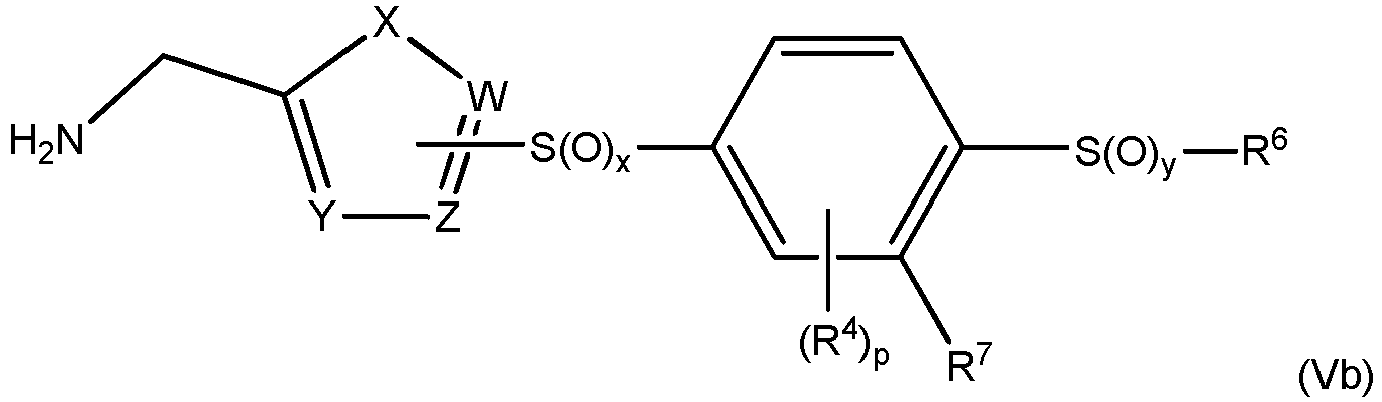

- wherein W, X, Y, Z and x are as defined for the compound of Formula (I);
- wherein R4 and p are as defined for the compound of Formula (III);
- y is 1 or 2;
- R6 is selected from the group consisting of: unsubstituted C1-4 alkyl; C1-4 alkyl substituted with one or more substituents selected from the group consisting of: halo, C1-4 alkyl, C1-4 haloalkyl, 6-membered aryl, 5- or 6-membered heteroaryl including 1, 2 or 3 heteroatoms selected from N, O or S, -ORA2, =O, -NRA2RB2, -SRA2, -CN, -NO2, -N3, -NRA2C(O)RB2, -C(O)NRA2RB2, -NRA2C(O)ORB2, -OC(O)NRA2RB2, - NRA2C(O)NRA2RB2, -NRA2SO2RB2, -SO2NRA2RB2, -SO2RA2, -C(O)RA2, -C(O)ORA2 and C3-6 cycloalkyl; an unsubstituted 3- to 12-membered ring system, including 0, 1, 2 or 3 heteroatoms selected from N, O or S; and a 3- to 12-membered ring system, including 0, 1, 2 or 3 heteroatoms selected from N, O or S, substituted with one or more substituents selected from the group consisting of: halo, C1-4 alkyl, C1-4 haloalkyl, 6-membered aryl, 5- or 6-membered heteroaryl including 1, 2 or 3 heteroatoms selected from N, O or S, -ORA2, =O, -NRA2RB2, -SRA2, -CN, -NO2, -N3, -NRA2C(O)RB2, -C(O)NRA2RB2, - NRA2C(O)ORB2, -OC(O)NRA2RB2, -NRA2C(O)NRA2RB2, -NRA2SO2RB2, -SO2NRA2RB2, -SO2RA2, - C(O)RA2, -C(O)ORA2 and C3-6 cycloalkyl;
- R7 is selected from the group consisting of: halo, C1-4 alkyl, C2-4 alkenyl, C2-4 alkynyl (optionally substituted with TMS), C1-4 haloalkyl, unsubstituted or substituted 6- to 10-membered aryl, unsubstituted or substituted 5- to 10-membered heteroaryl including 1, 2 or 3 heteroatoms selected from N, O or S, an unsubstituted or substituted 3- to 10-membered cycloalkyl (preferably an unsubstituted or substituted 3- to 6-membered cycloalkyl) or an unsubstituted or substituted 4- to 10-membered heterocycloalkyl (preferably an unsubstituted or substituted 4- to 7-membered heterocycloalkyl) including 1, 2 or 3 heteroatoms selected from N, O or S, -ORA2, -NRA2RB2, -SRA2, - CN, -NO2, -N3, -NRA2C(O)RB2, -C(O)NRA2RB2, -NRA2C(O)ORB2, -OC(O)NRA2RB2, -NRA2C(O)NRA2RB2, - NRA2SO2RB2, -SO2NRA2RB2, -SO2RA2, -C(O)RA2 and -C(O)ORA2, wherein the C1-4 alkyl, C2-4 alkenyl, C2-4 alkynyl, C1-4 haloalkyl, 6- to 10-membered aryl, 5- to 10-membered heteroaryl, 3- to 10-membered cycloalkyl and 4- to 10-membered heterocycloalkyl groups are optionally substituted with RA2, halo, -ORA2, =O, -NRA2RB2, -SRA2, -CN, -NO2, -N3, -NRA2C(O)RB2, -C(O)NRA2RB2, - NRA2C(O)ORB2, -OC(O)NRA2RB2, -NRA2C(O)NRA2RB2, -NRA2SO2RB2, -SO2NRA2RB2, -SO2RA2, - C(O)RA2, -C(O)ORA2 and C3-6 cycloalkyl;
- wherein RA2 and RB2 are at each occurrence independently selected from the group consisting of: H, C1-4 alkyl, C1-4 haloalkyl and C1-4 alkyl substituted with a substituent selected from the group consisting of: -ORA5, -NRA5RB5, -CN, -NO2, -N3, -NRA5C(O)RB5, -C(O)NRA5RB5, -NRA5SO2RB5, -SO2NRA5RB5, - SO2RA5, -C(O)RA5, -C(O)ORA5 and C3-6 cycloalkyl, wherein RA5 and RB5 are each independently selected from the group consisting of H and C1-4 alkyl; wherein in the specific group -NRA2RB2, RA2 and RB2, together with the nitrogen atom to which they are bonded can form a 4- to 7-membered ring system; and wherein in the specific group -NRA5RB5, RA5 and RB5, together with the nitrogen atom to which they are bonded can form a 4- to 7-membered ring system.
- In an embodiment, y is 2.
- In an embodiment, p is 0.
- In an embodiment, R6 is selected from the group consisting of: unsubstituted C1-4 alkyl and an unsubstituted 3- to 12-membered ring system, including 0, 1, 2 or 3 heteroatoms selected from N, O or S.
- In an embodiment, R6 is selected from the group consisting of: unsubstituted C1, C2 or C3 alkyl, for example methyl, ethyl, n-propyl or iso-propyl.
- In an embodiment, R6 is a 5-, 6- or 7- membered ring system including 0, 1, 2 or 3 heteroatoms selected from N, O or S. In an embodiment, R6 is a 5- membered ring system including 0 or 1 heteroatoms selected from N, O or S. In an embodiment, R6 is pyrrolidine.
- In an embodiment, R7 is selected from the group consisting of: C1-4 alkyl, C2-4 alkenyl, C2-4 alkynyl (optionally substituted with TMS), C1-4 haloalkyl, 6-membered aryl, 5- or 6-membered heteroaryl including 1, 2 or 3 heteroatoms selected from N, O or S, -ORA2, -NRA2RB2, -SRA2, -CN and - NO2, wherein the C1-4 alkyl, C2-4 alkenyl, C2-4 alkynyl, C1-4 haloalkyl, 6-membered aryl, 5- or 6-membered heteroaryl and C3-6 cycloalkyl groups are optionally substituted with RA2, halo, -ORA2, =O, - NRA2RB2, -SRA2, -CN, -NO2, -N3, -NRA2C(O)RB2, -C(O)NRA2RB2, -NRA2C(O)ORB2, -OC(O)NRA2RB2, - NRA2C(O)NRA2RB2, -NRA2SO2RB2, -SO2NRA2RB2, -SO2RA2, -C(O)RA2, -C(O)ORA2 and C3-6 cycloalkyl, wherein RA2 and RB2 are at each occurrence independently selected from the group consisting of: H, C1-4 alkyl, C1-4 haloalkyl and C1-4 alkyl substituted with a substituent selected from the group consisting of: -ORA5, -NRA5RB5, -CN, -NO2, -N3, -NRA5C(O)RB5, -C(O)NRA5RB5, -NRA5SO2RB5, -SO2NRA5RB5, - SO2RA5, -C(O)RA5, -C(O)ORA5 and C3-6 cycloalkyl, wherein RA5 and RB5 are each independently selected from the group consisting of H and C1-4 alkyl.
- In an embodiment, R7 is selected from the group consisting of: C1-4 alkyl, C2-4 alkynyl (optionally substituted with TMS), C1-4 haloalkyl, 6-membered aryl, 5- or 6-membered heteroaryl including 1, 2 or 3 heteroatoms selected from N, O or S, and -ORA2, wherein the C1-4 alkyl, C2-4 alkynyl, C1-4 haloalkyl, 6-membered aryl and 5- or 6-membered heteroaryl groups are optionally substituted with RA2, halo, -ORA2, =O, -NRA2RB2, -SRA2, -CN, -NO2, -N3, -NRA2C(O)RB2, -C(O)NRA2RB2, -NRA2C(O)ORB2, -OC(O)NRA2RB2, -NRA2C(O)NRA2RB2, -NRA2SO2RB2, -SO2NRA2RB2, -SO2RA2, - C(O)RA2, -C(O)ORA2 and C3-6 cycloalkyl, wherein RA2 and RB2 are selected from the group consisting of: H, C1-4 alkyl, C1-4 haloalkyl and C1-4 alkyl substituted with a substituent selected from the group consisting of: -ORA5, -NRA5RB5, -CN, -NO2, -N3, -NRA5C(O)RB5, -C(O)NRA5RB5, -NRA5SO2RB5, - SO2NRA5RB5, -SO2RA5, -C(O)RA5, -C(O)ORA5 and C3-6 cycloalkyl, wherein RA5 and RB5 are each independently selected from the group consisting of H and C1-4 alkyl.
- In an embodiment, R7 is C1-4 alkyl, optionally R7 is C1, C2, C3 or C4 alkyl. Preferably, R7 is C4 alkyl. More preferably R7 is tert-butyl.
- In an embodiment, R7 is C1-4 haloalkyl, optionally R7 is C1, C2, C3 or C4 haloalkyl. Preferably, R7 is C1 haloalkyl. More preferably R7 is CF3.
- In an embodiment, R7 is -ORA2, wherein RA2 is selected from the group consisting of: H, C1-4 alkyl, C1-4 haloalkyl and C1-4 alkyl substituted with a substituent selected from the group consisting of: -ORA5, -NRA5RB5, -CN, -NO2, -N3, -NRA5C(O)RB5, -C(O)NRA5RB5, -NRA5SO2RB5, -SO2NRA5RB5, - SO2RA5, -C(O)RA5, -C(O)ORA5 and C3-6 cycloalkyl, wherein RA5 and RB5 are each independently selected from the group consisting of H and C1-4 alkyl. Preferably, R7 is -ORA2, wherein RA2 is C1, C2, C3 or C4 alkyl. More preferably, RA2 is ethyl, iso-propyl or tert-butyl.
- In an embodiment, R7 is 6-membered aryl which is optionally substituted with 1, 2 or 3 substituents independently selected from the group consisting of: halo, C1-4 alkyl, C1-4 haloalkyl, -O-C1-4 alkyl, -O-C1-4 haloalkyl. In an embodiment, R7 is unsubstituted phenyl. In an embodiment, R7 is phenyl substituted with 1, 2 or 3 substituents independently selected from the group consisting of: halo, C1-4 alkyl, C1-4 haloalkyl, -O-C1-4 alkyl, -O-C1-4 haloalkyl. In an embodiment, R7 is phenyl substituted with 1, 2 or 3 substituents independently selected from the group consisting of: halo, C1-4 alkyl and -O-C1-4 alkyl. Preferably, R7 is substituted with 1 or 2 substituents selected from the group consisting of: C1 alkyl, C2 alkyl, C3 alkyl, C4 alkyl, -O-C1 alkyl, -O-C2 alkyl, -O-C3 alkyl, -O-C4 alkyl, chloro and fluoro. Preferably, R7 is substituted with 1 or 2 substituents selected from the group consisting of: C1 alkyl, C2 alkyl, -O-C1 alkyl, -O-C2 alkyl, chloro and fluoro.
- In an embodiment, R7 is 5- or 6-membered heteroaryl including 1, 2 or 3 heteroatoms selected from N, O or S which is optionally substituted with 1, 2 or 3 substituents independently selected from the group consisting of: halo, C1-4 alkyl, C1-4 haloalkyl, -O-C1-4 alkyl, -O-C1-4 haloalkyl.
- In an embodiment, R7 is selected from the group consisting of: azetidinyl, oxetanyl, tetrahydrofuranyl, pyrrolidinyl, pyrrolinyl, imidazolidinyl, imidazolinyl, succinimidyl, pyrazolidinyl, pyrazolinyl, oxazolidinyl, oxazolinyl, dioxolanyl, isoxazolidinyl, isoxazolinyl, thiazolidinyl, thiazolinyl, isothiazolidinyl, isothiazolinyl, piperidinyl, morpholinyl, thiomorpholinyl, piperazinyl, dioxanyl, dihydropyranyl, tetrahydropyranyl, pyridyl, pyridazinyl, pyrimidinyl, pyrazinyl, thiophenyl, furanyl, pyrrolyl, pyrazolyl, imidazolyl, triazolyl, oxazolyl, isoxazolyl, thiazolyl, isothiazolyl, oxadiazolyl, azepanyl and diazepanyl which is optionally substituted with 1, 2 or 3 substituents independently selected from the group consisting of: halo, C1-4 alkyl, C1-4 haloalkyl, -O-C1-4 alkyl, -O-C1-4 haloalkyl.
- In an embodiment, R7 is selected from the group consisting of: pyridyl, thiophenyl and pyrazolyl which is optionally substituted with 1, 2 or 3 substituents independently selected from the group consisting of: halo, C1-4 alkyl, C1-4 haloalkyl, -O-C1-4 alkyl, -O-C1-4 haloalkyl. Preferably, R7 is substituted with 1 or 2 substituents selected from the group consisting of: C1 alkyl, C2 alkyl, -O-C1 alkyl, -O-C2 alkyl, chloro and fluoro. More preferably, R7 is substituted a C1 alkyl.
- In an embodiment, R7 is C2-4 alkynyl, which is optionally substituted with TMS.
- In an embodiment, p is 0 and y, R6 and R7 are as defined as per the following embodiments.
- In an embodiment, y is 1 and R6 and R7 are as defined as per the following embodiments. In an embodiment, y is 2 and R6 and R7 are as defined as per the following embodiments.
- In an embodiment, R6 is selected from the group consisting of: unsubstituted C1, C2 or C3 alkyl, for example methyl, ethyl, n-propyl or iso-propyl and R7 is as defined as per the following embodiments.
- In an embodiment, R7 is C1-4 alkyl, optionally R7 is C1, C2, C3 or C4 alkyl. Preferably, R7 is C4 alkyl. More preferably R7 is tert-butyl.
- In an embodiment, R7 is C1-4 haloalkyl, optionally R7 is C1, C2, C3 or C4 haloalkyl. Preferably, R7 is C1 haloalkyl. More preferably R7 is CF3.
- In an embodiment, R7 is -ORA2, wherein RA2 is selected from the group consisting of: H, C1-4 alkyl, C1-4 haloalkyl and C1-4 alkyl substituted with a substituent selected from the group consisting of: -ORA5, -NRA5RB5, -CN, -NO2, -N3, -NRA5C(O)RB5, -C(O)NRA5RB5, -NRA5SO2RB5, -SO2NRA5RB5, - SO2RA5, -C(O)RA5, -C(O)ORA5 and C3-6 cycloalkyl, wherein RA5 and RB5 are each independently selected from the group consisting of H and C1-4 alkyl. Preferably, R7 is -ORA2, wherein RA2 is C1, C2, C3 or C4 alkyl. More preferably, RA2 is ethyl, iso-propyl or tert-butyl.
- In an embodiment, R7 is 6-membered aryl which is optionally substituted with 1, 2 or 3 substituents independently selected from the group consisting of: halo, C1-4 alkyl, C1-4 haloalkyl, -O-C1-4 alkyl, -O-C1-4 haloalkyl. In an embodiment, R7 is unsubstituted phenyl. In an embodiment, R7 is phenyl substituted with 1, 2 or 3 substituents independently selected from the group consisting of: halo, C1-4 alkyl, C1-4 haloalkyl, -O-C1-4 alkyl, -O-C1-4 haloalkyl. In an embodiment, R7 is phenyl substituted with 1, 2 or 3 substituents independently selected from the group consisting of: halo, C1-4 alkyl and -O-C1-4 alkyl. Preferably, R7 is substituted with 1 or 2 substituents selected from the group consisting of: C1 alkyl, C2 alkyl, -O-C1 alkyl, -O-C2 alkyl, chloro and fluoro.
- In an embodiment, R7 is 5- or 6-membered heteroaryl including 1, 2 or 3 heteroatoms selected from N, O or S which is optionally substituted with 1, 2 or 3 substituents independently selected from the group consisting of: halo, C1-4 alkyl, C1-4 haloalkyl, -O-C1-4 alkyl, -O-C1-4 haloalkyl.
- In an embodiment, R7 is selected from the group consisting of: azetidinyl, oxetanyl, tetrahydrofuranyl, pyrrolidinyl, pyrrolinyl, imidazolidinyl, imidazolinyl, succinimidyl, pyrazolidinyl, pyrazolinyl, oxazolidinyl, oxazolinyl, dioxolanyl, isoxazolidinyl, isoxazolinyl, thiazolidinyl, thiazolinyl, isothiazolidinyl, isothiazolinyl, piperidinyl, morpholinyl, thiomorpholinyl, piperazinyl, dioxanyl, dihydropyranyl, tetrahydropyranyl, pyridyl, pyridazinyl, pyrimidinyl, pyrazinyl, thiophenyl, furanyl, pyrrolyl, pyrazolyl, imidazolyl, triazolyl, oxazolyl, isoxazolyl, thiazolyl, isothiazolyl, oxadiazolyl, azepanyl and diazepanyl which is optionally substituted with 1, 2 or 3 substituents independently selected from the group consisting of: halo, C1-4 alkyl, C1-4 haloalkyl, -O-C1-4 alkyl, -O-C1-4 haloalkyl.
- In an embodiment, R7 is selected from the group consisting of: pyridyl, thiophenyl and pyrazolyl which is optionally substituted with 1, 2 or 3 substituents independently selected from the group consisting of: halo, C1-4 alkyl, C1-4 haloalkyl, -O-C1-4 alkyl, -O-C1-4 haloalkyl. Preferably, R7 is substituted with 1 or 2 substituents selected from the group consisting of: C1 alkyl, C2 alkyl, -O-C1 alkyl, -O-C2 alkyl, chloro and fluoro. More preferably, R7 is substituted a C1 alkyl.
- In an embodiment, R7 is C2-4 alkynyl, which is optionally substituted with TMS.
- In an embodiment, R6 is pyrrolidine and R7 is as defined as per the following embodiments:
- In an embodiment, R7 is C1-4 alkyl, optionally R7 is C1, C2, C3 or C4 alkyl. Preferably, R7 is C4 alkyl. More preferably R7 is tert-butyl.
- In an embodiment, R7 is C1-4 haloalkyl, optionally R7 is C1, C2, C3 or C4 haloalkyl. Preferably, R7 is C1 haloalkyl. More preferably R7 is CF3.
- In an embodiment, R7 is -ORA2, wherein RA2 is selected from the group consisting of: H, C1-4 alkyl, C1-4 haloalkyl and C1-4 alkyl substituted with a substituent selected from the group consisting of: -ORA5, -NRA5RB5, -CN, -NO2, -N3, -NRA5C(O)RB5, -C(O)NRA5RB5, -NRA5SO2RB5, -SO2NRA5RB5, - SO2RA5, -C(O)RA5, -C(O)ORA5 and C3-6 cycloalkyl, wherein RA5 and RB5 are each independently selected from the group consisting of H and C1-4 alkyl. Preferably, R7 is -ORA2, wherein RA2 is C1, C2, C3 or C4 alkyl. More preferably, RA2 is ethyl, iso-propyl or tert-butyl.
- In an embodiment, R7 is 6-membered aryl which is optionally substituted with 1, 2 or 3 substituents independently selected from the group consisting of: halo, C1-4 alkyl, C1-4 haloalkyl, -O-C1-4 alkyl, -O-C1-4 haloalkyl. In an embodiment, R7 is unsubstituted phenyl. In an embodiment, R7 is phenyl substituted with 1, 2 or 3 substituents independently selected from the group consisting of: halo, C1-4 alkyl, C1-4 haloalkyl, -O-C1-4 alkyl, -O-C1-4 haloalkyl. In an embodiment, R7 is phenyl substituted with 1, 2 or 3 substituents independently selected from the group consisting of: halo, C1-4 alkyl and -O-C1-4 alkyl. Preferably, R7 is substituted with 1 or 2 substituents selected from the group consisting of: C1 alkyl, C2 alkyl, -O-C1 alkyl, -O-C2 alkyl, chloro and fluoro.
- In an embodiment, R7 is 5- or 6-membered heteroaryl including 1, 2 or 3 heteroatoms selected from N, O or S which is optionally substituted with 1, 2 or 3 substituents independently selected from the group consisting of: halo, C1-4 alkyl, C1-4 haloalkyl, -O-C1-4 alkyl, -O-C1-4 haloalkyl.
- In an embodiment, R7 is selected from the group consisting of: azetidinyl, oxetanyl, tetrahydrofuranyl, pyrrolidinyl, pyrrolinyl, imidazolidinyl, imidazolinyl, succinimidyl, pyrazolidinyl, pyrazolinyl, oxazolidinyl, oxazolinyl, dioxolanyl, isoxazolidinyl, isoxazolinyl, thiazolidinyl, thiazolinyl, isothiazolidinyl, isothiazolinyl, piperidinyl, morpholinyl, thiomorpholinyl, piperazinyl, dioxanyl, dihydropyranyl, tetrahydropyranyl, pyridyl, pyridazinyl, pyrimidinyl, pyrazinyl, thiophenyl, furanyl, pyrrolyl, pyrazolyl, imidazolyl, triazolyl, oxazolyl, isoxazolyl, thiazolyl, isothiazolyl, oxadiazolyl, azepanyl and diazepanyl which is optionally substituted with 1, 2 or 3 substituents independently selected from the group consisting of: halo, C1-4 alkyl, C1-4 haloalkyl, -O-C1-4 alkyl, -O-C1-4 haloalkyl.
- In an embodiment, R7 is selected from the group consisting of: pyridyl, thiophenyl and pyrazolyl which is optionally substituted with 1, 2 or 3 substituents independently selected from the group consisting of: halo, C1-4 alkyl, C1-4 haloalkyl, -O-C1-4 alkyl, -O-C1-4 haloalkyl. Preferably, R7 is substituted with 1 or 2 substituents selected from the group consisting of: C1 alkyl, C2 alkyl, -O-C1 alkyl, -O-C2 alkyl, chloro and fluoro. More preferably, R7 is substituted a C1 alkyl.
- In an embodiment, R7 is C2-4 alkynyl, which is optionally substituted with TMS.
- In a preferred embodiment, the compound of the present invention has a structure according to Formula (VI):

- wherein W, X, Y, Z and x are as defined for the compound of Formula (I);
- R4 is selected from the group consisting of C1-4 alkyl, C1-4 haloalkyl, halo, -ORA2, -C(O)NRA2RB2, - SO2RA2 and -C(O)ORA2;
- wherein RA2 and RB2 are at each occurrence independently selected from the group consisting of: H and C1-4 alkyl, wherein the C1-4 alkyl is optionally substituted with -OH; wherein in the specific group - NRA2RB2, RA2 and RB2, together with the nitrogen atom to which they are bonded can form a 4- to 7-membered ring system;
- "Ring E" is selected from the group consisting of: phenyl, pyrrolidinyl, pyrazolyl and pyridinyl;
- R5 is selected from the group consisting of: H, C1-4 alkyl and C1-4 alkyl substituted with -O-C1-4 alkyl.
- In an embodiment, Y is CR. In an embodiment, R is H or F.
- In an embodiment, Y is N.
- In an embodiment, W is carbon and is bonded to

- In an embodiment, Z is CR. In an embodiment, R is H.
- In an embodiment, W is CR. In an embodiment, R is H.
- In an embodiment, Z is carbon and is bonded to

- In an embodiment, the compound of formula (VI) has the structure:

- In an embodiment, the compound of formula (VI) has the structure:

- In an embodiment, the compound of formula (VI) has the structure:

- In an embodiment, the compound of formula (VI) has the structure:

- In an embodiment x is 2.
- In an embodiment, R4 is meta- to the -S(O)x- group:

- In an embodiment, R4 is para- to the -S(O)x- group:
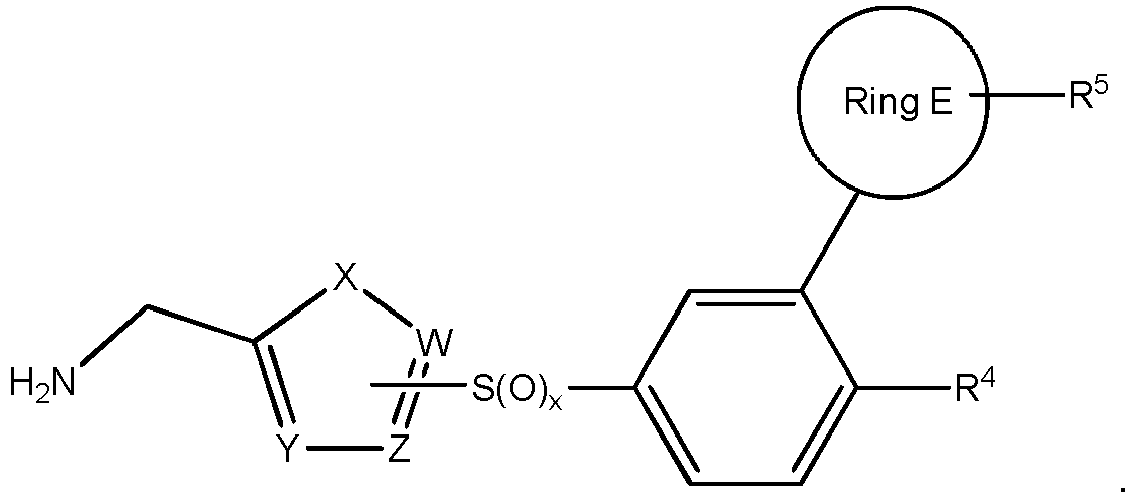
- In an embodiment, R4 is selected from the group consisting of -CH2CH3, -OCH3,

- In an embodiment, Ring E is phenyl, optionally

- In an embodiment, Ring E is

- In an embodiment, Ring E is
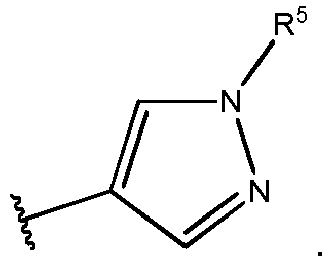
- In an embodiment, Ring E is

- In an embodiment, R5 is selected from the group consisting of: H, -CH3 and -CH2OCH3.
- In an embodiment, the compound is selected from the group consisting of:


- In an embodiment, the compound is:

- In an embodiment, the compound is:

- In an embodiment, the compound is:


- Also provided is a compound selected from the compounds recited in table 1 below or a pharmaceutically acceptable salt thereof.
- Also provided is a pharmaceutical formulation comprising a compound of the invention, or a pharmaceutically acceptable salt thereof, and a pharmaceutically acceptable excipient.
- A further aspect provides a compound of the invention, or a pharmaceutically acceptable salt thereof, for use as a medicament.
- Further provided is a compound of the invention, or a pharmaceutically acceptable salt or N-oxide thereof, for use in the treatment of a condition which is modulated by LOX, for example a condition which is modulated by LOX, LOXL1, LOXL2, LOXL3 or LOLXL4 or a combination thereof.
- Also provided is a compound of the invention, or a pharmaceutically acceptable, for use in the treatment of a proliferative disease for example a cancer. The compound of the invention may be used alone or in combination with one or more additional anti-tumour agent and/or radiotherapy for the treatment of a cancer. The compound of the invention may be for use in the treatment of a non-metastatic cancer. The compound of the invention may be for use in the treatment of metastatic cancer. The compound of the invention may be for use in the prevention or treatment of tumour metastasis.
- A further aspect provides a compound of the invention, or a pharmaceutically acceptable salt thereof, for use in the treatment of a condition selected from a fibrotic condition, an inflammatory condition, cardiovascular disease, pulmonary diseases, neurodegenerative diseases, ocular conditions particularly those characterized by neovascularization, viral infection, endometriosis, psoriasis and adiposity
-
-
Figure 1 shows a receptor tyrosine kinase (RTK) antibody array, illustrating the relative phosphorylation change in LOX depleted in MDA-MB-231 breast cancer cells grown in a) standard plastic (2D) culture conditions and b) in collagen gels (3D). -
Figure 2 shows a western blot of phospho-EGFR, EGFR and GAPDH in control (shCtl) or LOX-depleted (shLOXA, shLOXB) MDA-MB-231 breast cancer cells in collagen gels. -
Figure 3 shows the EGFR surface/total ratio (fold change) in control (shCtl) and Lox-depleted (shLOX) in EGF stimulated and subsequent surface protein biotin labelled: a) MDA-MB-231 breast cancer cells and b) U87 glioblastoma cells. -
Figure 4 shows the EGFR surface/total ratio (fold change) in control (siCtl) and siRNA-insensitive active LOX-GFP and inactive mutants LOXK314A-GFP and LOXΔBMP-1-GFP in MDA-MB-231 cells. -
Figure 5 shows the ratio of phosphorylated to total AKt for EGF stimulated control (shCtl) and LOX-depleted (shLOX A and shLOXB): a) MDA-MB-231 cells and b) U87 glioblastoma cells. -
Figure 6 shows surface EGFR, total EGFR and GAPDH in water, DMSO and LOX inhibited (BAPN, Example 14 and Example 68) MDA-MB-231 cells following stimulation with EGF for 3 minutes. -
Figure 7 shows the ratio of phosphorylated to total AKT in MDA-MB-231 cells treated with DMSO or a LOX inhibitor (BAPN, Example 14, Example 68). The compounds of Examples 14 and 68 were tested at 20 µM concentration; BAPN was used at 1 mM. A -
Figure 8 shows the normalised viability of control (shCtl) and LOX-depleted (shLOX A and shLOXB): a) MDA-MB-231 cells and b) U87 glioblastoma cells cultured in medium with EGF as the only growth factor. -
Figure 9 shows the a) percentage survival, b) lung deposit score and plasma membrane of mice injected via tail vein with LOX-depleted (shLOX A) or control (shCtl) MDA-MB-231 cells. -
Figure 10 shows the tumour volume over time in the transgenic mouse breast model driven by polyoma middle T (PyMT) for LOX inhibitor treated (Example 68) and control (vehicle). -
Figure 11 shows a) expression of LOX, MATN2 and GADPH in control (shCtl) and LOX-depleted (shLOX A and shLOX B) MDA-MB-231, U87 and BJ cells; b) Photomicrographs of extracellular MATN2 in control (shCtl) or LOX-depleted (shLOX A) MDA-MB-231 and U87 cells; c) Photomicrographs of extracellular MATN2 in control (shCtl) or LOX-depleted (shLOX A) BJ cells and e) MATN2 mRNA level in control (shCtl) or LOX-depleted (shLOX A and shLOX B) MDA-MB-231, U87 and BJ cells. -
Figure 12 shows photomicrographs of MATN2 in lung tumour samples of mice injected via tail vein with control (shCtl) and LOX-depleted (shLOX A) MDA-MB-231 cells. -
Figure 13 shows MATN2 and GADPH in DMSO, BAPN (1mM) and LOX inhibitor treated (Example 14 and Example 68 20µM overnight). -
Figure 14 shows a) phosphorylated (pY1068EGFR) and Total EGFR in PBS and human recombinant MATN2 (rhMATN2)treated and EGF stimulated MDA-MB-231 cells; b) rhMATN2 trapped EGFR on the surface of MDA-MB-231 cells; c) rhMATN2 restored EGFR retention at the surface of EGF stimulated LOX-depleted cells; d) MATN2 depletion by siRNA reduces EGFR levels at the cell surface. -
Figure 15 shows a) MATN2 mRNA levels in MDA-MB-231 cells in absence or presence of TGFβ1. Error bars: s.d., n=3 independent experiments. **p<0.01; b) western blots pSMAD2, SMAD2/3 and GAPDH in DMSO, compound of Example 68 and BAPN treated MDA-MB-231 cells; and c) Western blots showing pSMAD2, SMAD2/3 and GAPDH in control (shCtl) or LOX-depleted (shLOX A) MDA-MB-231 and U87 cells. -
Figure 16 shows binding of extracellular proteins to LOX-GFP (WT), LOXΔBMP-1-GFP (ΔBMP-1) or secreted GFP (sGFP) in MDA-MB-231 culture medium. Red: binding; Grey: no binding. -
Figure 17 shows a western blot depicting HTRA1 binding to LOX-GFP (WT). HTRA1/GFP ration indicates binding strength. -
Figure 18 shows HTRA1 trimer in control (shCtl) or LOX-depleted (shLOXA) MDA-MB-231 cell culture media. Error bars: s.d. n=4 independent experiments. **p<0.01. -
Figure 19 is a NativePAGE showing extracellular HTRA1 trimer and monomer in MDA-MB-231 cell culture medium. -
Figure 20 shows SMAD2 activation in PBS or rhHTRA1(10ng/ml) treated control (shCtl) or LOX-depleted (shLOXA) MDA-MB-231 cells. Error bars: s.d. n=3 independent experiments. **p<0.01. *p=not-significant. -
Figure 21 shows MATN2 in PBS or rhHTRA1(10ng/ml) treated control (shCtl) or LOX-depleted (shLOXA) MDA-MB-231 cells. Error bars: s.d. n=3 independent experiments. **p<0.01. *p=not-significant. -
Figure 22 is a western blot showing pSMAD2, SMAD2/3, GAPDH, MATN2 and Tubulin in PBS or rhHTRA1-treated control (shCtl) or LOX-depleted (shLOX A) MDA-MB-231 cells. - Unless otherwise stated, the following terms used in the specification and claims have the following meanings set out below.
- It is to be appreciated that references to "treating" or "treatment" include prophylaxis as well as the alleviation of established symptoms of a condition. "Treating" or "treatment" of a state, disorder or condition therefore includes: (1) preventing or delaying the appearance of clinical symptoms of the state, disorder or condition developing in a human that may be afflicted with or predisposed to the state, disorder or condition but does not yet experience or display clinical or subclinical symptoms of the state, disorder or condition, (2) inhibiting the state, disorder or condition, i.e., arresting, reducing or delaying the development of the disease or a relapse thereof (in case of maintenance treatment) or at least one clinical or subclinical symptom thereof, or (3) relieving or attenuating the disease, i.e., causing regression of the state, disorder or condition or at least one of its clinical or subclinical symptoms.
- A "therapeutically effective amount" means the amount of a compound that, when administered to a mammal for treating a disease, is sufficient to effect such treatment for the disease. The "therapeutically effective amount" will vary depending on the compound, the disease and its severity and the age, weight, etc., of the mammal to be treated.
- The term "halo" or "halogen" refers to one of the halogens, group 17 of the periodic table. In particular the term refers to fluorine, chlorine, bromine and iodine. Preferably, the term refers to fluorine or chlorine.
- The term Cm-n refers to a group with m to n carbon atoms.
- The term "C1-6 alkyl" refers to a linear or branched hydrocarbon chain containing 1, 2, 3, 4, 5 or 6 carbon atoms, for example methyl, ethyl, n-propyl, iso-propyl, n-butyl, sec-butyl, tert-butyl, n-pentyl and n-hexyl. "C1-4 alkyl" similarly refers to such groups containing up to 4 carbon atoms. Alkylene groups are divalent alkyl groups and may likewise be linear or branched and have two points of attachment to the remainder of the molecule. Furthermore, an alkylene group may, for example, correspond to one of those alkyl groups listed in this paragraph. The alkyl and alkylene groups may be unsubstituted or substituted by one or more substituents. Possible substituents are described below. Substituents for the alkyl group may be halogen, e.g. fluorine, chlorine, bromine and iodine, OH, C1-C4 alkoxy. Other substituents for the alkyl group may alternatively be used.
- The term "C1-6 haloalkyl", e.g. "C1-4 haloalkyl", refers to a hydrocarbon chain substituted with at least one halogen atom independently chosen at each occurrence, for example fluorine, chlorine, bromine and iodine. The halogen atom may be present at any position on the hydrocarbon chain. For example, C1-6 haloalkyl may refer to chloromethyl, fluoromethyl, trifluoromethyl, chloroethyl e.g. 1-chloromethyl and 2-chloroethyl, trichloroethyl e.g. 1,2,2-trichloroethyl, 2,2,2-trichloroethyl, fluoroethyl e.g. 1-fluoromethyl and 2-fluoroethyl, trifluoroethyl e.g. 1,2,2-trifluoroethyl and 2,2,2-trifluoroethyl, chloropropyl, trichloropropyl, fluoropropyl, trifluoropropyl.
- The term "C2-6 alkenyl" includes a branched or linear hydrocarbon chain containing at least one double bond and having 2, 3, 4, 5 or 6 carbon atoms. The double bond(s) may be present as the E or Z isomer. The double bond may be at any possible position of the hydrocarbon chain. For example, the "C2-6 alkenyl" may be ethenyl, propenyl, butenyl, butadienyl, pentenyl, pentadienyl, hexenyl and hexadienyl.
- The term "C2-6 alkynyl" includes a branched or linear hydrocarbon chain containing at least one triple bond and having 2, 3, 4, 5 or 6 carbon atoms. The triple bond may be at any possible position of the hydrocarbon chain. For example, the "C2-6 alkynyl" may be ethynyl, propynyl, butynyl, pentynyl and hexynyl.
- The term "C3-6 cycloalkyl" includes a saturated hydrocarbon ring system containing 3, 4, 5 or 6 carbon atoms. For example, the "C3-C6 cycloalkyl" may be cyclopropyl, cyclobutyl, cyclopentyl, cyclohexyl, bicycle[2.1.1]hexane or bicycle[1.1.1]pentane.
- The term "heterocyclyl", "heterocyclic" or "heterocycle" includes a non-aromatic saturated or partially saturated monocyclic or fused, bridged, or spiro bicyclic heterocyclic ring system(s). Monocyclic heterocyclic rings may contain from about 3 to 12 (suitably from 3 to 7) ring atoms, with from 1 to 5 (suitably 1, 2 or 3) heteroatoms selected from nitrogen, oxygen or sulfur in the ring. Bicyclic heterocycles may contain from 7 to 17 member atoms, suitably 7 to 12 member atoms, in the ring. Bicyclic heterocyclic(s) rings may be fused, spiro, or bridged ring systems. Examples of heterocyclic groups include cyclic ethers such as oxiranyl, oxetanyl, tetrahydrofuranyl, dioxanyl, and substituted cyclic ethers. Heterocycles comprising at least one nitrogen in a ring position include, for example, azetidinyl, pyrrolidinyl, piperidinyl, piperazinyl, morpholinyl, thiomorpholinyl, tetrahydrotriazinyl, tetrahydropyrazolyl, tetrahydropyridinyl, homopiperidinyl, homopiperazinyl, 3,8-diaza-bicyclo[3.2.1]octanyl, 8-aza-bicyclo[3.2.1]octanyl, 2,5-Diaza-bicyclo[2.2.1]heptanyl and the like. Typical sulfur containing heterocycles include tetrahydrothienyl, dihydro-1,3-dithiol, tetrahydro-2H-thiopyran, and hexahydrothiepine. Other heterocycles include dihydro oxathiolyl, tetrahydro oxazolyl, tetrahydro-oxadiazolyl, tetrahydrodioxazolyl, tetrahydrooxathiazolyl, hexahydrotriazinyl, tetrahydro oxazinyl, tetrahydropyrimidinyl, dioxolinyl, octahydrobenzofuranyl, octahydrobenzimidazolyl, and octahydrobenzothiazolyl. For heterocycles containing sulfur, the oxidized sulfur heterocycles containing SO or SO2 groups are also included. Examples include the sulfoxide and sulfone forms of tetrahydrothienyl and thiomorpholinyl such as
tetrahydrothiene 1,1-dioxide andthiomorpholinyl 1,1-dioxide. A suitable value for a heterocyclyl group which bears 1 or 2 oxo (=O), for example, 2 oxopyrrolidinyl, 2-oxoimidazolidinyl, 2-oxopiperidinyl, 2,5-dioxopyrrolidinyl, 2,5-dioxoimidazolidinyl or 2,6-dioxopiperidinyl. Particular heterocyclyl groups are saturated monocyclic 3 to 7 membered heterocyclyls containing 1, 2 or 3 heteroatoms selected from nitrogen, oxygen or sulfur, for example azetidinyl, tetrahydrofuranyl, tetrahydropyranyl, pyrrolidinyl, morpholinyl, tetrahydrothienyl,tetrahydrothienyl 1,1-dioxide, thiomorpholinyl,thiomorpholinyl 1,1-dioxide, piperidinyl, homopiperidinyl, piperazinyl or homopiperazinyl. As the skilled person would appreciate, any heterocycle may be linked to another group via any suitable atom, such as via a carbon or nitrogen atom. For example, the term "piperidino" or "morpholino" refers to a piperidin-1-yl or morpholin-4-yl ring that is linked via the ring nitrogen. - The term "bridged ring systems" includes ring systems in which two rings share more than two atoms, see for example Advanced Organic Chemistry, by Jerry March, 4th Edition, Wiley Interscience, pages 131-133, 1992. Examples of bridged heterocyclyl ring systems include, aza-bicyclo[2.2.1]heptane, 2-oxa-5-azabicyclo[2.2.1]heptane, aza-bicyclo[2.2.2]octane, aza-bicyclo[3.2.1]octane, and quinuclidine.
- The term "spiro bi-cyclic ring systems" includes ring systems in which two ring systems share one common spiro carbon atom, i.e. the heterocyclic ring is linked to a further carbocyclic or heterocyclic ring through a single common spiro carbon atom. Examples of spiro ring systems include 3,8-diaza-bicyclo[3.2.1]octane, 2,5-Diaza-bicyclo[2.2.1]heptane, 6-azaspiro[3.4]octane, 2-oxa-6-azaspiro[3.4]octane, 2-azaspiro[3.3]heptane, 2-oxa-6-azaspiro[3.3]heptane, 6-oxa-2-azaspiro[3.4]octane, 2,7-diaza-spiro[4.4]nonane, 2-azaspiro[3.5]nonane, 2-oxa-7-azaspiro[3.5]nonane and 2-oxa-6-azaspiro[3.5]nonane.
- "Heterocyclyl-Cm-n alkyl" includes a heterocyclyl group covalently attached to a Cm-n alkylene group, both of which are defined herein.
- The term "aromatic" when applied to a substituent as a whole includes a single ring or polycyclic ring system with 4n + 2 electrons in a conjugated π system within the ring or ring system where all atoms contributing to the conjugated π system are in the same plane.
- The term "aryl" includes an aromatic hydrocarbon ring system. The ring system has 4n +2 electrons in a conjugated π system within a ring where all atoms contributing to the conjugated π system are in the same plane. For example, the "aryl" may be phenyl and naphthyl. The aryl system itself may be substituted with other groups.
- The term "heteroaryl" includes an aromatic mono- or bicyclic ring incorporating one or more (for example 1-4, particularly 1, 2 or 3) heteroatoms selected from nitrogen, oxygen or sulfur. The ring or ring system has 4n + 2 electrons in a conjugated π system where all atoms contributing to the conjugated π system are in the same plane.
- Examples of heteroaryl groups are monocyclic and bicyclic groups containing from five to twelve ring members, and more usually from five to ten ring members. The heteroaryl group can be, for example, a 5- or 6-membered monocyclic ring or a 9- or 10-membered bicyclic ring, for example a bicyclic structure formed from fused five and six membered rings or two fused six membered rings. Each ring may contain up to about four heteroatoms typically selected from nitrogen, sulfur and oxygen. Typically the heteroaryl ring will contain up to 3 heteroatoms, more usually up to 2, for example a single heteroatom. In one embodiment, the heteroaryl ring contains at least one ring nitrogen atom. The nitrogen atoms in the heteroaryl rings can be basic, as in the case of an imidazole or pyridine, or essentially non-basic as in the case of an indole or pyrrole nitrogen. In general the number of basic nitrogen atoms present in the heteroaryl group, including any amino group substituents of the ring, will be less than five.
- Examples of heteroaryl include furyl, pyrrolyl, thienyl, oxazolyl, isoxazolyl, imidazolyl, pyrazolyl, thiazolyl, isothiazolyl, oxadiazolyl, thiadiazolyl, triazolyl, tetrazolyl, pyridyl, pyridazinyl, pyrimidinyl, pyrazinyl, 1,3,5-triazenyl, benzofuranyl, indolyl, isoindolyl, benzothienyl, benzoxazolyl, benzimidazolyl, benzothiazolyl, benzothiazolyl, indazolyl, purinyl, benzofurazanyl, quinolyl, isoquinolyl, quinazolinyl, quinoxalinyl, cinnolinyl, pteridinyl, naphthyridinyl, carbazolyl, phenazinyl, benzisoquinolinyl, pyridopyrazinyl, thieno[2,3-b]furanyl, 2H-furo[3,2-b]-pyranyl, 5H-pyrido[2,3-d]-o-oxazinyl, 1H-pyrazolo[4,3-d]-oxazolyl, 4H-imidazo[4,5-d]thiazolyl, pyrazino[2,3-d]pyridazinyl, imidazo[2,1-b]thiazolyl and imidazo[1,2-b][1,2,4]triazinyl. Examples of heteroaryl groups comprising at least one nitrogen in a ring position include pyrrolyl, oxazolyl, isoxazolyl, imidazolyl, pyrazolyl, thiazolyl, isothiazolyl, oxadiazolyl, thiadiazolyl, triazolyl, tetrazolyl, pyridyl, pyridazinyl, pyrimidinyl, pyrazinyl, 1,3,5-triazenyl, indolyl, isoindolyl, benzoxazolyl, benzimidazolyl, benzothiazolyl, benzothiazolyl, indazolyl, purinyl, benzofurazanyl, quinolyl, isoquinolyl, quinazolinyl, quinoxalinyl, cinnolinyl and pteridinyl. "Heteroaryl" also covers partially aromatic bi- or polycyclic ring systems wherein at least one ring is an aromatic ring and one or more of the other ring(s) is a non-aromatic, saturated or partially saturated ring, provided at least one ring contains one or more heteroatoms selected from nitrogen, oxygen or sulfur. Examples of partially aromatic heteroaryl groups include for example, tetrahydroisoquinolinyl, tetrahydroquinolinyl, 2-oxo-1,2,3,4-tetrahydroquinolinyl, dihydrobenzthienyl, dihydrobenzfuranyl, 2,3-dihydro-benzo[1,4]dioxinyl, benzo[1,3]dioxolyl, 2,2-dioxo-1,3-dihydro-2-benzothienyl, 4,5,6,7-tetrahydrobenzofuranyl, indolinyl, 1,2,3,4-tetrahydro-1,8-naphthyridinyl, 1,2,3,4-tetrahydropyrido[2,3-b]pyrazinyl and 3,4-dihydro-2H-pyrido[3,2-b][1,4]oxazinyl.
- Examples of five membered heteroaryl groups include but are not limited to pyrrolyl, furanyl, thienyl, imidazolyl, furazanyl, oxazolyl, oxadiazolyl, oxatriazolyl, isoxazolyl, thiazolyl, isothiazolyl, pyrazolyl, triazolyl and tetrazolyl groups.
- Examples of six membered heteroaryl groups include but are not limited to pyridyl, pyrazinyl, pyridazinyl, pyrimidinyl and triazinyl.
- Particular examples of bicyclic heteroaryl groups containing a six membered ring fused to a five membered ring include but are not limited to benzofuranyl, benzothiophenyl, benzimidazolyl, benzoxazolyl, benzisoxazolyl, benzothiazolyl, benzisothiazolyl, isobenzofuranyl, indolyl, isoindolyl, indolizinyl, indolinyl, isoindolinyl, purinyl (e.g., adeninyl, guaninyl), indazolyl, benzodioxolyl, pyrrolopyridine, and pyrazolopyridinyl groups.
- Particular examples of bicyclic heteroaryl groups containing two fused six membered rings include but are not limited to quinolinyl, isoquinolinyl, chromanyl, thiochromanyl, chromenyl, isochromenyl, chromanyl, isochromanyl, benzodioxanyl, quinolizinyl, benzoxazinyl, benzodiazinyl, pyridopyridinyl, quinoxalinyl, quinazolinyl, cinnolinyl, phthalazinyl, naphthyridinyl and pteridinyl groups.
- "Heteroaryl-Cm-n alkyl-" includes a heteroaryl group covalently attached to a Cm-n alkylene group, both of which are defined herein. Examples of heteroaralkyl groups include pyridin-3-ylmethyl and the like.
- The term "optionally substituted" includes either groups, structures, or molecules that are substituted and those that are not substituted.
- Where optional substituents are chosen from "one or more" groups it is to be understood that this definition includes all substituents being chosen from one of the specified groups or the substituents being chosen from two or more of the specified groups.
- The phrase "compound of the invention" means those compounds which are disclosed herein, both generically and specifically.
- A bond terminating in a

- Where a moiety is substituted, it may be substituted at any point on the moiety where chemically possible and consistent with atomic valency requirements. The moiety may be substituted by one or more substituents, e.g. 1, 2, 3 or 4 substituents; optionally there are 1 or 2 substituents on a group. Where there are two or more substituents, the substituents may be the same or different.
- Substituents are only present at positions where they are chemically possible, the person skilled in the art being able to decide (either experimentally or theoretically) without undue effort which substitutions are chemically possible and which are not.
- Ortho, meta and para substitution are well understood terms in the art. For the absence of doubt, "ortho" substitution is a substitution pattern where adjacent carbons possess a substituent, whether a simple group, for example the fluoro group in the example below, or other portions of the molecule, as indicated by the bond ending in


- "Meta" substitution is a substitution pattern where two substituents are on carbons one carbon removed from each other, i.e. with a single carbon atom between the substituted carbons. In other words there is a substituent on the second atom away from the atom with another substituent. For example the groups below are meta substituted.

- "Para" substitution is a substitution pattern where two substituents are on carbons two carbons removed from each other, i.e. with two carbon atoms between the substituted carbons. In other words there is a substituent on the third atom away from the atom with another substituent. For example the groups below are para substituted.

- The term "acyl" includes an organic radical derived from, for example, an organic acid by the removal of the hydroxyl group, e.g. a radical having the formula R-C(O)-, where R may be selected from H, C1-6 alkyl, C3-8 cycloalkyl, phenyl, benzyl or phenethyl group, e.g. R is H or C1-3 alkyl. In one embodiment acyl is alkyl-carbonyl. Examples of acyl groups include, but are not limited to, formyl, acetyl, propionyl and butyryl. A particular acyl group is acetyl (also represented as Ac).
- Throughout the description and claims of this specification, the words "comprise" and "contain" and variations of them mean "including but not limited to", and they are not intended to (and do not) exclude other moieties, additives, components, integers or steps. Throughout the description and claims of this specification, the singular encompasses the plural unless the context otherwise requires. In particular, where the indefinite article is used, the specification is to be understood as contemplating plurality as well as singularity, unless the context requires otherwise.
- Features, integers, characteristics, compounds, chemical moieties or groups described in conjunction with a particular aspect, embodiment or example of the invention are to be understood to be applicable to any other aspect, embodiment or example described herein unless incompatible therewith. All of the features disclosed in this specification (including any accompanying claims, abstract and drawings), and/or all of the steps of any method or process so disclosed, may be combined in any combination, except combinations where at least some of such features and/or steps are mutually exclusive. The invention is not restricted to the details of any foregoing embodiments. The invention extends to any novel one, or any novel combination, of the features disclosed in this specification (including any accompanying claims, abstract and drawings), or to any novel one, or any novel combination, of the steps of any method or process so disclosed.
- The reader's attention is directed to all papers and documents which are filed concurrently with or previous to this specification in connection with this application and which are open to public inspection with this specification.
- The various functional groups and substituents making up the compounds of the present invention are typically chosen such that the molecular weight of the compound does not exceed 1000. More usually, the molecular weight of the compound will be less than 750, for example less than 700, or less than 650, or less than 600, or less than 550. More preferably, the molecular weight is less than 525 and, for example, is 500 or less.
- Suitable or preferred features of any compounds of the present invention may also be suitable features of any other aspect.
- The invention contemplates pharmaceutically acceptable salts of the compounds of the invention. These may include the acid addition and base salts of the compounds. These may be acid addition and base salts of the compounds.
- Suitable acid addition salts are formed from acids which form non-toxic salts. Examples include the acetate, aspartate, benzoate, besylate, bicarbonate/carbonate, bisulfate/sulfate, borate, camsylate, citrate, edisylate, esylate, formate, fumarate, gluceptate, gluconate, glucuronate, hexafluorophosphate, hibenzate, hydrochloride/chloride, hydrobromide/bromide, hydroiodide/iodide, isethionate, lactate, malate, maleate, malonate, mesylate, methylsulfate, naphthylate, 1,5-naphthalenedisulfonate, 2-napsylate, nicotinate, nitrate, orotate, oxalate, palmitate, pamoate, phosphate/hydrogen phosphate/dihydrogen phosphate, saccharate, stearate, succinate, tartrate, tosylate and trifluoroacetate salts.
- Suitable base salts are formed from bases which form non-toxic salts. Examples include the aluminium, arginine, benzathine, calcium, choline, diethylamine, diolamine, glycine, lysine, magnesium, meglumine, olamine, potassium, sodium, tromethamine and zinc salts. Hemisalts of acids and bases may also be formed, for example, hemisulfate and hemicalcium salts. For a review on suitable salts, see "Handbook of Pharmaceutical Salts: Properties, Selection, and Use" by Stahl and Wermuth (Wiley-VCH, Weinheim, Germany, 2002).
- Pharmaceutically acceptable salts of compounds of the invention may be prepared by for example, one or more of the following methods:
- (i) by reacting the compound of the invention with the desired acid or base;
- (ii) by removing an acid- or base-labile protecting group from a suitable precursor of the compound of the invention or by ring-opening a suitable cyclic precursor, for example, a lactone or lactam, using the desired acid or base; or
- (iii) by converting one salt of the compound of the invention to another by reaction with an appropriate acid or base or by means of a suitable ion exchange column.
- These methods are typically carried out in solution. The resulting salt may precipitate out and be collected by filtration or may be recovered by evaporation of the solvent. The degree of ionisation in the resulting salt may vary from completely ionised to almost non-ionised.
- Compounds that have the same molecular formula but differ in the nature or sequence of bonding of their atoms or the arrangement of their atoms in space are termed "isomers". Isomers that differ in the arrangement of their atoms in space are termed "stereoisomers". Stereoisomers that are not mirror images of one another are termed "diastereomers" and those that are non-superimposable mirror images of each other are termed "enantiomers". When a compound has an asymmetric centre, for example, it is bonded to four different groups, a pair of enantiomers is possible. An enantiomer can be characterized by the absolute configuration of its asymmetric centre and is described by the R- and S-sequencing rules of Cahn and Prelog, or by the manner in which the molecule rotates the plane of polarized light and designated as dextrorotatory or levorotatory (i.e., as (+) or (-)-isomers respectively). A chiral compound can exist as either individual enantiomer or as a mixture thereof. A mixture containing equal proportions of the enantiomers is called a "racemic mixture". Where a compound of the invention has two or more stereo centres any combination of (R) and (S) stereoisomers is contemplated. The combination of (R) and (S) stereoisomers may result in a diastereomeric mixture or a single diastereoisomer. The compounds of the invention may be present as a single stereoisomer or may be mixtures of stereoisomers, for example racemic mixtures and other enantiomeric mixtures, and diasteroemeric mixtures. Where the mixture is a mixture of enantiomers the enantiomeric excess may be any of those disclosed above. Where the compound is a single stereoisomer the compounds may still contain other diasteroisomers or enantiomers as impurities. Hence a single stereoisomer does not necessarily have an enantiomeric excess (e.e.) or diastereomeric excess (d.e.) of 100% but could have an e.e. or d.e. of about at least 85%
- The compounds of this invention may possess one or more asymmetric centres; such compounds can therefore be produced as individual (R)- or (S)-stereoisomers or as mixtures thereof. Unless indicated otherwise, the description or naming of a particular compound in the specification and claims is intended to include both individual enantiomers and mixtures, racemic or otherwise, thereof. The methods for the determination of stereochemistry and the separation of stereoisomers are well-known in the art (see discussion in
Chapter 4 of "Advanced Organic Chemistry", 4th edition J. March, John Wiley and Sons, New York, 2001 - Compounds and salts described in this specification may be isotopically-labelled (or "radio-labelled"). Accordingly, one or more atoms are replaced by an atom having an atomic mass or mass number different from the atomic mass or mass number typically found in nature. Examples of radionuclides that may be incorporated include 2H (also written as "D" for deuterium), 3H (also written as "T" for tritium), 11C, 13C, 14C, 15O, 17O, 18O, 18F and the like. The radionuclide that is used will depend on the specific application of that radio-labelled derivative. For example, for in vitro competition assays, 3H or 14C are often useful. For radio-imaging applications, 11C or 18F are often useful. In some embodiments, the radionuclide is 3H. In some embodiments, the radionuclide is 14C. In some embodiments, the radionuclide is 11C. And in some embodiments, the radionuclide is 18F.
- It is also to be understood that certain compounds of the invention may exist in solvated as well as unsolvated forms such as, for example, hydrated forms. It is to be understood that the invention encompasses all such solvated forms that possess LOX inhibitory activity.
- It is also to be understood that certain compounds of the invention may exhibit polymorphism, and that the invention encompasses all such forms that possess LOX inhibitory activity.
- Compounds of the invention may exist in a number of different tautomeric forms and references to compounds of the invention include all such forms. For the avoidance of doubt, where a compound can exist in one of several tautomeric forms, and only one is specifically described or shown, all others are nevertheless embraced by compounds of the invention. Examples of tautomeric forms include keto-, enol-, and enolate-forms, as in, for example, the following tautomeric pairs: keto/enol (illustrated below), imine/enamine, amide/imino alcohol, amidine/amidine, nitroso/oxime, thioketone/enethiol, and nitro/aci-nitro.

- The in vivo effects of a compound of the invention may be exerted in part by one or more metabolites that are formed within the human or animal body after administration of a compound of the invention.
- In the description of the synthetic methods described below and in the referenced synthetic methods that are used to prepare the staring materials, it is to be understood that all proposed reaction conditions, including choice of solvent, reaction atmosphere, reaction temperature, duration of the experiment and workup procedures, can be selected by a person skilled in the art.
- Methods for the production of compounds not encompassed by the appended claims are included for reference purposes.
- It is understood by one skilled in the art of organic synthesis that the functionality present on various portions of the molecule must be compatible with the reagents and reaction conditions utilised.
- Necessary starting materials may be obtained by standard procedures of organic chemistry. The preparation of such starting materials is described in conjunction with the following representative process variants and within the accompanying Examples. Alternatively necessary starting materials are obtainable by analogous procedures to those illustrated which are within the ordinary skill of an organic chemist.
- It will be appreciated that during the synthesis of the compounds of the invention in the processes defined below, or during the synthesis of certain starting materials, it may be desirable to protect certain substituent groups to prevent their undesired reaction. The skilled chemist will appreciate when such protection is required, and how such protecting groups may be put in place, and later removed.
- For examples of protecting groups see one of the many general texts on the subject, for example, 'Protective Groups in Organic Synthesis' by Theodora Green (publisher: John Wiley & Sons). Protecting groups may be removed by any convenient method described in the literature or known to the skilled chemist as appropriate for the removal of the protecting group in question, such methods being chosen so as to effect removal of the protecting group with the minimum disturbance of groups elsewhere in the molecule.
- Thus, if reactants include, for example, groups such as amino, carboxy or hydroxy it may be desirable to protect the group in some of the reactions mentioned herein.
- By way of example, a suitable protecting group for an amino or alkylamino group is, for example, an acyl group, for example an alkanoyl group such as acetyl or trifluoroacetyl, an alkoxycarbonyl group, for example a methoxycarbonyl, ethoxycarbonyl or t-butoxycarbonyl group, an arylmethoxycarbonyl group, for example benzyloxycarbonyl, or an aroyl group, for example benzoyl. The deprotection conditions for the above protecting groups necessarily vary with the choice of protecting group. Thus, for example, an acyl group such as an alkanoyl or alkoxycarbonyl group or an aroyl group may be removed by, for example, hydrolysis with a suitable base such as an alkali metal hydroxide, for example lithium or sodium hydroxide. Alternatively an acyl group such as a tert-butoxycarbonyl group may be removed, for example, by treatment with a suitable acid as hydrochloric, sulfuric or phosphoric acid or trifluoroacetic acid and an arylmethoxycarbonyl group such as a benzyloxycarbonyl group may be removed, for example, by hydrogenation over a catalyst such as palladium-on-carbon, or by treatment with a Lewis acid for example BF3.OEt2. A suitable alternative protecting group for a primary amino group is, for example, a phthaloyl group which may be removed by treatment with an alkylamine, for example dimethylaminopropylamine, or with hydrazine.
- A suitable protecting group for a hydroxy group is, for example, an acyl group, for example an alkanoyl group such as acetyl, an aroyl group, for example benzoyl, or an arylmethyl group, for example benzyl. The deprotection conditions for the above protecting groups will necessarily vary with the choice of protecting group. Thus, for example, an acyl group such as an alkanoyl or an aroyl group may be removed, for example, by hydrolysis with a suitable base such as an alkali metal hydroxide, for example lithium, sodium hydroxide or ammonia. Alternatively an arylmethyl group such as a benzyl group may be removed, for example, by hydrogenation over a catalyst such as palladium-on-carbon.
- A suitable protecting group for a carboxy group is, for example, an esterifying group, for example a methyl or an ethyl group which may be removed, for example, by hydrolysis with a base such as sodium hydroxide, or for example a t-butyl group which may be removed, for example, by treatment with an acid, for example an organic acid such as trifluoroacetic acid, or for example a benzyl group which may be removed, for example, by hydrogenation over a catalyst such as palladium-on-carbon.
- Resins may also be used as a protecting group.
-

- Synthetic routes to compounds of Formula (I) are exemplified for thiophene or thiazole examples. It should be understood that the same synthetic routes can be applied for other instances of X, W, Y and Z described in this application. For clarification, when used below, left hand side fragment (LHS) is referring to the aminomethylheteroaryl fragment as drawn above and right hand side fragment (RHS) to the side chain such as -S(O)x-(CR1R2)n-R3 in Formula (I).
-


- Haloheteroaryls (2) and (3) are essential building blocks for the synthesis of compounds of Formula (I) where W or Z = -S(O)x-C(R1R2)n-R3. These building blocks are either commercially available, for example 5-bromothiophene-2-carbonitrile, or can be synthesised by halogenation of the heteroaryl rings (1) as shown in
Scheme 1. Group G can be any suitable precursors of the aminomethyl moiety, for example a hydrogen, a nitrile, a carbonyl, a methyl, a protected hydroxymethyl or a protected aminomethyl group. Depending on the conditions employed, the alpha halogenation product (2) or the beta product (3) can be obtained, which will serve as the building blocks for the 2-aminomethyl-5-sulfonyl and 2-aminomethyl-4-sufonyl analogues respectively. For clarification, alpha halogenation refers to conversion of W from CH to C-Halogen. Beta halogenation refers to conversion of Z from CH to C-Halogen. For heteroaryl ring containing 3 heteroatoms (4, X = O, N or S), only one possible position can be halogenated, leading to haloheteroaryl (5).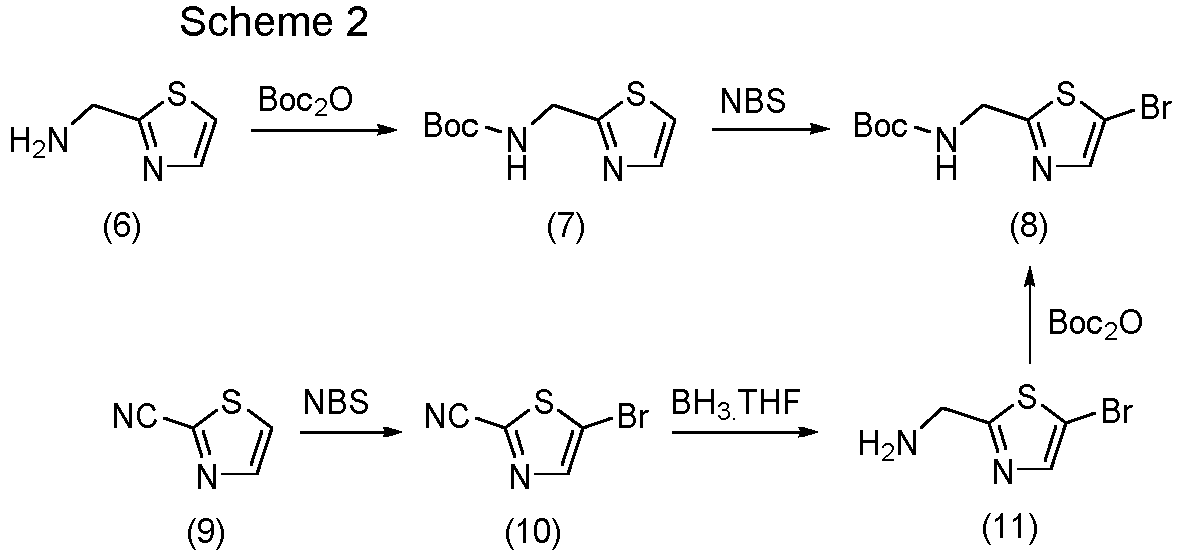
- For example, the bromothiazole building block (8) can be synthesised from the alpha bromination of protected aminomethylthiazole(AMTz) (7) using N-bromosuccinimide (NBS) (Hynes, 2009) as illustrated in
Scheme 2. Alternatively, bromination of cyanothiazole (9) can afford cyanobromothiazole (10), which can be an important building block itself. Reduction of the nitrile of cyanobromothiazole (10) and subsequent Boc protection affords bromothiazole (8).

- A beta halogenation example is illustrated in
Scheme 3, using the methods of Renault et al (Renault, 1997). Hence, treatment of thiophene-2-carbaldehyde (12) with bromine (Br2) in the presence of aluminium trichloride (AlCl3) leads to beta brominated intermediate (13). This can be employed directly as a building block for subsequent RHS side chain attachment (see subsequent sections). Alternatively, it can be converted to a more convenient building block, for example 4-bromothiophene-2-carbonitrile (14) using hydroxylamine-O-sulfonic acid {Zhi, 2000 #374}. -

- Sulfonyl and sulfinyl compounds of Formula (I) where W = -S(O)x-C(R1R2)n-R3 can be conveniently synthesised from 5-halo-2-carbonitriles (15) which are commercially available or can be synthesised for the different examples of X, Y, Z, W. 5-halo-2-carbonitriles (15) can undergo nucleophilic substitution with a range of conveniently substituted alkyl, cycloalkyl, heterocycloalkyl, aryl or heteroaryl thiols to generate the corresponding thioethers (16), as shown in
Scheme 4. Subsequent oxidation of the thioether group using one equivalent of m-CPBA leads to the corresponding sulfoxides (17, x = 1), whilst >2 equivalents of m-CPBA affords the sulfones (17, x = 2). Alternatively, sulfones (17, x =2) can be obtained directly from the reaction of 5-halo-2-carbonitriles (15) with alkyl or aryl sulfinates. The nitrile group of intermediates (17) can be subsequently reduced, for example with borane-THF complex (BH3.THF) or lithium aluminium hydride (LiAlH4), to afford 2-aminomethyl-5-sulfonyl or -sulfinyl analogues (18). The BH3.THF reagent can be replaced by BD3.THF to give the dideuterated analogues (19). - A similar method can be used to synthesise 2-aminomethyl-4-sulfonyl analogues (23) of formula (I) where Z = -S(o)x-C(R1R2)n-R3. Thioethers (21) can be obtained from 4-halo-2-carbonitriles (20) by nucleophilic substitution as described above. Subsequent S-oxidation using m-CPBA leads to sulfoxides/sulfones (22), which can be reduced by BH3.THF to afford 2-aminomethyl-5-sulfinyl- (x = 1) or 2-aminomethyl-5-sulfonyl-heteroaryl (x = 2) analogues (23). Similarly, the dideuterated analogues (24) can be obtained when the reduction is performed using BD3.THF instead of BH3.THF.

- Aminomethylthiophene (AMT)-sulfone analogues (28; X = S, Y = Z = CH, x = 2 in formula I), for example, can be obtained from the commercially available 5-bromo- or 5-chlorothiophene-2-carbonitrile (25) by this method, as exemplified in
Scheme 5.
- In another example, mono S-oxidation of intermediate (29) using one equivalent of m-CPBA gives sulfoxide (30), which can undergo subsequent borane-mediated reduction to afford (5-(phenylsulfinyl)thiophen-2-yl)methanamine (31) as illustrated in
Scheme 6.

- Another highly versatile synthetic route based on intermediate thioethers (16) or (21) begins with the reduction of the nitrile moiety using, for example, BH3.THF as shown in
Scheme 7. In-situ protection of the resulting primary amino group affords the corresponding protected thioethers (32) or (33). Subsequent oxidation using m-CPBA affords the corresponding protected sulfone/sulfoxides, which can undergo protecting group (PG) removal to furnish the desired 2-aminomethyl-5-sulfonyl or - sulfinyl analogues (18) or 2-aminomethyl-4-sulfonyl or-sulfinyl analogues (23).
- For thiophene examples, the reduction of nitrile intermediate (26) using BH3.THF followed by in-situ protection of the resulting primary amino group, with for example, BoczO or trifluoroacetic anhydride (TFAA), affords protected thioethers (34) and (35) respectively as exemplified in
Scheme 8. Oxidation of the thioether moiety using m-CPBA followed by removal of the protecting group (PG) with acid or ammonia respectively furnishes the desired AMT analogues (28). Similarly, in another example, 2-aminomethyl-5-sulfonyl-1 ,4-thiazole analogues (38) can be derived from the commercially available 2-chlorothiazole-5-carbonitrile (36). -


- Sulfone compounds of formula (I) where W or Z = -S(O)x-C(R1R2)n-R3 can be synthesised from 5-halo-2-carbonyl (39) or 4-halo-2-carbonyl heteroaryls (42) respectively, which might be commercially available instead of nitriles or can be synthesised more conveniently. Carbonyl compounds in this context refer to carboxylic acids, esters, aldehydes and amides. In Scheme 9 (exemplified for 5-halo-2-carbonyl starting material (39)), the starting haloheteroaryl carbonyl compounds can be substituted with thiols to afford thioethers (40). The thioethers can be oxidised to sulfones or sulfoxides (41) as previously described. The carbonyl group can then be converted to the aminomethyl moiety to furnish the desired 2-aminomethyl-heteroaryl analogues (18). Alternatively, the carbonyl moiety of thioethers (40) can be converted to aminomethyl and protected with for example (but not limited to) a Boc group. This intermediates (34) can subsequently be oxidised to the corresponding sulfone/sulfoxides and then deprotected to afford the desired 2-aminomethyl-5-sulfinyl- and -sulfonyl analogues (18). 2-Aminomethyl-4-sulfinyl and -sulfonyl analogues (23) can be obtained from 4-halo-2-carbonyl heteroaryls (42) via thioether (43) in a similar manner.


- Examples of functional group interconversion from the carbonyl to the desired aminomethyl moieties are shown in
Scheme 10 for thiophene examples with a sulfone in 5-position already in place (x = 2), but can be applied for thioethers (x = 0) or sulfoxides (x = 1) in other instances of X, W, Y and Z described in this application. For example, esters (44, R' = alkyl, aryl, heteroaryl, preferably alkyl), carboxylic acids (44, R' = H) and aldehydes (50) can be reduced to the corresponding alcohols (48) using suitable reduction agents, for example diisobutylaluminium hydride (DIBAL-H) for esters, BH3.THF for carboxylic acids and aldehydes. Alcohols (48) can be sulfonylated with, for example, methanesulfonyl chloride to give intermediate mesylate (49). Displacement of the mesylate with, for example, sodium azide and subsequent hydrogenolysis furnishes the desired AMT analogues (47). Carboxylic esters (44.) can be directly converted to amides (45) by treatment with NH3 at elevated temperature or via the corresponding carboxylic acids (44, R' = H). Carboxylic acids (44, R' = H) can be converted to amides (45) using a suitable coupling reagent, for example dicyclohexylcarbodiimide (DCC), or via the corresponding acyl chloride. The resultant amides (45) can be reduced to amine (47) directly using, for example, BH3.THF. Alternatively, it can be dehydrated to nitriles (46) with, for example, trifluoroacetic anhydride or with P2O5, and subsequently reduced to amines (47) using BH3.THF. Aldehydes (50) can be converted directly to amines (47) by reductive amination using, for example, ammonium formate and sodium triacetoxyborohydride. Alternative, it can be converted to the amine (47) via the corresponding oxime using hydroxylamine, followed by oxime reduction using, for example, zinc and acetic acid. -


- Heteroarylthiols (52) and (55) are essential building blocks for this method. These building blocks are either commercially available, or can be synthesised from haloheteroaryls (5) or (53) as shown in Scheme 11. Group G can be any suitable precursors of the aminomethyl moiety, for example a hydrogen, a nitrile, a carbonyl, a methyl, a protected hydroxymethyl or a protected aminomethyl group. The halide group of haloheteroaryls (5) or (53) can be substituted with a suitable thiol precursor (SPre), for example by nucleophilic substitution or metal catalysed cross coupling, to afford heteroarylthiol precursors (51) or (54). The precursor groups can be subsequently removed to reveal the desired thiols (52) or (55) respectively.

- For example, in Scheme 12, the thiol precursor is 2-ethylhexyl 3-mercaptopropanoate (57). Thiazolethiol building block (58) can be synthesised from the sulfide intermediate (57), as exemplified in Scheme 12. Hence, Pd-catalysed cross coupling of bromothiazole (8) and 2-ethylhexyl 3-mercaptopropanoate affords sulfide (57), which can be converted to thiazolethiol (58) under basic conditions in a retro-Michael reaction.

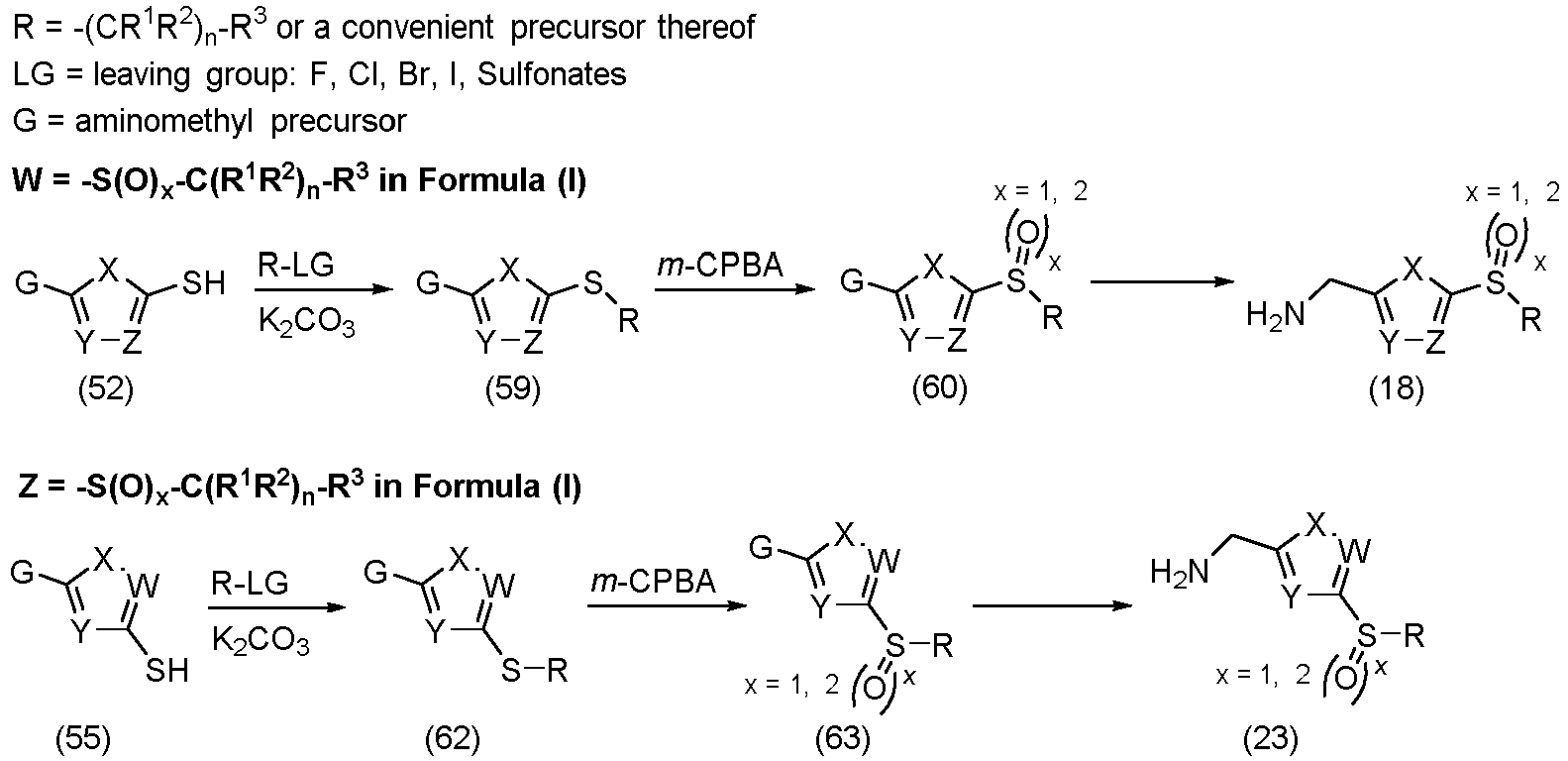
- The heteroayl-5-thiol building blocks (52) can be used to synthesise sulfonyl and sulfinyl compounds of formula (I) where W = -S(O)x-C(R1R2)n-R3 as illustrated in Scheme 13. Group G can be any suitable precursors of the aminomethyl moiety, for example, a hydrogen, a methyl, a nitrile, a carbonyl, a protected hydroxymethyl or a protected aminomethyl group. Condensation of heteroarylthiol (52) with a range of conveniently substituted alkyl, cycloalkyl, heterocycloalkyl, aryl or heteroaryl halides (R-LG; LG = F, Cl, Br, I, sulfonates) in the presence of a base, for example K2CO3, can generate the corresponding thioethers (59). The thioethers can be oxidised to the corresponding sulfones/sulfoxides (60) with m-CPBA. These can be subsequently converted to the desired aminomethyl heteroaryl targets (18) using conditions specific to particular G groups. Similarly, compounds of formula (I) where Z = -S(O)x-C(R1R2)n-R3 (23) can be obtained from heteroaryl-4-thiol (55).

- An example using the method described above for the construction of AMT analogues is exemplified in
Scheme 14. The commercially available thiophen-2-thiol (65) undergoes a condensation reaction with, for example, a conveniently substituted alkyl-, aryl- or heteroaryl halide in the presence of a base, for example, K2CO3, to afford the corresponding thioethers (66). Formylation of the thiophene ring employing phosphorus oxychloride and dimethyformamide gives the corresponding aldehydes, which can be reduced to alcohols (67) using sodium borohydride. S-oxidation with m-CPBA affords sulfonyl-alcohols (68). The hydroxyl group of intermediate (68) can be converted to the corresponding amino group by different methods. For example, the method illustrated inScheme 14 involves conversion to the corresponding azide under Mitsunobu conditions using diphenylphosphoryl azide (DPPA), PPh3 and diisopropyl azodicarboxylate (DIAD). The azide product can undergo subsequent hydrogenolysis over Pd/C catalyst to afford the AMT analogues with the desired substitutions (28).
- In another example, thiazolethiol (58) can be condensed with, for example, a conveniently substituted alkyl, aryl or heteroaryl halide in the presence of a base, for example, K2CO3, to afford thioethers (70), as illustrated in
Scheme 15. After S-oxidation, the protecting group can be subsequently removed to afford the desired aminomethylthiazole (AMTz) analogues (71) as the hydrochloride salt. -

- Some heterocycles can be deprotonated in the 5-position using strong organometallic bases, for example alkyl lithium, Grignard reagents and organocuprates, to afford 5-metallated-2-methyl-heterocycles (73) as exemplified in Scheme 16. This metallated species can undergo substitution with conveniently substituted alkyl, cycloalkyl, heterocycloalkyl, aryl or heteroaryl disulfides (RSSR) to afford thioethers (74). Subsequent S-oxidation followed by benzylic halogenation affords heteroarylmethyl halide (75). The halide can then be substituted with the amino group using various methods, for example, displacement with sodium azide followed by reduction of the azido moiety to afford the desired aminomethylheteroaryl analogues (18).


- Scheme 17 exemplifies the synthesis of thiophene analogues (28) using this method, starting from the commercially available 2-methylthiophene (76). Lithiated 2-methylthiophene, generated in situ from treatment with nBuLi, can react with a range of disulfides (RS-SR) to afford thiophene thioethers (77). The thioethers can be oxidised to the corresponding sulfones with m-CPBA, and subsequent benzylic bromination using for example NBS and benzoyl peroxide (BzzOz) affords alkyl bromides (78). These can be converted to the desired AMT-analogues (28) by various methods, for example, condensation with sodium azide followed by hydrogenolysis over Pd/C catalyst as exemplified in Scheme 17.
-

- Sulfonyl and sulfinyl compounds of formula (I) where W = -S(O)x-C(R1R2)n-R3 can be conveniently synthesised from heteroaryl halides (5; Hal = preferably Br or I), which are commercially available or can be easily synthesised for most examples of X, Y, Z as exemplified in Scheme 18. Group G can be any suitable precursors of the aminomethyl moiety, for example, a nitrile, a carbonyl, a methyl, a protected hydroxymethyl or a protected aminomethyl group. Transition metal-catalysed cross coupling of compound (5) with a range of conveniently substituted alkyl, cycloalkyl, heterocycloalkyl, aryl or heteroaryl thiols using, for example, Pd(0) or Cu(I) can generate the corresponding thioethers (59). The thioethers can be oxidised to the corresponding sulfones/sulfoxides (60) with m-CPBA. These can be subsequently converted to the desired aminomethyl heteroaryl targets (18) using conditions specific to particular G groups. 2-Aminomethyl-4-sulfonyl or -sulfinyl analogues (23) where Z = -S(O)x-C(R1R2)n-R3 can also be obtained by this method from halide (53).

- The commercially available 4-bromothiophene-2-carbonitrile (14), for example, can undergo a palladium(0) catalysed cross coupling with alkyl, cycloalkyl, heterocycloalkyl, aryl or heteroaryl thiols to afford thioether intermediates (79), as exemplified in Scheme 19. The intermediates can be oxidised to the corresponding sulfone (80) using m-CPBA. Subsequent borane-mediated nitrile reduction gives the desired product (81).

- The example in
Scheme 20 illustrates the synthesis of aminomethylthiazole (AMTz) analogues by this method. Bromothiazole (8) can undergo Pd catalysed coupling with conveniently substituted alkyl, cycloalkyl, heterocycloalkyl, aryl or heteroaryl thiols to afford the corresponding thioethers (70). After S-oxidation, the Boc protecting group can be removed with HCl to afford the desired AMTz analogues (71). -

- Sulfonyl and sulfinyl compounds of formula (I) where W = -S(O)x-C(R1R2)n-R3 (n = 0, R3 = Ar) can be conveniently synthesised from heteroarylthiols (52), which are commercially available or can be synthesised for the different examples of X, Y, Z as exemplified in Scheme 21. Group G can be any suitable precursors of the aminomethyl moiety, for example, a nitrile or a protected aminomethyl group. Transition metal-catalysed cross coupling of compound (52) with a range of conveniently substituted aryl or heteroaryl thiols using, for example, Pd(0) or Cu(I) can generate the corresponding thioethers (82). The thioethers can be oxidised to the corresponding sulfones/sulfoxides (83) with m-CPBA. These can be subsequently converted to the desired aminomethyl heteroaryl targets (84) using conditions specific to particular G groups. 2-Aminomethyl-4-sulfonyl or -sulfinyl analogues (87) can also be obtained from thiol (55) by this method.
- Examples of commercially available or easily accessible conveniently substituted heteroaryls useful as starting materials for compounds of Formulas I-V are listed in the table below.
W X Y Z Example of starting material 
S CR CR 

S N CR 

S CR N 

S N N 
CR S CR 

CR S N 


N S CR 
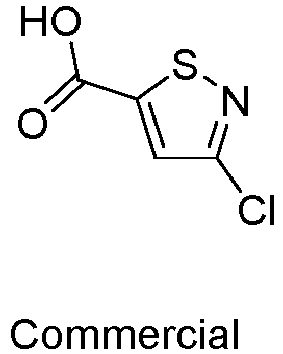
N S N 

- The -C(R1R2)n-R3 group can be introduced as a thiol (HS-C(R1R2)n-R3), disulfide (R3-C(R1R2)n-S-S-C(R1R2)n-R3) or as halides/sulfonates (LG-C(R1R2)n-R3 where LG = F, Cl, Br, I, OSOzMe, OSOzPhMe, OSO2CF3, etc) as described in the routes above. These thiol, disulfide and halide/sulfonates intermediates can be fully derivatised prior to coupling and conversion to the final product of formula I-V and used as building blocks in any of the general methods described above, without the need of any further modification.
- Alternatively, any of the intermediates in the routes above that are formed after the coupling step of the LHS heteroaryl and the RHS groups can be further modified to afford the desired product.
- Examples of both approaches are described below. It should be clear to anyone skilled in the art that these examples are not limiting and other desired combinations of substituents can be accessed by similar methods.
-


- The two approaches mentioned above (preformed RHS fragment or further modification of RHS fragment after coupling with LHS heteroaryl) are exemplified in Scheme 22 for a RHS chain containing a sulfone (SOzR) group. This is for illustration purposes and other desired groups on RHS fragment can be introduced pre- or post-coupling.
- The synthesis of compounds of formula (I) [W = -S(O)x-C(R1R2)n-R3 (n > 0)] where the RHS side chain precursors are readily commercially available and requires no further modifications is described in Section A. In the example shown here, a fragment bearing the sulfone group (88a) is coupled with LHS fragment precursor (5) to form intermediate (91a) already bearing the sulfone substituent. For the synthesis of analogues with a (substituted) alkyl-, cycloalkyl-, heterocycloalkyl-, benzyl- or heteroarylmethyl-sulfonyl (CHR1ASO2R'; Scheme 22) side chain, it may be more convenient to start from the corresponding sulfido precursors such as sulfido-thiols (88), sulfido-halides, -sulfonates or alcohol (89) and sulfido-disulfide (90) as exemplified in Scheme 22. These sulfido precursors (88), (89) and (90) can be converted to bis-sulfide (91) by any one of the methods previous described in Section A. Group G can be any suitable precursors of the aminomethyl moiety, for example a hydrogen, a nitrile, a carbonyl, a methyl, a protected hydroxymethyl or a protected aminomethyl group. In this case, both the sulfide groups can be oxidised to bis-sulfones (92) using, for example, m-CPBA. Bis-sulfones (92) can be subsequently converted to the desired aminomethyl heteroaryl analogues (93) using methods specific for the G group, previously described. The example in Scheme 22 is illustrated for 2-aminomethyl-5-sulfonyl heteroaryl compounds. This method is also suitable for the synthesis of the regioisomeric 2-aminomethyl-4-heteroaryl sulfonyl compounds (Z = - S(O)x-C(R1R2)n-R3).

- For example, AMT analogue with a sulfonylbenzyl side chain (96) can be obtained from bis-sulfide (95) as illustrated in Scheme 23. (4-(methylthio)phenyl)methanethiol (94) and 2-cyano-5-bromothiophene (25, Hal = Br) can be converted to bis-sulfide (95) by methods described in Section A. Oxidation of both the sulfide groups using m-CPBA oxidation affords the corresponding bis-sulfone, which provides the desired AMT compound (96) after Boc deprotection using HCl.

- Desirable thiol building blocks such as (4-(methylthio)phenyl)methanethiol (94)can be synthesised by a number of methods, for example , from the corresponding alkyl bromide as illustrated in Scheme 24. The bromide group on benzyl bromide (97) can be substituted for a suitable thio precursor, for example (but not limiting to) thioacetate. The thioacetate formed (98) can be hydrolysed to the corresponding thiol (94) in acidic conditions.
-

- For compounds of formula (II) where W = S(O)x-(Ring A), Ring A can be attached to the aminomethylheteroaryl core by the methods described in section A if the Ring A precursors are readily available commercially. The methods described in the subsequent sections allow the synthesis of analogues where Ring A is further functionalised, and are valid for certain substituents selected from the set described in embodiment [0050].
-


- The method described in
Scheme 25 allows additional substitutions on Ring A to be attached via a heteroatom (Het), where Het can be N, O and hence Het(H)n is OH or NH2. A suitably protected form of OH or NH2 can be used instead and deprotected to free hydroxyl or amine when required. For analogues with Het = S, synthetic methods are described in Section B2c. Group G can be any suitable precursors of the aminomethyl moiety, for example a hydrogen, a nitrile, a carbonyl, a methyl, a protected hydroxymethyl or a protected aminomethyl group. Het-substituted phenyl sulfide (102) can be obtained by any one of the methods described in Section A, for example by the condensation of heteroaryl halide (5) and Het-substituted thiophenol (99). Sulfide (102) can undergo a wide range of reactions at the -Het(H)n group, for example alkylation, acylation, sulfonylation, carbamoylation etc. with conveniently substituted (cyclo)alkyl halides/sulfonates, acid chlorides/anhydrides, sulfonyl chlorides/anhydrides, chloroformates, isocyanates to afford the corresponding anilines, amides, sulfonamides, carbamates, ureas for N-linked analogues (103, Het = N) respectively, and (cyclo)alkyl ethers, esters, sulfonates, carbonates, carbamates are obtained for O-linked analogues (103, Het = O). These substituted phenyl thioethers (103) can be converted to the desired aminomethylheteroaryl analogues (104) by methods described in Section A. The example inScheme 25 is illustrated for 2-aminomethyl-5-sulfonyl heteroaryl compounds. This method is also suitable for the synthesis of the regioisomeric 2-aminomethyl-4-heteroaryl sulfonyl compounds (Z = S(O)x-(Ring A)).

- For example, the thiol group of 4-aminobenzenethiol (105) can react selectively with bromothiophene-2-carbonitrile (25, Hal = Br) to form 4-aminophenylsulfide (106) as illustrated in Scheme 26 This can be condensed with, for example, acyl chlorides/anhydrides, sulfonyl chlorides/anhydrides, chloroformates, isocyanates etc. to give the corresponding amides, sulfonamides, carbamates, urea (107), which can be converted to the desired AMT analogues (108) by the aforementioned m-CPBA oxidation/BH3.THF reduction sequence.
-

- Analogues with Ring A substituted with a carboxlic ester or a carboxamide can be obtained by the synthetic route exemplified in Scheme 27. Group G can be any suitable precursors of the aminomethyl moiety, for example a hydrogen, a nitrile, a carbonyl, a methyl, a protected hydroxymethyl or a protected aminomethyl group. Sulfonyl/sulfinyl-phenyl ester (112) can be obtained by any one of the methods described in Section A, for example from the nucleophilic substitution of heteroaryl halide (5) and thiophenols conveniently substituted with a wide range of alkyl, cycloalkyl and heterocycloalkyl carboxylates (109). Esters (112) can be converted to the desired aminoheteroaryl analogues (113) by methods specific to the G group as previous described. Alternatively, the ester moiety of intermediate (112) can be converted, either directly or via the carboxylic acid, to the corresponding substituted amide (R' = H, substituted alkyl, cycloalkyl, heterocycloalkyl, aryl, heteroaryl) to afford intermediate (114). This can subsequently be converted to the desired aminomethylheteroaryl analogues (115) using the methods described in Section A. The example in Scheme 27 is illustrated for 2-aminomethyl-5-sulfonyl heteroaryl compounds. This method is also suitable for the synthesis of the regioisomeric 2-aminomethyl-4-heteroaryl sulfonyl compounds (Z = S(O)x-(Ring A)).

- For example, the ester intermediates (117) can be obtained from methyl mercaptobenzoate (116) and 5-bromothiophene-2-carbonitrile (25, Hal = Br) in 4 steps (See Section A,
Schemes 5 and 8), as illustrated in Scheme 28. Direct conversion of esters (117) to amides (119) can be accomplished by treatment with selected primary and secondary amines at elevated temperature. Alternatively, saponification of esters (117) furnishes the corresponding carboxylic acids (118). The carboxyl group can be conveniently substituted with a range of primary and secondary amines by the use of suitable coupling reagent, for example HBTU or EDCI, to afford the corresponding amides (119). Subsequent amine deprotection furnishes AMT analogues (120) with the desired carboxamide substitutions. -


- Compounds of formula (II) with sulfonyl substituents (SOzR) attached to Ring A can be obtained by the synthetic routes exemplified in Scheme 29.
- In one approach, ring A can be attached to the aminomethylheteroaryl core with the sulfonyl substituents (SOzR) already installed. Conveniently substituted alkyl, cycloalkyl, heterocycloalkyl, aryl heteroaryl sulfonyl-thiophenols (121, x = 2) can be condensed with heteroaryl halides (5) to give the corresponding sulfonyl-sulfides (124, x = 2) (Scheme 29). After sulfide-to-sulfonyl oxidation, the resultant bis-sulfonyl (125) can be converted to the desired aminomethylheteroaryl analogues (126) by methods specific to the G group as previously described.
- Alternatively the sulfur substituent is initially installed as the sulfide (SR) before the sulfide is eventually oxidised to the sulfonyl level (SOzR). In the former approach, bis-sulfides (124, x = 0) can be obtained from any one of the methods described in Section A, for example from the nucleophilic substitution of heteroaryl halides (5) and conveniently substituted aryl or heteroaryl sulfido-thiophenols (121, x = 0). Group G can be any suitable precursors of the aminomethyl moiety, for example a hydrogen, a nitrile, a carbonyl, a methyl, a protected hydroxymethyl or a protected aminomethyl group. Both sulfide groups of bis-sulfides (124, x = 0) can be oxidised to the corresponding bis-sulfonyl intermediate (125) using, for example, m-CPBA. The bis sulfonyl intermediate (125) can be subsequently converted to the desired aminomethylheteroaryl analogues (126) by methods specific to the G group previous described.
- The example in Scheme 29 is illustrated for 2-aminomethyl-5-sulfonyl heteroaryl compounds. This method is also suitable for the synthesis of the regioisomeric 2-aminomethyl-4-heteroaryl sulfonyl compounds (Z = S(O)x-(Ring A)).

- For example, the condensation of conveniently substituted sulfido-thiophenols (127) with 5-bromothiophene-2-carbonitrile (25, Hal = Br) leads to bis-sulfides (128) as illustrated in
Scheme 30. Subsequent treatment with m-CBPA converts both sulfide groups into the corresponding sulfones. The resulting bis-sulfone can be reduced with BH3.THF to afford the desired AMT analogues (129).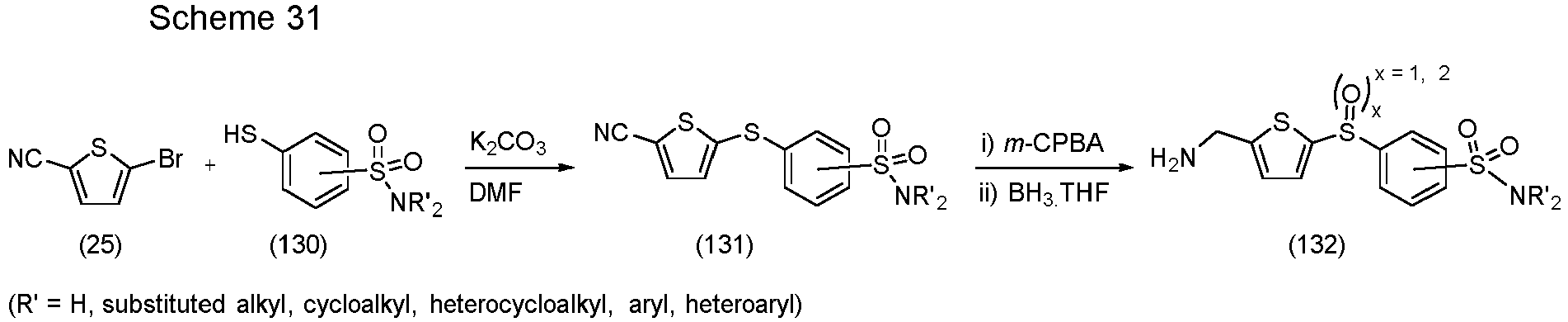
- In another example, sulfonamide substituents can be introduced to Ring A using this method, starting from conveniently substituted sulfonamido-thiols (130) and 5-bromothiophene-2-carbonitrile (25) as illustrated in
Scheme 31. The resulting sulfide intermediates (131) can be converted to the desired AMT-analogues (132) as previously described.
- Scheme 32 exemplifies the synthesis of some sulfonamido-thiophenol building blocks (130), starting from the commercially available para/meta fluoro- or chlorobenzenesulfonyl chlorides (133). Hence, condensation of sulfonyl chloride (133) with conveniently substituted primary or secondary amines affords the corresponding sulfonamides (134). Subsequent treatment with NaSMe (>2 equiv.) furnishes the desired thiophenols (130).


- In another example, condensation of the commercially available thiophene-2-thiol (65) with haloaryl or haloheteroaryl (exemplified in Scheme 33 with chloropyridines (135)) leads to thioethers (136). Formylation of the thiophene ring employing phosphorus oxychloride and dimethyformamide gives the corresponding aldehydes, which can be reduced to alcohols (137) using sodium borohydride. S-oxidation with m-CPBA affords sulfonyl-alcohol (138). The hydroxyl group of intermediate (138) can be converted to the corresponding amino group by different methods. For example, the method illustrated in Scheme 33 involves conversion to the corresponding azide under Mitsunobu conditions using DPPA, PPh3 and DIAD. The azide product can undergo subsequent hydrogenolysis over Pd/C catalyst to afford the AMT analogues with the desired substitutions (141). The method described in Scheme 33 can also be applied to the synthesis of other examples with heterocyclic ring A, for example, bis-thiophene analogues (141).

- In an alternative method, sulfonyl substituents can be obtained, for example, by halogen displacement or cross coupling from halogen substituted Ring A, as exemplified in Scheme 34. The 4-halobenzene intermediate (143) can be obtained by any one of the methods described in Section A, with the nucleophilic substitution between 4-halothiophenol (142) and heteroaryl halide (5) and subsequent sulfide-to-sulfone oxidation illustrated here. Group G can be any suitable precursors of the aminomethyl moiety, for example a hydrogen, a nitrile, a carbonyl, a methyl, a protected hydroxymethyl or a protected aminomethyl group. Intermediate (143) can be conveniently substituted with any suitable nucleophiles (by nucleophilic substitution) or coupling partners (by cross coupling) to afford intermediate (144). This versatile intermediate can be used to attach various substituents on ring A, for example it can be substituted with amines and alcohols to produce anilines and ethers, and with carbon-based nucleophiles or coupling partners to introduce alkyl, alkenyl, alkynyl, aryl or heteroaryl substituents. When alkyl, cycloalkyl, heterocycloalkyl, aryl, heteroaryl thiols are employed as the nucleophiles, for example, the corresponding sulfides (R = SR") are obtained which can be subsequently oxidised to the bis-sulfone intermediates (144, R = SO2R') with m-CPBA. This intermediate can be converted to the desired aminomethylheteroaryl analogues (145) using conditions specific to the G group previously described. The example in Scheme 34 is illustrated for 2-aminomethyl-5-sulfonyl heteroaryl compounds. This method is also suitable for the synthesis of the regioisomeric 2-aminomethyl-4-heteroaryl sulfonyl compounds (Z = S(O)x-(Ring A)).

- For example, chlorophenyl sulfone (146) can be obtained from 5-bromothiophene-2-carbonitrile (25, Hal = Br) and 4-chloro-thiophenol (142, Hal' = CI) by methods previous described, as show in
Scheme 35. The chlorine atom of sulfone (146) can be conveniently substituted with other functional groups, for example mercaptoethanol or other mercaptoalkanols to afford sulfides (147), which can be subsequently oxidised to the bis-sulfone intermediates (148) with m-CPBA. This intermediate can be treated with HCl for the removal of the Boc protecting group, affording the 5-sulfonylphenyl-sulfonyl AMT analogues (149). -

- The synthesis of compounds of formula (III) [W = S(O)xAr(R4)p-L1-(CRA3RB3)q-L2-[Ring B]r-R5] where the RHS side chain precursors are readily commercially available and requires no further modifications is described in Section A. The methods below illustrated some of (but not limited to) the modifications to introduce particular substitutions on the RHS side chain. The RHS fragment with the desired substitutions can be directly attached to the LHS heteroaryl fragment as a thiol (or disulfide, halide, etc).
- Alternatively, a convenient RHS intermediate can be attached to the LHS heteroaryl fragment and then conveniently modified to introduce the desired R4, L1, -(CRA3RB3)q-, L2, Ring B or/and R5 groups. All the examples described in this section are illustrated for 2-aminomethyl-5-sulfonyl heteroaryl compounds. All the methods employed are also suitable for the synthesis of the regioisomeric 2-aminomethyl-4-heteroaryl sulfonyl compounds (W = S(O)xAr(R4)p-L1-(CRA3RB3)q-L2-[Ring B]r-R5).

- For example, subtituted heterocycloalkyl rings can be introduced to the RHS fragment at the initial stages of the synthetic route, as exemplified in Scheme 36 (p = 0, q = 0, L1 = SO2, L2 = bond). para/meta Fluoro- or chlorobenzenesulfonyl chlorides (150) can be condensed with conveniently substituted cyclic amines, cyclic diamines, other cyclic heterocycloalkyls containing a secondary amine or other amines containing a cyclic substituent (S-prolinol exemplified here), to afford the corresponding sulfonamides. These can be converted to the desired thiophenols (151) by methods similar to those described in Scheme 32. These thiols can be condensed with 5-bromothiophene-2-carbonitrile (25, Hal = Br), and then subsequently converted to the desired AMT analogues (153) by methods described in Section A


- Scheme 37 exemplifies a synthetic route for compounds of formula (III), where Ring B can be substituted cycloalkyl, cycloheteroalkyl, aryl, heteroaryl, and is attached via a sulfonylalkyl side chain (p = 0, q = n + 1, L1 = SO2, L2 = bond, R3 = H). For example, hydroxyalkyl sulfone intermediates (148) can be obtained by methods described in
Scheme 35. The hydroxyl group can be converted to a leaving group, for example the mesylate, by treatment with methanesulfonyl chloride as shown in Scheme 37. The resultant mesylate (154) can be conveniently substituted with a range of nucleophiles (H-Nu and M-Nu, M = Cu, Zn etc.) containing a ring system, for example cycloalkyl- or heterocycloalkyl-substituted primary and secondary amines, cycloalkyl- or heterocycloalkyl-substituted alcohols, phenols, anilines etc., aryl, and heteroaryl cuprates to afford the corresponding sulfones (155). Hydroxyethyl sulfone (148, n = 1) furnishes vinyl sulfone (157) upon treatment with mesyl chloride. Nucleophiles (H-Nu and M-Nu) similar to above can be introduced to vinyl sulfone (157) by Michael-type addition, leading to the corresponding sulfones (158). Sulfones (155) and (158) can be converted to the desired AMT analogues (156) and (159) by treatment with HCl.
- Another example of route to compounds of Formula (III), where Ring B = aryl or heteroaryl (p = 0, q = 0, L1 = SO2, L2 = bond), uses the Friedel Craft reaction as described in Scheme 38. Hence, treatment of thioether (29; see
Scheme 6 for synthetic methods) with conveniently substituted aryl- or heteroaryl-sulfonyl chlorides in the presence of a Lewis acid catalyst such as FeCl3 leads selectively to the corresponding para-sulfonylated intermediate (159). This can then be converted to the desired AMT analogues (160) by methods previously described. -

- Compounds of formula (IV) can be synthesised by any of the methods described above. In a non-limiting example shown in Scheme 39, Ring D can be introduced via a carbamate or a urea linker to a pyrrolidinemethyl intermediate (152, p = 0, Ring C = pyrrolidine, -(CRA4RB4)s- = CH2, L3= OCONH or NCONH, t = 0) obtained by methods previously described in Scheme 36. Hence, addition of conveniently substituted aryl- or heteroaryl isocyanates to hydroxypyrrolidinemethyl- or aminopyrrolidinemethyl intermediates (152) affords the corresponding carbamates or ureas (161). These can be converted to the desired AMT analogues (162) by methods previously described. Derivatisation of alcohols to form numerous types of linkages to a cycloalkyl, heterocycloalkyl, aryl, heteroaryl or a chain bearing one of these groups is well known in the art, thus not limiting to only carbamates and ureas. All the examples described in this section are illustrated for 2-aminomethyl-5-sulfonyl heteroaryl compounds. All the methods employed are also suitable for the synthesis of the regioisomeric 2-aminomethyl-4-heteroaryl sulfonyl compounds.

-

- In general, compounds of formula (Va) can be synthesised by any of the methods described previously in Section A and B2c. In addition, compounds of this class can be synthesised via the bis-sulfonyl intermediate (164, Scheme 40) bearing a leaving group (LG), which can be obtained by any one of the methods previous described. Group G can be any suitable precursors of the aminomethyl moiety, for example a hydrogen, a nitrile, a carbonyl, a methyl, a protected hydroxymethyl or a protected aminomethyl group. As illustrated in
Scheme 40, the leaving group (LG) on intermediate (164) can be conveniently substituted for a range of aryl, heteroaryl, alkynyl, alkenyl and amino substituents using metal catalysed cross couplings, for example Suzuki coupling employing boronic acids/boronates, Stille coupling employing stannates, Sonogashira coupling employing alkynyl cuprates, Heck coupling employing alkenes and Buchwald coupling employing amines. The coupled product (165) can be converted to the desired aminomethylheteroaryl analogues (166) by methods previously described.
- Compounds of formula (Va) with alkoxy R7 substituent can be synthesised from tert-butyl ethers (168, Scheme 40), which can be obtained by any of methods previous described in Section A and B2c, for example by the condensation of heteroaryl halides (5) and conveniently substituted thiophenols (163). tert-Butyl ethers (168) can be converted to the final aminoheteroaryl analogues (170, R' = tBu) directly by methods specific to group G previously described. Alternative they can undergo alcohol deprotection using, for example, HCl to afford phenols (169). Phenols (169) can be converted to intermediate (164) by sulfonation with, for example, triflic anhydride, to afford the corresponding triflate (164, LG = OTf). This can undergo metal catalysed cross couplings with the same set of substrate as aforementioned to afford intermediates (165), which can be subsequently converted to the aminomethyl heteroaryl targets (166) using methods specific to Group G previously described. Alkoxy substituted analogues (170) can be obtained by the condensation of phenols (169) with conveniently substituted alkyl-, cycloalkyl-, heterocycloalkyl halides/sulfonates/trichloroacetimidates to give the corresponding alkoxides. These can subsequently be converted to the desired aminomethylheteroaryl analogues (170) by methods specific to Group G previous described in Section A. All the examples described in this section are illustrated for 2-aminomethyl-5-sulfonyl heteroaryl compounds. All the methods employed are also suitable for the synthesis of the regioisomeric 2-aminomethyl-4-heteroaryl sulfonyl compounds.

- For example, analogues of formula Va with R7 substituents alkenyl, alkynyl, alkyl, cycloalkyl, heterocycloalkyl, aryl, heteroaryl can be obtained via bromide intermediate (172, Scheme 41), which can be synthesised from 5-bromothiophene-2-carbonitrile (25, Hal = Br) and conveniently substituted thiophenols, for example 3-bromo-5-(methylthio)benzenethiol (171) as illustrated in Scheme 41. The bromine atom of intermediate (172) can be conveniently substituted using a range of Pd(0) catalysed coupling processes. The Boc protecting group of the cross-coupled product (172) can be subsequently removed by treatment with HCl to afford 5-(1,3-bis-sulfonylaryl) AMT analogues with the desired substitutents (174).
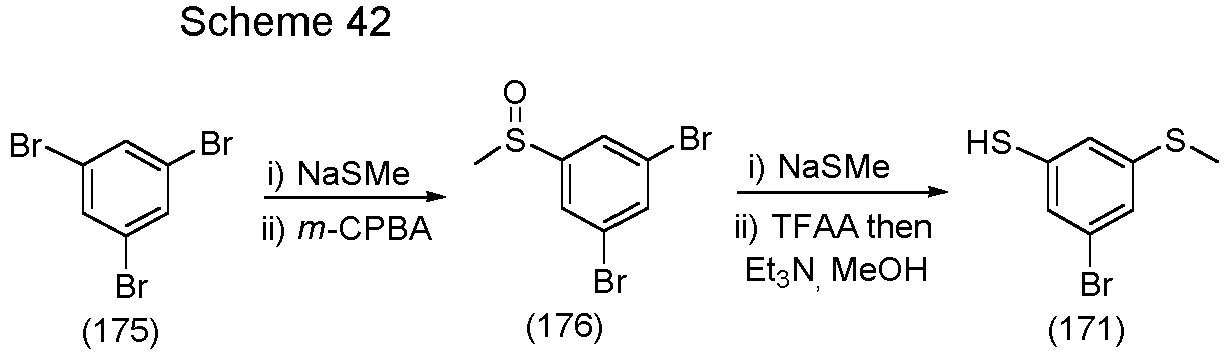
- The synthesis of one of the thiophenol starting materials (163), for example 3-bromo-5-(methylthio)benzenethiol (171), from the commercially available 1,3,5-tribromobenzene (175) is described in Scheme 42. One of the three bromide groups can be substituted with sodium thiomethoxide to afford the corresponding monosulfide, which can be selectively oxidised to sulfoxide (176) using one equivalent of m-CPBA. At this point, one of the two remaining bromides can be conveniently substituted with thiolates, for example sodium thiomethoxide, as shown in Scheme 42. The corresponding sulfoxido-sulfide product can then undergo a Pummerer-type reaction employing trifluoroacetic anhydride, triethylamine and methanol to afford 3-bromo-5-(methylthio)benzenethiol (171).

- In another example, synthesis of analogues of formula Va with alkoxy substituents (R7) is illustrated in Scheme 43. tert-Butyl ether (178) can be obtained from 5-bromothiophene-2-carbonitrile (25, Hal = Br) and thiophenol (177) by methods previously described. It can be converted directly to the tert-butoxy AMT analogue (179) using BH3.THF. To allow further substitutions on the oxygen atom, the tert-butyl moiety of (178) can be removed by treatment with HCl, affording phenol (180).
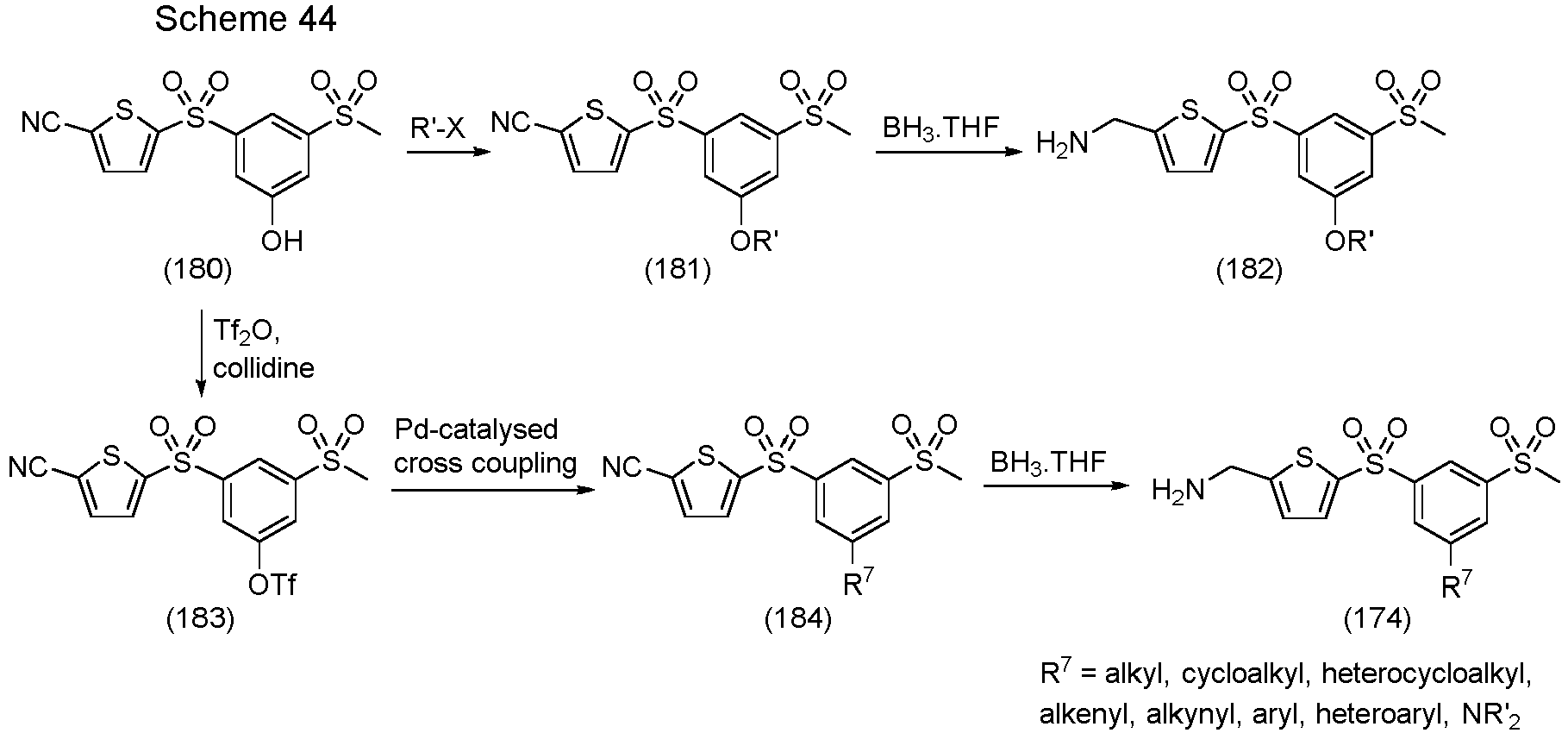
- The phenol intermediate (180) can be alkylated with conveniently substituted primary and secondary alkyl halides/sulfonates or tertiary alkyl trichloroacetimidate to afford the corresponding ethers (181), which upon reduction using BH3.THF affords the desired AMT analogues (182) as illustrated in Scheme 44. Furthermore, the free hydroxyl group of phenol (180) can be converted to a leaving group, for example a triflate (183), which can be conveniently substituted using a range of Pd-catalysed coupling processes, for example with alkyl, cycloalkyl, aryl, heteroaryl or alkenyl boronic acids/boronates (Suzuki) or the equivalent stannates (Stille), alkynyl cuprate (Sonogashira), amines (Buchwald) e.t.c. The cross-coupled products (184) can be subsequently reduced by BH3.THF to afford analogues of formula Va (174) where R7 is a carbon- or nitrogen-based substituent.

- The synthesis of the thiophenol building blocks (167) is illustrated in Scheme 45. The commercially available 3,5-dibromophenol (184) is first converted to the corresponding tert-butyl ether by treatment with tert-butyl trichloroacetimidate (tBuOC(NH)CCl3) in the presence of BF3.OEt2. Lithium-bromine exchange and subsequent quenching with a conveniently substituted disulfide (R6SSR6), for example dimethyl disulfide (R6 = Me), furnishes sulfides (186). This can then undergo a Pd(0) catalysed cross coupling with a thiol precursor, for example triisopropylsilylthiol (TIPS-SH), to afford the expected silyl sulfides, which is treated with TBAF to reveal the desired thiophenols (187).
-

- In general, compounds of formula (Vb) can be synthesised by any of the methods described previously. In addition, compounds of this class can be synthesised via the halide intermediates (188, Scheme 46), which can be obtained by any one of the methods previous described, for example from the condensation of heteroaryl halides (5) and conveniently substituted thiols (187). Group G can be any suitable precursors of the aminomethyl moiety, for example a hydrogen, a nitrile, a carbonyl, a methyl, a protected hydroxymethyl or a protected aminomethyl group.

- As exemplified in Scheme 46, the halide group (Hal1, preferably F and CI) para to the sulfonyl moiety on sulfonylphenyl intermediate (188) can undergo selective nucleophilic substitution with a conveniently substituted alkyl, cycloalkyl, heterocycloalkyl, aryl and heteroaryl thiols (R6SH) to afford the corresponding sulfides, which can be subsequently oxidised to sulfone (189) using m-CPBA. The halide group (Hal2, preferably I, Br and CI) of sulfone (189) can be conveniently substituted with a range of aryl, heteroaryl, alkynyl, alkenyl and amino substituents using metal catalysed cross couplings, for example Suzuki coupling employing boronic acids/boronates, Stille coupling employing stannates, Sonogashira coupling employing alkynyl cuprates, Heck coupling employing alkenes and Buchwald coupling employing amines. The coupled products (190) can be converted to the desired aminomethylheteroaryl analogues (191) by methods previously described. All the examples described in this section are illustrated for 2-aminomethyl-5-sulfonyl heteroaryl compounds. All the methods employed are also suitable for the synthesis of the regioisomeric 2-aminomethyl-4-heteroaryl sulfonyl compounds.

- An AMT example is illustrated in Scheme 47. Fluorobenzene intermediate (192) can be obtained from 5-bromothiophene-2-carbonitrile (25, Hal = Br) and 3-bromo-4-fluorobenzenethiol (191), both commercially available, by methods previous described. Condensation with a thiolate (sodium thiomethoxide in this example), and subsequent sulfide oxidation furnishes bis-sulfonyl bromobenzene (193). The bromine atom of intermediate (193) can be conveniently substituted using a range of Pd(0) catalysed coupling processes, for example with alkyl, cycloalkyl, aryl, heteroaryl or alkenyl boronic acids/boronates (Suzuki) or the equivalent stannates (Stille), alkynyl cuprate (Sonogashira) e.t.c. as well as amines (Buchwald). The Boc protecting group of the cross-coupled product can be subsequently removed by treatment with HCl to afford 5-(1,4-bis-sulfonylaryl) AMT analogues (194) with the desired R7 substitutents.
-

- In general, compounds of formula (Vc) can be synthesised by methods described in Section A. In addition, compounds of this class can be synthesised via the halide intermediate (196, Scheme 48), which can be obtained by methods previous described in Section A and B2c, for example by the condensation of heteroaryl halides (5) and conveniently substituted thiols (195). Group G can be any suitable precursors of the aminomethyl moiety, for example a hydrogen, a nitrile, a carbonyl, a methyl, a protected hydroxymethyl or a protected aminomethyl group.

- As exemplified in Scheme 48, the halide group (Hal1) on bis-sulfonylphenyl intermediate (196) can be conveniently substituted for a range of aryl, heteroaryl, alkynyl, alkenyl and amino substituents using metal catalysed cross couplings, for example Suzuki coupling employing boronic acids/boronates, Stille coupling employing stannates, Sonogashira coupling employing alkynyl cuprates, Heck coupling employing alkenes and Buchwald coupling or direct aromatic nucleophilic substitution employing amines. The coupled products (197) can be converted to the desired amino methyl heteroaryl analogues (198) by methods specific to Group G previously described. The methods described above are illustrated for 2-aminomethyl-5-sulfonyl heteroaryl compounds, but are also suitable for the synthesis of the regioisomeric 2-aminomethyl-4-heteroaryl sulfonyl compounds.

- An example of the synthesis of thiophenol building blocks (201) is illustrated in Scheme 49. The commercially available 2,5-dibromophenol (199) can undergo nucleophilic substitution with a range of conveniently substituted alkyl, cycloalkyl or heterocycloalkyl halides or sulfonates to afford thioethers (200). The meta bromide group can undergo selectively Pd(0) catalysed cross coupling with methyl 3-mercaptopropanoate as described in Section A2a, which after treatment with base affords the desired thiophenol building block (201).
-

- In general, compounds of formula (VI) can be synthesised by methods described in Sections A and B of the General Synthetic Methods. In addition, compounds with carboxylic acid (205) or carboxamide (207) can be synthesised via the tert-butyl carboxylate intermediate (203, Scheme 50), which can be obtained by methods previously described. Group G can be any suitable precursors of the aminomethyl moiety, for example a hydrogen, a nitrile, a carbonyl, a methyl, a protected hydroxymethyl or a protected aminomethyl group.


Scheme 50, the tert-butyl group of intermediate (203) can be removed by treatment with an acid, for example HCl, to afford the corresponding carboxylic acid (204). The carboxylic acid (204) can be converted to the desired aminomethylheteroaryl analogues (205) by methods previously described. Alternatively, the carboxyl group can be condensed with a range of conveniently substituted primary and acyclic secondary amines to afford the corresponding acyclic amides (206; NRARB = acyclic), or with optionally substituted cyclic amines to afford the corresponding cyclic amides (206; NRARB = cyclic). The amide intermediates (206) can be converted to the desired aminomethylheteroaryl analogues (207) by methods previously described.


Scheme 52. The carboxyl group can undergo amide coupling mediated by common coupling agents, for example HATU, with a range of conveniently substituted amines, in this example 3-((tert-butyldimethylsilyl)oxy)pyrrolidine, to afford amide (212). Both the Boc and the TBS protecting group can be removed by treatment with HCl to afford the desired amido-aminomethylthiazole analogue (213). -

- Further information on the preparation of the compounds of the invention is provided in the Examples section. The general reaction schemes and specific methods described in the Examples form a further aspect of the invention.
- The resultant compound of the invention from the processes defined above can be isolated and purified using techniques well known in the art.
- Compounds of the invention may exist in a single crystal form or in a mixture of crystal forms or they may be amorphous. Thus, compounds of the invention intended for pharmaceutical use may be administered as crystalline or amorphous products. They may be obtained, for example, as solid plugs, powders, or films by methods such as precipitation, crystallization, freeze drying, or spray drying, or evaporative drying. Microwave or radio frequency drying may be used for this purpose.
- The processes defined herein may further comprise the step of subjecting the compound of the invention to a salt exchange, particularly in situations where the compound of the invention is formed as a mixture of different salt forms. The salt exchange suitably comprises immobilising the compound of the invention on a suitable solid support or resin, and eluting the compounds with an appropriate acid to yield a single salt of the compound of the invention.
- In a further aspect of the invention, there is provided a compound of the invention obtainable by any one of the processes defined herein.
- Certain of the intermediates described in the reaction schemes above and in the Examples herein are novel. Such novel intermediates, or a salt thereof, particularly a pharmaceutically acceptable salt thereof, form a further aspect of the invention.
- In accordance with another aspect, the present invention provides a pharmaceutical formulation comprising a compound of the invention, or a pharmaceutically acceptable salt thereof, and a pharmaceutically acceptable excipient.
- Conventional procedures for the selection and preparation of suitable pharmaceutical formulations are described in, for example, "Pharmaceuticals - The Science of Dosage Form Designs", M. E. Aulton, Churchill Livingstone, 1988.
- The compositions of the invention may be in a form suitable for oral use (for example as tablets, lozenges, hard or soft capsules, aqueous or oily suspensions, emulsions, dispersible powders or granules, syrups or elixirs), for topical use (for example as creams, ointments, gels, or aqueous or oily solutions or suspensions), for administration by inhalation (for example as a finely divided powder or a liquid aerosol), for administration by insufflation (for example as a finely divided powder) or for parenteral administration (for example as a sterile aqueous or oily solution for intravenous, subcutaneous, intramuscular, intraperitoneal or intramuscular dosing or as a suppository for rectal dosing).
- The compositions of the invention may be obtained by conventional procedures using conventional pharmaceutical excipients, well known in the art. Thus, compositions intended for oral use may contain, for example, one or more colouring, sweetening, flavouring and/or preservative agents.
- An effective amount of a compound of the present invention for use in therapy of a condition is an amount sufficient to symptomatically relieve in a warm-blooded animal, particularly a human the symptoms of the condition or to slow the progression of the condition.
- The amount of active ingredient that is combined with one or more excipients to produce a single dosage form will necessarily vary depending upon the host treated and the particular route of administration. For example, a formulation intended for oral administration to humans will generally contain, for example, from 0.5 mg to 0.5 g of active agent (more suitably from 0.5 to 100 mg, for example from 1 to 30 mg) compounded with an appropriate and convenient amount of excipients which may vary from about 5 to about 98 percent by weight of the total composition.
- The size of the dose for therapeutic or prophylactic purposes of a compound of the invention will naturally vary according to the nature and severity of the conditions, the age and sex of the animal or patient and the route of administration, according to well known principles of medicine.
- In using a compound of the invention for therapeutic or prophylactic purposes it will generally be administered so that a daily dose in the range, for example, a daily dose selected from 0.1 mg/kg to 100 mg/kg, 1 mg/kg to 75mg/kg, 1 mg/kg to 50 mg/kg, 1 mg/kg to 20 mg/kg or 5 mg/kg to 10 mg/kg body weight is received, given if required in divided doses. In general lower doses will be administered when a parenteral route is employed. Thus, for example, for intravenous or intraperitoneal administration, a dose in the range, for example, 0.1 mg/kg to 30 mg/kg body weight will generally be used. Similarly, for administration by inhalation, a dose in the range, for example, 0.05 mg/kg to 25 mg/kg body weight will be used. Suitably the compound of the invention is admistered orally, for example in the form of a tablet, or capsule doasage form. The daily dose administered orally may be, for example a total daily dose selected from 1 mg to 1000 mg, 5 mg to 1000 mg, 10 mg to 750 mg or 25 mg to 500 mg. Typically, unit dosage forms will contain about 0.5 mg to 0.5 g of a compound of this invention.
- In accordance with another aspect, the present invention provides a compound of the invention, or a pharmaceutically acceptable salt thereof, for use as a medicament.
- A further aspect of the invention provides a compound of the invention, or a pharmaceutically acceptable salt thereof, for use in the treatment of a disease or medical condition mediated by LOX.
- Unless stated otherwise reference to the treatment of a disease or medical condition mediated by LOX is intended to encompass diseases or medical conditions mediated by any one of LOX, LOXL1, LOXL2, LOXL3 or LOXL4.
- In the following sections of the application reference is made to a compound of the invention, or a pharmaceutically acceptable salt for use in the treatment of certain diseases or conditions. It is to be understood that any reference herein to a compound for a particular use is also intended to be a reference to (i) the use of the compound of the invention, or pharmaceutically acceptable salt thereof, in the manufacture of a medicament for the treatment of that disease or condition; and (ii) a method of treating the disease or condition in a subject, the method comprising administering to the subject a therapeutically effective amount of the compound of the invention, or pharmaceutically acceptable salt thereof.
- The disease of medical condition mediated by LOX may be any of the diseases or medical conditions listed in this application.
- As discussed in the background to the invention the role of the LOX family of may have distinct roles in diseases such as cancer. Accordingly the selective inhibition of a LOX may be advantageous. In one embodiment there is provided a compound of the invention, or pharmaceutically acceptable salt thereof, for use in the selective inhibition of LOX, LOXL1, LOXL2, LOXL3 or LOXL4. In other embodiments it may be advantageous to inhibit two or more members of the LOX family. Accordingly in another embodiment there is provided a compound of the invention, or pharmaceutically acceptable salt thereof, for use in the inhibition of two or more members of the LOX family selected from LOX, LOXL1, LOXL2, LOXL3 or LOXL4.
- A further aspect of the invention provides a compound of the invention, or pharmaceutically acceptable salt thereof, for use in the treatment of a proliferative disease. The proliferative disease may be malignant or non-malignant.
- As mentioned in the Background to the invention, LOX plays a critical role in primary cancer and metastasis. Evidence supporting this role of LOX in primary tumour growth and metastasis is described below.
- Studies have shown that LOX plays a fundamental role in the growth of primary tumours in colorectal and lung cancer (Gao, Xiao et al. 2010, Baker, Cox et al. 2011) and glioblastoma (Mammoto, Jiang et al. 2013). PDAC KRASmut/p53wt cells (which endogenously express low levels of LOX) were engineered to express high levels of human LOX. In murine allograft models using these cells primary tumour growth is increased significantly (Miller, Morton et al. 2015). Lysyl oxidase activity participates in primary tumor growth in a transgenic mouse model of aggressive pancreatic ductal adenocarcinoma (PDAC) by directly impacting the senescence stability (Wiel, Augert et al. 2013).
- Expression of LOX is elevated in more than 70 % of breast cancer patients with Estrogen Receptor negative disease, in 80 % of head & neck cancer patients, in 33 % of primary colorectal carcinomas (CRC) and 48 % of metastatic tissues from patients with CRC (Baker, Cox et al. 2011), and in cirrhotic HCC patients with a history of alcoholism (Huang, Ho et al. 2013). LOX is also overexpressed in lung adenocarcinoma (Wilgus, Borczuk et al. 2011), LKB1-mutant lung cancer(Gao, Xiao et al. 2010), aggressive prostate adenocarcinoma (Stewart, Gray et al. 2008), uveal melanoma (Abourbih, Di Cesare et al. 2010), oral and oropharyngeal squamous carcinoma (Albinger-Hegyi, Stoeckli et al. 2010), thyroid cancer (Boufraqech, Nilubol et al. 2015), myeloproliferative neoplasms, especially myelofibrosis (Papadantonakis, Matsuura et al. 2012, Tadmor, Bejar et al. 2013) and pancreatic cancer (Sansom 2012, Miller, Morton et al. 2015).
- LOXL2 is another member of the LOX family that is involved in the cross-linking of extracellular collagens and elastin (Vadasz, Kessler et al. 2005) (Kim, Kim et al. 2010). In addition to conserved C-terminal region, the LOXL2 protein has scavenger receptor cysteine-rich regions that are commonly found in cell surface receptors and adhesion molecules, as well as a cytokine receptor-like domain.
- LOXL2 expression has been found upregulated in breast, gastric, colon, esophageal, head and neck, lung and laryngeal carcinomas, as reviewed in Barker et al (Barker, Cox et al. 2012) and in renal cells carcinoma (Hase, Jingushi et al. 2014) (Nishikawa, Chiyomaru et al. 2015). High LOXL2 expression has been associated with poor prognosis in patients with squamous cell carcinoma, laryngeal, oesophagus and breast cancer, increased metastases in colon and breast cancer, as well as drug resistance in pancreatic cancer cells - reviewed in Barker et al (Barker, Cox et al. 2012). Additionally, it has been shown that LOXL2 up-regulation increases the invasiveness of otherwise non-invasive breast cancer cells (Akiri, Sabo et al. 2003). Furthermore, LOXL2 and LOXL4 are required for metastatic niche formation in a breast orthotopic mouse model (Wong et al, 2011). LOXL2 expression is associated with lymph node metastasis, histological grades and poor prognosis in cholangiocarcinoma, and knockdown of LOXL2 reduces invasion and metastasis (Xu, Li et al. 2014). HCC metastasis relies on LOXL2, which is overexpressed in tumor tissues and sera of HCC patients (Wong, Tse et al. 2014).
- LOXL2 transcription is regulated by HIF-1 and upregulation of LOXL2 in hypoxia has been shown to downregulate E-cadherin leading to epithelial to mesenchymal transition (EMT) (Schietke, Warnecke et al. 2010) which is a key step in tumour progression, invasion and metastasis. This is in agreement with other reports where LOXL2 was shown to be involved in both EMT and tumour progression in murine squamous and spindle cell carcinomas (Fong, Dietzsch et al. 2007) (Moreno-Bueno, Salvador et al. 2011). LOXL2 expression is positively associated in CRC (Offenberg, Brunner et al. 2008). LOXL2 has also been linked to Src kinase/focal adhesion kinase (Src/FAK) pathway activation, and this appears to be the major pathway where secreted LOXL2 induces gastric tumour cell invasion and metastasis (Peng, Ran et al. 2009).
- Several reports describe an intracellular epigenetic role for LOXL2 in transcriptional regulation, either indirectly via the stabilisation of the EMT-essential transcription factor Snail1 (Peinado, Del Carmen Iglesias-de la Cruz et al. 2005), or directly via oxidation of trimethylated histone H3 (Herranz, Dave et al. 2012) (Millanes-Romero, Herranz et al. 2013). In certain cancers such as basal-like breast carcinoma and larynx squamous cell carcinoma perinuclear expression of LOXL2 is a marker of tumour aggressiveness and poor prognostic (Moreno-Bueno, Salvador et al. 2011) (Peinado, Moreno-Bueno et al. 2008).
- Barry- Hamilton et al. reported that LOXL2 antibody treatment significantly reduces bone metastases from intracardiac injection of breast carcinoma cells (Barry-Hamilton, Spangler et al. 2010). In addition, Barker et al have provided preclinical evidence that LOXL2 inhibition is highly effective against spontaneous lung, liver and bone metastases of mammary carcinoma cells (Barker, Chang et al. 2011). Therefore, LOXL2 also represents a promising therapeutic target for the treatment of primary and metastatic cancer.
- As mentioned in the Background to the Invention it is thought that although LOX and LOXL2 are involved in similar extra-cellular processes, it appears that they have distinct roles.
- Other members of the LOX family, LOXL1, LOXL3 and LOXL3 are also implicated in proliferative conditions including cancer (see Background to the Invention).
- Accordingly in one embodiment there is provided a compound of the invention, or pharmaceutically acceptable salt thereof for use in the treatment of a cancer. In one embodiment the cancer is non-metastatic. Accordingly the compound of the invention, or a pharmaceutically acceptable salt thereof may be for use in the treatment of a primary tumour in a subject.
- Elevated LOX expression is associated with metastasis and decreased patient survival (Baker, Cox et al. 2011, Wilgus, Borczuk et al. 2011) Increased LOX expression is associated with disease grade, increased distant metastasis and lower overall survival in breast cancer patients with oestrogen receptor (ER)-negative tumours (Erler, Bennewith et al. 2006), in head & neck cancer patients (Albinger-Hegyi, Stoeckli et al. 2010, Toustrup, Sorensen et al. 2011), gastric cancer (Kasashima, Yashiro et al. 2015), hepatocellular carcinoma (Zhu, Huang et al. 2015), non-small cells lung cancer (Liu, Ping et al. 2014) and astrocytomas (da Silva, Uno et al. 2015). LOX expression is a determinant of poor survival in pancreatic cancer (Miller, Morton et al. 2015). Inhibition of LOX eliminates metastasis in mice with orthotopically grown human breast cancer (Erler, Bennewith et al. 2006) and inhibits tumour angiogenesis in a human colorectal cancer model (Baker, Bird et al. 2013).
- A polyclonal antibody that was raised against LOX and shown to inhibit its enzymatic activity, was able to block the metastatic spread of tumour cells to the lungs and livers of recipient mice in an orthotopic model of metastatic human breast cancer (Erler et al, 2006). Suppression of LOX expression using shRNA blocks metastatic spread of the breast cancer cells and that BAPN, the non-selective small molecule inhibitor of LOX can block metastatic tumour growth of these cells in mice (Erler et al, 2006). Furthermore, inhibition of tumour-secreted LOX by genetic (shRNA), antibody (Ab) or the irreversible non-selective small molecule inhibitor BAPN, significantly reduced invasion and metastasis of orthotopic human breast tumours or circulating human breast cancer cells (Bondareva, Downey et al. 2009, Erler, Bennewith et al. 2009, Levental, Yu et al. 2009), CRC (Baker, Cox et al. 2011), HCC (Huang, Ho et al. 2013), LKB1-mutant lung adenocarcinoma (Gao, Xiao et al. 2010), anaplastic thyroid cancer (Boufraqech, Nilubol et al. 2015) and PDAC in mice (Sansom 2012). High expression of LOX in primary breast tumours leads to osteolytic lesion formation; silencing or inhibition of LOX activity abrogates tumour-driven bone metastases (Cox, Rumney et al. 2015).
- LOX family members (especially LOX and LOXL2) play a critical role in the metastatic spread of cancer cells (Erler, Bennewith et al. 2006, Bondareva, Downey et al. 2009, Erler, Bennewith et al. 2009, Levental, Yu et al. 2009, Gao, Xiao et al. 2010). In response to hypoxia (a condition that occurs due to inadequate blood supply when solid tumours exceed about 1cm3 in size), cancer cells produce and secrete LOX into the circulation (Erler, Bennewith et al. 2009).
- LOX regulates invasion of cancer cells in vitro. Thus, cancer cells expressing high levels of LOX show increased ability to invade 3D collagen I and Matrigel matrices (Kirschmann, Seftor et al. 2002) (Erler, Bennewith et al. 2006). Furthermore, experimental over-expression of LOX enhances invasion of cancer cells, whereas genetic knock-down of LOX using RNA interference (RNAi; with both short hairpin RNA [shRNA] or small interfering RNA [siRNA]) or antisense technology) inhibits the in vitro invasion activity of cancer cells (Kirschmann, Seftor et al. 2002) (Erler, Bennewith et al. 2006). Similarly, a non-selective small molecule inhibitor of LOX, beta-aminopropionitrile (BAPN) also blocks the in vitro invasion activity of several human cancer cell lines (Kirschmann, Seftor et al. 2002) (Erler, Bennewith et al. 2006). LOX enhances hypoxia-induced invasion and migration in cervical cancer cells mediated by the EMT which can be inhibited by BAPN (Yang, Li et al. 2013). These studies implicate LOX in the invasive behaviour of cancer cells.
- One of the critical functions of LOX appears to be to act remotely to pre-condition the niche at future sites of metastasis. Tumour cell metastasis is facilitated by these "premetastatic niches" formed in destination organs using invading bone marrow-derived dendritic cells (BMDCs). This "nest-building" activity is initiated when LOX becomes deposited at discreet sites in the target organ (Erler, Bennewith et al. 2009). Studies have shown that bone marrow derived cell recruitment is an essential step in niche conditioning and metastatic spread of cancer (Kaplan et al, 2005). This mechanism underlines the importance of LOX for the invasive activity of cancer cells and for the earliest stages of metastasis, when the cancer cells first migrate out of the primary tumour. It has been shown that BMDCs and LOX co-localise in human metastatic tissue, and inhibition of LOX can prevent BMDC recruitment and metastasis in models of breast cancer metastasis (Erler, Bennewith et al. 2009).
- In addition to its roles in the early phases of metastasis, there is evidence that LOX is necessary to maintain the growth of the cancer cells once they arrive at the new metastatic sites because inhibition of LOX causes regression of these lesions, even after the development of metastatic disease (Erler, Bennewith et al. 2006) (Erler, Bennewith et al. 2009) (Bondareva, Downey et al. 2009). It was shown that although depletion of LOX does not affect tumour cell proliferation on plastic, it suppresses their growth in recombinant basement membrane (Matrigel) matrices (Erler, Bennewith et al. 2006). Furthermore, cancer cells do not colonise the lungs efficiently when LOX is inhibited by shRNA (Erler et al, 2006) and it was found that metastatic lung tumours regress when mice are treated with LOX neutralising antibodies (Erler, Bennewith et al. 2006). Notably, the colonisation of the lung by human breast cancer cells was enhanced when the cells were co-injected with conditioned medium from cells expressing LOX, but this was blocked if the mice were treated with conditioned medium in the presence of BAPN or a LOX antibody (Erler, Bennewith et al. 2009). These findings demonstrate a requirement for tumour-secreted LOX to maintain metastatic growth.
- LOX is essential for phosphorylation of the focal adhesion kinase (FAK) downstream of integrin signalling (Erler, Bennewith et al. 2006). FAK is a tyrosine kinase that interacts with several signalling molecules and is critical for cell survival (van Nimwegen and van de Water 2007). LOX-mediated collagen cross-linking results in increased tissue stiffness and activation of the FAK/SRC signalling in in vitro and in vivo models of CRC. Cells expressing high levels of enzymatically active LOX have an increased capacity to proliferate, invade and metastasise. Thus LOX have both cell-dependent and cell-autonomous roles in metastatic tumour growth at several levels: enhances the ability of cancer cells to invade locally, possibly by enhancing migration away from the primary site; conditions the future metastatic sites in preparation for the arrival of the BMDCs and then tumour cells; supports the survival/proliferation of the cancer cells once they colonise the niche.
- Accordingly the compound of the invention, or a pharmaceutically acceptable salt thereof may be for use in the treatment of metastatic cancer in a subject.
- In another embodiment of the invention there is provided a compound of the invention, or a pharmaceutically acceptable salt thereof may be for use as an inhibitor of the motility of tumour cells. In another embodiment the compound of the invention, or a pharmaceutically acceptable salt thereof may be for use as an inhibitor of the dissemination and invasiveness of mammalian cancer cells leading to inhibition of metastatic tumour growth. In particular a compound of the invention, or a pharmaceutically acceptable salt thereof may be for use as an anti-invasive agent for use in the containment and/or treatment of solid tumour disease. In another embodiment a compound of the invention, or a pharmaceutically acceptable salt thereof may be for use in the prevention or inhibition of cancer metastasis.
- Cancer associated fibroblasts are recruited by cancer cells recruit fibroblasts through various growth factors and cytokines and form a myofibroblastic microenvironment that promotes cancer growth, survival, local invasion and metastasis (Karagiannis, Poutahidis et al. 2012). Persistent presence of myofibroblasts in cancer contributes to desmoplasia, a cancer-specific type of fibrosis. Desmoplasia and increased fibrosis have been associated with progression of several cancers such as breast, pancreatic, colorectal, gastric and hepatocellular (Barker, Cox et al. 2012). Lysyl oxidase family members expression, either secreted by cancer cells or by activated fibroblasts, has been found associated with tumour ECM, tumour stroma or tumour-associated vasculature of several cancers, such as colorectal, pancreatic, breast, laryngeal, endometrial, testicular, hepatocellular, renal (reviewed in Barker et al (Barker, Cox et al. 2012)), gastric cancer (Kasashima, Yashiro et al. 2014), and to be involved in their progression and metastasis (Akiri, Sabo et al. 2003, Barry-Hamilton, Spangler et al. 2010, Barker, Bird et al. 2013) (Pickup, Laklai et al. 2013). Expression of LOXL4 is enhanced in keratocystic odontogenic tumors (KCOT) stromal tissues and primary KCOT stromal fibroblasts (Jiang, Sima et al. 2014)
- In one embodiment there is provided a compound of the invention, or a pharmaceutically acceptable salt thereof for use in the treatment of desmoplasia.
- As discussed herein, the compound of the invention, or a pharmaceutically acceptable salt thereof may be for use in the treatment of a cancer, which may be non-metastatic or metastatic and which may be a solid tumour or a haematological ("liquid") cancer selected from, for example:
- (1) Carcinoma, including for example tumours derived from stratified squamous epithelia (squamous cell carcinomas) and tumours arising within organs or glands (adenocarcinomas). Examples include breast, colon, lung, prostate, ovary, esophageal carcinoma (including, but not limited to, esophageal adenocarcinoma and squamous cell carcinoma), basal-like breast carcinoma, basal cell carcinoma (a form of skin cancer), squamous cell carcinoma (various tissues), head and neck carcinoma (including, but not limited to, squamous cell carcinomas), stomach carcinoma (including, but not limited to, stomach adenocarcinoma, gastrointestinal stromal tumor), signet ring cell carcinoma, bladder carcinoma (including transitional cell carcinoma (a malignant neoplasm of the bladder)), bronchogenic carcinoma, colorectal carcinoma (including, but not limited to, colon carcinoma and rectal carcinoma), anal carcinoma, gastric carcinoma, lung carcinoma (including but not limited to small cell carcinoma and non-small cell carcinoma of the lung, lung adenocarcinoma, squamous cell carcinoma, large cell carcinoma, bronchioloalveolar carcinoma, and mesothelioma), neuroendocrine tumors (including but not limited to carcinoids of the gastrointestinal tract, breast, and other organs), adrenocortical carcinoma, thyroid carcinoma, pancreatic carcinoma (including, but not limited to, pancreatic ductal adenocarcinoma, pancreatic adenocarcinoma, acinar cell carcinoma, intraductal papillary mucinous neoplasm with invasive carcinoma, mucinous cystic neoplasm with invasive carcinoma, islet cell carcinoma and neuroendocrine tumors), breast carcinoma (including, but not limited to, ductal carcinoma, lobular carcinoma, inflammatory breast cancer, clear cell carcinoma, mucinous carcinoma), ovarian carcinoma (including, but not limited to, ovarian epithelial carcinoma or surface epithelial-stromal tumor including serous tumor, endometrioid tumor and mucinous cystadenocarcinoma, sex-cord-stromal tumor), liver and bile duct carcinoma (including, but not limited to, hepatocellular carcinoma, cholangiocarcinoma and hemangioma), prostate carcinoma, adenocarcinoma, brain tumours (including, but not limited to glioma, glioblastoma and medulloblastoma), germ cell tumors, sweat gland carcinoma, sebaceous gland carcinoma, papillary carcinoma, papillary adenocarcinoma, cystadenocarcinoma, kidney carcinoma (including, but not limited to, renal cell carcinoma, clear cell carcinoma and Wilm's tumor), medullary carcinoma, ductal carcinoma in situ or bile duct carcinoma, choriocarcinoma, seminoma, embryonal carcinoma, cervical carcinoma, uterine carcinoma (including, but not limited to, endometrial adenocarcinoma, uterine papillary serous carcinoma, uterine clear-cell carcinoma, uterine sarcomas and leiomyosarcomas, mixed mullerian tumors), testicular carcinoma, osteogenic carcinoma, epithelial carcinoma, sarcomatoid carcinoma, nasopharyngeal carcinoma, laryngeal carcinoma; oral and oropharyngeal squamous carcinoma;
- (2) Sarcomas, including: osteosarcoma and osteogenic sarcoma (bone); chondrosarcoma (cartilage); leiomyosarcoma (smooth muscle); rhabdomyosarcoma (skeletal muscle); mesothelial sarcoma and mesothelioma (membranous lining of body cavities); fibrosarcoma (fibrous tissue); angiosarcoma and hemangioendothelioma (blood vessels); liposarcoma (adipose tissue); glioma and astrocytoma (neurogenic connective tissue found in the brain); myxosarcoma (primitive embryonic connective tissue); chordoma, endotheliosarcoma, lymphangiosarcoma, lymphangioendotheliosarcoma, synovioma, Ewing's sarcoma, mesenchymous and mixed mesodermal tumor (mixed connective tissue types) and other soft tissue sarcomas;
- (3) Myeloma and multiple myeloma;
- (4) Hematopoietic tumours, including: myelogenous and granulocytic leukemia (malignancy of the myeloid and granulocytic white blood cell series); lymphatic, lymphocytic, and lymphoblastic leukemia (malignancy of the lymphoid and lymphocytic blood cell series); polycythemia vera and erythremia (malignancy of various blood cell products, but with red cells predominating); myelofibrosis.
- (5) Lymphomas, including: Hodgkin and Non-Hodgkin lymphomas;
- (6) Solid tumors of the nervous system including medulloblastoma, craniopharyngioma, ependymoma, pinealoma, hemangioblastoma, acoustic neuroma, oligodendroglioma, meningioma, neuroblastoma and schwannoma;
- (7) Melanoma, uveal melanoma and retinoblastoma; and
- (8) Mixed Types, including, e.g., adenosquamous carcinoma, mixed mesodermal tumor, carcinosarcoma or teratocarcinoma.
- In a particular embodiment a compound of the invention, or a pharmaceutically acceptable salt thereof may be for use in the treatment of a cancer selected from pancreatic, colorectal, breast and lung cancer.
- A compound of the invention, or a pharmaceutically acceptable salt thereof the invention may be for use in the treatment of a benign proliferative disease. The benign disease may be a benign tumour, for example hemangiomas, hepatocellular adenoma, cavernous haemangioma, focal nodular hyperplasia, acoustic neuromas, neurofibroma, bile duct adenoma, bile duct cystanoma, fibroma, lipomas, leiomyomas, mesotheliomas, teratomas, myxomas, nodular regenerative hyperplasia, trachomas, pyogenic granulomas, moles, uterine fibroids, thyroid adenomas, adrenocortical adenomas or pituitary adenomas. The benign condition may be endometriosis or a keratocystic odontogenic tumor.
- As discussed in the Background to the invention, LOX and LOXL are implicated in fibrotic diseases. Accordingly a compound of the invention or a pharmaceutically acceptable salt thereof may be for use in the treatment of a fibrotic disorder. The fibrotic disorder may be a disorder characterised by excess fibrosis, e.g., an excess of fibrous connective tissue in a tissue or organ, e.g., triggered by a reparative or reactive process, e.g., in response to injury (e.g., scarring, healing) or excess fibrotic tissue arising from a single cell line (e.g., fibroma).
- LOX has been implicated in the pathogenesis of renal fibrosis and its inhibition with the alleviation of the symptoms (Di Donato, Ghiggeri et al. 1997, Haase 2009, Chen, Lin et al. 2015). Hyperuricemia results in hypertension, intrarenal vascular disease, and renal injury and is associated with increased expression of lysyl oxidase (LOX) and fibronectin in kidneys (Yang, Wang et al. 2010).
- Similar involvement of LOX or LOXL2 in the pathology of disease and reduction in symptoms has been demonstrated for lung fibrosis (Barry-Hamilton, Spangler et al. 2010) (Haase 2009, Cox, Bird et al. 2013, Chien, Richards et al. 2014).
- LOX and LOXL2 are involved in liver fibrosis (Kagan 1994, Marshall and Smith 2011) (Ricard-Blum, Bresson-Hadni et al. 1996) (Smith and Van Vlasselaer 2011) (Georges, Hui et al. 2007), liver cirrhosis (the last stage of liver fibrosis) (Kagan 1994) and related diseases such as Wilson's disease and primary biliary cirrhosis (Vadasz, Kessler et al. 2005). Simtuzumab (GS-6624; AB-0024), an allosteric humanised monoclonal antibody which inhibits LOXL2, is in clinical trials for the treatment of a number of fibrotic conditons: myelofibrosis (Primary myelofibrosis, Post Polycythemia Vera or Post Essential Thrombocythemia Myelofibrosis), idiopathic pulmonary fibrosis (IPF), liver fibrosis due to non-alcoholic steatohepatitis (NASH), HIV and/or Hepatitis C- infection or primary sclerosing cholangitis (PSC) and compensated liver cirrhosis due to NASH. Levels of lysyl oxidase are increased in patients with scleroderma and systemic sclerosis (Chanoki, Ishii et al. 1995) (Rimar, Rosner et al. 2014).
- The fibrotic disorder may be any of those discussed in the above three paragraphs. In one embodiment the compound of the invention or a pharmaceutically acceptable salt thereof may be for use in the treatment of a fibrotic disorder selected from:
- (i) a fibrotic condition affecting the lungs, for example pulmonary fibrosis secondary to cystic fibrosis; idiopathic pulmonary fibrosis; coal worker's progressive massive fibrosis; cryptogenic fibrosing alveolitis, chronic fibrosing interstitial pneumonia, interstitial lung disease (ILD), diffuse parenchymal lung disease (DPLD), emphysema and chronic obstructive pulmonary disease (COPD), or chronic asthma; or
- (ii) a fibrotic condition affecting the liver, for example cirrhosis, and associated conditions such as chronic viral hepatitis B or C, Wilson's disease, non-alcoholic fatty liver disease (NAFLD), alcoholic steatohepatitis (ASH), non-alcoholic steatohepatitis (NASH), primary biliary cirrhosis (PBC), biliary cirrhosis or autoimmune hepatitis; or
- (iii) a fibrotic condition affecting the kidneys, for example diabetic nephropathy, vesicoureteral reflux, tubulointerstitial renal fibrosis; glomerulonephritis or glomerular nephritis, including focal segmental glomerulosclerosis and membranous glomerulonephritis or mesangiocapillary glomerular nephritis;
- (iv) a fibrotic condition affecting the heart or vascular system, for example endomyocardial fibrosis; old myocardial infarction; atrial fibrosis; congestive heart failure, cardiomyopathy, hypertensive heart disease (HHD), hypertension (for example pulmonary hypertension) and fibrosis associated with hypertension, atherosclerosis, restenosis (e.g. coronary, carotid, and cerebral lesions), and heart disease associated with cardiac ischemic events; or
- (v) a fibrotic condition affecting the mediastinum, for example mediastinal fibrosis; or
- (vi) a fibrotic condition affecting bone, for example myelofibrosis, including primary myelofibrosis, post polycythemia vera or post essential thrombocythemia myelofibrosis; or
- (vii) a fibrotic condition affecting the retroperitoneum, for example retroperitoneal fibrosis skin; or
- (viii) a fibrotic condition affecting the skin, for example nephrogenic systemic fibrosis, keloid formation and scarring, systemic sclerosis or scleroderma; or
- (ix) a fibrotic condition affecting the GI tract, for example a fibrotic intestinal disorder, inflammatory bowel disease, ulcertative colitis or Crohn's disease; or
- (x) a fibrotic condition affecting connective tissue, for example arthrofibrosis; or capsulitis; or
- (xi) a fibrotic condition affecting the eye, for example ocular fibrosis following surgery or pseudoexfoliation syndrome glaucoma.
- Angiogenesis, the formation of new blood vessels, is essential for tumor growth and progression.
- LOX and LOXL2 are key players in promoting angiogenesis in a number of tumour models, such as colorectal (Baker, Bird et al. 2013), ovarian, lung cancer (Zaffryar-Eilot, Marshall et al. 2013), melanoma (Osawa, Ohga et al. 2013), glioblastoma (Mammoto, Jiang et al. 2013). LOX is overexpressed in tumour endothelial cells (Osawa, Ohga et al. 2013). Increased LOX tumour expression is associated with increased VEGF expression (Mammoto, Jiang et al. 2013), (Baker, Bird et al. 2013).
- Additionally, LOXL2 inhibition led to the normalisation of vasculature and increased tumour perfusion in ovarian xenograft and lung allograft mice models (Zaffryar-Eilot, Marshall et al. 2013).
- Excessive angiogenesis is involved in a number of diseases in addition to cancer discussed above. LOX mediates vascular permeability by modulating the stiffness of the endothelial barrier. Abnormal vascular permeability, such as present in diseases such as pulmonary edema and acute respiratory distress syndrome (ARDS) or endotoxin-induced lung injury can be normalised by LOX inhibition (Mammoto, Mammoto et al. 2013) (Ingber and Mammoto 2014).
- Accordingly a compound of the invention or a pharmaceutically acceptable salt thereof may be for use as an anti-angiogenic agent. A compound of the invention or a pharmaceutically acceptable salt thereof may be for use in vascular normalisation.
- In one embodiment a compound of the invention or a pharmaceutically acceptable salt thereof may be for use in the treatment is treatment of pulmonary embolism, emphysema, pleural effusion, pulmonary oedema, brain swelling, plural effusion, pericardial effusion and ascites.
- In one embodiment a compound of the invention or a pharmaceutically acceptable salt thereof may be for use in the treatment is treatment of ischemia; ischemic stroke, ischemic heart disease, cerebral infarct, peripheral vascular disease, elephantiasis, lymphatic obstruction.
- In one embodiment, the treatment is treatment of age-related macular degeneration (AMD), diabetic retinopathy and retinopathy of prematurity.
- Exacerbated inflammation and lung barrier dysfunction are hallmarks of acute respiratory distress syndrome (ARDS), a condition with dangerously high rates of morbidity and mortality. Increased LOX activity has been associated with bacterial lipopolysaccharide (LPS) induced inflammation. Inhibition of LPS-induced ECM crosslinking and stiffening by LOX suppression reduced EC inflammatory activation and lung dysfunction. Thus LOX inhibitors can be useful for the treatment of ARDS (Mambetsariev, Tian et al. 2014). LOX and LOXL1 reduction and collagen crosslinking reduction have been associated with decreased inflammation in an Angiotensin II induced model of hypertension (Gonzalez, Rhaleb et al. 2014).
- In an embodiment there is provided a compound of the invention, or a pharmaceutically acceptable salt thereof may be useful in the treatment of an inflammatory condition. The inflammatory condition may be any of those described herein. For example the compound of the invention, or a pharmaceutically acceptable salt thereof may be for use in the treatment of acute inflammation (e.g., mediated by an acute infection).
- In an embodiment the compound of the invention, or a pharmaceutically acceptable salt thereof may be for use in the treatment of chronic inflammatory disease, for example a disease selected from inflammatory bowel diseases (e.g. Crohn's disease and ulcerative colitis), psoriasis, sarcoidosis, rheumatoid arthritis, osteoarthritis, psoriatic arthritis, Reiter's syndrome, traumatic arthritis, rubella arthritis, acute synovitis, gouty arthritis and spondylitis.
- In an embodiment the compound of the invention, or a pharmaceutically acceptable salt thereof may be for use in the treatment of rheumatoid arthritis; osteoarthritis; psoriatic arthritis; Reiter's syndrome; traumatic arthritis; rubella arthritis; acute synovitis; gouty arthritis; or spondylitis; diabetes or gout.
- In an embodiment the compound of the invention, or a pharmaceutically acceptable salt thereof may be for use in the treatment of psoriasis; eczema; sarcoidosis, allergic rhinitis; allergic conjunctivitis; asthma, acute respiratory distress syndrome, acute lung injury (ALI), acute respiratory distress syndrome (ARDS), endotoxin-induced lung injury, pulmonary inflammation, chronic obstructive pulmonary disease and systemic cachexia.
- In an embodiment the compound of the invention, or a pharmaceutically acceptable salt thereof may be for use in the treatment of rheumatoid arthritis, osteoarthritis, psoriatic arthritis, Reiter's syndrome, traumatic arthritis, rubella arthritis, acute synovitis, gouty arthritis or spondylitis, diabetes or gout.
- In an embodiment the compound of the invention, or a pharmaceutically acceptable salt thereof may be for use in the treatment of endotoxemia; toxic shock syndrome, inflammatory bowel disease, atherosclerosis, irritable bowel syndrome, Crohn's disease, ulcerative colitis, a bone resorption disease, osteoporosis, diabetes, reperfusion injury, graft versus host reaction, allograft rejection, sepsis, septic shock, endotoxic shock, Gram negative sepsis, glomerulonephritis, restenosis, vasculitis, or thrombosis.
- In another embodiment the compound of the invention, or a pharmaceutically acceptable salt thereof may be for use in the treatment of polymyositis, systemic lupus or interstitial nephritis.
- Interrupting collagen crosslinking by LOX with BAPN treatment reduces myocardial fibrosis in a mouse model, which is useful as potential therapeutic targeting of collagen regulation and thereby age-related myocardial fibrosis (Rosin, Sopel et al. 2015). Increased expression of LOX is associated with myocardial fibrosis and cardiac dysfunction (Zibadi, Vazquez et al. 2010) (Gao, Xiao et al. 2010) (Lopez, Gonzalez et al. 2010). Left atrial myocardium of patients with atrial fibrillation express higher levels of lysyl oxidase and fibronectin expression as well as collagen crosslinking. Fibronectin upregulation is mediated by LOX in cardiac fibroblasts (Adam, Theobald et al. 2011). LOX inhibitors can be useful for the prevention of fibrotic atrial remodelling.
- Lysyl oxidases play a causal role in experimental pulmonary hypertension and inhibition with BAPN reduces the symptoms (Nave, Mizikova et al. 2014). LOX facilitate the formation of crosslinked and therefore insoluble collagen and the subsequent left ventricle stiffness and systolic dysfunction in patients with hypertensive heart disease (HHD) and heart failure (HF) of hypertensive origin (Lopez, Gonzalez et al. 2013) (Lopez, Querejeta et al. 2012). A role for LOXL1 has been suggested in cardiac hypertrophy and BAPN administration inhibits angiotensin II-induced cardiac hypertrophy in vivo (Ohmura, Yasukawa et al. 2012).
- Lysyl oxidase inhibition has been proposed as a therapeutic method for decreasing or preventing recurrent restenosis (Nuthakki, Fleser et al. 2004) (Brasselet, Durand et al. 2005). Increased LOX activity has been observed in atherosclerosis (Kagan, Raghavan et al. 1981).
- Accordingly in an embodiment compound of the invention, or a pharmaceutically acceptable salt thereof may be for use in the treatment of a cardiovascular disease, for example any one of the diseases mentioned in this section, e.g. the treatment of atherosclerosis, myocardial fibrosis, prevention of fibrotic atrial remodelling, old myocardial infarction; congestive heart failure, cardiomyopathy, hypertensive heart disease (HHD), hypertension (for example pulmonary hypertension) and fibrosis associated with hypertension, restenosis (e.g. coronary, carotid, and cerebral lesions), and heart disease associated with cardiac ischemic events.
- As discussed in the Background to the Invention, LOX is associated with nurological conditions including Alzheimer's disease and other neurological conditions. Accordingly, in one embodiment there is provided a compound of the invention, or a pharmaceutically acceptable salt thereof may be for use in the treatment of a neurological condition mediated by LOX or LOXL. The neurological condition may be Alzheimer's disease (AD) and hereditary cerebral hemorrhage with amyloidosis of the Dutch type (HCHWA-D) or non-Alzheimer's dementia.
- LOX is increased at the site of brain injury (Gilad, Kagan et al. 2001) and spinal cord injury and its inhibition lead to accelerated functional recovery in a unilateral spinal cord dissection model (Gilad and Gilad 2001). Accordingly a compound of the invention, or a pharmaceutically acceptable salt thereof may be for use in the treatment nerve damage, for example the promotion of nerve regrowth and/or recovery after spinal cord injury.
- LOXL2 and LOXL3 are likely to have a role in Primary Alveolar Proteinosis (PAP) since both are expressed in PAP tissue, but not normal lung tissue (Neufeld and Brekhman 2009). Excessive lysyl oxidase activity was linked to the pathologic pulmonary features of bronchopulmonary dysplasia (Kumarasamy, Schmitt et al. 2009). A compound of the invention, or a pharmaceutically acceptable salt thereof may be for use in the treatment of primary alveolar proteinosis (PAP) or bronchopulmonary dysplasia.
- Increased LOXL2 levels have been associated with failure following glaucoma surgery and treatment with a LOXL2 antibody reduced pathological angiogenesis, inflammation, and ocular fibrosis (Park, Kim et al. 2014) (Van Bergen, Marshall et al. 2013) (Stalmans, Van Bergen et al. 2011). Expression of lysyl oxidase-type enzymes increases following laser-induced choroidal neovascularization (CNV) in a model of age-related macular degeneration (AMD), in parallel with fibrotic damage. Inhibition of LOX or LOXL2 prevents neovascularization and fibrosis following laser-induced CNV. Therefore LOX and LOXL inhbitors can be useful in the treatment of conditions characterized by neovascularization, such as age-related macular degeneration (AMD), diabetic retinopathy and retinopathy of prematurity (Stalmans, Marshall et al. 2010). LOXL1 expression is increased in the initial stages of abnormal fibrogenesis in pseudoexfoliation syndrome/glaucoma tissues (Zenkel, Krysta et al. 2011) (Schlotzer-Schrehardt, Pasutto et al. 2008).
- A compound of the invention, or a pharmaceutically acceptable salt thereof may be for use in the treatment of an ocular condition mediated by LOX or a LOXL, for example any of the ocular conditions listed in the paragraph above.
- LOX is the main isoenzyme expressed in human adipose tissue and that its expression is strongly upregulated in samples from obese patients. β-aminopropionitrile reduces body weight gain and improves the metabolic profile in diet-induced obesity in rats (Miana, Galan et al. 2015) and reduces local adipose tissue inflammation (Halberg, Khan et al. 2009). In an embodiment a compound of the invention, or a pharmaceutically acceptable salt thereof may be for use in the treatment of obesity.
- LOX has been suggested as a new therapeutic target in bacterial infections and subsequent fibrotic complications. LOX is upregulated in infections with Staphylococcus Aureus and inhibition with BAPN influences resulting abscesses morphology and collagenisation (Beerlage, Greb et al. 2013). LOX is implicated also in some parasitic diseases: LOX and LOXLs are upregulated in the early stages of liver granuloma development in schistosomiasis (Decitre, Gleyzal et al. 1998), and BAPN inhibition reduces the size of the granulomas and reduces the egg load in combination with antiparasitic drug PZQ compared to PZQ alone (Giboda, Zenka et al. 1992),
- In one embodiment, the compound is for use in the treatment of a bacterial infection, for example infection with Staphylococcus Aureus. The compound of the invention may be for use in the treatment or prevention of infection associated fibrosis, for example to prevent or inhibit abcess formation associated with the infection. The formation of abcesses can provide a favourable microenvironment for the bacteria to multiply. Inhibition of abcess formation may be beneficial in that it may provide enhanced exposure of the bacertia to antibiotics at the site of infection, because the shielding effect provided by the abcess would be reduced or eliminated. Thus combination treatments comprising a compound of the invention together with an antibiotic agent may provide an enhanced antibacterial effect. The compound of the invention may also be for use in the prevention or inhibition of tissue fibrosis following eradication of the infection and healing of the infection sites.
- In one embodiment, the compound is for use in the treatment of a parasitic infection, for example schistosomiasis.
- Elevated levels of the epidermal growth factor receptor (EGFR), a growth-factor-receptor tyrosine kinase, and/or its ligands is observed in many cancer types and is involved in the promotion of tumour growth. EGFR inhibitors have been directed to a number of cancer types, including NSCLC, pancreatic cancer, squamous cells carcinoma, skin cancer, thyroid, colorectal, prostate, gastric, renal, breast, head & neck cancers, glioma, meningiomas, mesothelioma, cervical carcinomas epidermal carcinomas (reviewed in Bianco et al (Bianco, Gelardi et al. 2007)). Elevated EGFR was found to act as a strong indicator of poor prognosis in head and neck, ovarian, cervical, bladder and oesophageal cancers (Nicholson, Gee et al. 2001). EGFR inhibitors have also been proposed for the treatment of metastatic prostate cancer (Ree, Bratland et al. 2008), biliary cancer such as cholangiocarcinoma with a mutation in ERRFI1 (Borad, Carpten et al. 2014).
- Blockade of the kinase activity of EGFR does not reach maximum therapeutic efficacy. The inventors have demonstrated that LOX inhibitors reduce the level of surface EGFR suggesting the possibility that these compounds will have an effect on reducing EGFR activation.
- EGFR inhibition has been targeted as treatment for a number of other diseases, such as prevention and treatment of obesity (Threadgill and Barrick 2007), treatment of Alzheimer's disease (Ma 2013), treatment of Chlamydia infection and related diseases (Tsang and Furdui 2015), treatment of viral diseases (Jung 2010), promotion of axon regeneration (He and Koprivica 2007), treatment of genetic skin disorders characterized by hyperkeratosis, keratinocyte hyperplasia, and/or ichthyosis (Alexandrescu 2009).
- Given the role of LOX inhibition in modulating the surface EGFR levels and EGFR signalling, LOX inhibitors could be useful in the treatment of diseases which can be targeted by EGFR inhibition.
- In an embodiment there is provided a compound of the invention, or a pharmaceutically acceptable salt thereof may be for use in the treatment of a cancer which over-expresses EGFR. The cancer over-expressing EGFR may be, for example NSCLC, pancreatic cancer, squamous cells carcinoma, skin cancer, thyroid, colorectal, prostate, renal, breast, head & neck cancers, glioma, mesothelioma, epidermal carcinomas ovarian, cervical, bladder and oesophageal cancers or a biliary cancer such as cholangiocarcinoma.
- In one aspect, the present invention relates to a lysyl oxidase inhibitor that is a compound of the present invention or a pharmaceutical composition of the present invention for use in the treatment or prevention of a cancer associated with overexpression of EGFR.
- Suitably, in all aspects, the cancer may be selected from the group consisting of: NSCLC, pancreatic cancer, squamous cells carcinoma, skin cancer, thyroid, colorectal, prostate, renal, breast, head & neck cancers, glioma, mesothelioma, epidermal carcinomas ovarian, cervical, bladder and oesophageal cancers and a biliary cancer such as cholangiocarcinoma.
- Suitably, in all aspects of the invention, the lysyl oxidase inhibitor may downregulate expression of MATN2 and/or activate SMAD2. Suitably, the lysyl oxidase inhibitor may downregulate expression of HTRA1. Optionally, in all aspects of the invention, the lysyl inhibitor may inhibit maturation of lysyl oxidase and/or inhibit the catalytic activity of lysyl oxidase. Suitably, the lysyl oxidase inhibitor may not inhibit MAO-A and/or MAO-B.
- Suitably, in all aspects of the invention, the lysyl oxidase inhibitor may downregulate expression of MATN2 or HTRA1 and/or activate SMAD2. Optionally, in all aspects of the invention, the lysyl inhibitor may inhibit maturation of lysyl oxidase and/or inhibit the catalytic activity of lysyl oxidase. Suitably, the lysyl oxidase inhibitor may not inhibit MAO-A and/or MAO-B.
- Epidermal Growth Factor Receptor (EGFR, HER1 in humans) is a member of the ErbB family of receptors. EGFR is a cell-surface receptor which is activated by binding of specific ligands such as epidermal growth factor (EGF) and transforming growth factor α (TGFα).
- The present inventors have surprisingly shown that lysyl oxidase (LOX) increases EGFR signalling to drive tumour cell growth and metastasis. Without wishing to be bound by theory, LOX inhibitors can disrupt EGFR membrane localisation, block EGFR signalling and, thereby, suppress tumour growth in cancers associated with overexpression of EGFR. As such, LOX inhibitors will have particular utility in the treatment of cancers associated with overexpression of EGFR.
- Thus, EGFR may be used as a stratification marker to determine subpopulations which are more likely to respond to treatment with a LOX inhibitor.
- By "EGFR overexpression" it is meant the presence of increased copies of the EGFR gene or increased EPGR protein (preferably at the surface) in or on a cancer cell compared to a non-cancerous cell of the same tissue type. Thus, in one embodiment overexpression may be defined as at least a two-fold amplification of the EGFR gene, as determined by fluorescent in-situ hybridization (FISH), or as a positive staining using anti-EGFR antibodies in an immunohistochemistry (IHC) assay. In addition or in the alternative, overexpression may be measured by the fraction of cell membrane labelled with a specific antibody; thus overexpression of EGFR may be defined as at least 1% or at least 2% or at least 3% membranous staining and 1+ (or 2+ or 3+) intensity, or at least 10% membranous staining. Furthermore, cells may be classified as cells that do not express, or have undetectable levels of EGFR, cells expressing low levels of EGFR (about 1000 to about 100,00 receptors/cell), medium levels of EGFR (about 10,000 to about 100,000 receptors/cell) and cells expressing high levels of EGFR (about 1×10⁶ or more receptors/cell). Therefore, the cancer susceptible to treatment using a LOX inhibitor of the present invention are cancers characterized by two-fold or greater amplification of the EGFR gene, positive (1+, 2+, or 3+) IHC assay, at least 1%, or at least 10% membranous staining, medium or high levels of EGFR and preferably cancer cells characterized by high levels of EGFR. Suitably, overexpression may be determined using anti-EGFR antibodies (preferably anti-HER1) in an immunohistochemistry (IHC) assay.
- Matrilin2 (MATN2) is a secreted protein with 10 EGF-like repeats (Wagener, R. et al. The matrilins--adaptor proteins in the extracellular matrix. FEBS Lett 579, 3323-3329, doi:10.1016/j.febslet.2005.03.018 (2005)). A protein sequence of human MATN2 may be obtained from uniprot (Universal protein resource) reference O00339-1.
- Advantageously, the present invention has surprisingly shown that recombinant human MATN2 increase the levels of EGFR at the surface of the cell and thus MATN2 strongly enhances EGF-induced EGFR activation. Without wishing to be bound by theory, it is believed that MATN2 binding traps EGFR at the cell surface to present it to EGF for activation.
- It has been surprisingly found that LOX inhibitors can downregulate expression of MATN2 which leads to increased internalisation of EGFR. Accordingly, the LOX inhibitors may have particular utility in the treatment of cancers having elevated levels of MATN2 compared to a reference sample.
- Suitably, levels of MATN2 may be determined using immunofluorescence using a commercially available anti-human MATN2 antibody (e.g. from R&D). For example, the sample may be subjected to incubation with primary anti-MATN2 antibodies followed by fluorescence secondary antibodies (such as those available from Life Technologies) and then the levels determined using confocal imaging. An identical procedure is carried out on a reference sample so that it can be determined if MATN2 levels are increased.
- Smad proteins are signal transducers and transcriptional modulators that mediate multiple signaling pathways. SMAD2 mediates the signal of the transforming growth factor (TGF)-beta, and thus regulates multiple cellular processes, such as cell proliferation, apoptosis, and differentiation. This protein is recruited to the TGF-beta receptors through its interaction with the Smad anchor for receptor activation (SARA) protein. In response to TGF-beta signal, this protein is phosphorylated by the TGF-beta receptors. A human protein sequence may be obtained from uniprot (Universal protein resource) reference Q15796.
- The present invention has surprisingly found strong activation of SMAD2 in LOX deficient cells and that TGFβ1 downregulates MATN2 mRNA. Without wishing to be bound by theory, it is believed that LOX inhibitors may activate SMAD2 which will lead to the downregulation of MATN2. Accordingly, activation of SMAD2 (which may be measured by upregulation of phospho-SMAD2 (pSMAD2)) will lead to a reduction of EGFR at the cell surface. Thus, SMAD2 may be used as a biomarker to determine response to treatment with a LOX inhibitor.
- Suitably, levels of pSMAD2 may be determined using an anti-pSMAD2 antibody (such as those commercially available from Millipore).
- HTRA1 is a secreted serine protease known to block TGFβ1 signalling by cleaving mature TGFβ1. A protein sequence for HTRA1 may be obtained from uniprot (Universal protein resource)
reference Q92743 version 1. - Advantageously, the present invention has surprisingly shown that LOX depletion reduces the levels of extracellular homotrimeric HTRA1, the active form of this enzyme and HTRA1 suppresses SMAD2 activation and resuces MATN2 expression in LOX depleted cells. Without wishing to be bound by theory, it is believed that reducing HTRA1 will activate SMAD2 causing a reduction in the expression of MATN2 mRNA. As the present invention has shown MATN2 binding traps EGFR at the cell surface to present it to EGF for activation, it is believed that elevated protein stability of HTRA1 will indicate an increased likelihood of response to treatment with a LOX inhibitor. Hence, HTRA1 may be used as a biomarker.
- Accordingly, the LOX inhibitors may have particular utility in the treatment of cancers having elevated levels of HTRA1 compared to a reference sample.
- Suitably, levels of HTRA1 may be determined using immunofluorescence using a commercially available anti-human HTRA1 antibody (anti-human HTRA1 antibody, R&D). For example, the sample may be subjected to incubation with primary anti-HTRA1 antibodies followed by fluorescence secondary antibodies (such as those available from Life Technologies) and then the levels determined using confocal imaging. An identical procedure is carried out on a reference sample so that it can be determined if HTRA1 levels are increased.
- LOX inhibition can be a useful method for improving the efficacy of other drugs or addressing resistance to drug treatment through a number of mechanisms. Specific inhibition of LOX with siRNA can induce apoptosis of laryngeal cancer Hep-2 cells and enhance the sensitivity of Hep-2 cells to chemotherapeutic drugs such as cisplatin (Dong, Lu et al. 2014) and to radiation (Dong, Xin et al. 2014). LOX-expression and secretion is increased in response to ionizing radiation (IR) and hypoxia, suggesting that LOX may contribute towards an IR-induced migratory phenotype in sublethally-irradiated tumor cells and tumor progression; therefore LOX inhibitors can be used in combination with radiotherapy to reduce side effects in surrounding tissues receiving a reduced radiation dose (Shen, Sharma et al. 2014). LOX and LOXL2 inhibition can alter vascular permeability or normalise vasculature in a tumour environment, which can enhance the delivery or effectiveness of drugs (Ingber and Mammoto 2014) (Marshall, Spangler et al. 2012), for example improved efficacy of treatment in ovarian xenograft and lung allograft mice models with chemotherapeutic agents such as taxol (Zaffryar-Eilot, Marshall et al. 2013). The extracellular matrix has been proposed to have an important role in the resistance to chemotherapeutics. It has been shown that inhibition of LOX for cells grown in collagen (as a surrogate of ECM) reverses their collagen-dependent increased resistance to chemotherapeutics such as erlotinib, cisplatin or methotrexate (Smith and Holzer 2010). Drug diffusion and efficacy is reduced by the enzymatic action of LOX and LOXLs on the ECM in a 3D cell culture (not in 2D) and sensitivity to doxorubicin and paclitaxel can be restored by inhibition with BAPN (Schuetze, Roehrig et al. 2015). LOX inhibition synergized with gemcitabine to kill tumors and significantly prolonged tumor-free survival in a pancreatic mouse model. This was associated with stromal alterations and increased infiltration of macrophages and neutrophils into tumors. Therefore, targeting LOX could improve outcome in surgically resectable disease (Miller, Morton et al. 2015).
- The compounds of the invention may be used alone to provide a therapeutic effect. The compounds of the invention may also be used in combination with one or more additional anti-tumour agent and/or radiotherapy.
- Such chemotherapy may include one or more of the following categories of anti-cancer agents:
- (i) antiproliferative/antineoplastic drugs and combinations thereof, such as alkylating agents (for example cis-platin, oxaliplatin, carboplatin, cyclophosphamide, nitrogen mustard, uracil mustard, bendamustin, melphalan, chlorambucil, chlormethine, busulphan, temozolamide, nitrosoureas, ifosamide, melphalan, pipobroman, triethylene-melamine, triethylenethiophoporamine, carmustine, lomustine, stroptozocin and dacarbazine); antimetabolites (for example gemcitabine and antifolates such as fluoropyrimidines like 5-fluorouracil and tegafur, raltitrexed, methotrexate, pemetrexed, leucovorin, cytosine arabinoside, floxuridine, cytarabine, 6-mercaptopurine, 6-thioguanine, fludarabine phosphate, pentostatine, and gemcitabine and hydroxyurea, and trifluridine with trifluracil); antibiotics (for example anthracyclines like adriamycin, bleomycin, doxorubicin, daunomycin, epirubicin, idarubicin, mitomycin-C, dactinomycin and mithramycin); antimitotic agents (for example vinca alkaloids like vincristine, vinblastine, vindesine and vinorelbine and taxoids like taxol and taxotere and polokinase inhibitors; eribulin); proteasome inhibitors, for example carfilzomib and bortezomib; interferon therapy; and topoisomerase inhibitors (for example epipodophyllotoxins like etoposide and teniposide, amsacrine, topotecan, irinotecan, mitoxantrone and camptothecin); bleomcin, dactinomycin, daunorubicin, doxorubicin, epirubicin, idarubicin, ara-C, paclitaxel (Taxol™), nabpaclitaxel, docetaxel, mithramycin, deoxyco-formycin, mitomycin-C, L-asparaginase, interferons (especially IFN-alpha), etoposide, teniposide, DNA-demethylating agents, (for example, azacitidine or decitabine); and histone de-acetylase (HDAC) inhibitors (for example vorinostat, MS-275, panobinostat, romidepsin, valproic acid, mocetinostat (MGCD0103) and pracinostat SB939; and belinostat, panobinostat); trabectedin;
- (ii) cytostatic agents such as antiestrogens (for example tamoxifen, fulvestrant, toremifene, raloxifene, droloxifene and iodoxyfene), antiandrogens (for example bicalutamide, flutamide, nilutamide and cyproterone acetate), LHRH antagonists or LHRH agonists (for example goserelin, leuprorelin and buserelin), progestogens (for example megestrol acetate), aromatase inhibitors (for example as anastrozole, letrozole, vorazole and exemestane) and inhibitors of 5α-reductase such as finasteride; and navelbene, CPT-II, anastrazole, letrazole, capecitabine, reloxafme, cyclophosphamide, ifosamide, and droloxafine; and abiraterone, Enzalutamide; analogues of somatostatin such as lanreotide;
- (iii) anti-invasion agents, for example dasatinib and bosutinib (SKI-606), and metalloproteinase inhibitors, inhibitors of urokinase plasminogen activator receptor function or antibodies to Heparanase;
- (iv) inhibitors of growth factor function: for example such inhibitors include growth factor antibodies and growth factor receptor antibodies, for example the anti-erbB2 antibody trastuzumab [Herceptin™], the anti-HER2 antibody pertuzumab; the anti-EGFR antibody panitumumab, the anti-erbB1 antibody cetuximab, tyrosine kinase inhibitors, for example inhibitors of the epidermal growth factor family (for example EGFR family tyrosine kinase inhibitors such as gefitinib, erlotinib, 6-acrylamido-N-(3-chloro-4-fluorophenyl)-7-(3-morpholinopropoxy)-quinazolin-4-amine (CI 1033), afatinib, vandetanib, osimertinib and rociletinib) erbB2 tyrosine kinase inhibitors such as lapatinib) and antibodies to costimulatory molecules such as CTLA-4, 4-IBB and PD-I, or antibodies to cytokines (IL-I0, TGF-beta); inhibitors of the hepatocyte growth factor family; inhibitors of the insulin growth factor family; modulators of protein regulators of cell apoptosis (for example Bcl-2 inhibitors); inhibitors of the platelet-derived growth factor family such as imatinib and/or nilotinib (AMN107); inhibitors of serine/threonine kinases (for example Ras/Raf signalling inhibitors such as farnesyl transferase inhibitors, sorafenib, tipifarnib and lonafarnib, vemurafenib, dabrafenib), inhibitors of cell signalling through MEK (such as trametinib, cobimetinib) and/or AKT kinases, c-kit inhibitors, abl kinase inhibitors such as ponatinib, PI3 kinase inhibitors, Plt3 kinase inhibitors, CSF-1R kinase inhibitors, IGF receptor, kinase inhibitors; aurora kinase inhibitors and cyclin dependent kinase inhibitors such as CDK2 and/or CDK4 inhibitors or CDK4/CDK6 inhibitors such as palbociclib; CCR2, CCR4 or CCR6 antagonists; mTOR kinase inhibitors such as Everolimus; Janus kinase family inhibitors such as ruxolitinib; Brunton's tyrosine kinase inhibitors such as Ibrutinib; anaplastic lymphoma kinase - ALK - such as ceritinib, crizotinib, alectinib; c-Met kinase inhibitors such as cabozantinib; hedgehog signalling pathway inhibitors such as vismodegib, sonidegib; and RAF kinase inhibitors such as those described in
WO2006043090 ,WO2009077766 ,WO2011092469 orWO2015075483 ; - (v) antiangiogenic agents such as those which inhibit the effects of vascular endothelial growth factor, [for example the anti-vascular endothelial cell growth factor antibody bevacizumab (Avastin™), anti-VEGF2 antibody ramucirumab; recombinant fusion protein ziv-aflibercept]; thalidomide; pomalidomide; lenalidomide; and for example, a VEGF receptor tyrosine kinase inhibitor such as regorafenib, vandetanib, vatalanib, sunitinib, axitinib and pazopanib and lenvatinib;
- (vi) gene therapy approaches, including for example approaches to replace aberrant genes such as aberrant p53 or aberrant BRCA1 or BRCA2; oncolytic viruses such as talimogene laherparepvec;
- (vii) immunotherapy approaches, including for example antibody therapy such as denosumab, obinutuzumab, blinatomumab, dinutuximab, idarucizumab, daratumumab, necitumumab, elotuzumab, olaratumab, alemtuzumab, rituximab, ibritumomab tiuxetan (Zevalin®) and ofatumumab; interferons such as interferon α, peginterferon alpha-2b; interleukins such as IL-2 (aldesleukin); interleukin inhibitors for example IRAK4 inhibitors; cancer vaccines including prophylactic and treatment vaccines such as HPV vaccines, for example Gardasil, Cervarix, Oncophage and Sipuleucel-T (Provenge); gp100;dendritic cell-based vaccines (such as Ad.p53 DC); toll-like receptor modulators for example TLR-7 or TLR-9 agonists; PD-1, PD-L1, PD-L2 and CTL4-A modulators (for example Nivolumab, pembrolizumab, atezolizumab), antibodies and vaccines; other IDO inhibitors (such as indoximod); anti-PD-1 monoclonal antibodies (such as MK-3475 and nivolumab); anti-PDL1 monoclonal antibodies (such as MEDI-4736 and RG-7446); anti-PDL2 monoclonal antibodies; and anti-CTLA-4 antibodies (such as ipilumumab); antibody-drug conjugates such as Brentuximab vedotin, trastuzumab emtansine.
- (viii) cytotoxic agents for example fludaribine (fludara), cladribine, pentostatin (Nipent™);
- (ix) targeted therapies, for example PI3K inhibitors, for example idelalisib and perifosine; SMAC (second mitochondriaderived activator of caspases) mimetics, also known as Inhibitor of Apoptosis Proteins (IAP) antagonists (IAP antagonists). These agents act to supress lAPs, for example XIAP, clAP1 and clAP2, and thereby re-establish cellular apoptotic pathways. Particular SMAC mimetics include Birinapant (TL32711, TetraLogic Pharmaceuticals), LCL161 (Novartis), AEG40730 (Aegera Therapeutics), SM-164 (University of Michigan), LBW242 (Novartis), ML101 (Sanford-Burnham Medical Research Institute), AT-406 (Ascenta Therapeutics/University of Michigan), GDC-0917 (Genentech), AEG35156 (Aegera Therapeutic), and HGS1029 (Human Genome Sciences); and agents which target ubiquitin proteasome system (UPS), for example, bortezomib, ixazomib, carfilzomib, marizomib (NPI-0052), and MLN9708; and DNA repair inhibitors such as Olaparib, rucaparib; antiapoptotic BCL proteins family inhibtors such as venetoclax.
- (xii) chimeric antigen receptors, anticancer vaccines and arginase inhibitors.
- The additional anti-tumour agent may be a single agent or one or more of the additional agents listed herein.
- Particular anti-cancer agents which may be used together with a compound of the invention include for example:
Such combination treatment may be achieved by way of the simultaneous, sequential or separate dosing of the individual components of the treatment. Such combination products employ the compounds of this invention within a therapeutically effective dosage range described hereinbefore and the other pharmaceutically-active agent within its approved dosage range. - Herein, where the term "combination" is used it is to be understood that this refers to simultaneous, separate or sequential administration. In one aspect of the invention "combination" refers to simultaneous administration. In another aspect of the invention "combination" refers to separate administration. In a further aspect of the invention "combination" refers to sequential administration. Where the administration is sequential or separate, the delay in administering the second component should not be such as to lose the beneficial effect of the combination.
- In some embodiments in which a combination treatment is used, the amount of the compound of the invention and the amount of the other pharmaceutically active agent(s) are, when combined, therapeutically effective to treat a targeted disorder in the patient. In this context, the combined amounts are "therapeutically effective amount" if they are, when combined, sufficient to reduce or completely alleviate symptoms or other detrimental effects of the disorder; cure the disorder; reverse, completely stop, or slow the progress of the disorder; or reduce the risk of the disorder getting worse. Typically, such amounts may be determined by one skilled in the art by, for example, starting with the dosage range described in this specification for the compound of the invention and an approved or otherwise published dosage range(s) of the other pharmaceutically active compound(s).
- According to a further aspect of the invention there is provided a compound of the invention as defined hereinbefore and an additional anti-cancer agent as defined hereinbefore, for use in the conjoint treatment of cancer.
- According to a further aspect of the invention there is provided a pharmaceutical product comprising a compound of the invention as defined hereinbefore and an additional anti-cancer agent as defined hereinbefore for the conjoint treatment of cancer.
- deleted
- According to a further aspect of the invention there is provided a compound of the invention, or a pharmaceutically acceptable salt thereof for use simultaneously, sequentially or separately with an additional anti-cancer agent as defined hereinbefore, in the treatment of a cancer.
- The compound of the invention may also be used be used in combination with radiotherapy. Suitable radiotherapy treatments include, for example X-ray therapy, proton beam therapy or electron beam therapies. Radiotherapy may also encompass the use of radionuclide agents, for example 131I, 32P, 90Y, 89Sr, 153Sm or 223Ra. Such radionuclide therapies are well known and commercially available.
- According to a further aspect of the invention there is provided a compound of the invention, or a pharmaceutically acceptable salt thereof as defined hereinbefore for use in the treatment of cancer conjointly with radiotherapy.
- deleted
- Starting materials were purchased from commercial sources or synthesised according to the methods described herein or using literature procedures. Commercial building blocks, reagents and solvents for reactions were reagent grade and used as purchased. Chromatography solvents were HPLC grade and were used without further purification. Thin layer chromatography (TLC) analysis was performed using silica gel 60 F-254 thin layer plates. Flash column chromatography was performed using columns pre-packed with 40-63 µm silica. LCMS and HRMS analyses were performed on a HPLC system with diode array detector operating at 254 nm, fitted with a reverse-
phase 50×4.6mm column at a temperature of 22 °C, connected to a Time of Flight (ToF) mass spectrometer (ESI). 1H and 13C NMR spectra were recorded on a Bruker Avance 500 MHz spectrometer using an internal deuterium lock. NMR data is given as follows: chemical shift (δ) in ppm, integration, multiplicity and coupling constants (J) given in Hz. -

- A mixture of 5-bromothiophene-2-carbonitrile (or 5-chlorothiophene-2-carbonitrile), thiol (R-SH), K2CO3 (or NaH) and DMF was stirred at 50 °C - 140°C. After cooling to rt, the mixture was diluted with EtOAc. The organic phase was washed with 1:1 H2O/brine (3 ×), dried over MgSO4 and filtered. The solvent was removed under reduced pressure. The crude was dissolved in DCM. m-CPBA was added in small portions and the mixture was stirred at rt for 3 - 16 h. When complete conversion was achieved, EtOAc was added. The organic phase was washed with sat. NaHCOs (3 ×) [Note: it is recommended to wash with additional sat. Na2S2O3 for large scale preparations], dried over MgSO4 and filtered. The solvent was removed under reduced pressure. The crude was purified by column chromatography to afford the desired sulfone.
-

- 2a - BH3.THF was added to a solution of cyanothiophene GP2_1 in THF, and the mixture was stirred at rt for 1 - 5 h. EtOH (equal volume to reaction mixture) was then added to quench the reaction. Subsequently, the solution was heated at 70 °C for 1 h to aid borane decomplexation. The solvent was removed under reduced pressure and the crude was purified by column chromatography to afford the desired amine.
- 2b - BH3.THF was added to a solution of cyanothiophene GP2_1 in THF, and the mixture was stirred at rt for 1 - 5 h. EtOH (equal volume to reaction mixture) was then added to quench the reaction. Subsequently, the solution was heated at 70 °C for 1 h to aid borane decomplexation. The solvent was removed under reduced pressure and the crude was dissolved in EtOAc. The organic phase was extracted with 0.5 M HCl (3 ×). The combined aqueous phase was basified with 2 M NaOH to pH>10, then extracted with DCM. The combined organic phase was dried over MgSO4, filtered and the crude was purified by column chromatography to afford the desired amine.
- 2c - Deuterated borane (BD3.THF) was added to a solution of cyanothiophene GP2_1 in THF, and the mixture was stirred at rt for 1 - 5 h. EtOH (equal volume to reaction mixture) was then added to quench the reaction. Subsequently, the solution was heated at 70 °C for 1 h to aid deuterated borane decomplexation. The solvent was removed under reduced pressure and the crude was purified by column chromatography to afford the desired amine.
-

- A mixture of 5-bromo or 5-chlorothiophene-2-carbonitrile (or the corresponding 5-bromothiazole-3-carbonitrile), thiol (R-SH), K2CO3 and DMF was stirred at 50 °C - 140°C. After cooling to rt, the mixture was diluted with EtOAc. The organic phase was washed with 1:1 H2O/brine (3 ×), dried over MgSO4 and filtered. The solvent was removed under reduced pressure. The crude could be purified by chromatography if necessary, otherwise THF was added, followed by BH3.THF and the mixture was stirred at rt for 1 - 5 h. EtOH (equal volume to reaction mixture) was then added to quench the reaction. Subsequently, the solution was heated at 70 °C for 1 h to aid borane decomplexation. The solvent was removed under reduced pressure. The crude was dissolved in DCM. EtsN, followed by Boc2O were added and the mixture was stirred at rt for 16 h. When complete conversion was achieved, more DCM was added. The organic phase was washed with H2O and brine, dried over MgSO4 and filtered. The solvent was removed under reduced pressure. The crude was purified by column chromatography to afford the desired tert-butyl-carbamate.
-

- m-CPBA was added in small portions to a solution of the starting sulfide in DCM and the mixture was stirred at rt for 3 - 16 h. When complete conversion was achieved, EtOAc was added. The organic phase was washed with sat. NaHCOs (3×), dried over MgSO4 and filtered. The solvent was removed under reduced pressure and the crude sulfone can be purified by chromatrogaphy if necessary. 4 M HCl in dioxane was added to the sulfone intermediate (neat or as a solution in DCM) and the mixture was stirred at rt for 1 - 16 h. The solid was collected, washed with EtOAc and dissolved in MeOH. The solvent was removed under reduced pressure to afford the desired amine hydrochloride. If necessary, this can be further purified by chromatography in its free amine form, which can be obtained by treatment with 7 N NH3 in MeOH.
-

- A mixture of 5-bromothiophene-2-carbonitrile (or 5-chlorothiophene-2-carbonitrile), thiol (R-SH), K2CO3 and DMF was stirred at 50 °C - 140°C. After cooling to rt, the mixture was diluted with EtOAc. The organic phase was washed with 1:1 H2O/brine (3 ×), dried over MgSO4 and filtered. The solvent was removed under reduced pressure. The crude could be purified by chromatography if necessary, otherwise THF was added, followed by BH3.THF and the mixture was stirred at rt for 1 - 5 h. EtOH (equal volume to reaction mixture) was then added to quench the reaction. Subsequently, the solution was heated at 70 °C for 1 h to aid borane decomplexation. The solvent was removed under reduced pressure. The crude was dissolved in DCM. EtsN, followed by TFAA were added and the mixture was stirred at rt for 16 h. When complete conversion was achieved, more DCM was added. The organic phase was washed with H2O and brine, dried over MgSO4 and filtered. The solvent was removed under reduced pressure. The crude was purified by column chromatography to afford the desired trifluoroacetamide.
-

- m-CPBA was added in small portions to a solution of the starting sulfide in DCM and the mixture was stirred at rt for 3 - 16 h. When complete conversion was achieved, EtOAc was added. The organic phase was washed with sat. NaHCOs (3×), dried over MgSO4 and filtered. The solvent was removed under reduced pressure. 7 N NH3 in MeOH was added to the sulfone intermediate (neat or a solution in DCM) and the mixture was stirred at rt for 1 - 16 h. The solvent was removed under reduced pressure to afford the desired amine which can be further purified if necessary
-

- Amine (R2NH) was added to a solution of tert-butyl ((5-((4-(vinylsulfonyl)phenyl)-sulfonyl)thiophen-2-yl)methyl)carbamate in DCM and the mixture was stirred at rt for 1 - 16 h. The solvent was removed under reduced pressure and the crude could be purified by chromatography if necessary. 4 M HCl in dioxane was added to the intermediate (either neat or in DCM) and the mixture was stirred at rt for 1 - 16 h. The precipitated solid was collected on a pad of celite and washed with EtOAc. MeOH was added to dissolve the solid and the suspension was filtered. The filtrate was removed under reduced pressure to afford the desired amine hydrochloride. If necessary, this can be further purified by chromatography in its free amine form, which can be obtained by treatment with 7 N NH3 in MeOH.
-

- Base (either K2CO3 or NaOEt) was added to a solution of tert-butyl ((5-((4-(vinylsulfonyl)phenyl)-sulfonyl)thiophen-2-yl)methyl)carbamate in alcohol (ROH) and the mixture was stirred at rt for 1 - 16 h. The solvent was removed under reduced pressure and the crude could be purified by chromatography if necessary. 4 M HCl in dioxane was added to the intermediate (either neat or in DCM) and the mixture was stirred at rt for 1 - 16 h. The precipitated solid was collected on a pad of celite and washed with EtOAc. MeOH was added to dissolve the solid and the suspension was filtered. The solvent was removed under reduced pressure to afford the desired amine hydrochloride. If necessary, this can be further purified by chromatography in its free amine form, which can be obtained by treatment with 7 N NH3 in MeOH.
-

- A mixture of tert-butyl ((5-((3-bromo-5-(methylsulfonyl)phenyl)sulfonyl)thiophen-2-yl)methyl)carbamate, Pd(PPh3)4, ArB(OH)2, Cs2CO3 and 1,4-dioxane was degassed with argon and then stirred at 100 °C for 16 h. After cooling to rt, the suspension was filtered through celite, washed with DCM and the filtrate was removed under reduced pressure. The crude was purified by column chromatography to afford the desired biaryl intermediate. DCM and 4 M HCl in dioxane were added and the mixture was stirred at rt for 1 - 16 h. Cyclohexane was added to precipitate the solid product. The mixture was filtered, the solid was washed with EtOAC and dried under vacuum to afford the desired amine hydrochloride. If necessary, this can be further purified by chromatography in its free amine form, which can be obtained by treatment with 7 N NH3 in MeOH.
-

- To a solution of the 3- or 4-((5-(((tert-butoxycarbonyl)amino)methyl)thiophen-2-yl)sulfonyl)benzoic acid in DMF was added N,N,N',N'-tetramethyl-O-(1H-benzotriazol-1-yl)uronium hexafluorophosphate (HBTU), Et3N and then amine (R2NH). The mixture was stirred at rt for 12 h. EtOAc was added. The organic phase was washed with 1:1 H2O/brine (3 ×), dried over MgSO4, filtered and the solvent was removed under reduced pressure. The crude was treated with 4 M HCl in dioxane and the mixture was stirred at rt for 12 h. The solvent was removed under reduced pressure to afford the desired amine hydrochloride. If necessary, this can be further purified by chromatography in its free amine form, which can be obtained by treatment with 7 N NH3 in MeOH.
-

- tBuLi was added dropwise over 20 min to a solution of 1,3-dibromo-5-(tert-butyl)benzene in THF at -78 °C and stirring was maintained at -78 °C for 10 min. A solution of disulfide (RSSR) in THF was added dropwise over 20 min at the same temperature and the reaction was warmed slowly to rt. Sat. NH4Cl was added. The aqueous phase was extracted with EtOAc (3 ×). The combined organic phase was dried over MgSO4, filtered and the solvent was removed under reduced pressured. The crude was purified by chromatography
- m-CPBA was added in small portions to a solution of the intermediate sulfide in DCM. The mixture was stirred at rt for 12 h and diluted with EtOAc. The solution was washed with sat. NaHCOs (3 ×), dried over MgSO4, filtered and the solvent was subsequently removed under reduced pressure. The crude was purified by chromatography
-

- Condition A - a mixture of bromide GP12_1, Pd2(dba)3 (5 mol%), Xantphos (10 mol%), RSH (1.0-1.2 equiv.), NaOtBu (1.0-1.2 equiv.) and tBuOH/toluene (1:5) was degassed with argon and then stirred at 100 °C for 16 h. After cooling to rt, the suspension was filtered through celite, washed with DCM and the solvent was removed under reduced pressure. Alternatively, the mixture was centrifuged at 2500 RPM for 5 minutes. The solution was decanted and concentrated under reduced pressure. The crude was purified by chromatography to afford sulfide GP12_2.
- Condition B - same as condition A, with DIPEA used instead of NaOtBu and toluene used instead of tBuOH/toluene.
-

- A mixture of bromide GP13_1, Pd(PPh3)4, ArB(OR')2, Na2CO3, H2O, EtOH and toluene was degassed with argon and then stirred at 100 °C for 16 h. After cooling to rt, the mixture was diluted with Et2O and filtered through celite. The organic solution was washed with H2O, dried over Na2SO4, filtered and the solvent was removed under reduced pressure. The crude was purified by chromatography to afford biaryl GP13_2.
-

- Alkoxide base (NaOtBu, NaOEt or KOtBu) was added to a mixture of propionate GP14_1 and tBuOH/toluene (1:5) or THF. The mixture was degassed with argon and stirred at rt for 2 - 4 h. After diluting with EtOAc, the organic phase was washed with 0.5M HCl and H2O, dried over MgSO4 and filtered. The solvent was removed under reduced pressure and the crude was purified by chromatography if necessary to afford sulfide GP14_2
-

- A mixture of sulfido-propionate GP15_1 (1.0 equiv.), aryl halide (ArBX; 1.0 equiv.), Pd2(dba)3 (5 mol%), Xantphos (10 mol%), NaOtBu (2.0 equiv.) and tBuOH/toluene (1:5) was degassed with argon and then stirred at 100 °C for 16 h. After cooling to rt, the suspension was either filtered through celite, washed with DCM and the solvent was removed under reduced pressure [Alternatively, the mixture was centrifuged at 2500 RPM for 5 minutes. The solution was decanted and concentrated under reduced pressure]. The crude was purified by chromatography to afford diarylsulfide GP15_2.
-

- 4 M HCl in dioxane was added to tert-butyl carbamate GP16_1 (neat or as a solution in DCM) and the mixture was stirred at rt for 1 - 16 h. EtOAc was added to precipitate the solid. The suspension was filterd and the solids were filtered, washed with EtOAc to afford the desired amine hydrochloride GP16_2. If necessary, this can be further purified by chromatography in its free amine form, which can be obtained by treatment with 7 N NH3 in MeOH.
-

- m-CPBA was added in small portions to a solution of sulfide GP17_1 in DCM and the mixture was stirred at rt for 3-16 h. When complete conversion was achieved, EtOAc was added. The organic phase was washed with sat. NaHCOs (3×) and sat. Na2S2O4, dried over MgSO4 and filtered. The solvent was removed under reduced pressure. The crude was purified by column chromatography to afford sulfone GP17_2.
-

- Amine or amine hydrochloride (HNR2) was added to a mixture of carboxylic acid GP18_1, HATU and DIPEA in DMF and the mixture was stirred at rt for 16 h. Water was added and the aqueous phase was extracted by EtOAc (3 ×). The combined organic layer was washed with brine, dried over Na2SO4 and filtered. The solvent was removed under reduced pressure. The crude was purified by chromatography to afford the desired amide GP18_2.
-

- 5-(Benzylsulfonyl)thiophene-2-carbonitrile was synthesised according to general procedures GP1 - from i) 5-bromothiophene-2-carbonitrile (150 µL, 1.35 mmol), benzylmercaptan (174 µL, 1.49 mmol), NaH (60% in mineral oil; 59.5 mg, 1.49 mmol) and DMF (4.5mL); 140 °C, 16 h. ii) m-CPBA (77%; 757 mg, 3.38 mmol) and DCM (4.5 mL); rt, 4 h. The crude was purified by chromatography (EtOAc/
cyclohexane 0→20%) to afford 5-(benzylsulfonyl)thiophene-2-carbonitrile as a white solid (318 mg, 89%). 1H NMR (500 MHz, DMSO) δ 8.07 (d, J = 4.0 Hz, 1H), 7.72 (d, J = 4.0 Hz, 1H), 7.40 - 7.32 (m, 3H), 7.25 - 7.18 (m, 2H), 4.93 (s, 2H).
The title compound was synthesised according to general procedures GP2a - from BHs (1.0 M in THF; 1.10 mL, 1.10 mmol), 5-(benzylsulfonyl)thiophene-2-carbonitrile (151 mg, 0.570 mmol) and THF (2.8 mL); rt, 1 h. The crude was purified by chromatography (MeOH/DCM 0→20%) to afford the title compound as a white crystalline solid (23 mg, 15%). 1H NMR (500 MHz, CDCl3) δ 7.38 - 7.26 (m, 3H), 7.21 - 7.15 (m, 3H), 6.84 (dt, J = 3.8, 1.0 Hz, 1H), 4.39 (s, 2H), 4.07 (d, J= 0.9 Hz, 2H), 1.59 (s, 2H). 13C NMR (126 MHz, CDCl3) δ 158.50, 136.25, 135.25, 130.88, 129.00, 128.74, 128.52, 123.68, 64.15, 41.68. HRMS (ESI) for C12H14NO2S2 ([M+H]+): Calculated 268.0461; Observed 268.0462. -

- 5-(Naphthalen-2-ylsulfonyl)thiophene-2-carbonitrile was synthesised according to general procedures GP1 - from i) 5-chlorothiophene-2-carbonitrile (598 mg, 4.18 mmol), naphthalene-2-thiol (670 mg, 4.18 mmol), K2CO3 (721 mg, 5.22 mmol) and DMF (11.6 mL); 130 °C, 16 h. ii) m-CPBA (77%; 1.95 g, 8.70 mmol) and DCM (17.4 mL); rt, 5 h. The crude (white solid; 517 mg, 41%) was used in the subsequent transformation without further purification. H NMR (500 MHz, CDCl3) δ 8.62 (d, J = 1.4 Hz, 1H), 8.05 - 8.00 (m, 2H), 7.95 - 7.90 (m, 2H), 7.73 - 7.64 (m, 3H), 7.55 (d, J = 4.1 Hz, 1H).
- The title compound was synthesised according to general procedures GP2a - from BHs (1.0 M in THF; 5.10 mL, 5.10 mmol), 5-(naphthalen-2-ylsulfonyl)thiophene-2-carbonitrile (510 mg, 1.71 mmol) and THF (10 mL); rt, 3 h. The crude was purified by chromatography (EtOH/
cyclohexane 30→100%) to afford the title compound as a white solid (273 mg, 54%). 1H NMR (500 MHz, CDCl3) δ 8.58 (s, 1H), 8.01 - 7.87 (m, 4H), 7.68 - 7.57 (m, 3H), 6.88 (m, 1H), 4.05 (s, 2H), 1.56 (s, 2H). 13C NMR (126 MHz, CDCl3) δ 158.24, 140.73, 139.30, 135.17, 133.73, 132.40, 129.75, 129.59, 129.25, 128.71, 128.06, 127.75, 123.82, 122.58, 41.68. HRMS (ESI) for C15H11O2S2 ([M-NH2]+): Calculated 287.0195; Observed 287.0207. -

- 5-(Cyclohexylsulfonyl)thiophene-2-carbonitrile was synthesised according to general procedures GP1 - from i) 5-bromothiophene-2-carbonitrile (100 µL, 0.901 mmol), cyclohexylmercaptan (121 µL, 0.991 mmol), NaH (60% in mineral oil; 39.6 mg, 0.985 mmol) and DMF (3.0 mL); 130 °C, 16 h. ii) m-CPBA (77%; 489 mg, 2.18 mmol) and DCM (15 mL); rt, 3 h. The crude was purified by chromatography (EtOAc/
cyclohexane 0→20%) to afford (cyclohexylsulfonyl)thiophene-2-carbonitrile as a white crystalline solid (50 mg, 22%). 1H NMR (500 MHz, CDCl3) δ 7.65 (d, J = 4.0 Hz, 1H), 7.61 (d, J = 4.0 Hz, 1H), 3.03 (tt, J = 12.1, 3.4 Hz, 1H), 2.19 - 2.11 (m, 2H), 1.97 - 1.88 (m, 2H), 1.72 (m, 1H), 1.65 - 1.10 (m, 5H). - BH3.THF (1.0M in THF; 0.58 mL, 0.58 mmol) was added to a solution of 5-(cyclohexylsulfonyl)thiophene-2-carbonitrile (49 mg, 0.192 mmol) in THF (1.9 mL) and the mixture was stirred at rt for 1 h. MeOH was carefully added to quench the reaction. The solvent was removed under reduced pressure and the crude was purified by chromatography (MeOH/
DCM 0→15%) to afford the title compound as a white solid (12 mg, 24%). 1H NMR (500 MHz, CDCl3) δ 7.50 (d, J = 3.8 Hz, 1H), 6.96 (m, 1H), 4.12 (s, 2H), 2.95 (tt, J = 12.1, 3.4 Hz, 1H), 2.20 - 2.12 (m, 2H), 1.92 - 1.84 (m, 2H), 1.68 (d, J = 21.7 Hz, 3H), 1.51 - 1.38 (m, 2H), 1.33 - 1.08 (m, 3H). 13C NMR (126 MHz, CDCl3) δ 158.07, 135.80, 135.11, 123.83, 64.77, 41.72, 25.97, 25.27, 25.19. HRMS (ESI) for C11H17 NO2S2 ([M+H]+): Calculated 260.0773; Observed 260.0785. -

- 5-((2-Bromophenyl)sulfonyl)thiophene-2-carbonitrile was synthesised according to general procedures GP1 - from i) 5-bromothiophene-2-carbonitrile (100 µL, 0.901 mmol), 2-bromobenzenethiol (119 µL, 0.991 mmol), NaH (60% in mineral oil; 39.6 mg, 0.985 mmol) and DMF (3.0 mL); 130 °C, 220 h. The crude was purified by chromatography (EtOAc/
cyclohexane 0→12%) to afford 5-((2-bromophenyl)thio)thiophene-2-carbonitrile as a white solid (257 mg, 96%). 1H NMR (500 MHz, CDCl3) δ 8.62 (d, J = 1.4 Hz, 1H), 8.05 - 8.00 (m, 2H), 7.95 - 7.90 (m, 2H), 7.73 - 7.64 (m, 3H), 7.55 (d, J = 4.1 Hz, 1H); ii) 5-((2-bromophenyl)thio)thiophene-2-carbonitrile (108 mg, 0.364 mmol), m-CPBA (77%; 204 mg, 0.910 mmol) and DCM (1.8 mL); rt, 5 h. The crude (white solid; 517 mg, 41%) was used in the subsequent transformation without further purification. - The title compound was synthesised according to general procedures GP2a - from BHs (1.0 M in THF; 1.10 mL, 1.10 mmol), 5-((2-bromophenyl)sulfonyl)thiophene-2-carbonitrile (108 mg, 0.364 mmol) and THF (1.8 mL); rt, 2 h. The crude was purified by chromatography (MeOH/
DCM 0→20%) to afford a colourless oil (19 mg, 17%). 1H NMR (500 MHz, CDCl3) δ 8.17 (m, 1H), 7.61 (m, 1H), 7.58 - 7.51 (m, 2H), 7.40 (m, 1H), 6.86 (m, 1H), 4.02 (s, 2H), 1.67 (br, 2H). 13C NMR (126 MHz, CDCl3) δ 155.99, 144.77, 143.82, 133.31, 133.24, 132.58, 128.58, 126.13, 123.52, 119.99, 41.87. -

- 5-((4-(Methylsulfonyl)phenyl)sulfonyl)thiophene-2-carbonitrile was synthesised according to general procedures GP1 - from i) 5-chlorothiophene-2-carbonitrile (500 mg, 3.48 mmol), 4-(methylthio)benzenethiol (599 mg, 3.83 mmol), K2CO3 (960 mg, 7.00 mmol) and DMF (11.6 mL); 120 °C, 16 h. ii) m-CPBA (77%; 3.90 g, 17.4 mmol) and DCM (23 mL); rt, 2 h. The product was obtained as a white solid which did not require further purification (770 mg, 68%). 1H NMR (500 MHz, DMSO) δ 8.35 - 8.29 (m, 2H), 8.24 - 8.18 (m, 2H), 8.13 - 8.08 (m, 2H), 3.31 (s, 3H).
- The title compound was synthesised according to general procedures GP2a - from BHs (1.0 M in THF; 8.40 mL, 8.40 mmol), 5-((4-(methylsulfonyl)phenyl)sulfonyl)thiophene-2-carbonitrile (921 mg, 2.81 mmol) and THF (18 mL); 50 °C, 3 h. The crude was purified by chromatography (MeOH/
DCM 0→20%) to afford the title compound as a white solid (310 mg, 34%). 1H NMR (500 MHz, CDCl3) δ 8.19 - 8.15 (m, 2H), 8.11 - 8.06 (m, 2H), 7.63 (d, J = 3.9 Hz, 1H), 6.93 (dt, J= 3.8, 1.0 Hz, 1H), 4.09 (d, J = 0.8 Hz, 2H), 3.08 (s, 3H), 1.61 (s, 2H). 13C NMR (126 MHz, CDCl3) δ 160.12, 147.61, 144.80, 138.67, 134.95, 128.64, 128.46, 124.12, 44.41, 41.70. HRMS (ESI) for C12H14NO4S3 ([M+H]+): Calculated 332.0080; Observed 332.0070. -

- nBuLi (2.5M in hexane; 2.18 mL, 5.45 mmol) was added to a solution of 2-methylthiophene (530 µL, 5.45 mmol) in THF (23 mL) at -78 °C and the mixture was warmed to -40 °C over 30 min. 1,2-Di(pyridin-2-yl)disulfane (2-aldrithiol) (1.0 g, 4.54 mmol) was added and the mixture was warmed to rt over 30 min. H2O (50 mL) was added. The aqueous phase was extracted with DCM (3 × 50 mL), dried over MgSO4 and filtered. The solvent was removed under reduced pressure and the crude was purified by chromatography (EtOAc/
cyclohexane 0→12%) to afford 2-((5-methylthiophen-2-yl)thio)pyridine as a colourless oil (913 mg, 97%). m-CPBA (77%; 750 mg, 3.36 mmol) was added in small portions to a solution of 2-((5-methylthiophen-2-yl)thio)pyridine (303 mg, 1.46 mmol) in DCM (7.3 mL) and the mixture was stirred at rt for 5 h. DCM (30 mL) was added. The organic phase was washed with 1 M NaOH (3 × 20 mL), dried over MgSO4 and filtered. The solvent was removed under reduced pressure and the crude was purified by chromatography (EtOAc/cyclohexane 10→40%) to afford 2-((5-methylthiophen-2-yl)sulfonyl)pyridine as a white solid (310 mg, 88%). 1H NMR (500 MHz, CDCl3) δ 8.89 - 8.78 (m, 2H), 7.83 - 7.74 (m, 2H), 7.59 (d, J = 3.8 Hz, 1H), 6.82 (dd, J = 3.8, 0.9 Hz, 1H), 2.54 (s, 3H). - A mixture of 2-((5-methylthiophen-2-yl)sulfonyl)pyridine (310 mg, 1.30 mmol), Benzoyl peroxide (75%; 20.9 mg, 0.0648 mmol), N-Bromosuccinimide (253 mg, 1.42 mmol) and 1,2-dichloroethane (6.5 mL) was stirred at 80 °C for 16 h. The solvent was removed under reduced pressure and the crude was purified by chromatography (EtOAc/
cyclohexane 20→40%) to afford 2-((5-(bromomethyl)thiophen-2-yl)sulfonyl)pyridine as a white solid (294 mg, 71%). A mixture of 2-((5-(bromomethyl)thiophen-2-yl)sulfonyl)pyridine (133 mg, 0.418 mmol), NaN3 (32.6 mg, 0.502 mmol) and DMF (2.1 mL) was stirred at 70 °C for 16 h. After cooling to rt, EtOAc (20 mL) was added. The organic phase was washed with 1:1 H2O/brine (2 × 20 mL), dried over MgSO4 and filtered. The solvent was removed under reduced pressure and the crude was purified by chromatography (EtOAc/cyclohexane 35→60%). The intermediate was dissolved in THF (2.1 mL) and Pd/C (10%; 44 mg, 0.0418 mmol) was then added. The mixture was stirred at rt under H2 atmosphere (balloon) for 16 h, and subsequently filtered through celite. The solvent was removed under reduced pressure and the crude was purified by chromatography (MeOH/DCM 0→20%) to afford the title compound as a white solid (53 mg, 50%). 1H NMR (500 MHz, CDCl3) δ 8.69 (ddd, J = 4.7, 1.7, 0.9 Hz, 1H), 8.15 (dt, J = 7.9, 1.0 Hz, 1H), 7.92 (td, J = 7.8, 1.7 Hz, 1H), 7.70 (d, J = 3.8 Hz, 1H), 7.46 (ddd, J = 7.6, 4.7, 1.1 Hz, 1H), 6.92 (dt, J = 3.9, 1.0 Hz, 1H), 4.07 (d, J = 0.9 Hz, 2H), 1.62 (s, 2H). 13C NMR (126 MHz, CDCl3) δ 159.60, 159.12, 150.48, 138.27, 136.95, 135.65, 127.01, 123.94, 121.78, 41.71. HRMS (ESI) for C10H11N2O2S2 ([M+H]+): Calculated 255.0257; Observed 255.0276. -

- 5-(Naphthalen-1-ylsulfonyl)thiophene-2-carbonitrile was synthesised according to general procedures GP1 - from i) 5-chlorothiophene-2-carbonitrile (95 µL, 0.901 mmol), naphthalene-1-thiol (137 µL, 0.991 mmol), K2CO3 (250 mg, 1.80 mmol) and DMF (3.0 mL); 120 °C, 16 h. ii) m-CPBA (77%; 504 mg, 2.25 mmol) and DCM (15 mL); rt, 16 h. The crude was purified by chromatography (EtOAc/
cyclohexane 0→15%) to afford a colourless oil (170 mg, 63%). 1H NMR (500 MHz, CDCl3) δ 8.78 (m, 1H), 8.51 (dd, J = 7.4, 1.2 Hz, 1H), 8.17 (d, J = 8.2 Hz, 1H), 7.96 (d, J = 8.2 Hz, 1H), 7.75 - 7.67 (m, 2H), 7.67 - 7.59 (m, 2H), 7.49 (d, J = 4.1 Hz, 1H). - The title compound was synthesised according to general procedures GP2a - from BHs (1.0 M in THF; 1.10 mL, 1.10 mmol), 5-(naphthalen-1-ylsulfonyl)thiophene-2-carbonitrile (110 mg, 0.367 mmol) and THF (1.8 mL); rt, 2 h. The crude was purified by chromatography (MeOH/
DCM 0→20%) to afford a white crystalline solid (25 mg, 23%). 1H NMR (500 MHz, CDCl3) δ 8.86 (dd, J = 8.7, 0.8 Hz, 1H), 8.47 (dd, J = 7.4, 1.2 Hz, 1H), 8.09 (d, J = 8.2 Hz, 1H), 7.95 - 7.87 (m, 1H), 7.70 - 7.64 (m, 2H), 7.63 - 7.54 (m, 2H), 6.84 (dt, J = 3.9, 1.0 Hz, 1H), 4.01 (d, J = 0.9 Hz, 2H), 1.58 (s, 3H). 13C NMR (126 MHz, CDCl3) δ 157.61, 141.08, 137.18, 135.25, 134.40, 133.68, 129.61, 129.23, 128.54, 127.07, 124.65, 124.63, 123.50, 41.67.HRMS (ESI) for C15H11O2S2 ([M-NH2]+): Calculated 287.0195; Observed 287.0226. -

- nBuLi (2.5M in hexane; 1.53 mL, 3.82 mmol) was added to a solution of 2-methylthiophene (372 µL, 3.82 mmol) in THF (11.6 mL) at -78 °C and the mixture was warmed to -40 °C over 20 min. A solution of 1,2-dithiane (417 mg, 3.48 mmol) in THF (5.8 mL) was added and the mixture was warmed to rt over 30 min. Mel (216 µL, 3.82 mmol) was subsequently added and the mixture was stirred at rt for a further 2 h. H2O (40 mL) was added and the aqueous phase was extracted with EtOAc (3 × 50 mL). The combined organic phase was washed with brine (40 mL), dried over MgSO4 and filtered. The solvent was removed under reduced pressure and the crude was purified by chromatography (EtOAc/
cyclohexane 0→5%) to afford 2-methyl-5-((4-(methylthio)butyl)thio)thiophene as a pink oil (692 mg, 83%). m-CPBA (77%; 3.03 g, 13.5 mmol) was added in small portions to a solution of 2-methyl-5-((4-(methylthio)butyl)thio)thiophene (686 mg, 2.62 mmol) in DCM (10.5 mL) and the mixture was stirred at rt for 16 h. DCM (20 mL) was added. The organic phase was washed with 2 M NaOH (30 mL), dried over MgSO4 and filtered. The solvent was removed under reduced pressure to afford 2-methyl-5-((4-(methylsulfonyl)butyl)sulfonyl)thiophene as a white solid (863 mg, 99%). 1H NMR (500 MHz, CDCl3) δ 7.46 (m, 1H), 6.80 (m, 1H), 3.19 (t, J = 7.0 Hz, 2H), 3.01 (t, J = 6.8 Hz, 2H), 2.87 (s, 3H), 2.53 (s, 3H), 1.93 (br, 4H). - A mixture of 2-methyl-5-((4-(methylsulfonyl)butyl)sulfonyl)thiophene (860 mg, 2.90 mmol), Bz2O2 (75%; 46.8 mg, 0.145 mmol), NBS (568 mg, 3.19 mmol) and DCE (14.5 mL) was stirred at 70 °C for 16 h. The solvent was removed under reduced pressure and the crude was dissolved in DMF (14.5 mL). NaN3 (226 mg, 3.40 mmol) was added and the mixture was stirred at 70 °C for 5 h. After cooling to rt, EtOAc (30 mL) was added. The organic phase was washed with 1:1 H2O/brine (3 × 30 mL), dried over MgSO4 and filtered. The solvent was removed under reduced pressure and the crude was purified by chromatography (EtOAc/
DCM 5→30%) to afford 2-(azidomethyl)-5-((4-(methylsulfonyl)butyl)sulfonyl)thiophene as a colourless oil (414 mg, 42%). A mixture of (azidomethyl)-5-((4-(methylsulfonyl)butyl)sulfonyl)-thiophene (410 mg, 1.22 mmol) and Pd/C (10%; 129 mg, 0.122 mmol) in THF (6.1 mL) was stirred at rt under H2 atmosphere (balloon) for 16 h, and subsequently filtered through celite. The solvent was removed under reduced pressure and the crude was purified by chromatography (MeOH/DCM 0→20%) to afford the title compound as a white solid (27 mg, 6%). 1H NMR (500 MHz, CDCl3) δ 7.54 (d, J = 3.8 Hz, 1H), 6.95 (mm, 1H), 4.11 (s, 2H), 3.25 - 3.19 (m, 2H), 3.05 - 3.00 (m, 2H), 2.89 (s, 3H), 2.03 - 1.91 (m, 4H), 1.71 (s, 2H). 13C NMR (126 MHz, CDCl3) δ 158.73, 137.14, 134.65, 123.97, 56.81, 53.92, 41.63, 40.85, 22.16, 21.11. HRMS (ESI) for C10H18NO4S3 ([M+H]+): Calculated 312.0393; Observed 312.0417. -

- 5-((3-(Methylsulfonyl)phenyl)sulfonyl)thiophene-2-carbonitrile was synthesised according to general procedures GP1 - from i) 5-chlorothiophene-2-carbonitrile (120 µL, 1.14 mmol), 3-(methylthio)benzenethiol (178 mg, 1.14 mmol), K2CO3 (157 mg, 1.14 mmol) and DMF (5.7 mL); 120 °C, 16 h. ii) m-CPBA (77%; 1.15 g, 5.13 mmol) and DCM (5.7 mL); rt, 16 h. The crude was purified by chromatography (EtOAc/
DCM 5→30%) to afford a white solid (207 mg, 56%). 1H NMR (500 MHz, CDCl3) δ 8.57 (t, J = 1.7 Hz, 1H), 8.28 (ddd, J = 7.9, 1.8, 1.1 Hz, 1H), 8.23 (ddd, J = 7.9, 1.6, 1.1 Hz, 1H), 7.83 (t, J = 7.9 Hz, 1H), 7.72 (d, J = 4.1 Hz, 1H), 7.60 (d, J = 4.1 Hz, 1H), 3.13 (s, 3H). - The title compound was synthesised according to general procedures GP2a - from BHs (1.0 M in THF; 0.88 mL, 0.88 mmol), 5-((3-(Methylsulfonyl)phenyl)sulfonyl)thiophene-2-carbonitrile (96 mg, 0.293 mmol) and THF (1.5 mL); rt, 1 h. The crude was purified by chromatography (MeOH/
DCM 0→20%) to afford the tile compound as a white solid (60 mg, 63%). 1H NMR (500 MHz, CDCl3) δ 8.50 (t, J= 1.6 Hz, 1H), 8.24 (ddd, J= 7.9, 1.7, 1.1 Hz, 1H), 8.13 (ddd, J= 7.8, 1.7, 1.1 Hz, 1H), 7.74 (t, J = 7.9 Hz, 1H), 7.62 (d, J= 3.9 Hz, 1H), 6.91 (dt, J = 3.9, 1.0 Hz, 1H), 4.07 (d, J= 0.9 Hz, 2H), 3.09 (s, 3H), 1.65 (s, 2H). 13C NMR (126 MHz, CDCl3) δ 160.00, 144.45, 142.31, 138.59, 134.88, 132.21, 131.73, 130.82, 126.38, 124.12, 44.45, 41.64. HRMS (ESI) for C12H11O4S3 ([M-NH2]+): Calculated 314.9814; Observed 314.9820. -

- 5-((2-(Methylsulfonyl)phenyl)sulfonyl)thiophene-2-carbonitrile was synthesised according to general procedures GP1 - from i) 5-chlorothiophene-2-carbonitrile (87.8 µL, 0.832 mmol), 2-(methylthio)benzenethiol (130 mg, 0.832 mmol), K2CO3 (172 mg, 1.25 mmol) and DMF (2.8 mL); 120 °C, 16 h. ii) m-CPBA (77%; 839 mg, 3.74 mmol) and DCM (2.8 mL); rt, 6 h. The crude was purified by chromatography (EtOAc/
DCM 5→30%) to afford a white solid (46 mg, 17%). 1H NMR (500 MHz, CDCl3) δ 8.47 (m, 1H), 8.37 (m, 1H), 7.96 - 7.87 (m, 3H), 7.54 (d, J = 4.1 Hz, 1H), 3.49 (s, 3H). - The title compound was synthesised according to general procedures GP2a - from BHs (1.0 M in THF; 0.41 mL, 0.41 mmol), 5-((2-(methylsulfonyl)phenyl)sulfonyl)thiophene-2-carbonitrile (45 mg, 0.137 mmol) and THF (0.8 mL); rt, 1 h. The crude was purified by chromatography (MeOH/
DCM 0→20%) to afford the title compound as a white solid (17 mg, 39%). 1H NMR (500 MHz, CDCl3) δ 8.43 (dd, J = 7.5, 1.7 Hz, 1H), 8.33 (dd, J = 7.6, 1.6 Hz, 1H), 7.88 (d, J = 3.9 Hz, 1H), 7.85 - 7.76 (m, 2H), 6.88 (dt, J = 3.9, 0.9 Hz, 1H), 4.06 (d, J = 0.8 Hz, 2H), 3.51 (s, 3H), 1.59 (s, 2H). 13C NMR (126 MHz, CDCl3) δ 159.33, 142.15, 139.62, 138.92, 136.80, 134.50, 134.07, 132.79, 132.44, 123.74, 45.73, 41.73. HRMS (ESI) for C12H14NO4S3 ([M+H]+): Calculated 332.0080; Observed 332.0108. -
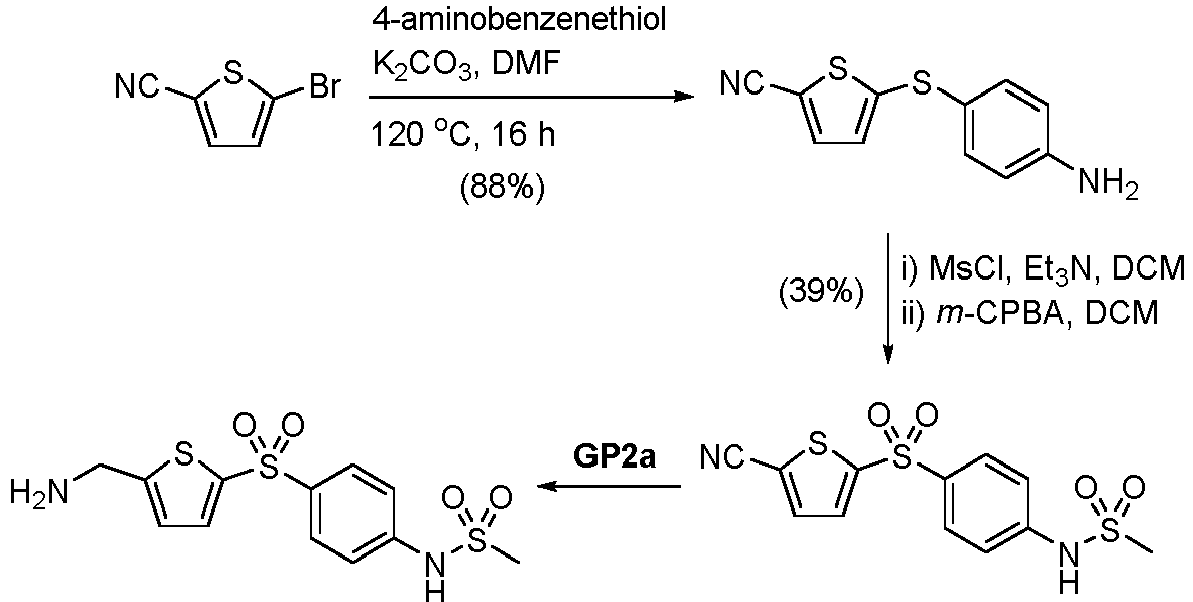
- A mixture of 5-bromothiophene-2-carbonitrile (324 mg, 1.72 mmol), K2CO3 (476 mg, 3.44 mmol) and 4-aminobenzenethiol (237 mg, 1.89 mmol) in DMF (5.8 mL) was stirred at 120 °C for 16 h. After cooling to rt, EtOAc (20 mL) was added. The organic phase was washed with 1:1 H2O/brine (3 × 20 mL), dried over MgSO4 and filtered. The solvent was removed under reduced pressure and the crude was purified by chromatography (EtOAc/
cyclohexane 5→40%) to afford 5-((4-aminophenyl)thio)thiophene-2-carbonitrile as an orange solid (353 mg, 88%). 1H NMR (500 MHz, CDCl3) δ 7.40 (d, J = 3.9 Hz, 1H), 7.34 (d, J = 8.3 Hz, 2H), 6.86 (d, J = 3.9 Hz, 1H), 6.67 (d, J = 8.4 Hz, 2H), 3.92 (br, 2H). - A mixture of 5-((4-aminophenyl)thio)thiophene-2-carbonitrile (120 mg, 0.517 mmol), MsCI (44.0 µL, 0.568 mmol) and pyridine (1.7 mL) was stirred at rt for 16 h. 2 M HCl (30 mL) was added. The aqueous phase was extracted with DCM (3 × 20 mL). The combined organic phase was dried over MgSO4 and filtered. The solvent was removed under reduced pressure and the crude was dissolved in DCM (2.6 mL). m-CPBA (77%; 254 mg, 1.14 mmol) was added and the mixture was stirred at rt for 5 h. sat. NaHCOs (40 mL) was added and the aqueous phase was extracted with EtOAc (3 × 40 mL). The combined organic phase was dried over MgSO4 and filtered. The solvent was removed under reduced pressure and the crude was purified by chromatography (MeOH/
DCM 0→15%) to afford N-(4-((5-cyanothiophen-2-yl)sulfonyl)phenyl)methanesulfonamide as a white solid (69 mg, 39%). 1H NMR (500 MHz, CDCl3) δ 7.50 (d, J= 3.9 Hz, 1H), 7.41 - 7.37 (m, 2H), 7.26 - 7.19 (m, 3H), 7.09 (d, J = 3.9 Hz, 1H), 3.05 (s, 3H). - The title compound was synthesised according to general procedures GP2a - from BHs (1.0 M in THF; 0.61 mL, 0.61 mmol), N-(4-((5-cyanothiophen-2-yl)sulfonyl)phenyl)-methanesulfonamide (69 mg, 0.202 mmol) and THF (0.6 mL); rt, 1 h. The crude was purified by chromatography (MeOH/
DCM 5→25%) to afford the title compound as a yellow solid (2 mg, 3%). 1H NMR (500 MHz, MeOD) δ 7.90 - 7.84 (m, 2H), 7.58 (d, J = 3.8 Hz, 1H), 7.38 - 7.32 (m, 2H), 7.04 (d, J = 3.8 Hz, 1H), 4.02 (s, 2H), 3.03 (s, 3H). 13C NMR (126 MHz, MeOD) δ 156.79, 146.06, 142.74, 136.92, 134.52, 130.00, 126.62, 119.69, 41.34, 40.06. HRMS (ESI) for C12H15N2O4S3 ([M+H]+): Calculated 347.0188; Observed 347.0190. -

- N-((5-((4-(N,N-Dimethylsulfamoyl)phenyl)thio)thiophen-2-yl)methyl)-2,2,2-trifluoroacetamide was synthesised according to general procedures GP5 - from i) 5-chlorothiophene-2-carbonitrile (171 mg, 1.19 mmol), 4-mercapto-N,N-dimethylbenzenesulfonamide (235 mg, 1.08 mmol), K2CO3 (224 mg, 1.62 mmol) and DMF (3.6 mL); 130 °C, 16 h. Chromatography (EtOAc/
cyclohexane 0→35%), 166 mg, 47%. ii) 4-((5-cyanothiophen-2-yl)thio)-N,N-dimethylbenzenesulfonamide (160 mg, 0.494 mmol), BHs (1.0 M in THF; 1.48 mL, 1.48 mmol), THF (3.0 mL); rt, 1 h. iii) TFAA (82.4 µL, 0.593 mmol), Et3N (89.5 µL, 0.642 mmol), DCM (3.0 mL); rt, 1 h. The crude was purified by chromatography (EtOAc/cyclohexane 5→45%) to afford N-((5-((4-(N,N-dimethylsulfamoyl)phenyl)thio)thiophen-2-yl)methyl)-2,2,2-trifluoroacetamide as a white solid (146 mg, 70% over 2 steps). 1H NMR (500 MHz, CDCl3) δ 7.62 - 7.58 (m, 2H), 7.32 (br, 1H), 7.24 - 7.18 (m, 3H), 7.04 (d, J = 3.6 Hz, 1H), 4.68 (d, J = 6.0 Hz, 2H), 2.68 (s, 6H). - The title compound was synthesised according to general procedures GP6 - from i) /V-((5-((4-(N,N-dimethylsulfamoyl)phenyl)thio)thiophen-2-yl)methyl)-2,2,2-trifluoroacetamide (146 mg, 0.344 mmol), m-CPBA (77%; 170 mg, 0.758 mmol), DCM (2.5 mL); rt, 16 h; chromatography (EtOAc/
cyclohexane 10→60%). ii) 7 N NH3 in MeOH (3.0 mL); rt, 16 h. The crude was purified by chromatography (MeOH/DCM 0→10%) to afford a white solid (63 mg, 68% over 2 steps). 1H NMR (500 MHz, CDCl3) δ 8.16 - 8.12 (m, 2H), 7.93 - 7.89 (m, 2H), 7.64 (d, J = 3.9 Hz, 1H), 6.93 (m, 1H), 4.10 (d, J = 0.8 Hz, 2H), 2.76 (s, 6H), 1.57 (s, 2H). 13C NMR (126 MHz, CDCl3) δ 159.82, 146.47, 140.71, 138.96, 134.80, 128.64, 128.17, 124.09, 41.74, 37.93. HRMS (ESI) for C13H14NO4S3 ([M-NH2]+): Calculated 344.0080; Observed 344.0123. -

- A mixture of 4-fluorobenzene-1-sulfonyl chloride (2.0 g, 10.3 mmol), HNMe2 (2.0M in MeOH; 11.0 mL, 22.0 mmol) and DCM (11.0 mL) was stirred at rt for 5 min. DCM (30 mL) was added. The organic phase was washed with 1 M HCl (30 mL) and brine (30 mL), dried over MgSO4 and filtered. The solvent was removed under reduced pressure to afford 4-fluoro-/V,/\/- dimethylbenzenesulfonamide as a white solid (2.12 g, quant.). A mixture of 4-fluoro-/V,/\/- dimethylbenzenesulfonamide (1.50 g, 7.39 mmol), NaSMe (2.08 g, 29.7 mmol) and DMF (9.0 mL) was stirred at 170 °C in a sealed tube for 16 h. After cooling to rt, 1 M NaOH (40 mL) was added. The aqueous phase was washed with Et2O (2 × 40 mL), acidified to pH <2 with 2 M HCl and then extracted with Et2O (3 × 40 mL). The combined organic phase was dried over MgSO4 and filtered. The solvent was removed under reduced pressure to afford 4-mercapto-/V,/\/- dimethylbenzenesulfonamide as an orange oil (503 mg, 31%). 1H NMR (500 MHz, CDCl3) δ 7.67 - 7.58 (m, 2H), 7.43 - 7.35 (m, 2H), 3.67 (s, 1H), 2.71 (s, 6H).
-

- N-((5-((3-(N,N-dimethylsulfamoyl)phenyl)thio)thiophen-2-yl)methyl)-2,2,2-trifluoroacetamide was synthesised according to general procedures GP5 - from i) 5-chlorothiophene-2-carbonitrile (326 mg, 2.27 mmol), 3-mercapto-N,N-dimethylbenzenesulfonamide (492 mg, 2.27 mmol), K2CO3 (469 mg, 3.40 mmol) and DMF (7.6 mL); 130 °C, 16 h. Yield - 316 mg, 43%. ii) 3-((5-cyanothiophen-2-yl)thio)-N,N-dimethylbenzenesulfonamide (310 mg, 0.957 mmol), BHs (1.0 M in THF; 2.90 mL, 2.90 mmol), THF (5.8 mL); rt, 1 h. iii) TFAA (200 µL, 1.44 mmol), Et3N (267 µL, 1.91 mmol), DCM (3.2 mL); rt, 16 h. The crude was purified by chromatography (EtOAc/
cyclohexane 5→60%) to afford a light orange gum (191 mg, 44%). - The title compound was synthesised according to general procedures GP6 - from i) /V-((5-((3-(N,N-dimethylsulfamoyl)phenyl)thio)thiophen-2-yl)methyl)-2,2,2-trifluoroacetamide (187 mg, 0.410 mmol), m-CPBA (77%; 202 mg, 0.901 mmol), DCM (2.7 mL); rt, 6 h; chromatography (EtOAc/
cyclohexane 0→60%). ii) 7 N NH3 in MeOH (4.0 mL); rt, 16 h. The crude was purified by chromatography (EtOH/cyclohexane 5→60%) to afford an orange oil (40 mg, 40%). 1H NMR (500 MHz, CDCl3) δ 8.35 (t, J = 1.7 Hz, 1H), 8.20 (ddd, J = 7.9, 1.7, 1.1 Hz, 1H), 7.97 (ddd, J = 7.8, 1.6, 1.2 Hz, 1H), 7.73 (t, J = 7.9 Hz, 1H), 7.63 (d, J = 3.9 Hz, 1H), 6.94 (dt, J = 3.8, 1.0 Hz, 1H), 4.10 (d, J = 0.6 Hz, 2H), 2.76 (s, 6H), 1.79 (s, 2H). 13C NMR (126 MHz, CDCl3) δ 159.48, 144.13, 139.00, 137.85, 134.70, 131.86, 131.20, 130.46, 126.36, 124.20, 41.62, 37.95. HRMS (ESI) for C13H17 N2O4S3 ([M+H]+): Calculated 361.0345; Observed 361.0350. -

- A mixture of 3-fluorobenzene-1-sulfonyl chloride (1.0 g, 5.14 mmol), HNMe2 (2.0 M in MeOH; 5.4 mL, 10.8 mmol) and DCM (17.0 mL) was stirred at rt for 5 min. DCM (30 mL) was added. The organic phase was washed with 1 M HCl (50 mL) and brine (30 mL), dried over MgSO4 and filtered. The solvent was removed under reduced pressure to afford 3-fluoro-/V,/\/- dimethylbenzenesulfonamide as a white solid (1.03 g, 99%). A mixture of 3-fluoro-/V,/\/- dimethylbenzenesulfonamide (0.90 g, 4.43 mmol), NaSMe (1.24 g, 17.7 mmol) and DMF (5.5 mL) was stirred at 165 °C in a sealed tube for 16 h. After cooling to rt, Et2O (50 mL) was added. The organic phase was extracted with 1 M NaOH (2 × 30 mL). The combined aqueous phase was acidified to pH <4 with 2 M HCl and then extracted with Et2O (3 × 40 mL). The combined organic phase was dried over MgSO4 and filtered. The solvent was removed under reduced pressure to afford 3-mercapto-N,N-dimethylbenzenesulfonamide as a light yellow crystalline solid (903 mg, 97%). 1H NMR (500 MHz, CDCl3) δ 7.69 (t, J = 1.7 Hz, 1H), 7.55 (dt, J = 7.7, 1.4 Hz, 1H), 7.49 (ddd, J = 7.9, 1.7, 1.2 Hz, 1H), 7.41 (t, J = 7.8 Hz, 1H), 3.64 (s, 1H), 2.74 (s, 6H).
-

- 2,2,2-Trifluoro-N-((5-((3-(pyrrolidin-1-ylsulfonyl)phenyl)thio)thiophen-2-yl)methyl)acetamide was synthesised according to general procedures GP5 - from i) 5-bromothiophene-2-carbonitrile (211 mg, 1.12 mmol), 3-(pyrrolidin-1-ylsulfonyl)benzenethiol (300 mg, 1.23 mmol), K2CO3 (255 mg, 1.85 mmol) and DMF (4.1 mL); 125 °C, 16 h. Chromatography (EtOAc/
cyclohexane 0→50%), 107 mg, 27%. ii) 5-((3-(pyrrolidin-1-ylsulfonyl)phenyl)thio)thiophene-2-carbonitrile (107 mg, 0.305 mmol), BHs (1.0 M in THF; 0.86 mL, 0.86 mmol), THF (1.5 mL); rt, 1 h. iii) TFAA (85 µL, 0.61 mmol), Et3N (106 µL, 0.760 mmol), DCM (1.5 mL); rt, 2 h. The crude was purified by chromatography (EtOAc/cyclohexane 5→50%) to afford a yellow oil (107 mg, 78% over 2 steps). - The title compound was synthesised according to general procedures GP6 - from i) 2,2,2-trifluoro-N-((5-((3-(pyrrolidin-1-ylsulfonyl)phenyl)thio)thiophen-2-yl)methyl)acetamide (107 mg, 0.238 mmol), m-CPBA (77%; 117 mg, 0.523 mmol), DCM (1.6 mL); rt, 4 h. ii) 7 N NH3 in MeOH (3.0 mL); rt, 16 h. The crude was purified by chromatography (EtOH/
cyclohexane 5→40%) to afford a white solid (49 mg, 51%). 1H NMR (500 MHz, CDCl3) δ 8.37 (br, 1H), 8.16 (m, J = 7.0 Hz, 1H), 8.00 (m, J = 7.2 Hz, 1H), 7.69 (t, J= 7.8 Hz, 1H), 7.60 (m, 1H), 6.90 (br, 1H), 4.07 (br, 2H), 3.25 (br, 4H), 1.78 (br, 4H), 1.64 (br, 2H). 13C NMR (126 MHz, CDCl3) δ 159.69, 144.01, 139.17, 138.94, 134.64, 131.61, 131.00, 130.42, 126.07, 124.06, 48.17, 41.64, 25.40. HRMS (ESI) for C15H19N2O4S3 ([M+H]+): Calculated 387.0502; Observed 387.0493. -

- A mixture of 3-fluorobenzene-1-sulfonyl chloride (1.0 g, 5.14 mmol), pyrrolidine (0.99 mL, 11.8 mmol) and DCM (10.3 mL) was stirred at rt for 15 min. EtOAc (40 mL) was added. The organic phase was washed with 1 M HCl (3 × 30 mL) and brine (30 mL), dried over MgSO4 and filtered. The solvent was removed under reduced pressure to afford 1-((3-fluorophenyl)sulfonyl)pyrrolidine (quant.). 566 mg (2.47 mmol) of the crude was dissolved in DMF (4.9 mL). NaSMe (692 mg, 9.89 mmol) was added and the mixture was stirred at 165 °C in a sealed tube for 16 h. After cooling to rt, Et2O (60 mL) was added. The organic phase was washed with 1:1 1 M HCl/brine (3 × 30 mL), dried over MgSO4 and filtered. The solvent was removed under reduced pressure to afford 3-(pyrrolidin-1-ylsulfonyl)benzenethiol as a light brown solid (751 mg, 60%). 1H NMR (500 MHz, CDCl3) δ 7.89 - 7.82 (m, 2H), 7.24 - 7.18 (m, 2H), 3.29 - 3.20 (m, 4H), 1.85 - 1.73 (m, 4H), 1.56 (s, 1H).
-

- 2,2,2-Trifluoro-N-((5-((3-(pyrrolidin-1-ylsulfonyl)phenyl)thio)thiophen-2-yl)methyl)acetamide was synthesised according to general procedures GP5 - from i) 5-chlorothiophene-2-carbonitrile (161 mg, 1.12 mmol), 4-(pyrrolidin-1-ylsulfonyl)benzenethiol (300 mg, 1.23 mmol), K2CO3 (255 mg, 1.85 mmol) and DMF (4.1 mL); 125 °C, 16 h. Chromatography (EtOAc/
cyclohexane 0→50%), 98 mg, 25%. ii) 5-((4-(pyrrolidin-1-ylsulfonyl)phenyl)thio)thiophene-2-carbonitrile (98 mg, 0.279 mmol), BHs (1.0 M in THF; 0.86 mL, 0.86 mmol), THF (1.5 mL); rt, 1 h. iii) TFAA (78 µL, 0.559 mmol), Et3N (97 µL, 0.699 mmol), DCM (1.3 mL); rt, 2 h. The crude was purified by chromatography (EtOAc/cyclohexane 5→50%) to afford a white solid (91 mg, 72%). - The title compound was synthesised according to general procedures GP6 - from i) 2,2,2-trifluoro-N-((5-((4-(pyrrolidin-1-ylsulfonyl)phenyl)thio)thiophen-2-yl)methyl)acetamide (91 mg, 0.202 mmol), m-CPBA (77%; 100 mg, 0.444 mmol), DCM (1.4 mL); rt, 4 h. ii) 7 N NH3 in MeOH (3.0 mL); rt, 16 h. The crude was purified by chromatography (EtOH/
cyclohexane 5→40%, then 100%) to afford a white solid (38 mg, 49%). 1H NMR (500 MHz, MeOD) δ 8.20 - 8.15 (m, 2H), 8.04 - 8.00 (m, 2H), 7.70 (d, J = 3.9 Hz, 1H), 7.07 (m, 1H), 4.01 (s, 2H), 3.27 - 3.22 (m, 4H), 1.79 - 1.73 (m, 4H). 13C NMR (126 MHz, MeOD) δ 159.72, 147.61, 143.08, 140.37, 136.09, 129.69, 129.18, 126.59, 49.15, 41.66, 26.28. HRMS (ESI) for C15H19N2O4S3 ([M+H]+): Calculated 387.0502; Observed 387.0489. -

- A mixture of 3-fluorobenzene-1-sulfonyl chloride (1.0 g, 5.14 mmol), pyrrolidine (0.99 mL, 11.8 mmol) and DCM (10.3 mL) was stirred at rt for 15 min. EtOAc (50 mL) was added. The organic phase was washed with 1 M HCl (3 × 30 mL) and brine (30 mL), dried over MgSO4 and filtered. The solvent was removed under reduced pressure to afford 1-((4-fluorophenyl)sulfonyl)pyrrolidine (quant.). 504 mg (2.21 mmol) of this intermediate was dissolved in DMF (4.4 mL). NaSMe (616 mg, 8.79 mmol) was added and the mixture was stirred at 165 °C in a sealed tube for 16 h. After cooling to rt, EtzO (40 mL) was added. The aqueous layer was extracted with 1 M NaOH (3 × 30 mL). The combined aqueous layer was acidified to pH<4 and extracted with EtOAc (3 × 30 mL). The combined organic phase was washed with 1:1 H2O/brine (60 mL), dried over MgSO4 and filtered. The solvent was removed under reduced pressure to afford 4-(pyrrolidin-1-ylsulfonyl)benzenethiol as a brown oil (552 mg, quant.). 1H NMR (500 MHz, CDCl3) δ 7.70 - 7.65 (m, 2H), 7.40 - 7.34 (m, 2H), 3.65 (s, 1H), 3.29 - 3.18 (m, 4H), 1.83 - 1.71 (m, 4H).
-

- tert-Butyl ((5-((4-chlorophenyl)thio)thiophen-2-yl)methyl)carbamate was synthesised according to general procedures GP3 - from i) 5-chlorothiophene-2-carbonitrile (1.0 g, 6.96 mmol), 4-chlorothiophenol (1.21 mg, 8.36 mmol), K2CO3 (1.73 g, 12.5 mmol) and DMF (17.5 mL); 130 °C, 16 h. Chromatography (EtOAc/
cyclohexane 0→5%), 882 mg, 52%. ii) 5-((4-chlorophenyl)thio)thiophene-2-carbonitrile (878 mg, 3.49 mmol), BHs (1.0 M in THF; 10.5 mL, 10.5 mmol), THF (21 mL); rt, 1 h. iii) BoczO (1.14 g, 5.22 mmol), Et3N (0.97 mL, 6.97 mmol), DCM (11.6 mL); rt, 16 h. The crude was purified by chromatography (EtOAc/cyclohexane 0→30%) to afford a yellow oil, which was used immediately in the subsequent transformation. - tert-Butyl ((5-((4-chlorophenyl)thio)thiophen-2-yl)methyl)carbamate (from previous step) was dissolved in DCM (17.0 mL). m-CPBA (77%; 1.95 g, 8.71 mmol) was added in small portions and the mixture was stirred at rt for 5 h. EtOAc (60 mL) was added. The organic phase was washed with sat. NaHCOs (3 × 50 mL), dried over MgSO4 and filtered. The solvent was removed under reduced pressure and the crude was purified by chromatography (EtOAc/
cyclohexane 0→50%) to afford tert-butyl ((5-((4-chlorophenyl)sulfonyl)thiophen-2-yl)methyl)carbamate as a light yellow solid (980 mg, 73%). 1H NMR (500 MHz, CDCl3) δ 7.93 - 7.87 (m, 2H), 7.54 (d, J = 3.8 Hz, 1H), 7.51 - 7.47 (m, 2H), 6.92 (d, J= 3.8 Hz, 1H), 5.04 (br, 1H), 4.46 (d, J= 5.4 Hz, 2H), 1.45 (s, 9H). A mixture of tert-butyl ((5-((4-chlorophenyl)sulfonyl)thiophen-2-yl)methyl)carbamate (2.0 g, 5.15 mmol), K2CO3 (2.13 g, 15.5 mmol) and 2-mercaptoethanol (0.90 mL, 12.9 mmol) in DMF (34 mL) was stirred at 50 °C for 3 h. After cooling to rt, EtOAc (100 mL) was added. The organic phase was washed with 1:1 H2O/brine (5 × 80 mL), dried over MgSO4 and filtered. The solvent was removed under reduced pressure and the crude was dissolved in DCM (26 mL). m-CPBA (77%; 2.66 g, 18.6 mmol) was added in small portions and the mixture was stirred at rt for 2 h. EtOAc (90 mL) was added. The organic phase was washed with sat. NaHCOs (4 × 90 mL), dried over MgSO4 and filtered. The solvent was removed under reduced pressure and the crude was purified by chromatography (EtOAc/cyclohexane 10→60%) to afford tert-butyl ((5-((4-((2-hydroxyethyl)sulfonyl)phenyl)sulfonyl)thiophen-2-yl)methyl)carbamate as a white foam (1.46 g, 61%). 1H NMR (500 MHz, CDCl3) δ 8.20 - 8.14 (m, 2H), 8.11 - 8.04 (m, 2H), 7.62 (d, J = 3.8 Hz, 1H), 6.96 (d, J = 3.9 Hz, 1H), 5.07 (br, 1H), 4.47 (d, J = 5.9 Hz, 2H), 4.08 - 4.00 (m, 2H), 3.44 - 3.30 (m, 2H), 2.51 (t, J = 6.2 Hz, 1H), 1.46 (s, 9H). - A mixture of tert-butyl ((5-((4-((2-hydroxyethyl)sulfonyl)phenyl)sulfonyl)thiophen-2-yl)methyl)carbamate (52 mg, 0.113 mmol) and 4 M HCl in dioxane (3.0 mL) was stirred at rt for 3 h. The solids were filtered, washed with EtOAc and then redissolved with hot methanol. The solvent was removed under reduced pressure to afford the title compound as a white solid (39 mg, 87%). 1H NMR (500 MHz, D2O) δ 8.37 - 8.29 (m, 2H), 8.27 - 8.19 (m, 2H), 7.91 (m, 1H), 7.38 (m, 1H), 4.48 (s, 2H), 4.03 - 3.95 (m, 2H), 3.72 - 3.65 (m, 2H). 13C NMR (126 MHz, D2O) δ 146.18, 144.20, 140.94, 136.69, 131.43, 130.19, 129.18, 58.15, 55.77, 38.19. HRMS (ESI) for C13H13O5S3 ([M-NH2]+): Calculated 344.9920; Observed 344.9917.
-

- MsCI (109 µL, 1.41 mmol) was added to a solution of tert-butyl ((5-((4-((2-hydroxyethyl)sulfonyl)phenyl)sulfonyl)thiophen-2-yl)methyl)carbamate (500 mg, 1.08 mmol) and Et3N (453 µL, 3.25 mmol) in DCM (5.4 mL) and the mixture was stirred at rt for 1 h. EtOAc (30 mL) was added. The organic solution was washed with 1:1 H2O/bine (3 × 30 mL), dried over MgSO4, filtered and the solvent was removed under reduced pressure. tert-Butyl ((5-((4-(vinylsulfonyl)phenyl)sulfonyl)thiophen-2-yl)methyl)carbamate was obtained as a light yellow foam (485 mg, quant.) and was used in the subsequent transformation without further purification. 1H NMR (500 MHz, CDCl3) δ 8.10 (d, J = 7.3 Hz, 2H), 8.00 (d, J = 7.6 Hz, 2H), 7.56 (H, 1H), 6.92 (d, J = 3.2 Hz, 1H), 6.64 (dd, J = 16.5, 9.7 Hz, 1H), 6.52 (d, J = 16.5 Hz, 1H), 6.14 (d, J= 9.7 Hz, 1H), 5.27 (br, 1H), 4.53 - 4.31 (m, 2H), 1.41 (s, 9H).
- The title compound was synthesised according to general procedures GP7 - from i) tert-butyl ((5-((4-(vinylsulfonyl)phenyl)sulfonyl)thiophen-2-yl)methyl)carbamate (72 mg, 0.162 mmol), Me2NH (2.0 M in MeOH; 89 µL, 0.179 mmol) and DCM (0.8 mL); rt, 16 h. Chromatography (EtOH/
cyclohexane 5→80%). ii) 4.0 M HCl in dioxane (4 mL); rt, 16 h. The title compound was obtained as a white solid (62 mg, 94%), which didn't require further purification. 1H NMR (500 MHz, D2O) δ 8.39 (d, J = 8.1 Hz, 2H), 8.28 (d, J = 8.3 Hz, 2H), 7.93 (d, J = 3.8 Hz, 1H), 7.41 (m, 1H), 4.51 (s, 2H), 3.99 (d, J = 6.8 Hz, 2H), 3.60 (s, 2H), 2.95 (br s, 6H). HRMS (ESI) for C15H21N2O4S3 ([M+H]+): Calculated 389.0658; Observed 389.1300. -

- A mixture of 5-bromothiophene-2-carbonitrile (100 mg, 0.532 mmol), sodium benzenesulfinate (138 mg, 0.691 mmol) and DMF (1.0 mL) was stirred at 135 °C for 16 h. After cooling to rt, EtOAc (10 mL) was added. The organic phase was washed with H2O (2 × 10 mL) and brine (10 mL), dried over MgSO4, filtered. The solvent was removed under reduced pressure and the crude was purified by chromatography (EtOAc/
cyclohexane 0→20%) to afford 5-(phenylsulfonyl)thiophene-2-carbonitrile as a white crystalline solid (67 mg, 51%). 1H NMR (500 MHz, CDCl3) δ 8.03 - 7.98 (m, 2H), 7.70 - 7.53 (m, 5H). - A mixture of 5-(phenylsulfonyl)thiophene-2-carbonitrile (39 mg, 0.156 mmol), LiAlH4 (1.0 M in THF; 160 µL, 0.160 mmol) and THF (1.6 mL) was stirred at 0 °C for 1 h. H2O (5 mL) was slowly added and the aqueous phase was extracted with DCM (3×8 mL). The combined organic phase was washed with brine (10 mL), dried over MgSO4, filtered. The solvent was removed under reduced pressure and the crude was purified by chromatography (7 N NH3 in MeOH/
DCM 0→60%) to afford the title compound as a light brown crystalline solid (15 mg, 38%). 1H NMR (500 MHz, CDCl3) δ 8.01 - 7.95 (m, 2H), 7.63 - 7.48 (m, 4H), 6.88 (dt, J = 3.8, 1.0 Hz, 1H), 4.07 (s, 2H), 1.58 (s, 2H). 13C NMR (126 MHz, CDCl3) δ 158.19, 142.50, 140.63, 133.70, 133.26, 129.39, 127.41, 123.80, 41.71. HRMS (ESI) for C11H12NO2S2 ([M+H]+): Calculated 254.0304; Observed 254.0309. -

- 5-((4-methoxyphenyl)sulfonyl)thiophene-2-carbonitrile was synthesised according to general procedures GP1 - from i) 5-bromothiophene-2-carbonitrile (89 µL, 0.796 mmol), 4-methoxythiophenol (117 µL, 0.955 mmol), K2CO3 (220 mg, 1.59 mmol) and DMF (2.7 mL); 140 °C, 20 h. ii) m-CPBA (77%; 249 mg, 1.11 mmol) and DCM (1.7 mL); rt, 16 h. The crude was purified by chromatography (EtOAc/
cyclohexane 10→20%) to afford a white solid (113 mg, 51%). 1H NMR (500 MHz, CDCl3) δ 7.92 (d, J = 8.9 Hz, 2H), 7.58 (d, J = 4.0 Hz, 1H), 7.53 (d, J = 4.0 Hz, 1H), 7.02 (d, J = 9.0 Hz, 2H), 3.87 (s, 3H). - A mixture of 5-((4-methoxyphenyl)sulfonyl)thiophene-2-carbonitrile (113 mg, 0.405 mmol), LiAlH4 (2.0 M in THF; 200 µL, 0.400 mmol) and THF (1.6 mL) was stirred at 0 °C for 1 h. H2O (5 mL) was slowly added and the aqueous phase was extracted with DCM (3×8 mL). The combined organic phase was washed with brine (10 mL), dried over MgSO4, filtered. The solvent was removed under reduced pressure and the crude was purified by chromatography (MeOH/
DCM 0→20%) to afford the title compound as an orange oil (8 mg, 7%). 1H NMR (500 MHz, CDCl3) δ 7.95 - 7.83 (m, 2H), 7.51 (d, J = 3.8 Hz, 1H), 7.06 - 6.95 (m, 2H), 6.86 - 6.83 (m, 1H), 4.04 (s, 2H), 3.85 (s, 4H), 2.13 - 1.33 (br, 2H). 13C NMR (126 MHz, CDCl3) δ 163.53, 157.36, 141.70, 134.09, 132.95, 129.68, 123.70, 114.63, 55.80, 41.71. HRMS (ESI) for C12H13NO3S2 ([M+H]+): Calculated 284.0410; Observed 284.0414. -

- tert-Butyl ((5-([1,1'-biphenyl]-3-ylthio)thiophen-2-yl)methyl)carbamate was synthesised according to general procedures GP3 - from i) 5-bromothiophene-2-carbonitrile (160 mg, 1.11 mmol), [1,1'-biphenyl]-3-thiol (223 mg, 1.22 mmol), K2CO3 (308 mg, 2.23 mmol) and DMF (4.6 mL); 120 °C, 16 h; 327 mg, 92%. ii) 2-(5-([1,1'-biphenyl]-3-ylthio)thiophen-2-yl)acetonitrile (264 mg, 0.910 mmol), BHs (1.0 M in THF; 2.7 mL, 2.70 mmol), THF (2.7 mL); rt, 1 h. iii) Boc2O (590 mg, 2.70 mmol), Et3N (250 µL, 1.80 mmol), DCM (3.5 mL); rt, 16 h. The crude was purified by chromatography (EtOAc/
cyclohexane 0→30%) to afford tert-butyl ((5-([1,1'-biphenyl]-3-ylthio)thiophen-2-yl)methyl)carbamate as a yellow oil (64 mg, 18%). 1H NMR (500 MHz, CDCl3) δ 7.56 (m, 1H), 7.55 (m, 1H), 7.49 (m, 1H), 7.46 (m, 2H), 7.43-7.33 (m, 3H), 7.20 (m, 2H), 6.93 (d, J= 3.3Hz, 1H), 5.04 (s, 1H), 4.49 (s, 2H), 1.50 (s, 9H). - The title compound was synthesised according to general procedures GP4 - from i) tert-butyl ((5-([1,1'-biphenyl]-3-ylthio)thiophen-2-yl)methyl)carbamate (64 mg, 0.161 mmol), m-CPBA (77%; 69 mg, 0.402 mmol), DCM (2.0 mL); 45 °C, 1.5 h; chromatography (EtOAc/
cyclohexane 0 →30%). ii) 4 M HCl in dioxane (8.0 mL); rt, 16 h. The white precipitate was filtered, washed with excess EtOAc. It was then dissolved in MeOH and evaporated under reduced pressure to afford a white solid (25mg, 42% over two steps). 1H NMR (500 MHz, MeOD) δ 8.19 (m, 1H), 7.99 (ddd, J = 7.8, 1.8, 1.0 Hz ,1H), 7.96 (ddd, J = 7.8, 1.8, 1.0 Hz, 1H), 7.81 (d, J = 3.9Hz, 1H), 7.70 (t, J = 7.7 Hz, 1H), 7.65 (m, 2H), 7.52 (m, 2H), 7.44 (m, 1H), 7.32 (d, J = 3.8 Hz, 1H), 4.38 (s, 2H). 13C NMR (126 MHz, CDCl3) δ 144.2, 143.8, 142.8, 142.4, 138.8, 133.8, 131.9, 130.3, 130.1, 128.9, 128.2, 126.7, 125.7, 125.1, 37.1. LC-MS (m/z): 313 (100). -

- tert-Butyl ((5-([1,1'-biphenyl]-4-ylthio)thiophen-2-yl)methyl)carbamate was synthesised according to general procedures GP3 - from i) 5-chlorothiophene-2-carbonitrile (168 mg, 1.17 mmol), [1,1'-biphenyl]-4-thiol (235 mg, 1.29 mmol), K2CO3 (356 mg, 2.58 mmol) and DMF (4.6 mL); 120 °C, 16 h. Chromatography (EtOAc/
cyclohexane 0→20%), 348 mg, 92%. ii) 2-(5-([1,1'-biphenyl]-4-ylthio)thiophen-2-yl)acetonitrile (387 mg, 1.32 mmol), BHs (1.0 M in THF; 4.0 mL, 4.00 mmol), THF (4.0 mL); rt, 4 h. iii) Boc2O (865 mg, 3.97 mmol), Et3N (370 µL, 2.65 mmol), DCM (5.1 mL); rt, 16 h. The crude was purified by chromatography (EtOAc/cyclohexane 0→30%) to afford tert-butyl ((5-([1,1'-biphenyl]-4-ylthio)thiophen-2-yl)methyl)carbamate as a yellow oil (264 mg, 50% over 2 steps). 1H NMR (500 MHz, CDCl3) δ 7.57 (m, 2H), 7.51 (m, 2H), 7.41 (m, 2H), 7.32 (m, 1H), 7.26 (m, 2H), 7.18 (m, 1H), 6.96 (m, 1H), 4.39 (s, 2H), 1.46 (s, 9H). - The title compound was synthesised according to general procedures GP4 - from i) tert-butyl ((5-([1,1'-biphenyl]-4-ylthio)thiophen-2-yl)methyl)carbamate (246 mg, 0.690 mmol), m-CPBA (300 mg, 1.74 mmol), DCM (8.0 mL); 45 °C, 1 h; chromatography (MeOH/
DCM 0→5%). ii) 4 M HCl in dioxane (20 mL); rt, 16 h. The white precipitate was filtered, washed with excess EtOAc. It was then dissolved in MeOH and evaporated under reduced pressure to afford a white solid (60mg, 26% over two steps). 1H NMR (500 MHz, MeOD) δ 8.06 (m, 2H), 7.86 (m, 2H), 7.76 (d, J = 3.7 Hz, 1H), 7.67 (m, 2H), 7.49 (m, 2H), 7.44 (m, 1H), 7.29 (d, J = 3.6Hz, 1H), 4.38 (s, 2H). 13C NMR (126 MHz, MeOD) δ 146.6, 144.7, 143.6, 140.1, 138.8, 133.4, 130.1, 128.8, 128.5, 127.7, 127.6, 126.9, 37.2. LC-MS (m/z): 313 (100). -

- A mixture of 5-bromothiophene-2-carbonitrile (406 mg, 2.83 mmol), 3-mercaptobenzoic acid (479 mg, 3.11 mmol), and K2CO3 (781 mg, 5.65 mmol) in DMF (11 mL) was stirred at 120°C for 16 h. After cooling to rt, Mel (406 µL, 6.52 mmol) and K2CO3 (273 mg, 1.98 mmol) were added and the mixture was stirred at 50 °C for 1 h. More Mel (406 µL) was added and the mixture was stirred at 50 °C for a further 1.5 h. EtOAc was added and the organic phase was washed with H2O/brine 1:1 (3 ×), dried over Na2SO4 and filtered. The solvent was removed under reduced pressure and the crude was purified on by chromatography (DCM) to afford methyl 3-((5-(cyanomethyl)thiophen-2-yl)thio)benzoate as a brown oil (611 mg, 78%). To a solution of methyl 3-((5-(cyanomethyl)thiophen-2-yl)thio)benzoate (611 mg, 2.22 mmol) in THF (20 mL) was added BF3.THF complex (1.0 M in THF; 6.6 mL, 6.60 mmol). The mixture was stirred for at rt for 1 h, and then quenched with EtOH. The mixture was heated at reflux for 1 h before the solvent was removed under reduced pressure. DCM (40 mL) was added, followed by Et3N (620 µL, 4.45 mmol) and BoczO (1.45 g, 6.65 mmol). The mixture was stirred at rt for 16 h and then diluted with DCM. The organic phase was washed with H2O, dried over Na2SO4, filtered and the solvent was removed under reduced pressure. The crude was purified by chromatography (EtOAc/
cyclohexane 0→30%) to afford methyl 3-((5-(((tert-butoxycarbonyl)amino)methyl)thiophen-2-yl)thio)benzoate as a sticky yellow oil (482 mg, 57%). 1H NMR (500 MHz, MeOD) δ 7.75 (d, J = 7.3 Hz, 1H), 7.80 (m, 1H), 7.30 (m, 2H), 7.15 (d, J = 3.6 Hz, 1H), 6.94 (d, J= 3.7 Hz, 1H), 4.81 (s, 1H), 4.39 (s, 2H), 3.84 (s, 3H), 1.43 (s, 9H). - m-CPBA (77%; 548 mg, 2.44 mmol) was added in portions to a solution of methyl 3-((5-(((tert-butoxycarbonyl)amino)methyl)thiophen-2-yl)thio)benzoate (482 mg, 1.27 mmol) in DCM (16 mL) and the mixture was stirred at 45°C for 1 h. After cooling down to rt, EtOAc was added. The organic layer was washed with H2O/NaHCO3 1:1 (3 ×), dried over Na2SO4, filtered and the solvent was removed under reduced pressure. The crude was purified by chromatography (MeOH/
DCM 0→5%) to afford methyl 3-((5-(((tert-butoxycarbonyl)amino)methyl)thiophen-2-yl)sulfonyl)benzoate as a sticky orange oil. (520 mg, 99%). 1H NMR (500 MHz, MeOD) δ 8.52 (m, 1H), 8.25 (m, 1H), 8.18 (m, 1H), 7.71 (m, 1H), 7.65 (d, J= 3.6 Hz, 1H), 7.01 (d, J= 3.7 Hz, 1H), 4.39 (s, 2H), 3.95 (s, 3H), 1.44 (s, 9H). - A solution of methyl 3-((5-(((tert-butoxycarbonyl)amino)methyl)thiophen-2-yl)sulfonyl)benzoate (100 mg, 0.263 mmol), methylamine in methanol (10 mL) and Et3N (200 µL, 1.43 mmol) was stirred at reflux for 16 h. After cooling to rt, the solvent was evaporated and DCM was subsequently added. The organic phase was washed with H2O, dried over Na2SO4, filtered and the solvent was removed under reduced pressure. The crude was purified by chromatography (MeOH/
DCM 0→5%) to afford tert-butyl (5-(3-(methylcarbamoyl)phenylsulfonyl)thiophen-2-yl)methylcarbamate, which was treated with 4 M HCl in dioxane (2.0 mL). The mixture was stirred at rt for 16 h. The white precipitate was isolated, washed with excess of EtOAc and then dissolved in MeOH. The solvent was removed under reduced pressure to afford the title hydrochloride as a white solid (27 mg, 26% over two steps). 1H NMR (500 MHz, MeOD) δ 8.43 (t, J= 1.7 Hz, 1H), 8.16 (ddd, J = 7.8, 1.9, 1.2 Hz, 1H), 8.09 (ddd, J = 7.8, 1.9, 1.2 Hz, 1H), 7.79 (d, J = 3.7 Hz, 1H), 7.71 (t, J = 7.7 Hz, 1H), 7.30 (d, J = 3.7 Hz, 1H), 4.38 (s, 2H), 2.94 (s, 3H). HRMS calcd for C13H15N2O3S2 [M+H]+ 311.0519; found 311.0497. -

- A mixture of methyl 3-((5-(((tert-butoxycarbonyl)amino)methyl)thiophen-2-yl)sulfonyl)benzoate (80 mg, 0.195 mmol) in 4 M HCl in dioxane (2.0 mL) was stirred at rt for 16 h. The white precipitate was isolated, washed with excess EtOAc and then dissolved in MeOH. The solvent was removed under reduced pressure to afford title hydrochloride as a white solid (52 mg, 78%). 1H NMR (500 MHz, MeOD) δ 8.55 (t, J = 1.6 Hz, 1H), 8.29 (ddd, J = 7.9, 1.9, 1.0 Hz, 1H), 8.24 (ddd, J = 7.9, 1.9, 1.0 Hz, 1H), 7.79 (d, J = 3.9 Hz, 1H), 7.75 (t, J = 7.8 Hz, 1H), 7.33 (d, J = 3.9 Hz, 1H), 4.39 (s, 2H), 3.96 (s, 3H). LC-MS (m/z): 295 (M-NH2, 100).
-

- The title compound was synthesised according to general procedures GP2c - from BDs (1.0 M in THF; 1.5 mL, 1.5 mmol), 5-(naphthalen-2-ylsulfonyl)thiophene-2-carbonitrile (150 mg, 0.5 mmol) and dry THF (10 mL); rt, 1 h. The crude was purified by chromatography (cyclohexane/ethanol 70:30 to 0:100) to afford the title compound as a white solid (22 mg, 14%). 1H NMR (500 MHz, CDCl3) δ 8.59 (s, 1H), 8.00 (d, J = 8.0 Hz, 1H), 7.97 - 7.92 (m, 2H), 7.90 (d, J = 8.3 Hz, 1H), 7.70 - 7.58 (m, 3H), 6.88 (d, J = 3.8 Hz, 1H), 1.65 - 1.44 (m, 2H). LC-MS for C15H9D2O2S2 (289 [M-NH2]+, 100).
-

- To 5-(phenylthio)thiophene-2-carbonitrile (370 mg, 1.5 mmol) was added FeCl3 (324 mg, 2 mmol) and then phenylsulfonyl chloride (160 µL, 1.25 mmol). The mixture was heated without solvent at 100°C for 2 h and stirred at room temperature for a further 12 h. The reaction was quenched with aqueous Na2CO3 followed by addition of dichloromethane. The organic phase was separated, dried over MgSO4, filtered and the solvent was removed under reduced pressure. The crude was purified by column chromatography (DCM/
cyclohexane 30→100%) to afford 5-((4-(phenylsulfonyl)phenyl)thio)thiophene-2-carbonitrile as a solid (160 mg, 36%). 1H NMR (500 MHz, DMSO) δ 8.07 (d, J = 3.9 Hz, 1H), 7.96 - 7.88 (m, 4H), 7.72 - 7.67 (m, 1H), 7.65 - 7.60 (m, 3H), 7.42 (d, J = 8.6 Hz, 2H). - 5-((4-(Phenylsulfonyl)phenyl)thio)thiophene-2-carbonitrile (160 mg, 0.4 mmol) was dissolved in dichloromethane (3 mL), the solution was cooled at 0°C and m-CPBA (77%; 330 mg, 1.5 mmol) was added. The reaction mixture was stirred at rt for 3 h, then diluted with EtOAc (10 mL) and extracted with sat. NaHCOs (10 mL). The organic layer was dried over MgSO4, filtered and the solvent was removed under reduced pressure. The residue was purified by chromatography (EtOAc/
DCM 0→80%) to afford 5-((4-(phenylsulfonyl)phenyl)sulfonyl)thiophene-2-carbonitrile (110 mg, 70%). 1H NMR (500 MHz, DMSO) δ 8.25 (q, J = 8.7 Hz, 4H), 8.07 (s, 2H), 8.00 (d, J = 8.3 Hz, 2H), 7.78 - 7.70 (m, 1H), 7.65 (t, J = 7.8 Hz, 2H). LC-MS for C17H11NO4S3 (412 [M+Na]+, 100). - The title compound was obtained according to general procedures GP2a - from 5-((4-(phenylsulfonyl)phenyl)sulfonyl)thiophene-2-carbonitrile (40 mg, 0.1 mmol), BH3 (1.0 M in THF; 0.5 mL, 0.5 mmol) and THF (4 mL); rt, 3 h. The crude was purified by chromatography (EtOH/
cyclohexane 0→100%) to afford the product (8 mg, 20%) as a glassy solid. 1H NMR (500 MHz, DMSO) δ 8.21 - 8.13 (m, 4H), 7.99 (dt, J = 7.1, 1.3 Hz, 2H), 7.75 (d, J = 3.9 Hz, 1H), 7.73 - 7.70 (m, 1H), 7.64 (t, J = 7.8 Hz, 2H), 7.02 (dt, J = 3.5, 1.2 Hz, 1H), 3.89 (d, J = 1.3 Hz, 2H). HRMS calcd for C17H15NO4S3 [M+H]+ 394.0236; found 394.0233. -
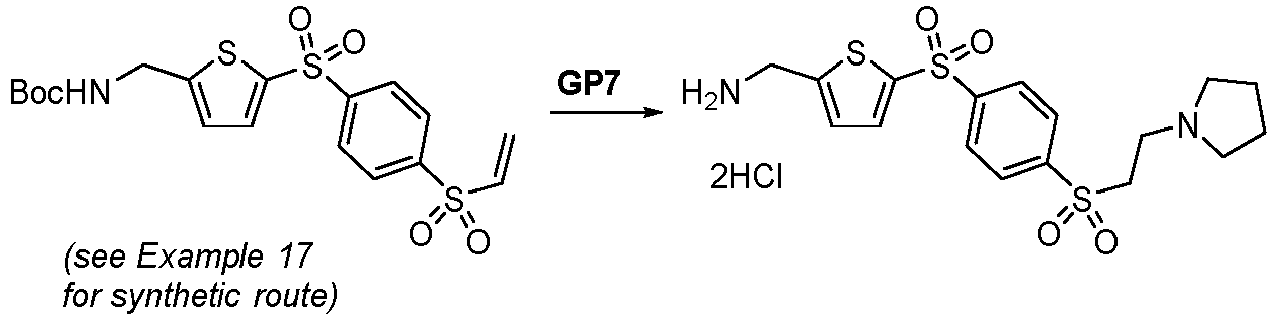
- The title compound was synthesised according to general procedures GP7 - from i) tert-butyl ((5-((4-(vinylsulfonyl)phenyl)sulfonyl)thiophen-2-yl)methyl)carbamate (61 mg, 0.138 mmol), Pyrrolidine (12.6 µL, 0.151 mmol) and DCM (0.8 mL); rt, 16 h. Chromatography (EtOH/
cyclohexane 10→60%). ii) 4.0 M HCl in dioxane (4 mL); rt, 16 h. The title compound was obtained as a white solid (58 mg, quant.), which didn't require further purification. 1H NMR (500 MHz, D2O) δ 8.37 (d, J = 7.9 Hz, 2H), 8.27 (d, J = 7.9 Hz, 2H), 7.92 (m, 1H), 7.41 (m, 1H), 4.51 (s, 2H), 3.99 (t, J = 7.2 Hz, 2H), 3.92 - 2.98 (m, 6H), 2.13 (br, 4H). 13C NMR (126 MHz, D2O) δ 146.87, 145.89, 142.50, 140.91, 136.88, 131.77, 130.49, 129.53, 55.66, 51.65, 48.16, 38.08, 23.47. HRMS (ESI) for C17H23N2O4S3 ([M+H]+): Calculated 415.0815; Observed 415.0828. -

- The title compound was synthesised according to general procedures GP7 - from i) tert-butyl ((5-((4-(vinylsulfonyl)phenyl)sulfonyl)thiophen-2-yl)methyl)carbamate (84 mg, 0.189 mmol), ethylamine (2.0 M in MeOH; 104 µL, 0.208 mmol) and DCM (1.0 mL); rt, 16 h. Chromatography (EtOH/
cyclohexane 10→80%). ii) 4.0 M HCl in dioxane (4 mL); rt, 16 h. The title compound was obtained as a white solid (72 mg, 96%), which didn't require further purification. 1H NMR (500 MHz, D2O) δ 8.37 (d, J = 7.8 Hz, 2H), 8.27 (d, J = 7.8 Hz, 2H), 7.92 (m, 1H), 7.40 (m, 1H), 4.51 (s, 2H), 3.90 (t, J = 6.9 Hz, 2H), 3.52 (t, J = 6.9 Hz, 2H), 3.19 (q, J = 7.2 Hz, 2H), 1.33 (t, J = 7.2 Hz, 3H). 13C NMR (126 MHz, D2O) δ 146.83, 145.88, 142.46, 140.92, 136.86, 131.75, 130.48, 129.51, 51.86, 44.39, 40.71, 38.08, 11.11. HRMS (ESI) for C15H21N2O4S3 ([M+H]+): Calculated 389.0658; Observed 389.0651. -

- The title compound was synthesised according to general procedures GP8 - from i) tert-butyl ((5-((4-(vinylsulfonyl)phenyl)sulfonyl)thiophen-2-yl)methyl)carbamate (65.9 mg, 0.149 mmol), K2CO3 (24.6 mg, 0.178 mmol) and MeOH (1 mL); 2 h, rt. ii) 4 M HCl in dioxane (5 mL); rt, 3 h. The title compound was obtained as a white solid (30 mg, 54% yield) and didn't require further purification. 1H NMR (500 MHz, MeOD) δ 8.22 (d, J = 8.6 Hz, 2H), 8.13 (d, J = 8.6 Hz, 2H), 7.83 (d, J = 3.9 Hz, 1H), 7.33 (d, J = 3.9 Hz, 1H), 4.39 (s, 2H), 3.72 (t, J = 5.6 Hz, 2H), 3.55 (t, J = 5.6 Hz, 2H), 3.11 (s, 3H). 13C NMR (126 MHz, MeOD) δ 147.77, 146.76, 146.08, 144.50, 136.04, 131.78, 130.69, 129.24, 66.83, 58.69, 56.78, 38.43. HRMS (ESI) for C14H18NO5S3 ([M+H]+): Calculated 376.0342; Observed 376.0333.
-

- The title compound was synthesised according to general procedures GP8 - from i) tert-butyl ((5-((4-(vinylsulfonyl)phenyl)sulfonyl)thiophen-2-yl)methyl)carbamate (59.6 mg, 0.134 mmol), NaOEt (21% in EtOH; 65.3 µL, 0.175 mmol) and EtOH (1 mL); 2 h, rt. ii) 4 M HCl in dioxane (5 mL); rt, 3 h. The title compound was obtained as a white solid (22 mg, 42% yield) and didn't require further purification. 1H NMR (500 MHz, MeOD) δ 8.26 - 8.21 (m, 2H), 8.17 - 8.12 (m, 2H), 7.83 (d, J = 3.9 Hz, 1H), 7.34 (d, J = 3.9 Hz, 1H), 4.40 (s, 2H), 3.76 (t, J = 5.5 Hz, 2H), 3.56 (t, J = 5.4 Hz, 2H), 3.25 (q, J = 7.0 Hz, 2H), 0.78 (t, J = 7.0 Hz, 3H). 13C NMR (126 MHz, MeOD) δ 147.71, 146.92, 146.05, 144.51, 136.04, 131.80, 130.75, 129.17, 67.14, 64.95, 56.97, 38.41, 14.95. HRMS (ESI) for C15H19NO5S3 ([M+H]+): Calculated 390.0498; Observed 390.0499.
-

- A mixture of tert-butyl ((5-((4-(vinylsulfonyl)phenyl)sulfonyl)thiophen-2-yl)methyl)carbamate (448 mg, 1.01 mmol) and 7 N NH3 in MeOH (10 mL) was stirred at rt for 2 h. The solvent was removed under reduced pressure to afford tert-butyl ((5-((4-((2-aminoethyl)sulfonyl)phenyl)thio)thiophen-2-yl)methyl)carbamate as a white solid (472 mg, quant.) which didn't required further purification. 1H NMR (500 MHz, MeOD) δ 7.70 (d, J = 3.8 Hz, 1H), 7.03 (d, J = 3.9 Hz, 1H), 4.39 (s, 2H), 8.16 - 8.12 (m, 2H), 3.39 (t, J = 6.7 Hz, 2H), 2.96 (t, J = 6.7 Hz, 2H), 1.44 (s, 9H), 8.27 - 8.21 (m, 2H).
- MsCI (14.8 µL, 0.191 mmol) was added to a solution of tert-butyl ((5-((4-((2-aminoethyl)sulfonyl)phenyl)sulfonyl)thiophen-2-yl)methyl)carbamate (80 mg, 0.174 mmol) and Et3N (29.1 µL, 0.209 mmol) in DCM (1.2 mL) and the mixture was stirred at rt for 1 h. DCM (20 mL) was added. The organic solution was washed with H2O (20 mL) and brine (20 mL), dried over MgSO4, filtered and the solvent was removed under reduced pressure. The crude was purified by chromatography (EtOAc/
DCM 5→50%, then EtOH/EtOAc 5→30%) to afford tert-butyl ((5-((4-((2-(methylsulfonamido)ethyl)sulfonyl)phenyl)sulfonyl)thiophen-2-yl)methyl)carbamate as a white solid (60 mg, 64%). 4 M HCl in dioxane (5 mL) was added to the intermediate and the mixture was stirred at rt for 16 h. The precipitated solid was collected on a pad of celite and washed with EtOAc. MeOH was added to dissolve the solid and the suspension was filtered. The solvent was removed under reduced pressure to afford the title compound as a white solid (36 mg, 54%), which did not require further purification. 1H NMR (500 MHz, MeOD) δ 8.27 - 8.23 (m, 2H), 8.20 - 8.15 (m, 2H), 7.82 (d, J = 3.9 Hz, 1H), 7.32 (d, J = 3.9 Hz, 1H), 4.38 (s, 2H), 3.53 (t, J = 6.7 Hz, 2H), 3.44 (t, J = 6.5 Hz, 2H), 2.87 (s, 3H). 13C NMR (126 MHz, MeOD) δ 148.07, 146.09, 145.75, 144.43, 136.09, 131.75, 130.80, 129.59, 56.70, 39.87, 38.42, 38.01. HRMS (ESI) for C14H19N2O6S4 ([M+H]+): 439.0120; Observed 439.0106. -

- Ac2O (18.1 µL, 0.191 mmol) was added to a solution of tert-butyl ((5-((4-((2-aminoethyl)sulfonyl)phenyl)sulfonyl)thiophen-2-yl)methyl)carbamate (80 mg, 0.174 mmol) and Et3N (29.1 µL, 0.209 mmol) in DCM (1.2 mL) and the mixture was stirred at rt for 1 h. DCM (20 mL) was added. The organic solution was washed with H2O (20 mL) and brine (20 mL), dried over MgSO4, filtered and the solvent was removed under reduced pressure. The crude was purified by chromatography (EtOAc/
DCM 15→100%) to afford tert-butyl ((5-((4-((2-acetamidoethyl)sulfonyl)phenyl)sulfonyl)thiophen-2-yl)methyl)carbamate as a white foam (48 mg, 55%). 4 M HCl in dioxane (5 mL) was added to the intermediate and the mixture was stirred at rt for 16 h. The precipitated solid was collected on a pad of celite and washed with EtOAc. MeOH was added to dissolve the solid and the suspension was filtered. The solvent was removed under reduced pressure to afford the title compound as a white solid (42 mg, quant.), which didn't require further purification. 1H NMR (500 MHz, MeOD) δ 8.26 (d, J = 8.5 Hz, 2H), 8.15 (d, J = 8.6 Hz, 2H), 7.83 (d, J = 3.9 Hz, 1H), 7.34 (d, J = 3.8 Hz, 1H), 4.39 (s, 2H), 3.57 - 3.44 (m, 4H), 1.69 (s, 3H). 13C NMR (126 MHz, MeOD) δ 173.41, 148.05, 146.22, 145.69, 144.29, 136.17, 131.85, 130.69, 129.58, 54.98, 38.43, 34.81, 22.23. HRMS (ESI) for C15H19N2O5S3 ([M+H]+): Calculated 403.0451; Observed 403.0453. -

- Benzoyl chloride (BzCl, 22.2 µL, 0.191 mmol) was added to a solution of tert-butyl ((5-((4-((2-aminoethyl)sulfonyl)phenyl)sulfonyl)thiophen-2-yl)methyl)carbamate (80 mg, 0.174 mmol) and Et3N (29.1 µL, 0.209 mmol) in DCM (1.2 mL) and the mixture was stirred at rt for 1 h. DCM (20 mL) was added. The organic solution was washed with H2O (20 mL) and brine (20 mL), dried over MgSO4, filtered and the solvent was removed under reduced pressure. The crude was purified by chromatography (EtOAc/
DCM 35→90%) to afford tert-butyl ((5-((4-((2-benzamidoethyl)sulfonyl)phenyl)sulfonyl)thiophen-2-yl)methyl)carbamate as a white foam (79 mg, 81%). 4 M HCl in dioxane (5 mL) was added to the intermediate and the mixture was stirred at rt for 16 h. The precipitated solid was collected on a pad of celite and washed with EtOAc. MeOH was added to dissolve the solid and the suspension was filtered. The solvent was removed under reduced pressure to afford the title compound as a white solid (42 mg, 67%), which didn't require further purification. 1H NMR (500 MHz, MeOD) δ 8.21 - 8.13 (m, 4H), 7.78 (d, J = 3.9 Hz, 1H), 7.65 - 7.60 (m, 2H), 7.52 (mm, 1H), 7.41 (dd, J = 10.5, 4.8 Hz, 2H), 7.31 (d, J = 3.9 Hz, 1H), 4.38 (s, 2H), 3.73 (t, J = 6.1 Hz, 2H), 3.65 (t, J = 6.0 Hz, 2H). 13C NMR (126 MHz, MeOD) δ 170.17, 148.00, 146.15, 145.75, 144.39, 136.07, 134.84, 132.99, 131.76, 130.63, 129.59, 128.14, 54.98, 38.42, 35.34. HRMS (ESI) for C20H21N2O5S3 ([M+H]+): Calculated 465.0607; Observed 465.0607. -

- The title compound was synthesised according to general procedures GP7 - from i) tert-butyl ((5-((4-(vinylsulfonyl)phenyl)sulfonyl)thiophen-2-yl)methyl)carbamate (256 mg, 0.577 mmol), piperazine (249 mg, 2.89 mmol) and DCM (3.0 mL); rt, 2 h. Chromatography (MeOH/
DCM 0→30%), 181 mg, 60%, white solid. ii) tert-butyl ((5-((4-((2-(piperazin-1-yl)ethyl)sulfonyl)phenyl)sulfonyl)thiophen-2-yl)methyl)carbamate (51 mg, 96.3 µmol) 4.0 M HCl in dioxane (4 mL); rt, 16 h. The title compound was obtained as a white solid (51 mg, quant.), which didn't require further purification. 1H NMR (500 MHz, D2O) δ 8.32 (d, J = 8.3 Hz, 2H), 8.21 (d, J = 8.3 Hz, 2H), 7.87 (d, J = 3.8 Hz, 1H), 7.35 (d, J = 3.7 Hz, 1H), 4.46 (s, 2H), 3.87 (t, J = 7.1 Hz, 2H), 3.43 - 3.31 (m, 6H), 3.29 - 3.14 (m, 4H). 13C NMR (126 MHz, D2O) δ 145.79, 145.02, 142.34, 140.07, 136.00, 130.91, 129.60, 128.55, 50.37, 49.77, 48.71, 41.63, 37.21. HRMS (ESI) for C17H24N3O4S3 ([M+H]+): Calculated 430.0924; Observed 430.0887. -

- MsCI (11.4 µL, 0.147 mmol) was added to a solution of tert-butyl ((5-((4-((2-(piperazin-1-yl)ethyl)sulfonyl)phenyl)sulfonyl)thiophen-2-yl)methyl)carbamate (65 mg, 0.123 mmol) and Et3N (25.7 µL, 0.184 mmol) in DCM (1.2 mL) and the mixture was stirred at rt for 1 h. DCM (20 mL) was added. The organic solution was washed with H2O (20 mL), dried over MgSO4, filtered and the solvent was removed under reduced pressure. 4 M HCl in dioxane (5 mL) was added and the mixture was stirred at rt for 16 h. The precipitated solid was collected on a pad of celite and washed with EtOAc. MeOH was added to dissolve the solid and the suspension was filtered. The solvent was removed under reduced pressure to afford the title compound as a white solid (48 mg, 67%), which didn't require further purification. 1H NMR (500 MHz, D2O) δ 8.32 (d, J = 8.3 Hz, 2H), 8.22 (d, J = 8.3 Hz, 2H), 7.87 (d, J = 3.5 Hz, 1H), 7.36 (d, J = 2.5 Hz, 1H), 4.46 (s, 2H), 3.98 (t, J = 7.4 Hz, 2H), 3.65 - 3.58 (m, 2H), 3.54 (br s, 4H), 3.41 (br s, 4H), 3.06 (s, 3H). 13C NMR (126 MHz, D2O) δ 146.00, 145.05, 141.74, 140.08, 136.02, 130.93, 129.68, 128.69, 51.77, 49.47, 49.24, 42.78, 37.22, 35.32. HRMS (ESI) for C18H26N3O6S4 ([M+H]+): Calculated 508.0704; Observed 508.0648.
-

- The title compound was synthesised according to general procedures GP7 - from i) tert-butyl ((5-((4-(vinylsulfonyl)phenyl)sulfonyl)thiophen-2-yl)methyl)carbamate (185 mg, 0.417 mmol), homopiperazine (418 mg, 4.17 mmol) and DCM (6.0 mL); rt, 1 h. 200 mg, 88%, white solid. ii) tert-butyl ((5-((4-((2-(1,4-diazepan-1-yl)ethyl)sulfonyl)phenyl)sulfonyl)thiophen-2-yl)methyl)carbamate (40 mg, 73.7 µmol) 4.0 M HCl in dioxane (2.0 mL); rt, 16 h. The title compound was obtained as a white solid (36 mg, 89%), which didn't require further purification. 1H NMR (500 MHz, MeOD) δ 8.30 (d, J = 8.1 Hz, 2H), 8.24 (d, J = 8.1 Hz, 2H), 7.85 (d, J = 3.6 Hz, 1H), 7.35 (d, J = 3.5 Hz, 1H), 4.40 (s, 2H), 4.05 - 3.93 (m, 2H), 3.84 - 3.41 (m, 10H), 2.30 (br, 2H). 13C NMR (126 MHz, MeOD) δ 148.63, 146.32, 144.53, 144.09, 136.30, 131.90, 130.98, 129.88, 55.45, 51.70, 51.53, 51.29, 45.70, 42.35, 38.49, 22.59. HRMS (ESI) for C18H26N3O4S3 ([M+H]+): Calculated 444.1080; Observed 444.1075.
-

- A mixture of tert-butyl ((5-((4-chlorophenyl)sulfonyl)thiophen-2-yl)methyl)carbamate (100 mg, 0.258 mmol), 2-phenylethanethiol (207 µL, 1.55 mmol), K2CO3 (107 mg, 0.773 mmol) and DMF (1.7 mL) was stirred at 50 °C for 24 h. After cooling to rt, the mixture was diluted with Et2O. The organic phase was washed with sat. NaHCOs (3 × 40 mL) and brine (40 mL), dried over MgSO4 and filtered. The solvent was removed under reduced pressure. The crude was purified by column chromatography (EtOAc/
cyclohexane 0→30%) to afford tert-butyl ((5-((4-(phenethylthio)phenyl)sulfonyl)thiophen-2-yl)methyl)carbamate as a colourless oil (71 mg, 56%). 1H NMR (500 MHz, CDCl3) δ 7.83 (d, J = 8.6 Hz, 2H), 7.52 (d, J = 3.8 Hz, 1H), 7.37 - 7.29 (m, 4H), 7.28 - 7.19 (m, 3H), 6.90 (d, J = 3.6 Hz, 1H), 5.07 (br, 1H), 4.45 (br, 2H), 3.24 (dd, J = 8.5, 7.0 Hz, 2H), 3.01 - 2.95 (m, 2H), 1.45 (s, 9H). - The title compound was synthesised according to general procedures GP4 - from i) tert-butyl ((5-((4-(phenethylthio)phenyl)sulfonyl)thiophen-2-yl)methyl)carbamate (69.2 mg, 0.141 mmol), m-CPBA (69.2 mg, 0.310 mmol), DCM (1.4 mL); rt, 2 h. ii) 4 M HCl in dioxane (3.0 mL); rt, 3 h. The crude was treated with 1N NH3 in MeOH and purified by column chromatography (EtOH/
cyclohexane 50, then 100%) to afford a white solid (61 mg, quant.). 1H NMR (500 MHz, DMSO) δ 8.17 - 8.08 (m, 4H), 7.79 (d, J = 3.9 Hz, 1H), 7.18 - 7.13 (m, 4H), 7.13 - 7.06 (m, 2H), 3.93 (s, 2H), 3.82 - 3.72 (m, 2H), 2.97 - 2.84 (m, 2H), 2.39 (s, 2H). 13C NMR (126 MHz, DMSO) δ 146.32, 143.38, 137.34, 136.84, 135.54, 129.33, 128.46, 128.27, 127.73, 126.51, 124.06, 54.80, 40.81, 27.85. HRMS (ESI) for C19H20NO4S3 ([M+H]+): Calculated 422.0549; Observed 422.0548. -

- tert-Butyl ((5-((4-chlorophenyl)thio)thiophen-2-yl)methyl)carbamate was synthesised according to general procedures GP3 - from i) 5-chlorothiophene-2-carbonitrile (1.0 g, 6.96 mmol), 4-chlorothiophenol (1.21 mg, 8.36 mmol), K2CO3 (1.73 g, 12.5 mmol) and DMF (17.5 mL); 130 °C, 16 h. Chromatography (EtOAc/
cyclohexane 0→5%), 882 mg, 52%. ii) 5-((4-chlorophenyl)thio)thiophene-2-carbonitrile (878 mg, 3.49 mmol), BHs (1.0 M in THF; 10.5 mL, 10.5 mmol), THF (21 mL); rt, 1 h. iii) BoczO (1.14 g, 5.22 mmol), Et3N (0.97 mL, 6.97 mmol), DCM (11.6 mL); rt, 16 h. The crude was purified by chromatography (EtOAc/cyclohexane 0→30%) to afford a yellow oil, which was used immediately in the subsequent transformation. - Crude tert-butyl ((5-((4-chlorophenyl)thio)thiophen-2-yl)methyl)carbamate was dissolved in DCM (17.0 mL). m-CPBA (77%; 1.95 g, 8.71 mmol) was added in small portions and the mixture was stirred at rt for 5 h. EtOAc (60 mL) was added. The organic phase was washed with sat. NaHCOs (3 × 50 mL), dried over MgSO4 and filtered. The solvent was removed under reduced pressure and the crude was purified by chromatography (EtOAc/
cyclohexane 0→50%) to afford tert-butyl ((5-((4-chlorophenyl)sulfonyl)thiophen-2-yl)methyl)carbamate as a light yellow solid (980 mg, 73%). 1H NMR (500 MHz, CDCl3) δ 7.93 - 7.87 (m, 2H), 7.54 (d, J = 3.8 Hz, 1H), 7.51 - 7.47 (m, 2H), 6.92 (d, J = 3.8 Hz, 1H), 5.04 (br, 1H), 4.46 (d, J = 5.4 Hz, 2H), 1.45 (s, 9H). -
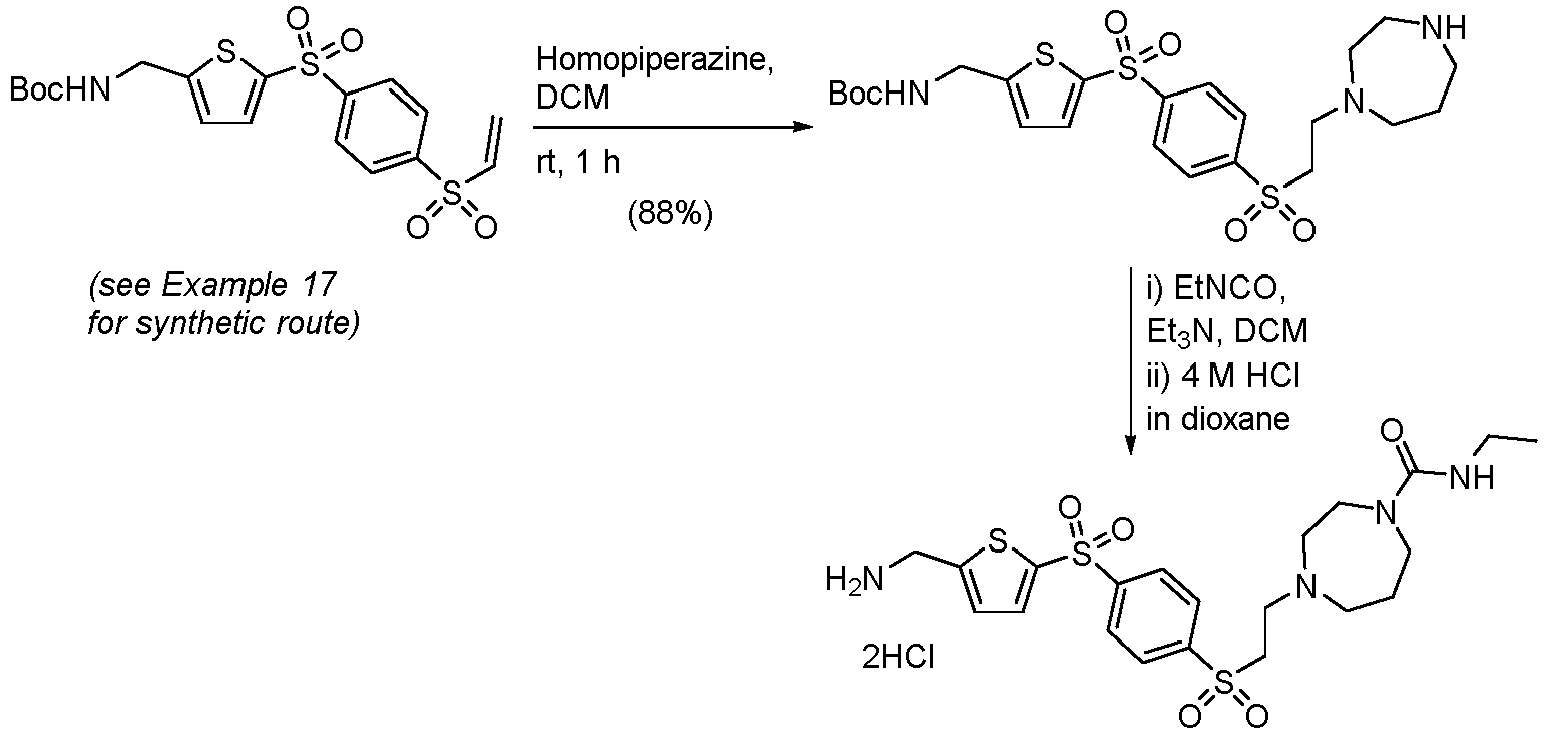
- Homopiperazine (418 mg, 4.17 mmol) was added to a solution of tert-butyl ((5-((4-(vinylsulfonyl)phenyl)sulfonyl)thiophen-2-yl)methyl)carbamate (185 mg, 0.417 mmol) in DCM (6.0 mL) and the mixture was stirred at rt for 1 h. EtOAc (40 mL) was added. The organic solution was washed with 1:1 H2O/brine (4 × 40 mL), dried over MgSO4, filtered and the solvent was removed under reduced pressure. tert-Butyl ((5-((4-((2-(1,4-diazepan-1-yl)ethyl)sulfonyl)phenyl)sulfonyl)thiophen-2-yl)methyl)carbamate was obtained as a white solid (200 mg, 88%) and was used in the subsequent transformation without further purification.
- EtNCO (12.1 µL, 0.153 mmol) was added to a solution of tert-butyl ((5-((4-((2-(1,4-diazepan-1-yl)ethyl)sulfonyl)phenyl)sulfonyl)thiophen-2-yl)methyl)carbamate (64 mg, 0.118 mmol) and Et3N (25 µL, 0.177 mmol) in DCM (1.0 mL) and the mixture was stirred at rt for 1 h. EtOAc (30 mL) was added. The organic solution was washed with 1:1 H2O/brine (3 × 30 mL), dried over MgSO4, filtered and the solvent was removed under reduced pressure. 4 M HCl in dioxane (2.5 mL) was then added and the mixture was stirred at rt for 3 h. The precipitated solid was collected on a pad of ceilte and washed with EtOAc. MeOH was then added to dissolve the solid and the mixture was filtered. The solvent was removed under reduced pressure to afford the title compound as a white solid, which did not require further purification (57 mg, 83%). 1H NMR (500 MHz, MeOD) δ 8.34 - 8.27 (m, 2H), 8.26 - 8.19 (m, 2H), 7.84 (d, J = 3.8 Hz, 1H), 7.35 (d, J = 3.8 Hz, 1H), 4.40 (s, 2H), 4.14 - 3.90 (m, 3H), 3.70 - 3.23 (m, 9H), 3.19 (q, J = 7.2 Hz, 2H), 2.21 (br, 2H), 1.11 (t, J = 7.2 Hz, 3H). 13C NMR (126 MHz, MeOD) δ 159.86, 148.67, 146.32, 144.51, 144.11, 136.29, 131.88, 130.93, 129.87, 57.63, 55.79, 51.25, 51.06, 45.41, 41.55, 38.45, 36.69, 25.57, 15.77. HRMS (ESI) for C21H31N4O5S3 ([M+H]+): Calculated 515.1451; Observed 515.1447.
-

- Ac2O (11.5 µL, 0.122 mmol) was added to a solution of tert-butyl ((5-((4-((2-(1,4-diazepan-1-yl)ethyl)sulfonyl)phenyl)sulfonyl)thiophen-2-yl)methyl)carbamate (51 mg, 0.0938 mmol) and Et3N (19.6 µL, 0.141 mmol) in DCM (1.0 mL) and the mixture was stirred at rt for 1 h. EtOAc (30 mL) was added. The organic solution was washed with 1:1 H2O/brine (3 × 30 mL), dried over MgSO4, filtered and the solvent was removed under reduced pressure. 4 M HCl in dioxane (2.5 mL) was then added and the mixture was stirred at rt for 3 h. The precipitated solid was collected on a pad of ceilte and washed with EtOAc. MeOH was then added to dissolve the solid and the mixture was filtered. The solvent was removed under reduced pressure to afford the title compound as a white solid, which did not require further purification (48 mg, 92%). 1H NMR (500 MHz, MeOD) δ 8.34 - 8.27 (m, 2H), 8.27 - 8.20 (m, 2H), 7.84 (d, J = 3.2 Hz, 1H), 7.36 (d, J = 3.2 Hz, 1H), 4.40 (s, 2H), 4.24 - 3.37 (m, 12H), 2.45 - 2.17 (m, 2H), 2.14 (s, 3H). 13C NMR (126 MHz, MeOD) δ 172.21, 147.24, 144.95, 143.07, 142.66, 134.91, 130.53, 129.58, 128.49, 54.79, 53.75, 49.99, 49.68, 46.31, 42.89, 37.10, 24.30, 20.27. HRMS (ESI) for C20H28N3O5S3 ([M+H]+): Calculated 486.1186; Observed 486.1184.
-

- A mixture of tert-butyl ((5-((4-chlorophenyl)sulfonyl)thiophen-2-yl)methyl)carbamate (1.68 g, 4.34 mmol), 3-mercaptopropanol (0.94 mL, 10.8 mmol), K2CO3 (1.80 g, 13.1 mmol) and DMF (22 mL) was stirred at 50 °C for 16 h. After cooling to rt, EtOAc (60 mL) was added. The organic solution was washed with 1:1 H2O/brine (3 × 60 mL), dried over MgSO4, filtered and the solvent was removed under reduced pressure. The crude was purified by chromatography (EtOAc/
cyclohexane 15→70%) to afford tert-butyl ((5-((4-((3-hydroxypropyl)thio)phenyl)sulfonyl)-thiophen-2-yl)methyl)carbamate as a colourless oil (1.16 g, 60%). 1H NMR (500 MHz, CDCl3) δ 7.82 (d, J = 8.3 Hz, 2H), 7.51 (d, J = 3.7 Hz, 1H), 7.35 (d, J = 8.3 Hz, 2H), 6.89 (d, J = 3.4 Hz, 1H), 5.07 (s, 1H), 4.44 (d, J = 5.1 Hz, 2H), 3.84 - 3.65 (m, 2H), 3.11 (t, J = 7.2 Hz, 2H), 2.00 - 1.87 (m, 2H), 1.57 (s, 1H), 1.45 (s, 9H). - The title compound was synthesised according to general procedures GP4 - from i) tert-butyl ((5-((4-((3-hydroxypropyl)thio)phenyl)sulfonyl)thiophen-2-yl)methyl)carbamate (452 mg, 1.02 mmol), m-CPBA (77%; 502 mg, 2.24 mmol), DCM (5.0 mL); rt, 0.5 h; Chromatography (EtOAc/
cyclohexane 40→100%), 379 mg, 78%, white crystalline solid. ii) 4 M HCl in dioxane (1.5 mL); rt, 3 h. The title compound was obtained as a white solid, which did not require further purification (23 mg, quant.). 1H NMR (500 MHz, MeOD) δ 8.26 (d, J = 8.5 Hz, 2H), 8.15 (d, J = 8.5 Hz, 2H), 7.83 (d, J = 3.9 Hz, 1H), 7.34 (d, J = 3.9 Hz, 1H), 4.39 (s, 2H), 3.58 (t, J = 6.1 Hz, 2H), 3.37 - 3.32 (m, 2H), 1.89 - 1.80 (m, 2H). 13C NMR (126 MHz, MeOD) δ 148.02, 146.19, 145.44, 144.33, 136.14, 131.84, 130.66, 129.60, 60.56, 53.60, 38.46, 26.85. HRMS (ESI) for C14H18NO5S3 ([M+H]+): Calculated 376.0342; Observed 376.0334. -

- Methanesulfonyl chloride (206 µL, 2.67 mmol) was added to a solution of tert-butyl ((5-((4-((3-hydroxypropyl)thio)phenyl)sulfonyl)thiophen-2-yl)methyl)carbamate (910 mg, 2.05 mmol) and Et3N (429 µL, 3.08 mmol) in DCM (10 mL). The mixture was stirred at rt for 2 h. DCM (30 mL) was added. The organic solution was washed with 1 M HCl, sat NaHCOs, brine, dried over MgSO4 and filtered. The solvent was removed under reduced pressure. The crude was dissolved in DMF (3.4 mL). NaN3 (79.5 mg, 1.22 mmol) was added and the mixture was stirred at 50 °C for 1 h. After cooling to rt, EtOAc (30 mL) was added. The organic solution was washed with 1:1 H2O/brine (3 × 30 mL), dried over MgSO4, filtered and the solvent was removed under reduced pressure to afford crude tert-butyl ((5-((4-((3-azidopropyl)thio)phenyl)sulfonyl)thiophen-2-yl)methyl)carbamate, which was used in the subsequent transformation without further purification.
- The title compound was synthesised according to general procedures GP4 - from i) tert-butyl ((5-((4-((3-azidopropyl)thio)phenyl)sulfonyl)thiophen-2-yl)methyl)carbamate (crude), m-CPBA (77%; 456 mg, 2.04 mmol), DCM (5.0 mL); rt, 1.0 h; Chromatography (EtOAc/
cyclohexane 20→60%), 232 mg, 46%, white solid, ii) 4 M HCl in dioxane (2.0 mL); rt, 3 h. The title compound was obtained as a white solid, which did not require further purification (16 mg, quant.). 1H NMR (500 MHz, MeOD) δ 8.26 (d, J = 8.0 Hz, 2H), 8.16 (d, J = 8.1 Hz, 2H), 7.83 (d, J = 3.0 Hz, 1H), 7.34 (d, J = 2.7 Hz, 1H), 4.39 (s, 2H), 3.43 (t, J = 6.2 Hz, 2H), 3.39 - 3.33 (m, 2H), 2.02 - 1.83 (m, 2H). 13C NMR (126 MHz, MeOD) δ 146.72, 144.76, 143.89, 142.92, 134.78, 130.45, 129.30, 128.26, 52.28, 49.11, 37.11, 22.19. HRMS (ESI) for C14H17 N4O4S3 ([M+H]+): Calculated 401.0406; Observed 401.0393. -

- m-CPBA (456 mg, 2.04 mmol) was added to a solution of tert-butyl ((5-((4-((3-azidopropyl)thio)phenyl)sulfonyl)thiophen-2-yl)methyl)carbamate (~1.02 mmol) in DCM (5.0 mL). The mixture was stirred ar rt for 1 h and then diluted with EtOAc (30 mL). The organic phase was washed with sat. NaHCOs (3 × 30 mL). The combined organic phase was dried over MgSO4, filtered and the solvent was removed under reduced pressure. The crude was purified by chromatography (EtOAc/
cyclohexane 20→60%) to afford tert-butyl ((5-((4-((3-azidopropyl)sulfonyl)phenyl)sulfonyl)thiophen-2-yl)methyl)carbamate as a white solid (232 mg, 48%). 1H NMR (500 MHz, Chloroform-d) δ 8.19 - 8.14 (m, 2H), 8.09 - 8.01 (m, 2H), 7.61 (d, J = 3.9 Hz, 1H), 6.96 (d, J = 3.9 Hz, 1H), 5.10 (br, 1H), 4.47 (d, J = 5.9 Hz, 2H), 3.47 (t, J = 6.4 Hz, 2H), 3.26 - 3.10 (m, 2H), 2.06 - 1.97 (m, 2H), 1.45 (s, 9H). - A mixture of tert-butyl ((5-((4-((3-azidopropyl)sulfonyl)phenyl)sulfonyl)thiophen-2-yl)methyl)carbamate (215 mg, 0.43 mmol), 10% Pd/C (46 mg, 10%) and THF (2.5 mL) was stirred at rt under H2 atmosphere (balloon) for 16 h. The mixture was filtered through celite, washed with MeOH and the filtrate was evaporated under reduced pressure. The crude was purified by chromatography (MeOH/
DCM 5→30%) to afford tert-butyl ((5-((4-((3-aminopropyl)sulfonyl)phenyl)sulfonyl)thiophen-2-yl)methyl)carbamate as a white solid (112 mg, 52%). 1H NMR (500 MHz, Chloroform-d) δ 8.17 - 8.11 (m, 2H), 8.07 - 8.01 (m, 2H), 7.59 (d, J = 3.9 Hz, 1H), 6.94 (d, J = 3.9 Hz, 1H), 5.28 (br, 1H), 4.45 (d, J = 6.3 Hz, 2H), 3.25 - 3.17 (m, 2H), 2.78 (t, J = 6.7 Hz, 2H), 1.87 - 1.77 (m, 2H), 1.43 (s, 9H), 1.38 - 1.15 (br, 2H) - A mixture of tert-butyl ((5-((4-((3-aminopropyl)sulfonyl)phenyl)sulfonyl)thiophen-2-yl)methyl)carbamate (111 mg, 0.234 mmol), 1,4-dibromobutane (31 µL, 0.257 mmol), Et3N (42.4 µL, 0.304 mmol) and DMF/THF (1:1; 2.0 mL) was stirred at 70 °C for 3 h. After cooling to rt, EtOAc (30 mL) was added. The organic solution was washed with 1:1 sat Na2CO3/H2O (30 mL) and brine (30 mL), dried over MgSO4 and filtered. The solvent was removed under reduced pressure. The crude was purified by column chromatography (MeOH/
DCM 5→30%) to afford tert-butyl ((5-((4-((3-(pyrrolidin-1-yl)propyl)sulfonyl)phenyl)sulfonyl)thiophen-2-yl)methyl)carbamate as a colourless oil (38 mg, 31%). This was treated with 4 M HCl in dioxane (2.0 mL) and stirred at rt for 16 h. The mixture was filtered. The solid was washed with EtOAc and dissolved in MeOH. The solvent was removed under reduced pressure to afford the title compound as a light brown solid, which did not require further purification (40 mg, quant.). 1H NMR (500 MHz, MeOD) δ 8.28 (d, J = 8.5 Hz, 2H), 8.19 (d, J = 8.5 Hz, 2H), 7.84 (d, J = 3.9 Hz, 1H), 7.34 (d, J = 3.9 Hz, 1H), 4.39 (s, 2H), 3.51 - 3.31 (m, 8H), 2.12 - 2.01 (m, 4H). 13C NMR (126 MHz, MeOD) δ 146.91, 145.09, 143.55, 142.73, 134.78, 130.31, 129.37, 128.30, 53.86, 52.75, 51.74, 37.07, 22.56. HRMS (ESI) for C18H25N2O4S3 ([M+H]+): Calculated 429.0971; Observed 429.0958. -

- The title compound was synthesised according to general procedures GP2c - from BD3 (1.0 M in THF; 1.50 mL, 1.50 mmol), 5-((3-(pyrrolidin-1-ylsulfonyl)phenyl)sulfonyl)thiophene-2-carbonitrile (192 mg, 0.501 mmol) and THF (1.5 mL); 65 °C, 16 h. The crude was purified by chromatography (EtOH/
DCM 0→35%) to afford a white solid (37 mg, 19%). 1H NMR (500 MHz, CDCl3) δ 8.39 (t, J = 1.6 Hz, 1H), 8.18 (ddd, J = 7.9, 1.8, 1.1 Hz, 1H), 8.01 (ddd, J = 7.8, 1.7, 1.1 Hz, 1H), 7.69 (t, J = 7.9 Hz, 1H), 7.62 (d, J = 3.9 Hz, 1H), 6.91 (m, 1H), 3.27 (ddd, J = 6.8, 4.4, 2.7 Hz, 4H), 1.84 - 1.75 (m, 4H), 1.56 (br s, 2H). 13C NMR (126 MHz, CDCl3) δ 159.54 (t, J = 9.2 Hz), 144.01, 139.14, 139.03 - 138.93 (m), 134.69, 131.65, 131.04, 130.41, 126.15, 124.23 - 124.04 (m), 48.20, 41.46 (dd, J = 40.8, 19.7 Hz), 25.44. HRMS (ESI) for C15H17D2N2O4S3 ([M+H]+): Calculated 389.0627; Observed 389.0608. -

- (S)-5-((3-((2-(Hydroxymethyl)pyrrolidin-1-yl)sulfonyl)phenyl)sulfonyl)thiophene-2-carbonitrile was synthesised according to general procedures GP1 - from i) 5-bromothiophene-2-carbonitrile (2.75 g, 14.6 mmol), (S)-(1-((3-mercaptophenyl)sulfonyl)pyrrolidin-2-yl)methanol (5.2 g, 19.0 mmol), K2CO3 (3.0 g, 21.9 mmol) and DMF (49 mL); 50 °C, 3 h; Chromatography (EtOAc/
cyclohexane 20→100%), 2.38 g, 43%, colourless syrup. ii) (S)-5-((3-((2-(hydroxymethyl)pyrrolidin-1-yl)sulfonyl)phenyl)thio)thiophene-2-carbonitrile (180 mg, 0.474 mmol), m-CPBA (77%; 234 mg, 1.04 mmol) and DCM (3.2 mL); rt, 3 h. The crude was used in the subsequent transformation without further purification. - The title compound was synthesised according to general procedures GP2a - from BH3 (1.0 M in THF; 1.42 mL, 1.42 mmol) and THF (1.42 mL); rt, 1 h. The crude was purified by chromatography (EtOH/
cyclohexane 20→100%) to afford a white foam (141 mg, 72%). 1H NMR (500 MHz, CDCl3) δ 8.37 (t, J = 1.8 Hz, 1H), 8.18 (dt, J = 7.9, 1.5 Hz, 1H), 8.02 (dt, J = 7.8, 1.4 Hz, 1H), 7.70 (t, J = 7.9 Hz, 1H), 7.60 (d, J = 3.8 Hz, 1H), 6.91 (m, 1H), 4.07 (d, J = 1.0 Hz, 2H), 3.69 - 3.58 (m, 3H), 3.45 (ddd, J = 10.4, 6.9, 5.2 Hz, 1H), 3.18 (dt, J = 10.4, 7.1 Hz, 1H), 2.13 (br s, 3H), 1.88 - 1.75 (m, 2H), 1.70 - 1.58 (m, 1H), 1.55 - 1.43 (m, 1H). 13C NMR (126 MHz, CDCl3) δ 159.51, 144.04, 139.01, 138.72, 134.73, 131.69, 131.20, 130.61, 126.10, 124.24, 65.27, 62.06, 50.01, 41.54, 28.72, 24.26. HRMS (ESI) for C16H20N2O5S3Na ([M+Na]+): Calculated 439.0427; Observed 439.0413. -

- A mixture of 3-fluorobenzenesulfonyl chloride (300 mg, 1.54 mmol), (S)-pyrrolidin-2-ylmethanol (152 µL, 1.54 mmol), Et3N (322 µL, 2.31 mmol) and DCM (7.7 mL) was stirred at rt for 15 min. The solution was diluted with DCM (30 mL), washed with 1M HCl (40 mL) and sat. NaHCOs (40 mL), dried over MgSO4 and filtered. The solvent was removed under reduced pressure to afford (S)-(1-((3-fluorophenyl)sulfonyl)pyrrolidin-2-yl)methanol as a colourless oil (390 mg, 98%). 1H NMR (500 MHz, Chloroform-d) δ 7.67 - 7.60 (m, 1H), 7.57 - 7.49 (m, 2H), 7.31 (td, J = 8.4, 2.7 Hz, 1H), 3.73 - 3.61 (m, 3H), 3.45 (m, 1H), 3.20 (m, 1H), 2.93 - 2.77 (br, 1H), 1.88 - 1.73 (m, 2H), 1.67 (m, 1H), 1.48 (m, 1H).
- A mixture of (S)-(1-((3-fluorophenyl)sulfonyl)pyrrolidin-2-yl)methanol (5.88 g, 22.7 mmol), NaSMe (5.60 g, 79.4 mmol) and DMF (60 mL) was stirred at 160 °C in a sealed tube for 3 h. After cooling to rt, the aqueous phase was washed with DCM (120 mL), acidified to pH<3 and extracted with EtOAc (3 × 80 mL). The combined organic phase was washed with 1:1 H2O/brine (3 × 150 mL), dried over MgSO4 and filtered. The solvent was removed under reduced pressure to afford (S)-(1-((3-mercaptophenyl)sulfonyl)pyrrolidin-2-yl)methanol as a yellow oil (5.20 g, 84%). 1H NMR (500 MHz, CDCl3) δ 7.75 (t, J = 1.7 Hz, 1H), 7.61 (dt, J = 7.8, 1.3 Hz, 1H), 7.48 (m, 1H), 7.40 (t, J = 7.8 Hz, 1H), 3.73 - 3.60 (m, 4H), 3.47 (m, 1H), 3.25 (dt, J = 10.4, 7.1 Hz, 1H), 2.74 (br, 1H), 1.86 - 1.68 (m, 3H), 1.51 (m, 1H).
-

- PPh3 (186 mg, 0.711 mmol) was added to a solution of diisopropyl azodicarboxylate (DIAD) (140 µL, 0.711 mmol) and (S)-5-((3-((2-(hydroxymethyl)pyrrolidin-1-yl)sulfonyl)phenyl)thio)thiophene-2-carbonitrile (180 mg, 0.474 mmol) in THF (2.4 mL) and the mixture was stirred at rt for 5 min. 4-Fluorophenol (106 mg, 0.947 mmol) in THF (1 mL) was added and the reaction mixture was stirred at rt for a further 24 h. EtOAc (20 mL) was added and the organic phase was washed with sat. NaHCOs (3 × 20 mL), dried over MgSO4, filtered and the solvent was removed under reduced pressure. The crude was purified by chromatography (EtOAC/
cyclohexane 0→80%) to afford (S)-5-((3-((2-((4-fluorophenoxy)methyl)pyrrolidin-1-yl)sulfonyl)phenyl)thio)thiophene-2-carbonitrile (173 mg, 77%) as a colourless oil. - m-CPBA (77%; 93.3 mg, 0.416 mmol) was added to a solution of (S)-5-((3-((2-((4-fluorophenoxy)methyl)pyrrolidin-1-yl)sulfonyl)phenyl)thio)thiophene-2-carbonitrile (79 mg, 0.166 mmol) in DCM (1.0 mL) and the mixture was stirred at rt for 1 h. When complete conversion was achieved, EtOAc was added (10 mL). The organic phase was washed with sat. NaHCOs (3 × 10 mL), dried over MgSO4 and filtered. The solvent was removed under reduced pressure. The crude was purified by chromatography (EtOAc/
cyclohexane 30→80%) to afford (S)-5-((3-((2-((4-fluorophenoxy)methyl)pyrrolidin-1-yl)sulfonyl)phenyl)sulfonyl)thiophene-2-carbonitrile as a colourless oil (65 mg, 77%). 1H NMR (500 MHz, CDCl3) δ 8.44 (s, 1H), 8.17 (d, J = 7.9 Hz, 1H), 8.09 (d, J = 7.9 Hz, 1H), 7.73 (t, J = 7.9 Hz, 1H), 7.67 (d, J = 4.0 Hz, 1H), 7.57 (d, J = 4.0 Hz, 1H), 6.97 (t, J = 8.6 Hz, 2H), 6.85 - 6.77 (m, 2H), 4.17 (dd, J = 9.1, 3.0 Hz, 1H), 4.01 - 3.88 (m, 2H), 3.54 (m, 1H), 3.18 (m, 1H), 2.08 - 1.95 (m, 2H), 1.78 - 1.66 (m, 2H). - The title compound was synthesised according to general procedures GP2a - from BH3 (1.0 M in THF; 0.5 mL, 0.5 mmol), (S)-5-((3-((2-((4-fluorophenoxy)methyl)pyrrolidin-1-yl)sulfonyl)phenyl)sulfonyl)thiophene-2-carbonitrile (65 mg, 0.128 mmol) and THF (0.5 mL); rt, 1 h. The crude was purified by chromatography (EtOH/
cyclohexane 30→100%) to afford a colourless oil (29 mg, 44%). 1H NMR (500 MHz, CDCl3) δ 8.41 (s, 1H), 8.17 (d, J = 7.9 Hz, 1H), 8.01 (d, J = 7.8 Hz, 1H), 7.66 (t, J = 7.9 Hz, 1H), 7.60 (d, J = 3.8 Hz, 1H), 6.98 (t, J = 8.5 Hz, 2H), 6.90 (d, J = 3.8 Hz, 1H), 6.87 - 6.78 (m, 2H), 4.19 (dd, J = 9.0, 2.9 Hz, 1H), 4.07 (s, 2H), 4.01 - 3.87 (m, 2H), 3.54 (m, 1H), 3.16 (m, 1H), 2.07 - 1.92 (m, 2H), 1.85 - 1.49 (m, 4H). 13C NMR (126 MHz, CDCl3) δ 159.76, 157.51 (d, J = 238.4 Hz), 154.51 (d, J = 1.7 Hz), 144.13, 139.29, 138.85, 134.71, 131.58, 131.21, 130.53, 126.15, 124.05, 116.02 (d, J = 23.0 Hz), 115.54 (d, J = 8.1 Hz), 70.30, 58.85, 49.63, 41.67, 28.95, 24.13. 19F NMR (471 MHz, CDCl3). HRMS (ESI) for C22H23FN2O5S3Na ([M+Na]+): Calculated 533.0645; Observed 533.0636. -

- 1-Fluoro-4-isocyanatobenzene (48.6 µL, 0.429 mmol) was added to a mixture of (S)-5-((3-((2-(hydroxymethyl)pyrrolidin-1-yl)sulfonyl)phenyl)thio)thiophene-2-carbonitrile (136 mg, 0.357 mmol) and Et3N (60.0 µL, 0.429 mmol) in THF (1.8 mL) and the reaction was stirred at rt for 3 h. EtOAc (20 mL) was added. The organic phase was washed with H2O (20 mL) and brine (20 mL), dried over MgSO4, filtered and the solvent was removed under reduced pressure. The crude was purified by chromatography (EtOAc/
cyclohexane 1 0--->30%) to afford (S)-(1-((3-((5-cyanothiophen-2-yl)sulfonyl)phenyl)thio)pyrrolidin-2-yl)methyl (4-fluorophenyl)carbamate as a white foam (182 mg, 98%). DCM (1.8 mL) was added followed by m-CPBA (77%; 173 mg, 0.774 mmol) and the mixture was stirred at rt for 1 h. When complete conversion was achieved, EtOAc was added (10 mL). The organic phase was washed with sat. NaHCO3 (3 × 10 mL), dried over MgSO4 and filtered. The solvent was removed under reduced pressure. The crude was purified by chromatography (EtOAc/cyclohexane 15→60%) to afford (S)-(1-((3-((5-cyanothiophen-2-yl)sulfonyl)phenyl)sulfonyl)pyrrolidin-2-yl)methyl (4-fluorophenyl)carbamatea as a white solid (165 mg, 85%). - The title compound was synthesised according to general procedures GP2a - from BH3 (1.0 M in THF; 0.9 mL, 0.9 mmol), (S)-(1-((3-((5-cyanothiophen-2-yl)sulfonyl)phenyl)sulfonyl)pyrrolidin-2-yl)methyl (4-fluorophenyl)carbamate (165 mg, 0.30 mmol) and THF (0.9 mL); rt, 0.5 h. The crude was purified by chromatography (EtOH/
cyclohexane 30→100%) to afford a white foam (50 mg, 30%). 1H NMR (500 MHz, CDCl3) δ 8.52 (s, 1H), 8.16 (m, 1H), 8.06 (m, 1H), 7.69 (t, J = 7.9 Hz, 1H), 7.61 (d, J = 3.9 Hz, 1H), 7.46 - 7.28 (m, 3H), 7.03 - 6.95 (m, 2H), 6.90 (d, J = 3.8 Hz, 1H), 4.34 (dd, J = 11.4, 4.6 Hz, 1H), 4.23 (dd, J = 11.4, 5.5 Hz, 1H), 4.11 - 4.02 (m, 3H), 3.42 - 3.25 (m, 2H), 1.97 - 1.66 (m, 4H), 1.59 (br s, 2H). 13C NMR (126 MHz, CDCl3) δ 159.89, 159.08 (d, J = 242.0 Hz), 153.49, 143.86, 140.57, 138.62, 134.77, 134.03 (br), 130.84 (d, J = 62.1 Hz), 126.10, 124.16, 120.60 (br), 115.72 (d, J = 22.3 Hz), 66.04, 59.15, 49.27, 41.65, 28.77, 24.49. 19F NMR (471 MHz, CDCl3) δ -119.59. HRMS (ESI) for C23H25FN3O6S3Na ([M+Na]+): Calculated 554.0884; Observed 554.0870. -

- NaH (60% in mineral oil; 18.2 mg, 0.454 mmol) was added to a solution of (S)-5-((3-((2-(hydroxymethyl)pyrrolidin-1-yl)sulfonyl)phenyl)thio)thiophene-2-carbonitrile (144 mg, 0.378 mmol) and BnBr (54.0 µL, 0.454 mmol) in DMF (1.9 mL). The mixture was stirred at rt for 3 h and then diluted with EtOAc (20 mL). The organic phase was washed with 1:1 H2O/brine (3 × 20 mL), dried over MgSO4, filtered and the solvent was removed under reduced pressure. The crude was purified by chromatography (EtOAc/
cyclohexane 0→30%) to afford (S)-5-((3-((2-((benzyloxy)methyl)pyrrolidin-1-yl)sulfonyl)phenyl)thio)thiophene-2-carbonitrile (52 mg, 29%) as a white foam. DCM (1.0 mL) was added followed by m-CPBA (77%; 62 mg, 0.276 mmol) and the mixture was stirred at rt for 3 h. When complete conversion was achieved, EtOAc was added (10 mL). The organic phase was washed with sat. NaHCO3 (3 × 10 mL), dried over MgSO4 and filtered. The solvent was removed under reduced pressure to afford (S)-5-((3-((2-((benzyloxy)methyl)pyrrolidin-1-yl)sulfonyl)phenyl)sulfonyl)thiophene-2-carbonitrile, which was used in the subsequent transformation without further purification. - The title compound was synthesised according to general procedures GP2a - from (S)-5-((3-((2-((benzyloxy)methyl)pyrrolidin-1-yl)sulfonyl)phenyl)sulfonyl)thiophene-2-carbonitrile (crude), BH3 (1.0 M in THF; 0.33 mL, 0.33 mmol) and THF (0.6 mL); rt, 0.5 h. The crude was purified by chromatography (EtOH/
cyclohexane 20→100%) to afford a white foam (34 mg, 61%). 1H NMR (500 MHz, CDCl3) δ 8.40 (t, J = 1.6 Hz, 1H), 8.17 (dt, J = 7.9, 1.3 Hz, 1H), 8.00 (dt, J = 7.8, 1.3 Hz, 1H), 7.68 - 7.59 (m, 2H), 7.39 - 7.28 (m, 5H), 6.90 (d, J = 3.8 Hz, 1H), 4.53 (AB system; d, J = 11.9 Hz, 1H), 4.50 (AB system; d, J = 11.9 Hz, 1H), 4.06 (s, 2H), 3.80 (m, 1H), 3.69 (dd, J = 9.5, 3.7 Hz, 1H), 3.53 - 3.42 (m, 2H), 3.14 (m, 1H), 1.97 - 1.83 (m, 2H), 1.73 - 1.56 (m, 4H). 13C NMR (126 MHz, CDCl3) δ 159.63, 144.01, 139.68, 139.00, 138.20, 134.68, 131.67, 131.05, 130.40, 128.55, 127.83, 127.79, 126.20, 124.07, 73.53, 72.60, 59.60, 49.50, 41.68, 28.96, 24.19. HRMS (ESI) for C23H27 N2O5S3 ([M+H]+): Calculated 507.1077; Observed 507.1060. -

- 5-((3-(Pyrrolidin-1-ylsulfonyl)-5-(trifluoromethyl)phenyl)sulfonyl)thiophene-2-carbonitrile was synthesised according to general procedures GP1 - from i) 5-bromothiophene-2-carbonitrile (210 mg, 1.13 mmol), 3-(pyrrolidin-1-ylsulfonyl)-5-(trifluoromethyl)benzenethiol (386 mg, 1.24 mmol), K2CO3 (257 mg, 1.86 mmol) and DMF (4.1 mL); 60 °C, 6 h. ii) m-CPBA (77%; 523 mg, 2.33 mmol) and DCM (3.8 mL); rt, 16 h. The crude was purified by chromatography (EtOAc/
cyclohexane 10→50%) to afford a white solid (205 mg, 40%). 1H NMR (500 MHz, CDCl3) δ 8.57 (br, 1H), 8.41 (br, 1H), 8.29 (br, 1H), 7.77 (d, J = 4.0 Hz, 1H), 7.64 (d, J = 4.0 Hz, 1H), 3.33 - 3.23 (m, 4H), 1.93 - 1.82 (m, 4H). - The title compound was synthesised according to general procedures GP2a - from BH3 (1.0 M in THF; 1.0 mL, 1.0 mmol), 5-((3-(pyrrolidin-1-ylsulfonyl)-5-(trifluoromethyl)phenyl)sulfonyl)thiophene-2-carbonitrile (150 mg, 0.333 mmol) and THF (1.0 mL); rt, 1 h. The crude was purified by chromatography (EtOH/
cyclohexane 20→100%) to afford a white solid (58 mg, 39%). 1H NMR (500 MHz, CDCl3) δ 8.53 (m, 1H), 8.39 (m, 1H), 8.25 - 8.19 (m, 1H), 7.67 (d, J = 3.9 Hz, 1H), 6.95 (dt, J = 3.9, 1.0 Hz, 1H), 4.10 (s, 2H), 3.35 - 3.23 (m, 4H), 1.90 - 1.80 (m, 4H), 1.61 (br s, 2H). 13C NMR (126 MHz, CDCl3) δ 160.93, 145.48, 140.88, 137.68, 135.46, 133.30 (q, J = 34.5 Hz), 129.04, 128.24 (q, J = 3.3 Hz), 127.72 (q, J = 3.5 Hz), 124.28, 122.46 (q, J = 273.6 Hz), 48.28, 41.70, 25.49. 19F NMR (471 MHz, CDCl3) δ -62.73. HRMS (ESI) for C16H18F3N2O4S3 ([M+H]+): Calculated 455.0375; Observed 455.0386. -

- Pyrroline (1.30 mL, 15.5 mmol) was added to a solution of 3-Bromo-5-(trifluoromethyl)benzenesulfonyl chloride (1.09 mL, 6.20 mmol) in DCM (21 mL). The mixture was stirred at rt for 15 min, and then diluted with DCM (20 mL). The organic layer was washed with H2O (40 mL), dried over MgSO4, filtered and the solvent was removed under reduced pressure to afford 1-((3-bromo-5-(trifluoromethyl)phenyl)sulfonyl)pyrrolidine (2.43 g, quant.) as a white crystalline solid that is used in the subsequent transformation without further purification.
- NaH (60% in mineral oil; 61.4 mg, 1.53 mmol) was added to a solution of triisopropylsilylmercaptan (TIPS-SH) (330 µL, 1.53 mmol) and 5-(trifluoromethyl)phenyl)sulfonyl)pyrrolidine (386 mg, 1.24 mmol) in toluene (6.2 mL) and the mixture was stirred at rt for 10 min. Pd(PPh3)4 (161 mg, 10%) was added and the mixture was degassed before it was stirred at 100 °C for 16 h. After cooling to rt, silica gel (~5 g) was added and the suspension was stirred vigorously for 0.5 h. The solvent was removed under reduced pressure and the crude-silica mixture was purified by chromatography (EtOAc/
cyclohexane 20% then 100% to give 3-(Pyrrolidin-1-ylsulfonyl)-5-(trifluoromethyl)benzenethiol as a white solid (257 mg, 72%). 1H NMR (500 MHz, Chloroform-d) δ 7.87 (br, 1H), 7.79 (br, 1H), 7.69 (br, 1H), 3.90 (d, J = 3.9 Hz, 1H), 3.32 - 3.18 (m, 4H), 1.88 - 1.73 (m, 4H). -

- DIAD (467 µL, 2.37 mmol) was added to a solution of PPh3 (622 mg, 2.37 mmol) in THF (8 mL) and the reaction was stirred at rt for 0.5 h. Diphenyl phosphoryl azide (DPPA) (681 µL, 3.16 mmol) and (S)-5-((3-((2-(hydroxymethyl)pyrrolidin-1-yl)sulfonyl)phenyl)sulfonyl)thiophene-2-carbonitrile (602 mg, 1.58 mmol) in THF (1 mL) were added and the reaction mixture was stirred at rt for a further 20 h. EtOAc (30 mL) was added and the organic phase was washed with H2O (40 mL) and brine (40 mL), dried over MgSO4, filtered and the solvent was removed under reduced pressure. The crude was purified by chromatography (EtOAc/
cyclohexane 20→60%) to afford (S)-5-((3-((2-(azidomethyl)pyrrolidin-1-yl)sulfonyl)phenyl)sulfonyl)thiophene-2-carbonitrile a colourless oil, which was dissolved in THF (2.6 mL) and H2O (0.3 mL). PPh3 (207 mg, 0.791 mmol) was added and the mixture was stirred at rt for 16 h. The solvent was removed under reduced pressure. The crude was purified by chromatography (MeOH/DCM 0→15%) to afford (S)-5-((3-((2-(aminomethyl)pyrrolidin-1-yl)sulfonyl)phenyl)sulfonyl)thiophene-2-carbonitrile as a white foam (194 mg, 32% over 2 steps). - PhSO2Cl (21 µL, 0.164 mmol) was added to a mixture of (S)-5-((3-((2-(aminomethyl)pyrrolidin-1-yl)sulfonyl)phenyl)sulfonyl)thiophene-2-carbonitrile (52 mg, 0.126 mmol), Et3N (26 µL, 0.190 mmol) and DCM (1 mL) and the reaction was stirred at rt for 1 h. DCM (10 mL) was added and organic phase was washed with H2O (10 mL), dried over MgSO4, filtered and the solvent was removed under reduced pressure. The crude was dissolved in THF (1 mL), BH3 (1.0 M in THF; 1.0 mL, 1.0 mmol) was added and the reaction was stirred at rt for 2 h. Ethanol (5 mL) was added and the mixture was heated at 70 °C for 1 h. The solvent was removed under reduced pressure and the crude was purified by chromatography (EtOH/
cyclohexane 25, then 100%) to afford the title compound as a light yellow foam (11.2 mg, 22%). 1H NMR (500 MHz, MeOD) δ 8.31 (t, J = 1.7 Hz, 1H), 8.26 (ddd, J = 7.9, 1.8, 1.0 Hz, 1H), 8.06 (ddd, J = 7.9, 1.7, 1.2 Hz, 1H), 7.94 - 7.87 (m, 2H), 7.83 (t, J = 7.9 Hz, 1H), 7.73 (d, J = 3.8 Hz, 1H), 7.65 (m, 1H), 7.63 - 7.58 (m, 2H), 7.07 (dt, J = 3.8, 0.9 Hz, 1H), 4.00 (d, J = 0.8 Hz, 2H), 3.57 (m, 1H), 3.41 (m, 1H), 3.19 (dd, J = 13.4, 3.9 Hz, 1H), 3.07 (m, 1H), 2.87 (dd, J = 13.4, 8.7 Hz, 1H), 1.87 - 1.75 (m, 2H), 1.51 - 1.37 (m, 2H). 13C NMR (126 MHz, MeOD) δ 159.90, 145.36, 141.83, 140.39, 139.84, 136.11, 133.75, 133.13, 132.33, 132.22, 130.31, 128.03, 126.90, 126.60, 61.12, 50.91, 48.00, 41.69, 29.77, 24.52. HRMS (ESI) for C22H26N3O6S4 ([M+H]+): Calculated 556.0699; Observed 556.0700. -

- iPrSO2Cl (18 µL, 0.164 mmol) was added to a mixture of (S)-5-((3-((2-(aminomethyl)pyrrolidin-1-yl)sulfonyl)phenyl)sulfonyl)thiophene-2-carbonitrile (52 mg, 0.126 mmol), Et3N (26 µL, 0.190 mmol) and DCM (1 mL) and the reaction was stirred at rt for 1 h. DCM (10 mL) was added and organic phase was washed with H2O (10 mL), dried over MgSO4, filtered and the solvent was removed under reduced pressure. The crude was dissolved in THF (1 mL), BH3 (1.0 M in THF; 1.0 mL, 1.0 mmol) was added and the reaction was stirred at rt for 2 h. Ethanol (5 mL) was added and the mixture was heated at 70 °C for 1 h. The solvent was removed under reduced pressure and the crude was purified by chromatography (EtOH/
cyclohexane 25, then 100%) to afford a white solid (6.5 mg, 13%). 1H NMR (500 MHz, MeOD) δ 8.39 (t, J = 1.6 Hz, 1H), 8.32 (m, 1H), 8.18 (m, 1H), 7.90 (t, J = 7.9 Hz, 1H), 7.78 (d, J = 3.9 Hz, 1H), 7.13 (m, 1H), 4.05 (s, 2H), 3.64 (m, 1H), 3.53 (m, 1H), 3.47 (dd, J = 13.5, 3.9 Hz, 1H), 3.31 (hept, J = 6.7 Hz, 1H), 3.21 - 3.11 (m, 2H), 1.99 - 1.84 (m, 2H), 1.57 - 1.47 (m, 2H), 1.42 (d, J = 4.3 Hz, 3H), 1.41 (d, J = 4.3 Hz, 3H). 13C NMR (126 MHz, MeOD) δ 159.91, 145.38, 140.43, 139.86, 136.10, 133.18, 132.33, 132.25, 126.92, 126.61, 61.80, 54.06, 50.94, 48.24, 41.68, 29.58, 24.55, 16.96, 16.85. HRMS (ESI) for C19H28N3O6S4 ([M+H]+): Calculated 522.0855; Observed 522.0850. -

- A mixture of LiOH.HzO (28 mg, 0.667 mmol), methyl 3-((5-(((tert-butoxycarbonyl)amino)methyl)thiophen-2-yl)sulfonyl)benzoate (250 mg, 0.608 mmol), H2O (5.0 mL) and THF (10 mL) was stirred at rt for 12 h. The pH of the solution was adjusted to <4 and the aqueous phase was extracted with EtOAc. The combined organic phase was dried over MgSO4, filtered and the solvent was removed under reduced pressure to afford 3-((5-(((tert-butoxycarbonyl)amino)methyl)thiophen-2-yl)sulfonyl)benzoic acid, which did not require further purification (170 mg, 70%). 1H NMR (500 MHz, CDCl3) δ 8.62 (s, 1H), 8.25 (d, J = 7.6 Hz, 1H), 8.16 (d, J = 7.9 Hz, 1H), 7.51 - 7.69 (m, 2H), 6.92 (d, J = 3.5 Hz, 1H), 4.92 - 5.64 (m, 1H), 4.44 (br. s., 2H), 1.42 (s, 9H).
- The title compound was synthesised according to general procedures GP10 - from i) 3-((5-(((tert-butoxycarbonyl)amino)methyl)thiophen-2-yl)sulfonyl)benzoic acid (50 mg, 0.126 mmol), HBTU (53 mg, 0.140 mmol), Et3N (14.5 mg, 0.143 mmol), ethanolamine (8.5 µL, 0.141 mmol) and DMF (2.0 mL); rt, 12 h. ii) 4 M HCl in dioxane (1.0 mL); rt, 12 h. The crude was recrystallised from DCM/cyclohexane (36 mg, 76%). 1H NMR (500 MHz, CD3OD) δ 6.89 (s, 1H), 6.37 - 6.67 (m, 1H), 6.21 (d, J = 3.8 Hz, 1H), 6.14 (t, J = 7.9 Hz, 1H), 5.75 (d, J = 3.8 Hz, 1H), 2.82 (s, 1H), 2.15 (t, J = 5.7 Hz, 1H), 1.95 (t, J = 5.7 Hz, 1H). 13C NMR (126 MHz, CD3OD) δ 168.3, 145.5, 145.4, 143.9, 137.5, 135.6, 133.5, 131.8, 131.3, 131.2, 127.6, 61.6, 43.9, 38.6. HRMS calcd for C14H16N2O4S2 [M-NH2]+ 324.0364; found 324.0406.
-

- The title compound was synthesised according to general procedures GP10 - from i) 3-((5-(((tert-butoxycarbonyl)amino)methyl)thiophen-2-yl)sulfonyl)benzoic acid (50 mg, 0.126 mmol), HBTU (53 mg, 0.140 mmol), Et3N (14.5 mg, 0.143 mmol), Me2NH (2.0 M in THF; 70 µL, 0.140 mmol) and DMF (2.0 mL); rt, 12 h. ii) 4 M HCl in dioxane (1.0 mL); rt, 12 h. The crude was recrystallised from DCM/cyclohexane (1.3 mg, 3%). 1H NMR (500 MHz, CD3OD) δ 7.75 (d, J = 7.6 Hz, 1H), 7.70 (s, 1H), 7.43 (d, J = 3.8 Hz, 1H), 7.30 - 7.41 (m, 2H), 6.98 (d, J = 3.5 Hz, 1H), 4.05 (s, 2H), 2.77 (s, 3H), 2.62 (s, 3H). 13C NMR (126 MHz, CD3OD) δ 171.4, 145.6, 145.3, 143.8, 139.1, 135.6, 133.4, 131.9, 131.4, 129.7, 127.2, 40.1, 38.6, 35.9. HRMS calcd for C14H16N2O3S2 [M-NH2]+ 308.0415; found 308.0564
-

- The title compound was synthesised according to general procedures GP10 - from i) 3-((5-(((tert-butoxycarbonyl)amino)methyl)thiophen-2-yl)sulfonyl)benzoic acid (50 mg, 0.126 mmol), HBTU (53 mg, 0.140 mmol), Et3N (14.5 mg, 0.143 mmol), 2-((4-methoxyphenyl)sulfonyl)ethanamine hydrochloride (36 mg, 0.143 mmol) and DMF (2.0 mL); rt, 12 h. ii) 4 M HCl in dioxane (1.0 mL); rt, 12 h. The crude was recrystallised from DCM/cyclohexane (1.2 mg, 2%). 1H NMR (500 MHz, CD3OD) δ 8.34 (s, 1H), 8.14 (d, J = 7.9 Hz, 1H), 7.96 (d, J = 7.9 Hz, 1H), 7.85 (d, J = 8.8 Hz, 2H), 7.78 (d, J = 3.8 Hz, 1H), 7.67 (t, J = 7.9 Hz, 1H), 7.33 (d, J = 3.8 Hz, 1H), 7.04 (d, J = 8.8 Hz, 2H), 4.39 (s, 2H), 3.80 (s, 3H), 3.75 (t, J = 6.0 Hz, 2H), 3.56 (t, J = 6.3 Hz, 2H). 13C NMR (126 MHz, CD3OD) δ 167.6, 165.6, 145.6, 145.3, 143.9, 136.7, 135.6, 133.4, 132.2, 131.8, 131.5, 131.4, 131.2, 127.5, 115.8, 56.5, 55.4, 54.9, 391, 38.6, 35.9. HRMS calcd for C21H22N2O6S3 [M-NH2]+ 478.0453; found 478.0548
-

- tert-Butyl ((5-(thiophen-2-ylthio)thiophen-2-yl)methyl)carbamate was synthesised according to general procedures GP3 - from i) 5-bromothiophene-2-carbonitrile (406 mg, 2.83 mmol), thiophene-2-thiol (362 mg, 3.11 mmol), K2CO3 (781 mg, 5.66 mmol) and DMF (11 mL); 120 °C, 16 h; chromatography (EtOAc/
cyclohexane 2→10%), 442 mg, 70%. ii) 5-(thiophen-2-ylthio)thiophene-2-carbonitrile (326 mg, 1.46 mmol), BH3 (1.0 M in THF; 4.4 mL, 4.40 mmol; rt, 1 h. iii) BoczO (478 mg, 2.19 mmol), Et3N (0.31 mL, 2.22 mmol), DCM (40 mL); rt, 16 h. The crude was purified by chromatography (EtOAc/cyclohexane 2→20%) to afford tert-butyl ((5-(thiophen-2-ylthio)thiophen-2-yl)methyl)carbamate (258 mg, 54% over 2 steps). 1H NMR (500 MHz, CDCl3) δ 8.58 (s, 1H), 8.22 (d, J = 7.9 Hz, 1H), 8.13 (d, J = 7.9 Hz, 1H), 7.60 (t, J = 7.9 Hz, 1H), 7.56 (d, J = 3.8 Hz, 1H), 6.91 (d, J = 3.8 Hz, 1H), 5.20 (br. s., 1H), 4.43 (d, J = 5.4 Hz, 2H), 3.94 (s, 3H), 1.42 (s, 9H). 13C NMR (126 MHz, CDCl3) δ 155.4, 146.6, 135.1, 134.6, 132.7, 132.5, 129.6, 127.3, 125.4, 79.6, 39.7, 28.2. HRMS calcd for C14H17 NO2S3 [M+H]+ 328.0494; found 328.0516. - The title compound was synthesised according to general procedures GP4 - from i) tert-butyl ((5-(thiophen-2-ylthio)thiophen-2-yl)methyl)carbamate (258 mg, 0.788 mmol), m-CPBA (77%; 340 mg, 1.52 mmol), DCM (5.0 mL); 50 °C, 0.5 h; chromatography (MeOH/
DCM 0→5%). ii) 4 M HCl in dioxane (1.0 mL); rt, 16 h. The white precipitate was filtered, washed with excess EtOA and dried under vacuum to afford a white solid (1.4 mg, 7% over two steps). 1H NMR (500 MHz, CDCl3) δ 7.64 (dd, J = 5.0, 1.3 Hz, 1H), 7.52 (dd, J = 3.7, 1.3 Hz, 1H), 7.43 (d, J = 3.7 Hz, 1H), 7.11 (dd, J = 5.0, 3.7 Hz, 1H), 6.90 (dt, J = 3.7, 0.9 Hz, 1H), 3.93 (s, 2H), 1.63 (br, 2H). 13C NMR (126 MHz, CDCl3) δ 155.85, 147.91, 145.56, 131.64, 130.91, 129.86, 127.48, 123.47, 41.84. -

- The title compound was synthesised according to general procedures GP10 - from i) 3-((5-(((tert-butoxycarbonyl)amino)methyl)thiophen-2-yl)sulfonyl)benzoic acid (50 mg, 0.126 mmol), HBTU (53 mg, 0.140 mmol), Et3N (14.5 mg, 0.143 mmol), L-proline methyl ester hydrochloride (24 mg, 0.145 mmol) and DMF (2.0 mL); rt, 12 h. ii) 4 M HCl in dioxane (1.0 mL); rt, 12 h. The crude was recrystallised from DCM/cyclohexane (1.2 mg, 2%).1H NMR (500 MHz, (CD3)2SO) δ mixture of rotamers 8.14 (s, 1H), 7.94 - 8.08 (m, 1H), 7.78 (d, J = 7.6 Hz, 1H), 7.45 - 7.65 (m, 2H), 6.91 (d, J = 3.5 Hz, 1H), 5.04 - 5.26 (m, 1H), 4.65 (dd, J = 8.2, 5.0 Hz, 1H), 4.44 (d, J = 5.4 Hz, 2H), 3.78 (s, 3H), 3.58 - 3.69 (m, 2H), 3.38 - 3.58 (m, 2H), 2.26 - 2.40 (m, 1H), 1.97 - 2.14 (m, 4H), 1.86 - 1.96 (m, 1H), 1.43 (s, 9H). 13C NMR (126 MHz, CD3OD) δ 174.2, 169.6, 145.7, 145.3, 143.8, 138.9, 135.6, 133.5, 131.9, 131.4, 130.4, 127.4, 61.1, 53.1, 51.4, 38.6, 30.5, 26.4. HRMS calcd for C18H20N2O5S2 [M-NH2]+ 392.0626; found 392.0784.
-

- The title compound was synthesised according to general procedures GP10 - from i) 4-((5-(((tert-butoxycarbonyl)amino)methyl)thiophen-2-yl)sulfonyl)benzoic acid (43 mg, 0.108 mmol), HBTU (46 mg, 0.121 mmol), Et3N (20 µL, 0.143 mmol), MeNH2 (2.0 M in MeOH; 60 µL, 0.120 mmol) and DMF (1.0 mL); rt, 12 h. ii) 4 M HCl in dioxane (1.5 mL); rt, 12 h. The solid product was triturated with EtzO (10 mg, 27%). 1H NMR (500 MHz, CD3OD) δ 8.03 (d, J = 8.5 Hz, 2H), 7.92 - 7.99 (m, 2H), 7.73 (d, J = 3.8 Hz, 1H), 7.30 (d, J = 3.8 Hz, 1H), 4.36 (s, 2H), 2.88 (s, 3H). 13C NMR (126 MHz, CD3OD) δ 168.8, 145.7, 145.6, 145.2, 140.6, 135.6, 131.8, 129.7, 128.8, 38.6, 27.2. HRMS calcd for C13H14N2O3S2 [M-NH2]+ 294.0259; found 294.0307
-

- A mixture of 5-bromothiophene-2-carbonitrile (406 mg, 2.83 mmol), 4-mercaptobenzoic acid (479 mg, 3.11 mmol), and K2CO3 (781 mg, 5.65 mmol) in DMF (11 mL) was stirred at 120°C for 2.5 h. After cooling to rt, Mel (750 µL, 11.32 mmol) was added and the mixture was stirred at 50 °C for 2 h. EtOAc was added and the organic phase was washed with H2O/brine 1:1 (3 ×), dried over Na2SO4 and filtered. The solvent was removed under reduced pressure and the crude treated with BF3.THF complex (1.0 M in THF; 7.0 mL, 7.0 mmol). The mixture was stirred for at rt for 1 h, and then quenched slowly with EtOH. The mixture was heated at reflux for 1 h before the solvent was removed under reduced pressure. DCM (40 mL) was added, followed by Et3N (480 µL, 3.45 mmol) and BoczO (753 mg, 3.45 mmol). The mixture was stirred at rt for 12 h and then diluted with DCM. The organic phase was washed with HzO, dried over Na2SO4, filtered and the solvent was removed under reduced pressure. The crude was purified by chromatography (EtOAc/
cyclohexane 2→20%) to afford methyl 4-((5-(((tert-butoxycarbonyl)amino)methyl)thiophen-2-yl)thio)benzoate (288 mg, 27%). 1H NMR (500 MHz, CDCl3) δ 7.90 (d, J = 8.2 Hz, 2H), 7.09 - 7.22 (m, 3H), 6.96 (br. s, 1H), 4.83 - 5.09 (m, 1H), 4.48 (br. s, 1H), 3.89 (s, 3H), 1.47 (s, 9H). - m-CPBA (77%; 327 mg, 1.46 mmol) was added in portions to a solution of methyl 4-((5-(((tert-butoxycarbonyl)amino)methyl)thiophen-2-yl)thio)benzoate (288 mg, 0.76 mmol) in DCM (20 mL) and the mixture was stirred at 50 °C for 45 min. After cooling down to rt, the organic solution was washed with sat. NaHCOs (3 ×), dried over Na2SO4, filtered and the solvent was removed under reduced pressure. The crude was purified by chromatography (MeOH/
DCM 0→5%) to afford methyl 4-((5-(((tert-butoxycarbonyl)amino)methyl)thiophen-2-yl)sulfonyl)benzoate (250 mg, 80%). 1H NMR (500 MHz, CDCl3) δ 8.09 (d, J = 8.5 Hz, 2H), 7.96 (d, J = 8.5 Hz, 2H), 7.50 (d, J = 3.5 Hz, 1H), 6.87 (d, J = 3.8 Hz, 1H), 5.48 (br. s., 1H), 4.39 (d, J = 5.4 Hz, 2H), 3.88 (s, 3H), 1.37 (s, 9H). - A mixture of methyl 4-((5-(((tert-butoxycarbonyl)amino)methyl)thiophen-2-yl)sulfonyl)benzoate (250 mg, 0.61 mmol), LiOH.HzO (28 mg, 0.67 mmol), THF (10 mL) and H2O (5 mL) was stirred at rt for 12 h. The pH was adjusted to < 1 and the aqueous phase was extracted with EtOAc. The combined organic phase was dried over MgSO4, filtered and the solvent was removed under reduced pressure to afford 4-((5-(((tert-butoxycarbonyl)amino)methyl)thiophen-2-yl)sulfonyl)benzoic acid (172 mg, 72%), which was used in the subsequent transformation without further purification. 1H NMR (500 MHz, CD3OD) δ 8.19 (d, J = 8.2 Hz, 2H), 8.06 (d, J = 8.2 Hz, 2H), 7.66 (d, J = 3.5 Hz, 1H), 7.02 (d, J = 3.8 Hz, 1H), 4.40 (s, 2H), 1.44 (s, 9H).
-

- The title compound was synthesised according to general procedures GP10 - from i) 4-((5-(((tert-butoxycarbonyl)amino)methyl)thiophen-2-yl)sulfonyl)benzoic acid (43 mg, 0.108 mmol), HBTU (46 mg, 0.121 mmol), Et3N (20 µL, 0.143 mmol), 2-((4-methoxyphenyl)sulfonyl)ethanamine hydrochloride (30 mg, 0.119 mmol) and DMF (1.0 mL); rt, 12 h. ii) 4 M HCl in dioxane (1.5 mL); rt, 12 h. The solid product was triturated with EtzO (45 mg, 78%). 1H NMR (500 MHz, CD3OD) δ 8.00 (d, J = 8.5 Hz, 2H), 7.81 (t, J = 9.0 Hz, 4H), 7.73 (d, J = 3.8 Hz, 1H), 7.29 (d, J = 4.1 Hz, 1H), 7.00 (d, J = 8.8 Hz, 2H), 4.35 (s, 2H), 3.75 (s, 3H), 3.69 (t, J = 6.3 Hz, 2H), 3.46 - 3.55 (m, 2H). 13C NMR (126 MHz, CD3OD) δ 168.0, 165.6, 145.8, 145.2, 140.0, 135.7, 132.2, 131.8, 131.5, 129.8, 128.7, 115.9, 56.5, 55.4, 38.6, 35.9. HRMS calcd for C21H23N2O6S3 [M+H]+ 495.0713; found 495.0685.
-

- The title compound was synthesised according to general procedures GP10 - from i) 4-((5-(((tert-butoxycarbonyl)amino)methyl)thiophen-2-yl)sulfonyl)benzoic acid (43 mg, 0.108 mmol), HBTU (46 mg, 0.121 mmol), Et3N (20 µL, 0.143 mmol), Me2NH.HCl (90 mg, 0.110 mmol) and DMF (1.0 mL); rt, 12 h. ii) 4 M HCl in dioxane (1.5 mL); rt, 10 h. The solid product was triturated with EtzO (33 mg, 85%). 1H NMR (500 MHz, CD3OD) δ 8.05 (d, J = 6.6 Hz, 2H), 7.69 - 7.82 (m, 1H), 7.61 (d, J =6.6 Hz, 2H), 7.31 (br. s., 1H), 4.37 (br. s., 2H), 3.07 (br. s., 3H), 2.90 (br. s., 3H). 13C NMR (126 MHz, CD3OD) δ 199.5, 173.5, 173.0, 172.1, 170.6, 163.4, 159.8, 157.3, 156.8, 67.8, 66.4, 63.7. HRMS calcd for C14H16N2O3S2 [M-NH2]+ 308.0415; found 308.0587
-

- The title compound was synthesised according to general procedures GP10 - from i) 4-((5-(((tert-butoxycarbonyl)amino)methyl)thiophen-2-yl)sulfonyl)benzoic acid (43 mg, 0.108 mmol), HBTU (46 mg, 0.121 mmol), Et3N (20 µL, 0.143 mmol), ethanolamine (10 µL, 0.166 mmol) and DMF (1.0 mL); rt, 12 h. ii) 4 M HCl in dioxane (1.5 mL); rt, 10 h. The solid product was triturated with EtzO (17 mg, 42%). 1H NMR (500 MHz, CD3OD) δ 8.01 - 8.12 (m, 2H), 7.90 - 8.00 (m, 2H), 7.74 (d, J = 3.8 Hz, 1H), 7.29 (d, J = 3.8 Hz, 1H), 4.35 (s, 2H), 3.67 (t, J = 5.7 Hz, 2H), 3.47 (t, J = 5.8 Hz, 2H). 13C NMR (126 MHz, CD3OD) δ 168.6, 145.7, 145.6, 145.2, 140.8, 135.6, 131.8, 129.8, 128.8, 61.5, 43.9, 38.6.
-

- A mixture of thiophene-2-thiol (736 mg, 6.34 mmol), K2CO3 (903 mg, 6.64 mmol) and 2-chloro-6-(methylsulfonyl)pyridine [synthesised by the method previously reported by
Kajino et al, patent no. EP1424336 ] (1.10 g, 5.76 mmol) in THF ( 30 mL) was stirred at rt for 12 h. EtOAc was added. The organic phase was washed with HzO, dried over MgSO4 and filtered. The solvent was removed under reduced pressure and the crude was dissolved in in DMF (1.02 mL). POCl3 (1.3 mL, 14.0 mmol) was added dropwise and the mixture was stirred at 40 °C for 48 h. After cooling to room temperature, the reaction mixture was poured in ice and extracted with ethyl acetate. The organic phase was washed with brine, dried over Na2SO4, filtered and the solvent was removed under reduced pressure. The residue was purified by column chromatography (EtOAc/cyclohexane 0→30%) to give the 5-((6-(methylsulfonyl)pyridin-2-yl)thio)thiophene-2-carbaldehyde as a yellow solid (824 mg, 48% over 2 steps). 1H NMR (500 MHz, CDCl3) δ 9.86 (s, 1H), 7.73 - 7.86 (m, 3H), 7.41 (d, J = 3.8 Hz, 1H), 7.29 (dd, J = 7.9, 0.9 Hz, 1H), 3.10 (s, 3H). - NaBH4 (151 mg, 4.0 mmol) was added to a solution of 5-((6-(methylsulfonyl)pyridin-2-yl)thio)thiophene-2-carbaldehyde (986 mg, 3.64 mmol) in THF (20 mL) and the mixture was stirred at rt for 1 h. sat NH4Cl was added and the aqueous phase was extracted with EtOAc. The organic phase was dried over Na2SO4 and filtered. The solvent was removed under reduced pressure and the crude (562 mg, 1.86 mmol) was dissolved in DCM (25 mL). Et3N (290 µL, 2.05 mmol) and MsCI (160 µL, 2.05 mmol) were added and the mixture was stirred at rt for 1 h. DCM was added. The organic phase was washed with HzO, dried over MgSO4, filtered and the solvent was removed under reduced pressure to afford crude (5-((6-(methylsulfonyl)pyridin-2-yl)thio)thiophen-2-yl)methyl methanesulfonate. The crude mesylate was added to a solution of NaH (104 mg, 2.59 mmol) and ditert-butyl-iminodicarboxylate (563 mg, 2.59 mmol) in DMF and the mixture was stirred at 50 °C for 24 h. After cooling to rt, 1N HCl was added and the aqueous phase was extracted with DCM. The combined organic phase was dried over MgSO4, filtered and the solvent was removed under reduced pressure. The crude was purified by chromatography (EtOAc/
cyclohexane 0→30%) to afford 2-(methylsulfonyl)-6-((5-(N,N-bis(tert-butoxycarbonyl)aminomethyl)thiophen-2-yl)thio)pyridine as a colourless oil (433mg, 24% over 3 steps). 1H NMR (500 MHz, CDCl3) δ 7.59 - 7.81 (m, 2H), 7.18 (d, J = 3.8 Hz, 1H), 7.08 - 7.13 (m, 1H), 7.05 (d, J = 3.5 Hz, 1H), 4.89 (s, 2H), 3.11 (s, 3H), 1.49 (s, 18H). 13C NMR (126 MHz, CDCl3) δ 163.3, 157.5, 151.7, 148.2, 138.5, 137.3, 128.0, 125.6, 123.5, 116.4, 83.1, 44.5, 39.3, 27.9. HRMS calcd for C21H28N2O6S3 [M-N(Boc)2]+ 283.9874; found 283.9897. - m-CPBA (77%; 343 mg, 1.99 mmol) was added in small portions to a solution of 2-(methylsulfonyl)-6-((5-(N,N-bis(tert-butoxycarbonyl)aminomethyl)thiophen-2-yl)thio)pyridine (433 mg, 0.865 mmol) in DCM (10 mL) and the mixture was stirred at 50 °C for 38 h. The organic phase was washed with sat. NaHCO3 (3 ×), dried over MgSO4 and filtered. The solvent was removed under reduced pressure and the crude was purified by chromatography. The purified amine was treated with 4 M HCl in dioxane (5 mL) and the mixture was stirred at rt for 12 h. The precipitated solid was centrifuged and washed with EtzO and EtOAc and dried under vacuum to afford the title compound as a yellow solid (136, 43% over 2 steps). 1H NMR (500 MHz, D2O) δ 9.89 (br s, 1H), 9.73 (br s, 1H), 9.29 (br s, 1H), 8.80 (br s, 1H), 5.82 (br s, 1H), 4.69 (br s, 3H). 13C NMR (126 MHz, D2O) δ 157.1, 156.8, 145.9, 142.9, 137.1, 130.8, 126.3, 125.7, 39.8, 37.3. HRMS calcd for C11H12N2O4S3 [M-NH2]+ 315.9771; found 315.9784
-
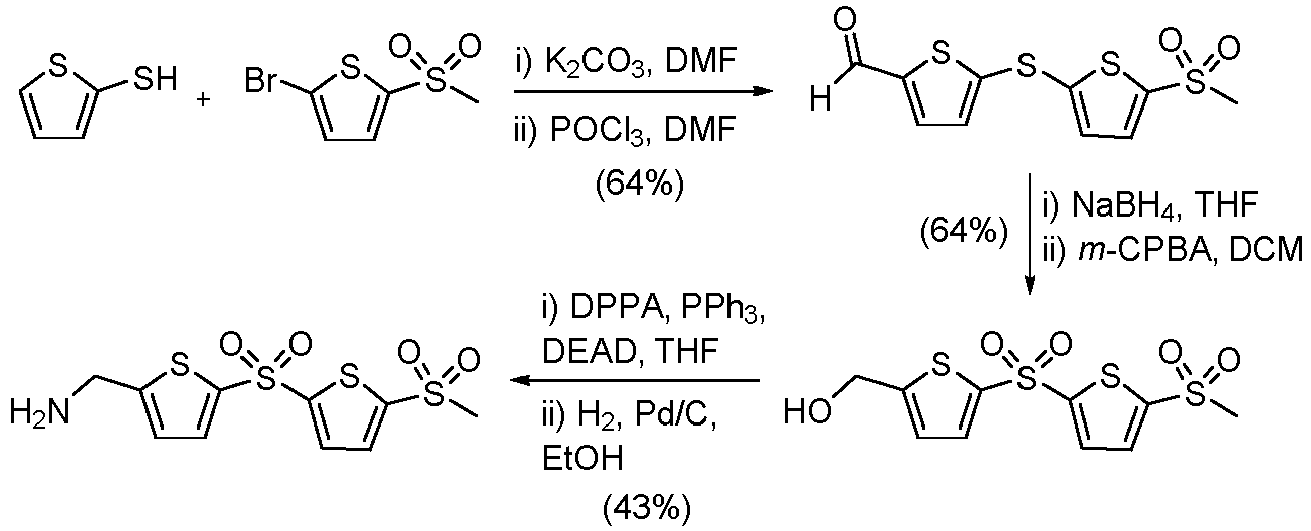
- To a solution of 2-thiophenethiol (1.73 g, 14.9 mmol) and 2-bromo-5-(methylsulfonyl)thiophene (3.0 g, 12.4 mmol) in DMF (15 mL) was added potassium carbonate (2.58 g, 18.7 mmol). The reaction mixture was stirred at 150 °C (microwave) for 2 h. After cooling to rt, the reaction mixture was diluted with H2O (100 mL) and extracted with EtzO. The combined organic phase was dried MgSO4, filtered and the solvent was removed under reduced pressure. The crude was purified by chromatography (EtOAc/
cyclohexane 2→20%) to afford 2-(methylsulfonyl)-5-(thiophen-2-ylthio)thiophene. To this intermediate was added DMF (1.5 mL), followed by the dropwise addition of POCl3 (3.0 mL, 19.5 mmol) at 0 °C. The mixture was then stirred at 40 °C for 12 h. After cooling to rt, the reaction mixture was carefully poured onto ice and extracted with ethyl acetate. The organic phase was washed with brine, dried over Na2SO4, filtered and the solvent was removed under reduced pressure. The residue was purified by chromatography (EtOAc/cyclohexane (0→50%) to afford 5-((5-(methylsulfonyl)thiophen-2-yl)thio)thiophene-2-carbaldehyde (2.4 g, 64% over 2 steps). 1H NMR (500 MHz, CDCl3) δ 9.85 (s, 1H), 7.68 (d, J =4.1 Hz, 1H), 7.63 (d, J =4.1 Hz, 1H), 7.26 - 7.32 (m, 2H), 3.21 (s, 3H). 13C NMR (126 MHz, CDCl3) δ 182.5, 141.9, 136.2, 133.6, 132.3, 128.2, 128.1, 123.4, 45.9. HRMS calcd for C10H8O3S4 [M+H]+ 304.9429; found 304.9462. - To a solution of 5-((5-(methylsulfonyl)thiophen-2-yl)thio)thiophene-2-carbaldehyde (2.4 g, 7.88 mmol) in THF (100 mL) at 0 °C was added sodium borohydride (895 mg, 23.7 mmol). The reaction mixture was stirred at room temperature for 2 h, before it was quenched with ice. The pH of the solution was adjusted to 4-5 with 1 M HCl and the aqueous phase was extracted with ethyl acetate. The combined organic phase was washed with brine, dried over Na2SO4, filtered and the solvent was removed under reduced pressure. The crude was purified by chromatography (EtOAc/
cyclohexane 1 0--->40%) to afford (5-((5-(methylsulfonyl)thiophen-2-yl)thio)thiophen-2-yl)methanol as a yellow solid (2.3 g, 95%). m-CPBA (77%; 1.82 g, 8.17 mmol) was added in small portions to a solution of (5-((5-(methylsulfonyl)thiophen-2-yl)thio)thiophen-2-yl)methanol (1.2 g, 3.92 mmol) in DCM (100 mL) at 0 °C and the mixture was stirred at rt for 12 h. The organic phase was washed with sat. NaHCOs (3 ×), dried over MgSO4, filtered and the solvent was removed under reduced pressure. The crude was purified by chromatography (EtOAc/cyclohexane 0→60%) to afford (5-((5-(methylsulfonyl)thiophen-2-yl)sulfonyl)thiophen-2-yl)methanol (1.1 g, 83%). 1H NMR (500 MHz, CDCl3) δ 7.68 (t, J = 3.3 Hz, 2H), 7.63 (d, J = 4.1 Hz, 1H), 7.01 (d, J = 3.8 Hz, 1H), 4.90 (s, 2H), 2.81 (br s, OH), 3.22 (s, 3H). 13C NMR (126 MHz, CDCl3) δ 158.1, 151.3, 148.5, 139.9, 134.8, 132.8, 132.2, 125.0, 60.1, 45.9. HRMS calcd for C10H10O5S4 [M-OH]+ 320.9384; found 320.9397. - To a solution of (5-((5-(methylsulfonyl)thiophen-2-yl)sulfonyl)thiophen-2-yl)methanol (475 mg, 1.40 mmol) in THF (20 mL) at 0 °C was added PPh3 (551 mg, 2.10 mmol) and DEAD (0.35 mL, 2.24 mmol). The mixture was stirred at 0 °C for 10 min, followed by the addition of DPPA (0.45 mL, 2.10 mmol). The reaction was warmed to rt over 16 h and the solvent was removed under reduced pressure. The crude was purified by chromatography (EtOAc/
cylohexane 0→50%) to afford 2-(azidomethyl)-5-((5-(methylsulfonyl)thiophen-2-yl)sulfonyl)thiophene. This was dissolved in EtOH (40 mL), followed by the addition of Pd/C (10%; 100 mg). The mixture was stirred at rt under H2 pressure (balloon) for 10 h and then filtered through celite. The solvent was removed under reduced pressure and the crude was purified by chromatography (MeOH/EtOAc 0→10%) to afford the title compound as a pink gum (204 mg, 43% over 2 steps). 1H NMR (500 MHz, CDCl3) δ 7.54 - 7.73 (m, 3H), 6.93 (d, J = 3.8 Hz, 1H), 4.10 (s, 2H), 3.20 (s, 3H). 13C NMR (126 MHz, CDCl3) δ 160.4, 151.4, 148.1, 138.3, 134.9, 132.7, 131.9, 123.9, 45.8, 41.5. HRMS calcd for C10H11NO4S4 [M-NH2]+ 320.9384; found 320.9425. -

- To a solution of 2-thiophenethiol (795 mg, 6.84 mmol) in p-xylene (30 mL) was added potassium carbonate (472 mg, 3.42 mmol). The reaction mixture was stirred at room temperature for 1 h. 1-bromo-3-(tert-butyl)-5-(methylsulfonyl)benzene (1.81 g, 6.22 mmol), Pd2(dba)3 (455 mg, 0.497 mmol) and Xantphos (324 mg, 0.560 mmol) were added. The reaction mixture was degassed with argon and stirred at 140 °C for 12 h. After cooling to room temperature, the reaction mixture was filtered through celite and the residue was washed with ethyl acetate. The solvent was removed under reduced pressure and the crude was purified by chromatography (EtOAc/
cyclohexane 0→40%) to afford 2-((3-(tert-butyl)-5-(methylsulfonyl)phenyl)thio)thiophene. To this intermediate was added DMF (1.9 mL), followed by the dropwise addition of POCl3 (3.80 mL, 24.5 mmol) at 0 °C. The mixture was then stirred at 50 °C for 12 h. After cooling to rt, the reaction mixture was carefully poured onto ice and extracted with ethyl acetate. The organic phase was washed with brine, dried over Na2SO4, filtered and the solvent was removed under reduced pressure. The residue was purified by chromatography (EtOAc/cyclohexane (0→40%) to afford 5-((3-(tert-butyl)-5-(methylsulfonyl)phenyl)thio)thiophene-2-carbaldehyde (590 mg, 27%). 1H NMR (500 MHz, CDCl3) δ 9.84 (s, 1H), 7.87 (t, J = 1.6 Hz, 1H), 7.74 (t, J = 1.6 Hz, 1H), 7.71 (d, J = 3.8 Hz, 1H), 7.68 (t, J = 1.6 Hz, 1H), 7.26 - 7.29 (m, 1H), 3.06 (s, 3H), 1.35 (s, 9H). 13C NMR (126 MHz, CDCl3) δ 182.0, 154.7, 146.3, 141.8, 137.1, 136.6, 133.3, 132.3, 125.7, 123.7, 44.5, 35.4, 31.0. HRMS calcd for C15H18O2S3 [M+H]+ 354.0418; found 354.0467. - To a solution of 5-((3-(tert-butyl)-5-(methylsulfonyl)phenyl)thio)thiophene-2-carbaldehyde (590 mg, 1.66 mmol) in THF (50 mL) at 0 °C was added sodium borohydride (141 mg, 3.72 mmol). The reaction mixture was stirred at room temperature for 2 h, before it was quenched with ice. The pH of the solution was adjusted to 4-5 with 1 M HCl and the aqueous phase was extracted with ethyl acetate. The combined organic phase was washed with brine, dried over Na2SO4, filtered and the solvent was removed under reduced pressure. The crude was purified by chromatography (EtOAc/
cyclohexane 0→50%) to afford (5-((3-(tert-butyl)-5-(methylsulfonyl)phenyl)thio)thiophen-2-yl)methanol as a white solid (590 mg, quant.). DCM (50 mL) was added, followed by m-CPBA in small portions (77%; 742 mg, 3.31 mmol) at 0 °C. The mixture was stirred at rt for 12 h, and the solvent was subsequently removed under reduced pressure. The crude was purified by chromatography (EtOAc/cyclohexane 0→60%) to afford (5-((3-(tert-butyl)-5-(methylsulfonyl)phenyl)sulfonyl)thiophen-2-yl)methanol (500 mg, 78% over 2 steps). 1H NMR (500 MHz, CDCl3) δ 8.32 (t, J = 1.4 Hz, 1H), 8.27 (t, J = 1.7 Hz, 1H), 8.13 (t, J = 1.6 Hz, 1H), 7.65 (d, J = 3.8 Hz, 1H), 6.99 (d, J = 3.8 Hz, 1H), 4.87 (s, 2H), 3.10 (s, 3H), 1.40 (s, 9H). 13C NMR (126 MHz, CDCl3) δ 155.4, 155.3, 143.8, 142.0, 140.2, 134.3, 129.1, 128.7, 125.0, 123.7, 60.1, 44.4, 35.8, 31.0. HRMS calcd for C16H20O5S3 [M-OH]+ 371.0445; found 371.0486 - To a solution of (5-((3-(tert-butyl)-5-(methylsulfonyl)phenyl)sulfonyl)thiophen-2-yl)methanol (500 mg, 1.29 mmol) in THF (15 mL) at 0 °C was added PPh3 (406 mg, 1.54 mmol) and DEAD (0.24 mL, 1.54 mmol). The mixture was stirred at 0 °C for 10 min, followed by the addition of DPPA (0.35 mL, 1.54 mmol). The reaction was warmed to rt over 16 h and the solvent was removed under reduced pressure. The crude was dissolved in EtOH (50 mL), and Pd/C (10%; 150 mg) was added. The mixture was stirred at rt under H2 pressure (balloon) for 12 h and then filtered through celite. The solvent was removed under reduced pressure and the crude was was purified by chromatography (EtOH/
cyclohexane 0→100%) to afford the title compound as an orange gum (262 mg, 52%). 1H NMR (500 MHz, CDCl3) δ 8.28 (t, J = 1.4 Hz, 1H), 8.23 (t, J = 1.6 Hz, 1H), 8.09 (t, J = 1.6 Hz, 1H), 7.60 (d, J = 3.8 Hz, 1H), 6.90 (d, J = 3.8 Hz, 1H), 4.06 (s, 2H), 3.08 (s, 3H), 1.36 (s, 9H). 13C NMR (126 MHz, CDCl3) δ 159.4, 155.2, 143.9, 141.8, 138.6, 134.5, 128.9, 128.4, 123.9, 123.5, 44.3, 41.4, 35.6, 30.9. HRMS calcd for C16H21NO4S3 [M-NH2]+ 371.0445; found 371.0428. -

- Synthesised according to general procedures GP11 - from i) 1,3-dibromo-5-(tert-butyl)benzene (2.0 g, 6.85 mmol), tBuLi (1.6 M in pentane; 8.5 mL, 13.6 mmol), THF (70 mL and 5 mL), dimethyl disulfide (0.74 mL, 8.22 mmol); -78 °C→rt; chromatography (EtOAc/
cyclohexane 0→10%), 1.50 g, 85%. ii) (3-bromo-5-(tert-butyl)phenyl)(methyl)sulfane (1.50 g, 5.79 mmol), m-CPBA (77%; 2.50 g, 11.1 mmol), DCM (50 mL); rt, 12 h; chromatography (EtOAc/cyclohexane 0→30%), 1.40 g, 83%. 1H NMR (500 MHz, CDCl3) δ 7.87 (t, J = 1.6 Hz, 1H), 7.85 (t, J = 1.6 Hz, 1H), 7.76 (t, J = 1.7 Hz, 1H), 3.05 (s, 3H), 1.32 (s, 9H). -

- To a solution of 2-thiophenethiol (1.20 g, 10.3 mmol) in p-xylene (50 mL) was added potassium carbonate (714 mg, 5.17 mmol). The reaction mixture was stirred at room temperature for 1 h. 1-bromo-3-(tert-butyl)-5-(isopropylsulfonyl)benzene (3.0 g, 9.40 mmol), Pd2(dba)3 (689 mg, 0.750 mmol) and Xantphos (489 mg, 0.845 mmol) were added. The reaction mixture was degassed with argon and stirred at 140 °C for 12 h. After cooling to room temperature, the reaction mixture was filtered through celite and the residue was washed with ethyl acetate. The solvent was removed under reduced pressure and the crude was purified by chromatography (EtOAc/
cyclohexane 0→40%) to afford 2-((3-(tert-butyl)-5-(isopropylsulfonyl)phenyl)thio)thiophene. To this intermediate was added DMF (2.0 mL), followed by the dropwise addition of POCl3 (2.0 mL, 21.5 mmol) at 0 °C. The mixture was then stirred at 40 °C for 12 h. After cooling to rt, the reaction mixture was carefully poured onto ice and extracted with ethyl acetate. The organic phase was washed with brine, dried over Na2SO4, filtered and the solvent was removed under reduced pressure. The residue was purified by chromatography (EtOAc/cyclohexane (0→40%) to afford the 5-((3-(tert-butyl)-5-(isopropylsulfonyl)phenyl)thio)thiophene-2-carbaldehyde (1.3 g, 36%). 1H NMR (500 MHz, CDCl3) δ 9.83 (s, 1H), 7.80 (t, J = 1.4 Hz, 1H), 7.63 - 7.73 (m, 3H), 7.25 (d, J = 3.8 Hz, 1H), 3.16 (dt, J = 13.6, 6.9 Hz, 1H), 1.34 (s, 9H), 1.25 - 1.31 (m, 6H). 13C NMR (126 MHz, CDCl3) δ 182.0, 154.3, 146.1, 145.3, 138.2, 136.7, 136.6, 132.9, 132.2, 127.5, 125.6, 55.7, 35.3, 31.0. HRMS calcd for C18H22O3S3 [M+H]+ 383.0804; found 383.0895 - To a solution of 5-((3-(tert-butyl)-5-(isopropylsulfonyl)phenyl)thio)thiophene-2-carbaldehyde (1.30 g, 3.39 mmol) in THF (60 mL) at 0 °C was added sodium borohydride (295 mg, 7.82 mmol). The reaction mixture was stirred at room temperature for 2 h, before it was quenched with ice. The pH of the solution was adjusted to 4-5 with 1 M HCl and the aqueous phase was extracted with ethyl acetate. The combined organic phase was washed with brine, dried over Na2SO4, filtered and the solvent was removed under reduced pressure. The crude was purified by chromatography (EtOAc/
cyclohexane 0→50%) to afford (5-((3-(tert-butyl)-5-(isopropylsulfonyl)phenyl)thio)thiophen-2-yl)methanol. DCM (50 mL) was added, followed by m-CPBA in small portions (77%; 1.40 g, 6.26 mmol) at 0 °C. The mixture was stirred at rt for 2 h, and the solvent was subsequently removed under reduced pressure. The crude was purified by chromatography (EtOAc/cyclohexane 0→60%) to afford (5-((3-(tert-butyl)-5-(isopropylsulfonyl)phenyl)sulfonyl)thiophen-2-yl)methanol as a white solid (1.04 g, 74% over 2 steps). 1H NMR (500 MHz, CDCl3) δ 8.24 (d, J = 0.9 Hz, 2H), 8.05 (t, J = 1.6 Hz, 1H), 7.62 (d, J = 3.8 Hz, 1H), 6.97 (d, J = 3.8 Hz, 1H), 4.85 (s, 2H), 3.21 (spt, J = 6.8 Hz, 1H), 1.38 (s, 9H), 1.29 (d, J = 6.6 Hz, 6H). 13C NMR (126 MHz, CDCl3) δ 155.5, 154.9, 143.5, 140.0, 138.5, 134.3, 130.5, 128.8, 125.1, 124.9, 59.9, 55.7, 35.6, 30.9, 26.9, 15.6. HRMS calcd for C18H24O5S3 [M-OH]+ 399.0758; found 399.0801 - To a solution of (5-((3-(tert-butyl)-5-(isopropylsulfonyl)phenyl)sulfonyl)thiophen-2-yl)methanol (1.04 g, 2.49 mmol) in THF (30 mL) at 0 °C was added PPh3 (657 mg, 3.25 mmol) and DEAD (0.51 mL, 3.25 mmol). The mixture was stirred at 0 °C for 10 min, followed by the addition of DPPA (0.73 mL, 3.25 mmol). The reaction was warmed to rt over over 16 h and the solvent was removed under reduced pressure. The crude was dissolved in EtOH (50 mL), and Pd/C (10%; 200 mg) was added. The mixture was stirred at rt under H2 pressure (balloon) for 12 h and then filtered through celite. The solvent was removed under reduced pressure and the crude was recrystallised from EtOAc and a few drops of MeOH. The solid was centrifugated, washed with EtOAc and dried under vacuum to afford the title compound as a white solid (500 mg, 50%). 1H NMR (500 MHz, CDCl3) δ 8.33 (t, J = 1.7 Hz, 1H), 8.23 (t, J = 1.4 Hz, 1H), 8.15 (t, J = 1.6 Hz, 1H), 7.86 (d, J = 4.1 Hz, 1H), 7.32 (d, J = 3.8 Hz, 1H), 4.38 (s, 2H), 3.42 (dt, J = 13.6, 6.9 Hz, 1H), 1.40 (s, 9H), 1.25 (d, J = 6.9 Hz, 6H). 13C NMR (126 MHz, CDCl3) δ 157.1, 146.2, 144.8, 140.6, 136.0, 132.07, 132.01, 130.2, 126.2, 56.7, 38.6, 36.8, 31.3, 15.9. HRMS calcd for C18H25NO4S3 [M+H]+ 416.1018; found 416.1007
-

- Synthesised according to general procedures GP11 - from i) 1,3-dibromo-5-(tert-butyl)benzene (4.25 g, 14.5 mmol), tBuLi (1.6 M in pentane; 20 mL, 32.0 mmol), THF (70 mL and 5 mL), diisopropyl disulfide (2.77 mL, 17.4 mmol); -78 °C→rt; chromatography (EtOAc/
cyclohexane 0→10%), 3.54 g, 85%. ii) (3-bromo-5-(tert-butyl)phenyl)(isopropyl)sulfane (3.54 g, 12.3 mmol), m-CPBA (77%; 5.53 g, 24.7 mmol), DCM (200 mL); rt, 12 h; chromatography (EtOAc/cyclohexane 0→10%), 3.0 g, 76%. 1H NMR (500 MHz, Chloroform-d) δ 7.84 (t, J = 1.7 Hz, 1H), 7.81 (t, J = 1.6 Hz, 1H), 7.78 (t, J = 1.8 Hz, 1H), 3.20 (hept, J = 6.9 Hz, 1H), 1.36 (s, 9H), 1.32 (s, 3H), 1.31 (s, 3H). -

- To a solution of 2-thiophenethiol (1.0 g, 8.65 mmol) in p-xylene (40 mL) was added potassium carbonate (597 mg, 4.32 mmol). The reaction mixture was stirred at room temperature for 1 h. 1-bromo-3-(tert-butyl)-5-(ethylsulfonyl)benzene (2.4 g, 7.86 mmol), Pd2(dba)3 (576 mg, 0.630 mmol) and Xantphos (408 mg, 0.706 mmol) were added. The reaction mixture was degassed with argon and stirred at 140 °C for 12 h. After cooling to room temperature, the reaction mixture was filtered through celite and the residue was washed with ethyl acetate. The solvent was removed under reduced pressure and the crude was purified by chromatography (EtOAc/
cyclohexane 0→40%) to afford 2-((3-(tert-butyl)-5-(ethylsulfonyl)phenyl)thio)thiophene as a brown solid. To this intermediate was added DMF (2.0 mL), followed by the dropwise addition of POCl3 (1.15 mL, 14.9 mmol) at 0 °C. The mixture was then stirred at 40 °C for 12 h. After cooling to rt, the reaction mixture was carefully poured onto ice and extracted with ethyl acetate. The organic phase was washed with brine, dried over Na2SO4, filtered and the solvent was removed under reduced pressure. The residue was purified by chromatography (EtOAc/cyclohexane (0→40%) to afford the 5-((3-(tert-butyl)-5-(ethylsulfonyl)phenyl)thio)thiophene-2-carbaldehyde (1.37 g, 47%). 1H NMR (500 MHz, CDCl3) δ 9.83 (s, 1H), 7.82 (t, J =1.6 Hz, 1H), 7.69 - 7.72 (m, 1H), 7.66 - 7.68 (m, 1H), 7.24 - 7.28 (m, 1H), 3.10 (q, J = 7.6 Hz, 2H), 1.34 (s, 9H), 1.28 (t, J =7.4 Hz, 3H). 13C NMR (126 MHz, CDCl3) δ 182.0, 154.5, 146.2, 145.0, 139.8, 136.9, 136.7, 133.1, 132.3, 126.6, 124.6, 50.7, 35.4, 31.0, 26.9, 7.3. HRMS calcd for C17H20O3S3 [M+H]+ 369.0647; found 369.0636. - To a solution of 5-((3-(tert-butyl)-5-(ethylsulfonyl)phenyl)thio)thiophene-2-carbaldehyde (1.37 mg, 3.72 mmol) in THF (30 mL) at 0 °C was added sodium borohydride (309 mg, 8.18 mmol). The reaction mixture was stirred at room temperature for 2 h, before it was quenched with ice. The pH of the solution was adjusted to 4-5 with 1 M HCl and the aqueous phase was extracted with ethyl acetate. The combined organic phase was washed with brine, dried over Na2SO4, filtered and the solvent was removed under reduced pressure. The crude was purified by chromatography (EtOAc/
cyclohexane 0→40%) to afford (5-((3-(tert-butyl)-5-(ethylsulfonyl)phenyl)thio)thiophen-2-yl)methanol as a white solid (1.37 g, quant.). DCM (200 mL) was added, followed by m-CPBA in small portions (77%; 1.70 g, 7.58 mmol) at 0 °C. The mixture was stirred at rt for 12 h, and the solvent was subsequently removed under reduced pressure. The crude was purified by chromatography (EtOAc/cyclohexane 0→60%) to afford (5-((3-(tert-butyl)-5-(ethylsulfonyl)phenyl)sulfonyl)thiophen-2-yl)methanol as a colourless gum (1.2 g, 80% over 2 steps). 1H NMR (500 MHz, CDCl3) δ 8.27 (dt, J = 8.5, 1.6 Hz, 1H), 8.09 (t, J = 1.6 Hz, 1H), 7.64 (d, J = 3.8 Hz, 1H), 6.99 (d, J = 3.8 Hz, 1H), 4.87 (s, 2H), 3.75 (t, J = 6.6 Hz, 1H), 3.15 (q, J = 7.3 Hz, 2H), 1.86 (dt, J = 6.6, 3.3 Hz, 1H), 1.39 (s, 9H), 1.31 (t, J = 7.4 Hz, 3H). 13C NMR (126 MHz, CDCl3) δ 155.3, 155.2, 143.7, 140.2, 140.1, 134.3, 129.6, 129.0, 125.0, 124.4, 68.0, 60.1, 50.6, 35.7, 31.0, 25.6, 7.3. HRMS calcd for C17H22O5S3 [M-OH]+ 385.0596; found 385.3065. - To a solution of (5-((3-(tert-butyl)-5-(ethylsulfonyl)phenyl)sulfonyl)thiophen-2-yl)methanol (1.2 g, 2.98 mmol) in THF (20 mL) at 0 °C was added PPh3 (1.02 g, 3.88 mmol) and DEAD (0.61 mL, 3.88 mmol). The mixture was stirred at 0 °C for 10 min, followed by the addition of DPPA (0.87 mL, 3.88 mmol). The reaction was warmed to rt over over 16 h and the solvent was removed under reduced pressure. The crude was dissolved in EtOH (50 mL), and Pd/C (10%; 200 mg) was added. The mixture was stirred at rt under H2 pressure (balloon) for 12 h and then filtered through celite. The solvent was removed under reduced pressure and the crude was was purified by chromatography (MeOH/
EtOAc 0→100%) to afford the title compound (261 mg, 22%). 1H NMR (500 MHz, CDCl3) δ 8.18 - 8.38 (m, 2H), 8.08 (t, J = 1.6 Hz, 1H), 7.64 (d, J = 3.8 Hz, 1H), 6.93 (d, J = 3.8 Hz, 1H), 4.10 (s, 2H), 3.15 (q, J = 7.6 Hz, 2H), 1.65 (br. s., 2H), 1.39 (s, 9H), 1.31 (t, J = 7.4 Hz, 3H). 13C NMR (126 MHz, CDCl3) δ 159.2, 155.1, 143.9, 140.1, 138.9, 134.5, 129.4, 128.9, 124.3, 124.0, 50.6, 41.5, 35.7, 31.0, 7.3. HRMS calcd for C17H23NO4S3 [M-NH2]+ 385.0602; found 385.0593. -

- Synthesised according to general procedures GP11 - from i) 1,3-dibromo-5-(tert-butyl)benzene (3.69 g, 12.6 mmol), tBuLi (1.6 M in pentane; 15.8 mL, 25.3 mmol), THF (70 mL and 5 mL), diethyl disulfide (1.90 mL, 15.2 mmol); -78 °C→rt. ii) (3-bromo-5-(tert-butyl)phenyl)(ethyl)sulfane (crude), m-CPBA (77%; 5.60 g, 25.0 mmol), DCM (200 mL); rt, 12 h; chromatography (EtOAc/
cyclohexane 0→10%), colourless oil, 2.4 g, 62% over 2 steps. 1H NMR (500 MHz, CDCl3) δ 7.87 (t, J = 1.6 Hz, 1H), 7.83 (t, J = 1.6 Hz, 1H), 7.79 (t, J = 1.6 Hz, 1H), 3.13 (q, J = 7.4 Hz, 2H), 1.36 (s, 9H), 1.31 (t, J = 7.4 Hz, 3H). -

- 5-((3-(tert-Butoxy)-5-(methylsulfonyl)phenyl)sulfonyl)thiophene-2-carbonitrile was synthesised according to general procedures GP1 - from i) 5-bromothiophene-2-carbonitrile (950 mg, 5.05 mmol), 3-(tert-butoxy)-5-(methylthio)benzenethiol (960 mg, 4.21 mmol), K2CO3 (872 mg, 6.32 mmol) and DMF (21 mL); 80 °C, 16 h. ii) m-CPBA (77%; 4.74 g, 21.1 mmol) and DCM (28 mL); rt, 2 h. The crude was purified by chromatography (EtOAc/
cyclohexane 0→60%) to afford a white solid (1.43 g, 85%). 1H NMR (500 MHz, CDCl3) δ 8.17 (t, J = 1.6 Hz, 1H), 7.81 (dd, J = 2.2, 1.7 Hz, 1H), 7.76 (dd, J = 2.2, 1.6 Hz, 1H), 7.71 (d, J = 4.0 Hz, 1H), 7.60 (d, J = 4.1 Hz, 1H), 3.10 (s, 3H), 1.46 (s, 9H). - The title compound was synthesised according to general procedures GP2a - from BH3 (1.0 M in THF; 0.53 mL, 0.53 mmol), 3-(tert-butoxy)-5-(methylthio)benzenethiol (70 mg, 0.175 mmol) and THF (0.53 mL); 2 h, rt. The crude was purified by chromatography (EtOH/
cyclohexane 30, then 100%) to afford a white foam (60 mg, 85%). 1H NMR (500 MHz, MeOD) δ 8.14 (t, J = 1.6 Hz, 1H), 7.81 (m, 1H), 7.79 - 7.74 (m, 2H), 7.15 (m, 1H), 4.10 (s, 2H), 3.20 (s, 3H), 1.44 (s, 9H). 13C NMR (126 MHz, MeOD) δ 158.93, 157.22, 146.05, 144.77, 140.99, 136.12, 127.67, 126.97, 126.78, 120.47, 82.68, 43.97, 41.02, 28.83. HRMS (ESI) for C16H22NO5S3 ([M+H]+): Calculated 404.0655; Observed 404.0651. -

- BF3.OEt2 (245 µL, 10%) was added to a solution of tert-
butyl cyclohexane 0→5%) to give 1,3-dibromo-5-(tert-butoxy)benzene as a colourless oil (5.65 g, 92%). tBuLi (7.3 mL, 11.7 mmol) was added dropwise to a solution of 1,3-dibromo-5-(tert-butoxy)benzene (1.64 g, 5.32 mmol) in THF (35.5 mL) at -78 °C, and the mixture was stirred at -78 °C for a further 0.5 h. (MeS)2 (719 µL, 7.99 mmol) was added and the reaction was warmed to rt over 1 h. EtOAc was subsequently added. The organic solution was washed with 1:1 H2O/brine, dried over MgSO4, filtered and the solvent was removed under reduced pressure. The crude was purified by chromatography (EtOAc/cyclohexane 0→10%) to afford (3-bromo-5-(tert-butoxy)phenyl)(methyl)sulfane as a colourless oil (1.38 g, 94%). 1H NMR (500 MHz, CDCl3) δ 7.08 (t, J = 1.6 Hz, 1H), 6.93 (t, J = 1.9 Hz, 1H), 6.80 (t, J = 1.8 Hz, 1H), 2.46 (s, 3H), 1.36 (s, 9H). - NaOtBu (1.49 g, 15.5 mmol) was added to a solution of triisopropylsilanylthiol (3.32 mL, 15.5 mmol) and p-xylene (30 mL). The mixture was stirred at rt for 0.5 h. Pd(PPh3)4 (1.49 g, 10%) was subsequently added, followed by a solution of (3-bromo-5-(tert-butoxy)phenyl)(methyl)sulfane (3.53 g, 12.9 mmol) in p-xylene (34 mL). The mixture was thoroughly degassed with argon and then stirred at 130 °C for 16 h. After cooling to rt, TBAF (1.0 M in THF; 26.0 mL, 26.0 mmol) was added and the mixture was stirred at rt for a further hour. EtzO (100 mL) was added the organic solution was extracted with IM NaOH (3 × 80 mL). The combined aqueous phase was neutralised with AcOH, and subsequently extracted with DCM (3 × 80 mL). The combined organic phase was dried over MgSO4, filtered and the solvent was removed under reduced pressure. The crude was purified by chromatography (EtOAc/
cyclohexane 0→40%) to afford 3-(tert-butoxy)-5-(methylthio)benzenethiol as a light yellow oil (498 mg, 16%). 1H NMR (500 MHz, CDCl3) δ 6.86 (t, J = 1.6 Hz, 1H), 6.70 (t, J = 1.8 Hz, 1H), 6.68 (t, J = 1.8 Hz, 1H), 3.44 (s, 1H), 2.45 (s, 3H), 1.35 (s, 9H). -

- A mixture of 5-((3-(tert-butoxy)-5-(methylsulfonyl)phenyl)sulfonyl)thiophene-2-carbonitrile (1.40 g, 3.50 mmol), 4 M HCl in 1,4-dioxane (6 mL) and DCM (6 mL) was stirred at rt for 3h. The solvent was removed under reduced pressure and the crude was purified by column chromatography (EtOAc/
cyclohexane 10→100%) to afford 5-((3-hydroxy-5-(methylsulfonyl)phenyl)sulfonyl)thiophene-2-carbonitrile as a white foam (1.17 g, 95%). 1H NMR (500 MHz, CDCl3) δ 10.00 (s, 1H), 8.05 - 7.98 (m, 2H), 7.97 (d, J = 4.1 Hz, 1H), 7.75 (m, 1H), 7.69 (dd, J = 2.2, 1.6 Hz, 1H), 3.22 (s, 3H). - A mixture of Etl (18.5 µL, 0.231 mmol), K2CO3 (34.5 mg, 0.245 mmol), 5-((3-hydroxy-5-(methylsulfonyl)phenyl)sulfonyl)thiophene-2-carbonitrile (66 mg, 0.192 mmol) and DMF (1.3 mL) was stirred at 40 °C for 5 h. The mixture was cooled to rt, diluted with EtOAc (30 mL). The organic phase was washed with 1:1 H2O/brine (3 × 30 mL), dried over MgSO4, filtered, and the solvent was removed under reduced pressure. The crude was dissolved in THF (0.65 mL). BH3 (1.0 M in THF; 0.65 mL, 0.65 mmol) was added and the reaction was stirred at rt for 2 h. Ethanol (5 mL) was added slowly and the mixture was heated at 70 °C for 1 h. The solvent was removed under reduced pressure and the crude was purified by chromatography (EtOH/
cyclohexane 30→100%, then 100%) to afford the title compound as a white powder (45 mg, 62%). 1H NMR (500 MHz, MeOD) δ 8.02 (t, J = 1.5 Hz, 1H), 7.84 (d, J = 3.9 Hz, 1H), 7.76 (m, 1H), 7.72 (m, 1H), 7.34 (d, J = 3.9 Hz, 1H), 4.40 (s, 2H), 4.21 (q, J = 7.0 Hz, 2H), 3.19 (s, 3H), 1.45 (t, J = 7.0 Hz, 3H). 13C NMR (126 MHz, MeOD) δ 161.87, 145.99, 145.84, 145.33, 144.42, 135.99, 131.81, 119.27, 118.98, 118.41, 66.42, 43.97, 38.47, 14.72. HRMS (ESI) for C14H18NO5S3 ([M+H]+): Calculated 376.0342; Observed 376.0336. -

- 5-((4,4-Dimethyl-1,1-dioxidothiochroman-7-yl)sulfonyl)thiophene-2-carbonitrile was synthesised according to general procedures GP1 - from i) 5-bromothiophene-2-carbonitrile (300 mg, 1.60 mmol), 4,4-dimethylthiochroman-7-thiol (280 mg, 1.33 mmol), K2CO3 (275 mg, 2.00 mol) and DMF (6.7 mL); 80 °C, 16 h. ii) m-CPBA (70-75%; 1.43 g, -5.99 mmol) and DCM (9 mL); rt, 4 h. The crude was purified by chromatography (EtOAc/
cyclohexane 5→70%) to afford a white foam (288 mg, 57%). 1H NMR (500 MHz, CDCl3) δ 8.53 (d, J = 2.1 Hz, 1H), 8.09 (dd, J = 8.5, 2.1 Hz, 1H), 7.70 (d, J = 4.0 Hz, 1H), 7.66 (d, J = 8.5 Hz, 1H), 7.59 (d, J = 4.0 Hz, 1H), 3.48 - 3.40 (m, 2H), 2.48 - 2.39 (m, 2H), 1.45 (s, 6H). - The title compound was synthesised according to general procedures GP2a - from BH3 (1.0 M in THF; 2.5 mL, 2.5 mmol), 5-((4,4-dimethyl-1,1-dioxidothiochroman-7-yl)sulfonyl)thiophene-2-carbonitrile (314 mg, 0.823 mmol) and THF (2.5 mL); rt, 1 h. The crude was purified by chromatography (EtOH/
cyclohexane 30→100, then 100%) to afford a light yellow foam (124 mg, 39%). 1H NMR (500 MHz, CDCl3) δ 8.45 (d, J = 2.0 Hz, 1H), 8.05 (dd, J = 8.5, 2.0 Hz, 1H), 7.67 - 7.54 (m, 2H), 6.89 (d, J = 3.8 Hz, 1H), 4.06 (s, 2H), 3.48 - 3.35 (m, 2H), 2.45 - 2.35 (m, 2H), 1.69 (br, 2H), 1.41 (s, 6H). 13C NMR (126 MHz, CDCl3) δ 159.45, 149.95, 141.99, 138.98, 138.77, 134.61, 130.65, 129.29, 124.08, 123.41, 47.00, 41.63, 35.32, 34.92, 30.62. HRMS (ESI) for C16H20NO4S3 ([M+H]+): Calculated 386.0549; Observed 386.0546. -

- 1-Bromo-3-methylbut-2-ene (1.94 mL, 16.8 mmol) was added to a mixture of 3-bromothiophenol (1.91 mL, 18.5 mmol), K2CO3 (138) and DMF (56 mL). The reaction was stirred at rt for 16 h. EtOAc (120 mL) was added. The organic phase was washed with 1:1 H2O/brine (4 × 100 mL), dried over MgSO4 and filtered. The solvent was removed under reduced pressure to give (3-bromophenyl)(3-methylbut-2-en-1-yl)sulfane as a colourless oil (4.29 g; quant). (3-bromophenyl)(3-methylbut-2-en-1-yl)sulfane (2.40 g, 9.33 mmol) was dissolved in toluene (10.4 mL). p-TSA (2.66 g, 14.0 mmol) was added and the mixture was stirred at 165 °C (microwave) for 45 min. After cooling to rt, EtOAc (80 mL) was added. The organic phase was washed with sat. NaHCOs (3 × 80 mL), dried over MgSO4 and filtered. The solvent was removed under reduced pressure. The crude was purified by column chromatography (EtOAc/
cyclohexane 0→5%) to afford a colourless oil containing mostly the desired 7-bromo-4,4-dimethylthiochroman and the regioisomer 5-bromo-4,4-dimethylthiochroman (2.42 g, 5.3:1; quant). - NaOtBu (365 mg, 3.79 mmol) was added to a solution of triisopropylsilanylthiol (814 µL, 3.79 mmol) and toluene (6.0 mL). The mixture was stirred at rt for 0.5 h. Pd(PPh3)4 (438 mg, 15%) was subsequently added, followed by a solution of the dimethylthiochroman mixture (650 mg, 2.53 mmol) in toluene (6.6 mL). The mixture was thoroughly degassed with argon and stirred at 110 °C for 16 h. After cooling to rt, TBAF (1.0 M in THF; 5.1 mL, 5.1 mmol) was added and the mixture was stirred at rt for a further hour. EtzO (80 mL) was added, the organic phase was extracted with H2O (80 mL) and 1 M NaOH (2 × 60 mL). The combined aqueous phase was neutralised with AcOH, extracted with DCM (3 × 60 mL). The combined organic phase was dried over MgSO4, filtered and the solvent was removed under reduced pressure. The crude was purified by chromatography (EtOAc/
cyclohexane 0→15%) to afford 4,4-dimethylthiochroman-7-thiol as a colourless oil (152 mg, 28%). 1H NMR (500 MHz, CDCl3) δ 7.22 (d, J = 8.3 Hz, 1H), 7.02 (d, J = 2.1 Hz, 1H), 6.92 (dd, J = 8.2, 2.1 Hz, 1H), 3.34 (s, 1H), 3.04 - 2.99 (m, 2H), 1.97 - 1.89 (m, 2H), 1.30 (s, 6H). -

- A mixture of iPrl (25.0 µL, 0.250 mmol), K2CO3 (37.4 mg, 0.271 mmol), 5-((3-hydroxy-5-(methylsulfonyl)phenyl)sulfonyl)thiophene-2-carbonitrile (71.6 mg, 0.209 mmol) and DMF (1.4 mL) was stirred at 40 °C for 5 h. The mixture was cooled to rt, diluted with EtOAc (30 mL). The organic phase was washed with 1:1 H2O/brine (3 × 30 mL), dried over MgSO4, filtered and the solvent was removed under reduced pressure. The crude was dissolved in THF (0.63 mL). BH3 (1.0 M in THF; 0.63 mL, 0.63 mmol) was added and the reaction was stirred at rt for 2 h. Ethanol (5 mL) was added slowly and the mixture was heated at 70 °C for 1 h. The solvent was removed under reduced pressure and the crude was purified by chromatography (EtOH/
cyclohexane 30→100%, then 100%) to afford a white powder (40 mg, 49%). 1H NMR (500 MHz, CDCl3) δ 8.01 (t, J = 1.5 Hz, 1H), 7.69 (dd, J = 2.3, 1.6 Hz, 1H), 7.63 (d, J = 3.8 Hz, 1H), 7.57 (dd, J = 2.3, 1.6 Hz, 1H), 6.92 (br, 1H), 4.69 (hept, J = 6.0 Hz, 1H), 4.10 (s, 2H), 3.08 (s, 3H), 1.65 (br, 2H), 1.39 (d, J = 6.0 Hz, 6H). 13C NMR (126 MHz, CDCl3) δ 159.65, 159.36, 145.59, 143.44, 138.85, 134.81, 124.13, 118.99, 118.57, 117.53, 71.93, 44.44, 41.73, 21.81. HRMS (ESI) for C15H20NO5S3 ([M+H]+): Calculated 390.0498; Observed 390.0494. -

- The title compound was synthesised according to general procedures GP9 - from i) tert-butyl ((5-((3-bromo-5-(methylsulfonyl)phenyl)sulfonyl)thiophen-2-yl)methyl)carbamate (2.0 g, 3.92 mmol), Pd(PPh3)4 (453 mg, 10%), phenylboronic acid (574 mg, 4.71 mmol), Cs2CO3 (1.53 g, 4.71 mmol) and 1,4-dioxane (13 mL); 100 °C, 16 h; Chromatography (EtOAc/
cyclohexane 0→60), 1.59 g, 80%, brown foam. ii) 4 M HCl in dioxane (10.5 mL) and DCM (10.5 mL); rt, 16 h. The resultant amine hydrochloride was treated with 2N NH3 in MeOH to liberate the free amine and the solvent was removed under reduced pressure to afford the title compound as a light brown solid (1.12 g, 88%). 1H NMR (500 MHz, CDCl3) δ 8.46 (t, J = 1.7 Hz, 1H), 8.44 (t, J = 1.7 Hz, 1H), 8.32 (t, J = 1.7 Hz, 1H), 7.67 (d, J = 3.9 Hz, 1H), 7.65 - 7.61 (m, 2H), 7.55 - 7.45 (m, 3H), 6.93 (m, 1H), 4.09 (s, 2H), 3.14 (s, 3H), 1.68 (br, 2H). 13C NMR (126 MHz, CDCl3) δ 145.00, 144.60, 142.82, 138.62, 137.33, 134.96, 130.41, 130.02, 129.54, 127.42, 124.66, 124.18, 44.56, 41.68. HRMS (ESI) for C18H18NO4S3 ([M+H]+): Calculated 408.0392; Observed 408.0391.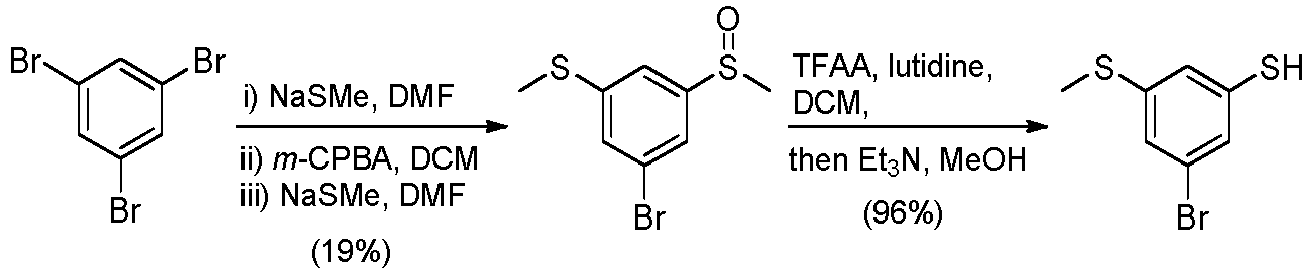
- NaSMe (21% aq.; 50.8 mL, 152 mmol) was added to a solution of 1,3,5-tribromobenzene (40.0 g, 127 mmol) in DMF (508 mL), and the reaction was stirred at 100 °C for 16 h. After cooling to rt, EtOAc (1.5 L) was added. The organic phase was washed with H2O (3 × 1.0 L), brine (1.0 L), dried over MgSO4, filtered and the solvent was removed under reduced pressure. The intermediate sulfide was dissolved in DCM (400 mL) and cooled to 0 °C. A solution of m-CPBA (34.2 g, 152 mmol) in DCM (234 mL) was slowly added and the mixture was stirred at 0 °C for 1 h before allowing to warm to rt over 1 h. EtOAc (800 mL) was added. The organic phase was washed with sat. NaHCOs (3 × 500 mL), dried over MgSO4, filtered and the solvent was removed under reduced pressure. The crude was recrystallised from DCM/cyclohexane to give 22.3 g of beige crystals containing a 4.5:1 mixture of the desired 1,3-dibromo-5-(methylsulfinyl)benzene and the by-product (5-bromo-1,3-phenylene)bis(methylsulfane). NaSMe (21% aq.; 27.5 mL, 82.3 mmol) was added to a solution of the sulfoxide mixture (22.3 g, 74.8 mmol) in DMF (374 mL), and the reaction was stirred at 40 °C for 6 h. After cooling to rt, EtOAc (400 mL) was added. The organic phase was washed with 1:1 H2O/brine (3 × 400 mL), dried over MgSO4, filtered and the solvent was removed under reduced pressure. The crude was purified by chromatography (EtOAc/
cyclohexane 5→80%) to afford (3-bromo-5-(methylsulfinyl)phenyl)(methyl)sulfane as an orange oil (6.26 g, 19%). 1H NMR (500 MHz, CDCl3) δ 7.46 - 7.41 (m, 3H), 2.75 (s, 3H), 2.53 (s, 3H). - TFAA (6.30 mL, 43.3 mmol) was added to a solution of (3-bromo-5-(methylsulfinyl)phenyl)(methyl)sulfane (4.0, 15.1 mmol) and 2,6-lutidine (7.04 mL, 60.4 mmol) in MeCN (101 mL). The reaction was stirred at rt for 0.5 h and all volatiles were removed under reduced pressure. 1:1 Et3N/MeOH (100 mL) was then added. The solution was stirred at rt for 0.5 h and was subsequently acidified to pH <4 with 2 M HCl. The aqueous phase was extracted with EtOAc (400 mL). The organic phase was washed with 0.5 M HCl (200 mL) and brine (200 mL), dried over MgSO4, filtered and the solvent was removed under reduced pressure. The crude was purified by chromatography (EtOAc/
cyclohexane 0→30%) to afford 3-bromo-5-(methylthio)benzenethiol as an orange oil (3.42 g, 96%). 1H NMR (500 MHz, CDCl3) δ 7.18 (t, J = 1.6 Hz, 1H), 7.14 (t, J = 1.6 Hz, 1H), 7.04 (t, J = 1.6 Hz, 1H), 3.49 (s, 1H), 2.47 (s, 3H).
- tert-Butyl ((5-((3-bromo-5-(methylsulfonyl)phenyl)thio)thiophen-2-yl)methyl)carbamate was synthesised according to general procedures GP3 - from i) 5-bromothiophene-2-carbonitrile (5.20 g, 27.6 mmol), 3-bromo-5-(methylthio)benzenethiol (5.41 g, 23.0 mmol), K2CO3 (4.77 g, 34.5 mmol) and DMF (115 mL); 40 °C, 16 h; Chromatography (EtOAc/
cyclohexane 0--->20%), 7.53 g, 96%. ii) BH3 (1.0 M in THF; 66.1 mL, 66.1 mmol), THF (66 mL); rt, 1 h. iii) BoczO (7.60 mL, 33.0 mmol), Et3N (9.21 mL, 66.1 mmol), DCM (110 mL); rt, 16 h. The crude was used in the subsequent transformation without further purification. - m-CPBA (50-55%; 32.6 g, ~99.1 mmol) was added in small portions to a solution of tert-butyl ((5-((3-bromo-5-(methylsulfonyl)phenyl)thio)thiophen-2-yl)methyl)carbamate (crude) in DCM (148 mL) at 0 °C and the mixture was stirred at rt for 3 h. When complete conversion was achieved, EtOAc was added (250 mL). The organic phase was washed with sat. NaHCOs (4 × 200 mL) and brine (200 mL), dried over MgSO4 and filtered. The solvent was removed under reduced pressure. The crude was purified by column chromatography (EtOAc/
cyclohexane 0→60%) to afford tert-butyl ((5-((3-bromo-5-(methylsulfonyl)phenyl)sulfonyl)thiophen-2-yl)methyl)carbamate as a yellow foam (3.83 g, 34%). 1H NMR (500 MHz, CDCl3) δ 8.43 (t, J = 1.6 Hz, 1H), 8.34 (t, J = 1.7 Hz, 1H), 8.26 (t, J = 1.7 Hz, 1H), 7.64 (d, J = 3.9 Hz, 1H), 6.99 (d, J = 3.8 Hz, 1H), 5.05 (br, 1H), 4.48 (br, 2H), 3.12 (s, 3H), 1.46 (s, 9H). -

- The title compound was synthesised according to general procedures GP9 - from i) tert-butyl ((5-((3-bromo-5-(methylsulfonyl)phenyl)sulfonyl)thiophen-2-yl)methyl)carbamate (100 mg, 0.196 mmol), Pd(PPh3)4 (22.6 mg, 10%), (2-ethoxyphenyl)boronic acid (39.1 mg, 0.235 mmol), Cs2CO3 (76.7 mg, 0.235 mmol) and 1,4-dioxane (1.3 mL); 90 °C, 16 h. Chromatography (EtOAc/
cyclohexane 0→60), 93 mg, 86%, yellow foam. ii) from 4 M HCl in dioxane (0.8 mL) and 1,4-dioxane (0.8 mL); rt, 16 h. The title compound (yellow foam; 62 mg, 74%) did not require further purification. 1H NMR (500 MHz, MeOD) δ 8.48 (t, J = 1.6 Hz, 1H), 8.41 (d, J = 1.7 Hz, 2H), 7.85 (d, J = 3.9 Hz, 1H), 7.47 - 7.39 (m, 2H), 7.34 (d, J = 3.9 Hz, 1H), 7.13 (d, J = 8.1 Hz, 1H), 7.09 (t, J = 7.5 Hz, 1H), 4.39 (s, 2H), 4.11 (q, J = 7.0 Hz, 2H), 3.22 (s, 3H), 1.36 (t, J = 7.0 Hz, 3H). 13C NMR (126 MHz, MeOD) δ 157.11, 145.99, 144.65, 144.33, 143.78, 143.50, 135.91, 134.13, 133.85, 132.08, 131.82, 131.42, 127.46, 124.92, 122.36, 113.76, 65.26, 44.13, 38.43, 15.11. HRMS (ESI) for C20H22NO5S3 ([M+H]+): Calculated 452.0655; Observed 452.0653. -

- The title compound was synthesised according to general procedures GP9 - from i) tert-butyl ((5-((3-bromo-5-(methylsulfonyl)phenyl)sulfonyl)thiophen-2-yl)methyl)carbamate (100 mg, 0.196 mmol), Pd(PPh3)4 (22.6 mg, 10%), (2-ethylphenyl)boronic acid (35.3 mg, 0.235 mmol), Cs2CO3 (76.7 mg, 0.235 mmol) and 1,4-dioxane (1.3 mL); 90 °C, 16 h. Chromatography (EtOAc/
cyclohexane 0→60), 76 mg, 72%, yellow foam. ii) 4 M HCl in dioxane (0.7 mL) and 1,4-dioxane (0.7 mL); rt, 16 h. The amine hydrochloride product was basified with 2N NH3 in MeOH, and purified by column chromatography (EtOH/cyclohexane 0→100% then 100%) to afford a white foam (42 mg, 68%). 1H NMR (500 MHz, CDCl3) δ 8.49 (t, J = 1.7 Hz, 1H), 8.21 (t, J = 1.6 Hz, 1H), 8.09 (t, J = 1.6 Hz, 1H), 7.66 (d, J = 3.8 Hz, 1H), 7.42 (td, J = 7.6, 1.3 Hz, 1H), 7.37 (m, 1H), 7.30 (td, J = 7.4, 1.4 Hz, 1H), 7.18 (dd, J = 7.6, 1.2 Hz, 1H), 6.94 (d, J = 3.9 Hz, 1H), 4.10 (s, 2H), 3.14 (s, 3H), 2.53 (q, J = 7.5 Hz, 2H), 1.61 (s, 2H), 1.12 (t, J = 7.6 Hz, 3H). 13C NMR (126 MHz, CDCl3) δ 159.97, 145.25, 144.31, 142.19, 141.50, 138.66, 137.63, 134.95, 132.72, 132.24, 129.87, 129.41, 129.33, 126.37, 124.59, 124.15, 44.53, 41.73, 26.17, 15.73. HRMS (ESI) for C20H22NO4S3 ([M+H]+): Calculated 436.0705; Observed 436.0727. -

- The title compound was synthesised according to general procedures GP9 - from i) tert-butyl ((5-((3-bromo-5-(methylsulfonyl)phenyl)sulfonyl)thiophen-2-yl)methyl)carbamate (100 mg, 0.196 mmol), Pd(PPh3)4 (22.6 mg, 10%), (2,6-dimethylphenyl)boronic acid (35.3 mg, 0.235 mmol), Cs2CO3 (76.7 mg, 0.235 mmol) and 1,4-dioxane (1.3 mL); 90 °C, 16 h. Chromatography (EtOAc/
cyclohexane 0→60), 93 mg, 89%, yellow foam. ii) 4 M HCl in dioxane (0.8 mL) and 1,4-dioxane (0.8 mL); rt, 16 h. The amine hydrochloride product was basified with 2N NH3 in MeOH, and purified by column chromatography (EtOH/cyclohexane 0→100% then 100%) to afford a colourless oil (44 mg, 58%). 1H NMR (500 MHz, CDCl3) δ 8.49 (t, J = 1.7 Hz, 1H), 8.09 (t, J = 1.6 Hz, 1H), 7.96 (t, J = 1.5 Hz, 1H), 7.66 (d, J = 3.8 Hz, 1H), 7.24 (d, J = 7.6 Hz, 1H), 7.15 (d, J = 7.6 Hz, 2H), 6.94 (d, J = 3.9 Hz, 1H), 4.11 (s, 2H), 3.14 (s, 3H), 1.99 (s, 6H), 1.60 (br, 2H). 13C NMR (126 MHz, CDCl3) δ 160.00, 144.72, 144.53, 142.54, 137.83, 135.61, 134.92, 133.15, 132.55, 128.81, 128.12, 124.70, 124.13, 44.54, 41.74, 21.08. HRMS (ESI) for C20H22NO4S3 ([M+H]+): Calculated 436.0705; Observed 436.0709. -

- The title compound was synthesised according to general procedures GP9 - from i) tert-butyl ((5-((3-bromo-5-(methylsulfonyl)phenyl)sulfonyl)thiophen-2-yl)methyl)carbamate (100 mg, 0.196 mmol), Pd(PPh3)4 (22.6 mg, 10%), (3,5-dimethylphenyl)boronic acid (35.3 mg, 0.235 mmol), Cs2CO3 (76.7 mg, 0.235 mmol) and 1,4-dioxane (1.3 mL); 90 °C, 16 h. Chromatography (EtOAc/
cyclohexane 0→60), 70 mg, 67%, yellow foam. ii) 4 M HCl in dioxane (0.7 mL) and 1,4-dioxane (0.7 mL); rt, 16 h. The amine hydrochloride product was basified with 2N NH3 in MeOH, and purified by column chromatography (EtOH/cyclohexane 0→100% then 100%) to afford a white solid (23 mg, 40%). 1H NMR (500 MHz, MeOD/CDCl3) δ 8.41 - 8.35 (m, 2H), 8.30 (t, J = 1.6 Hz, 1H), 7.68 (d, J = 3.9 Hz, 1H), 7.22 (br, 2H), 7.09 (br, 1H), 7.03 (d, J = 3.8 Hz, 1H), 4.04 (s, 2H), 3.17 (s, 3H), 2.38 (s, 6H). 13C NMR (126 MHz, MeOD/CDCl3) δ 145.50, 144.81, 143.06, 139.62, 139.57, 137.51, 135.39, 131.47, 130.63, 130.52, 126.17, 125.50, 124.57, 44.43, 40.89, 21.44. HRMS (ESI) for C20H22NO4S3 ([M+H]+): Calculated 436.0705; Observed 436.0700. -

- The title compound was synthesised according to general procedures GP9 - from i) tert-butyl ((5-((3-bromo-5-(methylsulfonyl)phenyl)sulfonyl)thiophen-2-yl)methyl)carbamate (100 mg, 0.196 mmol), Pd(PPh3)4 (22.6 mg, 10%), pyridine-4-boronic acid (57.8 mg, 0.470 mmol), Cs2CO3 (76.7 mg, 0.235 mmol) and 1,4-dioxane (1.3 mL); 90 °C, 16 h. Chromatography (EtOAc/
cyclohexane 0→100, then MeOH/DCM 0→15%), 47 mg, 47%, yellow foam. ii) 4 M HCl in dioxane (0.6 mL) and 1,4-dioxane (0.6 mL); rt, 16 h. The amine hydrochloride product was basified with 2N NH3 in MeOH, and purified by column chromatography (MeOH/DCM 0→20%) to afford a yellow solid (35 mg, 93%). 1H NMR (500 MHz, MeOD/CDCl3) δ 8.72 - 8.69 (m, 2H), 8.55 (t, J = 1.6 Hz, 1H), 8.50 (t, J = 1.6 Hz, 1H), 8.45 (t, J = 1.6 Hz, 1H), 7.73 - 7.70 (m, 3H), 7.04 (d, J = 3.9 Hz, 1H), 4.04 (s, 2H), 3.23 (s, 3H). 13C NMR (126 MHz, MeOD/CDCl3) δ 158.47, 150.06, 145.33, 145.14, 143.36, 141.22, 138.23, 135.26, 130.28, 130.21, 126.22, 125.35, 122.13, 43.68, 40.64. HRMS (ESI) for C17H17 N2O4S3 ([M+H]+): Calculated 409.0345; Observed 409.0340. -

- The title compound was synthesised according to general procedures GP9 - from i) tert-butyl ((5-((3-bromo-5-(methylsulfonyl)phenyl)sulfonyl)thiophen-2-yl)methyl)carbamate (100 mg, 0.196 mmol), Pd(PPh3)4 (22.6 mg, 10%), pyridine-3-boronic acid (57.8 mg, 0.470 mmol), Cs2CO3 (76.7 mg, 0.235 mmol) and 1,4-dioxane (1.3 mL); 90 °C, 16 h. Chromatography (EtOAc/
cyclohexane 0→100, then MeOH/DCM 0→15%), 47 mg, 47%, orange oil. ii) 4 M HCl in dioxane (0.6 mL) and 1,4-dioxane (0.6 mL); rt, 16 h. The amine hydrochloride product was basified with 2N NH3 in MeOH, and purified by column chromatography (MeOH/DCM 0→20%) to afford a yellow solid (26 mg, 69%). 1H NMR (500 MHz, MeOD/CDCl3) δ 8.88 (m, 1H), 8.64 (dd, J = 4.9, 1.5 Hz, 1H), 8.50 (t, J = 1.6 Hz, 1H), 8.48 (t, J = 1.6 Hz, 1H), 8.45 (t, J = 1.6 Hz, 1H), 8.17 (ddd, J = 8.0, 2.3, 1.6 Hz, 1H), 7.75 (d, J = 3.9 Hz, 1H), 7.59 (m, 1H), 7.06 (d, J = 3.9 Hz, 1H), 4.02 (s, 2H), 3.25 (s, 3H). 13C NMR (126 MHz, MeOD) δ 158.24, 149.38, 147.44, 144.97, 143.40, 140.86, 138.55, 135.73, 135.15, 133.74, 130.29, 130.03, 125.48, 125.10, 124.42, 43.10, 40.38. HRMS (ESI) for C17H17 N2O4S3 ([M+H]+): Calculated 409.0345; Observed 409.0371. -

- A mixture of tert-butyl ((5-((3-bromo-5-(methylsulfonyl)phenyl)sulfonyl)thiophen-2-yl)methyl)carbamate (170 mg, 0.333 mmol), Pd(PPh3)4 (38.5 mg, 10%), Cu! (12.7 mg, 20%), trimethylsilylacetylene (70.6 µL, 0.500 mmol), Et3N (0.5 mL) and 1,4-dioxane (0.5 mL) was degassed with argon and then stirred at rt for 16 h. The solvent was removed under reduced pressure and the crude was purified by chromatography (EtOAc/
cyclohexane 0→60%) to afford tert-butyl ((5-((3-(methylsulfonyl)-5-((trimethylsilyl)ethynyl)phenyl)sulfonyl)thiophen-2-yl)methyl)carbamate as a brown oil (121 mg, 69%). - A mixture of tert-butyl ((5-((3-(methylsulfonyl)-5-((trimethylsilyl)ethynyl)phenyl)sulfonyl)thiophen-2-yl)methyl)carbamate (121 mg, 0.230 mmol) in DCM (1.0 mL) and 4 M HCl in dioxane (1.0 mL) was stirred at rt for 16 h. Cyclohexane (20 mL) was added to precipitate the solid product. The mixture was filtered, the solid was washed with EtOAC and dried under vacuum to afford the title compound, which did not require further purification (white powder; 80 mg, 75%). 1H NMR (500 MHz, MeOD) δ 8.42 (H, 1H), 8.29 - 8.21 (m, 2H), 7.88 (d, J = 3.7 Hz, 1H), 7.33 (d, J = 3.8 Hz, 1H), 4.39 (s, 2H), 3.21 (s, 3H), 0.28 (s, 9H). 13C NMR (126 MHz, MeOD) δ 146.34, 145.18, 144.58, 143.96, 136.34, 136.15, 135.52, 131.87, 127.82, 126.41, 101.83, 54.75, 43.85, 38.40. HRMS (ESI) for C17H22NO4S3Si ([M+H]+): Calculated 428.0475; Observed 428.0477.
-

- The title compound was synthesised according to general procedures GP9 - from i) tert-butyl ((5-((3-bromo-5-(methylsulfonyl)phenyl)sulfonyl)thiophen-2-yl)methyl)carbamate (100 mg, 0.196 mmol), Pd(PPh3)4 (22.6 mg, 10%), p-tolylboronic acid (32.0 mg, 0.235 mmol), Cs2CO3 (76.7 mg, 0.235 mmol) and 1,4-dioxane (1.3 mL); 90 °C, 16 h. Chromatography (EtOAc/
cyclohexane 0→60), 108 mg, quant., yellow oil. ii) 4 M HCl in dioxane (1.0 mL) and 1,4-dioxane (1.0 mL); rt, 3 h. The amine hydrochloride product was basified with 2N NH3 in MeOH and purified by chromatography (acetone/DCM 0→40%) to afford a light yellow foam (20 mg, 24%). 1H NMR (500 MHz, CDCl3) δ 8.45 - 8.39 (m, 2H), 8.30 (t, J = 1.6 Hz, 1H), 7.67 (d, J = 3.9 Hz, 1H), 7.54 (d, J = 8.2 Hz, 2H), 7.33 (d, J = 8.0 Hz, 2H), 6.93 (d, J = 3.9 Hz, 1H), 4.09 (s, 2H), 3.14 (s, 3H), 2.44 (s, 3H), 1.61 (s, 2H). 13C NMR (126 MHz, CDCl3) δ 144.95, 144.56, 142.77, 139.79, 138.73, 134.92, 134.43, 130.27, 130.15, 129.73, 127.25, 124.34, 124.16, 44.59, 41.71, 21.36. HRMS (ESI) for C19H20NO4S3 ([M+H]+): Calculated 422.0549; Observed 422.0551. -

- The title compound was synthesised according to general procedures GP9 - from i) tert-butyl ((5-((3-bromo-5-(methylsulfonyl)phenyl)sulfonyl)thiophen-2-yl)methyl)carbamate (100 mg, 0.196 mmol), Pd(PPh3)4 (22.6 mg, 10%), (1-methyl-1H-pyrazol-4-yl)boronic acid pinacol ester (48.9 mg, 0.235 mmol), Cs2CO3 (76.7 mg, 0.235 mmol) and 1,4-dioxane (1.3 mL); 90 °C, 16 h. Chromatography (EtOAc/
DCM 0→100%), light yellow gum; ii) 4M HCl in dioxane (1.0 mL) and DCM (1.0 mL); rt, 3 h. The reaction mixture was centrifuged for 10 min at 3000 RPM and the supernatant liquid was decanted. The amine hydrochloride salt was basified with 2N NH3 in MeOH, and purified by chromatography (MeOH/DCM 0→25%) to afford the title compound as a light yellow solid (57 mg, 71% over 2 steps). 1H NMR (500 MHz, Methanol-d 4/Chloroform-d) δ 8.29 (t, J = 1.7 Hz, 1H), 8.27 - 8.22 (m, 2H), 8.07 (s, 1H), 7.91 (s, 1H), 7.69 (d, J = 3.9 Hz, 1H), 7.04 (d, J = 3.7 Hz, 1H), 4.04 (s, 2H), 3.95 (s, 3H), 3.18 (s, 3H). 13C NMR (126 MHz, Methanol-d 4/Chloroform-d) δ 157.51, 145.17, 143.55, 139.75, 137.56, 137.06, 135.61, 129.87, 128.63, 128.57, 126.43, 123.50, 120.52, 44.25, 41.01, 39.31. HRMS (ESI) for C16H18N3O4S3 ([M+H]+): Calculated 412.0454; Observed 412.0444. -

- The title compound was synthesised according to general procedures GP9 - from i) tert-butyl ((5-((3-bromo-5-(methylsulfonyl)phenyl)sulfonyl)thiophen-2-yl)methyl)carbamate (100 mg, 0.196 mmol), Pd(PPh3)4 (22.6 mg, 10%), 4-fluorophenylboronic acid (32.9 mg, 0.235 mmol), Cs2CO3 (76.7 mg, 0.235 mmol) and 1,4-dioxane (1.3 mL); 90 °C, 16 h. Chromatography (EtOAc/
cyclohexane 0→60%), light brown gum; ii) 4M HCl in dioxane (1.0 mL) and DCM (1.0 mL); rt, 3 h. The reaction mixture was centrifuged for 10 min at 3000 RPM and the supernatant liquid was decanted. The amine hydrochloride salt was basified with 2N NH3 in MeOH, and purified by chromatography (EtOH/Cyclohexane 0→100%) to afford the title compound as a light yellow solid (68 mg, 82% over 2 steps). 1H NMR (500 MHz, DMSO-d 6) δ 8.50 (dt, J = 6.4, 1.7 Hz, 2H), 8.37 (t, J = 1.6 Hz, 1H), 8.07 (d, J = 3.9 Hz, 1H), 7.99 - 7.89 (m, 2H), 7.47 - 7.37 (m, 3H), 4.28 (s, 2H), 3.45 (s, 3H). 13C NMR (126 MHz, DMSO) δ 162.95 (d, J = 248 Hz), 146.40, 143.35, 143.29, 142.59, 140.78, 135.35, 130.87, 130.46, 129.94, 129.87, 129.25, 123.48, 116.23 (d, J = 21.4 Hz), 43.03, 36.67. HRMS (ESI) for C18H17FNO4S3 ([M+H]+): Calculated 426.0298; Observed 426.0289. -

- The title compound was synthesised according to general procedures GP9 - from i) tert-butyl ((5-((3-bromo-5-(methylsulfonyl)phenyl)sulfonyl)thiophen-2-yl)methyl)carbamate (100 mg, 0.196 mmol), Pd(PPh3)4 (22.6 mg, 10%), thiophen-3-ylboronic acid (30.1 mg, 0.235 mmol), Cs2CO3 (76.7 mg, 0.235 mmol) and 1,4-dioxane (1.3 mL); 90 °C, 16 h. Chromatography (EtOAc/
cyclohexane 0→50%), light brown gum; ii) 4M HCl in dioxane (1.0 mL) and DCM (1.0 mL); rt, 3 h. The reaction mixture was centrifuged for 10 min at 3000 RPM and the supernatant liquid was decanted. The amine hydrochloride salt was basified with 2N NH3 in MeOH, and purified by chromatography (EtOH/Cyclohexane 0→100%) to afford the title compound as a white solid (54 mg, 67% over 2 steps). 1H NMR (500 MHz, DMSO-d 6) δ 8.53 (dt, J = 5.5, 1.7 Hz, 2H), 8.37 (dd, J = 2.9, 1.5 Hz, 1H), 8.25 (t, J = 1.6 Hz, 1H), 8.01 (d, J = 3.9 Hz, 1H), 7.79 (dd, J = 5.1, 1.5 Hz, 1H), 7.76 (dd, J = 5.1, 2.8 Hz, 1H), 7.33 (d, J = 3.9 Hz, 1H), 4.14 (s, 2H), 3.43 (s, 3H). 13C NMR (126 MHz, DMSO) δ 143.61, 143.30, 138.41, 137.85, 135.44, 129.30, 128.61, 128.28, 126.41, 125.17, 122.67, 42.98, 38.07. HRMS (ESI) for C16H16NO4S4 ([M+H]+): Calculated 413.9957; Observed 413.9934. -

- The title compound was synthesised according to general procedures GP9 - from i) tert-butyl ((5-((3-bromo-4-(methylsulfonyl)phenyl)sulfonyl)thiophen-2-yl)methyl)carbamate (150 mg, 0.294 mmol), Pd(PPh3)4 (34.0 mg, 10%), phenylboronic acid (43.1 mg, 0.353 mmol), Cs2CO3 (115 mg, 0.353 mmol) and 1,4-dioxane (2.0 mL); 90 °C, 16 h. Chromatography (EtOAc/
DCM 0→100%), white foam, 169 mg; ii) 4M HCl in dioxane (1.0 mL) and DCM (1.0 mL); rt, 3 h. The reaction mixture was centrifuged for 10 min at 3000 RPM and the supernatant liquid was decanted. The amine hydrochloride salt was treated with 7N NH3 in MeOH. The solvent was removed under reduced pressure and the crude was purified by chromatography (EtOH/cyclohexane 0→100%) to afford the title compound as a white solid (66 mg, 55% over 2 steps). 1H NMR (500 MHz, Chloroform-d) δ 8.37 (d, J = 8.3 Hz, 1H), 8.11 (dd, J = 8.3, 1.9 Hz, 1H), 7.97 (d, J = 2.0 Hz, 1H), 7.63 (d, J = 3.9 Hz, 1H), 7.55 - 7.41 (m, 5H), 6.93 (d, J = 3.8 Hz, 1H), 4.10 (s, 2H), 2.61 (s, 3H), 1.63 (s, 2H). 13C NMR (126 MHz, Chloroform-d) δ 160.04, 146.65, 143.39, 142.92, 138.54, 136.79, 134.97, 131.05, 130.11, 129.70, 129.38, 128.43, 126.64, 124.12, 43.13, 41.67. HRMS (ESI) for C18H18NO4S3 ([M+H]+): Calculated 408.0392; Observed 408.0373. -

- tert-Butyl ((5-((3-bromo-4-fluorophenyl)thio)thiophen-2-yl)methyl)carbamate was synthesised according to general procedures GP3 - from i) 5-bromothiophene-2-carbonitrile (0.544 g, 2.90 mmol), 3-bromo-4-fluorobenzenethiol (0.5 g, 2.42 mmol), K2CO3 (0.394 g, 2.90 mmol) and DMF (8.0 mL); 90 °C, 16 h. Chromatography (EtOAc/
cyclohexane 0→20%), orange oil, 960 mg. ii) BH3 (1.0 M in THF; 6.1 mL, 6.1 mmol), THF (6.1 mL); rt, 1 h. iii) BoczO (1.05 mL, 4.59 mmol), Et3N (1.28 mL, 9.17 mmol), DCM (10.2 mL); rt, 16 h. Used immediately in the subsequent transformation. - m-CPBA (77%; 1.68 g, 7.49 mmol) was added in small portions to a solution of crude tert-butyl ((5-((3-bromo-4-fluorophenyl)thio)thiophen-2-yl)methyl)carbamate in DCM (20 mL). The mixture was stirred at rt for 16 h and then diluted with EtOAc (60 mL). The organic phase was washed with sat. NaHCOs (3 × 50 mL), dried over MgSO4, filtered and the solvent was removed under reduced pressure. The crude was purified by chromatography (EtOAc/
cyclohexane 0→60%) to afford tert-butyl ((5-((3-bromo-4-fluorophenyl)sulfonyl)thiophen-2-yl)methyl)carbamate as a yellow soild (658 mg, 53% over 4 steps). 1H NMR (500 MHz, Chloroform-d) δ 8.18 (dd, J = 6.2, 2.3 Hz, 1H), 7.92 (ddd, J = 8.6, 4.4, 2.3 Hz, 1H), 7.57 (d, J = 3.8 Hz, 1H), 7.25 (dd, J = 8.7, 7.9 Hz, 1H), 6.94 (d, J = 3.8 Hz, 1H), 5.03 (br, 1H), 4.47 (br, 2H), 1.46 (s, 9H). - NaSMe (111 mg, 1.59 mmol) was added to a solution of tert-butyl ((5-((3-bromo-4-fluorophenyl)sulfonyl)thiophen-2-yl)methyl)carbamate (650 mg, 1.44 mmol) in DMF (7.2 mL) and the mixture was stirred at rt for 16 h. After dilution with EtOAc (30 mL), the solution was washed with H2O (3 × 30 mL) and brine (30 mL), dried over MgSO4, filtered and the solvent was removed under reduced pressure. The crude sulfide was dissolved in DCM (9.6 m). m-CPBA (77%; 745 mg, 3.32 mmol) was added in small portions. The mixture was stirred at rt for 16 h and then diluted with EtOAc (30 mL). The organic phase was washed with sat. NaHCOs (3 × 30 mL), dried over MgSO4, filtered and the solvent was removed under reduced pressure. The crude was purified by chromatography (EtOAc/
cyclohexane 0→80%) to afford tert-butyl ((5-((3-bromo-4-(methylsulfonyl)phenyl)sulfonyl)thiophen-2-yl)methyl)carbamate as a white foam (461 mg, 68% over 2 steps). 1H NMR (500 MHz, Chloroform-d) δ 8.38 - 8.28 (m, 2H), 8.07 (dd, J = 8.3, 1.8 Hz, 1H), 7.63 (d, J = 3.9 Hz, 1H), 6.98 (dt, J = 4.0, 1.0 Hz, 1H), 5.06 (br, 1H), 4.49 (d, J = 6.0 Hz, 2H), 3.31 (s, 3H), 1.46 (s, 9H). -

- The title compound was synthesised according to general procedures GP9 - from i) tert-butyl ((5-((3-bromo-4-(methylsulfonyl)phenyl)sulfonyl)thiophen-2-yl)methyl)carbamate (150 mg, 0.294 mmol), Pd(PPh3)4 (34.0 mg, 10%), (1-methyl-1H-pyrazol-4-yl)boronic acid pinacol ester (73.0 mg, 0.353 mmol), Cs2CO3 (115 mg, 0.353 mmol) and 1,4-dioxane (2.0 mL); 90 °C, 16 h. Chromatography (EtOAc/
DCM 0→100%), white foam, 169 mg; ii) 4M HCl in dioxane (1.5 mL) and DCM (1.5 mL); rt, 3 h. The reaction mixture was centrifuged for 10 min at 3000 RPM and the supernatant liquid was decanted. The amine hydrochloride salt was washed with more EtOAc and dried under vacuum to afford the title compound as a white solid (111 mg, 92% over 2 steps). 1H NMR (500 MHz, D2O) δ 8.32 (d, J = 8.5 Hz, 1H), 8.16 (dd, J = 8.6, 2.2 Hz, 1H), 8.05 (d, J = 1.9 Hz, 1H), 7.92 (s, 1H), 7.84 (d, J = 4.0 Hz, 1H), 7.74 (s, 1H), 7.33 (d, J = 4.0 Hz, 1H), 4.44 (s, 2H), 3.96 (s, 3H), 2.96 (s, 3H). 13C NMR (126 MHz, D2O) δ 144.87, 144.70, 142.07, 140.32, 139.70, 135.77, 134.00, 132.82, 131.38, 130.83, 130.08, 126.31, 116.55, 41.49, 38.31, 37.18. HRMS (ESI) for C16H18N3O4S3 ([M+H]+): Calculated 412.0454; Observed 412.0441. -

- The title compound was synthesised according to general procedures GP9 - from i) tert-butyl ((5-((3-bromo-4-(methylsulfonyl)phenyl)sulfonyl)thiophen-2-yl)methyl)carbamate (150 mg, 0.294 mmol), Pd(PPh3)4 (34.0 mg, 10%), p-tolyl boronic acid (48.0 mg, 0.353 mmol), Cs2CO3 (115 mg, 0.353 mmol) and 1,4-dioxane (2.0 mL); 90 °C, 16 h. Chromatography (EtOAc/
cyclohexane 0→65%), white foam, 116 mg; ii) 4M HCl in dioxane (1.5 mL) and DCM (1.5 mL); rt, 3 h. The reaction mixture was centrifuged for 10 min at 3000 RPM and the supernatant liquid was decanted. The solids were dried under vacuum to afford the title compound as a beige solid (83 mg, 62% over 2 steps). 1H NMR (500 MHz, Methanol-d 4) δ 8.37 (d, J = 8.4 Hz, 1H), 8.22 (dd, J = 8.4, 2.0 Hz, 1H), 7.91 (d, J = 2.0 Hz, 1H), 7.83 (d, J = 3.9 Hz, 1H), 7.36 - 7.30 (m, 5H), 4.40 (s, 2H), 2.70 (s, 3H), 2.43 (s, 3H). 13C NMR (126 MHz, Methanol-d 4) δ 147.19, 146.22, 145.42, 144.67, 144.26, 140.58, 136.19, 135.38, 132.20, 131.88, 131.02, 130.91, 129.93, 127.80, 43.41, 38.43, 21.31. HRMS (ESI) for C19H20NO4S3 ([M+H]+): Calculated 422.0549; Observed 422.0529. -

- The title compound was synthesised according to general procedures GP9 - from i) tert-butyl ((5-((3-bromo-4-(methylsulfonyl)phenyl)sulfonyl)thiophen-2-yl)methyl)carbamate (150 mg, 0.294 mmol), Pd(PPh3)4 (34.0 mg, 10%), o-tolyl boronic acid (48.0 mg, 0.353 mmol), Cs2CO3 (115 mg, 0.353 mmol) and 1,4-dioxane (2.0 mL); 90 °C, 16 h. Chromatography (EtOAc/
cyclohexane 0→65%), beige solid, 118 mg; ii) 4M HCl in dioxane (1.5 mL) and DCM (1.5 mL); rt, 3 h. The reaction mixture was centrifuged for 10 min at 3000 RPM and the supernatant liquid was decanted. The solids were dried under vacuum to afford the title compound as a beige solid (78 mg, 58% over 2 steps). 1H NMR (500 MHz, Deuterium Oxide) δ 8.36 (d, J = 8.5 Hz, 1H), 8.26 (m, 1H), 7.94 (s, 1H), 7.80 (d, J = 3.8 Hz, 1H), 7.42 (t, J = 7.5 Hz, 1H), 7.40 - 7.30 (m, 2H), 7.27 (t, J = 7.5 Hz, 1H), 7.13 (d, J = 7.4 Hz, 1H), 4.43 (s, 2H), 2.98 (s, 3H), 1.92 (s, 3H). 13C NMR (126 MHz, D2O) δ 144.90, 144.82, 142.64, 142.21, 140.40, 136.71, 135.84, 135.76, 130.87, 130.67, 130.51, 130.13, 129.46, 129.25, 127.10, 125.28, 43.25, 37.17, 19.44. 13C NMR (126 MHz, D2O) δ 144.90, 144.82, 142.64, 142.21, 140.40, 136.71, 135.84, 135.76, 130.87, 130.67, 130.51, 130.13, 129.46, 129.25, 127.10, 125.28, 43.25, 37.17, 19.44. HRMS (ESI) for C19H20NO4S3 ([M+H]+): Calculated 422.0549; Observed 422.0519. -

- The title compound was synthesised according to general procedures GP9 - from i) tert-butyl ((5-((3-bromo-4-(methylsulfonyl)phenyl)sulfonyl)thiophen-2-yl)methyl)carbamate (150 mg, 0.294 mmol), Pd(PPh3)4 (34.0 mg, 10%), 4-fluorophenylboronic acid (49.4 mg, 0.353 mmol), Cs2CO3 (115 mg, 0.353 mmol) and 1,4-dioxane (2.0 mL); 90 °C, 16 h. Chromatography (EtOAc/
cyclohexane 0→65%), white foam, 110 mg; ii) 4M HCl in dioxane (1.5 mL) and DCM (1.5 mL); rt, 3 h. The reaction mixture was centrifuged for 10 min at 3000 RPM and the supernatant liquid was decanted. The solids were dried under vacuum to afford the title compound as a beige solid (85 mg, 63% over 2 steps). 1H NMR (500 MHz, Methanol-d 4) δ 8.38 (d, J = 8.4 Hz, 1H), 8.25 (dd, J = 8.4, 2.0 Hz, 1H), 7.95 (d, J = 2.0 Hz, 1H), 7.84 (d, J = 3.9 Hz, 1H), 7.51 7.45 (m, 2H), 7.35 (m, 1H), 7.27 - 7.19 (m, 2H), 4.40 (d, J = 0.8 Hz, 2H), 2.77 (s, 3H). 13C NMR (126 MHz, MeOD) δ 164.62 (d, J = 248.5 Hz), 147.31, 146.28, 145.41, 144.17, 143.63, 136.27, 134.40 (d, J = 3.4 Hz), 134.39, 133.30 (d, J = 8.5 Hz), 133.28, 132.26, 131.90, 131.24, 128.26, 116.23, 116.14 (d, J = 22.1 Hz), 43.74, 38.43. -

- The title compound was synthesised according to general procedures GP9 - from i) tert-butyl ((5-((3-bromo-4-(methylsulfonyl)phenyl)sulfonyl)thiophen-2-yl)methyl)carbamate (150 mg, 0.294 mmol), Pd(PPh3)4 (34.0 mg, 10%), m-tolyl boronic acid (48.0 mg, 0.353 mmol), Cs2CO3 (115 mg, 0.353 mmol) and 1,4-dioxane (2.0 mL); 90 °C, 16 h. Chromatography (EtOAc/
cyclohexane 0→65%), light brown gum, 27 mg; ii) 4M HCl in dioxane (1.5 mL) and DCM (1.5 mL); rt, 3 h. The reaction mixture was centrifuged for 10 min at 3000 RPM and the supernatant liquid was decanted. The solids were dried under vacuum to afford the title compound as a beige solid (18 mg, 13% over 2 steps). 1H NMR (500 MHz, Methanol-d 4/Chloroform-d) δ 8.35 (d, J = 8.3 Hz, 1H), 8.13 (dd, J = 8.4, 1.9 Hz, 1H), 7.93 (d, J = 1.7 Hz, 1H), 7.71 (d, J = 3.2 Hz, 1H), 7.39 - 7.28 (m, 3H), 7.26 - 7.19 (m, 2H), 4.31 (s, 2H), 2.66 (s, 3H), 2.40 (s, 3H). 13C NMR (126 MHz, Methanol-d 4/Chloroform-d) δ 146.19, 144.93, 144.26, 143.91, 143.10, 138.75, 137.03, 135.44, 131.54, 131.31, 131.01, 130.57, 130.21, 128.72, 127.44, 127.18, 43.41, 37.99, 21.51. HRMS (ESI) for C19H20NO4S3 ([M+H]+): Calculated 422.0549; Observed 422.0543. -

- A mixture of 5-chlorothiophene-2-carbonitrile (95 µL, 0.901 mmol), K2CO3 (250 mg, 1.80 mmol) and thiophenol (102 µL, 0.991 mmol) in DMF (3.0 mL) was stirred at 120 °C for 16 h. After cooling to rt, EtOAc (15 mL) was added. The organic phase was washed with 1:1 H2O/brine (3 × 15 mL), dried over MgSO4 and filtered. The solvent was removed under reduced pressure and the crude was purified by chromatography (EtOAc/
cyclohexane 0→15%) to afford 5-(phenylthio)thiophene-2-carbonitrile as a yellow oil (150 mg, 77%). m-CPBA (77%; 143 mg, 0.636 mmol) was added in small portions to a solution of 5-(phenylthio)thiophene-2-carbonitrile (138 mg, 0.636 mmol) in DCM (3 mL) and the mixture was stirred at rt for 16 h. DCM (10 mL) was added. The organic phase was washed with 1 M NaOH (10 mL), dried over MgSO4 and filtered. The solvent was removed under reduced pressure and the crude was purified by chromatography (EtOAc/cyclohexane 0→20%) to afford 5-(phenylsulfinyl)thiophene-2-carbonitrile as a colourless oil (127 mg, 86%). 1H NMR (500 MHz, CDCl3) δ 7.76 - 7.70 (m, 2H), 7.60 - 7.50 (m, 4H), 7.44 (d, J = 4.0 Hz, 1H). - A mixture of BH3.THF (1.0M in THF; 1.70 mL, 1.70 mmol), 5-(phenylsulfinyl)thiophene-2-carbonitrile (132 mg, 0.568 mmol) and THF (2.8 mL) was stirred at rt for 2 h. MeOH was carefully added to quench the reaction. The solvent was removed under reduced pressure and the crude was purified by chromatography (MeOH/
DCM 0→20%) to afford the title compound as a yellow oil (53 mg, 40%). 1H NMR (500 MHz, CDCl3) δ 7.72 - 7.65 (m, 2H), 7.54 - 7.43 (m, 4H), 6.86 (m, 1H), 4.00 (s, 2H), 1.80 (s, 2H). 13C NMR (126 MHz, CDCl3) δ 156.03, 145.85, 145.18, 132.03, 131.13, 129.26, 124.42, 123.46, 41.74. HRMS (ESI) for C11H12NOS2 ([M+H]+): Calculated 238.0355; Observed 238.0378. -

- tert-Butyl ((2-(naphthalen-2-ylthio)thiazol-5-yl)methyl)carbamate was synthesised according to general procedures GP3 - from i) 2-chlorothiazole-5-carbonitrile (580 mg, 4 mmol), 2-thionaphthol (640 mg, 4 mmol), K2CO3 (800 mg, 5.8 mmol) and DMF (10 mL); 60 °C, 24 h. Chromatography (DCM/
cyclohexane 0→100%) 400 mg, 37%. ii) 2-(naphthalen-2-ylthio)thiazole-5-carbonitrile (400 mg, 1.5 mmol), BH3 (1.0 M in THF; 5 mL, 5 mmol), THF (20 mL); rt, 18 h. Chromatography (EtOAc/DCM 0→100%) 120 mg, 26% iii) (2-(naphthalen-2-ylthio)thiazol-5-yl)methanamine (120 mg, 0.4 mmol), BoczO (109 mg, 0.5 mmol), Et3N (70 µL, 0.5 mmol), THF (5 mL); rt, 18 h. Chromatography (EtOAc/DCM 0→50%) to afford tert-butyl ((2-(naphthalen-2-ylthio)thiazol-5-yl)methyl)carbamate (110 mg, 74%). 1H NMR (500 MHz, DMSO-d6) δ 8.79 (d, J = 1.9 Hz, 1H), 8.29 (d, J = 8.2 Hz, 1H), 8.20 (d, J = 8.7 Hz, 1H), 8.09 (d, J = 8.1 Hz, 1H), 7.95 (dd, J = 8.6, 2.0 Hz, 1H), 7.91 (s, 1H), 7.82 - 7.75 (m, 1H), 7.72 (ddd, J = 8.0, 6.9, 1.3 Hz, 1H), 7.65 (t, J = 6.1 Hz, 1H), 4.36 (d, J = 6.0 Hz, 2H), 1.38 (s, 9H). - The title compound was synthesised according to general procedures GP4 - from i) tert-butyl ((2-(naphthalen-2-ylthio)thiazol-5-yl)methyl)carbamate (110 mg, 0.3 mmol), m-CPBA (77%; 340 mg, 1.2 mmol), DCM (5.0 mL); room temperature, 3 h; 105 mg (87%). ii) tert-butyl ((2-(naphthalen-2-ylsulfonyl)thiazol-5-yl)methyl)carbamate (105 mg, 0.26 mmol), 4 M HCl in dioxane (2.0 mL), dioxane (5 mL); rt, 16 h. The white precipitate was filtered, washed with excess dioxane and dried under vacuum to afford the desired amine hydrochloride as a white solid (33 mg, 42%). 1H NMR (500 MHz, DMSO-d6) δ 8.82 (d, J = 2.0 Hz, 1H), 8.49 (s, 3H), 8.31 (d, J = 8.2 Hz, 1H), 8.23 (d, J = 8.7 Hz, 1H), 8.15 (s, 1H), 8.10 (d, J = 8.1 Hz, 1H), 7.97 (dd, J = 8.6, 2.1 Hz, 1H), 7.84 - 7.77 (m, 1H), 7.77 - 7.71 (m, 1H), 4.39 (s, 2H). HRMS calcd for C14H13N2O2S2 [M+H]+ 305.0413; found 305.0471.
-

- BoczO (2.86 g, 13.3 mmol) was added to a solution of thiazol-2-ylmethanamine (1.0 g, 8.76 mmol) and Et3N (1.22 mL, 8.76 mmol) in DCM (50 mL). The mixture was stirred at rt for 3 h and then washed with sat. NH4Cl. The organic phase was dried over MgSO4, filtered and the solvent was removed under reduced pressure. The crude was purified by chromatography (EtOAc/
cyclohexane 0→30%) to afford tert-butyl (thiazol-2-ylmethyl)carbamate as a yellow oil (1.9 g, quant.). 1H NMR (500 MHz, CDCl3) δ 7.58 (s, 1H), 5.40 (br. s., 1H), 4.55 (br. s., 2H), 1.47 (s, 9H). - A mixture of tert-butyl (thiazol-2-ylmethyl)carbamate (1.9 g, 8.88 mmol), NBS (2.05 g, 11.5 mmol) and DMF (10 mL) was stirred at 50 °C for 3 h. After cooling to rt, sat. NH4Cl was added. The aqueous solution was extracted with EtOAc (3 ×). The combined organic phase was dried over MgSO4 and filtered. The solvent was removed under reduced pressure and the crude was purified by chromatography (EtOAc/
cyclohexane 0→20%) to afford tert-butyl ((5-bromothiazol-2-yl)methyl)carbamate (1.31 g, 50%). This was dissolved in NMP (6.0 mL), followed by the addition of K2CO3 (619 mg, 4.49 mmol), PPh3 (235 mg, 0.896 mmol) and 4-(methylthio)benzenethiol (700 mg, 4.48 mmol). The mixture was stirred at 110 °C for 3 h. After cooling to rt, H2O was added. The aqueous solution was extracted with EtOAc (3 ×). The combined organic phase was washed with sat. NaHCOs and brine, dried over MgSO4 and filtered. The solvent was removed under reduced pressure and the crude was purified by chromatography (EtOAc/cyclohexane 0→40%) to afford tert-butyl ((5-((4-(methylthio)phenyl)thio)thiazol-2-yl)methyl)carbamate (132 mg, 8%). 1H NMR (500 MHz, CDCl3) δ 7.74 (s, 1H), 7.18 - 7.24 (m, 2H), 7.13 - 7.18 (m, 2H), 5.42 (br. s., 1H), 4.58 (d, J= 4.7 Hz, 2H), 2.45 (s, 3H), 1.45 (s, 9H). 13C NMR (126 MHz, CDCl3) δ 179.5, 168.4, 155.8, 145.6, 144.3, 142.3, 132.6, 128.8, 128.5, 80.5, 44.3, 41.9, 28.2. HRMS calcd for C16H20N2O4S3 [M+H]+ 401.0658; found 401.0690 - The title compound was synthesised according to general procedures GP4 - from i) tert-butyl ((5-((4-(methylthio)phenyl)thio)thiazol-2-yl)methyl)carbamate (132 mg, 0.359 mmol), m-CPBA (77%; 314 mg, 1.40 mmol), DCM (10 mL); rt, 12 h; chromatography (EtOAc/
cyclohexane 0→40%). ii) 4 M HCl in dioxane (1.0 mL); rt, 16 h. The mixture was centrifugated, the supernatant liquid discarded and the solid was washed with excess EtzO and dried under vacuum to afford the amine hydrochloride as a white solid (1.35 mg, 1.5% over two steps). 1H NMR (500 MHz, D2O) δ 8.47 (s, 1H), 8.27 (d, J = 8.5 Hz, 2H), 8.18 (d, J = 8.2 Hz, 2H), 4.60 (s, 2H), 3.26 (s, 3H). 13C NMR (126 MHz, D2O) δ 170.1, 162.1, 148.9, 144.6, 144.4, 138.3, 128.9, 128.7, 42.9, 39.8. HRMS calcd for C11H12N2O4S3 [M+H]+ 333.0032; found 333.0026. -

- Xantphos (154 mg, 10%) was added to a mixture of 4-bromothiophene-2-carbonitrile (0.5 g, 2.66 mmol), NaOtBu (306 mg, 3.18 mmol), naphthalene-2-thiol (511 mg, 3.19 mmol), Pd2dba3 (244 mg, 10%) and toluene (13.3 mL). The mixture was thoroughly degassed with argon and stirred at 105 °C for 24 h. After cooling to rt, the mixture was filtered through celite and washed with EtOAc (50 mL). The organic phase was washed with 1:1 H2O/brine (80 mL), dried over MgSO4, filtered and the solvent was removed under reduced pressure. The crude was purified by chromatography (EtOAc/
cyclohexane 0→5%) to afford the intermediate 4-(naphthalen-2-ylthio)thiophene-2-carbonitrile. This was dissolved in DCM (17.7 mL) and m-CPBA (70-75%; 1.90 g, ~7.98 mmol) was added portionwise. The mixture was allowed to stir at rt for 2 h. EtOAc (40 mL) was added and the organic phase was washed with sat NaHCOs (3 × 40 mL), dried over MgSO4, filtered and the solvent was removed under reduced pressure. The crude was purified by chromatography (EtOAc/cyclohexane 0→70%) to afford 4-(naphthalen-2-ylsulfonyl)thiophene-2-carbonitrile as a white solid (509 mg, 64%). - The title compound was synthesised according to general procedures GP2b - from BH3 (1.0 M in THF; 5.0 mL, 5.0 mmol), 4-(naphthalen-2-ylsulfonyl)thiophene-2-carbonitrile (501 mg, 1.68 mmol) and THF (5.0 mL); 2 h, rt. The crude was purified by chromatography (EtOH/
cyclohexane 5→100%) to afford a light orange solid (256 mg, 51%). 1H NMR (500 MHz, CDCl3) δ 8.57 (s, 1H), 8.02 (s, 1H), 8.00 - 7.91 (m, 2H), 7.90 - 7.84 (m, 2H), 7.67 - 7.54 (m, 2H), 7.16 (s, 1H), 3.97 (s, 2H), 1.71 (s, 2H). 13C NMR (126 MHz, CDCl3) δ 151.36, 141.20, 138.42, 135.07, 132.24, 130.33, 129.71, 129.44, 129.20, 128.89, 127.99, 127.70, 122.56, 121.52, 41.27. HRMS (ESI) for C15H14NO2S2 ([M+H]+): Calculated 304.0460; Observed 304.0444. -

- A solution of tert-Butyl ((5-bromothiazol-2-yl)methyl)carbamate (300 mg, 1.02 mmol) and naphthalene-2-thiol (180 mg, 1.13 mmol) in toluene: t BuOH (5:1, 4.2 mL) was degassed with nitrogen for 5 minutes. Pd2dba3 (47 mg, 10 mol% Pd), XantPhos (118 mg, 20 mol%) and sodium tert-butoxide (118 mg, 1.23 mmol) were then added with stirring, and the solution was bubbled with nitrogen for a further 5 minutes before sealing the flask and heating to 110 °C, with stirring for 18 hours. The reaction mixture was then diluted with ethyl acetate (20 mL) and washed with water (20 mL) and brine (20 mL), dried over anhydrous magnesium sulfate, filtered and the solvent was removed under reduced pressure. The crude was purified by chromatography (EtOAc/
cyclohexane 10→60%) to afford the intermediate tert-butyl ((5-(naphthalen-2-ylthio)thiazol-2-yl)methyl)carbamate. - The title compound was synthesised according to general procedures GP4 - from i) tert-butyl ((5-(naphthalen-2-ylthio)thiazol-2-yl)methyl)carbamate (200 mg, 0.537 mmol), m-CPBA (77%; 300 mg, 1.34 mmol), DCM (4 mL); rt, 18 h; chromatography (EtOAc/
cyclohexane 0→60%). ii) 4 M HCl in dioxane (1.6 mL); rt, 4 h. The mixture was diluted with Et2O and the precipitate collected using filtration, washing with excess EtzO, and dried under vacuum to afford the amine hydrochloride as a white solid (106 mg, 31% over three steps). 1H NMR (DMSO-d6 , 500 MHz) δ 8.79 (d, 1H, J= 1.8 Hz, ArH), 8.72 (br s, 3H, NH3 +), 8.65 (s, 1H, Thiazole-H), 8.27 (d, 1H, J = 8.4 Hz, ArH), 8.21 (d, 1H, J = 8.8 Hz, ArH), 8.09 (d, 1H, J = 8.2 Hz, ArH), 8.00 (dd, 1H, J = 8.7, 2.0 Hz, ArH), 7.78 (ddd, 1H, J = 8.2, 6.9, 1.3 Hz, ArH), 7.73 (ddd, 1H, J = 8.1, 6.9, 1.3 Hz, ArH), 4.46 (s, 2H, CH2) ppm; 13C NMR (DMSO-d6, 125 MHz) δ 170.3, 147.4, 140.2, 137.6, 134.9, 131.8, 130.4, 130.0, 129.7, 128.8, 128.2, 128.0, 121.8, 39.7 ppm; HRMS (ESI) m/z 305.0402 found (M+H)+, 305.0413 calculated for C14H13N2S2O2. -

- A solution of tert-Butyl ((5-bromothiazol-2-yl)methyl)carbamate (183 mg, 0.624 mmol) and 4'-methyl-[1,1'-biphenyl]-3-thiol (125 mg, 0.624 mmol) in toluene: t BuOH (5:1, 4.8 mL) was degassed with nitrogen for 5 minutes. Pd2dba3 (29 mg, 10 mol% Pd), XantPhos (72 mg, 20 mol%) and sodium tert-butoxide (72 mg, 0.749 mmol) were then added with stirring, and the solution was bubbled with nitrogen for a further 5 minutes before sealing the flask and heating to 110 °C, with stirring for 18 hours. The reaction mixture was then diluted with ethyl acetate (20 mL) and washed with water (20 mL) and brine (20 mL), dried over anhydrous magnesium sulfate, filtered and the solvent was removed under reduced pressure. The crude was purified by chromatography (EtOAc/
cyclohexane 10→60%) to afford the intermediate tert-butyl ((5-((4'-methyl-[1,1'-biphenyl]-3-yl)thio)thiazol-2-yl)methyl)carbamate. - The title compound was synthesised according to general procedures GP4 - from i) tert-butyl ((5-((4'-methyl-[1,1'-biphenyl]-3-yl)thio)thiazol-2-yl)methyl)carbamate (230 mg, 0.557 mmol), m-CPBA (77%; 312 mg, 1.39 mmol), DCM (6 mL); rt, 18 h; chromatography (EtOAc/
cyclohexane 10→70%). ii) 4 M HCl in dioxane (1.7 mL); rt, 4 h. The mixture was diluted with Et2O and the precipitate collected using filtration, washing with excess EtzO, and dried under vacuum to afford the amine hydrochloride as a white solid (104 mg, 53% over three steps). 1H NMR (DMSO-d6 , 500 MHz) δ 8.82 (br s, 3H, NH3 +), 8.69 (s, 1H, Thiazole-H), 8.20 (t, 1H, J = 1.7 Hz, ArH), 8.04 (ddd, 1H, J = 7.8, 1.7, 1.0 Hz, ArH), 8.00 (ddd, 1H, J = 7.9, 1.8, 1.0 Hz, ArH), 7.76 (t, 1H, J = 7.9 Hz, ArH), 7.64 (d, 2H, J = 8.2 Hz, ArH), 7.33 (d, 2H, J = 7.9 Hz, ArH), 4.47 (s, 2H, CH2N), 2.36 (s, 3H, CH3) ppm; 13C NMR (DMSO-d6 , 125 MHz) δ 170.3, 147.7, 141.9, 141.5, 140.0, 138.2, 135.1, 132.4, 130.8, 129.8, 126.9, 125.7, 124.4, 39.7, 20.7 ppm; HRMS (ESI) m/z 345.0724 found (M+H)+, 345.0726 calculated for C17H17N2S2O2. -

- tert-Butyl ((5-(phenylthio)thiazol-2-yl)methyl)carbamate was synthesised according to general procedures GP12 - from tert-butyl ((5-bromothiazol-2-yl)methyl)carbamate (275 mg, 0.938 mmol), benzenethiol (0.11 mL, 1.03 mmol), Pd2(dba)3 (43 mg, 10 mol%Pd), Xantphos (109 mg, 20 mol%), NaOtBu (108 mg, 1.126 mmol), toluene/tBuOH (5:1, 3.0 mL); 110 °C, 16 h. Chromatographic purification (5→60% EtOAc in hexane) afforded a yellow solid (246 mg, 81%). 1H NMR (CDCl3, 500 MHz) δ 7.79 (s, 1H), 7.31-7.20 (m, 5H), 5.31 (br s, 1H), 4.61 (d, 2H, J = 5.8 Hz), 1.47 (s, 9H). LCMS (ESI) m/z 323 (M+H)+.
- Example 92 was synthesised according to general procedures GP4 - from i) tert-butyl ((5-(phenylthio)thiazol-2-yl)methyl)carbamate (220 mg, 0.68 mmol), m-CPBA (77%; 382 mg, 1.7 mmol), DCM (5.5 mL); rt, 18 h; chromatography (EtOAc/
cyclohexane 10→70%). ii) 4 M HCl in dioxane (2.25 mL); rt, 4 h. The mixture was diluted with EtzO and the precipitate collected using filtration, washing with excess EtzO, and dried under vacuum to afford the amine hydrochloride as a white solid (132 mg, 90% over two steps). 1H NMR (DMSO-d6 , 500 MHz) δ 8.78 (br s, 3H), 8.60 (s, 1H), 8.04 (d, 2H, J = 7.2 Hz), 7.78 (t, 1H, J = 7.4 Hz), 7.69 (at, 2H, J = 7.7 Hz), 4.47 (s, 2H).13C NMR (DMSO-d6 , 125 MHz) δ 170.2, 147.4, 140.7, 140.1, 134.6, 130.1, 127.1, 39.7.HRMS (ESI) m/z 255.0255 found (M+H)+, 255.0256 calculated for C10H11N2S2O2. -

- tert-Butyl ((5-((4-(tert-butyl)phenyl)thio)thiazol-2-yl)methyl)carbamate was synthesised according to general procedures GP12 - from tert-butyl ((5-bromothiazol-2-yl)methyl)carbamate (235 mg, 0.80 mmol), 4-(tert-butyl)benzenethiol (0.152 mL, 0.88 mmol), Pd2(dba)3 (37 mg, 10 mol%Pd), Xantphos (93 mg, 20 mol%), NaOtBu (92 mg, 0.96 mmol), toluene/tBuOH (5:1, 4.8 mL); 110 °C, 16 h. Chromatographic purification (0→50% EtOAc in hexane) afforded a yellow solid (303 mg, 100%). 1H NMR (CDCl3, 500 MHz) δ 7.76 (s, 1H), 7.31 (d, 2H, J = 8.6 Hz), 7.22 (d, 2H, J = 8.6 Hz), 5.31 (s, 1H), 4.59 (d, 2H, J = 5.7 Hz), 1.47 (s, 9H), 1.30 (s, 9H). LCMS (ESI) m/z 379.1497 found (M+H)+, C19H26N2S2O2.
- Example 93 was synthesised according to general procedures GP4 - from i) tert-butyl ((5-((4-(tert-butyl)phenyl)thio)thiazol-2-yl)methyl)carbamate (290 mg, 0.766 mmol), m-CPBA (77%; 429 mg, 1.91 mmol), DCM (6 mL); rt, 18 h; chromatography (EtOAc/
cyclohexane 0→50%). ii) 4 M HCl in dioxane (3.0 mL); rt, 4 h. The mixture was diluted with EtzO and the precipitate collected using filtration, washing with excess EtzO, and dried under vacuum to afford the amine hydrochloride as a white solid (152 mg, 58% over two steps). 1H NMR (DMSO-d6 , 500 MHz) δ 8.82 (s, 3H), 8.57 (s, 1H), 7.95 (d, 2H, J = 8.8 Hz), 7.70 (d, 2H, J = 8.8 Hz), 4.47 (s, 2H), 1.29 (s, 9H). 13C NMR (DMSO-d6 , 125 MHz) δ 170.0, 157.8, 147.1, 140.5, 137.8, 127.1, 127.0, 39.7, 35.1, 30.6. HRMS (ESI) m/z 311.0878 found (M+H)+, 311.0882 calculated for C14H19N2S2O2. -

- tert-Butyl ((5-(cyclohexylthio)thiazol-2-yl)methyl)carbamate was synthesised according to general procedures GP12 - from tert-butyl ((5-bromothiazol-2-yl)methyl)carbamate (220 mg, 0.75 mmol), cyclohexanethiol (0.1 mL, 0.825 mmol), Pd2(dba)3 (35 mg, 10 mol%Pd), Xantphos (87 mg, 20 mol%), NaOtBu (87 mg, 0.90 mmol), toluene/tBuOH (5:1, 4.8 mL); 110 °C, 16 h. Chromatographic purification (5→60% EtOAc in hexane) afforded a yellow oil (247 mg, 100%). 1H NMR (CDCl3, 500 MHz) δ 7.58 (s, 1H), 5.37 (br s, 1H), 4.57 (d, 2H, J = 5.9 Hz), 2.86-2.80 (m, 1H), 1.96-1.94 (m, 2H), 1.78-1.75 (m, 2H), 1.62-1.58 (m, 1H), 1.47 (s, 9H), 1.37-1.16 (m, 5H). LCMS (ESI) m/z 329.1351 found (M+H)+, C15H25N2S2O2.
- Example 94 was synthesised according to general procedures GP4 - from i) tert-butyl ((5-(cyclohexylthio)thiazol-2-yl)methyl)carbamate (240 mg, 0.73 mmol), m-CPBA (77%; 409 mg, 1.826 mmol), DCM (7 mL); rt, 18 h; chromatography (EtOAc/
cyclohexane 5→60%). ii) 4 M HCl in dioxane (2.8 mL); rt, 4 h. The mixture was diluted with EtzO and the precipitate collected using filtration, washing with excess EtzO, and dried under vacuum to afford the amine hydrochloride as a white solid (146 mg, 68% over two steps). 1H NMR (DMSO-d6 , 500 MHz) δ 8.86 (br s, 3H), 8.42 (s, 1H), 4.53 (d, 2H, J= 5.4 Hz), 3.43-3.38 (m, 1H), 2.0-1.95 (m, 2H), 1.83-1.78 (m, 2H), 1.62-1.60 (m, 1H), 1.35-1.23 (m, 4H), 1.13-1.05 (m, 1H). 13C NMR (DMSO-d6 , 125 MHz) δ 170.0, 148.4, 135.5, 63.1, 39.7, 25.2, 24.6 24.1. HRMS (ESI) m/z 261.0723 found (M+H)+, for C10H17N2O2S2. -

- Example 95 was synthesised according to general procedures GP4 - from i) tert-butyl ((5-(phenylthio)thiazol-2-yl)methyl)carbamate (100 mg, 0.31 mmol), m-CPBA (77%; 70 mg, 0.31 mmol), DCM (3.5 mL); rt, 18 h; chromatography (EtOAc/
cyclohexane 20→100%). ii) 4 M HCl in dioxane (1.25 mL); rt, 4 h. The mixture was diluted with EtzO and the precipitate collected using filtration, washing with excess EtzO, and dried under vacuum to afford the amine hydrochloride as a white solid (58 mg, 70% over two steps). 1H NMR (DMSO-d6 , 500 MHz) δ 8.79 (br s, 3H), 8.51 (s, 1H), 7.76-7.73 (m, 2H), 7.64-7.57 (m, 3H, ArH), 4.41 (q, 2H, J = 5.7 Hz). 13C NMR (DMSO-d6 , 125 MHz) δ 168.5, 146.3, 145.0, 131.7, 129.8, 123.7, 39.8. HRMS (ESI) m/z 239.0308 found (M+H)+, for C10H11N2S2O. -

- tert-Butyl ((5-((2-((tert-butoxycarbonyl)amino)ethyl)thio)thiazol-2-yl)methyl)carbamate was synthesised according to general procedures GP12 - from tert-butyl ((5-bromothiazol-2-yl)methyl)carbamate (300 mg, 1.02 mmol), 2-(Boc-amino)ethanethiol (0.17 mL, 1.02 mmol), Pd2(dba)3 (23 mg, 5 mol%Pd), Xantphos (30 mg, 5 mol%), DIPEA (0.36 mL, 2.05 mmol), toluene (6.0 mL); 110 °C, 16 h. Chromatographic purification (10→80% EtOAc in hexane) afforded a yellow oil (390 mg, 98%). 1H NMR (CDCl3, 500 MHz) δ 7.61 (s, 1H), 5.36 (br s, 1H), 4.92 (br s, 1H), 4.54 (d, 2H, J = 5.9 Hz), 3.29 (q, 2H, J = 6.0 Hz), 2.85 (t, 2H, J = 6.3 Hz), 1.45 (s, 9H), 1.42 (s, 9H). LCMS (ESI) m/z 390.1498 found (M+H)+, C16H28N3S2O4.
- Example 96 was synthesised according to general procedures GP4 - from i) tert-butyl ((5-((2-((tert-butoxycarbonyl)amino)ethyl)thio)thiazol-2-yl)methyl)carbamate (240 mg, 0.616 mmol), m-CPBA (77%; 345 mg, 1.54 mmol), DCM (5.0 mL); rt, 18 h; chromatography (EtOAc/
cyclohexane 20→100%). ii) 4 M HCl in dioxane (2.1 mL); rt, 4 h. The mixture was diluted with EtzO and the precipitate collected using filtration, washing with excess EtzO, and dried under vacuum to afford the amine hydrochloride as a white solid (112 mg, 77% over two steps). 1H NMR (DMSO-d6 , 500 MHz) δ 8.94 (br s, 3H), 8.61 (s, 1H), 8.51 (br s, 3H), 4.56 (br s, 2H), 3.98-3.95 (m, 2H), 3.11 (br s, 2H). 13C NMR (DMSO-d6 , 125 MHz) δ 170.5, 148.6, 136.7, 53.6, 39.7, 33.1. HRMS (ESI) m/z 222.0377 found (M+H)+, for C6H11N3S2O2. -

- tert-Butyl ((5-(phenanthren-9-ylthio)thiazol-2-yl)methyl)carbamate was synthesised according to general procedures GP12 - from tert-butyl ((5-bromothiazol-2-yl)methyl)carbamate (200 mg, 0.68 mmol), phenanthrene-9-thiol (143 mg, 0.68 mmol), Pd2(dba)3 (31 mg, 10 mol%Pd), Xantphos (79 mg, 20 mol%), NaOtBu (79 mg, 0.819 mmol), toluene/tBuOH (5:1, 4.8 mL); 110 °C, 16 h. Chromatographic purification (5→60% EtOAc in hexane) afforded a yellow solid (102 mg, 35%). 1H NMR (CDCl3, 500 MHz) δ 8.72-8.71 (m, 1H), 8.64 (d, 1H, J = 8.2 Hz), 8.51-8.49 (m, 1H), 7.83 (s, 1H), 7.77 (dd, 1H, J = 7.9, 1.2 Hz), 7.73-7.56 (m, 5H), 5.24 (br s, 1H), 4.57 (d, 2H, J = 5.7 Hz), 1.43 (s, 9H). LCMS (ESI) m/z 423.1165 found (M+H)+, C23H23N2S2O2.
- Example 97 was synthesised according to general procedures GP4 - from i) tert-butyl ((5-(phenanthren-9-ylthio)thiazol-2-yl)methyl)carbamate (100 mg, 0.237 mmol), m-CPBA (77%; 133 mg, 0.59 mmol), DCM (4 mL); rt, 18 h; chromatography (EtOAc/
cyclohexane 5→65%). ii) 4 M HCl in dioxane (0.9 mL); rt, 4 h. The mixture was diluted with EtzO and the precipitate collected using filtration, washing with excess EtzO, and dried under vacuum to afford the amine hydrochloride as a white solid (48 mg, 62% over two steps). 1H NMR (DMSO-d6 , 500 MHz) δ 9.03-9.00 (m, 2H), 8.95 (d, 1H, J = 8.3 Hz), 8.84 (s, 1H), 8.78-8.76 (m, 1H), 8.70 (br s, 3H), 8.42 (d, 1H, J = 8.0 Hz), 7.96 (ddd, 1H, J = 8.4, 7.1, 1.3 Hz), 7.86-7.80 (m, 3H), 4.42 (s, 2H). 13C NMR (DMSO-d6 , 125 MHz) δ 170.1, 147.9, 140.0, 133.9, 133.0, 132.4, 131.3, 131.2, 130.8, 128.7, 128.4, 128.32, 128.26, 124.6, 124.42, 124.36, 123.3, 39.7. HRMS (ESI) m/z 355.0555 found (M+H)+, 355.0569 calculated for C18H15N2S2O2. -

- tert-Butyl ((5-((3,4,5-trimethoxyphenyl)thio)thiazol-2-yl)methyl)carbamate was synthesised according to general procedures GP12 - from tert-butyl ((5-bromothiazol-2-yl)methyl)carbamate (290 mg, 0.989 mmol), 3,4,5-trimethoxybenzenethiol (198 mg, 0.989 mmol), Pd2(dba)3 (45 mg, 10 mol%Pd), Xantphos (114 mg, 20 mol%), NaOtBu (114 mg, 1.187 mmol), toluene/tBuOH (5:1, 7.2 mL); 110 °C, 16 h. Chromatographic purification (10→80% EtOAc in hexane) afforded a yellow oil (203 mg, 50%). 1H NMR (CDCl3, 500 MHz) δ 7.74 (s, 1H), 6.53 (s, 2H), 5.32 (br s, 1H), 4.57 (d, 2H, J = 5.9 Hz), 3.80 (s, 3H), 3.79 (s, 6H), 1.44 (s, 9H). LCMS (ESI) m/z 413.1182 found (M+H)+, C18H25N2S2O5.
- Example 98 was synthesised according to general procedures GP4 - from i) tert-butyl ((5-((3,4,5-trimethoxyphenyl)thio)thiazol-2-yl)methyl)carbamate (180 mg, 0.436 mmol), m-CPBA (77%; 244 mg, 1.09 mmol), DCM (7 mL); rt, 18 h; chromatography (EtOAc/
cyclohexane 10→80%). ii) 4 M HCl in dioxane (1.3 mL); rt, 4 h. The mixture was diluted with EtzO and the precipitate collected using filtration, washing with excess EtzO, and dried under vacuum to afford the amine hydrochloride as a white solid (67 mg, 47% over two steps). 1H NMR (DMSO-d6 , 500 MHz) δ 8.73 (br s, 3H), 8.62 (s, 1H), 7.27 (s, 2H), 4.45 (s, 2H), 3.88 (s, 6H), 3.74 (s, 3H). 13C NMR (DMSO-d6 , 125 MHz) δ 170.3, 153.4, 147.3, 142.1, 140.3, 135.3, 104.6, 60.3, 56.6, 39.8. HRMS (ESI) m/z 345.0564 found (M+H)+, 345.0573 calculated for C13H17N2S2O5. -

- tert-Butyl ((5-(naphthalen-1-ylthio)thiazol-2-yl)methyl)carbamate was synthesised according to general procedures GP12 - from tert-butyl ((5-bromothiazol-2-yl)methyl)carbamate (150 mg, 0.512 mmol), naphthalene-1-thiol (0.07 mL, 0.512 mmol), Pd2(dba)3 (23 mg, 10 mol%Pd), Xantphos (59 mg, 20 mol%), NaOtBu (59 mg, 0.614 mmol), toluene/tBuOH (5:1, 3.6 mL); 110 °C, 16 h. Chromatographic purification (10→60% EtOAc in hexane) afforded a yellow oil (170 mg, 89%). 1H NMR (CDCl3, 500 MHz) δ 8.42 (d, 1H, J = 8.4 Hz), 7.88 (d, 1H, J = 7.6 Hz), 7.80-7.78 (m, 2H), 7.62-7.59 (m, 1H), 7.57-7.54 (m, 1H), 7.46 (d, 1H, J = 6.9 Hz), 7.41-7.38 (m, 1H), 5.26 (br s, 1H), 4.57 (d, 2H, J = 6.1 Hz), 1.45 (s, 9H). LCMS (ESI) m/z 373.1027 found (M+H)+, C19H21N2S2O2.
- Example 99 was synthesised according to general procedures GP4 - from i) tert-butyl ((5-(naphthalen-1-ylthio)thiazol-2-yl)methyl)carbamate (160 mg, 0.429 mmol), m-CPBA (77%; 240 mg, 1.07 mmol), DCM (8 mL); rt, 18 h; chromatography (EtOAc/
cyclohexane 10→70%). ii) 4 M HCl in dioxane (1.8 mL); rt, 4 h. The mixture was diluted with EtzO and the precipitate collected using filtration, washing with excess EtzO, and dried under vacuum to afford the amine hydrochloride as a white solid (119 mg, 82% over two steps). 1H NMR (DMSO-d6 , 500 MHz) δ 8.80 (s, 1H), 8.77-8.68 (m, 4H), 8.48 (dd, 1H, J = 7.4, 1.2 Hz), 8.41 (d, 1H, J = 8.3 Hz), 8.17 (d, 1H, J = 8.1 Hz), 7.82-7.78 (m, 2H), 7.72 (ddd, 1H, J = 8.0, 7.0, 1.0 Hz), 4.42 (s, 2H). 13C NMR (DMSO-d6 , 125 MHz) δ 170.0, 147.6, 140.2, 136.5, 135.1, 133.9, 129.9, 129.7, 129.2, 127.5, 127.1, 125.2, 123.3, 39.7. HRMS (ESI) m/z 305.0402 found (M+H)+, 305.0413 calculated for C14H13N2S2O2. -

- 2-Ethylhexyl 3-((3-bromo-5-(methylthio)phenyl)thio)propanoate was synthesised according to general procedures GP12 - from (3,5-dibromophenyl)(methyl)sulfane (3.0 g, 10.64 mmol), 2-ethylhexyl-3-mercaptopropionate (2.4 mL, 10.64 mmol), Pd2(dba)3 (244 mg, 2.5 mol%), Xantphos (308 mg, 5 mol%), DIPEA (3.7 mL, 21.28 mmol), toluene (45 mL); 110 °C, 16 h. Chromatographic purification (1→10% EtOAc in hexane) afforded a pale yellow oil (2.503 g, 56%). 1H NMR (CDCl3, 500 MHz) δ 7.21 (t, 1H, J = 1.6 Hz), 7.16 (t, 1H, J = 1.7 Hz), 7.10 (t, 1H, J = 1.6 Hz), 4.05-3.99 (m, 2H), 3.17 (t, 2H, J = 7.3 Hz), 2.64 (t, 2H, J = 7.3 Hz), 2.46 (s, 3H), 1.59-1.54 (m, 1H), 1.38-1.32 (m, 2H), 1.31-1.27 (m, 6H), 0.89 (t, 6H, J = 7.4 Hz). LCMS (ESI) m/z 419.036 found (M+H)+, C18H28S2O2Br.
- 2-Ethylhexyl 3-((5-(methylthio)-[1,1'-biphenyl]-3-yl)thio)propanoate was synthesised according to general procedures GP13 - from 2-ethylhexyl 3-((3-bromo-5-(methylthio) phenyl)thio)propanoate (1.0 g, 2.38 mmol), phenylboronic acid (320 mg, 2.62 mmol), Pd(PPh3)4 (275 mg, 0.238 mmol), K2CO3 (658 mg, 4.76 mmol), 1,2-DME:H2O (5:1, 18 mL); 100 °C, 16 h. Chromatographic purification (1→12% EtOAc in hexane) afforded a clear colourless oil (900 mg, 91%). 1H NMR (CDCl3, 500 MHz) δ 7.55 (d, 2H, J = 7.0 Hz), 7.44 (t, 2H, J = 7.5 Hz), 7.37 (t, 1H, J = 7.4 Hz), 7.32 (t, 1H, J = 1.6 Hz), 7.29 (t, 1H, J = 1.6 Hz), 7.21 (t, 1H, J = 1.7 Hz), 4.05-3.99 (m, 2H), 3.22 (t, 2H, J = 7.4 Hz), 2.67 (t, 2H, J = 7.4 Hz), 2.53 (s, 3H), 1.59-1.54 (m, 1H), 1.38-1.32 (m, 2H), 1.31-1.26 (m, 6H), 0.88 (t, 6H, J = 7.4 Hz).
- tert-Butyl ((5-((5-(methylthio)-[1,1'-biphenyl]-3-yl)thio)thiazol-2-yl)methyl)carbamate was synthesised according to general procedures GP14 and GP12 - from i) 2-ethylhexyl 3-((5-(methylthio)-[1,1'-biphenyl]-3-yl)thio)propanoate (500 mg, 1.20 mmol), NaOEt (21 wt% in EtOH; 0.78 mL, 2.40 mmol), toluene:EtOH (1:1, 12 mL); rt, 4 h; ii) tert-butyl ((5-bromothiazol-2-yl)methyl)carbamate (334 mg, 1.14 mmol), Pd2(dba)3 (104 mg, 10 mol%), Xantphos (132 mg, 20 mol%), NaOtBu (132 mg, 1.37 mmol), toluene/tBuOH (5:1, 9.0 mL); 110 °C, 16 h. Chromatographic purification (5→50% EtOAc in hexane) afforded a yellow oil (310 mg, 61%). 1H NMR (CDCl3, 500 MHz) δ 7.81 (s, 1H), 7.48 (d, 2H, J = 7.0 Hz), 7.42 (t, 2H, J = 7.4 Hz), 7.36 (t, 1H, J = 7.3 Hz), 7.26 (t, 1H, J = 1.6 Hz), 7.19 (t, 1H, J = 1.6 Hz), 7.07 (t, 1H, J = 1.6 Hz), 5.31 (br s, 1H), 4.60 (d, 2H, J = 5.8 Hz), 2.48 (s, 3H), 1.45 (s, 9H). LCMS (ESI) m/z 445.1263 found (M+H)+, C22H25N2S3O2.
- Example 100 was synthesised according to general procedures GP4 - from i) tert-butyl ((5-((5-(methylthio)-[1,1'-biphenyl]-3-yl)thio)thiazol-2-yl)methyl)carbamate (350 mg, 0.787 mmol), m-CPBA (77%; 776 mg, 3.46 mmol), DCM (15 mL); rt, 18 h; chromatography (EtOAc/
cyclohexane 10→60%). ii) 4 M HCl in dioxane (2.0 mL); rt, 4 h. The mixture was diluted with EtzO and the precipitate collected using filtration, washing with excess EtzO, and dried under vacuum to afford the amine hydrochloride as a white solid (354 mg, 82% over two steps). 1H NMR (DMSO-d6 , 500 MHz) δ 8.83 (s, 1H), 8.72 (br s, 3H), 8.58 (t, 1H, J = 1.7 Hz), 8.53 (t, 1H, J = 1.6 Hz), 8.43 (t, 1H, J = 1.7 Hz), 7.87 (d, 2H, J = 7.0 Hz), 7.58 (t, 2H, J = 7.3 Hz), 7.53 (t, 1H, J = 7.3 Hz), 4.50 (br s, 2H), 3.45 (s, 3H). 13C NMR (DMSO-d6, 125 MHz) δ 171.0, 148.8, 143.8, 143.4, 142.6, 138.9, 136.5, 130.9, 129.5, 129.4, 129.35, 127.5, 123.8, 43.0, 39.8. HRMS (ESI) m/z 409.0328 found (M+H)+, 409.0345 calculated for C17H17N2S3O4. -

- tert-Butyl ((5-((5,6,7,8-tetrahydronaphthalen-2-yl)thio)thiazol-2-yl)methyl)carbamate was synthesised according to general procedures GP12 - from tert-butyl ((5-bromothiazol-2-yl)methyl)carbamate (160 mg, 0.546 mmol), 5,6,7,8-tetrahydronaphthalene-2-thiol (90 mg, 0.546 mmol), Pd2(dba)3 (25 mg, 10 mol%Pd), Xantphos (63 mg, 20 mol%), NaOtBu (63 mg, 0.65 mmol), toluene/tBuOH (5:1, 4.8 mL); 110 °C, 18 h. Chromatographic purification (5→60% EtOAc in hexane) afforded a yellow oil (150 mg, 73%). 1H NMR (CDCl3, 500 MHz) δ 7.72 (s, 1H), 7.01-6.96 (m, 3H), 5.27 (br s, 1H), 4.57 (d, 2H, J = 5.9 Hz), 2.72-2.68 (m, 4H), 1.77-1.74 (m, 4H), 1.45 (s, 9H). LCMS (ESI) m/z 377.1323 found (M+H)+, C19H25N2S2O2.
- Example 101 was synthesised according to general procedures GP4 - from i) tert-butyl ((5-((5,6,7,8-tetrahydronaphthalen-2-yl)thio)thiazol-2-yl)methyl)carbamate (140 mg, 0.37 mmol), m-CPBA (77%; 208 mg, 0.93 mmol), DCM (7 mL); rt, 18 h; chromatography (EtOAc/
cyclohexane 10→60%). ii) 4 M HCl in dioxane (1.2 mL); rt, 4 h. The mixture was diluted with EtzO and the precipitate collected using filtration, washing with excess EtzO, and dried under vacuum to afford the amine hydrochloride as a white solid (61 mg, 49% over two steps). 1H NMR (DMSO-d6 , 500 MHz) δ 8.83 (br s, 3H), 8.54 (s, 1H), 7.72-7.69 (m, 2H), 7.35 (d, 1H, J = 8.1 Hz), 4.46 (s, 2H), 2.80-2.78 (m, 4H), 1.74-1.71 (m, 4H). 13C NMR (DMSO-d6 , 125 MHz) δ 169.8, 146.9, 144.5, 140.7, 139.0, 137.6, 130.6, 127.4, 124.0, 39.7, 28.9, 28.6, 22.0, 21.9. HRMS (ESI) m/z 309.0721 found (M+H)+, 309.0726 calculated for C14H16N2S2O2. -

- tert-Butyl ((5-(quinolin-7-ylthio)thiazol-2-yl)methyl)carbamate was synthesised according to general procedures GP12 - from tert-butyl ((5-bromothiazol-2-yl)methyl)carbamate (145 mg, 0.496 mmol), quinoline-7-thiol (80 mg, 0.496 mmol), Pd2(dba)3 (23 mg, 10 mol%Pd), Xantphos (57 mg, 20 mol%), NaOtBu (57 mg, 0.82 mmol), toluene/tBuOH (5:1, 4.8 mL); 120 °C, 18 h. Chromatographic purification (40→100% EtOAc in hexane, then 0→10% MeOH in EtOAc) afforded a yellow oil (50 mg, 27%). 1H NMR (CDCl3, 500 MHz) δ 8.88 (dd, 1H, J = 4.3, 1.7 Hz), 8.13-8.10 (m, 1H), 7.89 (s, 1H), 7.81 (d, 1H, J = 1.9 Hz), 7.74 (d, 1H, J = 8.6 Hz), 7.40 (dd, 1H, J = 8.6, 1.9 Hz), 7.37 (dd, 1H, J = 4.2, 8.2 Hz), 5.34 (br s, 1H), 4.65 (d, 2H, J = 5.9 Hz), 1.47 (s, 9H). LCMS m/z 374.1038 found (M+H)+, C19H21N2S2O2.
- Example 102 was synthesised according to general procedures GP4 - from i) tert-butyl ((5-(quinolin-7-ylthio)thiazol-2-yl)methyl)carbamate (50 mg, 0.134 mmol), m-CPBA (77%; 75 mg, 0.33 mmol), DCM (3 mL); rt, 18 h; chromatography (EtOAc/
cyclohexane 50→100%, then MeOH/EtOAc 0→30%). ii) 4 M HCl in dioxane (0.25 mL); rt, 4 h. The mixture was diluted with EtzO and the precipitate collected using filtration, washing with excess EtzO, and dried under vacuum to afford the amine hydrochloride as a pale yellow solid (8 mg, 17% over two steps). 1H NMR (DMSO-d6 , 500 MHz) δ 9.13 (dd, 1H J = 4.2, 1.7 Hz), 8.74 (s, 1H), 8.73 (br s, 3H), 8.66 (d, 1H J = 1.9 Hz), 8.59 (d, 1H J = 8.4 Hz), 8.34 (d, 1H J = 8.6 Hz), 8.16 (dd, 1H J = 8.6, 2.0 Hz), 7.80 (dd, 1H J = 8.4, 4.2 Hz), 4.48 (q, 2H, J = 5.5 Hz). 13C NMR (DMSO-d6 , 125 MHz) δ 170.7, 153.0, 148.1, 146.0, 141.2, 139.5, 136.8, 131.2, 130.7, 128.6, 124.7, 122.7, 39.7. HRMS (ESI) m/z 306.0354 found (M+H)+, 306.0365 calculated for C13H12N3S2O2. -

- 2-Ethylhexyl 3-((3-bromo-5-ethylphenyl)thio)propanoate was synthesised according to general procedures GP12 - from 1,3-dibromo-5-ethylbenzene (3.0 g, 11.37 mmol), 2-ethylhexyl-3-mercaptopropionate (2.59 mL, 11.37 mmol), Pd2(dba)3 (260 mg, 2.5 mol%), Xantphos (329 mg, 5 mol%), DIPEA (3.96 mL, 22.73 mmol), toluene (50 mL); 110 °C, 16 h. Chromatographic purification (1→15% EtOAc in hexane) afforded a pale yellow oil (2.69 g, 59%). 1H NMR (CDCl3, 500 MHz) δ 7.29 (t, 1H, J = 1.7 Hz), 7.17 (t, 1H, J = 1.6 Hz), 7.09 (t, 1H, J = 1.5 Hz), 4.04-3.99 (m, 2H), 3.17 (t, 2H, J = 7.4 Hz), 2.63 (t, 2H, J = 7.4 Hz), 2.59 (q, 2H, J = 7.6 Hz), 1.59-1.55 (m, 1H), 1.38-1.32 (m, 2H), 1.30-1.26 (m, 6H), 1.21 (t, 3H, J = 7.6 Hz), 0.89 (t, 6H, J = 7.4 Hz).
- 2-Ethylhexyl 3-((5-ethyl-[1,1'-biphenyl]-3-yl)thio)propanoate was synthesised according to general procedures GP13 - from 2-ethylhexyl 3-((3-bromo-5-ethylphenyl)thio)propanoate (300 mg, 0.747 mmol), phenylboronic acid (109 mg, 0.897 mmol), Pd(PPh3)4 (86 mg, 0.075 mmol), K2CO3 (206 mg, 1.494 mmol), 1,2-DME:H2O (5:1, 6 mL); 100 °C, 16 h. Chromatographic purification (2→15% EtOAc in hexane) afforded a clear colourless oil (235 mg, 79%). 1H NMR (CDCl3, 500 MHz) δ 7.59 (d, 2H, J = 7.1 Hz), 7.45 (t, 2H, J= 7.6 Hz), 7.42 (t, 1H, J = 1.7 Hz), 7.37 (t, 1H, J = 7.4 Hz), 7.28 (t, 1H, J = 1.6 Hz), 7.21 (t, 1H, J = 1.6 Hz), 4.06-4.01 (m, 2H), 3.24 (t, 2H, J = 7.4 Hz), 2.73-7.65 (m, 4H), 1.61-1.56 (m, 1H), 1.40-1.34 (m, 2H), 1.32-1.28 (m, 9H), 0.90 (t, 6H, J = 7.4 Hz).
- tert-Butyl ((5-((5-ethyl-[1,1'-biphenyl]-3-yl)thio)thiazol-2-yl)methyl)carbamate was synthesised according to general procedures GP14 and GP12 -from i) 2-ethylhexyl 3-((5-ethyl-[1,1'-biphenyl]-3-yl)thio)propanoate (235 mg, 0.589 mmol), NaOEt (21 wt% in EtOH; 0.38 mL, 1.179 mmol), toluene:EtOH (1:1, 6 mL); rt, 4 h; ii) tert-butyl ((5-bromothiazol-2-yl)methyl)carbamate (134 mg, 0.457 mmol), Pd2(dba)3 (21 mg, 10 mol%Pd), Xantphos (53 mg, 20 mol%), NaOtBu (53 mg, 0.548 mmol), toluene/tBuOH (5:1, 4.8 mL); 110 °C, 18 h. Chromatographic purification (1 0--->45% EtOAc in hexane) afforded a yellow oil (163 mg, 84%). 1H NMR (CDCl3, 500 MHz) δ 7.80 (s, 1H), 7.52-7.49 (m, 2H), 7.42 (t, 2H, J = 7.5 Hz), 7.34 (t, 1H, J = 7.3 Hz), 7.28 (t, 1H, J = 1.7 Hz), 7.26 (t, 1H, J = 1.6 Hz), 7.08 (s, 1H), 5.27 (br s, 1H), 4.60 (d, 2H, J = 5.7 Hz), 2.66 (q, 2H, J = 7.6 Hz), 1.45 (s, 9H), 1.24 (t, 3H, J = 7.6 Hz). LCMS (ESI) m/z 427.161 found (M+H)+, C23H27N2S2O2.
- Example 103 was synthesised according to general procedures GP4 - from i) tert-butyl ((5-((5-ethyl-[1,1'-biphenyl]-3-yl)thio)thiazol-2-yl)methyl)carbamate (160 mg, 0.375 mmol), m-CPBA (77%; 210 mg, 0.938 mmol), DCM (8 mL); rt, 18 h; chromatography (EtOAc/
cyclohexane 5→55%). ii) 4 M HCl in dioxane (1.5 mL); rt, 4 h. The mixture was diluted with EtzO and the precipitate collected using filtration, washing with excess EtzO, and dried under vacuum to afford the amine hydrochloride as a pale yellow solid (90 mg, 61% over two steps). 1H NMR (DMSO-d6 , 500 MHz) δ 8.86 (br s, 3H), 8.68 (s, 1H), 8.04 (s, 1H), 7.91 (s, 1H), 7.88 (s, 1H), 7.74 (d, 2H, J = 7.2 Hz), 7.52 (t, 2H, J = 7.5 Hz), 7.45 (t, 1H, J = 7.3 Hz), 4.47 (s, 2H), 2.80 (q, 2H, J = 7.6 Hz), 1.25 (t, 3H, J = 7.6 Hz). 13C NMR (DMSO-d6 , 125 MHz) δ 170.2, 147.6, 147.1, 142.1, 141.6, 140.2, 138.2, 132.4, 129.2, 128.5, 127.1, 124.9, 122.4, 39.7, 27.9, 15.3. HRMS (ESI) m/z 359.0937 found (M+H)+, 359.0882 calculated for C18H19N2S2O2. -

- tert-Butyl ((5-((2-ethylphenyl)thio)thiazol-2-yl)methyl)carbamate was synthesised according to general procedures GP12 - from tert-butyl ((5-bromothiazol-2-yl)methyl)carbamate (100 mg, 0.341 mmol), 2-ethylbenzenethiol (0.046 mL, 0.341 mmol), Pd2(dba)3 (16 mg, 10 mol%Pd), Xantphos (39 mg, 20 mol%), NaOtBu (39 mg, 0.409 mmol), toluene/tBuOH (5:1, 3.6 mL); 110 °C, 16 h. Chromatographic purification (5→40% EtOAc in hexane) afforded a yellow oil (102 mg, 85%). 1H NMR (CDCl3, 500 MHz) δ 7.73 (s, 1H), 7.21-7.15 (m, 2H), 7.12-7.07 (m, 2H), 5.26 (br s, 1H), 4.59 (d, 2H, J = 5.8 Hz), 2.83 (q, 2H, J = 7.5 Hz), 1.45 (s, 9H), 1.26 (t, 3H, J = 7.5 Hz). LCMS (ESI) m/z 351.1192 found (M+H)+, C17H23N2S2O2.
- Example 104 was synthesised according to general procedures GP4 - from i) tert-butyl ((5-((2-ethylphenyl)thio)thiazol-2-yl)methyl)carbamate (95 mg, 0.271 mmol), m-CPBA (77%; 152 mg, 0.678 mmol), DCM (6 mL); rt, 18 h; chromatography (EtOAc/
cyclohexane 10→65%). ii) 4 M HCl in dioxane (1.2 mL); rt, 4 h. The mixture was diluted with EtzO and the precipitate collected using filtration, washing with excess EtzO, and dried under vacuum to afford the amine hydrochloride as a white solid (69 mg, 83% over two steps). 1H NMR (DMSO-d6 , 500 MHz) δ 8.82 (br s, 3H), 8.59 (s, 1H), 8.07 (d, 1H, J = 8.1 Hz), 7.72 (td, 1H, J = 7.6, 1.4 Hz), 7.55-7.52 (m, 2H), 4.48 (s, 2H), 2.96 (q, 2H, J = 7.4 Hz), 1.14 (t, 3H, J = 7.4 Hz). 13C NMR (DMSO-d6 , 125 MHz) δ 170.0, 147.1, 143.7, 140.6, 138.2, 135.0, 131.8, 128.8, 127.3, 39.7, 25.2, 15.7. HRMS (ESI) m/z 283.0564 found (M+H)+, 283.0569 calculated for C12H14N2S2O2. -

- 2-Ethylhexyl 3-((3-bromo-5-methoxyphenyl)thio)propanoate was synthesised according to general procedures GP12 - from 1,3-dibromo-5-methoxybenzene (700 mg, 2.63 mmol), 2-ethylhexyl-3-mercaptopropionate (0.6 mL, 2.63 mmol), Pd2(dba)3 (60 mg, 2.5 mol%), Xantphos (76 mg, 5 mol%), DIPEA (0.92 mL, 5.26 mmol), toluene (15 mL); 110 °C, 16 h. Chromatographic purification (5→30% EtOAc in hexane) afforded a pale yellow oil (685 mg, 65%). 1H NMR (CDCl3, 500 MHz) δ 7.05 (t, 1H, J = 1.6 Hz), 6.88 (dd, 1H, J = 2.2, 1.7 Hz), 6.79 (dd, 1H, J = 2.3, 1.6 Hz), 4.04-4.00 (m, 2H), 3.78 (s, 3H), 3.17 (t, 2H, J = 7.3 Hz), 2.64 (t, 2H, J = 7.3 Hz), 1.59-1.54 (m, 1H), 1.36-1.33 (m, 2H), 1.30-1.26 (m, 6H), 0.89 (t, 6H, J = 7.5 Hz).
- 2-Ethylhexyl 3-((5-methoxy-[1,1'-biphenyl]-3-yl)thio)propanoate was synthesised according to general procedures GP13 - 2-ethylhexyl 3-((3-bromo-5-methoxyphenyl)thio)propanoate (320 mg, 0.79 mmol), phenylboronic acid (116 mg, 0.95 mmol), Pd(PPh3)4 (91 mg, 0.079 mmol), K2CO3 (218 mg, 1.58 mmol), 1,2-DME:H2O (5:1, 6 mL); 100 °C, 16 h. Chromatographic purification (1→12% EtOAc in hexane) afforded a clear yellow oil (295 mg, 93%). 1H NMR (CDCl3, 500 MHz) δ 7.57-7.55 (m, 2H), 7.44 (t, 2H, J = 7.5 Hz), 7.36 (t, 1H, J = 7.3 Hz), 7.16 (t, 1H, J = 1.5 Hz), 6.96 (dd, 1H, J = 2.3, 1.5 Hz), 6.89 (dd, 1H, J = 2.3, 1.6 Hz), 4.04-4.00 (m, 2H), 3.86 (s, 3H), 3.22 (t, 2H, J = 7.4 Hz), 2.68 (t, 2H, J = 7.4 Hz), 1.58-1.54 (m, 1H), 1.38-1.32 (m, 2H), 1.30-1.25 (m, 6H), 0.88 (t, 6H, J = 7.5 Hz). LCMS (ESI) m/z 401.4660 found (M+H)+, C24H33SO3.
- tert-Butyl ((5-((5-methoxy-[1,1'-biphenyl]-3-yl)thio)thiazol-2-yl)methyl)carbamate was synthesised according to general procedures GP14 and GP12 - from i) 2-ethylhexyl 3-((5-methoxy-[1,1'-biphenyl]-3-yl)thio)propanoate (280 mg, 0.699 mmol), NaOEt (21 wt% in EtOH; 0.45 mL, 1.398 mmol), toluene:EtOH (1:1, 8 mL); rt, 4 h; ii) tert-butyl ((5-bromothiazol-2-yl)methyl)carbamate (176 mg, 0.60 mmol), Pd2(dba)3 (27 mg, 10 mol%), Xantphos (69 mg, 20 mol%), NaOtBu (69 mg, 0.72 mmol), toluene/tBuOH (5:1, 6.0 mL); 110 °C, 16 h. Chromatographic purification (10→50% EtOAc in hexane) afforded a yellow oil (218 mg, 84%). 1H NMR (CDCl3, 500 MHz) δ 7.81 (s, 1H), 7.51-7.49 (m, 2H), 7.42 (t, 2H, J = 7.5 Hz), 7. (t, 1H, J = 7.3 Hz), 7.05 (t, 1H, J = 1.5 Hz), 6.94 (dd, 1H, J = 2.3, 1.5 Hz), 6.75 (t, 1H, J = 2.0 Hz), 5.29 (br s, 1H), 4.60 (d, 2H, J = 5.8 Hz), 3.81 (s, 3H), 1.45 (s, 9H). LCMS (ESI) m/z 429.1351 found (M+H)+, C22H25N2S2O3.
- Example 105 was synthesised according to general procedures GP4 - from i) tert-butyl ((5-((5-methoxy-[1,1'-biphenyl]-3-yl)thio)thiazol-2-yl)methyl)carbamate (200 mg, 0.467 mmol), m-CPBA (77%; 261 mg, 1.167 mmol), DCM (10 mL); rt, 18 h; chromatography (EtOAc/
cyclohexane 10→70%). ii) 4 M HCl in dioxane (1.34 mL); rt, 4 h. The mixture was diluted with EtzO and the precipitate collected using filtration, washing with excess EtzO, and dried under vacuum to afford the amine hydrochloride as a white solid (124 mg, 68% over two steps). 1H NMR (DMSO-d6 , 500 MHz) δ 8.79 (br s, 3H), 8.71 (s, 1H), 7.80 (t, 1H, J = 1.5 Hz), 7.76-7.74 (m, 2H), 7.57-7.56 (m, 1H), 7.53-7.49 (m, 3H), 7.46 (t, 1H, J = 7.3 Hz), 4.47 (s, 2H), 3.93 (s, 3H). 13C NMR (DMSO-d6 , 125 MHz) δ 170.3, 160.5, 147.9, 143.7, 142.7, 139.9, 137.9, 129.1, 128.7, 127.2, 118.3, 117.1, 111.0, 56.1, 39.7. HRMS (ESI) m/z 361.00677 found (M+H)+, 361.0675 calculated for C17H17N2S2O3. -

- tert-Butyl ((5-((3,5-diethylphenyl)thio)thiazol-2-yl)methyl)carbamate was synthesised according to general procedures GP12 - from tert-butyl ((5-bromothiazol-2-yl)methyl)carbamate (123 mg, 0.42 mmol), 3,5-diethylbenzenethiol (70 mg, 0.42 mmol), Pd2(dba)3 (19 mg, 10 mol%), Xantphos (49 mg, 20 mol%), NaOtBu (48 mg, 0.50 mmol), toluene/tBuOH (5:1, 4.8 mL); 110 °C, 16 h. Chromatographic purification (5→40% EtOAc in hexane) afforded a yellow oil (80 mg, 50%). 1H NMR (CDCl3, 500 MHz) δ 7.75 (s, 1H), 6.91 (s, 2H), 6.88 (s, 1H), 5.26 (br s, 1H), 4.59 (d, 2H, J = 5.9 Hz), 2.56 (q, 4H, J = 7.6 Hz), 1.45 (s, 9H), 1.19 (t, 6H, J = 7.6 Hz). LCMS (ESI) m/z 379.1493 found (M+H)+, C19H27N2S2O2.
- Example 106 was synthesised according to general procedures GP4 - from i) tert-butyl ((5-((3,5-diethylphenyl)thio)thiazol-2-yl)methyl)carbamate (80 mg, 0.21 mmol), m-CPBA (77%; 118 mg, 0.53 mmol), DCM (5 mL); rt, 18 h; chromatography (EtOAc/
cyclohexane 10→45%). ii) 4 M HCl in dioxane (0.6 mL); rt, 4 h. The mixture was diluted with EtzO and the precipitate collected using filtration, washing with excess EtzO, and dried under vacuum to afford the amine hydrochloride as a white solid (47 mg, 65% over two steps). 1H NMR (DMSO-d6 , 500 MHz) δ 8.83 (br s, 3H), 8.59 (s, 1H), 7.69-7.66 (m, 2H), 7.47 (br s, 1H), 4.46 (s, 2H), 2.71-2.66 (m, 4H), 1.20-1.15 (m, 6H). 13C NMR (DMSO-d6 , 125 MHz) δ 170.0, 147.2, 146.2, 140.7, 140.4, 133.7, 123.6, 39.7, 27.8, 15.3. HRMS (ESI) m/z 311.0885 found (M+H)+, 311.0882 calculated for C14H19N2S2O2. -
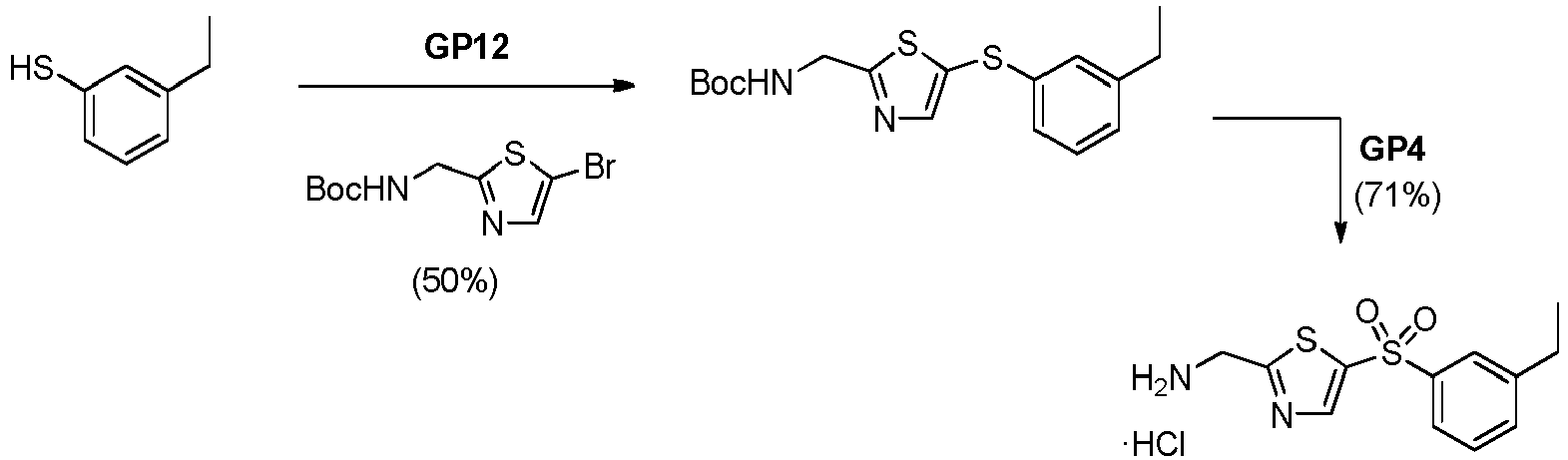
- tert-Butyl ((5-((3-ethylphenyl)thio)thiazol-2-yl)methyl)carbamate was synthesised according to general procedures GP12 - from tert-butyl ((5-bromothiazol-2-yl)methyl)carbamate (150 mg, 0.51 mmol), 3-ethylbenzenethiol (71 mg, 0.51 mmol), Pd2(dba)3 (23 mg, 10 mol%), Xantphos (59 mg, 20 mol%), NaOtBu (59 mg, 0.61 mmol), toluene/tBuOH (5:1, 4.8 mL); 110 °C, 16 h. Chromatographic purification (10→40% EtOAc in hexane) afforded a yellow oil (90 mg, 50%). 1H NMR (CDCl3, 500 MHz) δ 7.76 (s, 1H), 7.20-7.17 (m, 1H), 7.10 (s, 1H), 7.04 (dd, 2H, J = 7.7, 1.7 Hz), 5.26 (br s, 1H), 4.59 (d, 2H, J = 5.9 Hz), 2.59 (q, 2H, J = 7.6 Hz), 1.45 (s, 9H), 1.20 (t, 3H, J = 7.6 Hz). LCMS (ESI) m/z 351.1172 found (M+H)+, C17H23N2S2O2.
- Example 107 was synthesised according to general procedures GP4 - from i) tert-butyl ((5-((3-ethylphenyl)thio)thiazol-2-yl)methyl)carbamate (90 mg, 0.257 mmol), m-CPBA (77%; 144 mg, 0.64 mmol), DCM (6 mL); rt, 18 h; chromatography (EtOAc/
cyclohexane 10→50%). ii) 4 M HCl in dioxane (0.76 mL); rt, 4 h. The mixture was diluted with EtzO and the precipitate collected using filtration, washing with excess EtzO, and dried under vacuum to afford the amine hydrochloride as a white solid (58 mg, 71 % over two steps). 1H NMR (DMSO-d6 , 500 MHz) δ 8.80 (br s, 3H), 8.60 (s, 1H), 7.87 (br s, 1H), 7.85 (dt, 1H, J = 7.2, 1.8 Hz), 7.64-7.58 (m, 2H), 4.47 (s, 2H), 2.72 (q, 2H, J = 7.6 Hz), 1.19 (t, 3H, J = 7.6 Hz). 13C NMR (DMSO-d6 , 125 MHz) δ 170.1, 147.3, 146.2, 140.7, 140.3, 134.1, 130.1, 126.0, 124.6, 39.7, 27.8, 15.3. HRMS (ESI) m/z 283.0566 found (M+H)+, 283.0569 calculated for C12H15N2S2O2. -

- tert-Butyl ((5-([1,1'-biphenyl]-3-ylthio)thiazol-2-yl)methyl)carbamate was synthesised according to general procedures GP12 - from tert-butyl ((5-bromothiazol-2-yl)methyl)carbamate (142 mg, 0.48 mmol), [1,1'-biphenyl]-3-thiol (90 mg, 0.48 mmol), Pd2(dba)3 (22 mg, 10 mol%), Xantphos (56 mg, 20 mol%), NaOtBu (56 mg, 0.58 mmol), toluene/tBuOH (5:1, 4.8 mL); 110 °C, 16 h. Chromatographic purification (5→45% EtOAc in hexane) afforded a yellow oil (154 mg, 80%). 1H NMR (CDCl3, 500 MHz) δ 7.81 (s, 1H), 7.53-7.51 (m, 2H), 7.47 (t, 1H, J = 1.7 Hz), 7.44-7.41 (m, 3H), 7.37-7.33 (m, 2H), 7.21 (ddd, 1H, J = 7.8, 1.9, 1.1 Hz), 5.28 (br s, 1H), 4.60 (d, 2H, J = 5.9 Hz), 1.45 (s, 9H). LCMS (ESI) m/z 399.1172 found (M+H)+, C21H23N2S2O2.
- Example 108 was synthesised according to general procedures GP4 - from i) tert-butyl ((5-([1,1'-biphenyl]-3-ylthio)thiazol-2-yl)methyl)carbamate (154 mg, 0.39 mmol), m-CPBA (77%; 216 mg, 0.97 mmol), DCM (10 mL); rt, 18 h; chromatography (EtOAc/
cyclohexane 10→55%). ii) 4 M HCl in dioxane (1.2 mL); rt, 4 h. The mixture was diluted with EtzO and the precipitate collected using filtration, washing with excess EtzO, and dried under vacuum to afford the amine hydrochloride as a white solid (101 mg, 71% over two steps). 1H NMR (DMSO-d 6, 500 MHz) δ 8.74 (br s, 3H), 8.70 (s, 1H), 8.23 (t, 1H, J = 1.8 Hz), 8.07 (ddd, 1H, J = 7.8, 1.8, 1.0 Hz), 8.04 (ddd, 1H, J = 7.9, 1.9, 1.0 Hz), 7.79 (t, 1H, J = 7.9 Hz), 7.76-7.73 (m, 2H), 7.53 (t, 2H, J = 7.5 Hz), 7.46 (t, 1H, J = 7.3 Hz), 4.48 (s, 2H). 13C NMR (DMSO-d 6, 125 MHz) δ 170.3, 147.7, 142.0, 141.5, 140.0, 138.0, 132.8, 130.9, 129.2, 128.6, 127.1, 126.0, 124.8, 39.7. HRMS (ESI) m/z 331.0554 found (M+H)+, 331.0569 calculated for C16H15N2S2O2. -

- 2-Ethylhexyl 3-((3-bromo-5-isopropylphenyl)thio)propanoate was synthesised according to general procedures GP12 - from 1,3-dibromo-5-isopropylbenzene (300 mg, 1.08 mmol), 2-ethylhexyl-3-mercaptopropionate (0.25 mL, 1.08 mmol), Pd2(dba)3 (25 mg, 2.5 mol%), Xantphos (31 mg, 5 mol%), DIPEA (0.38 mL, 2.16 mmol), toluene (8 mL); 110 °C, 16 h. Chromatographic purification (1→12% EtOAc in hexane) afforded a pale yellow oil (300 mg, 67%). 1H NMR (CDCl3, 500 MHz) δ 7.29 (t, 1H, J = 1.7 Hz), 7.19 (t, 1H, J = 1.4 Hz), 7.11 (t, 1H, J = 1.4 Hz), 4.05-3.99 (m, 2H), 3.17 (t, 2H, J = 7.4 Hz), 2.83 (p, 1H, J = 6.9 Hz), 2.63 (t, 2H, J = 7.4 Hz), 1.58-1.55 (m, 1H), 1.38-1.34 (m, 2H), 1.31-1.28 (m, 6H), 1.22 0.89 (d, 6H, J = 6.9 Hz), 0.89 (t, 6H, J = 7.4 Hz).
- 2-Ethylhexyl 3-((5-isopropyl-[1,1'-biphenyl]-3-yl)thio)propanoate was synthesised according to general procedures GP13 - from 2-ethylhexyl 3-((3-bromo-5-isopropylphenyl)thio)propanoate (300 mg, 0.72 mmol), phenylboronic acid (106 mg, 0.866 mmol), Pd(PPh3)4 (83 mg, 0.072 mmol), K2CO3 (200 mg, 1.44 mmol), 1,2-DME:H2O (5:1, 6 mL); 100 °C, 16 h. Chromatographic purification (1→12% EtOAc in hexane) afforded a clear colourless oil (266 mg, 89%). 1H NMR (CDCl3, 500 MHz) δ 7.58-7.56 (m, 2H), 7.44 (t, 2H, J = 7.6 Hz), 7.40 (t, 1H, J = 1.7 Hz), 7.36 (t, 1H, J = 7.4 Hz), 7.29 (t, 1H, J = 1.5 Hz), 7.22 (t, 1H, J = 1.5 Hz), 4.04-4.00 (m, 2H), 3.22 (t, 2H, J = 7.4 Hz), 2.95 (p, 1H, J = 6.9 Hz), 2.68 (t, 2H, J = 7.4 Hz), 1.58-1.55 (m, 1H), 1.38-1.33 (m, 2H), 1.30-1.27 (m, 12H), 0.88 (t, 6H, J = 7.4 Hz).
- tert-Butyl ((5-((5-isopropyl-[1,1'-biphenyl]-3-yl)thio)thiazol-2-yl)methyl)carbamate was synthesised according to general procedures GP14 and GP12 - from i) 2-ethylhexyl 3-((5-isopropyl-[1,1'-biphenyl]-3-yl)thio)propanoate (265 mg, 0.64 mmol), NaOEt (21 wt% in EtOH; 0.42 mL, 1.28 mmol), toluene:EtOH (1:1, 8 mL); rt, 4 h; ii) tert-butyl ((5-bromothiazol-2-yl)methyl)carbamate (173 mg, 0.59 mmol), Pd2(dba)3 (27 mg, 10 mol%Pd), Xantphos (68 mg, 20 mol%), NaOtBu (68 mg, 0.71 mmol), toluene/tBuOH (5:1, 6.0 mL); 110 °C, 16 h. Chromatographic purification (5→45% EtOAc in hexane) afforded a yellow oil (188 mg, 72%). 1H NMR (CDCl3, 500 MHz) δ 7.80 (s, 1H), 7.51-7.49 (m, 2H), 7.42 (t, 2H, J= 7.5 Hz), 7.34 (t, 1H, J = 7.3 Hz), 7.28-7.26 (m, 2H), 7.12 (t, 1H, J = 1.5 Hz), 5.26 (br s, 1H), 4.59 (d, 2H, J = 5.8 Hz), 2.92 (p, 1H, J = 6.9 Hz), 1.44 (s, 9H), 1.26 (d, 6H, J = 6.9 Hz). LCMS (ESI) m/z 441.1758 found (M+H)+, C24H29N2S2O2.
- Example 109 was synthesised according to general procedures GP4 - from i) tert-butyl ((5-((5-isopropyl-[1,1'-biphenyl]-3-yl)thio)thiazol-2-yl)methyl)carbamate (170 mg, 0.386 mmol), m-CPBA (77%; 216 mg, 0.96 mmol), DCM (7 mL); rt, 18 h; chromatography (EtzO/
cyclohexane 20→100%). ii) 4 M HCl in dioxane (1.2 mL); rt, 4 h. The mixture was diluted with EtzO and the precipitate collected using filtration, washing with excess EtzO, and dried under vacuum to afford the amine hydrochloride as a white solid (95 mg, 60% over two steps). 1H NMR (DMSO-d6, 500 MHz) δ 8.83 (br s, 3H), 8.70 (s, 1H), 8.04 (t, 1H, J = 1.7 Hz), 7.92 (t, 1H, J = 1.4 Hz), 7.88 (t, 1H, J = 1.5 Hz), 7.74 (d, 2H, J = 7.1 Hz), 7.52 (t, 2H, J = 7.5 Hz), 7.45 (t, 1H, J = 7.3 Hz), 4.47 (s, 2H), 3.13 (p, 1H, J = 6.9 Hz), 1.28 (d, 6H, J = 6.9 Hz). 13C NMR (DMSO-d6, 125 MHz) δ 170.2, 151.7, 147.7, 142.2, 141.6, 140.2, 138.2, 131.0, 129.2, 128.5, 127.2, 123.5, 122.7, 39.7, 33.4, 23.5. HRMS (ESI) m/z 373.103 found (M+H)+, 373.1039 calculated for C19H21N2S2O2. -

- tert-Butyl ((4-(naphthalen-2-ylthio)thiazol-2-yl)methyl)carbamate was synthesised according to general procedures GP12 - from tert-butyl ((4-bromothiazol-2-yl)methyl)carbamate (80 mg, 0.27 mmol), 5 naphthalene-2-thiol (44 mg, 0.27 mmol), Pd2(dba)3 (13 mg, 10 mol%Pd), Xantphos (32 mg, 20 mol%), NaOtBu (32 mg, 0.33 mmol), toluene/tBuOH (5:1, 3.0 mL); 110 °C, 18 h. Chromatographic purification (5→50% EtOAc in hexane) afforded a yellow oil (25 mg, 25%). 1H NMR (CDCl3, 500 MHz) δ 7.87 (s, 1H), 7.81-7.74 (m, 3H), 7.48-7.46 (m, 2H), 7.43 (dd, 1H, J = 8.6. 1.9 Hz), 7.14 (s, 1H), 5.25 (br s, 1H), 4.62-4.59 (m, 2H), 1.46 (s, 9H). LCMS (ESI) m/z 373.1030 found (M+H)+, C19H21N2S2O2.
- Example 110 was synthesised according to general procedures GP4 - from i) tert-butyl ((4-(naphthalen-2-ylthio)thiazol-2-yl)methyl)carbamate (25 mg, 0.067 mmol), m-CPBA (77%; 38 mg, 0.168 mmol), DCM (2 mL); rt, 18 h; chromatography (EtOAc/
cyclohexane 10→55%). ii) 4 M HCl in dioxane (0.5 mL); rt, 4 h. The mixture was diluted with EtzO and the precipitate collected using filtration, washing with excess EtzO, and dried under vacuum to afford the amine hydrochloride as a white solid (16 mg, 66% over two steps). 1H NMR (DMSO-d6, 500 MHz) δ 8.83 (s, 1H), 8.72 (d, 1H, J = 1.5 Hz), 8.66 (br s, 3H), 8.26 (d, 1H, J = 8.1 Hz), 8.18 (d, 1H, J = 8.8 Hz), 8.08 (d, 1H, J = 8.2 Hz), 7.95 (dd, 1H, J = 8.7, 1.9 Hz), 7.77 (t, 1H, J = 6.9 Hz), 7.72 (t, 1H, J = 6.9 Hz), 4.42 (s, 2H). 13C NMR (DMSO-d 6, 125 MHz) δ 166.1, 152.3, 136.3, 134.9, 131.7, 130.5, 129.9, 129.7, 129.6, 129.4, 127.9 (2 xC), 122.7, 39.3. HRMS (ESI) m/z 305.0403 found (M+H)+, 305.0413 calculated for C14H13N2S2O2. -
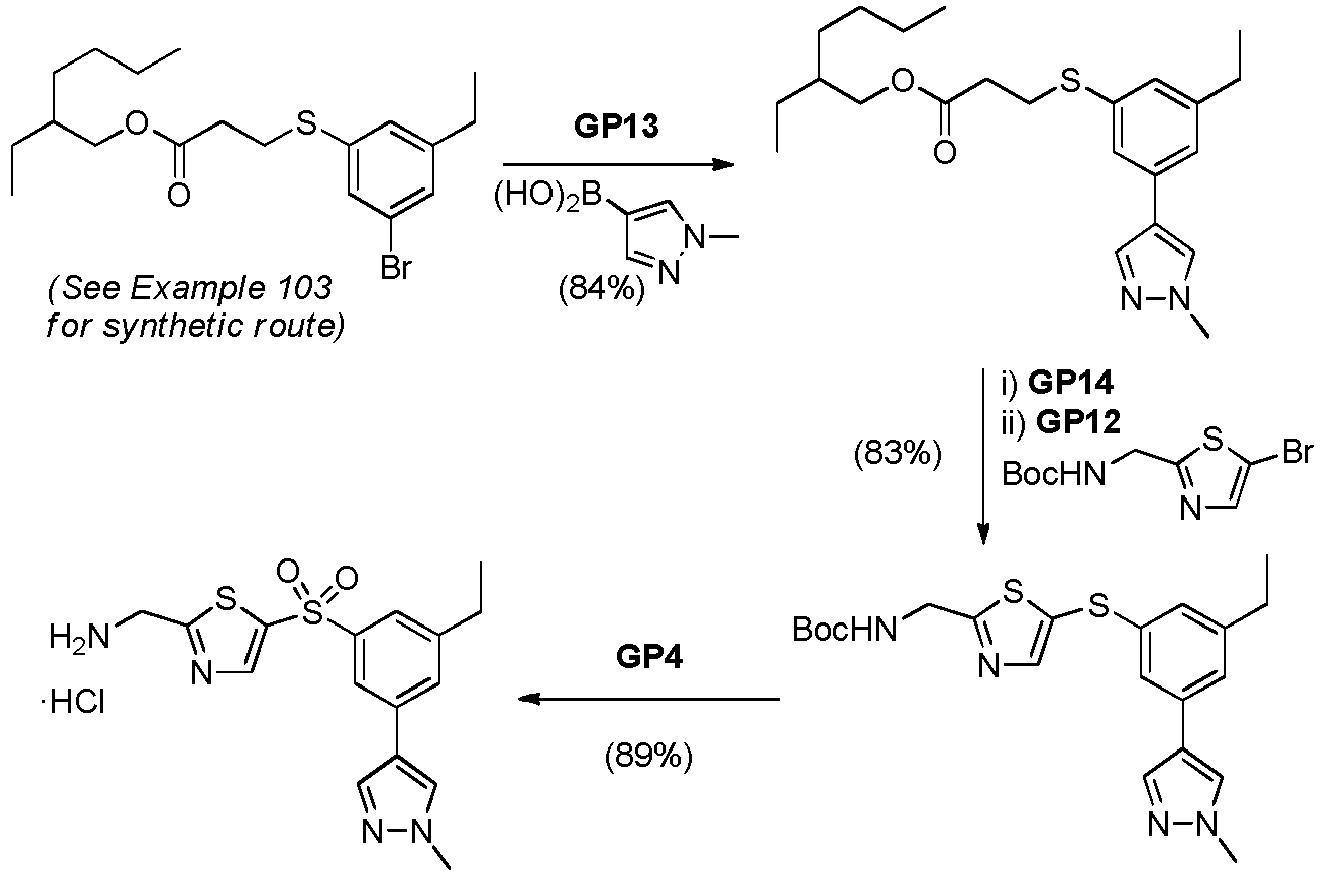
- 2-Ethylhexyl 3-((3-ethyl-5-(1-methyl-1H-pyrazol-4-yl)phenyl)thio)propanoate was synthesised according to general procedures GP13 - from 2-ethylhexyl 3-((3-bromo-5-ethylphenyl)thio)propanoate (500 mg, 1.245 mmol), 1-methyl-1H-pyrazole-4-boronic acid (188 mg, 1.49 mmol), Pd(PPh3)4 (144 mg, 0.125 mmol), K2CO3 (344 mg, 2.49 mmol), 1,2-DME:H2O (5:1, 12 mL); 100 °C, 16 h. Chromatographic purification (15→65% EtOAc in hexane) afforded a pale yellow oil (419 mg, 84%). 1H NMR (CDCl3, 500 MHz) δ 7.74 (d, 1H, J = 0.7 Hz), 7.60 (s, 1H), 7.28 (t, 1H, J = 1.6 Hz), 7.14 (t, 1H, J = 1.5 Hz), 7.06 (t, 1H, J = 1.6 Hz), 4.04-3.98 (m, 2H), 3.94 (s, 3H), 3.19 (t, 2H, J = 7.4 Hz), 2.66-2.61 (m, 4H), 1.58-1.52 (m, 1H), 1.38-1.32 (m, 2H), 1.29-1.24 (m, 9H), 0.88 (t, 6H, J = 7.4 Hz). LCMS (ESI) m/z 403.4904 found (M+H)+ for C23H35N2SO2.
- tert-Butyl ((5-((3-ethyl-5-(1-methyl-1H-pyrazol-4-yl)phenyl)thio)thiazol-2-yl)methyl) carbamate was synthesised according to general procedures GP14 and GP12 - from i) 2-ethylhexyl 3-((3-ethyl-5-(1-methyl-1H-pyrazol-4-yl)phenyl)thio)propanoate (800 mg, 1.99 mmol), NaOtBu (477 mg, 4.97 mmol), toluene:tBuOH (4:1, 20 mL); rt, 4 h (work-up not performed); ii) To the reaction mixture were added tert-butyl ((5-bromothiazol-2-yl)methyl)carbamate (583 mg, 1.99 mmol), Pd2(dba)3 (91 mg, 10 mol%Pd), Xantphos (230 mg, 20 mol%); 110 °C, 16 h. Chromatographic purification (20→100% EtOAc in hexanes, then 0→5% MeOH in EtOAc) afforded a yellow oil (148 mg, 73%). 1H NMR (CDCl3, 500 MHz) δ 7.78 (s, 1H), 7.69 (d, 1H, J = 0.7 Hz), 7.55 (s, 1H), 7.15 (br s, 1H), 7.13 (br s, 1H), 6.94 (t, 1H, J = 1.6 Hz), 5.30 (br s, 1H), 4.59 (d, 2H, J= 5.8 Hz), 3.92 (s, 3H), 2.60 (q, 2H, J = 7.6 Hz), 1.44 (s, 9H), 1.21 (t, 3H, J = 7.6 Hz). LCMS (ESI) m/z 431.1559 found (M+H)+, C21H27N4S2O2.
- Example 111 was synthesised according to general procedures GP4 - from i) tert-butyl ((5-((3-ethyl-5-(1-methyl-1H-pyrazol-4-yl)phenyl)thio)thiazol-2-yl)methyl) carbamate (140 mg, 0.325 mmol), m-CPBA (77%; 182 mg, 0.813 mmol), DCM (7 mL); rt, 18 h; chromatography (EtOAc/
cyclohexane 40→100%, then MeOH/EtOAc 0→5%). ii) 4 M HCl in dioxane (1.36 mL); rt, 4 h. The mixture was diluted with EtzO and the precipitate collected using filtration, washing with excess EtzO, and dried under vacuum to afford the amine hydrochloride as a white solid (106 mg, 89% over two steps). 1H NMR (DMSO-d6, 500 MHz) δ 8.87 (br s, 3H), 8.63 (s, 1H), 8.37 (s, 1H), 8.01 (d, 1H, J = 0.7 Hz), 7.97 (t, 1H, J = 1.7 Hz), 7.81 (t, 1H, J = 1.5 Hz), 7.66 (t, 1H, J = 1.5 Hz), 4.46 (q, 2H, J = 5.6 Hz), 3.87 (s, 3H), 2.72 (q, 2H, J = 7.6 Hz), 1.22 (t, 3H, J = 7.6 Hz). 13C NMR (DMSO-d 6, 125 MHz) δ 170.1, 147.4, 146.8, 141.5, 140.3, 136.5, 134.7, 130.1, 129.0, 123.3, 120.4, 120.1, 39.7, 38.8, 27.9, 15.3. HRMS (ESI) m/z 363.094 found (M+H)+, 363.0944 calculated for C16H19N4S2O2. -
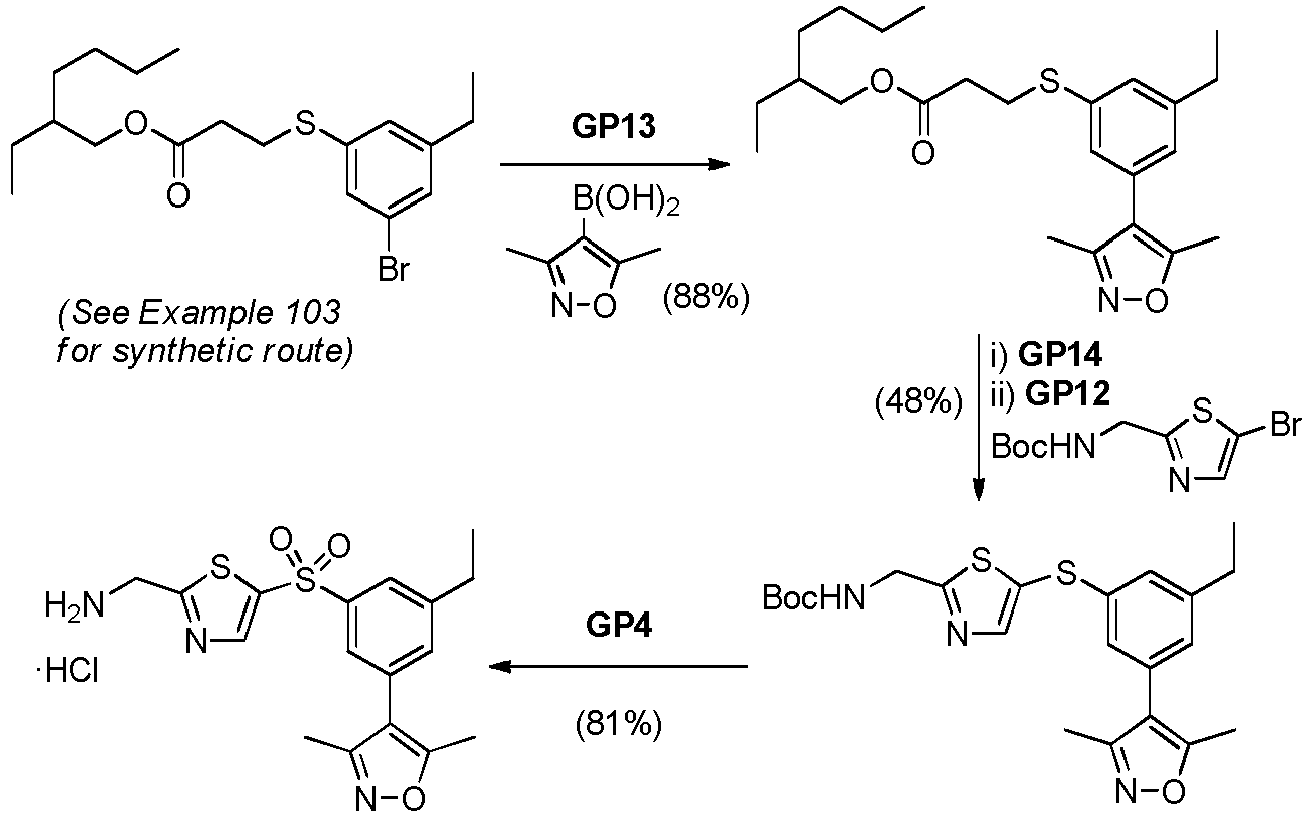
- 2-Ethylhexyl 3-((3-(3,5-dimethylisoxazol-4-yl)-5-ethylphenyl)thio)propanoate was synthesised according to general procedures GP13 - from 2-ethylhexyl 3-((3-bromo-5-ethylphenyl)thio)propanoate (250 mg, 0.623 mmol), (3,5-dimethylisoxazol-4-yl)boronic acid (105 mg, 0.747 mmol), Pd(PPh3)4 (72 mg, 0.062 mmol), K2CO3 (172 mg, 1.246 mmol), 1,2-DME:H2O (5:1, 6 mL); 100 °C, 16 h. Chromatographic purification (2→40% EtOAc in hexane) afforded a yellow oil (228 mg, 88%). 1H NMR (CDCl3, 500 MHz) δ 7.18 (t, 1H, J = 1.6 Hz), 7.04 (t, 1H, J = 1.6 Hz), 6.91 (t, 1H, J = 1.5 Hz), 4.05-3.99 (m, 2H), 3.19 (t, 2H, J = 7.4 Hz), 2.68-2.64 (m, 4H), 2.40 (s, 3H), 2.27 (s, 3H), 1.59-1.54 (m, 1H), 1.37-1.32 (m, 2H), 1.29-1.24 (m, 9H), 0.89-0.86 (m, 6H).
- tert-Butyl ((5-((3-(3,5-dimethylisoxazol-4-yl)-5-ethylphenyl)thio)thiazol-2-yl)methyl) carbamate was synthesised according to general procedures GP14 and GP12 - from i) 2-ethylhexyl 3-((3-(3,5-dimethylisoxazol-4-yl)-5-ethylphenyl)thio)propanoate (225 mg, 0.539 mmol), NaOtBu (129 mg, 1.347 mmol), toluene: t BuOH (4:1, 5 mL); rt, 4 h (work-up not performed); ii) To the reaction mixture were added tert-butyl ((5-bromothiazol-2-yl)methyl)carbamate (158 mg, 0.539 mmol), Pd2(dba)3 (25 mg, 10 mol%Pd), Xantphos (62 mg, 20 mol%); 110 °C, 16 h. Chromatographic purification (10→50% EtOAc in hexane) afforded a yellow oil (115 mg, 48%). 1H NMR (CDCl3, 500 MHz) δ 7.78 (s, 1H), 7.06 (t, 1H, J = 1.7 Hz), 6.90 (t, 1H, J = 1.4 Hz), 6.86 (t, 1H, J = 1.7 Hz), 5.31 (br s, 1H), 4.59 (d, 2H, J = 5.9 Hz), 2.63 (q, 2H, J = 7.6 Hz), 2.35 (s, 3H), 2.21 (s, 3H), 1.44 (s, 9H), 1.22 (t, 3H, J = 7.6 Hz). LCMS (ESI) m/z 446.1539 found (M+H)+, C22H28N3S2O3.
- Example 112 was synthesised according to general procedures GP4 - from i) tert-butyl ((5-((3-(3,5-dimethylisoxazol-4-yl)-5-ethylphenyl)thio)thiazol-2-yl)methyl) carbamate (110 mg, 0.247 mmol), m-CPBA (77%; 138 mg, 0.617 mmol), DCM (5 mL); rt, 18 h; chromatography (EtOAc/
cyclohexane 15→65%). ii) 4 M HCl in dioxane (1.05 mL); rt, 4 h. The mixture was diluted with EtzO and the precipitate collected using filtration, washing with excess EtzO, and dried under vacuum to afford the amine hydrochloride as a white solid (78 mg, 81% over two steps). 1H NMR (DMSO-d6, 500 MHz) δ 8.84 (br s, 3H), 8.67 (s, 1H), 7.89 (t, 1H, J = 1.6 Hz), 7.82 (t, 1H, J = 1.7 Hz), 7.65 (t, 1H, J = 1.5 Hz), 4.48 (br s, 2H), 2.78 (q, 2H, J = 7.6 Hz), 2.42 (s, 3H), 2.24 (s, 3H), 1.23 (t, 3H, J = 7.6 Hz). 13C NMR (DMSO-d 6, 125 MHz) δ 170.3, 166.2, 158.0, 147.7, 147.1, 141.4, 140.0, 134.3, 131.9, 125.1, 124.4, 114.5, 39.7, 27.8, 15.3, 11.4, 10.4. HRMS (ESI) m/z 378.0935 found (M+H)+, 378.0941 calculated for C17H20N3S2O3. -

- 2-Ethylhexyl 3-((3-ethyl-5-(pyridin-3-yl)phenyl)thio)propanoate was synthesised according to general procedures GP13 - from 2-ethylhexyl 3-((3-bromo-5-ethylphenyl)thio)propanoate (250 mg, 0.623 mmol), pyridin-3-ylboronic acid (92 mg, 0.747 mmol), Pd(PPh3)4 (72 mg, 0.062 mmol), K2CO3 (172 mg, 1.246 mmol), 1,2-DME:H2O (5:1, 6 mL); 100 °C, 16 h. Chromatographic purification (10→80% EtOAc in hexane) afforded a dark yellow oil (231 mg, 93%). 1H NMR (CDCl3, 500 MHz) δ 8.82 (dd, 1H, J = 2.4, 0.8 Hz), 8.59 (dd, 1H, J = 4.8, 1.6 Hz), 7.85 (ddd, 1H, J = 7.9, 2.3, 1.7 Hz), 7.37-7.34 (m, 2H), 7.23 (d, 2H, J = 1.7 Hz), 4.04-3.98 (m, 2H), 3.22 (t, 2H, J = 7.4 Hz), 2.72-2.65 (m, 4H), 1.58-1.54 (m, 1H), 1.37-1.31 (m, 2H), 1.30-1.26 (m, 9H), 0.87 (t, 6H, J = 7.5 Hz). LCMS (ESI) m/z 400.4766 found (M+H)+ for C24H34NSO2.
- tert-Butyl ((5-((3-ethyl-5-(pyridin-3-yl)phenyl)thio)thiazol-2-yl)methyl)carbamate was synthesised according to general procedures GP14 and GP12 - from i) 2-ethylhexyl 3-((3-ethyl-5-(pyridin-3-yl)phenyl)thio)propanoate (220 mg, 0.55 mmol), NaOtBu (132 mg, 1.38 mmol), toluene:tBuOH (4:1, 5 mL); rt, 4 h (work-up not performed); ii) To the reaction mixture were added tert-butyl ((5-bromothiazol-2-yl)methyl)carbamate (161 mg, 0.55 mmol), Pd2(dba)3 (25 mg, 10 mol%Pd), Xantphos (64 mg, 20 mol%); 110 °C, 16 h. Chromatographic purification (20→100% EtOAc in hexane) afforded a yellow oil (105 mg, 45%). 1H NMR (CDCl3, 500 MHz) δ 8.76 (dd, 1H, J = 2.4, 0.8 Hz), 8.58 (dd, 1H, J = 4.8, 1.6 Hz), 7.81 (s, 1H), 7.79 (ddd, 1H, J = 7.9, 2.3, 1.7 Hz), 7.34 (ddd, 1H, J = 7.9, 4.8, 0.8 Hz), 7.24-7.23 (m, 2H), 7.12 (t, 1H, J = 1.6 Hz), 5.32 (br s, 1H), 4.60 (d, 2H, J = 5.8 Hz), 2.67 (q, 2H, J = 7.6 Hz), 1.44 (s, 9H), 1.25 (t, 3H, J = 7.6 Hz). LCMS (ESI) m/z 428.1429 found (M+H)+, C22H26N3S2O2.
- Example 113 was synthesised according to general procedures GP4 - from i) 3-(3-((2-(((tert-butoxycarbonyl)amino)methyl)thiazol-5-yl)thio)-5-ethylphenyl)pyridine 1-oxide (105 mg, 0.246 mmol), m-CPBA (77%; 138 mg, 0.614 mmol), DCM (5 mL); rt, 18 h; chromatography (EtOAc/
cyclohexane 80→100%, then MeOH/EtOAc 0→50%). ii) 4 M HCl in dioxane (0.9 mL); rt, 4 h. The mixture was diluted with EtzO and the precipitate collected using filtration, washing with excess EtzO, and dried under vacuum to afford the amine hydrochloride as a white solid (68 mg, 69% over two steps). 1H NMR (DMSO-d6, 500 MHz) δ 8.96 (s, 1H), 8.84 (br s, 3H), 8.70 (s, 1H), 8.50 (d, 1H, J = 6.3 Hz), 8.22 (s, 1H), 8.04-7.98 (m, 3H), 7.72-7.69 (m, 1H), 4.47 (d, 2H, J = 5.4 Hz), 2.80 (q, 2H, J = 7.6 Hz), 1.25 (t, 3H, J = 7.6 Hz). 13C NMR (DMSO-d6, 125 MHz) δ 170.3, 148.0, 147.5, 141.9, 139.9, 138.5, 137.7, 137.4, 136.3, 133.0, 128.0, 127.1, 126.8, 123.2, 39.7, 27.9, 15.2. HRMS (ESI) m/z 376.0793 found (M+H)+, 376.0784 calculated for C17H18N3S2O3. -

- 3-Bromo-5-(tert-butyl)-1,1'-biphenyl was synthesised according to general procedures GP13 - from 1,3-dibromo-5-(tert-butyl)benzene (1.0 g, 3.42 mmol), phenylboronic acid (459 mg, 3.77 mmol), Pd(PPh3)4 (393 mg, 0.34 mmol), K2CO3 (947 mg, 6.85 mmol), 1,2-DME:H2O (5:1, 12 mL); 100 °C, 16 h. Chromatographic purification (1→10% EtOAc in hexane) afforded a clear colourless oil (85 mg, 81%). 1H NMR (CDCl3, 500 MHz) δ 7.58-7.56 (m, 3H), 7.53-7.52 (m, 2H), 7.46-7.45 (m, 2H), 7.38 (t, 1H, J = 7.4 Hz), 1.38 (s, 9H).
- 2-Ethylhexyl 3-((5-(tert-butyl)-[1,1'-biphenyl]-3-yl)thio)propanoate was synthesised according to general procedures GP12 - from 3-bromo-5-(tert-butyl)-1,1'-biphenyl (300 mg, 1.04 mmol), 2-ethylhexyl-3-mercaptopropionate (0.23 mL, 1.04 mmol), Pd2(dba)3 (24 mg, 2.5 mol%), Xantphos (30 mg, 5 mol%), DIPEA (0.36 mL, 2.074 mmol), toluene (10 mL); 110 °C, 16 h. Chromatographic purification (10→100% dichloromethane in hexane) afforded a clear colourless yellow oil (254 mg, 57%). 1H NMR (CDCl3, 500 MHz) δ 7.58-7.56 (m, 2H), 7.46-7.43 (m, 3H), 7.40-7.34 (m, 3H), 4.05-3.99 (m, 2H), 3.23 (t, 2H, J = 7.4 Hz), 2.68 (t, 2H, J = 7.4 Hz), 1.59-1.55 (m, 1H), 1.37 (s, 9H), 1.34-1.30 (m, 2H), 1.30-1.26 (m, 6H), 0.88 (t, 6H, J = 7.4 Hz). LCMS m/z 427.2577 found (M+H)+ for C27H39SO2.
- tert-Butyl ((5-((5-(tert-butyl)-[1,1'-biphenyl]-3-yl)thio)thiazol-2-yl)methyl)carbamate was synthesised according to general procedures GP14 and GP12 - from i) 2-ethylhexyl 3-((5-(tert-butyl)-[1,1'-biphenyl]-3-yl)thio)propanoate (250 mg, 0.59 mmol), NaO t Bu (141 mg, 1.46 mmol), toluene: t BuOH (4:1, 5 mL); rt, 4 h (work-up not performed); ii) To the reaction mixture were added tert-butyl ((5-bromothiazol-2-yl)methyl)carbamate (172 mg, 0.59 mmol), Pd2(dba)3 (27 mg, 10 mol%Pd), Xantphos (68 mg, 20 mol%); 110 °C, 16 h. Chromatographic purification (5→20% EtOAc in hexane) afforded a yellow oil (171 mg, 64%). 1H NMR (CDCl3, 500 MHz) δ 8.80 (s, 1H), 7.51-7.49 (m, 2H), 7.44-7.41 (m, 3H), 7.36-7.33 (m, 1H), 7.31 (s, 1H), 7.25 (t, 1H, J = 1.6 Hz), 5.30 (br s, 1H), 4.59 (d, 2H, J = 5.9 Hz), 1.44 (s, 9H), 1.33 (s, 9H). LCMS (ESI) m/z 455.1922 found (M+H)+, C25H31N2S2O2.
- Example 114 was synthesised according to general procedures GP4 - from i) tert-butyl ((5-((5-(tert-butyl)-[1,1'-biphenyl]-3-yl)thio)thiazol-2-yl)methyl)carbamate (170 mg, 0.37 mmol), m-CPBA (77%; 209 mg, 0.93 mmol), DCM (8 mL); rt, 18 h; chromatography (EtOAc/
cyclohexane 5→55%). ii) 4 M HCl in dioxane (1.0 mL); rt, 4 h. The mixture was diluted with EtzO and the precipitate collected using filtration, washing with excess EtzO, and dried under vacuum to afford the amine hydrochloride as a white solid (79 mg, 50% over two steps). 1H NMR (DMSO-d6, 500 MHz) δ 8.75 (br s, 3H), 8.72 (s, 1H), 8.04 (t, 1H, J = 1.7 Hz), 8.01 (t, 1H, J = 1.7 Hz), 7.97 (t, 1H, J = 1.7 Hz), 7.74 (d, 2H, J = 7.1 Hz), 7.52 (t, 2H, J = 7.5 Hz), 7.46 (t, 1H, J = 7.3 Hz), 4.47 (s, 2H), 1.38 (s, 9H). 13C NMR (DMSO-d 6, 125 MHz) δ 170.2, 153.9, 147.7, 142.1, 141.5, 140.2, 138.5, 130.0, 129.2, 128.5, 127.3, 122.5, 122.2, 39.7, 35.2, 30.8. HRMS (ESI) m/z 409.1007 found (M+Na)+, 409.1015 calculated for C20H22N2S2O2Na. -

- 2-Ethylhexyl 3-((3-ethyl-5-(thiophen-3-yl)phenyl)thio)propanoate was synthesised according to general procedures GP13 - from 2-ethylhexyl 3-((3-bromo-5-ethylphenyl)thio)propanoate (200 mg, 0.498 mmol), thiophen-3-ylboronic acid (76 mg, 0.598 mmol), Pd(PPh3)4 (58 mg, 0.05 mmol), K2CO3 (138 mg, 0.996 mmol), 1,2-DME:H2O (5:1, 4.8 mL); 100 °C, 16 h. Chromatographic purification (2→20% EtOAc in hexane) afforded a clear colourless oil (202 mg, 100%). 1H NMR (CDCl3, 500 MHz) δ 7.45 (dd, 1H, J = 2.8, 1.4 Hz), 7.42 (t, 1H, J = 1.7 Hz), 7.39-7.36 (m, 2H), 7.27 (t, 1H, J = 1.5 Hz), 7.14 (t, 1H, J = 1.5 Hz), 4.05-3.99 (m, 2H), 3.23 (t, 2H, J = 7.4 Hz), 2.69-2.65 (m, 4H), 1.59-1.54 (m, 1H), 1.38-1.32 (m, 2H), 1.30-1.26 (m, 9H), 0.88 (t, 6H, J = 7.5 Hz).
- tert-Butyl ((5-((3-ethyl-5-(thiophen-3-yl)phenyl)thio)thiazol-2-yl)methyl)carbamate was synthesised according to general procedures GP14 and GP12 - from i) 2-ethylhexyl 3-((3-ethyl-5-(thiophen-3-yl)phenyl)thio)propanoate (200 mg, 0.494 mmol), NaOtBu (119 mg, 1.24 mmol), toluene: t BuOH (4:1, 5 mL); rt, 4 h (work-up not performed); ii) To the reaction mixture were added tert-butyl ((5-bromothiazol-2-yl)methyl)carbamate (145 mg, 0.494 mmol), Pd2(dba)3 (23 mg, 10 mol%Pd), Xantphos (57 mg, 20 mol%); 110 °C, 16 h. Chromatographic purification (1 0--->55% EtOAc in hexane) afforded a yellow oil (50 mg, 23%). 1H NMR (CDCl3, 500 MHz) δ 7.79 (s, 1H), 7.40 (dd, 1H, J = 3.0, 1.4 Hz), 7.36 (dd, 1H, J = 5.0, 3.0 Hz), 7.30 (dd, 1H, J = 5.0, 1.4 Hz), 7.28 (t, 1H, J = 1.7 Hz), 7.26-7.25 (m, 1H), 7.02 (t, 1H, J = 1.5 Hz), 5.25 (br s, 1H), 4.59 (d, 2H, J = 5.8 Hz), 2.63 (q, 2H, J = 7.6 Hz), 1.45 (s, 9H), 1.23 (t, 3H, J = 7.6 Hz). LCMS (ESI) m/z 433.1099 found (M+H)+, C21H25N2S3O2.
- Example 115 was synthesised according to general procedures GP4 - from i) tert-butyl ((5-((3-ethyl-5-(thiophen-3-yl)phenyl)thio)thiazol-2-yl)methyl)carbamate (50 mg, 0.116 mmol), m-CPBA (77%; 65 mg, 0.29 mmol), DCM (3 mL); rt, 18 h; chromatography (EtOAc/
cyclohexane 15→45%). ii) 4 M HCl in dioxane (0.5 mL); rt, 4 h. The mixture was diluted with EtzO and the precipitate collected using filtration, washing with excess EtzO, and dried under vacuum to afford the amine hydrochloride as a white solid (21 mg, 47% over two steps). 1H NMR (DMSO-d6, 500 MHz) δ 8.75 (br s, 3H), 8.68 (s, 1H), 8.13 (dd, 1H, J = 2.9, 1.3 Hz), 8.10 (s, 1H), 7.97 (s, 1H), 7.79 (s, 1H), 7.71 (dd, 1H, J = 5.0, 2.9 Hz), 7.67 (dd, 1H, J = 5.0, 1.3 Hz), 4.47 (s, 2H), 2.76 (q, 2H, J = 7.6 Hz), 1.24 (t, 3H, J = 7.6 Hz). 13C NMR (DMSO-d6, 125 MHz) δ 170.1, 147.6, 147.0, 141.6, 140.2, 139.4, 136.9, 131.5, 127.7, 126.3, 124.5, 123.2, 121.7, 39.7, 27.9, 15.3. HRMS (ESI) m/z 365.0516 found (M+H)+, 365.0447 calculated for C16H17N2S3O2. -

- 2-Ethylhexyl 3-((3-(1-methyl-1H-pyrazol-4 yl)phenyl)thio)propanoate was synthesised according to general procedures GP12 - from 4-(3-bromophenyl)-1-methyl-1H-pyrazole (2.5 g, 10.5 mmol), Pd2(dba)3 (0.24 g, 2.5 mol%), Xanthphos (0.3 g, 5 mol%), 2-ethylhexyl-3-mercaptopropionate (2.29 g, 10.5 mmol), DIPEA (4.8 ml, 27.6 mmol) and toluene (30 ml); 110 °C, 16 h. Chromatographic purification (28% EtOAc in hexane) afforded a yellow oil (0.60 g, 44%). 1H NMR (400 MHz, DMSO-d6) δ: 8.20 (s, 1H), 7.87 (s, 1H), 7.51-7.50 (m, 1H), 7.40-7.38 (m, 1H), 7.39-7.28 (m, 1H),7.15-7.13 (m, 1H), 3.95-3.93 (m, 2H), 3.85 (s, 3H), 3.22-3.19 (m, 2H), 2.64-2.61 (m, 2H), 1.52-1.50 (m, 1H), 1.31-1.29 (m, 7H), 1.18-1.16(m, 1H), 0.85-0.83 (m, 6H). LCMS (ESI) m/z 375 (M+H)+.
- 3-(1-Methyl-1H-pyrazol-4-yl)benzenethiol was synthesised according to general procedures GP14 - from 2-ethylhexyl 3-((3-(1-methyl-1H-pyrazol-4 yl)phenyl)thio)propanoate (1.80 g, 4.81 mmol), KOtBu (1.0 M in THF; 14.5 mL, 14.5 mmol), THF (25 mL); rt, 1 h. Yellow oil (0.8 g, 87%). 1H NMR (400 MHz, DMSO-d6)δ: 8.79 (s, 1H), 8.16 (s,1H), 8.11 (s, 1H), 7.84 (d, J = 11.3 Hz, 1H), 7.37 (t, J = 7.3 Hz, 1H), 7.30 (d, J = 7.3 Hz, 1H), 5.34 (s, 1H), 3.85 (s, 3H). LCMS (ESI) m/z 191 (M+H)+ .
- tert-Butyl ((5-((3-(1-methyl-1H-pyrazol-4-yl)phenyl)thio)thiazol-2-yl)methyl)carbamate was synthesised according to general procedures GP12 - from tert-butyl ((5-bromothiazol-2-yl)methyl)carbamate (1.0 g, 3.41 mmol), 3-(1-methyl-1H-pyrazol-4-yl)benzenethiol (0.74 g, 3.89 mmol), Pd2(dba)3 (0.10 g, 3 mol%), Xantphos (0.10 g, 6 mol%), NaOtBu (0.60 g, 6.24 mmol), toluene/tBuOH (5:1, 36 mL); 110 °C, 16 h. Chromatographic purification (70% EtOAc in hexane) afforded a yellow liquid (0.60 g, 44%). 1H NMR (400 MHz, DMSO-d6) δ 8.12 (s, 1H), 7.93-7.83 (m, 1H), 7.78-7.75 (t, J = 5.8 Hz, 1H), 7.33-7.31 (m, 1H), 7.78-7.43 (m, 2H), 7.33-7.29 (m, 1H), 7.01 (d, J = 7.8 Hz, 1H), 4.39-4.38 (m, 2H), 3.84 (s, 3H), 1.37 (s, 9H). LCMS (ESI) m/z 403 (M+H)+.
- Example 116 was synthesised according to general procedures GP4 - from i) m-CPBA (55%; 0.72 g, 2.18 mmol), tert-butyl ((5-((3-(1-methyl-1H-pyrazol-4-yl)phenyl)thio)thiazol-2-yl)methyl)carbamate (0.40 g, 0.995 mmol) and DCM (10 mL); rt, 3 h. Chromatography (72% EtOAc in cyclohexane), brown oil (280 mg, 65%); ii) 2 M HCl in EtzO (3.0 ml), tert-butyl ((5-((3-(1-methyl-1H-pyrazol-4-yl)phenyl)sulfonyl)thiazol-2-yl)methyl)carbamate (280 mg, 0.644 mmol) and DCM (3.0 mL); rt, 3 h. The hydrochloride salt was diluted with DCM and washed with sat. NaHCOs to afford the free base. The crude amine was purified by preparative TLC (10% MeOH in DCM) to afford a brown semi-solid (40 mg, 20%). 1H NMR (500 MHz, Chloroform-d) δ 8.23 (s, 1H), 8.04 (m, 1H), 7.86 - 7.77 (m, 2H), 7.75 - 7.65 (m, 2H), 7.52 (t, J = 7.8 Hz, 1H), 4.17 (s, 2H), 3.97 (s, 3H), 1.78 (s, 2H). 13C NMR (126 MHz, Chloroform-d) δ 184.34, 148.12, 142.32, 138.57, 136.98, 134.60, 130.48, 130.17, 127.68, 125.03, 123.98, 121.41, 44.28, 39.40. HRMS (ESI) for C14H15N4O2S2 ([M+H]+): Calculated 335.0631; Observed 335.0621.
-

- 2-Ethylhexyl 3-((1-phenyl-1H-pyrazol-4-yl)thio)propanoate was synthesised according to general procedures GP12 - from 4-bromo-1-phenyl-1H-pyrazole (2.20 g, 9.86 mmol), Pd2(dba)3 (0.220 g, 2.5 mol%), Xantphos (0.285 g, 5 mol%), 2-ethylhexyl-3-mercaptopropionate (2.15 g, 9.86 mmol), DIPEA (1.59 mL, 19.7 mmol) and toluene (10 mL) 110 °C, 16 h. Chromatographic purification (EtOAc/
hexane 5→8%) afforded a yellow oil (2.0 g, 56%). 1H NMR (400 MHz, DMSO-d6) δ 7.98 (s, 1H), 7.72 (s, 1H), 7.67-7.65 (m, 2H), 7.46 (t, J = 8.2 Hz, 2H), 7.31 (t, J = 7.3 Hz, 1H), 4.00 (t, J = 2.9 Hz, 2H), 2.93 (t, J = 7.1 Hz, 2H), 2.60 (t, J= 7.1 Hz , 2H), 1.58-1.55 (m, 2H), 1.38-1.25 (m, 7H), 0.90-0.86 (m, 6H). LCMS (ESI) m/z 361 (M+H+). - tert-Butyl ((5-((1-phenyl-1H-pyrazol-4-yl)thio)thiophen-2-yl)methyl)carbamate was synthesised according to general procedures GP15 - from 2-ethylhexyl 3-((1-phenyl-1H-pyrazol-4-yl)thio)propanoate (1.50 g, 4.16 mmol), NaOtBu (1.19 g, 12.4 mmol), toluene/tBuOH (5:1, 60 mL); rt, 4 h, then tert-butyl ((5-bromothiophen-2-yl)methyl)carbamate (1.21 g, 4.16 mmol), Pd2(dba)3 (0.380 g, 10 mol%) and Xantphos (0.480 g, 20 mol%); 110 °C, 16 h. Chromatographic purification (EtOAc/
hexane 10→12%) afforded a yellow oil (0.34 g, 21%). 1H NMR (400 MHz, Chloroform-d) δ 8.00 (s, 1H), 7.73 (s, 1H), 7.64 (d, J = 7.8 Hz, 2H), 7.47 (t, J = 8.0 Hz, 2H), 7.36-7.26 (m, 2H), 7.01 (d, J = 3.4 Hz, 1H), 6.76 (br s, 1H), 4.37 (d, J = 5.4 Hz, 2H), 1.43 (s, 9H). LCMS (ESI) m/z 388 (M+H+). - Example 117 was synthesised according to general procedures GP4 - from i) m-CPBA (55%; 0.606 g, 1.93 mmol), tert-butyl ((5-((1-phenyl-1H-pyrazol-4-yl)thio)thiophen-2-yl)methyl)carbamate (0.340 g, 0.880 mmol) and DCM (10 ml); rt, 3 h. Chromatography (20% EtOAc in cyclohexane), brown oil (110 mg, 30%); ii) 2 M HCl in EtzO (3.0 ml), tert-butyl ((5-((1-phenyl-1H-pyrazol-4-yl)sulfonyl)thiophen-2-yl)methyl)carbamate (0.11 g, 0.262 mmol) and DCM (7.0 ml); rt, 4 h. The desired amine hydrochloride salt was obtained as a white solid (43 mg, 46%) and did not require further purification. 1H NMR (500 MHz, OMSO-d 6) δ 9.37 (s, 1H), 8.82 (s, 3H), 8.28 (s, 1H), 7.94 - 7.87 (m, 2H), 7.81 (d, J = 3.9 Hz, 1H), 7.60 - 7.49 (m, 2H), 7.46 - 7.37 (m, 2H), 4.28 (s, 2H). 13C NMR (126 MHz, OMSO-d 6) δ 144.26, 143.96, 139.84, 138.46, 132.97, 130.71, 130.32, 129.70, 128.00, 126.08, 119.41, 36.63. HRMS (ESI) for C14H11N2O2S2 ([M-NH2]+): Calculated 303.0262; Observed 303.0262.
-

- 2-Ethylhexyl 3-((2-phenylpyrimidin-5-yl)thio)propanoate was synthesised according to general procedures GP12 - from 5-bromo-2-phenylpyrimidine (1.0 g, 4.25 mmol), Pd2(dba)3 (90 mg, 2.5 mol%), Xantphos (200 mg, 5 mol%), 2-ethylhexyl-3-mercaptopropionate (0.91 g, 4.25 mmol), DIPEA (1.5 mL, 8.61 mmol) and toluene (25 mL), 110 °C, 16 h. Chromatographic purification (4% EtOA in hexane) afforded a yellow oil (1.2 g, 76%). LCMS (ESI) m/z 373 (M+H)+.
- tert-Butyl ((5-((2-phenylpyrimidin-5-yl)thio)thiazol-2-yl)methyl)carbamate was synthesised according to general procedures GP15 - from 2-ethylhexyl 3-((2-phenylpyrimidin-5-yl)thio)propanoate (1.0 g, 2.68 mmol), NaOtBu (0.640 g, 6.72 mmol), toluene/tBuOH (4:1, 25 mL); rt, 4 h, then tert-butyl ((5-bromothiazol-2-yl)methyl)carbamate (0.780 g, 2.68 mmol), Pd2(dba)3 (0.240 g, 10 mol%) and XantPhos (0.30 g, 20 mol%); 110 °C, 16 h. Chromatographic purification (40% EtOAc in hexane) afforded a yellow oil (0.30 g, 30%). 1H NMR (400 MHz, DMSO-d6) δ 8.67 (s, 2H), 8.40-8.38 (m, 2H), 7.86 (s, 1H), 7.49-7.48 (m, 3H), 7.25 (s, 1H), 4.59 (d, J = 5.8 Hz, 2H), 1.45 (s, 9H). LCMS (ESI) m/z 401 (M+H)+.
- Example 118 was synthesised according to general procedures GP4 - from i) m-CPBA (55%; 0.34 g, 0.99 mmol), tert-butyl ((5-((2-phenylpyrimidin-5-yl)thio)thiazol-2-yl)methyl)carbamate (0.180 g, 0.450 mmol) and DCM (10 mL); rt, 3 h. Chromatography (50% EtOAc in cyclohexane), yellow solid (140 mg, 70%); ii) 2 M HCl in EtzO (3.0 mL), tert-butyl ((5-((2-phenylpyrimidin-5-yl)sulfonyl)thiazol-2-yl)methyl)carbamate (0.140 g, 0.320 mmol) and DCM (10.0 mL); rt, 3 h. The desired amine hydrochloride salt was obtained as a white solid (50 mg, 50%) and did not require further purification. 1H NMR (500 MHz, OMSO-d6) δ 9.50 (s, 2H), 9.01 (s, 3H), 8.74 (s, 1H), 8.44 (d, J = 7.2 Hz, 2H), 7.69 - 7.53 (m, 3H), 4.51 (s, 2H). 13C NMR (126 MHz, OMSO-d 6) δ 171.05, 166.62, 156.84, 148.64, 139.07, 135.32, 133.50, 132.74, 129.12, 128.87, 39.69. HRMS (ESI) for C14H13N4O2S2 ([M+H]+): Calculated 333.0480; Observed 333.0472.
-

- 3-Bromo-5-methoxy-1,1'-biphenyl was synthesised according to general procedures GP13 - from 1,3-dibromo-5-methoxybenzene (6.50 g, 24.4 mmol), phenylboronic acid (2.08 g, 17.0 mmol), Pd(PPh3)4 (1.40 g, 5 mol%), Na2CO3 (6.47 g, 61.0 mmol), toluene (70 mL), ethanol (7.0 mL) and water (7.0 mL); 100 °C, 16 h. Chromatographic purification (hexane) afforded a colourless oil (4.1 g, contained a small amount of impurity), which is used in the subsequent transformation as an impure mixture. 1H NMR of a pure chromatography fraction (400 MHz, DMSO-d6) δ: 7.55-7.53 (m, 2H), 7.43-7.42 (m, 2H), 7.37 (d, J = 7.3 Hz, 1H), 7.32-7.31 (m, 1H), 7.03 (d, J = 1.4 Hz, 2H), 3.85 (s, 3H).
- 2-Ethylhexyl 3-((5-methoxy-[1,1'-biphenyl]-3-yl)thio)propanoate was synthesised according to general procedures GP12 - from Pd2(dba)3 (0.356 g, 2.5 mol%), Xantphos (0.450 g, 5 mol%), 2-ethylhexyl-3-mercaptopropionate (3.40 g, 15.6 mmol), DIPEA (5.40 mL, 31.1 mmol) and toluene (40 mL); 110 °C, 16 h. Chromatography (EtOAc/
hexane 0→1%) afforded a yellow oil (3.0 g, 44% over 2 steps). 1H NMR (400 MHz, DMSO-d6) δ 7.66 (d, J = 7.8 Hz, 2H), 7.46 (t, J = 7.6 Hz, 2H), 7.27-7.25 (m, 1H), 7.13 (s, 1H), 7.02 (s, 1H), 6.88 (s, 1H), 3.94 (d, J = 5.8 Hz, 2H), 3.83 (s, 3H), 3.25 (t, J = 6.8 Hz, 2H), 2.65 (t, J = 6.8 Hz, 2H), 1.51-1.49 (m, 1H), 1.30-1.22 (m, 8H), 0.84-0.81 (m, 6H). LCMS (ESI) m/z 401.2 (M+H)+. - tert-Butyl ((5-((5-methoxy-[1,1'-biphenyl]-3-yl)thio)thiophen-2-yl)methyl)carbamate was synthesised according to general procedures GP15 - from 2-ethylhexyl 3-((5-methoxy-[1,1'-biphenyl]-3-yl)thio)propanoate (1.50 g, 3.74 mmol), NaOtBu (1.19 g, 12.4 mmol), toluene/tBuOH (5:1, 60 mL); rt, 4 h, then tert-butyl ((5-bromothiophen-2-yl)methyl)carbamate (1.21 g, 4.14 mmol), Pd2(dba)3 (0.38 g, 10 mol%), Xantphos (0.48 g, 20 mol%); 110 °C, 16 h. Chromatographic purification (EtOAc/
hexane 10→12%) afforded a yellow oil (0.34 g, 21%). LCMS (ESI) m/z 311 (M-BocNH)+. - Example 119 was synthesised according to general procedures GP4 - from i) m-CPBA (55%; 0.53 g, 1.70 mmol), tert-butyl ((5-((5-methoxy-[1,1'-biphenyl]-3-yl)thio)thiophen-2-yl)methyl)carbamate (0.33 g, 0.771 mmol) and DCM (10 mL); rt, 3 h. Chromatography (EtOAc/
hexane 20%), brown oil (24 mg, 6.8%); ii) 2 M HCl in EtzO (3.0 ml), tert-butyl ((5-((5-methoxy-[1,1'-biphenyl]-3-yl)sulfonyl)thiophen-2-yl)methyl)carbamate (24 mg, 52.2 µmol) and DCM (3.0 ml); rt, 4 h. White solid obtained (12 mg, 59%) without further purification. 1H NMR (500 MHz, Methanol-d4) δ 7.79 (d, J = 3.8 Hz, 1H), 7.74 (t, J = 1.6 Hz, 1H), 7.64 - 7.59 (m, 2H), 7.51 - 7.45 (m, 3H), 7.44 - 7.39 (m, 2H), 7.31 (d, J = 3.9 Hz, 1H), 4.38 (s, 2H), 3.92 (s, 3H). 13C NMR (126 MHz, Methanol- d 4) δ 162.23, 145.77, 145.70, 145.11, 144.81, 140.20, 135.16, 131.54, 130.20, 129.64, 128.13, 118.99, 118.87, 112.01, 56.53, 38.47. HRMS (ESI) for C18H15O3S2 ([M-NH2]+): Calculated 343.0462; Observed 343.0466. -

- 3-Bromo-5-ethyl-1,1'-biphenyl was synthesised according to general procedures GP13 - from 1,3-dibromo-5-ethybenzene (1.50 g, 5.68 mmol), phenylboronic acid (0.62 g, 5.08 mmol), Pd(PPh3)4 (0.65 g, 10 mol%), Na2CO3 (1.20 g, 11.3 mmol), 1,4-dioxane (15 mL), ethanol (7.0 mL) and water (5.6 ml); 100 °C, 16 h. Chromatographic purification (hexane) afforded a yellow oil (0.63 g, 47%). 1H NMR (400 MHz, DMSO-d6) δ: 7.68-7.64 (m, 3H), 7.51-7.39 (m, 5H), 2.68-2.66 (m, 2H), 1.22 (t, J = 7.6 Hz, 3H).
- 2-Ethylhexyl 3-((5-ethyl-[1,1'-biphenyl]-3-yl)thio)propanoate was synthesised according to eneral procedures GP12 - from 3-bromo-5-ethyl-1,1'-biphenyl (0.90 g, 3.42 mmol), Pd2(dba)3 (79.0 mg, 2.5 mol%), Xantphos (100 mg, 5 mol%), 2-ethylhexyl-3-mercaptopropionate (0.750 g, 3.44 mmol), DIPEA (1.18 ml, 6.79 mmol) and toluene (12 ml); 110 °C, 16 h. Chromatography (EtOAc/
hexane 5→8%) afforded a yellow oil (1.35 g, 98%). 1H NMR (400 MHz, Chloroform-d) δ: 7.56 (d, J = 7.3 Hz, 2H), 7.45-7.34 (m, 5H), 7.19 (s, 1H), 4.05-3.97 (m, 2H), 3.22 (t, J = 7.3 Hz, 2H), 2.72-2.64 (m, 4H), 1.51-1.49 (m, 1H), 1.38-1.26 (m, 11H), 0.91-.086 (m, 6H). LCMS (ESI) m/z 399 (M+H)+. - tert-Butyl ((5-((5-ethyl-[1,1'-biphenyl]-3-yl)thio)thiophen-2-yl)methyl)carbamate was synthesised according to general procedures GP15 - from 2-ethylhexyl 3-((5-ethyl-[1,1'-biphenyl]-3-yl)thio)propanoate (1.40 g, 3.51 mmol), NaOtBu (1.01 g, 10.5 mmol), toluene/tBuOH (5:1, 60 mL); rt, 4 h, then tert-butyl ((5-bromothiophen-2-yl)methyl)carbamate (1.03 g, 3.53 mmol), Pd2(dba)3 (0.320 g, 10 mol%), Xantphos (0.407 g, 20 mol%); 110 °C, 16 h. Chromatographic purification (EtOAc/
hexane 10→12%) afforded a yellow oil (0.35 g, 23%). 1H NMR (400 MHz, DMSO-d6) δ 7.56 (d, J = 7.6 Hz, 2H), 7.44 (t, J = 7.5 Hz, 2H), 7.38-7.28 (m, 3H), 7.23 (s, 1H), 7.05 (s, 1H), 6.95 (m, 1H), 4.29 (dd, J = 22.8, 5.6 Hz, 2H), 2.61 (q, J = 8. 0 Hz, 2H), 1.36 (s, 9H), 1.16 (t, J = 13.6 Hz, 3H). LCMS (ESI) m/z 309 (M-BocNH)+. - Example 120 was synthesised according to general procedures GP4 - from i) m-CPBA (55%; 0.567 g, 1.81 mmol), tert-butyl ((5-((5-ethyl-[1,1'-biphenyl]-3-yl)thio)thiophen-2-yl)methyl)carbamate (0.350 g, 0.822 mmol) and DCM (15 mL); rt, 3 h. Chromatographic purification (20% EtOAc in hexane) afforded a brown oil (100 mg, 27%); ii) 2 M HCl in EtzO (6.0 mL), tert-butyl ((5-((5-ethyl-[1,1-biphenyl]-3-yl)sulfonyl)thiophen-2-yl)methyl)carbamate (75 mg, 0164 mmol) and DCM (3.0 mL); rt, 4 h. White solid obtained (35 mg, 59%) without further purification. 1H NMR (500 MHz, Methanol-d4) δ 7.98 (m, 1H), 7.81 (m, 1H), 7.78 (d, J = 3.8 Hz, 1H), 7.75 (m, 1H), 7.64 - 7.58 (m, 2H), 7.51 - 7.44 (m, 2H), 7.41 (m, 1H), 7.32 (d, J = 3.9 Hz, 1H), 4.38 (s, 2H), 2.79 (q, J = 7.6 Hz, 2H), 1.29 (t, J = 7.6 Hz, 3H). 13C NMR (126 MHz, Methanol-d4) δ 148.46, 146.00, 144.99, 144.33, 143.76, 140.40, 134.99, 133.03, 131.51, 130.21, 129.45, 128.13, 126.18, 124.13, 38.46, 29.68, 15.89. HRMS (ESI) for C19H17O2S2 ([M-NH2]+): Calculated 341.0670; Observed 341.0667.
-

- 2-Ethylhexyl 3-((3-bromo-5-(methylthio)phenyl)thio)propanoate was synthesised according to general procedures GP12 - from (3,5-dibromophenyl)(methyl)sulfane (3.0 g, 10.6 mmol), Pd2(dba)3 (243 mg, 2.5 mol%), Xantphos (300 mg, 5 mol%), 2-ethylhexyl-3-mercaptopropionate (1.85 g, 8.49 mmol), DIPEA (2.73 mL, 15.7 mmol) and toluene (30 mL); 110 °C, 16 h. Chromatography (5% EtOAc in hexane) afforded a yellow oil (2.50 g, 70%). 1H NMR (400 MHz, DMSO-d6) δ 7.25 (d, J = 5.6 Hz, 2H), 7.14 (s, 1H), 3.94 (d, J = 5.6 Hz, 2H), 3.23 (t, J = 6.8 Hz, 2H), 2.63 (t, J = 7.2 Hz, 2H), 2.50 (s, 3H), 1.51 (m, 1H), 1.31-1.24 (m, 8H), 0.86-0.82 (m, 6H). LCMS (ESI) m/z 419 (M+H)+.
- 2-Ethylhexyl 3-((4'-methyl-5-(methylthio)-[1,1'-biphenyl]-3-yl)thio)propanoate was synthesised according to general procedures GP13 - from 2-ethylhexyl 3-((3-bromo-5-(methylthio)phenyl)thio)propanoate (1.30 g, 3.10 mmol), phenylboronic acid (0.500 g, 4.10 mmol), Pd(PPh3)4 (0.350 g, 10 mol%), 2M Na2CO3 (3 mL, 6.0 mmol), 1,4-dioxane (15 mL); 100 °C, 16 h. Chromatographic purification (30% EtOAc/hexane) afforded a yellow oil (1.20 g, 90%). 1H NMR (400 MHz, DMSO-d6) δ 7.55 (d, J = 8.0 Hz, 2H), 7.28-7.24 (m, 4H), 7.12 (s, 1H), 3.92 (d, J = 6.0 Hz, 2H), 3.24 (t, J = 6.8 Hz, 2H), 2.63 (t, J = 6.8 Hz, 2H), 2.52 (s, 3H), 2.33 (s, 3H), 1.51 (m, 1H), 1.26-1.16 (m, 8H), 0.83-0.79 (m, 6H). LCMS (ESI) m/z 431 (M+H)+.
- tert-Butyl ((5-((4'-methyl-5-(methylthio)-[1,1'-biphenyl]-3-yl)thio)thiazol-2-yl)methyl)carbamate was synthesised according to general procedures GP15 - from 2-ethylhexyl 3-((4'-methyl-5-(methylthio)-[1,1'-biphenyl]-3-yl)thio)propanoate (700 mg, 1.62 mmol), NaOtBu (390 mg, 4.06 mmol), toluene/tBuOH (3:1, 40 mL); rt, 4 h, then tert-butyl ((5-bromothiazol-2-yl)methyl)carbamate (470 mg, 1.60 mmol), Pd2(dba)3 (14 mg, 1 mol%), Xantphos (18 mg, 2 mol%); 110 °C, 16 h. Chromatographic purification (45% EtOAc in hexane) afforded a yellow oil (320 mg, 43%). 1H NMR (400 MHz, DMSO-d6) δ 7.99 (s, 1H), 7.79 (br, 1H), 7.50 (d, J = 7.6 Hz, 2H), 7.32 (s, 1H), 7.25 (d, J = 8.0 Hz, 2H), 7.19 (s, 1H), 7.04 (s, 1H), 4.38 (d, J = 6.0 Hz, 2H), 2.50 (s, 3H), 2.33 (s, 3H), 1.37 (s, 9H). LCMS (ESI) m/z 459 (M+H)+.
- Example 121 was synthesised according to general procedures GP4 - from i) m-CPBA (55%; 1.09 g, 3.47 mmol), tert-butyl ((5-((4'-methyl-5-(methylthio)-[1,1'-biphenyl]-3-yl)thio)thiazol-2-yl)methyl)carbamate (0.320 g, 0.697 mmol) and DCM (10 mL); rt, 3 h. Chromatographic purification (50% EtOAc in hexane) afforded a brown oil (0.160 g, 44%); ii) 2 M HCl in EtzO (4.0 mL), tert-butyl ((5-((4'-methyl-5-(methylsulfonyl)-[1,1'-biphenyl]-3-yl)sulfonyl)thiazol-2-yl)methyl)carbamate (80 mg, 0153 mmol) and DCM (10.0 mL); rt, 4 h. White solid obtained (50 mg, 66%) without further purification. 1H NMR (500 MHz, Methanol-d4) δ 8.56 (s, 1H), 8.49 (t, J = 1.6 Hz, 1H), 8.48 - 8.41 (m, 2H), 7.66 - 7.59 (m, 2H), 7.35 (d, J = 7.9 Hz, 2H), 4.56 (s, 2H), 3.26 (s, 3H), 2.40 (s, 3H). 13C NMR (126 MHz, Methanol-d 4) δ 171.15, 149.57, 146.12, 144.89, 144.70, 141.58, 140.98, 135.43, 131.70, 131.17, 130.85, 128.22, 125.25, 44.00, 41.18, 21.19. HRMS (ESI) for C18H19N2O4S3 ([M+H]+): Calculated 423.0507; Observed 423.0496.
-

- A mixture of tert-butyl (3,5-dibromophenyl)carbamate (3.00 g, 8.54 mmol), KOH (1.70 g, 30.4 mmol) were taken in DMF (15 mL) then Mel (0.80 mL, 12.8 mmol) was added stirred at rt for 16 h. The mixture was diluted with EtOAc. The organic layer was washed with H2O and brine, dried over Na2S2SO4 and filtered. The solvent was removed under reduced pressure and the crude was purified by combi flash (10% EtOAc in hexane) to afford tert-butyl (3,5-dibromophenyl)(methyl)carbamate as a colourless oil (2.70 g, 87%). 1H NMR (400 MHz, DMSO-d6) δ 7.63-7.62 (m, 1H), 7.58-7.57 (m, 2H), 3.18 (s, 3H), 1.41 (s, 9H). LCMS (ESI) m/z 264 (M-Boc+2H)+.
- 2-Ethylhexyl 3-((3-bromo-5-((tert-butoxycarbonyl)amino)phenyl)thio)propanoate was synthesised according to general procedures GP12 - from tert-butyl (3,5-dibromophenyl)(methyl)carbamate (2.00 g, 5.48 mmol), Pd2(dba)3 (125 mg, 2.5 mol%), Xantphos (150 mg, 5 mol%), 2-ethylhexyl-3-mercaptopropionate (1.19 g, 5.45 mmol), DIPEA (2.0 mL, 11.5 mmol) and toluene (30 mL); 110 °C, 16 h. Chromatography (12% EtOAc in hexane) afforded a yellow oil (1.30 g, 47%). LCMS (ESI) m/z 446 (M-Boc+2H)+.
- 2-Ethylhexyl 3-((5-((tert-butoxycarbonyl)(methyl)amino)-[1,1'-biphenyl]-3-yl)thio)propanoate was synthesised according to general procedures GP13 - from 2-ethylhexyl 3-((3-bromo-5-((tert-butoxycarbonyl)amino)phenyl)thio)propanoate (1.30 g, 2.58 mmol), phenylboronic acid (0.470 g, 3.88 mmol), Pd(PPh3)4 (0.350 g, 10 mol%), 2M Na2CO3 (2.58 mL, 5.16 mmol), 1,4-toluene (20 mL); 100 °C, 16 h. Chromatographic purification (15% EtOAc in hexane) afforded a white solid (1.20 g, 93%). 1H NMR (400 MHz, DMSO-d6) δ 7.56 (d, J = 7.3 Hz, 2H), 7.46-7.37 (m, 4H), 7.31-7.23 (m, 2H), 4.01 (s, 2H), 3.29 (s, 3H), 3.22 (t, J = 7.4 Hz, 2H), 2.67 (t, J = 7.4 Hz, 2H), 1.51-1.49 (m, 1H), 1.47 (s, 9H), 1.36-1.27 (m, 8H), 0.89-0.86 (m, 6H). LCMS (ESI) m/z 444 (M-Boc+2H)+.
- tert-Butyl (5-((2-(((tert-butoxycarbonyl)amino)methyl)thiazol-5-yl)thio)-[1,1'-biphenyl]-3-yl)(methyl)carbamate was synthesised according to general procedures GP14 and GP12 - from i) 2-ethylhexyl 3-((5-((tert-butoxycarbonyl)(methyl)amino)-[1,1'-biphenyl]-3-yl)thio)propanoate (0.80 g, 1.60 mmol), KOtBu (1.0 M in THF; 4.70 mL, 4.70 mmol), THF (25 mL); rt, 1 h; ii) Pd2(dba)3 (150 mg, 0.170 mmol), Xantphos (190 mg, 0.330 mmol), tert-butyl ((5-bromothiazol-2-yl)methyl)carbamate (0.50 g, 1.71 mmol), NaOtBu (0.40 g, 4.17 mmol) and toluene/tBuOH (4:1; 25 mL); 110 °C, 16 h. Chromatography (35% EtOAc in hexane) afforded a brown oil (200 mg, 24%). 1H NMR (400 MHz, DMSO-d6) δ 7.99 (s, 1H), 7.78-7.76 (m, 1H), 7.60 (d, J = 7.4 Hz, 2H), 7.59-7.37 (m, 4H), 7.29 (s, 1H), 7.14 (s, 1H), 4.38 (d, J = 5.9 Hz, 2H), 3.20 (s, 3H), 1.36 (s, 18H). %). LCMS (ESI) m/z 528 (M+H)+.
- Example 122 was synthesised according to general procedures GP4 - from i) from m-CPBA (55%; 0.280 g, 0.892 mmol), tert-butyl (5-((2-(((tert-butoxycarbonyl)amino)methyl)thiazol-5-yl)thio)-[1,1'-biphenyl]-3-yl)(methyl)carbamate (200 mg, 0.379 mmol) and DCM (10 mL); rt, 3 h. Chromatographic purification (40% EtOAc in hexane) afforded a yellow solid (110 mg, 52%); ii) 2 M HCl in EtzO (3.0 mL), tert-butyl (5-((2-(((tert-butoxycarbonyl)amino)methyl)thiazol-5-yl)sulfonyl)-[1,1'-biphenyl]-3-yl)(methyl)carbamate (110 mg, 0196 mmol) and DCM (10.0 mL); rt, 4 h. White solid obtained (50 mg, 53%) without further purification. 1H NMR (500 MHz, Methanol-d 4) δ 8.53 (s, 1H), 8.23 (s, 1H), 8.11 (s, 1H), 8.03 (s, 1H), 7.71 (t, 2H), 7.56 - 7.50 (m, 2H), 7.47 (t, J = 7.3 Hz, 1H), 4.60 (s, 2H), 3.17 (s, 3H). 13C NMR (126 MHz, Methanol-d4) δ 170.95, 149.41, 146.60, 145.10, 141.90, 141.63, 138.69, 130.44, 130.36, 128.32, 126.18, 125.77, 119.59, 41.34, 37.04. HRMS (ESI) for C17H18N3O2S2 ([M+H]+): Calculated 360.0840; Observed 360.0848.
-

- A solution of 5-bromo-1-methyl-1H-imidazole-2-carbonitrile (1.80 g, 9.68 mmol), K2CO3 (1.97 g, 14.3 mmol) and naphthalene-2-thiol (1.82 g, 11.4 mmol) in DMF (20 ml) was stirred at 120 °C for 16 h. After coming to RT, the mixture was diluted with EtOAc, washed with water, saturated brine solution, dried over Na2S2O4 and the solvent was removed under reduced pressure. The crude was purified by chromatography (20% EtOAc in hexane) to afford 1-methyl-5-(naphthalen-2-ylthio)-1H-imidazole-2-carbonitrile as light yellow solid (0.70 g, 27%). 1H NMR (400 MHz, DMSO-d6) δ 7.90-7.84 (m, 3H), 7.68 (d, J = 6.8 Hz, 2H), 7.52-7.48 (m, 2H), 7.29 (d, J = 8.0 Hz, 1H), 3.71 (s, 3H); LCMS (ESI) m/z 266 [M+H]+.
- A mixture of 1-methyl-5-(naphthalen-2-ylthio)-1H-imidazole-2-carbonitrile (0.70 g, 2.64 mmol) and Raney-Ni (slurry in HzO; 0.7 g) in MeOH (20 mL) was stirred under H2 pressure (50 psi) at rt for 16 h and then filtered through celite. The solvent was removed under reduced pressure and the crude amine was dissolved in DCM (20 ml). EtsN (0.71 ml, 5.09 mmol) and DMAP (0.31 g, 2.54 mmol) were added, followed by BoczO (1.13 g, 5.18 mmol) and the mixture was stirred at rt for 16 h before diluted with DCM. The solution was washed with saturated NaHCOs, H2O and brine, dried over Na2S2O4 and filtered. The solvent was removed under reduced pressure and the crude was purified by chromatography (30% EtOAc in hexane) to afford di-tert-butyl((1-methyl-5-(naphthalen-2-ylthio)-1H-imidazol-2-yl) methyl)carbamate (0.17 g, 14%) as a light yellow oil. 1H NMR (400 MHz, DMSO-d6) δ 7.89-7.85 (m, 2H), 7.76 (d, J = 7.2 Hz, 1H), 7.55 (br, 1H), 7.51-7.47 (m, 2H), 7.38 (s, 1H), 7.20 (dd, J = 8.4, 2.0 Hz, 1H), 4.81 (s, 2H), 3.50 (s, 3H), 1.40 (s, 18H). LCMS (ESI) m/z 470 [M+H]+.
- Example 123 was synthesised according to general procedures AMT4 and GP4 - from i) di-tert-butyl((1-methyl-5-(naphthalen-2-ylthio)-1H-imidazol-2-yl) methyl)carbamate (0.17 g, 0.362 mmol), m-CPBA (55%; 0.160 g, 0.510 mmol), DCM (20 ml); rt, 3 h. ii) 1 M HCl in EtzO (4.0 mL), DCM (10 mL); rt, 2 h. Light brown solid obtained (22 mg, 16%) without further purification. 1H NMR (400 MHz, Methanol-d 4) δ 8.66 (br, 1H), 8.14 - 8.06 (m, 2H), 7.99 (d, J = 8.0 Hz, 1H), 7.88 - 7.84 (m, 2H), 7.77 - 7.64 (m, 2H), 4.23 (s, 2H), 3.71 (s, 3H). HRMS (ESI) for C15H13N2O2S ([M-NH2]+): Calculated 285.0698; Observed 285.0692.
-

- 2-Phenylpyrrolidine (1.72 g, 11.7 mmol) was added to a solution of 3-bromobenzenesulfonyl chloride (1.50 g, 5.88 mmol) in DCM (25 ml) at 0 °C and the mixture was stirred at rt for 4 h before it was diluted with DCM. The organic solution was washed with H2O and brine, dried over Na2S2O4 and filtered. The solvent was removed under reduced pressure and the crude was purified by chromatography (20% EtOAc in hexane) to afford 1-((3-bromophenyl)sulfonyl)-2-phenylpyrrolidine as yellow liquid (1.80 g, 84%). 1H NMR (400 MHz, DMSO-d6) δ 7.91 (d, J = 6.8 Hz, 1H), 7.86-7.82 (m, 2H), 7.58 (t, J = 8.2 Hz, 1H), 7.32-7.30 (m, 4H), 7.26-7.22 (m, 1H), 4.83-4.80 (m, 1H), 3.60-3.55 (m, 1H), 3.40-3.31 (m, 1H), 2.00-1.95 (m, 1H), 1.80-1.69 (m, 2H), 1.61-1.56 (m, 1H). LCMS (ESI) m/z 366 (M+H)+.
- 2-Ethylhexyl 3-((3-((2-phenylpyrrolidin-1-yl)sulfonyl)phenyl)thio)propanoate was synthesised according to general procedures GP12 - from 1-((3-bromophenyl)sulfonyl)-2-phenylpyrrolidine (1.80 g, 4.92 mmol), Pd2(dba)3 (112 mg, 0.122 mmol), Xantphos (140 mg, 0.242 mmol), 2-ethylhexyl 3-mercaptopropanoate (1.07 g, 4.91 mmol), DIPEA (1.80 mL, 10.4 mmol) and toluene (25 mL); 110 °C, 16 h. Chromatography (25% EtOAc in hexane) afforded a yellow oil (2.10 g, 85%). 1H NMR (400 MHz, DMSO-d6) δ 7.66-7.55 (m, 4H), 7.32-7.29 (m, 4H), 7.26-7.21 (m, 1H), 4.79-4.76 (m, 1H), 3.93 (d, J = 5.4 Hz, 2H), 3.58-3.53 (m, 1H), 3.39-3.30 (m, 1H), 3.26 (t, J = 6.9 Hz, 2H), 2.66 (t, J = 6.9 Hz, 2H), 1.94-1.87 (m, 1H), 1.76-1.65 (m, 2H), 1.56-1.50 (m, 2H), 1.33-1.22 (m, 8H), 0.84-0.81 (m, 6H). LCMS (ESI) m/z 504 (M+H)+.
- tert-Butyl ((5-((3-((2-phenylpyrrolidin-1-yl)sulfonyl)phenyl)thio)thiophen-2-yl)methyl)carbamate was synthesised according to general procedures GP14 and GP12 - from i) 2-ethylhexyl 3-((3-((2-phenylpyrrolidin-1-yl)sulfonyl)phenyl)thio)propanoate (1.50 g, 2.98 mmol), KOtBu (1.0 M in THF; 8.92 mL, 8.92 mmol), THF (25 mL); rt, 1 h. ii) Pd2(dba)3 (220 mg, 0.241 mmol), Xantphos (280 mg, 0.484 mmol), tert-butyl ((5-bromothiophene-2-yl)methyl)carbamate (0.730 g, 2.50 mmol), NaOtBu (0.360 g, 3.75 mmol) and toluene/tBuOH (4:1; 25 mL); 110 °C, 16 h. Chromatography (50% EtOAc in hexane) afforded a brown solid (120 mg, 9%). 1H NMR (400 MHz, DMSO-d6) δ 7.62-7.52 (m, 4H), 7.43-7.38 (m, 2H), 7.32-7.23 (m, 5H), 7.05 (d, J = 3.4 Hz, 1H), 4.60-4.55 (m, 1H), 4.30 (d, J = 5.9 Hz, 2H), 3.55-3.40 (m, 1H), 3.30-3.22 (m, 1H), 1.90-1.86 (m, 1H), 1.74-1.64 (m, 2H), 1.49-1.39 (m, 1H), 1.37 (s, 9H). LCMS (ESI) m/z 431 (M-Boc+2H)+.
- Example 124 was synthesised according to general procedures GP4 - from i) tert-Butyl ((5-((3-((2-phenylpyrrolidin-1-yl)sulfonyl)phenyl)thio)thiophen-2-yl)methyl)carbamate (0.120 g, 0.226 mmol), m-CPBA (55%; 0.150 g, 0.478 mmol), DCM (10 ml); rt, 3 h. ii) 1 M HCl in EtzO (5.0 mL), DCM (10 mL); rt, 3 h. White solid obtained (45 mg, 40%) without further purification. 1H NMR (500 MHz, Methanol-d 4) δ 8.26 - 8.16 (m, 2H), 7.98 (d, J = 8.6 Hz, 1H), 7.83 - 7.69 (m, 2H), 7.35 (d, J = 3.8 Hz, 1H), 7.26 - 7.13 (m, 5H), 4.78 (dd, J = 7.9, 4.6 Hz, 1H), 4.39 (s, 2H), 3.64 (ddd, J = 10.0, 7.0, 5.5 Hz, 1H), 3.51 (dt, J = 10.1, 7.0 Hz, 1H), 2.08 (m, 1H), 1.91 (m, 1H), 1.81 (m, 1H), 1.70 (m, 1H). 13C NMR (126 MHz, Methanol-d4) δ 145.83, 144.44, 144.15, 143.69, 141.65, 135.75, 133.18, 132.21, 131.79, 129.29, 128.24, 127.37, 126.73, 65.15, 50.72, 49.21, 49.00, 48.82, 38.37, 37.05, 25.05. HRMS (ESI) for C21H20NO4S3 ([M-NH2]+): Calculated 446.0554; Observed 446.0537.
-

- SOCl2 (20.6 ml, 286 mmol) was added to 3,5-dibromobenzoic acid (4.0 g, 14.3 mmol) at rt, and the mixture was stirred at reflux for 4 h before it was cooled to rt. The solvent was removed under reduced pressure to give the corresponding acid chloride. 40% dimethyl amine solution in water (40 mL) was added drop-wise at 0 °C, and the mixture was stirred at rt for 16 h before it was diluted with EtOAc. The organic solution was washed with water and brine, dried over Na2S2O4 and filtered. The solvent was removed under reduced pressure and the crude was purified by chromatography (50% EtOAc in hexane) to afford the desired 3,5-dibromo-N,N-dimethylbenzamide (3.70 g, 86%). 1H NMR (400 MHz, DMSO-d6) δ 7.93 (s, 1H), 7.63 (d, J = 1.6 Hz, 2H), 2.96 (s, 3H), 2.87 (s, 3H). LCMS (ESI) m/z 307 (M+H)+.
- 2-Ethylhexyl 3-((3-bromo-5-(dimethylcarbamoyl)phenyl)thio)propanoate was synthesised according to general procedures GP12 - from 3,5-dibromo-N,N-dimethylbenzamide (3.7 g, 12.1 mmol), Pd2(dba)3 (0.27 g, 2.5 mol%), Xantphos (0.35 g, 5 mol%), 2-ethylhexyl-3-mercaptopropionate (2.64 g, 12.1 mmol), DIPEA (4.47 mL, 24.2 mmol) and toluene (40 mL); 110 °C, 16 h. Chromatography (55% EtOAc in hexane) afforded the desired compound as a yellow oil (-50% purity; 6.0 g, -56%). LCMS (ESI) m/z 444 (M+H)+.
- 2-Ethylhexyl 3-((5-(dimethylcarbamoyl)-[1,1'-biphenyl]-3-yl)thio)propanoate was synthesised according to general procedures GP13 - from 2-ethylhexyl 3-((3-bromo-5-(dimethylcarbamoyl)phenyl)thio)propanoate (-50% purity; 2.0 g, ~2.25 mmol), phenylboronic acid (0.81 g, 6.75 mmol), Pd(PPh3)4 (0.26 g, 5 mol%), 2 M Na2CO3 (4.5 mL, 9.0 mmol), toluene (25 mL); 100 °C, 16 h. Preparative HPLC (0.1% TFA in CH3CN) afforded a colourless oil (0.80 g, -84%). 1H NMR (400 MHz, DMSO-d6) δ 7.70 (d, J = 7.6 Hz, 2H), 7.62 (s, 1H), 7.49-7.40 (m, 4H), 7.31 (s, 1H), 3.95 (d, J = 5.9 Hz, 2H), 3.29 (t, J = 6.8 Hz, 2H), 3.00 (s, 3H), 2.93 (s, 3H), 2.66 (t, J = 6.8 Hz, 2H), 1.52-1.50 (m, 1H), 1.29-1.21 (m, 8H), 0.83-0.80 (m, 6H). LCMS (ESI) m/z 442 (M+H)+.
- tert-Butyl ((5-((5-(dimethylcarbamoyl)-[1,1'-biphenyl]-3-yl)thio)thiazol-2-yl)methyl)carbamate was synthesised according to general procedures GP14 and GP12 - from i) 2-ethylhexyl 3-((5-(dimethylcarbamoyl)-[1,1'-biphenyl]-3-yl)thio)propanoate (0.70 g, 1.58 mmol), KOtBu (1.0 M in THF; 4.76 mL, 4.76 mmol), THF (25 mL); -78 °C, 30 min. ii) Pd2(dba)3 (0.24 g, 10 mol%), Xantphos (0.31 g, 20 mol%), tert-butyl ((5-bromothiazol-2-yl)methyl)carbamate (0.79 g, 2.72 mmol), sodium tert-butoxide (0.39 g, 4.08 mmol) and toluene/tBuOH (4:1, 25 mL); 110 °C, 16 h. Chromatography (64% EtOAc in hexane) afforded a brown solid (0.30 g, 27%). 1H NMR (400 MHz, DMSO-d6) δ 8.02 (s, 1H), 7.83 (s, 1H), 7.65 (d, J = 8.8 Hz, 2H), 7.58 (t, J = 1.6 Hz, 1H), 7.53 (s, 1H), 7.49-7.40 (m, 3H), 7.16 (t, J = 1.6 Hz, 1H), 4.40 (d, J = 6.3 Hz, 2H), 2.97 (s, 3H), 2.88 (s, 3H), 1.37 (s, 9H). LCMS (ESI) m/z 370 (M-Boc+H)+.
- Example 125 was synthesised according to general procedures GP4 - from i) m-CPBA (55%; 0.43 g, 1.41 mmol), tert-butyl ((5-((5-(dimethylcarbamoyl)-[1,1'-biphenyl]-3-yl)thio)thiazol-2-yl)methyl)carbamate (0.30 g, 0.640 mmol) and DCM (15 mL); rt, 3 h. Chromatography (66% EtOAc in cyclohexane), pale yellow solid (0.10 g, 31%); ii) 1 M HCl in EtzO (3.0 mL), tert-butyl ((5-((5-(dimethylcarbamoyl)-[1,1'-biphenyl]-3-yl)sulfonyl)thiazol-2-yl)methyl)carbamate (0.10 g, 0.199 mmol) and DCM (10 mL); rt, 3 h. Solid obtained (25 mg, 31%) without further purification. 1H NMR (500 MHz, Methanol-d 4) δ 8.48 (br, 1H), 8.27 (s, 1H), 8.14 - 7.90 (m, 2H), 7.76 - 7.58 (m, 2H), 7.56 - 7.36 (m, 3H), 4.54 (s, 2H), 3.14 (s, 3H), 3.03 (br, 3H). 13C NMR (126 MHz, Methanol-d 4) δ 170.51, 149.15, 144.76, 143.62, 142.13, 139.75, 139.01, 132.09, 130.32, 129.92, 128.26, 127.49, 125.75, 42.20, 40.63, 36.09. HRMS (ESI) for C19H20N3O3S2 ([M+H]+): Calculated 402.0946; Observed 402.0938.
-

- tert-Butyl 3-bromo-5-((3-((2-ethylhexyl)oxy)-3-oxopropyl)thio)benzoate was synthesised according to general procedures GP12 - from tert-
butyl 3,5-dibromobenzoate (2.7 g, 8.03 mmol), Pd2(dba)3 (0.18 g, 2.5 mol%), Xantphos (0.23 g, 5 mol%), 2-ethylhexyl-3-mercaptopropionate (1.75 g, 8.03 mmol), DIPEA (2.96 mL, 16.06 mmol) and toluene (30 mL); 110 °C, 16 h. Chromatography (5% EtOAc in hexane) afforded a pale orange solid (2.4 g, 63%). 1H NMR (400 MHz, DMSO-d6) δ 7.70 (t, J = 2.0 Hz, 2H), 7.73 (s, 1H), 3.94 (d, J = 5.6 Hz, 2H), 3.27 (t, J = 6.8 Hz, 2H), 2.65 (t, J = 6.8 Hz, 2H), 1.54 (s, 9H), 1.40-1.30 (m, 1H), 1.30-1.22 (m, 8H), 0.86-0.81 (m, 6H). LCMS (ESI) m/z 417 (M- t Bu+2H)+. - tert-Butyl 5-((3-((2-ethylhexyl)oxy)-3-oxopropyl)thio)-[1,1'-biphenyl]-3-carboxylate was synthesised according to general procedures GP13 - from tert-butyl 3-bromo-5-((3-((2-ethylhexyl)oxy)-3-oxopropyl)thio)benzoate (2.4 g, 5.07 mmol), phenylboronic acid (0.73 g, 6.08 mmol), Pd(PPh3)4 (0.29 g, 5 mol%), 2 M Na2CO3 (5 mL, 10.14 mmol), toluene (30 mL); 100 °C, 16 h. Chromatographic purification (8% EtOAc in hexane) afforded a colourless oil (2.0 g, 84%). 1H NMR (400 MHz, DMSO-d6) δ 8.03 (t, J = 1.6 Hz, 1H), 7.93 (t, J = 1.6Hz, 1H), 7.71 (t, J = 2.0 Hz, 1H), 7.60-7.58 (m, 2H), 7.45 (t, J = 7.2 Hz, 2H), 7.39-7.38 (m, 1H), 4.04-4.0 (m, 2H), 3.25 (t, J = 7.2 Hz, 2H), 2.67 (t, J = 8.0 Hz, 2H), 1.57 (s, 9H), 1.40-1.38 (m, 1H), 1.38-1.27 (m, 8H), 0.89-0.85 (m, 6H). LCMS (ESI) m/z 415 (M- t Bu+2H)+.
- tert-Butyl 5-((2-(((tert-butoxycarbonyl)amino)methyl)thiazol-5-yl)thio)-[1,1'-biphenyl]-3-carboxylate was synthesised according to general procedures GP14 and GP12 - from i) tert-butyl 5-((3-((2-ethylhexyl)oxy)-3-oxopropyl)thio)-[1,1'-biphenyl]-3-carboxylate (1.8 g, 3.82 mmol), KOtBu (1.0 M in THF; 11.4 mL, 11.4 mmol), THF (25 mL); -78 °C, 1 h. ii) Pd2(dba)3 (0.41 g, 10 mol%), Xantphos (0.52 g, 20 mol%), tert-butyl ((5-bromothiazol-2-yl)methyl)carbamate (1.33 g, 4.54 mmol), NaOtBu (0.72 g, 7.50 mmol) and toluene/tBuOH (4:1, 25 mL); 110 °C, 16 h. Chromatography (30% EtOAc in hexane) afforded a yellow oil (1.2 g, 63%). 1H NMR (400 MHz, DMSO-d6) 8.05 (s, 1H), 7.95 (t, J = 1.6 Hz, 1H), 7.86-7.82 (m, 1H), 7.75 (t, J = 1.6 Hz, 1H), 7.76-7.65 (m, 3H), 7.51-7.21 (m, 3H), 4.40 (d, J = 6.0 Hz, 2H), 1.40 (s, 9H), 1.37 (s, 9H). LCMS (ESI) m/z 499 (M+H)+.
- Example 126 was synthesised according to general procedures GP4 - from i) m-CPBA (55%; 1.65 g, 5.28 mmol), tert-butyl 5-((2-(((tert-butoxycarbonyl)amino)methyl)thiazol-5-yl)thio)-[1,1'-biphenyl]-3-carboxylate (1.2 g, 2.40 mmol) and DCM (20 mL); rt, 3 h. Chromatography (35% EtOAc in cyclohexane), pale yellow solid (0.60 g, 47%); ii) TFA (3.0 mL), tert-butyl 5-((2-(((tert-butoxycarbonyl)amino)methyl)thiazol-5-yl)sulfonyl)-[1,1'-biphenyl]-3-carboxylate (50 mg, 0.094 mmol) and DCM (10 mL); rt, 6 h. The precipitate formed was collected using filtration, washing with diethyl ether, to afford a white solid (25 mg, 44%) as a TFA salt. 1H NMR (500 MHz, Methanol-d4) δ 8.57 - 8.49 (m, 3H), 8.41 (t, J = 1.8 Hz, 1H), 7.70 - 7.65 (m, 2H), 7.55 - 7.50 (m, 2H), 7.46 (m, 1H), 4.55 (s, 2H). 13C NMR (126 MHz, Methanol-d4) δ 170.84, 167.32, 149.10, 145.01, 143.96, 142.16, 139.18, 134.79, 134.27, 130.43, 130.22, 130.06, 128.20, 127.92, 41.13. HRMS (ESI) for C17H12NO4S2 ([M-NH2]+): Calculated 358.0208; Observed 358.0211.
-

- tert-Butyl 4-(3-((3-((2-ethylhexyl)oxy)-3-oxopropyl)thio)-5-(methylthio)phenyl)-1/7-pyrazole-1-carboxylate was synthesised according to general procedures GP13 - from 2-ethylhexyl 3-((3-bromo-5-(methylthio)phenyl)thio)propanoate (3.0 g, 7.15 mmol), 1-Boc-pyrazole-4-boronic acid pinacol ester (5.25 g, 17.8 mmol), PdCl2(dppf)2.DCM (0.58 g, 10 mol%), 2 M Na2CO3 (14.1 mL, 28.2 mmol), 1,4-dioxane/water (35:15 mL); 100 °C, 16 h. Chromatographic purification (30% EtOAc in hexane) afforded a brown oil (2.2 g, 61%). 1H NMR (400 MHz, DMSO-d6) δ 8.29 (br, 1H), 7.99 (br, 1H), 7.33 (s, 2H), 6.97 (s, 1H), 3.95 (s, 5H), 3.24 (t, J = 6.8 Hz, 2H), 2.64 (t, J = 7.2 Hz, 2H), 1.51-1.50 (m, 1H), 1.40-1.19 (m, 17H), 0.84-0.81 (m, 6H). LCMS (ESI) m/z 407 (M-Boc+H)+.
- tert-Butyl ((5-((3-(methylthio)-5-(1H-pyrazol-4-yl)phenyl)thio)thiophen-2-yl)methyl) carbamate was synthesised according to general procedures GP14 and GP12 - from i) tert-butyl 4-(3-((3-((2-ethylhexyl)oxy)-3-oxopropyl)thio)-5-(methylthio)phenyl)-1H-pyrazole-1-carboxylate (2.2 g, 4.35 mmol), KOtBu (1.0 M in THF; 13 mL, 13.0 mmol), THF (13 mL); -78 °C, 20 min. ii) Pd2(dba)3 (0.156 g, 2.5 mol%), Xantphos (0.193 g, 5 mol%), tert-butyl ((5-bromothiophen-2-yl)methyl)carbamate (1.98 g, 6.78 mmol), DIPEA (2.38 mL, 13.6 mmol) and toluene/tBuOH (3:1, 40 mL); 110 °C, 16 h. Chromatography (50% EtOAc in hexane) afforded a pale yellow solid (0.15 g, 8%). 1H NMR (400 MHz, DMSO-d6) δ 13.0 (s, 1H), 8.24 (s, 1H), 7.90 (s, 1H), 7.55 (t, J = 5.6 Hz, 1H), 7.32-7.29 (m, 2H), 7.25 (s, 1H), 6.97 (d, J = 3.6 Hz, 1H), 6.74 (s, 1H), 4.27 (d, J = 6.4 Hz, 2H), 2.44 (s, 3H), 1.37 (s, 9H). LCMS (ESI) m/z 434 (M+H)+.
- Example 127 was synthesised according to general procedures GP4 - from i) m-CPBA (55%; 0.408 g, 1.30 mmol), tert-butyl ((5-((3-(methylthio)-5-(1H-pyrazol-4-yl)phenyl)thio)thiophen-2-yl)methyl)carbamate (0.15 g, 0.346 mmol) and DCM (20 mL); rt, 3 h. Chromatography (50% EtOAc in cyclohexane), pale yellow solid (65 mg, 38%); ii) 1 M HCl in EtzO (4.0 mL), tert-butyl ((5-((3-(methylsulfonyl)-5-(1H-pyrazol-4-yl)phenyl) sulfonyl)thiophen-2-yl)methyl)carbamate (65 mg, 0.140 mmol) and DCM (5.0 mL); rt, 2 h. Off-white solid obtained (24 mg, 37%) without further purification. 1H NMR (500 MHz, DMSO-d 6) δ 8.89 - 8.38 (m, 8H), 8.24 - 7.94 (m, 3H), 7.45 (m, 1H), 4.27 (s, 2H), 3.34 (s, 3H). 13C NMR (126 MHz, DMSO-d 6) δ 146.10, 143.26, 143.21, 141.04, 136.82, 135.07, 132.47 (br), 130.82, 128.10, 127.18, 121.31, 118.39, 42.97, 36.68. HRMS (ESI) for C15H13N2O4S3 ([M-NH2]+): Calculated 381.0037; Observed 381.0031.
-

- 2-Ethylhexyl 3-((3-bromo-5-methoxyphenyl)thio)propanoate was synthesised according to general procedures GP12 - from 1,3-dibromo-5-methoxybenzene (3.0 g, 11.3 mmol), Pd2(dba)3 (0.25 mg, 2.5 mol%), Xantphos (0.32 mg, 5 mol%), 2-ethylhexyl-3-mercaptopropionate (1.96 g, 9.02 mmol), DIPEA (4.15 mL, 23.9 mmol) and toluene (30 mL); 110 °C, 8 h. Chromatography (12% EtOAc in hexane) afforded a pale orange solid (2.4 g, 66%). 1H NMR (400 MHz, DMSO-d6) δ 7.05 (t, J = 1.6 Hz, 1H), 6.99 (d, J = 2.0 Hz, 1H), 6.87 (t, J = 2.0 Hz, 1H), 3.95 (d, J = 5.6 Hz, 2H), 3.76 (s, 3H), 3.21 (t, J = 6.4 Hz, 2H), 2.63 (t, J = 6.8 Hz, 2H), 1.52-1.50 (m, 1H), 1.29-1.24 (m, 8H), 0.87-0.82 (m, 6H). LCMS (ESI, -ve) m/z 217/219 (M-C11H21O2)-.
- 2-Ethylhexyl 3-((3-methoxy-5-(1-methyl-1H-pyrazol-4-yl)phenyl)thio)propanoate was synthesised according to general procedures GP13 - from 2-ethylhexyl 3-((3-bromo-5-methoxyphenyl)thio)propanoate (2.0 g, 4.96 mmol), 1-methylpyrazole-4-boronic acid pinacol ester (1.50 g, 7.44 mmol), Pd(dppf)Cl2 (0.20 g, 5 mol%), Cs2CO3 (4.0 g, 12.4 mmol), 1,4-dioxane:HzO (6:1, 35 mL); 100 °C, 16 h. Chromatographic purification (52% EtOAc in hexane) afforded a colourless oil (1.9 g, 95%). 1H NMR (400 MHz, DMSO-d6) δ 8.18 (s, 1H), 7.88 (s, 1H), 7.08 (t, J = 1.6 Hz, 1H), 6.97-6.96 (m, 1H), 6.69 (t, J = 1.6 Hz, 1H), 3.94 (d, J = 5.2 Hz, 2H), 3.85 (s, 3H), 3.78 (s, 3H), 3.21 (t, J = 6.8 Hz, 2H), 2.63 (t, J = 6.8 Hz, 2H), 1.51-1.50 (m, 1H), 1.30- 1.22 (m, 8H), 0.85-0.81 (m, 6H). LCMS (ESI) m/z 405 (M+H)+.
- tert-Butyl ((5-((3-methoxy-5-(1-methyl-1H-pyrazol-4-yl)phenyl)thio)thiazol-2-yl)methyl) carbamate was synthesised according to general procedures GP14 and GP12 - from i) from 2-ethylhexyl 3-((3-methoxy-5-(1-methyl-1H-pyrazol-4-yl)phenyl)thio)propanoate (1.9 g, 4.70 mmol), KOtBu (1.0 M in THF; 14.1 mL, 14.1 mmol), THF (25 mL); -78 °C, 1 h. 1.5 g of crude obtained and used immediately without further purification. ii) 3-Methoxy-5-(1-methyl-1H-pyrazol-4-yl)benzenethiol (0.80 g of the 1.5 g crude), Pd2(dba)3 (0.33 g, ~10 mol%), Xantphos (0.42 mg, ~20 mol%), tert-butyl ((5-bromothiazol-2-yl)methyl)carbamate (0.85 g, 2.90 mmol), NaOtBu (0.52 g, 5.44 mmol) and toluene:tBuOH (4:1; 25 mL); 110 °C, 16 h. Chromatography (62% EtOAc in hexane) afforded a yellow oil (0.30 g, 28% over 2 steps). 1H NMR (400 MHz, DMSO-d6) δ 8.14 (s, 1H), 7.94 (s, 1H), 7.92 (s, 1H), 7.90-7.84 (m, 1H), 7.44-7.35 (m, 2H), 7.01 (t, J = 1.6 Hz, 1H), 4.39 (d, J = 6.0 Hz, 2H), 3.84 (s, 3H), 3.74 (s, 3H), 1.33 (s, 9H). LCMS (ESI) m/z 433 (M+H)+.
- Example 128 was synthesised according to general procedures GP4 - from i) m-CPBA (55%; 0.47 g, 1.52 mmol), tert-butyl ((5-((3-methoxy-5-(1-methyl-1H-pyrazol-4-yl)phenyl)thio)thiazol-2-yl)methyl)carbamate (0.30 g, 0.69 mmol) and DCM (20 mL); rt, 3 h. Chromatography (82% EtOAc in hexane), pale yellow solid (0.12 g, 37%); ii) 1 M HCl in EtzO (4 mL), tert-butyl ((5-((3-methoxy-5-(1-methyl-1H-pyrazol-4-yl)phenyl)sulfonyl)thiazol-2-yl)methyl)carbamate (0.12 g, 0.25 mmol) and DCM (10 mL); rt, 4 h. White solid obtained (35 mg, 37%) without further purification. 1H NMR (500 MHz, Methanol-d 4) δ 8.62 - 8.36 (m, 3H), 7.80 (s, 1H), 7.48 (s, 1H), 7.40 (s, 1H), 4.57 (s, 2H), 4.10 (s, 3H), 3.92 (s, 3H). 13C NMR (126 MHz, Methanol-d 4) δ 170.31, 162.37, 148.87, 144.47, 142.35, 135.59, 135.28, 133.24, 123.14, 117.90, 117.48, 112.27, 56.91, 41.52, 39.50. HRMS (ESI) for C15H17N4O3S2 ([M+H]+): Calculated 365.0742; Observed 365.0736.
-

- 2-Ethylhexyl 3-((3-(methylthio)-4-nitrophenyl)thio)propanoate was synthesised according to general procedures GP12 - from (5-bromo-2-nitrophenyl)(methyl)sulfane (0.30 g, 1.21 mmol), Pd2(dba)3 (27 mg, 2.5 mol%), Xantphos (35 mg, 5 mol%), 2-ethylhexyl-3-mercaptopropionate (0.26 g, 1.21 mmol), DIPEA (0.42 mL, 2.42 mmol) and toluene (5 mL); 110 °C, 16 h. Chromatography (5% EtOAc in hexane) afforded a yellow oil (0.40 g, 86%). 1H NMR (400 MHz, DMSO-d6) δ 8.17 (d, J = 8.8 Hz, 1H), 7.27 (d, J = 1.5 Hz, 1H), 7.24 (d, J = 2.0 Hz, 1H), 3.95 (d, J = 7.4 Hz, 2H), 3.36 (t, J = 6.8 Hz, 2H), 2.75 (t, J = 6.8 Hz, 2H), 2.54 (s, 3H), 1.55-1.45 (m, 1H), 1.38- 1.20 (m, 8H), 0.90-0.80 (m, 6H). LCMS (ESI, -ve) m/z 200 (M-C11H21O2)-.
- Pd/C (10%, 50 mg) was added to a solution of 2-ethylhexyl 3-((3-(methylthio)-4-nitrophenyl)thio)propanoate (0.10 g, 0.260 mmol) in methanol (3.0 mL), and the reaction mixture was stirred for 4 h under H2 atmosphere (40 psi). The reaction mixture was then filtered through a pad of celite and the solvent was removed under reduced pressure to afford 2-ethylhexyl 3-((4-amino-3-(methylthio)phenyl)thio)propanoate (80 mg, 87%) as an amber-coloured oil. 1H NMR (400 MHz, DMSO-d6) δ 7.23 (d, J = 1.9 Hz, 1H), 7.05 (dd, J = 2.0 Hz, 8.3 Hz, 1H), 6.66 (d, J = 8.3 Hz, 1H), 5.41 (br, 2H), 3.93 (d, J = 5.8 Hz, 2H), 2.91 (t, J = 6.8 Hz, 2H), 2.49-2.46 (m, 2H), 2.32(s, 3H), 1.53-1.50 (m, 1H), 1.33-1.25 (m, 8H), 0.87-0.82 (m, 6H). LCMS (ESI) m/z 356 (M+H)+.
- 2-Ethylhexyl 3-((4-amino-3-(methylthio)phenyl)thio)propanoate (0.210 g, 0.592 mmol) was dissolved in aq. HCl (2.5 N, 10 mL) and the solution was cooled to 0 °C. NaNO2 (81 mg, 1.18 mmol) was added and the resulting mixture was stirred at 0 °C for 1 h. A solution of KI (196 mg, 1.18 mmol) in water (6 mL) was then added and the mixture was stirred at rt for 16 h. The reaction mixture was subsequently extracted with EtOAc (30 mL), dried over Na2SO4, filtered and the solvent was removed under reduced pressure. The crude was purified using chromatography (5% EtOAc in hexane) to afford 2-ethylhexyl 3-((4-iodo-3-(methylthio)phenyl)thio)propanoate as a yellow oil (0.20 g, 73%). 1H NMR (400 MHz, DMSO-d6) δ 7.70 (d, J = 7.9 Hz, 1H), 7.03 (d, J = 2.0 Hz, 1H), 6.87 (dd, J = 1.9 Hz, 2.0 Hz, 1H), 3.93 (d, J = 5.9 Hz, 2H), 3.21 (t, J = 6.6 Hz, 2H), 2.63 (t, J = 6.8 Hz, 2H), 2.51 (s, 3H), 1.52-1.49 (m, 1H), 1.32-1.23 (m, 8H), 0.87-0.81 (m, 6H). LCMS (ESI) m/z 378 (M+Na)+.
- 2-Ethylhexyl 3-((2-(methylthio)-[1,1'-biphenyl]-4-yl)thio)propanoate was synthesised according to general procedures GP13 - from 2-ethylhexyl 3-((4-iodo-3-(methylthio)phenyl)thio)propanoate (0.20 g, 0.429 mmol), phenylboronic acid (63 mg, 0.514 mmol), Pd(PPh3)4 (25 mg, 5 mol%), Na2CO3 (0.114 g, 1.07 mmol), toluene:HzO (5:1, 6 mL); 100 °C, 16 h. Chromatographic purification (10-15% EtOAc in hexane) afforded a yellow oil (90 mg, 50%). 1H NMR (400 MHz, DMSO-d6) δ 7.42-7.31 (m, 5H), 7.16-7.10 (m, 3H), 3.93(d, J = 5.9 Hz, 2H), 3.21 (t, J = 6.8 Hz, 2H), 2.64 (t, J = 6.8 Hz, 2H), 2.36 (s, 3H), 1.55-1.45 (m, 1H), 1.29-1.22 (m ,8H), 0.84-0.70 (m, 6H). LCMS (ESI, -ve) m/z 415 (M-H)-.
- tert-Butyl ((5-((2-(methylthio)-[1,1'-biphenyl]-4-yl)thio)thiophen-2-yl)methyl)carbamate was synthesised according to general procedures GP14 and GP12 - from i) 2-Ethylhexyl 3-((2-(methylthio)-[1,1'-biphenyl]-4-yl)thio)propanoate (0.50 g, 1.20 mmol), KOtBu (1.0 M in THF; 3.60 mL, 3.60 mmol), THF (10 mL); -78 °C, 1 h. ii) Pd2(dba)3 (0.11 g, 0.12 mmol), Xantphos (0.149 mg, 0.24 mmol), tert-butyl ((5-bromothiophen-2-yl)methyl)carbamate (0.352 g, 1.20 mmol), NaOtBu (0.17 g, 1.81 mmol) and toluene/tBuOH (5:1; 12 mL); 110 °C, 16 h. Chromatography (25% EtOAc in hexane) afforded a yellow oil (0.22 g, ~41 %), which contained impurities that was carried over to the subsequent transformation. 1H NMR (400 MHz, DMSO-d6) δ 7.55 - 7.50 (m, 1H), 7.43-7.41 (m, 6H), 7.12 (d, J= 8.3 Hz, 1H), 7.07 (s, 1H), 6.99-6.95 (m, 2H), 4.48 (d, J = 5.4 Hz, 2H), 2.28 (s, 3H), 1.38 (s, 9H). LCMS (ESI) m/z 327 (M-BocNH)+.
- Example 129 was synthesised according to general procedures GP4 - from i) m-CPBA (55%; 0.78 g, 2.48 mmol), tert-butyl ((5-((2-(methylthio)-[1,1'-biphenyl]-4-yl)thio)thiophen-2-yl)methyl)carbamate (0.22 g, 0.497 mmol) and DCM (10 mL); rt, 3 h. Chromatography (60% EtOAc in hexane), pale yellow oil (0.10 g, -40%); ii) 2 M HCl in EtzO (10 mL), tert-butyl ((5-((2-(methylsulfonyl)-[1,1'-biphenyl]-4-yl)sulfonyl)thiophen-2-yl)methyl) carbamate (0.10 g, 0.197 mmol) and DCM (10 mL); rt, 4 h. White solid obtained (27 mg, 31%) without further purification. 1H NMR (500 MHz, Methanol-d4) δ 8.70 (d, J = 1.9 Hz, 1H), 8.34 (dd, J = 8.0, 2.0 Hz, 1H), 7.86 (d, J = 3.8 Hz, 1H), 7.68 (d, J = 8.0 Hz, 1H), 7.56 - 7.44 (m, 5H), 7.39 (d, J = 3.8 Hz, 1H), 4.43 (s, 2H), 2.72 (s, 3H). 13C NMR (126 MHz, Methanol-d4) δ 148.21, 146.02, 144.52, 143.07, 142.42, 138.31, 135.90, 135.83, 132.70, 131.92, 130.90, 130.29, 129.23, 128.16, 43.56, 38.49. HRMS (ESI) for C18H18NO4S3 ([M-NH2]+): Calculated 391.0132; Observed 391.0124.
-

- 2-Ethylhexyl 3-((3-(1-ethyl-1H-pyrazol-4-yl)-5-methoxyphenyl)thio)propanoate was synthesised according to general procedures GP13 - from 2-ethylhexyl 3-((3-bromo-5-methoxyphenyl)thio)propanoate (2.40 g, 5.95 mmol), 1-ethyl-4-(4,4,5,5-tetramethyl-1,3,2-dioxaborolan-2-yl)-1H-pyrazole (1.98 g, 8.92 mmol), Pd(dppf)Cl2 (240 mg, 5 mol%), Cs2CO3 (4.85 g, 14.9 mmol), 1,4-dioxane/H2O (6:1; 35 mL); 100 °C, 16 h. Chromatographic purification (28% EtOAc in hexane) afforded a colourless oil (2.20 g, 88%). 1H NMR (400 MHz, DMSO-d6) δ 8.25 (s, 1H), 7.90 (s, 1H), 7.10 (s, 1H), 6.98 (d, J = 2.0 Hz, 1H), 6.68 (t, J = 2.0 Hz, 1H), 4.13 (q, J =7.2 Hz, 2H) 3.94 (d, J = 6.4 Hz, 2H), 3.78 (s, 3H), 3.22 (t, J = 6.8 Hz, 2H), 2.66 (t, J = 5.6 Hz, 2H), 1.52-1.41 (m, 1H), 1.38 (t, J =7.2 Hz, 3H), 1.30-1.22 (m, 8H), 0.84-0.81 (m, 6H). LCMS (ESI) m/z 419 (M+H)+.
- tert-Butyl ((5-((3-(1-ethyl-1H-pyrazol-4-yl)-5-methoxyphenyl)thio)thiazol-2-yl)methyl)carbamate was synthesised according to general procedures GP14 and GP12 - from i) 2-ethylhexyl 3-((3-(1-ethyl-1H-pyrazol-4-yl)-5-methoxyphenyl)thio)propanoate (2.20 g, 5.26 mmol), KOtBu (1.0 M in THF; 15.8 mL, 15.8 mmol), THF (25 mL); -78 °C, 30 min. Crude thiol (2.0 g, 91%); ii) 3-(1-ethyl-1H-pyrazol-4-yl)-5-methoxybenzenethiol (1.0 g, ~4.27 mmol), tert-butyl ((5-bromothiazol-2-yl)methyl)carbamate (1.0 g, 3.41 mmol), Pd2(dba)3 (390 mg, 0.426 mmol), Xantphos (490 mg, 0.846 mmol), NaOtBu (610 mg, 6.35 mmol) and toluene/tBuOH (4:1; 25 mL); 110 °C, 16 h. Chromatography (52% EtOAc in hexane) afforded a yellow oil (0.50 g, 33%). 1H NMR (400 MHz, DMSO-d6) δ 8.18 (s, 1H), 7.92 (s, 1H), 7.83 (s, 1H), 7.77-7.76 (m, 1H), 7.05 (s, 1H),7.01 (s, 1H), 6.52 (s, 1H), 4.38 (d, J = 5.6 Hz, 2H), 4.11 (q, J = 7.2 Hz, 2H), 3.73 (s, 3H), 1.51 (s, 9H), 1.37 (t, J = 8.0 Hz, 3H). LCMS (ESI) m/z 447 (M+H)+.
- Example 130 was synthesised according to general procedures GP4 - from i) m-CPBA (55%; 0.770 g, 2.45 mmol), tert-butyl ((5-((3-(1-ethyl-1H-pyrazol-4-yl)-5-methoxyphenyl)thio)thiazol-2-yl)methyl)carbamate (0.50 g, 1.12 mmol) and DCM (20 mL); rt, 3 h. Chromatography (53% EtOAc in cyclohexane), yellow solid (0.30 g, 56%); ii) 1 M HCl in EtzO (5.0 ml), tert-butyl ((5-((3-(1-ethyl-1H-pyrazol-4-yl)-5-methoxyphenyl)sulfonyl)thiazol-2-yl)methyl)carbamate (200 mg, 0.418 mmol) and DCM (10 mL); rt, 3 h. White solid (90 mg, 44%) obtained and required no further purification. 1H NMR (500 MHz, Methanol-d 4) δ 8.91 - 8.27 (m, 3H), 7.82 (s, 1H), 7.51 (s, 1H), 7.39 (s, 1H), 4.73 - 4.31 (m, 4H), 3.92 (s, 3H), 1.60 (br, 3H). 13C NMR (126 MHz, Methanol-d 4) δ 170.34, 162.34, 148.87, 144.43, 142.21, 135.24, 135.07, 132.09, 123.07, 117.86, 117.47, 112.46, 56.92, 48.73, 41.42, 15.38. HRMS (ESI) for C16H19N4O3S2 ([M+H]+): Calculated 379.0898; Observed 379.0905.
-

- 2-Ethylhexyl 3-((3-bromo-5-fluorophenyl)thio)propanoate was synthesised according to general procedures GP12 - from 1,3-dibromo-5-fluorobenzene (1.0 g, 3.94 mmol), Pd2(dba)3 (90 mg, 2.5 mol%), Xanthphos (0.114 g, 5 mol%), 2-ethylhexyl-3-mercaptopropionate (0.860 g, 3.94 mmol), DIPEA (1.36 ml, 7.82 mmol) and toluene (20 ml); 110 °C, 6 h. Chromatographic purification (8% EtOAc in hexane) afforded a yellow solid (1.50 g, 97%). 1H NMR (400 MHz, DMSO-d6) δ 7.38-7.37 (m, 1H), 7.35 (d, J = 2.0 Hz, 1H), 7.27-7.24 (m, 1H), 3.94 (d, J = 5.4 Hz, 2H), 3.26 (t, J = 6.8 Hz, 2H), 2.65 (t, J = 5.6 Hz, 2H), 1.53-1.50 (m, 1H), 1.33- 1.25 (m, 8H), 0.87-0.80 (m, 6H). LCMS (ESI, -ve) m/z 388.9 (M-H)-.
- 2-Ethylhexyl 3-((3-fluoro-5-(1-methyl-1H-pyrazol-4-yl)phenyl)thio)propanoate was synthesised according to general procedures GP13 - from 2-ethylhexyl 3-((3-bromo-5-fluorophenyl)thio)propanoate (1.50 g, 3.83 mmol), 1-methyl-4-(4,4,5,5-tetramethyl-1,3,2-dioxaborolan-2-yl)-1H-pyrazole (0.960 g, 4.62 mmol), Pd(dppf)Cl2.CH2Cl2 (140 mg, 5 mol%), Cs2CO3 (2.49 g, 7.64 mmol), 1,4-dioxane/H2O (6:1; 35 mL); 105 °C, 16 h. Chromatographic purification (40% EtOAc in hexane) afforded a colourless oil (1.40 g, 93%). 1H NMR (400 MHz, DMSO-d6) δ 8.25 (s, 1H), 7.95 (s, 1H), 7.34 (s, 1H), 7.26 (d, J = 9.3 Hz, 1H), 6.99 (d, J = 8.8 Hz, 1H), 3.95 (d, J = 1.9 Hz, 2H), 3.94 (s, 3H), 3.26 (t, J = 6.8 Hz, 2H), 2.67-2.64 (m, 2H), 1.51-1.49 (m, 1H), 1.32-1.26 (m, 8H), 0.85-0.81 (m, 6H). LCMS (ESI) m/z 393 (M+ H)+.
- tert-Butyl ((5-((3-fluoro-5-(1-methyl-1H-pyrazol-4-yl)phenyl)thio)thiazol-2-yl)methyl)carbamate was synthesised according to general procedures GP14 and GP12 - from i) 2-ethylhexyl 3-((3-fluoro-5-(1-methyl-1H-pyrazol-4-yl)phenyl)thio)propanoate (2.20 g, 5.61 mmol), KOtBu (1.0 M in THF; 16.8 mL, 16.8 mmol), THF (22 mL); -78 °C, 30 min; ii) tert-butyl ((5-bromothiazol-2-yl)methyl)carbamate (1.407 g, 4.80 mmol), Pd2(dba)3 (440 mg, 10 mol%), Xantphos (550 mg, 20 mol%), NaOtBu (690 mg, 7.20 mmol) and toluene/tBuOH (4:1; 30 mL); 110 °C, 16 h. Chromatography (50% EtOAc in hexane) afforded a yellow oil (0.470 g, 20%). 1H NMR (400 MHz, DMSO-d6) δ 8.20 (s, 1H), 7.99 (s, 1H), 7.93 (s, 1H), 7.80-7.78 (m, 1H), 7.33-7.31 (m, 1H), 6.74 (d, J = 9.3 Hz, 1H) 4.40 (d, J = 5.9 Hz, 2H), 3.85 (s, 3H), 1.38 (s, 9H). LCMS (ESI) m/z 421.0 (M+H)+.
- Example 131 was synthesised according to general procedures GP4 - from i) m-CPBA (55%; 0.620 g, 1.98 mmol), tert-butyl ((5-((3-fluoro-5-(1-methyl-1H-pyrazol-4-yl)phenyl)thio)thiazol-2-yl)methyl)carbamate (0.380 g, 0.904 mmol) and DCM (10 mL); rt, 4 h. Chromatography (55% EtOAc in cyclohexane), yellow oil (0.290 g, 71%); ii) 2 M HCl in EtzO (5.0 ml), tert-butyl ((5-((3-fluoro-5-(1-methyl-1H-pyrazol-4-yl)phenyl)sulfonyl)thiazol-2-yl)methyl)carbamate (200 mg, 0.442 mmol) and DCM (5.0 mL); rt, 3 h. Yellow solid (110 mg, 54%) obtained and required no further purification. 1H NMR (500 MHz, Methanol-d 4/Chloroform-d) δ 8.40 (s, 1H), 8.17 (br, 1H), 8.01 - 7.90 (m, 2H), 7.65 - 7.48 (m, 2H), 4.53 (s, 2H), 3.98 (s, 3H). 13C NMR (126 MHz, Methanol-d 4/Chloroform-d) δ 169.90, 163.89 (d, J = 252 Hz), 148.66, 144.34 (d, J = 7.6 Hz), 141.33, 137.62 (d, J = 10.1 Hz), 136.99, 130.68, 121.23, 120.57, 118.51 (d, J = 23 Hz), 112.79 (d, J = 25 Hz), 40.99, 39.30. 19F NMR (471 MHz, Methanol-d 4/Chloroform-d) δ -109.29. HRMS (ESI) for C14H14FN4O2S2 ([M+H]+): Calculated 353.0542; Observed 353.0541.
-

- 2-Ethylhexyl 3-((3-(1-cyclopropyl-1H-pyrazol-4-yl)-5-methoxyphenyl)thio)propanoate was synthesised according to general procedures GP13 - from 2-ethylhexyl 3-((3-bromo-5-methoxyphenyl)thio)propanoate (2.23 g, 5.55 mmol), 1-cyclopropyl-4-(4,4,5,5-tetramethyl-1,3,2-dioxaborolan-2-yl)-1H-pyrazole (1.00 g, 4.27 mmol), Pd(dppf)Cl2 (220 mg, 5 mol%), Cs2CO3 (4.48 g, 13.7 mmol), 1,4-dioxane/H2O (5:1; 30 mL); 90 °C, 16 h. Chromatographic purification (0→10% EtOAc/hexane) afforded a yellow oil (1.46 g, 80%). 1H NMR (400 MHz, DMSO-d6) δ 8.23 (s, 1H), 7.90 (s, 1H), 7.11 (br, 1H), 6.99 (br, 1H), 6.68 (t, J = 1.6 Hz, 1H), 3.94 (d, J = 5.6 Hz, 2H), 3.78 (s, 3H), 3.73-3.71 (m, 1H), 1.51-1.47 (m, 1H), 3.23-3.20 (m, 2H), 2.63 (t, J = 6.8 Hz, 2H), 1.30-1.22 (m, 8H), 1.07-1.04 (m, 2H), 1.00-0.97 (m, 2H), 0.85-0.81 (m, 6H). LCMS (ESI) m/z 431 (M+ H)+.
- tert-Butyl ((5-((3-(1-cyclopropyl-1H-pyrazol-4-yl)-5-methoxyphenyl)thio)thiazol-2-yl)methyl)carbamate GP14 and GP12 - from i) 2-ethylhexyl 3-((3-(1-cyclopropyl-1H-pyrazol-4-yl)-5-methoxyphenyl)thio)propanoate (1.36 g, 3.16 mmol), KOtBu (1.0 M in THF; 9.5 mL, 9.50 mmol), THF (20 mL); -78 °C, 30 min; ii) tert-butyl ((5-bromothiazol-2-yl)methyl)carbamate (0.70 g, 2.38 mmol), Pd2(dba)3 (290 mg, 13 mol%), Xantphos (360 mg, 26 mol%), NaOtBu (460 mg, 4.79 mmol) and toluene/tBuOH (4:1; 25 mL); 110 °C, 16 h. Chromatography (0→33% EtOAc/hexane) afforded a yellow oil (0.36 g, 33%). 1H NMR (400 MHz, DMSO-d6) δ 8.25 (s, 1H), 7.94 (s, 1H), 7.84 (s, 1H), 7.78 (br, 1H), 7.09 (s, 1H), 7.04 (s, 1H), 6.53 (s, 1H), 4.39 (d, J = 5.2 Hz, 2H), 3.77 (s, 3H), 3.74-3.70 (m, 1H), 1.41 (s, 9H), 1.06-1.04 (m, 2H), 1.01-0.97 (m, 2H). LCMS (ESI) m/z 459 (M+H)+.
- Example 132 was synthesised according to general procedures GP4 - from i) m-CPBA (55%; 0.30 g, 0.96 mmol), tert-butyl ((5-((3-(1-cyclopropyl-1H-pyrazol-4-yl)-5-methoxyphenyl)thio)thiazol-2-yl)methyl)carbamate (0.20 g, 0.436 mmol) and DCM (15 mL); rt, 3 h. Chromatography (52% EtOAc in cyclohexane), yellow solid (120 mg, 56%); ii) 1 M HCl in EtzO (4.0 ml), tert-butyl ((5-((3-(1-cyclopropyl-1H-pyrazol-4-yl)-5-methoxyphenyl)sulfonyl)thiazol-2-yl)methyl)carbamate (80 mg, 0.163 mmol) and DCM (2.0 mL); rt, 3 h. Yellow solid (55 mg, 68%) obtained and required no further purification. 1H NMR (500 MHz, Methanol-d 4) δ 8.59 (s, 1H), 8.47 (s, 1H), 8.36 (s, 1H), 7.81 (s, 1H), 7.49 (s, 1H), 7.39 (s, 1H), 4.58 (s, 2H), 3.92 (s, 3H), 3.84 (m, 1H), 1.32 - 1.16 (m, 4H). 13C NMR (126 MHz, Methanol-d 4) δ 170.35, 162.42, 148.84, 144.47, 142.40, 136.17, 135.59, 132.22, 122.75, 117.76, 117.41, 112.25, 56.76, 41.28, 33.75, 7.37. HRMS (ESI) for C17H19N4O3S2 ([M+H]+): Calculated 391.0898; Observed 391.0897.
-

- 2-Ethylhexyl 3-((3-bromo-5-(methylthio)phenyl)thio)propanoate was synthesised according to general procedures GP12 - from (3,5-dibromophenyl)(methyl)sulfane (3.0 g, 10.6 mmol), Pd2(dba)3 (243 mg, 2.5 mol%), Xanthphos (0.30 g, 5 mol%), 2-ethylhexyl-3-mercaptopropionate (1.85 g, 8.49 mmol), DIPEA (3.72 ml, 21.4 mmol) and toluene (30 ml); 110 °C, 6 h. Chromatographic purification (5% EtOAc in hexane) afforded a yellow oil (2.50 g, 70%). 1H NMR (400 MHz, DMSO-d6) δ 7.24 (d, J = 5.6 Hz, 2H), 7.14 (s, 1H), 3.94 (d, J = 5.6 Hz, 2H), 3.22 (t, J = 6.8 Hz, 2H), 2.62 (t, J = 7.2 Hz, 2H), 2.50 (s, 3H), 1.50 (m, 1H), 1.29-1.24 (m, 8H), 0.86-0.82 (m, 6H). LCMS (ESI, -ve) m/z 233/235 (M-C11H21O2)-.
- 2-Ethylhexyl 3-((4'-fluoro-5-(methylthio)-[1,1'-biphenyl]-3-yl)thio)propanoate was synthesised according to general procedures GP13 - from 2-ethylhexyl 3-((3-bromo-5-(methylthio)phenyl)thio)propanoate (2.0 g, 4.77 mmol), 4-fluorophenylboronic acid (0.80 g, 5.71 mmol), Pd(PPh3)4 (0.27 g , 0.24 mmol, 5 mol%), aq. Na2CO3 (2.0 M; 4.7 mL, 9.40 mmol), toluene (5:1; 30 mL); 100 °C, 16 h. Chromatographic purification (10% EtOAc in hexane) afforded a colourless oil (1.30 g, 63%). 1H NMR (400 MHz, DMSO-d6) δ 7.75-7.70 (m, 2H), 7.30-7.26 (m, 4H), 7.16 (t, J = 1.6 Hz, 1H), 3.94 (d, J = 5.2 Hz, 2H), 3.25 (t, J = 4.0 Hz, 2H), 2.64 (t, J = 5.6 Hz, 2H), 2.51 (s, 3H), 1.51-1.47 (m, 1H), 1.31-1.22 (m, 8H), 0.84-0.80 (m, 6H). LCMS (ESI, -ve) m/z 249 (M-C11H21O2)-.
- tert-Butyl ((5-((4'-fluoro-5-(methylthio)-[1,1'-biphenyl]-3-yl)thio)thiazol-2-yl)methyl)carbamate was synthesised according to general procedures GP14 and GP12 - from i) 2-ethylhexyl 3-((4'-fluoro-5-(methylthio)-[1,1'-biphenyl]-3-yl)thio)propanoate (1.30 g, 2.99 mmol), KOtBu (1.0 M in THF; 8.92 mL, 8.92 mmol), THF (25 mL); -78 °C, 30 min. ii) tert-butyl ((5-bromothiazol-2-yl)methyl)carbamate (0.93 g, 3.17 mmol), Pd2(dba)3 (360 mg, 13 mol%), Xantphos (460 mg, 27 mol%), NaOtBu (570 mg, 5.94 mmol) and toluene/tBuOH (4:1; 25 mL); 110 °C, 16 h. Chromatography (28% EtOAc in hexane) afforded a yellow oil (0.50 g, 36%). 1H NMR (400 MHz, DMSO-d6) δ 7.99 (s, 1H), 7.78 (br, 1H), 7.60-7.68 (m, 2H), 7.33 (s, 1H),7.27 (t, J = 2.0 Hz, 2H),7.25 (s, 1H), 7.05 (s, 1H), 4.39 (d, J = 6.0 Hz, 2H), 3.26 (s, 3H), 1.37 (s, 9H). LCMS (ESI) m/z 463 (M+H)+.
- Example 133 was synthesised according to general procedures GP4 - from i) m-CPBA (55%; 0.74 g, 2.36 mmol), tert-butyl ((5-((4'-fluoro-5-(methylthio)-[1,1'-biphenyl]-3-yl)thio)thiazol-2-yl)methyl)carbamate (0.25 g, 0.540 mmol) and DCM (20 mL); rt, 8 h. Chromatography (32% EtOAc in cyclohexane), a yellow solid (110 mg, 39%); 1 M HCl in EtzO (5.0 ml), tert-butyl ((5-((4'-fluoro-5-(methylsulfonyl)-[1,1'-biphenyl]-3-yl)sulfonyl)thiazol-2-yl)methyl)carbamate (110 mg, 0.209 mmol) and DCM (10 mL); 0 °C, 5 h. white solid (45 mg, 43%) obtained and required no further purification. 1H NMR (500 MHz, Methanol-d 4) δ 8.79 - 8.32 (m, 4H), 7.79 (br, 2H), 7.28 (br, 2H), 4.58 (s, 2H), 3.28 (s, 3H). 13C NMR (126 MHz, Methanol-d 4) δ 173.79, 167.59 (d, J = 249.5 Hz), 152.53, 147.74, 147.61, 147.40, 144.20, 137.27, 134.82, 133.97, 133.55 (d, J = 7.6 Hz), 128.42, 120.05 (d, J = 22.7 Hz), 47.48, 45.02. HRMS (ESI) for C17H16FN2O4S3 ([M+H]+): Calculated 427.0256; Observed 427.0242.
-

- 2-Ethylhexyl 3-((3'-fluoro-5-(methylthio)-[1,1'-biphenyl]-3-yl)thio)propanoate was synthesised according to general procedures GP13 - from 2-ethylhexyl 3-((3-bromo-5-(methylthio)phenyl)thio)propanoate (2.0 g, 4.77 mmol), (3-fluorophenyl )boronic acid (0.80 g, 5.71 mmol), Pd(PPh3)4 (0.27 g, 5 mol%), aq. Na2CO3 (2.0 M, 4.7 mL, 9.40 mmol), toluene (35 mL); 100 °C, 16 h. Chromatographic purification (13% EtOAc in hexane) afforded a colourless liquid (1.8 g, 87%). 1H NMR (400 MHz, DMSO-d6) δ 7.58-7.49 (m, 3H), 7.36-7.34 (m, 2H), 7.23 (d, J = 1.6 Hz, 1H), 7.18 (t, J = 1.2 Hz, 1H), 3.94 (d, J = 5.2 Hz, 2H), 3.27 (t, J = 7.2 Hz, 2H), 2.65 (t, J = 7.2 Hz, 2H), 2.55 (s, 3H), 1.51-1.47 (m, 1H), 1.29-1.26 (m, 8H), 0.84-0.80 (m, 6H). LCMS (ESI) m/z 435 (M+H)+.
- tert-Butyl ((5-((3'-fluoro-5-(methylthio)-[1,1'-biphenyl]-3-yl)thio)thiazol-2-yl)methyl)carbamate was synthesised according to general procedures GP14 and GP12 - from i) 2-ethylhexyl 3-((3'-fluoro-5-(methylthio)-[1,1'-biphenyl]-3-yl)thio)propanoate (1.8 g, 4.14 mmol), KOtBu (1.0 M in THF; 12.4 mL, 12.4 mmol), THF (25 mL); -78 °C, 1 h. ii) Pd2(dba)3 (0.36 g, 12 mol%), Xantphos (0.46 g, 25 mol%), tert-butyl ((5-bromothiazol-2-yl)methyl)carbamate (0.93 g, 3.17 mmol), NaOtBu (0.57 g, 5.93 mmol) and toluene/tBuOH (4:1, 25 mL); 110 °C, 16 h. Chromatography (25% EtOAc in hexane) afforded a yellow oil (0.50 g, 34%). 1H NMR (400 MHz, DMSO-d6) δ 7.99 (s, 1H), 7.78 (br, 1H), 7.51 (s, 1H), 7.45-7.49 (m, 2H), 7.39 (d, J = 1.2 Hz, 1H), 7.28 (s, 1H), 7.20-7.25 (m, 1H), 7.07 (s, 1H), 4.39 (d, J = 6.0 Hz, 2H), 3.26 (s, 3H), 1.39 (s, 9H). LCMS (ESI) m/z 463 (M+H)+.
- Example 134 was synthesised according to general procedures GP4 - from i) m-CPBA (55%, 1.48 g, 4.76 mmol), tert-butyl ((5-((3'-fluoro-5-(methylthio)-[1,1'-biphenyl]-3-yl)thio)thiazol-2-yl)methyl)carbamate (0.50 g, 1.08 mmol) and DCM (20 mL); rt, 3 h. Chromatography (46% EtOAc in cyclohexane), yellow solid (0.40 g, 70%); ii) 2 M HCl in EtzO (5.0 mL), tert-butyl ((5-((3'-fluoro-5-(methylsulfonyl)-[1,1'-biphenyl]-3-yl)-(methylene)sulfinyl)thiazol-2-yl)methyl)carbamate (0.12 g, 0.228 mmol) and DCM (10 mL); rt, 24 h. Beige solid obtained (80 mg, 70%) without further purification. 1H NMR (500 MHz, Methanol-d4) δ 8.59 (s, 1H), 8.56 (t, J = 1.7 Hz, 1H), 8.53 (t, J = 1.6 Hz, 1H), 8.51 (t, J = 1.6 Hz, 1H), 7.63 - 7.53 (m, 3H), 7.29 - 7.21 (m, 1H), 4.59 (s, 2H), 3.30 (s, 3H). 13C NMR (126 MHz, Methanol-d 4) δ 171.29, 164.73 (d, J = 247.0 Hz), 149.76, 145.04, 144.88, 144.78, 141.37, 140.68 (d, J = 7.6 Hz), 132.45 (d, J = 8.8 Hz), 132.28, 131.41, 126.24, 124.48, 124.45, 117.23 (d, J = 21.4 Hz), 115.35 (d, J = 23.9 Hz), 44.02, 41.24. 19F NMR (471 MHz, Methanol-d4) δ -113.74. HRMS (ESI) for C17H16FN2O4S3 ([M+H]+): Calculated 427.0256; Observed 427.0247.
-

- 2-Ethylhexyl 3-((4-methoxy-3-nitrophenyl)thio)propanoate was synthesised according to general procedures GP12 - from 4-bromo-1-methoxy-2-nitrobenzene (5.0 g, 21.6 mmol), Pd2(dba)3 (0.49 g, 2.5 mol%), Xantphos (0.62 g, 5 mol%), 2-ethylhexyl-3-mercaptopropionate (4.7 g, 21.5 mmol), DIPEA (7.49 mL, 43.1 mmol) and toluene (50 mL); 110 °C, 6 h. Chromatography (5% EtOAc in hexane) afforded a yellow oil (7.7 g, 97%). 1H NMR (400 MHz, DMSO-d 6) δ 7.86 (d, J = 2.0 Hz, 1H), 7.66 (dd, J = 2.5 Hz, 8.8 Hz, 1H), 7.34 (d, J = 8.8 Hz, 1H), 3.93 (d, J = 6.3 Hz, 2H), 3.91 (s, 3H), 3.15 (t, J = 6.8 Hz, 2H), 2.59 (t, J = 6.8 Hz, 2H), 1.53-1.48 (m, 1H), 1.33-1.23 (m, 8H), 0.87-0.82 (m, 6H). LCMS (ESI, -ve) m/z 184 (M-C11H21O2)-.
- Pd/C (10%, 1.8 g) was added to a solution of 2-ethylhexyl 3-((4-methoxy-3-nitrophenyl)thio)propanoate (3.6 g, 9.74 mmol) in ethanol (40 mL), and the reaction mixture was stirred for 20 h at rt under H2 atmosphere (40 psi). The reaction mixture was then filtered through a pad of celite and the solvent was removed under reduced pressure to afford 2-ethylhexyl 3-((3-amino-4-methoxyphenyl)thio)propanoate (3.1 g, 94%) as yellow oil. 1H NMR (400 MHz, DMSO-d 6) δ 6.74 (d, J = 8.3 Hz, 1H), 6.67 (d, J = 2.5 Hz, 1H) 6.54 (dd, J = 1.9 Hz, 8.3 Hz, 1H), 4.83 (s, 2H), 3.93 (d, J = 5.4 Hz, 2H), 3.74 (s, 3H), 2.96 (t, J = 6.8 Hz, 2H), 2.55-2.53 (m, 2H), 1.52-1.50 (m, 1H), 1.35-1.24 (m, 8H), 0.87-0.79 (m, 6H). LCMS (ESI) m/z 340 (M+H)+.
- 2-Ethylhexyl 3-((3-amino-4-methoxyphenyl)thio)propanoate (1.5 g, 4.42 mmol) was dissolved in aq. HCl (5 N, 10 mL) and the solution was cooled to 0 °C. A solution of NaNOz (0.609 g, 8.84 mmol) in water (10 mL) was then added and the resulting mixture was stirred at 0 °C for 1 h. A solution of KI (1.47 g, 8.84 mmol) in water (10 mL) was then added and the mixture was stirred at rt for 3 h. The reaction mixture was subsequently diluted with water (80 mL) and extracted with EtOAc (2 x 70 mL), dried over Na2SO4, filtered and the solvent was removed under reduced pressure. The crude was purified by chromatography (1-3% EtOAc in hexane) to afford 2-ethylhexyl 3-((3-iodo-4-methoxyphenyl)thio)propanoate as a yellow solid (0.60 g, 30%). 1H NMR (400 MHz, DMSO-d 6) δ 7.76 (d, J = 1.9 Hz, 1H), 7.41 (dd, J = 2.2 Hz, 8.6 Hz, 1H), 6.98 (d, J = 8.8 Hz, 1H), 3.94 (d, J = 5.4 Hz, 2H), 3.81 (s, 3H), 3.06 (t, J = 6.8 Hz, 2H), 2.53-2.52 (m, 2H), 1.53-1.48 (m, 1H), 1.33-1.24 (m, 8H), 0.87-0.82 (m, 6H).
- 2-Ethylhexyl 3-((4-methoxy-3-(1-methyl-1H-pyrazol-4-yl)phenyl)thio)propanoate was synthesised according to general procedures GP13 - from 2-ethylhexyl 3-((3-iodo-4-methoxyphenyl)thio)propanoate (1.25 g, 2.77 mmol), 1-methyl-pyrazole-4-boronic acid pinacol ester (0.577 g, 2.77 mmol), PdCl2(dppf)2.DCM (0.10 g, 5 mol%), Cs2CO3 (1.81 g, 5.55 mmol), 1,4-dioxane/water (5:1, 16 mL); 105 °C, 16 h. Chromatographic purification (30-40% EtOAc in hexane) afforded a yellow oil (0.78 g, 70%). 1H NMR (400 MHz, DMSO-d6) δ 8.12 (s, 1H), 7.89 (s, 1H), 7.60 (d, J = 2.4 Hz, 1H), 7.21 (dd, J = 2.2 Hz, 8.5 Hz, 1H), 7.03 (d, J = 2.3 Hz, 1H), 3.92(d, J = 5.9 Hz, 2H), 3.86 (s, 6H), 3.08 (t, J = 6.8 Hz, 2H), 2.55 (t, J = 6.8 Hz, 2H), 1.55-1.47 (m, 1H), 1.30-1.22 (m ,8H), 0.84-0.81 (m, 6H). LCMS (ESI) m/z 405 (M+H)+.
- tert-Butyl ((5-((4-methoxy-3-(1-methyl-1H-pyrazol-4-yl)phenyl)thio)thiazol-2-yl)methyl) carbamate was synthesised according to general procedures GP14 and GP12 - from i) 2-ethylhexyl 3-((4-methoxy-3-(1-methyl-1H-pyrazol-4-yl)phenyl)thio)propanoate (0.55 g, 1.36 mmol), KOtBu (1.0 M in THF; 3.4 mL, 3.40 mmol), THF (6 mL); -78 °C, 1 h; ii) Pd2(dba)3 (0.104 g, 11 mol%), Xantphos (0.131 g, 22 mol%), tert-butyl ((5-bromothiazol-2-yl)methyl)carbamate (0.299 g, 1.02 mmol), DIPEA (0.391 mL, 2.27 mmol) and 1,4-dioxane (10 mL); 105 °C, 8 h. Chromatography (40% EtOAc in hexane) afforded a yellow oil (80 mg, 18%). 1H NMR (400 MHz, DMSO-d 6) δ 8.11 (s, 1H), 7.85 (d, J = 6.9 Hz, 2H), 7.70 (t, J = 5.9 Hz, 1H), 7.64 (d, J = 2.5 Hz, 1H), 7.19 (dd, J = 2.2 Hz, 8.5 Hz, 1H), 7.05 (d, J = 8.8 Hz, 1H), 4.32 (d, J = 5.9 Hz, 2H), 3.86 (s, 6H), 1.37 (s, 9H). LCMS (ESI) m/z 433 (M+H)+.
- Example 135 was synthesised according to general procedures GP4 - from i) m-CPBA (55%; 0.127 g, 0.407 mmol), tert-butyl ((5-((4-methoxy-3-(1-methyl-1H-pyrazol-4-yl)phenyl) thio)thiazol-2-yl)methyl) carbamate (80 mg, 0.185 mmol) and DCM (10 mL); rt, 4 h. Chromatography (60% EtOAc in cyclohexane) followed by preparative HPLC (0.1% aq. TFA/CH3CN gradient) afforded a white solid (20 mg, 23%); ii) 2 M HCl in EtzO (3.0 mL), tert-butyl ((5-((4-methoxy-3-(1-methyl-1H-pyrazol-4-yl)phenyl)sulfonyl) thiazol-2-yl)methyl) carbamate (17 mg, 0.039 mmol) and DCM (3 mL); rt, 4 h. Solid obtained (12 mg, 82%) without further purification. 1H NMR (500 MHz, Methanol-d 4) δ 8.62 - 8.31 (m, 3H), 8.21 (s, 1H), 7.95 (s, 1H), 7.32 (s, 1H), 4.54 (s, 2H), 4.08 (s, 3H), 4.05 (s, 3H). 13C NMR (126 MHz, Methanol-d 4) δ 169.71, 161.64, 148.29, 143.59, 137.49, 134.66, 134.20, 129.70, 127.97, 122.54, 118.95, 113.70, 57.54, 42.06, 39.77. HRMS (ESI) for C15H17N4O3S2 ([M+H]+): Calculated 365.0742; Observed 365.0742
-

- 2-Ethylhexyl 3-((4-(methylthio)-3-nitrophenyl)thio)propanoate was synthesised according to general procedures GP12 - from (4-bromo-2-nitrophenyl)(methyl)sulfane (2.0 g, 8.10 mmol), Pd2(dba)3 (0.185 g, 2.5 mol%), Xantphos (0.234 g, 5 mol%), 2-ethylhexyl-3-mercaptopropionate (1.76 g, 8.10 mmol), DIPEA (2.90 mL, 16.2 mmol) and toluene (20 mL); 110 °C, 16 h. Chromatography (5% EtOAc in hexane) afforded a yellow oil (1.6 g, 51%). 1H NMR (400 MHz, DMSO-d 6) δ 8.10 (d, J = 2.5 Hz, 1H), 7.70 (d, J = 2.4 Hz, 1H), 7.53 (d, J = 8.8 Hz, 1H), 3.93 (d, J = 5.9 Hz, 2H), 3.25 (t, J = 6.9 Hz, 2H), 2.65 (t, J = 6.9 Hz, 2H), 2.53 (s, 3H), 1.50-1.49 (m, 1H), 1.38-1.20 (m, 8H), 0.90-0.80 (m, 6H).
- Pd/C (10%, 0.25 g) was added to a solution of 2-ethylhexyl 3-((4-(methylthio)-3-nitrophenyl)thio)propanoate (0.50 g, 1.29 mmol) in methanol (10 mL), and the reaction mixture was stirred for 4 h at rt under H2 atmosphere (40 psi). The reaction mixture was then filtered through a pad of celite and the solvent was removed under reduced pressure to afford 2-ethylhexyl 3-((3-amino-4-(methylthio)phenyl)thio)propanoate (0.40 g, 87%) as an yellow oil. 1H NMR (400 MHz, DMSO-d6) δ 7.13 (d, J = 8.3 Hz, 1H), 6.67 (d, J = 2.0 Hz, 1H), 6.49 (dd, J = 2.0 Hz, 7.8 Hz, 1H), 5.27 (br, 2H), 3.95 (d, J = 5.4 Hz, 2H), 3.05 (t, J = 6.8 Hz, 2H), 2.61 (t, J = 6.8 Hz, 2H), 2.28 (s, 3H), 1.53-1.50 (m, 1H), 1.33-1.24 (m, 8H), 0.87-0.82 (m, 6H). LCMS (ESI) m/z 356 (M+H)+.
- 2-Ethylhexyl 3-((3-amino-4-(methylthio)phenyl)thio)propanoate (4.0 g, 11.3 mmol) was dissolved in aq. HCl (5 N, 40 mL) and the solution was cooled to 0 °C. A solution of NaNO2 (2.33 g, 33.8 mmol) in water (20 mL) was then added and the resulting mixture was stirred at 0 °C for 1 h. A solution of KI (5.6 g, 33.8 mmol) in water (10 mL) was then added and the mixture was stirred at rt for 16 h. The reaction mixture was subsequently extracted with EtOAc (2 × 50 mL), dried over Na2SO4, filtered and the solvent was removed under reduced pressure. The crude was purified using chromatography (5% EtOAc in hexane) to afford 2-ethylhexyl 3-((3-iodo-4-(methylthio)phenyl)thio)propanoate as a yellow oil (1.4 g, 27%). 1H NMR (400 MHz, DMSO-d6) δ 7.76 (d, J = 1.9 Hz, 1H), 7.40 (dd, J = 1.9 Hz, 8.4 Hz, 1H), 7.13 (d, J = 8.3 Hz, 1H), 3.93 (d, J = 5.9 Hz, 2H), 3.13 (t, J = 2.8 Hz, 2H), 2.58 (t, J = 6.8 Hz, 2H), 2.49 (s, 3H), 1.52 (m, 1H), 1.31-1.24 (m, 8H), 0.87-0.82 (m, 6H). LCMS (ESI, -ve) m/z 281 (M-C11H21O2)-.
- 2-Ethylhexyl 3-((3-(1-methyl-1H-pyrazol-4-yl)-4-(methylthio)phenyl)thio)propanoate was synthesised according to general procedures GP13 - from 2-ethylhexyl 3-((3-iodo-4-(methylthio)phenyl)thio)propanoate (1.3 g, 2.79 mmol), 1-methyl-pyrazole-4-boronic acid pinacol ester (0.64 g, 3.08 mmol), PdCl2(dppf)2.DCM (0.12 g, 5 mol%), Cs2CO3 (2.27 g, 6.97 mmol), 1,4-dioxane/water (5:1, 10 mL); 100 °C, 4 h. Chromatographic purification (12% EtOAc in hexane) afforded a amber-coloured oil (0.80 g, 68%). 1H NMR (400 MHz, DMSO-d6) δ 8.00 (s, 1H), 7.69 (s, 1H), 7.28 (s, 1H), 7.26-7.25 (m, 2H), 3.92 (t, J = 5.9 Hz, 2H), 3.88 (s, 3H), 3.15 (t, J = 6.8 Hz, 2H), 2.60 (t, J = 6.8 Hz, 2H), 2.49 (s, 3H), 1.55-1.45 (m, 1H), 1.30-1.22 (m 8H), 0.84-0.80 (m, 6H). LCMS (ESI) m/z 421.2 (M+H)+.
- tert-Butyl ((5-((3-(1-methyl-1H-pyrazol-4-yl)-4-(methylthio)phenyl)thio)thiazol-2-yl)methyl) carbamate was synthesised according to general procedures GP14 and GP12 - from i) 2-ethylhexyl 3-((3-(1-methyl-1H-pyrazol-4-yl)-4-(methylthio)phenyl)thio)propanoate (0.50 g, 1.19 mmol), KOtBu (1.0 M in THF; 3.6 mL, 3.60 mmol), THF (10 mL); -78 °C, 1 h; ii) Pd2(dba)3 (0.16 g, 10 mol%), Xantphos (0.2 g, 20 mol%), tert-butyl ((5-bromothiazol-2-yl)methyl)carbamate (0.50 g, 1.71 mmol), NaOtBu (0.25 g, 2.60 mmol) and toluene/tBuOH (5:1, 12 mL); 110 °C, 16 h. Chromatography (58% EtOAc in hexane) afforded a yellow oil (0.16 g, 36%). 1H NMR (400 MHz, DMSO-d6) δ 7.98 (s, 1H), 7.91 (s, 1H), 7.75 (s, 1H), 7.65 (s, 1H), 7.26 (d, J = 8.0 Hz, 2H), 7.18 (dd, J = 2.0 Hz, 8.4 Hz, 1H), 4.36 (d, J = 6.4 Hz, 2H), 3.88 (s, 3H), 2.41 (s, 3H), 1.41 (s, 9H). LCMS (ESI) m/z 449 (M+H)+.
- Example 136 was synthesised according to general procedures GP4 - from i) m-CPBA (55%; 0.56 g, 1.62 mmol), tert-butyl ((5-((3-(1-methyl-1H-pyrazol-4-yl)-4-(methylthio)phenyl)thio)thiazol-2-yl)methyl)carbamate (0.16 g, 0.36 mmol) and DCM (10 mL); rt, 4 h. Chromatographic purification (72% EtOAc in cyclohexane) afforded a pale yellow solid (85 mg, 55%); ii) 2 M HCl in EtzO (10 mL), tert-butyl ((5-((3-(1-methyl-1H-pyrazol-4-yl)-4-(methylsulfonyl)phenyl) sulfonyl)thiazol-2-yl)methyl)carbamate (85 mg, 0.166 mmol) and DCM (10 mL); rt, 4 h. Solid obtained (30 mg, 47%) without further purification. 1H NMR (500 MHz, Methanol-d 4/Deuterium Oxide) δ 8.47 (m, 1H), 8.32 (m, 1H), 8.18 (m, 1H), 8.04 (m, 1H), 7.94 (m, 1H), 7.73 (m, 1H), 4.58 (s, 2H), 3.94 (s, 3H), 2.91 (s, 3H). 13C NMR (126 MHz, Methanol-d 4/Deuterium Oxide) δ 171.22, 149.83, 145.65, 143.93, 140.48, 139.70, 135.24, 133.79, 132.45, 131.39, 127.61, 117.68, 42.40, 40.91, 39.32. HRMS (ESI) for C15H17N4O4S3 ([M+H]+): Calculated 413.0412; Observed 413.0409.
-
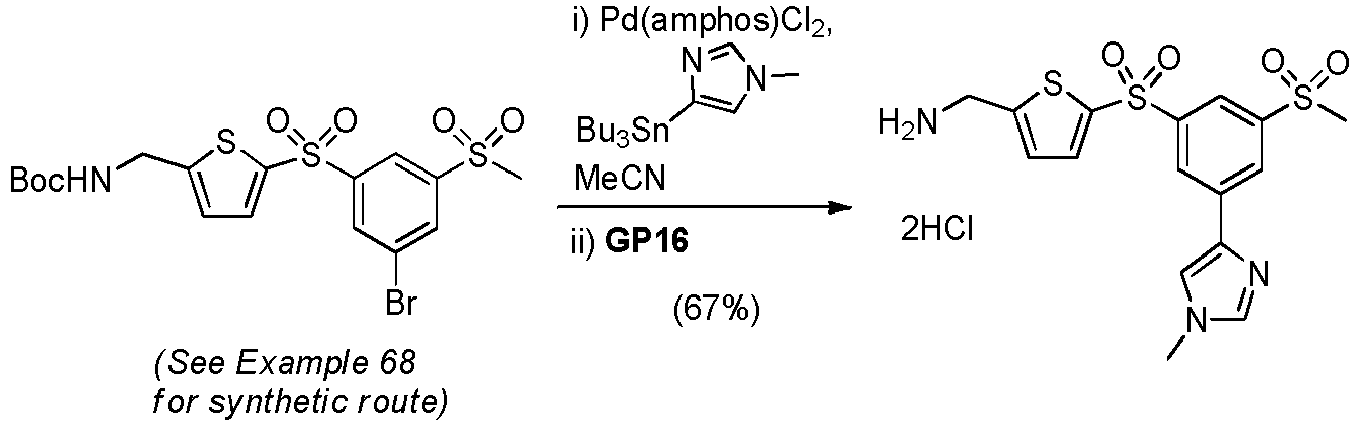
- A mixture of tert-butyl ((5-((3-bromo-5-(methylsulfonyl)phenyl)sulfonyl)thiophen-2-yl)methyl)carbamate (0.17 g, 0.333 mmol), 1-methyl-4-(tributylstannyl)-1H-imidazole (0.24 g, 0.645 mmol), Pd(amphos)Cl2 (23 mg , 10 mol%) and acetonitrile (20 mL) was degassed with nitrogen and then stirred at 80°C for 16 h. After cooling to rt, the mixture was diluted with EtOAc (250 mL). The organic layer was washed with H2O (40 mL) and brine (25 mL), dried over Na2S2O4 and filtered. The solvent was removed under reduced pressure and the crude was purified by chromatography (83% EtOAc in hexane) to afford tert-butyl ((5-((3-(1-methyl-1H-imidazol-4-yl)-5-(methylsulfonyl)phenyl)sulfonyl)thiophen-2-yl)methyl)carbamate as a colourless liquid (0.15 g, 88%). 1H NMR (400 MHz, DMSO-d6) δ 8.53 (s, 1H), 8.49 (s, 1H), 8.15 (s, 1H), 8.05 (s, 1H), 7.84 (d, J = 4.0 Hz, 1H), 7.76 (s, 1H), 7.62 (br, 1H), 7.06 (d, J = 4.0 Hz, 1H), 4.30 (d, J = 6.0 Hz, 2H), 3.72 (s, 3H), 3.36 (s, 3H), 1.37 (s, 9H). LCMS (ESI) m/z 512 (M+H)+.
- Example 137 was synthesised according to general procedures GP16 - from 1 M HCl in EtzO (5.0 ml), tert-butyl ((5-((3-(1-methyl-1H-imidazol-4-yl)-5-(methylsulfonyl)phenyl)sulfonyl)thiophen-2-yl)methyl)carbamate (140 mg, 0.273 mmol) and DCM (10 mL); rt, 4 h. White solid (100 mg, 83%) obtained and required no further purification. 1H NMR (500 MHz, Methanol-d 4) δ 9.12 (s, 1H), 8.71 (s, 1H), 8.61 (s, 1H), 8.51 (d, J = 3.7 Hz, 1H), 8.33 (br, 1H), 7.93 (d, J = 3.6 Hz, 1H), 7.38 (br, 1H), 4.41 (s, 2H), 4.04 (s, 3H), 3.28 (s, 3H). 13C NMR (126 MHz, Methanol-d 4) δ 149.66, 132.36, 131.09, 131.05, 129.94, 128.00, 43.38, 41.21, 21.30. HRMS (ESI) for C16H18N3O4S3 ([M+H]+): Calculated 412.0459; Observed 412.0450.
-
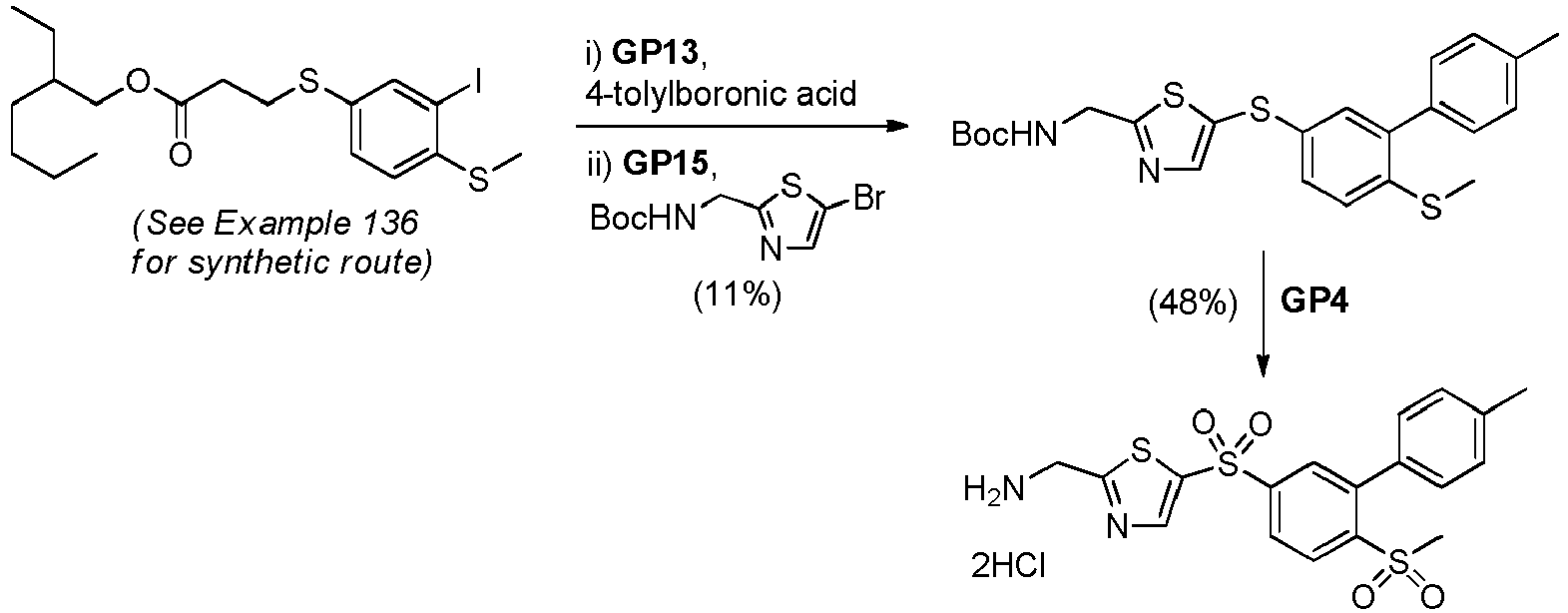
- 2-Ethylhexyl 3-((4'-methyl-6-(methylthio)-[1,1'-biphenyl]-3-yl)thio)propanoate was synthesised according to general procedures GP13 - 2-ethylhexyl 3-((3-iodo-4-(methylthio)phenyl)thio)propanoate (1.00 g, 2.14 mmol), p-tolylboronic acid (437 mg, 3.22 mmol), Pd(PPh3)Cl2 (150 mg, 10 mol%), sodium bicarbonate (0.540 g, 6.43 mmol) and DMF/H2O (10:1, 11 mL); 80 °C, 6 h. Chromatographic purification (15% EtOAc in hexane) afforded 2-ethylhexyl 3-((4'-methyl-6-(methylthio)-[1,1'-biphenyl]-3-yl)thio)propanoate as a yellow oil (0.50 g, 54%). 1H NMR (400 MHz, DMSO-d6) δ 7.36 (d, J = 2.0 Hz, 1H), 7.34 (d, J = 2.0 Hz, 1H), 7.31-7.22 (m, 4H), 7.11 (d, J = 1.9 Hz, 1H) 3.92 (d, J = 5.9 Hz, 2H), 3.14 (t, J = 6.8 Hz, 2H), 2.60 (t, J = 6.9 Hz, 2H), 2.35 (s, 6H), 1.51-1.48 (m, 1H), 1.27-1.22 (m, 8H), 0.85-0.80 (m, 6H). LCMS (ESI) m/z 431 (M+H)+.
- tert-Butyl ((5-((4'-methyl-6-(methylthio)-[1,1'-biphenyl]-3-yl)thio)thiazol-2-yl)methyl)carbamate was synthesised according to general procedures GP15 - from 2-ethylhexyl 3-((4'-methyl-6-(methylthio)-[1,1'-biphenyl]-3-yl)thio)propanoate as (0.50 g, 1.16 mmol), tert-butyl ((5-bromothiazol-2-yl)methyl)carbamate (0.34 g, 1.16 mmol), NaOtBu (223 mg, 2.32 mmol), Pd2(dba)3 (53 mg, 5 mol%), Xantphos (67 mg, 0.116 mmol) and toluene/tBuOH (5:1, 10 mL); 110 °C, 16 h. Chromatography (30% EtOAc in hexane) afforded a yellow oil (0.11 g, 21%). 1H NMR (400 MHz, DMSO-d6) δ 7.91 (s, 1H), 7.89 (t, J = 4.0 Hz, 1H), 7.29 (s, 1H), 7.28-7.11 (m, 5H), 7.05 (s, 1H), 4.35 (d, J = 5.9 Hz, 2H), 2.34 (s, 6H), 1.38 (s, 9H). LCMS (ESI) m/z 459 (M+H)+.
- Example 138 was synthesised according to general procedures GP4 - from i) m-CPBA (55%; 0.34 g, 1.08 mmol), tert-butyl ((5-((4'-methyl-6-(methylthio)-[1,1'-biphenyl]-3-yl)thio)thiazol-2-yl)methyl)carbamate (0.11 g, 0.240 mmol) and DCM (40 mL); rt, 4 h. Chromatography (30% EtOAc in cyclohexane), yellow oil (77 mg, 61%); ii) 1 M HCl in EtzO (5.0 ml), tert-butyl ((5-((4'-methyl-6-(methylsulfonyl)-[1,1'-biphenyl]-3-yl)sulfonyl)thiazol-2-yl)methyl)carbamate (75 mg, 0.144 mmol) and DCM (5.0 mL); rt, 4 h. Yellow solid (55 mg, 78%) obtained and required no further purification. 1H NMR (500 MHz, Methanol-d 4) δ 8.50 (s, 1H), 8.41 (d, J = 8.4 Hz, 1H), 8.26 (dd, J = 8.4, 2.0 Hz, 1H), 7.97 (d, J = 1.9 Hz, 1H), 7.39 - 7.30 (m, 4H), 4.56 (s, 2H), 2.71 (s, 3H), 2.44 (s, 3H). 13C NMR (126 MHz, Methanol-d 4) δ 171.23, 149.67, 146.55, 145.92, 144.88, 141.50, 140.66, 135.27, 132.37, 131.10, 131.05, 129.95, 128.01, 43.41, 41.24, 21.31. HRMS (ESI) for C18H19N2O4S3 ([M+H]+): Calculated 423.0507; Observed 423.0507.
-

- tert-Butyl ((5-((3-bromo-5-methoxyphenyl)thio)thiazol-2-yl)methyl)carbamate was synthesised according to general procedures GP15 - from 2-ethylhexyl 3-((3-bromo-5-methoxyphenyl)thio)propanoate (0.70 g, 1.74 mmol), tert-butyl ((5-bromothiazol-2-yl)methyl)carbamate (1.02 g, 3.47 mmol), NaOtBu (330 mg, 3.47 mmol), Pd2(dba)3 (160 mg, 10 mol%), Xantphos (200 mg, 10 mol%) and toluene/tBuOH (5:1, 12 mL); 110 °C, 16 h. Chromatography (20% EtOAc in hexane) afforded a yellow oil (0.50 g, 67%). 1H NMR (400 MHz, DMSO-d 6) δ 7.99 (s, 1H), 7.80 (br, 1H), 7.05 (s, 1H), 6.89 (s, 1H), 6.77 (s, 1H), 4.40 (d, J = 6.9 Hz, 2H), 3.74 (s, 3H), 1.39 (s, 9H). LCMS (ESI) m/z 430.9 (M+H)+.
- tert-Butyl ((5-((3-bromo-5-methoxyphenyl)sulfonyl)thiazol-2-yl)methyl)carbamate was synthesised according to general procedures GP17 - from m-CPBA (55%; 0.48 g, 1.53 mmol), tert-butyl ((5-((3-bromo-5-methoxyphenyl)thio)thiazol-2-yl)methyl)carbamate (0.30 g, 0.695 mmol) and DCM (15 mL); rt, 3 h. Chromatographic purification (35% EtOAc in cyclohexane) afforded a pale yellow oil (97 mg, 30%). 1H NMR (400 MHz, DMSO-d 6) δ 8.51 (s, 1H), 7.87 (br, 1H), 7.70 (s, 1H), 7.55-7.54 (m, 1H), 7.49- 7.48 (m, 1H), 4.42 (d, J = 5.2 Hz, 2H), 3.86 (s, 3H), 1.38 (s, 9H). LCMS (ESI) m/z 463/465 (M+H)+.
- A suspension of tert-butyl ((5-((3-bromo-5-methoxyphenyl)sulfonyl)thiazol-2-yl)methyl) carbamate (145 mg, 0.313 mmol) and 1-methyl-4-(tributylstannyl)-1H-imidazole (348 mg, 0.939 mmol) in acetonitrile (5 mL) was degassed for 10 min with nitrogen. Pd(amphos)Clz (22 mg, 10%) was then added and the vessel was sealed and heated at 90 °C for 16h. After cooling to rt, the mixture was diluted with ethyl acetate (100 mL), washed with water (2 × 50 mL) and brine (50 mL), dried over anhydrous sodium sulfate, filtered and concentrated under reduced pressure. Chromatographic purification (4% MeOH in dichloromethane) afforded tert-butyl ((5-((3-methoxy-5-(1-methyl-1H-imidazol-4-yl)phenyl)sulfonyl)thiazol-2-yl)methyl)carbamate as a pale yellow solid (40 mg, 28%). 1H NMR (400 MHz, DMSO-d 6) δ 8.44 (s, 1H), 7.90 (t, J = 1.4 Hz, 1H), 7.86-7.84 (m, 2H), 7.68 (s, 1H), 7.59-7.58 (m, 1H), 7.27 (s, 1H), 4.39 (d, J = 5.8 Hz, 2H), 3.87 (s, 3H), 3.69 (s, 3H), 1.38 (s, 9H). LCMS (ESI) m/z 465.0 (M+H)+.
- Example 139 was synthesised according to general procedures GP16 - from 2 M HCl in EtzO (10 mL), tert-butyl ((5-((3-methoxy-5-(1-methyl-1H-imidazol-4-yl)phenyl) sulfonyl)thiazol-2-yl)methyl)carbamate (36 mg, 0.0776 mmol) and MeOH/DCM (1:2, 10 mL); rt, 6 h. Beige solid (20 mg, 65%) obtained and required no further purification. 1H NMR (500 MHz, Methanol-d 4) δ 9.07 (s, 1H), 8.49 (s, 1H), 8.20 (br, 1H), 7.99 (s, 1H), 7.71 - 7.54 (m, 2H), 4.58 (s, 2H), 4.03 (s, 3H), 3.96 (s, 3H). 13C NMR (126 MHz, Methanol-d 4) δ 170.68, 162.62, 149.24, 145.19, 141.93, 138.33, 133.21, 130.95, 122.38, 117.79, 117.38, 114.76, 57.15, 41.51, 37.10. HRMS (ESI) for C15H17N4O3S2 ([M+H]+): Calculated 365.0742; Observed 365.0736.
-

- 2-Ethylhexyl 3-((5-(methylthio)-4'-(trifluoromethyl)-[1,1'-biphenyl]-3-yl)thio)propanoate was synthesised according to general procedures GP13 - from 2-ethylhexyl 3-((3-bromo-5-(methylthio)phenyl)thio)propanoate (1.20 g, 2.85 mmol), 4-(trifluoromethyl)phenylboronic acid (0.81 g, 4.28 mmol), Pd(dppf)Cl2.DCM (0.11 g, 5 mol%), 2 M Na2CO3 (3.5 mL, 7.0 mmol), toluene (35 mL); 100 °C, 16 h. Chromatographic purification (10% EtOAc in cyclohexane) afforded a colourless oil (1.20 mg, 86%). 1H NMR (400 MHz, DMSO-d 6) δ 7.92 (d, J = 8.0 Hz, 2H),7.80 (d, J = 8.4 Hz, 2H), 7.38 (t, J = 2.0 Hz, 2H), 7.23 (t, J = 2.0 Hz, 1H), 3.93 (d, J = 6.0 Hz, 2H), 3.27 (d, J = 6.8 Hz, 2H), 2.66 (t, J = 4.0 Hz, 2H), 2.55 (s, 3H), 1.51-1.47 (m, 1H), 1.31-1.22 (m, 8H), 0.85-0.79 (m, 6H). LCMS (ESI, -ve) m/z 299 (M-C11H21O2)-.
- tert-Butyl ((5-((5-(methylthio)-4'-(trifluoromethyl)-[1,1'-biphenyl]-3-yl)thio)thiazol-2-yl) methyl)carbamate was synthesised according to general procedures GP15 - from 2-ethylhexyl 3-((5-(methylthio)-4'-(trifluoromethyl)-[1,1'-biphenyl]-3-yl)thio)propanoate (1.20 g, 2.47 mmol), tert-butyl ((5-bromothiazol-2-yl)methyl)carbamate (0.72 g, 2.47 mmol), NaOtBu (0.47 g, 4.94 mmol), Pd2(dba)3 (110 mg, 5 mol%), Xantphos (140 mg, 10 mol%) and toluene/tBuOH (4:1, 30 mL); 110 °C, 16 h. Chromatography (35% EtOAc in hexane) afforded a yellow oil (0.50 g, 67%). 1H NMR (400 MHz, OMSO-d 6) δ 8.00 (s, 1H), 7.85 (d, J = 7.6 Hz, 2H), 7.79 (d, J = 7.6 Hz, 3H), 7.42 (d, J = 1.6 Hz, 1H), 7.27 (t, J = 1.6 Hz, 1H), 7.13 (s, 1H), 4.39 (d, J = 6.4 Hz, 2H), 3.31 (s, 3H), 1.35 (s, 9H). LCMS (ESI) m/z 513 (M+H)+.
- Example 140 was synthesised according to general procedures GP4 - from i) m-CPBA (55%; 0.62 g, 1.97 mmol), tert-butyl ((5-((5-(methylthio)-4'-(trifluoromethyl)-[1,1'-biphenyl]-3-yl)thio)thiazol-2-yl)methyl)carbamate (0.23 g, 0.45 mmol) and DCM (20 mL); rt, 3 h. Chromatography (58% EtOAc in cyclohexane), yellow oil (120 mg, 46%); ii) 2 M HCl in EtzO (5 mL), tert-butyl ((5-((5-(methylsulfonyl)-4'-(trifluoromethyl)-[1,1'-biphenyl]-3-yl)sulfonyl)thiazol-2-yl)methyl)carbamate (110 mg, 0.191 mmol) and DCM (10 mL); rt, 4 h. Beige solid (70 mg, 72%) obtained and required no further purification. 1H NMR (500 MHz, Methanol-d 4) δ 8.64 - 8.55 (m, 4H), 7.98 (d, J = 8.0 Hz, 2H), 7.86 (d, J = 7.8 Hz, 2H), 4.59 (s, 2H), 3.30 (s, 3H). 13C NMR (126 MHz, Methanol-d 4) δ 171.30, 149.78, 145.16, 144.98, 144.53, 142.17, 141.36, 132.60, 132.22 (q, J = 32.8 Hz), 131.63, 129.33, 127.63 (q, J = 272.2 Hz), 127.34 (q, J = 3.8 Hz), 126.63, 44.01, 41.23. 19F NMR (471 MHz, Methanol-d 4) δ -61.78. HRMS (ESI) for C18H16F3N2O4S3 ([M+H]+): Calculated 477.0224; Observed 477.0230.
-

- 2-Ethylhexyl 3-((3-methoxy-5-(1H-pyrazol-4-yl)phenyl)thio)propanoate was synthesised according to general procedures GP13 - from 2-ethylhexyl 3-((3-bromo-5-methoxyphenyl)thio)propanoate (4.50 g, 11.2 mmol), tert-butyl 4-(4,4,5,5-tetramethyl-1,3,2-dioxaborolan-2-yl)-1H-pyrazole-1-carboxylate (4.92 g, 16.7 mmol), Pd(dppf)Cl2.DCM (0.45 g, 5 mol%), aq. Na2CO3 (2.0 M; 11.2 mL, 22.4 mmol), 1,4-dioxane (35 mL); 100 °C, 16 h. Chromatographic purification (52% EtOAc in hexane) afforded a colourless oil (4.31 g, 99%). 1H NMR (400 MHz, DMSO-d 6) δ 12.94 (br, 1H), 8.23 (s, 1H), 7.94 (s, 1H), 7.14 (s, 1H), 7.02 (s, 1H), 6.78 (s, 1H), 3.95 (d, J = 5.4 Hz, 2H), 3.84 (s, 3H), 3.22 (t, J = 6.4 Hz, 2H), 2.63 (t, J = 6.8 Hz, 2H), 1.51-1.50 (m, 1H), 1.30-1.22 (m, 8H), 0.85-0.81 (m, 6H). LCMS (ESI) m/z 391 (M+H)+.
- 2-Ethylhexyl 3-((3-methoxy-5-(1H-pyrazol-4-yl)phenyl)thio)propanoate (4.30 g, 11.0 mmol) was dissolved in dry THF (50 mL) and NaH (60% in mineral oil; 0.66 g, 16.5 mmol) was added portionwise over 2 min at 0 °C. MOMCI (1.76 mL, 23.1 mmol) was then added and the mixture was stirred at 0 °C for 15 min. The reaction mixture was poured onto crushed ice and extracted with EtOAc (2 × 125 mL). The organic extracts were combined and washed with brine (30 mL), dried over NaSO4, filtered and the solvent was removed under reduced pressure. The crude was purified by chromatography (30% EtOAc in hexane) to afford 2-ethylhexyl 3-((3-methoxy-5-(1-(methoxymethyl)-1H-pyrazol-4-yl)phenyl)thio)propanoate as a colourless oil (3.0 g, 63%). 1H NMR (400 MHz, DMSO-d 6) δ 8.41 (s, 1H), 8.03 (s, 1H), 7.15 (d, J = 1.2 Hz, 1H), 7.03 (t, J = 2.0 Hz, 1H), 6.72 (t, J = 2.0 Hz, 1H), 5.37 (s, 2H), 3.94 (d, J = 5.8 Hz, 2H), 3.79 (s, 3H), 3.27 (s, 3H), 3.23 (t, J = 5.4 Hz, 2H), 2.66 (t, J = 4.0 Hz, 2H), 1.51-1.50 (m, 1H), 1.30-1.22 (m, 8H), 0.85-0.81 (m, 6H). LCMS (ESI) m/z 435 (M+ H)+.
- tert-Butyl ((5-((3-methoxy-5-(1-(methoxymethyl)-1H-pyrazol-4-yl)phenyl)thio)thiazol-2-yl)methyl)carbamate was synthesised according to general procedures GP15 - from 2-ethylhexyl 3-((3-methoxy-5-(1-(methoxymethyl)-1H-pyrazol-4-yl)phenyl)thio)propanoate (3.00 g, 6.91 mmol), tert-butyl ((5-bromothiazol-2-yl)methyl)carbamate (2.02 g, 6.90 mmol), NaOtBu (1.32 g, 13.82 mmol), Pd2(dba)3 (0.32 g, 5 mol%), Xantphos (0.40 g, 10 mol%) and toluene/tBuOH (4:1, 25 mL); 110 °C, 16 h. Chromatography (62% EtOAc in hexane) afforded a yellow oil (0.60 g, 19%). 1H NMR (400 MHz, DMSO-d 6) δ 8.38 (s, 1H), 7.99 (s, 1H), 7.95 (s, 1H), 7.77 (br, 1H), 7.13 (s, 1H), 7.08 (d, J = 2.4Hz, 1H), 6.56 (d, J = 2.0 Hz, 1H), 5.36 (s, 2H), 4.39 (d, J = 6.0 Hz, 2H), 3.75 (s, 3H), 3.26 (s, 3H), 1.37 (s, 9H). LCMS (ESI) m/z 463 (M+H)+.
- Examples 141 and 142 were synthesised according to general procedures GP4 - from i) m-CPBA (55%, 0.89 g, 2.85 mmol), tert-butyl ((5-((3-methoxy-5-(1-(methoxymethyl)-1H-pyrazol-4-yl)phenyl)thio)thiazol-2-yl)methyl)carbamate (0.60 g, 1.29 mmol) and DCM (20 mL); rt, 3 h. Chromatography (68% EtOAc in cyclohexane), yellow solid (0.32 g, 50%); ii) 2 M HCl in EtzO (4.0 ml), tert-butyl ((5-((3-methoxy-5-(1-(methoxymethyl)-1H-pyrazol-4-yl)phenyl)sulfonyl)thiazol-2-yl)methyl)carbamate (0.10 g, 0.202 mmol) and DCM (10 mL); rt, 3 h. The hydrochloride salt was diluted with DCM and washed with sat. NaHCOs to afford the free base. The crude amine mixture was purified by HPLC (0.1% TFA in HzO:MeCN gradient) to afford amine tri-trifluoroacetates 10125 (18 mg, 13%) and 10126 (12 mg, 9.3%) both as beige solids.
- 1H NMR (500 MHz, Methanol-d 4) δ 8.46 (s, 1H), 8.33 (d, J = 0.8 Hz, 1H), 8.02 (d, J = 0.8 Hz, 1H), 7.77 (t, J = 1.6 Hz, 1H), 7.46 (dd, J = 2.5, 1.5 Hz, 1H), 7.37 (dd, J = 2.4, 1.6 Hz, 1H), 5.43 (s, 2H), 4.54 (s, 2H), 3.91 (s, 3H), 3.34 (s, 3H). 13C NMR (126 MHz, Methanol-d 4) δ 170.33, 162.45, 148.69, 144.35, 142.67, 139.01, 137.17, 130.00, 123.23, 117.61, 117.28, 111.40, 83.00, 57.07, 56.53, 41.10. HRMS (ESI) for C16H18N4O4S2 ([M+H]+): Calculated 395.0847; Observed 395.0849.
- 1H NMR (500 MHz, Methanol-d 4) δ 8.45 (s, 1H), 8.08 (s, 2H), 7.76 (t, J = 1.6 Hz, 1H), 7.45 (dd, J = 2.4, 1.5 Hz, 1H), 7.35 (dd, J = 2.4, 1.6 Hz, 1H), 4.54 (s, 2H), 3.90 (s, 3H). 13C NMR (126 MHz, Methanol-d 4) δ 170.29, 162.41, 148.65, 144.25, 142.73, 137.78, 132.80, 121.67, 117.58, 117.27, 111.03, 56.49, 41.09. HRMS (ESI) for C14H14N4O3S2 ([M+H]+): Calculated 351.0585; Observed 351.0594.
-

- 2-Ethylhexyl-3-((3-bromo-5-(trifluoromethyl)phenyl)thio)propanoate was synthesised according to general procedures GP12 - from 1,3-dibromo-5-(trifluoromethyl)benzene (2.0 g, 6.58 mmol), Pd2(dba)3 (0.15 g, 2.5 mol%), Xantphos (0.19 g, 5 mol%), 2-ethylhexyl-3-mercaptopropionate (1.44 g, 6.58 mmol), DIPEA (2.29 mL, 13.16 mmol) and toluene (20 mL); 110 °C, 8 h. Chromatography (6-8% EtOAc in hexane) afforded a pale yellow oil (1.65 g, 57%). 1H NMR (400 MHz, DMSO-d6) δ 7.85 (s, 1H), 7.76 (s, 1H), 7.64 (s, 1H), 3.94 (d, J = 5.3 Hz, 2H), 3.34-3.32 (m, 2H), 2.66 (t, J = 6.6 Hz, 2H), 1.51-1.49 (m, 1H), 1.30-1.23 (m, 8H), 0.85-0.82 (m, 6H).
- 2-Ethylhexyl-3-((3-(1-methyl-1H-pyrazol-4-yl)-5-(trifluoromethyl)phenyl)thio)propanoate was synthesised according to general procedures GP13 - from 2-ethylhexyl 3-((3-bromo-5-(trifluoromethyl)phenyl)thio)propanoate (0.33 g, 0.75 mmol), 1-methylpyrazole-4-boronic acid pinacol ester (0.172 g, 0.83 mmol), Pd(dppf)Cl2·CH2Cl2 (31 mg, 5 mol%), Na2CO3 (0.197 g, 1.88 mmol), toluene/H2O (5:1, 12 mL); 110 °C, 16 h. Chromatographic purification (10% EtOAc in hexane) afforded a pale yellow oil (0.20 g, 60%). 1H NMR (400 MHz, DMSO-d6) δ 8.37 (s, 1H), 8.05 (s, 1H), 7.80 (s, 1H), 7.72 (s, 1H), 7.39 (s, 1H), 3.95-3.91 (m, 2H), 3.87 (s, 3H), 3.32 (t, J = 6.8 Hz, 2H), 2.66 (m, 2H), 1.52-1.48 (m, 1H), 1.29-1.23 (m, 8H), 0.84-0.80 (m, 6H); LCMS (ESI) m/z 443 (M+H)+.
- tert-Butyl ((5-((3-(1-methyl-1H-pyrazol-4-yl)-5-(trifluoromethyl)phenyl)thio)thiazol-2-yl)methyl)carbamate was synthesised according to general procedures GP14 and GP12 - from i) 2-ethylhexyl 3-((3-(1-methyl-1H-pyrazol-4-yl)-5-(trifluoromethyl)phenyl)thio) propanoate (0.6 g, 1.36 mmol), KOtBu (1.0 M in THF; 2.7 mL, 2.71 mmol), THF (10 mL); -78 °C, 1 hour. ii) tert-butyl ((5-bromothiazol-2-yl)methyl)carbamate (0.46 g, 1.57 mmol), Pd2(dba)3 (206 mg, 14 mol%), Xantphos (268 mg, 28 mol%), NaOtBu (430 mg, 4.49 mmol) and toluene/tBuOH (5:1; 24 mL); 110 °C, 16 h. Chromatography (40% EtOAc in hexane) afforded an orange oil (0.24 g, 32%). 1H NMR (400 MHz, DMSO-d6) δ 8.31 (s, 1H), 8.04 (s, 1H), 7.99 (s, 1H), 7.79-7.77 (m, 3H), 7.23 (s, 1H), 4.40 (d, J = 5.9 Hz, 2H), 3.86 (s, 3H), 1.37 (s, 9H). LCMS (ESI) m/z 471 (M+H)+.
- Example 143 was synthesised according to general procedures GP4 - from i) m-CPBA (55%; 0.35 g, 1.22 mmol), tert-butyl ((5-((3-(1-methyl-1H-pyrazol-4-yl)-5-(trifluoromethyl)phenyl)thio)thiazol-2-yl)methyl)carbamate (0.24 g, 0.51 mmol) and DCM (10 mL); rt, 4 h. Chromatography (50% EtOAc in cyclohexane), yellow oil (130 mg, 51%); ii) 2 M HCl in EtzO (8 mL), tert-butyl ((5-((3-(1-methyl-1H-pyrazol-4-yl)-5-(trifluoromethyl)phenyl)sulfonyl) thiazol-2-yl)methyl)carbamate (90 mg, 0.18 mmol) and DCM (8 mL); rt, 3 h. Pale yellow solid obtained (70 mg, 97%) without further purification. 1H NMR (500 MHz, Methanol-d 4) δ 8.56 (s, 1H), 8.45 (s, 1H), 8.41 (s, 1H), 8.23-8.21 (m, 2H), 8.11 (s, 1H), 4.57 (s, 2H), 4.01 (s, 3H);13C NMR (126 MHz, Methanol-d 4) δ 171.1, 149.6, 144.8, 141.7, 137.3, 137.2, 134.0 (q, J = 34.0 Hz), 131.7, 128.34, 128.31, 124.5 (q, J = 272.2 Hz), 122.6 (q, J = 3.8 Hz), 121.4, 41.3, 39.3; 19F NMR (470 MHz, Methanol-d 4) δ -64.40 (s). HRMS (ESI) for C15H14F3N4O2S2 ([M+H]+): Calculated 403.0510; Observed 403.0517.
-

- As solution of NaNOz (2.84 g, 41.16 mmol) in water (30 mL) was added to a solution of 5-(methylthio)-[1,1'-biphenyl]-2-amine (2.95 g, 13.70 mmol) in aq. HCl (5 M, 35 mL) at 0°C, and the resulting solution was stirred at 0 °C for 1 h. A solution of KI (6.83 g, 41.2 mmol) in water (30 mL) was then added and stirring was continued for a further 2 h at 0 °C. After completion of the reaction, the reaction mixture was extracted with ethyl acetate (30 mL), dried over anhydrous sodium sulfate and filtered. The solvent was removed under reduced pressure and the crude product was purified using combi flash column chromatography (100% Hexanes) to give (6-iodo-[1,1'-biphenyl]-3-yl)(methyl)sulfane (2.5 g, 56%) as a brown-coloured oil. 1H NMR (400 MHz, OMSO-d 6) δ 7.86 (d, J = 8.3 Hz, 1H), 7.52-7.41 (m, 3H), 7.33-7.31 (m, 2H), 7.14 (d, J = 2.3 Hz, 1H), 7.04-7.10 (m, 1H), 2.50 (s, 3H). ). LCMS (ESI, -ve) m/z 325 (M-H)-.
- 2-Ethylhexyl 3-((5-(methylthio)-[1,1'-biphenyl]-2-yl)thio)propanoate was synthesised according to general procedures GP12 - from (6-iodo-[1,1'-biphenyl]-3-yl)(methyl)sulfane (2.4 g, 7.36 mmol), Pd2(dba)3 (0.17 g, 2.5 mol%), Xantphos (0.21 g, 5 mol%), 2-ethylhexyl-3-mercaptopropionate (1.28 g, 5.88 mmol), DIPEA (2.17 mL, 14.72 mmol) and toluene (30 mL); 110 °C, 16 h. Chromatography (5% EtOAc in hexane) afforded a pale yellow oil (0.40 g, 13%). 1H NMR (400 MHz, DMSO-d6) δ 7.43-7.35 (m, 5H), 7.27-7.25 (m, 2H), 7.08 (d, J = 2.0 Hz, 1H), 3.95 (d, J = 5.6 Hz, 2H), 3.21 (t, J = 6.4 Hz, 2H), 2.63 (t, J = 6.8 Hz, 2H), 2.50 (s, 3H), 1.52-1.50 (m, 1H), 1.29-1.24 (m, 8H), 0.87-0.82 (m, 6H); LCMS (ESI) m/z 417 (M+H)+.
- tert-Butyl ((5-((5-(methylthio)-[1,1'-biphenyl]-2-yl)thio)thiazol-2-yl)methyl)carbamate was synthesised according to general procedures GP14 and GP12 - from i) 2-Ethylhexyl 3-((5-(methylthio)-[1,1'-biphenyl]-2-yl)thio)propanoate (0.4 g, 0.96 mmol), KOtBu (1.0 M in THF; 2.88 mL, 2.88 mmol), THF (10 mL); -78 °C, 30 min. ii) tert-butyl ((5-bromothiazol-2-yl)methyl)carbamate (0.45 g, 1.55 mmol), Pd2(dba)3 (70 mg, 5 mol%), Xantphos (80 mg, 10 mol%), NaOtBu (290 mg, 3.10 mmol) and toluene/tBuOH (4:1; 20 mL); 110 °C, 16 h. Chromatography (38% EtOAc in hexane) afforded a brown solid (0.16 g, 38%). 1H NMR (400 MHz, DMSO-d6) δ 7.73 (br, 1H), 7.69 (s, 1H), 7.52-7.40 (m, 5H), 7.24 (d, J = 8.8 Hz, 1H), 7.13 (d, J = 1.9 Hz, 1H), 7.08 (d, J = 8.3 Hz, 1H), 4.34 (d, J = 5.9 Hz, 2H), 2.49 (s, 3H), 1.38 (s, 9H). LCMS (ESI) m/z 445 (M+H)+.
- Example 144 was synthesised according to general procedures GP4 - from i) m-CPBA (55%; 0.46 g, 1.48 mmol), tert-butyl ((5-((5-(methylthio)-[1,1'-biphenyl]-2-yl)thio)thiazol-2-yl)methyl)carbamate (0.15 g, 0.33 mmol) and DCM (15 mL); rt, 3 h. Chromatography (65% EtOAc in cyclohexane), yellow solid (70 mg, 41%); ii) 2 M HCl in EtzO (4 mL), tert-butyl ((5-((5-(methylsulfonyl)-[1,1'-biphenyl]-2-yl)sulfonyl)thiazol-2-yl)methyl)carbamate (60 mg, 0.12 mmol) and DCM (10 mL); rt, 3 h. White solid obtained (40 mg, 77%) without further purification. 1H NMR (500 MHz, Methanol-d 4) δ 8.59 (d, J = 8.2 Hz, 1H), 8.25 (d, J = 8.0 Hz, 1H), 7.88 (s, 1H), 7.48 (t, J = 7.3 Hz, 1H), 7.44 - 7.36 (m, 3H), 7.19 (d, J = 7.2 Hz, 2H), 4.48 (s, 2H), 3.22 (s, 3H). 13C NMR (126 MHz, Methanol-d 4) δ 170.41, 149.64, 146.99, 145.23, 144.88, 140.59, 137.70, 132.80, 131.21, 130.93, 130.11, 129.11, 128.37, 43.98, 41.26.
-

- To a stirred solution of (3-chlorothiophen-2-yl)methanamine (1.0 g, 6.80 mmol) and EtsN (1.43 mL, 10.2 mmol) in DCM (10 mL), was added BoczO (1.78 g, 7.76 mmol) drop-wise. The mixture was stirred at rt for 16 h before it was diluted with DCM (100 mL), washed with brine (2 × 50 mL), water (50 mL), dried over Na2SO4 and filtered. The solvent was removed under reduced pressure and the crude was purified by chromatography (12% EtOAc in hexanes) to afford tert-butyl ((3-chlorothiophen-2-yl)methyl)carbamate (0.70 g, 42%) as a colorless oil. 1HNMR (400 MHz, DMSO-d6 ) δ 7.56-7.54 (m, 1H), 7.51 (d, J = 5.4 Hz, 1H), 6.98 (d, J = 4.9 Hz, 1H), 4.23 (d, J = 5.9 Hz, 2H), 1.24 (s, 9H). LCMS (ESI) m/z 148/150 (M-Boc+2H)+.
- To a stirred solution of tert-butyl ((3-chlorothiophen-2-yl)methyl)carbamate (0.10 g, 0.405 mmol) in DMF (2.0 ml) was added N-bromosuccinimide (79 mg, 0.443 mmol) at 0 °C. The mixture was stirred at rt for 3 h before it was diluted with EtzO (80 ml), washed with chilled water (3 × 30 ml), dried over Na2SO4 and filtered. The solvent was removed under reduced pressure and the crude was purified by chromatography (8% EtOAc in hexanes) to afford tert-butyl ((5-bromo-3-chlorothiophen-2-yl)methyl)carbamate as a yellow solid (90 mg, 69 %). 1HNMR (400 MHz, DMSO-d6 ) δ 7.61 (t, J = 5.7 Hz, 1H), 7.20 (s, 1H), 4.17 (d, J = 5.8 Hz, 2H), 1.39 (s, 9H). LCMS (ESI) m/z 209/211 (M-BocNH)+.
-

- tert-Butyl ((3-chloro-5-((5-(methylthio)-[1,1'-biphenyl]-3-yl)thio)thiophen-2-yl)methyl) carbamate was synthesised according to general procedures GP15 - from 2-ethylhexyl 3-((5-(methylthio)-[1,1'-biphenyl]-3-yl)thio)propanoate (204 mg, 0.490 mmol), tert-butyl ((5-bromo-3-chlorothiophen-2-yl)methyl)carbamate (160 mg, 0.490 mmol), Pd2(dba)3 (45 mg, 10 mol%), Xantphos (0.14 g, 20 mol%), NaOtBu (94 mg, 0.979 mmol), toluene/tBuOH (5:1, 6 mL), 110 °C, 16 h. Chromatography (20% EtOAc in hexane), a yellow oil (0.15 g, 64%). 1H NMR (400 MHz, Methanol-d) δ 7.52-7.50 (m, 2H), 7.44-7.43 (m, 3H), 7.30 (s, 1H), 7.20-7.18 (m, 2H), 7.07 (s, 1H), 4.35 (s, 2H), 2.47 (s, 3H), 1.41 (s, 9H). LCMS (ESI) m/z 422 (M-tBu+2H)+.
- Example 145 was synthesised according to general procedures GP4 - from i) m-CPBA (55%; 295 mg, 0.940 mmol), tert-butyl ((3-chloro-5-((5-(methylthio)-[1,1'-biphenyl]-3-yl)thio)thiophen-2-yl)methyl)carbamate (90 mg, 0.188 mmol) and DCM (10 mL); rt, 3 h. Chromatography (60% EtOAc in cyclohexane), off-white solid (45 mg, 44%); ii) 2 M HCl in EtzO (4 mL), tert-butyl ((3-chloro-5-((5-(methylthio)-[1,1'-biphenyl]-3-yl)sulfonyl)thiophen-2-yl)methyl) carbamate (40 mg, 0.0738 mmol) and DCM (4 mL); rt, 3 h. Yellow solid obtained (23 mg, 66%) without further purification. 1H NMR (500 MHz, Methanol-d 4/Chloroform-d) δ 8.52 - 8.45 (m, 3H), 7.94 (s, 1H), 7.76 - 7.70 (m, 2H), 7.58 - 7.53 (m, 2H), 7.52 - 7.47 (m, 1H), 4.37 (s, 2H), 3.27 (s, 3H). 13C NMR (126 MHz, Methanol-d 4/Chloroform-d) δ 146.03, 144.53, 144.28, 143.73, 138.08, 137.97, 135.13, 131.81, 131.23, 130.39, 130.35, 129.33, 128.23, 125.55, 44.17, 36.07. HRMS (ESI) for C18H14ClO4S3 ([M-NH2]+): Calculated 424.9743; Observed 424.9734.
-

- A solution of 4-(methylthio)-[1,1'-biphenyl]-2-amine (1.40 g, 6.50 mmol) in 5 N aq. HCl (10 mL) was cooled to 0 °C and a solution of NaNOz (1.35 g, 19.5 mmol) in water (20 mL) was then added. The resultant mixture was stirred at 0 °C for 1 h, before adding KI (3.24 g, 19.5 mmol) in water (30 mL) with continued stirring for a further 2h at the same temperature. After completion, the reaction mixture was extracted with EtOAc (2 × 30 mL) and the combined organic extracts were dried over anhydrous sodium sulfate, filtered and concentrated under reduced pressure. Chromatographic purification (2% EtOAc in hexane) afforded (2-iodo-[1,1'-biphenyl]-4-yl)(methyl)sulfane (1.20 g, 57%) as a black oil.
- 2-Ethylhexyl 3-((4-(methylthio)-[1,1'-biphenyl]-2-yl)thio)propanoate was synthesised according to general procedures GP12 - from (2-iodo-[1,1'-biphenyl]-4-yl)(methyl)sulfane (1.20 g, 3.68 mmol), Pd2(dba)3 (84 mg, 2.5 mol%), Xanthphos (106 mg, 5 mol%), 2-ethylhexyl-3-mercaptopropionate (0.80 g, 3.68 mmol), DIPEA (1.28 mL, 7.36 mmol) and toluene (15 mL); 110 °C, 16 h. Chromatographic purification (6% EtOAc in hexane) afforded a yellow oil (0.86 g, 56%). 1H NMR (400 MHz, Chloroform-d) δ 7.40-7.38 (m, 5H), 7.35 (d, J = 6.9 Hz, 1H), 7.18-7.14 (m, 2H), 3.98-3.96 (m, 2H), 2.99-2.91 (m, 2H), 2.76-2.74 (m, 1H), 2.53 (s, 3H), 2.52-2.49 (m, 1H), 1.37-1.25 (m, 9H), 0.91-0.85 (m, 6H). LCMS (ESI) m/z 417 (M+H)+.
- tert-Butyl ((5-((4-(methylthio)-[1,1'-biphenyl]-2-yl)thio)thiazol-2-yl)methyl)carbamate was synthesised according to general procedures GP15 - from 2-Ethylhexyl 3-((4-(methylthio)-[1,1'-biphenyl]-2-yl)thio)propanoate (0.50 g, 1.20 mmol), tert-butyl ((5-bromothiazol-2-yl)methyl)carbamate (0.35 g, 1.20 mmol), NaOtBu (230 mg, 2.40 mmol), Pd2(dba)3 (110 mg, 10 mol%), Xantphos (140 mg, 20 mol%) and toluene/tBuOH (5:1, 12 mL); 110 °C, 16 h. Chromatography (38% EtOAc in hexane) afforded a brown solid (0.18 g, 34%). 1H NMR (400 MHz, OMSO-d 6) δ 7.81 (s, 1H), 7.78 (brs, 1H), 7.49-7.41 (m, 5H), 7.24-7.19 (m, 2H), 6.83 (s, 1H) 4.37 (d, J = 6.4 Hz, 2H), 2.39 (s, 3H), 1.35 (s, 9H). LCMS (ESI) m/z 445 (M+H)+.
- Example 146 was synthesised according to general procedures GP4 - from i) m-CPBA (55%; 0.53 g, 1.69 mmol), tert-butyl ((5-((4-(methylthio)-[1,1'-biphenyl]-2-yl)thio)thiazol-2-yl)methyl)carbamate (0.15 g, 0.337 mmol) and DCM (10 mL); rt, 3 h. Chromatography (60% EtOAc in cyclohexane), white solid (40 mg, 24%); ii) 2 M HCl in EtzO (6.0 mL), tert-butyl ((5-((4-(methylsulfonyl)-[1,1'-biphenyl]-2-yl)sulfonyl)thiazol-2-yl)methyl)carbamate (40 mg, 0.079 mmol) and DCM (5 mL); rt, 3 h. Yellow solid obtained (25 mg, 71%) without further purification. 1H NMR (500 MHz, Methanol-d 4) δ 8.84 (d, J = 1.9 Hz, 1H), 8.32 (dd, J = 8.0, 2.0 Hz, 1H), 7.63 (d, J = 8.0 Hz, 1H), 7.48 (m, 1H), 7.43 - 7.36 (m, 3H), 7.20 - 7.14 (m, 2H), 4.49 (s, 2H), 3.28 (s, 3H). 13C NMR (126 MHz, Methanol-d 4) δ 170.39, 149.62, 148.72, 142.39, 142.08, 140.55, 137.68, 135.91, 133.77, 130.90, 130.16, 129.07, 128.53, 44.21, 41.03. HRMS (ESI) for C17H17N2O4S3 ([M+H]+): Calculated 409.0350; Observed 409.0339.
-

- tert-Butyl 3-ethyl-5-((3-((2-ethylhexyl)oxy)-3-oxopropyl)thio)benzoate was synthesised according to general procedures GP12 - from tert-butyl 3-bromo-5-ethylbenzoate (1.30 g, 4.57 mmol), Pd2(dba)3 (100 mg, 2.5 mol%), Xanthphos (130 mg, 5 mol%), 2-ethylhexyl-3-mercaptopropionate (1.0 g, 4.57 mmol), DIPEA (1.0 mL, 5.49 mmol) and toluene (15 mL); 110 °C, 16 h. Chromatographic purification (5% EtOAc in hexane) afforded a yellow oil (1.8 g, 93%). 1H NMR (400 MHz, DMSO-d 6) δ 7.60 (s, 1H), 7.56 (s, 1H), 7.43 (s, 1H), 3.94 (d, J = 5.6 Hz, 2H), 3.20 (t, J = 6.8 Hz, 2H), 2.67-2.61 (m, 4H),1.54 (s, 9H), 1.32-1.16 (m, 12H), 0.85-0.81 (m, 6H). LCMS (ESI, -ve) m/z 365.1 (M- t Bu)-.
- tert-Butyl 3-((2-(((tert-butoxycarbonyl)amino)methyl)thiazol-5-yl)thio)-5-ethylbenzoate was synthesised according to general procedures GP14 and GP12 - from i) tert-butyl 3-ethyl-5-((3-((2-ethylhexyl)oxy)-3-oxopropyl)thio)benzoate (0.60 g, 1.42 mmol), KOtBu (1.0 M in THF; 2.8 mL, 2.80 mmol), THF (15 mL); -78 °C, 1 h. ii) Pd2(dba)3 (0.12 g, 10 mol%), Xantphos (0.16 g, 20 mol%), tert-butyl ((5-bromothiazol-2-yl)methyl)carbamate (0.32 g, 1.09 mmol), NaOtBu (0.266 g, 2.70 mmol) and toluene/tBuOH (4:1; 8.6 mL); 110 °C, 16 h. Chromatography (17% EtOAc in hexane) afforded a yellow oil (0.38 g, 61%). 1H NMR (400 MHz, OMSO-d 6) δ 7.97 (s, 1H), 7.80 (s, 1H) 7.59 (s, 1H), 7.51 (s, 1H), 7.37 (s, 1H), 4.39 (d, J = 6.0 Hz, 2H), 2.63-2.51 (m, 2H), 1.51 (s, 9H), 1.38 (s, 9H), 1.14 (d, J = 7.2 Hz, 3H). LCMS (ESI) m/z 451 (M+H)+.
- Example 147 was synthesised according to general procedures GP4 - from i) m-CPBA (55%, 0.58 g, 1.84 mmol), tert-butyl 3-((2-(((tert-butoxycarbonyl)amino)methyl)thiazol-5-yl)thio)-5-ethylbenzoate (0.38 g, 0.843 mmol) and DCM (10 mL); rt, 4 h. Chromatography (27% EtOAc in cyclohexane), off-white solid (0.16 g, 39%); ii) 2 M HCl in EtzO (5.0 ml), tert-butyl 3-((2-(((tert-butoxycarbonyl)amino)methyl)thiazol-5-yl)sulfonyl)-5-ethylbenzoate (0.16 g, 0.33 mmol) and DCM (2.0 mL); rt, 16 h. White solid (75 mg, 69%) obtained and required no further purification. 1H NMR (500 MHz, Methanol-d 4) δ 8.46 (s, 1H), 8.40 (m, 1H), 8.19 (m, 1H), 8.10 (m, 1H), 4.56 (s, 2H), 2.83 (q, J = 7.6 Hz, 2H), 1.29 (t, J = 7.6 Hz, 3H). 13C NMR (126 MHz, Methanol-d 4) δ 170.57, 167.51, 148.82, 148.79, 143.26, 142.45, 135.65, 134.09, 131.55, 127.02, 41.14, 29.41, 15.65. HRMS (ESI) for C13H15N2O4S2 ([M+H]+): Calculated 327.0473; Observed 327.0484.
-

- tert-Butyl 3-bromo-5-((2-(((tert-butoxycarbonyl)amino)methyl)thiazol-5-yl)thio)benzoate was synthesised according to general procedures GP15 - from tert-butyl 3-bromo-5-((3-((2-ethylhexyl)oxy)-3-oxopropyl)thio)benzoate (1.0 g, 2.1 mmol), tert-butyl ((5-bromothiazol-2-yl)methyl)carbamate (0.49 g, 1.69 mmol), NaOtBu (407 mg, 4.23 mmol), Pd2(dba)3 (195 mg, 10 mol%), Xantphos (245 mg, 20 mol%) and toluene/tBuOH (4:1, 10 mL); 110 °C, 16 h. Chromatography (15% EtOAc in hexane) afforded a yellow oil (0.30 g, 36%). LCMS (ESI) m/z 501 (M+H)+.
- Example 148 was synthesised according to general procedures GP4 - from i) m-CPBA (55%, 0.25 g, 0.797 mmol), tert-butyl 3-bromo-5-((2-(((tert-butoxycarbonyl)amino)methyl)thiazol-5-yl)thio) benzoate (0.30 g, 0.599 mmol) and DCM (15 mL); rt, 3 h. Chromatography (20% EtOAc in cyclohexane), yellow solid (0.16 g, 76%); ii) 2 M HCl in EtzO (6.0 mL) and 1 M HCl in dioxane (3.0 mL), tert-butyl 3-bromo-5-((2-(((tert-butoxycarbonyl)amino)methyl)thiazol-5-yl)sulfonyl)benzoate (0.16 g, 0.300 mmol) and DCM (2.0 mL); rt, 6 h. White solid (60 mg, 50%) obtained and required no further purification. 1H NMR (500 MHz, Methanol-d 4) δ 8.57 - 8.47 (m, 2H), 8.46 - 8.35 (m, 2H), 4.57 (s, 2H). 13C NMR (126 MHz, Methanol-d 4) δ 169.81, 164.55, 148.19, 143.61, 140.09, 137.53, 134.57, 133.53, 126.73, 123.33, 40.14. HRMS (ESI) for C13H15N2O4S2 ([M+H]+): Calculated 327.9265; Observed 376.9219.
-

- 5-((2-(Aminomethyl)thiazol-5-yl)sulfonyl)-[1,1'-biphenyl]-3-carboxylic acid hydrochloride was synthesised according to general procedures GP16 - from 2 M HCl in EtzO (12 ml), tert-butyl 5-((2-(((tert-butoxycarbonyl)amino)methyl)thiazol-5-yl)sulfonyl)-[1,1'-biphenyl]-3-carboxylate (450 mg, 0.849 mmol) and DCM (5.0 mL); rt, 16 h. White solid (348 mg, quantitative). 1H NMR (400 MHz, DMSO-d6) δ 13.9 (br, 1H), 8.69 (br, 4H), 8.48-8.47 (m, 2H), 8.43-8.422 (m, 1H), 7.81-7.79 (m, 2H), 7.58-7.48 (m, 3H), 4.49 (s, 2H). LCMS (ESI) m/z 375 (M+H)+.
- BoczO (220 mg, 0.959 mmol) was added to a solution of 5-((2-(aminomethyl)thiazol-5-yl)sulfonyl)-[1,1'-biphenyl]-3-carboxylic acid dihydrochloride (345 mg, 0.841 mmol) and EtsN (0.82 mL, 5.88 mmol) in DCM (30 mL) added at 0°C and the mixture was stirred at rt for 16 h. The reaction mixture was diluted with EtOAc (50 mL), washed with aq. HCl (1 N, 10 mL), water (50 mL × 2), brine (50 mL) and dried over Na2SO4. The solvent was removed under pressure and the crude was washed with EtzO (20 mL) and hexanes (20 mL × 2) to obtain 5-((2-(((tert-butoxycarbonyl)amino)methyl)thiazol-5-yl)sulfonyl)-[1,1'-biphenyl]-3-carboxylic acid as a white solid (260 mg, 65%). 1H NMR (400 MHz, DMSO-d6) δ 13.80 (br, 1H), 8.57 (s, 1H), 8.44-8.39 (m, 3H), 7.86 (br, 1H), 7.79-7.76 (m, 2H), 7.56-7.47 (m, 3H), 4.41 (d, J = 5.6 Hz, 2H), 1.37 (s, 9H). LCMS (ESI) m/z 475 (M+H)+.
- tert-Butyl (R)-((5-((5-(3-((tert-butyldimethylsilyl)oxy)pyrrolidine-1-carbonyl)-[1,1'-biphenyl]-3-yl)sulfonyl)thiazol-2-yl)methyl)carbamate was synthesised according to general procedures GP18 - from 5-((2-(((tert-butoxycarbonyl)amino)methyl)thiazol-5-yl)sulfonyl)-[1,1'-biphenyl]-3-carboxylic acid (200 mg, 0.422 mmol), HATU (192 mg, 0.505 mmol), (R)-3-((tert-butyldimethylsilyl)oxy)pyrrolidine (127 mg, 0.632 mmol), DIPEA (0.22 mL, 1.26 mmol) and DMF (5.0 mL); rt, 16 h. Yellow oil (120 mg, 43%). 1H NMR (400 MHz, Chloroform-d) for a mixture of rotamers δ 8.22-8.18 (m, 2H), 8.08-8.02 (m, 1H), 7.99-7.96 (m, 1H), 7.59 (d, J = 7.2 Hz, 2H), 7.51-7.42 (m, 3H), 5.26 (br, 1H), 4.59 (d, J = 5.6 Hz, 2H), 4.52-4.41 (br, 1H), 3.84-3.65 (m, 2H), 3.60-3.54 (m, 1H), 3.52-3.43 and 3.30-3.27 (1 × m each, 1H), 2.01-1.91 (m, 2H), 1.44 (s, 9H), 0.92-0.85 (m, 9H), 0.12-0.07 (m, 6H). LCMS (ESI, -ve) m/z 656 (M-H)-.
- Example 149 was synthesised according to general procedures GP16 - from 2 M HCl in dioxane (10 ml), tert-butyl (R)-((5-((5-(3-((tert-butyldimethylsilyl)oxy)pyrrolidine-1-carbonyl)-[1,1'-biphenyl]-3-yl)sulfonyl)thiazol-2-yl)methyl)carbamate (120 mg, 0.182 mmol); rt, 16 h.
- Crude was purified by washing with DCM (5.0 mL × 2) and diethyl ether (5.0 mL × 3) and dried under high vacuum to afford a white solid (44 mg, 47%). 1H NMR (500 MHz, Methanol-d 4) for a mixture of rotamers δ 8.50 (s, 1H), 8.31 (s, 1H), 8.20 - 8.03 (m, 2H), 7.75 - 7.63 (m, 2H), 7.56 - 7.40 (m, 3H), 4.68 - 4.32 (m, 3H), 3.94 - 3.46 (m, 4H), 2.28 - 1.85 (m, 2H). 13C NMR (126 MHz, Methanol-d 4) for a pair of rotamers δ 170.73, 169.56, 169.50, 149.11, 144.86, 143.75, 142.14, 140.31, 140.27, 139.18, 132.12, 132.06, 130.39, 130.04, 128.24, 127.83, 125.81, 125.72, 71.50, 70.21, 58.36, 55.77, 48.56, 45.68, 41.29, 35.34, 33.42. HRMS (ESI) for C21H22N3O4S2 ([M+H]+): Calculated 444.1052; Observed 444.1043.
-

- tert-Butyl 3-((3-((2-ethylhexyl)oxy)-3-oxopropyl)thio)-5-(1-methyl-1/7-pyrazol-4-yl)benzoate was synthesised according to general procedures GP13 - from tert-butyl 3-bromo-5-((3-((2-ethylhexyl)oxy)-3-oxopropyl)thio)benzoate (1.0 g, 2.11 mmol), 1-methyl-4-(4,4,5,5-tetramethyl-1,3,2-dioxaborolan-2-yl)-1H-pyrazole (0.53 g, 2.54 mmol), Pd(PPh3)4 (0.24 g, 10 mol%), Na2CO3 ( 0.45 g, 4.23 mmol), toluene (20 mL) and water (4.0 mL); 100 °C, 16 h. Chromatographic purification (13% EtOAc in hexane) afforded a colourless oil (0.80 g, 80%). 1H NMR (400 MHz, DMSO-d6) δ 8.28 (s, 1H), 7.95 (s, 1H), 7.84 (s, 1H), 7.76 (s, 1H) 7.58 (s, 1H), 3.94-3.87 (m, 2H), 3.86 (s, 3H), 3.27 (t, J = 6.8 Hz, 2H), 2.65 (t, J = 6.8 Hz, 2H), 1.56 (s, 9H), 1.29-1.27 (m, 9H), 0.84-0.80 (m, 6H). LCMS (ESI) m/z 475 (M+H)+.
- tert-Butyl 3-((2-(((tert-butoxycarbonyl)amino)methyl)thiazol-5-yl)thio)-5-(1-methyl-1H-pyrazol-4-yl)benzoate was synthesised according to general procedures GP14 and GP12 - from i) tert-butyl 3-((3-((2-ethylhexyl)oxy)-3-oxopropyl)thio)-5-(1-methyl-1H-pyrazol-4-yl)benzoate (0.80 g, 1.68 mmol), KOtBu (1.0 M in THF; 3.37 mL, 3.37 mmol), THF (15 mL); -78 °C, 1 h; ii) tert-butyl ((5-bromothiazol-2-yl)methyl)carbamate (0.36 g, 1.24 mmol), Pd2(dba)3 (0.12 g, 10 mol%), Xantphos (0.15 g, 20 mol%), DIPEA (0.50 mL, 2.88 mmol), toluene (15 mL); 110 °C, 16 h. Chromatographic purification (46% EtOAc in hexane) afforded a yellow liquid (0.24 g, 39%). 1H NMR (400 MHz, DMSO-d6) δ 8.26 (s, 1H), 8.01 (s, 1H), 7.92 (s, 1H),7.87 (s, 1H), 7.83 (t, J = 8.0 Hz, 1H), 7.73 (s, 1H), 7.45 (s, 1H), 4.40 (d, J = 5.6 Hz, 2H), 3.86 (s, 3H),1.52 (s, 9H), 1.37 (s, 9H). LCMS (ESI) m/z 503 (M+H)+.
- Example 150 was synthesised according to general procedures GP4 - from i) m-CPBA (55%; 0.33 g, 1.05 mmol), tert-butyl 3-((2-(((tert-butoxycarbonyl)amino)methyl)thiazol-5-yl)thio)-5-(1-methyl-1H-pyrazol-4-yl)benzoate (0.24 g, 0.478 mmol) and DCM (10 mL); rt, 3 h. Chromatography (48% EtOAc in cyclohexane), white solid (0.20 g, 78%); ii) 2 M HCl in EtzO (10 mL), tert-butyl 3-((2-(((tert-butoxycarbonyl)amino)methyl)thiazol-5-yl)sulfonyl)-5-(1-methyl-1H-pyrazol-4-yl)benzoate (200 mg, 0.375 mmol) and DCM (1.0 mL); rt, 16 h. The precipitate was filtered and washed with EtzO to afford a white solid (130 mg, 71%). 1H NMR (500 MHz, Methanol-d 4) for a mixture of rotamers δ 8.49 and 8.50 (s, 1H), 8.45 - 8.25 (m, 4H), 8.05 and 8.04 (s, 1H), 4.57 and 4.56 (s, 2H), 3.98 and 3.97 (s, 3H). 13C NMR (126 MHz, Methanol-d 4) for a mixture of rotamers δ 170.77, 167.25, 149.11, 143.96, 142.03 (br), 137.28 (br), 136.20 (br), 134.68, 132.38, 131.21 (br), 128.33, 126.87, 121.76, 41.29 (br), 39.28 (br). HRMS (ESI) for C15H15N4O4S2 ([M+H]+): Calculated 379.0535; Observed 379.537.
-

- tert-Butyl ((5-((5-(ethylcarbamoyl)-[1,1'-biphenyl]-3-yl)sulfonyl)thiazol-2-yl)methyl)carbamate was synthesised according to general procedures GP18 - from 5-((2-(((tert-butoxycarbonyl)amino)methyl)thiazol-5-yl)sulfonyl)-[1,1'-biphenyl]-3-carboxylic acid (100 mg, 0.211 mmol), HATU (104 mg, 0.274 mmol), ethanamine hydrochloride (34 mg, 0.425 mmol), DIPEA (0.11 mL, 0.633 mmol) and DMF (3.0 mL); rt, 16 h. Chromatography (50 % EtOAc in hexanes) afforded a yellow oil (45 mg, 43%). 1H NMR (400 MHz, Chloroform-d) δ 8.28-8.27 (m, 2H), 8.23 (s, 1H), 8.22 (br, 1H), 7.61 (d, J = 7.2 Hz, 2H), 7.51-7.42 (m, 3H), 6.34 (br, 1H), 5.29 (br, 1H), 4.58 (d, J = 6.0 Hz, 2H), 3.55 (q, J = 7.6 Hz, 2H), 1.44 (s, 9H), 1.277 (t, J = 7.6 Hz, 3H). LCMS (ESI, -ve) m/z 500 (M-H)-.
- Example 151 was synthesised according to general procedures GP16 - from 2 M HCl in EtzO (3.0 mL), tert-butyl ((5-((5-(ethylcarbamoyl)-[1,1'-biphenyl]-3-yl)sulfonyl)thiazol-2-yl)methyl)carbamate (45 mg, 0.090 mmol) and DCM (2.0 mL); rt, 16 h. The precipitate was filtered and washed with EtzO to afford a white solid (30 mg, 70%). 1H NMR (500 MHz, Methanol-d 4) δ 8.52 (s, 1H), 8.45 (s, 1H), 8.40 (s, 1H), 8.36 (s, 1H), 7.75 - 7.68 (m, 2H), 7.56 - 7.50 (m, 2H), 7.47 (m, 1H), 4.58 (s, 2H), 3.47 (q, J = 7.1 Hz, 2H), 1.27 (t, J = 7.3 Hz, 3H). 13C NMR (126 MHz, Methanol-d 4) δ 170.69, 167.33, 149.07, 144.84, 143.85, 142.19, 139.32, 138.23, 132.11, 130.37, 130.00, 128.90, 128.26, 126.04, 41.20, 36.13, 14.76. HRMS (ESI) for C19H20N3O3S2 ([M+H]+): Calculated 402.0946; Observed 402.0951.
-

- tert-Butyl ((5-((5-((2-((tert-butyldimethylsilyl)oxy)ethyl)carbamoyl)-[1,1'-biphenyl]-3-yl)sulfonyl)thiazol-2-yl)methyl)carbamate was synthesised according to general procedures GP18 - from 5-((2-(((tert-butoxycarbonyl)amino)methyl)thiazol-5-yl)sulfonyl)-[1,1'-biphenyl]-3-carboxylic acid (200 mg, 0.421 mmol), HATU (192 mg, 0.505 mmol), 2-((tert-butyldimethylsilyl)oxy)ethan-1-amine (111 mg, 0.634 mmol), DIPEA (0.22 mL, 1.26 mmol) and DMF (6.0 mL); rt, 16 h. Chromatography (50 % EtOAc in hexanes) afforded a yellow oil (144 mg, 54%). 1H NMR (400 MHz, Chloroform-d) δ 8.26-8.24 (m, 3H), 8.19 (s, 1H), 7.60-7.58 (m, 2H), 7.50-7.41 (m, 3H), 6.76 (br, 1H), 5.36 (br, 1H), 4.57 (d, J = 6.0 Hz, 2H), 3.82 (t, J = 4.8 Hz, 2H), 3.63-3.59 (m, 2H), 1.45 (s, 9H), 0.91 (s, 9H), 0.21 (s, 6H). LCMS (ESI, - ve) m/z 630 (M-H)-.
- Example 152 was synthesised according to general procedures GP16 - from 2 M HCl in dioxane (10 mL), tert-butyl ((5-((5-((2-((tert-butyldimethylsilyl)oxy)ethyl)carbamoyl)-[1,1'-biphenyl]-3-yl)sulfonyl)thiazol-2-yl)methyl)carbamate (144 mg, 0.236 mmol) and DCM (2.0 mL); rt, 16 h. The precipitate was filtered and washed with EtzO to afford a white solid (68 mg, 59%). 1H NMR (500 MHz, Methanol-d 4) δ 8.55 - 8.30 (m, 4H), 7.77 - 7.62 (m, 2H), 7.55 - 7.40 (m, 3H), 4.56 (s, 2H), 3.81 - 3.49 (m, 4H). 13C NMR (126 MHz, Methanol-d 4) δ 170.60, 167.89, 149.08, 144.74, 143.75, 142.17, 139.22, 138.09, 132.22, 130.34, 129.96, 128.90, 128.25, 126.11, 61.43, 43.79, 41.60. HRMS (ESI) for C19H20N3O4S2 ([M+H]+): Calculated 418.0895; Observed 402.0893.
-

- 3-((2-(Aminomethyl)thiazol-5-yl)sulfonyl)-5-(1-methyl-1H-pyrazol-4-yl)benzoic acid hydrochloride was synthesised according to general procedures GP16 - from 2 M HCl in diethyl ether (10 mL), tert-butyl 3-((2-(((tert-butoxycarbonyl)amino)methyl)thiazol-5-yl)sulfonyl)-5-(1-methyl-1H-pyrazol-4-yl)benzoate (200 mg, 0.375 mmol) and DCM (1.0 mL); rt, 16 h. The precipitate was filtered and washed with EtzO to afford a white solid (130 mg, 92%). 1H NMR (400 MHz, OMSO-d 6) δ 13.9 (br, 1H), 8.73 (s, 1H), 8.58 (br, 3H), 8.49 (s, 1H), 8.40 (s, 1H), 8.38 (s, 1H), 8.22 (s, 1H), 8.11 (s, 1H), 4.49 (s, 2H), 3.88 (s, 3H). LCMS (ESI) m/z 379 (M+H)+.
- Triethyamine (0.78 mL, 5.60 mmol) and BoczO (0.20 g, 0.917 mmol) were added sequentially to a solution of 3-((2-(aminomethyl)thiazol-5-yl)sulfonyl)-5-(1-methyl-1H-pyrazol-4-yl)benzoic acid hydrochloride (330 mg, 0.792 mmol) in DCM (10 mL), with stirring at 0 °C for 16 hours, warming to room temperature. After completion of the reaction the solvent was removed under reduced pressure to afford the 3-((2-(((tert-butoxycarbonyl)amino)methyl)thiazol-5-yl)sulfonyl)-5-(1-methyl-1H-pyrazol-4-yl)benzoic acid (425 mg, crude), which was used in the next step without further purification. 1H NMR (400 MHz, OMSO-d 6) δ 10.9 (br, 1H), 8.46 (s, 1H), 8.39 (s, 1H), 8.30 (s, 1H), 8.19 (d, J = 4.8 Hz, 2H), 8.09 (s, 1H), 7.85 (br, 1H), 4.40 (d, J = 5.2 Hz, 2H), 3.87 (s, 3H), 1.37 (s, 9H). LCMS (ESI) m/z 423 (M- t Bu+2H)+.
- tert-Butyl ((5-((3-(isopropylcarbamoyl)-5-(1-methyl-1H-pyrazol-4-yl)phenyl)sulfonyl)thiazol-2-yl)methyl)carbamate was synthesised according to general procedures GP18 - from 3-((2-(((tert-butoxycarbonyl)amino)methyl)thiazol-5-yl)sulfonyl)-5-(1-methyl-1H-pyrazol-4-yl) benzoic acid (175 mg, ~0.36 mmol), HATU (180 mg, 0.473 mmol), isopropylamine (0.043 g, 0.727 mmol), DIPEA (0.20 mL, 1.12 mmol) and DMF (3.0 mL); rt, 1 h. Chromatography (1.5% MeOH in DCM) afforded a white solid (40 mg, 21%). 1H NMR (400 MHz, OMSO-d 6) δ 8.53 (d, J = 7.2 Hz, 1H), 8.48 (s, 1H), 8.40 (s, 1H), 8.30 (s, 1H), 8.24 (t, J = 1.6 Hz, 1H), 8.19 (s, 1H), 8.05 (s, 1H),7.85 (br, 1H), 4.40 (d, J = 5.6 Hz, 2H), 4.14-4.09 (m, 1H), 3.86 (s, 3H), 1.37 (s, 9H), 1.20 (d, J = 6.8 Hz, 6H). LCMS (ESI) m/z 464 (M- t Bu+2H)+.
- Example 153 was synthesised according to general procedures GP16 - from 2 M HCl in diethyl ether (5.0 mL), tert-butyl ((5-((3-(isopropylcarbamoyl)-5-(1-methyl-1H-pyrazol-4-yl)phenyl)sulfonyl)thiazol-2-yl)methyl)carbamate (40 mg, 0.0771 mmol) and DCM (1.0 mL); rt, 16 h. The precipitate was filtered and washed with EtzO to afford a white solid (25 mg, 78%). 1H NMR (500 MHz, Methanol-d 4) δ 1H NMR (500 MHz, Methanol-d 4) δ 8.50 (s, 1H), 8.44 - 8.17 (m, 5H), 4.57 (s, 2H), 4.23 (m, 1H), 4.03 (s, 3H), 1.29 (d, J = 6.4 Hz, 6H). 13C NMR (126 MHz, Methanol-d 4) δ 170.61, 166.63, 149.16, 143.90, 142.18, 138.45, 137.00, 135.67, 131.76, 130.44, 127.18, 125.38, 122.19, 43.58, 41.47, 39.45, 22.46. HRMS (ESI) for C18H21N5O3S2 ([M+H]+): Calculated 420.1164; Observed 420.1159.
-

- tert-Butyl ((5-((3-(ethylcarbamoyl)-5-(1-methyl-1H-pyrazol-4-yl)phenyl)sulfonyl)thiazol-2-yl)methyl)carbamate was synthesised according to general procedures GP18 - from 3-((2-(((tert-butoxycarbonyl)amino)methyl)thiazol-5-yl)sulfonyl)-5-(1-methyl-1H-pyrazol-4-yl)benzoic acid (175 mg, 0.366 mmol), HATU (180 mg, 0.474 mmol), ethylamine hydrochloride (60 mg, 0.736 mmol), DIPEA (0.20 mL, 1.09 mmol) and DMF (3.0 mL); rt, 1 h. Chromatography (1.5% MeOH in DCM) afforded a white solid (40 mg, 22%). 1H NMR (400 MHz, OMSO-d 6) δ 8.78 (t, J = 4.8 Hz, 1H), 8.51 (s, 1H), 8.40 (s, 1H), 8.32 (s, 1H), 8.25 (s, 1H), 8.19 (s, 1H), 8.06 (s, 1H), 7.84 (br, 1H), 4.40 (d, J = 5.2 Hz, 2H), 3.88 (s, 3H), 3.36-3.30 (m, 2H), 1.37(s, 9H), 1.15 (t, J = 7.2 Hz, 3H). LCMS (ESI) m/z 450 (M- t Bu+2H)+.
- Example 154 was synthesised according to general procedures GP16 - from 2 M HCl in diethyl ether (5.0 mL), tert-butyl ((5-((3-(ethylcarbamoyl)-5-(1-methyl-1H-pyrazol-4-yl)phenyl)sulfonyl)thiazol-2-yl)methyl)carbamate (40 mg, 0.07 mmol) and DCM (1.0 mL); rt, 16 h. The precipitate was filtered and washed with Et2O to afford a white solid (25 mg, 70%). 1H NMR (500 MHz, Methanol-d 4) δ 8.50 (s, 1H), 8.36 - 8.25 (m, 4H), 8.09 (s, 1H), 4.56 (s, 2H), 3.99 (s, 3H), 3.45 (q, J = 7.2 Hz, 2H), 1.26 (t, J = 7.2 Hz, 3H). 13C NMR (126 MHz, Methanol-d 4) δ 170.62, 167.28, 149.12, 143.95, 142.22, 138.23, 137.38, 136.14, 131.18, 130.23, 127.06, 125.06, 122.02, 41.35, 39.35, 36.13, 14.78. HRMS (ESI) for C17H20N5O3S2 ([M+H]+): Calculated 406.1007; Observed 406.1017.
-

- tert-Butyl ((4-((3-ethyl-5-(1-methyl-1H-pyrazol-4-yl)phenyl)thio)thiazol-2-yl)methyl) carbamate was synthesised according to general procedures GP14 and GP12 - from i) 2-ethylhexyl 3-((3-ethyl-5-(1-methyl-1H-pyrazol-4-yl)phenyl)thio)propanoate (0.95 g, 2.36 mmol), KOtBu (1.0 M in THF; 4.71 mL, 4.71 mmol), THF (20 mL); -78 °C, 1 h. ii) Pd2(dba)3 (78 mg, 5 mol%), Xantphos (99 mg, 10 mol%), tert-butyl ((4-bromothiazol-2-yl)methyl)carbamate (0.50 g, 1.71 mmol), DIPEA (0.74 mL, 4.26 mmol) and toluene (20 mL); 110 °C, 16 h. Chromatography (45% EtOAc in hexanes) afforded a pale yellow oil (0.17 g, 23%). 1H NMR (400 MHz, OMSO-d 6) δ 8.17 (s, 1H), 7.82 (s, 1H), 7.76 (t, J = 5.9 Hz, 1H), 7.57 (s, 1H), 7.33 (d, J = 1.5 Hz, 2H), 6.97 (s, 1H), 4.37 (d, J = 5.9 Hz, 2H), 3.84 (s, 3H), 2.58 (q, J = 7.6 Hz, 2H), 1.40 (s, 9H), 1.19-1.15 (m, 3H). LCMS (ESI) m/z 431 (M+H)+.
- Example 155 was synthesised according to general procedures GP4 - from i) m-CPBA (55%; 272 mg, 0.867 mmol), tert-butyl ((4-((3-ethyl-5-(1-methyl-1H-pyrazol-4-yl)phenyl)thio)thiazol-2-yl)methyl)carbamate (0.17 g, 0.395 mmol) and DCM (10 mL); rt, 3 h. Chromatography (25% EtOAc in cyclohexane), off-white solid (140 mg, 77%); ii) 2 M HCl in EtzO (6 mL), tert-butyl ((4-((3-ethyl-5-(1-methyl-1H-pyrazol-4-yl)phenyl)sulfonyl)thiazol-2-yl)methyl)carbamate (140 mg, 0.303 mmol) and DCM (6 mL); rt, 3 h. White solid obtained (100 mg, 70%) without further purification. 1H NMR (500 MHz, Methanol-d 4) δ 8.70 (s, 1H), 8.36 - 7.98 (m, 3H), 7.83 - 7.72 (m, 2H), 4.53 (s, 2H), 4.08 - 3.92 (m, 3H), 2.78 (q, J = 7.6 Hz, 2H), 1.30 (t, J = 7.6 Hz, 3H). 13C NMR (126 MHz, Methanol-d 4) δ 166.38, 155.19, 148.39, 141.75, 136.26, 134.47, 131.72, 131.62, 130.54, 126.83, 123.52, 123.14, 40.85, 39.11, 29.58, 15.76. HRMS (ESI) for C16H19N4O2S2 ([M+H]+): Calculated 363.0949; Observed 363.0956.
-

- tert-Butyl (R)-((5-((3-(3-((tert-butyldimethylsilyl)oxy)pyrrolidine-1-carbonyl)-5-(1-methyl-1H-pyrazol-4-yl)phenyl)sulfonyl)thiazol-2-yl)methyl)carbamate was synthesised according to general procedures GP18 - from 3-((2-(((tert-butoxycarbonyl)amino)methyl)thiazol-5-yl)sulfonyl)-5-(1-methyl-1H-pyrazol-4-yl)benzoic acid (200 mg, 0.418 mmol), HATU (200 mg, 0.526 mmol), (R)-3-((tert-butyldimethylsilyl)oxy)pyrrolidine (100 mg, 0.498 mmol), DIPEA (0.21 mL, 1.25 mmol) and DMF (4.0 mL); rt, 1 h. Chromatography (1.5% MeOH in DCM) afforded a light brown oil (70 mg, 25%). 1H NMR (400 MHz, DMSO-d 6) δ 8.50 (d, J = 3.6 Hz, 1H), 8.44 (s, 1H), 8.20 (s, 1H), 8.08 (s, 1H), 8.01 (s, 1H), 7.85 (br, 1H), 7.79 (d, J = 8.8 Hz, 2H), 4.50-4.40 (m, 3H), 3.87 (s, 3H), 3.61-3.44 (m, 4H), 2.04-2.01(m, 2H), 1.38 (s, 9H), 0.89-0.79 (m, 8H), 0.10-0.09 (m, 6H). LCMS (ESI -ve) m/z 660 (M-H)-.
- Example 156 was synthesised according to general procedures GP16 - from 2 M HCl in diethyl ether (5.0 mL), tert-butyl (R)-((5-((3-(3-((tert-butyldimethylsilyl)oxy)pyrrolidine-1-carbonyl)-5-(1-methyl-1H-pyrazol-4-yl)phenyl)sulfonyl)thiazol-2-yl)methyl)carbamate (70 mg, 0.10 mmol) and DCM (1.0 mL); rt, 16 h. The precipitate was filtered and washed with EtzO to afford a white solid (40 mg, 70%). 1H NMR (500 MHz, Methanol-d 4) for a mixture of rotamers δ 8.50 (s, 1H), 8.34 (s, 1H), 8.28 (s, 1H), 8.15 (s, 1H), 8.09 - 8.03 (m, 1H), 8.03 - 7.97 (m, 1H), 4.58 (s, 2H), 4.52 (br, 0.5H), 4.41 (br, 0.5H), 4.00 (s, 3H), 3.81 - 3.59 (m, 2.5H), 3.52 - 3.44 (m, 1H), 3.33 - 3.27 (m, 0.5H), 2.22 - 1.84 (m, 2H). 13C NMR (126 MHz, Methanol-d 4) for a mixture of rotamers δ 170.69, 169.51, 149.14, 143.88, 142.11, 140.39, 140.35, 137.16, 136.03, 131.38, 130.21, 130.15, 126.00, 124.85, 124.76, 121.92, 71.49, 70.22, 66.88, 58.33, 55.75, 45.67, 41.23, 39.23, 35.33, 33.44. HRMS (ESI) for C19H22N5O4S2 ([M+H]+): Calculated 448.1113; Observed 448.1112.
-

- tert-Butyl 5-((2-(((tert-butoxycarbonyl)amino)methyl)thiazol-4-yl)thio)-[1,1'-biphenyl]-3-carboxylate was synthesised according to general procedures GP14 and GP12 - from i) tert-butyl 5-((3-((2-ethylhexyl)oxy)-3-oxopropyl)thio)-[1,1'-biphenyl]-3-carboxylate (1.0 g, 2.12 mmol), KOtBu (1.0 M in THF; 4.25 mL, 4.25 mmol), THF (10 mL); -78 °C, 1 h. ii) Pd2(dba)3 (78 mg, 5 mol%), Xantphos (99 mg, 10 mol%), tert-butyl ((4-bromothiazol-2-yl)methyl)carbamate (0.50 g, 1.71 mmol), DIPEA (0.59 mL, 3.41 mmol) and toluene (20 mL); 110 °C, 16 h. Chromatography (8-10% EtOAc in hexanes) afforded a pale yellow oil (0.17 g, 20%). 1H NMR (400 MHz, OMSO-d 6) δ 7.97 (s, 1H), 7.96 (s, 1H), 7.87-7.78 (m, 2H), 7.70 (s, 1H), 7.65 (d, J = 7.3 Hz, 2H), 7.49 (t, J = 7.3 Hz, 2H), 7.44-7.40 (m, 1H), 4.39 (d, J = 5.9 Hz, 2H), 1.54 (s, 9H), 1.40 (s, 9H). LCMS (ESI) m/z 499 (M+H)+.
- Example 157 was synthesised according to general procedures GP4 - from i) m-CPBA (55%; 234 mg, 0.746 mmol), tert-butyl 5-((2-(((tert-butoxycarbonyl)amino)methyl)thiazol-4-yl)thio)-[1,1'-biphenyl]-3-carboxylate (0.17 g, 0.341 mmol) and DCM (5 mL); rt, 3 h. Chromatography (25% EtOAc in cyclohexane), off-white solid (120 mg, 66%); ii) 2 M HCl in EtzO (10 mL), tert-butyl 5-((2-(((tert-butoxycarbonyl)amino)methyl)thiazol-4-yl)sulfonyl)-[1,1'-biphenyl]-3-carboxylate (120 mg, 0.226 mmol) and DCM (6.0 mL); rt, 3 h. White solid obtained (74 mg, 73%) without further purification. 1H NMR (500 MHz, Methanol-d 4) δ 8.76 (s, 1H), 8.58 (s, 1H), 8.51 (s, 1H), 8.43 (s, 1H), 7.71 - 7.64 (m, 2H), 7.54 - 7.42 (m, 3H), 4.53 (s, 2H). 13C NMR (126 MHz, Methanol-d 4) δ 167.50, 166.67, 154.61, 144.54, 142.28, 139.26, 134.34, 134.11, 131.24, 131.08, 130.39, 129.95, 128.98, 128.16, 40.87. HRMS (ESI) for C17H15N2O4S2 ([M+H]+): Calculated 375.0473; Observed 375.0480.
-

- A mixture of tert-butyl 3-bromo-5-((3-((2-ethylhexyl)oxy)-3-oxopropyl)thio)benzoate (4.2 g, 8.89 mmol), bis(pinacolato)diboron (2.8 g, 10.7 mmol), Pd(dppf)2Cl2 (0.73 g, 10 mol%), KOAc (1.8 g, 17.8 mmol) and 1,4-dioxane (45 mL) was degassed with N2 for 10 min, then heated at 100 °C with stirring for 15 h. After cooling to room temperature, the reaction mixture was diluted with ethyl acetate (200 mL) and washed with water (50 mL) and brine (30 mL), dried over anhydrous sodium sulfate, filtered and concentrated under reduced pressure. Chromatography (9% EtOAc in hexanes) afforded tert-butyl 3-((3-((2-ethylhexyl)oxy)-3-oxopropyl)thio)-5-(4,4,5,5-tetramethyl-1,3,2-dioxaborolan-2-yl)benzoate as a colourless semi-solid (3.8 g, 79%). 1H NMR (400 MHz, DMSO-d6) δ 7.98 (s, 1H), 7.92 (s, 1H), 7.76 (s, 1H), 3.93 (d, J = 5.8 Hz, 2H), 3.22 (t, J = 6.6 Hz, 2H), 2.66-2.61 (m, 2H), 1.55 (s, 9H), 1.31-1.67 (m, 21H), 0.85 - 0.81 (m, 6H), LCMS (ESI) m/z 521 (M+H)+.
- tert-Butyl 3-((3-((2-ethylhexyl)oxy)-3-oxopropyl)thio)-5-(6-methylpyridin-3-yl)benzoate was synthesised according to general procedures GP13 - from tert-butyl 3-((3-((2-ethylhexyl)oxy)-3-oxopropyl)thio)-5-(4,4,5,5-tetramethyl-1,3,2-dioxaborolan-2-yl)benzoate (2.1 g, 4.04 mmol), 5-bromo-2-methylpyridine (0.70 g, 4.04 mmol), Pd(PPh3)4 (0.47 g, 10 mol%), Cs2CO3 (2.6 g, 8.1 mmol), 1,4-dioxane (20 mL), water (4 mL); 100 °C, 16 h. Chromatographic purification (34% EtOAc in hexane) afforded a white semi-solid (0.9 g,47%). 1H NMR (400 MHz, DMSO-d6) δ 8.78 (d, J = 2.0 Hz, 1H), 8.02 (dd, J = 8.0 Hz, 7.6 Hz, 1H), 7.93 (s, 1H), 7.86 (s, 1H), 7.76 (s, 1H), 7.48-7.41 (m, 1H), 3.93 (d, J = 6.0 Hz, 2H), 3.34-3.25 (m, 2H), 2.67 (t, J = 6.4 Hz, 2H), 2.50 (s, 3H), 1.56 (s, 9H), 1.3-1.27 (m, 9H), 0.83-0.79 (m, 6H). LCMS (ESI) m/z 486 (M+H)+.
- tert-Butyl 3-((2-(((tert-butoxycarbonyl)amino)methyl)thiazol-5-yl)thio)-5-(6-methylpyridin-3-yl)benzoate was synthesised according to general procedures GP14 and GP12 - from i) tert-butyl 3-((3-((2-ethylhexyl)oxy)-3-oxopropyl)thio)-5-(6-methylpyridin-3-yl)benzoate (0.5 g, 1.03 mmol), KOtBu (1.0 M in THF; 2.1 mL, 2.1 mmol), THF (10 mL); -78 °C, 1 h. ii) Pd2(dba)3 (47 mg, 5 mol%), Xantphos (60 mg, 10 mol%), tert-butyl ((4-bromothiazol-2-yl)methyl)carbamate (301 mg, 1.02 mmol), DIPEA (0.40 mL, 2.06 mmol) and toluene (15 mL); 110 °C, 16 h. Chromatography (42% EtOAc in hexanes) afforded a brown semi-solid (0.50 g, 94%). 1H NMR (400 MHz, OMSO-d 6) δ 8.72 (d, J = 2.0 Hz, 1H), 8.04 (s, 1H), 7.98-7.92 (m, 2H), 7.82-7.80 (m, 2H), 7.78-7.66 (m, 1H), 7.36 (d, J = 7.8 Hz, 1H), 4.4 (d, J = 6.0 Hz, 2H), 2.52 (s, 3H), 1.53 (s, 9H), 1.37 (s, 9H). LCMS (ESI) m/z 514 (M+H)+.
- Example 158 was synthesised according to general procedures GP4 - from i) m-CPBA (55%; 687 mg, 2.19 mmol), tert-butyl 3-((2-(((tert-butoxycarbonyl)amino)methyl)thiazol-5-yl)thio)-5-(6-methylpyridin-3-yl)benzoate (0.45 g, 0.870 mmol) and DCM (20 mL); rt, 16 h. Chromatography (55% EtOAc in cyclohexane), yellow semi-solid (180 mg, 38%); ii) 2 M HCl in EtzO (4.0 mL), tert-butyl 3-((2-(((tert-butoxycarbonyl)amino)methyl)thiazol-5-yl)sulfonyl)-5-(6-methylpyridin-3-yl)benzoate (70 mg, 0.128 mmol) and DCM (2.0 mL); rt, 16 h. The precipitate was filtered and washed with EtzO to afford a white solid (45 mg, 91%) without further purification. 1H NMR (500 MHz, Methanol-d 4) δ 9.20 (s, 1H), 8.87 (s, 1H), 8.78 - 8.64 (m, 3H), 8.56 (s, 1H), 8.08 (s, 1H), 4.60 (s, 2H), 2.90 (s, 3H). 13C NMR (126 MHz, Methanol-d 4) δ 171.05, 166.63, 155.37, 149.61, 145.95, 144.66, 141.62, 141.20, 137.91, 136.31, 135.42, 134.95, 131.25, 130.15, 129.60, 41.43, 19.78. HRMS (ESI) for C17H16N3O4S2 ([M+H]+): Calculated 390.0582; Observed 390.0585.
-

- A mixture of tert-butyl 3-bromo-5-((3-((2-ethylhexyl)oxy)-3-oxopropyl)thio)benzoate (4.0 g, 8.47 mmol), pyrrolidine (0.72 g, 10.2 mmol), BINAP (0.27 g, 0.42 mmol), Pd2(dba)3 (0.78 g, 10 mol%), Cs2CO3 (5.5 g, 16.9 mmol) and toluene (40 mL) was degassed with N2 for 10 min, then heated at 100 °C with stirring for 16 h. After cooling to room temperature, the reaction mixture was diluted with ethyl acetate (200 mL) and washed with water (50 mL) and brine (50 mL), dried over anhydrous sodium sulfate, filtered and concentrated under reduced pressure. Chromatography (18% EtOAc in hexanes) afforded tert-butyl 3-((3-((2-ethylhexyl)oxy)-3-oxopropyl)thio)-5-(pyrrolidin-1-yl)benzoate as a yellow semi-solid (0.8 g, 20%). 1H NMR (400 MHz, OMSO-d 6) δ 7.02 (s, 1H), 6.87 (s, 1H), 6.64 (s, 1H), 3.95 (d, J = 6.0 Hz, 2H), 3.3-3.23 (m, 4H), 3.17 (t, J = 6.8 Hz, 2H), 2.62 (t, J = 6.8 Hz, 2H), 1.97-1.94 (m, 4H), 1.57-1.46 (m, 9H), 1.23 (s, 9H), 0.85-0.81 (m, 6H). LCMS (ESI) m/z 464 (M+H)+.
- tert-Butyl 3-((2-(((tert-butoxycarbonyl)amino)methyl)thiazol-5-yl)thio)-5-(pyrrolidin-1-yl) benzoate was synthesised according to general procedures GP14 and GP12 - from i) tert-butyl 3-((3-((2-ethylhexyl)oxy)-3-oxopropyl)thio)-5-(pyrrolidin-1-yl)benzoate (0.80 g, 1.73 mmol), KOtBu (1.0 M in THF; 3.5 mL, 3.5 mmol), THF (15 mL); -78 °C, 1 h. ii) Pd2(dba)3 (80 mg, 5 mol%), Xantphos (100 mg, 10 mol%), tert-butyl ((5-bromothiazol-2-yl)methyl)carbamate (0.5 g, 1.73 mmol), DIPEA (0.6 mL, 3.4 mmol) and toluene (15 mL); 110 °C, 16 h. Chromatography (26% EtOAc in hexanes) afforded a brown semi-solid (0.42 g, 50%). 1H NMR (400 MHz, OMSO-d 6) δ 7.94 (s, 1H), 7.78 (t, J = 6 Hz, 1H), 6.92 (s, 1H), 6.88 (s, 1H), 6.56 (s, 1H), 4.37 ( d, J = 5.6 Hz, 2H), 3.19 (t, J = 6.4 Hz, 4H), 1.93 (t, J = 6.4 Hz, 4H), 1.49 (s, 9H), 1.38 (s, 9H). LCMS (ESI) m/z 492 (M+H)+.
- Example 159 was synthesised according to general procedures GP4 - from i) m-CPBA (55%; 1.0 g, 3.24 mmol), tert-butyl 3-((2-(((tert-butoxycarbonyl)amino)methyl)thiazol-5-yl)thio)-5-(pyrrolidin-1-yl)benzoate (0.40 g, 0.813 mmol) and DCM (15 mL); rt, 16 h. Chromatography (31% EtOAc in cyclohexane) then preparative TLC (20% EtOAc in cyclohexane), yellow semi-solid (53 mg, 12%); ii) 2 M HCl in diethyl ether (2.0 mL), tert-butyl 3-((2-(((tert-butoxycarbonyl)amino)methyl)thiazol-5-yl)sulfonyl)-5-(pyrrolidin-1-yl)benzoate (50 mg, 0.095 mmol) and DCM (1.0 mL); rt, 8 h. The precipitate was filtered and washed with EtzO to afford a white solid (30 mg, 71%). 1H NMR (400 MHz, OMSO-d 6) δ 13.47 (br, 1H), 8.61 (br, 3H), 7.60 (s, 1H), 7.30 (s, 1H), 7.18 (s, 1H), 4.49 (s, 2H), 3.38 - 3.29 (m, 4H), 2.06 - 1.94 (m, 4H). LCMS (ESI) m/z 368 (M+H)+.
-

- tert-Butyl 5-((2-(((tert-butoxycarbonyl)amino)methyl)oxazol-5-yl)thio)-[1,1'-biphenyl]-3-carboxylate was synthesised according to general procedures GP14 and GP12 - from i) tert-butyl 5-((3-((2-ethylhexyl)oxy)-3-oxopropyl)thio)-[1,1'-biphenyl]-3-carboxylate (0.30 g, 0.638 mmol), KOtBu (1.0 M in THF; 1.27 mL, 1.27 mmol), THF (5 mL); -78 °C, 1 h. ii) Pd2(dba)3 (12 mg, 5 mol%), Xantphos (15 mg, 10 mol%), tert-butyl ((5-bromooxazol-2-yl)methyl)carbamate (70 mg, 0.252 mmol), DIPEA (0.11 mL, 0.637 mmol) and toluene (10 mL); 110 °C, 16 h. Chromatography (40% EtOAc in hexanes) afforded an amber-coloured oil (22 mg, 18%). 1H NMR (400 MHz, OMSO-d 6) δ 7.98 (s, 1H), 7.72 (br, 3H), 7.65 (d, J = 6.8 Hz, 2H), 7.51-7.48 (m, 4H), 4.26 (d, J = 6.0 Hz, 2H), 1.55 (s, 9H), 1.31 (s, 9H). LCMS (ESI) m/z 483 (M+H)+.
- Example 160 was synthesised according to general procedures GP4 - from i) m-CPBA (55%; 31 mg, 0.0988 mmol), tert-butyl 5-((2-(((tert-butoxycarbonyl)amino)methyl)oxazol-5-yl)thio)-[1,1'-biphenyl]-3-carboxylate (22 mg, 0.0456 mmol) and DCM (3 mL); rt, 3 h. Chromatography (25% EtOAc in cyclohexane) afforded an off-white solid (15 mg, 62%); ii) 2 M HCl in EtzO (3 mL), tert-butyl 5-((2-(((tert-butoxycarbonyl)amino)methyl)oxazol-5-yl)sulfonyl)-[1,1'-biphenyl]-3-carboxylate (15 mg, 0.0291 mmol) and DCM (0.5 mL); rt, 16 h. White solid obtained (6 mg, 52%) without further purification. 1H NMR (500 MHz, Methanol-d 4) δ 8.62 - 8.54 (m, 2H), 8.45 (m, 1H), 8.10 (s, 1H), 7.72 (d, J = 7.0 Hz, 2H), 7.55 (t, J = 7.5 Hz, 2H), 7.49 (t, J = 7.3 Hz, 1H), 4.40 (s, 2H). 13C NMR (126 MHz, Methanol-d 4) δ 167.25, 162.97, 150.80, 145.06, 141.75, 139.15, 135.10, 134.78, 130.95, 130.48, 130.12, 128.69, 128.23, 37.20. HRMS (ESI) for C17H15N2O5S ([M+H]+): Calculated 359.0702; Observed 359.0701.
-

- DBU (1.34 g, 8.82 mmol) was added to a mixture (3-fluorothiophen-2-yl)methanol (0.97 g, 7.34 mmol) and diphenyl phosphoryl azide (DPPA; 2.42 g, 8.80 mmol) in toluene (10 mL) at 0 °C and the reaction was stirred for 1 h at rt. The mixture was diluted with EtOAc (200 mL). The organic layer was washed with water (2 × 100 mL), dried over Na2SO4, filtered and the solvent was removed under reduced pressure. The crude was purified by chromatography (1% EtOAc in hexanes) to afford 2-(azidomethyl)-3-fluorothiophene (1.2 g, quant.) as a colourless oil. 1H NMR (400 MHz, Chloroform-d) δ 7.20 (dd, J = 5.3, 3.9 Hz, 1H), 6.81 (d, J = 5.4 Hz, 1H), 4.44 (s, 2H). LCMS (ESI) m/z did not ionise.
- A solution of 2-(azidomethyl)-3-fluorothiophene (1.2 g, ~7.34) in THF (11 mL) was added dropwise to a stirred suspension of LiAlH4 (0.58 g, 15.3 mmol) in THF (4.0 mL) at 0 °C. The mixture was stirred for at rt for 1 h, and the reaction was quenched with EtOAc (3 mL), aq. NaOH (10%, 3 mL), and water (2 mL). The precipitate was filtered off and washed with EtOAc (100 mL). The filtrate was washed with water (80 mL), dried over Na2SO4, filtered and the solvent was removed under reduced pressure to afford (3-fluorothiophen-2-yl)methanamine (1.0 g) as a colourless oil. DCM was added (10 mL) followed by and EtsN (2.64 mL, 19.1 mmol) and then BoczO (2.49 g, 11.4 mmol) and the mixture was stirred for at rt for 16 h before it was diluted with DCM (100 mL). The organic phase was washed with water (100 mL), brine (2 × 100 mL) and the solvent was removed under reduced pressure. The crude was purified by chromatography (10% EtOAc in hexanes) to afford tert-butyl ((3-fluorothiophen-2-yl)methyl)carbamate as a colourless oil (0.56 g, 32%). 1H NMR (400 MHz, DMSO-d6) δ 7.45-7.37 (m, 2H), 6.88 (d, J = 5.4 Hz, 1H), 4.17 (d, J = 5.8 Hz, 2H), 1.38 (s, 9H).
- N-Bromosuccinimide (NBS; 474 mg, 2.67 mmol) was added to a solution of tert-butyl ((3-fluorothiophen-2-yl)methyl)carbamate (0.56 g, 2.42 mmol) in DMF (7.0 mL) at 0 °C and the mixture was stirred at rt for 3 h before it was diluted with EtzO (80 mL). The organic phase was washed with cold water (3 × 30 mL), dried over Na2SO4, filtered and the solvent was removed under reduced pressure. The crude was purified by chromatography (8% EtOAc in hexanes) to afford tert-butyl ((5-bromo-3-fluorothiophen-2-yl)methyl)carbamate as a pale yellow solid (300 mg, 40%). 1HNMR (400 MHz, DMSO-d6) δ 7.51 (br, 1H), 7.18 (s, 1H), 4.11 (d, J = 5.9 Hz, 2H), 1.39 (s, 9H).
-

- tert-Butyl ((3-fluoro-5-((5-(methylthio)-[1,1'-biphenyl]-3-yl)thio)thiophen-2-yl)methyl)carbamate was synthesised according to general procedures GP15 - from 2-ethylhexyl 3-((5-(methylthio)-[1,1'-biphenyl]-3-yl)thio)propanoate (0.419 g, 1.01 mmol), NaOtBu (223 mg, 2.32 mmol), toluene/tBuOH (4:1, 10 mL); rt, 4 h, then tert-butyl ((5-bromo-3-fluorothiophen-2-yl)methyl)carbamate intermediate 1 (240 mg, 0.769 mmol), Pd2(dba)3 (106 mg, 15 mol%) and Xantphos (134 mg, 30 mol%); 110 °C, 16 h. Chromatographic purification (15% EtOAc in hexane) afforded a yellow oil as (200 mg, 56%). 1H NMR (400 MHz, Chloroform-d) δ 7.52-7.51 (m, 2H), 7.50-7.44 (m, 2H), 7.42-7.38 (m, 1H), 7.31 (t, J = 1.4 Hz, 1H), 7.27 (t, J = 1.8 Hz, 1H), 7.40 (t, J = 4.2 Hz, 1H), 6.98 (s, 1H), 4.89 (br, 1H), 4.38 (d, J = 4.8 Hz, 2H), 2.49 (s, 3H), 1.47 (s, 9H). LCMS (ESI) m/z 345 (M-NHBoc)+.
- Example 161 was synthesised according to general procedures GP4 - from i) m-CPBA (55%; 544 mg, 1.74 mmol), tert-butyl ((3-fluoro-5-((5-(methylthio)-[1,1'-biphenyl]-3-yl)thio)thiophen-2-yl)methyl)carbamate (200 mg, 0.434 mmol) and DCM (10 mL); rt, 3 h. Chromatography (35% in EtOAc in hexanes), off-white solid (53 mg, 23%); ii) 2 M HCl in dioxane (4.0 mL), tert-butyl ((3-fluoro-5-((5-(methylsulfonyl)-[1,1'-biphenyl]-3-yl)sulfonyl)thiophen-2-yl)methyl)carbamate (43 mg, 0.0819 mmol) and DCM (2.0 mL); rt, 5 h. The precipitate was filtered and washed with EtzO to afford a white solid (25 mg, 66 %). 1H NMR (500 MHz, OMSO-d 6) δ 8.65 (br, 3H), 8.59 - 8.49 (m, 2H), 8.39 (s, 1H), 8.27 (s, 1H), 7.99 - 7.81 (m, 2H), 7.68 - 7.45 (m, 3H), 4.20 (s, 2H), 3.46 (s, 3H). 13C NMR (126 MHz, DMSO-d 6) δ 155.78 (d, J = 265.9 Hz), 144.21, 143.82, 142.92, 139.39 (d, J = 7.6 Hz), 137.00, 131.30, 130.08, 129.88, 129.81, 128.00, 124.96 (d, J= 17.6 Hz), 124.57 (d, J = 25 Hz), 124.28, 43.51, 32.77. 19F NMR (471 MHz, OMSO-d 6) δ -122.29. HRMS (ESI) for C18H14FO4S3 ([M-NH2]+): Calculated 409.0038; Observed 409.0026.
-

- Triethylamine (0.17 mL, 1.25 mmol) was added to a suspension of Example 157 (123 mg, 0.25 mmol) in dichloromethane (5 mL), with stirring at room temperature for 5 minutes, before adding BoczO (60 mg, 0.28 mmol), with continued stirring for 18 hours. The reaction mixture was then diluted with ethyl acetate (25 mL) and washed with 0.5 M aq. HCl (20 mL), water (20 mL) and brine (20 mL), dried over anhydrous magnesium sulfate, filtered and concentrated to give the crude product, which was washed with 1:1 diethyl ether:hexanes to give 5-((2-(((tert-butoxycarbonyl)amino)methyl)thiazol-4-yl)sulfonyl)-[1,1'-biphenyl]-3-carboxylic acid (95 mg, 79% yield) as a white solid. 1H NMR (DMSO-d6 , 500 MHz) δ 13.77 (s, 1H), 8.75 (s, 1H), 8.44 (s, 1H), 8.42 (s, 1H), 8.35 (t, 1H, J = 1.7 Hz), 7.82 (t, 1H, J = 6.0 Hz), 7.75 (d, 2H, J = 7.3 Hz), 7.54 (t, 2H, J = 7.8 Hz), 7.48 (t, 1H, J = 7.3 Hz), 4.36 (d, 2H, J = 6.0 Hz), 1.36 (s, 9H) ppm; LCMS (ESI) m/z 497.0807 found (M+Na)+, C22H22N2S2O6Na.
- Triethylamine (0.13 mL, 0.95 mmol) and DMAP (23 mg, 0.19 mmol) were added to a solution of 5-((2-(((tert-butoxycarbonyl)amino)methyl)thiazol-4-yl)sulfonyl)-[1,1'-biphenyl]-3-carboxylic acid (90 mg, 0.19 mmol) and dimethylamine (33% in EtOH (~5.6 M), 0.05 mL, 0.29 mmol) in anhydrous dichloromethane (4 mL), with stirring at 0 °C under nitrogen for 10 mins. EDCl·HCl (40 mg, 0.20 mmol) was then added in one portion and the reaction mixture was allowed to stir for 24 hours warming to room temperature. The reaction mixture was then diluted with ethyl acetate (20 mL) and washed with saturated aq. NaHCOs (20 mL) and brine (20 mL), dried over anhydrous magnesium sulfate, filtered and concentrated to give the crude product. Chromatographic purification (4→100% EtOAc in hexane then 0→20% methanol in EtOAc) afforded a yellow oil (22 mg, 23%). 1H NMR (CDCl3, 500 MHz) δ 8.31 (t, 1H, J = 1.7 Hz), 8.19 (s, 1H), 8.02 (t, 1H, J = 1.6 Hz), 7.89 (t, 1H, J = 1.6 Hz), 7.61 (d, 2H, J = 7.0 Hz), 7.48 (t, 2H, J = 7.4 Hz), 7.42 (t, 1H, J = 7.3 Hz), 5.23 (brs, 1H), 4.55 (d, 2H, J = 6.1 Hz), 3.15 (s, 3H), 3.02 (s, 3H), 1.43 (s, 9H) ppm; LCMS (ESI) m/z 402.0932 found (M-Boc+H)+, C24H28N3O5S2.
- Example 162 was synthesised according to general procedures GP16 - from tert-butyl ((4-((5-(dimethylcarbamoyl)-[1,1'-biphenyl]-3-yl)sulfonyl)thiazol-2-yl)methyl) carbamate (20 mg, 0.04 mmol), 4 M HCl in dioxane (0.5 mL); rt, 4 h. The mixture was concentrated in vacuo and dried under vacuum to afford the amine hydrochloride as an off-white solid (16 mg, 92%). 1H NMR (MeOD-d4 , 500 MHz) δ 8.75 (s, 1H), 8.33 (t, 1H, J = 1.7 Hz), 8.09 (t, 1H, J = 1.5 Hz), 8.03 (t, 1H, J = 1.6 Hz), 7.70 (d, 2H, J = 7.1 Hz), 7.53 (t, 2H, J = 7.5 Hz), 7.47 (t, 1H, J = 7.4 Hz), 4.54 (s, 2H), 3.17 (s, 3H), 3.05 (s, 3H) ppm; 13C NMR (MeOD-d4 , 125 MHz) δ 171.4, 166.6, 154.7, 144.5, 142.3, 139.5, 139.4, 131.8, 130.9, 130.4, 130.0, 128.5, 128.3, 126.8, 40.8, 40.0, 35.8 ppm; HRMS (ESI) m/z 402.0916 found (M+H)+, 402.0941 calculated for C19H20N3S2O3.
-

- tert-Butyl 3-((2-(((tert-butoxycarbonyl)amino)methyl)thiazol-4-yl)thio)-5-(1-methyl-1H-pyrazol-4-yl)benzoate was synthesised according to general procedures GP14 and GP12 - from i) tert-butyl 3-((3-((2-ethylhexyl)oxy)-3-oxopropyl)thio)-5-(1-methyl-1H-pyrazol-4-yl)benzoate (800 mg, 1.685 mmol), NaOtBu (405 mg, 4.21 mmol), toluene: t BuOH (4:1, 20 mL); rt, 4 h (work-up not performed); ii) To the reaction mixture were added tert-butyl ((4-bromothiazol-2-yl)methyl)carbamate (494 mg, 1.685 mmol), Pd2(dba)3 (156 mg, 10 mol%), Xantphos (197 mg, 20 mol%); 110 °C, 16 h. Chromatographic purification (15→90% EtOAc in hexanes) afforded a yellow oil (461 mg, 54%). 1H NMR (CDCl3, 500 MHz) δ 7.92 (t, 1H, J = 1.6 Hz), 7.77 (s, 1H), 7.73 (s, 1H), 7.62 (s, 1H), 7.58 (s, 1H), 7.21 (s, 1H), 5.36 (br s, 1H), 4.59 (d, 2H, J = 5.9 Hz), 3.92 (s, 3H), 1.57 (s, 9H), 1.44 (s, 9H) ppm; LCMS (ESI) m/z 403.1239 found (M-Boc+H)+, C24H31N4S2O4.
- Example 163 was synthesised according to general procedures GP4 - from i) tert-butyl 3-((2-(((tert-butoxycarbonyl)amino)methyl)thiazol-4-yl)thio)-5-(1-methyl-1H-pyrazol-4-yl)benzoate (460 mg, 0.915 mmol), m-CPBA (77%; 451 mg, 2.01 mmol), DCM (20 mL); rt, 18 h; chromatography (EtOAc/cyclohexane 25→100%, then MeOH/EtOAc 0→10%). ii) TFA ( 3.22 mL), DCM (6.5 mL); rt, 4 h. The mixture was concentrated then diluted with EtzO and the precipitate collected using filtration, washing with excess EtzO, and dried under vacuum to afford the amine trifluoroacetate as a white solid (311 mg, 70% over two steps). 1H NMR (MeOD-d4 , 500 MHz) δ 8.75 (s, 1H), 8.44-8.42 (m, 2H), 8.34 (t, 1H, J = 1.8 Hz), 8.17 (s, 1H), 7.94 (d, 1H, J = 0.7 Hz), 4.51 (s, 2H), 3.95 (s, 3H) ppm; 13C NMR (MeOD-d4 , 125 MHz) δ 167.6, 166.7, 154.8, 142.3, 137.8, 136.4, 134.4, 132.2, 130.9, 130.3, 129.2, 127.8, 121.7, 40.8, 39.2 ppm; HRMS (ESI) m/z 379.0505 found (M+H)+, 379.0529 calculated for C15H15N4S2O4.
-

- Triethylamine (0.34 mL, 2.485 mmol) was added to a suspension of Example 163 (245 mg, 0.497 mmol) in dichloromethane (6 mL), with stirring at room temperature for 5 minutes, before adding BoczO (119 mg, 0.547 mmol), with continued stirring for 18 hours. The reaction mixture was then diluted with ethyl acetate (25 mL) and washed with 0.5 M aq. HCl (20 mL), water (20 mL) and brine (20 mL), dried over anhydrous magnesium sulfate, filtered and concentrated to give the crude product, which was washed with 1:1 diethyl ether:hexanes to give 3-((2-(((tert-butoxycarbonyl)amino)methyl)thiazol-4-yl)sulfonyl)-5-(1-methyl-1H-pyrazol-4-yl)benzoic acid (207 mg, 87% yield) as an off-white solid. 1H NMR (DMSO-d6 , 500 MHz) δ 13.64 (s, 1H), 8.70 (s, 1H), 8.45 (s, 1H), 8.36 (s, 1H), 8.26 (t, 1H, J = 1.7 Hz), 8.21 (s, 1H), 8.05 (s, 1H), 7.82 (t, 1H, J = 6.0 Hz), 4.35 (d, 2H, J = 6.0 Hz), 3.88 (s, 3H), 1.37 (s, 9H) ppm; LCMS m/z 501.0890 found (M+Na)+ for C20H22N4S2O6Na.
- Triethylamine (0.27 mL, 1.93 mmol) and DMAP (47 mg, 0.387 mmol) were added to a solution of 3-((2-(((tert-butoxycarbonyl)amino)methyl)thiazol-4-yl)sulfonyl)-5-(1-methyl-1H-pyrazol-4-yl)benzoic acid (185 mg, 0.387 mmol) and dimethylamine (33% in EtOH (~5.6 M), 0.1 mL, 0.58 mmol) in anhydrous dichloromethane (6 mL), with stirring at 0 °C under nitrogen for 10 mins. EDCl·HCl (82 mg, 0.425 mmol) was then added in one portion and the reaction mixture was allowed to stir for 24 hours warming to room temperature. The reaction mixture was then diluted with ethyl acetate (20 mL) and washed with saturated aq. NaHCOs (20 mL) and brine (20 mL), dried over anhydrous magnesium sulfate, filtered and concentrated to give the crude product. Chromatographic purification (75→100% EtOAc in hexane then 0→30% methanol in EtOAc) afforded a yellow oil (9 mg, 5%). 1H NMR (CDCl3, 500 MHz) δ 8.18 (s, 1H), 8.14 (t, 1H, J = 1.7 Hz), 7.84 (t, 1H, J = 1.6 Hz), 7.81 (s, 1H), 7.75 (t, 1H, J = 1.6 Hz), 7.73 (s, 1H), 5.24 (br s, 1H), 4.54 (d, 2H, J = 6.2 Hz), 3.13 (s, 3H), 3.01 (s, 3H), 1.44 (s, 9H) ppm; LCMS (ESI) m/z 406.0986 found (M-Boc+H)+ for C22H28N5O5S2.
- Example 164 was synthesised according to general procedures GP16 - from tert-butyl ((4-((3-(dimethylcarbamoyl)-5-(1-methyl-1H-pyrazol-4-yl)phenyl)sulfonyl)thiazol-2-yl)methyl)carbamate (9 mg, 0.018 mmol), 4 M HCl in dioxane (0.5 mL); rt, 4 h. The mixture was concentrated in vacuo, washed with diethyl ether and dried under vacuum to afford the amine hydrochloride as an off-white solid (7 mg, 89%). 1H NMR (MeOD-d4 , 500 MHz) δ 8.73 (s, 1H), 8.27 (s, 1H), 8.26 (t, 1H, J = 1.6 Hz), 8.09 (s, 1H), 7.97 (t, 1H, J = 1.5 Hz), 7.94 (t, 1H, J = 1.5 Hz), 4.54 (s, 2H), 4.00 (s, 3H), 3.16 (s, 3H), 3.04 (s, 3H) ppm; HRMS (ESI) m/z 406.0964 found (M+H)+, 406.1002 calculated for C17H20N5S2O3.
- Compounds were assessed by an enzyme kinetic assay performed according to the following protocol.
- The following reagents were prepared:
-
- 500 mM CHES, pH 9 (with NaOH), filtered (MW = 207.29)
- 20.7 g in 200 ml in dHzO
- 10 % Pluronic F-127 (store at 4°C)
- 1 g in 10 ml in dHzO
- 10% BSA (store at 4°C)
- -2.5 g in 25 ml dHzO
- 1 M MgCl2.6H2O (MW = 203)
- 5.1 g in 25 ml dHzO
- 5 M Urea (MW = 60.06)
- 60 g in 200 ml dHzO
- 5 M NaCl (MW = 58.44)
- 14.6 g in 50 ml dHzO
- 8.5 M Cadaverine Dihydrochloride (MW = 175.10): Sigma, Cat No: C8561
- 1.49 g in 1 ml dHzO
- 10 mM Na3VO4, pH 10 (with HCl), boil to activate (MW= 183.91): Sigma, Cat No: S6508
- 0.1839 g in 10 ml dHzO
- 20 mM Amplex Red (MW = 257.25): Invitrogen, Cat No: A12222.
- 5 mg in 1 ml DMSO (aliquot into 40µl and store at -20°C)
- 1000 U/ml HRP in dHzO (store at 4°C): Sigma, Cat No: P2088
- HzOz (store at 4°C): Sigma, Cat No: H1009
-
Reagent Volume (µl) Final Concn 1 x plate 500mM CHES, pH9 5000 100mM 10% Pluronic 125 0.05% F-127 10% BSA 1250 0.5% 1M MgCl2 25 1mM 5M Urea 5000 1M 5M NaCl 500 100mM dH2O 13100 - Total Volume 25 000 - - 10mM stock diluted to 10, 3, 1, 0.3, 0.1, 0.03, 0.01, 0.003, 0.001, and 0.0003mM in drug plate, resulting in a concentration of 100, 30, 10, 3, 1, 0.3, 0.1, 0.03, 0.01, and 0.003 uM in the assay.
- LOX enzyme was obtained from pig skin by the method of Shackleton et al 1990.
-
1. Dilute LOX enzyme in Assay Buffer (~4ml for one plate, 8ml for two plates) (dilution dependent on batch activity)
2. Add 0.5µl test compound serial dilutions, in duplicate
3. Add 0.5µl serial dilutions of positive control, BAPN, down column 11 (no duplication)
4. Add following controls: - 0.5µl DMSO (100% activity control)
- Excitation wavelength: 545 nm
- Emission wavelength: 585 nm
-
1. Dilute 5µl HzOz in 640µl dH2O. Add 1µl diluted HzOz to 10ml Assay Buffer. Vortex
2. Add 40µl HzOz + Assay Buffer into every well on the counter assay plate EXCEPT no HzOz control wells (add 40µl Assay Buffer only)
3. Add 0.5µl test compound serial dilutions, in duplicate
4. Add 0.5µl serial dilutions of positive control, Na3VO4, down column 11 (no duplication)
5. Add following controls: - 0.5µl DMSO (100% activity control)
- 1µl diluted HzOz (blow out control)
- Excitation wavelength: 545 nm
- Emission wavelength: 585 nm
- Values for the blank (no LOX/no HzOz controls) are subtracted from all samples. The DMSO controls are set as 100% activity and samples are calculated as a % of the DMSO control. Data is plotted using Graph pad Prism software, and a non-linear regression line is calculated using a variable slope sigmoidal dose response equation:

- Where X is the logarithm of concentration and Y is the response. The IC50 is the concentration of the drug that produces a percentage control fluorescence value midway between the saturation and zero effect plateaus. Two independent assays are usually performed, and the mean IC50 is reported.
-

-

- LOX inhibition data for compounds described in this invention are shown in Table 1.
- HRP counterscreen inhibition does not reach IC50 at the top concentration used in the assay (!C50>100 uM) for all the compounds shown in table 1.
- Compounds were assessed by an enzyme kinetic assay performed according to the following protocol.
- The following reagents were prepared:
-
- 500 mM CHES, pH 9 (with NaOH), filtered (MW = 207.29)
- 20.7 g in 200 ml in dH2O
- 10 % Pluronic F-127 (store at 4°C)
- 1 g in 10 ml in dH2O
- 10 % BSA (store at 4°C)
- -2.5 g in 25 ml dH2O
- 1 M MgCl2.6H2O (MW = 203)
- 5.1 g in 25 ml dH2O
- 5 M Urea (MW = 60.06)
- 60 g in 200 ml dH2O
- 5 M NaCl (MW = 58.44)
- 14.6 g in 50 ml dH2O
- 8.5 M Cadaverine Dihydrochloride (MW = 175.10): Sigma, Cat No: C8561
- 1.49 g in 1 ml dH2O
- Promega ROS-Glo H2O2 Assay Kit, 50 ml
- Cat No. G8821
-
Reagent Volume (µl) Final Concn 1 x plate 500mM CHES, pH9 5000 100m M 10% Pluronic 125 0.05% F-127 10% BSA 1250 0.5% 1M MgCl2 25 1mM 5M Urea 5000 1M 5M NaCl 500 100mM dH2O 13100 - Total Volume 25 000 - - 10mM stock diluted to 10, 3, 1, 0.3, 0.1, 0.03, 0.01, 0.003, 0.001, and 0.0003mM in drug plate, resulting in a concentration of 100, 30, 10, 3, 1, 0.3, 0.1, 0.03, 0.01, and 0.003 uM in the assay.
- LOXL2 batch is obtained from R&D systems/Bio-techne
- Assay Plates:96 well white polystyrene, flat bottom plates, no lid: Fisher, Cat No. DPS-134-050A
-
1. Dilute LOXL2 enzyme in Assay Buffer (~4ml for one plate, 8ml for two plates) (dilution dependent on batch activity)
1. Add 0.5µl test compound serial dilutions, in duplicate
2. Add 0.5µl serial dilutions of positive control, BAPN, down column 11 (no duplication)
3. Add following controls: - 0.5µl DMSO (100% activity control)
- Values for the blank (no LOXL2 controls) are subtracted from all samples. The DMSO controls are set as 100% activity and samples are calculated as a % of the DMSO control. Data is plotted using Graph pad Prism software, and a non-linear regression line is calculated using a variable slope sigmoidal dose response equation.:

- Where X is the logarithm of concentration and Y is the response. The IC50 is the concentration of the drug that produces a percentage control fluorescence value midway between the saturation and zero effect plateaus. Two independent assays are usually performed, and the mean IC50 is reported.
-

- All cell lines used in this study was purchased from American Type Culture Collection (ATCC). Mycoplasma contamination was routinely monitored by PCR. Cells used were not found to be Mycoplasma positive. MDCK cell lines were cultured in Dulbecco's Modified Eagle Medium (DMEM) supplemented with 10% fetal bovine serum (FBS) and 1% Penicillin Streptomycin solution (Pen Strep). For GFP constructs transfection in MDCK cells, lipofectamine 3000 was used according to manufactures protocols. Cells were either selected with G418 (Life Technologies) at 5mg/ml. All cell culture reagents were purchased from Life Technologies.
- To produce MDCK cysts, cells were cultured on Matrigel (Corning) with 2% Matrigel supplemented in DMEM with 10% FBS. Cysts were allowed to form for 10 days before subsequent studies.
- Mouse LOX cDNA was purchased from OriGene. Full length LOX cDNA was then PCR cloned into pEGFP-N1 (Clonetech), or biosensor vector proGFP2-N1 (Hanson, 2004) using the following primers, GAGAGAGCTAGCATGCGTTTCGCCTGGG (forward primer) and TCTCTCCTCGAGATACGGTGAAATTGTGCAGCC (reverse primer). For the insertion into pEGFP-N1 or proGFP2-N1, Nhel and Xhol restriction sites were added to forward and reverse primers accordingly. Mutant LOX constructs were made using QuickChange II site-directed mutagenesis kit (Agilent Technologies) following manufacture's protocol using LOX-GFP as template. To generate, roGFP2 versions of LOX mutant constructs, LOX mutant cDNA was transferred from pEGFP-N1 to proGFP2-N1 using Nhel and Xhol.
- All photomicrographs were taken with a Leica TCS SP8 X confocal system. For LOX biosensor imaging, live MDCK cysts were used. The oxidised biosensor was excited using a 405nm laser, while the reduced biosensor was excited with a 488nm laser. Emission of the biosensor was recorded at 500nm~530nm range using sequential scans. Ratio images were generated following a published protocol {Kardash, 2011 #376}. Note, while the published protocol generates YFP/CFP ratio images, we used it to generate Oxidised/Reduced (roGFP2 ratio) ratio images. The roGFP2 ratio at the basal surface of MDCK cysts was used to indicate LOX inhibition. LOX inhibitors were added 30min prior to imaging at 20uM.
- The inhibition of LOX in cysts assay by LOX inhibitors as compared to control (DMSO vehicle treated) cysts is shown in Table A.
Table A: Cellular inhibition of LOX and downstream signalling Compound* % inhibition of LOX - roGFP2 sensor in MDCK cysts pAKT/AKT % inhibited vs control in MDA-MB231 cells 
69% 48% Example 68 74% 39% 
*All results at 20 µM compound - MDA-MB-231 cells were cultured in Dulbecco's Modified Eagle Medium (DMEM) supplemented with 10% fetal bovine serum (FBS) and 1% Penicillin Streptomycin solution (Pen Strep). Serum starved MDA-MB-231 cells were stimulated with 100ng/ml EGF (Peprotech) for 3 minutes. Cells were then lysed using cell lysis buffer with the addition of protease and phosphatase inhibitor cocktails. Equal amounts of proteins were then used for AKT activation analysis using pS473AKT/total AKT ELISA kit (Abeam) following manufacture's protocol.
- The inhibition of EGF-stimulated AKT phosphorylation by LOX inhibitors in MDA-MB231 cells is shown in Table A.
- Compounds were assessed for MAO-A activity according to the following protocol.
- The following reagents were prepared:
-
- MAO-Glo Assay Kit: Promega, Cat No. V1402
- MAO-A Enzyme: Promega, Cat No. V1452
- Clorgyline: Sigma, Cat No. M3778 (50 mg)
- Assay Plates:96 well white polystyrene, flat bottom plates, no lid: Fisher, Cat No. DPS-134-050A
- 10mM stock diluted to 10, 3, 1, 0.3, 0.1, 0.03, 0.01, 0.003, 0.001, and 0.0003mM in drug plate, resulting in a concentration of 100, 30, 10, 3, 1, 0.3, 0.1, 0.03, 0.01, and 0.003 uM in the assay.
-
- 1. Dilute MAO substrate 1:50 with MAO A reaction buffer and add 25 µl to each well of a 96 well plate
- Require 2.8ml: 56 µl MAO substrate + 2744 µl reaction buffer
- 2. Add 0.5µl test compound serial dilutions, in duplicate
- 3. Add 0.5µl serial dilutions of Clorgyline (positive control) down column 11 (no duplication)
- 4. Add 25 µl specific MAO enzyme dilution:
- dilute 1:520 with MAO-A specific reaction buffer
(5.3 µl MAO-A + 2750.7 µl reaction buffer)
- dilute 1:520 with MAO-A specific reaction buffer
- 5. Add following controls, in duplicate, down column 12:
- No Luciferin: 25 µl MAO enzyme
- DMSO: 0.5 µl DMSO + 25 µl MAO enzyme
- Blow Out: 1 µl undiluted MAO-A enzyme + 24 µl reaction buffer
- 6. Incubate for 1 hour at room temp on a plate shaker
- 7. Add 50 µl Luciferin detection reagent to each well EXCEPT no luciferin control wells (add 50 µl reaction buffer)
- 8. Incubate for 20 min at room temp on a plate shaker, protected from light
- 9. Measure the luminescence using a plate reader (read mode: luminescence 500 ms/well)
- Values for the blank (no MAO- enzyme controls) are subtracted from all samples. The DMSO controls are set as 100% activity and samples are calculated as a % of the DMSO control. Data is plotted using Graph pad Prism software, and a non-linear regression line is calculated using a variable slope sigmoidal dose response equation:

- Where X is the logarithm of concentration and Y is the response. The IC50 is the concentration of the drug that produces a percentage control fluorescence value midway between the saturation and zero effect plateaus. Two independent assays are usually performed, and the mean IC50 is reported.
-


- Compounds were assessed for MAO-B activity according to the following protocol.
- The following reagents were prepared:
-
- MAO-Glo Assay Kit: Promega, Cat No. V1402
- MAO-B Enzyme: Sigma, Cat No. M7441
- Deprenyl: Sigma, Cat No. M003
- Assay Plates: 96 well white polystyrene, flat bottom plates, no lid: Fisher, Cat No. DPS-134-050A
- 10mM stock diluted to 10, 3, 1, 0.3, 0.1, 0.03, 0.01, 0.003, 0.001, and 0.0003mM in drug plate, resulting in a concentration of 100, 30, 10, 3, 1, 0.3, 0.1, 0.03, 0.01, and 0.003 uM in the assay.
-
- 1. Dilute MAO substrate 1:50 with MAO A reaction buffer and add 25 µl to each well of a 96 well plate
- Require 2.8ml: 56 µl MAO substrate + 2744 µl reaction buffer
- 2. Add 0.5µl test compound serial dilutions, in duplicate
- 3. Add 0.5µl serial dilutions of Deprenyl (positive control) down column 11 (no duplication)
- 4. Add 25 µl specific MAO enzyme dilution:
- MAO-B (plate 2): dilute 1:52 with MAO-B specific reaction buffer
(53 µl MAO-B + 2703 µl reaction buffer)
- MAO-B (plate 2): dilute 1:52 with MAO-B specific reaction buffer
- 5. Add following controls, in duplicate, down column 12:
- No Luciferin: 25 µl MAO enzyme
- DMSO: 0.5 µl DMSO + 25 µl MAO enzyme
- Blow Out: 1 µl undiluted MAO-A enzyme + 24 µl reaction buffer
- 6. Incubate for 1 hour at room temp on a plate shaker
- 7. Add 50 µl Luciferin detection reagent to each well EXCEPT no luciferin control wells (add 50 µl reaction buffer)
- 8. Incubate for 20 min at room temp on a plate shaker, protected from light
- 9. Measure the luminescence using a plate reader (read mode: luminescence 500 ms/well)
- Values for the blank (no MAO enzyme controls) are subtracted from all samples. The DMSO controls are set as 100% activity and samples are calculated as a % of the DMSO control. Data is plotted using Graph pad Prism software, and a non-linear regression line is calculated using a variable slope sigmoidal dose response equation:

- Where X is the logarithm of concentration and Y is the response. The IC50 is the concentration of the drug that produces a percentage control fluorescence value midway between the saturation and zero effect plateaus. Two independent assays are usually performed, and the mean IC50 is reported.
-


- Compounds of this invention show selectivity >10 fold for LOX vs MAO-A and MAO-B, with the exception of Example 91, which has >5 fold selectivity for LOX vs MAO-A and MAO-B (Table 1)
-
- Promega ROS-Glo H2O2 Assay Kit, 50 ml. Cat No. G8821
- Inhibitors (Test compounds):
- 10mM stock diluted to 10, 3, 1, 0.3, 0.1, 0.03, 0.01, 0.003, 0.001, and 0.0003mM in drug plate,
resulting in a concentration of 100, 30, 10, 3, 1, 0.3, 0.1, 0.03, 0.01, and 0.003 uM in the assay. - Positive Control (Aminoguanidine):
- 1mM stock diluted to 1 to 0.0001 and 0.00003 mM in drug plate, resulting in a concentration of 3 to 0.001 and 0.0003 uM in the assay.
- DAO:
- DAO batch is obtained from Sigma Enzyme is reconstituted in sodium phosphate buffer at 10 mg/mL
- Assay Plates: 96 well white polystyrene, flat bottom plates: Fisher, Cat No. DPS-134-050A
- 10mM stock diluted to 10, 3, 1, 0.3, 0.1, 0.03, 0.01, 0.003, 0.001, and 0.0003mM in drug plate,
-
1. Dilute 400ul DAO enzyme in 4mL Assay Buffer (enough for one plate). Add 40ul DAO enzyme to all wells (excluding G+H 12, assay buffer only)
3. Add 0.5µl test compound serial dilutions, in duplicate
4. Add 0.5µl serial dilutions of Aminoguanidine down column 11 and to E+F 12
5. Add 0.5µl DMSO (100% activity control) to C+D 12
6. Cover plate and incubate for 20 minutes at room temp on a plate shaker
7. Prepare Start Mix:Reagent Volume Final Concn 1 x plate 2 x plate Assay Buffer 2 ml 3 ml - 8.5 M Cadaverine 23 µl 34.5 µl 97.8 mM H2O2 Substrate (1:80) 25 µl 37.5 µl 125 µM
8. Add 10µl Start Mix to all wells
9. Incubate for 60 min at room temp on a plate shaker
10. Prepare Detection Reagent:Reagent Volume 1 x plate 2 x plate Luciferin 5 ml 10 ml D-cysteine (1:100) 50 µl 100 µl Signal Enhancer (1:100) 50 µl 100 µl
11. Add 50µl Detection Regent to each well EXCEPT No Luciferin controls (A+B 12, add 50µl assay buffer)
12. Incubate for 20 min at room temp on a plate shaker, protected from light
13. Measure luminescence using a plate reader (integration 500ms) - Values for the blank (no DAO controls) are subtracted from all samples. DMSO controls are set as 100% activity and samples are calculated as a % of the DMSO control. Data is plotted using Graphpad Prism software, and a non-linear regression line is calculated using a variable slope sigmoidal dose response equation.:

- Where X is the logarithm of concentration and Y is the response. The IC50 is the concentration of the drug that produces a percentage control fluorescence value midway between the saturation and zero effect plateaus. Two independent assays are usually performed, and the mean IC50 is reported.
-

Table 1 - Activity against LOX, LOXL2 × and MAO-A/B and DAO selectivity screen: Structure Example LO X IC50 (µ M) Cyst LOX IC50 (µM) LOXL2 IC50 (µM) a) 20 min b) 1 hr c) 20 hr MAO A IC50 (µM) MAO B IC50 (µM) DAO IC50 (µM) 
Example 1 2.7 \ a) 2.2 \ \ \ c) 2.4 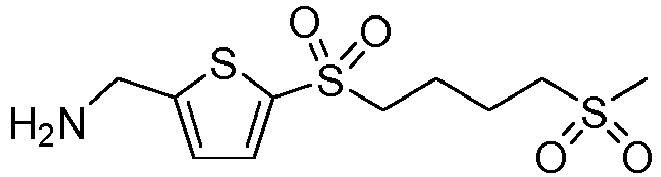
Example 8 11 \ \ \ \ \ 
Example 3 2.1 \ a) 5.1 \ \ \ 
Example 2 1 \ a) 4.0 37 >100 \ c) 0.2 
Example 4 9.4 \ \ \ \ \ 
Example 7 3 \ \ 66 \ \ 
Example 11 2.9 \ \ \ \ \ 
Example 18 3 \ a) 2.2 53 \ \ 
Example 19 2 \ \ \ \ \ 
Example 20 6.3 \ \ \ \ \ 
Example 21 1.8 \ \ \ \ \ 
Example 24 3.6 \ \ \ \ \ 
Example 22 1.6 \ \ \ \ \ 
Example 23 2.4 \ \ \ \ \ 
Example 50 0.7 4 \ \ \ \ \ 
Example 51 2.4 \ \ \ \ \ 
Example 52 0.7 6 \ \ \ \ \ 
Example 54 1.5 \ \ \ \ \ 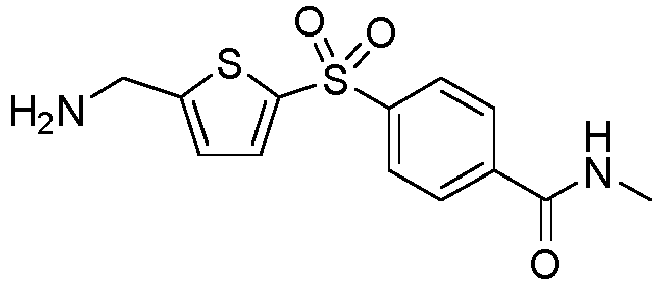
Example 55 4.6 \ \ \ \ \ 
Example 56 2.2 \ \ \ \ \ 
Example 57 3.5 \ \ \ \ \ 
Example 58 2.7 \ a) 9.5 \ \ \ 
Example 5 0.4 8 \ a) 2.6 >100 >100 \ 
Example 9 0.3 4 \ a) 1.5 >100 >100 \ c) 0.27 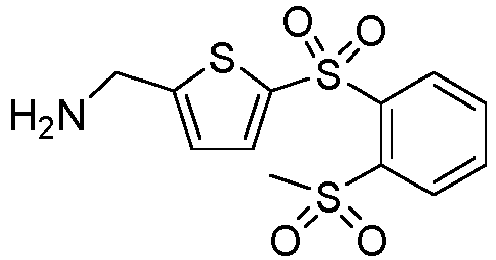
Example 10 1.7 \ \ >100 >100 \ 
Example 16 0.3 \ \ >100 >100 \ 
Example 17 0.4 5 \ \ \ \ \ 
Example 25 1.9 \ \ \ \ \ 
Example 26 0.5 5 \ \ \ \ \ 
Example 27 0.4 \ \ >100 >100 \ 
Example 28 1.3 \ \ \ \ \ 
Example 29 2.3 \ \ \ \ \ 
Example 30 1.8 \ \ \ \ \ 
Example 31 0.9 1 \ \ \ \ \ 
Example 32 0.7 2 \ \ \ \ \ 
Example 33 1.1 \ \ \ \ \ 
Example 34 0.5 3 \ \ \ \ \ 
Example 35 0.4 5 \ \ \ \ \ 
Example 36 2.2 \ \ \ \ \ 
Example 37 1.1 \ \ \ \ \ 
Example 38 0.5 9 \ \ \ \ \ 
Example 39 0.4 4 \ \ >100 >100 \ 
Example 40 0.4 7 \ \ >100 >100 \ 
Example 41 0.6 9 \ \ \ \ \ 
Example 66 2.5 \ \ >100 >100 \ 
Example 12 0.5 1 \ \ >100 >100 \ 
Example 13 0.8 2 \ \ >100 >100 \ 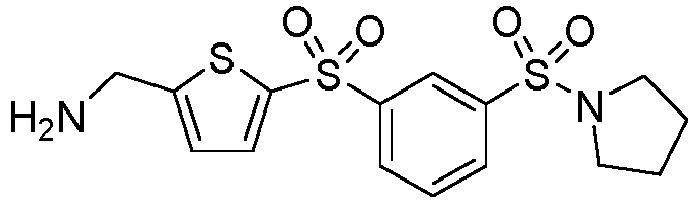
Example 14 0.6 2 \ a) 1.8 >100 >100 \ c) 0.056 
Example 15 0.9 3 \ \ \ \ \ 
Example 42 1.4 \ a) 5.0 \ \ \ c) 0.4 
Example 43 0.4 2 \ \ >100 >100 \ 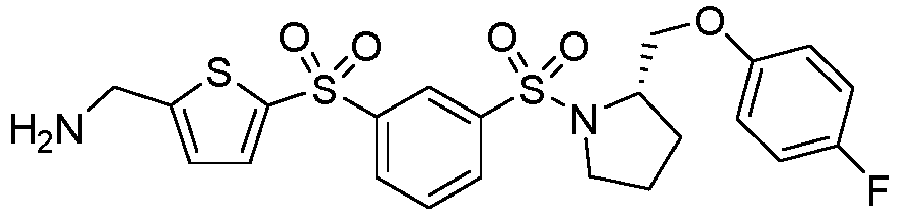
Example 44 1.2 \ \ 83 >100 \ 
Example 45 1 \ \ \ \ \ 
Example 46 2.1 \ \ \ \ \ 
Example 48 1.7 \ \ >100 >100 \ 
Example 49 1.6 \ \ >100 >100 \ 
Example 47 1.1 \ \ \ \ \ 
Example 61 1.9 \ \ >100 >100 \ 
Example 62 3.2 \ \ >100 >100 \ 
Example 63 3.4 \ \ >100 >100 \ 
Example 64 1.6 \ \ >100 >100 \ 
Example 65 3.1 \ \ >100 >100 \ 
Example 67 3.2 \ \ >100 >100 \ 
Example 68 0.8 9 2.5 a) 3.8 >100 >100 \ c) 0.26 
Example 69 7.8 \ \ \ \ \ 
Example 70 6.1 \ \ \ \ \ 
Example 71 3.1 \ \ \ \ \ 
Example 72 4.5 \ \ \ \ \ 
Example 73 2.1 \ \ \ \ \ 
Example 74 1.4 \ \ >100 >100 \ 
Example 75 2.5 \ \ \ \ \ 
Example 76 1.1 \ a) 2.0 >100 87 >100 c) 0.19 
Example 77 1.6 \ \ >100 >100 \ 
Example 78 1.9 \ \ 66 >100 \ 
Example 79 3.0 \ \ \ \ \ 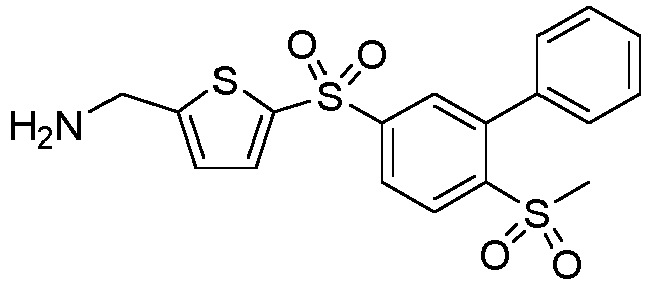
Example 80 0.7 7 \ \ 68 >100 \ 
Example 81 0.8 3 \ c) 0.38 >100 >100 \ 
Example 82 0.7 7 <0.18 a) 2.3 31 >100 >100 c) 0.26 
Example 83 1.8 \ \ >100 >100 \ 
Example 84 0.9 1 \ c) 0.22 12 >100 \ 
Example 85 1.4 \ \ >100 >100 \ 
Example 6 2.9 \ \ 49 100 \ 
Example 53 1.1 \ \ \ \ \ 
Example 59 2.6 \ \ >100 >100 \ 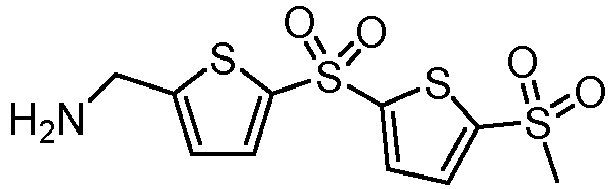
Example 60 1.5 \ \ >100 >100 \ 
Example 86 7 \ \ >100 \ \ 
Example 89 11 \ a) 13 \ \ \ 
Example 90 1.4 \ a) 0.77 >100 >100 \ c) 0.09 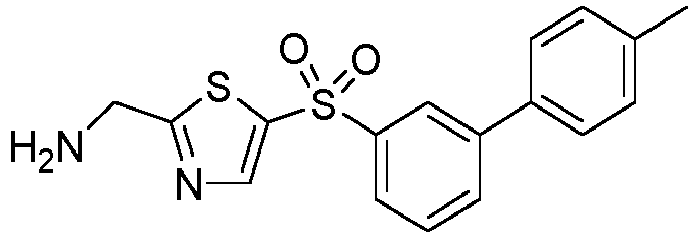
Example 91 3.3 \ c) 0.07 27 17 \ 
Example 88 4.8 \ a) 1.5 \ \ \ c) 1.3 
Example 87 26 \ a) 27 \ \ \ 
Example 92 \ \ a) 2.2 \ \ \ c) 0.26 
Example 93 \ \ a) 3.0 \ \ \ c) 0.50 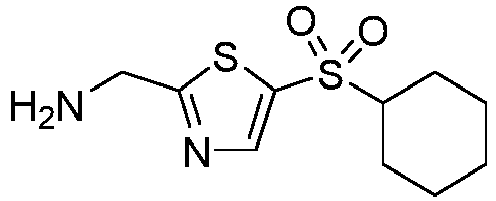
Example 94 \ \ a) 4.0 \ \ \ c) 0.68 
Example 95 \ \ c) 1.0 \ \ \ 
Example 96 \ \ c) 0.2 \ \ \ 
Example 97 \ \ c) 0.2 46 >100 \ 
Example 98 \ \ c) 0.64 \ \ \ 
Example 99 \ \ c) 0.068 \ \ \ 
Example 100 \ \ c) 0.09 \ \ >100 
Example 101 \ \ c) 0.1 \ \ \ 
Example 102 \ \ c) 0.23 \ \ \ 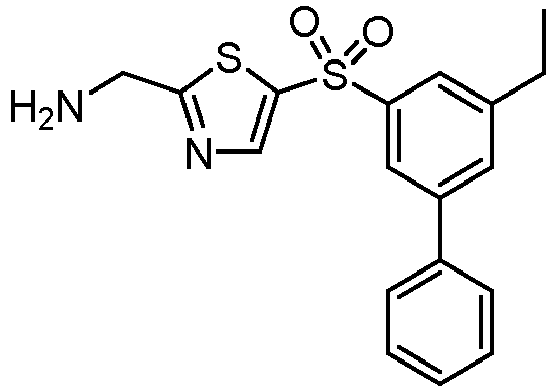
Example 103 \ \ c) 0.065 \ \ >100 
Example 104 \ \ c) 0.074 \ \ \ 
Example 105 \ \ c) 0.11 \ \ \ 
Example 106 \ \ c) 0.045 \ \ \ 
Example 107 \ \ c) 0.056 \ \ \ 
Example 108 \ \ c) 0.06 \ \ \ 
Example 109 \ \ c) 0.082 \ \ \ 
Example 110 \ \ c) 0.23 \ \ \ 
Example 111 \ 0.19 c) 0.13 >100 >100 >100 
Example 112 \ \ b) 0.28 \ \ \ c) 0.15 
Example 113 \ \ b) 0.15 \ \ >100 c) 0.07 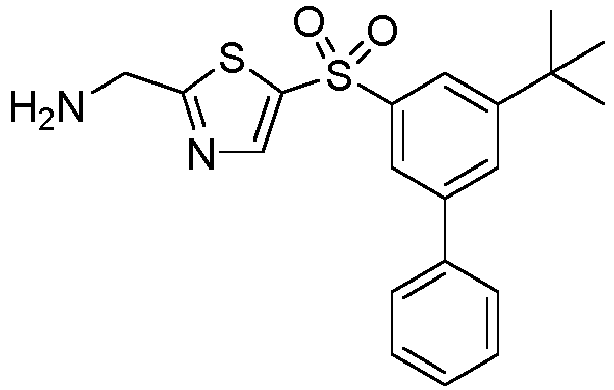
Example 114 \ \ b) 1.26 \ \ \ c) 0.17 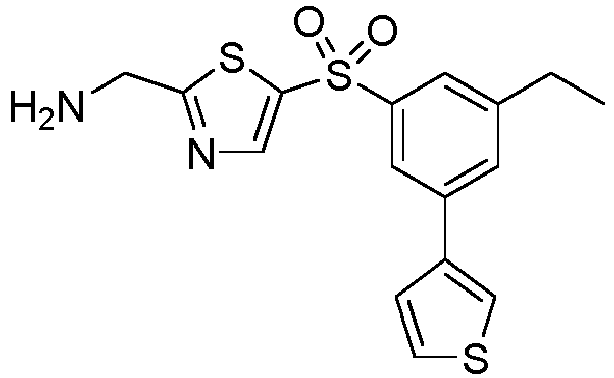
Example 115 \ \ b) 0.29 \ \ \ c) 0.14 
Example 116 \ \ c) 0.074 \ \ >100 
Example 117 \ \ c) 1.0 \ \ \ 
Example 118 \ \ c) 0.11 \ \ \ 
Example 119 \ \ c) 0.42 \ \ \ 
Example 120 \ \ c) 0.37 \ \ \ 
Example 121 \ \ c) 0.028 18 65 >100 
Example 122 \ \ c) 0.058 \ \ \ 
REFERENCE Example 123 \ \ b) 19 \ \ \ 
Example 124 \ \ b) 0.12 \ \ \ 
Example 125 \ \ b) 0.18 >100 >100 >100 
Example 126 \ 0.7 b) 0.24 >100 >100 >100 
Example 127 \ \ b) 0.18 \ \ \ 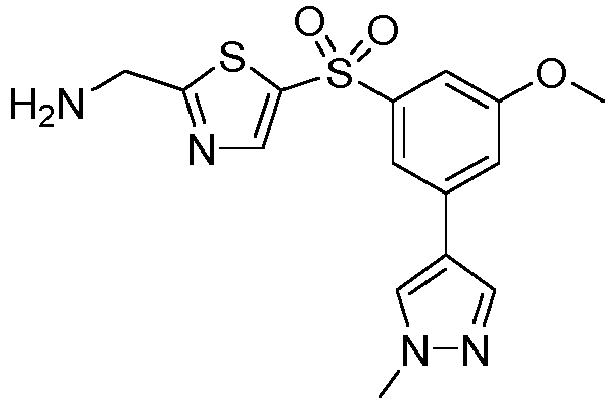
Example 128 \ \ b) 0.082 \ \ \ 
Example 129 \ \ b) 0.48 \ \ \ 
Example 130 \ \ b) 0.094 \ \ \ 
Example 131 \ \ b) 0.085 >100 >100 >100 
Example 132 \ \ b) 0.074 \ \ \ 
Example 133 \ \ b) 0.14 \ \ \ 
Example 134 \ \ b) 0.066 \ \ \ 
Example 135 \ \ b) 0.096 \ \ \ 
Example 136 \ \ b) 0.089 \ \ \ 
Example 137 \ \ b) 0.079 \ \ \ 
Example 138 \ \ b) 0.26 \ \ \ 
Example 139 \ \ b) 0.14 \ \ \ 
Example 140 \ \ b) 0.17 \ \ \ 
Example 141 \ \ b) 0.072 \ \ \ 
Example 142 \ \ b) 0.41 \ \ \ 
Example 143 \ \ b) 0.31 \ \ \ 
Example 144 \ \ b) 0.22 \ \ \ 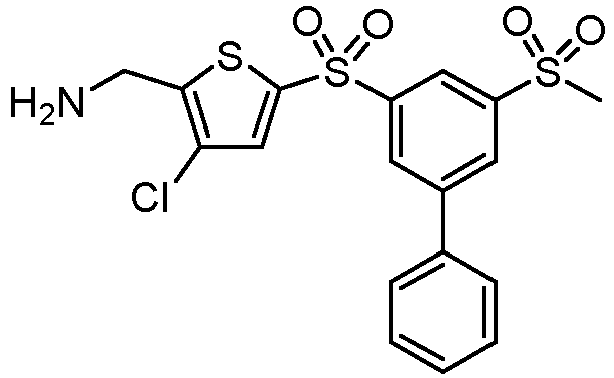
Example 145 \ \ b) 1.8 \ \ \ 
Example 146 \ \ b) 0.80 \ \ \ 
Example 147 \ \ b) 1.9 \ \ \ 
Example 148 \ \ b) 5.0 \ \ \ 
Example 149 \ \ b) 0.26 \ \ \ 
Example 150 \ \ b) 0.24 >100 >100 >100 
Example 151 \ \ b) 0.077 \ \ \ 
Example 152 \ \ b) 0.56 \ \ \ 
Example 153 \ \ b) 0.17 \ \ \ 
Example 154 \ \ b) 0.15 \ \ \ 
Example 155 \ \ b) 0.32 \ \ \ 
Example 156 \ \ b) 0.20 \ \ \ 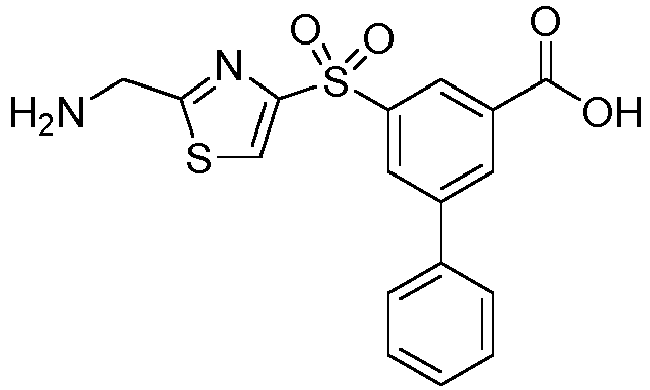
Example 157 \ \ b) 1.6 \ \ \ 
Example 158 \ \ b) 0.064 \ \ \ 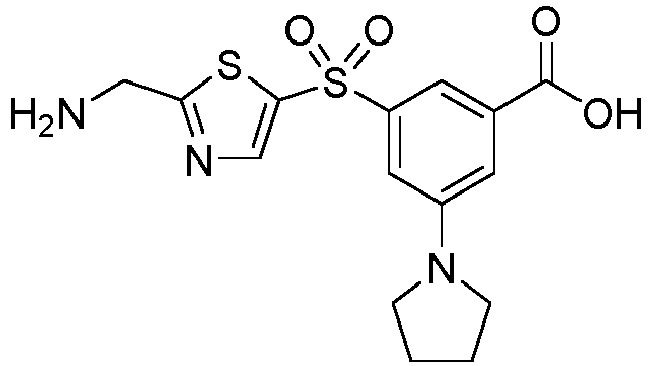
Example 159 \ \ b) 0.28 \ \ \ 
Example 160 \ \ b) 1.1 \ \ \ 
Example 161 \ \ b) 0.46 \ \ \ 
Example 162 \ \ b) 0.31 \ \ \ 
Example 163 \ \ b) 1.9 \ \ \ 
Example 164 \ \ b) 1.2 \ \ \ - For pharmacokinetic analyses, test compound (50 mg/kg in 5%DMSO/aq, 1:19 w, po n=3 or 10 mg/kg in 10%DMSO/Tween20/saline 10:1:89 w, iv n=3, were administered to 6 weeks old female, Balb/C and CD1 nude mice from Charles River. Test compound micro blood samples were collected at time points from 5 min - 8 h post dose from the tail vein using 20 µl heparinised capillaries then pipetted onto Whatman FTA DMPK-B cards (GE Healthcare) and left to dry overnight.
- Test compound solutions (10 mM in DMSO) were used to make stock Standard Curve (SC) and Quality Control (QC) solutions at appropriate concentrations. Blank blood was spiked with stock solutions to produce a final SC concentration of 10, 50, 100, 500 1000, 5000 and 10000 nM; with final QC concentrations of 250 and 7500 nM. SC blood (20 µl) and QC blood (20 µl) was pipetted onto Whatman FTA DMPK-B cards (GE Healthcare) and left to dry overnight. To extract, samples, SC and QC blood spots were punched from Whatman cards with Harris unicore 6mm punch (GE Healthcare) and placed in a 1ml 96-well plate. Methanol (200µl) containing internal standard was added. Samples were vortex mixed for 10 min then centrifuged at 3700 rpm, 4°C for 5 min. The samples were evaporated under nitrogen and then reconstituted in 30 µl methanol:water (30:70). The plate was vortex mixed and centrifuged for 5 min at 3700 rpm. Extracted samples from test compound were then diluted for analysis by liquid chromatography mass spectrometry (LC-MS/MS) for the compound concentrations. Non-compartmental analysis was performed on concentration data by computer software WinNonlin v6.3.
- Test compound (50 mg/kg in 5%DMSO/aq, 1:19 w, po n=21 or 10 mg/kg in 10%DMSO/Tween20/saline 10:1:89 w, iv n=24, were administered to 6 weeks old female, Balb/C and CD1 nude mice from Charles River. Test compound blood samples were collected at time points from 5 min - 8 h post by terminal cardic puncture, centrifuged for 3 min at 13000 rpm, plasma collected and snap frozen in Liquid Nitrogen. Samples placed at -80 degrees centigrade until being analysed.
- Test compound solutions (10 mM in DMSO) were used to make stock Standard Curve (SC) and Quality Control (QC) solutions at appropriate concentrations.
- Blank plasma (50µl) was added to a 96 well plate and spiked with 5µl of stock solution to produce a final SC concentration of 10, 50, 100, 500 1000, 5000 and 10000 nM; with final QC concentrations of 250 and 7500 nM. Plasma PK samples (50 µl) were added to the 96well plate and DMSO (5µl) was added to these samples. SC, QC and plasma samples were extracted with methanol (150µl) containing internal standard . Following protein precipitation, the samples were centrifuged for 20 minutes in a refrigerated centrifuge (4°C) at 3700rpm. The supernatant was diluted and analysed by Liquid Chromatography Mass Spectrometry (LC-MS/MS) for the compound plasma concentrations. Non-compartmental analysis was performed on plasma concentration data by computer software WinNonlin v5.3 or Phoenix WinNonlin v6.3.
- Test compound (50 mg/kg in 5%DMSO/aq, 1:19 w, po n=6 or 10 mg/kg in 10%DMSO/Tween20/saline 10:1:89 w, iv n=6), were administered to 6 weeks old female, Balb/C and CD1 nude mice from Charles River. Test compound blood samples were collected at time points from 5 min - 8 h post from the tail vein using 50 µl heparinised capillaries, centrifuged for 3 min at 13000 rpm, plasma collected and snap frozen in Liquid Nitrogen. Samples placed at -80 degrees centigrade until being analysed.
- Test compound solutions (10 mM in DMSO) were used to make stock Standard Curve (SC) and Quality Control (QC) solutions at appropriate concentrations.
- Blank plasma (10µl) was added to a 96 well plate and spiked with 1µl of stock solution to produce a final SC concentration of 10, 50, 100, 500 1000, 5000 and 10000 nM; with final QC concentrations of 250 and 7500 nM. Plasma PK samples (10 µl) were added to the 96well plate and DMSO (1µl) was added to these samples. SC, QC and plasma samples were extracted with methanol (30µl) containing internal standard . Following protein precipitation, the samples were centrifuged for 20 minutes in a refrigerated centrifuge (4°C) at 3700rpm. The supernatant was diluted and analysed by Liquid Chromatography Mass Spectrometry (LC-MS/MS) for the compound plasma concentrations. Non-compartmental analysis was performed on plasma concentration data by computer software WinNonlin v5.3 or Phoenix WinNonlin v6.3.
Table 1a. In vivo pharmacokinetics PK doses (Mouse = M; Rat = R) po - 50 mg/kg (M); 20 mg/kg (R) iv - 10 mg/kg (M); 4 mg/kg (R) Example 68 Example 76 Example 82 Exampl e 111 Example 121 Exampl e 126 Exampl e 150 AUC (po, µM.hr) 15 (M) 11 (M) 12 (M) 18 (M) 46 (M) 413 (M) 38 (M) 0.22 (R) 19 (R) 106 (R) Cmax (po, µM) 17 (M) 6.7 (M) 1.3 (M) 9.4 (M) 27 (M) 31 (M) 100 (M) 10 (M) 0.34 (R) 6.5 (R) 35 (R) T1/2 (po, hr) 0.6 (M) 1.0 (M) 1.1 (M) 1.1 (M) 2.3 (M) 2.0 (M) 0.5 (R) 1.3 (R) 1.8 (R) F (%) 45 (M) 39 (M) 74 (M) 48 (M) - 67 (M) - 68 (R) 33 (R) AUC = Area under curve
Cmax = Maximum concentration
T1/2 = Half life
F = Bioavailability - All procedures involving animals were approved by the Animal Welfare and Ethical Review Body of the Institute of Cancer Research and Cancer Research UK Manchester Institute in accordance with National Home Office regulations under the Animals (Scientific Procedures) Act 1986 and according to the guidelines of the Committee of the National Cancer Research Institute Tumour size was determined by caliper measurements of tumour length, width and depth and volume was calculated as volume = 0.5236 × length × width × depth (mm). In accordance with our licence to perform animal experiments, animals were excluded from the experiments if they displayed signs of distress, excessive bodyweight loss (>20%) or illness.
- Two CD1 nude female mice at 6 weeks of age from Charles River Labs, dosed po by metal gavage once a day for 4 days with suspension of the test compound at the dose planned for therapy (70 mg/kg/day for the compound of Example 68 and 100 mg/kg/day for the compounds of Examples 76 and 82) in 5.25% Tween20/saline (v:v) at 0.2 ml per 20g bodyweight.
- The mice were observed for up to 15 days after last dose and their bodyweight measured every 4 days. A compound is considered tolerated if the bodyweight does not fall by >20% for >3 days.
- Compounds of this invention tested in vivo show good tolerability at the dose tested and <5% bodyweight loss or show bodyweight gain in the tolerability study and in further longer therapy studies.
- PDAC allografts: CD1 nu/nu mice at 6 weeks of age, from Charles River Laboratories, were inoculated subcutaneously in the right flank with 2 × 10⁶ PDAC TRP53 R172H (p53 mut) cells at 100ul suspension per animal. Groups of 7-8 mice were assigned to treatment following stratified allocation of tumour volumes with a median size of circa 100 mm3. Dosing commenced around
day 10, at 0.2 ml/ 20 g bodyweight per animal once daily for 2 weeks, with compound dissolved in 5.25% tween20 saline. Control animals received a similar dosage of vehicle (5.25% tween20/saline) - SW620 xenografts: NCr mice were inoculated subcutaneously in the right flank with 5 × 10⁶ SW620 cells at 100ul suspension per animal. Groups of 7-8 mice were assigned to treatment following stratified allocation of tumour volumes with a median size of circa 100 mm3. Dosing commenced around day 10-13 at 0.2 ml/ 20 g bodyweight per animal once daily for 2 weeks.. Dosing administrated by metal gavage orally, at 0.2ml/20g bodyweight, compound dissolved in 5.25% tween20 saline. Control animals received a similar dosage of vehicle (5.25% tween20/saline).
- MDA-MB-231 xenografts. Ncr nude female mice at 6 weeks old from Charles River were injected into the right mammary fat pad with MDA-MB-231 Luc 4 ×10^6 in 100ul PB (50:50 Matrigel). When tumours reach a mean of 80 mm3 around 10 days post cell inoculation the animals are allocated in 4 groups of 8. LOX inhibitor treatment is then administrated by oral gavage dosing, at 0.2ml/20g bodyweight once daily for up to 28 consecutive days. Tumours and weights are measured twice weekly using calipers and the animals can be imaged using non invasive method by bioluminescence using IVIS 200 imaging machine, weekly using 150 mg/kg luciferin administrate intraperitoneal or subcutaneous. At the end of the study the animals are culled, and samples taken, fixed and or snap frozen in liquid nitrogen. Frozen samples kept at -80 degree centigrade until being analyzed and the fixed will be stain accordingly to our interests.
- MMTV-PyMT (Guy et al, 1992) (FVB) female mice were selected randomly for LOX inhibitor treatments from
day 70 post-birth, when animals had no detectable tumour. Mice were treated daily with LOX inhibitor (for example 70mg/kg of the compound of Example 68) in vehicle, or daily vehicle (5%DMSO/2.5%Tween20 in water) by oral gavage. Mammary tumours and lungs were collected when the primary tumours reached ethical limits. - For therapeutic efficacy assessment, the ratio of average tumour volume between compound treated and vehicle control treated (T/C) is calculated. Reduction in tumour volume in the compound treated group compared to vehicle-treated control group results in T/C < 1. The efficacy of LOX inhibitors described in this invention, as measured by T/C in a pancreatic cancer model, a colorectal cancer model and a breast cancer model is shown in Table 2 and is significant (p<0.05) for all the data presented.
- For lung metastases quantification, samples were sectioned and H&E stained. Samples were imaged with a Leica SCN400 slide scanner. Lung mets were manually selected using Pen tool in ImageScope. Lung mets number was counted and area was measured using ImageScope. The ratio of average metastases surface between compound treated and vehicle control treated (T/C) is calculated. Reduction in metastases area in the compound treated group compared to vehicle-treated control group results in T/C < 1. The antimetastaticefficacy of LOX inhibitors described in this invention, as measured by T/C in a model of breast cancer metastasising to lungs is shown in Table 2 and is significant (p<0.05) for all the data presented.
Table 2: Tumour Model Studies Therapeutic Efficacy: Primary tumour: Ratio of Tumour Volume (treated) / Tumour Volume (Control) Metastasis: Ratio of metastatic surface area (treated) / metastatic surface area (Control) Model Example 68 Exampl e 76 Example 82 Exampl e 111 Example 121 Example 126 Example 118 PDAC R172H (p53 mut) (mouse pancreatic carcinoma) - primary tumour 0.53 (70mg/kg qd) SW620 human colorectal carcinoma cells (mutant RAS) - primary tumour 0.56 (100mg/k g qd) 0.48 (100mg/ kg qd) MDA-MB-231 (human breast adenocarcinom a) - primary tumour 0.46 (100mg/kg qd) 0.53 (100mg/k g qd) 0.55 (100mg/kg qd) 0.46 (100mg/k g qd) 0.48 (100mg/k g qd) MMT-PyMT breast transgenic model - primary tumour 0.40 (70mg/ kg qd) 0.26 (100mg/k g qd) 0.44 (100mg/ kg qd) MMT-PyMT breast transgenic model - metastasis 0.57 (70mg/ kg qd) 0.14 (100mg/k g qd) Significant, p<0.05 - All samples were fixed in 4% paraformaldehyde (EMS). Fixed cells were then subjected to incubation with primary antibodies followed by fluorescence secondary antibodies (Life Technologies) to visualise extracellular proteins. Anti-human MATN2 (R&D) antibody was used at 1:100 dilutions. DAPI (Sigma) was used to stain DNA.
- To generate stable LOX depleted MDA-MB-231 and U87 cell lines, shLOXA (TTGTTATTGAAAACAGTCC, V3LHS_406838, Dharmacon) targeting human LOX, and shLOXB (ACATCTGTAATATCAATCC, V3LHS_348880, Dharmacon) targeting mouse and human LOX was used. GIPZ non-silencing shRNA from Dharmacon was used as control (shCtl) in MDA-MB-231 and U87 cells. Stable LOX depletion in BJ fibroblasts was achieved by using a lentivirus (shLOXC) containing human specific LOX targeting shRNA (CGACAACCCTTATTACAACTA, TRCN0000045991, Sigma). For BJ fibroblasts, a lentivirus containing pLKO.1 non-targeting shRNA (shCtl) from Sigma was used as control.
- For transient reduction of protein expressions, MDA-MB-231 or U87 cells were transfected with specific siRNAs from Qiagen. For LOX reduction, human specific siLOX#1 (AAGCTGGCTACTCGACATC, SI00036120), or mouse and human specific siLOX#2 (CTGCACAATTTCACCGTAT, SI00036113) was used. To reduce MATN2 protein expression, siMATN2 (ATGCCGAAGACTTCAGCACAA, SI04169795) was used. AIIStars negative control siRNA (siCtl) from Qiagen was used as a control.
- Proteins were extracted from cultured cells using cell lysis buffer (Cell Signalling Technology) with the addition of protease and phosphatase inhibitor cocktails (Pierce). Protein concentrations were measured using Pierce 660nm protein assay reagent and SpectaMax M5 plate reader. Equal amounts of proteins were then separated using NuPAGE 4-12% Bis-Tris gels with NuPAGE MOPS SDS running buffer (Life Technologies). Separated proteins were transferred to nitrocellulose membranes using a Trans-Blot turbo transfer system (Bio-Rad). Following blocking with Odyssey blocking buffer (Li-COR), membranes were incubated with two primary antibodies of different species at 4°C over night. Corresponding fluorescence secondary antibodies (Li-COR) of different excitation and emission wavelengths were used to visualize the protein of interest on an Odyssey CLx infrared imaging system (Li-COR). Quantification of band fluorescent intensity was achieved using Li-COR ImageStudio. The following primary antibodies were used, anti-LOX (Sigma), anti-human MATN2 (R&D), anti-EGFR and anti-pY1068EGFR (Cell Signalling Technology), and anti-GAPDH (Millipore).
- Homotrimeric HTRA1 in cell culture medium was resolved using NativePAGE (Life Technologies). Extracellular proteins in 15ml serum free cell culture medium with protease inhibitors was first concentrated using Vivaspin protein concentrator spin colums (GE Healthcare Life Sciences). Proteins in concentrated culture medium was then separated using NativePAGE 3-12% Bis-Tris Gel and NativePAGE running buffer (Life Technologies). Separated proteins were transferred to nitrocellulose membranes using a Trans-Blot turbo transfer system (Bio-Rad) as normal. Followed by standard blotting procedures as described above. Anti-human HTRA1 antibody (R&D) was then used to detect native HTRA1 proteins.
- RNA was extracted with Trizol (Life Technologies) according to the manufacturer's instruction. RNA was reverse-transcribed to generate complementary DNA using M-MLV Reverse Transcriptase (Sigma). Real-time qRT-PCR was performed with FastStart Universal Probe Master (Rox) (Roche) and TaqMan Gene Expression Assay probes on an Applied Biosystems 7900HT Fast Real Time machine. Relative MATN2 (hs00242753_m1, Life Technologies) expression was calculated using the ΔCt method and housekeeping genes (GAPDH) as an internal control.
- Cell lysates of MDA-MB-231 cells cultured either on plastic or in 3D collagen gel was collected using cell lysis buffer (Cell Signalling Technology) with protease and phosphatase inhibitor cocktails (Pierce). PathScan RTK signalling antibody array (Cell Signalling Technology) was then performed according to manufacture's instructions using equal amounts of proteins. The fluorescent readout was recorded on an Odyssey CLx infrared imaging system (Li-COR). Quantification of the array fluorescent intensity was achieved using Li-COR ImageStudio.
- Following 100ng/ml EGF stimulation cells were washed with ice cold PBS and then incubated with ice cold 0.24mg/ml Sulfo-NHS-SS-Biotin (Pierce) in PBS for 30min at 4°C. Excessive Sulfo-NHS-SS-Biotin was then blocked using 50mM NH4Cl in PBS and washed using ice cold PBS. Cells were subsequently lysed using cell lysis buffer (Cell Signalling Technology) with the addition of protease and phosphatase inhibitor cocktails (Pierce). Protein concentrations were determined as described above. Equal amount of protein was used for immunoprecipitation at room temperature using NeutrAvidin Agarose beads (Pierce) for 1h. Precipitated surface proteins were subjected to Western blotting.
- 2000 MDA-MB-231 or U87 cells were seeded on
Day 0 in 96-well plates. Cells were culture in EGF only culture medium. Cell viability was then tested using CellTiter-Glo luminescent assay (Promage) corroding to manufacture's protocol on indicated days. Student's t-Test was used to calculate the statistical significance. Data were normalised to the reading onDay 1. - Female CD1 nude mice (Charles River) were tail vein injected to study lung deposition of control or LOX depleted MDA-MB-231 cells. Each animal was tail vein injected with 1×10⁵ MDA-MB-231 cells in PBS. Lungs were collected when animals had lost 10% body weight or had developed breathing difficulties. Otherwise lungs were collected 50 days post-injection.
- All mouse tissue samples were fixed in 10% formalin (Sigma) and embedded in paraffin. Samples were then sectioned, and hematoxylin and eosin (H&E) stained using standard protocols. H&E stained samples were imaged with a Leica DM4000 upright microscope. To quantify malignant deposits in the lungs following tail vein injection of MDA-MB-231 cells, the proportion of lung parenchyma occupied was assessed and scored according to the proportion of occupied lung parenchyma. For spontaneous lung metastasis in MMTV-PyMT animals treated with either water or LOX inhibitors, we counted the number of lung metastasis in the lung parenchyma ranked by size, and a lung metastasis score was assigned accordingly (Table 3).
Table 3: Tumour Model Studies Therapeutic Efficacy in Metastatic model: MMTV-PyMT breast transgenic model Number and score of lung metastasis Number of metastases Mouse Small Medium Large Score DMSO control 1 7 0 5 22 2 2 1 4 16 3 7 4 1 18 4 1 2 9 32 5 0 4 15 53 6 1 4 0 9 Example 68 7 0 0 0 0 8 0 0 0 0 9 0 1 0 2 10 0 1 0 2 11 0 1 0 2 12 1 1 0 3 -
Size Score None 0 0 Small <100 µm 1 Medium 100 µm - 200 µm 2 Large >200 µm 3 - To visualise MATN2 and EGFR in mouse tissue samples, sectioned samples were processed as previously described (Viros, 2014). Anti-Mouse MATN2 (R&D) was used at 1:100 dilution. Anti-EGFR (Abeam) was used at 1:200 dilution. Corresponding fluorescence secondary antibodies (Life Technologies) were then used for confocal imaging of tissue samples.
-
- Guy, C. T., Cardiff, R. D. & Muller, W. J. Induction of mammary tumors by expression of polyomavirus middle T oncogene: a transgenic mouse model for metastatic disease. Mol Cell Biol 12, 954-961 (1992)
- Hanson, G.T., Aggeler, R., Oglesbee, D., Cannon, M., Capaldi, R.A., Tsien, R.Y., Remington J.S. (2004). Investigating mitochondrial redox potential with redox-sensitive green fluorescent protein indicators. J. Biol. Chem. 279, 13044-13053.
- Viros A, Sanchez-Laorden B, Pedersen M, Furney SJ, Rae J, Hogan K, Ejiama S, Girotti MR, Cook M, Dhomen N, Marais R.. Ultraviolet radiation accelerates BRAF-driven melanomagenesis by targetin
- To discover new functions for LOX, we examined how LOX depletion by short-hairpin RNA (shRNA) affects cancer cell signalling. Using a receptor tyrosine kinase (RTK) antibody array, we find that when LOX is depleted in MDA-MB-231 breast cancer cells grown in standard plastic (2D) culture conditions, phosphorylation of several receptor tyrosine kinases (RTKs) including the EGF receptor (EGFR) is reduced (
Fig. 1a ). We repeated the analysis in collagen gels (3D) and again observed consistent reduction of EGFR phosphorylation when LOX was depleted (Fig. 1b ). - Western blot of phospho-EGFR, EGFR and GAPDH in control (shCtl) or LOX-depleted (shLOXA, shLOXB) MDA-MB-231 cells in collagen gels confirmed the effect of LOX depletion in reducing EGFR phosphorylation (pY1068EGFR;
Fig 2 ). - MDA-MB-231 breast cancer cells and U87 glioblastoma cells had LOX stably depleted with shLOX, stimulated with EGF and then surface proteins were labelled with biotin. LOX depletion does not affect cell surface levels of EGFR in serum free conditions in MDA-MB-231 cells or U87 glioblastoma cells, but when the cells were EGF stimulated, EGFR was internalised more rapidly in LOX deficient cells (Fig. 3a,b).
- Critically, the stabilisation of surface EGFR requires enzymatically active LOX. In LOX-depleted cells, EGFR retention at the plasma membrane of MDA-MB-231 cells can only be rescued by a siRNA-insensitive active LOX-GFP, whereas inactive mutants LOXK314A-GFP and LOXΔBMP-1-GFP did not rescue EGFR membrane retention (
Fig. 4a,b ). - EGFR signal downstream through a number of signalling cascades, notably PI3K/Akt. The phosphorylation of Akt was reduced by LOX depletion in EGF-stimulated MDA-MB-231 breast cancer cells and U87 glioblastoma cells, in agreement with faster loss of EGFR from cell surface leading to inhibition of downstream signalling. (Fig 5a,b).
- The LOX inhibitors described herein display similar effects of inhibition of the EGFR signalling. Exemplification of LOX inhibitors reduction of surface EGFR in EGF-stimulated MDA-MB-231 cell line is shown in
Fig 6 . - Similarly, LOX inhibitors show reduced Akt phosphorylation in EGF stimulated MDA-MB-231 cell line compared to vehicle control (
Figure 7 , Table A with cellular data for compounds). - Thus, LOX modulates retention of EGFR at the cell surface, and when LOX is depleted, EGF signalling is impaired. Critically, when endogenous LOX is depleted, an siRNA-insensitive LOX-GFP (data not shown) rescues EGFR plasma membrane retention, and EGFR and Akt activation, whereas a LOX catalytic activity mutant (LOXK314A-GFP) or LOX lacking the BMP1 site necessary for maturation (LOXΔBMP-1-GFP)6 do not rescue these events (Fig. 1g-i).
- Thus, EGFR cell surface retention is dependent on LOX maturation and catalytic activity.
- When cultured in medium with EGF as the only growth factor, LOX-depleted MDA-MB-231 or U87 cells have a significantly reduced proliferation compared to non-transfected cells (
Fig. 8a,b ). - LOX-depleted or control MDA-MB-231 cells were injected via tail vein in mice. After 50 days, animals that received LOX-depleted cells had all survived compared to only 2/7 of the control group and had a reduced lung tumour burden (
Fig. 9a, b ). In the LOX depleted tumours, EGFR localisation to the plasma membrane was disrupted (Fig. 9c ). - LOX inhibitor of Example 68 also shows a significant tumour growth delay in the transgenic mouse breast model driven by polyoma middle T (PyMT)(
Fig. 10 ). The tumour volume ratio of treated vs control is shown in Table 2 of the in vivo therapeutic efficacy section. - The compound of Example 68 described herein inhibits LOX at 0.89µM. It is more selective than BAPN, because although neither inhibits the amine oxidases MAO-A or MAO-B, the compound of Example 68 also does not inhibit the plasma amine oxidase DAO or hERG. Further, it displays excellent stability in mouse liver microsomes. It is orally bioavailable, displays good pharmacokinetic properties and is well tolerated in mice at 150mg/kg/day.
- EGFR is overexpressed and drives tumour progression in a number of cancers, for example lung, glioma, colorectal, head & neck cancer, triple negative breast cancer. We have demonstrated that LOX drives tumour progression by increasing EGFR pathway signalling via EGFR trapping at the cell surface. We have also shown that LOX inhibition disrupts EGFR membrane localisation, reduces EGFR signalling, and suppresses tumour growth and metastasis. We expect that LOX inhibitors will be useful in the treatment of EGFR-driven cancers.
- MATN2 is a secreted protein with 10 EGF-like repeats and we find that recombinant human MATN2 (rhMATN2) binds to the surface of cells, but that this binding is competed off by EGF and an EGFR neutralizing rhMATN2 increases the levels of EGFR at the cell surface. Moreover, depletion of endogenous MATN2 causes EGFR loss from the cell surface and this is rescued by rhMATN2 addition to the culture medium. Although rhMATN2 itself does not activate the EGFR, it strongly enhances EGF-induced EGFR.
- We have discovered that LOX depletion also caused a substantial downregulation of MATN2 protein (
Fig. 11a ) and reduced accumulation of MATN2 in the extracellular space of cancer cells (MDA-MB-231 and U87 cells) grown on collagen gels (Fig. 11b ). Similarly, LOX depletion in BJ dermal fibroblasts reduced extracellular MATN2 accumulation in the de novo synthesized extracellular matrix (Fig 11a, c ). Further investigation revealed that LOX depletion downregulated MATN2 mRNA (Fig. 11e). - A similar effect is seen in vivo: in lung tumour samples of mice injected via tail vein with LOX-depleted MDA-MB-231 cells MATN2 levels were significantly reduced compared to mice injected with control cells (
Fig 12 ). - LOX inhibitors show significant reduction of MATN2 in MDA-MB-231 cells treated at 20 µM overnight. The same effect was seen with the reported LOX inhibitor BAPN but at a much higher concentration (
Figure 13 ). - Adding human recombinant MATN2 (rhMATN2) up to 1µg/mL to MDA-MB-231 cells increases substantially the EGF-stimulated EGFR activation (
Fig. 14a ). Moreover, rhMATN2 trapped EGFR on the surface of MDA-MB-231 cells (Fig. 14b ) and when LOX was depleted, rhMATN2 restored EGFR retention at the surface of EGF stimulated cells (Fig. 14c ). We also show that MATN2 depletion by siRNA was sufficient to reduce EGFR levels at the cell surface (Fig. 14d ). - We have shown significant reduction of MATN2 expression following inhibition of LOX by siRNA or small molecule inhibitors. MATN2 can be detected by immunohistochemistry from tumour samples and is therefore a new and potentially useful biomarker to assess the efficacy of LOX inhibition in vitro or in vivo including in a clinical setting.
- MATN2 expression is negatively regulated by TGF beta signalling (
Figure 15a ). Interestingly, LOX inhibition by the compound of Example 68 and BAPN increased TGF beta signalling as indicated by pSMAD2 leading to MATN2 reduction (Figure 15b ). This observation is consistent with increased SMAD2 phosphorylation when LOX expression is rediced in MDA-MB-231 and U87 cells (Figure 15c ). Therefore TGF beta signalling (i.e. phosphorylation of SMAD2, pSMAD2 levels) could also be used as biomarker for LOX inhibition. - LOX binds to the secreted serine potease HTRA1 (
Fig. 16 and 17 ). LOX depletion reduces the levels of extracellular homotrimeric HTRA1, the active form of this enzyme (Fig. 18 and 19 ). Moreover, recombinant human HTRA1 (rhHRA1) supresses SMAD2 activation and rescues MATN2 expression in LOX depleted cells (Fig. 20, 21 and22 ). - Thus, we conclude that LOX regulates HTRA1 stability to suppress TGFβ1 signalling and induce MATN2 expression. Accordingly, HTRA1 expression could be used as a biomarker for LOX inhibition.
-
- Abourbih, D. A., et al. (2010). "Lysyl oxidase expression and inhibition in uveal melanoma." Melanoma research 20(2): 97-106.
- Adam, O., et al. (2011). "Increased lysyl oxidase expression and collagen cross-linking during atrial fibrillation." J. Mol. Cell. Cardiol. 50(4): 678-685.
- Akiri, G., et al. (2003). "Lysyl oxidase-related protein-1 promotes tumor fibrosis and tumor progression in vivo." Cancer research 63(7): 1657-1666.
- Albinger-Hegyi, A., et al. (2010). "Lysyl oxidase expression is an independent marker of prognosis and a predictor of lymph node metastasis in oral and oropharyngeal squamous cell carcinoma (OSCC)." International journal of cancer Journal international du cancer 126(11): 2653-2662.
-
Alexandrescu, D. T. (2009). "Treatment of skin disorders with EGFR inhibitors". WO2009091889A1 - Anderson, C., et al. (2007). "Chemical genetics suggests a critical role for lysyl oxidase in zebrafish notochord morphogenesis." Mol Biosyst 3(1): 51-59.
- Aslam, T., et al. (2015). "Optical molecular imaging of lysyl oxidase activity - detection of active fibrogenesis in human lung tissue." Chemical Science 6(8): 4946-4953.
- Baker, A.-M., et al. (2013). "Lysyl oxidase plays a critical role in endothelial cell stimulation to drive tumor angiogenesis." Cancer research 73(2): 583-594.
- Baker, A.-M., et al. (2011). "The role of lysyl oxidase in SRC-dependent proliferation and metastasis of colorectal cancer." Journal of the National Cancer Institute 103(5): 407-424.
- Barker, H. E., et al. (2013). "Tumor-Secreted LOXL2 Activates Fibroblasts through FAK Signaling." Molecular Cancer Research 11(11): 1425-1436.
- Barker, H. E., et al. (2011). "LOXL2-mediated matrix remodeling in metastasis and mammary gland involution." Cancer research 71(5): 1561-1572.
- Barker, H. E., et al. (2012). "The rationale for targeting the LOX family in cancer." Nature reviews Cancer 12(8): 540-552.
- Barry-Hamilton, V., et al. (2010). "Allosteric inhibition of lysyl oxidase-like-2 impedes the development of a pathologic microenvironment." Nat Med 16(9): 1009-1017.
- Beerlage, C., et al. (2013). "Hypoxia-inducible factor 1-regulated lysyl oxidase is involved in Staphylococcus aureus abscess formation." Infect. Immun. 81(7): 2562-2573.
- Bianco, R., et al. (2007). "Rational bases for the development of EGFR inhibitors for cancer treatment." The International Journal of Biochemistry & Cell Biology 39(7-8): 1416-1431.
- Bondareva, A., et al. (2009). "The lysyl oxidase inhibitor, beta-aminopropionitrile, diminishes the metastatic colonization potential of circulating breast cancer cells." PLoS One 4(5): e5620.
-
Borad, M. J., et al. (2014). "Targeted chemotherapy of cancer using EGFR inhibitors". WO2014145751A2 - Boufraqech, M., et al. (2015). "miR30a Inhibits LOX Expression and Anaplastic Thyroid Cancer Progression." Cancer research 75(2): 367-377.
- Brasselet, C., et al. (2005). "Collagen and elastin cross-linking: A mechanism of constrictive remodeling after arterial injury." Am. J. Physiol. 289(5, Pt. 2): H2228-H2233.
-
Burchardt, E. R. (2006). "Preparation of 2-phenyl-3-pyridazinones as lysyl oxidase inhibitors". DE102004056226A1 - Burke A. A., et al (2017) Comparing hydrazine-derived reactive groups as inhibitors of quinone-dependent amine oxidases, Journal of Enzyme Inhibition and Medicinal Chemistry, 32:1, 496-503,
- Carrington, M. J., et al. (1984). "The inhibition of lysyl oxidase in vivo by isoniazid and its reversal by pyridoxal. Effect on collagen cross-linking in the chick embryo." Biochem J 221(3): 837-843.
- Chang, J. et al (2017) Pre-clinical evaluation of small molecule LOXL2 inhibitors in breast cancer. Oncotarget, Advance Publication
- Chanoki, M., et al. (1995). "Increased expression of lysyl oxidase in skin with scleroderma." Br J Dermatol 133(5): 710-715.
- Chen, W.-C., et al. (2015). "Matrix-Stiffness-Regulated Inverse Expression of Krüppel-.
- Chien, J. W., et al. (2014). "Serum lysyl oxidase-like 2 levels and idiopathic pulmonary fibrosis disease progression." European Respiratory Journal 43(5): 1430-1438.
- Cox, T. R., et al. (2013). "LOX-Mediated Collagen Crosslinking Is Responsible for Fibrosis-Enhanced Metastasis." Cancer research 73(6): 1721-1732.
- Cox, T. R., et al. (2015). "The hypoxic cancer secretome induces pre-metastatic bone lesions through lysyl oxidase." Nature 522(7554): 106-110.
- Crowley, V. et al. (2016). "Development of Glucose Regulated Protein 94-Selective Inhibitors Based on the Bnlm and Radamide Scaffold." J Med. Chem. 59, 3471-3488.
-
Curtis, M. et al. (2013). "Phenicol antibacterials." US2013/0237502A1 . - da Silva, R., et al. (2015). "LOX Expression and Functional Analysis in Astrocytomas and Impact of IDH1 Mutation." PLoS One 10(3): e0119781.
- Decitre, M., et al. (1998). "Lysyl oxidase-like protein localizes to sites of de novo fibrinogenesis in fibrosis and in the early stromal reaction of ductal breast carcinomas." Lab. Invest. 78(2): 143-151.
- Dentillo, D. B., et al. (2010). "Deregulation of LOXL1 and HTRA1 Gene Expression in Endometriosis." Reproductive Sciences 17(11): 1016-1023.
- Di Donato, A., et al. (1997). "Lysyl oxidase expression and collagen cross-linking during chronic adriamycin nephropathy." Nephron 76(2): 192-200.
- Dong, K.-f., et al. (2014). "Effects on apoptosis and chemosensitivity in human laryngeal cancer Hep-2 cells by silencing the lysyl oxidase gene expression." Zhongguo Xiandai Yixue Zazhi 24(29): 13-17.
- Dong, K., et al. (2014). "Effects of lox gene expression on proliferation, invasion and radiosensitivity of laryngeal cancer hep-2 cells." Tianiin Yiyao 42(5): 417-420.
- Erler, J. T., et al. (2009). "Hypoxia-induced lysyl oxidase is a critical mediator of bone marrow cell recruitment to form the premetastatic niche." Cancer Cell 15(1): 35-44.
- Erler, J. T., et al. (2006). "Lysyl oxidase is essential for hypoxia-induced metastasis." Nature 440(7088): 1222-1226.
- Fong, S. F., et al. (2007). "Lysyl oxidase-like 2 expression is increased in colon and esophageal tumors and associated with less differentiated colon tumors." Genes Chromosomes Cancer 46(7): 644-655.
- Gao, Y., et al. (2010). "LKB1 inhibits lung cancer progression through lysyl oxidase and extracellular matrix remodeling." Proceedings of the National Academy of Sciences 107(44): 18892-18897.
- Georges, P. C., et al. (2007). "Increased stiffness of the rat liver precedes matrix deposition: implications for fibrosis." Am. J. Physiol. 293(6, Pt. 1): G1147-G1154.
- Giboda, M., et al. (1992). "Experimental schistosomiasis mansoni: modulation of granulomas by inhibition of collagen cross-link formation. Preliminary report." Ann Trop Med Parasitol 86(6): 631-636.
- Gilad, G. M. and V. H. Gilad (2001). "β-Aminopropionitrile treatment can accelerate recovery of mice after spinal cord injury." Eur. J. Pharmacol. 430(1): 69-72.
- Gilad, G. M., et al. (2001). "Lysyl oxidase, the extracellular matrix-forming enzyme, in rat brain injury sites." Neurosci. Lett. 310(1): 45-48.
- Gilad, G. M., et al. (2005). "Evidence for increased lysyl oxidase, the extracellular matrix-forming enzyme, in Alzheimer's disease brain." Neurosci Lett 376(3): 210-214.
- Goeroegh, T., et al. (2007). "Selective upregulation and amplification of the lysyl oxidase like-4 (LOXL4) gene in head and neck squamous cell carcinoma." J Pathol 212(1): 74-82.
- Gonzalez, G. E., et al. (2014). "N-acetyl-seryl-aspartyl-lysyl-proline reduces cardiac collagen cross-linking and inflammation in angiotensin II-induced hypertensive rats." Clin. Sci. 126(1): 85-94.
-
Gopalan Balasubramanian. (1990) "Biphenyl-substituted guanidine derivatives useful as hypoglycaemic agents." US5302720 . - Haase, V. H. (2009). "Pathophysiological Consequences of HIF Activation." Annals of the New York Academy of Sciences 1177(1): 57-65.
- Halberg, N., et al. (2009). "Hypoxia-inducible factor 1α induces fibrosis and insulin resistance in white adipose tissue." Mol. Cell. Biol. 29(16): 4467-4483.
- Hase, H., et al. (2014). "LOXL2 Status Correlates with Tumor Stage and Regulates Integrin Levels to Promote Tumor Progression in ccRCC." Molecular Cancer Research 12(12): 1807-1817.
-
He, Z. and V. Koprivica (2007). "EGFR inhibitors promote axon regeneration". WO2007008338A1 - Herranz, N., et al. (2012). "Lysyl Oxidase-like 2 .
- Hornstra, I. K., et al. (2003). "Lysyl oxidase is required for vascular and diaphragmatic development in mice." J Biol Chem 278(16): 14387-14393.
- Huang, C.-S., et al. (2013). "Long-term ethanol exposure-induced hepatocellular carcinoma cell migration and invasion through lysyl oxidase activation are attenuated by combined treatment with pterostilbene and curcumin analogues." Journal of Agricultural and Food Chemistry 61(18): 4326-4335.
-
Hynes, J. et al. (2009). "Imidazopyridine and imidazopyrazine compounds useful as kinase inhibitors." WO2009/155388A1 . -
Ingber, D. E. and A. Mammoto (2014). "Methods of altering vascular permeability by changing the mechanical properties of extracellular matrixes using agents such as lysyl oxidase (LOX)-modulating agents and uses for treatment of diseases". WO2014152122A2 - Jiang, W.-P., et al. (2014). "Identification of the involvement of LOXL4 in generation of keratocystic odontogenic tumors by RNA-Seq analysis." In J Oral Sci 6(1): 31-38.
- Jourdan-Le Saux, C., et al. (1994). "Lysyl oxidase cDNA of myofibroblast from mouse fibrotic liver." Biochem Biophys Res Commun 199(2): 587-592.
-
Jung, B. (2010). "Use of quinazoline derivatives for the treatment of viral diseases". WO2010026029A1 - Kagan, H. M. (1994). "Lysyl oxidase: mechanism, regulation and relationship to liver fibrosis." Pathol Res Pract 190(9-10): 910-919.
- Kagan, H. M. and W. Li (2003). "Lysyl oxidase: properties, specificity, and biological roles inside and outside of the cell." Journal of cellular biochemistry 88(4): 660-672.
- Kagan, H. M., et al. (1981). "Changes in aortic lysyl oxidase activity in diet-induced atherosclerosis in the rabbit." Arteriosclerosis 1(4): 287-291.
- Karagiannis, G. S., et al. (2012). "Cancer-Associated Fibroblasts Drive the Progression of Metastasis through both Paracrine and Mechanical Pressure on Cancer Tissue." Molecular Cancer Research 10(11): 1403-1418.
- Kasashima, H., et al. (2014). "Lysyl oxidase-like 2 (LOXL2) from stromal fibroblasts stimulates the progression of gastric cancer." Cancer Letters 354(2): 438-446.
- Kasashima, H., et al. (2015). "Lysyl oxidase is associated with the epithelial-mesenchymal transition of gastric cancer cells in hypoxia." Gastric Cancer: 1-12.
- Kim, Y.-M., et al. (2010). "The human lysyl oxidase-like 2 protein functions as an amine oxidase toward collagen and elastin." Mol. Biol. Rep. 38(1): 145-149.
- Kim, Y., et al. (1999). "Coexpression of the lysyl oxidase-like gene (LOXL) and the gene encoding type III procollagen in induced liver fibrosis." Journal of cellular biochemistry 72(2): 181-188.
- Kirschmann, D. A., et al. (2002). "A molecular role for lysyl oxidase in breast cancer invasion." Cancer research 62(15): 4478-4483.
- Kumarasamy, A., et al. (2009). "Lysyl oxidase activity is dysregulated during impaired alveolarization of mouse and human lungs." Am. J. Respir. Crit. Care Med. 180(12): 1239-1252.
- Lee, G.-H., et al. (2011). "Lysyl oxidase-like-1 enhances lung metastasis when lactate accumulation and monocarboxylate transporter expression are involved." Oncology Letters 2(5): 831-838.
- Levene, C. I., et al. (1992). "Inhibition of chick embryo lysyl oxidase by various lathyrogens and the antagonistic effect of pyridoxal." Int J Exp Pathol 73(5): 613-624.
- Levental, K. R., et al. (2009). "Matrix crosslinking forces tumor progression by enhancing integrin signaling." Cell 139(5): 891-906.
- Li, R.-k., et al. (2015). "Lysyl oxidase-like 4 (LOXL4) promotes proliferation and metastasis of gastric cancer via FAK/Src pathway." Journal of Cancer Research and Clinical Oncology 141(2): 269-281.
- Li, W., et al. (2003). "Lysyl oxidase oxidizes basic fibroblast growth factor and inactivates its mitogenic potential." Journal of cellular biochemistry 88(1): 152-164.
- Liu, G., et al. (1997). "Irreversible inhibition of lysyl oxidase by homocysteine thiolactone and its selenium and oxygen analogues. Implications for homocystinuria." J Biol Chem 272(51): 32370-32377.
- Liu, J., et al. (2014). "Correlations of lysyl oxidase with MMP2/MMP9 expression and its prognostic value in non-small cell lung cancer." Int J Clin Exp Pathol 7(9): 6040-6047.
- Lopez, B., et al. (2010). "Role of lysyl oxidase in myocardial fibrosis: from basic science to clinical aspects." Am. J. Physiol. 299(1, Pt. 2): H1-H9.
- Lopez, B., et al. (2013). "Osteopontin-mediated myocardial fibrosis in heart failure: a role for lysyl oxidase?" Cardiovasc. Res. 99(1): 111-120.
- Lopez, B., et al. (2012). "Collagen Cross-Linking But Not Collagen Amount Associates With Elevated Filling Pressures in Hypertensive Patients With Stage C Heart Failure: Potential Role of Lysyl Oxidase." Hypertension 60(3): 677-683.
- Lucero, H. A. and H. M. Kagan (2006). "Lysyl oxidase: an oxidative enzyme and effector of cell function." Cellular and molecular life sciences : CMLS 63(19-20): 2304-2316.
- Lucero, H. A., et al. (2008). "Lysyl oxidase oxidizes cell membrane proteins and enhances the chemotactic response of vascular smooth muscle cells." J Biol Chem 283(35): 24103-24117.
-
Ma, W. (2013). "Methods for treating alzheimer's disease by administering certain synthetic compounds". WO2013111013A2 - Maki, J. M., et al. (2002). "Inactivation of the lysyl oxidase gene Lox leads to aortic aneurysms, cardiovascular dysfunction, and perinatal death in mice." Circulation 106(19): 2503-2509.
- Mambetsariev, I., et al. (2014). "Stiffness-activated GEF-H1 expression exacerbates LPS-induced lung inflammation." PLoS One 9(4): e92670/92671-e92670/92612, 92612 pp.
- Mammoto, A., et al. (2013). "Control of lung vascular permeability and endotoxin-induced pulmonary oedema by changes in extracellular matrix mechanics." Nature communications 4: 1759.
- Mammoto, T., et al. (2013). "Role of Collagen Matrix in Tumor Angiogenesis and Glioblastoma Multiforme Progression." The American Journal of Pathology 183(4): 1293-1305.
-
Marshall, D. and V. Smith (2011). "In vivo screening assays for identifying inhibitors of LOXL2 activity". WO 2011022670 -
Marshall, D., et al. (2012). "Anti-LOXL2 antibody, siRNA, shRNA, ribozyme and triplex oligonucleotide to increase efficacy of antitumor agent and treat cancer". WO2012139045A1 - Miana, M., et al. (2015). "The lysyl oxidase inhibitor β-aminopropionitrile reduces body weight gain and improves the metabolic profile in diet-induced obesity in rats." Dis. Models Mech. 8(6): 543-551.
- Millanes-Romero, A., et al. (2013). "Regulation of Heterochromatin Transcription by Snail1/LOXL2 during Epithelial-to-Mesenchymal Transition." Molecular Cell 52(5): 746-757.
- Miller, B. W., et al. (2015). "Targeting the LOX/hypoxia axis reverses many of the features that make pancreatic cancer deadly: inhibition of LOX abrogates metastasis and enhances drug efficacy." EMBO Mol Med 7(8): 1063-1076.
- Moreno-Bueno, G., et al. (2011). "Lysyl oxidase-like 2 (LOXL2), a new regulator of cell polarity required for metastatic dissemination of basal-like breast carcinomas." EMBO Mol Med 3(9): 528-544.
- Murawaki, Y., et al. (1991). "Serum lysyl oxidase activity in chronic liver disease in comparison with serum levels of prolyl hydroxylase and laminin." Hepatology 14(6): 1167-1173.
- Nave, A. H., et al. (2014). "Lysyl Oxidases Play a Causal Role in Vascular Remodeling in Clinical and Experimental Pulmonary Arterial Hypertension." Arterioscler., Thromb., Vasc. Biol. 34(7): 1446-1458.
-
Neufeld, G. and V. Brekhman (2009). "Use of shRNA targeting LOXL2 gene in modulating angiogenesis and treating tumors, metastasis, fibrosis, and pulmonary alveolar proteinosis". WO2009010974A2 - Nicholson, R. I., et al. (2001). "EGFR and cancer prognosis." European Journal of Cancer 37, Supplement 4: 9-15.
- Nishikawa, R., et al. (2015). "Tumour-suppressive microRNA-29s directly regulate LOXL2 expression and inhibit cancer cell migration and invasion in renal cell carcinoma." FEBS letters 589(16): 2136-2145.
- Nuthakki, V. K., et al. (2004). "Lysyl oxidase expression in a rat model of arterial balloon injury." J Vasc Surg 40(1): 123-129.
- Offenberg, H., et al. (2008). "TIMP-1 expression in human colorectal cancer is associated with TGF-B1, LOXL2, INHBA1, TNF-AIP6 and TIMP-2 transcript profiles." Mol Oncol 2(3): 233-240.
- Ohmura, H., et al. (2012). "Cardiomyocyte-specific transgenic expression of lysyl oxidase-like protein-1 induces cardiac hypertrophy in mice." Hypertens. Res. 35(11): 1063-1068.
- Osawa, T., et al. (2013). "Lysyl oxidase secreted by tumour endothelial cells promotes angiogenesis and metastasis." Br J Cancer 109(8): 2237-2247.
-
Palfreyman, M. G., et al. (1989). "Preparation of allylamines, inhibitors of lysyl oxidase". EP330218A2 - Papadantonakis, N., et al. (2012). "Megakaryocyte pathology and bone marrow fibrosis: the lysyl oxidase connection." Blood 120(9): 1774-1781.
- Park, H.-Y. L., et al. (2014). "Lysyl oxidase-like 2 level and glaucoma surgical outcomes." Invest. Ophthalmol. Visual Sci. 55(5): 3337-3343.
- Peinado, H., et al. (2005). "A molecular role for lysyl oxidase-like 2 enzyme in snail regulation and tumor progression." EMBO J 24(19): 3446-3458.
- Peinado, H., et al. (2008). "Lysyl Oxidase-Like 2 as a New Poor Prognosis Marker of Squamous Cell Carcinomas." Cancer research 68(12): 4541-4550.
- Peng, L., et al. (2009). "Secreted LOXL2 is a novel therapeutic target that promotes gastric cancer metastasis via the Src/FAK pathway." Carcinogenesis 30(10): 1660-1669.
- Pickup, M. W., et al. (2013). "Stromally Derived Lysyl Oxidase Promotes Metastasis of Transforming Growth Factor-β-Deficient Mouse Mammary Carcinomas." Cancer Res. 73(17): 5336-5346.
- Pinnell, S. R. and G. R. Martin (1968). "The cross-linking of collagen and elastin: enzymatic conversion of lysine in peptide linkage to alpha-aminoadipic-delta-semialdehyde (allysine) by an extract from bone." Proceedings of the National Academy of Sciences 61(2): 708-716.
-
Ree, A. H., et al. (2008). "Treatment and diagnosis of metastatic prostate cancer with inhibitors of epidermal growth factor receptor (EGFR)". WO2008125633A2 - Reynault, O. et al. (1997). "A convenient synthesis of new halothienyl β-aminoacids as versatile building block." Orq. Prep. Proc. Int. 29(4): 488-494.
- Ricard-Blum, S., et al. (1996). "Mechanism of collagen network stabilization in human irreversible granulomatous liver fibrosis." Gastroenterology 111(1): 172-182.
- Rimar, D., et al. (2014). "Brief report: lysyl oxidase is a potential biomarker of fibrosis in systemic sclerosis." Arthritis Rheumatol 66(3): 726-730.
-
Romero, F. et al. (2016). "4,5,6,7-Tetrahydro-1-H-pyrazolo[4,3-C]pyrimidine-3-amine compounds as CBP and/or EP300 inhibitors." WO2016/086200A1 - Rosin, N. L., et al. (2015). "Disruption of Collagen Homeostasis Can Reverse Established Age-Related Myocardial Fibrosis." Am. J. Pathol. 185(3): 631-642.
-
Rowbottom, M. W. et al. (2016a). "Preparation of substituted pyridinylmethylamine compounds as lysyl oxidase-like 2 inhibitors". WO2016144702 -
Rowbottom, M. W. et al. (2016b). "Preparation of fluorinated pyridine derivatives as lysyl oxidase-like 2 inhibitors and uses thereof." WO2016144703 -
Rowbottom, M. W.; Hutchinson, J. H. (2017a). " Preparation of pyrimidine derivatives as Lysyl oxidase-like 2 inhibitors useful for the treatment of fibrosis." WO2017003862 -
Rowbottom, M. W.; Hutchinson, J. H. (2017b). "Lysyl oxidase-like 2 inhibitors and uses thereof." WO2017015221 - Ruiz, L. A., et al. (2011). "Single-nucleotide polymorphisms in the lysyl oxidase-.
- Sansom, O. (2012). Targeting the tumour microenvironment in pancreatic cancer. EACR-IACR Joint Conference: Tumour Microenvironment, Dublin, Ireland.
-
Sayre, L. M. (2007). "Amine compounds for amine oxidase inhibitors, and therapeutic use". WO2007005737A2 - Schietke, R., et al. (2010). "The lysyl oxidases LOX and LOXL2 are necessary and sufficient to repress E-cadherin in hypoxia: insights into cellular transformation processes mediated by HIF-1." J Biol Chem 285(9): 6658-6669.
- Schlotzer-Schrehardt, U., et al. (2008). "Genotype-correlated expression of lysyl oxidase-like 1 in ocular tissues of patients with pseudoexfoliation syndrome/glaucoma and normal patients." American Journal of Pathology 173(6): 1724-1735.
-
Schohe-Loop, R., et al. (2003). "Preparation of 2-phenyl-3(2H)-pyridazinones as lysyl oxidase inhibitors for preventing and treating fibrosis". DE10216144A1 - Schuetze, F., et al. (2015). "Inhibition of Lysyl Oxidases Improves Drug Diffusion and Increases Efficacy of Cytotoxic Treatment in 3D Tumor Models." Sci. Rep. 5: 17576.
- Schweighauser, L., et al. (2015). "Attraction or Repulsion? London Dispersion Forces Control Azobenzene Switches." Angew. Chem. Int ed 54(45): 13436-13439.
- Scola, N. and T. Gorogh (2010). "LOXL4 as a selective molecular marker in primary and metastatic head/neck carcinoma." Anticancer Res 30(11): 4567-4571.
- Shen, C. J., et al. (2014). "ionizing radiation induces tumor cell lysyl oxidase secretion." BMC Cancer 14: 532/531-532/510.
- Siegel, R. C., et al. (1978). "Biochemical and immunochemical study of lysyl oxidase in experimental hepatic fibrosis in the rat." Proceedings of the National Academy of Sciences 75(6): 2945-2949.
-
Smith, V. and A. K. Holzer (2010). "Chemotherapeutic methods and compositions for treating cancer by inhibiting activity of lysyl oxidase-type enzyme". WO2010080769A2 -
Smith, V. and P. Van Vlasselaer (2011). "Tumor therapy by inhibiting the activity or expression of lysyl oxidase-like 2 with antibodies or inhibitory nucleic acids". WO2011022710A1 -
Stalmans, I., et al. (2010). "Use of lysyl oxidase related protein inhibitors for treatment of ocular neovascularization and fibrotic damage". WO2010091279A1 -
Stalmans, I., et al. (2011). "Methods of treatmenting ocular fibrosis by modulating the activity of lysyl oxidase-type enzymes". US20110076285A1 - Stewart, G. D., et al. (2008). "Analysis of hypoxia-associated gene expression in prostate cancer: lysyl oxidase and glucose transporter-1 expression correlate with Gleason score." Oncol Rep 20(6): 1561-1567.
- Tadmor, T., et al. (2013). "The expression of lysyl-oxidase gene family members in myeloproliferative neoplasms." American Journal of Hematology 88(5): 355-358.
- Tang, S. S., et al. (1984). "Beta-substituted ethylamine derivatives as suicide inhibitors of lysyl oxidase." J Biol Chem 259(2): 975-979.
-
Threadgill, D. and C. J. Barrick (2007). "Use of EGFR inhibitors to prevent or treat obesity". WO2007011702A2 - Toustrup, K., et al. (2011). "Development of a hypoxia gene expression classifier with predictive impact for hypoxic modification of radiotherapy in head and neck cancer." Cancer research 71(17): 5923-5931.
-
Tsang, A. W. and C. M. Furdui (2015). "Methods and compositions comprising epidermal growth factor receptor (EGFR) inhibitors for the treatment of Chlamydia infection and related diseases and disorders". WO2015038755A1 - Uzel, M. I., et al. (2001). "Multiple bone morphogenetic protein 1-related mammalian metalloproteinases process pro-lysyl oxidase at the correct physiological site and control lysyl oxidase activation in mouse embryo fibroblast cultures." J Biol Chem 276(25): 22537-22543.
- Vadasz, Z., et al. (2005). "Abnormal deposition of collagen around hepatocytes in Wilson's disease is associated with hepatocyte specific expression of lysyl oxidase and lysyl oxidase like protein-2." J Hepatol 43(3): 499-507.
- Van Bergen, T., et al. (2013). "The role of LOX and LOXL2 in scar formation after glaucoma surgery." Invest. Ophthalmol. Visual Sci. 54(8): 5788-5796.
- Van Bierbeek, A and Gingras, M. (1998) "Polysulfurated branched molecules containing functionalized m-phenylene sulfides." Tetrahedron Lett, 39(35): 6283-6286.
- van Nimwegen, M. J. and B. van de Water (2007). "Focal adhesion kinase: a potential target in cancer therapy." Biochem Pharmacol 73(5): 597-609.
- Weihua, Z., et al. (2008). "Survival of Cancer Cells Is Maintained by EGFR Independent of Its Kinase Activity." Cancer Cell 13(5): 385-393.
- Wiel, C., et al. (2013). "Lysyl oxidase activity regulates oncogenic stress response and tumorigenesis." Cell Death Dis 4: e855.
- Wilgus, M.-L., et al. (2011). "Lysyl oxidase: A lung adenocarcinoma biomarker of invasion and survival." Cancer 117(10): 2186-2191.
- Wilhelmus, M. M. M., et al. (2013). "Extracellular matrix modulator lysyl oxidase colocalizes with amyloid-beta pathology in Alzheimer's disease and hereditary cerebral hemorrhage with amyloidosis-Dutch type." Exp. Gerontol. 48(2): 109-114.
- Williamson, P. R. and H. M. Kagan (1987). "Electronegativity of aromatic amines as a basis for the development of ground state inhibitors of lysyl oxidase." J Biol Chem 262(30): 14520-14524.
- Wong, C. C.-L., et al. (2011). "Hypoxia-.
- Wong, C. C.-L., et al. (2014). "Lysyl oxidase-like 2 is critical to tumor microenvironment and metastatic niche formation in hepatocellular carcinoma." Hepatology (Hoboken, NJ, U. S.) 60(5): 1645-1658.
- Xu, J., et al. (2014). "67 laminin receptor promotes the malignant potential of tumour cells up-regulating lysyl oxidase-like 2 expression in cholangiocarcinoma." Digestive and Liver Disease 46(8): 750-757.
- Yang, X., et al. (2013). "Inactivation of lysyl oxidase by β-aminopropionitrile inhibits hypoxia-induced invasion and migration of cervical cancer cells." Oncol Rep 29(2): 542-548.
- Yang, Z., et al. (2010). "Uric acid increases fibronectin synthesis through upregulation of lysyl oxidase expression in rat renal tubular epithelial cells." Am. J. Physiol. 299(2, Pt. 2): F336-F346.
- Zaffryar-Eilot, S., et al. (2013). "Lysyl oxidase-like-2 promotes tumour angiogenesis and is a potential therapeutic target in angiogenic tumours." Carcinogenesis 34(10): 2370-2379.
- Zenkel, M., et al. (2011). "Regulation of lysyl oxidase-like 1 (LOXL1) and elastin-related genes by pathogenic factors associated with pseudoexfoliation syndrome." Invest Ophthalmol Vis Sci 52(11): 8488-8495.
- Zhu, J., et al. (2015). "Lysyl Oxidase Is Predictive of Unfavorable Outcomes and Essential for Regulation of Vascular Endothelial Growth Factor in Hepatocellular Carcinoma." Digestive Diseases and Sciences: 1-13.
- Zibadi, S., et al. (2010). "T lymphocyte regulation of lysyl oxidase in diet-induced cardiac fibrosis." Cardiovasc Toxicol 10(3): 190-198.
5. Cover plate and incubate for 20 min at room temperature on a plate shaker
6. Prepare Start Mix:
| Reagent | Volume | Final Concn | |
| 1 x plate | 2 x plate | ||
| Assay Buffer | 2 ml | 3 ml | - |
| 8.5 M Cadaverine | 23 µl | 34.5 µl | 97.8 mM |
| 20 mM Amplex Red | 10 µl | 15 µl | 100 µM |
| 1000 U/ml HRP | 10 µl | 15 µl | 5 U/ml |
7. Add 10µl Start Mix to No HRP control wells
8. Add HRP to the Start Mix. Add 10ul to all wells EXCEPT No HRP control wells
9. Incubate for 45 min at room temp on a plate shaker, protected from light
10. Measure fluorescence using a plate reader:
6. Incubate for 20 min at room temp on a plate shaker
7. Prepare Start Mix:
| Reagent | Volume | Final Concn | |
| 1 x plate | 2 x plate | ||
| Assay Buffer | 2 ml | 3 ml | - |
| 20 mM Amplex Red | 10 µl | 15 µl | 100 µM |
| 1000 U/ml HRP | 10 µl | 15 µl | 5 U/ml |
8. Add 10µl Start Mix to No HRP control wells
9. Add HRP to the Start Mix. Add 10ul to all wells EXCEPT No HRP control wells
10. Incubate for 5 min at room temp on a plate shaker, protected from light (almost instant reaction)
11. Measure fluorescence using a plate reader:
4. Cover plate and incubate for 20 minutes (Method (a) in Table 1), 60 minutes (Method (b) in Table 1) or 20 hours (Method (c) in Table 1), at room temp on a plate shaker
5. Prepare Start Mix:
| Reagent | Volume | Final Concn | |
| 1 x plate | 2 x plate | ||
| Assay Buffer | 2 ml | 3 ml | - |
| 8.5 M Cadaverine | 23 µl | 34.5 µl | 97.8 mM |
| H2O2 Substrate (1:80) | 25 µl | 37.5 µl | 125 µM |
6. Add 10µl Start Mix to all wells
7. Incubate for 60 min at room temp on a plate shaker
8. Prepare Detection Reagent:
| Reagent | Volume | |
| 1 x plate | 2 x plate | |
| Luciferin | 5 ml | 10 ml |
| D-cysteine (1:100) | 50 µl | 100 µl |
| Signal Enhancer (1:100) | 50 µl | 100 µl |
9. Add 50µl Detection Regent to each well EXCEPT No Luciferin controls (add 50µl assay buffer)
10. Incubate for 20 min at room temp on a plate shaker, protected from light
11. Measure luminescence using a plate reader (integration 500ms)
Claims (22)
- A compound of Formula (I), or a pharmaceutically acceptable salt thereof:
 X is S;Y is selected from the group consisting of: N and CR; wherein R is selected from the group consisting of: H, halo, C1-4 alkyl, C1-4 haloalkyl, -ORA1, -NRA1RB1, -SRA1, -CN, -NO2, -NRA1C(O)RB1, -C(O)NRA1RB1, -NRA1C(O)ORB1, -OC(O)NRA1RB1, -NRA1C(O)NRA1RB1, -NRA1SO2RB1, -SO2NRA1RB1, -SO2RA1, - C(O)RA1, -C(O)ORA1 and C3-6 cycloalkyl, wherein the C1-4 alkyl, C1-4 haloalkyl and C3-6 cycloalkyl groups are themselves optionally substituted with a substituent selected from the group consisting of: RA1, halo, -ORA1, =O, -NRA1RB1, -SRA1, CN, -NO2, -NRA1C(O)RB1, -C(O)NRA1RB1, -NRA1C(O)ORB1, - OC(O)NRA1RB1, -NRA1C(O)NRA1RB1, -NRA1SO2RB1, -SO2NRA1RB1, -SO2RA1, -C(O)RA1, -C(O)ORA1 and C3-6 cycloalkyl;one of Wand Z is carbon and is bonded to the
 x is 1 or 2;n is 0, 1, 2, 3, 4, 5 or 6;R1 and R2 are independently selected at each occurrence from: H, halo, C1-4 alkyl, C1-4 haloalkyl, -ORA1, -NRA1RB1, -CN, -NO2, -NRA1C(O)RB1, -C(O)NRA1RB1, -NRA1SO2RB1, -SO2NRA1RB1, -SO2RA1, -C(O)RA1, -C(O)ORA1 and C3-6 cycloalkyl, or together R1 and R2 are =O, wherein the C1-4 alkyl, C1-4 haloalkyl and C3-6 cycloalkyl groups are themselves optionally substituted with RA1, halo, -ORA1, =O, -NRA1RB1, -SRA1, -CN, -NO2, -NRA1C(O)RB1, -C(O)NRA1RB1, -NRA1C(O)ORB1, -OC(O)NRA1RB1, -NRA1C(O)NRA1RB1, - NRA1SO2RB1, -SO2NRA1RB1, -SO2RA1, -C(O)RA1, -C(O)ORA1 and C3-6 cycloalkyl;when n is 0, R3 is optionally substituted 3- to 15-membered ring system, including 0, 1, 2 or 3 heteroatoms selected from N, O or S, wherein the ring system is connected to the remainder of the compound of Formula (I) via a carbon atom, and when n is 1, 2, 3, 4, 5 or 6 R3 is selected from the group consisting of optionally substituted 3- to 15-membered ring system, including 0, 1, 2 or 3 heteroatoms selected from N, O or S, halo, -ORA1, -NRA1RB1, -SRA1, -CN, -NO2, -NRA1C(O)RB1, - C(O)NRA1RB1, -NRA1C(O)ORB1, -OC(O)NRA1RB1, -NRA1C(O)NRA1RB1, -NRA1SO2RB1, -SO2NRA1RB1, - SO2RA1, -C(O)RA1 and -C(O)ORA1;
andRA1 and RB1 are at each occurrence independently selected from the group consisting of: H, C1-4 alkyl, C1-4 haloalkyl and C1-4 alkyl substituted with a substituent selected from the group consisting of: -ORA5, -NRA5RB5, -CN, -NO2, -N3, -NRA5C(O)RB5, -C(O)NRA5RB5, -NRA5SO2RB5, -SO2NRA5RB5, -SO2RA5, - C(O)RA5, -C(O)ORA5 and C3-6 cycloalkyl, wherein RA5 and RB5 are each independently selected from the group consisting of H and C1-4 alkyl; wherein in the specific group -NRA1 RB1, RA1 and RB1, together with the nitrogen atom to which they are bonded can form a 4- to 7-membered ring system; and wherein in the specific group -NRA5RB5, RA5 and RB5, together with the nitrogen atom to which they are bonded can form a 4- to 7-membered ring system;with the proviso that the following compound is excluded:
- The compound of claim 1, wherein Y is CR.
- The compound of claim 2, wherein R is H or halo.
- The compound of claim 1, wherein Y is N.
- The compound of any one of the preceding claims, wherein W is carbon and is bonded to the

- The compound of any one of the preceding claims, wherein x is 2, and/or wherein n is 0.
- The compound of any one of the preceding claims, having the structure according to Formula (VI):
 R4 is selected from the group consisting of C1-4 alkyl, C1-4 haloalkyl, halo, -ORA2, -C(O)NRA2RB2, -SO2RA2 and -C(O)ORA2;wherein RA2 and RB2 are at each occurrence independently selected from the group consisting of: H and C1-4 alkyl, wherein the C1-4 alkyl is optionally substituted with -OH; wherein in the specific group - NRA2RB2, RA2 and RB2, together with the nitrogen atom to which they are bonded can form a 4- to 7-membered ring system;"Ring E" is selected from the group consisting of: phenyl, pyrrolidinyl, pyrazolyl and pyridinyl;R5 is selected from the group consisting of: H, C1-4 alkyl and C1-4 alkyl substituted with -O-C1-4 alkyl.
 - The compound of claim 7, wherein R4 is meta- to the -S(O)x- group:
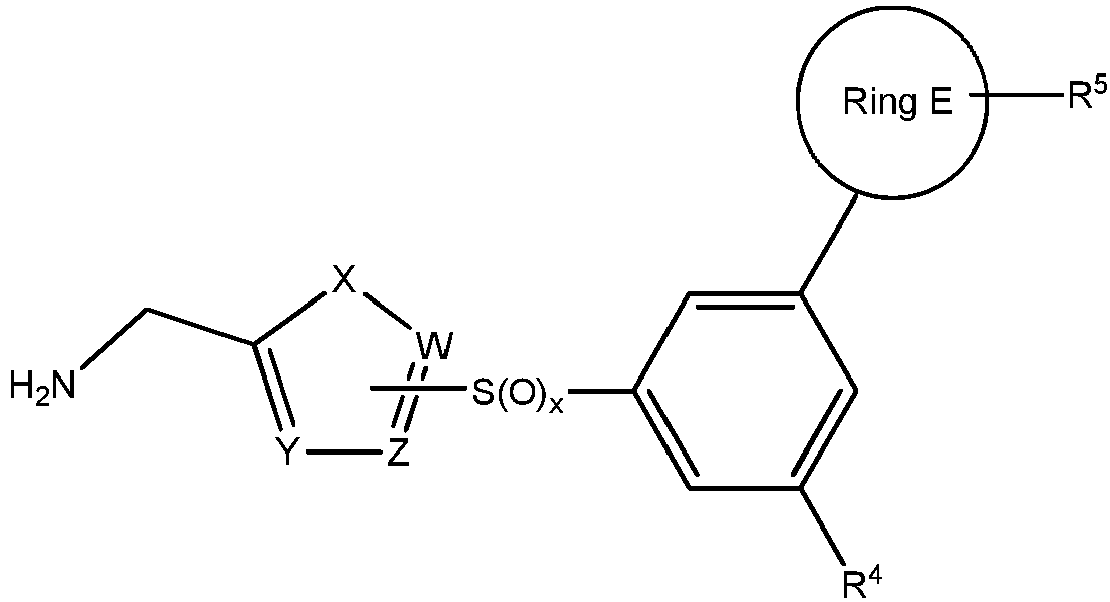

- The compound of any one of claims 7 and 8, wherein Ring E is phenyl, optionally


- The compound of any one of claims 7 to 9 wherein R5 is selected from the group consisting of: H, -CH3 and -CH2OCH3.
- A compound selected from the following group, or a pharmaceutically acceptable salt thereof,
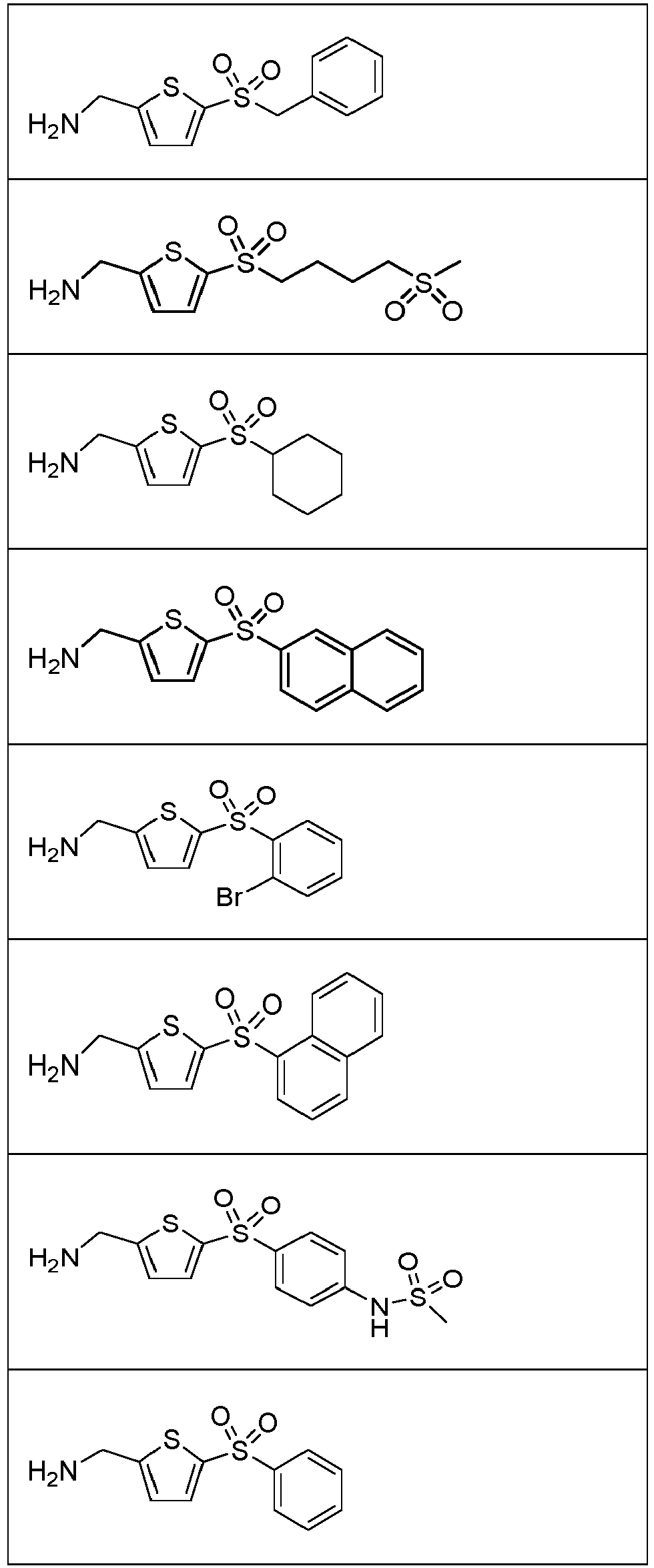


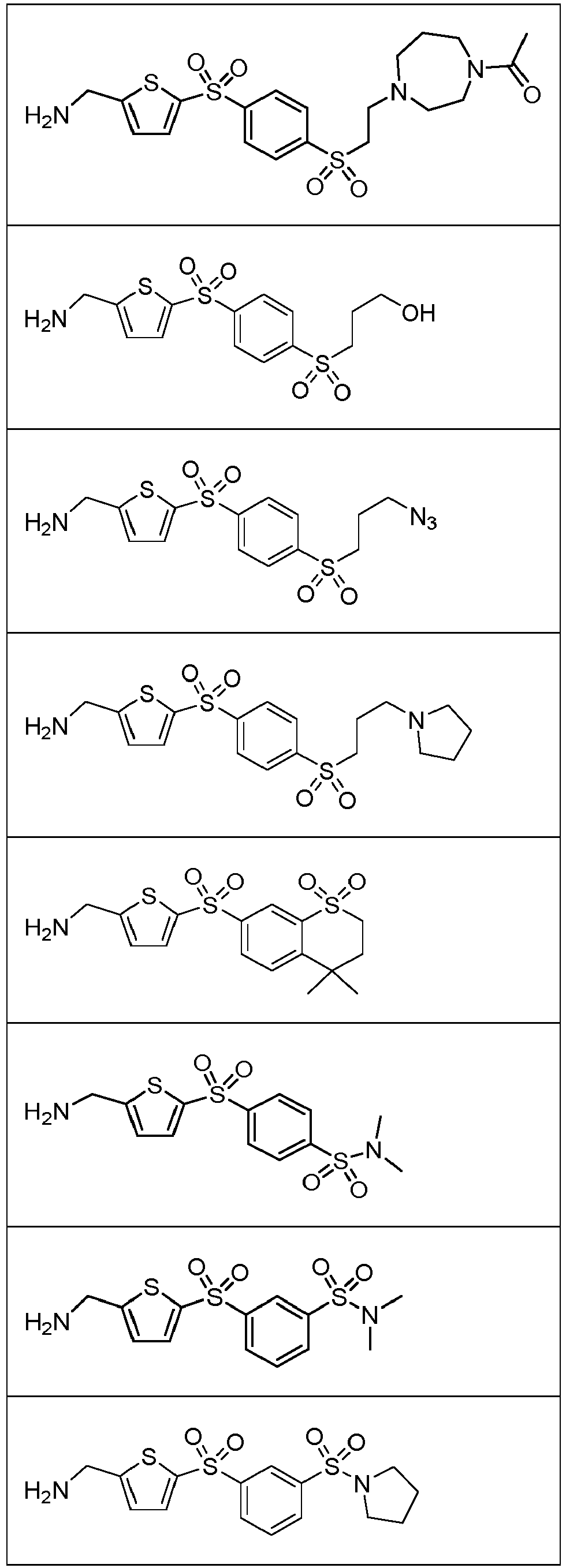


- A compound according to claim 11, or a pharmaceutically acceptable salt thereof, wherein the compound is selected from the group consisting of:
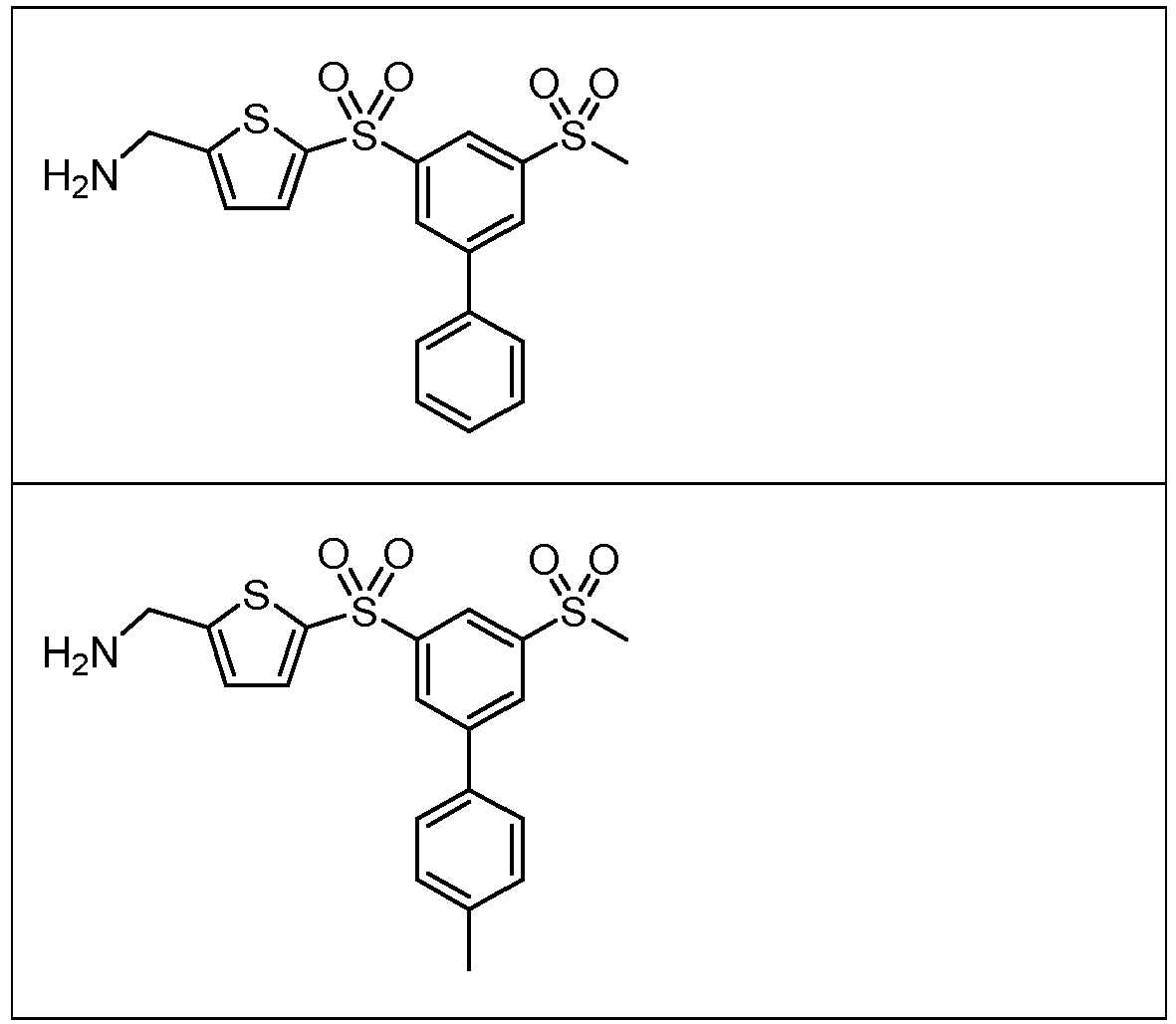


- A compound of any one of claims 1 to 12, or a pharmaceutically acceptable salt thereof, for use as a medicament.
- A compound of any one of claims 1 to 12, or a pharmaceutically acceptable salt thereof, for use in the treatment of a disease or medical condition mediated by lysyl oxidase (LOX).
- A compound of any one of claims 1 to 12, or a pharmaceutically acceptable salt thereof, for use in the treatment of a fibrotic disorder.
- The compound of any one of claims 1 to 12, or a pharmaceutically acceptable salt thereof, for use according to claim 15 wherein fibrotic disorder is selected from:(i) a fibrotic condition affecting the lungs, for example pulmonary fibrosis secondary to cystic fibrosis; idiopathic pulmonary fibrosis; coal worker's progressive massive fibrosis; cryptogenic fibrosing alveolitis, chronic fibrosing interstitial pneumonia, interstitial lung disease (ILD), diffuse parenchymal lung disease (DPLD), emphysema and chronic obstructive pulmonary disease (COPD), or chronic asthma; or(ii) a fibrotic condition affecting the liver, for example cirrhosis, and associated conditions such as chronic viral hepatitis B or C, Wilson's disease, non-alcoholic fatty liver disease (NAFLD), alcoholic steatohepatitis (ASH), non-alcoholic steatohepatitis (NASH), primary biliary cirrhosis (PBC), biliary cirrhosis or autoimmune hepatitis; or(iii) a fibrotic condition affecting the kidneys, for example diabetic nephropathy, vesicoureteral reflux, tubulointerstitial renal fibrosis; glomerulonephritis or glomerular nephritis, including focal segmental glomerulosclerosis and membranous glomerulonephritis or mesangiocapillary glomerular nephritis; or(iv) a fibrotic condition affecting the heart or vascular system, for example endomyocardial fibrosis; old myocardial infarction; atrial fibrosis; congestive heart failure, cardiomyopathy, hypertensive heart disease (HHD), hypertension (for example pulmonary hypertension) and fibrosis associated with hypertension, atherosclerosis, restenosis (e.g. coronary, carotid, and cerebral lesions), and heart disease associated with cardiac ischemic events; or(v) a fibrotic condition affecting the mediastinum, for example mediastinal fibrosis; or(vi) a fibrotic condition affecting bone, for example myelofibrosis, including primary myelofibrosis, post polycythemia vera or post essential thrombocythemia myelofibrosis; or(vii) a fibrotic condition affecting the retroperitoneum, for example retroperitoneal fibrosis skin; or(viii) a fibrotic condition affecting the skin, for example nephrogenic systemic fibrosis, keloid formation and scarring, systemic sclerosis or scleroderma; or(ix) a fibrotic condition affecting the GI tract, for example a fibrotic intestinal disorder, inflammatory bowel disease, ulcerative colitis or Crohn's disease; or(x) a fibrotic condition affecting connective tissue, for example arthrofibrosis; or capsulitis; or(xi) a fibrotic condition affecting the eye, for example ocular fibrosis following surgery or pseudoexfoliation syndrome glaucoma.
- The compound of any one of claims 1 to 12, or a pharmaceutically acceptable salt thereof, for use in the treatment of a proliferative disease.
- The compound for use of claim 17, wherein the proliferative disease is cancer.
- The compound for use of claim 18, wherein the cancer is selected from pancreatic, colorectal, breast and lung cancer.
- A compound of any one of claims 1 to 12, or a pharmaceutically acceptable salt thereof, for use in the treatment of cancer, wherein the compound is used simultaneously, sequentially or separately with radiotherapy.
- A compound according to any one of claims 1 to 12 for use in the treatment or prevention of a cancer associated with overexpression of epidermal growth factor receptor (EGFR).
- The compound for use according to claim 21, wherein the cancer is selected from the group consisting of: non-small cell lung cancer (NSCLC), pancreatic cancer, squamous cells carcinoma, skin cancer, thyroid, colorectal, prostate, renal, breast, head & neck cancers, glioma, mesothelioma, epidermal carcinomas ovarian, cervical, bladder and oesophageal cancers and a biliary cancer such as cholangiocarcinoma.
Applications Claiming Priority (2)
| Application Number | Priority Date | Filing Date | Title |
|---|---|---|---|
| GBGB1602934.0A GB201602934D0 (en) | 2016-02-19 | 2016-02-19 | Compounds |
| PCT/GB2017/050421 WO2017141049A1 (en) | 2016-02-19 | 2017-02-17 | Methylamine derivatives as lysysl oxidase inhibitors for the treatment of cancer |
Publications (2)
| Publication Number | Publication Date |
|---|---|
| EP3416956A1 EP3416956A1 (en) | 2018-12-26 |
| EP3416956B1 true EP3416956B1 (en) | 2024-04-10 |
Family
ID=55752910
Family Applications (1)
| Application Number | Title | Priority Date | Filing Date |
|---|---|---|---|
| EP17706871.5A Active EP3416956B1 (en) | 2016-02-19 | 2017-02-17 | Methylamine derivatives as lysyl oxidase inhibitors for the treatment of cancer |
Country Status (10)
| Country | Link |
|---|---|
| US (3) | US10807974B2 (en) |
| EP (1) | EP3416956B1 (en) |
| JP (1) | JP7072514B2 (en) |
| CN (1) | CN109311839B (en) |
| DK (1) | DK3416956T3 (en) |
| ES (1) | ES2985706T3 (en) |
| FI (1) | FI3416956T3 (en) |
| GB (1) | GB201602934D0 (en) |
| IL (1) | IL261015B (en) |
| WO (1) | WO2017141049A1 (en) |
Families Citing this family (16)
| Publication number | Priority date | Publication date | Assignee | Title |
|---|---|---|---|---|
| US10441654B2 (en) | 2014-01-24 | 2019-10-15 | Children's Hospital Of Eastern Ontario Research Institute Inc. | SMC combination therapy for the treatment of cancer |
| GB201602934D0 (en) * | 2016-02-19 | 2016-04-06 | Cancer Res Inst Royal | Compounds |
| WO2018048930A1 (en) * | 2016-09-07 | 2018-03-15 | Pharmakea, Inc. | Lysyl oxidase-like 2 inhibitors and uses thereof |
| GB201716871D0 (en) | 2017-10-13 | 2017-11-29 | Inst Of Cancer Research: Royal Cancer Hospital | Compounds |
| CN111247119B (en) * | 2018-01-19 | 2023-02-03 | 四川科伦博泰生物医药股份有限公司 | Amidine and guanidine derivatives, preparation method and application thereof in medicines |
| GB201809295D0 (en) | 2018-06-06 | 2018-07-25 | Institute Of Cancer Res Royal Cancer Hospital | Lox inhibitors |
| CA3105599A1 (en) | 2018-08-03 | 2020-02-06 | Pharmaxis Ltd. | Haloallylamine sulfone derivative inhibitors of lysyl oxidases and uses thereof |
| GB201818750D0 (en) | 2018-11-16 | 2019-01-02 | Institute Of Cancer Res Royal Cancer Hospital | Lox inhibitors |
| WO2021155439A1 (en) | 2020-02-05 | 2021-08-12 | Pharmaxis Ltd. | Bioprobes for lysyl oxidases and uses thereof |
| CA3176661A1 (en) * | 2020-04-24 | 2021-10-28 | Memorial Sloan-Kettering Cancer Center | Targeted therapy for the treatment & prevention of life-threatening complications of infection |
| CN113712961B (en) * | 2021-08-30 | 2023-03-28 | 浙江工业大学 | Application of beta-selenoether imidazole compound in preparation of antitumor drugs |
| EP4422618A4 (en) * | 2021-10-28 | 2025-07-23 | Anovia Biosciences Inc | Lox enzyme inhibiting methods and compositions |
| US12233056B2 (en) | 2022-04-06 | 2025-02-25 | Syntara Limited | Lysyl oxidase inhibitors for treating myeloid malignancies |
| GB202209624D0 (en) | 2022-06-30 | 2022-08-17 | Institute Of Cancer Res Royal Cancer Hospital | Prodrugs |
| GB202209622D0 (en) | 2022-06-30 | 2022-08-17 | Institute Of Cancer Res Royal Cancer Hospital | Compounds |
| CN116531367B (en) * | 2023-06-30 | 2024-04-19 | 中南大学湘雅医院 | Application of CCT365623 in the preparation of drugs for the treatment of Parkinson's disease |
Family Cites Families (20)
| Publication number | Priority date | Publication date | Assignee | Title |
|---|---|---|---|---|
| US4847289A (en) * | 1987-06-08 | 1989-07-11 | Merck & Co., Inc. | Thiophene sulfonamide antiglaucoma agents |
| AU618076B2 (en) * | 1988-02-25 | 1991-12-12 | Merrell Dow Pharmaceuticals Inc. | Inhibitors of lysyloxidase |
| DE69532245T2 (en) | 1994-09-26 | 2004-09-16 | Shionogi & Co., Ltd. | imidazole |
| DE10216144A1 (en) | 2002-04-12 | 2003-11-06 | Bayer Ag | New 2-phenyl-4-phenoxy-3(2H)-pyridazinone derivatives useful as lysyl oxidase inhibitors for preventing or treating fibrotic diseases |
| DE102004056226A1 (en) | 2004-11-22 | 2006-05-24 | Burchardt, Elmar Reinhold, Dr.Dr. | Novel inhibitors of lysyl oxidase |
| CA2592909A1 (en) | 2005-01-06 | 2006-07-13 | Pfizer Limited | Imidazole derivatives as enzyme reverse transcriptase modulators |
| US20070021365A1 (en) | 2005-06-21 | 2007-01-25 | The Board Of Trustees Of The Leland Stanford Junior University | Inhibition of Lysyl oxidase for treating tumor growth and diagnostics relating thereto |
| US9161922B2 (en) | 2005-07-01 | 2015-10-20 | Case Western Reserve University | Amine oxidase inhibitors |
| EP2005957B1 (en) | 2006-03-31 | 2012-05-30 | Takeda Pharmaceutical Company Limited | Acid secretion inhibitor |
| CN101489394A (en) * | 2006-04-27 | 2009-07-22 | 小利兰斯坦福大学理事会 | Methods and compositions for the in vivo treatment and prevention of tumor metastasis |
| ES2700141T3 (en) | 2007-08-02 | 2019-02-14 | Gilead Biologics Inc | LOXL2 inhibitory antibodies and their uses |
| EP2196459B1 (en) | 2007-09-28 | 2016-11-02 | Takeda Pharmaceutical Company Limited | 5-membered heterocyclic compound |
| KR20100109934A (en) * | 2007-12-26 | 2010-10-11 | 시오노기세야쿠 가부시키가이샤 | Glycosylated glycopeptide antibiotic derivative |
| JP2016500700A (en) | 2012-10-30 | 2016-01-14 | ギリアード サイエンシーズ, インコーポレイテッド | Treatment and diagnostic methods for lysyl oxidase-like 2 (LOXL2) |
| WO2016144702A1 (en) | 2015-03-06 | 2016-09-15 | Pharmakea, Inc. | Lysyl oxidase-like 2 inhibitors and uses thereof |
| WO2016144703A1 (en) | 2015-03-06 | 2016-09-15 | Pharmakea, Inc. | Fluorinated lysyl oxidase-like 2 inhibitors and uses thereof |
| US20180186755A1 (en) | 2015-07-01 | 2018-07-05 | Pharmakea, Inc. | Lysyl oxidase-like 2 inhibitors and uses thereof |
| JP2018521044A (en) | 2015-07-23 | 2018-08-02 | ファーマケア,インク. | Lysyl oxidase like 2 inhibitor and its use |
| GB201602934D0 (en) * | 2016-02-19 | 2016-04-06 | Cancer Res Inst Royal | Compounds |
| US11190892B2 (en) | 2019-11-20 | 2021-11-30 | Facebook Technologies, Llc | Audio sample phase alignment in an artificial reality system |
-
2016
- 2016-02-19 GB GBGB1602934.0A patent/GB201602934D0/en not_active Ceased
-
2017
- 2017-02-17 EP EP17706871.5A patent/EP3416956B1/en active Active
- 2017-02-17 WO PCT/GB2017/050421 patent/WO2017141049A1/en not_active Ceased
- 2017-02-17 JP JP2018543638A patent/JP7072514B2/en not_active Expired - Fee Related
- 2017-02-17 ES ES17706871T patent/ES2985706T3/en active Active
- 2017-02-17 CN CN201780024177.7A patent/CN109311839B/en not_active Expired - Fee Related
- 2017-02-17 FI FIEP17706871.5T patent/FI3416956T3/en active
- 2017-02-17 DK DK17706871.5T patent/DK3416956T3/en active
- 2017-02-17 US US15/999,458 patent/US10807974B2/en active Active
-
2018
- 2018-08-06 IL IL261015A patent/IL261015B/en unknown
-
2020
- 2020-06-22 US US16/908,487 patent/US10995088B2/en not_active Expired - Fee Related
-
2021
- 2021-04-02 US US17/221,549 patent/US11608330B2/en active Active
Non-Patent Citations (1)
| Title |
|---|
| RODRÍGUEZ CRISTINA ET AL: "Lysyl oxidase as a potential therapeutic target", DRUG NEWS AND PERSPECTIVES, PROUS SCIENCE, ES, vol. 21, no. 4, 1 May 2008 (2008-05-01), pages 218 - 224, XP001537108, ISSN: 0214-0934, DOI: 10.1358/DNP.2008.21.4.1213351 * |
Also Published As
| Publication number | Publication date |
|---|---|
| IL261015A (en) | 2018-10-31 |
| US10995088B2 (en) | 2021-05-04 |
| IL261015B (en) | 2021-10-31 |
| CN109311839A (en) | 2019-02-05 |
| FI3416956T3 (en) | 2024-07-09 |
| ES2985706T3 (en) | 2024-11-07 |
| US11608330B2 (en) | 2023-03-21 |
| EP3416956A1 (en) | 2018-12-26 |
| CN109311839B (en) | 2021-11-02 |
| US20210040078A1 (en) | 2021-02-11 |
| DK3416956T3 (en) | 2024-07-15 |
| US20190152966A1 (en) | 2019-05-23 |
| JP7072514B2 (en) | 2022-05-20 |
| US10807974B2 (en) | 2020-10-20 |
| JP2019513120A (en) | 2019-05-23 |
| GB201602934D0 (en) | 2016-04-06 |
| WO2017141049A1 (en) | 2017-08-24 |
| US20220372028A1 (en) | 2022-11-24 |
Similar Documents
| Publication | Publication Date | Title |
|---|---|---|
| US11608330B2 (en) | Methylamine derivatives as lysysl oxidase inhibitors for the treatment of cancer | |
| JP7337883B2 (en) | Small molecule inhibitors of lactate dehydrogenase and methods of use thereof | |
| AU2019404934B2 (en) | Macrocyclic compounds and their use in the treatment of disease | |
| EP2994463B1 (en) | Novel compounds and pharmaceutical compositions thereof for the treatment of cystic fibrosis | |
| EP3010901B1 (en) | Heteroaryl substituted pyrazoles | |
| CN104936954B (en) | Compounds and Methods of Use | |
| CN103974948B (en) | Substituted benzyl indazoles useful as BUB1 kinase inhibitors in the treatment of hyperproliferative diseases | |
| CN107428765B (en) | Pyridazinone macrocyclic compounds as IRAK inhibitors and their uses | |
| CN112739690A (en) | Pyridin-2-one compounds as SMARCA2 antagonists | |
| JP6787899B2 (en) | Pharmaceutically active compound | |
| KR20180119582A (en) | Indole and azaindole haloalylamine derivative inhibitors of lysyloxydase and uses thereof | |
| KR20150091389A (en) | Treatment of cancer with heterocyclic inhibitors of glutaminase | |
| WO2019073251A1 (en) | Lysyl oxidase inhibitors | |
| TW201512194A (en) | N-(4-(azetrocarbazol-6-yl)-phenyl)-sulfonamide and its use as medicine | |
| JP7815250B2 (en) | Aldehyde dehydrogenase inhibitors and their therapeutic uses | |
| AU2017290705B2 (en) | Compounds and compositions for the treatment of cancer | |
| TW200412966A (en) | Novel pyrazolopyrimidines as cyclin dependent kinase inhibitors | |
| CN111565717A (en) | MYST family histone acetyltransferase inhibitors | |
| JP2022507335A (en) | LOX inhibitor | |
| CN107531683A (en) | USP7 inhibitor compounds and methods of use | |
| CN111971278A (en) | Quinoline compounds as IRAK inhibitors and uses thereof | |
| CN108463462A (en) | Benzene phenodiazine * classes are as bromine structural domain inhibitor | |
| CN111655260A (en) | Oxadiazoles and Thiadiazoles as TGF-β Inhibitors | |
| WO2024003557A1 (en) | Sulfoximines as inhibitors of lysyl oxidase | |
| HK40115797A (en) | Prmt5-mta inhibitor |
Legal Events
| Date | Code | Title | Description |
|---|---|---|---|
| STAA | Information on the status of an ep patent application or granted ep patent |
Free format text: STATUS: UNKNOWN |
|
| STAA | Information on the status of an ep patent application or granted ep patent |
Free format text: STATUS: THE INTERNATIONAL PUBLICATION HAS BEEN MADE |
|
| PUAI | Public reference made under article 153(3) epc to a published international application that has entered the european phase |
Free format text: ORIGINAL CODE: 0009012 |
|
| STAA | Information on the status of an ep patent application or granted ep patent |
Free format text: STATUS: REQUEST FOR EXAMINATION WAS MADE |
|
| 17P | Request for examination filed |
Effective date: 20180907 |
|
| AK | Designated contracting states |
Kind code of ref document: A1 Designated state(s): AL AT BE BG CH CY CZ DE DK EE ES FI FR GB GR HR HU IE IS IT LI LT LU LV MC MK MT NL NO PL PT RO RS SE SI SK SM TR |
|
| AX | Request for extension of the european patent |
Extension state: BA ME |
|
| DAV | Request for validation of the european patent (deleted) | ||
| DAX | Request for extension of the european patent (deleted) | ||
| STAA | Information on the status of an ep patent application or granted ep patent |
Free format text: STATUS: EXAMINATION IS IN PROGRESS |
|
| 17Q | First examination report despatched |
Effective date: 20191002 |
|
| GRAP | Despatch of communication of intention to grant a patent |
Free format text: ORIGINAL CODE: EPIDOSNIGR1 |
|
| STAA | Information on the status of an ep patent application or granted ep patent |
Free format text: STATUS: GRANT OF PATENT IS INTENDED |
|
| INTG | Intention to grant announced |
Effective date: 20220714 |
|
| RAP3 | Party data changed (applicant data changed or rights of an application transferred) |
Owner name: THE INSTITUTE OF CANCER RESEARCH: ROYAL CANCER HOSPITAL |
|
| GRAJ | Information related to disapproval of communication of intention to grant by the applicant or resumption of examination proceedings by the epo deleted |
Free format text: ORIGINAL CODE: EPIDOSDIGR1 |
|
| STAA | Information on the status of an ep patent application or granted ep patent |
Free format text: STATUS: EXAMINATION IS IN PROGRESS |
|
| GRAP | Despatch of communication of intention to grant a patent |
Free format text: ORIGINAL CODE: EPIDOSNIGR1 |
|
| STAA | Information on the status of an ep patent application or granted ep patent |
Free format text: STATUS: GRANT OF PATENT IS INTENDED |
|
| INTC | Intention to grant announced (deleted) | ||
| INTG | Intention to grant announced |
Effective date: 20221208 |
|
| GRAJ | Information related to disapproval of communication of intention to grant by the applicant or resumption of examination proceedings by the epo deleted |
Free format text: ORIGINAL CODE: EPIDOSDIGR1 |
|
| STAA | Information on the status of an ep patent application or granted ep patent |
Free format text: STATUS: EXAMINATION IS IN PROGRESS |
|
| GRAP | Despatch of communication of intention to grant a patent |
Free format text: ORIGINAL CODE: EPIDOSNIGR1 |
|
| STAA | Information on the status of an ep patent application or granted ep patent |
Free format text: STATUS: GRANT OF PATENT IS INTENDED |
|
| INTC | Intention to grant announced (deleted) | ||
| INTG | Intention to grant announced |
Effective date: 20230512 |
|
| GRAJ | Information related to disapproval of communication of intention to grant by the applicant or resumption of examination proceedings by the epo deleted |
Free format text: ORIGINAL CODE: EPIDOSDIGR1 |
|
| STAA | Information on the status of an ep patent application or granted ep patent |
Free format text: STATUS: EXAMINATION IS IN PROGRESS |
|
| GRAP | Despatch of communication of intention to grant a patent |
Free format text: ORIGINAL CODE: EPIDOSNIGR1 |
|
| STAA | Information on the status of an ep patent application or granted ep patent |
Free format text: STATUS: GRANT OF PATENT IS INTENDED |
|
| INTC | Intention to grant announced (deleted) | ||
| INTG | Intention to grant announced |
Effective date: 20231030 |
|
| GRAS | Grant fee paid |
Free format text: ORIGINAL CODE: EPIDOSNIGR3 |
|
| GRAA | (expected) grant |
Free format text: ORIGINAL CODE: 0009210 |
|
| STAA | Information on the status of an ep patent application or granted ep patent |
Free format text: STATUS: THE PATENT HAS BEEN GRANTED |
|
| AK | Designated contracting states |
Kind code of ref document: B1 Designated state(s): AL AT BE BG CH CY CZ DE DK EE ES FI FR GB GR HR HU IE IS IT LI LT LU LV MC MK MT NL NO PL PT RO RS SE SI SK SM TR |
|
| REG | Reference to a national code |
Ref country code: GB Ref legal event code: FG4D |
|
| REG | Reference to a national code |
Ref country code: CH Ref legal event code: EP |
|
| REG | Reference to a national code |
Ref country code: DE Ref legal event code: R096 Ref document number: 602017080815 Country of ref document: DE |
|
| REG | Reference to a national code |
Ref country code: IE Ref legal event code: FG4D |
|
| REG | Reference to a national code |
Ref country code: FI Ref legal event code: FGE |
|
| REG | Reference to a national code |
Ref country code: DK Ref legal event code: T3 Effective date: 20240710 |
|
| REG | Reference to a national code |
Ref country code: SE Ref legal event code: TRGR |
|
| REG | Reference to a national code |
Ref country code: NL Ref legal event code: FP |
|
| REG | Reference to a national code |
Ref country code: LT Ref legal event code: MG9D |
|
| REG | Reference to a national code |
Ref country code: AT Ref legal event code: MK05 Ref document number: 1674811 Country of ref document: AT Kind code of ref document: T Effective date: 20240410 |
|
| PG25 | Lapsed in a contracting state [announced via postgrant information from national office to epo] |
Ref country code: IS Free format text: LAPSE BECAUSE OF FAILURE TO SUBMIT A TRANSLATION OF THE DESCRIPTION OR TO PAY THE FEE WITHIN THE PRESCRIBED TIME-LIMIT Effective date: 20240810 |
|
| PG25 | Lapsed in a contracting state [announced via postgrant information from national office to epo] |
Ref country code: BG Free format text: LAPSE BECAUSE OF FAILURE TO SUBMIT A TRANSLATION OF THE DESCRIPTION OR TO PAY THE FEE WITHIN THE PRESCRIBED TIME-LIMIT Effective date: 20240410 |
|
| PG25 | Lapsed in a contracting state [announced via postgrant information from national office to epo] |
Ref country code: HR Free format text: LAPSE BECAUSE OF FAILURE TO SUBMIT A TRANSLATION OF THE DESCRIPTION OR TO PAY THE FEE WITHIN THE PRESCRIBED TIME-LIMIT Effective date: 20240410 |
|
| PG25 | Lapsed in a contracting state [announced via postgrant information from national office to epo] |
Ref country code: GR Free format text: LAPSE BECAUSE OF FAILURE TO SUBMIT A TRANSLATION OF THE DESCRIPTION OR TO PAY THE FEE WITHIN THE PRESCRIBED TIME-LIMIT Effective date: 20240711 |
|
| PG25 | Lapsed in a contracting state [announced via postgrant information from national office to epo] |
Ref country code: PT Free format text: LAPSE BECAUSE OF FAILURE TO SUBMIT A TRANSLATION OF THE DESCRIPTION OR TO PAY THE FEE WITHIN THE PRESCRIBED TIME-LIMIT Effective date: 20240812 |
|
| PG25 | Lapsed in a contracting state [announced via postgrant information from national office to epo] |
Ref country code: AT Free format text: LAPSE BECAUSE OF FAILURE TO SUBMIT A TRANSLATION OF THE DESCRIPTION OR TO PAY THE FEE WITHIN THE PRESCRIBED TIME-LIMIT Effective date: 20240410 |
|
| PG25 | Lapsed in a contracting state [announced via postgrant information from national office to epo] |
Ref country code: PL Free format text: LAPSE BECAUSE OF FAILURE TO SUBMIT A TRANSLATION OF THE DESCRIPTION OR TO PAY THE FEE WITHIN THE PRESCRIBED TIME-LIMIT Effective date: 20240410 |
|
| PG25 | Lapsed in a contracting state [announced via postgrant information from national office to epo] |
Ref country code: LV Free format text: LAPSE BECAUSE OF FAILURE TO SUBMIT A TRANSLATION OF THE DESCRIPTION OR TO PAY THE FEE WITHIN THE PRESCRIBED TIME-LIMIT Effective date: 20240410 |
|
| PG25 | Lapsed in a contracting state [announced via postgrant information from national office to epo] |
Ref country code: PT Free format text: LAPSE BECAUSE OF FAILURE TO SUBMIT A TRANSLATION OF THE DESCRIPTION OR TO PAY THE FEE WITHIN THE PRESCRIBED TIME-LIMIT Effective date: 20240812 Ref country code: PL Free format text: LAPSE BECAUSE OF FAILURE TO SUBMIT A TRANSLATION OF THE DESCRIPTION OR TO PAY THE FEE WITHIN THE PRESCRIBED TIME-LIMIT Effective date: 20240410 Ref country code: LV Free format text: LAPSE BECAUSE OF FAILURE TO SUBMIT A TRANSLATION OF THE DESCRIPTION OR TO PAY THE FEE WITHIN THE PRESCRIBED TIME-LIMIT Effective date: 20240410 Ref country code: IS Free format text: LAPSE BECAUSE OF FAILURE TO SUBMIT A TRANSLATION OF THE DESCRIPTION OR TO PAY THE FEE WITHIN THE PRESCRIBED TIME-LIMIT Effective date: 20240810 Ref country code: HR Free format text: LAPSE BECAUSE OF FAILURE TO SUBMIT A TRANSLATION OF THE DESCRIPTION OR TO PAY THE FEE WITHIN THE PRESCRIBED TIME-LIMIT Effective date: 20240410 Ref country code: GR Free format text: LAPSE BECAUSE OF FAILURE TO SUBMIT A TRANSLATION OF THE DESCRIPTION OR TO PAY THE FEE WITHIN THE PRESCRIBED TIME-LIMIT Effective date: 20240711 Ref country code: BG Free format text: LAPSE BECAUSE OF FAILURE TO SUBMIT A TRANSLATION OF THE DESCRIPTION OR TO PAY THE FEE WITHIN THE PRESCRIBED TIME-LIMIT Effective date: 20240410 Ref country code: AT Free format text: LAPSE BECAUSE OF FAILURE TO SUBMIT A TRANSLATION OF THE DESCRIPTION OR TO PAY THE FEE WITHIN THE PRESCRIBED TIME-LIMIT Effective date: 20240410 Ref country code: RS Free format text: LAPSE BECAUSE OF FAILURE TO SUBMIT A TRANSLATION OF THE DESCRIPTION OR TO PAY THE FEE WITHIN THE PRESCRIBED TIME-LIMIT Effective date: 20240710 |
|
| REG | Reference to a national code |
Ref country code: ES Ref legal event code: FG2A Ref document number: 2985706 Country of ref document: ES Kind code of ref document: T3 Effective date: 20241107 |
|
| REG | Reference to a national code |
Ref country code: DE Ref legal event code: R097 Ref document number: 602017080815 Country of ref document: DE |
|
| PG25 | Lapsed in a contracting state [announced via postgrant information from national office to epo] |
Ref country code: EE Free format text: LAPSE BECAUSE OF FAILURE TO SUBMIT A TRANSLATION OF THE DESCRIPTION OR TO PAY THE FEE WITHIN THE PRESCRIBED TIME-LIMIT Effective date: 20240410 |
|
| PG25 | Lapsed in a contracting state [announced via postgrant information from national office to epo] |
Ref country code: CZ Free format text: LAPSE BECAUSE OF FAILURE TO SUBMIT A TRANSLATION OF THE DESCRIPTION OR TO PAY THE FEE WITHIN THE PRESCRIBED TIME-LIMIT Effective date: 20240410 |
|
| PG25 | Lapsed in a contracting state [announced via postgrant information from national office to epo] |
Ref country code: SK Free format text: LAPSE BECAUSE OF FAILURE TO SUBMIT A TRANSLATION OF THE DESCRIPTION OR TO PAY THE FEE WITHIN THE PRESCRIBED TIME-LIMIT Effective date: 20240410 Ref country code: RO Free format text: LAPSE BECAUSE OF FAILURE TO SUBMIT A TRANSLATION OF THE DESCRIPTION OR TO PAY THE FEE WITHIN THE PRESCRIBED TIME-LIMIT Effective date: 20240410 |
|
| PG25 | Lapsed in a contracting state [announced via postgrant information from national office to epo] |
Ref country code: SM Free format text: LAPSE BECAUSE OF FAILURE TO SUBMIT A TRANSLATION OF THE DESCRIPTION OR TO PAY THE FEE WITHIN THE PRESCRIBED TIME-LIMIT Effective date: 20240410 |
|
| PG25 | Lapsed in a contracting state [announced via postgrant information from national office to epo] |
Ref country code: SM Free format text: LAPSE BECAUSE OF FAILURE TO SUBMIT A TRANSLATION OF THE DESCRIPTION OR TO PAY THE FEE WITHIN THE PRESCRIBED TIME-LIMIT Effective date: 20240410 Ref country code: SK Free format text: LAPSE BECAUSE OF FAILURE TO SUBMIT A TRANSLATION OF THE DESCRIPTION OR TO PAY THE FEE WITHIN THE PRESCRIBED TIME-LIMIT Effective date: 20240410 Ref country code: RO Free format text: LAPSE BECAUSE OF FAILURE TO SUBMIT A TRANSLATION OF THE DESCRIPTION OR TO PAY THE FEE WITHIN THE PRESCRIBED TIME-LIMIT Effective date: 20240410 Ref country code: EE Free format text: LAPSE BECAUSE OF FAILURE TO SUBMIT A TRANSLATION OF THE DESCRIPTION OR TO PAY THE FEE WITHIN THE PRESCRIBED TIME-LIMIT Effective date: 20240410 Ref country code: CZ Free format text: LAPSE BECAUSE OF FAILURE TO SUBMIT A TRANSLATION OF THE DESCRIPTION OR TO PAY THE FEE WITHIN THE PRESCRIBED TIME-LIMIT Effective date: 20240410 |
|
| PLBE | No opposition filed within time limit |
Free format text: ORIGINAL CODE: 0009261 |
|
| STAA | Information on the status of an ep patent application or granted ep patent |
Free format text: STATUS: NO OPPOSITION FILED WITHIN TIME LIMIT |
|
| 26N | No opposition filed |
Effective date: 20250113 |
|
| PG25 | Lapsed in a contracting state [announced via postgrant information from national office to epo] |
Ref country code: SI Free format text: LAPSE BECAUSE OF FAILURE TO SUBMIT A TRANSLATION OF THE DESCRIPTION OR TO PAY THE FEE WITHIN THE PRESCRIBED TIME-LIMIT Effective date: 20240410 |
|
| REG | Reference to a national code |
Ref country code: DE Ref legal event code: R119 Ref document number: 602017080815 Country of ref document: DE |
|
| PG25 | Lapsed in a contracting state [announced via postgrant information from national office to epo] |
Ref country code: MC Free format text: LAPSE BECAUSE OF FAILURE TO SUBMIT A TRANSLATION OF THE DESCRIPTION OR TO PAY THE FEE WITHIN THE PRESCRIBED TIME-LIMIT Effective date: 20240410 |
|
| REG | Reference to a national code |
Ref country code: DK Ref legal event code: EBP Effective date: 20250228 |
|
| REG | Reference to a national code |
Ref country code: SE Ref legal event code: EUG Ref country code: CH Ref legal event code: PL |
|
| REG | Reference to a national code |
Ref country code: NL Ref legal event code: MM Effective date: 20250301 |
|
| PG25 | Lapsed in a contracting state [announced via postgrant information from national office to epo] |
Ref country code: FI Free format text: LAPSE BECAUSE OF NON-PAYMENT OF DUE FEES Effective date: 20250217 |
|
| PG25 | Lapsed in a contracting state [announced via postgrant information from national office to epo] |
Ref country code: NO Free format text: LAPSE BECAUSE OF NON-PAYMENT OF DUE FEES Effective date: 20250228 |
|
| PG25 | Lapsed in a contracting state [announced via postgrant information from national office to epo] |
Ref country code: LU Free format text: LAPSE BECAUSE OF NON-PAYMENT OF DUE FEES Effective date: 20250217 |
|
| PG25 | Lapsed in a contracting state [announced via postgrant information from national office to epo] |
Ref country code: CH Free format text: LAPSE BECAUSE OF NON-PAYMENT OF DUE FEES Effective date: 20250228 |
|
| GBPC | Gb: european patent ceased through non-payment of renewal fee |
Effective date: 20250217 |
|
| PG25 | Lapsed in a contracting state [announced via postgrant information from national office to epo] |
Ref country code: NL Free format text: LAPSE BECAUSE OF NON-PAYMENT OF DUE FEES Effective date: 20250301 |
|
| REG | Reference to a national code |
Ref country code: BE Ref legal event code: MM Effective date: 20250228 |
|
| PG25 | Lapsed in a contracting state [announced via postgrant information from national office to epo] |
Ref country code: DE Free format text: LAPSE BECAUSE OF NON-PAYMENT OF DUE FEES Effective date: 20250902 |
|
| PG25 | Lapsed in a contracting state [announced via postgrant information from national office to epo] |
Ref country code: GB Free format text: LAPSE BECAUSE OF NON-PAYMENT OF DUE FEES Effective date: 20250217 |
|
| PG25 | Lapsed in a contracting state [announced via postgrant information from national office to epo] |
Ref country code: DK Free format text: LAPSE BECAUSE OF NON-PAYMENT OF DUE FEES Effective date: 20250228 |
|
| PG25 | Lapsed in a contracting state [announced via postgrant information from national office to epo] |
Ref country code: FR Free format text: LAPSE BECAUSE OF NON-PAYMENT OF DUE FEES Effective date: 20250228 Ref country code: IT Free format text: LAPSE BECAUSE OF NON-PAYMENT OF DUE FEES Effective date: 20250217 |
|
| PG25 | Lapsed in a contracting state [announced via postgrant information from national office to epo] |
Ref country code: BE Free format text: LAPSE BECAUSE OF NON-PAYMENT OF DUE FEES Effective date: 20250228 |
|
| PG25 | Lapsed in a contracting state [announced via postgrant information from national office to epo] |
Ref country code: IE Free format text: LAPSE BECAUSE OF NON-PAYMENT OF DUE FEES Effective date: 20250217 |
|
| REG | Reference to a national code |
Ref country code: ES Ref legal event code: FD2A Effective date: 20260330 |
|
| PG25 | Lapsed in a contracting state [announced via postgrant information from national office to epo] |
Ref country code: ES Free format text: LAPSE BECAUSE OF NON-PAYMENT OF DUE FEES Effective date: 20250218 |