EP3416112A1 - Method and system of predicting passenger demand - Google Patents
Method and system of predicting passenger demand Download PDFInfo
- Publication number
- EP3416112A1 EP3416112A1 EP18175972.1A EP18175972A EP3416112A1 EP 3416112 A1 EP3416112 A1 EP 3416112A1 EP 18175972 A EP18175972 A EP 18175972A EP 3416112 A1 EP3416112 A1 EP 3416112A1
- Authority
- EP
- European Patent Office
- Prior art keywords
- type
- passenger demand
- affecting
- computing
- preallocated
- Prior art date
- Legal status (The legal status is an assumption and is not a legal conclusion. Google has not performed a legal analysis and makes no representation as to the accuracy of the status listed.)
- Withdrawn
Links
Images



Classifications
-
- G—PHYSICS
- G06—COMPUTING OR CALCULATING; COUNTING
- G06Q—INFORMATION AND COMMUNICATION TECHNOLOGY [ICT] SPECIALLY ADAPTED FOR ADMINISTRATIVE, COMMERCIAL, FINANCIAL, MANAGERIAL OR SUPERVISORY PURPOSES; SYSTEMS OR METHODS SPECIALLY ADAPTED FOR ADMINISTRATIVE, COMMERCIAL, FINANCIAL, MANAGERIAL OR SUPERVISORY PURPOSES, NOT OTHERWISE PROVIDED FOR
- G06Q30/00—Commerce
- G06Q30/02—Marketing; Price estimation or determination; Fundraising
- G06Q30/0201—Market modelling; Market analysis; Collecting market data
- G06Q30/0202—Market predictions or forecasting for commercial activities
-
- G—PHYSICS
- G06—COMPUTING OR CALCULATING; COUNTING
- G06Q—INFORMATION AND COMMUNICATION TECHNOLOGY [ICT] SPECIALLY ADAPTED FOR ADMINISTRATIVE, COMMERCIAL, FINANCIAL, MANAGERIAL OR SUPERVISORY PURPOSES; SYSTEMS OR METHODS SPECIALLY ADAPTED FOR ADMINISTRATIVE, COMMERCIAL, FINANCIAL, MANAGERIAL OR SUPERVISORY PURPOSES, NOT OTHERWISE PROVIDED FOR
- G06Q10/00—Administration; Management
- G06Q10/04—Forecasting or optimisation specially adapted for administrative or management purposes, e.g. linear programming or "cutting stock problem"
-
- G—PHYSICS
- G06—COMPUTING OR CALCULATING; COUNTING
- G06F—ELECTRIC DIGITAL DATA PROCESSING
- G06F16/00—Information retrieval; Database structures therefor; File system structures therefor
- G06F16/20—Information retrieval; Database structures therefor; File system structures therefor of structured data, e.g. relational data
- G06F16/29—Geographical information databases
-
- G—PHYSICS
- G06—COMPUTING OR CALCULATING; COUNTING
- G06N—COMPUTING ARRANGEMENTS BASED ON SPECIFIC COMPUTATIONAL MODELS
- G06N5/00—Computing arrangements using knowledge-based models
- G06N5/02—Knowledge representation; Symbolic representation
- G06N5/022—Knowledge engineering; Knowledge acquisition
-
- G—PHYSICS
- G06—COMPUTING OR CALCULATING; COUNTING
- G06Q—INFORMATION AND COMMUNICATION TECHNOLOGY [ICT] SPECIALLY ADAPTED FOR ADMINISTRATIVE, COMMERCIAL, FINANCIAL, MANAGERIAL OR SUPERVISORY PURPOSES; SYSTEMS OR METHODS SPECIALLY ADAPTED FOR ADMINISTRATIVE, COMMERCIAL, FINANCIAL, MANAGERIAL OR SUPERVISORY PURPOSES, NOT OTHERWISE PROVIDED FOR
- G06Q10/00—Administration; Management
- G06Q10/04—Forecasting or optimisation specially adapted for administrative or management purposes, e.g. linear programming or "cutting stock problem"
- G06Q10/047—Optimisation of routes or paths, e.g. travelling salesman problem
-
- G—PHYSICS
- G06—COMPUTING OR CALCULATING; COUNTING
- G06Q—INFORMATION AND COMMUNICATION TECHNOLOGY [ICT] SPECIALLY ADAPTED FOR ADMINISTRATIVE, COMMERCIAL, FINANCIAL, MANAGERIAL OR SUPERVISORY PURPOSES; SYSTEMS OR METHODS SPECIALLY ADAPTED FOR ADMINISTRATIVE, COMMERCIAL, FINANCIAL, MANAGERIAL OR SUPERVISORY PURPOSES, NOT OTHERWISE PROVIDED FOR
- G06Q10/00—Administration; Management
- G06Q10/06—Resources, workflows, human or project management; Enterprise or organisation planning; Enterprise or organisation modelling
- G06Q10/063—Operations research, analysis or management
- G06Q10/0631—Resource planning, allocation, distributing or scheduling for enterprises or organisations
- G06Q10/06315—Needs-based resource requirements planning or analysis
-
- G—PHYSICS
- G06—COMPUTING OR CALCULATING; COUNTING
- G06Q—INFORMATION AND COMMUNICATION TECHNOLOGY [ICT] SPECIALLY ADAPTED FOR ADMINISTRATIVE, COMMERCIAL, FINANCIAL, MANAGERIAL OR SUPERVISORY PURPOSES; SYSTEMS OR METHODS SPECIALLY ADAPTED FOR ADMINISTRATIVE, COMMERCIAL, FINANCIAL, MANAGERIAL OR SUPERVISORY PURPOSES, NOT OTHERWISE PROVIDED FOR
- G06Q10/00—Administration; Management
- G06Q10/08—Logistics, e.g. warehousing, loading or distribution; Inventory or stock management
-
- G—PHYSICS
- G06—COMPUTING OR CALCULATING; COUNTING
- G06Q—INFORMATION AND COMMUNICATION TECHNOLOGY [ICT] SPECIALLY ADAPTED FOR ADMINISTRATIVE, COMMERCIAL, FINANCIAL, MANAGERIAL OR SUPERVISORY PURPOSES; SYSTEMS OR METHODS SPECIALLY ADAPTED FOR ADMINISTRATIVE, COMMERCIAL, FINANCIAL, MANAGERIAL OR SUPERVISORY PURPOSES, NOT OTHERWISE PROVIDED FOR
- G06Q50/00—Information and communication technology [ICT] specially adapted for implementation of business processes of specific business sectors, e.g. utilities or tourism
- G06Q50/40—Business processes related to the transportation industry
Definitions
- the present invention relates to a method and a system of passenger demand prediction, and more particularly, to a method and a system of passenger demand prediction capable of predicting the passenger demand effectly and send the passenger demand to the taxi driver.
- the dispatching system may use a terminal device (e.g., PDA or cell phone) to receive a passengers' request, the backend platform would also record and analyze the area in which the passengers' requests are dense.
- information of the passenger demand/request is local information, and it is hard to predict the variation on passengers' demand caused by the factors such as weather, local activities, traffic condition, etc.
- the taxi dispatch center would be concerned more about the whole revenue of the entire taxi company, and therefore hard to take care of each taxi driver.
- the taxis' drivers just passively stand by and wait for being dispatched, which lacks proactiveness.
- the taxis' drivers aimlessly driving in the streets in urban or suburban area would increase operation cost and air pollution.
- the application aims at providing a method and a system of passenger demand prediction capable of predicting the passenger demand effectively and send the passenger demand to the taxi driver, to improve over disadvantages of the prior art.
- the claimed passenger demand prediction method is configured to predict a passenger demand of a geographical area at a specific time period.
- the passenger demand prediction method comprises obtaining a plurality of measurements corresponding to a plurality of affecting factors, wherein the plurality of affecting factors are factors affecting the passenger demand of the geographical area at the specific time period; obtaining a basic passenger demand corresponding to the geographical area at the specific time period; computing at least one first type predicted demands according to the plurality of affecting factors and the basic passenger demand; selecting at least one important affecting factor from the plurality of affecting factors, and computing at least one second type of predicted demands according to the at least one important affecting factor; and computing a combined predicted demand according to the first type predicted demands and the second type predicted demands.
- the claimed passenger demand prediction system is configured to predict a passenger demand of a geographical area at a specific time period.
- the passenger demand prediction system comprises a cloud device comprising a processing unit; a storage unit, configured to store a program code, wherein the program code is configured to instruct the processing unit to execute the following steps: obtaining a plurality of measurements corresponding to a plurality of affecting factors, wherein the plurality of affecting factors are factors affecting the passenger demand of the geographical area at the specific time period; obtaining a basic passenger demand corresponding to the geographical area at the specific time period; computing at least one first type predicted demands according to the plurality of affecting factors and the basic passenger demand; selecting at least one important affecting factor from the plurality of affecting factors, and computing at least one second type of predicted demands according to the at least one important affecting factor; and computing a combined predicted demand according to the first type predicted demands and the second type predicted demands; and a terminal device, configured to receive the combined predicted demand.
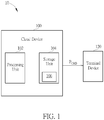
- FIG. 1 is a schematic diagram of a passenger demand prediction system 10 according to an embodiment of the present invention.
- the passenger demand prediction system 10 is configured to predict a demand of passengers for a taxi (hereinafter, "passenger demand") in a geographical area ZN in a specific time period TM, and send the passenger demand to the taxi driver or staff in the taxi dispatch center.
- the passenger demand prediction system 10 comprises a cloud device 100 and a terminal device 120.
- the cloud device 100 is an electronic device with computational capability such as a computer or a server.
- the cloud device 100 comprises a processing unit 102 and a storage unit 104.
- the storage unit 104 may be configured to store a program code 106.
- the program code 106 is configured to instruct the processing unit 102 to execute a prediction process, to predict the passenger demand for a taxi in different geographical areas in different time periods.
- the terminal device 120 may be held by a taxi driver (or the taxi dispatch center), which may be a personal electronic device (e.g., mobile phone) or vehicular electronic device.
- the terminal device 120 may connect to the cloud device 100 to obtain the predicted passenger demand of various geographical areas and various time periods, such that the taxi driver may decide which direction he/she would like to drive according to the predicted passenger demand.
- the geographical area ZN may be a specific geographical region.
- the geographical area ZN may be a geographical block region. That is, the geographical area ZN may be a geographical area where the longitude of which is within a first specific range and the latitude of which is within a second specific range, but not limited thereto.
- the specific time period TM may be a time period in a day within a week. For example, the specific time period TM may be "10:00:00 AM-10:30:00AM on Monday".
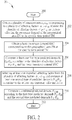
- FIG. 2 is a schematic diagram of a prediction process 20 according to an embodiment of the present invention.
- the prediction process 20 may be compiled as the program code 106 and executed by the cloud device 100.
- the prediction process 20 comprises the following steps: Step 200: Start.
- Step 204 Obtain a basic passenger demand BSC corresponding to the geographical area ZN at the specific time period TM.
- Step 206 Compute at least one first type predicted demands P 11 -P 1R according to the plurality of affecting factors ⁇ 1 - ⁇ M and the basic passenger demand BSC.
- Step 208 Selecting at least one important affecting factor from the plurality of affecting factors ⁇ 1 - ⁇ M , and compute at least one second type of predicted demands P 21 -P 2N according to the at least one important affecting factor.
- Step 210 Compute a combined predicted demand P CMB according to the first type predicted demands P 11 -P 1R and the second type predicted demands P 21 -P 2N .
- Step 212 End.
- the cloud device 100 obtains the plurality of measurements a 1 -a M corresponding to the plurality of affecting factors ⁇ 1 - ⁇ M , wherein the plurality of affecting factors ⁇ 1 - ⁇ M are factors affecting the passenger demand of the geographical area ZN in the specific time period TM.
- the plurality of affecting factors ⁇ 1 - ⁇ M may represent "the temperature of the geographical area ZN at the specific time period TM", "whether it rains in the geographical area ZN at the specific time period TM", "whether a large scale activity is held in in the geographical area ZN at the specific time period TM", etc., where the large scale activity may be a concert, an exhibition, a public speech, a parade, etc.
- the plurality of measurements a 1 -a M may be a true or false value corresponding to the affecting factors ⁇ 1 - ⁇ M , i.e., the plurality of measurements a 1 -a M may be binary values. For instance, a measurement a m being 1 may represent "it rains in the geographical area ZN at the specific time period TM"; a measurement a m being 0 may represent "it has no rain in the geographical area ZN at the specific time period TM". In an embodiment, the plurality of measurements a 1 -a M may represent a probability (or a degree) of the affecting factors ⁇ 1 - ⁇ M happening.
- a measurement a m may represent a rainfall probability or a rainfall degree in the geographical area ZN at the specific time period TM.
- the cloud device 100 may connect to information system of a government agency (e.g., Central Weather Bureau) or a civil organization, so as to obtain the plurality of measurements a 1 -a M .
- the cloud device 100 obtains the basic passenger demand BSC corresponding to the geographical area ZN at the specific time period TM.
- the cloud device 100 may connect to a taxi transport management information system, so as to obtain an original data OG.
- the original data OG may comprise information about exact times and geographical coordinates (via GPS) of taxi picking-up events (the taxi picking-up events represent events of a taxi picking up passengers) in a past time period.
- the past time period may be a month or a year, for instance, before the time at which the cloud device 100 accesses the taxi transport management information system, and a length of which may be determined according to practical situation, which is not limited thereto.
- the cloud device 100 may process (e.g., organize) the original data OG, so as to obtain a historical demand HS in the geographical area ZN.
- the historical demand HS may comprise the passenger demand for taxis in the geographical area ZN at various time periods.
- TABLE I illustrates an example of the historical demand HS.
- the historical demand HS illustrated in TABLE I lists the passenger demand (the historical demand HS) in 10:00-10:30 on Monday (first time period) and 14:00-14:30 on Thursday (second time period) during 3/7/2017-3/31/2017.
- the cloud device 100 may compute the basic passenger demand BSC corresponding to the first time period and the second time period.
- the basic passenger demand BSC may comprise an average, a median or a mode of the passenger demand for a taxi corresponding to the first time period and the second time period, which means that the basic passenger demand BSC may comprise a statistic of the passenger demand for a taxi corresponding to the first time period and the second time period.
- the basic passenger demand BSC comprises the average of the passenger demand for a taxi corresponding to the first time period and the second time period.
- a basic passenger demand BSC 1 corresponding to the first time period is 25, and a basic passenger demand BSC 2 corresponding to the second time period is 9.
- the basic passenger demand BSC may reflect the passenger demand at different times for different days. For example, the passenger demand of the time period of 10:00-10:30 on Monday would be different than on Sunday. In addition, the passenger demand on Monday at the time period of 10:00-10:30 would be different than at 14:00-14:30.
- Step 204 Operation of Step 204 may be summarized as a process 30.
- the process 30 comprises the following steps: Step 302: Obtain the historical demand HS in the geographical area ZN corresponding to a plurality of time periods according to the original data OG.
- the cloud device 100 computes the at least one first type predicted demands P 11 -P 1R according to the plurality of affecting factors ⁇ 1 - ⁇ M and the basic passenger demand BSC.
- the cloud device 100 may utilize the method of regression analysis to analyze the relationship between the passenger demand and the plurality of affecting factors ⁇ 1 - ⁇ M , and select significant affecting factors from the plurality of affecting factors ⁇ 1 - ⁇ M which have more impact on the passenger demand (equivalent to eliminating less significant affecting factors which have less impact on the passenger demand) so as to obtain the significant affecting factors ⁇ (1) - ⁇ (K) .
- the cloud device 100 also establishes a first type prediction model, and computes the first type predicted demands P 11 -P 1R according to the first type prediction model.
- the cloud device 100 computes a plurality of variations ⁇ F 1 - ⁇ F M of a passenger demand F generated/affected by the affecting factors ⁇ 1 - ⁇ M .
- the variation ⁇ F n may be a difference between a passenger demand F n,1 with considering the affecting factor ⁇ n and a passenger demand F n,0 without considering the affecting factor ⁇ n .
- the cloud device 100 may determine whether each variation ⁇ F k of the variations ⁇ F 1 - ⁇ F M is greater than a first specific value or not. If the variation ⁇ F k is greater than the first specific value, it represents that the corresponding affecting factor ⁇ k is significant and the affecting factor ⁇ k is therefore retained. Otherwise, if the variation ⁇ F k is less than the first specific value, it represents that the corresponding affecting factor ⁇ k is less significant and the affecting factor ⁇ k is therefore eliminated.
- the affecting factors ⁇ (1) - ⁇ (K) out of the affecting factors ⁇ 1 - ⁇ M are significant affecting factors.
- the cloud device 100 may utilize the first type prediction model to compute the first type predicted demands P 11 -P 1R according to the basic passenger demand BSC and the measurement a (1) -a (K) corresponding to the significant affecting factors ⁇ (1) - ⁇ (K) .
- the first type prediction model shown by equation 1 it comprises 5 measurements (i.e., a (1) -a (5) ) of 5 significant affecting factors (i.e., ⁇ (1) - ⁇ (5) ).
- the significant affecting factors ⁇ (1) - ⁇ (5) may be "whether it rains in the geographical area ZN at the specific time period TM", “whether a large scale activity is held in the geographical area ZN at the specific time period TM", “whether the is a mass transportation station in the geographical area ZN", “the longitude of the geographical area ZN” or “the latitude of the geographical area ZN", where the mass transportation station may be a bus transportation station, a railway station, an MRT (Mass Rapid Transit) station, an airport, a pier, etc. Details of Regression Analysis are known by the art, which is not narrated herein for brevity.
- the cloud device 100 may consider all affecting factors ⁇ 1 - ⁇ M at one time, and eliminate the less significant factors according to the variations ⁇ F 1 - ⁇ F M one by one. In an embodiment, the cloud device 100 may consider one affecting factor ⁇ k at one time, and determine whether to retain or to eliminate the affecting factor ⁇ k according to the variation ⁇ F k of the passenger demand F by considering the affecting factor ⁇ k , which also satisfies requirements of the present invention.
- the cloud device 100 selects at least one important affecting factor from the plurality of affecting factors ⁇ 1 - ⁇ M , and computes at least one second type of predicted demands P 21 -P 2N according to the at least one important affecting factor. Specifically, the cloud device 100 may compute/evaluate a plurality of significances q 1 -q M of the plurality of affecting factors ⁇ 1 - ⁇ M onto the passenger demand F, where each of the significances q 1 -q M may have a value between 0 and 1, but not limited thereto.
- the cloud device 100 may determine the affecting factor ⁇ k' as an important affecting factor. Otherwise, when the significance q k' corresponding to the affecting factor ⁇ k' is less than the second specific value, the cloud device 100 may determine the affecting factor ⁇ k' as an unimportant affecting factor.
- the cloud device 100 may establish a second type prediction model, and utilize the second type prediction model to compute the second type predicted demands P 21 -P 2N according to the important affecting factors a ⁇ 1> -a ⁇ K'> .
- the cloud device 100 may utilize Random Forest method to establish multiple regression/decision trees, and to compute/evaluate the significances q 1 -q M of the plurality of affecting factors ⁇ 1 - ⁇ M onto the passenger demand F.
- the historical demand HS within the geographical area ZN may be classified into N 0 subsets by repeated sampling. Models of the regression/decision tree for each subset is constructed, so as to determine whether the affecting factor ⁇ k' (e.g., "whether it rains in the geographical area ZN at the specific time period TM") is adopted into the regression/decision tree.
- the cloud device 100 may collect a number of times of the affecting factor ⁇ k' being adopted into the regression/decision tree (suppose that the number of times of the affecting factor ⁇ k' being adopted into the regression/decision tree is n 0 ), in order to calculate a probability of the affecting factor ⁇ k' being adopted into the regression/decision tree, which is n 0 /N 0 .
- the probability is the significance q k' corresponding to the affecting factor ⁇ K' .
- the selected important affecting factor ⁇ ⁇ 1> - ⁇ ⁇ K'> may be utilized to construct the Random Forest.
- a second type prediction model is established according to the measurements a ⁇ 1> -a ⁇ K'> of the important affecting factor, and the second type predicted demands P 21 -P 2N is computed. Operations of constructing random trees/forest are known by the art, which is not narrated herein for brevity.
- the over-fitting accurate added-value of the affecting factors in the decision tree model may also be used to determine the significances q 1 -q M .
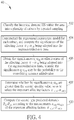
- Step 208 Operation of Step 208 may be summarized as a process 40.
- the process 40 comprises the following steps: Step 402: Classify the historical demand HS within the area into a plurality of subsets by repeated sampling.
- Step 404 Construct the regression/decision tree model for each subset, and compute the significances of the affecting factor ⁇ 1 - ⁇ M being adopted into the regression/decision trees.
- Step 406 Obtain the significances q 1 -q M as effectiveness of the affecting factor ⁇ 1 - ⁇ M being adopted into the regression/decision trees, wherein the significances q 1 -q M may be the probability or the over-fitting accurate added-value.
- Step 408 Determine whether the significances q 1 -q M are greater than the second specific value, so as to select the important affecting factors ⁇ ⁇ 1> - ⁇ ⁇ K'> .
- Step 410 Compute the second type predicted demands P 21 -P 2N according to the measurements a ⁇ 1> -a ⁇ K'> of the important affecting factors ⁇ ⁇ 1> - ⁇ ⁇ K'> .
- the cloud device 100 computes the combined predicted demand P CMB according to the first type predicted demands P 11 -P 1R and the second type predicted demands P 21 -P 2N . Specifically, the cloud device 100 may execute Step 206 at a time instant t -1 , so as to obtain at least one first type preallocated passenger demands F 11 -F 1R corresponding to a time instant t 0 . The cloud device 100 may also obtain the practical passenger demand T at the time instant t 0 from the taxi transport management information system. The cloud device 100 may compute first type preallocated errors e 11 -e 1R according to the preallocated passenger demands F 11 -F 1R and the practical passenger demand T.
- the cloud device 100 may execute Step 208 at the time instant t -1 , so as to obtain at least one second type preallocated passenger demands F 21 -F 2N of the time instant t 0 .
- the cloud device 100 may also obtain the practical passenger demand T at the time instant t 0 from the taxi transport management information system.
- the cloud device 100 may compute second type preallocated errors e 21 -e 2N according to the second type preallocated passenger demand F 21 -F 2N and the practical passenger demand T.
- the cloud device 100 may compute first type weightings w 11 -w 1R corresponding to the first type predicted demands P 11 -P 1R and second type weightings w 21 -w 2N corresponding to the second type predicted demands P 21 -P 2N .
- the cloud device 100 may compute the combined predicted demand P CMB according to the first type predicted demands P 11 -P 1R , the second type predicted demands P 21 -P 2N , the first type weightings w 11 -w 1R and the second type weightings w 21 -w 2N , so as to predict the passenger demand at the time instant t 1 , where the time instant t -1 is earlier than the time instant t 0 , and the time instant t 0 is earlier than the time instant t 1 , i.e., t -1 ⁇ t 0 ⁇ t 1 .
- Step 210 Operation of Step 210 may be summarized as a process 50.
- the process 50 comprises the following steps: Step 502: Execute Step 206 at the time instant t -1 to preallocate the first type preallocated demands F 11 -F 1R corresponding to the time instant t 0 , obtain the practical passenger demand T at the time instant t 0 from the taxi transport management information system, and compute the first type errors e 11 '-e 1R ' according to the first type preallocated demands F 11 -F 1R and the practical passenger demand T.
- Step 504 Compute the first type preallocated errors e 11 -e 1R .
- Step 506 Execute Step 208 at the time instant t -1 to predict the second type preallocated demands F 21 -F 2N corresponding to the time instant t 0 , obtain the practical passenger demand T at the time instant t 0 from the taxi transport management information system, and compute the second type errors e 21 '-e 2N ' according to the second type preallocated demands F 21 -F 2N and the practical passenger demand T.
- Step 508 Compute the second type preallocated errors e 21 -e 2N .
- Step 510 Compute the first type weightings w 11 -w 1R corresponding to the first type predicted demands P 11 -P 1R and the second type weightings w 21 -w 2N corresponding to the second type predicted demands P 21 -P 2N according to the first type preallocated errors e 11 -e 1R and the second type preallocated errors e 21 -e 2N .
- Step 512 Compute the combined predicted demand P CMB according to the first type predicted demands P 11 -P 1R , the second type predicted demands P 21 -P 2N , the first type weightings w 11 -w 1R and the second type weightings w 21 -w 2N .
- Step 502 and Step 506 the time instant t -1 and the time instant t 0 illustratively represent that the time instant t -1 is earlier than the time instant t 0 and not limited to any specific time instants.
- the cloud device 100 may execute Step 502 and Step 506 repeatedly, to obtain the plurality of first type errors e 11 '-e 1R ' and the plurality of second type errors e 21 '-e 2N '.
- the cloud device 100 may execute Step 504 and Step 508 to compute the first type preallocated errors e 11 -e 1R as statistics of the first type errors e 11 '-e 1R ' and compute the second type preallocated errors e 21 -e 2N as statistics of the second type errors e 21 '-e 2N '.
- the cloud device 100 may compute one first type preallocated error e 11 (the second type preallocated error e 21 ) as an average of the plurality of first type errors e 11 '-e 1R ' (the plurality of second type errors e 21 '-e 2N ').
- the cloud device 100 may use a process 60 to compute the first type weightings and the second type weightings, wherein the process 60 is an embodiment of Step 510.
- Step 604 Obtain a third specific value H greater than es (1) , and check whether a preallocated error with the preallocated error sequence ES is greater than H? If there is no preallocated error within ES which is greater than H, go to Step 614; otherwise, if there is at least one preallocated error within ES which is greater than H, go to Step 608.
- Step 610 Compute and obtain a weighting ws with a binary value (either 0 or 1).
- Step 612 Compute and obtain a part of weightings ws which are inversely proportional to the corresponding preallocated errors within ES, and set the rest of the weightings ws as 0.
- Step 614 Compute and obtain the weightings ws to be inversely proportional to the corresponding preallocated errors within ES.
- Step 604 when the third specific value H is 1.5, after the cloud device 100 executes Step 604, and the cloud device 100 would go to Step 608.
- the weighting ws 1 is the weighting w 21 corresponding to the preallocated error e 21
- the weighting ws 2 is the weighting w 22 corresponding to the preallocated error e 22
- the weighting ws 3 is the weighting w 12 corresponding to the preallocated error e 12
- the weighting ws 4 is the weighting w 23 corresponding to the preallocated error e 23
- the weighting ws 5 is the weighting w 11 corresponding to the preallocated error e 11
- the weightings w 11 -w 12 are the first type weightings w 11 -w 12
- the weighting w 21 -w 23 are the second type weightings w 21 -w 23 .
- the third specific value H would provide/apply different weightings according to different levels of error.
- the preallocated error is larger than H, the method corresponding to the preallocated error would not be adopted/considered. That is, the corresponding weighting would be set as 0.
- the third specific value H in the process 60 may take multiple statistical prediction models into consideration (or fuse multiple statistical prediction models). Therefore, the cloud device 100 not only represents the optimal single prediction model (with the lowest preallocated error), but also take all multiple statistical prediction models/methods into consideration and provides their corresponding weightings according to the preallocated error. In addition, the cloud device 100 may represent some better prediction models. In other words, performing the process 60 would bring the cloud device 100 more flexible of fusing multiple prediction models.
- the terminal device 120 may receive the combined predicted demand P CMB corresponding to the geographical area ZN at the specific time period TM from the cloud device 100.
- the taxi driver may decide the driving direction according to the combined predicted demand P CMB corresponding to the geographical area ZN at the specific time period TM.
- the cloud device 100 utilizes Step 210 to combine the predicted demands generated by Regression Analysis in Step 206 and the predicted demands generated by Random Forest in Step 208, so as to enhance an accuracy of passenger demand prediction.
- the processing unit 102 may be a central processing unit (CPU), which is not limited thereto.
- the storage unit 104 may comprise read-only memory (ROM), random-access memory (RAM) or non-volatile memory such as electrically erasable programmable read only memory (EEPROM) or Flash Memory, and not limited thereto.
- the present invent utilizes Regression Analysis method and Random Forest method to predict the passenger demand, and combines the prediction results coming from the Regression Analysis method and the Random Forest method, so as to enhance the accuracy of passenger demand prediction.
Landscapes
- Business, Economics & Management (AREA)
- Engineering & Computer Science (AREA)
- Human Resources & Organizations (AREA)
- Strategic Management (AREA)
- Economics (AREA)
- Theoretical Computer Science (AREA)
- Development Economics (AREA)
- Physics & Mathematics (AREA)
- Entrepreneurship & Innovation (AREA)
- General Physics & Mathematics (AREA)
- Marketing (AREA)
- General Business, Economics & Management (AREA)
- Tourism & Hospitality (AREA)
- Game Theory and Decision Science (AREA)
- Quality & Reliability (AREA)
- Operations Research (AREA)
- Accounting & Taxation (AREA)
- Finance (AREA)
- Data Mining & Analysis (AREA)
- General Engineering & Computer Science (AREA)
- Databases & Information Systems (AREA)
- Remote Sensing (AREA)
- Educational Administration (AREA)
- Artificial Intelligence (AREA)
- Computational Linguistics (AREA)
- Evolutionary Computation (AREA)
- Computing Systems (AREA)
- Mathematical Physics (AREA)
- Software Systems (AREA)
- Health & Medical Sciences (AREA)
- General Health & Medical Sciences (AREA)
- Primary Health Care (AREA)
- Management, Administration, Business Operations System, And Electronic Commerce (AREA)
Abstract
Description
- The present invention relates to a method and a system of passenger demand prediction, and more particularly, to a method and a system of passenger demand prediction capable of predicting the passenger demand effectly and send the passenger demand to the taxi driver.
- For taxi driver's point of view, how to enhance the profit is an important topic. In such a mobile communication developed era, using a backend platform to perform statistical analysis becomes more popular. For example, the dispatching system may use a terminal device (e.g., PDA or cell phone) to receive a passengers' request, the backend platform would also record and analyze the area in which the passengers' requests are dense. However, information of the passenger demand/request is local information, and it is hard to predict the variation on passengers' demand caused by the factors such as weather, local activities, traffic condition, etc. In addition, the taxi dispatch center would be concerned more about the whole revenue of the entire taxi company, and therefore hard to take care of each taxi driver. The taxis' drivers just passively stand by and wait for being dispatched, which lacks proactiveness. The taxis' drivers aimlessly driving in the streets in urban or suburban area would increase operation cost and air pollution.
- Therefore, how to predict the passenger demand effectly and send the passenger demand to the taxi driver is a significant objective in the field.
- This in mind, the application aims at providing a method and a system of passenger demand prediction capable of predicting the passenger demand effectively and send the passenger demand to the taxi driver, to improve over disadvantages of the prior art.
- This is achieved by a passenger demand prediction method and a passenger demand prediction system configured to predict a passenger demand of a geographical area at a specific time period according to
claims - As will be seen more clearly from the detailed description following below, the claimed passenger demand prediction method is configured to predict a passenger demand of a geographical area at a specific time period. The passenger demand prediction method comprises obtaining a plurality of measurements corresponding to a plurality of affecting factors, wherein the plurality of affecting factors are factors affecting the passenger demand of the geographical area at the specific time period; obtaining a basic passenger demand corresponding to the geographical area at the specific time period; computing at least one first type predicted demands according to the plurality of affecting factors and the basic passenger demand; selecting at least one important affecting factor from the plurality of affecting factors, and computing at least one second type of predicted demands according to the at least one important affecting factor; and computing a combined predicted demand according to the first type predicted demands and the second type predicted demands.
- Furthermore, the claimed passenger demand prediction system is configured to predict a passenger demand of a geographical area at a specific time period. The passenger demand prediction system comprises a cloud device comprising a processing unit; a storage unit, configured to store a program code, wherein the program code is configured to instruct the processing unit to execute the following steps: obtaining a plurality of measurements corresponding to a plurality of affecting factors, wherein the plurality of affecting factors are factors affecting the passenger demand of the geographical area at the specific time period; obtaining a basic passenger demand corresponding to the geographical area at the specific time period; computing at least one first type predicted demands according to the plurality of affecting factors and the basic passenger demand; selecting at least one important affecting factor from the plurality of affecting factors, and computing at least one second type of predicted demands according to the at least one important affecting factor; and computing a combined predicted demand according to the first type predicted demands and the second type predicted demands; and a terminal device, configured to receive the combined predicted demand.
-
-
FIG. 1 is a schematic diagram of a passenger demand prediction system according to an embodiment of the present invention. -
FIG. 2 is a schematic diagram of a prediction process according to an embodiment of the present invention. -
FIG. 3 is a schematic diagram of a process according to an embodiment of the present invention. -
FIG. 4 is a schematic diagram of a process according to an embodiment of the present invention. -
FIG. 5 is a schematic diagram of a process according to an embodiment of the present invention. -
FIG. 6 is a schematic diagram of a process according to an embodiment of the present invention. -
FIG. 1 is a schematic diagram of a passengerdemand prediction system 10 according to an embodiment of the present invention. The passengerdemand prediction system 10 is configured to predict a demand of passengers for a taxi (hereinafter, "passenger demand") in a geographical area ZN in a specific time period TM, and send the passenger demand to the taxi driver or staff in the taxi dispatch center. The passengerdemand prediction system 10 comprises acloud device 100 and aterminal device 120. Thecloud device 100 is an electronic device with computational capability such as a computer or a server. Thecloud device 100 comprises aprocessing unit 102 and astorage unit 104. Thestorage unit 104 may be configured to store aprogram code 106. Theprogram code 106 is configured to instruct theprocessing unit 102 to execute a prediction process, to predict the passenger demand for a taxi in different geographical areas in different time periods. Theterminal device 120 may be held by a taxi driver (or the taxi dispatch center), which may be a personal electronic device (e.g., mobile phone) or vehicular electronic device. Theterminal device 120 may connect to thecloud device 100 to obtain the predicted passenger demand of various geographical areas and various time periods, such that the taxi driver may decide which direction he/she would like to drive according to the predicted passenger demand. - The geographical area ZN may be a specific geographical region. In an embodiment, the geographical area ZN may be a geographical block region. That is, the geographical area ZN may be a geographical area where the longitude of which is within a first specific range and the latitude of which is within a second specific range, but not limited thereto. In addition, the specific time period TM may be a time period in a day within a week. For example, the specific time period TM may be "10:00:00 AM-10:30:00AM on Monday".
-
FIG. 2 is a schematic diagram of aprediction process 20 according to an embodiment of the present invention. Theprediction process 20 may be compiled as theprogram code 106 and executed by thecloud device 100. As shown inFIG. 2 , theprediction process 20 comprises the following steps:Step 200: Start. Step 202: Obtain a plurality of measurements a1-aM corresponding to a plurality of affecting factors α1-αM, wherein the plurality of affecting factors α1-αM are factors affecting the passenger demand of the geographical area ZN in the specific time period TM. Step 204: Obtain a basic passenger demand BSC corresponding to the geographical area ZN at the specific time period TM. Step 206: Compute at least one first type predicted demands P11-P1R according to the plurality of affecting factors α1-αM and the basic passenger demand BSC. Step 208: Selecting at least one important affecting factor from the plurality of affecting factors α1-αM, and compute at least one second type of predicted demands P21-P2N according to the at least one important affecting factor. Step 210: Compute a combined predicted demand PCMB according to the first type predicted demands P11-P1R and the second type predicted demands P21-P2N. Step 212: End. - In detail, in
Step 202, thecloud device 100 obtains the plurality of measurements a1-aM corresponding to the plurality of affecting factors α1-αM, wherein the plurality of affecting factors α1-αM are factors affecting the passenger demand of the geographical area ZN in the specific time period TM. For example, the plurality of affecting factors α1-αM may represent "the temperature of the geographical area ZN at the specific time period TM", "whether it rains in the geographical area ZN at the specific time period TM", "whether a large scale activity is held in in the geographical area ZN at the specific time period TM", etc., where the large scale activity may be a concert, an exhibition, a public speech, a parade, etc. In an embodiment, the plurality of measurements a1-aM may be a true or false value corresponding to the affecting factors α1-αM, i.e., the plurality of measurements a1-aM may be binary values. For instance, a measurement am being 1 may represent "it rains in the geographical area ZN at the specific time period TM"; a measurement am being 0 may represent "it has no rain in the geographical area ZN at the specific time period TM". In an embodiment, the plurality of measurements a1-aM may represent a probability (or a degree) of the affecting factors α1-αM happening. For instance, a measurement am may represent a rainfall probability or a rainfall degree in the geographical area ZN at the specific time period TM. In an embodiment, thecloud device 100 may connect to information system of a government agency (e.g., Central Weather Bureau) or a civil organization, so as to obtain the plurality of measurements a1-aM. - In
Step 204, thecloud device 100 obtains the basic passenger demand BSC corresponding to the geographical area ZN at the specific time period TM. In an embodiment, thecloud device 100 may connect to a taxi transport management information system, so as to obtain an original data OG. The original data OG may comprise information about exact times and geographical coordinates (via GPS) of taxi picking-up events (the taxi picking-up events represent events of a taxi picking up passengers) in a past time period. The past time period may be a month or a year, for instance, before the time at which thecloud device 100 accesses the taxi transport management information system, and a length of which may be determined according to practical situation, which is not limited thereto. After obtaining the original data OG, thecloud device 100 may process (e.g., organize) the original data OG, so as to obtain a historical demand HS in the geographical area ZN. The historical demand HS may comprise the passenger demand for taxis in the geographical area ZN at various time periods. TABLE I illustrates an example of the historical demand HS. For illustrative purposes, the historical demand HS illustrated in TABLE I lists the passenger demand (the historical demand HS) in 10:00-10:30 on Monday (first time period) and 14:00-14:30 on Thursday (second time period) during 3/7/2016-3/31/2016. According to the historical demand HS, thecloud device 100 may compute the basic passenger demand BSC corresponding to the first time period and the second time period. The basic passenger demand BSC may comprise an average, a median or a mode of the passenger demand for a taxi corresponding to the first time period and the second time period, which means that the basic passenger demand BSC may comprise a statistic of the passenger demand for a taxi corresponding to the first time period and the second time period. Preferably, the basic passenger demand BSC comprises the average of the passenger demand for a taxi corresponding to the first time period and the second time period. As shown in TABLE II, a basic passenger demand BSC1 corresponding to the first time period is 25, and a basic passenger demand BSC2 corresponding to the second time period is 9.TABLE I Time Period Day Historical Demand HS in the geographical area ZN 2016-03-07 10:00:00-10:30:00 Monday 10 ... ... ... 2016-03-10 14:00:00-14:30:00 Thursday 10 ... ... ... 2016-03-14 10:00:00-10:30:00 Monday 24 ... ... ... 2016-03-17 14:00:00-14:30:00 Thursday 3 ... ... ... 2016-03-21 10:00:00-10:30:00 Monday 40 ... ... ... 2016-03-24 14:00:00-14:30:00 Thursday 5 ... ... ... 2016-03-28 10:00:00-10:30:00 Monday 26 ... ... ... 2016-03-31 14:00:00-14:30:00 Thursday 9 TABLE II Day Time Period Basic Passenger Demand BSC in the geographical area ZN Monday 10:00:00-10:30:00 25 ... ... ... Thursday 14:00:00-14:30:00 9 - Notably, the basic passenger demand BSC may reflect the passenger demand at different times for different days. For example, the passenger demand of the time period of 10:00-10:30 on Monday would be different than on Sunday. In addition, the passenger demand on Monday at the time period of 10:00-10:30 would be different than at 14:00-14:30.
- Operation of
Step 204 may be summarized as aprocess 30. As shown inFIG. 3 , theprocess 30 comprises the following steps:Step 302: Obtain the historical demand HS in the geographical area ZN corresponding to a plurality of time periods according to the original data OG. Step 304: Compute the statistic of the historical demand HS, so as to obtain the basic passenger demand BSC. - In
Step 206, thecloud device 100 computes the at least one first type predicted demands P11-P1R according to the plurality of affecting factors α1-αM and the basic passenger demand BSC. In an embodiment, thecloud device 100 may utilize the method of regression analysis to analyze the relationship between the passenger demand and the plurality of affecting factors α1-αM, and select significant affecting factors from the plurality of affecting factors α1-αM which have more impact on the passenger demand (equivalent to eliminating less significant affecting factors which have less impact on the passenger demand) so as to obtain the significant affecting factors α(1)-α(K). In addition, thecloud device 100 also establishes a first type prediction model, and computes the first type predicted demands P11-P1R according to the first type prediction model. - The
cloud device 100 computes a plurality of variations ΔF1-ΔFM of a passenger demand F generated/affected by the affecting factors α1-αM. The variation ΔFn may be a difference between a passenger demand Fn,1 with considering the affecting factor αn and a passenger demand Fn,0 without considering the affecting factor αn. The passenger demand Fn,1 may be the passenger demand corresponding to the measurement an=1, and passenger demand Fn,0 may be the passenger demand corresponding to the measurement an=0. In an embodiment, after thecloud device 100 obtains the variations ΔF1-ΔFM, thecloud device 100 may determine whether each variation ΔFk of the variations ΔF1-ΔFM is greater than a first specific value or not. If the variation ΔFk is greater than the first specific value, it represents that the corresponding affecting factor αk is significant and the affecting factor αk is therefore retained. Otherwise, if the variation ΔFk is less than the first specific value, it represents that the corresponding affecting factor αk is less significant and the affecting factor αk is therefore eliminated. After the selection and elimination process, for illustrative purposes, the affecting factors α(1)-α(K) out of the affecting factors α1-αM are significant affecting factors. Thecloud device 100 may utilize the first type prediction model to compute the first type predicted demands P11-P1R according to the basic passenger demand BSC and the measurement a(1)-a(K) corresponding to the significant affecting factors α(1)-α(K). - In an embodiment, one of the first type predicted demands P11 may be computed as P11=BSCTM+c1×a(1)+c2×a(2)+c3×a(3)+c4×a(4)+c5×a(5) (equation 1), wherein BSCTM represents the basic passenger demand in the geographical area ZN corresponding to the specific time period TM, and c1-c5 represent coefficients corresponding to the significant affecting factors α(1)-α(5) in the first type prediction model shown in
equation 1. In the first type prediction model shown byequation 1, it comprises 5 measurements (i.e., a(1)-a(5)) of 5 significant affecting factors (i.e., α(1)-α(5)). In an embodiment, the significant affecting factors α(1)-α(5) may be "whether it rains in the geographical area ZN at the specific time period TM", "whether a large scale activity is held in the geographical area ZN at the specific time period TM", "whether the is a mass transportation station in the geographical area ZN", "the longitude of the geographical area ZN" or "the latitude of the geographical area ZN", where the mass transportation station may be a bus transportation station, a railway station, an MRT (Mass Rapid Transit) station, an airport, a pier, etc. Details of Regression Analysis are known by the art, which is not narrated herein for brevity. - In an embodiment, the
cloud device 100 may consider all affecting factors α1-αM at one time, and eliminate the less significant factors according to the variations ΔF1-ΔFM one by one. In an embodiment, thecloud device 100 may consider one affecting factor αk at one time, and determine whether to retain or to eliminate the affecting factor αk according to the variation ΔFk of the passenger demand F by considering the affecting factor αk, which also satisfies requirements of the present invention. - In
Step 208, thecloud device 100 selects at least one important affecting factor from the plurality of affecting factors α1-αM, and computes at least one second type of predicted demands P21-P2N according to the at least one important affecting factor. Specifically, thecloud device 100 may compute/evaluate a plurality of significances q1-qM of the plurality of affecting factors α1-αM onto the passenger demand F, where each of the significances q1-qM may have a value between 0 and 1, but not limited thereto. When the significance qk' corresponding to the affecting factor αk' is greater than a second specific value (e.g., the second specific value may be 0.4), thecloud device 100 may determine the affecting factor αk' as an important affecting factor. Otherwise, when the significance qk' corresponding to the affecting factor αk' is less than the second specific value, thecloud device 100 may determine the affecting factor αk' as an unimportant affecting factor. After the selection process state in the above, for illustrative purposes, the affecting factors α<1>-α<K'> among the affecting factors α1-αM are selected as important affecting factors. Therefore, thecloud device 100 may establish a second type prediction model, and utilize the second type prediction model to compute the second type predicted demands P21-P2N according to the important affecting factors a<1>-a<K'>. - In an embodiment, the
cloud device 100 may utilize Random Forest method to establish multiple regression/decision trees, and to compute/evaluate the significances q1-qM of the plurality of affecting factors α1-αM onto the passenger demand F. Specifically, the historical demand HS within the geographical area ZN may be classified into N0 subsets by repeated sampling. Models of the regression/decision tree for each subset is constructed, so as to determine whether the affecting factor αk' (e.g., "whether it rains in the geographical area ZN at the specific time period TM") is adopted into the regression/decision tree. Thecloud device 100 may collect a number of times of the affecting factor αk' being adopted into the regression/decision tree (suppose that the number of times of the affecting factor αk' being adopted into the regression/decision tree is n0), in order to calculate a probability of the affecting factor αk' being adopted into the regression/decision tree, which is n0/N0. The probability is the significance qk' corresponding to the affecting factor αK'. After performing the process of determining whether each of the significances q1-qM is greater than the second specific value, the selected important affecting factor α<1>-α<K'> may be utilized to construct the Random Forest. A second type prediction model is established according to the measurements a<1>-a<K'> of the important affecting factor, and the second type predicted demands P21-P2N is computed. Operations of constructing random trees/forest are known by the art, which is not narrated herein for brevity. - In an embodiment, about the significances for determining whether the affecting factor α1-αM are the affecting factor, the over-fitting accurate added-value of the affecting factors in the decision tree model may also be used to determine the significances q1-qM.
- Operation of
Step 208 may be summarized as aprocess 40. As shown inFIG. 4 , theprocess 40 comprises the following steps:Step 402: Classify the historical demand HS within the area into a plurality of subsets by repeated sampling. Step 404: Construct the regression/decision tree model for each subset, and compute the significances of the affecting factor α1-αM being adopted into the regression/decision trees. Step 406: Obtain the significances q1-qM as effectiveness of the affecting factor α1-αM being adopted into the regression/decision trees, wherein the significances q1-qM may be the probability or the over-fitting accurate added-value. Step 408: Determine whether the significances q1-qM are greater than the second specific value, so as to select the important affecting factors α<1>-α<K'>. Step 410: Compute the second type predicted demands P21-P2N according to the measurements a<1>-a<K'> of the important affecting factors α<1>-α<K'>. - In
Step 210, thecloud device 100 computes the combined predicted demand PCMB according to the first type predicted demands P11-P1R and the second type predicted demands P21-P2N. Specifically, thecloud device 100 may executeStep 206 at a time instant t-1, so as to obtain at least one first type preallocated passenger demands F11-F1R corresponding to a time instant t0. Thecloud device 100 may also obtain the practical passenger demand T at the time instant t0 from the taxi transport management information system. Thecloud device 100 may compute first type preallocated errors e11-e1R according to the preallocated passenger demands F11-F1R and the practical passenger demand T. In addition, thecloud device 100 may executeStep 208 at the time instant t-1, so as to obtain at least one second type preallocated passenger demands F21-F2N of the time instant t0. Thecloud device 100 may also obtain the practical passenger demand T at the time instant t0 from the taxi transport management information system. Thecloud device 100 may compute second type preallocated errors e21-e2N according to the second type preallocated passenger demand F21-F2N and the practical passenger demand T. According to the first type preallocated errors e11-e1R and the second type preallocated errors e21-e2N, thecloud device 100 may compute first type weightings w11-w1R corresponding to the first type predicted demands P11-P1R and second type weightings w21-w2N corresponding to the second type predicted demands P21-P2N. Thecloud device 100 may compute the combined predicted demand PCMB according to the first type predicted demands P11-P1R, the second type predicted demands P21-P2N, the first type weightings w11-w1R and the second type weightings w21-w2N, so as to predict the passenger demand at the time instant t1, where the time instant t-1 is earlier than the time instant t0, and the time instant t0 is earlier than the time instant t1, i.e., t-1 < t0 < t1. - Operation of
Step 210 may be summarized as aprocess 50. As shown inFIG. 5 , theprocess 50 comprises the following steps:Step 502: Execute Step 206 at the time instant t-1 to preallocate the first type preallocated demands F11-F1R corresponding to the time instant t0, obtain the practical passenger demand T at the time instant t0 from the taxi transport management information system, and compute the first type errors e11'-e1R' according to the first type preallocated demands F11-F1R and the practical passenger demand T.Step 504: Compute the first type preallocated errors e11-e1R. Step 506: Execute Step 208 at the time instant t-1 to predict the second type preallocated demands F21-F2N corresponding to the time instant t0, obtain the practical passenger demand T at the time instant t0 from the taxi transport management information system, and compute the second type errors e21'-e2N' according to the second type preallocated demands F21-F2N and the practical passenger demand T.Step 508: Compute the second type preallocated errors e21-e2N. Step 510: Compute the first type weightings w11-w1R corresponding to the first type predicted demands P11-P1R and the second type weightings w21-w2N corresponding to the second type predicted demands P21-P2N according to the first type preallocated errors e11-e1R and the second type preallocated errors e21-e2N. Step 512: Compute the combined predicted demand PCMB according to the first type predicted demands P11-P1R, the second type predicted demands P21-P2N, the first type weightings w11-w1R and the second type weightings w21-w2N. - In
Step 502 andStep 506, the time instant t-1 and the time instant t0 illustratively represent that the time instant t-1 is earlier than the time instant t0 and not limited to any specific time instants. In other words, within the specific geographical area ZN, thecloud device 100 may executeStep 502 andStep 506 repeatedly, to obtain the plurality of first type errors e11'-e1R' and the plurality of second type errors e21'-e2N'. Thecloud device 100 may executeStep 504 andStep 508 to compute the first type preallocated errors e11-e1R as statistics of the first type errors e11'-e1R' and compute the second type preallocated errors e21-e2N as statistics of the second type errors e21'-e2N'. For example, thecloud device 100 may compute one first type preallocated error e11 (the second type preallocated error e21) as an average of the plurality of first type errors e11'-e1R' (the plurality of second type errors e21'-e2N'). In addition, when thecloud device 100 executesStep 502 andStep 506, the first type errors e11' may be computed as e11'=|T-F11|, and the second type errors e21' may be computed as e21'=|T-F21|, where |·| represents the operation of taking absolute value. - When the
cloud device 100 executesStep 502 andStep 506, the first type error e11' may be e11'=|T-F11|2, and the second type error e21' may be e21'=|T-F21|2, where |·| represents the operation of taking absolute value. - In
Step 510, in an embodiment, if a number R of the first type predicted demands and a number N of the second type predicted demands are both 1 (i.e., R = N = 1), thecloud device 100 may compute the first type weighting w11 as w11= e21/(e11+e21), and compute the second type weighting w21 as w21=e11/(e11+e21), and not limited thereto. InStep 510, thecloud device 100, in an embodiment, may compute the combined predicted demand PCMB as PCMB=w11×P11+w21×P21, and not limited thereto. - In an embodiment, if the number R of the first type predicted demands and the number N of the second type predicted demands are both larger than or equal to 1, the
cloud device 100 may use aprocess 60 to compute the first type weightings and the second type weightings, wherein theprocess 60 is an embodiment ofStep 510. As shown inFIG. 6 , theprocess 60 comprises the following steps:Step 602: Sort the first type preallocated errors e11-e1R and the second type preallocated errors e21-e2N in an ascending order, to obtain a preallocated error sequence ES, where ES is expressed as ES ={es(1), es(2), ... , es(R+N)} with es(1)≦es(2)≦...≦es(R+N). Step 604: Obtain a third specific value H greater than es(1), and check whether a preallocated error with the preallocated error sequence ES is greater than H? If there is no preallocated error within ES which is greater than H, go to Step 614; otherwise, if there is at least one preallocated error within ES which is greater than H, go toStep 608.Step 608: Suppose H<es(i)≦...≦es(R+N), check whether "i" is equal to 2? If i=2, go to Step 610; otherwise, if i#2, go toStep 612.Step 610: Compute and obtain a weighting ws with a binary value (either 0 or 1). Step 612: Compute and obtain a part of weightings ws which are inversely proportional to the corresponding preallocated errors within ES, and set the rest of the weightings ws as 0. Step 614: Compute and obtain the weightings ws to be inversely proportional to the corresponding preallocated errors within ES. Step 616: Obtain a weighting sequence WS and a predicted demand sequence PS, and compute the combined predicted demand PCMB according to the weighting sequence WS and the predicted demand sequence PS, wherein the weighting sequence WS is expressed as WS={ws1, ws2, ... , wsR+N}, the predicted demand sequence PS is expressed as PS={ps1, ps2,...,psR+N}, and the weightings ws1-wsR+N and the predicted passenger demands ps1-psR+N are corresponding to the preallocated errors es(1)-es(R+N). - For example, suppose that the number R of the first type predicted demands is 2 (R=2) and the number N of the second type predicted demands is 3 (N=3), and the first type preallocated errors e11-e12 and the second type preallocated errors e21-e23 are e11=5, e12=3, e21=1, e22=2, e23=4. In this case, after the
cloud device 100 executesStep 602, and thecloud device 100 may obtain the preallocated error sequence ES as ES={es(1)=1, es(2)=2, es(3)=3, es(4)=4, es(5) =5}. - In an embodiment, if the third specific value H is 3.5, after the
cloud device 100 executesStep 604, and thecloud device 100 would go toStep 608. AtStep 608, since H=3.5 and i=4, thecloud device 100 would go toStep 612. InStep 612, thecloud device 100 may compute the weightings ws1, ws2, ws3 corresponding to the preallocated errors es(1), es(2), es(3), such that ws1: ws2: ws3 =1/es(1) : 1/es(2) : 1/es(3) and ws1+ws2+ws3=1. In addition, thecloud device 100 would set the weightings ws4, ws5 corresponding to the preallocated errors es(1), es(2) as 0. In other words, inSteps cloud device 100 would obtain the weighting sequence WS as WS={ws1=6/11, ws2=3/11, ws3=2/11, ws4=0, ws5=0}. - In an embodiment, when the third specific value H is 1.5, after the
cloud device 100 executesStep 604, and thecloud device 100 would go toStep 608. AtStep 608, since H=1.5 and i=2, thecloud device 100 would go toStep 610. In other words, inSteps cloud device 100 would obtain the weighting sequence WS as WS={ws1=1, ws2=0, ws3=0, ws4=0, ws5=0}. - In an embodiment, when the third specific value H is 5.5, after the
cloud device 100 executesStep 604, and thecloud device 100 would go toStep 614. InStep 614, thecloud device 100 may compute the weightings ws1, ws2, ws3, ws4, ws5 corresponding to the preallocated errors es(1), es(2), es(3), es(4), es(5), such that ws1: ws2: ws3: ws4: ws5=1/es(1):1/es(2):1/es(3):1/es(4):1/es(5) and ws1+ws2+ws3+ws4+ws5=1. In other words, inSteps cloud device 100 would obtain the weighting sequence WS as WS={ws1=60/137, ws2 =30/137, ws3=20/137, ws4=15/137, ws5=12/137 }. - In
Step 616, after thecloud device 100 obtains the weighting sequence WS and the predicted demand sequence PS, thecloud device 100 may compute PCMB
Step 512, wherein details of obtaining the predicted passenger demands ps1-ps5 within the predicted demand sequence PS may be referred in the paragraphs stated in the above, which is not narrated herein for brevity. Moreover, the weighting ws1 is the weighting w21 corresponding to the preallocated error e21, the weighting ws2 is the weighting w22 corresponding to the preallocated error e22, the weighting ws3 is the weighting w12 corresponding to the preallocated error e12, the weighting ws4 is the weighting w23 corresponding to the preallocated error e23, the weighting ws5 is the weighting w11 corresponding to the preallocated error e11. In addition, the weightings w11-w12 are the first type weightings w11-w12, the weighting w21-w23 are the second type weightings w21-w23. - Notably, bringing the third specific value H would provide/apply different weightings according to different levels of error. When the preallocated error is larger than H, the method corresponding to the preallocated error would not be adopted/considered. That is, the corresponding weighting would be set as 0. In other words, the third specific value H in the
process 60 may take multiple statistical prediction models into consideration (or fuse multiple statistical prediction models). Therefore, thecloud device 100 not only represents the optimal single prediction model (with the lowest preallocated error), but also take all multiple statistical prediction models/methods into consideration and provides their corresponding weightings according to the preallocated error. In addition, thecloud device 100 may represent some better prediction models. In other words, performing theprocess 60 would bring thecloud device 100 more flexible of fusing multiple prediction models. - After the
cloud device 100 computes the combined predicted demand PCMB, theterminal device 120 may receive the combined predicted demand PCMB corresponding to the geographical area ZN at the specific time period TM from thecloud device 100. The taxi driver may decide the driving direction according to the combined predicted demand PCMB corresponding to the geographical area ZN at the specific time period TM. - In general, when some large scale activities are held or some special event is happening, the first type predicted demands P11-P1R generated by the
cloud device 100 inStep 206 using Regression Analysis method would have better accuracy, and the second type predicted demands P21-P2N generated by thecloud device 100 inStep 208 using Random Forest method would have worse accuracy. On the other hand, when no large activities are held or no special event is happening, the second type predicted demands P21-P2N generated by thecloud device 100 inStep 208 using Random Forest method would have better accuracy, and the first type predicted demands P11-P1R generated by thecloud device 100 inStep 206 using Regression Analysis method would have worse accuracy. In such a situation, thecloud device 100 utilizesStep 210 to combine the predicted demands generated by Regression Analysis inStep 206 and the predicted demands generated by Random Forest inStep 208, so as to enhance an accuracy of passenger demand prediction. - Notably, the embodiments stated in the above are utilized for illustrating the concept of the present invention/application. Those skilled in the art may make modifications and alterations accordingly, and not limited herein. For example, in
Step 510, thecloud device 100 computes the first type weighting w11 as w11= e21/(e11+e21) and computes the second type weighting w21 as w21=e11/(e11+e21), which is not limited thereto. As long as the first type weighting w11 and the first type preallocated error e11 have decreasing or inverse proportional relationship, and the second type weighting w21 and the second type preallocated error e21 have decreasing or inverse proportional relationship, i.e., the first type weighting w11 would decrease as the first type preallocated error e11 increases and the second type weighting w21 decreases as the second type preallocated error e21 increases, the requirements of the present invention is satisfied, which is within the scope of the present invention. In addition, theprocessing unit 102 may be a central processing unit (CPU), which is not limited thereto. Thestorage unit 104 may comprise read-only memory (ROM), random-access memory (RAM) or non-volatile memory such as electrically erasable programmable read only memory (EEPROM) or Flash Memory, and not limited thereto. - In summary, the present invent utilizes Regression Analysis method and Random Forest method to predict the passenger demand, and combines the prediction results coming from the Regression Analysis method and the Random Forest method, so as to enhance the accuracy of passenger demand prediction.
Claims (10)
- A passenger demand prediction method (20), configured to predict a passenger demand of a geographical area at a specific time period, the passenger demand prediction method characterized by comprising:obtaining a plurality of measurements corresponding to a plurality of affecting factors, wherein the plurality of affecting factors are factors affecting the passenger demand of the geographical area at the specific time period (202);obtaining a basic passenger demand corresponding to the geographical area at the specific time period (204);computing at least one first type predicted demands according to the plurality of affecting factors and the basic passenger demand (206);selecting at least one important affecting factor from the plurality of affecting factors, and computing at least one second type of predicted demands according to the at least one important affecting factor (208); andcomputing a combined predicted demand according to the first type predicted demands and the second type predicted demands (210).
- A passenger demand prediction system (10), configured to predict a passenger demand of a geographical area at a specific time period, the passenger demand prediction system characterized by comprising:a cloud device (100), comprising:a processing unit (102);a storage unit (104), configured to store a program code (106), wherein the program code is configured to instruct the processing unit to execute the following steps:obtaining a plurality of measurements corresponding to a plurality of affecting factors, wherein the plurality of affecting factors are factors affecting the passenger demand of the geographical area at the specific time period (202);obtaining a basic passenger demand corresponding to the geographical area at the specific time period (204);computing at least one first type predicted demands according to the plurality of affecting factors and the basic passenger demand (206);selecting at least one important affecting factor from the plurality of affecting factors, and computing at least one second type of predicted demands according to the at least one important affecting factor (208); andcomputing a combined predicted demand according to the first type predicted demands and the second type predicted demands (210); anda terminal device (120), configured to receive the combined predicted demand.
- The passenger demand prediction method of claim 1 or the passenger demand prediction system of claim 2, characterized in that the step of obtaining the basic passenger demand corresponding to the geographical area at the specific time period (204) comprises:obtaining a historical demand in the geographical area corresponding to a plurality of time periods according to an original data (302); andcomputing a statistic of the historical demand to obtain the basic passenger demand (304).
- The passenger demand prediction method of claim 1 or the passenger demand prediction system of claim 2, characterized in that the step of computing the first type predicted demands according to the plurality of affecting factors and the basic passenger demand (206) comprises:computing a plurality of variations of the passenger demand resulted from the plurality of affecting factors;selecting at least one significant affecting factor from the plurality of affecting factors according to the plurality of variations, wherein at least one variation corresponding to the at least one significant affecting factor among the plurality of variations is greater than a first specific value; andcomputing the first type predicted demands according to the at least one significant affecting factor and the basic passenger demand.
- The passenger demand prediction method of claim 1 or the passenger demand prediction system of claim 2, characterized in that the step of selecting the at least one important affecting factor from the plurality of affecting factors (208) comprises:computing a plurality of significances of the plurality of affecting factors on the passenger demand; andwhen a first significance corresponding to a first affecting factor within the plurality of affecting factors is greater than a second specific value, selection of the first affecting factor as an important affecting factor.
- The passenger demand prediction method or the passenger demand prediction system of claim 5, characterized in that a significance within the plurality of significances is between 0 and 1.
- The passenger demand prediction method of claim 1 or the passenger demand prediction system of claim 2, characterized in that the step of computing the combined predicted demand according to the first type predicted demands and the second type predicted demands (210) comprises:computing first type preallocated errors corresponding to the first type predicted demands (504);computing second type preallocated errors corresponding to the second type predicted demands (508);computing first type weightings corresponding to the first type predicted demands and second type weightings corresponding to the second type predicted demands according to the first type preallocated errors and the second type preallocated errors (510); andcomputing the combined predicted demand according to the first type predicted demands, the second type predicted demands, the first type weightings and the second type weightings (512);wherein the first type weightings decrease as the first type preallocated errors increase, and the second type weightings decrease as the second type preallocated errors increase.
- The passenger demand prediction method or the passenger demand prediction system of claim 7, characterized in that the step of computing the first type weightings and the second type weightings according to the first type preallocated errors and the second type preallocated errors (510) comprises:computing a first weight within the first type weightings, wherein the first weight is inversely proportional to a first preallocated error corresponding to the first weight among the first type preallocated errors; andcomputing a second weight within the second type weightings, wherein the second weight is inversely proportional to a second preallocated error corresponding to the second weight among the second type preallocated errors.
- The passenger demand prediction method or the passenger demand prediction system of claim 7, characterized in that the step of computing the first type weightings and the second type weightings according to the first type preallocated errors and the second type preallocated errors (510) further comprises:obtaining a third specific value;determining whether the first type preallocated errors and the second type preallocated errors are greater than the third specific value, and generating a determining result; andcomputing the first type weightings and the second type weightings according to the determining result.
- The passenger demand prediction method or the passenger demand prediction of claim 7, characterized in that the step of computing the combined predicted demand according to the first type predicted demands, the second type predicted demands, the first type weightings and the second type weightings (512) comprises:computing the combined predicted demand as
 wherein w11-w1R represents the first type weightings, w21-w2N represents the second type weightings, P11-P1R represents the first type predicted demands, and P21-P2N represents the second type predicted demands.
Applications Claiming Priority (1)
| Application Number | Priority Date | Filing Date | Title |
|---|---|---|---|
| TW106120100A TWI635447B (en) | 2017-06-16 | 2017-06-16 | Method and System of Predicting Passengers' Demand |
Publications (1)
| Publication Number | Publication Date |
|---|---|
| EP3416112A1 true EP3416112A1 (en) | 2018-12-19 |
Family
ID=62630934
Family Applications (1)
| Application Number | Title | Priority Date | Filing Date |
|---|---|---|---|
| EP18175972.1A Withdrawn EP3416112A1 (en) | 2017-06-16 | 2018-06-05 | Method and system of predicting passenger demand |
Country Status (4)
| Country | Link |
|---|---|
| US (1) | US20180365717A1 (en) |
| EP (1) | EP3416112A1 (en) |
| CN (1) | CN109146113B (en) |
| TW (1) | TWI635447B (en) |
Families Citing this family (3)
| Publication number | Priority date | Publication date | Assignee | Title |
|---|---|---|---|---|
| US20210295224A1 (en) * | 2020-03-23 | 2021-09-23 | Lyft, Inc. | Utilizing a requestor device forecasting model with forward and backward looking queue filters to pre-dispatch provider devices |
| WO2022050895A1 (en) * | 2020-09-02 | 2022-03-10 | Grabtaxi Holdings Pte. Ltd | Method and device for managing supply of a geographic area by transport service vehicles |
| JP7553409B2 (en) * | 2021-07-26 | 2024-09-18 | 株式会社Nttドコモ | Information processing device |
Citations (1)
| Publication number | Priority date | Publication date | Assignee | Title |
|---|---|---|---|---|
| US20020019760A1 (en) * | 1998-07-10 | 2002-02-14 | Honda Giken Kogyo Kabushiki Kaisha | Method of operating a vehicle redistribution system based upon predicted ride demands |
Family Cites Families (9)
| Publication number | Priority date | Publication date | Assignee | Title |
|---|---|---|---|---|
| US6778642B1 (en) * | 1999-03-23 | 2004-08-17 | Verizon Laboratories Inc. | Unified messaging system |
| US7194516B2 (en) * | 2003-10-23 | 2007-03-20 | Microsoft Corporation | Accessing different types of electronic messages through a common messaging interface |
| JP5129799B2 (en) * | 2009-11-24 | 2013-01-30 | 株式会社エヌ・ティ・ティ・ドコモ | Demand forecasting apparatus and demand forecasting method |
| TWI421790B (en) * | 2010-02-10 | 2014-01-01 | 廖德誠 | Intelligent mass transit system and its information transmission method |
| CN103366224B (en) * | 2013-07-15 | 2021-09-17 | 鲁东大学 | Passenger demand prediction system and method based on public transport network |
| TWI524303B (en) * | 2014-03-27 | 2016-03-01 | Chunghwa Telecom Co Ltd | Forecasting Device and Method of Vehicle Trend Forecasting Based on Large Cloud Data Processing |
| US10102485B2 (en) * | 2015-01-29 | 2018-10-16 | Conduent Business Services, Llc | Method and system for predicting demand for vehicles |
| CN104700164A (en) * | 2015-03-25 | 2015-06-10 | 浙江欣凯锐电力发展有限公司 | Method and system for predicating vehicle demand |
| CN105389975B (en) * | 2015-12-11 | 2017-11-14 | 北京航空航天大学 | Special train dispatching method and device |
-
2017
- 2017-06-16 TW TW106120100A patent/TWI635447B/en active
-
2018
- 2018-03-13 CN CN201810203872.6A patent/CN109146113B/en active Active
- 2018-05-21 US US15/984,434 patent/US20180365717A1/en not_active Abandoned
- 2018-06-05 EP EP18175972.1A patent/EP3416112A1/en not_active Withdrawn
Patent Citations (1)
| Publication number | Priority date | Publication date | Assignee | Title |
|---|---|---|---|---|
| US20020019760A1 (en) * | 1998-07-10 | 2002-02-14 | Honda Giken Kogyo Kabushiki Kaisha | Method of operating a vehicle redistribution system based upon predicted ride demands |
Also Published As
| Publication number | Publication date |
|---|---|
| TW201905772A (en) | 2019-02-01 |
| CN109146113A (en) | 2019-01-04 |
| US20180365717A1 (en) | 2018-12-20 |
| CN109146113B (en) | 2022-12-06 |
| TWI635447B (en) | 2018-09-11 |
Similar Documents
| Publication | Publication Date | Title |
|---|---|---|
| US11995982B2 (en) | Method for constructing prediction model of auto trips quantity and prediction method and system | |
| US9726502B2 (en) | Route planner for transportation systems | |
| US11094028B2 (en) | System and method for determining passenger-seeking ride-sourcing vehicle navigation | |
| US8738289B2 (en) | Advanced routing of vehicle fleets | |
| US10175054B2 (en) | Predicting and utilizing variability of travel times in mapping services | |
| US7920960B2 (en) | Method and apparatus for predicting future travel times over a transportation network | |
| US20060178811A1 (en) | Method and apparatus for end-to-end travel time estimation using dynamic traffic data | |
| US20180174484A1 (en) | Determining customized safe speeds for vehicles | |
| CN104025075A (en) | Method and system for fleet navigation, scheduling, and multiple vehicle, multiple destination routing | |
| CN113838303B (en) | Parking lot recommendation method and device, electronic equipment and storage medium | |
| CN105513337A (en) | Passenger flow volume prediction method and device | |
| US12607473B2 (en) | Machine learning platform for dynamic device and sensor quality evaluation | |
| US7894980B2 (en) | Method and apparatus for estimating real-time travel times over a transportation network based on limited real-time data | |
| CN111091215A (en) | Vehicle identification method and device, computer equipment and storage medium | |
| Araghi et al. | A comparative study of k-NN and hazard-based models for incident duration prediction | |
| US20180365717A1 (en) | Method and System of Predicting Passenger Demand | |
| US20150213055A1 (en) | Digital location-based data methods and product | |
| Sakhare et al. | Reliable corridor level travel time estimation using probe vehicle data | |
| CN111815098A (en) | Traffic information processing method and device based on extreme weather, storage medium and electronic equipment | |
| CN117455338A (en) | ETA model-based goods delivery time estimation method and system | |
| Ankunda et al. | Studying transfers in informal transport networks using volunteered GPS data | |
| CN113807560A (en) | Logistics cost prediction method and device, electronic equipment and storage medium | |
| Rezazada et al. | What influences passenger’s arrival rate at stops in Melbourne: Wasea-Lstm, a novel deep learning model leveraging multi-source data fusion | |
| US10380891B1 (en) | Apparatus and method for quantifying multimodal transportation resources at a geographic location | |
| CN117669790A (en) | A vehicle maintenance spare parts prediction method, device, equipment and storage medium |
Legal Events
| Date | Code | Title | Description |
|---|---|---|---|
| PUAI | Public reference made under article 153(3) epc to a published international application that has entered the european phase |
Free format text: ORIGINAL CODE: 0009012 |
|
| STAA | Information on the status of an ep patent application or granted ep patent |
Free format text: STATUS: THE APPLICATION HAS BEEN PUBLISHED |
|
| AK | Designated contracting states |
Kind code of ref document: A1 Designated state(s): AL AT BE BG CH CY CZ DE DK EE ES FI FR GB GR HR HU IE IS IT LI LT LU LV MC MK MT NL NO PL PT RO RS SE SI SK SM TR |
|
| AX | Request for extension of the european patent |
Extension state: BA ME |
|
| STAA | Information on the status of an ep patent application or granted ep patent |
Free format text: STATUS: REQUEST FOR EXAMINATION WAS MADE |
|
| 17P | Request for examination filed |
Effective date: 20190614 |
|
| RBV | Designated contracting states (corrected) |
Designated state(s): AL AT BE BG CH CY CZ DE DK EE ES FI FR GB GR HR HU IE IS IT LI LT LU LV MC MK MT NL NO PL PT RO RS SE SI SK SM TR |
|
| STAA | Information on the status of an ep patent application or granted ep patent |
Free format text: STATUS: EXAMINATION IS IN PROGRESS |
|
| 17Q | First examination report despatched |
Effective date: 20190802 |
|
| STAA | Information on the status of an ep patent application or granted ep patent |
Free format text: STATUS: THE APPLICATION HAS BEEN WITHDRAWN |
|
| 18W | Application withdrawn |
Effective date: 20191121 |