EP3416054A1 - Method and device for page display, and storage medium - Google Patents
Method and device for page display, and storage medium Download PDFInfo
- Publication number
- EP3416054A1 EP3416054A1 EP18177433.2A EP18177433A EP3416054A1 EP 3416054 A1 EP3416054 A1 EP 3416054A1 EP 18177433 A EP18177433 A EP 18177433A EP 3416054 A1 EP3416054 A1 EP 3416054A1
- Authority
- EP
- European Patent Office
- Prior art keywords
- layer
- javascript
- native
- views
- tree structure
- Prior art date
- Legal status (The legal status is an assumption and is not a legal conclusion. Google has not performed a legal analysis and makes no representation as to the accuracy of the status listed.)
- Granted
Links
Images

Classifications
-
- G—PHYSICS
- G06—COMPUTING OR CALCULATING; COUNTING
- G06F—ELECTRIC DIGITAL DATA PROCESSING
- G06F8/00—Arrangements for software engineering
- G06F8/30—Creation or generation of source code
- G06F8/31—Programming languages or programming paradigms
-
- G—PHYSICS
- G06—COMPUTING OR CALCULATING; COUNTING
- G06F—ELECTRIC DIGITAL DATA PROCESSING
- G06F9/00—Arrangements for program control, e.g. control units
- G06F9/06—Arrangements for program control, e.g. control units using stored programs, i.e. using an internal store of processing equipment to receive or retain programs
- G06F9/44—Arrangements for executing specific programs
- G06F9/451—Execution arrangements for user interfaces
-
- G—PHYSICS
- G06—COMPUTING OR CALCULATING; COUNTING
- G06F—ELECTRIC DIGITAL DATA PROCESSING
- G06F16/00—Information retrieval; Database structures therefor; File system structures therefor
- G06F16/90—Details of database functions independent of the retrieved data types
- G06F16/95—Retrieval from the web
- G06F16/954—Navigation, e.g. using categorised browsing
-
- G—PHYSICS
- G06—COMPUTING OR CALCULATING; COUNTING
- G06F—ELECTRIC DIGITAL DATA PROCESSING
- G06F16/00—Information retrieval; Database structures therefor; File system structures therefor
- G06F16/20—Information retrieval; Database structures therefor; File system structures therefor of structured data, e.g. relational data
- G06F16/24—Querying
- G06F16/245—Query processing
- G06F16/2455—Query execution
- G06F16/24564—Applying rules; Deductive queries
-
- G—PHYSICS
- G06—COMPUTING OR CALCULATING; COUNTING
- G06F—ELECTRIC DIGITAL DATA PROCESSING
- G06F16/00—Information retrieval; Database structures therefor; File system structures therefor
- G06F16/90—Details of database functions independent of the retrieved data types
- G06F16/901—Indexing; Data structures therefor; Storage structures
- G06F16/9027—Trees
-
- G—PHYSICS
- G06—COMPUTING OR CALCULATING; COUNTING
- G06F—ELECTRIC DIGITAL DATA PROCESSING
- G06F16/00—Information retrieval; Database structures therefor; File system structures therefor
- G06F16/90—Details of database functions independent of the retrieved data types
- G06F16/95—Retrieval from the web
- G06F16/957—Browsing optimisation, e.g. caching or content distillation
- G06F16/9577—Optimising the visualization of content, e.g. distillation of HTML documents
-
- G—PHYSICS
- G06—COMPUTING OR CALCULATING; COUNTING
- G06F—ELECTRIC DIGITAL DATA PROCESSING
- G06F16/00—Information retrieval; Database structures therefor; File system structures therefor
- G06F16/90—Details of database functions independent of the retrieved data types
- G06F16/95—Retrieval from the web
- G06F16/958—Organisation or management of web site content, e.g. publishing, maintaining pages or automatic linking
-
- G—PHYSICS
- G06—COMPUTING OR CALCULATING; COUNTING
- G06F—ELECTRIC DIGITAL DATA PROCESSING
- G06F8/00—Arrangements for software engineering
- G06F8/30—Creation or generation of source code
- G06F8/38—Creation or generation of source code for implementing user interfaces
-
- G—PHYSICS
- G06—COMPUTING OR CALCULATING; COUNTING
- G06F—ELECTRIC DIGITAL DATA PROCESSING
- G06F9/00—Arrangements for program control, e.g. control units
- G06F9/06—Arrangements for program control, e.g. control units using stored programs, i.e. using an internal store of processing equipment to receive or retain programs
- G06F9/46—Multiprogramming arrangements
- G06F9/54—Interprogram communication
- G06F9/545—Interprogram communication where tasks reside in different layers, e.g. user- and kernel-space
Definitions
- the present disclosure generally relates to a field of computer technology, and more particularly to a method for page display, a device for page display, and a storage medium.
- aspects of the disclosure provide a method for page display applied in a device comprising a JavaScript execution layer, a conversion layer and a native layer.
- the method includes parsing, by the JavaScript execution layer, a designated webpage that was requested to be displayed; acquiring, by the JavaScript execution layer, a JavaScript file from the designated webpage; generating, by the JavaScript execution layer, a virtual tree structure; transmitting, by the JavaScript execution layer, a first drawing message to the conversion layer during execution of the JavaScript file, the first drawing message comprising the virtual tree structure comprising a plurality of elements, wherein each of the plurality of elements is described by a JavaScript statement; converting, by the conversion layer, the plurality of elements in the virtual tree structure into a plurality of first views recognizable by the native layer; transmitting, by the conversion layer, the plurality of first views to the native layer; and performing, by the native layer, the page display based on the plurality of first views.
- the method when transmitting the first drawing message to the conversion layer, includes invoking, by the JavaScript execution layer, a communication interface between the JavaScript execution layer and the conversion layer so as to transmit the first drawing message to the conversion layer.
- the method when converting, by the conversion layer, the plurality of elements in the virtual tree structure into the plurality of first views recognizable by the native layer, includes converting, by the conversion layer, the plurality of elements in the virtual tree structure into the plurality of first views recognizable by the native layer based on a rule database that is stored with a correspondence between the JavaScript statements and the plurality of first views.
- the method further includes updating, by the conversion layer, the rule database according to an updated JavaScript statement and an updated view when the updated JavaScript statement and the updated view are acquired.
- the method includes transmitting, by the native layer, a notification message to the JavaScript execution layer when a triggering operation is detected on the designated webpage, the notification message comprising a changed element identifier; modifying, by the JavaScript execution layer, the virtual tree structure; transmitting, by the JavaScript execution layer, a second drawing message to the conversion layer according to the changed element identifier, the second drawing message comprising the modified virtual tree structure; converting, by the conversion layer, the plurality of elements in the modified virtual tree structure into a plurality of second views recognizable by the native layer; transmitting, by the conversion layer, the plurality of second views to the native layer; and performing, by the native layer, the page display based on the plurality of second views.
- the method when transmitting, by the native layer, the notification message to the JavaScript execution layer, includes invoking, by the native layer, a communication interface between the native layer and the JavaScript execution layer so as to transmit the notification message to the JavaScript execution layer.
- the device includes a JavaScript execution layer, a conversion layer and a native layer.
- the JavaScript execution layer is configured to parse a designated webpage that was requested to be displayed and to acquire a JavaScript file from the designated webpage.
- the JavaScript execution layer is further configured to generate a virtual tree structure and transmit a first drawing message to the conversion layer during execution of the JavaScript file, the first drawing message comprising the virtual tree structure comprising a plurality of elements, in which each of the plurality of elements is described by a JavaScript statement.
- the conversion layer is configured to convert the plurality of elements in the virtual tree structure into a plurality of first views recognizable by the native layer and transmit the plurality of first views to the native layer.
- the native layer is configured to perform the page display based on the plurality of first views.
- the JavaScript execution layer is further configured to invoke a communication interface between the JavaScript execution layer and the conversion layer so as to transmit the first drawing message to the conversion layer.
- the conversion layer is configured to convert the plurality of elements in the virtual tree structure into a plurality of first views recognizable by the native layer by the native layer based on a rule database that is stored with a correspondence between the JavaScript statements and the plurality of first views.
- the conversion layer is further configured to update the rule database according to an updated JavaScript statement and an updated view when the updated JavaScript statement and the updated view are acquired.
- the native layer is further configured to transmit a notification message to the JavaScript execution layer when a triggering operation is detected on the designated webpage, the notification message comprising a changed element identifier.
- the JavaScript execution layer is further configured to modify the virtual tree structure and transmit a second drawing message to the conversion layer according to the changed element identifier, the second drawing message comprising the modified virtual tree structure.
- the conversion layer is further configured to convert the plurality of elements in the virtual tree structure into a plurality of second views recognizable by the native layer and transmit the plurality of second views to the native layer, and the native layer is further configured to perform the page display based on the plurality of second views.
- the native layer is further configured to invoke a communication interface between the native layer and the JavaScript execution layer so as to transmit the notification message to the JavaScript execution layer.
- the device includes a processor, and a memory for storing instructions executable by the processor.
- the processor is configured to: parse by a JavaScript execution layer a designated webpage requested to display so as to acquire a JavaScript file; generate by the JavaScript execution layer a virtual tree structure and transmit by the JavaScript execution layer a first drawing message to the conversion layer during the execution of the JavaScript file, the first drawing message comprising the virtual tree structure comprising a plurality of elements, in which each of the plurality of elements is described by a JavaScript statement; convert by the conversion layer the plurality of elements in the virtual tree structure into a plurality of first views recognizable by a native layer, transmit by the conversion layer the plurality of first views to the native layer, and perform by the native layer the page display.
- aspects of the disclosure also provide a non-transitory computer-readable storage medium storing instructions that, when executed by one or more processors of a device for page display, cause the device to parse, by the JavaScript execution layer, a designated webpage that was requested to be displayed; acquire, by the JavaScript execution layer, a JavaScript file from the designated webpage; generate, by the JavaScript execution layer, a virtual tree structure; transmit, by the JavaScript execution layer, a first drawing message to the conversion layer during execution of the JavaScript file, the first drawing message comprising the virtual tree structure comprising a plurality of elements, wherein each of the plurality of elements is described by a JavaScript statement; convert, by the conversion layer, the plurality of elements in the virtual tree structure into a plurality of first views recognizable by the native layer; transmit, by the conversion layer, the plurality of first views to the native layer; and perform, by the native layer, the page display based on the plurality of first views.
- aspects of the disclosure also provide a program product having stored therein instructions that, when executed by one or more processors of an apparatus, causes the apparatus to perform:
- a conversion layer converts a plurality of elements in a virtual tree structure into a plurality of first views recognizable by a native layer, and the page display is performed by the native layer according to the first views.
- a display form of the designated webpage is converted from a webpage into a native page by performing statement conversion, providing not only a new method for page display but also an improved performance and a better effectiveness for page display.
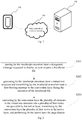
- Fig. 1 is an implementation environment related to a method for page display, according to an exemplary embodiment.
- the implementation environment includes a terminal 101.
- the terminal 101 may be a device such as a smart phone, a tablet computer, a notebook computer, etc.
- the product forms of the terminal 101 are not specifically defined by the embodiments of the present disclosure.
- the terminal 101 is able to run and display a webpage corresponding to the webpage application. Specifically, the web application is searched by the terminal in a global search box provided by an operating system, and then a webpage corresponding to the webpage application is run and displayed after detecting a click operation applied to the webpage.
- the terminal 101 may also run and display the webpage corresponding to the page application after detecting a click operation applied to a shortcut icon of the page application.
- the terminal 101 includes a page display device including a JavaScript execution layer, a conversion layer and a native layer.
- the JavaScript execution layer is a logical layer provided by a terminal operating system and being capable of executing a JavaScript statement.
- the JavaScript execution layer is able to parse a webpage so as to acquire a JavaScript file, and generate a virtual tree structure according to the JavaScript file.
- the JavaScript execution layer can also modify the virtual tree structure so that the user's current display requirements are satisfied by the modified virtual tree structure.
- the conversion layer is a service layer provided by the terminal operating system and being capable of performing statement conversion.
- the conversion layer may be a separate service layer in the operating system or a sub-layer being responsible for the statement conversion in the native layer, and is not limited by the embodiments in the present disclosure.
- the conversion layer is stored with a correspondence between the JavaScript statements and the views, and is capable of converting the virtual tree structure transmitted by the JavaScript execution layer into a view recognizable by the native layer, thus realizing the conversion of a webpage to a native page.
- the native layer is a service layer provided by the terminal operating system and being capable of page rendering.
- the native layer is capable of invoking a communication interface provided by the operating system so as to trigger the operating system to perform page rendering.
- the native layer is also able to transmit a notification message to the JavaScript execution layer after a trigger operation for the currently displayed page is detected, such that the JavaScript execution layer modifies the virtual tree structure and re-execute the page rendering logic.
- the above-described implementation environment may also include a server 102.
- the server 102 is a background server corresponding to the webpage application.
- the server 102 is configured to provide HTML5 (HyperText Markup Language) data and JavaScript files to the terminal 101.
- HTML5 HyperText Markup Language
- the terminal 101 and the server 102 may communicate with each other via a wired network or a wireless network 103 so as to ensure that the terminal 101 may obtain data necessary for displaying the webpage application from the server 102.
- Fig. 2 is a flow chart showing a method for page display, according to an exemplary embodiment.
- a method for page display is applied in a terminal including a device for page display, the device for page display includes a JavaScript execution layer, a conversion layer and a native layer, and the method includes the following steps.
- step S201 the JavaScript execution layer parses a designated webpage requested to display, so as to acquire a JavaScript file.
- step S202 the JavaScript execution layer generates a virtual tree structure and transmits a first drawing message to the conversion layer during the execution of the JavaScript file.
- step S203 the conversion layer converts a plurality of elements in the virtual tree structure into a plurality of first views recognizable by the native layer, and transmits the plurality of first views to the native layer, and the page display is performed by the native layer.
- a conversion layer converts a plurality of elements in a virtual tree structure into a plurality of first views recognizable by a native layer, and the native layer displays a webpage according to the first views.
- a display form of the designated webpage is converted from a webpage into a native page by performing statement conversion, providing not only a new method for page display but also an improved performance and a better effectiveness for page display.
- transmitting a first drawing message to the conversion layer includes: invoking by the JavaScript execution layer a communication interface between the JavaScript execution layer and the conversion layer so as to transmit the first drawing message to the conversion layer.
- converting by the conversion layer the plurality of elements in the virtual tree structure into a plurality of first views recognizable by the native layer includes: converting by the conversion layer the plurality of elements in the virtual tree structure into the plurality of first views recognizable by the native layer based on a prebuilt rule database, the rule database being stored with a correspondence between the JavaScript statements and the views.
- the method further includes: updating by the conversion layer the rule database according to the updated JavaScript statement and the updated view when the updated JavaScript statement and the updated view are acquired.
- the method further includes: transmitting by the native layer a notification message to the JavaScript execution layer when a triggering operation is detected on the designated webpage, the notification message including a changed element identifier;
- transmitting by the native layer a notification message to the JavaScript execution layer includes: invoking by the native layer a communication interface between the native layer and the JavaScript execution layer so as to transmit the notification message to the JavaScript execution layer.
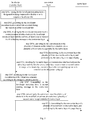
- Fig. 3 is a flow chart showing a method for page display, according to an exemplary embodiment.
- a method for page display is applied in a terminal including a device for page display, the device for page display includes a JavaScript execution layer, a conversion layer and a native layer, and the method includes the following steps.
- step S301 the JavaScript execution layer parses a designated webpage requested to display, so as to acquire a JavaScript file.
- the designated webpage is one webpage in the webpage application.
- the designated webpage may be a webpage of level 1, 2 or more in the webpage application.
- a source code of the designated webpage may be acquired in the following two manners.
- a user may input a name of a web application in a browser or a global search box of an operating system via a mouse and other devices according to his/her own reading requirements.
- the terminal When a click operation of the user to a webpage application link displayed in the browser or the global search box of the terminal is detected, the terminal generates a display request for the designated webpage, and may acquire a source code of the designated webpage from the server upon triggering of the display request for the designated webpage.
- the display request for the designated webpage at least carries attribute information of the designated webpage, including webpage identifier, webpage type, webpage size and the like.
- the source code of the designated webpage includes JavaScript codes and HTML5 data.
- the terminal may generate a display request for the designated webpage when a user's click operation for the short-cut icon is detected, and may acquire the source code of the designated webpage from the server upon triggering the display request for the designated webpage.
- the source code of the designated webpage may be acquired in the following manner.
- the terminal may generate a display request for the designated webpage, and may acquire the source code of the designated webpage from the server upon triggering the display request for the designated webpage.
- the JavaScript execution layer in the terminal Upon triggering the display request for the designated webpage, the JavaScript execution layer in the terminal performs a JavaScript parsing on a designated webpage requested to display so as to acquire a JavaScript file, and the JavaScript file includes the logical code for the entire page display process.
- step S302 the JavaScript execution layer generates a virtual tree structure during the execution of the JavaScript file.
- the JavaScript execution layer may perform a HTML parsing on the HTML5 data to generate a virtual tree structure during the execution of the JavaScript file.
- the virtual tree structure includes a plurality of elements.
- the elements are data used to describe the webpage attribute information, web content, etc. in the designated webpage, and each of the elements is described by JavaScript statements.
- the virtual tree structure may be a VDOM (Virtual Document Object Model) tree.
- step S303 the JavaScript execution layer invokes a communication interface between the JavaScript execution layer and the conversion layer so as to transmit a first drawing message to the conversion layer.
- each element in the virtual tree structure is described by JavaScript statements
- the JavaScript statements may not be recognized by the native layer, resulting in the virtual tree structure being converted into a tree structure recognizable by a rendering engine after the virtual tree structure is acquired, and then rendered by the rendering engine into a webpage for display.
- the resulting effect of page display is not good because the page displayed in the process is a webpage.
- the JavaScript execution layer In order to improve the effect of page display, restore real forms of the webpage to the utmost extent, and simultaneously create a real experience of installing the webpage application for the user, in the method according to the embodiments of the present disclosure, after the JavaScript execution layer generates the virtual tree structure, the JavaScript execution layer further generates the first drawing message, and then transmits the first drawing message to the conversion layer, in which the first drawing message includes the virtual tree structure, etc., for triggering the conversion layer to perform statement conversion so as to display a native page corresponding to the designated webpage. Further, in the embodiments of the present disclosure, a communication interface capable of realizing communication between the JavaScript execution layer and the conversion layer is provided. Based on this communication interface, the JavaScript execution layer may invoke a communication interface between the JavaScript execution layer and the conversion layer when transmits the first drawing message to the conversion layer.
- step S304 the conversion layer converts the plurality of elements in the virtual tree structure into a plurality of first views recognizable by the native layer.
- an R&D personnel usually develops two types, one type is a webpage application without need to be installed, the other type is an application which needs to be installed.
- HTML5 data and the JavaScript codes recognizable by the rendering engine and views recognizable by the native layer of the terminal for the same application.
- the R&D personnel is difficult to know which type of the application specifically used by a user, and therefore the R&D personnel will usually package HTML5 data, JavaScript files and views together into the developed application.
- the conversion layer in the terminal may acquire the JavaScript statements and views from data parsed by the JavaScript execution layer.
- the conversion layer may build a rule database based on the acquired JavaScript statements and views.
- the rule database is stored with a correspondence between the JavaScript statements and the views. In order to facilitate subsequent applications, the conversion layer will further store the built rule database.
- the conversion layer converts the plurality of elements in the virtual tree structure into the plurality of first views recognizable by the native layer based on a prebuilt rule database
- the conversion layer may acquire the views corresponding to the JavaScript statement for describing each element in the virtual tree structure, and take the acquired view as the first view.
- the conversion layer updates the rule database according to the updated JavaScript statement and the updated view after the updated JavaScript statement and the updated view are acquired.
- step S305 the conversion layer transmits the plurality of first views to the native layer, and the page display is performed by the native layer.
- a communication interface capable of realizing the communication between the conversion layer and the native layer.
- the conversion layer may transmit to the native layer the plurality of first views converted from the plurality of elements in the virtual tree structure based on the communication interface, and then the page display is performed by the native layer.
- the webpage may be displayed by the native layer in the following manner: the native layer invokes API (Application Programming Interface) of Native GUI (Graphical User Interface) of the operating system to render the designated webpage so as to acquire a native page corresponding to the designated webpage, and then the native page is displayed.
- API Application Programming Interface
- Native GUI Graphical User Interface
- step S306 the native layer invokes a communication interface between the native layer and the JavaScript execution layer so as to transmit a notification message to the JavaScript execution layer when a triggering operation is detected on the designated webpage.
- the triggering operation includes, but is not limited to, a slide operation and a click operation, etc.
- the content displayed on the native page will be changed when a slide operation for the native page is detected or a click operation of any one of webpage links on the native page during the display of the native page corresponding to the designated webpage.
- the native layer transmits a notification message to the JavaScript execution layer, and the notification message is configured to re-trigger the above page display logic so that the displayed webpage satisfies the user's current browsing requirements.
- the notification message includes a changed element identifier and an operation type including an adding operation, a deletion operation, and the like.
- the native layer may invoke the communication interface between the native layer and the JavaScript execution layer so as to transmit the notification message to the JavaScript execution layer.
- step S307 the JavaScript execution layer modifies the virtual tree structure and transmits a second drawing message to the conversion layer according to the changed element identifier.
- the JavaScript execution layer modifies the virtual tree structure according to the operation type of an element corresponding to the changed element identifier. For example, if the operation type is a delete operation, the JavaScript execution layer will delete the element in the virtual tree structure that corresponds to the element identifier; and if the operation type is an adding operation, the JavaScript execution layer will add the element in the virtual tree structure that corresponds to the element identifier.
- the JavaScript execution layer generates a second drawing message including a modified virtual tree structure based on the modified virtual tree structure, and then invoking a communication interface between the JavaScript execution layer and the conversion layer so as to transmit the second drawing message to the conversion layer.
- step S308 the conversion layer converts the plurality of elements in the modified virtual tree structure into a plurality of second views recognizable by the native layer, and transmits the plurality of second views to the native layer, and then the page display is performed by the native layer.
- the conversion layer converts the plurality of elements in the modified virtual tree structure into a plurality of second views recognizable by the native layer based on a prebuilt rule database.
- first view and the second view are only to indicate that the views corresponding to the different elements will change when the contents of page display are changed.
- first view and the second view corresponding to the same element on the webpage are identical before and after a trigger operation.
- the conversion layer invokes a communication interface between the conversion layer and the native layer so as to transmit the plurality of second views to the native layer, and the page display is performed by the native layer according to the second view.
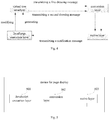
- the JavaScript execution layer parses the webpage requested to display so as to acquire a JavaScript file, generates a virtual tree structure and transmits a first drawing message including the virtual tree structure to the conversion layer by invoking a communication interface between the JavaScript execution layer and the conversion layer during the execution of the JavaScript file.
- the conversion layer converts the elements in the virtual tree structure into a first view recognizable by the native layer, and further transmits the first view to the native layer by invoking a communication interface between the conversion layer and the native layer, and the page display is performed by the native layer.
- the native layer transmits a communication message to the JavaScript execution layer in order to trigger the JavaScript execution layer to modify the virtual tree structure, and then invokes the communication interface between the native layer and the conversion layer so as to transmit a second drawing message in the modified virtual tree structure to the conversion layer.
- the conversion layer converts the elements in the virtual tree structure into a second view recognizable by the native layer, and invokes the communication interface between the conversion layer and the native layer so as to transmit the second view to the native layer, and then the page display is performed by the native layer.
- a conversion layer converts a plurality of elements in a virtual tree structure into a plurality of first views recognizable by a native layer, and the page display is performed by the native layer according to the first views.
- a display form of the designated webpage is converted from a webpage into a native page by performing statement conversion, providing not only a new method for page display but also a better effect for page display.
- Fig. 5 is a block diagram of a device for page display, according to an exemplary embodiment.
- a device for page display includes a JavaScript execution layer 501, a conversion layer 502 and a native layer 503.
- the JavaScript execution layer 501 is configured to parse a designated webpage requested to display so as to acquire a JavaScript file.
- the JavaScript execution layer 501 is further configured to generate a virtual tree structure and transmit a first drawing message to the conversion layer during the execution of the JavaScript file, the first drawing message including the virtual tree structure including a plurality of elements, in which each of the plurality of elements is described by a JavaScript statement.
- the conversion layer 502 is configured to convert the plurality of elements in the virtual tree structure into a plurality of first views recognizable by the native layer and transmit the plurality of first views to the native layer.
- the native layer 503 is configured to perform the page display.
- the JavaScript execution layer 501 is configured to invoke a communication interface between the JavaScript execution layer 501 and the conversion layer 502 so as to transmit the first drawing message to the conversion layer 502.
- the conversion layer 502 is configured to convert the plurality of elements in the virtual tree structure into the plurality of first views recognizable by the native layer based on a prebuilt rule database, a correspondence between the JavaScript statements and the views being stored in the rule database.
- the conversion layer 502 is configured to update the rule database according to the updated JavaScript statement and the updated view when the updated JavaScript statement and the updated view are acquired.
- the native layer 503 is configured to transmit a notification message to the JavaScript execution layer when a triggering operation is detected on the designated webpage, the notification message including a changed element identifier.
- the JavaScript execution layer 501 is configured to modify the virtual tree structure and transmit a second drawing message to the conversion layer according to the changed element identifier, the second drawing message including the modified virtual tree structure.
- the conversion layer 502 is configured to convert the plurality of elements in the virtual tree structure into a plurality of second views recognizable by the native layer 503 and transmit the plurality of second views to the native layer 503, and the native layer 503 is further configured to perform the page display.
- the native layer 503 is configured to invoke a communication interface between the native layer 503 and the JavaScript execution layer 501 so as to transmit the notification message to the JavaScript execution layer 501.
- a conversion layer converts a plurality of elements in a virtual tree structure into a plurality of first views recognizable by a native layer, and the page display is performed by the native layer according to the first views.
- a display form of the designated webpage is converted from a webpage into a native page by performing statement conversion, providing not only a new method for page display but also a better effect for page display.
- Fig. 6 is a block diagram of a device 600 for page display, according to an exemplary embodiment.
- the device 600 may be a mobile phone, a computer, a digital broadcast terminal, a messaging device, a gaming console, a tablet, a medical device, exercise equipment, a personal digital assistant, and the like.
- the device 600 may include one or more of the following components: a processing component 602, a memory 604, a power component 606, a multimedia component 608, an audio component 610, an input/output (I/O) interface 612, a sensor component 614, and a communication component 616.
- the processing component 602 typically controls overall operations of the device 600, such as the operations associated with display, telephone calls, data communications, camera operations, and recording operations.
- the processing component 602 may include one or more processors 620 to execute instructions to perform all or part of the steps in the above described methods.
- the processing component 602 may include one or more modules which facilitate the interaction between the processing component 602 and other components.
- the processing component 602 may include a multimedia module to facilitate the interaction between the multimedia component 608 and the processing component 602.
- the memory 604 is configured to store various types of data to support the operation of the device 600. Examples of such data include instructions for any applications or methods operated on the device 600, contact data, phonebook data, messages, pictures, video, etc.
- the memory 604 may be implemented using any type of volatile or non-volatile memory devices, or a combination thereof, such as a static random access memory (SRAM), an electrically erasable programmable read-only memory (EEPROM), an erasable programmable read-only memory (EPROM), a programmable read-only memory (PROM), a read-only memory (ROM), a magnetic memory, a flash memory, a magnetic or optical disk.
- SRAM static random access memory
- EEPROM electrically erasable programmable read-only memory
- EPROM erasable programmable read-only memory
- PROM programmable read-only memory
- ROM read-only memory
- magnetic memory a magnetic memory
- flash memory a flash memory
- magnetic or optical disk a magnetic or optical
- the power component 606 provides power to various components of the device 600.
- the power component 606 may include a power management system, one or more power sources, and any other components associated with the generation, management, and distribution of power in the device 600.
- the multimedia component 608 includes a screen providing an output interface between the device 800 and the user.
- the screen may include a liquid crystal display (LCD) and a touch panel (TP). If the screen includes the touch panel, the screen may be implemented as a touch screen to receive input signals from the user.
- the touch panel includes one or more touch sensors to sense touches, swipes, and gestures on the touch panel. The touch sensors may not only sense a boundary of a touch or swipe operation, but also sense a period of time and a pressure associated with the touch or swipe operation.
- the multimedia component 608 includes a front camera and/or a rear camera. The front camera and the rear camera may receive an external multimedia datum while the device 600 is in an operation mode, such as a photographing mode or a video mode. Each of the front camera and the rear camera may be a fixed optical lens system or have focus and optical zoom capability.
- the audio component 610 is configured to output and/or input audio signals.
- the audio component 610 includes a microphone ("MIC") configured to receive an external audio signal when the device 600 is in an operation mode, such as a call mode, a recording mode, and a voice recognition mode.
- the received audio signal may be further stored in the memory 604 or transmitted via the communication component 616.
- the audio component 610 further includes a speaker to output audio signals.
- the I/O interface 612 provides an interface between the processing component 602 and peripheral interface modules, such as a keyboard, a click wheel, buttons, and the like.
- the buttons may include, but are not limited to, a home button, a volume button, a starting button, and a locking button.
- the sensor component 614 includes one or more sensors to provide status assessments of various aspects of the device 600. For instance, the sensor component 614 may detect an open/closed status of the device 600, relative positioning of components, e.g., the display and the keypad, of the device 600, a change in position of the device 600 or a component of the device 600, a presence or absence of user contact with the device 600, an orientation or an acceleration/deceleration of the device 600, and a change in temperature of the device 600.
- the sensor component 614 may include a proximity sensor configured to detect the presence of nearby objects without any physical contact.
- the sensor component 614 may also include a light sensor, such as a CMOS or CCD image sensor, for use in imaging applications.
- the sensor component 614 may also include an accelerometer sensor, a gyroscope sensor, a magnetic sensor, a pressure sensor, or a temperature sensor.
- the communication component 616 is configured to facilitate communication, wired or wirelessly, between the device 600 and other devices.
- the device 600 can access a wireless network based on a communication standard, such as WiFi, 2G, or 3G, or a combination thereof.
- the communication component 616 receives a broadcast signal or broadcast associated information from an external broadcast management system via a broadcast channel.
- the communication component 616 further includes a near field communication (NFC) module to facilitate short-range communications.
- the NFC module may be implemented based on a radio frequency identification (RFID) technology, an infrared data association (IrDA) technology, an ultra-wideband (UWB) technology, a Bluetooth (BT) technology, and other technologies.
- RFID radio frequency identification
- IrDA infrared data association
- UWB ultra-wideband
- BT Bluetooth
- the device 600 may be implemented with one or more application specific integrated circuits (ASICs), digital signal processors (DSPs), digital signal processing devices (DSPDs), programmable logic devices (PLDs), field programmable gate arrays (FPGAs), controllers, micro-controllers, microprocessors, or other electronic components, for performing the above described methods.
- ASICs application specific integrated circuits
- DSPs digital signal processors
- DSPDs digital signal processing devices
- PLDs programmable logic devices
- FPGAs field programmable gate arrays
- controllers micro-controllers, microprocessors, or other electronic components, for performing the above described methods.
- non-transitory computer-readable storage medium including instructions, such as included in the memory 604, executable by the processor 620 in the device 600, for performing the above-described methods.
- the non-transitory computer-readable storage medium may be a ROM, a RAM, a CD-ROM, a magnetic tape, a floppy disc, an optical data storage device, and the like.
- a conversion layer converts a plurality of elements in a virtual tree structure into a plurality of first views recognizable by a native layer, and the page display is performed by the native layer according to the first views.
- a display form of the designated webpage is converted from a webpage into a native page by performing statement conversion, providing not only a new method for page display but also a better effect for page display.
- a computer-readable storage medium having stored therein at least one instruction that is configured to be loaded and executed by a processor so as to perform a method for page display described in Fig. 2 or Fig. 3 .
- a conversion layer converts a plurality of elements in a virtual tree structure into a plurality of first views recognizable by a native layer, and the page display is performed by the native layer according to the first views.
- a display form of the designated webpage is converted from a webpage into a native page by performing statement conversion, providing not only a new method for page display but also a better effect for page display.
- modules, sub-modules, units, and components in the present disclosure can be implemented using any suitable technology.
- a module may be implemented using circuitry, such as an integrated circuit (IC).
- IC integrated circuit
- a module may be implemented as a processing circuit executing software instructions.
Landscapes
- Engineering & Computer Science (AREA)
- Theoretical Computer Science (AREA)
- General Engineering & Computer Science (AREA)
- Databases & Information Systems (AREA)
- Physics & Mathematics (AREA)
- General Physics & Mathematics (AREA)
- Software Systems (AREA)
- Data Mining & Analysis (AREA)
- Human Computer Interaction (AREA)
- Radar, Positioning & Navigation (AREA)
- Remote Sensing (AREA)
- Computational Linguistics (AREA)
- Computing Systems (AREA)
- Information Transfer Between Computers (AREA)
Abstract
Description
- The present disclosure generally relates to a field of computer technology, and more particularly to a method for page display, a device for page display, and a storage medium.
- With the development of computer technology, a variety of webpage applications have been developed in order to facilitate the use of webpages by a user. As the user is browsing a page of a webpage application, the effect and performance of page display directly affects the user's browsing experience. As such, improvements to page display performance and the resulting effect on the user are important to improve the user's browsing experience.
- This Summary is provided to introduce a selection of aspects of the present disclosure in a simplified form that are further described below in the Detailed Description. This Summary is not intended to identify key features or essential features of the claimed subject matter, nor is it intended to be used to limit the scope of the claimed subject matter.
- Aspects of the disclosure provide a method for page display applied in a device comprising a JavaScript execution layer, a conversion layer and a native layer. The method includes parsing, by the JavaScript execution layer, a designated webpage that was requested to be displayed; acquiring, by the JavaScript execution layer, a JavaScript file from the designated webpage; generating, by the JavaScript execution layer, a virtual tree structure; transmitting, by the JavaScript execution layer, a first drawing message to the conversion layer during execution of the JavaScript file, the first drawing message comprising the virtual tree structure comprising a plurality of elements, wherein each of the plurality of elements is described by a JavaScript statement; converting, by the conversion layer, the plurality of elements in the virtual tree structure into a plurality of first views recognizable by the native layer; transmitting, by the conversion layer, the plurality of first views to the native layer; and performing, by the native layer, the page display based on the plurality of first views.
- In an embodiment, when transmitting the first drawing message to the conversion layer, the method includes invoking, by the JavaScript execution layer, a communication interface between the JavaScript execution layer and the conversion layer so as to transmit the first drawing message to the conversion layer.
- In another embodiment, when converting, by the conversion layer, the plurality of elements in the virtual tree structure into the plurality of first views recognizable by the native layer, the method includes converting, by the conversion layer, the plurality of elements in the virtual tree structure into the plurality of first views recognizable by the native layer based on a rule database that is stored with a correspondence between the JavaScript statements and the plurality of first views.
- According to an aspect, the method further includes updating, by the conversion layer, the rule database according to an updated JavaScript statement and an updated view when the updated JavaScript statement and the updated view are acquired.
- According to another aspect, the method includes transmitting, by the native layer, a notification message to the JavaScript execution layer when a triggering operation is detected on the designated webpage, the notification message comprising a changed element identifier; modifying, by the JavaScript execution layer, the virtual tree structure; transmitting, by the JavaScript execution layer, a second drawing message to the conversion layer according to the changed element identifier, the second drawing message comprising the modified virtual tree structure; converting, by the conversion layer, the plurality of elements in the modified virtual tree structure into a plurality of second views recognizable by the native layer; transmitting, by the conversion layer, the plurality of second views to the native layer; and performing, by the native layer, the page display based on the plurality of second views.
- In an embodiment, when transmitting, by the native layer, the notification message to the JavaScript execution layer, the method includes invoking, by the native layer, a communication interface between the native layer and the JavaScript execution layer so as to transmit the notification message to the JavaScript execution layer.
- Aspects of the disclosure also provide a device for page display. The device includes a JavaScript execution layer, a conversion layer and a native layer. The JavaScript execution layer is configured to parse a designated webpage that was requested to be displayed and to acquire a JavaScript file from the designated webpage. The JavaScript execution layer is further configured to generate a virtual tree structure and transmit a first drawing message to the conversion layer during execution of the JavaScript file, the first drawing message comprising the virtual tree structure comprising a plurality of elements, in which each of the plurality of elements is described by a JavaScript statement. The conversion layer is configured to convert the plurality of elements in the virtual tree structure into a plurality of first views recognizable by the native layer and transmit the plurality of first views to the native layer. The native layer is configured to perform the page display based on the plurality of first views.
- In an embodiment, the JavaScript execution layer is further configured to invoke a communication interface between the JavaScript execution layer and the conversion layer so as to transmit the first drawing message to the conversion layer.
- In an embodiment, the conversion layer is configured to convert the plurality of elements in the virtual tree structure into a plurality of first views recognizable by the native layer by the native layer based on a rule database that is stored with a correspondence between the JavaScript statements and the plurality of first views.
- In an embodiment, the conversion layer is further configured to update the rule database according to an updated JavaScript statement and an updated view when the updated JavaScript statement and the updated view are acquired.
- In an embodiment, the native layer is further configured to transmit a notification message to the JavaScript execution layer when a triggering operation is detected on the designated webpage, the notification message comprising a changed element identifier. The JavaScript execution layer is further configured to modify the virtual tree structure and transmit a second drawing message to the conversion layer according to the changed element identifier, the second drawing message comprising the modified virtual tree structure. The conversion layer is further configured to convert the plurality of elements in the virtual tree structure into a plurality of second views recognizable by the native layer and transmit the plurality of second views to the native layer, and the native layer is further configured to perform the page display based on the plurality of second views.
- In an embodiment, the native layer is further configured to invoke a communication interface between the native layer and the JavaScript execution layer so as to transmit the notification message to the JavaScript execution layer.
- Aspects of the disclosure also provide a device for page display. The device includes a processor, and a memory for storing instructions executable by the processor. The processor is configured to: parse by a JavaScript execution layer a designated webpage requested to display so as to acquire a JavaScript file; generate by the JavaScript execution layer a virtual tree structure and transmit by the JavaScript execution layer a first drawing message to the conversion layer during the execution of the JavaScript file, the first drawing message comprising the virtual tree structure comprising a plurality of elements, in which each of the plurality of elements is described by a JavaScript statement; convert by the conversion layer the plurality of elements in the virtual tree structure into a plurality of first views recognizable by a native layer, transmit by the conversion layer the plurality of first views to the native layer, and perform by the native layer the page display.
- Aspects of the disclosure also provide a non-transitory computer-readable storage medium storing instructions that, when executed by one or more processors of a device for page display, cause the device to parse, by the JavaScript execution layer, a designated webpage that was requested to be displayed; acquire, by the JavaScript execution layer, a JavaScript file from the designated webpage; generate, by the JavaScript execution layer, a virtual tree structure; transmit, by the JavaScript execution layer, a first drawing message to the conversion layer during execution of the JavaScript file, the first drawing message comprising the virtual tree structure comprising a plurality of elements, wherein each of the plurality of elements is described by a JavaScript statement; convert, by the conversion layer, the plurality of elements in the virtual tree structure into a plurality of first views recognizable by the native layer; transmit, by the conversion layer, the plurality of first views to the native layer; and perform, by the native layer, the page display based on the plurality of first views.
- Aspects of the disclosure also provide a program product having stored therein instructions that, when executed by one or more processors of an apparatus, causes the apparatus to perform:
- parsing, by the JavaScript execution layer, a designated webpage that was requested to be displayed;
- acquiring, by the JavaScript execution layer, a JavaScript file from the designated webpage;
- generating, by the JavaScript execution layer, a virtual tree structure;
- transmitting, by the JavaScript execution layer, a first drawing message to the conversion layer during execution of the JavaScript file, the first drawing message comprising the virtual tree structure comprising a plurality of elements, wherein each of the plurality of elements is described by a JavaScript statement;
- converting, by the conversion layer, the plurality of elements in the virtual tree structure into a plurality of first views recognizable by the native layer;
- transmitting, by the conversion layer, the plurality of first views to the native layer and
- performing, by the native layer, the page display based on the plurality of first views.
- The technical solutions according to the embodiments of the present disclosure may have the following advantageous effects: in the present disclosure, a conversion layer converts a plurality of elements in a virtual tree structure into a plurality of first views recognizable by a native layer, and the page display is performed by the native layer according to the first views. In this process, a display form of the designated webpage is converted from a webpage into a native page by performing statement conversion, providing not only a new method for page display but also an improved performance and a better effectiveness for page display.
- It is to be understood that both the foregoing general description and the following detailed description are exemplary and explanatory only and are not restrictive of the invention, as claimed.
- The accompanying drawings, which are incorporated in and constitute a part of this specification, illustrate embodiments consistent with the disclosure and, together with the description, serve to explain the principles of the disclosure.
-
Fig. 1 is an implementation environment related to a method for page display, according to an exemplary embodiment. -
Fig. 2 is a flow chart showing a method for page display, according to an exemplary embodiment. -
Fig. 3 is a flow chart showing a method for page display, according to an exemplary embodiment. -
Fig. 4 is a schematic diagram showing a process for page display, according to an exemplary embodiment. -
Fig. 5 is a block diagram of a device for page display, according to an exemplary embodiment. -
Fig. 6 is a block diagram of a device for page display, according to an exemplary embodiment. - The specific aspects of the present disclosure, which have been illustrated by the accompanying drawings described above, will be described in detail below. These accompanying drawings and description are not intended to limit the scope of the present disclosure in any manner, but to explain the concept of the present disclosure to those skilled in the art via referencing specific aspects.
- Reference will now be made in detail to exemplary embodiments, examples of which are illustrated in the accompanying drawings. The following description refers to the accompanying drawings in which the same numbers in different drawings represent the same or similar elements unless otherwise represented. The implementations set forth in the following description of exemplary embodiments do not represent all implementations consistent with the disclosure. Instead, they are merely examples of apparatuses and methods consistent with aspects related to the disclosure as recited in the appended claims.
-
Fig. 1 is an implementation environment related to a method for page display, according to an exemplary embodiment. The implementation environment includes aterminal 101. - The
terminal 101 may be a device such as a smart phone, a tablet computer, a notebook computer, etc. The product forms of theterminal 101 are not specifically defined by the embodiments of the present disclosure. Theterminal 101 is able to run and display a webpage corresponding to the webpage application. Specifically, the web application is searched by the terminal in a global search box provided by an operating system, and then a webpage corresponding to the webpage application is run and displayed after detecting a click operation applied to the webpage. The terminal 101 may also run and display the webpage corresponding to the page application after detecting a click operation applied to a shortcut icon of the page application. In order to improve the display effect, the terminal 101 includes a page display device including a JavaScript execution layer, a conversion layer and a native layer. - The JavaScript execution layer is a logical layer provided by a terminal operating system and being capable of executing a JavaScript statement. The JavaScript execution layer is able to parse a webpage so as to acquire a JavaScript file, and generate a virtual tree structure according to the JavaScript file. The JavaScript execution layer can also modify the virtual tree structure so that the user's current display requirements are satisfied by the modified virtual tree structure.
- The conversion layer is a service layer provided by the terminal operating system and being capable of performing statement conversion. The conversion layer may be a separate service layer in the operating system or a sub-layer being responsible for the statement conversion in the native layer, and is not limited by the embodiments in the present disclosure. The conversion layer is stored with a correspondence between the JavaScript statements and the views, and is capable of converting the virtual tree structure transmitted by the JavaScript execution layer into a view recognizable by the native layer, thus realizing the conversion of a webpage to a native page.
- The native layer is a service layer provided by the terminal operating system and being capable of page rendering. The native layer is capable of invoking a communication interface provided by the operating system so as to trigger the operating system to perform page rendering. The native layer is also able to transmit a notification message to the JavaScript execution layer after a trigger operation for the currently displayed page is detected, such that the JavaScript execution layer modifies the virtual tree structure and re-execute the page rendering logic.
- The above-described implementation environment may also include a
server 102. Theserver 102 is a background server corresponding to the webpage application. Theserver 102 is configured to provide HTML5 (HyperText Markup Language) data and JavaScript files to the terminal 101. - In an embodiment of the present disclosure, the terminal 101 and the
server 102 may communicate with each other via a wired network or awireless network 103 so as to ensure that the terminal 101 may obtain data necessary for displaying the webpage application from theserver 102. -
Fig. 2 is a flow chart showing a method for page display, according to an exemplary embodiment. Referring toFig. 2 , a method for page display is applied in a terminal including a device for page display, the device for page display includes a JavaScript execution layer, a conversion layer and a native layer, and the method includes the following steps. - In step S201, the JavaScript execution layer parses a designated webpage requested to display, so as to acquire a JavaScript file.
- In step S202, the JavaScript execution layer generates a virtual tree structure and transmits a first drawing message to the conversion layer during the execution of the JavaScript file.
- In step S203, the conversion layer converts a plurality of elements in the virtual tree structure into a plurality of first views recognizable by the native layer, and transmits the plurality of first views to the native layer, and the page display is performed by the native layer.
- With the method according to the embodiments of the present disclosure, in the present disclosure, a conversion layer converts a plurality of elements in a virtual tree structure into a plurality of first views recognizable by a native layer, and the native layer displays a webpage according to the first views. In this process, a display form of the designated webpage is converted from a webpage into a native page by performing statement conversion, providing not only a new method for page display but also an improved performance and a better effectiveness for page display.
- In another embodiment of the present disclosure, transmitting a first drawing message to the conversion layer includes:
invoking by the JavaScript execution layer a communication interface between the JavaScript execution layer and the conversion layer so as to transmit the first drawing message to the conversion layer. - In another embodiment of the present disclosure, converting by the conversion layer the plurality of elements in the virtual tree structure into a plurality of first views recognizable by the native layer includes:
converting by the conversion layer the plurality of elements in the virtual tree structure into the plurality of first views recognizable by the native layer based on a prebuilt rule database, the rule database being stored with a correspondence between the JavaScript statements and the views. - In another embodiment of the present disclosure, the method further includes:
updating by the conversion layer the rule database according to the updated JavaScript statement and the updated view when the updated JavaScript statement and the updated view are acquired. - In another embodiment of the present disclosure, the method further includes:
transmitting by the native layer a notification message to the JavaScript execution layer when a triggering operation is detected on the designated webpage, the notification message including a changed element identifier; - modifying by the JavaScript execution layer the virtual tree structure and transmitting by the JavaScript execution layer a second drawing message to the conversion layer according to the changed element identifier, the second drawing message including the modified virtual tree structure;
- converting by the conversion layer the plurality of elements in the modified virtual tree structure into a plurality of second views recognizable by the native layer, transmitting by the conversion layer the plurality of second views to the native layer, and performing by the native layer the page display.
- In another embodiment of the present disclosure, transmitting by the native layer a notification message to the JavaScript execution layer includes:
invoking by the native layer a communication interface between the native layer and the JavaScript execution layer so as to transmit the notification message to the JavaScript execution layer. - All of the alternative technical solutions described above may be used in any combination to form alternative embodiments of the present disclosure and will not be described in detail herein.
-
Fig. 3 is a flow chart showing a method for page display, according to an exemplary embodiment. Referring toFig. 3 , a method for page display is applied in a terminal including a device for page display, the device for page display includes a JavaScript execution layer, a conversion layer and a native layer, and the method includes the following steps. - In step S301, the JavaScript execution layer parses a designated webpage requested to display, so as to acquire a JavaScript file.
- The designated webpage is one webpage in the webpage application. The designated webpage may be a webpage of level 1, 2 or more in the webpage application. When the designated webpage is a webpage of level 1, a source code of the designated webpage may be acquired in the following two manners.
- In the first manner, in a process of browser startup, a user may input a name of a web application in a browser or a global search box of an operating system via a mouse and other devices according to his/her own reading requirements. When a click operation of the user to a webpage application link displayed in the browser or the global search box of the terminal is detected, the terminal generates a display request for the designated webpage, and may acquire a source code of the designated webpage from the server upon triggering of the display request for the designated webpage. The display request for the designated webpage at least carries attribute information of the designated webpage, including webpage identifier, webpage type, webpage size and the like. The source code of the designated webpage includes JavaScript codes and HTML5 data.
- In the second manner, if a designated webpage link is stored in a local memory of the terminal (for example, a short-cut icon and the like corresponding to the designated webpage is displayed on the desktop), the terminal may generate a display request for the designated webpage when a user's click operation for the short-cut icon is detected, and may acquire the source code of the designated webpage from the server upon triggering the display request for the designated webpage.
- When the designated webpage is a webpage of level 2 or more, the source code of the designated webpage may be acquired in the following manner. When a click operation for any item (a title or an icon having webpage link nature, etc.) of the webpage of level 1 in the webpage application is detected, the terminal may generate a display request for the designated webpage, and may acquire the source code of the designated webpage from the server upon triggering the display request for the designated webpage.
- Upon triggering the display request for the designated webpage, the JavaScript execution layer in the terminal performs a JavaScript parsing on a designated webpage requested to display so as to acquire a JavaScript file, and the JavaScript file includes the logical code for the entire page display process.
- In step S302, the JavaScript execution layer generates a virtual tree structure during the execution of the JavaScript file.
- The JavaScript execution layer may perform a HTML parsing on the HTML5 data to generate a virtual tree structure during the execution of the JavaScript file. The virtual tree structure includes a plurality of elements. The elements are data used to describe the webpage attribute information, web content, etc. in the designated webpage, and each of the elements is described by JavaScript statements. In the embodiments of the present disclosure, the virtual tree structure may be a VDOM (Virtual Document Object Model) tree.
- In step S303, the JavaScript execution layer invokes a communication interface between the JavaScript execution layer and the conversion layer so as to transmit a first drawing message to the conversion layer.
- Since each element in the virtual tree structure is described by JavaScript statements, the JavaScript statements may not be recognized by the native layer, resulting in the virtual tree structure being converted into a tree structure recognizable by a rendering engine after the virtual tree structure is acquired, and then rendered by the rendering engine into a webpage for display. The resulting effect of page display is not good because the page displayed in the process is a webpage.
- In order to improve the effect of page display, restore real forms of the webpage to the utmost extent, and simultaneously create a real experience of installing the webpage application for the user, in the method according to the embodiments of the present disclosure, after the JavaScript execution layer generates the virtual tree structure, the JavaScript execution layer further generates the first drawing message, and then transmits the first drawing message to the conversion layer, in which the first drawing message includes the virtual tree structure, etc., for triggering the conversion layer to perform statement conversion so as to display a native page corresponding to the designated webpage. Further, in the embodiments of the present disclosure, a communication interface capable of realizing communication between the JavaScript execution layer and the conversion layer is provided. Based on this communication interface, the JavaScript execution layer may invoke a communication interface between the JavaScript execution layer and the conversion layer when transmits the first drawing message to the conversion layer.
- In step S304, the conversion layer converts the plurality of elements in the virtual tree structure into a plurality of first views recognizable by the native layer.
- For many applications, an R&D personnel usually develops two types, one type is a webpage application without need to be installed, the other type is an application which needs to be installed. In this way, there are the HTML5 data and the JavaScript codes recognizable by the rendering engine and views recognizable by the native layer of the terminal for the same application. In the actual use, the R&D personnel is difficult to know which type of the application specifically used by a user, and therefore the R&D personnel will usually package HTML5 data, JavaScript files and views together into the developed application. In this way, when a user browses a webpage corresponding to the webpage application, the conversion layer in the terminal may acquire the JavaScript statements and views from data parsed by the JavaScript execution layer. The conversion layer may build a rule database based on the acquired JavaScript statements and views. The rule database is stored with a correspondence between the JavaScript statements and the views. In order to facilitate subsequent applications, the conversion layer will further store the built rule database.
- When the conversion layer converts the plurality of elements in the virtual tree structure into the plurality of first views recognizable by the native layer based on a prebuilt rule database, the conversion layer may acquire the views corresponding to the JavaScript statement for describing each element in the virtual tree structure, and take the acquired view as the first view.
- Because the JavaScript statement is not fixed, in order to ensure the real-time validity of the rule database, the conversion layer updates the rule database according to the updated JavaScript statement and the updated view after the updated JavaScript statement and the updated view are acquired.
- In step S305, the conversion layer transmits the plurality of first views to the native layer, and the page display is performed by the native layer.
- According to an embodiment of the present disclosure, a communication interface capable of realizing the communication between the conversion layer and the native layer is provided. The conversion layer may transmit to the native layer the plurality of first views converted from the plurality of elements in the virtual tree structure based on the communication interface, and then the page display is performed by the native layer. Specifically, the webpage may be displayed by the native layer in the following manner: the native layer invokes API (Application Programming Interface) of Native GUI (Graphical User Interface) of the operating system to render the designated webpage so as to acquire a native page corresponding to the designated webpage, and then the native page is displayed.
- In step S306, the native layer invokes a communication interface between the native layer and the JavaScript execution layer so as to transmit a notification message to the JavaScript execution layer when a triggering operation is detected on the designated webpage.
- The triggering operation includes, but is not limited to, a slide operation and a click operation, etc. The content displayed on the native page will be changed when a slide operation for the native page is detected or a click operation of any one of webpage links on the native page during the display of the native page corresponding to the designated webpage. At this time, the native layer transmits a notification message to the JavaScript execution layer, and the notification message is configured to re-trigger the above page display logic so that the displayed webpage satisfies the user's current browsing requirements. The notification message includes a changed element identifier and an operation type including an adding operation, a deletion operation, and the like.
- When the native layer transmits the notification message to the JavaScript execution layer, the native layer may invoke the communication interface between the native layer and the JavaScript execution layer so as to transmit the notification message to the JavaScript execution layer.
- In step S307, the JavaScript execution layer modifies the virtual tree structure and transmits a second drawing message to the conversion layer according to the changed element identifier.
- After the notification message is received, the JavaScript execution layer modifies the virtual tree structure according to the operation type of an element corresponding to the changed element identifier. For example, if the operation type is a delete operation, the JavaScript execution layer will delete the element in the virtual tree structure that corresponds to the element identifier; and if the operation type is an adding operation, the JavaScript execution layer will add the element in the virtual tree structure that corresponds to the element identifier.
- The JavaScript execution layer generates a second drawing message including a modified virtual tree structure based on the modified virtual tree structure, and then invoking a communication interface between the JavaScript execution layer and the conversion layer so as to transmit the second drawing message to the conversion layer.
- In step S308, the conversion layer converts the plurality of elements in the modified virtual tree structure into a plurality of second views recognizable by the native layer, and transmits the plurality of second views to the native layer, and then the page display is performed by the native layer.
- After the second drawing message is received, the conversion layer converts the plurality of elements in the modified virtual tree structure into a plurality of second views recognizable by the native layer based on a prebuilt rule database.
- Here, it should be noted that, the first view and the second view are only to indicate that the views corresponding to the different elements will change when the contents of page display are changed. In fact, the first view and the second view corresponding to the same element on the webpage are identical before and after a trigger operation.
- After a plurality of second views are acquired, the conversion layer invokes a communication interface between the conversion layer and the native layer so as to transmit the plurality of second views to the native layer, and the page display is performed by the native layer according to the second view.
- The above process will be described below with reference to
Fig. 4 for ease of understanding. - Referring to
Fig. 4 , when a webpage requested to display is acquired, the JavaScript execution layer parses the webpage requested to display so as to acquire a JavaScript file, generates a virtual tree structure and transmits a first drawing message including the virtual tree structure to the conversion layer by invoking a communication interface between the JavaScript execution layer and the conversion layer during the execution of the JavaScript file. After the first drawing message is received, the conversion layer converts the elements in the virtual tree structure into a first view recognizable by the native layer, and further transmits the first view to the native layer by invoking a communication interface between the conversion layer and the native layer, and the page display is performed by the native layer. When a click operation or a slide operation for the displayed webpage is detected, the native layer transmits a communication message to the JavaScript execution layer in order to trigger the JavaScript execution layer to modify the virtual tree structure, and then invokes the communication interface between the native layer and the conversion layer so as to transmit a second drawing message in the modified virtual tree structure to the conversion layer. When the second drawing message is received, the conversion layer converts the elements in the virtual tree structure into a second view recognizable by the native layer, and invokes the communication interface between the conversion layer and the native layer so as to transmit the second view to the native layer, and then the page display is performed by the native layer. - With the method according to the embodiments of the present disclosure, in the present disclosure, a conversion layer converts a plurality of elements in a virtual tree structure into a plurality of first views recognizable by a native layer, and the page display is performed by the native layer according to the first views. In this process, a display form of the designated webpage is converted from a webpage into a native page by performing statement conversion, providing not only a new method for page display but also a better effect for page display.
-
Fig. 5 is a block diagram of a device for page display, according to an exemplary embodiment. Referring toFig. 5 , a device for page display includes aJavaScript execution layer 501, aconversion layer 502 and anative layer 503. - The
JavaScript execution layer 501 is configured to parse a designated webpage requested to display so as to acquire a JavaScript file. - The
JavaScript execution layer 501 is further configured to generate a virtual tree structure and transmit a first drawing message to the conversion layer during the execution of the JavaScript file, the first drawing message including the virtual tree structure including a plurality of elements, in which each of the plurality of elements is described by a JavaScript statement. - The
conversion layer 502 is configured to convert the plurality of elements in the virtual tree structure into a plurality of first views recognizable by the native layer and transmit the plurality of first views to the native layer. - The
native layer 503 is configured to perform the page display. - In another embodiment of the present disclosure, the
JavaScript execution layer 501 is configured to invoke a communication interface between theJavaScript execution layer 501 and theconversion layer 502 so as to transmit the first drawing message to theconversion layer 502. - In another embodiment of the present disclosure, the
conversion layer 502 is configured to convert the plurality of elements in the virtual tree structure into the plurality of first views recognizable by the native layer based on a prebuilt rule database, a correspondence between the JavaScript statements and the views being stored in the rule database. - In another embodiment of the present disclosure, the
conversion layer 502 is configured to update the rule database according to the updated JavaScript statement and the updated view when the updated JavaScript statement and the updated view are acquired. - In another embodiment of the present disclosure, the
native layer 503 is configured to transmit a notification message to the JavaScript execution layer when a triggering operation is detected on the designated webpage, the notification message including a changed element identifier. - The
JavaScript execution layer 501 is configured to modify the virtual tree structure and transmit a second drawing message to the conversion layer according to the changed element identifier, the second drawing message including the modified virtual tree structure. - The
conversion layer 502 is configured to convert the plurality of elements in the virtual tree structure into a plurality of second views recognizable by thenative layer 503 and transmit the plurality of second views to thenative layer 503, and thenative layer 503 is further configured to perform the page display. - In another embodiment of the present disclosure, the
native layer 503 is configured to invoke a communication interface between thenative layer 503 and theJavaScript execution layer 501 so as to transmit the notification message to theJavaScript execution layer 501. - With the device according to the embodiments of the present disclosure, in the present disclosure, a conversion layer converts a plurality of elements in a virtual tree structure into a plurality of first views recognizable by a native layer, and the page display is performed by the native layer according to the first views. In this process, a display form of the designated webpage is converted from a webpage into a native page by performing statement conversion, providing not only a new method for page display but also a better effect for page display.
- With respect to the devices in the above embodiments, the specific manners for performing operations for individual modules therein have been described in detail in the embodiments regarding the methods for page display, which will not be elaborated herein.
-
Fig. 6 is a block diagram of adevice 600 for page display, according to an exemplary embodiment. For example, thedevice 600 may be a mobile phone, a computer, a digital broadcast terminal, a messaging device, a gaming console, a tablet, a medical device, exercise equipment, a personal digital assistant, and the like. - Referring to
Fig. 6 , thedevice 600 may include one or more of the following components: aprocessing component 602, amemory 604, apower component 606, amultimedia component 608, anaudio component 610, an input/output (I/O)interface 612, asensor component 614, and acommunication component 616. - The
processing component 602 typically controls overall operations of thedevice 600, such as the operations associated with display, telephone calls, data communications, camera operations, and recording operations. Theprocessing component 602 may include one ormore processors 620 to execute instructions to perform all or part of the steps in the above described methods. Moreover, theprocessing component 602 may include one or more modules which facilitate the interaction between theprocessing component 602 and other components. For instance, theprocessing component 602 may include a multimedia module to facilitate the interaction between themultimedia component 608 and theprocessing component 602. - The
memory 604 is configured to store various types of data to support the operation of thedevice 600. Examples of such data include instructions for any applications or methods operated on thedevice 600, contact data, phonebook data, messages, pictures, video, etc. Thememory 604 may be implemented using any type of volatile or non-volatile memory devices, or a combination thereof, such as a static random access memory (SRAM), an electrically erasable programmable read-only memory (EEPROM), an erasable programmable read-only memory (EPROM), a programmable read-only memory (PROM), a read-only memory (ROM), a magnetic memory, a flash memory, a magnetic or optical disk. - The
power component 606 provides power to various components of thedevice 600. Thepower component 606 may include a power management system, one or more power sources, and any other components associated with the generation, management, and distribution of power in thedevice 600. - The
multimedia component 608 includes a screen providing an output interface between the device 800 and the user. In some embodiments, the screen may include a liquid crystal display (LCD) and a touch panel (TP). If the screen includes the touch panel, the screen may be implemented as a touch screen to receive input signals from the user. The touch panel includes one or more touch sensors to sense touches, swipes, and gestures on the touch panel. The touch sensors may not only sense a boundary of a touch or swipe operation, but also sense a period of time and a pressure associated with the touch or swipe operation. In some embodiments, themultimedia component 608 includes a front camera and/or a rear camera. The front camera and the rear camera may receive an external multimedia datum while thedevice 600 is in an operation mode, such as a photographing mode or a video mode. Each of the front camera and the rear camera may be a fixed optical lens system or have focus and optical zoom capability. - The
audio component 610 is configured to output and/or input audio signals. For example, theaudio component 610 includes a microphone ("MIC") configured to receive an external audio signal when thedevice 600 is in an operation mode, such as a call mode, a recording mode, and a voice recognition mode. The received audio signal may be further stored in thememory 604 or transmitted via thecommunication component 616. In some embodiments, theaudio component 610 further includes a speaker to output audio signals. - The I/
O interface 612 provides an interface between theprocessing component 602 and peripheral interface modules, such as a keyboard, a click wheel, buttons, and the like. The buttons may include, but are not limited to, a home button, a volume button, a starting button, and a locking button. - The
sensor component 614 includes one or more sensors to provide status assessments of various aspects of thedevice 600. For instance, thesensor component 614 may detect an open/closed status of thedevice 600, relative positioning of components, e.g., the display and the keypad, of thedevice 600, a change in position of thedevice 600 or a component of thedevice 600, a presence or absence of user contact with thedevice 600, an orientation or an acceleration/deceleration of thedevice 600, and a change in temperature of thedevice 600. Thesensor component 614 may include a proximity sensor configured to detect the presence of nearby objects without any physical contact. Thesensor component 614 may also include a light sensor, such as a CMOS or CCD image sensor, for use in imaging applications. In some embodiments, thesensor component 614 may also include an accelerometer sensor, a gyroscope sensor, a magnetic sensor, a pressure sensor, or a temperature sensor. - The
communication component 616 is configured to facilitate communication, wired or wirelessly, between thedevice 600 and other devices. Thedevice 600 can access a wireless network based on a communication standard, such as WiFi, 2G, or 3G, or a combination thereof. In one exemplary embodiment, thecommunication component 616 receives a broadcast signal or broadcast associated information from an external broadcast management system via a broadcast channel. In one exemplary embodiment, thecommunication component 616 further includes a near field communication (NFC) module to facilitate short-range communications. For example, the NFC module may be implemented based on a radio frequency identification (RFID) technology, an infrared data association (IrDA) technology, an ultra-wideband (UWB) technology, a Bluetooth (BT) technology, and other technologies. - In exemplary embodiments, the
device 600 may be implemented with one or more application specific integrated circuits (ASICs), digital signal processors (DSPs), digital signal processing devices (DSPDs), programmable logic devices (PLDs), field programmable gate arrays (FPGAs), controllers, micro-controllers, microprocessors, or other electronic components, for performing the above described methods. - In exemplary embodiments, there is also provided a non-transitory computer-readable storage medium including instructions, such as included in the
memory 604, executable by theprocessor 620 in thedevice 600, for performing the above-described methods. For example, the non-transitory computer-readable storage medium may be a ROM, a RAM, a CD-ROM, a magnetic tape, a floppy disc, an optical data storage device, and the like. - With the device according to the embodiments of the present disclosure, in the present disclosure, a conversion layer converts a plurality of elements in a virtual tree structure into a plurality of first views recognizable by a native layer, and the page display is performed by the native layer according to the first views. In this process, a display form of the designated webpage is converted from a webpage into a native page by performing statement conversion, providing not only a new method for page display but also a better effect for page display.
- According to an embodiment of the present disclosure, there is provided a computer-readable storage medium having stored therein at least one instruction that is configured to be loaded and executed by a processor so as to perform a method for page display described in
Fig. 2 orFig. 3 . - With the computer-readable storage medium according to the embodiments of the present disclosure, in the present disclosure, a conversion layer converts a plurality of elements in a virtual tree structure into a plurality of first views recognizable by a native layer, and the page display is performed by the native layer according to the first views. In this process, a display form of the designated webpage is converted from a webpage into a native page by performing statement conversion, providing not only a new method for page display but also a better effect for page display.
- It is noted that the various modules, sub-modules, units, and components in the present disclosure can be implemented using any suitable technology. For example, a module may be implemented using circuitry, such as an integrated circuit (IC). As another example, a module may be implemented as a processing circuit executing software instructions.
- Other embodiments of the disclosure will be apparent to those skilled in the art from consideration of the specification and practice of the disclosure disclosed here. This application is intended to cover any variations, uses, or adaptations of the disclosure following the general principles thereof and including such departures from the present disclosure as come within known or customary practice in the art.
Claims (15)
- A method for page display applied in a device comprising a JavaScript execution layer, a conversion layer and a native layer, the method comprising:parsing, by the JavaScript execution layer, a designated webpage that was requested to be displayed;acquiring, by the JavaScript execution layer, a JavaScript file from the designated webpage;generating, by the JavaScript execution layer, a virtual tree structure;transmitting, by the JavaScript execution layer, a first drawing message to the conversion layer during execution of the JavaScript file, the first drawing message comprising the virtual tree structure comprising a plurality of elements, wherein each of the plurality of elements is described by a JavaScript statement;converting, by the conversion layer, the plurality of elements in the virtual tree structure into a plurality of first views recognizable by the native layer;transmitting, by the conversion layer, the plurality of first views to the native layer; andperforming, by the native layer, the page display based on the plurality of first views.
- The method of claim 1, wherein transmitting the first drawing message to the conversion layer comprises:
invoking, by the JavaScript execution layer, a communication interface between the JavaScript execution layer and the conversion layer so as to transmit the first drawing message to the conversion layer. - The method of claim 1 or 2, wherein converting, by the conversion layer, the plurality of elements in the virtual tree structure into the plurality of first views recognizable by the native layer comprises:
converting, by the conversion layer, the plurality of elements in the virtual tree structure into the plurality of first views recognizable by the native layer based on a rule database that is stored with a correspondence between the JavaScript statements and the plurality of first views. - The method of any of preceding claims, wherein the method further comprises:
updating, by the conversion layer, the rule database according to an updated JavaScript statement and an updated view when the updated JavaScript statement and the updated view are acquired. - The method of any of preceding claims, wherein the method further comprises:transmitting, by the native layer, a notification message to the JavaScript execution layer when a triggering operation is detected on the designated webpage, the notification message comprising a changed element identifier;modifying, by the JavaScript execution layer, the virtual tree structure;transmitting, by the JavaScript execution layer, a second drawing message to the conversion layer according to the changed element identifier, the second drawing message comprising the modified virtual tree structure;converting, by the conversion layer, the plurality of elements in the modified virtual tree structure into a plurality of second views recognizable by the native layer;transmitting, by the conversion layer, the plurality of second views to the native layer; andperforming, by the native layer, the page display based on the plurality of second views.
- The method of any of preceding claims, wherein transmitting, by the native layer, the notification message to the JavaScript execution layer comprises:
invoking, by the native layer, a communication interface between the native layer and the JavaScript execution layer so as to transmit the notification message to the JavaScript execution layer. - A device for page display, comprising a JavaScript execution layer (501), a conversion layer (502) and a native layer (503), wherein
the JavaScript execution layer (501) is configured to parse a designated webpage that was requested to be displayed and to acquire a JavaScript file from the designated webpage;
the JavaScript execution layer (501) is further configured to generate a virtual tree structure and transmit a first drawing message to the conversion layer (502) during execution of the JavaScript file, the first drawing message comprising the virtual tree structure comprising a plurality of elements, in which each of the plurality of elements is described by a JavaScript statement;
the conversion layer (502) is configured to convert the plurality of elements in the virtual tree structure into a plurality of first views recognizable by the native layer (503) and transmit the plurality of first views to the native layer (503);
the native layer (503) is configured to perform the page display based on the plurality of first views. - The device of claim 7, wherein the JavaScript execution layer (501) is further configured to invoke a communication interface between the JavaScript execution layer (501) and the conversion layer (502) so as to transmit the first drawing message to the conversion layer (502).
- The device of claim 7 or 8, wherein the conversion layer (502) is configured to convert the plurality of elements in the virtual tree structure into a plurality of first views recognizable by the native layer (503) by the native layer (503) based on a rule database that is stored with a correspondence between the JavaScript statements and the plurality of first views.
- The device of any of claims 7 to 9, wherein the conversion layer (502) is further configured to:
update the rule database according to an updated JavaScript statement and an updated view when the updated JavaScript statement and the updated view are acquired. - The device of any of claims 7 to 10, wherein the native layer (503) is further configured to transmit a notification message to the JavaScript execution layer (501) when a triggering operation is detected on the designated webpage, the notification message comprising a changed element identifier;
the JavaScript execution layer (501) is further configured to modify the virtual tree structure and transmit a second drawing message to the conversion layer (502) according to the changed element identifier, the second drawing message comprising the modified virtual tree structure;
the conversion layer (502) is further configured to convert the plurality of elements in the virtual tree structure into a plurality of second views recognizable by the native layer (503) and transmit the plurality of second views to the native layer (503), and the native layer (503) is further configured to perform the page display based on the plurality of second views. - The device of any of claims 7 to 11, wherein the native layer (503) is further configured to invoke a communication interface between the native layer (503) and the JavaScript execution layer (501) so as to transmit the notification message to the JavaScript execution layer (501).
- A device for page display, comprising:a processor;a memory for storing instructions executable by the processor;wherein the processor is configured to perform a method for page display according to any one of claims 1 to 6.
- A non-transitory computer-readable storage medium storing instructions that, when executed by one or more processors of a device for page display, cause the device to perform a method for page display according to any one of claims 1 to 6.
- A program product having stored therein instructions that, when executed by one or more processors of an apparatus, causes the apparatus to perform a method for page display according to any one of claims 1 to 6.
Applications Claiming Priority (1)
| Application Number | Priority Date | Filing Date | Title |
|---|---|---|---|
| CN201710454463.9A CN107291465B (en) | 2017-06-14 | 2017-06-14 | Page display method, device and storage medium |
Publications (2)
| Publication Number | Publication Date |
|---|---|
| EP3416054A1 true EP3416054A1 (en) | 2018-12-19 |
| EP3416054B1 EP3416054B1 (en) | 2022-06-01 |
Family
ID=60097652
Family Applications (1)
| Application Number | Title | Priority Date | Filing Date |
|---|---|---|---|
| EP18177433.2A Active EP3416054B1 (en) | 2017-06-14 | 2018-06-13 | Method and device for page display, and storage medium |
Country Status (3)
| Country | Link |
|---|---|
| US (1) | US10909203B2 (en) |
| EP (1) | EP3416054B1 (en) |
| CN (1) | CN107291465B (en) |
Cited By (2)
| Publication number | Priority date | Publication date | Assignee | Title |
|---|---|---|---|---|
| CN113918863A (en) * | 2021-10-25 | 2022-01-11 | 北京优锘科技有限公司 | Method, apparatus, medium, and device for consistent interaction between ghost engine and Threejs engine |
| CN114356194A (en) * | 2022-03-07 | 2022-04-15 | 北京搜狐新媒体信息技术有限公司 | Method and device for processing native advertisement |
Families Citing this family (6)
| Publication number | Priority date | Publication date | Assignee | Title |
|---|---|---|---|---|
| CN106897066B (en) * | 2017-02-24 | 2019-10-29 | 百富计算机技术(深圳)有限公司 | Network application operation method and device based on POS payment terminal |
| CN110309454B (en) * | 2018-03-06 | 2023-07-11 | 腾讯科技(深圳)有限公司 | Interface display method, device, equipment and storage medium |
| CN109284454B (en) * | 2018-08-02 | 2024-06-25 | 平安科技(深圳)有限公司 | Page rendering method, device, computer equipment and storage medium |
| CN109885302A (en) * | 2019-01-29 | 2019-06-14 | 维沃移动通信有限公司 | A display method and terminal device for a quick application |
| CN111078530A (en) * | 2019-11-22 | 2020-04-28 | 北京奇艺世纪科技有限公司 | Application debugging method, system, electronic device, and computer-readable storage medium |
| CN112035112B (en) * | 2020-09-02 | 2024-04-05 | 北京思明启创科技有限公司 | Application program development method, system, medium and electronic equipment |
Family Cites Families (27)
| Publication number | Priority date | Publication date | Assignee | Title |
|---|---|---|---|---|
| US7210097B1 (en) * | 2002-05-22 | 2007-04-24 | Pitney Bowes Inc. | Method for loading large XML documents on demand |
| US20060190561A1 (en) * | 2002-06-19 | 2006-08-24 | Watchfire Corporation | Method and system for obtaining script related information for website crawling |
| JP2006526828A (en) * | 2003-06-05 | 2006-11-24 | スイス リインシュアランス カンパニー | Uniform device-independent graphical user interface generation method and terminal |
| US8490117B1 (en) * | 2006-10-23 | 2013-07-16 | Adobe Systems Incorporated | Bridging script engines |
| US8965864B2 (en) * | 2006-10-31 | 2015-02-24 | Sap Se | Method and system for efficient execution and rendering of client/server interactive applications |
| US10534830B2 (en) * | 2011-06-23 | 2020-01-14 | Microsoft Technology Licensing, Llc | Dynamically updating a running page |
| US8930940B2 (en) * | 2011-08-19 | 2015-01-06 | Yongyong Xu | Online software execution platform |
| US20130067432A1 (en) * | 2011-09-12 | 2013-03-14 | Microsoft Corporation | Application development toolkit |
| US9760236B2 (en) * | 2011-10-14 | 2017-09-12 | Georgia Tech Research Corporation | View virtualization and transformations for mobile applications |
| US20140164944A1 (en) * | 2012-07-31 | 2014-06-12 | Georgia Tech Research Corporation | System and method for deriving mobile applications from enterprise-based applications |
| US8775917B2 (en) * | 2012-08-09 | 2014-07-08 | Sweetlabs, Inc. | Systems and methods for alert management |
| WO2014023851A1 (en) * | 2012-08-10 | 2014-02-13 | Nec Europe Ltd. | Method and system for providing content for user devices |
| US9069735B2 (en) * | 2012-10-15 | 2015-06-30 | Sweetlabs, Inc. | Systems and methods for integrated application platforms |
| CN102955854B (en) * | 2012-11-06 | 2015-11-25 | 搜游网络科技(北京)有限公司 | A kind of webpage exhibiting method based on HTML5 agreement and device |
| US9910833B2 (en) * | 2012-11-13 | 2018-03-06 | International Business Machines Corporation | Automatically rendering web and/or hybrid applications natively in parallel |
| US9842091B2 (en) * | 2013-03-15 | 2017-12-12 | Google Llc | Switching to and from native web applications |
| JP5991695B2 (en) * | 2013-12-06 | 2016-09-14 | インターナショナル・ビジネス・マシーンズ・コーポレーションInternational Business Machines Corporation | Method for detecting an effect caused by changing a source code of an application from which a document object model tree and a cascading style sheet can be retrieved, and a computer for detecting the effect and the computer ·program |
| CN104112002B (en) * | 2014-07-14 | 2017-08-25 | 福建星网锐捷网络有限公司 | A kind of methods, devices and systems of list adaptation |
| US10140102B2 (en) * | 2014-08-21 | 2018-11-27 | International Business Machines Corporation | Evaluating accessibility compliance of a hybrid user interface design |
| US10565293B2 (en) * | 2014-08-26 | 2020-02-18 | Adobe Inc. | Synchronizing DOM element references |
| KR20170006432A (en) * | 2015-07-08 | 2017-01-18 | 삼성전자주식회사 | Method for displaying web contents and electronic device implementing the same |
| CN105468369B (en) * | 2015-11-19 | 2019-03-26 | 深圳联友科技有限公司 | Method and system for calling native functions in JavaScript on mobile platforms |
| CN106936871B (en) * | 2015-12-30 | 2020-05-29 | 阿里巴巴集团控股有限公司 | Method and device for displaying data on interface |
| CN106445583B (en) * | 2016-08-31 | 2020-03-31 | 广州品唯软件有限公司 | Page display method, equipment and system |
| CN106528601A (en) * | 2016-09-23 | 2017-03-22 | 北京五八信息技术有限公司 | Method and device for dynamically configuring module |
| CN106502699A (en) * | 2016-11-03 | 2017-03-15 | 腾讯科技(深圳)有限公司 | A kind of five application page processing method, apparatus and system |
| US10379846B1 (en) * | 2018-01-25 | 2019-08-13 | Walmart Apollo, Llc | Systems and methods for real time version control for integrating updated web-based components with a native application |
-
2017
- 2017-06-14 CN CN201710454463.9A patent/CN107291465B/en active Active
-
2018
- 2018-06-13 EP EP18177433.2A patent/EP3416054B1/en active Active
- 2018-06-14 US US16/008,395 patent/US10909203B2/en active Active
Non-Patent Citations (1)
| Title |
|---|
| JANNE WARÉN: "Cross-platform mobile software development with React Native", 9 October 2016 (2016-10-09), XP055516061, Retrieved from the Internet <URL:https://www.theseus.fi/bitstream/handle/10024/119913/janne_waren_cross-platform_mobile_software_development_with_react_native.pdf?sequence=1> [retrieved on 20181016] * |
Cited By (2)
| Publication number | Priority date | Publication date | Assignee | Title |
|---|---|---|---|---|
| CN113918863A (en) * | 2021-10-25 | 2022-01-11 | 北京优锘科技有限公司 | Method, apparatus, medium, and device for consistent interaction between ghost engine and Threejs engine |
| CN114356194A (en) * | 2022-03-07 | 2022-04-15 | 北京搜狐新媒体信息技术有限公司 | Method and device for processing native advertisement |
Also Published As
| Publication number | Publication date |
|---|---|
| CN107291465B (en) | 2024-12-27 |
| CN107291465A (en) | 2017-10-24 |
| US20200159789A1 (en) | 2020-05-21 |
| EP3416054B1 (en) | 2022-06-01 |
| US10909203B2 (en) | 2021-02-02 |
Similar Documents
| Publication | Publication Date | Title |
|---|---|---|
| US10705780B2 (en) | Method, device, and storage medium for displaying application page | |
| EP3416054B1 (en) | Method and device for page display, and storage medium | |
| US11210119B2 (en) | Method and device for displaying interface, electronic equipment, server, and storage medium | |
| US10817282B2 (en) | Application configuration file generation method and apparatus, application page display method and apparatus and storage medium | |
| US10564945B2 (en) | Method and device for supporting multi-framework syntax | |
| EP2924591A1 (en) | Method and device for controlling page rollback | |
| CN110704053B (en) | Style information processing method and device | |
| US11210449B2 (en) | Page display method and device and storage medium | |
| CN109710259B (en) | Data processing method, device and storage medium | |
| CN105955739A (en) | Graphical interface processing method, apparatus and system | |
| CN113486281A (en) | Page display method and device, electronic equipment and storage medium | |
| CN112650540B (en) | Method for starting fast application and related device | |
| CN111159615B (en) | Webpage processing method and device | |
| CN113407096A (en) | Terminal device and picture processing method | |
| CN105468606B (en) | Webpage saving method and device | |
| CN112328330B (en) | iOS component calling method, device, middleware, electronic device and medium | |
| CN113535161B (en) | User interface generation method and device | |
| CN112860625A (en) | Data acquisition method, data storage method, device, equipment and storage medium | |
| CN112214698A (en) | An information processing method and device | |
| CN115390906B (en) | Engineering packaging methods, devices, equipment and storage media | |
| CN111131000B (en) | Information transmission method, device, server and terminal | |
| CN111538486A (en) | Layout file nested layer screening method and device and electronic equipment | |
| CN114816390B (en) | Display methods, devices, equipment and storage media for function pages | |
| CN111538544B (en) | Method and device for displaying configuration data, electronic equipment and storage medium | |
| CN107368561B (en) | Page drawing method, device and terminal |
Legal Events
| Date | Code | Title | Description |
|---|---|---|---|
| PUAI | Public reference made under article 153(3) epc to a published international application that has entered the european phase |
Free format text: ORIGINAL CODE: 0009012 |
|
| STAA | Information on the status of an ep patent application or granted ep patent |
Free format text: STATUS: THE APPLICATION HAS BEEN PUBLISHED |
|
| AK | Designated contracting states |
Kind code of ref document: A1 Designated state(s): AL AT BE BG CH CY CZ DE DK EE ES FI FR GB GR HR HU IE IS IT LI LT LU LV MC MK MT NL NO PL PT RO RS SE SI SK SM TR |
|
| AX | Request for extension of the european patent |
Extension state: BA ME |
|
| STAA | Information on the status of an ep patent application or granted ep patent |
Free format text: STATUS: REQUEST FOR EXAMINATION WAS MADE |
|
| 17P | Request for examination filed |
Effective date: 20190619 |
|
| RBV | Designated contracting states (corrected) |
Designated state(s): AL AT BE BG CH CY CZ DE DK EE ES FI FR GB GR HR HU IE IS IT LI LT LU LV MC MK MT NL NO PL PT RO RS SE SI SK SM TR |
|
| STAA | Information on the status of an ep patent application or granted ep patent |
Free format text: STATUS: EXAMINATION IS IN PROGRESS |
|
| 17Q | First examination report despatched |
Effective date: 20200406 |
|
| RIC1 | Information provided on ipc code assigned before grant |
Ipc: G06F 16/957 20190101ALI20211130BHEP Ipc: G06F 8/38 20180101ALI20211130BHEP Ipc: G06F 9/451 20180101AFI20211130BHEP |
|
| GRAP | Despatch of communication of intention to grant a patent |
Free format text: ORIGINAL CODE: EPIDOSNIGR1 |
|
| STAA | Information on the status of an ep patent application or granted ep patent |
Free format text: STATUS: GRANT OF PATENT IS INTENDED |
|
| INTG | Intention to grant announced |
Effective date: 20220107 |
|
| GRAS | Grant fee paid |
Free format text: ORIGINAL CODE: EPIDOSNIGR3 |
|
| GRAA | (expected) grant |
Free format text: ORIGINAL CODE: 0009210 |
|
| STAA | Information on the status of an ep patent application or granted ep patent |
Free format text: STATUS: THE PATENT HAS BEEN GRANTED |
|
| AK | Designated contracting states |
Kind code of ref document: B1 Designated state(s): AL AT BE BG CH CY CZ DE DK EE ES FI FR GB GR HR HU IE IS IT LI LT LU LV MC MK MT NL NO PL PT RO RS SE SI SK SM TR |
|
| REG | Reference to a national code |
Ref country code: GB Ref legal event code: FG4D |
|
| REG | Reference to a national code |
Ref country code: AT Ref legal event code: REF Ref document number: 1495867 Country of ref document: AT Kind code of ref document: T Effective date: 20220615 Ref country code: CH Ref legal event code: EP |
|
| REG | Reference to a national code |
Ref country code: IE Ref legal event code: FG4D |
|
| REG | Reference to a national code |
Ref country code: DE Ref legal event code: R096 Ref document number: 602018036114 Country of ref document: DE |
|
| REG | Reference to a national code |
Ref country code: LT Ref legal event code: MG9D |
|
| REG | Reference to a national code |
Ref country code: NL Ref legal event code: MP Effective date: 20220601 |
|
| PG25 | Lapsed in a contracting state [announced via postgrant information from national office to epo] |
Ref country code: SE Free format text: LAPSE BECAUSE OF FAILURE TO SUBMIT A TRANSLATION OF THE DESCRIPTION OR TO PAY THE FEE WITHIN THE PRESCRIBED TIME-LIMIT Effective date: 20220601 Ref country code: NO Free format text: LAPSE BECAUSE OF FAILURE TO SUBMIT A TRANSLATION OF THE DESCRIPTION OR TO PAY THE FEE WITHIN THE PRESCRIBED TIME-LIMIT Effective date: 20220901 Ref country code: LT Free format text: LAPSE BECAUSE OF FAILURE TO SUBMIT A TRANSLATION OF THE DESCRIPTION OR TO PAY THE FEE WITHIN THE PRESCRIBED TIME-LIMIT Effective date: 20220601 Ref country code: HR Free format text: LAPSE BECAUSE OF FAILURE TO SUBMIT A TRANSLATION OF THE DESCRIPTION OR TO PAY THE FEE WITHIN THE PRESCRIBED TIME-LIMIT Effective date: 20220601 Ref country code: GR Free format text: LAPSE BECAUSE OF FAILURE TO SUBMIT A TRANSLATION OF THE DESCRIPTION OR TO PAY THE FEE WITHIN THE PRESCRIBED TIME-LIMIT Effective date: 20220902 Ref country code: FI Free format text: LAPSE BECAUSE OF FAILURE TO SUBMIT A TRANSLATION OF THE DESCRIPTION OR TO PAY THE FEE WITHIN THE PRESCRIBED TIME-LIMIT Effective date: 20220601 Ref country code: ES Free format text: LAPSE BECAUSE OF FAILURE TO SUBMIT A TRANSLATION OF THE DESCRIPTION OR TO PAY THE FEE WITHIN THE PRESCRIBED TIME-LIMIT Effective date: 20220601 Ref country code: BG Free format text: LAPSE BECAUSE OF FAILURE TO SUBMIT A TRANSLATION OF THE DESCRIPTION OR TO PAY THE FEE WITHIN THE PRESCRIBED TIME-LIMIT Effective date: 20220901 |
|
| REG | Reference to a national code |
Ref country code: AT Ref legal event code: MK05 Ref document number: 1495867 Country of ref document: AT Kind code of ref document: T Effective date: 20220601 |
|
| PG25 | Lapsed in a contracting state [announced via postgrant information from national office to epo] |
Ref country code: RS Free format text: LAPSE BECAUSE OF FAILURE TO SUBMIT A TRANSLATION OF THE DESCRIPTION OR TO PAY THE FEE WITHIN THE PRESCRIBED TIME-LIMIT Effective date: 20220601 Ref country code: PL Free format text: LAPSE BECAUSE OF FAILURE TO SUBMIT A TRANSLATION OF THE DESCRIPTION OR TO PAY THE FEE WITHIN THE PRESCRIBED TIME-LIMIT Effective date: 20220601 Ref country code: LV Free format text: LAPSE BECAUSE OF FAILURE TO SUBMIT A TRANSLATION OF THE DESCRIPTION OR TO PAY THE FEE WITHIN THE PRESCRIBED TIME-LIMIT Effective date: 20220601 |
|
| PG25 | Lapsed in a contracting state [announced via postgrant information from national office to epo] |
Ref country code: NL Free format text: LAPSE BECAUSE OF FAILURE TO SUBMIT A TRANSLATION OF THE DESCRIPTION OR TO PAY THE FEE WITHIN THE PRESCRIBED TIME-LIMIT Effective date: 20220601 |
|
| PG25 | Lapsed in a contracting state [announced via postgrant information from national office to epo] |
Ref country code: SM Free format text: LAPSE BECAUSE OF FAILURE TO SUBMIT A TRANSLATION OF THE DESCRIPTION OR TO PAY THE FEE WITHIN THE PRESCRIBED TIME-LIMIT Effective date: 20220601 Ref country code: SK Free format text: LAPSE BECAUSE OF FAILURE TO SUBMIT A TRANSLATION OF THE DESCRIPTION OR TO PAY THE FEE WITHIN THE PRESCRIBED TIME-LIMIT Effective date: 20220601 Ref country code: RO Free format text: LAPSE BECAUSE OF FAILURE TO SUBMIT A TRANSLATION OF THE DESCRIPTION OR TO PAY THE FEE WITHIN THE PRESCRIBED TIME-LIMIT Effective date: 20220601 Ref country code: PT Free format text: LAPSE BECAUSE OF FAILURE TO SUBMIT A TRANSLATION OF THE DESCRIPTION OR TO PAY THE FEE WITHIN THE PRESCRIBED TIME-LIMIT Effective date: 20221003 Ref country code: EE Free format text: LAPSE BECAUSE OF FAILURE TO SUBMIT A TRANSLATION OF THE DESCRIPTION OR TO PAY THE FEE WITHIN THE PRESCRIBED TIME-LIMIT Effective date: 20220601 Ref country code: CZ Free format text: LAPSE BECAUSE OF FAILURE TO SUBMIT A TRANSLATION OF THE DESCRIPTION OR TO PAY THE FEE WITHIN THE PRESCRIBED TIME-LIMIT Effective date: 20220601 Ref country code: AT Free format text: LAPSE BECAUSE OF FAILURE TO SUBMIT A TRANSLATION OF THE DESCRIPTION OR TO PAY THE FEE WITHIN THE PRESCRIBED TIME-LIMIT Effective date: 20220601 |
|
| REG | Reference to a national code |
Ref country code: CH Ref legal event code: PL |
|
| REG | Reference to a national code |
Ref country code: BE Ref legal event code: MM Effective date: 20220630 |
|
| PG25 | Lapsed in a contracting state [announced via postgrant information from national office to epo] |
Ref country code: MC Free format text: LAPSE BECAUSE OF FAILURE TO SUBMIT A TRANSLATION OF THE DESCRIPTION OR TO PAY THE FEE WITHIN THE PRESCRIBED TIME-LIMIT Effective date: 20220601 Ref country code: IS Free format text: LAPSE BECAUSE OF FAILURE TO SUBMIT A TRANSLATION OF THE DESCRIPTION OR TO PAY THE FEE WITHIN THE PRESCRIBED TIME-LIMIT Effective date: 20221001 |
|
| REG | Reference to a national code |
Ref country code: DE Ref legal event code: R097 Ref document number: 602018036114 Country of ref document: DE |
|
| PG25 | Lapsed in a contracting state [announced via postgrant information from national office to epo] |
Ref country code: AL Free format text: LAPSE BECAUSE OF FAILURE TO SUBMIT A TRANSLATION OF THE DESCRIPTION OR TO PAY THE FEE WITHIN THE PRESCRIBED TIME-LIMIT Effective date: 20220601 |
|
| PLBE | No opposition filed within time limit |
Free format text: ORIGINAL CODE: 0009261 |
|
| STAA | Information on the status of an ep patent application or granted ep patent |
Free format text: STATUS: NO OPPOSITION FILED WITHIN TIME LIMIT |
|
| PG25 | Lapsed in a contracting state [announced via postgrant information from national office to epo] |
Ref country code: LU Free format text: LAPSE BECAUSE OF NON-PAYMENT OF DUE FEES Effective date: 20220613 Ref country code: LI Free format text: LAPSE BECAUSE OF NON-PAYMENT OF DUE FEES Effective date: 20220630 Ref country code: IE Free format text: LAPSE BECAUSE OF NON-PAYMENT OF DUE FEES Effective date: 20220613 Ref country code: DK Free format text: LAPSE BECAUSE OF FAILURE TO SUBMIT A TRANSLATION OF THE DESCRIPTION OR TO PAY THE FEE WITHIN THE PRESCRIBED TIME-LIMIT Effective date: 20220601 Ref country code: CH Free format text: LAPSE BECAUSE OF NON-PAYMENT OF DUE FEES Effective date: 20220630 |
|
| 26N | No opposition filed |
Effective date: 20230302 |
|
| PG25 | Lapsed in a contracting state [announced via postgrant information from national office to epo] |
Ref country code: SI Free format text: LAPSE BECAUSE OF FAILURE TO SUBMIT A TRANSLATION OF THE DESCRIPTION OR TO PAY THE FEE WITHIN THE PRESCRIBED TIME-LIMIT Effective date: 20220601 Ref country code: BE Free format text: LAPSE BECAUSE OF NON-PAYMENT OF DUE FEES Effective date: 20220630 |
|
| P01 | Opt-out of the competence of the unified patent court (upc) registered |
Effective date: 20230523 |
|
| PG25 | Lapsed in a contracting state [announced via postgrant information from national office to epo] |
Ref country code: IT Free format text: LAPSE BECAUSE OF FAILURE TO SUBMIT A TRANSLATION OF THE DESCRIPTION OR TO PAY THE FEE WITHIN THE PRESCRIBED TIME-LIMIT Effective date: 20220601 |
|
| PG25 | Lapsed in a contracting state [announced via postgrant information from national office to epo] |
Ref country code: HU Free format text: LAPSE BECAUSE OF FAILURE TO SUBMIT A TRANSLATION OF THE DESCRIPTION OR TO PAY THE FEE WITHIN THE PRESCRIBED TIME-LIMIT; INVALID AB INITIO Effective date: 20180613 |
|
| PG25 | Lapsed in a contracting state [announced via postgrant information from national office to epo] |
Ref country code: MK Free format text: LAPSE BECAUSE OF FAILURE TO SUBMIT A TRANSLATION OF THE DESCRIPTION OR TO PAY THE FEE WITHIN THE PRESCRIBED TIME-LIMIT Effective date: 20220601 Ref country code: CY Free format text: LAPSE BECAUSE OF FAILURE TO SUBMIT A TRANSLATION OF THE DESCRIPTION OR TO PAY THE FEE WITHIN THE PRESCRIBED TIME-LIMIT Effective date: 20220601 |
|
| PG25 | Lapsed in a contracting state [announced via postgrant information from national office to epo] |
Ref country code: TR Free format text: LAPSE BECAUSE OF FAILURE TO SUBMIT A TRANSLATION OF THE DESCRIPTION OR TO PAY THE FEE WITHIN THE PRESCRIBED TIME-LIMIT Effective date: 20220601 |
|
| PG25 | Lapsed in a contracting state [announced via postgrant information from national office to epo] |
Ref country code: MT Free format text: LAPSE BECAUSE OF FAILURE TO SUBMIT A TRANSLATION OF THE DESCRIPTION OR TO PAY THE FEE WITHIN THE PRESCRIBED TIME-LIMIT Effective date: 20220601 |
|
| PG25 | Lapsed in a contracting state [announced via postgrant information from national office to epo] |
Ref country code: BG Free format text: LAPSE BECAUSE OF FAILURE TO SUBMIT A TRANSLATION OF THE DESCRIPTION OR TO PAY THE FEE WITHIN THE PRESCRIBED TIME-LIMIT Effective date: 20220601 |
|
| PG25 | Lapsed in a contracting state [announced via postgrant information from national office to epo] |
Ref country code: BG Free format text: LAPSE BECAUSE OF FAILURE TO SUBMIT A TRANSLATION OF THE DESCRIPTION OR TO PAY THE FEE WITHIN THE PRESCRIBED TIME-LIMIT Effective date: 20220601 |
|
| PGFP | Annual fee paid to national office [announced via postgrant information from national office to epo] |
Ref country code: DE Payment date: 20250618 Year of fee payment: 8 |
|
| PGFP | Annual fee paid to national office [announced via postgrant information from national office to epo] |
Ref country code: GB Payment date: 20250618 Year of fee payment: 8 |
|
| PGFP | Annual fee paid to national office [announced via postgrant information from national office to epo] |
Ref country code: FR Payment date: 20250625 Year of fee payment: 8 |