EP3415175A1 - Bioabsorbable stent with hydrothermal conversion film and coating - Google Patents
Bioabsorbable stent with hydrothermal conversion film and coating Download PDFInfo
- Publication number
- EP3415175A1 EP3415175A1 EP18166559.7A EP18166559A EP3415175A1 EP 3415175 A1 EP3415175 A1 EP 3415175A1 EP 18166559 A EP18166559 A EP 18166559A EP 3415175 A1 EP3415175 A1 EP 3415175A1
- Authority
- EP
- European Patent Office
- Prior art keywords
- coating
- stent
- hydrothermal
- biodegradable
- magnesium
- Prior art date
- Legal status (The legal status is an assumption and is not a legal conclusion. Google has not performed a legal analysis and makes no representation as to the accuracy of the status listed.)
- Withdrawn
Links
- 238000000576 coating method Methods 0.000 title claims abstract description 94
- 239000011248 coating agent Substances 0.000 title claims abstract description 87
- 238000006243 chemical reaction Methods 0.000 title description 51
- 229910052751 metal Inorganic materials 0.000 claims abstract description 30
- 239000002184 metal Substances 0.000 claims abstract description 30
- 238000000231 atomic layer deposition Methods 0.000 claims abstract description 24
- 238000000034 method Methods 0.000 claims description 31
- 229910000861 Mg alloy Inorganic materials 0.000 claims description 24
- 229920002988 biodegradable polymer Polymers 0.000 claims description 22
- 239000004621 biodegradable polymer Substances 0.000 claims description 22
- -1 poly(trimethylene carbonate) Polymers 0.000 claims description 19
- 229920000052 poly(p-xylylene) Polymers 0.000 claims description 16
- 239000000126 substance Substances 0.000 claims description 16
- 230000001225 therapeutic effect Effects 0.000 claims description 14
- FYYHWMGAXLPEAU-UHFFFAOYSA-N Magnesium Chemical compound [Mg] FYYHWMGAXLPEAU-UHFFFAOYSA-N 0.000 claims description 10
- 239000011777 magnesium Substances 0.000 claims description 10
- 229910052749 magnesium Inorganic materials 0.000 claims description 10
- 229920001306 poly(lactide-co-caprolactone) Polymers 0.000 claims description 9
- 229910052782 aluminium Inorganic materials 0.000 claims description 8
- XAGFODPZIPBFFR-UHFFFAOYSA-N aluminium Chemical compound [Al] XAGFODPZIPBFFR-UHFFFAOYSA-N 0.000 claims description 8
- 239000000395 magnesium oxide Substances 0.000 claims description 8
- CPLXHLVBOLITMK-UHFFFAOYSA-N magnesium oxide Inorganic materials [Mg]=O CPLXHLVBOLITMK-UHFFFAOYSA-N 0.000 claims description 8
- AXZKOIWUVFPNLO-UHFFFAOYSA-N magnesium;oxygen(2-) Chemical compound [O-2].[Mg+2] AXZKOIWUVFPNLO-UHFFFAOYSA-N 0.000 claims description 8
- 229920000747 poly(lactic acid) Polymers 0.000 claims description 8
- 229910052761 rare earth metal Inorganic materials 0.000 claims description 8
- 150000002910 rare earth metals Chemical class 0.000 claims description 8
- 229920001577 copolymer Polymers 0.000 claims description 7
- 229920000166 polytrimethylene carbonate Polymers 0.000 claims description 7
- 229920002635 polyurethane Polymers 0.000 claims description 7
- 239000004814 polyurethane Substances 0.000 claims description 7
- HCHKCACWOHOZIP-UHFFFAOYSA-N Zinc Chemical compound [Zn] HCHKCACWOHOZIP-UHFFFAOYSA-N 0.000 claims description 6
- VTHJTEIRLNZDEV-UHFFFAOYSA-L magnesium dihydroxide Chemical compound [OH-].[OH-].[Mg+2] VTHJTEIRLNZDEV-UHFFFAOYSA-L 0.000 claims description 6
- 239000000347 magnesium hydroxide Substances 0.000 claims description 6
- 229910001862 magnesium hydroxide Inorganic materials 0.000 claims description 6
- 229920000193 polymethacrylate Polymers 0.000 claims description 6
- 229910052725 zinc Inorganic materials 0.000 claims description 6
- 239000011701 zinc Substances 0.000 claims description 6
- 229920001519 homopolymer Polymers 0.000 claims description 5
- 238000004519 manufacturing process Methods 0.000 claims description 5
- 238000005260 corrosion Methods 0.000 description 24
- 230000007797 corrosion Effects 0.000 description 24
- HEMHJVSKTPXQMS-UHFFFAOYSA-M Sodium hydroxide Chemical compound [OH-].[Na+] HEMHJVSKTPXQMS-UHFFFAOYSA-M 0.000 description 18
- 239000000243 solution Substances 0.000 description 13
- 239000003795 chemical substances by application Substances 0.000 description 10
- 229920000642 polymer Polymers 0.000 description 9
- 229910000406 trisodium phosphate Inorganic materials 0.000 description 7
- RYFMWSXOAZQYPI-UHFFFAOYSA-K trisodium phosphate Chemical compound [Na+].[Na+].[Na+].[O-]P([O-])([O-])=O RYFMWSXOAZQYPI-UHFFFAOYSA-K 0.000 description 7
- POULHZVOKOAJMA-UHFFFAOYSA-N dodecanoic acid Chemical compound CCCCCCCCCCCC(O)=O POULHZVOKOAJMA-UHFFFAOYSA-N 0.000 description 6
- 239000000203 mixture Substances 0.000 description 6
- 239000000654 additive Substances 0.000 description 5
- 229910045601 alloy Inorganic materials 0.000 description 5
- 239000000956 alloy Substances 0.000 description 5
- MWUXSHHQAYIFBG-UHFFFAOYSA-N Nitric oxide Chemical compound O=[N] MWUXSHHQAYIFBG-UHFFFAOYSA-N 0.000 description 4
- 238000001027 hydrothermal synthesis Methods 0.000 description 4
- 238000001878 scanning electron micrograph Methods 0.000 description 4
- 239000005639 Lauric acid Substances 0.000 description 3
- NWIBSHFKIJFRCO-WUDYKRTCSA-N Mytomycin Chemical compound C1N2C(C(C(C)=C(N)C3=O)=O)=C3[C@@H](COC(N)=O)[C@@]2(OC)[C@@H]2[C@H]1N2 NWIBSHFKIJFRCO-WUDYKRTCSA-N 0.000 description 3
- KDLHZDBZIXYQEI-UHFFFAOYSA-N Palladium Chemical compound [Pd] KDLHZDBZIXYQEI-UHFFFAOYSA-N 0.000 description 3
- 102000010780 Platelet-Derived Growth Factor Human genes 0.000 description 3
- 108010038512 Platelet-Derived Growth Factor Proteins 0.000 description 3
- 238000002048 anodisation reaction Methods 0.000 description 3
- 239000003146 anticoagulant agent Substances 0.000 description 3
- 239000004019 antithrombin Substances 0.000 description 3
- 239000007864 aqueous solution Substances 0.000 description 3
- 229920006237 degradable polymer Polymers 0.000 description 3
- 238000009472 formulation Methods 0.000 description 3
- 239000000463 material Substances 0.000 description 3
- QIQXTHQIDYTFRH-UHFFFAOYSA-N octadecanoic acid Chemical compound CCCCCCCCCCCCCCCCCC(O)=O QIQXTHQIDYTFRH-UHFFFAOYSA-N 0.000 description 3
- OQCDKBAXFALNLD-UHFFFAOYSA-N octadecanoic acid Natural products CCCCCCCC(C)CCCCCCCCC(O)=O OQCDKBAXFALNLD-UHFFFAOYSA-N 0.000 description 3
- 239000008117 stearic acid Substances 0.000 description 3
- 238000011282 treatment Methods 0.000 description 3
- IAKHMKGGTNLKSZ-INIZCTEOSA-N (S)-colchicine Chemical compound C1([C@@H](NC(C)=O)CC2)=CC(=O)C(OC)=CC=C1C1=C2C=C(OC)C(OC)=C1OC IAKHMKGGTNLKSZ-INIZCTEOSA-N 0.000 description 2
- TUSDEZXZIZRFGC-UHFFFAOYSA-N 1-O-galloyl-3,6-(R)-HHDP-beta-D-glucose Natural products OC1C(O2)COC(=O)C3=CC(O)=C(O)C(O)=C3C3=C(O)C(O)=C(O)C=C3C(=O)OC1C(O)C2OC(=O)C1=CC(O)=C(O)C(O)=C1 TUSDEZXZIZRFGC-UHFFFAOYSA-N 0.000 description 2
- AOJJSUZBOXZQNB-TZSSRYMLSA-N Doxorubicin Chemical compound O([C@H]1C[C@@](O)(CC=2C(O)=C3C(=O)C=4C=CC=C(C=4C(=O)C3=C(O)C=21)OC)C(=O)CO)[C@H]1C[C@H](N)[C@H](O)[C@H](C)O1 AOJJSUZBOXZQNB-TZSSRYMLSA-N 0.000 description 2
- LFQSCWFLJHTTHZ-UHFFFAOYSA-N Ethanol Chemical compound CCO LFQSCWFLJHTTHZ-UHFFFAOYSA-N 0.000 description 2
- 239000001263 FEMA 3042 Substances 0.000 description 2
- OHCQJHSOBUTRHG-KGGHGJDLSA-N FORSKOLIN Chemical compound O=C([C@@]12O)C[C@](C)(C=C)O[C@]1(C)[C@@H](OC(=O)C)[C@@H](O)[C@@H]1[C@]2(C)[C@@H](O)CCC1(C)C OHCQJHSOBUTRHG-KGGHGJDLSA-N 0.000 description 2
- 102000018233 Fibroblast Growth Factor Human genes 0.000 description 2
- 108050007372 Fibroblast Growth Factor Proteins 0.000 description 2
- 108010007859 Lisinopril Proteins 0.000 description 2
- PCZOHLXUXFIOCF-UHFFFAOYSA-N Monacolin X Natural products C12C(OC(=O)C(C)CC)CC(C)C=C2C=CC(C)C1CCC1CC(O)CC(=O)O1 PCZOHLXUXFIOCF-UHFFFAOYSA-N 0.000 description 2
- ZDZOTLJHXYCWBA-VCVYQWHSSA-N N-debenzoyl-N-(tert-butoxycarbonyl)-10-deacetyltaxol Chemical compound O([C@H]1[C@H]2[C@@](C([C@H](O)C3=C(C)[C@@H](OC(=O)[C@H](O)[C@@H](NC(=O)OC(C)(C)C)C=4C=CC=CC=4)C[C@]1(O)C3(C)C)=O)(C)[C@@H](O)C[C@H]1OC[C@]12OC(=O)C)C(=O)C1=CC=CC=C1 ZDZOTLJHXYCWBA-VCVYQWHSSA-N 0.000 description 2
- LRBQNJMCXXYXIU-PPKXGCFTSA-N Penta-digallate-beta-D-glucose Natural products OC1=C(O)C(O)=CC(C(=O)OC=2C(=C(O)C=C(C=2)C(=O)OC[C@@H]2[C@H]([C@H](OC(=O)C=3C=C(OC(=O)C=4C=C(O)C(O)=C(O)C=4)C(O)=C(O)C=3)[C@@H](OC(=O)C=3C=C(OC(=O)C=4C=C(O)C(O)=C(O)C=4)C(O)=C(O)C=3)[C@H](OC(=O)C=3C=C(OC(=O)C=4C=C(O)C(O)=C(O)C=4)C(O)=C(O)C=3)O2)OC(=O)C=2C=C(OC(=O)C=3C=C(O)C(O)=C(O)C=3)C(O)=C(O)C=2)O)=C1 LRBQNJMCXXYXIU-PPKXGCFTSA-N 0.000 description 2
- 235000021355 Stearic acid Nutrition 0.000 description 2
- 230000000996 additive effect Effects 0.000 description 2
- 239000005557 antagonist Substances 0.000 description 2
- 230000002927 anti-mitotic effect Effects 0.000 description 2
- 230000000118 anti-neoplastic effect Effects 0.000 description 2
- 230000000702 anti-platelet effect Effects 0.000 description 2
- 230000001028 anti-proliverative effect Effects 0.000 description 2
- 229940127219 anticoagulant drug Drugs 0.000 description 2
- 238000005452 bending Methods 0.000 description 2
- 229910052792 caesium Inorganic materials 0.000 description 2
- TVFDJXOCXUVLDH-UHFFFAOYSA-N caesium atom Chemical compound [Cs] TVFDJXOCXUVLDH-UHFFFAOYSA-N 0.000 description 2
- FAKRSMQSSFJEIM-RQJHMYQMSA-N captopril Chemical compound SC[C@@H](C)C(=O)N1CCC[C@H]1C(O)=O FAKRSMQSSFJEIM-RQJHMYQMSA-N 0.000 description 2
- 238000005536 corrosion prevention Methods 0.000 description 2
- 238000005336 cracking Methods 0.000 description 2
- 230000003111 delayed effect Effects 0.000 description 2
- 229940079593 drug Drugs 0.000 description 2
- 239000003814 drug Substances 0.000 description 2
- 229940126864 fibroblast growth factor Drugs 0.000 description 2
- LRBQNJMCXXYXIU-QWKBTXIPSA-N gallotannic acid Chemical compound OC1=C(O)C(O)=CC(C(=O)OC=2C(=C(O)C=C(C=2)C(=O)OC[C@H]2[C@@H]([C@@H](OC(=O)C=3C=C(OC(=O)C=4C=C(O)C(O)=C(O)C=4)C(O)=C(O)C=3)[C@H](OC(=O)C=3C=C(OC(=O)C=4C=C(O)C(O)=C(O)C=4)C(O)=C(O)C=3)[C@@H](OC(=O)C=3C=C(OC(=O)C=4C=C(O)C(O)=C(O)C=4)C(O)=C(O)C=3)O2)OC(=O)C=2C=C(OC(=O)C=3C=C(O)C(O)=C(O)C=3)C(O)=C(O)C=2)O)=C1 LRBQNJMCXXYXIU-QWKBTXIPSA-N 0.000 description 2
- WQPDUTSPKFMPDP-OUMQNGNKSA-N hirudin Chemical compound C([C@@H](C(=O)N[C@@H](CCC(O)=O)C(=O)N[C@@H](CCC(O)=O)C(=O)N[C@@H]([C@@H](C)CC)C(=O)N1[C@@H](CCC1)C(=O)N[C@@H](CCC(O)=O)C(=O)N[C@@H](CCC(O)=O)C(=O)N[C@@H](CC=1C=CC(OS(O)(=O)=O)=CC=1)C(=O)N[C@@H](CC(C)C)C(=O)N[C@@H](CCC(N)=O)C(O)=O)NC(=O)[C@H](CC(O)=O)NC(=O)CNC(=O)[C@H](CC(O)=O)NC(=O)[C@H](CC(N)=O)NC(=O)[C@H](CC=1NC=NC=1)NC(=O)[C@H](CO)NC(=O)[C@H](CCC(N)=O)NC(=O)[C@H]1N(CCC1)C(=O)[C@H](CCCCN)NC(=O)[C@H]1N(CCC1)C(=O)[C@@H](NC(=O)CNC(=O)[C@H](CCC(O)=O)NC(=O)CNC(=O)[C@@H](NC(=O)[C@@H](NC(=O)[C@H]1NC(=O)[C@H](CCC(N)=O)NC(=O)[C@H](CC(N)=O)NC(=O)[C@H](CCCCN)NC(=O)[C@H](CCC(O)=O)NC(=O)CNC(=O)[C@H](CC(O)=O)NC(=O)[C@H](CO)NC(=O)CNC(=O)[C@H](CC(C)C)NC(=O)[C@H]([C@@H](C)CC)NC(=O)[C@@H]2CSSC[C@@H](C(=O)N[C@@H](CCC(O)=O)C(=O)NCC(=O)N[C@@H](CO)C(=O)N[C@@H](CC(N)=O)C(=O)N[C@H](C(=O)N[C@H](C(NCC(=O)N[C@@H](CCC(N)=O)C(=O)NCC(=O)N[C@@H](CC(N)=O)C(=O)N[C@@H](CCCCN)C(=O)N2)=O)CSSC1)C(C)C)NC(=O)[C@H](CC(C)C)NC(=O)[C@H]1NC(=O)[C@H](CC(C)C)NC(=O)[C@H](CC(N)=O)NC(=O)[C@H](CCC(N)=O)NC(=O)CNC(=O)[C@H](CO)NC(=O)[C@H](CCC(O)=O)NC(=O)[C@H]([C@@H](C)O)NC(=O)[C@@H](NC(=O)[C@H](CC(O)=O)NC(=O)[C@@H](NC(=O)[C@H](CC=2C=CC(O)=CC=2)NC(=O)[C@@H](NC(=O)[C@@H](N)C(C)C)C(C)C)[C@@H](C)O)CSSC1)C(C)C)[C@@H](C)O)[C@@H](C)O)C1=CC=CC=C1 WQPDUTSPKFMPDP-OUMQNGNKSA-N 0.000 description 2
- 238000010348 incorporation Methods 0.000 description 2
- 239000003112 inhibitor Substances 0.000 description 2
- RLAWWYSOJDYHDC-BZSNNMDCSA-N lisinopril Chemical compound C([C@H](N[C@@H](CCCCN)C(=O)N1[C@@H](CCC1)C(O)=O)C(O)=O)CC1=CC=CC=C1 RLAWWYSOJDYHDC-BZSNNMDCSA-N 0.000 description 2
- PCZOHLXUXFIOCF-BXMDZJJMSA-N lovastatin Chemical compound C([C@H]1[C@@H](C)C=CC2=C[C@H](C)C[C@@H]([C@H]12)OC(=O)[C@@H](C)CC)C[C@@H]1C[C@@H](O)CC(=O)O1 PCZOHLXUXFIOCF-BXMDZJJMSA-N 0.000 description 2
- 229960004857 mitomycin Drugs 0.000 description 2
- FTMKAMVLFVRZQX-UHFFFAOYSA-N octadecylphosphonic acid Chemical compound CCCCCCCCCCCCCCCCCCP(O)(O)=O FTMKAMVLFVRZQX-UHFFFAOYSA-N 0.000 description 2
- 230000002285 radioactive effect Effects 0.000 description 2
- QZAYGJVTTNCVMB-UHFFFAOYSA-N serotonin Chemical compound C1=C(O)C=C2C(CCN)=CNC2=C1 QZAYGJVTTNCVMB-UHFFFAOYSA-N 0.000 description 2
- QFJCIRLUMZQUOT-HPLJOQBZSA-N sirolimus Chemical compound C1C[C@@H](O)[C@H](OC)C[C@@H]1C[C@@H](C)[C@H]1OC(=O)[C@@H]2CCCCN2C(=O)C(=O)[C@](O)(O2)[C@H](C)CC[C@H]2C[C@H](OC)/C(C)=C/C=C/C=C/[C@@H](C)C[C@@H](C)C(=O)[C@H](OC)[C@H](O)/C(C)=C/[C@@H](C)C(=O)C1 QFJCIRLUMZQUOT-HPLJOQBZSA-N 0.000 description 2
- 238000002791 soaking Methods 0.000 description 2
- 235000015523 tannic acid Nutrition 0.000 description 2
- 229940033123 tannic acid Drugs 0.000 description 2
- 229920002258 tannic acid Polymers 0.000 description 2
- CGTADGCBEXYWNE-JUKNQOCSSA-N zotarolimus Chemical compound N1([C@H]2CC[C@@H](C[C@@H](C)[C@H]3OC(=O)[C@@H]4CCCCN4C(=O)C(=O)[C@@]4(O)[C@H](C)CC[C@H](O4)C[C@@H](/C(C)=C/C=C/C=C/[C@@H](C)C[C@@H](C)C(=O)[C@H](OC)[C@H](O)/C(C)=C/[C@@H](C)C(=O)C3)OC)C[C@H]2OC)C=NN=N1 CGTADGCBEXYWNE-JUKNQOCSSA-N 0.000 description 2
- 229950009819 zotarolimus Drugs 0.000 description 2
- KWPACVJPAFGBEQ-IKGGRYGDSA-N (2s)-1-[(2r)-2-amino-3-phenylpropanoyl]-n-[(3s)-1-chloro-6-(diaminomethylideneamino)-2-oxohexan-3-yl]pyrrolidine-2-carboxamide Chemical compound C([C@@H](N)C(=O)N1[C@@H](CCC1)C(=O)N[C@@H](CCCNC(N)=N)C(=O)CCl)C1=CC=CC=C1 KWPACVJPAFGBEQ-IKGGRYGDSA-N 0.000 description 1
- PUDHBTGHUJUUFI-SCTWWAJVSA-N (4r,7s,10s,13r,16s,19r)-10-(4-aminobutyl)-n-[(2s,3r)-1-amino-3-hydroxy-1-oxobutan-2-yl]-19-[[(2r)-2-amino-3-naphthalen-2-ylpropanoyl]amino]-16-[(4-hydroxyphenyl)methyl]-13-(1h-indol-3-ylmethyl)-6,9,12,15,18-pentaoxo-7-propan-2-yl-1,2-dithia-5,8,11,14,17-p Chemical compound C([C@H]1C(=O)N[C@H](CC=2C3=CC=CC=C3NC=2)C(=O)N[C@@H](CCCCN)C(=O)N[C@H](C(N[C@@H](CSSC[C@@H](C(=O)N1)NC(=O)[C@H](N)CC=1C=C2C=CC=CC2=CC=1)C(=O)N[C@@H]([C@@H](C)O)C(N)=O)=O)C(C)C)C1=CC=C(O)C=C1 PUDHBTGHUJUUFI-SCTWWAJVSA-N 0.000 description 1
- GQGRDYWMOPRROR-ZIFKCHSBSA-N (e)-7-[(1r,2r,3s,5s)-3-hydroxy-5-[(4-phenylphenyl)methoxy]-2-piperidin-1-ylcyclopentyl]hept-4-enoic acid Chemical compound O([C@H]1C[C@@H]([C@@H]([C@H]1CC\C=C\CCC(O)=O)N1CCCCC1)O)CC(C=C1)=CC=C1C1=CC=CC=C1 GQGRDYWMOPRROR-ZIFKCHSBSA-N 0.000 description 1
- NGPGYVQZGRJHFJ-BUHFOSPRSA-N 4-(4-nitrophenylazo)resorcinol Chemical compound OC1=CC(O)=CC=C1\N=N\C1=CC=C([N+]([O-])=O)C=C1 NGPGYVQZGRJHFJ-BUHFOSPRSA-N 0.000 description 1
- SFIUYASDNWEYDB-HHQFNNIRSA-N 6-chloro-1,1-dioxo-3,4-dihydro-2h-1$l^{6},2,4-benzothiadiazine-7-sulfonamide;(2s)-1-[(2s)-2-methyl-3-sulfanylpropanoyl]pyrrolidine-2-carboxylic acid Chemical compound SC[C@@H](C)C(=O)N1CCC[C@H]1C(O)=O.C1=C(Cl)C(S(=O)(=O)N)=CC2=C1NCNS2(=O)=O SFIUYASDNWEYDB-HHQFNNIRSA-N 0.000 description 1
- ZCYVEMRRCGMTRW-UHFFFAOYSA-N 7553-56-2 Chemical compound [I] ZCYVEMRRCGMTRW-UHFFFAOYSA-N 0.000 description 1
- 239000005541 ACE inhibitor Substances 0.000 description 1
- 208000031872 Body Remains Diseases 0.000 description 1
- 229940127291 Calcium channel antagonist Drugs 0.000 description 1
- JZUFKLXOESDKRF-UHFFFAOYSA-N Chlorothiazide Chemical compound C1=C(Cl)C(S(=O)(=O)N)=CC2=C1NCNS2(=O)=O JZUFKLXOESDKRF-UHFFFAOYSA-N 0.000 description 1
- SUZLHDUTVMZSEV-UHFFFAOYSA-N Deoxycoleonol Natural products C12C(=O)CC(C)(C=C)OC2(C)C(OC(=O)C)C(O)C2C1(C)C(O)CCC2(C)C SUZLHDUTVMZSEV-UHFFFAOYSA-N 0.000 description 1
- 229920002307 Dextran Polymers 0.000 description 1
- MWWSFMDVAYGXBV-RUELKSSGSA-N Doxorubicin hydrochloride Chemical compound Cl.O([C@H]1C[C@@](O)(CC=2C(O)=C3C(=O)C=4C=CC=C(C=4C(=O)C3=C(O)C=21)OC)C(=O)CO)[C@H]1C[C@H](N)[C@H](O)[C@H](C)O1 MWWSFMDVAYGXBV-RUELKSSGSA-N 0.000 description 1
- HKVAMNSJSFKALM-GKUWKFKPSA-N Everolimus Chemical compound C1C[C@@H](OCCO)[C@H](OC)C[C@@H]1C[C@@H](C)[C@H]1OC(=O)[C@@H]2CCCCN2C(=O)C(=O)[C@](O)(O2)[C@H](C)CC[C@H]2C[C@H](OC)/C(C)=C/C=C/C=C/[C@@H](C)C[C@@H](C)C(=O)[C@H](OC)[C@H](O)/C(C)=C/[C@@H](C)C(=O)C1 HKVAMNSJSFKALM-GKUWKFKPSA-N 0.000 description 1
- GHASVSINZRGABV-UHFFFAOYSA-N Fluorouracil Chemical compound FC1=CNC(=O)NC1=O GHASVSINZRGABV-UHFFFAOYSA-N 0.000 description 1
- 102000003886 Glycoproteins Human genes 0.000 description 1
- 108090000288 Glycoproteins Proteins 0.000 description 1
- 229920001499 Heparinoid Polymers 0.000 description 1
- 102000007625 Hirudins Human genes 0.000 description 1
- 108010007267 Hirudins Proteins 0.000 description 1
- 102000004286 Hydroxymethylglutaryl CoA Reductases Human genes 0.000 description 1
- 108090000895 Hydroxymethylglutaryl CoA Reductases Proteins 0.000 description 1
- 229910020451 K2SiO3 Inorganic materials 0.000 description 1
- FBOZXECLQNJBKD-ZDUSSCGKSA-N L-methotrexate Chemical compound C=1N=C2N=C(N)N=C(N)C2=NC=1CN(C)C1=CC=C(C(=O)N[C@@H](CCC(O)=O)C(O)=O)C=C1 FBOZXECLQNJBKD-ZDUSSCGKSA-N 0.000 description 1
- 229930192392 Mitomycin Natural products 0.000 description 1
- BPQQTUXANYXVAA-UHFFFAOYSA-N Orthosilicate Chemical compound [O-][Si]([O-])([O-])[O-] BPQQTUXANYXVAA-UHFFFAOYSA-N 0.000 description 1
- 229930012538 Paclitaxel Natural products 0.000 description 1
- OAICVXFJPJFONN-UHFFFAOYSA-N Phosphorus Chemical compound [P] OAICVXFJPJFONN-UHFFFAOYSA-N 0.000 description 1
- 229940122388 Thrombin inhibitor Drugs 0.000 description 1
- JXLYSJRDGCGARV-WWYNWVTFSA-N Vinblastine Natural products O=C(O[C@H]1[C@](O)(C(=O)OC)[C@@H]2N(C)c3c(cc(c(OC)c3)[C@]3(C(=O)OC)c4[nH]c5c(c4CCN4C[C@](O)(CC)C[C@H](C3)C4)cccc5)[C@@]32[C@H]2[C@@]1(CC)C=CCN2CC3)C JXLYSJRDGCGARV-WWYNWVTFSA-N 0.000 description 1
- 229940009456 adriamycin Drugs 0.000 description 1
- 238000002399 angioplasty Methods 0.000 description 1
- 229940044094 angiotensin-converting-enzyme inhibitor Drugs 0.000 description 1
- 230000003266 anti-allergic effect Effects 0.000 description 1
- 230000003110 anti-inflammatory effect Effects 0.000 description 1
- 239000000043 antiallergic agent Substances 0.000 description 1
- 239000003529 anticholesteremic agent Substances 0.000 description 1
- 239000000739 antihistaminic agent Substances 0.000 description 1
- 239000003080 antimitotic agent Substances 0.000 description 1
- 229940034982 antineoplastic agent Drugs 0.000 description 1
- 239000002246 antineoplastic agent Substances 0.000 description 1
- 239000003963 antioxidant agent Substances 0.000 description 1
- 230000003078 antioxidant effect Effects 0.000 description 1
- KXNPVXPOPUZYGB-XYVMCAHJSA-N argatroban Chemical compound OC(=O)[C@H]1C[C@H](C)CCN1C(=O)[C@H](CCCN=C(N)N)NS(=O)(=O)C1=CC=CC2=C1NC[C@H](C)C2 KXNPVXPOPUZYGB-XYVMCAHJSA-N 0.000 description 1
- 229960003856 argatroban Drugs 0.000 description 1
- YEESUBCSWGVPCE-UHFFFAOYSA-N azanylidyneoxidanium iron(2+) pentacyanide Chemical compound [Fe++].[C-]#N.[C-]#N.[C-]#N.[C-]#N.[C-]#N.N#[O+] YEESUBCSWGVPCE-UHFFFAOYSA-N 0.000 description 1
- LMEKQMALGUDUQG-UHFFFAOYSA-N azathioprine Chemical compound CN1C=NC([N+]([O-])=O)=C1SC1=NC=NC2=C1NC=N2 LMEKQMALGUDUQG-UHFFFAOYSA-N 0.000 description 1
- 229960002170 azathioprine Drugs 0.000 description 1
- 230000004888 barrier function Effects 0.000 description 1
- 238000010923 batch production Methods 0.000 description 1
- 230000003115 biocidal effect Effects 0.000 description 1
- 230000015572 biosynthetic process Effects 0.000 description 1
- 239000000480 calcium channel blocker Substances 0.000 description 1
- 229940097633 capoten Drugs 0.000 description 1
- 229960000830 captopril Drugs 0.000 description 1
- 229940082638 cardiac stimulant phosphodiesterase inhibitors Drugs 0.000 description 1
- 230000015556 catabolic process Effects 0.000 description 1
- 239000003153 chemical reaction reagent Substances 0.000 description 1
- HHHKFGXWKKUNCY-FHWLQOOXSA-N cilazapril Chemical compound C([C@@H](C(=O)OCC)N[C@@H]1C(N2[C@@H](CCCN2CCC1)C(O)=O)=O)CC1=CC=CC=C1 HHHKFGXWKKUNCY-FHWLQOOXSA-N 0.000 description 1
- 229960005025 cilazapril Drugs 0.000 description 1
- 229960001338 colchicine Drugs 0.000 description 1
- OHCQJHSOBUTRHG-UHFFFAOYSA-N colforsin Natural products OC12C(=O)CC(C)(C=C)OC1(C)C(OC(=O)C)C(O)C1C2(C)C(O)CCC1(C)C OHCQJHSOBUTRHG-UHFFFAOYSA-N 0.000 description 1
- 238000002788 crimping Methods 0.000 description 1
- 239000000824 cytostatic agent Substances 0.000 description 1
- 230000001085 cytostatic effect Effects 0.000 description 1
- 238000006731 degradation reaction Methods 0.000 description 1
- 239000008367 deionised water Substances 0.000 description 1
- 229910021641 deionized water Inorganic materials 0.000 description 1
- CYQFCXCEBYINGO-IAGOWNOFSA-N delta1-THC Chemical compound C1=C(C)CC[C@H]2C(C)(C)OC3=CC(CCCCC)=CC(O)=C3[C@@H]21 CYQFCXCEBYINGO-IAGOWNOFSA-N 0.000 description 1
- UREBDLICKHMUKA-CXSFZGCWSA-N dexamethasone Chemical compound C1CC2=CC(=O)C=C[C@]2(C)[C@]2(F)[C@@H]1[C@@H]1C[C@@H](C)[C@@](C(=O)CO)(O)[C@@]1(C)C[C@@H]2O UREBDLICKHMUKA-CXSFZGCWSA-N 0.000 description 1
- 229960003957 dexamethasone Drugs 0.000 description 1
- 229960002768 dipyridamole Drugs 0.000 description 1
- IZEKFCXSFNUWAM-UHFFFAOYSA-N dipyridamole Chemical compound C=12N=C(N(CCO)CCO)N=C(N3CCCCC3)C2=NC(N(CCO)CCO)=NC=1N1CCCCC1 IZEKFCXSFNUWAM-UHFFFAOYSA-N 0.000 description 1
- 229960003668 docetaxel Drugs 0.000 description 1
- 229960002918 doxorubicin hydrochloride Drugs 0.000 description 1
- 238000005516 engineering process Methods 0.000 description 1
- 210000002919 epithelial cell Anatomy 0.000 description 1
- KAQKFAOMNZTLHT-VVUHWYTRSA-N epoprostenol Chemical compound O1C(=CCCCC(O)=O)C[C@@H]2[C@@H](/C=C/[C@@H](O)CCCCC)[C@H](O)C[C@@H]21 KAQKFAOMNZTLHT-VVUHWYTRSA-N 0.000 description 1
- 229960001123 epoprostenol Drugs 0.000 description 1
- 229960005167 everolimus Drugs 0.000 description 1
- 239000007888 film coating Substances 0.000 description 1
- 238000009501 film coating Methods 0.000 description 1
- 235000021323 fish oil Nutrition 0.000 description 1
- 229960002949 fluorouracil Drugs 0.000 description 1
- 229920000669 heparin Polymers 0.000 description 1
- ZFGMDIBRIDKWMY-PASTXAENSA-N heparin Chemical compound CC(O)=N[C@@H]1[C@@H](O)[C@H](O)[C@@H](COS(O)(=O)=O)O[C@@H]1O[C@@H]1[C@@H](C(O)=O)O[C@@H](O[C@H]2[C@@H]([C@@H](OS(O)(=O)=O)[C@@H](O[C@@H]3[C@@H](OC(O)[C@H](OS(O)(=O)=O)[C@H]3O)C(O)=O)O[C@@H]2O)CS(O)(=O)=O)[C@H](O)[C@H]1O ZFGMDIBRIDKWMY-PASTXAENSA-N 0.000 description 1
- 239000002554 heparinoid Substances 0.000 description 1
- 229940025770 heparinoids Drugs 0.000 description 1
- 229940006607 hirudin Drugs 0.000 description 1
- 238000010335 hydrothermal treatment Methods 0.000 description 1
- 238000001727 in vivo Methods 0.000 description 1
- 229910052740 iodine Inorganic materials 0.000 description 1
- 239000011630 iodine Substances 0.000 description 1
- 229910052741 iridium Inorganic materials 0.000 description 1
- GKOZUEZYRPOHIO-UHFFFAOYSA-N iridium atom Chemical compound [Ir] GKOZUEZYRPOHIO-UHFFFAOYSA-N 0.000 description 1
- FZWBNHMXJMCXLU-BLAUPYHCSA-N isomaltotriose Chemical compound O[C@@H]1[C@@H](O)[C@H](O)[C@@H](CO)O[C@@H]1OC[C@@H]1[C@@H](O)[C@H](O)[C@@H](O)[C@@H](OC[C@@H](O)[C@@H](O)[C@H](O)[C@@H](O)C=O)O1 FZWBNHMXJMCXLU-BLAUPYHCSA-N 0.000 description 1
- 229960002437 lanreotide Drugs 0.000 description 1
- 108010021336 lanreotide Proteins 0.000 description 1
- 229960002394 lisinopril Drugs 0.000 description 1
- 229960004844 lovastatin Drugs 0.000 description 1
- QLJODMDSTUBWDW-UHFFFAOYSA-N lovastatin hydroxy acid Natural products C1=CC(C)C(CCC(O)CC(O)CC(O)=O)C2C(OC(=O)C(C)CC)CC(C)C=C21 QLJODMDSTUBWDW-UHFFFAOYSA-N 0.000 description 1
- 229940127215 low-molecular weight heparin Drugs 0.000 description 1
- GVALZJMUIHGIMD-UHFFFAOYSA-H magnesium phosphate Chemical compound [Mg+2].[Mg+2].[Mg+2].[O-]P([O-])([O-])=O.[O-]P([O-])([O-])=O GVALZJMUIHGIMD-UHFFFAOYSA-H 0.000 description 1
- 239000004137 magnesium phosphate Substances 0.000 description 1
- 229960002261 magnesium phosphate Drugs 0.000 description 1
- 229910000157 magnesium phosphate Inorganic materials 0.000 description 1
- 235000010994 magnesium phosphates Nutrition 0.000 description 1
- 159000000003 magnesium salts Chemical class 0.000 description 1
- 102000006240 membrane receptors Human genes 0.000 description 1
- 108020004084 membrane receptors Proteins 0.000 description 1
- 229960000485 methotrexate Drugs 0.000 description 1
- 229940099246 mevacor Drugs 0.000 description 1
- 238000012986 modification Methods 0.000 description 1
- 230000004048 modification Effects 0.000 description 1
- 229960001597 nifedipine Drugs 0.000 description 1
- HYIMSNHJOBLJNT-UHFFFAOYSA-N nifedipine Chemical compound COC(=O)C1=C(C)NC(C)=C(C(=O)OC)C1C1=CC=CC=C1[N+]([O-])=O HYIMSNHJOBLJNT-UHFFFAOYSA-N 0.000 description 1
- 229960002460 nitroprusside Drugs 0.000 description 1
- 229940012843 omega-3 fatty acid Drugs 0.000 description 1
- 235000020660 omega-3 fatty acid Nutrition 0.000 description 1
- 150000007524 organic acids Chemical class 0.000 description 1
- 235000005985 organic acids Nutrition 0.000 description 1
- 239000006259 organic additive Substances 0.000 description 1
- 239000003960 organic solvent Substances 0.000 description 1
- 229960001592 paclitaxel Drugs 0.000 description 1
- 229910052763 palladium Inorganic materials 0.000 description 1
- 239000002571 phosphodiesterase inhibitor Substances 0.000 description 1
- 239000011574 phosphorus Substances 0.000 description 1
- 229910052698 phosphorus Inorganic materials 0.000 description 1
- NMMVKSMGBDRONO-UHFFFAOYSA-N potassium;9-methyl-3-(1,2,4-triaza-3-azanidacyclopenta-1,4-dien-5-yl)pyrido[1,2-a]pyrimidin-4-one Chemical group [K+].CC1=CC=CN(C2=O)C1=NC=C2C1=NN=N[N-]1 NMMVKSMGBDRONO-UHFFFAOYSA-N 0.000 description 1
- 229940088953 prinivil Drugs 0.000 description 1
- 229940117265 prinzide Drugs 0.000 description 1
- 150000003815 prostacyclins Chemical class 0.000 description 1
- 239000002089 prostaglandin antagonist Substances 0.000 description 1
- 230000003439 radiotherapeutic effect Effects 0.000 description 1
- ZAHRKKWIAAJSAO-UHFFFAOYSA-N rapamycin Natural products COCC(O)C(=C/C(C)C(=O)CC(OC(=O)C1CCCCN1C(=O)C(=O)C2(O)OC(CC(OC)C(=CC=CC=CC(C)CC(C)C(=O)C)C)CCC2C)C(C)CC3CCC(O)C(C3)OC)C ZAHRKKWIAAJSAO-UHFFFAOYSA-N 0.000 description 1
- 239000002464 receptor antagonist Substances 0.000 description 1
- 229940044551 receptor antagonist Drugs 0.000 description 1
- 102000005962 receptors Human genes 0.000 description 1
- 108020003175 receptors Proteins 0.000 description 1
- 150000003839 salts Chemical class 0.000 description 1
- 238000004626 scanning electron microscopy Methods 0.000 description 1
- 229940076279 serotonin Drugs 0.000 description 1
- 229960002930 sirolimus Drugs 0.000 description 1
- 239000007921 spray Substances 0.000 description 1
- 230000003068 static effect Effects 0.000 description 1
- 150000003431 steroids Chemical class 0.000 description 1
- 229960005314 suramin Drugs 0.000 description 1
- FIAFUQMPZJWCLV-UHFFFAOYSA-N suramin Chemical compound OS(=O)(=O)C1=CC(S(O)(=O)=O)=C2C(NC(=O)C3=CC=C(C(=C3)NC(=O)C=3C=C(NC(=O)NC=4C=C(C=CC=4)C(=O)NC=4C(=CC=C(C=4)C(=O)NC=4C5=C(C=C(C=C5C(=CC=4)S(O)(=O)=O)S(O)(=O)=O)S(O)(=O)=O)C)C=CC=3)C)=CC=C(S(O)(=O)=O)C2=C1 FIAFUQMPZJWCLV-UHFFFAOYSA-N 0.000 description 1
- 239000004094 surface-active agent Substances 0.000 description 1
- RCINICONZNJXQF-MZXODVADSA-N taxol Chemical compound O([C@@H]1[C@@]2(C[C@@H](C(C)=C(C2(C)C)[C@H](C([C@]2(C)[C@@H](O)C[C@H]3OC[C@]3([C@H]21)OC(C)=O)=O)OC(=O)C)OC(=O)[C@H](O)[C@@H](NC(=O)C=1C=CC=CC=1)C=1C=CC=CC=1)O)C(=O)C1=CC=CC=C1 RCINICONZNJXQF-MZXODVADSA-N 0.000 description 1
- RCINICONZNJXQF-XAZOAEDWSA-N taxol® Chemical compound O([C@@H]1[C@@]2(CC(C(C)=C(C2(C)C)[C@H](C([C@]2(C)[C@@H](O)C[C@H]3OC[C@]3(C21)OC(C)=O)=O)OC(=O)C)OC(=O)[C@H](O)[C@@H](NC(=O)C=1C=CC=CC=1)C=1C=CC=CC=1)O)C(=O)C1=CC=CC=C1 RCINICONZNJXQF-XAZOAEDWSA-N 0.000 description 1
- 229940063683 taxotere Drugs 0.000 description 1
- 239000003868 thrombin inhibitor Substances 0.000 description 1
- YWBFPKPWMSWWEA-UHFFFAOYSA-O triazolopyrimidine Chemical compound BrC1=CC=CC(C=2N=C3N=CN[N+]3=C(NCC=3C=CN=CC=3)C=2)=C1 YWBFPKPWMSWWEA-UHFFFAOYSA-O 0.000 description 1
- ASTWEMOBIXQPPV-UHFFFAOYSA-K trisodium;phosphate;dodecahydrate Chemical compound O.O.O.O.O.O.O.O.O.O.O.O.[Na+].[Na+].[Na+].[O-]P([O-])([O-])=O ASTWEMOBIXQPPV-UHFFFAOYSA-K 0.000 description 1
- 229950007952 vapiprost Drugs 0.000 description 1
- 229960003048 vinblastine Drugs 0.000 description 1
- JXLYSJRDGCGARV-XQKSVPLYSA-N vincaleukoblastine Chemical compound C([C@@H](C[C@]1(C(=O)OC)C=2C(=CC3=C([C@]45[C@H]([C@@]([C@H](OC(C)=O)[C@]6(CC)C=CCN([C@H]56)CC4)(O)C(=O)OC)N3C)C=2)OC)C[C@@](C2)(O)CC)N2CCC2=C1NC1=CC=CC=C21 JXLYSJRDGCGARV-XQKSVPLYSA-N 0.000 description 1
- 229960004528 vincristine Drugs 0.000 description 1
- OGWKCGZFUXNPDA-XQKSVPLYSA-N vincristine Chemical compound C([N@]1C[C@@H](C[C@]2(C(=O)OC)C=3C(=CC4=C([C@]56[C@H]([C@@]([C@H](OC(C)=O)[C@]7(CC)C=CCN([C@H]67)CC5)(O)C(=O)OC)N4C=O)C=3)OC)C[C@@](C1)(O)CC)CC1=C2NC2=CC=CC=C12 OGWKCGZFUXNPDA-XQKSVPLYSA-N 0.000 description 1
- OGWKCGZFUXNPDA-UHFFFAOYSA-N vincristine Natural products C1C(CC)(O)CC(CC2(C(=O)OC)C=3C(=CC4=C(C56C(C(C(OC(C)=O)C7(CC)C=CCN(C67)CC5)(O)C(=O)OC)N4C=O)C=3)OC)CN1CCC1=C2NC2=CC=CC=C12 OGWKCGZFUXNPDA-UHFFFAOYSA-N 0.000 description 1
- XLYOFNOQVPJJNP-UHFFFAOYSA-N water Chemical compound O XLYOFNOQVPJJNP-UHFFFAOYSA-N 0.000 description 1
Images



Classifications
-
- A—HUMAN NECESSITIES
- A61—MEDICAL OR VETERINARY SCIENCE; HYGIENE
- A61F—FILTERS IMPLANTABLE INTO BLOOD VESSELS; PROSTHESES; DEVICES PROVIDING PATENCY TO, OR PREVENTING COLLAPSING OF, TUBULAR STRUCTURES OF THE BODY, e.g. STENTS; ORTHOPAEDIC, NURSING OR CONTRACEPTIVE DEVICES; FOMENTATION; TREATMENT OR PROTECTION OF EYES OR EARS; BANDAGES, DRESSINGS OR ABSORBENT PADS; FIRST-AID KITS
- A61F2/00—Filters implantable into blood vessels; Prostheses, i.e. artificial substitutes or replacements for parts of the body; Appliances for connecting them with the body; Devices providing patency to, or preventing collapsing of, tubular structures of the body, e.g. stents
- A61F2/82—Devices providing patency to, or preventing collapsing of, tubular structures of the body, e.g. stents
-
- A—HUMAN NECESSITIES
- A61—MEDICAL OR VETERINARY SCIENCE; HYGIENE
- A61L—METHODS OR APPARATUS FOR STERILISING MATERIALS OR OBJECTS IN GENERAL; DISINFECTION, STERILISATION OR DEODORISATION OF AIR; CHEMICAL ASPECTS OF BANDAGES, DRESSINGS, ABSORBENT PADS OR SURGICAL ARTICLES; MATERIALS FOR BANDAGES, DRESSINGS, ABSORBENT PADS OR SURGICAL ARTICLES
- A61L31/00—Materials for other surgical articles, e.g. stents, stent-grafts, shunts, surgical drapes, guide wires, materials for adhesion prevention, occluding devices, surgical gloves, tissue fixation devices
- A61L31/02—Inorganic materials
- A61L31/022—Metals or alloys
-
- A—HUMAN NECESSITIES
- A61—MEDICAL OR VETERINARY SCIENCE; HYGIENE
- A61L—METHODS OR APPARATUS FOR STERILISING MATERIALS OR OBJECTS IN GENERAL; DISINFECTION, STERILISATION OR DEODORISATION OF AIR; CHEMICAL ASPECTS OF BANDAGES, DRESSINGS, ABSORBENT PADS OR SURGICAL ARTICLES; MATERIALS FOR BANDAGES, DRESSINGS, ABSORBENT PADS OR SURGICAL ARTICLES
- A61L31/00—Materials for other surgical articles, e.g. stents, stent-grafts, shunts, surgical drapes, guide wires, materials for adhesion prevention, occluding devices, surgical gloves, tissue fixation devices
- A61L31/08—Materials for coatings
- A61L31/10—Macromolecular materials
-
- A—HUMAN NECESSITIES
- A61—MEDICAL OR VETERINARY SCIENCE; HYGIENE
- A61L—METHODS OR APPARATUS FOR STERILISING MATERIALS OR OBJECTS IN GENERAL; DISINFECTION, STERILISATION OR DEODORISATION OF AIR; CHEMICAL ASPECTS OF BANDAGES, DRESSINGS, ABSORBENT PADS OR SURGICAL ARTICLES; MATERIALS FOR BANDAGES, DRESSINGS, ABSORBENT PADS OR SURGICAL ARTICLES
- A61L31/00—Materials for other surgical articles, e.g. stents, stent-grafts, shunts, surgical drapes, guide wires, materials for adhesion prevention, occluding devices, surgical gloves, tissue fixation devices
- A61L31/14—Materials characterised by their function or physical properties, e.g. injectable or lubricating compositions, shape-memory materials, surface modified materials
-
- A—HUMAN NECESSITIES
- A61—MEDICAL OR VETERINARY SCIENCE; HYGIENE
- A61L—METHODS OR APPARATUS FOR STERILISING MATERIALS OR OBJECTS IN GENERAL; DISINFECTION, STERILISATION OR DEODORISATION OF AIR; CHEMICAL ASPECTS OF BANDAGES, DRESSINGS, ABSORBENT PADS OR SURGICAL ARTICLES; MATERIALS FOR BANDAGES, DRESSINGS, ABSORBENT PADS OR SURGICAL ARTICLES
- A61L31/00—Materials for other surgical articles, e.g. stents, stent-grafts, shunts, surgical drapes, guide wires, materials for adhesion prevention, occluding devices, surgical gloves, tissue fixation devices
- A61L31/14—Materials characterised by their function or physical properties, e.g. injectable or lubricating compositions, shape-memory materials, surface modified materials
- A61L31/148—Materials at least partially resorbable by the body
-
- A—HUMAN NECESSITIES
- A61—MEDICAL OR VETERINARY SCIENCE; HYGIENE
- A61L—METHODS OR APPARATUS FOR STERILISING MATERIALS OR OBJECTS IN GENERAL; DISINFECTION, STERILISATION OR DEODORISATION OF AIR; CHEMICAL ASPECTS OF BANDAGES, DRESSINGS, ABSORBENT PADS OR SURGICAL ARTICLES; MATERIALS FOR BANDAGES, DRESSINGS, ABSORBENT PADS OR SURGICAL ARTICLES
- A61L31/00—Materials for other surgical articles, e.g. stents, stent-grafts, shunts, surgical drapes, guide wires, materials for adhesion prevention, occluding devices, surgical gloves, tissue fixation devices
- A61L31/14—Materials characterised by their function or physical properties, e.g. injectable or lubricating compositions, shape-memory materials, surface modified materials
- A61L31/16—Biologically active materials, e.g. therapeutic substances
Definitions
- the present invention is related to bioabsorbable stents that include a hydrothermal conversion film and coating.
- a stent is typically a hollow, generally cylindrical device that is deployed in a body lumen from a radially contracted configuration into a radially expanded configuration, which allows it to contact and support a vessel wall.
- a plastically deformable stent may be implanted during an angioplasty procedure by using a balloon catheter bearing a compressed or "crimped" stent, which has been loaded onto the balloon. The stent radially expands as the balloon is inflated, forcing the stent into contact with the body lumen, thereby forming a support for the vessel wall. Deployment is effected after the stent has been introduced percutaneously, transported transluminally, and positioned at a desired location by means of the balloon catheter.
- Stents may be formed from wire(s) or strip(s) of material, may be cut from a tube, or may be cut from a sheet of material and then rolled into a tube-like structure.
- Magnesium alloys are being investigated as a material for a bioabsorbable stent due to their biocompatibility and ability to degrade in vivo. A three to six month period of mechanical integrity is desired, with complete degradation within twelve months. Magnesium alloys generally corrode too quickly to be used bare. Many methods that may be used to slow corrosion, such as anodization, have not been effective and are also typically work/time intensive processes.
- Hydrothermal treatment is one option to slow corrosion of magnesium alloy stents.
- a hydrothermal conversion film (hydrothermal film) is formed on the surface of the metal sample and acts as a barrier to slow down the rate of corrosion of the metal sample.
- hydrothermal films have been used for various applications in the past for relatively large metal samples with simple geometries, hydrothermal films have not been used on complex geometries with high surface area to volume ratios, such as stents.
- hydrothermal films reported in the literature typically have large thicknesses and their corrosion prevention effectiveness has been demonstrated under static conditions. Hydrothermal films have not been considered to be applicable to stents, where a very thin layer of film is desired due to the small size of a stent, as well as the need to withstand bending and other dynamic conditions. Hydrothermal films are also not typically utilized for samples that must withstand corrosion while implanted in the human body. New coating technologies are needed to delay magnesium corrosion for up to three months, as well as to provide a more uniform corrosion throughout the stent.
- a stent that includes a bioabsorbable metal, a hydrothermal conversion film covering the bioabsorbable metal, and a coating covering the hydrothermal conversion film.
- the bioabsorbable metal includes a magnesium alloy.
- the magnesium alloy includes 90-98 weight % magnesium, 0-6 weight % aluminum, 0-2 weight % zinc, and 0-3% rare earth metal.
- the magnesium alloy includes 94 weight % magnesium, 4 weight % aluminum, and 2% rare earth metal.
- the hydrothermal conversion film includes at least one component selected from the group consisting of: magnesium hydroxide and magnesium oxide.
- the coating includes a non-biodegradable polymer.
- the non-biodegradable polymer is selected from the group consisting of: parylene, polymethacrylates, and polyurethane.
- the coating includes a biodegradable polymer.
- the biodegradable polymer is a homopolymer or a copolymer including polylactide, poly(lactide-co-caprolactone), poly(DL-lactide-co-caprolactone), or poly(trimethylene carbonate).
- the coating includes a biodegradable atomic layer deposition coating.
- the biodegradable atomic layer deposition coating includes zircol nanolaminates, alternating alumina-zircol nanolaminates, or alternating zirconia-zircol nanolaminates.
- the hydrothermal conversion film encapsulates the bioabsorbable metal.
- the coating encapsulates the hydrothermal conversion film and the bioabsorbable metal.
- the coating includes a therapeutic substance.
- a method for manufacturing a stent includes forming a stent body comprising a bioabsorbable metal, forming a hydrothermal conversion film over surfaces of the stent body, and coating the hydrothermal conversion film with a polymer overcoat.
- Figure 1 depicts a stent 100 according to an embodiment of the invention.
- the stent 100 includes a plurality of struts 112 and a plurality of crowns or turns 114, with each crown or turn 114 connecting a pair of adjacent struts 112.
- the stent 100 may be formed from a tube or wire using methods known in the art. For example, if a tube is used to form the stent 100, the tube may be cut with a laser or etched with the pattern of the stent 100 by known methods. If a wire is used to form the stent 100, the wire may be formed into a generally sinusoidal waveform, and wrapped around a mandrel or rod. Select neighboring crowns may be fused together at connection points 116, and the ends of the wire may be cut by a laser where the stent terminates.
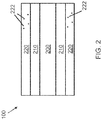
- Figure 2 illustrates a schematic cross-section of the stent 100 taken along line II-II of Figure 1 .
- the stent 100 includes a stent body 200, which provides the structure of the stent 100, a first coating 210 in contact with the stent body 200, and a second coating 220 in contact with the first coating.
- the stent body 200 may be formed from a biodegradable metal, such as a magnesium alloy.
- the magnesium alloy may include 90-98 weight % magnesium, 0-6 weight % aluminum, 0-2 weight % zinc, and 0-3% rare earth metal(s).
- the magnesium alloy may be AE42, which includes 94 weight % magnesium, 4 weight % aluminum, and 2 weight % rare earth metal(s).
- the first coating 210 may be a hydrothermal conversion film, which may be created through embodiments of the invention discussed in further detail below.
- the hydrothermal conversion film may contain an oxide or a salt, for example.
- the hydrothermal film may include hydrated magnesium oxide or magnesium hydroxide.
- the hydrothermal film may include magnesium phosphate and/or other magnesium salts, depending on the formulation used during the hydrothermal process, as described in further detail below.
- one or more additives may also be added into the formulation of the solution used during the hydrothermal process for incorporation into the film to improve the properties of the first coating 210.
- the additive(s) may include organic acids, surfactants, etc.
- the additive(s) may include stearic acid, lauric acid, octadecylphosphonic acid, or tannic acid.
- an organic solvent based formulation may be used to increase solubility of organic additives and promote better incorporation into the hydrothermal conversion film.
- the second coating 220 may include a polymer.
- the polymer may be a degradable polymer.
- the degradable polymer may be polylactide, poly(lactide-co-caprolactone), poly(DL-lactide-co-caprolactone), poly(trimethylene carbonate), their copolymers, etc.
- the polymer may be a nondegradable or stable polymer, and may be parylene, polymethacrylates, polyurethane, etc.
- the second coating 220 includes a therapeutic substance or agent 222 that is configured to be released from or eluted by the second coating 220 after the stent 100 has been implanted at the target location.
- Including the therapeutic substance or agent 222 in the second coating is considered to be optional.
- the second coating 220 may include the therapeutic substance or agent 222.
- the second coating 220 may not include the therapeutic substance or agent 222.
- the illustrated embodiment is not intended to be limiting in any way.
- the therapeutic substance or agent 222 may include, but is not limited to antineoplastic, antimitotic, antiinflammatory, antiplatelet, anticoagulant, antifibrin, antithrombin, antiproliferative, antibiotic, antioxidant, and antiallergic substances as well as combinations thereof.
- antineoplastics and/or antimitotics include paclitaxel (e.g., TAXOL® by Bristol-Myers Squibb Co., Stamford, Conn.), docetaxel (e.g., TAXOTERE® from Aventis S.
- methotrexate methotrexate
- azathioprine azathioprine
- vincristine vinblastine
- fluorouracil doxorubicin hydrochloride
- doxorubicin hydrochloride e.g., ADRIAMYCIN® from Pharmacia & Upjohn, Peapack N.J.
- mitomycin e.g., MUTAMYCIN® from Bristol-Myers Squibb Co., Stamford, Conn.
- antiplatelets examples include sodium heparin, low molecular weight heparins, heparinoids, hirudin, argatroban, forskolin, vapiprost, prostacyclin and prostacyclin analogues, dextran, D-phe-pro-arg-chloromethylketone (synthetic antithrombin), dipyridamole, glycoprotein IIb/IIIa platelet membrane receptor antagonist antibody, recombinant hirudin, and thrombin inhibitors such as ANGIOMAXTM (Biogen, Inc., Cambridge, Mass.).
- cytostatic or antiproliferative agents examples include ABT-578 (a synthetic analog of rapamycin), rapamycin (sirolimus), zotarolimus, everolimus, angiopeptin, angiotensin converting enzyme inhibitors such as captopril (e.g., CAPOTEN® and CAPOZIDE® from Bristol-Myers Squibb Co., Stamford, Conn.), cilazapril or lisinopril (e.g., PRINIVIL® and PRINZIDE® from Merck & Co., Inc., Whitehouse Station, N.J.), calcium channel blockers (such as nifedipine), colchicine, fibroblast growth factor (FGF) antagonists, fish oil (omega 3-fatty acid), histamine antagonists, lovastatin (an inhibitor of HMG-CoA reductase, a cholesterol lowering drug, brand name MEVACOR® from Merck & Co., Inc., Whitehouse Station, N
- an antiallergic agent is permirolast potassium.
- Other therapeutic substances or agents that may be used include nitric oxide, alpha-interferon, genetically engineered epithelial cells, and dexamethasone.
- the therapeutic substance is a radioactive isotope for implantable device usage in radiotherapeutic procedures.
- radioactive isotopes include, but are not limited to phosphorus (P 32 ), palladium (Pd 103 ), cesium (CS 131 ), Iridium (Ir 192 ) and iodine (I 125 ).
- Biodegradable hydrothermal conversion films comprising magnesium oxide were formed with thicknesses and compositions that were altered by adjusting the soaking solution concentration and composition, time, and temperature.
- embodiments of the present invention provide for the hydrothermal conversion films of up to 20 ⁇ m thick to be created, thinner films (i.e. ⁇ 2 ⁇ m in thickness) are desirable to minimize film cracking in view of the bending and other dynamic conditions that the stents are subjected to.
- the hydrothermal conversion films in accordance with embodiments of the invention may be formed in a batch process that is superior to anodization process.
- the hydrothermal conversion films incorporate the insoluble particulates of the magnesium alloy used to form the stent body 200. The hydrothermal process typically results in a uniform film across the stent even with the complex geometry.
- a 0.25M solution of trisodium phosphate dodecahydrate (Na 3 PO 4 ) was used as the aqueous soaking solution in a Parr mini bench top stirred reactor, with the stent bodies held separate from each other on a fixture.
- Other solutions that may be utilized include sodium hydroxide (NaOH), and concentrations other than 0.25M may also be used.
- a stirrer within the Teflon-lined reactor was used to keep the temperature uniform throughout the reactor.
- the stent bodies were submerged in the aqueous solution, and the reactor was sealed and heated to 90-160°C, depending on the desired thickness. The temperature in the reactor was monitored through a thermocouple and the pressure in the reactor was monitored with a pressure gauge.
- the heater was turned off and removed from the reactor to allow the reactor to cool to a temperature between 50-60°C.
- the stents bodies were then taken out of the reactor, rinsed with deionized water and ethanol, and dried.
- the solution for the hydrothermal reactor may include 0.1-0.4M Na 3 PO 4 , the temperature of the reactor may be set to 90°C, and the stent bodies may be heated in the reactor for 20-24 hours.
- the solution for the hydrothermal reactor may include 5.66wt% NaOH, the temperature of the reactor may be set to 90-160°C, and the stent bodies may be heated in the reactor for 18-96 hours.
- the solution for the hydrothermal reactor may include a silicate solution that includes, for example, KOH and K 2 SiO 3 .
- Additives may also be included within the aqueous solution, such as stearic or lauric acid. These additives should become incorporated into the film and may fill in any cracks that form in the film, which may prevent film cracking from affecting the corrosion resistance of the film.
- the solution for the hydrothermal reactor may also include 1-5g of at least one of stearic acid, lauric acid, tannic acid, 4-(4-Nitrophenylazo)resorcinol (i.e. magnesium reagent II), and octadecylphosphonic acid.
- Table I lists the film thicknesses of hydrothermal conversion films that were formed on stent bodies formed from AE42, along with the type of solution, temperature, and time the stent bodies were subjected to in the hydrothermal reactor using the process described above.
- Table I Hydrothermal Conversion Film Thicknesses as a Function of Type of Solution, Temperature, and Time Example Solution Temperature Time Film Thickness 1 0.25M Na 3 PO 4 90°C 20 hours 1-2 ⁇ m 2 0.25M Na 3 PO 4 90°C 22 hours 1.2-2.5 ⁇ m 3 0.25M Na 3 PO 4 90°C 24 hours 2-3 ⁇ m 4 0.25M Na 3 PO 4 110°C 20 hours 5.5-6.5 ⁇ m 5 5.66wt% NaOH 100°C 18 hours 2.5-3 ⁇ m 6 5.66wt% NaOH 100°C 24 hours 7-8 ⁇ m 7 5.66wt% NaOH 100°C 96 hours 9-13 ⁇ m
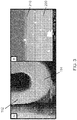
- Figure 3A is a scanning electron micrograph (SEM) of Example 2, i.e. a hydrothermal conversion film on a magnesium alloy (AE42) stent body that was formed in an aqueous solution with 0.25M Na 3 PO 4 at a temperature of 90°C for 22 hours.
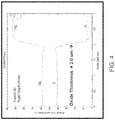
- Figure 3B is a cross-section of the stent of Figure 3A showing the hydrothermal film to have a thickness of about 2 ⁇ m, and Figure 4 illustrates the Auger Depth Profile of Example 2.
- the stent bodies may then be dipped in or spray-coated with a biodegradable polymer, such as polylactide (pLA), poly(lactide-co-caprolactone), poly(DL-lactide-co-caprolactone), poly(trimethylene carbonate), their copolymers, etc., or a non-biodegradable polymer, such as parylene, polymethacrylates, polyurethane, etc.
- a biodegradable polymer such as polylactide (pLA), poly(lactide-co-caprolactone), poly(DL-lactide-co-caprolactone), poly(trimethylene carbonate), their copolymers, etc.
- a non-biodegradable polymer such as parylene, polymethacrylates, polyurethane, etc.
- Figure 5 illustrates quantitative SEM analysis results for a stent body coated with a hydrothermal conversion film and a parylene coating versus a stent body coated with a hydrothermal conversion film and a poly(DL-lactide-co-caprolactone) coating.
- the samples were crimped, deployed, and corroded for 4 weeks. Three cross-sections per stent were taken and an image of each strut was taken with SEM. The images were analyzed with Image Pro Plus software to determine the percent metal that remained after 4 weeks of corrosion.
- a biodegradable atomic layer deposition (ALD) coating that includes alternating alumina-zircol or zirconia-zircol nanolaminates, or zircol nanolaminates alone, may be applied to the hydrothermal conversion film.
- the stent bodies having the hydrothermal film may also be treated with an ALD coating, followed by a polymer overcoat.
- overcoat treatments i.e. the formation of a hydrothermal conversion film and a coating over the hydrothermal conversion film
- the overcoat layer may cover any cracks that have formed in the hydrothermal film so that the stent body is shielded from the external environment, thereby slowing corrosion.
- Figures 6A, 6B, and 6C each illustrate a corroded stent body comprised of AE42 magnesium alloy with various combinations of coatings that do not include hydrothermal conversion films.
- Figure 6A illustrates a stent body 610 coated with a coating that includes parylene and a coating that includes a poly(lactide-co-caprolactone) copolymer, after the stent body had been exposed to a corrosive environment for 21 days.
- Figure 6B illustrates a stent body 620 with a coating that includes parylene, after the stent body had been exposed to a corrosive environment for 96 hours.
- Figure 6C illustrates a stent body 630 that was anodized and coated with a coating that includes a poly(lactide-co-caprolactone) copolymer, after the stent body had been exposed to a corrosive environment for 2 weeks.
- Figures 6A-6C illustrate that the coatings used for the stent bodies 610, 620, 630 that were not initially coated with a hydrothermal film were ineffective to delay corrosion by an acceptable amount of time.
- Figure 7A illustrates a cross-section of a stent having an ALD coating comprising alumina-zircol nanolaminates directly on the stent body, after being exposed to a corrosive environment for 2 weeks.
- Figure 7B illustrates a cross-section of a stent having a hydrothermal conversion film on the stent body and an ALD coating comprising alumina-zircol nanolaminates on the hydrothermal conversion film covering the stent body, after being exposed to a corrosive environment for 2 weeks.
- the stent having both the hydrothermal conversion film and the ALD coating more effectively delayed corrosion at the 2-week time point.
- Figure 8A illustrates a cross-section of a deployed stent having a stent body comprising AE42, a hydrothermal conversion film encapsulating the stent body, and a parylene coating encapsulating the stent body coated with the hydrothermal conversion film after being exposed to a corrosive environment for 81 days.
- Figure 8B illustrates a cross-section of an undeployed stent having a stent body comprising AE42, a hydrothermal conversion film encapsulating the stent body, and a parylene coating encapsulating the stent body coated with the hydrothermal conversion film after being exposed to a corrosive environment for 126 days. As illustrated a significant amount of the AE42 alloy in the stent body remains.
- the combination of magnesium oxide conversion films with a secondary layer provides a method for slowing and/or delaying corrosion of the stents. Completely preventing corrosion is not desired, as the stents do need to degrade within, for example, one year. Slow, uniform corrosion is desirable, and focal corrosion is undesirable.
- Hydrothermal films have demonstrated to be ineffective at slowing corrosion when used alone on stent bodies.
- polymers degradable and nondegradable or stable
- ALD atomic layer deposition
- embodiments of the invention provide a combination of a hydrothermal conversion film with a secondary overcoat in order to achieve uniform, slow corrosion, which may enable a bioabsorbable stent to maintain mechanical integrity for 3-6 months, and degrade completely within a year.
- Other combinations of treatments have not been found to be successful in slowing corrosion to an acceptable level for stent applications, but combinations with a base hydrothermal layer have been found to be effective.
- hydrothermal films are used in combination with parylene, stents can last for over 126 days in a corrosive environment.
- a combination of a degradable polymer and ALD has also showed extended corrosion prevention, as compared to hydrothermal films and coatings by themselves, as well as a more uniform corrosion.
Landscapes
- Health & Medical Sciences (AREA)
- Life Sciences & Earth Sciences (AREA)
- Heart & Thoracic Surgery (AREA)
- Vascular Medicine (AREA)
- Animal Behavior & Ethology (AREA)
- General Health & Medical Sciences (AREA)
- Public Health (AREA)
- Veterinary Medicine (AREA)
- Surgery (AREA)
- Epidemiology (AREA)
- Chemical & Material Sciences (AREA)
- Engineering & Computer Science (AREA)
- Biomedical Technology (AREA)
- Medicinal Chemistry (AREA)
- Inorganic Chemistry (AREA)
- Molecular Biology (AREA)
- Cardiology (AREA)
- Oral & Maxillofacial Surgery (AREA)
- Transplantation (AREA)
- Materials For Medical Uses (AREA)
- Chemical Kinetics & Catalysis (AREA)
- Polymers & Plastics (AREA)
- Organic Chemistry (AREA)
Abstract
A stent includes a bioabsorbable metal; a first coating (210) covering the bioabsorbable metal; and a second coating (220) covering the first coating. The second coating comprises a biodegradable atomic layer deposition coating.
Description
- The present invention is related to bioabsorbable stents that include a hydrothermal conversion film and coating.
- A stent is typically a hollow, generally cylindrical device that is deployed in a body lumen from a radially contracted configuration into a radially expanded configuration, which allows it to contact and support a vessel wall. A plastically deformable stent may be implanted during an angioplasty procedure by using a balloon catheter bearing a compressed or "crimped" stent, which has been loaded onto the balloon. The stent radially expands as the balloon is inflated, forcing the stent into contact with the body lumen, thereby forming a support for the vessel wall. Deployment is effected after the stent has been introduced percutaneously, transported transluminally, and positioned at a desired location by means of the balloon catheter.
- Stents may be formed from wire(s) or strip(s) of material, may be cut from a tube, or may be cut from a sheet of material and then rolled into a tube-like structure. Magnesium alloys are being investigated as a material for a bioabsorbable stent due to their biocompatibility and ability to degrade in vivo. A three to six month period of mechanical integrity is desired, with complete degradation within twelve months. Magnesium alloys generally corrode too quickly to be used bare. Many methods that may be used to slow corrosion, such as anodization, have not been effective and are also typically work/time intensive processes.
- Hydrothermal treatment is one option to slow corrosion of magnesium alloy stents. During the hydrothermal process, a hydrothermal conversion film (hydrothermal film) is formed on the surface of the metal sample and acts as a barrier to slow down the rate of corrosion of the metal sample. Although hydrothermal films have been used for various applications in the past for relatively large metal samples with simple geometries, hydrothermal films have not been used on complex geometries with high surface area to volume ratios, such as stents.
- The hydrothermal films reported in the literature typically have large thicknesses and their corrosion prevention effectiveness has been demonstrated under static conditions. Hydrothermal films have not been considered to be applicable to stents, where a very thin layer of film is desired due to the small size of a stent, as well as the need to withstand bending and other dynamic conditions. Hydrothermal films are also not typically utilized for samples that must withstand corrosion while implanted in the human body. New coating technologies are needed to delay magnesium corrosion for up to three months, as well as to provide a more uniform corrosion throughout the stent.
- It is desirable to provide a bioabsorbable stent for which the rate of corrosion may be controlled, and a method of manufacturing such a stent.
- According to an aspect of the invention, there is provided a stent that includes a bioabsorbable metal, a hydrothermal conversion film covering the bioabsorbable metal, and a coating covering the hydrothermal conversion film.
- In an embodiment, the bioabsorbable metal includes a magnesium alloy. In an embodiment, the magnesium alloy includes 90-98 weight % magnesium, 0-6 weight % aluminum, 0-2 weight % zinc, and 0-3% rare earth metal. In an embodiment, the magnesium alloy includes 94 weight % magnesium, 4 weight % aluminum, and 2% rare earth metal.
- In an embodiment, the hydrothermal conversion film includes at least one component selected from the group consisting of: magnesium hydroxide and magnesium oxide.
- In an embodiment, the coating includes a non-biodegradable polymer. In an embodiment, the non-biodegradable polymer is selected from the group consisting of: parylene, polymethacrylates, and polyurethane.
- In an embodiment, the coating includes a biodegradable polymer. In an embodiment, the biodegradable polymer is a homopolymer or a copolymer including polylactide, poly(lactide-co-caprolactone), poly(DL-lactide-co-caprolactone), or poly(trimethylene carbonate).
- In an embodiment, the coating includes a biodegradable atomic layer deposition coating.
- In an embodiment, the biodegradable atomic layer deposition coating includes zircol nanolaminates, alternating alumina-zircol nanolaminates, or alternating zirconia-zircol nanolaminates.
- In an embodiment, the hydrothermal conversion film encapsulates the bioabsorbable metal.
- In an embodiment, the coating encapsulates the hydrothermal conversion film and the bioabsorbable metal.
- In an embodiment, the coating includes a therapeutic substance.
- According to an aspect of the invention, there is provided a method for manufacturing a stent. The method includes forming a stent body comprising a bioabsorbable metal, forming a hydrothermal conversion film over surfaces of the stent body, and coating the hydrothermal conversion film with a polymer overcoat.
- Embodiments of the invention will now be described, by way of example only, with reference to the accompanying schematic drawings in which corresponding reference symbols indicate corresponding parts, and in which:
-
Figure 1 schematically illustrates a stent in accordance with an embodiment of the invention; -
Figure 2 is a schematic cross-section of the stent ofFigure 1 , taken along line II-II; -
Figure 3A is a scanning electron micrograph of a hydrothermal conversion film on a magnesium alloy stent body, according to an embodiment of the invention; -
Figure 3B is a cross-section of the stent ofFigure 3A showing the hydrothermal conversion film has a thickness of about 2µm; -
Figure 4 is an Auger Depth Profile of the hydrothermal conversion film ofFigures 3A and 3B ; -
Figure 5 is a graph illustrating an amount of metal remaining in stents according to embodiments of the invention, after being exposed to a corrosive environment for four weeks; -
Figures 6A-6C illustrate corroded samples of stents with various combinations of coatings that are not in accordance with embodiments of the invention; -
Figure 7A is a cross-section of a biodegradable atomic layer deposition (ALD) coating on a stent body, after being exposed to a corrosive environment for two weeks; -
Figure 7B is a cross-section showing a hydrothermal conversion film on a stent body, and the ALD coating on the hydrothermal conversion film in accordance with an embodiment of the invention, after being exposed to a corrosive environment for two weeks; -
Figure 8A is a cross-section of a deployed stent in accordance with an embodiment of the invention after 81 days in a corrosive environment; and -
Figure 8B is a cross-section of an undeployed stent in accordance with an embodiment of the invention after 126 days in a corrosive environment. -
Figure 1 depicts astent 100 according to an embodiment of the invention. As illustrated, thestent 100 includes a plurality ofstruts 112 and a plurality of crowns or turns 114, with each crown or turn 114 connecting a pair ofadjacent struts 112. Thestent 100 may be formed from a tube or wire using methods known in the art. For example, if a tube is used to form thestent 100, the tube may be cut with a laser or etched with the pattern of thestent 100 by known methods. If a wire is used to form thestent 100, the wire may be formed into a generally sinusoidal waveform, and wrapped around a mandrel or rod. Select neighboring crowns may be fused together atconnection points 116, and the ends of the wire may be cut by a laser where the stent terminates. -
Figure 2 illustrates a schematic cross-section of thestent 100 taken along line II-II ofFigure 1 . As illustrated, thestent 100 includes astent body 200, which provides the structure of thestent 100, afirst coating 210 in contact with thestent body 200, and asecond coating 220 in contact with the first coating. Thestent body 200 may be formed from a biodegradable metal, such as a magnesium alloy. In an embodiment, the magnesium alloy may include 90-98 weight % magnesium, 0-6 weight % aluminum, 0-2 weight % zinc, and 0-3% rare earth metal(s). In an embodiment, the magnesium alloy may be AE42, which includes 94 weight % magnesium, 4 weight % aluminum, and 2 weight % rare earth metal(s). - The
first coating 210 may be a hydrothermal conversion film, which may be created through embodiments of the invention discussed in further detail below. The hydrothermal conversion film may contain an oxide or a salt, for example. In an embodiment, the hydrothermal film may include hydrated magnesium oxide or magnesium hydroxide. In an embodiment, the hydrothermal film may include magnesium phosphate and/or other magnesium salts, depending on the formulation used during the hydrothermal process, as described in further detail below. - In an embodiment, one or more additives may also be added into the formulation of the solution used during the hydrothermal process for incorporation into the film to improve the properties of the
first coating 210. The additive(s) may include organic acids, surfactants, etc. In an embodiment, the additive(s) may include stearic acid, lauric acid, octadecylphosphonic acid, or tannic acid. In an embodiment, an organic solvent based formulation may be used to increase solubility of organic additives and promote better incorporation into the hydrothermal conversion film. - The
second coating 220 may include a polymer. In an embodiment, the polymer may be a degradable polymer. The degradable polymer may be polylactide, poly(lactide-co-caprolactone), poly(DL-lactide-co-caprolactone), poly(trimethylene carbonate), their copolymers, etc. In an embodiment, the polymer may be a nondegradable or stable polymer, and may be parylene, polymethacrylates, polyurethane, etc. In the embodiment illustrated inFigure 2 , thesecond coating 220 includes a therapeutic substance oragent 222 that is configured to be released from or eluted by thesecond coating 220 after thestent 100 has been implanted at the target location. Including the therapeutic substance oragent 222 in the second coating is considered to be optional. For example, if thestent 100 is intended to be a drug eluting stent, thesecond coating 220 may include the therapeutic substance oragent 222. If thestent 100 is not intended to be a drug eluting stent, thesecond coating 220 may not include the therapeutic substance oragent 222. The illustrated embodiment is not intended to be limiting in any way. - The therapeutic substance or
agent 222 may include, but is not limited to antineoplastic, antimitotic, antiinflammatory, antiplatelet, anticoagulant, antifibrin, antithrombin, antiproliferative, antibiotic, antioxidant, and antiallergic substances as well as combinations thereof. Examples of such antineoplastics and/or antimitotics include paclitaxel (e.g., TAXOL® by Bristol-Myers Squibb Co., Stamford, Conn.), docetaxel (e.g., TAXOTERE® from Aventis S. A., Frankfurt, Germany), methotrexate, azathioprine, vincristine, vinblastine, fluorouracil, doxorubicin hydrochloride (e.g., ADRIAMYCIN® from Pharmacia & Upjohn, Peapack N.J.), and mitomycin (e.g., MUTAMYCIN® from Bristol-Myers Squibb Co., Stamford, Conn.). Examples of such antiplatelets, anticoagulants, antifibrin, and antithrombins include sodium heparin, low molecular weight heparins, heparinoids, hirudin, argatroban, forskolin, vapiprost, prostacyclin and prostacyclin analogues, dextran, D-phe-pro-arg-chloromethylketone (synthetic antithrombin), dipyridamole, glycoprotein IIb/IIIa platelet membrane receptor antagonist antibody, recombinant hirudin, and thrombin inhibitors such as ANGIOMAX™ (Biogen, Inc., Cambridge, Mass.). Examples of such cytostatic or antiproliferative agents include ABT-578 (a synthetic analog of rapamycin), rapamycin (sirolimus), zotarolimus, everolimus, angiopeptin, angiotensin converting enzyme inhibitors such as captopril (e.g., CAPOTEN® and CAPOZIDE® from Bristol-Myers Squibb Co., Stamford, Conn.), cilazapril or lisinopril (e.g., PRINIVIL® and PRINZIDE® from Merck & Co., Inc., Whitehouse Station, N.J.), calcium channel blockers (such as nifedipine), colchicine, fibroblast growth factor (FGF) antagonists, fish oil (omega 3-fatty acid), histamine antagonists, lovastatin (an inhibitor of HMG-CoA reductase, a cholesterol lowering drug, brand name MEVACOR® from Merck & Co., Inc., Whitehouse Station, N.J.), monoclonal antibodies (such as those specific for Platelet-Derived Growth Factor (PDGF) receptors), nitroprusside, phosphodiesterase inhibitors, prostaglandin inhibitors, suramin, serotonin blockers, steroids, thioprotease inhibitors, triazolopyrimidine (a PDGF antagonist), and nitric oxide. An example of an antiallergic agent is permirolast potassium. Other therapeutic substances or agents that may be used include nitric oxide, alpha-interferon, genetically engineered epithelial cells, and dexamethasone. In other examples, the therapeutic substance is a radioactive isotope for implantable device usage in radiotherapeutic procedures. Examples of radioactive isotopes include, but are not limited to phosphorus (P32), palladium (Pd103), cesium (CS131), Iridium (Ir192) and iodine (I125). While the preventative and treatment properties of the foregoing therapeutic substances or agents are well-known to those of ordinary skill in the art, the substances or agents are provided by way of example and are not meant to be limiting. Other therapeutic substances or agents are equally applicable for use with the disclosed methods and compositions. - Biodegradable hydrothermal conversion films comprising magnesium oxide were formed with thicknesses and compositions that were altered by adjusting the soaking solution concentration and composition, time, and temperature. Although embodiments of the present invention provide for the hydrothermal conversion films of up to 20µm thick to be created, thinner films (i.e. < 2µm in thickness) are desirable to minimize film cracking in view of the bending and other dynamic conditions that the stents are subjected to. The hydrothermal conversion films in accordance with embodiments of the invention may be formed in a batch process that is superior to anodization process. The hydrothermal conversion films incorporate the insoluble particulates of the magnesium alloy used to form the
stent body 200. The hydrothermal process typically results in a uniform film across the stent even with the complex geometry. - A 0.25M solution of trisodium phosphate dodecahydrate (Na3PO4) was used as the aqueous soaking solution in a Parr mini bench top stirred reactor, with the stent bodies held separate from each other on a fixture. Other solutions that may be utilized include sodium hydroxide (NaOH), and concentrations other than 0.25M may also be used. A stirrer within the Teflon-lined reactor was used to keep the temperature uniform throughout the reactor. The stent bodies were submerged in the aqueous solution, and the reactor was sealed and heated to 90-160°C, depending on the desired thickness. The temperature in the reactor was monitored through a thermocouple and the pressure in the reactor was monitored with a pressure gauge. After the stent bodies were heated in the reactor for a suitable amount of time, the heater was turned off and removed from the reactor to allow the reactor to cool to a temperature between 50-60°C. The stents bodies were then taken out of the reactor, rinsed with deionized water and ethanol, and dried.
- In an embodiment, the solution for the hydrothermal reactor may include 0.1-0.4M Na3PO4, the temperature of the reactor may be set to 90°C, and the stent bodies may be heated in the reactor for 20-24 hours. In an embodiment, the solution for the hydrothermal reactor may include 5.66wt% NaOH, the temperature of the reactor may be set to 90-160°C, and the stent bodies may be heated in the reactor for 18-96 hours.
- In an embodiment, the solution for the hydrothermal reactor may include a silicate solution that includes, for example, KOH and K2SiO3. Additives may also be included within the aqueous solution, such as stearic or lauric acid. These additives should become incorporated into the film and may fill in any cracks that form in the film, which may prevent film cracking from affecting the corrosion resistance of the film. In an embodiment, the solution for the hydrothermal reactor may also include 1-5g of at least one of stearic acid, lauric acid, tannic acid, 4-(4-Nitrophenylazo)resorcinol (i.e. magnesium reagent II), and octadecylphosphonic acid.
- Table I lists the film thicknesses of hydrothermal conversion films that were formed on stent bodies formed from AE42, along with the type of solution, temperature, and time the stent bodies were subjected to in the hydrothermal reactor using the process described above.
Table I: Hydrothermal Conversion Film Thicknesses as a Function of Type of Solution, Temperature, and Time Example Solution Temperature Time Film Thickness 1 0.25M Na3PO4 90° C 20 hours 1-2 µm 2 0.25M Na3PO4 90°C 22 hours 1.2-2.5 µm 3 0.25M Na3PO4 90°C 24 hours 2-3 µm 4 0.25M Na3PO4 110° C 20 hours 5.5-6.5 µm 5 5.66wt% NaOH 100°C 18 hours 2.5-3 µm 6 5.66wt% NaOH 100°C 24 hours 7-8 µm 7 5.66wt% NaOH 100°C 96 hours 9-13 µm -
Figure 3A is a scanning electron micrograph (SEM) of Example 2, i.e. a hydrothermal conversion film on a magnesium alloy (AE42) stent body that was formed in an aqueous solution with 0.25M Na3PO4 at a temperature of 90°C for 22 hours.Figure 3B is a cross-section of the stent ofFigure 3A showing the hydrothermal film to have a thickness of about 2 µm, andFigure 4 illustrates the Auger Depth Profile of Example 2. - After the hydrothermal conversion films have been formed on the stent bodies, the stent bodies may then be dipped in or spray-coated with a biodegradable polymer, such as polylactide (pLA), poly(lactide-co-caprolactone), poly(DL-lactide-co-caprolactone), poly(trimethylene carbonate), their copolymers, etc., or a non-biodegradable polymer, such as parylene, polymethacrylates, polyurethane, etc. For example,
Figure 5 illustrates quantitative SEM analysis results for a stent body coated with a hydrothermal conversion film and a parylene coating versus a stent body coated with a hydrothermal conversion film and a poly(DL-lactide-co-caprolactone) coating. The samples were crimped, deployed, and corroded for 4 weeks. Three cross-sections per stent were taken and an image of each strut was taken with SEM. The images were analyzed with Image Pro Plus software to determine the percent metal that remained after 4 weeks of corrosion. As illustrated, even after 4 weeks of corrosion, over 65% of the metal in the stent body remained for the sample that included the hydrothermal conversion film and a poly(DL-lactide-co-caprolactone) coating, and about 80% of the metal in the stent body remained for the sample that included a hydrothermal conversion film and a parylene coating. - In an embodiment, a biodegradable atomic layer deposition (ALD) coating that includes alternating alumina-zircol or zirconia-zircol nanolaminates, or zircol nanolaminates alone, may be applied to the hydrothermal conversion film. In an embodiment, the stent bodies having the hydrothermal film may also be treated with an ALD coating, followed by a polymer overcoat.
- It has been found that the combination of these overcoat treatments, i.e. the formation of a hydrothermal conversion film and a coating over the hydrothermal conversion film, has been found to be effective at delaying the corrosion of magnesium alloy (AE42) even after crimping the stent and deploying the stent. The overcoat layer may cover any cracks that have formed in the hydrothermal film so that the stent body is shielded from the external environment, thereby slowing corrosion.
- It has been found that the individual film coatings are ineffective when used alone on the magnesium alloy stent body, but when used in conjunction with each other, corrosion has been delayed for weeks to months. For example,
Figures 6A, 6B, and 6C each illustrate a corroded stent body comprised of AE42 magnesium alloy with various combinations of coatings that do not include hydrothermal conversion films. For example,Figure 6A illustrates astent body 610 coated with a coating that includes parylene and a coating that includes a poly(lactide-co-caprolactone) copolymer, after the stent body had been exposed to a corrosive environment for 21 days.Figure 6B illustrates astent body 620 with a coating that includes parylene, after the stent body had been exposed to a corrosive environment for 96 hours.Figure 6C illustrates astent body 630 that was anodized and coated with a coating that includes a poly(lactide-co-caprolactone) copolymer, after the stent body had been exposed to a corrosive environment for 2 weeks.Figures 6A-6C illustrate that the coatings used for thestent bodies - As another example,
Figure 7A illustrates a cross-section of a stent having an ALD coating comprising alumina-zircol nanolaminates directly on the stent body, after being exposed to a corrosive environment for 2 weeks. In contrast,Figure 7B illustrates a cross-section of a stent having a hydrothermal conversion film on the stent body and an ALD coating comprising alumina-zircol nanolaminates on the hydrothermal conversion film covering the stent body, after being exposed to a corrosive environment for 2 weeks. As illustrated, the stent having both the hydrothermal conversion film and the ALD coating more effectively delayed corrosion at the 2-week time point. - As another example of the effectiveness of coating the stent body with both a hydrothermal film and a parylene coating,
Figure 8A illustrates a cross-section of a deployed stent having a stent body comprising AE42, a hydrothermal conversion film encapsulating the stent body, and a parylene coating encapsulating the stent body coated with the hydrothermal conversion film after being exposed to a corrosive environment for 81 days.Figure 8B illustrates a cross-section of an undeployed stent having a stent body comprising AE42, a hydrothermal conversion film encapsulating the stent body, and a parylene coating encapsulating the stent body coated with the hydrothermal conversion film after being exposed to a corrosive environment for 126 days. As illustrated a significant amount of the AE42 alloy in the stent body remains. - It has been found that the combination of magnesium oxide conversion films with a secondary layer provides a method for slowing and/or delaying corrosion of the stents. Completely preventing corrosion is not desired, as the stents do need to degrade within, for example, one year. Slow, uniform corrosion is desirable, and focal corrosion is undesirable.
- Hydrothermal films have demonstrated to be ineffective at slowing corrosion when used alone on stent bodies. Similarly, polymers (degradable and nondegradable or stable) and atomic layer deposition (ALD) options have also demonstrated to be ineffective when used alone on stent bodies. In addition, it has been found that the combinations of polymer and parylene coatings, and anodization and a polymer coating are not effective options, as corrosion starts in less than 26 days.
- As described above, embodiments of the invention provide a combination of a hydrothermal conversion film with a secondary overcoat in order to achieve uniform, slow corrosion, which may enable a bioabsorbable stent to maintain mechanical integrity for 3-6 months, and degrade completely within a year. Other combinations of treatments have not been found to be successful in slowing corrosion to an acceptable level for stent applications, but combinations with a base hydrothermal layer have been found to be effective. For example, when hydrothermal films are used in combination with parylene, stents can last for over 126 days in a corrosive environment. A combination of a degradable polymer and ALD has also showed extended corrosion prevention, as compared to hydrothermal films and coatings by themselves, as well as a more uniform corrosion.
- The following enumerated examples useful for the understanding of the invention are disclosed.
- 1. A stent comprising:
- a bioabsorbable metal;
- a hydrothermal conversion film covering the bioabsorbable metal; and
- a coating covering the hydrothermal conversion film.
- 2. The stent according to clause 1, wherein the bioabsorbable metal comprises a magnesium alloy.
- 3. The stent according to clause 2, wherein the magnesium alloy comprises 90-98 weight % magnesium, 0-6 weight % aluminum, 0-2 weight % zinc, and 0-3% rare earth metal.
- 4. The stent according to clause 2, wherein the hydrothermal conversion film comprises at least one component selected from the group consisting of: magnesium hydroxide and magnesium oxide.
- 5. The stent according to clause 1, wherein the coating comprises a non-biodegradable polymer.
- 6. The stent according to clause 5, wherein the non-biodegradable polymer is selected from the group consisting of: parylene, polylmethacrylates, and polyurethane.
- 7. The stent according to clause 1, wherein the coating comprises a biodegradable polymer.
- 8. The stent according to clause 7, wherein the biodegradable polymer is a homopolymer or a copolymer comprising polylactide, poly(lactide-co-caprolactone), poly(DL-lactide-co-caprolactone), or poly(trimethylene carbonate).
- 9. The stent according to clause 1, wherein the coating comprises a biodegradable atomic layer deposition coating.
- 10. The stent according to clause 9, wherein the biodegradable atomic layer deposition coating comprises zircol nanolaminates, alternating alumina-zircol nanolaminates, or alternating zirconia-zircol nanolaminates.
- 11. The stent according to clause 1, wherein the hydrothermal conversion film encapsulates the bioabsorbable metal.
- 12. The stent according to clause 1, wherein the coating encapsulates the hydrothermal conversion film and the bioabsorbable metal.
- 13. The stent according to clause 1, wherein the coating comprises a therapeutic substance.
- 14. A method for manufacturing a stent, the method comprising:
- forming a stent body comprising a bioabsorbable metal;
- forming a hydrothermal conversion film over surfaces of the stent body; and
- coating the hydrothermal conversion film with an overcoat.
- 15. The method according to clause 14, wherein the bioabsorbable metal comprises a magnesium alloy.
- 16. The method according to clause 15, wherein the magnesium alloy comprises 90-98 weight % magnesium, 0-6 weight % aluminum, 0-2 weight % zinc, and 0-3% rare earth metal.
- 17. The method according to clause 15, wherein the hydrothermal conversion film comprises at least one component selected from the group consisting of magnesium hydroxide and magnesium oxide.
- 18. The method according to clause 14, wherein the overcoat comprises a non-biodegradable polymer.
- 19. The method according to clause 18, wherein the non-biodegradable polymer is selected from the group consisting of: parylene, polymethacrylates, and polyurethane.
- 20. The method according to clause 14, wherein the overcoat comprises a biodegradable polymer.
- 21. The method according to
clause 20, wherein the biodegradable polymer is a homopolymer or a copolymer comprising polylactide, poly(lactide-co-caprolactone), poly(DL-lactide-co-caprolactone), or poly(trimethylene carbonate). - 22. The method according to clause 14, wherein the coating comprises a biodegradable atomic layer deposition coating.
- 23. The method according to clause 22, wherein the biodegradable atomic layer deposition coating comprises zircol nanolaminates, alternating alumina-zircol nanolaminates, or alternating zirconia-zircol nanolaminates.
- 24. The method according to clause 14, wherein the overcoat comprises a therapeutic substance.
- While specific embodiments of the invention have been described above, it will be appreciated that the invention may be practiced otherwise than as described. The descriptions above are intended to be illustrative, not limiting. For example, although the alloys and coatings are described as being used to make a stent, it should be appreciated that other medical devices may also be fabricated with such alloys and coatings in accordance with embodiments of the invention. In addition, although AE42 was the alloy that was used to manufacture stents in accordance with embodiments of the invention, other alloys, particularly magnesium alloys, may be used. It will be apparent to one skilled in the art that modifications may be made to the invention as described without departing from the scope of the claims set out below.
Claims (15)
- A stent (100) comprising:a bioabsorbable metal;a first coating (210) covering the bioabsorbable metal; anda second coating (220) covering the first coating, wherein the second coating comprises a biodegradable atomic layer deposition coating.
- The stent (100) according to claim 1, wherein the bioabsorbable metal comprises a magnesium alloy.
- The stent (100) according to claim 2, wherein the magnesium alloy comprises 90-98 weight % magnesium, 0-6 weight % aluminum, 0-2 weight % zinc, and 0-3% rare earth metal.
- The stent (100) according to claim 2, wherein the first coating (210) comprises at least one component selected from the group consisting of: magnesium hydroxide and magnesium oxide.
- The stent (100) according to claim 1, wherein the second coating (220) comprises a non-biodegradable polymer; wherein optionally the non-biodegradable polymer is selected from the group consisting of: parylene, polymethacrylates, and polyurethane.
- The stent (100) according to claim 1, wherein the second coating (220) comprises a biodegradable polymer; wherein optionally the biodegradable polymer is a homopolymer or a copolymer comprising polylactide, poly(lactide-co-caprolactone), poly(DL-lactide-co-caprolactone), or poly(trimethylene carbonate).
- The stent (100) according to claim 1, wherein the biodegradable atomic layer deposition coating (220) comprises zircol nanolaminates, alternating alumina-zircol nanolaminates, or alternating zirconia-zircol nanolaminates.
- The stent (100) according to claim 1, wherein the first coating (210) encapsulates the bioabsorbable metal.
- The stent (100) according to claim 1, wherein the second coating (220) encapsulates the first coating (210) and the bioabsorbable metal, and/or the second coating (220) comprises a therapeutic substance.
- A method for manufacturing a stent (100), the method comprising:forming a stent body comprising a bioabsorbable metal;forming a first coating (210) over surfaces of the stent body; andcoating (220) the first coating (210) with a second coating, wherein the second coating comprises a biodegradable atomic layer deposition coating.
- The method according to claim 10, wherein the bioabsorbable metal comprises a magnesium alloy; wherein optionally the magnesium alloy comprises 90-98 weight % magnesium, 0-6 weight % aluminum, 0-2 weight % zinc, and 0-3% rare earth metal; wherein optionally the first coating (210) comprises at least one component selected from the group consisting of magnesium hydroxide and magnesium oxide.
- The method according to claim 10, wherein the second coating comprises a non-biodegradable polymer; wherein optionally the non-biodegradable polymer is selected from the group consisting of: parylene, polymethacrylates, and polyurethane.
- The method according to claim 10, wherein the second coating comprises a biodegradable polymer; wherein optionally the biodegradable polymer is a homopolymer or a copolymer comprising polylactide, poly(lactide-co-caprolactone), poly(DL-lactide-co-caprolactone), or poly(trimethylene carbonate).
- The method according to claim 10, wherein the second coating (220) comprises a biodegradable atomic layer deposition coating (220); wherein optionally the biodegradable atomic layer deposition coating (220) comprises zircol nanolaminates, alternating alumina-zircol nanolaminates, or alternating zirconia-zircol nanolaminates.
- The method according to claim 10, wherein the second coating comprises a therapeutic substance.
Applications Claiming Priority (3)
| Application Number | Priority Date | Filing Date | Title |
|---|---|---|---|
| US13/800,121 US9155637B2 (en) | 2013-03-13 | 2013-03-13 | Bioabsorbable stent with hydrothermal conversion film and coating |
| EP14709076.5A EP2968690B1 (en) | 2013-03-13 | 2014-02-20 | Bioabsorbable stent with hydrothermal conversion film and coating |
| PCT/US2014/017485 WO2014143521A1 (en) | 2013-03-13 | 2014-02-20 | Bioabsorbable stent with hydrothermal conversion film and coating |
Related Parent Applications (1)
| Application Number | Title | Priority Date | Filing Date |
|---|---|---|---|
| EP14709076.5A Division EP2968690B1 (en) | 2013-03-13 | 2014-02-20 | Bioabsorbable stent with hydrothermal conversion film and coating |
Publications (1)
| Publication Number | Publication Date |
|---|---|
| EP3415175A1 true EP3415175A1 (en) | 2018-12-19 |
Family
ID=50240022
Family Applications (2)
| Application Number | Title | Priority Date | Filing Date |
|---|---|---|---|
| EP14709076.5A Active EP2968690B1 (en) | 2013-03-13 | 2014-02-20 | Bioabsorbable stent with hydrothermal conversion film and coating |
| EP18166559.7A Withdrawn EP3415175A1 (en) | 2013-03-13 | 2014-02-20 | Bioabsorbable stent with hydrothermal conversion film and coating |
Family Applications Before (1)
| Application Number | Title | Priority Date | Filing Date |
|---|---|---|---|
| EP14709076.5A Active EP2968690B1 (en) | 2013-03-13 | 2014-02-20 | Bioabsorbable stent with hydrothermal conversion film and coating |
Country Status (4)
| Country | Link |
|---|---|
| US (1) | US9155637B2 (en) |
| EP (2) | EP2968690B1 (en) |
| ES (1) | ES2676243T3 (en) |
| WO (1) | WO2014143521A1 (en) |
Families Citing this family (15)
| Publication number | Priority date | Publication date | Assignee | Title |
|---|---|---|---|---|
| CN107106736B (en) | 2014-11-06 | 2020-08-04 | 美敦力瓦斯科尔勒公司 | Magnesium alloy for protection of bioabsorbable stents |
| WO2016176804A1 (en) * | 2015-05-04 | 2016-11-10 | 聂绍平 | Biodegradable polymer film monolayer metal covered stent |
| CN106581778B (en) * | 2015-10-14 | 2020-07-21 | 先健科技(深圳)有限公司 | Absorbable iron-based alloy implantable medical device and preparation method thereof |
| CN106581784B (en) | 2015-10-19 | 2020-07-17 | 先健科技(深圳)有限公司 | Absorbable Iron-Based Alloy Implantable Medical Devices |
| EP3342433A1 (en) | 2016-12-27 | 2018-07-04 | MeKo Laserstrahl-Materialbearbeitungen e.K. | Stent made of a biodegradable magnesium alloy with a magnesium fluoride coding and an organic coating |
| CN110191971A (en) | 2017-01-10 | 2019-08-30 | 不二轻金属株式会社 | Magnesium alloy |
| CA3094504A1 (en) | 2018-03-22 | 2019-09-26 | Japan Medical Device Technology Co., Ltd. | Bioabsorbable stent |
| CA3104447C (en) | 2018-07-09 | 2022-02-15 | Japan Medical Device Technology Co., Ltd. | Magnesium alloy |
| WO2020150557A1 (en) | 2019-01-18 | 2020-07-23 | W. L. Gore & Associates, Inc. | Bioabsorbable medical devices |
| EP3950989A4 (en) * | 2019-03-28 | 2023-04-12 | JAPAN Medical Device Technology Co., Ltd. | Implant for non-luminal area |
| US12024773B2 (en) | 2019-03-29 | 2024-07-02 | Picosun Oy | Non-stick coating and its manufacturing method |
| CN110592571B (en) * | 2019-08-30 | 2021-02-02 | 深圳市中科摩方科技有限公司 | In-situ magnesium hydroxide nanosheet modified magnesium alloy and preparation and application thereof |
| CN112899664B (en) * | 2021-01-27 | 2022-08-02 | 太原科技大学 | Magnesium alloy surface zirconia-based film and preparation method thereof |
| EP4049690B1 (en) | 2021-02-25 | 2024-08-14 | Jozef Stefan Institute | Method for treatment of medical metals and their alloys |
| EP4566639A1 (en) | 2023-12-08 | 2025-06-11 | MeKo Manufacturing e.K. | Vascular scaffold having a rare-earth metal radiopaque marker |
Citations (4)
| Publication number | Priority date | Publication date | Assignee | Title |
|---|---|---|---|---|
| WO2003099169A1 (en) * | 2002-05-20 | 2003-12-04 | Orbus Medical Technologies Inc. | Drug eluting implantable medical device |
| US20100191324A1 (en) * | 2008-07-23 | 2010-07-29 | Bjoern Klocke | Endoprosthesis and method for manufacturing same |
| US20100305684A1 (en) * | 2009-05-28 | 2010-12-02 | Snu R&Db Foundation | Biodegradable stent and method for manufacturing the same |
| US20120035716A1 (en) * | 2010-08-03 | 2012-02-09 | Bjoern Klocke | Polylactide-coated implant composed of a biocorrodible magnesium alloy |
Family Cites Families (15)
| Publication number | Priority date | Publication date | Assignee | Title |
|---|---|---|---|---|
| US8815328B2 (en) * | 2005-01-04 | 2014-08-26 | Rutgers, The State University Of New Jersey | Hydroxyapatite with controllable size and morphology |
| WO2007108450A1 (en) | 2006-03-20 | 2007-09-27 | National Institute For Materials Science | Biodegradable magnesium material for medical use |
| US20070264303A1 (en) * | 2006-05-12 | 2007-11-15 | Liliana Atanasoska | Coating for medical devices comprising an inorganic or ceramic oxide and a therapeutic agent |
| US8546027B2 (en) * | 2007-06-20 | 2013-10-01 | New Jersey Institute Of Technology | System and method for directed self-assembly technique for the creation of carbon nanotube sensors and bio-fuel cells on single plane |
| KR100775537B1 (en) * | 2007-07-19 | 2007-11-28 | (주)오스테오필 | Surface-Mounted Implant Manufacturing Method and Implants Prepared By Them |
| EP2394610A1 (en) * | 2009-02-06 | 2011-12-14 | Keio University | Stent to be used in tubular organ in vivo |
| CA2753853C (en) * | 2009-03-06 | 2017-04-25 | Daniel S. Levi | Thin film vascular stent and biocompatible surface treatment |
| US8574616B2 (en) * | 2009-07-07 | 2013-11-05 | Biotronik Vi Patent Ag | Implant and method for manufacturing same |
| US20110238153A1 (en) * | 2010-03-26 | 2011-09-29 | Boston Scientific Scimed, Inc. | Endoprostheses |
| SI23420A (en) * | 2010-07-22 | 2012-01-31 | Institut "Jožef Stefan" | Bone implants with multilayered coating and process of their preparation |
| US20120059455A1 (en) * | 2010-09-07 | 2012-03-08 | Boston Scientific Seimed, Inc. | Bioerodible Magnesium Alloy Containing Endoprostheses |
| WO2012038962A1 (en) * | 2010-09-23 | 2012-03-29 | Ramot At Tel-Aviv University Ltd. | Coral bone graft substitute |
| WO2012126899A2 (en) * | 2011-03-18 | 2012-09-27 | Katholieke Universiteit Leuven Ku Leuven Research & Development | Inhibition and treatment of biofilms |
| US10246763B2 (en) * | 2012-08-24 | 2019-04-02 | The Regents Of The University Of California | Magnesium-zinc-strontium alloys for medical implants and devices |
| WO2014126958A1 (en) * | 2013-02-15 | 2014-08-21 | Boston Scientific Scimed, Inc. | Bioerodible magnesium alloy microstructures for endoprostheses |
-
2013
- 2013-03-13 US US13/800,121 patent/US9155637B2/en active Active
-
2014
- 2014-02-20 EP EP14709076.5A patent/EP2968690B1/en active Active
- 2014-02-20 ES ES14709076.5T patent/ES2676243T3/en active Active
- 2014-02-20 EP EP18166559.7A patent/EP3415175A1/en not_active Withdrawn
- 2014-02-20 WO PCT/US2014/017485 patent/WO2014143521A1/en not_active Ceased
Patent Citations (4)
| Publication number | Priority date | Publication date | Assignee | Title |
|---|---|---|---|---|
| WO2003099169A1 (en) * | 2002-05-20 | 2003-12-04 | Orbus Medical Technologies Inc. | Drug eluting implantable medical device |
| US20100191324A1 (en) * | 2008-07-23 | 2010-07-29 | Bjoern Klocke | Endoprosthesis and method for manufacturing same |
| US20100305684A1 (en) * | 2009-05-28 | 2010-12-02 | Snu R&Db Foundation | Biodegradable stent and method for manufacturing the same |
| US20120035716A1 (en) * | 2010-08-03 | 2012-02-09 | Bjoern Klocke | Polylactide-coated implant composed of a biocorrodible magnesium alloy |
Also Published As
| Publication number | Publication date |
|---|---|
| US20140277396A1 (en) | 2014-09-18 |
| WO2014143521A1 (en) | 2014-09-18 |
| US9155637B2 (en) | 2015-10-13 |
| EP2968690B1 (en) | 2018-04-11 |
| EP2968690A1 (en) | 2016-01-20 |
| ES2676243T3 (en) | 2018-07-18 |
Similar Documents
| Publication | Publication Date | Title |
|---|---|---|
| EP2968690B1 (en) | Bioabsorbable stent with hydrothermal conversion film and coating | |
| EP1684818B1 (en) | Coatings for implantable devices including biologically erodable polyesters and methods for fabricating the same | |
| US9333099B2 (en) | Magnesium alloy implants with controlled degradation | |
| US10632004B2 (en) | Hollow drug-filled stent and method of forming hollow drug-filled stent | |
| US9999529B2 (en) | Hollow drug-filled stent and method of forming hollow drug-filled stent | |
| EP2967938B1 (en) | Method for manufacturing a stent and stent manufactured thereby | |
| BR112019013251A2 (en) | stent of a biodegradable magnesium alloy with an inorganic coating comprising magnesium fluoride and an organic coating | |
| US10137016B2 (en) | Hollow drug-filled stent and method of forming hollow drug-filled stent | |
| US9849009B2 (en) | Method of forming a nitinol stent | |
| EP3538033B1 (en) | Drug-filled stents to prevent vessel micro-injuries and methods of manufacture thereof | |
| US10500382B2 (en) | Drug-filled stents with filaments for increased lumen surface area and method of manufacture thereof | |
| US10617540B2 (en) | Stents formed from dissimilar metals for tissue growth control |
Legal Events
| Date | Code | Title | Description |
|---|---|---|---|
| PUAI | Public reference made under article 153(3) epc to a published international application that has entered the european phase |
Free format text: ORIGINAL CODE: 0009012 |
|
| AC | Divisional application: reference to earlier application |
Ref document number: 2968690 Country of ref document: EP Kind code of ref document: P |
|
| AK | Designated contracting states |
Kind code of ref document: A1 Designated state(s): AL AT BE BG CH CY CZ DE DK EE ES FI FR GB GR HR HU IE IS IT LI LT LU LV MC MK MT NL NO PL PT RO RS SE SI SK SM TR |
|
| STAA | Information on the status of an ep patent application or granted ep patent |
Free format text: STATUS: THE APPLICATION HAS BEEN WITHDRAWN |
|
| 18W | Application withdrawn |
Effective date: 20190508 |