EP3415085A1 - A method for processing sensor data in a neuroprobe - Google Patents
A method for processing sensor data in a neuroprobe Download PDFInfo
- Publication number
- EP3415085A1 EP3415085A1 EP17176000.2A EP17176000A EP3415085A1 EP 3415085 A1 EP3415085 A1 EP 3415085A1 EP 17176000 A EP17176000 A EP 17176000A EP 3415085 A1 EP3415085 A1 EP 3415085A1
- Authority
- EP
- European Patent Office
- Prior art keywords
- channels
- target
- channel
- sensor data
- data
- Prior art date
- Legal status (The legal status is an assumption and is not a legal conclusion. Google has not performed a legal analysis and makes no representation as to the accuracy of the status listed.)
- Granted
Links
Images


Classifications
-
- G—PHYSICS
- G16—INFORMATION AND COMMUNICATION TECHNOLOGY [ICT] SPECIALLY ADAPTED FOR SPECIFIC APPLICATION FIELDS
- G16H—HEALTHCARE INFORMATICS, i.e. INFORMATION AND COMMUNICATION TECHNOLOGY [ICT] SPECIALLY ADAPTED FOR THE HANDLING OR PROCESSING OF MEDICAL OR HEALTHCARE DATA
- G16H40/00—ICT specially adapted for the management or administration of healthcare resources or facilities; ICT specially adapted for the management or operation of medical equipment or devices
- G16H40/60—ICT specially adapted for the management or administration of healthcare resources or facilities; ICT specially adapted for the management or operation of medical equipment or devices for the operation of medical equipment or devices
- G16H40/63—ICT specially adapted for the management or administration of healthcare resources or facilities; ICT specially adapted for the management or operation of medical equipment or devices for the operation of medical equipment or devices for local operation
-
- A—HUMAN NECESSITIES
- A61—MEDICAL OR VETERINARY SCIENCE; HYGIENE
- A61B—DIAGNOSIS; SURGERY; IDENTIFICATION
- A61B5/00—Measuring for diagnostic purposes; Identification of persons
- A61B5/0002—Remote monitoring of patients using telemetry, e.g. transmission of vital signals via a communication network
-
- A—HUMAN NECESSITIES
- A61—MEDICAL OR VETERINARY SCIENCE; HYGIENE
- A61B—DIAGNOSIS; SURGERY; IDENTIFICATION
- A61B5/00—Measuring for diagnostic purposes; Identification of persons
- A61B5/24—Detecting, measuring or recording bioelectric or biomagnetic signals of the body or parts thereof
Definitions
- the invention generally relates to the field of neuroscience. More particularly, it is related to methods for processing sensor data in neuroprobes as well as neuroprobes with built-in sensor data processing functionality.
- the present invention preferably seeks to mitigate, alleviate or eliminate one or more of the above-identified deficiencies in the art and disadvantages singly or in any combination.
- a method for processing a sample set of sensor data in a neuroprobe comprising a plurality of channels, wherein the sample set of sensor data comprises channel sensor data from each of the plurality of channels for a given time period, wherein the plurality of channels comprises target channels, each comprising target data comprising pre-selected features, and non-target channels, each being without target data, wherein the target channels and the non-target channels are sample specific, said method comprising identifying the target channels and the non-target channels by for each of the plurality of channels, capturing the channel sensor data, determining if the channel sensor data comprises the target data by comparing the channel sensor data with prior channel sensor data, and assigning as target channel if the channel sensor data comprises the target data, identifying selected channels by for each of the plurality of channels selecting as selected channel if assigned as target channel, forming and transmitting an aggregated sensor data package by for each of the selected channels forming a data package comprising channel sensor data, combining data packages from the selected channels into the aggregated sensor
- the step of identifying selected channels may further comprise for each of the non-target channels selecting as selected channels if placed within a spatial threshold from at least one of the target data channels.
- the channels of the neuroprobe may comprise electrodes.
- the target data may comprise a spike.
- the spike may be determined by comparing the channel sensor data with a running threshold being a combination of a channel sensor data mean value and a channel sensor data standard deviation value.
- the step of identifying the target channels and the non-target channels may be made in parallel for the plurality of channels, the step of identifying selected channels may be made in sequence for the plurality of channels, and the step of forming and transmitting an aggregated sensor data package may be made in parallel for the plurality of channels.
- the step of selecting as selected channel if assigned as target channel may comprise setting a channel associated bit in a data memory.
- the plurality of channels of the neuroprobe may be at least 1000 channels.
- the plurality of channels may each comprise a unique identifier, and the plurality of channels may be divided into sub-groups based on the unique identifiers, wherein the step of identifying the target channels and the non-target channels further may comprise identifying a sub-group, and assigning as target channel if another channel within the sub-group is assigned as target channel.
- a neuroprobe comprising a plurality of channels, wherein the plurality of channels comprises target channels, each comprising target data comprising pre-selected features, and non-target channels, each being without target data, wherein the target channels and the non-target channels are sample specific, a target channels identifier for identifying the target channels and the non-target channels by for each of the plurality of channels, capturing a sample set of sensor data, wherein the sample set comprises channel sensor data from each of the plurality of channels for a given time period, determining if the channel sensor data comprises the target data by comparing the channel sensor data with prior channel sensor data, determining if the channel sensor data comprises the target data, and assigning as target channel if the channel sensor data comprises the target data, a selected channels identifier for identifying selected channels by for each of the plurality of channels selecting as selected channel if assigned as target channel, and a data transmitter for forming and transmitting an aggregated sensor data package by for each of the selected channels forming a data package compris
- the selected channels identifier may be further configured to for each of the non-target channels selecting as selected channels if placed within a spatial threshold from at least one of the target data channels.
- the channels of the neuroprobe may comprise electrodes.
- the target data may comprise a spike.
- the spike may be determined by comparing the channel sensor data with a running threshold being a combination of a channel sensor data mean value and a channel sensor data standard deviation value.
- the target channels identifier may be handling the plurality of channels in parallel, the selected channels identifier may be handling the plurality of channels in sequence, and the data transmitter may be handling the plurality of channels in parallel.
- the step of selecting as selected channel if assigned as target channel may comprise setting a channel associated bit in a data memory.
- the plurality of channels of the neuroprobe may be at least 1000 channels.
- the plurality of channels may each comprise a unique identifier, and the plurality of channels may be divided into sub-groups based on the unique identifiers, wherein the step of identifying the target channels and the non-target channels may further comprise identifying a sub-group, and assigning as target channel if another channel within the sub-group is assigned as target channel.
- a system for analyzing neural activity comprising a neuroprobe according to the second aspect, and an external data processing device configured for analyzing channel sensor data.
- the external data processing device may be configured for analyzing the channel sensor data by extracting features from the channel sensor data and clustering the features.
- a first step i) raw data formed by the electrodes is processed in that the raw data is filtered such that filtered data is formed.
- the raw data noise may be removed such that later steps can be made more efficiently and in a more reliable manner.
- different filter software and/or filter hardware may be used.
- spike detection can be performed.
- a spike, or action potential, in the filtered data is reflecting that a potential of a neuron membrane has quickly risen and thereafter quickly dropped.
- signal processing algoritms such spikes can be detected in the filtered data.
- the features may relate to a wave shape, an amplitude, a duration etc.
- different features can be extracted for the spikes using principal component analysis (PCA).
- PCA principal component analysis
- the different spikes can be categorized on the basis of their features and clustered in different groups as illustrated in step iv), where each group represents a group of spikes sharing the same or very similar features.
- Each of the data processing steps above results in a reduction of the amount of data.
- one or several of the steps may be made in the neuroprobe itself.
- An advantage of this is that less data needs to be transmitted from the neuroprobe to the external data processing device, which in turn implies that an increased number of electrodes can be used.
- wireless transmission this will result in that the wireless transmit energy needed is reduced, which in turn can result in that high density neuroprobes are made possible also for wireless transmission based systems.
- target data i.e. sensor data comprising spike data or other data considered relevant for further analysis
- the sensor data not comprising target data also referred to as non-target data
- non-target data may also be transmitted if e.g. the non-target data is collected spatially close to a location where target data is collected.
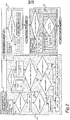
- Fig 2 generally illustrates by way of example three phases for spike detection and data transmission that can be made by a processor in the neuroprobe provided with a plurality of channels.
- channels such as electrodes, comprising target data, such as spike data
- the plurality of channels are in a second phase 202 iterated and the target channels are marked as selected channels, i.e. channels comprising data relevant to transmit, and optionally also non-target channels spatially close to target channels.
- the target data from the selected channels are transmitted from the neuroprobe. All phases are performed for each sample per channel.
- the first phase 200 may comprise a spike detection.
- this can be made by distinguishing between relevant data, herein referred to as spikes, caused by neural activity and other non-relevant data, such as noise, not caused by neural activity.
- This can be made by using a crude thresholding mechanism.
- the threshold mechanism may calculate the running mean and running standard deviation (STD) and, based on these a sample may be assessed based on the following formula: sample ⁇ mean > ThFactor * STD where ThFactor is a configurable factor used to tune the sensitivity of the threshold.
- a spikeDetected flag for the corresponding electrode (expressed as channel from now on) is marked (set to 1) if it is not set from before.
- An internal counter for the corresponding channel (cnt[ch]) is then reset to zero, before an extract_sample flag for the same channel is marked (set to 1). If the spikeDetected flag was marked from before, then the channel counter (cnt) is compared to a count threshold (cnt_th, set to be equal to the sampling frequency divided by 1000).
- the counter If the counter has reached the count threshold, then it resets the counter (cnt[ch]) and the spikeDetected[ch] flag, before continuing to update the running threshold. If the absolute value of a sample crosses the threshold in the succeeding step, then the spikeDetected[ch] flag is marked (set to 1), and the counter (cnt[ch]) is reset to zero.
- the spikeDetected flag in combination with the cnt counter consist of the mechanism that marks the succeeding 1 ms samples once a threshold crossing is detected.
- a buffer can be used to extract the preceeding 1 ms of samples in phase 3.
- the second phase 202 is a sequential phase that iterates through all channels one by one. If the extraction bit is marked on a channel, then it marks a ch_transmit_enable bit for the channel, and for a specific number (chFactor) of preceding and succeeding channels. This phase performs a spatial selection for data to be transmitted.
- the third phase 204 is a parallel phase where it is checked for all electrodes simultaneously if their corresponding ch_transmit_enable bit is marked. If it is marked, then the electrodes (channels) transmits its sample. Otherwise it discards its sample. After phase 3 completes, the transmit enable bits are reset for all channels.
- a general method 300 for processing a sample set of sensor data in a neuroprobe comprising a plurality of channels is illustrated by way of a flow chart.
- the sample set of sensor data comprises channel sensor data from each of the plurality of channels for a given time period.
- target channels are identified in that channel sensor data for the plurality of channels are captured in a first sub-step 304, in that it is determined if the channel sensor data comprises target data comprising pre-selected features, e.g. features identifying a spike, in a second sub-step 306, and in that channels determined to comprise target data are assigned as target channels in a third sub-set 308.
- This first main step 302 may be performed in parallel for the plurality of channels.
- a second main step 310 selected channels are identified in that a plurality of channels are iterated and that target channels are set as selected channels in a fourth sub-step 312. Unlike the first main step 302 this second main step 310 can be made in sequence.
- non-target channels being placed close to target channels may be set as selected channels. This may be made by that for each of the non-target channels it is determined if it is placed within a spatial threshold from at least one of the target data channels.
- an aggregated sensor data package can be formed and transmitted from the neuroprobe.
- a data package comprising channel sensor data can be formed for the selected channels, in a sixth sub-step 318 the data packages are combined into the aggregated sensor data package, and in a seventh sub-step 320 the aggregated sensor data package is transmitted to a data processing device configured for analyzing the channel sensor data.
- Fig 4 generally illustrates a system 400 for analyzing neural activity.
- the system comprises a neuroprobe 402 and an external data processing device 404 configured for analyzing channel sensor data.
- the neuroprobe 402 comprises a plurality of channels 406, such as electrodes, that are configured for capturing sensor data.
- a target channels identifier 408 can be used.
- the target channels identifier 408 can be configured for analyzing channel sensor data from the plurality of channels 406 in parallel. If a channel is identified to comprise target data the channel can be assigned as a target channel.
- the different channels can be iterated in a selected channels identifier 410 and each of the plurality of channels assigned as a target channel can be set as a selected channel.
- non-target channels spatially close to target channels may also be set as selected channels.
- a data transmitter 412 can be provided for forming an aggregated sensor data package by combining channel sensor data package from the selected channels and thereafter transmitting this to the external data processing device 404.
Landscapes
- Health & Medical Sciences (AREA)
- Life Sciences & Earth Sciences (AREA)
- Engineering & Computer Science (AREA)
- Biomedical Technology (AREA)
- Medical Informatics (AREA)
- Public Health (AREA)
- General Health & Medical Sciences (AREA)
- Surgery (AREA)
- Veterinary Medicine (AREA)
- Molecular Biology (AREA)
- Physics & Mathematics (AREA)
- Animal Behavior & Ethology (AREA)
- Pathology (AREA)
- Biophysics (AREA)
- Heart & Thoracic Surgery (AREA)
- Business, Economics & Management (AREA)
- General Business, Economics & Management (AREA)
- Epidemiology (AREA)
- Primary Health Care (AREA)
- Computer Networks & Wireless Communication (AREA)
- Measurement And Recording Of Electrical Phenomena And Electrical Characteristics Of The Living Body (AREA)
Abstract
Description
- The invention generally relates to the field of neuroscience. More particularly, it is related to methods for processing sensor data in neuroprobes as well as neuroprobes with built-in sensor data processing functionality.
- In neuroscience, a large amount of research is based on the study of the activity of neurons in brains in vivo. The neuron activity are normally recorded extracellularly with electrodes implanted in brains, and raw data is transmitted through wires from the electrodes to a computer for processing.
- Future electrode densities in neuroprobes are most likely to reach the limits of how much data we can transfer within the energy budget available on the neuroprobes, even while transmitting the data through electrical wiring. The reason is the fast growing amount of concurrent sensor nodes on a neuroprobe. Several recent research projects are aiming towards 10 000 electrodes on a single neuroprobe head. On top of that, for deep brain electrodes, the aim for future research is moving towards battery powered wireless solutions. This will reduce the amount of data that can be transmitted in raw form to the output even more. Hence, a need is present for data reduction in order to meet the stringent requirements for data transfer. Existing solutions are either taking too much area and energy overhead or they are implemented using non-scalable analog front-end circuitry.
- Accordingly, the present invention preferably seeks to mitigate, alleviate or eliminate one or more of the above-identified deficiencies in the art and disadvantages singly or in any combination.
- According to a first aspect it is provided a method for processing a sample set of sensor data in a neuroprobe comprising a plurality of channels, wherein the sample set of sensor data comprises channel sensor data from each of the plurality of channels for a given time period, wherein the plurality of channels comprises target channels, each comprising target data comprising pre-selected features, and non-target channels, each being without target data, wherein the target channels and the non-target channels are sample specific, said method comprising identifying the target channels and the non-target channels by for each of the plurality of channels, capturing the channel sensor data, determining if the channel sensor data comprises the target data by comparing the channel sensor data with prior channel sensor data, and assigning as target channel if the channel sensor data comprises the target data, identifying selected channels by for each of the plurality of channels selecting as selected channel if assigned as target channel, forming and transmitting an aggregated sensor data package by for each of the selected channels forming a data package comprising channel sensor data, combining data packages from the selected channels into the aggregated sensor data package, and transmitting the aggregated sensor data package from the neuroprobe to a data processing device configured for analyzing channel sensor data.
- The step of identifying selected channels may further comprise for each of the non-target channels selecting as selected channels if placed within a spatial threshold from at least one of the target data channels.
- The channels of the neuroprobe may comprise electrodes.
- The target data may comprise a spike.
- The spike may be determined by comparing the channel sensor data with a running threshold being a combination of a channel sensor data mean value and a channel sensor data standard deviation value.
- The step of identifying the target channels and the non-target channels may be made in parallel for the plurality of channels, the step of identifying selected channels may be made in sequence for the plurality of channels, and the step of forming and transmitting an aggregated sensor data package may be made in parallel for the plurality of channels.
- The step of selecting as selected channel if assigned as target channel may comprise setting a channel associated bit in a data memory.
- The plurality of channels of the neuroprobe may be at least 1000 channels.
- The plurality of channels may each comprise a unique identifier, and the plurality of channels may be divided into sub-groups based on the unique identifiers, wherein the step of identifying the target channels and the non-target channels further may comprise identifying a sub-group, and assigning as target channel if another channel within the sub-group is assigned as target channel.
- According to a second aspect it is provided a neuroprobe comprising a plurality of channels, wherein the plurality of channels comprises target channels, each comprising target data comprising pre-selected features, and non-target channels, each being without target data, wherein the target channels and the non-target channels are sample specific, a target channels identifier for identifying the target channels and the non-target channels by for each of the plurality of channels, capturing a sample set of sensor data, wherein the sample set comprises channel sensor data from each of the plurality of channels for a given time period, determining if the channel sensor data comprises the target data by comparing the channel sensor data with prior channel sensor data, determining if the channel sensor data comprises the target data, and assigning as target channel if the channel sensor data comprises the target data, a selected channels identifier for identifying selected channels by for each of the plurality of channels selecting as selected channel if assigned as target channel, and a data transmitter for forming and transmitting an aggregated sensor data package by for each of the selected channels forming a data package comprising channel sensor data, combining data packages from the selected channels into the aggregated sensor data package, and transmitting the aggregated sensor data package from the neuroprobe to a data processing device configured for analyzing channel sensor data.
- The selected channels identifier may be further configured to for each of the non-target channels selecting as selected channels if placed within a spatial threshold from at least one of the target data channels.
- The channels of the neuroprobe may comprise electrodes.
- The target data may comprise a spike.
- The spike may be determined by comparing the channel sensor data with a running threshold being a combination of a channel sensor data mean value and a channel sensor data standard deviation value.
- The target channels identifier may be handling the plurality of channels in parallel, the selected channels identifier may be handling the plurality of channels in sequence, and the data transmitter may be handling the plurality of channels in parallel.
- The step of selecting as selected channel if assigned as target channel may comprise setting a channel associated bit in a data memory.
- The plurality of channels of the neuroprobe may be at least 1000 channels.
- The plurality of channels may each comprise a unique identifier, and the plurality of channels may be divided into sub-groups based on the unique identifiers, wherein the step of identifying the target channels and the non-target channels may further comprise identifying a sub-group, and assigning as target channel if another channel within the sub-group is assigned as target channel.
- According to a third aspect it is provided a system for analyzing neural activity, said system comprising a neuroprobe according to the second aspect, and an external data processing device configured for analyzing channel sensor data.
- The external data processing device may be configured for analyzing the channel sensor data by extracting features from the channel sensor data and clustering the features.
- The above, as well as additional objects, features and advantages of the present invention, will be better understood through the following illustrative and non-limiting detailed description, with reference to the appended drawings, wherein:
-
Fig 1 illustrates general steps for processing sensor data captured by a neuroprobe; -
Fig 2 illustrates three phases for pre-processing sensor data in the neuroprobe; -
Fig 3 is a flow chart illustrating steps of a method for processing sensor data in the neuroprobe; and -
Fig 4 is a flow chart illustrating a system for analyzing neural activity. - Within the field of neuroscience there are different approaches for processing data captured by a neuroprobe. In order to efficiently transform raw data captured by electrodes of the neuroprobe to data that can form basis for a decision, either for a physician or for a software-implemented decision algorithm, an approach illustrated in
fig 1 may be used. - In a first step i), raw data formed by the electrodes is processed in that the raw data is filtered such that filtered data is formed. By filtering the raw data noise may be removed such that later steps can be made more efficiently and in a more reliable manner. Depending on how the filtered data is to be used different filter software and/or filter hardware may be used.
- Based on the filtered data, in a second step ii) spike detection can be performed. A spike, or action potential, in the filtered data is reflecting that a potential of a neuron membrane has quickly risen and thereafter quickly dropped. By using signal processing algoritms such spikes can be detected in the filtered data.
- When having detected a number of spikes these can be analyzed by using so-called feature extraction analysis as illustrated in step iii). The features may relate to a wave shape, an amplitude, a duration etc. In short and by way of example, different features can be extracted for the spikes using principal component analysis (PCA). After the feature extraction, the different spikes can be categorized on the basis of their features and clustered in different groups as illustrated in step iv), where each group represents a group of spikes sharing the same or very similar features.
- Each of the data processing steps above results in a reduction of the amount of data. In order to reduce the amount of data that is transmitted from the neuroprobe to an external data processing device one or several of the steps may be made in the neuroprobe itself. An advantage of this is that less data needs to be transmitted from the neuroprobe to the external data processing device, which in turn implies that an increased number of electrodes can be used. In case wireless transmission is used, this will result in that the wireless transmit energy needed is reduced, which in turn can result in that high density neuroprobes are made possible also for wireless transmission based systems.
- By performing the spike data detection in the neuroprobe, target data, i.e. sensor data comprising spike data or other data considered relevant for further analysis, can be identified and transmitted to the external data processing device. The sensor data not comprising target data, also referred to as non-target data, may also be transmitted if e.g. the non-target data is collected spatially close to a location where target data is collected. Thus, by having such approach an increased number of electrodes are made possible and/or wireless transmission of data from the electrodes to the external data processing device is made possible.
-
Fig 2 generally illustrates by way of example three phases for spike detection and data transmission that can be made by a processor in the neuroprobe provided with a plurality of channels. In afirst phase 200, channels, such as electrodes, comprising target data, such as spike data, are identified. After having identified target channels, i.e. channels comprising target data, and non-target channels, i.e. channels not comprising target data, the plurality of channels are in asecond phase 202 iterated and the target channels are marked as selected channels, i.e. channels comprising data relevant to transmit, and optionally also non-target channels spatially close to target channels. Finally, in athird phase 204 the target data from the selected channels are transmitted from the neuroprobe. All phases are performed for each sample per channel. - More in detail and by way of example, the
first phase 200 may comprise a spike detection. Generally, this can be made by distinguishing between relevant data, herein referred to as spikes, caused by neural activity and other non-relevant data, such as noise, not caused by neural activity. This can be made by using a crude thresholding mechanism. As an example, the threshold mechanism may calculate the running mean and running standard deviation (STD) and, based on these a sample may be assessed based on the following formula:
- If the absolute value of a difference between the sample and the running mean is greater than ThFactor*STD, then a spikeDetected flag for the corresponding electrode (expressed as channel from now on) is marked (set to 1) if it is not set from before. An internal counter for the corresponding channel (cnt[ch]) is then reset to zero, before an extract_sample flag for the same channel is marked (set to 1). If the spikeDetected flag was marked from before, then the channel counter (cnt) is compared to a count threshold (cnt_th, set to be equal to the sampling frequency divided by 1000). If the counter has reached the count threshold, then it resets the counter (cnt[ch]) and the spikeDetected[ch] flag, before continuing to update the running threshold. If the absolute value of a sample crosses the threshold in the succeeding step, then the spikeDetected[ch] flag is marked (set to 1), and the counter (cnt[ch]) is reset to zero. The spikeDetected flag in combination with the cnt counter consist of the mechanism that marks the succeeding 1 ms samples once a threshold crossing is detected. A buffer can be used to extract the
preceeding 1 ms of samples inphase 3. - The
second phase 202 is a sequential phase that iterates through all channels one by one. If the extraction bit is marked on a channel, then it marks a ch_transmit_enable bit for the channel, and for a specific number (chFactor) of preceding and succeeding channels. This phase performs a spatial selection for data to be transmitted. - The
third phase 204 is a parallel phase where it is checked for all electrodes simultaneously if their corresponding ch_transmit_enable bit is marked. If it is marked, then the electrodes (channels) transmits its sample. Otherwise it discards its sample. Afterphase 3 completes, the transmit enable bits are reset for all channels. - Based on the non-limiting example illustrated in
fig 2 and described above, infig 3 ageneral method 300 for processing a sample set of sensor data in a neuroprobe comprising a plurality of channels is illustrated by way of a flow chart. The sample set of sensor data comprises channel sensor data from each of the plurality of channels for a given time period. - In a first
main step 302 target channels are identified in that channel sensor data for the plurality of channels are captured in afirst sub-step 304, in that it is determined if the channel sensor data comprises target data comprising pre-selected features, e.g. features identifying a spike, in asecond sub-step 306, and in that channels determined to comprise target data are assigned as target channels in athird sub-set 308. This firstmain step 302 may be performed in parallel for the plurality of channels. - In a second
main step 310 selected channels are identified in that a plurality of channels are iterated and that target channels are set as selected channels in afourth sub-step 312. Unlike the firstmain step 302 this secondmain step 310 can be made in sequence. Optionally, also non-target channels being placed close to target channels may be set as selected channels. This may be made by that for each of the non-target channels it is determined if it is placed within a spatial threshold from at least one of the target data channels. - In a third
main step 314 an aggregated sensor data package can be formed and transmitted from the neuroprobe. In a fifth sub-step 316 a data package comprising channel sensor data can be formed for the selected channels, in a sixth sub-step 318 the data packages are combined into the aggregated sensor data package, and in a seventh sub-step 320 the aggregated sensor data package is transmitted to a data processing device configured for analyzing the channel sensor data. -
Fig 4 generally illustrates asystem 400 for analyzing neural activity. The system comprises aneuroprobe 402 and an externaldata processing device 404 configured for analyzing channel sensor data. - The
neuroprobe 402 comprises a plurality ofchannels 406, such as electrodes, that are configured for capturing sensor data. - In order to identify target channels and non-target channels, that is, channels comprising target data and channels not comprising target data, a
target channels identifier 408 can be used. Thetarget channels identifier 408 can be configured for analyzing channel sensor data from the plurality ofchannels 406 in parallel. If a channel is identified to comprise target data the channel can be assigned as a target channel. - After the channel sensor data has been analyzed by the
target channels identifier 408 the different channels can be iterated in a selectedchannels identifier 410 and each of the plurality of channels assigned as a target channel can be set as a selected channel. Optionally, non-target channels spatially close to target channels may also be set as selected channels. - A
data transmitter 412 can be provided for forming an aggregated sensor data package by combining channel sensor data package from the selected channels and thereafter transmitting this to the externaldata processing device 404. - The invention has mainly been described above with reference to a few embodiments. However, as is readily appreciated by a person skilled in the art, other embodiments than the ones disclosed above are equally possible within the scope of the invention, as defined by the appended patent claims.
Claims (20)
- A method for processing a sample set of sensor data in a neuroprobe comprising a plurality of channels, wherein the sample set of sensor data comprises channel sensor data from each of the plurality of channels for a given time period, wherein the plurality of channels comprises target channels, each comprising target data comprising pre-selected features, and non-target channels, each being without target data, wherein the target channels and the non-target channels are sample specific, said method comprising
identifying the target channels and the non-target channels byfor each of the plurality of channels,capturing the channel sensor data,determining if the channel sensor data comprises the target data by comparing the channel sensor data with prior channel sensor data, andassigning as target channel if the channel sensor datacomprises the target data,identifying selected channels byfor each of the plurality of channelsselecting as selected channel if assigned as target channel, forming and transmitting an aggregated sensor data package byfor each of the selected channelsforming a data package comprising channel sensor data, combining data packages from the selected channels into the aggregated sensor data package, and transmitting the aggregated sensor data package from the neuroprobe to a data processing device configured for analyzing channel sensor data. - The method according to claim 1, wherein the step of identifying selected channels further comprising
for each of the non-target channels
selecting as selected channels if placed within a spatial threshold from at least one of the target data channels. - The method according to any one of the preceding claims, wherein the channels of the neuroprobe comprise electrodes.
- The method according to any one of the preceding claims, wherein the target data comprises a spike.
- The method according to claim 4, wherein the spike is determined by comparing the channel sensor data with a running threshold being a combination of a channel sensor data mean value and a channel sensor data standard deviation value.
- The method according to any one of the preceding claims, wherein
the step of identifying the target channels and the non-target channels is made in parallel for the plurality of channels,
the step of identifying selected channels is made in sequence for the plurality of channels, and
the step of forming and transmitting an aggregated sensor data package is made in parallel for the plurality of channels. - The method according to any one of the preceding claims, wherein the step of selecting as selected channel if assigned as target channel comprises setting a channel associated bit in a data memory.
- The method according to any one of the preceding claims, wherein the plurality of channels of the neuroprobe is at least 1000 channels.
- The method according to any one of the preceding claims,
wherein the plurality of channels each comprises a unique identifier, and the plurality of channels are divided into sub-groups based on the unique identifiers,
wherein the step of identifying the target channels and the non-target channels further comprisesidentifying a sub-group, andassigning as target channel if another channel within the sub-group is assigned as target channel. - A neuroprobe comprising
a plurality of channels, wherein the plurality of channels comprises target channels, each comprising target data comprising pre-selected features, and non-target channels, each being without target data, wherein the target channels and the non-target channels are sample specific,
a target channels identifier for identifying the target channels and the non-target channels by for each of the plurality of channels, capturing a sample set of sensor data, wherein the sample set comprises channel sensor data from each of the plurality of channels for a given time period, determining if the channel sensor data comprises the target data by comparing the channel sensor data with prior channel sensor data, determining if the channel sensor data comprises the target data, and assigning as target channel if the channel sensor data comprises the target data,
a selected channels identifier for identifying selected channels by for each of the plurality of channels selecting as selected channel if assigned as target channel, and
a data transmitter for forming and transmitting an aggregated sensor data package by for each of the selected channels forming a data package comprising channel sensor data, combining data packages from the selected channels into the aggregated sensor data package, and transmitting the aggregated sensor data package from the neuroprobe to a data processing device configured for analyzing channel sensor data. - The neuroprobe according to claim 10, wherein the selected channels identifier is further configured to
for each of the non-target channels
selecting as selected channels if placed within a spatial threshold from at least one of the target data channels. - The neuroprobe according to claim 10 or 11, wherein the channels of the neuroprobe comprise electrodes.
- The neuroprobe according to any one of the claims 10 to 12, wherein the target data comprises a spike.
- The neuroprobe according to claim 13, wherein the spike is determined by comparing the channel sensor data with a running threshold being a combination of a channel sensor data mean value and a channel sensor data standard deviation value.
- The neuroprobe according to any one of the claims 10 to 14, wherein
the target channels identifier is handling the plurality of channels in parallel,
the selected channels identifier is handling the plurality of channels in sequence, and
the data transmitter is handling the plurality of channels in parallel. - The neuroprobe according to any one of the claims 10 to 15, wherein the step of selecting as selected channel if assigned as target channel comprises setting a channel associated bit in a data memory.
- The neuroprobe according to any one of the claims 10 to 16, wherein the plurality of channels of the neuroprobe is at least 1000 channels.
- The neuroprobe according to any one of the claims 10 to 17, wherein the plurality of channels each comprises a unique identifier, and the plurality of channels are divided into sub-groups based on the unique identifiers, wherein the step of identifying the target channels and the non-target channels further comprises identifying a sub-group, and assigning as target channel if another channel within the sub-group is assigned as target channel.
- A system for analyzing neural activity, said system comprising
a neuroprobe according to any one of the claims 10 to 18, and
an external data processing device configured for analyzing channel sensor data. - The system according to claim 19, wherein the external data processing device is configured for analyzing the channel sensor data by extracting features from the channel sensor data and clustering the features.
Priority Applications (1)
| Application Number | Priority Date | Filing Date | Title |
|---|---|---|---|
| EP17176000.2A EP3415085B1 (en) | 2017-06-14 | 2017-06-14 | A method for processing sensor data in a neuroprobe |
Applications Claiming Priority (1)
| Application Number | Priority Date | Filing Date | Title |
|---|---|---|---|
| EP17176000.2A EP3415085B1 (en) | 2017-06-14 | 2017-06-14 | A method for processing sensor data in a neuroprobe |
Publications (2)
| Publication Number | Publication Date |
|---|---|
| EP3415085A1 true EP3415085A1 (en) | 2018-12-19 |
| EP3415085B1 EP3415085B1 (en) | 2024-03-20 |
Family
ID=59070494
Family Applications (1)
| Application Number | Title | Priority Date | Filing Date |
|---|---|---|---|
| EP17176000.2A Active EP3415085B1 (en) | 2017-06-14 | 2017-06-14 | A method for processing sensor data in a neuroprobe |
Country Status (1)
| Country | Link |
|---|---|
| EP (1) | EP3415085B1 (en) |
Family Cites Families (3)
| Publication number | Priority date | Publication date | Assignee | Title |
|---|---|---|---|---|
| US7187968B2 (en) * | 2003-10-23 | 2007-03-06 | Duke University | Apparatus for acquiring and transmitting neural signals and related methods |
| US7613509B2 (en) * | 2004-11-29 | 2009-11-03 | Duke University | Systems, methods, and computer program products for transmitting neural signal information |
| WO2008057365A2 (en) * | 2006-11-02 | 2008-05-15 | Caplan Abraham H | Epileptic event detection systems |
-
2017
- 2017-06-14 EP EP17176000.2A patent/EP3415085B1/en active Active
Non-Patent Citations (5)
| Title |
|---|
| "Advances in Bioengineering", 8 July 2015, INTECH, ISBN: 978-953-51-2141-1, article MOHSEN JUDY ET AL: "Data Reduction Techniques in Neural Recording Microsystems", XP055276824, DOI: 10.5772/59662 * |
| BENOIT GOSSELIN ET AL: "A low-power integrated neural interface with digital spike detection and extraction", ANALOG INTEGRATED CIRCUITS AND SIGNAL PROCESSING, KLUWER ACADEMIC PUBLISHERS, BO, vol. 64, no. 1, 15 August 2009 (2009-08-15), pages 3 - 11, XP019812292, ISSN: 1573-1979 * |
| GORDILLO CAMILO ET AL: "Automatic channel selection in neural microprobes: A combinatorial multi-armed bandit approach", 2016 IEEE/RSJ INTERNATIONAL CONFERENCE ON INTELLIGENT ROBOTS AND SYSTEMS (IROS), IEEE, 9 October 2016 (2016-10-09), pages 1844 - 1850, XP033011643, DOI: 10.1109/IROS.2016.7759293 * |
| MICHAEL RIZK ET AL: "A single-chip signal processing and telemetry engine for an implantable 96-channel neural data acquisition system; A single-chip neural signal processing and telemetry engine", JOURNAL OF NEURAL ENGINEERING, INSTITUTE OF PHYSICS PUBLISHING, BRISTOL, GB, vol. 4, no. 3, 20 July 2007 (2007-07-20), pages 309 - 321, XP020123746, ISSN: 1741-2552, DOI: 10.1088/1741-2560/4/3/016 * |
| RADUCANU BOGDAN C ET AL: "Time multiplexed active neural probe with 678 parallel recording sites", 2016 46TH EUROPEAN SOLID-STATE DEVICE RESEARCH CONFERENCE (ESSDERC), IEEE, 12 September 2016 (2016-09-12), pages 385 - 388, XP032980774, DOI: 10.1109/ESSDERC.2016.7599667 * |
Also Published As
| Publication number | Publication date |
|---|---|
| EP3415085B1 (en) | 2024-03-20 |
Similar Documents
| Publication | Publication Date | Title |
|---|---|---|
| Hulata et al. | A method for spike sorting and detection based on wavelet packets and Shannon's mutual information | |
| CN104914468B (en) | A kind of mine microquake signal P ripples initial time combines pick-up method | |
| CN102389302B (en) | Analysis method of dynamic characteristics of electrocardiosignal | |
| Birot et al. | Automatic detection of fast ripples | |
| CN111967338B (en) | Method and system for judging partial discharge pulse interference signals based on mean shift clustering algorithm | |
| Bizopoulos et al. | EEG epileptic seizure detection using k-means clustering and marginal spectrum based on ensemble empirical mode decomposition | |
| CN112674782B (en) | Device and method for detecting epileptic-like electrical activity of epileptic during inter-seizure period | |
| CN107595276B (en) | Atrial fibrillation detection method based on single-lead electrocardiosignal time-frequency characteristics | |
| CN108511055B (en) | Ventricular premature beat recognition system and method based on classifier fusion and diagnosis rules | |
| CN113768520B (en) | Training method and device for electroencephalogram detection model | |
| US20170296081A1 (en) | Frame based spike detection module | |
| CN106228178A (en) | Networks congestion control prognoses system | |
| CN110522442A (en) | Multi-lead electrocardiographic abnormality detection device, electronic apparatus, and storage medium | |
| CN107569228A (en) | Encephalic EEG signals characteristic wave identification device based on band information and SVMs | |
| CN102590128B (en) | Method for discriminating adulterated raw and fresh milk by using near infrared spectrum | |
| Malik et al. | Automatic threshold optimization in nonlinear energy operator based spike detection | |
| Priyanka et al. | Feature selection and classification of Epilepsy from EEG signal | |
| CN105249962A (en) | Scalp electroencephalogram (EEG) retrospective epileptic seizure point detection method and system | |
| Kamboh et al. | On-chip feature extraction for spike sorting in high density implantable neural recording systems | |
| CN114027855B (en) | Electroencephalogram signal decoding method and system for recognizing head movement intention | |
| EP3415085B1 (en) | A method for processing sensor data in a neuroprobe | |
| CN109924974B (en) | EcoG-based epileptic neural signal decoding method and cloud decoding system | |
| CN108205686A (en) | Video feeling sorting technique and device | |
| CN116687423B (en) | A method and apparatus for classifying neuronal spike potentials | |
| Hussein et al. | An investigation on neural spike sorting algorithms |
Legal Events
| Date | Code | Title | Description |
|---|---|---|---|
| PUAI | Public reference made under article 153(3) epc to a published international application that has entered the european phase |
Free format text: ORIGINAL CODE: 0009012 |
|
| STAA | Information on the status of an ep patent application or granted ep patent |
Free format text: STATUS: THE APPLICATION HAS BEEN PUBLISHED |
|
| AK | Designated contracting states |
Kind code of ref document: A1 Designated state(s): AL AT BE BG CH CY CZ DE DK EE ES FI FR GB GR HR HU IE IS IT LI LT LU LV MC MK MT NL NO PL PT RO RS SE SI SK SM TR |
|
| AX | Request for extension of the european patent |
Extension state: BA ME |
|
| STAA | Information on the status of an ep patent application or granted ep patent |
Free format text: STATUS: REQUEST FOR EXAMINATION WAS MADE |
|
| 17P | Request for examination filed |
Effective date: 20190618 |
|
| RBV | Designated contracting states (corrected) |
Designated state(s): AL AT BE BG CH CY CZ DE DK EE ES FI FR GB GR HR HU IE IS IT LI LT LU LV MC MK MT NL NO PL PT RO RS SE SI SK SM TR |
|
| STAA | Information on the status of an ep patent application or granted ep patent |
Free format text: STATUS: EXAMINATION IS IN PROGRESS |
|
| 17Q | First examination report despatched |
Effective date: 20201119 |
|
| RAP1 | Party data changed (applicant data changed or rights of an application transferred) |
Owner name: KATHOLIEKE UNIVERSITEIT LEUVEN Owner name: NORGES TEKNISK-NATURVITENSKAPELIGE UNIVERSITET Owner name: VIB VZW Owner name: IMEC VZW |
|
| REG | Reference to a national code |
Ref country code: DE Ref legal event code: R079 Free format text: PREVIOUS MAIN CLASS: A61B0005040000 Ipc: G16H0040630000 Ref country code: DE Ref legal event code: R079 Ref document number: 602017080149 Country of ref document: DE Free format text: PREVIOUS MAIN CLASS: A61B0005040000 Ipc: G16H0040630000 |
|
| GRAP | Despatch of communication of intention to grant a patent |
Free format text: ORIGINAL CODE: EPIDOSNIGR1 |
|
| STAA | Information on the status of an ep patent application or granted ep patent |
Free format text: STATUS: GRANT OF PATENT IS INTENDED |
|
| RIC1 | Information provided on ipc code assigned before grant |
Ipc: A61B 5/00 20060101ALI20230912BHEP Ipc: A61B 5/24 20210101ALI20230912BHEP Ipc: G16H 40/63 20180101AFI20230912BHEP |
|
| INTG | Intention to grant announced |
Effective date: 20231009 |
|
| RAP3 | Party data changed (applicant data changed or rights of an application transferred) |
Owner name: VIB VZW Owner name: NORGES TEKNISK-NATURVITENSKAPELIGE UNIVERSITET Owner name: KATHOLIEKE UNIVERSITEIT LEUVEN, KU LEUVEN R&D Owner name: IMEC VZW |
|
| P01 | Opt-out of the competence of the unified patent court (upc) registered |
Effective date: 20231127 |
|
| GRAS | Grant fee paid |
Free format text: ORIGINAL CODE: EPIDOSNIGR3 |
|
| RAP3 | Party data changed (applicant data changed or rights of an application transferred) |
Owner name: VIB VZW Owner name: NORGES TEKNISK-NATURVITENSKAPELIGE UNIVERSITET Owner name: KATHOLIEKE UNIVERSITEIT LEUVEN, KU LEUVEN R&D Owner name: IMEC VZW |
|
| GRAA | (expected) grant |
Free format text: ORIGINAL CODE: 0009210 |
|
| STAA | Information on the status of an ep patent application or granted ep patent |
Free format text: STATUS: THE PATENT HAS BEEN GRANTED |
|
| AK | Designated contracting states |
Kind code of ref document: B1 Designated state(s): AL AT BE BG CH CY CZ DE DK EE ES FI FR GB GR HR HU IE IS IT LI LT LU LV MC MK MT NL NO PL PT RO RS SE SI SK SM TR |
|
| REG | Reference to a national code |
Ref country code: GB Ref legal event code: FG4D |
|
| REG | Reference to a national code |
Ref country code: CH Ref legal event code: EP |
|
| REG | Reference to a national code |
Ref country code: IE Ref legal event code: FG4D |
|
| REG | Reference to a national code |
Ref country code: DE Ref legal event code: R096 Ref document number: 602017080149 Country of ref document: DE |
|
| PG25 | Lapsed in a contracting state [announced via postgrant information from national office to epo] |
Ref country code: LT Free format text: LAPSE BECAUSE OF FAILURE TO SUBMIT A TRANSLATION OF THE DESCRIPTION OR TO PAY THE FEE WITHIN THE PRESCRIBED TIME-LIMIT Effective date: 20240320 |
|
| REG | Reference to a national code |
Ref country code: LT Ref legal event code: MG9D |
|
| PG25 | Lapsed in a contracting state [announced via postgrant information from national office to epo] |
Ref country code: GR Free format text: LAPSE BECAUSE OF FAILURE TO SUBMIT A TRANSLATION OF THE DESCRIPTION OR TO PAY THE FEE WITHIN THE PRESCRIBED TIME-LIMIT Effective date: 20240621 |
|
| PG25 | Lapsed in a contracting state [announced via postgrant information from national office to epo] |
Ref country code: HR Free format text: LAPSE BECAUSE OF FAILURE TO SUBMIT A TRANSLATION OF THE DESCRIPTION OR TO PAY THE FEE WITHIN THE PRESCRIBED TIME-LIMIT Effective date: 20240320 Ref country code: RS Free format text: LAPSE BECAUSE OF FAILURE TO SUBMIT A TRANSLATION OF THE DESCRIPTION OR TO PAY THE FEE WITHIN THE PRESCRIBED TIME-LIMIT Effective date: 20240620 |
|
| REG | Reference to a national code |
Ref country code: NL Ref legal event code: MP Effective date: 20240320 |
|
| PG25 | Lapsed in a contracting state [announced via postgrant information from national office to epo] |
Ref country code: RS Free format text: LAPSE BECAUSE OF FAILURE TO SUBMIT A TRANSLATION OF THE DESCRIPTION OR TO PAY THE FEE WITHIN THE PRESCRIBED TIME-LIMIT Effective date: 20240620 Ref country code: NO Free format text: LAPSE BECAUSE OF FAILURE TO SUBMIT A TRANSLATION OF THE DESCRIPTION OR TO PAY THE FEE WITHIN THE PRESCRIBED TIME-LIMIT Effective date: 20240620 Ref country code: LT Free format text: LAPSE BECAUSE OF FAILURE TO SUBMIT A TRANSLATION OF THE DESCRIPTION OR TO PAY THE FEE WITHIN THE PRESCRIBED TIME-LIMIT Effective date: 20240320 Ref country code: HR Free format text: LAPSE BECAUSE OF FAILURE TO SUBMIT A TRANSLATION OF THE DESCRIPTION OR TO PAY THE FEE WITHIN THE PRESCRIBED TIME-LIMIT Effective date: 20240320 Ref country code: GR Free format text: LAPSE BECAUSE OF FAILURE TO SUBMIT A TRANSLATION OF THE DESCRIPTION OR TO PAY THE FEE WITHIN THE PRESCRIBED TIME-LIMIT Effective date: 20240621 Ref country code: FI Free format text: LAPSE BECAUSE OF FAILURE TO SUBMIT A TRANSLATION OF THE DESCRIPTION OR TO PAY THE FEE WITHIN THE PRESCRIBED TIME-LIMIT Effective date: 20240320 Ref country code: BG Free format text: LAPSE BECAUSE OF FAILURE TO SUBMIT A TRANSLATION OF THE DESCRIPTION OR TO PAY THE FEE WITHIN THE PRESCRIBED TIME-LIMIT Effective date: 20240320 |
|
| REG | Reference to a national code |
Ref country code: AT Ref legal event code: MK05 Ref document number: 1668566 Country of ref document: AT Kind code of ref document: T Effective date: 20240320 |
|
| PG25 | Lapsed in a contracting state [announced via postgrant information from national office to epo] |
Ref country code: SE Free format text: LAPSE BECAUSE OF FAILURE TO SUBMIT A TRANSLATION OF THE DESCRIPTION OR TO PAY THE FEE WITHIN THE PRESCRIBED TIME-LIMIT Effective date: 20240320 Ref country code: LV Free format text: LAPSE BECAUSE OF FAILURE TO SUBMIT A TRANSLATION OF THE DESCRIPTION OR TO PAY THE FEE WITHIN THE PRESCRIBED TIME-LIMIT Effective date: 20240320 |
|
| PG25 | Lapsed in a contracting state [announced via postgrant information from national office to epo] |
Ref country code: NL Free format text: LAPSE BECAUSE OF FAILURE TO SUBMIT A TRANSLATION OF THE DESCRIPTION OR TO PAY THE FEE WITHIN THE PRESCRIBED TIME-LIMIT Effective date: 20240320 |
|
| PG25 | Lapsed in a contracting state [announced via postgrant information from national office to epo] |
Ref country code: NL Free format text: LAPSE BECAUSE OF FAILURE TO SUBMIT A TRANSLATION OF THE DESCRIPTION OR TO PAY THE FEE WITHIN THE PRESCRIBED TIME-LIMIT Effective date: 20240320 |
|
| PG25 | Lapsed in a contracting state [announced via postgrant information from national office to epo] |
Ref country code: IS Free format text: LAPSE BECAUSE OF FAILURE TO SUBMIT A TRANSLATION OF THE DESCRIPTION OR TO PAY THE FEE WITHIN THE PRESCRIBED TIME-LIMIT Effective date: 20240720 |
|
| PG25 | Lapsed in a contracting state [announced via postgrant information from national office to epo] |
Ref country code: PT Free format text: LAPSE BECAUSE OF FAILURE TO SUBMIT A TRANSLATION OF THE DESCRIPTION OR TO PAY THE FEE WITHIN THE PRESCRIBED TIME-LIMIT Effective date: 20240722 Ref country code: SM Free format text: LAPSE BECAUSE OF FAILURE TO SUBMIT A TRANSLATION OF THE DESCRIPTION OR TO PAY THE FEE WITHIN THE PRESCRIBED TIME-LIMIT Effective date: 20240320 |
|
| PG25 | Lapsed in a contracting state [announced via postgrant information from national office to epo] |
Ref country code: ES Free format text: LAPSE BECAUSE OF FAILURE TO SUBMIT A TRANSLATION OF THE DESCRIPTION OR TO PAY THE FEE WITHIN THE PRESCRIBED TIME-LIMIT Effective date: 20240320 |
|
| PG25 | Lapsed in a contracting state [announced via postgrant information from national office to epo] |
Ref country code: EE Free format text: LAPSE BECAUSE OF FAILURE TO SUBMIT A TRANSLATION OF THE DESCRIPTION OR TO PAY THE FEE WITHIN THE PRESCRIBED TIME-LIMIT Effective date: 20240320 Ref country code: CZ Free format text: LAPSE BECAUSE OF FAILURE TO SUBMIT A TRANSLATION OF THE DESCRIPTION OR TO PAY THE FEE WITHIN THE PRESCRIBED TIME-LIMIT Effective date: 20240320 |
|
| PG25 | Lapsed in a contracting state [announced via postgrant information from national office to epo] |
Ref country code: AT Free format text: LAPSE BECAUSE OF FAILURE TO SUBMIT A TRANSLATION OF THE DESCRIPTION OR TO PAY THE FEE WITHIN THE PRESCRIBED TIME-LIMIT Effective date: 20240320 |
|
| PG25 | Lapsed in a contracting state [announced via postgrant information from national office to epo] |
Ref country code: PL Free format text: LAPSE BECAUSE OF FAILURE TO SUBMIT A TRANSLATION OF THE DESCRIPTION OR TO PAY THE FEE WITHIN THE PRESCRIBED TIME-LIMIT Effective date: 20240320 |
|
| PG25 | Lapsed in a contracting state [announced via postgrant information from national office to epo] |
Ref country code: SK Free format text: LAPSE BECAUSE OF FAILURE TO SUBMIT A TRANSLATION OF THE DESCRIPTION OR TO PAY THE FEE WITHIN THE PRESCRIBED TIME-LIMIT Effective date: 20240320 |
|
| PG25 | Lapsed in a contracting state [announced via postgrant information from national office to epo] |
Ref country code: SM Free format text: LAPSE BECAUSE OF FAILURE TO SUBMIT A TRANSLATION OF THE DESCRIPTION OR TO PAY THE FEE WITHIN THE PRESCRIBED TIME-LIMIT Effective date: 20240320 Ref country code: SK Free format text: LAPSE BECAUSE OF FAILURE TO SUBMIT A TRANSLATION OF THE DESCRIPTION OR TO PAY THE FEE WITHIN THE PRESCRIBED TIME-LIMIT Effective date: 20240320 Ref country code: RO Free format text: LAPSE BECAUSE OF FAILURE TO SUBMIT A TRANSLATION OF THE DESCRIPTION OR TO PAY THE FEE WITHIN THE PRESCRIBED TIME-LIMIT Effective date: 20240320 Ref country code: PT Free format text: LAPSE BECAUSE OF FAILURE TO SUBMIT A TRANSLATION OF THE DESCRIPTION OR TO PAY THE FEE WITHIN THE PRESCRIBED TIME-LIMIT Effective date: 20240722 Ref country code: PL Free format text: LAPSE BECAUSE OF FAILURE TO SUBMIT A TRANSLATION OF THE DESCRIPTION OR TO PAY THE FEE WITHIN THE PRESCRIBED TIME-LIMIT Effective date: 20240320 Ref country code: IS Free format text: LAPSE BECAUSE OF FAILURE TO SUBMIT A TRANSLATION OF THE DESCRIPTION OR TO PAY THE FEE WITHIN THE PRESCRIBED TIME-LIMIT Effective date: 20240720 Ref country code: ES Free format text: LAPSE BECAUSE OF FAILURE TO SUBMIT A TRANSLATION OF THE DESCRIPTION OR TO PAY THE FEE WITHIN THE PRESCRIBED TIME-LIMIT Effective date: 20240320 Ref country code: EE Free format text: LAPSE BECAUSE OF FAILURE TO SUBMIT A TRANSLATION OF THE DESCRIPTION OR TO PAY THE FEE WITHIN THE PRESCRIBED TIME-LIMIT Effective date: 20240320 Ref country code: CZ Free format text: LAPSE BECAUSE OF FAILURE TO SUBMIT A TRANSLATION OF THE DESCRIPTION OR TO PAY THE FEE WITHIN THE PRESCRIBED TIME-LIMIT Effective date: 20240320 Ref country code: AT Free format text: LAPSE BECAUSE OF FAILURE TO SUBMIT A TRANSLATION OF THE DESCRIPTION OR TO PAY THE FEE WITHIN THE PRESCRIBED TIME-LIMIT Effective date: 20240320 |
|
| PG25 | Lapsed in a contracting state [announced via postgrant information from national office to epo] |
Ref country code: IT Free format text: LAPSE BECAUSE OF FAILURE TO SUBMIT A TRANSLATION OF THE DESCRIPTION OR TO PAY THE FEE WITHIN THE PRESCRIBED TIME-LIMIT Effective date: 20240320 |
|
| REG | Reference to a national code |
Ref country code: DE Ref legal event code: R097 Ref document number: 602017080149 Country of ref document: DE |
|
| PG25 | Lapsed in a contracting state [announced via postgrant information from national office to epo] |
Ref country code: IT Free format text: LAPSE BECAUSE OF FAILURE TO SUBMIT A TRANSLATION OF THE DESCRIPTION OR TO PAY THE FEE WITHIN THE PRESCRIBED TIME-LIMIT Effective date: 20240320 |
|
| PG25 | Lapsed in a contracting state [announced via postgrant information from national office to epo] |
Ref country code: DK Free format text: LAPSE BECAUSE OF FAILURE TO SUBMIT A TRANSLATION OF THE DESCRIPTION OR TO PAY THE FEE WITHIN THE PRESCRIBED TIME-LIMIT Effective date: 20240320 |
|
| PLBE | No opposition filed within time limit |
Free format text: ORIGINAL CODE: 0009261 |
|
| STAA | Information on the status of an ep patent application or granted ep patent |
Free format text: STATUS: NO OPPOSITION FILED WITHIN TIME LIMIT |
|
| PG25 | Lapsed in a contracting state [announced via postgrant information from national office to epo] |
Ref country code: DK Free format text: LAPSE BECAUSE OF FAILURE TO SUBMIT A TRANSLATION OF THE DESCRIPTION OR TO PAY THE FEE WITHIN THE PRESCRIBED TIME-LIMIT Effective date: 20240320 Ref country code: MC Free format text: LAPSE BECAUSE OF FAILURE TO SUBMIT A TRANSLATION OF THE DESCRIPTION OR TO PAY THE FEE WITHIN THE PRESCRIBED TIME-LIMIT Effective date: 20240320 |
|
| REG | Reference to a national code |
Ref country code: CH Ref legal event code: PL |
|
| PG25 | Lapsed in a contracting state [announced via postgrant information from national office to epo] |
Ref country code: LU Free format text: LAPSE BECAUSE OF NON-PAYMENT OF DUE FEES Effective date: 20240614 |
|
| 26N | No opposition filed |
Effective date: 20241223 |
|
| GBPC | Gb: european patent ceased through non-payment of renewal fee |
Effective date: 20240620 |
|
| PG25 | Lapsed in a contracting state [announced via postgrant information from national office to epo] |
Ref country code: IE Free format text: LAPSE BECAUSE OF NON-PAYMENT OF DUE FEES Effective date: 20240614 |
|
| PG25 | Lapsed in a contracting state [announced via postgrant information from national office to epo] |
Ref country code: SI Free format text: LAPSE BECAUSE OF FAILURE TO SUBMIT A TRANSLATION OF THE DESCRIPTION OR TO PAY THE FEE WITHIN THE PRESCRIBED TIME-LIMIT Effective date: 20240320 Ref country code: BE Free format text: LAPSE BECAUSE OF NON-PAYMENT OF DUE FEES Effective date: 20240630 Ref country code: CH Free format text: LAPSE BECAUSE OF NON-PAYMENT OF DUE FEES Effective date: 20240630 |
|
| PG25 | Lapsed in a contracting state [announced via postgrant information from national office to epo] |
Ref country code: FR Free format text: LAPSE BECAUSE OF NON-PAYMENT OF DUE FEES Effective date: 20240630 |
|
| PG25 | Lapsed in a contracting state [announced via postgrant information from national office to epo] |
Ref country code: GB Free format text: LAPSE BECAUSE OF NON-PAYMENT OF DUE FEES Effective date: 20240620 |
|
| REG | Reference to a national code |
Ref country code: BE Ref legal event code: MM Effective date: 20240630 |
|
| PG25 | Lapsed in a contracting state [announced via postgrant information from national office to epo] |
Ref country code: CY Free format text: LAPSE BECAUSE OF FAILURE TO SUBMIT A TRANSLATION OF THE DESCRIPTION OR TO PAY THE FEE WITHIN THE PRESCRIBED TIME-LIMIT; INVALID AB INITIO Effective date: 20170614 |
|
| PG25 | Lapsed in a contracting state [announced via postgrant information from national office to epo] |
Ref country code: HU Free format text: LAPSE BECAUSE OF FAILURE TO SUBMIT A TRANSLATION OF THE DESCRIPTION OR TO PAY THE FEE WITHIN THE PRESCRIBED TIME-LIMIT; INVALID AB INITIO Effective date: 20170614 |
|
| PG25 | Lapsed in a contracting state [announced via postgrant information from national office to epo] |
Ref country code: TR Free format text: LAPSE BECAUSE OF FAILURE TO SUBMIT A TRANSLATION OF THE DESCRIPTION OR TO PAY THE FEE WITHIN THE PRESCRIBED TIME-LIMIT Effective date: 20240320 |
|
| PGFP | Annual fee paid to national office [announced via postgrant information from national office to epo] |
Ref country code: DE Payment date: 20260520 Year of fee payment: 10 |