EP3414918B1 - Ear cushion for headphone - Google Patents
Ear cushion for headphone Download PDFInfo
- Publication number
- EP3414918B1 EP3414918B1 EP17708001.7A EP17708001A EP3414918B1 EP 3414918 B1 EP3414918 B1 EP 3414918B1 EP 17708001 A EP17708001 A EP 17708001A EP 3414918 B1 EP3414918 B1 EP 3414918B1
- Authority
- EP
- European Patent Office
- Prior art keywords
- headphone
- cushion
- segments
- foam
- sound absorbing
- Prior art date
- Legal status (The legal status is an assumption and is not a legal conclusion. Google has not performed a legal analysis and makes no representation as to the accuracy of the status listed.)
- Not-in-force
Links
Images



Classifications
-
- H—ELECTRICITY
- H04—ELECTRIC COMMUNICATION TECHNIQUE
- H04R—LOUDSPEAKERS, MICROPHONES, GRAMOPHONE PICK-UPS OR LIKE ACOUSTIC ELECTROMECHANICAL TRANSDUCERS; ELECTRIC HEARING AIDS; PUBLIC ADDRESS SYSTEMS
- H04R1/00—Details of transducers, loudspeakers or microphones
- H04R1/10—Earpieces; Attachments therefor ; Earphones; Monophonic headphones
- H04R1/1083—Reduction of ambient noise
-
- G—PHYSICS
- G10—MUSICAL INSTRUMENTS; ACOUSTICS
- G10K—SOUND-PRODUCING DEVICES; METHODS OR DEVICES FOR PROTECTING AGAINST, OR FOR DAMPING, NOISE OR OTHER ACOUSTIC WAVES IN GENERAL; ACOUSTICS NOT OTHERWISE PROVIDED FOR
- G10K11/00—Methods or devices for transmitting, conducting or directing sound in general; Methods or devices for protecting against, or for damping, noise or other acoustic waves in general
- G10K11/16—Methods or devices for protecting against, or for damping, noise or other acoustic waves in general
- G10K11/162—Selection of materials
-
- H—ELECTRICITY
- H04—ELECTRIC COMMUNICATION TECHNIQUE
- H04R—LOUDSPEAKERS, MICROPHONES, GRAMOPHONE PICK-UPS OR LIKE ACOUSTIC ELECTROMECHANICAL TRANSDUCERS; ELECTRIC HEARING AIDS; PUBLIC ADDRESS SYSTEMS
- H04R1/00—Details of transducers, loudspeakers or microphones
- H04R1/20—Arrangements for obtaining desired frequency or directional characteristics
- H04R1/22—Arrangements for obtaining desired frequency or directional characteristics for obtaining desired frequency characteristic only
- H04R1/28—Transducer mountings or enclosures modified by provision of mechanical or acoustic impedances, e.g. resonator, damping means
- H04R1/2869—Reduction of undesired resonances, i.e. standing waves within enclosure, or of undesired vibrations, i.e. of the enclosure itself
- H04R1/2876—Reduction of undesired resonances, i.e. standing waves within enclosure, or of undesired vibrations, i.e. of the enclosure itself by means of damping material, e.g. as cladding
- H04R1/288—Reduction of undesired resonances, i.e. standing waves within enclosure, or of undesired vibrations, i.e. of the enclosure itself by means of damping material, e.g. as cladding for loudspeaker transducers
-
- H—ELECTRICITY
- H04—ELECTRIC COMMUNICATION TECHNIQUE
- H04R—LOUDSPEAKERS, MICROPHONES, GRAMOPHONE PICK-UPS OR LIKE ACOUSTIC ELECTROMECHANICAL TRANSDUCERS; ELECTRIC HEARING AIDS; PUBLIC ADDRESS SYSTEMS
- H04R31/00—Apparatus or processes specially adapted for the manufacture of transducers or diaphragms therefor
-
- H—ELECTRICITY
- H04—ELECTRIC COMMUNICATION TECHNIQUE
- H04R—LOUDSPEAKERS, MICROPHONES, GRAMOPHONE PICK-UPS OR LIKE ACOUSTIC ELECTROMECHANICAL TRANSDUCERS; ELECTRIC HEARING AIDS; PUBLIC ADDRESS SYSTEMS
- H04R1/00—Details of transducers, loudspeakers or microphones
- H04R1/10—Earpieces; Attachments therefor ; Earphones; Monophonic headphones
- H04R1/1008—Earpieces of the supra-aural or circum-aural type
-
- H—ELECTRICITY
- H04—ELECTRIC COMMUNICATION TECHNIQUE
- H04R—LOUDSPEAKERS, MICROPHONES, GRAMOPHONE PICK-UPS OR LIKE ACOUSTIC ELECTROMECHANICAL TRANSDUCERS; ELECTRIC HEARING AIDS; PUBLIC ADDRESS SYSTEMS
- H04R1/00—Details of transducers, loudspeakers or microphones
- H04R1/10—Earpieces; Attachments therefor ; Earphones; Monophonic headphones
- H04R1/1058—Manufacture or assembly
-
- H—ELECTRICITY
- H04—ELECTRIC COMMUNICATION TECHNIQUE
- H04R—LOUDSPEAKERS, MICROPHONES, GRAMOPHONE PICK-UPS OR LIKE ACOUSTIC ELECTROMECHANICAL TRANSDUCERS; ELECTRIC HEARING AIDS; PUBLIC ADDRESS SYSTEMS
- H04R5/00—Stereophonic arrangements
- H04R5/033—Headphones for stereophonic communication
Definitions
- This description relates generally to headphones, and more specifically, to headphone cushion configurations.
- Prior art document GB2527157 A discloses a supra-aural earphone having a cushioning of a rubber portion and a soft fabric on a plastic skeleton with finger extensions instead of foam to minimise compression as to improve wearing comfort. Further disclosed is a grid or lattice arrangement of square, rectangular or diamond shaped foam elements with small vent channels.
- Prior art document WO9948325 A1 discloses an earphone having a cushion comprising two layers of different foam materials.
- One layer is conventional foam
- the second layer is an open-cell auxetic foam, which contracts in directions perpendicular to an applied compression, reducing its overall volume.
- Prior art document GB2394166 A discloses an earphone having a cushion comprising two different foam materials with different compliances, as to provide better comfort for the portions in contact with the ear.
- Different geometrical configurations with a base substrate and a cover skin, the second foam being rectangular, square, diamond or trapezium, either fully enclosed or in a layered structure are also disclosed.
- Prior art document US2013087404 A1 discloses an earphone having a cushion which is built as a composite foam cushion having a polymeric foam core and a polymeric coating.
- the coating may comprise two layers, an outer and an inner layer.
- the polymeric foam core is polyurethane foam with open cell structure.
- Prior art document DE3210034 Aldiscloses an earphone having a cushion comprising two segments of different foam materials, a can-portion is conventional foam with a flat surface, a cone portion is acoustically transparent open-cell foam.
- Prior art document EP1727390 A2 discloses a supra-aural headphone having a cushion with a fully reticulated foam portion.
- the present invention relates to a headphone according to claim 1.
- Advantageous embodiments are recited in dependent claims.
- Headphone ear cushions are typically formed by cutting a 2-D stamped sheet or block of foam into a rectangular shape and inserting it into an ear cup. In order to construct the ear cushion for positioning about a headphone speaker, the corners and center region of the foam material are cut from the foam block and discarded.
- cushion compliance, comfort level, and acoustic quality are constrained by such a construction, not to mention the waste produced by the undesirable excess pieces of foam removed from the block to form the desired shape.
- manufacturing inefficiencies may arise when assembling headphones, in particular, inserting a foam block having a rectangular cross-section into a round skin of a typical ear cushion.
- Examples of the present inventive concepts relate to an around ear or on ear headphone that includes one or two ear cushions, each comprising a plurality of sound absorbing segments placed together in a region of the headphone between an electro-acoustical driver such as a speaker and the outer surface of the headphone.
- An earpiece cushion comprising a plurality of sound absorbing foam segments eliminates waste, since all foam segments may be implemented as part of a headphone construction, as distinguished from foam pieces discarded when forming an ear cushion from a single block or sheet of foam material.
- An earpiece cushion comprising a plurality of foam segments also allows the ear cushion to form a shape suitable for the headphone, for example, a round shape, when inserted in the ear cup of the headphone, while also providing improved comfort when abutting the wearer's head.
- the implementation of foam segments allows the earpiece cushion to be more compliant (and thus more comfortable) than an equivalent volume of foam in a conventional rectangular foam block formed for insertion in a round skin of an ear cup.
- the ratio of the foam's surface area relative to the volume of the foam is increased when compared to that same ratio in an ear cushion formed from a single block of foam material.
- Using a plurality of foam segments enables flexibility in tuning a number of design parameters to achieve a desired acoustic performance in the headphone.
- the size and shape of the foam, type of foam, density of foam, foam fill percentage, and other characteristics may be tuned to achieve a desired cushion compliance, passive attenuation and damping as compared to a single piece construction.
- the formation of an earpiece cushion from foam segments increases the acoustic damping per volume of foam, which permits the use of less foam in order to achieve a similar level of damping, or to use a same amount of foam from the collection of foam segments as in a single foam piece, while achieving improved damping characteristics.
- FIG. 1 is an exploded view of a headphone 10, in accordance with some examples.
- the headphone 10 may include an ergonomic headband 22 and two earpiece units 24, each mounted at an end of the headband 22 and positioned at or over a human ear by the headband 22.
- the headphone 10 is an on-ear headphone.
- the headphone 10 is an around ear headphone.
- the headphone 10 can include and not be limited to other components such as an audio input jack, microphone, adapter, cable, active noise cancellation circuitry, and so on.
- the headphone 10 can have an open back, a closed back, or a semi-open configuration, and is therefore not limited to the configuration illustrated in FIG. 1 .
- An earpiece unit 24 can have a circular, ovular, ellipsoid, or other shapes when viewed in cross-section, and can be positioned on or about the ear, for example, providing a seal against the head or ear to attenuate external noise.
- Each earpiece unit 24 includes a hard outer cover 42 (also referred to as an ear cup), and a soft portion referred to as a cushion, which is coupled to the ear cup 42.
- the cushion may include a pleather portion, or cushion skin 32, and a plurality of sound absorbing foam segments 34 inside the cushion skin 32.
- the earpiece unit 24 may also include an optional cushion covering 36 having an opening 37 and a speaker holder 38 in which an electro-acoustical driver 40 such as a speaker is positioned.
- the cushion skin 32 may include an inner cover opening 33.
- An acoustic resistance material or scrim material may cover the inner cover opening 33.
- An acoustical coupling may be formed between the driver 40 and the foam segments 34 in the cushion skin 32.
- the ear cup 42 is attached to the back side of the speaker holder 38.
- the cushion covering 36 may be attached to the front side of the speaker holder 38 and prevent the sound absorbing foam segments 34 from direct contact with circuitry or other components of the speaker holder 38.
- Some or all of the sound absorbing segments 34 may be attached to the cushion covering 36 and/or interior wall of the cushion skin 32.
- the segments 34 may be positioned between the cushion covering 36 and the cushion skin 32, which serves as a housing for the segments 34.
- some or all of the sound absorbing segments 34 are glued, bonded, or otherwise affixed to each other, in lieu of "free floating" in the interior of the cushion skin 32.
- an adhesive or the like may be applied to the sound absorbing segments 34, e.g., coating the segments 34 with adhesive, for gluing the segments 34 together.
- the sound absorbing segments 34 may be prevented from shifting, matting, or otherwise changing with respect to the positioning of the segments 34 in the cushion.
- the sound absorbing segments 34 are of assorted sizes and/or shapes.
- the smaller segments may be glued together, while the larger segments are positioned in the cushion skin 34 with the coupled smaller segments, but are not coupled to each other.
- the cushion may include a single block of foam material at least partially surrounded by smaller sound absorbing segments 34.
- the cushion covering 36 and/or cushion skin 32 may be perforated.
- the cushion skin 32 may be attached to the ear cup 42, speaker holder 38, and/or cushion covering 36 and surround the segments 34.
- the cushion comprising the skin 32 and foam segments 34 may also serve as an ear pad, and may be formed of polyurethane or a similar material having air permeability so that sound generated and obtained from a driver of the headphone unit will be radiated through to the user.
- a headphone unit 24A, 24B can be constructed for circumaural and supra-aural headphones.
- the sound absorbing foam segments 34 at least partially fill a region formed between an interior of the cushion skin 32 and a surface of the cushion covering 36 or speaker holder 38.
- the sound absorbing segments 34 may be various shapes (e.g., cubes, spheres or any other three-dimensional shape), sizes, densities, volumes, materials and/or other parameters. Some or all of the segments 34 may have a same shape, size, density, volume, material and/or other parameter, or may have different shapes, sizes, densities, volumes, materials and/or other parameters.
- the cushion skin 32 may terminate at the cushion covering 36, and not extend to cover the speaker holder 38 or ear cup 42.
- the foam segments 34 may be formed of open cell, closed cell, reticulated or partially reticulated foam.
- the foam segments 34 may be constructed of various types of foam materials, including polyurethane, polyethylene, latex, melamine, and memory foam. Additionally pieces of other materials could be used or mixed with the foam materials to create composite materials such as but not limited to other foams, zeolite, rubber, urethanes, and fabrics.
- the interior region 56, or sound chamber, of the cushion skin 32 includes a region 52 in which the foam segments 34 may be positioned.
- the foam segments 34 may be compartmentalized in regions 52 on either side of the unobstructed hole.
- the sound chamber 56 includes a passageway formed in front of the electro-acoustical driver 40 and formed and surrounded by the arrangement of foam segments 34 so as to form an acoustical path from the driver 40 to the wearer's ear canal when the headphone 10 is worn, and to provide comfort, passive attenuation and acoustic damping.
- the compartment 52 of foam 34 is acoustically coupled to the volume of the sound chamber 56.
- a sound chamber 56 extends from the inner cover opening 33 to the driver 40, in particular, when a force is applied to hold the earpiece unit 24 against the wearer's head.
- the cushion skin 32 and foam segments 34 can rest against the wearer's head on or about the wearer's ear, such that the inner cover opening 33 is substantially aligned with the ear canal of the wearer's ear and for acoustically connecting the internal cavity with the wearer's ear cavity when the cushion rests on the user's ear while being worn.
- An improvement with respect to a headphone in some examples relates to a clamping force applied by the headphone against a wearer's head.
- a clamping force applied by the headphone against a wearer's head due to the increased compliance of the cushion, less clamping force may be required to seal the cushion to a wearer's head, which further improves comfort.
- a higher compliant cushion with the same clamping force will have a more even distribution of pressure on the wearer's head which may provide a more consistent seal and more comfort to the wearer.
- FIG. 4 shows frequency response curves 122, 124 corresponding to first and second headphones, respectively.
- the first headphone has a plurality of sound absorbing foam segments.
- the second headphone has a single block of foam cushion, for example, having a rectangular shape for insertion into a round headphone skin that encloses the foam cushion. Therefore, in describing the first headphone, reference may be made to the headphone 10 described in FIGs. 1-3 . In describing the second headphone, reference may be made to a conventional headphone.
- the first headphone provides improved damping between 1 and 2 kHz compared to the second headphone.
- This improved damping was unexpected, as the amount of foam of the cushion had been reduced in the first headphone when compared to the second headphone, for example, 66-75% fill.
- the construction of foam segments in the first headphone provide additional air paths through the foam that are not present in the second headphone.
- the air pockets between foam segments provide lower impedance leak paths for air molecules, so the air molecules can better penetrate the foam, which improves the damping characteristics of the cushion.
- FIG. 5 is a graph illustrating a comparison of frequency responses of headphones having various percentages of sound absorbing segments filling an ear cup and a conventional headphone having a single block of foam cushion, in accordance with other examples.
- Frequency response curve 141 corresponding to a conventional headphone including a single block of foam cushion is compared to other frequency response curves 142-145 corresponding to headphones having varying amounts of segment fill (i.e., 50%, 75%, 90% and 100%).
- cushion compliance and acoustic characteristics can be impacted by the amount of segment fill forming a headphone cushion. Also, as described herein due to the increased compliance of the cushion, less clamping force may be required to seal the cushion to a wearer's head, which further improves comfort. Additionally, a higher compliant cushion with the same clamping force will have a more even distribution of pressure on the wearer's head which may provide a more consistent seal and more comfort to the wearer.
- a headphone having an ear cup with a plurality of sound absorbing segments and having a packing factor of 50% was found to be 71% more compliant than a conventional headphone; a headphone having an ear cup with a plurality of sound absorbing segments and having a packing factor of 75% was found to be 46% more compliant than a conventional headphone; a headphone having an ear cup with a plurality of sound absorbing segments and having a packing factor of 90% was found to be 28% more compliant than a conventional headphone; and a headphone having an ear cup with a plurality of sound absorbing segments and having a packing factor of 100% was found to be 27% more compliant than a conventional headphone.
Landscapes
- Engineering & Computer Science (AREA)
- Physics & Mathematics (AREA)
- Acoustics & Sound (AREA)
- Signal Processing (AREA)
- Health & Medical Sciences (AREA)
- Otolaryngology (AREA)
- Multimedia (AREA)
- Manufacturing & Machinery (AREA)
- Headphones And Earphones (AREA)
- Soundproofing, Sound Blocking, And Sound Damping (AREA)
Description
- This description relates generally to headphones, and more specifically, to headphone cushion configurations.
- Prior art document
GB2527157 A - Prior art document
WO9948325 A1 GB2394166 A - Prior art document
US2013087404 A1 discloses an earphone having a cushion which is built as a composite foam cushion having a polymeric foam core and a polymeric coating. The coating may comprise two layers, an outer and an inner layer. The polymeric foam core is polyurethane foam with open cell structure. - Prior art document
DE3210034 Aldiscloses an earphone having a cushion comprising two segments of different foam materials, a can-portion is conventional foam with a flat surface, a cone portion is acoustically transparent open-cell foam. - Prior art document
EP1727390 A2 discloses a supra-aural headphone having a cushion with a fully reticulated foam portion. - The present invention relates to a headphone according to
claim 1. Advantageous embodiments are recited in dependent claims. - The above and further advantages of examples of the present inventive concepts may be better understood by referring to the following description in conjunction with the accompanying drawings, in which like numerals indicate like structural elements and features in various figures. The drawings are not necessarily to scale, emphasis instead being placed upon illustrating the principles of features and implementations.
-
FIG. 1 is an exploded view of a headphone, in accordance with some examples. -
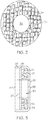
FIG. 2 is a cross-sectional front view of a cushion from the assembled headphone ofFIG. 1 . -
FIG. 3 is a cross-sectional side view of the assembled headphone ofFIGs. 1 and2 . -
FIG. 4 is a graph illustrating a comparison of an acoustic frequency response of a headphone having a plurality of sound absorbing foam segments in accordance with some examples. -
FIG. 5 is a graph illustrating a comparison of frequency responses of headphones, in accordance with some examples. - Headphone ear cushions are typically formed by cutting a 2-D stamped sheet or block of foam into a rectangular shape and inserting it into an ear cup. In order to construct the ear cushion for positioning about a headphone speaker, the corners and center region of the foam material are cut from the foam block and discarded. However, cushion compliance, comfort level, and acoustic quality are constrained by such a construction, not to mention the waste produced by the undesirable excess pieces of foam removed from the block to form the desired shape. Also, manufacturing inefficiencies may arise when assembling headphones, in particular, inserting a foam block having a rectangular cross-section into a round skin of a typical ear cushion.
- Examples of the present inventive concepts relate to an around ear or on ear headphone that includes one or two ear cushions, each comprising a plurality of sound absorbing segments placed together in a region of the headphone between an electro-acoustical driver such as a speaker and the outer surface of the headphone. An earpiece cushion comprising a plurality of sound absorbing foam segments eliminates waste, since all foam segments may be implemented as part of a headphone construction, as distinguished from foam pieces discarded when forming an ear cushion from a single block or sheet of foam material. An earpiece cushion comprising a plurality of foam segments also allows the ear cushion to form a shape suitable for the headphone, for example, a round shape, when inserted in the ear cup of the headphone, while also providing improved comfort when abutting the wearer's head. Also, the implementation of foam segments allows the earpiece cushion to be more compliant (and thus more comfortable) than an equivalent volume of foam in a conventional rectangular foam block formed for insertion in a round skin of an ear cup. In a cushion formed from foam segments, the ratio of the foam's surface area relative to the volume of the foam is increased when compared to that same ratio in an ear cushion formed from a single block of foam material. Using a plurality of foam segments enables flexibility in tuning a number of design parameters to achieve a desired acoustic performance in the headphone. For example, the size and shape of the foam, type of foam, density of foam, foam fill percentage, and other characteristics may be tuned to achieve a desired cushion compliance, passive attenuation and damping as compared to a single piece construction. Moreover, the formation of an earpiece cushion from foam segments increases the acoustic damping per volume of foam, which permits the use of less foam in order to achieve a similar level of damping, or to use a same amount of foam from the collection of foam segments as in a single foam piece, while achieving improved damping characteristics.
-
FIG. 1 is an exploded view of aheadphone 10, in accordance with some examples. Theheadphone 10 may include anergonomic headband 22 and two earpiece units 24, each mounted at an end of theheadband 22 and positioned at or over a human ear by theheadband 22. In some examples, theheadphone 10 is an on-ear headphone. In other examples, theheadphone 10 is an around ear headphone. Although not shown, theheadphone 10 can include and not be limited to other components such as an audio input jack, microphone, adapter, cable, active noise cancellation circuitry, and so on. Theheadphone 10 can have an open back, a closed back, or a semi-open configuration, and is therefore not limited to the configuration illustrated inFIG. 1 . - An earpiece unit 24 can have a circular, ovular, ellipsoid, or other shapes when viewed in cross-section, and can be positioned on or about the ear, for example, providing a seal against the head or ear to attenuate external noise. Each earpiece unit 24 includes a hard outer cover 42 (also referred to as an ear cup), and a soft portion referred to as a cushion, which is coupled to the
ear cup 42. The cushion may include a pleather portion, orcushion skin 32, and a plurality of sound absorbingfoam segments 34 inside thecushion skin 32. The earpiece unit 24 may also include an optional cushion covering 36 having an opening 37 and aspeaker holder 38 in which an electro-acoustical driver 40 such as a speaker is positioned. Thecushion skin 32 may include an inner cover opening 33. An acoustic resistance material or scrim material may cover the inner cover opening 33. An acoustical coupling may be formed between thedriver 40 and thefoam segments 34 in thecushion skin 32. - The
ear cup 42 is attached to the back side of thespeaker holder 38. The cushion covering 36 may be attached to the front side of thespeaker holder 38 and prevent the sound absorbingfoam segments 34 from direct contact with circuitry or other components of thespeaker holder 38. Some or all of thesound absorbing segments 34 may be attached to the cushion covering 36 and/or interior wall of thecushion skin 32. Alternatively, thesegments 34 may be positioned between the cushion covering 36 and thecushion skin 32, which serves as a housing for thesegments 34. In other examples, some or all of thesound absorbing segments 34 are glued, bonded, or otherwise affixed to each other, in lieu of "free floating" in the interior of thecushion skin 32. For example, an adhesive or the like may be applied to thesound absorbing segments 34, e.g., coating thesegments 34 with adhesive, for gluing thesegments 34 together. In this manner, thesound absorbing segments 34 may be prevented from shifting, matting, or otherwise changing with respect to the positioning of thesegments 34 in the cushion. In other examples, thesound absorbing segments 34 are of assorted sizes and/or shapes. Here, the smaller segments may be glued together, while the larger segments are positioned in thecushion skin 34 with the coupled smaller segments, but are not coupled to each other. For example, the cushion may include a single block of foam material at least partially surrounded by smallersound absorbing segments 34. - The cushion covering 36 and/or
cushion skin 32 may be perforated. Thecushion skin 32 may be attached to theear cup 42,speaker holder 38, and/or cushion covering 36 and surround thesegments 34. The cushion comprising theskin 32 andfoam segments 34 may also serve as an ear pad, and may be formed of polyurethane or a similar material having air permeability so that sound generated and obtained from a driver of the headphone unit will be radiated through to the user. Aheadphone unit - As shown in
FIG. 3 , the sound absorbingfoam segments 34 at least partially fill a region formed between an interior of thecushion skin 32 and a surface of the cushion covering 36 orspeaker holder 38. Thesound absorbing segments 34 may be various shapes (e.g., cubes, spheres or any other three-dimensional shape), sizes, densities, volumes, materials and/or other parameters. Some or all of thesegments 34 may have a same shape, size, density, volume, material and/or other parameter, or may have different shapes, sizes, densities, volumes, materials and/or other parameters. Thecushion skin 32 may terminate at the cushion covering 36, and not extend to cover thespeaker holder 38 orear cup 42. Thefoam segments 34 may be formed of open cell, closed cell, reticulated or partially reticulated foam. Thefoam segments 34 may be constructed of various types of foam materials, including polyurethane, polyethylene, latex, melamine, and memory foam. Additionally pieces of other materials could be used or mixed with the foam materials to create composite materials such as but not limited to other foams, zeolite, rubber, urethanes, and fabrics. - In some examples, the
interior region 56, or sound chamber, of thecushion skin 32 includes aregion 52 in which thefoam segments 34 may be positioned. For example, thefoam segments 34 may be compartmentalized inregions 52 on either side of the unobstructed hole. Thesound chamber 56 includes a passageway formed in front of the electro-acoustical driver 40 and formed and surrounded by the arrangement offoam segments 34 so as to form an acoustical path from thedriver 40 to the wearer's ear canal when theheadphone 10 is worn, and to provide comfort, passive attenuation and acoustic damping. Thecompartment 52 offoam 34 is acoustically coupled to the volume of thesound chamber 56. - The number of
foam segments 34 and/or percentage of a volume of aregion 52 filled withfoam segments 34 may depend on several factors, including but not limited to comfort, density, foam porosity, cushion compliance, surface area/volume ratio, compression, shape, size, or other properties of the foam materials, and desired acoustic performance. As shown inFIG. 3 , asound chamber 56 extends from the inner cover opening 33 to thedriver 40, in particular, when a force is applied to hold the earpiece unit 24 against the wearer's head. Thecushion skin 32 andfoam segments 34 can rest against the wearer's head on or about the wearer's ear, such that the inner cover opening 33 is substantially aligned with the ear canal of the wearer's ear and for acoustically connecting the internal cavity with the wearer's ear cavity when the cushion rests on the user's ear while being worn. - An improvement with respect to a headphone in some examples relates to a clamping force applied by the headphone against a wearer's head. In particular, due to the increased compliance of the cushion, less clamping force may be required to seal the cushion to a wearer's head, which further improves comfort. Additionally, a higher compliant cushion with the same clamping force will have a more even distribution of pressure on the wearer's head which may provide a more consistent seal and more comfort to the wearer.
- An additional improvement with respect to the first headphone relates to acoustic damping, as illustrated in
FIG. 4. FIG. 4 shows frequency response curves 122, 124 corresponding to first and second headphones, respectively. The first headphone has a plurality of sound absorbing foam segments. The second headphone has a single block of foam cushion, for example, having a rectangular shape for insertion into a round headphone skin that encloses the foam cushion. Therefore, in describing the first headphone, reference may be made to theheadphone 10 described inFIGs. 1-3 . In describing the second headphone, reference may be made to a conventional headphone. - As shown in
FIG. 4 , the first headphone provides improved damping between 1 and 2 kHz compared to the second headphone. This improved damping was unexpected, as the amount of foam of the cushion had been reduced in the first headphone when compared to the second headphone, for example, 66-75% fill. However, the construction of foam segments in the first headphone provide additional air paths through the foam that are not present in the second headphone. In particular, the air pockets between foam segments provide lower impedance leak paths for air molecules, so the air molecules can better penetrate the foam, which improves the damping characteristics of the cushion. -
FIG. 5 is a graph illustrating a comparison of frequency responses of headphones having various percentages of sound absorbing segments filling an ear cup and a conventional headphone having a single block of foam cushion, in accordance with other examples.Frequency response curve 141 corresponding to a conventional headphone including a single block of foam cushion is compared to other frequency response curves 142-145 corresponding to headphones having varying amounts of segment fill (i.e., 50%, 75%, 90% and 100%). - As described herein, cushion compliance and acoustic characteristics can be impacted by the amount of segment fill forming a headphone cushion. Also, as described herein due to the increased compliance of the cushion, less clamping force may be required to seal the cushion to a wearer's head, which further improves comfort. Additionally, a higher compliant cushion with the same clamping force will have a more even distribution of pressure on the wearer's head which may provide a more consistent seal and more comfort to the wearer.
- In general, as packing factor increases, compliance decreases, but is still higher than a conventional headphone. In one example, a headphone having an ear cup with a plurality of sound absorbing segments and having a packing factor of 50% was found to be 71% more compliant than a conventional headphone; a headphone having an ear cup with a plurality of sound absorbing segments and having a packing factor of 75% was found to be 46% more compliant than a conventional headphone; a headphone having an ear cup with a plurality of sound absorbing segments and having a packing factor of 90% was found to be 28% more compliant than a conventional headphone; and a headphone having an ear cup with a plurality of sound absorbing segments and having a packing factor of 100% was found to be 27% more compliant than a conventional headphone.
- A number of implementations have been described. Nevertheless, it will be understood that the foregoing description is intended to illustrate and not to limit the scope of the inventive concepts which are defined by the scope of the claims.
Claims (10)
- A headphone (10), comprising:at least one cushion constructed and arranged for contact with a wearer, the at least one cushion comprising an interior region (56);an electro-acoustical driver (40) configured to transmit a sound towards an ear canal of the wearer of the headphone;a plurality of segments (34) comprising a sound absorbing material that partially fill the interior region of the cushion, the segments having air pockets therebetween which provide lower impedance leak paths for air molecules, so the air molecules can better penetrate the sound absorbing material, thereby improving damping characteristics of the cushion;wherein a ratio of an aggregate of the segments' surface area relative to a volume of the aggregate of the segments in the cushion is increased compared to the same ratio in the cushion entirely filled with a single piece of the sound absorbing material.
- The headphone (10) of claim 1, wherein the sound absorbing segments are at least one of: cube, sphere, or rectangular shaped.
- The headphone (10) of claim 1, wherein the sound absorbing material comprises a foam material.
- The headphone (10) of claim 3, wherein the foam material comprises a partially reticulated foam structure.
- The headphone (10) of claim 3, wherein the foam material comprises polyurethane.
- The headphone (10) of claim 1, further comprising a cushion covering constructed and arranged for covering the interior region of the cushion, and for maintaining the segments in the interior region.
- The headphone (10) of claim 1, wherein the interior region includes a passageway formed in front of the electro-acoustical driver and surrounded by an arrangement of the segments so as to form an acoustical path from the driver to the ear canal when the headphone is worn.
- The headphone (10) of claim 1, wherein the segments fill of the cushion is less than 100%.
- The headphone (10) of claim 1, wherein the segments fill of the cushion is between 66% and 75%.
- The headphone (10) of claim 1, further comprising an ear cup (42) coupled to the cushion, the electro-acoustical driver being positioned between the ear cup and the cushion.
Applications Claiming Priority (2)
| Application Number | Priority Date | Filing Date | Title |
|---|---|---|---|
| US15/019,325 US10080077B2 (en) | 2016-02-09 | 2016-02-09 | Ear cushion for headphone |
| PCT/US2017/015310 WO2017139107A1 (en) | 2016-02-09 | 2017-01-27 | Ear cushion for headphone |
Publications (2)
| Publication Number | Publication Date |
|---|---|
| EP3414918A1 EP3414918A1 (en) | 2018-12-19 |
| EP3414918B1 true EP3414918B1 (en) | 2020-10-21 |
Family
ID=58191569
Family Applications (1)
| Application Number | Title | Priority Date | Filing Date |
|---|---|---|---|
| EP17708001.7A Not-in-force EP3414918B1 (en) | 2016-02-09 | 2017-01-27 | Ear cushion for headphone |
Country Status (4)
| Country | Link |
|---|---|
| US (1) | US10080077B2 (en) |
| EP (1) | EP3414918B1 (en) |
| CN (1) | CN108605180A (en) |
| WO (1) | WO2017139107A1 (en) |
Cited By (2)
| Publication number | Priority date | Publication date | Assignee | Title |
|---|---|---|---|---|
| US20220239998A1 (en) * | 2021-01-28 | 2022-07-28 | Sony Interactive Entertainment LLC | Headphone ear pad to optimize comfort and maintain sound quality |
| US20220295172A1 (en) * | 2019-11-30 | 2022-09-15 | Huawei Technologies Co., Ltd. | Ear pad, earmuff component, and headset |
Families Citing this family (51)
| Publication number | Priority date | Publication date | Assignee | Title |
|---|---|---|---|---|
| USD854511S1 (en) * | 2015-08-28 | 2019-07-23 | Sony Corporation | Headphone |
| JP1576092S (en) * | 2016-10-04 | 2017-05-15 | ||
| CN110300563B (en) * | 2017-02-16 | 2022-07-15 | 3M创新有限公司 | Earmuff hearing protection device including sound attenuating member |
| USD836084S1 (en) * | 2017-07-19 | 2018-12-18 | Suikun Xie | Headset |
| USD865706S1 (en) * | 2017-09-21 | 2019-11-05 | Shenzhen Coolhear Information Technology Co., Ltd. | Headphone |
| US10187716B1 (en) * | 2017-09-27 | 2019-01-22 | Bose Corporation | Composite earcushion |
| US11044542B2 (en) * | 2017-09-27 | 2021-06-22 | Bose Corporation | Composite earcushion |
| WO2019070713A1 (en) * | 2017-10-03 | 2019-04-11 | W. L. Gore & Associates, Inc. | Acoustic ear fitting |
| USD859354S1 (en) * | 2017-11-02 | 2019-09-10 | Shenzhen Jiuhu Technology Co., Ltd. | Headset |
| US20210227311A1 (en) * | 2017-12-19 | 2021-07-22 | Human, Incorporated | Ear-worn device |
| USD868733S1 (en) * | 2018-09-10 | 2019-12-03 | Dongguan bingo electronics co., LTD | Headset |
| JP1634807S (en) * | 2018-12-07 | 2019-06-24 | ||
| EP4591841A3 (en) * | 2018-12-31 | 2025-09-03 | Honeywell Safety Products USA, Inc. | Apparatus and method for increasing or manipulating noise attenuation in hearing protection device |
| USD939779S1 (en) | 2019-02-20 | 2021-12-28 | Honeywell International Inc. | Hearing protection device |
| TR201903435A2 (en) * | 2019-03-06 | 2019-03-21 | Mehmet Tunc Turgut | BUILDING OVER-EAR HEADPHONES WITH SPEAKER UNITS EQUIPPED WITH SOUND EQUIPMENT ENVIRONMENTALLY |
| USD907598S1 (en) * | 2019-03-08 | 2021-01-12 | Shenzhen Meidong Acoustics Co., Ltd. | Headphone |
| USD905005S1 (en) * | 2019-07-04 | 2020-12-15 | Shenzhen Wonderhuge Electronics Co., Ltd. | Headphone |
| USD917420S1 (en) * | 2019-07-25 | 2021-04-27 | Mingxun Zheng | Audio headset |
| US10757499B1 (en) | 2019-09-25 | 2020-08-25 | Sonos, Inc. | Systems and methods for controlling playback and other features of a wireless headphone |
| USD883949S1 (en) * | 2019-11-13 | 2020-05-12 | Shenzhen Qianhai Patuoxun Network And Technology Co., Ltd | Headphone |
| USD879741S1 (en) * | 2019-11-13 | 2020-03-31 | Shenzhen Qianhai Patuoxun Network And Technology Co., Ltd | Headphones |
| USD880449S1 (en) * | 2019-12-09 | 2020-04-07 | Shenzhen Qianhai Patuoxun Network And Technology Co., Ltd | Headphones |
| USD929958S1 (en) * | 2019-12-20 | 2021-09-07 | Yamaha Corporation | Headphone |
| USD933041S1 (en) | 2020-01-23 | 2021-10-12 | Stephen John Rois | Audio headphones |
| JP1671045S (en) * | 2020-05-22 | 2020-10-26 | ||
| USD954019S1 (en) | 2020-06-05 | 2022-06-07 | Sonos, Inc. | Headphone |
| US11277679B1 (en) * | 2020-09-16 | 2022-03-15 | Apple Inc. | Headphone earcup structure |
| US11671745B2 (en) * | 2020-09-16 | 2023-06-06 | Apple Inc. | Headphone earcup with adsorptive material |
| JP1681673S (en) * | 2020-09-17 | 2021-03-22 | ||
| USD990449S1 (en) * | 2020-09-21 | 2023-06-27 | Scaeva Technologies, Inc. | Headphone |
| USD991214S1 (en) | 2020-10-08 | 2023-07-04 | Sonos, Inc. | Headphone ear cushion attachment mechanism |
| US11533564B2 (en) | 2020-10-08 | 2022-12-20 | Sonos, Inc. | Headphone ear cushion attachment mechanism and methods for using |
| US12621599B2 (en) * | 2020-10-09 | 2026-05-05 | Gn Audio A/S | On-the-ear ear cushion with multiple foams having different properties |
| JP1697512S (en) * | 2020-12-14 | 2021-10-18 | headphone | |
| JP1697414S (en) * | 2020-12-14 | 2021-10-18 | headphone | |
| CA207774S (en) * | 2021-07-06 | 2023-06-27 | Beijing Edifier Tech Co Ltd | Headphone |
| USD1002575S1 (en) * | 2021-08-04 | 2023-10-24 | Shenzhen Chaosupao Electronic Technology Co., Ltd | Headphone |
| CN113616898B (en) * | 2021-08-09 | 2023-08-04 | 深圳分贝声学科技有限公司 | Method and system for preventing and controlling noise pollution |
| USD1029788S1 (en) * | 2021-08-24 | 2024-06-04 | 3M Innovative Properties Company | Voice masking headphone |
| USD1003856S1 (en) * | 2021-09-10 | 2023-11-07 | Shenzhen Wonderhuge Electronics Co., Ltd | Headphone |
| USD1022949S1 (en) * | 2021-10-11 | 2024-04-16 | Shenzhen Chaosupao Electronic Technology Co., Ltd | Headphone |
| US12490003B2 (en) * | 2022-05-11 | 2025-12-02 | Panasonic Intellectual Property Managment Co., Ltd. | Sound reproduction device |
| CA215352S (en) * | 2022-08-12 | 2024-02-29 | Beijing Edifier Tech Co Ltd | Headset |
| USD1036415S1 (en) * | 2022-08-31 | 2024-07-23 | Harman International Industries, Incorporated | Headphone |
| USD1061472S1 (en) | 2023-03-31 | 2025-02-11 | Sonos, Inc. | Headphone |
| USD1068721S1 (en) * | 2023-04-27 | 2025-04-01 | Sony Group Corporation | Headphone |
| USD1053164S1 (en) * | 2023-07-27 | 2024-12-03 | Shenzhen Guli Technology Co., Ltd. | Headphone |
| USD1008997S1 (en) * | 2023-08-20 | 2023-12-26 | Weihan Lin | Headphone |
| USD1095488S1 (en) * | 2023-09-22 | 2025-09-30 | Tozo Inc | Headphones |
| US20250234125A1 (en) * | 2024-01-16 | 2025-07-17 | Skullcandy, Inc. | Open back headphone with tactile vibration driver and related methods |
| USD1113804S1 (en) * | 2024-01-31 | 2026-02-17 | Dyson Technology Limited | Headphone ear cap |
Family Cites Families (14)
| Publication number | Priority date | Publication date | Assignee | Title |
|---|---|---|---|---|
| US3479669A (en) | 1967-08-29 | 1969-11-25 | Bolt Beranek & Newman | Acoustical ear muff and the like |
| US4260575A (en) | 1979-11-05 | 1981-04-07 | Koss Corporation | Method for molding ear cushions |
| DE3210034A1 (en) | 1981-03-23 | 1982-09-30 | AKG Akustische u. Kino-Geräte GmbH, 1150 Wien | Ear pad for a headphone earpiece |
| US4856118A (en) | 1987-02-11 | 1989-08-15 | Bose Corporation | Headphone cushioning |
| GB9805619D0 (en) | 1998-03-18 | 1998-05-13 | Noise Cancellation Tech | Cushioned earphones |
| US7573177B2 (en) * | 1999-04-20 | 2009-08-11 | Virginia Tech Intellectual Properties, Inc. | Active/passive distributed absorber for vibration and sound radiation control |
| GB2394166B (en) | 2002-10-14 | 2006-01-18 | Thales Plc | Cushions |
| US20060269090A1 (en) | 2005-05-27 | 2006-11-30 | Roman Sapiejewski | Supra-aural headphone noise reducing |
| US8098872B2 (en) | 2009-07-08 | 2012-01-17 | Chi-Tsan Chang | Headphone |
| US20110225705A1 (en) * | 2010-03-16 | 2011-09-22 | 3M Innovative Properties Company | Hearing protective device with moisture resistant earmuff sound absorbers |
| JP2012160787A (en) * | 2011-01-28 | 2012-08-23 | Sony Corp | Ear pads |
| EP2763638B1 (en) | 2011-10-07 | 2019-02-20 | Hearing Components, Inc. | Foam cushion for headphones |
| GB2527157B (en) | 2014-11-19 | 2016-07-13 | Kokoon Tech Ltd | A headphone |
| US9786261B2 (en) * | 2014-12-15 | 2017-10-10 | Honeywell International Inc. | Active noise reduction earcup with speaker array |
-
2016
- 2016-02-09 US US15/019,325 patent/US10080077B2/en active Active
-
2017
- 2017-01-27 EP EP17708001.7A patent/EP3414918B1/en not_active Not-in-force
- 2017-01-27 CN CN201780010446.4A patent/CN108605180A/en active Pending
- 2017-01-27 WO PCT/US2017/015310 patent/WO2017139107A1/en not_active Ceased
Non-Patent Citations (1)
| Title |
|---|
| None * |
Cited By (3)
| Publication number | Priority date | Publication date | Assignee | Title |
|---|---|---|---|---|
| US20220295172A1 (en) * | 2019-11-30 | 2022-09-15 | Huawei Technologies Co., Ltd. | Ear pad, earmuff component, and headset |
| US12167194B2 (en) * | 2019-11-30 | 2024-12-10 | Huawei Technologies Co., Ltd. | Ear pad, earmuff component, and headset |
| US20220239998A1 (en) * | 2021-01-28 | 2022-07-28 | Sony Interactive Entertainment LLC | Headphone ear pad to optimize comfort and maintain sound quality |
Also Published As
| Publication number | Publication date |
|---|---|
| US20170230746A1 (en) | 2017-08-10 |
| US10080077B2 (en) | 2018-09-18 |
| WO2017139107A1 (en) | 2017-08-17 |
| EP3414918A1 (en) | 2018-12-19 |
| CN108605180A (en) | 2018-09-28 |
Similar Documents
| Publication | Publication Date | Title |
|---|---|---|
| US10080077B2 (en) | Ear cushion for headphone | |
| US11044542B2 (en) | Composite earcushion | |
| US8111858B2 (en) | Supra-aural headphone noise reducing | |
| US8467539B2 (en) | High transmission loss cushion | |
| US8374373B2 (en) | High transmission loss headphone cushion | |
| KR102049940B1 (en) | An earphone having a controlled acoustic leak port | |
| JP4151157B2 (en) | earphone | |
| CN111164987B (en) | Composite ear pad | |
| CA2818722C (en) | An earphone having an acoustic tuning mechanism | |
| WO2012024209A1 (en) | Equalized earphones | |
| JP5441164B2 (en) | headphone | |
| WO2023133347A1 (en) | Earphone cushion with acoustic mesh-covered port | |
| CN113475096A (en) | Noise reduction ear pad, noise reduction earmuff and head-wearing noise reduction earphone | |
| CN108836631B (en) | Ear muff | |
| JP6149599B2 (en) | earphone | |
| US20100303275A1 (en) | Earpiece and Method for Securing a Device Within the Ear | |
| US20230336908A1 (en) | On-the-ear ear cushion with multiple foams having different properties | |
| JP5671586B1 (en) | Tuning headphones | |
| CN217693675U (en) | Can tone pressing ear muff and headset | |
| GB2528119B (en) | A headphone earpiece including acoustic resistance | |
| HK40037850A (en) | An earphone having an acoustic tuning mechanism | |
| HK1158419B (en) | High transmission loss headphone cushion | |
| HK1095965B (en) | Earphone for supra-aural headphone and earphone for active noise reduction headset |
Legal Events
| Date | Code | Title | Description |
|---|---|---|---|
| STAA | Information on the status of an ep patent application or granted ep patent |
Free format text: STATUS: UNKNOWN |
|
| STAA | Information on the status of an ep patent application or granted ep patent |
Free format text: STATUS: THE INTERNATIONAL PUBLICATION HAS BEEN MADE |
|
| PUAI | Public reference made under article 153(3) epc to a published international application that has entered the european phase |
Free format text: ORIGINAL CODE: 0009012 |
|
| STAA | Information on the status of an ep patent application or granted ep patent |
Free format text: STATUS: REQUEST FOR EXAMINATION WAS MADE |
|
| 17P | Request for examination filed |
Effective date: 20180821 |
|
| AK | Designated contracting states |
Kind code of ref document: A1 Designated state(s): AL AT BE BG CH CY CZ DE DK EE ES FI FR GB GR HR HU IE IS IT LI LT LU LV MC MK MT NL NO PL PT RO RS SE SI SK SM TR |
|
| AX | Request for extension of the european patent |
Extension state: BA ME |
|
| DAV | Request for validation of the european patent (deleted) | ||
| DAX | Request for extension of the european patent (deleted) | ||
| STAA | Information on the status of an ep patent application or granted ep patent |
Free format text: STATUS: EXAMINATION IS IN PROGRESS |
|
| 17Q | First examination report despatched |
Effective date: 20190820 |
|
| GRAP | Despatch of communication of intention to grant a patent |
Free format text: ORIGINAL CODE: EPIDOSNIGR1 |
|
| STAA | Information on the status of an ep patent application or granted ep patent |
Free format text: STATUS: GRANT OF PATENT IS INTENDED |
|
| INTG | Intention to grant announced |
Effective date: 20200624 |
|
| GRAS | Grant fee paid |
Free format text: ORIGINAL CODE: EPIDOSNIGR3 |
|
| GRAA | (expected) grant |
Free format text: ORIGINAL CODE: 0009210 |
|
| STAA | Information on the status of an ep patent application or granted ep patent |
Free format text: STATUS: THE PATENT HAS BEEN GRANTED |
|
| AK | Designated contracting states |
Kind code of ref document: B1 Designated state(s): AL AT BE BG CH CY CZ DE DK EE ES FI FR GB GR HR HU IE IS IT LI LT LU LV MC MK MT NL NO PL PT RO RS SE SI SK SM TR |
|
| REG | Reference to a national code |
Ref country code: GB Ref legal event code: FG4D |
|
| REG | Reference to a national code |
Ref country code: CH Ref legal event code: EP |
|
| REG | Reference to a national code |
Ref country code: IE Ref legal event code: FG4D |
|
| REG | Reference to a national code |
Ref country code: DE Ref legal event code: R096 Ref document number: 602017025817 Country of ref document: DE |
|
| REG | Reference to a national code |
Ref country code: AT Ref legal event code: REF Ref document number: 1327071 Country of ref document: AT Kind code of ref document: T Effective date: 20201115 |
|
| REG | Reference to a national code |
Ref country code: AT Ref legal event code: MK05 Ref document number: 1327071 Country of ref document: AT Kind code of ref document: T Effective date: 20201021 |
|
| REG | Reference to a national code |
Ref country code: NL Ref legal event code: MP Effective date: 20201021 |
|
| PG25 | Lapsed in a contracting state [announced via postgrant information from national office to epo] |
Ref country code: FI Free format text: LAPSE BECAUSE OF FAILURE TO SUBMIT A TRANSLATION OF THE DESCRIPTION OR TO PAY THE FEE WITHIN THE PRESCRIBED TIME-LIMIT Effective date: 20201021 Ref country code: GR Free format text: LAPSE BECAUSE OF FAILURE TO SUBMIT A TRANSLATION OF THE DESCRIPTION OR TO PAY THE FEE WITHIN THE PRESCRIBED TIME-LIMIT Effective date: 20210122 Ref country code: RS Free format text: LAPSE BECAUSE OF FAILURE TO SUBMIT A TRANSLATION OF THE DESCRIPTION OR TO PAY THE FEE WITHIN THE PRESCRIBED TIME-LIMIT Effective date: 20201021 Ref country code: PT Free format text: LAPSE BECAUSE OF FAILURE TO SUBMIT A TRANSLATION OF THE DESCRIPTION OR TO PAY THE FEE WITHIN THE PRESCRIBED TIME-LIMIT Effective date: 20210222 Ref country code: NO Free format text: LAPSE BECAUSE OF FAILURE TO SUBMIT A TRANSLATION OF THE DESCRIPTION OR TO PAY THE FEE WITHIN THE PRESCRIBED TIME-LIMIT Effective date: 20210121 |
|
| REG | Reference to a national code |
Ref country code: LT Ref legal event code: MG4D |
|
| PG25 | Lapsed in a contracting state [announced via postgrant information from national office to epo] |
Ref country code: SE Free format text: LAPSE BECAUSE OF FAILURE TO SUBMIT A TRANSLATION OF THE DESCRIPTION OR TO PAY THE FEE WITHIN THE PRESCRIBED TIME-LIMIT Effective date: 20201021 Ref country code: ES Free format text: LAPSE BECAUSE OF FAILURE TO SUBMIT A TRANSLATION OF THE DESCRIPTION OR TO PAY THE FEE WITHIN THE PRESCRIBED TIME-LIMIT Effective date: 20201021 Ref country code: AT Free format text: LAPSE BECAUSE OF FAILURE TO SUBMIT A TRANSLATION OF THE DESCRIPTION OR TO PAY THE FEE WITHIN THE PRESCRIBED TIME-LIMIT Effective date: 20201021 Ref country code: BG Free format text: LAPSE BECAUSE OF FAILURE TO SUBMIT A TRANSLATION OF THE DESCRIPTION OR TO PAY THE FEE WITHIN THE PRESCRIBED TIME-LIMIT Effective date: 20210121 Ref country code: PL Free format text: LAPSE BECAUSE OF FAILURE TO SUBMIT A TRANSLATION OF THE DESCRIPTION OR TO PAY THE FEE WITHIN THE PRESCRIBED TIME-LIMIT Effective date: 20201021 Ref country code: LV Free format text: LAPSE BECAUSE OF FAILURE TO SUBMIT A TRANSLATION OF THE DESCRIPTION OR TO PAY THE FEE WITHIN THE PRESCRIBED TIME-LIMIT Effective date: 20201021 Ref country code: IS Free format text: LAPSE BECAUSE OF FAILURE TO SUBMIT A TRANSLATION OF THE DESCRIPTION OR TO PAY THE FEE WITHIN THE PRESCRIBED TIME-LIMIT Effective date: 20210221 |
|
| PG25 | Lapsed in a contracting state [announced via postgrant information from national office to epo] |
Ref country code: NL Free format text: LAPSE BECAUSE OF FAILURE TO SUBMIT A TRANSLATION OF THE DESCRIPTION OR TO PAY THE FEE WITHIN THE PRESCRIBED TIME-LIMIT Effective date: 20201021 Ref country code: HR Free format text: LAPSE BECAUSE OF FAILURE TO SUBMIT A TRANSLATION OF THE DESCRIPTION OR TO PAY THE FEE WITHIN THE PRESCRIBED TIME-LIMIT Effective date: 20201021 |
|
| REG | Reference to a national code |
Ref country code: DE Ref legal event code: R097 Ref document number: 602017025817 Country of ref document: DE |
|
| PG25 | Lapsed in a contracting state [announced via postgrant information from national office to epo] |
Ref country code: SK Free format text: LAPSE BECAUSE OF FAILURE TO SUBMIT A TRANSLATION OF THE DESCRIPTION OR TO PAY THE FEE WITHIN THE PRESCRIBED TIME-LIMIT Effective date: 20201021 Ref country code: RO Free format text: LAPSE BECAUSE OF FAILURE TO SUBMIT A TRANSLATION OF THE DESCRIPTION OR TO PAY THE FEE WITHIN THE PRESCRIBED TIME-LIMIT Effective date: 20201021 Ref country code: SM Free format text: LAPSE BECAUSE OF FAILURE TO SUBMIT A TRANSLATION OF THE DESCRIPTION OR TO PAY THE FEE WITHIN THE PRESCRIBED TIME-LIMIT Effective date: 20201021 Ref country code: EE Free format text: LAPSE BECAUSE OF FAILURE TO SUBMIT A TRANSLATION OF THE DESCRIPTION OR TO PAY THE FEE WITHIN THE PRESCRIBED TIME-LIMIT Effective date: 20201021 Ref country code: CZ Free format text: LAPSE BECAUSE OF FAILURE TO SUBMIT A TRANSLATION OF THE DESCRIPTION OR TO PAY THE FEE WITHIN THE PRESCRIBED TIME-LIMIT Effective date: 20201021 Ref country code: LT Free format text: LAPSE BECAUSE OF FAILURE TO SUBMIT A TRANSLATION OF THE DESCRIPTION OR TO PAY THE FEE WITHIN THE PRESCRIBED TIME-LIMIT Effective date: 20201021 |
|
| PLBE | No opposition filed within time limit |
Free format text: ORIGINAL CODE: 0009261 |
|
| STAA | Information on the status of an ep patent application or granted ep patent |
Free format text: STATUS: NO OPPOSITION FILED WITHIN TIME LIMIT |
|
| PG25 | Lapsed in a contracting state [announced via postgrant information from national office to epo] |
Ref country code: DK Free format text: LAPSE BECAUSE OF FAILURE TO SUBMIT A TRANSLATION OF THE DESCRIPTION OR TO PAY THE FEE WITHIN THE PRESCRIBED TIME-LIMIT Effective date: 20201021 Ref country code: MC Free format text: LAPSE BECAUSE OF FAILURE TO SUBMIT A TRANSLATION OF THE DESCRIPTION OR TO PAY THE FEE WITHIN THE PRESCRIBED TIME-LIMIT Effective date: 20201021 |
|
| REG | Reference to a national code |
Ref country code: CH Ref legal event code: PL |
|
| 26N | No opposition filed |
Effective date: 20210722 |
|
| GBPC | Gb: european patent ceased through non-payment of renewal fee |
Effective date: 20210127 |
|
| PG25 | Lapsed in a contracting state [announced via postgrant information from national office to epo] |
Ref country code: LU Free format text: LAPSE BECAUSE OF NON-PAYMENT OF DUE FEES Effective date: 20210127 |
|
| REG | Reference to a national code |
Ref country code: BE Ref legal event code: MM Effective date: 20210131 |
|
| PG25 | Lapsed in a contracting state [announced via postgrant information from national office to epo] |
Ref country code: IT Free format text: LAPSE BECAUSE OF FAILURE TO SUBMIT A TRANSLATION OF THE DESCRIPTION OR TO PAY THE FEE WITHIN THE PRESCRIBED TIME-LIMIT Effective date: 20201021 Ref country code: AL Free format text: LAPSE BECAUSE OF FAILURE TO SUBMIT A TRANSLATION OF THE DESCRIPTION OR TO PAY THE FEE WITHIN THE PRESCRIBED TIME-LIMIT Effective date: 20201021 Ref country code: FR Free format text: LAPSE BECAUSE OF NON-PAYMENT OF DUE FEES Effective date: 20210131 |
|
| PG25 | Lapsed in a contracting state [announced via postgrant information from national office to epo] |
Ref country code: SI Free format text: LAPSE BECAUSE OF FAILURE TO SUBMIT A TRANSLATION OF THE DESCRIPTION OR TO PAY THE FEE WITHIN THE PRESCRIBED TIME-LIMIT Effective date: 20201021 Ref country code: CH Free format text: LAPSE BECAUSE OF NON-PAYMENT OF DUE FEES Effective date: 20210131 Ref country code: GB Free format text: LAPSE BECAUSE OF NON-PAYMENT OF DUE FEES Effective date: 20210127 Ref country code: LI Free format text: LAPSE BECAUSE OF NON-PAYMENT OF DUE FEES Effective date: 20210131 |
|
| PG25 | Lapsed in a contracting state [announced via postgrant information from national office to epo] |
Ref country code: IE Free format text: LAPSE BECAUSE OF NON-PAYMENT OF DUE FEES Effective date: 20210127 |
|
| PGFP | Annual fee paid to national office [announced via postgrant information from national office to epo] |
Ref country code: DE Payment date: 20220127 Year of fee payment: 6 |
|
| PG25 | Lapsed in a contracting state [announced via postgrant information from national office to epo] |
Ref country code: IS Free format text: LAPSE BECAUSE OF FAILURE TO SUBMIT A TRANSLATION OF THE DESCRIPTION OR TO PAY THE FEE WITHIN THE PRESCRIBED TIME-LIMIT Effective date: 20210221 |
|
| PG25 | Lapsed in a contracting state [announced via postgrant information from national office to epo] |
Ref country code: BE Free format text: LAPSE BECAUSE OF NON-PAYMENT OF DUE FEES Effective date: 20210131 |
|
| PG25 | Lapsed in a contracting state [announced via postgrant information from national office to epo] |
Ref country code: CY Free format text: LAPSE BECAUSE OF FAILURE TO SUBMIT A TRANSLATION OF THE DESCRIPTION OR TO PAY THE FEE WITHIN THE PRESCRIBED TIME-LIMIT Effective date: 20201021 |
|
| PG25 | Lapsed in a contracting state [announced via postgrant information from national office to epo] |
Ref country code: HU Free format text: LAPSE BECAUSE OF FAILURE TO SUBMIT A TRANSLATION OF THE DESCRIPTION OR TO PAY THE FEE WITHIN THE PRESCRIBED TIME-LIMIT; INVALID AB INITIO Effective date: 20170127 |
|
| REG | Reference to a national code |
Ref country code: DE Ref legal event code: R119 Ref document number: 602017025817 Country of ref document: DE |
|
| PG25 | Lapsed in a contracting state [announced via postgrant information from national office to epo] |
Ref country code: DE Free format text: LAPSE BECAUSE OF NON-PAYMENT OF DUE FEES Effective date: 20230801 |
|
| PG25 | Lapsed in a contracting state [announced via postgrant information from national office to epo] |
Ref country code: MK Free format text: LAPSE BECAUSE OF FAILURE TO SUBMIT A TRANSLATION OF THE DESCRIPTION OR TO PAY THE FEE WITHIN THE PRESCRIBED TIME-LIMIT Effective date: 20201021 |
|
| PG25 | Lapsed in a contracting state [announced via postgrant information from national office to epo] |
Ref country code: MT Free format text: LAPSE BECAUSE OF FAILURE TO SUBMIT A TRANSLATION OF THE DESCRIPTION OR TO PAY THE FEE WITHIN THE PRESCRIBED TIME-LIMIT Effective date: 20201021 |
|
| PG25 | Lapsed in a contracting state [announced via postgrant information from national office to epo] |
Ref country code: TR Free format text: LAPSE BECAUSE OF FAILURE TO SUBMIT A TRANSLATION OF THE DESCRIPTION OR TO PAY THE FEE WITHIN THE PRESCRIBED TIME-LIMIT Effective date: 20201021 |