EP3413609B1 - Frequency point selection method and device - Google Patents
Frequency point selection method and device Download PDFInfo
- Publication number
- EP3413609B1 EP3413609B1 EP17746870.9A EP17746870A EP3413609B1 EP 3413609 B1 EP3413609 B1 EP 3413609B1 EP 17746870 A EP17746870 A EP 17746870A EP 3413609 B1 EP3413609 B1 EP 3413609B1
- Authority
- EP
- European Patent Office
- Prior art keywords
- carrier frequency
- carrier
- information
- base station
- transmission power
- Prior art date
- Legal status (The legal status is an assumption and is not a legal conclusion. Google has not performed a legal analysis and makes no representation as to the accuracy of the status listed.)
- Active
Links
Images










Classifications
-
- H—ELECTRICITY
- H04—ELECTRIC COMMUNICATION TECHNIQUE
- H04W—WIRELESS COMMUNICATION NETWORKS
- H04W76/00—Connection management
- H04W76/10—Connection setup
-
- H—ELECTRICITY
- H04—ELECTRIC COMMUNICATION TECHNIQUE
- H04W—WIRELESS COMMUNICATION NETWORKS
- H04W72/00—Local resource management
- H04W72/02—Selection of wireless resources by user or terminal
-
- H—ELECTRICITY
- H04—ELECTRIC COMMUNICATION TECHNIQUE
- H04W—WIRELESS COMMUNICATION NETWORKS
- H04W48/00—Access restriction; Network selection; Access point selection
- H04W48/16—Discovering, processing access restriction or access information
-
- H—ELECTRICITY
- H04—ELECTRIC COMMUNICATION TECHNIQUE
- H04B—TRANSMISSION
- H04B17/00—Monitoring; Testing
- H04B17/30—Monitoring; Testing of propagation channels
- H04B17/309—Measuring or estimating channel quality parameters
- H04B17/347—Path loss
-
- H—ELECTRICITY
- H04—ELECTRIC COMMUNICATION TECHNIQUE
- H04W—WIRELESS COMMUNICATION NETWORKS
- H04W24/00—Supervisory, monitoring or testing arrangements
- H04W24/08—Testing, supervising or monitoring using real traffic
-
- H—ELECTRICITY
- H04—ELECTRIC COMMUNICATION TECHNIQUE
- H04W—WIRELESS COMMUNICATION NETWORKS
- H04W36/00—Hand-off or reselection arrangements
- H04W36/0005—Control or signalling for completing the hand-off
- H04W36/0055—Transmission or use of information for re-establishing the radio link
- H04W36/0072—Transmission or use of information for re-establishing the radio link of resource information of target access point
-
- H—ELECTRICITY
- H04—ELECTRIC COMMUNICATION TECHNIQUE
- H04W—WIRELESS COMMUNICATION NETWORKS
- H04W52/00—Power management, e.g. Transmission Power Control [TPC] or power classes
- H04W52/04—Transmission power control [TPC]
- H04W52/30—Transmission power control [TPC] using constraints in the total amount of available transmission power
- H04W52/36—Transmission power control [TPC] using constraints in the total amount of available transmission power with a discrete range or set of values, e.g. step size, ramping or offsets
-
- H—ELECTRICITY
- H04—ELECTRIC COMMUNICATION TECHNIQUE
- H04W—WIRELESS COMMUNICATION NETWORKS
- H04W52/00—Power management, e.g. Transmission Power Control [TPC] or power classes
- H04W52/04—Transmission power control [TPC]
- H04W52/54—Signalisation aspects of the TPC commands, e.g. frame structure
-
- H—ELECTRICITY
- H04—ELECTRIC COMMUNICATION TECHNIQUE
- H04W—WIRELESS COMMUNICATION NETWORKS
- H04W72/00—Local resource management
- H04W72/04—Wireless resource allocation
- H04W72/044—Wireless resource allocation based on the type of the allocated resource
- H04W72/0453—Resources in frequency domain, e.g. a carrier in FDMA
-
- H—ELECTRICITY
- H04—ELECTRIC COMMUNICATION TECHNIQUE
- H04W—WIRELESS COMMUNICATION NETWORKS
- H04W72/00—Local resource management
- H04W72/04—Wireless resource allocation
- H04W72/044—Wireless resource allocation based on the type of the allocated resource
- H04W72/0473—Wireless resource allocation based on the type of the allocated resource the resource being transmission power
-
- H—ELECTRICITY
- H04—ELECTRIC COMMUNICATION TECHNIQUE
- H04W—WIRELESS COMMUNICATION NETWORKS
- H04W72/00—Local resource management
- H04W72/20—Control channels or signalling for resource management
- H04W72/23—Control channels or signalling for resource management in the downlink direction of a wireless link, i.e. towards a terminal
-
- H—ELECTRICITY
- H04—ELECTRIC COMMUNICATION TECHNIQUE
- H04W—WIRELESS COMMUNICATION NETWORKS
- H04W76/00—Connection management
- H04W76/20—Manipulation of established connections
-
- H—ELECTRICITY
- H04—ELECTRIC COMMUNICATION TECHNIQUE
- H04W—WIRELESS COMMUNICATION NETWORKS
- H04W76/00—Connection management
- H04W76/30—Connection release
-
- H—ELECTRICITY
- H04—ELECTRIC COMMUNICATION TECHNIQUE
- H04W—WIRELESS COMMUNICATION NETWORKS
- H04W76/00—Connection management
- H04W76/40—Connection management for selective distribution or broadcast
-
- H—ELECTRICITY
- H04—ELECTRIC COMMUNICATION TECHNIQUE
- H04W—WIRELESS COMMUNICATION NETWORKS
- H04W74/00—Wireless channel access
- H04W74/08—Non-scheduled access, e.g. ALOHA
- H04W74/0833—Random access procedures, e.g. with 4-step access
-
- H—ELECTRICITY
- H04—ELECTRIC COMMUNICATION TECHNIQUE
- H04W—WIRELESS COMMUNICATION NETWORKS
- H04W76/00—Connection management
- H04W76/20—Manipulation of established connections
- H04W76/27—Transitions between radio resource control [RRC] states
Definitions
- the patent document relates to the field of communication and, more particularly, to carrier frequency methods as well as corresponding apparatuses and non-transitory computer readable media.
- Machine to Machine (M2M) communication is an important issue in the study of 5 th Generation (5G) Mobile Communication Technology, and it is also an important application area for future wireless communication.
- 5G 5 th Generation
- NB-IoT Narrow Band-Internet of Things
- the NB-IoT introduces the following context suspension and resume mechanism: when User Equipment (UE) and a Mobility Management Entity (MME) complete uplink and downlink data transmission, the UE's bearer context and AS context can be suspended on an evolved base station (eNB, also called eNodeB) side and the MME side by using a Radio Resource Control (RRC) connection suspension mechanism; and, UU and S1 interfaces connections of the UE are quickly restored by connecting the RRC to a resume process, if data transmission between the UE and the MME is required subsequently.
- eNB evolved base station
- RRC Radio Resource Control
- a plurality of single carrier cells within a same eNodeB that cover a same area are aggregated into a multi-carrier cell.
- the specific manifestation is as follows: multiple carriers share one physical cell identification and share a broadcast channel and a synchronization channel, and a traffic channel can be transmitted at a certain carrier within the cell, wherein a carrier carrying the broadcast channel and the synchronization channel is called an Anchor Carrier while a carrier not carrying the broadcast channel or the synchronization channel is called a Non-Anchor carrier.
- the current service carrier frequency selecting strategy proposed is that the traffic for one UE is evenly distributed to different carrier frequencies based on the UE's International Mobile Subscriber Identification Numbers (IMSIs), or the traffic for one UE is dynamically scheduled at multiple carrier frequencies by using a frequency hopping strategy.
- IMSIs International Mobile Subscriber Identification Numbers
- US 2011/013577 A1 relates to a method for controlling user equipment, UE, access in a multi-frequency system.
- a network side receives an access preamble sent by a UE on one frequency.
- the network side determines that the UE needs to access on another frequency, the network side notifies the UE to access by switching to another frequency.
- Network device is also provided at the same time.
- XP-002787459 3GPP TS 36.213, v13.0.1 (2016-01), 3rd Generation Partnership Project; Technical Specification Group Radio Access Network; Evolved Universal Terrestrial Radio Access (E-UTRA) ; Physical layer procedures (Release 13), section 5.2, relates to a method for determining the downlink transmit energy per resource element.
- it relates to RSRP and RSRQ measurements, where the UE assumes downlink cell-specific RS EPRE is constant across the downlink system bandwidth and constant across all subframes with discovery signal transmissions until different cell-specific RS power information is received.
- US 2012/202544 A1 relates to a method and apparatus for setting the transmission power of a terminal in a wireless communication system.
- the initial transmission power by means of which the terminal transmits a signal via an uplink non-anchor carrier is determined by reflecting the transmission power by means of which the terminal has most recently transmitted a signal via an uplink anchor carrier and by reflecting the difference between channel environments of the uplink anchor carrier and the uplink non-anchor carrier, in a wireless communication system using a broadband formed by carrier aggregation.
- Embodiments and examples of the disclosed technologies provide carrier frequency methods as well as corresponding apparatuses and non-transitory computer readable media. so as to at least solve the problem that a service carrier frequency selecting strategy in related techniques is to perform selection passively and lacks initiative.
- Figure 1 is a flow chart of the carrier frequency selecting method according to the embodiment of the disclosed technologies. As shown in Figure 1 , the process includes the following steps:
- a base station selects a carrier frequency to carry traffic and transmits information for a service carrier frequency to UE.
- the UE selects a corresponding service carrier frequency to perform data transmission and reception.
- the UE operates at an original camped carrier frequency.
- a carrier frequency at which the UE operates can be a carrier frequency to carry traffic selected by the base station actively.
- a base station described herein may be an evolved base station (eNodeB).
- eNodeB evolved base station
- the base station may transmit the information for a service carrier frequency with an RRC connection setup request, an RRC connection resume request, an RRC connection reestablishment message, or an RRC connection reconfiguration message.
- an RRC connection setup message, an RRC connection resume message i.e., an RRC connection resume completion message
- an RRC connection reestablishment message, or an RRC connection reconfiguration message may be received, and then whether the RRC connection setup message, the RRC connection resume message, the RRC connection reestablishment message, or the RRC connection reconfiguration message received carries the information for a service carrier frequency is determined.
- a subsequent flow of the UE is performed at the service carrier frequency if the UE determines that the information for a service carrier frequency sent by a base station is received; and, otherwise, the subsequent flow of the UE is performed at a current camped carrier frequency.
- the subsequent flow of the UE may include all processes of the UE, such as a data reception and transmission process, a signaling reception and transmission process, and a random process, in a current connection mode.
- a random access parameter broadcast by the cell is used as a random access parameter of the service carrier frequency.
- the UE may operate at a carrier frequency carrying a broadcast channel when the UE is currently in an IDLE state.
- the specific implementation may be as follows:
- a strategy for selecting a carrier frequency for the UE is: when it is determined that an RRC release message, or an RRC connection suspension message sent by the base station is received, wherein the RRC release message or the RRC connection suspension message carries the information for a service carrier frequency, the UE operates at a carrier frequency corresponding to the information for a service carrier frequency carried in the RRC release message or the RRC connection suspension message; or when it is determined that an RRC release message, or an RRC connection suspension message, and/or an RRC connection setup message, and/or an RRC connection resume message sent by a base station is received, wherein the RRC release message and/or the RRC connection suspension message do not carry the information for a service carrier frequency but the RRC connection setup message or the RRC connection resume message carries the information for a service carrier frequency, the UE operates at a carrier frequency corresponding to the information for a service carrier frequency carried in the RRC
- the UE receives information for transmission power of a narrowband reference signal (NRS) of the service carrier frequency from the RRC connection setup message, the RRC connection resume message, the RRC connection reestablishment message, the RRC connection reconfiguration message, or the system information block (SIB).
- the information for transmission power of a narrowband reference signal (NRS) of the service carrier frequency provides Energy Per Resource Element (EPRE) of the NRS to be used by the UE to: Reference Signal Received Power (RSRP) measurement, and/or, path loss calculation.
- ERE Energy Per Resource Element
- the information for transmission power of an NRS corresponding to the service carrier frequency may be characterized by a deviation from power of an NRS of an Anchor carrier, or the information for transmission power of an NRS corresponding to the service carrier frequency may be characterized by an absolute value of the power of the NRS of the service carrier frequency.
- a carrier frequency carrying a broadcast channel in a cell can be acquired from SIB information or RRC signaling.
- the UE Before the UE receives information for a service carrier frequency sent by a base station, the UE transmits information for a multi-carrier support capability of the UE to the base station, wherein the information for a multi-carrier support capability of the UE is used to indicate whether the UE supports a multi-carrier function.
- the UE's supporting a multi-carrier function means that the UE allows accepting the information for a service carrier frequency configured by the base station.
- the information for a multi-carrier support capability of the UE is carried by one of the following messages: an RRC connection setup request, RRC connection resume request, and RRC connection reestablishment request.
- the UE Before the UE determines that the information for a service carrier frequency sent by the base station is received, the UE receives information for transmission power of an NRS of the service carrier frequency through an SIB.
- the information for transmission power of an NRS of the service carrier frequency provides Energy Per Resource Element of the NRS to be used by the UE to perform an RSRP measurement and/or path loss calculation when the UE is assigned to the service carrier frequency.
- the information for transmission power of an NRS corresponding to the service carrier frequency is characterized by a deviation from power of an NRS of an Anchor carrier.
- the UE is to determine a wireless coverage level where it is as follows:
- a specific method of the UE determining its wireless coverage level according to a type of a carrier at which the UE operates is as follows: for an initial PRACH process when the UE operates on an Anchor carrier, the UE obtains wireless coverage level NRSRP thresholds [threshold 0, threshold 1] after receiving a broadcast message; a wireless coverage level is decided by comparing the wireless coverage level NRSRP thresholds with a current NRSRP measurement as follows: the coverage that the NRSRP value is greater than or equal to threshold 0 is of coverage level 0; the coverage that the NRSRP value is less than threshold 0 and is greater than or equal to threshold 1 is of coverage level 1; and, the coverage that the NRSRP value is less than threshold 1 is of coverage level 2.
- the UE obtains wireless coverage level RSRP thresholds [threshold 0, threshold 1] after receiving a broadcast message; a wireless coverage level is decided by comparing the wireless coverage level RSRP thresholds with a current RSRP measurement plus a "deviation of power of an NRS of a Non-Anchor carrier from power of an NRS of an Anchor carrier;" the coverage that the RSRP measurement plus the "deviation of power of an NRS of a Non-Anchor carrier from power of an NRS of an Anchor carrier” is greater than or equal to threshold 0 is of coverage level 0; the coverage that the RSRP measurement plus the "deviation of power of an NRS of a Non-Anchor carrier from power of an NRS of an Anchor carrier” is less than threshold 0 and is greater than or equal to threshold 1 is of coverage level 1; the coverage that the RSRP measurement plus the "deviation of power of an NRS of a Non-An
- a carrier frequency selecting apparatus at user equipment (UE).
- UE user equipment
- the apparatus is used to carry out the above embodiments and preferred embodiments, and a description that has been made will not be repeated.
- the term "module" may implement a combination of software and/or hardware of a predefined function.
- the apparatus described in the following embodiment is preferably implemented by software, implementation by hardware or a combination of software and hardware is also possible and conceived.
- FIG. 2 is a structural block diagram illustrating a carrier frequency selecting apparatus according to the embodiment of the disclosed technologies.
- the apparatus comprises: a first determination module 22 configured to determine whether information for a service carrier frequency sent by a base station is received, wherein the service carrier frequency is the carrier frequency to carry traffic selected by the base station when a target cell carrying the UE is a multi-carrier cell; and, a module 24 configured to operate at a carrier frequency corresponding to the information of a service carrier frequency when it is determined by first determination module 22 that the information for a service carrier frequency sent by a base station is received or operate at an original camped carrier frequency if it is determined that the information for a service carrier frequency sent by a base station is not received.
- FIG. 3 is a flow chart of another carrier frequency selecting method according to the embodiment of the disclosed technologies. As shown in Figure 3 , the process includes the following steps:
- a base station transmits information of a service carrier frequency to UE in a case where a target cell carrying the UE is a multi-carrier cell, wherein the service carrier frequency is a carrier frequency to carry traffic selected by the base station for the UE.
- the UE can select a corresponding carrier frequency to perform data transmission and reception by receiving the information for a service carrier frequency, so that a carrier frequency at which the UE operates may be a carrier frequency to carry traffic selected by the base station actively.
- the UE may send information for a multi-carrier cell support capability of the UE to the base station through an RRC connection setup request, an RRC connection resume reconfiguration request, or an RRC connection reestablishment request.
- the base station receives the RRC connection setup request, the RRC connection resume request, or the RRC connection reestablishment request from the UE before step S302.
- the base station may carry the information for a service carrier frequency in the RRC connection setup message and transmit it to the UE, or the base station may carry the information for a service carrier frequency in the RRC connection resume message and transmit it to the UE, or the base station may carry the information for a service carrier frequency in the RRC connection reestablishment message and transmit it to the UE, or the base station may carry the information for a service carrier frequency carried in the RRC connection reconfiguration message and transmit it to the UE.
- the transmitting, by the base station, information for a service carrier frequency to the UE comprises: transmitting, by the base station, information for transmission power of an NRS of the service carrier frequency to the UE in a related message at the same time.
- the information for transmission power of an NRS corresponding to the service carrier frequency provides Energy Per Resource Element of the NRS to be used by the UE to perform an RSRP measurement and/or path loss calculation.
- the information for transmission power of an NRS of the service carrier frequency may be characterized by a deviation from power of an NRS of an Anchor carrier, or the information for transmission power of an NRS of the service carrier frequency may be characterized by an absolute value of the power of the NRS of the service carrier frequency.
- the base station may acquire information for a multi-carrier support capability of the UE from the RRC connection setup request, the RRC connection resume request, or the RRC connection reestablishment request received, wherein the information for a multi-carrier support capability of the UE is used to indicate whether the UE supports a multi-carrier function.
- the base station in a case where information for a multi-carrier support capability of the UE indicates that the UE supports a multi-carrier function, the base station can select a service carrier frequency of a multi-carrier and configure information for the service carrier frequency for the UE that supports a multi-carrier function, and the UE that supports a multi-carrier function can accept the information for the service carrier frequency configured by the base station.
- the UE may operate at a carrier frequency carrying a broadcast channel when the UE is currently in an IDLE state.
- the specific implementation may be as follows:
- information for a carrier frequency carrying a broadcast channel may be carried in an RRC release message or an RRC connection suspension message to guide the UE to operate at the carrier frequency carrying a broadcast channel; or, information for a carrier frequency carrying a broadcast channel is carried in an RRC connection setup message or an RRC resume completion message but the information for a carrier frequency carrying a broadcast channel is not carried in an RRC release message or an RRC connection suspension message, the UE automatically operates at the carrier frequency carrying a broadcast channel carried in the RRC connection setup or the RRC resume completion message when performing RRC release or RRC connection suspension; or, information for a carrier frequency carrying a broadcast channel is not carried in an RRC connection setup message or an RRC resume completion message and the information for a carrier frequency carrying a broadcast channel is not carried in an RRC release message or an RRC connection suspension message either, the UE automatically operates at a carrier frequency at which the UE receives broadcast in an IDLE mode last time when performing RRC release or RRC connection suspension.
- a carrier frequency carrying a broadcast channel in a cell can be acquired from SIB information or RRC signaling.
- the base station in a case where the base station transmits information for a service carrier frequency to the UE, the base station performs a subsequent flow for the UE at the service carrier frequency; and, otherwise, the base station performs a subsequent flow for the UE at a current camped carrier.
- the subsequent flow that the base station performs for the UE may include all processes of the UE, such as a data reception and transmission process, a signaling reception and transmission process, and a random process, in a current connection mode.
- the method further comprises: transmitting, by the base station, information for transmission power of an NRS of the service carrier frequency to the UE through a system message block (SIB), an RRC connection setup message, an RRC connection resume message, an RRC connection reestablishment message, or an RRC connection reconfiguration message.
- SIB system message block
- the information for transmission power of a narrowband reference signal (NRS) of the service carrier frequency provides Energy Per Resource Element of the NRS to be used by the UE to perform a reference signal received power (RSRP) measurement and/or path loss calculation when the UE is assigned to the service carrier frequency.
- RSRP reference signal received power
- the information for transmission power of an NRS of the service carrier frequency may be characterized by a deviation from power of an NRS of an Anchor frequency, or the information for transmission power of an NRS of the service carrier frequency may be characterized by an absolute value of the power of the NRS of the service carrier frequency.
- the base station may also broadcast a random access parameter to the UE, wherein the random access parameter applies to all carrier frequencies within the cell.
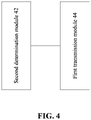
- FIG. 4 is a structural block diagram illustrating another carrier frequency selecting apparatus according to the embodiment of the disclosed technologies.
- the apparatus comprises: a second determination module 42 configured to determine whether a target cell carrying UE is a multi-carrier cell; and, a first transmission module 44 configured to transmit information for a service carrier frequency to the UE in a case where it is determined by the second determination module 42 that the target cell carrying UE is a multi-carrier cell, wherein the service carrier frequency is a carrier frequency to carry traffic selected by the base station for the UE.
- FIG. 5 is a flow chart of the still another carrier frequency selecting method according to the embodiment of the disclosed technologies. As shown in Figure 5 , the method comprises:
- a base station carries a Paging carrier frequency list and/or a number of Paging carrier frequencies in broadcast information of a multi-carrier cell, wherein the number of Paging carrier frequencies is used to determine the Paging carrier frequency list, and the Paging carrier frequency list includes a carrier frequency for carrying a Paging message, and the UE selects a carrier frequency as a carrier frequency for receiving Paging and/or carrying traffic in the Paging carrier frequency list according to a preconfigured rule, so that a carrier frequency for the UE may be a carrier frequency selected by the base station actively.
- a subsequent service flow may be performed on the service carrier frequency specified in accordance with the above method if UE receives the information specifying a service carrier frequency given in the above embodiment, while a service carrier frequency may be selected according to the preconfigured rule given in the present embodiment and a subsequent service flow may be performed at the service carrier frequency if the UE does not receive the information specifying a service carrier frequency given in the above embodiment.
- the carrier frequency index may be acquired by the UE based on an identification (ID) of the UE and a mod operation of the number of carrier frequencies carrying a Paging message, or a carrier frequency or a carrier frequency index may also be acquired through other similar strategy.
- the list of carrier frequencies carrying a Paging message may also be a list of all carrier frequencies of the multi-carrier cell, which means that all the carrier frequencies may carry a Paging message.
- UE can monitor a carrier carrying a broadcast channel and a carrier carrying its own Paging message in a way of frequency hopping. Specifically, the UE monitors the carrier carrying its own Paging message at a Paging Occasion and at a subsequent Paging message reception phases, and at other times, the UE may monitor the carrier carrying a broadcast channel so as to receive system broadcast and maintain synchronization with the network.
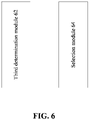
- FIG. 6 is a structural block diagram illustrating the still another carrier frequency selecting apparatus I according to the embodiment of the disclosed technologies.
- the apparatus comprises: a third determination module 62 configured to determine whether broadcast information of a multi-carrier cell carries a Paging carrier frequency list and/or a number of Paging carrier frequencies, wherein the Paging carrier frequency list includes a carrier for carrying a Paging message, and the number of Paging carrier frequencies is used by the UE to determine the Paging carrier frequency list; and, a selection module 64 configured to select a carrier frequency as a carrier frequency for receiving Paging and/or carrying traffic in the Paging carrier frequency list according to a preconfigured rule in a case where it is determined by the third determination module 62 that the broadcast information of a multi-carrier cell carries a Paging carrier frequency list and/or a number of Paging carrier frequencies.
- FIG. 7 is a flow chart of the still another carrier frequency selecting method II according to an embodiment of the disclosed technologies. As shown in Figure 7 , the method comprises:
- a base station carries a Paging carrier frequency list and/or a number of Paging carrier frequencies in broadcast information of a multi-carrier cell, wherein the number of Paging carrier frequencies is used to determine the Paging carrier frequency list, and the UE selects a carrier frequency as a carrier frequency for receiving Paging and/or carrying traffic in the Paging carrier frequency list according to a preconfigured rule, so that a carrier frequency for the UE may be a carrier frequency selected by the base station actively.
- a subsequent service flow may be performed on the service carrier frequency specified in accordance with the above method if UE receives the information specifying a service carrier frequency given in the above embodiment, while a service carrier frequency may be selected according to the preconfigured rule given in the present embodiment and a subsequent service flow may be performed at the service carrier frequency if the UE does not receive the information specifying a service carrier frequency given in the above embodiment.
- FIG. 8 is a structural block diagram illustrating the still another carrier frequency selecting apparatus II according to the embodiment of the disclosed technologies.
- the apparatus comprises: a first deciding module 82 configured to determine a Paging carrier frequency list and/or a number of Paging carrier frequencies, wherein the Paging carrier frequency list includes a carrier frequency for carrying a Paging message, and the Paging carrier frequency list is used by UE to select a carrier frequency as a carrier frequency for receiving Paging and/or carrying traffic in the Paging carrier frequency list according to a preconfigured rule, and the number of Paging carrier frequencies is used by the UE to determine the Paging carrier frequency list; and, a second transmission module 84 configured to carry the Paging carrier frequency list and/or the number of Paging carrier frequencies in broadcast information of a multi-carrier cell.
- FIG. 9 is a flow chart of yet the carrier frequency selecting method I according to the embodiment of the disclosed technologies. As shown in Figure 9 , the method comprises:
- a base station carries a carrier frequency carrying Paging information and/or traffic in a PDCCH carrying Paging indication information
- UE obtains a carrier frequency carrying Paging information and/or traffic through the PDCCH carrying Paging indication information and performs transmission of subsequent Paging information and/or a subsequent service, so that a carrier frequency for the UE may be a carrier frequency selected by the base station actively.
- the UE can receive, through broadcast, a list of carrier frequencies carrying Paging message information and/or traffic in a multi-carrier cell, and obtain in the PDCCH indices of the carrier frequencies carrying Paging message information and/or traffic in the carrier frequency list, thereby acquiring a corresponding carrier frequency through a combination of the carrier frequency list and the indices.
- the UE may acquire, through DCI, in the PDCCH the indices of the carrier frequencies carrying Paging information and/or traffic in the carrier frequency list.
- FIG. 10 is a structural block diagram illustrating yet the carrier frequency selecting apparatus I according to the embodiment of the disclosed technologies.
- the apparatus comprises: an acquisition module 102 configured to acquire a carrier frequency for carrying Paging information and/or traffic through a PDCCH carrying Paging indication information; and, a transmission module 104 configured to perform transmission of subsequent Paging information and/or a subsequent service at the carrier frequency.
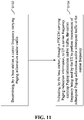
- Figure 11 is a flow chart of yet the carrier frequency selecting method II according to the embodiment of the disclosed technologies. As shown in Figure 11 , the method comprises:
- a base station carries a carrier frequency carrying Paging information and/or traffic in a PDCCH carrying Paging indication information
- UE obtains a carrier frequency carrying Paging information and/or traffic through the PDCCH carrying Paging indication information and performs transmission of subsequent Paging information and/or a subsequent service, so that a carrier frequency for the UE may be a carrier frequency selected by the base station actively.
- the base station can transmit, through broadcast, a list of carrier frequencies carrying Paging message information and/or traffic in a multi-carrier cell, and carry in the PDCCH indices of the carrier frequencies carrying Paging message information and/or traffic in the carrier frequency list.
- the base station may carry, through DCI, in the PDCCH the indices of the carrier frequencies carrying Paging information and/or traffic in the carrier frequency list.
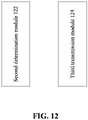
- FIG. 12 is a structural block diagram illustrating yet the carrier frequency selecting apparatus II according to the embodiment of the disclosed technologies.
- the apparatus comprises: a second determination module 122 configured to determine a carrier frequency carrying Paging information and/or traffic; and, a third transmission module 124 configured to indicate, through a PDCCH carrying Paging indication information, to UE a carrier frequency carrying Paging information and/or traffic, the carrier frequency being used by the UE to perform transmission of subsequent Paging information and/or a subsequent service at the carrier frequency.
- Figure 26 is a flow chart of yet the carrier frequency selecting method III according to the embodiment of the disclosed technologies. As shown in Figure 26 , the method comprises:
- a base station carries a service carrier frequency list in broadcast information, and the UE selects a service carrier frequency according to a predefined rule based on the service carrier frequency list in the broadcast information and initiates traffic request when UE triggers traffic access request in a multi-carrier cell, so that a carrier frequency for the UE may be a carrier frequency selected by the base station actively.
- a subsequent service flow may be performed on the service carrier frequency specified in accordance with the above method if UE receives the information specifying a service carrier frequency given in the above embodiment, while a service carrier frequency may be selected according to the preconfigured rule given in the present embodiment and a subsequent service flow may be performed at the service carrier frequency if the UE does not receive the information specifying a service carrier frequency given in the above embodiment.
- the UE monitors a carrier frequency carrying a broadcast channel and receives broadcast information, wherein the broadcast information carries a list of carrier frequencies that can carry traffic message.
- the UE selects one of the carrier frequencies as a carrier frequency carrying traffic according to a pre-defined rule to initiate a random access request and performs subsequent service transmission and reception at the carrier frequency.
- the predefined rule may be a method of determining a service carrier frequency based on an ID of the UE and a mod operation of the number of service carrier frequencies, or the like.
- step S2604 the UE acquires a carrier frequency index for a carrier frequency at which the UE initiates traffic request according to the preconfigured rule, and determines a corresponding carrier frequency at which the UE initiates traffic request according to the carrier frequency index.
- the UE acquires the carrier frequency index according to an identity of the UE and a mod operation of a number of carrier frequencies at which the UE initiates traffic request.
- Figure 27 is a flow chart of yet the carrier frequency selecting method IV according to the embodiment of the disclosed technologies. As shown in Figure 27 , the method comprises:
- a subsequent service flow may be performed on the service carrier frequency specified in accordance with the above method if UE receives the information specifying a service carrier frequency given in the above embodiment, while a service carrier frequency may be selected according to the preconfigured rule given in the present embodiment and a subsequent service flow may be performed at the service carrier frequency if the UE does not receive the information specifying a service carrier frequency given in the above embodiment.
- a specific strategy of the method is as follows: When an eNodeB receives an RRC connection setup request or an RRC connection resume request, the eNodeB selects a carrier frequency carrying traffic in the multi-carrier cell according to a load situation in the multi-carrier cell, carries information for the carrier frequency in an RRC connection setup message or an RRC connection resume message and transmits it to the UE if a target cell carrying UE is a multi-carrier cell; and
- the UE After receiving the RRC connection setup message or the RRC connection resume message, the UE performs data reception and transmission at the service carrier frequency subsequently if information for a service carrier frequency is carried in the RRC connection setup message or the RRC connection resume message, while the UE performs subsequent service reception and transmission at an original camped carrier frequency if information for a service carrier frequency is not carried in the RRC connection setup message or the RRC connection resume message.
- UE's residing at a carrier frequency carrying a broadcast channel in an IDLE mode is implemented as follows:
- a technical problem that can be solved is proposing a method and apparatus for load balancing between carrier frequencies in multi-carrier cell, which can achieve load balancing between the carrier frequencies in the multi-carrier cell.
- the multi-carrier cell includes the following five carrier frequencies: a first carrier that can serve as a carrier for an IDLE mode, and is provided with a broadcast channel (PBCH), a synchronization channel (PSS / SSS), a cell reference channel (CRS), and a traffic channel (PDCCH / PDSCH); and, second, third, fourth and fifth carrier frequencies that can only serve as carrier frequencies carrying traffic and are thus provided with only a cell reference channel (CRS), and a traffic channel (PDCCH / PDSCH).
- PBCH broadcast channel
- PSS / SSS a synchronization channel
- CRS cell reference channel
- PDCCH / PDSCH traffic channel
- second, third, fourth and fifth carrier frequencies that can only serve as carrier frequencies carrying traffic and are thus provided with only a cell reference channel (CRS), and a traffic channel (PDCCH / PDSCH).
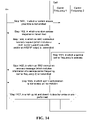
- Figure 13 is a flow chart of embodiment I of the disclosed technologies. This embodiment explains a process of balancing loads between carrier frequencies in a multi-carrier cell when an RRC connection is established.
- Step 1301 UE transmits a random access preamble to carrier frequency 1 of the multi-carrier cell.
- Step 1302 carrier frequency 1 transmits a random access response to the UE.
- Step 1303 the UE transmits an RRC connection setup request, which includes information for a multi-carrier support capability of the UE and/or an NRSRP value, to carrier frequency 1 of the multi-carrier cell.
- Step 1304 a base station of the multi-carrier cell selects a service carrier frequency.
- Step 1305 carrier frequency 1 transmits an RRC connection setup message, which includes that information for a service carrier frequency is carrier frequency 2, to the UE.
- the RRC connection setup message optionally includes information for transmission power of an NRS of carrier frequency 2, and the information for transmission power of an NRS of carrier frequency 2 may be an absolute value (in the unit of dBm) of the transmission power of the NRS of carrier frequency 2, or a relative value (in the unit of dB or %) of the transmission power relative to transmission power of an Anchor carrier (carrier frequency 1).
- the information for transmission power of an NRS of carrier frequency 2 provides Energy Per Resource Element of the NRS of carrier frequency 2 to be used by the UE to perform an RSRP measurement and/or path loss calculation when the UE is assigned to carrier frequency 2.
- Step 1306 carrier frequency 2 transmits uplink grant to the UE on the PDCCH.
- Step 1307 the UE transmits an RRC connection setup completion message to carrier frequency 2.
- Step 1308 the UE performs uplink and downlink data transmission at carrier frequency 2.
- Figure 14 is a flow chart of embodiment II of the disclosed technologies. This embodiment explains a process of balancing loads between carrier frequencies in a multi-carrier cell when an RRC connection is recovered.
- Step 1401 UE transmits a random access preamble to carrier frequency 1 of the multi-carrier cell.
- Step 1402 carrier frequency 1 transmits a random access response to the UE.
- Step 1403 the UE transmits an RRC connection resume request, which includes information for a multi-carrier support capability of the UE and/or an NRSRP value, to carrier frequency 1 of the multi-carrier cell.
- Step 1404 a base station of the multi-carrier cell selects a service carrier frequency.
- Step 1405 carrier frequency 1 transmits an RRC connection resume message, which includes that information for a service carrier frequency is carrier frequency 2, to the UE.
- the RRC connection resume message optionally includes information for transmission power of an NRS of carrier frequency 2, and the information for transmission power of an NRS of carrier frequency 2 may be an absolute value (in the unit of dBm) of the transmission power of the NRS of carrier frequency 2, or a relative value (in the unit of dB or %) of the transmission power relative to transmission power of an Anchor carrier (carrier frequency 1).
- the information for transmission power of an NRS of carrier frequency 2 provides Energy Per Resource Element of the NRS of carrier frequency 2 to be used by the UE to perform an RSRP measurement and/or path loss calculation when the UE is assigned to carrier frequency 2.
- Step 1406 carrier frequency 2 transmits uplink grant to the UE on the PDCCH.
- Step 1407 the UE performs uplink and downlink data transmission at carrier frequency 2.
- a message carrying information of a service carrier frequency sent by a carrier to UE may also be an RRC connection reestablishment message or an RRC connection reconfiguration message is similar to those of embodiments I and II and thus will not repeated herein.
- Figure 15 is a flow chart of embodiment III of the disclosed technologies. This embodiment explains a process of balancing loads from other cell to a multi-carrier cell when an RRC connection is established.
- Step 1501 UE transmits a random access preamble to carrier frequency 1 of cell 1.
- Step 1502 carrier frequency 1 of cell 1 transmits a random access response to the UE.
- Step 1503 the UE transmits an RRC connection setup request, which includes information for a multi-carrier support capability of the UE and/or an NRSRP value, to carrier frequency 1 of cell 1.
- Step 1504 a base station of the multi-carrier cell balances the loads.
- Step 1505 carrier frequency 1 of cell 1 transmits an RRC connection setup message, which includes information of a service carrier frequency (e.g., carrier frequency 2) and a physical cell identification of cell 2, to the UE.
- the connection setup message optionally includes information for transmission power of an NRS of carrier frequency 2, and the information for transmission power of an NRS of carrier frequency 2 is an absolute value (in the unit of dBm) of the transmission power of the NRS of carrier frequency 2.
- the information for transmission power of an NRS of carrier frequency 2 provides Energy Per Resource Element of the NRS of carrier frequency 2 to be used by the UE to perform an RSRP measurement and/or path loss calculation when the UE is assigned to carrier frequency 2.
- Step 1506 carrier frequency 2 of cell 2 transmits uplink grant to the UE on the PDCCH.
- Step 1507 the UE performs uplink and downlink data transmission at carrier frequency 2 of cell 2.
- Figure 16 is a flow chart of embodiment IV of the disclosed technologies. This embodiment explains a process of balancing loads from other cell to a multi-carrier cell when an RRC connection is recovered.
- Step 1601 UE transmits a random access preamble to carrier frequency 1 of cell 1.
- Step 1602 carrier frequency 1 of cell 1 transmits a random access response to the UE.
- Step 1603 the UE transmits an RRC connection resume request, which includes information for a multi-carrier support capability of the UE and/or an NRSRP value, to carrier frequency 1 of cell 1.
- Step 1604 a base station of the multi-carrier cell balances the loads.
- Step 1605 carrier frequency 1 of cell 1 transmits an RRC connection resume message, which includes information for a service carrier frequency (e.g., carrier frequency 2) and a physical cell identification of cell 2, to the UE.
- the RRC connection resume message optionally includes information for transmission power of an NRS of carrier frequency 2, and the information for transmission power of an NRS of carrier frequency 2 is an absolute value (in the unit of dBm) of the transmission power of the NRS of carrier frequency 2.
- the information for transmission power of an NRS of carrier frequency 2 provides Energy Per Resource Element of the NRS of carrier frequency 2 to be used by the UE to perform an RSRP measurement and/or path loss calculation when the UE is assigned to carrier frequency 2.
- Step 1606 carrier frequency 2 of cell 2 transmits uplink grant to the UE on the PDCCH.
- Step 1607 the UE transmits an RRC connection setup completion message to carrier frequency 2 of cell 2.
- Step 1608 the UE performs uplink and downlink data transmission at carrier frequency 2 of cell 2.
- a message carrying information for a service carrier frequency sent by a carrier to UE may also be an RRC connection reestablishment message or an RRC connection reconfiguration message is similar to those of embodiments I and II and thus will not repeated herein.
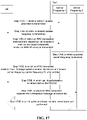
- Figure 17 is a flow chart of embodiment V of the disclosed technologies. This embodiment explains a process of balancing loads between carrier frequencies in a multi-carrier cell when an RRC connection is to be recovered and an eNodeB cannot find context of UE and thus triggers setup of an RRC connection.
- Step 1701 UE transmits a random access preamble to carrier frequency 1 of the multi-carrier cell.
- Step 1702 carrier frequency 1 transmits a random access response to the UE.
- Step 1703 the UE transmits an RRC connection setup request, which includes information for a multi-carrier support capability of the UE and/or an NRSRP value, to carrier frequency 1 of the multi-carrier cell.
- Step 1704 a base station of the multi-carrier cell selects a service carrier frequency.
- Step 1705 carrier frequency 1 transmits an RRC connection setup message, which includes that information of a service carrier frequency (carrier frequency 2), to the UE.
- the RRC connection setup message optionally includes information for transmission power of an NRS of carrier frequency 2, and the information for transmission power of an NRS of carrier frequency 2 may be an absolute value (in the unit of dBm) of the transmission power of the NRS of carrier frequency 2, or a relative value (in the unit of dB or %) of the transmission power relative to transmission power of an Anchor carrier (carrier frequency 1).
- the information for transmission power of an NRS of carrier frequency 2 provides Energy Per Resource Element of the NRS of carrier frequency 2 to be used by the UE to perform an RSRP measurement and/or path loss calculation when the UE is assigned to carrier frequency 2.
- Step 1706 carrier frequency 2 transmits uplink grant to the UE on the PDCCH.
- Step 1707 the UE transmits an RRC connection setup completion message to carrier frequency 2.
- Step 1708 the UE performs uplink and downlink data transmission at carrier frequency 2.
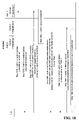
- Figure 18 is a flow chart of embodiment VI of the disclosed technologies. This embodiment explains a process of balancing loads from carrier frequencies in a multi-carrier cell to carrier frequencies in other multi-carrier cell when an RRC connection is to be recovered and an eNodeB cannot find context of UE and thus triggers setup of an RRC connection.
- Step 1801 UE transmits a random access preamble to carrier frequency 1 of cell 1.
- Step 1802 carrier frequency 1 of cell 1 transmits a random access response to the UE.
- Step 1803 the UE transmits an RRC connection setup request, which includes information for a multi-carrier support capability of the UE and/or an NRSRP value, to carrier frequency 1 of cell 1.
- Step 1804 a base station of the multi-carrier cell balances the loads.
- Step 1805 carrier frequency 1 of cell 1 transmits an RRC connection setup message, which includes information of a service carrier frequency (e.g., carrier frequency 2) and a physical cell identification of cell 2, to the UE.
- the RRC connection setup message optionally includes information for transmission power of an NRS of carrier frequency 2, and the information for transmission power of an NRS of carrier frequency 2 may be an absolute value (in the unit of dBm) of the transmission power of the NRS of carrier frequency 2.
- the information for transmission power of an NRS of carrier frequency 2 provides Energy Per Resource Element of the NRS of carrier frequency 2 to be used by the UE to perform an RSRP measurement and/or path loss calculation when the UE is assigned to carrier frequency 2.
- Step 1806 carrier frequency 2 of cell 2 transmits uplink grant to the UE on the PDCCH.
- Step 1807 the UE transmits an RRC connection setup completion message to carrier frequency 2 of cell 2.
- Step 1808 the UE performs uplink and downlink data transmission at carrier frequency 2 of cell 2.
- a message carrying information for a service carrier frequency sent by a carrier to UE may also be an RRC connection reestablishment message or an RRC connection reconfiguration message is similar to those of embodiments I and II and thus will not repeated herein.
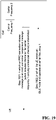
- FIG 19 is a flow chart of embodiment VII of the disclosed technologies. This embodiment explains a process that information for a carrier carrying a broadcast channel is carried in an RRC release message or an RRC connection suspension message to guide the UE to operate at the carrier carrying a broadcast channel.
- carrier frequency 2 transmits an RRC connection release message or an RRC connection suspension message, which includes information for carrier frequency 1 carrying a broadcast channel, to the UE.
- step 1902 the UE enters an IDLE mode and operates at carrier frequency 1.
- FIG 20 is a flow chart of embodiment VIII of the disclosed technologies.
- This embodiment explains a process that information for a carrier carrying a broadcast channel is carried in an RRC connection setup message or an RRC resume completion message but the information for a carrier carrying a broadcast channel is not carried in an RRC release message or an RRC connection suspension message, the UE automatically operates at the carrier carrying a broadcast channel carried in the RRC connection setup or the RRC resume completion message when performing RRC release or RRC connection suspension.
- carrier frequency 2 transmits an RRC connection setup message or an RRC connection resume message, which includes information for carrier frequency 1 carrying a broadcast channel, to the UE.
- carrier frequency 2 transmits an RRC connection release message or an RRC connection suspension message, which does not include information for carrier frequency 1 carrying a broadcast channel, to the UE.
- step 2003 the UE enters an IDLE mode and operates at carrier frequency 1.
- Figure 21 is a flow chart of embodiment IX of the disclosed technologies. This embodiment explains a process that information for a carrier carrying a broadcast channel is not carried in an RRC connection setup message or an RRC resume completion message and the information for a carrier carrying a broadcast channel is not carried in an RRC release message or an RRC connection suspension message either, the UE automatically operates at a carrier at which the UE operates in an IDLE mode last time when performing RRC release or RRC connection suspension.
- step 2101 carrier frequency 1 transmits a broadcast message.
- step 2102 carrier frequency 2 and the UE perform uplink and downlink data transmission.
- carrier frequency 2 transmits an RRC connection release message or an RRC connection suspension message, which does not include information for carrier frequency 1 carrying a broadcast channel, to the UE.
- step 2104 the UE enters an IDLE mode and operates at carrier frequency 1.
- Figure 22 is a flow chart of embodiment X of the disclosed technologies. This embodiment explains a process that UE carries a list of carrier frequencies that can carry a Paging message in broadcast information of a multi-carrier cell and selects one carrier frequency from the carrier frequencies as a carrier for receiving a Paging message and/or carrying traffic according to a predefined rule.
- carrier frequency 1 transmits a broadcast message, which carries a list of carrier frequencies that can carry a Paging message, to UE 1;
- carrier frequency 1 transmits a broadcast message, which carries a list of carrier frequencies that can carry a Paging message, to UE 2;
- step 2203 UE 1 determines according to the predefined rule that carrier frequency 2 is to carry Paging and service information of the UE, and the multi-carrier cell initiates Paging to UE 1 via carrier frequency 2.
- step 2204 carrier frequency 2 and UE 1 perform data communication in a connection mode.
- step 2205 UE 2 determines according to the predefined rule that carrier frequency 3 is to carry Paging and service information of the UE, and the multi-carrier cell initiates Paging to UE 2 via carrier frequency 3.
- step 2206 carrier frequency 3 and UE 2 perform data communication in a connection mode.
- the predefined rule may be a strategy that a corresponding carrier frequency index may be acquired based on an ID of the UE and a mod operation of the number of carrier frequencies carrying a Paging message, or the like.
- the list of carrier frequencies carrying a Paging message may also be a list of all carrier frequencies of the multi-carrier cell, which means that all the carrier frequencies may carry a Paging message.
- UE can monitor a carrier frequency carrying a broadcast channel and a carrier frequency carrying its own Paging message in a way of frequency hopping. Specifically, the UE monitors the carrier frequency carrying its own Paging message at a Paging Occasion and at a subsequent Paging message reception phases, and at other times, the UE monitors the carrier frequency carrying a broadcast channel so as to receive system broadcast and maintain synchronization with the network.
- FIG 23 is a flow chart of embodiment XI of the disclosed technologies.
- This embodiment explains a process of transmitting a PDCCH carrying Paging indication information (e.g., P-TMSI) in a multi-carrier cell at a carrier frequency carrying a broadcast channel.
- PDCCH carrying Paging indication information e.g., P-TMSI
- the PDCCH carrying Paging indication information indicates a carrier frequency carrying subsequent Paging information and/or a subsequent service
- UE performs reception and transmission of subsequent Paging information and/or a subsequent service at the carrier frequency indicated.
- carrier frequency 1 transmits a PDCCH, which carries Paging indication information to specify carrier frequency 2 as a service carrier frequency for the UE, to UE 1.
- step 2302 carrier frequency 2 and UE 1 perform data communication in a connection mode.
- carrier frequency 1 transmits a PDCCH, which carries Paging indication information to specify carrier frequency 3 as a service carrier frequency for the UE, to UE 2.
- step 2304 carrier frequency 3 and UE 2 perform data communication in a connection mode.
- Figure 24 is a flow chart of embodiment XII of the disclosed technologies. This embodiment explains a process of selecting a carrier when UE triggers traffic access request in a multi-carrier cell.
- step 2401 UE 2 monitors carrier frequency 1 carrying a broadcast channel and receives broadcast information, wherein the broadcast information carries a list of carrier frequencies that can carry service information.
- step 2402 UE 1 monitors carrier frequency 1 carrying a broadcast channel and receives broadcast information, wherein the broadcast information carries a list of carrier frequencies that can carry service information.
- UE 1 selects one of the carrier frequencies, carrier frequency 2, as a carrier for service information according to a predefined rule so as to initiate a random access request (Msg1 PRACH Preamble).
- step 2404 UE1 performs subsequent data communication in a connection mode at carrier frequency 2.
- step 2405 UE 2 selects one of the carrier frequencies, carrier frequency 3, as a carrier frequency for service information according to the predefined rule so as to initiate a random access request (Msg1 PRACH Preamble).
- step 2406 UE 2 performs subsequent data communication in a connection mode at carrier frequency 3.
- the predefined rule may be a method of determining a service carrier frequency based on an ID of the UE and a mod operation of the number of service carrier frequencies, or the like.
- Figure 25 is a flow chart of embodiment XIII of the disclosed technologies. This embodiment explains a method of an eNodeB transmitting information for transmission power of an NRS of traffic carrier to UE through a system message block.
- the eNodeB transmits to the UE a broadcast message, which contains the following two information elements:
- the Non-Anchor carrier NRS transmission power may be an absolute value of transmission power, for example, in the range of (-60 ... 50) dBm.
- the Non-Anchor carrier NRS transmission power may also be a relative value of the transmission power of an NRS of a Non-Anchor carrier relative to the transmission power of an NRS of an Anchor carrier, for example, in the range of (-30 ... 30) dB or (0 ... 100)%.
- each of the above modules may be implemented with software or hardware.
- the latter may be implemented in a way that may be, but is not limited to: all the above modules are located in a same processor; or, the above modules are located in multiple processors, respectively.
- an embodiment of the disclosed technologies also provides a storage medium.
- the storage medium may be configured to store program code for executing the following steps:
- the storage medium is further configured to store program code for executing the following steps:
- the storage medium is further configured to store program code for executing the following steps:
- the storage medium is further configured to store program code for executing the following steps:
- the storage medium is further configured to store program code for executing the following steps:
- the storage medium is further configured to store program code for executing the following steps:
- the storage medium is further configured to store program code for executing the following steps:
- the storage medium is further configured to store program code for executing the following steps:
- the storage medium may include, but is not limited to, a variety of media that can store program code, such as a USB disk, a Read-Only Memory (ROM), a Random Access Memory (RAM), a mobile hard disk, a magnetic disc and a CD.
- program code such as a USB disk, a Read-Only Memory (ROM), a Random Access Memory (RAM), a mobile hard disk, a magnetic disc and a CD.
- modules or steps of the disclosed technologies may be implemented with a general purpose computing device and may be concentrated in a single computing device or distributed over a network composed of a plurality of computing devices.
- they may be implemented with program code executable by a computing device, so that they may be stored in a storage device to be executed by the computing device and, in some cases, they may be implemented by executing the steps shown or described in an order different from that described herein, or by separately making them into individual integrated circuit modules, or by making a plurality of modules or steps of them into a single integrated circuit module.
- the disclosed technologies are not limited to any particular combination of hardware and software.
- a carrier frequency selecting method and apparatus provided by embodiments of the disclosed technologies have the following beneficial effects: the problem that a service carrier frequency selecting strategy in related techniques is to perform selection passively and lacks initiative is solved, and a technical basis for balancing loads on carrier frequencies carrying traffic is provided and further system efficiency is enhanced for an NB-IoT system, which is mainly to transmit small data.
Landscapes
- Engineering & Computer Science (AREA)
- Computer Networks & Wireless Communication (AREA)
- Signal Processing (AREA)
- Quality & Reliability (AREA)
- Physics & Mathematics (AREA)
- Electromagnetism (AREA)
- Computer Security & Cryptography (AREA)
- Mobile Radio Communication Systems (AREA)
Description
- The patent document relates to the field of communication and, more particularly, to carrier frequency methods as well as corresponding apparatuses and non-transitory computer readable media.
- Machine to Machine (M2M) communication is an important issue in the study of 5th Generation (5G) Mobile Communication Technology, and it is also an important application area for future wireless communication. In the M2M project, a research subproject of a Narrow Band-Internet of Things (NB-IoT) is proposed for characteristics of low-cost, low-throughput terminals, for the purpose of providing a low-throughput wireless communication service for the low-cost terminals of the NB-IoT in the frequency band of 200 KHz.
- In order to save air interface signaling and achieve fast access for UE, the NB-IoT introduces the following context suspension and resume mechanism: when User Equipment (UE) and a Mobility Management Entity (MME) complete uplink and downlink data transmission, the UE's bearer context and AS context can be suspended on an evolved base station (eNB, also called eNodeB) side and the MME side by using a Radio Resource Control (RRC) connection suspension mechanism; and, UU and S1 interfaces connections of the UE are quickly restored by connecting the RRC to a resume process, if data transmission between the UE and the MME is required subsequently.
- Taking into account the capacity of a single-carrier cell of the 200 KHz spectrum bandwidth is very small, access to a large number of NB-IoT terminal will inevitably suffer a limited capacity, and a simple strategy to expand a capacity is to cover a same area with multiple carrier frequencies. However, if each carrier serves as one cell independently, there are the following two problems: 1) in a same coverage area there are multiple cells of the same coverage, and too many cells will cause unnecessary wireless quality measurement overhead; 2) a broadcast channel and a synchronization channel need to be configured for each carrier, which wastes resources of the carrier. Therefore, it is necessary to introduce the following multi-carrier cell strategy: a plurality of single carrier cells within a same eNodeB that cover a same area are aggregated into a multi-carrier cell. The specific manifestation is as follows: multiple carriers share one physical cell identification and share a broadcast channel and a synchronization channel, and a traffic channel can be transmitted at a certain carrier within the cell, wherein a carrier carrying the broadcast channel and the synchronization channel is called an Anchor Carrier while a carrier not carrying the broadcast channel or the synchronization channel is called a Non-Anchor carrier.
- The current service carrier frequency selecting strategy proposed is that the traffic for one UE is evenly distributed to different carrier frequencies based on the UE's International Mobile Subscriber Identification Numbers (IMSIs), or the traffic for one UE is dynamically scheduled at multiple carrier frequencies by using a frequency hopping strategy. However, there may be a load imbalance problem with evenly distributing the traffic for one UE to multiple carrier frequencies based on the IMSIs and there may be a problem of UE frequency switching with dynamically scheduling the traffic for one UE on multiple carriers, which is also inefficient for an NB-IoT system mainly to transmit a small amount of data.
- At present, there has not been a solution to the problem that a service carrier frequency selecting strategy in related techniques is to perform selection passively and lacks initiative.
-
US 2011/013577 A1 relates to a method for controlling user equipment, UE, access in a multi-frequency system. A network side receives an access preamble sent by a UE on one frequency. When the network side determines that the UE needs to access on another frequency, the network side notifies the UE to access by switching to another frequency. Network device is also provided at the same time. - XP-002787459, 3GPP TS 36.213, v13.0.1 (2016-01), 3rd Generation Partnership Project; Technical Specification Group Radio Access Network; Evolved Universal Terrestrial Radio Access (E-UTRA); Physical layer procedures (Release 13), section 5.2, relates to a method for determining the downlink transmit energy per resource element. In particular, it relates to RSRP and RSRQ measurements, where the UE assumes downlink cell-specific RS EPRE is constant across the downlink system bandwidth and constant across all subframes with discovery signal transmissions until different cell-specific RS power information is received.
-
US 2012/202544 A1 relates to a method and apparatus for setting the transmission power of a terminal in a wireless communication system. The initial transmission power by means of which the terminal transmits a signal via an uplink non-anchor carrier is determined by reflecting the transmission power by means of which the terminal has most recently transmitted a signal via an uplink anchor carrier and by reflecting the difference between channel environments of the uplink anchor carrier and the uplink non-anchor carrier, in a wireless communication system using a broadband formed by carrier aggregation. - The invention is specified by the independent claims. Preferred embodiments are defined in the dependent claims. Embodiments and examples of the disclosed technologies provide carrier frequency methods as well as corresponding apparatuses and non-transitory computer readable media. so as to at least solve the problem that a service carrier frequency selecting strategy in related techniques is to perform selection passively and lacks initiative.
- The drawings described herein are intended to provide a further understanding of the disclosed technologies and constitute a part of the application, and the illustrative embodiments of the described techniques and their descriptions are intended to explain the technologies and are not to be construed as limiting the invention. In the drawings:
-
Figure 1 is a flow chart of a carrier frequency selecting method according to an embodiment of the disclosed technologies; -
Figure 2 is a structural block diagram illustrating a carrier frequency selecting apparatus according to an embodiment of the disclosed technologies; -
Figure 3 is a flow chart of another carrier frequency selecting method according to an embodiment of the disclosed technologies; -
Figure 4 is a structural block diagram illustrating another carrier frequency selecting apparatus according to an embodiment of the disclosed technologies; -
Figure 5 is a flow chart of still another carrier frequency selecting method according to an embodiment of the disclosed technologies; -
Figure 6 is a structural block diagram illustrating still another carrier frequency selecting apparatus I according to an embodiment of the disclosed technologies; -
Figure 7 is a flow chart of still another carrier frequency selecting method II according to an embodiment of the disclosed technologies; -
Figure 8 is a structural block diagram illustrating still another carrier frequency selecting apparatus II according to an embodiment of the disclosed technologies; -
Figure 9 is a flow chart of yet a carrier frequency selecting method I according to an embodiment of the disclosed technologies; -
Figure 10 is a structural block diagram illustrating yet a carrier frequency selecting apparatus I according to an embodiment of the disclosed technologies; -
Figure 11 is a flow chart of yet a carrier frequency selecting method II according to an embodiment of the disclosed technologies; -
Figure 12 is a structural block diagram illustrating yet a carrier frequency selecting apparatus II according to an embodiment of the disclosed technologies; -
Figure 13 is a flow chart of embodiment I of the disclosed technologies; -
Figure 14 is a flow chart of embodiment II of the disclosed technologies; -
Figure 15 is a flow chart of embodiment III of the disclosed technologies; -
Figure 16 is a flow chart of embodiment IV of the disclosed technologies; -
Figure 17 is a flow chart of embodiment V of the disclosed technologies; -
Figure 18 is a flow chart of embodiment VI of the disclosed technologies; -
Figure 19 is a flow chart of embodiment VII of the disclosed technologies; -
Figure 20 is a flow chart of embodiment VIII of the disclosed technologies; -
Figure 21 is a flow chart of embodiment IX of the disclosed technologies; -
Figure 22 is a flow chart of embodiment X of the disclosed technologies; -
Figure 23 is a flow chart of embodiment XI of the disclosed technologies; -
Figure 24 is a flow chart of embodiment XII of the disclosed technologies; -
Figure 25 is a flow chart of embodiment XIII of the disclosed technologies; -
Figure 26 is a flow chart of yet a carrier frequency selecting method III according to an embodiment of the disclosed technologies; and -
Figure 27 is a flow chart of yet a carrier frequency selecting method IV according to an embodiment of the disclosed technologies. - The disclosed technologies will be described hereinafter in detail with reference to the drawings and embodiments. It is to be noted that embodiments in the present application and features in embodiments may be combined with each other if no conflict is present.
- It is to be noted that the terms in the description, claims and drawings of the disclosed technologies, "first," "second," etc., are used to distinguish similar objects and are not necessary for describing a particular order or succession.
- In the present embodiment, provided is a carrier frequency selecting method.
Figure 1 is a flow chart of the carrier frequency selecting method according to the embodiment of the disclosed technologies. As shown inFigure 1 , the process includes the following steps: - step S102: determining, by UE, whether information for a service carrier frequency sent by a base station is received, wherein the service carrier frequency is the carrier frequency to carry traffic selected by the base station when a target cell carrying the UE is a multi-carrier cell; and
- step S104: operating, by the UE, at a carrier frequency corresponding to the information for a service carrier frequency, if the determination result is yes; and, otherwise, operating, by the UE, at an original camped carrier frequency.
- With the above steps, in a case where a target cell carrying UE is a multi-carrier cell, a base station selects a carrier frequency to carry traffic and transmits information for a service carrier frequency to UE. By receiving the information for a service carrier frequency, the UE selects a corresponding service carrier frequency to perform data transmission and reception. And, if the UE has not received information for a service carrier frequency, the UE operates at an original camped carrier frequency. Thereby, a carrier frequency at which the UE operates can be a carrier frequency to carry traffic selected by the base station actively. Thus, the problem that a service carrier frequency selecting strategy in related techniques is to perform selection passively and lacks initiative is solved, and a technical basis for balancing loads on carrier frequencies carrying traffic is provided and further system efficiency is enhanced for an NB-IoT system, which is mainly to transmit small data.
- Optionally, a base station described herein may be an evolved base station (eNodeB).
- As a preferred embodiment, the base station may transmit the information for a service carrier frequency with an RRC connection setup request, an RRC connection resume request, an RRC connection reestablishment message, or an RRC connection reconfiguration message. In this case, in the above step S102, an RRC connection setup message, an RRC connection resume message (i.e., an RRC connection resume completion message), an RRC connection reestablishment message, or an RRC connection reconfiguration message may be received, and then whether the RRC connection setup message, the RRC connection resume message, the RRC connection reestablishment message, or the RRC connection reconfiguration message received carries the information for a service carrier frequency is determined.
- As a preferred embodiment, a subsequent flow of the UE is performed at the service carrier frequency if the UE determines that the information for a service carrier frequency sent by a base station is received; and, otherwise, the subsequent flow of the UE is performed at a current camped carrier frequency. Optionally, the subsequent flow of the UE may include all processes of the UE, such as a data reception and transmission process, a signaling reception and transmission process, and a random process, in a current connection mode.
- Optionally, a random access parameter broadcast by the cell is used as a random access parameter of the service carrier frequency.
- Preferably, the UE may operate at a carrier frequency carrying a broadcast channel when the UE is currently in an IDLE state. The specific implementation may be as follows:
- 1. when performing initial selection in a cell, UE can monitor only a carrier frequency where a broadcast channel is, so it can only choose to operate at the carrier frequency carrying the broadcast channel;
- 2. when performing reselection in the cell, implementation is made through a broadcast information configuration strategy; specifically, in configuration of broadcast information, an adjacent carrier frequency is based on a carrier frequency carrying a broadcast channel; in this way, the UE will automatically reselect the carrier frequency carrying a broadcast channel when performing reselection;
- 3. when UE is switched from an RRC connection state to the IDLE mode, it is specified that the UE operates at a carrier frequency carrying a broadcast channel; the specific implementation is as follows:
In a case where it is determined in step S102 that an RRC release message, or an RRC connection suspension message, and/or an RRC connection setup message, and/or an RRC connection resume message sent by the base station are received, and the RRC release message or the RRC connection suspension message carries the information for a service carrier frequency (also known as a redirecting information element), the information for a service carrier frequency is filled in with information corresponding to a carrier frequency carrying a broadcast channel, so that the UE operates at the carrier frequency carrying a broadcast channel; if the RRC release message and/or the RRC connection suspension message do not carry the information for a service carrier frequency (also known as a redirecting information element) but the RRC connection setup message or the RRC connection resume message carries the information for a service carrier frequency (a redirecting information element), the UE operates at a carrier frequency corresponding to the information for a service carrier frequency carried in the RRC connection setup message or the RRC connection resume message; if none of the RRC release message, and/or the RRC connection suspension message, and/or the RRC connection setup message, and/or the RRC connection resume message carries the information for a service carrier frequency (also referred to as a redirect cell), the UE automatically operates at a carrier frequency carrying a broadcast channel and a synchronization channel of a current cell after release. - Specifically, when a UE carried by a multi-carrier cell is switched from a connection mode to an idle mode, a strategy for selecting a carrier frequency for the UE is: when it is determined that an RRC release message, or an RRC connection suspension message sent by the base station is received, wherein the RRC release message or the RRC connection suspension message carries the information for a service carrier frequency, the UE operates at a carrier frequency corresponding to the information for a service carrier frequency carried in the RRC release message or the RRC connection suspension message; or when it is determined that an RRC release message, or an RRC connection suspension message, and/or an RRC connection setup message, and/or an RRC connection resume message sent by a base station is received, wherein the RRC release message and/or the RRC connection suspension message do not carry the information for a service carrier frequency but the RRC connection setup message or the RRC connection resume message carries the information for a service carrier frequency, the UE operates at a carrier frequency corresponding to the information for a service carrier frequency carried in the RRC connection setup message or the RRC connection resume message; or when it is determined that an RRC release message, or an RRC connection suspension message, and/or an RRC connection setup message, and/or an RRC connection resume message sent by a base station is received, wherein none of the RRC release message, the RRC connection suspension message, and/or the RRC connection setup message, and/or the RRC connection resume message carries the information for a service carrier frequency, the UE operates at a carrier frequency at which the UE operates in an idle mode last time.
- Optionally, in a case where the UE determines that the information for a service carrier frequency sent by the base station is received, the UE receives information for transmission power of a narrowband reference signal (NRS) of the service carrier frequency from the RRC connection setup message, the RRC connection resume message, the RRC connection reestablishment message, the RRC connection reconfiguration message, or the system information block (SIB). The information for transmission power of a narrowband reference signal (NRS) of the service carrier frequency provides Energy Per Resource Element (EPRE) of the NRS to be used by the UE to: Reference Signal Received Power (RSRP) measurement, and/or, path loss calculation. The information for transmission power of an NRS corresponding to the service carrier frequency may be characterized by a deviation from power of an NRS of an Anchor carrier, or the information for transmission power of an NRS corresponding to the service carrier frequency may be characterized by an absolute value of the power of the NRS of the service carrier frequency.
- Further, a carrier frequency carrying a broadcast channel in a cell can be acquired from SIB information or RRC signaling.
- Before the UE receives information for a service carrier frequency sent by a base station, the UE transmits information for a multi-carrier support capability of the UE to the base station, wherein the information for a multi-carrier support capability of the UE is used to indicate whether the UE supports a multi-carrier function. The UE's supporting a multi-carrier function means that the UE allows accepting the information for a service carrier frequency configured by the base station.
- The information for a multi-carrier support capability of the UE is carried by one of the following messages: an RRC connection setup request, RRC connection resume request, and RRC connection reestablishment request.
- Before the UE determines that the information for a service carrier frequency sent by the base station is received, the UE receives information for transmission power of an NRS of the service carrier frequency through an SIB. The information for transmission power of an NRS of the service carrier frequency provides Energy Per Resource Element of the NRS to be used by the UE to perform an RSRP measurement and/or path loss calculation when the UE is assigned to the service carrier frequency. The information for transmission power of an NRS corresponding to the service carrier frequency is characterized by a deviation from power of an NRS of an Anchor carrier.
- Optionally, before the UE initiates an initial PRACH process to the base station, the UE is to determine a wireless coverage level where it is as follows:
- when the UE operates on an Anchor carrier, the wireless coverage level of the UE is acquired by comparing a narrowband reference signal received power (NRSRP) value of the Anchor carrier measured by the UE with a wireless coverage level threshold; and
- when the UE operates on a non-Anchor carrier, the wireless coverage level of the UE is acquired by comparing a narrowband reference signal received power (NRSRP) value of the Anchor carrier measured by the UE plus a offset value with a wireless coverage level threshold, wherein the offset value may be a difference between the power of an NRS of a Non-Anchor carrier and the power of an NRS of an Anchor carrier.
- A specific method of the UE determining its wireless coverage level according to a type of a carrier at which the UE operates is as follows: for an initial PRACH process when the UE operates on an Anchor carrier, the UE obtains wireless coverage level NRSRP thresholds [threshold 0, threshold 1] after receiving a broadcast message; a wireless coverage level is decided by comparing the wireless coverage level NRSRP thresholds with a current NRSRP measurement as follows: the coverage that the NRSRP value is greater than or equal to threshold 0 is of coverage level 0; the coverage that the NRSRP value is less than threshold 0 and is greater than or equal to
threshold 1 is ofcoverage level 1; and, the coverage that the NRSRP value is less thanthreshold 1 is ofcoverage level 2. For an initial PRACH process when the UE operates on a Non-Anchor carrier, the UE obtains wireless coverage level RSRP thresholds [threshold 0, threshold 1] after receiving a broadcast message; a wireless coverage level is decided by comparing the wireless coverage level RSRP thresholds with a current RSRP measurement plus a "deviation of power of an NRS of a Non-Anchor carrier from power of an NRS of an Anchor carrier;" the coverage that the RSRP measurement plus the "deviation of power of an NRS of a Non-Anchor carrier from power of an NRS of an Anchor carrier" is greater than or equal to threshold 0 is of coverage level 0; the coverage that the RSRP measurement plus the "deviation of power of an NRS of a Non-Anchor carrier from power of an NRS of an Anchor carrier" is less than threshold 0 and is greater than or equal tothreshold 1 is ofcoverage level 1; the coverage that the RSRP measurement plus the "deviation of power of an NRS of a Non-Anchor carrier from power of an NRS of an Anchor carrier" is less thanthreshold 1 is ofcoverage level 2. The "deviation of power of an NRS of a Non-Anchor carrier from power of an NRS of an Anchor carrier" added in the above determination can be obtained based on information for power of an NRS broadcasted in an SIB. - It will be apparent to those skilled in the art from the description of the above embodiments that the method according to the above embodiments can be realized by means of software plus a necessary general hardware platform, or of course by means of hardware. But in many cases the former is better implementation. Based on such understanding, the substantial part or the part making contribution over the prior art of a technical solution may be embodied in the form of a software product that is stored on a storage medium (such as a ROM / RAM, disk, and optical disc) including a number of instructions for causing a terminal device (which may be a mobile phone, a computer, a server, a network device, or the like) to execute the methods of the various embodiments of the disclosed technologies.
- In the present embodiment, provided is a carrier frequency selecting apparatus at user equipment (UE). The apparatus is used to carry out the above embodiments and preferred embodiments, and a description that has been made will not be repeated. As used hereinafter, the term "module" may implement a combination of software and/or hardware of a predefined function. Although the apparatus described in the following embodiment is preferably implemented by software, implementation by hardware or a combination of software and hardware is also possible and conceived.
-
Figure 2 is a structural block diagram illustrating a carrier frequency selecting apparatus according to the embodiment of the disclosed technologies. As shown inFigure 2 , the apparatus comprises: afirst determination module 22 configured to determine whether information for a service carrier frequency sent by a base station is received, wherein the service carrier frequency is the carrier frequency to carry traffic selected by the base station when a target cell carrying the UE is a multi-carrier cell; and, amodule 24 configured to operate at a carrier frequency corresponding to the information of a service carrier frequency when it is determined byfirst determination module 22 that the information for a service carrier frequency sent by a base station is received or operate at an original camped carrier frequency if it is determined that the information for a service carrier frequency sent by a base station is not received. - In the present embodiment, provided is another carrier frequency selecting method.
Figure 3 is a flow chart of another carrier frequency selecting method according to the embodiment of the disclosed technologies. As shown inFigure 3 , the process includes the following steps: - step S302, in which a base station determines whether a target cell carrying UE is a multi-carrier cell;
- step S304, in which if the determination result is yes, the base station transmits information for a service carrier frequency to the UE, wherein the service carrier frequency is a carrier frequency to carry traffic selected by the base station for the UE.
- With the above steps, a base station transmits information of a service carrier frequency to UE in a case where a target cell carrying the UE is a multi-carrier cell, wherein the service carrier frequency is a carrier frequency to carry traffic selected by the base station for the UE. Thereby, the UE can select a corresponding carrier frequency to perform data transmission and reception by receiving the information for a service carrier frequency, so that a carrier frequency at which the UE operates may be a carrier frequency to carry traffic selected by the base station actively. Thus, the problem that a service carrier frequency selecting strategy in related techniques is to perform selection passively and lacks initiative is solved, and a technical basis for balancing loads on carrier frequencies carrying traffic is provided and further system efficiency is enhanced for an NB-IoT system, which is mainly to transmit small data.
- As a preferred embodiment, the UE may send information for a multi-carrier cell support capability of the UE to the base station through an RRC connection setup request, an RRC connection resume reconfiguration request, or an RRC connection reestablishment request. In this case, the base station receives the RRC connection setup request, the RRC connection resume request, or the RRC connection reestablishment request from the UE before step S302. Optionally, the base station may carry the information for a service carrier frequency in the RRC connection setup message and transmit it to the UE, or the base station may carry the information for a service carrier frequency in the RRC connection resume message and transmit it to the UE, or the base station may carry the information for a service carrier frequency in the RRC connection reestablishment message and transmit it to the UE, or the base station may carry the information for a service carrier frequency carried in the RRC connection reconfiguration message and transmit it to the UE.
- Optionally, the transmitting, by the base station, information for a service carrier frequency to the UE comprises: transmitting, by the base station, information for transmission power of an NRS of the service carrier frequency to the UE in a related message at the same time. The information for transmission power of an NRS corresponding to the service carrier frequency provides Energy Per Resource Element of the NRS to be used by the UE to perform an RSRP measurement and/or path loss calculation. The information for transmission power of an NRS of the service carrier frequency may be characterized by a deviation from power of an NRS of an Anchor carrier, or the information for transmission power of an NRS of the service carrier frequency may be characterized by an absolute value of the power of the NRS of the service carrier frequency.
- As a preferred embodiment, the base station may acquire information for a multi-carrier support capability of the UE from the RRC connection setup request, the RRC connection resume request, or the RRC connection reestablishment request received, wherein the information for a multi-carrier support capability of the UE is used to indicate whether the UE supports a multi-carrier function. In the present embodiment, in a case where information for a multi-carrier support capability of the UE indicates that the UE supports a multi-carrier function, the base station can select a service carrier frequency of a multi-carrier and configure information for the service carrier frequency for the UE that supports a multi-carrier function, and the UE that supports a multi-carrier function can accept the information for the service carrier frequency configured by the base station.
- Preferably, the UE may operate at a carrier frequency carrying a broadcast channel when the UE is currently in an IDLE state. The specific implementation may be as follows:
- 1. when performing initial selection in a cell, UE can monitor only a carrier frequency where a broadcast channel is, so it can only choose to operate at the carrier frequency carrying the broadcast channel;
- 2. when performing reselection in the cell, implementation is made through a broadcast information configuration strategy; specifically, in configuration of broadcast information, an adjacent carrier frequency is based on a carrier frequency carrying a broadcast channel; in this way, the UE will automatically reselect the carrier frequency carrying a broadcast channel when performing reselection;
- 3. when UE is switched from an RRC connection state to the IDLE mode, it is specified that the UE operates at a carrier frequency carrying a broadcast channel; the specific implementation is as follows:
if the base station carries the information for the service carrier frequency (also known as a redirecting information element) in an RRC release message or an RRC connection suspension message sent, the information for a service carrier frequency is filled in with only information corresponding to a carrier frequency carrying a broadcast channel, so that the UE operates at the carrier frequency carrying a broadcast channel; if the base station does not carry the information for the service carrier frequency (a redirecting information element) in an RRC release message or an RRC connection suspension message, the UE automatically operates at a carrier frequency carrying a broadcast channel and a synchronization channel of a current cell after release. - Specifically, information for a carrier frequency carrying a broadcast channel may be carried in an RRC release message or an RRC connection suspension message to guide the UE to operate at the carrier frequency carrying a broadcast channel; or, information for a carrier frequency carrying a broadcast channel is carried in an RRC connection setup message or an RRC resume completion message but the information for a carrier frequency carrying a broadcast channel is not carried in an RRC release message or an RRC connection suspension message, the UE automatically operates at the carrier frequency carrying a broadcast channel carried in the RRC connection setup or the RRC resume completion message when performing RRC release or RRC connection suspension; or, information for a carrier frequency carrying a broadcast channel is not carried in an RRC connection setup message or an RRC resume completion message and the information for a carrier frequency carrying a broadcast channel is not carried in an RRC release message or an RRC connection suspension message either, the UE automatically operates at a carrier frequency at which the UE receives broadcast in an IDLE mode last time when performing RRC release or RRC connection suspension.
- Further, a carrier frequency carrying a broadcast channel in a cell can be acquired from SIB information or RRC signaling.
- As a preferred embodiment, in a case where the base station transmits information for a service carrier frequency to the UE, the base station performs a subsequent flow for the UE at the service carrier frequency; and, otherwise, the base station performs a subsequent flow for the UE at a current camped carrier. Optionally, the subsequent flow that the base station performs for the UE may include all processes of the UE, such as a data reception and transmission process, a signaling reception and transmission process, and a random process, in a current connection mode.
- Optionally, the method further comprises: transmitting, by the base station, information for transmission power of an NRS of the service carrier frequency to the UE through a system message block (SIB), an RRC connection setup message, an RRC connection resume message, an RRC connection reestablishment message, or an RRC connection reconfiguration message. The information for transmission power of a narrowband reference signal (NRS) of the service carrier frequency provides Energy Per Resource Element of the NRS to be used by the UE to perform a reference signal received power (RSRP) measurement and/or path loss calculation when the UE is assigned to the service carrier frequency. The information for transmission power of an NRS of the service carrier frequency may be characterized by a deviation from power of an NRS of an Anchor frequency, or the information for transmission power of an NRS of the service carrier frequency may be characterized by an absolute value of the power of the NRS of the service carrier frequency.
- Optionally, the base station may also broadcast a random access parameter to the UE, wherein the random access parameter applies to all carrier frequencies within the cell.
- In the present embodiment, provided is another carrier frequency selecting apparatus at a base station.
Figure 4 is a structural block diagram illustrating another carrier frequency selecting apparatus according to the embodiment of the disclosed technologies. As shown inFigure 4 , the apparatus comprises: asecond determination module 42 configured to determine whether a target cell carrying UE is a multi-carrier cell; and, afirst transmission module 44 configured to transmit information for a service carrier frequency to the UE in a case where it is determined by thesecond determination module 42 that the target cell carrying UE is a multi-carrier cell, wherein the service carrier frequency is a carrier frequency to carry traffic selected by the base station for the UE. - In the present embodiment, provided is a carrier frequency selecting method.
Figure 5 is a flow chart of the still another carrier frequency selecting method according to the embodiment of the disclosed technologies. As shown inFigure 5 , the method comprises: - step S502, in which UE determines whether broadcast information of a multi-carrier cell carries a Paging carrier frequency list and/or a number of Paging carrier frequencies, wherein the Paging carrier frequency list includes a carrier frequency for carrying a Paging message, and the number of Paging carrier frequencies is used to determine the Paging carrier frequency list; and
- step S504, in which if the determination result is yes, the UE selects a carrier frequency as the carrier frequency for receiving Paging and/or carrying traffic in the Paging carrier frequency list according to a preconfigured rule.
- With the above steps, a base station carries a Paging carrier frequency list and/or a number of Paging carrier frequencies in broadcast information of a multi-carrier cell, wherein the number of Paging carrier frequencies is used to determine the Paging carrier frequency list, and the Paging carrier frequency list includes a carrier frequency for carrying a Paging message, and the UE selects a carrier frequency as a carrier frequency for receiving Paging and/or carrying traffic in the Paging carrier frequency list according to a preconfigured rule, so that a carrier frequency for the UE may be a carrier frequency selected by the base station actively. Thus, the problem that a service carrier frequency selecting strategy in related techniques is to perform selection passively and lacks initiative is solved, and a technical basis for balancing loads on carrier frequencies is provided and further system efficiency is enhanced for an NB-IoT system, which is mainly to transmit small data.
- As a preferred embodiment, a subsequent service flow may be performed on the service carrier frequency specified in accordance with the above method if UE receives the information specifying a service carrier frequency given in the above embodiment, while a service carrier frequency may be selected according to the preconfigured rule given in the present embodiment and a subsequent service flow may be performed at the service carrier frequency if the UE does not receive the information specifying a service carrier frequency given in the above embodiment.
- There may be a plurality of preconfigured rules for UE selecting a carrier frequency in the above set of carrier frequencies, e.g., obtaining a corresponding carrier frequency index based on an identification (ID) of the UE and a mod operation of the number of carrier frequencies carrying a Paging message. That is, the UE may acquire according to the preconfigured rule a carrier frequency index corresponding to the carrier frequency for receiving Paging and/or carrying traffic, and determine a carrier frequency for receiving Paging and/or carrying traffic according to the carrier frequency index. The carrier frequency index may be acquired by the UE based on an identification (ID) of the UE and a mod operation of the number of carrier frequencies carrying a Paging message, or a carrier frequency or a carrier frequency index may also be acquired through other similar strategy. The list of carrier frequencies carrying a Paging message may also be a list of all carrier frequencies of the multi-carrier cell, which means that all the carrier frequencies may carry a Paging message.
- In an IDLE mode, UE can monitor a carrier carrying a broadcast channel and a carrier carrying its own Paging message in a way of frequency hopping. Specifically, the UE monitors the carrier carrying its own Paging message at a Paging Occasion and at a subsequent Paging message reception phases, and at other times, the UE may monitor the carrier carrying a broadcast channel so as to receive system broadcast and maintain synchronization with the network.
- In the present embodiment, provided is a carrier frequency selecting apparatus at UE.
Figure 6 is a structural block diagram illustrating the still another carrier frequency selecting apparatus I according to the embodiment of the disclosed technologies. As shown inFigure 6 , the apparatus comprises: athird determination module 62 configured to determine whether broadcast information of a multi-carrier cell carries a Paging carrier frequency list and/or a number of Paging carrier frequencies, wherein the Paging carrier frequency list includes a carrier for carrying a Paging message, and the number of Paging carrier frequencies is used by the UE to determine the Paging carrier frequency list; and, aselection module 64 configured to select a carrier frequency as a carrier frequency for receiving Paging and/or carrying traffic in the Paging carrier frequency list according to a preconfigured rule in a case where it is determined by thethird determination module 62 that the broadcast information of a multi-carrier cell carries a Paging carrier frequency list and/or a number of Paging carrier frequencies. - In the present embodiment, provided is a carrier frequency selecting method.
Figure 7 is a flow chart of the still another carrier frequency selecting method II according to an embodiment of the disclosed technologies. As shown inFigure 7 , the method comprises: - step S702, in which a base station determines a Paging carrier frequency list and/or a number of Paging carrier frequencies, wherein the Paging carrier frequency list includes a carrier frequency for carrying a Paging message, the Paging carrier frequency list is used by UE to select a carrier frequency as a carrier frequency for receiving Paging and/or carrying traffic in the Paging carrier frequency list according to a preconfigured rule, and the number of Paging carrier frequencies is used to determine the Paging carrier frequency list; and
- step S704, in which the base station carries the Paging carrier frequency list and/or the number of Paging carrier frequencies in broadcast information of a multi-carrier cell.
- With the above steps, a base station carries a Paging carrier frequency list and/or a number of Paging carrier frequencies in broadcast information of a multi-carrier cell, wherein the number of Paging carrier frequencies is used to determine the Paging carrier frequency list, and the UE selects a carrier frequency as a carrier frequency for receiving Paging and/or carrying traffic in the Paging carrier frequency list according to a preconfigured rule, so that a carrier frequency for the UE may be a carrier frequency selected by the base station actively. Thus, the problem that a service carrier frequency selecting strategy in related techniques is to perform selection passively and lacks initiative is solved, and a technical basis for balancing loads on carrier frequencies is provided and further system efficiency is enhanced for an NB-IoT system, which is mainly to transmit small data.
- As a preferred embodiment, a subsequent service flow may be performed on the service carrier frequency specified in accordance with the above method if UE receives the information specifying a service carrier frequency given in the above embodiment, while a service carrier frequency may be selected according to the preconfigured rule given in the present embodiment and a subsequent service flow may be performed at the service carrier frequency if the UE does not receive the information specifying a service carrier frequency given in the above embodiment.
- In the present embodiment, provided is a carrier frequency selecting apparatus at a base station.
Figure 8 is a structural block diagram illustrating the still another carrier frequency selecting apparatus II according to the embodiment of the disclosed technologies. As shown inFigure 8 , the apparatus comprises: a first decidingmodule 82 configured to determine a Paging carrier frequency list and/or a number of Paging carrier frequencies, wherein the Paging carrier frequency list includes a carrier frequency for carrying a Paging message, and the Paging carrier frequency list is used by UE to select a carrier frequency as a carrier frequency for receiving Paging and/or carrying traffic in the Paging carrier frequency list according to a preconfigured rule, and the number of Paging carrier frequencies is used by the UE to determine the Paging carrier frequency list; and, asecond transmission module 84 configured to carry the Paging carrier frequency list and/or the number of Paging carrier frequencies in broadcast information of a multi-carrier cell. - In the present embodiment, provided is a carrier frequency selecting method.
Figure 9 is a flow chart of yet the carrier frequency selecting method I according to the embodiment of the disclosed technologies. As shown inFigure 9 , the method comprises: - step S902, in which UE obtains a carrier frequency carrying Paging information and/or traffic through a Physical Downlink Control Channel (PDCCH) carrying Paging indication information; and
- step S904, in which the UE performs transmission of subsequent Paging information and/or subsequent traffic at the carrier frequency.
- With the above steps, a base station carries a carrier frequency carrying Paging information and/or traffic in a PDCCH carrying Paging indication information, and UE obtains a carrier frequency carrying Paging information and/or traffic through the PDCCH carrying Paging indication information and performs transmission of subsequent Paging information and/or a subsequent service, so that a carrier frequency for the UE may be a carrier frequency selected by the base station actively. Thus, the problem that a service carrier frequency selecting strategy in related techniques is to perform selection passively and lacks initiative is solved, and a technical basis for balancing loads on carrier frequencies is provided and further system efficiency is enhanced for an NB-IoT system, which is mainly to transmit small data.
- Considering that an amount of information that can be carried in the PDCCH is less, the UE can receive, through broadcast, a list of carrier frequencies carrying Paging message information and/or traffic in a multi-carrier cell, and obtain in the PDCCH indices of the carrier frequencies carrying Paging message information and/or traffic in the carrier frequency list, thereby acquiring a corresponding carrier frequency through a combination of the carrier frequency list and the indices.
- Specifically, the UE may acquire, through DCI, in the PDCCH the indices of the carrier frequencies carrying Paging information and/or traffic in the carrier frequency list.
- In the present embodiment, provided is a carrier frequency selecting apparatus at a base station.
Figure 10 is a structural block diagram illustrating yet the carrier frequency selecting apparatus I according to the embodiment of the disclosed technologies. As shown inFigure 10 , the apparatus comprises: anacquisition module 102 configured to acquire a carrier frequency for carrying Paging information and/or traffic through a PDCCH carrying Paging indication information; and, atransmission module 104 configured to perform transmission of subsequent Paging information and/or a subsequent service at the carrier frequency. - In the present embodiment, provided is a carrier frequency selecting method.
Figure 11 is a flow chart of yet the carrier frequency selecting method II according to the embodiment of the disclosed technologies. As shown inFigure 11 , the method comprises: - step S1102, in which a base station determines a carrier frequency carrying Paging information and/or traffic; and
- step S1104, in which the base station indicates, through a PDCCH carrying Paging indication information, to UE a carrier frequency carrying Paging information and/or traffic, the carrier frequency being used by the UE to perform transmission of subsequent Paging information and/or subsequent traffic at the carrier frequency.
- With the above steps, a base station carries a carrier frequency carrying Paging information and/or traffic in a PDCCH carrying Paging indication information, and UE obtains a carrier frequency carrying Paging information and/or traffic through the PDCCH carrying Paging indication information and performs transmission of subsequent Paging information and/or a subsequent service, so that a carrier frequency for the UE may be a carrier frequency selected by the base station actively. Thus, the problem that a service carrier frequency selecting strategy in related techniques is to perform selection passively and lacks initiative is solved, and a technical basis for balancing loads on carrier frequencies is provided and further system efficiency is enhanced for an NB-IoT system, which is mainly to transmit small data.
- Considering that an amount of information that can be carried in the PDCCH is less, the base station can transmit, through broadcast, a list of carrier frequencies carrying Paging message information and/or traffic in a multi-carrier cell, and carry in the PDCCH indices of the carrier frequencies carrying Paging message information and/or traffic in the carrier frequency list.
- Specifically, the base station may carry, through DCI, in the PDCCH the indices of the carrier frequencies carrying Paging information and/or traffic in the carrier frequency list.
- In the present embodiment, provided is a carrier frequency selecting apparatus at a base station.
Figure 12 is a structural block diagram illustrating yet the carrier frequency selecting apparatus II according to the embodiment of the disclosed technologies. As shown inFigure 12 , the apparatus comprises: asecond determination module 122 configured to determine a carrier frequency carrying Paging information and/or traffic; and, athird transmission module 124 configured to indicate, through a PDCCH carrying Paging indication information, to UE a carrier frequency carrying Paging information and/or traffic, the carrier frequency being used by the UE to perform transmission of subsequent Paging information and/or a subsequent service at the carrier frequency. - In the present embodiment, provided is a carrier frequency selecting method.
Figure 26 is a flow chart of yet the carrier frequency selecting method III according to the embodiment of the disclosed technologies. As shown inFigure 26 , the method comprises: - step S2602, in which UE determines whether a service carrier frequency list is carried in broadcast information of a multi-carrier cell, wherein the service carrier frequency list includes a carrier frequency for carrying traffic; and
- step S2604, in which if the determination result is yes the UE selects a carrier frequency as a service carrier frequency at which the UE initiates a traffic request in the service carrier frequency list according to a preconfigured rule.
- With the above steps, a base station carries a service carrier frequency list in broadcast information, and the UE selects a service carrier frequency according to a predefined rule based on the service carrier frequency list in the broadcast information and initiates traffic request when UE triggers traffic access request in a multi-carrier cell, so that a carrier frequency for the UE may be a carrier frequency selected by the base station actively. Thus, the problem that a service carrier frequency selecting strategy in related techniques is to perform selection passively and lacks initiative is solved, and a technical basis for balancing loads on carrier frequencies carrying traffic is provided and further system efficiency is enhanced for an NB-IoT system, which is mainly to transmit small data.
- As a preferred embodiment, a subsequent service flow may be performed on the service carrier frequency specified in accordance with the above method if UE receives the information specifying a service carrier frequency given in the above embodiment, while a service carrier frequency may be selected according to the preconfigured rule given in the present embodiment and a subsequent service flow may be performed at the service carrier frequency if the UE does not receive the information specifying a service carrier frequency given in the above embodiment.
- Optionally, the UE monitors a carrier frequency carrying a broadcast channel and receives broadcast information, wherein the broadcast information carries a list of carrier frequencies that can carry traffic message. The UE selects one of the carrier frequencies as a carrier frequency carrying traffic according to a pre-defined rule to initiate a random access request and performs subsequent service transmission and reception at the carrier frequency. The predefined rule may be a method of determining a service carrier frequency based on an ID of the UE and a mod operation of the number of service carrier frequencies, or the like.
- A specific method is as follows: in step S2604, the UE acquires a carrier frequency index for a carrier frequency at which the UE initiates traffic request according to the preconfigured rule, and determines a corresponding carrier frequency at which the UE initiates traffic request according to the carrier frequency index. Optionally, the UE acquires the carrier frequency index according to an identity of the UE and a mod operation of a number of carrier frequencies at which the UE initiates traffic request.
- In the present embodiment, provided is a carrier frequency selecting method.
Figure 27 is a flow chart of yet the carrier frequency selecting method IV according to the embodiment of the disclosed technologies. As shown inFigure 27 , the method comprises: - step S2702, in which a base station determines a service carrier frequency list, wherein the service carrier frequency list includes a carrier frequency for carrying traffic, and is used by UE to select a service carrier frequency at which the UE initiates traffic request in the service carrier frequency list according to a preconfigured rule; and
- step S2704, in which the base station carries the service carrier frequency list in broadcast information of a multi-carrier cell.
- As a preferred embodiment, a subsequent service flow may be performed on the service carrier frequency specified in accordance with the above method if UE receives the information specifying a service carrier frequency given in the above embodiment, while a service carrier frequency may be selected according to the preconfigured rule given in the present embodiment and a subsequent service flow may be performed at the service carrier frequency if the UE does not receive the information specifying a service carrier frequency given in the above embodiment.
- The following description will be made with reference to preferred embodiments. The following preferred embodiments combine the above embodiments and preferred embodiments thereof. In following preferred embodiments, provided are a method and apparatus for load balancing between carrier frequencies in a multi-carrier cell. A specific strategy of the method is as follows:
When an eNodeB receives an RRC connection setup request or an RRC connection resume request, the eNodeB selects a carrier frequency carrying traffic in the multi-carrier cell according to a load situation in the multi-carrier cell, carries information for the carrier frequency in an RRC connection setup message or an RRC connection resume message and transmits it to the UE if a target cell carrying UE is a multi-carrier cell; and - After receiving the RRC connection setup message or the RRC connection resume message, the UE performs data reception and transmission at the service carrier frequency subsequently if information for a service carrier frequency is carried in the RRC connection setup message or the RRC connection resume message, while the UE performs subsequent service reception and transmission at an original camped carrier frequency if information for a service carrier frequency is not carried in the RRC connection setup message or the RRC connection resume message.
- Optionally, UE's residing at a carrier frequency carrying a broadcast channel in an IDLE mode is implemented as follows:
- 1. when performing initial selection in a cell, the UE can monitor only a carrier frequency where a broadcast channel is, so it can only choose to operate at the carrier frequency carrying the broadcast channel;
- 2. when performing reselection in the cell, implementation is made through a broadcast information configuration strategy; specifically, in configuration of broadcast information, an adjacent carrier frequency is based on a carrier frequency carrying a broadcast channel; in this way, the UE will automatically reselect the carrier frequency carrying a broadcast channel when performing reselection;
- 3. when the UE is switched from an RRC connection state to the IDLE mode, it is specified that the UE operates at a carrier frequency carrying a broadcast channel; the specific implementation is as follows: if an RRC release message or an RRC connection suspension message carries a redirecting information element, information for a carrier frequency in the redirecting information element can be filled in with only information corresponding to a carrier frequency carrying a broadcast channel, so that the UE operates at the carrier frequency carrying a broadcast channel; and, if a redirecting information element is not carried in an RRC release message or an RRC connection suspension message, the UE automatically operates at a carrier frequency carrying a broadcast channel and a synchronization channel of a current cell after release. Further, a carrier frequency carrying a broadcast channel in a cell can be acquired from SIB information or RRC signaling.
- With the above method, a technical problem that can be solved is proposing a method and apparatus for load balancing between carrier frequencies in multi-carrier cell, which can achieve load balancing between the carrier frequencies in the multi-carrier cell.
- The method and apparatus for load balancing between carrier frequencies in a multi-carrier cell given in the present preferred embodiments will be described in further detail with reference to the drawings.
- In a following preferred embodiment, an example of a multi-carrier cell is provided. In the preferred embodiment, the multi-carrier cell includes the following five carrier frequencies:
a first carrier that can serve as a carrier for an IDLE mode, and is provided with a broadcast channel (PBCH), a synchronization channel (PSS / SSS), a cell reference channel (CRS), and a traffic channel (PDCCH / PDSCH); and, second, third, fourth and fifth carrier frequencies that can only serve as carrier frequencies carrying traffic and are thus provided with only a cell reference channel (CRS), and a traffic channel (PDCCH / PDSCH). -
Figure 13 is a flow chart of embodiment I of the disclosed technologies. This embodiment explains a process of balancing loads between carrier frequencies in a multi-carrier cell when an RRC connection is established. - Step 1301: UE transmits a random access preamble to
carrier frequency 1 of the multi-carrier cell. - Step 1302:
carrier frequency 1 transmits a random access response to the UE. - Step 1303: the UE transmits an RRC connection setup request, which includes information for a multi-carrier support capability of the UE and/or an NRSRP value, to
carrier frequency 1 of the multi-carrier cell. - Step 1304: a base station of the multi-carrier cell selects a service carrier frequency.
- Step 1305:
carrier frequency 1 transmits an RRC connection setup message, which includes that information for a service carrier frequency iscarrier frequency 2, to the UE. The RRC connection setup message optionally includes information for transmission power of an NRS ofcarrier frequency 2, and
the information for transmission power of an NRS ofcarrier frequency 2 may be an absolute value (in the unit of dBm) of the transmission power of the NRS ofcarrier frequency 2, or a relative value (in the unit of dB or %) of the transmission power relative to transmission power of an Anchor carrier (carrier frequency 1). - The information for transmission power of an NRS of
carrier frequency 2 provides Energy Per Resource Element of the NRS ofcarrier frequency 2 to be used by the UE to perform an RSRP measurement and/or path loss calculation when the UE is assigned tocarrier frequency 2. - Step 1306:
carrier frequency 2 transmits uplink grant to the UE on the PDCCH. - Step 1307: the UE transmits an RRC connection setup completion message to
carrier frequency 2. - Step 1308: the UE performs uplink and downlink data transmission at
carrier frequency 2. -
Figure 14 is a flow chart of embodiment II of the disclosed technologies. This embodiment explains a process of balancing loads between carrier frequencies in a multi-carrier cell when an RRC connection is recovered. - Step 1401: UE transmits a random access preamble to
carrier frequency 1 of the multi-carrier cell. - Step 1402:
carrier frequency 1 transmits a random access response to the UE. - Step 1403: the UE transmits an RRC connection resume request, which includes information for a multi-carrier support capability of the UE and/or an NRSRP value, to
carrier frequency 1 of the multi-carrier cell. - Step 1404: a base station of the multi-carrier cell selects a service carrier frequency.
- Step 1405:
carrier frequency 1 transmits an RRC connection resume message, which includes that information for a service carrier frequency iscarrier frequency 2, to the UE. The RRC connection resume message optionally includes information for transmission power of an NRS ofcarrier frequency 2, and
the information for transmission power of an NRS ofcarrier frequency 2 may be an absolute value (in the unit of dBm) of the transmission power of the NRS ofcarrier frequency 2, or a relative value (in the unit of dB or %) of the transmission power relative to transmission power of an Anchor carrier (carrier frequency 1). - The information for transmission power of an NRS of
carrier frequency 2 provides Energy Per Resource Element of the NRS ofcarrier frequency 2 to be used by the UE to perform an RSRP measurement and/or path loss calculation when the UE is assigned tocarrier frequency 2. - Step 1406:
carrier frequency 2 transmits uplink grant to the UE on the PDCCH. - Step 1407: the UE performs uplink and downlink data transmission at
carrier frequency 2. - Implementation where a message carrying information of a service carrier frequency sent by a carrier to UE may also be an RRC connection reestablishment message or an RRC connection reconfiguration message is similar to those of embodiments I and II and thus will not repeated herein.
-
Figure 15 is a flow chart of embodiment III of the disclosed technologies. This embodiment explains a process of balancing loads from other cell to a multi-carrier cell when an RRC connection is established. - Step 1501: UE transmits a random access preamble to
carrier frequency 1 ofcell 1. - Step 1502:
carrier frequency 1 ofcell 1 transmits a random access response to the UE. - Step 1503: the UE transmits an RRC connection setup request, which includes information for a multi-carrier support capability of the UE and/or an NRSRP value, to
carrier frequency 1 ofcell 1. - Step 1504: a base station of the multi-carrier cell balances the loads.
- Step 1505:
carrier frequency 1 ofcell 1 transmits an RRC connection setup message, which includes information of a service carrier frequency (e.g., carrier frequency 2) and a physical cell identification ofcell 2, to the UE. The connection setup message optionally includes information for transmission power of an NRS ofcarrier frequency 2, and
the information for transmission power of an NRS ofcarrier frequency 2 is an absolute value (in the unit of dBm) of the transmission power of the NRS ofcarrier frequency 2. - The information for transmission power of an NRS of
carrier frequency 2 provides Energy Per Resource Element of the NRS ofcarrier frequency 2 to be used by the UE to perform an RSRP measurement and/or path loss calculation when the UE is assigned tocarrier frequency 2. - Step 1506:
carrier frequency 2 ofcell 2 transmits uplink grant to the UE on the PDCCH. - Step 1507: the UE performs uplink and downlink data transmission at
carrier frequency 2 ofcell 2. -
Figure 16 is a flow chart of embodiment IV of the disclosed technologies. This embodiment explains a process of balancing loads from other cell to a multi-carrier cell when an RRC connection is recovered. - Step 1601: UE transmits a random access preamble to
carrier frequency 1 ofcell 1. - Step 1602:
carrier frequency 1 ofcell 1 transmits a random access response to the UE. - Step 1603: the UE transmits an RRC connection resume request, which includes information for a multi-carrier support capability of the UE and/or an NRSRP value, to
carrier frequency 1 ofcell 1. - Step 1604: a base station of the multi-carrier cell balances the loads.
- Step 1605:
carrier frequency 1 ofcell 1 transmits an RRC connection resume message, which includes information for a service carrier frequency (e.g., carrier frequency 2) and a physical cell identification ofcell 2, to the UE. The RRC connection resume message optionally includes information for transmission power of an NRS ofcarrier frequency 2, and
the information for transmission power of an NRS ofcarrier frequency 2 is an absolute value (in the unit of dBm) of the transmission power of the NRS ofcarrier frequency 2. - The information for transmission power of an NRS of
carrier frequency 2 provides Energy Per Resource Element of the NRS ofcarrier frequency 2 to be used by the UE to perform an RSRP measurement and/or path loss calculation when the UE is assigned tocarrier frequency 2. - Step 1606:
carrier frequency 2 ofcell 2 transmits uplink grant to the UE on the PDCCH. - Step 1607: the UE transmits an RRC connection setup completion message to
carrier frequency 2 ofcell 2. - Step 1608: the UE performs uplink and downlink data transmission at
carrier frequency 2 ofcell 2. - Implementation where a message carrying information for a service carrier frequency sent by a carrier to UE may also be an RRC connection reestablishment message or an RRC connection reconfiguration message is similar to those of embodiments I and II and thus will not repeated herein.
-
Figure 17 is a flow chart of embodiment V of the disclosed technologies. This embodiment explains a process of balancing loads between carrier frequencies in a multi-carrier cell when an RRC connection is to be recovered and an eNodeB cannot find context of UE and thus triggers setup of an RRC connection. - Step 1701: UE transmits a random access preamble to
carrier frequency 1 of the multi-carrier cell. - Step 1702:
carrier frequency 1 transmits a random access response to the UE. - Step 1703: the UE transmits an RRC connection setup request, which includes information for a multi-carrier support capability of the UE and/or an NRSRP value, to
carrier frequency 1 of the multi-carrier cell. - Step 1704: a base station of the multi-carrier cell selects a service carrier frequency.
- Step 1705:
carrier frequency 1 transmits an RRC connection setup message, which includes that information of a service carrier frequency (carrier frequency 2), to the UE. The RRC connection setup message optionally includes information for transmission power of an NRS ofcarrier frequency 2, and
the information for transmission power of an NRS ofcarrier frequency 2 may be an absolute value (in the unit of dBm) of the transmission power of the NRS ofcarrier frequency 2, or a relative value (in the unit of dB or %) of the transmission power relative to transmission power of an Anchor carrier (carrier frequency 1). - The information for transmission power of an NRS of
carrier frequency 2 provides Energy Per Resource Element of the NRS ofcarrier frequency 2 to be used by the UE to perform an RSRP measurement and/or path loss calculation when the UE is assigned tocarrier frequency 2. - Step 1706:
carrier frequency 2 transmits uplink grant to the UE on the PDCCH. - Step 1707: the UE transmits an RRC connection setup completion message to
carrier frequency 2. - Step 1708: the UE performs uplink and downlink data transmission at
carrier frequency 2. -
Figure 18 is a flow chart of embodiment VI of the disclosed technologies. This embodiment explains a process of balancing loads from carrier frequencies in a multi-carrier cell to carrier frequencies in other multi-carrier cell when an RRC connection is to be recovered and an eNodeB cannot find context of UE and thus triggers setup of an RRC connection. - Step 1801: UE transmits a random access preamble to
carrier frequency 1 ofcell 1. - Step 1802:
carrier frequency 1 ofcell 1 transmits a random access response to the UE. - Step 1803: the UE transmits an RRC connection setup request, which includes information for a multi-carrier support capability of the UE and/or an NRSRP value, to
carrier frequency 1 ofcell 1. - Step 1804: a base station of the multi-carrier cell balances the loads.
- Step 1805:
carrier frequency 1 ofcell 1 transmits an RRC connection setup message, which includes information of a service carrier frequency (e.g., carrier frequency 2) and a physical cell identification ofcell 2, to the UE. The RRC connection setup message optionally includes information for transmission power of an NRS ofcarrier frequency 2, and
the information for transmission power of an NRS ofcarrier frequency 2 may be an absolute value (in the unit of dBm) of the transmission power of the NRS ofcarrier frequency 2. - The information for transmission power of an NRS of
carrier frequency 2 provides Energy Per Resource Element of the NRS ofcarrier frequency 2 to be used by the UE to perform an RSRP measurement and/or path loss calculation when the UE is assigned tocarrier frequency 2. - Step 1806:
carrier frequency 2 ofcell 2 transmits uplink grant to the UE on the PDCCH. - Step 1807: the UE transmits an RRC connection setup completion message to
carrier frequency 2 ofcell 2. - Step 1808: the UE performs uplink and downlink data transmission at
carrier frequency 2 ofcell 2. - Implementation where a message carrying information for a service carrier frequency sent by a carrier to UE may also be an RRC connection reestablishment message or an RRC connection reconfiguration message is similar to those of embodiments I and II and thus will not repeated herein.
-
Figure 19 is a flow chart of embodiment VII of the disclosed technologies. This embodiment explains a process that information for a carrier carrying a broadcast channel is carried in an RRC release message or an RRC connection suspension message to guide the UE to operate at the carrier carrying a broadcast channel. - In step 1901,
carrier frequency 2 transmits an RRC connection release message or an RRC connection suspension message, which includes information forcarrier frequency 1 carrying a broadcast channel, to the UE. - In
step 1902, the UE enters an IDLE mode and operates atcarrier frequency 1. -
Figure 20 is a flow chart of embodiment VIII of the disclosed technologies. This embodiment explains a process that information for a carrier carrying a broadcast channel is carried in an RRC connection setup message or an RRC resume completion message but the information for a carrier carrying a broadcast channel is not carried in an RRC release message or an RRC connection suspension message, the UE automatically operates at the carrier carrying a broadcast channel carried in the RRC connection setup or the RRC resume completion message when performing RRC release or RRC connection suspension. - In
step 2001,carrier frequency 2 transmits an RRC connection setup message or an RRC connection resume message, which includes information forcarrier frequency 1 carrying a broadcast channel, to the UE. - In step 2002,
carrier frequency 2 transmits an RRC connection release message or an RRC connection suspension message, which does not include information forcarrier frequency 1 carrying a broadcast channel, to the UE. - In
step 2003, the UE enters an IDLE mode and operates atcarrier frequency 1. -
Figure 21 is a flow chart of embodiment IX of the disclosed technologies. This embodiment explains a process that information for a carrier carrying a broadcast channel is not carried in an RRC connection setup message or an RRC resume completion message and the information for a carrier carrying a broadcast channel is not carried in an RRC release message or an RRC connection suspension message either, the UE automatically operates at a carrier at which the UE operates in an IDLE mode last time when performing RRC release or RRC connection suspension. - In step 2101,
carrier frequency 1 transmits a broadcast message. - In
step 2102,carrier frequency 2 and the UE perform uplink and downlink data transmission. - In step 2103,
carrier frequency 2 transmits an RRC connection release message or an RRC connection suspension message, which does not include information forcarrier frequency 1 carrying a broadcast channel, to the UE. - In
step 2104, the UE enters an IDLE mode and operates atcarrier frequency 1. -
Figure 22 is a flow chart of embodiment X of the disclosed technologies. This embodiment explains a process that UE carries a list of carrier frequencies that can carry a Paging message in broadcast information of a multi-carrier cell and selects one carrier frequency from the carrier frequencies as a carrier for receiving a Paging message and/or carrying traffic according to a predefined rule. - In
step 2201,carrier frequency 1 transmits a broadcast message, which carries a list of carrier frequencies that can carry a Paging message, toUE 1; - In
step 2202,carrier frequency 1 transmits a broadcast message, which carries a list of carrier frequencies that can carry a Paging message, toUE 2; - In
step 2203,UE 1 determines according to the predefined rule thatcarrier frequency 2 is to carry Paging and service information of the UE, and the multi-carrier cell initiates Paging toUE 1 viacarrier frequency 2. - In
step 2204,carrier frequency 2 andUE 1 perform data communication in a connection mode. - In
step 2205,UE 2 determines according to the predefined rule thatcarrier frequency 3 is to carry Paging and service information of the UE, and the multi-carrier cell initiates Paging toUE 2 viacarrier frequency 3. - In
step 2206,carrier frequency 3 andUE 2 perform data communication in a connection mode. - The predefined rule may be a strategy that a corresponding carrier frequency index may be acquired based on an ID of the UE and a mod operation of the number of carrier frequencies carrying a Paging message, or the like.
- The list of carrier frequencies carrying a Paging message may also be a list of all carrier frequencies of the multi-carrier cell, which means that all the carrier frequencies may carry a Paging message.
- In an IDLE mode, UE can monitor a carrier frequency carrying a broadcast channel and a carrier frequency carrying its own Paging message in a way of frequency hopping. Specifically, the UE monitors the carrier frequency carrying its own Paging message at a Paging Occasion and at a subsequent Paging message reception phases, and at other times, the UE monitors the carrier frequency carrying a broadcast channel so as to receive system broadcast and maintain synchronization with the network.
-
Figure 23 is a flow chart of embodiment XI of the disclosed technologies. This embodiment explains a process of transmitting a PDCCH carrying Paging indication information (e.g., P-TMSI) in a multi-carrier cell at a carrier frequency carrying a broadcast channel. The PDCCH carrying Paging indication information (e.g., P-TMSI) indicates a carrier frequency carrying subsequent Paging information and/or a subsequent service, and UE performs reception and transmission of subsequent Paging information and/or a subsequent service at the carrier frequency indicated. - In
step 2301,carrier frequency 1 transmits a PDCCH, which carries Paging indication information to specifycarrier frequency 2 as a service carrier frequency for the UE, toUE 1. - In
step 2302,carrier frequency 2 andUE 1 perform data communication in a connection mode. - In
step 2303,carrier frequency 1 transmits a PDCCH, which carries Paging indication information to specifycarrier frequency 3 as a service carrier frequency for the UE, toUE 2. - In
step 2304,carrier frequency 3 andUE 2 perform data communication in a connection mode. -
Figure 24 is a flow chart of embodiment XII of the disclosed technologies. This embodiment explains a process of selecting a carrier when UE triggers traffic access request in a multi-carrier cell. - In
step 2401,UE 2monitors carrier frequency 1 carrying a broadcast channel and receives broadcast information, wherein the broadcast information carries a list of carrier frequencies that can carry service information. - In step 2402,
UE 1monitors carrier frequency 1 carrying a broadcast channel and receives broadcast information, wherein the broadcast information carries a list of carrier frequencies that can carry service information. - In
step 2403,UE 1 selects one of the carrier frequencies,carrier frequency 2, as a carrier for service information according to a predefined rule so as to initiate a random access request (Msg1 PRACH Preamble). - In
step 2404, UE1 performs subsequent data communication in a connection mode atcarrier frequency 2. - In
step 2405,UE 2 selects one of the carrier frequencies,carrier frequency 3, as a carrier frequency for service information according to the predefined rule so as to initiate a random access request (Msg1 PRACH Preamble). - In
step 2406,UE 2 performs subsequent data communication in a connection mode atcarrier frequency 3. - The predefined rule may be a method of determining a service carrier frequency based on an ID of the UE and a mod operation of the number of service carrier frequencies, or the like.
-
Figure 25 is a flow chart of embodiment XIII of the disclosed technologies. This embodiment explains a method of an eNodeB transmitting information for transmission power of an NRS of traffic carrier to UE through a system message block. - In the present embodiment, the eNodeB transmits to the UE a broadcast message, which contains the following two information elements:
- NRS transmission power to indicate transmission power of an NRS of an Anchor carrier; and
- Non-Anchor carrier NRS transmission power to indicate transmission power of an NRS of a Non-Anchor carrier.
- The Non-Anchor carrier NRS transmission power may be an absolute value of transmission power, for example, in the range of (-60 ... 50) dBm.
- The Non-Anchor carrier NRS transmission power may also be a relative value of the transmission power of an NRS of a Non-Anchor carrier relative to the transmission power of an NRS of an Anchor carrier, for example, in the range of (-30 ... 30) dB or (0 ... 100)%.
- It is to be noted that each of the above modules may be implemented with software or hardware. The latter may be implemented in a way that may be, but is not limited to: all the above modules are located in a same processor; or, the above modules are located in multiple processors, respectively.
- An embodiment of the disclosed technologies also provides a storage medium. Optionally, in the present embodiment, the storage medium may be configured to store program code for executing the following steps:
- step S102, in which UE determines whether information of a service carrier frequency sent by a base station is received, wherein the service carrier frequency is the service carrier frequency to carry traffic selected by the base station according to a load situation when a target cell carrying the UE is a multi-carrier cell; and
- step S104, in which the UE resides at a service carrier frequency corresponding to the information of a service carrier frequency, if the determination result is yes; and, otherwise, the UE operates at an original camped service carrier frequency.
- Optionally, the storage medium is further configured to store program code for executing the following steps:
- step S302, in which a base station determines whether a target cell carrying UE is a multi-carrier cell; and
- step S304, in which, if the determination result is yes, the base station selects a carrier frequency carrying traffic according to a load situation in the target cell and transmits information for the carrier frequency selected to the UE.
- Optionally, the storage medium is further configured to store program code for executing the following steps:
- step S502, in which UE determines whether broadcast information of a multi-carrier cell carries a Paging carrier frequency list and/or a number of Paging carrier frequencies, wherein the Paging carrier frequency list includes a carrier frequency for carrying a Paging message, and the number of Paging carrier frequencies is used to determine the Paging carrier frequency list; and
- step S504, in which, if the determination result is yes, the UE selects a carrier frequency as a carrier frequency for receiving Paging and/or carrying traffic in the Paging carrier frequency list according to a preconfigured rule.
- Optionally, the storage medium is further configured to store program code for executing the following steps:
- step S702, in which a base station determines a Paging carrier frequency list and/or a number of Paging carrier frequencies, wherein the Paging carrier frequency list includes a carrier frequency for carrying a Paging message, the Paging carrier frequency list is used by user equipment (UE) to select a carrier frequency as a carrier frequency for receiving Paging and/or carrying traffic in the Paging carrier frequency list according to a preconfigured rule, and the number of Paging carrier frequencies is used to determine the Paging carrier frequency list; and
- step S704, in which the base station carries the Paging carrier frequency list and/or the number of Paging carrier frequencies in broadcast information of a multi-carrier cell.
- Optionally, the storage medium is further configured to store program code for executing the following steps:
- step S902, in which UE acquires a carrier frequency for carrying Paging information and/or traffic through a PDCCH carrying Paging indication information; and
- step S904, in which the UE performs transmission of subsequent Paging information and/or a subsequent service at the carrier frequency.
- Optionally, the storage medium is further configured to store program code for executing the following steps:
- step S1102, in which a base station determines a carrier frequency carrying Paging information and/or traffic
- step S1104, in which the base station indicates, through a PDCCH carrying Paging indication information, to UE a carrier frequency carrying Paging information and/or traffic, the carrier frequency being used by the UE to perform transmission of subsequent Paging information and/or a subsequent service at the carrier frequency.
- Optionally, the storage medium is further configured to store program code for executing the following steps:
- Determining, by UE, whether a service carrier frequency list is carried in broadcast information of a multi-carrier cell, wherein the service carrier frequency list includes a carrier frequency for carrying traffic; and
- if the determination result is yes, selecting, by the UE, a carrier frequency as a carrier frequency at which the UE initiates traffic request in the service carrier frequency list according to a preconfigured rule.
- Optionally, the storage medium is further configured to store program code for executing the following steps:
- determining, by a base station, a service carrier frequency list, wherein the service carrier frequency list includes a carrier frequency for carrying traffic, and is used by UE to select a carrier frequency at which the UE initiates traffic request in the service carrier frequency list according to a preconfigured rule; and
- carrying, by the base station, the service carrier frequency list in broadcast information of a multi-carrier cell.
- Optionally, in the present embodiment, the storage medium may include, but is not limited to, a variety of media that can store program code, such as a USB disk, a Read-Only Memory (ROM), a Random Access Memory (RAM), a mobile hard disk, a magnetic disc and a CD.
- Optionally, the examples described in the above embodiments and alternative embodiments may be referred to for a specific example in the present embodiment, which will not be described herein.
- It will be apparent to those skilled in the art that the respective modules or steps of the disclosed technologies may be implemented with a general purpose computing device and may be concentrated in a single computing device or distributed over a network composed of a plurality of computing devices. Optionally, they may be implemented with program code executable by a computing device, so that they may be stored in a storage device to be executed by the computing device and, in some cases, they may be implemented by executing the steps shown or described in an order different from that described herein, or by separately making them into individual integrated circuit modules, or by making a plurality of modules or steps of them into a single integrated circuit module. Thus, the disclosed technologies are not limited to any particular combination of hardware and software.
- The foregoing is only preferred embodiments of the disclosed technologies and is not for use in limiting the protection scope thereof, and for those skilled in the art, there may be various modifications and changes. Any modification, equivalent substitution, and improvement without departing from the scope of the invention as defined by the appended claims.
- As described above, a carrier frequency selecting method and apparatus provided by embodiments of the disclosed technologies have the following beneficial effects: the problem that a service carrier frequency selecting strategy in related techniques is to perform selection passively and lacks initiative is solved, and a technical basis for balancing loads on carrier frequencies carrying traffic is provided and further system efficiency is enhanced for an NB-IoT system, which is mainly to transmit small data.
Claims (14)
- A method for wireless communication, comprising:transmitting, by a mobile device, a Radio Resource Control, RRC, connection request to a base station, the RRC connection request message indicating a support for a multi-carrier operation by the mobile device;receiving, at the mobile device, an RRC connection message from the base station in response to the RRC connection request indicating the support for the multi-carrier operation, the RRC connection message including information that indicates a service carrier frequency (1) selected by the base station for carrying traffic, wherein the information further includes an indication of a transmission power of a narrowband reference signal of the service carrier frequency (1) selected by the base station, the indication comprising an offset value indicating a difference between a transmission power of a narrowband reference signal of a carrier indicated by the information and a transmission power of a narrowband reference signal of an anchor carrier, wherein the anchor carrier is configured to carry a broadcast channel or a synchronisation channel; andoperating the mobile device at the service carrier frequency (1) indicated by the RRC connection message using a transmission power determined based on the offset value and the transmission power of the narrowband reference signal of the anchor carrier.
- The method of claim 1, wherein the transmission power of the narrowband reference signal of the anchor carrier is measured by the mobile device or indicated by the base station.
- The method of claim 1 or 2, further comprising:
performing, by the mobile device, a path loss calculation based on an energy per resource element of the narrowband reference signal provided by the information for the transmission power. - A method for wireless communication, comprising:receiving, by a base station, a Radio Resource Control, RRC, connection request from a mobile device, the RRC connection request indicating a support for a multi-carrier operation by the mobile device;selecting, by the base station in response to the RRC connection request indicating a support for the multi-carrier operation, a service carrier frequency (1) for carrying traffic; andtransmitting, from the base station to the mobile device, an RRC connection message including information that indicates the service carrier frequency selected by the base station for carrying traffic,wherein the information further includes an indication of a transmission power of a narrowband reference signal of the service carrier frequency selected by the base station, the indication comprising an offset value indicating a difference between a transmission power of a narrowband reference signal of a carrier indicated by the information and a transmission power of a narrowband reference signal of an anchor carrier, wherein the anchor carrier is configured to carry a broadcast channel or a synchronisation channel.
- The method of claim 4, wherein the transmission power of the narrowband reference signal of the anchor carrier is measured by the mobile device or indicated by the base station.
- An apparatus for wireless communication comprised in a mobile device, comprising:a transmitter configured to transmit a Radio Resource Control, RRC, connection request to a base station, the RRC connection request indicating that the mobile device supports a multi-carrier operation;a receiver configured to receive an RRC connection message from the base station in response to the RRC connection request indicating the support for the multi-carrier operation, the RRC connection message including information that indicates a service carrier frequency (1) selected by the base station for carrying traffic, wherein the information further includes an indication of a transmission power of a narrowband reference signal of the service carrier frequency (1) selected by the base station, the indication comprising an offset value indicating a difference between a transmission power of a narrowband reference signal of a carrier indicated by the information and a transmission power of a narrowband reference signal of an anchor carrier, wherein the anchor carrier is configured to carry a broadcast channel or a synchronisation channel; anda processor configured to:
operate the mobile device at the service carrier frequency (1) indicated by the message using a transmission power determined based on the offset value and the transmission power of the narrowband reference signal of the anchor carrier. - The apparatus of claim 6, wherein the transmission power of the narrowband reference signal of the anchor carrier is measured by the mobile device or indicated by the base station.
- The apparatus of claim 6 or 7, wherein the processor is further configured to perform a path loss calculation based on an energy per resource element of the narrowband reference signal provided by the information for the transmission power.
- The apparatus of any one of claims 6 to 8, wherein the processor is further configured to perform a reference signal received power measurement based on an energy per resource element of the narrowband reference signal provided by the information for the transmission power.
- An apparatus for wireless communication comprised in a base station, comprising:a receiver configured to receive a Radio Resource Control, RRC, connection request from a mobile device, the RRC connection request indicating a support for a multi-carrier operation by the mobile device;a processor configured to select a service carrier frequency (1) for carrying traffic in response to the RRC connection request indicating a support for the multi-carrier operation; anda transmitter configured to: transmit, to a mobile device, an RRC connection message including information that indicates the service carrier frequency (1) for carrying traffic, wherein the information further includes an indication of a transmission power of a narrowband reference signal of the service carrier frequency (1) selected by the base station, the indication comprising an offset value indicating a difference between a transmission power of a narrowband reference signal of a carrier indicated by the information and a transmission power of a narrowband reference signal of an anchor carrier, wherein the anchor carrier is configured to carry a broadcast channel or a synchronisation channel.
- The apparatus of claim 10, wherein the transmission power of the narrowband reference signal of the anchor carrier is measured by the mobile device or indicated by the base station.
- The apparatus of claim 10 or 11, wherein the information for the transmission power provides an energy per resource element of the narrowband reference signal.
- A non-transitory computer readable medium having code stored thereon, the code when executed by a processor comprised in a mobile device, causing the mobile device to perform the method of any of claims 1 to 3.
- A non-transitory computer readable medium having code stored thereon, the code when executed by a processor comprised in a base station, causing the base station to perform the method of claim 4 or 5.
Applications Claiming Priority (5)
| Application Number | Priority Date | Filing Date | Title |
|---|---|---|---|
| CN201610084117 | 2016-02-06 | ||
| CN201610140659 | 2016-03-11 | ||
| CN201610666760 | 2016-08-12 | ||
| CN201610877947.XA CN107046707B (en) | 2016-02-06 | 2016-09-30 | Frequency point selection method and device |
| PCT/CN2017/072270 WO2017133550A1 (en) | 2016-02-06 | 2017-01-23 | Frequency point selection method and device |
Publications (3)
| Publication Number | Publication Date |
|---|---|
| EP3413609A1 EP3413609A1 (en) | 2018-12-12 |
| EP3413609A4 EP3413609A4 (en) | 2019-02-13 |
| EP3413609B1 true EP3413609B1 (en) | 2022-11-23 |
Family
ID=59543017
Family Applications (1)
| Application Number | Title | Priority Date | Filing Date |
|---|---|---|---|
| EP17746870.9A Active EP3413609B1 (en) | 2016-02-06 | 2017-01-23 | Frequency point selection method and device |
Country Status (6)
| Country | Link |
|---|---|
| US (3) | US11212848B2 (en) |
| EP (1) | EP3413609B1 (en) |
| JP (1) | JP6827475B2 (en) |
| KR (1) | KR102279620B1 (en) |
| CN (1) | CN107046707B (en) |
| PL (1) | PL3413609T3 (en) |
Families Citing this family (29)
| Publication number | Priority date | Publication date | Assignee | Title |
|---|---|---|---|---|
| CN107046707B (en) | 2016-02-06 | 2021-11-16 | 中兴通讯股份有限公司 | Frequency point selection method and device |
| US10425926B2 (en) * | 2016-05-10 | 2019-09-24 | Lg Electronics Inc. | Method and apparatus for requesting additional system information |
| US10433211B2 (en) | 2016-07-13 | 2019-10-01 | Apple Inc. | Dynamic link monitoring to resolve imbalance in LAA/LTE radio resource allocation |
| WO2018031300A1 (en) * | 2016-08-11 | 2018-02-15 | Intel IP Corporation | Systems and method for selecting carrier resources for narowband physical random access channel procedures |
| US11582792B2 (en) * | 2016-08-12 | 2023-02-14 | Telefonaktiebolaget Lm Ericsson (Publ) | DCI formats for non-anchor operations |
| CN107872880B (en) * | 2016-09-23 | 2023-12-19 | 北京三星通信技术研究有限公司 | A resource allocation method and device |
| JP6792717B2 (en) * | 2017-02-14 | 2020-11-25 | テレフオンアクチーボラゲット エルエム エリクソン(パブル) | Methods and devices for associating carriers in wireless communication networks |
| US10581495B2 (en) * | 2017-08-18 | 2020-03-03 | Nokia Technologies Oy | Physical layer configuration continuity during radio resource control restoration |
| JP2019047291A (en) * | 2017-08-31 | 2019-03-22 | 株式会社Nttドコモ | Base station and carrier selection method |
| US10707915B2 (en) * | 2017-12-04 | 2020-07-07 | Qualcomm Incorporated | Narrowband frequency hopping mechanisms to overcome bandwidth restrictions in the unlicensed frequency spectrum |
| BR112020012596A2 (en) * | 2017-12-28 | 2020-11-24 | Beijing Xiaomi Mobile Software Co., Ltd. | path loss determination method and apparatus |
| US11116015B2 (en) * | 2018-02-23 | 2021-09-07 | Qualcomm Incorporated | Efficient method of DL-CINR measurement and reporting in NB IoT |
| CN110351833B (en) * | 2018-04-02 | 2024-02-20 | 夏普株式会社 | Method performed by user equipment, method performed by base station, user equipment and base station |
| CN108616994B (en) * | 2018-05-11 | 2022-01-28 | 东南大学 | Channel allocation method suitable for multi-frequency-point Internet of things system |
| US11197210B2 (en) * | 2018-07-19 | 2021-12-07 | Qualcomm Incorporated | Radio resource management for paging in a non-anchor carrier |
| CN110574419B (en) * | 2018-07-23 | 2023-12-08 | 深圳市汇顶科技股份有限公司 | Flexible NB-IoT multi-carrier operation across wireless bands |
| US10595276B1 (en) * | 2018-09-06 | 2020-03-17 | Verizon Patent And Licensing Inc. | Method and system for contention-based protocol and unlicensed band use |
| US11026204B2 (en) | 2018-10-03 | 2021-06-01 | Telefonaktiebolaget Lm Ericsson (Publ) | Methods providing release and re-direct message contents and UE behavior and related wireless devices |
| US11191080B2 (en) * | 2018-11-27 | 2021-11-30 | Samsung Electronics Co., Ltd. | System and method of system information request in a cell supporting multiple uplink carriers |
| US10757598B2 (en) * | 2018-12-04 | 2020-08-25 | Apple Inc. | Reference frequency for UI signal bar display |
| KR20220154766A (en) | 2020-03-30 | 2022-11-22 | 에프쥐 이노베이션 컴퍼니 리미티드 | Method and user equipment for small data transmission |
| CN111699724B (en) * | 2020-05-08 | 2023-06-06 | 北京小米移动软件有限公司 | Method and device for controlling terminal, storage medium |
| US11570629B2 (en) * | 2020-07-10 | 2023-01-31 | Huawei Technologies Co., Ltd. | Systems and methods using configurable surfaces for wireless communication |
| CN112188573B (en) * | 2020-09-11 | 2023-04-21 | Oppo(重庆)智能科技有限公司 | Cell residence processing method and device, terminal equipment and readable storage medium |
| WO2023013794A1 (en) * | 2021-08-03 | 2023-02-09 | 엘지전자 주식회사 | Method for transmitting orthogonal frequency division multiplexing signal on basis of ris in wireless communication system, and device therefor |
| CN117981421A (en) * | 2021-09-29 | 2024-05-03 | 高通股份有限公司 | Beam format detection in holographic MIMO systems |
| KR20240117360A (en) * | 2023-01-25 | 2024-08-01 | 삼성전자주식회사 | Method and apparatus for energy saving in a wireless communication system |
| CN116347629B (en) * | 2023-05-30 | 2023-08-25 | 珠海优特电力科技股份有限公司 | Device switching control method and device in Internet of Things and Internet of Things system |
| CN119449152B (en) * | 2025-01-06 | 2025-04-04 | 成都星联芯通科技有限公司 | Terminal network access method, device, low-orbit narrowband satellite terminal and readable storage medium |
Citations (2)
| Publication number | Priority date | Publication date | Assignee | Title |
|---|---|---|---|---|
| US20110159903A1 (en) * | 2008-09-05 | 2011-06-30 | Young Soo Yuk | Method and apparatus for communication using multiple carriers |
| US20120202544A1 (en) * | 2009-08-18 | 2012-08-09 | Young Bum Kim | Method and apparatus for setting the initial transmission power of a terminal in a cellular wireless communication system that supports carrier aggregation |
Family Cites Families (27)
| Publication number | Priority date | Publication date | Assignee | Title |
|---|---|---|---|---|
| US8638759B2 (en) * | 2008-01-30 | 2014-01-28 | Qualcomm Incorporated | Serving cell selection in wireless communications |
| GB2458885A (en) * | 2008-03-20 | 2009-10-07 | Nec Corp | Accepting or rejecting a connection request based upon capability information of a user device |
| CN101547513B (en) * | 2008-03-25 | 2011-09-14 | 华为技术有限公司 | Method for controlling access of user equipment in multi-frequency system and network equipment |
| CN101605352B (en) | 2008-06-13 | 2012-10-03 | 华为技术有限公司 | Method, system, network equipment and terminal for measuring and reporting based on multiple carriers |
| EP3554170A1 (en) * | 2008-10-20 | 2019-10-16 | InterDigital Patent Holdings, Inc. | Carrier aggregation |
| KR101609878B1 (en) * | 2008-11-10 | 2016-04-21 | 엘지전자 주식회사 | Method and apparatus for communication using multiple carrier |
| TWI508590B (en) * | 2009-02-09 | 2015-11-11 | Interdigital Patent Holdings | Apparatus and method for uplink power control for a wireless transmitter/receiver unit utilizing multiple carriers |
| CN101841868B (en) | 2009-03-16 | 2012-12-12 | 电信科学技术研究院 | Method, system and terminal for acquiring neighboring cell list |
| KR101633936B1 (en) | 2009-04-21 | 2016-06-28 | 엘지전자 주식회사 | Apparatus and method of configuring radio connection in multiple carrier system |
| EP2341719B1 (en) * | 2009-12-29 | 2015-10-28 | Acer Incorporated | Paging carrier assignment method, multi-carrier base station and wireless communication device using the same |
| US9853847B2 (en) * | 2009-12-30 | 2017-12-26 | Mediatek Inc. | Measurement and carrier group based optimization in wireless OFDM multi-carrier communication systems |
| CN105208625B (en) | 2010-01-08 | 2021-05-18 | 索尼公司 | Electronic device and communication method of electronic device |
| US8914050B2 (en) * | 2010-04-20 | 2014-12-16 | Electronics And Telecommunications Research Institute | Base station, mobile station, paging message transmitting method, and paging message receiving method |
| KR101840642B1 (en) * | 2011-06-07 | 2018-03-21 | 한국전자통신연구원 | Wireless communication system using distributed antennas and method for performing the same |
| KR102087608B1 (en) * | 2011-08-11 | 2020-03-13 | 삼성전자주식회사 | Appratus and method for extension of physical downlink control channels in a communication system |
| US10972920B2 (en) * | 2012-01-30 | 2021-04-06 | Qualcomm Incorporated | Flexible radio resource management (RRM) measurements for wireless networks |
| JP2013187819A (en) * | 2012-03-09 | 2013-09-19 | Sharp Corp | Base station, terminal, communication method and integrated circuit |
| WO2013162333A1 (en) * | 2012-04-26 | 2013-10-31 | 한국전자통신연구원 | Device to device communication method using partial device control |
| JP2013236289A (en) * | 2012-05-10 | 2013-11-21 | Sharp Corp | Terminal, base station, communication method, and integrated circuit |
| GB2495569C (en) | 2012-05-11 | 2015-11-04 | Renesas Mobile Corp | Measurement reporting |
| US20160269978A1 (en) * | 2013-11-27 | 2016-09-15 | Intel Corporation | Mechanisms for co-existence of lte-u network with itself and with other technologies |
| CN105101344B (en) * | 2014-05-08 | 2019-02-26 | 电信科学技术研究院 | A kind of selection of cell and its control method and device |
| US20160302230A1 (en) * | 2015-04-10 | 2016-10-13 | Samsung Electronics Co., Ltd | Methods and apparatus for rrm measurement on unlicensed spectrum |
| WO2017069474A1 (en) * | 2015-10-19 | 2017-04-27 | 엘지전자 주식회사 | Method and user equipment for receiving downlink signal, and method and base station for transmitting downlink signal |
| US10798719B2 (en) * | 2016-01-12 | 2020-10-06 | Sony Corporation | Communications device, infrastructure equipment, wireless communications network and methods |
| US20170238284A1 (en) * | 2016-02-05 | 2017-08-17 | Mediatek Inc. | Multi-Carrier Operation for Narrowband Internet of Things |
| CN107046707B (en) | 2016-02-06 | 2021-11-16 | 中兴通讯股份有限公司 | Frequency point selection method and device |
-
2016
- 2016-09-30 CN CN201610877947.XA patent/CN107046707B/en active Active
-
2017
- 2017-01-23 PL PL17746870.9T patent/PL3413609T3/en unknown
- 2017-01-23 JP JP2018541153A patent/JP6827475B2/en active Active
- 2017-01-23 EP EP17746870.9A patent/EP3413609B1/en active Active
- 2017-01-23 KR KR1020187024940A patent/KR102279620B1/en active Active
-
2018
- 2018-08-06 US US16/055,813 patent/US11212848B2/en active Active
-
2021
- 2021-12-02 US US17/457,416 patent/US11723085B2/en active Active
-
2023
- 2023-07-21 US US18/357,080 patent/US12035383B2/en active Active
Patent Citations (2)
| Publication number | Priority date | Publication date | Assignee | Title |
|---|---|---|---|---|
| US20110159903A1 (en) * | 2008-09-05 | 2011-06-30 | Young Soo Yuk | Method and apparatus for communication using multiple carriers |
| US20120202544A1 (en) * | 2009-08-18 | 2012-08-09 | Young Bum Kim | Method and apparatus for setting the initial transmission power of a terminal in a cellular wireless communication system that supports carrier aggregation |
Also Published As
| Publication number | Publication date |
|---|---|
| PL3413609T3 (en) | 2023-01-30 |
| JP6827475B2 (en) | 2021-02-10 |
| KR102279620B1 (en) | 2021-07-20 |
| EP3413609A4 (en) | 2019-02-13 |
| US20230363025A1 (en) | 2023-11-09 |
| KR20180109975A (en) | 2018-10-08 |
| CN107046707B (en) | 2021-11-16 |
| EP3413609A1 (en) | 2018-12-12 |
| US11212848B2 (en) | 2021-12-28 |
| US11723085B2 (en) | 2023-08-08 |
| US20220095394A1 (en) | 2022-03-24 |
| US20180352590A1 (en) | 2018-12-06 |
| CN107046707A (en) | 2017-08-15 |
| US12035383B2 (en) | 2024-07-09 |
| JP2019505135A (en) | 2019-02-21 |
Similar Documents
| Publication | Publication Date | Title |
|---|---|---|
| US12035383B2 (en) | Service carrier frequency selecting method and apparatus | |
| US11233616B2 (en) | Network node and method in a wireless telecommunications network | |
| US11240747B2 (en) | User terminal and mobile communication method | |
| EP3820074B1 (en) | Communications device, infrastructure equipment, wireless communications network and methods | |
| KR101849481B1 (en) | D2d operation method performed by terminal in wireless communication system and terminal using same | |
| US9386593B2 (en) | Systems and methods for component carrier selection in a wireless communication system | |
| US8355411B2 (en) | Method and arrangement for handover in a radio access network | |
| US12150212B2 (en) | Terminal devices, infrastructure equipment and methods | |
| KR20260045896A (en) | Bwp handling in idle mode and inactive mode | |
| KR20200110327A (en) | Cell reselection method, device and system | |
| EP4615051A1 (en) | Wireless communication method, and terminal device and network device | |
| US12096238B2 (en) | Method and apparatus for enhancing multi-carrier cell, and computer storage medium | |
| WO2017133550A1 (en) | Frequency point selection method and device | |
| KR20160138928A (en) | A method for releasing a link, performed by a user equipment, in a wireless communication system and a user equipment using the same | |
| US11304222B2 (en) | Method and apparatus for uplink scheduling | |
| US11737000B2 (en) | Telecommunication devices and methods | |
| KR20150007753A (en) | Method and apparatus for the transmission of device to device discovery signal between base stations in wirelss cellular communication system | |
| JP2018538743A (en) | User equipment, serving base station and method for user equipment and serving base station | |
| US20170223760A1 (en) | User terminal and base station | |
| WO2014203298A1 (en) | Radio communication method, radio communication system, radio station, and radio terminal |
Legal Events
| Date | Code | Title | Description |
|---|---|---|---|
| STAA | Information on the status of an ep patent application or granted ep patent |
Free format text: STATUS: THE INTERNATIONAL PUBLICATION HAS BEEN MADE |
|
| PUAI | Public reference made under article 153(3) epc to a published international application that has entered the european phase |
Free format text: ORIGINAL CODE: 0009012 |
|
| STAA | Information on the status of an ep patent application or granted ep patent |
Free format text: STATUS: REQUEST FOR EXAMINATION WAS MADE |
|
| 17P | Request for examination filed |
Effective date: 20180829 |
|
| AK | Designated contracting states |
Kind code of ref document: A1 Designated state(s): AL AT BE BG CH CY CZ DE DK EE ES FI FR GB GR HR HU IE IS IT LI LT LU LV MC MK MT NL NO PL PT RO RS SE SI SK SM TR |
|
| AX | Request for extension of the european patent |
Extension state: BA ME |
|
| RIC1 | Information provided on ipc code assigned before grant |
Ipc: H04W 72/04 20090101AFI20181220BHEP |
|
| A4 | Supplementary search report drawn up and despatched |
Effective date: 20190110 |
|
| DAV | Request for validation of the european patent (deleted) | ||
| DAX | Request for extension of the european patent (deleted) | ||
| STAA | Information on the status of an ep patent application or granted ep patent |
Free format text: STATUS: EXAMINATION IS IN PROGRESS |
|
| 17Q | First examination report despatched |
Effective date: 20191108 |
|
| REG | Reference to a national code |
Ref country code: DE Ref legal event code: R079 Ref document number: 602017063927 Country of ref document: DE Free format text: PREVIOUS MAIN CLASS: H04W0024020000 Ipc: H04W0076100000 |
|
| RIC1 | Information provided on ipc code assigned before grant |
Ipc: H04W 76/27 20180101ALN20220429BHEP Ipc: H04W 74/08 20090101ALN20220429BHEP Ipc: H04W 36/00 20090101ALI20220429BHEP Ipc: H04W 76/10 20180101AFI20220429BHEP |
|
| GRAP | Despatch of communication of intention to grant a patent |
Free format text: ORIGINAL CODE: EPIDOSNIGR1 |
|
| STAA | Information on the status of an ep patent application or granted ep patent |
Free format text: STATUS: GRANT OF PATENT IS INTENDED |
|
| RIC1 | Information provided on ipc code assigned before grant |
Ipc: H04W 76/27 20180101ALN20220523BHEP Ipc: H04W 74/08 20090101ALN20220523BHEP Ipc: H04W 36/00 20090101ALI20220523BHEP Ipc: H04W 76/10 20180101AFI20220523BHEP |
|
| INTG | Intention to grant announced |
Effective date: 20220610 |
|
| GRAS | Grant fee paid |
Free format text: ORIGINAL CODE: EPIDOSNIGR3 |
|
| GRAA | (expected) grant |
Free format text: ORIGINAL CODE: 0009210 |
|
| STAA | Information on the status of an ep patent application or granted ep patent |
Free format text: STATUS: THE PATENT HAS BEEN GRANTED |
|
| RIN1 | Information on inventor provided before grant (corrected) |
Inventor name: PAROLARI, SERGIO Inventor name: YU, YUANFANG Inventor name: DU, ZHONGDA Inventor name: LU, TING Inventor name: XIAO, LIANBIN Inventor name: AI, JIANXUN Inventor name: DAI, QIAN Inventor name: DAI, BO Inventor name: SHA, XIUBIN |
|
| AK | Designated contracting states |
Kind code of ref document: B1 Designated state(s): AL AT BE BG CH CY CZ DE DK EE ES FI FR GB GR HR HU IE IS IT LI LT LU LV MC MK MT NL NO PL PT RO RS SE SI SK SM TR |
|
| REG | Reference to a national code |
Ref country code: GB Ref legal event code: FG4D |
|
| REG | Reference to a national code |
Ref country code: CH Ref legal event code: EP |
|
| REG | Reference to a national code |
Ref country code: AT Ref legal event code: REF Ref document number: 1533918 Country of ref document: AT Kind code of ref document: T Effective date: 20221215 Ref country code: DE Ref legal event code: R096 Ref document number: 602017063927 Country of ref document: DE |
|
| REG | Reference to a national code |
Ref country code: IE Ref legal event code: FG4D |
|
| REG | Reference to a national code |
Ref country code: SE Ref legal event code: TRGR |
|
| REG | Reference to a national code |
Ref country code: LT Ref legal event code: MG9D |
|
| REG | Reference to a national code |
Ref country code: NL Ref legal event code: MP Effective date: 20221123 |
|
| REG | Reference to a national code |
Ref country code: AT Ref legal event code: MK05 Ref document number: 1533918 Country of ref document: AT Kind code of ref document: T Effective date: 20221123 |
|
| PG25 | Lapsed in a contracting state [announced via postgrant information from national office to epo] |
Ref country code: PT Free format text: LAPSE BECAUSE OF FAILURE TO SUBMIT A TRANSLATION OF THE DESCRIPTION OR TO PAY THE FEE WITHIN THE PRESCRIBED TIME-LIMIT Effective date: 20230323 Ref country code: NO Free format text: LAPSE BECAUSE OF FAILURE TO SUBMIT A TRANSLATION OF THE DESCRIPTION OR TO PAY THE FEE WITHIN THE PRESCRIBED TIME-LIMIT Effective date: 20230223 Ref country code: LT Free format text: LAPSE BECAUSE OF FAILURE TO SUBMIT A TRANSLATION OF THE DESCRIPTION OR TO PAY THE FEE WITHIN THE PRESCRIBED TIME-LIMIT Effective date: 20221123 Ref country code: FI Free format text: LAPSE BECAUSE OF FAILURE TO SUBMIT A TRANSLATION OF THE DESCRIPTION OR TO PAY THE FEE WITHIN THE PRESCRIBED TIME-LIMIT Effective date: 20221123 Ref country code: ES Free format text: LAPSE BECAUSE OF FAILURE TO SUBMIT A TRANSLATION OF THE DESCRIPTION OR TO PAY THE FEE WITHIN THE PRESCRIBED TIME-LIMIT Effective date: 20221123 Ref country code: AT Free format text: LAPSE BECAUSE OF FAILURE TO SUBMIT A TRANSLATION OF THE DESCRIPTION OR TO PAY THE FEE WITHIN THE PRESCRIBED TIME-LIMIT Effective date: 20221123 |
|
| PG25 | Lapsed in a contracting state [announced via postgrant information from national office to epo] |
Ref country code: RS Free format text: LAPSE BECAUSE OF FAILURE TO SUBMIT A TRANSLATION OF THE DESCRIPTION OR TO PAY THE FEE WITHIN THE PRESCRIBED TIME-LIMIT Effective date: 20221123 Ref country code: LV Free format text: LAPSE BECAUSE OF FAILURE TO SUBMIT A TRANSLATION OF THE DESCRIPTION OR TO PAY THE FEE WITHIN THE PRESCRIBED TIME-LIMIT Effective date: 20221123 Ref country code: IS Free format text: LAPSE BECAUSE OF FAILURE TO SUBMIT A TRANSLATION OF THE DESCRIPTION OR TO PAY THE FEE WITHIN THE PRESCRIBED TIME-LIMIT Effective date: 20230323 Ref country code: HR Free format text: LAPSE BECAUSE OF FAILURE TO SUBMIT A TRANSLATION OF THE DESCRIPTION OR TO PAY THE FEE WITHIN THE PRESCRIBED TIME-LIMIT Effective date: 20221123 Ref country code: GR Free format text: LAPSE BECAUSE OF FAILURE TO SUBMIT A TRANSLATION OF THE DESCRIPTION OR TO PAY THE FEE WITHIN THE PRESCRIBED TIME-LIMIT Effective date: 20230224 |
|
| PG25 | Lapsed in a contracting state [announced via postgrant information from national office to epo] |
Ref country code: NL Free format text: LAPSE BECAUSE OF FAILURE TO SUBMIT A TRANSLATION OF THE DESCRIPTION OR TO PAY THE FEE WITHIN THE PRESCRIBED TIME-LIMIT Effective date: 20221123 |
|
| P01 | Opt-out of the competence of the unified patent court (upc) registered |
Effective date: 20230530 |
|
| PG25 | Lapsed in a contracting state [announced via postgrant information from national office to epo] |
Ref country code: SM Free format text: LAPSE BECAUSE OF FAILURE TO SUBMIT A TRANSLATION OF THE DESCRIPTION OR TO PAY THE FEE WITHIN THE PRESCRIBED TIME-LIMIT Effective date: 20221123 Ref country code: RO Free format text: LAPSE BECAUSE OF FAILURE TO SUBMIT A TRANSLATION OF THE DESCRIPTION OR TO PAY THE FEE WITHIN THE PRESCRIBED TIME-LIMIT Effective date: 20221123 Ref country code: EE Free format text: LAPSE BECAUSE OF FAILURE TO SUBMIT A TRANSLATION OF THE DESCRIPTION OR TO PAY THE FEE WITHIN THE PRESCRIBED TIME-LIMIT Effective date: 20221123 Ref country code: DK Free format text: LAPSE BECAUSE OF FAILURE TO SUBMIT A TRANSLATION OF THE DESCRIPTION OR TO PAY THE FEE WITHIN THE PRESCRIBED TIME-LIMIT Effective date: 20221123 Ref country code: CZ Free format text: LAPSE BECAUSE OF FAILURE TO SUBMIT A TRANSLATION OF THE DESCRIPTION OR TO PAY THE FEE WITHIN THE PRESCRIBED TIME-LIMIT Effective date: 20221123 |
|
| REG | Reference to a national code |
Ref country code: DE Ref legal event code: R097 Ref document number: 602017063927 Country of ref document: DE |
|
| PG25 | Lapsed in a contracting state [announced via postgrant information from national office to epo] |
Ref country code: SK Free format text: LAPSE BECAUSE OF FAILURE TO SUBMIT A TRANSLATION OF THE DESCRIPTION OR TO PAY THE FEE WITHIN THE PRESCRIBED TIME-LIMIT Effective date: 20221123 Ref country code: AL Free format text: LAPSE BECAUSE OF FAILURE TO SUBMIT A TRANSLATION OF THE DESCRIPTION OR TO PAY THE FEE WITHIN THE PRESCRIBED TIME-LIMIT Effective date: 20221123 |
|
| REG | Reference to a national code |
Ref country code: CH Ref legal event code: PL |
|
| PG25 | Lapsed in a contracting state [announced via postgrant information from national office to epo] |
Ref country code: LU Free format text: LAPSE BECAUSE OF NON-PAYMENT OF DUE FEES Effective date: 20230123 |
|
| PLBE | No opposition filed within time limit |
Free format text: ORIGINAL CODE: 0009261 |
|
| STAA | Information on the status of an ep patent application or granted ep patent |
Free format text: STATUS: NO OPPOSITION FILED WITHIN TIME LIMIT |
|
| REG | Reference to a national code |
Ref country code: BE Ref legal event code: MM Effective date: 20230131 |
|
| PG25 | Lapsed in a contracting state [announced via postgrant information from national office to epo] |
Ref country code: LI Free format text: LAPSE BECAUSE OF NON-PAYMENT OF DUE FEES Effective date: 20230131 Ref country code: CH Free format text: LAPSE BECAUSE OF NON-PAYMENT OF DUE FEES Effective date: 20230131 |
|
| 26N | No opposition filed |
Effective date: 20230824 |
|
| PG25 | Lapsed in a contracting state [announced via postgrant information from national office to epo] |
Ref country code: SI Free format text: LAPSE BECAUSE OF FAILURE TO SUBMIT A TRANSLATION OF THE DESCRIPTION OR TO PAY THE FEE WITHIN THE PRESCRIBED TIME-LIMIT Effective date: 20221123 Ref country code: BE Free format text: LAPSE BECAUSE OF NON-PAYMENT OF DUE FEES Effective date: 20230131 |
|
| PG25 | Lapsed in a contracting state [announced via postgrant information from national office to epo] |
Ref country code: IE Free format text: LAPSE BECAUSE OF NON-PAYMENT OF DUE FEES Effective date: 20230123 |
|
| PG25 | Lapsed in a contracting state [announced via postgrant information from national office to epo] |
Ref country code: IT Free format text: LAPSE BECAUSE OF FAILURE TO SUBMIT A TRANSLATION OF THE DESCRIPTION OR TO PAY THE FEE WITHIN THE PRESCRIBED TIME-LIMIT Effective date: 20221123 |
|
| PG25 | Lapsed in a contracting state [announced via postgrant information from national office to epo] |
Ref country code: MC Free format text: LAPSE BECAUSE OF FAILURE TO SUBMIT A TRANSLATION OF THE DESCRIPTION OR TO PAY THE FEE WITHIN THE PRESCRIBED TIME-LIMIT Effective date: 20221123 |
|
| PG25 | Lapsed in a contracting state [announced via postgrant information from national office to epo] |
Ref country code: MC Free format text: LAPSE BECAUSE OF FAILURE TO SUBMIT A TRANSLATION OF THE DESCRIPTION OR TO PAY THE FEE WITHIN THE PRESCRIBED TIME-LIMIT Effective date: 20221123 |
|
| PG25 | Lapsed in a contracting state [announced via postgrant information from national office to epo] |
Ref country code: BG Free format text: LAPSE BECAUSE OF FAILURE TO SUBMIT A TRANSLATION OF THE DESCRIPTION OR TO PAY THE FEE WITHIN THE PRESCRIBED TIME-LIMIT Effective date: 20221123 |
|
| PG25 | Lapsed in a contracting state [announced via postgrant information from national office to epo] |
Ref country code: BG Free format text: LAPSE BECAUSE OF FAILURE TO SUBMIT A TRANSLATION OF THE DESCRIPTION OR TO PAY THE FEE WITHIN THE PRESCRIBED TIME-LIMIT Effective date: 20221123 |
|
| PG25 | Lapsed in a contracting state [announced via postgrant information from national office to epo] |
Ref country code: CY Free format text: LAPSE BECAUSE OF FAILURE TO SUBMIT A TRANSLATION OF THE DESCRIPTION OR TO PAY THE FEE WITHIN THE PRESCRIBED TIME-LIMIT; INVALID AB INITIO Effective date: 20170123 |
|
| PG25 | Lapsed in a contracting state [announced via postgrant information from national office to epo] |
Ref country code: HU Free format text: LAPSE BECAUSE OF FAILURE TO SUBMIT A TRANSLATION OF THE DESCRIPTION OR TO PAY THE FEE WITHIN THE PRESCRIBED TIME-LIMIT; INVALID AB INITIO Effective date: 20170123 |
|
| PG25 | Lapsed in a contracting state [announced via postgrant information from national office to epo] |
Ref country code: TR Free format text: LAPSE BECAUSE OF FAILURE TO SUBMIT A TRANSLATION OF THE DESCRIPTION OR TO PAY THE FEE WITHIN THE PRESCRIBED TIME-LIMIT Effective date: 20221123 |
|
| PGFP | Annual fee paid to national office [announced via postgrant information from national office to epo] |
Ref country code: GB Payment date: 20251204 Year of fee payment: 10 |
|
| PGFP | Annual fee paid to national office [announced via postgrant information from national office to epo] |
Ref country code: FR Payment date: 20251208 Year of fee payment: 10 |
|
| PGFP | Annual fee paid to national office [announced via postgrant information from national office to epo] |
Ref country code: SE Payment date: 20251210 Year of fee payment: 10 |
|
| PGFP | Annual fee paid to national office [announced via postgrant information from national office to epo] |
Ref country code: PL Payment date: 20251212 Year of fee payment: 10 |
|
| PGFP | Annual fee paid to national office [announced via postgrant information from national office to epo] |
Ref country code: DE Payment date: 20251203 Year of fee payment: 10 |