EP3413502A1 - White-box implementations with garbled circuits - Google Patents
White-box implementations with garbled circuits Download PDFInfo
- Publication number
- EP3413502A1 EP3413502A1 EP18175144.7A EP18175144A EP3413502A1 EP 3413502 A1 EP3413502 A1 EP 3413502A1 EP 18175144 A EP18175144 A EP 18175144A EP 3413502 A1 EP3413502 A1 EP 3413502A1
- Authority
- EP
- European Patent Office
- Prior art keywords
- garbled
- function
- party
- input
- cryptographic
- Prior art date
- Legal status (The legal status is an assumption and is not a legal conclusion. Google has not performed a legal analysis and makes no representation as to the accuracy of the status listed.)
- Granted
Links
Images
Classifications
-
- H—ELECTRICITY
- H04—ELECTRIC COMMUNICATION TECHNIQUE
- H04L—TRANSMISSION OF DIGITAL INFORMATION, e.g. TELEGRAPHIC COMMUNICATION
- H04L9/00—Cryptographic mechanisms or cryptographic arrangements for secret or secure communications; Network security protocols
- H04L9/002—Countermeasures against attacks on cryptographic mechanisms
-
- H—ELECTRICITY
- H04—ELECTRIC COMMUNICATION TECHNIQUE
- H04L—TRANSMISSION OF DIGITAL INFORMATION, e.g. TELEGRAPHIC COMMUNICATION
- H04L9/00—Cryptographic mechanisms or cryptographic arrangements for secret or secure communications; Network security protocols
- H04L9/08—Key distribution or management, e.g. generation, sharing or updating, of cryptographic keys or passwords
- H04L9/0861—Generation of secret information including derivation or calculation of cryptographic keys or passwords
-
- G—PHYSICS
- G06—COMPUTING OR CALCULATING; COUNTING
- G06F—ELECTRIC DIGITAL DATA PROCESSING
- G06F21/00—Security arrangements for protecting computers, components thereof, programs or data against unauthorised activity
- G06F21/60—Protecting data
- G06F21/602—Providing cryptographic facilities or services
-
- G—PHYSICS
- G06—COMPUTING OR CALCULATING; COUNTING
- G06F—ELECTRIC DIGITAL DATA PROCESSING
- G06F21/00—Security arrangements for protecting computers, components thereof, programs or data against unauthorised activity
- G06F21/60—Protecting data
- G06F21/604—Tools and structures for managing or administering access control systems
-
- G—PHYSICS
- G09—EDUCATION; CRYPTOGRAPHY; DISPLAY; ADVERTISING; SEALS
- G09C—CIPHERING OR DECIPHERING APPARATUS FOR CRYPTOGRAPHIC OR OTHER PURPOSES INVOLVING THE NEED FOR SECRECY
- G09C1/00—Apparatus or methods whereby a given sequence of signs, e.g. an intelligible text, is transformed into an unintelligible sequence of signs by transposing the signs or groups of signs or by replacing them by others according to a predetermined system
-
- H—ELECTRICITY
- H04—ELECTRIC COMMUNICATION TECHNIQUE
- H04L—TRANSMISSION OF DIGITAL INFORMATION, e.g. TELEGRAPHIC COMMUNICATION
- H04L9/00—Cryptographic mechanisms or cryptographic arrangements for secret or secure communications; Network security protocols
- H04L9/06—Cryptographic mechanisms or cryptographic arrangements for secret or secure communications; Network security protocols the encryption apparatus using shift registers or memories for block-wise or stream coding, e.g. DES systems or RC4; Hash functions; Pseudorandom sequence generators
- H04L9/0618—Block ciphers, i.e. encrypting groups of characters of a plain text message using fixed encryption transformation
- H04L9/0631—Substitution permutation network [SPN], i.e. cipher composed of a number of stages or rounds each involving linear and nonlinear transformations, e.g. AES algorithms
-
- H—ELECTRICITY
- H04—ELECTRIC COMMUNICATION TECHNIQUE
- H04L—TRANSMISSION OF DIGITAL INFORMATION, e.g. TELEGRAPHIC COMMUNICATION
- H04L9/00—Cryptographic mechanisms or cryptographic arrangements for secret or secure communications; Network security protocols
- H04L9/08—Key distribution or management, e.g. generation, sharing or updating, of cryptographic keys or passwords
- H04L9/0861—Generation of secret information including derivation or calculation of cryptographic keys or passwords
- H04L9/0863—Generation of secret information including derivation or calculation of cryptographic keys or passwords involving passwords or one-time passwords
-
- H—ELECTRICITY
- H04—ELECTRIC COMMUNICATION TECHNIQUE
- H04L—TRANSMISSION OF DIGITAL INFORMATION, e.g. TELEGRAPHIC COMMUNICATION
- H04L9/00—Cryptographic mechanisms or cryptographic arrangements for secret or secure communications; Network security protocols
- H04L9/30—Public key, i.e. encryption algorithm being computationally infeasible to invert or user's encryption keys not requiring secrecy
-
- H—ELECTRICITY
- H04—ELECTRIC COMMUNICATION TECHNIQUE
- H04L—TRANSMISSION OF DIGITAL INFORMATION, e.g. TELEGRAPHIC COMMUNICATION
- H04L2209/00—Additional information or applications relating to cryptographic mechanisms or cryptographic arrangements for secret or secure communication H04L9/00
- H04L2209/12—Details relating to cryptographic hardware or logic circuitry
-
- H—ELECTRICITY
- H04—ELECTRIC COMMUNICATION TECHNIQUE
- H04L—TRANSMISSION OF DIGITAL INFORMATION, e.g. TELEGRAPHIC COMMUNICATION
- H04L2209/00—Additional information or applications relating to cryptographic mechanisms or cryptographic arrangements for secret or secure communication H04L9/00
- H04L2209/16—Obfuscation or hiding, e.g. involving white box
Definitions
- Various exemplary embodiments disclosed herein relate generally to white-box implementations of cryptographic functions using garbled circuits.
- White-box cryptography is aimed at protecting secret keys from being disclosed in a software implementation of a cryptographic or secure function.
- the attacker usually a "legitimate" user or malicious software
- the attacker may also control the execution environment of the software implementation. This is in contrast with the more traditional security model where the attacker is only given a black-box access ( i.e ., inputs/outputs) to the cryptographic function under consideration.
- the main idea of white-box implementations is to rewrite a key-instantiated version so that all information related to the key is hidden in the software implementation of the cryptographic or secure function.
- a key-customized software is implemented so that the key input is unnecessary.
- the secret key may be an input to the white-box implementation. In such a case the key may be encoded.
- Input encoding function F and output decoding function G -1 should not be made available on the platform that computes E' K (respectively, E' K -1 ) so that the white-box implementation cannot be used to compute E K (respectively, E K -1 ).
- a method for producing a white-box implementation of a cryptographic function using garbled circuits, comprising: producing, by a first party, a logic circuit implementing the cryptographic function using a plurality of logic gates and a plurality of wires; garbling the produced logic circuit, by the first party, including garbling the plurality of logic gates and assigning two garbled values for each of the plurality of wires; and providing a second party the garbled logic circuit and a first garbled circuit input value.
- a cryptographic key is an input to the garbled circuit as a second garbled input, and the second party is provided a second garbled input.
- the cryptographic function is an advanced encryption standard (AES) function.
- AES advanced encryption standard
- the cryptographic function is a public key encryption function.
- the cryptographic function is a digital signature function.
- the cryptographic function is a message authentication function.
- Various embodiments are described, further including evaluating the garbled logic circuit by the second party to produce a garbled output that second party maps to a real output value of the cryptographic function.
- garbled logic circuit includes a plurality of garbled lookup tables implementing a portion of the logic gates.
- a non-transitory machine-readable storage medium encoded with instructions which, when executed, carry out a method of the kind set forth.
- Yao's protocol (a.k.a. garbled circuits) allows for the two-party evaluation of a function f ( x 1 ,x 2 ) in the presence of semi-honest adversaries.
- the protocol is run between the input owners ( a i denotes the private input of user i ).
- a i denotes the private input of user i ).
- the value of f ( a 1 ,a 2 ) is obtained, but no party learns more than what is revealed from this output value.
- the protocol operates as follows.
- the first party called the garbler, builds a garbled version of a circuit for computing a function f . Both preceded know the function f and the circuit before garbling.
- the first party then gives to the second party, called evaluator, the garbled circuit as well as the garbled-circuit input values that correspond to a 1 (and only those for a 1 ).
- the notation GI( a 1 ) is used to denote these input values.
- the first party also provides the mapping between the garbled-circuit output values and the actual bit values.
- the evaluator Upon receiving the circuit, the evaluator engages in a 1-out-of-2 oblivious transfer protocol with the garbler, playing the role of the chooser, so as to obliviously obtain the garbled-circuit input values corresponding to its private input a 2 , GI( a 2 ). From GI( a 1 ) and GI( a 2 ), the evaluator can therefore calculate f ( a 1 ,a 2 ) using the garbled versions of f and GI( a 1 ) and GI( a 2 ).
- the protocol evaluates the function f through a Boolean circuit.
- the garbler computes the four ciphertexts ⁇ K w i b i K w j b i K w k g b i b j for b i ,b j ⁇ 0,1 ⁇ .
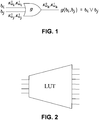
- FIG. 1 illustrates a garbled OR gate that implements the function above.
- the set of these four randomly ordered ciphertexts defines the garbled gate as shown in the table below.
- b i b j g ( b i ,b j )Garbled value 0 0 0 ⁇ K w i 0 K w j 0 K w k 0 0 1 1 ⁇ K w i 0 K w j 1 K w k 1 1 0 1 ⁇ K w i 1 K w j 0 K w k 1 1 1 1 ⁇ K w i 1 K w j 1 K w k 1
- the symmetric encryption algorithm ⁇ which is keyed by a pair of keys, has indistinguishable encryptions under chosen-plaintext attacks. It is also noted that for the given pair of keys K w i b i K w j b i , the corresponding decryption process unambiguously recovers the value of K w k g b i b j from the four ciphertexts constituting the garbled gate. It is worth noting that the knowledge of K w i b i K w j b j yields only the value of K w k g b i b j and that no other output values can be recovered for this gate. So the evaluator can evaluate the entire garbled circuit gate-by-gate so that no additional information leaks about intermediate computations.
- garbled circuits are a very powerful tool.
- the security is compromised when more than one circuit-input is provided.
- computing f on new inputs requires to create a different garbled version of the circuit (and the inputs).
- implementing garbled circuits includes a number of steps including:
- Embodiments that instantiate the cryptographic function f in the white-box model using garbled circuits will now be described.
- the garbling of the cryptographic function f may be done once and provided to the target platform or user that needs to compute the cryptographic function f . On a regular interval one could update this circuit implementation of f for security reasons.
- the garbled circuit of f may be represented as a circuit of gates where the gates have two or more inputs. This approach may be used to instantiate fixed and dynamic instantiated white-box implementations.
- the fixed secret key is already embedded in the cryptographic algorithm. This combination of the cryptographic algorithm and the fixed key is used as the function f for which a garbled circuit is created.
- the input to the evaluator is just the garbled input value of the message which needs to be encrypted / decrypted or signed by the cryptographic function f .
- a garbled circuit f of the target cryptographic primitive is used.
- the input to the algorithm is a tuple of values (GI( a 1 ), GI( a 2 )) where a 1 is the secret key and a 2 is the input message to the algorithm.
- a 1 may be the input message to the algorithm
- a 2 may be the secret key.
- a method of implementing the cryptographic function using garbled circuits may be as follows:
- T LUT T 0 , ... , T 2 m ⁇ 1 .
- the embodiments described herein may be applicable to any cryptographic algorithm, including public-key algorithms, keyed hash algorithms, digital signature algorithms, and message authentication algorithms. They may be used as a building block to design protected implementations in the white-box context.
- non-transitory machine-readable storage medium will be understood to exclude a transitory propagation signal but to include all forms of volatile and non-volatile memory.
- processor will be understood to encompass a variety of devices such as microprocessors, field-programmable gate arrays (FPGAs), application-specific integrated circuits (ASICs), and other similar processing devices. When software is implemented on the processor, the combination becomes a single specific machine.
Landscapes
- Engineering & Computer Science (AREA)
- Computer Security & Cryptography (AREA)
- Computer Networks & Wireless Communication (AREA)
- Signal Processing (AREA)
- Theoretical Computer Science (AREA)
- Physics & Mathematics (AREA)
- General Physics & Mathematics (AREA)
- General Engineering & Computer Science (AREA)
- General Health & Medical Sciences (AREA)
- Computer Hardware Design (AREA)
- Software Systems (AREA)
- Bioethics (AREA)
- Health & Medical Sciences (AREA)
- Computing Systems (AREA)
- Automation & Control Theory (AREA)
- Storage Device Security (AREA)
Abstract
Description
- Various exemplary embodiments disclosed herein relate generally to white-box implementations of cryptographic functions using garbled circuits.
- White-box cryptography is aimed at protecting secret keys from being disclosed in a software implementation of a cryptographic or secure function. In such a context, it is assumed that the attacker (usually a "legitimate" user or malicious software) may also control the execution environment of the software implementation. This is in contrast with the more traditional security model where the attacker is only given a black-box access (i.e., inputs/outputs) to the cryptographic function under consideration.
- The main idea of white-box implementations is to rewrite a key-instantiated version so that all information related to the key is hidden in the software implementation of the cryptographic or secure function. In other words, for each secret key, a key-customized software is implemented so that the key input is unnecessary. In other embodiments, the secret key may be an input to the white-box implementation. In such a case the key may be encoded.
- Most symmetric block-ciphers, including the AES and the DES, are implemented using substitution boxes and linear transformations. Imagine that such a cipher is white-box implemented as a huge lookup table taking on input any plaintext and returning the corresponding ciphertext for a given key. Observe that this white-box implementation has exactly the same security as the same cipher in the black-box context: the adversary learns nothing more than pairs of matching plaintexts/ciphertexts. Typical plaintexts being 64-bit or 128-bit values, such an ideal approach cannot be implemented in practice because of the size of the resulting lookup table.
- Current white-box implementations apply the above basic idea to smaller components of the cryptographic function. These white-box implementations represent each component as a series of lookup tables and insert random input and output bijective encodings on the lookup tables to introduce ambiguity, so that the resulting algorithm appears as the composition of a series of lookup tables with randomized values.
- To add further protection, external (key-independent) encodings may be used by replacing the encryption function EK (respectively, decryption function EK -1) with the composition E'K =G∘EK ∘F -1 (respectively, E'K -1=F∘EK -1∘G -1). Input encoding function F and output decoding function G -1 (respectively, G and F -1) should not be made available on the platform that computes E'K (respectively, E'K -1) so that the white-box implementation cannot be used to compute EK (respectively, EK -1). Although the resulting implementation is not standard, such an approach is reasonable for many applications.
- A brief summary of various exemplary embodiments is presented below. Some simplifications and omissions may be made in the following summary, which is intended to highlight and introduce some aspects of the various exemplary embodiments, but not to limit the scope of the invention. Detailed descriptions of an exemplary embodiment adequate to allow those of ordinary skill in the art to make and use the inventive concepts will follow in later sections.
- In accordance with an aspect of the present disclosure, a method is conceived for producing a white-box implementation of a cryptographic function using garbled circuits, comprising: producing, by a first party, a logic circuit implementing the cryptographic function using a plurality of logic gates and a plurality of wires; garbling the produced logic circuit, by the first party, including garbling the plurality of logic gates and assigning two garbled values for each of the plurality of wires; and providing a second party the garbled logic circuit and a first garbled circuit input value.
- Various embodiments are described, wherein a cryptographic key is embedded in the cryptographic function.
- Various embodiments are described, wherein a cryptographic key is an input to the garbled circuit as a second garbled input, and the second party is provided a second garbled input.
- Various embodiments are described, wherein the cryptographic function is an advanced encryption standard (AES) function.
- Various embodiments are described, wherein the cryptographic function is a public key encryption function.
- Various embodiments are described, wherein the cryptographic function is a digital signature function.
- Various embodiments are described, wherein the cryptographic function is a message authentication function.
- Various embodiments are described, further including evaluating the garbled logic circuit by the second party to produce a garbled output that second party maps to a real output value of the cryptographic function.
- Various embodiments are described, wherein garbled logic circuit includes a plurality of garbled lookup tables implementing a portion of the logic gates.
- Various embodiments are described, wherein one of the lookup tables LUT receives an input x=(x 0 ,..., x m-1)2∈{0,1} m , produces an output y = LUT (x)= (y 0,...,y n-1)2∈{0,1} n , and wherein assigning two garbled values for each of the plurality of wires includes assigning each wire


- Various embodiments are described, wherein assigning two garbled values for each of the plurality of wires includes assigning each wire


- In accordance with another aspect of the present disclosure, a non-transitory machine-readable storage medium is provided, encoded with instructions which, when executed, carry out a method of the kind set forth.
- In order to better understand various exemplary embodiments, reference is made to the accompanying drawings, wherein:
-
FIG. 1 illustrates a garbled OR gate; and -
FIG. 2 illustrates a gate that has m input bits and n output bits. - To facilitate understanding, identical reference numerals have been used to designate elements having substantially the same or similar structure and/or substantially the same or similar function.
- The description and drawings illustrate the principles of the invention. It will thus be appreciated that those skilled in the art will be able to devise various arrangements that, although not explicitly described or shown herein, embody the principles of the invention and are included within its scope. Furthermore, all examples recited herein are principally intended expressly to be for pedagogical purposes to aid the reader in understanding the principles of the invention and the concepts contributed by the inventor(s) to furthering the art, and are to be construed as being without limitation to such specifically recited examples and conditions. Additionally, the term, "or," as used herein, refers to a non-exclusive or (i.e., and/or), unless otherwise indicated (e.g., "or else" or "or in the alternative"). Also, the various embodiments described herein are not necessarily mutually exclusive, as some embodiments can be combined with one or more other embodiments to form new embodiments.
- In its basic version, Yao's protocol (a.k.a. garbled circuits) allows for the two-party evaluation of a function f(x 1 ,x 2) in the presence of semi-honest adversaries. The protocol is run between the input owners (ai denotes the private input of user i). At the end of the protocol, the value of f(a 1 ,a 2) is obtained, but no party learns more than what is revealed from this output value.
- The protocol operates as follows. The first party, called the garbler, builds a garbled version of a circuit for computing a function f. Both partied know the function f and the circuit before garbling. The first party then gives to the second party, called evaluator, the garbled circuit as well as the garbled-circuit input values that correspond to a 1 (and only those for a 1). The notation GI(a 1) is used to denote these input values. The first party also provides the mapping between the garbled-circuit output values and the actual bit values. Upon receiving the circuit, the evaluator engages in a 1-out-of-2 oblivious transfer protocol with the garbler, playing the role of the chooser, so as to obliviously obtain the garbled-circuit input values corresponding to its private input a 2, GI(a 2). From GI(a 1) and GI(a 2), the evaluator can therefore calculate f(a 1 ,a 2) using the garbled versions of f and GI(a 1) and GI(a 2).
- In more detail, the protocol evaluates the function f through a Boolean circuit. To each wire wi of the circuit, the garbler associates two random cryptographic keys,


-
FIG. 1 illustrates a garbled OR gate that implements the function above. The set of these four randomly ordered ciphertexts defines the garbled gate as shown in the table below.bibjg(bi,bj )Garbled value 0 0 0 
0 1 1 
1 0 1 
1 1 1 
- The symmetric encryption algorithm ε, which is keyed by a pair of keys, has indistinguishable encryptions under chosen-plaintext attacks. It is also noted that for the given pair of keys


- From the description above it can be seen that garbled circuits are a very powerful tool. However, there is one significant restriction: the security is compromised when more than one circuit-input is provided. Hence, when computing f on new inputs requires to create a different garbled version of the circuit (and the inputs).Typically, implementing garbled circuits includes a number of steps including:
- determining a logic circuit to implement the function f;
- garbling this circuit by the first party, the garbler;
- providing the second party, the evaluator, with this garbled circuit f and the garbled circuit input values GI(a 1) and GI(a 2) which correspond (can be mapped) to the real input values a 1 and a 2 of the circuit (using oblivious transfer); and
- evaluating the circuit and obtaining the garbled-circuit output by the second party, which is denoted by GO(a 3) which may be mapped by the garbler to the real output value a 3=f(a 1 ,a 2).
- Embodiments that instantiate the cryptographic function f in the white-box model using garbled circuits will now be described. The garbling of the cryptographic function f may be done once and provided to the target platform or user that needs to compute the cryptographic function f. On a regular interval one could update this circuit implementation of f for security reasons.
- The garbled circuit of f may be represented as a circuit of gates where the gates have two or more inputs. This approach may be used to instantiate fixed and dynamic instantiated white-box implementations.
- In the fixed key setting, the fixed secret key is already embedded in the cryptographic algorithm. This combination of the cryptographic algorithm and the fixed key is used as the function f for which a garbled circuit is created. The input to the evaluator is just the garbled input value of the message which needs to be encrypted / decrypted or signed by the cryptographic function f.
- In the dynamic key setting a garbled circuit f of the target cryptographic primitive is used. The input to the algorithm is a tuple of values (GI(a 1), GI(a 2)) where a 1 is the secret key and a 2 is the input message to the algorithm. Alternatively, a 1 may be the input message to the algorithm, and a 2 may be the secret key.
- In the setting of white-box cryptography, it is common practice to allow external encodings on the input and output values of the algorithm. Therefore, it may be assumed that garbled input values correspond to the external input encoding and the garbled output values have an external encoding on top of them. This significantly simplifies the approach. No oblivious transfer is needed because the garbled inputs are simply sent to the target platform. An example of f could be a block-cipher which computes a decryption of a message where both the input and output have external encodings applied to them.
- It will now be described how to garble a look-up table (LUT) with m input bits and n output bits.
FIG. 2 illustrates a gate that has m input bits and n output bits. This is a generalization of the binary gate which use m = 2 and n = 1. A method of implementing the cryptographic function using garbled circuits may be as follows: - 1. Assign each input
wire 


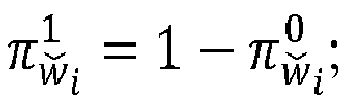
- 2. Do the same for each output
wire 
- 3. For all possible x=(x 0 ,..., x m-1)2∈{0,1} m
- a. let y = LUT (x)=(y 0 ,...,y n-1)2∈{0,1} n and
- b. compute:

- Return the garbled table

- In order to evaluate this garbled table the evaluator receives as inputs;

and.
- The evaluator computes the output as follows:


- The embodiments described herein may be applicable to any cryptographic algorithm, including public-key algorithms, keyed hash algorithms, digital signature algorithms, and message authentication algorithms. They may be used as a building block to design protected implementations in the white-box context.
- Any combination of specific software running on a processor to implement the embodiments of the invention, constitute a specific dedicated machine.
- As used herein, the term "non-transitory machine-readable storage medium" will be understood to exclude a transitory propagation signal but to include all forms of volatile and non-volatile memory. Further, as used herein, the term "processor" will be understood to encompass a variety of devices such as microprocessors, field-programmable gate arrays (FPGAs), application-specific integrated circuits (ASICs), and other similar processing devices. When software is implemented on the processor, the combination becomes a single specific machine.
- It should be appreciated by those skilled in the art that any block diagrams herein represent conceptual views of illustrative circuitry embodying the principles of the invention.
- Although the various exemplary embodiments have been described in detail with particular reference to certain exemplary aspects thereof, it should be understood that the invention is capable of other embodiments and its details are capable of modifications in various obvious respects. As is readily apparent to those skilled in the art, variations and modifications can be effected while remaining within the spirit and scope of the invention. Accordingly, the foregoing disclosure, description, and figures are for illustrative purposes only and do not in any way limit the invention, which is defined only by the claims.
Claims (12)
- A method for producing a white-box implementation of a cryptographic function using garbled circuits, comprising:producing, by a first party, a logic circuit implementing the cryptographic function using a plurality of logic gates and a plurality of wires;garbling the produced logic circuit, by the first party, including garbling the plurality of logic gates and assigning two garbled values for each of the plurality of wires; andproviding a second party the garbled logic circuit and a first garbled circuit input value.
- The method of claim 1, wherein a cryptographic key is embedded in the cryptographic function.
- The method of claim 1 or 2, wherein a cryptographic key is an input to the garbled circuit as a second garbled input, and the second party is provided a second garbled input.
- The method of any preceding claim, wherein the cryptographic function is an advanced encryption standard (AES) function.
- The method of any preceding claim, wherein the cryptographic function is a public key encryption function.
- The method of any preceding claim, wherein the cryptographic function is a digital signature function.
- The method of any preceding claim, wherein the cryptographic function is a message authentication function.
- The method of any preceding claim, further comprising evaluating the garbled logic circuit by the second party to produce a garbled output that second party maps to a real output value of the cryptographic function.
- The method of any preceding claim, wherein garbled logic circuit includes a plurality of garbled lookup tables implementing a portion of the logic gates.
- The method of claim 9, wherein one of the lookup tables LUT receives an input x=(x 0 ,...,x m-1)2∈{0,1} m , produces an output y = LUT (x)=(y 0,...,y n-1)2∈ {0,1} n , and wherein assigning two garbled values for each of the plurality of wires includes assigning each wire


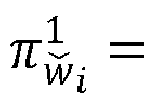

computing garbled LUT as follows:
- The method of any preceding claim, wherein assigning two garbled values for each of the plurality of wires includes assigning each wire


- A non-transitory machine-readable storage medium encoded with instructions which, when executed, carry out the method of any preceding claim.
Applications Claiming Priority (1)
| Application Number | Priority Date | Filing Date | Title |
|---|---|---|---|
| US15/617,940 US10652011B2 (en) | 2017-06-08 | 2017-06-08 | White-box implementations with garbled circuits |
Publications (2)
| Publication Number | Publication Date |
|---|---|
| EP3413502A1 true EP3413502A1 (en) | 2018-12-12 |
| EP3413502B1 EP3413502B1 (en) | 2020-07-08 |
Family
ID=62492486
Family Applications (1)
| Application Number | Title | Priority Date | Filing Date |
|---|---|---|---|
| EP18175144.7A Active EP3413502B1 (en) | 2017-06-08 | 2018-05-30 | White-box implementations with garbled circuits |
Country Status (3)
| Country | Link |
|---|---|
| US (1) | US10652011B2 (en) |
| EP (1) | EP3413502B1 (en) |
| CN (1) | CN109039596B (en) |
Families Citing this family (8)
| Publication number | Priority date | Publication date | Assignee | Title |
|---|---|---|---|---|
| EP3602365B1 (en) * | 2017-03-24 | 2024-02-14 | Visa International Service Association | Authentication system using secure multi-party computation |
| US10567159B2 (en) * | 2017-06-07 | 2020-02-18 | Nxp B.V. | CMAC computation using white-box implementations with external encodings |
| WO2019110380A1 (en) * | 2017-12-04 | 2019-06-13 | Koninklijke Philips N.V. | Nodes and methods of operating the same |
| US10749694B2 (en) | 2018-05-01 | 2020-08-18 | Analog Devices, Inc. | Device authentication based on analog characteristics without error correction |
| US11044107B2 (en) | 2018-05-01 | 2021-06-22 | Analog Devices, Inc. | Device authentication based on analog characteristics without error correction |
| US11210428B2 (en) * | 2018-06-06 | 2021-12-28 | The Trustees Of Indiana University | Long-term on-demand service for executing active-secure computations |
| US11245680B2 (en) * | 2019-03-01 | 2022-02-08 | Analog Devices, Inc. | Garbled circuit for device authentication |
| US10797866B1 (en) * | 2020-03-30 | 2020-10-06 | Bar-Ilan University | System and method for enforcement of correctness of inputs of multi-party computations |
Family Cites Families (5)
| Publication number | Priority date | Publication date | Assignee | Title |
|---|---|---|---|---|
| US9124417B2 (en) * | 2010-03-05 | 2015-09-01 | Alcatel Lucent | Computation of garbled tables in garbled circuit |
| US8881295B2 (en) * | 2010-09-28 | 2014-11-04 | Alcatel Lucent | Garbled circuit generation in a leakage-resilient manner |
| US9485226B2 (en) * | 2014-04-28 | 2016-11-01 | Nxp B.V. | Method for including an implicit integrity or authenticity check into a white-box implementation |
| CN106452724A (en) * | 2015-08-07 | 2017-02-22 | 廖华勇 | Wide spectrum password plan |
| US10243738B2 (en) * | 2015-12-04 | 2019-03-26 | Microsoft Technology Licensing, Llc | Adding privacy to standard credentials |
-
2017
- 2017-06-08 US US15/617,940 patent/US10652011B2/en active Active
-
2018
- 2018-05-30 EP EP18175144.7A patent/EP3413502B1/en active Active
- 2018-06-07 CN CN201810585707.1A patent/CN109039596B/en active Active
Non-Patent Citations (3)
| Title |
|---|
| KIMMO JÃ RVINEN ET AL: "Garbled Circuits for Leakage-Resilience: Hardware Implementation and Evaluation of One-Time Programs", INTERNATIONAL ASSOCIATION FOR CRYPTOLOGIC RESEARCH,, vol. 20100617:125539, 17 June 2010 (2010-06-17), pages 1 - 17, XP061004126 * |
| PINKAS B ET AL: "Secure Two-Party Computation is Practical", INTERNATIONAL ASSOCIATION FOR CRYPTOLOGIC RESEARCH,, vol. 20090902:075811, 2 September 2009 (2009-09-02), pages 1 - 20, XP061003564 * |
| YEHUDA LINDELL ET AL: "Implementing Two-Party Computation Efficiently with Security Against Malicious Adversaries", 10 September 2008, SECURITY AND CRYPTOGRAPHY FOR NETWORKS; [LECTURE NOTES IN COMPUTER SCIENCE], SPRINGER BERLIN HEIDELBERG, BERLIN, HEIDELBERG, PAGE(S) 2 - 20, ISBN: 978-3-540-85854-6, XP019104378 * |
Also Published As
| Publication number | Publication date |
|---|---|
| CN109039596A (en) | 2018-12-18 |
| CN109039596B (en) | 2022-12-06 |
| US10652011B2 (en) | 2020-05-12 |
| US20180359082A1 (en) | 2018-12-13 |
| EP3413502B1 (en) | 2020-07-08 |
Similar Documents
| Publication | Publication Date | Title |
|---|---|---|
| EP3413502B1 (en) | White-box implementations with garbled circuits | |
| Almajed et al. | SE-ENC: A secure and efficient encoding scheme using elliptic curve cryptography | |
| CN104322002B (en) | Update key information | |
| US9124417B2 (en) | Computation of garbled tables in garbled circuit | |
| US8595513B2 (en) | Method and system for protecting a cryptography device | |
| US10790962B2 (en) | Device and method to compute a block cipher | |
| Fay | Introducing the counter mode of operation to compressed sensing based encryption | |
| Daemen et al. | Xoodoo cookbook | |
| WO2016141860A1 (en) | Hybrid fully homomorphic encryption (f.h.e.) systems | |
| KR20200055672A (en) | Encryption systems and method using permutaion group based cryptographic techniques | |
| US20100169658A1 (en) | Elliptic curve-based message authentication code | |
| US8705740B2 (en) | Elliptic curve-based message authentication code system and method | |
| Mandal et al. | A cryptosystem based on vigenere cipher by using mulitlevel encryption scheme | |
| Dunkelman et al. | Slidex attacks on the Even–Mansour encryption scheme | |
| Wu et al. | JAMBU lightweight authenticated encryption mode and AES-JAMBU | |
| Fay et al. | Compressive sensing encryption modes and their security | |
| US20220376922A1 (en) | Authenticated encryption apparatus with initialization-vector misuse resistance and method therefor | |
| US20170041133A1 (en) | Encryption method, program, and system | |
| Abusukhon et al. | An authenticated, secure, and mutable multiple‐session‐keys protocol based on elliptic curve cryptography and text‐to‐image encryption algorithm | |
| Shivhare et al. | An enhanced image encryption technique using DES algorithm with random image overlapping and random key generation | |
| Nissar et al. | Implementation of security enhancement in AES by inducting dynamicity in AES s-box | |
| Scripcariu | A study of methods used to improve encryption algorithms robustness | |
| Raj et al. | An expeditious chaos based digital image encryption algorithm | |
| Tayal et al. | Analysis of various cryptography techniques: a survey | |
| US11502818B2 (en) | System to secure encoding and mapping on elliptic curve cryptography (ECC) |
Legal Events
| Date | Code | Title | Description |
|---|---|---|---|
| PUAI | Public reference made under article 153(3) epc to a published international application that has entered the european phase |
Free format text: ORIGINAL CODE: 0009012 |
|
| STAA | Information on the status of an ep patent application or granted ep patent |
Free format text: STATUS: THE APPLICATION HAS BEEN PUBLISHED |
|
| AK | Designated contracting states |
Kind code of ref document: A1 Designated state(s): AL AT BE BG CH CY CZ DE DK EE ES FI FR GB GR HR HU IE IS IT LI LT LU LV MC MK MT NL NO PL PT RO RS SE SI SK SM TR |
|
| AX | Request for extension of the european patent |
Extension state: BA ME |
|
| STAA | Information on the status of an ep patent application or granted ep patent |
Free format text: STATUS: REQUEST FOR EXAMINATION WAS MADE |
|
| 17P | Request for examination filed |
Effective date: 20190612 |
|
| RBV | Designated contracting states (corrected) |
Designated state(s): AL AT BE BG CH CY CZ DE DK EE ES FI FR GB GR HR HU IE IS IT LI LT LU LV MC MK MT NL NO PL PT RO RS SE SI SK SM TR |
|
| GRAP | Despatch of communication of intention to grant a patent |
Free format text: ORIGINAL CODE: EPIDOSNIGR1 |
|
| STAA | Information on the status of an ep patent application or granted ep patent |
Free format text: STATUS: GRANT OF PATENT IS INTENDED |
|
| INTG | Intention to grant announced |
Effective date: 20200228 |
|
| GRAS | Grant fee paid |
Free format text: ORIGINAL CODE: EPIDOSNIGR3 |
|
| GRAA | (expected) grant |
Free format text: ORIGINAL CODE: 0009210 |
|
| STAA | Information on the status of an ep patent application or granted ep patent |
Free format text: STATUS: THE PATENT HAS BEEN GRANTED |
|
| AK | Designated contracting states |
Kind code of ref document: B1 Designated state(s): AL AT BE BG CH CY CZ DE DK EE ES FI FR GB GR HR HU IE IS IT LI LT LU LV MC MK MT NL NO PL PT RO RS SE SI SK SM TR |
|
| REG | Reference to a national code |
Ref country code: CH Ref legal event code: EP Ref country code: AT Ref legal event code: REF Ref document number: 1289631 Country of ref document: AT Kind code of ref document: T Effective date: 20200715 |
|
| REG | Reference to a national code |
Ref country code: DE Ref legal event code: R096 Ref document number: 602018005824 Country of ref document: DE |
|
| REG | Reference to a national code |
Ref country code: IE Ref legal event code: FG4D |
|
| REG | Reference to a national code |
Ref country code: LT Ref legal event code: MG4D |
|
| REG | Reference to a national code |
Ref country code: AT Ref legal event code: MK05 Ref document number: 1289631 Country of ref document: AT Kind code of ref document: T Effective date: 20200708 |
|
| REG | Reference to a national code |
Ref country code: NL Ref legal event code: MP Effective date: 20200708 |
|
| PG25 | Lapsed in a contracting state [announced via postgrant information from national office to epo] |
Ref country code: HR Free format text: LAPSE BECAUSE OF FAILURE TO SUBMIT A TRANSLATION OF THE DESCRIPTION OR TO PAY THE FEE WITHIN THE PRESCRIBED TIME-LIMIT Effective date: 20200708 Ref country code: AT Free format text: LAPSE BECAUSE OF FAILURE TO SUBMIT A TRANSLATION OF THE DESCRIPTION OR TO PAY THE FEE WITHIN THE PRESCRIBED TIME-LIMIT Effective date: 20200708 Ref country code: BG Free format text: LAPSE BECAUSE OF FAILURE TO SUBMIT A TRANSLATION OF THE DESCRIPTION OR TO PAY THE FEE WITHIN THE PRESCRIBED TIME-LIMIT Effective date: 20201008 Ref country code: PT Free format text: LAPSE BECAUSE OF FAILURE TO SUBMIT A TRANSLATION OF THE DESCRIPTION OR TO PAY THE FEE WITHIN THE PRESCRIBED TIME-LIMIT Effective date: 20201109 Ref country code: ES Free format text: LAPSE BECAUSE OF FAILURE TO SUBMIT A TRANSLATION OF THE DESCRIPTION OR TO PAY THE FEE WITHIN THE PRESCRIBED TIME-LIMIT Effective date: 20200708 Ref country code: LT Free format text: LAPSE BECAUSE OF FAILURE TO SUBMIT A TRANSLATION OF THE DESCRIPTION OR TO PAY THE FEE WITHIN THE PRESCRIBED TIME-LIMIT Effective date: 20200708 Ref country code: NO Free format text: LAPSE BECAUSE OF FAILURE TO SUBMIT A TRANSLATION OF THE DESCRIPTION OR TO PAY THE FEE WITHIN THE PRESCRIBED TIME-LIMIT Effective date: 20201008 Ref country code: SE Free format text: LAPSE BECAUSE OF FAILURE TO SUBMIT A TRANSLATION OF THE DESCRIPTION OR TO PAY THE FEE WITHIN THE PRESCRIBED TIME-LIMIT Effective date: 20200708 Ref country code: GR Free format text: LAPSE BECAUSE OF FAILURE TO SUBMIT A TRANSLATION OF THE DESCRIPTION OR TO PAY THE FEE WITHIN THE PRESCRIBED TIME-LIMIT Effective date: 20201009 Ref country code: FI Free format text: LAPSE BECAUSE OF FAILURE TO SUBMIT A TRANSLATION OF THE DESCRIPTION OR TO PAY THE FEE WITHIN THE PRESCRIBED TIME-LIMIT Effective date: 20200708 |
|
| PG25 | Lapsed in a contracting state [announced via postgrant information from national office to epo] |
Ref country code: PL Free format text: LAPSE BECAUSE OF FAILURE TO SUBMIT A TRANSLATION OF THE DESCRIPTION OR TO PAY THE FEE WITHIN THE PRESCRIBED TIME-LIMIT Effective date: 20200708 Ref country code: LV Free format text: LAPSE BECAUSE OF FAILURE TO SUBMIT A TRANSLATION OF THE DESCRIPTION OR TO PAY THE FEE WITHIN THE PRESCRIBED TIME-LIMIT Effective date: 20200708 Ref country code: RS Free format text: LAPSE BECAUSE OF FAILURE TO SUBMIT A TRANSLATION OF THE DESCRIPTION OR TO PAY THE FEE WITHIN THE PRESCRIBED TIME-LIMIT Effective date: 20200708 Ref country code: IS Free format text: LAPSE BECAUSE OF FAILURE TO SUBMIT A TRANSLATION OF THE DESCRIPTION OR TO PAY THE FEE WITHIN THE PRESCRIBED TIME-LIMIT Effective date: 20201108 |
|
| PG25 | Lapsed in a contracting state [announced via postgrant information from national office to epo] |
Ref country code: NL Free format text: LAPSE BECAUSE OF FAILURE TO SUBMIT A TRANSLATION OF THE DESCRIPTION OR TO PAY THE FEE WITHIN THE PRESCRIBED TIME-LIMIT Effective date: 20200708 |
|
| REG | Reference to a national code |
Ref country code: DE Ref legal event code: R097 Ref document number: 602018005824 Country of ref document: DE |
|
| PG25 | Lapsed in a contracting state [announced via postgrant information from national office to epo] |
Ref country code: IT Free format text: LAPSE BECAUSE OF FAILURE TO SUBMIT A TRANSLATION OF THE DESCRIPTION OR TO PAY THE FEE WITHIN THE PRESCRIBED TIME-LIMIT Effective date: 20200708 Ref country code: SM Free format text: LAPSE BECAUSE OF FAILURE TO SUBMIT A TRANSLATION OF THE DESCRIPTION OR TO PAY THE FEE WITHIN THE PRESCRIBED TIME-LIMIT Effective date: 20200708 Ref country code: DK Free format text: LAPSE BECAUSE OF FAILURE TO SUBMIT A TRANSLATION OF THE DESCRIPTION OR TO PAY THE FEE WITHIN THE PRESCRIBED TIME-LIMIT Effective date: 20200708 Ref country code: CZ Free format text: LAPSE BECAUSE OF FAILURE TO SUBMIT A TRANSLATION OF THE DESCRIPTION OR TO PAY THE FEE WITHIN THE PRESCRIBED TIME-LIMIT Effective date: 20200708 Ref country code: RO Free format text: LAPSE BECAUSE OF FAILURE TO SUBMIT A TRANSLATION OF THE DESCRIPTION OR TO PAY THE FEE WITHIN THE PRESCRIBED TIME-LIMIT Effective date: 20200708 Ref country code: EE Free format text: LAPSE BECAUSE OF FAILURE TO SUBMIT A TRANSLATION OF THE DESCRIPTION OR TO PAY THE FEE WITHIN THE PRESCRIBED TIME-LIMIT Effective date: 20200708 |
|
| PLBE | No opposition filed within time limit |
Free format text: ORIGINAL CODE: 0009261 |
|
| STAA | Information on the status of an ep patent application or granted ep patent |
Free format text: STATUS: NO OPPOSITION FILED WITHIN TIME LIMIT |
|
| PG25 | Lapsed in a contracting state [announced via postgrant information from national office to epo] |
Ref country code: AL Free format text: LAPSE BECAUSE OF FAILURE TO SUBMIT A TRANSLATION OF THE DESCRIPTION OR TO PAY THE FEE WITHIN THE PRESCRIBED TIME-LIMIT Effective date: 20200708 |
|
| 26N | No opposition filed |
Effective date: 20210409 |
|
| PG25 | Lapsed in a contracting state [announced via postgrant information from national office to epo] |
Ref country code: SK Free format text: LAPSE BECAUSE OF FAILURE TO SUBMIT A TRANSLATION OF THE DESCRIPTION OR TO PAY THE FEE WITHIN THE PRESCRIBED TIME-LIMIT Effective date: 20200708 |
|
| PG25 | Lapsed in a contracting state [announced via postgrant information from national office to epo] |
Ref country code: SI Free format text: LAPSE BECAUSE OF FAILURE TO SUBMIT A TRANSLATION OF THE DESCRIPTION OR TO PAY THE FEE WITHIN THE PRESCRIBED TIME-LIMIT Effective date: 20200708 |
|
| REG | Reference to a national code |
Ref country code: CH Ref legal event code: PL |
|
| PG25 | Lapsed in a contracting state [announced via postgrant information from national office to epo] |
Ref country code: CH Free format text: LAPSE BECAUSE OF NON-PAYMENT OF DUE FEES Effective date: 20210531 Ref country code: LI Free format text: LAPSE BECAUSE OF NON-PAYMENT OF DUE FEES Effective date: 20210531 Ref country code: LU Free format text: LAPSE BECAUSE OF NON-PAYMENT OF DUE FEES Effective date: 20210530 Ref country code: MC Free format text: LAPSE BECAUSE OF FAILURE TO SUBMIT A TRANSLATION OF THE DESCRIPTION OR TO PAY THE FEE WITHIN THE PRESCRIBED TIME-LIMIT Effective date: 20200708 |
|
| REG | Reference to a national code |
Ref country code: BE Ref legal event code: MM Effective date: 20210531 |
|
| PG25 | Lapsed in a contracting state [announced via postgrant information from national office to epo] |
Ref country code: IE Free format text: LAPSE BECAUSE OF NON-PAYMENT OF DUE FEES Effective date: 20210530 |
|
| PG25 | Lapsed in a contracting state [announced via postgrant information from national office to epo] |
Ref country code: BE Free format text: LAPSE BECAUSE OF NON-PAYMENT OF DUE FEES Effective date: 20210531 |
|
| GBPC | Gb: european patent ceased through non-payment of renewal fee |
Effective date: 20220530 |
|
| PG25 | Lapsed in a contracting state [announced via postgrant information from national office to epo] |
Ref country code: GB Free format text: LAPSE BECAUSE OF NON-PAYMENT OF DUE FEES Effective date: 20220530 |
|
| PG25 | Lapsed in a contracting state [announced via postgrant information from national office to epo] |
Ref country code: CY Free format text: LAPSE BECAUSE OF FAILURE TO SUBMIT A TRANSLATION OF THE DESCRIPTION OR TO PAY THE FEE WITHIN THE PRESCRIBED TIME-LIMIT Effective date: 20200708 |
|
| PG25 | Lapsed in a contracting state [announced via postgrant information from national office to epo] |
Ref country code: HU Free format text: LAPSE BECAUSE OF FAILURE TO SUBMIT A TRANSLATION OF THE DESCRIPTION OR TO PAY THE FEE WITHIN THE PRESCRIBED TIME-LIMIT; INVALID AB INITIO Effective date: 20180530 |
|
| P01 | Opt-out of the competence of the unified patent court (upc) registered |
Effective date: 20230725 |
|
| PG25 | Lapsed in a contracting state [announced via postgrant information from national office to epo] |
Ref country code: MK Free format text: LAPSE BECAUSE OF FAILURE TO SUBMIT A TRANSLATION OF THE DESCRIPTION OR TO PAY THE FEE WITHIN THE PRESCRIBED TIME-LIMIT Effective date: 20200708 |
|
| PG25 | Lapsed in a contracting state [announced via postgrant information from national office to epo] |
Ref country code: MT Free format text: LAPSE BECAUSE OF FAILURE TO SUBMIT A TRANSLATION OF THE DESCRIPTION OR TO PAY THE FEE WITHIN THE PRESCRIBED TIME-LIMIT Effective date: 20200708 |
|
| PGFP | Annual fee paid to national office [announced via postgrant information from national office to epo] |
Ref country code: DE Payment date: 20250423 Year of fee payment: 8 |
|
| PGFP | Annual fee paid to national office [announced via postgrant information from national office to epo] |
Ref country code: FR Payment date: 20250423 Year of fee payment: 8 |
|
| PG25 | Lapsed in a contracting state [announced via postgrant information from national office to epo] |
Ref country code: TR Free format text: LAPSE BECAUSE OF FAILURE TO SUBMIT A TRANSLATION OF THE DESCRIPTION OR TO PAY THE FEE WITHIN THE PRESCRIBED TIME-LIMIT Effective date: 20200708 |