EP3413294A1 - Method, controller and display device of rgb image content - Google Patents
Method, controller and display device of rgb image content Download PDFInfo
- Publication number
- EP3413294A1 EP3413294A1 EP17174907.0A EP17174907A EP3413294A1 EP 3413294 A1 EP3413294 A1 EP 3413294A1 EP 17174907 A EP17174907 A EP 17174907A EP 3413294 A1 EP3413294 A1 EP 3413294A1
- Authority
- EP
- European Patent Office
- Prior art keywords
- rgb
- rgbw
- content
- display device
- image data
- Prior art date
- Legal status (The legal status is an assumption and is not a legal conclusion. Google has not performed a legal analysis and makes no representation as to the accuracy of the status listed.)
- Granted
Links
Images

Classifications
-
- G—PHYSICS
- G09—EDUCATION; CRYPTOGRAPHY; DISPLAY; ADVERTISING; SEALS
- G09G—ARRANGEMENTS OR CIRCUITS FOR CONTROL OF INDICATING DEVICES USING STATIC MEANS TO PRESENT VARIABLE INFORMATION
- G09G3/00—Control arrangements or circuits, of interest only in connection with visual indicators other than cathode-ray tubes
- G09G3/20—Control arrangements or circuits, of interest only in connection with visual indicators other than cathode-ray tubes for presentation of an assembly of a number of characters, e.g. a page, by composing the assembly by combination of individual elements arranged in a matrix no fixed position being assigned to or needed to be assigned to the individual characters or partial characters
- G09G3/22—Control arrangements or circuits, of interest only in connection with visual indicators other than cathode-ray tubes for presentation of an assembly of a number of characters, e.g. a page, by composing the assembly by combination of individual elements arranged in a matrix no fixed position being assigned to or needed to be assigned to the individual characters or partial characters using controlled light sources
- G09G3/30—Control arrangements or circuits, of interest only in connection with visual indicators other than cathode-ray tubes for presentation of an assembly of a number of characters, e.g. a page, by composing the assembly by combination of individual elements arranged in a matrix no fixed position being assigned to or needed to be assigned to the individual characters or partial characters using controlled light sources using electroluminescent panels
- G09G3/32—Control arrangements or circuits, of interest only in connection with visual indicators other than cathode-ray tubes for presentation of an assembly of a number of characters, e.g. a page, by composing the assembly by combination of individual elements arranged in a matrix no fixed position being assigned to or needed to be assigned to the individual characters or partial characters using controlled light sources using electroluminescent panels semiconductive, e.g. using light-emitting diodes [LED]
- G09G3/3208—Control arrangements or circuits, of interest only in connection with visual indicators other than cathode-ray tubes for presentation of an assembly of a number of characters, e.g. a page, by composing the assembly by combination of individual elements arranged in a matrix no fixed position being assigned to or needed to be assigned to the individual characters or partial characters using controlled light sources using electroluminescent panels semiconductive, e.g. using light-emitting diodes [LED] organic, e.g. using organic light-emitting diodes [OLED]
- G09G3/3225—Control arrangements or circuits, of interest only in connection with visual indicators other than cathode-ray tubes for presentation of an assembly of a number of characters, e.g. a page, by composing the assembly by combination of individual elements arranged in a matrix no fixed position being assigned to or needed to be assigned to the individual characters or partial characters using controlled light sources using electroluminescent panels semiconductive, e.g. using light-emitting diodes [LED] organic, e.g. using organic light-emitting diodes [OLED] using an active matrix
-
- G—PHYSICS
- G09—EDUCATION; CRYPTOGRAPHY; DISPLAY; ADVERTISING; SEALS
- G09G—ARRANGEMENTS OR CIRCUITS FOR CONTROL OF INDICATING DEVICES USING STATIC MEANS TO PRESENT VARIABLE INFORMATION
- G09G2300/00—Aspects of the constitution of display devices
- G09G2300/04—Structural and physical details of display devices
- G09G2300/0439—Pixel structures
- G09G2300/0452—Details of colour pixel setup, e.g. pixel composed of a red, a blue and two green components
-
- G—PHYSICS
- G09—EDUCATION; CRYPTOGRAPHY; DISPLAY; ADVERTISING; SEALS
- G09G—ARRANGEMENTS OR CIRCUITS FOR CONTROL OF INDICATING DEVICES USING STATIC MEANS TO PRESENT VARIABLE INFORMATION
- G09G2320/00—Control of display operating conditions
- G09G2320/04—Maintaining the quality of display appearance
- G09G2320/043—Preventing or counteracting the effects of ageing
- G09G2320/046—Dealing with screen burn-in prevention or compensation of the effects thereof
-
- G—PHYSICS
- G09—EDUCATION; CRYPTOGRAPHY; DISPLAY; ADVERTISING; SEALS
- G09G—ARRANGEMENTS OR CIRCUITS FOR CONTROL OF INDICATING DEVICES USING STATIC MEANS TO PRESENT VARIABLE INFORMATION
- G09G2320/00—Control of display operating conditions
- G09G2320/06—Adjustment of display parameters
- G09G2320/0666—Adjustment of display parameters for control of colour parameters, e.g. colour temperature
-
- G—PHYSICS
- G09—EDUCATION; CRYPTOGRAPHY; DISPLAY; ADVERTISING; SEALS
- G09G—ARRANGEMENTS OR CIRCUITS FOR CONTROL OF INDICATING DEVICES USING STATIC MEANS TO PRESENT VARIABLE INFORMATION
- G09G2340/00—Aspects of display data processing
- G09G2340/06—Colour space transformation
Definitions
- the invention relates to a method for controlling the display of RGB image content with a display device. Further, the present invention relates to a respective controller and a respective display device.
- Modern display devices may use a variety of different image panel technologies.
- One possible technology is the OLED technology that may use white OLED light sources with respective color filters.
- the color filters may e.g. be RGB color filters (red, green, blue).
- an additional white sub-pixel may be added to each pixel of such a display.
- Image retention refers to any image that "sticks" on a screen, even when the content changes. It usually appears as a faint ghost, and with most TVs this fades after certain amount of time. Burn-in is a form of image retention that lasts longer, and it is usually visible even when playing other content.
- Burn-in and image retention are possible on virtually any display.
- Most cases of burn-in in e.g. televisions are a result of static images or on-screen elements displaying on the screen uninterrupted for many hours or days at a time - with brightness typically at peak levels.
- Such static images may be full screen static images or only static sections of otherwise non-static images.
- the static section may e.g. comprise a TV station logo or the like.
- the present invention provides a method with the features of claim 1, a controller with the features of claim 7 and a display device with the features of claim 13.
- the present invention is based on the finding that image sticking may occur on virtually any type of display device if the static content is displayed long enough. Therefore, instead of providing physical modifications of the display device itself, the present invention focuses on modifying the control of the display device.
- a single pixel may be formed by four sub-pixels instead of three, one red subpixel, one green subpixel, one blue subpixel and an additional white subpixel.
- the addition of the white subpixel to form the so called RGBW pixel improves luminance and/or efficiency for any color display device that uses white light sources and color filters.
- RGB data red, green, blue
- RGBW image data is therefore necessary to drive the RGBW pixels of the display device based on the original RGB data or image content.
- the present invention focuses on the conversion from RGB data to RGBW image data to prevent image sticking on the display device.
- RGB data For the conversion of RGB data to RGBW image data a variety of different conversion algorithms may be used. Every conversion algorithm will provide similar but slightly different conversion results. This means that a single RGB pixel may be converted to slightly different RGBW pixels by different conversion algorithms. However users will perceive no or almost no difference between the conversion results of the different algorithms.
- the present invention takes advantage of the fact that different conversion algorithms will yield no perceptible differences but will still drive the subpixels of the RGBW pixels with different values or intensities.
- the method may comprise analyzing the RGB image content for the existence of areas of static content, converting the content of areas of the RGB image content that comprise non-static content into RGBW image data with a first predetermined conversion algorithm, and alternatingly converting only the content of areas of the RGB image content that comprise static content into RGBW image data with the plurality of RGB to RGBW conversion algorithms.
- the different RGB to RGBW conversion algorithms may then be applied only to the identified problematic sections of the RGB image content.
- RGB to RGBW conversion algorithms may have different computational costs.
- the areas of non-static content of the RGB image content may e.g. be converted into RGBW data with a highly efficient RGB to RGBW conversion algorithm that may be implemented with little computational costs.
- the sections or areas of static content of the RGB image content may in contrast be alternatingly converted with different RGB to RGBW conversion algorithms.
- the first RGB to RGBW conversion algorithm may e.g. comprise the following:
- This algorithm is e.g. disclosed in "POWER-CONSTRAINED RGB-TO-RGBW CONVERSION FOR EMISSIVE DISPLAYS" by Chul Lee and Vishal Monga.
- RGB to RGBW conversion algorithms Any other RGB to RGBW conversion algorithms may be used for alternating the RGB to RGBW conversion algorithms.
- alternatingly converting may comprise changing the RGB to RGBW conversion algorithm for every image refresh performed by the display device.
- the refresh rate in modern display devices may be tens or hundreds of image refreshes per second, for example 60, 120, 144, 200 or more refreshes per second or the like. This means that 60, 120, 144, 200 or more images will be drawn on the screen of the display device per second.
- RGB to RGBW conversion algorithm If another RGB to RGBW conversion algorithm is used for every single refresh, the users that view the display device will not be able to perceive such quick changes of the RGB to RGBW conversion algorithms. The users will only perceive a kind of averaged image on the display device.
- alternatingly converting may comprise changing the RGB to RGBW conversion algorithm after a predetermined amount of time.
- Image sticking or burn-in will not occur after only some seconds of displaying static content. Instead image sticking or burn-in will eventually occur after hours of displaying static content.
- the properties of the display may be taken into account and a predetermined time may be specified for switching between RGB to RGBW conversion algorithms.
- the method may comprise determining the predetermined amount of time based on an average brightness of the areas of static content of the RGB image content or based on the maximum brightness of the areas of static content of the RGB image content.
- the duration of displaying static content that is necessary to provoke image sticking or burn-in depends strongly on the brightness of the displayed static content. If the brightness is low it will take much longer for the static content to burn-in than if the static content is very bright in relation to the brightness range of the display device.
- the method may comprise shifting the colors of the converted RGBW image data such that saturated color levels are prevented.
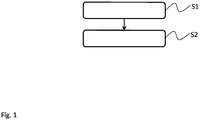
- Fig. 1 shows a flow diagram of an embodiment of a method for controlling the display of RGB image content 109 with a display device 100 with at least one red subpixel 103 and one green subpixel 104 and one blue subpixel 105 and one white subpixel 106 per pixel 102 of the display device 100.
- the RGB image content 109 may be provided by any type of image or video source, e.g. an antenna receiver in the display device 100, an external media player or the like.
- the display device 100 may e.g. be a television set or a computer monitor or the like.
- the display device 100 may especially be an OLED display device 100 with RGBW pixels 102.
- RGBW pixels 102 each comprise four subpixels, the above mentioned red subpixel 103, green subpixel 104, blue subpixel 105 and white subpixel 106.
- the method comprises alternatingly converting S1 the RGB image content 109 into RGBW image data 111 with different RGB to RGBW conversion algorithms.
- the number of RGB to RGBW conversion algorithms may be two or more, e.g. three or four, but is not limited to these examples.
- the control values that are provided to the single pixels 102 of the display device 100 will slightly change every time the RGB to RGBW conversion algorithm is changed even if the image content is static.
- the method in addition comprises displaying S2 the RGBW image data 111 via the display device 100.
- image sticking or burn-in may advantageously be reduced or eliminated for the display device 100.
- Fig. 2 shows a flow diagram of another embodiment of a method for controlling the display of RGB image content 109 with a display device 100.
- the method of Fig. 2 is based on the method of Fig. 1 .
- the method of Fig. 2 further comprises analyzing S3 the RGB image content 109 for the existence of areas of static content.
- areas may e.g. be station logos of TV stations or the like.
- the detection of static content may span over a specific period of time. If for example static content is only detected in some frames, like e.g. less than 100 frames, or for less than a specific amount of time, like e.g. 1 minute, the static area may be part of e.g. a movie and will soon change. It is therefore only necessary to handle static areas that exist in the displayed image for a certain amount of time.
- Step S1 comprises alternatingly converting S11 only the content of areas of the RGB image content 109 that comprise static content into RGBW image data 111 with the plurality of RGB to RGBW conversion algorithms.
- the method comprises converting S4 the content of areas of the RGB image content 109 that comprise non-static content into RGBW image data 111 with a first predetermined conversion algorithm.
- Alternatingly converting comprises optionally changing S12 the RGB to RGBW conversion algorithm for every image refresh performed by the display device 100 or alternatively changing the RGB to RGBW conversion algorithm after a predetermined amount of time.
- the predetermined amount of time may be determined based on an average brightness of the areas of static content of the RGB image content 109 or based on the maximum brightness of the areas of static content of the RGB image content 109.
- the method comprises as optional step shifting S5 the colors of the converted RGBW image data 111 such that saturated color levels are prevented.
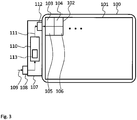
- Fig. 3 shows a block diagram of an embodiment of a display device 100.
- the display device 100 comprises a controller 107 and a display panel 101 that is controlled by the controller 107.
- the display panel 101 is provided as a so called RGBW panel 101, e.g. an OLED RGBW panel 101.
- the display panel 101 comprises a plurality of pixels 102.
- One pixel 102 is shown in detail and it is understood, that the other pixels may be provided analogously.
- the pixel 102 comprises one red subpixel 103, one green subpixel 104, one blue subpixel 105 and one white subpixel 106 that are controlled by controller 107.
- the controller 107 comprises a data interface 108 for receiving the RGB image content 109.
- the RGB image content 109 is then provided to a converter unit 110 that alternatingly converts the RGB image content 109 into RGBW image data 111 with a plurality of different RGB to RGBW conversion algorithms.
- the RGBW image data 111 is then provided via output interface 112 to the pixels 102.
- the converter unit 110 may analyze the RGB image content 109 for the existence of areas of static content. If such areas exist, the content of areas of the RGB image content 109 that comprise non-static content may be converted by the converter unit 110 into RGBW image data 111 with a fixed first predetermined conversion algorithm. Only the content of areas of the RGB image content 109 that comprise static content may be alternatingly converted by the converter unit 110 into RGBW image data 111 with the plurality of RGB to RGBW conversion algorithms.
- the converter unit 110 may e.g. change the RGB to RGBW conversion algorithm for every image refresh performed by the display device 100. Alternatively, the converter unit 110 may change the RGB to RGBW conversion algorithm after a predetermined amount of time.
- the converter unit 110 comprises an optional brightness extractor 113 for determining an average brightness or a maximum brightness of the areas of static content of the RGB image content 109. The converter unit 110 may then determine the predetermined amount of time based on the average brightness or based on the maximum brightness.
- the converter unit 110 may be configured to shift the colors of the converted RGBW image data 111 such that saturated color levels are prevented.
- the present invention provides a method for controlling the display of RGB image content 109 with a display device 100 with at least one red subpixel 103 and one green subpixel 104 and one blue subpixel 105 and one white subpixel 106 per pixel 102 of the display device 100.
- the method comprises alternatingly converting (S1) the RGB image content 109 into RGBW image data 111 with a plurality of RGB to RGBW conversion algorithms, and displaying (S2) the RGBW image data 111 via the display device 100.
- the invention provides a respective controller 107 and a display device 100.
Landscapes
- Engineering & Computer Science (AREA)
- Physics & Mathematics (AREA)
- Computer Hardware Design (AREA)
- General Physics & Mathematics (AREA)
- Theoretical Computer Science (AREA)
- Control Of Indicators Other Than Cathode Ray Tubes (AREA)
- Image Processing (AREA)
Abstract
Description
- The invention relates to a method for controlling the display of RGB image content with a display device. Further, the present invention relates to a respective controller and a respective display device.
- Although applicable to any display device that exhibits image sticking properties when provided with static image content, the present invention will mainly be described in conjunction with OLED displays.
- Modern display devices may use a variety of different image panel technologies. One possible technology is the OLED technology that may use white OLED light sources with respective color filters. The color filters may e.g. be RGB color filters (red, green, blue). In addition, to enhance the image quality an additional white sub-pixel may be added to each pixel of such a display.
- Sever image panel technologies suffer from a so called burn-in or image retention. Image retention refers to any image that "sticks" on a screen, even when the content changes. It usually appears as a faint ghost, and with most TVs this fades after certain amount of time. Burn-in is a form of image retention that lasts longer, and it is usually visible even when playing other content.
- Burn-in and image retention are possible on virtually any display. Most cases of burn-in in e.g. televisions are a result of static images or on-screen elements displaying on the screen uninterrupted for many hours or days at a time - with brightness typically at peak levels. Such static images may be full screen static images or only static sections of otherwise non-static images. The static section may e.g. comprise a TV station logo or the like.
- Accordingly, there is a need for reducing the image sticking tendency of displays.
- The present invention provides a method with the features of
claim 1, a controller with the features of claim 7 and a display device with the features ofclaim 13. - Therefore it is disclosed:
- A method for controlling the display of RGB image content with a display device with at least one red subpixel and one green subpixel and one blue subpixel and one white subpixel per pixel of the display device, the method comprising alternatingly converting the RGB image content into RGBW image data with a plurality of RGB to RGBW conversion algorithms, and displaying the RGBW image data via the display device.
- Further, it is disclosed:
- A controller for displaying RGB image content on a display device with at least one red subpixel and one green subpixel and one blue subpixel and one white subpixel per pixel of the display device, the controller comprising a data interface configured to receive the RGB image content, a converter unit configured to alternatingly convert the RGB image content into RGBW image data with a plurality of RGB to RGBW conversion algorithms, and an output interface for providing the RGBW image data to the display device.
- Finally, it is disclosed:
- A display device comprising a controller according to the present invention, and a display panel coupled to the controller.
- The present invention is based on the finding that image sticking may occur on virtually any type of display device if the static content is displayed long enough. Therefore, instead of providing physical modifications of the display device itself, the present invention focuses on modifying the control of the display device.
- In modern OLED display panels a single pixel may be formed by four sub-pixels instead of three, one red subpixel, one green subpixel, one blue subpixel and an additional white subpixel. The addition of the white subpixel to form the so called RGBW pixel improves luminance and/or efficiency for any color display device that uses white light sources and color filters.
- Usually the image data will however be provided only as RGB data (red, green, blue) for each pixel of the display device. A conversion of the RGB data to RGBW image data is therefore necessary to drive the RGBW pixels of the display device based on the original RGB data or image content.
- The present invention focuses on the conversion from RGB data to RGBW image data to prevent image sticking on the display device. For the conversion of RGB data to RGBW image data a variety of different conversion algorithms may be used. Every conversion algorithm will provide similar but slightly different conversion results. This means that a single RGB pixel may be converted to slightly different RGBW pixels by different conversion algorithms. However users will perceive no or almost no difference between the conversion results of the different algorithms.
- The present invention takes advantage of the fact that different conversion algorithms will yield no perceptible differences but will still drive the subpixels of the RGBW pixels with different values or intensities.
- With the method according to the present invention different conversion algorithms will be used in an alternating manner. This means that although no variations will be perceived by the users when viewing the image that is displayed on the display device, the single pixels or subpixels of the display device will permanently be driven with varying control signals.
- Therefore, the tendency if image sticking of the display device will be reduced since no static control of the single pixels is performed even if a static content is shown on the display device.
- Further embodiments of the present invention are subject of the further subclaims and of the following description, referring to the drawings.
- In an embodiment, the method may comprise analyzing the RGB image content for the existence of areas of static content, converting the content of areas of the RGB image content that comprise non-static content into RGBW image data with a first predetermined conversion algorithm, and alternatingly converting only the content of areas of the RGB image content that comprise static content into RGBW image data with the plurality of RGB to RGBW conversion algorithms.
- Analyzing the RGB image content for areas of static content allows identifying only the problematic section of the RGB image content that might eventually lead to image sticking or burn-in.
- The different RGB to RGBW conversion algorithms may then be applied only to the identified problematic sections of the RGB image content.
- Different RGB to RGBW conversion algorithms may have different computational costs. The areas of non-static content of the RGB image content may e.g. be converted into RGBW data with a highly efficient RGB to RGBW conversion algorithm that may be implemented with little computational costs.
- The sections or areas of static content of the RGB image content may in contrast be alternatingly converted with different RGB to RGBW conversion algorithms.
- The computational effort may therefore be reduced since computationally more expensive RGB to RGBW conversion algorithms are only applied where necessary.
- The first RGB to RGBW conversion algorithm may e.g. comprise the following:
- Assuming Ri, Gi, Bi are RGB color inputs, e.g. integers from 0 to 255, so Q = 255, and that the RGBW outputs are Wo, Ro, Go and Bo with values from 0 to 255:
- M = max(Ri,Gi,Bi)
- m = min(Ri,Gi,Bi)
- Wo = if (m/M < 0.5) use ((m*M) / (M-m)) else M
- Q = 255


- This algorithm is e.g. disclosed in "POWER-CONSTRAINED RGB-TO-RGBW CONVERSION FOR EMISSIVE DISPLAYS" by Chul Lee and Vishal Monga.
- Any other RGB to RGBW conversion algorithms may be used for alternating the RGB to RGBW conversion algorithms.
- In another embodiment, alternatingly converting may comprise changing the RGB to RGBW conversion algorithm for every image refresh performed by the display device.
- The refresh rate in modern display devices may be tens or hundreds of image refreshes per second, for example 60, 120, 144, 200 or more refreshes per second or the like. This means that 60, 120, 144, 200 or more images will be drawn on the screen of the display device per second.
- If another RGB to RGBW conversion algorithm is used for every single refresh, the users that view the display device will not be able to perceive such quick changes of the RGB to RGBW conversion algorithms. The users will only perceive a kind of averaged image on the display device.
- In a further embodiment, alternatingly converting may comprise changing the RGB to RGBW conversion algorithm after a predetermined amount of time.
- Image sticking or burn-in will not occur after only some seconds of displaying static content. Instead image sticking or burn-in will eventually occur after hours of displaying static content.
- Therefore, instead of constantly switching RGB to RGBW conversion algorithms, the properties of the display may be taken into account and a predetermined time may be specified for switching between RGB to RGBW conversion algorithms.
- In an embodiment, the method may comprise determining the predetermined amount of time based on an average brightness of the areas of static content of the RGB image content or based on the maximum brightness of the areas of static content of the RGB image content.
- The duration of displaying static content that is necessary to provoke image sticking or burn-in depends strongly on the brightness of the displayed static content. If the brightness is low it will take much longer for the static content to burn-in than if the static content is very bright in relation to the brightness range of the display device.
- Depending on the brightness, e.g. for a low brightness static content, it may even be decided not to change the RGB to RGBW conversion algorithms at all.
- In another embodiment, the method may comprise shifting the colors of the converted RGBW image data such that saturated color levels are prevented.
- In addition to alternatingly changing the used RGB to RGBW conversion algorithm, it is also possible to shift the color levels to prevent saturation of single pixels. This means that an area of static content in the RGB image content may be shown with reduced color levels. Instead e.g. of white colored the static content may e.g. be shown as light gray.
- For a more complete understanding of the present invention and advantages thereof, reference is now made to the following description taken in conjunction with the accompanying drawings. The invention is explained in more detail below using exemplary embodiments which are specified in the schematic figures of the drawings, in which:
-
Fig. 1 shows a flow diagram of an embodiment of a method according to the present invention; -
Fig. 2 shows a flow diagram of another embodiment of a method according to the present invention; and -
Fig. 3 shows a block diagram of an embodiment of a display device according to the present invention. - In the figures like reference signs denote like elements unless stated otherwise.
- For sake of clarity the reference signs used in the description of apparatus-based
Fig. 3 will also be used in the description of method-basedFigs. 1 and2 . -
Fig. 1 shows a flow diagram of an embodiment of a method for controlling the display ofRGB image content 109 with adisplay device 100 with at least onered subpixel 103 and onegreen subpixel 104 and oneblue subpixel 105 and onewhite subpixel 106 perpixel 102 of thedisplay device 100. - The
RGB image content 109 may be provided by any type of image or video source, e.g. an antenna receiver in thedisplay device 100, an external media player or the like. Thedisplay device 100 may e.g. be a television set or a computer monitor or the like. Thedisplay device 100 may especially be anOLED display device 100 withRGBW pixels 102.RGBW pixels 102 each comprise four subpixels, the above mentionedred subpixel 103,green subpixel 104,blue subpixel 105 andwhite subpixel 106. - The method comprises alternatingly converting S1 the
RGB image content 109 intoRGBW image data 111 with different RGB to RGBW conversion algorithms. The number of RGB to RGBW conversion algorithms may be two or more, e.g. three or four, but is not limited to these examples. - By alternating the RGB to RGBW conversion algorithms that are used to convert the
RGB image content 109 intoRGBW image data 111, the control values that are provided to thesingle pixels 102 of thedisplay device 100 will slightly change every time the RGB to RGBW conversion algorithm is changed even if the image content is static. - The method in addition comprises displaying S2 the
RGBW image data 111 via thedisplay device 100. - With the above described scheme of the method according to the present invention image sticking or burn-in may advantageously be reduced or eliminated for the
display device 100. -
Fig. 2 shows a flow diagram of another embodiment of a method for controlling the display ofRGB image content 109 with adisplay device 100. The method ofFig. 2 is based on the method ofFig. 1 . - The method of
Fig. 2 further comprises analyzing S3 theRGB image content 109 for the existence of areas of static content. Such areas may e.g. be station logos of TV stations or the like. The detection of static content may span over a specific period of time. If for example static content is only detected in some frames, like e.g. less than 100 frames, or for less than a specific amount of time, like e.g. 1 minute, the static area may be part of e.g. a movie and will soon change. It is therefore only necessary to handle static areas that exist in the displayed image for a certain amount of time. - Step S1 comprises alternatingly converting S11 only the content of areas of the
RGB image content 109 that comprise static content intoRGBW image data 111 with the plurality of RGB to RGBW conversion algorithms. - Further, the method comprises converting S4 the content of areas of the
RGB image content 109 that comprise non-static content intoRGBW image data 111 with a first predetermined conversion algorithm. - Alternatingly converting comprises optionally changing S12 the RGB to RGBW conversion algorithm for every image refresh performed by the
display device 100 or alternatively changing the RGB to RGBW conversion algorithm after a predetermined amount of time. The predetermined amount of time may be determined based on an average brightness of the areas of static content of theRGB image content 109 or based on the maximum brightness of the areas of static content of theRGB image content 109. - Finally, the method comprises as optional step shifting S5 the colors of the converted
RGBW image data 111 such that saturated color levels are prevented. -
Fig. 3 shows a block diagram of an embodiment of adisplay device 100. Thedisplay device 100 comprises acontroller 107 and adisplay panel 101 that is controlled by thecontroller 107. - The
display panel 101 is provided as a so calledRGBW panel 101, e.g. anOLED RGBW panel 101. Thedisplay panel 101 comprises a plurality ofpixels 102. Onepixel 102 is shown in detail and it is understood, that the other pixels may be provided analogously. Thepixel 102 comprises onered subpixel 103, onegreen subpixel 104, oneblue subpixel 105 and onewhite subpixel 106 that are controlled bycontroller 107. - The
controller 107 comprises adata interface 108 for receiving theRGB image content 109. TheRGB image content 109 is then provided to aconverter unit 110 that alternatingly converts theRGB image content 109 intoRGBW image data 111 with a plurality of different RGB to RGBW conversion algorithms. TheRGBW image data 111 is then provided viaoutput interface 112 to thepixels 102. - The
converter unit 110 may analyze theRGB image content 109 for the existence of areas of static content. If such areas exist, the content of areas of theRGB image content 109 that comprise non-static content may be converted by theconverter unit 110 intoRGBW image data 111 with a fixed first predetermined conversion algorithm. Only the content of areas of theRGB image content 109 that comprise static content may be alternatingly converted by theconverter unit 110 intoRGBW image data 111 with the plurality of RGB to RGBW conversion algorithms. - The
converter unit 110 may e.g. change the RGB to RGBW conversion algorithm for every image refresh performed by thedisplay device 100. Alternatively, theconverter unit 110 may change the RGB to RGBW conversion algorithm after a predetermined amount of time. - In
Fig. 3 theconverter unit 110 comprises anoptional brightness extractor 113 for determining an average brightness or a maximum brightness of the areas of static content of theRGB image content 109. Theconverter unit 110 may then determine the predetermined amount of time based on the average brightness or based on the maximum brightness. - Finally, the
converter unit 110 may be configured to shift the colors of the convertedRGBW image data 111 such that saturated color levels are prevented. - Although specific embodiments have been illustrated and described herein, it will be appreciated by those of ordinary skill in the art that a variety of alternate and/or equivalent implementations exist. It should be appreciated that the exemplary embodiment or exemplary embodiments are only examples, and are not intended to limit the scope, applicability, or configuration in any way. Rather, the foregoing summary and detailed description will provide those skilled in the art with a convenient road map for implementing at least one exemplary embodiment, it being understood that various changes may be made in the function and arrangement of elements described in an exemplary embodiment without departing from the scope as set forth in the appended claims and their legal equivalents. Generally, this application is intended to cover any adaptations or variations of the specific embodiments discussed herein.
- Thus the present invention provides a method for controlling the display of
RGB image content 109 with adisplay device 100 with at least onered subpixel 103 and onegreen subpixel 104 and oneblue subpixel 105 and onewhite subpixel 106 perpixel 102 of thedisplay device 100. The method comprises alternatingly converting (S1) theRGB image content 109 intoRGBW image data 111 with a plurality of RGB to RGBW conversion algorithms, and displaying (S2) theRGBW image data 111 via thedisplay device 100. Further, the invention provides arespective controller 107 and adisplay device 100. -
- 100
- display device
- 101
- panel
- 102
- pixel
- 103, 104, 105, 106
- subpixel
- 107
- controller
- 108
- data interface
- 109
- RGB image content
- 110
- converter unit
- 111
- RGBW image data
- 112
- output interface
- 113
- brightness extractor
- S1, S2, S3, S4, S5, S11, S12, S13
- method steps
Claims (13)
- Method for controlling the display of RGB image content (109) with a display device (100) with at least one red subpixel (103) and one green subpixel (104) and one blue subpixel (105) and one white subpixel (106) per pixel (102) of the display device (100), the method comprising:alternatingly converting (S1) the RGB image content (109) into RGBW image data (111) with a plurality of RGB to RGBW conversion algorithms, anddisplaying (S2) the RGBW image data (111) via the display device (100).
- Method according to claim 1, comprising
analyzing (S3) the RGB image content (109) for the existence of areas of static content,
converting (S4) the content of areas of the RGB image content (109) that comprise non-static content into RGBW image data (111) with a first predetermined conversion algorithm, and
alternatingly (S11) converting only the content of areas of the RGB image content (109) that comprise static content into RGBW image data (111) with the plurality of RGB to RGBW conversion algorithms. - Method according to any one of the preceding claims, wherein alternatingly converting comprises changing (S12) the RGB to RGBW conversion algorithm for every image refresh performed by the display device (100).
- Method according to any one of the preceding claims 1 and 2, wherein alternatingly converting comprises changing the RGB to RGBW conversion algorithm after a predetermined amount of time.
- Method according to claims 2 and 4, comprising determining (S13) the predetermined amount of time based on an average brightness of the areas of static content of the RGB image content (109) or based on the maximum brightness of the areas of static content of the RGB image content (109).
- Method according to any one of the preceding claims, comprising shifting (S5) the colors of the converted RGBW image data (111) such that saturated color levels are prevented.
- Controller (107) for displaying RGB image content (109) on a display device (100) with at least one red subpixel (103) and one green subpixel (104) and one blue subpixel (105) and one white subpixel (106) per pixel (102) of the display device (100), the controller (107) comprising:a data interface (108) configured to receive the RGB image content (109),a converter unit (110) configured to alternatingly convert the RGB image content (109) into RGBW image data (111) with a plurality of RGB to RGBW conversion algorithms, andan output interface (112) for providing the RGBW image data (111) to the display device (100).
- Controller (107) according to claim 7, wherein the converter unit (110) is configured to analyze the RGB image content (109) for the existence of areas of static content, convert the content of areas of the RGB image content (109) that comprise non-static content into RGBW image data (111) with a first predetermined conversion algorithm, and alternatingly convert only the content of areas of the RGB image content (109) that comprise static content into RGBW image data (111) with the plurality of RGB to RGBW conversion algorithms.
- Controller (107) according to any one of the preceding claims 7 and 8, wherein when alternatingly converting the converter unit (110) is configured to change the RGB to RGBW conversion algorithm for every image refresh performed by the display device (100).
- Controller (107) according to any one of the preceding claims 7 and 8, wherein when alternatingly converting the converter unit (110) is configured to change the RGB to RGBW conversion algorithm after a predetermined amount of time.
- Controller (107) according to claims 8 and 10, comprising a brightness extractor (113) configured to determine an average brightness or a maximum brightness of the areas of static content of the RGB image content (109), and wherein the converter unit (110) is configured to determine the predetermined amount of time based on the average brightness or based on the maximum brightness.
- Controller (107) according to any one of the preceding claims 7 to 11, wherein the converter unit (110) is configured to shift the colors of the converted RGBW image data (111) such that saturated color levels are prevented.
- Display device (100) comprising:a controller (107) according to any one of the preceding claims 7 to 12, anda display panel (101) coupled to the controller (107).
Priority Applications (3)
| Application Number | Priority Date | Filing Date | Title |
|---|---|---|---|
| EP17174907.0A EP3413294B1 (en) | 2017-06-08 | 2017-06-08 | Method, controller and display device of rgb image content |
| ES17174907T ES2822169T3 (en) | 2017-06-08 | 2017-06-08 | RGB image content display method, controller and device |
| TR2017/08960A TR201708960A2 (en) | 2017-06-08 | 2017-06-16 | Method, controller and display device of rgb image content. |
Applications Claiming Priority (1)
| Application Number | Priority Date | Filing Date | Title |
|---|---|---|---|
| EP17174907.0A EP3413294B1 (en) | 2017-06-08 | 2017-06-08 | Method, controller and display device of rgb image content |
Publications (2)
| Publication Number | Publication Date |
|---|---|
| EP3413294A1 true EP3413294A1 (en) | 2018-12-12 |
| EP3413294B1 EP3413294B1 (en) | 2020-07-29 |
Family
ID=59030857
Family Applications (1)
| Application Number | Title | Priority Date | Filing Date |
|---|---|---|---|
| EP17174907.0A Active EP3413294B1 (en) | 2017-06-08 | 2017-06-08 | Method, controller and display device of rgb image content |
Country Status (3)
| Country | Link |
|---|---|
| EP (1) | EP3413294B1 (en) |
| ES (1) | ES2822169T3 (en) |
| TR (1) | TR201708960A2 (en) |
Citations (2)
| Publication number | Priority date | Publication date | Assignee | Title |
|---|---|---|---|---|
| US20150187277A1 (en) * | 2013-12-27 | 2015-07-02 | Sony Corporation | Display unit, driving method and electronic apparatus |
| EP3098803A1 (en) * | 2015-05-28 | 2016-11-30 | LG Display Co., Ltd. | Image processing method, image processing circuit, and organic light emitting diode display device using the same |
-
2017
- 2017-06-08 ES ES17174907T patent/ES2822169T3/en active Active
- 2017-06-08 EP EP17174907.0A patent/EP3413294B1/en active Active
- 2017-06-16 TR TR2017/08960A patent/TR201708960A2/en unknown
Patent Citations (2)
| Publication number | Priority date | Publication date | Assignee | Title |
|---|---|---|---|---|
| US20150187277A1 (en) * | 2013-12-27 | 2015-07-02 | Sony Corporation | Display unit, driving method and electronic apparatus |
| EP3098803A1 (en) * | 2015-05-28 | 2016-11-30 | LG Display Co., Ltd. | Image processing method, image processing circuit, and organic light emitting diode display device using the same |
Also Published As
| Publication number | Publication date |
|---|---|
| EP3413294B1 (en) | 2020-07-29 |
| TR201708960A2 (en) | 2018-12-21 |
| ES2822169T3 (en) | 2021-04-29 |
Similar Documents
| Publication | Publication Date | Title |
|---|---|---|
| TWI413098B (en) | Display apparatus | |
| US9966011B2 (en) | TV set, method of controlling backlight of liquid crystal panel and storage medium | |
| KR101307552B1 (en) | Liquid Crystal Display and Driving Method thereof | |
| US11942049B2 (en) | Signal processing apparatus, signal processing method, and display apparatus | |
| US8711187B2 (en) | Picture quality control method and image display using same | |
| EP2531992B1 (en) | Display device | |
| US7817171B2 (en) | Display apparatus driving method, display apparatus driving device, program therefor, recording medium storing program, and display apparatus | |
| US10347198B2 (en) | Image displaying methods and display devices | |
| WO2014203366A1 (en) | Image processing device, method, and program, and image display device | |
| US7466298B2 (en) | Liquid crystal display device for improving a display response speed and driving method for the same | |
| US9368072B2 (en) | Image display device and image display method of a multi-display type with local and global control | |
| CN104795016A (en) | Pixel arrangement structure, array substrate, display device and display control method | |
| US20190156772A1 (en) | Display device and method for controlling display device | |
| CN103295558B (en) | Display packing and display device | |
| US20180114505A1 (en) | Display device and a method of driving thereof | |
| US20100045707A1 (en) | Color sequential method for displaying images | |
| EP3413294B1 (en) | Method, controller and display device of rgb image content | |
| US20080001856A1 (en) | Driving oled display with improved uniformity | |
| KR101635218B1 (en) | Method for adjusting image quality |
Legal Events
| Date | Code | Title | Description |
|---|---|---|---|
| PUAI | Public reference made under article 153(3) epc to a published international application that has entered the european phase |
Free format text: ORIGINAL CODE: 0009012 |
|
| STAA | Information on the status of an ep patent application or granted ep patent |
Free format text: STATUS: THE APPLICATION HAS BEEN PUBLISHED |
|
| AK | Designated contracting states |
Kind code of ref document: A1 Designated state(s): AL AT BE BG CH CY CZ DE DK EE ES FI FR GB GR HR HU IE IS IT LI LT LU LV MC MK MT NL NO PL PT RO RS SE SI SK SM TR |
|
| AX | Request for extension of the european patent |
Extension state: BA ME |
|
| STAA | Information on the status of an ep patent application or granted ep patent |
Free format text: STATUS: REQUEST FOR EXAMINATION WAS MADE |
|
| 17P | Request for examination filed |
Effective date: 20190606 |
|
| RBV | Designated contracting states (corrected) |
Designated state(s): AL AT BE BG CH CY CZ DE DK EE ES FI FR GB GR HR HU IE IS IT LI LT LU LV MC MK MT NL NO PL PT RO RS SE SI SK SM TR |
|
| GRAP | Despatch of communication of intention to grant a patent |
Free format text: ORIGINAL CODE: EPIDOSNIGR1 |
|
| STAA | Information on the status of an ep patent application or granted ep patent |
Free format text: STATUS: GRANT OF PATENT IS INTENDED |
|
| INTG | Intention to grant announced |
Effective date: 20200108 |
|
| GRAS | Grant fee paid |
Free format text: ORIGINAL CODE: EPIDOSNIGR3 |
|
| GRAA | (expected) grant |
Free format text: ORIGINAL CODE: 0009210 |
|
| STAA | Information on the status of an ep patent application or granted ep patent |
Free format text: STATUS: THE PATENT HAS BEEN GRANTED |
|
| AK | Designated contracting states |
Kind code of ref document: B1 Designated state(s): AL AT BE BG CH CY CZ DE DK EE ES FI FR GB GR HR HU IE IS IT LI LT LU LV MC MK MT NL NO PL PT RO RS SE SI SK SM TR |
|
| REG | Reference to a national code |
Ref country code: CH Ref legal event code: EP |
|
| REG | Reference to a national code |
Ref country code: AT Ref legal event code: REF Ref document number: 1296720 Country of ref document: AT Kind code of ref document: T Effective date: 20200815 |
|
| REG | Reference to a national code |
Ref country code: IE Ref legal event code: FG4D |
|
| REG | Reference to a national code |
Ref country code: DE Ref legal event code: R096 Ref document number: 602017020424 Country of ref document: DE |
|
| REG | Reference to a national code |
Ref country code: LT Ref legal event code: MG4D |
|
| REG | Reference to a national code |
Ref country code: NL Ref legal event code: MP Effective date: 20200729 |
|
| REG | Reference to a national code |
Ref country code: AT Ref legal event code: MK05 Ref document number: 1296720 Country of ref document: AT Kind code of ref document: T Effective date: 20200729 |
|
| PG25 | Lapsed in a contracting state [announced via postgrant information from national office to epo] |
Ref country code: PT Free format text: LAPSE BECAUSE OF FAILURE TO SUBMIT A TRANSLATION OF THE DESCRIPTION OR TO PAY THE FEE WITHIN THE PRESCRIBED TIME-LIMIT Effective date: 20201130 Ref country code: FI Free format text: LAPSE BECAUSE OF FAILURE TO SUBMIT A TRANSLATION OF THE DESCRIPTION OR TO PAY THE FEE WITHIN THE PRESCRIBED TIME-LIMIT Effective date: 20200729 Ref country code: NO Free format text: LAPSE BECAUSE OF FAILURE TO SUBMIT A TRANSLATION OF THE DESCRIPTION OR TO PAY THE FEE WITHIN THE PRESCRIBED TIME-LIMIT Effective date: 20201029 Ref country code: HR Free format text: LAPSE BECAUSE OF FAILURE TO SUBMIT A TRANSLATION OF THE DESCRIPTION OR TO PAY THE FEE WITHIN THE PRESCRIBED TIME-LIMIT Effective date: 20200729 Ref country code: LT Free format text: LAPSE BECAUSE OF FAILURE TO SUBMIT A TRANSLATION OF THE DESCRIPTION OR TO PAY THE FEE WITHIN THE PRESCRIBED TIME-LIMIT Effective date: 20200729 Ref country code: AT Free format text: LAPSE BECAUSE OF FAILURE TO SUBMIT A TRANSLATION OF THE DESCRIPTION OR TO PAY THE FEE WITHIN THE PRESCRIBED TIME-LIMIT Effective date: 20200729 Ref country code: SE Free format text: LAPSE BECAUSE OF FAILURE TO SUBMIT A TRANSLATION OF THE DESCRIPTION OR TO PAY THE FEE WITHIN THE PRESCRIBED TIME-LIMIT Effective date: 20200729 Ref country code: BG Free format text: LAPSE BECAUSE OF FAILURE TO SUBMIT A TRANSLATION OF THE DESCRIPTION OR TO PAY THE FEE WITHIN THE PRESCRIBED TIME-LIMIT Effective date: 20201029 Ref country code: GR Free format text: LAPSE BECAUSE OF FAILURE TO SUBMIT A TRANSLATION OF THE DESCRIPTION OR TO PAY THE FEE WITHIN THE PRESCRIBED TIME-LIMIT Effective date: 20201030 |
|
| PG25 | Lapsed in a contracting state [announced via postgrant information from national office to epo] |
Ref country code: PL Free format text: LAPSE BECAUSE OF FAILURE TO SUBMIT A TRANSLATION OF THE DESCRIPTION OR TO PAY THE FEE WITHIN THE PRESCRIBED TIME-LIMIT Effective date: 20200729 Ref country code: RS Free format text: LAPSE BECAUSE OF FAILURE TO SUBMIT A TRANSLATION OF THE DESCRIPTION OR TO PAY THE FEE WITHIN THE PRESCRIBED TIME-LIMIT Effective date: 20200729 Ref country code: LV Free format text: LAPSE BECAUSE OF FAILURE TO SUBMIT A TRANSLATION OF THE DESCRIPTION OR TO PAY THE FEE WITHIN THE PRESCRIBED TIME-LIMIT Effective date: 20200729 Ref country code: IS Free format text: LAPSE BECAUSE OF FAILURE TO SUBMIT A TRANSLATION OF THE DESCRIPTION OR TO PAY THE FEE WITHIN THE PRESCRIBED TIME-LIMIT Effective date: 20201129 |
|
| PG25 | Lapsed in a contracting state [announced via postgrant information from national office to epo] |
Ref country code: NL Free format text: LAPSE BECAUSE OF FAILURE TO SUBMIT A TRANSLATION OF THE DESCRIPTION OR TO PAY THE FEE WITHIN THE PRESCRIBED TIME-LIMIT Effective date: 20200729 |
|
| PG25 | Lapsed in a contracting state [announced via postgrant information from national office to epo] |
Ref country code: RO Free format text: LAPSE BECAUSE OF FAILURE TO SUBMIT A TRANSLATION OF THE DESCRIPTION OR TO PAY THE FEE WITHIN THE PRESCRIBED TIME-LIMIT Effective date: 20200729 Ref country code: CZ Free format text: LAPSE BECAUSE OF FAILURE TO SUBMIT A TRANSLATION OF THE DESCRIPTION OR TO PAY THE FEE WITHIN THE PRESCRIBED TIME-LIMIT Effective date: 20200729 Ref country code: DK Free format text: LAPSE BECAUSE OF FAILURE TO SUBMIT A TRANSLATION OF THE DESCRIPTION OR TO PAY THE FEE WITHIN THE PRESCRIBED TIME-LIMIT Effective date: 20200729 Ref country code: EE Free format text: LAPSE BECAUSE OF FAILURE TO SUBMIT A TRANSLATION OF THE DESCRIPTION OR TO PAY THE FEE WITHIN THE PRESCRIBED TIME-LIMIT Effective date: 20200729 Ref country code: SM Free format text: LAPSE BECAUSE OF FAILURE TO SUBMIT A TRANSLATION OF THE DESCRIPTION OR TO PAY THE FEE WITHIN THE PRESCRIBED TIME-LIMIT Effective date: 20200729 |
|
| REG | Reference to a national code |
Ref country code: DE Ref legal event code: R097 Ref document number: 602017020424 Country of ref document: DE |
|
| PG25 | Lapsed in a contracting state [announced via postgrant information from national office to epo] |
Ref country code: AL Free format text: LAPSE BECAUSE OF FAILURE TO SUBMIT A TRANSLATION OF THE DESCRIPTION OR TO PAY THE FEE WITHIN THE PRESCRIBED TIME-LIMIT Effective date: 20200729 |
|
| PLBE | No opposition filed within time limit |
Free format text: ORIGINAL CODE: 0009261 |
|
| STAA | Information on the status of an ep patent application or granted ep patent |
Free format text: STATUS: NO OPPOSITION FILED WITHIN TIME LIMIT |
|
| PG25 | Lapsed in a contracting state [announced via postgrant information from national office to epo] |
Ref country code: SK Free format text: LAPSE BECAUSE OF FAILURE TO SUBMIT A TRANSLATION OF THE DESCRIPTION OR TO PAY THE FEE WITHIN THE PRESCRIBED TIME-LIMIT Effective date: 20200729 |
|
| 26N | No opposition filed |
Effective date: 20210430 |
|
| PG25 | Lapsed in a contracting state [announced via postgrant information from national office to epo] |
Ref country code: SI Free format text: LAPSE BECAUSE OF FAILURE TO SUBMIT A TRANSLATION OF THE DESCRIPTION OR TO PAY THE FEE WITHIN THE PRESCRIBED TIME-LIMIT Effective date: 20200729 |
|
| PG25 | Lapsed in a contracting state [announced via postgrant information from national office to epo] |
Ref country code: MC Free format text: LAPSE BECAUSE OF FAILURE TO SUBMIT A TRANSLATION OF THE DESCRIPTION OR TO PAY THE FEE WITHIN THE PRESCRIBED TIME-LIMIT Effective date: 20200729 |
|
| REG | Reference to a national code |
Ref country code: CH Ref legal event code: PL |
|
| REG | Reference to a national code |
Ref country code: BE Ref legal event code: MM Effective date: 20210630 |
|
| PG25 | Lapsed in a contracting state [announced via postgrant information from national office to epo] |
Ref country code: LU Free format text: LAPSE BECAUSE OF NON-PAYMENT OF DUE FEES Effective date: 20210608 |
|
| PG25 | Lapsed in a contracting state [announced via postgrant information from national office to epo] |
Ref country code: LI Free format text: LAPSE BECAUSE OF NON-PAYMENT OF DUE FEES Effective date: 20210630 Ref country code: IE Free format text: LAPSE BECAUSE OF NON-PAYMENT OF DUE FEES Effective date: 20210608 Ref country code: CH Free format text: LAPSE BECAUSE OF NON-PAYMENT OF DUE FEES Effective date: 20210630 |
|
| PG25 | Lapsed in a contracting state [announced via postgrant information from national office to epo] |
Ref country code: BE Free format text: LAPSE BECAUSE OF NON-PAYMENT OF DUE FEES Effective date: 20210630 |
|
| PG25 | Lapsed in a contracting state [announced via postgrant information from national office to epo] |
Ref country code: CY Free format text: LAPSE BECAUSE OF FAILURE TO SUBMIT A TRANSLATION OF THE DESCRIPTION OR TO PAY THE FEE WITHIN THE PRESCRIBED TIME-LIMIT Effective date: 20200729 |
|
| P01 | Opt-out of the competence of the unified patent court (upc) registered |
Effective date: 20230526 |
|
| PG25 | Lapsed in a contracting state [announced via postgrant information from national office to epo] |
Ref country code: HU Free format text: LAPSE BECAUSE OF FAILURE TO SUBMIT A TRANSLATION OF THE DESCRIPTION OR TO PAY THE FEE WITHIN THE PRESCRIBED TIME-LIMIT; INVALID AB INITIO Effective date: 20170608 |
|
| PG25 | Lapsed in a contracting state [announced via postgrant information from national office to epo] |
Ref country code: MK Free format text: LAPSE BECAUSE OF FAILURE TO SUBMIT A TRANSLATION OF THE DESCRIPTION OR TO PAY THE FEE WITHIN THE PRESCRIBED TIME-LIMIT Effective date: 20200729 |
|
| PG25 | Lapsed in a contracting state [announced via postgrant information from national office to epo] |
Ref country code: MT Free format text: LAPSE BECAUSE OF FAILURE TO SUBMIT A TRANSLATION OF THE DESCRIPTION OR TO PAY THE FEE WITHIN THE PRESCRIBED TIME-LIMIT Effective date: 20200729 |
|
| PGFP | Annual fee paid to national office [announced via postgrant information from national office to epo] |
Ref country code: DE Payment date: 20250618 Year of fee payment: 9 |
|
| PGFP | Annual fee paid to national office [announced via postgrant information from national office to epo] |
Ref country code: ES Payment date: 20250730 Year of fee payment: 9 |
|
| PGFP | Annual fee paid to national office [announced via postgrant information from national office to epo] |
Ref country code: IT Payment date: 20250624 Year of fee payment: 9 |
|
| PGFP | Annual fee paid to national office [announced via postgrant information from national office to epo] |
Ref country code: GB Payment date: 20260629 Year of fee payment: 10 |
|
| PGFP | Annual fee paid to national office [announced via postgrant information from national office to epo] |
Ref country code: TR Payment date: 20260605 Year of fee payment: 10 |
|
| PGFP | Annual fee paid to national office [announced via postgrant information from national office to epo] |
Ref country code: FR Payment date: 20260626 Year of fee payment: 10 |