EP3413214A1 - Selectivity estimation for database query planning - Google Patents
Selectivity estimation for database query planning Download PDFInfo
- Publication number
- EP3413214A1 EP3413214A1 EP18173559.8A EP18173559A EP3413214A1 EP 3413214 A1 EP3413214 A1 EP 3413214A1 EP 18173559 A EP18173559 A EP 18173559A EP 3413214 A1 EP3413214 A1 EP 3413214A1
- Authority
- EP
- European Patent Office
- Prior art keywords
- bounds
- query
- database
- predicates
- selectivity
- Prior art date
- Legal status (The legal status is an assumption and is not a legal conclusion. Google has not performed a legal analysis and makes no representation as to the accuracy of the status listed.)
- Granted
Links
Images


Classifications
-
- G—PHYSICS
- G06—COMPUTING OR CALCULATING; COUNTING
- G06F—ELECTRIC DIGITAL DATA PROCESSING
- G06F16/00—Information retrieval; Database structures therefor; File system structures therefor
- G06F16/20—Information retrieval; Database structures therefor; File system structures therefor of structured data, e.g. relational data
- G06F16/24—Querying
- G06F16/245—Query processing
- G06F16/2453—Query optimisation
- G06F16/24534—Query rewriting; Transformation
- G06F16/24542—Plan optimisation
- G06F16/24545—Selectivity estimation or determination
-
- G—PHYSICS
- G06—COMPUTING OR CALCULATING; COUNTING
- G06F—ELECTRIC DIGITAL DATA PROCESSING
- G06F16/00—Information retrieval; Database structures therefor; File system structures therefor
- G06F16/20—Information retrieval; Database structures therefor; File system structures therefor of structured data, e.g. relational data
- G06F16/24—Querying
- G06F16/245—Query processing
- G06F16/2453—Query optimisation
- G06F16/24534—Query rewriting; Transformation
- G06F16/24535—Query rewriting; Transformation of sub-queries or views
-
- G—PHYSICS
- G06—COMPUTING OR CALCULATING; COUNTING
- G06F—ELECTRIC DIGITAL DATA PROCESSING
- G06F16/00—Information retrieval; Database structures therefor; File system structures therefor
- G06F16/20—Information retrieval; Database structures therefor; File system structures therefor of structured data, e.g. relational data
- G06F16/24—Querying
- G06F16/245—Query processing
- G06F16/2455—Query execution
Definitions
- a method, computer program product and system are provided.
- a system capable of making selectivity estimations can include (or otherwise utilize) at least one processor and/or memory, which can be configured to perform operations including determining, based on a first bounds and a second bounds for a combination of query predicates, whether a solution for the combination of the query predicates exists which includes both the first and second bounds.
- the operations can further include determining, when the solution is determined to exist, at least one selectivity estimate for the combination of the query predicates.
- the operations can also include generating, based on the at least one selectivity estimate, a query plan for execution of a database query comprising the query predicates, and/or executing the database query through execution of the query plan.
- the operations can further comprise defining a plurality of subqueries from the database query, wherein a first subquery comprises the combination of the query predicates, and wherein the plurality of subqueries comprises the first subqueries.
- the operations can further comprise calculating selectivity estimates for each of the plurality of subqueries, wherein calculating the selectivity estimates comprises determining, for each of the subqueries, whether third bounds for the subquery is consistent with fourth bounds for the subquery, wherein the third bounds are based on cardinality estimates, and wherein the fourth bounds are based on sampling and/or multi-dimensional histograms.
- the selector can pick the order of operations of query predicates and/or operations within the alternative execution plans 172, in order to minimize the size of intermediate results 180 and/or processing resources/time required by the SQL executor 190 for the execution of a query.
- Such selections can be made on the basis of cardinality estimates 162, which can be indications of the expected size of intermediate results 180 of a given query operation/predicate.
- the database optimizer 104 can order query operations (e.g., predicate or combination of predicates) which are expected to generate the smallest intermediate results 180 for earlier execution than query operations which are expected to generate larger intermediate results 180.
- the set of possible solutions for s ⁇ and s ⁇ can be represented by S. If S is non-empty, then a given subproblem can be identified as "consistent.” Otherwise, if S is empty, the subproblem can be identified as "inconsistent.”
- S can comprise a Boolean value, such as '1' for consistent and '0' for inconsistent, or vice-versa. In some aspects, tightening the bounds may not change the set of solutions.
- Method 500 can proceed to operational block 560 where the SQL processor 102, for example, can determine, when the solution exists, at least one selectivity estimate for the combination of the two or more predicates.
- the method can additionally or alternatively include determining at least one selectivity estimate even when the solution is not determined to exist.
- the at least one selectivity estimate may not be determined until after correcting the one or more of the plurality of cardinality estimates.
- the at least one selectivity estimate can be calculated based on a geometric mean of the first bounds and/or the second bounds, when the first bounds and/or the second bounds are within a predetermined distance apart (e.g., less than or equal to the predetermined distance apart).
- One or more aspects or features of the subject matter described herein can be realized in digital electronic circuitry, integrated circuitry, specially designed application specific integrated circuits (ASICs), field programmable gate arrays (FPGAs) computer hardware, firmware, software, and/or combinations thereof.
- ASICs application specific integrated circuits
- FPGAs field programmable gate arrays
- These various aspects or features can include implementation in one or more computer programs that are executable and/or interpretable on a programmable system including at least one programmable processor, which can be special or general purpose, coupled to receive data and instructions from, and to transmit data and instructions to, a storage system, at least one input device, and at least one output device.
- the programmable system or computing system may include clients and servers.
- a client and server are generally remote from each other and typically interact through a communication network. The relationship of client and server arises by virtue of computer programs running on the respective computers and having a client-server relationship to each other.
- the machine-readable medium can store such machine instructions non-transitorily, such as for example as would a non-transient solid-state memory or a magnetic hard drive or any equivalent storage medium.
- the machine-readable medium can alternatively or additionally store such machine instructions in a transient manner, such as for example as would a processor cache or other random access memory associated with one or more physical processor cores.
- phrases such as "at least one of' or “one or more of” may occur followed by a conjunctive list of elements or features.
- the term “and/or” may also occur in a list of two or more elements or features. Unless otherwise implicitly or explicitly contradicted by the context in which it is used, such phrases are intended to mean any of the listed elements or features individually or any of the recited elements or features in combination with any of the other recited elements or features.
- the phrases “at least one of A and B;” “one or more of A and B;” and “A and/or B” are each intended to mean "A alone, B alone, or A and B together.”
- a similar interpretation is also intended for lists including three or more items.
- the phrases "at least one of A, B, and C;” “one or more of A, B, and C;” and “A, B, and/or C” are each intended to mean “A alone, B alone, C alone, A and B together, A and C together, B and C together, or A and B and C together.”
- the use of the term “based on,” above and in the claims is intended to mean “based at least in part on,” such that a feature or element that is not recited is also permissible.
Landscapes
- Engineering & Computer Science (AREA)
- Theoretical Computer Science (AREA)
- Computational Linguistics (AREA)
- Data Mining & Analysis (AREA)
- Databases & Information Systems (AREA)
- Physics & Mathematics (AREA)
- General Engineering & Computer Science (AREA)
- General Physics & Mathematics (AREA)
- Operations Research (AREA)
- Information Retrieval, Db Structures And Fs Structures Therefor (AREA)
Abstract
Description
- The subject matter described herein relates to query planning for the execution of database queries, and more particularly, selectivity estimation for database query planning.
- In order to efficiently execute database queries, query plans can be generated, which define the manner in which the query is executed. Efficient query planning can potentially reduce unnecessary processing time and/or the unnecessary use of processing resources. For example, in situations where the execution of an operation within a query generates a large "intermediate result" (e.g., not the final result of the entire query) and a subsequent operator within the query eliminates a large portion of this intermediate result, then the eliminated portion (or at least a subset thereof) may be regarded as "unnecessary" for the execution of the query. The generation and processing of the unnecessary intermediate results can require additional computation time and/or result in unnecessary slowdown of the execution of queries. Accordingly, it can be desirable to provide systems and methods for more efficient query plan generation for the execution of database queries.
- In some aspects, a method, computer program product and system are provided. In an implementation, a system capable of making selectivity estimations is provided. The system can include (or otherwise utilize) at least one processor and/or memory, which can be configured to perform operations including determining, based on a first bounds and a second bounds for a combination of query predicates, whether a solution for the combination of the query predicates exists which includes both the first and second bounds. The operations can further include determining, when the solution is determined to exist, at least one selectivity estimate for the combination of the query predicates. The operations can also include generating, based on the at least one selectivity estimate, a query plan for execution of a database query comprising the query predicates, and/or executing the database query through execution of the query plan.
- In some variations, the first bound can be defined based on a plurality of cardinality estimates, and/or the second bounds can defined based on sampling and/or multi-dimensional histograms. In some implementations, the operations can further comprise correcting, when the solution is not determined to exist, one or more of the plurality of cardinality estimates until a correct solution is found. In some implementations, the operations can further comprise receiving, based on one or more histograms, the plurality of cardinality estimates. In some aspects, the at least one selectivity estimate can be calculated, in response to the first bounds and/or the second bounds being within a predetermined distance apart, based on a geometric mean of the first bounds and/or the second bounds.
- In some variations, the operations can further comprise defining a plurality of subqueries from the database query, wherein a first subquery comprises the combination of the query predicates, and wherein the plurality of subqueries comprises the first subqueries. In related aspects, the operations can further comprise calculating selectivity estimates for each of the plurality of subqueries, wherein calculating the selectivity estimates comprises determining, for each of the subqueries, whether third bounds for the subquery is consistent with fourth bounds for the subquery, wherein the third bounds are based on cardinality estimates, and wherein the fourth bounds are based on sampling and/or multi-dimensional histograms.
- Implementations of the current subject matter can include systems and methods consistent with the present description, including one or more features as described, as well as articles that comprise a tangibly embodied machine-readable medium operable to cause one or more machines (e.g., computers, etc.) to result in operations described herein. Similarly, computer systems are also described that may include one or more processors and one or more memories coupled to the one or more processors. A memory, which can include a computer-readable storage medium, may include, encode, store, or the like one or more programs that cause one or more processors to perform one or more of the operations described herein. Computer implemented methods consistent with one or more implementations of the current subject matter can be implemented by one or more data processors residing in a single computing system or multiple computing systems. Such multiple computing systems can be connected and can exchange data and/or commands or other instructions or the like via one or more connections, including but not limited to a connection over a network (e.g. the Internet, a wireless wide area network, a local area network, a wide area network, a wired network, or the like), via a direct connection between one or more of the multiple computing systems, etc.
- The details of one or more variations of the subject matter described herein are set forth in the accompanying drawings and the description below. Other features and advantages of the subject matter described herein will be apparent from the description and drawings, and from the claims. While certain features of the currently disclosed subject matter are described for illustrative purposes in relation to an enterprise resource software system or other business software solution or architecture, it should be readily understood that such features are not intended to be limiting. The claims that follow this disclosure are intended to define the scope of the protected subject matter.
- The accompanying drawings, which are incorporated in and constitute a part of this specification, show certain aspects of the subject matter disclosed herein and, together with the description, help explain some of the principles associated with the disclosed implementations. In the drawings,
-
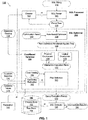
FIG. 1 depicts a functional block diagram of a system for database query processing and execution, in accordance with some example implementations; -
FIG. 2 depicts a functional block diagram of a system for processing (sub)queries, in accordance with some example implementations; -
FIG. 3A depicts a graph of sample runtimes, in accordance with some example implementations; -
FIG. 3B depicts another graph of sample runtimes, in accordance with some example implementations; -
FIG. 4 depicts a database management system, in accordance with some example implementations; and -
FIG. 5 depicts an example of a method for selectivity estimation for database query planning, in accordance with some example implementations. - When practical, similar reference numbers denote similar structures, features, or elements.
- As noted above, the generation and processing of intermediate results can require additional computation time and result in unnecessary slowdown of the execution of queries. As such, systems and methods are provided for processing calculation scenarios such that the size of intermediate results is minimized and/or processing time is decreased.
-
FIG. 1 depicts a functional block diagram of asystem 100 for database query processing and execution, in accordance with some example implementations. As shown, thesystem 100 can include a SQLprocessor 102, adatabase 150, a SQLexecutor 190, and/or afederation module 140. In some aspects, the SQLprocesser 102 can be used to implement a SQLparser 120, achecker 122, and/or a SQLoptimizer 104. The SQLoptimizer 104 can be used to process/handle a SQL string 110 (e.g., at least a portion of a database query) to generate one or morequery execution plans 170 for execution by the SQLexecutor 190. In order to generate the one or morequery execution plans 170, the SQLprocessor 102 may access and/or receive information from adatabase catalog 112,database statistics 114, database tables 116, and/or the like. In some aspects, one or more of thedatabase catalog 112,database statistics 114, and database tables 116 may reside in thedatabase 150. - In some implementations, the SQL
parser 120 can check the syntactical structure of the SQLquery 110 and/or generate aparse tree 124. Thechecker 122 can analyze the semantics of theparse tree 124 and/or determine whether issues exist, such as incompatible operations types non-existent tables referenced therein. In some aspects, thechecker 122 can utilize adatabase catalog 112 for these purposes. If valid, for example, theparse tree 124 can be provided to the SQLoptimizer 104, which can include a rule-basedoptimizer 106 and/or a cost-basedoptimizer 108. The rule-basedoptimizer 106 can apply optimizations to theparse tree 124 based on the structure of the query and/or optimization rules 142 (e.g., without considering statistics or costs). A rule-optimizedrelational algebra tree 144 can, in turn, be provided to the cost-basedoptimizer 108. - The cost-based
optimizer 108 can include aplan selection module 160, acardinality estimation module 162, aphysical enumerator 174, and/orlogical enumerator 172. Thephysical enumerator 174 and/orlogical enumerator 172 can generate a plurality of alternativequery execution plans 172, such as by varying the physical layout and or logic of therelational algebra tree 144. - To be able to calculate costs for the
alternative execution plans 172, theplan selection 160 can rely on acost catalog 164 for cost functions. The cost functions can usecardinality estimations 162 as input. Similarly,cardinality estimation 162 can be utilized during enumeration of thealternative execution plans 172.Cardinality estimation 162 can rely on various methods and/or various data structures. For example, sampling and or histograms can be leveraged for cardinality estimation. Additionally or alternatively, the systems and methods of cardinality estimation described herein can be used. - Database queries, for which
execution plans database 150. Database queries can be defined to include a plurality of predicates, which can be defined as condition(s) under which a given portion of a data table (e.g., an entry or a tuple) satisfies a portion of the query. Such predicates can be determined and/or evaluated based on one or more views. -
Plan selection 160 can pick the plan with the smallest cost generated during plan enumeration. As these costs are based oncardinality estimation 162, better cardinality estimates can provide forbetter plan selection 160. The chosenquery execution plan 170 is passed on for execution by theSQL executor 190. In some aspects, the selectedquery execution plan 170 can be cached for later use (e.g., and bypass query optimization). For example, a query may ask for all rows from Table A where variable X (e.g., a value of a certain column) is greater than five and where variable Z is less than one hundred. Each of X > 5 and Z < 100 can be viewed as predicates of the query. If thousands of rows in Table A satisfy the predicate X > 5, but only one row in Table A satisfies the predicate Z < 100, then executing the X > 5 predicate first can result in operating inefficiencies. For example, if the thousands of rows which satisfy the predicate X > 5 are retrieved from adatabase 150 and/or used by aSQL executor 190 to generateintermediate results 180 for responding to this portion of the query, and then all or almost all of theseintermediate results 180 are filtered out by theSQL executor 190 in the execution of the second predicate, then an unnecessary amount ofintermediate results 180 may be generated by executing the X > 5 predicate first. - Thus, it can be advantageous for the selector to pick the order of operations of query predicates and/or operations within the alternative execution plans 172, in order to minimize the size of
intermediate results 180 and/or processing resources/time required by theSQL executor 190 for the execution of a query. Such selections can be made on the basis of cardinality estimates 162, which can be indications of the expected size ofintermediate results 180 of a given query operation/predicate. As part of query plan generation, thedatabase optimizer 104 can order query operations (e.g., predicate or combination of predicates) which are expected to generate the smallestintermediate results 180 for earlier execution than query operations which are expected to generate largerintermediate results 180. Such ordering can be performed on the basis of cardinality estimates, which can be regarded as a number of estimated tuples which are expected to be provided as a result of the execution of the operation. Accordingly, it can be desirable to provide systems and methods for accurate cardinality estimation for database query planning. As used herein, the term "tuple(s)" is intended to refer to n-tuples, wherein n can represent any non-negative integer (or some other range of values). - In some aspects, the
SQL executor 190 can perform parallel execution, such that multiple procedures can be executed in parallel (e.g., until the next synchronization point). The results of query execution can be provided for storage within memory, such as thedatabase 152, which can comprise acolumn store 152 and/or a row store. Although several aspects illustrated and described herein relate to SQL, additional and/or alternative domain-specific languages can be utilized. - Given a query with z predicates p 1, ..., pz, it can be beneficial to estimate the "selectivity" of each single pi and/or some combination(s) thereof. The selectivity estimate may be a number along with an upper bounds and/or a lower bounds. However, it may not be practical to generate, to store, and/or to provide such selectivity estimates for all 2z combinations of the predicates p 1, ..., pz. Accordingly, some systems derive estimates for only some portion of the 2z combinations, which can lead to less accurate selectivity estimates. Accordingly, it can be desirable to provide systems and methods for accurate selectivity estimation.
-
FIG. 2 depicts a functional block diagram of asystem 200 for processing (sub)queries, in accordance with some example implementations. As illustrated, the system can include apartitioner 210, a pretest/bounds 220, acorrector 230, a zerodetector 240, and asolver 250. In some aspects, one or more of thepartitioner 210, pretest/bounds 220,corrector 230, zerodetector 240, andsolver 250 can be implemented as software functions, which can form part of a database management system. In some aspects, at least a portion of thesystem 200 may be regarded as providing an application of entropy maximization and/or the pretest/bounds 220 can be regarded as an optimization for an entropy maximization procedure. - The
partitioner 210 can receive/take a database (sub)query as input, which can include z predicates. Because 2 z combinations of predicates is exponential, thepartitioner 210 can generate a set of subproblems (e.g., subqueries) of treatable size. Each of these subproblems can be combinations of two or more predicates, and each may be provided as output of thepartitioner 210. Each of these subproblems can, in turn, be provided as input to the pretest/bounds 220, which can determine whether each subproblem is consistent or inconsistent. The determination of what makes a given subproblem (in)consistent is described in greater detail below. - For example, a first example is illustrated in Table 1.

- Another example is illustrated in Table 2.

- If a given subproblem is determined to be inconsistent, it can be provided as input to the
corrector 230, which can correct/adjust the subproblem by manipulating one or more input estimates (e.g., cardinality estimates). Thiscorrector 230 can be required, as subsequent steps may not be able to handle inconsistent subproblems. The corrected subproblems can be provided to the zerodetector 240, which can detect and/or eliminate zero atoms from the subproblem. In some aspects, atoms can be terms in disjunctive normal form (e.g., the beta(P) and gamma(P) can be considered atoms). Zero atoms can be atoms with a selectivity zero. Zero atoms should be detected because their upper bounds is zero. As with thecorrector 230, the zerodetector 240 can be required for subsequent steps to work. The zerodetector 240 may, in turn, provide a subproblem to thesolver 250. - The
solver 250 solves the subproblem, for example, by calculating a solution to the input subproblem via entropy maximization. In some implementations,system 200 can continually generate and/or process subproblems until an entire (sub)query is processed (e.g., until all subproblems are processed) and/or some other stopping point. - If the pretest/
bounds 220 instead determines that a subproblem is consistent, then the subproblem can be provided to thesolver 250, which can bypass thecorrector 230 and/or zero solver. This can be beneficial, as the runtime of thecorrector 230 is generally not negligible (e.g., relative to other procedures in the system 200). For example,FIG. 3A depicts agraph 300 of sample runtimes, in accordance with some example implementations. Specifically, thegraph 300 illustrates the runtime of thecorrector 230 and thesolver 250 ofFIG. 2 with runtime in seconds along the y-axis and number of predicates along the x-axis. Compared to the runtimes of thecorrector 230, the runtime of thesolver 250 can be considered less "costly" (e.g., in terms of processing time and/or resources required). Accordingly, it can be beneficial to only utilize thecorrector 230 when necessary. - In some aspects, the pretest/
bounds 220 can include steps/procedures comprising one or more of (1) initialization of bounds x and/or b, (2) propagating the known bounds for x and/or b, (3) tightening the bounds of x and/or b, (4) detecting inconsistency, and/or (5) other steps/procedures described, such a providing the subproblem and/or bounds to thecorrector 230 and/or thesolver 250. - Initialization of the bounds for x and/or b can be performed by histogram techniques, cardinality estimation techniques, sampling techniques, and/or the like. For example, boundaries x min, x max for sγ and/or b min , b max for sβ can be derived based on one or more of these techniques. In some aspects, sγ bounds can be regarded as bounds from sampling and/or sβ bounds can be regarded as bounds from a histogram/cardinality estimate. In case an exact value is known for sγ and/or sβ, their respective upper and lower bound can coincide (e.g., can be set to equal the exact value). For those x[i], b[i] with unknown bounds (e.g., not identified via the techniques), '0' can be set as the lower bound and/or '1' can be set as the upper bound.
- If P = {p 1 , ..., pz } denotes a set of z predicates, then for a subset of predicates P' ⊆ P, predicate β(P') and/or predicate γ(P') can be denoted by the formulas:


- The selectivities of these predicates can be denoted by sβ (P') and sγ (P'). To allow for an efficient implementation of the pretest/bounds 320, every subset P' ⊆ P (or at least a portion thereof) can be expressed as bit vector bv(P') of length |P|. In some aspects, bv(P') can be interpreted as a unsigned positive integer representative of subset P'.
- A design matrix C for i and j can be provided by:

- Using C we can translate from s γ(P') to s β(P'), and using C -1 we can translate from s β(P') to s γ(P') using:


- The propagation process for known bounds for x and/or b can include multiple steps. For example, a first step of the propagation process can include checking, for all i such that b min[i] is known, whether, for all j ⊂ i, the condition b min[j] ≥ b min[i] is met. In a second step, the propagation process can include checking, for all i such that bmax[i] is known, whether, for all j ⊃ i, the condition b max[j] ≤ b max[i] is met. In a third step, the propagation process can include checking, for all j/i, whether the condition x max[j] ≤ b max[i] is met.
- Tightening of the bounds and/or the inconsistency detection can be provided according to:

- In some aspects, the pretest/bounds can 220 quickly and/or accurately indicate whether a given set of bounds is consistent or inconsistent. For example,
FIG. 3B depicts anothergraph 350 of sample runtimes, in accordance with some example implementations. Specifically, the graph illustrates the runtime of the pretest/bounds 220 ofFIG. 2 with runtime in milliseconds along the y-axis and number of predicates along the x-axis. Compared to the runtimes of thecorrector 230 and thesolver 250 illustrated in FIG. 6A, the runtime of the pretest/bounds 220 can be considered negligible. - In some aspects, the pretest/
bounds 220 can be configured to detect and/or handle zero atoms, which can also be considered negligible (in terms of time and/or resources required to execute). For example, the pretest/bounds 220 can calculate bounds which are tight enough to infer which of the xi components are zero. Thus, in some implementations, the zero-detector 240 can be eliminated. - In some implementations, the
solver 250 can solve an input subproblem based on iterative processing. In some aspects, the pretest/bounds 220 can produce bounds for solutions to subproblems and/or derive better initial values for thesolver 250, such that thesolver 250 completes using fewer iterations. - Other uses of the bounds produced/identified via the pretest/
bounds 220 are possible. For example, if the bounds are far apart, this is can indicate that some histograms (e.g., which can be utilized to provide cardinality estimates) are missing. Additionally or alternatively, in some implementations, if the bounds are close together, thesolver 250 may be bypassed by taking a geometric mean of the bounds as the solution (e.g., estimate). - In some implementations, the pretest/
bounds 220 can make use of some generally available and/or special machine instructions of the underlying processor. The naming of these instructions/operations can differ from one processor to another. For example, the standard instruction sets of many processors may supply bitwise logical operations like a bitwise not (bnot) operation, a bitwise and (band) operation, a bitwise or (bor) operation, a logical shift left (<<) operation, an addition (+) operation, a subtraction (-) operation, and/or the like. - A "special" instruction is a popcnt operation (which may be supported by many processors). The popcnt instruction can count the number of '1's in its argument, which can include 32 bit unsigned integers, 64 bit unsigned integers, and/or the like. Another special instruction which may be utilized is the pdep operation (which can be supported by the instruction set of Intel processors with BMI2 capabilities). The pdep operation can deposit the k least significant bits of an argument/input word (e.g., 32 bit unsigned integers, 64 bit unsigned integers, and/or the like) into the positions of a result, as indicated by a mask.
- For example, if an argument/input is equal to "00000110" and a mask is equal to "10101010", then a result of the pdep operation can equal "00101000". The mask contains four bits set to '1' (which can be counted via a popcnt operation). Hence, the four least significant bits of the argument are deposited in the result at the places where mask contains a '1'. In order to enumerate subsets of a given set, one or more of these instructions can be utilized.
- For example, if u represents a set, the all representations of subsets of u may be generated, where a '0' or '1' exists in positions of the subsets where u has a '1'. All other positions in the subsets contain a '0'. All of the representations s of non-empty true subsets of u can be efficiently enumerated based on the procedure of Table 3, where u is used as the mask in the pdep operation.
TABLE 3
                             k = popcnt(u)
                             e = ((1 << k) - 1)
                             for (i = 1; i < e; ++i)
s = pdep(i, u) 
           bool Pretest/Bounds(x_min, x_max, b_min, b_max)
                 lInconsistent = false;
                 lSomethingChanged = true;
                 while(lSomethingChanged and not lInconsistent)
                       lSomethingChanged = false;
                       for(i = n-2; i >= 0; --i) // FOR EACH ROW
                             lSumXmin = 0;
                             lSumXmax = 0;
                             for(j/i) // FOR EACH '1' in ROW i
                                   lSumXmin += x_min[j];
                                   lSumXmax += x_max[j];
                             if(lSumXmin > b_max[i])
                                   lInconsistent = true;
                             if(lSumXmax < b_min[i])
                                   lInconsistent = true;
                             if(lSumXmin > b_min[i])
                                   b_min[i] = lSumXmin;
                                   lSomethingChanged = true;
                             if(lSumXmax < b_max[i])
                                   b_max[i] = lSumXmax;
                                   lSomethingChanged = true;
                             for(j/i) // FOR EACH 'l' in ROW i
                                   lSumMin = lSumXmin - x_min[j];
                                   lSumMax = lSumXmax - x_max[j];
                                   lXmin = b_min[i] - lSumMax;
                                   if(lXmin > x_min[j]) {
                                         lSumXmin += (lXmin - x_min[j]);
                                         x_min[j] = lXmin;
                                         lSomethingChanged = true;
                                         if(lSumXmin > b_max[i])
                                               lInconsistent = true;
                                   lXmax = b_max[i] - lSumMin;
                                   if(lXmax < x_max[j])
                                         lSumXmax -= (x_max[j] - lXmax);
                                         x_max[j] = lXmax;
                                         lSomethingChanged = true;
                                               if(lSumXmax < b_min[i])
return lInconsistent; lInconsistent = true; Claims (9)
- A method comprising:determining, based on a first bounds and a second bounds for a combination of query predicates, whether a solution for the combination of the query predicates exists which includes both the first and second bounds;determining, when the solution is determined to exist, at least one selectivity estimate for the combination of the query predicates;generating, based on the at least one selectivity estimate, a query plan for execution of a database query comprising the query predicates; andexecuting the database query through execution of the query plan.
- The method of claim 1, wherein the first bound are defined based on a plurality of cardinality estimates, and wherein the second bounds are defined based on sampling and/or multi-dimensional histograms.
- The method of claim 2, further comprising:
correcting, when the solution is not determined to exist, one or more of the plurality of cardinality estimates until a correct solution is found. - The method of claim 2 or 3, further comprise:
receiving, based on one or more histograms, the plurality of cardinality estimates. - The method of any one of claims 1 to 4, further comprising:
defining a plurality of subqueries from the database query, wherein a first subquery comprises the combination of the query predicates, and wherein the plurality of subqueries comprises the first subqueries. - The method of claim 5, further comprising:
calculating selectivity estimates for each of the plurality of subqueries, wherein calculating the selectivity estimates comprises:
determining, for each of the subqueries, whether third bounds for the subquery is consistent with fourth bounds for the subquery, wherein the third bounds are based on cardinality estimates, and wherein the fourth bounds are based on sampling and/or multi-dimensional histograms. - The method of any one of claims 1 to 6, wherein the at least one selectivity estimate is calculated, in response to the first bounds and/or the second bounds being within a predetermined distance apart, based on a geometric mean of the first bounds and/or the second bounds.
- A system comprising:at least one processor; andat least one memory storing instructions which, when executed by the at least one processor, cause operations according to a method of any one of claims 1 to 7.
- A non-transitory computer-readable medium comprising instructions which, when executed by at least one processor, result in operations according to a method of any one of claims 1 to 7.
Applications Claiming Priority (1)
| Application Number | Priority Date | Filing Date | Title |
|---|---|---|---|
| US15/603,325 US10872086B2 (en) | 2017-05-23 | 2017-05-23 | Selectivity estimation for database query planning |
Publications (3)
| Publication Number | Publication Date |
|---|---|
| EP3413214A1 true EP3413214A1 (en) | 2018-12-12 |
| EP3413214B1 EP3413214B1 (en) | 2024-12-18 |
| EP3413214C0 EP3413214C0 (en) | 2024-12-18 |
Family
ID=62222500
Family Applications (1)
| Application Number | Title | Priority Date | Filing Date |
|---|---|---|---|
| EP18173559.8A Active EP3413214B1 (en) | 2017-05-23 | 2018-05-22 | Selectivity estimation for database query planning |
Country Status (2)
| Country | Link |
|---|---|
| US (1) | US10872086B2 (en) |
| EP (1) | EP3413214B1 (en) |
Families Citing this family (9)
| Publication number | Priority date | Publication date | Assignee | Title |
|---|---|---|---|---|
| US11080276B2 (en) * | 2018-02-23 | 2021-08-03 | Sap Se | Optimal ranges for relational query execution plans |
| CN119415549A (en) * | 2019-03-22 | 2025-02-11 | 华为技术有限公司 | Query processing using logical query steps in canonical form |
| US10990427B2 (en) | 2019-04-03 | 2021-04-27 | Sap Se | Extension application mechanisms through intra-process operation systems |
| US11693876B2 (en) | 2020-01-10 | 2023-07-04 | Sap Se | Efficient shared bulk loading into optimized storage |
| US12105768B2 (en) * | 2020-07-09 | 2024-10-01 | Sap Se | Selectivity estimation of conjunctive predicates |
| US11550762B2 (en) | 2021-02-24 | 2023-01-10 | Sap Se | Implementation of data access metrics for automated physical database design |
| US11847121B2 (en) | 2021-08-27 | 2023-12-19 | International Business Machines Corporation | Compound predicate query statement transformation |
| US12560991B2 (en) | 2023-04-19 | 2026-02-24 | Hewlett Packard Enterprise Development Lp | Automated power consumption management through applying of a system power cap on heterogenous systems |
| CN116795874B (en) * | 2023-05-22 | 2025-09-09 | 南方科技大学 | Database query optimization method and device, storage medium and electronic equipment |
Citations (2)
| Publication number | Priority date | Publication date | Assignee | Title |
|---|---|---|---|---|
| US20040010488A1 (en) * | 2002-07-09 | 2004-01-15 | Microsoft Corporation | Method and apparatus for exploiting statistics on query expressions for optimization |
| US20090094191A1 (en) * | 2007-10-08 | 2009-04-09 | Microsoft Corporation | Exploiting execution feedback for optimizing choice of access methods |
Family Cites Families (2)
| Publication number | Priority date | Publication date | Assignee | Title |
|---|---|---|---|---|
| US9189520B2 (en) | 2013-06-24 | 2015-11-17 | Sap Se | Methods and systems for one dimensional heterogeneous histograms |
| US10042887B2 (en) * | 2014-12-05 | 2018-08-07 | International Business Machines Corporation | Query optimization with zone map selectivity modeling |
-
2017
- 2017-05-23 US US15/603,325 patent/US10872086B2/en active Active
-
2018
- 2018-05-22 EP EP18173559.8A patent/EP3413214B1/en active Active
Patent Citations (2)
| Publication number | Priority date | Publication date | Assignee | Title |
|---|---|---|---|---|
| US20040010488A1 (en) * | 2002-07-09 | 2004-01-15 | Microsoft Corporation | Method and apparatus for exploiting statistics on query expressions for optimization |
| US20090094191A1 (en) * | 2007-10-08 | 2009-04-09 | Microsoft Corporation | Exploiting execution feedback for optimizing choice of access methods |
Also Published As
| Publication number | Publication date |
|---|---|
| EP3413214B1 (en) | 2024-12-18 |
| EP3413214C0 (en) | 2024-12-18 |
| US10872086B2 (en) | 2020-12-22 |
| US20180341679A1 (en) | 2018-11-29 |
Similar Documents
| Publication | Publication Date | Title |
|---|---|---|
| US10872086B2 (en) | Selectivity estimation for database query planning | |
| US10534775B2 (en) | Cardinality estimation for database query planning | |
| US12099506B2 (en) | Federated query optimization | |
| US10585887B2 (en) | Multi-system query execution plan | |
| US7925647B2 (en) | Techniques for optimizing SQL statements using user-defined indexes with auxiliary properties | |
| US10372707B2 (en) | Query execution pipelining with pump operators | |
| US8903868B2 (en) | Processing of categorized product information | |
| US10733184B2 (en) | Query planning and execution with source and sink operators | |
| US10191943B2 (en) | Decorrelation of user-defined function invocations in queries | |
| JP6434154B2 (en) | Identifying join relationships based on transaction access patterns | |
| US10860579B2 (en) | Query planning and execution with reusable memory stack | |
| US9785657B2 (en) | Method for synthetic data generation for query workloads | |
| US9256643B2 (en) | Technique for factoring uncertainty into cost-based query optimization | |
| WO2019120093A1 (en) | Cardinality estimation in databases | |
| US10776353B2 (en) | Application programming interface for database access | |
| US20090112792A1 (en) | Generating Statistics for Optimizing Database Queries Containing User-Defined Functions | |
| US11734274B2 (en) | Transforming queries using bitvector aware optimization | |
| JP2018509666A (en) | Method and apparatus for determining a SQL execution plan | |
| US11132363B2 (en) | Distributed computing framework and distributed computing method | |
| US10789249B2 (en) | Optimal offset pushdown for multipart sorting | |
| US10255316B2 (en) | Processing of data chunks using a database calculation engine | |
| CN111026574B (en) | Method and device for diagnosing elastiscearch cluster problem | |
| US11625401B2 (en) | Query execution including pause and detach operations after first data fetch | |
| US11487737B2 (en) | Take over table opening for operators | |
| US20250139092A1 (en) | Histogram-augment dynamic sampling for join cardinality estimation |
Legal Events
| Date | Code | Title | Description |
|---|---|---|---|
| PUAI | Public reference made under article 153(3) epc to a published international application that has entered the european phase |
Free format text: ORIGINAL CODE: 0009012 |
|
| STAA | Information on the status of an ep patent application or granted ep patent |
Free format text: STATUS: THE APPLICATION HAS BEEN PUBLISHED |
|
| AK | Designated contracting states |
Kind code of ref document: A1 Designated state(s): AL AT BE BG CH CY CZ DE DK EE ES FI FR GB GR HR HU IE IS IT LI LT LU LV MC MK MT NL NO PL PT RO RS SE SI SK SM TR |
|
| AX | Request for extension of the european patent |
Extension state: BA ME |
|
| STAA | Information on the status of an ep patent application or granted ep patent |
Free format text: STATUS: REQUEST FOR EXAMINATION WAS MADE |
|
| 17P | Request for examination filed |
Effective date: 20190606 |
|
| RBV | Designated contracting states (corrected) |
Designated state(s): AL AT BE BG CH CY CZ DE DK EE ES FI FR GB GR HR HU IE IS IT LI LT LU LV MC MK MT NL NO PL PT RO RS SE SI SK SM TR |
|
| STAA | Information on the status of an ep patent application or granted ep patent |
Free format text: STATUS: EXAMINATION IS IN PROGRESS |
|
| 17Q | First examination report despatched |
Effective date: 20201208 |
|
| REG | Reference to a national code |
Ref country code: DE Free format text: PREVIOUS MAIN CLASS: G06F0017300000 Ref country code: DE Ref legal event code: R079 Ref document number: 602018077653 Country of ref document: DE Free format text: PREVIOUS MAIN CLASS: G06F0017300000 Ipc: G06F0016245300 |
|
| RIC1 | Information provided on ipc code assigned before grant |
Ipc: G06F 16/2453 20190101AFI20240612BHEP |
|
| GRAP | Despatch of communication of intention to grant a patent |
Free format text: ORIGINAL CODE: EPIDOSNIGR1 |
|
| STAA | Information on the status of an ep patent application or granted ep patent |
Free format text: STATUS: GRANT OF PATENT IS INTENDED |
|
| INTG | Intention to grant announced |
Effective date: 20240730 |
|
| GRAS | Grant fee paid |
Free format text: ORIGINAL CODE: EPIDOSNIGR3 |
|
| GRAA | (expected) grant |
Free format text: ORIGINAL CODE: 0009210 |
|
| STAA | Information on the status of an ep patent application or granted ep patent |
Free format text: STATUS: THE PATENT HAS BEEN GRANTED |
|
| AK | Designated contracting states |
Kind code of ref document: B1 Designated state(s): AL AT BE BG CH CY CZ DE DK EE ES FI FR GB GR HR HU IE IS IT LI LT LU LV MC MK MT NL NO PL PT RO RS SE SI SK SM TR |
|
| REG | Reference to a national code |
Ref country code: GB Ref legal event code: FG4D |
|
| REG | Reference to a national code |
Ref country code: CH Ref legal event code: EP |
|
| REG | Reference to a national code |
Ref country code: DE Ref legal event code: R096 Ref document number: 602018077653 Country of ref document: DE |
|
| REG | Reference to a national code |
Ref country code: IE Ref legal event code: FG4D |
|
| U01 | Request for unitary effect filed |
Effective date: 20241218 |
|
| U07 | Unitary effect registered |
Designated state(s): AT BE BG DE DK EE FI FR IT LT LU LV MT NL PT RO SE SI Effective date: 20250102 |
|
| PG25 | Lapsed in a contracting state [announced via postgrant information from national office to epo] |
Ref country code: HR Free format text: LAPSE BECAUSE OF FAILURE TO SUBMIT A TRANSLATION OF THE DESCRIPTION OR TO PAY THE FEE WITHIN THE PRESCRIBED TIME-LIMIT Effective date: 20241218 |
|
| PG25 | Lapsed in a contracting state [announced via postgrant information from national office to epo] |
Ref country code: NO Free format text: LAPSE BECAUSE OF FAILURE TO SUBMIT A TRANSLATION OF THE DESCRIPTION OR TO PAY THE FEE WITHIN THE PRESCRIBED TIME-LIMIT Effective date: 20250318 |
|
| PG25 | Lapsed in a contracting state [announced via postgrant information from national office to epo] |
Ref country code: GR Free format text: LAPSE BECAUSE OF FAILURE TO SUBMIT A TRANSLATION OF THE DESCRIPTION OR TO PAY THE FEE WITHIN THE PRESCRIBED TIME-LIMIT Effective date: 20250319 |
|
| PG25 | Lapsed in a contracting state [announced via postgrant information from national office to epo] |
Ref country code: RS Free format text: LAPSE BECAUSE OF FAILURE TO SUBMIT A TRANSLATION OF THE DESCRIPTION OR TO PAY THE FEE WITHIN THE PRESCRIBED TIME-LIMIT Effective date: 20250318 |
|
| U20 | Renewal fee for the european patent with unitary effect paid |
Year of fee payment: 8 Effective date: 20250528 |
|
| PG25 | Lapsed in a contracting state [announced via postgrant information from national office to epo] |
Ref country code: SM Free format text: LAPSE BECAUSE OF FAILURE TO SUBMIT A TRANSLATION OF THE DESCRIPTION OR TO PAY THE FEE WITHIN THE PRESCRIBED TIME-LIMIT Effective date: 20241218 |
|
| PG25 | Lapsed in a contracting state [announced via postgrant information from national office to epo] |
Ref country code: PL Free format text: LAPSE BECAUSE OF FAILURE TO SUBMIT A TRANSLATION OF THE DESCRIPTION OR TO PAY THE FEE WITHIN THE PRESCRIBED TIME-LIMIT Effective date: 20241218 |
|
| PG25 | Lapsed in a contracting state [announced via postgrant information from national office to epo] |
Ref country code: ES Free format text: LAPSE BECAUSE OF FAILURE TO SUBMIT A TRANSLATION OF THE DESCRIPTION OR TO PAY THE FEE WITHIN THE PRESCRIBED TIME-LIMIT Effective date: 20241218 |
|
| PGFP | Annual fee paid to national office [announced via postgrant information from national office to epo] |
Ref country code: GB Payment date: 20250527 Year of fee payment: 8 |
|
| PG25 | Lapsed in a contracting state [announced via postgrant information from national office to epo] |
Ref country code: IS Free format text: LAPSE BECAUSE OF FAILURE TO SUBMIT A TRANSLATION OF THE DESCRIPTION OR TO PAY THE FEE WITHIN THE PRESCRIBED TIME-LIMIT Effective date: 20250418 |
|
| PG25 | Lapsed in a contracting state [announced via postgrant information from national office to epo] |
Ref country code: SK Free format text: LAPSE BECAUSE OF FAILURE TO SUBMIT A TRANSLATION OF THE DESCRIPTION OR TO PAY THE FEE WITHIN THE PRESCRIBED TIME-LIMIT Effective date: 20241218 |
|
| PG25 | Lapsed in a contracting state [announced via postgrant information from national office to epo] |
Ref country code: CZ Free format text: LAPSE BECAUSE OF FAILURE TO SUBMIT A TRANSLATION OF THE DESCRIPTION OR TO PAY THE FEE WITHIN THE PRESCRIBED TIME-LIMIT Effective date: 20241218 |
|
| PLBE | No opposition filed within time limit |
Free format text: ORIGINAL CODE: 0009261 |
|
| STAA | Information on the status of an ep patent application or granted ep patent |
Free format text: STATUS: NO OPPOSITION FILED WITHIN TIME LIMIT |
|
| REG | Reference to a national code |
Ref country code: CH Ref legal event code: L10 Free format text: ST27 STATUS EVENT CODE: U-0-0-L10-L00 (AS PROVIDED BY THE NATIONAL OFFICE) Effective date: 20251029 |
|
| 26N | No opposition filed |
Effective date: 20250919 |
|
| REG | Reference to a national code |
Ref country code: CH Ref legal event code: H13 Free format text: ST27 STATUS EVENT CODE: U-0-0-H10-H13 (AS PROVIDED BY THE NATIONAL OFFICE) Effective date: 20251223 |
|
| PG25 | Lapsed in a contracting state [announced via postgrant information from national office to epo] |
Ref country code: CH Free format text: LAPSE BECAUSE OF NON-PAYMENT OF DUE FEES Effective date: 20250531 |
|
| PG25 | Lapsed in a contracting state [announced via postgrant information from national office to epo] |
Ref country code: MC Free format text: LAPSE BECAUSE OF FAILURE TO SUBMIT A TRANSLATION OF THE DESCRIPTION OR TO PAY THE FEE WITHIN THE PRESCRIBED TIME-LIMIT Effective date: 20241218 |
|
| PG25 | Lapsed in a contracting state [announced via postgrant information from national office to epo] |
Ref country code: IE Free format text: LAPSE BECAUSE OF NON-PAYMENT OF DUE FEES Effective date: 20250522 |