EP3412896A1 - Manual bowed rotor and full override - Google Patents
Manual bowed rotor and full override Download PDFInfo
- Publication number
- EP3412896A1 EP3412896A1 EP18176253.5A EP18176253A EP3412896A1 EP 3412896 A1 EP3412896 A1 EP 3412896A1 EP 18176253 A EP18176253 A EP 18176253A EP 3412896 A1 EP3412896 A1 EP 3412896A1
- Authority
- EP
- European Patent Office
- Prior art keywords
- rotary spool
- spool valve
- valve
- actuator
- solenoid
- Prior art date
- Legal status (The legal status is an assumption and is not a legal conclusion. Google has not performed a legal analysis and makes no representation as to the accuracy of the status listed.)
- Granted
Links
Images



Classifications
-
- F—MECHANICAL ENGINEERING; LIGHTING; HEATING; WEAPONS; BLASTING
- F02—COMBUSTION ENGINES; HOT-GAS OR COMBUSTION-PRODUCT ENGINE PLANTS
- F02C—GAS-TURBINE PLANTS; AIR INTAKES FOR JET-PROPULSION PLANTS; CONTROLLING FUEL SUPPLY IN AIR-BREATHING JET-PROPULSION PLANTS
- F02C7/00—Features, components parts, details or accessories, not provided for in, or of interest apart form groups F02C1/00 - F02C6/00; Air intakes for jet-propulsion plants
- F02C7/26—Starting; Ignition
- F02C7/268—Starting drives for the rotor, acting directly on the rotor of the gas turbine to be started
- F02C7/27—Fluid drives
-
- F—MECHANICAL ENGINEERING; LIGHTING; HEATING; WEAPONS; BLASTING
- F01—MACHINES OR ENGINES IN GENERAL; ENGINE PLANTS IN GENERAL; STEAM ENGINES
- F01D—NON-POSITIVE DISPLACEMENT MACHINES OR ENGINES, e.g. STEAM TURBINES
- F01D25/00—Component parts, details, or accessories, not provided for in, or of interest apart from, other groups
- F01D25/08—Cooling; Heating; Heat-insulation
- F01D25/10—Heating, e.g. warming-up before starting
-
- F—MECHANICAL ENGINEERING; LIGHTING; HEATING; WEAPONS; BLASTING
- F01—MACHINES OR ENGINES IN GENERAL; ENGINE PLANTS IN GENERAL; STEAM ENGINES
- F01D—NON-POSITIVE DISPLACEMENT MACHINES OR ENGINES, e.g. STEAM TURBINES
- F01D25/00—Component parts, details, or accessories, not provided for in, or of interest apart from, other groups
- F01D25/34—Turning or inching gear
-
- F—MECHANICAL ENGINEERING; LIGHTING; HEATING; WEAPONS; BLASTING
- F02—COMBUSTION ENGINES; HOT-GAS OR COMBUSTION-PRODUCT ENGINE PLANTS
- F02C—GAS-TURBINE PLANTS; AIR INTAKES FOR JET-PROPULSION PLANTS; CONTROLLING FUEL SUPPLY IN AIR-BREATHING JET-PROPULSION PLANTS
- F02C7/00—Features, components parts, details or accessories, not provided for in, or of interest apart form groups F02C1/00 - F02C6/00; Air intakes for jet-propulsion plants
- F02C7/26—Starting; Ignition
- F02C7/268—Starting drives for the rotor, acting directly on the rotor of the gas turbine to be started
- F02C7/275—Mechanical drives
- F02C7/277—Mechanical drives the starter being a separate turbine
-
- F—MECHANICAL ENGINEERING; LIGHTING; HEATING; WEAPONS; BLASTING
- F16—ENGINEERING ELEMENTS AND UNITS; GENERAL MEASURES FOR PRODUCING AND MAINTAINING EFFECTIVE FUNCTIONING OF MACHINES OR INSTALLATIONS; THERMAL INSULATION IN GENERAL
- F16K—VALVES; TAPS; COCKS; ACTUATING-FLOATS; DEVICES FOR VENTING OR AERATING
- F16K11/00—Multiple-way valves, e.g. mixing valves; Pipe fittings incorporating such valves
- F16K11/02—Multiple-way valves, e.g. mixing valves; Pipe fittings incorporating such valves with all movable sealing faces moving as one unit
- F16K11/06—Multiple-way valves, e.g. mixing valves; Pipe fittings incorporating such valves with all movable sealing faces moving as one unit comprising only sliding valves, i.e. sliding closure elements
- F16K11/072—Multiple-way valves, e.g. mixing valves; Pipe fittings incorporating such valves with all movable sealing faces moving as one unit comprising only sliding valves, i.e. sliding closure elements with pivoted closure members
-
- F—MECHANICAL ENGINEERING; LIGHTING; HEATING; WEAPONS; BLASTING
- F16—ENGINEERING ELEMENTS AND UNITS; GENERAL MEASURES FOR PRODUCING AND MAINTAINING EFFECTIVE FUNCTIONING OF MACHINES OR INSTALLATIONS; THERMAL INSULATION IN GENERAL
- F16K—VALVES; TAPS; COCKS; ACTUATING-FLOATS; DEVICES FOR VENTING OR AERATING
- F16K31/00—Actuating devices; Operating means; Releasing devices
- F16K31/02—Actuating devices; Operating means; Releasing devices electric; magnetic
- F16K31/04—Actuating devices; Operating means; Releasing devices electric; magnetic using a motor
- F16K31/05—Actuating devices; Operating means; Releasing devices electric; magnetic using a motor specially adapted for operating hand-operated valves or for combined motor and hand operation
- F16K31/055—Actuating devices; Operating means; Releasing devices electric; magnetic using a motor specially adapted for operating hand-operated valves or for combined motor and hand operation for rotating valves
-
- F—MECHANICAL ENGINEERING; LIGHTING; HEATING; WEAPONS; BLASTING
- F16—ENGINEERING ELEMENTS AND UNITS; GENERAL MEASURES FOR PRODUCING AND MAINTAINING EFFECTIVE FUNCTIONING OF MACHINES OR INSTALLATIONS; THERMAL INSULATION IN GENERAL
- F16K—VALVES; TAPS; COCKS; ACTUATING-FLOATS; DEVICES FOR VENTING OR AERATING
- F16K31/00—Actuating devices; Operating means; Releasing devices
- F16K31/12—Actuating devices; Operating means; Releasing devices actuated by fluid
- F16K31/42—Actuating devices; Operating means; Releasing devices actuated by fluid by means of electrically-actuated members in the supply or discharge conduits of the fluid motor
-
- F—MECHANICAL ENGINEERING; LIGHTING; HEATING; WEAPONS; BLASTING
- F01—MACHINES OR ENGINES IN GENERAL; ENGINE PLANTS IN GENERAL; STEAM ENGINES
- F01D—NON-POSITIVE DISPLACEMENT MACHINES OR ENGINES, e.g. STEAM TURBINES
- F01D19/00—Starting of machines or engines; Regulating, controlling, or safety means in connection therewith
-
- F—MECHANICAL ENGINEERING; LIGHTING; HEATING; WEAPONS; BLASTING
- F05—INDEXING SCHEMES RELATING TO ENGINES OR PUMPS IN VARIOUS SUBCLASSES OF CLASSES F01-F04
- F05D—INDEXING SCHEME FOR ASPECTS RELATING TO NON-POSITIVE-DISPLACEMENT MACHINES OR ENGINES, GAS-TURBINES OR JET-PROPULSION PLANTS
- F05D2260/00—Function
- F05D2260/85—Starting
-
- Y—GENERAL TAGGING OF NEW TECHNOLOGICAL DEVELOPMENTS; GENERAL TAGGING OF CROSS-SECTIONAL TECHNOLOGIES SPANNING OVER SEVERAL SECTIONS OF THE IPC; TECHNICAL SUBJECTS COVERED BY FORMER USPC CROSS-REFERENCE ART COLLECTIONS [XRACs] AND DIGESTS
- Y02—TECHNOLOGIES OR APPLICATIONS FOR MITIGATION OR ADAPTATION AGAINST CLIMATE CHANGE
- Y02T—CLIMATE CHANGE MITIGATION TECHNOLOGIES RELATED TO TRANSPORTATION
- Y02T50/00—Aeronautics or air transport
- Y02T50/60—Efficient propulsion technologies, e.g. for aircraft
Definitions
- the embodiments herein generally relate to starter air valves used to start gas turbine engines and more specifically, the manual overrides for the starter air valve.
- ATS air turbine starter
- the ATS is typically mounted on the accessory gearbox which, in turn, is mounted on the engine or airframe. Consequently, the ATS is installed in the aircraft at all times even though active operation may occur only for a minute or so at the beginning of each flight cycle, along with occasional operation during engine maintenance activities.
- the ATS generally includes a turbine section coupled to an output section within a housing.
- the turbine section is coupled to a high pressure fluid source, such as compressed air, to drive the output section through a gear system.
- a high pressure fluid source such as compressed air
- BRM Bowed Rotor Motoring
- a starter air valve comprises: a housing comprising an inlet at a first end and an outlet at a second end opposite the first end, the inlet being fluidly connected to the outlet through a fluid pathway; a valve injected into the fluid pathway dividing the fluid pathway into a first chamber and a second chamber, the valve in operation adjusts fluid flow through the fluid pathway; an actuator operably connected to the valve; a solenoid in variable electrical connection with the actuator; and a rotary spool valve fluidly connected to the first chamber of the fluid pathway, the rotary spool valve operable to rotate to at least one of a normal start position, a full manual override position, and a plurality of partial manual override positions, wherein the rotary spool valve is in variable fluid connection with the actuator, wherein the solenoid is in variable electrical connection with the actuator through the rotary spool valve.
- further embodiments may include where the rotary spool valve electrically connects the solenoid to the actuator when the rotary spool valve is in the normal start position.
- further embodiments may include where the rotary spool valve electrically disconnects the solenoid and the actuator when the rotary spool valve is in the full manual override position.
- further embodiments may include where the rotary spool valve electrically disconnects the solenoid and the actuator when the rotary spool valve is in each of the plurality of partial manual override positions.
- further embodiments may include where the rotary spool valve is fluidly connected to actuator through the solenoid when the rotary spool valve is in the normal start position.
- further embodiments may include where the rotary spool valve is fluidly connected the actuator when the rotary spool valve is in the full manual override start position.
- further embodiments may include where the rotary spool valve is fluidly disconnected from the actuator when the rotary spool valve is in each of the plurality of partial manual override start positions; the first chamber is in fluid connection to the second chamber through the rotary spool valve when the rotary spool valve is in each of the plurality of partial manual override start positions; and each of the plurality of partial manual override start positions allows a different amount of fluid through the rotary spool valve.
- further embodiments may include where the rotary spool valve electrically connects the solenoid to the actuator when the rotary spool valve is in the normal start position.
- further embodiments may include where the rotary spool valve electrically disconnects the solenoid and the actuator when the rotary spool valve is in the full manual override position.
- further embodiments may include where the rotary spool valve electrically disconnects the solenoid and the actuator when the rotary spool valve is in each of the plurality of partial manual override positions.
- an engine starting system for a gas turbine engine comprising: an air turbine starter; a compressed air source fluidly connected to the air turbine starter; a starter air valve fluidly connecting the air turbine starter to the compressed air source, the starter air valve comprising: a housing comprising an inlet at a first end and an outlet at a second end opposite the first end, the inlet being fluidly connected to the outlet through a fluid pathway; a valve injected into the fluid pathway dividing the fluid pathway into a first chamber and a second chamber, the valve in operation adjusts fluid flow through the fluid pathway; an actuator operably connected to the valve; a solenoid in variable electrical connection with the actuator; and a rotary spool valve fluidly connected to the first chamber of the fluid pathway, the rotary spool valve operable to rotate to at least one of a normal start position, a full manual override position, and a plurality of partial manual override positions, wherein the rotary spool valve is in variable fluid connection with the actuator, where
- further embodiments may include where the rotary spool valve electrically connects the solenoid to the actuator when the rotary spool valve is in the normal start position.
- further embodiments may include where the rotary spool valve electrically disconnects the solenoid and the actuator when the rotary spool valve is in the full manual override position.
- further embodiments may include where the rotary spool valve electrically disconnects the solenoid and the actuator when the rotary spool valve is in each of the plurality of partial manual override positions.
- further embodiments may include where the rotary spool valve is fluidly connected to actuator through the solenoid when the rotary spool valve is in the normal start position.
- further embodiments may include where the rotary spool valve is fluidly connected the actuator when the rotary spool valve is in the full manual override start position.
- further embodiments may include where the rotary spool valve is fluidly disconnected from the actuator when the rotary spool valve is in each of the plurality of partial manual override start positions; the first chamber is in fluid connection to the second chamber through the rotary spool valve when the rotary spool valve is in each of the plurality of partial manual override start positions; and each of the plurality of partial manual override start positions allows a different amount of fluid through the rotary spool valve.
- further embodiments may include where the rotary spool valve electrically connects the solenoid to the actuator when the rotary spool valve is in the normal start position.
- further embodiments may include where the rotary spool valve electrically disconnects the solenoid and the actuator when the rotary spool valve is in the full manual override position.
- further embodiments may include where the rotary spool valve electrically disconnects the solenoid and the actuator when the rotary spool valve is in each of the plurality of partial manual override positions.
- Embodiments are related to a bowed rotor start mitigation system in a gas turbine engine.
- Embodiments can include using a manual override to adjust the flow of air through an air starter valve system of an air turbine starter.
- the flow of air controls rotor speed of a starting spool of a gas turbine engine to mitigate a bowed rotor condition using a bowed rotor motoring process.
- a solenoid operably connected to the starter air valve can be actively adjusted to deliver air pressure (i.e., compressed air) from an air supply to an air turbine starter of an engine starting system that controls starting spool rotor speed.
- Bowed rotor motoring may be performed by running an engine starting system at a lower speed with a longer duration than typically used for engine starting while dynamically adjusting the starter air valve to maintain a rotor speed and/or profile.
- a system failure may lead to the solenoid being unable to adjust the air pressure through the starter air valve.
- a few non limiting examples of system failures may include, a starter air valve solenoid electrical failure, a solenoid electronic coil control failure, the solenoid being mechanically stuck open, the solenoid being mechanically stuck close, a sluggish starter air valve, and the starter air valve being stuck closed due to an obstruction.
- the manual override described herein may be activated.
- the manual override may be set to one or more selected positional settings to precisely control the flow of air through the starter air valve.
- bowed motor motoring may be tailored based on actual conditions, which leads to faster and more effective bowed rotor motoring.
- FIG. 1 shows a block diagram of a gas turbine engine 250 and an associated engine starting system 100 with a valve system 101 according to an embodiment of the present disclosure.
- the valve system 101 includes a starter air valve 300 and manual override 400.
- the valve system 101 is operable to receive a compressed air flow from a compressed air source 114 through one or more ducts 145.
- the compressed air source 114 can be an auxiliary power unit, a ground cart, or a cross-engine bleed.
- An air turbine starter 20 of the engine starting system 100 is operably connected to the gas turbine engine 250 through an accessory gearbox 70 and drive shaft 60 (e.g., a tower shaft), as shown in FIG. 1 .
- the air turbine starter 20 is connected to the gas turbine engine 250 by a drive line 90, which runs from an output of the air turbine starter 20 to the accessory gearbox 70 through the drive shaft 60 to a rotor shaft 259 of the gas turbine engine 250.
- Operable connections can include gear mesh connections that in some instances can be selectively engaged or disengaged, for instance, through one or more clutches.
- the air turbine starter 20 is configured to initiate a startup process of the gas turbine engine 250 driving rotation of the rotor shaft 259 of a starting spool 255 of the gas turbine engine 250.
- the rotor shaft 259 operably connects an engine compressor 256 to an engine turbine 258.
- the air turbine starter 20 is further operable to drive rotation of the rotor shaft 259 at a lower speed for a longer duration than typically used for engine starting in a motoring mode of operation (also referred to as cool-down motoring/bowed rotor motoring) to prevent/reduce a bowed rotor condition. If a bowed rotor condition has developed, for instance, due to a hot engine shutdown and without taking further immediate action, bowed rotor motoring may be performed by the air turbine starter 20 to reduce a bowed rotor condition by driving rotation of the rotor shaft 259.
- a motoring mode of operation also referred to as cool-down motoring/bowed rotor motoring
- a controller 380 such as full authority digital engine control (FADEC), typically controls valve operation, for instance, modulation of the starter air valve 300 to control a motoring speed of the gas turbine engine 250 during bowed rotor motoring.
- the starter air valve 300 delivers air through a duct 140 to the air turbine starter 20. If the starter air valve 300 fails shut, a corresponding manual override 400 can be used to manually open the starter air valve 300.
- the manual override 400 can include a tool interface 412 to enable a ground crew to open the starter air valve 300. When starter air valve 300 fails shut and manual override 400 can be used to open the starter air valve 300.
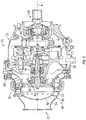
- FIG. 2 schematically illustrates an air turbine starter 20 that is used to initiate the rotation of a gas turbine engine 250, such as a turbofan engine through an accessory gearbox 70, as described above.
- the air turbine starter 20 generally includes a housing assembly 30 that includes at least a turbine section 32 and an output section 34.
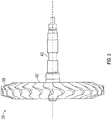
- the turbine section 32 includes a turbine wheel 36 with a plurality of turbine blades 38, a hub 40, and a turbine rotor shaft 42.
- the turbine blades 38 of the turbine wheel 36 are located downstream of an inlet housing assembly 44 which includes an inlet housing 46 which contains a nozzle 48.
- the nozzle 48 includes a plurality of turbine vanes 50 which direct compressed air flow from an inlet 52 through an inlet flowpath 54. The compressed air flows past the vanes 50 drives the turbine wheel 36 then is exhausted through an outlet 56.
- the turbine wheel 36 is driven by the compressed airflow such that the turbine rotor shaft 42 may mechanically drive a starter output shaft 58 though a gear system 60, such as a planetary gear system.
- the air turbine starter 20 thereby transmits relatively high loads through the gear system 60 to convert the pneumatic energy from the compressed air into mechanical energy to, for example, rotate the gas turbine engine 250 for start and/or bowed rotor motoring.
- CFD computational fluid dynamics
- Some key engine characteristics which must be known to design an air turbine starter are the engine core inertia (the portion of the engine which is actually rotated by the air turbine starter), the engine core drag torque as a function of speed, other drag torques (such as from gearbox mounted accessories) as a function of speed, and the maximum time allowed for the start. Values of these parameters are needed for the range of ambient starting temperature conditions.
- the air turbine starter a preferred internal gear ratio for the starter and, using the CFD tools, the optimum airfoil shape which is most efficient can be determined for each particular air turbine starter.
- the airfoil shape will be different, and will be optimized to perform with highest efficiency at the design speed of the starter.
- Characteristics of the airfoil shape may change from one airfoil shape to another and may include, but are not limited to, curvature, maximum thickness, axial chord length, twist, taper from root to tip, radius of the leading edge, radius of the trailing edge, straightness of the leading and trailing edge from root to tip, etc. It is possible to directly scale up or scale down the airfoil shape to meet a different set of engine starting requirements, however, if the entire flowpath geometry, to include the rotor blades 38, vanes 50 and inlet flowpath 54 is not also scaled using the same scale factor, the delivered performance of the air turbine starter may not properly scale.
- the manual override 400 includes a plurality of positional settings that each vary the amount of air flowing through the starter air valve 300 by rotating a rotary spool valve 420 (see FIGs. 6 and 7 ).
- the rotary spool valve 420 is operable to rotate to at least one of a normal start position 432, a full manual override position 434, and a plurality of partial manual override positions 436, as seen in FIG. 4 .
- the rotary spool valve 420 is rotated by a manual input at the tool interface 412.
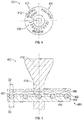
- FIG. 5 schematically illustrates a cross-sectional portion of an indexing mechanism 480 of the manual override 400.
- the manual override 400 utilizes a spring 488, a ball holder plate 482, and indexing ring 486 with balls 484 in order for a worker to manually rotate the rotary spool valve 420 through each position 432, 434, 436.
- FIG. 5 illustrates an indexing mechanism 480 configured to translate the rotation of the manual override 400 to a series of step movements.
- the plate 486 containing the balls 484 rotates with the manual override shaft 414.
- the plate 482 is configured not to rotate with the manual override shaft 414.
- the plate 482 may move along shaft axis B of manual override shaft 414 but is the plate 482 is biased in place by the spring 488.
- Plate 482 includes a plurality of openings 483 each with diameters D2 slightly smaller than the diameter D3 of the balls 484.
- Fig. 6 schematically illustrates a block diagram of a starter air valve 300.
- the starter air valve 300 includes a housing 310 comprising an inlet 312 at a first end 311 and an outlet 314 at a second end 313 opposite the first end 311.
- the inlet 312 is fluidly connected to the outlet 314 through a fluid pathway 320.
- a valve disk 330 is injected into the fluid pathway 320 dividing the fluid pathway 320 into a first chamber 322 and a second chamber 324.
- the valve disk 330 in operation adjusts fluid flow through the fluid pathway 320.
- the valve disk 330 may be a butterfly valve or any other similar valve known to one of skill in the art.
- the starter air valve 300 also includes an actuator 340 operably connected to the valve disk 330 and a solenoid 350 in variable electrical connection with the actuator 340.
- the starter air valve 300 further includes a manual override 400 composed of a rotary spool valve 420 fluidly connected to the first chamber 322 of the fluid pathway 320.
- the rotary spool valve 420 is in variable fluid connection with the actuator 340, thus the rotary spool valve 420 will adjust the amount of air conveyed to the actuator 340 depending on the positional setting 432, 434, 436 of the rotary spool valve 420.
- the solenoid 350 is in variable electrical connection with the actuator 340 through the rotary spool valve 420, thus the solenoid 350 will disconnect/connect electrically to the actuator 340 depending on the positional setting 432, 434, 436 of the rotary spool valve 420.
- the manual override 400 is used in normal operation of the air starter valve 300 when the rotary spool valve 420 is in the normal start position 432.
- the rotary spool valve 420 of the manual override 400 may be pre-set to default to the normal start position 432 by a biasing mechanism, such as, for example, a torsion spring.
- a biasing mechanism such as, for example, a torsion spring.
- the rotary spool valve 420 electrically connects the solenoid 350 to the actuator 340 at 429.
- the solenoid 350 will receive electrical commands through an engine controller (i.e.
- the rotary spool valve 420 is also fluidly connected to the actuator 340 through the solenoid 350 when the rotary spool 430 valve is in the normal start position 432. Compressed air enters the inlet 312 at an inlet pressure P in and is conveyed to the actuator 340 through the rotary spool 430 valve and the solenoid 350. While in the normal start position 432 the inlet pressure P in provides additional force upon to actuator to assist the solenoid 350 in pulse width modulation and positioning of the valve disc 330.
- the rotary spool valve 420 may be rotated to either the full manual override position 434 or one of the plurality of partial manual override positions 436.
- the rotary spool valve 420 electrically disconnects the solenoid 350 and the actuator 340.
- the rotary spool valve 420 is fluidly connected to the actuator 340 when the rotary spool valve 420 is in the full manual override start position 434. While in the full manual override position 343 full inlet pressure P in is applied to the actuator 340 in order to force the actuator to move the valve disc 330 to a full open position.
- the rotary spool valve 420 electrically disconnects the solenoid 350 and the actuator 340.
- the rotary spool valve 420 is also fluidly disconnected from the actuator 340 when the rotary spool valve 420 is in each of the partial manual override start positions 436.
- the first chamber 322 is in fluid connection to the second chamber 324 through the rotary spool valve 420 when the rotary spool valve 424 is in each of the partial manual override start positions 436.
- each of the partial manual override start positions 436 allows a different amount of fluid through the rotary spool 420.
- the plurality of partial manual override positions 436 allows the starter air valve 300 to motor the engine 250 at a specified speed below idle.
- the settings are determined by the pilot of the aircraft and are based on ambient conditions and state of the engine 250 upon shut down. Once the pilot decides what the manual override 400 should be set to, the pilot communicates the result to the technician and the technician rotates the rotary spool valve 420 at the tool interface 412 to that particular setting for the duration of the motoring sequence. Once motoring sequence completed, the technician sets the manual override 400 to the normal start position 432 in order to complete the starting sequence.
- Fig. 7 schematically illustrates a cross-section of the rotary spool valve 420.
- the rotary spool valve 420 includes an inner cylinder 422a and an outer cylinder 422b.
- the inner cylinder contains a first orifice 424a, a second orifice 424b, and a variable slot orifice 424c.
- Each orifice 424a-424c lines up with a different fluid pathway 426a-426b in the outer cylinder 422b as the rotary spool valve 420 is rotated.
- the first orifice 424b aligns with the first fluid pathway 426a.
- the first fluid pathway 426a is fluidly connected to the solenoid 350, thus when the rotary spool valve 420 is in the normal start position 432, inlet pressure P in is conveyed from the inlet 312 through the rotary spool valve 420 to the solenoid 350.
- the second orifice 424a aligns with the second fluid pathway 426b.
- the second fluid pathway 426b is fluidly connected to the solenoid 350, thus when the rotary spool valve 420 is in the full manual override position 434, inlet pressure P in is conveyed from the inlet 312 through the rotary spool valve 420 to the actuator 340.
- the second orifice 424b may include a venting channel 428b placed around the third orifice 424b, as seen in FIGs. 7 and 8 .
- the venting channel 482b helps prevent inlet pressure P in leakage through the area between the inner cylinder 422a and the outer cylinder 422b as inlet pressure flows P in into the second fluid pathway 426b to the actuator 340.
- the venting channel 482b is shown located on the inner cylinder 422a of the rotary spool valve 420, however venting channels may also be located on the outer cylinder 422b or on a wall 427 opposite the outer cylinder 422b.
- the wall 427 includes the orifices 426c, 426b, 426c.
- variable slot orifice 424c aligns with the third fluid pathway 426c.
- the third fluid pathway 426c is fluidly connected to the second chamber 324, thus when the rotary spool valve 420 is in each of the partial manual override positions 436, inlet pressure P in is conveyed from the inlet 312 through the rotary spool valve 420 to the second chamber 324.
- the variable slot orifice 424c has a variable opening breadth D1 and will allow a different amount of inlet pressure P in to flow through to the third fluid pathway 426c in each manual override position 436.
- embodiments can be in the form of processor-implemented processes and devices for practicing those processes, such as a processor.
- Embodiments can also be in the form of computer program code containing instructions embodied in tangible media, such as floppy diskettes, CD ROMs, hard drives, or any other computer-readable storage medium, wherein, when the computer program code is loaded into and executed by a computer, the computer becomes a device for practicing the embodiments.
- Embodiments can also be in the form of computer program code, for example, whether stored in a storage medium, loaded into and/or executed by a computer, or transmitted over some transmission medium, loaded into and/or executed by a computer, or transmitted over some transmission medium, such as over electrical wiring or cabling, through fiber optics, or via electromagnetic radiation, wherein, when the computer program code is loaded into an executed by a computer, the computer becomes an device for practicing the exemplary embodiments.
- the computer program code segments configure the microprocessor to create specific logic circuits.
Landscapes
- Engineering & Computer Science (AREA)
- General Engineering & Computer Science (AREA)
- Mechanical Engineering (AREA)
- Chemical & Material Sciences (AREA)
- Combustion & Propulsion (AREA)
- Automation & Control Theory (AREA)
- Aviation & Aerospace Engineering (AREA)
- Fluid-Driven Valves (AREA)
- Physics & Mathematics (AREA)
- Fluid Mechanics (AREA)
- Control Of Turbines (AREA)
- Multiple-Way Valves (AREA)
Abstract
Description
- The embodiments herein generally relate to starter air valves used to start gas turbine engines and more specifically, the manual overrides for the starter air valve.
- Many relatively large gas turbine engines, including turbofan engines, may use an air turbine starter (ATS) to initiate gas turbine engine rotation. The ATS is typically mounted on the accessory gearbox which, in turn, is mounted on the engine or airframe. Consequently, the ATS is installed in the aircraft at all times even though active operation may occur only for a minute or so at the beginning of each flight cycle, along with occasional operation during engine maintenance activities.
- The ATS generally includes a turbine section coupled to an output section within a housing. The turbine section is coupled to a high pressure fluid source, such as compressed air, to drive the output section through a gear system. Thus, when the high pressure fluid source impinges upon the turbine section, the output section powers the gas turbine engine.
- When the gas turbine engine of an airplane has been shut off for example, after the airplane has landed at an airport, the engine is hot and due to heat rise, the upper portions of the engine will be hotter than lower portions of the engine. When this occurs thermal expansion may cause deflection of components of the engine which can result in a "bowed rotor" condition. If a gas turbine engine is in such a bowed rotor condition, it is undesirable to restart or start the engine. One approach to mitigating a bowed rotor condition is to use the ATS to drive rotation (i.e., cool-down motoring) of a spool within the engine for an extended period of time at a selected speed and is referred to as Bowed Rotor Motoring (BRM). Enhancements to improve the efficiency of BRM are greatly desired.
- According to one embodiment, a starter air valve is provided. The starter air valve comprises: a housing comprising an inlet at a first end and an outlet at a second end opposite the first end, the inlet being fluidly connected to the outlet through a fluid pathway; a valve injected into the fluid pathway dividing the fluid pathway into a first chamber and a second chamber, the valve in operation adjusts fluid flow through the fluid pathway; an actuator operably connected to the valve; a solenoid in variable electrical connection with the actuator; and a rotary spool valve fluidly connected to the first chamber of the fluid pathway, the rotary spool valve operable to rotate to at least one of a normal start position, a full manual override position, and a plurality of partial manual override positions, wherein the rotary spool valve is in variable fluid connection with the actuator, wherein the solenoid is in variable electrical connection with the actuator through the rotary spool valve.
- In addition to one or more of the features described above, or as an alternative, further embodiments may include where the rotary spool valve electrically connects the solenoid to the actuator when the rotary spool valve is in the normal start position.
- In addition to one or more of the features described above, or as an alternative, further embodiments may include where the rotary spool valve electrically disconnects the solenoid and the actuator when the rotary spool valve is in the full manual override position.
- In addition to one or more of the features described above, or as an alternative, further embodiments may include where the rotary spool valve electrically disconnects the solenoid and the actuator when the rotary spool valve is in each of the plurality of partial manual override positions.
- In addition to one or more of the features described above, or as an alternative, further embodiments may include where the rotary spool valve is fluidly connected to actuator through the solenoid when the rotary spool valve is in the normal start position.
- In addition to one or more of the features described above, or as an alternative, further embodiments may include where the rotary spool valve is fluidly connected the actuator when the rotary spool valve is in the full manual override start position.
- In addition to one or more of the features described above, or as an alternative, further embodiments may include where the rotary spool valve is fluidly disconnected from the actuator when the rotary spool valve is in each of the plurality of partial manual override start positions; the first chamber is in fluid connection to the second chamber through the rotary spool valve when the rotary spool valve is in each of the plurality of partial manual override start positions; and each of the plurality of partial manual override start positions allows a different amount of fluid through the rotary spool valve.
- In addition to one or more of the features described above, or as an alternative, further embodiments may include where the rotary spool valve electrically connects the solenoid to the actuator when the rotary spool valve is in the normal start position.
- In addition to one or more of the features described above, or as an alternative, further embodiments may include where the rotary spool valve electrically disconnects the solenoid and the actuator when the rotary spool valve is in the full manual override position.
- In addition to one or more of the features described above, or as an alternative, further embodiments may include where the rotary spool valve electrically disconnects the solenoid and the actuator when the rotary spool valve is in each of the plurality of partial manual override positions.
- According to another embodiment, an engine starting system for a gas turbine engine is provided. The engine starting system comprising: an air turbine starter; a compressed air source fluidly connected to the air turbine starter; a starter air valve fluidly connecting the air turbine starter to the compressed air source, the starter air valve comprising: a housing comprising an inlet at a first end and an outlet at a second end opposite the first end, the inlet being fluidly connected to the outlet through a fluid pathway; a valve injected into the fluid pathway dividing the fluid pathway into a first chamber and a second chamber, the valve in operation adjusts fluid flow through the fluid pathway; an actuator operably connected to the valve; a solenoid in variable electrical connection with the actuator; and a rotary spool valve fluidly connected to the first chamber of the fluid pathway, the rotary spool valve operable to rotate to at least one of a normal start position, a full manual override position, and a plurality of partial manual override positions, wherein the rotary spool valve is in variable fluid connection with the actuator, wherein the solenoid is in variable electrical connection with the actuator through the rotary spool valve.
- In addition to one or more of the features described above, or as an alternative, further embodiments may include where the rotary spool valve electrically connects the solenoid to the actuator when the rotary spool valve is in the normal start position.
- In addition to one or more of the features described above, or as an alternative, further embodiments may include where the rotary spool valve electrically disconnects the solenoid and the actuator when the rotary spool valve is in the full manual override position.
- In addition to one or more of the features described above, or as an alternative, further embodiments may include where the rotary spool valve electrically disconnects the solenoid and the actuator when the rotary spool valve is in each of the plurality of partial manual override positions.
- In addition to one or more of the features described above, or as an alternative, further embodiments may include where the rotary spool valve is fluidly connected to actuator through the solenoid when the rotary spool valve is in the normal start position.
- In addition to one or more of the features described above, or as an alternative, further embodiments may include where the rotary spool valve is fluidly connected the actuator when the rotary spool valve is in the full manual override start position.
- In addition to one or more of the features described above, or as an alternative, further embodiments may include where the rotary spool valve is fluidly disconnected from the actuator when the rotary spool valve is in each of the plurality of partial manual override start positions; the first chamber is in fluid connection to the second chamber through the rotary spool valve when the rotary spool valve is in each of the plurality of partial manual override start positions; and each of the plurality of partial manual override start positions allows a different amount of fluid through the rotary spool valve.
- In addition to one or more of the features described above, or as an alternative, further embodiments may include where the rotary spool valve electrically connects the solenoid to the actuator when the rotary spool valve is in the normal start position.
- In addition to one or more of the features described above, or as an alternative, further embodiments may include where the rotary spool valve electrically disconnects the solenoid and the actuator when the rotary spool valve is in the full manual override position.
- In addition to one or more of the features described above, or as an alternative, further embodiments may include where the rotary spool valve electrically disconnects the solenoid and the actuator when the rotary spool valve is in each of the plurality of partial manual override positions.
- Technical effects of embodiments of the present disclosure include adjusting the flow of air through a starter air valve using a manual override having selected settings to control flow rates and electrical connections.
- The foregoing features and elements may be combined in various combinations without exclusivity, unless expressly indicated otherwise. These features and elements as well as the operation thereof will become more apparent in light of the following description and the accompanying drawings. It should be understood, however, that the following description and drawings are intended to be illustrative and explanatory in nature and non-limiting.
- The following descriptions should not be considered limiting in any way. With reference to the accompanying drawings, like elements are numbered alike:
-
FIG. 1 is a schematic illustration of an aircraft engine starting system, according to an embodiment of the disclosure; -
FIG. 2 is a schematic illustration an air turbine starter of the aircraft engine starting system ofFIG. 1 , according to an embodiment of the disclosure; -
FIG. 3 is a schematic illustration a turbine wheel of the air turbine starter ofFIG. 2 , according to an embodiment of the disclosure; -
FIG. 4 is a schematic illustration top view of a manual override of a starter air valve that may be used in the aircraft engine starting system ofFIG. 1 , according to an embodiment of the disclosure; -
FIG. 5 is a cross-sectional schematic illustration of a portion of the manual override ofFIG. 4 , according to an embodiment of the disclosure; -
FIG. 6 is a block diagram of a starter air valve with the manual override ofFIGs. 5-6 , according to an embodiment of the disclosure; -
FIG. 7 is a cross-sectional view of a rotary spool valve for use in the starter air valve ofFIG. 6 , according to an embodiment of the present disclosure; and -
FIG. 8 is a schematic illustration of an orifice and vent channel of the rotary spool valve ofFIG. 7 , according to an embodiment of the present disclosure. - A detailed description of one or more embodiments of the disclosed apparatus and method are presented herein by way of exemplification and not limitation with reference to the Figures.
- Various embodiments of the present disclosure are related to a bowed rotor start mitigation system in a gas turbine engine. Embodiments can include using a manual override to adjust the flow of air through an air starter valve system of an air turbine starter. The flow of air controls rotor speed of a starting spool of a gas turbine engine to mitigate a bowed rotor condition using a bowed rotor motoring process. Under normal operation during bowed rotor motoring, a solenoid operably connected to the starter air valve can be actively adjusted to deliver air pressure (i.e., compressed air) from an air supply to an air turbine starter of an engine starting system that controls starting spool rotor speed. Bowed rotor motoring may be performed by running an engine starting system at a lower speed with a longer duration than typically used for engine starting while dynamically adjusting the starter air valve to maintain a rotor speed and/or profile. A system failure may lead to the solenoid being unable to adjust the air pressure through the starter air valve. A few non limiting examples of system failures may include, a starter air valve solenoid electrical failure, a solenoid electronic coil control failure, the solenoid being mechanically stuck open, the solenoid being mechanically stuck close, a sluggish starter air valve, and the starter air valve being stuck closed due to an obstruction. In the event of a system failure, the manual override described herein may be activated. The manual override may be set to one or more selected positional settings to precisely control the flow of air through the starter air valve. Advantageously, by controlling the flow of air through the starter air valve using the manual override, bowed motor motoring may be tailored based on actual conditions, which leads to faster and more effective bowed rotor motoring.
- Referring now to the figures,
FIG. 1 shows a block diagram of agas turbine engine 250 and an associatedengine starting system 100 with avalve system 101 according to an embodiment of the present disclosure. Thevalve system 101 includes astarter air valve 300 andmanual override 400. Thevalve system 101 is operable to receive a compressed air flow from acompressed air source 114 through one ormore ducts 145. Thecompressed air source 114 can be an auxiliary power unit, a ground cart, or a cross-engine bleed. - An
air turbine starter 20 of theengine starting system 100 is operably connected to thegas turbine engine 250 through anaccessory gearbox 70 and drive shaft 60 (e.g., a tower shaft), as shown inFIG. 1 . As depicted in the example ofFIG. 1 , theair turbine starter 20 is connected to thegas turbine engine 250 by adrive line 90, which runs from an output of theair turbine starter 20 to theaccessory gearbox 70 through thedrive shaft 60 to arotor shaft 259 of thegas turbine engine 250. Operable connections can include gear mesh connections that in some instances can be selectively engaged or disengaged, for instance, through one or more clutches. Theair turbine starter 20 is configured to initiate a startup process of thegas turbine engine 250 driving rotation of therotor shaft 259 of a startingspool 255 of thegas turbine engine 250. Therotor shaft 259 operably connects anengine compressor 256 to anengine turbine 258. Thus, once theengine compressor 256 starts spinning, air is pulled intocombustion chamber 257 and mixes with fuel for combustion. Once the air and fuel mixture combusts in thecombustion chamber 257, a resulting compressed gas flow drives rotation of theengine turbine 258, which rotates theengine turbine 258 and subsequently theengine compressor 256. Once the startup process has been completed, theair turbine starter 20 can be disengaged from thegas turbine engine 250 to prevent over-speed conditions when thegas turbine engine 250 operates at its normal higher speeds. Although only a single instance of an engine compressor-turbine pair of startingspool 255 is depicted in the example ofFIG. 1 , it will be understood that embodiments can include any number of spools, such as high/mid/low pressure engine compressor-turbine pairs within thegas turbine engine 250. - The
air turbine starter 20 is further operable to drive rotation of therotor shaft 259 at a lower speed for a longer duration than typically used for engine starting in a motoring mode of operation (also referred to as cool-down motoring/bowed rotor motoring) to prevent/reduce a bowed rotor condition. If a bowed rotor condition has developed, for instance, due to a hot engine shutdown and without taking further immediate action, bowed rotor motoring may be performed by theair turbine starter 20 to reduce a bowed rotor condition by driving rotation of therotor shaft 259. - A
controller 380, such as full authority digital engine control (FADEC), typically controls valve operation, for instance, modulation of thestarter air valve 300 to control a motoring speed of thegas turbine engine 250 during bowed rotor motoring. Thestarter air valve 300 delivers air through aduct 140 to theair turbine starter 20. If thestarter air valve 300 fails shut, a correspondingmanual override 400 can be used to manually open thestarter air valve 300. Themanual override 400 can include atool interface 412 to enable a ground crew to open thestarter air valve 300. Whenstarter air valve 300 fails shut andmanual override 400 can be used to open thestarter air valve 300. - Referring now to
FIGs. 2 and3 .FIG. 2 schematically illustrates anair turbine starter 20 that is used to initiate the rotation of agas turbine engine 250, such as a turbofan engine through anaccessory gearbox 70, as described above. Theair turbine starter 20 generally includes ahousing assembly 30 that includes at least aturbine section 32 and anoutput section 34. Theturbine section 32 includes aturbine wheel 36 with a plurality ofturbine blades 38, ahub 40, and aturbine rotor shaft 42. Theturbine blades 38 of theturbine wheel 36 are located downstream of aninlet housing assembly 44 which includes aninlet housing 46 which contains anozzle 48. Thenozzle 48 includes a plurality ofturbine vanes 50 which direct compressed air flow from aninlet 52 through aninlet flowpath 54. The compressed air flows past thevanes 50 drives theturbine wheel 36 then is exhausted through anoutlet 56. - The
turbine wheel 36 is driven by the compressed airflow such that theturbine rotor shaft 42 may mechanically drive astarter output shaft 58 though agear system 60, such as a planetary gear system. Theair turbine starter 20 thereby transmits relatively high loads through thegear system 60 to convert the pneumatic energy from the compressed air into mechanical energy to, for example, rotate thegas turbine engine 250 for start and/or bowed rotor motoring. - The
turbine blades 38 of theturbine wheel 36 and thevanes 50 of thenozzle 48 both of which are defined herein as airfoils-may be defined with computational fluid dynamics (CFD) analytical software and are optimized to meet the specific performance requirements of a specific air turbine starter. Some key engine characteristics which must be known to design an air turbine starter are the engine core inertia (the portion of the engine which is actually rotated by the air turbine starter), the engine core drag torque as a function of speed, other drag torques (such as from gearbox mounted accessories) as a function of speed, and the maximum time allowed for the start. Values of these parameters are needed for the range of ambient starting temperature conditions. From these, the air turbine starter a preferred internal gear ratio for the starter and, using the CFD tools, the optimum airfoil shape which is most efficient can be determined for each particular air turbine starter. Depending on the values of the original requirements, the airfoil shape will be different, and will be optimized to perform with highest efficiency at the design speed of the starter. - Characteristics of the airfoil shape may change from one airfoil shape to another and may include, but are not limited to, curvature, maximum thickness, axial chord length, twist, taper from root to tip, radius of the leading edge, radius of the trailing edge, straightness of the leading and trailing edge from root to tip, etc. It is possible to directly scale up or scale down the airfoil shape to meet a different set of engine starting requirements, however, if the entire flowpath geometry, to include the
rotor blades 38,vanes 50 andinlet flowpath 54 is not also scaled using the same scale factor, the delivered performance of the air turbine starter may not properly scale. - Referring now to
FIG. 4 , which schematically illustrates a top view of themanual override 400. Themanual override 400 includes a plurality of positional settings that each vary the amount of air flowing through thestarter air valve 300 by rotating a rotary spool valve 420 (seeFIGs. 6 and7 ). Therotary spool valve 420 is operable to rotate to at least one of anormal start position 432, a fullmanual override position 434, and a plurality of partial manual override positions 436, as seen inFIG. 4 . Therotary spool valve 420 is rotated by a manual input at thetool interface 412. - Referring now to
FIG. 5 , which schematically illustrates a cross-sectional portion of anindexing mechanism 480 of themanual override 400. As seen inFIG. 5 , themanual override 400 utilizes aspring 488, aball holder plate 482, andindexing ring 486 withballs 484 in order for a worker to manually rotate therotary spool valve 420 through eachposition FIG. 5 illustrates anindexing mechanism 480 configured to translate the rotation of themanual override 400 to a series of step movements. In the illustrated example ofFIG. 5 , theplate 486 containing theballs 484 rotates with themanual override shaft 414. Theplate 482 is configured not to rotate with themanual override shaft 414. Theplate 482 may move along shaft axis B ofmanual override shaft 414 but is theplate 482 is biased in place by thespring 488.Plate 482 includes a plurality ofopenings 483 each with diameters D2 slightly smaller than the diameter D3 of theballs 484. When themanual override shaft 414 andindexing ring 486 is rotated, the rotation causes theball holder plate 482 to be lifted to compress thespring 488 andballs 484 are seated with a click in the next available opening 483 of 482. Therotary spool valve 420 is rotated by a manual input at thetool interface 412. - Referring now to
FIG. 6 with continued reference toFIGs. 1-5 .Fig. 6 schematically illustrates a block diagram of astarter air valve 300. Thestarter air valve 300 includes ahousing 310 comprising aninlet 312 at afirst end 311 and anoutlet 314 at asecond end 313 opposite thefirst end 311. Theinlet 312 is fluidly connected to theoutlet 314 through a fluid pathway 320. Avalve disk 330 is injected into the fluid pathway 320 dividing the fluid pathway 320 into afirst chamber 322 and asecond chamber 324. Thevalve disk 330 in operation adjusts fluid flow through the fluid pathway 320. Thevalve disk 330 may be a butterfly valve or any other similar valve known to one of skill in the art. Thestarter air valve 300 also includes anactuator 340 operably connected to thevalve disk 330 and asolenoid 350 in variable electrical connection with theactuator 340. Thestarter air valve 300 further includes amanual override 400 composed of arotary spool valve 420 fluidly connected to thefirst chamber 322 of the fluid pathway 320. Therotary spool valve 420 is in variable fluid connection with theactuator 340, thus therotary spool valve 420 will adjust the amount of air conveyed to theactuator 340 depending on thepositional setting rotary spool valve 420. Thesolenoid 350 is in variable electrical connection with theactuator 340 through therotary spool valve 420, thus thesolenoid 350 will disconnect/connect electrically to theactuator 340 depending on thepositional setting rotary spool valve 420. - The
manual override 400 is used in normal operation of theair starter valve 300 when therotary spool valve 420 is in thenormal start position 432. Therotary spool valve 420 of themanual override 400 may be pre-set to default to thenormal start position 432 by a biasing mechanism, such as, for example, a torsion spring. In thenormal start position 432, therotary spool valve 420 electrically connects thesolenoid 350 to theactuator 340 at 429. During normal operation, thesolenoid 350 will receive electrical commands through an engine controller (i.e. FADEC) to pulse width modulate thesolenoid 350 during bowed rotor motoring in order to maintain thevalve disc 330 at a specifiedangle 330 to achieve the required airflow through the fluid pathway 320. Once the bowed rotor motoring is completed then thevalve disc 330 is fully opened to complete full start. Therotary spool valve 420 is also fluidly connected to theactuator 340 through thesolenoid 350 when the rotary spool 430 valve is in thenormal start position 432. Compressed air enters theinlet 312 at an inlet pressure Pin and is conveyed to theactuator 340 through the rotary spool 430 valve and thesolenoid 350. While in thenormal start position 432 the inlet pressure Pin provides additional force upon to actuator to assist thesolenoid 350 in pulse width modulation and positioning of thevalve disc 330. - When a failure has occurred in the
air starter valve 300, therotary spool valve 420 may be rotated to either the fullmanual override position 434 or one of the plurality of partial manual override positions 436. In the fullmanual override position 434, therotary spool valve 420 electrically disconnects thesolenoid 350 and theactuator 340. Therotary spool valve 420 is fluidly connected to theactuator 340 when therotary spool valve 420 is in the full manualoverride start position 434. While in the full manual override position 343 full inlet pressure Pin is applied to theactuator 340 in order to force the actuator to move thevalve disc 330 to a full open position. - In each of the partial manual override positions 436, the
rotary spool valve 420 electrically disconnects thesolenoid 350 and theactuator 340. Therotary spool valve 420 is also fluidly disconnected from theactuator 340 when therotary spool valve 420 is in each of the partial manual override start positions 436. Thefirst chamber 322 is in fluid connection to thesecond chamber 324 through therotary spool valve 420 when the rotary spool valve 424 is in each of the partial manual override start positions 436. As discussed further below, each of the partial manual override start positions 436 allows a different amount of fluid through therotary spool 420. - Advantageously, the plurality of partial manual override positions 436 allows the
starter air valve 300 to motor theengine 250 at a specified speed below idle. In an example, the settings are determined by the pilot of the aircraft and are based on ambient conditions and state of theengine 250 upon shut down. Once the pilot decides what themanual override 400 should be set to, the pilot communicates the result to the technician and the technician rotates therotary spool valve 420 at thetool interface 412 to that particular setting for the duration of the motoring sequence. Once motoring sequence completed, the technician sets themanual override 400 to thenormal start position 432 in order to complete the starting sequence. - Referring now to
FIGs. 7 and8 with continued reference toFIGs. 1-6 .Fig. 7 schematically illustrates a cross-section of therotary spool valve 420. As seen inFIG. 7 , therotary spool valve 420 includes aninner cylinder 422a and anouter cylinder 422b. The inner cylinder contains a first orifice 424a, asecond orifice 424b, and avariable slot orifice 424c. Each orifice 424a-424c lines up with adifferent fluid pathway 426a-426b in theouter cylinder 422b as therotary spool valve 420 is rotated. - When in the
normal start position 432, thefirst orifice 424b aligns with thefirst fluid pathway 426a. Thefirst fluid pathway 426a is fluidly connected to thesolenoid 350, thus when therotary spool valve 420 is in thenormal start position 432, inlet pressure Pin is conveyed from theinlet 312 through therotary spool valve 420 to thesolenoid 350. - When in the full
manual override position 434, the second orifice 424a aligns with the secondfluid pathway 426b. The secondfluid pathway 426b is fluidly connected to thesolenoid 350, thus when therotary spool valve 420 is in the fullmanual override position 434, inlet pressure Pin is conveyed from theinlet 312 through therotary spool valve 420 to theactuator 340. Thesecond orifice 424b may include a ventingchannel 428b placed around thethird orifice 424b, as seen inFIGs. 7 and8 . Advantageously, the venting channel 482b helps prevent inlet pressure Pin leakage through the area between theinner cylinder 422a and theouter cylinder 422b as inlet pressure flows Pin into the secondfluid pathway 426b to theactuator 340. For illustrative purposes, the venting channel 482b is shown located on theinner cylinder 422a of therotary spool valve 420, however venting channels may also be located on theouter cylinder 422b or on awall 427 opposite theouter cylinder 422b. As seen inFIG. 7 , thewall 427 includes theorifices - When in each of the partial manual override positions 436, the
variable slot orifice 424c aligns with the thirdfluid pathway 426c. The thirdfluid pathway 426c is fluidly connected to thesecond chamber 324, thus when therotary spool valve 420 is in each of the partial manual override positions 436, inlet pressure Pin is conveyed from theinlet 312 through therotary spool valve 420 to thesecond chamber 324. Thevariable slot orifice 424c has a variable opening breadth D1 and will allow a different amount of inlet pressure Pin to flow through to the thirdfluid pathway 426c in eachmanual override position 436. In an example, there may be 10 partialmanual override position 436 numbered 1-10, as seen inFIG. 4 and each higher number may allow a greater amount of fluid flow through thevariable slot orifice 424c than the previous lower number (e.g. "8" will allow more fluid flow than "7"). - As described above, embodiments can be in the form of processor-implemented processes and devices for practicing those processes, such as a processor. Embodiments can also be in the form of computer program code containing instructions embodied in tangible media, such as floppy diskettes, CD ROMs, hard drives, or any other computer-readable storage medium, wherein, when the computer program code is loaded into and executed by a computer, the computer becomes a device for practicing the embodiments. Embodiments can also be in the form of computer program code, for example, whether stored in a storage medium, loaded into and/or executed by a computer, or transmitted over some transmission medium, loaded into and/or executed by a computer, or transmitted over some transmission medium, such as over electrical wiring or cabling, through fiber optics, or via electromagnetic radiation, wherein, when the computer program code is loaded into an executed by a computer, the computer becomes an device for practicing the exemplary embodiments. When implemented on a general-purpose microprocessor, the computer program code segments configure the microprocessor to create specific logic circuits.
- The term "about" is intended to include the degree of error associated with measurement of the particular quantity based upon the equipment available at the time of filing the application. For example, "about" can include a range of ± 8% or 5%, or 2% of a given value.
- The terminology used herein is for the purpose of describing particular embodiments only and is not intended to be limiting of the present disclosure. As used herein, the singular forms "a", "an" and "the" are intended to include the plural forms as well, unless the context clearly indicates otherwise. It will be further understood that the terms "comprises" and/or "comprising," when used in this specification, specify the presence of stated features, integers, steps, operations, elements, and/or components, but do not preclude the presence or addition of one or more other features, integers, steps, operations, element components, and/or groups thereof.
- While the present disclosure has been described with reference to an exemplary embodiment or embodiments, it will be understood by those skilled in the art that various changes may be made and equivalents may be substituted for elements thereof without departing from the scope of the present invention as defined by the claims. In addition, many modifications may be made to adapt a particular situation or material to the teachings of the present disclosure without departing from the essential scope thereof. Therefore, it is intended that the present invention not be limited to the particular embodiment disclosed as the best mode contemplated for carrying out this present disclosure, but that the present disclosure will include all embodiments falling within the scope of the claims.
Claims (15)
- A starter air valve comprising:a housing (310) comprising an inlet (312) at a first end (311) and an outlet (314) at a second end (313) opposite the first end, the inlet being fluidly connected to the outlet through a fluid pathway (320);a valve (330) injected into the fluid pathway dividing the fluid pathway into a first chamber (322) and a second chamber (324), the valve in operation adjusting fluid flow through the fluid pathway;an actuator (340) operably connected to the valve;a solenoid (350) in variable electrical connection with the actuator; anda rotary spool valve (420) fluidly connected to the first chamber of the fluid pathway, the rotary spool valve operable to rotate to at least one of a normal start position, a full manual override position, and a plurality of partial manual override positions,wherein the rotary spool valve is in variable fluid connection with the actuator,wherein the solenoid is in variable electrical connection with the actuator through the rotary spool valve.
- The starter air valve of claim 1, wherein:
the rotary spool valve (420) electrically connects the solenoid to the actuator when the rotary spool valve is in the normal start position. - The starter air valve of claim 1, wherein:
the rotary spool valve (420) electrically disconnects the solenoid and the actuator when the rotary spool valve is in the full manual override position. - The starter air valve of claim 1, wherein:
the rotary spool valve electrically disconnects the solenoid and the actuator when the rotary spool valve is in each of the plurality of partial manual override positions. - The starter air valve of any preceding claim, wherein:
the rotary spool valve (420) is fluidly connected to actuator (340) through the solenoid when the rotary spool valve is in the normal start position. - The starter air valve of any of claims 1 to 4, wherein:
the rotary spool valve (420) is fluidly connected to the actuator (340) when the rotary spool valve is in the full manual override start position. - The starter air valve of any of claims 1 to 4, wherein:the rotary spool valve (420) is fluidly disconnected from the actuator (340) when the rotary spool valve is in each of the plurality of partial manual override start positions;the first chamber (322) is in fluid connection to the second chamber (324) through the rotary spool valve when the rotary spool valve is in each of the plurality of partial manual override start positions; andeach of the plurality of partial manual override start positions allows a different amount of fluid through the rotary spool valve.
- The starter air valve of claim 5, wherein:
the rotary spool valve (420) electrically connects the solenoid (350) to the actuator (340) when the rotary spool valve is in the normal start position. - The starter air valve of claim 6, wherein:
the rotary spool valve electrically disconnects the solenoid and the actuator when the rotary spool valve is in the full manual override position. - The starter air valve of claim 7, wherein:
the rotary spool valve electrically disconnects the solenoid and the actuator when the rotary spool valve is in each of the plurality of partial manual override positions. - An engine starting system for a gas turbine engine comprising:an air turbine starter (20);a compressed air source (114) fluidly connected to the air turbine starter;a starter air valve (300) fluidly connecting the air turbine starter to the compressed air source, the starter air valve comprising:a housing (310) comprising an inlet (312) at a first end (311) and an outlet (314) at a second end (313) opposite the first end, the inlet being fluidly connected to the outlet through a fluid pathway (320);a valve (330) injected into the fluid pathway dividing the fluid pathway into a first chamber (322) and a second chamber (324), the valve in operation adjusts fluid flow through the fluid pathway;an actuator (340) operably connected to the valve;a solenoid (350) in variable electrical connection with the actuator; anda rotary spool valve (420) fluidly connected to the first chamber of the fluid pathway, the rotary spool valve operable to rotate to at least one of a normal start position, a full manual override position, and a plurality of partial manual override positions,wherein the rotary spool valve is in variable fluid connection with the actuator,wherein the solenoid is in variable electrical connection with the actuator through the rotary spool valve.
- The engine starting system of claim 11, wherein:
the rotary spool valve electrically connects the solenoid to the actuator when the rotary spool valve is in the normal start position. - The engine starting system of claim 11, wherein:
the rotary spool valve electrically disconnects the solenoid and the actuator when the rotary spool valve is in the full manual override position. - The engine starting system of claim 11, wherein:
the rotary spool valve electrically disconnects the solenoid and the actuator when the rotary spool valve is in each of the plurality of partial manual override positions. - The engine starting system of claim 14, wherein:
the rotary spool valve is fluidly connected to actuator through the solenoid when the rotary spool valve is in the normal start position.
Applications Claiming Priority (1)
| Application Number | Priority Date | Filing Date | Title |
|---|---|---|---|
| US15/615,135 US10711701B2 (en) | 2017-06-06 | 2017-06-06 | Manual bowed rotor and full override |
Publications (2)
| Publication Number | Publication Date |
|---|---|
| EP3412896A1 true EP3412896A1 (en) | 2018-12-12 |
| EP3412896B1 EP3412896B1 (en) | 2024-03-06 |
Family
ID=62567429
Family Applications (1)
| Application Number | Title | Priority Date | Filing Date |
|---|---|---|---|
| EP18176253.5A Active EP3412896B1 (en) | 2017-06-06 | 2018-06-06 | Manual bowed rotor motoring and full override |
Country Status (2)
| Country | Link |
|---|---|
| US (1) | US10711701B2 (en) |
| EP (1) | EP3412896B1 (en) |
Cited By (1)
| Publication number | Priority date | Publication date | Assignee | Title |
|---|---|---|---|---|
| EP3842627A1 (en) * | 2019-12-23 | 2021-06-30 | Hamilton Sundstrand Corporation | Air turbine starter air valve |
Families Citing this family (5)
| Publication number | Priority date | Publication date | Assignee | Title |
|---|---|---|---|---|
| US10634057B2 (en) * | 2018-01-19 | 2020-04-28 | Hamilton Sundstrand Corporation | Airflow control for air turbine starter |
| US10961897B2 (en) * | 2019-03-01 | 2021-03-30 | Hyundai Motor Company | Methods of controlling electrical coolant valve for internal combustion engine |
| US10767666B1 (en) * | 2019-03-27 | 2020-09-08 | Pratt & Whitney Canada Corp. | Method and system for controlling a pneumatic valve |
| US11459966B2 (en) * | 2019-12-20 | 2022-10-04 | Pratt & Whitney Canada Corp. | Systems and methods for operating an on-off valve |
| US12146443B2 (en) * | 2023-03-31 | 2024-11-19 | Pratt & Whitney Canada Corp. | Boosting gas turbine engine power with fluid motor |
Citations (4)
| Publication number | Priority date | Publication date | Assignee | Title |
|---|---|---|---|---|
| US20040000656A1 (en) * | 2001-09-27 | 2004-01-01 | Jimmy Wiggins | Dual actuator air turbine starter valve |
| US20100085676A1 (en) * | 2008-10-03 | 2010-04-08 | Honeywell International Inc. | Nested pulse width modulation control |
| US20120067062A1 (en) * | 2010-09-22 | 2012-03-22 | Hamilton Sundstrand Corporation | Turbine starter valve |
| US20140060076A1 (en) * | 2012-08-31 | 2014-03-06 | Todd D. Cortelli | Antirotated piston rack |
Family Cites Families (10)
| Publication number | Priority date | Publication date | Assignee | Title |
|---|---|---|---|---|
| US2961586A (en) * | 1957-12-23 | 1960-11-22 | E I M Company Inc | Anticipatory condiction control servosystem |
| FR2607189B1 (en) * | 1986-11-20 | 1990-05-04 | Snecma | DEVICE FOR CONTROLLING A STARTING VALVE OF AN AVIATION TURBOMACHINE |
| US4916437A (en) * | 1987-08-14 | 1990-04-10 | Gazzaz Hesham H | Gas monitoring system with leak detection and flow cutoff |
| US4841816A (en) * | 1988-08-11 | 1989-06-27 | General Motors Corporation | Hydraulic control for a power transmission with a manual range selector valve |
| US6694746B2 (en) * | 2002-02-06 | 2004-02-24 | Honeywell International, Inc. | Micro volume actuator for an air turbine starter |
| JP4369292B2 (en) * | 2004-05-06 | 2009-11-18 | タイコ フローコントロールジャパン株式会社 | Emergency shut-off valve device |
| US7475863B2 (en) * | 2005-10-14 | 2009-01-13 | Rain Bird Corporation | Piston for reverse flow diaphragm valve |
| US8201572B2 (en) * | 2008-09-15 | 2012-06-19 | Segal Stanley H | Water supply control apparatus and method for use in homes or other structures |
| US9618129B2 (en) * | 2010-10-07 | 2017-04-11 | Vanderbilt University | Normally closed microvalve and applications of the same |
| US20120211681A1 (en) * | 2011-02-17 | 2012-08-23 | Easytork Automation Corporation | Pneumatic actuator air flow control system |
-
2017
- 2017-06-06 US US15/615,135 patent/US10711701B2/en active Active
-
2018
- 2018-06-06 EP EP18176253.5A patent/EP3412896B1/en active Active
Patent Citations (4)
| Publication number | Priority date | Publication date | Assignee | Title |
|---|---|---|---|---|
| US20040000656A1 (en) * | 2001-09-27 | 2004-01-01 | Jimmy Wiggins | Dual actuator air turbine starter valve |
| US20100085676A1 (en) * | 2008-10-03 | 2010-04-08 | Honeywell International Inc. | Nested pulse width modulation control |
| US20120067062A1 (en) * | 2010-09-22 | 2012-03-22 | Hamilton Sundstrand Corporation | Turbine starter valve |
| US20140060076A1 (en) * | 2012-08-31 | 2014-03-06 | Todd D. Cortelli | Antirotated piston rack |
Cited By (2)
| Publication number | Priority date | Publication date | Assignee | Title |
|---|---|---|---|---|
| EP3842627A1 (en) * | 2019-12-23 | 2021-06-30 | Hamilton Sundstrand Corporation | Air turbine starter air valve |
| US11261796B2 (en) | 2019-12-23 | 2022-03-01 | Hamilton Sundstrand Corporation | Air turbine starter air valve |
Also Published As
| Publication number | Publication date |
|---|---|
| US10711701B2 (en) | 2020-07-14 |
| EP3412896B1 (en) | 2024-03-06 |
| US20180346100A1 (en) | 2018-12-06 |
Similar Documents
| Publication | Publication Date | Title |
|---|---|---|
| EP3412896B1 (en) | Manual bowed rotor motoring and full override | |
| CN114810357B (en) | Gas turbine engine cooling system control | |
| EP3205860B1 (en) | Electro-pneumatic gas turbine engine motoring system for bowed rotor engine starts | |
| CN111720177B (en) | Combined overspeed, feathering and reverse enabler control valve for a propeller assembly | |
| CN110114567B (en) | System and method for starting a gas turbine engine | |
| EP3205838B1 (en) | Gas turbine engine motoring system for bowed rotor engine starts | |
| US9328667B2 (en) | Systems and methods for changing a speed of a compressor boost stage in a gas turbine | |
| EP3376005B1 (en) | Air turbine starter with automated variable inlet vanes | |
| EP3358151B1 (en) | Gas turbine start system to enable rotor thermal stabilization with backup bleed bypass cooling mode | |
| EP3406864B1 (en) | Bowed rotor motoring control | |
| JP6027193B2 (en) | Geared turbofan engine with low pressure environmental control system for aircraft | |
| EP3587746B1 (en) | Air turbine starter with turbine air exhaust outlet valve | |
| EP3358150B1 (en) | Starter air valve system with dual electromechanical controls | |
| US8800295B2 (en) | Device and a method for regulating a turbine engine, and an aircraft | |
| EP4534819A1 (en) | Turbine engine with couplable rotating assemblies | |
| EP3842627B1 (en) | Air turbine starter air valve | |
| CN120608772A (en) | System and method for integrating a starter on a low-pressure spool of a turbine engine |
Legal Events
| Date | Code | Title | Description |
|---|---|---|---|
| PUAI | Public reference made under article 153(3) epc to a published international application that has entered the european phase |
Free format text: ORIGINAL CODE: 0009012 |
|
| STAA | Information on the status of an ep patent application or granted ep patent |
Free format text: STATUS: THE APPLICATION HAS BEEN PUBLISHED |
|
| AK | Designated contracting states |
Kind code of ref document: A1 Designated state(s): AL AT BE BG CH CY CZ DE DK EE ES FI FR GB GR HR HU IE IS IT LI LT LU LV MC MK MT NL NO PL PT RO RS SE SI SK SM TR |
|
| AX | Request for extension of the european patent |
Extension state: BA ME |
|
| STAA | Information on the status of an ep patent application or granted ep patent |
Free format text: STATUS: REQUEST FOR EXAMINATION WAS MADE |
|
| 17P | Request for examination filed |
Effective date: 20190612 |
|
| RBV | Designated contracting states (corrected) |
Designated state(s): AL AT BE BG CH CY CZ DE DK EE ES FI FR GB GR HR HU IE IS IT LI LT LU LV MC MK MT NL NO PL PT RO RS SE SI SK SM TR |
|
| STAA | Information on the status of an ep patent application or granted ep patent |
Free format text: STATUS: EXAMINATION IS IN PROGRESS |
|
| 17Q | First examination report despatched |
Effective date: 20210531 |
|
| GRAP | Despatch of communication of intention to grant a patent |
Free format text: ORIGINAL CODE: EPIDOSNIGR1 |
|
| STAA | Information on the status of an ep patent application or granted ep patent |
Free format text: STATUS: GRANT OF PATENT IS INTENDED |
|
| INTG | Intention to grant announced |
Effective date: 20231016 |
|
| GRAS | Grant fee paid |
Free format text: ORIGINAL CODE: EPIDOSNIGR3 |
|
| GRAA | (expected) grant |
Free format text: ORIGINAL CODE: 0009210 |
|
| STAA | Information on the status of an ep patent application or granted ep patent |
Free format text: STATUS: THE PATENT HAS BEEN GRANTED |
|
| AK | Designated contracting states |
Kind code of ref document: B1 Designated state(s): AL AT BE BG CH CY CZ DE DK EE ES FI FR GB GR HR HU IE IS IT LI LT LU LV MC MK MT NL NO PL PT RO RS SE SI SK SM TR |
|
| REG | Reference to a national code |
Ref country code: GB Ref legal event code: FG4D |
|
| REG | Reference to a national code |
Ref country code: CH Ref legal event code: EP |
|
| REG | Reference to a national code |
Ref country code: IE Ref legal event code: FG4D |
|
| REG | Reference to a national code |
Ref country code: DE Ref legal event code: R096 Ref document number: 602018066119 Country of ref document: DE |
|
| REG | Reference to a national code |
Ref country code: LT Ref legal event code: MG9D |
|
| PG25 | Lapsed in a contracting state [announced via postgrant information from national office to epo] |
Ref country code: LT Free format text: LAPSE BECAUSE OF FAILURE TO SUBMIT A TRANSLATION OF THE DESCRIPTION OR TO PAY THE FEE WITHIN THE PRESCRIBED TIME-LIMIT Effective date: 20240306 |
|
| REG | Reference to a national code |
Ref country code: NL Ref legal event code: MP Effective date: 20240306 |
|
| PG25 | Lapsed in a contracting state [announced via postgrant information from national office to epo] |
Ref country code: GR Free format text: LAPSE BECAUSE OF FAILURE TO SUBMIT A TRANSLATION OF THE DESCRIPTION OR TO PAY THE FEE WITHIN THE PRESCRIBED TIME-LIMIT Effective date: 20240607 |
|
| PG25 | Lapsed in a contracting state [announced via postgrant information from national office to epo] |
Ref country code: RS Free format text: LAPSE BECAUSE OF FAILURE TO SUBMIT A TRANSLATION OF THE DESCRIPTION OR TO PAY THE FEE WITHIN THE PRESCRIBED TIME-LIMIT Effective date: 20240606 Ref country code: HR Free format text: LAPSE BECAUSE OF FAILURE TO SUBMIT A TRANSLATION OF THE DESCRIPTION OR TO PAY THE FEE WITHIN THE PRESCRIBED TIME-LIMIT Effective date: 20240306 |
|
| PG25 | Lapsed in a contracting state [announced via postgrant information from national office to epo] |
Ref country code: ES Free format text: LAPSE BECAUSE OF FAILURE TO SUBMIT A TRANSLATION OF THE DESCRIPTION OR TO PAY THE FEE WITHIN THE PRESCRIBED TIME-LIMIT Effective date: 20240306 |
|
| PG25 | Lapsed in a contracting state [announced via postgrant information from national office to epo] |
Ref country code: RS Free format text: LAPSE BECAUSE OF FAILURE TO SUBMIT A TRANSLATION OF THE DESCRIPTION OR TO PAY THE FEE WITHIN THE PRESCRIBED TIME-LIMIT Effective date: 20240606 Ref country code: NO Free format text: LAPSE BECAUSE OF FAILURE TO SUBMIT A TRANSLATION OF THE DESCRIPTION OR TO PAY THE FEE WITHIN THE PRESCRIBED TIME-LIMIT Effective date: 20240606 Ref country code: LT Free format text: LAPSE BECAUSE OF FAILURE TO SUBMIT A TRANSLATION OF THE DESCRIPTION OR TO PAY THE FEE WITHIN THE PRESCRIBED TIME-LIMIT Effective date: 20240306 Ref country code: HR Free format text: LAPSE BECAUSE OF FAILURE TO SUBMIT A TRANSLATION OF THE DESCRIPTION OR TO PAY THE FEE WITHIN THE PRESCRIBED TIME-LIMIT Effective date: 20240306 Ref country code: GR Free format text: LAPSE BECAUSE OF FAILURE TO SUBMIT A TRANSLATION OF THE DESCRIPTION OR TO PAY THE FEE WITHIN THE PRESCRIBED TIME-LIMIT Effective date: 20240607 Ref country code: FI Free format text: LAPSE BECAUSE OF FAILURE TO SUBMIT A TRANSLATION OF THE DESCRIPTION OR TO PAY THE FEE WITHIN THE PRESCRIBED TIME-LIMIT Effective date: 20240306 Ref country code: ES Free format text: LAPSE BECAUSE OF FAILURE TO SUBMIT A TRANSLATION OF THE DESCRIPTION OR TO PAY THE FEE WITHIN THE PRESCRIBED TIME-LIMIT Effective date: 20240306 Ref country code: BG Free format text: LAPSE BECAUSE OF FAILURE TO SUBMIT A TRANSLATION OF THE DESCRIPTION OR TO PAY THE FEE WITHIN THE PRESCRIBED TIME-LIMIT Effective date: 20240306 |
|
| REG | Reference to a national code |
Ref country code: AT Ref legal event code: MK05 Ref document number: 1663730 Country of ref document: AT Kind code of ref document: T Effective date: 20240306 |
|
| PG25 | Lapsed in a contracting state [announced via postgrant information from national office to epo] |
Ref country code: SE Free format text: LAPSE BECAUSE OF FAILURE TO SUBMIT A TRANSLATION OF THE DESCRIPTION OR TO PAY THE FEE WITHIN THE PRESCRIBED TIME-LIMIT Effective date: 20240306 Ref country code: LV Free format text: LAPSE BECAUSE OF FAILURE TO SUBMIT A TRANSLATION OF THE DESCRIPTION OR TO PAY THE FEE WITHIN THE PRESCRIBED TIME-LIMIT Effective date: 20240306 |
|
| PG25 | Lapsed in a contracting state [announced via postgrant information from national office to epo] |
Ref country code: NL Free format text: LAPSE BECAUSE OF FAILURE TO SUBMIT A TRANSLATION OF THE DESCRIPTION OR TO PAY THE FEE WITHIN THE PRESCRIBED TIME-LIMIT Effective date: 20240306 |
|
| PG25 | Lapsed in a contracting state [announced via postgrant information from national office to epo] |
Ref country code: NL Free format text: LAPSE BECAUSE OF FAILURE TO SUBMIT A TRANSLATION OF THE DESCRIPTION OR TO PAY THE FEE WITHIN THE PRESCRIBED TIME-LIMIT Effective date: 20240306 |
|
| PG25 | Lapsed in a contracting state [announced via postgrant information from national office to epo] |
Ref country code: IS Free format text: LAPSE BECAUSE OF FAILURE TO SUBMIT A TRANSLATION OF THE DESCRIPTION OR TO PAY THE FEE WITHIN THE PRESCRIBED TIME-LIMIT Effective date: 20240706 |
|
| PG25 | Lapsed in a contracting state [announced via postgrant information from national office to epo] |
Ref country code: PT Free format text: LAPSE BECAUSE OF FAILURE TO SUBMIT A TRANSLATION OF THE DESCRIPTION OR TO PAY THE FEE WITHIN THE PRESCRIBED TIME-LIMIT Effective date: 20240708 Ref country code: SM Free format text: LAPSE BECAUSE OF FAILURE TO SUBMIT A TRANSLATION OF THE DESCRIPTION OR TO PAY THE FEE WITHIN THE PRESCRIBED TIME-LIMIT Effective date: 20240306 |
|
| PG25 | Lapsed in a contracting state [announced via postgrant information from national office to epo] |
Ref country code: EE Free format text: LAPSE BECAUSE OF FAILURE TO SUBMIT A TRANSLATION OF THE DESCRIPTION OR TO PAY THE FEE WITHIN THE PRESCRIBED TIME-LIMIT Effective date: 20240306 Ref country code: CZ Free format text: LAPSE BECAUSE OF FAILURE TO SUBMIT A TRANSLATION OF THE DESCRIPTION OR TO PAY THE FEE WITHIN THE PRESCRIBED TIME-LIMIT Effective date: 20240306 |
|
| PG25 | Lapsed in a contracting state [announced via postgrant information from national office to epo] |
Ref country code: AT Free format text: LAPSE BECAUSE OF FAILURE TO SUBMIT A TRANSLATION OF THE DESCRIPTION OR TO PAY THE FEE WITHIN THE PRESCRIBED TIME-LIMIT Effective date: 20240306 |
|
| PG25 | Lapsed in a contracting state [announced via postgrant information from national office to epo] |
Ref country code: PL Free format text: LAPSE BECAUSE OF FAILURE TO SUBMIT A TRANSLATION OF THE DESCRIPTION OR TO PAY THE FEE WITHIN THE PRESCRIBED TIME-LIMIT Effective date: 20240306 |
|
| PG25 | Lapsed in a contracting state [announced via postgrant information from national office to epo] |
Ref country code: SK Free format text: LAPSE BECAUSE OF FAILURE TO SUBMIT A TRANSLATION OF THE DESCRIPTION OR TO PAY THE FEE WITHIN THE PRESCRIBED TIME-LIMIT Effective date: 20240306 |
|
| PG25 | Lapsed in a contracting state [announced via postgrant information from national office to epo] |
Ref country code: SM Free format text: LAPSE BECAUSE OF FAILURE TO SUBMIT A TRANSLATION OF THE DESCRIPTION OR TO PAY THE FEE WITHIN THE PRESCRIBED TIME-LIMIT Effective date: 20240306 Ref country code: SK Free format text: LAPSE BECAUSE OF FAILURE TO SUBMIT A TRANSLATION OF THE DESCRIPTION OR TO PAY THE FEE WITHIN THE PRESCRIBED TIME-LIMIT Effective date: 20240306 Ref country code: RO Free format text: LAPSE BECAUSE OF FAILURE TO SUBMIT A TRANSLATION OF THE DESCRIPTION OR TO PAY THE FEE WITHIN THE PRESCRIBED TIME-LIMIT Effective date: 20240306 Ref country code: PT Free format text: LAPSE BECAUSE OF FAILURE TO SUBMIT A TRANSLATION OF THE DESCRIPTION OR TO PAY THE FEE WITHIN THE PRESCRIBED TIME-LIMIT Effective date: 20240708 Ref country code: PL Free format text: LAPSE BECAUSE OF FAILURE TO SUBMIT A TRANSLATION OF THE DESCRIPTION OR TO PAY THE FEE WITHIN THE PRESCRIBED TIME-LIMIT Effective date: 20240306 Ref country code: IS Free format text: LAPSE BECAUSE OF FAILURE TO SUBMIT A TRANSLATION OF THE DESCRIPTION OR TO PAY THE FEE WITHIN THE PRESCRIBED TIME-LIMIT Effective date: 20240706 Ref country code: EE Free format text: LAPSE BECAUSE OF FAILURE TO SUBMIT A TRANSLATION OF THE DESCRIPTION OR TO PAY THE FEE WITHIN THE PRESCRIBED TIME-LIMIT Effective date: 20240306 Ref country code: CZ Free format text: LAPSE BECAUSE OF FAILURE TO SUBMIT A TRANSLATION OF THE DESCRIPTION OR TO PAY THE FEE WITHIN THE PRESCRIBED TIME-LIMIT Effective date: 20240306 Ref country code: AT Free format text: LAPSE BECAUSE OF FAILURE TO SUBMIT A TRANSLATION OF THE DESCRIPTION OR TO PAY THE FEE WITHIN THE PRESCRIBED TIME-LIMIT Effective date: 20240306 |
|
| PG25 | Lapsed in a contracting state [announced via postgrant information from national office to epo] |
Ref country code: IT Free format text: LAPSE BECAUSE OF FAILURE TO SUBMIT A TRANSLATION OF THE DESCRIPTION OR TO PAY THE FEE WITHIN THE PRESCRIBED TIME-LIMIT Effective date: 20240306 |
|
| REG | Reference to a national code |
Ref country code: DE Ref legal event code: R097 Ref document number: 602018066119 Country of ref document: DE |
|
| PG25 | Lapsed in a contracting state [announced via postgrant information from national office to epo] |
Ref country code: IT Free format text: LAPSE BECAUSE OF FAILURE TO SUBMIT A TRANSLATION OF THE DESCRIPTION OR TO PAY THE FEE WITHIN THE PRESCRIBED TIME-LIMIT Effective date: 20240306 |
|
| PLBE | No opposition filed within time limit |
Free format text: ORIGINAL CODE: 0009261 |
|
| STAA | Information on the status of an ep patent application or granted ep patent |
Free format text: STATUS: NO OPPOSITION FILED WITHIN TIME LIMIT |
|
| PG25 | Lapsed in a contracting state [announced via postgrant information from national office to epo] |
Ref country code: DK Free format text: LAPSE BECAUSE OF FAILURE TO SUBMIT A TRANSLATION OF THE DESCRIPTION OR TO PAY THE FEE WITHIN THE PRESCRIBED TIME-LIMIT Effective date: 20240306 |
|
| PG25 | Lapsed in a contracting state [announced via postgrant information from national office to epo] |
Ref country code: DK Free format text: LAPSE BECAUSE OF FAILURE TO SUBMIT A TRANSLATION OF THE DESCRIPTION OR TO PAY THE FEE WITHIN THE PRESCRIBED TIME-LIMIT Effective date: 20240306 Ref country code: MC Free format text: LAPSE BECAUSE OF FAILURE TO SUBMIT A TRANSLATION OF THE DESCRIPTION OR TO PAY THE FEE WITHIN THE PRESCRIBED TIME-LIMIT Effective date: 20240306 |
|
| REG | Reference to a national code |
Ref country code: CH Ref legal event code: PL |
|
| 26N | No opposition filed |
Effective date: 20241209 |
|
| PG25 | Lapsed in a contracting state [announced via postgrant information from national office to epo] |
Ref country code: LU Free format text: LAPSE BECAUSE OF NON-PAYMENT OF DUE FEES Effective date: 20240606 |
|
| PG25 | Lapsed in a contracting state [announced via postgrant information from national office to epo] |
Ref country code: IE Free format text: LAPSE BECAUSE OF NON-PAYMENT OF DUE FEES Effective date: 20240606 |
|
| PG25 | Lapsed in a contracting state [announced via postgrant information from national office to epo] |
Ref country code: SI Free format text: LAPSE BECAUSE OF FAILURE TO SUBMIT A TRANSLATION OF THE DESCRIPTION OR TO PAY THE FEE WITHIN THE PRESCRIBED TIME-LIMIT Effective date: 20240306 Ref country code: BE Free format text: LAPSE BECAUSE OF NON-PAYMENT OF DUE FEES Effective date: 20240630 Ref country code: CH Free format text: LAPSE BECAUSE OF NON-PAYMENT OF DUE FEES Effective date: 20240630 |
|
| REG | Reference to a national code |
Ref country code: BE Ref legal event code: MM Effective date: 20240630 |
|
| PGFP | Annual fee paid to national office [announced via postgrant information from national office to epo] |
Ref country code: DE Payment date: 20250520 Year of fee payment: 8 |
|
| PGFP | Annual fee paid to national office [announced via postgrant information from national office to epo] |
Ref country code: GB Payment date: 20250520 Year of fee payment: 8 |
|
| PGFP | Annual fee paid to national office [announced via postgrant information from national office to epo] |
Ref country code: FR Payment date: 20250520 Year of fee payment: 8 |
|
| PG25 | Lapsed in a contracting state [announced via postgrant information from national office to epo] |
Ref country code: CY Free format text: LAPSE BECAUSE OF FAILURE TO SUBMIT A TRANSLATION OF THE DESCRIPTION OR TO PAY THE FEE WITHIN THE PRESCRIBED TIME-LIMIT; INVALID AB INITIO Effective date: 20180606 |
|
| PG25 | Lapsed in a contracting state [announced via postgrant information from national office to epo] |
Ref country code: HU Free format text: LAPSE BECAUSE OF FAILURE TO SUBMIT A TRANSLATION OF THE DESCRIPTION OR TO PAY THE FEE WITHIN THE PRESCRIBED TIME-LIMIT; INVALID AB INITIO Effective date: 20180606 |