-
The present invention concerns new inhibitors of RAC1, as well as pharmaceutical compositions comprising said inhibitors. The present invention also concerns said compounds for use for treating cancers, in particular metastatic cancers.
-
The Ras-related small GTPase member of the Rho family, Rac1, is a binary molecular switch, cycling between an inactive GDP-bound "OFF" state and an active GTP-bound "ON" state to regulate essential cellular functions including NADPH oxidase activity, actin cytoskeleton organization, and modulation of gene expression. When this activation/inactivation cycling is compromised, Rac1 activity is implicated in various steps of oncogenesis including initiation, progression, invasion, and metastasis. Overexpression of Rac1 has been reported in colorectal, pancreatic, breast, and testicular cancers and in various leukemias. Moreover, aberrant activation of upstream regulators of Rac1, such as the Rac exchange factors TIAM1, PREX1, and ECT2, have been implicated in various cancers. Recently, the discovery of a hotspot mutation in RAC1 (c.85C>T) in up to 9% of sun-exposed melanomas identified Rac1 as a new actor of melanoma genesis. The RAC1 c.85C>T mutation and the resulting substitution of proline at position 29 with serine confers constitutive activity to Rac1 protein mutant [Rac1(P29S)], which is a driver of melanoma formation. Indeed, the RAC1(P29S) mutation is the third most recurrent mutation in melanoma after BRAFV600 and NRASQ61. There is also emerging evidence that Rac may be mutationally activated in other forms of cancer. For example, the RAC1(P29S) mutation has been reported in a head and neck tumor as well as a breast tumor. Other transforming RAC mutations [Rac1 (N921), Rac1 (C157Y), Rac2(P29L), and Rac2(P29Q)] have also been found in human cancer cell lines, but the RAC1P29S is the most common cancer-associated recurrent missense mutation in a Rho family GTPase. Targeted depletion of Rac1 reduced the rate of cell proliferation of Rac1(P29S) mutant melanoma, as well as Rac1 wild-type melanoma cell proliferation and invasion, suggesting that Rac1 blockade may have therapeutic value in repressing tumor progression and metastasis.
-
However, the currently available drugs that inhibit Rac1 (EHT 1864 and NSC23766) are not efficient at inhibiting Rac1(P29S) mutant and induce critical off-target effects, thus highlighting the obvious need to discover new Rac inhibitors.
-
There is thus a need to find efficient Rac inhibitors in order to efficiently treat cancers, such as metastatic cancers.
-
The aim of the present invention is thus to provide new inhibitors of RAC1.
-
Another aim of the invention is to provide new compounds efficient for treating cancers, and especially for treating metastatic cancers.
-
Another aim of the invention is to provide RAC1 inhibitors useful for treating cancers.
-
Thus, the present invention relates to a compound having the following formula (I):
wherein:
- A is chosen from the group consisting of:
- -NRaRb, Ra and Rb, identical or different, being H or a (C1-C6)alkyl group, and preferably NH2,
- -NO2,
- -N(CO-Rc)(CO-R'c), Rc and R'c, identical or different, representing a (C2-C6)alkenyl group, or forming together with the carbon atoms carrying them and the nitrogen atom a heterocycloalkyl group comprising 5 to 10 atoms, and
- -N(R'a)-C(=O)-R, and
-
wherein:
- * R'a is H or a (C1-C6)alkyl group, optionally substituted by at least one halogen atom, R'a being preferably H;
- * R is chosen from the group consisting of:
- ▪ (C1-C6)alkyl groups,
- ▪ (C2-C6)alkenyl groups,
- ▪ (C2-C6)alkynyl groups, optionally substituted by a group -SiReRfRg, Re, Rf, and Rg being, independently from each other, chosen from (C1-C6)alkyl groups, and
- ▪ groups having the following formula (II):
wherein:
- p is an integer comprised between 1 and 3,
- X' is chosen from the group consisting of: -S-, -O-, -NH-, -NRd-, -CH2-, -SO2-, and -SO-, Rd being H or a (C1-C6)alkyl group;
- q is 0 or is an integer comprised between 1 and 5,
- the R3 groups, identical or different, are chosen from the group consisting of: (C1-C6)alkyl groups, halogen atoms, (C1-C6)alxoxy groups, (C1-C6)thioalkyl groups, and -NRaRb groups, Ra and Rb, identical or different, being H or a (C1-C6)alkyl group, and preferably -NH2;
- -CH2-C(=O)-R, wherein R is as defined above;
- -N(R'a)-SO2-R, wherein R and R'a are as defined above, R'a being preferably H;
- -N(R'a)-C(=O)-OR, wherein R and R'a are as defined above, R'a being preferably H;
- -N(R'a)-C(=O)-N(R'a)-R, wherein R and R'a are as defined above, R'a being preferably H;
- -N(R'a)-SO2-N(R'a)-R, wherein R and R'a are as defined above, R'a being preferably H;
- X is chosen from the group consisting of:
- -SO2-N(R'b)-, R'b being H, a (C1-C6)alkyl group or a -C(=O)-CH=CH2 group,
- -N(R"b)-SO2-, R"b being H or a (C1-C6)alkyl group,
- -CO-NH-,
- -NH-CO-,
- -NH-CO-NH-,
- -NH-SO2-NH-
- -NH-CO-O-,
- -CO-O-,
- -HC=CH-,
- -C≡C-,
-
and
-
- n is 0 or is an integer comprised between 1 and 4,
- the R1 groups, identical or different, are chosen from the group consisting of: halogen atoms, (C1-C6)alkyl groups, (C1-C6)alxoxy groups, (C1-C6)thioalkyl groups, -SCF3, -SF5, and -NRaRb groups, Ra and Rb, identical or different, being H or a (C1-C6)alkyl group, and preferably -NH2;
- m is 0 or is an integer comprised between 1 and 5,
- the R2 groups, identical or different, are chosen from the group consisting of: halogen atoms, (C1-C6)alkyl groups, (C1-C6)alkoxy groups, (C1-C6)thioalkyl groups, -SCF3, -SF5, and -NRaRb groups, Ra and Rb, identical or different, being H or a (C1-C6)alkyl group, and preferably -NH2;
for use for the treatment of cancers, in particular metastatic cancers.
-
The present invention is thus based on the activity of inhibition of RAC1 of the compounds of formula (I).
-
According to the invention, as cancers, one may cite: colorectal cancer, pancreatic cancer, breast cancer, testicular cancer, leukemias, head and neck tumor, or melanoma.
-
According to a preferred embodiment, the present invention relates to a compound of formula (I) as defined above, for the treatment of breast cancer.
-
In the context of the present invention, the expression "Ct-Cz (...)" means a carbon-based chain which can have from t to z carbon atoms, for example C1-C6 means a carbon-based chain which can have from 1 to 6 carbon atoms.
-
Within the present application, the term "alkyl group" means: a linear or branched, saturated, hydrocarbon-based aliphatic group comprising, unless otherwise mentioned, from 1 to 6 carbon atoms. By way of examples, mention may be made of methyl, ethyl, n-propyl, isopropyl, butyl, isobutyl, tert-butyl or pentyl groups.
-
Within the invention, the term "alkenyl group" includes partially unsaturated, nonaromatic, hydrocarbon groups comprising, unless otherwise mentioned, from 2 to 6 carbon atoms.
-
Within the invention, the term "alkynyl group" means a nonaromatic, hydrocarbon group comprising at least one triple bond, and comprising, unless otherwise mentioned, from 2 to 6 carbon atoms.
-
Within the present invention, the term "heterocycloalkyl group" means: a 5- to 10-membered, saturated or partially unsaturated, monocyclic or bicyclic group comprising from one to three heteroatoms selected from O, S or N.
-
Within the present invention, the term "alkoxy group" means: an -O-alkyl radical where the alkyl group is as previously defined. By way of examples, mention may be made of -O-(C1-C4)alkyl groups, and in particular the -O-methyl group, the -O-ethyl group as -O-C3alkyl group, the -O-propyl group, the -O-isopropyl group, and as -O-C4alkyl group, the -O-butyl, -O-isobutyl or -O-tert-butyl group;
-
Within the present invention, the term "halogen atom" means: a fluorine, a chlorine, a bromine or an iodine.
-
According to an embodiment, when X is -HC=CH-, then this double bond may be cis or trans.
-
According to an embodiment, in formula (I), when A represents a group -N(CO-Rc)(CO-R'c), Rc and R'c, identical or different, represent a (C2-C6)alkenyl group. Preferably, A represents a group -N(CO-CH=CH2)2.
-
According to another embodiment, in formula (I), when A represents a group -N(CO-Rc)(CO-R'c), Rc and R'c, identical or different, form together with the carbon atoms carrying them and the nitrogen atom a heterocycloalkyl group comprising 5 to 10 atoms. According to this embodiment, A may thus represent a group derived from maleimide or phtalimide.
-
According to an embodiment, in formula (I), when A represents a group -N(R'a)-C(=O)-R, R'a is preferably H. According to this embodiment, R is preferably a group of formula (II) as defined above. Preferably, in formula (II), X' is -S-, -O- or -CH2-, and is more preferably -S-.
-
Preferably, in formula (II), q is 0, 1 or 2.
-
Preferably, in formula (II), R3 is an alkyl group such as methyl, especially p-Me.
-
According to a preferred embodiment, in formula (I), A is preferably chosen from the group consisting of: -NH2, -NO2, -N(CO-CH=CH2)2, and -N(R'a)-C(=O)-R, R'a and R being as defined above.
-
According to a preferred embodiment, in formula (I), A is preferably chosen from the group consisting of: -NH2, -NO2, -N(CO-CH=CH2)2, and -NH-C(=O)-R, R being as defined above.
-
A preferred subgroup of compounds used according to the invention is constituted by compounds having the following formula (III):
wherein:
- A' is NO2 or NH2; and
- m and R2 are as defined above in formula (I).
-
The compounds of formula (III) correspond to compounds of formula (I) as defined above wherein A is NO2 or NH2, n=0, and X is -SO2-NH-.
-
Preferably, in formula (III), m is 1 or 2.
-
Preferably, in formula (III), the R2 groups, which may be identical or different, are chosen from alkoxy groups.
-
According to an embodiment, in formula (III), R2 is a methoxy group. Preferably, when m=1, R2 is a methoxy group in ortho or meta position. Preferably, when m=2, the R2 groups are methoxy groups in 2- and 5-positions.
-
Another preferred subgroup of compounds used according to the invention is constituted by compounds having the following formula (IV):
wherein R, R'
a, X, m, and R
2 are as defined above in formula (I).
-
The compounds of formula (IV) correspond to compounds of formula (I) as defined above wherein A is -N(R'a)-C(=O)-R, and n=0.
-
According to an embodiment, in formula (IV), R'a is H. According to an embodiment, in formula (IV), R is a group of formula (II) as defined above. Preferably, in formula (II), X' is -S-, -O- or -CH2-, and is more preferably -S-. Preferably, in formula (II), q is 0, 1 or 2. Preferably, in formula (II), R3 is an alkyl group such as methyl, especially p-Me.
-
Another preferred subgroup of compounds used according to the invention is constituted by compounds having the following formula (V):
wherein R'
a, X, X', p, q, m, R
2 and R
3 are as defined above in formula (I).
-
The compounds of formula (V) correspond to compounds of formula (IV) as defined above wherein R is a group of formula (II) as defined above.
-
According to an embodiment, in formula (V), R'a is H. Preferably, for compounds of formula (V), X' is -S-, -O- or -CH2-, and is more preferably -S-.
-
Preferably, in formula (V), q is 0, 1 or 2.
-
Preferably, in formula (V), R3 is an alkyl group such as methyl, especially p-Me.
-
Preferably, in formula (V), m is 1 or 2, and the R2 groups are chosen from the alkyl and alkoxy groups.
-
Another preferred subgroup of compounds used according to the invention is constituted by compounds having the following formula (VI):
wherein X', p, q, m, R
2 and R
3 are as defined above in formula (I).
-
The compounds of formula (VI) correspond to compounds of formula (V) as defined above wherein R'a is H and X is -SO2-NH-.
-
Preferably, in formula (VI), q=0 or 1, and the R3 groups are chosen from the alkyl groups as defined above.
-
Preferably, in formula (VI), X' is -CH2- or -S-.
-
Preferably, in formula (VI), m=1 or 2, and the R2 groups are chosen from the alkyl and alkoxy groups as defined above.
-
Another preferred subgroup of compounds used according to the invention is constituted by compounds having the following formula (VII):
wherein:
- X' and p are as defined above in formula (I);
- R5 is a (C1-C6)alkyl group; and
- the R4 groups, identical or different, are chosen from the (C1-C6)alkyl groups.
-
Preferably, in formula (VII), X' is -CH2- or -S-.
-
The present invention also relates to the compounds having the following formula (I) as defined above as such. It also relates to the compounds having one of the formulae (III), (IV), (V), (VI), and (VII) as such, said formulae being as defined above.
-
As preferred compounds used according to the invention, one may mention the followings:
-
As preferred compounds as such, one may mention the followings: (3), (4), (5), (6), (7), (8), (9), (10), (11), (16), (17), (18), (19), (20), (21), (22), (23), (24), (25), (26), (27), (28), (29), (30), and (31).
-
The present invention also relates to a medicament comprising a compound as defined above, in particular a compound having one of the formulae (I), (III), (IV), (V), (VI) or (VII).
-
The present invention also relates to a pharmaceutical composition, comprising a compound as defined above, in particular a compound having one of the formulae (I), (III), (IV), (V), (VI) or (VII), and at least one pharmaceutically acceptable excipient.
-
These pharmaceutical compositions contain an effective dose of at least one compound according to the invention, or a pharmaceutically acceptable salt, and also at least one pharmaceutically acceptable excipient.
-
Said excipients are selected, according to the pharmaceutical form and the mode of administration desired, from the usual excipients which are known to those skilled in the art.
EXAMPLES
PREPARATION OF COMPOUNDS OF FORMULA (I)
-
One embodiment of the present invention relates to sulfonamides compounds represented by the following schemes.
-
As representative examples of these series, the synthesis of sulfonamides derivatives proceeds toward the functionalization of various terminal aniline compounds as shown in scheme 1. The sulfonamide was introduced by reaction of primary aniline with the appropriate p-nitrobenzenesulfonyl chloride under basic conditions as shown in scheme 1. Further reduction of the nitro group in presence of iron gives access to anilines bearing the sulfonamide moieties. Then, finally, the acylation of the resulting primary aniline with the appropriate acyl chloride affords the expected derivatives similar to one of those depicted in formula (VI).
-
Another embodiment of the present invention relates to another subgroup of compounds featuring varied functional groups of the terminal amides of the sulfonamides.
Scheme 2 shows representative examples of these modifications. The synthesis starts from substituted primary anilines (as shown for instance with compound (10) in scheme 2) that are previously obtained
via the formation of sulfonamides. The acylation reaction is performed under basic conditions in presence of various acyl chlorides derivatives.
-
Scheme 3 shows another embodiment of the invention relating to amide compounds, instead of sulfonamide compounds, represented by the following example affording the compound (7).
-
Scheme 4 shows the synthesis of an example of sulfonamide derivative combining variations of the initial aromatic ring of compound (2) and modification of its initial acylating reagent. This synthesis involves the acylation of the primary aniline under standard conditions.
-
Scheme 5 and Scheme 6 show representative examples for the synthesis of sulfoxides and sulfones compounds arising from the original sulfonamides subgroup
-
As another representative examples of the embodiment,
schemes 7 and 8 present sulfonamides bearing additional functional groups on nitrogen atoms. Functionalization of the free NH of sulfonamide is obtained by alkylation under basic conditions of the nitrobenzene sulfonamide derivatives. After subsequent reduction of the nitro group and acylation of the resulting primary anilines, these chemical transformations give access to N-disubstituted sulfonamides as depicted with the example (26) in
scheme 7. Functionalization of the free NH of sulfonamide is also obtained under acylation conditions as depicted in scheme 8.
General Experimental Details
-
Solvents were purified and dried by standard methods prior to use; alternatively, the MB SPS-800-dry solvent system was used to dry dichloromethane. Commercially available reagents were purchased from Sigma Aldrich and were used without purification. Dry dichloromethane was obtained by refluxing solvent on calcium hydride for an hour and distilled under argon. Glassware used for reaction was either flame dried under vacuum or under argon stream for several minutes. Reactions were carried out under rigorous anhydrous conditions and argon stream/positive pressure of argon. 1H and 13C NMR spectra were recorded on a Bruker Avance 300 spectrometer fitted with a 5 mm i.d. BBO probe carefully tuned to the recording frequency of 300.13 MHz (for 1H) and 75.47 MHz (for 13C), the temperature of the probe was set at room temperature (around 293-294 K), on a Bruker Avance 400 spectrometer fitted with a 5 mm i.d. BBFO+ probe carefully tuned to the recording frequency of 400.13 MHz (for 1H) and 100.61 MHz (for 13C). The spectra are referenced to the solvent in which they were run (7.26 ppm for 1H CDCl3 and 77.16 ppm for 13C CDCl3, 2.5 ppm for 1H DMSO and 39.52 ppm for 13C DMSO). Chemical shifts (δ) are given in ppm, and coupling constants (J) are given in Hz with the following splitting abbreviations: s = singlet, d = doublet, t = triplet, q = quartet, qt = quintet, sx = sextuplet, sp = septuplet, m = massif and br = broad. All assignments were confirmed with the aid of two-dimensional 1H, 1H (COSY), or 1H, 13C (HSQC, HMBC) experiments using standard pulse programs. All reactions were monitored by TLC on commercially available precoated plates (Kieselgel 60 F254), and the compounds were visualized with KMnO4 solution [KMnO4 (3 g), K2CO3 (20 g), NaOH (5% aq.; 5 mL), H2O (300 mL)] and heating or by UV (254 nm) when possible. Flash column chromatography was carried out using high purity grade (Merck grade 9385) pore size 60A, 230-400 mesh particle size silica gel (Sigma Aldrich). Solvents used for chromatography were prior distilled on a Buchi rotavapor R-220-SE. Low resolution mass spectrometry (MS) were recorded on a ThermoFinnigan DSQII quadripolar spectrometer (coupled with a TracUltra GC apparatus) for Chemical Ionization (CI), on a ThermoFinnigan LCQ Advantage spectrometer for ElectroSpray lonisation (ESI). High resolution mass spectrometry (HRMS) were recorded on a ThermoFinnigan MAT95XL spectrometer (for CI) and on a ThermoFisher Scientific LTQ-Orbitrap spectrometer (for ESI).
Example 1: N-(2,4-dimethoxyphenyl)-4-nitrobenzenesulfonamide
-
-
To a solution of 2,4-dimethoxyaniline (4.87 g, 31.59 mmol) dissolved in dried DCM (175 mL) was added pyridine (2.56 mL, 31.59 mmol). The 4-nitrobenzenesulfonyl chloride (7 g, 31.59 mmol), also dissolved in dried DCM, was added dropwise. After 24 hours of stirring at room temperature, the reaction mixture was quenched with water. After extraction with DCM, the organic layers were washed with aqueous solution of 10% K2CO3, followed by aqueous saturated solution of NaCl. After drying with MgSO4, the crude was obtained by filtration and concentration under vacuum. The crude mixture was purified by chromatography over a silica gel column (PE/AcOEt: 7/3) and afforded the expected N-(2,4-dimethoxyphenyl)-4-nitrobenzenesulfonamide (7.8 g, 23 mmol) as a light brown solid with 78 % yield. (Rf = 0.82 (EP/EtOAc: 1/1)); mp = 161 °C. RMN 1H (300 MHz, CDCl3): 8.22 (d, 2H, H1-H4), 7.84 (d, 2H, H2-H3), 7.46 (d, 1 H, H8), 6.66 (s, 1H, H5), 6.47 (dd, 1H, H7), 6.27 (d, 1H, H6), 3.77 (s, 3H, H10), 3.47 (s, 3H, H9). RMN 13C (75 MHz, CDCl3): 159.2 (CIV), 152.1 (CIV), 150.0 (CIV), 144.9 (CIV), 128.6 (C2-C3), 125.7 (C8), 123.7 (C1-C4), 117.2 (CIV), 104.6 (C7), 98.7 (C6), 55.5 (CH3), 55.4(CH3). HRMS: Calculated for [M+Na]+ 361.0470; Measured: 361.0470. IR: 3269 (v N-H), 3109 (v Car-H), 2840 (v OC-H), 1523 (vas NO2), 1352 (vs NO2), 128 (vas SO2), 1159 (vs SO2).
Example 2: N-(2,5-dimethoxyphenyl)-4-nitrobenzenesulfonamide (9)
-
-
To a solution of 2,5-dimethoxyaniline (4.87 g, 31.59 mmol) in DCM (175 mL) were subsequently added dropwise pyridine (2.56 mL, 31.59 mmol) and a solution of 4-nitrobenzenesulfonyl chloride (7 g, 31.59 mmol) in DCM. After 24 hours of stirring at room temperature, the reaction mixture was quenched with H2O. After extraction three times with DCM, the organic layer was washed with an aqueous solution of 10% K2CO3, and a saturated aqueous solution of NaCl. After drying with MgSO4, filtration and concentration under vacuum, the crude was purified by chromatography over silica gel (PE/AcOEt: 7/3) and afforded the expected compound (9) as a yellow solid (7,8 g, 23 mmol) with 78 % yield. (Rf = 0.88 (EP/EtOAc: 1/1)); mp = 165 °C. RMN 1H (300 MHz, CDCl3): 8.24 (d, 2H, H1-H4), 7.94 (d, 2H, H2-H3), 7.17 (d, 1H, H6), 7.06 (s, 1H, H5), 6.67 (dd, 1H, H8), 6.61 (d, 1H, H7), 3.77 (s, 3H, CH3), 3.59 (s, 3H, CH3). RMN 13C (75 MHz, CDCl3): 159.0 (CIV), 150.2 (CIV), 144.8 (CIV), 143.9 (CIV), 128.5 (C2-C3), 125.4 (CIV), 124.0 (C1-C4), 111.5 (C8), 110.8 (C7), 108.3 (C6), 56.7 (CH3), 55.8 (CH3). HRMS: Calculated for [M+Na]+ 361,0470; Measured: 361.0470. IR: 3310 (v N-H), 3107 (v Car-H), 2841 (v OC-H), 1534 (vas NO2), 1391 (vs NO2), 1345 (vas SO2), 1157 (vas NO2)
Example 3: N-(2-methoxyphenyl)-4-nitrobenzenesulfonamide (17)
-
-
To a solution of o-anisidine (2 mL, 15 mmol) in DCM (40 mL) were subsequently added dropwise dry pyridine (1.15 mL, 15 mmol) and a solution of 4-nitrobenzenesulfonyl chloride (3.32 g, 15 mmol) in DCM (40 mL). After 24 hours of stirring at room temperature, the reaction mixture was quenched with H2O (80mL). After extraction three times with DCM, the organic layer was washed with an aqueous solution of 10% K2CO3 (60mL), and a saturated aqueous solution of NaCl (60mL). After drying with MgSO4, filtration and concentration under vacuum, the crude was purified by chromatography over silica gel (PE/EtOAc: 90/10 to 0/100) affording the expected compound (17) as a yellow solid (4.28 g, 13.9 mmol) with 93% yield. ((Rf = 0.74 (PE/EtOAc: 7/3), mp = 156.5°C) 1H NMR (300MHz, CDCl3) δ 8.23 (dt, J2-2'= 2,1Hz, J2-1= 9,0Hz, 2H, H2 and H2'), 7.91 (dt, J1-1'=2,1Hz, J1-2=9,0Hz, 2H, H1 and H1'), 7.55 (dd, J7-5=1.6Hz, J7-6=7.8Hz, 1H,H7), 7.10 (dt, J6-4=1.6Hz, J6-7=7.8Hz , 1H, H6), 7.04 (bs, 1H, H3), 6.94 (dt, J6-4=1.2Hz, J5-4=7.8Hz,1H, H5), 6.74 (dd, J4-5=7.8Hz, 1H, H4), 3.62 (s, 3H, H8) 13C NMR (75MHz, CDCl3) δ 150.3, 150.0, 145.0 (CIV Ar) 128.6 (C2 and C2'), 126.7 (C6), 124.0 (C1 and C1'), 122.3 (C7), 121.4 (C5), 110.9 (C4), 77.4 (CIV Ar) 55.7 (C8) MS (EI, m/z): [M+•]= 308.0 HRMS: Calculated for [M+Na]+ 331,0356; Measured: 331.0359. IR (cm-1): 3244 (vNH), 3100 (v=C-H), 1525 (v NO2), 1310 (vas SO2).
Example 4: N-(3-methoxyphenyl)-4-nitrobenzenesulfonamide (21)
-
-
To a solution of m-anisidine (2ml, 15 mmol) in DCM (40 mL) were subsequently added dropwise dry pyridine (1.15 mL, 15 mmol) and a solution of 4-nitrobenzenesulfonyl chloride (4.54 g, 14.6 mmol) in DCM (40 mL). After 24 hours of stirring at room temperature, the reaction mixture was quenched with H2O (80mL). After extraction three times with DCM, the organic layer was washed with an aqueous solution of 10% K2CO3 (60mL), and a saturated aqueous solution of NaCl (60mL). After drying with MgSO4, filtration and concentration under vacuum, the crude was purified by chromatography over silica gel (PE/EtOAc: 90/10 to 0/100) affording the expected compound (21) as a yellow solid (4.53 g, 14.7 mmol) with 98% yield. (Rf = 0.58 (PE/EtOAc: 5/5); mp = 119.4°C). 1H NMR (300MHz, CDCl3): δ 8.27 (dt, J2-2'= 2,1Hz, J2-1= 9,0Hz, 2H, H2 and H2'), 7.97 (dt, J1-1'=2,1Hz, J1-2=9,0Hz, 2H, H1 and H1'), 7.15 (m, 1H,H7), 7.09 (s, 1H, H3), 6.69 (m, 2H, H4 and H6), 6.62 (m,1H, H5), 3.75 (s, 3H, H8) 13C NMR (75MHz, CDCl3) δ 160.6, 150.4, 144.6, 136.7 (CIV Ar) 130.6 (C7), 128.7 (C1 and C1), 124.4 (C2 and C2'), 114.0 (C5), 121.5 (C5), 111.7, 108.1 (C4 and C6), 55.5 (C8) MS (El,m/z): [M+•] = 308.0 HRMS: Calculated for [M+H]+ 309.0537; Measured: 309.0540. IR (cm-1): 3245 (vNH), 3113 (v=C-H), 1528 (v NO2), 1306 (vas SO2)
Example 5: N-(2,4-dimethoxyphenyl)-4-nitrobenzenesulfonamide
-
-
To a solution of 4-fluoroaniline (15 mmol, 1.45 mL) dissolved in dry DCM (60 mL) were added dropwise pyridine (15 mmol, 1.15 mL) and the 4-nitrobenzene-1-sulfonyl chloride (15 mmol, 3.32 g) dissolved in dry DCM. After stirring at room temperature over 24 hours, the reaction mixture was quenched with water. The aqueous layer was extracted twice with DCM. The combined organic layers were washed with H2O, then an aqueous solution of 10% K2CO3, and an aqueous saturated solution of NaCl. After drying with MgSO4, filtration and concentration under vacuum, the crude was purified by chromatography over silica gel (pure DCM) affording N-(2,4-dimethoxyphenyl)-4-nitrobenzenesulfonamide (3.3 g; 11.15 mmol) with 75 % yield (Rf= 0.53 (DCM 100%); mp = 166°C). RMN 1H (300 MHz, CDCl3): 8.29 (d, 2H, H1-H4), 7.94 (d, 2H, H2-H3), 7.55-7.65 (m, 1H, H6), 7.10-7.17 (m, 2H, H5-H7) , 6.92-7.15 (m, 1H, H8), 6.80 (s, 1H, NH). RMN 13C (75 MHz, CDCl3): [153.0 - 156.3] (C-F), 150.6 (CIV), 144.6 (CIV), 128.6 (C2-C3), [127.7 - 127.8] (Car), [125.2 - 125.3] (Car), 124.8 (C6), 124.5 (C1-C4), [123.4 - 123.6] (CIV), [115.8 - 116.0] (C8). HRMS: Calculated for [M+Na]+ 319.0173; Measured: 319.0165. IR (cm-1): 3259 (vNH), 1604, 1519 (v NO2), 1341 (vas SO2); 1309; 1160.
Example 6: 4-amino-N-(2,4-dimethoxyphenyl)benzenesulfonamide
-
-
To a solution of N-(2,4-dimethoxyphenyl)-4-nitrobenzenesulfonamide (2 g, 6.48 mmol) in MeOH were successively added iron (1.06 g, 19 mmol) and an aqueous solution of NH4Cl (1.72 g, 32.46 mmol in 20 mL of H2O). After stirring over 60 hours at 70°C, the reaction mixture was filtered through a pad of celite on sintered funnel. After successive washings with acetone, DCM and ethyl acetate, the biphasic mixture was separated. The aqueous layer was extracted twice with DCM. The combined organic layers were dried over MgSO4 and the solvents were concentrated under vacuum. The crude was purified by chromatography over silica gel (PE/EtOAc: 1/1) affording the expected compound as a light brown solid (1.37 g, 4.44 mmol) with 68% yield. (Rf : 0.22 (EP/EtOAc: 1/1); mp : 115 °C). RMN 1H (300 MHz, CDCl3): 7.41 (d, 2H, H2-H3), 7.37 (d, 1H, H8), 6.562 (s, 1H, H5), 6.537 (d, 2H, H1-H2), 6.420 (dd, 1H, H8), 6.280 (d, 1H, H6), 3.754 (s, 3H, H10), 3.534 (s, 3H, H9). RMN 13C (75 MHz, CDCl3): 158.153 (C6), 151.798 (C5), 150.448 (C0), 129.404 (C3-C4), 127.423 (C4'), 124.273 (C7), 119.209 (C5), 113.601 (C1-C2), 104.216 (C8), 98.756 (C6), 55.533 (C10), 55.487 (C9) HRMS: Calculated for [M+Na]+ 331.0728; Measured: 331.0723. IR: 3362 (vas NH2), 2937 (v Car-H), 2837 (v OC-H), 1590 (δ NH2), 1207 (v CSp2-O-CSp3)
Example 7: 4-amino-N-(2,5-dimethoxyphenyl)benzenesulfonamide (10)
-
-
To a solution of N-(2,5-dimethoxyphenyl)-4-nitrobenzenesulfonamide (2 g, 6.48 mmol) in MeOH were successively added iron (1.06 g, 19 mmol) and an aqueous solution of NH4Cl (1.72 g, 32.46 mmol in 20 mL of H2O). After stirring over 60 hours at 70 °C, the reaction mixture was filtered through a pad of celite on sintered funnel. After successive washings with acetone, DCM and ethyl acetate, the biphasic mixture was separated. The aqueous layer was extracted twice with DCM. The combined organic layers were dried over MgSO4 and the solvents were concentrated under vacuum. The crude was purified by chromatography over silica gel (PE/EtOAc: 1/1) affording the expected compound (10) as a light brown solid (1.4 g, 4.54 mmol) with 70 % yield. (Rf: 0.36 (EP/EtOAc: 1/1); mp: 126 °C). RMN 1H (300 MHz, CDCl3): 7.55 (d, 2H, H2-H3), 7.10 (d, 1H, H6), 6.99 (s, 1H, H5), 7.65 (d, 2H, H8), 6.56 (d, 1H, H2-H4), 6.51 (m, 1H, H6), 3.73 (s, 3H, CH3), 3.63 (s, 3H, CH3). RMN 13C (75 MHz, CDCl3): 154.1 (CO), 151.0 (CO), 143.6 (CIV), 130.0 (C2-C3), 127.5 (CIV), 127.4 (CIV), 112.0 (C1-C4), 111.7 (C8), 109.5 (C7), 106.9 (C6), 56.5 (CH3), 55.9 (CH3). HRMS: Calculated for [M+Na]+ 331.0728; Measured: 331.0728. IR: 3368 (vas NH2), 3008 (v Car-H), 2834 (v OC-H), 1590 (δ NH2), 1214 (v Csp2-O-Csp3).
Example 8: 4-amino-N-(2-methoxyphenyl)-benzenesulfonamide (18)
-
-
To a solution of N-(2-methoxyphenyl)-4-nitrobenzenesulfonamide (0.800 g, 2.60 mmol) in MeOH were successively added iron (0.850g, 15.2 mmol) and an aqueous solution of NH4Cl (1.380 g, 26 mmol in 20 mL of H2O). After stirring over 24 hours at 65 °C, the reaction mixture was filtered through a pad of celite on sintered funnel. After successive washings with acetone, DCM and ethyl acetate, the biphasic mixture was separated. The aqueous layer was extracted twice with DCM. The combined organic layers were dried over MgSO4 and the solvents were concentrated under vacuum. The crude was purified by chromatography over silica gel (80/20 to 0/100) affording the expected compound (18) as a light brown solid (0.61 g, 2.2 mmol) with 84% yield. (Rf = 0.26 (PE/EtOAc: 6/4); mp = 193.9°C). 1H NMR (300MHz, DMSO) δ: 8.80 (s, 1H,NH), 7.35 (dd, J7-5=1.6Hz, J7-6=7.8Hz, 1H,H7), 7.03(m, 1H, H6), 6,90 (dd, J4-6=1.3Hz, J4-5=8.1Hz, 1H, H4), 6.82 (dt, J5-6=1.3Hz, J5-4=8.1 Hz, 1H, H5), 6.51 (m, 2H, H1 and H1'), 5.92 (s,2H, NH2) 3.59 (s, 3H, H8) 13C NMR (75MHz, DMSO) δ: 152.7, 151.3 (CIVAr), 128.7 (C2), 126.4 (CIvAr), 125.4 (C6), 125.2 (CIVAr), 122.9 (C7), 120.3 (C4), 112.2 (C1), 111.6 (C5), 55.5 (C8)
MS (El,m/z): [M+•] = 278.0 HRMS: Calculated for [M+H]+ 279.0798; Measured: 279,0796. IR (cm-1): 3458 (v NHar), 3366 (vs NH2ar), 3328 (vas NH2ar), 1315 (vas SO2)
Example 9: 4-amino-N-(2-methoxyphenyl)-benzenesulfonamide (25)
-
-
To a solution of 4-amino-N-(2-methoxyphenyl)-benzenesulfonamide (1.2 g, 3.9 mmol) in MeOH were successively added iron (1.28g, 22.8 mmol) and an aqueous solution of NH4Cl (2.07 g, 39 mmol in 30 mL of H2O). After stirring over 6 hours at 65 °C, the reaction mixture was filtered through a pad of celite on sintered funnel. After successive washings with acetone, DCM and ethyl acetate, the biphasic mixture was separated. The aqueous layer was extracted twice with DCM. The combined organic layers were dried over MgSO4 and the solvents were concentrated under vacuum. The crude was purified by chromatography over silica gel (80/20 to 0/100) affording the expected compound A427 as a light brown solid (0.73 g, 2.6 mmol) with 67% yield. (Rf = 0.26 (PE/EtOAc: 6/4); mp = 140.6°C). 1H NMR (300MHz, CDCl3) δ 7.54 (m, 2H, H2 and H2'), 7.49 (m, 1H, H7), 7.00 (m, 1H, H6), 6.95 (bs, 1H, H3), 6,87 (dt, J6-4=1.2Hz, J5-4=7.8Hz ,1H, H5), 6.74 (dd, J4-6=1.2Hz, J4-5=7.8Hz, 1H, H4), 6.56 (m, 2H, H1 and H1'), 3.67 (s, 3H, H8) 13C NMR (100MHz, CDCl3) δ: 160.5, 150.9, 138.3 (CIVAr), 130.1 (C2), 129.6 (C1), 114.1 (Car), 113.7 (CIvAr), 113.5 (Car), 110.9 (Car), 107.1 (C5), 55.5 (C8) MS (EI, m/z): [M+•] = 278.1 HRMS: Calculated for [M+H]+ 279.0798; Measured: 279.0796. IR (cm-1): 3407 (v NHar), 3338 (vs NH2ar), 3139 (v=C-H), 1315 (vas SO2)
Example 10: N-(2,4-dimethoxyphenyl)-4-aminobenzenesulfonamide
-
-
N-(2,4-dimethoxyphenyl)-4-nitrobenzenesulfonamide (11.15 mmol, 3.30 g) was dissolved in methanol (125 mL). Ammonium chloride (113 mmol, 6 g), dissolved in distillated water (67 mL), and iron (65.33 mmol, 3.65 g) were then added to the reaction mixture. After stirring overnight at 65 °C, the reaction mixture was filtered through a pad of celite on sintered funnel. After successive washings with acetone, DCM and ethyl acetate, the biphasic mixture was separated. The aqueous layer was extracted twice with DCM. The combined organic layers were dried over MgSO4 and the solvents were concentrated under vacuum. The crude was purified by chromatography over silica gel affording N-(2,4-dimethoxyphenyl)-4-nitrobenzenesulfonamide (7.89 mmol, 2.10 g) with 70% yield. (Rf: 0.44 (DCM 100%); mp = 190°C). RMN 1H (300 MHz, DMSO-d6): 8.41 (s, 1H, NH), 7.34 (d, 2H, H2-H3), 7.21-7.25 (m, 1H, H6), 7.09-7.12 (m, 3H, H5-H7-H8), 6.54 (d, 2H, H1-H4), 5.96 (s, 2H, NH2). RMN 13C (75 MHz, DMSO-d6): [154.0 - 156.4] (C-F), 152.9 (CIV), 128.6 (C2-C3), [126.3 - 126.4] (Car), 125.6 (C6), [125.2 - 125.3] (CIV), 124.7 (CIV), [124.3 - 124.4] (CIV), [115.7 - 115.9] (C8), 112.5 (C1-C4). HRMS: Calculated for [M+Na]+ 289.0423; Measured: 289.0435 IR (cm-1): 3402 (v NHar), 3337 (vs NH2ar), 1644, 1592, 1495, 1318 (vas SO2), 1148, 1090.
Example 11: N-(4-(N-(2,4-dimethoxyphenyl)sulfamoyl)phenyl)-3-(p-tolylthio)propanamide (1)
-
-
In a 50 mL flask, 3-(p-tolylthio)propanoic acid (0.5 g, 2.55 mmol) was dissolved in dry DCM (10 mL) under argon atmosphere. Oxalyl chloride (0.22 mL, 2.55 mmol) and DMF (0.03 mL) were successively added to the reaction mixture at 0°C. After 15 minutes of stirring, the apparition of bubbles stopped. Oxalyl chloride and DCM were evaporated under vacuum. To a solution of this resulting 3-(p-tolylthio)propanoyl chloride in dry DCM (15 mL) were added dropwise at 0°C 4-amino-N-(2,4-dimethoxyphenyl)benzenesulfonamide (0.7 g, 2.55 mmol) dissolved in 2 mL of dry DCM and few crystals of DMAP. After stirring at room temperature over 48 hours, the reaction mixture was quenched with 5% sodium bicarbonate solution. The aqueous layer was extracted three times with DCM. The combined organic layers were washed successively with a molar solution of HCl, and then with brine. After drying over MgSO4 and removal under vacuum of the solvent, the crude was purified by chromatography over silica gel (PE/EtOAc 7/3 to 6/4) affording the expected compound (1) as a white solid (480 mg, 0.99 mmol) with 40 % yield. (Rf: 0.46 (EP/EtOAc: 1/1); mp: 153 °C). RMN 1H (300 MHz, CDCl3): 7.59 (d, 2H, H10-H11), 7.49 (d, 2H, H9-H12), 7.41 (d, 1H, H14), 7.27 (d, 2H, H3-H4), 7.10 (d, 2H, H2-H5), 6.63 (s, 1H, H13), 6.42 (dd, 1 H, H15), 6.26 (d, 1H, H16), 3.75 (s, 3H, CH3), 3.49 (s, 3H, CH3), 3.21 (t, 2H, H6), 2.63 (t, 2H, H7), 2.31 (s, 3H, H1). RMN 13C (75 MHz, CDCl3): 169.76 (CO), 158.6 (CO), 152.0 (CO), 141.7 (CIV), 137.3 (CIV), 134.1 (CIV), 131.0 (CIV), 130.9 (C3-C4), 130.1 (C2-C5), 128.7 (C10-C11), 124.7 (C14), 119.0 (C9-C12), 118.6 (CIV), 104.5 (C15), 98.9 (C16), 55.7 (CH3), 55.6 (CH3), 37.3 (C7) 30.0 (C6), 21.2 (C1). HRMS: Calculated for [M+Na]+ 509.1180; Measured: 509.1175. IR: 3358 (v N-H), 3263 (v N-H), 3001 (v Car-H), 2936 (v Cal-H), 2837 (v OC-H), 1687 (v C=O), 1326 (vas SO2), 1303 (Amide III), 1160 (vs SO2).
Example 12: N-(4-(N-(2,5-dimethoxyphenyl)sulfamoyl)phenyl)-3-(p-tolylthio)propanamide (2)
-
-
In a 50 mL flask, 3-(p-tolylthio)propanoic acid (0.38 g, 1.95 mmol) was dissolved in dry DCM (10 mL) under argon atmosphere. Oxalyl chloride (0.17 mL, 1.95 mmol) and DMF (0.03 mL) were successively added to the reaction mixture at 0°C. After 15 minutes of stirring, the apparition of bubbles stopped. Oxalyl chloride and DCM were evaporated under vacuum. To a solution of this resulting 3-(p-tolylthio)propanoyl chloride in dry DCM (10 mL) were added dropwise at 0°C 4-amino-N-(2,5-dimethoxyphenyl)benzenesulfonamide (0.6 g, 1.95 mmol) and Et3N (0.15 mL, 1.95 mmol) dissolved in dry DCM (10 mL). After stirring at room temperature over 48 hours, the reaction mixture was quenched with 5% sodium bicarbonate solution. The aqueous layer was extracted three times with DCM. The combined organic layers were washed successively with a molar solution of HCl, and then with brine. After drying over MgSO4 and removal under vacuum of the solvent, the crude was purified by chromatography over silica gel (EP/AcOEt/DCM:5/2/3, then EP/AcOEt: 1/1) affording the expected compound (2) as a white solid (0.745 g, 1.53 mmol) with 78 % yield. (Rf: 0.56 (EP/EtOAc: 1/1); mp: 136 °C). RMN 1H (300 MHz, CDCl3): 7.72 (d, 2H, H10-H11), 7.53 (m, 2H, H9-H12-H13), 7.29 (d, 2H, H9-H12), 7.12 (m, 4H, H2-H5-H14), 6.65 (d, 1H, H16), 6.52 (dd, 1H, H15), 3.74 (s, 3H, CH3), 3.62 (s, 3H, CH3), 3.21 (t, 2H, H6), 2.62 (t, 2H, H7), 2.31 (s, 3H, H1). RMN 13C (75 MHz, CDCl3): 169.6 (CO), 153.9 (CO), 143.5 (CO), 141.8 (CIV), 137.2 (CIV), 134.0 (CIV), 130.9 (C3-C4), 130.7 (CIV), 130.0 (C2-C5), 128.6 (C10-C11), 126.5 (CIV), 119.0 (C9-C12), 111.5 (C16), 109.7 (C15), 107.0 (C14), 56.2 (CH3), 55.8 (CH3), 37.2 (C7), 29.9 (C8), 21.0 (C1). HRMS: Calculated for [M+Na]+: 509.1181; Measured: 509.1181. IR: 3308 (v N-H), 3066 (v Car-H), 2952 (v Cal-H), 2832 (v OC-H), 1689 (v C=O), 1329 (vas SO2), 1307 (Amide III), 1148 (vs SO2)
Example 13: N-(4-(N-(2-methoxyphenyl)sulfamoyl)phenyl)-3-(p-tolylthio) propanamide (19)
-
-
In a 50 mL flask, 3-(p-tolylthio)propanoic acid (1.68 g, 8.40 mmol) was dissolved in dry DCM (25 mL) under argon atmosphere. Oxalyl chloride (1.8 mL, 8.62 mmol) and DMF (0.03 mL) were successively added to the reaction mixture at 0°C. After 15 minutes of stirring, the apparition of bubbles stopped. Oxalyl chloride and DCM were evaporated under vacuum. To a solution of this resulting 3-(p-tolylthio)propanoyl chloride in dry DCM (10 mL) were added dropwise at 0°C 4-amino-N-(2-methoxyphenyl)-benzenesulfonamide (0.56 g, 1.81 mmol) and Et3N (0.60 mL, 8.2 mmol) dissolved in dry DCM (20 mL). After stirring at room temperature over 48 hours. After addition of n-Butylamine (1 mL), the reaction mixture was stirred at room temperature over 48 hours. The solvents were removed under vacuum and the crude was purified by recrystallization with EtOAc and PE affording the expected compound (19) as a white solid (0.261 g, 0.5 mmol) with 20 % yield. (Rf = 0.26 (PE/EtOAc:7/3); mp = 143.5°C). 1H NMR (300MHz, CDCl3) δ 7.68 (m, 2H, H2 and H2'), 7.55 (s, 1H, N-H3 or N-H9), 7.50 (m, 3H, H1, H1' and H7), 7.27 (m, 2H, H12 and H12'), 7.10 (m, 2H, H13 and H13'), 7.02 (dt, J7-5=1.6 Hz, J7-6 =7.8 Hz, 1H, H6), 6.98 (s, 1H, N-H3 or N-H9), 6.88 (dt, J6-4=1.2Hz, J5-4=7.8Hz,1H, H5), 6.73 (dd, J4-6 = 1.2Hz, J4-5 = 7.8Hz, 1H, H4), 3.64 (s , 3H, H8), 3.21 (t, J11-10 = 6.9Hz, 2H, H11), 2.61 (t, J10-11 = 6.9Hz, 2H, H10), 2.30 (s, 3H, H14) 13C NMR (75MHz, CDCl3) δ 169.7, 149.7, 141.9, 137.4, 134.3 (CIVAr), 131.0 (C12), 131.0 (CIV Ar), 130.1 (C13), 128.7 (C2), 126.0 (C6), 121.3 (C7), 121.3 (C5), 119.2 (C1), 110.8 (C4), 55.8 (C8), 37.4 (C10), 30.1 (C11), 21.2 (C14) MS (El,m/z): [M+•] = 456.1 HRMS: Calculated for [M+H]+: 457.1250; Measured: 457.1250. IR (cm-1): 3359 (v NHar), 3169 (v=C-H), 1692 (v C=O), 1337 (vas SO2), 651 (v C-S).
Example 14: N-(4-(N-(3-methoxyphenyl)sulfamoyl)phenyl)-3-(p-tolylthio) propanamide (23)
-
-
In a 50 mL flask, 3-(p-tolylthio)propanoic acid (0.84 g, 4.31 mmol) was dissolved in dry DCM (20 mL) under argon atmosphere. Oxalyl chloride (0.89 mL, 4.64 mmol) and DMF (0.03 mL) were successively added to the reaction mixture at 0°C. After 15 minutes of stirring, the apparition of bubbles stopped. Oxalyl chloride and DCM were evaporated under vacuum. To a solution of this resulting 3-(p-tolylthio)propanoyl chloride in dry DCM (20 mL) were added dropwise at 0°C 4-amino-N-(2-methoxyphenyl)-benzenesulfonamide (0.6 g, 2.16 mmol) and Et3N (0.60 mL, 8.2 mmol) dissolved in dry DCM (20 mL). After stirring at room temperature over 48 hours, the solvents were removed under vacuum and the crude was purified by chromatography over silica gel (EP/AcOEt: 1/1), and then recrystallization with EtOAc and PE affording the expected compound (23) as a white solid (0.168 g, 0.37 mmol) with 17 % yield. (Rf = 0.26 (PE/EtOAc : 7/3); mp = 156.8°C). 1H NMR (300MHz, CDCl3) δ 7.70 (m, 2H, H2 and H2'), 7.59 (s, 1H, N-H3 or N-H9), 7.55 (m, 2H, H1 and H1'), 7.28 (m, 2H, H12 and H12'), 7.11 (m, 3H, Har), 6.62 (m, 4H, Har), 3.74 (s , 3H, H8), 3.22 (t, J11-10 = 6.9Hz, 2H, H11), 2.63 (t, J10-11 = 6.9Hz, 2H, H10), 2.31 (s, 3H, H14) 13C NMR (75MHz, CDCl3) δ 169.8, 160.5, 142.0, 137.7 (CIVAr), 134.1 (Car) 131.1 (C12), 130.8, 130.3 (CIV Ar), 130.2 (Car), 128.8 (C2), 119.4 (C1), 113.7, 111.2, 107.4, 104.8 (Car), 55.5 (C8), 37.4 (C10), 30.1 (C11), 21.2 (C14) MS (EI, m/z): [M+•] = 456.1 HRMS: Calculated for [M+H]+: 457.1250; Measured: 457.1249. IR (cm-1): 3346 (v NHar), 3180 (v=C-H), 1680 (v C=O), 1332 (vas SO2), 833 (v C-S).
Example 15: N-(4-(N-(2-fluorophenyl)sulfamoyl)phenyl)-3-(p-tolylthio) propanamide (30)
-
-
In a 25 mL flask, 3-(p-tolylthio)propanoic acid (0.222 g, 1.13 mmol) was dissolved in dry DCM (4 mL) under argon atmosphere. Oxalyl chloride (0.1 mL, 1.13 mmol) and DMF (0.03 mL) were successively added to the reaction mixture at 0°C. After 15 minutes of stirring, the apparition of bubbles stopped. Oxalyl chloride and DCM were evaporated under vacuum.
-
To a solution of this resulting 3-(p-tolylthio)propanoyl chloride in dry DCM (5 mL) were added dropwise at 0°C 4-amino-N-(2-fluorophenyl)-benzenesulfonamide (0.3 g, 1.13 mmol) and Et3N (0.16 mL, 1.13 mmol) dissolved in dry DCM (5 mL). After stirring at room temperature over 24 hours, the reaction mixture was quenched with 5% sodium bicarbonate solution. The aqueous layer was extracted three times with DCM. The combined organic layers were washed successively with a molar solution of HCl, and then with brine. After drying over MgSO4 and removal under vacuum of the solvent, the expected compound was precipitated off from the crude with cold MeOH crude affording the expected compound (30) as a white solid (Rf: 0.12 (DCM); mp: 162°C). RMN 1H (300 MHz, DMSO-d6): 10.33 (s, 1H, NH), 10.03 (s, 1 H, NH), 7.70 (d, 2H, Har), 7.63 (d, 2H, Har), 7.11-7.28 (m, 8H, Har), 3.18 (t, 2H, H6), 2.65 (t, 2H, H7), 2.26 (s, 3H, H1). RMN 13C (75 MHz, DMSO-d6): 170.0 (CO), [157.3 - 154.0] (CF), 142.9 (CIV), 135.6 (CIV), 133.6 (CIV), 131.8 (CIV), 129.8 (C2-C5), 129.2 (C3-C4), 127.9 (C9-C10), [127.3 - 127.2] (C13), 126.5 (CIV), [124.7 - 124.6] (C14), [124.6 - 124.4] (C15), 118.6 (C8-C11), [116.1 - 115.9] (C12), 36.3 (C7), 28.4 (C6), 20.5 (C1). HRMS: Calculated for [M+H]+:445.1056; Measured: 445.1045. IR: 3316 (v N-H), 3019 (v C-H), 1672 (v C=O), 1492 (v C=C), 1332 (v SO2), 653 (δ C-H), 603 (γ N-H).
Example 16: N-(4-(N-(2,5-dimethoxyphenyl)sulfamoyl)phenyl)-4-(p-tolyl) butanamide (3)
-
-
In a 25 mL flask, 3-(p-tolylthio)propanoic acid (0.95 g, 5.43 mmol) was dissolved in dry DCM (17 mL) under argon atmosphere. Oxalyl chloride (0.46 mL, 5.43 mmol) and DMF (0.03 mL) were successively added to the reaction mixture at 0°C. After 15 minutes of stirring, the apparition of bubbles stopped. Oxalyl chloride and DCM were evaporated under vacuum.
-
To a solution of this resulting 3-(p-tolylthio)propanoyl chloride in dry DCM (1.5 mL) were added dropwise at 0°C 4-amino-N-(2,5-dimethoxyphenyl) benzenesulfonamide (0.56 g, 1.81 mmol) dissolved in 12 mL of dry DCM and Et3N (0.36 mL, 2.7 mmol). After stirring at room temperature over 24 hours, the reaction mixture was quenched with 5% sodium bicarbonate solution. The aqueous layer was extracted three times with DCM. The combined organic layers were washed successively with a molar solution of HCl, and then with brine. After drying over MgSO4 and removal under vacuum of the solvent, the crude was purified by chromatography over silica gel (PE/EtOAc : 8/2 to 1/1) affording the expected compound (3) as a white solid (0.250 g, 0.533 mmol) with 30 % yield. (Rf: 0.62 (DCM/EtOAc: 9/1); mp: 126 °C). RMN 1H (300 MHz, CDCl3): 7.70 (d, 2H, H11-H12), 7.68 (d, 2H, H10-H13), 7.45 (s, 1H, H15), 7.13 (m, 5H, H2-5-H15), 6.64 (d, 1H, H17), 6.52 (dd, 1H, H16), 3.73 (s, 3H, CH3), 3.61 (s, 3H, CH3), 2.63 (t, 2H, H8), 2.32 (m, 5H, H1-H6), 2.01 (q, 2H, H7). RMN 13C (75 MHz, CDCl3): 171.5 (CO), 153.8 (CO), 143.5 (CO), 142.2 (CIV), 138.0 (CIV), 135.6 (CIV), 133.6 (CIV), 129.2 - 128.6 (C2-5), 128.4 (C11-C12) 126.5 (CIV), 118.9 (C10-C13), 111.5 (C17), 109.7 (C16), 107.1 (C15), 56.2 (CH3), 55.8 (CH3), 36.7 (C7), 34.5 (C8), 31.0 (C6), 26.7 (C7), 21.0 (C1). HRMS: Calculated for [M+Na]+: 491.1617; Measured: 491.1617 IR: 3316 (v N-H), 3267 (v N-H), 3025 (v Car-H), 2943 (v Cal-H), 2841 (v OC-H), 1663 (v C=O), 1338 (vas SO2), 1312 (Amide III), 1157 (vs SO2)
Example 17: N-(4-N-(2,5-dimethoxyphenyl)sulfamoyl)phenyl)-2-(p-tolylthio)acetamide (4)
-
-
In a 50 mL flask, 3-(p-tolylthio)ethanoic acid (0.99 g, 5.43 mmol) was dissolved in dry DCM (17 mL) under argon atmosphere. Oxalyl chloride (0.46 mL, 5.43 mmol) and DMF (0.03 mL) were successively added to the reaction mixture at 0°C. After 15 minutes of stirring, the apparition of bubbles stopped. Oxalyl chloride and DCM were evaporated under vacuum.
-
To a solution of this resulting 3-(p-tolylthio)propanoyl chloride in dry DCM (1.5 mL) were added dropwise at 0°C 4-amino-N-(2,5-dimethoxyphenyl)benzenesulfonamide (0.56 g, 1.81 mmol) dissolved in 12 mL of dry DCM and Et3N (0.36 mL, 2.7 mmol). After stirring at room temperature over 24 hours, the reaction mixture was quenched with 5% sodium bicarbonate solution. The aqueous layer was extracted three times with DCM. The combined organic layers were washed successively with a molar solution of HCl, and then with brine. After drying over MgSO4 and removal under vacuum of the solvent, the crude was purified by precipitation in hexane affording the expected compound (4) as a light brown solid (0.55 mg, 1.17 mmol) with 65 % yield (Rf: 0. 57 (DCM/EtOAc: 9/1); mp: 126°C). RMN 1H (300 MHz, CDCl3): 8.72 (s, 1H, H7), 7.72 (d, 2H, H9-H10), 7.54 (d, 2H, H8-H11), 7.23 (d, 2H, H3-H4), 7.10 (m, 4H, H2-H5-H12-H13), 6.64 (d, > 1H H15), 6.53 (dd, 1 H, H14), 3.74 (s, 3H, CH3), 3.71 (s, 2H, H6), 3.60 (s, 3H, CH3). RMN 13C (75 MHz, CDCl3): 166.8 (CO), 154.0 (CO), 143.6 (CO), 141.5 (CIV), 137.9 (CIV), 134.5 (CIV), 130.5 (C3-C4), 130.0 (CIV), 129.4 (C2-C5), 128.7 (C9-C10), 126.6 (CIV), 119.2 (C8-C11), 111.6 (C15), 109.8 (C14), 107.1 (C13), 56.3 (CH3), 55.9 (CH3), 39.4 (C6), 21.2 (C1). HRMS: Calculated for [M+Na]+: 495.1024; Measured: 495.1024. IR: 3354 (v N-H), 3264 (v N-H), 3013 (v Car-H), 2926 (v Cal-H), 2830 (v OC-H), 1694 (v C=O), 1322 (vas SO2), 1154 (vs SO2)
Example 18: N-(4-(N-(2,5-dimethoxyphenyl)sulfamoyl)phenyl)acrylamide (5)
-
-
To a solution of 4-amino-N-(2,5-dimethoxyphenyl)benzenesulfonamide (0.3 g, 1.00 mmol) in dry DCM (7.5 mL) were added DIPEA (0.2 mL, 1.17 mmol) and acryloyl chloride (0.10 mL, 1.2 mmol). After stirring overnight, the reaction mixture quenched with an aqueous solution of 5% sodium bicarbonate. The aqueous layer was extracted three times with DCM. The combined organic layers were washed successively with a molar solution of HCl, and then with brine. After drying over Na2SO4 and removal under vacuum of the solvent, the crude was dissolved in dry DCM (2.5 mL). Then, n-butylamine (0.05 mL) was added and the reaction mixture was stirred at room temperature for 12 hours. After addition of hexane, the expected compound A413 was obtained by precipitation as a white solid (0.130 g, 0.36 mmol) with 36 % yield. (Rf=0.31 (DCM/EtOAc: 9/1); mp: 126 °C). RMN 1H (300 MHz, CDCl3): 7.63 (d, 4H, H4-7), 7.03 (d, 1H, H9), 6.58 (d, 1H, H11), 6.48 (dd, 1H, H10), 6.35 (d, 1 H, H1), 6.25 (dd, 1 H, H2), 5.69 (d, 1 H, H1), 3.67 (s, 3H, CH3), 3.52 (s, 3H, CH3). RMN 13C (75 MHz, CDCl3): 164.7 (CO), 153.8 (CO), 144.1 (CO), 142.8 (CIV), 133.5 (CIV), 130.7 (C2), 128.4 (C5-C6-C1), 126.5 (CIV), 119.3 (C4-C7), 111.7 (C11), 110.1 (C10), 107.8 (C9), 56.2 (CH3), 55.8 (CH3). HRMS: Calculated for [M+Na]+: 385.0834; Measured: 385.0834. IR: 3346 (v N-H), 3001 (v Car-H), 2833 (v OC-H), 1683 (v C=O), 1332 (vas SO2), 1284 (δ Amide III), 1156 (vs SO2).
Example 19: N-(4-(N-(2,5-dimethoxyphenyl)sulfamoyl)phenyl)-3-(p-tolyloxy)propanamide (6)
-
-
In a 50 mL flask, 3-(p-tolyloxy)propanoic acid (0.36 g, 2 mmol) was dissolved in dry DCM (6.5 mL) under argon atmosphere. Oxalyl chloride (0.17mL, 2 mmol) and DMF (0.03 mL) were successively added to the reaction mixture at 0°C. After 15 minutes of stirring, the apparition of bubbles stopped. Oxalyl chloride and DCM were evaporated under vacuum.
-
To a solution of this resulting 3-(p-tolyloxy)propanoyl chloride in dry DCM (4 mL) were added dropwise at 0°C 4-amino-N-(2,5-dimethoxyphenyl) benzenesulfonamide (0.308 g, 1 mmol) dissolved in 7 mL of dry DCM and Et3N (0.21 mL, 1.5 mmol). After 24 hours of stirring, two equivalents of acyl chloride (0.36 g, 2 mmol) were added. After additional stirring at room temperature over 24 hours, the reaction mixture was quenched with 5% sodium bicarbonate solution. The aqueous layer was extracted three times with DCM. The combined organic layers were washed successively with a molar solution of HCl, and then with brine. After drying over MgSO4 and removal under vacuum of the solvent, the crude was purified by chromatography over silica gel (PE/EtOAc: 1/1) affording the expected compound (6) as a white solid (0.26 g, 0.55 mmol) with 55% yield (Rf: 0.46 (EP/EtOAc: 1/1); mp: 145 °C). RMN 1H (300 MHz, CDCl3): 8.15 (s, 1H, H8), 7.71 (d, 2H, H10-H11), 7.55 (d, 2H, H9-H12), 7.14 (d, 1H, H14), 7.10 (d, 2H, H3-H4), 7.03 (s, 1H, H13), 6.83 (d, 2H, H2-H5), 6.65 (dd, 1 H, H16), 6.52 (d, 1 H, H15), 4.28 (t, 2H, H6), 3.74 (s, 3H, CH3), 3.61 (s, 3H, CH3), 2.82 (t, 2H, H7), 2.31 (s, 3H, H1). RMN 13C (75 MHz, CDCl3): 169.5 (CO), 155.8 (CO), 154.1 (CO), 143.7 (CIV), 142.1 (CIV), 134.1 (CIV), 131.4 (CIV), 130.3 (C3-C4), 128.7 (C10-C11), 126.7 (CIV), 119.3 (C9-C12), 114.7 (C2-C5), 111.7 (C16), 110.0 (C15), 107.3 (C14), 64.3 (C6), 56.4 (CH3), 55.9 (CH3), 37.9 (C7), 20.6 (C1). HRMS: Calculated for [M+Na]+: 493.1409; Measured: 493.1410. IR: 3242 (v N-H), 3065 (v Car-H), 2837 (v OC-H), 1677 (v C=O), 1321 (vas SO2), 1283 (δ Amide III), 1152 (vs SO2)
Example 20: N-(2,5-dimethoxyphenyl)-4-(3-(p-tolythio)butanamido) benzamide (8)
-
-
In a 25 mL flask, the 4-(p-tolylthio)butanoic acid (0.42 g, 2 mmol) was dissolved in dry DCM (2 mL) under argon atmosphere. Oxalyl chloride (0.17mL, 2 mmol) and DMF (0.03 mL) were successively added to the reaction mixture at 0°C. After 15 minutes of stirring, the apparition of bubbles stopped. Oxalyl chloride and DCM were evaporated under vacuum.
-
To a solution of this resulting 4-(p-tolylthio)butanoyl chloride in dry DCM (1 mL) were added dropwise at 0°C 4-amino-N-(2,5-dimethoxyphenyl) benzenesulfonamide (0.2 g, 0.65 mmol) dissolved in 7 mL of dry DCM and Et3N (0.11 mL, 0.78 mmol). After stirring overnight, the reaction mixture was quenched with 5% sodium bicarbonate solution. The aqueous layer was extracted three times with DCM. The combined organic layers were washed successively with a molar solution of HCl, and then with brine. After drying over MgSO4 and removal under vacuum of the solvent, the crude was purified by precipitation in iPrOH affording the expected compound (8) as a white solid (0.1 g, 0.35 mmol) with 20 % yield. (Rf: 0.12 (DCM); mp: 153°C). RMN 1H (300 MHz, CDCl3): 7.70 (d, 2H, H11-H12), 7.52 (d, 2H, H10-H13) 7.40 (s, > 1H H9), 7.24 (d, 2H, H3-H4), 7.13 (d, > 1H H15), 7.07 (d, 2H, H2-H5), 7.04 (s, 1 H, H14), 7.64 (d, 1 H, H17), 6.53 (dd, 1 H, H16), 3.74 (s, 3H, CH3), 3.61 (s, 3H, CH3), 2.96 (t, 2H, H6), 2.51 (t, 2H, H8), 2.96 (s, 3H, H1), 2.01 (q, 2H, H7). RMN 13C (75 MHz, CDCl3): 170.9 (CO), 154.0 (CO), 143.7 (CO), 142.1 (CIV), 136.7 (CIV), 133.9 (CIV), 131.9 (CIV), 130.5 (C3-C4), 130.0 (C2-C5), 128.7 (C11-C12), 126.7 (CIV), 119.1 (C10-C13), 111.6 (C15), 109.9 (C17), 107.2 (C16), 56.4 (CH3), 55.9 (CH3), 35.8 (C8), 33.8 (C6), 24.5 (C7), 21.1 (C1). HRMS: Calculated for [M+Na]+: 523.1337; Measured: 523.1340. IR: 3312 (v N-H), 3259 (v N-H), 2917 (v Car-H), 2832 (v OC-H), 1666 (v C=O), 1325 (vas SO2), 1304 (Amide III), 1157 (vs SO2).
Example 21: N-(4-(N-(2,5-dimethoxyphenyl)sulfamoyl)phenyl) propionamide (11)
-
-
In a 25 mL flask, the propionic acid (0.36 g, 4.8 mmol) was dissolved in dry DCM (5 mL) under argon atmosphere. Oxalyl chloride (0.41 mL, 4.8 mmol) and DMF (0.03 mL) were successively added to the reaction mixture at 0°C. After 15 minutes of stirring, the apparition of bubbles stopped. Oxalyl chloride and DCM were evaporated under vacuum.
-
To a solution of this resulting propanoyl chloride in dry DCM (2.5 mL) were added dropwise at 0°C 4-amino-N-(2,5-dimethoxyphenyl)benzenesulfonamide (0.5 g, 1.6 mmol) dissolved in 13 mL of dry DCM and Et3N (0.67 mL, 4.8 mmol). After stirring overnight, the reaction mixture was quenched with 5% sodium bicarbonate solution. The aqueous layer was extracted three times with DCM. The combined organic layers were washed successively with a molar solution of HCl, and then with brine. After drying over Na2SO4 and removal under vacuum of the solvent. Part of the crude (215 mg) was then dissolved in DCM (2 mL) and n-butylamine was added (0.03 mL, 0.26 mmol). The reaction mixture was stirred overnight at room temperature. The expected compound is obtained by precipitation in hexane affording (11) as a white solid (0.150 g, 0.42 mmol) with 73 % yield. (Rf: 0.05 (DCM); mp: 170°C). RMN 1H (300 MHz, MeOD): 7.65 (s, 4H, H4-7), 7.03 (d, 1H, H9), 6.74 (d, 1H, H11), 6.62 (dd, 1 H, H10), 3.72 (s, 3H, CH3), 3.52 (s, 3H, CH3), 2.39 (q, 2H, H2), 1.18 (t, 3H, H1). RMN 13C (75 MHz, MeOD): 175.6 (CO), 155.1 (CO), 147.0 (CO), 144.2 (CIV), 135.4 (CIV), 129.4 (C5-C6), 127.8 (CIV), 120.0 (C4-C7), 113.0 (C11), 111.6 (C10), 111.3 (C9), 56.6 (CH3), 56.1 (CH3), 31.1 (C2), 9.9 (C1).HRMS: Calculated for [M+Na]+: 387.0991; Measured: 387.0977. IR: 3342 (v N-H), 3171 (v N-H), 2993 (v Car-H), 2925 (v Cal-H), 2834 (v OC-H), 1689 (v C=O), 1329 (vas SO2), 1307 (Amide III), 1152 (vs SO2)
Example 22: N-(4-(N-(2,5-dimethoxyphenyl)sulfamoyl)phenyl) propiolamide (27)
-
-
To a solution of N-(4-(N-(2,5-dimethoxyphenyl)sulfamoyl)phenyl)-3-(trimethylsilyl)propiolamide (28, 0.460 mmol, 0.200 g) in MeOH (5 mL) was added dropwise 0.7 mL of an aqueous solution of Na2B4O7.10H2O (0.070 mmol, 0.028 g). After stirring over 15 minutes at room temperature, the reaction mixture was quenched with 0.6 mL of HCl (1M). After dilution with water (10 mL), the aqueous layer was extracted three times with DCM. After drying over Na2SO4 and removal of the solvents under vacuum, the crude was purified by chromatography over silica gel affording the expected compound (27) as a white solid (0.25 mmol, 0.09 g) with 54 % yield. (Rf: 0.09 (DCM); mp: 200°C). RMN 1H (300 MHz, DMSO-d6): 11.15 (s, 1H, NH), 9.42 (s, 1 H, NH), 7.70 (s, 4H, Har), 6.83 (d, 1 H, H7), 6.78 (d, 1 H, H9), 6.65 (dd, 1H, H8), 4.52 (s, 1H, H1), 3.64 (s, 3H, CH 3 ), 3.47 (s, 3H, CH 3 ). RMN 13C (75 MHz, DMSO-d6): 152.8 (s, CO), 150.0 (s, CO), 145.9 (s, CO), 141.7 (s, Car), 135.2 (s, Car), 128.0 (s, Car), 126.3 (s, Car), 119.3 (s, Car), 112.7 (s, C7), 110.4 (s, C9), 110.1 (s, C8), 78.1 (s, C1), 78.0 (s, C2), 56.1 (s, CH3), 55.3 (s, CH3). HRMS: Calculated for [M+ H]+: 361.0858; Measured: 361.0854. IR: 3252 (v N-H), 3230 (v N-H), 2935 (v Car-H), 2837 (v OC-H), 1652 (v C=O), 1312 (vas SO2), 1162 (vs SO2).
Example 23: N-(4-(N-(2,5-dimethoxyphenyl)sulfamoyl)phenyl)-3-(trimethylsilyl)propiolamide (28)
-
-
In a 10 mL flask, the 3-(trimethylsilyl)propiolic acid (3.24 mmol, 0.460 g) was dissolved in dry DCM (1 mL) under argon atmosphere. Oxalyl chloride (3.24 mmol, 0.27 mL) and DMF (0.03 mL) were successively added to the reaction mixture at 0°C. After 15 minutes of stirring, the apparition of bubbles stopped. Oxalyl chloride and DCM were evaporated under vacuum.
-
To a solution of this resulting 3-(trimethylsilyl)propynoyl chloride in dry DCM (1 mL) were added dropwise at 0°C 4-amino-N-(2,5-dimethoxyphenyl) benzenesulfonamide (1.62 mmol, 0.500 g) dissolved in 11 mL of dry DCM and Et3N (0.23 mL, 1.62 mmol). After stirring overnight, the reaction mixture was quenched with a saturated solution of NaCl. The aqueous layer was extracted three times with DCM. The combined organic layers were dried over Na2SO4. After removal under vacuum of the solvent, the crude was purified by chromatography over silica gel (DCM/EP: 60/40 to 100/0) affording the expected compound (28) as a white solid (0.45 g, 1.04 mmol) with 64% yield. (Rf: 0.29 (DCM); mp: 84°C). RMN 1H (300 MHz, CDCl3): 7.74 (d, 2H, Har), 7.58 (s, 1 H, NH), 7.56 (d, 2H, Har), 7.15 (d, 1 H, H7), 7.01 (s, 1 H, NH), 6.65 (d, 1H, H5), 6.56 (dd, 1 H, H6), 3.75 (s, 3H, CH 3 ), 3.60 (s, 3H, CH 3 ), 0.25 (s, 9H, Si-CH 3 ). RMN 13C (75 MHz, CDCl3): 154.0 (s, CO), 150.3 (s, CO), 143.7 (s, CO), 141.3 (s, Car), 134.8 (s, Car), 128.8 (s, Car), 126.5 (s, Car), 119.3 (s, Car), 111.6 (s, C5), 110.1 (s, C6), 107.4 (s, C7), 97.3 (s, Calk), 94.4 (s, Calk), 56.3 (s, CH3), 55.9 (s, CH3), -0.67 (s, Si-CH3). HRMS: Calculated for [M+ H]+: 433.1253; Measured: 433.1248. IR: 3232 (v N-H), 2956 (v Car-H), 2835 (v OC-H), 1648 (v C=O), 1313 (vas SO2), 1152 (vs SO2)
Example 24: Ethyl (4-(N-(2,5-dimethoxyphenyl)sulfamoyl)phenyl) carbamate (29)
-
-
To a solution of propiolic acid (0.65 mmol, 0.05 mL) in dry THF under argon atmosphere were added triethylamine (0.65 mmol, 0.08 mL) and then ethyl chloroformate (0.65 mmol, 0.06 mL) at room temperature under argon atmosphere. After 15 minutes of stirring at room temperature, the 4-amino-N-(2,5-dimethoxyphenyl)benzenesulfonamide (0.65 mmol, 0.200 g) was added to the reaction mixture. After stirring over 20 hours, the reaction mixture was quenched by a saturated solution of NaCl. The aqueous layer was extracted three times with DCM. The combined organic layers were dried over Na2SO4. After removal under vacuum of the solvent, the crude was purified by chromatography over silica gel (EP/Et2O: 4/6) affording the non-desired byproduct (29) (0.10 g, 0.25 mmol) as a white solid with 38% yield. Rf: 0.25 (EP/Et2O: 4/6). RMN 1H (300 MHz, CDCl3): 7.71 (d, 2H, Har), 7.42 (d, 2H, Har), 7.14 (d, 1H, H7), 7.02 (s, 1H, NH), 6.79 (s, 1H, NH), 6.65 (d, 1 H, H9), 6.54 (dd, 1 H, H8), 4.22 (q, 2H, H2), 3.74 (s, 3H, CH 3 ), 3.61 (s, 3H, CH 3 ), 1.30 (t, 3H, H1). RMN 13C (75 MHz, CDCl3): 154.0 (s, CO), 153.1 (s, CO), 143.7 (s, CO), 142.4 (s, Car), 133.1 (s, Car), 128.9 (s, Car), 126.8 (s, Car), 117.8 (s, Car), 111.6 (s, C9), 109.9 (s, C8), 107.2 (s, C7), 61.9 (s, C2), 56.4 (CH3), 55.9 (CH3), 14.6 (s, C1). HRMS: Calculated for [M+ H]+: 381.1120; Measured: 381.1113. IR: 3369 (v N-H), 2996 (v Car-H), 2960 (v Cal-H), 2836 (v OC-H), 1631 (v C=O), 1326 (vas SO2), 1326 (vs SO2)
Example 25: 2-chloro-N-(4-(N-(2,5-dimethoxyphenyl)sulfamoyl)phenyl) acetamide (31)
-
-
To a solution of 4-amino-N-(2,5-dimethoxyphenyl)benzenesulfonamide (0.65 mmol, 0.2 g) in DCM (1 mL) were added at 0°C under argon atmosphere triethylamine (1.1 mmol, 0.15 mL) and 2-chloroacetyl chloride (2 mmol, 0.15 mL).After stirring 24 hours at room temperature, the reaction mixture was quenched with 5% sodium bicarbonate solution. The aqueous layer was extracted three times with DCM. The combined organic layers were washed successively with a molar solution of HCl, and then with brine. After drying over Na2SO4 and removal under vacuum of the solvent, the crude was purified by chromatography over silica gel (PE/DCM 2/8 to 1/9) affording the expected compound (31) (113 mg, 0.33 mmol) as a white solid with 50% yield. (Rf: 0.25 (DCM/EtOAc: 2/8); mp: 190°C). RMN 1H (300 MHz, DMSO-d6): 10.64 (s, 1 H, NH), 9.41 (s, 1 H, NH), 7.70 (s, 4H, H2-5), 6.83 (d, 1 H, H8), 6.78 (d, 1 H, H6), 6.65 (dd, 1 H, H7), 4.28 (s, 2H, H1), 3.64 (s, 3H, CH 3 ), 3.47 (s, 3H, CH 3 ). RMN 13C (75 MHz, DMSO-d6): 165.3 (s, CO), 152.9 (s, CO), 145.9 (s, CO), 142.1 (s, CIV), 134.8 (s, CIV), 128.1 (s, C3-C4), 126.3 (s, CIV), 118.8 (s, C2-C5), 112.7 (s, C8), 110.5 (s, C6), 110.1 (s, C7), 56.1 (s, CH3), 55.3 (s, CH3), 43.6 (s, C1). HRMS: Calculated for [M+H]+ 385.0625; Measured: 385.0623. IR: 3254 (v N-H), 1689 (v C=O), 1508; 1330 (vas SO2), 1160.
Example 26: N-(2,5-dimethoxyphenyl)-4-(3-(p-tolylthio)propanamido) benzamide (7)
-
-
In a 25 mL flask, the 3-(p-tolylthio)propanoic acid (0.588 g, 3 mmol) was dissolved in dry DCM (9 mL) under argon atmosphere. Oxalyl chloride (0.26 mL, 3 mmol) and DMF (0.03 mL) were successively added to the reaction mixture at 0°C. After 15 minutes of stirring, the apparition of bubbles stopped. Oxalyl chloride and DCM were evaporated under vacuum.
-
To a solution of this resulting 3-(p-tolylthio)propanoylchloride in dry DCM (1 mL) were added dropwise at 0°C 4-amino-N-(2,5-dimethoxyphenyl)benzamide (0.5 g, 1.6 mmol) dissolved in 7 mL of dry DCM and Et3N (0.17 mL, 1.2 mmol). After stirring over 24 hours, the reaction mixture was quenched with 5% sodium bicarbonate solution. The aqueous layer was extracted three times with DCM. The combined organic layers were washed successively with a molar solution of HCl, and then with brine. After drying over Na2SO4 and removal under vacuum of the solvent. The crude was purified by chromatography over silica gel (DCM/EtOAc: 100/0 to 9/1) affording the expected compound (7) (0.05 g, 0.11 mmol) as a white solid with 10% yield. (Rf: 0.35 (DCM/EtOAc: 9/1); mp: 153°C). RMN 1H (300 MHz, DMSO-d6): 10.25 (s, 1 H, NH), 9.22 (s, 1 H, NH), 7.91 (d, 2H, H8-H11), 7.71 (d, 2H, H9-H10), 7.56 (s, > 1H H12), 7.29 (d, 2H, H3-H4), 7.16 (d, 2H, > H2-H5) 7.01 (d, > 1H H14), 6.72 (dd, 1 H, H13), 3.80 (s, 3H, CH3), 3.71 (s, 3H, CH3), 3.21 (t, 2H, H6), 2.67 (t, 2H, H7), 2.27 (s, 3H, H1). RMN 13C (75 MHz, DMSO-d6): 169.7 (CO), 164.2 (CO), 152.9 (CO), 144.9 (CO), 142.2 (CIV), 135.6 (CIV), 131.9 (CIV), 129.8 (C2-C5), 129.1 (C3-C4), 128.6 (CIV), 128.4 (C8-C11), 127.8 (CIV), 118.4 (C9-C10), 111.9 (C14), 109.7 (C12), 109.2 (C13). HRMS: Calculated for [M+Na]+: 473.1511; Measured 473.1510. IR: 3316 (v N-H), 3005 (v Car-H), 2912 (v Cal-H), 2838 (v OC-H), 1672 (v C=O), 1366 (vas SO2), 1302 (δ Amide II), 1163 (vs SO2)
Example 27: N-(4-(N-(2-methoxyphenyl)sulfamoyl)phenyl)-2-(p-tolylthio) acetamide (20)
-
-
In a 50 mL flask, 3-(p-tolylthio)ethanoic acid (0.38 g, 2.01 mmol) was dissolved in dry DCM (10 mL) under argon atmosphere. Oxalyl chloride (0.4 mL, 2 mmol) and DMF (0.03 mL) were successively added to the reaction mixture at 0°C. After 15 minutes of stirring, the apparition of bubbles stopped. Oxalyl chloride and DCM were evaporated under vacuum.
-
To a solution of this resulting 3-(p-tolylthio)propanoyl chloride in dry DCM (3 mL) were added dropwise at 0°C 4-amino-N-(2-methoxyphenyl)benzenesulfonamide (0.286 g, 1 mmol) dissolved in 10 mL of dry DCM and Et3N (0.3 mL, 2 mmol). After stirring at room temperature over 60 hours, the reaction mixture was quenched with 5% sodium bicarbonate solution. The aqueous layer was extracted three times with DCM. The combined organic layers were washed successively with a molar solution of HCl, and then with brine. After drying over MgSO4 and removal under vacuum of the solvent, the crude was purified by chromatography over silica gel (PE/EtOAc: 7/3 then PE/EtOAc: 4/6) affording the expected compound (20) as a white solid (0.193 g, 1.17 mmol) with 43% yield. (Rf = 0.23 (PE/EtOAc: 7/3); mp = 169.3°C). 1H NMR (300MHz, CDCl3) δ 8.70 (s, 1 H , N-H3 or N-H9), 7.70 (m, 2H, H2 and H2'), 7.52 (m, 3H, H1, H1, and H7), 7.22 (m, 2H, H11 and H11'), 7.14 (m, 2H, H12 and H12'), 7.02 (m, 1 H, H6), 6.99 (s, 1 H , N-H3 or N-H9), 6.88 (dt, J6-4=1.2Hz, J5-4=7.8Hz, 1 H, H5), 6.72 (dd, J4-6 = 1.2Hz, J4-5 = 7.8Hz, 1 H, H4), 3.7 (s, 2H, H10), 3.64 (s , 3H, H8), 2.30 (s, 3H, H13) 13C NMR (75MHz, CDCl3) δ 166.6, 149.3, 141.2, 135.4, 134.7 (CIV Ar), 130.4 (C12), 129.8 (CIV Ar), 129.3 (C13), 128.6 (C2), 125.4 (C6) 121.1 (C1), 121.0 (C5), 119.0 (C7), 110.6 (C4), 55.8 (C8), 37.4 (C10), 30.1 (C11), 21.2 (C14) MS (El,m/z): [M+•] = 442.1 HRMS: Calculated for [M+H]+: 443.1094; Measured 443.1093. IR (cm-1): 3223 (v NHar), 3113 (v=C-H), 1679 (v C=O), 1339 (vas SO2), 690 (v C-S).
Example 28: N-(4-(N-(2,5-dimethoxyphenyl)sulfamoyl)phenyl)-3-(p-tolylsulfinyl)propanamide (24)
-
-
To a solution of N-(4-(N-(2,5-dimethoxyphenyl)sulfamoyl)phenyl)-3-(p-tolylthio)propanamide (2) (300mg, 0.6mmol) in EtOH (3ml) and DCM (2ml) were successively added H2O2 (30% in water) (0.06ml, 1.2mmol) and trifluoromethanesulfonic anhydride (0.102ml, 0.3mmol). After stirring over 30 minutes at room temperature, the reaction mixture was quenched by addition of water (5ml). The aqueous layer was extracted four times with EtOAc (4x5ml). After drying the combined organic layer with MgSO4, the volatiles were evaporated under vacuum. The crude was purified by chromatography over silica gel (PE/DCM/EtOAc: 50/30/20) affording the expected compound (24) as a white solid (251 mg, 0.51mmol) with 85% yield. (Rf=0.17 (PE/DCM/EtOAc:5/3/2); mp = 148,1°C). 1H NMR (300MHz, CDCl3, δ in ppm): 9.66 (s, 1H,N-H3 or N-H9), 7.60 (m, 2H, H2 and H2'), 7.57 (m, 2H, H1 and H1'), 7.50 (m, 2H, H12 and H12'), 7.33 (m, 2H, H11 and H11'), 7.12 (dd, J7-5=2.9Hz, 1H, H7), 7.04 (s, 1H, N-H3 or N-H9), 6.63 (d, J4-5 = 8.9Hz, 1H, H4), 6.51 (dd, J5-7 = 2.9Hz, J5-4 =8.9Hz, 1H, H5), 3.72 (s, 3H, H8), 3.59 (s, 3H, H6), 3.37 (m, 1H, H11), 3.05 (m, 1 H, H11), 2.97 (m, 1 H, H12), 2.80 (m, 1 H, H12), 2.39 (s, 3H, H14) 13C NMR (75MHz, CDCl3, δ in ppm): 169.07, 154.05, 143.65, 142.77, 142.49, 138.52, 133.69 (CIV Ar), 130.42 (C11) 128.57 (C2), 126.83 (CIV Ar), 124.13 (C12), 128.75 (C2), 119.09 (C1), 111.68 (C4), 109.84 (C5), 107.17(C7), 56.38 (C8), 55.90 (C6), 51.40 (C11), 30.02 (C12), 21.52 (C14) MS (El,m/z): [M+•] = 502.6 HRMS: Calculated for [M+H]+: 503.1305; Measured 503.1305. IR (cm-1): 3260 (v NHar), 3184 (v=C-H), 1703 (v C=O), 1333 (vas SO2), 716 (v C-S).
Example 29: N-(4-(N-(2,5-dimethoxyphenyl)sulfamoyl)phenyl)-3-tosylpropanamide (25)
-
-
In a 50 mL flask, 3-(toluene-4-sulfonyl)propionic acid (300mg, 1.3 mmol) was dissolved in dry DCM (10 mL) under argon atmosphere. Oxalyl chloride (1.2 mL, 1.3 mmol) and DMF (0.03 mL) were successively added to the reaction mixture at 0°C. After 15 minutes of stirring, the apparition of bubbles stopped. Oxalyl chloride and DCM were evaporated under vacuum.
To a solution of this resulting 3-(toluene-4-sulfonyl)propionyl chloride in dry DCM (10 mL) were added dropwise at 0°C 4-amino-N-(2-methoxyphenyl)benzenesulfonamide (0.4 g, 1.3 mmol) dissolved in 10 mL of dry DCM and Et3N (1 mL, 1.3 mmol). After stirring at room temperature over 48 hours, the reaction mixture was quenched with 5% sodium bicarbonate solution. The aqueous layer was extracted three times with DCM. The combined organic layers were washed successively with a molar solution of HCl, and then with brine. After drying over MgSO4 and removal under vacuum of the solvent, the crude was purified by chromatography over silica gel (EP/DCM/EtOAc (5/3/2)) affording the expected compound (25) as a white solid (0.522g; 1 mmol) with 77% yield. (Rf=0.10 (PE/DCM/EtOAc: 5/3/2); mp= 180.3°C). 1H NMR (400MHz, DMSO, δ in ppm): 10.33 (s, 1H,N-H3 or N-H9), 7.77 (m, 2H, H2 and H2'), 7.65 (m, 2H, H12 and H12'), 7.58 (m, 2H, H11 and H11'), 7.42 (m, 2H, H1 and H1'), 6.82 (d, J6-5=8.9Hz, 1 H, H6), 6.77 (d, J4-5=3.1Hz, 1 H, H4), 6.63 (dd, J4-5 = 3.1 Hz, J6-5 1H, H5), 3.63 (s, 3H, H7), 3.56 (t,J9-10=7.5Hz, 2H, H9), 3.48 (s, 3H, H8), 2.68 ( t,J9-10 = 7.5Hz, 2H, H9), 2.34 (s, 3H, H13) 13C NMR (75MHz, CDCl3, δ in ppm): 167.9, 152.8, 145.7 144.5, 142.4, 135.7 (CIV Ar), 129.8 (C1) 127.8 (C2), 127.8 (C12), 118.4 (C11), 112.7 (C4), 110.1 (C6), 109.8 (C5), 56.1 (C8), 55.2 (C7), 50.6 (C8), 55.90 (C6), 30.7 (C9), 20.9 (C13). HRMS: Calculated for [M+]+: 519.1260; Measured: 519.1263. IR (cm-1): 3260 (v NHar), 3184 (v=C-H), 1695 (v C=O), 1506, 1329,5 (vas SO2), 1147.
Example 30: N-(4-(N-(2,5-dimethoxyphenyl)-N-methylsulfamoyl)phenyl)-3-(p-tolylthio)propanamide (26)
-
-
In a 25 mL flask, the 3-(p-tolylthio)propanoic acid (0.55 g, 2.82 mmol) was dissolved in dry DCM (1 mL) under argon atmosphere. Oxalyl chloride (0.24 mL, 2.82 mmol) and DMF (0.03 mL) were successively added to the reaction mixture at 0°C. After 15 minutes of stirring, the apparition of bubbles stopped. Oxalyl chloride and DCM were evaporated under vacuum.
-
To a solution of this resulting 3-(p-tolylthio)propanoylchloride in dry DCM (1 mL) were added dropwise at 0°C 4-amino-N-(2,5-dimethoxyphenyl)-N'-Methylbenzenesulfonamide (0.7 g, 2.17 mmol) dissolved in 14 mL of dry DCM and Et3N (0.3 mL, 2.17 mmol). After stirring over 24 hours, the reaction mixture was quenched with brine. The aqueous layer was extracted three times with DCM. The combined organic layers were dried over Na2SO4 and the volatiles were removed under vacuum. The crude was purified by chromatography over silica gel (EP/DCM: 20/80 to 10/90) affording the expected compound (26) (45 mg) as a white solid with 5 % yield (Rf: 0.12 (DCM); mp: 48°C). RMN 1H (300 MHz, DMSO-d6): 10.35 (s, 4H, NH), 7.75 (d, 2H, H8-H11), 7.58 (d, 2H, H9-H10), 7.28 (d, 2H, H3-H4), 7.16 (d, 2H, H2-H5), 6.93 (d, 1 H, H14), 6.89 (dd, 1 H, H13), 6.63 (d, 1 H, H12), 3.66 (CH3), 3.40 (CH3), 3.20 (t, 2H, H6), 3.07 (s, 3H, CH3), 2.67 (t, 2H, H7), 2.27 (s, 3H, H1). RMN 13C (75 MHz, DMSO-d6): 169.9 (CO), 152.6 (CO), 150.4 (CO), 142.8 (CIV), 135.6 (CIV), 132.6 (CIV), 131.8 (CIV), 129.8 (C2-C5), 129.3 (CIV), 129.2 (C3-C4), 128.4 (C9-C10), 118.5 (C8-C11), 116.4 (C12), 114.2 (C13), 113.2 (C14), 55.6 (CH3), 55.5 (CH3), 37.8 (CH3), 36.3 (C7), 28.4 (C6), 20.5 (C1). HRMS: Calculated for [M+]+:501.1518; Measured 501.1518. IR: 3332 (v N-H), 2933 (v Cal-H), 2835 (v OC-H), 1695 (v C=O), 1332 (vas SO2), 1308 (Amide III), 1147 (vs SO2)
Example 31: N-acryloyl-N'-(4-(N-(2,5-dimethoxyphenyl)sulfamoyl)phenyl) acrylamide (16)
-
-
To a solution of 4-amino-
N-(2,5-dimethoxyphenyl)benzenesulfonamide (0.6 g, 2.00 mmol) in DCM (15 ml) was added successively freshly distilled acryloyl chloride (0.5 mL, 6 mmol) and Et
3N (0.84 mL, 6 mmol). After TLC monitoring, the reaction showed full conversion after 48h of stirring at room temperature. Then, the reaction mixture was quenched by a saturated solution of sodium bicarbonate. After extracting the aqueous layer three times with DCM, the combined organic layers were dried with Na
2SO
4. After filtration and concentration under vacuum, the crude mixture is obtained as a yellowish oil (0.95g). The crude was purified by silica gel chromatography using DCM/MeOH as eluent. The expected compound (
16) was obtained a white solid (0.810 g, 1.94 mmol) with 97% yield. (Rf: 0.36 (DCM/MeOH: 98/2); mp: 220.8°C)
1H NMR (400MHz, DMSO, δ in ppm): 10.66 (s, 1H,NH), 8.00 (m, 4H, H
arom), 7.1 (m, 2H, H
arom), 7.58 (m, 2H, H
11 and H
11'), 7.00 (d, 1H, J
4-5 = 2.7 Hz, H
arom), 6.53 (dd, 1H, J=17.0Hz, 10,0 Hz, H
CH=CH2), 6.38(dd, 1H, J=17.0Hz, 1,9 Hz, H
CH=CH2), 6.25 (dd, 1H, J=17.0Hz, 1,7 Hz, H
CH=CH2), 5.87 (m, 2H, H
CH=CH2), 5.74 (dd, 1H, J=10.3Hz, 1,7 Hz, H
CH=CH2), 3.82 (s, 3H, OMe), 3.71 (s, 3H, OMe).
13C NMR (100.6MHz, DMSO, δ in ppm): 164.2; 163.7; 153.1; 150.3; 143.9; 132.6; 131.5; 131.4; 130.4; 128.2; 127.8; 124.0; 118.5; 117.3; 116.7; 113.4; 56.0; 55.7.
HRMS: Calculated for [M+]
+: 417.1120; Measured: 417.1123.
IR (cm-1): 3337(v N-H), 2920 (v Cal-H), 1696, 1664, 1614, 1507, 1403, 1355, 1160.
ACTIVITY RESULTS | | Name | Relative activity (NSC23766) | IC50 |
| NSC23766 | - | 10-50.10-6M |
| Chemical structure | | | |
| | (1) | > | 3.10-8M |
| | (2) | > | 10-9M |
| | (5) | > | 10-10M |
| | (6) | > | 10-9M |
| | (17) | > | 10-9M |
| | (18) | > | 10-9M |
| | (19) | > | 10-9M |
| | (20) | > | 10-9M |
| | (22) | > | 10-9M |
FIGURES
-
- Figures 1 to 3 relate to the inhibition of the Rac-induced cell functions by compound (2) (or A4.1). Figure 1: A4.1 (or (2)) blocks Rac activator-induced actin reorganization. 3T3 cells were incubated in serum-free growth medium, either alone, or supplemented with (2) or NSC23766 at indicated concentration 1h before Rac activation. Ruffles are indicated by arrows (left panel). Percentages of cells with ruffles were quantified (right panel). Results shown are representative of 3 independent experiments. Figure 2: (2) decreases cell migration. 3T3 cells were incubated or not with (2) or NSC23766. Left panel, representative records with arrows indicating the cell location at different times. Right panel, quantification of cell speed in each experimental conditions. Results shown are representative of 2 independent experiments. Figure 3: (2) decreases cell adhesion. Upper panel, representative kinetics of fibroblast adhesion pre-treated or not with 10 µm (2) or NSC23766. Lower panel, quantification of cell adhesion. Results shown are representative of 3 independent experiments.
- Figure 4 relates to the inhibition of the Rac-dependent cell functions involved in cancer cells by (2). Figure 4A: Breast cancer cell line MDA-MB-468 and primary human fibroblast from breast cancer tumors were seeded in 3D-gel containing or not (2). Cell invasion was observed after 72h (n=3 independent experiments). Figure 4B: Effect of (2) on foci assay.
BIOLOGY RESULTS
MATERIALS AND METHODS
-
Cell culture, transfection and actin staining . NIH3T3, MCF-7 and MDA-MB-468 cells grew up in DMEM (Gibco; Invitrogen) containing 10% foetal bovine serum, 100 units/mL penicillin and 100 µg/mL streptomycin at 37°C and 5% CO2. The culture medium was changed every 72 hours.
-
cDNA coding for constitutive active Rac1 (RacV12-RFP) were transfected in NIH3T3 with jetPEI (Polyplus transfection) according to the manufacturer's instructions. After treatments, fibroblasts were fixed with 4% paraformaldehyde in PBS, permeabilized in PBS 0.5% Triton X-100, and incubated with 130 µg/mL of FITC-conjugated phalloidin (Sigma) to visualize F-actin. After staining, images were captured by a fluorescence microscope (Nikon). The actin cytoskeleton organization was analyzed to observe Rac1-dependent ruffle formation.
-
Analysis of Rac1 activity . In NIH3T3 cells lysates, Rac1 activity was evaluated by active Rac immunoprecipitation using anti-Rac-GTP antibody (26903, NewEast Biosciences). The precipitated active Rac was subjected to SDS-PAGE and detected by immunoblot with anti-Rac1 antibody (BD biosciences).
-
Unidirectional cell migration . Cells (1000/well) were seeded in a 96 well plate with 10mm fibronectin stripes (CytooPlates Motility, CYTOO) in medium with 1% SVF and allowed to spread for 4 hours before capturing time-lapse images for 24 hours (image/10 minutes) on a Widefield Leica DMI 6000B drove with Metamorph software. Cells speed was measured with ImageJ software.
-
Cell adhesion assay using impedance technology . Cells (10000/well) were seeded in a 96 well plate microtiter xCELLigence assay plate (E-Plate) (ACEA Biosciences Inc.) and placed on the Real-time xCELLigence Cell Analyzer (Roche Applied Science) platform at 37°C to measure the "cell index" every 5 min for a period of 6 hours. The cell index unit is defined as (Rn - Rb )/15. Rn is the cell electrode impedance of the well when it contains cells. Rb is the background impedance of the well with the media alone.
-
Transformation Analyses . For primary focus formation assays, MCF-7 cells were plated at a density of 105 cells/well of a 6-well plate. Cells were allowed to reach confluency and were maintained on complete growth medium supplemented with indicated concentration of A4.1 (or compound (2)) or vehicle until focus formation occurred. Foci of transformed cells was quantitated after 21 days.
-
Statistics . All data are expressed as the mean ± SEM of sample size n. For multiple comparisons, the non-parametric Kruskal-Wallis test was used followed by Dunns' post-test. For individual comparisons, statistical analysis was performed using non-parametric t-test (Mann-Whitney). Data analysis was performed using the GraphPad Prism software. The threshold for statistical significance was set at P< 0.05.
RESULTS
Compound (2) inhibits Rac-dependent cell functions involved in oncogenesis
-
The small GTPase Rac is extensively described to play a crucial role in actin cytoskeleton organization, cell adhesion and migration. To evaluate the ability of A4.1 to inhibit Rac-mediated cell functions, the actin structures of the cells stimulated by Rac activator was examined in the presence or absence of A4.1 (or compound (2)). Rac activator stimulated membrane ruffling in fibroblasts (Fig. 1A). However, in the presence of (2) or NSC23766, the efficiency of Rac activator to induce ruffle is strongly decreased. Interestingly, the dose-dependent inhibition observed in fibroblasts suggest that the small molecule (2) (IC50 = 0.67 nM) is a powerful Rac inhibitor compared to NSC23766 (IC50 = 2.6 µM). This hypothesis is reinforced by the cell migration (Fig. 1B) and adhesion (Fig. 1C) assays. Indeed, NSC23766 and (2) slow down cell migration and adhesion, however a higher inhibition is always recorded with cells treated with the compound (2).
Compound (2) inhibits Rac-dependent cell functions involved in cancer cells
-
Rac1 over activity is implicated in various steps of oncogenesis including initiation, progression, invasion, and metastasis. The ability of (2) to inhibit a constitutive active mutant of Rac1, RacV12 was evaluated. In control condition, expression of RFP-RacV12 in fibroblasts induces changes in actin cytoskeleton leading to ruffles formation (data not shown). This effect is prevented by (2) (10 µM). In addition, it was observed that (2) limits the location of RacV12 at the plasma membrane, essential to initiate ruffles formation. These results demonstrate that the lead molecule (2) could inhibit oncogenic Rac1 over activity and cell functions associated.
-
To confirm this hypothesis, cancer cells invasion was analyzed in 3D gel. The breast cancer cell line MDA-MB-468 or primary fibroblasts from human breast cancer were seeded in gels containing or not (2) (10µM). After 48h, it was observed that A4.1 strongly decreased (>50%) cell invasion compared to control condition (Fig. 2A). These results suggest that (2) should limit cancer cells invasion and consequently metastasis formation.
Compound (2) inhibits focus formation of breast cancer cells
-
Malignant transformation of cells is typically associated with increased proliferation, loss of contact inhibition, acquisition of anchorage-independent growth potential, and the ability to form foci in culture cells. A focus formation assay was used to test whether (2) affects the clonogenic potential of breast cancer cells MCF-7. After 3 weeks of treatments, the cells's foci were fixed, stained and counted (Fig. 2B). It was observed that MCF-7 cells treated with (2) exhibited smaller focus diameter as well as focus numbers compared with control cells (IC50 = 2.3 nM). These data indicated that (2) significantly decreases the cells' focus formation potential, which correlates with the formation of tumors in vivo.
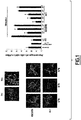

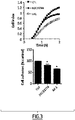
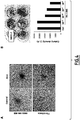
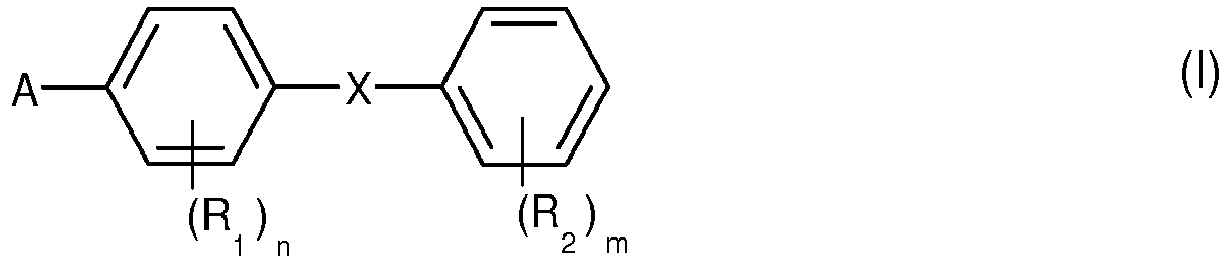


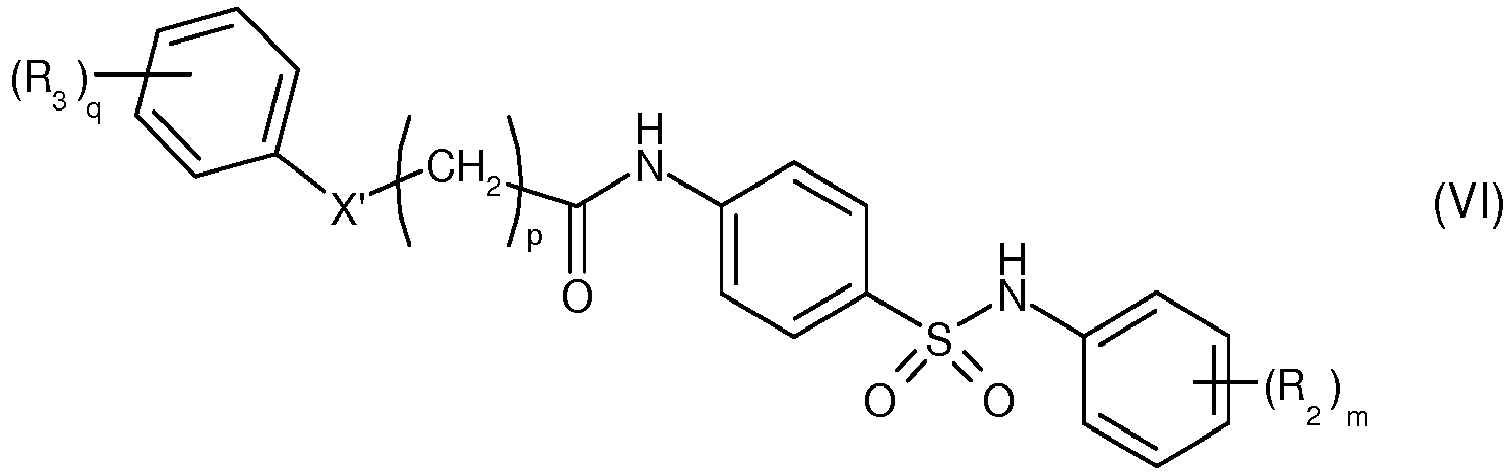


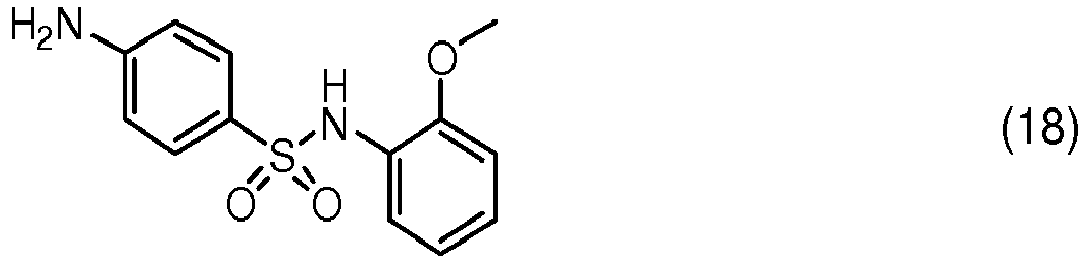


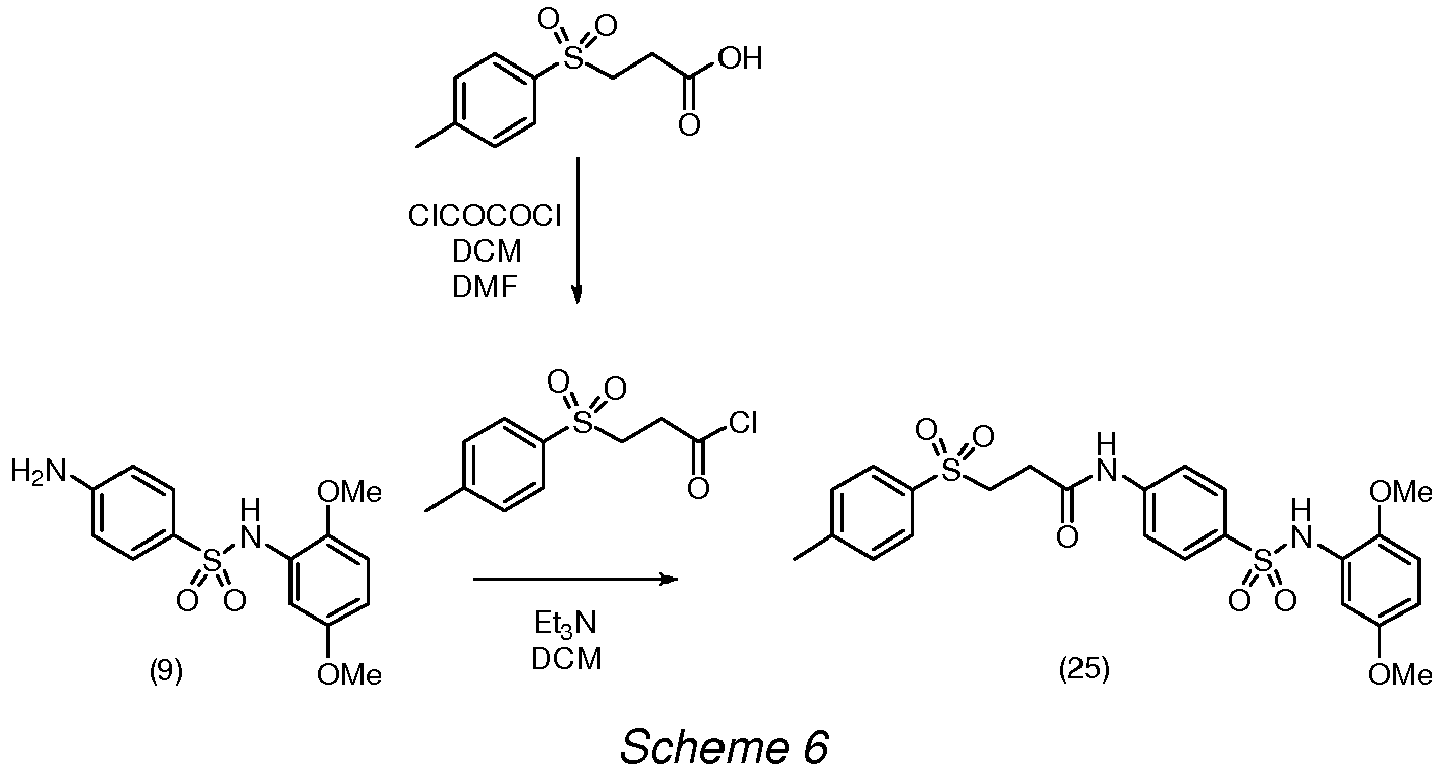


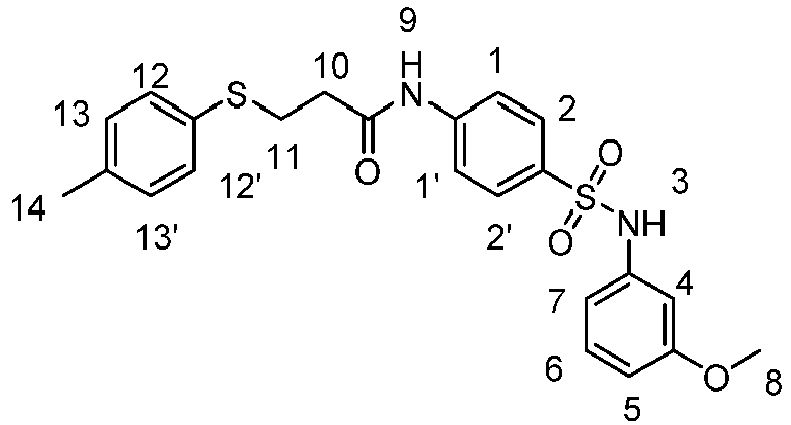


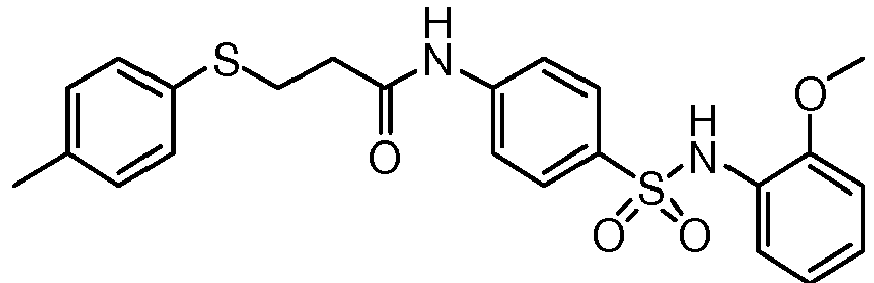


 - A is chosen from the group consisting of:• -NRaRb, Ra and Rb, identical or different, being H or a (C1-C6)alkyl group,• -NO2,• -N(CO-Rc)(CO-R'c), Rc and R'c, identical or different, representing a (C2-C6)alkenyl group, or forming together with the carbon atoms carrying them and the nitrogen atom a heterocycloalkyl group comprising 5 to 10 atoms, and• -N(R'a)-C(=O)-R, and•
 * R'a is H or a (C1-C6)alkyl group, optionally substituted by at least one halogen atom, R'a being preferably H;* R is chosen from the group consisting of:▪ (C1-C6)alkyl groups,▪ (C2-C6)alkenyl groups,▪ (C2-C6)alkynyl groups, optionally substituted by a group -SiReRfRg, Re, Rf, and Rg being, independently from each other, chosen from (C1-C6)alkyl groups, and▪ groups having the following formula (II):
 . p is an integer comprised between 1 and 3,. X' is chosen from the group consisting of: -S-, -O-, -NH-, -NRd-, -CH2-, -SO2-, and -SO-, Rd being H or a (C1-C6)alkyl group;. q is 0 or is an integer comprised between 1 and 5,. the R3 groups, identical or different, are chosen from the group consisting of: (C1-C6)alkyl groups, halogen atoms, (C1-C6)alxoxy groups, (C1-C6)thioalkyl groups, and -NRaRb groups, Ra and Rb, identical or different, being H or a (C1-C6)alkyl group, and preferably -NH2;• -CH2-C(=O)-R, wherein R is as defined above;• -N(R'a)-SO2-R, wherein R and R'a are as defined above, R'a being preferably H;• -N(R'a)-C(=O)-OR, wherein R and R'a are as defined above, R'a being preferably H;• -N(R'a)-C(=O)-N(R'a)-R, wherein R and R'a are as defined above, R'a being preferably H;• -N(R'a)-SO2-N(R'a)-R, wherein R and R'a are as defined above, R'a being preferably H;- X is chosen from the group consisting of:. -SO2-N(R'b)-, R'b being H, a (C1-C6)alkyl group or a -C(=O)-CH=CH2 group,. -N(R"b)-SO2-, R"b being H or a (C1-C6)alkyl group,. -CO-NH-, and. -NH-CO-,. -NH-CO-NH-,. -NH-SO2-NH-. -NH-CO-O-,. -CO-O-,. -HC=CH-,. -C≡C-,.
 .
. - n is 0 or is an integer comprised between 1 and 4,- the R1 groups, identical or different, are chosen from the group consisting of: halogen atoms, (C1-C6)alkyl groups, (C1-C6)alxoxy groups, (C1-C6)thioalkyl groups, -SCF3, -SF5, and -NRaRb groups, Ra and Rb, identical or different, being H or a (C1-C6)alkyl group, and preferably -NH2;- m is 0 or is an integer comprised between 1 and 5,- the R2 groups, identical or different, are chosen from the group consisting of: halogen atoms, (C1-C6)alkyl groups, (C1-C6)alkoxy groups, (C1-C6)thioalkyl groups, -SCF3, -SF5, and -NRaRb groups, Ra and Rb, identical or different, being H or a (C1-C6)alkyl group, and preferably -NH2;for use for the treatment of cancers, in particular metastatic cancers.
 - A' is NO2 or NH2; and- m and R2 are as defined in claim 1.


 - X' and p are as defined in claim 1;- R5 is a (C1-C6)alkyl group; and- the R4 groups, identical or different, are chosen from the (C1-C6)alkyl groups.
 - A is chosen from the group consisting of:• -NRaRb, Ra and Rb, identical or different, being H or a (C1-C6)alkyl group,• -NO2,• -N(CO-Rc)(CO-R'c), Rc and R'c, identical or different, representing a (C2-C6)alkenyl group, or forming together with the carbon atoms carrying them and the nitrogen atom a heterocycloalkyl group comprising 5 to 10 atoms, and• -N(R'a)-C(=O)-R, and•
 * R'a is H or a (C1-C6)alkyl group, optionally substituted by at least one halogen atom, R'a being preferably H;* R is chosen from the group consisting of:▪ (C1-C6)alkyl groups,▪ (C2-C6)alkenyl groups,▪ (C2-C6)alkynyl groups, optionally substituted by a group -SiReRfRg, Re, Rf, and Rg being, independently from each other, chosen from (C1-C6)alkyl groups, and▪ groups having the following formula (II):
 . p is an integer comprised between 1 and 3,. X' is chosen from the group consisting of: -S-, -O-, -NH-, -NRd-, -CH2-, -SO2- and -SO-, Rd being H or a (C1-C6)alkyl group;. q is 0 or is an integer comprised between 1 and 5,. the R3 groups, identical or different, are chosen from the group consisting of: (C1-C6)alkyl groups, halogen atoms, (C1-C6)alkoxy groups, (C1-C6)thioalkyl groups, and -NRaRb groups, Ra and Rb, identical or different, being H or a (C1-C6)alkyl group, and preferably -NH2;• -CH2-C(=O)-R, wherein R is as defined above;• -N(R'a)-SO2-R, wherein R and R'a are as defined above, R'a being preferably H;• -N(R'a)-C(=O)-OR, wherein R and R'a are as defined above, R'a being preferably H;• -N(R'a)-C(=O)-N(R'a)-R, wherein R and R'a are as defined above, R'a being preferably H;• -N(R'a)-SO2-N(R'a)-R, wherein R and R'a are as defined above, R'a being preferably H;- X is chosen from the group consisting of:. -SO2-N(R'b)-, R'b being H, a (C1-C6)alkyl group or a -C(=O)-CH=CH2 group,. -N(R"b)-SO2-, R"b being H or a (C1-C6)alkyl group,. -CO-NH-, and. -NH-CO-,. -NH-CO-NH-,. -NH-SO2-NH-. -NH-CO-O-,. -CO-O-,. -HC=CH-,. -C≡C-,
 - n is 0 or is an integer comprised between 1 and 4,- the R1 groups, identical or different, are chosen from the group consisting of: halogen atoms, (C1-C6)alkyl groups, (C1-C6)alxoxy groups, (C1-C6)thioalkyl groups, -SCF3, -SF5, and -NRaRb groups, Ra and Rb, identical or different, being H or a (C1-C6)alkyl group, and preferably -NH2;- m is 0 or is an integer comprised between 1 and 5,- the R2 groups, identical or different, are chosen from the group consisting of: halogen atoms, (C1-C6)alkyl groups, (C1-C6)alkoxy groups, (C1-C6)thioalkyl groups, -SCF3, -SF5, and -NRaRb groups, Ra and Rb, identical or different, being H or a (C1-C6)alkyl group, and preferably -NH2.
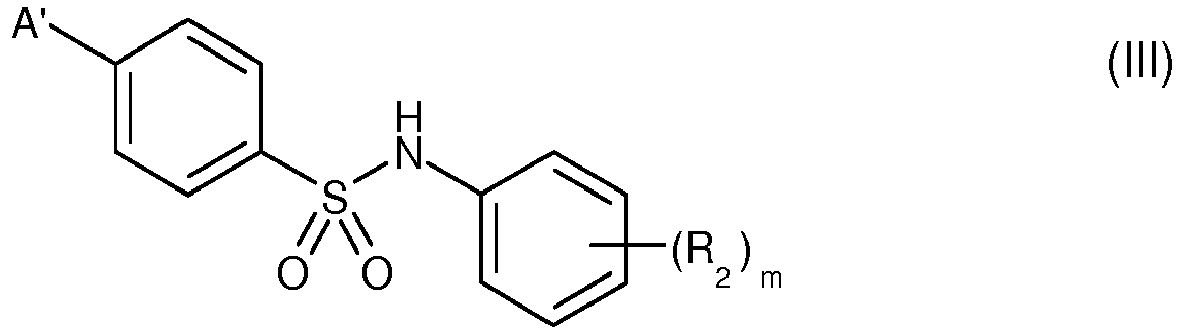 - A' is NO2 or NH2; and- m and R2 are as defined in claim 8.


 - X' and p are as defined in claim 8;- R5 is a (C1-C6)alkyl group; and- the R4 groups, identical or different, are chosen from the (C1-C6)alkyl groups.