EP3410806A1 - Device and method of handling a schedule request - Google Patents
Device and method of handling a schedule request Download PDFInfo
- Publication number
- EP3410806A1 EP3410806A1 EP18174989.6A EP18174989A EP3410806A1 EP 3410806 A1 EP3410806 A1 EP 3410806A1 EP 18174989 A EP18174989 A EP 18174989A EP 3410806 A1 EP3410806 A1 EP 3410806A1
- Authority
- EP
- European Patent Office
- Prior art keywords
- configuration
- communication device
- bsr
- tti
- transmitted
- Prior art date
- Legal status (The legal status is an assumption and is not a legal conclusion. Google has not performed a legal analysis and makes no representation as to the accuracy of the status listed.)
- Granted
Links
Images



Classifications
-
- H—ELECTRICITY
- H04—ELECTRIC COMMUNICATION TECHNIQUE
- H04W—WIRELESS COMMUNICATION NETWORKS
- H04W28/00—Network traffic management; Network resource management
- H04W28/02—Traffic management, e.g. flow control or congestion control
- H04W28/0278—Traffic management, e.g. flow control or congestion control using buffer status reports
-
- H—ELECTRICITY
- H04—ELECTRIC COMMUNICATION TECHNIQUE
- H04W—WIRELESS COMMUNICATION NETWORKS
- H04W72/00—Local resource management
- H04W72/20—Control channels or signalling for resource management
- H04W72/21—Control channels or signalling for resource management in the uplink direction of a wireless link, i.e. towards the network
-
- H—ELECTRICITY
- H04—ELECTRIC COMMUNICATION TECHNIQUE
- H04W—WIRELESS COMMUNICATION NETWORKS
- H04W72/00—Local resource management
- H04W72/12—Wireless traffic scheduling
-
- H—ELECTRICITY
- H04—ELECTRIC COMMUNICATION TECHNIQUE
- H04W—WIRELESS COMMUNICATION NETWORKS
- H04W72/00—Local resource management
- H04W72/12—Wireless traffic scheduling
- H04W72/1263—Mapping of traffic onto schedule, e.g. scheduled allocation or multiplexing of flows
- H04W72/1268—Mapping of traffic onto schedule, e.g. scheduled allocation or multiplexing of flows of uplink data flows
-
- H—ELECTRICITY
- H04—ELECTRIC COMMUNICATION TECHNIQUE
- H04W—WIRELESS COMMUNICATION NETWORKS
- H04W72/00—Local resource management
- H04W72/20—Control channels or signalling for resource management
- H04W72/23—Control channels or signalling for resource management in the downlink direction of a wireless link, i.e. towards a terminal
Definitions
- the present invention relates to a device and a method used in a wireless communication system, and more particularly, to a device and a method of handling a schedule request.
- a user equipment transmits a buffer status report (BSR), and starts a BSR retransmission timer.
- BSR buffer status report
- Transmission of a schedule request (SR) is triggered by the UE, when the BSR retransmission timer expires and the UE does not have uplink (UL) radio resources for transmitting the BSR.
- SR schedule request
- the present invention therefore provides a method and related communication device for handling a schedule request to solve the abovementioned problem.
- a communication device of handling a schedule request comprises a storage device and a processing circuit, coupled to the storage device.
- the storage device stores, and the processing circuit is configured to execute instructions of: receiving a first configuration of a first logical channel (LC), a second configuration of a second LC, a first SR configuration corresponding to the first LC, and a second SR configuration corresponding to the second LC from a base station (BS); transmitting a first buffer status report (BSR); starting a BSR retransmission timer (retxBSR-Timer) in response to the transmission of the first BSR; transmitting a SR to the BS according to the first SR configuration, when the retxBSR-Timer expires, the first LC has first data available for being transmitted, and a first priority of the first LC is higher than a second priority of the second LC.
- the wireless communication system 10 is briefly composed of a network and a plurality of communication devices.
- the network and the communication device may (e.g., simultaneously) communicate with each other via one or multiple cells including a primary cell (PCell) and one or more secondary cells (SCells).
- PCell primary cell
- SCells secondary cells
- the network in Fig. 1 may comprise a narrowband internet of things (NB-IoT) network or an evolved universal terrestrial radio access network (E-UTRAN) including at least one evolved Node-B (eNB).
- the network may comprise a new radio (NR)/next generation (NextGen) network including at least one 5G base station (BS) (or called gNB) or an evolved gNB (egNB) or a sixth generation (6G) BS.
- NR new radio
- NextGen NextGen
- BS base station
- egNB evolved gNB
- 6G sixth generation
- the 5G/6G radio communication technology may employ orthogonal frequency-division multiplexing (OFDM) and/or non-OFDM.
- a BS may also be used to refer any of the eNB, the gNB, the egNB and the 6G BS.
- a communication device may be a user equipment (UE), a NB-IoT UE, a machine type communication (MTC) device, a mobile phone, a laptop, a tablet computer, an electronic book, a portable computer system, a vehicle, or an aircraft.
- the network and the communication device can be seen as a transmitter or a receiver according to direction (i.e., transmission direction), e.g., for a uplink (UL), the communication device is the transmitter and the network is the receiver, and for a downlink (DL), the network is the transmitter and the communication device is the receiver.
- direction i.e., transmission direction
- the communication device 20 may be a communication device or the network shown in Fig. 1 , but is not limited herein.
- the communication device 20 may include at least one processing circuit 200 such as a microprocessor or Application Specific Integrated Circuit (ASIC), at least one storage device 210 and at least one communication interfacing device 220.
- the at least one storage device 210 may be any data storage device that may store program codes 215, accessed and executed by the at least one processing circuit 200.
- Examples of the at least one storage device 210 include but are not limited to a subscriber identity module (SIM), read-only memory (ROM), flash memory, random-access memory (RAM), hard disk, optical data storage device, non-volatile storage device, non-transitory computer-readable medium (e.g., tangible media), etc.
- SIM subscriber identity module
- ROM read-only memory
- RAM random-access memory
- the at least one communication interfacing device 220 includes at least one transceiver and is used to transmit and receive signals (e.g., data, messages and/or packets) according to processing results of the at least one processing circuit 200.
- a UE is used to represent a communication device in Fig. 1 , to simplify the illustration of the embodiments.
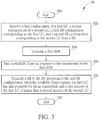
- a process 30 in Fig. 3 is utilized in a UE, and includes the following steps: Step 300: Start. Step 302: Receive a first configuration of a first logical channel (LC), a second configuration of a second LC, a first SR configuration corresponding to the first LC, and a second SR configuration corresponding to the second LC from a BS. Step 304: Transmit a first BSR. Step 306: Start a BSR retransmission timer (retxBSR-Timer) in response to the transmission of the first BSR.
- Step 308 Transmit a SR to the BS according to the first SR configuration, when the retxBSR-Timer expires, the first LC has data available for being transmitted, and a first priority of the first LC is higher than a second priority of the second LC.
- Step 310 End.
- the second LC has data available for being transmitted as well.
- the UE transmits the SR to the BS according to (e.g., by using) a SR configuration corresponding to (e.g., associated to) a LC which has a higher priority (or the highest priority) among LCs which may or may not have data available for being transmitted.
- the UE does not use the second SR configuration to transmit the SR in Step 308.
- the UE transmits the SR to the BS according to the second SR configuration, when the retxBSR-Timer expires, the second LC has data available for being transmitted and the first LC does not have data available for being transmitted. That is, the UE transmits the SR to the BS according to the second SR configuration corresponding to the second LC which has data available for be transmitted, even the first LC has a higher priority than the second LC.
- the UE transmits (e.g., determines to transmit) the SR to the BS according to at least one UL radio resource configured by the (first/second) SR configuration, if the UE uses the (first/second) SR configuration.
- the at least one UL radio resource includes at least one of at least one time resource (e.g., periodicity, OFDM symbol, minislot, slot or subframe), at least one frequency resource (e.g., subcarrier) and at least one sequence (e.g., orthogonal code).
- the (first/second) SR configuration indicates at least one numerology to the UE.
- the at least one UL radio resource and/or the at least one numerology are (e.g., newly) defined in the 3GPP standard.
- the UE determines (e.g., counts) a number of transmissions of the SR according to (e.g., by using) a counter. For example, the counter is incremented by 1 in response to the transmission of the SR.
- the counter includes (or is) a SR_COUNTER.
- the SR_COUNTER is (e.g., newly) defined in the 3GPP standard.
- the UE does not transmits (e.g., determines not to transmit) a second BSR to the BS, when the retxBSR-Timer expires, and both the first LC and the second LC do not have data available for being transmitted.
- the UE does not transmit a SR to the BS.
- the UE transmits (e.g., determines to transmit) a second BSR to the BS and does not transmit a SR to the BS (i.e., the SR is not triggered), when the retxBSR-Timer expires and both the first LC and the second LC do not have data available for being transmitted.
- the transmission of the second BSR is triggered by an expiry of a periodic BSR timer started by the UE.
- the UE may wait for the BS to configure (e.g. , assign) at least one UL radio resource to the UE, to transmit the second BSR.
- the BS may transmit a DL control information (DCI) on a physical DL control channel (PDCCH) to the UE.
- DCI DL control information
- the DCI configures a UL grant and indicates a transmission time interval (TTI).
- TTI transmission time interval
- the UE transmits the second BSR in the TTI by using the UL grant.
- a first TTI is configured by the first SR configuration and a second TTI is configured by the second SR configuration.
- the first TTI and the second TTI may be nearby and after a time instant that the UE transmits the SR to the BS according to the first SR configuration.
- the first TTI may be later than the second TTI in a timeline.
- the UE may transmit the SR in the first TTI.
- the UE transmit the SR in the second TTI according to the second SR configuration, if the first LC and the second LC have the same priority.
- the UE starts a first (or second) SR prohibit timer in response to the transmission of the SR.
- the UE may be prohibited from transmitting any SR according to the first (or second) SR configuration, when the first (or second) SR prohibit timer is running.
- the first (or second) SR configuration may configure a first (or second) timer value of the first (or second) SR prohibit timer.
- the UE receives a UL grant transmitted by the BS in response to the transmission of the SR. In one example, the UE transmits the first (or second) BSR to the BS in at least one UL radio resource configured by the UL grant.
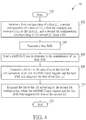
- a process 40 in Fig. 4 is utilized in a UE, and includes the following steps: Step 400: Start. Step 402: Receive a first configuration of a first LC, a second configuration of a second LC, a first SR configuration corresponding to the first LC, and a second SR configuration corresponding to the second LC from a BS. Step 404: Transmit a first BSR. Step 406: Start a retxBSR-Timer in response to the transmission of the first BSR. Step 408: Transmit a SR to the BS according to the first SR configuration, when the retxBSR-Timer expires and the first BSR was triggered by data of the first LC. Step 410: Transmit the SR to the BS according to the second SR configuration, when the retxBSR-Timer expires and the first BSR was triggered by data of the second LC. Step 412: End.
- the UE transmits the SR to the BS according to a SR configuration corresponding to a LC which has data available for being transmitted and triggers the first BSR. Examples described for the process 30 may be applied to the process 40.
- a process 50 in Fig. 5 is utilized in a UE, and includes the following steps: Step 500: Start. Step 502: Receive a first configuration of a first LC, a second configuration of a second LC, a first SR configuration corresponding to the first LC, and a second SR configuration corresponding to the second LC from a BS. Step 504: Transmit a first BSR. Step 506: Start a retxBSR-Timer in response to the transmission of the first BSR. Step 508: Transmit a SR to the BS according to the first SR configuration, when the retxBSR-Timer expires and the first SR configuration provides an earliest transmission opportunity in which the SR is transmitted. Step 510: Transmit the SR to the BS according to the second SR configuration, when the retxBSR-Timer expires and the second SR configuration provides the earliest transmission opportunity in which the SR is transmitted. Step 512: End.
- the UE transmits the SR to the BS according to a SR configuration configuring the earliest (e.g., first) transmission opportunity for transmitting the SR.
- a first TTI is configured by the first SR configuration and a second TTI is configured by the second SR configuration.
- the first and second TTIs may be nearby and after a time instant that the UE determines to transmit the SR to the BS.
- the first TTI may be later than the second TTI in a timeline. According to the process 50, the UE may transmit the SR in the second TTI because the second TTI provides the earliest transmission opportunity.
- Examples described for the process 30 may be applied to the process 50.
- the UE transmits the first BSR in a third TTI, when the UE has a UL grant for the third TTI. That is, the UE transmits the first BSR in at least one UL radio resource configured by the UL grant.
- the BS transmits a DCI configuring the UL grant and indicates the UL grant for the third TTI.
- the UE triggers the transmission of the first BSR, when detecting or determining (or in response to) that the data for the first LC is available for being transmitted or the data for the second LC is available for being transmitted.
- the UE receives the first configuration of the first LC, the second configuration of the second LC, the first SR configuration and the second SR configuration in one or more radio resource control (RRC) messages (e.g., RRCConnectionReconfiguration messages), or in one or more medium access control (MAC) control elements from the BS.
- RRC radio resource control
- the first configuration includes at least one of a first LC identity of the first LC and the first priority of the first LC.
- the second configuration includes at least one of a second LC identity of the second LC and the second priority of the second LC.
- the first configuration is associated to a first radio bearer configuration
- the second configuration is associated to a second radio bearer configuration.
- the first BSR includes a first buffer status of the first LC or of a first logical channel group (LCG) to which the first LC belongs, when the first LC has data available for being transmitted.
- the first BSR includes a second buffer status of the second LC or of a second LCG to which the second LC belongs, when the second LC has data (of the second LC) available for being transmitted.
- the second BSR includes a third buffer status of the first LC or of the first LCG to which the first LC belongs. In one example, the second BSR includes fourth buffer status of the second LC or of the second LCG to which the second LC belongs.
- the present invention provides a method and a communication device for handling a SR.
- the UE knows how to transmit the SR.
- the problem of transmitting the SR in the situation that the BSR transmission timer expires is solved.
Landscapes
- Engineering & Computer Science (AREA)
- Computer Networks & Wireless Communication (AREA)
- Signal Processing (AREA)
- Mobile Radio Communication Systems (AREA)
Abstract
Description
- The present invention relates to a device and a method used in a wireless communication system, and more particularly, to a device and a method of handling a schedule request.
- A user equipment (UE) transmits a buffer status report (BSR), and starts a BSR retransmission timer. Transmission of a schedule request (SR) is triggered by the UE, when the BSR retransmission timer expires and the UE does not have uplink (UL) radio resources for transmitting the BSR.
- The present invention therefore provides a method and related communication device for handling a schedule request to solve the abovementioned problem.
- A communication device of handling a schedule request (SR) comprises a storage device and a processing circuit, coupled to the storage device. The storage device stores, and the processing circuit is configured to execute instructions of: receiving a first configuration of a first logical channel (LC), a second configuration of a second LC, a first SR configuration corresponding to the first LC, and a second SR configuration corresponding to the second LC from a base station (BS); transmitting a first buffer status report (BSR); starting a BSR retransmission timer (retxBSR-Timer) in response to the transmission of the first BSR; transmitting a SR to the BS according to the first SR configuration, when the retxBSR-Timer expires, the first LC has first data available for being transmitted, and a first priority of the first LC is higher than a second priority of the second LC.
These and other objectives of the present invention will no doubt become obvious to those of ordinary skill in the art after reading the following detailed description of the preferred embodiment that is illustrated in the various figures and drawings. -
-
Fig. 1 is a schematic diagram of a wireless communication system according to an example of the present invention. -
Fig. 2 is a schematic diagram of a communication device according to an example of the present invention. -
Fig. 3 is a flowchart of a process according to an example of the present invention. -
Fig. 4 is a flowchart of a process according to an example of the present invention. -
Fig. 5 is a flowchart of a process according to an example of the present invention. - In
Fig.1 , thewireless communication system 10 is briefly composed of a network and a plurality of communication devices. The network and the communication device may (e.g., simultaneously) communicate with each other via one or multiple cells including a primary cell (PCell) and one or more secondary cells (SCells). - Practically, the network in
Fig. 1 may comprise a narrowband internet of things (NB-IoT) network or an evolved universal terrestrial radio access network (E-UTRAN) including at least one evolved Node-B (eNB). The network may comprise a new radio (NR)/next generation (NextGen) network including at least one 5G base station (BS) (or called gNB) or an evolved gNB (egNB) or a sixth generation (6G) BS. The 5G/6G radio communication technology may employ orthogonal frequency-division multiplexing (OFDM) and/or non-OFDM. In general, a BS may also be used to refer any of the eNB, the gNB, the egNB and the 6G BS. - A communication device may be a user equipment (UE), a NB-IoT UE, a machine type communication (MTC) device, a mobile phone, a laptop, a tablet computer, an electronic book, a portable computer system, a vehicle, or an aircraft. In addition, the network and the communication device can be seen as a transmitter or a receiver according to direction (i.e., transmission direction), e.g., for a uplink (UL), the communication device is the transmitter and the network is the receiver, and for a downlink (DL), the network is the transmitter and the communication device is the receiver.
- In
Fig. 2 , thecommunication device 20 may be a communication device or the network shown inFig. 1 , but is not limited herein. Thecommunication device 20 may include at least oneprocessing circuit 200 such as a microprocessor or Application Specific Integrated Circuit (ASIC), at least onestorage device 210 and at least onecommunication interfacing device 220. The at least onestorage device 210 may be any data storage device that may store program codes 215, accessed and executed by the at least oneprocessing circuit 200. Examples of the at least onestorage device 210 include but are not limited to a subscriber identity module (SIM), read-only memory (ROM), flash memory, random-access memory (RAM), hard disk, optical data storage device, non-volatile storage device, non-transitory computer-readable medium (e.g., tangible media), etc. The at least onecommunication interfacing device 220 includes at least one transceiver and is used to transmit and receive signals (e.g., data, messages and/or packets) according to processing results of the at least oneprocessing circuit 200. - In the following examples, a UE is used to represent a communication device in
Fig. 1 , to simplify the illustration of the embodiments. - A
process 30 inFig. 3 is utilized in a UE, and includes the following steps:Step 300: Start. Step 302: Receive a first configuration of a first logical channel (LC), a second configuration of a second LC, a first SR configuration corresponding to the first LC, and a second SR configuration corresponding to the second LC from a BS. Step 304: Transmit a first BSR. Step 306: Start a BSR retransmission timer (retxBSR-Timer) in response to the transmission of the first BSR. Step 308: Transmit a SR to the BS according to the first SR configuration, when the retxBSR-Timer expires, the first LC has data available for being transmitted, and a first priority of the first LC is higher than a second priority of the second LC. Step 310: End. - In one example, the second LC has data available for being transmitted as well. According to the
process 30, the UE transmits the SR to the BS according to (e.g., by using) a SR configuration corresponding to (e.g., associated to) a LC which has a higher priority (or the highest priority) among LCs which may or may not have data available for being transmitted. In one example, the UE does not use the second SR configuration to transmit the SR inStep 308. - In one example, the UE transmits the SR to the BS according to the second SR configuration, when the retxBSR-Timer expires, the second LC has data available for being transmitted and the first LC does not have data available for being transmitted. That is, the UE transmits the SR to the BS according to the second SR configuration corresponding to the second LC which has data available for be transmitted, even the first LC has a higher priority than the second LC.
- In one example, the UE transmits (e.g., determines to transmit) the SR to the BS according to at least one UL radio resource configured by the (first/second) SR configuration, if the UE uses the (first/second) SR configuration. In one example, the at least one UL radio resource includes at least one of at least one time resource (e.g., periodicity, OFDM symbol, minislot, slot or subframe), at least one frequency resource (e.g., subcarrier) and at least one sequence (e.g., orthogonal code). In one example, the (first/second) SR configuration indicates at least one numerology to the UE. In one example, the at least one UL radio resource and/or the at least one numerology are (e.g., newly) defined in the 3GPP standard.
- In one example, the UE determines (e.g., counts) a number of transmissions of the SR according to (e.g., by using) a counter. For example, the counter is incremented by 1 in response to the transmission of the SR. In one example, the counter includes (or is) a SR_COUNTER. In one example, the SR_COUNTER is (e.g., newly) defined in the 3GPP standard.
- In one example, the UE does not transmits (e.g., determines not to transmit) a second BSR to the BS, when the retxBSR-Timer expires, and both the first LC and the second LC do not have data available for being transmitted. Thus, the UE does not transmit a SR to the BS.
- In one example, the UE transmits (e.g., determines to transmit) a second BSR to the BS and does not transmit a SR to the BS (i.e., the SR is not triggered), when the retxBSR-Timer expires and both the first LC and the second LC do not have data available for being transmitted. In one example, the transmission of the second BSR is triggered by an expiry of a periodic BSR timer started by the UE. In both examples, the UE may wait for the BS to configure (e.g. , assign) at least one UL radio resource to the UE, to transmit the second BSR. For example, the BS may transmit a DL control information (DCI) on a physical DL control channel (PDCCH) to the UE. The DCI configures a UL grant and indicates a transmission time interval (TTI). The UE transmits the second BSR in the TTI by using the UL grant.
- In one example, a first TTI is configured by the first SR configuration and a second TTI is configured by the second SR configuration. The first TTI and the second TTI may be nearby and after a time instant that the UE transmits the SR to the BS according to the first SR configuration. The first TTI may be later than the second TTI in a timeline. The UE may transmit the SR in the first TTI.
- In one example, the UE transmit the SR in the second TTI according to the second SR configuration, if the first LC and the second LC have the same priority.
- In one example, the UE starts a first (or second) SR prohibit timer in response to the transmission of the SR. The UE may be prohibited from transmitting any SR according to the first (or second) SR configuration, when the first (or second) SR prohibit timer is running. The first (or second) SR configuration may configure a first (or second) timer value of the first (or second) SR prohibit timer.
- In one example, the UE receives a UL grant transmitted by the BS in response to the transmission of the SR. In one example, the UE transmits the first (or second) BSR to the BS in at least one UL radio resource configured by the UL grant.
- A
process 40 inFig. 4 is utilized in a UE, and includes the following steps:Step 400: Start. Step 402: Receive a first configuration of a first LC, a second configuration of a second LC, a first SR configuration corresponding to the first LC, and a second SR configuration corresponding to the second LC from a BS. Step 404: Transmit a first BSR. Step 406: Start a retxBSR-Timer in response to the transmission of the first BSR. Step 408: Transmit a SR to the BS according to the first SR configuration, when the retxBSR-Timer expires and the first BSR was triggered by data of the first LC. Step 410: Transmit the SR to the BS according to the second SR configuration, when the retxBSR-Timer expires and the first BSR was triggered by data of the second LC. Step 412: End. - According to the
process 40, the UE transmits the SR to the BS according to a SR configuration corresponding to a LC which has data available for being transmitted and triggers the first BSR. Examples described for theprocess 30 may be applied to theprocess 40. - A
process 50 inFig. 5 is utilized in a UE, and includes the following steps:Step 500: Start. Step 502: Receive a first configuration of a first LC, a second configuration of a second LC, a first SR configuration corresponding to the first LC, and a second SR configuration corresponding to the second LC from a BS. Step 504: Transmit a first BSR. Step 506: Start a retxBSR-Timer in response to the transmission of the first BSR. Step 508: Transmit a SR to the BS according to the first SR configuration, when the retxBSR-Timer expires and the first SR configuration provides an earliest transmission opportunity in which the SR is transmitted. Step 510: Transmit the SR to the BS according to the second SR configuration, when the retxBSR-Timer expires and the second SR configuration provides the earliest transmission opportunity in which the SR is transmitted. Step 512: End. - According to the
process 50, the UE transmits the SR to the BS according to a SR configuration configuring the earliest (e.g., first) transmission opportunity for transmitting the SR. - In one example, a first TTI is configured by the first SR configuration and a second TTI is configured by the second SR configuration. The first and second TTIs may be nearby and after a time instant that the UE determines to transmit the SR to the BS. The first TTI may be later than the second TTI in a timeline. According to the
process 50, the UE may transmit the SR in the second TTI because the second TTI provides the earliest transmission opportunity. - Examples described for the
process 30 may be applied to theprocess 50. - The following examples can be applied to the processes 30-50.
- In one example, the UE transmits the first BSR in a third TTI, when the UE has a UL grant for the third TTI. That is, the UE transmits the first BSR in at least one UL radio resource configured by the UL grant. The BS transmits a DCI configuring the UL grant and indicates the UL grant for the third TTI.
- In one example, the UE triggers the transmission of the first BSR, when detecting or determining (or in response to) that the data for the first LC is available for being transmitted or the data for the second LC is available for being transmitted.
- In one example, the UE receives the first configuration of the first LC, the second configuration of the second LC, the first SR configuration and the second SR configuration in one or more radio resource control (RRC) messages (e.g., RRCConnectionReconfiguration messages), or in one or more medium access control (MAC) control elements from the BS. In one example, the first configuration includes at least one of a first LC identity of the first LC and the first priority of the first LC. In one example, the second configuration includes at least one of a second LC identity of the second LC and the second priority of the second LC. In one example, the first configuration is associated to a first radio bearer configuration, and the second configuration is associated to a second radio bearer configuration.
- In one example, the first BSR includes a first buffer status of the first LC or of a first logical channel group (LCG) to which the first LC belongs, when the first LC has data available for being transmitted. In one example, the first BSR includes a second buffer status of the second LC or of a second LCG to which the second LC belongs, when the second LC has data (of the second LC) available for being transmitted.
- In one example, the second BSR includes a third buffer status of the first LC or of the first LCG to which the first LC belongs. In one example, the second BSR includes fourth buffer status of the second LC or of the second LCG to which the second LC belongs.
- It should be noted that although the above examples are illustrated to clarify the related operations of corresponding processes. The examples can be combined and/or modified arbitrarily according to system requirements and/or design considerations.
- Those skilled in the art should readily make combinations, modifications and/or alterations on the abovementioned description and examples. For example, the skilled person easily makes new embodiments of the network based on the embodiments and examples of the UE or the network. The abovementioned description, steps and/or processes including suggested steps can be realized by means that could be hardware, software, firmware (known as a combination of a hardware device and computer instructions and data that reside as read-only software on the hardware device), an electronic system, or combination thereof. An example of the means may be the
communication device 20. Any of the above processes and examples above may be compiled into theprogram codes 214. - To sum up, the present invention provides a method and a communication device for handling a SR. Thus, the UE knows how to transmit the SR. As a result, the problem of transmitting the SR in the situation that the BSR transmission timer expires is solved.
- Those skilled in the art will readily observe that numerous modifications and alterations of the device and method may be made while retaining the teachings of the invention. Accordingly, the above disclosure should be construed as limited only by the metes and bounds of the appended claims.
Claims (9)
- A communication device of handling a schedule request (SR), comprising:a storage device; anda processing circuit, coupled to the storage device, wherein the storage device stores, and the processing circuit is configured to execute instructions of:receiving a first configuration of a first logical channel (LC), a second configuration of a second LC, a first SR configuration corresponding to the first LC, and a second SR configuration corresponding to the second LC from a base station (BS);transmitting a first buffer status report (BSR);starting a BSR retransmission timer (RetxBSR-Timer) in response to the transmission of the first BSR; andtransmitting a SR to the BS according to the first SR configuration, when the RetxBSR-Timer expires, the first LC has data available for being transmitted, and a first priority of the first LC is higher than a second priority of the second LC.
- The communication device of claim 1, wherein the instructions further comprise:
transmitting the SR to the BS according to at least one uplink (UL) radio resource configured by the first SR configuration or the second SR configuration, if the communication device uses the first SR configuration or the second SR configuration. - The communication device of claim 1, wherein the instructions further comprise:
transmitting the SR to the BS according to the second SR configuration, when the RetxBSR-Timer expires, the second LC has data available for being transmitted and the first LC does not have the data available for being transmitted. - The communication device of claim 1, wherein the instructions further comprise:
determining a number of transmissions of the SR according to a counter, wherein the counter comprises a SR_COUNTER. - The communication device of claim 1, wherein the instructions further comprise:
not transmitting the SR to the BS, when the retxBSR-Timer expires, the first LC does not have the data available for being transmitted and the second LC does not have the data available for being transmitted. - The communication device of claim 1, wherein a first transmission time interval (TTI) is configured by the first SR configuration and a second TTI is configured by the second SR configuration, and the first TTI and the second TTI are after a time instant that the communication device determines to transmit the SR to the BS according to the first SR configuration.
- The communication device of claim 6, wherein the first TTI is later than the second TTI, and the instructions further comprise:
transmitting the SR to the BS in the first TTI according to the first SR configuration. - The communication device of claim 1, wherein the instructions further comprise:
starting a first SR prohibit timer in response to the transmission of the SR. - The communication device of claim 1, wherein the instructions further comprise:receiving a UL grant transmitted by the BS in response to the transmission of the SR; andtransmitting the first BSR to the BS in at least one UL radio resource configured by the UL grant.
Applications Claiming Priority (1)
| Application Number | Priority Date | Filing Date | Title |
|---|---|---|---|
| US201762512714P | 2017-05-30 | 2017-05-30 |
Publications (2)
| Publication Number | Publication Date |
|---|---|
| EP3410806A1 true EP3410806A1 (en) | 2018-12-05 |
| EP3410806B1 EP3410806B1 (en) | 2020-12-09 |
Family
ID=62495583
Family Applications (1)
| Application Number | Title | Priority Date | Filing Date |
|---|---|---|---|
| EP18174989.6A Active EP3410806B1 (en) | 2017-05-30 | 2018-05-30 | Device for handling a schedule request |
Country Status (4)
| Country | Link |
|---|---|
| US (1) | US10485017B2 (en) |
| EP (1) | EP3410806B1 (en) |
| CN (1) | CN108990103B (en) |
| TW (1) | TWI693844B (en) |
Cited By (4)
| Publication number | Priority date | Publication date | Assignee | Title |
|---|---|---|---|---|
| WO2020154371A1 (en) * | 2019-01-22 | 2020-07-30 | Qualcomm Incorporated | Techniques for configuring scheduling request for sidelink in wireless communications |
| CN112332953A (en) * | 2020-11-18 | 2021-02-05 | 紫光展锐(重庆)科技有限公司 | Data sending method and related device |
| KR20210091279A (en) * | 2018-12-06 | 2021-07-21 | 다탕 모바일 커뮤니케이션즈 이큅먼트 코포레이션 리미티드 | Transmission method and terminal |
| CN113661762A (en) * | 2019-03-28 | 2021-11-16 | 三星电子株式会社 | Method and apparatus for performing scheduling request |
Families Citing this family (8)
| Publication number | Priority date | Publication date | Assignee | Title |
|---|---|---|---|---|
| US10122500B2 (en) * | 2015-08-26 | 2018-11-06 | Apple Inc. | Efficient sparse network resource usage and connection release |
| US11019652B2 (en) * | 2017-05-04 | 2021-05-25 | Ofinno, Llc | Parallel scheduling request process management |
| US10485017B2 (en) * | 2017-05-30 | 2019-11-19 | Htc Corporation | Device and method of handling a schedule request |
| ES2784001T3 (en) * | 2017-06-08 | 2020-09-21 | Asustek Comp Inc | Multiple SR (planning request) configuration procedure and apparatus in a wireless communication system |
| WO2018230993A1 (en) * | 2017-06-15 | 2018-12-20 | Samsung Electronics Co., Ltd. | Method and apparatus for performing scheduling request to support plurality of services efficiently |
| CN113286325B (en) * | 2020-02-19 | 2022-04-19 | 维沃移动通信有限公司 | SL BSR processing method, terminal and network equipment |
| CN113497688A (en) * | 2020-04-02 | 2021-10-12 | 维沃移动通信有限公司 | Configuration method of scheduling request, terminal and network equipment |
| WO2022150959A1 (en) * | 2021-01-12 | 2022-07-21 | Nokia Shanghai Bell Co., Ltd. | Methods, apparatuses, and computer readable media for buffer status reports |
Citations (2)
| Publication number | Priority date | Publication date | Assignee | Title |
|---|---|---|---|---|
| EP2182770A2 (en) * | 2008-11-04 | 2010-05-05 | HTC Corporation | Method and apparatus for improving uplink transmission in a wireless communication system |
| US9307553B2 (en) * | 2009-05-05 | 2016-04-05 | Telefonaktiebolaget L M Ericsson (Publ) | Method and apparatus in a wireless communications system |
Family Cites Families (12)
| Publication number | Priority date | Publication date | Assignee | Title |
|---|---|---|---|---|
| US9167594B2 (en) * | 2008-09-22 | 2015-10-20 | Htc Corporation | Method and related device of a trigger mechanism of buffer status report and scheduling request in a wireless communication system |
| EP2661138A1 (en) | 2012-05-04 | 2013-11-06 | Panasonic Corporation | Threshold-based and power-efficient scheduling request procedure |
| US9420511B2 (en) * | 2012-11-01 | 2016-08-16 | Intel Corporation | Signaling QoS requirements and UE power preference in LTE-A networks |
| KR20140107088A (en) * | 2013-02-27 | 2014-09-04 | 주식회사 케이티 | Methods and apparatuses for transmitting buffer status report of a user equipment in small cell deployments |
| WO2015070444A1 (en) * | 2013-11-15 | 2015-05-21 | 华为技术有限公司 | Communication method, user equipment and base station |
| US20150181618A1 (en) * | 2013-12-23 | 2015-06-25 | Qualcomm Incorporated | Early abort of scheduling information (si) retransmission |
| ES3024563T3 (en) * | 2017-04-26 | 2025-06-04 | Asustek Comp Inc | Methods and apparatus for requesting resource for control element transmission in a wireless communication system |
| US10708929B2 (en) * | 2017-05-05 | 2020-07-07 | Htc Corporation | Device and method of handling scheduling request for logical channel |
| CN110495243B (en) * | 2017-05-05 | 2023-10-27 | 摩托罗拉移动有限责任公司 | Send SR before completing RACH |
| US10485017B2 (en) * | 2017-05-30 | 2019-11-19 | Htc Corporation | Device and method of handling a schedule request |
| US10750526B2 (en) * | 2017-06-15 | 2020-08-18 | Htc Corporation | Device and method of handling a scheduling request |
| EP3487251B1 (en) * | 2017-11-16 | 2021-04-07 | HTC Corporation | Device and method of handling scheduling requests for logical channels |
-
2018
- 2018-05-29 US US15/990,844 patent/US10485017B2/en active Active
- 2018-05-30 EP EP18174989.6A patent/EP3410806B1/en active Active
- 2018-05-30 TW TW107118460A patent/TWI693844B/en active
- 2018-05-30 CN CN201810542146.7A patent/CN108990103B/en active Active
Patent Citations (2)
| Publication number | Priority date | Publication date | Assignee | Title |
|---|---|---|---|---|
| EP2182770A2 (en) * | 2008-11-04 | 2010-05-05 | HTC Corporation | Method and apparatus for improving uplink transmission in a wireless communication system |
| US9307553B2 (en) * | 2009-05-05 | 2016-04-05 | Telefonaktiebolaget L M Ericsson (Publ) | Method and apparatus in a wireless communications system |
Non-Patent Citations (1)
| Title |
|---|
| INTEL CORPORATION: "Enhancements of SR/BSR in NR", vol. RAN WG2, no. Spokane, US; 20170303 - 20170307, 3 April 2017 (2017-04-03), XP051245278, Retrieved from the Internet <URL:http://www.3gpp.org/ftp/Meetings_3GPP_SYNC/RAN2/Docs/> [retrieved on 20170403] * |
Cited By (4)
| Publication number | Priority date | Publication date | Assignee | Title |
|---|---|---|---|---|
| KR20210091279A (en) * | 2018-12-06 | 2021-07-21 | 다탕 모바일 커뮤니케이션즈 이큅먼트 코포레이션 리미티드 | Transmission method and terminal |
| WO2020154371A1 (en) * | 2019-01-22 | 2020-07-30 | Qualcomm Incorporated | Techniques for configuring scheduling request for sidelink in wireless communications |
| CN113661762A (en) * | 2019-03-28 | 2021-11-16 | 三星电子株式会社 | Method and apparatus for performing scheduling request |
| CN112332953A (en) * | 2020-11-18 | 2021-02-05 | 紫光展锐(重庆)科技有限公司 | Data sending method and related device |
Also Published As
| Publication number | Publication date |
|---|---|
| US10485017B2 (en) | 2019-11-19 |
| CN108990103B (en) | 2021-11-09 |
| TW201902254A (en) | 2019-01-01 |
| EP3410806B1 (en) | 2020-12-09 |
| CN108990103A (en) | 2018-12-11 |
| US20180352567A1 (en) | 2018-12-06 |
| TWI693844B (en) | 2020-05-11 |
Similar Documents
| Publication | Publication Date | Title |
|---|---|---|
| US10485017B2 (en) | Device and method of handling a schedule request | |
| EP3273633B1 (en) | Device and method of handling uplink transmission | |
| US10925045B2 (en) | Device and method handling transmission in unlicensed band | |
| US12389452B2 (en) | Method and apparatus for sharing channel occupancy time on unlicensed spectrum | |
| US20190387543A1 (en) | Multiple starting and ending positions for scheduled downlink transmission on unlicensed spectrum | |
| US10855399B2 (en) | Device and method of handling dual connectivity | |
| US10218474B2 (en) | Device and method of handling scheduling request transmission | |
| US10708003B2 (en) | Device and method of handling hybrid automatic repeat request timing | |
| US10201030B2 (en) | Device and method of handling dual connectivity | |
| US10750526B2 (en) | Device and method of handling a scheduling request | |
| US10887788B2 (en) | Device and method of handling scheduling requests for logical channels | |
| US10225837B2 (en) | Device and method of handling HARQ operation for unlicensed band | |
| US10757685B2 (en) | Device and method of performing data transmission in bandwidth parts | |
| US10708929B2 (en) | Device and method of handling scheduling request for logical channel |
Legal Events
| Date | Code | Title | Description |
|---|---|---|---|
| PUAI | Public reference made under article 153(3) epc to a published international application that has entered the european phase |
Free format text: ORIGINAL CODE: 0009012 |
|
| STAA | Information on the status of an ep patent application or granted ep patent |
Free format text: STATUS: EXAMINATION IS IN PROGRESS |
|
| 17P | Request for examination filed |
Effective date: 20180530 |
|
| AK | Designated contracting states |
Kind code of ref document: A1 Designated state(s): AL AT BE BG CH CY CZ DE DK EE ES FI FR GB GR HR HU IE IS IT LI LT LU LV MC MK MT NL NO PL PT RO RS SE SI SK SM TR |
|
| AX | Request for extension of the european patent |
Extension state: BA ME |
|
| RBV | Designated contracting states (corrected) |
Designated state(s): AL AT BE BG CH CY CZ DE DK EE ES FI FR GB GR HR HU IE IS IT LI LT LU LV MC MK MT NL NO PL PT RO RS SE SI SK SM TR |
|
| GRAP | Despatch of communication of intention to grant a patent |
Free format text: ORIGINAL CODE: EPIDOSNIGR1 |
|
| STAA | Information on the status of an ep patent application or granted ep patent |
Free format text: STATUS: GRANT OF PATENT IS INTENDED |
|
| INTG | Intention to grant announced |
Effective date: 20200706 |
|
| GRAS | Grant fee paid |
Free format text: ORIGINAL CODE: EPIDOSNIGR3 |
|
| GRAA | (expected) grant |
Free format text: ORIGINAL CODE: 0009210 |
|
| STAA | Information on the status of an ep patent application or granted ep patent |
Free format text: STATUS: THE PATENT HAS BEEN GRANTED |
|
| AK | Designated contracting states |
Kind code of ref document: B1 Designated state(s): AL AT BE BG CH CY CZ DE DK EE ES FI FR GB GR HR HU IE IS IT LI LT LU LV MC MK MT NL NO PL PT RO RS SE SI SK SM TR |
|
| REG | Reference to a national code |
Ref country code: GB Ref legal event code: FG4D |
|
| REG | Reference to a national code |
Ref country code: AT Ref legal event code: REF Ref document number: 1344653 Country of ref document: AT Kind code of ref document: T Effective date: 20201215 Ref country code: CH Ref legal event code: EP |
|
| REG | Reference to a national code |
Ref country code: DE Ref legal event code: R096 Ref document number: 602018010544 Country of ref document: DE |
|
| REG | Reference to a national code |
Ref country code: IE Ref legal event code: FG4D |
|
| PG25 | Lapsed in a contracting state [announced via postgrant information from national office to epo] |
Ref country code: GR Free format text: LAPSE BECAUSE OF FAILURE TO SUBMIT A TRANSLATION OF THE DESCRIPTION OR TO PAY THE FEE WITHIN THE PRESCRIBED TIME-LIMIT Effective date: 20210310 Ref country code: NO Free format text: LAPSE BECAUSE OF FAILURE TO SUBMIT A TRANSLATION OF THE DESCRIPTION OR TO PAY THE FEE WITHIN THE PRESCRIBED TIME-LIMIT Effective date: 20210309 Ref country code: RS Free format text: LAPSE BECAUSE OF FAILURE TO SUBMIT A TRANSLATION OF THE DESCRIPTION OR TO PAY THE FEE WITHIN THE PRESCRIBED TIME-LIMIT Effective date: 20201209 Ref country code: FI Free format text: LAPSE BECAUSE OF FAILURE TO SUBMIT A TRANSLATION OF THE DESCRIPTION OR TO PAY THE FEE WITHIN THE PRESCRIBED TIME-LIMIT Effective date: 20201209 |
|
| REG | Reference to a national code |
Ref country code: AT Ref legal event code: MK05 Ref document number: 1344653 Country of ref document: AT Kind code of ref document: T Effective date: 20201209 |
|
| PG25 | Lapsed in a contracting state [announced via postgrant information from national office to epo] |
Ref country code: BG Free format text: LAPSE BECAUSE OF FAILURE TO SUBMIT A TRANSLATION OF THE DESCRIPTION OR TO PAY THE FEE WITHIN THE PRESCRIBED TIME-LIMIT Effective date: 20210309 Ref country code: LV Free format text: LAPSE BECAUSE OF FAILURE TO SUBMIT A TRANSLATION OF THE DESCRIPTION OR TO PAY THE FEE WITHIN THE PRESCRIBED TIME-LIMIT Effective date: 20201209 Ref country code: SE Free format text: LAPSE BECAUSE OF FAILURE TO SUBMIT A TRANSLATION OF THE DESCRIPTION OR TO PAY THE FEE WITHIN THE PRESCRIBED TIME-LIMIT Effective date: 20201209 |
|
| REG | Reference to a national code |
Ref country code: NL Ref legal event code: MP Effective date: 20201209 |
|
| PG25 | Lapsed in a contracting state [announced via postgrant information from national office to epo] |
Ref country code: NL Free format text: LAPSE BECAUSE OF FAILURE TO SUBMIT A TRANSLATION OF THE DESCRIPTION OR TO PAY THE FEE WITHIN THE PRESCRIBED TIME-LIMIT Effective date: 20201209 Ref country code: HR Free format text: LAPSE BECAUSE OF FAILURE TO SUBMIT A TRANSLATION OF THE DESCRIPTION OR TO PAY THE FEE WITHIN THE PRESCRIBED TIME-LIMIT Effective date: 20201209 |
|
| REG | Reference to a national code |
Ref country code: LT Ref legal event code: MG9D |
|
| PG25 | Lapsed in a contracting state [announced via postgrant information from national office to epo] |
Ref country code: SM Free format text: LAPSE BECAUSE OF FAILURE TO SUBMIT A TRANSLATION OF THE DESCRIPTION OR TO PAY THE FEE WITHIN THE PRESCRIBED TIME-LIMIT Effective date: 20201209 Ref country code: EE Free format text: LAPSE BECAUSE OF FAILURE TO SUBMIT A TRANSLATION OF THE DESCRIPTION OR TO PAY THE FEE WITHIN THE PRESCRIBED TIME-LIMIT Effective date: 20201209 Ref country code: CZ Free format text: LAPSE BECAUSE OF FAILURE TO SUBMIT A TRANSLATION OF THE DESCRIPTION OR TO PAY THE FEE WITHIN THE PRESCRIBED TIME-LIMIT Effective date: 20201209 Ref country code: LT Free format text: LAPSE BECAUSE OF FAILURE TO SUBMIT A TRANSLATION OF THE DESCRIPTION OR TO PAY THE FEE WITHIN THE PRESCRIBED TIME-LIMIT Effective date: 20201209 Ref country code: SK Free format text: LAPSE BECAUSE OF FAILURE TO SUBMIT A TRANSLATION OF THE DESCRIPTION OR TO PAY THE FEE WITHIN THE PRESCRIBED TIME-LIMIT Effective date: 20201209 Ref country code: PT Free format text: LAPSE BECAUSE OF FAILURE TO SUBMIT A TRANSLATION OF THE DESCRIPTION OR TO PAY THE FEE WITHIN THE PRESCRIBED TIME-LIMIT Effective date: 20210409 Ref country code: RO Free format text: LAPSE BECAUSE OF FAILURE TO SUBMIT A TRANSLATION OF THE DESCRIPTION OR TO PAY THE FEE WITHIN THE PRESCRIBED TIME-LIMIT Effective date: 20201209 |
|
| PG25 | Lapsed in a contracting state [announced via postgrant information from national office to epo] |
Ref country code: AT Free format text: LAPSE BECAUSE OF FAILURE TO SUBMIT A TRANSLATION OF THE DESCRIPTION OR TO PAY THE FEE WITHIN THE PRESCRIBED TIME-LIMIT Effective date: 20201209 Ref country code: PL Free format text: LAPSE BECAUSE OF FAILURE TO SUBMIT A TRANSLATION OF THE DESCRIPTION OR TO PAY THE FEE WITHIN THE PRESCRIBED TIME-LIMIT Effective date: 20201209 |
|
| REG | Reference to a national code |
Ref country code: DE Ref legal event code: R097 Ref document number: 602018010544 Country of ref document: DE |
|
| PG25 | Lapsed in a contracting state [announced via postgrant information from national office to epo] |
Ref country code: IS Free format text: LAPSE BECAUSE OF FAILURE TO SUBMIT A TRANSLATION OF THE DESCRIPTION OR TO PAY THE FEE WITHIN THE PRESCRIBED TIME-LIMIT Effective date: 20210409 |
|
| PLBE | No opposition filed within time limit |
Free format text: ORIGINAL CODE: 0009261 |
|
| STAA | Information on the status of an ep patent application or granted ep patent |
Free format text: STATUS: NO OPPOSITION FILED WITHIN TIME LIMIT |
|
| PG25 | Lapsed in a contracting state [announced via postgrant information from national office to epo] |
Ref country code: IT Free format text: LAPSE BECAUSE OF FAILURE TO SUBMIT A TRANSLATION OF THE DESCRIPTION OR TO PAY THE FEE WITHIN THE PRESCRIBED TIME-LIMIT Effective date: 20201209 Ref country code: AL Free format text: LAPSE BECAUSE OF FAILURE TO SUBMIT A TRANSLATION OF THE DESCRIPTION OR TO PAY THE FEE WITHIN THE PRESCRIBED TIME-LIMIT Effective date: 20201209 |
|
| 26N | No opposition filed |
Effective date: 20210910 |
|
| PG25 | Lapsed in a contracting state [announced via postgrant information from national office to epo] |
Ref country code: DK Free format text: LAPSE BECAUSE OF FAILURE TO SUBMIT A TRANSLATION OF THE DESCRIPTION OR TO PAY THE FEE WITHIN THE PRESCRIBED TIME-LIMIT Effective date: 20201209 Ref country code: SI Free format text: LAPSE BECAUSE OF FAILURE TO SUBMIT A TRANSLATION OF THE DESCRIPTION OR TO PAY THE FEE WITHIN THE PRESCRIBED TIME-LIMIT Effective date: 20201209 |
|
| REG | Reference to a national code |
Ref country code: CH Ref legal event code: PL |
|
| PG25 | Lapsed in a contracting state [announced via postgrant information from national office to epo] |
Ref country code: CH Free format text: LAPSE BECAUSE OF NON-PAYMENT OF DUE FEES Effective date: 20210531 Ref country code: MC Free format text: LAPSE BECAUSE OF FAILURE TO SUBMIT A TRANSLATION OF THE DESCRIPTION OR TO PAY THE FEE WITHIN THE PRESCRIBED TIME-LIMIT Effective date: 20201209 Ref country code: LI Free format text: LAPSE BECAUSE OF NON-PAYMENT OF DUE FEES Effective date: 20210531 Ref country code: LU Free format text: LAPSE BECAUSE OF NON-PAYMENT OF DUE FEES Effective date: 20210530 Ref country code: ES Free format text: LAPSE BECAUSE OF FAILURE TO SUBMIT A TRANSLATION OF THE DESCRIPTION OR TO PAY THE FEE WITHIN THE PRESCRIBED TIME-LIMIT Effective date: 20201209 |
|
| REG | Reference to a national code |
Ref country code: BE Ref legal event code: MM Effective date: 20210531 |
|
| PG25 | Lapsed in a contracting state [announced via postgrant information from national office to epo] |
Ref country code: IE Free format text: LAPSE BECAUSE OF NON-PAYMENT OF DUE FEES Effective date: 20210530 |
|
| PG25 | Lapsed in a contracting state [announced via postgrant information from national office to epo] |
Ref country code: IS Free format text: LAPSE BECAUSE OF FAILURE TO SUBMIT A TRANSLATION OF THE DESCRIPTION OR TO PAY THE FEE WITHIN THE PRESCRIBED TIME-LIMIT Effective date: 20210409 |
|
| PG25 | Lapsed in a contracting state [announced via postgrant information from national office to epo] |
Ref country code: BE Free format text: LAPSE BECAUSE OF NON-PAYMENT OF DUE FEES Effective date: 20210531 |
|
| PG25 | Lapsed in a contracting state [announced via postgrant information from national office to epo] |
Ref country code: CY Free format text: LAPSE BECAUSE OF FAILURE TO SUBMIT A TRANSLATION OF THE DESCRIPTION OR TO PAY THE FEE WITHIN THE PRESCRIBED TIME-LIMIT Effective date: 20201209 |
|
| P01 | Opt-out of the competence of the unified patent court (upc) registered |
Effective date: 20230602 |
|
| PG25 | Lapsed in a contracting state [announced via postgrant information from national office to epo] |
Ref country code: HU Free format text: LAPSE BECAUSE OF FAILURE TO SUBMIT A TRANSLATION OF THE DESCRIPTION OR TO PAY THE FEE WITHIN THE PRESCRIBED TIME-LIMIT; INVALID AB INITIO Effective date: 20180530 |
|
| PG25 | Lapsed in a contracting state [announced via postgrant information from national office to epo] |
Ref country code: MK Free format text: LAPSE BECAUSE OF FAILURE TO SUBMIT A TRANSLATION OF THE DESCRIPTION OR TO PAY THE FEE WITHIN THE PRESCRIBED TIME-LIMIT Effective date: 20201209 |
|
| PG25 | Lapsed in a contracting state [announced via postgrant information from national office to epo] |
Ref country code: MT Free format text: LAPSE BECAUSE OF FAILURE TO SUBMIT A TRANSLATION OF THE DESCRIPTION OR TO PAY THE FEE WITHIN THE PRESCRIBED TIME-LIMIT Effective date: 20201209 |
|
| PGFP | Annual fee paid to national office [announced via postgrant information from national office to epo] |
Ref country code: DE Payment date: 20250402 Year of fee payment: 8 |
|
| PGFP | Annual fee paid to national office [announced via postgrant information from national office to epo] |
Ref country code: FR Payment date: 20250401 Year of fee payment: 8 |
|
| PG25 | Lapsed in a contracting state [announced via postgrant information from national office to epo] |
Ref country code: TR Free format text: LAPSE BECAUSE OF FAILURE TO SUBMIT A TRANSLATION OF THE DESCRIPTION OR TO PAY THE FEE WITHIN THE PRESCRIBED TIME-LIMIT Effective date: 20201209 |
|
| PGFP | Annual fee paid to national office [announced via postgrant information from national office to epo] |
Ref country code: GB Payment date: 20260312 Year of fee payment: 9 |