EP3410776A1 - Communication method, terminal device and network device - Google Patents
Communication method, terminal device and network device Download PDFInfo
- Publication number
- EP3410776A1 EP3410776A1 EP16901262.2A EP16901262A EP3410776A1 EP 3410776 A1 EP3410776 A1 EP 3410776A1 EP 16901262 A EP16901262 A EP 16901262A EP 3410776 A1 EP3410776 A1 EP 3410776A1
- Authority
- EP
- European Patent Office
- Prior art keywords
- communication
- service
- terminal device
- resource
- network device
- Prior art date
- Legal status (The legal status is an assumption and is not a legal conclusion. Google has not performed a legal analysis and makes no representation as to the accuracy of the status listed.)
- Withdrawn
Links
Images



Classifications
-
- H—ELECTRICITY
- H04—ELECTRIC COMMUNICATION TECHNIQUE
- H04B—TRANSMISSION
- H04B17/00—Monitoring; Testing
- H04B17/30—Monitoring; Testing of propagation channels
- H04B17/309—Measuring or estimating channel quality parameters
- H04B17/364—Delay profiles
-
- H—ELECTRICITY
- H04—ELECTRIC COMMUNICATION TECHNIQUE
- H04W—WIRELESS COMMUNICATION NETWORKS
- H04W28/00—Network traffic management; Network resource management
- H04W28/02—Traffic management, e.g. flow control or congestion control
- H04W28/0268—Traffic management, e.g. flow control or congestion control using specific QoS parameters for wireless networks, e.g. QoS class identifier [QCI] or guaranteed bit rate [GBR]
-
- H—ELECTRICITY
- H04—ELECTRIC COMMUNICATION TECHNIQUE
- H04W—WIRELESS COMMUNICATION NETWORKS
- H04W36/00—Hand-off or reselection arrangements
- H04W36/0005—Control or signalling for completing the hand-off
- H04W36/0055—Transmission or use of information for re-establishing the radio link
- H04W36/0079—Transmission or use of information for re-establishing the radio link in case of hand-off failure or rejection
-
- H—ELECTRICITY
- H04—ELECTRIC COMMUNICATION TECHNIQUE
- H04W—WIRELESS COMMUNICATION NETWORKS
- H04W36/00—Hand-off or reselection arrangements
- H04W36/03—Reselecting a link using a direct mode connection
- H04W36/033—Reselecting a link using a direct mode connection in pre-organised networks
-
- H—ELECTRICITY
- H04—ELECTRIC COMMUNICATION TECHNIQUE
- H04W—WIRELESS COMMUNICATION NETWORKS
- H04W36/00—Hand-off or reselection arrangements
- H04W36/24—Reselection being triggered by specific parameters
- H04W36/30—Reselection being triggered by specific parameters by measured or perceived connection quality data
- H04W36/305—Handover due to radio link failure
-
- H—ELECTRICITY
- H04—ELECTRIC COMMUNICATION TECHNIQUE
- H04W—WIRELESS COMMUNICATION NETWORKS
- H04W4/00—Services specially adapted for wireless communication networks; Facilities therefor
- H04W4/70—Services for machine-to-machine communication [M2M] or machine type communication [MTC]
-
- H—ELECTRICITY
- H04—ELECTRIC COMMUNICATION TECHNIQUE
- H04W—WIRELESS COMMUNICATION NETWORKS
- H04W56/00—Synchronisation arrangements
- H04W56/001—Synchronization between nodes
- H04W56/0025—Synchronization between nodes synchronizing potentially movable access points
-
- H—ELECTRICITY
- H04—ELECTRIC COMMUNICATION TECHNIQUE
- H04W—WIRELESS COMMUNICATION NETWORKS
- H04W56/00—Synchronisation arrangements
- H04W56/004—Synchronisation arrangements compensating for timing error of reception due to propagation delay
- H04W56/0045—Synchronisation arrangements compensating for timing error of reception due to propagation delay compensating for timing error by altering transmission time
-
- H—ELECTRICITY
- H04—ELECTRIC COMMUNICATION TECHNIQUE
- H04W—WIRELESS COMMUNICATION NETWORKS
- H04W56/00—Synchronisation arrangements
- H04W56/0055—Synchronisation arrangements determining timing error of reception due to propagation delay
- H04W56/0065—Synchronisation arrangements determining timing error of reception due to propagation delay using measurement of signal travel time
-
- H—ELECTRICITY
- H04—ELECTRIC COMMUNICATION TECHNIQUE
- H04W—WIRELESS COMMUNICATION NETWORKS
- H04W72/00—Local resource management
- H04W72/04—Wireless resource allocation
- H04W72/044—Wireless resource allocation based on the type of the allocated resource
- H04W72/0466—Wireless resource allocation based on the type of the allocated resource the resource being a scrambling code
-
- H—ELECTRICITY
- H04—ELECTRIC COMMUNICATION TECHNIQUE
- H04W—WIRELESS COMMUNICATION NETWORKS
- H04W72/00—Local resource management
- H04W72/50—Allocation or scheduling criteria for wireless resources
- H04W72/51—Allocation or scheduling criteria for wireless resources based on terminal or device properties
-
- H—ELECTRICITY
- H04—ELECTRIC COMMUNICATION TECHNIQUE
- H04W—WIRELESS COMMUNICATION NETWORKS
- H04W76/00—Connection management
- H04W76/10—Connection setup
- H04W76/11—Allocation or use of connection identifiers
-
- H—ELECTRICITY
- H04—ELECTRIC COMMUNICATION TECHNIQUE
- H04W—WIRELESS COMMUNICATION NETWORKS
- H04W76/00—Connection management
- H04W76/10—Connection setup
- H04W76/14—Direct-mode setup
-
- H—ELECTRICITY
- H04—ELECTRIC COMMUNICATION TECHNIQUE
- H04W—WIRELESS COMMUNICATION NETWORKS
- H04W76/00—Connection management
- H04W76/10—Connection setup
- H04W76/18—Management of setup rejection or failure
-
- H—ELECTRICITY
- H04—ELECTRIC COMMUNICATION TECHNIQUE
- H04W—WIRELESS COMMUNICATION NETWORKS
- H04W76/00—Connection management
- H04W76/20—Manipulation of established connections
- H04W76/23—Manipulation of direct-mode connections
-
- H—ELECTRICITY
- H04—ELECTRIC COMMUNICATION TECHNIQUE
- H04W—WIRELESS COMMUNICATION NETWORKS
- H04W8/00—Network data management
- H04W8/005—Discovery of network devices, e.g. terminals
-
- H—ELECTRICITY
- H04—ELECTRIC COMMUNICATION TECHNIQUE
- H04W—WIRELESS COMMUNICATION NETWORKS
- H04W88/00—Devices specially adapted for wireless communication networks, e.g. terminals, base stations or access point devices
- H04W88/02—Terminal devices
- H04W88/04—Terminal devices adapted for relaying to or from another terminal or user
-
- H—ELECTRICITY
- H04—ELECTRIC COMMUNICATION TECHNIQUE
- H04W—WIRELESS COMMUNICATION NETWORKS
- H04W88/00—Devices specially adapted for wireless communication networks, e.g. terminals, base stations or access point devices
- H04W88/02—Terminal devices
- H04W88/06—Terminal devices adapted for operation in multiple networks or having at least two operational modes, e.g. multi-mode terminals
-
- H—ELECTRICITY
- H04—ELECTRIC COMMUNICATION TECHNIQUE
- H04W—WIRELESS COMMUNICATION NETWORKS
- H04W92/00—Interfaces specially adapted for wireless communication networks
- H04W92/04—Interfaces between hierarchically different network devices
- H04W92/10—Interfaces between hierarchically different network devices between terminal device and access point, i.e. wireless air interface
-
- H—ELECTRICITY
- H04—ELECTRIC COMMUNICATION TECHNIQUE
- H04W—WIRELESS COMMUNICATION NETWORKS
- H04W36/00—Hand-off or reselection arrangements
- H04W36/0005—Control or signalling for completing the hand-off
- H04W36/0011—Control or signalling for completing the hand-off for data sessions of end-to-end connection
- H04W36/0022—Control or signalling for completing the hand-off for data sessions of end-to-end connection for transferring data sessions between adjacent core network technologies
-
- H—ELECTRICITY
- H04—ELECTRIC COMMUNICATION TECHNIQUE
- H04W—WIRELESS COMMUNICATION NETWORKS
- H04W72/00—Local resource management
- H04W72/20—Control channels or signalling for resource management
- H04W72/23—Control channels or signalling for resource management in the downlink direction of a wireless link, i.e. towards a terminal
-
- H—ELECTRICITY
- H04—ELECTRIC COMMUNICATION TECHNIQUE
- H04W—WIRELESS COMMUNICATION NETWORKS
- H04W76/00—Connection management
-
- H—ELECTRICITY
- H04—ELECTRIC COMMUNICATION TECHNIQUE
- H04W—WIRELESS COMMUNICATION NETWORKS
- H04W92/00—Interfaces specially adapted for wireless communication networks
- H04W92/16—Interfaces between hierarchically similar devices
- H04W92/18—Interfaces between hierarchically similar devices between terminal devices
Definitions
- the disclosure relates to the field of communication, and more particularly to a communication method, a terminal device and a network device.
- communication may be implemented through a Uu interface, that is, communication between terminal devices is implemented through a terminal of a base station.
- a Uu interface that is, communication between terminal devices is implemented through a terminal of a base station.
- Embodiments of the disclosure provide a communication method, a terminal device, a network device and a storage medium, which may reduce a delay and improve communication quality.
- a first aspect provides a communication method, which may include the following operations.
- a terminal device determines that communication for a first service presently implemented based on a Uu interface fails to meet a communication requirement of the first service, or, the terminal device determines that a radio link failure occurs when communication for the first service is presently implemented based on the Uu interface.
- the terminal device performs communication for the first service in a Device to Device (D2D) communication manner.
- D2D Device to Device
- the operation that the terminal device determines that communication for the first service presently implemented based on the Uu interface fails to meet the communication requirement of the first service may include the following action.
- the terminal device determines that a delay of communication for the first service implemented based on the Uu interface fails to meet a Quality of Service (QoS) requirement of the first service.
- QoS Quality of Service
- the operation that the terminal device performs communication for the first service in the D2D communication manner may include the following actions.
- the terminal device monitors whether a resource pool for D2D communication comprises an idle resource.
- the idle resource is adopted to perform communication for the first service.
- the method may further include the following action.
- Information of the resource pool is determined through a downlink broadcast channel sent by a network device.
- the method may further include the following actions.
- the terminal device sends a first message to the network device, the first message being configured to indicate that communication implemented for the first service based on the Uu interface fails to meet the communication requirement of the first service.
- the terminal device receives a second message sent by the network device, the second message being configured to indicate a resource configured for the terminal device to perform communication for the first service in a D2D mode.
- the operation that the terminal device performs communication for the first service in the D2D communication manner may include that: the terminal device adopts the resource configured for the terminal device by the network device to perform communication for the first service in the D2D communication manner.
- the operation that the terminal device performs communication for the first service in the D2D communication manner may include the following action.
- the terminal device When the terminal device receives the second message after adopting the idle resource in the resource pool for D2D communication to perform communication for the first service, the terminal device stops performing communication for the first service by adopting the idle resource and adopts the resource configured for the terminal device by the network device to perform communication for the first service in the D2D communication manner.
- the operation that the terminal device performs communication for the first service in the D2D communication manner may include the following actions.
- the idle resource in the resource pool for D2D communication is adopted to perform communication for the first service.
- the terminal device stops performing communication for the first service by adopting the idle resource and adopts the resource configured for the terminal device by the network device to perform communication for the first service in the D2D communication manner.
- the method may further include the following actions.
- the terminal device receives a scrambling sequence number sent by the network device.
- the terminal device reports an amount of data to be sent to the network device.
- the operation that the terminal device receives the second message sent by the network device may include that: the second message sent by the network device according to the amount of data is received by use of the scrambling sequence number.
- the operation that the terminal device performs communication for the first service in the D2D communication manner may include the following action.
- Communication for the first service is performed in the D2D communication manner by adopting a preconfigured resource, wherein the preconfigured resource may be configured for the terminal device by the network device.
- a second aspect provides a communication method, which may include the following operations.
- a terminal device receives indication information sent by a network device, wherein the indication information is configured to indicate communication for a first service to be switched from a Uu-interface-based communication manner to a D2D communication manner.
- the terminal device performs communication for the first service in the D2D communication manner.
- the operation that the terminal device performs communication for the first service in the D2D communication manner may include the following actions.
- the terminal device monitors whether a resource pool for D2D communication comprises an idle resource.
- the idle resource is adopted to perform communication for the first service.
- the indication information may further include a resource for D2D communication.
- the operation that the terminal device performs communication for the first service in the D2D communication manner may include the following action.
- the terminal device performs communication for the first service in the D2D communication manner by adopting the resource indicated by the indication information.
- the method may further include the following action.
- the terminal device sends a notification message to the network device, wherein the notification message may be configured to indicate a delay of communication for the first service implemented based on a Uu interface or whether the delay meets a QoS requirement.
- the notification message may further be configured to indicate a delay of communication for another service implemented based on the Uu interface or whether the delay meets the QoS requirement
- a third aspect provides a communication method, which may include the following operations.
- a network device determines that D2D communication is required to be performed for a first service, wherein present communication for the first service is implemented based on a Uu interface.
- Indication information is sent to a terminal device, wherein the indication information is configured to indicate communication for the first service to be switched from a Uu-interface-based communication manner to a D2D communication manner.
- the indication information may further include a resource for D2D communication.
- the method may further include the following actions.
- Communication quality or communication delays of multiple services are received from the terminal device, wherein the multiple services may include the first service.
- D2D communication is required to be performed for the first service according to the present communication quality or communication delays of the multiple services.
- a fourth aspect provides a communication method, which may include the following operations.
- a terminal device determines an amount of data to be sent in a present D2D communication manner.
- the terminal device reports the amount of data to network device.
- D2D communication for the data to be sent is performed through a resource indicated by the resource allocation message, wherein the resource allocation message is configured to indicate resources allocated for performing D2D communication for the data to be sent.
- D2D communication is performed through an idle resource in a resource pool, wherein the resource pool may include a resource available for D2D communication.
- the operation that the D2D communication is performed through the idle resource in the resource pool may include that: when the resource allocation message is not received until a first timer expires, the idle resource in the resource pool is adopted to perform D2D communication.
- the operation that the D2D communication for the data to be sent is performed through the resource indicated by the resource allocation message may include the following action.
- the terminal device stops performing communication for the first service by adopting the idle resource and adopts the resource indicated by the resource allocation message to perform communication for the first service in the D2D communication manner.
- the method may further include the following actions.
- the terminal device receives a scrambling sequence number sent by the network device.
- the resource allocation message sent by the network device according to the amount of data is received by use of the scrambling sequence number.
- a fifth aspect provides a terminal device, which is configured to perform the method in the first aspect or any possible implementation mode of the first aspect.
- the terminal device includes units configured to perform the method in the first aspect or any possible implementation mode of the first aspect.
- a sixth aspect provides a terminal device, which is configured to perform the method in the second aspect or any possible implementation mode of the second aspect.
- the terminal device includes units configured to perform the method in the second aspect or any possible implementation mode of the second aspect.
- a seventh aspect provides a network device, which is configured to perform the method in the third aspect or any possible implementation mode of the third aspect.
- the network device includes units configured to perform the method in the third aspect or any possible implementation mode of the third aspect.
- An eighth aspect provides a terminal device, which is configured to perform the method in the fourth aspect or any possible implementation mode of the fourth aspect.
- the terminal device includes units configured to perform the method in the fourth aspect or any possible implementation mode of the fourth aspect.
- a ninth aspect provides a terminal device, which includes a memory and a processor.
- the memory is configured to store an instruction.
- the processor is configured to perform the instruction stored in the memory, and when the processor performs the instruction stored in the memory, such execution enables the processor to perform the method in the first aspect or any possible implementation mode of the first aspect.
- a tenth aspect provides a terminal device, which includes a memory and a processor.
- the memory is configured to store an instruction.
- the processor is configured to perform the instruction stored in the memory, and when the processor performs the instruction stored in the memory, such execution enables the processor to perform the method in the second aspect or any possible implementation mode of the second aspect.
- An eleventh aspect provides a network device, which includes a memory and a processor.
- the memory is configured to store an instruction.
- the processor is configured to perform the instruction stored in the memory, and when the processor performs the instruction stored in the memory, such execution enables the processor to perform the method in the third aspect or any possible implementation mode of the third aspect.
- a twelfth aspect provides a terminal device, which includes a memory and a processor.
- the memory is configured to store an instruction.
- the processor is configured to perform the instruction stored in the memory, and when the processor performs the instruction stored in the memory, such execution enables the processor to perform the method in the fourth aspect or any possible implementation mode of the fourth aspect.
- a thirteenth aspect provides a computer storage medium, having stored a program code.
- the program code may be configured to instruct the method in the first aspect or any possible implementation mode of the first aspect to be performed.
- a fourteenth aspect provides a computer storage medium, having stored a program code.
- the program code may be configured to instruct the method in the second aspect or any possible implementation mode of the second aspect to be performed.
- a fifteenth aspect provides a computer storage medium, having stored a program code.
- the program code may be configured to instruct the method in the third aspect or any possible implementation mode of the third aspect to be performed.
- a sixteenth aspect provides a computer storage medium, having stored a program code.
- the program code may be configured to instruct the method in the fourth aspect or any possible implementation mode of the fourth aspect to be performed.
- GSM Global System of Mobile Communication
- CDMA Code Division Multiple Access
- WCDMA Wideband Code Division Multiple Access
- GPRS General Packet Radio Service
- LTE Long Term Evolution
- LTE-A Advanced Long Term Evolution
- UMTS Universal Mobile Telecommunication System
- 5G 5th-Generation
- Device to Device (D2D) communication may refer to Vehicle to Vehicle (V2V) communication or Vehicle to X (V2X) communication.
- V2X communication X may generally refer to any equipment with a wireless receiving and sending capability, for example, but not limited to, a wireless device moving at a low speed, vehicle-mounted equipment moving at a high speed or a network control node with a wireless transmitting and receiving capability.
- the embodiments of the disclosure may be not applied D2D communication but communication between a terminal and a cellular network.
- a terminal device may also be called an access terminal, a user unit, a user station, a mobile radio station, a mobile station, a remote station, a remote terminal, a mobile device, a user terminal, a terminal, wireless communication equipment, a user agent or a user device.
- the access terminal may be a cell phone, a cordless phone, a Session Initiation Protocol (SIP) phone, a Wireless Local Loop (WLL) station, a Personal Digital Assistant (PDA), handheld equipment with a wireless communication function, a computing device, other processing device connected to a wireless modem, vehicle-mounted equipment, wearable equipment and a terminal device in a future 5G network.
- SIP Session Initiation Protocol
- WLL Wireless Local Loop
- PDA Personal Digital Assistant
- a network device may be configured to communicate with a mobile device, and the network device may be a Base Transceiver Station (BTS) in the GSM or CDMA, may also be a NodeB (NB) in WCDMA, and may further be an Evolutional Node B (eNB or eNodeB) in LTE, or a relay station or an access point, or vehicle-mounted equipment, wearable equipment and a network device in the future 5G network.
- BTS Base Transceiver Station
- NB NodeB
- eNB or eNodeB Evolutional Node B
- LTE Long Term Evolutional Node B
- a communication interface between the terminal and the network device may be called a Uu interface, and a D2D interface between terminal devices may be called a PC5 interface.
- a sender adds time indication information into a sent packet, wherein the time indication information is configured for a receiver to acquire a delay from the sender to the receiver.
- the sent packet is a Packet Data Convergence Protocol (PDCP) packet, a Radio Link Control (RLC) packet or a Media Access Control (MAC) packet.
- PDCP Packet Data Convergence Protocol
- RLC Radio Link Control
- MAC Media Access Control
- the sent packet is a data packet or a dedicated delay probing packet.
- the sender sends the sent packet to the receiver.
- the sender determines Quality of Service (QoS) of a service corresponding to the delay from the sender to the receiver to be acquired, and the sender sends the sent packet to the receiver according to the corresponding QoS.
- QoS Quality of Service
- the receiver receives the sent packet from the sender, wherein the sent packet includes the time indication information.
- the receiver parses the time indication information in the same layer where the sender adds the time indication information. For example, when the sender adds the time indication information in a MAC layer, the receiver parses the time indication information in the MAC layer.
- the receiver determines the delay from the sender to the receiver according to the time indication information.
- the sender may send the sent packet through multiple paths, and the receiver receives the sent packet sent by the sender through the multiple paths and determines a delay of each delay in the multiple paths.
- path information of the corresponding paths may be included in the sent packet, or, an intermediate node through which the sent packet passes adds the path information of the paths into the packet.
- the time indication information included in the sent packet sent by the sender may include a starting time point of processing the sent packet by the sender, and the receiver may determine the delay from the sender to the receiver according to a difference between an ending time point of processing the sent packet and the starting time point.
- the starting time point of processing the sent packet by the sender refers to a time point when the packet is obtained or a time point when the packet is started to be generated
- the ending time point of processing the sent packet by the receiver may refer to a time point when parsing of the packet is completed.
- the starting time point and the ending time point may be absolute time, for example, absolute time corresponding to Coordinated Universal Time (UTC), Beidou and a Global Positioning System (GPS), and then the difference between the ending time point and the starting time point may directly be determined as the delay from the sender to the receiver.
- UTC Coordinated Universal Time
- GPS Global Positioning System
- the starting time point and the ending time point may not be absolute time, and for example, may be time defined by a communication system, for example, time represented by a subframe or a time slot. Then, it is necessary to determine the delay from the sender to the receiver according to a synchronization time offset of the sender and the receiver and according to the difference between the ending time point and the starting time point.
- the synchronization time offset of the sender and the receiver may be calculated according to a synchronization time offset between any two nodes from the sender to the receiver.
- the node may determine a synchronization time offset with the previous node and record the synchronization time offset in the sent packet.
- a node 1 and a node 2 exist between the sender and the receiver.
- the node 1, after receiving the sent packet, may acquire a synchronization time offset between the sender and the node 1 and record it in the sent packet; and the node 2, after receiving the sent packet, may acquire a synchronization time offset between the node 1 and the node 2 and record it in the sent packet.
- the synchronization time offset between the node 1 and the node 2 may be accumulated with a previous synchronization time offset for recording in the sent packet, that is, the synchronization time offset between the node 1 and the node 2 is added to the previous synchronization time offset and the recorded synchronization time offset is changed into the added synchronization time offset.
- the synchronization time offset between the node 1 and the node 2 may be independently recorded in an information field.
- the receiver after receiving the sent packet, may acquire a synchronization time offset between the node 2 and the receiver and acquire a synchronization time offset between the sender and the node 2 according to records in the sent packet, thereby acquiring the synchronization time offset between the sender and the receiver.
- the sender may add a processing delay of processing the sent packet into the sent packet, and the intermediate node, after receiving the sent packet, may add a processing delay and a transmission delay with the previous node into the sent packet.
- the intermediate node may independently record the processing delay and the transmission delay in different information fields in the sent packet; or, the intermediate node may record a sum of the processing delay and transmission delay obtained by the intermediate node in an information field, but does not accumulate with time recorded by another node; or, the intermediate node may accumulate the processing delay with a processing delay obtained by the other node for recording in an information field and record the transmission delay and a transmission delay obtained by the other node in another information field; or, the intermediate node accumulates the sum of the transmission delay and the processing delay with a sum of the processing delay and transmission delay recorded in the sent packet and updates the records.
- the sender may obtain the delay between the sender and the receiver according to an indication of the time indication information in the sent packet.
- the time indication information includes the processing delay of processing the sent packet by the sender, includes a processing delay of processing the sent packet by any intermediate node between the sender and the receiver and includes a transmission delay between the intermediate node and the previous node of the intermediate node, the transmission delay being acquired by the any intermediate node.
- processing delays of processing the sent packet by different nodes are carried in different information fields of the sent packet
- transmission delays acquired by different nodes are carried in different information fields of the sent packet
- the processing delay and transmission delay of the same node are carried in different information fields of the sent packet.
- the receiver determines a processing delay of processing the sent packet by the receiver and a transmission delay between the receiver and a previous node of the receiver.
- the delay from the sender to the receiver is determined according to a sum of the processing delay of processing the sent packet by the sender, the processing delay of processing the sent packet by any intermediate node, the transmission delay between the intermediate node and the previous node of the intermediate node that is acquired by the intermediate node, the processing delay of processing the sent packet by the receiver and the transmission delay between the receiver and the previous node of the receiver.
- the node 1 and the node 2 exist between the sender and the receiver, the processing delay (for example, 1ms) of processing the sent packet by the sender is recorded in an information field.
- the node 1 receives the sent packet, acquires the transmission delay of 0.5ms from the receiver to the node 1, acquires the processing delay of 1ms of processing the sent packet, and records 0.5ms and 1ms in different information fields, respectively.
- the node 2 receives the sent packet, acquires the transmission delay of 0.6ms from the node 1 to the node 2, acquires the processing delay of 1.1ms of processing the sent packet, and records 0.6ms and 1.1ms in different information fields, respectively.
- the receiver receives the sent packet, acquires the transmission delay of 0.4ms from the node 2 to the receiver and the processing delay of 1.2ms of processing the sent packet, acquires 1ms, 1ms, 0.5ms, 0.6ms and 1.1ms recorded in the sent packet, and adds 1ms, 1ms, 0.5ms, 0.6ms, 1.1ms, 0.4ms and 1.2ms to obtain a time value for determining the delay from the sender to the receiver.
- the time indication information includes the processing delay of processing the sent packet by the sender and includes a sum of the processing delay of processing the sent packet by any intermediate node between the sender and the receiver and the transmission delay between the intermediate node and a previous node of the intermediate node, wherein sums of the processing delays of processing the sent packet by different nodes and the acquired transmission delays are carried in different information fields of the sent packet.
- the receiver determines the processing delay of processing the sent packet by the receiver and the transmission delay between the receiver and the previous node of the receiver;
- the delay from the sender to the receiver is determined according to a sum of the processing delay of processing the sent packet by the sender, the sum of the processing delay of processing the sent packet by the intermediate node between the sender and the receiver and the acquired transmission delay between the intermediate node and the previous node of the intermediate node, the processing delay of processing the sent packet by the receiver and the transmission delay between the receiver and the previous node of the receiver.
- the node 1 and the node 2 exist between the sender and the receiver.
- the processing delay (for example, 1ms) of processing the sent packet by the sender is recorded in an information field
- the node 1 receives the sent packet, acquires the transmission delay of 0.5ms from the receiver to the node 1, acquires the processing delay of 1ms of processing the sent packet and records 1.5ms in the information field.
- the node 2 receives the sent packet, acquires the transmission delay of 0.6ms from the node 1 to the node 2, acquires the processing delay of 1.1ms of processing the sent packet and records 1.7ms in an information field that is different from the sender.
- the receiver receives the sent packet, acquires the transmission delay of 0.4ms from the node 2 to the receiver and the processing delay of 1.2ms of processing the sent packet, acquires 1ms, 1.5ms and 1.7ms recorded in the sent packet and adds 1ms, 1.5ms, 1.7ms, 0.4ms and 1.2ms to obtain a time value for determining the delay from the sender to the receiver.
- the time indication information includes a sum of the processing delay of processing the sent packet by the sender, the processing delay of processing the sent packet by an intermediate node between the sender and the receiver and the transmission delay between the intermediate node and a previous node of the intermediate node.
- the receiver determines the processing delay of processing the sent packet by the receiver and the transmission delay between the previous node of the receiver and the receiver.
- the delay from the sender to the receiver is determined according to a sum of the processing delay of processing the sent packet by the receiver, the transmission delay between the previous node of the receiver and the receiver and the sum of the processing delay of processing the sent packet by the sender, the processing delay of processing the sent packet by the intermediate node between the sender and the receiver and the transmission delay between the intermediate node and the previous node of the intermediate node.
- the node 1 and the node 2 exist between the sender and the receiver.
- the processing delay (for example, 1ms) of processing the sent packet by the sender is recorded in an information field, and the node 1 receives the sent packet, acquires the transmission delay of 0.5ms from the receiver to the node 1, acquires the processing delay of 1ms of processing the sent packet and updates 1ms recorded by the sender into 2.5ms.
- the node 2 receives the sent packet, acquires the transmission delay of 0.6ms from the node 1 to the node 2, acquires the processing delay of 1.1ms of processing the sent packet and updates 2.5ms recorded by the node 1 into 4.2ms.
- the receiver receives the sent packet, acquires the transmission delay of 0.4ms from the node 2 to the receiver and the processing delay of 1.2ms of processing the sent packet, acquires 14.2 recorded in the sent packet and adds 4.2ms, 0.4ms and 1.2ms to obtain a time value for determining the delay from the sender to the receiver.
- the node may determine the synchronization time offset with the previous node and record the synchronization time offset in the sent packet.
- each node when recording the synchronization time offset, recorded in the sent packet, with the previous node, each node may independently record it and may also record it in combination with at least one of the processing delay or the transmission delay.
- the sent packet further includes at least one of a delay requirement, a receiver list or a feedback object.
- the receiver may determine whether the delay meets the delay requirement and feed back to the feedback object whether the delay from the sender to the receiver meets the delay requirement.
- the receiver may directly feed back the delay from the sender to the receiver to the feedback object.
- the receiver may determine whether the delay meets the delay requirement and feed back to the feedback object whether the delay from the sender to the receiver meets the delay requirement.
- the feedback object of the delay may be the sender and may also be a third-party entity, for example, the network device.
- the sender receives configuration information sent by the third-party entity.
- the configuration information is configured to instruct the sender to send the sent packet including the time indication information to the receiver.
- the sender sends the sent packet to the receiver through a Uu interface or a D2D interface.
- the time indication information is added into the sent packet, such that the delay from the sender to the receiver is accurately acquired.
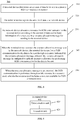
- FIG. 1 is a schematic flowchart of a communication method 100 according to an embodiment of the disclosure. As illustrated in FIG. 1 , the method 100 includes the operations at blocks 110 and 120.
- a terminal device determines that communication for a first service presently implemented based on a Uu interface fails to meet a communication requirement of the first service, or, the terminal device determines that a radio link failure occurs when communication for the first service is presently implemented based on the Uu interface.
- that communication for a service implemented based on the Uu interface fails to meet a communication requirement of the service may be that a delay of communication implemented for the service based on the Uu interface fails to meet a QoS requirement of the service.
- the terminal device performs communication for the first service in the D2D communication manner.
- the terminal device determines that communication for the first service presently implemented based on the Uu interface fails to meet the communication requirement of the first service, or, after it is determined that the radio link failures occurs during communication for the first service presently implemented based on the Uu interface, the terminal device determines an idle resource in a resource pool for D2D communication and adopts the idle resource to perform communication for the first service.
- the terminal device may keep monitoring the idle resource in the resource pool. Once determining that the first service is required to be switched to a D2D communication mode, the terminal device may directly adopt the monitored idle resource to perform D2D communication for the first service. In an alternative example, the terminal device may monitor the idle resource and adopt the monitored idle resource to perform D2D communication only when determining that the first service is required to be switched to the D2D communication mode. In at least one embodiment, after the idle resource is adopted to perform D2D communication for the first service, a notification message may be sent to a network device to report that the first service has been switched to the D2D communication mode by use of the idle resource.
- the terminal device may determine information of the resource pool through a downlink broadcast channel sent by the network device.
- the terminal device responsive to determining by the terminal device that communication for the first service presently implemented based on the Uu interface fails to meet the communication requirement of the first service, the terminal device sends a first message to the network device, wherein the first message is configured to indicate that communication for the first service implemented based on the Uu interface fails to meet the communication requirement of the first service.
- the terminal device receives a second message sent by the network device, wherein the second message is configured to indicate a resource configured for the terminal device to perform communication for the first service in the D2D mode.
- the terminal device adopts the resource configured for the terminal device by the network device to perform communication for the first service in the D2D communication manner.
- the first message may directly indicate that communicationor the first service presently implemented based on the Uu interface fails to meet the communication requirement of the first service. For example, information corresponding to "meet" or "not meet” may be directly included in the first message. For example, 0 represents meet, and 1 represents not meet.
- the first message may indirectly indicate that communication for the first service presently implemented based on the Uu interface fails to meet the communication requirement of the first service.
- a Uu-interface-based communication delay and a corresponding QoS requirement may be included in the first message.
- a result about whether the delay meets QoS may be included, and the delay and the corresponding QoS requirement may both be included.
- the terminal device after sending the first message, may directly monitor the idle resource in the resource pool, and when the idle resource is monitored, the idle resource may be adopted for communication.
- the terminal device may also not perform monitoring of the idle resource in the resource pool after sending the first message, wait for the second message and, after receiving the second message, perform D2D communication for the first service according to the resource allocated in the second message.
- the terminal device when the terminal device receives the second message after adopting the idle resource in the resource pool to perform communication for the first service, the terminal device stops performing communication for the first service by adopting the idle resource and adopts the resource configured for the terminal device by the network device to perform communication for the first service in the D2D communication manner.
- the terminal device may start a first timer after sending the first message and. When the second message is not received within the first timer, the terminal device may adopt the idle resource in the resource pool for D2D communication to perform communication for the first service. The terminal device may also start a second timer after the first timer expires. When the second message is received within the second timer, the terminal device stops performing communication for the first service by adopting the idle resource and adopts the resource configured for the terminal device by the network device to perform communication for the first service in the D2D communication manner.
- the terminal device may also not start the second timer after the first timer expires, but directly monitors the idle resource in the resource pool, After monitoring the idle resource, the terminal device adopts the idle resource to perform D2D communication for the first service.
- the terminal device receives a scrambling sequence number (which may specifically be a Radio Network Temporary Identity (RNTI)) sent by the network device, and the terminal device reports an amount of data to be sent to the network device.
- a scrambling sequence number which may specifically be a Radio Network Temporary Identity (RNTI)
- the terminal device reports an amount of data to be sent to the network device.
- the terminal device receives the second message that is sent by the network device according to the amount of data, and adopts the resource in the second message to perform D2D communication for the first service.
- the RNTI mentioned herein may be a sidelink-RNTI (SL-RNTI).
- the base station allocates an SL-RNTI to a terminal at first.
- the terminal may report an amount of data to be sent to the base station through a Buffer Status Report (BSR) when new data arrives, and then the terminal listens to a D2D_grant (wherein D2D_ is scheduling information of a resource allocated to the terminal) allocated by the base station on a Physical Downlink Control Channel (PDCCH) based on the SL-RNTI.
- BSR Buffer Status Report
- the terminal may adopt an idle resource of a resource pool for sending.
- the terminal may ignore the scheduling information and continue adopting the idle resource in the resource pool for D2D communication; or the terminal may also adopt a resource indicated in the scheduling information for D2D communication.
- the scrambling sequence number may also be adopted to monitor the D2D_grant sent by the base station.
- the network device adopts the resource pre-configured for the first service by the network device to perform communication for the first service in the D2D communication manner.
- the network device may pre-configure the resource for the first service of the terminal device.
- D2D communication for the first service may be performed.
- the base station may reserve and configure resources for D2D communication for the services in advance.
- the terminal may directly switch the service into a PC5 interface communication mode and adopt the pre-allocated resource to perform D2D communication without reporting to the base station in advance. Then, the terminal may report to the base station that communication for the service has been implemented based on the resource pre-configured for the service in the D2D communication manner.
- the Uu-interface-based communication manner is switched to the D2D communication manner to perform communication for the first service, so that the delay may be reduced, and communication quality may be improved.
- FIG. 2 is a schematic flowchart of a communication method 200 according to an embodiment of the disclosure. As illustrated in FIG. 2 , the method includes the operations at blocks 210, 220, 230 and 240.
- a network device determines that D2D communication is required to be performed for a first service, wherein present communication for the first service is implemented based on a Uu interface.
- a terminal device when determining that communication for the first service presently implemented based on the Uu interface fails to meet a communication requirement of the first service (for example, a delay fails to meet a QoS requirement), may send a notification message to the network device, wherein the notification message is configured to indicate a delay of the first service for which communication is implemented based on the Uu interface or whether the delay meets a QoS requirement. Then, according to the notification message, the network device may determine that D2D communication is required by the first service for which communication is presently implemented based on the Uu interface.
- the terminal device may send delays of all services presently performed based on the Uu interface or whether the delays meet QoS requirements to the network device, and then the network device may determine all services of which the delays do not meet the requirements as services to be switched into a D2D communication mode.
- the terminal device may determine part of services of which the delays meet the requirements as services to be switched into the D2D communication mode. For example, when a load of the network device is relatively high, the network device may switch part of services of which the delays are relatively long but still meet the requirements into the D2D communication mode.
- the network device sends indication information to a terminal device, wherein the indication information is configured to indicate communication for the first service to be switched from a Uu-interface-based communication manner to a D2D communication manner.
- the terminal device receives the indication information sent by the network device.
- the terminal device performs communication for the first service in the D2D communication manner.
- the indication information does not include a resource allocated for the first service of the terminal, then the terminal may monitor whether an idle resource exists in a resource pool for D2D communication. When the idle resource exists, the terminal may adopt the idle resource to perform D2D communication for the first service.
- the indication information includes the resource configured to perform D2D communication for the first service, and the terminal device adopts the resource indicated by the indication information to perform communication for the first service in the D2D communication manner.
- the terminal device may switch the Uu-interface-based communication manner into the D2D communication manner to perform communication for the service according to an indication of the network device, so that a flexible communication manner may be implemented, a delay may be reduced, and communication quality may be improved.
- FIG. 3 is a schematic flowchart of a communication method 300 according to an embodiment of the disclosure. As illustrated in FIG. 3 , the method includes the operations at blocks 310, 320, 330, 340 and 350.
- a terminal device determines an amount of data to be sent in a present D2D communication manner.
- the terminal device reports the amount of data to a network device.
- the network device allocates a resource for D2D communication to the terminal device according to the amount of data and includes information of the resource in a resource allocation message for sending to the terminal device.
- the terminal device when the terminal device receives the resource allocation message sent by the network device, the terminal device performs D2D communication for the data to be sent through a resource indicated by the resource allocation message, wherein the resource allocation message is configured to indicate resources allocated for performing D2D communication for the data to be sent.
- the D2D communication is performed through an idle resource in a resource pool, wherein the resource pool includes a resource available for D2D communication.
- the terminal device may start a first timer after reporting the amount of data to the network device, and when the resource allocation message is not received within the first timer, the terminal device may adopt the idle resource in the resource pool for D2D communication to send the data to be sent.
- the terminal device may also start a second timer after the first timer expires, and when the resource allocation message is received within the second timer, the terminal device stops adopting the idle resource and adopts the resource configured for the terminal device by the network device to perform transmission of the data to be sent in the D2D communication manner.
- the terminal device may also not start the second timer after the first timer expires, but directly monitors the idle resource in the resource pool. After monitoring the idle resource, the terminal device adopts the idle resource to send the data to be sent.
- the terminal device receives a scrambling sequence number (which may specifically be an SL-RNTI) sent by the network device, and the terminal device reports the amount of data of the data to be sent to the network device.
- a scrambling sequence number which may specifically be an SL-RNTI
- the terminal device receives the resource allocation message sent by the network device according to the amount of data, and sends the data to be sent by adopting the resource in the resource allocation message.
- a terminal works in a D2D mode, the terminal may report an amount of data to be sent to a base station through a BSR when new data arrives, and then the terminal listens to a D2D_grant (wherein D2D_ is scheduling information of a resource allocated to the terminal) on a PDCCH based on an SL-RNTI (the SL-RNTI may be allocated to the terminal by a network device before the BSR is sent).
- the terminal may adopt an idle resource in a resource pool for sending.
- the terminal may ignore the scheduling information and continue adopting the idle resource in the resource pool for D2D communication; or the terminal may also adopt a resource indicated in the scheduling information for D2D communication.
- the scrambling sequence number may also be adopted.
- the terminal device reports the amount of the data to be sent to the network device and the network device allocates the resource to the terminal device according to the amount of data to perform transmission of the data to be sent, so that resource waste may be avoided. Further, when the resource allocated by the network device is not allocated, the idle resource in the resource pool is adopted for sending, so that the data may be timely sent, a delay may be reduced, and communication quality may be improved.
- FIG. 4 is a schematic block diagram of a terminal device 400 according to an embodiment of the disclosure. As illustrated in FIG. 4 , the terminal device 400 includes the following units.
- a determination unit 410 configured to determine that communication for a first service presently implemented based on a Uu interface fails to meet a communication requirement of the first service, or, determine that a radio link failure occurs when communication for the first service is presently implemented based on the Uu interface.
- An execution unit 420 configured to perform communication for the first service in a D2D communication manner.
- the determination unit 410 may further be configured to: determine that a delay of communication for the first service implemented based on the Uu interface fails to meet a QoS requirement of the first service.
- the execution unit 420 may specifically be configured to: monitor whether a resource pool for D2D communication comprises an idle resource; and when the idle resource exists, perform communication for the first service by adopting the idle resource.
- the execution unit 420 may further be configured to: determine information of the resource pool through a downlink broadcast channel sent by a network device.
- the execution unit 420 may further be configured to: send a first message to the network device, wherein the first message may be configured to indicate that communication for the first service implemented based on the Uu interface fails to meet the communication requirement of the first service; receive a second message sent by the network device, wherein the second message may be configured to indicate a resource configured for the terminal device to perform communication for the first service in a D2D mode; and adopt the resource pre-configured for the terminal device by the network device to perform communication for the first service in the D2D communication manner.
- the execution unit 420 may further be configured to: when the execution unit receives the second message after adopting the idle resource in the resource pool for D2D communication to perform communication for the first service, stop performing communication for the first service by adopting the idle resource and adopt the resource configured for the terminal device by the network device to perform communication for the first service in the D2D communication manner.
- the execution unit 420 may further be configured to: when the second message is not received within a first timer, adopt the idle resource in the resource pool for D2D communication to perform communication for the first service; and when the second message is received within a second timer started after the first timer expires, stop performing communication for the first service by adopting the idle resource and adopt the resource configured for the terminal device by the network device to perform communication for the first service in the D2D communication manner.
- the execution unit 420 may further be configured to: receive a scrambling sequence number sent by the network device; report an amount of data to be sent to the network device; and receive the second message sent by the network device according to the amount of data by use of the scrambling sequence number.
- the execution unit 420 may further be configured to: perform communication for the first service in the D2D communication manner by adopting a preconfigured resource, wherein the preconfigured resource is configured for the terminal device by the network device.
- the terminal device 400 may correspond to a terminal device in the method 100, may realize corresponding functions of the terminal device and will not be elaborated herein for simplicity.
- FIG. 5 is a schematic block diagram of a terminal device 500 according to an embodiment of the disclosure. As illustrated in FIG. 5 , the terminal device 500 includes the following units.
- a receiving unit 510 configured to receive indication information sent by a network device, wherein the indication information is configured to indicate communication for a first service to be switched from a Uu-interface-based communication manner to a D2D communication manner.
- An execution unit 520 configured to perform communication for the first service in the D2D communication manner.
- the execution unit 520 may further be configured to: monitor whether a resource pool for D2D communication comprises an idle resource; and when the idle resource exists, adopt the idle resource to perform communication for the first service.
- the indication information further includes a resource for D2D communication.
- the execution unit 520 may further be configured to: perform communication for the first service in the D2D communication manner by adopting the resource indicated by the indication information.
- the terminal device 500 further includes a sending unit 530.
- the sending unit may be configured to, before the receiving unit 510 receives the indication information sent by the network device, send a notification message to the network device, wherein the notification message may be configured to indicate a delay of communication for the first service implemented based on a Uu interface or whether the delay meets a QoS requirement.
- the notification message may further be configured to indicate a delay of communication for another service implemented based on the Uu interface or whether the delay meets the QoS requirement.
- the terminal device 500 may correspond to a terminal device in the method 200, may realize corresponding functions of the terminal device and will not be elaborated herein for simplicity.
- FIG. 6 is a schematic block diagram of a network device 600 according to an embodiment of the disclosure. As illustrated in FIG. 6 , the network device 600 includes the following units.
- a determination unit 610 configured to determine that D2D communication is required to be performed for a first service, wherein present communication for the first service is implemented based on a Uu interface.
- a sending unit 620 configured to send indication information to a terminal device, wherein the indication information is configured to indicate communication for the first service to be switched from a Uu-interface-based communication manner to a D2D communication manner.
- the indication information further includes a resource for D2D communication.
- the network device 600 further includes a receiving unit 630.
- the receiving unit 630 may be configured to receive communication quality or communication delays of multiple services from the terminal device, wherein the multiple services include the first service.
- the determination unit 610 may be configured to determine that D2D communication is required to be performed for the first service according to the present communication quality or communication delays of the multiple services received by the receiving unit.
- the network device 600 may correspond to a network device in the method 200, may realize corresponding functions of the network device and will not be elaborated herein for simplicity.
- FIG. 7 is a schematic block diagram of a terminal device 700 according to an embodiment of the disclosure. As illustrated in FIG. 7 , the terminal device 600 includes the following units.
- a determination unit 710 configured to determine an amount of data to be sent under a present D2D communication manner.
- a sending unit 720 configured to report the amount of data to a network device.
- a receiving unit 730 configured to receive a resource allocation message sent by the network device
- An execution unit 740 configured to, when the receiving unit receives the resource allocation message sent by the network device, perform D2D communication for the data to be sent through a resource indicated by the resource allocation message, wherein the resource allocation message is configured to indicate resources allocated for performing D2D communication for the data to be sent, and when the receiving unit fails to receive the resource allocation resource, perform D2D communication through an idle resource in a resource pool, wherein the resource pool includes a resource available for D2D communication.
- the execution unit 740 may further be configured to: when the resource allocation message is not received when a first timer is ended, adopt the idle resource in the resource pool to perform D2D communication.
- the terminal device stops performing communication for the first service by adopting the idle resource and adopts the resource indicated by the resource allocation message to perform communication for the first service in the D2D communication manner.
- the receiving unit 730 may further be configured to: receive a scrambling sequence number sent by the network device and receive the resource allocation message sent by the network device according to the amount of data by use of the scrambling sequence number.
- the terminal device 700 may correspond to a terminal device in the method 300, may realize corresponding functions of the terminal device and will not be elaborated herein for simplicity.
- FIG. 8 is a schematic block diagram of a communication device 800 according to an embodiment of the disclosure.
- the communication device 800 includes a processor 810, a memory 820 and a transceiver 830.
- the communication device further includes a bus system 840, and the bus system is configured to interconnect the processor 810, the memory 820 and the transceiver 830.
- the memory 820 is configured to store an instruction
- the processor 810 is configured to call the instruction stored in the memory 820 to perform corresponding operations.
- the communication device 800 illustrated in FIG. 8 may perform corresponding operations of a terminal device mentioned in the method embodiment 100, or may perform corresponding operations of a terminal device mentioned in the method embodiment 200, or may perform corresponding operations of a network device mentioned in the method embodiment 200, or may perform corresponding operations of a terminal device mentioned in the method embodiment 300.
- the processor 810 may call the instruction stored in the memory 820 to perform the following operations.
- Communication for the first service is performed in a D2D communication manner.
- the processor 810 responsive to determining by the terminal device that communication for the first service presently implemented based on the Uu interface fails to meet the communication requirement of the first service, the processor 810 calls the instruction stored in the memory 820 to perform the following operation.
- the processor 810 calls the instruction stored in the memory 820 to perform the following operations.
- a resource pool for D2D communication comprises an idle resource by use of the transceiver 830.
- the idle resource is adopted to perform communication for the first service.
- the processor 810 calls the instruction stored in the memory 820 to perform the following operation.
- the processor 810 responsive to determining by the terminal device that communication for the first service presently implemented based on the Uu interface fails to meet the communication requirement of the first service, the processor 810 calls the instruction stored in the memory 820 to perform the following operations.
- a first message is sent to the network device through the transceiver 830, wherein the first message is configured to indicate that communication for the first service implemented based on the Uu interface fails to meet the communication requirement of the first service.
- a second message sent by the network device is received through the transceiver 830, wherein the second message is configured to indicate a resource configured for the terminal device to perform communication for the first service in a D2D mode.
- the terminal device adopts the resource pre-configured for the terminal device by the network device to perform communication for the first service in the D2D communication manner.
- the processor 810 calls the instruction stored in the memory 820 to perform the following operations.
- the idle resource is stopped from adopting to perform communication for the first service and the resource configured for the terminal device by the network device is adopted to perform communication for the first service in the D2D communication manner.
- the processor 810 calls the instruction stored in the memory 820 to perform the following operations.
- the idle resource in the resource pool is adopted for D2D communication to perform communication for the first service.
- the idle resource is stopped from adopting to perform communication for the first service and the resource configured for the terminal device by the network device is adopted to perform communication for the first service in the D2D communication manner.
- the processor 810 calls the instruction stored in the memory 820 to perform the following operations.
- a scrambling sequence number sent by the network device is received by use of the transceiver 830.
- An amount of data to be sent to the network device is reported by use of the transceiver 830.
- the second message sent by the network device according to the amount of data is received through the transceiver 830.
- the processor 810 calls the instruction stored in the memory 820 to perform the following operation.
- the resource pre-configured for the terminal device by the network device is adopted to perform communication for the first service in the D2D communication manner.
- the processor 810 calls the instruction stored in the memory 820 to perform the following operations.
- Indication information sent by network device is received through the transceiver 830, wherein the indication information may be configured to indicate communication for a first service to be switched from a Uu-interface-based communication manner to a D2D communication manner.
- the processor 810 calls the instruction stored in the memory 820 to perform the following operations.
- a resource pool for D2D communication comprises an idle resource through the transceiver 830.
- the idle resource is adopted to perform communication for the first service.
- the indication information further includes a resource for D2D communication.
- the processor 810 calls the instruction stored in the memory 820 to perform the following operation.
- Communication for the first service is performed in the D2D communication manner by adopting the resource indicated by the indication information.
- the processor 810 calls the instruction stored in the memory 820 to perform the following operation.
- a notification message is sent to the network device through the transceiver 830, wherein the notification message may be configured to indicate a delay of communication for the first service implemented based on a Uu interface or whether the delay meets a QoS requirement.
- the notification message may further be configured to indicate a delay of communication for another service implemented based on the Uu interface or whether the delay meets the QoS requirement.
- the processor 810 calls the instruction stored in the memory 820 to perform the following operations.
- D2D communication is required by a first service for which communication is presently implemented based on a Uu interface.
- Indication information is sent to a terminal device through the transceiver 830, wherein the indication information may be configured to indicate communication for the first service to be switched from a Uu-interface-based communication manner to a D2D communication manner.
- the indication information further includes a resource for D2D communication.
- the processor 810 calls the instruction stored in the memory 820 to perform the following operations.
- Communication quality or communication delays of multiple services are received from the terminal device through the transceiver 830, wherein the multiple services may include the first service.
- D2D communication is required to be performed for the first service according to the present communication quality or communication delays of the multiple services.
- the processor 810 calls the instruction stored in the memory 820 to perform the following operations.
- An amount of data to be sent is determined under a present D2D communication manner.
- the amount of data is reported to a network device through the transceiver 830.
- D2D communication for the data to be sent is performed through a resource indicated by the resource allocation message, wherein the resource allocation message is configured to indicate resources allocated for performing D2D communication for the data to be sent.
- the D2D communication is performed through an idle resource in a resource pool, wherein the resource pool includes a resource available for D2D communication.
- the processor 810 calls the instruction stored in the memory 820 to perform the following operations.
- the idle resource in the resource pool is adopted to perform D2D communication.
- the idle resource is stopped from adopting to perform communication for a first service and the resource indicated by the resource allocation messageis adopted to perform communication for the first service in the D2D communication manner.
- the processor 810 calls the instruction stored in the memory 820 to perform the following operations.
- a scrambling sequence number sent by the network device is received through the transceiver 830.
- the resource allocation message sent by the network device is received according to the amount of data through the transceiver 830 by use of the scrambling sequence number.
- the disclosed system, device and method may be implemented in another manner.
- the device embodiment described above is only schematic, and for example, division of the units is only logic function division, and other division manners may be adopted during practical implementation.
- multiple units or components may be combined or integrated into another system, or some characteristics may be neglected or not performed.
- coupling or direct coupling or communication connection between each displayed or discussed component may be indirect coupling or communication connection, implemented through some interfaces, of the device or the units, and may be electrical and mechanical or adopt other forms.
- the units described as separate parts may or may not be physically separated, and parts displayed as units may or may not be physical units, and namely may be located in the same place, or may also be distributed to multiple network units. Part or all of the units may be selected to achieve the purpose of the solutions of the embodiments according to a practical requirement.
- each functional unit in each embodiment of the disclosure may be integrated into a processing unit, each unit may also physically exist independently, and two or more than two units may also be integrated into a unit.
- the function may also be stored in a computer-readable storage medium.
- the technical solutions of the disclosure substantially or parts making contributions to the conventional art or part of the technical solutions may be embodied in form of software product, and the computer software product is stored in a storage medium, including a plurality of instructions configured to enable a computer device (which may be a personal computer, a server, network equipment or the like) to perform all or part of the operations of the method in each embodiment of the disclosure.
- the abovementioned storage medium includes: various media capable of storing program codes such as a U disk, a mobile hard disk, a Read-Only Memory (ROM), a Random Access Memory (RAM), a magnetic disk or an optical disk.
Landscapes
- Engineering & Computer Science (AREA)
- Computer Networks & Wireless Communication (AREA)
- Signal Processing (AREA)
- Quality & Reliability (AREA)
- Physics & Mathematics (AREA)
- Electromagnetism (AREA)
- Databases & Information Systems (AREA)
- Mobile Radio Communication Systems (AREA)
Abstract
Description
- The disclosure relates to the field of communication, and more particularly to a communication method, a terminal device and a network device.
- In a present communication process for the cellular network, communication may be implemented through a Uu interface, that is, communication between terminal devices is implemented through a terminal of a base station. However, such a communication manner is relatively long in delay and poor in communication quality, and a user experience is relatively poor.
- Embodiments of the disclosure provide a communication method, a terminal device, a network device and a storage medium, which may reduce a delay and improve communication quality.
- A first aspect provides a communication method, which may include the following operations.
- A terminal device determines that communication for a first service presently implemented based on a Uu interface fails to meet a communication requirement of the first service, or, the terminal device determines that a radio link failure occurs when communication for the first service is presently implemented based on the Uu interface.
- The terminal device performs communication for the first service in a Device to Device (D2D) communication manner.
- In combination with the first aspect, in a first possible implementation mode of the first aspect, the operation that the terminal device determines that communication for the first service presently implemented based on the Uu interface fails to meet the communication requirement of the first service may include the following action.
- The terminal device determines that a delay of communication for the first service implemented based on the Uu interface fails to meet a Quality of Service (QoS) requirement of the first service.
- In combination with the first aspect or any abovementioned possible implementation mode, in a second possible implementation mode of the first aspect, the operation that the terminal device performs communication for the first service in the D2D communication manner may include the following actions.
- The terminal device monitors whether a resource pool for D2D communication comprises an idle resource.
- When the idle resource exists, the idle resource is adopted to perform communication for the first service.
- In combination with the first aspect or any abovementioned possible implementation mode, in a third possible implementation mode of the first aspect, before the operation that the terminal device monitors whether the resource pool for D2D communication comprises the idle resource, the method may further include the following action.
- Information of the resource pool is determined through a downlink broadcast channel sent by a network device.
- In combination with the first aspect or any abovementioned implementation mode, in a fourth possible implementation mode of the first aspect, responsive to determining by the terminal device that communication for the first service presently implemented based on the Uu interface fails to meet the communication requirement of the first service, the method may further include the following actions.
- The terminal device sends a first message to the network device, the first message being configured to indicate that communication implemented for the first service based on the Uu interface fails to meet the communication requirement of the first service.
- The terminal device receives a second message sent by the network device, the second message being configured to indicate a resource configured for the terminal device to perform communication for the first service in a D2D mode.
- The operation that the terminal device performs communication for the first service in the D2D communication manner may include that: the terminal device adopts the resource configured for the terminal device by the network device to perform communication for the first service in the D2D communication manner.
- In combination with the first aspect or any abovementioned possible implementation mode, in a fifth possible implementation mode of the first aspect, the operation that the terminal device performs communication for the first service in the D2D communication manner may include the following action.
- When the terminal device receives the second message after adopting the idle resource in the resource pool for D2D communication to perform communication for the first service, the terminal device stops performing communication for the first service by adopting the idle resource and adopts the resource configured for the terminal device by the network device to perform communication for the first service in the D2D communication manner.
- In combination with the first aspect or any abovementioned possible implementation mode, in a sixth possible implementation mode of the first aspect, the operation that the terminal device performs communication for the first service in the D2D communication manner may include the following actions.
- When the second message is not received within a first timer, the idle resource in the resource pool for D2D communication is adopted to perform communication for the first service.
- When the second message is received within a second timer started after the first timer expires, the terminal device stops performing communication for the first service by adopting the idle resource and adopts the resource configured for the terminal device by the network device to perform communication for the first service in the D2D communication manner.
- In combination with the first aspect or any abovementioned possible implementation mode, in a seventh possible implementation mode of the first aspect, before the operation that the terminal device receives the second message sent by the network device, the method may further include the following actions.
- The terminal device receives a scrambling sequence number sent by the network device.
- The terminal device reports an amount of data to be sent to the network device.
- The operation that the terminal device receives the second message sent by the network device may include that: the second message sent by the network device according to the amount of data is received by use of the scrambling sequence number.
- In combination with the first aspect or any abovementioned possible implementation mode, in an eighth possible implementation mode of the first aspect, the operation that the terminal device performs communication for the first service in the D2D communication manner may include the following action.
- Communication for the first service is performed in the D2D communication manner by adopting a preconfigured resource, wherein the preconfigured resource may be configured for the terminal device by the network device.
- A second aspect provides a communication method, which may include the following operations.
- A terminal device receives indication information sent by a network device, wherein the indication information is configured to indicate communication for a first service to be switched from a Uu-interface-based communication manner to a D2D communication manner.
- The terminal device performs communication for the first service in the D2D communication manner.
- In combination with the second aspect, in a first possible implementation mode of the second aspect, the operation that the terminal device performs communication for the first service in the D2D communication manner may include the following actions.
- The terminal device monitors whether a resource pool for D2D communication comprises an idle resource.
- When the idle resource exists, the idle resource is adopted to perform communication for the first service.
- In combination with the second aspect or any abovementioned possible implementation mode thereof, in a second possible implementation mode of the second aspect, the indication information may further include a resource for D2D communication.
- The operation that the terminal device performs communication for the first service in the D2D communication manner may include the following action.
- The terminal device performs communication for the first service in the D2D communication manner by adopting the resource indicated by the indication information.
- In combination with the second aspect or any abovementioned possible implementation mode thereof, in a third possible implementation mode of the second aspect, before the operation that the terminal device receives the indication information sent by the network device, the method may further include the following action.
- The terminal device sends a notification message to the network device, wherein the notification message may be configured to indicate a delay of communication for the first service implemented based on a Uu interface or whether the delay meets a QoS requirement.
- In combination with the second aspect or any abovementioned possible implementation mode thereof, in a fourth possible implementation mode of the second aspect, the notification message may further be configured to indicate a delay of communication for another service implemented based on the Uu interface or whether the delay meets the QoS requirement
- A third aspect provides a communication method, which may include the following operations.
- A network device determines that D2D communication is required to be performed for a first service, wherein present communication for the first service is implemented based on a Uu interface.
- Indication information is sent to a terminal device, wherein the indication information is configured to indicate communication for the first service to be switched from a Uu-interface-based communication manner to a D2D communication manner.
- In combination with the third aspect, in a first possible implementation mode of the third aspect, the indication information may further include a resource for D2D communication.
- In combination with the third aspect or the first possible implementation mode thereof, in a second possible implementation mode of the third aspect, the method may further include the following actions.
- Communication quality or communication delays of multiple services are received from the terminal device, wherein the multiple services may include the first service.
- It is determined that D2D communication is required to be performed for the first service according to the present communication quality or communication delays of the multiple services.
- A fourth aspect provides a communication method, which may include the following operations.
- A terminal device determines an amount of data to be sent in a present D2D communication manner.
- The terminal device reports the amount of data to network device.
- When a resource allocation message sent by the network device is received, D2D communication for the data to be sent is performed through a resource indicated by the resource allocation message, wherein the resource allocation message is configured to indicate resources allocated for performing D2D communication for the data to be sent.
- When the resource allocation message is not received, D2D communication is performed through an idle resource in a resource pool, wherein the resource pool may include a resource available for D2D communication.
- In combination with the fourth aspect, in a first possible implementation mode of the fourth aspect, the operation that the D2D communication is performed through the idle resource in the resource pool may include that: when the resource allocation message is not received until a first timer expires, the idle resource in the resource pool is adopted to perform D2D communication.
- The operation that the D2D communication for the data to be sent is performed through the resource indicated by the resource allocation message may include the following action.
- When the resource allocation message allocated by the network device is received within a second timer started after the first timer expires, the terminal device stops performing communication for the first service by adopting the idle resource and adopts the resource indicated by the resource allocation message to perform communication for the first service in the D2D communication manner.
- In combination with the fourth aspect or the first possible implementation mode thereof, in a second possible implementation mode of the fourth aspect, the method may further include the following actions.
- The terminal device receives a scrambling sequence number sent by the network device.
- The resource allocation message sent by the network device according to the amount of data is received by use of the scrambling sequence number.
- A fifth aspect provides a terminal device, which is configured to perform the method in the first aspect or any possible implementation mode of the first aspect. Specifically, the terminal device includes units configured to perform the method in the first aspect or any possible implementation mode of the first aspect.
- A sixth aspect provides a terminal device, which is configured to perform the method in the second aspect or any possible implementation mode of the second aspect. Specifically, the terminal device includes units configured to perform the method in the second aspect or any possible implementation mode of the second aspect.
- A seventh aspect provides a network device, which is configured to perform the method in the third aspect or any possible implementation mode of the third aspect. Specifically, the network device includes units configured to perform the method in the third aspect or any possible implementation mode of the third aspect.
- An eighth aspect provides a terminal device, which is configured to perform the method in the fourth aspect or any possible implementation mode of the fourth aspect. Specifically, the terminal device includes units configured to perform the method in the fourth aspect or any possible implementation mode of the fourth aspect.
- A ninth aspect provides a terminal device, which includes a memory and a processor. The memory is configured to store an instruction. The processor is configured to perform the instruction stored in the memory, and when the processor performs the instruction stored in the memory, such execution enables the processor to perform the method in the first aspect or any possible implementation mode of the first aspect.
- A tenth aspect provides a terminal device, which includes a memory and a processor. The memory is configured to store an instruction. The processor is configured to perform the instruction stored in the memory, and when the processor performs the instruction stored in the memory, such execution enables the processor to perform the method in the second aspect or any possible implementation mode of the second aspect.
- An eleventh aspect provides a network device, which includes a memory and a processor. The memory is configured to store an instruction. The processor is configured to perform the instruction stored in the memory, and when the processor performs the instruction stored in the memory, such execution enables the processor to perform the method in the third aspect or any possible implementation mode of the third aspect.
- A twelfth aspect provides a terminal device, which includes a memory and a processor. The memory is configured to store an instruction. The processor is configured to perform the instruction stored in the memory, and when the processor performs the instruction stored in the memory, such execution enables the processor to perform the method in the fourth aspect or any possible implementation mode of the fourth aspect.
- A thirteenth aspect provides a computer storage medium, having stored a program code. The program code may be configured to instruct the method in the first aspect or any possible implementation mode of the first aspect to be performed.
- A fourteenth aspect provides a computer storage medium, having stored a program code. The program code may be configured to instruct the method in the second aspect or any possible implementation mode of the second aspect to be performed.
- A fifteenth aspect provides a computer storage medium, having stored a program code. The program code may be configured to instruct the method in the third aspect or any possible implementation mode of the third aspect to be performed.
- A sixteenth aspect provides a computer storage medium, having stored a program code. The program code may be configured to instruct the method in the fourth aspect or any possible implementation mode of the fourth aspect to be performed.
- In order to describe the technical solutions of the embodiments of the disclosure more clearly, the drawings required to be used in descriptions about the embodiments or a conventional art will be simply introduced below. It is apparent that the drawings described below are only some embodiments of the disclosure. Other drawings may further be obtained by those of ordinary skill in the art according to these drawings without creative work.
-
FIG. 1 is a schematic flowchart of a communication method according to an embodiment. -
FIG. 2 is a schematic flowchart of a communication method according to an embodiment. -
FIG. 3 is a schematic flowchart of a communication method according to an embodiment. -
FIG. 4 is a schematic block diagram of a terminal device according to an embodiment. -
FIG. 5 is a schematic block diagram of a terminal device according to an embodiment. -
FIG. 6 is a schematic block diagram of a network device according to an embodiment. -
FIG. 7 is a schematic block diagram of a terminal device according to an embodiment. -
FIG. 8 is a schematic block diagram of a communication device according to an embodiment. - The technical solutions in the embodiments of the disclosure will be clearly and completely described below in combination with the drawings in the embodiments of the disclosure. It is apparent that the described embodiments are not all embodiments but part of embodiments of the disclosure. All other embodiments obtained by those of ordinary skill in the art based on the embodiments in the disclosure without creative work shall fall within the scope of protection of the disclosure.
- It is to be understood that the technical solutions of the disclosure may be applied to various communication systems, for example, a Global System of Mobile Communication (GSM), a Code Division Multiple Access (CDMA) system, a Wideband Code Division Multiple Access (WCDMA) system, a General Packet Radio Service (GPRS), a Long Term Evolution (LTE) system, an Advanced Long Term Evolution (LTE-A) system, a Universal Mobile Telecommunication System (UMTS) and 5th-Generation (5G).
- In some embodiments, Device to Device (D2D) communication may refer to Vehicle to Vehicle (V2V) communication or Vehicle to X (V2X) communication. In V2X communication, X may generally refer to any equipment with a wireless receiving and sending capability, for example, but not limited to, a wireless device moving at a low speed, vehicle-mounted equipment moving at a high speed or a network control node with a wireless transmitting and receiving capability. Of course, the embodiments of the disclosure may be not applied D2D communication but communication between a terminal and a cellular network.
- In the embodiments of the disclosure, a terminal device may also be called an access terminal, a user unit, a user station, a mobile radio station, a mobile station, a remote station, a remote terminal, a mobile device, a user terminal, a terminal, wireless communication equipment, a user agent or a user device. The access terminal may be a cell phone, a cordless phone, a Session Initiation Protocol (SIP) phone, a Wireless Local Loop (WLL) station, a Personal Digital Assistant (PDA), handheld equipment with a wireless communication function, a computing device, other processing device connected to a wireless modem, vehicle-mounted equipment, wearable equipment and a terminal device in a future 5G network. A network device may be configured to communicate with a mobile device, and the network device may be a Base Transceiver Station (BTS) in the GSM or CDMA, may also be a NodeB (NB) in WCDMA, and may further be an Evolutional Node B (eNB or eNodeB) in LTE, or a relay station or an access point, or vehicle-mounted equipment, wearable equipment and a network device in the future 5G network.
- In the embodiments of the disclosure, a communication interface between the terminal and the network device may be called a Uu interface, and a D2D interface between terminal devices may be called a PC5 interface.
- For convenient understanding, a delay acquisition method mentioned in the embodiments of the disclosure will be described below in detail.
- In the operation A, a sender adds time indication information into a sent packet, wherein the time indication information is configured for a receiver to acquire a delay from the sender to the receiver.
- In at least one embodiment, the sent packet is a Packet Data Convergence Protocol (PDCP) packet, a Radio Link Control (RLC) packet or a Media Access Control (MAC) packet.
- In at least one embodiment, the sent packet is a data packet or a dedicated delay probing packet.
- In the operation B, the sender sends the sent packet to the receiver.
- In at least one embodiment, the sender determines Quality of Service (QoS) of a service corresponding to the delay from the sender to the receiver to be acquired, and the sender sends the sent packet to the receiver according to the corresponding QoS.
- In the operation C, the receiver receives the sent packet from the sender, wherein the sent packet includes the time indication information.
- In the example, the receiver parses the time indication information in the same layer where the sender adds the time indication information. For example, when the sender adds the time indication information in a MAC layer, the receiver parses the time indication information in the MAC layer.
- In the operation D, the receiver determines the delay from the sender to the receiver according to the time indication information.
- In at least one embodiment of the disclosure, the sender may send the sent packet through multiple paths, and the receiver receives the sent packet sent by the sender through the multiple paths and determines a delay of each delay in the multiple paths. In the example, path information of the corresponding paths may be included in the sent packet, or, an intermediate node through which the sent packet passes adds the path information of the paths into the packet.
- In at least one embodiment of the disclosure, the time indication information included in the sent packet sent by the sender may include a starting time point of processing the sent packet by the sender, and the receiver may determine the delay from the sender to the receiver according to a difference between an ending time point of processing the sent packet and the starting time point. In the example, the starting time point of processing the sent packet by the sender refers to a time point when the packet is obtained or a time point when the packet is started to be generated, and the ending time point of processing the sent packet by the receiver may refer to a time point when parsing of the packet is completed.
- In at least one embodiment, the starting time point and the ending time point may be absolute time, for example, absolute time corresponding to Coordinated Universal Time (UTC), Beidou and a Global Positioning System (GPS), and then the difference between the ending time point and the starting time point may directly be determined as the delay from the sender to the receiver.
- The starting time point and the ending time point may not be absolute time, and for example, may be time defined by a communication system, for example, time represented by a subframe or a time slot. Then, it is necessary to determine the delay from the sender to the receiver according to a synchronization time offset of the sender and the receiver and according to the difference between the ending time point and the starting time point.
- In the example, the synchronization time offset of the sender and the receiver may be calculated according to a synchronization time offset between any two nodes from the sender to the receiver. When a previous node of the intermediate node is out of synchronism with the intermediate node, the node may determine a synchronization time offset with the previous node and record the synchronization time offset in the sent packet.
- For example, a node 1 and a node 2 exist between the sender and the receiver. The node 1, after receiving the sent packet, may acquire a synchronization time offset between the sender and the node 1 and record it in the sent packet; and the node 2, after receiving the sent packet, may acquire a synchronization time offset between the node 1 and the node 2 and record it in the sent packet. In the example, the synchronization time offset between the node 1 and the node 2 may be accumulated with a previous synchronization time offset for recording in the sent packet, that is, the synchronization time offset between the node 1 and the node 2 is added to the previous synchronization time offset and the recorded synchronization time offset is changed into the added synchronization time offset. In an alternative example, the synchronization time offset between the node 1 and the node 2 may be independently recorded in an information field. The receiver, after receiving the sent packet, may acquire a synchronization time offset between the node 2 and the receiver and acquire a synchronization time offset between the sender and the node 2 according to records in the sent packet, thereby acquiring the synchronization time offset between the sender and the receiver.
- In at least one embodiment, the sender may add a processing delay of processing the sent packet into the sent packet, and the intermediate node, after receiving the sent packet, may add a processing delay and a transmission delay with the previous node into the sent packet. The intermediate node may independently record the processing delay and the transmission delay in different information fields in the sent packet; or, the intermediate node may record a sum of the processing delay and transmission delay obtained by the intermediate node in an information field, but does not accumulate with time recorded by another node; or, the intermediate node may accumulate the processing delay with a processing delay obtained by the other node for recording in an information field and record the transmission delay and a transmission delay obtained by the other node in another information field; or, the intermediate node accumulates the sum of the transmission delay and the processing delay with a sum of the processing delay and transmission delay recorded in the sent packet and updates the records. After receiving the sent packet, the sender may obtain the delay between the sender and the receiver according to an indication of the time indication information in the sent packet.
- For convenient understanding, some recording manners for the time indication information will be described below with some implementation modes as examples.
- In an implementation mode, the time indication information includes the processing delay of processing the sent packet by the sender, includes a processing delay of processing the sent packet by any intermediate node between the sender and the receiver and includes a transmission delay between the intermediate node and the previous node of the intermediate node, the transmission delay being acquired by the any intermediate node. In the example, processing delays of processing the sent packet by different nodes are carried in different information fields of the sent packet, transmission delays acquired by different nodes are carried in different information fields of the sent packet, and the processing delay and transmission delay of the same node are carried in different information fields of the sent packet. Under this condition, the receiver determines a processing delay of processing the sent packet by the receiver and a transmission delay between the receiver and a previous node of the receiver. The delay from the sender to the receiver is determined according to a sum of the processing delay of processing the sent packet by the sender, the processing delay of processing the sent packet by any intermediate node, the transmission delay between the intermediate node and the previous node of the intermediate node that is acquired by the intermediate node, the processing delay of processing the sent packet by the receiver and the transmission delay between the receiver and the previous node of the receiver.
- For example, the node 1 and the node 2 exist between the sender and the receiver, the processing delay (for example, 1ms) of processing the sent packet by the sender is recorded in an information field. The node 1 receives the sent packet, acquires the transmission delay of 0.5ms from the receiver to the node 1, acquires the processing delay of 1ms of processing the sent packet, and records 0.5ms and 1ms in different information fields, respectively. The node 2 receives the sent packet, acquires the transmission delay of 0.6ms from the node 1 to the node 2, acquires the processing delay of 1.1ms of processing the sent packet, and records 0.6ms and 1.1ms in different information fields, respectively. The receiver receives the sent packet, acquires the transmission delay of 0.4ms from the node 2 to the receiver and the processing delay of 1.2ms of processing the sent packet, acquires 1ms, 1ms, 0.5ms, 0.6ms and 1.1ms recorded in the sent packet, and adds 1ms, 1ms, 0.5ms, 0.6ms, 1.1ms, 0.4ms and 1.2ms to obtain a time value for determining the delay from the sender to the receiver.
- In an implementation mode, the time indication information includes the processing delay of processing the sent packet by the sender and includes a sum of the processing delay of processing the sent packet by any intermediate node between the sender and the receiver and the transmission delay between the intermediate node and a previous node of the intermediate node, wherein sums of the processing delays of processing the sent packet by different nodes and the acquired transmission delays are carried in different information fields of the sent packet. Under this condition, the receiver determines the processing delay of processing the sent packet by the receiver and the transmission delay between the receiver and the previous node of the receiver; The delay from the sender to the receiver is determined according to a sum of the processing delay of processing the sent packet by the sender, the sum of the processing delay of processing the sent packet by the intermediate node between the sender and the receiver and the acquired transmission delay between the intermediate node and the previous node of the intermediate node, the processing delay of processing the sent packet by the receiver and the transmission delay between the receiver and the previous node of the receiver.
- For example, the node 1 and the node 2 exist between the sender and the receiver. The processing delay (for example, 1ms) of processing the sent packet by the sender is recorded in an information field, and the node 1 receives the sent packet, acquires the transmission delay of 0.5ms from the receiver to the node 1, acquires the processing delay of 1ms of processing the sent packet and records 1.5ms in the information field. The node 2 receives the sent packet, acquires the transmission delay of 0.6ms from the node 1 to the node 2, acquires the processing delay of 1.1ms of processing the sent packet and records 1.7ms in an information field that is different from the sender. The receiver receives the sent packet, acquires the transmission delay of 0.4ms from the node 2 to the receiver and the processing delay of 1.2ms of processing the sent packet, acquires 1ms, 1.5ms and 1.7ms recorded in the sent packet and adds 1ms, 1.5ms, 1.7ms, 0.4ms and 1.2ms to obtain a time value for determining the delay from the sender to the receiver.
- In an implementation mode, the time indication information includes a sum of the processing delay of processing the sent packet by the sender, the processing delay of processing the sent packet by an intermediate node between the sender and the receiver and the transmission delay between the intermediate node and a previous node of the intermediate node. The receiver determines the processing delay of processing the sent packet by the receiver and the transmission delay between the previous node of the receiver and the receiver. The delay from the sender to the receiver is determined according to a sum of the processing delay of processing the sent packet by the receiver, the transmission delay between the previous node of the receiver and the receiver and the sum of the processing delay of processing the sent packet by the sender, the processing delay of processing the sent packet by the intermediate node between the sender and the receiver and the transmission delay between the intermediate node and the previous node of the intermediate node.
- For example, the node 1 and the node 2 exist between the sender and the receiver. The processing delay (for example, 1ms) of processing the sent packet by the sender is recorded in an information field, and the node 1 receives the sent packet, acquires the transmission delay of 0.5ms from the receiver to the node 1, acquires the processing delay of 1ms of processing the sent packet and updates 1ms recorded by the sender into 2.5ms. The node 2 receives the sent packet, acquires the transmission delay of 0.6ms from the node 1 to the node 2, acquires the processing delay of 1.1ms of processing the sent packet and updates 2.5ms recorded by the node 1 into 4.2ms. The receiver receives the sent packet, acquires the transmission delay of 0.4ms from the node 2 to the receiver and the processing delay of 1.2ms of processing the sent packet, acquires 14.2 recorded in the sent packet and adds 4.2ms, 0.4ms and 1.2ms to obtain a time value for determining the delay from the sender to the receiver.
- When at least one of the processing delay or transmission delay acquired by each node is not obtained through absolute time, it is also necessary to acquire the synchronization time offset of the sender and the receiver, wherein the synchronization time offset of the sender and the receiver may be calculated according to the synchronization time offset between any two nodes from the sender to the receiver. When the previous node of the intermediate node is asynchronous with the intermediate node, the node may determine the synchronization time offset with the previous node and record the synchronization time offset in the sent packet.
- In the example, when recording the synchronization time offset, recorded in the sent packet, with the previous node, each node may independently record it and may also record it in combination with at least one of the processing delay or the transmission delay.
- In at least one embodiment, the sent packet further includes at least one of a delay requirement, a receiver list or a feedback object.
- In the example, when the sent packet includes the delay requirement, the receiver may determine whether the delay meets the delay requirement and feed back to the feedback object whether the delay from the sender to the receiver meets the delay requirement.
- In the example, when the sent packet does not include the delay requirement, the receiver may directly feed back the delay from the sender to the receiver to the feedback object. In an alternative example, according to the delay requirement acquired in another manner (for example, a delay requirement configured a by network device), the receiver may determine whether the delay meets the delay requirement and feed back to the feedback object whether the delay from the sender to the receiver meets the delay requirement.
- In the example, the feedback object of the delay may be the sender and may also be a third-party entity, for example, the network device.
- In at least one embodiment, the sender receives configuration information sent by the third-party entity. The configuration information is configured to instruct the sender to send the sent packet including the time indication information to the receiver.
- In at least one embodiment, the sender sends the sent packet to the receiver through a Uu interface or a D2D interface.
- Therefore, in the embodiments of the disclosure, the time indication information is added into the sent packet, such that the delay from the sender to the receiver is accurately acquired.
-
FIG. 1 is a schematic flowchart of acommunication method 100 according to an embodiment of the disclosure. As illustrated inFIG. 1 , themethod 100 includes the operations atblocks - In 110, a terminal device determines that communication for a first service presently implemented based on a Uu interface fails to meet a communication requirement of the first service, or, the terminal device determines that a radio link failure occurs when communication for the first service is presently implemented based on the Uu interface.
- In at least one embodiment, that communication for a service implemented based on the Uu interface fails to meet a communication requirement of the service may be that a delay of communication implemented for the service based on the Uu interface fails to meet a QoS requirement of the service.
- In 120, the terminal device performs communication for the first service in the D2D communication manner.
- In at least one embodiment, after the terminal device determines that communication for the first service presently implemented based on the Uu interface fails to meet the communication requirement of the first service, or, after it is determined that the radio link failures occurs during communication for the first service presently implemented based on the Uu interface, the terminal device determines an idle resource in a resource pool for D2D communication and adopts the idle resource to perform communication for the first service.
- In the example, the terminal device may keep monitoring the idle resource in the resource pool. Once determining that the first service is required to be switched to a D2D communication mode, the terminal device may directly adopt the monitored idle resource to perform D2D communication for the first service. In an alternative example, the terminal device may monitor the idle resource and adopt the monitored idle resource to perform D2D communication only when determining that the first service is required to be switched to the D2D communication mode. In at least one embodiment, after the idle resource is adopted to perform D2D communication for the first service, a notification message may be sent to a network device to report that the first service has been switched to the D2D communication mode by use of the idle resource.
- In the example, the terminal device may determine information of the resource pool through a downlink broadcast channel sent by the network device.
- In at least one embodiment, responsive to determining by the terminal device that communication for the first service presently implemented based on the Uu interface fails to meet the communication requirement of the first service, the terminal device sends a first message to the network device, wherein the first message is configured to indicate that communication for the first service implemented based on the Uu interface fails to meet the communication requirement of the first service. The terminal device receives a second message sent by the network device, wherein the second message is configured to indicate a resource configured for the terminal device to perform communication for the first service in the D2D mode. The terminal device adopts the resource configured for the terminal device by the network device to perform communication for the first service in the D2D communication manner.
- In the example, the first message may directly indicate that communicationor the first service presently implemented based on the Uu interface fails to meet the communication requirement of the first service. For example, information corresponding to "meet" or "not meet" may be directly included in the first message. For example, 0 represents meet, and 1 represents not meet.
- In an alternative example, the first message may indirectly indicate that communication for the first service presently implemented based on the Uu interface fails to meet the communication requirement of the first service. For example, a Uu-interface-based communication delay and a corresponding QoS requirement may be included in the first message. Of course, a result about whether the delay meets QoS may be included, and the delay and the corresponding QoS requirement may both be included.
- In the example, the terminal device, after sending the first message, may directly monitor the idle resource in the resource pool, and when the idle resource is monitored, the idle resource may be adopted for communication. In an alternative example, the terminal device may also not perform monitoring of the idle resource in the resource pool after sending the first message, wait for the second message and, after receiving the second message, perform D2D communication for the first service according to the resource allocated in the second message.
- In at least one embodiment, when the terminal device receives the second message after adopting the idle resource in the resource pool to perform communication for the first service, the terminal device stops performing communication for the first service by adopting the idle resource and adopts the resource configured for the terminal device by the network device to perform communication for the first service in the D2D communication manner.
- In at least one embodiment, the terminal device may start a first timer after sending the first message and. When the second message is not received within the first timer, the terminal device may adopt the idle resource in the resource pool for D2D communication to perform communication for the first service. The terminal device may also start a second timer after the first timer expires. When the second message is received within the second timer, the terminal device stops performing communication for the first service by adopting the idle resource and adopts the resource configured for the terminal device by the network device to perform communication for the first service in the D2D communication manner.
- In the embodiments of the disclosure, the terminal device may also not start the second timer after the first timer expires, but directly monitors the idle resource in the resource pool, After monitoring the idle resource, the terminal device adopts the idle resource to perform D2D communication for the first service.
- In at least one embodiment, the terminal device receives a scrambling sequence number (which may specifically be a Radio Network Temporary Identity (RNTI)) sent by the network device, and the terminal device reports an amount of data to be sent to the network device. By virtue of the scrambling sequence number, the terminal device receives the second message that is sent by the network device according to the amount of data, and adopts the resource in the second message to perform D2D communication for the first service. The RNTI mentioned herein may be a sidelink-RNTI (SL-RNTI).
- Specifically, after a base station receives a message indicating that communication for a service fails to meet a communication requirement from the terminal, the base station allocates an SL-RNTI to a terminal at first. The terminal may report an amount of data to be sent to the base station through a Buffer Status Report (BSR) when new data arrives, and then the terminal listens to a D2D_grant (wherein D2D_ is scheduling information of a resource allocated to the terminal) allocated by the base station on a Physical Downlink Control Channel (PDCCH) based on the SL-RNTI. When the terminal does not detect the D2D_grant sent by the base station within a first timer (which may be caused by a detection error of the terminal), the terminal may adopt an idle resource of a resource pool for sending. When the terminal receives the D2D_grant within a second timer started after the first timer expires, the terminal may ignore the scheduling information and continue adopting the idle resource in the resource pool for D2D communication; or the terminal may also adopt a resource indicated in the scheduling information for D2D communication.
- In the example, when the second message is received within the first timer or the second timer, the scrambling sequence number may also be adopted to monitor the D2D_grant sent by the base station.
- In at least one embodiment, the network device adopts the resource pre-configured for the first service by the network device to perform communication for the first service in the D2D communication manner.
- In the example, when the first service has a very high priority or QoS service requirement, that is, a service switching delay is not allowed to be excessively long, the network device may pre-configure the resource for the first service of the terminal device. When the terminal device determines that a delay of communication for the first service fails to meet a communication quality requirement or the radio link failure occurs, D2D communication for the first service may be performed.
- For example, services, under execution on the Uu interface, of the terminal may have very high priorities or QoS requirements, the base station may reserve and configure resources for D2D communication for the services in advance. Once the terminal finds that a delay of a certain service in these services fails to meet the requirement, the terminal may directly switch the service into a PC5 interface communication mode and adopt the pre-allocated resource to perform D2D communication without reporting to the base station in advance. Then, the terminal may report to the base station that communication for the service has been implemented based on the resource pre-configured for the service in the D2D communication manner.
- Therefore, in the embodiment of the disclosure, when communication for the first service presently implemented based on the Uu interface fails to meet the communication requirement of the first service, or, when the radio link failure occurs when communication for the first service is presently implemented based on the Uu interface, the Uu-interface-based communication manner is switched to the D2D communication manner to perform communication for the first service, so that the delay may be reduced, and communication quality may be improved.
-
FIG. 2 is a schematic flowchart of acommunication method 200 according to an embodiment of the disclosure. As illustrated inFIG. 2 , the method includes the operations atblocks - In 210, a network device determines that D2D communication is required to be performed for a first service, wherein present communication for the first service is implemented based on a Uu interface.
- In at least one embodiment, a terminal device, when determining that communication for the first service presently implemented based on the Uu interface fails to meet a communication requirement of the first service (for example, a delay fails to meet a QoS requirement), may send a notification message to the network device, wherein the notification message is configured to indicate a delay of the first service for which communication is implemented based on the Uu interface or whether the delay meets a QoS requirement. Then, according to the notification message, the network device may determine that D2D communication is required by the first service for which communication is presently implemented based on the Uu interface.
- In at least one embodiment, the terminal device may send delays of all services presently performed based on the Uu interface or whether the delays meet QoS requirements to the network device, and then the network device may determine all services of which the delays do not meet the requirements as services to be switched into a D2D communication mode. In at least one alternative embodiment, the terminal device may determine part of services of which the delays meet the requirements as services to be switched into the D2D communication mode. For example, when a load of the network device is relatively high, the network device may switch part of services of which the delays are relatively long but still meet the requirements into the D2D communication mode.
- In 220, the network device sends indication information to a terminal device, wherein the indication information is configured to indicate communication for the first service to be switched from a Uu-interface-based communication manner to a D2D communication manner.
- In 230, the terminal device receives the indication information sent by the network device.
- In 240, the terminal device performs communication for the first service in the D2D communication manner.
- In at least one embodiment, the indication information does not include a resource allocated for the first service of the terminal, then the terminal may monitor whether an idle resource exists in a resource pool for D2D communication. When the idle resource exists, the terminal may adopt the idle resource to perform D2D communication for the first service.
- In an alternative embodiment, the indication information includes the resource configured to perform D2D communication for the first service, and the terminal device adopts the resource indicated by the indication information to perform communication for the first service in the D2D communication manner.
- Therefore, in the embodiments of the disclosure, the terminal device may switch the Uu-interface-based communication manner into the D2D communication manner to perform communication for the service according to an indication of the network device, so that a flexible communication manner may be implemented, a delay may be reduced, and communication quality may be improved.
-
FIG. 3 is a schematic flowchart of acommunication method 300 according to an embodiment of the disclosure. As illustrated inFIG. 3 , the method includes the operations atblocks - In 310, a terminal device determines an amount of data to be sent in a present D2D communication manner.
- In 320, the terminal device reports the amount of data to a network device.
- In 330, the network device allocates a resource for D2D communication to the terminal device according to the amount of data and includes information of the resource in a resource allocation message for sending to the terminal device.
- In 340, when the terminal device receives the resource allocation message sent by the network device, the terminal device performs D2D communication for the data to be sent through a resource indicated by the resource allocation message, wherein the resource allocation message is configured to indicate resources allocated for performing D2D communication for the data to be sent.
- In 350, when the resource allocation message is not received, the D2D communication is performed through an idle resource in a resource pool, wherein the resource pool includes a resource available for D2D communication.
- In at least one embodiment, the terminal device may start a first timer after reporting the amount of data to the network device, and when the resource allocation message is not received within the first timer, the terminal device may adopt the idle resource in the resource pool for D2D communication to send the data to be sent. The terminal device may also start a second timer after the first timer expires, and when the resource allocation message is received within the second timer, the terminal device stops adopting the idle resource and adopts the resource configured for the terminal device by the network device to perform transmission of the data to be sent in the D2D communication manner.
- In the embodiment of the disclosure, the terminal device may also not start the second timer after the first timer expires, but directly monitors the idle resource in the resource pool. After monitoring the idle resource, the terminal device adopts the idle resource to send the data to be sent.
- In at least one embodiment, the terminal device receives a scrambling sequence number (which may specifically be an SL-RNTI) sent by the network device, and the terminal device reports the amount of data of the data to be sent to the network device. By virtue of the scrambling sequence number, the terminal device receives the resource allocation message sent by the network device according to the amount of data, and sends the data to be sent by adopting the resource in the resource allocation message.
- Specifically, a terminal works in a D2D mode, the terminal may report an amount of data to be sent to a base station through a BSR when new data arrives, and then the terminal listens to a D2D_grant (wherein D2D_ is scheduling information of a resource allocated to the terminal) on a PDCCH based on an SL-RNTI (the SL-RNTI may be allocated to the terminal by a network device before the BSR is sent). When the terminal does not detect the D2D_grant sent by the base station within a first timer (which may be caused by a detection error of the terminal), the terminal may adopt an idle resource in a resource pool for sending. When the terminal receives the D2D_grant within a second timer started after the first timer expires, the terminal may ignore the scheduling information and continue adopting the idle resource in the resource pool for D2D communication; or the terminal may also adopt a resource indicated in the scheduling information for D2D communication.
- In the example, when the second message is received within the first timer or the second timer, the scrambling sequence number may also be adopted.
- Therefore, in the embodiments of the disclosure, under D2D communication, the terminal device reports the amount of the data to be sent to the network device and the network device allocates the resource to the terminal device according to the amount of data to perform transmission of the data to be sent, so that resource waste may be avoided. Further, when the resource allocated by the network device is not allocated, the idle resource in the resource pool is adopted for sending, so that the data may be timely sent, a delay may be reduced, and communication quality may be improved.
-
FIG. 4 is a schematic block diagram of aterminal device 400 according to an embodiment of the disclosure. As illustrated inFIG. 4 , theterminal device 400 includes the following units. - A
determination unit 410, configured to determine that communication for a first service presently implemented based on a Uu interface fails to meet a communication requirement of the first service, or, determine that a radio link failure occurs when communication for the first service is presently implemented based on the Uu interface. - An
execution unit 420, configured to perform communication for the first service in a D2D communication manner. - In at least one embodiment, the
determination unit 410 may further be configured to: determine that a delay of communication for the first service implemented based on the Uu interface fails to meet a QoS requirement of the first service. - In at least one embodiment, the
execution unit 420 may specifically be configured to: monitor whether a resource pool for D2D communication comprises an idle resource; and when the idle resource exists, perform communication for the first service by adopting the idle resource. - In at least one embodiment, the
execution unit 420 may further be configured to: determine information of the resource pool through a downlink broadcast channel sent by a network device. - In at least one embodiment, responsive to determining by the
determination unit 410 that communication for the first service presently implemented based on the Uu interface fails to meet the communication requirement of the first service, theexecution unit 420 may further be configured to: send a first message to the network device, wherein the first message may be configured to indicate that communication for the first service implemented based on the Uu interface fails to meet the communication requirement of the first service; receive a second message sent by the network device, wherein the second message may be configured to indicate a resource configured for the terminal device to perform communication for the first service in a D2D mode; and adopt the resource pre-configured for the terminal device by the network device to perform communication for the first service in the D2D communication manner. - In at least one embodiment, the
execution unit 420 may further be configured to: when the execution unit receives the second message after adopting the idle resource in the resource pool for D2D communication to perform communication for the first service, stop performing communication for the first service by adopting the idle resource and adopt the resource configured for the terminal device by the network device to perform communication for the first service in the D2D communication manner. - In at least one embodiment, the
execution unit 420 may further be configured to: when the second message is not received within a first timer, adopt the idle resource in the resource pool for D2D communication to perform communication for the first service; and when the second message is received within a second timer started after the first timer expires, stop performing communication for the first service by adopting the idle resource and adopt the resource configured for the terminal device by the network device to perform communication for the first service in the D2D communication manner. - In at least one embodiment, the
execution unit 420 may further be configured to: receive a scrambling sequence number sent by the network device; report an amount of data to be sent to the network device; and receive the second message sent by the network device according to the amount of data by use of the scrambling sequence number. - In at least one embodiment, the
execution unit 420 may further be configured to: perform communication for the first service in the D2D communication manner by adopting a preconfigured resource, wherein the preconfigured resource is configured for the terminal device by the network device. - It is to be understood that the
terminal device 400 may correspond to a terminal device in themethod 100, may realize corresponding functions of the terminal device and will not be elaborated herein for simplicity. -
FIG. 5 is a schematic block diagram of aterminal device 500 according to an embodiment of the disclosure. As illustrated inFIG. 5 , theterminal device 500 includes the following units. - A receiving
unit 510, configured to receive indication information sent by a network device, wherein the indication information is configured to indicate communication for a first service to be switched from a Uu-interface-based communication manner to a D2D communication manner. - An
execution unit 520, configured to perform communication for the first service in the D2D communication manner. - In at least one embodiment, the
execution unit 520 may further be configured to: monitor whether a resource pool for D2D communication comprises an idle resource; and when the idle resource exists, adopt the idle resource to perform communication for the first service. - In at least one embodiment, the indication information further includes a resource for D2D communication.
- The
execution unit 520 may further be configured to: perform communication for the first service in the D2D communication manner by adopting the resource indicated by the indication information. - In at least one embodiment, as illustrated in
FIG. 5 , theterminal device 500 further includes a sendingunit 530. - The sending unit may be configured to, before the receiving
unit 510 receives the indication information sent by the network device, send a notification message to the network device, wherein the notification message may be configured to indicate a delay of communication for the first service implemented based on a Uu interface or whether the delay meets a QoS requirement. - In at least one embodiment, the notification message may further be configured to indicate a delay of communication for another service implemented based on the Uu interface or whether the delay meets the QoS requirement.
- It is to be understood that the
terminal device 500 may correspond to a terminal device in themethod 200, may realize corresponding functions of the terminal device and will not be elaborated herein for simplicity. -
FIG. 6 is a schematic block diagram of anetwork device 600 according to an embodiment of the disclosure. As illustrated inFIG. 6 , thenetwork device 600 includes the following units. - A
determination unit 610, configured to determine that D2D communication is required to be performed for a first service, wherein present communication for the first service is implemented based on a Uu interface. - A sending
unit 620, configured to send indication information to a terminal device, wherein the indication information is configured to indicate communication for the first service to be switched from a Uu-interface-based communication manner to a D2D communication manner. - In at least one embodiment, the indication information further includes a resource for D2D communication.
- In at least one embodiment, as illustrated in
FIG. 6 , thenetwork device 600 further includes a receivingunit 630. The receivingunit 630 may be configured to receive communication quality or communication delays of multiple services from the terminal device, wherein the multiple services include the first service. - The
determination unit 610 may be configured to determine that D2D communication is required to be performed for the first service according to the present communication quality or communication delays of the multiple services received by the receiving unit. - It is to be understood that the
network device 600 may correspond to a network device in themethod 200, may realize corresponding functions of the network device and will not be elaborated herein for simplicity. -
FIG. 7 is a schematic block diagram of aterminal device 700 according to an embodiment of the disclosure. As illustrated inFIG. 7 , theterminal device 600 includes the following units. - A
determination unit 710, configured to determine an amount of data to be sent under a present D2D communication manner. - A sending
unit 720, configured to report the amount of data to a network device. - A receiving
unit 730, configured to receive a resource allocation message sent by the network device - An
execution unit 740, configured to, when the receiving unit receives the resource allocation message sent by the network device, perform D2D communication for the data to be sent through a resource indicated by the resource allocation message, wherein the resource allocation message is configured to indicate resources allocated for performing D2D communication for the data to be sent, and when the receiving unit fails to receive the resource allocation resource, perform D2D communication through an idle resource in a resource pool, wherein the resource pool includes a resource available for D2D communication. - In at least one embodiment, the
execution unit 740 may further be configured to: when the resource allocation message is not received when a first timer is ended, adopt the idle resource in the resource pool to perform D2D communication. - When the resource allocation message allocated by the network device is received within a second timer started after the first timer is ended, the terminal device stops performing communication for the first service by adopting the idle resource and adopts the resource indicated by the resource allocation message to perform communication for the first service in the D2D communication manner.
- In at least one embodiment, the receiving
unit 730 may further be configured to: receive a scrambling sequence number sent by the network device and receive the resource allocation message sent by the network device according to the amount of data by use of the scrambling sequence number. - It is to be understood that the
terminal device 700 may correspond to a terminal device in themethod 300, may realize corresponding functions of the terminal device and will not be elaborated herein for simplicity. -
FIG. 8 is a schematic block diagram of acommunication device 800 according to an embodiment of the disclosure. As illustrated inFIG. 8 , thecommunication device 800 includes aprocessor 810, amemory 820 and atransceiver 830. In at least one embodiment, the communication device further includes abus system 840, and the bus system is configured to interconnect theprocessor 810, thememory 820 and thetransceiver 830. Thememory 820 is configured to store an instruction, and theprocessor 810 is configured to call the instruction stored in thememory 820 to perform corresponding operations. - In at least one embodiment, the
communication device 800 illustrated inFIG. 8 may perform corresponding operations of a terminal device mentioned in themethod embodiment 100, or may perform corresponding operations of a terminal device mentioned in themethod embodiment 200, or may perform corresponding operations of a network device mentioned in themethod embodiment 200, or may perform corresponding operations of a terminal device mentioned in themethod embodiment 300. - For convenient understanding, descriptions will be made below with the corresponding operations of the terminal device mentioned in the
method embodiment 100 as an example. - The
processor 810 may call the instruction stored in thememory 820 to perform the following operations. - It is determined that communication for a first service presently implemented based on a Uu interface fails to meet a communication requirement of the first service, or, the terminal device determines that a radio link failure occurs when communication for the first service is presently implemented based on the Uu interface.
- Communication for the first service is performed in a D2D communication manner.
- In at least one embodiment, responsive to determining by the terminal device that communication for the first service presently implemented based on the Uu interface fails to meet the communication requirement of the first service, the
processor 810 calls the instruction stored in thememory 820 to perform the following operation. - It is determined that a delay of communication for the first service implemented based on the Uu interface fails to meet a QoS requirement of the first service.
- In at least one embodiment, the
processor 810 calls the instruction stored in thememory 820 to perform the following operations. - It is monitored whether a resource pool for D2D communication comprises an idle resource by use of the
transceiver 830. - When the idle resource exists, the idle resource is adopted to perform communication for the first service.
- In at least one embodiment, the
processor 810 calls the instruction stored in thememory 820 to perform the following operation. - It is determined information of the resource pool through a downlink broadcast channel sent by network device.
- In at least one embodiment, responsive to determining by the terminal device that communication for the first service presently implemented based on the Uu interface fails to meet the communication requirement of the first service, the
processor 810 calls the instruction stored in thememory 820 to perform the following operations. - A first message is sent to the network device through the
transceiver 830, wherein the first message is configured to indicate that communication for the first service implemented based on the Uu interface fails to meet the communication requirement of the first service. - A second message sent by the network device is received through the
transceiver 830, wherein the second message is configured to indicate a resource configured for the terminal device to perform communication for the first service in a D2D mode. - The terminal device adopts the resource pre-configured for the terminal device by the network device to perform communication for the first service in the D2D communication manner.
- In at least one embodiment, the
processor 810 calls the instruction stored in thememory 820 to perform the following operations. - When the second message is received through the
transceiver 830 after the idle resource in the resource pool for D2D communication is adopted to perform communication for the first service, the idle resource is stopped from adopting to perform communication for the first service and the resource configured for the terminal device by the network device is adopted to perform communication for the first service in the D2D communication manner. - In at least one embodiment, the
processor 810 calls the instruction stored in thememory 820 to perform the following operations. - When the second message is not received within a first timer through the
transceiver 830, the idle resource in the resource pool is adopted for D2D communication to perform communication for the first service. - When the second message is received through the
transceiver 830 within a second timer started after the first timer expires, the idle resource is stopped from adopting to perform communication for the first service and the resource configured for the terminal device by the network device is adopted to perform communication for the first service in the D2D communication manner. - In at least one embodiment, the
processor 810 calls the instruction stored in thememory 820 to perform the following operations. - A scrambling sequence number sent by the network device is received by use of the
transceiver 830. - An amount of data to be sent to the network device is reported by use of the
transceiver 830. - By use of the scrambling sequence number, the second message sent by the network device according to the amount of data is received through the
transceiver 830. - In at least one embodiment, the
processor 810 calls the instruction stored in thememory 820 to perform the following operation. - The resource pre-configured for the terminal device by the network device is adopted to perform communication for the first service in the D2D communication manner.
- For convenient understanding, descriptions will be made below with the corresponding operations of the terminal device mentioned in the
method embodiment 200 as an example. - The
processor 810 calls the instruction stored in thememory 820 to perform the following operations. - Indication information sent by network device is received through the
transceiver 830, wherein the indication information may be configured to indicate communication for a first service to be switched from a Uu-interface-based communication manner to a D2D communication manner. - Communication for the first service is performed in the D2D communication manner.
- In at least one embodiment, the
processor 810 calls the instruction stored in thememory 820 to perform the following operations. - It is monitored whether a resource pool for D2D communication comprises an idle resource through the
transceiver 830. - When the idle resource exists, the idle resource is adopted to perform communication for the first service.
- In at least one embodiment, the indication information further includes a resource for D2D communication.
- The
processor 810 calls the instruction stored in thememory 820 to perform the following operation. - Communication for the first service is performed in the D2D communication manner by adopting the resource indicated by the indication information.
- In at least one embodiment, the
processor 810 calls the instruction stored in thememory 820 to perform the following operation. - A notification message is sent to the network device through the
transceiver 830, wherein the notification message may be configured to indicate a delay of communication for the first service implemented based on a Uu interface or whether the delay meets a QoS requirement. - In at least one embodiment, the notification message may further be configured to indicate a delay of communication for another service implemented based on the Uu interface or whether the delay meets the QoS requirement.
- For convenient understanding, descriptions will be made below with the corresponding operations of the network device mentioned in the
method embodiment 200 as an example. - The
processor 810 calls the instruction stored in thememory 820 to perform the following operations. - It is determined that D2D communication is required by a first service for which communication is presently implemented based on a Uu interface.
- Indication information is sent to a terminal device through the
transceiver 830, wherein the indication information may be configured to indicate communication for the first service to be switched from a Uu-interface-based communication manner to a D2D communication manner. - In at least one embodiment, the indication information further includes a resource for D2D communication.
- In at least one embodiment, the
processor 810 calls the instruction stored in thememory 820 to perform the following operations. - Communication quality or communication delays of multiple services are received from the terminal device through the
transceiver 830, wherein the multiple services may include the first service. - It is determined that D2D communication is required to be performed for the first service according to the present communication quality or communication delays of the multiple services.
- For convenient understanding, descriptions will be made below with the corresponding operations of the terminal device mentioned in the
method embodiment 300 as an example. - The
processor 810 calls the instruction stored in thememory 820 to perform the following operations. - An amount of data to be sent is determined under a present D2D communication manner.
- The amount of data is reported to a network device through the
transceiver 830. - When a resource allocation message sent by the network device is received through the
transceiver 830, D2D communication for the data to be sent is performed through a resource indicated by the resource allocation message, wherein the resource allocation message is configured to indicate resources allocated for performing D2D communication for the data to be sent. - When the resource allocation message is not received through the
transceiver 830, the D2D communication is performed through an idle resource in a resource pool, wherein the resource pool includes a resource available for D2D communication. - In at least one embodiment, the
processor 810 calls the instruction stored in thememory 820 to perform the following operations. - When the resource allocation message is not received through the
transceiver 830 when a first timer expires, the idle resource in the resource pool is adopted to perform D2D communication. - When the resource allocation message allocated by the network device is received through the
transceiver 830 within a second timer started after the first timer expires, the idle resource is stopped from adopting to perform communication for a first service and the resource indicated by the resource allocation messageis adopted to perform communication for the first service in the D2D communication manner. - In at least one embodiment, the
processor 810 calls the instruction stored in thememory 820 to perform the following operations. - A scrambling sequence number sent by the network device is received through the
transceiver 830. - The resource allocation message sent by the network device is received according to the amount of data through the
transceiver 830 by use of the scrambling sequence number. - Those of ordinary skill in the art may realize that the units and algorithm operations of each example described in combination with the embodiments disclosed in the disclosure may be implemented by electronic hardware or a combination of computer software and the electronic hardware. Whether these functions are performed in a hardware or software manner depends on specific applications and design constraints of the technical solutions. Professionals may realize the described functions for each specific application by use of different methods, but such realization shall fall within the scope of the disclosure.
- Those skilled in the art may clearly learn about that specific working processes of the system, device and unit described above may refer to the corresponding processes in the method embodiment and will not be elaborated herein for convenient and brief description.
- In some embodiments provided by the disclosure, it is to be understood that the disclosed system, device and method may be implemented in another manner. For example, the device embodiment described above is only schematic, and for example, division of the units is only logic function division, and other division manners may be adopted during practical implementation. For example, multiple units or components may be combined or integrated into another system, or some characteristics may be neglected or not performed. In addition, coupling or direct coupling or communication connection between each displayed or discussed component may be indirect coupling or communication connection, implemented through some interfaces, of the device or the units, and may be electrical and mechanical or adopt other forms.
- The units described as separate parts may or may not be physically separated, and parts displayed as units may or may not be physical units, and namely may be located in the same place, or may also be distributed to multiple network units. Part or all of the units may be selected to achieve the purpose of the solutions of the embodiments according to a practical requirement.
- In addition, each functional unit in each embodiment of the disclosure may be integrated into a processing unit, each unit may also physically exist independently, and two or more than two units may also be integrated into a unit.
- When being realized in form of software functional unit and sold or used as an independent product, the function may also be stored in a computer-readable storage medium. Based on such an understanding, the technical solutions of the disclosure substantially or parts making contributions to the conventional art or part of the technical solutions may be embodied in form of software product, and the computer software product is stored in a storage medium, including a plurality of instructions configured to enable a computer device (which may be a personal computer, a server, network equipment or the like) to perform all or part of the operations of the method in each embodiment of the disclosure. The abovementioned storage medium includes: various media capable of storing program codes such as a U disk, a mobile hard disk, a Read-Only Memory (ROM), a Random Access Memory (RAM), a magnetic disk or an optical disk.
- The above is only the specific implementation mode of the disclosure and not intended to limit the scope of protection of the disclosure. Any variations or replacements apparent to those skilled in the art within the technical scope disclosed by the disclosure shall fall within the scope of protection of the disclosure. Therefore, the scope of protection of the disclosure shall be subject to the scope of protection of the claims.
Claims (40)
- A communication method, comprising:determining, by a terminal device, that communication for a first service presently implemented based on a Uu interface fails to meet a communication requirement of the first service, or, determining, by the terminal device, that a radio link failure occurs when communication for the first service is presently implemented based on the Uu interface; andperforming, by the terminal device, communication for the first service in a Device to Device, D2D, communication manner.
- The method according to claim 1, wherein determining, by the terminal device, that communication for the first service presently implemented based on the Uu interface fails to meet the communication requirement of the first service comprises:
determining, by the terminal device, that a delay of communication for the first service implemented based on the Uu interface fails to meet a Quality of Service, QoS, requirement of the first service. - The method according to claim 1 or 2, wherein performing, by the terminal device, communication for the first service in the D2D communication manner comprises:monitoring, by the terminal device, whether a resource pool for D2D communication comprises an idle resource; andwhen the idle resource exists, performing communication for the first service by adopting the idle resource.
- The method according to claim 3, before monitoring, by the terminal device, whether the resource pool for D2D communication comprises the idle resource, further comprising:
determining information of the resource pool through a downlink broadcast channel sent by a network device. - The method according to any one of claims 1-4, further comprising: responsive to determining by the terminal device that communication for the first service presently implemented based on the Uu interface fails to meet the communication requirement of the first service,
sending, by the terminal device, a first message to the network device, wherein the first message is configured to indicate that communication for the first service implemented based on the Uu interface fails to meet the communication requirement of the first service; and
receiving, by the terminal device, a second message sent by the network device, wherein the second message is configured to indicate a resource configured for the terminal device to perform communication for the first service in a D2D mode;
wherein performing, by the terminal device, communication for the first service in the D2D communication manner comprises: adopting, by the terminal device, the resource configured by the network device to perform communication for the first service in the D2D communication manner. - The method according to claim 5, wherein performing, by the terminal device, communication for the first service in the D2D communication manner comprises:
when the terminal device receives the second message after adopting the idle resource in the resource pool for D2D communication to perform communication for the first service, stopping, by the terminal device, performing communication for the first service by adopting the idle resource, and adopting the resource configured for the terminal device by the network device to perform communication for the first service in the D2D communication manner. - The method according to claim 6, wherein performing, by the terminal device, communication for the first service in the D2D communication manner comprises:when the second message is not received within a first timer, adopting the idle resource in the resource pool for D2D communication to perform communication for the first service; andwhen the second message is received within a second timer started after the first timer expires, by the terminal device, stopping, by the terminal device, performing communication for the first service by adopting the idle resource, and adopting the resource configured for the terminal device by the network device to perform communication for the first service in the D2D communication manner.
- The method according to any one of claims 5-7, before receiving, by the terminal device, the second message sent by the network device, further comprising:receiving, by the terminal device, a scrambling sequence number sent by the network device; andreporting, by the terminal device, an amount of data to be sent to the network device;wherein receiving, by the terminal device, the second message sent by the network device comprises: receiving the second message sent by the network device according to the amount of data by use of the scrambling sequence number.
- The method according to claim 1 or 2, wherein performing, by the terminal device, communication for the first service in the D2D communication manner comprises:
performing communication for the first service in the D2D communication manner by adopting a preconfigured resource, wherein the preconfigured resource is configured for the terminal device by the network device. - A communication method, comprising:receiving, by a terminal device, indication information sent by a network device, wherein the indication information is configured to indicate communication for a first service to be switched from a Uu-interface-based communication manner to a Device to Device, D2D, communication manner; andperforming, by the terminal device, communication for the first service in the D2D communication manner.
- The method according to claim 10, wherein performing, by the terminal device, communication for the first service in the D2D communication manner comprises:monitoring, by the terminal device, whether a resource pool for D2D communication comprises an idle resource; andwhen the idle resource exists, performing communication for the first service by adopting the idle resource.
- The method according to claim 10, wherein the indication information further comprises a resource for D2D communication; and
performing, by the terminal device, communication for the first service in the D2D communication manner comprises:
performing, by the terminal device, communication for the first service in the D2D communication manner by adopting the resource indicated by the indication information. - The method according to any one of claims 10-12, before receiving, by the terminal device, the indication information sent by the network device, further comprising:
sending, by the terminal device, a notification message to the network device, wherein the notification message is configured to indicate a delay of communication for the first service implemented based on a Uu interface or whether the delay meets a Quality of Service, QoS, requirement. - The method according to claim 13, wherein the notification message is further configured to indicate a delay of communication for another service implemented based on the Uu interface or whether the delay meets the QoS requirement.
- A communication method, comprising:determining, by a network device, that Device to Device, D2D, communication is required to be performed for a first service, wherein present communication for the first service is implemented based on a Uu interface; andsending indication information to a terminal device, wherein the indication information is configured to indicate communication for the first service to be switched from a Uu-interface-based communication manner to a D2D communication manner.
- The method according to claim 15, wherein the indication information further comprises a resource for D2D communication.
- The method according to claim 15 or 16, further comprising:receiving communication quality or communication delays of multiple services from the terminal device, wherein the multiple services comprise the first service; anddetermining that D2D communication is required to be performed for the first service according to the present communication quality or communication delays of the multiple services.
- A communication method, comprising:determining, by a terminal device, an amount of data to be sent in a present Device to Device, D2D, communication manner;reporting, by the terminal device, the amount of data to a network device;when a resource allocation message sent by the network device is received, performing D2D communication for the data to be sent through a resource indicated by the resource allocation message, wherein the resource allocation message is configured to indicate resources allocated for performing D2D communication for the data to be sent; andwhen the resource allocation message is not received, performing the D2D communication through an idle resource in a resource pool, wherein the resource pool comprises a resource available for D2D communication.
- The method according to claim 18, whereinperforming the D2D communication through the idle resource in the resource pool comprises: when the resource allocation message is not received until a first timer expires, adopting the idle resource in the resource pool to perform D2D communication; andperforming D2D communication for the data to be sent through the resource indicated by the resource allocation message comprises:
when the resource allocation message allocated by the network device is received within a second timer started after the first timer expires, stopping, by the terminal device, performing communication for the first service by adopting the idle resource, and adopting the resource indicated by the resource allocation message to perform communication for the first service in the D2D communication manner. - The method according to claim 18 or 19, further comprising:receiving, by the terminal device, a scrambling sequence number sent by the network device; andreceiving the resource allocation message sent by the network device according to the amount of data by use of the scrambling sequence number.
- A terminal device, comprising:a determination unit, configured to determine that communication for a first service presently implemented based on a Uu interface fails to meet a communication requirement of the first service, or, determine that a radio link failure occurs when communication for the first service is presently implemented based on the Uu interface; andan execution unit, configured to perform communication for the first service in a Device to Device, D2D, communication manner.
- The terminal device according to claim 21, wherein the determination unit is further configured to:
determine that a delay of communication for the first service implemented based on the Uu interface fails to meet a Quality of Service, QoS, requirement of the first service. - The terminal device according to claim 21 or 22, wherein the execution unit is specifically configured to:monitor whether a resource pool for D2D communication comprises an idle resource; andwhen the idle resource exists, perform communication for the first service by adopting the idle resource.
- The terminal device according to claim 23, wherein the execution unit is further configured to:
determine information of the resource pool through a downlink broadcast channel sent by a network device. - The terminal device according to any one of claims 21-24, wherein, responsive to determining by the determination unit that communication for the first service presently implemented based on the Uu interface fails to meet the communication requirement of the first service, the execution unit is further configured to:send a first message to the network device, device, wherein the first message is configured to indicate that communication for the first service implemented based on the Uu interface fails to meet the communication requirement of the first service;receive a second message sent by the network device, wherein the second message is configured to indicate a resource configured for the terminal device to perform communication for the first service in a D2D mode; andadopt the resource configured for the terminal device by the network device to perform communication for the first service in the D2D communication manner.
- The terminal device according to claim 25, wherein the execution unit is further configured to:
when the execution unit receives the second message after adopting the idle resource in the resource pool for D2D communication to perform communication for the first service, stop performing communication for the first service by adopting the idle resource, and adopt the resource configured for the terminal device by the network device to perform communication for the first service in the D2D communication manner. - The terminal device according to claim 26, wherein the execution unit is further configured to:when the second message is not received within a first timer, adopt the idle resource in the resource pool for D2D communication to perform communication for the first service; andwhen the second message is received within a second timer started after the first timer expires, stop performing communication for the first service by adopting the idle resource, and adopt the resource configured for the terminal device by the network device to perform communication for the first service in the D2D communication manner.
- The terminal device according to any one of claims 25-27, wherein the execution unit is further configured to:receive a scrambling sequence number sent by the network device; andreport an amount of data to be sent to the network device; andreceive the second message sent by the network device according to the amount of data by use of the scrambling sequence number.
- The terminal device according to claim 21 or 22, wherein the execution unit is further configured to:
perform communication for the first service in the D2D communication manner by adopting a preconfigured resource, wherein the preconfigured resource is configured for the terminal device by the network device. - A terminal device, comprising:a receiving unit, configured to receive indication information sent by a network device, wherein the indication information is configured to indicate communication for a first service to be switched from a Uu-interface-based communication manner to a Device to Device, D2D, communication manner; andan execution unit, configured to perform communication for the first service in the D2D communication manner.
- The terminal device according to claim 30, wherein the execution unit is further configured to:monitor whether a resource pool for D2D communication comprises an idle resource; andwhen the idle resource exists, perform communication for the first service by adopting the idle resource.
- The terminal device according to claim 30, wherein the indication information further comprises a resource for D2D communication; and
the execution unit is further configured to:
perform communication for the first service in the D2D communication manner by adopting the resource indicated by the indication information. - The terminal device according to any one of claims 30-32, further comprising:
a sending unit, configured to, before the receiving unit receives the indication information sent by the network device, send a notification message to the network device, wherein the notification message is configured to indicate a delay of communication for the first service implemented based on a Uu interface or whether the delay meets a Quality of Service, QoS, requirement. - The terminal device according to claim 33, wherein the notification message is further configured to indicate a delay of communication for another service implemented based on the Uu interface or whether the delay meets the QoS requirement or not.
- A network device, comprising:a determination unit, configured to determine that Device to Device, D2D, communication is required to be performed for a first service, wherein present communication for the first service is implemented based on a Uu interface; anda sending unit, configured to send indication information to a terminal device, wherein the indication information is configured to indicate communication for the first service to be switched from a Uu-interface-based communication manner to a D2D communication manner.
- The network device according to claim 35, wherein the indication information further comprises a resource for D2D communication.
- The network device according to claim 35 or 36, further comprising a receiving unit, configured to receive communication quality or communication delays of multiple services from the terminal device, wherein the multiple services comprise the first service; and
wherein the determination unit is configured to determine that D2D communication is required to be performed for the first service according to the present communication quality or communication delays of the multiple services received by the receiving unit. - A terminal device, comprising:a determination unit, configured to determine an amount of data to be sent in a present Device to Device, D2D, communication manner;a sending unit, configured to report the amount of data to a network device;a receiving unit, configured to receive a resource allocation message sent by the network device; andan execution unit, configured to, when the receiving unit receives the resource allocation message sent by the network device, perform D2D communication for the data to be sent through a resource indicated by the resource allocation message, wherein the resource allocation message is configured to indicate resources allocated for performing D2D communication for the data to be sent, and when the receiving unit fails to receive the resource allocation message, perform D2D communication through an idle resource in a resource pool, wherein the resource pool comprises a resource available for D2D communication.
- The terminal device according to claim 38, wherein the execution unit is further configured to:when the resource allocation message is not received until a first timer expires, adopt the idle resource in the resource pool to perform D2D communication; andwhen the resource allocation message allocated by the network device is received within a second timer started after the first timer expires, stop, by the terminal device, performing communication for the first service by adopting the idle resource, and adopt the resource indicated by the resource allocation message to perform communication for the first service in the D2D communication manner.
- The terminal device according to claim 38 or 39, wherein the receiving unit is further configured to:receive a scrambling sequence number sent by the network device; andreceive the resource allocation message sent by the network device according to the amount of data by use of the scrambling sequence number.
Applications Claiming Priority (1)
| Application Number | Priority Date | Filing Date | Title |
|---|---|---|---|
| PCT/CN2016/081715 WO2017193307A1 (en) | 2016-05-11 | 2016-05-11 | Communication method, terminal device and network device |
Publications (2)
| Publication Number | Publication Date |
|---|---|
| EP3410776A1 true EP3410776A1 (en) | 2018-12-05 |
| EP3410776A4 EP3410776A4 (en) | 2019-05-22 |
Family
ID=60266697
Family Applications (1)
| Application Number | Title | Priority Date | Filing Date |
|---|---|---|---|
| EP16901262.2A Withdrawn EP3410776A4 (en) | 2016-05-11 | 2016-05-11 | COMMUNICATION METHOD, TERMINAL DEVICE, AND NETWORK DEVICE |
Country Status (8)
| Country | Link |
|---|---|
| US (1) | US10924971B2 (en) |
| EP (1) | EP3410776A4 (en) |
| JP (1) | JP6987073B2 (en) |
| KR (1) | KR20190002431A (en) |
| CN (1) | CN108702660B (en) |
| HK (1) | HK1256928A1 (en) |
| TW (1) | TW201740767A (en) |
| WO (1) | WO2017193307A1 (en) |
Families Citing this family (19)
| Publication number | Priority date | Publication date | Assignee | Title |
|---|---|---|---|---|
| WO2017193350A1 (en) * | 2016-05-12 | 2017-11-16 | 华为技术有限公司 | Information transmission method and user equipment |
| CN110149718B (en) * | 2018-02-14 | 2022-03-29 | 华为技术有限公司 | Data transmission method and communication equipment |
| EP3541137B1 (en) * | 2018-03-15 | 2025-05-07 | Tata Consultancy Services Limited | Method and system for delay aware uplink scheduling in a communication network |
| CN110838898B (en) * | 2018-08-15 | 2021-01-26 | 上海朗帛通信技术有限公司 | A method and apparatus used in a wireless communication node |
| US11678298B2 (en) * | 2018-10-07 | 2023-06-13 | Lg Electronics Inc. | Response to paging for data reception |
| ES2928912T3 (en) * | 2018-10-29 | 2022-11-23 | Guangdong Oppo Mobile Telecommunications Corp Ltd | Procedure for determining the transmission mode in a side link, terminal device and network device |
| CN111405603B (en) * | 2019-01-02 | 2023-05-09 | 中国移动通信有限公司研究院 | A time delay acquisition method, test device and computer storage medium |
| CN111586847B (en) * | 2019-02-15 | 2024-04-16 | 华为技术有限公司 | Communication method, device and storage medium |
| CN111510321B (en) * | 2019-10-16 | 2023-05-16 | 中国南方电网有限责任公司 | Network fault processing method, device, computer equipment and storage medium |
| EP4082253A4 (en) * | 2019-12-23 | 2023-01-04 | NEC Corporation | COMMUNICATION METHOD, TERMINAL EQUIPMENT, NETWORK DEVICE AND COMPUTER READABLE MEDIA |
| EP4101253B1 (en) * | 2020-02-03 | 2024-08-28 | Telefonaktiebolaget LM Ericsson (publ) | Path section between uu and pc5 |
| WO2022021142A1 (en) * | 2020-07-29 | 2022-02-03 | Oppo广东移动通信有限公司 | Qos parameter configuration method and apparatus, communication device, and storage medium |
| CN112243280B (en) * | 2020-10-20 | 2023-05-09 | Oppo广东移动通信有限公司 | Service initiation method, device, terminal and storage medium |
| CN115150886B (en) * | 2021-03-31 | 2026-01-16 | 中国移动通信有限公司研究院 | Access methods, devices, equipment and readable storage media |
| CN113365325B (en) * | 2021-05-18 | 2023-07-04 | 南京大鱼半导体有限公司 | Data transmission method and device, storage medium and electronic equipment |
| CN115549876B (en) * | 2021-06-30 | 2024-11-29 | 展讯通信(上海)有限公司 | Resource determination method and related device |
| CN113486020B (en) * | 2021-07-27 | 2024-02-23 | 中国银行股份有限公司 | Source cutting method of basic data platform, related device and computer storage medium |
| JP7616112B2 (en) | 2022-02-04 | 2025-01-17 | トヨタ自動車株式会社 | Vehicle control device and system |
| CN118118959A (en) * | 2022-11-30 | 2024-05-31 | 华为技术有限公司 | A communication method, device and computer readable storage medium |
Family Cites Families (43)
| Publication number | Priority date | Publication date | Assignee | Title |
|---|---|---|---|---|
| CN100382476C (en) * | 2004-02-26 | 2008-04-16 | 大唐移动通信设备有限公司 | Method for estimating transmission delay of wireless interface for non-real operation in wireless communication |
| JP5028339B2 (en) * | 2008-06-09 | 2012-09-19 | キヤノン株式会社 | Communication apparatus and control method |
| WO2014022847A1 (en) | 2012-08-03 | 2014-02-06 | Intel Corporation | Discontinuous reception (drx) reconfiguration |
| US9544801B2 (en) | 2012-08-03 | 2017-01-10 | Intel Corporation | Periodic channel state information reporting for coordinated multipoint (coMP) systems |
| US20140036794A1 (en) | 2012-08-03 | 2014-02-06 | Ali T. Koc | User equipment assistance information signaling in a wireless network |
| US9106386B2 (en) | 2012-08-03 | 2015-08-11 | Intel Corporation | Reference signal configuration for coordinated multipoint |
| US10098020B2 (en) | 2012-08-03 | 2018-10-09 | Intel Corporation | Techniques for sending or receiving channel state information reports associated with a coordinated multi-point scheme |
| US9059830B2 (en) | 2012-08-03 | 2015-06-16 | Intel Corporation | Device-to-device on-demand advertisement |
| US9036603B2 (en) | 2012-08-03 | 2015-05-19 | Intel Corporation | Network assistance for device-to-device discovery |
| WO2014022776A1 (en) | 2012-08-03 | 2014-02-06 | Intel Corporation | Method and system for enabling device-to-device communication |
| US8982880B2 (en) | 2012-08-03 | 2015-03-17 | Intel Corporation | Communication path switching for mobile devices |
| US9100160B2 (en) | 2012-08-03 | 2015-08-04 | Intel Corporation | Apparatus and method for small data transmission in 3GPP-LTE systems |
| US8995255B2 (en) | 2012-08-03 | 2015-03-31 | Intel Corporation | Coverage adjustment in E-UTRA networks |
| US9191828B2 (en) | 2012-08-03 | 2015-11-17 | Intel Corporation | High efficiency distributed device-to-device (D2D) channel access |
| US9526022B2 (en) | 2012-08-03 | 2016-12-20 | Intel Corporation | Establishing operating system and application-based routing policies in multi-mode user equipment |
| US9125073B2 (en) | 2012-08-03 | 2015-09-01 | Intel Corporation | Quality-aware adaptive streaming over hypertext transfer protocol using quality attributes in manifest file |
| US9554296B2 (en) | 2012-08-03 | 2017-01-24 | Intel Corporation | Device trigger recall/replace feature for 3GPP/M2M systems |
| CN103974431B (en) * | 2013-02-06 | 2018-11-09 | 索尼公司 | Wireless communication method, base station and wireless communication device |
| KR20140125499A (en) | 2013-04-19 | 2014-10-29 | 한국전자통신연구원 | Method and apparatus for communicating device to device in cloud station system |
| CN104125610B (en) * | 2013-04-28 | 2017-11-10 | 电信科学技术研究院 | Data transmission method for uplink and equipment in D2D communications |
| CN104125039B (en) * | 2013-04-28 | 2017-11-14 | 电信科学技术研究院 | A kind of method, system and the equipment of the type for determining transmission link |
| JP2015012591A (en) * | 2013-07-02 | 2015-01-19 | 株式会社Nttドコモ | User device, communication system and back-off control method |
| EP3028527A4 (en) | 2013-08-04 | 2017-03-08 | LG Electronics Inc. | Method and apparatus for starting device-to-device operation in wireless communication system |
| CN105474684B (en) | 2013-08-09 | 2019-05-17 | 株式会社Kt | Method and device for transmitting buffer status report in direct communication between terminals |
| CN104618849A (en) * | 2013-11-01 | 2015-05-13 | 中兴通讯股份有限公司 | Local exchange method and system of terminal |
| CN104796986B (en) * | 2014-01-16 | 2019-02-19 | 电信科学技术研究院 | A D2D communication method and device |
| US9848454B2 (en) * | 2014-01-28 | 2017-12-19 | Qualcomm Incorporated | Switching mode of operation in D2D communications |
| CN103747507B (en) | 2014-01-28 | 2015-08-12 | 宇龙计算机通信科技(深圳)有限公司 | The system of selection of communication pattern and choice device, terminal, base station |
| CN104936292B (en) * | 2014-03-18 | 2019-02-05 | 电信科学技术研究院 | Resource allocation methods and device for the transmission of device-to-device signal |
| CN106465320B (en) * | 2014-03-19 | 2019-11-08 | 交互数字专利控股公司 | Device-to-device synchronization |
| KR101964104B1 (en) * | 2014-04-18 | 2019-04-01 | 후아웨이 테크놀러지 컴퍼니 리미티드 | Resource allocation method, resource contention method, and related apparatus |
| CN105101430B (en) | 2014-05-08 | 2019-12-17 | 中兴通讯股份有限公司 | Method and device for configuring and allocating D2D resources |
| CN105101046B (en) * | 2014-05-14 | 2020-11-03 | 索尼公司 | Electronic device and wireless communication method in wireless communication system |
| CN106664546B (en) * | 2014-08-06 | 2020-04-17 | 富士通互联科技有限公司 | Communication system, communication method, communication device and mobile terminal |
| WO2016047261A1 (en) * | 2014-09-24 | 2016-03-31 | シャープ株式会社 | Terminal device, base station device, communication method, and integrated circuit |
| WO2016048870A1 (en) | 2014-09-25 | 2016-03-31 | Sharp Laboratories Of America, Inc. | Latency reduction for mode switching in sidelink communications |
| BR112017003593B1 (en) | 2014-09-26 | 2023-02-23 | Sun Patent Trust | METHOD FOR ALLOCATION OF RADIO RESOURCES IN A TRANSMISSION TERMINAL AND TRANSMISSION TERMINAL FOR CARRYING OUT A DIRECT COMMUNICATION TRANSMISSION |
| CN104410975B (en) * | 2014-11-06 | 2018-06-15 | 东莞宇龙通信科技有限公司 | Resource allocation method, system, the equipment and terminal with base station functions |
| US10412571B2 (en) * | 2015-03-24 | 2019-09-10 | Qualcomm Incorporated | Configuration by eNB for D2D UE to network relay search |
| WO2016181547A1 (en) * | 2015-05-14 | 2016-11-17 | 富士通株式会社 | Wireless communication system |
| CN105554689B (en) * | 2015-12-14 | 2019-10-11 | 东莞酷派软件技术有限公司 | A service transmission method and device |
| CN105517168B (en) * | 2015-12-16 | 2019-04-19 | 东莞酷派软件技术有限公司 | A D2D data packet transmission method, transmission resource allocation method and device |
| US10555246B2 (en) * | 2016-01-08 | 2020-02-04 | Qualcomm Incorporated | Sharing network feedback information using a device-to-device link |
-
2016
- 2016-05-11 KR KR1020187027350A patent/KR20190002431A/en not_active Withdrawn
- 2016-05-11 CN CN201680082717.2A patent/CN108702660B/en active Active
- 2016-05-11 WO PCT/CN2016/081715 patent/WO2017193307A1/en not_active Ceased
- 2016-05-11 JP JP2018550348A patent/JP6987073B2/en active Active
- 2016-05-11 EP EP16901262.2A patent/EP3410776A4/en not_active Withdrawn
- 2016-05-11 HK HK18116055.8A patent/HK1256928A1/en unknown
- 2016-05-11 US US16/081,020 patent/US10924971B2/en active Active
-
2017
- 2017-05-08 TW TW106115181A patent/TW201740767A/en unknown
Also Published As
| Publication number | Publication date |
|---|---|
| CN108702660B (en) | 2021-11-09 |
| EP3410776A4 (en) | 2019-05-22 |
| US20190098542A1 (en) | 2019-03-28 |
| JP6987073B2 (en) | 2021-12-22 |
| TW201740767A (en) | 2017-11-16 |
| JP2019521535A (en) | 2019-07-25 |
| HK1256928A1 (en) | 2019-10-04 |
| CN108702660A (en) | 2018-10-23 |
| WO2017193307A1 (en) | 2017-11-16 |
| KR20190002431A (en) | 2019-01-08 |
| US10924971B2 (en) | 2021-02-16 |
Similar Documents
| Publication | Publication Date | Title |
|---|---|---|
| US10924971B2 (en) | Communication method, terminal device and network device | |
| EP3531740B1 (en) | Measurement method, terminal device and network device | |
| EP3920580A1 (en) | Method and device for measuring and reporting channel state information (csi) | |
| US12063548B2 (en) | Method and apparatus for link status notification | |
| US9907005B2 (en) | Handover event prioritization | |
| CN114390557A (en) | Data transmission control method, device and storage medium | |
| JP7842235B2 (en) | Communication method and device | |
| EP3468292B1 (en) | Transition state methods, devices and products | |
| TWI749055B (en) | A method and device for managing communication links | |
| CN104823507A (en) | Communication method and device | |
| CN119968882A (en) | Quality of Experience Measurement Report | |
| CN115552978B (en) | Method, device, equipment and storage medium for monitoring channel | |
| CN117178624A (en) | Method and device for data transmission in non-connected state | |
| EP2587692A1 (en) | Method, device and system for processing transmission gap pattern sequence | |
| CN102572975B (en) | A kind of method of switching operating frequency of cells, system and equipment | |
| CN120512719A (en) | Method and apparatus for processing radio resource control messages | |
| CN121080024A (en) | Quality of experience handling in dual connectivity | |
| WO2014047892A1 (en) | Data transmission method, base station and user equipment | |
| WO2025209926A1 (en) | Early processing of candidate cell configuration based on early processing configuration | |
| GB2640165A (en) | Early processing of candidate cell configuration based on early processing configuration | |
| GB2640162A (en) | Early processing of candidate cell configeration based on early processing configuration | |
| WO2025209708A1 (en) | Early processing of candidate cell configuration based on early processing configuration | |
| WO2025210135A1 (en) | Devices, methods and apparatuses for recovery operation | |
| CN119586310A (en) | Optimized uplink transmission using UE assistance information | |
| GB2624149A (en) | Use of estimated arrival probability-related information to select target secondary nodes for early data forwarding for dual connectivity wireless communicati |
Legal Events
| Date | Code | Title | Description |
|---|---|---|---|
| STAA | Information on the status of an ep patent application or granted ep patent |
Free format text: STATUS: THE INTERNATIONAL PUBLICATION HAS BEEN MADE |
|
| PUAI | Public reference made under article 153(3) epc to a published international application that has entered the european phase |
Free format text: ORIGINAL CODE: 0009012 |
|
| STAA | Information on the status of an ep patent application or granted ep patent |
Free format text: STATUS: REQUEST FOR EXAMINATION WAS MADE |
|
| 17P | Request for examination filed |
Effective date: 20180828 |
|
| AK | Designated contracting states |
Kind code of ref document: A1 Designated state(s): AL AT BE BG CH CY CZ DE DK EE ES FI FR GB GR HR HU IE IS IT LI LT LU LV MC MK MT NL NO PL PT RO RS SE SI SK SM TR |
|
| AX | Request for extension of the european patent |
Extension state: BA ME |
|
| RIC1 | Information provided on ipc code assigned before grant |
Ipc: H04W 72/04 20090101ALI20190124BHEP Ipc: H04W 36/00 20090101AFI20190124BHEP |
|
| A4 | Supplementary search report drawn up and despatched |
Effective date: 20190425 |
|
| RIC1 | Information provided on ipc code assigned before grant |
Ipc: H04W 72/04 20090101ALI20190417BHEP Ipc: H04W 36/00 20090101AFI20190417BHEP |
|
| DAV | Request for validation of the european patent (deleted) | ||
| DAX | Request for extension of the european patent (deleted) | ||
| RAP1 | Party data changed (applicant data changed or rights of an application transferred) |
Owner name: GUANGDONG OPPO MOBILE TELECOMMUNICATIONS CORP., LT |
|
| STAA | Information on the status of an ep patent application or granted ep patent |
Free format text: STATUS: EXAMINATION IS IN PROGRESS |
|
| 17Q | First examination report despatched |
Effective date: 20200402 |
|
| STAA | Information on the status of an ep patent application or granted ep patent |
Free format text: STATUS: THE APPLICATION IS DEEMED TO BE WITHDRAWN |
|
| 18D | Application deemed to be withdrawn |
Effective date: 20220819 |