EP3410699A1 - Channel tuning and display of additional content - Google Patents
Channel tuning and display of additional content Download PDFInfo
- Publication number
- EP3410699A1 EP3410699A1 EP17173892.5A EP17173892A EP3410699A1 EP 3410699 A1 EP3410699 A1 EP 3410699A1 EP 17173892 A EP17173892 A EP 17173892A EP 3410699 A1 EP3410699 A1 EP 3410699A1
- Authority
- EP
- European Patent Office
- Prior art keywords
- channel
- data
- receiver
- content
- signals
- Prior art date
- Legal status (The legal status is an assumption and is not a legal conclusion. Google has not performed a legal analysis and makes no representation as to the accuracy of the status listed.)
- Granted
Links
Images
Classifications
-
- H—ELECTRICITY
- H04—ELECTRIC COMMUNICATION TECHNIQUE
- H04N—PICTORIAL COMMUNICATION, e.g. TELEVISION
- H04N5/00—Details of television systems
- H04N5/44—Receiver circuitry for the reception of television signals according to analogue transmission standards
- H04N5/50—Tuning indicators; Automatic tuning control
-
- H—ELECTRICITY
- H04—ELECTRIC COMMUNICATION TECHNIQUE
- H04N—PICTORIAL COMMUNICATION, e.g. TELEVISION
- H04N21/00—Selective content distribution, e.g. interactive television or video on demand [VOD]
- H04N21/40—Client devices specifically adapted for the reception of or interaction with content, e.g. set-top-box [STB]; Operations thereof
- H04N21/43—Processing of content or additional data, e.g. demultiplexing additional data from a digital video stream; Elementary client operations, e.g. monitoring of home network or synchronising decoder's clock; Client middleware
- H04N21/438—Interfacing the downstream path of the transmission network originating from a server, e.g. retrieving encoded video stream packets from an IP network
- H04N21/4383—Accessing a communication channel
-
- H—ELECTRICITY
- H04—ELECTRIC COMMUNICATION TECHNIQUE
- H04N—PICTORIAL COMMUNICATION, e.g. TELEVISION
- H04N21/00—Selective content distribution, e.g. interactive television or video on demand [VOD]
- H04N21/40—Client devices specifically adapted for the reception of or interaction with content, e.g. set-top-box [STB]; Operations thereof
- H04N21/45—Management operations performed by the client for facilitating the reception of or the interaction with the content or administrating data related to the end-user or to the client device itself, e.g. learning user preferences for recommending movies, resolving scheduling conflicts
- H04N21/4508—Management of client data or end-user data
- H04N21/4532—Management of client data or end-user data involving end-user characteristics, e.g. viewer profile, preferences
-
- H—ELECTRICITY
- H04—ELECTRIC COMMUNICATION TECHNIQUE
- H04N—PICTORIAL COMMUNICATION, e.g. TELEVISION
- H04N21/00—Selective content distribution, e.g. interactive television or video on demand [VOD]
- H04N21/40—Client devices specifically adapted for the reception of or interaction with content, e.g. set-top-box [STB]; Operations thereof
- H04N21/47—End-user applications
- H04N21/488—Data services, e.g. news ticker
- H04N21/4882—Data services, e.g. news ticker for displaying messages, e.g. warnings, reminders
-
- H—ELECTRICITY
- H04—ELECTRIC COMMUNICATION TECHNIQUE
- H04N—PICTORIAL COMMUNICATION, e.g. TELEVISION
- H04N21/00—Selective content distribution, e.g. interactive television or video on demand [VOD]
- H04N21/80—Generation or processing of content or additional data by content creator independently of the distribution process; Content per se
- H04N21/81—Monomedia components thereof
- H04N21/812—Monomedia components thereof involving advertisement data
-
- H—ELECTRICITY
- H04—ELECTRIC COMMUNICATION TECHNIQUE
- H04N—PICTORIAL COMMUNICATION, e.g. TELEVISION
- H04N21/00—Selective content distribution, e.g. interactive television or video on demand [VOD]
- H04N21/80—Generation or processing of content or additional data by content creator independently of the distribution process; Content per se
- H04N21/81—Monomedia components thereof
- H04N21/8126—Monomedia components thereof involving additional data, e.g. news, sports, stocks, weather forecasts
Definitions
- the present invention refers to a method for channel tuning according to claim 1 of the present invention.
- the present invention refers according to claim 14 to a computer program product and according to claim 15 to a TV or television receiver.
- the before mentioned object is solved by a method for channel tuning according to claim 1.
- the inventive method preferably comprises at least the steps: Causing a channel tuning event to tune a receiver from a first channel to a second channel, determining at least one property of the second channel or of the program provided on the second channel, determining predefined data and/or signals representing visual and/or acoustic content in dependency of the determined property, routing the predefined data and/or signals from at least one source to a display means for transferring the data and/or signals into visual and/or acoustic content, outputting the visual and/or acoustic content by means of the display means after the channel tuning event was caused and before the program of the second channel is displayed.
- This solution is beneficial since additional content can be visually and/or acoustically outputted to the users.
- the receiver can be an integrated respectively internal receiver of a TV or an external receiver.
- one property of the second channel is derived from an Electronic Program Guide (EPG), wherein the property represents a content class, wherein the determined content class represents one of a predefined number of content classes, wherein each content class represents a value or function, wherein the time between the channel tuning event and displaying of the program of the second channel depends on the respective value or function and/or wherein the predefined data and/or signals representing visual and/or acoustic content depends on the respective value or function.
- EPG Electronic Program Guide
- the time between the tuning event and displaying of the program of the second channel will be short, in particularly as short as possible.
- content can be displayed which can be understood in a fast manner, like pictures or short notices, like EPG information or message notifications.
- the program of the second respectively further channel is of minor interest (low priority) for the user the time between the tuning event and displaying of the program of the second channel will be longer compared to a high interest program.
- content with more information can be outputted. Therefore, content data of different kinds can be outputted in dependency of the classification of the program of the next channel. In particular content having an amount of information above or below a predefined threshold.
- predefined data and/or signals representing according to a further preferred embodiment of the present invention visual and/or acoustic content is/are requested by the receiver in dependency of the determined property, wherein predefined data and/or signals representing visual and/or acoustic content is preferably provided by a broadcast provider and highly preferably routed via the internet, cable, satellite or terrestrial antenna to the receiver.
- predefined data and/or signals representing visual and/or acoustic content is preferably provided by a broadcast provider and highly preferably routed via the internet, cable, satellite or terrestrial antenna to the receiver.
- This embodiment is beneficial since program related content can be outputted during the channel changing event.
- the predefined data and/or signals are provided by an internet based service, in particular an instant messenger service, streaming service for music and/or video streaming, an advertising service and/or emergency service, etc.
- service can be understood in this context as software or platform or app.
- the predefined data and/or signals representing visual and/or acoustic content are according to a further preferred embodiment of the present invention defined by means of a deep learning algorithm, wherein the deep learning algorithm processes data with respect to user interests and/or zapping behavior and/or profile data of a user.
- This embodiment is beneficial since preferably user behavior is analyzed and the respective content is provided in dependency of the user behavior. Thus, the user experience is getting better the longer a user interacts with the receiver respectively TV respectively system.
- Profile data contains according to a further preferred embodiment of the present invention online service data representing at least one type of online service/s and/or frequency of usage of said online service/s.
- the predefined data and/or signals are according to a further preferred embodiment of the present invention representing program information and/or advertising. This embodiment is beneficial since the user can gain further information about the program of the selected channel or further advertising can be displayed. Further information about the program may contain one or multiple of the following: Start time of the program, end time of the program, name of the program, name of the next program, start time of the next program, end time of the next program, names of the actors, etc.
- the receiver derives according to a further preferred embodiment of the present invention from the channel signal or from an IP address location data representing area information, wherein the predefined data and/or signals are representing information gathered or provided in dependency of the location data.
- This embodiment is beneficial since a user e.g. based in London will receive notifications related to London or even to specific regions within London. Another user e.g. based in Paris will receive different notifications, in particularly related to Paris or even specific regions within Paris.
- the predefined data and/or signals represent according to a further preferred embodiment of the present invention e.g. information about the weather in the identified area or in a preferred area and/or events in the identified area or in a preferred area.
- This embodiment is beneficial since the amount of information necessary for communicating a weather forecast can be very small, furthermore such information can be provided with figures or icons and are therefore easily understandable within a short time. Thus, such information can be provided during channel tuning even in case the next channel has a high priority.
- Predefined data and/or signals is/are according to a further preferred embodiment of the present invention data or signals related to communication data or status data directed to a further end-user device and exchanged via a local network, like WLAN or ethernet, or an internet connection.
- a local network like WLAN or ethernet, or an internet connection.
- This embodiment is beneficial since the receiver respectively TV can be set up in such a manner that data outputtable via a further end-user device, in particular computer, like smartphone, smartwatch or table PC, can be outputted in a modified or identical manner via the TV.
- the end-user device and the receiver are according to a further preferred embodiment of the present invention connected to the same local network and in case the end-user device receives a message or a call a notification is transferred from the end-user device to the receiver and processed as predefined data and/or signal for displaying, wherein the displayed information represents the complete message, parts of the message or general information about the message. Additionally, or alternatively a direct connection between the receiver or TV and the end-user device can be set up. This embodiment is beneficial since the receiver or TV does not have to be connected to the internet it is sufficient to have a local connection to one or multiple end-user devices.
- a predefined internet based service is operated on the end-user device and on the receiver, wherein the end-user device runs a software which is logged in to a specific user profile of that internet based service and wherein the receiver runs a software which is logged in to the same specific user profile of that internet based service, wherein in case a message or a call is received by that internet based service for that specific user profile the receiver processes that message or call as predefined data and/or signal for displaying, wherein the displayed information represents the complete message, parts of the message or general information about the message.
- This embodiment is beneficial since content of cloud based services can be used to decrease user discomfort during channel tuning.
- the internet based service is according to a further preferred embodiment of the present invention an instant messenger service or an email service or a calendar service. This embodiment is beneficial since the user has an overview about one or multiple communication paths without having to check the smartwatch, tablet PC or smartphone.
- the predefined data represents according to a further preferred embodiment of the present invention status data of an end-user device, wherein the end-user device is a smart household item, like a wash machine, dish washer, oven, refrigerator, vacuum cleaner, heater, door, window, floor or the like.
- the end-user device is a smart household item, like a wash machine, dish washer, oven, refrigerator, vacuum cleaner, heater, door, window, floor or the like.
- This embodiment is beneficial since the user receives information about one or multiple individual devices.
- the temperature of the oven, the remaining cooking time, alerts, etc. can be communicated to the end-user.
- the remaining washing time, program and/or energy consumption can be communicated to the end-user.
- windows or doors it can be communicated to the end-user if they are opened or closed.
- the present invention further refers to a computer program product for executing one of the before mentioned claims.
- the present invention further refers to a TV or television receiver, wherein the TV or television receiver comprises at least a processor unit equipped to execute at least one of the preceding claims.
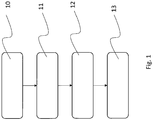
- Fig. 1 shows preferred steps of the method according to the present invention.
- Reference number 10 of Fig. 1 indicates a preferred step of detecting the type of program of a selected channel.
- Reference number 11 indicates the preferred step of assigning a coefficient to the detected program.
- Reference number 12 indicates the preferred step of extending the time delay between the selection of the new channel and displaying of the program of the selected channel according to a coefficient.
- Reference number 13 indicates the preferred step of placing content, in particular short or long scene instead of black screen
- the inventive channel tuning method preferably provides a solution to avoid black screens during channel tuning.
- the inventive channel tuning method preferably includes the following steps:
- the present invention refers to a method for channel tuning.
- the present method preferably comprises at least multiple of the following steps: Causing a channel tuning event to tune a receiver from a first channel to a second channel.
- one property of the second channel is preferably derived from an EPG.
- the preferred property can be a content class.
- the determined content class preferably represents one of a predefined number of content classes, wherein each content class preferably represents a value or function.
- the time between the channel tuning event and displaying of the program of the second channel therefore preferably depends on the respective value or function and/or the predefined data and/or signals representing visual and/or acoustic content depends on the respective value or function.
- the key point in this invention might be described as prioritizing the programming on a new channel to be tuned, and displaying, in particularly by content provider, another scene instead of black screen.
- the present invention refers to a method for channel tuning.
- This method preferably comprises at least the steps: Causing a channel tuning event to tune a receiver from a first channel to a second channel, Determining 10 at least one property of the second channel or of the program provided on the second channel, determining predefined data and/or signals representing content to be visually and/or acoustically outputted in dependency of the determined property, Routing the predefined data and/or signals from at least one source to a display means for transferring the data and/or signals into visual and/or acoustic content, Outputting 13 the visual and/or acoustic content by means of the display means after the channel tuning event was caused and before the program of the second channel is displayed.
Landscapes
- Engineering & Computer Science (AREA)
- Multimedia (AREA)
- Signal Processing (AREA)
- Databases & Information Systems (AREA)
- Business, Economics & Management (AREA)
- Marketing (AREA)
- Two-Way Televisions, Distribution Of Moving Picture Or The Like (AREA)
- Circuits Of Receivers In General (AREA)
Abstract
Determining (10) at least one property of the second channel or of the program provided on the second channel,
determining predefined data and/or signals representing content to be visually and/or acoustically outputted in dependency of the determined property,
Routing the predefined data and/or signals from at least one source to a display means for transferring the data and/or signals into visual and/or acoustic content,
Outputting (13) the visual and/or acoustic content by means of the display means after the channel tuning event was caused and before the program of the second channel is displayed.
Description
- The present invention refers to a method for channel tuning according to claim 1 of the present invention. The present invention refers according to claim 14 to a computer program product and according to claim 15 to a TV or television receiver.
- It is known that when tuning from one channel to another channel with a receiver, there is some delay of 1-2 seconds and users see a black screen within this period. In order to solve this problem, current systems use more than one tuner. But using more than one tuner increases the cost and TVs will require more area.
- It is the object of the present invention to provide a channel tuning method that reduces user discomfort during channel tuning.
- The before mentioned object is solved by a method for channel tuning according to claim 1. The inventive method preferably comprises at least the steps: Causing a channel tuning event to tune a receiver from a first channel to a second channel, determining at least one property of the second channel or of the program provided on the second channel, determining predefined data and/or signals representing visual and/or acoustic content in dependency of the determined property, routing the predefined data and/or signals from at least one source to a display means for transferring the data and/or signals into visual and/or acoustic content, outputting the visual and/or acoustic content by means of the display means after the channel tuning event was caused and before the program of the second channel is displayed. This solution is beneficial since additional content can be visually and/or acoustically outputted to the users. The receiver can be an integrated respectively internal receiver of a TV or an external receiver.
- Further preferred embodiments are subject-matter of the following specification parts and/or of the dependent claims.
- According to a further preferred embodiment of the present invention one property of the second channel is derived from an Electronic Program Guide (EPG), wherein the property represents a content class, wherein the determined content class represents one of a predefined number of content classes, wherein each content class represents a value or function, wherein the time between the channel tuning event and displaying of the program of the second channel depends on the respective value or function and/or wherein the predefined data and/or signals representing visual and/or acoustic content depends on the respective value or function. Thus, the individual content classes are having different priorities. This embodiment is beneficial since further content can be outputted and selected independently of user preferences. Thus, in case the program of the second respectively further channel is of high interest (high priority) for the user the time between the tuning event and displaying of the program of the second channel will be short, in particularly as short as possible. In such a case only content can be displayed which can be understood in a fast manner, like pictures or short notices, like EPG information or message notifications. In case the program of the second respectively further channel is of minor interest (low priority) for the user the time between the tuning event and displaying of the program of the second channel will be longer compared to a high interest program. Thus, content with more information can be outputted. Therefore, content data of different kinds can be outputted in dependency of the classification of the program of the next channel. In particular content having an amount of information above or below a predefined threshold.
- The predefined data and/or signals representing according to a further preferred embodiment of the present invention visual and/or acoustic content is/are requested by the receiver in dependency of the determined property, wherein predefined data and/or signals representing visual and/or acoustic content is preferably provided by a broadcast provider and highly preferably routed via the internet, cable, satellite or terrestrial antenna to the receiver. This embodiment is beneficial since program related content can be outputted during the channel changing event. Alternatively, or additionally the predefined data and/or signals are provided by an internet based service, in particular an instant messenger service, streaming service for music and/or video streaming, an advertising service and/or emergency service, etc. The term service can be understood in this context as software or platform or app.
- The predefined data and/or signals representing visual and/or acoustic content are according to a further preferred embodiment of the present invention defined by means of a deep learning algorithm, wherein the deep learning algorithm processes data with respect to user interests and/or zapping behavior and/or profile data of a user. This embodiment is beneficial since preferably user behavior is analyzed and the respective content is provided in dependency of the user behavior. Thus, the user experience is getting better the longer a user interacts with the receiver respectively TV respectively system.
- Profile data contains according to a further preferred embodiment of the present invention online service data representing at least one type of online service/s and/or frequency of usage of said online service/s.
- The predefined data and/or signals are according to a further preferred embodiment of the present invention representing program information and/or advertising. This embodiment is beneficial since the user can gain further information about the program of the selected channel or further advertising can be displayed. Further information about the program may contain one or multiple of the following: Start time of the program, end time of the program, name of the program, name of the next program, start time of the next program, end time of the next program, names of the actors, etc.
- The receiver derives according to a further preferred embodiment of the present invention from the channel signal or from an IP address location data representing area information, wherein the predefined data and/or signals are representing information gathered or provided in dependency of the location data. This embodiment is beneficial since a user e.g. based in London will receive notifications related to London or even to specific regions within London. Another user e.g. based in Paris will receive different notifications, in particularly related to Paris or even specific regions within Paris.
- The predefined data and/or signals represent according to a further preferred embodiment of the present invention e.g. information about the weather in the identified area or in a preferred area and/or events in the identified area or in a preferred area. This embodiment is beneficial since the amount of information necessary for communicating a weather forecast can be very small, furthermore such information can be provided with figures or icons and are therefore easily understandable within a short time. Thus, such information can be provided during channel tuning even in case the next channel has a high priority.
- Predefined data and/or signals is/are according to a further preferred embodiment of the present invention data or signals related to communication data or status data directed to a further end-user device and exchanged via a local network, like WLAN or ethernet, or an internet connection. This embodiment is beneficial since the receiver respectively TV can be set up in such a manner that data outputtable via a further end-user device, in particular computer, like smartphone, smartwatch or table PC, can be outputted in a modified or identical manner via the TV.
- The end-user device and the receiver are according to a further preferred embodiment of the present invention connected to the same local network and in case the end-user device receives a message or a call a notification is transferred from the end-user device to the receiver and processed as predefined data and/or signal for displaying, wherein the displayed information represents the complete message, parts of the message or general information about the message. Additionally, or alternatively a direct connection between the receiver or TV and the end-user device can be set up. This embodiment is beneficial since the receiver or TV does not have to be connected to the internet it is sufficient to have a local connection to one or multiple end-user devices.
- According to a further preferred embodiment of the present invention a predefined internet based service is operated on the end-user device and on the receiver, wherein the end-user device runs a software which is logged in to a specific user profile of that internet based service and wherein the receiver runs a software which is logged in to the same specific user profile of that internet based service, wherein in case a message or a call is received by that internet based service for that specific user profile the receiver processes that message or call as predefined data and/or signal for displaying, wherein the displayed information represents the complete message, parts of the message or general information about the message. This embodiment is beneficial since content of cloud based services can be used to decrease user discomfort during channel tuning.
- The internet based service is according to a further preferred embodiment of the present invention an instant messenger service or an email service or a calendar service. This embodiment is beneficial since the user has an overview about one or multiple communication paths without having to check the smartwatch, tablet PC or smartphone.
- The predefined data represents according to a further preferred embodiment of the present invention status data of an end-user device, wherein the end-user device is a smart household item, like a wash machine, dish washer, oven, refrigerator, vacuum cleaner, heater, door, window, floor or the like. This embodiment is beneficial since the user receives information about one or multiple individual devices. Thus, in case of a smart oven, the temperature of the oven, the remaining cooking time, alerts, etc. can be communicated to the end-user. In case of a dish washer or wash machine the remaining washing time, program and/or energy consumption can be communicated to the end-user. In case of windows or doors it can be communicated to the end-user if they are opened or closed. In case of a refrigerator it can be communicated to the end-user which food is present. In case of heater or floor it can be communicated to the end-user if these objects are in use or when they were in use. In case of a vacuum cleaner it can be communicated to the end-user if dirt needs to be removed from a dirt tray and/or when the next cleaning starts and/or if parts of the vacuum cleaner need to removed.
- The present invention further refers to a computer program product for executing one of the before mentioned claims.
- The present invention further refers to a TV or television receiver, wherein the TV or television receiver comprises at least a processor unit equipped to execute at least one of the preceding claims.
- Further benefits, goals and features of the present invention will be described by the following specification of the attached figure, in which exemplarily steps of the invention are illustrated. Steps of the methods according to the invention, which match at least essentially with respect to their function can be marked with the same reference sign, wherein such steps do not have to be marked or described multiple times with respect to said figure. In the following the invention is just exemplarily described with respect to the attached figure.
-
Fig. 1 shows preferred steps of the method according to the present invention. -
Reference number 10 ofFig. 1 indicates a preferred step of detecting the type of program of a selected channel.Reference number 11 indicates the preferred step of assigning a coefficient to the detected program.Reference number 12 indicates the preferred step of extending the time delay between the selection of the new channel and displaying of the program of the selected channel according to a coefficient.Reference number 13 indicates the preferred step of placing content, in particular short or long scene instead of black screen - The inventive channel tuning method preferably provides a solution to avoid black screens during channel tuning. The inventive channel tuning method preferably includes the following steps:
- Causing a channel tuning event to tune a receiver from a first channel to a second channel, determining at least one property of the second channel or of the program provided on the second channel. Determining predefined data and/or signals representing content to be visually and/or acoustically outputted in dependency of the determined property, in particularly by using EPG data and some deep learning algorithms, which is known in prior art, for detecting what kind of programming is playing in the new channel to be tuned. Thus, this step preferably causes a detection of the type of program of a selected channel. Assigning a program coefficient to the channel according to priority of the programming. This priority can be defined by user or by default. For example, a live sport game can have a high priority whereas an advertisement has a low priority. The following list exemplifies priority coefficients: Sport 5, Ads 1, Soap Opera 2, Film 4, Music 3, News 6. According to program coefficients, the time delay between tuning from a channel to another channel (another channel is prioritized) is extended. Routing the predefined data and/or signals from at least one source to a display means for transferring the data and/or signals into visual and/or acoustic content. Thus, one property of the second channel is preferably derived from an EPG, wherein the property represents a content class (Sport, Ads, Soap Opera, film, Music, or the like), wherein the determined content class represents one of a predefined number of content classes, wherein each content class represents a value or function or priority coefficients, wherein the time between the channel tuning event and displaying of the program of the second channel depends on the respective value or function or priority coefficient and/or wherein the predefined data and/or signals representing visual and/or acoustic content depends on the respective value or function or priority coefficient. A calculation of extending time delay can be performed according to following exemplary formula: Delay = (6 - Program respectively priority coefficient) x 2 sec. For example, if a programming is an ad, then its coefficient becomes 1 and the provider extends the tuning delay to 10 seconds. In this period, the content provider can display an ad of itself, or can display a coming schedule (EPG) or another video.
- Outputting the visual and/or acoustic content by means of the display means after the channel tuning event was caused and before the program of the second channel is displayed. If the new time interval is short, a short ad or video scene or some EPG data can be placed instead of black screen by the content provider or some communication data or some status data can be outputted instead of a black screen. If the new time interval is long, placing a long ad or video scene or some EPG data or some communication data or status data instead of black screen by the content provider or some communication data or some status data can be outputted instead of a black screen. The content provider might display a warning stating the type of programming and starts to display the scene that the provider wants to show. The user can be able to skip this scene after 1-2 sec of tuning. Thus, this step preferably describes placing of content, in particular short or long scene, instead of black screen.
- Thus, the present invention refers to a method for channel tuning. The present method preferably comprises at least multiple of the following steps: Causing a channel tuning event to tune a receiver from a first channel to a second channel.
- Thus, one property of the second channel is preferably derived from an EPG. The preferred property can be a content class. The determined content class preferably represents one of a predefined number of content classes, wherein each content class preferably represents a value or function. The time between the channel tuning event and displaying of the program of the second channel therefore preferably depends on the respective value or function and/or the predefined data and/or signals representing visual and/or acoustic content depends on the respective value or function.
- Routing the predefined data and/or signals from at least one source to a display means for transferring the data and/or signals into visual and/or acoustic content.
- Therefore, the key point in this invention might be described as prioritizing the programming on a new channel to be tuned, and displaying, in particularly by content provider, another scene instead of black screen.
- Thus, the present invention refers to a method for channel tuning. This method preferably comprises at least the steps: Causing a channel tuning event to tune a receiver from a first channel to a second channel, Determining 10 at least one property of the second channel or of the program provided on the second channel, determining predefined data and/or signals representing content to be visually and/or acoustically outputted in dependency of the determined property, Routing the predefined data and/or signals from at least one source to a display means for transferring the data and/or signals into visual and/or acoustic content,
Outputting 13 the visual and/or acoustic content by means of the display means after the channel tuning event was caused and before the program of the second channel is displayed. -
- 10
- step of detecting the type of program of a selected channel
- 11
- step of assigning a coefficient to the detected program
- 12
- step of extending the time delay between the selection of the new channel and displaying of the program of the selected channel according to a coefficient
- 13
- step of placing content, in particular short or long scene instead of black screen
Claims (15)
- Method for channel tuning, at least comprising the steps:Causing a channel tuning event to tune a receiver from a first channel to a second channel,Determining (10) at least one property of the second channel or of the program provided on the second channel,determining predefined data and/or signals representing content to be visually and/or acoustically outputted in dependency of the determined property,Routing the predefined data and/or signals from at least one source to a display means for transferring the data and/or signals into visual and/or acoustic content,Outputting (13) the visual and/or acoustic content by means of the display means after the channel tuning event was caused and before the program of the second channel is displayed.
- Method according to claim 1,
characterized in that
one property of the second channel is derived from an EPG,
wherein the property represents a content class,
wherein the determined content class represents one of a predefined number of content classes,
wherein each content class represents a value or function,wherein the time (13) between the channel tuning event and displaying of the program of the second channel depends on the respective value or functionand/orwherein the predefined data and/or signals representing visual and/or acoustic content depends on the respective value or function. - Method according to claim 1 or 2,
characterized in that
the predefined data and/or signals representing visual and/or acoustic content is/are requested by the receiver in dependency of the determined property,
wherein predefined data and/or signals representing visual and/or acoustic content is provided by a broadcast provider and routed via the internet, cable, satellite or terrestrial antenna to the receiver. - Method according to any of the preceding claims,
characterized in that
the predefined data and/or signals representing visual and/or acoustic content are defined by means of a deep learning algorithm, wherein the deep learning algorithm processes data with respect to user interests and/or zapping behavior and/or profile data of a user. - Method according to claim 4,
characterized in that
profile data contains online service data representing type of online service/s, frequency of usage of said online service/s, - Method according to any of the preceding claims,
characterized in that
the predefined data and/or signals representing program information and/or advertising. - Method according to any of the preceding claims,
characterized in that
the receiver derives from the channel signal or from an IP address location data representing area information, wherein the predefined data and/or signals are representing information gathered in dependency of the location data. - Method according to claim 7,
characterized in that
the predefined data and/or signals represent information about
the weather in the identified area or in a preferred area and/or
events in the identified area or in a preferred area. - Method according to any of the preceding claims,
characterized in that
predefined data and/or signals is/are data related to communication data or status data directed to a further end-user device and exchanged via an internet connection. - Method according to claim 9,
characterized in that
the end-user device and the receiver are connected to the same local network and in case the end-user device receives a message or a call a notification is transferred from the end-user device to the receiver and processed as predefined data and/or signal for displaying, wherein the displayed information represents the complete message, parts of the message or general information about the message. - Method according to claim 9,
characterized in that
a predefined internet based service is operated on the end-user device and on the receiver, wherein the end-user device runs a software which is logged in to a specific user profile of that internet based service and wherein the receiver runs a software which is logged in to the same specific user profile of that internet based service, wherein in case a message or a call is received by that internet based service for that specific user profile the receiver processes that message or call as predefined data and/or signal for displaying, wherein the displayed information represents the complete message, parts of the message or general information about the message. - Method according to claims 9, 10 or 11,
characterized in that
the internet based service is an instant messenger service or an email service or calendar service. - Method according to claims 9, 10 or 11,
characterized in that
the predefined data represents status data of an end-user device, wherein the end-user device is a smart household item, like a wash machine, dish washer, oven, refrigerator, vacuum cleaner, heater, door, window, floor or the like. - Computer program product for executing one of the before mentioned claims.
- TV or television receiver,
at least comprising a processor unit equipped to execute at least one of the preceding claims.
Priority Applications (1)
| Application Number | Priority Date | Filing Date | Title |
|---|---|---|---|
| EP17173892.5A EP3410699B1 (en) | 2017-06-01 | 2017-06-01 | Channel tuning and display of additional content |
Applications Claiming Priority (1)
| Application Number | Priority Date | Filing Date | Title |
|---|---|---|---|
| EP17173892.5A EP3410699B1 (en) | 2017-06-01 | 2017-06-01 | Channel tuning and display of additional content |
Publications (2)
| Publication Number | Publication Date |
|---|---|
| EP3410699A1 true EP3410699A1 (en) | 2018-12-05 |
| EP3410699B1 EP3410699B1 (en) | 2023-03-15 |
Family
ID=59061823
Family Applications (1)
| Application Number | Title | Priority Date | Filing Date |
|---|---|---|---|
| EP17173892.5A Active EP3410699B1 (en) | 2017-06-01 | 2017-06-01 | Channel tuning and display of additional content |
Country Status (1)
| Country | Link |
|---|---|
| EP (1) | EP3410699B1 (en) |
Citations (3)
| Publication number | Priority date | Publication date | Assignee | Title |
|---|---|---|---|---|
| US6593973B1 (en) * | 2000-03-21 | 2003-07-15 | Gateway, Inc. | Method and apparatus for providing information in video transitions |
| EP1657918A1 (en) * | 2004-11-10 | 2006-05-17 | LG Electronics Inc. | Method for providing information during a channel change in a digital broadcast receiver |
| DE102010048930A1 (en) * | 2010-10-19 | 2012-04-19 | Martin Choroba | Radio receiver e.g. analog TV, for receiving TV channels, has switching device for switching between TV channels, and control unit controlling playback of stored image data for predetermined time during switching between TV channels |
-
2017
- 2017-06-01 EP EP17173892.5A patent/EP3410699B1/en active Active
Patent Citations (3)
| Publication number | Priority date | Publication date | Assignee | Title |
|---|---|---|---|---|
| US6593973B1 (en) * | 2000-03-21 | 2003-07-15 | Gateway, Inc. | Method and apparatus for providing information in video transitions |
| EP1657918A1 (en) * | 2004-11-10 | 2006-05-17 | LG Electronics Inc. | Method for providing information during a channel change in a digital broadcast receiver |
| DE102010048930A1 (en) * | 2010-10-19 | 2012-04-19 | Martin Choroba | Radio receiver e.g. analog TV, for receiving TV channels, has switching device for switching between TV channels, and control unit controlling playback of stored image data for predetermined time during switching between TV channels |
Also Published As
| Publication number | Publication date |
|---|---|
| EP3410699B1 (en) | 2023-03-15 |
Similar Documents
| Publication | Publication Date | Title |
|---|---|---|
| KR100981700B1 (en) | Method and apparatus for forming personal commercial channel | |
| EP2574070A1 (en) | Automated environmental feedback control of display system using configurable remote module | |
| US20050034147A1 (en) | Remote presence recognition information delivery systems and methods | |
| US20140337136A1 (en) | Ad scheduling | |
| EP2779665B1 (en) | Information delivery targeting | |
| CN105871684A (en) | Method and device for displaying notice messages | |
| JP2015181288A5 (en) | ||
| CA2838982A1 (en) | Reception apparatus, method, computer program, and information providing apparatus for providing an alert service | |
| US8473978B2 (en) | Channel navigation | |
| US10809889B2 (en) | Live interactive event indication based on notification profile for display device | |
| US20220317777A1 (en) | Library and resources for third party apps for smart tv | |
| KR20100006845A (en) | A method of displaying osd items and a display apparatus using the same | |
| US8438604B2 (en) | System and method of indicating quality of service | |
| CN108401022A (en) | A kind of internet of things equipment control method and system | |
| US20110074820A1 (en) | Information displaying device and information displaying method | |
| US20140172556A1 (en) | Method and apparatus to provide advertisement data based on device information and operational information of apparatuses | |
| JP2017501491A (en) | Appliance user identification | |
| EP3410699B1 (en) | Channel tuning and display of additional content | |
| US10770057B1 (en) | Systems and methods for noise cancelation in a listening area | |
| CN114630136B (en) | Video interface interaction method, device, electronic equipment and computer readable medium | |
| KR20070086310A (en) | Alert management methods and devices | |
| KR20150011697A (en) | Method and apparatus for providing information about broadcasting program and medium thereof | |
| CN114860767A (en) | Remaining quality guarantee duration prompting method and device, storage medium and electronic device | |
| WO2014092816A2 (en) | Applications generating statistics for user behavior | |
| CN118820609A (en) | Item recommendation method, device and storage medium based on user behavior |
Legal Events
| Date | Code | Title | Description |
|---|---|---|---|
| PUAI | Public reference made under article 153(3) epc to a published international application that has entered the european phase |
Free format text: ORIGINAL CODE: 0009012 |
|
| STAA | Information on the status of an ep patent application or granted ep patent |
Free format text: STATUS: THE APPLICATION HAS BEEN PUBLISHED |
|
| AK | Designated contracting states |
Kind code of ref document: A1 Designated state(s): AL AT BE BG CH CY CZ DE DK EE ES FI FR GB GR HR HU IE IS IT LI LT LU LV MC MK MT NL NO PL PT RO RS SE SI SK SM TR |
|
| AX | Request for extension of the european patent |
Extension state: BA ME |
|
| STAA | Information on the status of an ep patent application or granted ep patent |
Free format text: STATUS: REQUEST FOR EXAMINATION WAS MADE |
|
| 17P | Request for examination filed |
Effective date: 20190604 |
|
| RBV | Designated contracting states (corrected) |
Designated state(s): AL AT BE BG CH CY CZ DE DK EE ES FI FR GB GR HR HU IE IS IT LI LT LU LV MC MK MT NL NO PL PT RO RS SE SI SK SM TR |
|
| STAA | Information on the status of an ep patent application or granted ep patent |
Free format text: STATUS: EXAMINATION IS IN PROGRESS |
|
| 17Q | First examination report despatched |
Effective date: 20201201 |
|
| GRAP | Despatch of communication of intention to grant a patent |
Free format text: ORIGINAL CODE: EPIDOSNIGR1 |
|
| STAA | Information on the status of an ep patent application or granted ep patent |
Free format text: STATUS: GRANT OF PATENT IS INTENDED |
|
| RIC1 | Information provided on ipc code assigned before grant |
Ipc: H04N 21/81 20110101ALN20220921BHEP Ipc: H04N 21/488 20110101ALN20220921BHEP Ipc: H04N 21/45 20110101ALN20220921BHEP Ipc: H04N 21/438 20110101ALI20220921BHEP Ipc: H04N 5/50 20060101AFI20220921BHEP |
|
| INTG | Intention to grant announced |
Effective date: 20221017 |
|
| GRAS | Grant fee paid |
Free format text: ORIGINAL CODE: EPIDOSNIGR3 |
|
| GRAA | (expected) grant |
Free format text: ORIGINAL CODE: 0009210 |
|
| STAA | Information on the status of an ep patent application or granted ep patent |
Free format text: STATUS: THE PATENT HAS BEEN GRANTED |
|
| AK | Designated contracting states |
Kind code of ref document: B1 Designated state(s): AL AT BE BG CH CY CZ DE DK EE ES FI FR GB GR HR HU IE IS IT LI LT LU LV MC MK MT NL NO PL PT RO RS SE SI SK SM TR |
|
| REG | Reference to a national code |
Ref country code: CH Ref legal event code: EP Ref country code: GB Ref legal event code: FG4D |
|
| REG | Reference to a national code |
Ref country code: DE Ref legal event code: R096 Ref document number: 602017066781 Country of ref document: DE |
|
| REG | Reference to a national code |
Ref country code: IE Ref legal event code: FG4D |
|
| REG | Reference to a national code |
Ref country code: AT Ref legal event code: REF Ref document number: 1554646 Country of ref document: AT Kind code of ref document: T Effective date: 20230415 |
|
| REG | Reference to a national code |
Ref country code: LT Ref legal event code: MG9D |
|
| REG | Reference to a national code |
Ref country code: NL Ref legal event code: MP Effective date: 20230315 |
|
| PG25 | Lapsed in a contracting state [announced via postgrant information from national office to epo] |
Ref country code: RS Free format text: LAPSE BECAUSE OF FAILURE TO SUBMIT A TRANSLATION OF THE DESCRIPTION OR TO PAY THE FEE WITHIN THE PRESCRIBED TIME-LIMIT Effective date: 20230315 Ref country code: NO Free format text: LAPSE BECAUSE OF FAILURE TO SUBMIT A TRANSLATION OF THE DESCRIPTION OR TO PAY THE FEE WITHIN THE PRESCRIBED TIME-LIMIT Effective date: 20230615 Ref country code: LV Free format text: LAPSE BECAUSE OF FAILURE TO SUBMIT A TRANSLATION OF THE DESCRIPTION OR TO PAY THE FEE WITHIN THE PRESCRIBED TIME-LIMIT Effective date: 20230315 Ref country code: LT Free format text: LAPSE BECAUSE OF FAILURE TO SUBMIT A TRANSLATION OF THE DESCRIPTION OR TO PAY THE FEE WITHIN THE PRESCRIBED TIME-LIMIT Effective date: 20230315 Ref country code: HR Free format text: LAPSE BECAUSE OF FAILURE TO SUBMIT A TRANSLATION OF THE DESCRIPTION OR TO PAY THE FEE WITHIN THE PRESCRIBED TIME-LIMIT Effective date: 20230315 |
|
| REG | Reference to a national code |
Ref country code: AT Ref legal event code: MK05 Ref document number: 1554646 Country of ref document: AT Kind code of ref document: T Effective date: 20230315 |
|
| PG25 | Lapsed in a contracting state [announced via postgrant information from national office to epo] |
Ref country code: SE Free format text: LAPSE BECAUSE OF FAILURE TO SUBMIT A TRANSLATION OF THE DESCRIPTION OR TO PAY THE FEE WITHIN THE PRESCRIBED TIME-LIMIT Effective date: 20230315 Ref country code: NL Free format text: LAPSE BECAUSE OF FAILURE TO SUBMIT A TRANSLATION OF THE DESCRIPTION OR TO PAY THE FEE WITHIN THE PRESCRIBED TIME-LIMIT Effective date: 20230315 Ref country code: GR Free format text: LAPSE BECAUSE OF FAILURE TO SUBMIT A TRANSLATION OF THE DESCRIPTION OR TO PAY THE FEE WITHIN THE PRESCRIBED TIME-LIMIT Effective date: 20230616 Ref country code: FI Free format text: LAPSE BECAUSE OF FAILURE TO SUBMIT A TRANSLATION OF THE DESCRIPTION OR TO PAY THE FEE WITHIN THE PRESCRIBED TIME-LIMIT Effective date: 20230315 |
|
| PG25 | Lapsed in a contracting state [announced via postgrant information from national office to epo] |
Ref country code: SM Free format text: LAPSE BECAUSE OF FAILURE TO SUBMIT A TRANSLATION OF THE DESCRIPTION OR TO PAY THE FEE WITHIN THE PRESCRIBED TIME-LIMIT Effective date: 20230315 Ref country code: RO Free format text: LAPSE BECAUSE OF FAILURE TO SUBMIT A TRANSLATION OF THE DESCRIPTION OR TO PAY THE FEE WITHIN THE PRESCRIBED TIME-LIMIT Effective date: 20230315 Ref country code: PT Free format text: LAPSE BECAUSE OF FAILURE TO SUBMIT A TRANSLATION OF THE DESCRIPTION OR TO PAY THE FEE WITHIN THE PRESCRIBED TIME-LIMIT Effective date: 20230717 Ref country code: ES Free format text: LAPSE BECAUSE OF FAILURE TO SUBMIT A TRANSLATION OF THE DESCRIPTION OR TO PAY THE FEE WITHIN THE PRESCRIBED TIME-LIMIT Effective date: 20230315 Ref country code: EE Free format text: LAPSE BECAUSE OF FAILURE TO SUBMIT A TRANSLATION OF THE DESCRIPTION OR TO PAY THE FEE WITHIN THE PRESCRIBED TIME-LIMIT Effective date: 20230315 Ref country code: CZ Free format text: LAPSE BECAUSE OF FAILURE TO SUBMIT A TRANSLATION OF THE DESCRIPTION OR TO PAY THE FEE WITHIN THE PRESCRIBED TIME-LIMIT Effective date: 20230315 Ref country code: AT Free format text: LAPSE BECAUSE OF FAILURE TO SUBMIT A TRANSLATION OF THE DESCRIPTION OR TO PAY THE FEE WITHIN THE PRESCRIBED TIME-LIMIT Effective date: 20230315 |
|
| PG25 | Lapsed in a contracting state [announced via postgrant information from national office to epo] |
Ref country code: SK Free format text: LAPSE BECAUSE OF FAILURE TO SUBMIT A TRANSLATION OF THE DESCRIPTION OR TO PAY THE FEE WITHIN THE PRESCRIBED TIME-LIMIT Effective date: 20230315 Ref country code: PL Free format text: LAPSE BECAUSE OF FAILURE TO SUBMIT A TRANSLATION OF THE DESCRIPTION OR TO PAY THE FEE WITHIN THE PRESCRIBED TIME-LIMIT Effective date: 20230315 Ref country code: IS Free format text: LAPSE BECAUSE OF FAILURE TO SUBMIT A TRANSLATION OF THE DESCRIPTION OR TO PAY THE FEE WITHIN THE PRESCRIBED TIME-LIMIT Effective date: 20230715 |
|
| REG | Reference to a national code |
Ref country code: DE Ref legal event code: R097 Ref document number: 602017066781 Country of ref document: DE |
|
| PG25 | Lapsed in a contracting state [announced via postgrant information from national office to epo] |
Ref country code: MC Free format text: LAPSE BECAUSE OF FAILURE TO SUBMIT A TRANSLATION OF THE DESCRIPTION OR TO PAY THE FEE WITHIN THE PRESCRIBED TIME-LIMIT Effective date: 20230315 |
|
| PLBE | No opposition filed within time limit |
Free format text: ORIGINAL CODE: 0009261 |
|
| STAA | Information on the status of an ep patent application or granted ep patent |
Free format text: STATUS: NO OPPOSITION FILED WITHIN TIME LIMIT |
|
| PG25 | Lapsed in a contracting state [announced via postgrant information from national office to epo] |
Ref country code: SI Free format text: LAPSE BECAUSE OF FAILURE TO SUBMIT A TRANSLATION OF THE DESCRIPTION OR TO PAY THE FEE WITHIN THE PRESCRIBED TIME-LIMIT Effective date: 20230315 Ref country code: MC Free format text: LAPSE BECAUSE OF FAILURE TO SUBMIT A TRANSLATION OF THE DESCRIPTION OR TO PAY THE FEE WITHIN THE PRESCRIBED TIME-LIMIT Effective date: 20230315 Ref country code: DK Free format text: LAPSE BECAUSE OF FAILURE TO SUBMIT A TRANSLATION OF THE DESCRIPTION OR TO PAY THE FEE WITHIN THE PRESCRIBED TIME-LIMIT Effective date: 20230315 |
|
| REG | Reference to a national code |
Ref country code: CH Ref legal event code: PL |
|
| 26N | No opposition filed |
Effective date: 20231218 |
|
| REG | Reference to a national code |
Ref country code: BE Ref legal event code: MM Effective date: 20230630 |
|
| PG25 | Lapsed in a contracting state [announced via postgrant information from national office to epo] |
Ref country code: LU Free format text: LAPSE BECAUSE OF NON-PAYMENT OF DUE FEES Effective date: 20230601 |
|
| REG | Reference to a national code |
Ref country code: IE Ref legal event code: MM4A |
|
| PG25 | Lapsed in a contracting state [announced via postgrant information from national office to epo] |
Ref country code: LU Free format text: LAPSE BECAUSE OF NON-PAYMENT OF DUE FEES Effective date: 20230601 |
|
| PG25 | Lapsed in a contracting state [announced via postgrant information from national office to epo] |
Ref country code: IE Free format text: LAPSE BECAUSE OF NON-PAYMENT OF DUE FEES Effective date: 20230601 |
|
| PG25 | Lapsed in a contracting state [announced via postgrant information from national office to epo] |
Ref country code: IE Free format text: LAPSE BECAUSE OF NON-PAYMENT OF DUE FEES Effective date: 20230601 Ref country code: CH Free format text: LAPSE BECAUSE OF NON-PAYMENT OF DUE FEES Effective date: 20230630 |
|
| PG25 | Lapsed in a contracting state [announced via postgrant information from national office to epo] |
Ref country code: IT Free format text: LAPSE BECAUSE OF FAILURE TO SUBMIT A TRANSLATION OF THE DESCRIPTION OR TO PAY THE FEE WITHIN THE PRESCRIBED TIME-LIMIT Effective date: 20230315 Ref country code: FR Free format text: LAPSE BECAUSE OF NON-PAYMENT OF DUE FEES Effective date: 20230630 Ref country code: BE Free format text: LAPSE BECAUSE OF NON-PAYMENT OF DUE FEES Effective date: 20230630 |
|
| PG25 | Lapsed in a contracting state [announced via postgrant information from national office to epo] |
Ref country code: BG Free format text: LAPSE BECAUSE OF FAILURE TO SUBMIT A TRANSLATION OF THE DESCRIPTION OR TO PAY THE FEE WITHIN THE PRESCRIBED TIME-LIMIT Effective date: 20230315 |
|
| PG25 | Lapsed in a contracting state [announced via postgrant information from national office to epo] |
Ref country code: BG Free format text: LAPSE BECAUSE OF FAILURE TO SUBMIT A TRANSLATION OF THE DESCRIPTION OR TO PAY THE FEE WITHIN THE PRESCRIBED TIME-LIMIT Effective date: 20230315 |
|
| PGFP | Annual fee paid to national office [announced via postgrant information from national office to epo] |
Ref country code: DE Payment date: 20250618 Year of fee payment: 9 |
|
| PG25 | Lapsed in a contracting state [announced via postgrant information from national office to epo] |
Ref country code: CY Free format text: LAPSE BECAUSE OF FAILURE TO SUBMIT A TRANSLATION OF THE DESCRIPTION OR TO PAY THE FEE WITHIN THE PRESCRIBED TIME-LIMIT; INVALID AB INITIO Effective date: 20170601 |
|
| PG25 | Lapsed in a contracting state [announced via postgrant information from national office to epo] |
Ref country code: HU Free format text: LAPSE BECAUSE OF FAILURE TO SUBMIT A TRANSLATION OF THE DESCRIPTION OR TO PAY THE FEE WITHIN THE PRESCRIBED TIME-LIMIT; INVALID AB INITIO Effective date: 20170601 |
|
| PGFP | Annual fee paid to national office [announced via postgrant information from national office to epo] |
Ref country code: GB Payment date: 20260629 Year of fee payment: 10 |
|
| PGFP | Annual fee paid to national office [announced via postgrant information from national office to epo] |
Ref country code: TR Payment date: 20260525 Year of fee payment: 10 |