EP3410344A1 - Image analysis device, image analysis method, and computer-readable medium - Google Patents
Image analysis device, image analysis method, and computer-readable medium Download PDFInfo
- Publication number
- EP3410344A1 EP3410344A1 EP18161166.6A EP18161166A EP3410344A1 EP 3410344 A1 EP3410344 A1 EP 3410344A1 EP 18161166 A EP18161166 A EP 18161166A EP 3410344 A1 EP3410344 A1 EP 3410344A1
- Authority
- EP
- European Patent Office
- Prior art keywords
- score information
- context
- shape
- region
- information
- Prior art date
- Legal status (The legal status is an assumption and is not a legal conclusion. Google has not performed a legal analysis and makes no representation as to the accuracy of the status listed.)
- Granted
Links
Images




Classifications
-
- G—PHYSICS
- G06—COMPUTING OR CALCULATING; COUNTING
- G06V—IMAGE OR VIDEO RECOGNITION OR UNDERSTANDING
- G06V20/00—Scenes; Scene-specific elements
- G06V20/50—Context or environment of the image
- G06V20/56—Context or environment of the image exterior to a vehicle by using sensors mounted on the vehicle
- G06V20/58—Recognition of moving objects or obstacles, e.g. vehicles or pedestrians; Recognition of traffic objects, e.g. traffic signs, traffic lights or roads
-
- G—PHYSICS
- G06—COMPUTING OR CALCULATING; COUNTING
- G06F—ELECTRIC DIGITAL DATA PROCESSING
- G06F18/00—Pattern recognition
- G06F18/20—Analysing
- G06F18/21—Design or setup of recognition systems or techniques; Extraction of features in feature space; Blind source separation
- G06F18/214—Generating training patterns; Bootstrap methods, e.g. bagging or boosting
-
- G—PHYSICS
- G06—COMPUTING OR CALCULATING; COUNTING
- G06F—ELECTRIC DIGITAL DATA PROCESSING
- G06F18/00—Pattern recognition
- G06F18/20—Analysing
- G06F18/21—Design or setup of recognition systems or techniques; Extraction of features in feature space; Blind source separation
- G06F18/217—Validation; Performance evaluation; Active pattern learning techniques
-
- G—PHYSICS
- G06—COMPUTING OR CALCULATING; COUNTING
- G06F—ELECTRIC DIGITAL DATA PROCESSING
- G06F18/00—Pattern recognition
- G06F18/20—Analysing
- G06F18/24—Classification techniques
- G06F18/241—Classification techniques relating to the classification model, e.g. parametric or non-parametric approaches
- G06F18/2413—Classification techniques relating to the classification model, e.g. parametric or non-parametric approaches based on distances to training or reference patterns
-
- G—PHYSICS
- G06—COMPUTING OR CALCULATING; COUNTING
- G06N—COMPUTING ARRANGEMENTS BASED ON SPECIFIC COMPUTATIONAL MODELS
- G06N3/00—Computing arrangements based on biological models
- G06N3/02—Neural networks
- G06N3/04—Architecture, e.g. interconnection topology
-
- G—PHYSICS
- G06—COMPUTING OR CALCULATING; COUNTING
- G06N—COMPUTING ARRANGEMENTS BASED ON SPECIFIC COMPUTATIONAL MODELS
- G06N3/00—Computing arrangements based on biological models
- G06N3/02—Neural networks
- G06N3/04—Architecture, e.g. interconnection topology
- G06N3/0464—Convolutional networks [CNN, ConvNet]
-
- G—PHYSICS
- G06—COMPUTING OR CALCULATING; COUNTING
- G06N—COMPUTING ARRANGEMENTS BASED ON SPECIFIC COMPUTATIONAL MODELS
- G06N3/00—Computing arrangements based on biological models
- G06N3/02—Neural networks
- G06N3/08—Learning methods
- G06N3/09—Supervised learning
-
- G—PHYSICS
- G06—COMPUTING OR CALCULATING; COUNTING
- G06T—IMAGE DATA PROCESSING OR GENERATION, IN GENERAL
- G06T7/00—Image analysis
- G06T7/10—Segmentation; Edge detection
- G06T7/11—Region-based segmentation
-
- G—PHYSICS
- G06—COMPUTING OR CALCULATING; COUNTING
- G06V—IMAGE OR VIDEO RECOGNITION OR UNDERSTANDING
- G06V10/00—Arrangements for image or video recognition or understanding
- G06V10/20—Image preprocessing
- G06V10/26—Segmentation of patterns in the image field; Cutting or merging of image elements to establish the pattern region, e.g. clustering-based techniques; Detection of occlusion
- G06V10/267—Segmentation of patterns in the image field; Cutting or merging of image elements to establish the pattern region, e.g. clustering-based techniques; Detection of occlusion by performing operations on regions, e.g. growing, shrinking or watersheds
-
- G—PHYSICS
- G06—COMPUTING OR CALCULATING; COUNTING
- G06V—IMAGE OR VIDEO RECOGNITION OR UNDERSTANDING
- G06V10/00—Arrangements for image or video recognition or understanding
- G06V10/40—Extraction of image or video features
- G06V10/44—Local feature extraction by analysis of parts of the pattern, e.g. by detecting edges, contours, loops, corners, strokes or intersections; Connectivity analysis, e.g. of connected components
- G06V10/443—Local feature extraction by analysis of parts of the pattern, e.g. by detecting edges, contours, loops, corners, strokes or intersections; Connectivity analysis, e.g. of connected components by matching or filtering
- G06V10/449—Biologically inspired filters, e.g. difference of Gaussians [DoG] or Gabor filters
- G06V10/451—Biologically inspired filters, e.g. difference of Gaussians [DoG] or Gabor filters with interaction between the filter responses, e.g. cortical complex cells
- G06V10/454—Integrating the filters into a hierarchical structure, e.g. convolutional neural networks [CNN]
-
- G—PHYSICS
- G06—COMPUTING OR CALCULATING; COUNTING
- G06V—IMAGE OR VIDEO RECOGNITION OR UNDERSTANDING
- G06V30/00—Character recognition; Recognising digital ink; Document-oriented image-based pattern recognition
- G06V30/10—Character recognition
- G06V30/26—Techniques for post-processing, e.g. correcting the recognition result
- G06V30/262—Techniques for post-processing, e.g. correcting the recognition result using context analysis, e.g. lexical, syntactic or semantic context
- G06V30/274—Syntactic or semantic context, e.g. balancing
Definitions
- the present disclosure relates to an image analysis device, an image analysis method, and a computer-readable medium.
- vehicles are controlled by analyzing images taken by cameras.
- context analysis and shape analysis are performed on images taken by cameras.
- semantic information about each pixel in the image is predicted.
- the semantic information represents which kind of category an object belongs to, e.g., the object is a vehicle or a human.
- the image analysis is achieved by a neural network device.
- the context analysis and the shape analysis need to be performed by different networks. Even when the network for context analysis and the network for shape analysis are simply connected, the analysis performance does not improve.
- an image analysis device includes a feature amount calculation unit, a context calculation unit, a shape calculation unit, a correction unit, and an output unit.
- the feature amount calculation unit is configured to calculate a feature map of a target image.
- the context calculation unit is configured to calculate context score information representing context of each pixel in the target image on the basis of the feature map.
- the shape calculation unit is configured to calculate shape score information representing a shape of an object in at least one region included in the target image on the basis of the feature map.
- the correction unit is configured to correct the shape score information in the at least one region using the context score information in a corresponding region.
- the output unit is configured to output the corrected shape score information in the at least one region.
- An image analysis device 10 analyzes a target image, and outputs context score information and shape score information.
- FIG. 1 is a schematic diagram illustrating a structure of the image analysis device 10 in the arrangement.
- the image analysis device 10 includes an image acquisition unit 12, a feature amount calculation unit 14, a context calculation unit 16, a candidate region acquisition unit 18, a shape calculation unit 20, an extraction unit 22, a correction unit 24, and an output unit 26.
- the image acquisition unit 12 acquires a target image from a camera, for example.
- the image acquisition unit 12 may acquire a target image from a storage device storing images or by receiving the target image via a network, for example.
- the image acquisition unit 12 sends the acquired target image to the feature amount calculation unit 14.
- the feature amount calculation unit 14 receives the target image from the image acquisition unit 12.
- the feature amount calculation unit 14 calculates a feature map including a feature amount of the target image on the basis of the target image.
- the feature amount calculation unit 14 calculates the feature map including the feature amount used by the context calculation unit 16, the candidate region acquisition unit 18, and the shape calculation unit 20, which are subsequent units.
- the feature amount calculation unit 14 may calculate the feature map using a convolutional neural network (CNN), for example.
- CNN convolutional neural network
- the feature amount calculation unit 14 may calculates a feature map including a plurality of kinds of feature amounts.
- the feature amount calculation unit 14 sends the produced feature map to the context calculation unit 16, the candidate region acquisition unit 18, and the shape calculation unit 20.
- the context calculation unit 16 receives the feature map from the feature amount calculation unit 14.
- the context calculation unit 16 calculates the context score information representing context of each pixel in the target image on the basis of the feature map.
- the context is semantic information representing meaning of the object.
- the context score information includes a plurality of context scores.
- the context score may be identification information that identifies the context.
- the context score may be information indicating which category the object belongs to, for example.
- the category to which the object belongs is information that identifies whether the object is a car, a human, a road, or the sky, for example.
- the context score may be geometric information such as a distance from a reference position (e.g., a camera position) to the object.
- the context calculation unit 16 calculates the context score for each pixel in the target image.
- the pixel represents a location of a tiny region on the image.
- the pixel may not necessarily coincide with the pixel position in data.
- the pixel may be a pixel unit in data representing the target image, a unit combining two adjacent pixels in the data, or a unit combining four adjacent pixels in the data.
- the context calculation unit 16 calculates, for each pixel included in the target image, the context score representing whether the pixel indicates a car, a human, a road, or another object.
- the context calculation unit 16 can calculate the context score by a semantic segmentation technique described in Jonathan Long et al., "Fully convolutional networks for semantic segmentation", 2015 IEEE Conference on Computer Vision and Pattern Recognition (CVPR), Boston, MA, 2015, pp. 3431-3440 .
- the context calculation unit 16 can calculate, for each pixel in the target image, the context score representing a prior probability for each predetermined category, using the technique described in the foregoing literature.
- the context calculation unit 16 sends the calculated context score information to the extraction unit 22 and the output unit 26.
- the candidate region acquisition unit 18 acquires region information specifying each of at least one candidate region included in the target image.
- the candidate region is a partial region in which the object is probably present in the target image.
- the candidate region is sufficiently smaller than the target image and sufficiently larger than the pixel.
- the candidate region may be a region a user is highly interested in, which is called a region of interest (ROI), or a region in which an important object is highly probably included, for example.
- ROI region of interest
- the candidate region may not coincide with a correct position of the object, for example.
- the candidate region acquisition unit 18 may produce the region information on the basis of the feature map.
- the candidate region acquisition unit 18 may acquire, from an external device, the region information manually input by an operator, for example.
- the candidate region acquisition unit 18 may acquire the candidate regions in each of which the car is probably included and the candidate region in which the human is probably included.
- the candidate region acquisition unit 18 may acquire the candidate region having a rectangular shape, for example.
- the shape of the candidate region is not limited to the rectangle.
- the candidate region acquisition unit 18 may acquire the candidate region having another shape.
- the candidate region acquisition unit 18 sends the acquired region information to the shape calculation unit 20 and the extraction unit 22.
- the shape calculation unit 20 receives the feature map from the feature amount calculation unit 14.
- the shape calculation unit 20 receives the region information from the candidate region acquisition unit 18.
- the shape calculation unit 20 calculates the shape score information representing the shape of the object, in each of at least one candidate region included in the target image on the basis of the feature map and the region information.
- the object may be the whole of the object such as a human or a car, or a specific part of the object such as an arm of a human or a head of a human.
- the shape score information includes a plurality of shape scores.
- the shape score may be mask information that indicates whether the object is present for each pixel, for example.
- the shape score may be information that indicates one as the pixel representing the object and zero as the pixel representing a thing other than the object.
- the shape calculation unit 20 may calculate the shape score information that indicates one as the pixel representing the object (the car or the human) in the candidate region and zero as the pixel representing a thing other than the object in the candidate region.
- the shape calculation unit 20 can calculate the shape score information using the semantic segmentation scheme described in Y. Li, H. Qi, J. Dai, X. Ji, and Y. Wei., "Fully convolutional instance-aware semantic segmentation.”, arXiv: 1611.07709, 2016 .
- the shape calculation unit 20 can calculate, as the shape score information for each candidate region (e.g., ROI), a likelihood score map representing a likelihood of each pixel by the technique using a position-sensitive score map described in the foregoing literature.
- the shape calculation unit 20 sends, to the extraction unit 22, the shape score information in each of at least one candidate region included in the target image.
- the extraction unit 22 acquires the context score information in the target image from the context calculation unit 16.
- the extraction unit 22 acquires the region information from the candidate region acquisition unit 18.
- the extraction unit 22 acquires, from the shape calculation unit 20, the shape score information in each of at least one candidate region included in the target image.
- the extraction unit 22 extracts the context score information in each of at least one candidate region on the basis of the context score information in the target image and the region information.
- the extraction unit 22 cuts out the context score information about a part corresponding to each candidate region from the context score information in the target image.
- the extraction unit 22 sends, to the correction unit 24, the shape score information and the context score information in association with each other (e.g., as a pair), for each of at least one candidate region.
- the more detailed structure of the extraction unit 22 is further described later with reference to FIG. 5 .
- the correction unit 24 acquires, from the extraction unit 22, the shape score information and the context score information that are associated with each other for each of at least one candidate region.
- the correction unit 24 corrects the shape score information in each of at least one candidate region using the context score information in the corresponding candidate region. For example, the correction unit 24 calculates the corrected shape score information on the basis of values obtained by multiplying the shape score by the context score for each pixel.
- the correction unit 24 corrects the shape score information in each of at least one candidate region by calculation based on expression (1).
- J n f I n S n
- J n represents the shape score information after the correction in the nth candidate region (n is an integer one or more)
- I n represents the shape score information before the correction in the nth candidate region
- S n represents the context score information in the nth candidate region.
- f() is a predetermined function that corrects the shape score information using the context score information.
- f() represents a function that multiples a plurality of shape scores included in the shape information by a plurality of context scores included in the context score information for each pixel.
- the function f() may further multiply the multiplied values by a certain coefficient, or additionally perform another calculation on the multiplied values.
- the function f() is not limited to the function that multiples the shape score by the context score for each pixel.
- the function f() may be another function.
- the pixels included in an identical object highly probably have the same context.
- the context score information and the shape score information are highly correlated. Because of the high correlation, the correction unit 24 can increase accuracy of the shape score information by correcting the shape score information using the context score information.
- the correction unit 24 sends the corrected shape score information in each of at least one candidate region to the output unit 26.
- the output unit 26 acquires the context score information in the target image from the context calculation unit 16.
- the output unit 26 acquires the corrected shape score information in each of at least one candidate region from the correction unit 24.
- the output unit 26 outputs, to the external device, the context score information in the target image and the corrected shape score information in each of at least one candidate region.
- FIG. 5 is a schematic diagram illustrating an exemplary structure of the extraction unit 22.
- the extraction unit 22 includes a context score extraction unit 32, a shape score acquisition unit 34, and an association unit 36.
- the context score extraction unit 32 acquires the context score information in the target image from the context calculation unit 16.
- the context score extraction unit 32 acquires the region information from the candidate region acquisition unit 18.
- the context score extraction unit 32 extracts the context score information in each of at least one candidate region from the context score information in the target image on the basis of the region information.
- the shape score acquisition unit 34 acquires the shape score information in each of at least one candidate region from the shape calculation unit 20.
- the association unit 36 acquires the context score information in each of at least one candidate region from the context score extraction unit 32.
- the association unit 36 acquires the shape score information in each of at least one candidate region from the shape score acquisition unit 34.
- the association unit 36 outputs the context score information and the shape score information in association with each other for each of at least one candidate region, to the correction unit 24.
- the association unit 36 may output the context score information and the shape score information by arraying them in the order of identification numbers allocated for the respective candidate regions, for example.
- FIG. 6 is a flowchart illustrating processing performed by the image analysis device 10.
- the image analysis device 10 performs the processing in accordance with the steps in the flowchart illustrated in FIG. 6 .
- the image acquisition unit 12 acquires a target image.
- the feature amount calculation unit 14 calculates the feature map including the feature amount of the target image on the basis of the target image.
- the context calculation unit 16 calculates the context score information representing the context of each pixel in the target image on the basis of the feature map.
- the context calculation unit 16 may calculate the context score information after S104 or S105, or may calculate the context score information in parallel with (e.g., simultaneously) S104 or S105.
- the candidate region acquisition unit 18 acquires the region information specifying each of at least one candidate region included in the target image.
- the candidate region acquisition unit 18 may produce the region information on the basis of the feature map or acquire the region information from the external device.
- the shape calculation unit 20 calculates the shape score information representing the shape of the object in each of at least one candidate region included in the target image, on the basis of the feature map and the region information.
- the extraction unit 22 extracts the context score information in each of at least one candidate region from the context score information in the target image.
- the extraction unit 22 cuts out, for each candidate region, the context score information about a part corresponding to the candidate region from the context score information in the target image.
- the extraction unit 22 associates the shape score information and the context score information with each other for each of at least one candidate region.
- the correction unit 24 corrects the shape score information in each of at least one candidate region using the context score information in the corresponding candidate region. For example, the correction unit 24 calculates the corrected shape score information on the basis of values obtained by multiplying a plurality of shape scores included in the shape score information by a plurality of context scores included in the context score information for each pixel.
- the output unit 26 outputs, to the external device, the context score information in the target image and the corrected shape score information in each of at least one candidate region.
- the image analysis device 10 ends the processing of the target image subjected to the analysis. Then, the image analysis device 10 performs the processing from S101 to S108 on the next target image, for example.
- the image analysis device 10 according to the arrangement can calculate the context score information in the target image and the shape score information in each of at least one candidate region. Furthermore, the image analysis device 10 according to the arrangement corrects the shape score information using the context score information, thereby making it possible to accurately calculate the shape score information in each of at least one candidate region.
- FIG. 7 is a schematic diagram illustrating each structure of a neural network device 50 and a learning device 100 according to the arrangement.
- the image analysis device 10 according to the arrangement achieves the neural network device 50 illustrated in FIG. 7 by causing the neural network device 50 to perform learning using the learning device 100, for example.
- the neural network device 50 includes an image acquisition layer 62, a feature amount calculation layer 64, a context calculation layer 66, a candidate region acquisition layer 68, a shape calculation layer 70, an extraction layer 72, a correction layer 74, and an output layer 76.
- Each of the layers includes a single or multiple sub-network units.
- the sub-network unit acquires a plurality of signals (pieces of information) from the preceding layer, performs arithmetic processing on the acquired multiple signals, and sends a plurality of signals obtained as the result of the arithmetic processing to the succeeding layer.
- Some of the sub-network units may each include a return path in which its resulting signal returns to the sub-network unit.
- Each of the sub-network unit performs a certain function arithmetic operation such as addition, multiplication, convolution operation, or a soft-max function on the multiple signals, for example.
- parameters "e.g., weights for multiplication or offsets for addition) for performing the arithmetic processing on the signals are set.
- the parameters for each sub-network unit are adjusted by the learning device 100 in learning.
- the image acquisition layer 62 acquires a target image from the external device.
- the image acquisition layer 62 outputs values of a plurality of pixels included in the acquired target image to the feature amount calculation layer 64 serving as the succeeding layer.
- the image acquisition layer 62 functions as the image acquisition unit 12 illustrated in FIG. 1 as a result of the parameters for the sub-network units included in the image acquisition layer 62 being adjusted by the learning device 100.
- the feature amount calculation layer 64 receives the multiple values of the pixels included in the target image from the image acquisition layer 62, and outputs the feature map including the feature amount of the target image.
- the feature amount calculation layer 64 functions as the feature amount calculation unit 14 illustrated in FIG. 1 as a result of the parameters for the sub-network units included in the feature amount calculation layer 64 being adjusted by the learning device 100.
- the context calculation layer 66 receives the feature map from the feature amount calculation layer 64, and outputs the context score information representing the context of each pixel in the target image.
- the context calculation layer 66 functions as the context calculation unit 16 illustrated in FIG. 1 as a result of the parameters for the sub-network units included in the context calculation layer 66 being adjusted by the learning device 100.
- the candidate region acquisition layer 68 receives the feature map from the feature amount calculation layer 64, and outputs the region information specifying each of at least one candidate region included in the target image.
- the candidate region acquisition layer 68 functions as the candidate region acquisition unit 18 illustrated in FIG. 1 as a result of the parameters for the sub-network units included in the candidate region acquisition layer 68 being adjusted by the learning device 100.
- the candidate region acquisition layer 68 may functions as an input layer that receives the region information from the external device and outputs the region information to other layers.
- the shape calculation layer 70 receives the feature map from the feature amount calculation layer 64.
- the shape calculation layer 70 receives the region information from the candidate region acquisition layer 68.
- the shape calculation layer 70 outputs the shape score information representing the shape of the object in each of at least one candidate region included in the target image.
- the shape calculation layer 70 functions as the shape calculation unit 20 illustrated in FIG. 1 as a result of the parameters for the sub-network units included in the shape calculation layer 70 being adjusted by the learning device 100.
- the extraction layer 72 receives the context score information in the target image from the context calculation layer 66, the region information from the candidate region acquisition layer 68, and the shape score information in each of at least one candidate region from the shape calculation layer 70.
- the extraction layer 72 outputs the context score information in each of at least one candidate region.
- the extraction layer 72 outputs the context score information and the shape score information in association with each other for each of at least one candidate region, for example.
- the extraction layer 72 functions as the extraction unit 22 illustrated in FIG. 1 as a result of the parameters for the sub-network units included in the extraction layer 72 being adjusted by the learning device 100.
- the correction layer 74 acquires the shape score information and the context score information in each of at least one candidate region from the extraction layer 72.
- the correction layer 74 outputs the corrected shape score information in each of at least one candidate region.
- the correction layer 74 functions as the correction unit 24 illustrated in FIG. 1 as a result of the parameters for the sub-network units included in the correction layer 74 being adjusted by the learning device 100.
- the output layer 76 receives the corrected shape score information in each of at least one candidate region from the correction layer 74.
- the output layer 76 receives the context score information in the target image from the context calculation layer 66.
- the output layer 76 outputs, to the external device, the corrected shape score information in each of at least one candidate region and the context score information in the target image.
- the output layer 76 functions as the output unit 26 illustrated in FIG. 1 as a result of the parameters for the sub-network units included in the output layer 76 being adjusted by the learning device 100.
- the learning device 100 trains the neural network device 50.
- the learning device 100 adjusts the multiple parameters set to the neural network device 50 before the neural network device 50 is used.
- the learning device 100 includes a training data acquisition unit 112, a control unit 114, an error calculation unit 116, and an adjustment unit 118.
- the training data acquisition unit 112 acquires training data from the external device.
- the training data includes a set of training image data, training context score information, and training shape score information in each of at least one candidate region.
- the candidate region acquisition layer 68 acquires the region information from the external device, the training data further includes the region information.
- the control unit 114 sends the training image data acquired by the training data acquisition unit 112 to the neural network device 50, and causes the neural network device 50 to calculate the context score information and the shape score information in each of at least one candidate region.
- the control unit 114 further sends the region information to the neural network device 50.
- the error calculation unit 116 calculates a first error between the context score information calculated by the neural network device 50 using the training image data sent to the neural network device 50 and the training context score information.
- the error calculation unit 116 calculates a second error between the shape score information in each of at least one candidate region calculated by the neural network device 50 using the training image data sent to the neural network device 50 and the corresponding training shape score information.
- the adjustment unit 118 adjusts the multiple parameters set to the neural network device 50 on the basis of the first error and the second error in relation to each of at least one candidate region.
- the adjustment unit 118 adjusts the multiple parameters such that a sum of the first error and the second error is minimized, for example.
- the adjustment unit 118 adjusts the multiple parameters by using back-propagated gradients in a technique such as back-propagation, for example.
- the learning device 100 can perform training for calculating the context score information and training for calculating the shape score information simultaneously.
- the learning device 100 thus, can cause the neural network device 50 to effectively perform learning, thereby making it possible for the neural network device 50 to function as the accurate image analysis device 10.
- FIG. 8 is a hardware block diagram of an information processing apparatus 200.
- the information processing apparatus 200 is achieved by a hardware structure in the same manner as that of a typical computer, for example.
- the information processing apparatus 200 can function as the image analysis device 10, the neural network device 50, or the learning device 100 as a result of executing a certain corresponding program.
- the information processing apparatus 200 includes a central processing unit (CPU) 202, a read only memory (ROM) 204, a random access memory (RAM) 206, an operation unit 208, a display unit 210, a communication device 212, and a storage device 214.
- the respective components are coupled to each other through a bus.
- the CPU 202 which is a processor performing information processing, loads computer programs stored in the storage device 214 in the RAM 206, and executes the programs to control respective units such that input and output are performed and data is processed.
- the CPU 202 may be a single processor or composed of a plurality of processors.
- the information processing apparatus 200 may include a processor other than the CPU 202 for executing the programs.
- the ROM 204 stores therein a start program that reads a boot program from the storage device 214 to the RAM 206.
- the RAM 206 stores therein data as a working area of the CPU 202.
- the operation unit 208 which is an input device such as a mouse or a keyboard, receives information input by the user's operation as an instruction signal, and outputs the instruction signal to the CPU 202.
- the display unit 210 is a display such as a liquid crystal display (LCD).
- the display unit 210 displays various types of information on the basis of display signals from the CPU 202.
- the communication device 212 communicates with external instruments via a network, for example.
- the storage device 214 is a hard disc drive or a flash memory, for example.
- the storage device 214 stores therein computer programs and an operating system that are executed by the information processing apparatus 200.
- the programs executed by the information processing apparatus 200 in the arrangement are recorded and provided on a computer-readable medium such as a compact disc read only memory (CD-ROM), a flexible disk (FD), a compact disc readable (CD-R), and a digital versatile disc (DVD) as an installable or executable file.
- the programs executed by the information processing apparatus 200 in the arrangement may be stored in a computer connected to a network such as the Internet, and provided by being downloaded via the network.
- the programs executed by the information processing apparatus 200 in the arrangement may be provided or distributed via a network such as the Internet.
- the programs in the arrangement may be embedded and provided in the ROM 204, for example.
- the program causing the information processing apparatus 200 to function as the image analysis device 10 includes an image acquisition module, a feature amount calculation module, a context calculation module, a candidate region acquisition module, a shape calculation module, an extraction module, a correction module, and an output module.
- the processor (CPU 202) of the information processing apparatus 200 reads the program from the storage medium (e.g., the storage device 214) and executes the program.
- the respective modules are loaded into a main storage device (RAM 206).
- the processor (CPU 202) functions as the image acquisition unit 12, the feature amount calculation unit 14, the context calculation unit 16, the candidate region acquisition unit 18, the shape calculation unit 20, the extraction unit 22, the correction unit 24, and the output unit 26.
- a part or all of the modules may be achieved by hardware implementation.
- the program causing the information processing apparatus 200 to function as the neural network device 50 includes an image acquisition layer module, a feature amount calculation layer module, a context calculation layer module, a candidate region acquisition layer module, a shape calculation layer module, an extraction layer module, a correction layer module, and an output layer module.
- the processor (CPU 202) of the information processing apparatus 200 reads the program from the storage medium (e.g., the storage device 214) and executes the program.
- the respective modules are loaded into the main storage device (RAM 206).
- the processor (CPU 202) functions as the image acquisition layer 62, the feature amount calculation layer 64, the context calculation layer 66, the candidate region acquisition layer 68, the shape calculation layer 70, the extraction layer 72, the correction layer 74, and the output layer 76.
- a part or all of the modules may be achieved by hardware implementation.
- the program causing the information processing apparatus 200 to function as the learning device 100 includes a training data acquisition module, a control module, an error calculation module, and an adjustment module.
- the processor (CPU 202) of the information processing apparatus 200 reads the program from the storage medium (e.g., the storage device 214) and executes the program.
- the respective modules are loaded into the main storage device (RAM 206).
- the processor (CPU 202) functions as the training data acquisition unit 112, the control unit 114, the error calculation unit 116, and the adjustment unit 118. A part or all of the modules may be achieved by hardware implementation.
Landscapes
- Engineering & Computer Science (AREA)
- Theoretical Computer Science (AREA)
- Physics & Mathematics (AREA)
- General Physics & Mathematics (AREA)
- Data Mining & Analysis (AREA)
- Evolutionary Computation (AREA)
- Life Sciences & Earth Sciences (AREA)
- Artificial Intelligence (AREA)
- Computer Vision & Pattern Recognition (AREA)
- Multimedia (AREA)
- General Engineering & Computer Science (AREA)
- General Health & Medical Sciences (AREA)
- Computational Linguistics (AREA)
- Molecular Biology (AREA)
- Biomedical Technology (AREA)
- Health & Medical Sciences (AREA)
- Bioinformatics & Cheminformatics (AREA)
- Evolutionary Biology (AREA)
- Bioinformatics & Computational Biology (AREA)
- Biophysics (AREA)
- Computing Systems (AREA)
- Mathematical Physics (AREA)
- Software Systems (AREA)
- Biodiversity & Conservation Biology (AREA)
- Image Analysis (AREA)
Abstract
Description
- The present disclosure relates to an image analysis device, an image analysis method, and a computer-readable medium.
- In a field of autonomous driving of vehicles, vehicles are controlled by analyzing images taken by cameras. In such a technical field, context analysis and shape analysis are performed on images taken by cameras. In the context analysis performed on an image taken by a camera, semantic information about each pixel in the image is predicted. The semantic information represents which kind of category an object belongs to, e.g., the object is a vehicle or a human.
- It is also known that the image analysis is achieved by a neural network device. The context analysis and the shape analysis, however, need to be performed by different networks. Even when the network for context analysis and the network for shape analysis are simply connected, the analysis performance does not improve.
-
-
FIG. 1 is a schematic structural diagram of an image analysis device according to an arrangement; -
FIG. 2 is a schematic diagram illustrating context score information in a target image; -
FIG. 3 is a schematic diagram illustrating exemplary candidate regions included in the target image; -
FIG. 4 is a schematic diagram illustrating exemplary shape score information; -
FIG. 5 is a schematic diagram illustrating an exemplary structure of an extraction unit; -
FIG. 6 is a flowchart illustrating processing performed by the image analysis device; -
FIG. 7 is a schematic diagram illustrating each structure of a neural network device and a learning device; and -
FIG. 8 is a hardware block diagram of an information processing apparatus according to the arrangement. - According to an arrangement, an image analysis device includes a feature amount calculation unit, a context calculation unit, a shape calculation unit, a correction unit, and an output unit. The feature amount calculation unit is configured to calculate a feature map of a target image. The context calculation unit is configured to calculate context score information representing context of each pixel in the target image on the basis of the feature map. The shape calculation unit is configured to calculate shape score information representing a shape of an object in at least one region included in the target image on the basis of the feature map. The correction unit is configured to correct the shape score information in the at least one region using the context score information in a corresponding region. The output unit is configured to output the corrected shape score information in the at least one region.
- The following describes an arrangement with reference to the accompanying drawings. An
image analysis device 10 according to the arrangement analyzes a target image, and outputs context score information and shape score information. -
FIG. 1 is a schematic diagram illustrating a structure of theimage analysis device 10 in the arrangement. Theimage analysis device 10 includes an image acquisition unit 12, a featureamount calculation unit 14, acontext calculation unit 16, a candidateregion acquisition unit 18, ashape calculation unit 20, anextraction unit 22, acorrection unit 24, and anoutput unit 26. - The image acquisition unit 12 acquires a target image from a camera, for example. The image acquisition unit 12 may acquire a target image from a storage device storing images or by receiving the target image via a network, for example. The image acquisition unit 12 sends the acquired target image to the feature
amount calculation unit 14. - The feature
amount calculation unit 14 receives the target image from the image acquisition unit 12. The featureamount calculation unit 14 calculates a feature map including a feature amount of the target image on the basis of the target image. The featureamount calculation unit 14 calculates the feature map including the feature amount used by thecontext calculation unit 16, the candidateregion acquisition unit 18, and theshape calculation unit 20, which are subsequent units. The featureamount calculation unit 14 may calculate the feature map using a convolutional neural network (CNN), for example. The featureamount calculation unit 14 may calculates a feature map including a plurality of kinds of feature amounts. The featureamount calculation unit 14 sends the produced feature map to thecontext calculation unit 16, the candidateregion acquisition unit 18, and theshape calculation unit 20. - The
context calculation unit 16 receives the feature map from the featureamount calculation unit 14. Thecontext calculation unit 16 calculates the context score information representing context of each pixel in the target image on the basis of the feature map. - The context is semantic information representing meaning of the object. The context score information includes a plurality of context scores. The context score may be identification information that identifies the context. The context score may be information indicating which category the object belongs to, for example. The category to which the object belongs is information that identifies whether the object is a car, a human, a road, or the sky, for example. The context score may be geometric information such as a distance from a reference position (e.g., a camera position) to the object.
- The
context calculation unit 16 calculates the context score for each pixel in the target image. The pixel represents a location of a tiny region on the image. The pixel may not necessarily coincide with the pixel position in data. For example, the pixel may be a pixel unit in data representing the target image, a unit combining two adjacent pixels in the data, or a unit combining four adjacent pixels in the data. - For example, when analyzing an image taken by an on-vehicle camera, as illustrated in
FIG. 2 , thecontext calculation unit 16 calculates, for each pixel included in the target image, the context score representing whether the pixel indicates a car, a human, a road, or another object. Thecontext calculation unit 16 can calculate the context score by a semantic segmentation technique described in Jonathan Long et al., "Fully convolutional networks for semantic segmentation", 2015 IEEE Conference on Computer Vision and Pattern Recognition (CVPR), Boston, MA, 2015, pp. 3431-3440. Thecontext calculation unit 16 can calculate, for each pixel in the target image, the context score representing a prior probability for each predetermined category, using the technique described in the foregoing literature. - The
context calculation unit 16 sends the calculated context score information to theextraction unit 22 and theoutput unit 26. - The candidate
region acquisition unit 18 acquires region information specifying each of at least one candidate region included in the target image. The candidate region is a partial region in which the object is probably present in the target image. The candidate region is sufficiently smaller than the target image and sufficiently larger than the pixel. The candidate region may be a region a user is highly interested in, which is called a region of interest (ROI), or a region in which an important object is highly probably included, for example. The candidate region may not coincide with a correct position of the object, for example. - The candidate
region acquisition unit 18 may produce the region information on the basis of the feature map. The candidateregion acquisition unit 18 may acquire, from an external device, the region information manually input by an operator, for example. - For example, as illustrated in
FIG. 3 , when the image taken by the on-vehicle camera is analyzed, the candidateregion acquisition unit 18 may acquire the candidate regions in each of which the car is probably included and the candidate region in which the human is probably included. The candidateregion acquisition unit 18 may acquire the candidate region having a rectangular shape, for example. The shape of the candidate region is not limited to the rectangle. The candidateregion acquisition unit 18 may acquire the candidate region having another shape. The candidateregion acquisition unit 18 sends the acquired region information to theshape calculation unit 20 and theextraction unit 22. - The
shape calculation unit 20 receives the feature map from the featureamount calculation unit 14. Theshape calculation unit 20 receives the region information from the candidateregion acquisition unit 18. Theshape calculation unit 20 calculates the shape score information representing the shape of the object, in each of at least one candidate region included in the target image on the basis of the feature map and the region information. The object may be the whole of the object such as a human or a car, or a specific part of the object such as an arm of a human or a head of a human. - The shape score information includes a plurality of shape scores. The shape score may be mask information that indicates whether the object is present for each pixel, for example. The shape score may be information that indicates one as the pixel representing the object and zero as the pixel representing a thing other than the object.
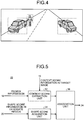
- For example, as illustrated in
FIG. 4 , when the image taken by the on-vehicle camera is analyzed, theshape calculation unit 20 may calculate the shape score information that indicates one as the pixel representing the object (the car or the human) in the candidate region and zero as the pixel representing a thing other than the object in the candidate region. Theshape calculation unit 20 can calculate the shape score information using the semantic segmentation scheme described in Y. Li, H. Qi, J. Dai, X. Ji, and Y. Wei., "Fully convolutional instance-aware semantic segmentation.", arXiv: 1611.07709, 2016. Theshape calculation unit 20 can calculate, as the shape score information for each candidate region (e.g., ROI), a likelihood score map representing a likelihood of each pixel by the technique using a position-sensitive score map described in the foregoing literature. - The
shape calculation unit 20 sends, to theextraction unit 22, the shape score information in each of at least one candidate region included in the target image. - The
extraction unit 22 acquires the context score information in the target image from thecontext calculation unit 16. Theextraction unit 22 acquires the region information from the candidateregion acquisition unit 18. Theextraction unit 22 acquires, from theshape calculation unit 20, the shape score information in each of at least one candidate region included in the target image. - The
extraction unit 22 extracts the context score information in each of at least one candidate region on the basis of the context score information in the target image and the region information. Theextraction unit 22 cuts out the context score information about a part corresponding to each candidate region from the context score information in the target image. Theextraction unit 22 sends, to thecorrection unit 24, the shape score information and the context score information in association with each other (e.g., as a pair), for each of at least one candidate region. The more detailed structure of theextraction unit 22 is further described later with reference toFIG. 5 . - The
correction unit 24 acquires, from theextraction unit 22, the shape score information and the context score information that are associated with each other for each of at least one candidate region. Thecorrection unit 24 corrects the shape score information in each of at least one candidate region using the context score information in the corresponding candidate region. For example, thecorrection unit 24 calculates the corrected shape score information on the basis of values obtained by multiplying the shape score by the context score for each pixel. - For example, the
correction unit 24 corrects the shape score information in each of at least one candidate region by calculation based on expression (1).
- In expression (1), Jn represents the shape score information after the correction in the nth candidate region (n is an integer one or more), In represents the shape score information before the correction in the nth candidate region, and Sn represents the context score information in the nth candidate region.
- In expression (1), f() is a predetermined function that corrects the shape score information using the context score information. For example, f() represents a function that multiples a plurality of shape scores included in the shape information by a plurality of context scores included in the context score information for each pixel. The function f() may further multiply the multiplied values by a certain coefficient, or additionally perform another calculation on the multiplied values. The function f() is not limited to the function that multiples the shape score by the context score for each pixel. The function f() may be another function.
- The pixels included in an identical object highly probably have the same context. The context score information and the shape score information are highly correlated. Because of the high correlation, the
correction unit 24 can increase accuracy of the shape score information by correcting the shape score information using the context score information. Thecorrection unit 24 sends the corrected shape score information in each of at least one candidate region to theoutput unit 26. - The
output unit 26 acquires the context score information in the target image from thecontext calculation unit 16. Theoutput unit 26 acquires the corrected shape score information in each of at least one candidate region from thecorrection unit 24. Theoutput unit 26 outputs, to the external device, the context score information in the target image and the corrected shape score information in each of at least one candidate region. -
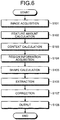
FIG. 5 is a schematic diagram illustrating an exemplary structure of theextraction unit 22. Theextraction unit 22 includes a context score extraction unit 32, a shape score acquisition unit 34, and anassociation unit 36. - The context score extraction unit 32 acquires the context score information in the target image from the
context calculation unit 16. The context score extraction unit 32 acquires the region information from the candidateregion acquisition unit 18. The context score extraction unit 32 extracts the context score information in each of at least one candidate region from the context score information in the target image on the basis of the region information. - The shape score acquisition unit 34 acquires the shape score information in each of at least one candidate region from the
shape calculation unit 20. - The
association unit 36 acquires the context score information in each of at least one candidate region from the context score extraction unit 32. Theassociation unit 36 acquires the shape score information in each of at least one candidate region from the shape score acquisition unit 34. - The
association unit 36 outputs the context score information and the shape score information in association with each other for each of at least one candidate region, to thecorrection unit 24. Theassociation unit 36 may output the context score information and the shape score information by arraying them in the order of identification numbers allocated for the respective candidate regions, for example. -
FIG. 6 is a flowchart illustrating processing performed by theimage analysis device 10. Theimage analysis device 10 performs the processing in accordance with the steps in the flowchart illustrated inFIG. 6 . - At S101, the image acquisition unit 12 acquires a target image. At S102, the feature
amount calculation unit 14 calculates the feature map including the feature amount of the target image on the basis of the target image. - At S103, the
context calculation unit 16 calculates the context score information representing the context of each pixel in the target image on the basis of the feature map. Thecontext calculation unit 16 may calculate the context score information after S104 or S105, or may calculate the context score information in parallel with (e.g., simultaneously) S104 or S105. - At S104, the candidate
region acquisition unit 18 acquires the region information specifying each of at least one candidate region included in the target image. The candidateregion acquisition unit 18 may produce the region information on the basis of the feature map or acquire the region information from the external device. - At S105, the
shape calculation unit 20 calculates the shape score information representing the shape of the object in each of at least one candidate region included in the target image, on the basis of the feature map and the region information. - At S106, the
extraction unit 22 extracts the context score information in each of at least one candidate region from the context score information in the target image. Theextraction unit 22 cuts out, for each candidate region, the context score information about a part corresponding to the candidate region from the context score information in the target image. Theextraction unit 22 associates the shape score information and the context score information with each other for each of at least one candidate region. - At S107, the
correction unit 24 corrects the shape score information in each of at least one candidate region using the context score information in the corresponding candidate region. For example, thecorrection unit 24 calculates the corrected shape score information on the basis of values obtained by multiplying a plurality of shape scores included in the shape score information by a plurality of context scores included in the context score information for each pixel. - At S108, the
output unit 26 outputs, to the external device, the context score information in the target image and the corrected shape score information in each of at least one candidate region. After the processing at S108 ends, theimage analysis device 10 ends the processing of the target image subjected to the analysis. Then, theimage analysis device 10 performs the processing from S101 to S108 on the next target image, for example. - The
image analysis device 10 according to the arrangement can calculate the context score information in the target image and the shape score information in each of at least one candidate region. Furthermore, theimage analysis device 10 according to the arrangement corrects the shape score information using the context score information, thereby making it possible to accurately calculate the shape score information in each of at least one candidate region. -
FIG. 7 is a schematic diagram illustrating each structure of aneural network device 50 and alearning device 100 according to the arrangement. Theimage analysis device 10 according to the arrangement achieves theneural network device 50 illustrated inFIG. 7 by causing theneural network device 50 to perform learning using thelearning device 100, for example. - The
neural network device 50 includes animage acquisition layer 62, a featureamount calculation layer 64, acontext calculation layer 66, a candidateregion acquisition layer 68, ashape calculation layer 70, an extraction layer 72, acorrection layer 74, and an output layer 76. - Each of the layers includes a single or multiple sub-network units. The sub-network unit acquires a plurality of signals (pieces of information) from the preceding layer, performs arithmetic processing on the acquired multiple signals, and sends a plurality of signals obtained as the result of the arithmetic processing to the succeeding layer. Some of the sub-network units may each include a return path in which its resulting signal returns to the sub-network unit.
- Each of the sub-network unit performs a certain function arithmetic operation such as addition, multiplication, convolution operation, or a soft-max function on the multiple signals, for example.
- For each sub-network unit, parameters "e.g., weights for multiplication or offsets for addition) for performing the arithmetic processing on the signals are set. The parameters for each sub-network unit are adjusted by the
learning device 100 in learning. - The
image acquisition layer 62 acquires a target image from the external device. Theimage acquisition layer 62 outputs values of a plurality of pixels included in the acquired target image to the featureamount calculation layer 64 serving as the succeeding layer. Theimage acquisition layer 62 functions as the image acquisition unit 12 illustrated inFIG. 1 as a result of the parameters for the sub-network units included in theimage acquisition layer 62 being adjusted by thelearning device 100. - The feature
amount calculation layer 64 receives the multiple values of the pixels included in the target image from theimage acquisition layer 62, and outputs the feature map including the feature amount of the target image. The featureamount calculation layer 64 functions as the featureamount calculation unit 14 illustrated inFIG. 1 as a result of the parameters for the sub-network units included in the featureamount calculation layer 64 being adjusted by thelearning device 100. - The
context calculation layer 66 receives the feature map from the featureamount calculation layer 64, and outputs the context score information representing the context of each pixel in the target image. Thecontext calculation layer 66 functions as thecontext calculation unit 16 illustrated inFIG. 1 as a result of the parameters for the sub-network units included in thecontext calculation layer 66 being adjusted by thelearning device 100. - The candidate
region acquisition layer 68 receives the feature map from the featureamount calculation layer 64, and outputs the region information specifying each of at least one candidate region included in the target image. The candidateregion acquisition layer 68 functions as the candidateregion acquisition unit 18 illustrated inFIG. 1 as a result of the parameters for the sub-network units included in the candidateregion acquisition layer 68 being adjusted by thelearning device 100. The candidateregion acquisition layer 68 may functions as an input layer that receives the region information from the external device and outputs the region information to other layers. - The
shape calculation layer 70 receives the feature map from the featureamount calculation layer 64. Theshape calculation layer 70 receives the region information from the candidateregion acquisition layer 68. Theshape calculation layer 70 outputs the shape score information representing the shape of the object in each of at least one candidate region included in the target image. Theshape calculation layer 70 functions as theshape calculation unit 20 illustrated inFIG. 1 as a result of the parameters for the sub-network units included in theshape calculation layer 70 being adjusted by thelearning device 100. - The extraction layer 72 receives the context score information in the target image from the
context calculation layer 66, the region information from the candidateregion acquisition layer 68, and the shape score information in each of at least one candidate region from theshape calculation layer 70. The extraction layer 72 outputs the context score information in each of at least one candidate region. The extraction layer 72 outputs the context score information and the shape score information in association with each other for each of at least one candidate region, for example. The extraction layer 72 functions as theextraction unit 22 illustrated inFIG. 1 as a result of the parameters for the sub-network units included in the extraction layer 72 being adjusted by thelearning device 100. - The
correction layer 74 acquires the shape score information and the context score information in each of at least one candidate region from the extraction layer 72. Thecorrection layer 74 outputs the corrected shape score information in each of at least one candidate region. Thecorrection layer 74 functions as thecorrection unit 24 illustrated inFIG. 1 as a result of the parameters for the sub-network units included in thecorrection layer 74 being adjusted by thelearning device 100. - The output layer 76 receives the corrected shape score information in each of at least one candidate region from the
correction layer 74. The output layer 76 receives the context score information in the target image from thecontext calculation layer 66. The output layer 76 outputs, to the external device, the corrected shape score information in each of at least one candidate region and the context score information in the target image. The output layer 76 functions as theoutput unit 26 illustrated inFIG. 1 as a result of the parameters for the sub-network units included in the output layer 76 being adjusted by thelearning device 100. - The
learning device 100 trains theneural network device 50. Thelearning device 100 adjusts the multiple parameters set to theneural network device 50 before theneural network device 50 is used. Thelearning device 100 includes a trainingdata acquisition unit 112, a control unit 114, anerror calculation unit 116, and anadjustment unit 118. - The training
data acquisition unit 112 acquires training data from the external device. The training data includes a set of training image data, training context score information, and training shape score information in each of at least one candidate region. When the candidateregion acquisition layer 68 acquires the region information from the external device, the training data further includes the region information. - The control unit 114 sends the training image data acquired by the training
data acquisition unit 112 to theneural network device 50, and causes theneural network device 50 to calculate the context score information and the shape score information in each of at least one candidate region. When the candidateregion acquisition layer 68 acquires the region information from the external device, the control unit 114 further sends the region information to theneural network device 50. - The
error calculation unit 116 calculates a first error between the context score information calculated by theneural network device 50 using the training image data sent to theneural network device 50 and the training context score information. Theerror calculation unit 116 calculates a second error between the shape score information in each of at least one candidate region calculated by theneural network device 50 using the training image data sent to theneural network device 50 and the corresponding training shape score information. - The
adjustment unit 118 adjusts the multiple parameters set to theneural network device 50 on the basis of the first error and the second error in relation to each of at least one candidate region. Theadjustment unit 118 adjusts the multiple parameters such that a sum of the first error and the second error is minimized, for example. Theadjustment unit 118 adjusts the multiple parameters by using back-propagated gradients in a technique such as back-propagation, for example. - The
learning device 100 can perform training for calculating the context score information and training for calculating the shape score information simultaneously. Thelearning device 100, thus, can cause theneural network device 50 to effectively perform learning, thereby making it possible for theneural network device 50 to function as the accurateimage analysis device 10. -
FIG. 8 is a hardware block diagram of aninformation processing apparatus 200. Theinformation processing apparatus 200 is achieved by a hardware structure in the same manner as that of a typical computer, for example. Theinformation processing apparatus 200 can function as theimage analysis device 10, theneural network device 50, or thelearning device 100 as a result of executing a certain corresponding program. - The
information processing apparatus 200 includes a central processing unit (CPU) 202, a read only memory (ROM) 204, a random access memory (RAM) 206, anoperation unit 208, adisplay unit 210, a communication device 212, and a storage device 214. The respective components are coupled to each other through a bus. - The
CPU 202, which is a processor performing information processing, loads computer programs stored in the storage device 214 in theRAM 206, and executes the programs to control respective units such that input and output are performed and data is processed. TheCPU 202 may be a single processor or composed of a plurality of processors. Theinformation processing apparatus 200 may include a processor other than theCPU 202 for executing the programs. TheROM 204 stores therein a start program that reads a boot program from the storage device 214 to theRAM 206. TheRAM 206 stores therein data as a working area of theCPU 202. - The
operation unit 208, which is an input device such as a mouse or a keyboard, receives information input by the user's operation as an instruction signal, and outputs the instruction signal to theCPU 202. Thedisplay unit 210 is a display such as a liquid crystal display (LCD). Thedisplay unit 210 displays various types of information on the basis of display signals from theCPU 202. The communication device 212 communicates with external instruments via a network, for example. The storage device 214 is a hard disc drive or a flash memory, for example. The storage device 214 stores therein computer programs and an operating system that are executed by theinformation processing apparatus 200. - The programs executed by the
information processing apparatus 200 in the arrangement are recorded and provided on a computer-readable medium such as a compact disc read only memory (CD-ROM), a flexible disk (FD), a compact disc readable (CD-R), and a digital versatile disc (DVD) as an installable or executable file. The programs executed by theinformation processing apparatus 200 in the arrangement may be stored in a computer connected to a network such as the Internet, and provided by being downloaded via the network. The programs executed by theinformation processing apparatus 200 in the arrangement may be provided or distributed via a network such as the Internet. The programs in the arrangement may be embedded and provided in theROM 204, for example. - The program causing the
information processing apparatus 200 to function as theimage analysis device 10 includes an image acquisition module, a feature amount calculation module, a context calculation module, a candidate region acquisition module, a shape calculation module, an extraction module, a correction module, and an output module. The processor (CPU 202) of theinformation processing apparatus 200 reads the program from the storage medium (e.g., the storage device 214) and executes the program. The respective modules are loaded into a main storage device (RAM 206). The processor (CPU 202) functions as the image acquisition unit 12, the featureamount calculation unit 14, thecontext calculation unit 16, the candidateregion acquisition unit 18, theshape calculation unit 20, theextraction unit 22, thecorrection unit 24, and theoutput unit 26. A part or all of the modules may be achieved by hardware implementation. - The program causing the
information processing apparatus 200 to function as theneural network device 50 includes an image acquisition layer module, a feature amount calculation layer module, a context calculation layer module, a candidate region acquisition layer module, a shape calculation layer module, an extraction layer module, a correction layer module, and an output layer module. The processor (CPU 202) of theinformation processing apparatus 200 reads the program from the storage medium (e.g., the storage device 214) and executes the program. The respective modules are loaded into the main storage device (RAM 206). The processor (CPU 202) functions as theimage acquisition layer 62, the featureamount calculation layer 64, thecontext calculation layer 66, the candidateregion acquisition layer 68, theshape calculation layer 70, the extraction layer 72, thecorrection layer 74, and the output layer 76. A part or all of the modules may be achieved by hardware implementation. - The program causing the
information processing apparatus 200 to function as thelearning device 100 includes a training data acquisition module, a control module, an error calculation module, and an adjustment module. The processor (CPU 202) of theinformation processing apparatus 200 reads the program from the storage medium (e.g., the storage device 214) and executes the program. The respective modules are loaded into the main storage device (RAM 206). The processor (CPU 202) functions as the trainingdata acquisition unit 112, the control unit 114, theerror calculation unit 116, and theadjustment unit 118. A part or all of the modules may be achieved by hardware implementation. - While certain arrangements have been described, these arrangements have been presented by way of example only, and are not intended to limit the scope of the claims. Indeed, the devices described herein may be embodied in a variety of other forms; furthermore various omissions, substitutions and changes in the form of the devices described herein may be made.
- Example 1. An image analysis device includes a feature amount calculation unit, a context calculation unit, a shape calculation unit, a correction unit, and an output unit. The feature amount calculation unit is configured to calculate a feature map of a target image. The context calculation unit is configured to calculate context score information representing context of each pixel in the target image on the basis of the feature map. The shape calculation unit is configured to calculate shape score information representing a shape of an object in at least one region included in the target image on the basis of the feature map. The correction unit is configured to correct the shape score information in the at least one region using the context score information in a corresponding region. The output unit is configured to output the corrected shape score information in the at least one region.
- Example 2. In the image analysis device according to Example 1, the output unit is further configured to output the context score information in the target image.
- Example 3. The image analysis device according to Example 1 or 2, further includes a candidate region acquisition unit configured to produce region information specifying the at least one region included in the target image on the basis of the feature map.
- Example 4. The image analysis device according to Example 1 or 2, further includes a candidate region acquisition unit configured to acquire region information specifying the at least one region included in the target image from an external device.
- Example 5. The image analysis device according to Example 3 or 4, further includes an extraction unit configured to extract the context score information in the at least one region on the basis of the context score information and the region information for the target image.
- Example 6. In the image analysis device according to Example 5, the extraction unit includes a context score extraction unit, a shape score acquisition unit. and an association unit. The context score extraction unit is configured to extract the context score information in the at least one region from the context score information in the target image on the basis of the region information. The shape score acquisition unit is configured to acquire the shape score information in the at least one region. The association unit is configured to output the context score information and the shape score information in association with each other for the at least one region.
- Example 7. In the image analysis device according to any one of Examples 1 to 6, the context score information is information indicating a category to which an object belongs for each pixel.
- Example 8. In the image analysis device according to any one of Examples 1 to 6, the context score information is information indicating a distance from a reference position to an object for each pixel.
- Example 9. In the image analysis device according to any one of Examples 1 to 8, the shape score information is mask information that indicates whether an object is present for each pixel.
- Example 10. In the image analysis device according to any one of Examples 1 to 9, the context score information includes a context score of each pixel. The shape score information includes a shape score of each pixel. The correction unit is configured to calculate the corrected shape score information on the basis of a value obtained by multiplying the shape score by the context score for each pixel.
- Example 11. A neural network device includes a feature amount calculation layer, a context calculation layer, a shape calculation layer, an extraction layer, a correction layer, and an output layer. The feature amount calculation layer is configured to output a feature map of a target image. The context calculation layer is configured to receive the feature map and output context score information representing context of each pixel in the target image. The shape calculation layer is configured to receive the feature map and output shape score information representing a shape of an object in at least one region. The extraction layer is configured to receive the context score information in the target image and output the context score information in the at least one region. The correction layer is configured to receive the shape score information in the at least one region and the context score information in the at least one region, and output the corrected shape score information in the at least one region. The output layer is configured to output the corrected shape score information in the at least one region and the context score information in the target image.
- Example 12. A learning device is to train the neural network device according to Example 11. The learning device includes a training data acquisition unit, a control unit, an error calculation unit, and an adjustment unit. The training data acquisition unit is configured to acquire a set of training image data, training context score information, and training shape score information in the at least one region. The control unit is configured to send the training image data to the neural network device and cause the neural network device to calculate the context score information and the shape score information for the at least one region. The error calculation unit is configured to calculate a first error between the context score information and the training context score information, and a second error between the shape score information and the training shape score information in the at least one region. The adjustment unit is configured to adjust a parameter for the neural network device on the basis of the first error and the second error for the at least one region.
- Example 13. An image analyzing method includes: calculating a feature map of a target image; calculating context score information representing context of each pixel in the target image on the basis of the feature map; calculating shape score information representing a shape of an object in at least one region included in the target image on the basis of the feature map; correcting the shape score information in the at least one region using the context score information in a corresponding region; and outputting the corrected shape score information in the at least one region.
- Example 14. A computer-readable medium includes instructions which, when executed by a computer, cause the computer to perform: calculating a feature map of a target image; calculating context score information representing context of each pixel in the target image on the basis of the feature map; calculating shape score information representing a shape of an object in at least one region included in the target image on the basis of the feature map; correcting the shape score information in the at least one region using the context score information in a corresponding region; and outputting the corrected shape score information in the at least one region.
Claims (12)
- An image analysis device (10) comprising:a feature amount calculation unit (14) configured to calculate a feature map of a target image;a context calculation unit (16) configured to calculate context score information representing context of each pixel in the target image on the basis of the feature map;a shape calculation unit (20) configured to calculate shape score information representing a shape of an object in at least one region included in the target image on the basis of the feature map;a correction unit (24) configured to correct the shape score information in the at least one region using the context score information in a corresponding region; andan output unit (26) configured to output the corrected shape score information in the at least one region.
- The image analysis device (10) according to claim 1, wherein the output unit (26) is further configured to output the context score information in the target image.
- The image analysis device (10) according to claim 1 or 2, further comprising a candidate region acquisition unit (18) configured to produce region information specifying the at least one region included in the target image on the basis of the feature map.
- The image analysis device (10) according to claim 1 or 2, further comprising a candidate region acquisition unit (18) configured to acquire region information specifying the at least one region included in the target image from an external device.
- The image analysis device (10) according to claim 3 or 4, further comprising an extraction unit (22) configured to extract the context score information in the at least one region on the basis of the context score information and the region information for the target image.
- The image analysis device (10) according to claim 5, wherein
the extraction unit (22) includes:a context score extraction unit (32) configured to extract the context score information in the at least one region from the context score information in the target image on the basis of the region information;a shape score acquisition unit (34) configured to acquire the shape score information in the at least one region; andan association unit (36) configured to output the context score information and the shape score information in association with each other for the at least one region. - The image analysis device (10) according to any one of claims 1 to 6, wherein the context score information is information indicating a category to which an object belongs for each pixel.
- The image analysis device (10) according to any one of claims 1 to 6, wherein the context score information is information indicating a distance from a reference position to an object for each pixel.
- The image analysis device (10) according to any one of claims 1 to 8, wherein the shape score information is mask information that indicates whether an object is present for each pixel.
- The image analysis device (10) according to any one of claims 1 to 9, wherein
the context score information includes a context score of each pixel,
the shape score information includes a shape score of each pixel, and
the correction unit (24) is configured to calculate the corrected shape score information on the basis of a value obtained by multiplying the shape score by the context score for each pixel. - An image analyzing method comprising:calculating a feature map of a target image (S102);calculating context score information representing context of each pixel in the target image on the basis of the feature map (S103);calculating shape score information representing a shape of an object in at least one region included in the target image on the basis of the feature map (S105);correcting the shape score information in the at least one region using the context score information in a corresponding region (S107); andoutputting the corrected shape score information in the at least one region (S108).
- A computer-readable medium comprising instructions which, when executed by a computer (202), cause the computer (202) to perform:calculating a feature map of a target image (S102);calculating context score information representing context of each pixel in the target image on the basis of the feature map (S103);calculating shape score information representing a shape of an object in at least one region included in the target image on the basis of the feature map (S105);correcting the shape score information in the at least one region using the context score information in a corresponding region (S107); andoutputting the corrected shape score information in the at least one region (S108).
Applications Claiming Priority (1)
| Application Number | Priority Date | Filing Date | Title |
|---|---|---|---|
| JP2017106492A JP6833620B2 (en) | 2017-05-30 | 2017-05-30 | Image analysis device, neural network device, learning device, image analysis method and program |
Publications (2)
| Publication Number | Publication Date |
|---|---|
| EP3410344A1 true EP3410344A1 (en) | 2018-12-05 |
| EP3410344B1 EP3410344B1 (en) | 2023-03-01 |
Family
ID=61622454
Family Applications (1)
| Application Number | Title | Priority Date | Filing Date |
|---|---|---|---|
| EP18161166.6A Active EP3410344B1 (en) | 2017-05-30 | 2018-03-12 | Image analysis device, image analysis method, and computer-readable medium |
Country Status (3)
| Country | Link |
|---|---|
| US (1) | US10789515B2 (en) |
| EP (1) | EP3410344B1 (en) |
| JP (1) | JP6833620B2 (en) |
Cited By (1)
| Publication number | Priority date | Publication date | Assignee | Title |
|---|---|---|---|---|
| CN110837811A (en) * | 2019-11-12 | 2020-02-25 | 腾讯科技(深圳)有限公司 | Method, device, device and storage medium for generating semantic segmentation network structure |
Families Citing this family (7)
| Publication number | Priority date | Publication date | Assignee | Title |
|---|---|---|---|---|
| JP6989450B2 (en) | 2018-06-21 | 2022-01-05 | 株式会社東芝 | Image analysis device, image analysis method and program |
| KR102166117B1 (en) * | 2019-01-31 | 2020-10-15 | 연세대학교 산학협력단 | Semantic matchaing apparatus and method |
| CN110348543B (en) * | 2019-06-10 | 2023-01-06 | 腾讯医疗健康(深圳)有限公司 | Fundus image recognition method and device, computer equipment and storage medium |
| JP2021045077A (en) * | 2019-09-18 | 2021-03-25 | 株式会社ニコン | Processor, processing method, processing program, observation device, cultivation device, cultivation system, and information processing system |
| KR102289668B1 (en) * | 2020-02-21 | 2021-08-12 | 연세대학교 산학협력단 | Apparatus and method for semantic matching based on matching reliability |
| EP3994661A4 (en) | 2020-02-24 | 2023-08-02 | Thales Canada Inc. | Method for semantic object detection with knowledge graph |
| CN112001391A (en) * | 2020-05-11 | 2020-11-27 | 江苏鲲博智行科技有限公司 | A method of image feature fusion for image semantic segmentation |
Family Cites Families (5)
| Publication number | Priority date | Publication date | Assignee | Title |
|---|---|---|---|---|
| JP5615088B2 (en) * | 2010-08-18 | 2014-10-29 | キヤノン株式会社 | Image processing apparatus and method, program, and imaging apparatus |
| US8718362B2 (en) | 2012-03-28 | 2014-05-06 | Mitsubishi Electric Research Laboratories, Inc. | Appearance and context based object classification in images |
| WO2016197303A1 (en) * | 2015-06-08 | 2016-12-15 | Microsoft Technology Licensing, Llc. | Image semantic segmentation |
| US10657364B2 (en) * | 2016-09-23 | 2020-05-19 | Samsung Electronics Co., Ltd | System and method for deep network fusion for fast and robust object detection |
| US10635927B2 (en) * | 2017-03-06 | 2020-04-28 | Honda Motor Co., Ltd. | Systems for performing semantic segmentation and methods thereof |
-
2017
- 2017-05-30 JP JP2017106492A patent/JP6833620B2/en active Active
-
2018
- 2018-03-12 EP EP18161166.6A patent/EP3410344B1/en active Active
- 2018-03-12 US US15/917,881 patent/US10789515B2/en active Active
Non-Patent Citations (3)
| Title |
|---|
| DAI JIFENG ET AL: "Instance-Aware Semantic Segmentation via Multi-task Network Cascades", 2016 IEEE CONFERENCE ON COMPUTER VISION AND PATTERN RECOGNITION (CVPR), IEEE, 27 June 2016 (2016-06-27), pages 3150 - 3158, XP033021496, DOI: 10.1109/CVPR.2016.343 * |
| JONATHAN LONG ET AL.: "Fully convolutional networks for semantic segmentation", 2015 IEEE CONFERENCE ON COMPUTER VISION AND PATTERN RECOGNITION (CVPR, 2015, pages 3431 - 3440, XP032793793, DOI: doi:10.1109/CVPR.2015.7298965 |
| Y. LI; H. QI; J. DAI; X. JI; Y. WEI., FULLY CONVOLUTIONAL INSTANCE-AWARE SEMANTIC SEGMENTATION, 2016 |
Cited By (3)
| Publication number | Priority date | Publication date | Assignee | Title |
|---|---|---|---|---|
| CN110837811A (en) * | 2019-11-12 | 2020-02-25 | 腾讯科技(深圳)有限公司 | Method, device, device and storage medium for generating semantic segmentation network structure |
| CN110837811B (en) * | 2019-11-12 | 2021-01-05 | 腾讯科技(深圳)有限公司 | Method, device and equipment for generating semantic segmentation network structure and storage medium |
| US12130887B2 (en) | 2019-11-12 | 2024-10-29 | Tencent Technology (Shenzhen) Company Limited | Semantic segmentation network structure generation method and apparatus, device, and storage medium |
Also Published As
| Publication number | Publication date |
|---|---|
| US10789515B2 (en) | 2020-09-29 |
| JP2018205800A (en) | 2018-12-27 |
| JP6833620B2 (en) | 2021-02-24 |
| US20180349748A1 (en) | 2018-12-06 |
| EP3410344B1 (en) | 2023-03-01 |
Similar Documents
| Publication | Publication Date | Title |
|---|---|---|
| US10789515B2 (en) | Image analysis device, neural network device, learning device and computer program product | |
| CN111582021B (en) | Text detection method and device in scene image and computer equipment | |
| US9530071B2 (en) | Hierarchical interlinked multi-scale convolutional network for image parsing | |
| US20220101628A1 (en) | Object detection and recognition device, method, and program | |
| US11361190B2 (en) | Deep learning model used for image recognition and training apparatus of the model and method thereof | |
| CN114267027B (en) | Image processing method and device | |
| CN112200056B (en) | Face living body detection method and device, electronic equipment and storage medium | |
| EP4092572A1 (en) | Method for depth estimation for a variable focus camera | |
| CN109858327B (en) | Character segmentation method based on deep learning | |
| CN113743254B (en) | Sight estimation method, device, electronic equipment and storage medium | |
| CN110751040B (en) | Three-dimensional object detection method and device, electronic equipment and storage medium | |
| DE112016002995T5 (en) | Method for determining a movement between a first coordinate system and a second coordinate system | |
| CN113643329A (en) | An online update target tracking method and system based on siamese attention network | |
| CN111311543A (en) | Image definition detection method, system, device and storage medium | |
| CN114419564B (en) | Vehicle pose detection method, device, equipment, medium and automatic driving vehicle | |
| US12482059B2 (en) | Method and apparatus for generating panoramic image based on deep learning network | |
| US20250014209A1 (en) | Image processing method and apparatus, and electronic device, storage medium, computer program and computer program product | |
| US20170076468A1 (en) | Method and system for tracking objects between cameras | |
| CN113378864B (en) | Method, device and equipment for determining anchor frame parameters and readable storage medium | |
| US20200184285A1 (en) | System and method for label augmentation in video data | |
| CN112396594B (en) | Method and device for acquiring change detection model, change detection method, computer equipment and readable storage medium | |
| CN110517285B (en) | Large-scene minimum target tracking based on motion estimation ME-CNN network | |
| CN109523570A (en) | Beginning parameter transform model method and device | |
| US12039736B2 (en) | Image processing device, method, and program | |
| JP2025182104A (en) | Image processing device, information processing method, and program |
Legal Events
| Date | Code | Title | Description |
|---|---|---|---|
| PUAI | Public reference made under article 153(3) epc to a published international application that has entered the european phase |
Free format text: ORIGINAL CODE: 0009012 |
|
| STAA | Information on the status of an ep patent application or granted ep patent |
Free format text: STATUS: REQUEST FOR EXAMINATION WAS MADE |
|
| 17P | Request for examination filed |
Effective date: 20180312 |
|
| AK | Designated contracting states |
Kind code of ref document: A1 Designated state(s): AL AT BE BG CH CY CZ DE DK EE ES FI FR GB GR HR HU IE IS IT LI LT LU LV MC MK MT NL NO PL PT RO RS SE SI SK SM TR |
|
| AX | Request for extension of the european patent |
Extension state: BA ME |
|
| STAA | Information on the status of an ep patent application or granted ep patent |
Free format text: STATUS: EXAMINATION IS IN PROGRESS |
|
| 17Q | First examination report despatched |
Effective date: 20190819 |
|
| REG | Reference to a national code |
Ref country code: DE Ref legal event code: R079 Ref document number: 602018046586 Country of ref document: DE Free format text: PREVIOUS MAIN CLASS: G06K0009000000 Ipc: G06V0010260000 |
|
| GRAP | Despatch of communication of intention to grant a patent |
Free format text: ORIGINAL CODE: EPIDOSNIGR1 |
|
| STAA | Information on the status of an ep patent application or granted ep patent |
Free format text: STATUS: GRANT OF PATENT IS INTENDED |
|
| RIC1 | Information provided on ipc code assigned before grant |
Ipc: G06V 20/58 20220101ALI20220913BHEP Ipc: G06V 10/44 20220101ALI20220913BHEP Ipc: G06V 10/26 20220101AFI20220913BHEP |
|
| INTG | Intention to grant announced |
Effective date: 20220930 |
|
| GRAS | Grant fee paid |
Free format text: ORIGINAL CODE: EPIDOSNIGR3 |
|
| GRAA | (expected) grant |
Free format text: ORIGINAL CODE: 0009210 |
|
| STAA | Information on the status of an ep patent application or granted ep patent |
Free format text: STATUS: THE PATENT HAS BEEN GRANTED |
|
| AK | Designated contracting states |
Kind code of ref document: B1 Designated state(s): AL AT BE BG CH CY CZ DE DK EE ES FI FR GB GR HR HU IE IS IT LI LT LU LV MC MK MT NL NO PL PT RO RS SE SI SK SM TR |
|
| REG | Reference to a national code |
Ref country code: GB Ref legal event code: FG4D |
|
| REG | Reference to a national code |
Ref country code: CH Ref legal event code: EP Ref country code: AT Ref legal event code: REF Ref document number: 1551529 Country of ref document: AT Kind code of ref document: T Effective date: 20230315 |
|
| REG | Reference to a national code |
Ref country code: DE Ref legal event code: R096 Ref document number: 602018046586 Country of ref document: DE |
|
| REG | Reference to a national code |
Ref country code: IE Ref legal event code: FG4D |
|
| REG | Reference to a national code |
Ref country code: LT Ref legal event code: MG9D |
|
| REG | Reference to a national code |
Ref country code: NL Ref legal event code: MP Effective date: 20230301 |
|
| PG25 | Lapsed in a contracting state [announced via postgrant information from national office to epo] |
Ref country code: RS Free format text: LAPSE BECAUSE OF FAILURE TO SUBMIT A TRANSLATION OF THE DESCRIPTION OR TO PAY THE FEE WITHIN THE PRESCRIBED TIME-LIMIT Effective date: 20230301 Ref country code: NO Free format text: LAPSE BECAUSE OF FAILURE TO SUBMIT A TRANSLATION OF THE DESCRIPTION OR TO PAY THE FEE WITHIN THE PRESCRIBED TIME-LIMIT Effective date: 20230601 Ref country code: LV Free format text: LAPSE BECAUSE OF FAILURE TO SUBMIT A TRANSLATION OF THE DESCRIPTION OR TO PAY THE FEE WITHIN THE PRESCRIBED TIME-LIMIT Effective date: 20230301 Ref country code: LT Free format text: LAPSE BECAUSE OF FAILURE TO SUBMIT A TRANSLATION OF THE DESCRIPTION OR TO PAY THE FEE WITHIN THE PRESCRIBED TIME-LIMIT Effective date: 20230301 Ref country code: HR Free format text: LAPSE BECAUSE OF FAILURE TO SUBMIT A TRANSLATION OF THE DESCRIPTION OR TO PAY THE FEE WITHIN THE PRESCRIBED TIME-LIMIT Effective date: 20230301 Ref country code: ES Free format text: LAPSE BECAUSE OF FAILURE TO SUBMIT A TRANSLATION OF THE DESCRIPTION OR TO PAY THE FEE WITHIN THE PRESCRIBED TIME-LIMIT Effective date: 20230301 |
|
| REG | Reference to a national code |
Ref country code: AT Ref legal event code: MK05 Ref document number: 1551529 Country of ref document: AT Kind code of ref document: T Effective date: 20230301 |
|
| PG25 | Lapsed in a contracting state [announced via postgrant information from national office to epo] |
Ref country code: SE Free format text: LAPSE BECAUSE OF FAILURE TO SUBMIT A TRANSLATION OF THE DESCRIPTION OR TO PAY THE FEE WITHIN THE PRESCRIBED TIME-LIMIT Effective date: 20230301 Ref country code: PL Free format text: LAPSE BECAUSE OF FAILURE TO SUBMIT A TRANSLATION OF THE DESCRIPTION OR TO PAY THE FEE WITHIN THE PRESCRIBED TIME-LIMIT Effective date: 20230301 Ref country code: NL Free format text: LAPSE BECAUSE OF FAILURE TO SUBMIT A TRANSLATION OF THE DESCRIPTION OR TO PAY THE FEE WITHIN THE PRESCRIBED TIME-LIMIT Effective date: 20230301 Ref country code: GR Free format text: LAPSE BECAUSE OF FAILURE TO SUBMIT A TRANSLATION OF THE DESCRIPTION OR TO PAY THE FEE WITHIN THE PRESCRIBED TIME-LIMIT Effective date: 20230602 Ref country code: FI Free format text: LAPSE BECAUSE OF FAILURE TO SUBMIT A TRANSLATION OF THE DESCRIPTION OR TO PAY THE FEE WITHIN THE PRESCRIBED TIME-LIMIT Effective date: 20230301 |
|
| PG25 | Lapsed in a contracting state [announced via postgrant information from national office to epo] |
Ref country code: SM Free format text: LAPSE BECAUSE OF FAILURE TO SUBMIT A TRANSLATION OF THE DESCRIPTION OR TO PAY THE FEE WITHIN THE PRESCRIBED TIME-LIMIT Effective date: 20230301 Ref country code: RO Free format text: LAPSE BECAUSE OF FAILURE TO SUBMIT A TRANSLATION OF THE DESCRIPTION OR TO PAY THE FEE WITHIN THE PRESCRIBED TIME-LIMIT Effective date: 20230301 Ref country code: PT Free format text: LAPSE BECAUSE OF FAILURE TO SUBMIT A TRANSLATION OF THE DESCRIPTION OR TO PAY THE FEE WITHIN THE PRESCRIBED TIME-LIMIT Effective date: 20230703 Ref country code: EE Free format text: LAPSE BECAUSE OF FAILURE TO SUBMIT A TRANSLATION OF THE DESCRIPTION OR TO PAY THE FEE WITHIN THE PRESCRIBED TIME-LIMIT Effective date: 20230301 Ref country code: CZ Free format text: LAPSE BECAUSE OF FAILURE TO SUBMIT A TRANSLATION OF THE DESCRIPTION OR TO PAY THE FEE WITHIN THE PRESCRIBED TIME-LIMIT Effective date: 20230301 Ref country code: AT Free format text: LAPSE BECAUSE OF FAILURE TO SUBMIT A TRANSLATION OF THE DESCRIPTION OR TO PAY THE FEE WITHIN THE PRESCRIBED TIME-LIMIT Effective date: 20230301 |
|
| REG | Reference to a national code |
Ref country code: CH Ref legal event code: PL |
|
| PG25 | Lapsed in a contracting state [announced via postgrant information from national office to epo] |
Ref country code: SK Free format text: LAPSE BECAUSE OF FAILURE TO SUBMIT A TRANSLATION OF THE DESCRIPTION OR TO PAY THE FEE WITHIN THE PRESCRIBED TIME-LIMIT Effective date: 20230301 Ref country code: IS Free format text: LAPSE BECAUSE OF FAILURE TO SUBMIT A TRANSLATION OF THE DESCRIPTION OR TO PAY THE FEE WITHIN THE PRESCRIBED TIME-LIMIT Effective date: 20230701 |
|
| REG | Reference to a national code |
Ref country code: BE Ref legal event code: MM Effective date: 20230331 |
|
| REG | Reference to a national code |
Ref country code: DE Ref legal event code: R097 Ref document number: 602018046586 Country of ref document: DE |
|
| PG25 | Lapsed in a contracting state [announced via postgrant information from national office to epo] |
Ref country code: LU Free format text: LAPSE BECAUSE OF NON-PAYMENT OF DUE FEES Effective date: 20230312 |
|
| PLBE | No opposition filed within time limit |
Free format text: ORIGINAL CODE: 0009261 |
|
| STAA | Information on the status of an ep patent application or granted ep patent |
Free format text: STATUS: NO OPPOSITION FILED WITHIN TIME LIMIT |
|
| PG25 | Lapsed in a contracting state [announced via postgrant information from national office to epo] |
Ref country code: MC Free format text: LAPSE BECAUSE OF FAILURE TO SUBMIT A TRANSLATION OF THE DESCRIPTION OR TO PAY THE FEE WITHIN THE PRESCRIBED TIME-LIMIT Effective date: 20230301 |
|
| REG | Reference to a national code |
Ref country code: IE Ref legal event code: MM4A |
|
| PG25 | Lapsed in a contracting state [announced via postgrant information from national office to epo] |
Ref country code: SI Free format text: LAPSE BECAUSE OF FAILURE TO SUBMIT A TRANSLATION OF THE DESCRIPTION OR TO PAY THE FEE WITHIN THE PRESCRIBED TIME-LIMIT Effective date: 20230301 Ref country code: MC Free format text: LAPSE BECAUSE OF FAILURE TO SUBMIT A TRANSLATION OF THE DESCRIPTION OR TO PAY THE FEE WITHIN THE PRESCRIBED TIME-LIMIT Effective date: 20230301 Ref country code: LI Free format text: LAPSE BECAUSE OF NON-PAYMENT OF DUE FEES Effective date: 20230331 Ref country code: IE Free format text: LAPSE BECAUSE OF NON-PAYMENT OF DUE FEES Effective date: 20230312 Ref country code: DK Free format text: LAPSE BECAUSE OF FAILURE TO SUBMIT A TRANSLATION OF THE DESCRIPTION OR TO PAY THE FEE WITHIN THE PRESCRIBED TIME-LIMIT Effective date: 20230301 Ref country code: CH Free format text: LAPSE BECAUSE OF NON-PAYMENT OF DUE FEES Effective date: 20230331 |
|
| 26N | No opposition filed |
Effective date: 20231204 |
|
| PG25 | Lapsed in a contracting state [announced via postgrant information from national office to epo] |
Ref country code: BE Free format text: LAPSE BECAUSE OF NON-PAYMENT OF DUE FEES Effective date: 20230331 |
|
| PG25 | Lapsed in a contracting state [announced via postgrant information from national office to epo] |
Ref country code: IT Free format text: LAPSE BECAUSE OF FAILURE TO SUBMIT A TRANSLATION OF THE DESCRIPTION OR TO PAY THE FEE WITHIN THE PRESCRIBED TIME-LIMIT Effective date: 20230301 |
|
| PG25 | Lapsed in a contracting state [announced via postgrant information from national office to epo] |
Ref country code: BG Free format text: LAPSE BECAUSE OF FAILURE TO SUBMIT A TRANSLATION OF THE DESCRIPTION OR TO PAY THE FEE WITHIN THE PRESCRIBED TIME-LIMIT Effective date: 20230301 |
|
| PG25 | Lapsed in a contracting state [announced via postgrant information from national office to epo] |
Ref country code: BG Free format text: LAPSE BECAUSE OF FAILURE TO SUBMIT A TRANSLATION OF THE DESCRIPTION OR TO PAY THE FEE WITHIN THE PRESCRIBED TIME-LIMIT Effective date: 20230301 |
|
| PG25 | Lapsed in a contracting state [announced via postgrant information from national office to epo] |
Ref country code: CY Free format text: LAPSE BECAUSE OF FAILURE TO SUBMIT A TRANSLATION OF THE DESCRIPTION OR TO PAY THE FEE WITHIN THE PRESCRIBED TIME-LIMIT; INVALID AB INITIO Effective date: 20180312 |
|
| PG25 | Lapsed in a contracting state [announced via postgrant information from national office to epo] |
Ref country code: HU Free format text: LAPSE BECAUSE OF FAILURE TO SUBMIT A TRANSLATION OF THE DESCRIPTION OR TO PAY THE FEE WITHIN THE PRESCRIBED TIME-LIMIT; INVALID AB INITIO Effective date: 20180312 |
|
| PG25 | Lapsed in a contracting state [announced via postgrant information from national office to epo] |
Ref country code: TR Free format text: LAPSE BECAUSE OF FAILURE TO SUBMIT A TRANSLATION OF THE DESCRIPTION OR TO PAY THE FEE WITHIN THE PRESCRIBED TIME-LIMIT Effective date: 20230301 |
|
| PGFP | Annual fee paid to national office [announced via postgrant information from national office to epo] |
Ref country code: FR Payment date: 20251231 Year of fee payment: 9 |
|
| PGFP | Annual fee paid to national office [announced via postgrant information from national office to epo] |
Ref country code: GB Payment date: 20260106 Year of fee payment: 9 |
|
| PGFP | Annual fee paid to national office [announced via postgrant information from national office to epo] |
Ref country code: DE Payment date: 20260102 Year of fee payment: 9 |